
NASA John C. Stennis Space Center employee Dustan Ladner (left) assists tanker driver David Velasco in transferring RP-1 fuel to a 20,000-gallon underground tank at the E-1 Test Stand during a March 30 delivery. The rocket propellant will be used for testing Aerojet AJ26 rocket engines beginning this summer. Stennis is testing the engines for Orbital Sciences Corporation, which has partnered with NASA to provide eight supply missions to the International Space Station through 2015. The partnership is part of NASA's Commercial Orbital Transportation Services initiative to work closer with companies to provide commercial space transport once the space shuttle is retired later this year.
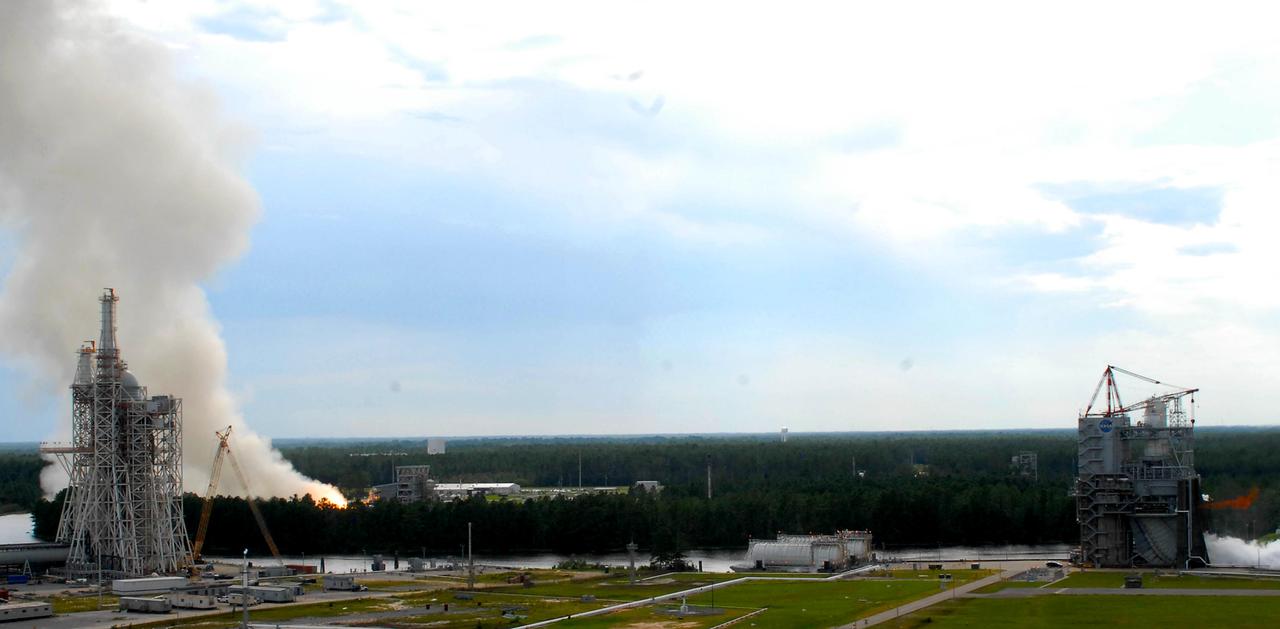
Two large-engine tests were conducted simultaneously for the first time at Stennis Space Center on Aug. 16. A plume on the left indicates a test on the facility's E-1 Test Stand. On the right, a finger of fire indicates a test under way on the A-1 Test Stand. In another first, both tests were conducted by female engineers. The image was taken from atop the facility's A-2 Test Stand, offering a panoramic view that includes the new A-3 Test Stand under construction to the left.
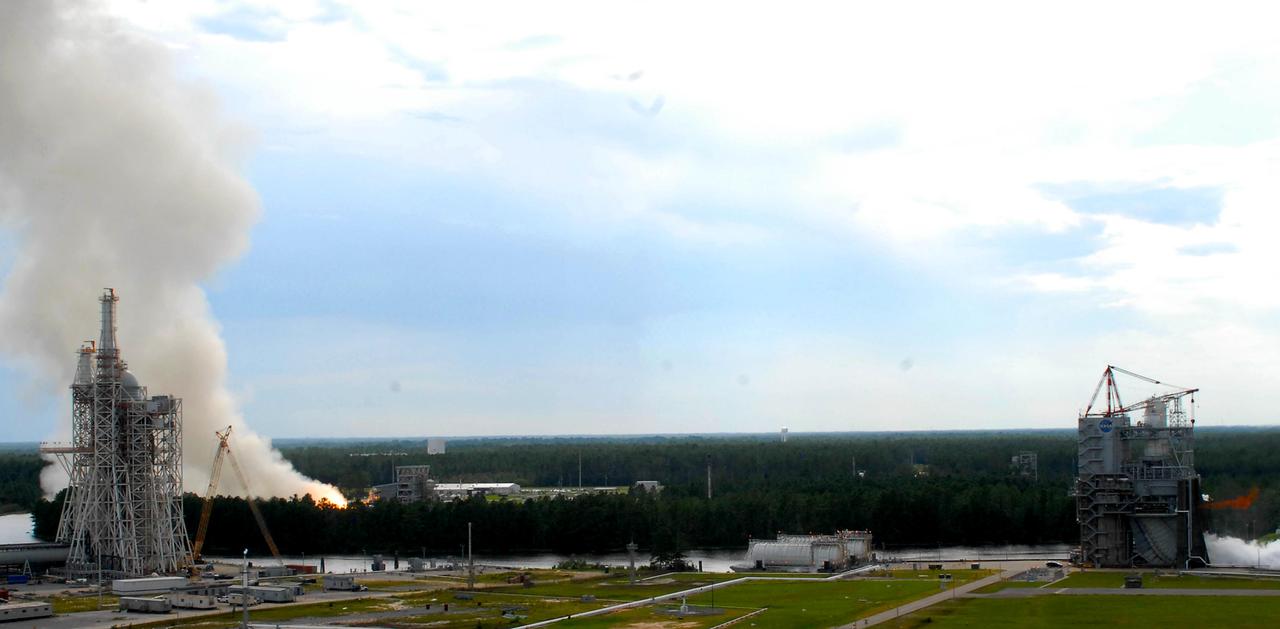
Two large-engine tests were conducted simultaneously for the first time at Stennis Space Center on Aug. 16. A plume on the left indicates a test on the facility's E-1 Test Stand. On the right, a finger of fire indicates a test under way on the A-1 Test Stand. In another first, both tests were conducted by female engineers. The image was taken from atop the facility's A-2 Test Stand, offering a panoramic view that includes the new A-3 Test Stand under construction to the left.
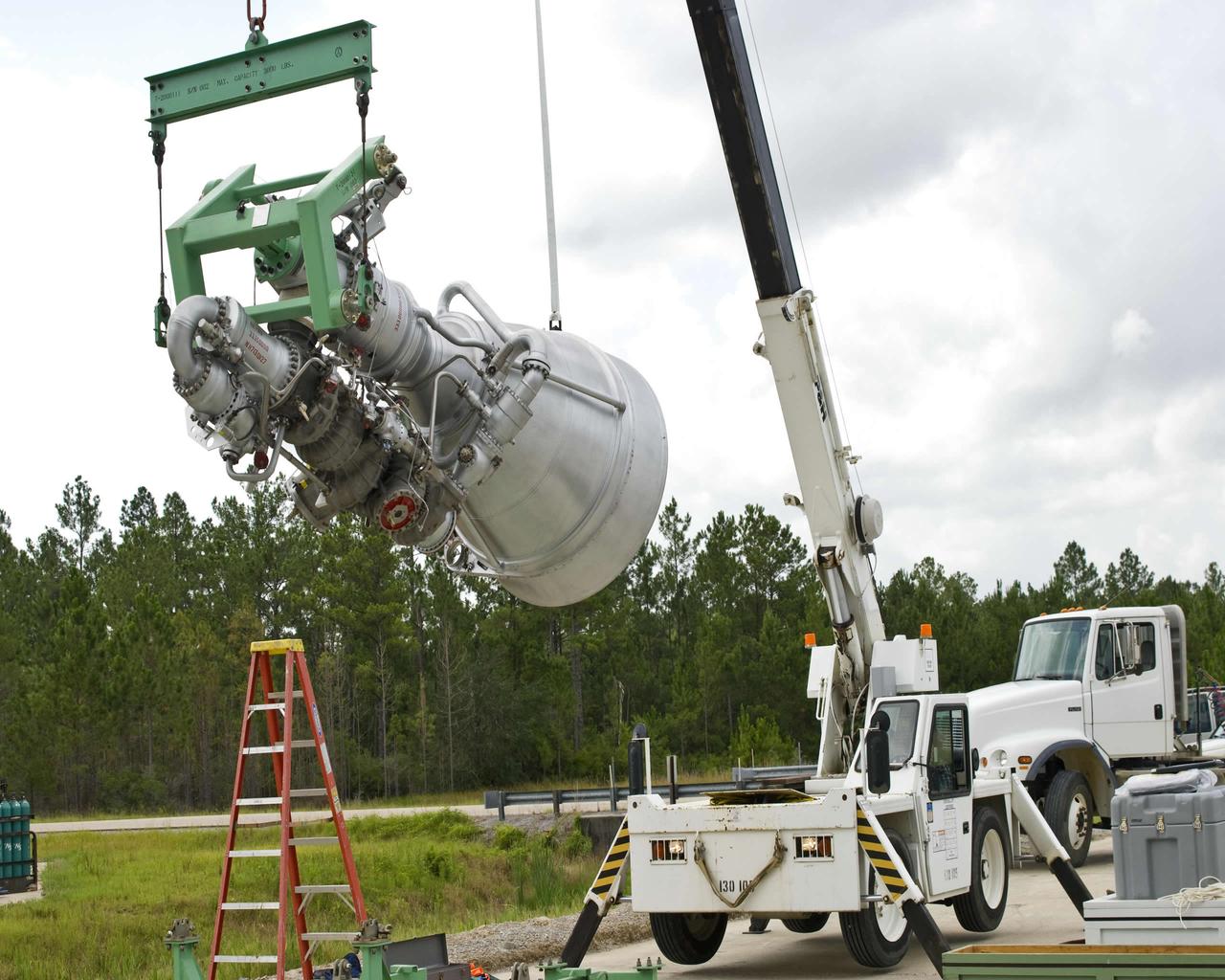
An Aerojet AJ26 rocket engine is hoisted for installation at Stennis Space Center's E-1 Test Stand on July 19. Stennis operators have been preparing the E-1 stand for testing AJ26 engines since April 2009. Modifications included construction of a 27-foot-deep flame deflection trench.
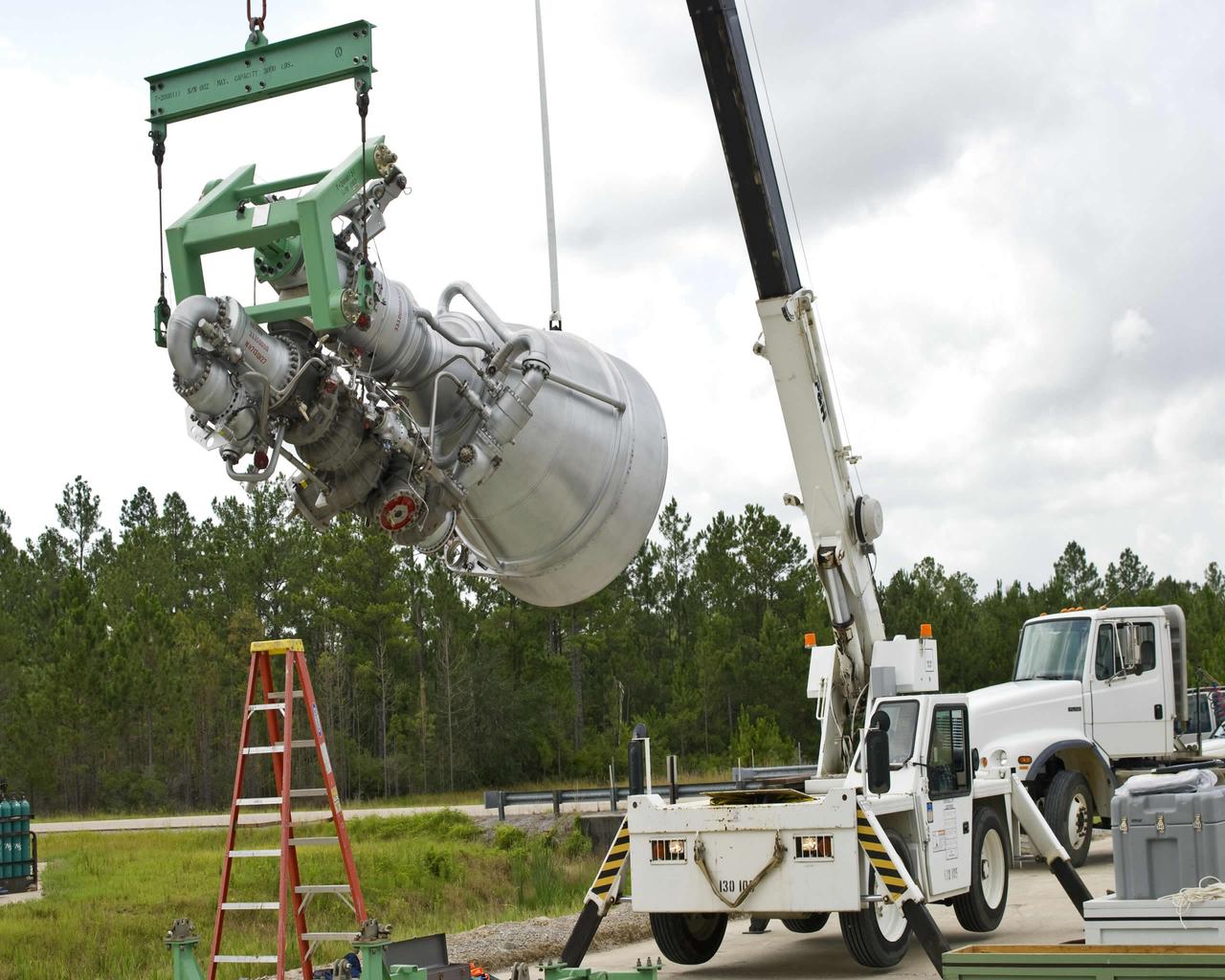
An Aerojet AJ26 rocket engine is hoisted for installation at Stennis Space Center's E-1 Test Stand on July 19. Stennis operators have been preparing the E-1 stand for testing AJ26 engines since April 2009. Modifications included construction of a 27-foot-deep flame deflection trench.
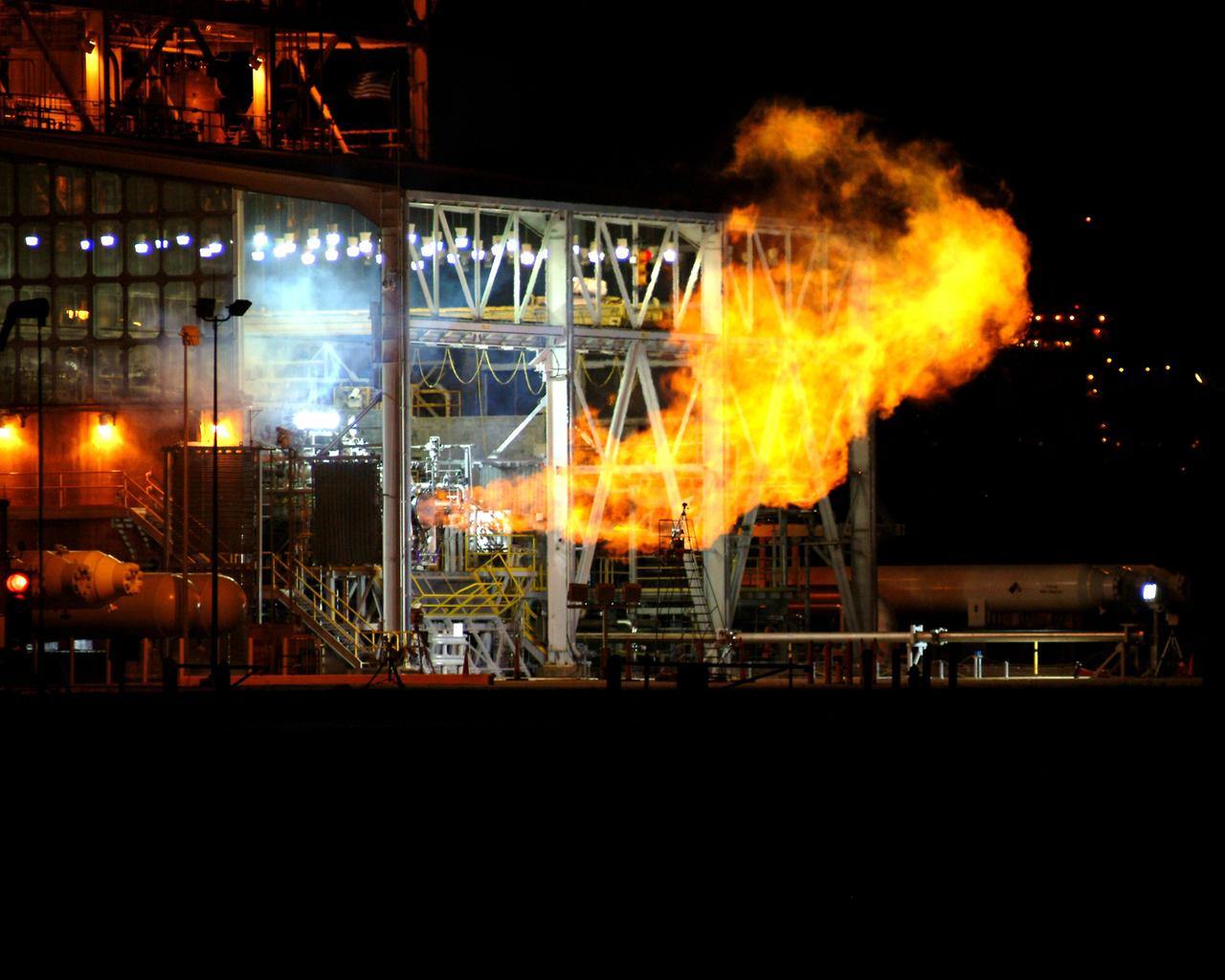
A plume of fire lights up the night during a test of the Integrated Powerhead Demonstrator at Stennis Space Center's E-1 Test Stand.
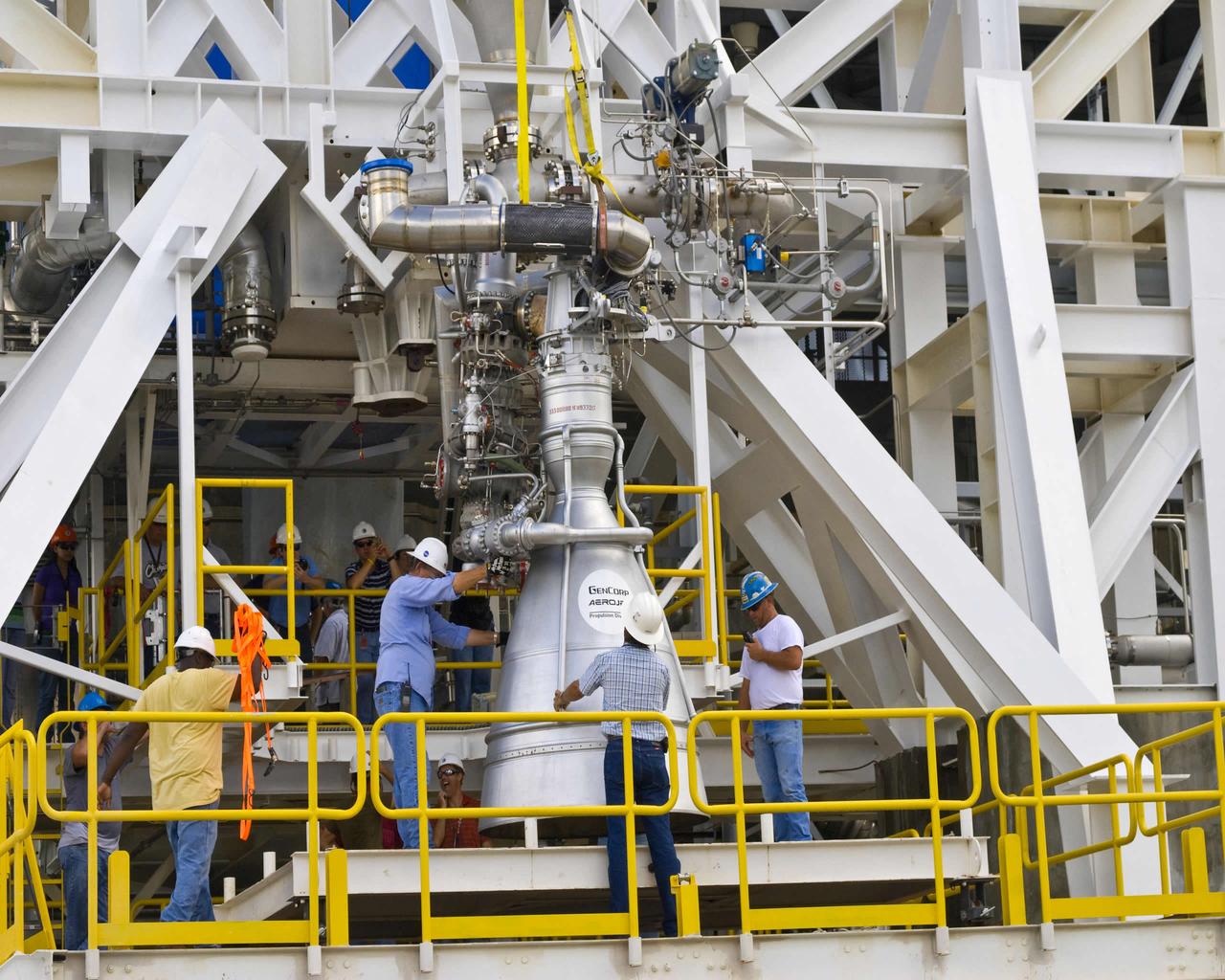
Stennis employees at the E-1 Test Stand position an Aerojet AJ26 rocket engine in preparation for a series of early tests. Stennis has partnered with Orbital Sciences Corporation to test the rocket engine for the company's commercial cargo flights to the International Space Station.
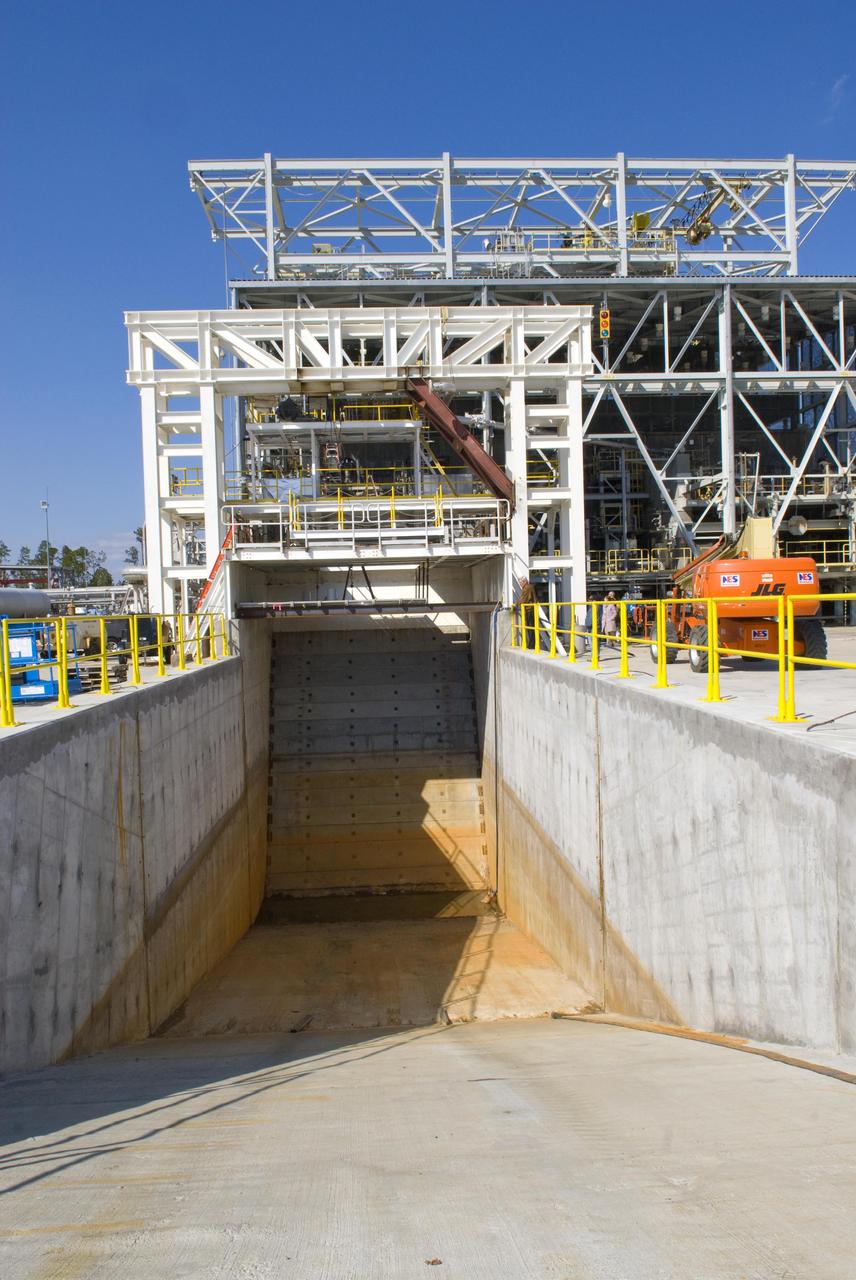
Operators at NASA's John C. Stennis Space Center are completing modifications to the E-1 Test Stand to begin testing Aerojet AJ26 rocket engines in early summer of 2010. Modifications include construction of a 27-foot-deep flame deflector trench. The AJ26 rocket engines will be used to power Orbital Sciences Corp.'s Taurus II space vehicles to provide commercial cargo transportation missions to the International Space Station for NASA. Stennis has partnered with Orbital to test all engines for the transport missions.
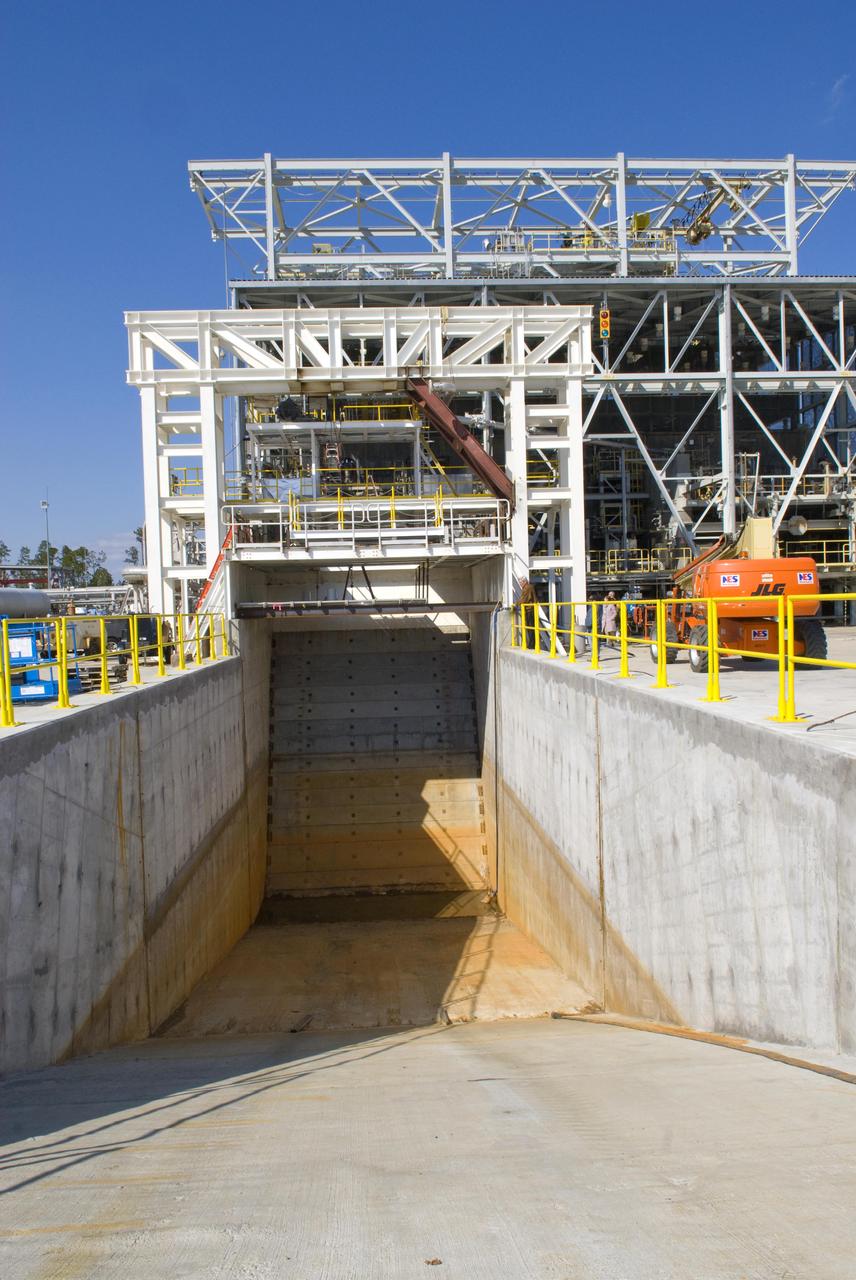
Operators at NASA's John C. Stennis Space Center are completing modifications to the E-1 Test Stand to begin testing Aerojet AJ26 rocket engines in early summer of 2010. Modifications include construction of a 27-foot-deep flame deflector trench. The AJ26 rocket engines will be used to power Orbital Sciences Corp.'s Taurus II space vehicles to provide commercial cargo transportation missions to the International Space Station for NASA. Stennis has partnered with Orbital to test all engines for the transport missions.
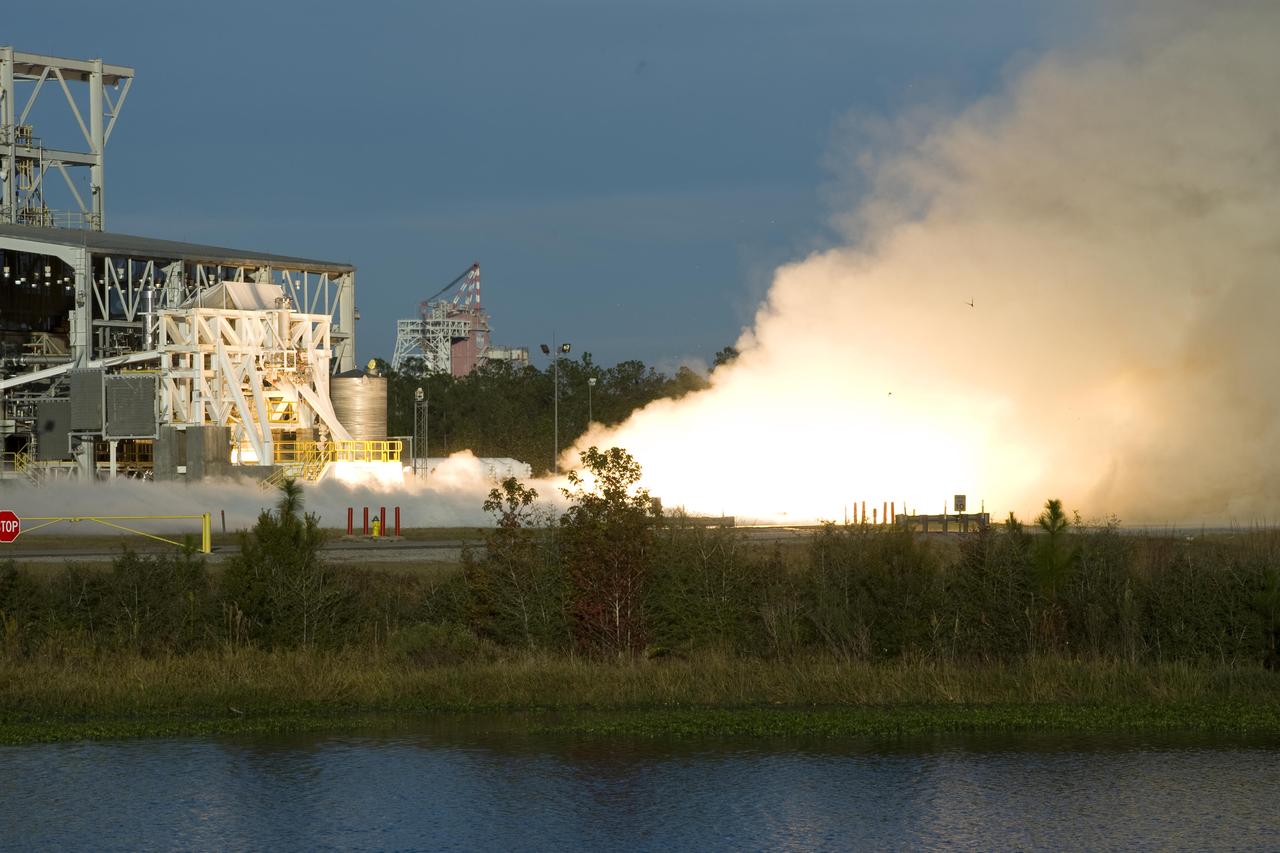
Fire and steam signal a successful test firing of Orbital Sciences Corporation's Aerojet AJ26 rocket engine at John C. Stennis Space Center. AJ26 engines will be used to power Orbital's Taurus II space vehicle on commercial cargo flights to the International Space Station. On Nov. 10, operators at Stennis' E-1 Test Stand conducted a 10-second test fire of the engine, the first of a series of three verification tests. Orbital has partnered with NASA to provide eight missions to the ISS by 2015.
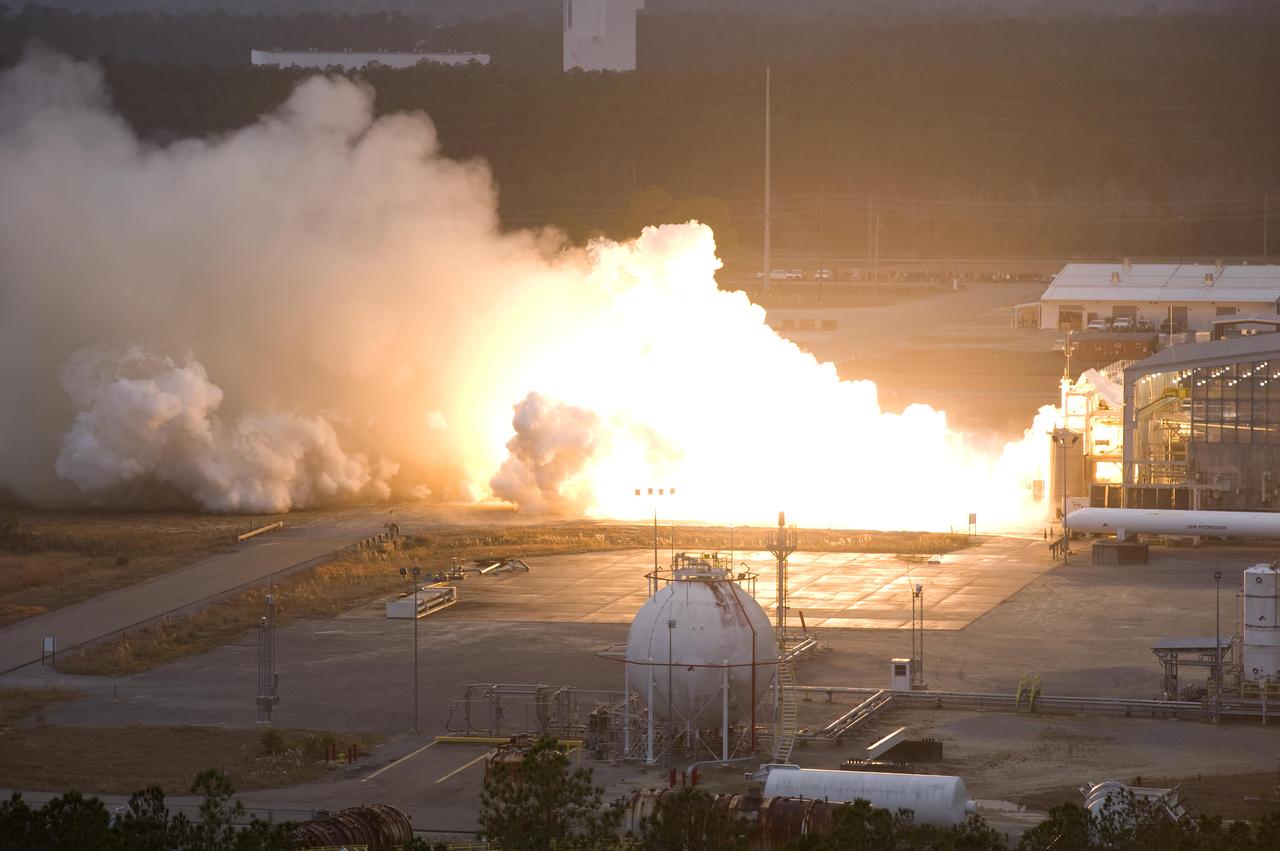
John C. Stennis Space Center engineers conduct a 55-second test fire of Aerojet's liquid-fuel AJ26 rocket engine that will power the first stage of Orbital Sciences Corporation's Taurus II space launch vehicle. The Dec. 17, 2010 test was conducted on the E-1 Test Stand at Stennis in support of NASA's Commercial Transportation Services partnerships to enable commercial cargo flights to the International Space Station. Orbital is under contract with NASA to provide eight cargo missions to the space station through 2015.
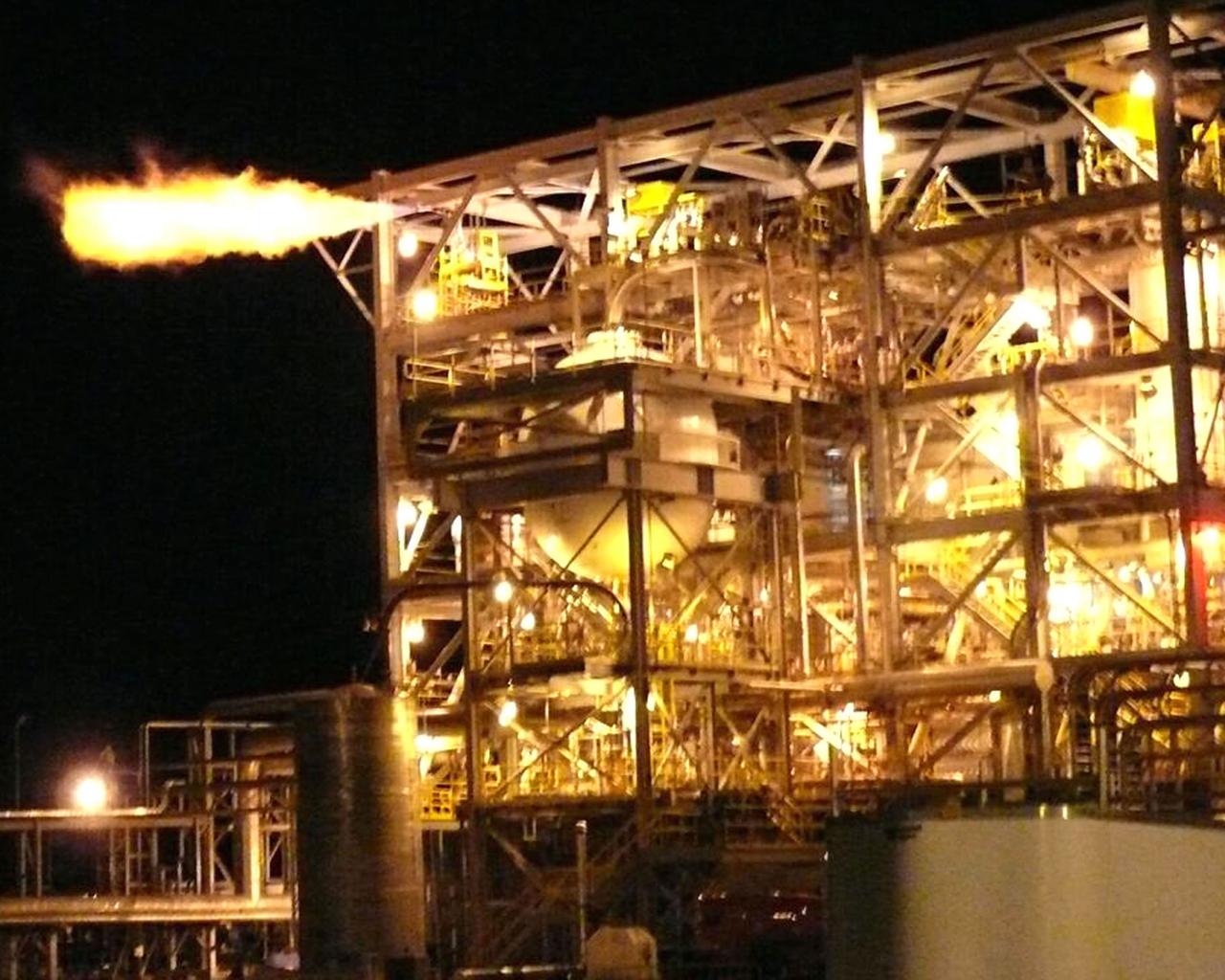
Flames burst from the E-1 Test Stand as Stennis Space Center engineers perform one of dozens of shuttle flow valve tests in early February. Stennis engineers teamed with Innovative Partnership Program partners to perform the tests after NASA officials delayed the launch of the STS-119 mission because of concerns with the shuttle part.
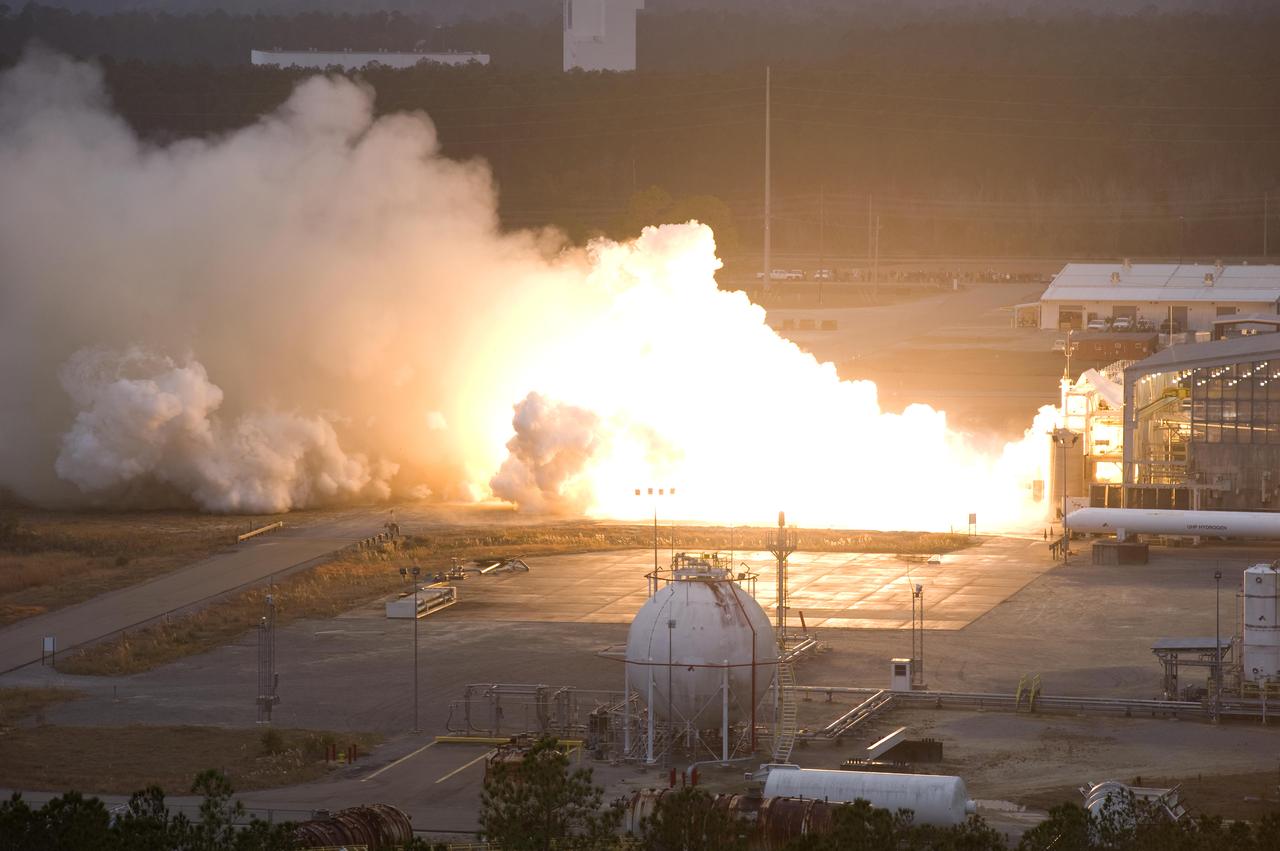
John C. Stennis Space Center engineers conduct a 55-second test fire of Aerojet's liquid-fuel AJ26 rocket engine that will power the first stage of Orbital Sciences Corporation's Taurus II space launch vehicle. The Dec. 17, 2010 test was conducted on the E-1 Test Stand at Stennis in support of NASA's Commercial Transportation Services partnerships to enable commercial cargo flights to the International Space Station. Orbital is under contract with NASA to provide eight cargo missions to the space station through 2015.
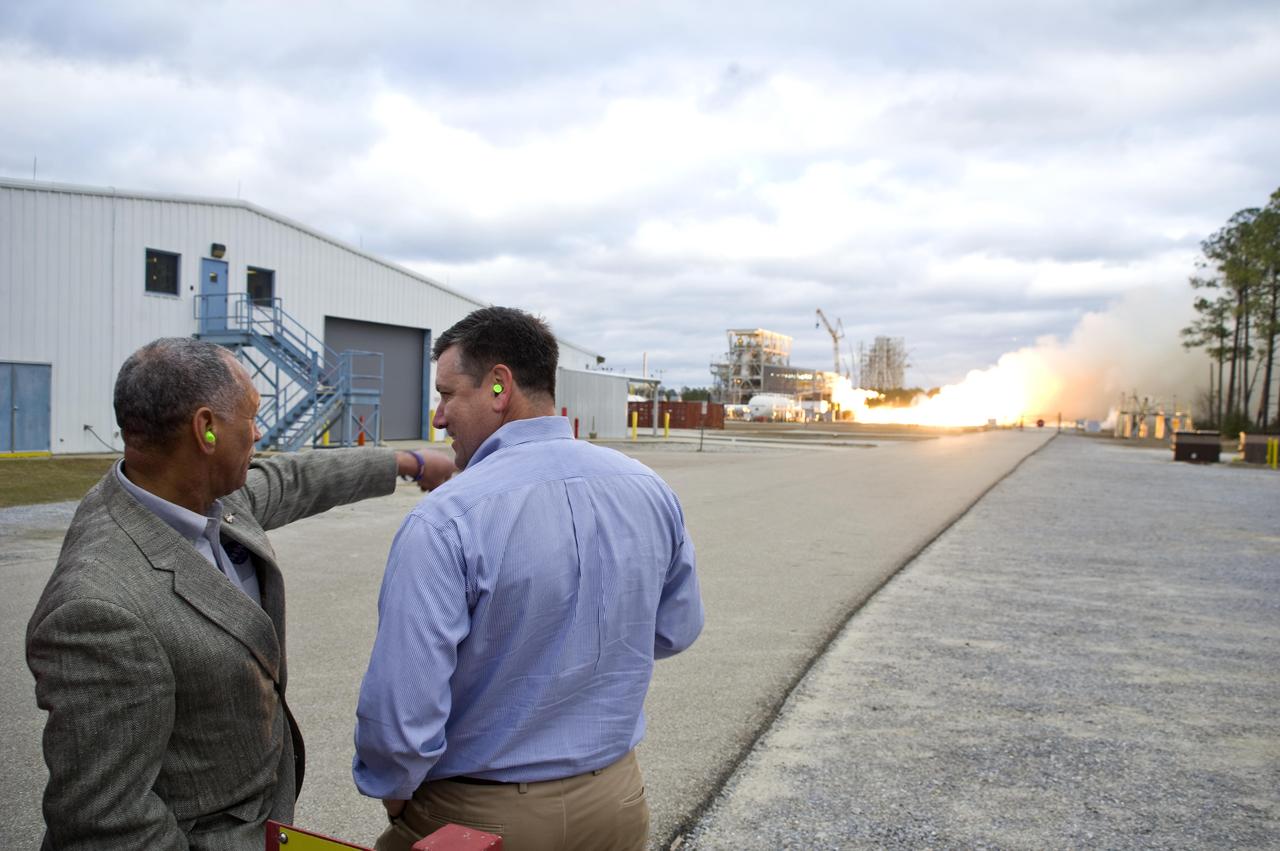
NASA Administrator Charles Bolden (l) and John C. Stennis Space Center Director Patrick Scheuermann watch the successful test of the first Aerojet AJ26 flight engine Feb. 7, 2011. The test was conducted on the E-1 Test Stand at Stennis. The engine now will be sent to Wallops Flight Facility in Virginia, where it will be used to power the first stage of Orbital Sciences Corporation's Taurus II space vehicle. The Feb. 7 test supports NASA's commitment to partner with companies to provide commercial cargo flights to the International Space Station. NASA has partnered with Orbital to carry out the first of eight cargo missions to the space station in early 2012.
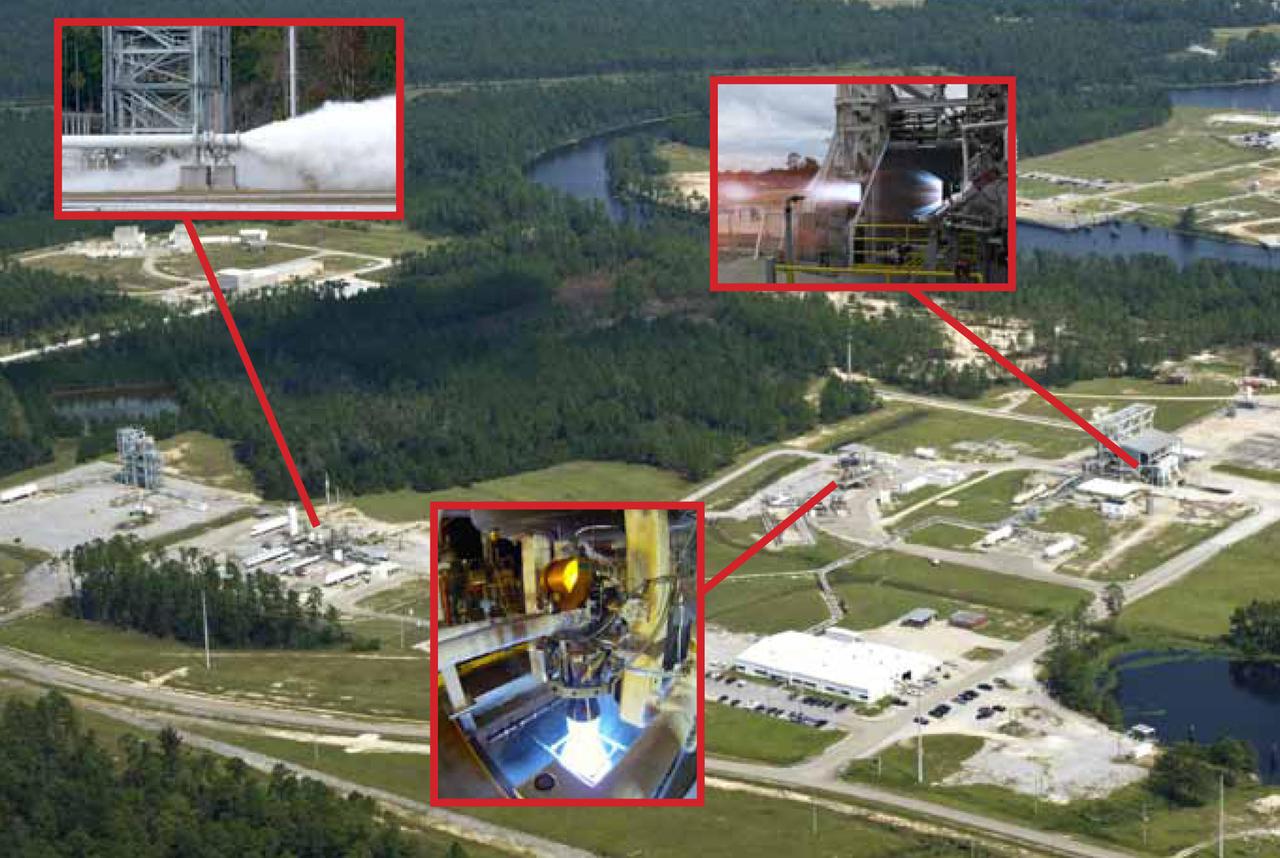
NASA recorded a historic week Nov. 5-9, conducting tests on all three stands in the E Test Complex at John C. Stennis Space Center. Inset images show the types of tests conducted on the E-1 Test Stand (right), the E-2 Test Stand (left) and the E-3 Test Stand (center). The E-1 photo is from an early October test and is provided courtesy of Blue Origin. Other photos are from tests conducted the week of Nov. 5.
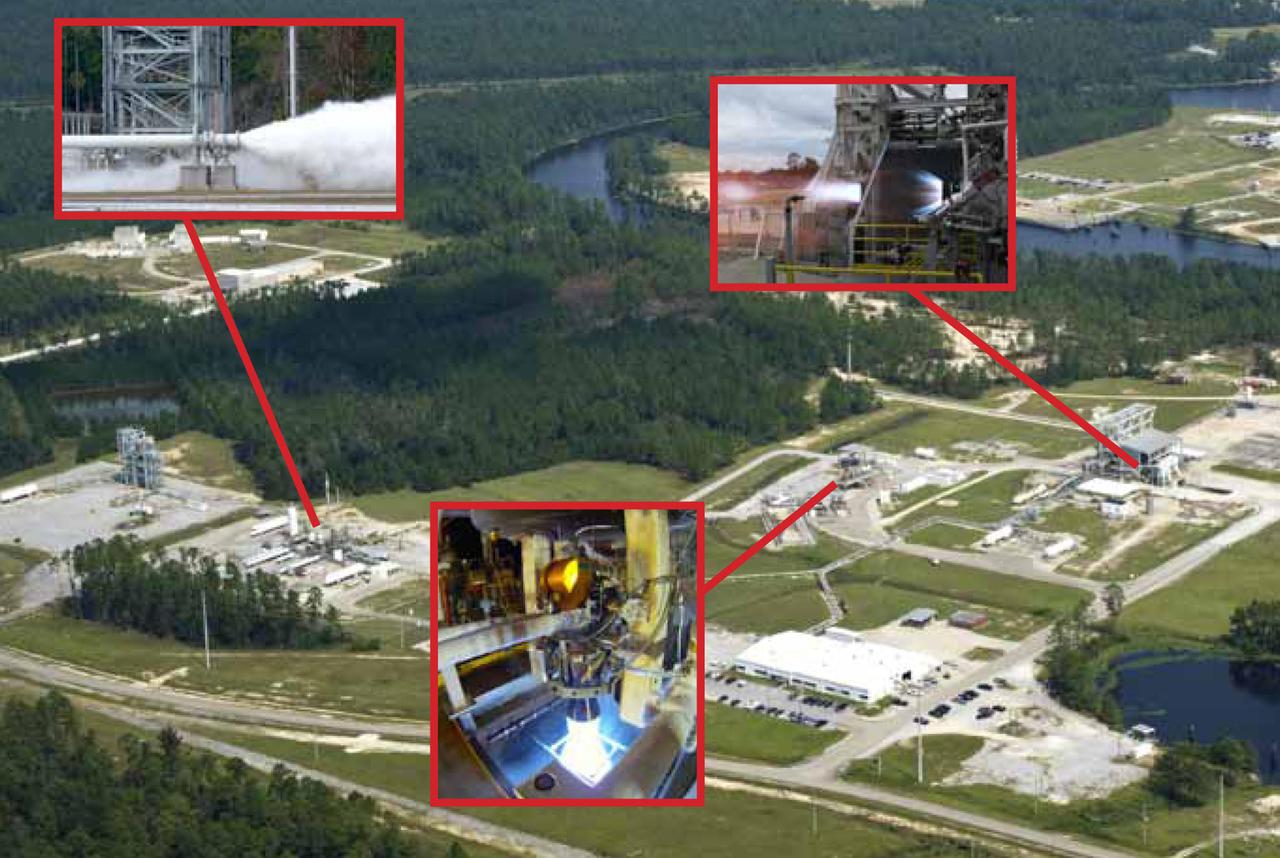
NASA recorded a historic week Nov. 5-9, conducting tests on all three stands in the E Test Complex at John C. Stennis Space Center. Inset images show the types of tests conducted on the E-1 Test Stand (right), the E-2 Test Stand (left) and the E-3 Test Stand (center). The E-1 photo is from an early October test and is provided courtesy of Blue Origin. Other photos are from tests conducted the week of Nov. 5.

A team of engineers from NASA's John C. Stennis Space Center, Orbital Sciences Corporation and Aerojet conduct a successful test of an Aerojet AJ26 rocket engine on March 19. Stennis is testing AJ26 engines for Orbital Sciences to power commercial cargo missions to the International Space Station. Orbital has partnered with NASA through the Commercial Orbital Transportation Services initiative to carry out eight cargo missions to the space station by 2015, using Taurus II rockets.
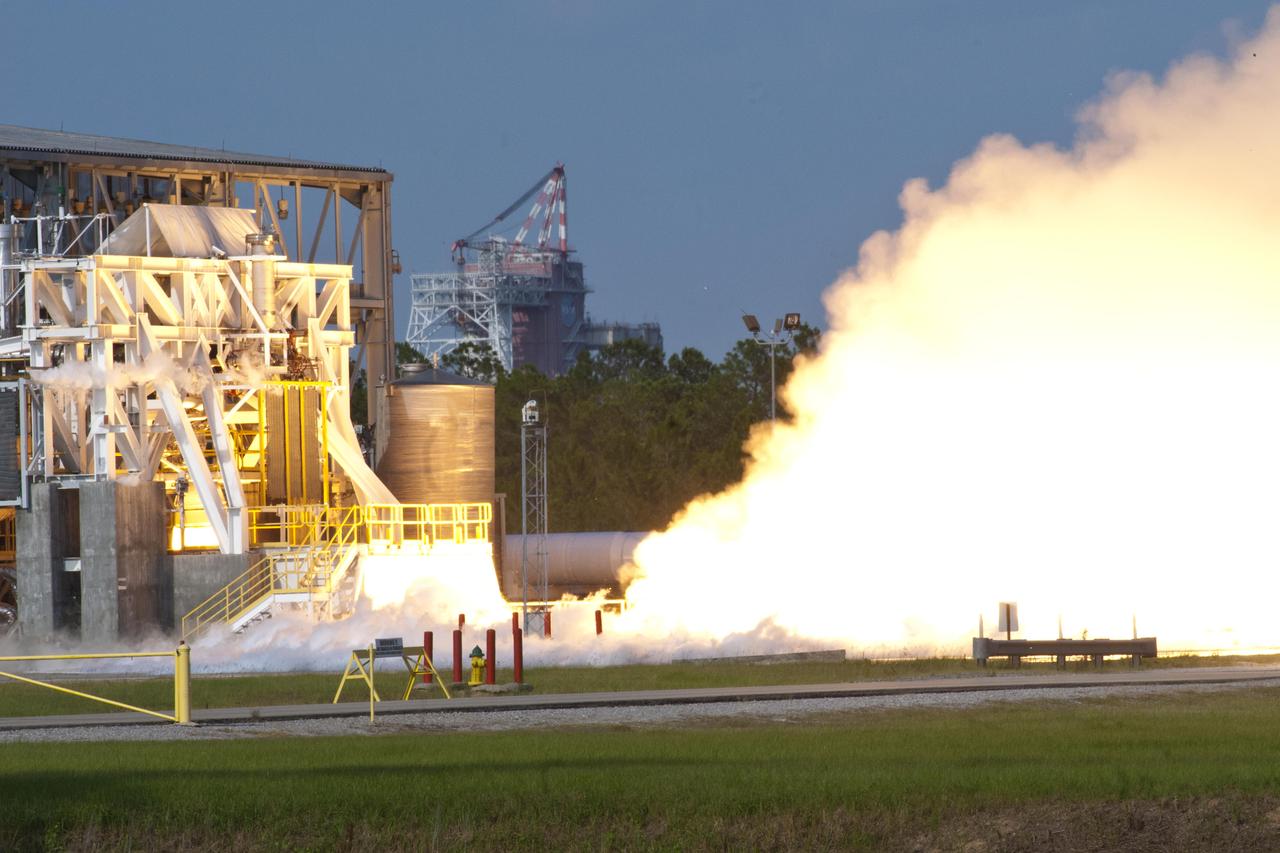
NASA engineers tested an Aerojet AJ26 rocket engine on the E-1 Test Stand at Stennis Space Center on June 25, 2012, against the backdrop of the B-1/B-2 Test Stand. The engine will be used by Orbital Sciences Corporation to power commercial cargo flights to the International Space Station.
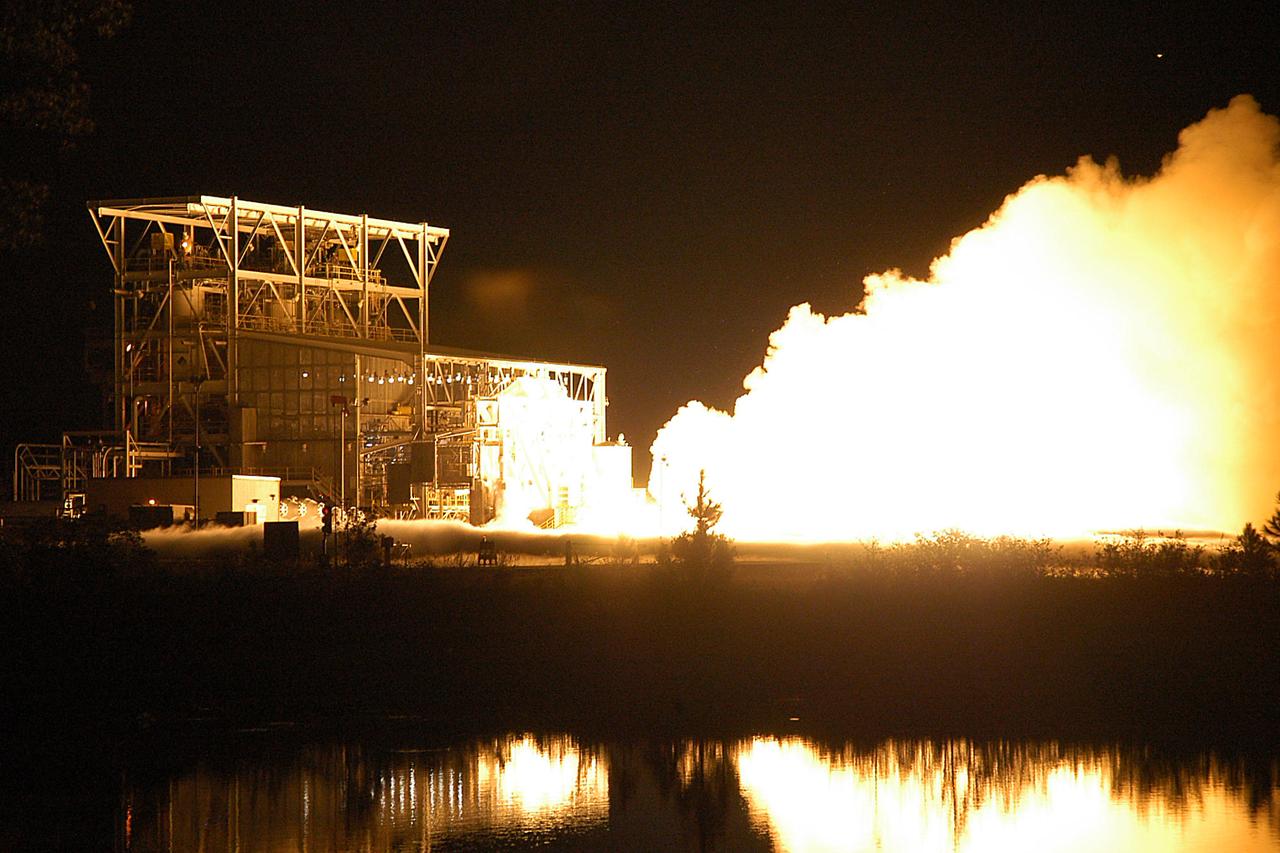
A plume of fire lights up the night during a test of the Integrated Powerhead Demonstrator at Stennis Space Center's E-1 Test Stand.
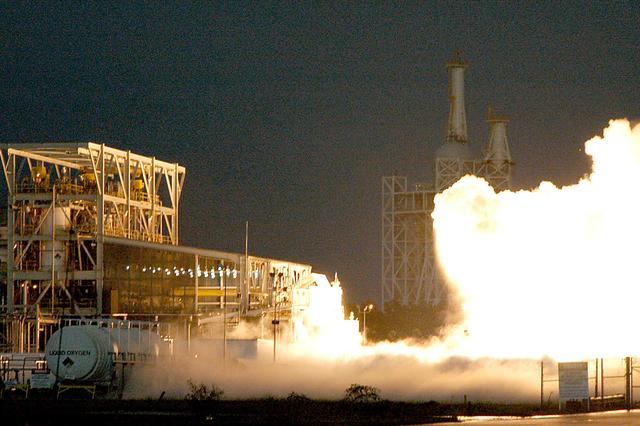
A team of engineers at Stennis Space Center conducted a test firing of an Aerojet AJ26 flight engine Nov. 17, providing continued support to Orbital Sciences Corporation as it prepares to launch commercial cargo missions to the International Space Station. AJ26 engines will power Orbital's Taurus II rocket on the missions.
NASA conducted a Sept. 28 test of an Aerojet AJ26 flight engine that will power the first stage of Orbital Sciences Corporation's Taurus II space launch vehicle, continuing progress in a key commercial space transport partnership. Orbital is scheduled to begin commercial cargo flights to the International Space Station in 2012.
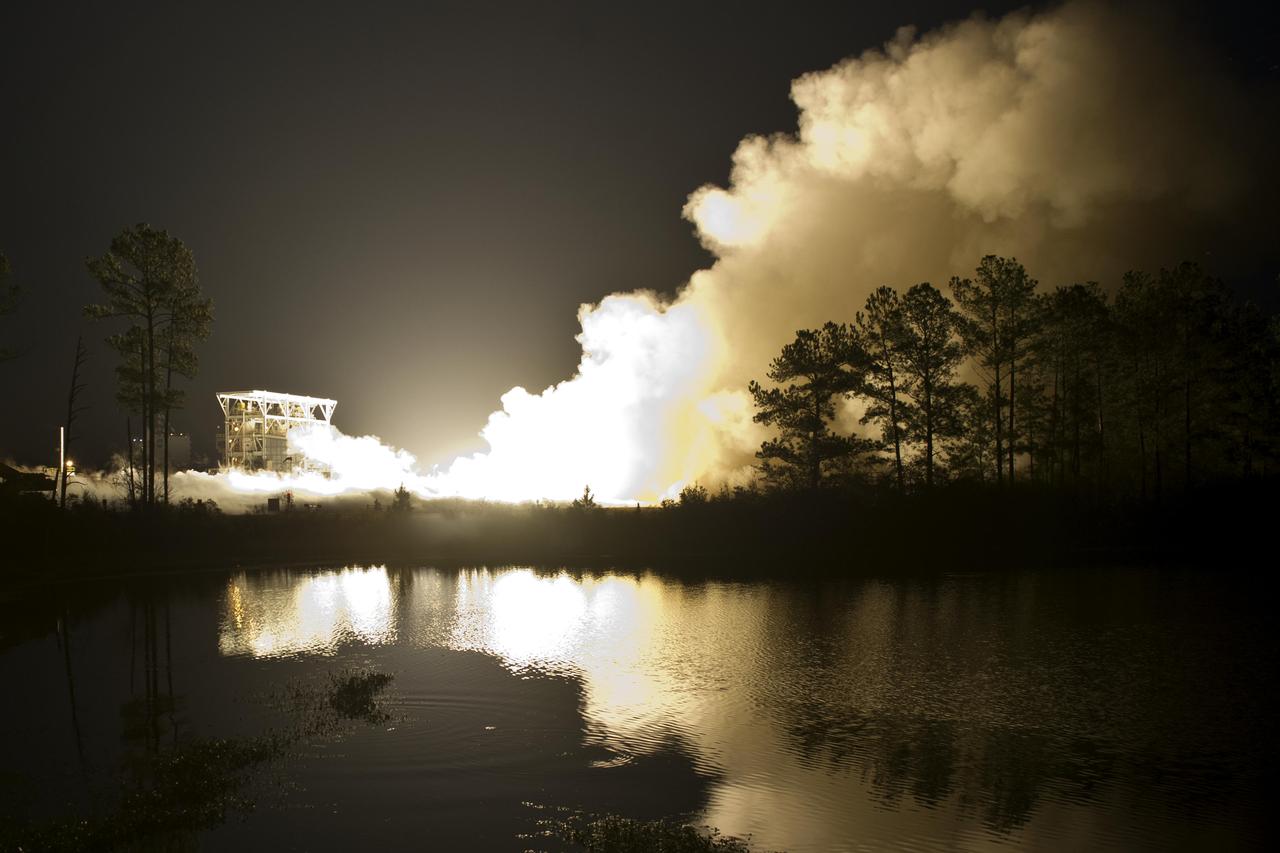
Stennis Space Center test-fired Aerojet AJ26 flight engine No. 8 on Dec. 15, continuing a commercial partnership with Orbital Services Corporation. Orbital has partnered with NASA to provide commercial cargo flights to the International Space Station. The AJ26 engines tested at Stennis will power the company's Taurus II space launch vehicle on the flights.
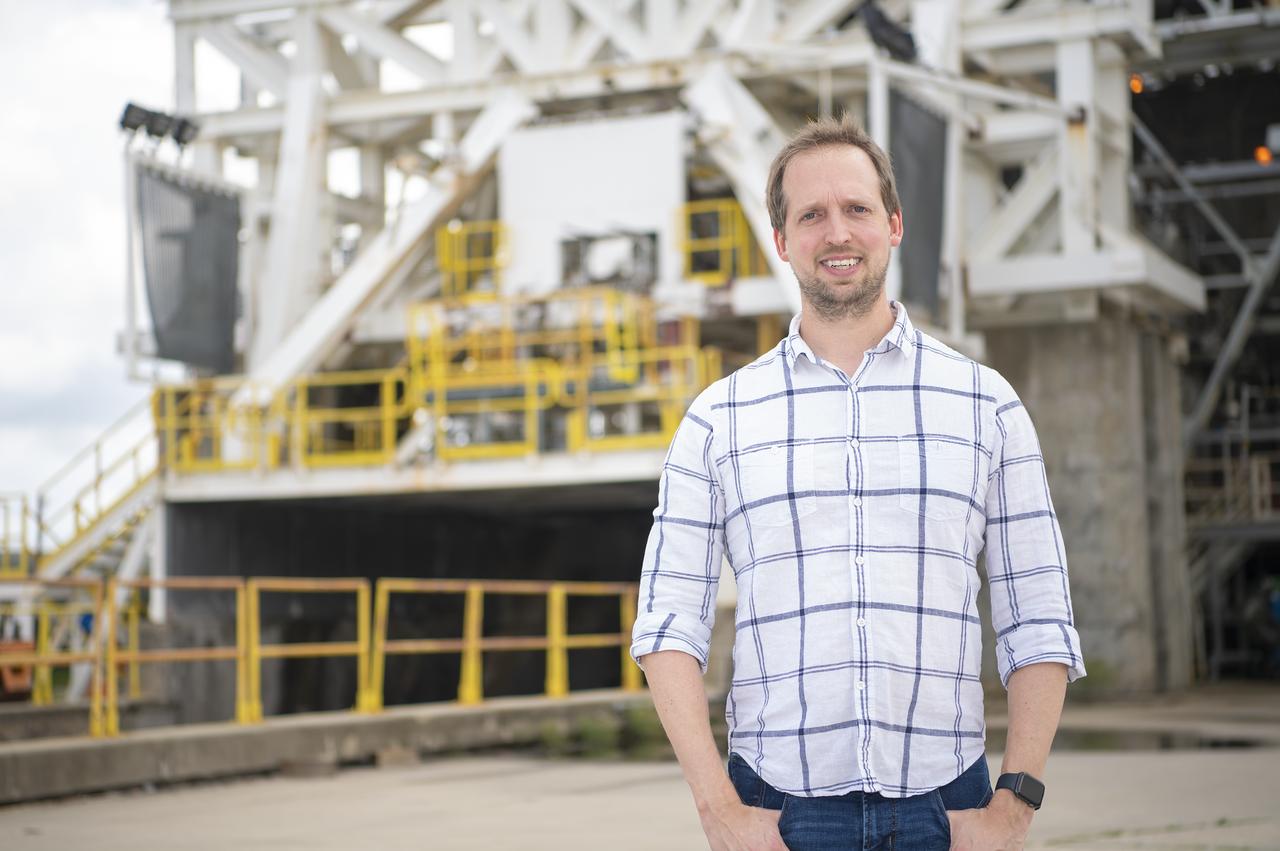
Chris Barnett-Woods is shown at the E-1 Test Stand at NASA’s Stennis Space Center near Bay St. Louis, Mississippi, where NASA Stennis accelerates the exploration and commercialization of space and innovates to benefit NASA and industry.
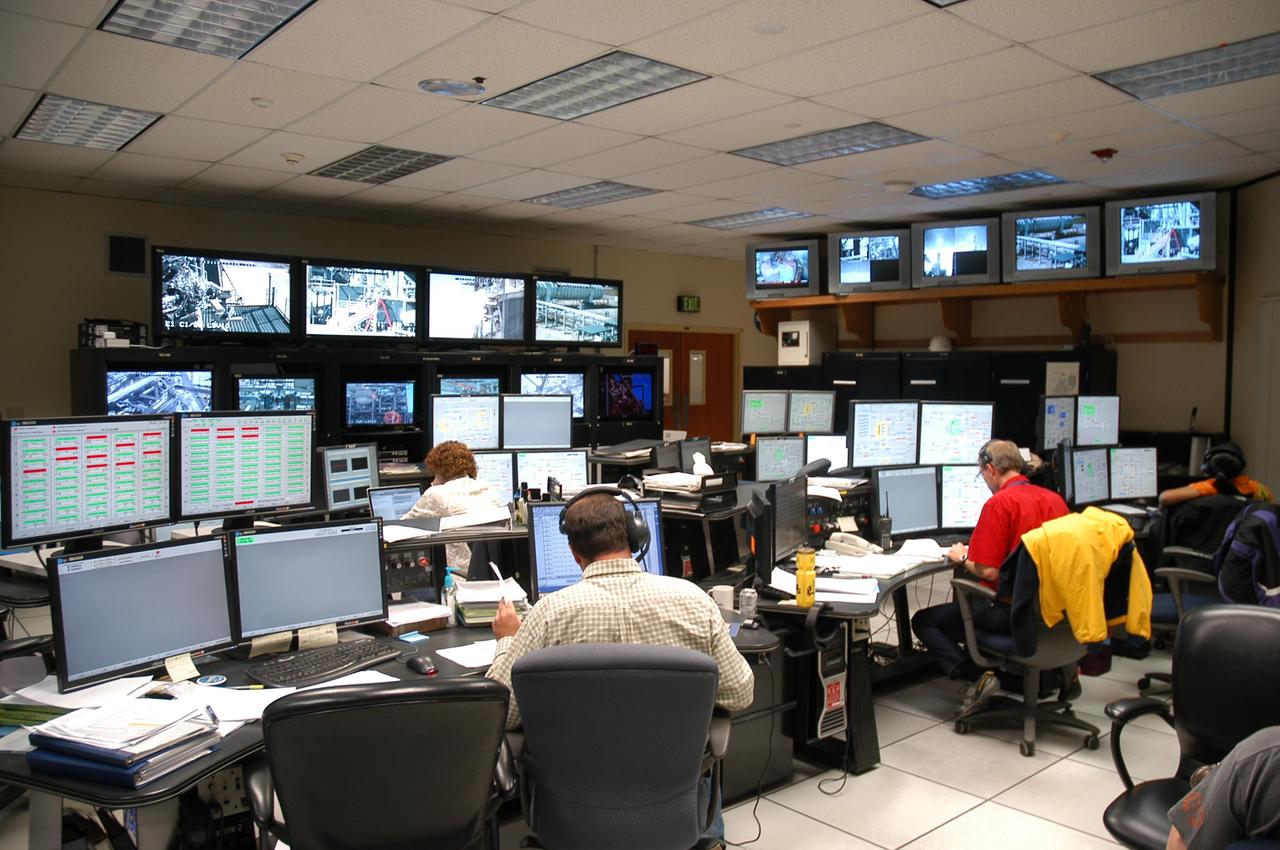
Jason Hopper of NASA (front row), Jody Ladner of Lockheed Martin (back row, left) and Chris Mulkey of NASA prepare to test the Blue Origin BE-3 engine thrust chamber in the E-1 Test Stand Control Center at John C. Stennis Space Center on Nov. 8. The test was one of 27 conducted in Stennis' E Test Complex the week of Nov. 5.
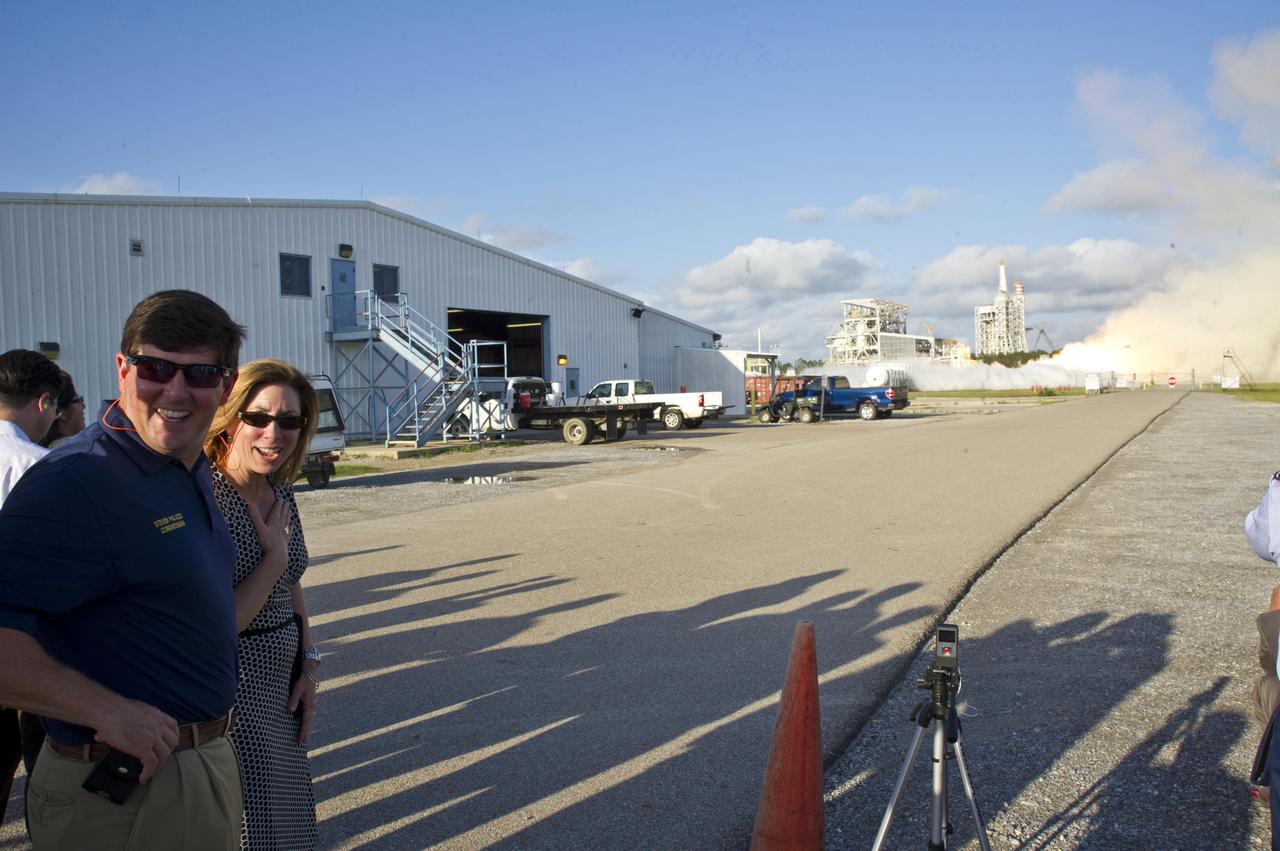
NASA Deputy Administrator Lori Garver and U.S. Rep. Steven Palazzo, R-Miss., view a May 3, 2012, test of the Aerojet AJ26 rocket engine on the E-1 Test Stand at Stennis Space Center. The AJ26 engine is being tested for Orbital Sciences Corporation to power commercial cargo flights to the International Space Station.
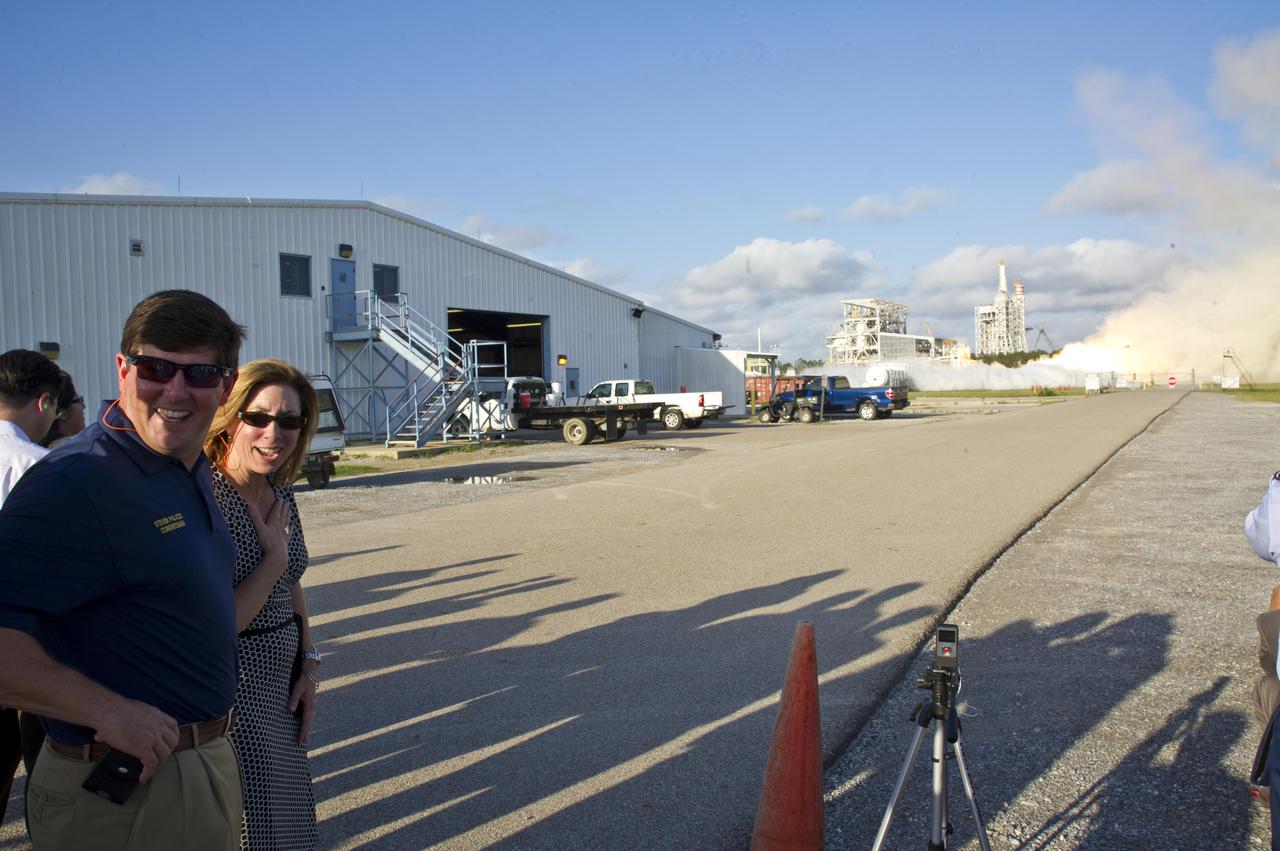
NASA Deputy Administrator Lori Garver and U.S. Rep. Steven Palazzo, R-Miss., view a May 3, 2012, test of the Aerojet AJ26 rocket engine on the E-1 Test Stand at Stennis Space Center. The AJ26 engine is being tested for Orbital Sciences Corporation to power commercial cargo flights to the International Space Station.
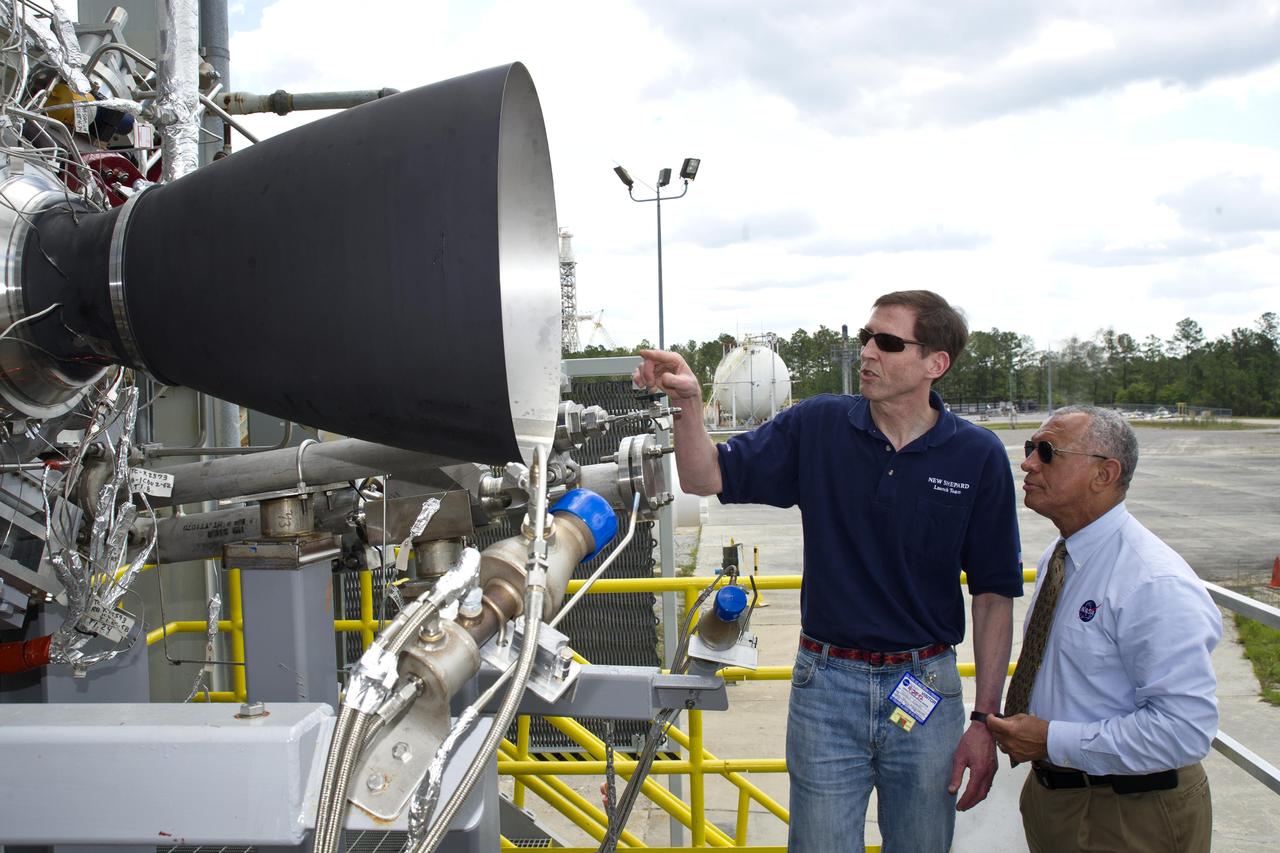
NASA Administrator Charles Bolden (r) discusses the upcoming testing of Blue Origin's BE-3 engine thrust chamber assembly with Steve Knowles, Blue Origin project manager, at the E-1 Test Stand during an April 20, 2012, visit to Stennis Space Center. Blue Origin is one of NASA's partners developing innovative systems to reach low-Earth orbit.
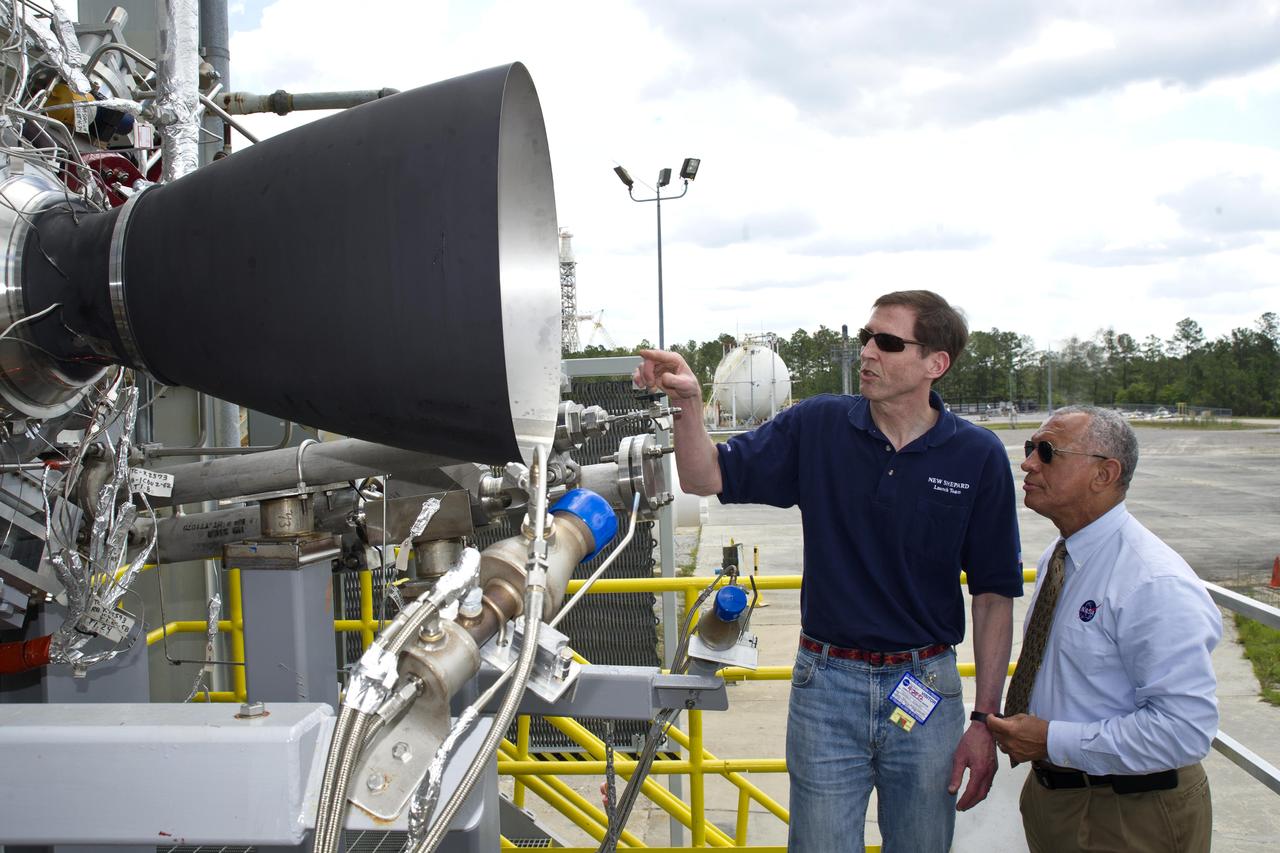
NASA Administrator Charles Bolden (r) discusses the upcoming testing of Blue Origin's BE-3 engine thrust chamber assembly with Steve Knowles, Blue Origin project manager, at the E-1 Test Stand during an April 20, 2012, visit to Stennis Space Center. Blue Origin is one of NASA's partners developing innovative systems to reach low-Earth orbit.
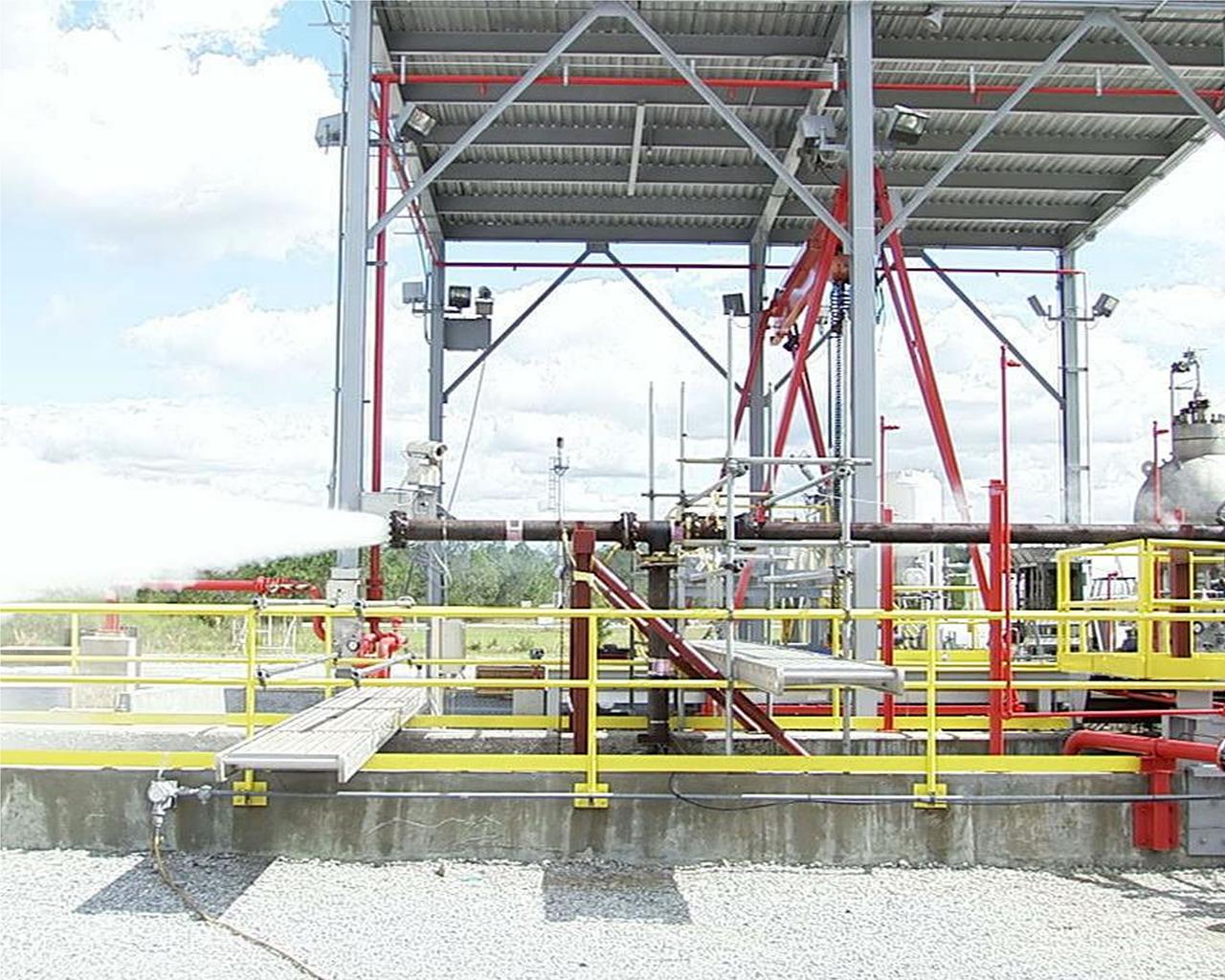
Phase 2 of the A-3 Test Facility Subscale Diffuser Risk Mitigation Project at Stennis Space Center reached a milestone Oct. 25 when the E-3 Test Facility produced superheated (500+ degrees) steam for approximately 3 seconds at more than 400 psi. The test team, led by Barry Robinson of NASA's Test Projects Office, followed that success with further tests to lengthen the duration of steam production. On Nov. 1, they were able to maintain a consistent pressure and temperature of steam for 60 seconds. In December, the team began Phase 3 of the testing, providing data for the design and procurement to build the full-scale version of the steam diffuser for SSC's A-3 Test Stand.
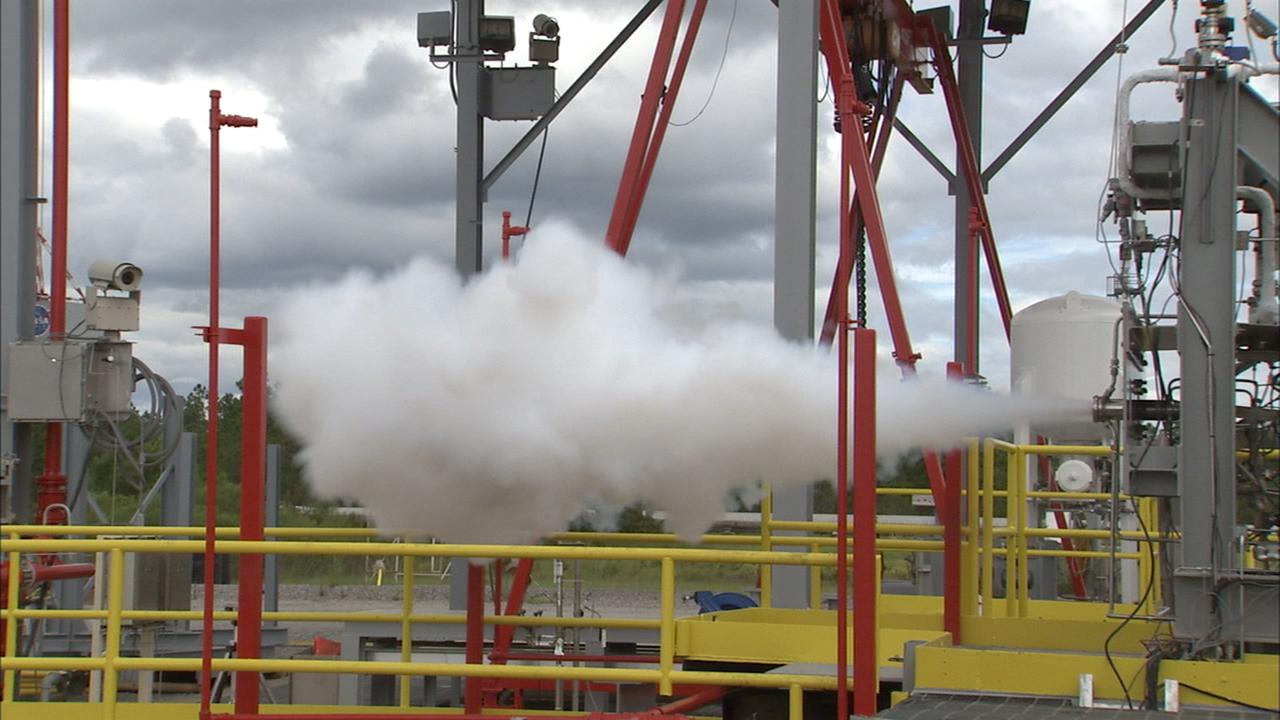
Tests begun at Stennis Space Center's E Complex Sept. 13 evaluated a liquid oxygen lead for engine start performance, part of the A-3 Test Facility Subscale Diffuser Risk Mitigation Project at SSC's E-3 Test Facility. Phase 1 of the subscale diffuser project, completed Sept. 24, was a series of 18 hot-fire tests using a 1,000-pound liquid oxygen and gaseous hydrogen thruster to verify maximum duration and repeatability for steam generation supporting the A-3 Test Stand project. The thruster is a stand-in for NASA's developing J-2X engine, to validate a 6 percent scale version of A-3's exhaust diffuser. Testing the J-2X at altitude conditions requires an enormous diffuser. Engineers will generate nearly 4,600 pounds per second of steam to reduce pressure inside A-3's test cell to simulate altitude conditions. A-3's exhaust diffuser has to be able to withstand regulated pressure, temperatures and the safe discharge of the steam produced during those tests. Before the real thing is built, engineers hope to work out any issues on the miniature version. Phase 2 testing is scheduled to begin this month.
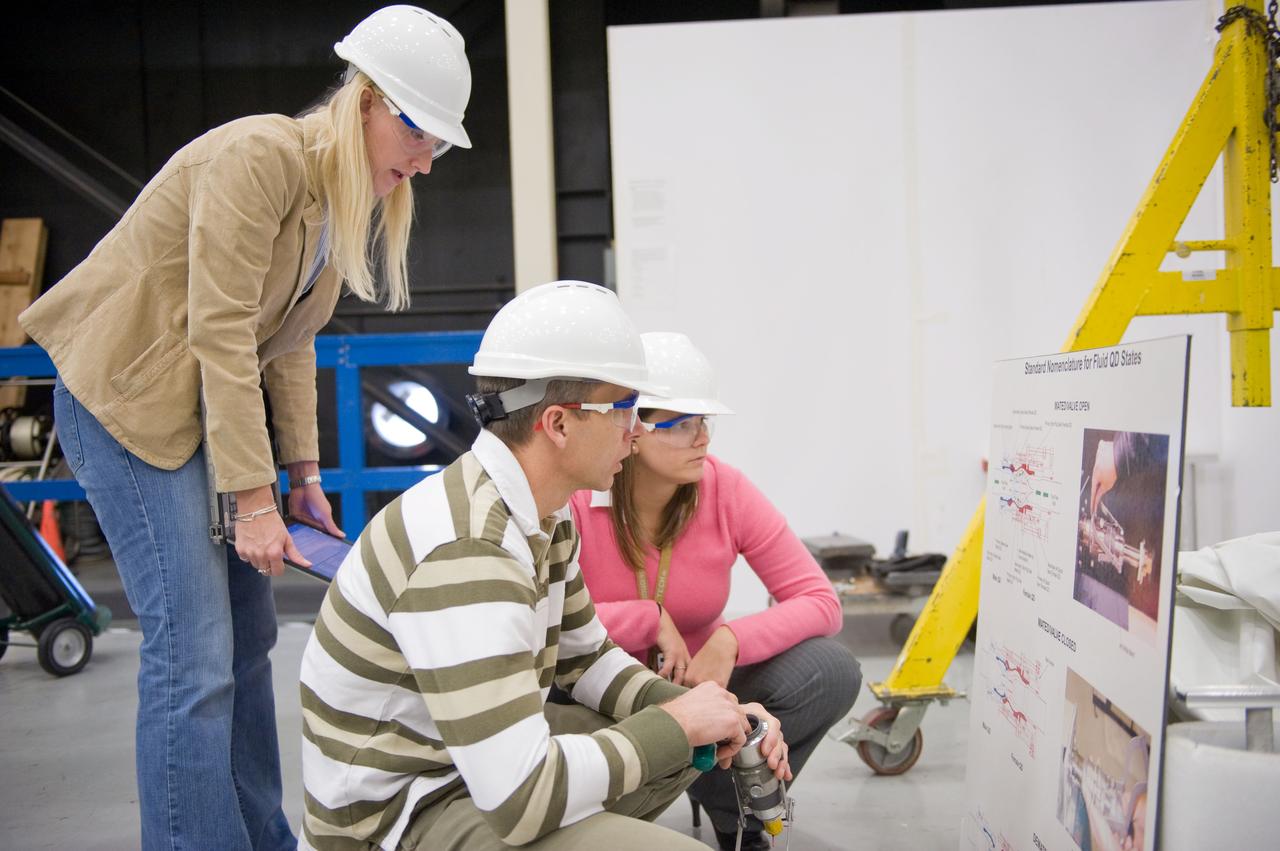
JSC2010-E-193913 (1 Dec. 2010) --- NASA astronaut Andrew Feustel, STS-134 mission specialist, participates in an extravehicular activity (EVA) training session in the Partial Gravity Simulator (POGO) test area in the Space Vehicle Mock-up Facility at NASA?s Johnson Space Center. Crew instructors Allison Bolinger (standing) and Vickie Otto assisted Feustel. Photo credit: NASA or National Aeronautics and Space Administration

In the Orbiter Processing Facility bay 1, the STS-96 crew (foreground) looks into the payload bay of the orbiter Discovery. Standing in the bucket in the foreground are (left to right) Mission Specialists Daniel Barry (M.D., Ph.D.), Valery Ivanovich Tokarev, and Tamara E. Jernigan (Ph.D.), with a KSC worker at the controls of the bucket. In the background (center) pointing is Mission Specialist Julie Payette. Tokarev represents the Russian Space Agency and Payette the Canadian Space Agency. They are at KSC for a Crew Equipment Interface Test. The other crew members participating in the test are Commander Kent V. Rominger, Pilot Rick Douglas Husband and Mission Specialist Ellen Ochoa (Ph.D.). The primary payload of STS-96 is the SPACEHAB Double Module. In addition, the Space Shuttle will carry unpressurized cargo such as the external Russian cargo crane known as STRELA; the Spacehab Oceaneering Space System Box (SHOSS), which is a logistics items carrier; and an ORU Transfer Device (OTD), a U.S.-built crane that will be stowed on the station for use during future ISS assembly missions. These cargo items will be stowed on the International Cargo Carrier, fitted inside the payload bay behind the SPACEHAB module. STS-96 is targeted for launch on May 24 from Launch Pad 39B
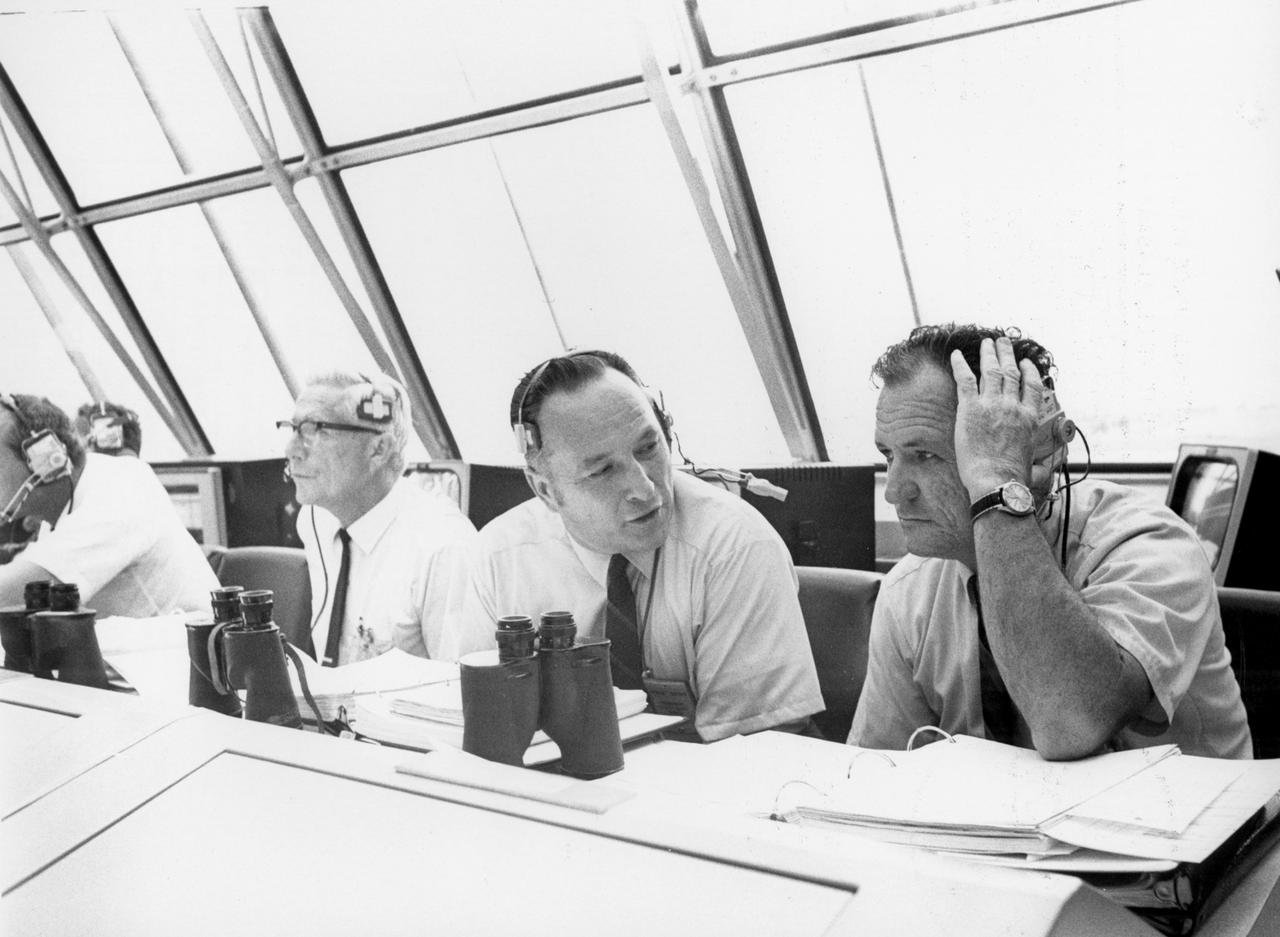
Lee B. James (left), manager of the Saturn Program at the Marshall Space flight Center (MSFC), talks with Isom Pigell in the firing room 1 of the Kennedy Space Center (KSC) control center during the countdown demonstration test for the Apollo 11 mission. At left is Dr. Hans C. Gruen of KSC. The Apollo 11 mission, the first lunar landing mission, launched from the KSC in Florida via the MSFC developed Saturn V launch vehicle on July 16, 1969 and safely returned to Earth on July 24, 1969. Aboard the space craft were astronauts Neil A. Armstrong, commander; Michael Collins, Command Module (CM) pilot; and Edwin E. (Buzz) Aldrin Jr., Lunar Module (LM) pilot. The CM, “Columbia”, piloted by Collins, remained in a parking orbit around the Moon while the LM, “Eagle’’, carrying astronauts Armstrong and Aldrin, landed on the Moon. On July 20, 1969, Armstrong was the first human to ever stand on the lunar surface, followed by Aldrin. During 2½ hours of surface exploration, the crew collected 47 pounds of lunar surface material for analysis back on Earth. With the success of Apollo 11, the national objective to land men on the Moon and return them safely to Earth had been accomplished.
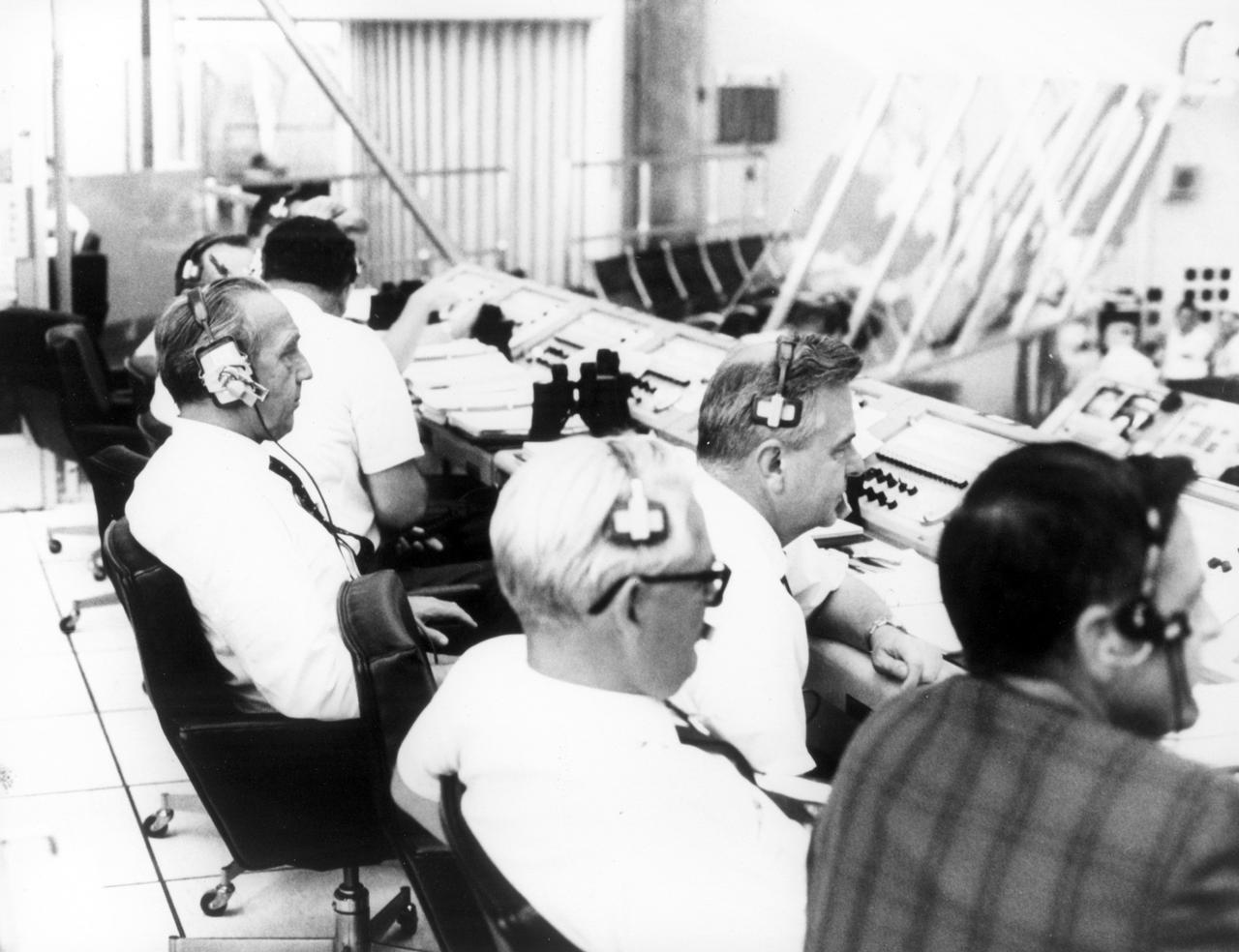
Dr. Kurt Debus, director of the Kennedy Space Flight Center (KSC), participated in the countdown demonstration test for the Apollo 11 mission in firing room 1 of the KSC control center. The Apollo 11 mission, the first lunar landing mission, launched from KSC in Florida via the Marshall Space Flight Center (MSFC) developed Saturn V launch vehicle on July 16, 1969 and safely returned to Earth on July 24, 1969. Aboard the space craft were astronauts Neil A. Armstrong, commander; Michael Collins, Command Module (CM) pilot; and Edwin E. (Buzz) Aldrin Jr., Lunar Module (LM) pilot. The CM, “Columbia”, piloted by Collins, remained in a parking orbit around the Moon while the LM, “Eagle’’, carrying astronauts Armstrong and Aldrin, landed on the Moon. On July 20, 1969, Armstrong was the first human to ever stand on the lunar surface, followed by Aldrin. During 2½ hours of surface exploration, the crew collected 47 pounds of lunar surface material for analysis back on Earth. With the success of Apollo 11, the national objective to land men on the Moon and return them safely to Earth had been accomplished.
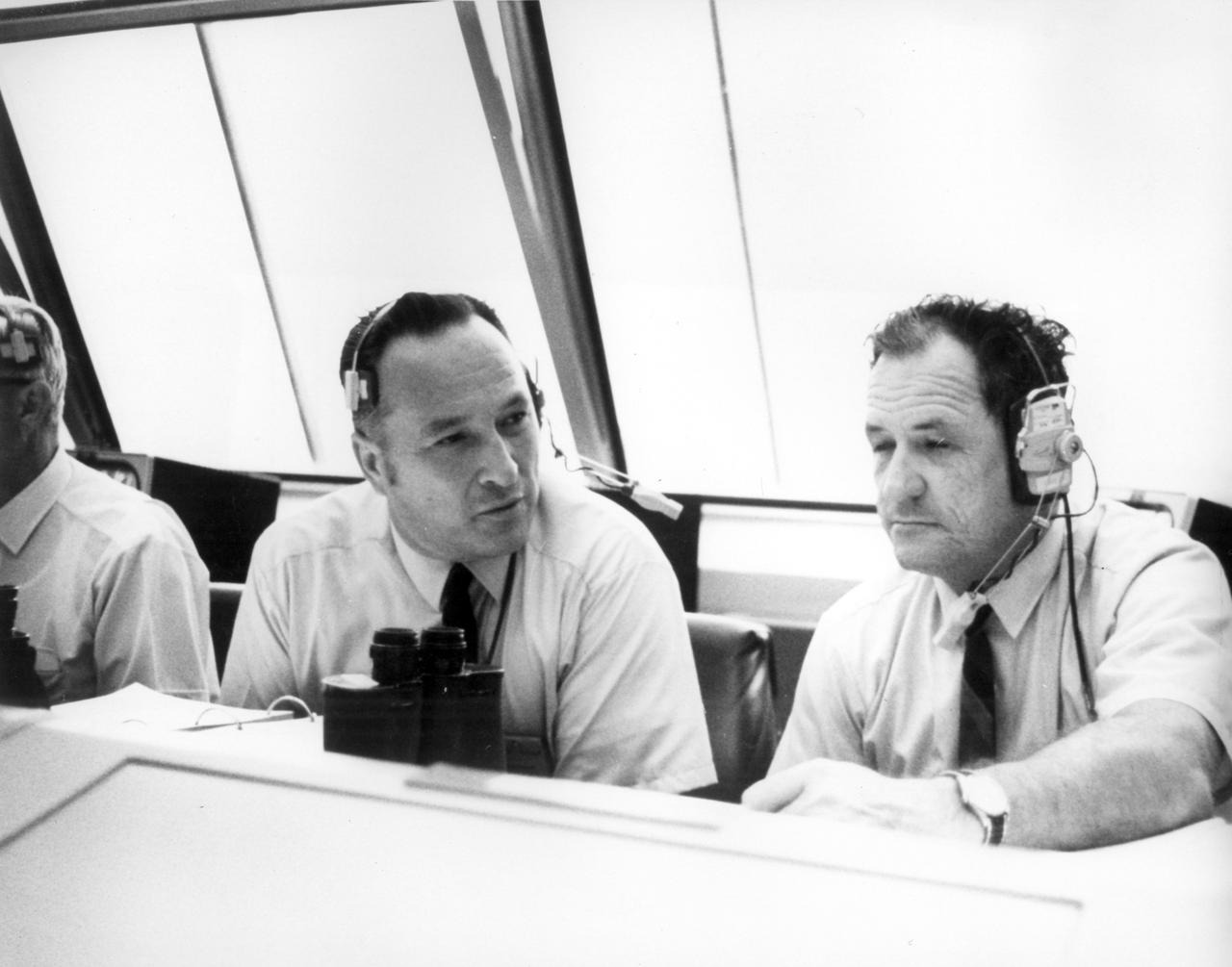
Lee B. James (left), manager of the Saturn Program at the Marshall Space flight Center (MSFC), talks with Isom Pigell in the firing room 1 of the Kennedy Space Center (KSC) control center during the countdown demonstration test for the Apollo 11 mission. The Apollo 11 mission, the first lunar landing mission, launched from the KSC in Florida via the MSFC developed Saturn V launch vehicle on July 16, 1969 and safely returned to Earth on July 24, 1969. Aboard the space craft were astronauts Neil A. Armstrong, commander; Michael Collins, Command Module (CM) pilot; and Edwin E. (Buzz) Aldrin Jr., Lunar Module (LM) pilot. The CM, “Columbia”, piloted by Collins, remained in a parking orbit around the Moon while the LM, “Eagle’’, carrying astronauts Armstrong and Aldrin, landed on the Moon. On July 20, 1969, Armstrong was the first human to ever stand on the lunar surface, followed by Aldrin. During 2½ hours of surface exploration, the crew collected 47 pounds of lunar surface material for analysis back on Earth. With the success of Apollo 11, the national objective to land men on the Moon and return them safely to Earth had been accomplished.
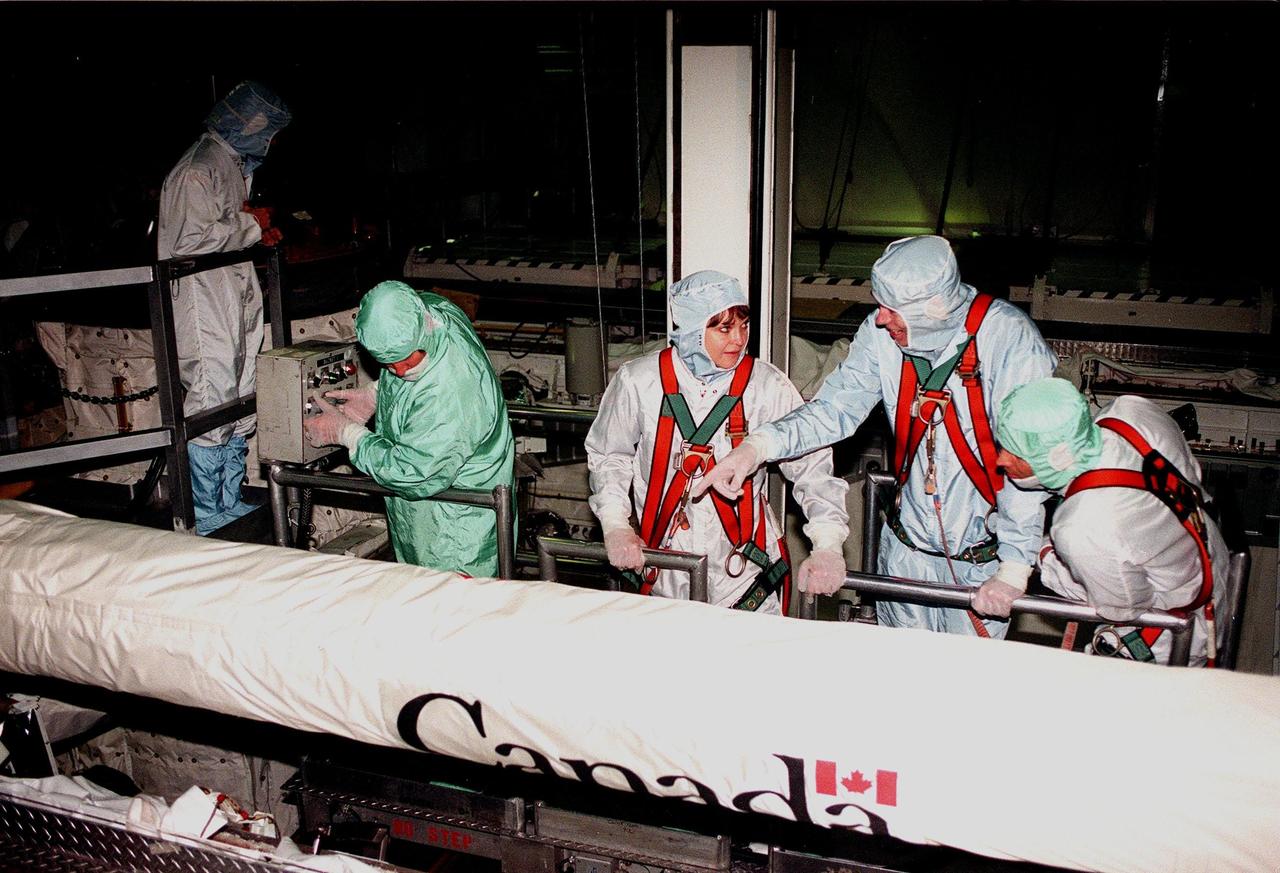
In the Orbiter Processing Facility bay 1, STS-96 crew members look at the Canadian arm in the payload bay of the orbiter Discovery. Standing in a bucket controlled by a KSC worker, are (from left) Mission Specialist Tamara E. Jernigan (Ph.D), Daniel Barry (M.D., Ph.D.), and Valery Ivanovich Tokarev, who represents the Russian Space Agency. The STS-96 crew is at KSC to take part in a Crew Equipment Interface Test. The other crew members are Commander Kent V. Rominger, Pilot Rick Douglas Husband and Mission Specialists Ellen Ochoa (Ph.D.) and Julie Payette, with the Canadian Space Agency. The primary payload of STS-96 is the SPACEHAB Double Module. In addition, the Space Shuttle will carry unpressurized cargo such as the external Russian cargo crane known as STRELA; the Spacehab Oceaneering Space System Box (SHOSS), which is a logistics items carrier; and an ORU Transfer Device (OTD), a U.S.-built crane that will be stowed on the station for use during future ISS assembly missions. These cargo items will be stowed on the International Cargo Carrier, fitted inside the payload bay behind the SPACEHAB module. STS-96 is targeted for launch on May 24 from Launch Pad 39B