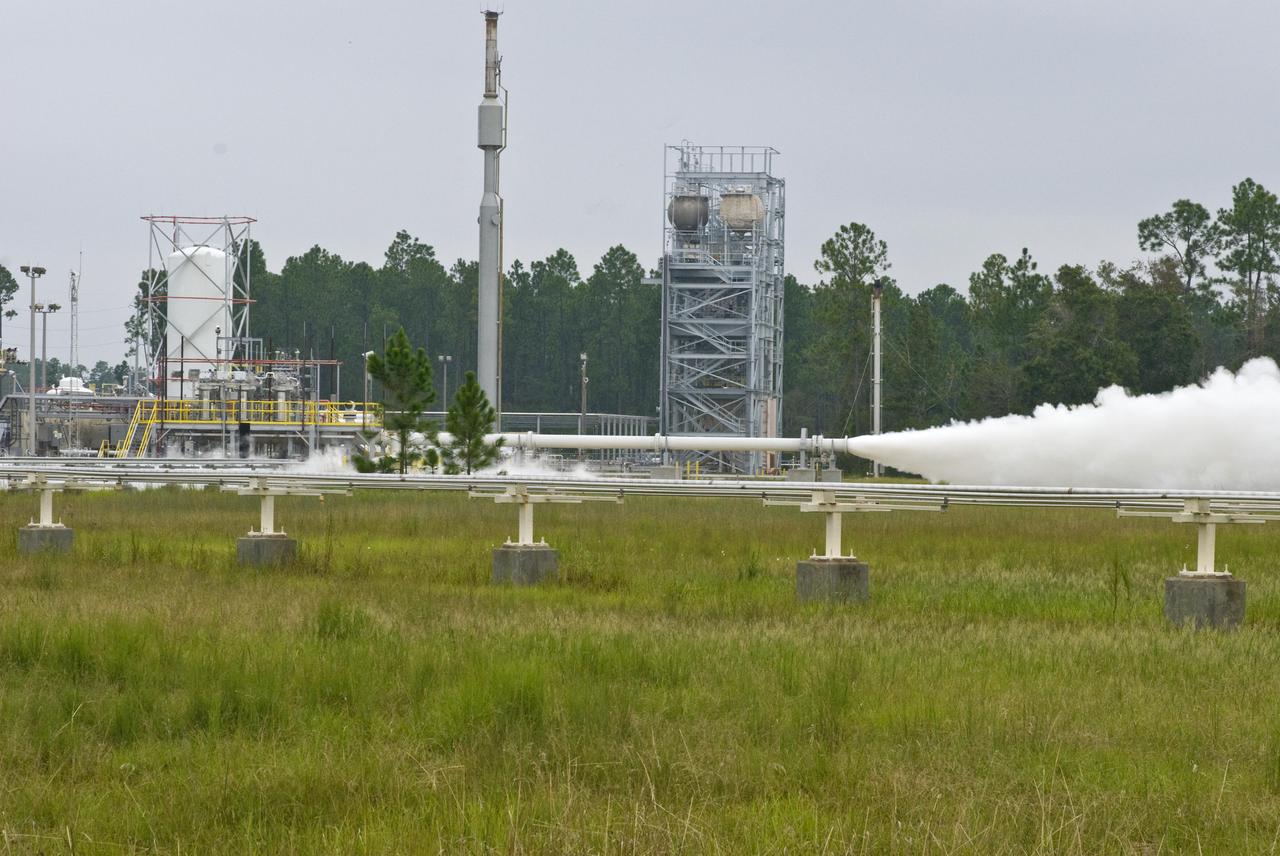
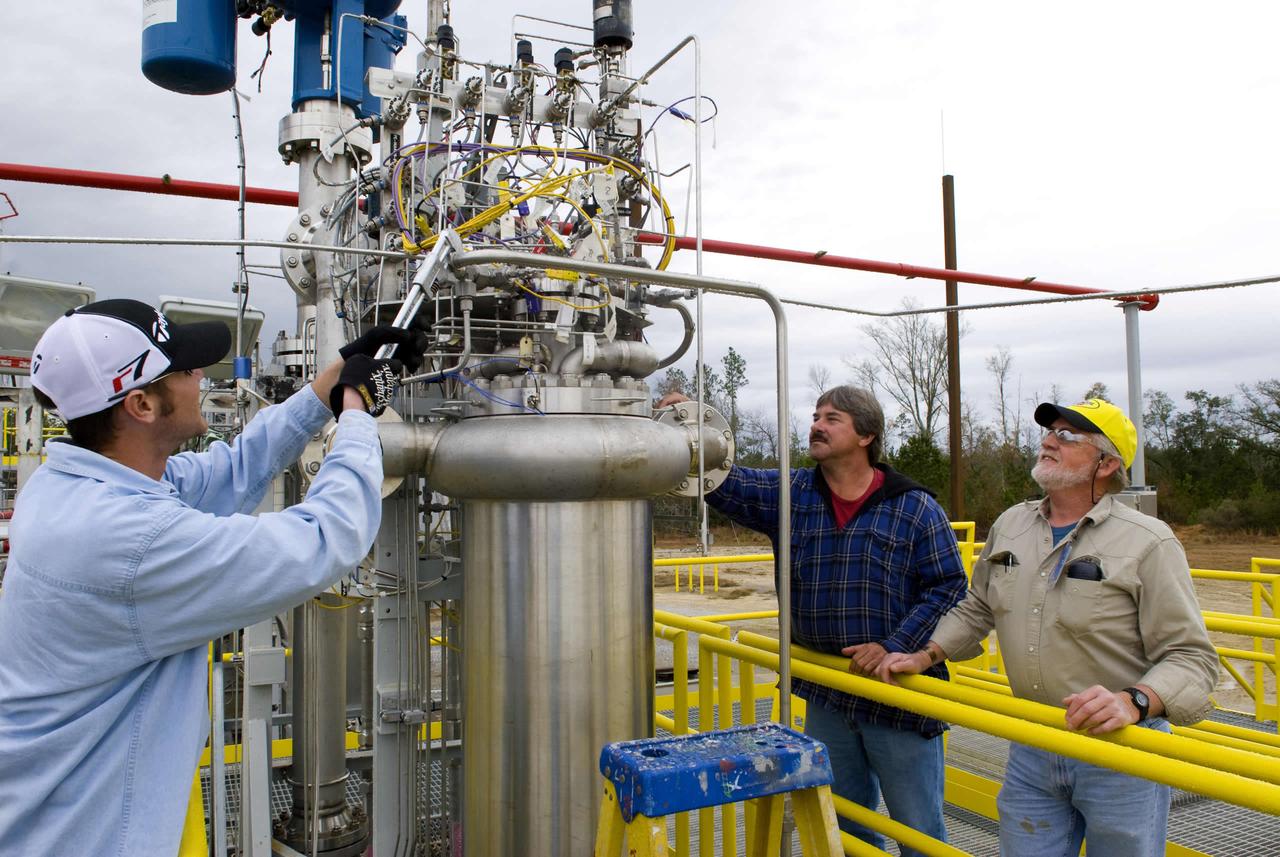
E-2 Test Stand team members at Stennis Space Center conducted their first series of tests on a three-module chemical steam generator unit Sept. 15. All three modules successfully fired during the tests. The chemical steam generator is a critical component for the A-3 Test Stand under construction at Stennis.
CSG test
Kanaly Slade, Pat Guidry and Danny Tarter, all of Jacobs NTOG, make adjustments to the chemical steam generator installed on the E-2 Test Stand.
Daily life at Stennis
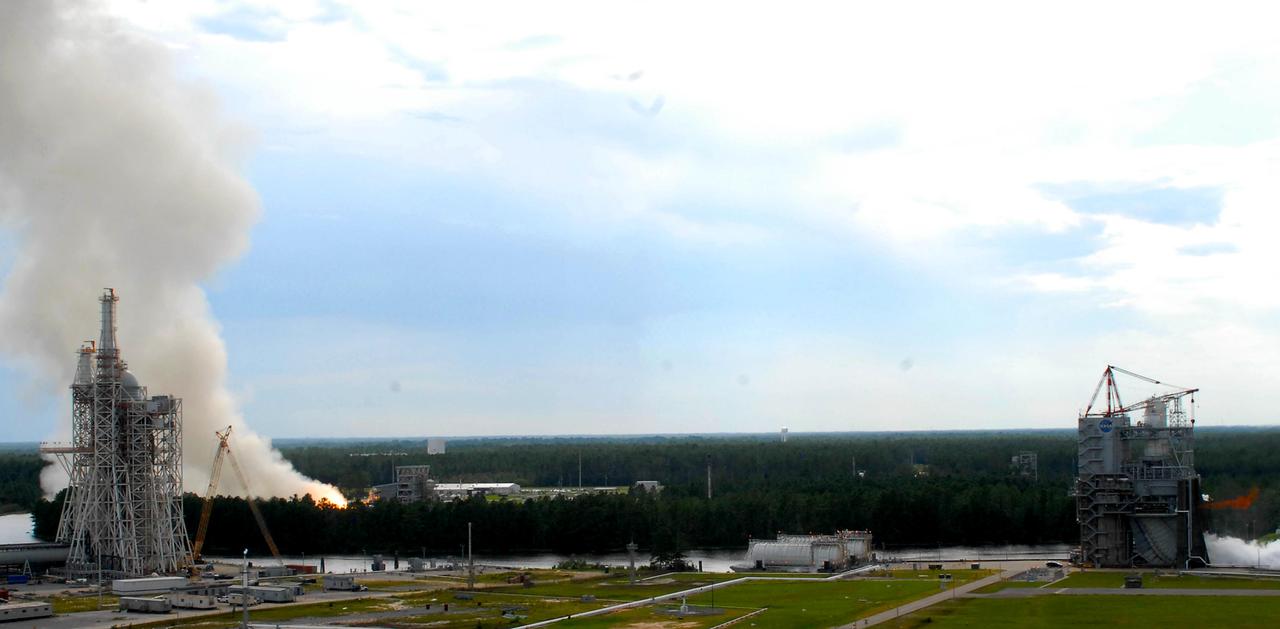
Two large-engine tests were conducted simultaneously for the first time at Stennis Space Center on Aug. 16. A plume on the left indicates a test on the facility's E-1 Test Stand. On the right, a finger of fire indicates a test under way on the A-1 Test Stand. In another first, both tests were conducted by female engineers. The image was taken from atop the facility's A-2 Test Stand, offering a panoramic view that includes the new A-3 Test Stand under construction to the left.
Historic tests
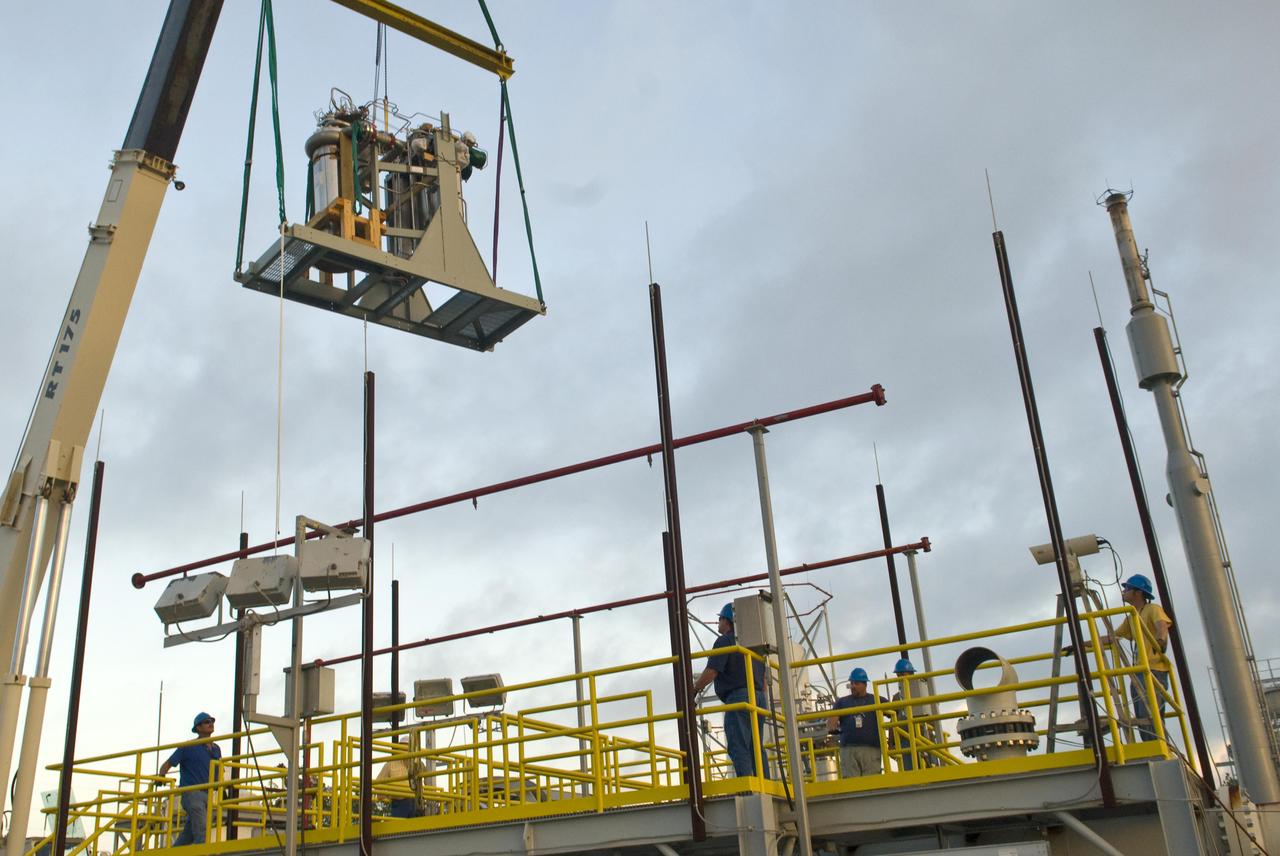
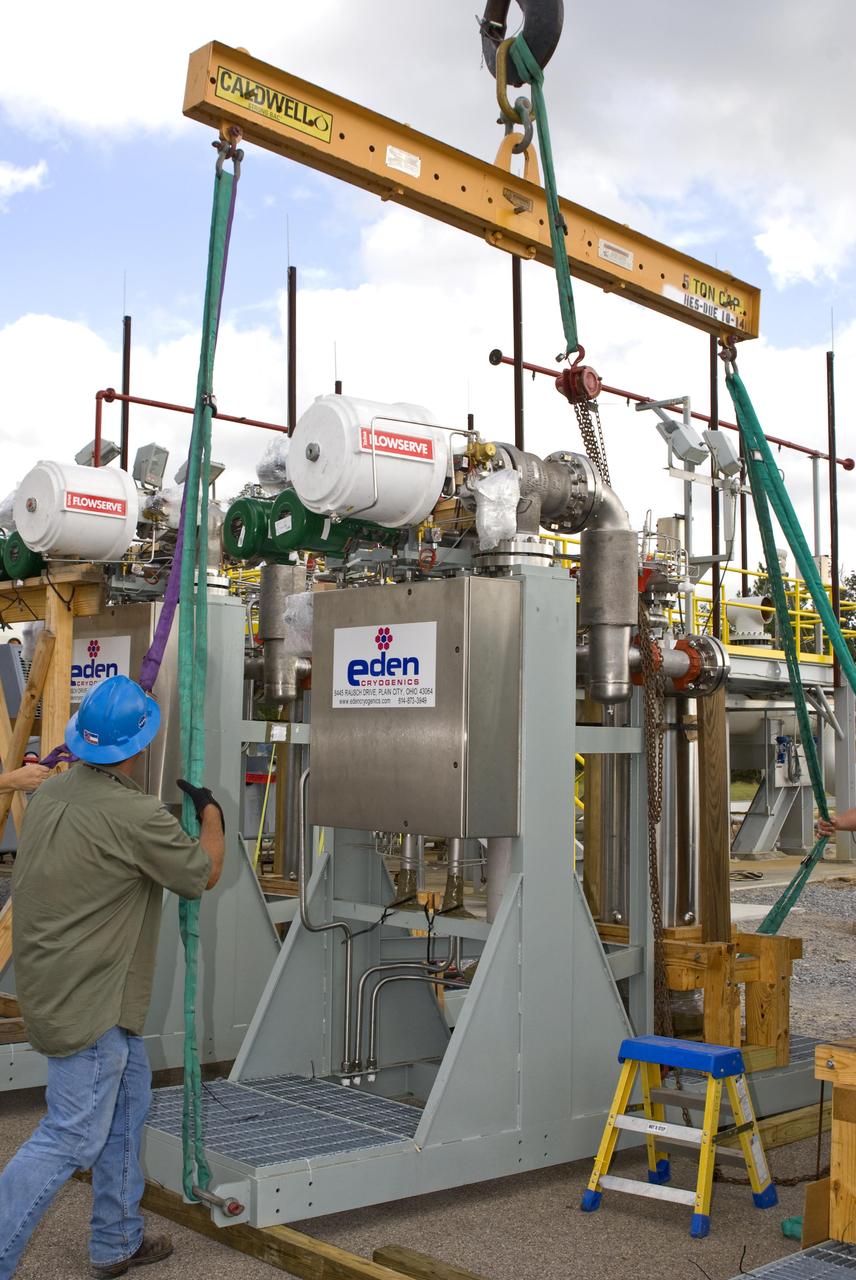
The first of nine chemical steam generator (CSG) units that will be used on the A-3 Test Stand is prepared for installation Oct. 24, 2010, at John C. Stennis Space Center. The unit was installed at the E-2 Test Stand for verification and validation testing before it is moved to the A-3 stand. Steam generated by the nine CSG units that will be installed on the A-3 stand will create a vacuum that allows Stennis operators to test next-generation rocket engines at simulated altitudes up to 100,000 feet.
CSG delivery and installation
Two large-engine tests were conducted simultaneously for the first time at Stennis Space Center on Aug. 16. A plume on the left indicates a test on the facility's E-1 Test Stand. On the right, a finger of fire indicates a test under way on the A-1 Test Stand. In another first, both tests were conducted by female engineers. The image was taken from atop the facility's A-2 Test Stand, offering a panoramic view that includes the new A-3 Test Stand under construction to the left.
Historic tests
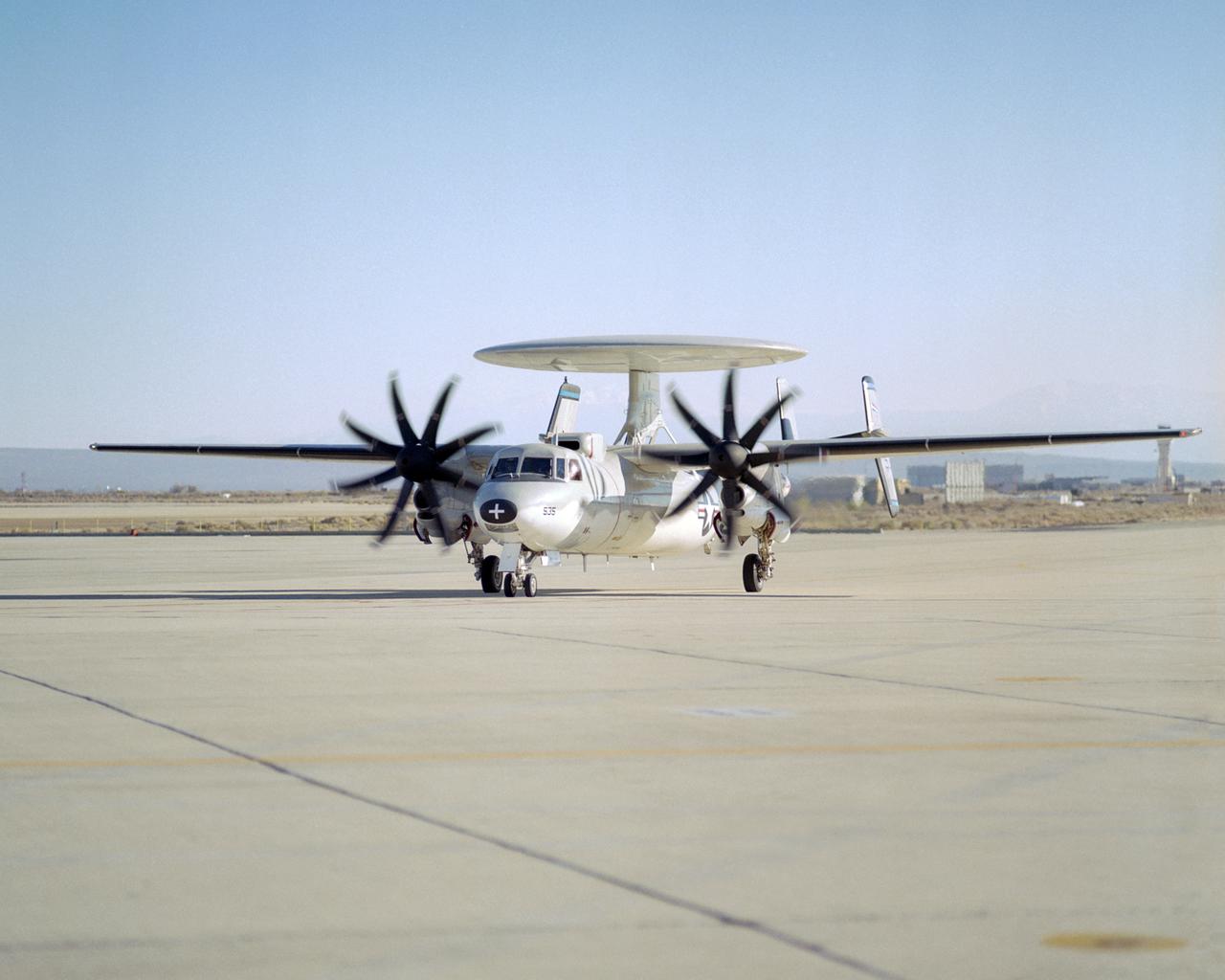
A Navy E-2C Hawkeye early-warning aircraft arrives at NASA's Dryden Flight Research Center for extensive structural loads tests in Dryden's flight loads lab.
EC04-0310-06
Engineers Paul Lundstrom and Larry Reardon monitor forces applied by structural loads equipment during tests on a Navy E-2C in NASA Dryden's flight loads lab.
EC04-0360-74
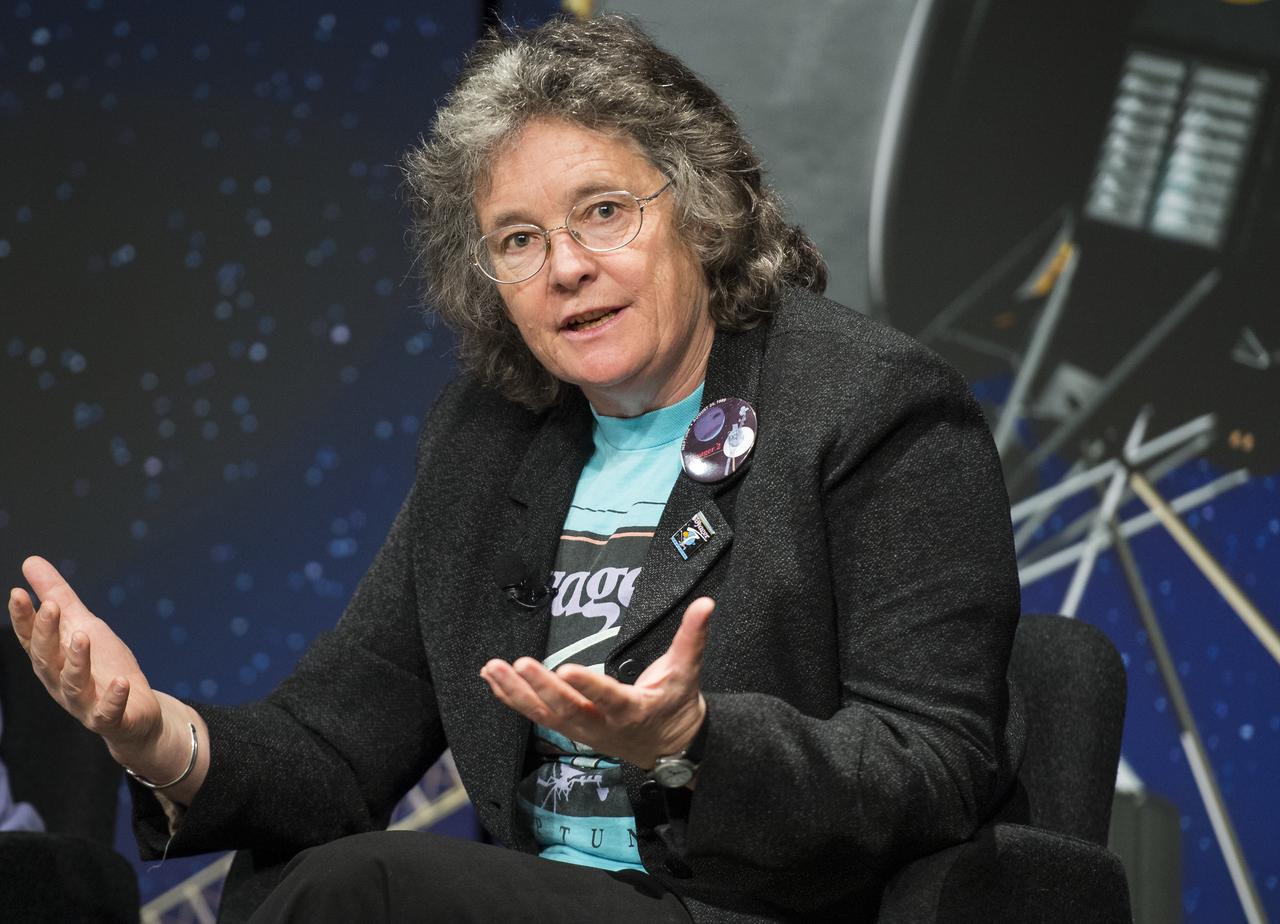
Dr. Fran Bagenal, senior scientist at the University of Colorado, far right, speaks during a panel discussion at the "NASA's New Horizons Pluto Mission: Continuing Voyager's Legacy of Exploration" event on Monday, August, 25, 2014, in the James E. Webb Auditorium at NASA Headquarters in Washington, DC.  The panelists gave their accounts of Voyager's encounter with Neptune and discussed their current assignments on NASA's New Horizons mission to Pluto.  Photo Credit: (NASA/Joel Kowsky)
NASA's New Horizons Pluto Mission: Continuing Voyager's Legacy o
Dr. John Spencer, senior scientist at the Southwest Research Institute, answers a question from the audience during a panel discussion at the "NASA's New Horizons Pluto Mission: Continuing Voyager's Legacy of Exploration" event on Monday, August, 25, 2014, in the James E. Webb Auditorium at NASA Headquarters in Washington, DC.  The panelists gave their accounts of Voyager's encounter with Neptune and discussed their current assignments on NASA's New Horizons mission to Pluto.  Photo Credit: (NASA/Joel Kowsky)
NASA's New Horizons Pluto Mission: Continuing Voyager's Legacy o
Dr. David H. Grinspoon, senior scientist at the Planetary Science Institute, speaks about working on NASA's Voyager team while serving as moderator for a panel discussion at the "NASA's New Horizons Pluto Mission: Continuing Voyager's Legacy of Exploration" event on Monday, August, 25, 2014, in the James E. Webb Auditorium at NASA Headquarters in Washington, DC.  The panelists gave their accounts of Voyager's encounter with Neptune and discussed their current assignments on NASA's New Horizons mission to Pluto.  Photo Credit: (NASA/Joel Kowsky)
NASA's New Horizons Pluto Mission: Continuing Voyager's Legacy o
Dr. Fran Bagenal, senior scientist at the University of Colorado, speaks during a panel discussion at the "NASA's New Horizons Pluto Mission: Continuing Voyager's Legacy of Exploration" event on Monday, August, 25, 2014, in the James E. Webb Auditorium at NASA Headquarters in Washington, DC.  The panelists gave their accounts of Voyager's encounter with Neptune and discussed their current assignments on NASA's New Horizons mission to Pluto.  Photo Credit: (NASA/Joel Kowsky)
NASA's New Horizons Pluto Mission: Continuing Voyager's Legacy o
Dr. Bonnie Buratti, senior scientist at NASA's Jet Propultion Laboratory, speaks during a panel discussion at the "NASA's New Horizons Pluto Mission: Continuing Voyager's Legacy of Exploration" event on Monday, August, 25, 2014, in the James E. Webb Auditorium at NASA Headquarters in Washington, DC.  The panelists gave their accounts of Voyager's encounter with Neptune and discussed their current assignments on NASA's New Horizons mission to Pluto.  Photo Credit: (NASA/Joel Kowsky)
NASA's New Horizons Pluto Mission: Continuing Voyager's Legacy o
Dr. Alan Stern, Principal Investigator on NASA's New Horizons Mission, left, delivers closing remarks following a panel discussion at the "NASA's New Horizons Pluto Mission: Continuing Voyager's Legacy of Exploration" event on Monday, August, 25, 2014, in the James E. Webb Auditorium at NASA Headquarters in Washington, DC.  The panelists gave their accounts of Voyager's encounter with Neptune and discussed their current assignments on NASA's New Horizons mission to Pluto.  Photo Credit: (NASA/Joel Kowsky)
NASA's New Horizons Pluto Mission: Continuing Voyager's Legacy o
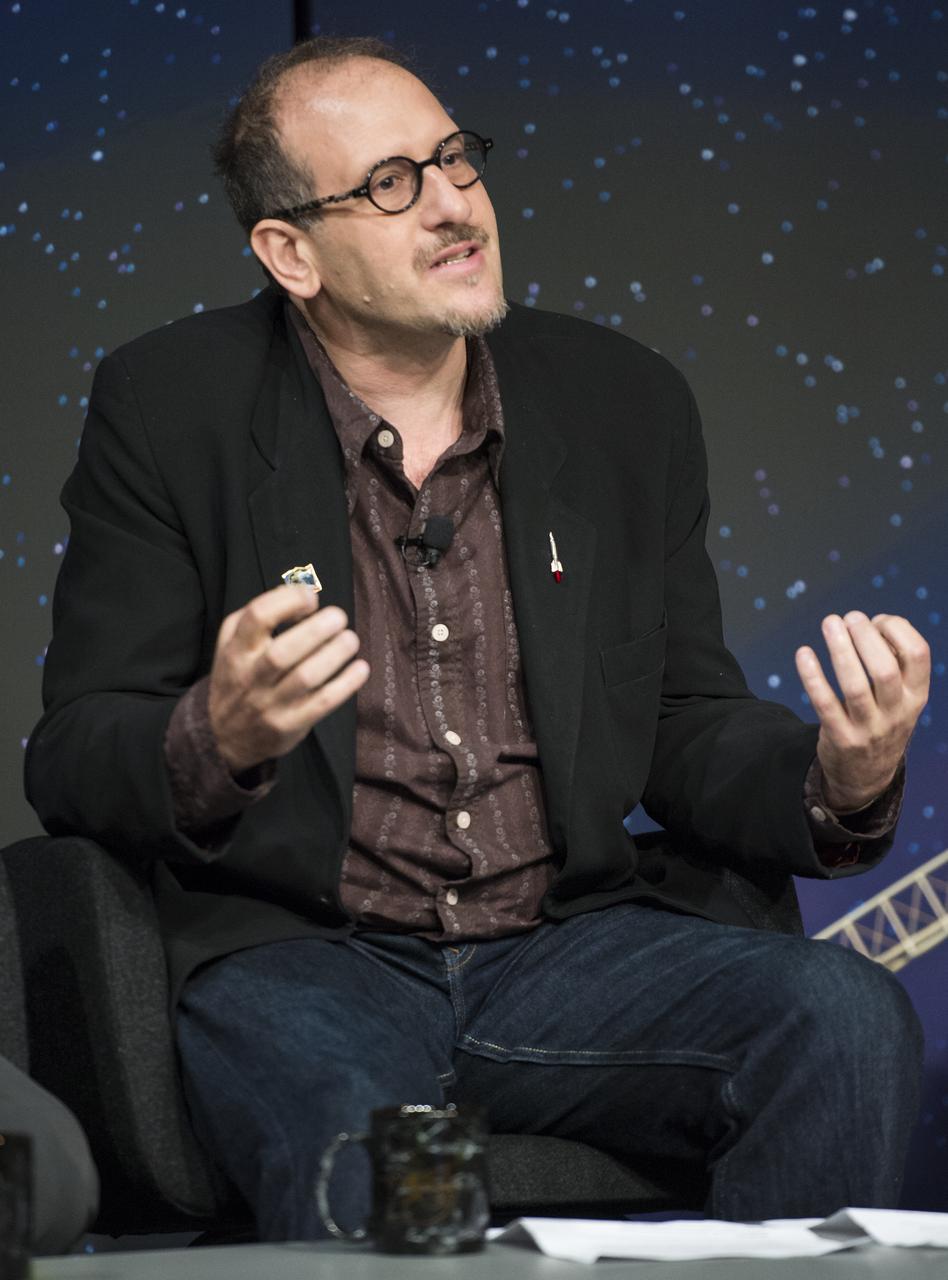
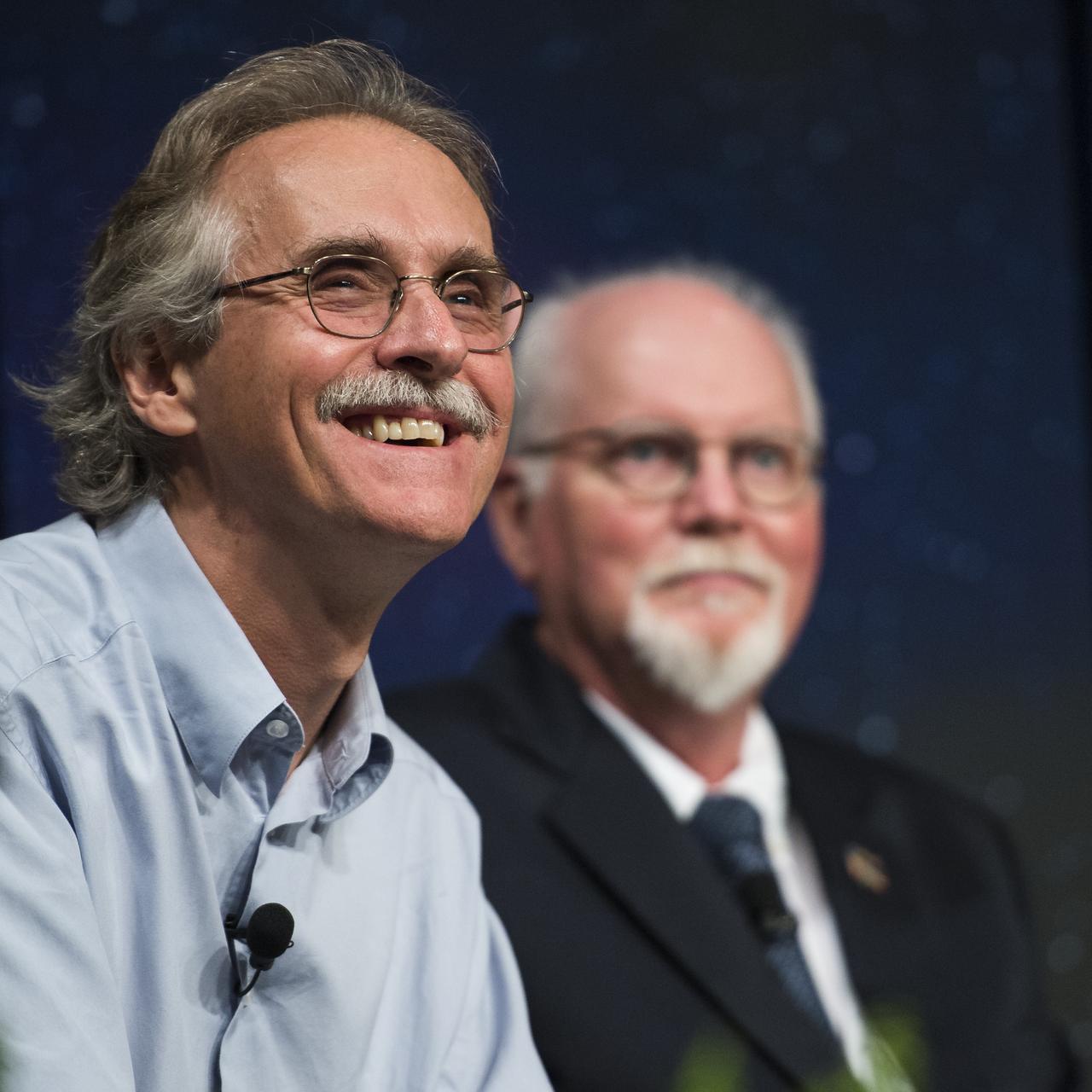
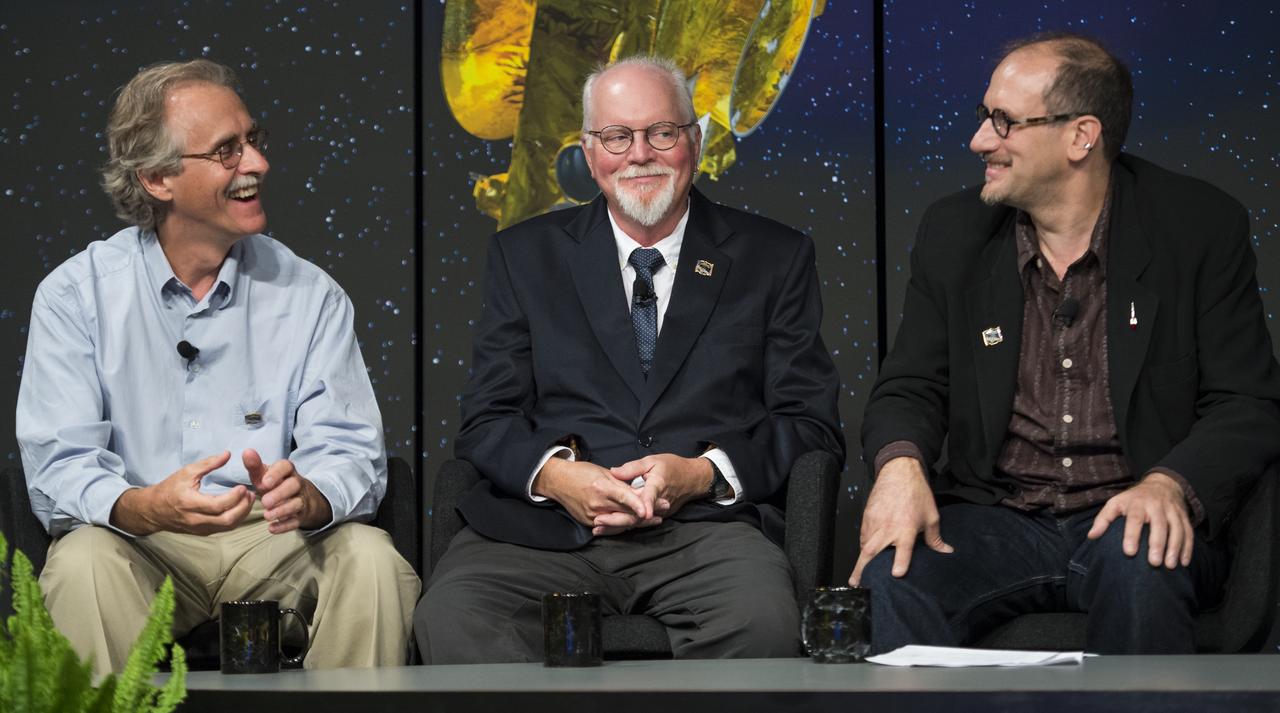
Dr. John Spencer, senior scientist at the Southwest Research Institute, left, Dr. Jeffrey Moore, senior scientist at NASA Ames Researh Center, center, and Dr. David H. Grinspoon, senior scientist at the Plentary Science Institute, left, are seen during a panel discussion at the "NASA's New Horizons Pluto Mission: Continuing Voyager's Legacy of Exploration" event on Monday, August, 25, 2014, in the James E. Webb Auditorium at NASA Headquarters in Washington, DC.  The panelists gave their accounts of Voyager's encounter with Neptune and discussed their current assignments on NASA's New Horizons mission to Pluto.  Photo Credit: (NASA/Joel Kowsky)
NASA's New Horizons Pluto Mission: Continuing Voyager's Legacy o
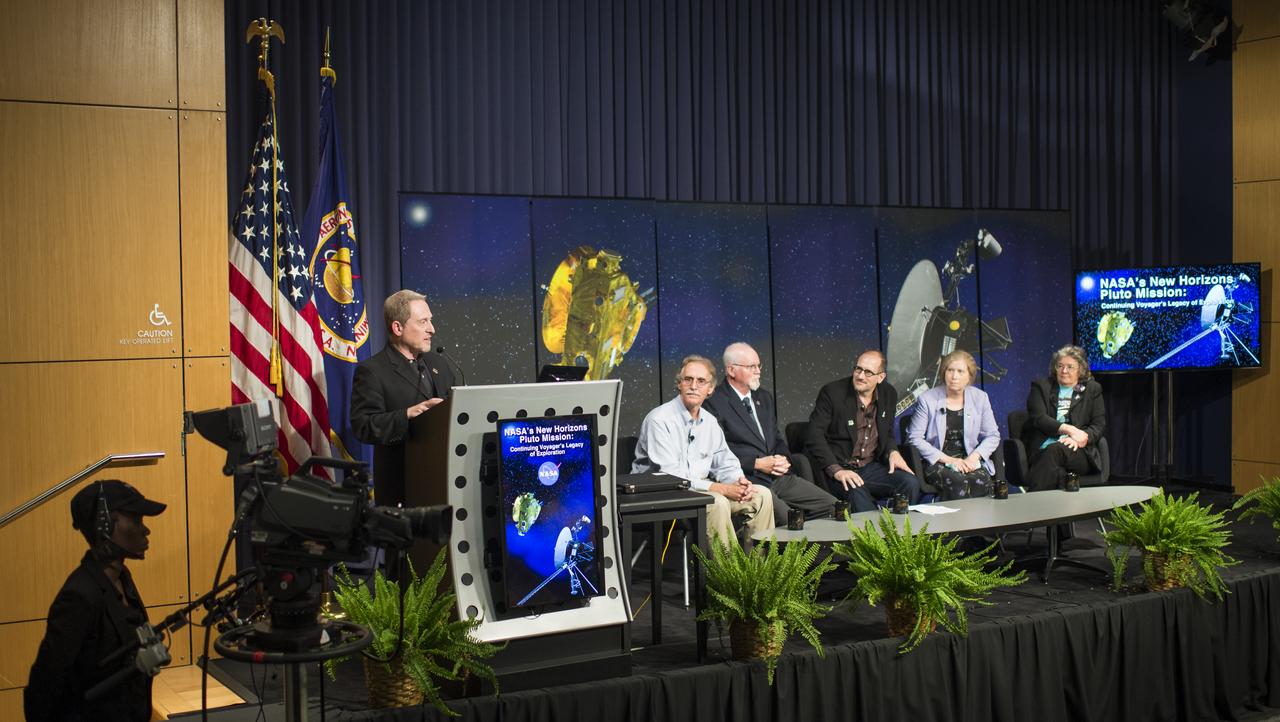
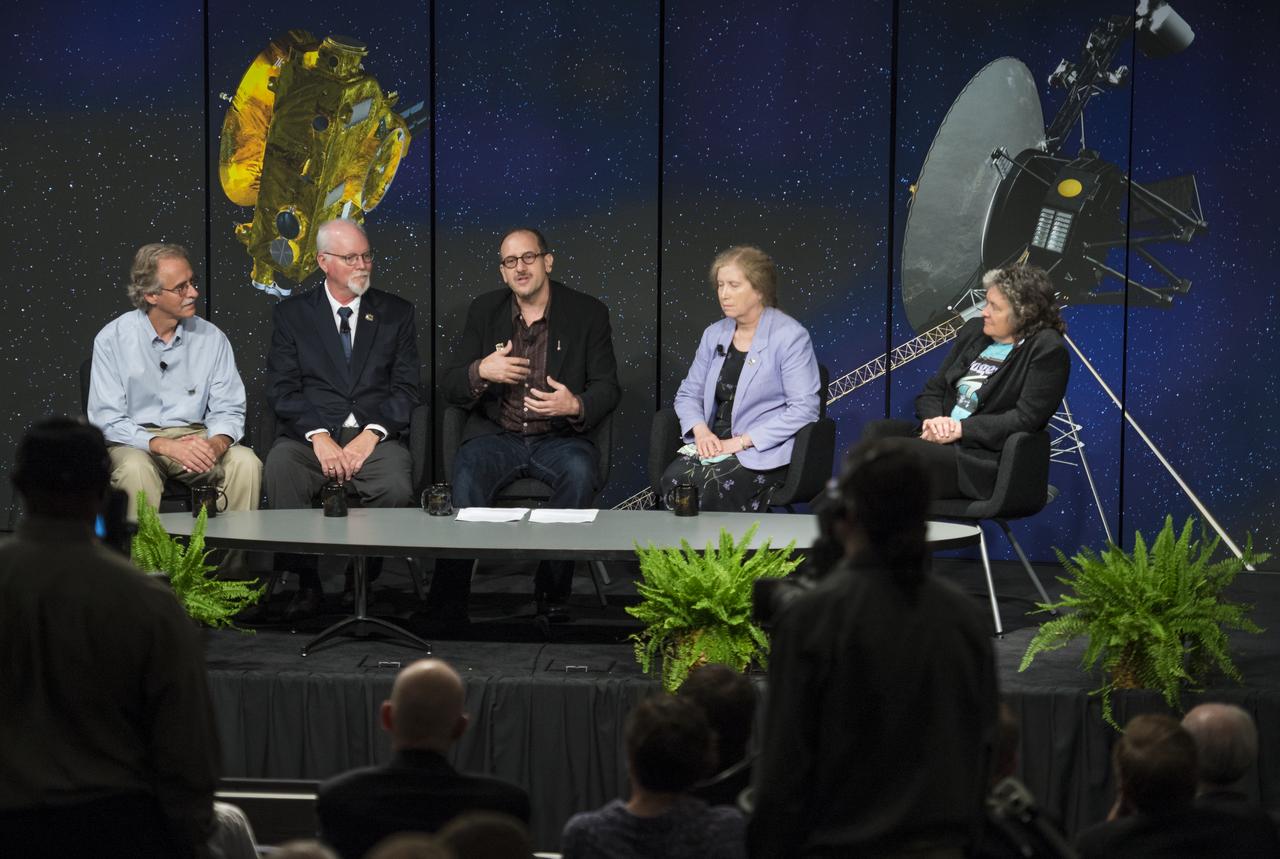
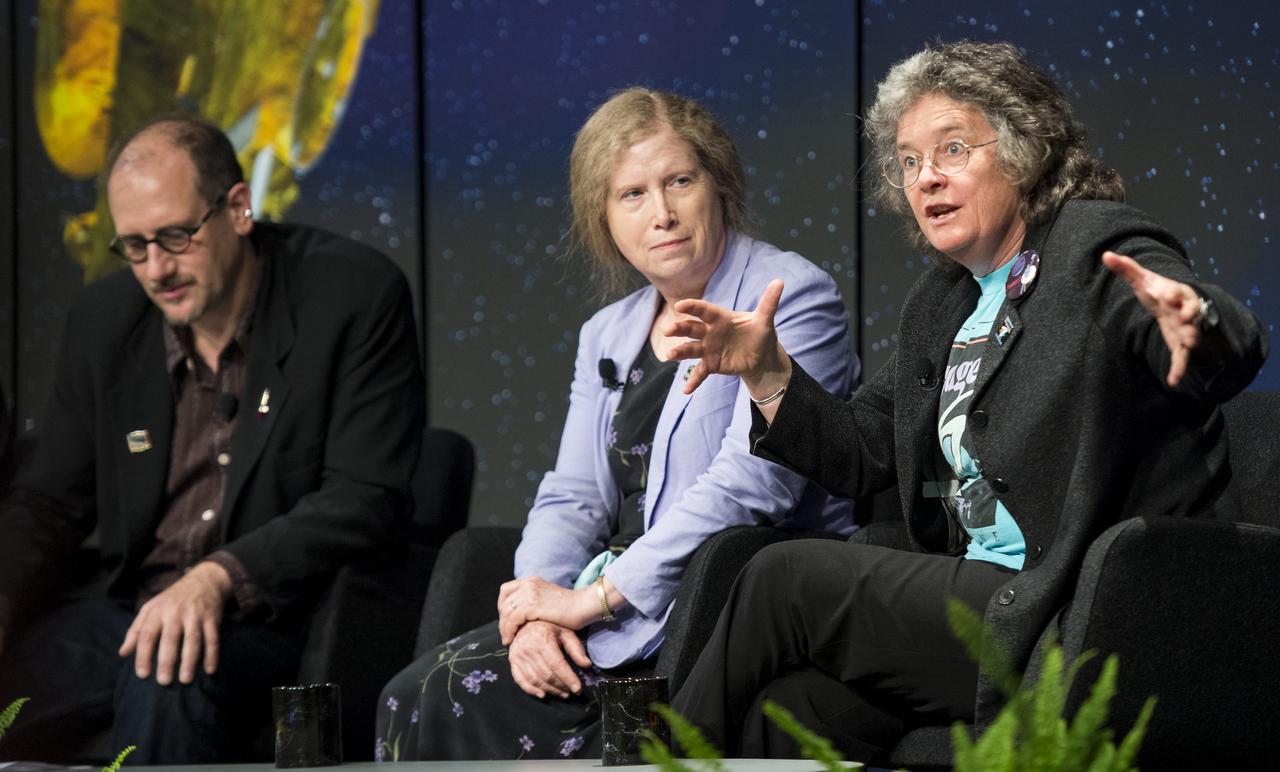
New Horizons science team members: Dr. John Spencer, senior scientist at the Southwest Research Institute, left, Dr. Jeffrey Moore, senior scientist at NASA Ames Research Center, second from left, Dr. David H. Grinspoon, senior scientist at the Planetary Science Institute, center, Dr. Bonnie Buratti, senior scientist at NASA's Jet Propulsion Laboratory, second from right, and Dr. Fran Bagenal, senior scientist at the University of Colorado, are seen during a panel discussion at the "NASA's New Horizons Pluto Mission: Continuing Voyager's Legacy of Exploration" event on Monday, August, 25, 2014, in the James E. Webb Auditorium at NASA Headquarters in Washington, DC.  The panelists gave their accounts of Voyager's encounter with Neptune and discussed their current assignments on NASA's New Horizons mission to Pluto.  Photo Credit: (NASA/Joel Kowsky)
NASA's New Horizons Pluto Mission: Continuing Voyager's Legacy o
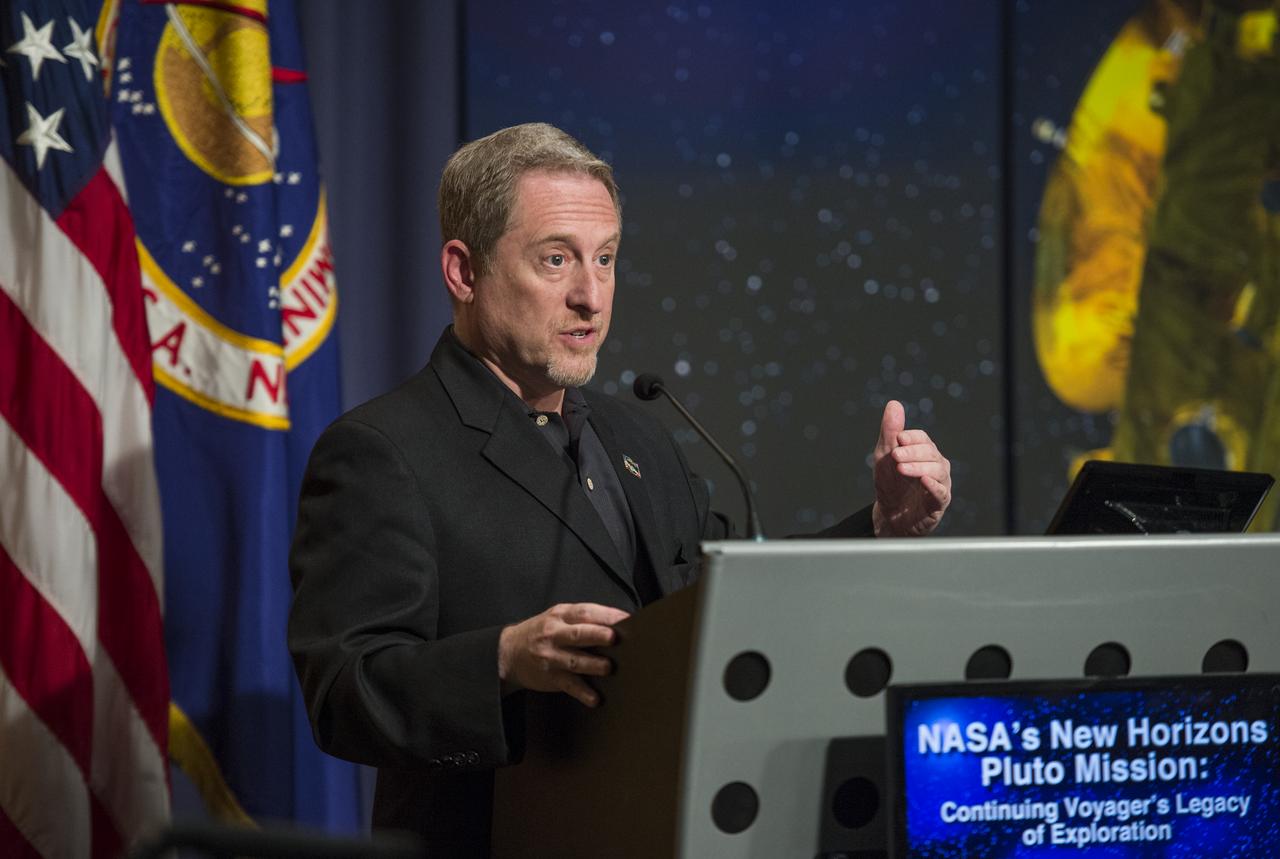
Dr. Alan Stern, Principal Investigator on NASA's New Horizons Mission, delivers closing remarks following a panel discussion at the "NASA's New Horizons Pluto Mission: Continuing Voyager's Legacy of Exploration" event on Monday, August, 25, 2014, in the James E. Webb Auditorium at NASA Headquarters in Washington, DC.  The panelists gave their accounts of Voyager's encounter with Neptune and discussed their current assignments on NASA's New Horizons mission to Pluto.  Photo Credit: (NASA/Joel Kowsky)
NASA's New Horizons Pluto Mission: Continuing Voyager's Legacy o
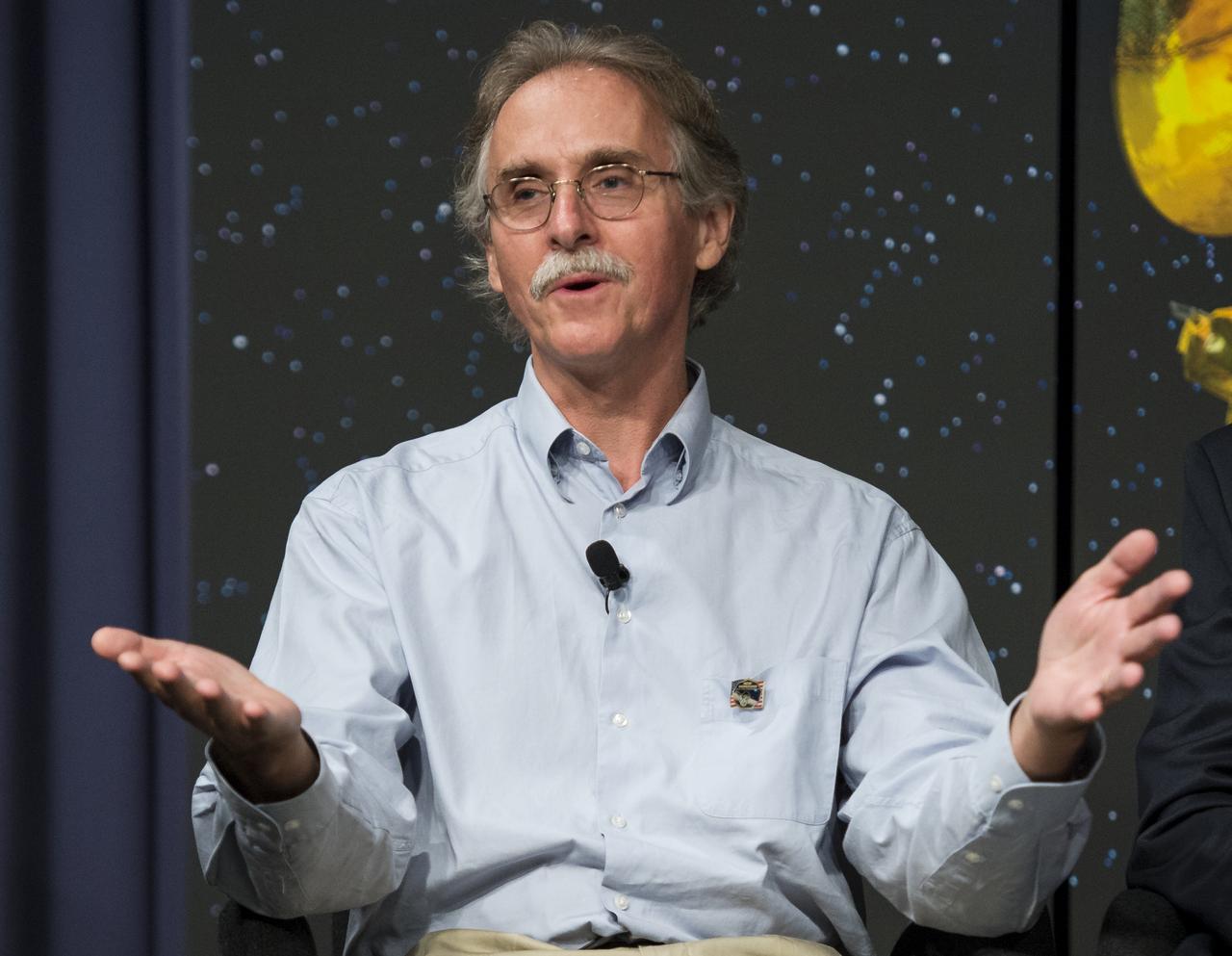
Dr. John Spencer, senior scientist at the Southwest Research Institute in Boulder, Colorado, speaks during a panel discussion at the "NASA's New Horizons Pluto Mission: Continuing Voyager's Legacy of Exploration" event on Monday, August, 25, 2014, in the James E. Webb Auditorium at NASA Headquarters in Washington, DC.  The panelists gave their accounts of Voyager's encounter with Neptune and discussed their current assignments on NASA's New Horizons mission to Pluto.  Photo Credit: (NASA/Joel Kowsky)
NASA's New Horizons Pluto Mission: Continuing Voyager's Legacy o
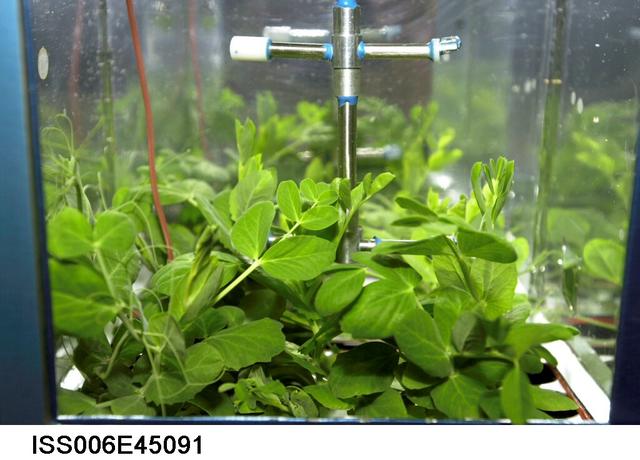
ISS006-E-45091 (25 March 2003) --- A view of the Russian BIO-5 Rasteniya-2/Lada-2 (Plants-2) plant growth experiment located in the Zvezda Service Module on the International Space Station (ISS).
View of plants in the Russian BIO-5 Rasteniya-2/Lada-2 (Plants-2) Plant Growth Experiment in the SM
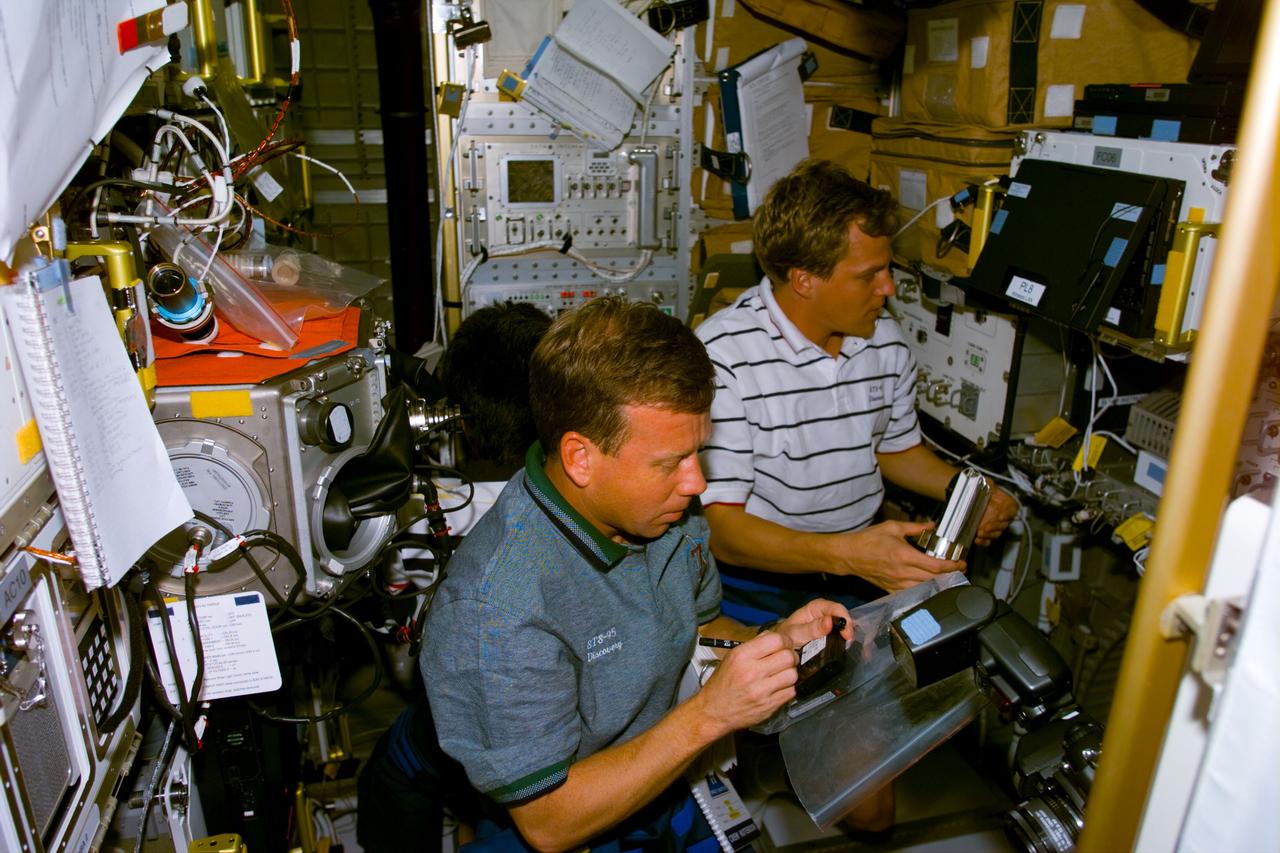
STS095-E-5109 (2 Nov. 1998) --- Astronauts Steven W. Lindsey (left), STS-95 pilot, and Scott E. Parazynski, mission specialist, work with cameras and other supportive gear for experiments on Spacehab. The photo was taken with an electronic still camera (ESC) at 05:11:28 GMT, Nov. 2.
STS-95 crew in Spacehab
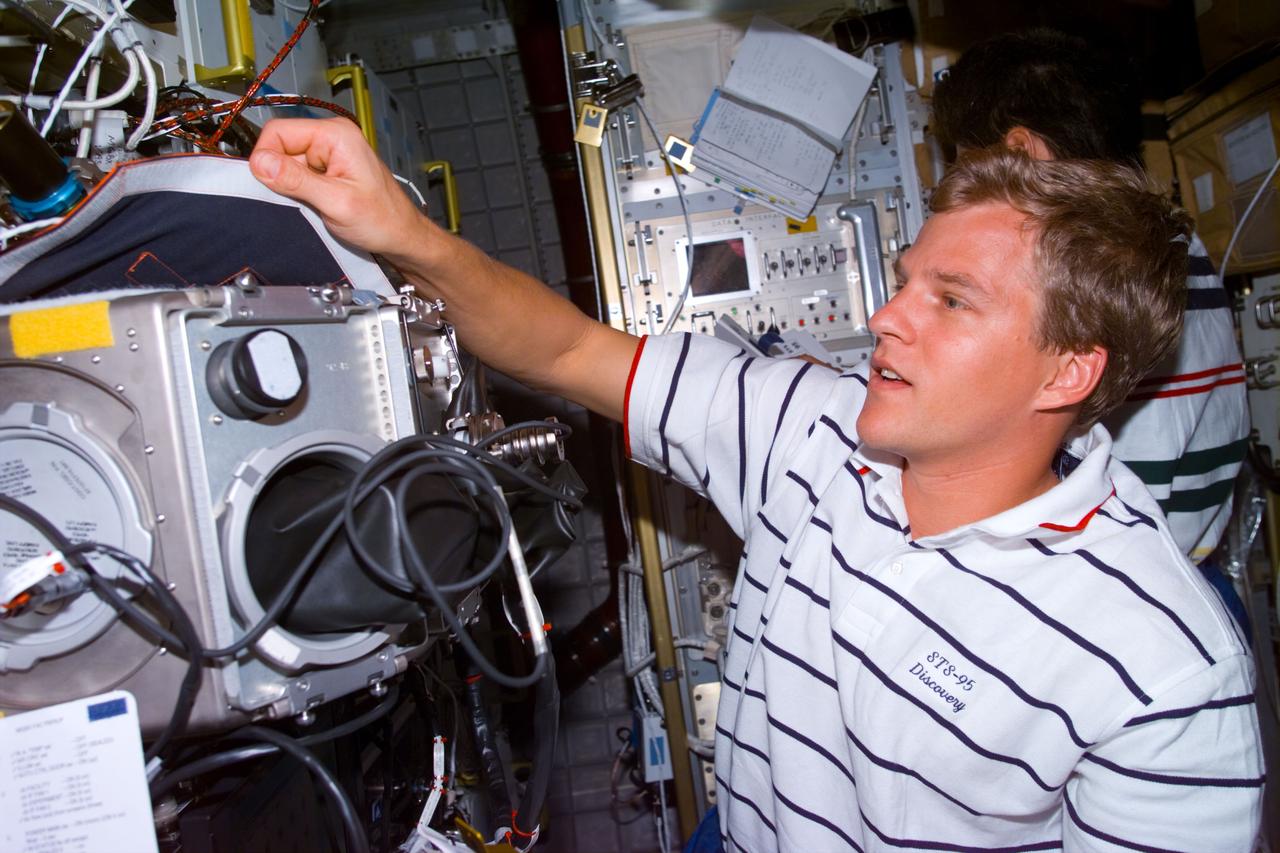
STS095-E-5104 (2 Nov. 1998) --- Astronaut Scott E. Parazynski, STS-95 mission specialist, at glove box in Spacehab facility during flight day four activity. The photo was taken with an electronic still camera (ESC) at 4:59:22 GMT, Nov. 2.
MGBX - Parazynski in Spacehab
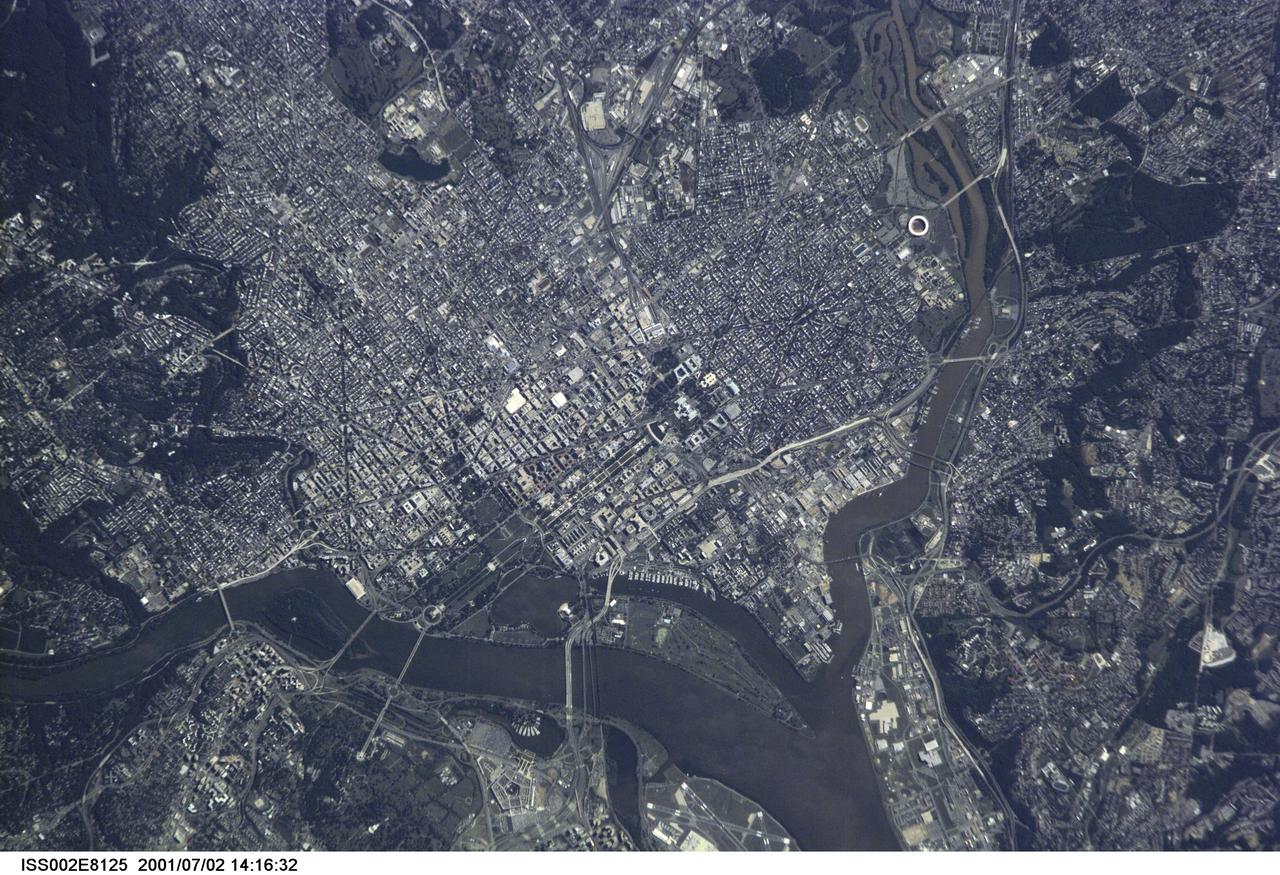
ISS002-E-8125 (2 July 2001) --- Washington, DC
Washington, D.C. taken by the Expedition Two crew
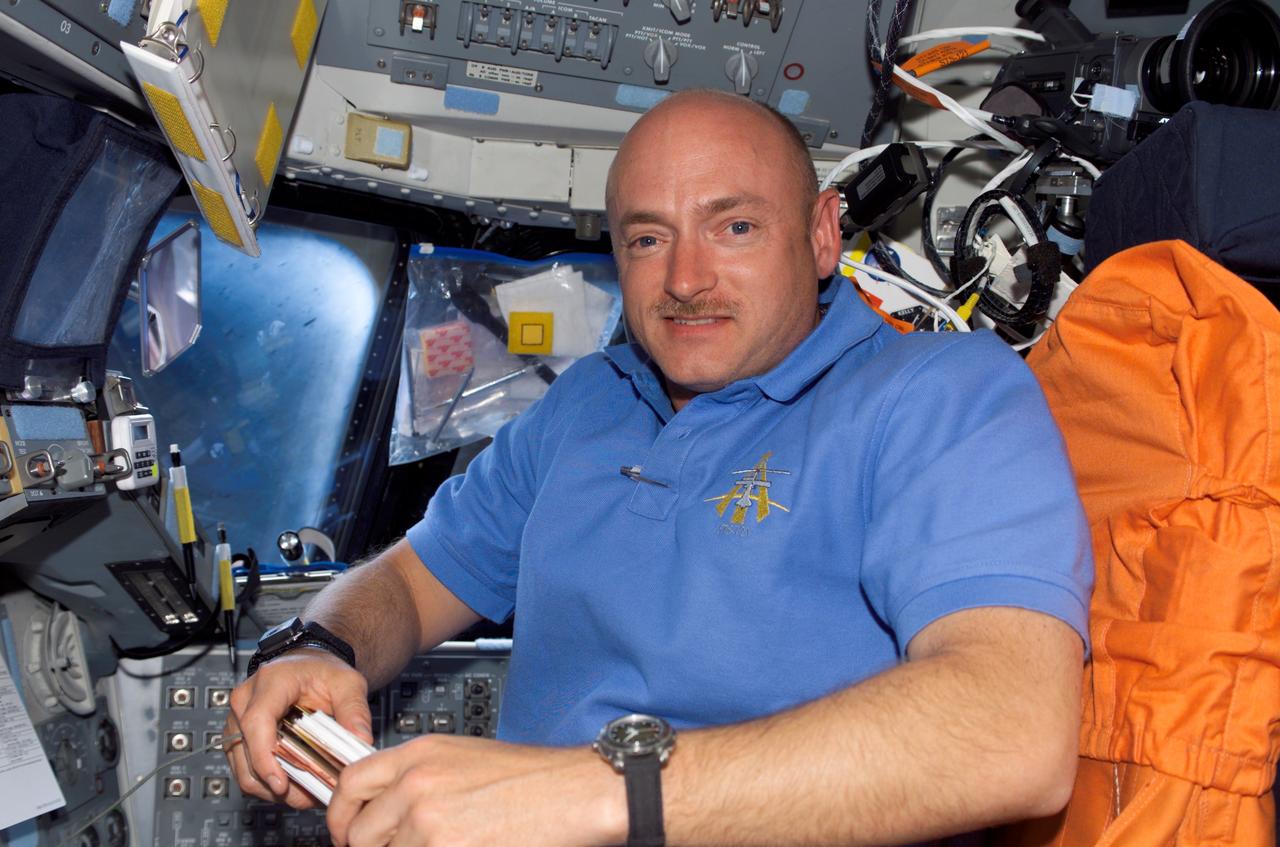
S121-E-05434 (5 July 2006) --- Astronaut Mark E. Kelly, STS-121 pilot, works at the pilot's station on the flight deck of the Space Shuttle Discovery during Flight Day 2 activities.
Kelly smiles at camera from the PLT seat on the FD during STS-121
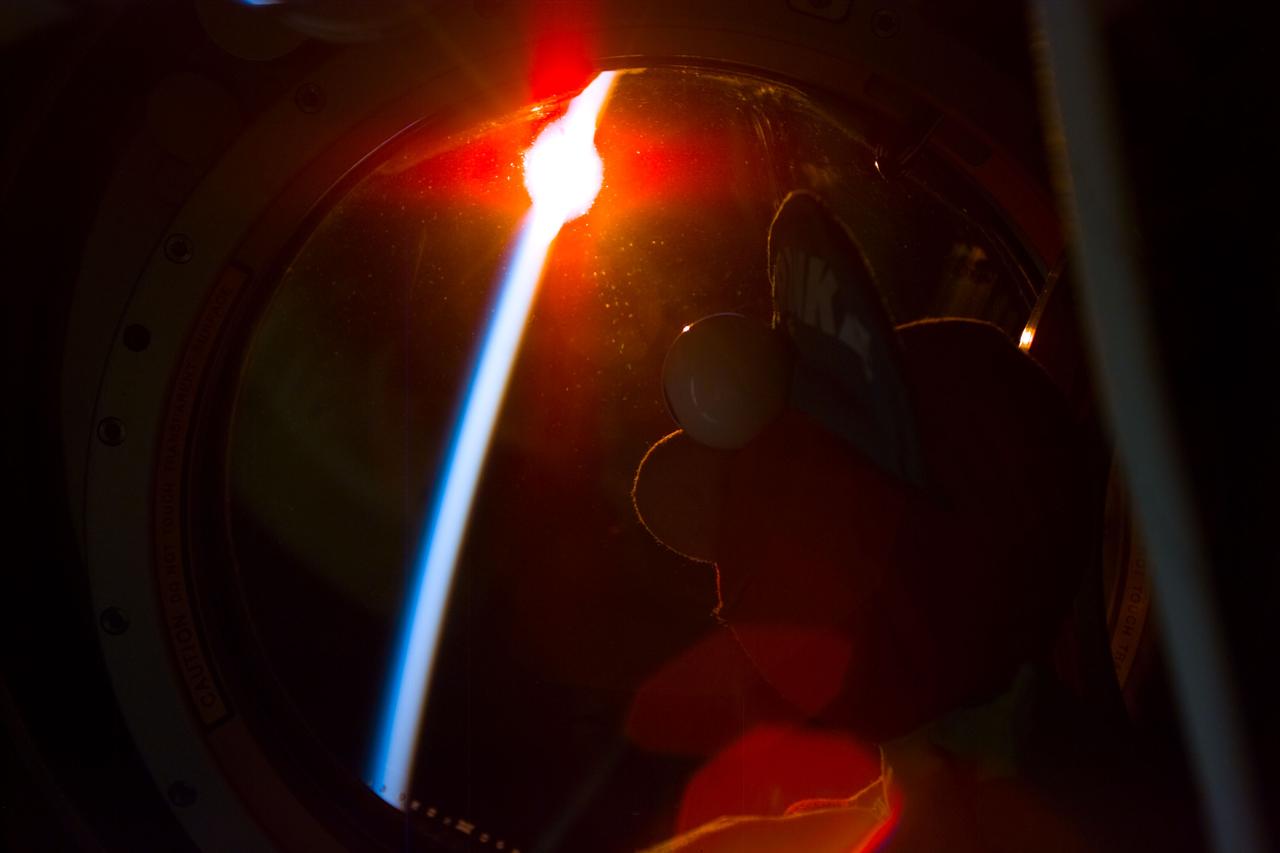
STS095-E-5145 (2 Nov. 1998) --- View of sunrise from Discovery's side hatch was captured with an electronic still camera (ESC) at 18:18:14 GMT, Nov. 2.
Sunrise as seen from the Spacehab module
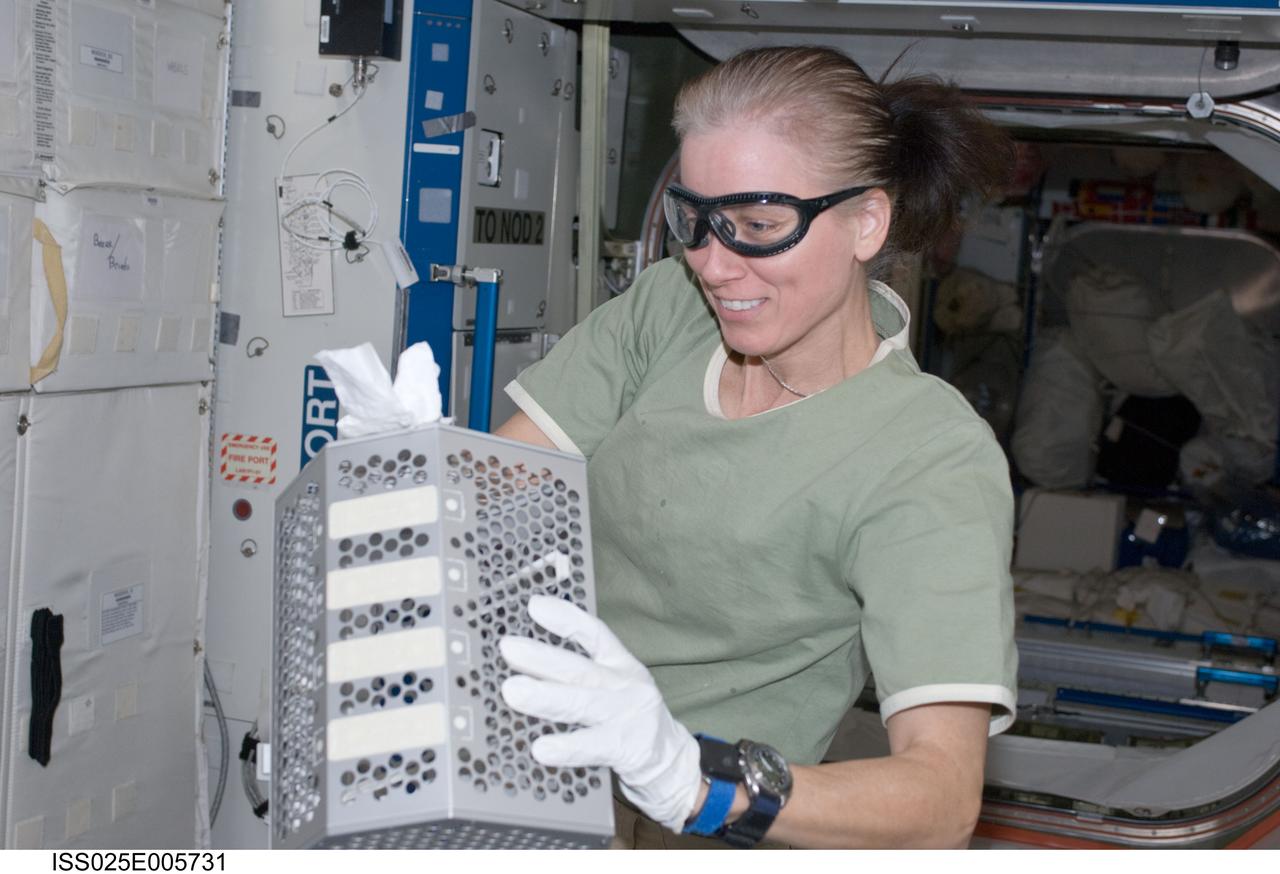
ISS025-E-005731 (1 Oct. 2010) --- NASA astronaut Shannon Walker, Expedition 25 flight engineer, services the Minus Eighty Laboratory Freezer for ISS-2 (MELFI-2) in the Destiny laboratory of the International Space Station.
Walker with MELFI-2 in U.S. Laboratory
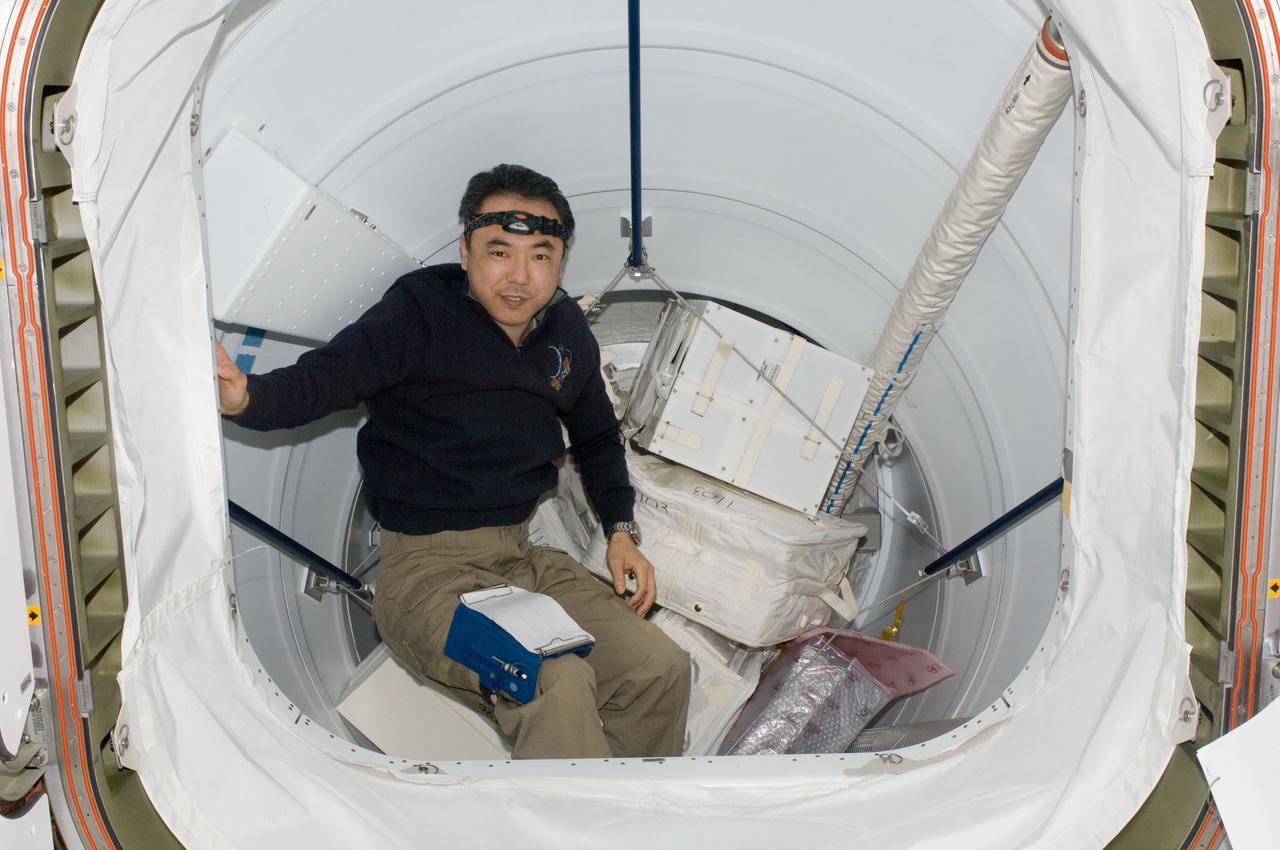
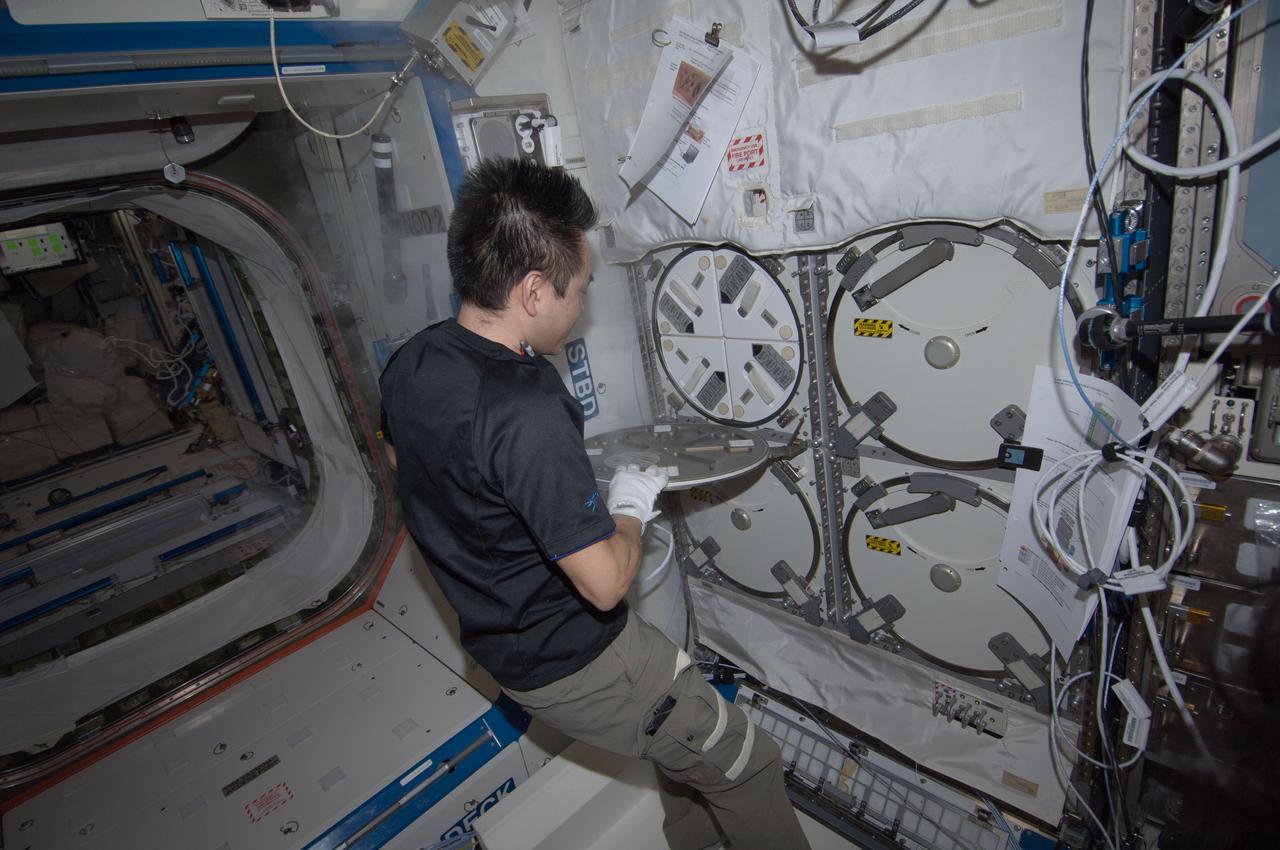
ISS028-E-034104 (26 Aug. 2011) --- Japan Aerospace Exploration Agency astronaut Satoshi Furukawa, Expedition 28 flight engineer, stows cargo in the Pressurized Mating Adapter 2 (PMA-2) of the International Space Station.
iss028e034104
ISS030-E-051116 (28 Jan. 2012) --- NASA astronaut Dan Burbank, Expedition 30 commander, performs in-flight maintenance on the Water Recovery System 2 (WRS-2) in the Tranquility node of the International Space Station.
Burbank performs in-flight maintenance on the WRS-2 in the Node 3
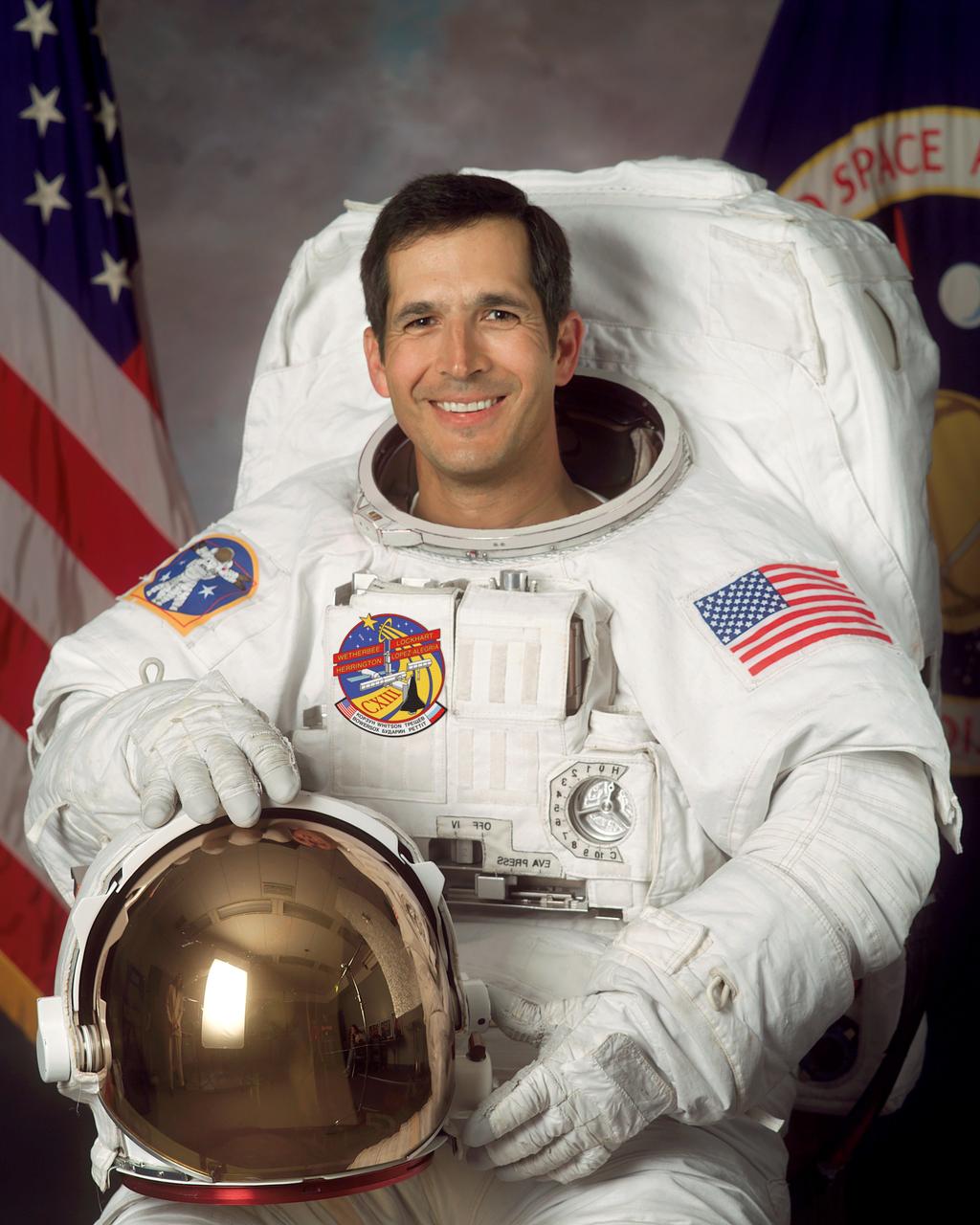
JSC2002-E-21740 (2 April 2002) --- Astronaut John B. Herrington, mission specialist.
Portrait of astronaut John Herrington
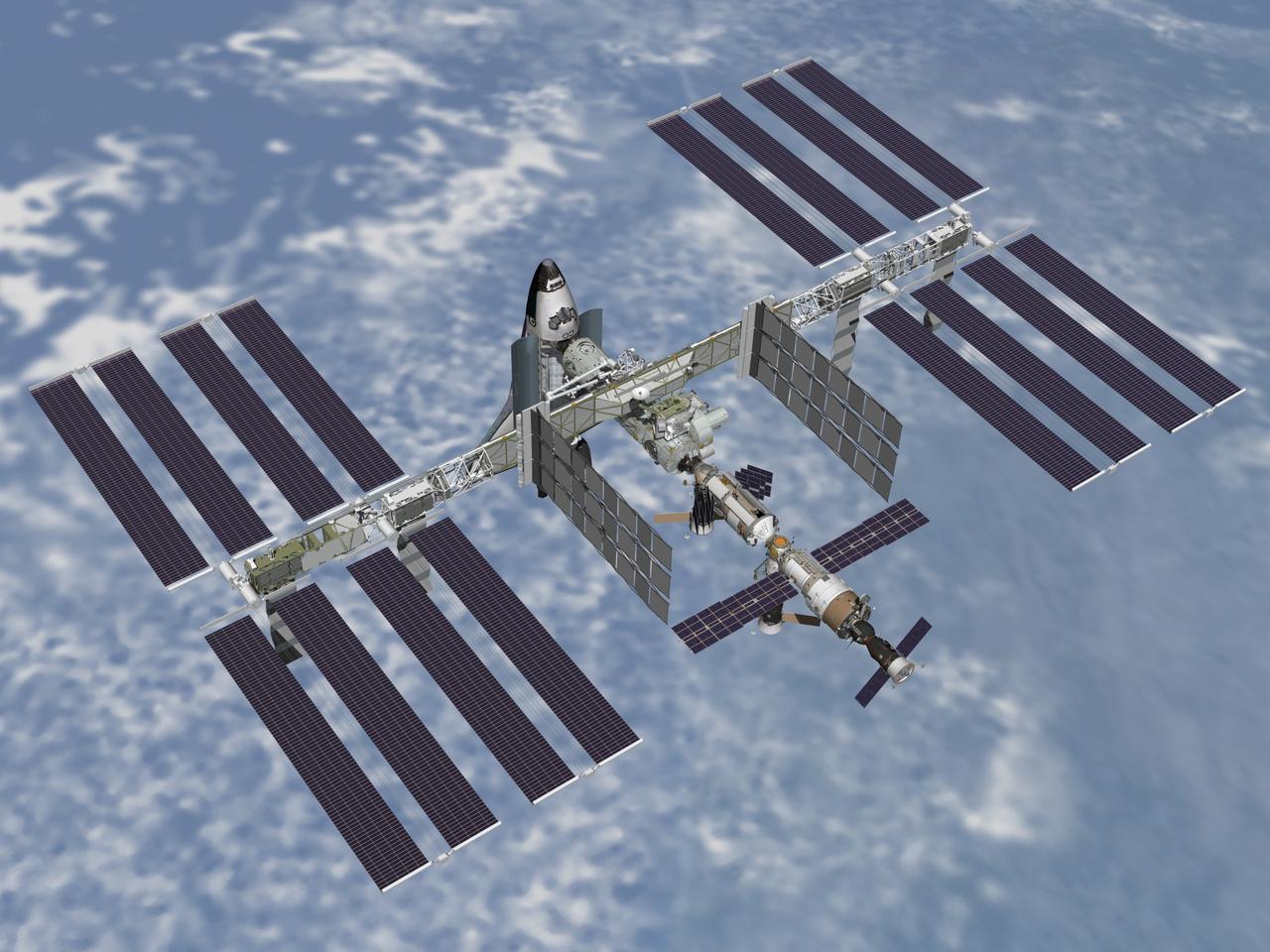
JSC2003-E-64500  (December 2003) - Post 10A aft view of the International Space Station with Shuttle docked to Node 2.
jsc2003e64500
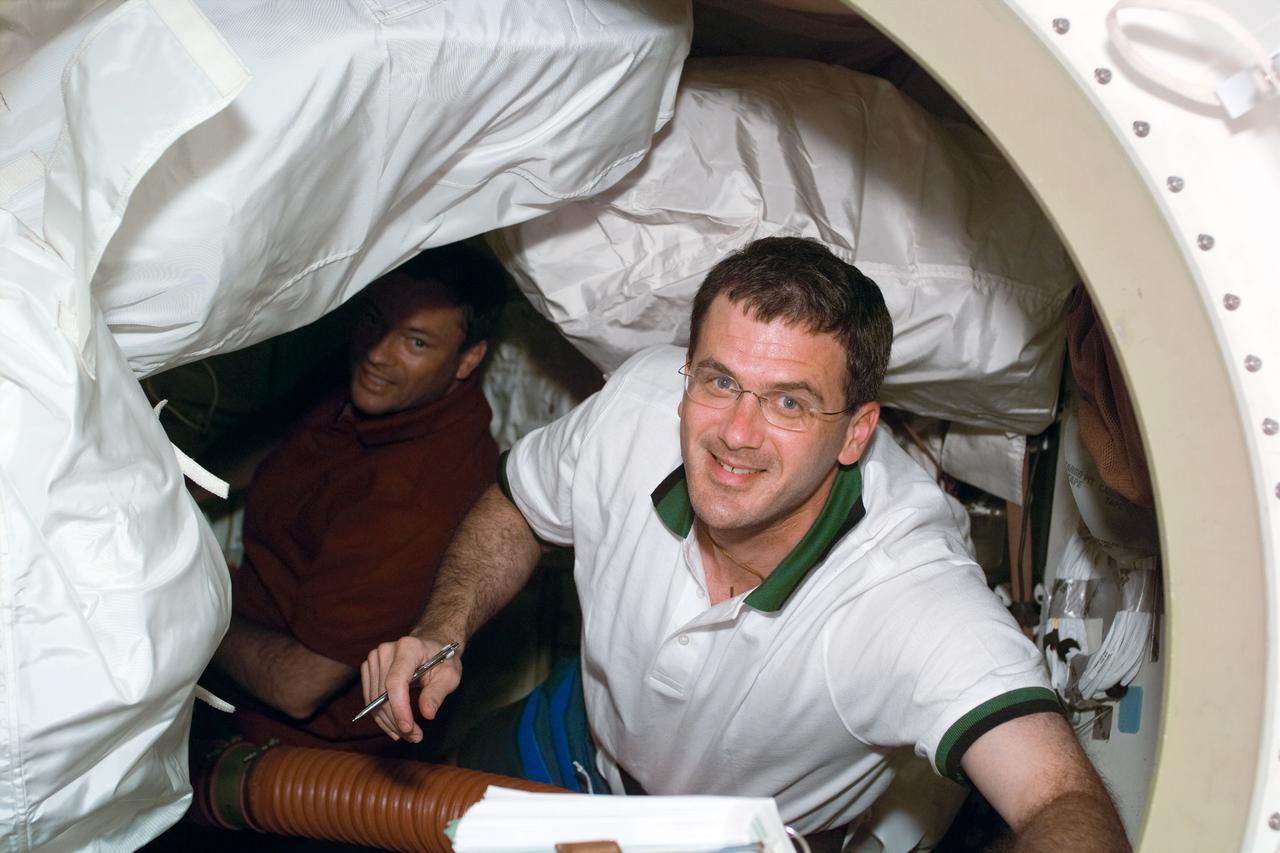
S92-E-5025 (12 October 2000) --- Astronaut Peter J.K. (Jeff) Wisoff  on Flight Day 2.
STS-92 crewmember Peter (Jeff) Wisoff with Michael Lopez-Alegria in the background
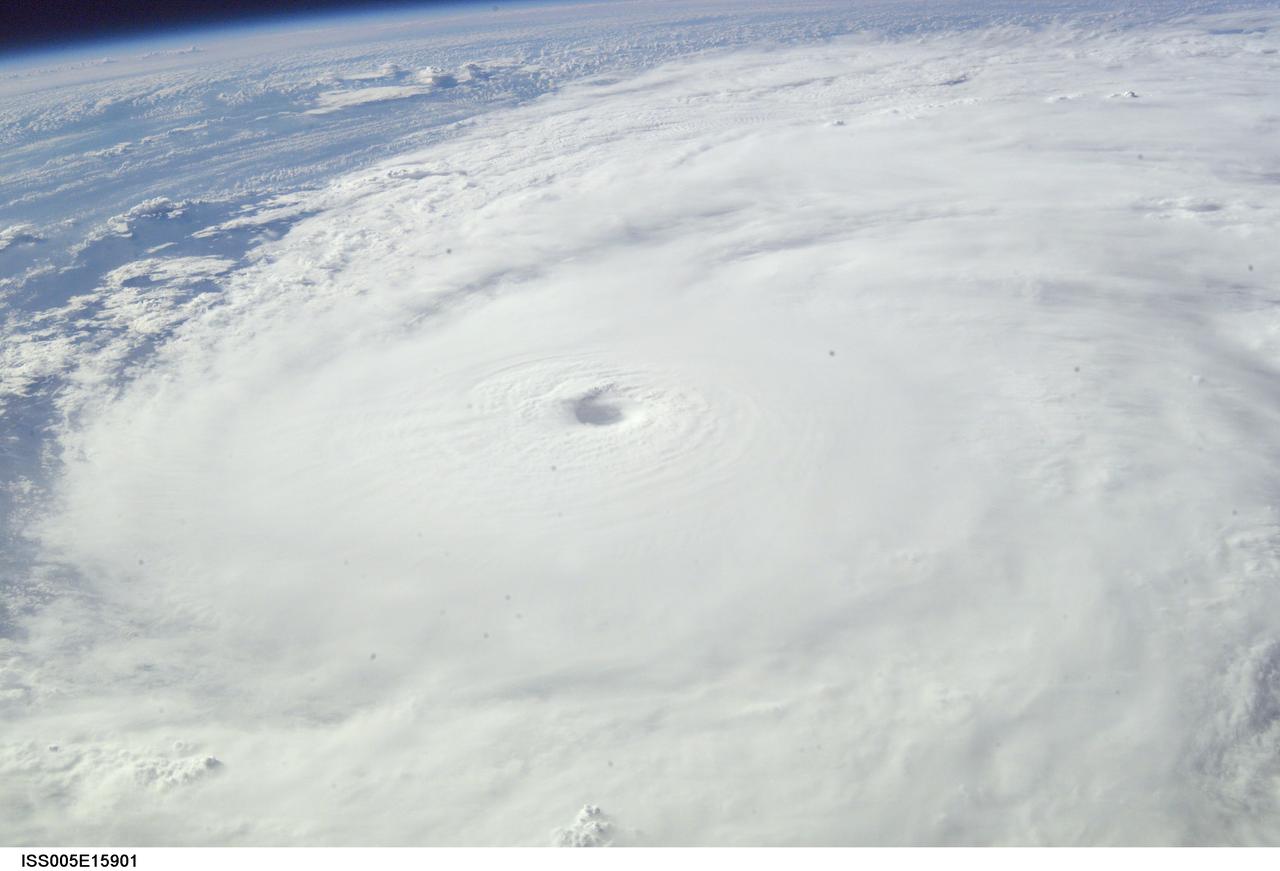
ISS005-E-15901 (2 Oct 2002) --- Hurricane Lili over the Gulf of Mexico.
Crew Earth Observations (CEO) by Expedition Five Crew
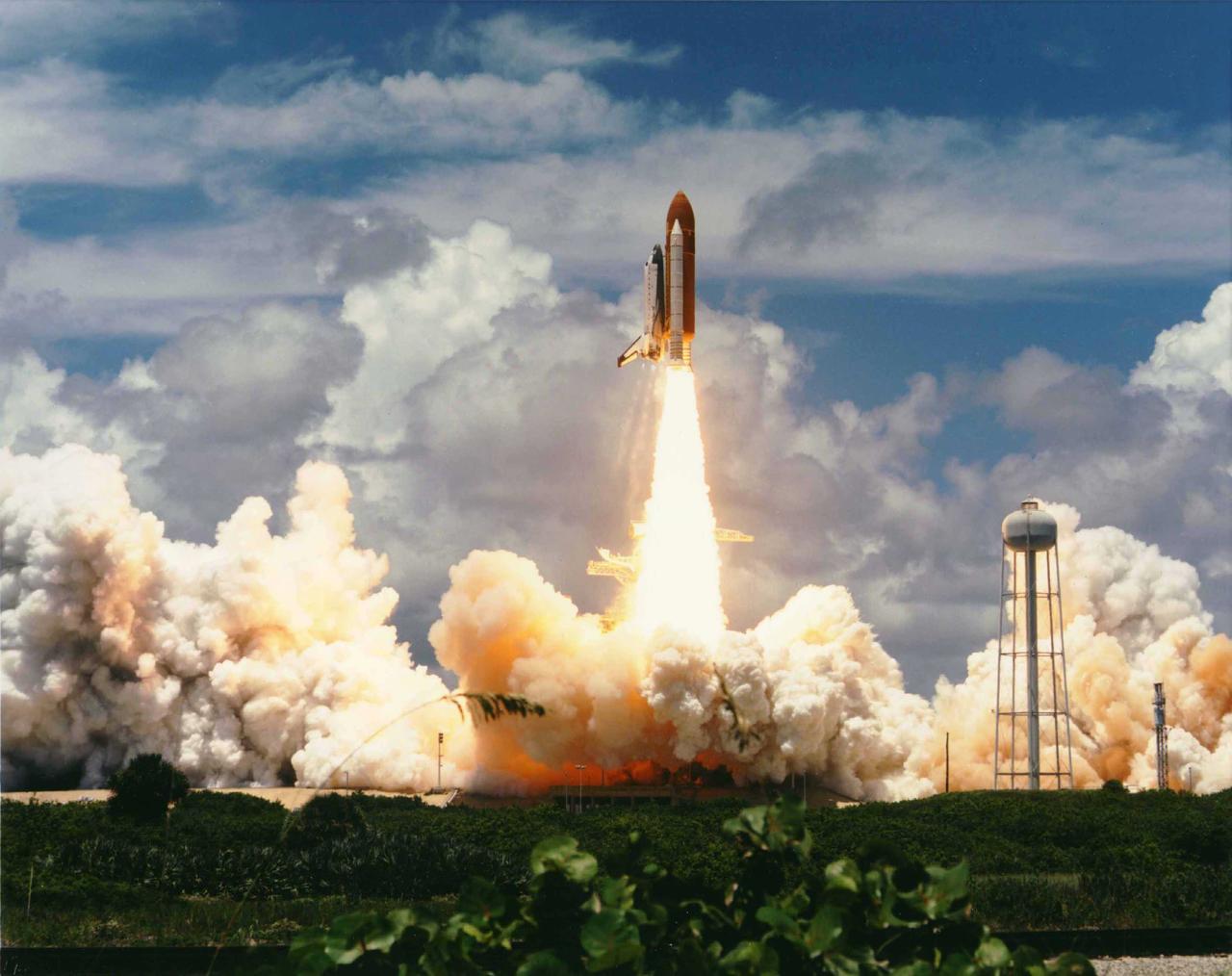
KENNEDY SPACE CENTER, FLA. - The second International Microgravity Laboratory-2 (IML-2) is off to an ontime start as the Space Shuttle Columbia lifts off from Launch Pad 39A at 12:43:00 p.m. EDT.  On board are a crew of seven and more than 80 investigations developed by more than 200 scientists from 13 countries.  The IML-2 complement includes materials science, bioprocessing, space and radiation biology, and human physiology experiments that will be carried out over the course of the 14-day flight.  The commander of Space Shuttle Mission STS-65 is Robert D. Cabana.  James D. Halsell Jr. is the pilot; the payload commander is Richard J. Hieb; the three mission specialists are Carl E. Walz, Leroy Chiao and Donald A. Thomas.  Dr. Chiaki Mukai, representing NASDA, the National Space Development Agency of Japan, is the payload specialist.  Mukai becomes the first Japanese woman to fly into space.
KENNEDY SPACE CENTER, FLA. - The second International Microgravity Laboratory-2 (IML-2) is off to an ontime start as the Space Shuttle Columbia lifts off from Launch Pad 39A at 12:43:00 p.m. EDT. On board are a crew of seven and more than 80 investigations developed by more than 200 scientists from 13 countries. The IML-2 complement includes materials science, bioprocessing, space and radiation biology, and human physiology experiments that will be carried out over the course of the 14-day flight. The commander of Space Shuttle Mission STS-65 is Robert D. Cabana. James D. Halsell Jr. is the pilot; the payload commander is Richard J. Hieb; the three mission specialists are Carl E. Walz, Leroy Chiao and Donald A. Thomas. Dr. Chiaki Mukai, representing NASDA, the National Space Development Agency of Japan, is the payload specialist. Mukai becomes the first Japanese woman to fly into space.
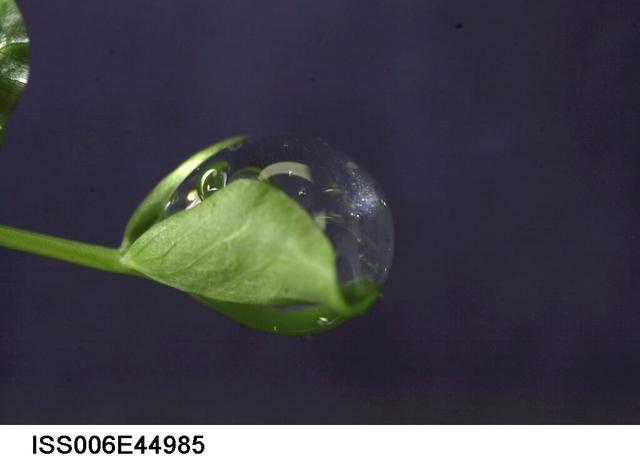
ISS006-E-44985 (10 March 2003) --- A close up view of a water droplet on a leaf on the Russian BIO-5 Rasteniya-2/Lada-2 (Plants-2) plant growth experiment, which is located in the Zvezda Service Module on the International Space Station (ISS).
Water droplet on a leaf on the Russian BIO-5 Rastenya-2 Plant Growth Experiment
ISS020-E-014558 (22 June 2009) --- Cosmonaut Gennady Padalka, Expedition 20 commander, works with plants growing in the Lada greenhouse as a part of the Russian BIO-5 Rasteniya-2/Lada-2 (Plants-2) plant growth experiment located in the Zvezda Service Module of the International Space Station.
Padalka with BIO-5 Rasteniya-2 (Plants-2) experiment in the LADA-14 greenhouse
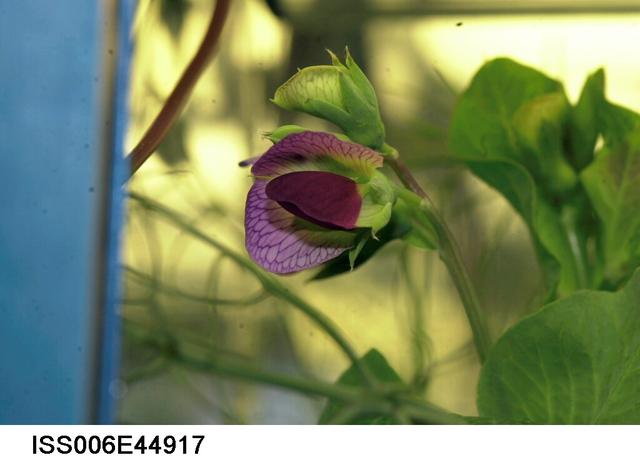
ISS006-E-44917 (5 April 2003) --- A close up view of a bloom on the Russian BIO-5 Rasteniya-2/Lada-2 (Plants-2) plant growth experiment, which is located in the Zvezda Service Module on the International Space Station (ISS).
Close-up view of a bloom on the Russian BIO-5 Rasteniya-2/Lada-2 (Plants-2) Plant Growth Experiment
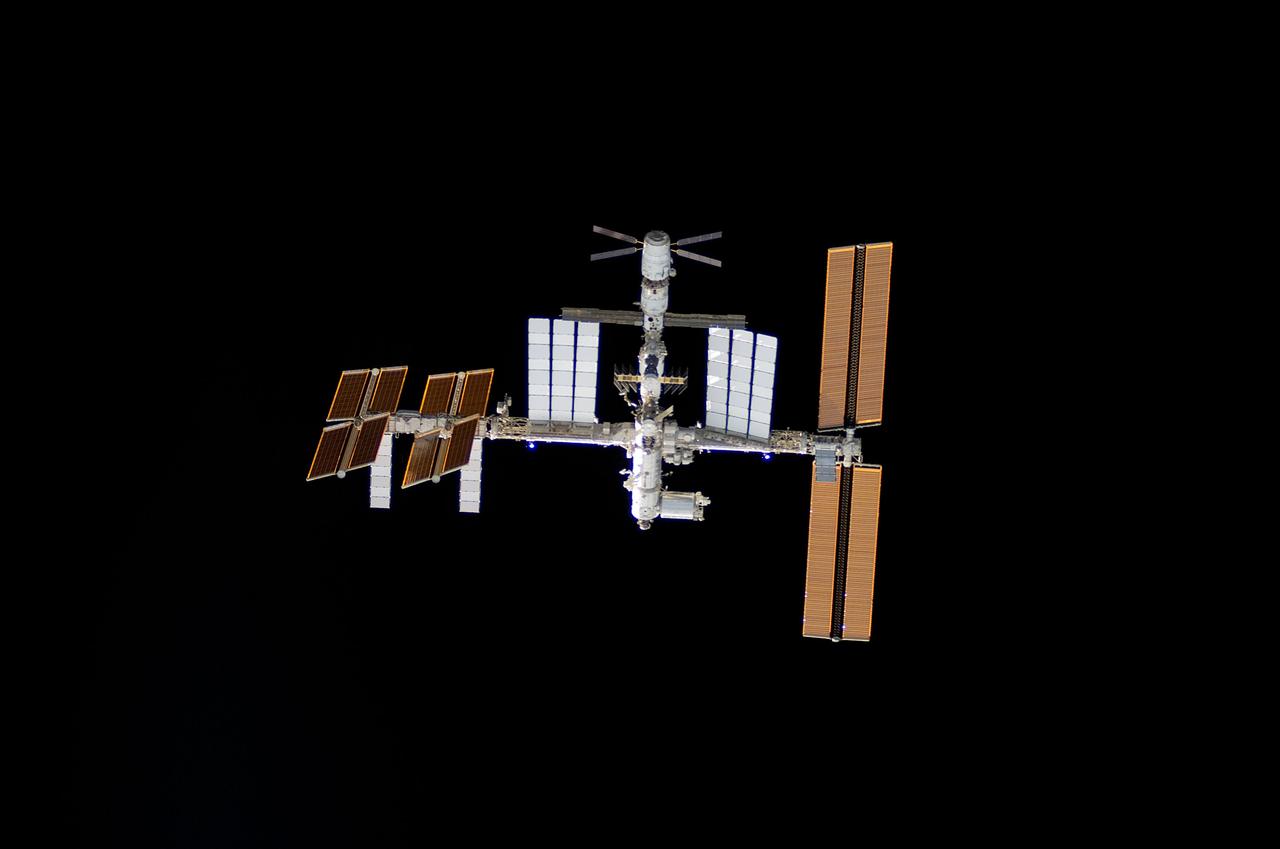
S124-E-005522 (2 June 2008) --- The International Space Station is featured in this image photographed by an STS-124 crewmember as Space Shuttle Discovery approaches the station during rendezvous and docking activities on flight day three. Docking occurred at 2:03 p.m. (EDT) on June 2, 2008.
View of ISS during rendezvous and docking activities
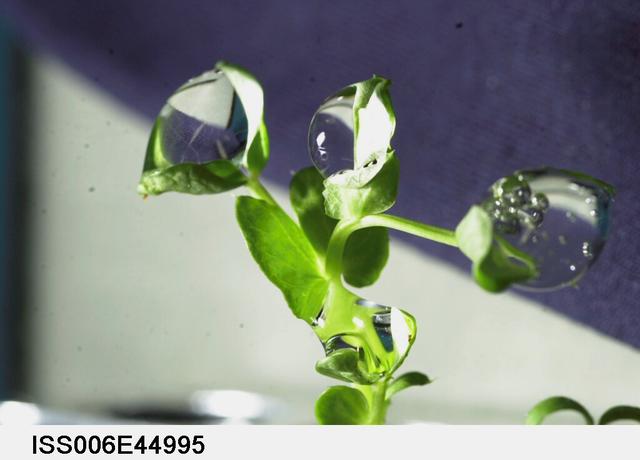
ISS006-E-44995 (10 March 2003) --- A close up view of water droplets on leaves on the Russian BIO-5 Rasteniya-2/Lada-2 (Plants-2) plant growth experiment, which is located in the Zvezda Service Module on the International Space Station (ISS).
Water droplet on a leaf on the Russian BIO-5 Rastenya-2 Plant Growth Experiment
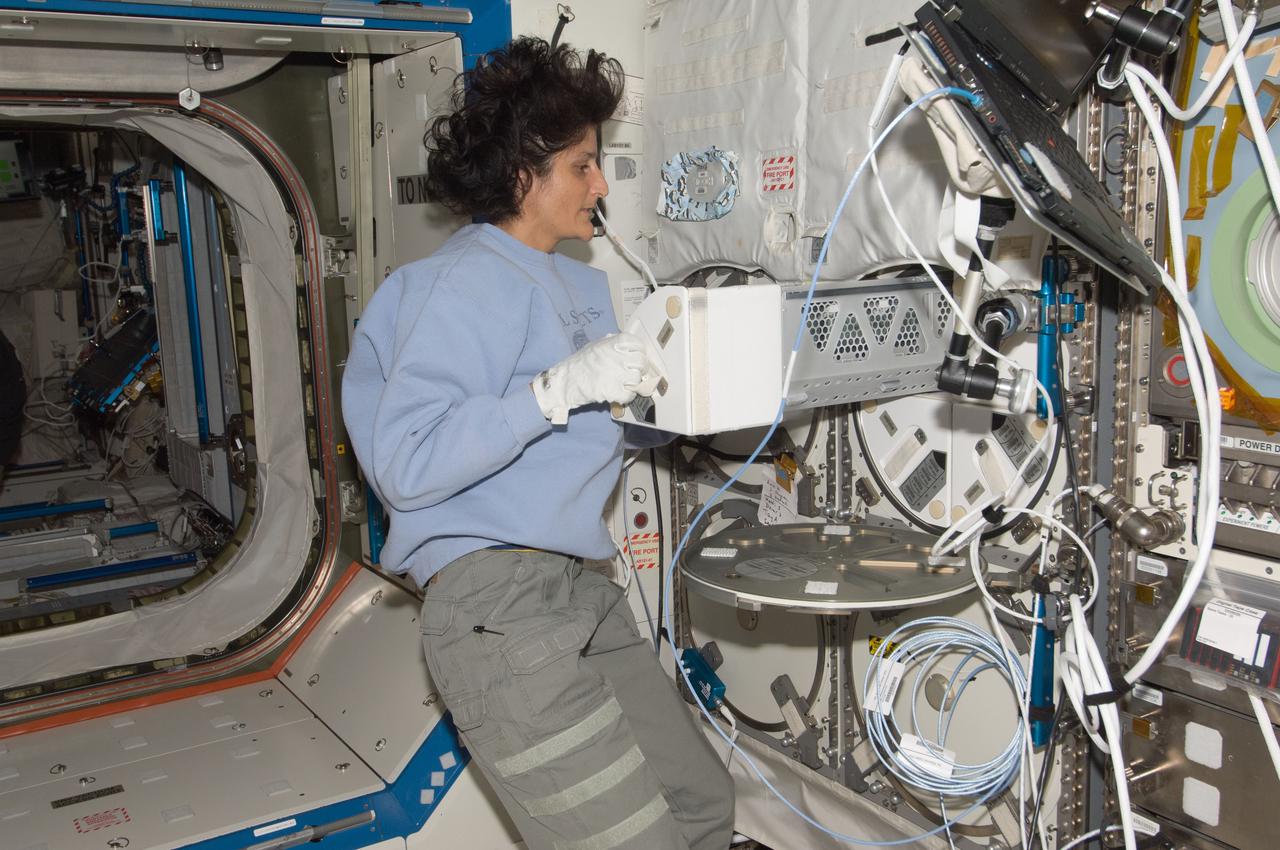
ISS032-E-011639 (2 Aug. 2012) --- NASA astronaut Sunita Williams, Expedition 32 flight engineer, prepares to insert biological samples in the Minus Eighty Laboratory Freezer for ISS-2 (MELFI-2) in the Destiny laboratory of the International Space Station.
FE Williams inserts Biological Samples into the MELFI-2
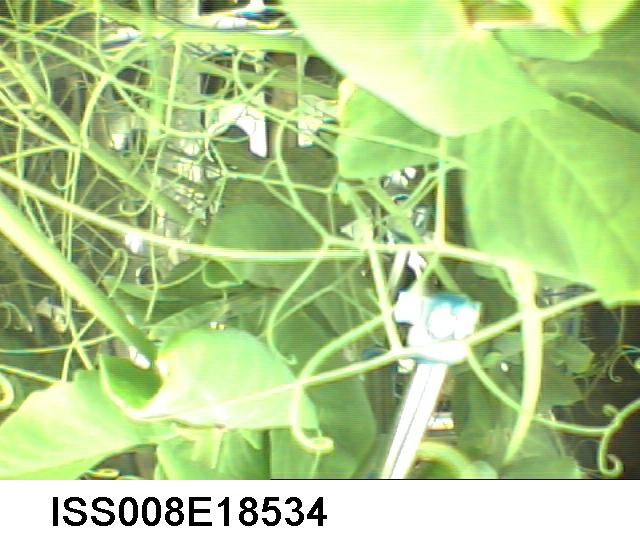
ISS008-E-18534 (March 2004) --- A close-up view, taken by an Expedition 8 crewmember, shows the Russian BIO-5 Rasteniya-2/Lada-2 (Plants-2) plant growth experiment located in the Zvezda Service Module on the International Space Station (ISS).
Pea plants growing in the Lada-4 greenhouse during Expedition 8
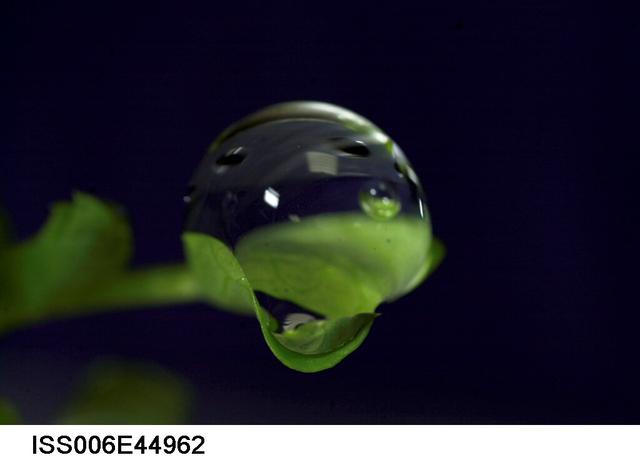
ISS006-E-44962 (9 March 2003) --- A close up view of a water droplet on a leaf on the Russian BIO-5 Rasteniya-2/Lada-2 (Plants-2) plant growth experiment, which is located in the Zvezda Service Module on the International Space Station (ISS).
Water droplet on a leaf on the Russian BIO-5 Rastenya-2 Plant Growth Experiment
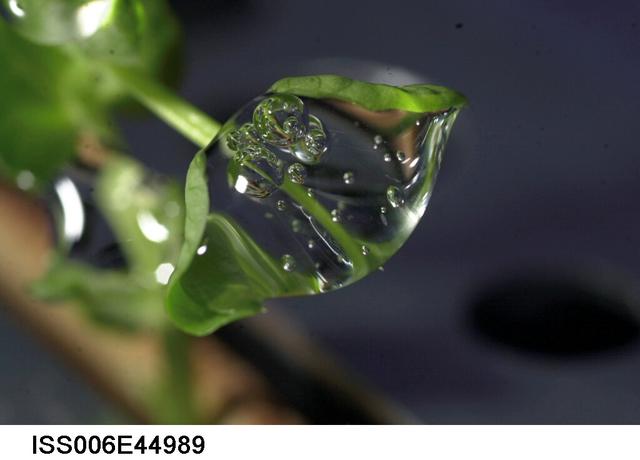
ISS006-E-44989 (10 March 2003) --- A close up view of a water droplet on a leaf on the Russian BIO-5 Rasteniya-2/Lada-2 (Plants-2) plant growth experiment, which is located in the Zvezda Service Module on the International Space Station (ISS).
Water droplet on a leaf on the Russian BIO-5 Rastenya-2 Plant Growth Experiment
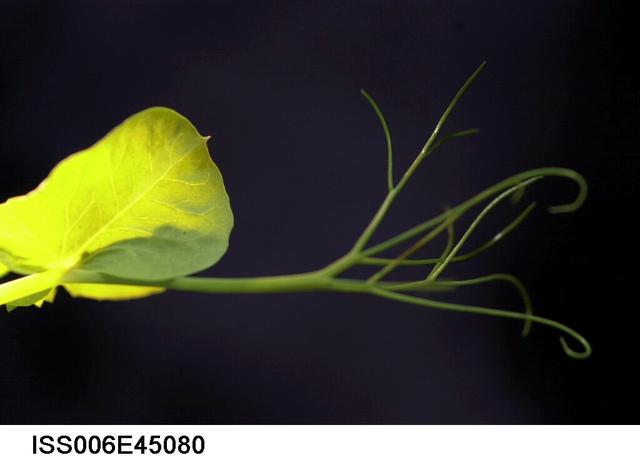
ISS006-E-45080 (17 March 2003) --- A close up view of sprouts on the Russian BIO-5 Rasteniya-2/Lada-2 (Plants-2) plant growth experiment, which is located in the Zvezda Service Module on the International Space Station (ISS).
Close-up view of sprouts on the Russian BIO-5 Rasteniya-2/Lada-2 (Plants-2) Plant Growth Experiment
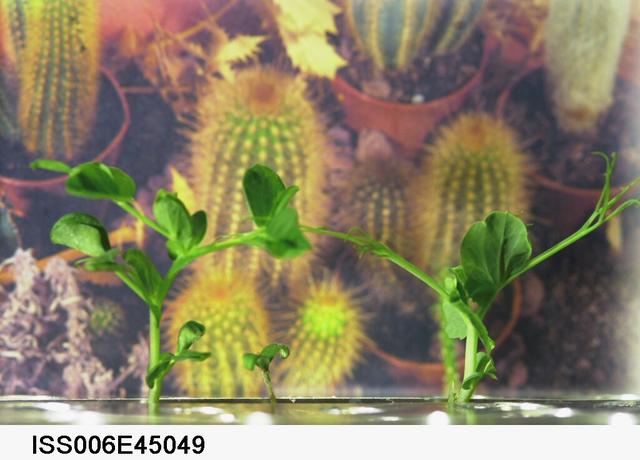
ISS006-E-45049 (14 March 2003) --- A close up view of sprouts on the Russian BIO-5 Rasteniya-2/Lada-2 (Plants-2) plant growth experiment, which is located in the Zvezda Service Module on the International Space Station (ISS).
Close-up view of sprouts on the Russian BIO-5 Rasteniya-2/Lada-2 (Plants-2) plant growth experiment
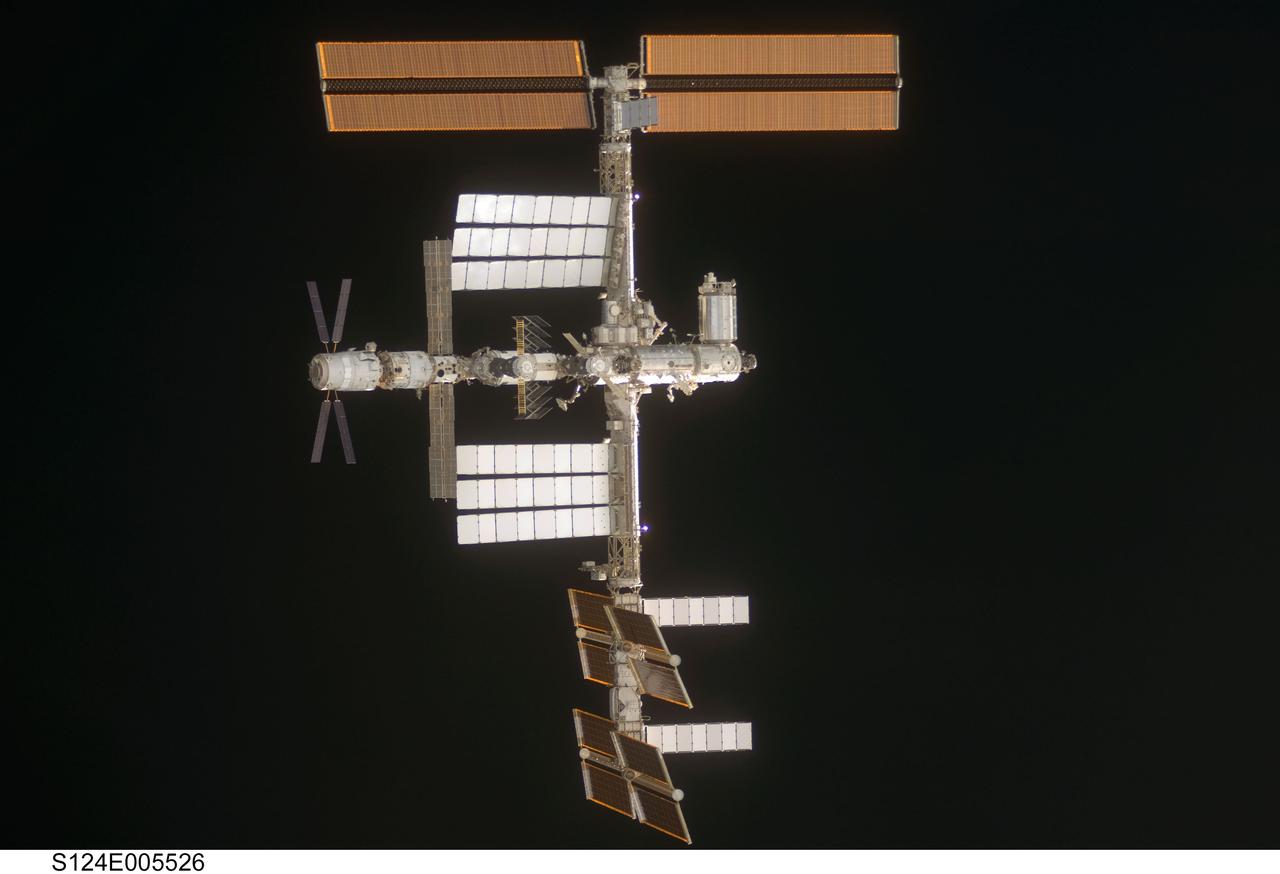
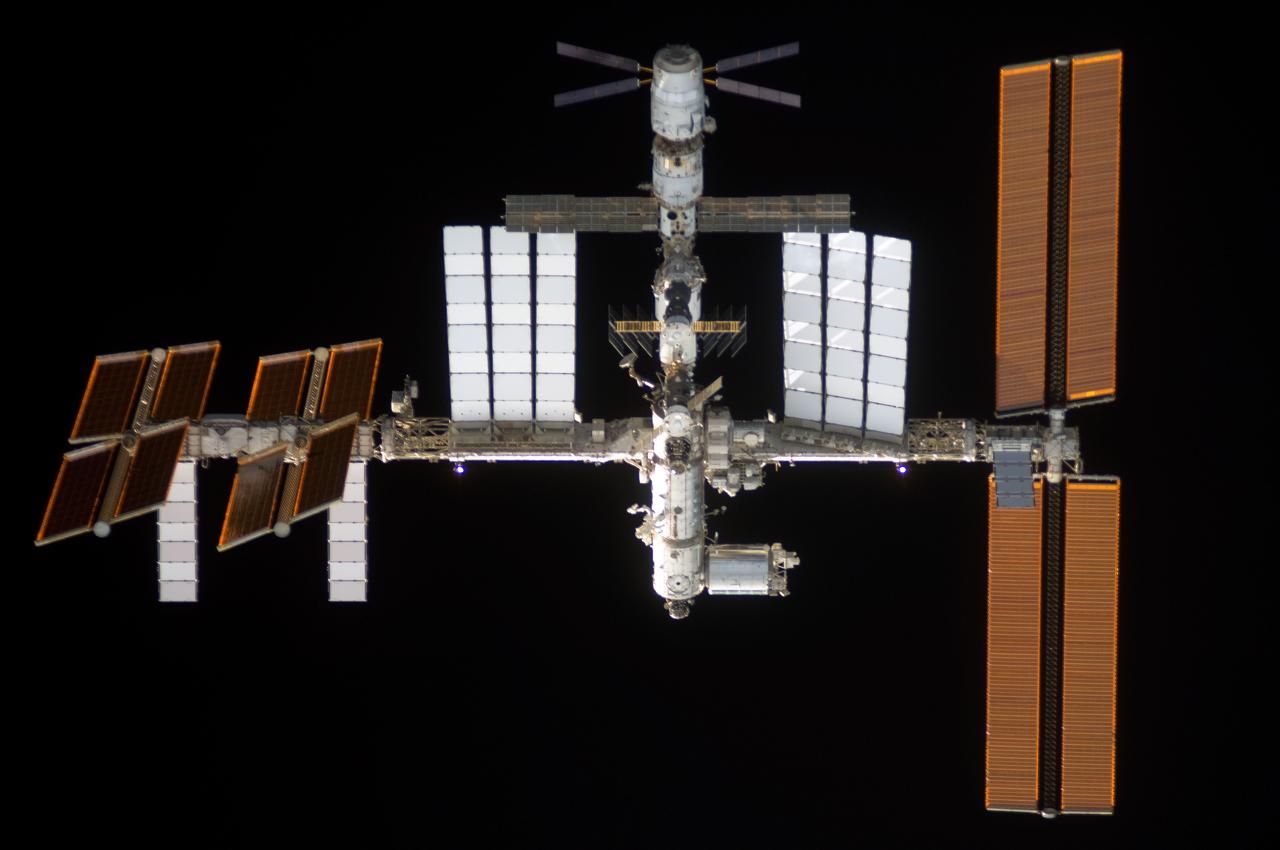
S124-E-005526 (2 June 2008) --- The International Space Station is centered in this image photographed by an STS-124 crewmember as Space Shuttle Discovery approaches the station during rendezvous and docking activities on flight day three. Docking occurred at 2:03 p.m. (EDT) on June 2, 2008.
View of ISS during rendezvous and docking activities
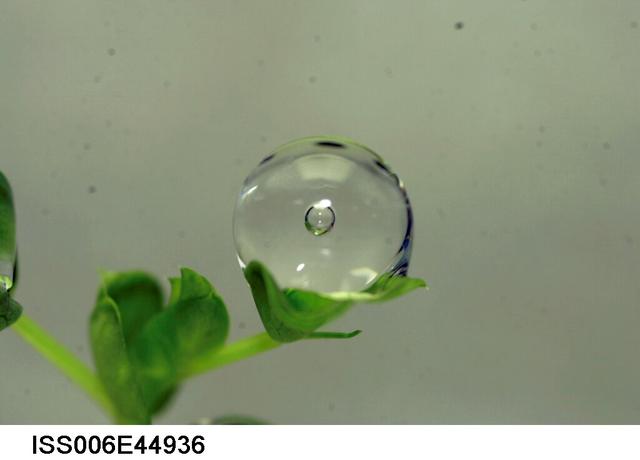
ISS006-E-44936 (9 March 2003) --- A close up view of a water droplet on a leaf on the Russian BIO-5 Rasteniya-2/Lada-2 (Plants-2) plant growth experiment, which is located in the Zvezda Service Module on the International Space Station (ISS).
Water droplet on a leaf on the Russian BIO-5 Rastenya-2 Plant Growth Experiment
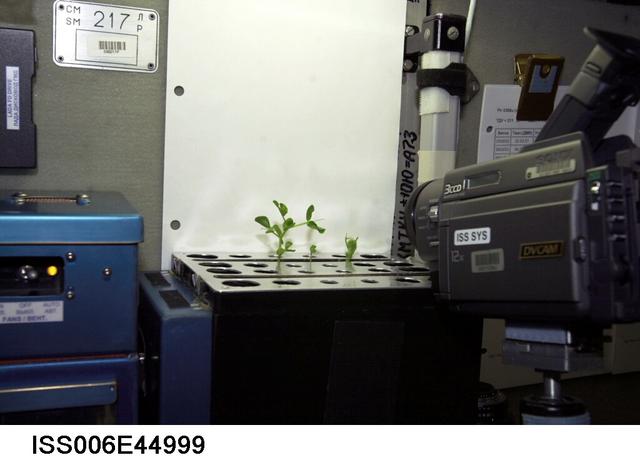
ISS006-E-44999 (12 March 2003) --- A view of the Russian BIO-5 Rasteniya-2/Lada-2 (Plants-2) plant growth experiment located in the Zvezda Service Module on the International Space Station (ISS).  A camera used for recording progress of the experiment is visible on the right.
View of the Russian BIO-5 Rasteniya-2/Lada-2 (Plants-2) plant growth experiment in the SM
ISS006-E-44929 (9 March 2003) --- A close up view of water droplets on leaves on the Russian BIO-5 Rasteniya-2/Lada-2 (Plants-2) plant growth experiment, which is located in the Zvezda Service Module on the International Space Station (ISS).
Water droplet on a leaf on the Russian BIO-5 Rastenya-2 Plant Growth Experiment
ISS012-E-15387 (24 Jan. 2006) --- A view of pea plants growing in the Lada greenhouse as a part of the Russian BIO-5 Rasteniya-2/Lada-2 (Plants-2) plant growth experiment located in the Zvezda Service Module photographed by an Expedition 12 crewmember on the International Space Station.
Plants inside the leaf chamber of the LADA green house during Expedition 12
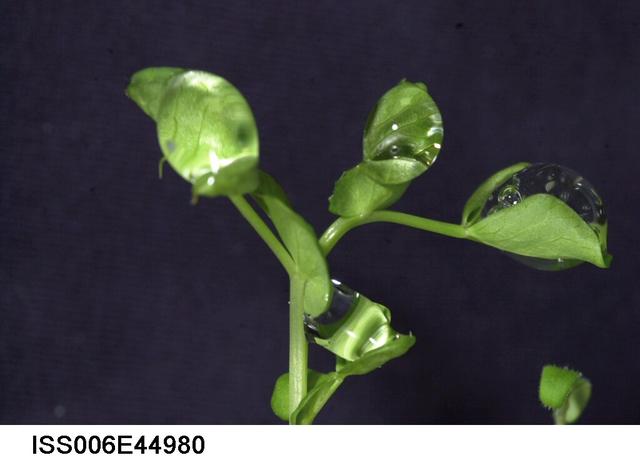
ISS006-E-44980 (10 March 2003) --- A close up view of water droplets on leaves on the Russian BIO-5 Rasteniya-2/Lada-2 (Plants-2) plant growth experiment, which is located in the Zvezda Service Module on the International Space Station (ISS).
Water droplet on a leaf on the Russian BIO-5 Rastenya-2 Plant Growth Experiment
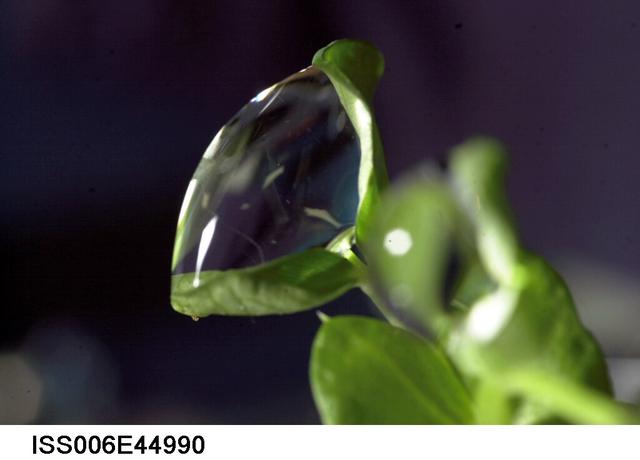
ISS006-E-44990 (10 March 2003) --- A close up view of a water droplet on a leaf on the Russian BIO-5 Rasteniya-2/Lada-2 (Plants-2) plant growth experiment, which is located in the Zvezda Service Module on the International Space Station (ISS).
Water droplet on a leaf on the Russian BIO-5 Rastenya-2 Plant Growth Experiment
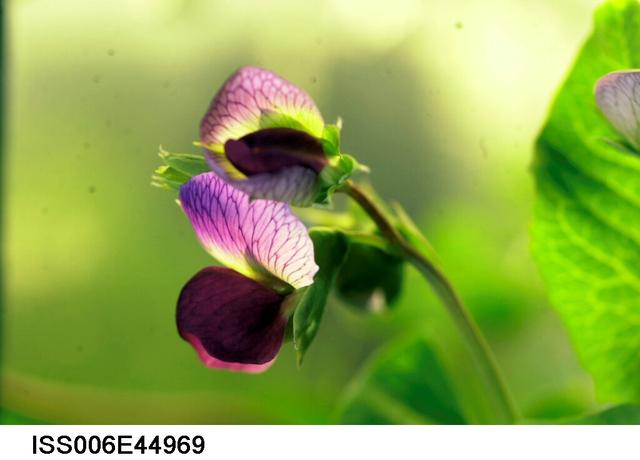
ISS006-E-44969 (6 April 2003) --- A close up view of a bloom on the Russian BIO-5 Rasteniya-2/Lada-2 (Plants-2) plant growth experiment, which is located in the Zvezda Service Module on the International Space Station (ISS).
Close-up view of dwarf peas with red flowers on the Russian Plant Growth Experiment
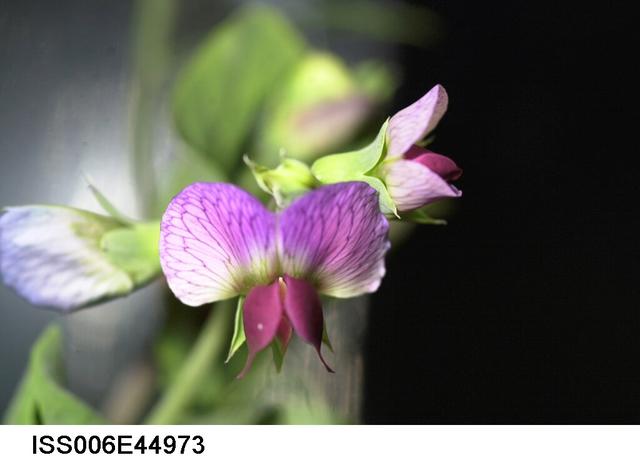
ISS006-E-44973 (6 April 2003) --- A close up view of a bloom on the Russian BIO-5 Rasteniya-2/Lada-2 (Plants-2) plant growth experiment, which is located in the Zvezda Service Module on the International Space Station (ISS).
Close-up view of dwarf peas with red flowers on the Russian Plant Growth Experiment
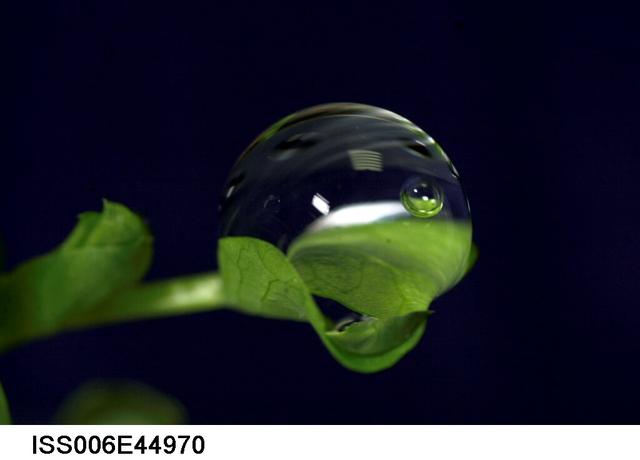
ISS006-E-44970 (9 March 2003) --- A close up view of a water droplet on a leaf on the Russian BIO-5 Rasteniya-2/Lada-2 (Plants-2) plant growth experiment, which is located in the Zvezda Service Module on the International Space Station (ISS).
Water droplet on a leaf on the Russian BIO-5 Rastenya-2 Plant Growth Experiment
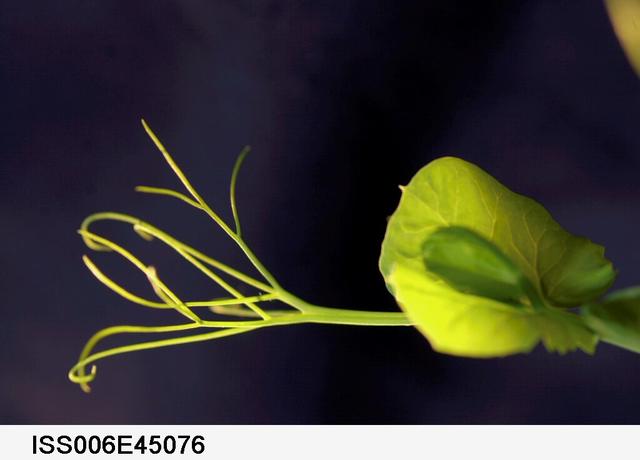
ISS006-E-45076 (17 March 2003) --- A close up view of sprouts on the Russian BIO-5 Rasteniya-2/Lada-2 (Plants-2) plant growth experiment, which is located in the Zvezda Service Module on the International Space Station (ISS).
Close-up view of sprouts on the Russian BIO-5 Rasteniya-2/Lada-2 (Plants-2) Plant Growth Experiment
S124-E-005521 (2 June 2008) --- The International Space Station is centered in this image photographed by an STS-124 crewmember as Space Shuttle Discovery approaches the station during rendezvous and docking activities on flight day three. Docking occurred at 2:03 p.m. (EDT) on June 2, 2008.
View of ISS during rendezvous and docking activities
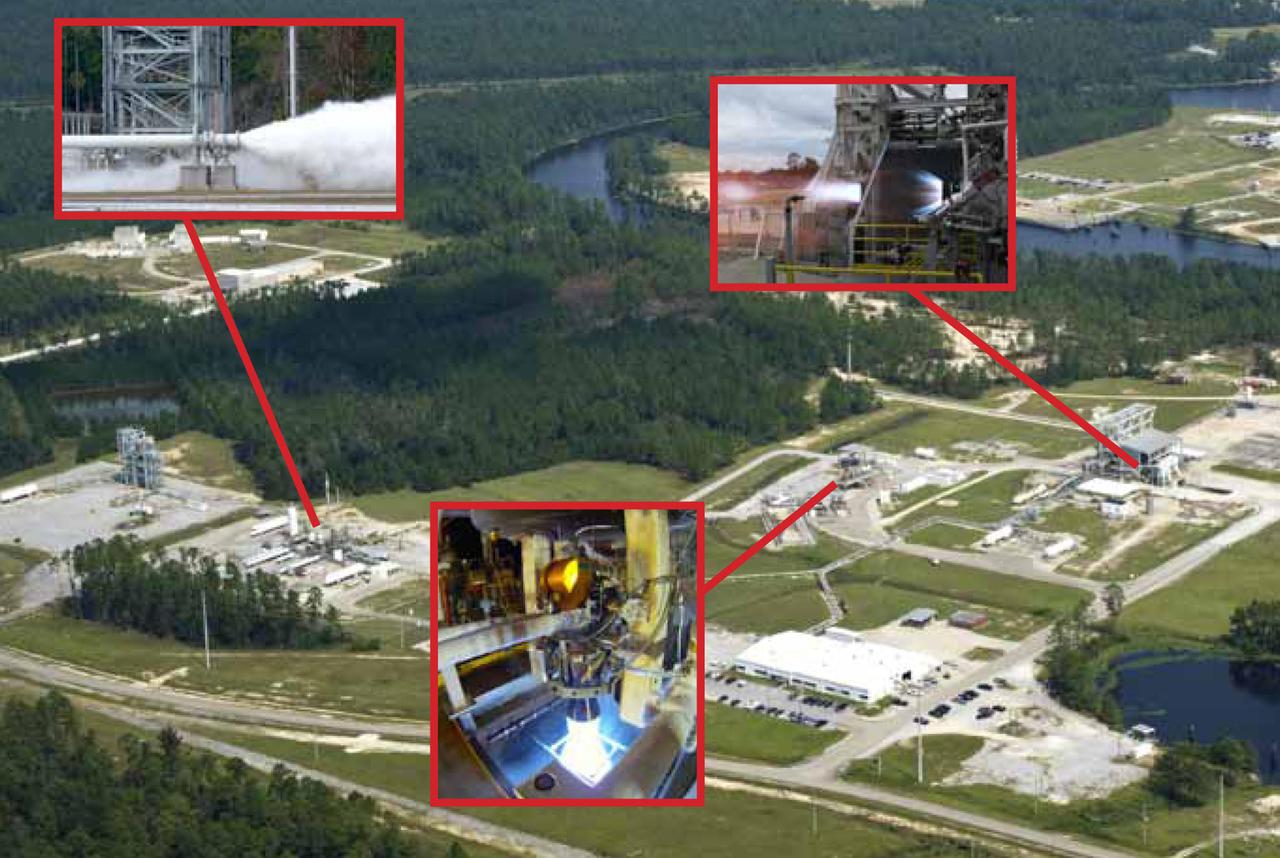
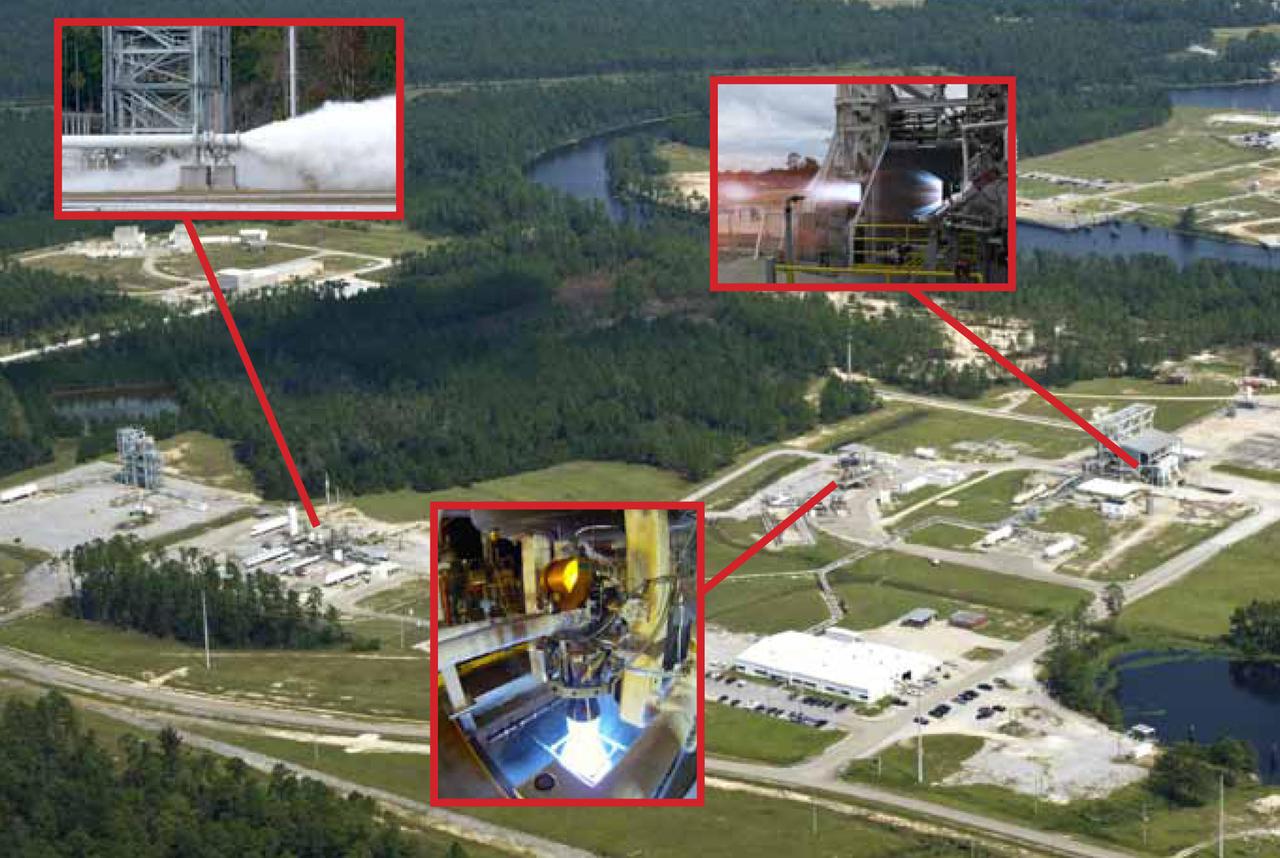
NASA recorded a historic week Nov. 5-9, conducting tests on all three stands in the E Test Complex at John C. Stennis Space Center. Inset images show the types of tests conducted on the E-1 Test Stand (right), the E-2 Test Stand (left) and the E-3 Test Stand (center). The E-1 photo is from an early October test and is provided courtesy of Blue Origin. Other photos are from tests conducted the week of Nov. 5.
Busy test week
NASA recorded a historic week Nov. 5-9, conducting tests on all three stands in the E Test Complex at John C. Stennis Space Center. Inset images show the types of tests conducted on the E-1 Test Stand (right), the E-2 Test Stand (left) and the E-3 Test Stand (center). The E-1 photo is from an early October test and is provided courtesy of Blue Origin. Other photos are from tests conducted the week of Nov. 5.
Busy test week
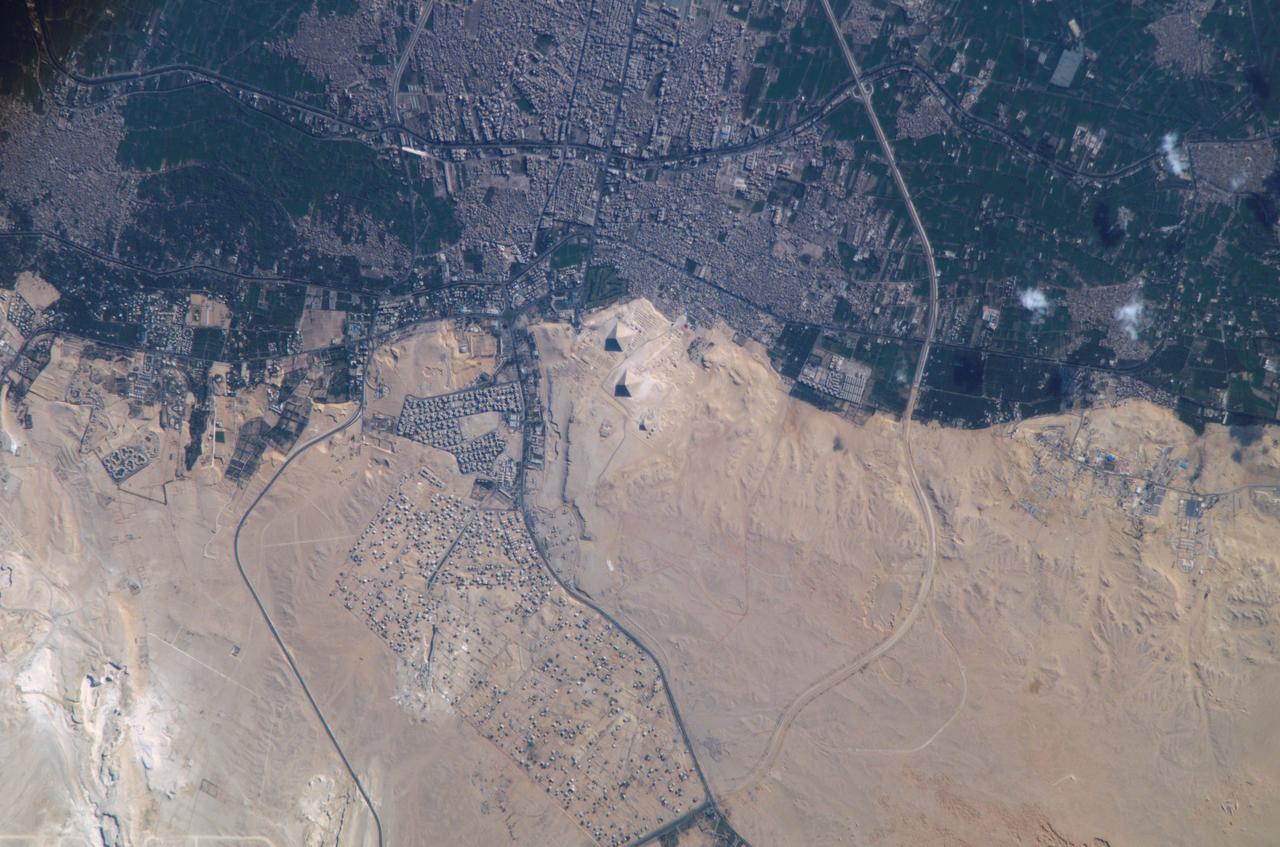
ISS010-E-22442 (2 April 2005) --- Pyramids at Giza are featured in this image photographed by an Expedition 10 crewmember on the International Space Station.
Earth Observations taken by the Expedition 10 crew
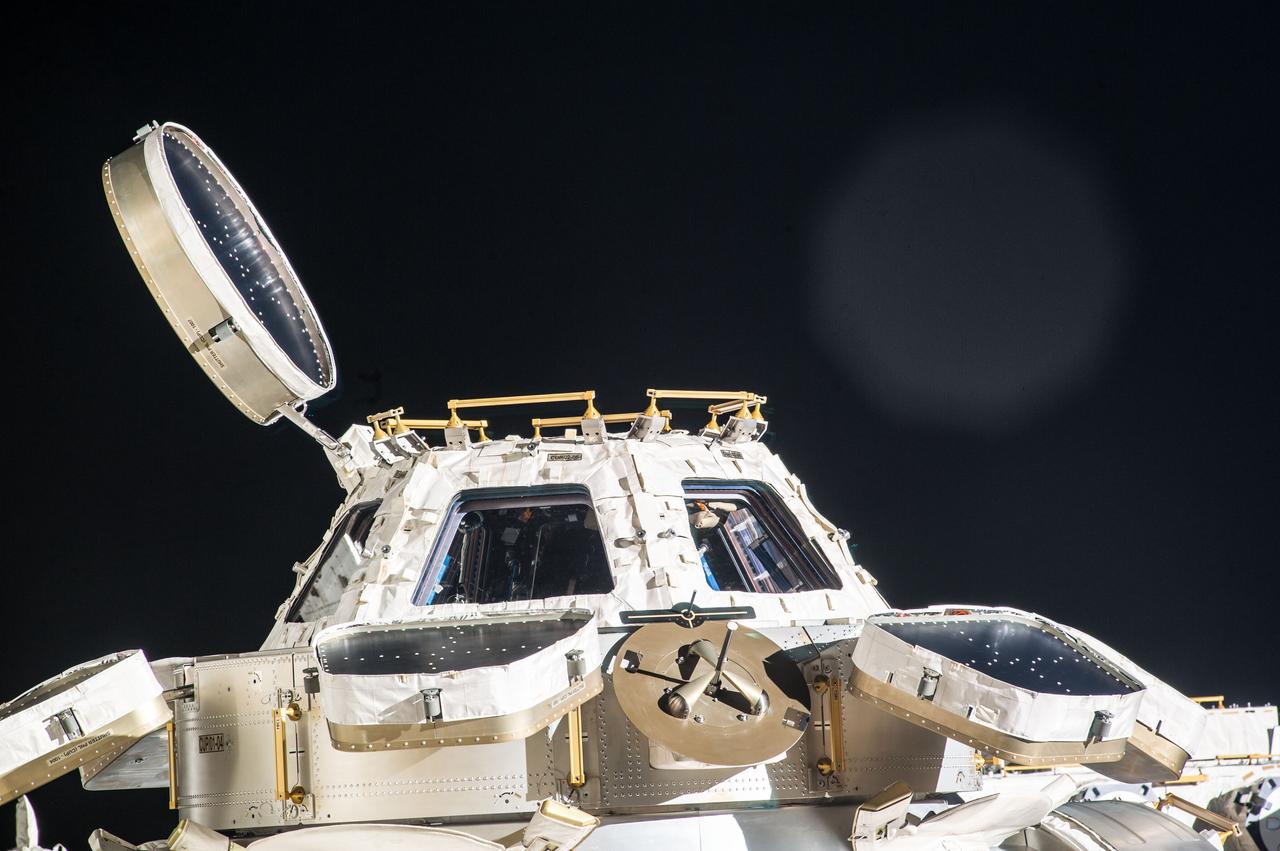
ISS038-E-040615 (2 Feb. 2014) --- A close-up view of the Cupola is featured in this image photographed by an Expedition 38 crew member on the International Space Station.
Cupola Module
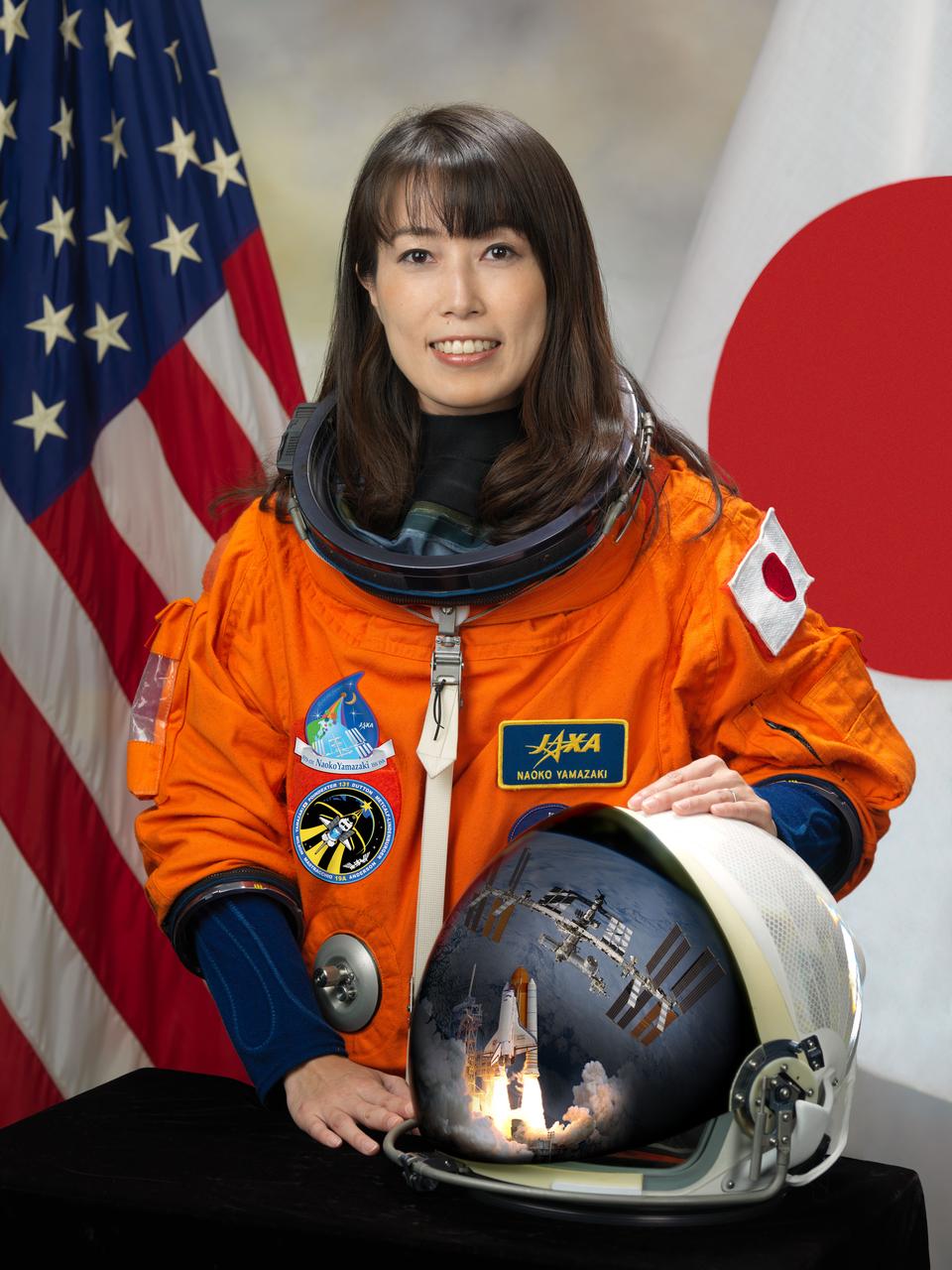
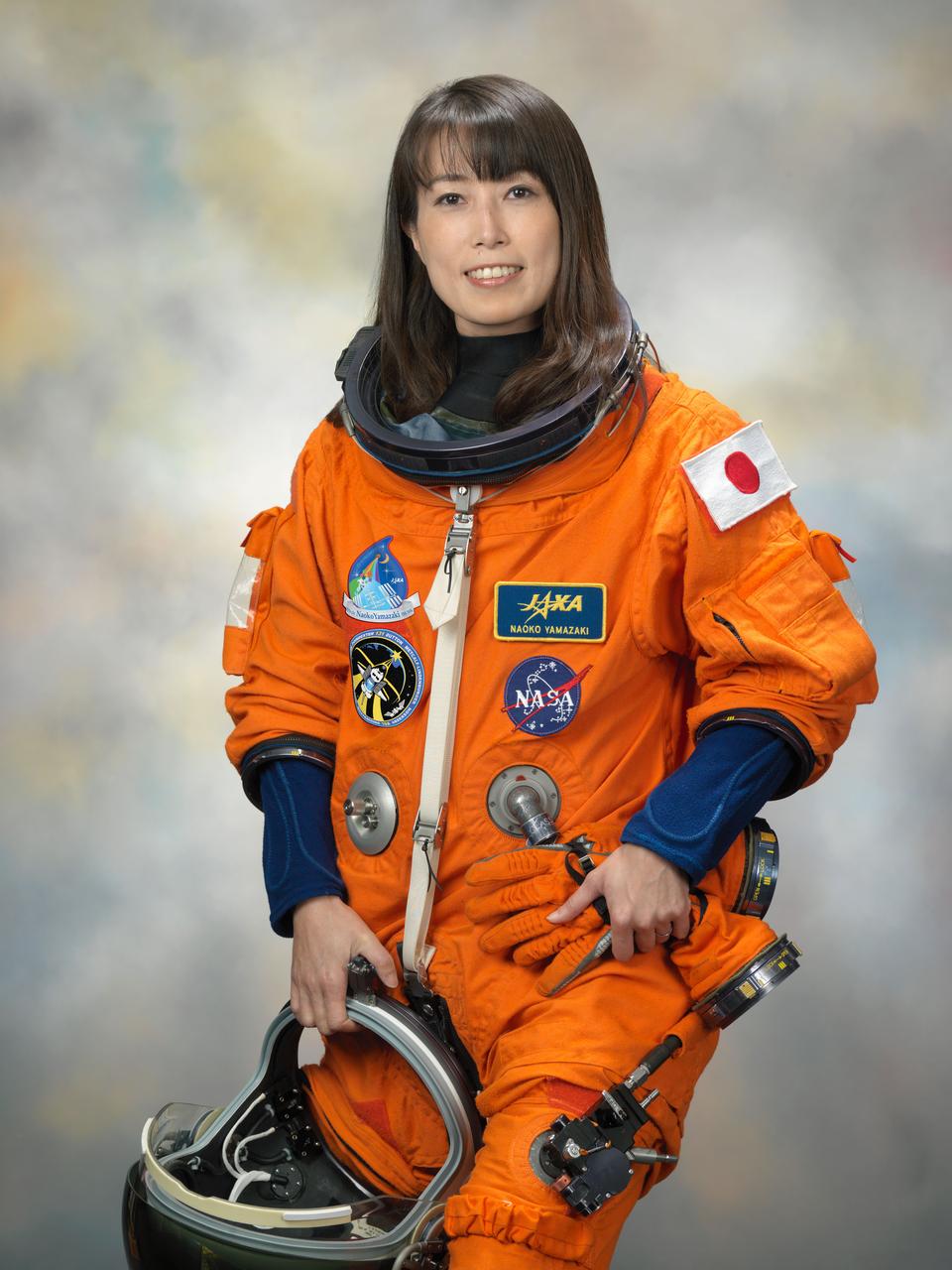
JSC2010-E-008472 (2 Nov. 2009) --- Japan Aerospace Exploration Agency (JAXA) astronaut Naoko Yamazaki, mission specialist (official portrait)
jsc2010e008472
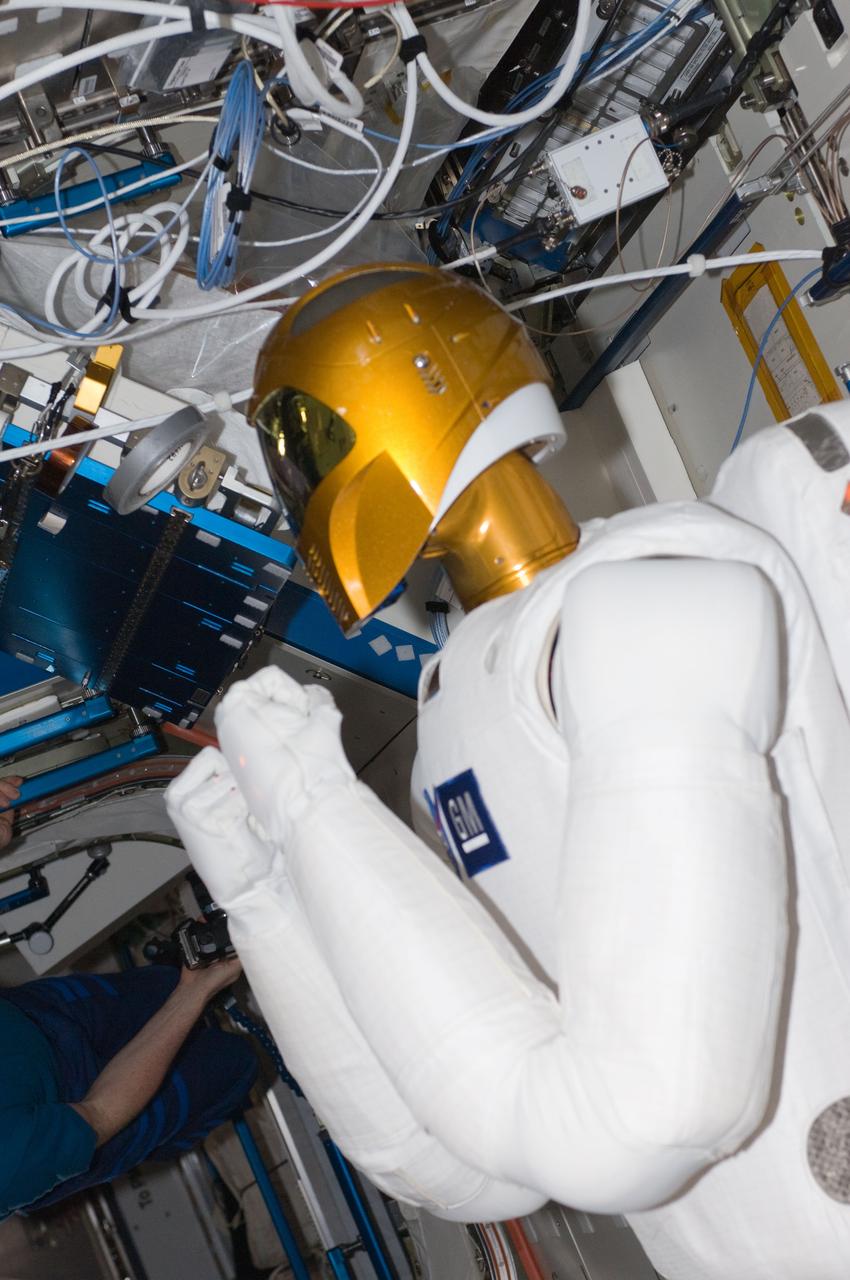
ISS030-E-075379 (14 Feb. 2012) --- Robonaut 2, nicknamed R2, is pictured during a checkout and activities session in the Destiny laboratory of the International Space Station.
Robonaut during a checkout and activities session
JSC2009-E-258493 (2 Nov. 2009) --- Japan Aerospace Exploration Agency (JAXA) astronaut Naoko Yamazaki, mission specialist (alternate portrait)
Official Astronaut Portrait of Naoko Yamazaki - Individual ACES suit photo
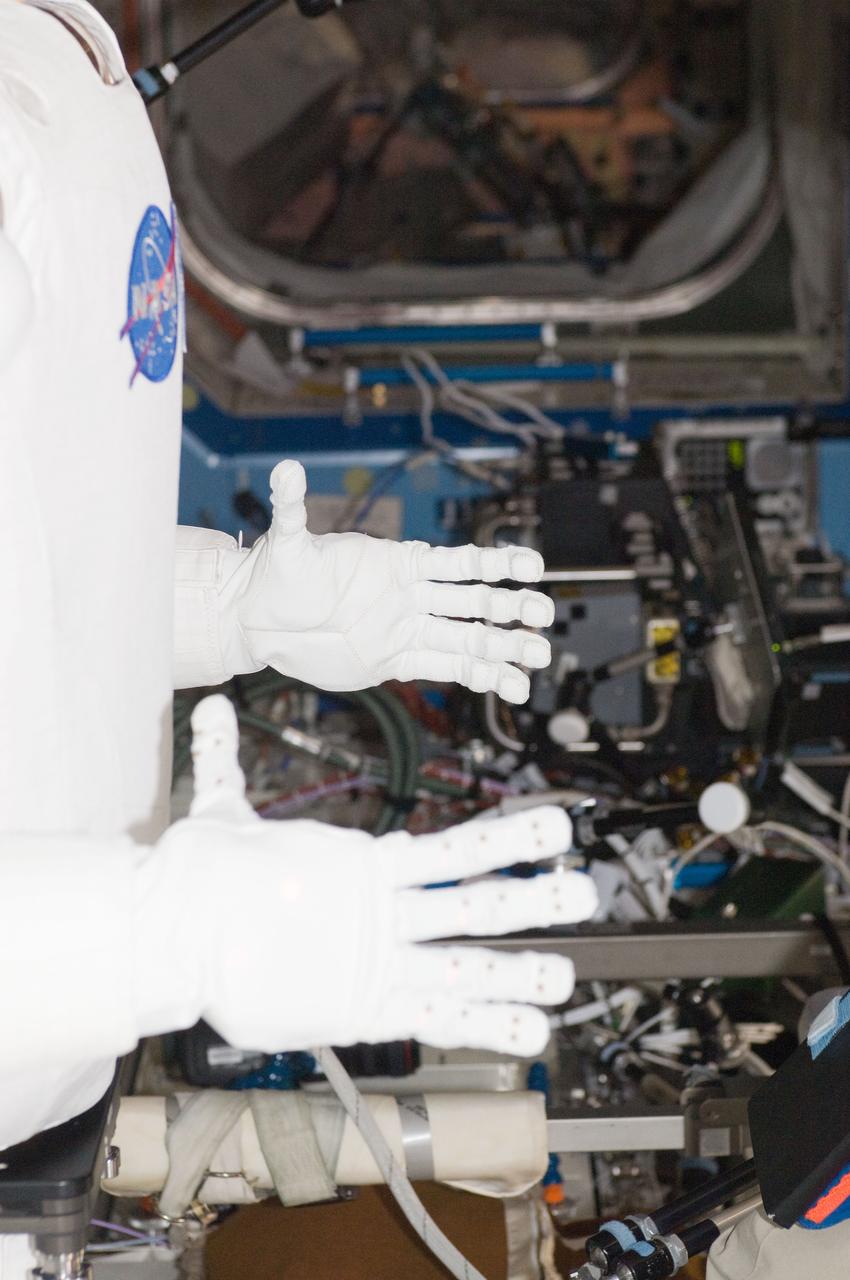
ISS030-E-075419 (15 Feb. 2012) --- The hands of Robonaut 2, nicknamed R2, are pictured during initial checkouts in the Destiny laboratory of the International Space Station.
Robonaut 2 hands during a checkout and activities session
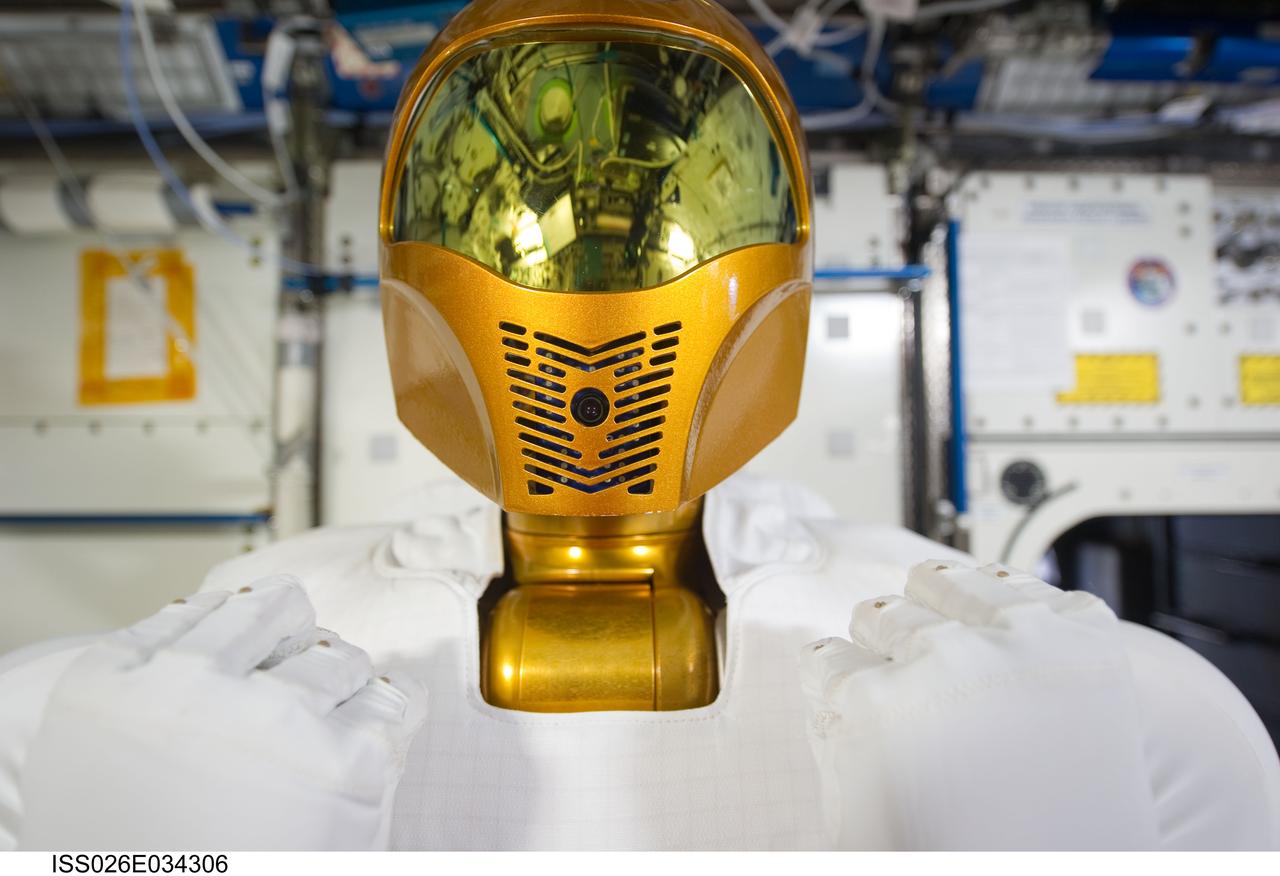
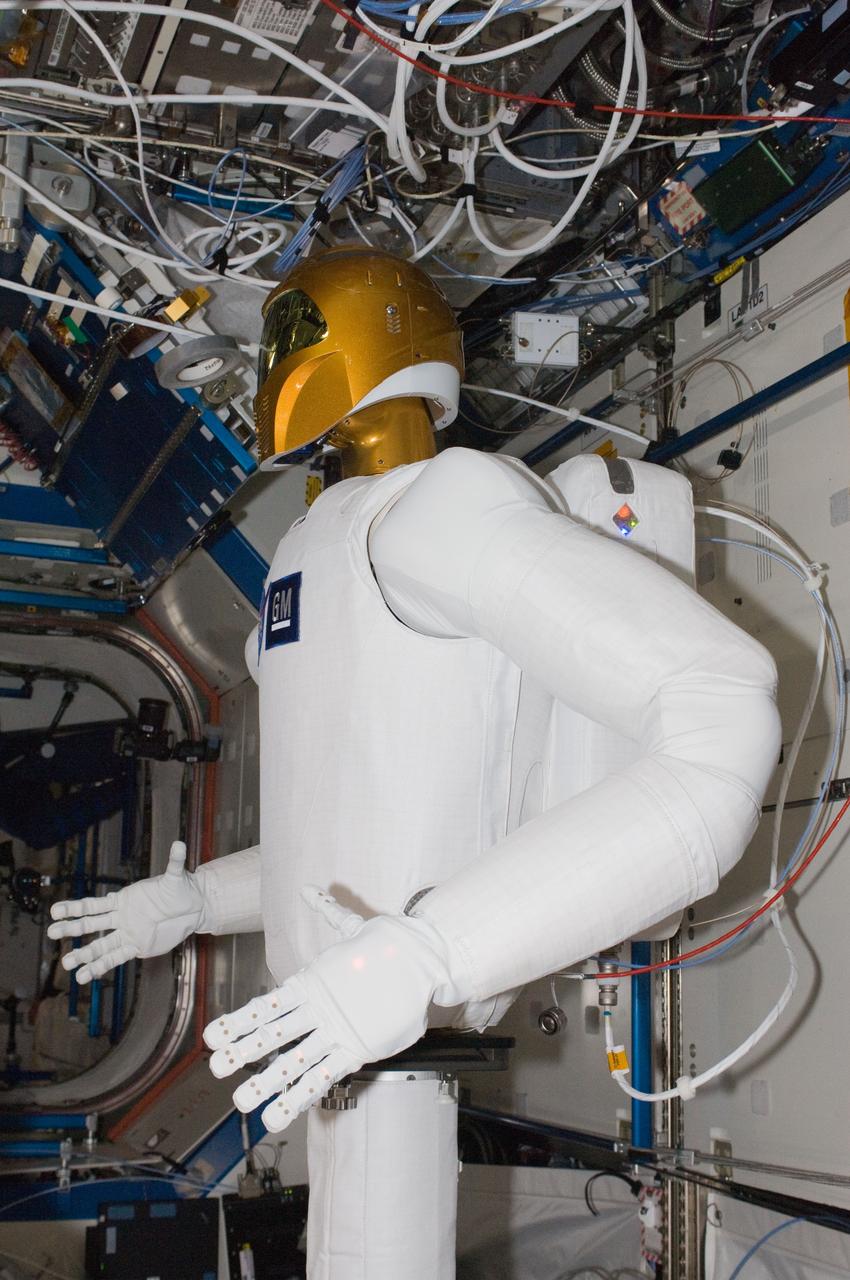
ISS026-E-034306 (15 March 2011) --- Robonaut 2, the dexterous humanoid astronaut helper, is pictured in the Destiny laboratory of the International Space Station.
Robonaut 2
ISS030-E-075365 (14 Feb. 2012) --- Robonaut 2, nicknamed R2, is pictured during a checkout and activities session in the Destiny laboratory of the International Space Station.
Robonaut 2 in the U.S. Laboratory
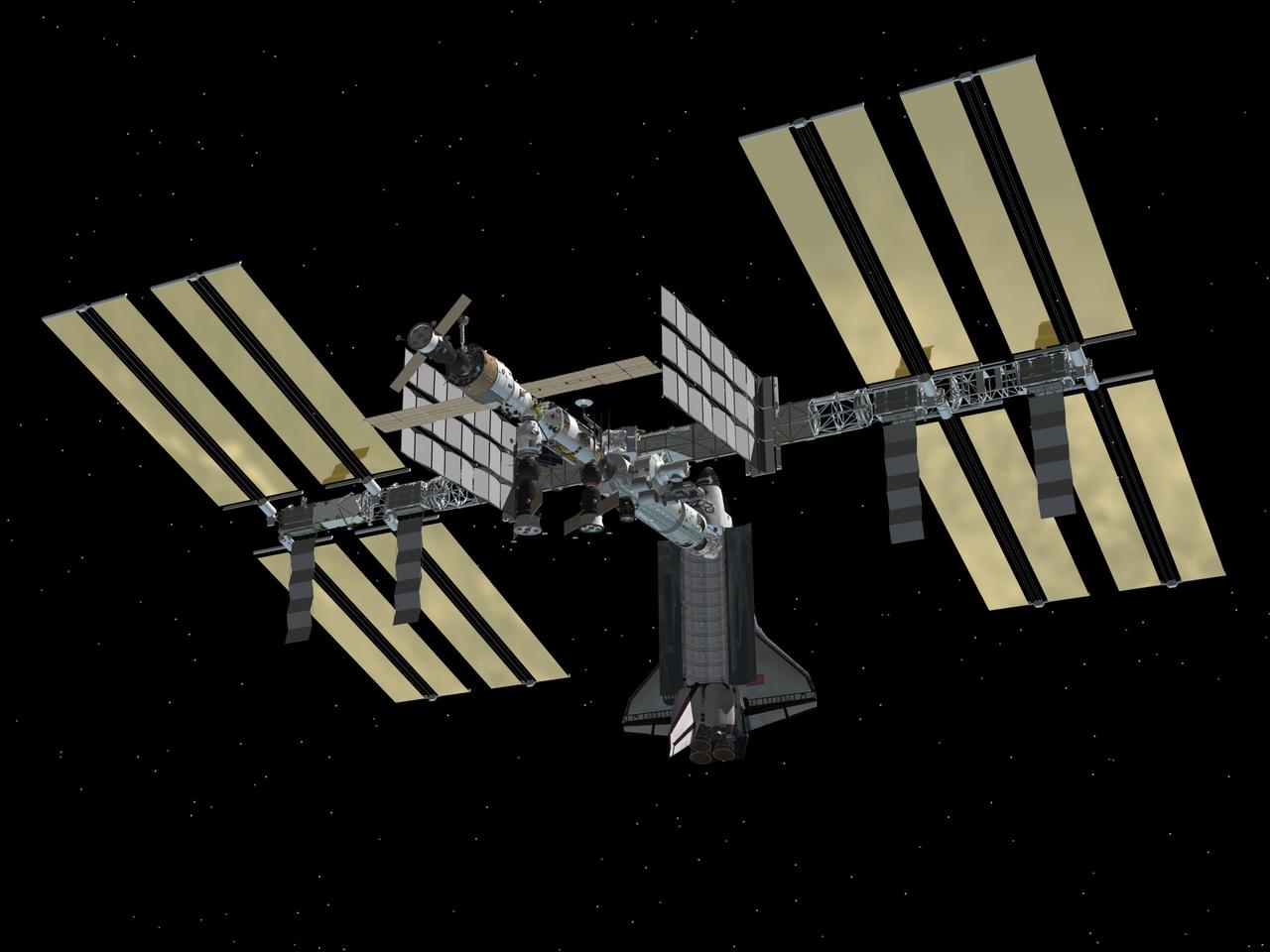
JSC2003-E-64498  (December 2003) - Post 10A underside/aft view of the International Space Station with Shuttle docked to Node 2.
ISS artwork
ISS007-E-14296 (2 September 2003) --- Lightning in clouds at night is featured in this image photographed by an Expedition 7 crewmember onboard the International Space Station (ISS).
Dark Earth observations taken by the Expedition Seven crew
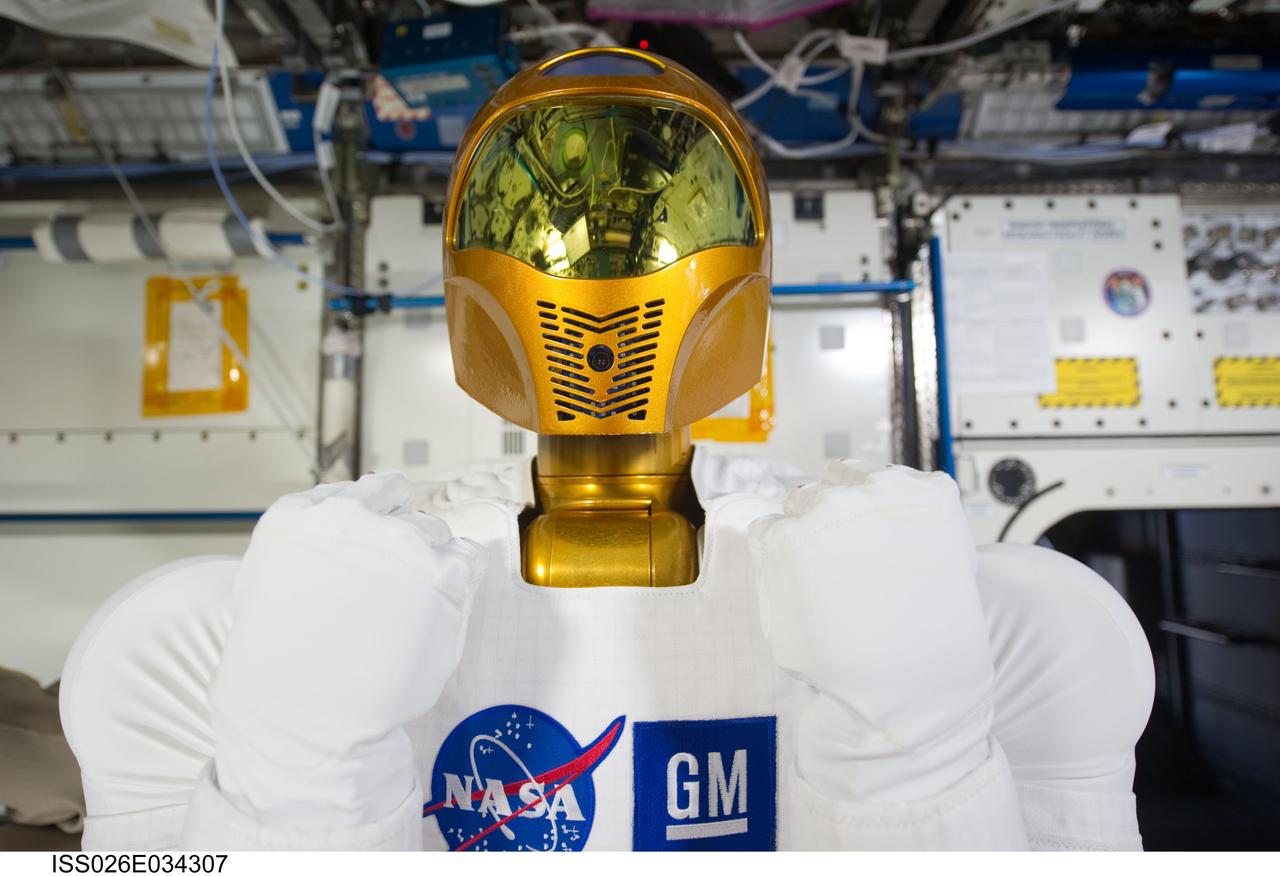
ISS026-E-034307 (15 March 2011) --- Robonaut 2, the dexterous humanoid astronaut helper, is pictured in the Destiny laboratory of the International Space Station.
Robonaut 2
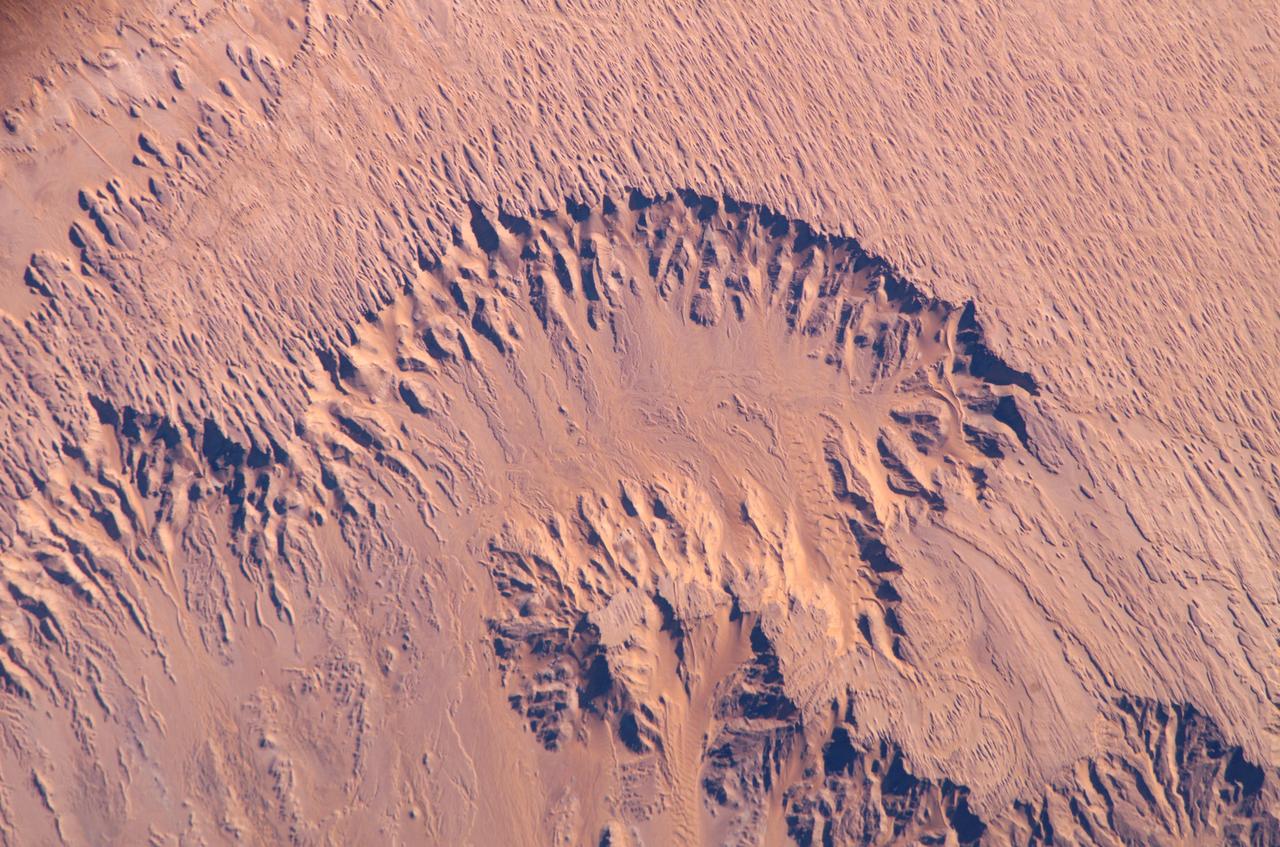
ISS010-E-22438 (2 February 2005) --- The Egyptian Desert is featured in this image photographed by an Expedition 10 crewmember on the International Space Station.
Earth Observations taken by the Expedition 10 crew
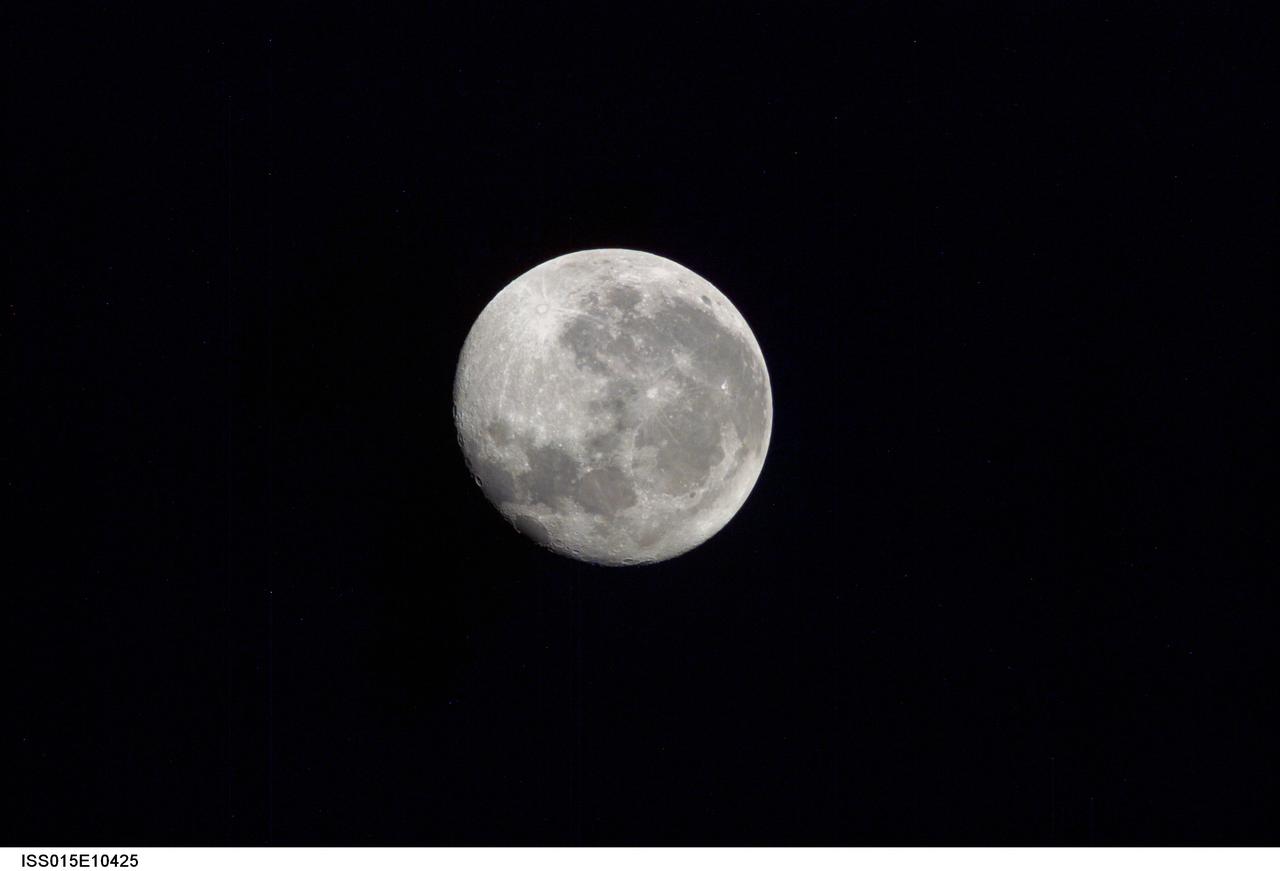
ISS015-E-10425 (2 June 2007) --- A full moon is featured in this image photographed by an Expedition 15 crewmember on the International Space Station.
Lunar Observations taken by the Expedition 15 Crew
JSC2003-E-64501  (December 2003) - Post 10A close up view of the Shuttle docked to Node 2 of the International Space Station.
jsc2003e64501
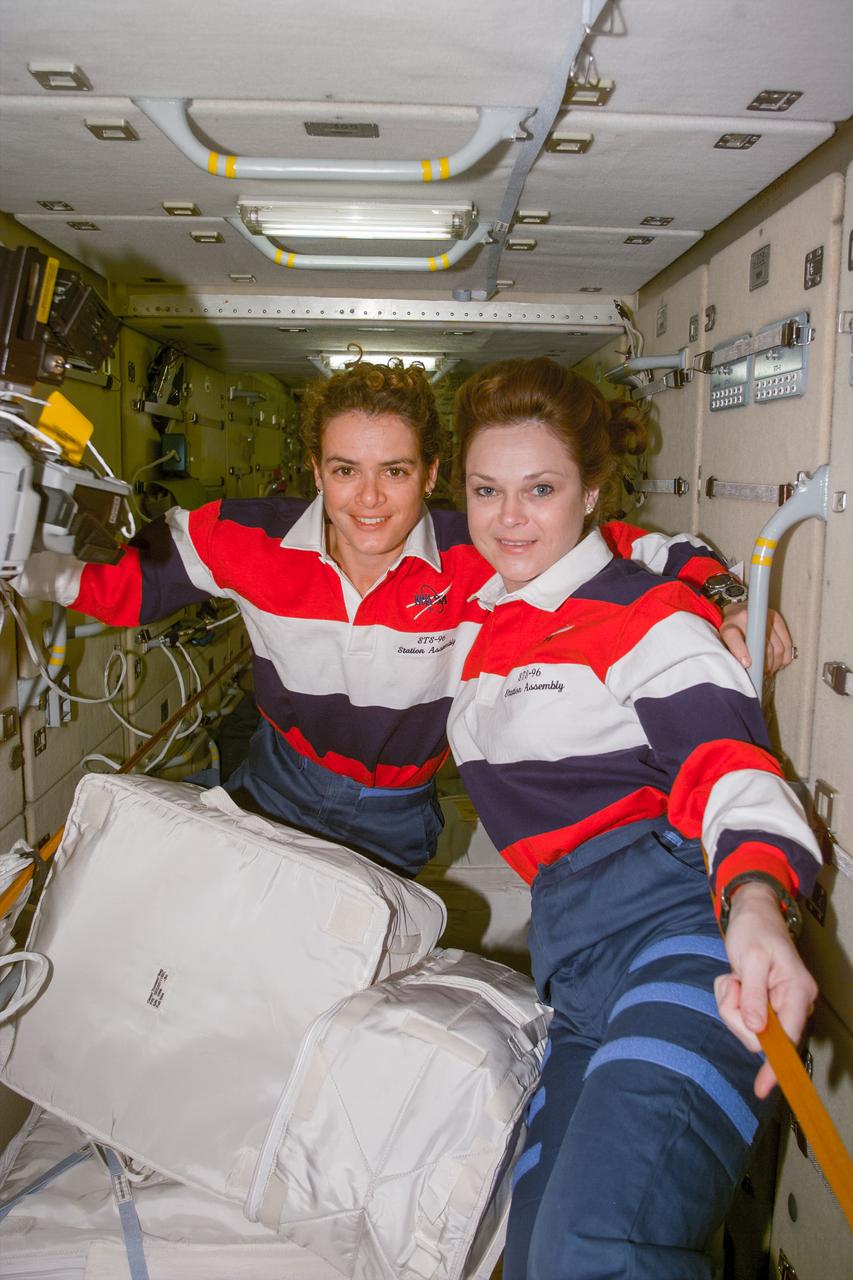
S96-E-5161 (2 June 1999) --- Astronauts Jule Payette (left) and Tamara E. Jernigan, mission specialists, participate in the final hours of tasks designed to prepare the   International Space Station (ISS) for  business.  Here, on  the Russian-built Zarya module, the two  are seen with a small part of the supplies brought up by the Space Shuttle Discovery.  The photo was taken with an electronic still camera (ESC) at 05:58:37 GMT, June 2, 1999.
Julie Payette and Tamara Jernigan in FGB/Zarya module
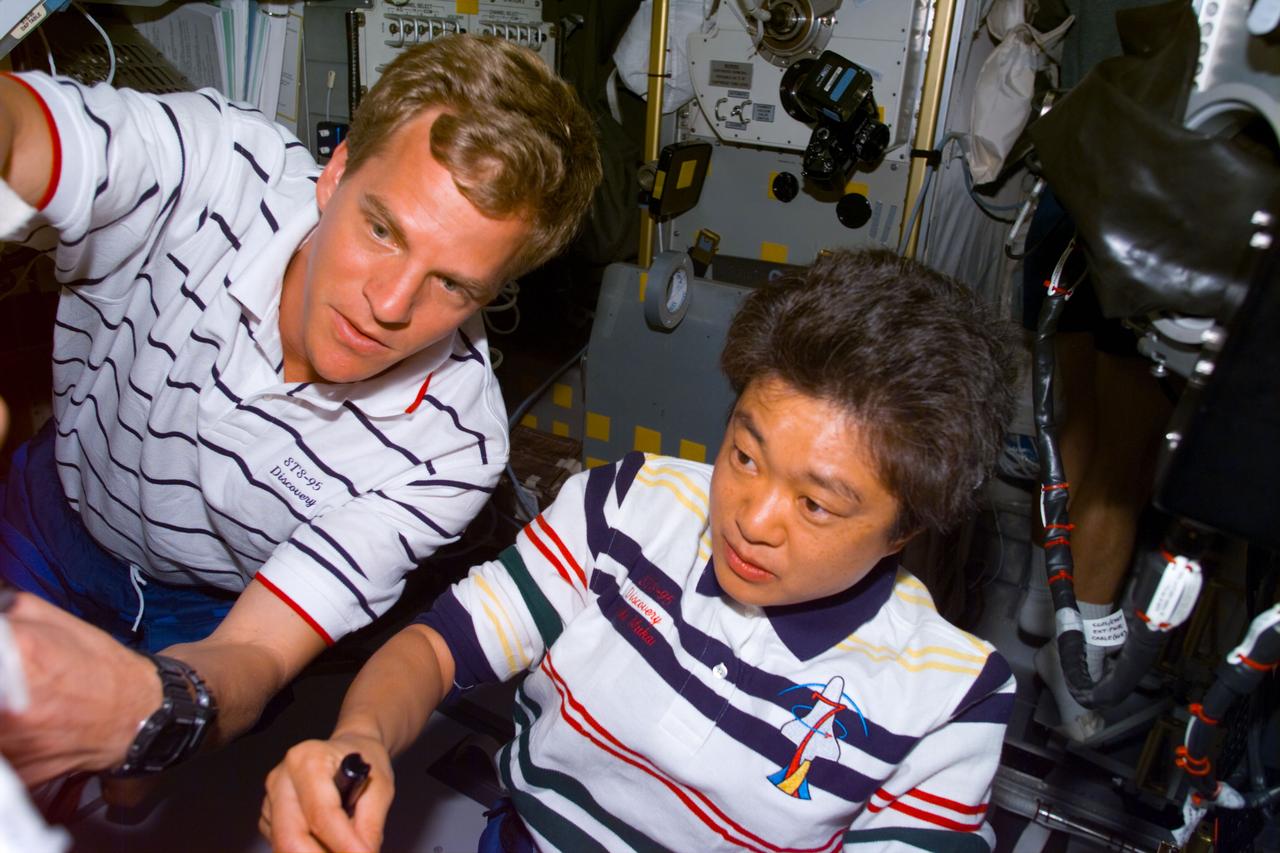
STS095-E-5119 (2 Nov. 1998) --- Astronaut Scott E. Parazynski (left), STS-95 mission specialist, and payload specialist Chiaki Mukai with Japan's National Space Development Agency (NASDA) check an experiment on Spacehab during flight day four activity. The photo was taken with an electronic still camera (ESC) at 05:17:18 GMT, Nov 2.
VFEU - Mukai in Spacehab module
The first of nine chemical steam generator (CSG) units that will be used on the A-3 Test Stand is hoisted into place at the E-2 Test Stand at John C. Stennis Space Center on Oct. 24, 2010. The unit was installed at the E-2 stand for verification and validation testing before it is moved to the A-3 stand. Steam generated by the nine CSG units that will be installed on the A-3 stand will create a vacuum that allows Stennis operators to test next-generation rocket engines at simulated altitudes up to 100,000 feet.
CSG delivery and installation
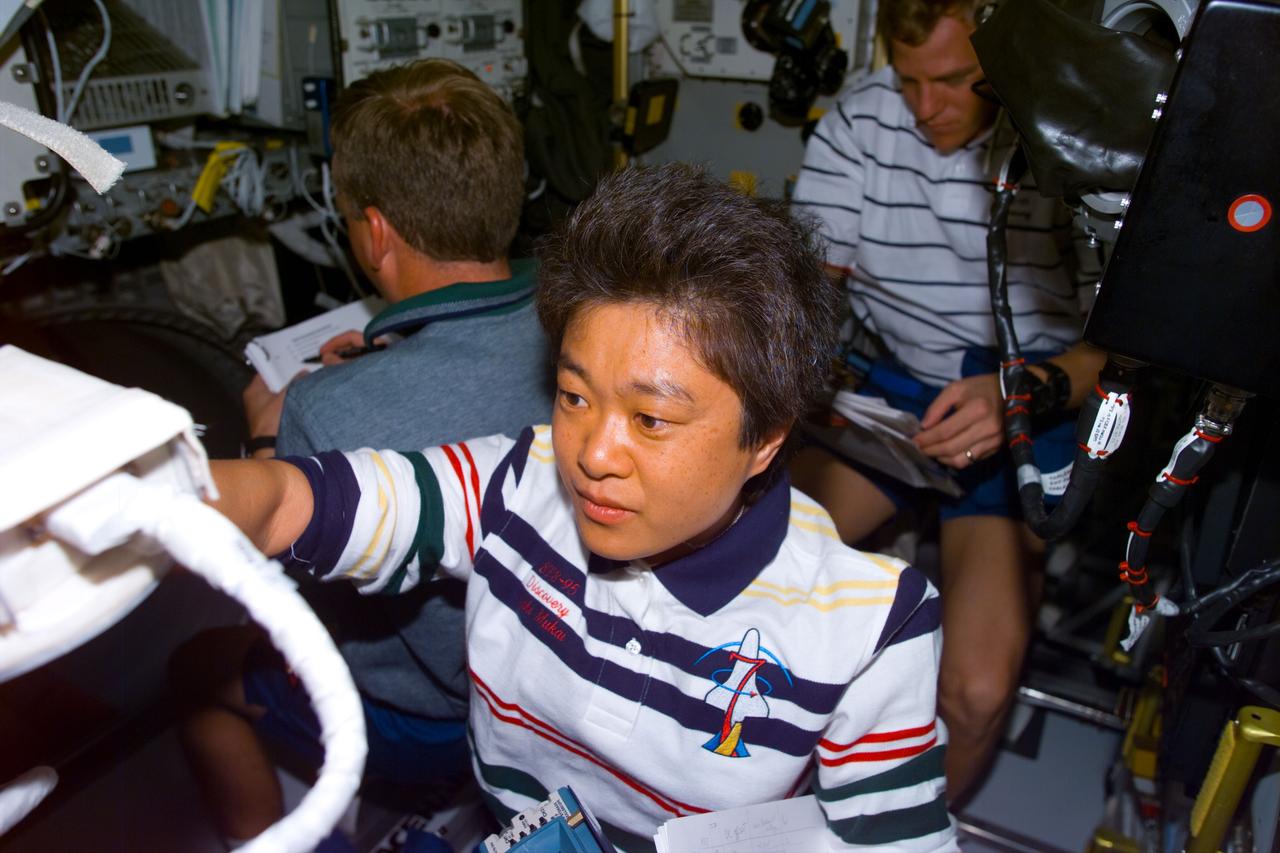
STS095-E-5115 (2 Nov. 1998) --- Payload specialist Chiaki Mukai, representing Japan's National Space Development Agency (NASDA), sets up an experiment on Spacehab during flight day four activity. In the background are astronauts Steven W. Lindsey, STS-95 pilot, and Scott E. Parazynski, mission specialist. The photo was taken with an electronic still camera (ESC) at 05:14:24 GMT, Nov. 2.
VFEU - Mukai in Spacehab module
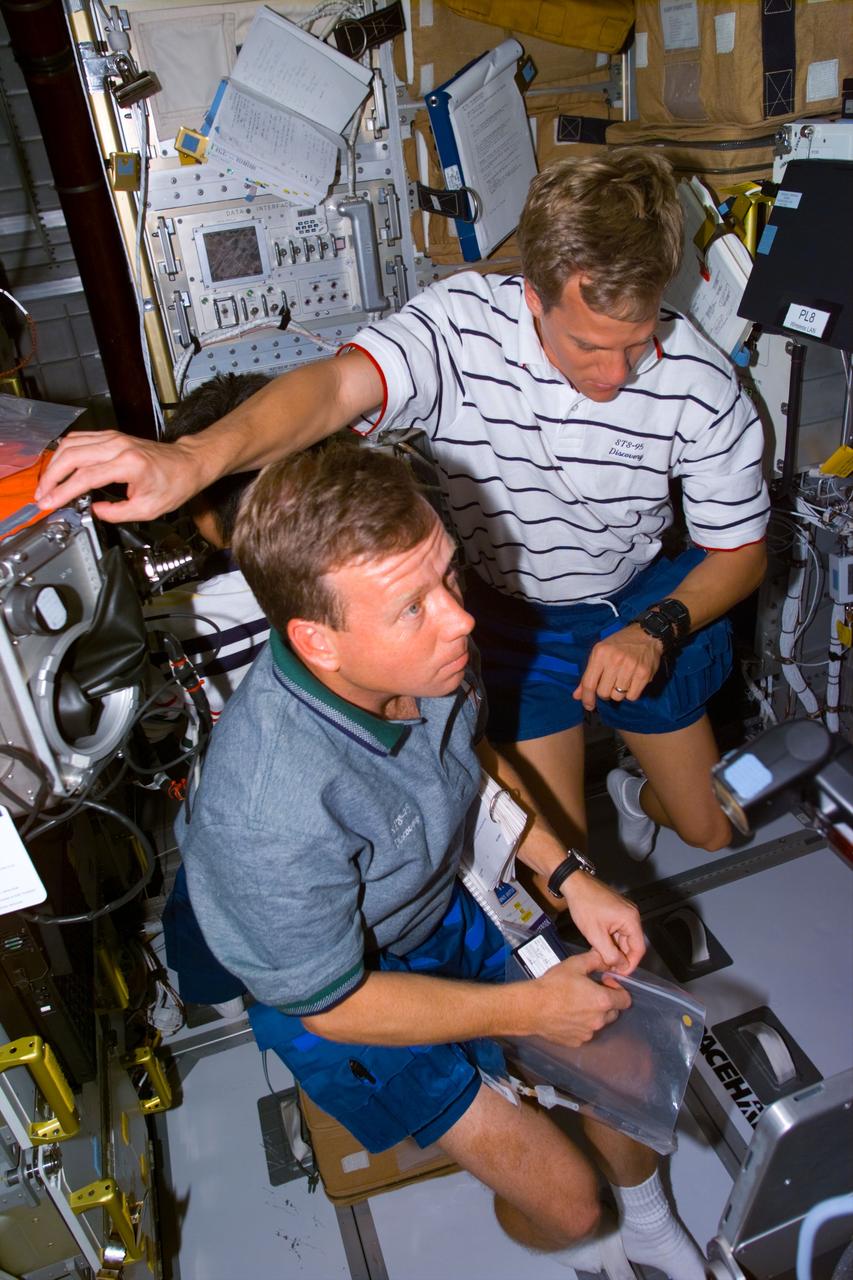
STS095-E-5111 (2 Nov. 1998) --- A high-angle view shows astronauts Steven W. Lindsey (left), STS-95 pilot, and Scott E. Parazynski, mission specialist, work with supportive gear for experiments on Spacehab. The heavily used glove box facility is on left side of frame. The photo was taken with an electronic still camera (ESC) at 05:11:38 GMT, Nov. 2.
STS-95 crew in Spacehab
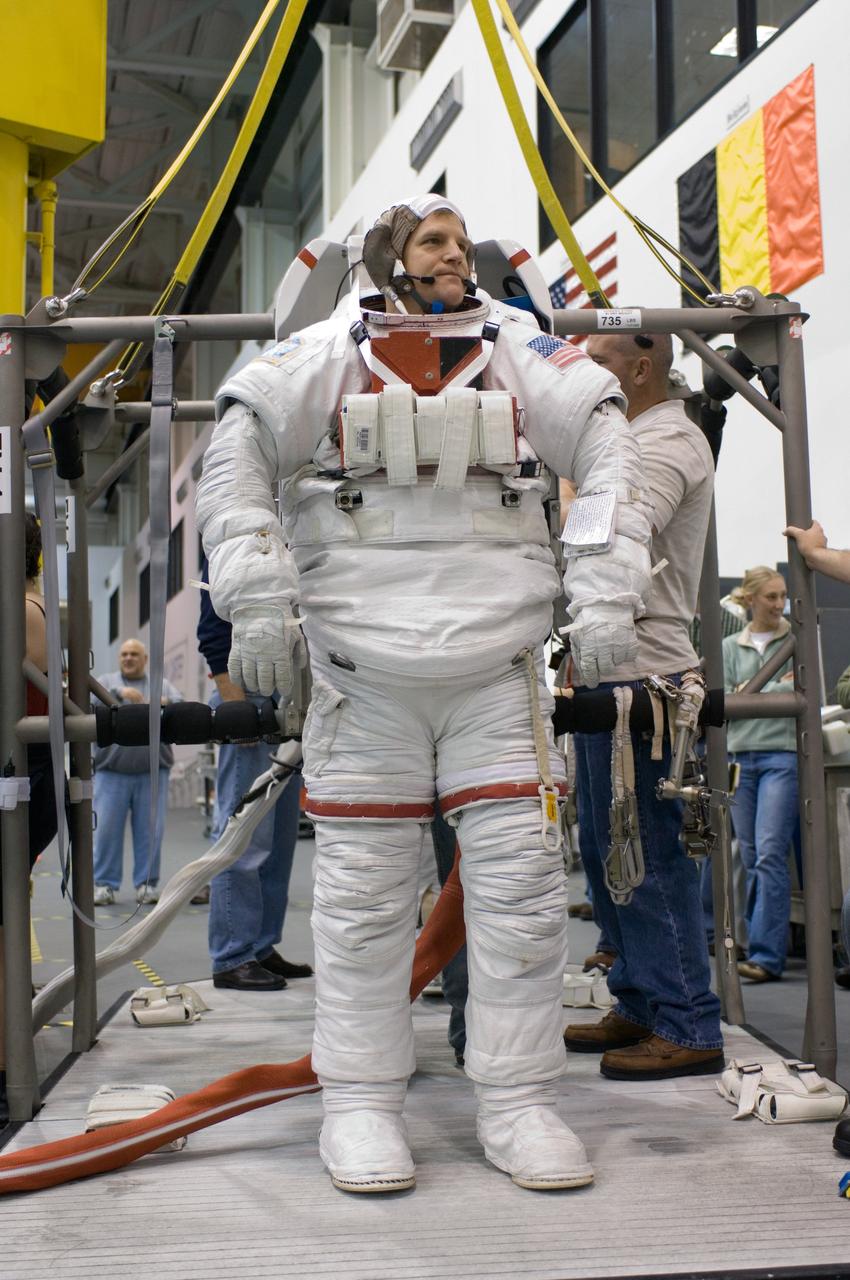
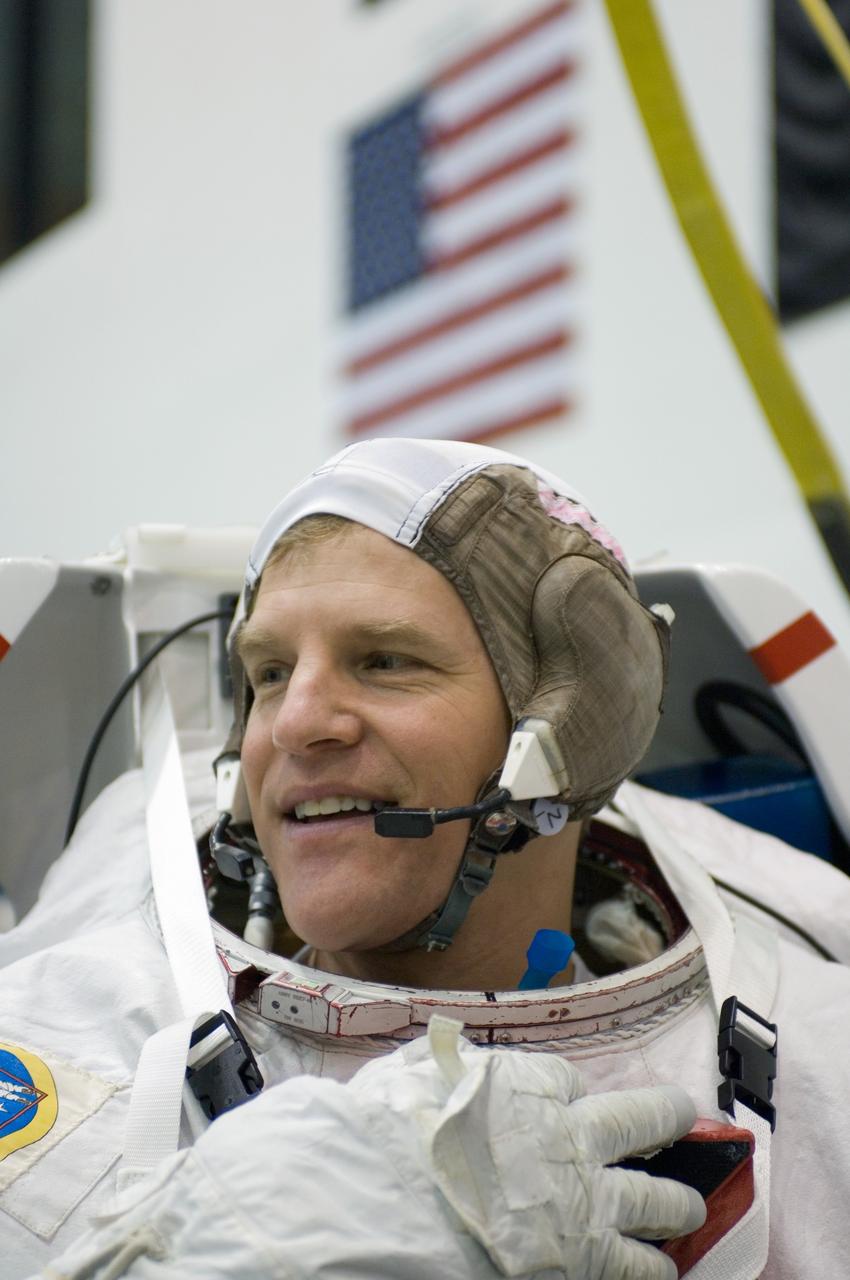
JSC2007-E-06538 (2 Feb. 2007) --- Astronaut Scott E. Parazynski, STS-120 mission specialist, attired in a training version of the Extravehicular Mobility Unit (EMU) spacesuit, awaits the start of a training session in the waters of the Neutral Buoyancy Laboratory (NBL) near Johnson Space Center.
STS-120 Astronauts Scott Parazynski and Doug Wheelock at NBL
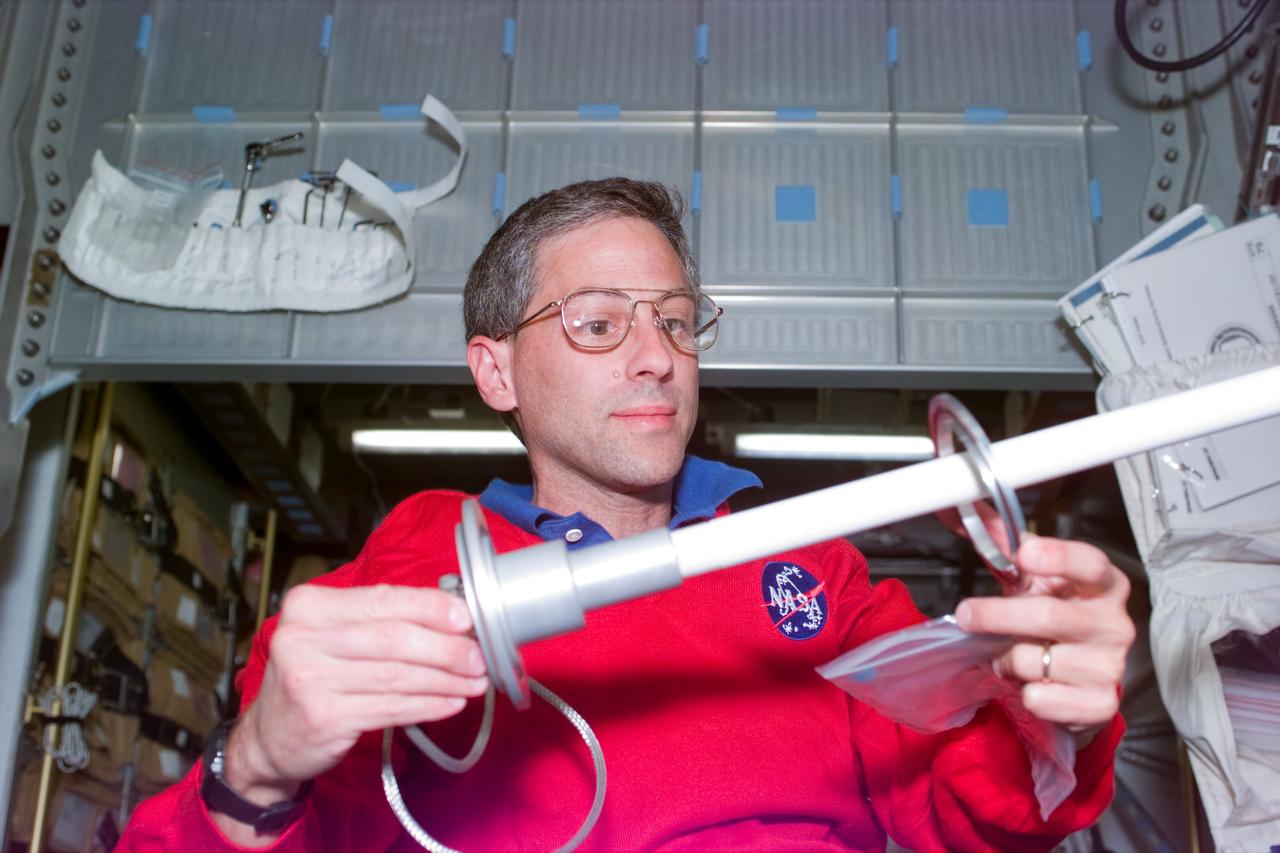
STS79-E-5018 (17 September 1996) --- Astronaut Jerome (Jay) Apt prepares experiment, a rod-like device for insertion into Extreme Temperature Translation Furnace (ETTF) in STS-79-E-5019, during early mission chores aboard Spacehab in the Space Shuttle Atlantis cargo bay, on Flight Day 2.
ETTF - Apt inserts sample into experiment in Spacehab
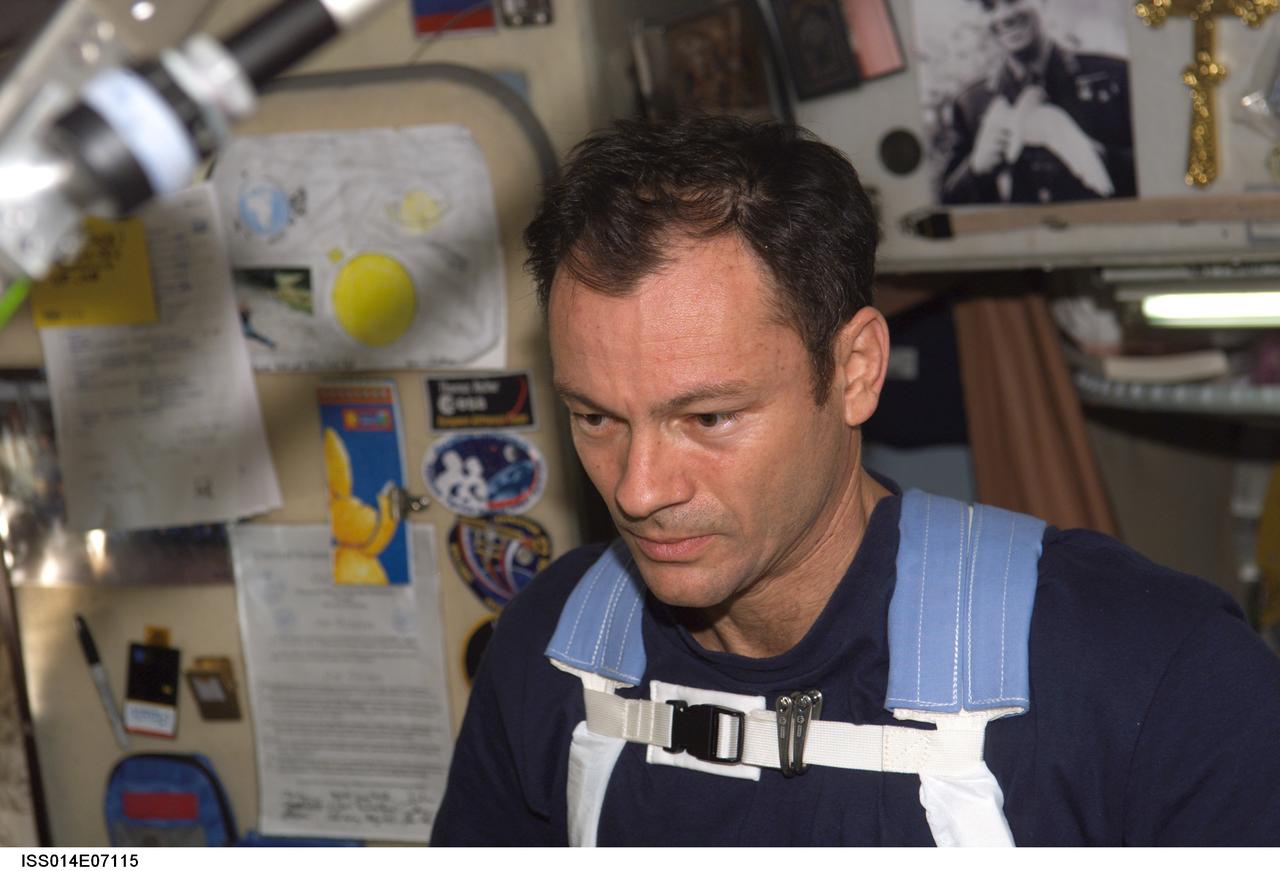
ISS014-E-07115 (2 Nov. 2006) --- Astronaut Michael E. Lopez-Alegria, Expedition 14 commander and NASA space station science officer, equipped with a bungee harness, exercises on the Treadmill Vibration Isolation System (TVIS) in the Zvezda Service Module of the International Space Station. In this close-up view, the TVIS is out of frame.
Lopez-Alegria exercises in the Zvezda Service module
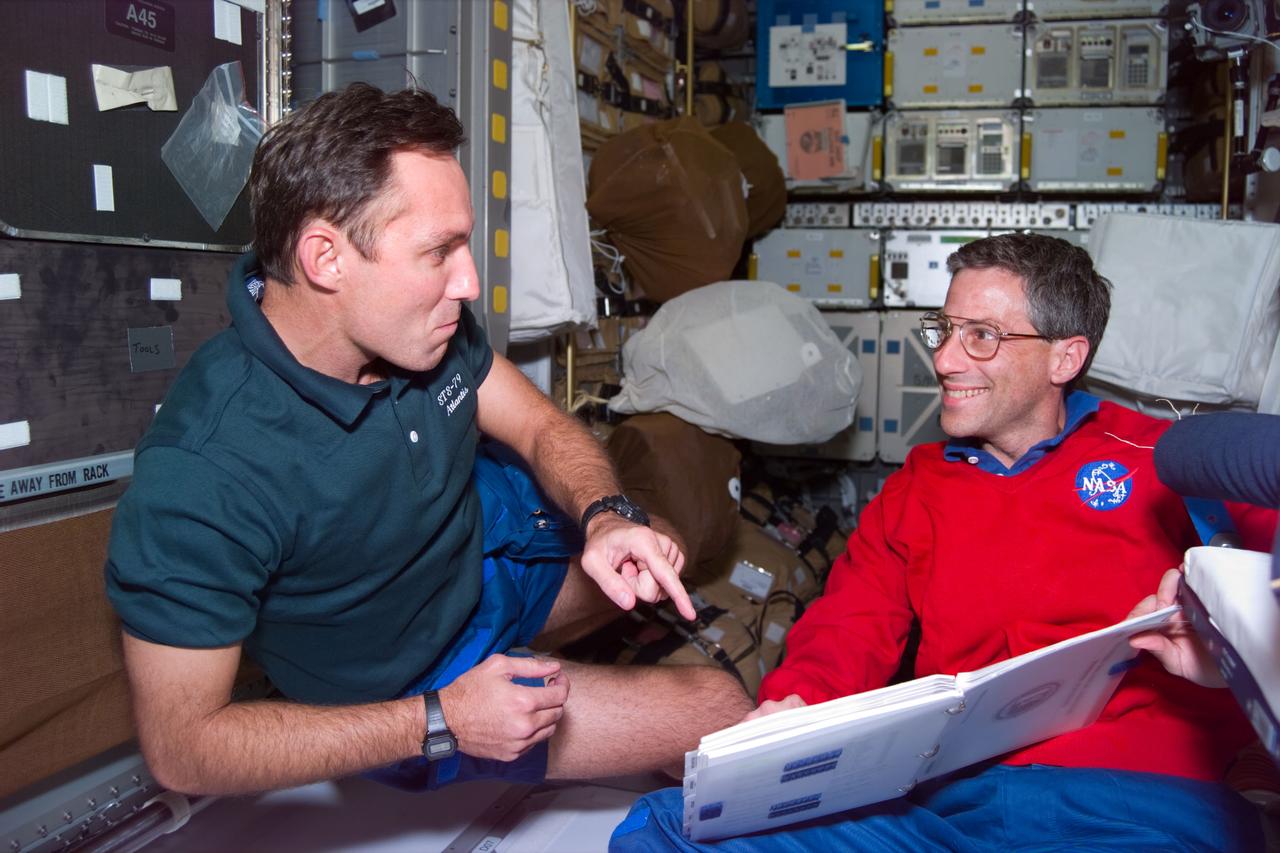
STS79-E-5007 (17 September 1996) --- Astronauts Carl E. Walz and Jerome (Jay) Apt, mission specialists, report to Spacehab Module for early mission experimentation on the first full day of STS-79 operations, on Flight Day 2.
Astronauts Waltz and Apt in Spacehab module
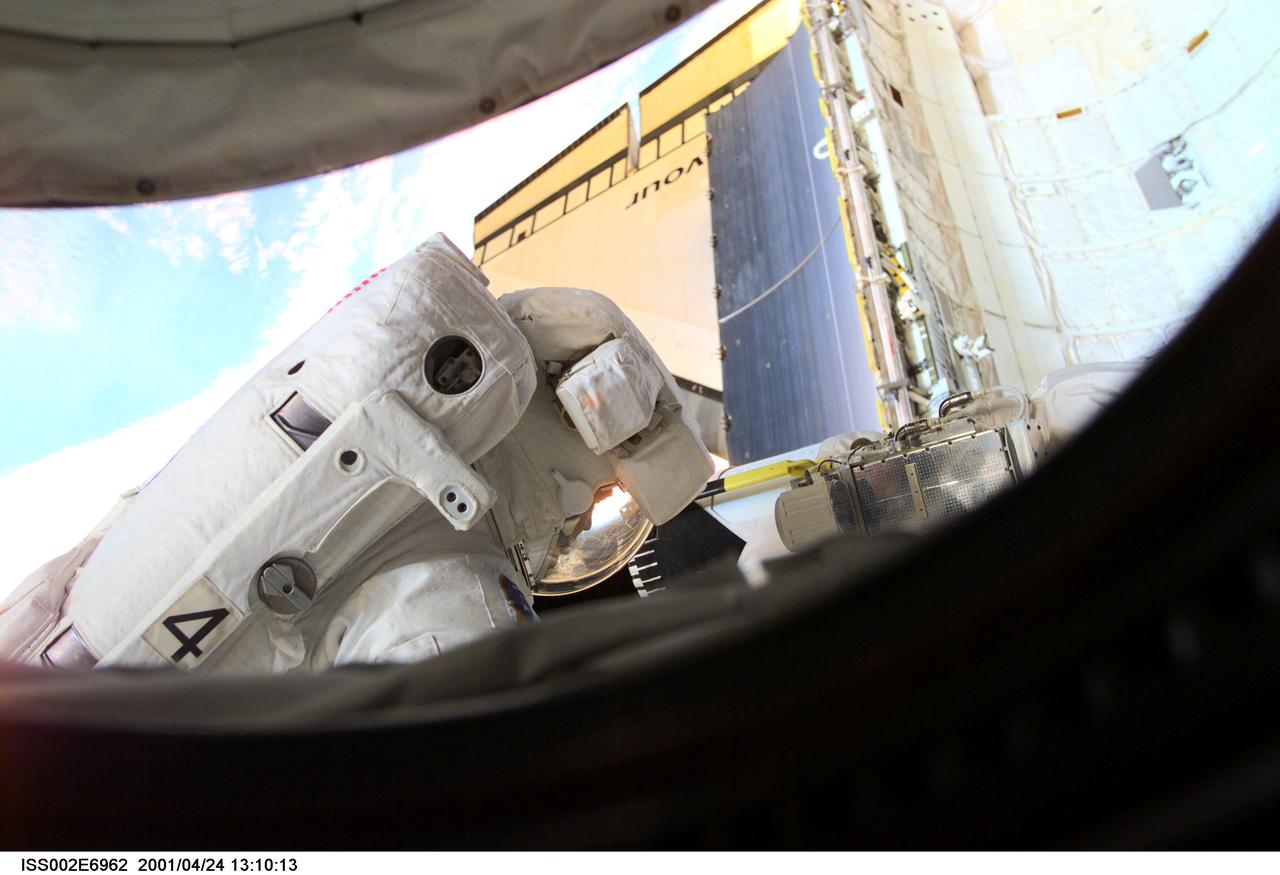
ISS002-E-6962 (24 April 2001) --- Astronaut Scott E. Parazynski, STS-100 mission specialist, performs a task during the second space walk (EVA-2).   A digital still camera on the International Space Station (ISS) was used to record this image.
STS-100 MS Parazynski during second EVA
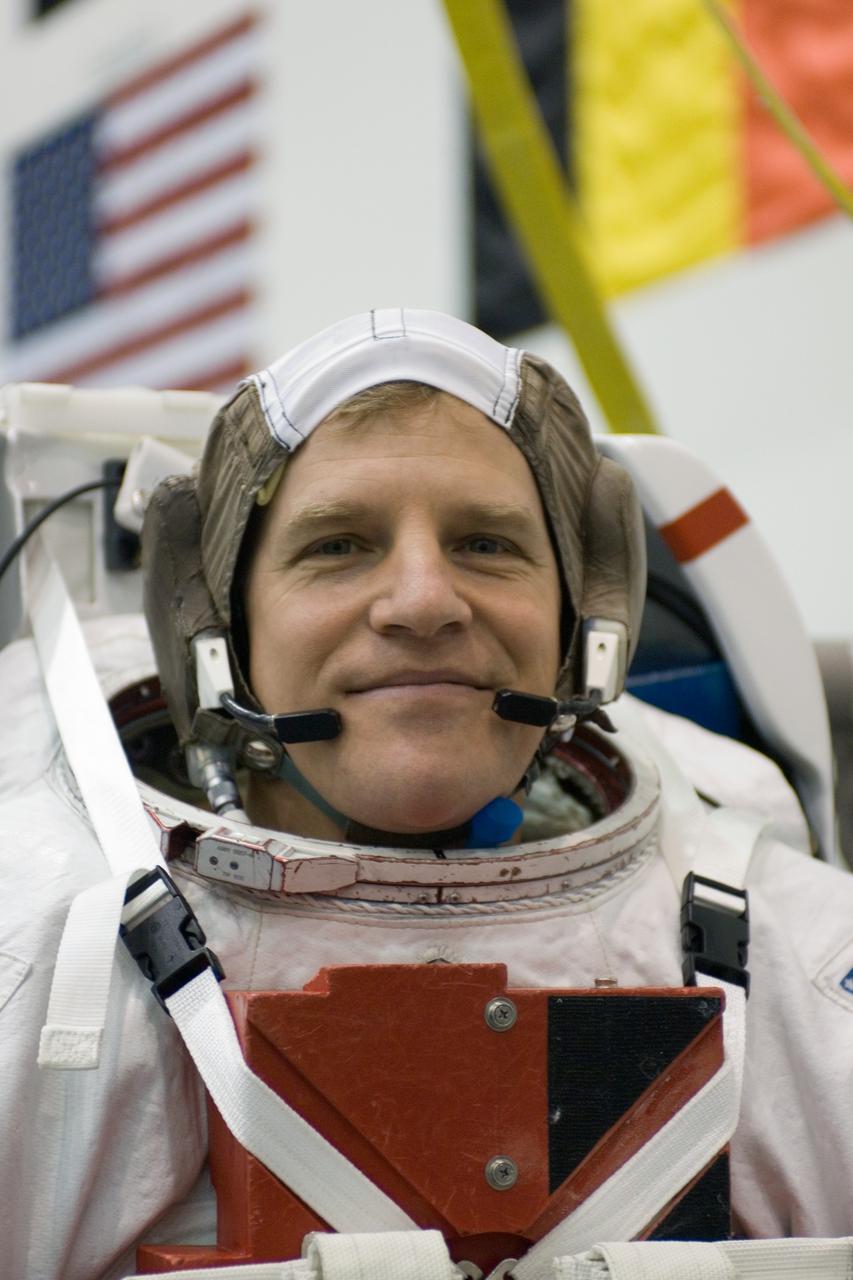
JSC2007-E-06537 (2 Feb. 2007) --- Astronaut Scott E. Parazynski, STS-120 mission specialist, attired in a training version of the Extravehicular Mobility Unit (EMU) spacesuit, awaits the start of a training session in the waters of the Neutral Buoyancy Laboratory (NBL) near Johnson Space Center.
STS-120 Astronauts Scott Parazynski and Doug Wheelock at NBL
JSC2007-E-06532 (2 Feb. 2007) --- Astronaut Scott E. Parazynski, STS-120 mission specialist, attired in a training version of the Extravehicular Mobility Unit (EMU) spacesuit, awaits the start of a training session in the waters of the Neutral Buoyancy Laboratory (NBL) near Johnson Space Center.
STS-120 Astronauts Scott Parazynski and Doug Wheelock at NBL
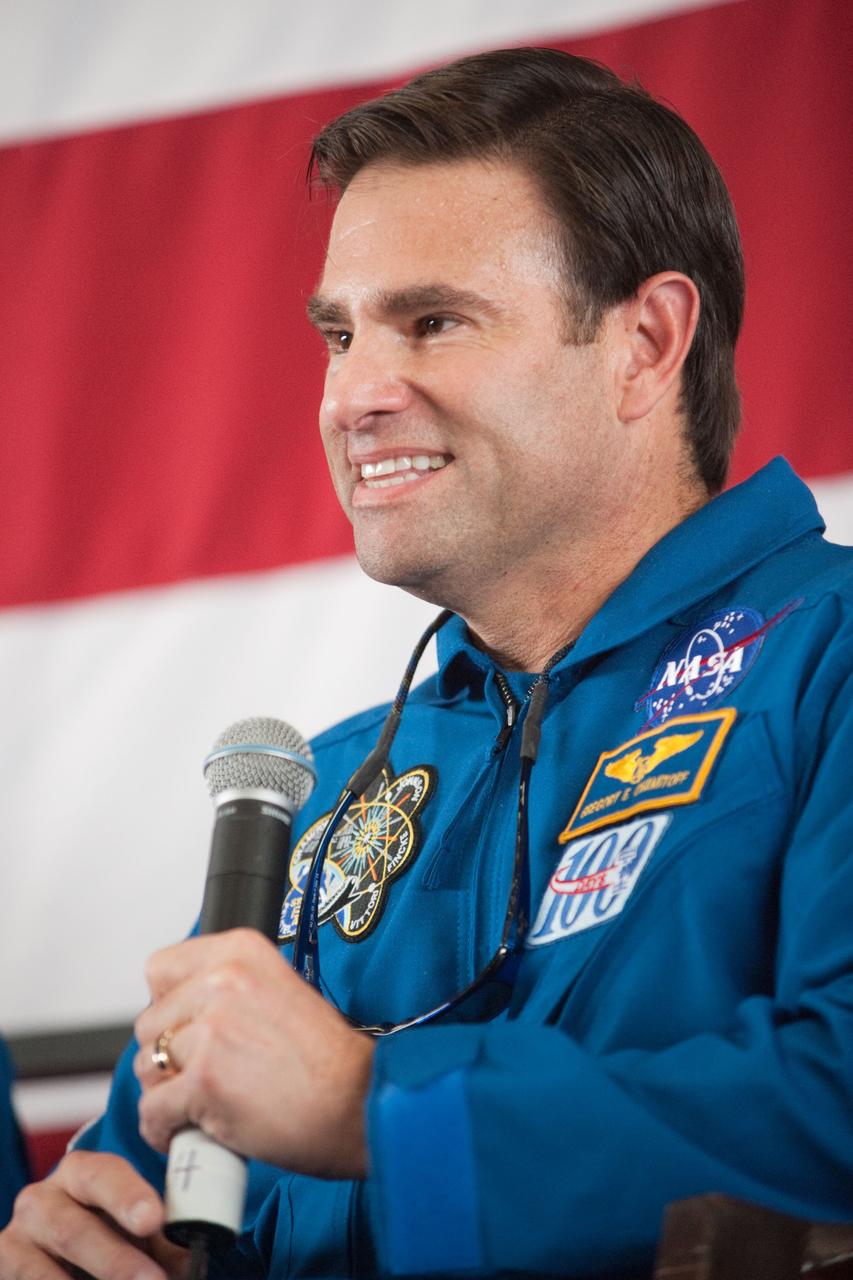
JSC2011-E-050734 (2 June 2011) --- NASA astronaut Greg Chamitoff, STS-134 mission specialist, is pictured during the STS-134 crew return ceremony on June 2, 2011 at Ellington Field near NASA's Johnson Space Center. Photo credit: NASA
STS-134 Crew Return, Ellington 990
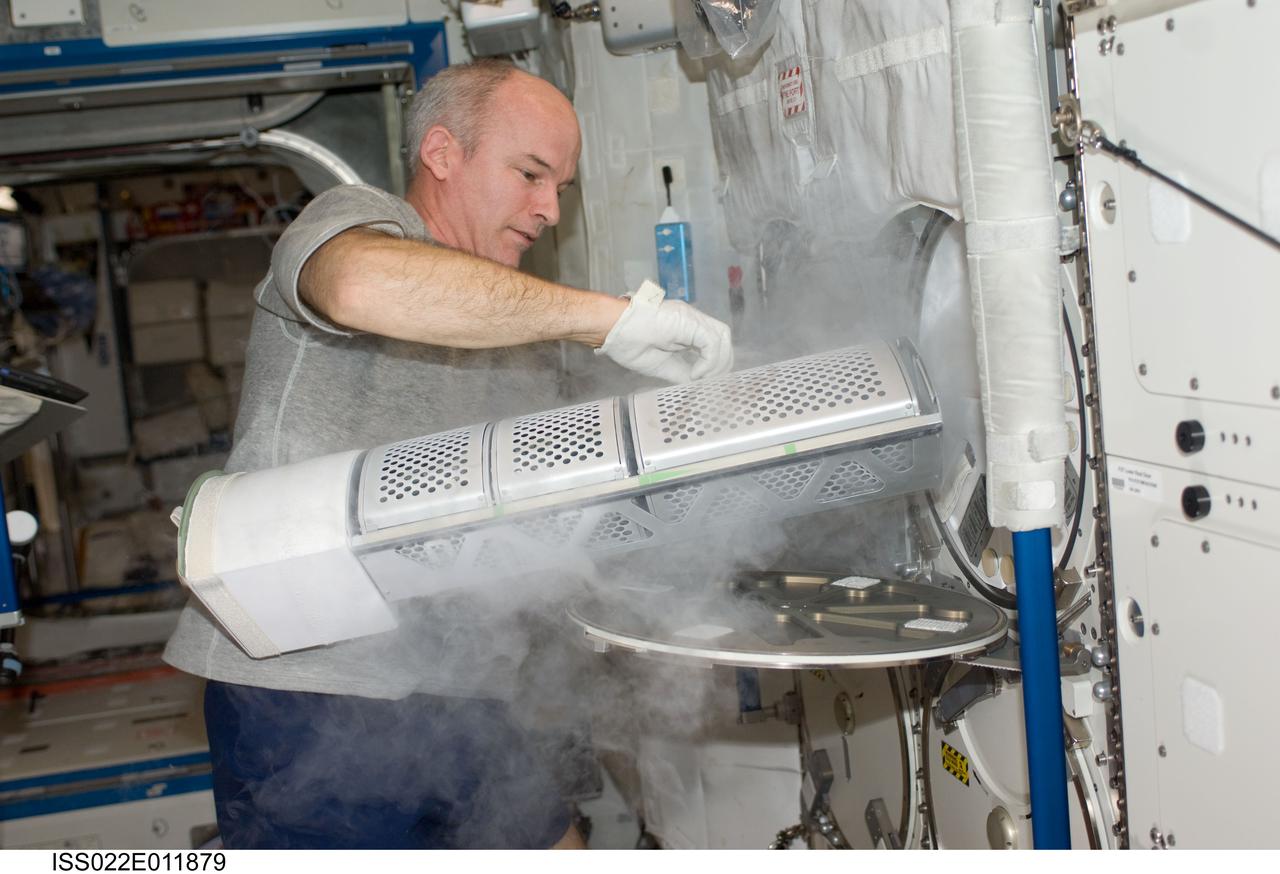
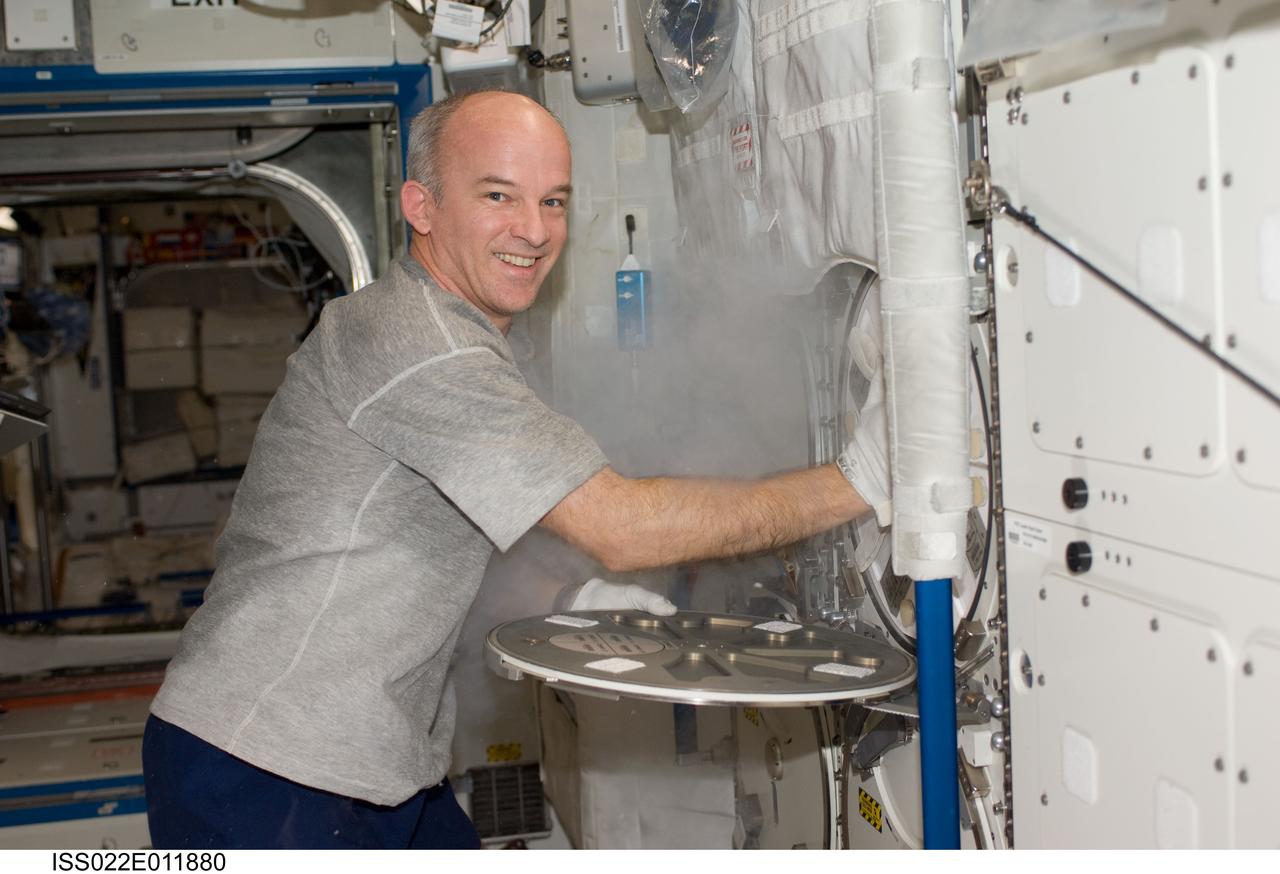
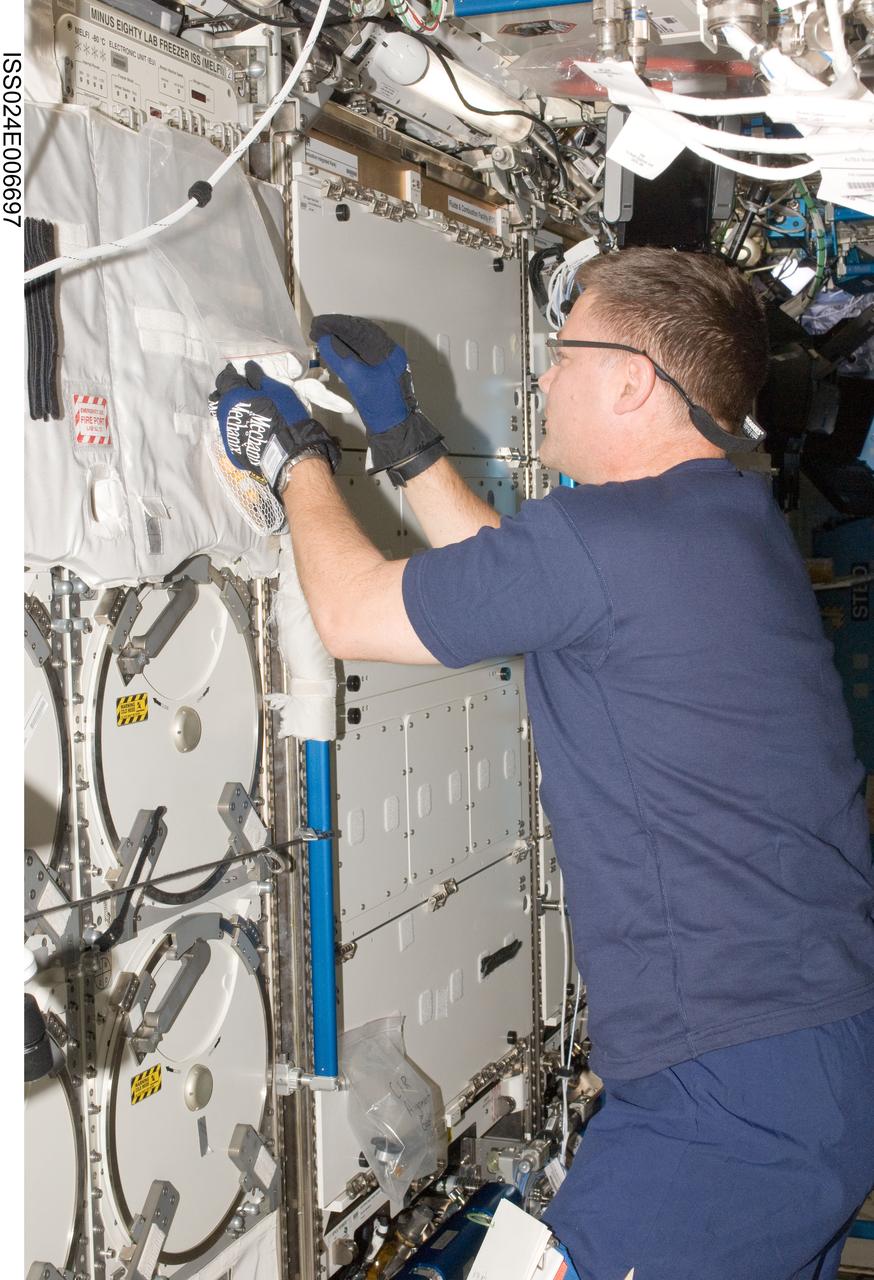
ISS024-E-006707 (28 June 2010) --- After inserting biological samples, NASA astronaut Doug Wheelock, Expedition 24 flight engineer, replaces a dewar tray in the Minus Eighty Laboratory Freezer for ISS-2 (MELFI-2) in the Destiny laboratory of the International Space Station.
MELFI Sample Insertion
STS095-E-5102 (2 Nov. 1998) --- Astronaut Stephen K. Robinson, STS-95 mission specialist, with experiment during Flight Day 4 activity.  The photograph was taken with an electronic still camera (ESC) at 04:58:07 GMT, Nov. 2.
Robinson with experiment in Spacehab
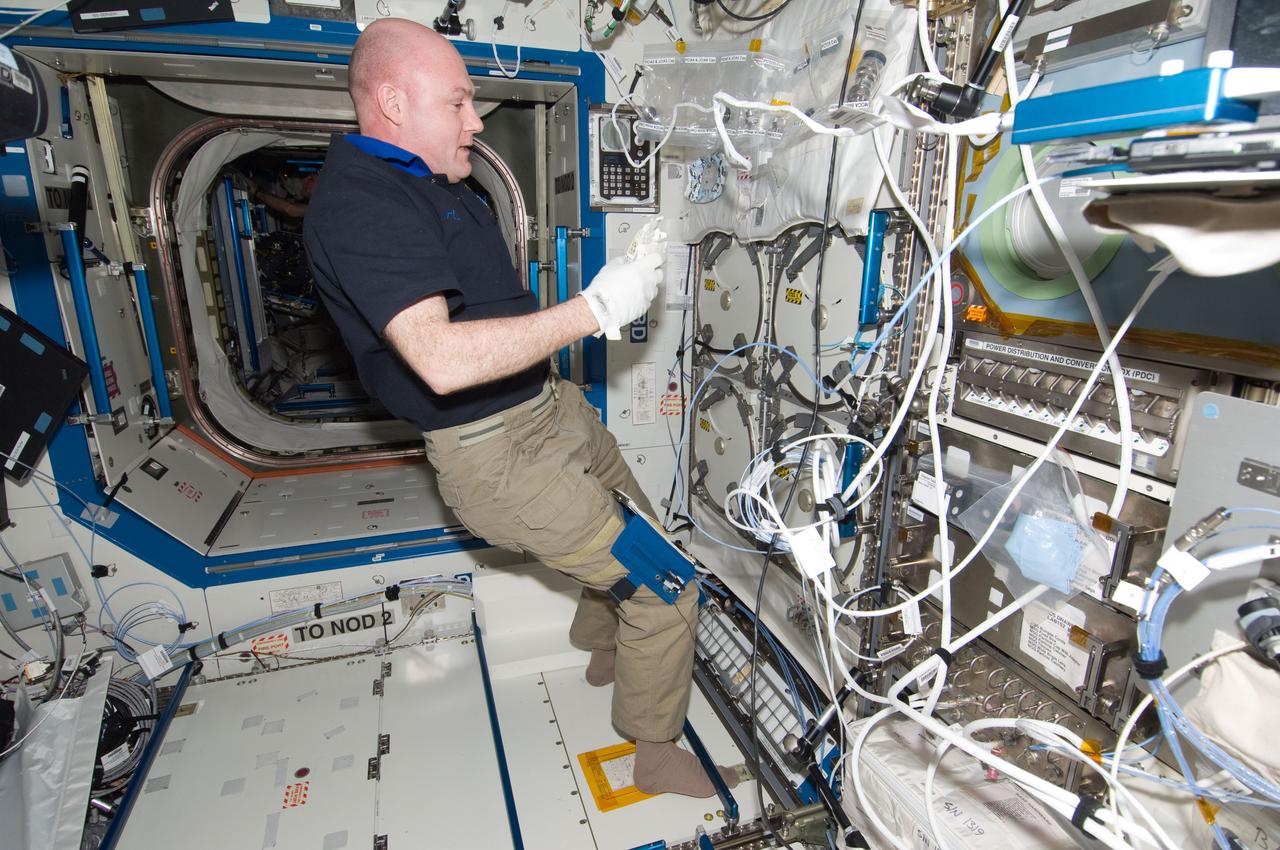
ISS031-E-143839 (25 June 2012) --- European Space Agency astronaut Andre Kuipers, Expedition 31 flight engineer, prepares to insert biological samples in the Minus Eighty Laboratory Freezer for ISS-2 (MELFI-2) in the Destiny laboratory of the International Space Station.
iss031e143839
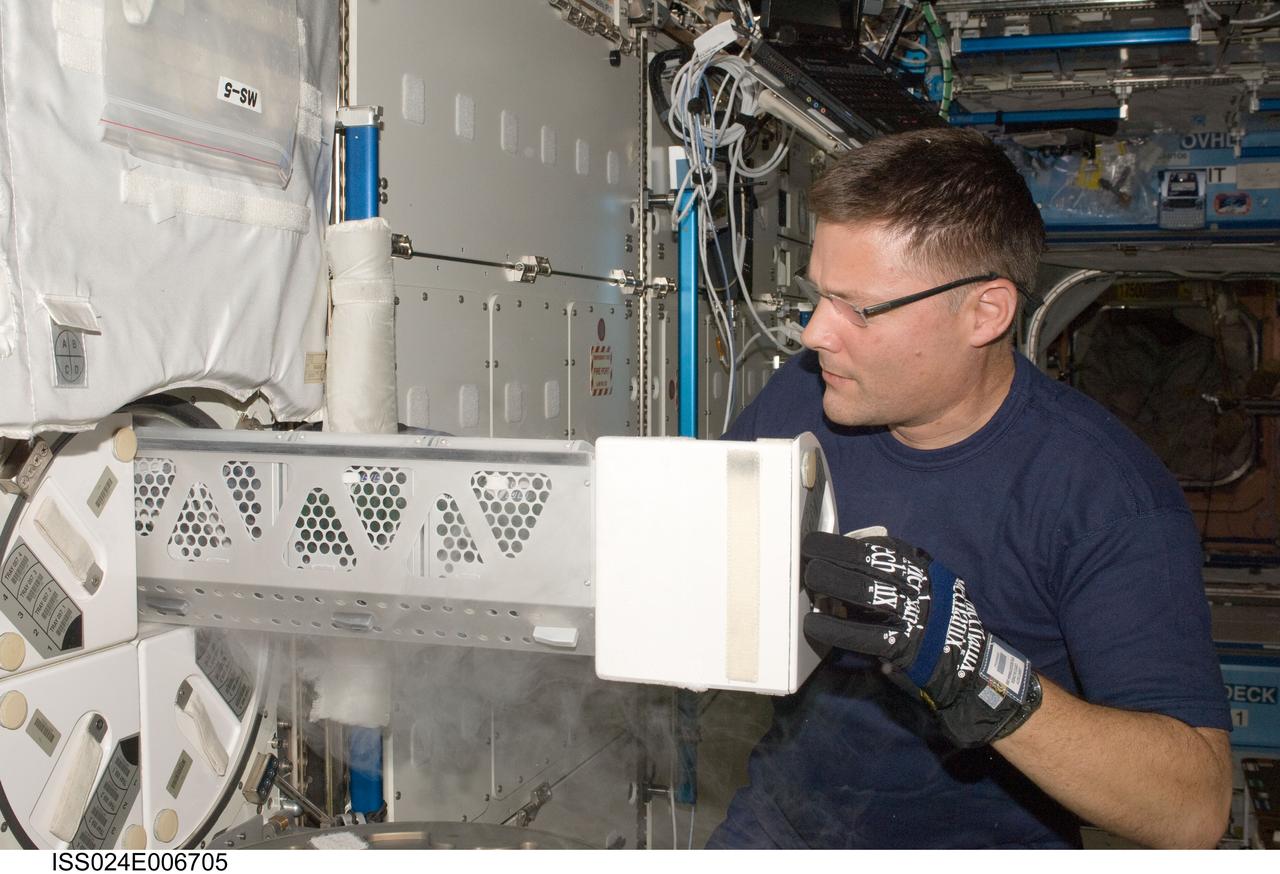
ISS024-E-006705 (28 June 2010) --- After inserting biological samples, NASA astronaut Doug Wheelock, Expedition 24 flight engineer, replaces a dewar tray in the Minus Eighty Laboratory Freezer for ISS-2 (MELFI-2) in the Destiny laboratory of the International Space Station.
MELFI Sample Insertion
STS095-E-5107 (2 Nov. 1998) --- Astronaut Steven W. Lindsey, STS-95 pilot, sets up a camera for an experiment in the Spacehab facility aboard Discovery during Flight Day 4 activity. The photo was taken with an electronic still camera (ESC) at 05:10:25 GMT, Nov. 2.
Lindsey sets up a camera to record and experiment in the Spacehab module
ISS013-E-62787 (2 August 2006) ---  Tropical Storm Chris was located to the east of Puerto Rico and the Leeward Islands at at 9:29 a.m. (CDT), August 2, when one of the members of the Expedition 13 crew recorded this digital still image.
Earth Observations taken by the Expedition 13 crew
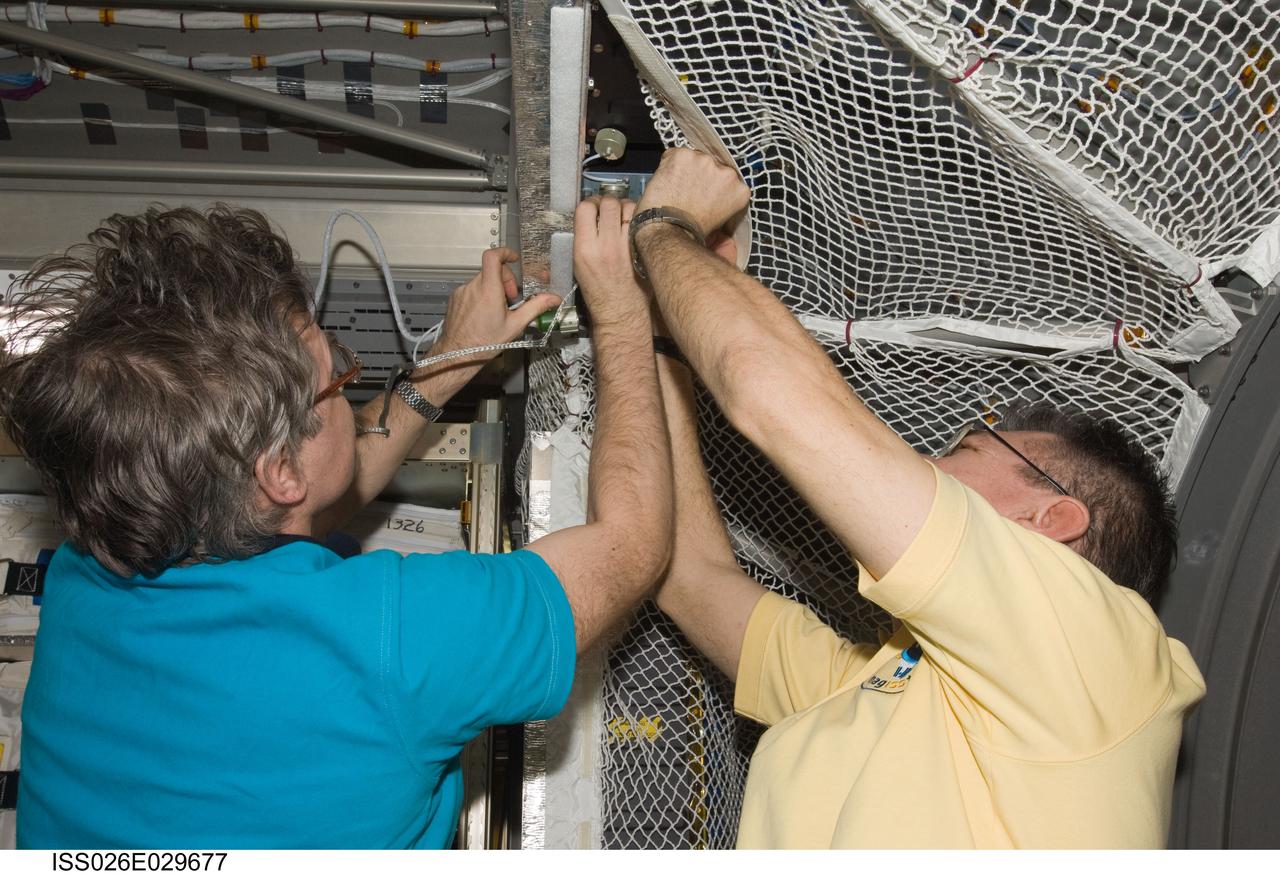
ISS026-E-029680 (25 Feb. 2011) --- European Space Agency astronaut Paolo Nespoli (top) and Russian cosmonaut Alexander Kaleri, both Expedition 26 flight engineers, work in the newly-attached European Space Agency's "Johannes Kepler" Automated Transfer Vehicle-2 (ATV-2) of the International Space Station.
Nespoli and Kaleri work in the ATV 2
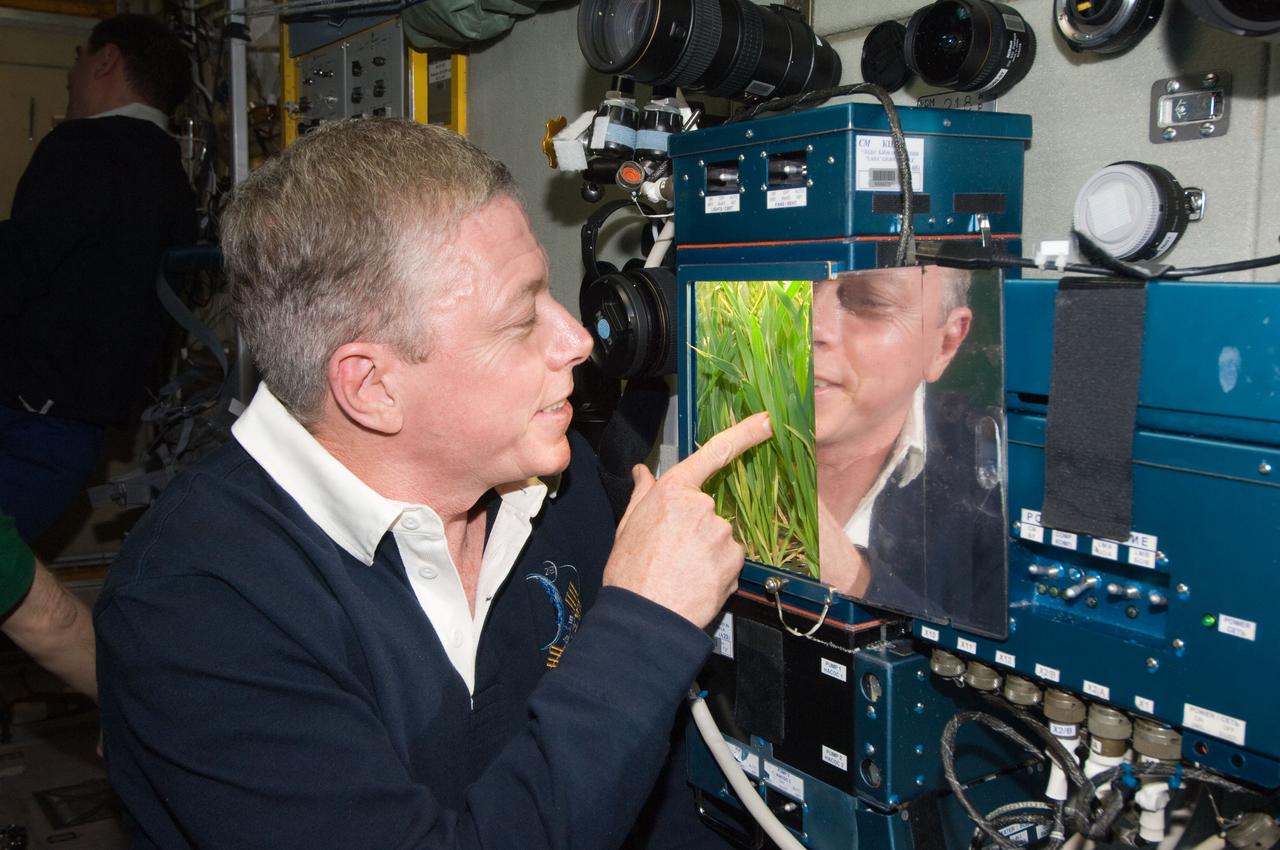
ISS008-E-21908 (12 April 2004)--- Astronaut C. Michael Foale, Expedition 8 commander and NASA ISS science officer, poses beside the pea plants growing in the Lada-4 greenhouse as part of the BIO-5 Rasteniya-2 (Plants-2) experiment located in the Zvezda Service Module of the International Space Station.
Foale poses beside the LADA-4 greenhouse in the U.S. Lab during Expedition 8
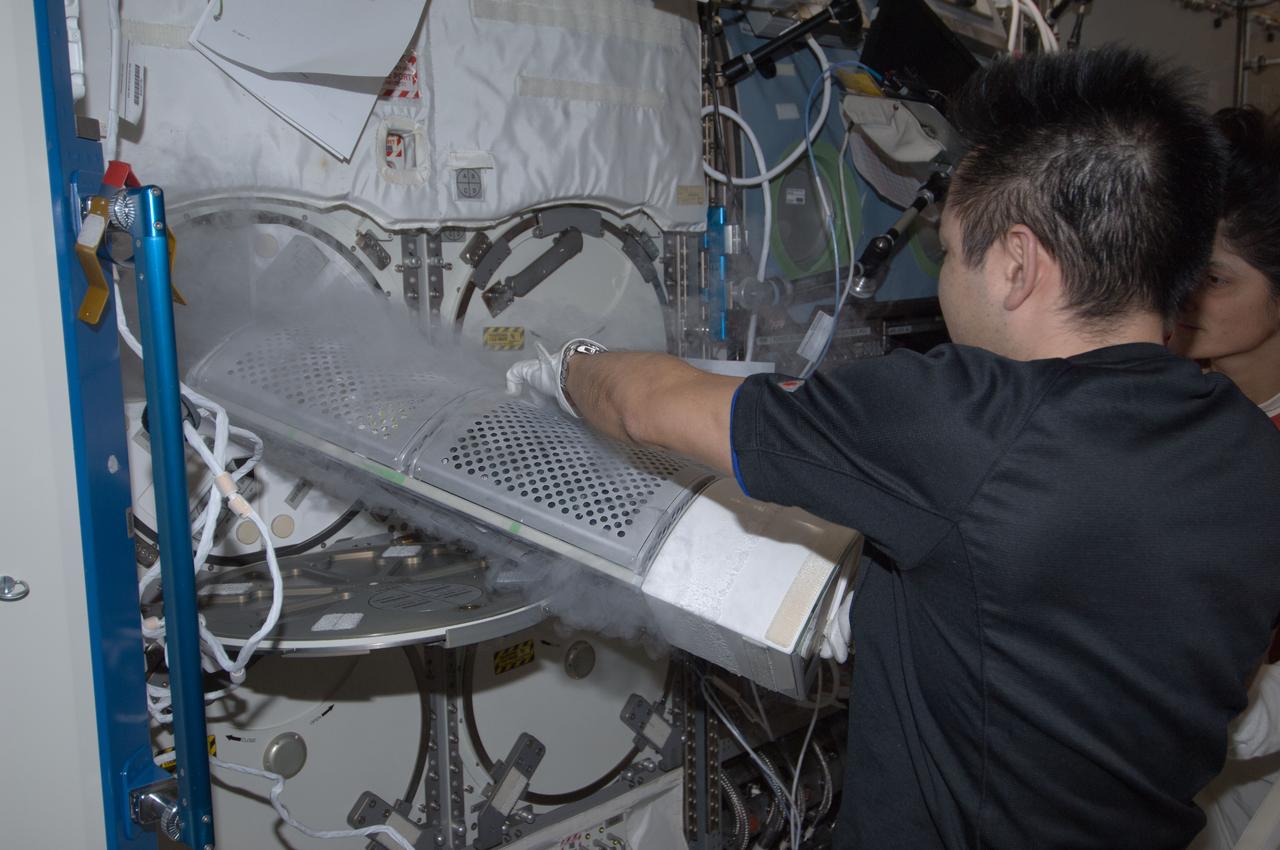
ISS033-E-016183 (26 Oct. 2012) --- Japan Aerospace Exploration Agency astronaut Aki Hoshide, Expedition 33 flight engineer, services the Minus Eighty Laboratory Freezer for ISS-2 (MELFI-2) in the Destiny laboratory of the International Space Station.
MELFI ops
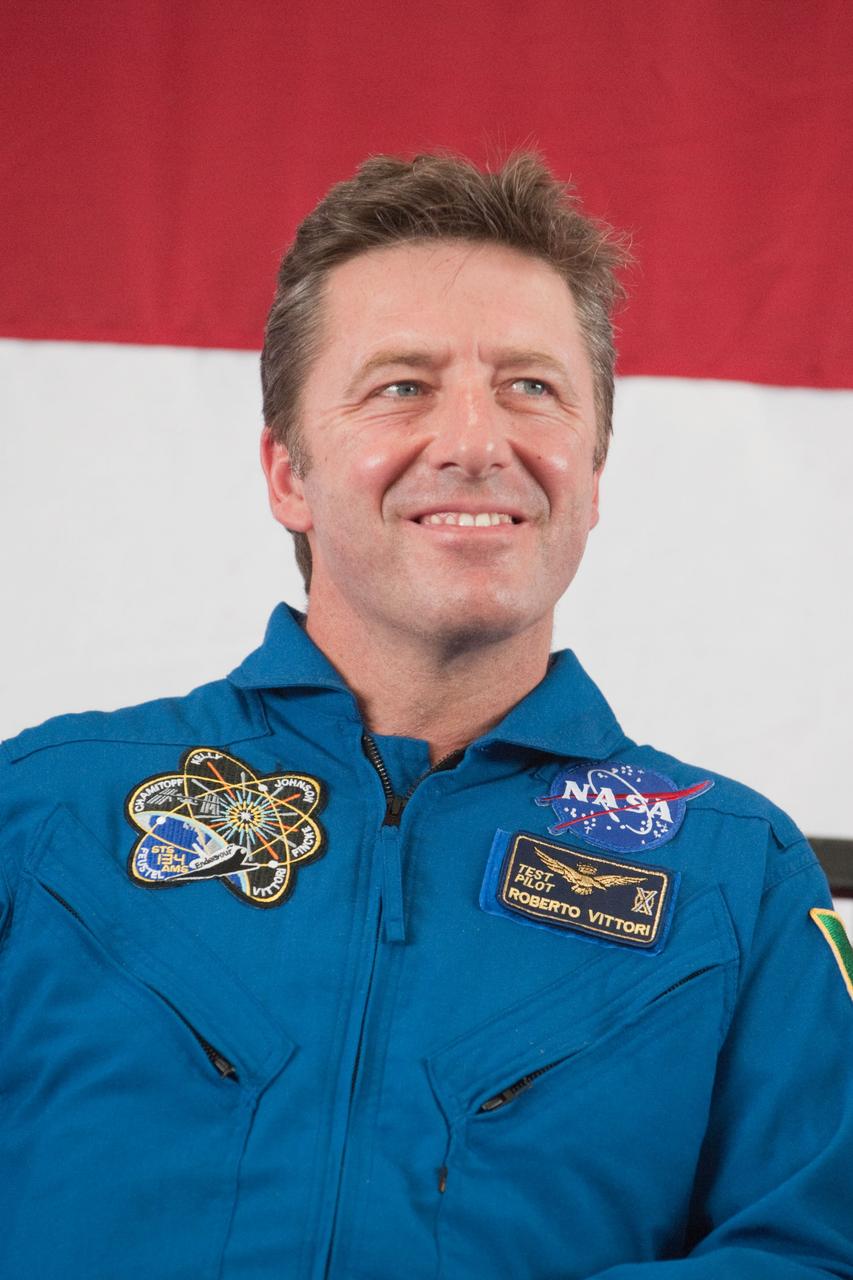
JSC2011-E-050739 (2 June 2011) --- NASA astronaut Michael Fincke, STS-134 mission specialist, is pictured during the STS-134 crew return ceremony on June 2, 2011 at Ellington Field near NASA's Johnson Space Center. Photo credit: NASA
STS-134 Crew Return, Ellington 990
ISS028-E-034854 (31 Aug. 2011) --- Russian cosmonaut Sergei Volkov, Expedition 28 flight engineer, checks the progress of a new growth experiment on the BIO-5 Rasteniya-2 (Plants-2) payload with its LADA-01 greenhouse in the Zvezda Service Module of the International Space Station.
iss028e034854
JSC2003-E-64499 (December 2003) - Aft view of the International Space Station after the installment of Node 2 during the STS-120/10A assembly mission.  The addition of Node 2 signifies the US Core Complete stage of assembly, at which time the station can support the addition of international laboratories from Europe and Japan.
ISS artwork
ISS021-E-016204 (29 Oct. 2009) --- Russian cosmonaut Maxim Suraev, Expedition 21 flight engineer, works with a new growth experiment on the BIO-5 Rasteniya-2 (Plants-2) payload in the Zvezda Service Module of the International Space Station.
FE-1 Suraev prepares a new version of the BIO-5 Rasteniya-2 Experiment
ISS030-E-033238 (24 Dec. 2011) --- European Space Agency astronaut Andre Kuipers, Expedition 30 flight engineer, works with the ESA Role of Apoptosis in Lymphocyte Depression 2 (ROALD-2) experiment in the KUBIK-3 thermostatic container located in the Columbus laboratory of the International Space Station.
Kuipers works with the ESA ROALD-2 experiment in the KUBIK-3 container
ISS021-E-030653 (21 Nov. 2009) --- One of the newest pieces of hardware docked with the International Space Station is the Mini Research Module 2 (MRM-2), featured in this electronic still image downlinked by the Expedition 21 crew members during flight day six activities.
View of the MRM2/Poisk
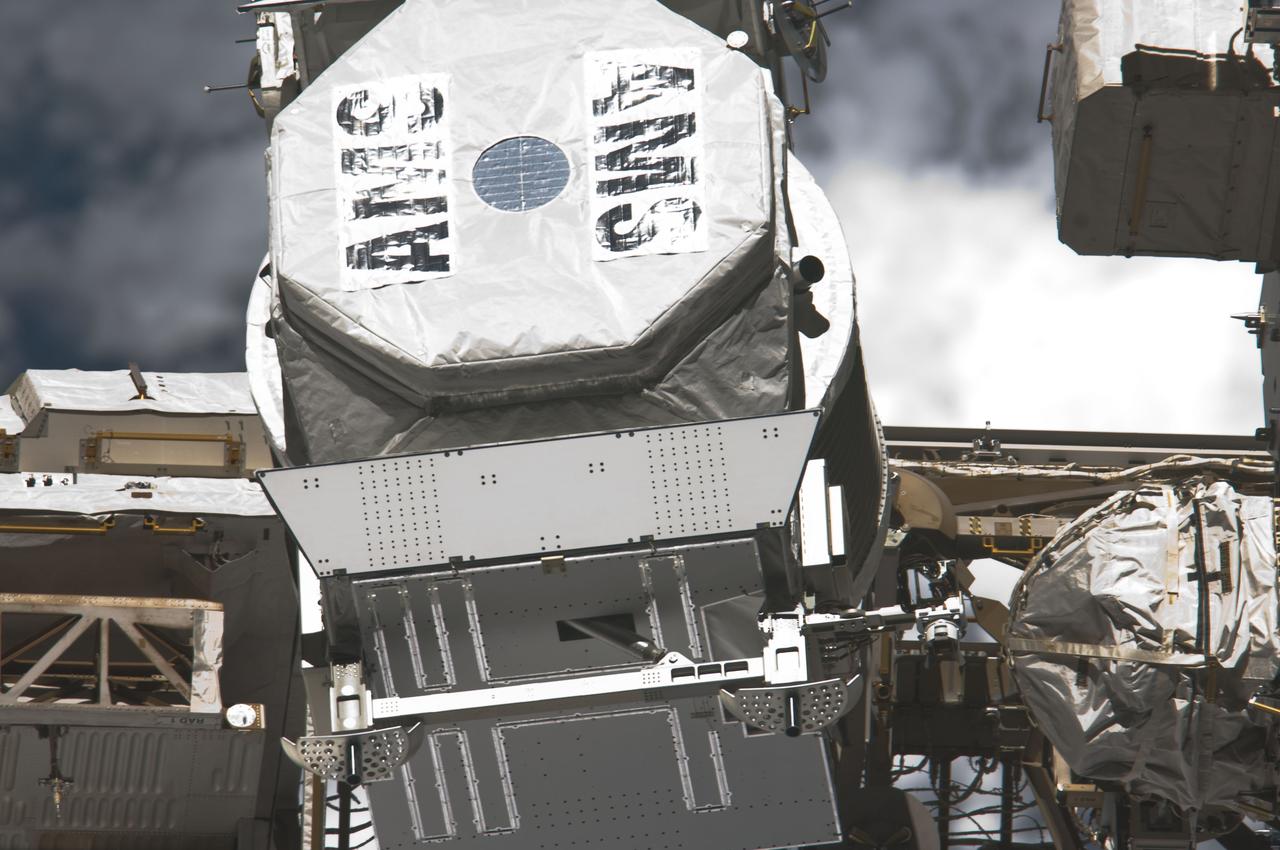
S134-E-010781 (30 May 2011) --- This image provides a close-up view of the Alpha Magnetic Spectrometer - 2 (AMS-2) photographed from inside the orbiter's cabin shortly after the space shuttle Endeavour undocked from the International Space Station (ISS) at the end of the STS-134 mission.  Photo credit: NASA
View of ISS taken during STS-134 Flyaround
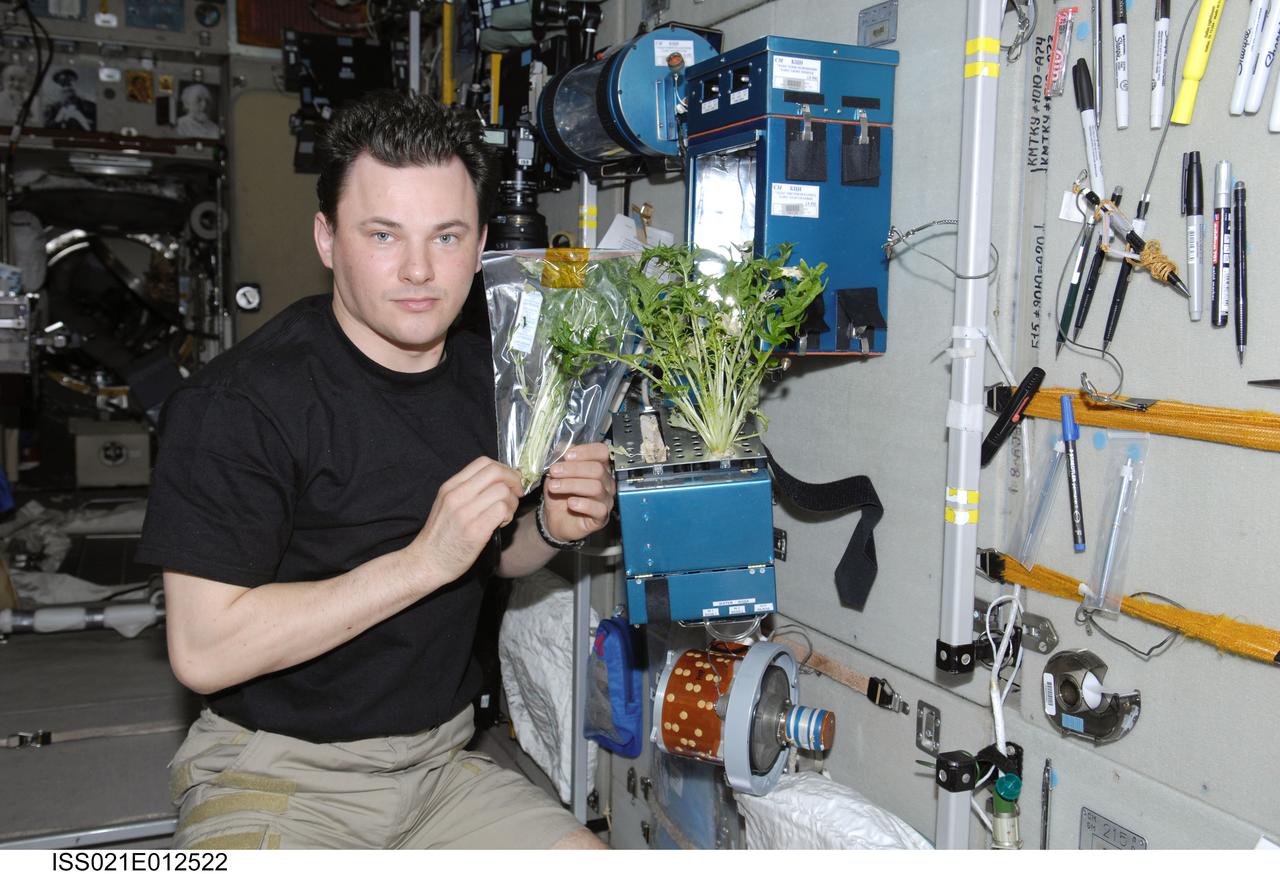
ISS021-E-012522 (26 Oct. 2009) --- Russian cosmonaut Roman Romanenko, Expedition 21 flight engineer, poses for a photo with the current growth experiment on the BIO-5 Rasteniya-2 (Plants-2) payload in the Zvezda Service Module of the International Space Station.
BIO-5 Rasteniya-2 (Plants-2) Experiment in the LADA-16 Greenhouse