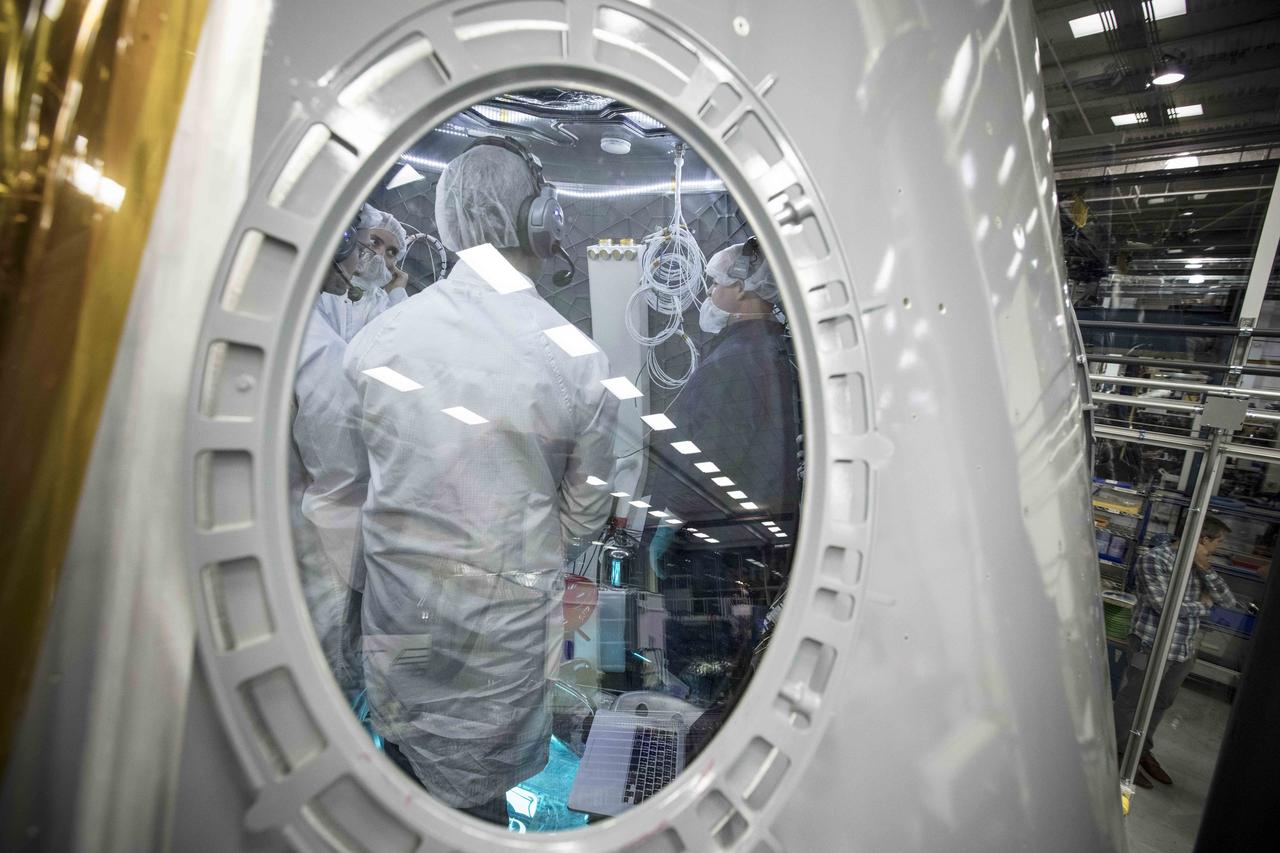
Engineers work inside the ECLSS module at SpaceX’s headquarters and factory in Hawthorne, California. The module is the same size as the company’s Crew Dragon spacecraft and is built to test the Environmental Control and Life Support System, or ECLSS, that is being built for missions aboard the Crew Dragon including those by astronauts flying to the International Space Station on flights for NASA’s Commercial Crew Program. Photo credit: SpaceX

The ECLSS module inside SpaceX’s headquarters and factory in Hawthorne, California. The module is the same size as the company’s Crew Dragon spacecraft and is built to test the Environmental Control and Life Support System, or ECLSS, that is being built for missions aboard the Crew Dragon including those by astronauts flying to the International Space Station on flights for NASA’s Commercial Crew Program. Photo credit: SpaceX
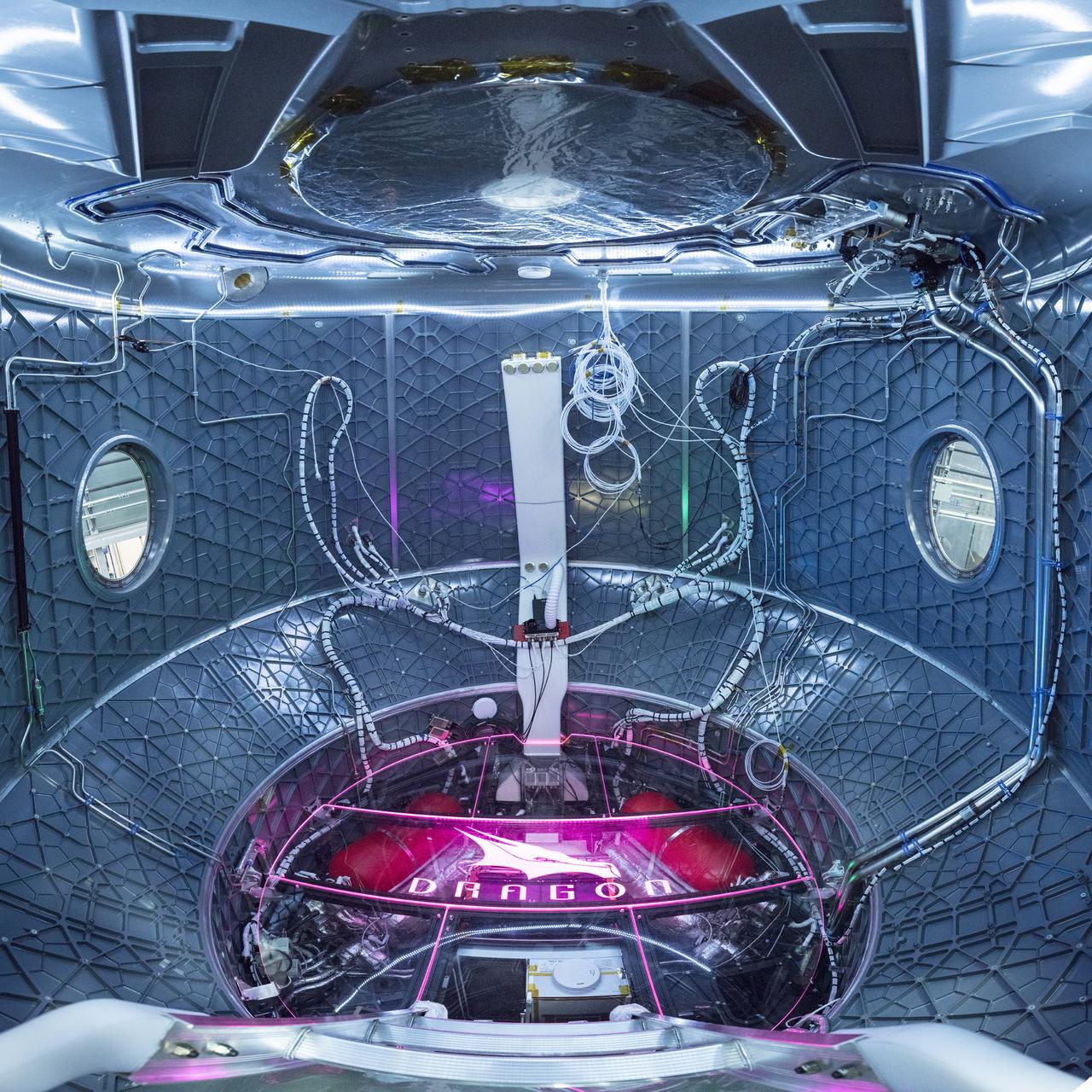
The interior of the ECLSS module inside SpaceX’s headquarters and factory in Hawthorne, California. The module is the same size as the company’s Crew Dragon spacecraft and is built to test the Environmental Control and Life Support System, or ECLSS, that is being built for missions aboard the Crew Dragon including those by astronauts flying to the International Space Station on flights for NASA’s Commercial Crew Program. Photo credit: SpaceX
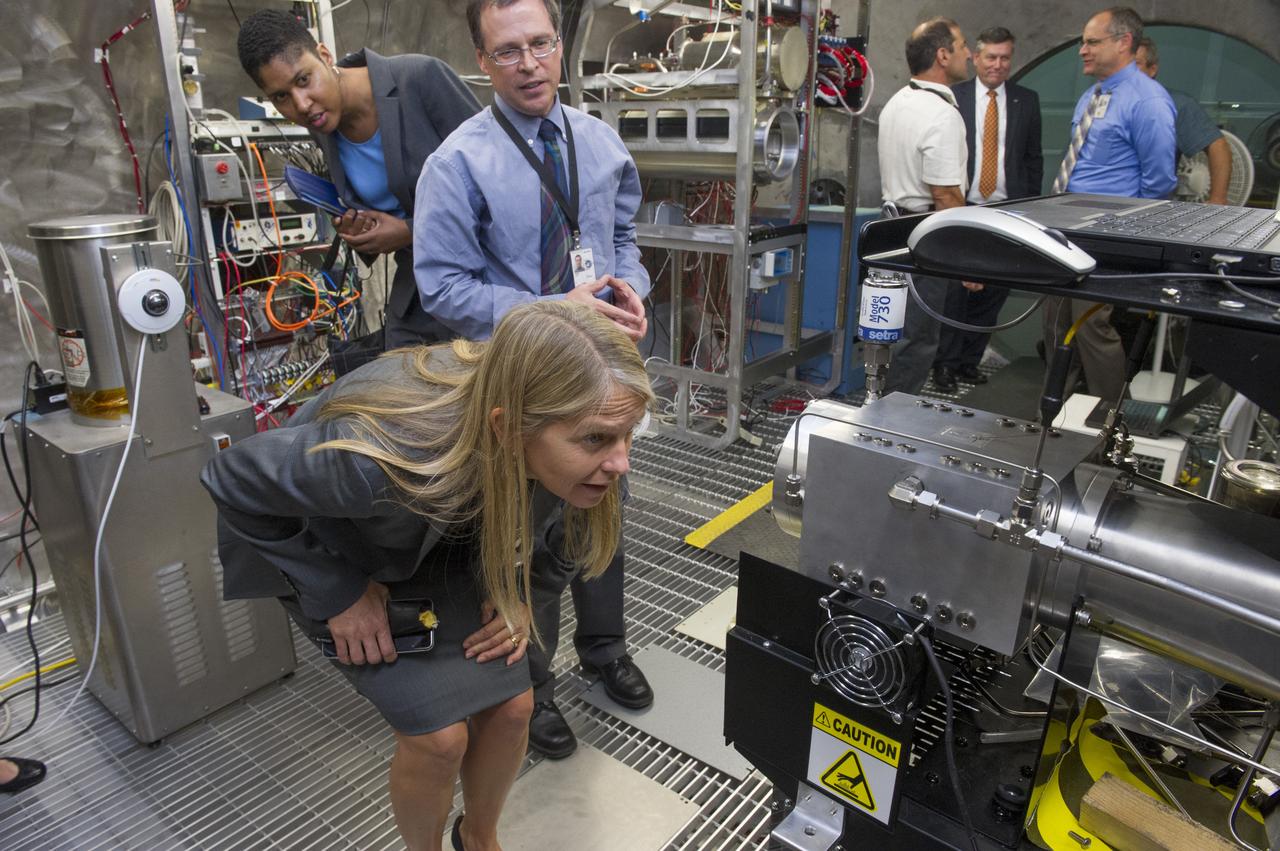
NEWMAN TAKES A CLOSER LOOK AT EQUIPMENT UNDER DEVELOPMENT IN THE ENVIRONMENTAL CONTROL & LIFE SUPPORT SYSTEMS SECTION IN BUILDING 4755. ELCSS IS BUILDING DEVICES TO RECYCLE AIR AND WATER FOR CREW MEMBERS ON THE INTERNATIONAL SPACE STATION, USING THE ORBITING LABORATORY AS A TEST BED FOR LIFE SUPPORT SYSTEMS ON LONG-DURATION MISSIONS DEEPER INTO OUR SOLAR SYSTEM.
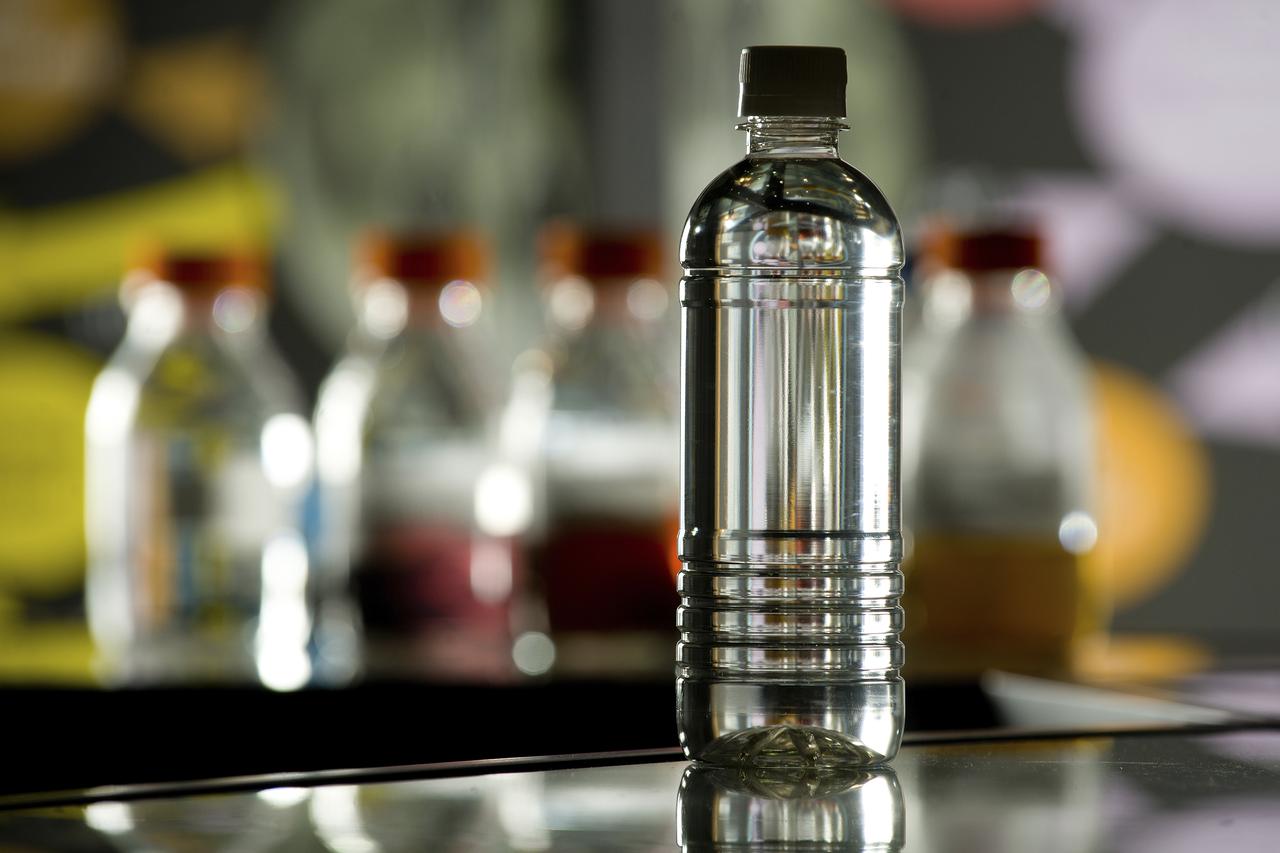
PHOTOS OF BOTTLES CONTAINING URINE, PURIFIED WATER, AND OTHER LIQUIDS AS PART OF THE STEPS OF THE ECLSS PROGRAM
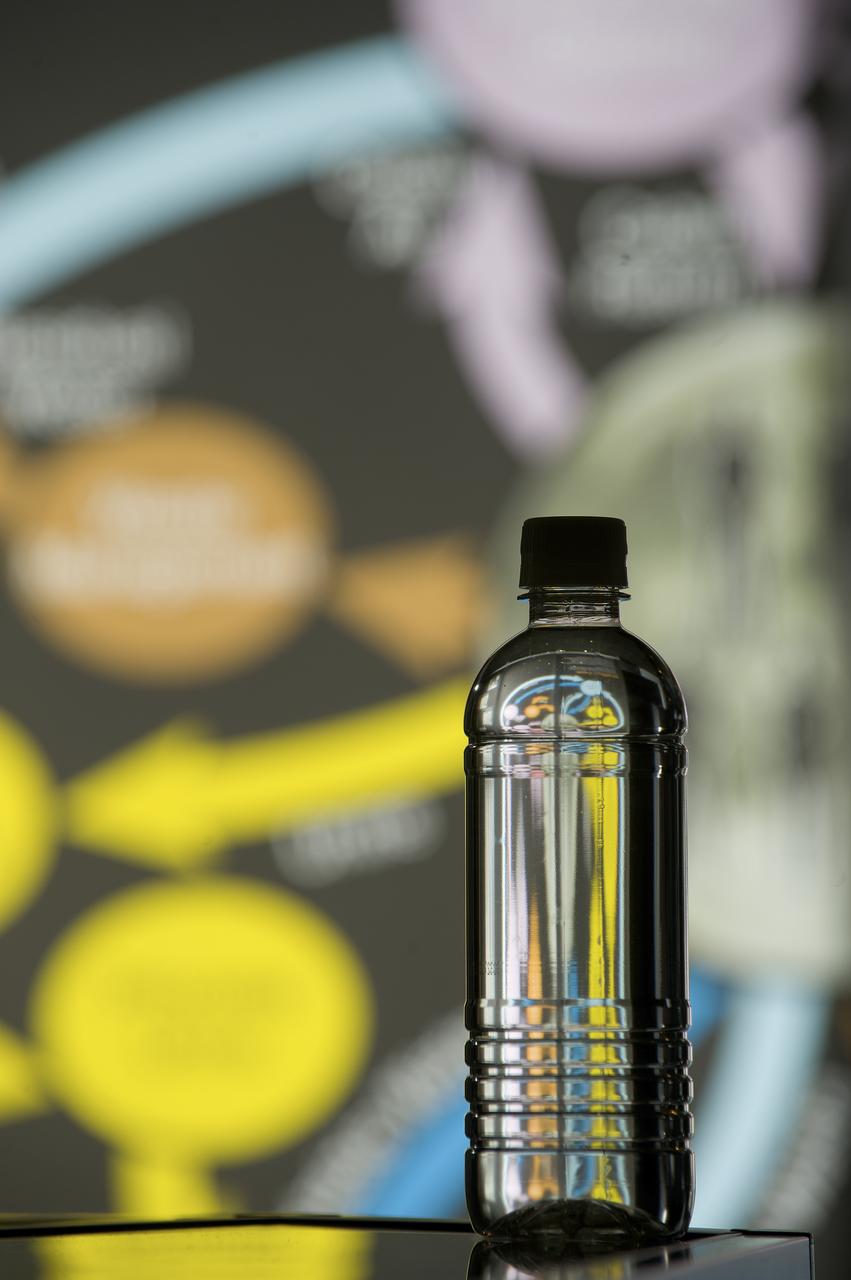
PHOTOS OF BOTTLES CONTAINING URINE, PURIFIED WATER, AND OTHER LIQUIDS AS PART OF THE STEPS OF THE ECLSS PROGRAM
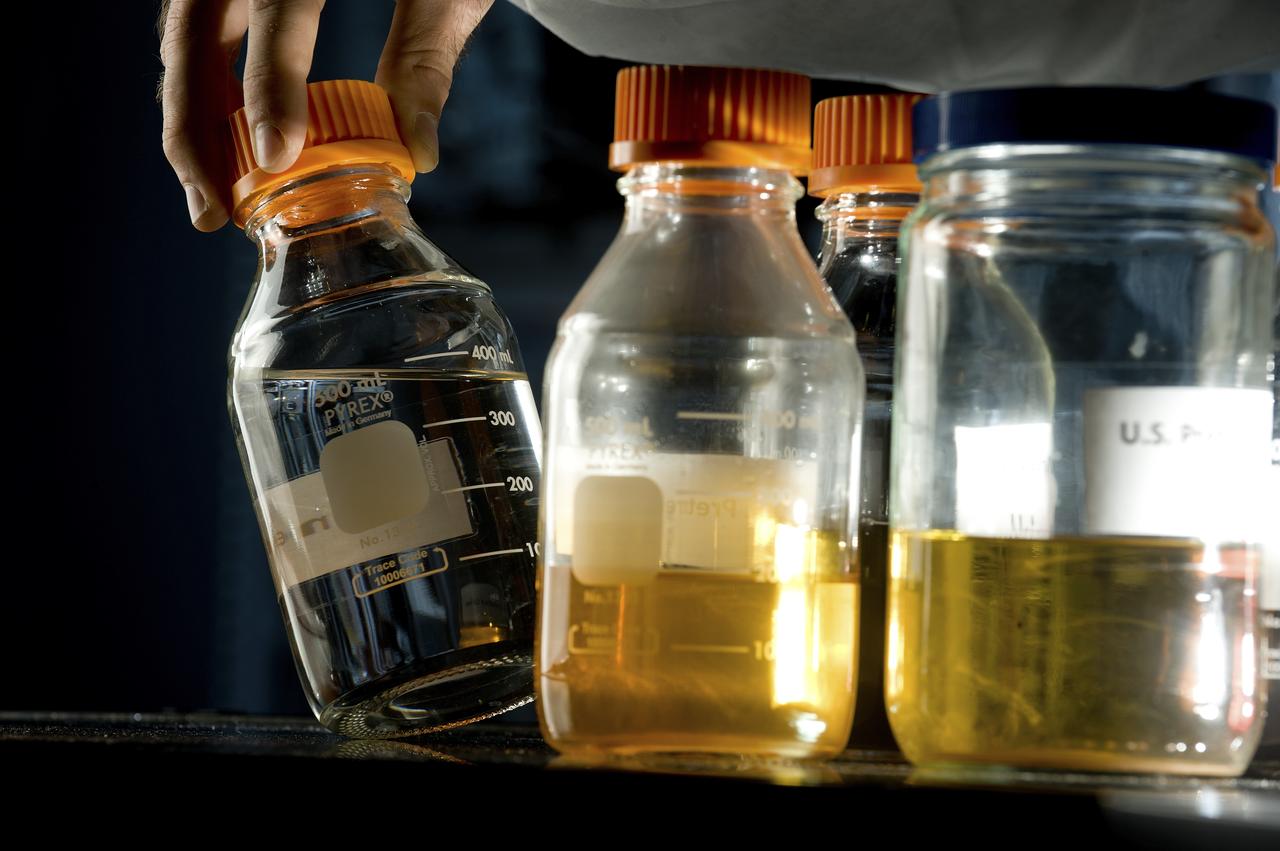
PHOTOS OF BOTTLES CONTAINING URINE, PURIFIED WATER, AND OTHER LIQUIDS AS PART OF THE STEPS OF THE ECLSS PROGRAM
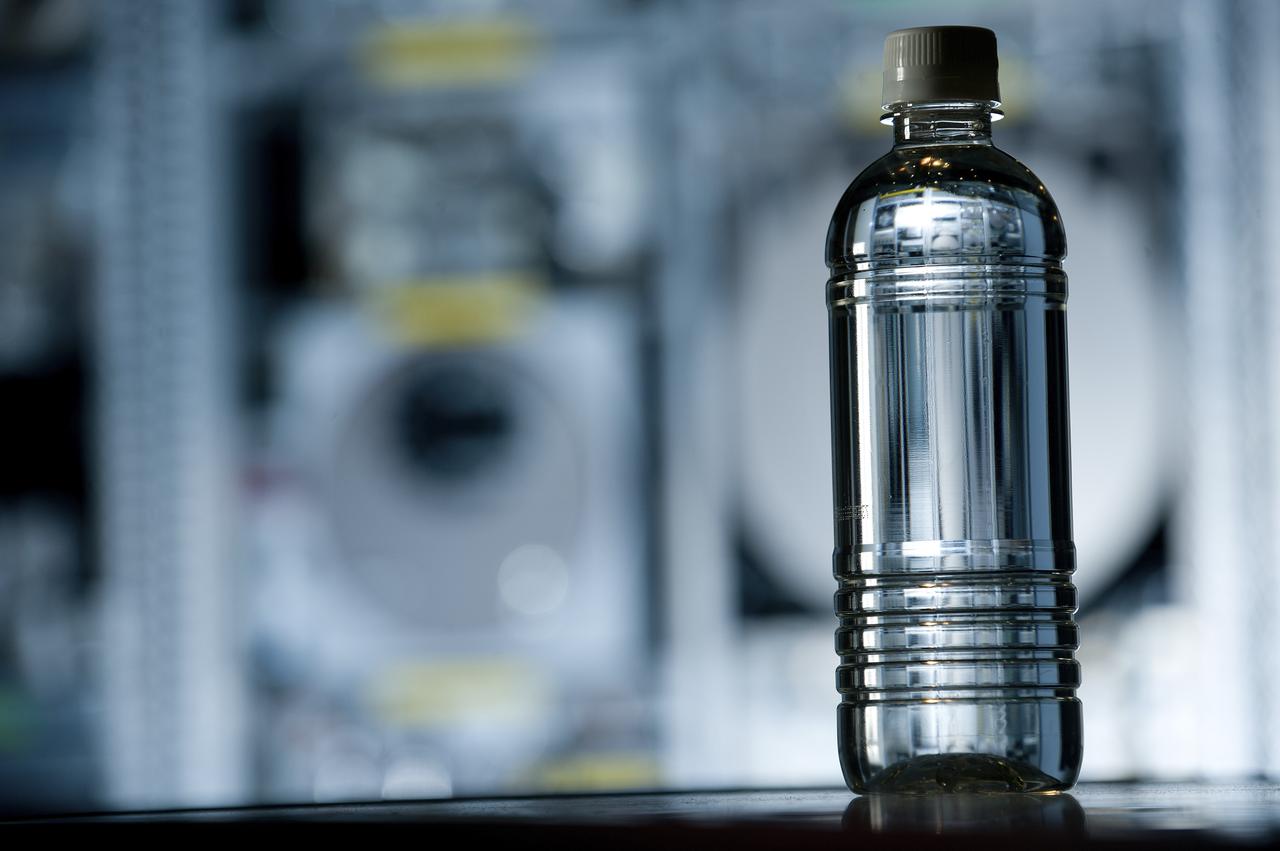
PHOTOS OF BOTTLES CONTAINING URINE, PURIFIED WATER, AND OTHER LIQUIDS AS PART OF THE STEPS OF THE ECLSS PROGRAM
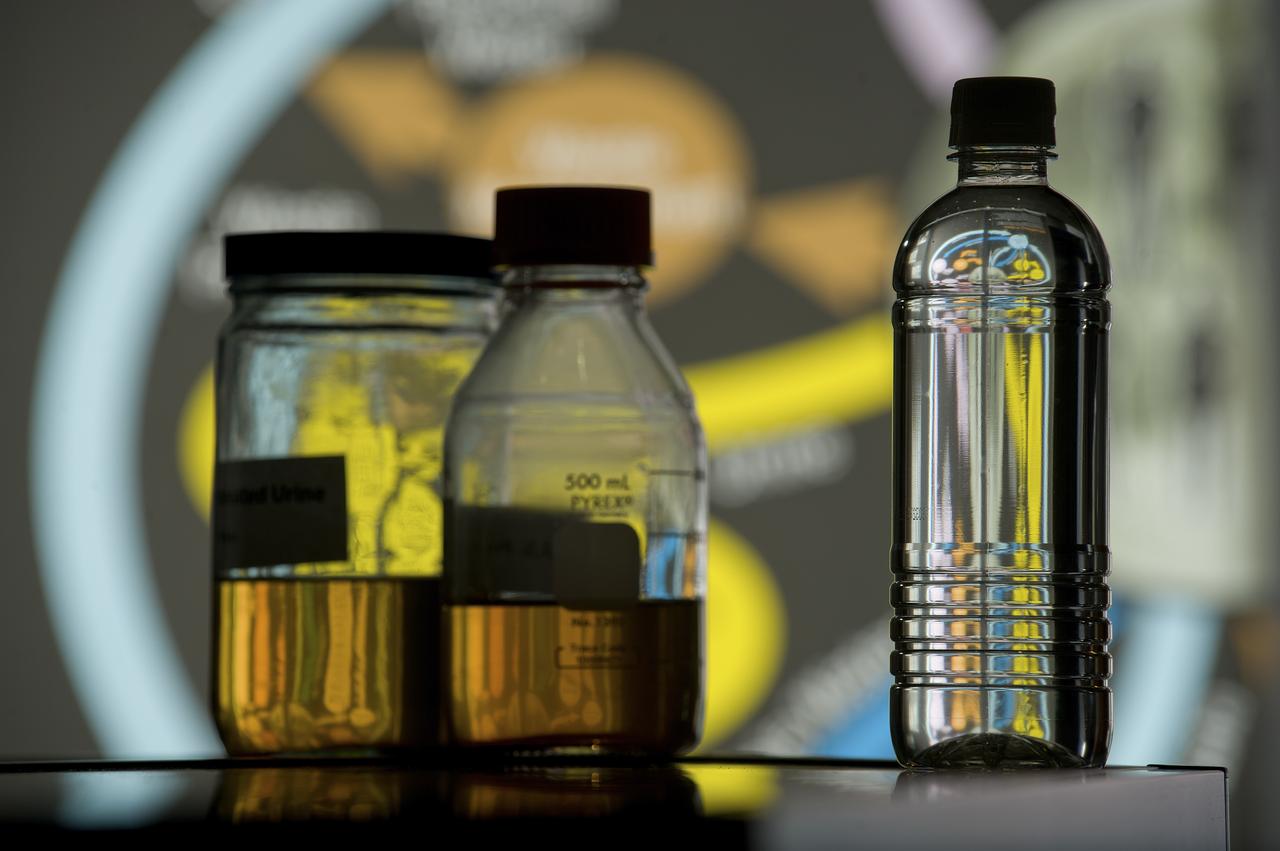
PHOTOS OF BOTTLES CONTAINING URINE, PURIFIED WATER, AND OTHER LIQUIDS AS PART OF THE STEPS OF THE ECLSS PROGRAM
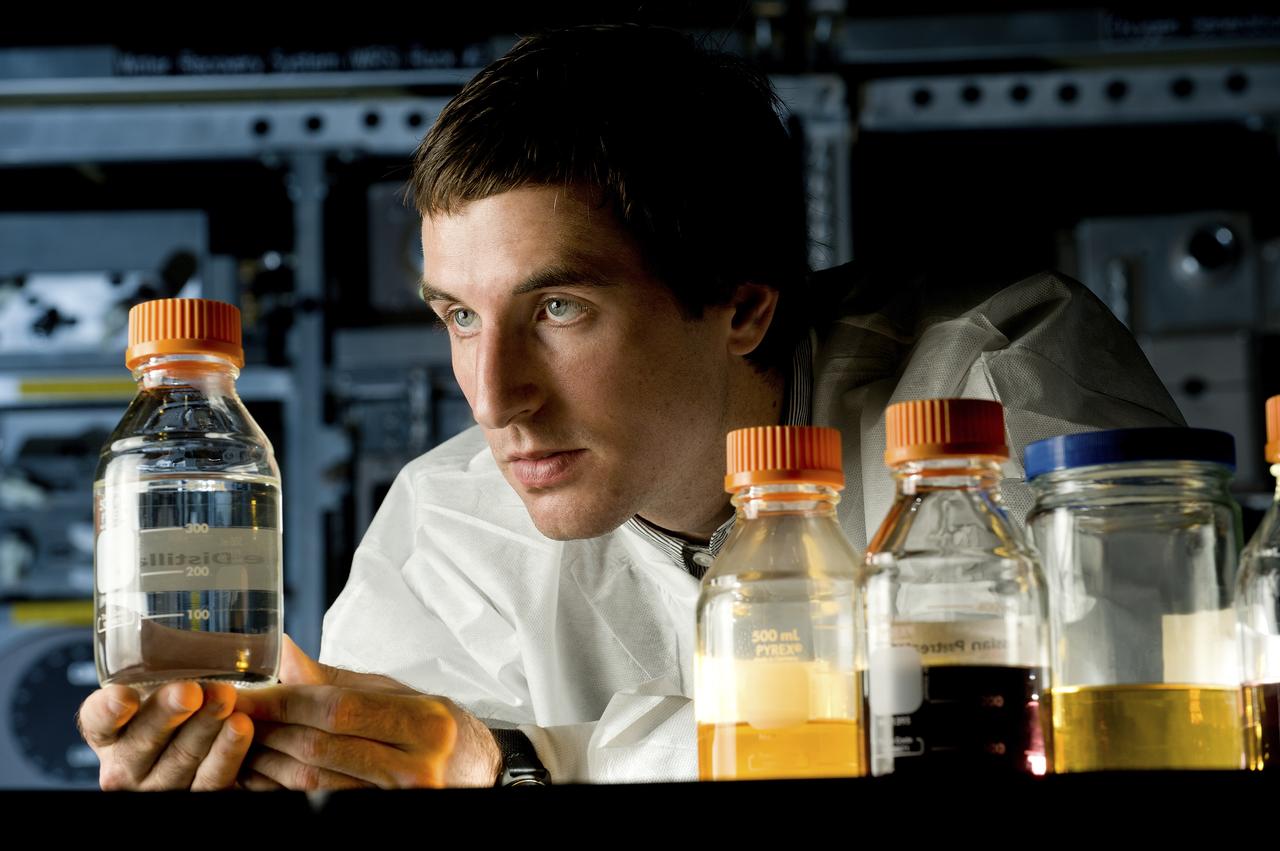
MATT MANSELL POSES FOR A PHOTO ILLUSTRATING THE ECLSS PROGRAM
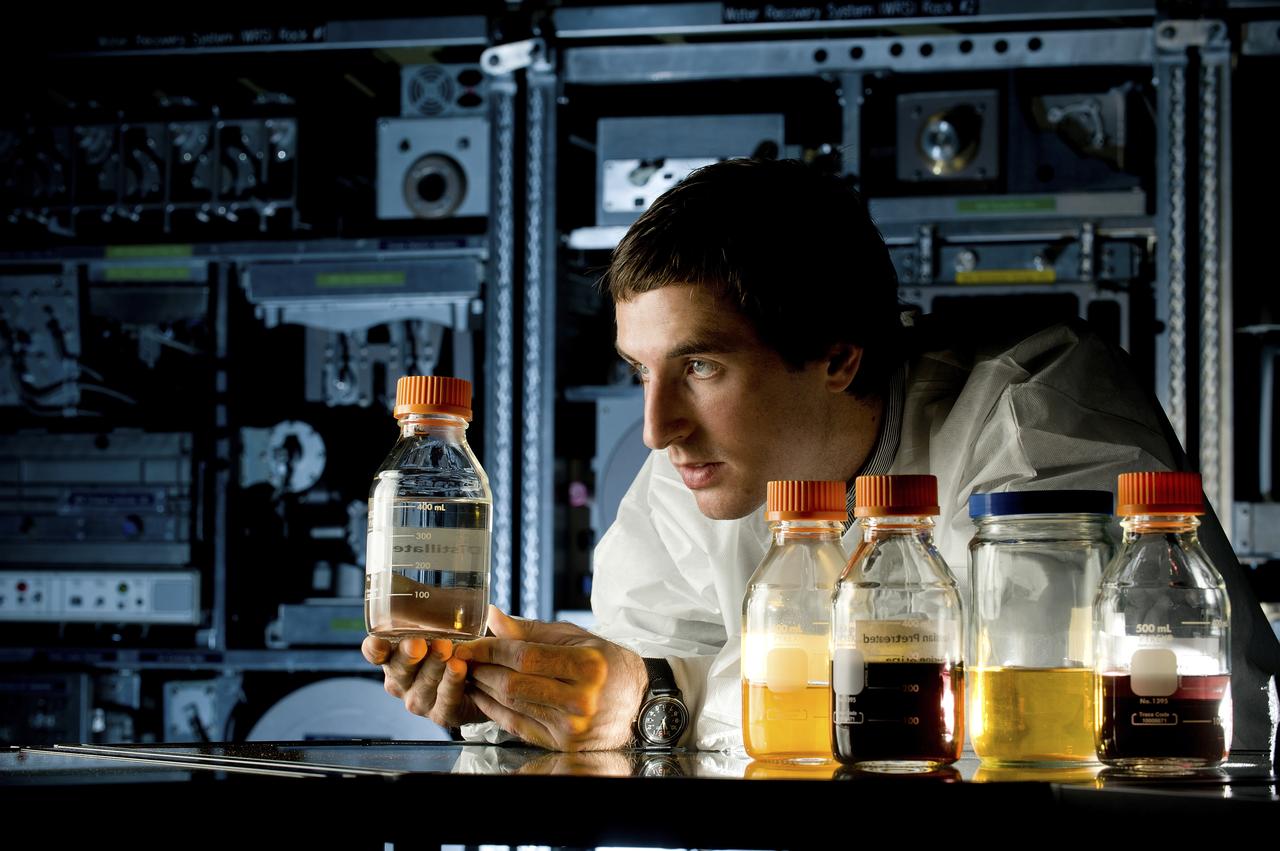
MATT MANSELL POSES FOR A PHOTO ILLUSTRATING THE ECLSS PROGRAM
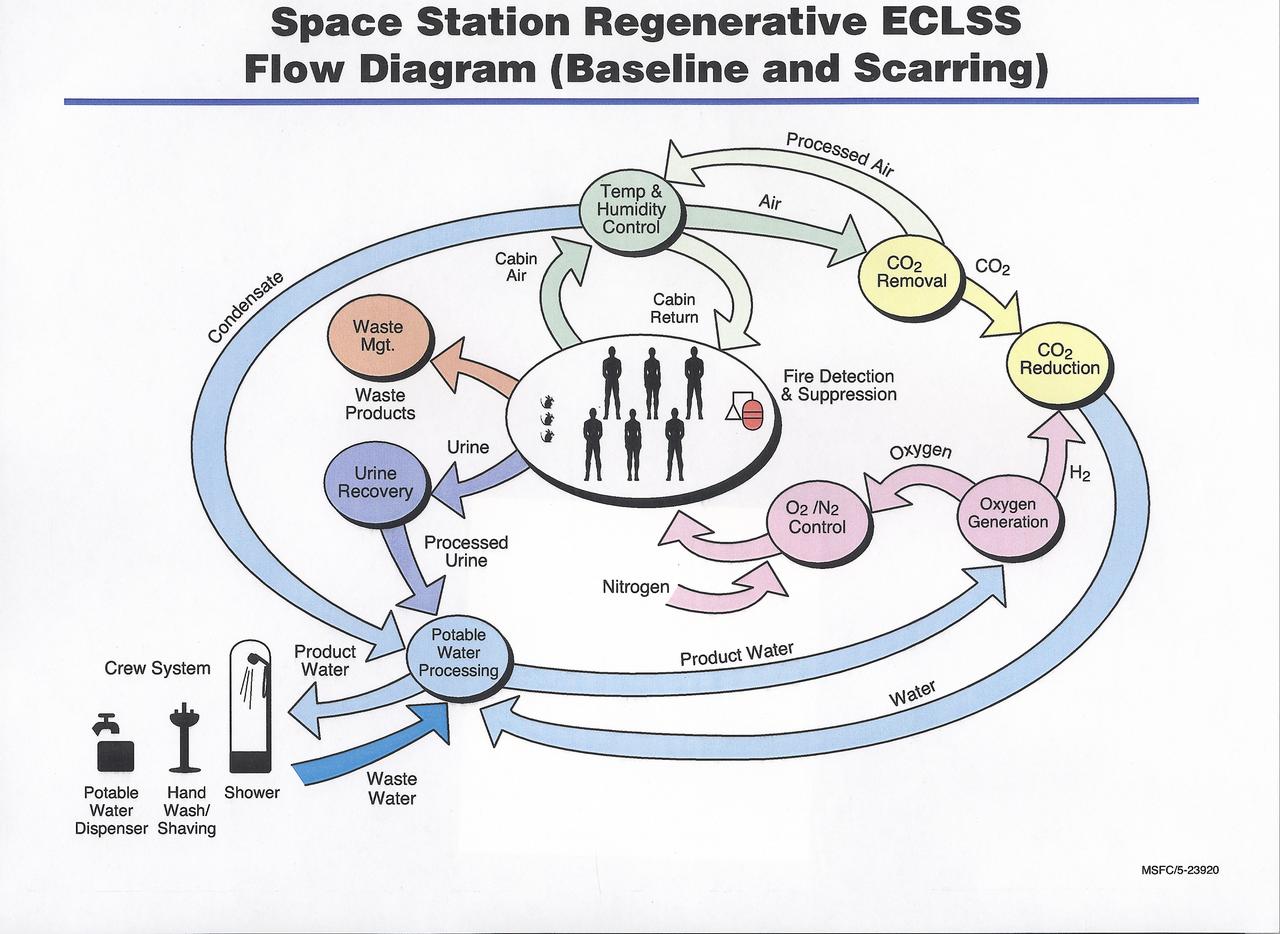
This diagram shows the flow of recyclable resources in the International Space Station (ISS). The Environmental Control and Life Support System (ECLSS) Group of the Flight Projects Directorate at the Marshall Space Flight Center is responsible for the regenerative ECLSS hardware, as well as providing technical support for the rest of the system. The regenerative ECLSS, whose main components are the Water Recovery System (WRS), and the Oxygen Generation System (OGS), reclaims and recycles water and oxygen. The ECLSS maintains a pressurized habitation environment, provides water recovery and storage, maintains and provides fire detection / suppression, and provides breathable air and a comfortable atmosphere in which to live and work within the ISS. The ECLSS hardware will be located in the Node 3 module of the ISS.
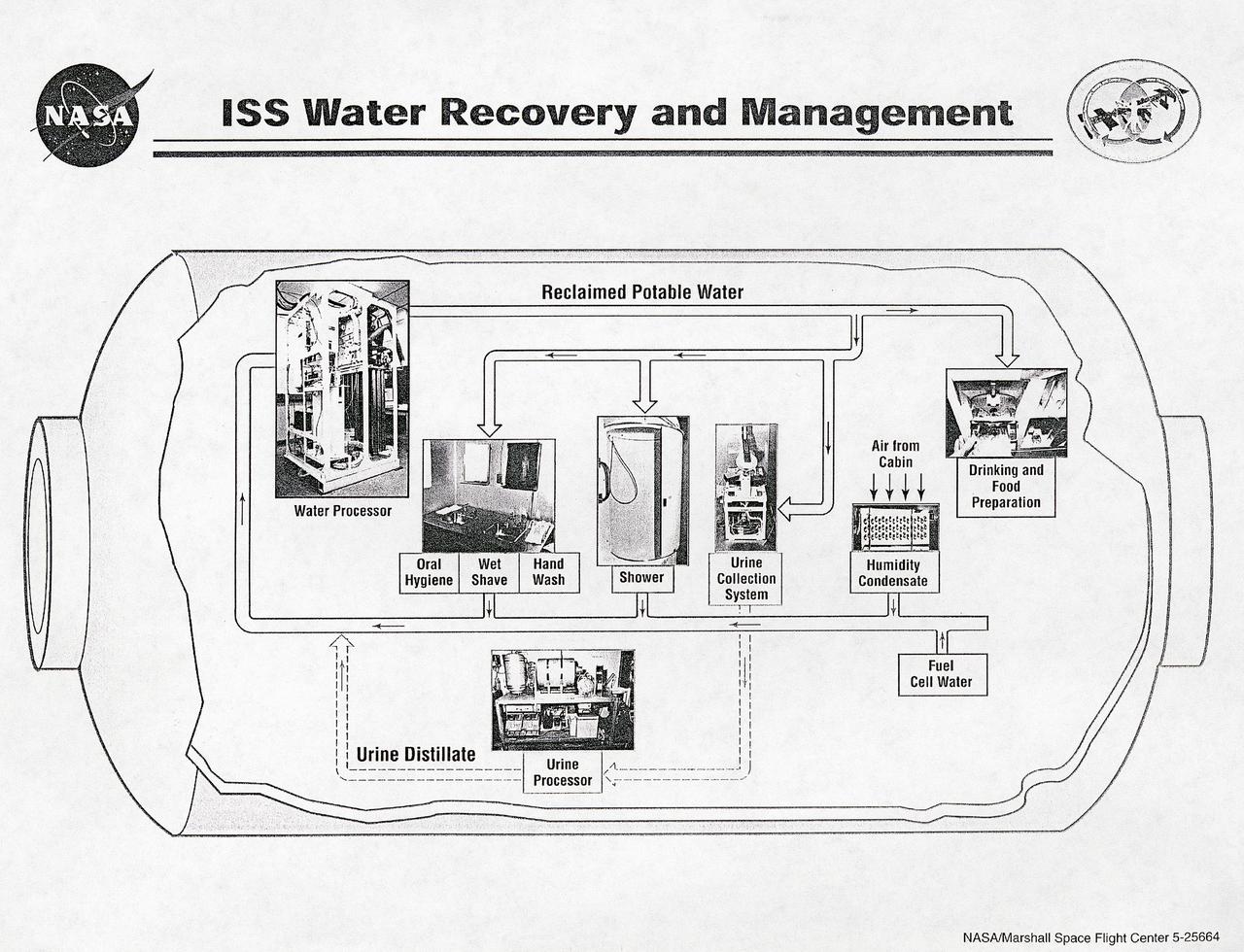
This diagram shows the flow of water recovery and management in the International Space Station (ISS). The Environmental Control and Life Support System (ECLSS) Group of the Flight Projects Directorate at the Marshall Space Flight Center is responsible for the regenerative ECLSS hardware, as well as providing technical support for the rest of the system. The regenerative ECLSS, whose main components are the Water Recovery System (WRS), and the Oxygen Generation System (OGS), reclaims and recycles water oxygen. The ECLSS maintains a pressurized habitation environment, provides water recovery and storage, maintains and provides fire detection/ suppression, and provides breathable air and a comfortable atmosphere in which to live and work within the ISS. The ECLSS hardware will be located in the Node 3 module of the ISS.
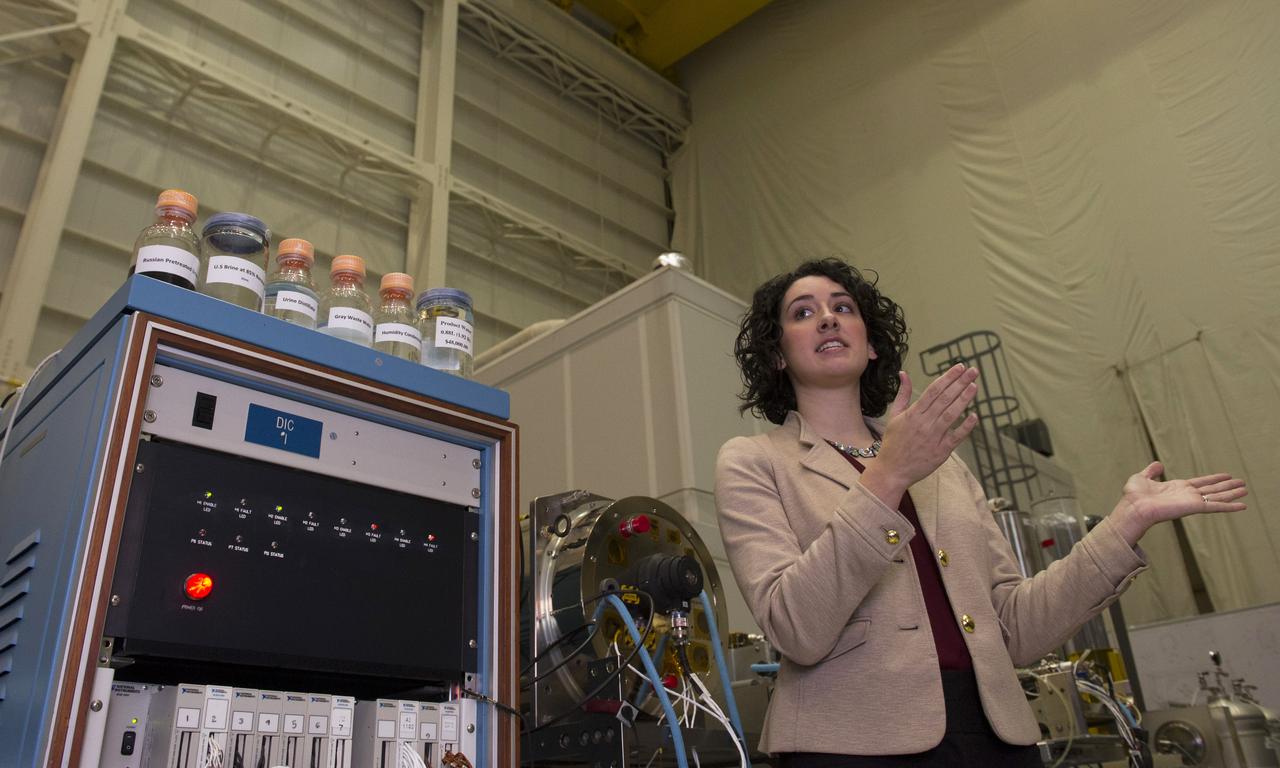
JENNIFER PRUITT, LEAD DESIGN ENGINEER FOR THE INTERNATIONAL SPACE STATION URINE PROCESSING ASSEMBLY AT MARSHALL, BRIEFS A GROUP OF MORE THAN 20 SOCIAL AND TRADITIONAL MEDIA REPRESENTATIVES ABOUT HER WORK TO IMPROVE THE RECYCLING OF WATER FOR ASTRONAUTS. THE TOUR OF MARSHALL WORK SUPPORTING NASA'S JOURNEY TO MARS WAS PART OF AGENCY-WIDE "STATE OF NASA" EVENTS FEB. 2. THE TOUR ALSO INCLUDED A LOOK AT OXYGEN RECYCLING EFFORTS, A SPACE LAUNCH SYSTEM CORE STAGE SIMULATOR AND A CHANCE TO TALK WITH MARSHALL DIRECTOR PATRICK SCHEUERMANN AND DEPUTY DIRECTOR TERESA VANHOOSER.
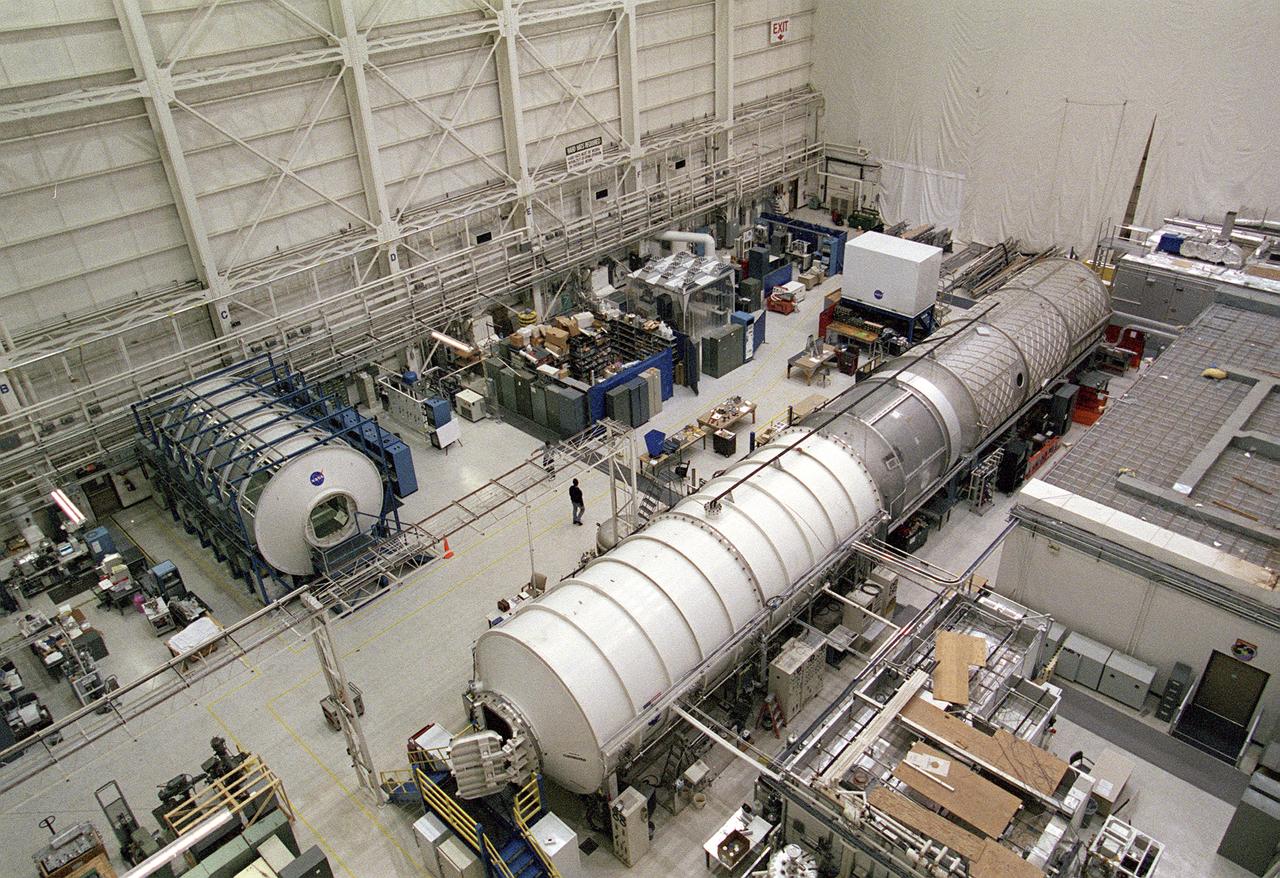
The Marshall Space Flight Center (MSFC) is responsible for designing and building the life support systems that will provide the crew of the International Space Station (ISS) a comfortable environment in which to live and work. Scientists and engineers at the MSFC are working together to provide the ISS with systems that are safe, efficient, and cost-effective. These compact and powerful systems are collectively called the Environmental Control and Life Support Systems, or simply, ECLSS. This is a view of the ECLSS and the Internal Thermal Control System (ITCS) Test Facility in building 4755, MSFC. In the foreground is the 3-module ECLSS simulator comprised of the U.S. Laboratory Module Simulator, Node 1 Simulator, and Node 3/Habitation Module Simulator. At center left is the ITCS Simulator. The main function of the ITCS is to control the temperature of equipment and hardware installed in a typical ISS Payload Rack.
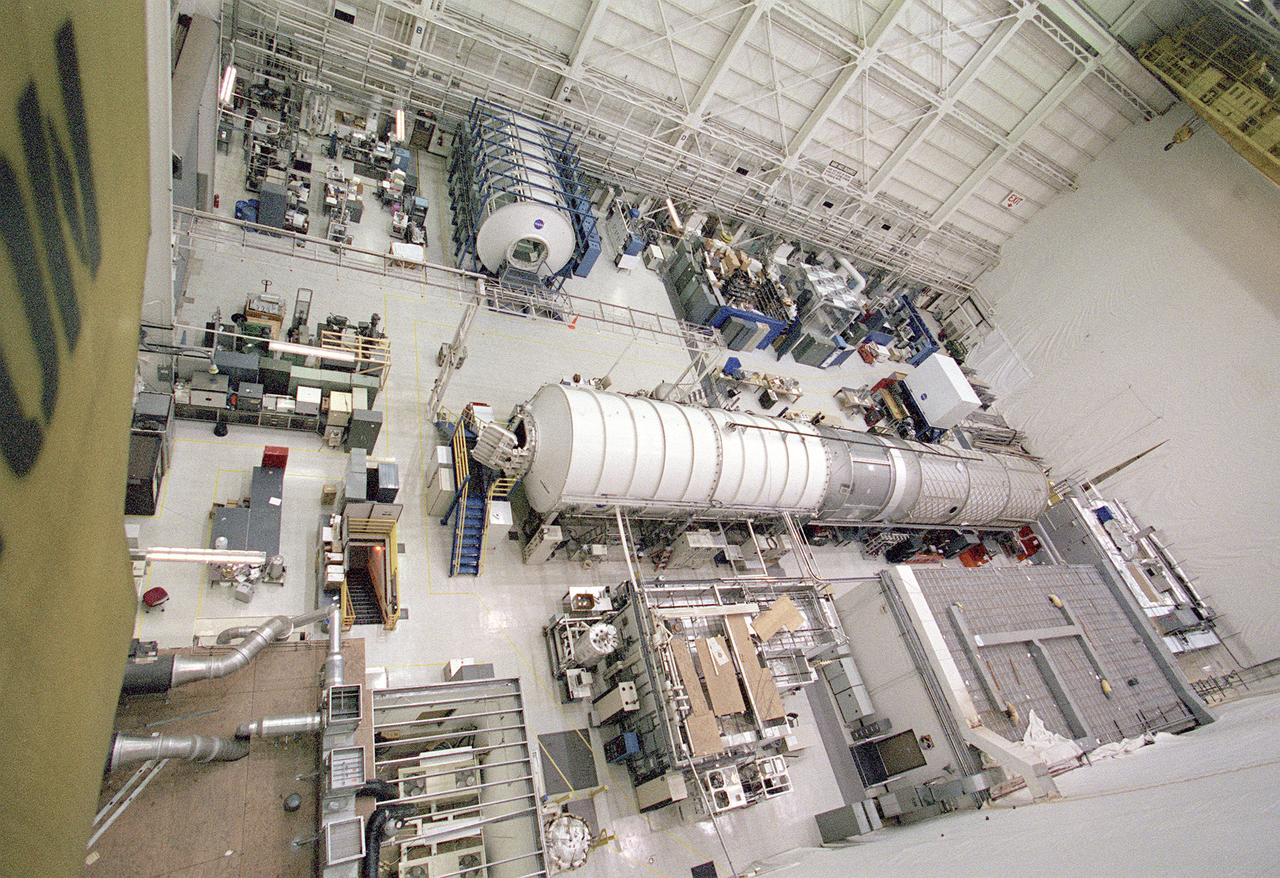
The Marshall Space Flight Center (MSFC) is responsible for designing and building the life support systems that will provide the crew of the International Space Station (ISS) a comfortable environment in which to live and work. Scientists and engineers at the MSFC are working together to provide the ISS with systems that are safe, efficient, and cost-effective. These compact and powerful systems are collectively called the Environmental Control and Life Support Systems, or simply, ECLSS. This is a view of the ECLSS and the Internal Thermal Control System (ITCS) Test Facility in building 4755, MSFC. In the foreground is the 3-module ECLSS simulator comprised of the U.S. Laboratory Module Simulator, Node 1 Simulator, and Node 3/Habitation Module Simulator. On the left is the ITCS Simulator. The main function of the ITCS is to control the temperature of equipment and hardware installed in a typical ISS Payload Rack.

The Marshall Space Flight Center (MSFC) is responsible for designing and building the life support systems that will provide the crew of the International Space Station (ISS) a comfortable environment in which to live and work. Scientists and engineers at the MSFC are working together to provide the ISS with systems that are safe, efficient, and cost-effective. These compact and powerful systems are collectively called the Environmental Control and Life Support Systems, or simply, ECLSS. This photograph shows the development Water Processor located in two racks in the ECLSS test area at the Marshall Space Flight Center. Actual waste water, simulating Space Station waste, is generated and processed through the hardware to evaluate the performance of technologies in the flight Water Processor design.
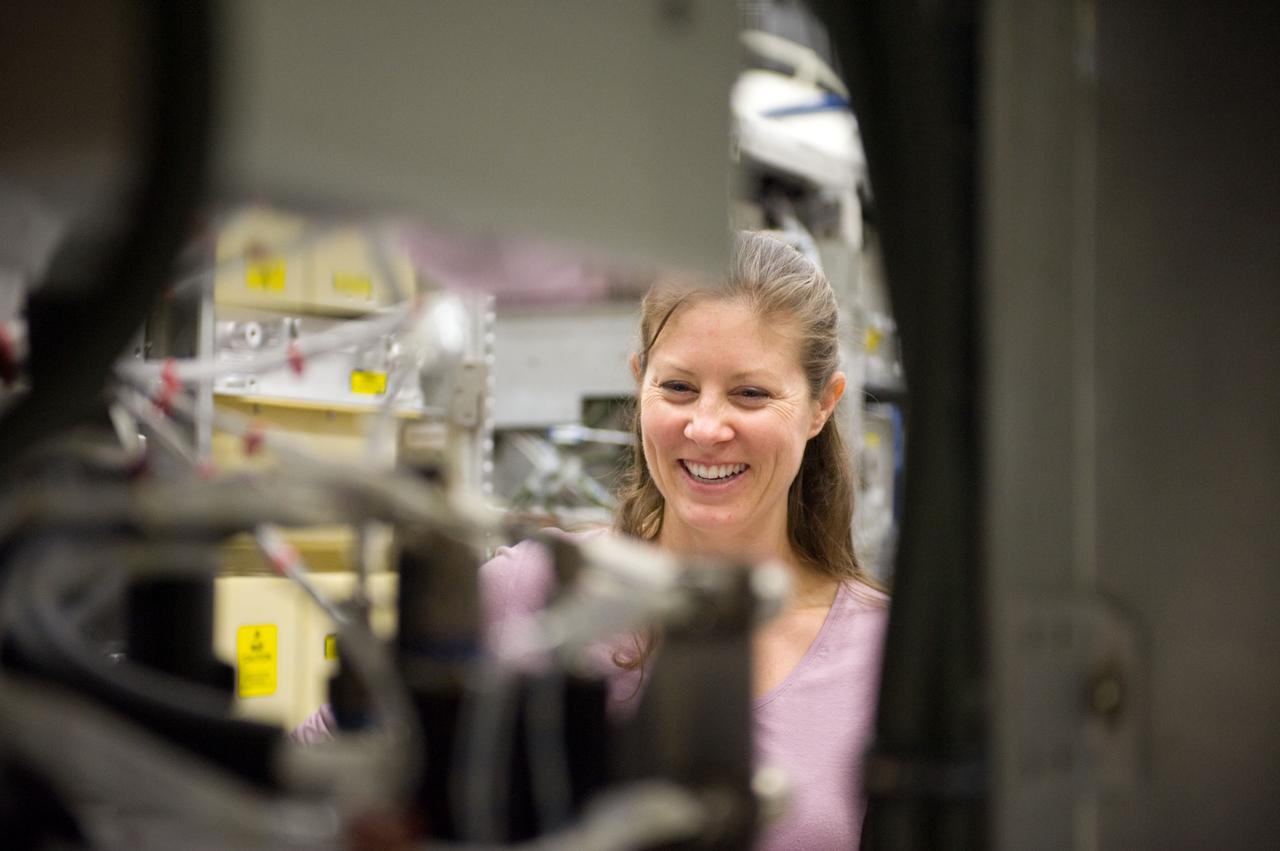
PHOTO DATE: 10-27-09 LOCATION: Bldg 9NW, ISS Mockup SUBJECT: Expedition 23 astronaut Tracy Caldwell during Regenerative ECLSS training with instructor Cindy Koester. PHOTOGRAPHER: James Blair
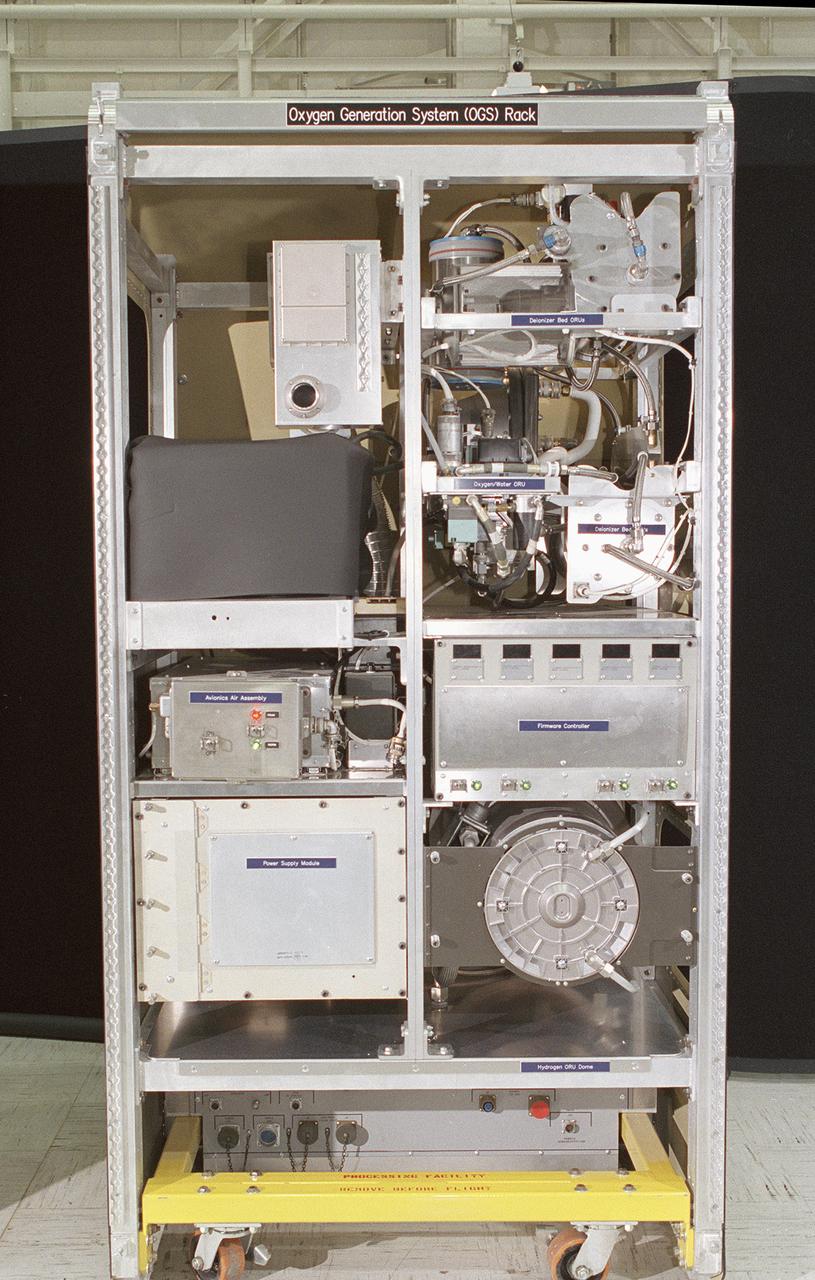
The Environmental Control and Life Support System (ECLSS) Group of the Flight Projects Directorate at the Marshall Space Flight Center (MSFC) in Huntsville, Alabama, is responsible for designing and building the life support systems that will provide the crew of the International Space Station (ISS) a comfortable environment in which to live and work. This is a close-up view of ECLSS Oxygen Generation System (OGS) rack. The ECLSS Group at the MSFC oversees the development of the OGS, which produces oxygen for breathing air for the crew and laboratory animals, as well as for replacing oxygen lost due to experiment use, airlock depressurization, module leakage, and carbon dioxide venting. The OGS consists primarily of the Oxygen Generator Assembly (OGA), provided by the prime contractor, the Hamilton Sundstrand Space Systems, International (HSSSI) in Windsor Locks, Cornecticut and a Power Supply Module (PSM), supplied by the MSFC. The OGA is comprised of a cell stack that electrolyzes (breaks apart the hydrogen and oxygen molecules) some of the clean water provided by the Water Recovery System and the separators that remove the gases from water after electrolysis. The PSM provides the high power to the OGA needed to electrolyze the water.
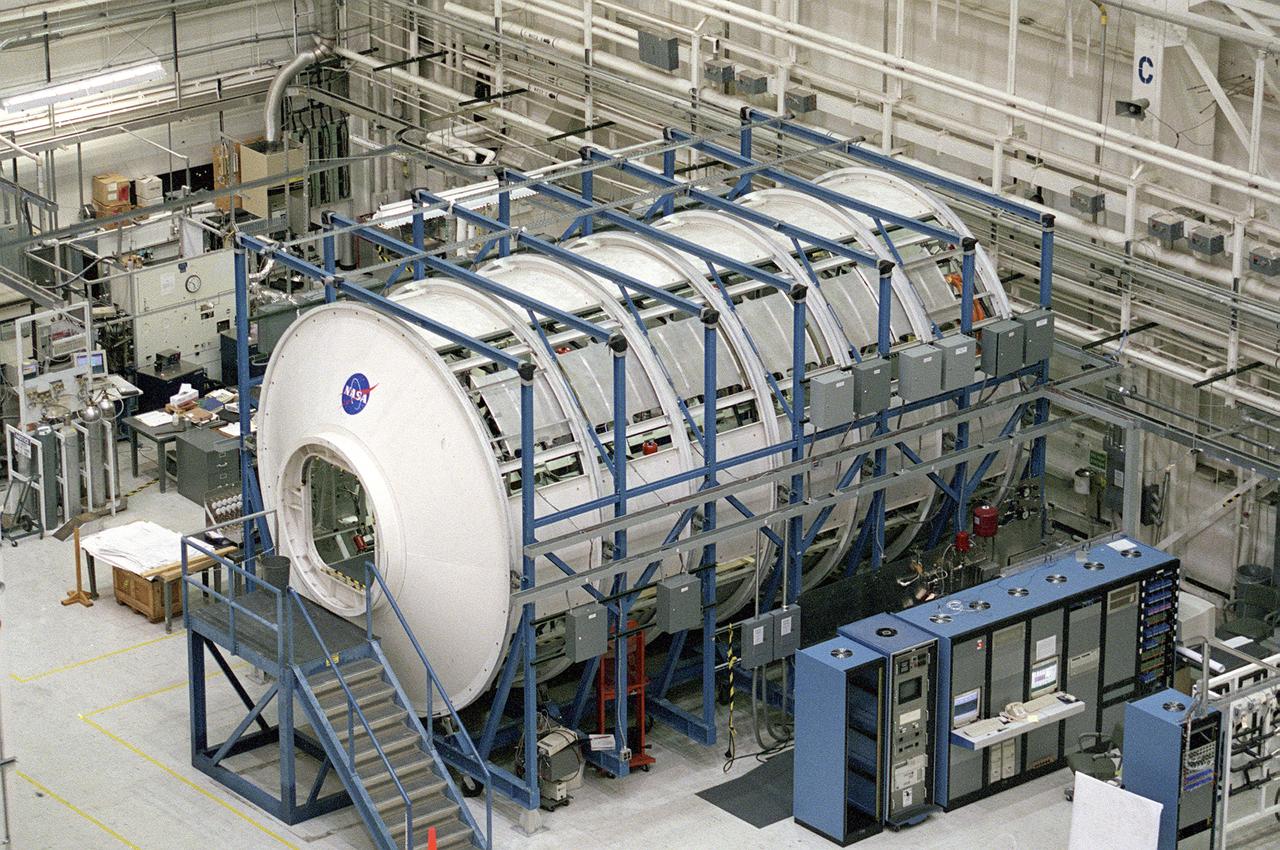
The Marshall Space Flight Center (MSFC) is responsible for designing and building the life support systems that will provide the crew of the International Space Station (ISS) a comfortable environment in which to live and work. Scientists and engineers at the MSFC are working together to provide the ISS with systems that are safe, efficient and cost-effective. These compact and powerful systems are collectively called the Environmental Control and Life Support Systems, or simply, ECLSS. This is an exterior view of the U.S. Laboratory Module Simulator containing the ECLSS Internal Thermal Control System (ITCS) testing facility at MSFC. At the bottom right is the data acquisition and control computers (in the blue equipment racks) that monitor the testing in the facility. The ITCS simulator facility duplicates the function, operation, and troubleshooting problems of the ITCS. The main function of the ITCS is to control the temperature of equipment and hardware installed in a typical ISS Payload Rack.
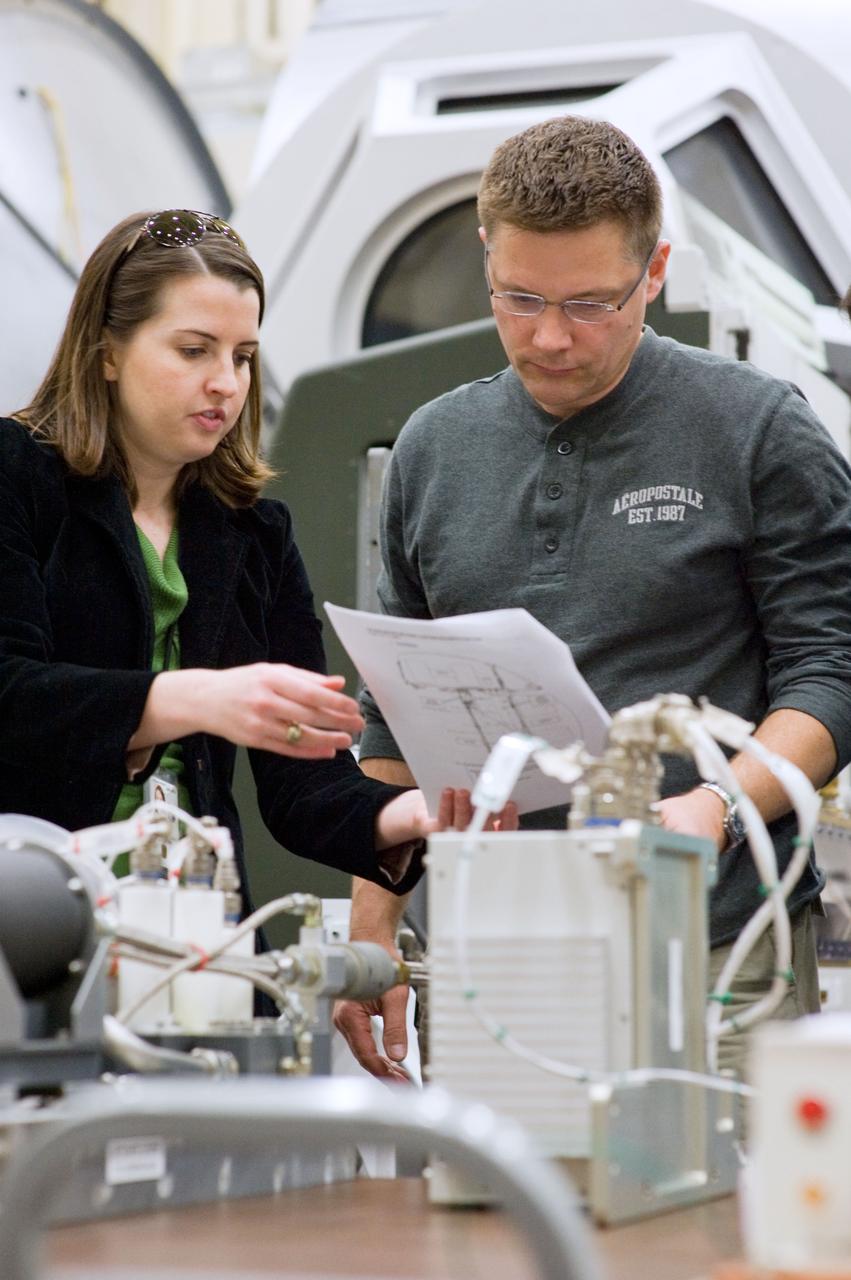
PHOTO DATE: 03-30-10 LOCATION: BLDG 9NW ISS MOCK UPS SUBJECT: Regenerative ECLSS training in Building 9 for Expedition 24 Doug Wheelock and Shannon Walker WORK ORDER: 0914-EXP24REGEN-03-30-10 PHOTOGRAPHER: BILL STAFFORD
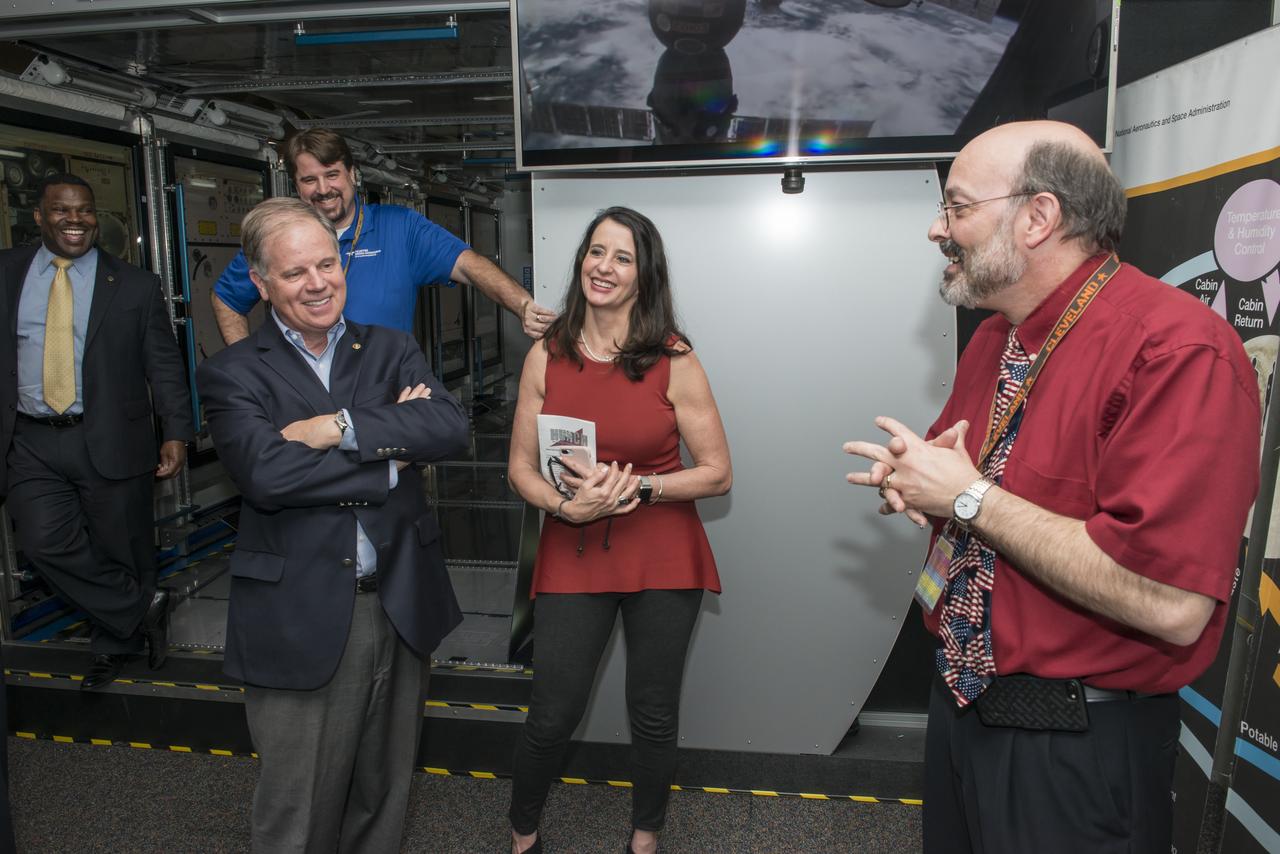
Senator Doug Jones (D-Al.) and wife Louise are presented an overview of the Environmental Control and Life Support System (ECLSS) which was developed at Marshall Space flight Center. Marshall engineer Keith Parrish explains the steps in converting waste fluids generated on the International Space Station (ISS) into purified drinking water.
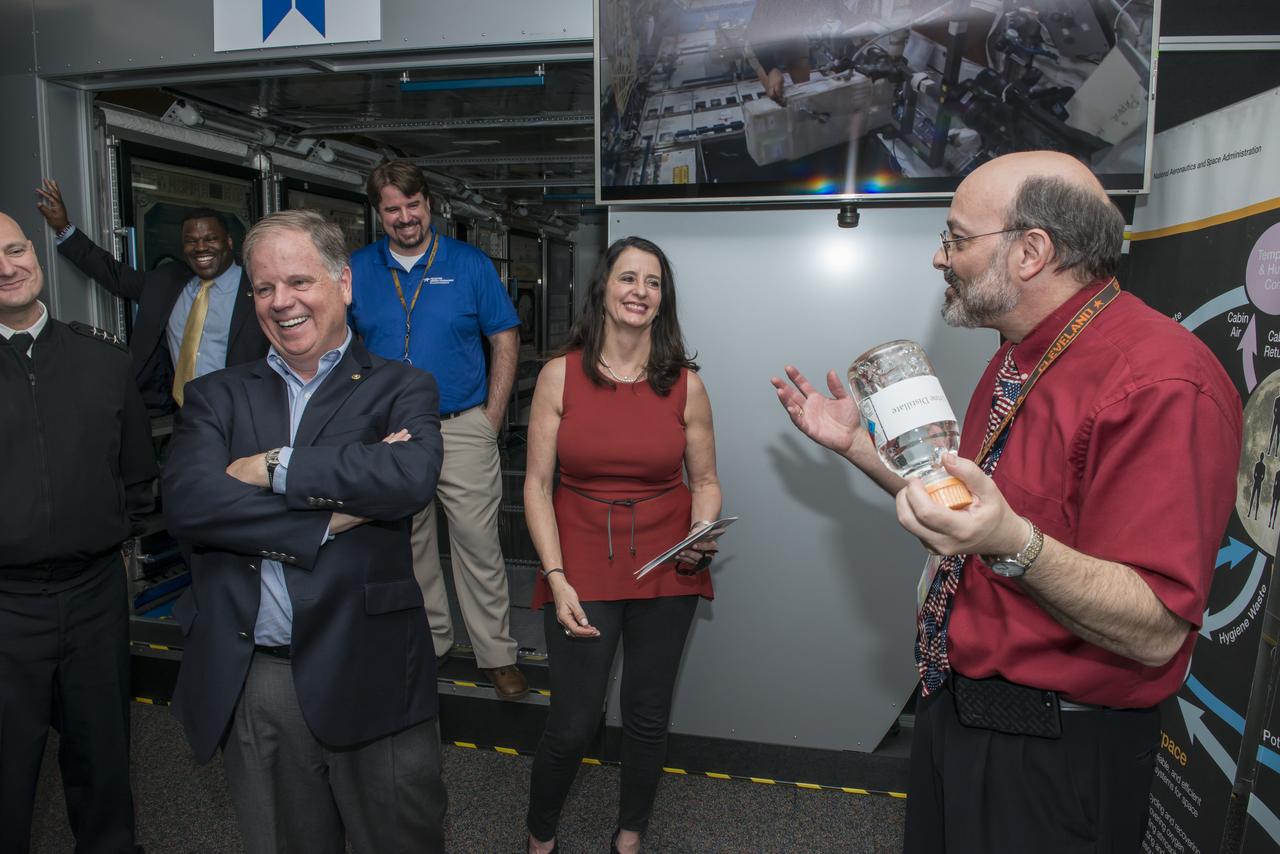
Senator Doug Jones (D-Al.) and wife Louise are presented an overview of the Environmental Control and Life Support System (ECLSS) which was developed at Marshall Space flight Center. Marshall engineer Keith Parrish explains the steps in converting waste fluids generated on the International Space Station (ISS) into purified drinking water.
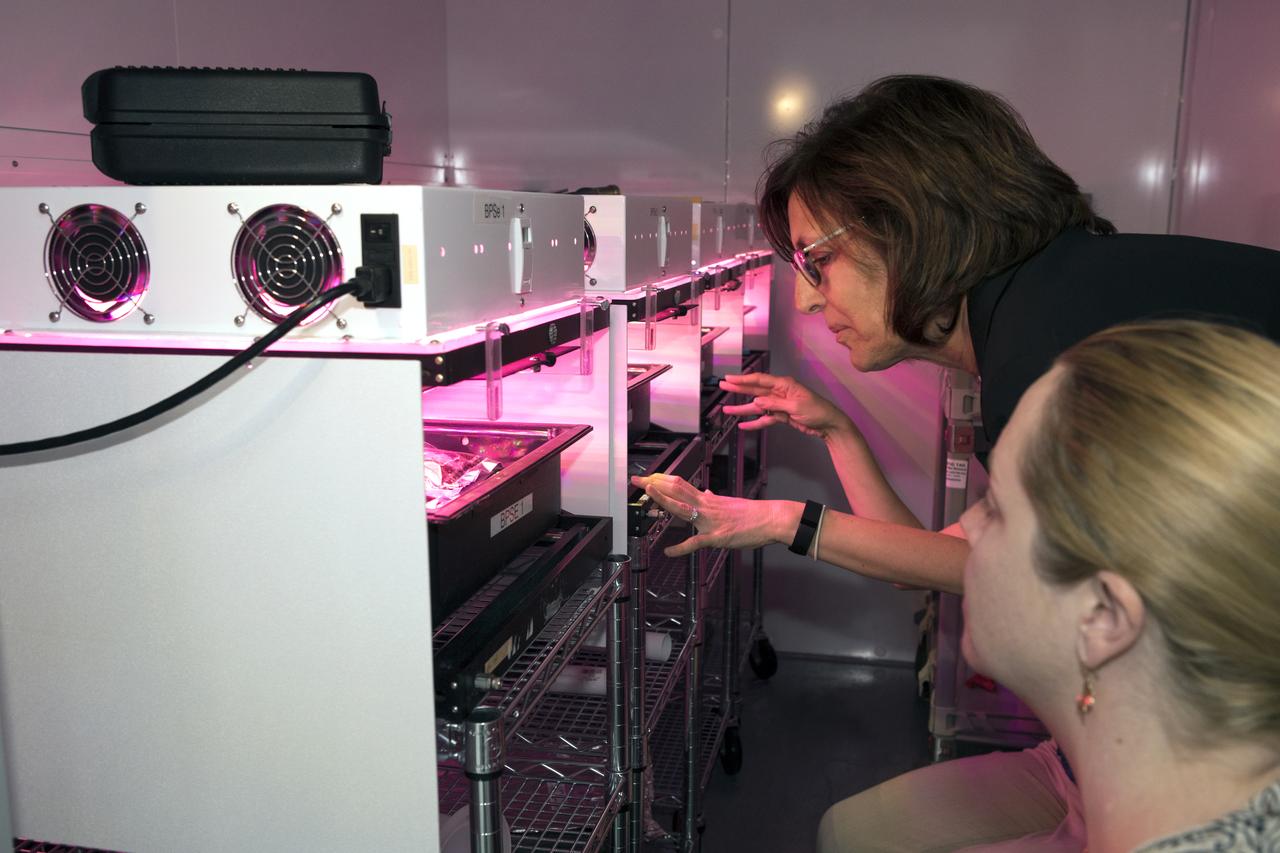
Robyn Gatens, left, deputy director, ISS Division and system capability leader for Environmental Control and Life Support Systems (ECLSS) at NASA Headquarters in Washington, tours laboratories in the Space Station Processing Facility at the agency's Kennedy Space Center in Florida, on June 13, 2018. To her right is Molly Anderson, deputy ECLSS capability lead at Johnson Space Center in Houston. They are viewing plant growth chambers and seeing firsthand some of the capabilities in the center's Exploration Research and Technology Programs.
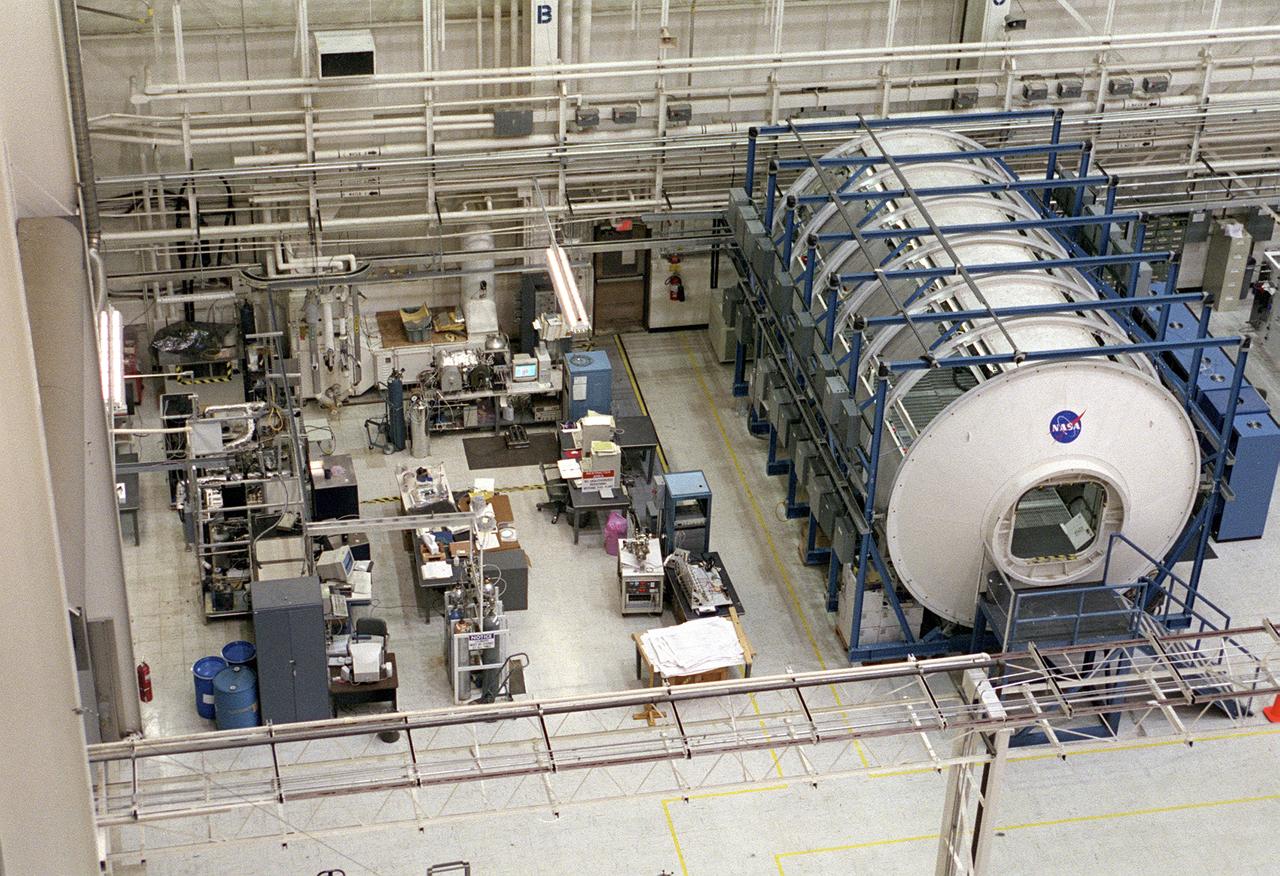
The Marshall Space Flight Center (MSFC) is responsible for designing and building the life support systems that will provide the crew of the International Space Station (ISS) a comfortable environment in which to live and work. Scientists and engineers at the MSFC are working together to provide the ISS with systems that are safe, efficient, and cost-effective. These compact and powerful systems are collectively called the Environmental Control and Life Support Systems, or simply, ECLSS. In this photograph, the life test area on the left of the MSFC ECLSS test facility is where various subsystems and components are tested to determine how long they can operate without failing and to identify components needing improvement. Equipment tested here includes the Carbon Dioxide Removal Assembly (CDRA), the Urine Processing Assembly (UPA), the mass spectrometer filament assemblies and sample pumps for the Major Constituent Analyzer (MCA). The Internal Thermal Control System (ITCS) simulator facility (in the module in the right) duplicates the function and operation of the ITCS in the ISS U.S. Laboratory Module, Destiny. This facility provides support for Destiny, including troubleshooting problems related to the ITCS.
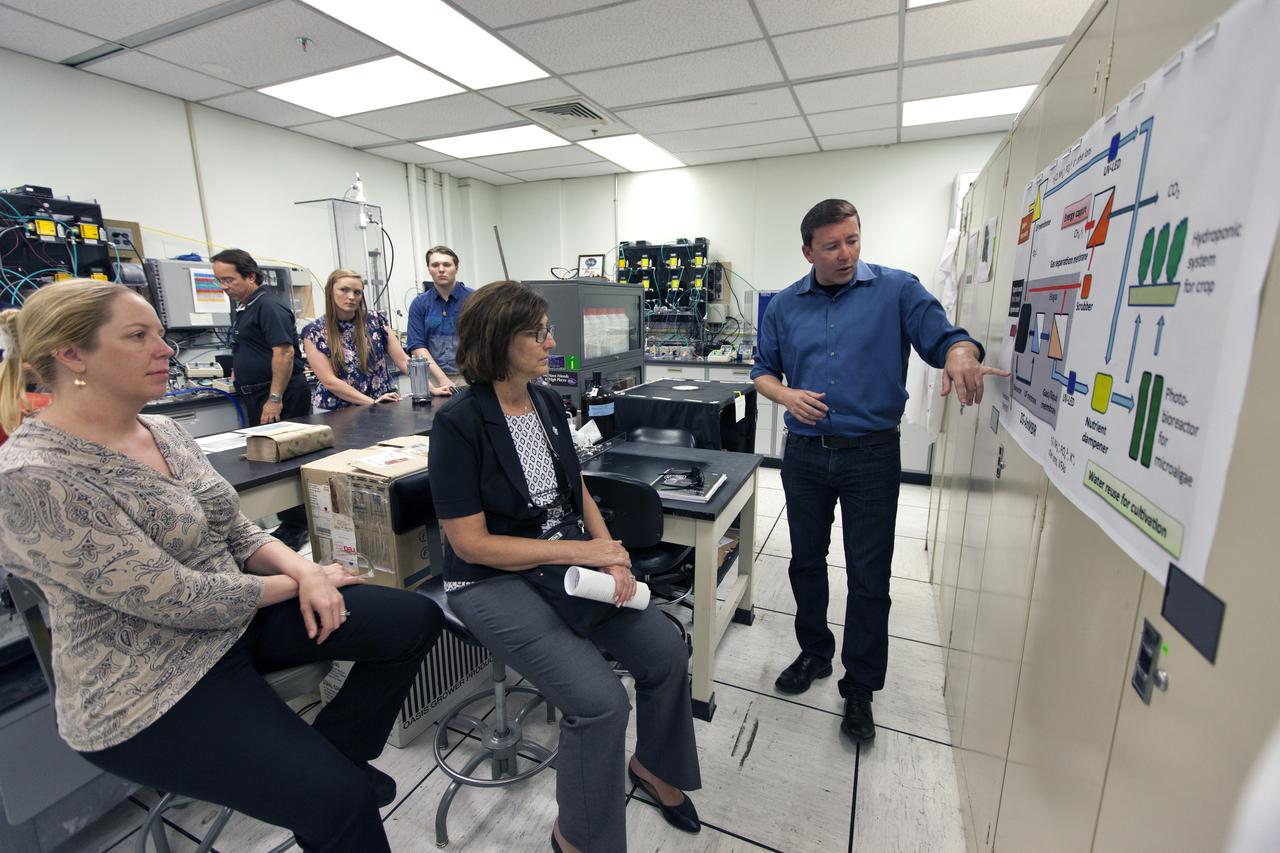
Inside a laboratory in the Neil Armstrong Operations and Checkout Building at NASA's Kennedy Space Center in Florida, Dr. Luke Roberson, right, principal investigator for research and development in Swamp Works, explains the algae bio reactor to Robyn Gatens, center, deputy director, ISS Division and system capability leader for Environmental Control and Life Support Systems (ECLSS) at NASA Headquarters in Washington, on June 13, 2018. At far left is Molly Anderson, deputy ECLSS capability lead at Johnson Space Center in Houston. They are seeing firsthand some of the capabilities in the center's Exploration Research and Technology Programs.
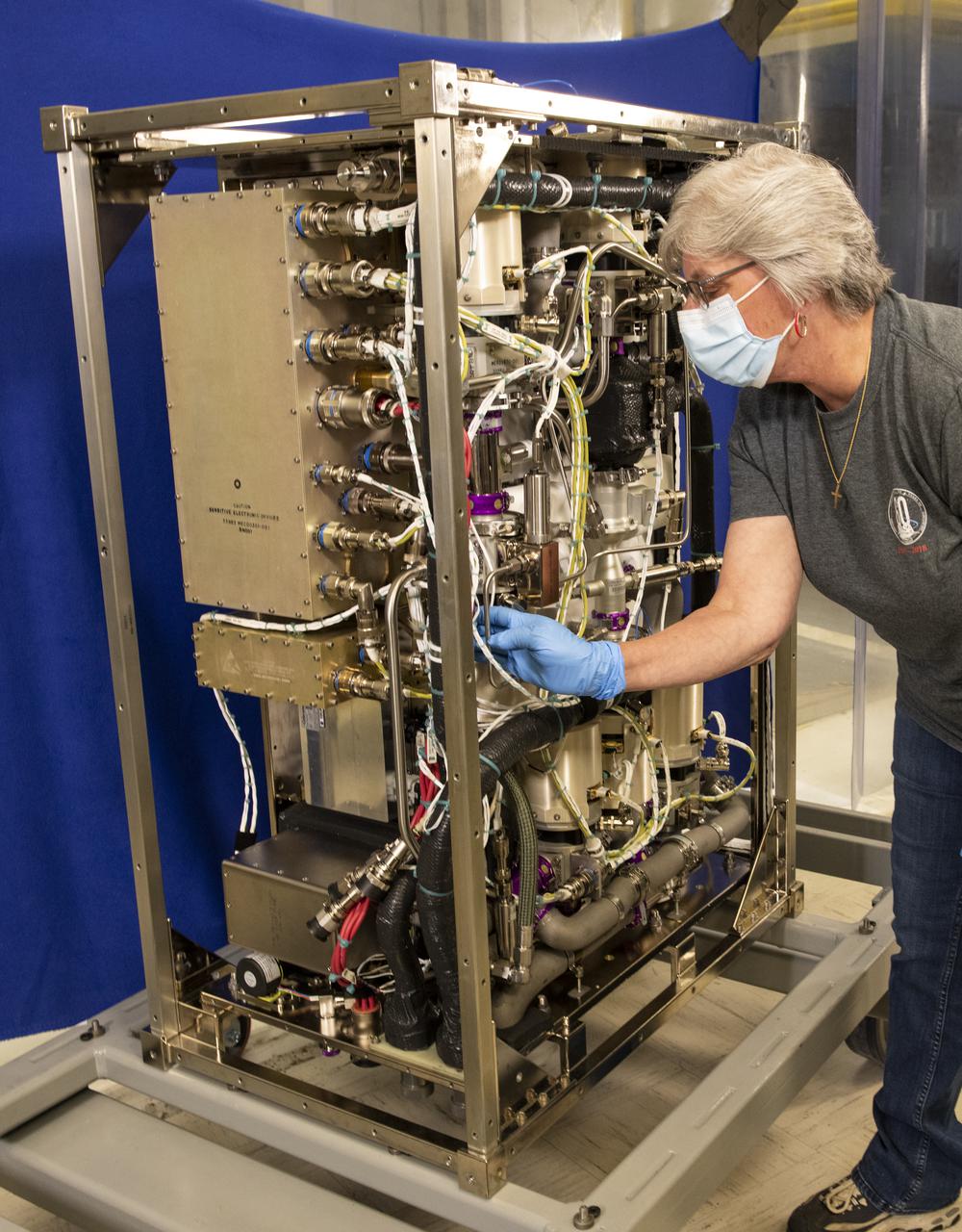
The flight demonstration unit of the next-generation 4-bed CO2 Scrubber (4BCO2) is targeted for launch aboard NG16 NET August 1, 2021. Once aboard the space station, this u nit will be mounted in a basic express rack. This four-bed technology is a mainstay for metabolic CO2 removal and crew life support. The new 4-Bed Carbon Dioxide Scrubber, developed, built, and tested at NASA’s Marshall Space Flight Center in Huntsville, Alabama, is checked out by Kathi Lange, a Bastion Technologies contractor supporting the quality assurance group in Marshall’s Safety and Mission Assurance Directorate, prior to its shipment to NASA’s Wallops Flight Facility in Wallops Island, Virginia.
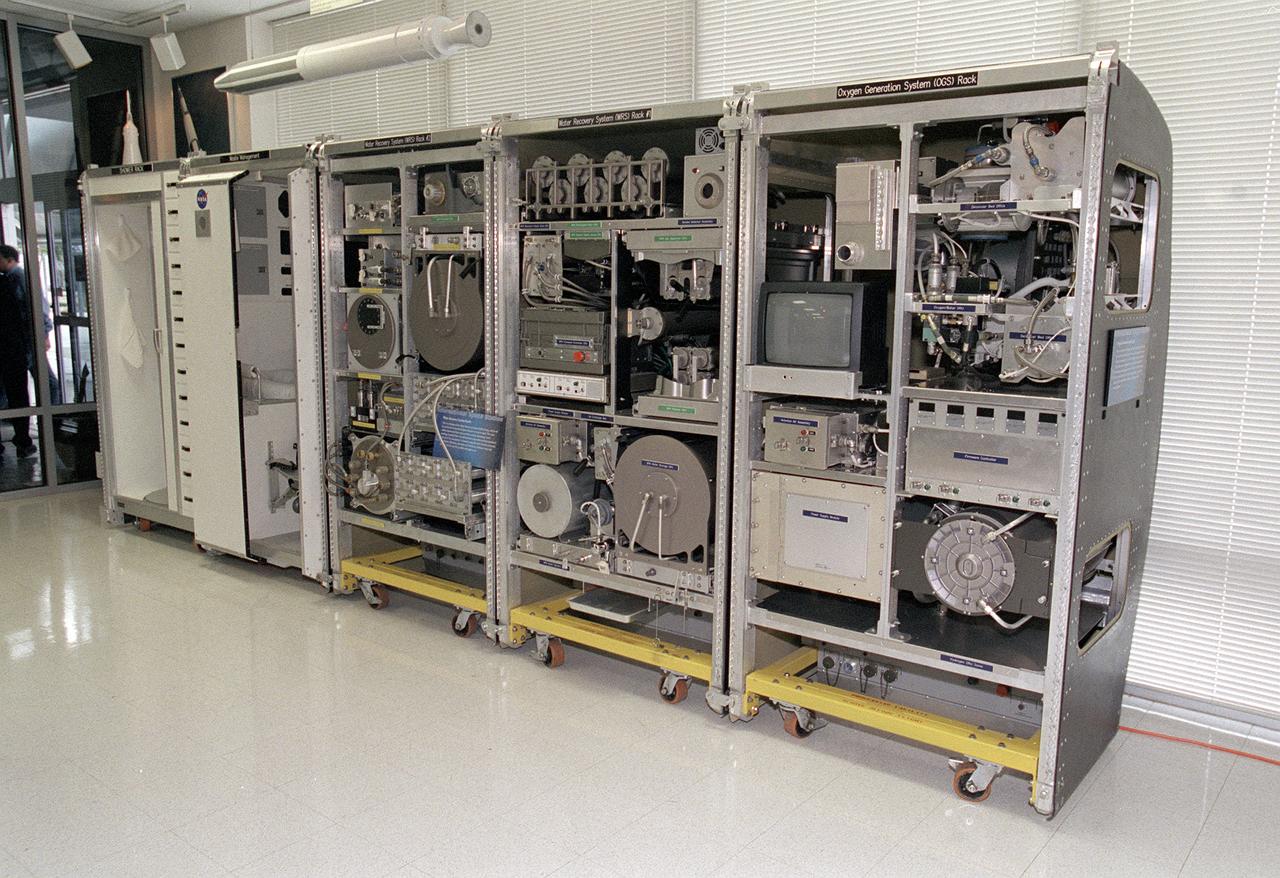
The Environmental Control and Life Support System (ECLSS) Group of the Flight Projects Directorate at the Marshall Space Flight Center in Huntsville, Alabama, is responsible for designing and building the life support systems that will provide the crew of the International Space Station (ISS) a comfortable environment in which to live and work. This photograph shows the mockup of the the ECLSS to be installed in the Node 3 module of the ISS. From left to right, shower rack, waste management rack, Water Recovery System (WRS) Rack #2, WRS Rack #1, and Oxygen Generation System (OGS) rack are shown. The WRS provides clean water through the reclamation of wastewaters and is comprised of a Urine Processor Assembly (UPA) and a Water Processor Assembly (WPA). The UPA accepts and processes pretreated crewmember urine to allow it to be processed along with other wastewaters in the WPA. The WPA removes free gas, organic, and nonorganic constituents before the water goes through a series of multifiltration beds for further purification. The OGS produces oxygen for breathing air for the crew and laboratory animals, as well as for replacing oxygen loss. The OGS is comprised of a cell stack, which electrolyzes (breaks apart the hydrogen and oxygen molecules) some of the clean water provided by the WRS, and the separators that remove the gases from the water after electrolysis.
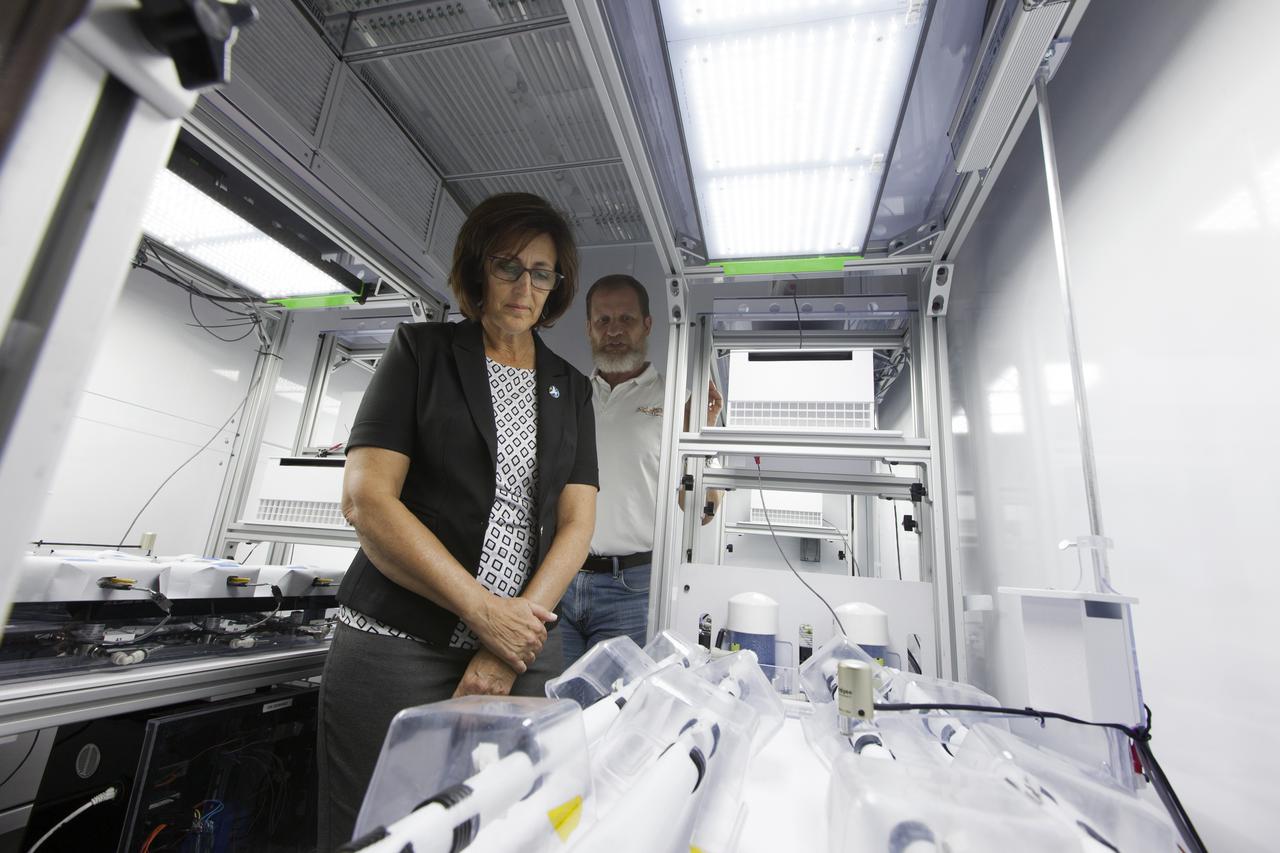
Robyn Gatens, left, deputy director, ISS Division and system capability leader for Environmental Control and Life Support Systems (ECLSS) at NASA Headquarters in Washington, tours laboratories in the Space Station Processing Facility at the agency's Kennedy Space Center in Florida, on June 13, 2018. Standing behind her is Ralph Fritsche, long-duration food production project manager at Kennedy. Gatens is viewing plant growth chambers and seeing firsthand some of the capabilities in the center's Exploration Research and Technology Programs.
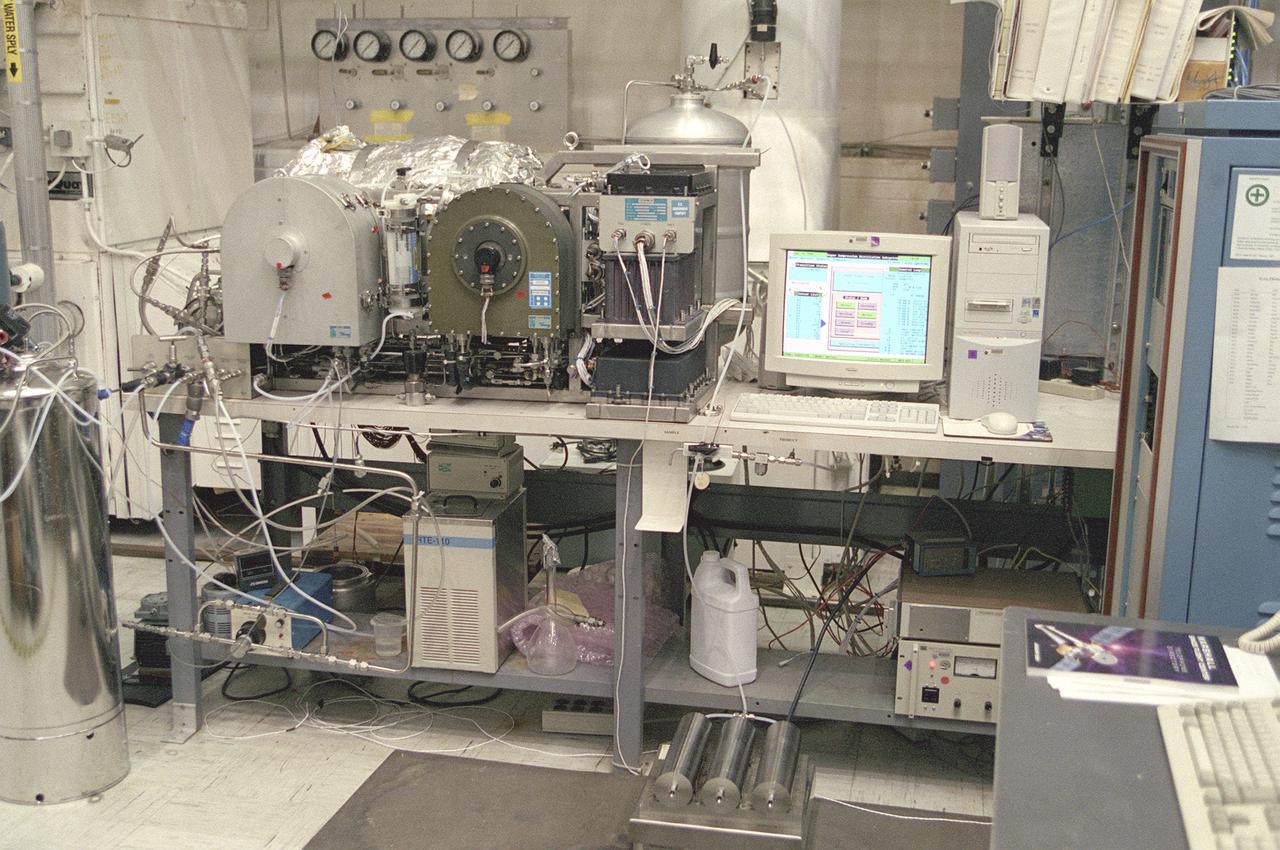
The Marshall Space Flight Center (MSFC) is responsible for designing and building the life support systems that will provide the crew of the International Space Station (ISS) a comfortable environment in which to live and work. Scientists and engineers at the MSFC are working together to provide the ISS with systems that are safe, efficient, and cost-effective. These compact and powerful systems are collectively called the Environmental Control and Life Support Systems, or simply, ECLSS. This photograph shows the fifth generation Urine Processor Development Hardware. The Urine Processor Assembly (UPA) is a part of the Water Recovery System (WRS) on the ISS. It uses a chase change process called vapor compression distillation technology to remove contaminants from urine. The UPA accepts and processes pretreated crewmember urine to allow it to be processed along with other wastewaters in the Water Processor Assembly (WPA). The WPA removes free gas, organic, and nonorganic constituents before the water goes through a series of multifiltration beds for further purification. Product water quality is monitored primarily through conductivity measurements. Unacceptable water is sent back through the WPA for reprocessing. Clean water is sent to a storage tank.
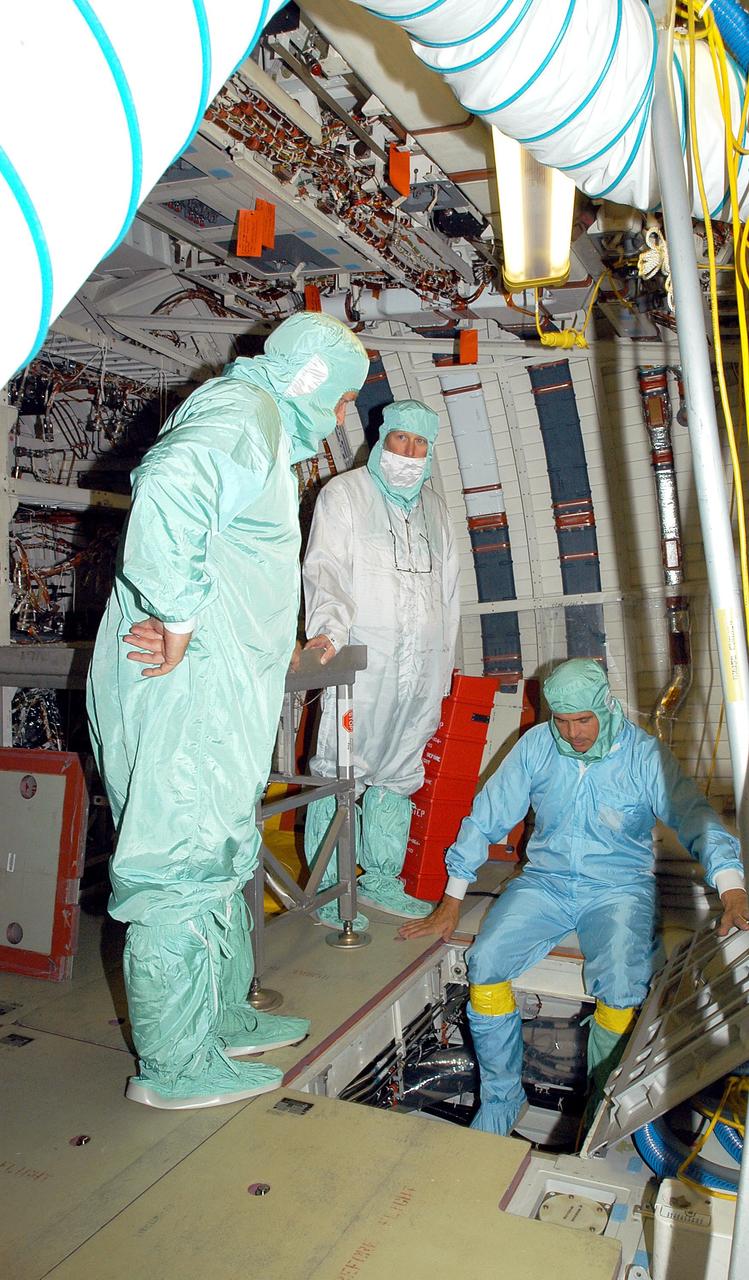
KENNEDY SPACE CENTER, FLA. - In the middeck of Endeavour, in the Orbiter Processing Facility, Center Director Jim Kennedy (far left) watches as a technician gets ready to lower himself through the LiOH door into the Environmental Control and Life Support System (ECLSS) bay. LiOH refers to lithium hydroxide, canisters of which are stored in the ECLSS bay under the middeck floor. During flight, cabin air from the cabin fan is ducted to two LiOH canisters, where carbon dioxide is removed and activated charcoal removes odors and trace contaminants. Kennedy is taking an opportunity to learn first-hand what workers are doing to enable Return to Flight. Endeavour is in an Orbiter Major Modification period.
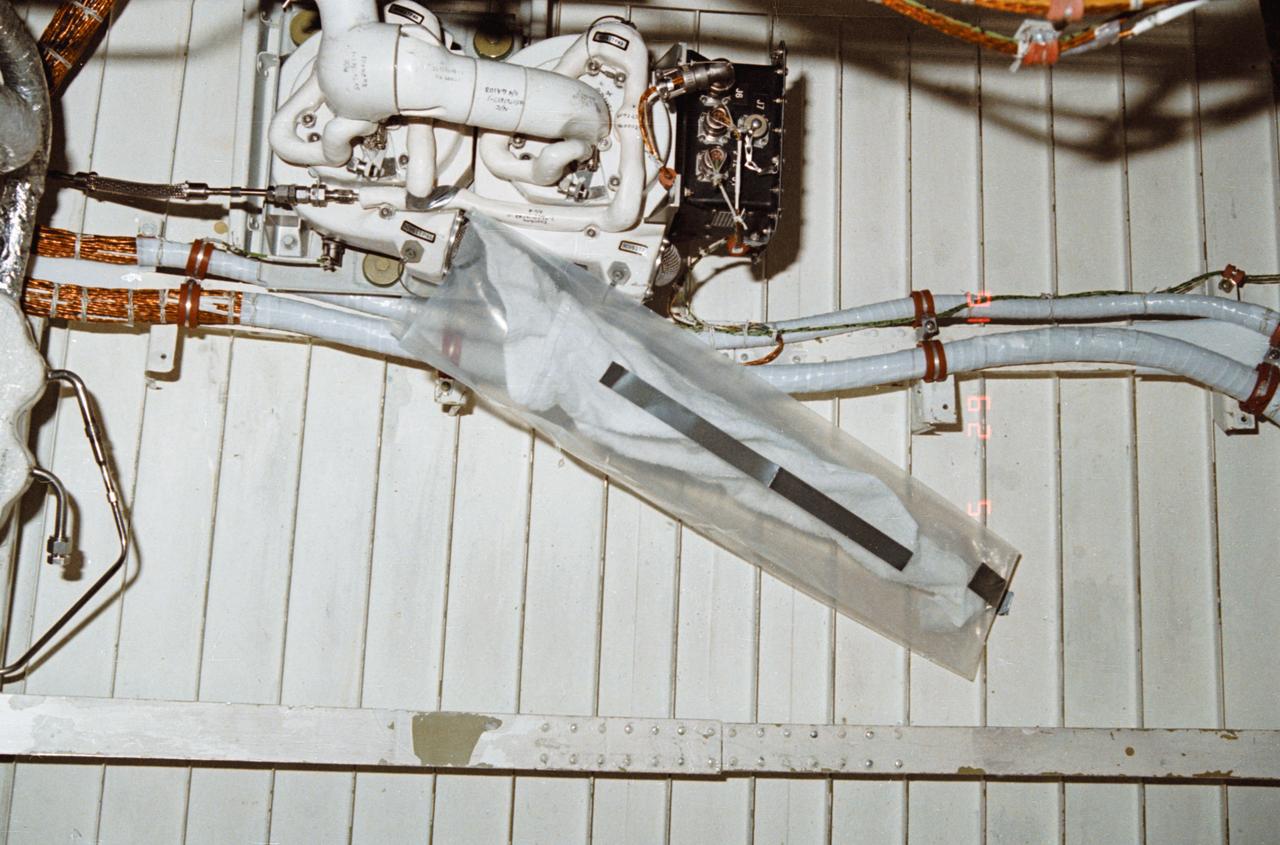
During STS-32, onboard Columbia, Orbiter Vehicle (OV) 102, a leakage problem at environmental control and life support system (ECLSS) air revitalization system (ARS) humidity separator A below the middeck is solved with a plastic bag and a towel. The towel inserted inside a plastic bag absorbed the water that had collected at the separator inlet.
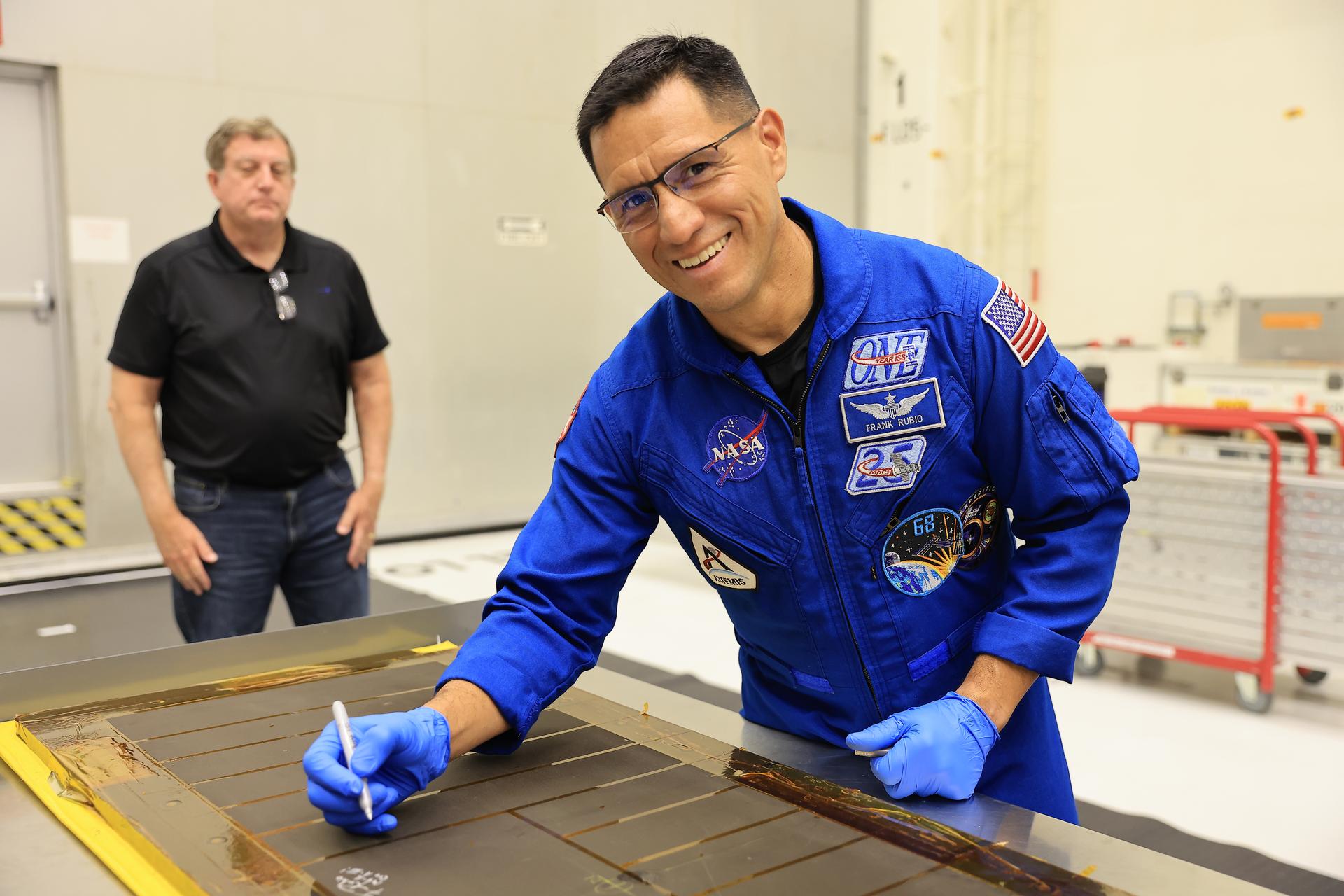
Artemis III NASA astronaut Frank Rubio, mission specialist, signs an interior center wall panel that will cover environmental control and life support system (ECLSS) components inside the Orion crew module in the Neil A. Armstrong Operations and Checkout Building at Kennedy Space Center in Florida on Wednesday, Sept. 2, 2026. The Artemis III primary and backup crew members, including Rubio; NASA astronaut Randy Bresnik, commander; ESA (European Space Agency) astronaut Luca Parmitano, pilot; NASA astronaut Andre Douglas, mission specialist; and NASA astronaut Bob Hines, backup crew member, visited Kennedy to view progress on Artemis III hardware, marking the first visit by the entire crew and backup crew to the Florida spaceport. On Orion, ECLSS will make the crew module a habitable, safe place for astronauts and is key to survival as they travel on deep space missions.
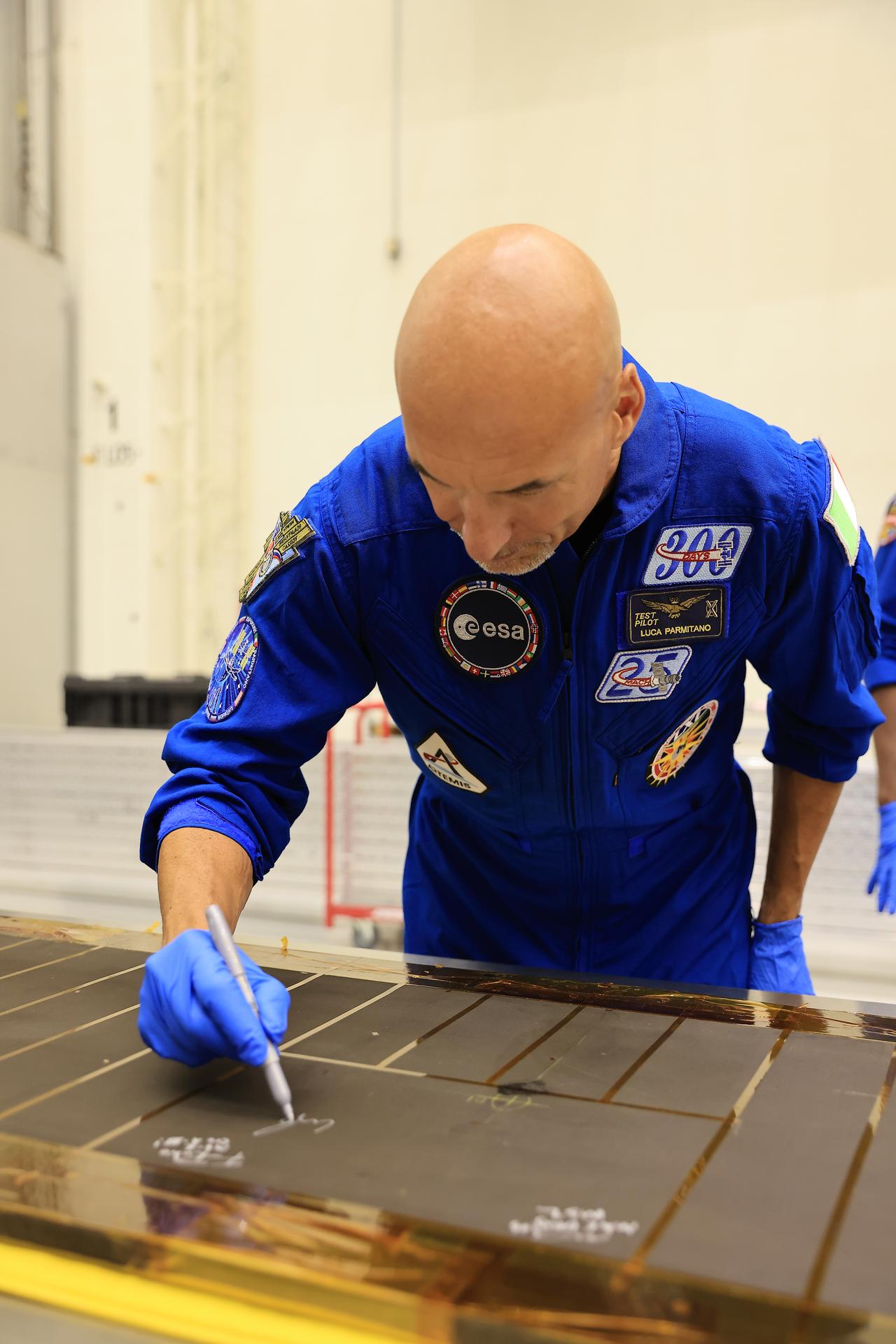
Artemis III ESA (European Space Agency) astronaut Luca Parmitano, pilot, signs an interior center wall panel that will cover environmental control and life support system (ECLSS) components inside the Orion crew module in the Neil A. Armstrong Operations and Checkout Building at Kennedy Space Center in Florida on Wednesday, Sept. 2, 2026. The Artemis III primary and backup crew members, including Parmitano; NASA astronaut Randy Bresnik, commander; NASA astronaut Andre Douglas, mission specialist; NASA astronaut Frank Rubio, mission specialist; and NASA astronaut Bob Hines, backup crew member, visited Kennedy to view progress on Artemis III hardware, marking the first visit by the entire crew and backup crew to the Florida spaceport. On Orion, ECLSS will make the crew module a habitable, safe place for astronauts and is key to survival as they travel on deep space missions.
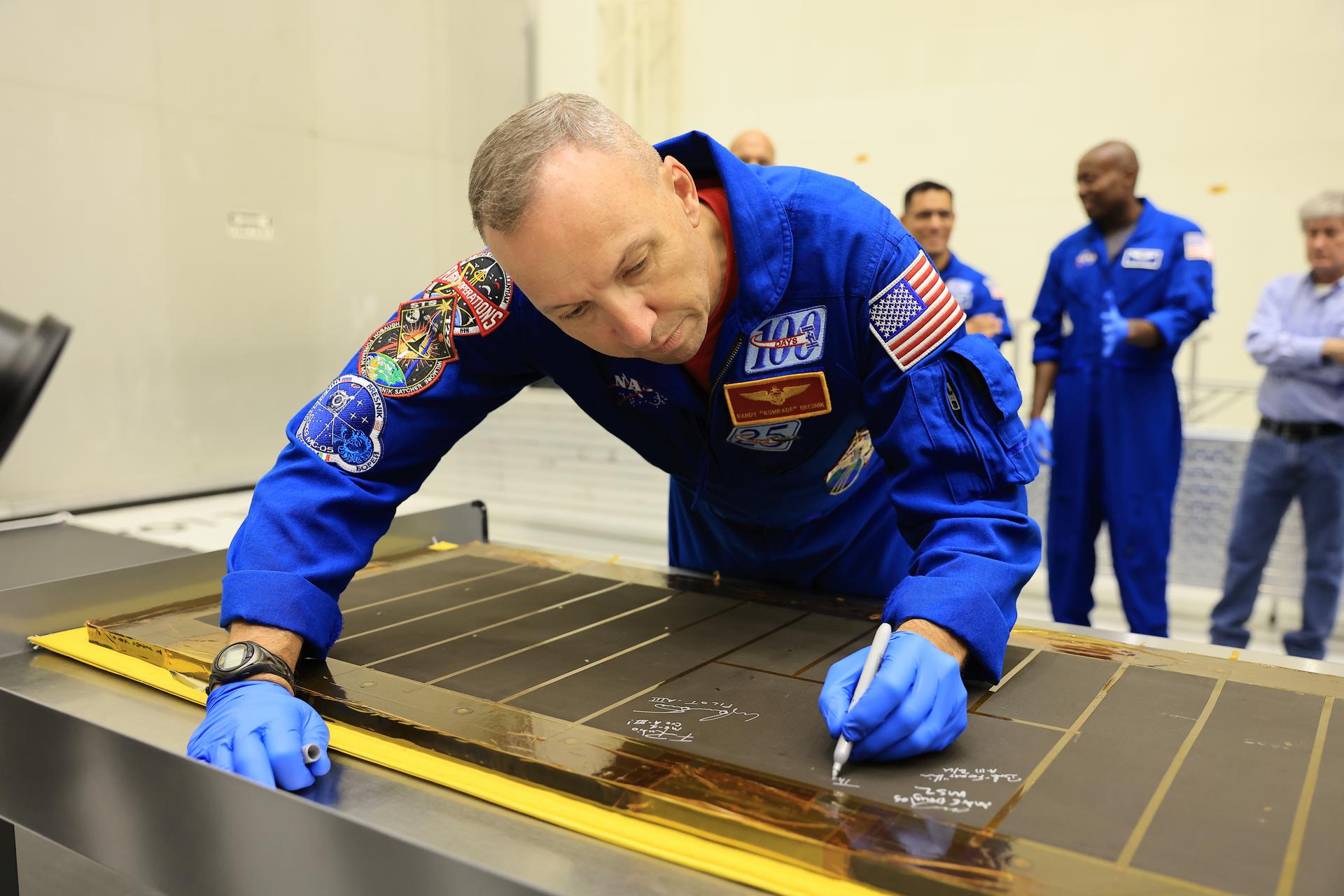
Artemis III NASA astronaut Randy Bresnik, commander, signs an interior center wall panel that will cover environmental control and life support system (ECLSS) components inside the Orion crew module in the Neil A. Armstrong Operations and Checkout Building at Kennedy Space Center in Florida on Wednesday, Sept. 2, 2026. The Artemis III primary and backup crew members, including Bresnik; ESA (European Space Agency) astronaut Luca Parmitano, pilot; NASA astronaut Andre Douglas, mission specialist; NASA astronaut Frank Rubio, mission specialist; and NASA astronaut Bob Hines, backup crew member, visited Kennedy to view progress on Artemis III hardware, marking the first visit by the entire crew and backup crew to the Florida spaceport. On Orion, ECLSS will make the crew module a habitable, safe place for astronauts and is key to survival as they travel on deep space missions.
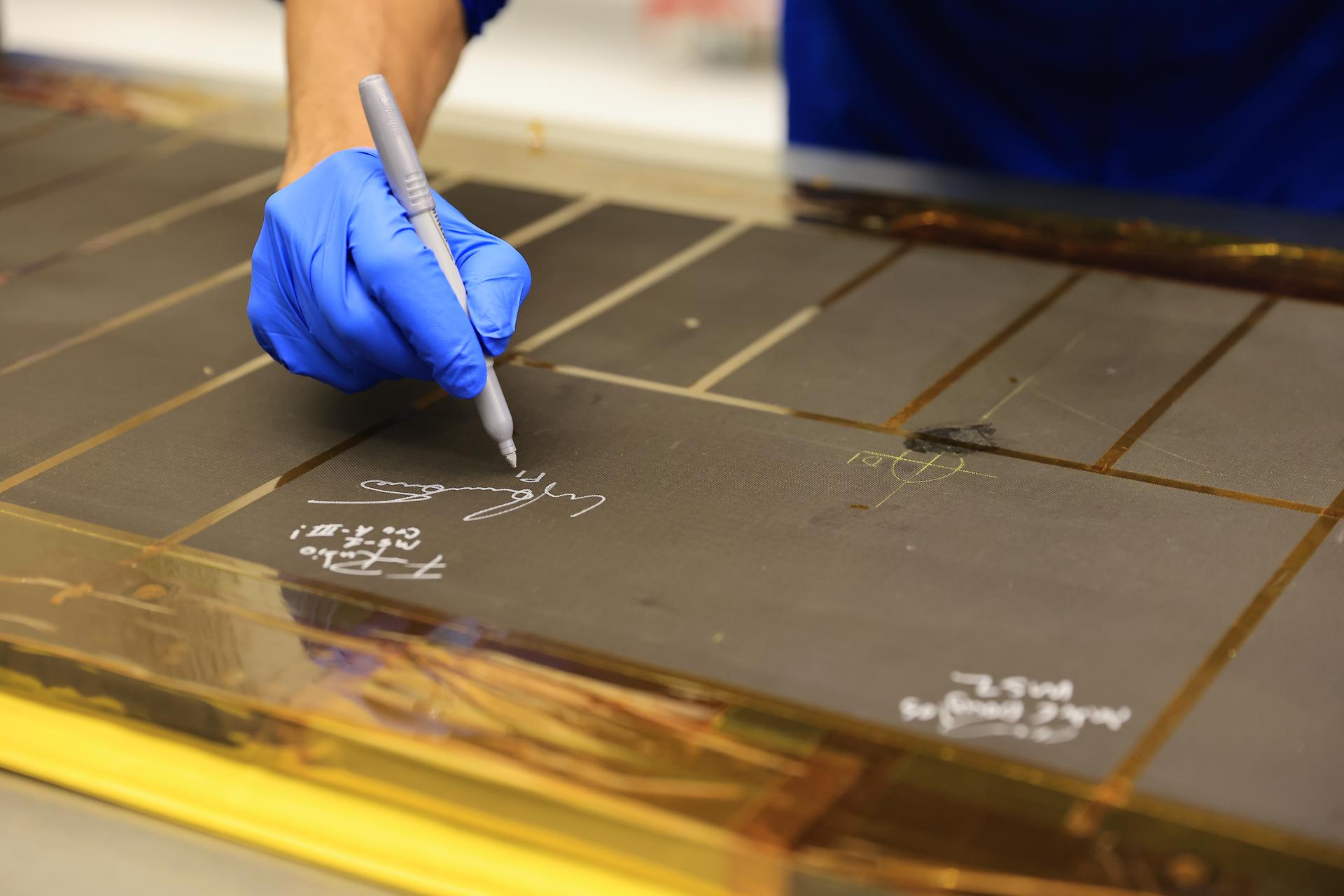
Artemis III ESA (European Space Agency) astronaut Luca Parmitano, pilot, signs an interior center wall panel that will cover environmental control and life support system (ECLSS) components inside the Orion crew module in the Neil A. Armstrong Operations and Checkout Building at Kennedy Space Center in Florida on Wednesday, Sept. 2, 2026. The Artemis III primary and backup crew members, including Parmitano; NASA astronaut Randy Bresnik, commander; NASA astronaut Andre Douglas, mission specialist; NASA astronaut Frank Rubio, mission specialist; and NASA astronaut Bob Hines, backup crew member, visited Kennedy to view progress on Artemis III hardware, marking the first visit by the entire crew and backup crew to the Florida spaceport. On Orion, ECLSS will make the crew module a habitable, safe place for astronauts and is key to survival as they travel on deep space missions.
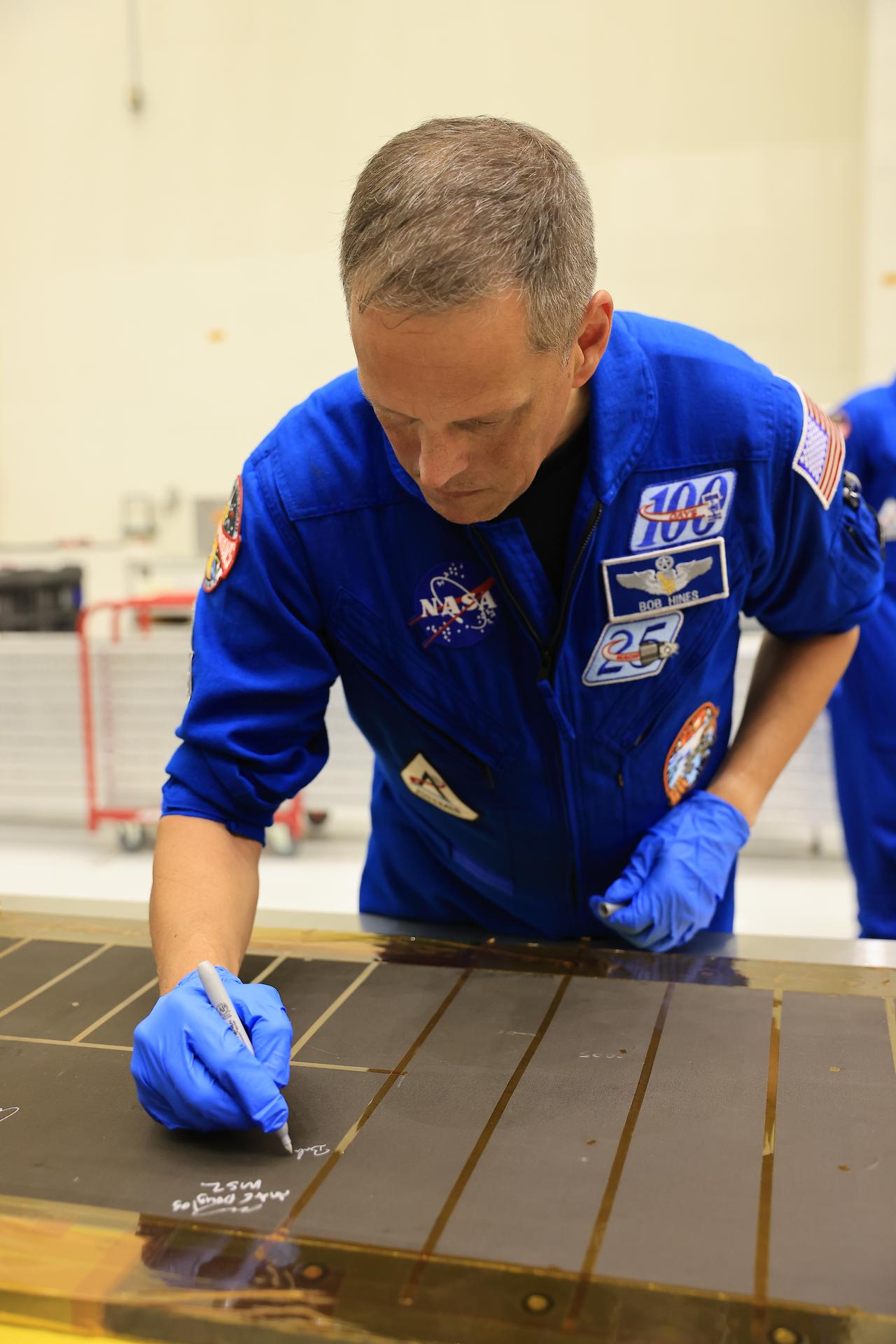
Artemis III NASA astronaut Bob Hines, backup crew member, signs an interior center wall panel that will cover environmental control and life support system (ECLSS) components inside the Orion crew module in the Neil A. Armstrong Operations and Checkout Building at Kennedy Space Center in Florida on Wednesday, Sept. 2, 2026. The Artemis III primary and backup crew members, including Hines; NASA astronaut Randy Bresnik, commander; ESA (European Space Agency) astronaut Luca Parmitano, pilot; NASA astronaut Andre Douglas, mission specialist; NASA astronaut Frank Rubio, mission specialist, visited Kennedy to view progress on Artemis III hardware, marking the first visit by the entire crew and backup crew to the Florida spaceport. On Orion, ECLSS will make the crew module a habitable, safe place for astronauts and is key to survival as they travel on deep space missions.
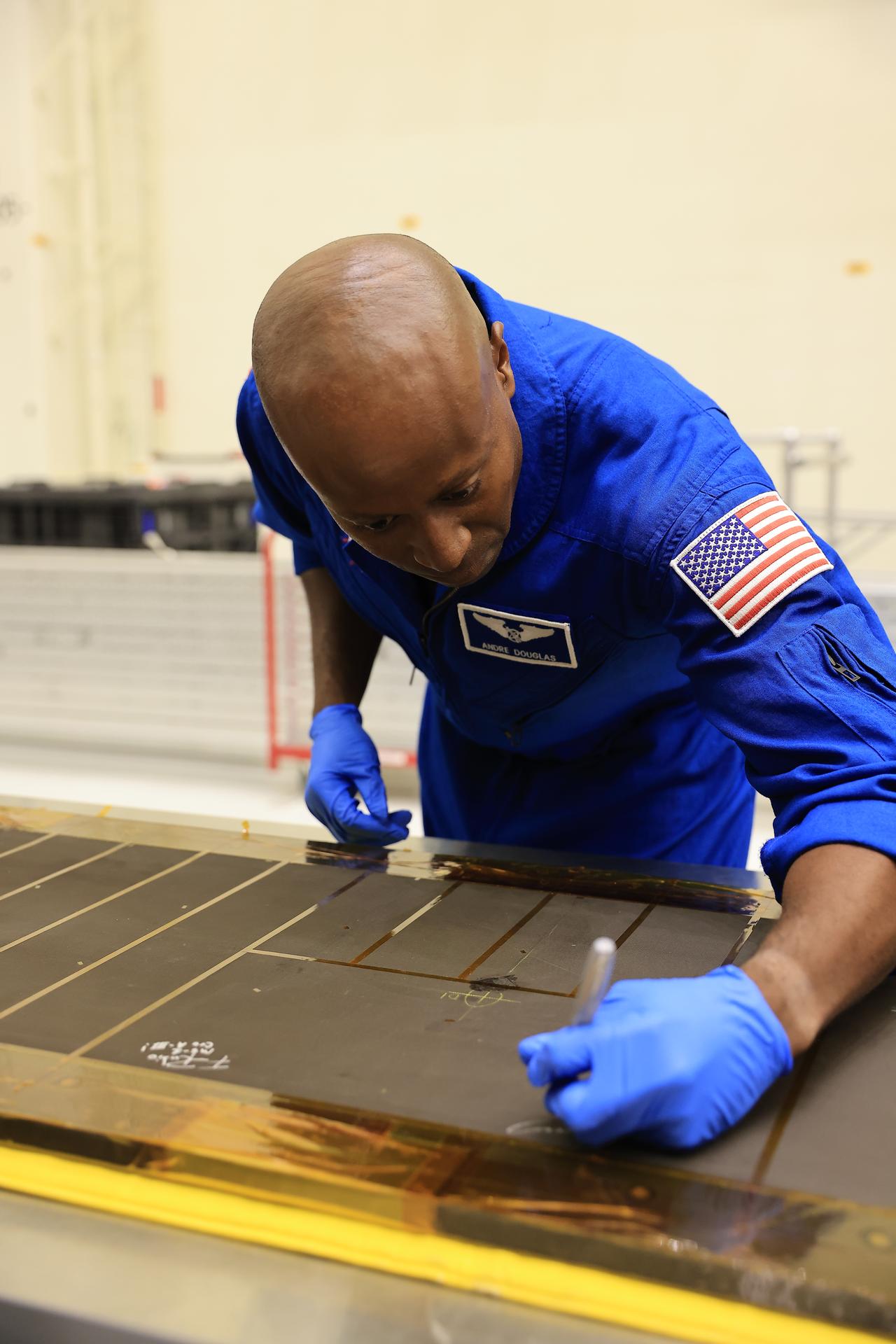
Artemis III NASA astronaut Andre Douglas, mission specialist, signs an interior center wall panel that will cover environmental control and life support system (ECLSS) components inside the Orion crew module in the Neil A. Armstrong Operations and Checkout Building at Kennedy Space Center in Florida on Wednesday, Sept. 2, 2026. The Artemis III primary and backup crew members, including Douglas; NASA astronaut Randy Bresnik, commander; ESA (European Space Agency) astronaut Luca Parmitano, pilot; NASA astronaut Frank Rubio, mission specialist; and NASA astronaut Bob Hines, backup crew member, visited Kennedy to view progress on Artemis III hardware, marking the first visit by the entire crew and backup crew to the Florida spaceport. On Orion, ECLSS will make the crew module a habitable, safe place for astronauts and is key to survival as they travel on deep space missions.
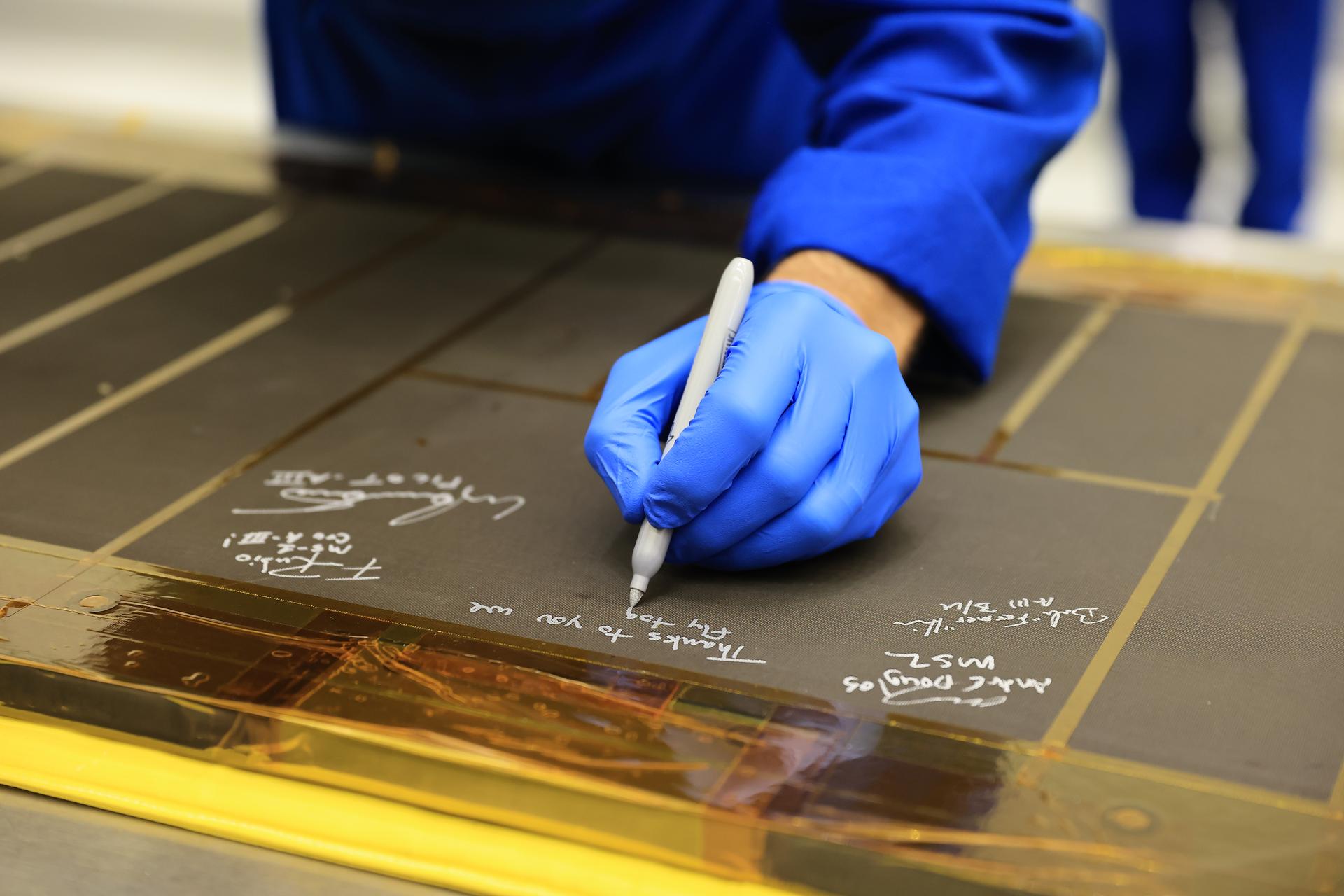
Artemis III NASA astronaut Randy Bresnik, commander, signs an interior center wall panel that will cover environmental control and life support system (ECLSS) components inside the Orion crew module in the Neil A. Armstrong Operations and Checkout Building at Kennedy Space Center in Florida on Wednesday, Sept. 2, 2026. The Artemis III primary and backup crew members, including Bresnik; ESA (European Space Agency) astronaut Luca Parmitano, pilot; NASA astronaut Andre Douglas, mission specialist; NASA astronaut Frank Rubio, mission specialist; and NASA astronaut Bob Hines, backup crew member, visited Kennedy to view progress on Artemis III hardware, marking the first visit by the entire crew and backup crew to the Florida spaceport. On Orion, ECLSS will make the crew module a habitable, safe place for astronauts and is key to survival as they travel on deep space missions.
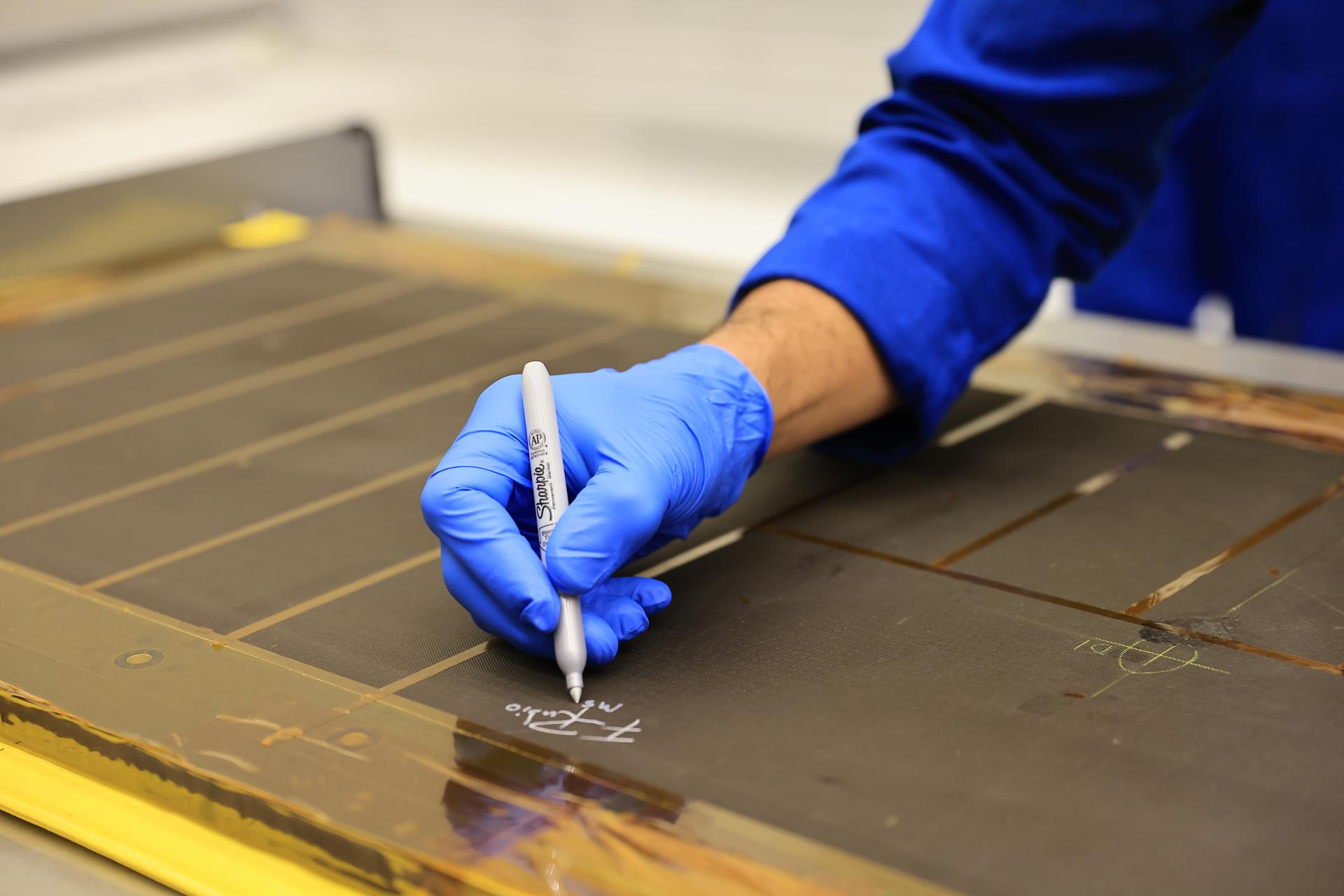
Artemis III NASA astronaut Frank Rubio, mission specialist, signs an interior center wall panel that will cover environmental control and life support system (ECLSS) components inside the Orion crew module in the Neil A. Armstrong Operations and Checkout Building at Kennedy Space Center in Florida on Wednesday, Sept. 2, 2026. The Artemis III primary and backup crew members, including Rubio; NASA astronaut Randy Bresnik, commander; ESA (European Space Agency) astronaut Luca Parmitano, pilot; NASA astronaut Andre Douglas, mission specialist; and NASA astronaut Bob Hines, backup crew member, visited Kennedy to view progress on Artemis III hardware, marking the first visit by the entire crew and backup crew to the Florida spaceport. On Orion, ECLSS will make the crew module a habitable, safe place for astronauts and is key to survival as they travel on deep space missions.
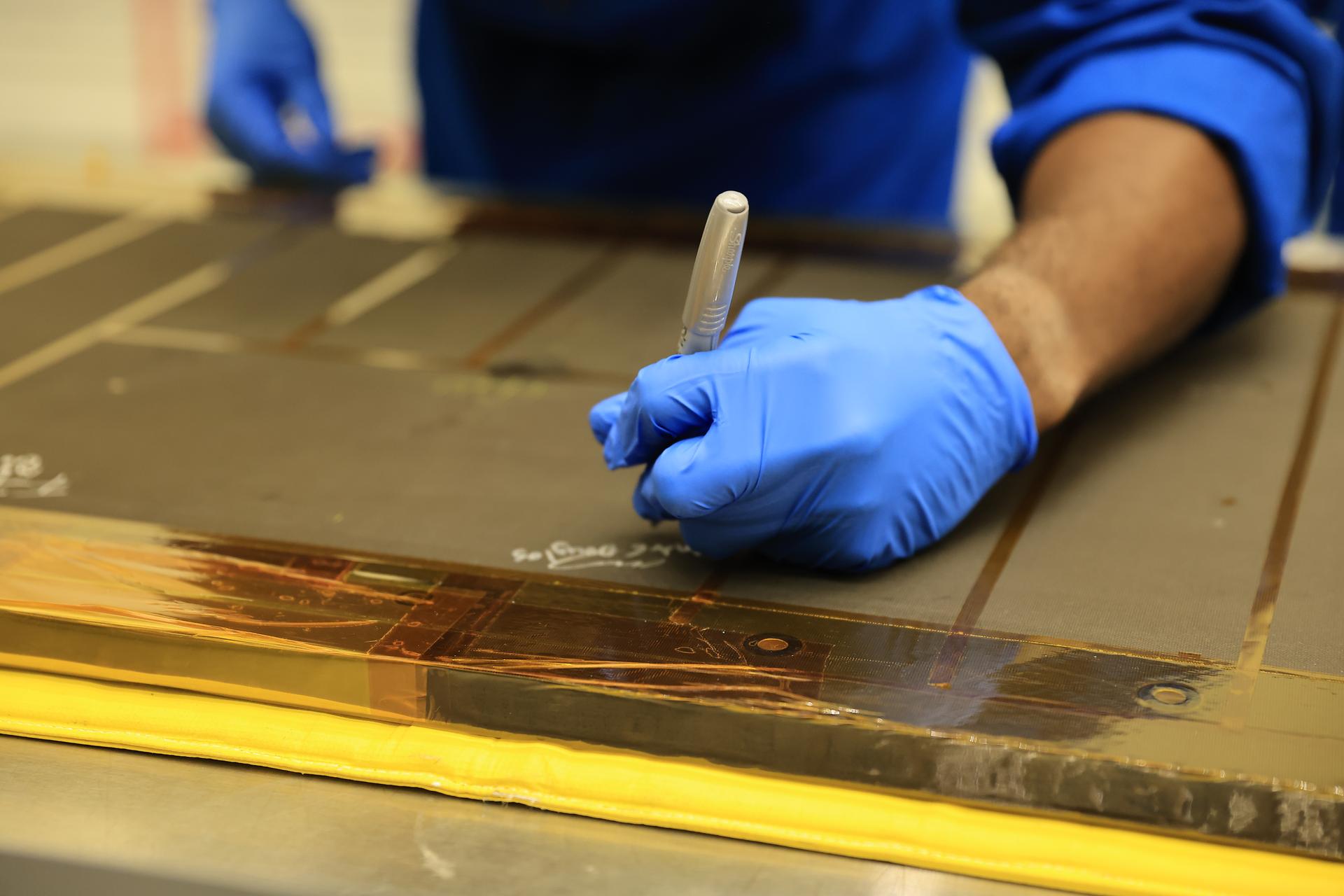
Artemis III NASA astronaut Andre Douglas, mission specialist, signs an interior center wall panel that will cover environmental control and life support system (ECLSS) components inside the Orion crew module in the Neil A. Armstrong Operations and Checkout Building at Kennedy Space Center in Florida on Wednesday, Sept. 2, 2026. The Artemis III primary and backup crew members, including Douglas; NASA astronaut Randy Bresnik, commander; ESA (European Space Agency) astronaut Luca Parmitano, pilot; NASA astronaut Frank Rubio, mission specialist; and NASA astronaut Bob Hines, backup crew member, visited Kennedy to view progress on Artemis III hardware, marking the first visit by the entire crew and backup crew to the Florida spaceport. On Orion, ECLSS will make the crew module a habitable, safe place for astronauts and is key to survival as they travel on deep space missions.
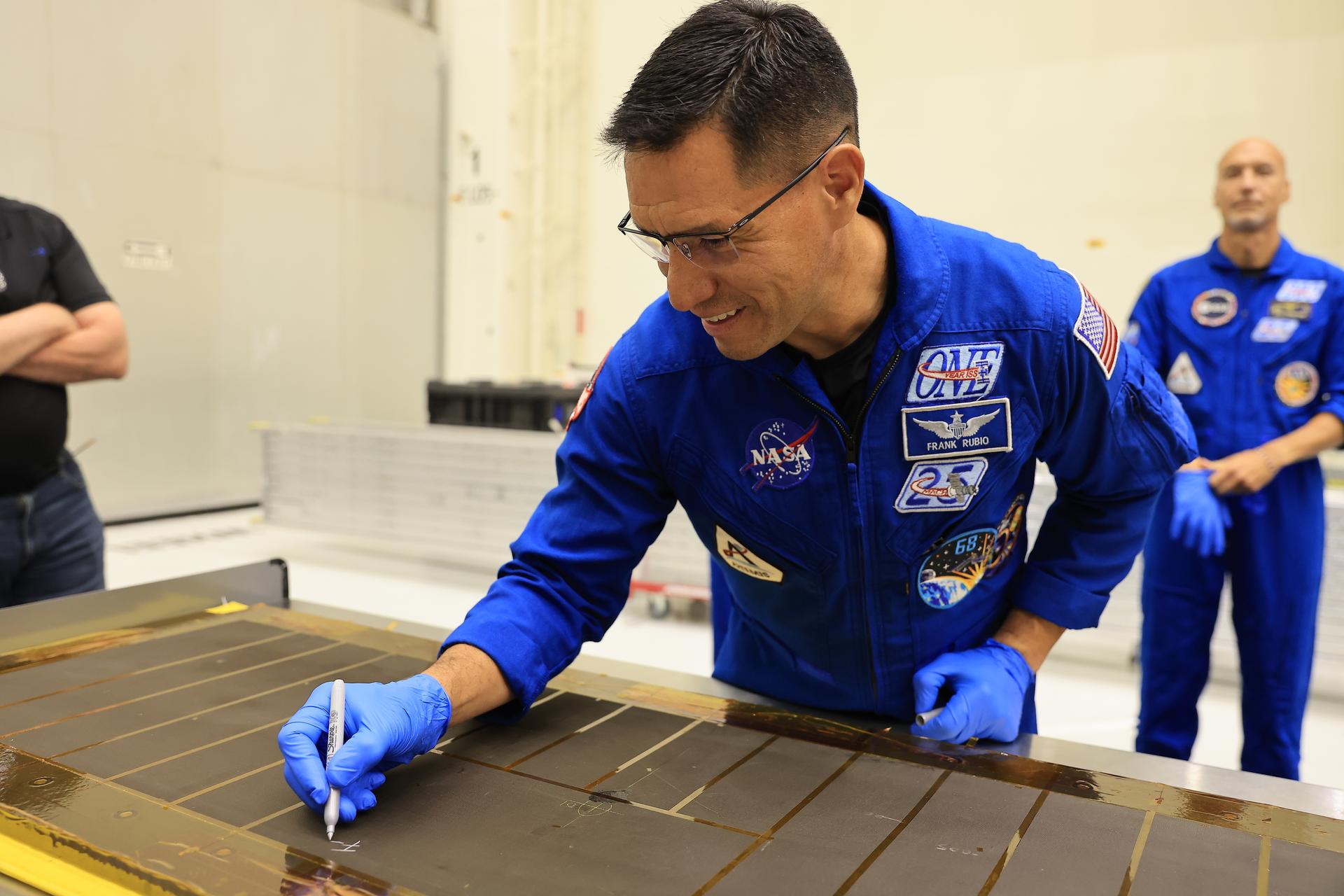
Artemis III NASA astronaut Frank Rubio, mission specialist, signs an interior center wall panel that will cover environmental control and life support system (ECLSS) components inside the Orion crew module in the Neil A. Armstrong Operations and Checkout Building at Kennedy Space Center in Florida on Wednesday, Sept. 2, 2026. The Artemis III primary and backup crew members, including Rubio; NASA astronaut Randy Bresnik, commander; ESA (European Space Agency) astronaut Luca Parmitano, pilot; NASA astronaut Andre Douglas, mission specialist; and NASA astronaut Bob Hines, backup crew member, visited Kennedy to view progress on Artemis III hardware, marking the first visit by the entire crew and backup crew to the Florida spaceport. On Orion, ECLSS will make the crew module a habitable, safe place for astronauts and is key to survival as they travel on deep space missions.

iss069e088358 (9/14/2023) --- Japan Aerospace Exploration Agency (JAXA) astronaut Satoshi Furukawa is seen processing samples from the JEM Water Recovery System (JWRS) in the KIBO module aboard the International Space Station (ISS). The JWRS demonstrates that potable water can be generated from urine. In the past, urine and wastewater were collected and stored, or vented overboard. However, for long-term space missions, water supply could become a limiting factor. Demonstrating the function of this water recovery system on orbit contributes to updating the Environmental Control and Life Support System (ECLSS) to support astronauts on the space station and future exploration missions.