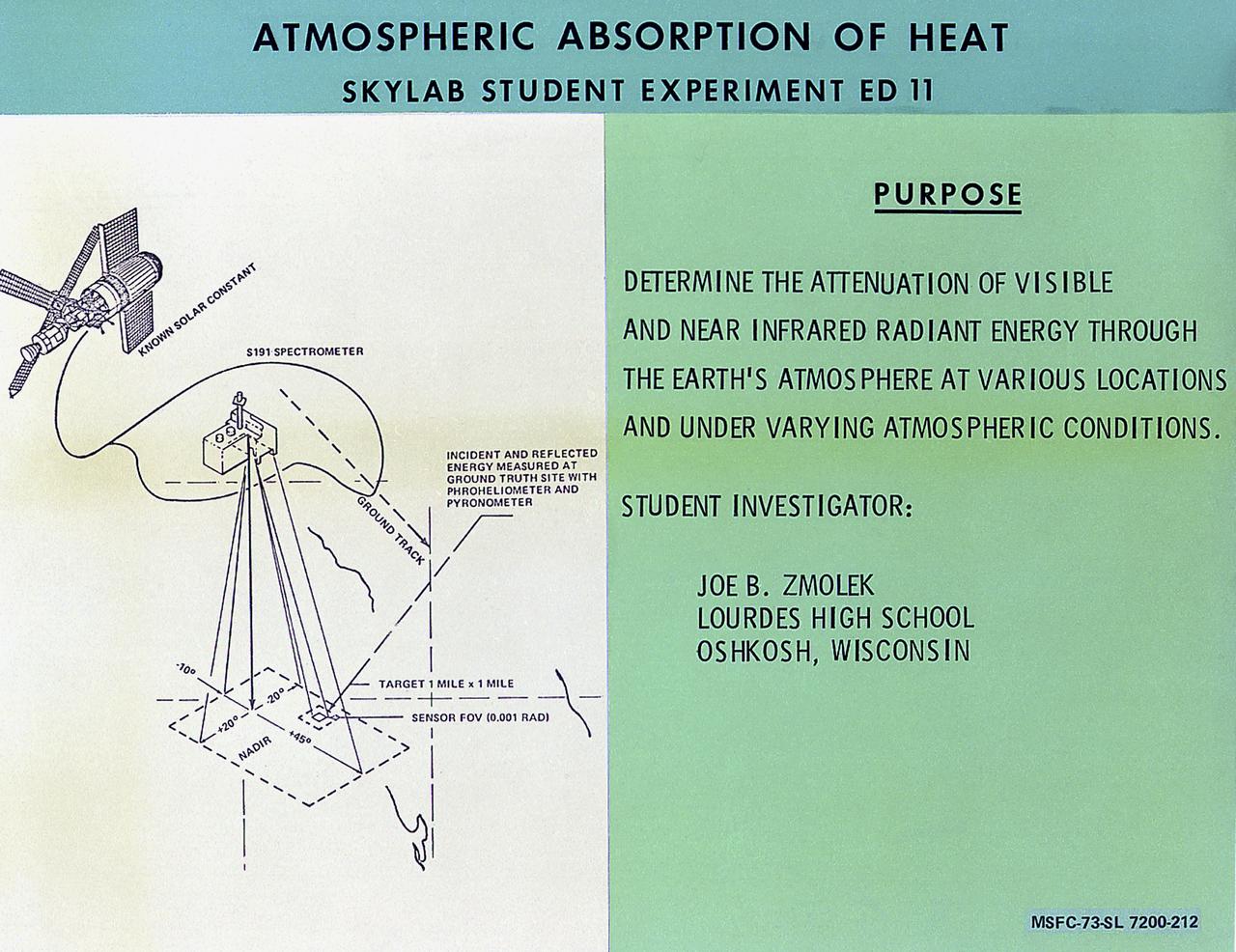
This chart describes the Skylab student experiment, Atmospheric Absorption of Heat, proposed by Joe B. Zmolek of Oshkosh, Wisconsin. This experiment utilized Skylab's Earth Resources Experiment spectrometers to determine the attenuation of radiant energy in the visible and near-infrared spectrums for both densely and sparsely populated areas. In March 1972, NASA and the National Science Teachers Association selected 25 experiment proposals for flight on Skylab. Science advisors from the Marshall Space Flight Center aided and assisted the students in developing the proposals for flight on Skylab.
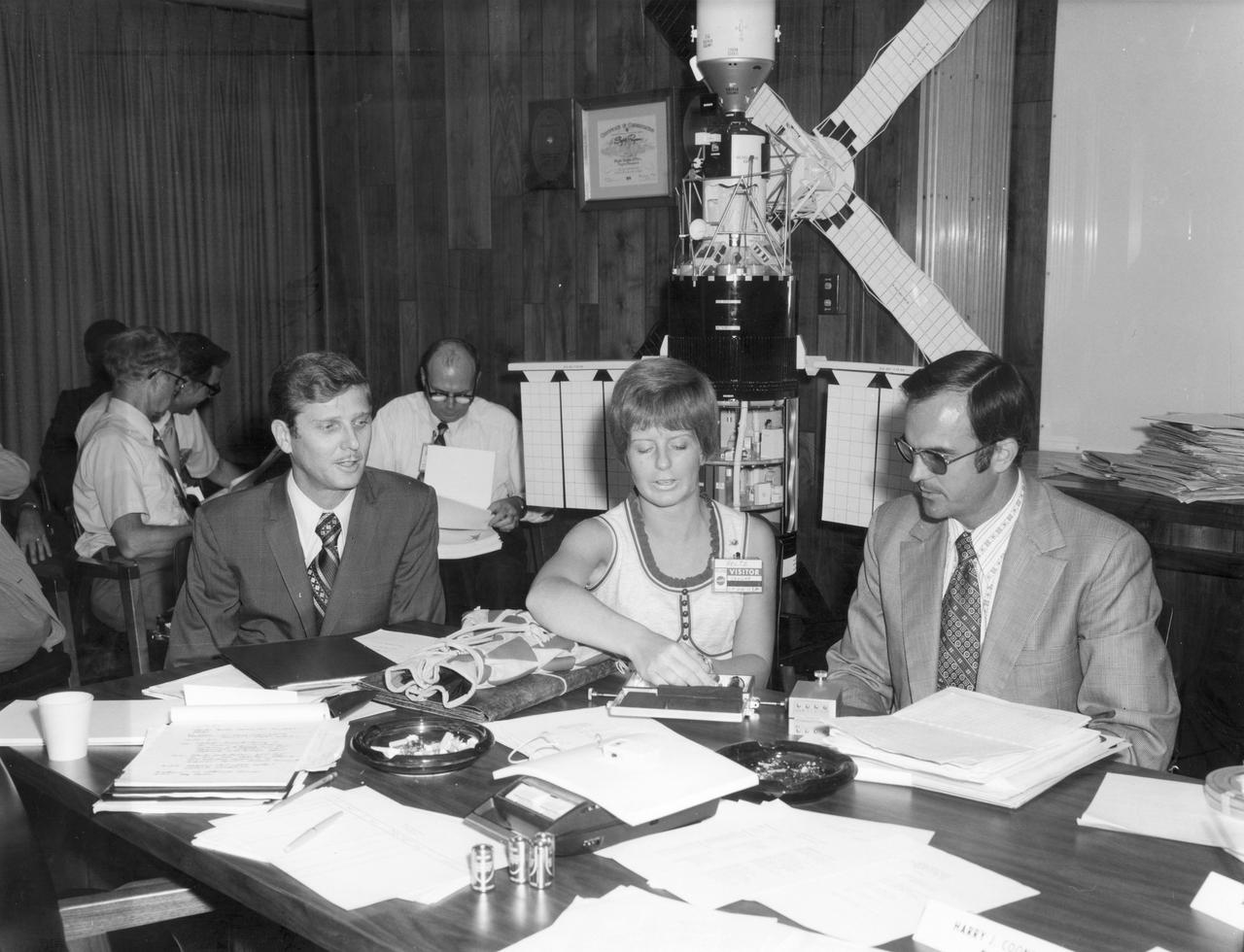
Miss Cheryl Peltz, high school student from Littleton, Colorado, discusses her “Cytoplasmic Streaming in Zero Gravity” experiment with Ed Armstrong (left) of the NASA Manned Spacecraft Center, and her advisor Charles Cothran (right) of the NASA Marshall Space Flight Center (MSFC). She was one of the 25 winners of a contest in which some 3,500 high school students proposed experiments for the following year’s Skylab Mission. Of the 25 students, 6 did not see their experiments conducted on Skylab because the experiments were not compatible with Skylab hardware and timelines. Of the 19 remaining, 11 experiments required the manufacture of equipment, of which Miss Peltz’s was one.
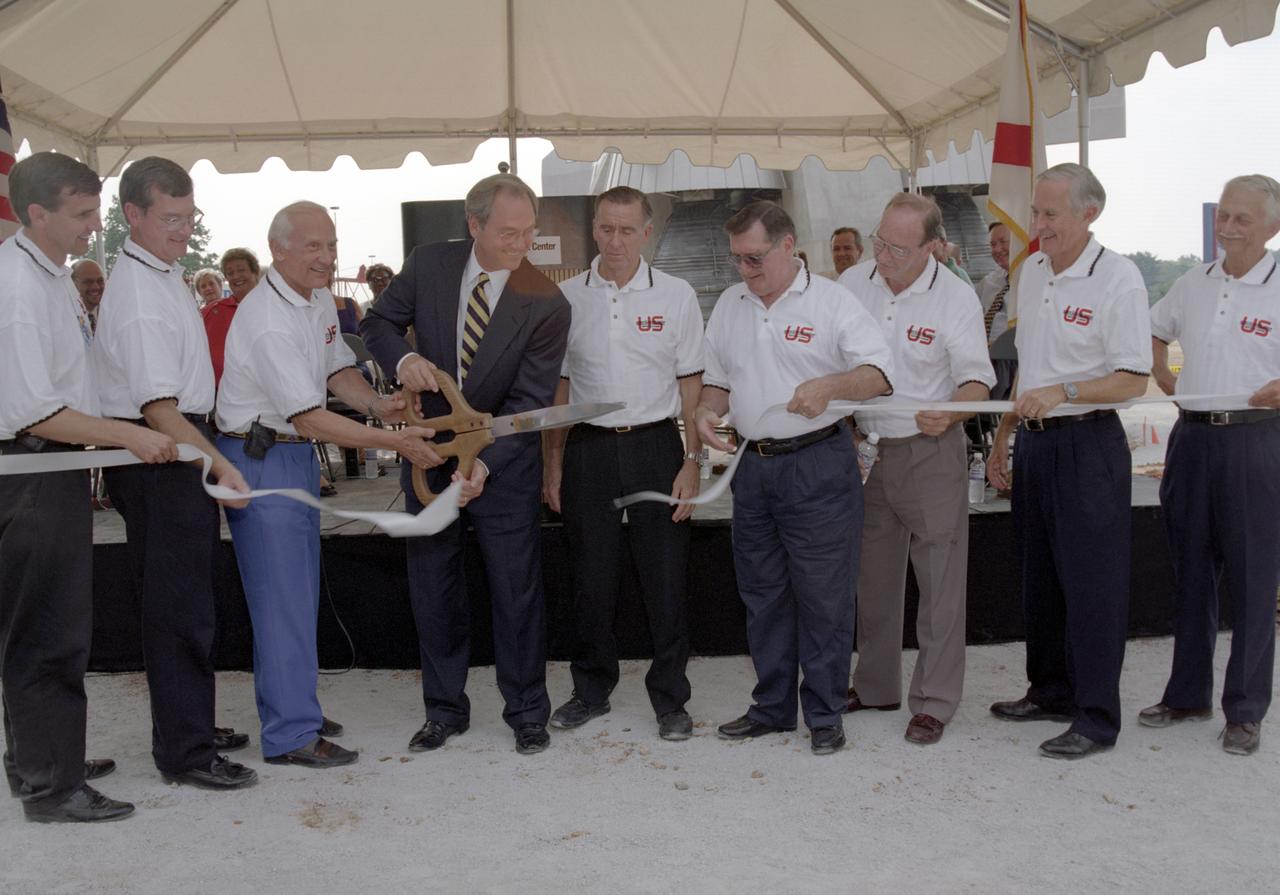
Alabama Governor Don Seigleman cuts the ribbon marking the dedication of the Saturn V rocket replica that was constructed at the U. S. Space and Rocket Center in honor of the 30th arniversary of the lunar landing. Accompanying the Governor are (L/R): Mike Wing, CEO US Space Rocket Center; Mike Gillespie, Madison County Commissioner, Dist. Seven; Buzz Aldrin, Apollo 11 Astronaut; Governor Seigleman; Walt Cunningham, Apollo 7 Astronaut; Dick Gordon, Apollo 12 Astronaut; Ed Mitchell, Apollo 14 Astronaut; Charlie Duke, Apollo 16 Astronaut; and Owen Garriott, Skylab 3 Astronaut.
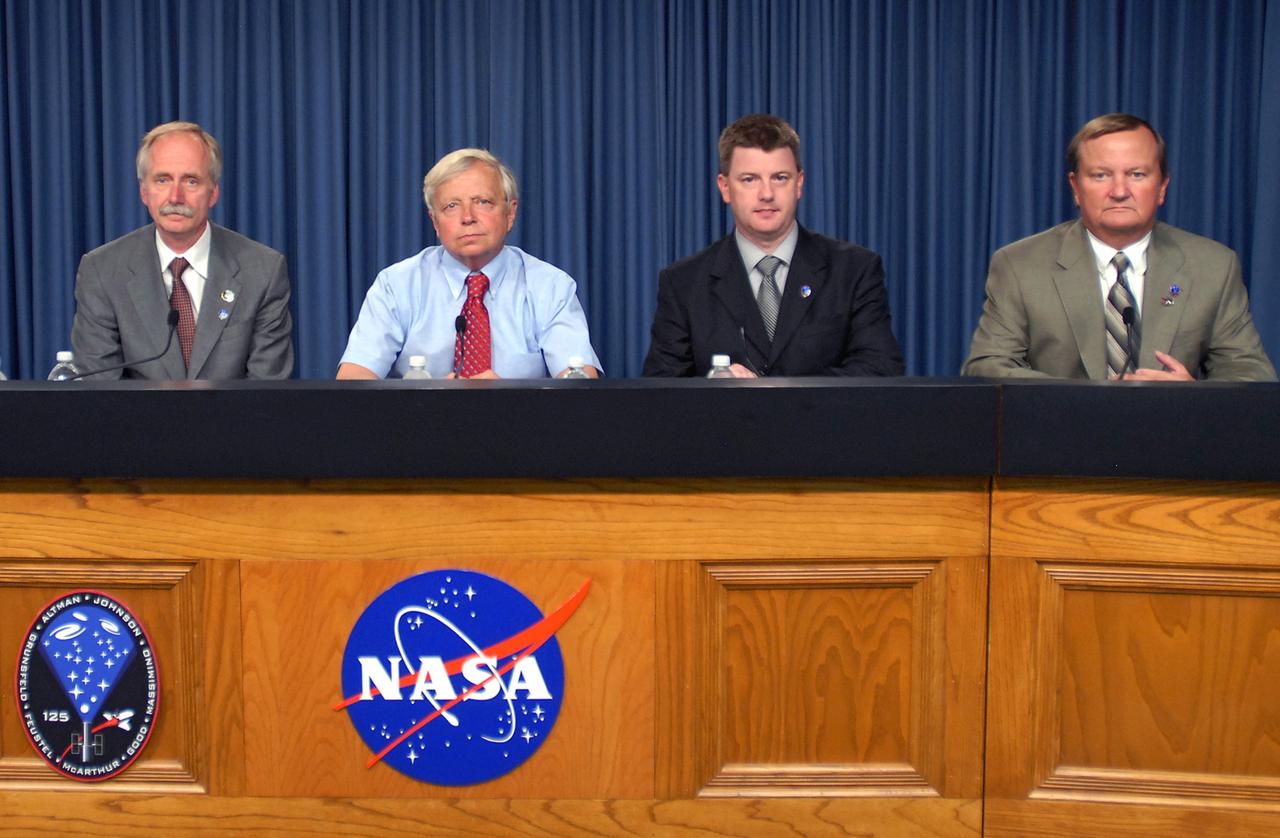
CAPE CANAVERAL, Fla. – At NASA's Kennedy Space Center in Florida, a press conference following the successful launch of space shuttle Atlantis on the STS-125 mission featured (from left) Associate Administrator for NASA's Space Operations Directorate William Gerstenmaier, Associate Administrator for NASA's Science Mission Directorate Ed Weiler, Launch Integration Manager Mike Moses and Shuttle Launch Director Mike Leinbach. Atlantis will rendezvous with NASA's Hubble Space Telescope. Liftoff was on time at 2:01 p.m. EDT. Atlantis' 11-day flight will include five spacewalks to refurbish and upgrade the telescope with state-of-the-art science instruments that will expand Hubble's capabilities and extend its operational lifespan through at least 2014. The payload includes a Wide Field Camera 3, Fine Guidance Sensor and the Cosmic Origins Spectrograph. Photo credit: NASA/Jim Grossmann
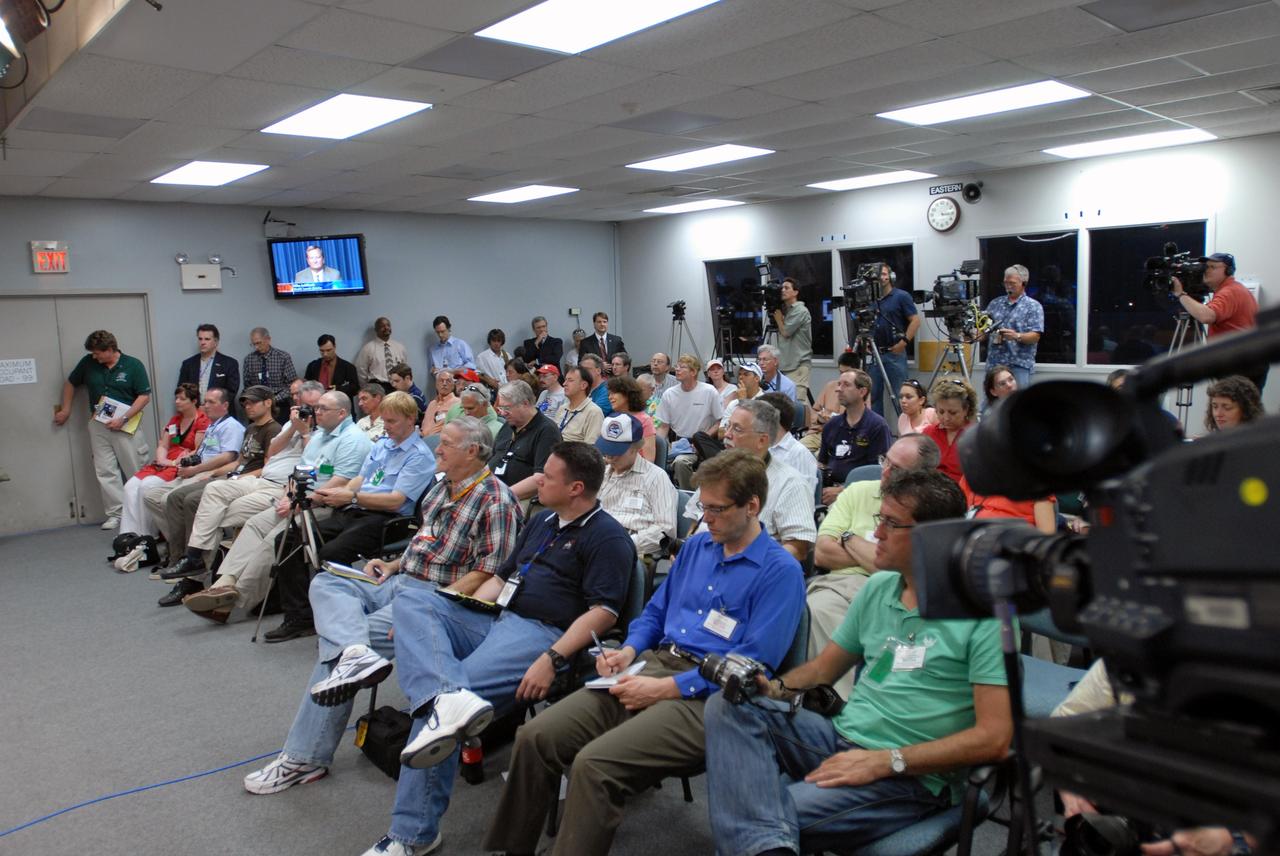
CAPE CANAVERAL, Fla. – The NASA News Auditorium is filled with media during the post-launch press conference at NASA's Kennedy Space Center in Florida. Featured on the dais were Associate Administrator for NASA's Space Operations Directorate William Gerstenmaier, Associate Administrator for NASA's Science Mission Directorate Ed Weiler, Launch Integration Manager Mike Moses and Shuttle Launch Director Mike Leinbach. The conference followed the successful launch of space shuttle Atlantis on the STS-125 mission to service NASA's Hubble Space Telescope. Atlantis' 11-day flight will include five spacewalks to refurbish and upgrade the telescope with state-of-the-art science instruments that will expand Hubble's capabilities and extend its operational lifespan through at least 2014. The payload includes a Wide Field Camera 3, Fine Guidance Sensor and the Cosmic Origins Spectrograph. Photo credit: NASA/Jim Grossmann
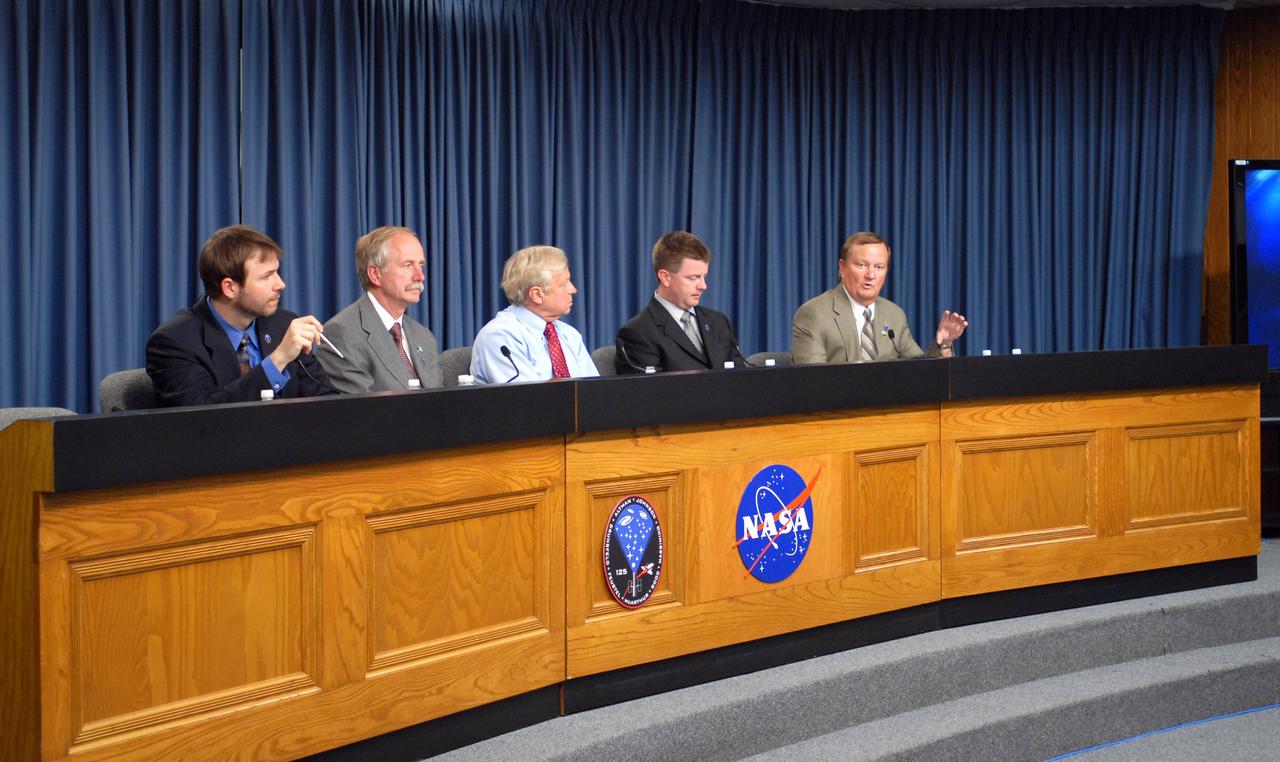
CAPE CANAVERAL, Fla. – During a press conference in the NASA News Auditorium at NASA's Kennedy Space Center in Florida, Shuttle Launch Director Mike Leinbach, right, answers a question from the media. Others from left are NASA Public Affairs Officer John Yembrick, who moderated, Associate Administrator for NASA's Space Operations Directorate William Gerstenmaier, Associate Administrator for NASA's Science Mission Directorate Ed Weiler and Launch Integration Manager Mike Moses. The conference followed the successful launch of space shuttle Atlantis on the STS-125 mission to service NASA's Hubble Space Telescope. Atlantis' 11-day flight will include five spacewalks to refurbish and upgrade the telescope with state-of-the-art science instruments that will expand Hubble's capabilities and extend its operational lifespan through at least 2014. The payload includes a Wide Field Camera 3, Fine Guidance Sensor and the Cosmic Origins Spectrograph. Photo credit: NASA/Jim Grossmann
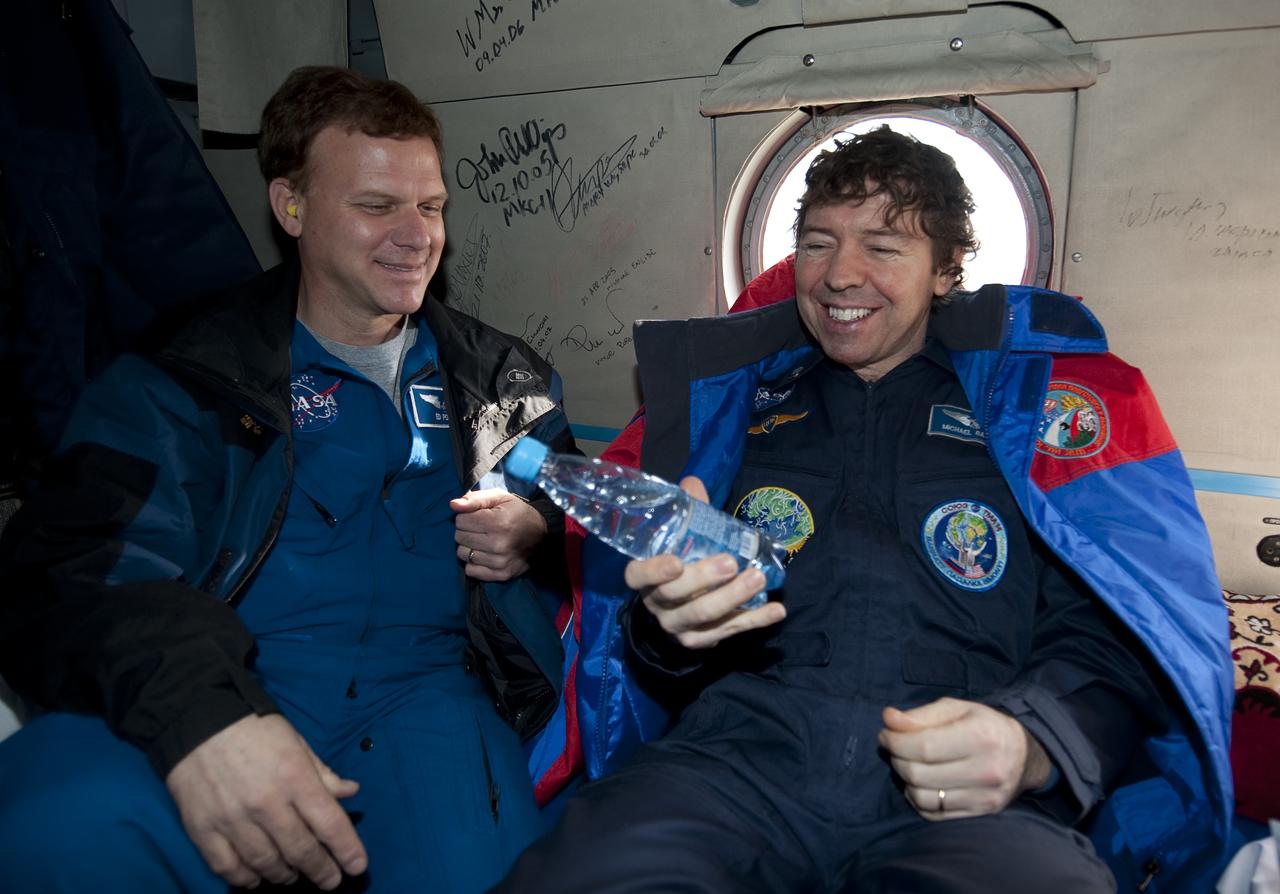
NASA Flight Surgeon Ed Powers, left, laughs as Expedition 20 Flight Engineer Michael Barratt talks about how strange, weight and gravity feel when holding a bottle of water shortly after Barratt, Expedition 20 Commander Gennady Padalka, and spaceflight participant Guy Laliberté landed their Soyuz TMA-14 capsule near the town of Arkalyk, Kazakhstan on Sunday, Oct. 11, 2009. Padalka and Barratt are returning from six months onboard the International Space Station, along with Laliberté who arrived at the station on Oct. 2 with Expedition 21 Flight Engineers Jeff Williams and Maxim Suraev aboard the Soyuz TMA-16 spacecraft. Photo Credit: (NASA/Bill Ingalls)
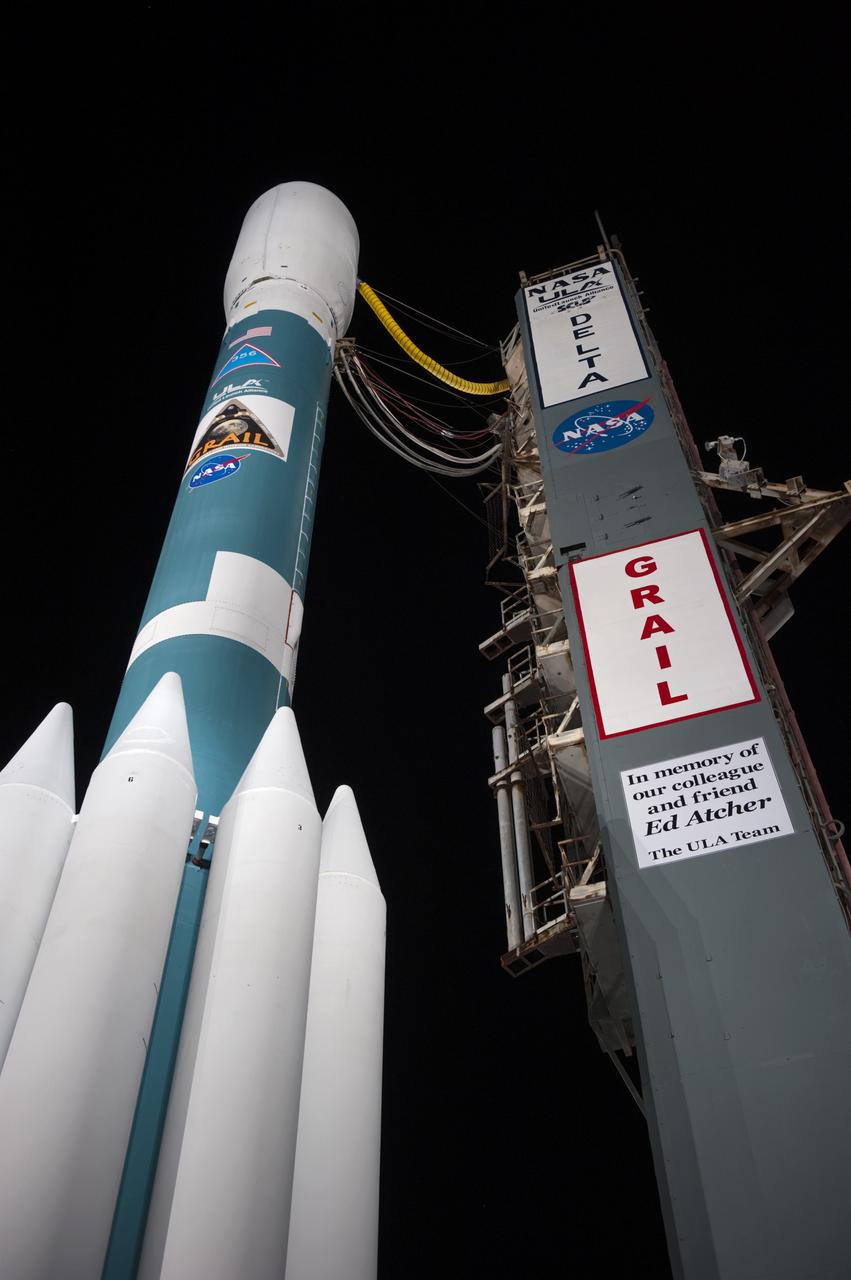
CAPE CANAVERAL, Fla. -- At Space Launch Complex 17B on Cape Canaveral Air Force Station, United Launch Alliance (ULA) honors the late Ed Atcher with a placard posted on the service tower next to the ULA Delta II rocket that will launch NASA's Gravity Recovery and Interior Laboratory mission. The mobile service tower has been rolled away from the vehicle for launch. The "rollback" began at about 11:20 p.m. EDT Sept. 7. GRAIL will fly twin spacecraft in tandem around the moon to precisely measure and map variations in the moon's gravitational field. The mission will provide the most accurate global gravity field to date for any planet, including Earth. This detailed information will reveal differences in the density of the moon's crust and mantle and will help answer fundamental questions about the moon's internal structure, thermal evolution, and history of collisions with asteroids. The aim is to map the moon's gravity field so completely that future lunar vehicles can safely navigate anywhere on the moon’s surface. Launch is scheduled for 8:37:06 a.m. EDT Sept. 8. For more information, visit http://www.nasa.gov/grail. Photo credit: NASA/Kim Shiflett
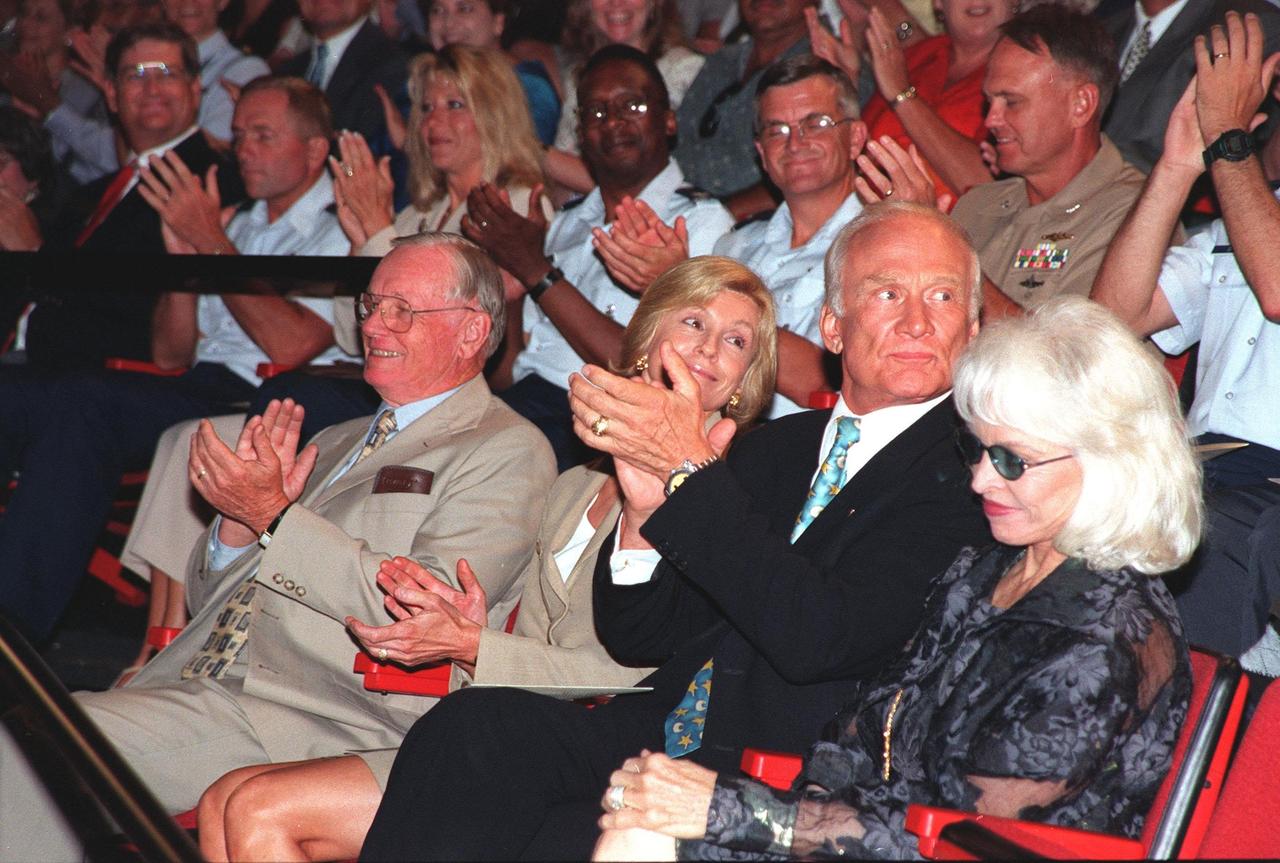
At a special presentation of the Hammer Award in the IMAX 2 Theater in the Kennedy Space Center Visitor Complex, former Apollo astronauts Neil Armstrong (left) and Edwin "Buzz" Aldrin (second from right) applauded the recipients, Kennedy Space Center and the 45th Space Wing. The Hammer Award is Vice President Al Gore's special recognition of teams of federal employees who have made significant contributions in support of the principles of the National Partnership for Reinventing Government. This Hammer Award acknowledges the accomplishments of a joint NASA and Air Force team that established the Joint Base Operations and Support Contract (J-BOSC) Source Evaluation Board (SEB). Ed Gormel and Chris Fairey, co-chairs of the SEB, accepted the awards for the SEB. The team developed and implemented the acquisition strategy for establishing a single set of base operations and support service requirements for KSC, Cape Canaveral Air Station and Patrick Air Force Base. Armstrong and Aldrin were at KSC to attend a banquet and other activities for the 30th anniversary of the Apollo 11 mission, which landed the first man on the moon