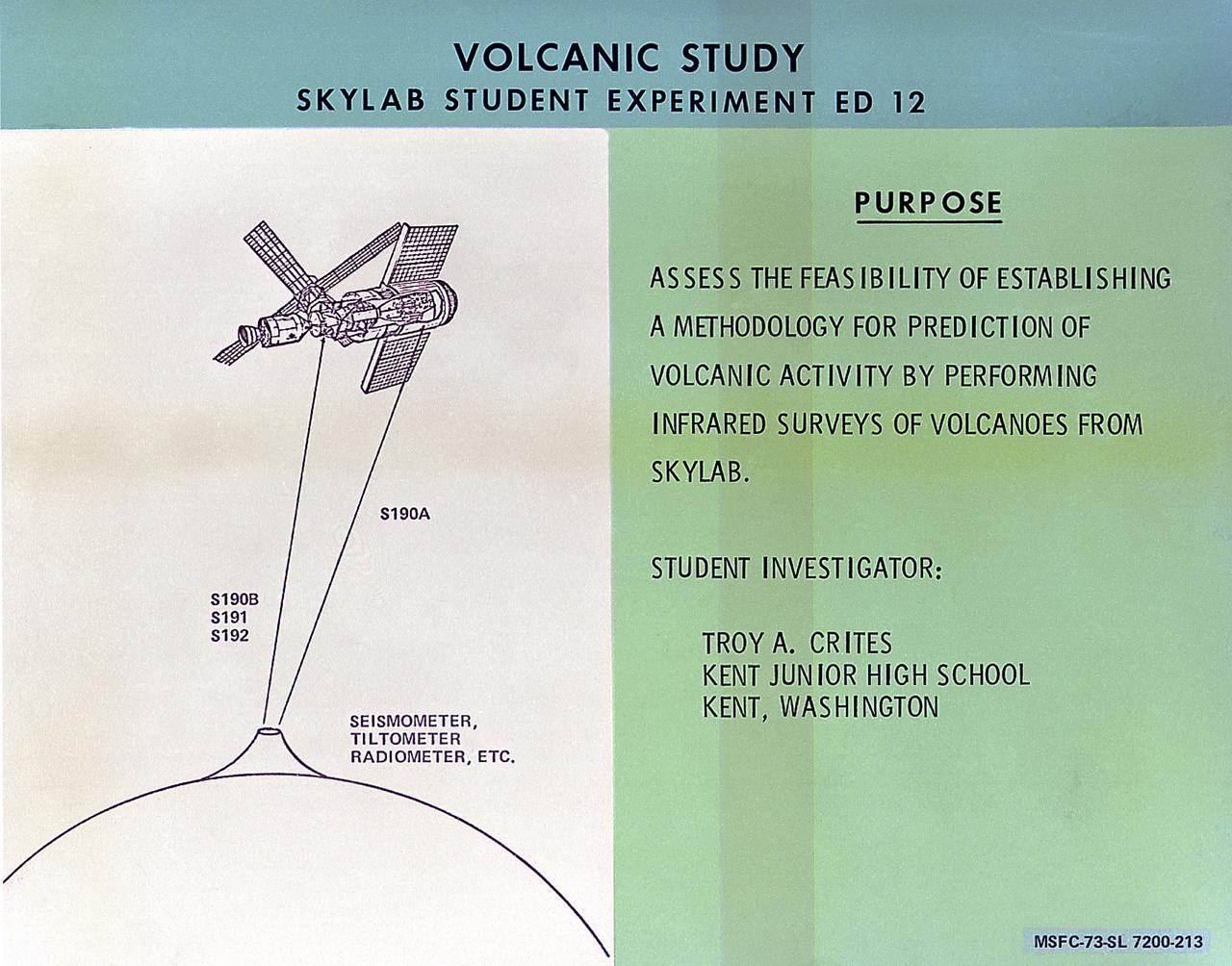
This chart describes the Skylab student experiment Volcanic Study, proposed by Troy A. Crites of Kent, Washington. This experiment utilized Skylab's Earth Resources Experiment sensors to determine if volcanic activity can be predicted using infrared surveys from orbit. In March 1972, NASA and the National Science Teachers Association selected 25 experiment proposals for flight on Skylab. Science advisors from the Marshall Space Flight Center aided and assisted the students in developing the proposals for flight on Skylab.
ISS007-E-06886 (12 June 2003) --- This image was taken by Expedition 7 NASA ISS Science Officer Ed Lu from the U.S. Destiny Laboratory window. Lu noticed the object floating away from the Station and described it as a 5 centimeter long piece of metal. Station managers and flight controllers estimate that the mass of the object will cause it to de-orbit rapidly and will not cause damage to the Station. Engineers are analyzing the imagery to determine what the object is and where it might have originated. It is likely the object came from the Station because of its similar speed and orbit relative to the Station.
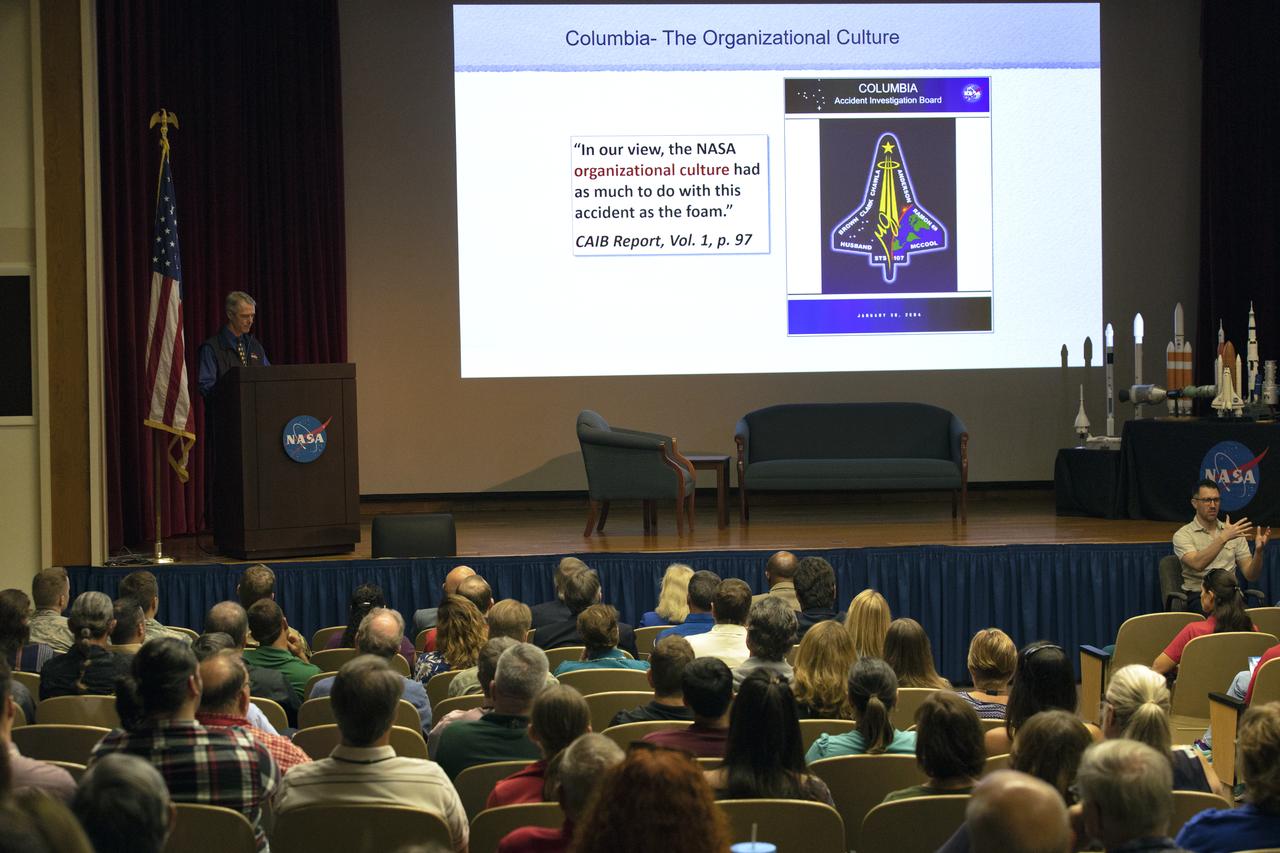
Goddard Space Flight Center Chief Knowledge Officer Ed Rogers speaks to NASA civil service and contractor employees and guests in Kennedy Space Center’s Training Auditorium on April 12, 2019. Rogers talked about lessons in decision-making during “Columbia: The Mission Continues,” an event organized by the Apollo Challenger Columbia Lessons Learned Program (ACCLLP). The event is part of the Space Shuttle Columbia national tour and took place on the 38th anniversary of STS-1, the first orbital spaceflight of NASA’s Space Shuttle Program. The tour launched at Kennedy and will make its way to each of the 10 NASA centers.
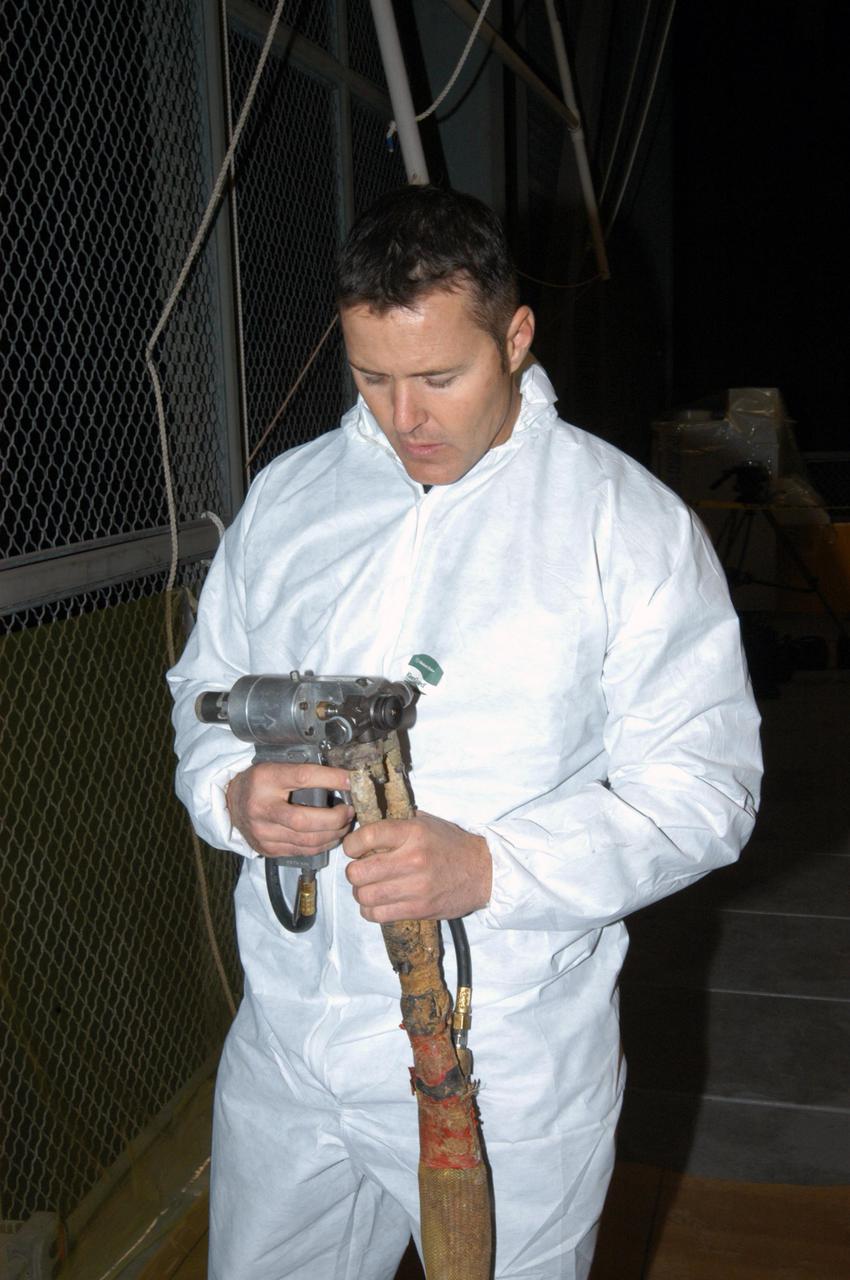
KENNEDY SPACE CENTER, FLA. - In the Vehicle Assembly Building, United Space Alliance technician Ed Carillion attaches the foam spray nozzle to the spray gun to be used for the aft hard-point closeout spray on the External Tank (ET). The spray is being applied on an area of the tank where the ET is mated to the transporter. Foam is not applied to that area at the Michoud Assembly Facility in Louisiana to avoid damage to the foam during travel. The ET, which arrived at KSC Jan. 5, is in the checkout cell for final processing. The tank is scheduled to fly on Space Shuttle Discovery on Return to Flight mission STS-114. The launch window is May 12 to June 3.
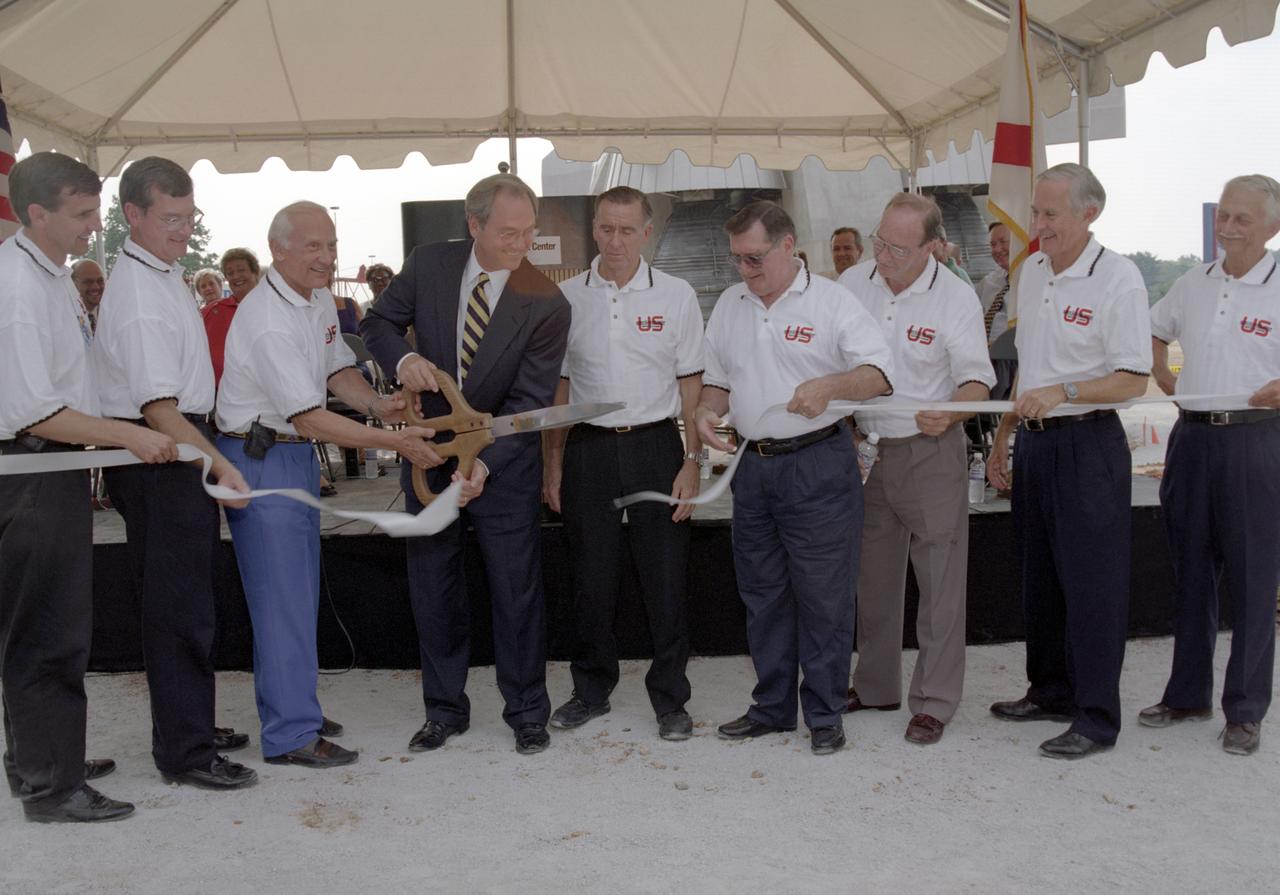
Alabama Governor Don Seigleman cuts the ribbon marking the dedication of the Saturn V rocket replica that was constructed at the U. S. Space and Rocket Center in honor of the 30th arniversary of the lunar landing. Accompanying the Governor are (L/R): Mike Wing, CEO US Space Rocket Center; Mike Gillespie, Madison County Commissioner, Dist. Seven; Buzz Aldrin, Apollo 11 Astronaut; Governor Seigleman; Walt Cunningham, Apollo 7 Astronaut; Dick Gordon, Apollo 12 Astronaut; Ed Mitchell, Apollo 14 Astronaut; Charlie Duke, Apollo 16 Astronaut; and Owen Garriott, Skylab 3 Astronaut.
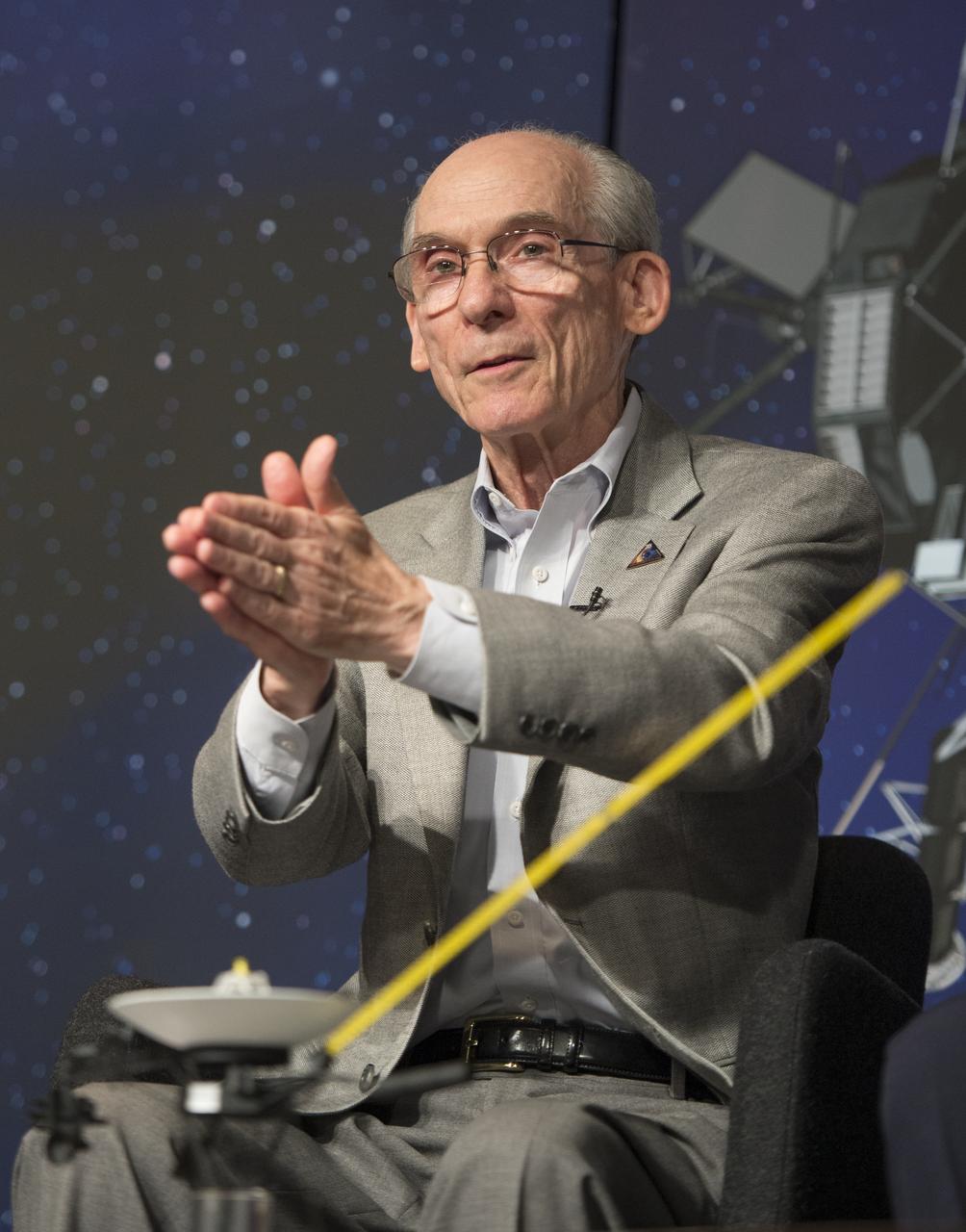
Ed Stone, Voyager project scientist, California Institute of Technology, is seen as he speaks at a news conference on NASA's Voyager 1 spacecraft, Thursday, Sept. 12, 2013 at NASA Headquarters in Washington. NASA's Voyager 1 spacecraft officially is the first human-made object to venture into interstellar space. The 36-year-old probe is about 12 billion miles (19 billion kilometers) from our sun. New and unexpected data indicate Voyager 1 has been traveling for about one year through plasma, or ionized gas, present in the space between stars. A report on the analysis of this new data is published in Thursday's edition of the journal Science. Photo Credit: (NASA/Carla Cioffi)
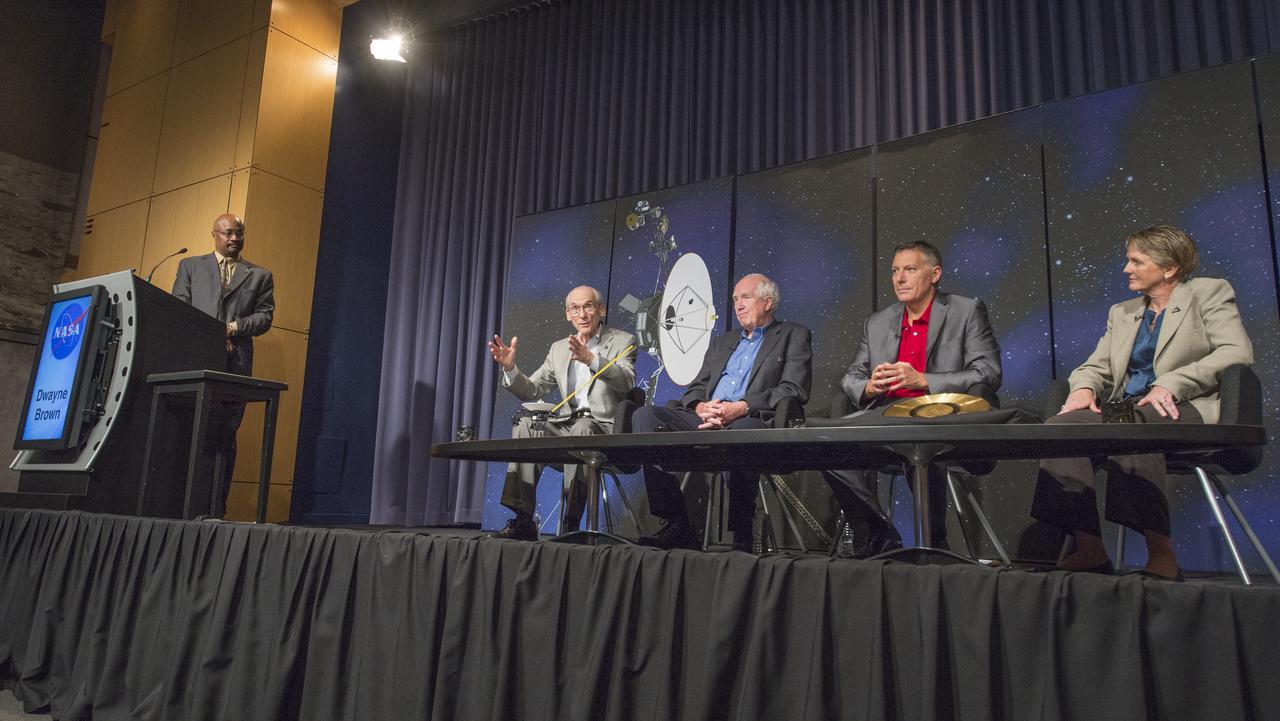
Ed Stone, Voyager project scientist, California Institute of Technology, is seen as he speaks at a news conference on NASA's Voyager 1 spacecraft, Thursday, Sept. 12, 2013 at NASA Headquarters in Washington. NASA's Voyager 1 spacecraft officially is the first human-made object to venture into interstellar space. The 36-year-old probe is about 12 billion miles (19 billion kilometers) from our sun. New and unexpected data indicate Voyager 1 has been traveling for about one year through plasma, or ionized gas, present in the space between stars. A report on the analysis of this new data is published in Thursday's edition of the journal Science. Photo Credit: (NASA/Carla Cioffi)
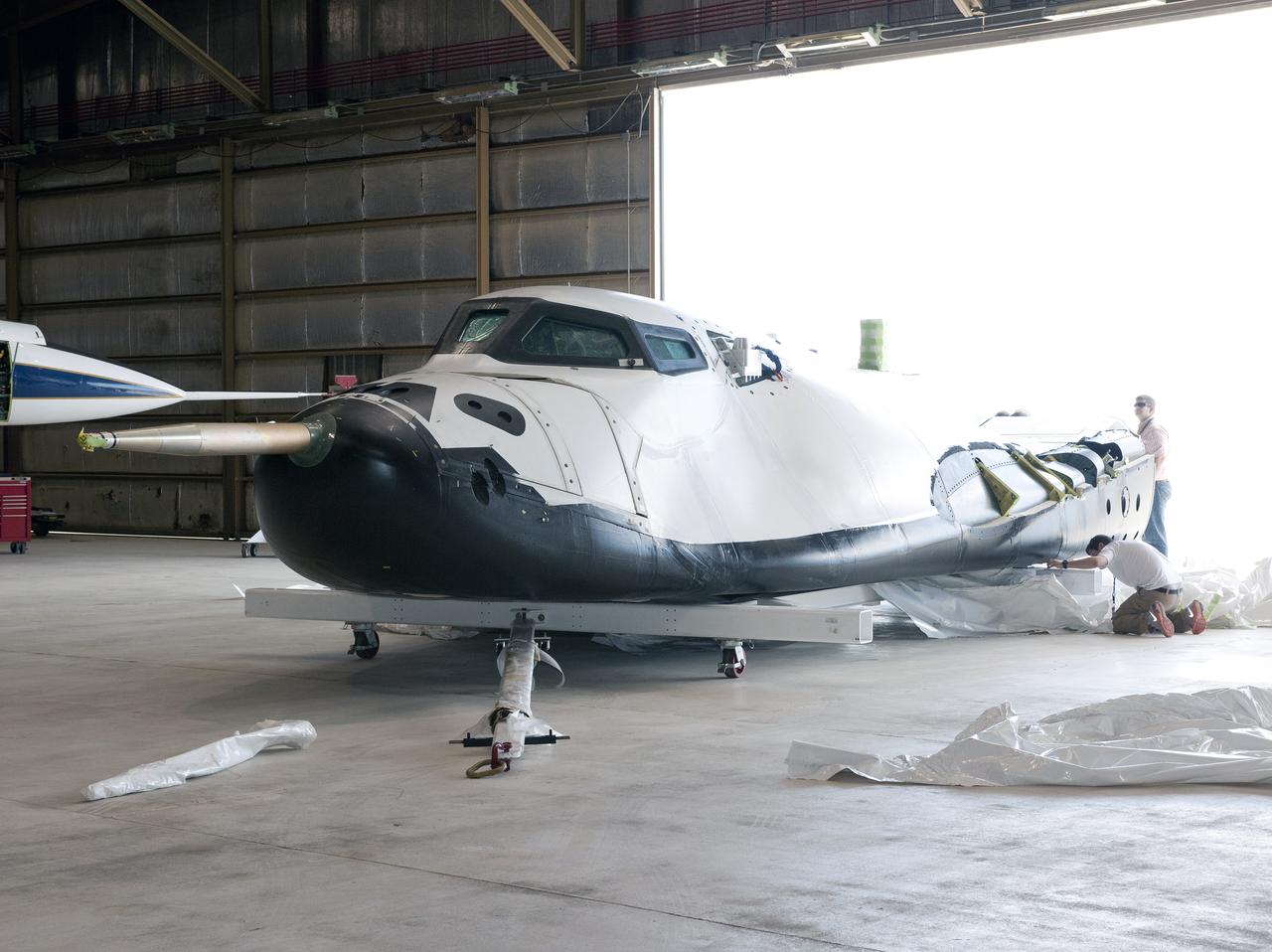
Edwards, Calif. – ED-0144-12 - Plastic wrapping that protected the Sierra Nevada Corporation, or SNC, Dream Chaser flight test vehicle during its transport from Colorado is carefully removed by SNC employee Will Armijo following the craft's arrival at NASA's Dryden Flight Research Center in southern California. The prototype space access vehicle will undergo ground and approach-and-landing flight tests in the coming months at Dryden as part of NASA's Commercial Crew Program, or CCP, development work. SNC is one of three companies working with CCP during the agency's Commercial Crew Integrated Capability, or CCiCap, initiative, which is intended to lead to the availability of commercial human spaceflight services for government and commercial customers. To learn more about CCP and its industry partners, visit www.nasa.gov_commercialcrew. Image credit: NASA_Tom Tschida
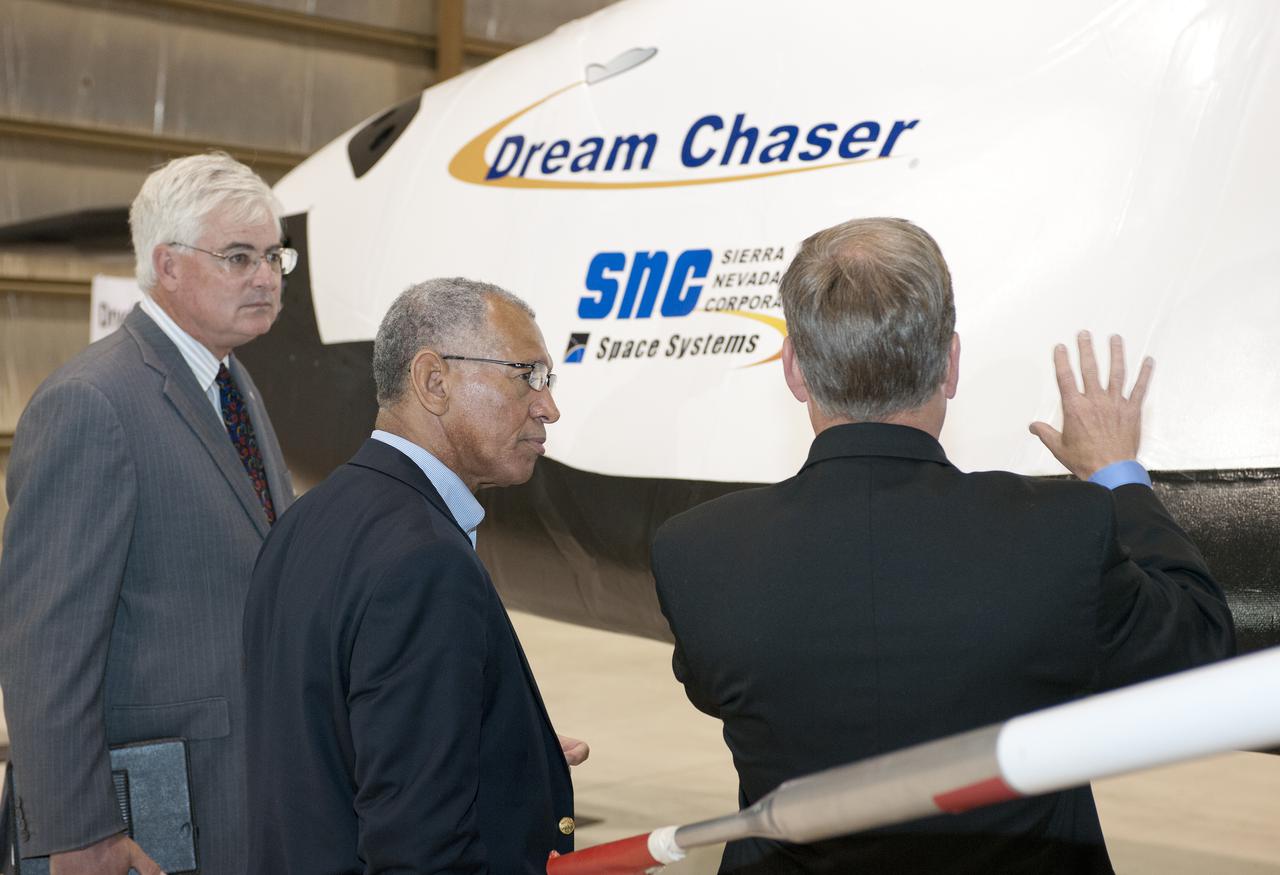
Edwards, Calif. – ED-0155-12 - Steve Lindsey, Sierra Nevada Corporation, or SNC, director of flight operations and former space shuttle astronaut, right, talks to NASA Administrator Charlie Bolden, center, and agency Dryden Flight Research Center Deputy Director Patrick Stoliker about the company's Dream Chaser flight test vehicle. It will undergo ground and approach-and-landing flight tests at Dryden in the coming months as part of NASA's Commercial Crew Program, or CCP, development work. SNC is one of three companies working with CCP during the agency's Commercial Crew Integrated Capability, or CCiCap, initiative, which is intended to lead to the availability of commercial human spaceflight services for government and commercial customers. To learn more about CCP and its industry partners, visit www.nasa.gov_commercialcrew. Image credit: NASA_Tom Tschida
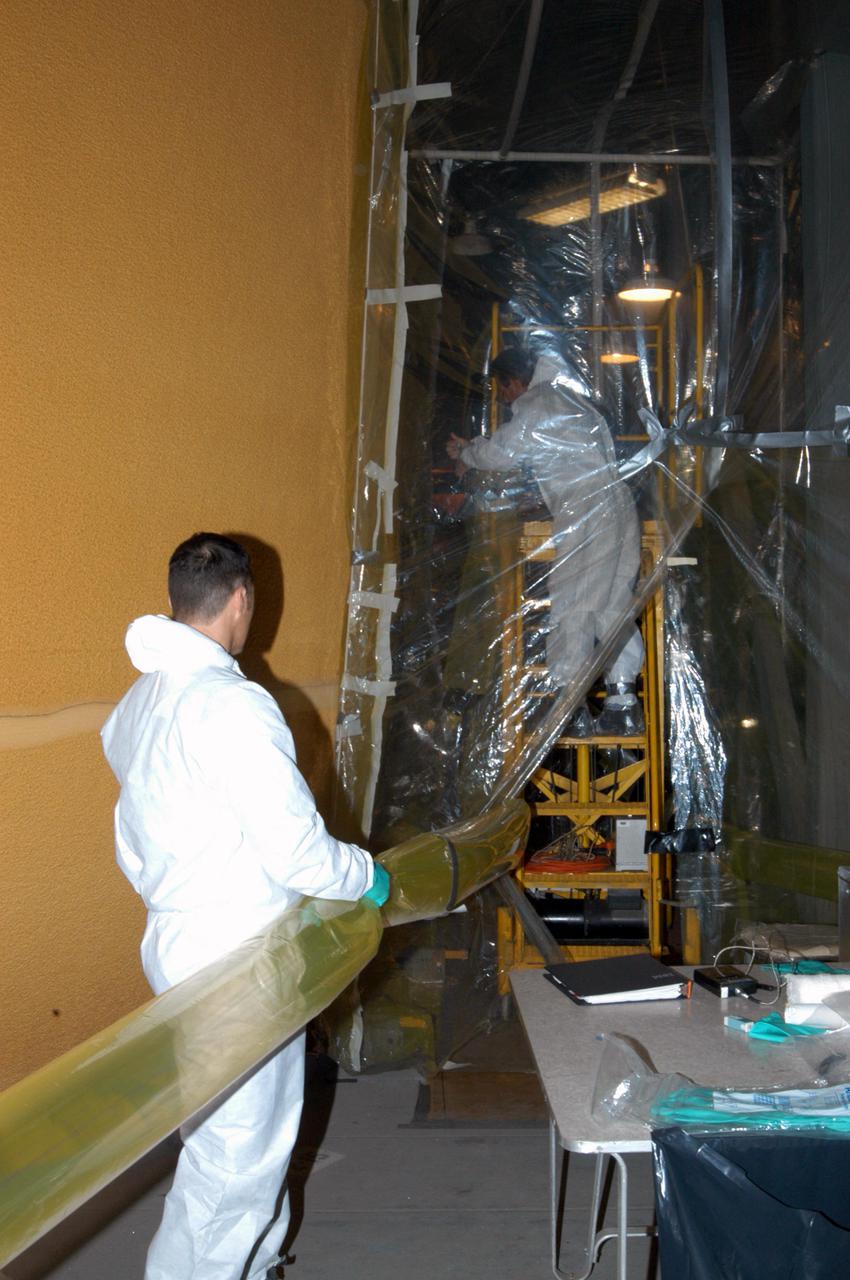
KENNEDY SPACE CENTER, FLA. - In the Vehicle Assembly Building, United Space Alliance technicians Rob Williams (left) and Ed Carillion (background) work in the enclosure that is pumping warm, dry air around the External Tank (ET) to maintain the proper temperature and humidity prior to the aft hard-point closeout spray. The spray is being applied on an area of the tank where the ET is mated to the transporter. Foam is not applied to that area at the Michoud Assembly Facility in Louisiana to avoid damage to the foam during travel. The ET, which arrived at KSC Jan. 5, is in the checkout cell for final processing. The tank is scheduled to fly on Space Shuttle Discovery on Return to Flight mission STS-114. The launch window is May 12 to June 3.
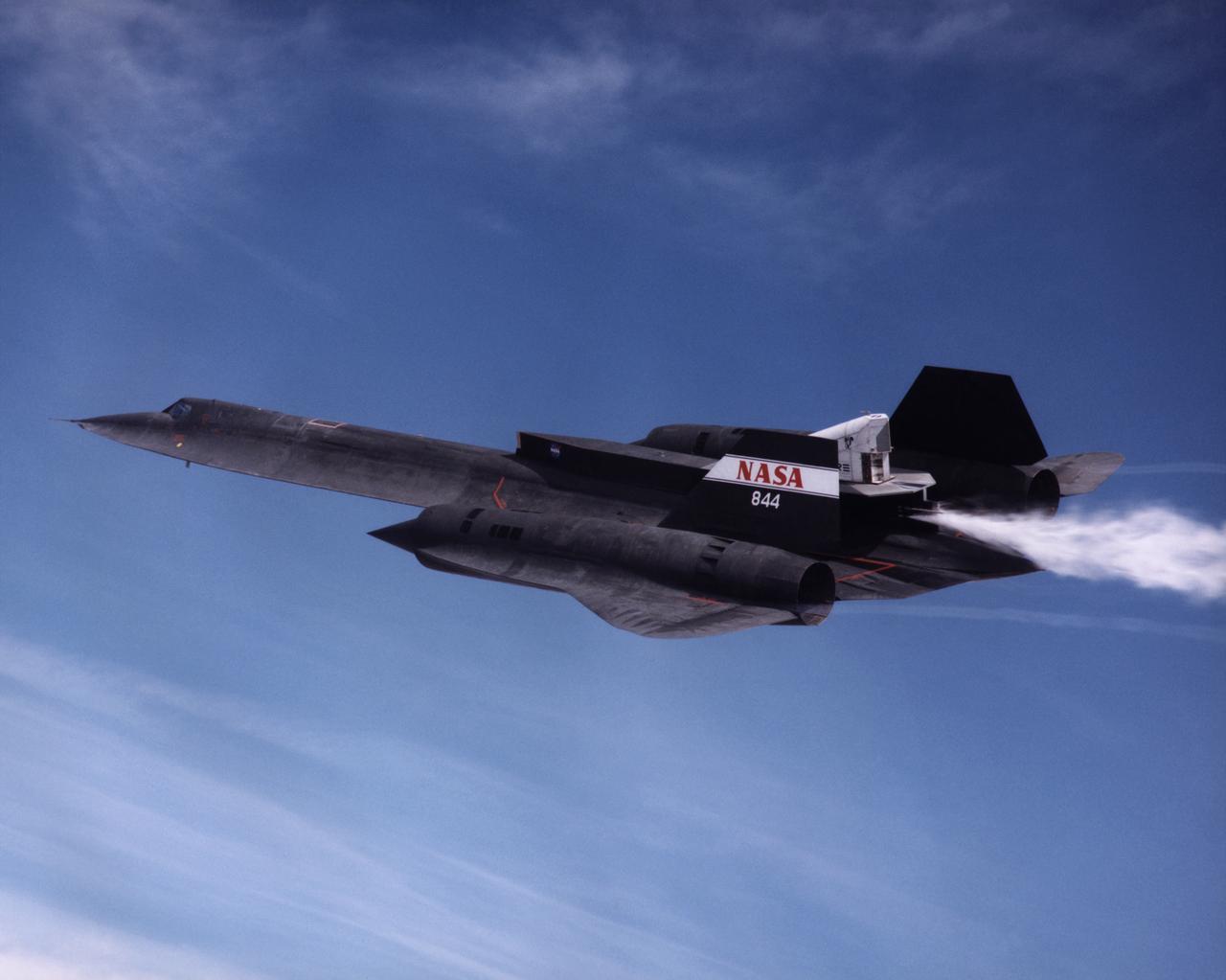
The NASA SR-71A successfully completed its first cold flow flight as part of the NASA/Rocketdyne/Lockheed Martin Linear Aerospike SR-71 Experiment (LASRE) at NASA's Dryden Flight Research Center, Edwards, California on March 4, 1998. During a cold flow flight, gaseous helium and liquid nitrogen are cycled through the linear aerospike engine to check the engine's plumbing system for leaks and to check the engine operating characterisitics. Cold-flow tests must be accomplished successfully before firing the rocket engine experiment in flight. The SR-71 took off at 10:16 a.m. PST. The aircraft flew for one hour and fifty-seven minutes, reaching a maximum speed of Mach 1.58 before landing at Edwards at 12:13 p.m. PST. "I think all in all we had a good mission today," Dryden LASRE Project Manager Dave Lux said. Flight crew member Bob Meyer agreed, saying the crew "thought it was a really good flight." Dryden Research Pilot Ed Schneider piloted the SR-71 during the mission. Lockheed Martin LASRE Project Manager Carl Meade added, "We are extremely pleased with today's results. This will help pave the way for the first in-flight engine data-collection flight of the LASRE."