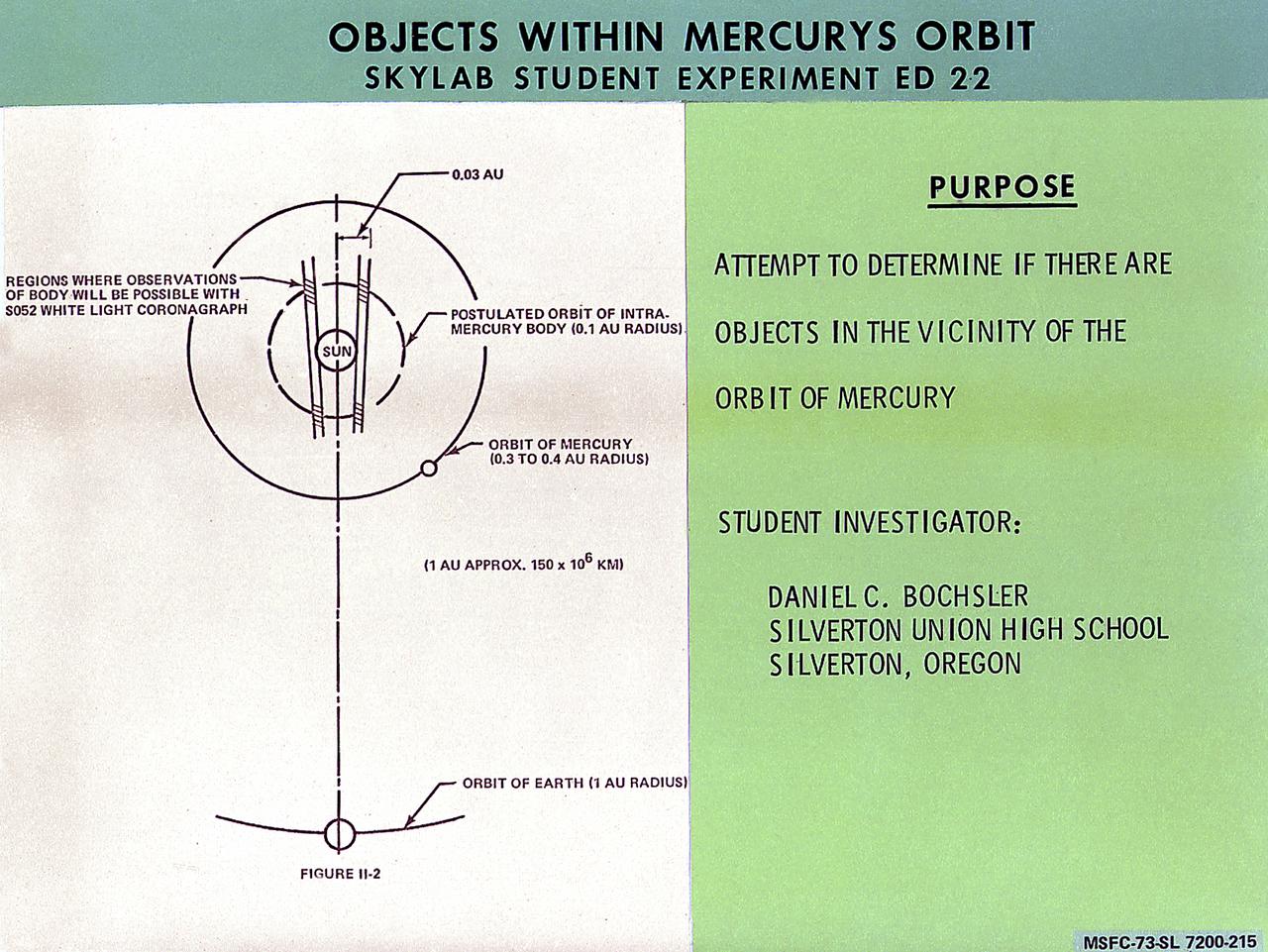
This chart describes the Skylab student experiment Objects Within Mercury's Orbit, proposed by Daniel C. Bochsler of Silverton, Oregon. This experiment utilized Skylab's White Light Coronagraph telescope to identify any objects orbiting the Sun within the orbit of Mercury. In March 1972, NASA and the National Science Teachers Association selected 25 experiment proposals for flight on Skylab. Science advisors from the Marshall Space Flight Center aided and assisted the students in developing the proposals for flight on Skylab.

U.S. Human Space Flight Plans Committee member Ed Crawley answers a reporter's question during a press conference where the committee released it's report on Thursday, Oct., 22, 2009 at the National Press Club in Washington. The Obama Administration tasked the committee to do an independent review of planned U.S. human space flight activities with the goal of ensuring that the nation is on a vigorous and sustainable path to achieving its boldest aspirations in space. Photo Credit: (NASA/Bill Ingalls)
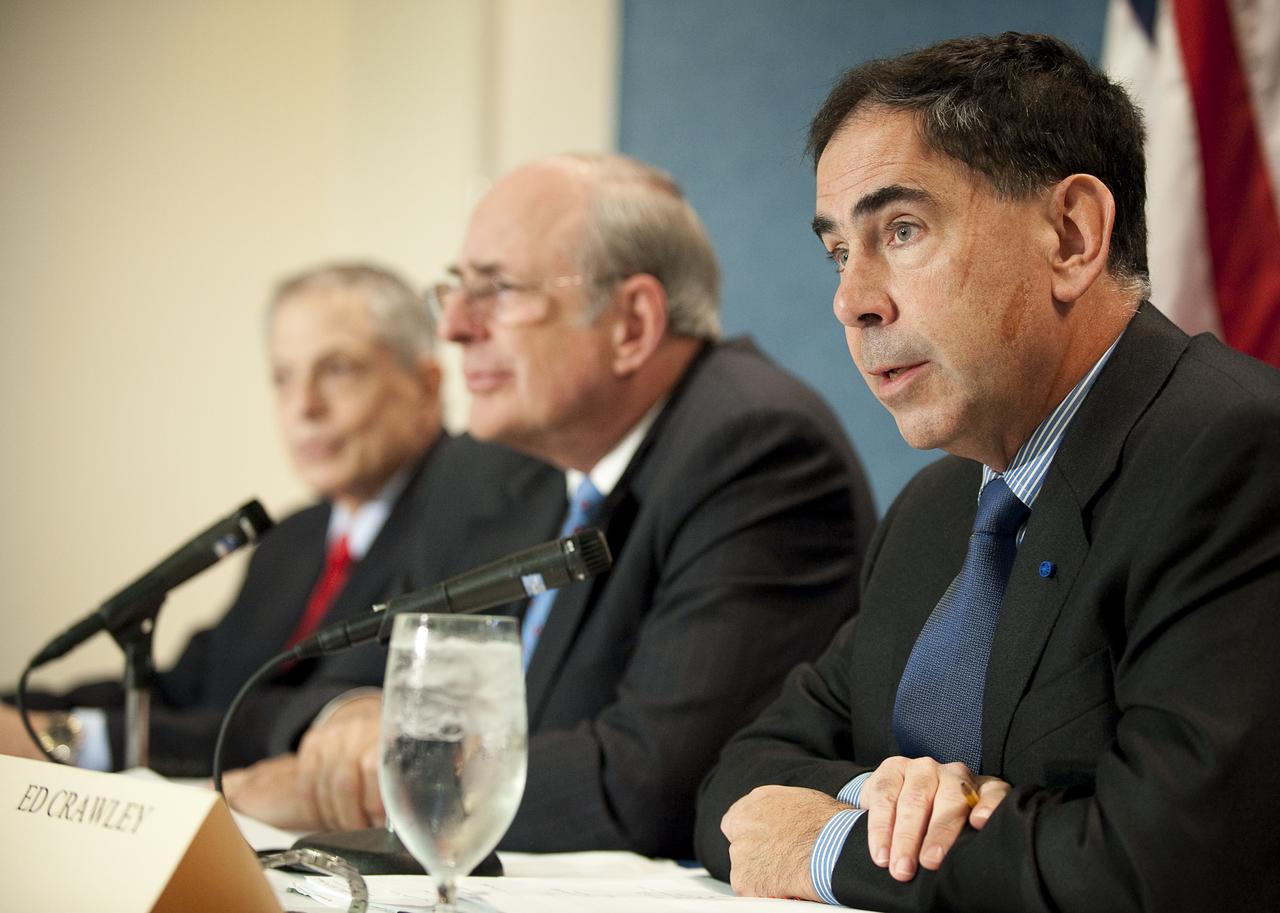
U.S. Human Space Flight Plans Committee member Ed Crawley, right, answers a reporter's question during a press conference where the committee released it's report on Thursday, Oct., 22, 2009 at the National Press Club in Washington. The Obama Administration tasked the committee to do an independent review of planned U.S. human space flight activities with the goal of ensuring that the nation is on a vigorous and sustainable path to achieving its boldest aspirations in space. Photo Credit: (NASA/Bill Ingalls)
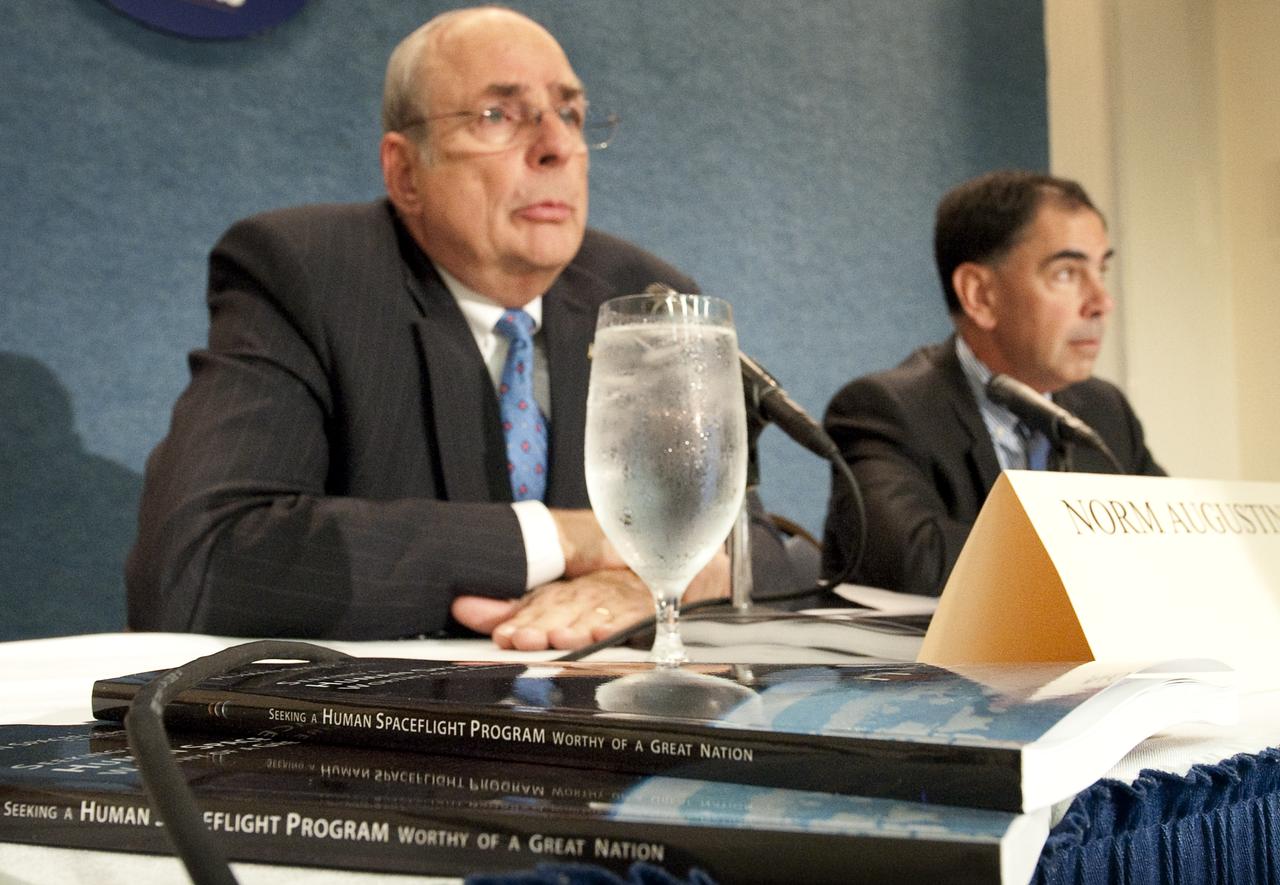
Copies of the U.S. Human Space Flight Plans Committee report are seen in the foreground of Chairman of the U.S. Human Space Flight Plans Committee Norman Augustine, left, and committee member Ed Crawley, right, during a press conference where the committee released it's report on Thursday, Oct., 22, 2009 at the National Press Club in Washington. The Obama Administration tasked the committee to do an independent review of planned U.S. human space flight activities with the goal of ensuring that the nation is on a vigorous and sustainable path to achieving its boldest aspirations in space. Photo Credit: (NASA/Bill Ingalls)
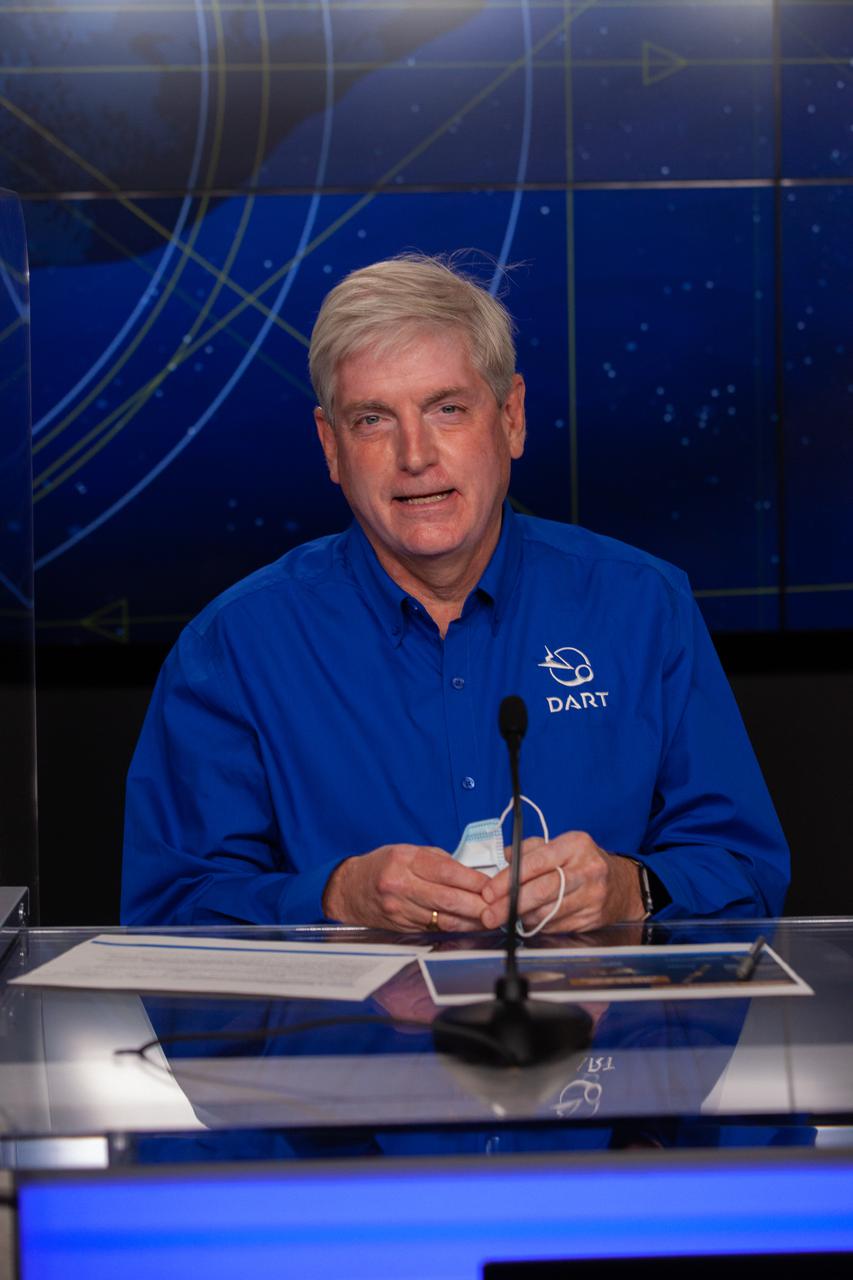
Ed Reynolds, Double Asteroid Redirection Test (DART) project manager for Johns Hopkins Applied Physics Laboratory, participates in a prelaunch news conference for NASA’s DART mission at Vandenberg Space Force Base in California on Nov. 22, 2021. DART is the first mission to test technologies for preventing an impact of Earth by a hazardous asteroid. The mission is scheduled to launch no earlier than 1:21 a.m. EST Wednesday, Nov. 24 (10:21 p.m. PST Tuesday, Nov. 23), aboard a SpaceX Falcon 9 rocket from Vandenberg. NASA's Launch Services Program based at Kennedy Space Center in Florida, America's multi-user spaceport, is managing the launch.
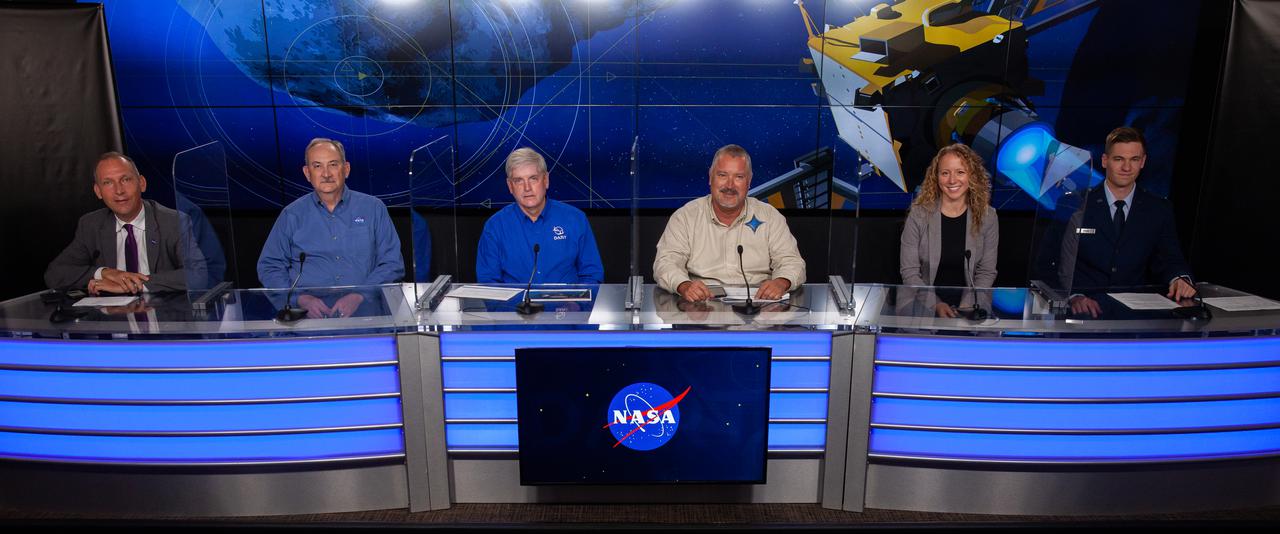
From left, Dr Thomas Zurbuchen, Lindley Johnson, Ed Reynolds, Omar Baez, Julianna Scheiman, and Capt. Maximillian Rush participate in a prelaunch news conference on Nov. 22, 2021, at Vandenberg Space Force Base in California in preparation for the agency’s Double Asteroid Redirection Test (DART) launch. DART is the first mission to test technologies for preventing an impact of Earth by a hazardous asteroid. The mission is scheduled to launch no earlier than 1:21 a.m. EST Wednesday, Nov. 24 (10:21 p.m. PST Tuesday, Nov. 23), aboard a SpaceX Falcon 9 rocket from Vandenberg. NASA's Launch Services Program based at Kennedy Space Center in Florida, America's multi-user spaceport, is managing the launch.