
This chart describes the Skylab student experiment Ultraviolet (UV) From Pulsars, proposed by Neal W. Sharnon of Atlanta, Georgia. This experiment was to observe several pulsars with Skylab's UV spectrometer to determine their intensities in that portion of their spectra. A more detailed description of a pulsar's electromagnetic emission profile would be expected to further define means by which its energy is released. Unfortunately, upon examination of the photographic plates containing the data from the experiment, it was found that an alignment error of the spectrometer prevented detection of any of the pulsars. In March 1972, NASA and the National Science Teachers Association selected 25 experiment proposals for flight on Skylab. Science advisors from the Marshall Space Flight Center aided and assisted the students in developing the proposals for flight on Skylab.
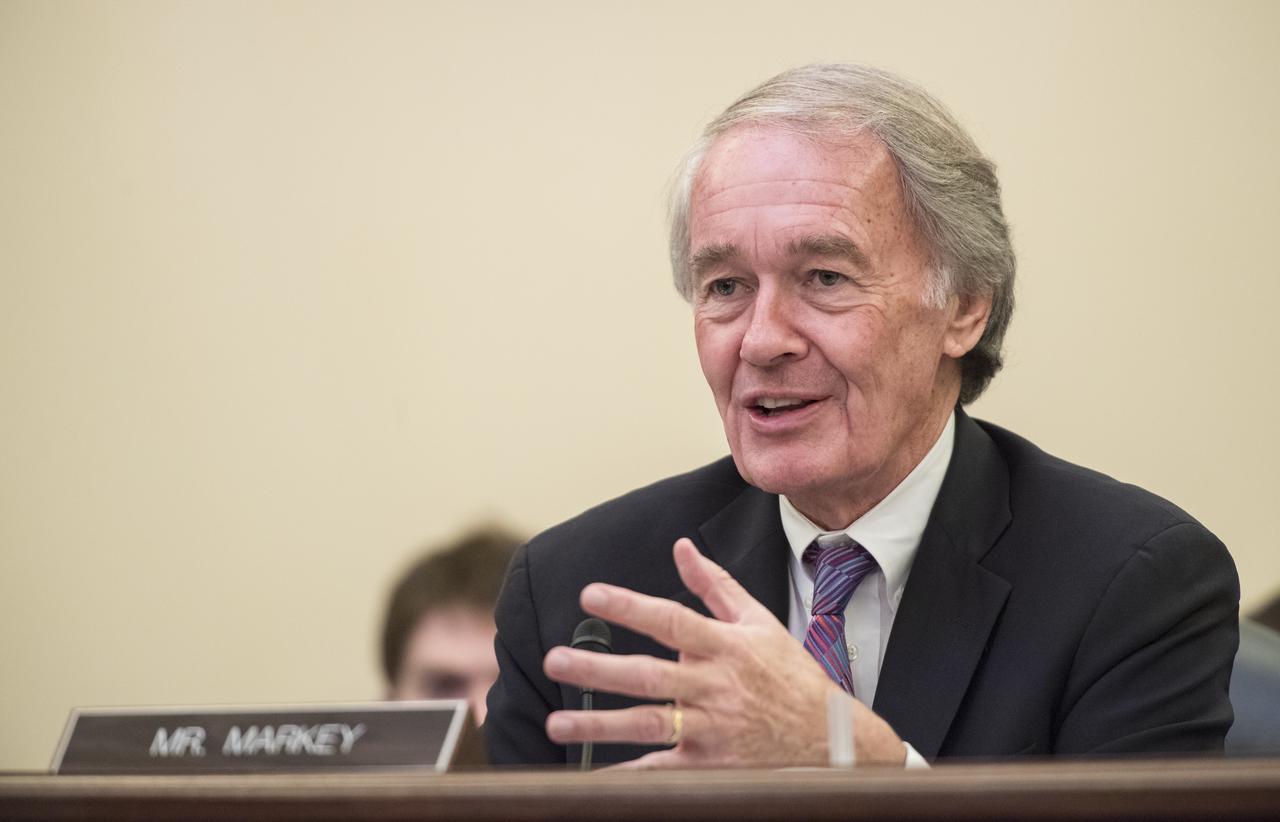
Senator Ed Markey, D-Mass, asks NASA Administrator Jim Bridenstine a question during a Subcommittee on Space, Science, and Competitiveness hearing titled, "Global Space Race: Ensuring the United States Remains the Leader in Space," Wednesday, September 26, 2018 at the Russell Senate Office Building in Washington. Photo Credit: (NASA/Aubrey Gemignani)
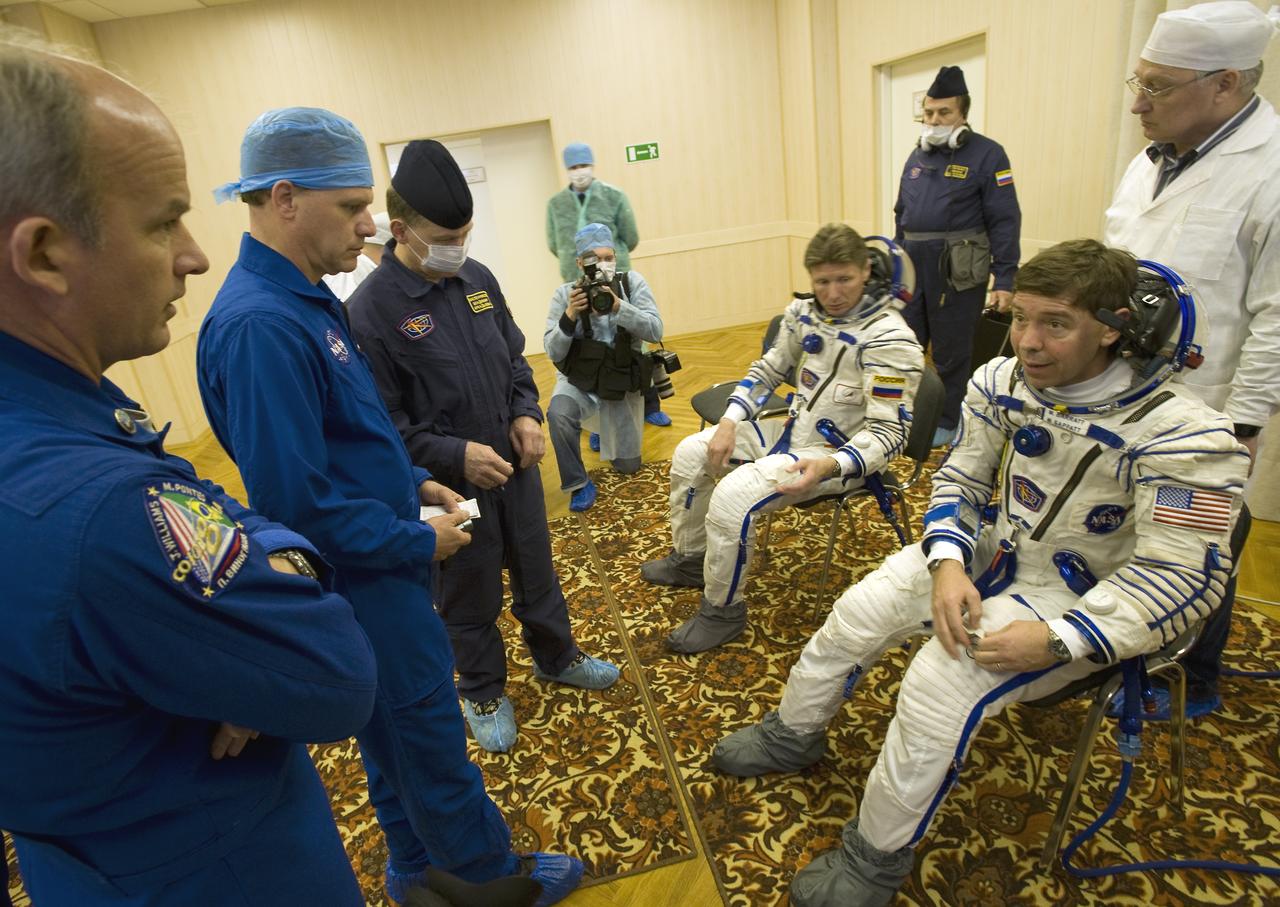
Expedition 19 backup commander Jeffrey Williams, left, NASA Flight Surgeon Ed Powers, M.D., 2nd from left, talk with Expedition 19 Flight Engineer Michael R. Barratt, far right, as he and fellow crew member Expedition 19 Commander Gennady I. Padalka don their Sokol flights suits in preparation for their Soyuz launch to the International Space Station with Spaceflight Participant Charles Simonyi on Thursday, March 26, 2009 in Baikonur, Kazakhstan. (Photo Credit: NASA/Bill Ingalls)
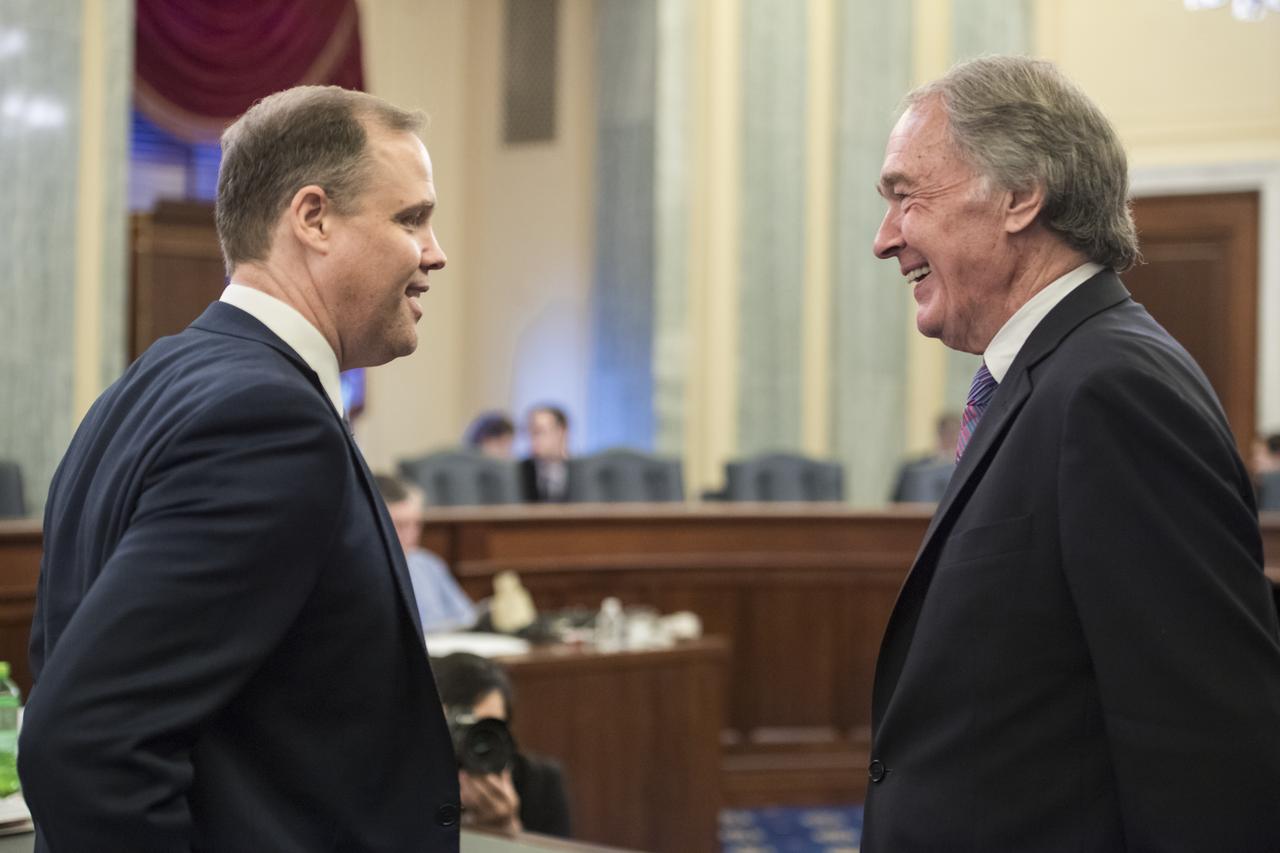
NASA Administrator Jim Bridenstine, left, speaks with Senator Ed Markey, D-Mass, before testifying at a Subcommittee on Space, Science, and Competitiveness hearing titled, "Global Space Race: Ensuring the United States Remains the Leader in Space," Wednesday, September 26, 2018 at the Russell Senate Office Building in Washington. Photo Credit: (NASA/Aubrey Gemignani)
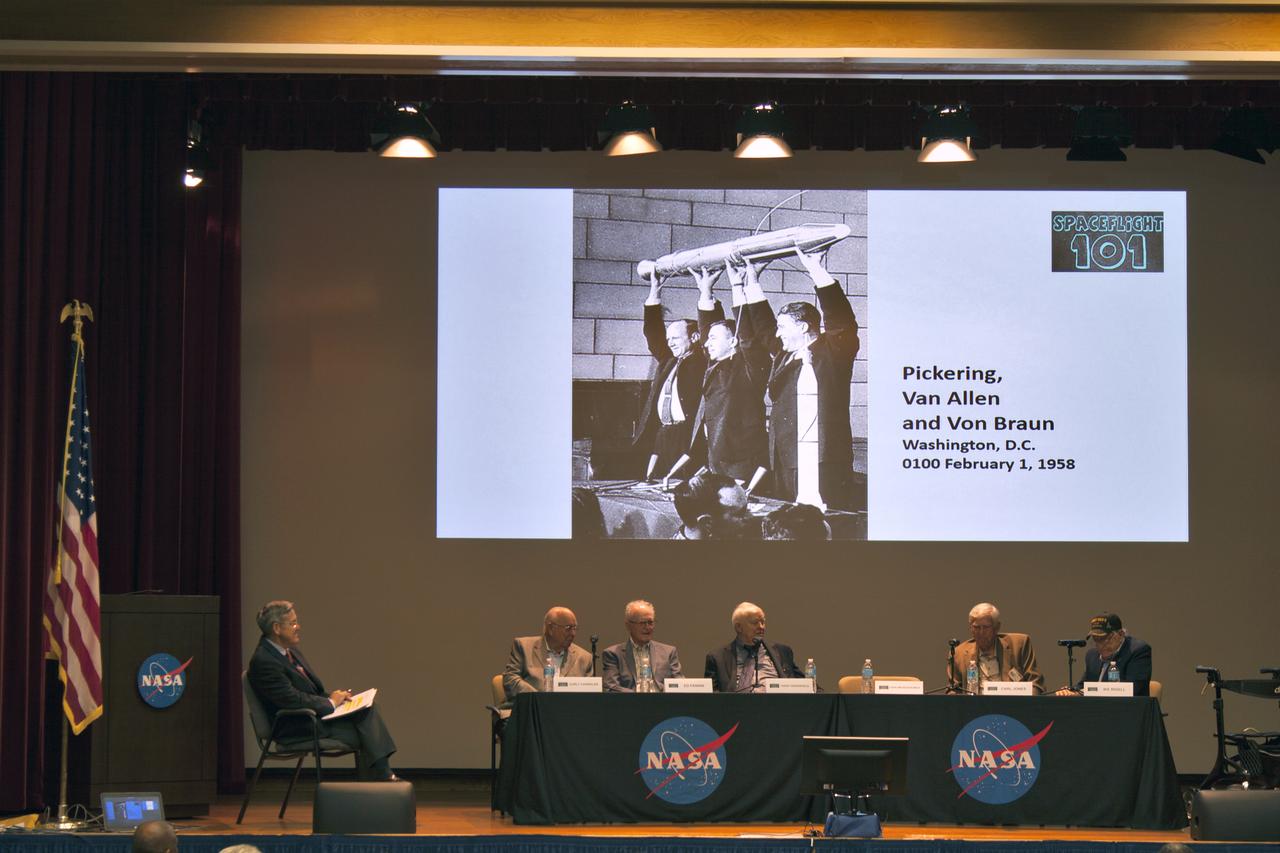
Aerospace pioneers who worked on the launch of Explorer 1 participate in a panel discussion with NASA Kennedy Space Center Director Bob Cabana, at far left, at the center's Training Auditorium on Wednesday, May 9, 2018. Panelists, from left are William "Curly" Chandler, firing room engineer; Lionel (Ed) Fannin, mechanical and propulsion systems; Terry Greenfield, blockhouse engineer; Carl Jones, measuring branch engineer; and Ike Rigell, electrical networks systems chief. Explorer 1 was the first satellite launched by the U.S. It was launched by the Army Ballistic Missile Agency on Jan. 31, 1958 on a Juno I rocket from Launch Complex-26.
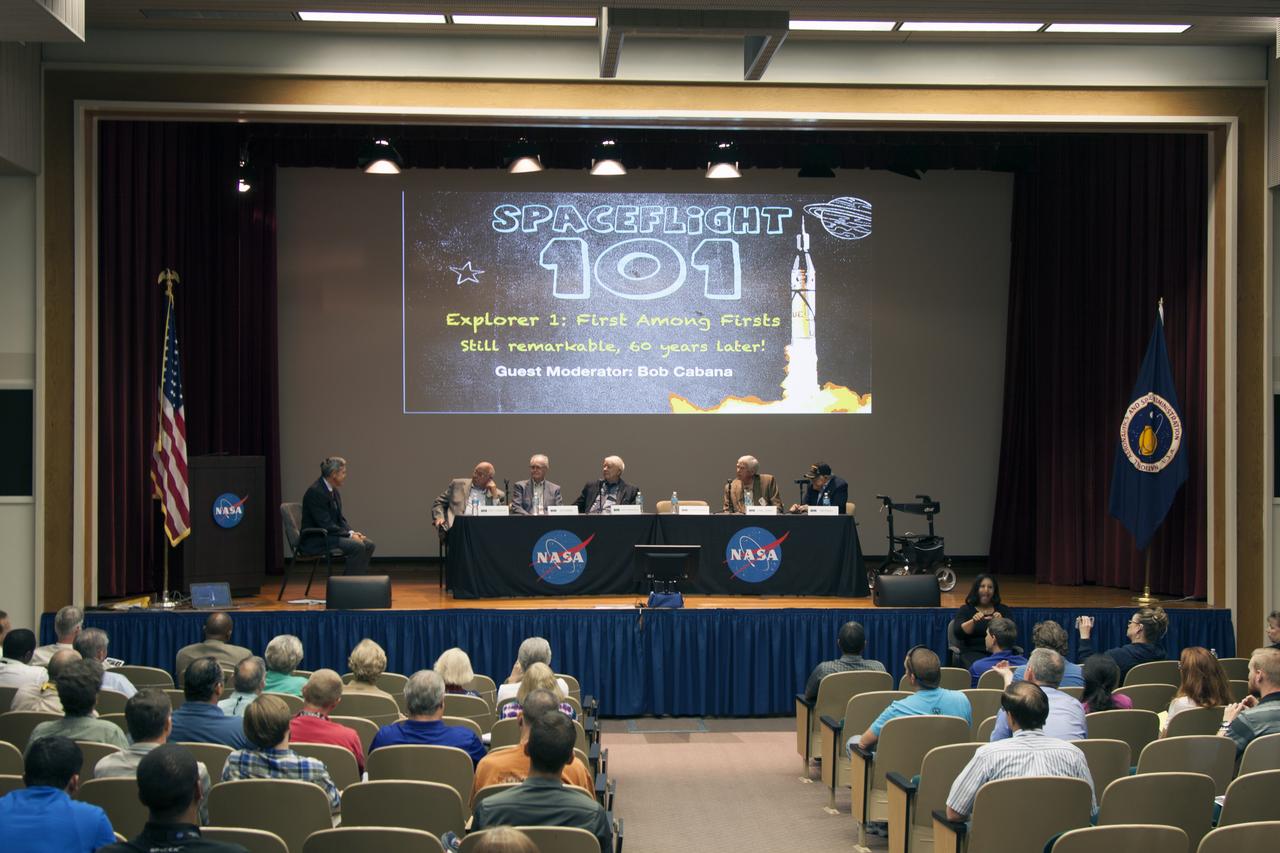
Aerospace pioneers who worked on the launch of Explorer 1 participate in a panel discussion with NASA Kennedy Space Center Director Bob Cabana, at far left, at the center's Training Auditorium on Wednesday, May 9, 2018. Panelists, from left are William "Curly" Chandler, firing room engineer; Lionel (Ed) Fannin, mechanical and propulsion systems; Terry Greenfield, blockhouse engineer; Carl Jones, measuring branch engineer; and Ike Rigell, electrical networks systems chief. Explorer 1 was the first satellite launched by the U.S. It was launched by the Army Ballistic Missile Agency on Jan. 31, 1958 on a Juno I rocket from Launch Complex-26.
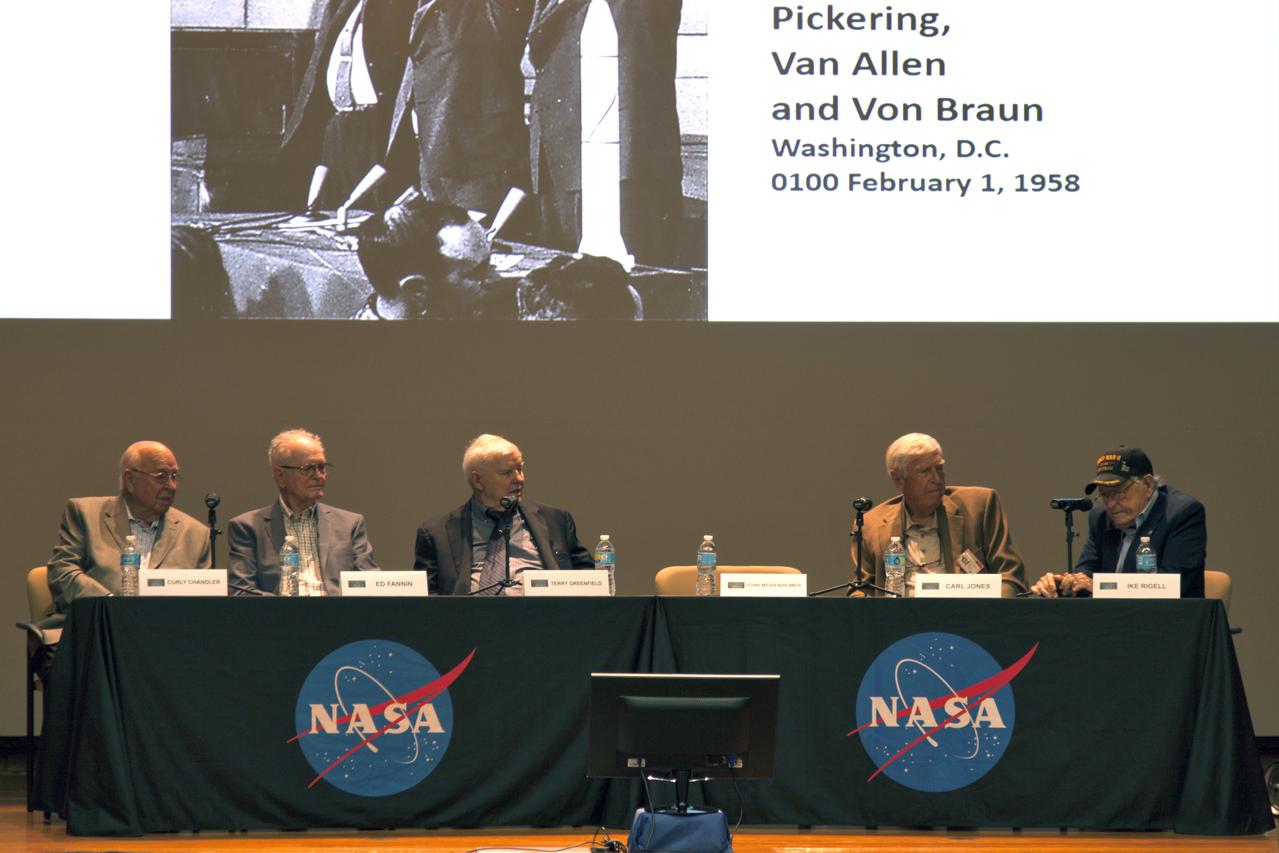
Aerospace pioneers who worked on the launch of Explorer 1 participate in a panel discussion with NASA Kennedy Space Center Director Bob Cabana at the center's Training Auditorium on Wednesday, May 9, 2018. Panelists, from left are William "Curly" Chandler, firing room engineer; Lionel (Ed) Fannin, mechanical and propulsion systems; Terry Greenfield, blockhouse engineer; Carl Jones, measuring branch engineer; and Ike Rigell, electrical networks systems chief. Explorer 1 was the first satellite launched by the U.S. It was launched by the Army Ballistic Missile Agency on Jan. 31, 1958 on a Juno I rocket from Launch Complex-26.
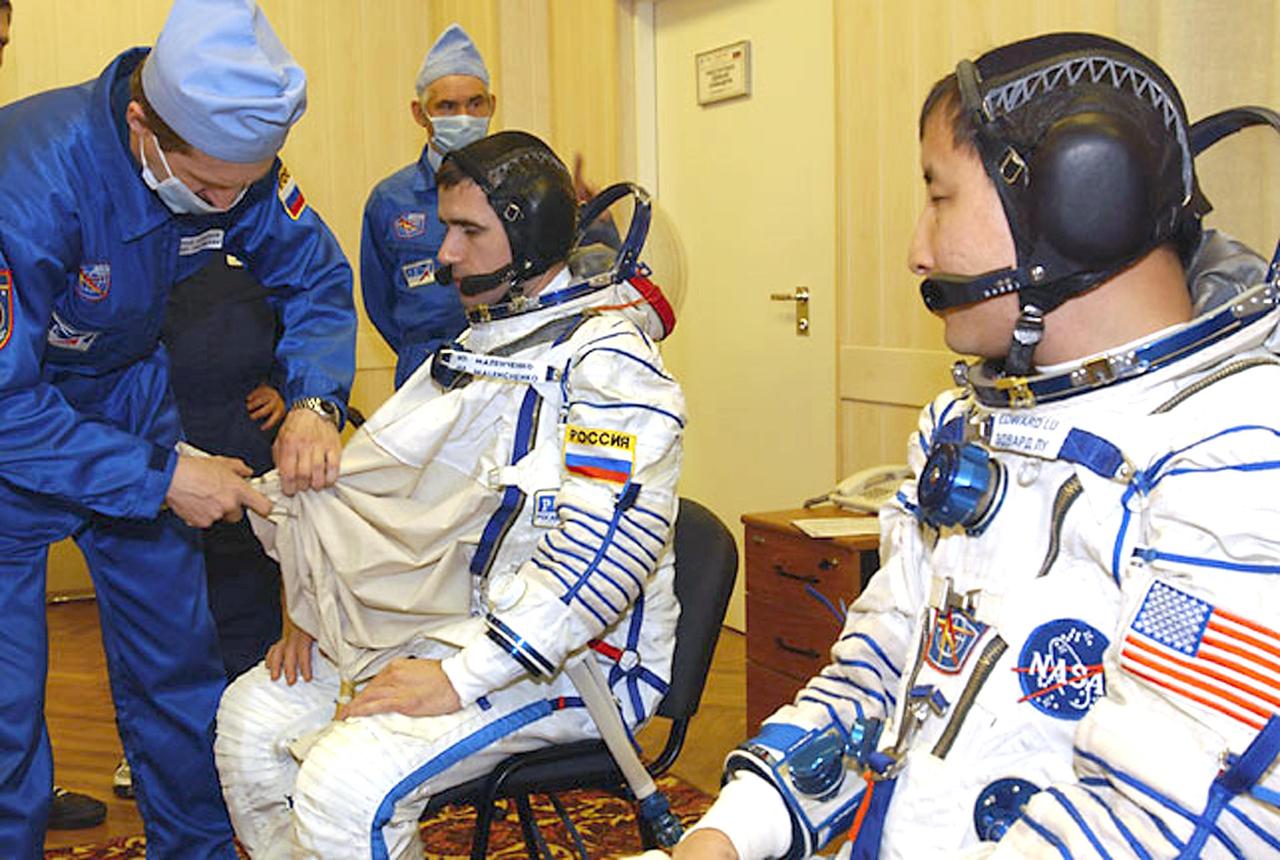
Baikonur Cosmodrome, Kazakhstan -- Cosmonaut Yuri I. Malenchenko (left), Expedition Seven commander, and astronaut Ed Lu have their Russian Sokol suits checked for leaks, as well as Soyuz inspection and seat liner check. Veteran Russian cosmonaut Yuri Malenchenko and veteran NASA astronaut Ed Lu have been named as the primary crew for the planned April 26, 2003, launch of a Russian Soyuz TMA-2 spacecraft to the International Space Station. Malenchenko and Lu will be called the Expedition 7 crew. Russian cosmonaut Alexander Kaleri and NASA astronaut Michael Foale are the backup crewmembers to Malenchenko and Lu. Expedition 6 Commander Ken Bowersox, Flight Engineer Nikolai Budarin and NASA Space Station Science Officer Don Pettit will return to Earth aboard the Soyuz TMA-1 craft in May 2003. The three Expedition 6 crewmembers were launched on Nov. 23, 2002. They have been aboard the Station since November 25. They were originally scheduled to return in March aboard the Space Shuttle Atlantis during the STS-114 mission. Malenchenko and Lu will continue to operate the science payloads already on board, as well as maintaining the Station. Photo Credit: NASA/Bill Ingalls
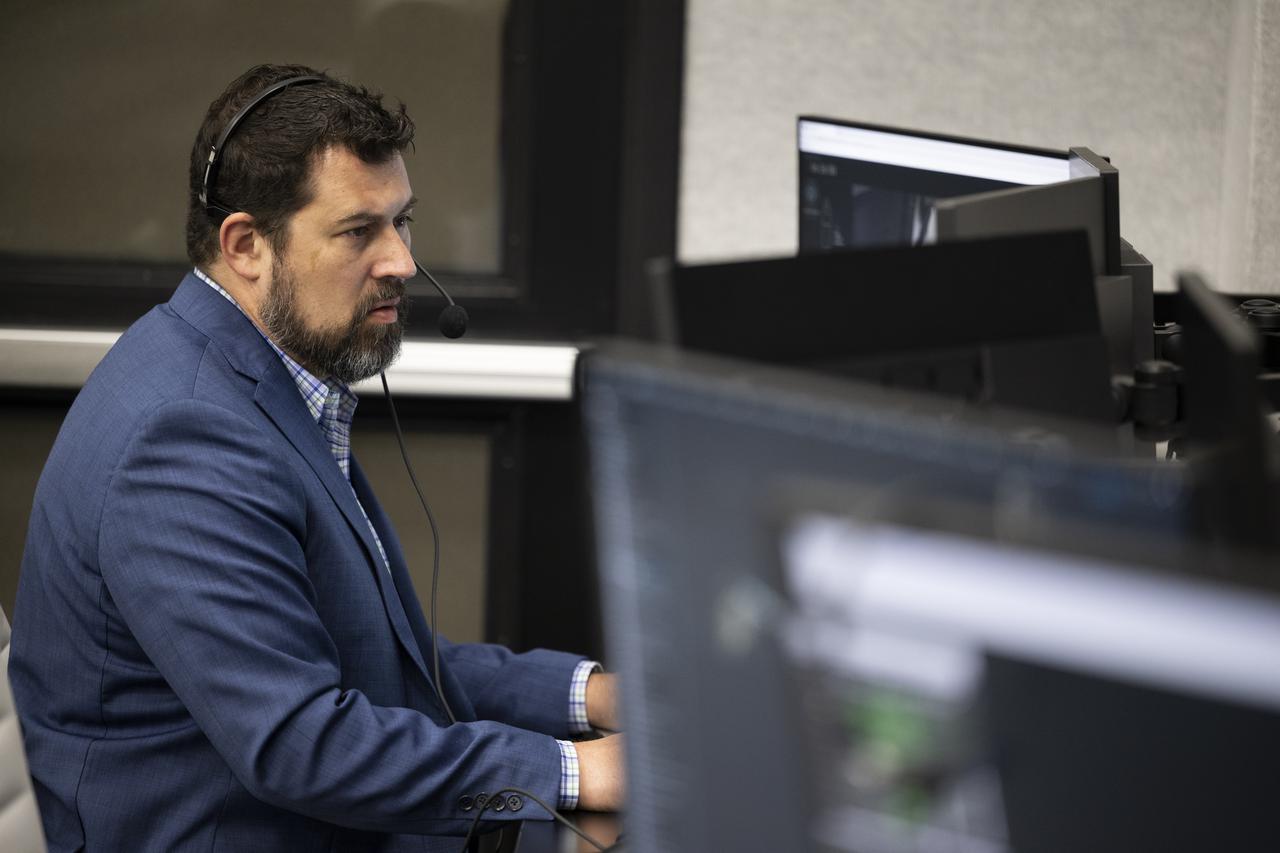
Scott Ede, mission manager for mission management and integration in NASA's Commercial Crew Program, monitors the countdown during a dress rehearsal in preparation for the launch of a SpaceX Falcon 9 rocket carrying the company's Crew Dragon spacecraft on NASA’s SpaceX Crew-4 mission with NASA astronauts Kjell Lindgren, Robert Hines, Jessica Watkins, and ESA (European Space Agency) astronaut Samantha Cristoforetti onboard, Wednesday, April 20, 2022, in firing room four of the Rocco A. Petrone Launch Control Center at NASA’s Kennedy Space Center in Florida. NASA’s SpaceX Crew-4 mission is the fourth crew rotation mission of the SpaceX Crew Dragon spacecraft and Falcon 9 rocket to the International Space Station as part of the agency’s Commercial Crew Program. Lindgren, Hines, Watkins, and Cristoforetti are scheduled to launch on April 23 at 5:26 a.m. EDT, from Launch Complex 39A at the Kennedy Space Center. Photo Credit: (NASA/Joel Kowsky)
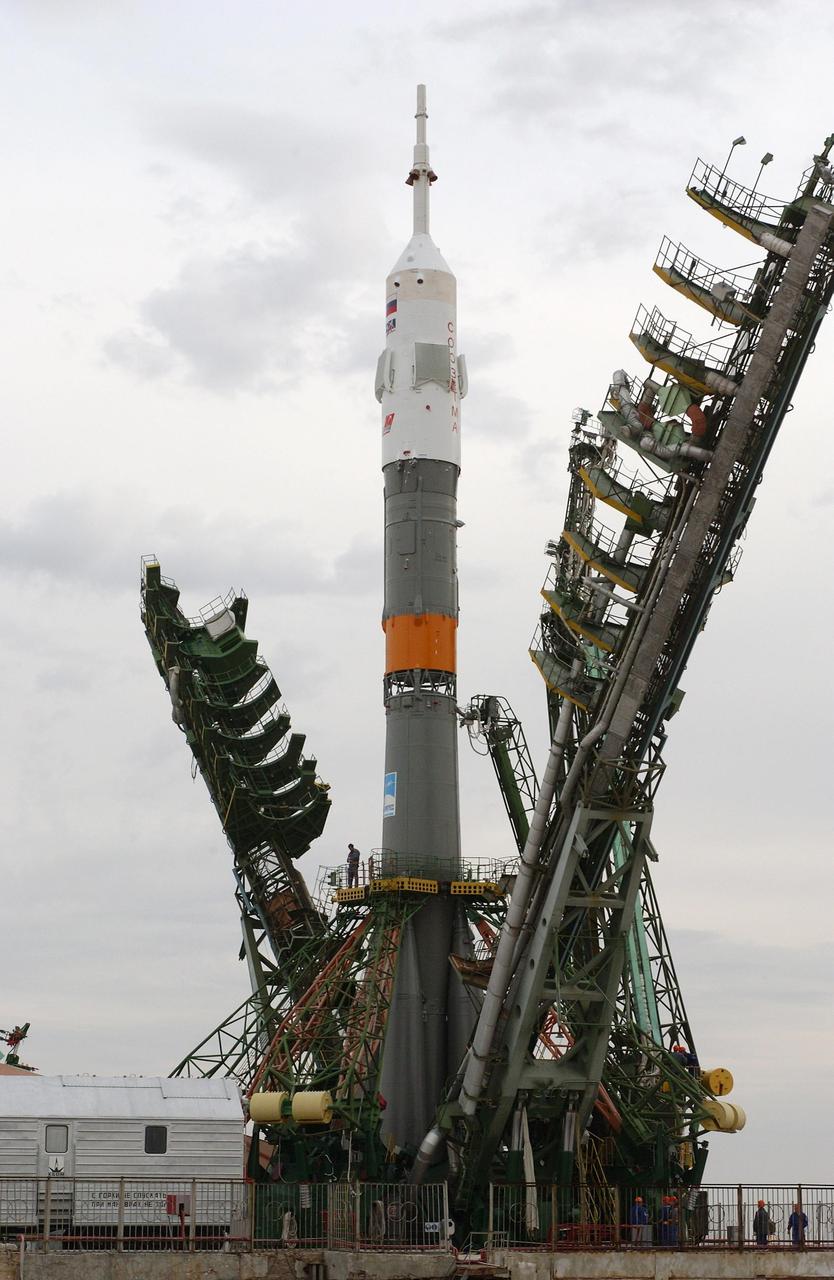
Baikonur Cosmodrome, Kazakhstan -- The Russian Soyuz TMA-2 rocket is erected at the launch pad. Expedition Seven is scheduled to launch onboard the Soyuz April 26, 2003. Veteran Russian cosmonaut Yuri Malenchenko and veteran NASA astronaut Ed Lu were named as the primary crew for the launch to the International Space Station. Russian cosmonaut Alexander Kaleri and NASA astronaut Michael Foale are the backup crewmembers to Malenchenko and Lu. Expedition 6 Commander Ken Bowersox, Flight Engineer Nikolai Budarin and NASA Space Station Science Officer Don Pettit will return to Earth aboard the Soyuz TMA-1 craft in May 2003. The three Expedition 6 crewmembers were launched on Nov. 23, 2002. They have been aboard the Station since November 25. They were originally scheduled to return in March aboard the Space Shuttle Atlantis during the STS-114 mission. Malenchenko and Lu will continue to operate the science payloads already on board, as well as maintaining the Station. Photo Credit: NASA/Bill Ingalls
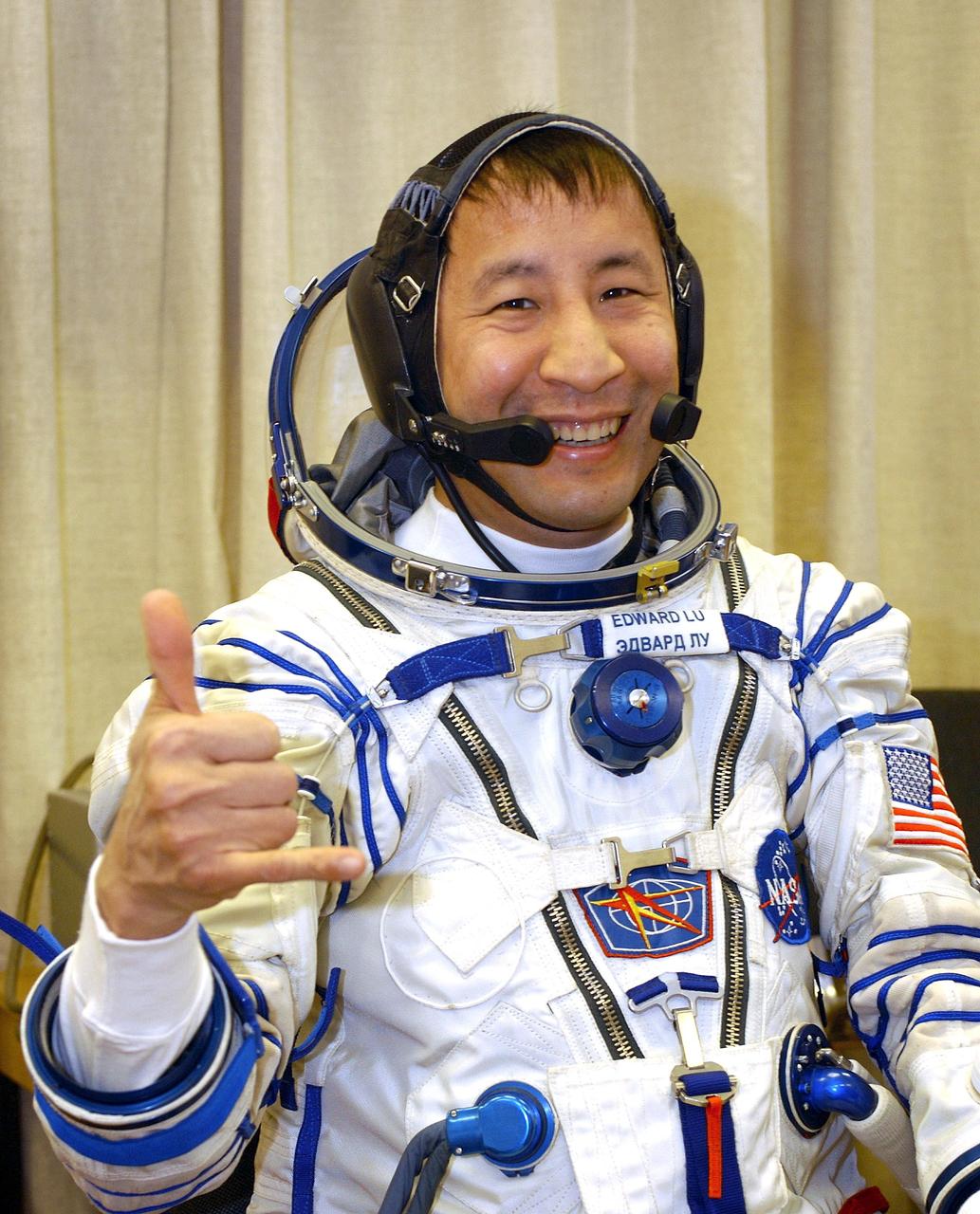
Baikonur Cosmodrome, Kazakhstan -- Astronaut Edward T. Lu, NASA ISS science officer and flight engineer for Expedition Seven dons his Russian Sokol suit for the leak check and Soyuz inspection, seat liner check. Veteran Russian cosmonaut Yuri Malenchenko and veteran NASA astronaut Ed Lu have been named as the primary crew for the planned April 26, 2003, launch of a Russian Soyuz TMA-2 spacecraft to the International Space Station. Malenchenko and Lu will be called the Expedition 7 crew. Russian cosmonaut Alexander Kaleri and NASA astronaut Michael Foale are the backup crewmembers to Malenchenko and Lu. Expedition 6 Commander Ken Bowersox, Flight Engineer Nikolai Budarin and NASA Space Station Science Officer Don Pettit will return to Earth aboard the Soyuz TMA-1 craft in May 2003. The three Expedition 6 crewmembers were launched on Nov. 23, 2002. They have been aboard the Station since November 25. They were originally scheduled to return in March aboard the Space Shuttle Atlantis during the STS-114 mission. Malenchenko and Lu will continue to operate the science payloads already on board, as well as maintaining the Station. Photo Credit: NASA/Bill Ingalls
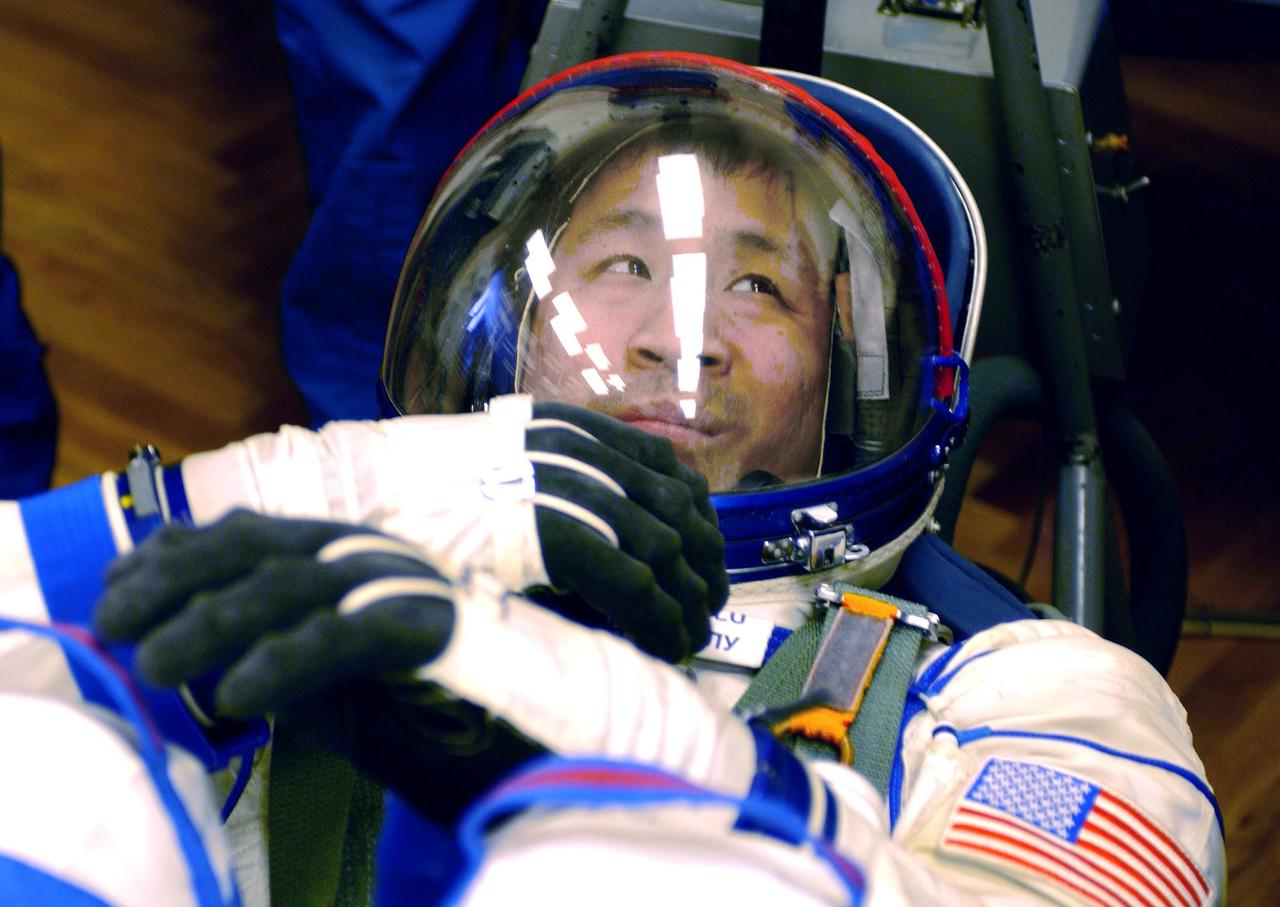
Baikonur Cosmodrome, Kazakhstan -- Building 254, Soyuz Integration Facility. Astronaut Edward T. Lu, NASA ISS science officer and flight engineer for Expedition Seven, has a leak check performed on the Russian Sokol suit. Veteran Russian cosmonaut Yuri Malenchenko and veteran NASA astronaut Ed Lu have been named as the primary crew for the planned April 26, 2003, launch of a Russian Soyuz TMA-2 spacecraft to the International Space Station. Malenchenko and Lu will be called the Expedition 7 crew. Russian cosmonaut Alexander Kaleri and NASA astronaut Michael Foale are the backup crewmembers to Malenchenko and Lu. Expedition 6 Commander Ken Bowersox, Flight Engineer Nikolai Budarin and NASA Space Station Science Officer Don Pettit will return to Earth aboard the Soyuz TMA-1 craft in May 2003. The three Expedition 6 crewmembers were launched on Nov. 23, 2002. They have been aboard the Station since November 25. They were originally scheduled to return in March aboard the Space Shuttle Atlantis during the STS-114 mission. Malenchenko and Lu will continue to operate the science payloads already on board, as well as maintaining the Station. Photo Credit: NASA/Bill Ingalls
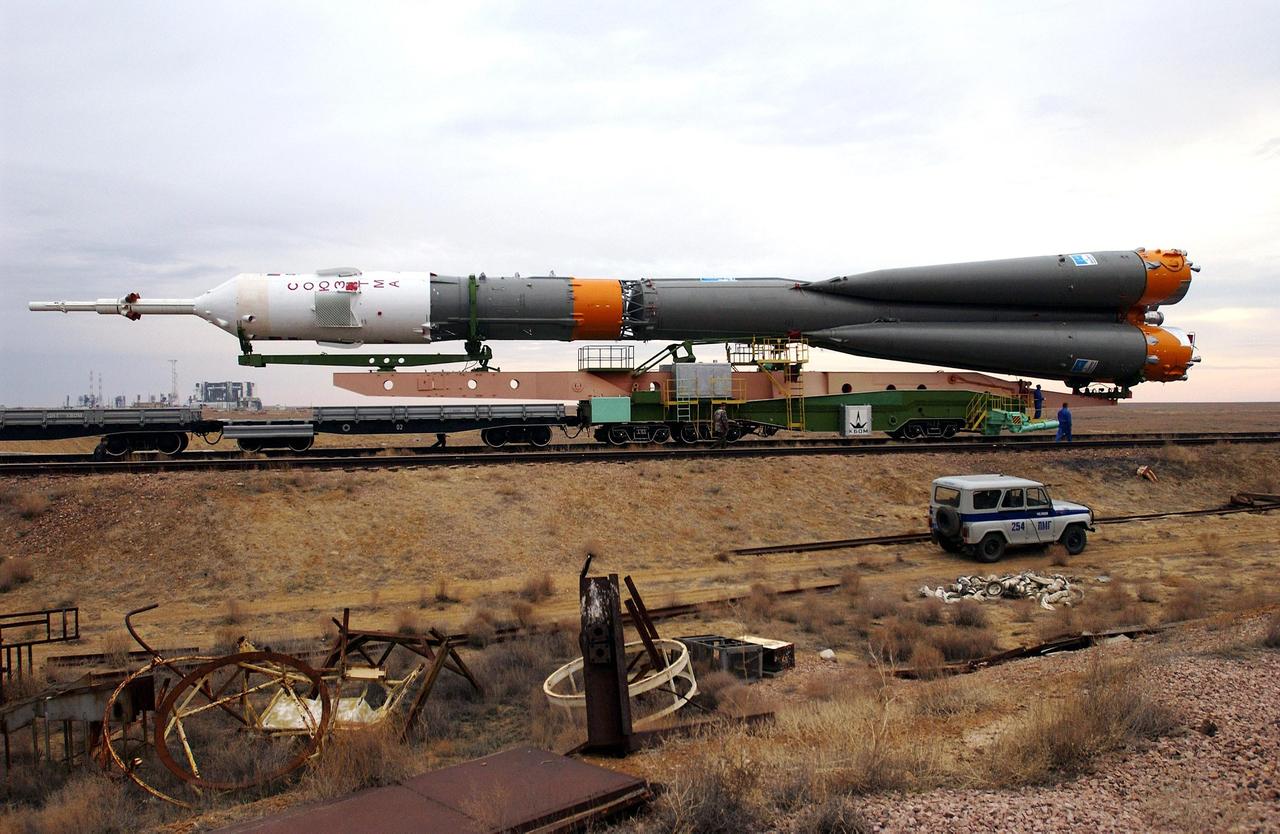
Baikonur Cosmodrome, Kazakhstan -- The Soyuz rocket is rolled out of the assembly building and travels via rail to the launch pad. Expedition Seven is scheduled to launch onboard the Soyuz April 26, 2003. Cosmonaut Yuri Malenchenko, commander, and astronaut Ed Lu, NASA science officer and flight engineer, were named as the primary crew, Expedition 7, for the launch to the International Space Station. Russian cosmonaut Alexander Kaleri and NASA astronaut Michael Foale are the backup crewmembers to Malenchenko and Lu. Expedition 6 Commander Ken Bowersox, Flight Engineer Nikolai Budarin and NASA Space Station Science Officer Don Pettit will return to Earth aboard the Soyuz TMA-1 craft in May 2003. The three Expedition 6 crewmembers were launched on Nov. 23, 2002. They have been aboard the Station since November 25. They were originally scheduled to return in March aboard the Space Shuttle Atlantis during the STS-114 mission. Malenchenko and Lu will continue to operate the science payloads already on board, as well as maintaining the Station. Photo Credit: NASA/Bill Ingalls
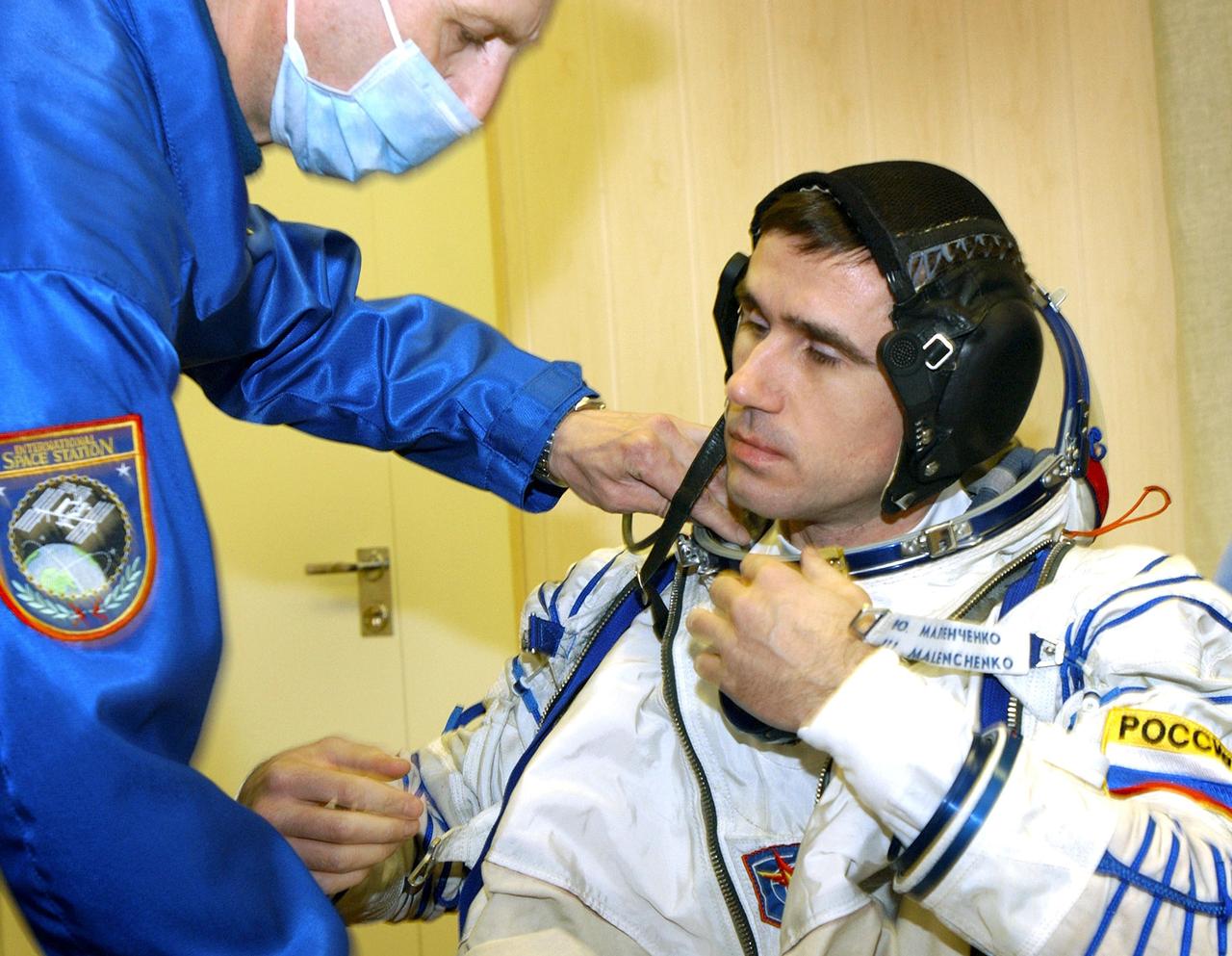
Baikonur Cosmodrome, Kazakhstan -- Cosmonaut Yuri I. Malenchenko, Expedition Seven commander dons his Russian Sokol suit for the leak check and Soyuz inspection, seat liner check. Veteran Russian cosmonaut Yuri Malenchenko and veteran NASA astronaut Ed Lu have been named as the primary crew for the planned April 26, 2003, launch of a Russian Soyuz TMA-2 spacecraft to the International Space Station. Malenchenko and Lu will be called the Expedition 7 crew. Russian cosmonaut Alexander Kaleri and NASA astronaut Michael Foale are the backup crewmembers to Malenchenko and Lu. Expedition 6 Commander Ken Bowersox, Flight Engineer Nikolai Budarin and NASA Space Station Science Officer Don Pettit will return to Earth aboard the Soyuz TMA-1 craft in May 2003. The three Expedition 6 crewmembers were launched on Nov. 23, 2002. They have been aboard the Station since November 25. They were originally scheduled to return in March aboard the Space Shuttle Atlantis during the STS-114 mission. Malenchenko and Lu will continue to operate the science payloads already on board, as well as maintaining the Station. Photo Credit: NASA/Bill Ingalls
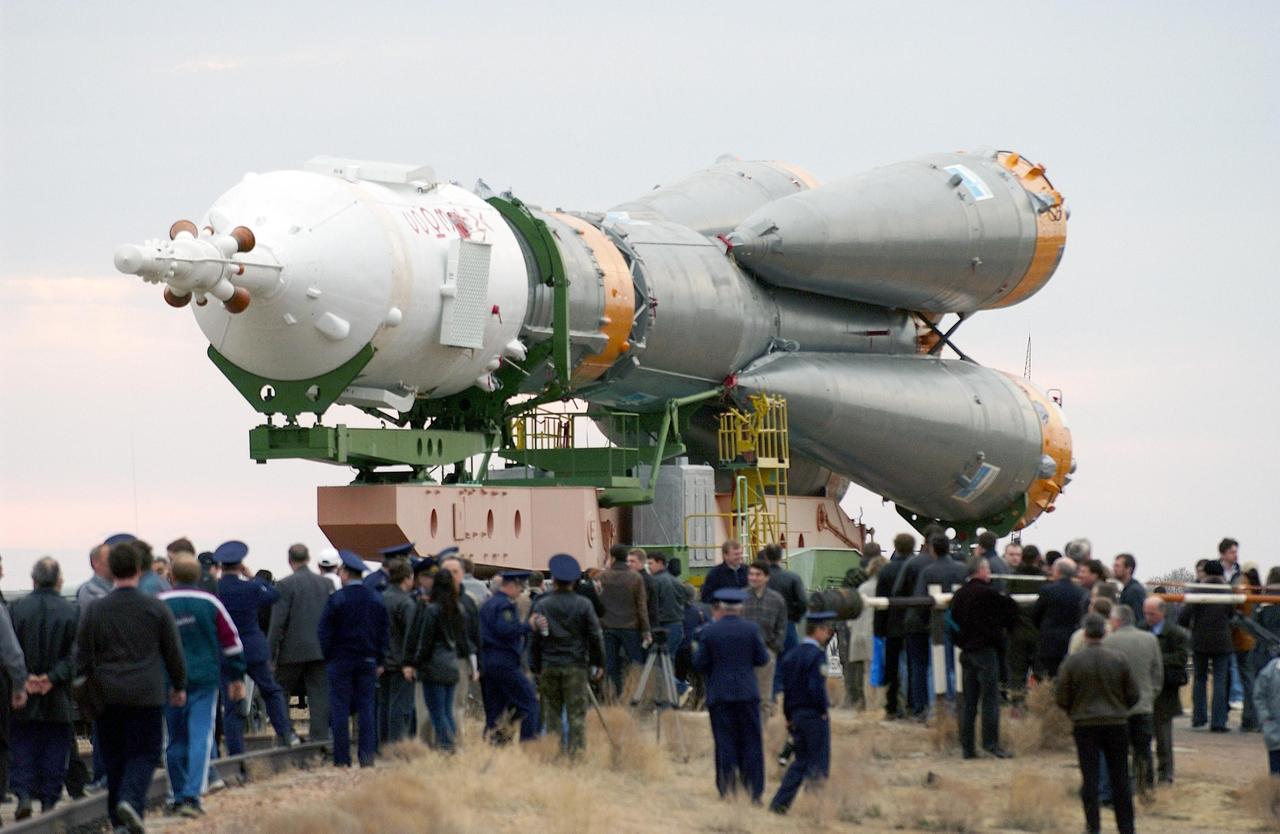
Baikonur Cosmodrome, Kazakhstan -- The Soyuz rocket is rolled out of the assembly building and travels via rail to the launch pad. Expedition Seven is scheduled to launch onboard the Soyuz April 26, 2003. Cosmonaut Yuri Malenchenko, commander, and astronaut Ed Lu, NASA science officer and flight engineer, were named as the primary crew, Expedition 7, for the launch to the International Space Station. Russian cosmonaut Alexander Kaleri and NASA astronaut Michael Foale are the backup crewmembers to Malenchenko and Lu. Expedition 6 Commander Ken Bowersox, Flight Engineer Nikolai Budarin and NASA Space Station Science Officer Don Pettit will return to Earth aboard the Soyuz TMA-1 craft in May 2003. The three Expedition 6 crewmembers were launched on Nov. 23, 2002. They have been aboard the Station since November 25. They were originally scheduled to return in March aboard the Space Shuttle Atlantis during the STS-114 mission. Malenchenko and Lu will continue to operate the science payloads already on board, as well as maintaining the Station. Photo Credit: NASA/Bill Ingalls
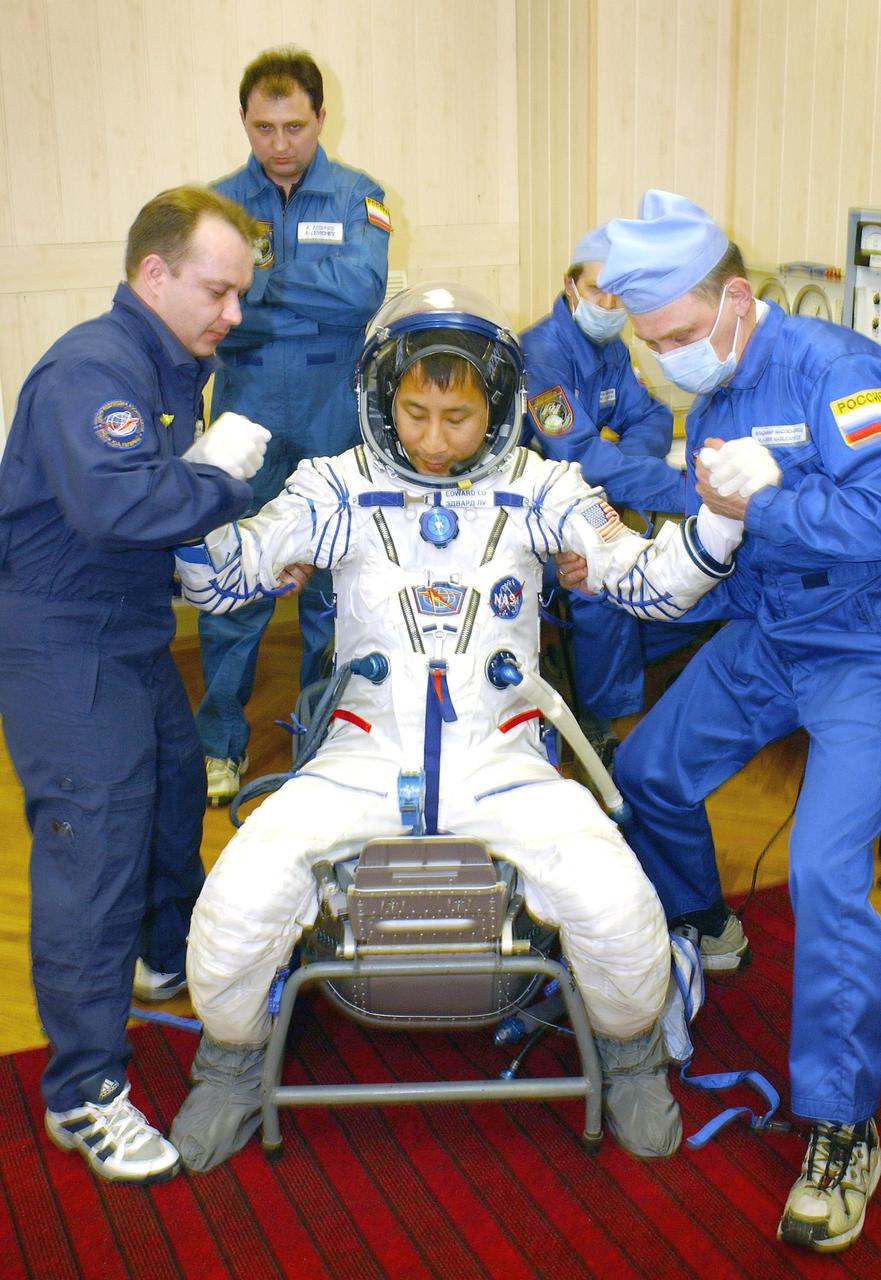
Baikonur Cosmodrome, Kazakhstan -- Building 254, Soyuz Integration Facility. Astronaut Edward T. Lu, NASA ISS science officer and flight engineer for Expedition Seven, has a leak check performed on the Russian Sokol suit. Veteran Russian cosmonaut Yuri Malenchenko and veteran NASA astronaut Ed Lu have been named as the primary crew for the planned April 26, 2003, launch of a Russian Soyuz TMA-2 spacecraft to the International Space Station. Malenchenko and Lu will be called the Expedition 7 crew. Russian cosmonaut Alexander Kaleri and NASA astronaut Michael Foale are the backup crewmembers to Malenchenko and Lu. Expedition 6 Commander Ken Bowersox, Flight Engineer Nikolai Budarin and NASA Space Station Science Officer Don Pettit will return to Earth aboard the Soyuz TMA-1 craft in May 2003. The three Expedition 6 crewmembers were launched on Nov. 23, 2002. They have been aboard the Station since November 25. They were originally scheduled to return in March aboard the Space Shuttle Atlantis during the STS-114 mission. Malenchenko and Lu will continue to operate the science payloads already on board, as well as maintaining the Station. Photo Credit: NASA/Bill Ingalls
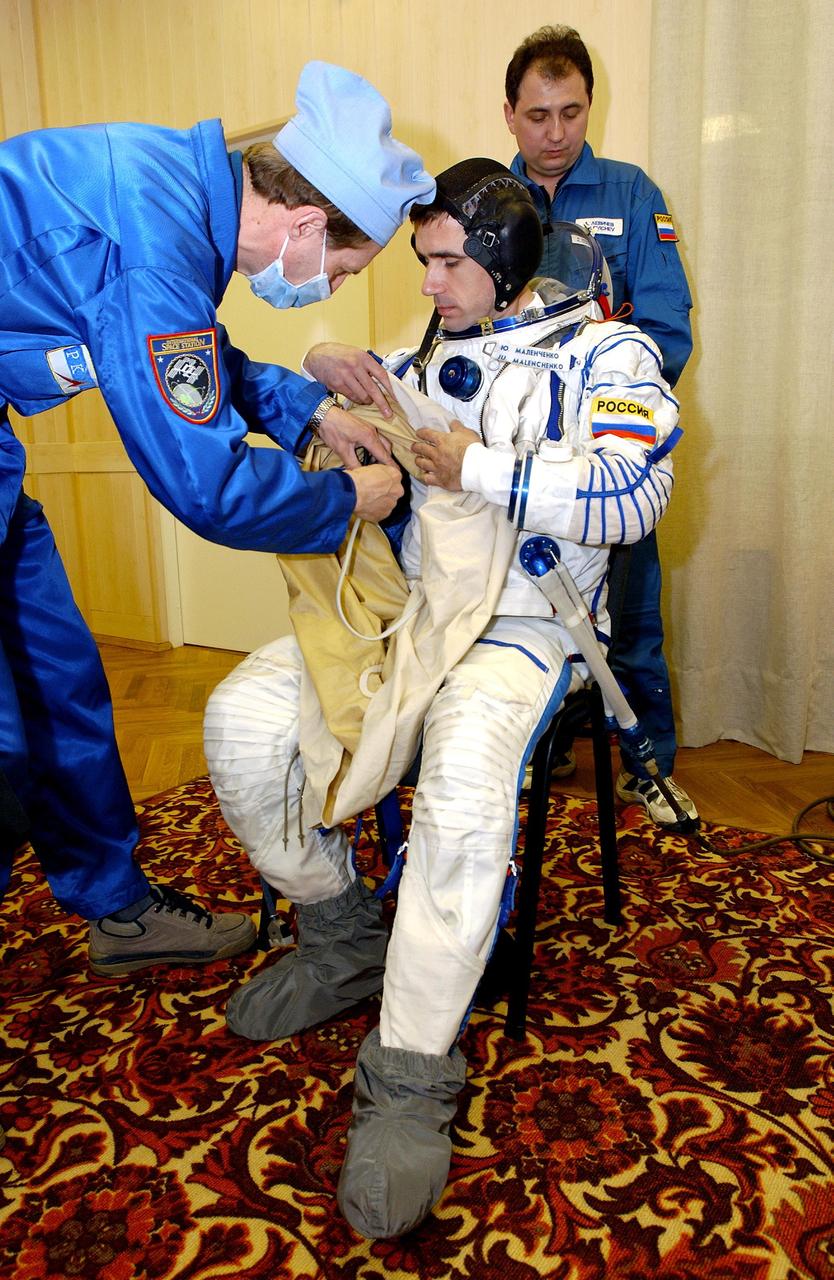
Baikonur Cosmodrome, Kazakhstan -- Cosmonaut Yuri I. Malenchenko, Expedition Seven commander, dons his Russian Sokol suit for the leak check and Soyuz inspection, seat liner check. Veteran Russian cosmonaut Yuri Malenchenko and veteran NASA astronaut Ed Lu have been named as the primary crew for the planned April 26, 2003, launch of a Russian Soyuz TMA-2 spacecraft to the International Space Station. Malenchenko and Lu will be called the Expedition 7 crew. Russian cosmonaut Alexander Kaleri and NASA astronaut Michael Foale are the backup crewmembers to Malenchenko and Lu. Expedition 6 Commander Ken Bowersox, Flight Engineer Nikolai Budarin and NASA Space Station Science Officer Don Pettit will return to Earth aboard the Soyuz TMA-1 craft in May 2003. The three Expedition 6 crewmembers were launched on Nov. 23, 2002. They have been aboard the Station since November 25. They were originally scheduled to return in March aboard the Space Shuttle Atlantis during the STS-114 mission. Malenchenko and Lu will continue to operate the science payloads already on board, as well as maintaining the Station. Photo Credit: NASA/Bill Ingalls
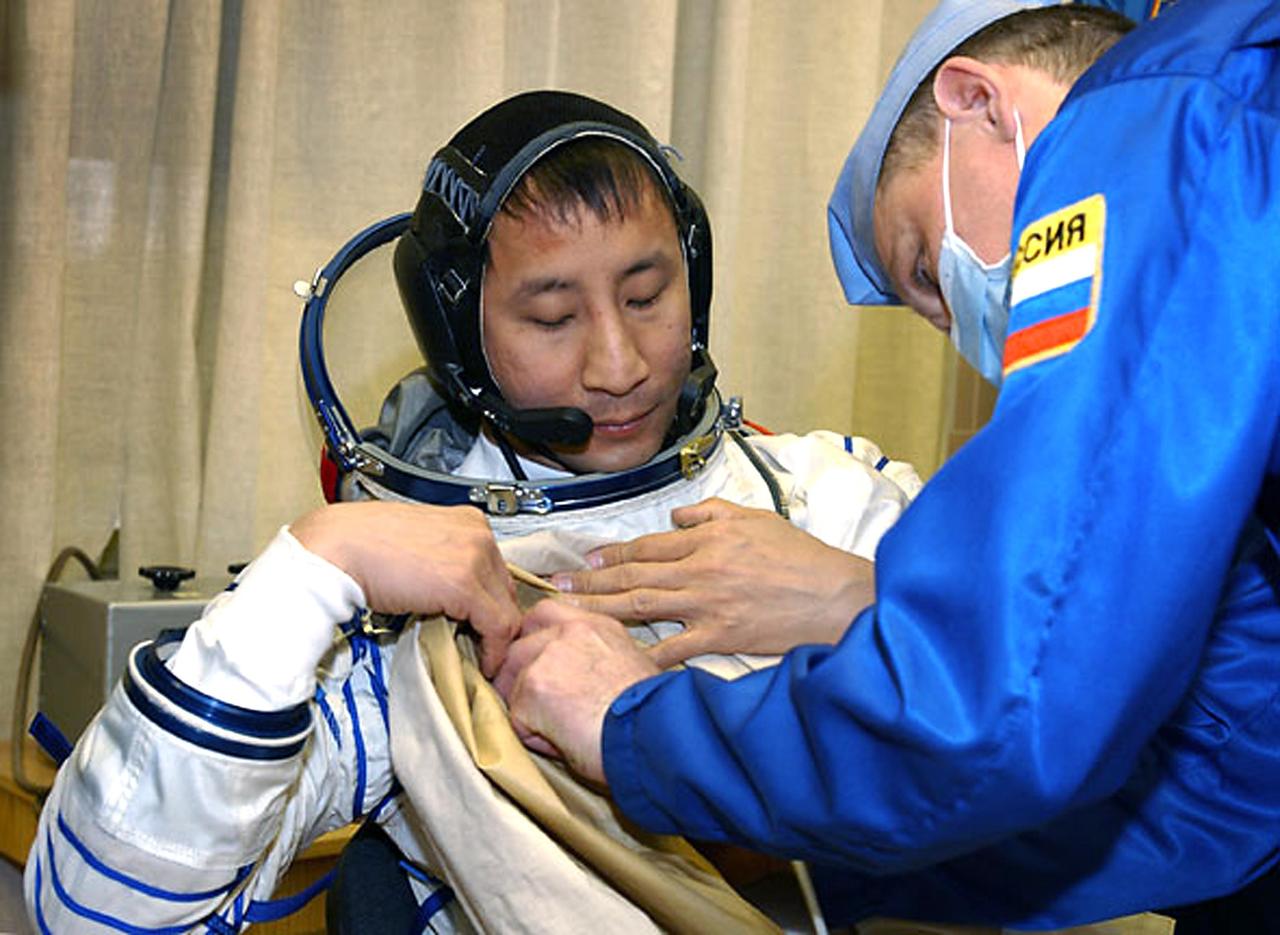
Baikonur Cosmodrome, Kazakhstan. Building 254, Soyuz Integration Facility. Astronaut Edward T. Lu, NASA ISS science officer and flight engineer for Expedition Seven, dons his Russian Sokol suit for the leak check and Soyuz inspection, seat liner check. Veteran Russian cosmonaut Yuri Malenchenko and veteran NASA astronaut Ed Lu have been named as the primary crew for the planned April 26, 2003, launch of a Russian Soyuz TMA-2 spacecraft to the International Space Station. Malenchenko and Lu will be called the Expedition 7 crew. Russian cosmonaut Alexander Kaleri and NASA astronaut Michael Foale are the backup crewmembers to Malenchenko and Lu. Expedition 6 Commander Ken Bowersox, Flight Engineer Nikolai Budarin and NASA Space Station Science Officer Don Pettit will return to Earth aboard the Soyuz TMA-1 craft in May 2003. The three Expedition 6 crewmembers were launched on Nov. 23, 2002. They have been aboard the Station since November 25. They were originally scheduled to return in March aboard the Space Shuttle Atlantis during the STS-114 mission. Malenchenko and Lu will continue to operate the science payloads already on board, as well as maintaining the Station. Photo Credit: NASA/Bill Ingalls

Baikonur Cosmodrome, Kazakhstan -- The Soyuz rocket is erected at the launch pad. Expedition Seven is scheduled to launch onboard the Soyuz April 26, 2003. Cosmonaut Yuri Malenchenko, commander, and astronaut Ed Lu, NASA science officer and flight engineer, were named as the primary crew, Expedition 7, for the launch to the International Space Station. Russian cosmonaut Alexander Kaleri and NASA astronaut Michael Foale are the backup crewmembers to Malenchenko and Lu. Expedition 6 Commander Ken Bowersox, Flight Engineer Nikolai Budarin and NASA Space Station Science Officer Don Pettit will return to Earth aboard the Soyuz TMA-1 craft in May 2003. The three Expedition 6 crewmembers were launched on Nov. 23, 2002. They have been aboard the Station since November 25. They were originally scheduled to return in March aboard the Space Shuttle Atlantis during the STS-114 mission. Malenchenko and Lu will continue to operate the science payloads already on board, as well as maintaining the Station. Photo Credit: NASA/Bill Ingalls
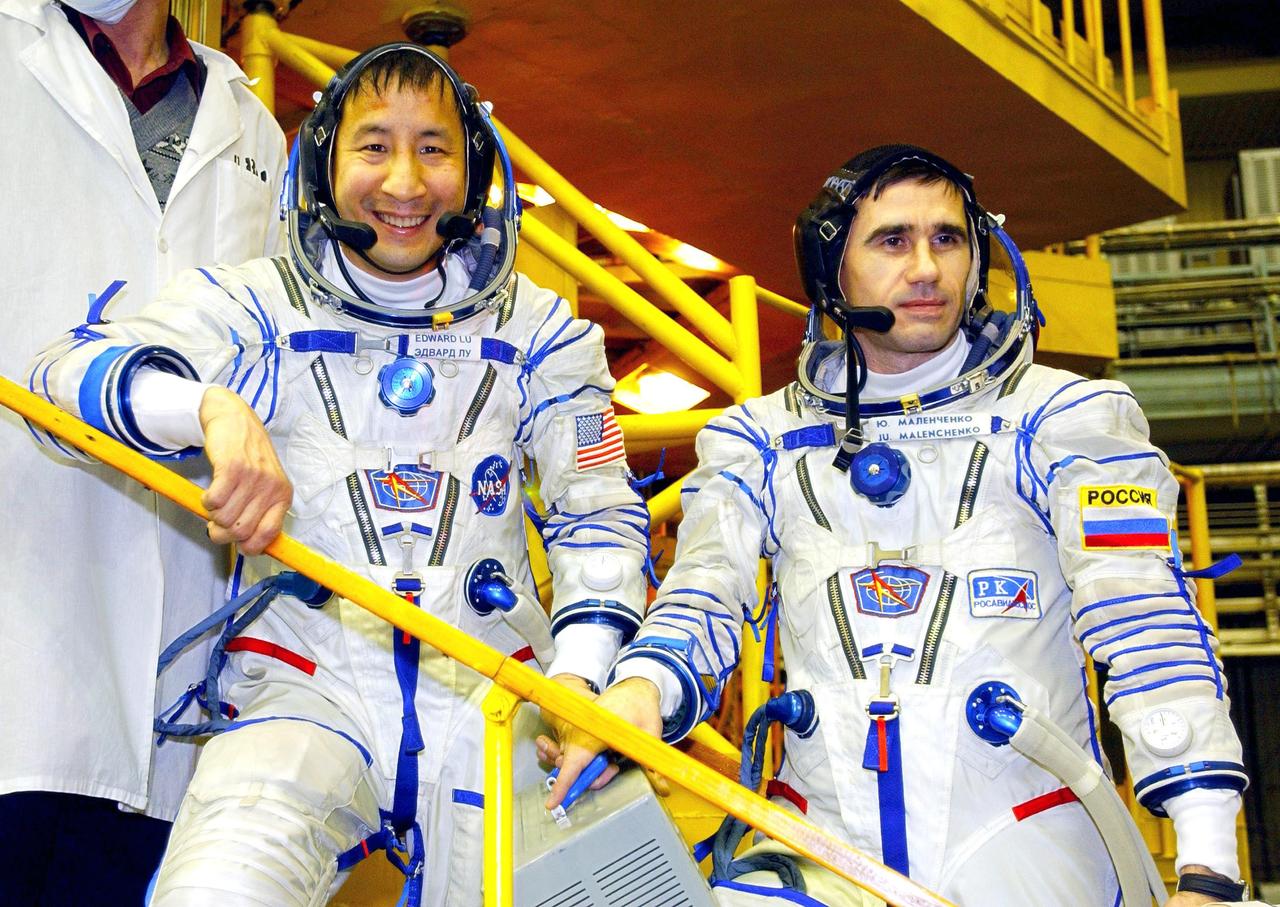
Baikonur Cosmodrome, Kazakhstan -- Building 254, Soyuz Integration Facility. Cosmonaut Yuri I. Malenchenko (right), Expedition Seven commander, and astronaut Edward T. Lu, NASA ISS science officer and flight engineer for Expedition Seven, pause for a photograph on the Soyuz stand after the Soyuz inspection, seat liner check. Veteran Russian cosmonaut Yuri Malenchenko and veteran NASA astronaut Ed Lu were named as the primary crew for the planned April 26, 2003, launch of a Russian Soyuz TMA-2 spacecraft to the International Space Station. Russian cosmonaut Alexander Kaleri and NASA astronaut Michael Foale are the backup crewmembers to Malenchenko and Lu. Expedition 6 Commander Ken Bowersox, Flight Engineer Nikolai Budarin and NASA Space Station Science Officer Don Pettit will return to Earth aboard the Soyuz TMA-1 craft in May 2003. The three Expedition 6 crewmembers were launched on Nov. 23, 2002. They have been aboard the Station since November 25. They were originally scheduled to return in March aboard the Space Shuttle Atlantis during the STS-114 mission. Malenchenko and Lu will continue to operate the science payloads already on board, as well as maintaining the Station. Photo Credit: NASA/Bill Ingalls
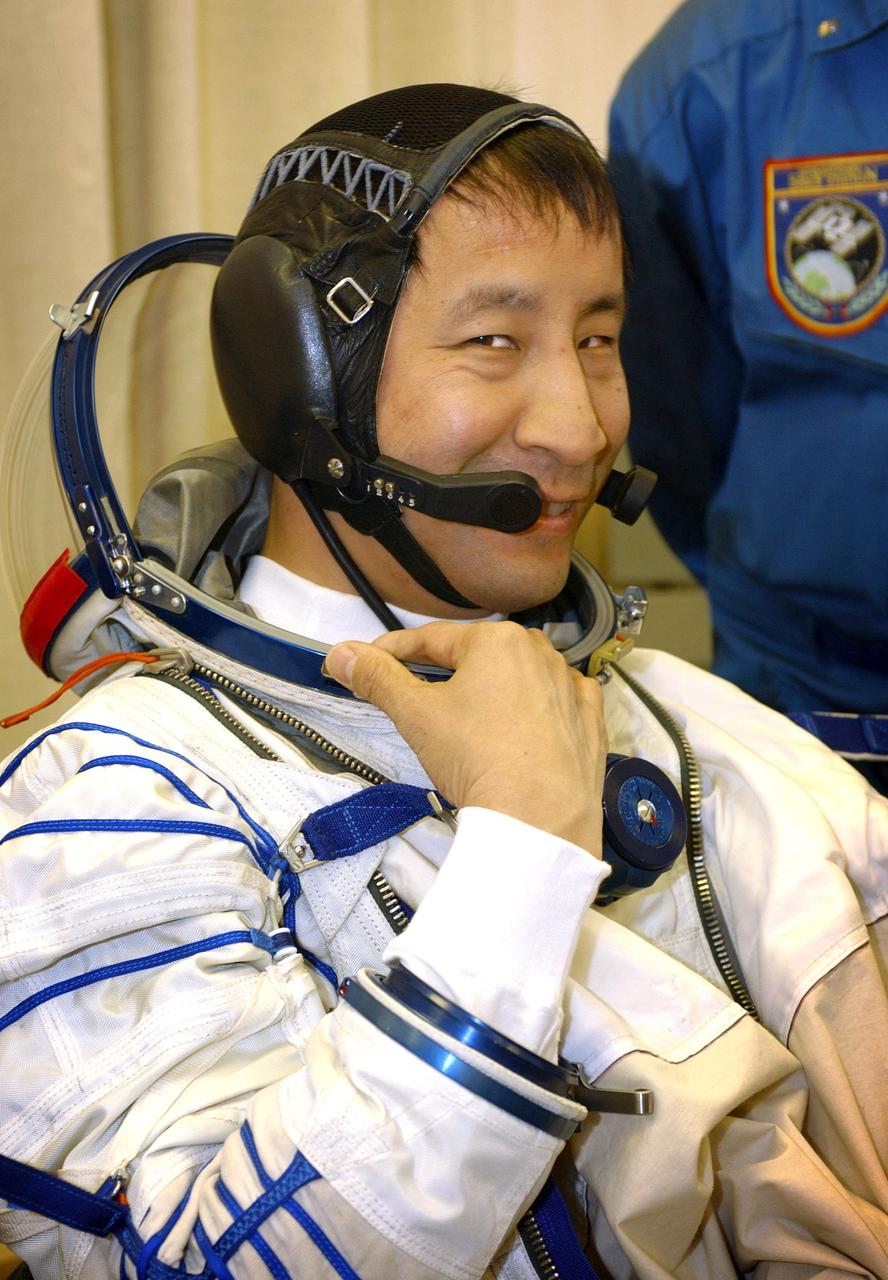
Baikonur Cosmodrome, Kazakhstan. Building 254, Soyuz Integration Facility. Astronaut Edward T. Lu, NASA ISS science officer and flight engineer for Expedition Seven, dons his Russian Sokol suit for the leak check and Soyuz inspection, seat liner check. Veteran Russian cosmonaut Yuri Malenchenko and veteran NASA astronaut Ed Lu have been named as the primary crew for the planned April 26, 2003, launch of a Russian Soyuz TMA-2 spacecraft to the International Space Station. Malenchenko and Lu will be called the Expedition 7 crew. Russian cosmonaut Alexander Kaleri and NASA astronaut Michael Foale are the backup crewmembers to Malenchenko and Lu. Expedition 6 Commander Ken Bowersox, Flight Engineer Nikolai Budarin and NASA Space Station Science Officer Don Pettit will return to Earth aboard the Soyuz TMA-1 craft in May 2003. The three Expedition 6 crewmembers were launched on Nov. 23, 2002. They have been aboard the Station since November 25. They were originally scheduled to return in March aboard the Space Shuttle Atlantis during the STS-114 mission. Malenchenko and Lu will continue to operate the science payloads already on board, as well as maintaining the Station. Photo Credit: NASA/Bill Ingalls
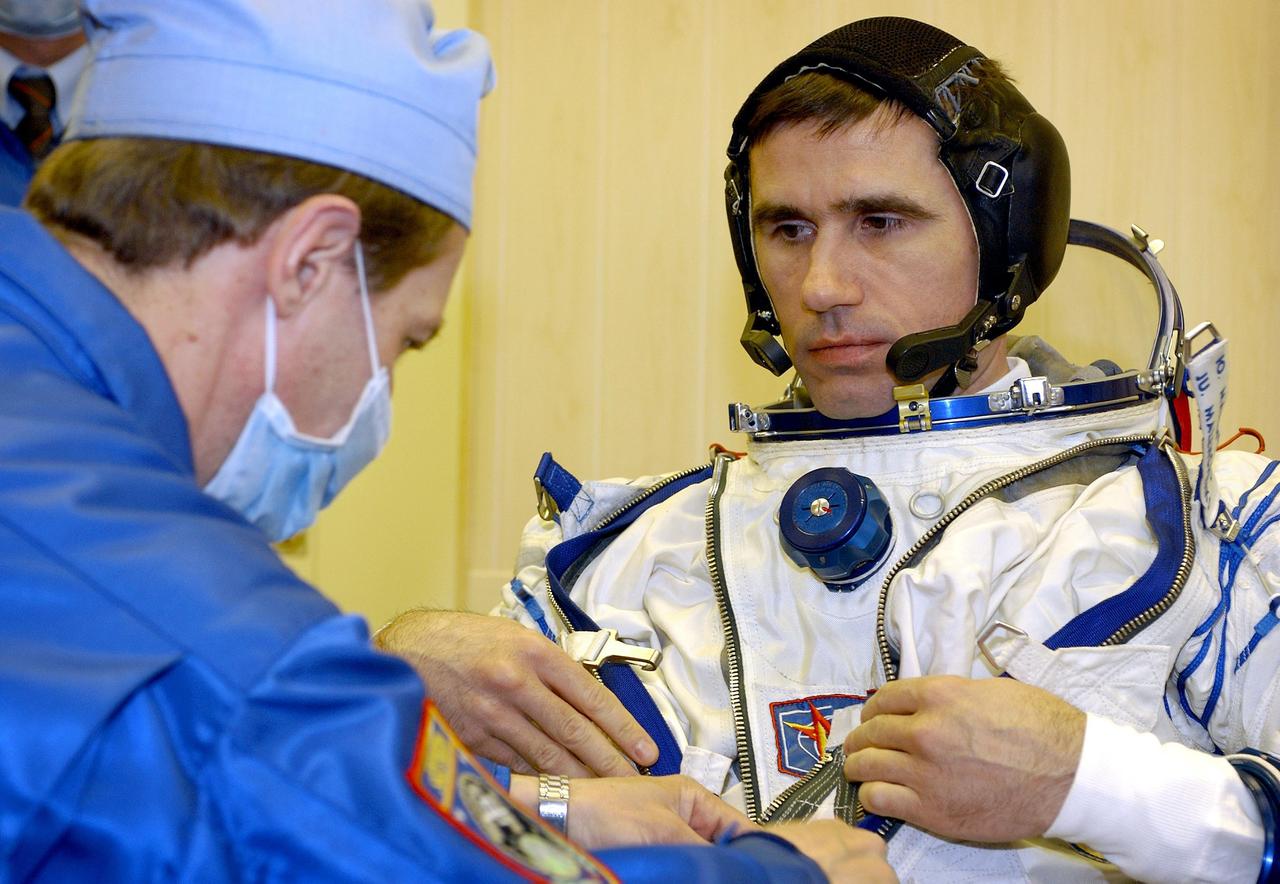
Baikonur Cosmodrome, Kazakhstan -- Building 254, Soyuz Integration Facility. Cosmonaut Yuri I. Malenchenko, Expedition Seven commander dons his Russian Sokol suit for the leak check and Soyuz inspection, seat liner check. Veteran Russian cosmonaut Yuri Malenchenko and veteran NASA astronaut Ed Lu have been named as the primary crew for the planned April 26, 2003, launch of a Russian Soyuz TMA-2 spacecraft to the International Space Station. Malenchenko and Lu will be called the Expedition 7 crew. Russian cosmonaut Alexander Kaleri and NASA astronaut Michael Foale are the backup crewmembers to Malenchenko and Lu. Expedition 6 Commander Ken Bowersox, Flight Engineer Nikolai Budarin and NASA Space Station Science Officer Don Pettit will return to Earth aboard the Soyuz TMA-1 craft in May 2003. The three Expedition 6 crewmembers were launched on Nov. 23, 2002. They have been aboard the Station since November 25. They were originally scheduled to return in March aboard the Space Shuttle Atlantis during the STS-114 mission. Malenchenko and Lu will continue to operate the science payloads already on board, as well as maintaining the Station. Photo Credit: NASA/Bill Ingalls
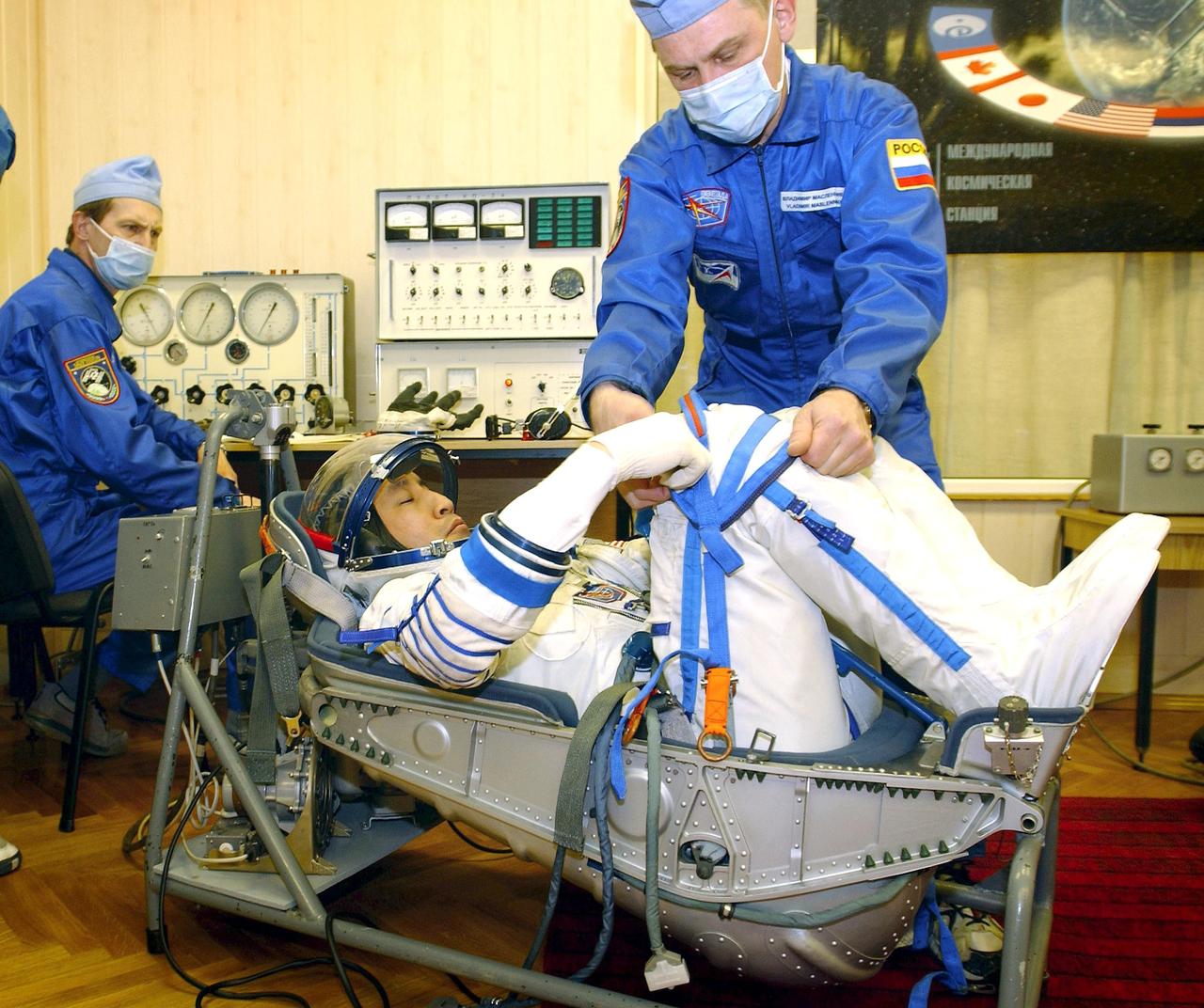
Baikonur Cosmodrome, Kazakhstan -- Building 254, Soyuz Integration Facility. Astronaut Edward T. Lu, NASA ISS science officer and flight engineer for Expedition Seven, has a leak check performed on the Russian Sokol suit. Veteran Russian cosmonaut Yuri Malenchenko and veteran NASA astronaut Ed Lu have been named as the primary crew for the planned April 26, 2003, launch of a Russian Soyuz TMA-2 spacecraft to the International Space Station. Malenchenko and Lu will be called the Expedition 7 crew. Russian cosmonaut Alexander Kaleri and NASA astronaut Michael Foale are the backup crewmembers to Malenchenko and Lu. Expedition 6 Commander Ken Bowersox, Flight Engineer Nikolai Budarin and NASA Space Station Science Officer Don Pettit will return to Earth aboard the Soyuz TMA-1 craft in May 2003. The three Expedition 6 crewmembers were launched on Nov. 23, 2002. They have been aboard the Station since November 25. They were originally scheduled to return in March aboard the Space Shuttle Atlantis during the STS-114 mission. Malenchenko and Lu will continue to operate the science payloads already on board, as well as maintaining the Station. Photo Credit: NASA/Bill Ingalls
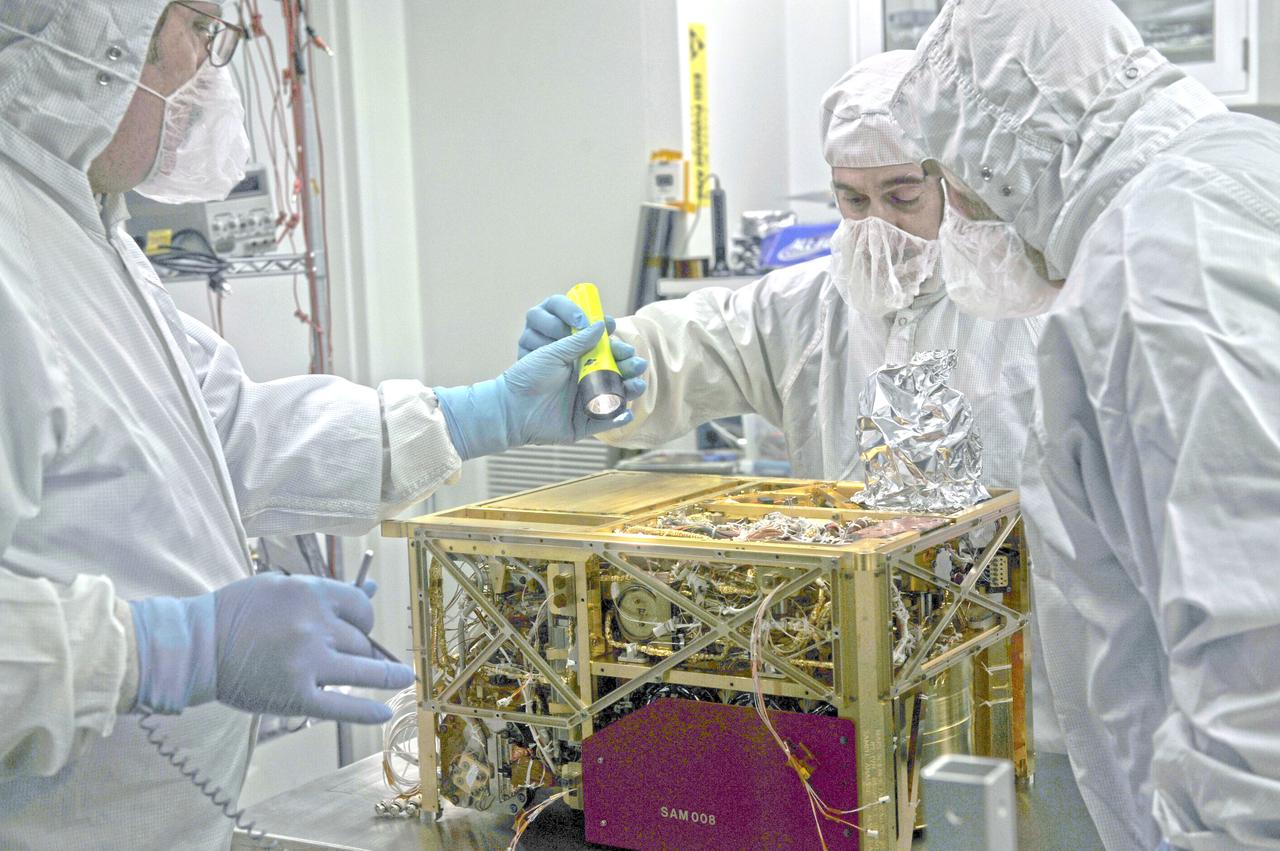
On Saturday, November 26, NASA is scheduled to launch the Mars Science Laboratory (MSL) mission featuring Curiosity, the largest and most advanced rover ever sent to the Red Planet. The Curiosity rover bristles with multiple cameras and instruments, including Goddard's Sample Analysis at Mars (SAM) instrument suite. By looking for evidence of water, carbon, and other important building blocks of life in the Martian soil and atmosphere, SAM will help discover whether Mars ever had the potential to support life. Curiosity will be delivered to Gale crater, a 96-mile-wide crater that contains a record of environmental changes in its sedimentary rock, in August 2012. ----- NASA image November 18, 2010 The Sample Analysis at Mars (SAM) instrument is considered one of the most complicated instruments ever to land on the surface of another planet. Equipped with a gas chromatograph, a quadruple mass spectrometer, and a tunable laser spectrometer, SAM will carry out the initial search for organic compounds when the Mars Science Laboratory (MSL) rover lands in 2012. Credit: NASA/GSFC/Ed Campion <b><a href="http://www.nasa.gov/audience/formedia/features/MP_Photo_Guidelines.html" rel="nofollow">NASA image use policy.</a></b> <b><a href="http://www.nasa.gov/centers/goddard/home/index.html" rel="nofollow">NASA Goddard Space Flight Center</a></b> enables NASA’s mission through four scientific endeavors: Earth Science, Heliophysics, Solar System Exploration, and Astrophysics. Goddard plays a leading role in NASA’s accomplishments by contributing compelling scientific knowledge to advance the Agency’s mission. <b>Follow us on <a href="http://twitter.com/NASA_GoddardPix" rel="nofollow">Twitter</a></b> <b>Like us on <a href="http://www.facebook.com/pages/Greenbelt-MD/NASA-Goddard/395013845897?ref=tsd" rel="nofollow">Facebook</a></b> <b>Find us on <a href="http://instagrid.me/nasagoddard/?vm=grid" rel="nofollow">Instagram</a></b>