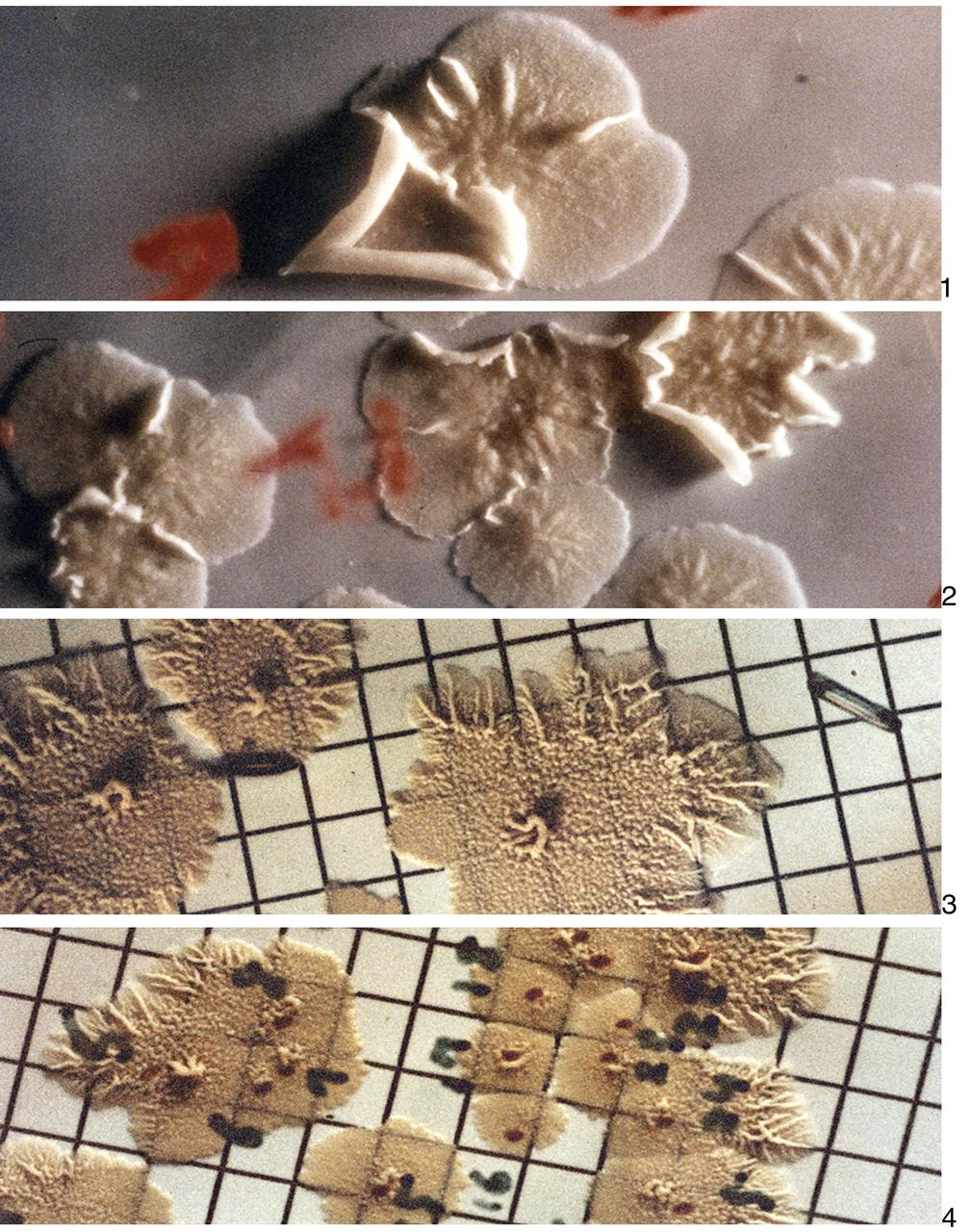
Pictures 1 and 2 show samples of Bacillus Subtillus grown during the first performance of Robert Staehle's experiment (ED-31) aboard Skylab. Pictures 3 and 4 show colonies of the same bacteria that developed during the second performance of the experiment. The experiment ED-31 was proposed by Robert L. Staehle of Rochester, New York to determine the effect of the Skylab environment (particularly weightlessness) on the survival, growth rates, and mutations of certain bacteria and spores.
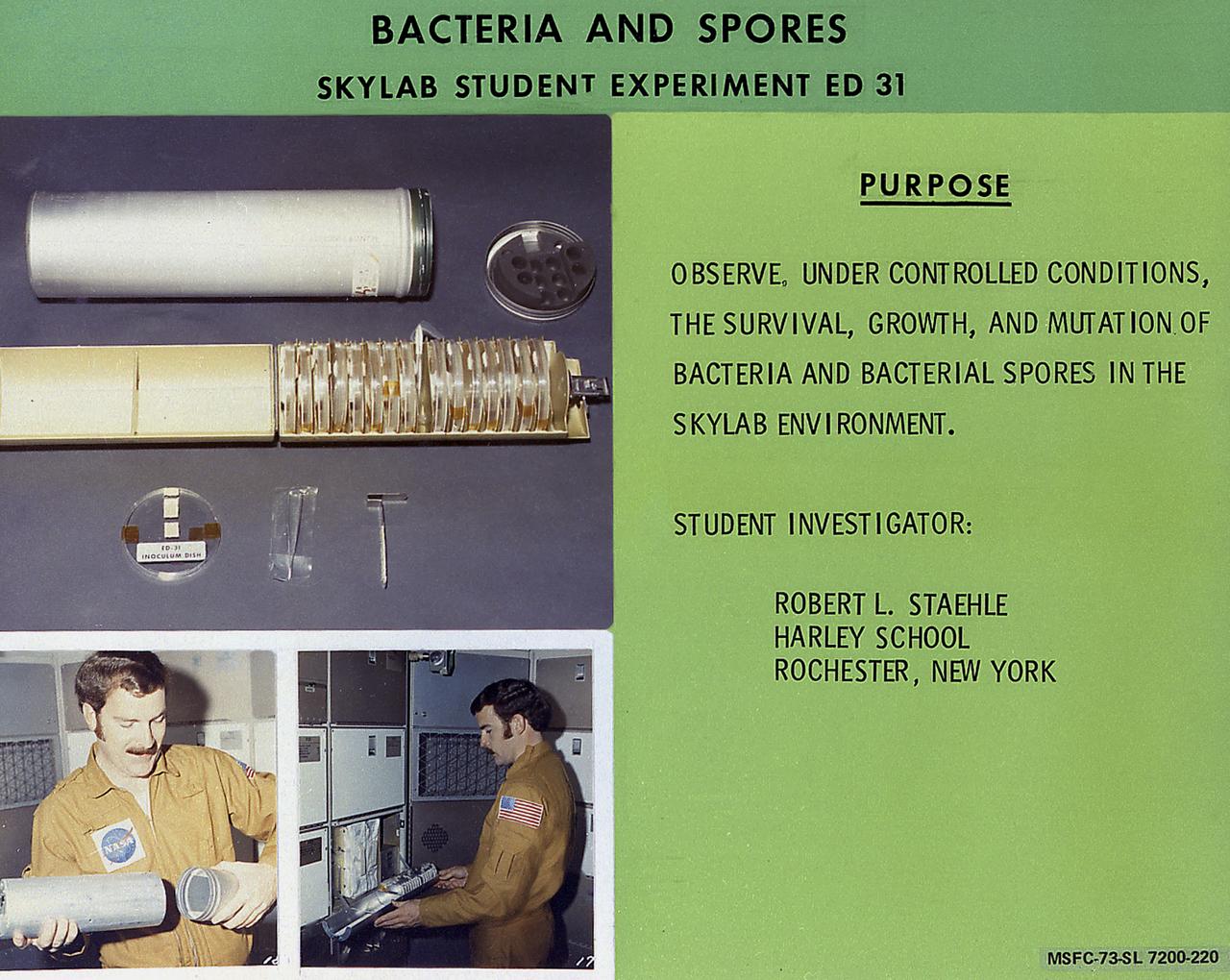
This chart describes the Skylab student experiment Bacteria and Spores, proposed by Robert L. Staehle of Rochester, New York. This experiment was intended to determine the effect of the Skylab environment (particularly weightlessness) on the survival, growth rates, and mutations of certain bacteria and spores. In March 1972, NASA and the National Science Teachers Association selected 25 experiment proposals for flight on Skylab. Science advisors from the Marshall Space Flight Center aided and assisted the students in developing the proposals for flight on Skylab.
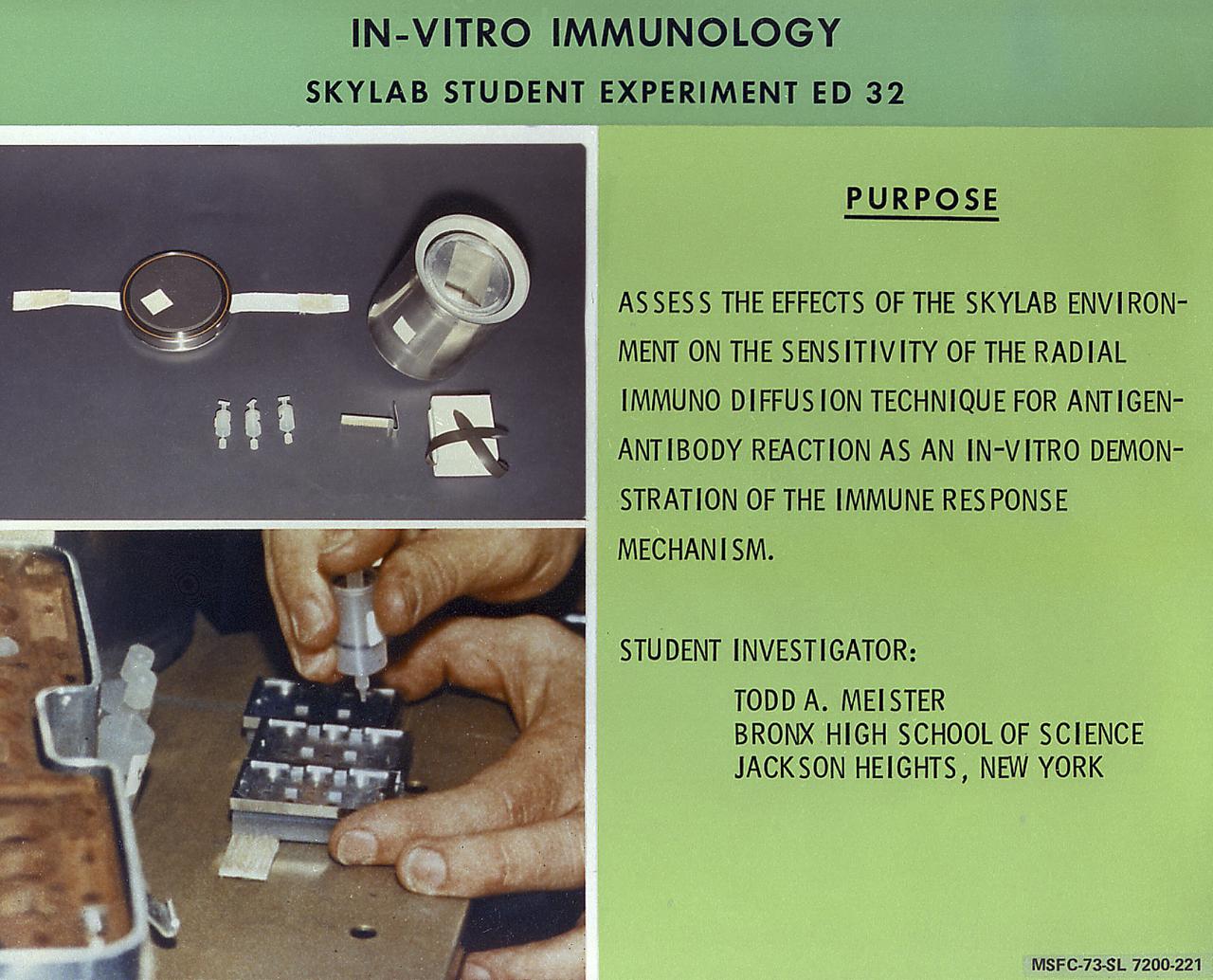
This chart describes the Skylab student experiment In-Vitro Immunology, proposed by Todd A. Meister of Jackson Heights, New York. He suggested an in-vitro observation of the effects of zero-gravity on a presipitin-type antigen-antibody reaction, as compared with the same reaction carried out in an Earth-based laboratory. In March 1972, NASA and the National Science Teachers Association selected 25 experiment proposals for flight on Skylab. Science advisors from the Marshall Space Flight Center aided and assisted the students in developing the proposals for flight on Skylab.
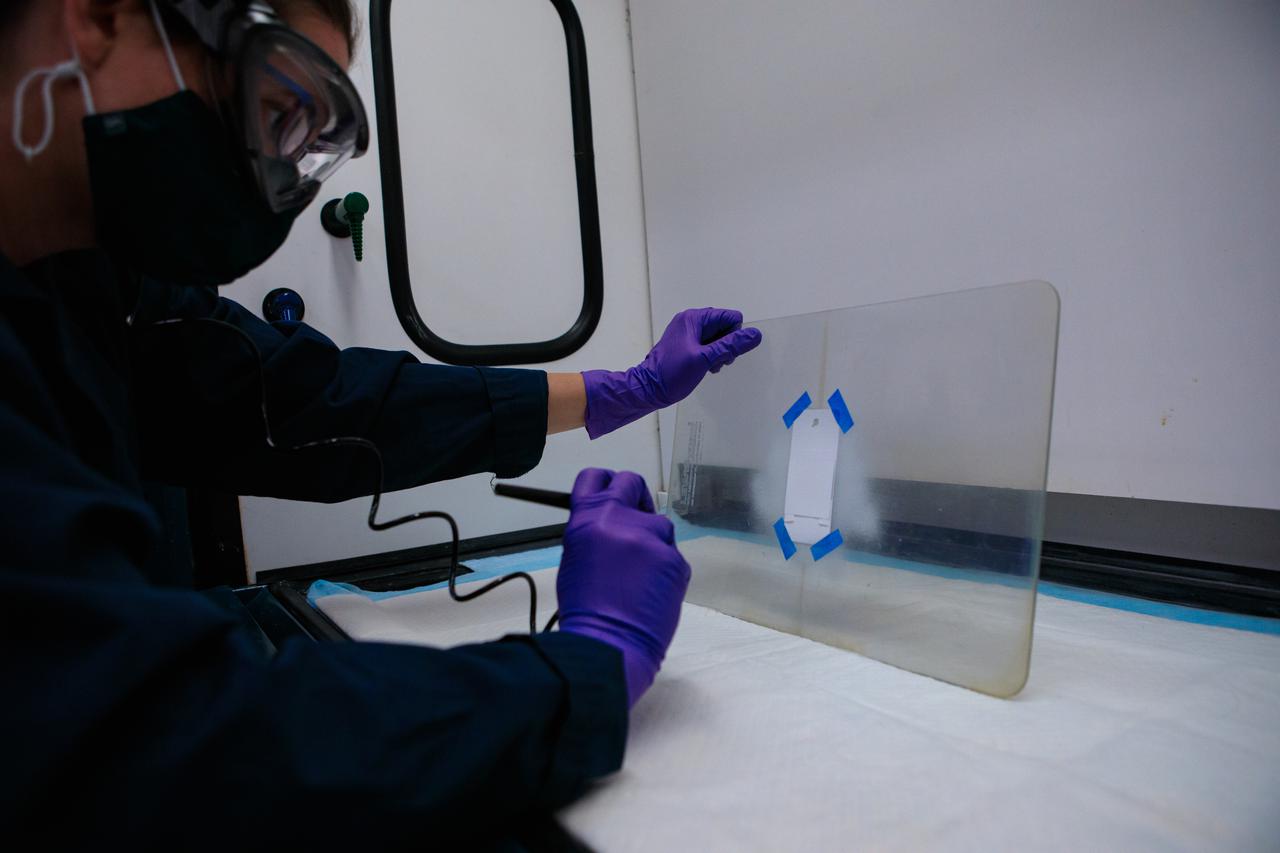
Inside a laboratory at the Neil Armstrong Operations and Checkout Building at NASA’s Kennedy Space Center in Florida, research scientist Sarah Snyder applies a selective surface coating to an Electrodynamic Dust Shield (EDS) on March 31, 2021. This is one of several concurrent activities preparing dust shield samples for testing in space. Dust mitigation technologies could one day be applied to diminish dust hazards on lunar surface systems such as cameras, solar panels, spacesuits, and instrumentation, enabling sustainable exploration of the Moon under the Artemis program.
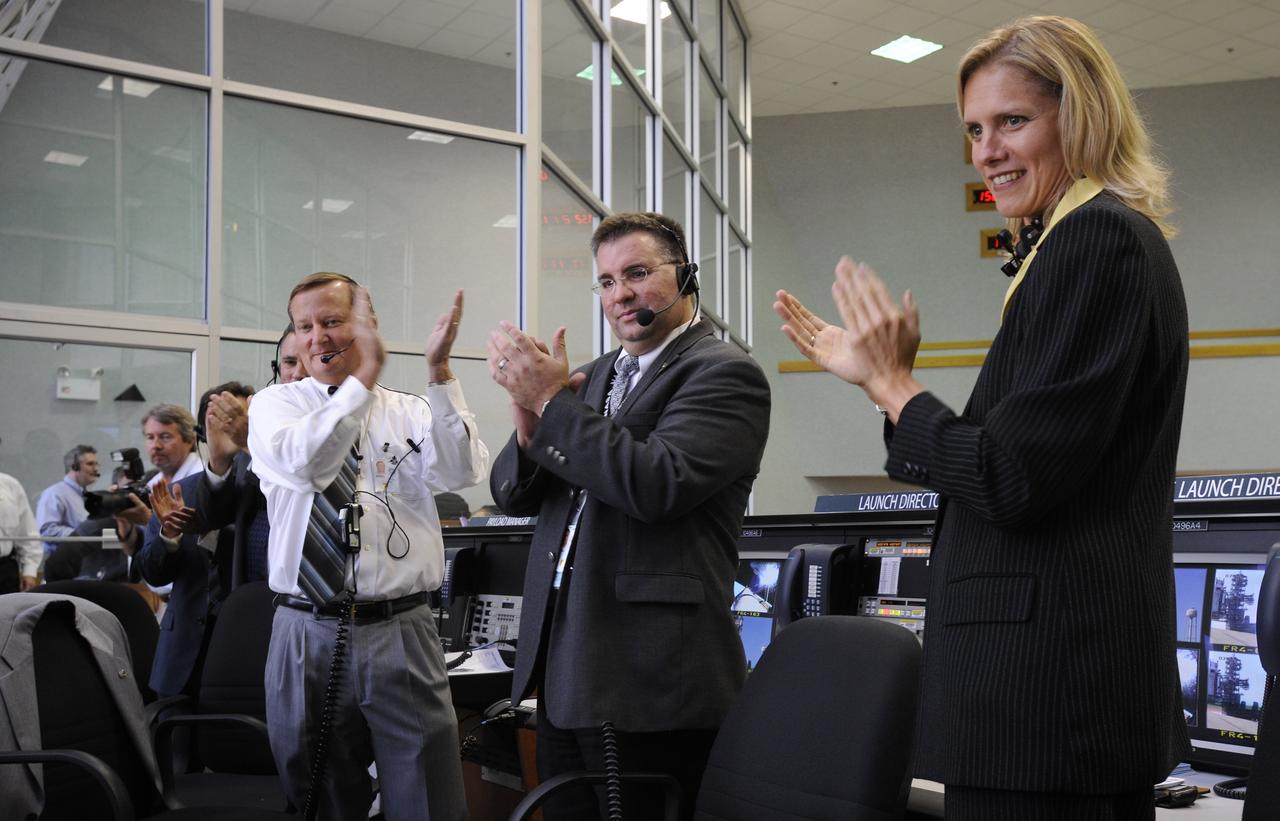
NASA Shuttle Launch Director Michael Leinbach, left, STS-124 Assistant Launch Director Ed Mango, center, and Flow Director for Space Shuttle Discovery Stephanie Stilson clap in the the Launch Control Center after the main engine cut off and successful launch of the Space Shuttle Discovery (STS-124) Saturday, May 31, 2008, at the Kennedy Space Center in Cape Canaveral, Fla. The Shuttle lifted off from launch pad 39A at 5:02 p.m. EDT. Photo Credit: (NASA/Bill Ingalls)
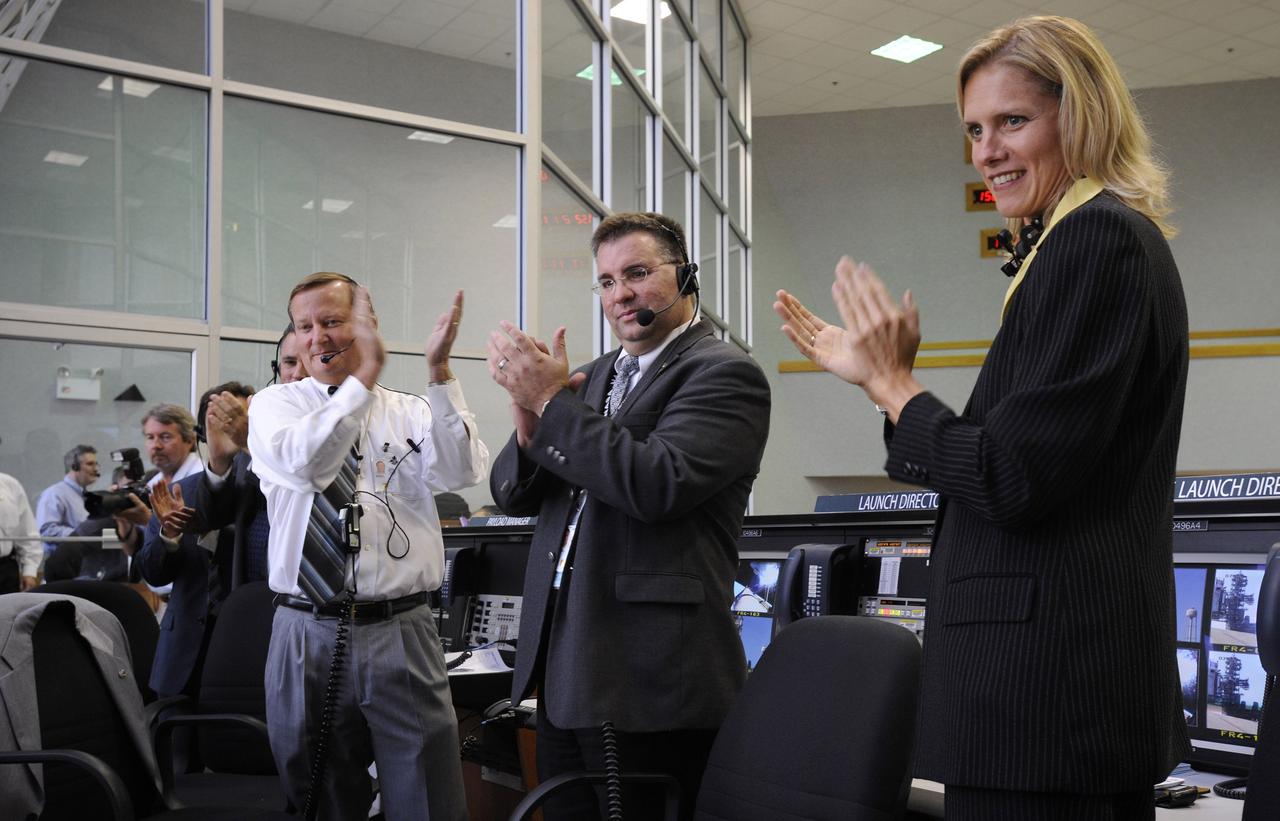
NASA Shuttle Launch Director Michael Leinbach, left, STS-124 Assistant Launch Director Ed Mango, center, and Flow Director for Space Shuttle Discovery Stephanie Stilson clap in the the Launch Control Center after the main engine cut off and successful launch of the Space Shuttle Discovery (STS-124) Saturday, May 31, 2008, at the Kennedy Space Center in Cape Canaveral, Fla. The Shuttle lifted off from launch pad 39A at 5:02 p.m. EDT. Photo Credit: (NASA/Bill Ingalls)
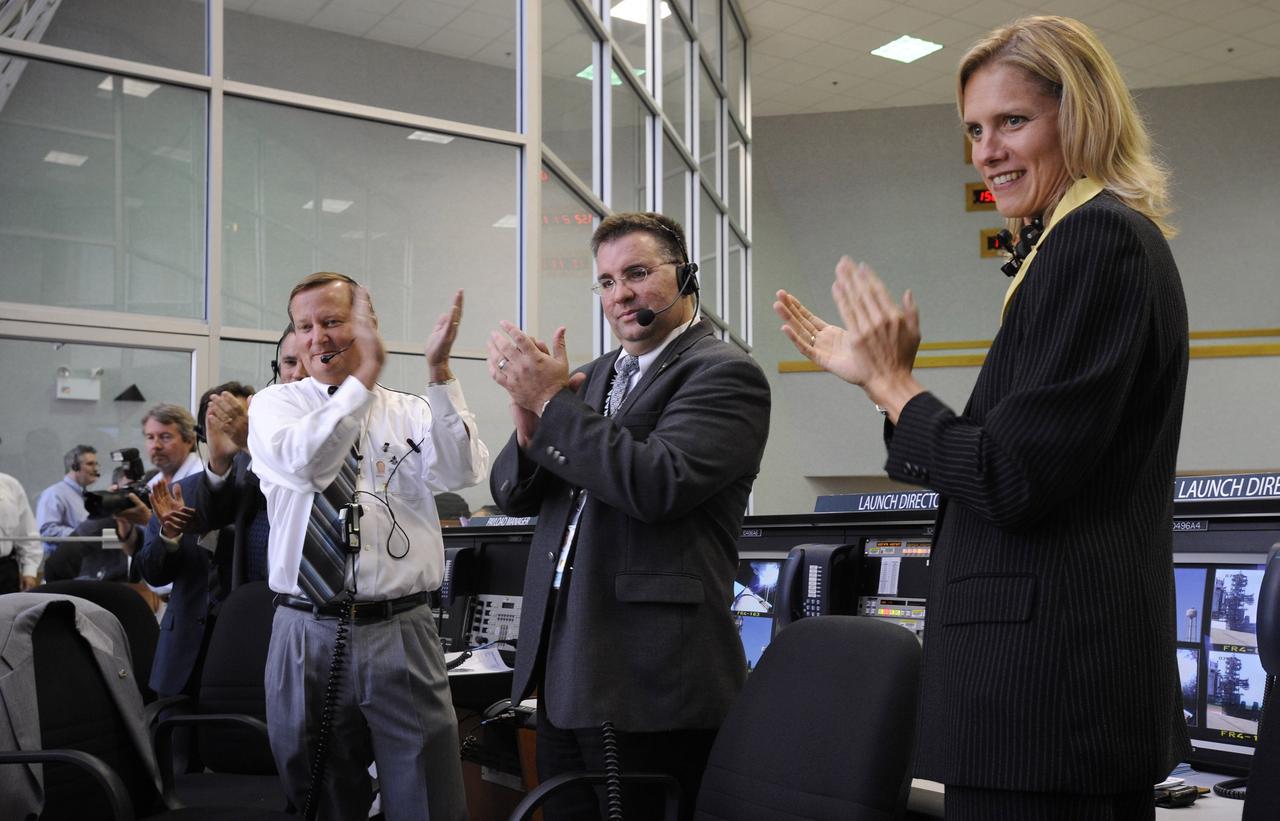
CAPE CANAVERAL, Fla. -- NASA Shuttle Launch Director Michael Leinbach, left, STS-124 Assistant Launch Director Ed Mango, center, and Flow Director for space shuttle Discovery Stephanie Stilson clap in the Launch Control Center after the main engine cut-off and successful launch of Discovery on the STS-124 mission Saturday, May 31, 2008, at NASA's Kennedy Space Center. The shuttle lifted off from Launch Pad 39A at 5:02 p.m. EDT. Photo credit: NASA/Bill Ingalls

DISCUSSING THEIR EXPERIENCES AND MEMORIES WITH THE MARSHALL TEAM AT THE 40TH ANNIVERSARY CELEBRATION OF SKYLAB JAN. 31 ARE, FROM LEFT, FORMER SKYLAB ASTRONAUTS ED GIBSON, SKYLAB 4 SCIENCE POLOT; PAUL WEITZ, SKYLAB 2 PILOT; WILLIAM POGUE, SKYLAB 4 PILOT; GERALD CARR, SKYLAB 4 COMMANDER; AND JOSEPH KERWIN, SKYLAB 2 SCIENCE PILOT
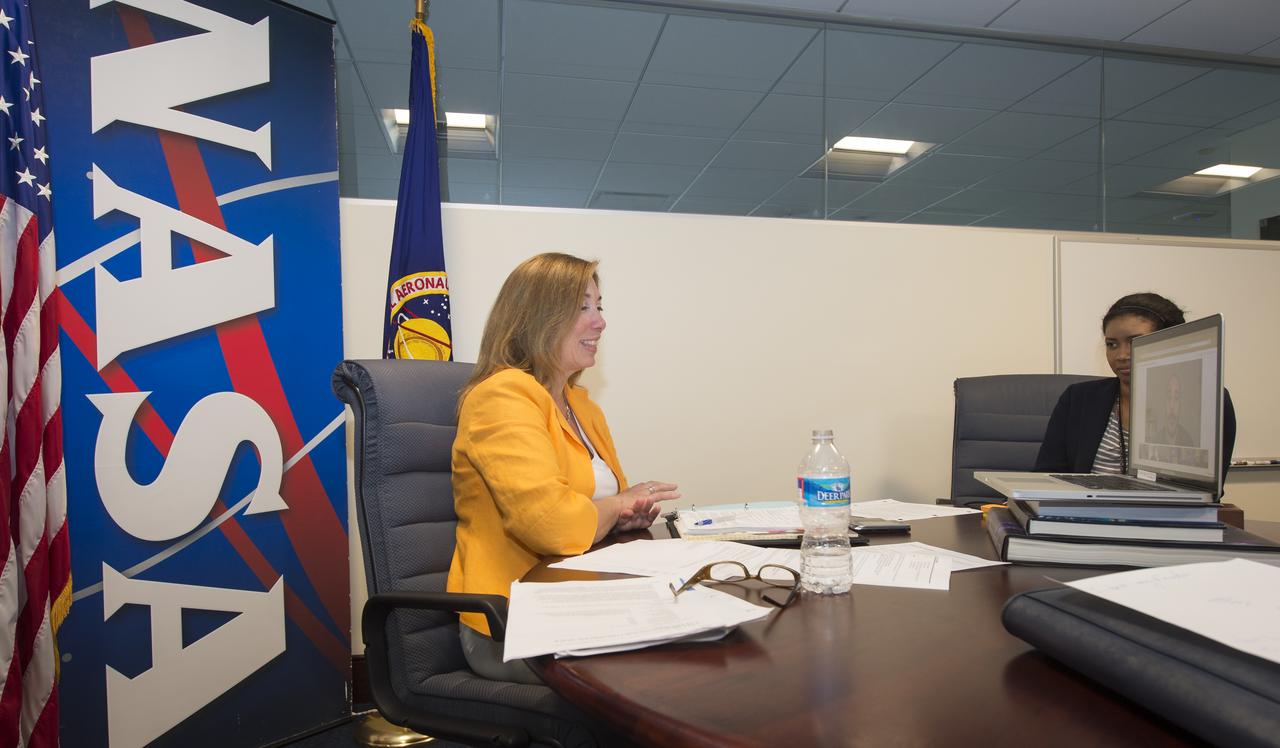
NASA Deputy Administrator Lori Garver participates in a live "We The Geeks" Google+ Hangout hosted by the White House to talk about asteroids, Friday, May 31, 2013 at NASA Headquarters in Washington. An asteroid nearly three kilometers wide will pass by the Earth today at 3.6 million miles away. Garver is joined in the conversation by Bill Nye, Executive Director, Planetary Society; Ed Lu, former astronaut and CEO, B612 Foundation; Peter Diamandis, Co-Founder and Co-Chairman, Planetary Resources and Jose Luis Galache, Astronomer at the International Astronomical Unions's Minor Planet Center. Photo Credit: (NASA/Carla Cioffi)
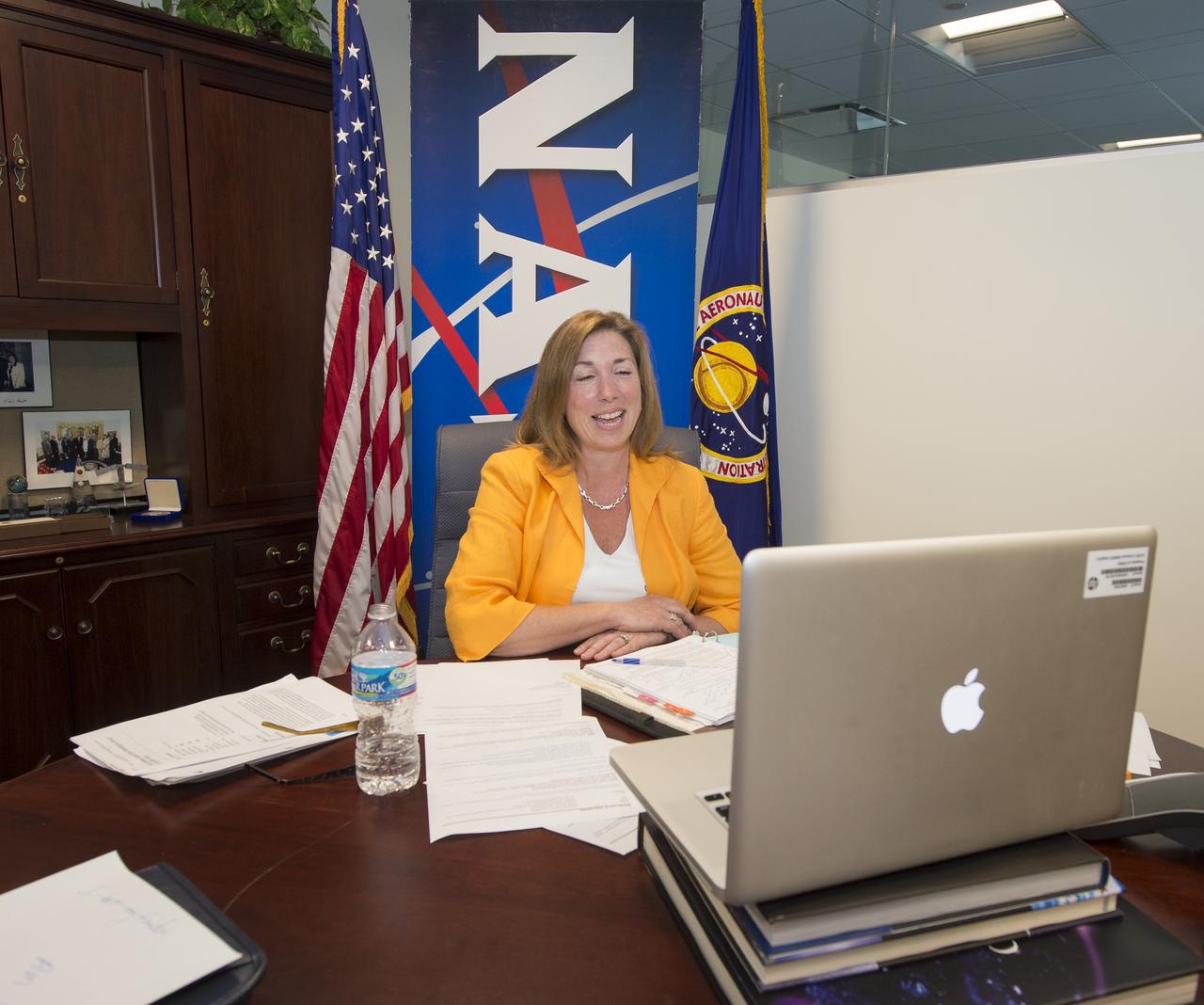
NASA Deputy Administrator Lori Garver participates in a live "We The Geeks" Google+ Hangout hosted by the White House to talk about asteroids, Friday, May 31, 2013 at NASA Headquarters in Washington. An asteroid nearly three kilometers wide will pass by the Earth today at 3.6 million miles away. Garver is joined in the conversation by Bill Nye, Executive Director, Planetary Society; Ed Lu, former astronaut and CEO, B612 Foundation; Peter Diamandis, Co-Founder and Co-Chairman, Planetary Resources and Jose Luis Galache, Astronomer at the International Astronomical Unions's Minor Planet Center. Photo Credit: (NASA/Carla Cioffi)
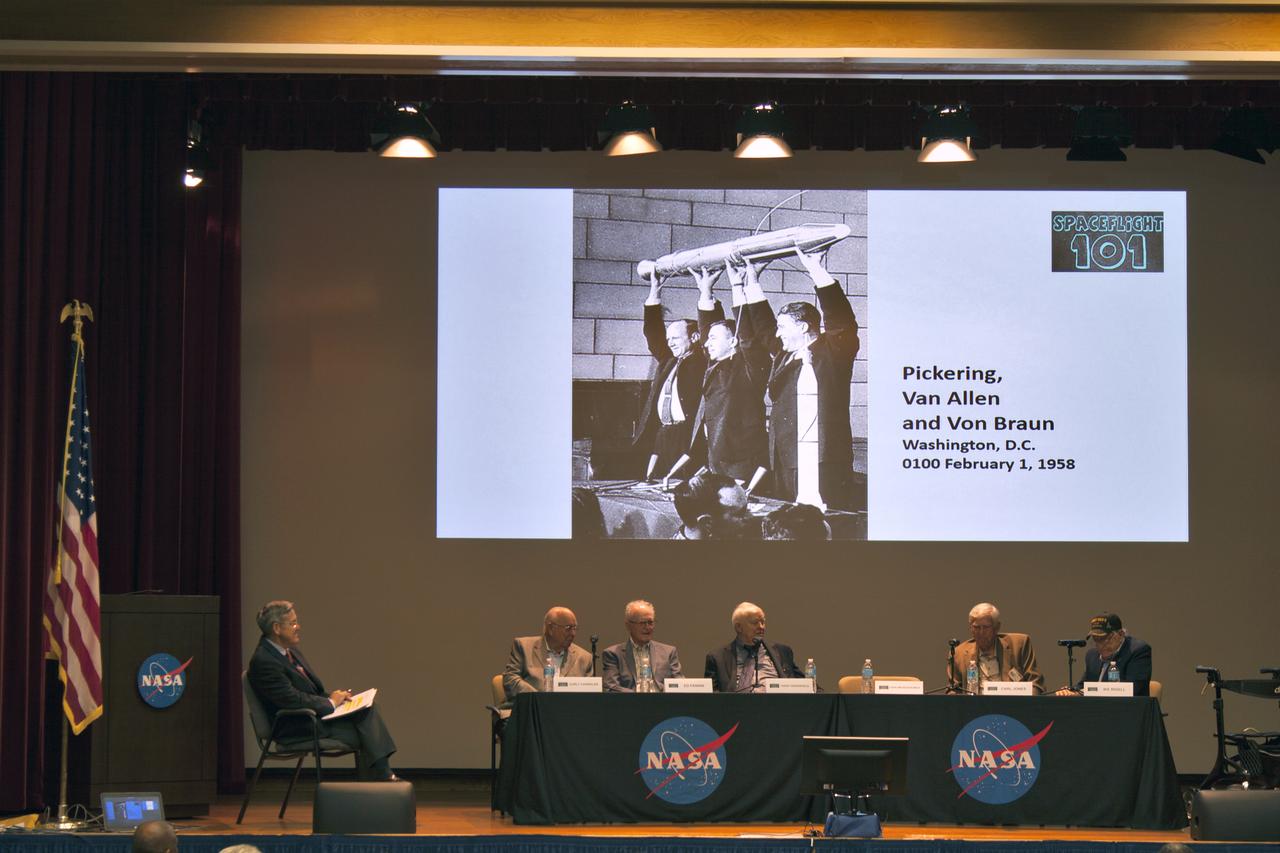
Aerospace pioneers who worked on the launch of Explorer 1 participate in a panel discussion with NASA Kennedy Space Center Director Bob Cabana, at far left, at the center's Training Auditorium on Wednesday, May 9, 2018. Panelists, from left are William "Curly" Chandler, firing room engineer; Lionel (Ed) Fannin, mechanical and propulsion systems; Terry Greenfield, blockhouse engineer; Carl Jones, measuring branch engineer; and Ike Rigell, electrical networks systems chief. Explorer 1 was the first satellite launched by the U.S. It was launched by the Army Ballistic Missile Agency on Jan. 31, 1958 on a Juno I rocket from Launch Complex-26.
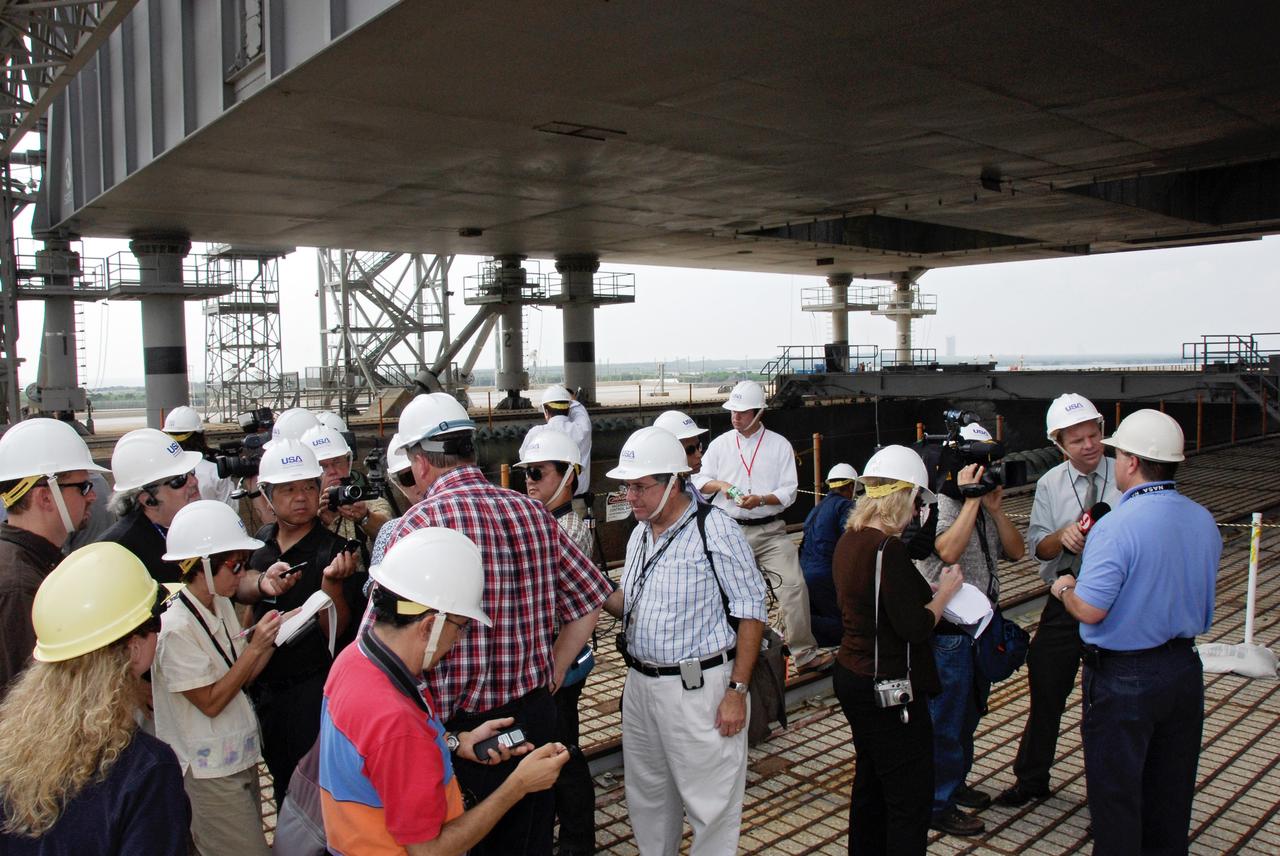
CAPE CANAVERAL, Fla. – The media gather on Launch Pad 39A at NASA's Kennedy Space Center to view the flame trench damaged during the May 31 launch of space shuttle Discovery. Reporters had the opportunity to ask questions of Ed Mango, deputy director of the shuttle program's launch vehicle processing, and Perry Becker, who is leading the launch pad engineering investigation team. Repairs are expected to be completed in time for space shuttle Atlantis' STS-125 mission to NASA's Hubble Space Telescope targeted for Oct. 8. Photo credit: NASA/Kim Shiflett
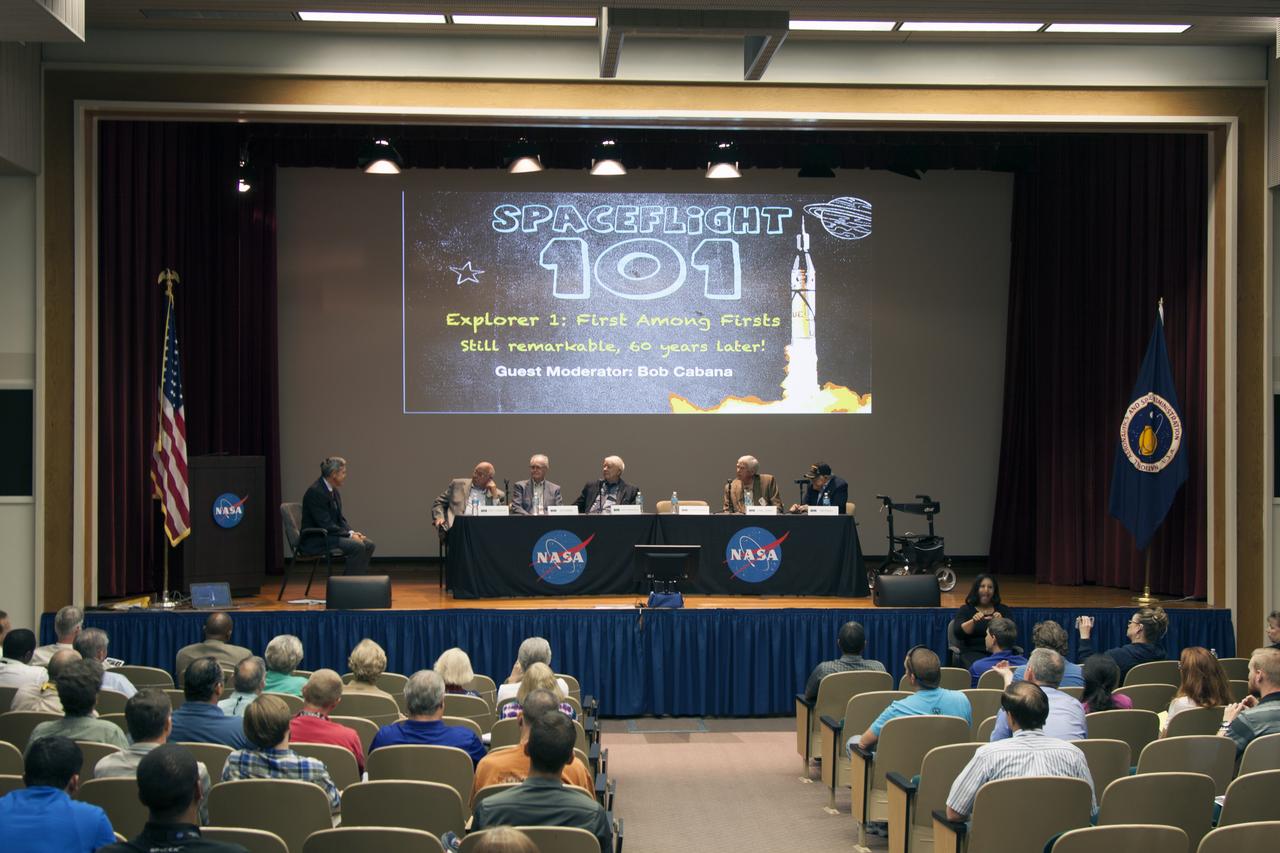
Aerospace pioneers who worked on the launch of Explorer 1 participate in a panel discussion with NASA Kennedy Space Center Director Bob Cabana, at far left, at the center's Training Auditorium on Wednesday, May 9, 2018. Panelists, from left are William "Curly" Chandler, firing room engineer; Lionel (Ed) Fannin, mechanical and propulsion systems; Terry Greenfield, blockhouse engineer; Carl Jones, measuring branch engineer; and Ike Rigell, electrical networks systems chief. Explorer 1 was the first satellite launched by the U.S. It was launched by the Army Ballistic Missile Agency on Jan. 31, 1958 on a Juno I rocket from Launch Complex-26.
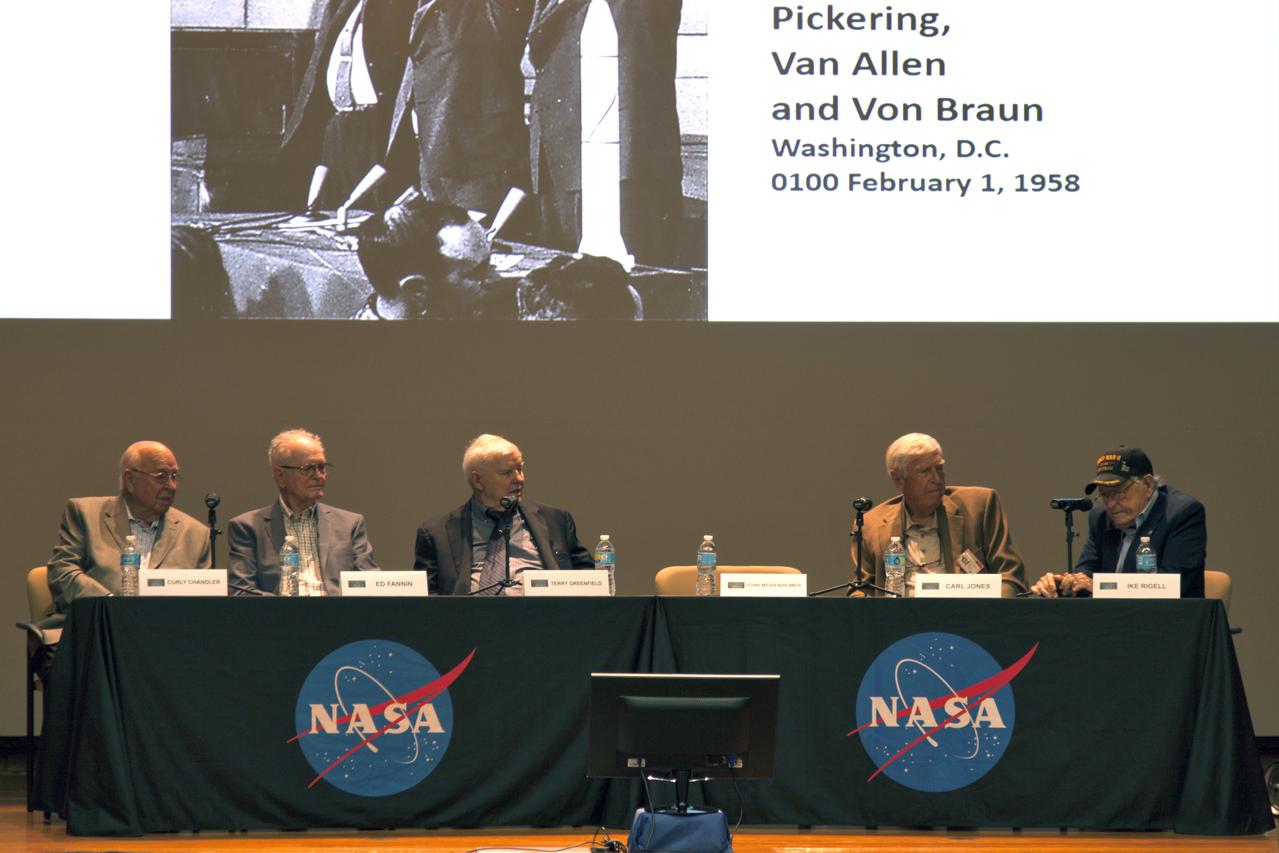
Aerospace pioneers who worked on the launch of Explorer 1 participate in a panel discussion with NASA Kennedy Space Center Director Bob Cabana at the center's Training Auditorium on Wednesday, May 9, 2018. Panelists, from left are William "Curly" Chandler, firing room engineer; Lionel (Ed) Fannin, mechanical and propulsion systems; Terry Greenfield, blockhouse engineer; Carl Jones, measuring branch engineer; and Ike Rigell, electrical networks systems chief. Explorer 1 was the first satellite launched by the U.S. It was launched by the Army Ballistic Missile Agency on Jan. 31, 1958 on a Juno I rocket from Launch Complex-26.