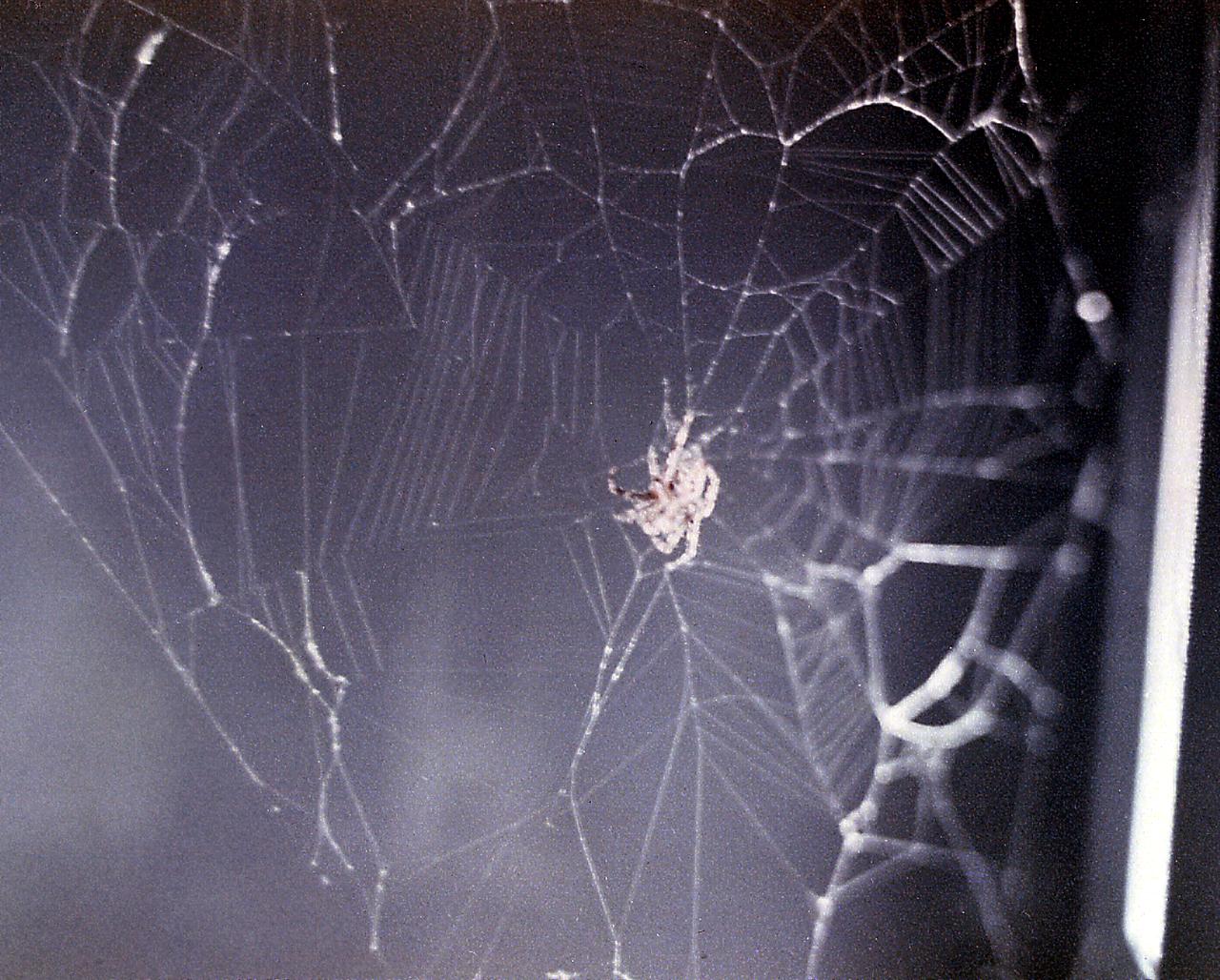
Judith S. Miles of Lexington High School, Lexington, Massachusetts, proposed skylab student experiment ED-52, Web Formation. This experiment was a study of a spider's behavior in a weightless environment. The geometrical structure of the web of the orb-weaving spider provides a good measure of the condition of its central nervous system. Since the spider senses its own weight to determine the required thickness of web material and uses both the wind and gravity to initiate construction of its web, the lack of gravitational force in Skylab provided a new and different stimulus to the spider's behavioral response. Two common cross spiders, Arabella and Anita, were used for the experiment aboard the Skylab-3 mission. After initial disoriented attempts, both spiders produced almost Earth-like webs once they had adapted to weightlessness. This photograph is of Arabella, a cross spider, in her initial attempt at spirning a web. This picture was taken by the crew of the Skylab 3 mission before Arabella adapted to her new environment.
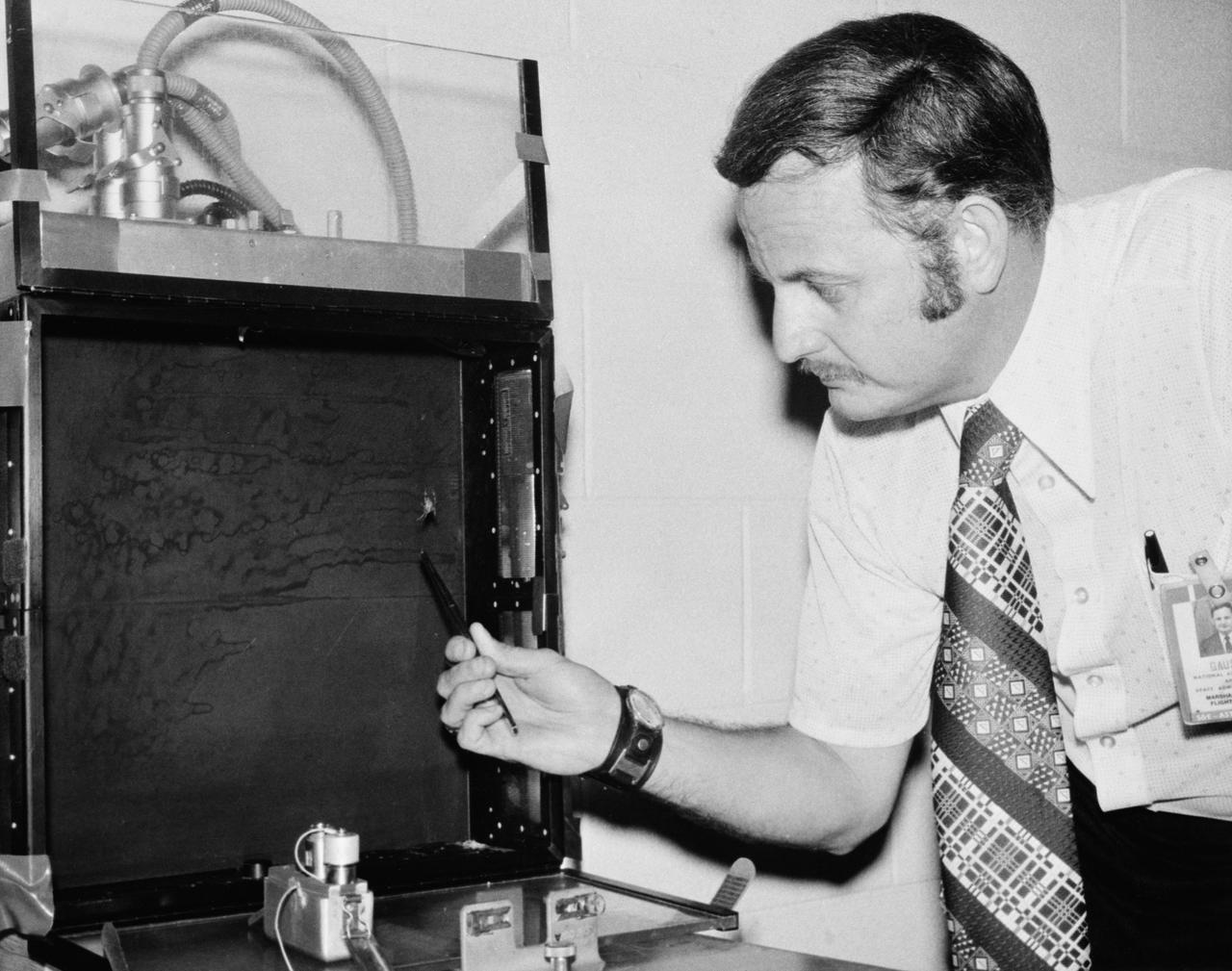
S73-32499 (July 1973) --- Dr. Ray Gause of the NASA Marshall Space Flight Center (MSFC) places dinner, in the form of a housefly, in the web of Arabella - the prime spider for the ED-52 Web Formation Experiment. Arabella can be delineated near the end of the black pen in Dr. Gause's hand. The experiment is one of 25 student experiments accepted for the Skylab program and will be performed during the Skylab 3 mission. Judy Miles, a 17-year-old high school student from Lexington, Massachusetts, is the student experimenter and Dr. Gause is the NASA student advisor. Photo credit: NASA
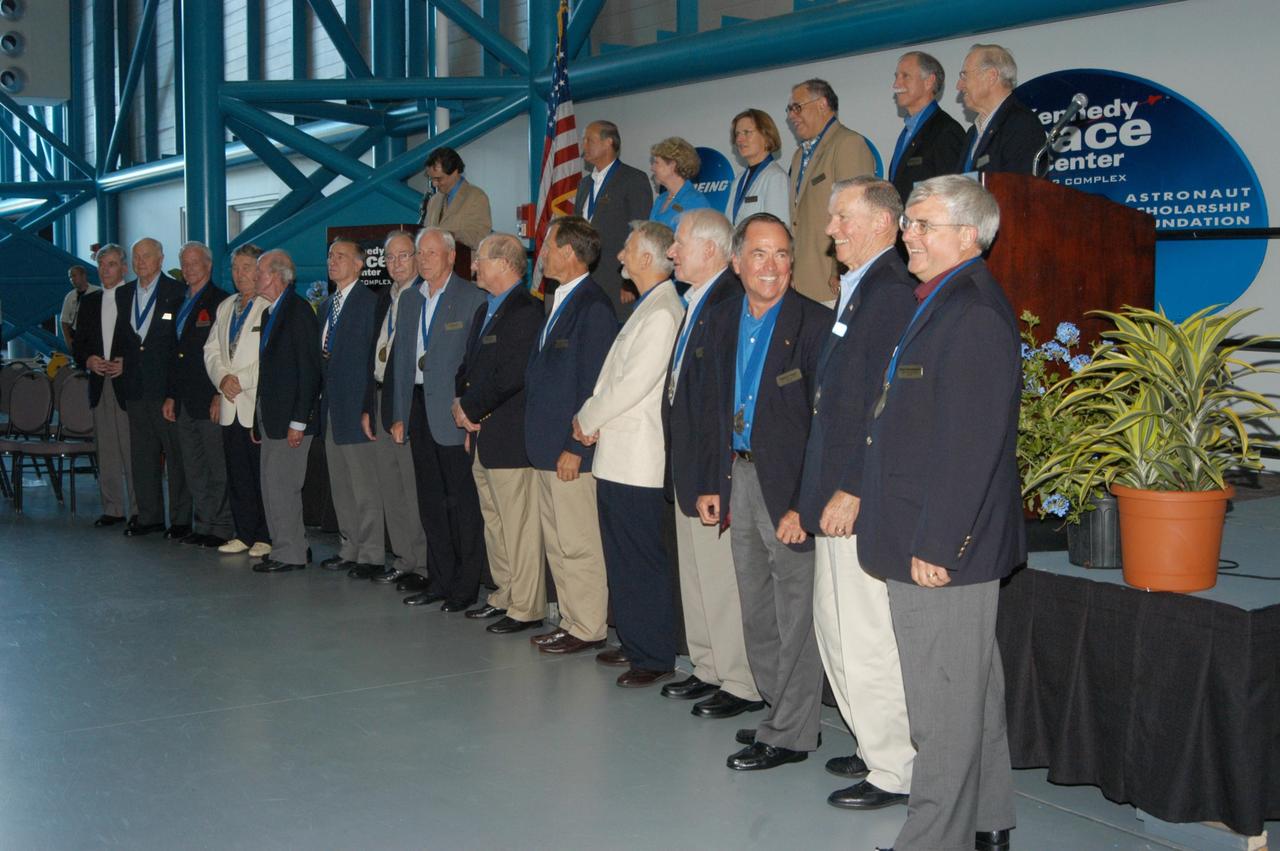
KENNEDY SPACE CENTER, FLA. -- Following the induction ceremony welcoming five new space program heroes in the U.S. Astronaut Hall of Fame, the members line up for a commemorative photo. From left, in front, are John Young, John Glenn Jr., Scott Carpenter, Wally Schirra, Gordon Cooper, Walt Cunningham, Ed Mitchell, Al Worden, Rick Hauck, Ed Gibson, Owen Garriott, Vance Brand, Robert Crippen, Joe Engle, Dan Brandenstein. In back are space author Andrew Chaikin, at the podium; and Norm Thagard, June Scobee representing her late husband Dick Scobee, Kathryn Sullivan, Fred Gregory, Richard Covey and Jim Lovell. The induction ceremony was held at the Apollo/Saturn V Center at KSC. The U.S. Astronaut Hall of Fame opened in 1990 to provide a place where space travelers could be remembered for their participation and accomplishments in the U.S. space program. The five inductees join 52 previously honored astronauts from the ranks of the Gemini, Apollo, Skylab, Apollo-Soyuz, and Space Shuttle programs.
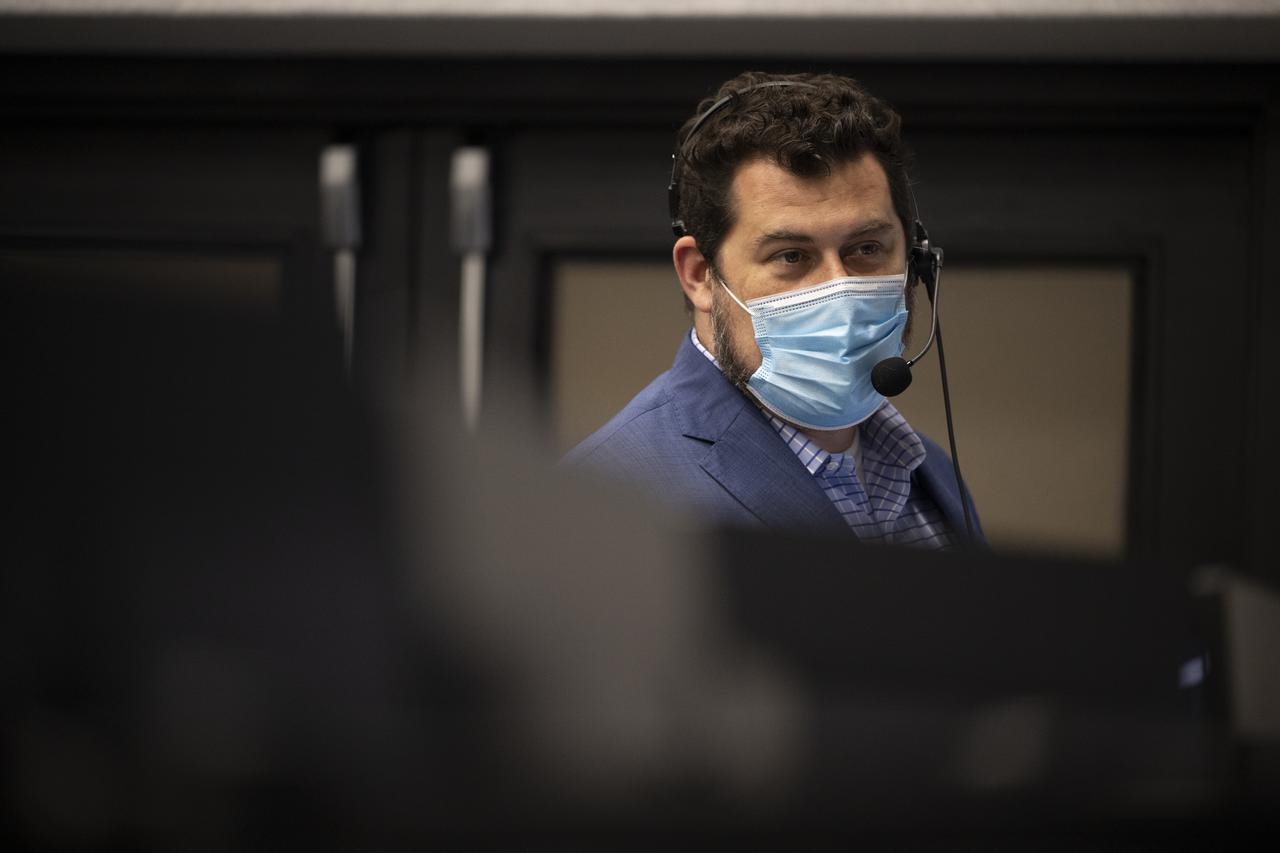
Scott Ede, mission manager for mission management and integration in NASA's Commercial Crew Program, monitors the countdown of the launch of a SpaceX Falcon 9 rocket carrying the company's Crew Dragon spacecraft on NASA’s SpaceX Crew-4 mission with NASA astronauts Kjell Lindgren, Robert Hines, Jessica Watkins, and ESA (European Space Agency) astronaut Samantha Cristoforetti onboard, Wednesday, April 27, 2022, in firing room four of the Rocco A. Petrone Launch Control Center at NASA’s Kennedy Space Center in Florida. NASA’s SpaceX Crew-4 mission is the fourth crew rotation mission of the SpaceX Crew Dragon spacecraft and Falcon 9 rocket to the International Space Station as part of the agency’s Commercial Crew Program. Lindgren, Hines, Watkins, and Cristoforetti launched at at 3:52 a.m. ET, from Launch Complex 39A at the Kennedy Space Center. Photo Credit: (NASA/Joel Kowsky)
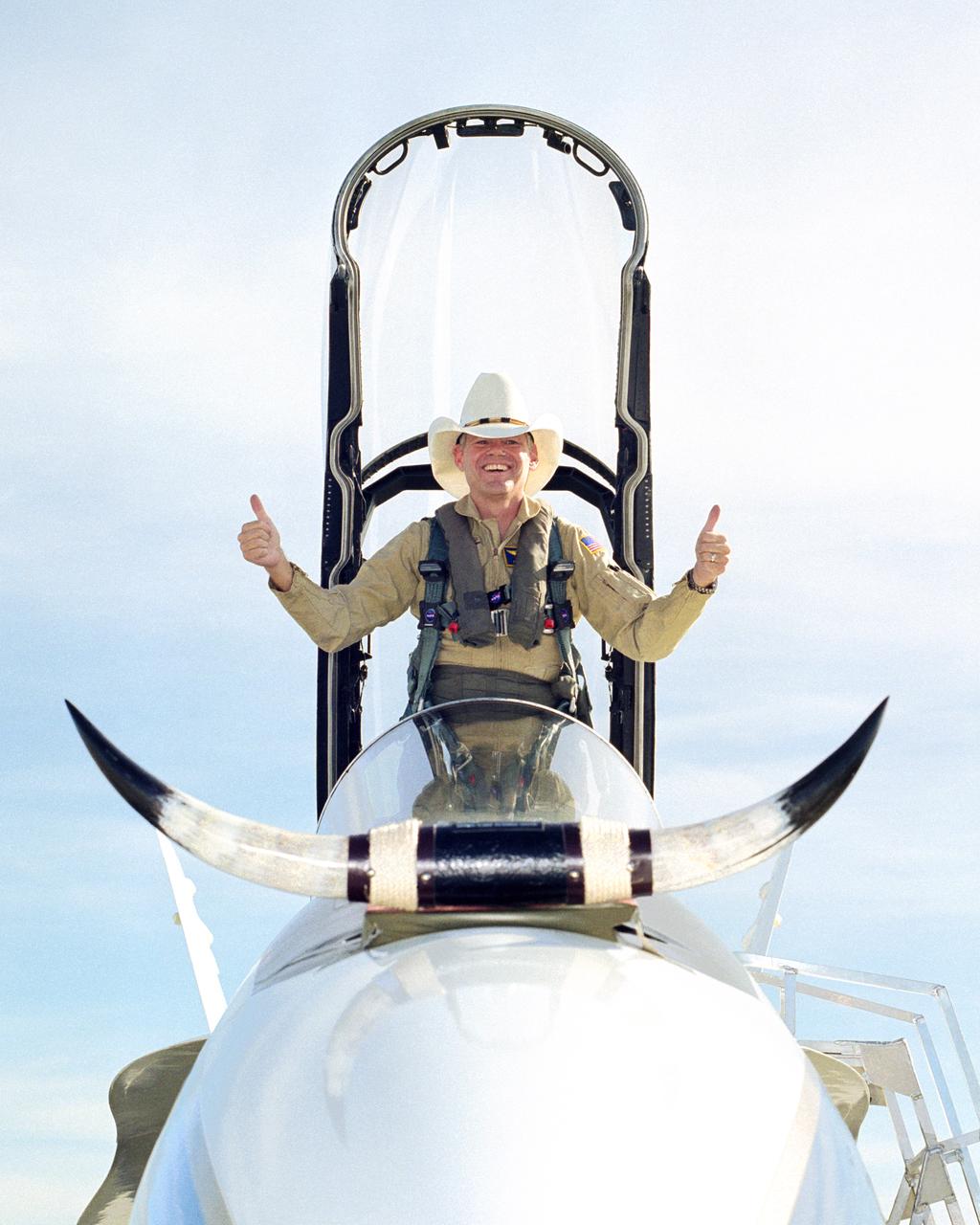
In a lighter mood, Ed Schneider gives a "thumbs-up" after his last flight at the Dryden Flight Research Center on September 19, 2000. Schneider arrived at the NASA Ames-Dryden Flight Research Facility on July 5, 1982, as a Navy Liaison Officer, becoming a NASA research pilot one year later. He has been project pilot for the F-18 High Angle-of-Attack program (HARV), the F-15 aeronautical research aircraft, the NASA B-52 launch aircraft, and the SR-71 "Blackbird" aircraft. He also participated in such programs as the F-8 Digital Fly-By-Wire, the FAA/NASA 720 Controlled Impact Demonstration, the F-14 Automatic Rudder Interconnect and Laminar Flow, and the F-104 Aeronautical Research and Microgravity projects.
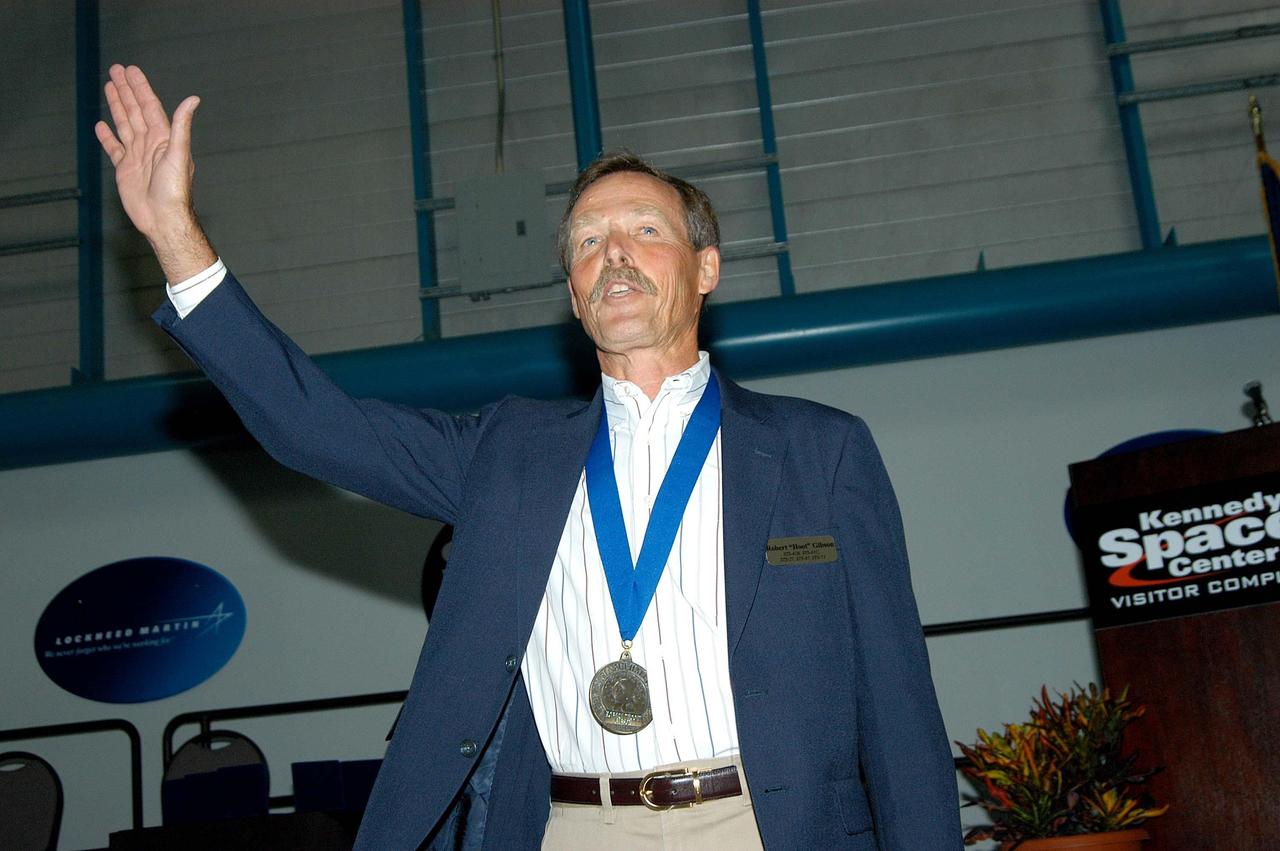
KENNEDY SPACE CENTER, FLA. -- Former astronaut Ed Gibson acknowledges the warm response to his introduction as a previous inductee into the U.S. Astronaut Hall of Fame. He and other Hall of Fame members were present for the induction of five new space program heroes into the U.S. Astronaut Hall of Fame: Richard O. Covey, commander of the Hubble Space Telescope repair mission; Norman E. Thagard, the first American to occupy Russia’s Mir space station; the late Francis R. "Dick" Scobee, commander of the ill-fated 1986 Challenger mission; Kathryn D. Sullivan, the first American woman to walk in space; and Frederick D. Gregory, the first African-American to command a space mission and the current NASA deputy administrator. Gibson orbited the Earth for 84 days during the final manned flight of the Skylab Space Station in 1973 and 1974. The induction ceremony was held at the Apollo/Saturn V Center at KSC. The U.S. Astronaut Hall of Fame opened in 1990 to provide a place where space travelers could be remembered for their participation and accomplishments in the U.S. space program. The five inductees join 52 previously honored astronauts from the ranks of the Gemini, Apollo, Skylab, Apollo-Soyuz, and Space Shuttle programs.
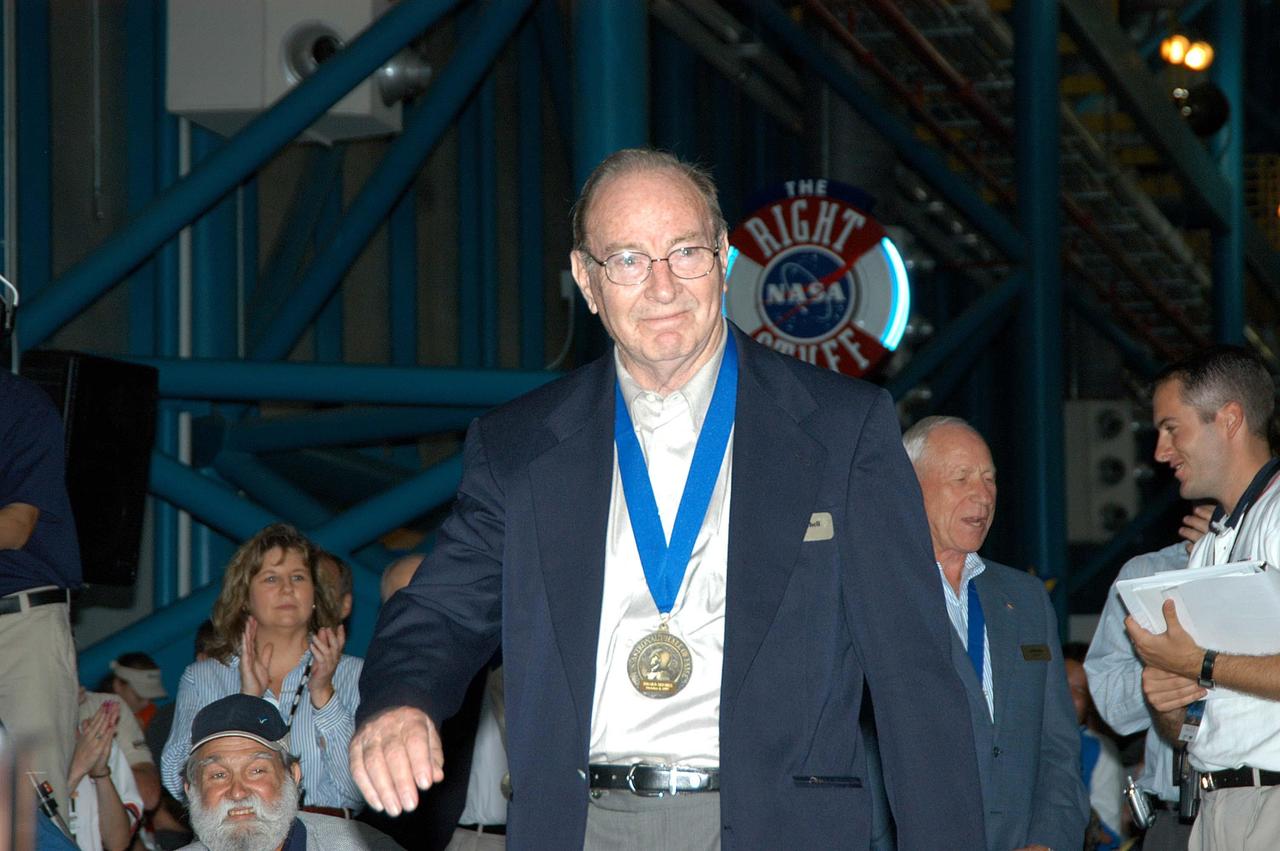
KENNEDY SPACE CENTER, FLA. -- Before the induction ceremony of five space program heroes into the U.S. Astronaut Hall of Fame, former astronaut Ed Mitchell is introduced as a previous inductee. Mitchell explored the Moon's hilly Fra Mauro region with Alan B. Shepard during the 1971 Apollo 14 mission. The ceremony was held at the Apollo/Saturn V Center at KSC. New inductees are Richard O. Covey, commander of the Hubble Space Telescope repair mission; Norman E. Thagard, the first American to occupy Russia’s Mir space station; the late Francis R. "Dick" Scobee, commander of the ill-fated 1986 Challenger mission; Kathryn D. Sullivan, the first American woman to walk in space; and Frederick D. Gregory, the first African-American to command a space mission and the current NASA deputy administrator. The U.S. Astronaut Hall of Fame opened in 1990 to provide a place where space travelers could be remembered for their participation and accomplishments in the U.S. space program. The five inductees join 52 previously honored astronauts from the ranks of the Gemini, Apollo, Skylab, Apollo-Soyuz, and Space Shuttle programs.
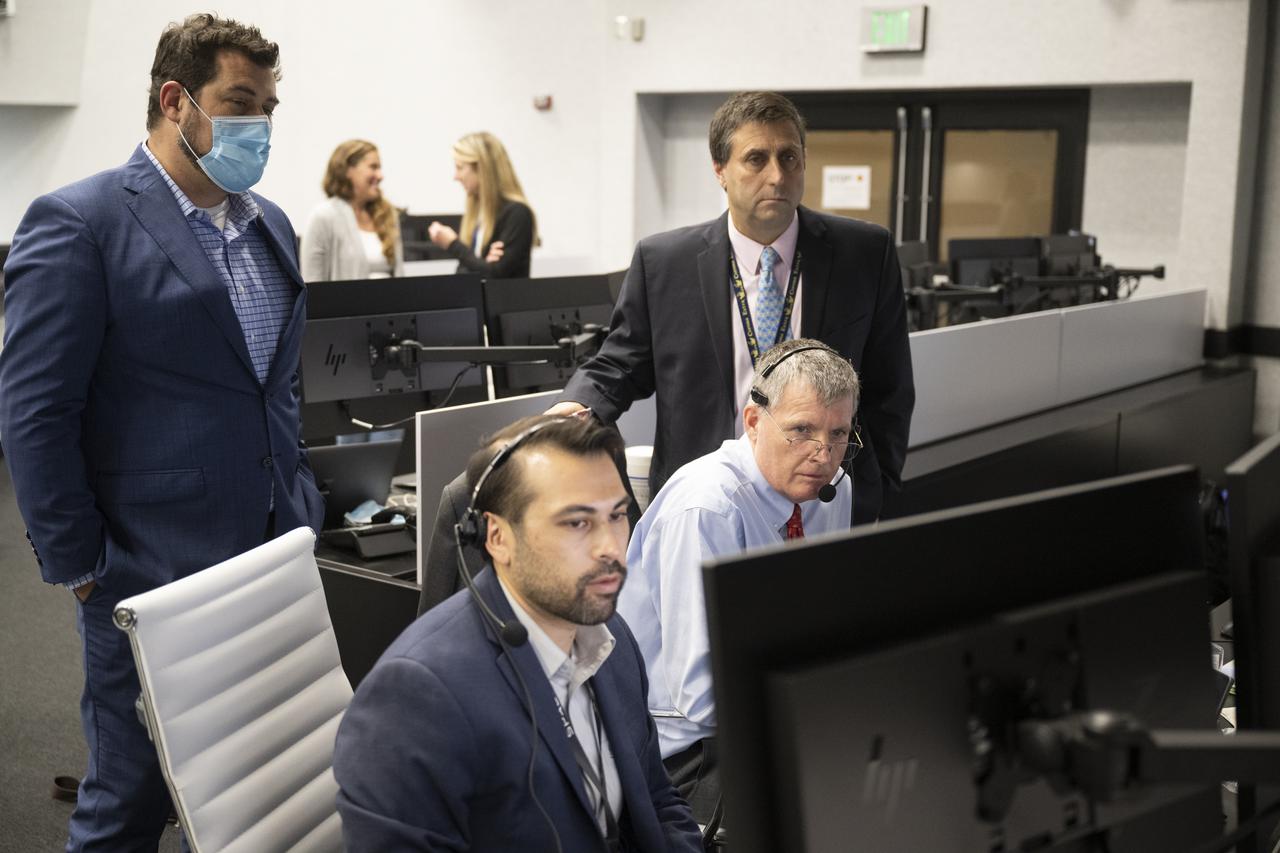
Scott Ede, mission manager for mission management and integration in NASA's Commercial Crew Program, left, Kyle Stewart, SpaceX Mission Manager, second from left, Steve Stich, manager of NASA’s Commercial Crew Program, second from right, and NASA International Space Station program manger Joel Montalbano, right monitor the countdown of the launch of a SpaceX Falcon 9 rocket carrying the company's Crew Dragon spacecraft on NASA’s SpaceX Crew-4 mission with NASA astronauts Kjell Lindgren, Robert Hines, Jessica Watkins, and ESA (European Space Agency) astronaut Samantha Cristoforetti onboard, Wednesday, April 27, 2022, in firing room four of the Rocco A. Petrone Launch Control Center at NASA’s Kennedy Space Center in Florida. NASA’s SpaceX Crew-4 mission is the fourth crew rotation mission of the SpaceX Crew Dragon spacecraft and Falcon 9 rocket to the International Space Station as part of the agency’s Commercial Crew Program. Lindgren, Hines, Watkins, and Cristoforetti launched at at 3:52 a.m. ET, from Launch Complex 39A at the Kennedy Space Center. Photo Credit: (NASA/Joel Kowsky)
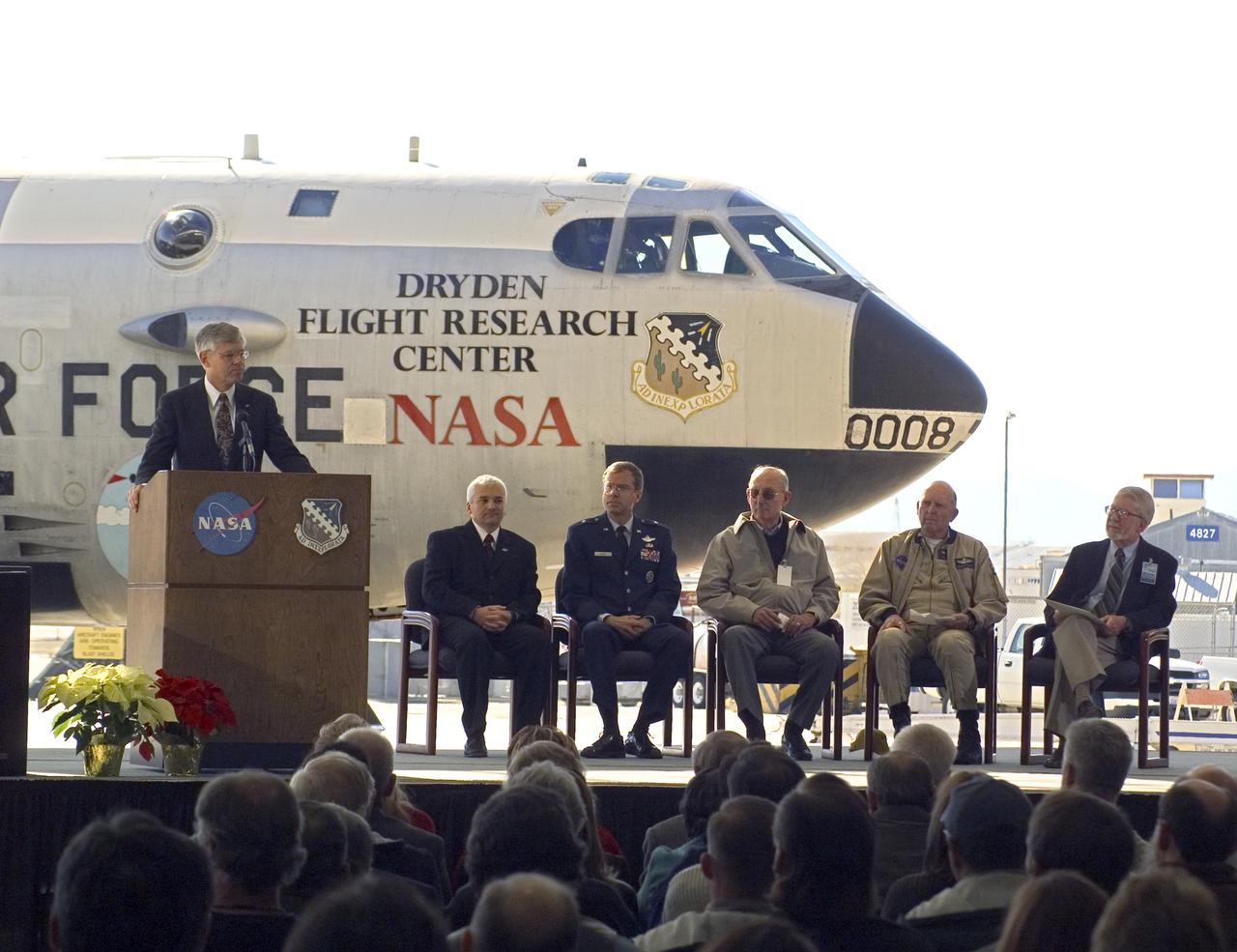
Retired NASA Dryden research pilot Ed Schneider served as master of ceremonies at the retirement ceremony for NASA's B-52B, on Dec. 17, 2004.