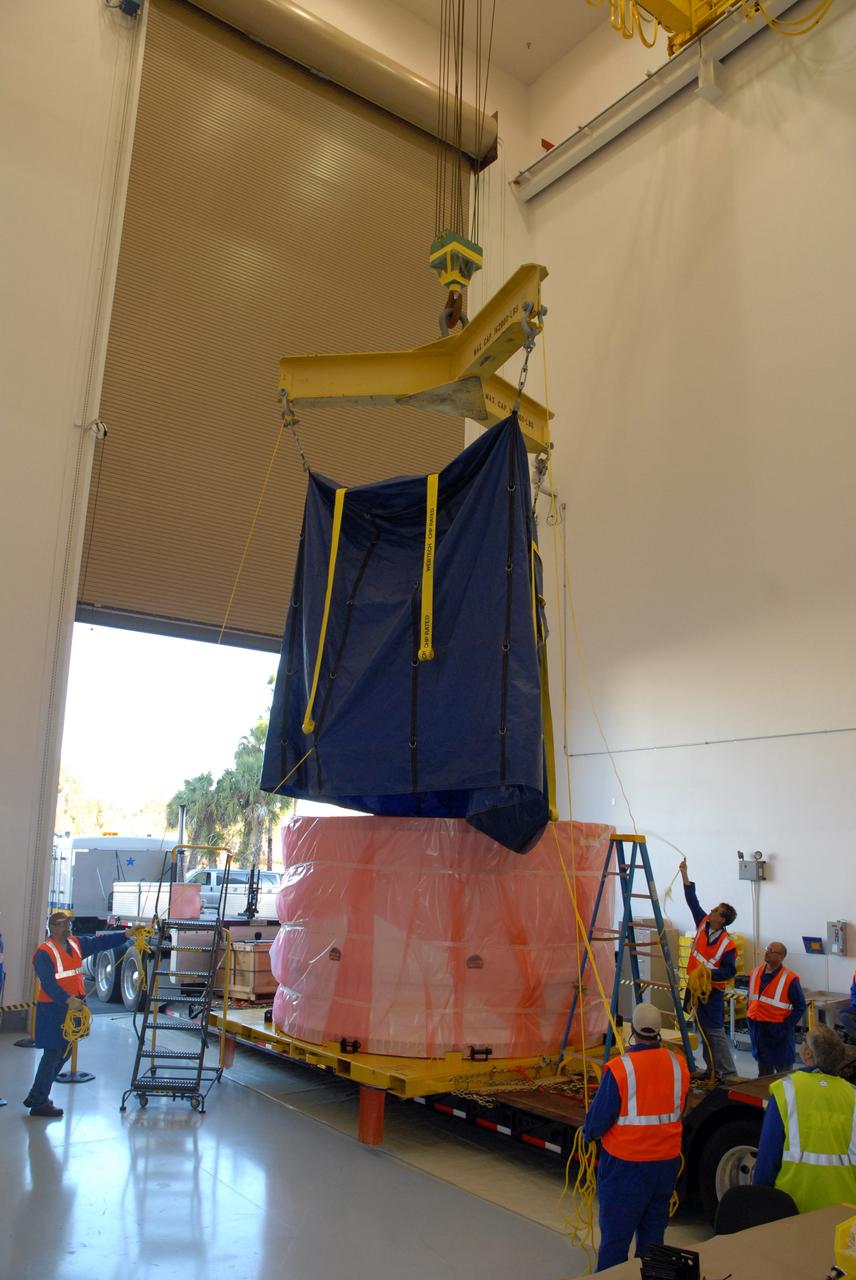
CAPE CANAVERAL, Fla. – At Astrotech in Titusville, Fla., a crane lowers a protective cover onto the bagged fifth segment simulator of the Ares I-X. The segment will be transferred to the Vehicle Assembly Building's extended duration orbiter lab, or EDO, at NASA's Kennedy Space Center in Florida for stacking operations. Ares I-X is the test vehicle for the Ares I, which is part of the Constellation Program to return men to the moon and beyond. Ares I is the essential core of a safe, reliable, cost-effective space transportation system that eventually will carry crewed missions back to the moon, on to Mars and out into the solar system. Ares I-X is targeted for launch in July 2009. Photo credit: NASA/Tim Jacobs

CAPE CANAVERAL, Fla. – The covered fifth segment simulator of the Ares I-X arrives in the Vehicle Assembly Building's extended duration orbiter lab, or EDO, at NASA's Kennedy Space Center in Florida. Ares I-X is the test vehicle for the Ares I, which is part of the Constellation Program to return men to the moon and beyond. Ares I is the essential core of a safe, reliable, cost-effective space transportation system that eventually will carry crewed missions back to the moon, on to Mars and out into the solar system. Ares I-X is targeted for launch in July 2009. Photo credit: NASA/Tim Jacobs
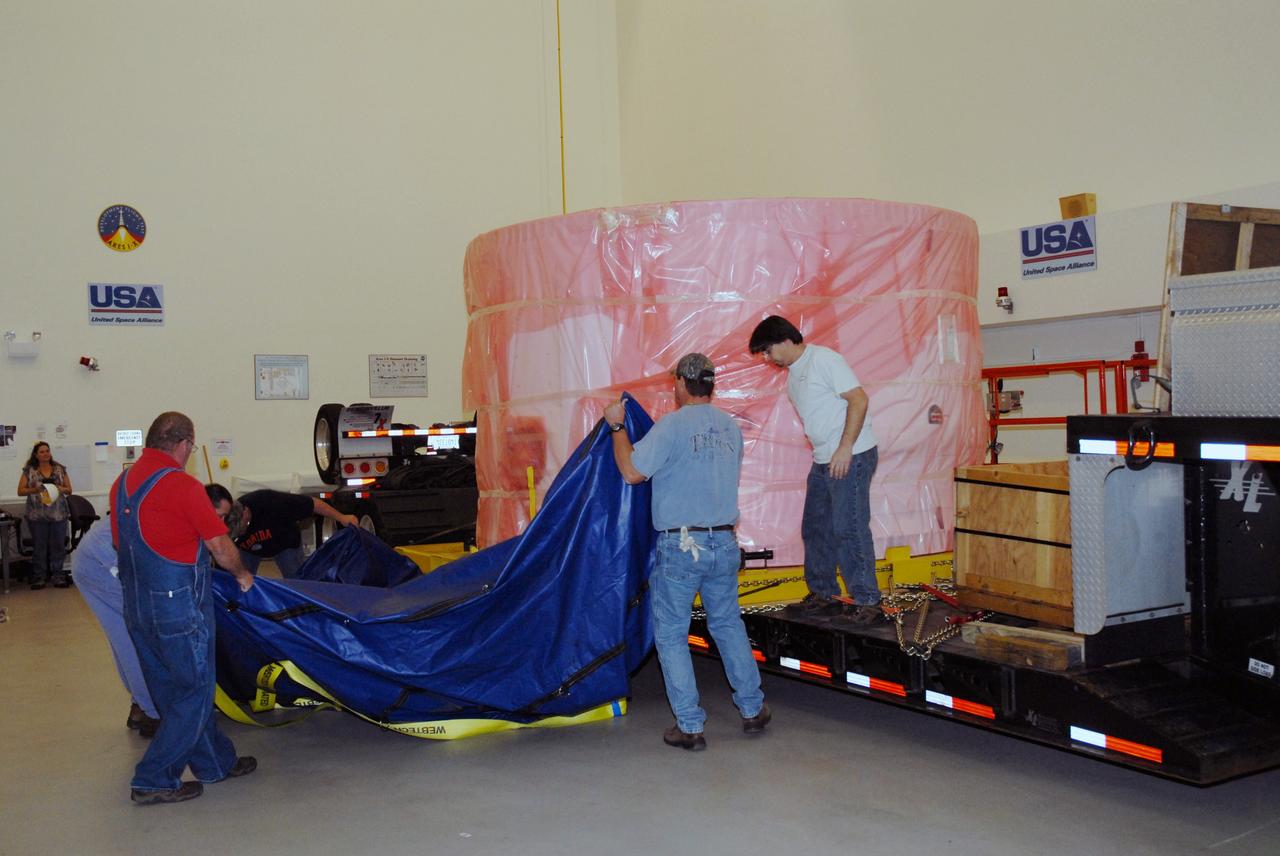
CAPE CANAVERAL, Fla. – In the Vehicle Assembly Building's extended duration orbiter lab, or EDO, at NASA's Kennedy Space Center in Florida, workers remove the shipping cover from the fifth segment simulator of the Ares I-X. Ares I-X is the test vehicle for the Ares I, which is part of the Constellation Program to return men to the moon and beyond. Ares I is the essential core of a safe, reliable, cost-effective space transportation system that eventually will carry crewed missions back to the moon, on to Mars and out into the solar system. Ares I-X is targeted for launch in July 2009. Photo credit: NASA/Tim Jacobs
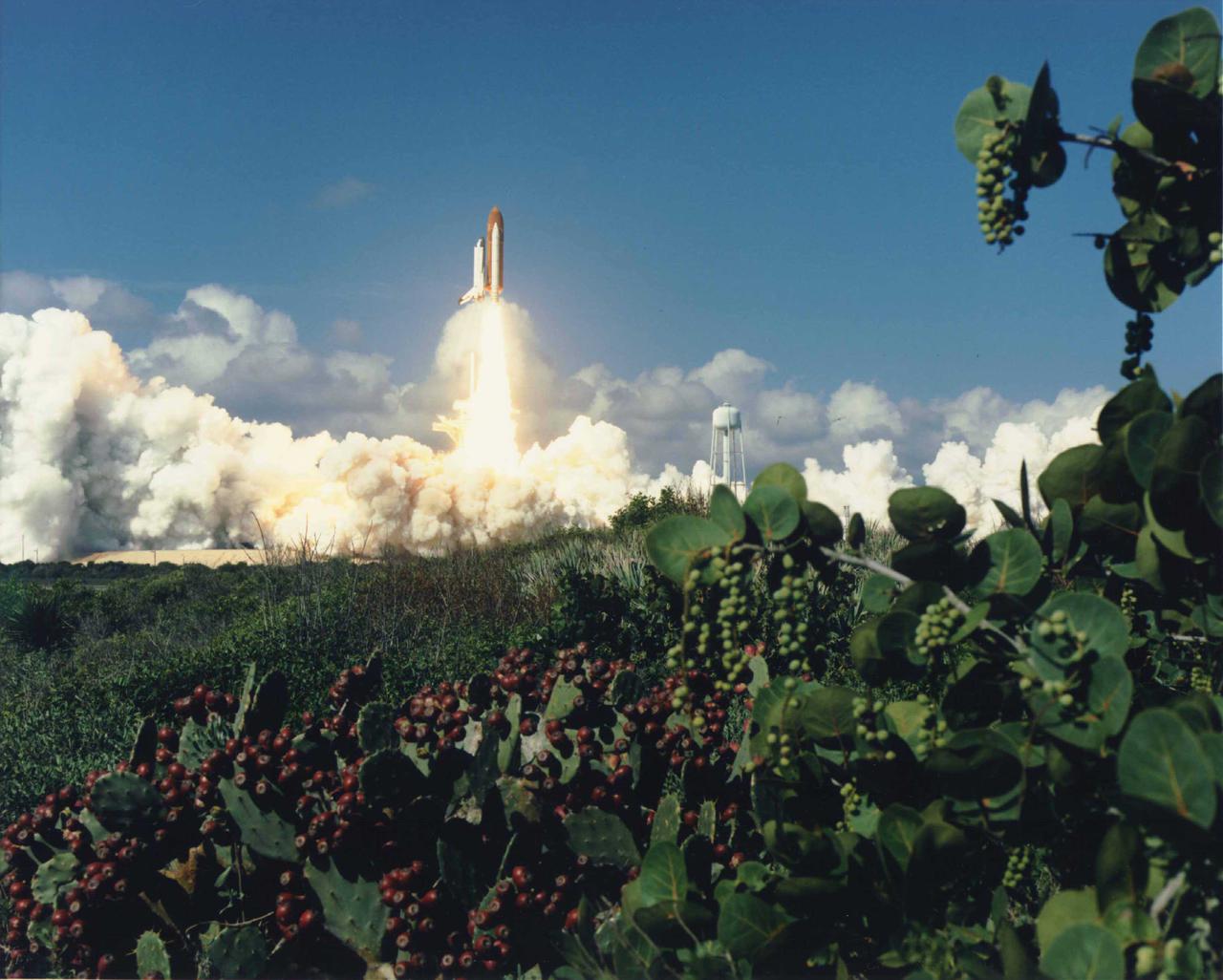
KENNEDY SPACE CENTER, FLA. - The Space Shuttle Columbia climbs a golden tower into a royal blue sky dusted with clouds. The 58th Shuttle flight lifted off from Launch Pad 39B at 10:53:10 a.m. EDT, beginning the longest mission planned in Shuttle program history: two weeks. The Extended Duration Orbiter STS-58 mission will allow the seven-member crew to delve extensively into a number of experiments investigating the adaptation of the human body to space. Spacelab Llife Sciences-2 is the second Spacelab mission dedicated solely to life sciences research.
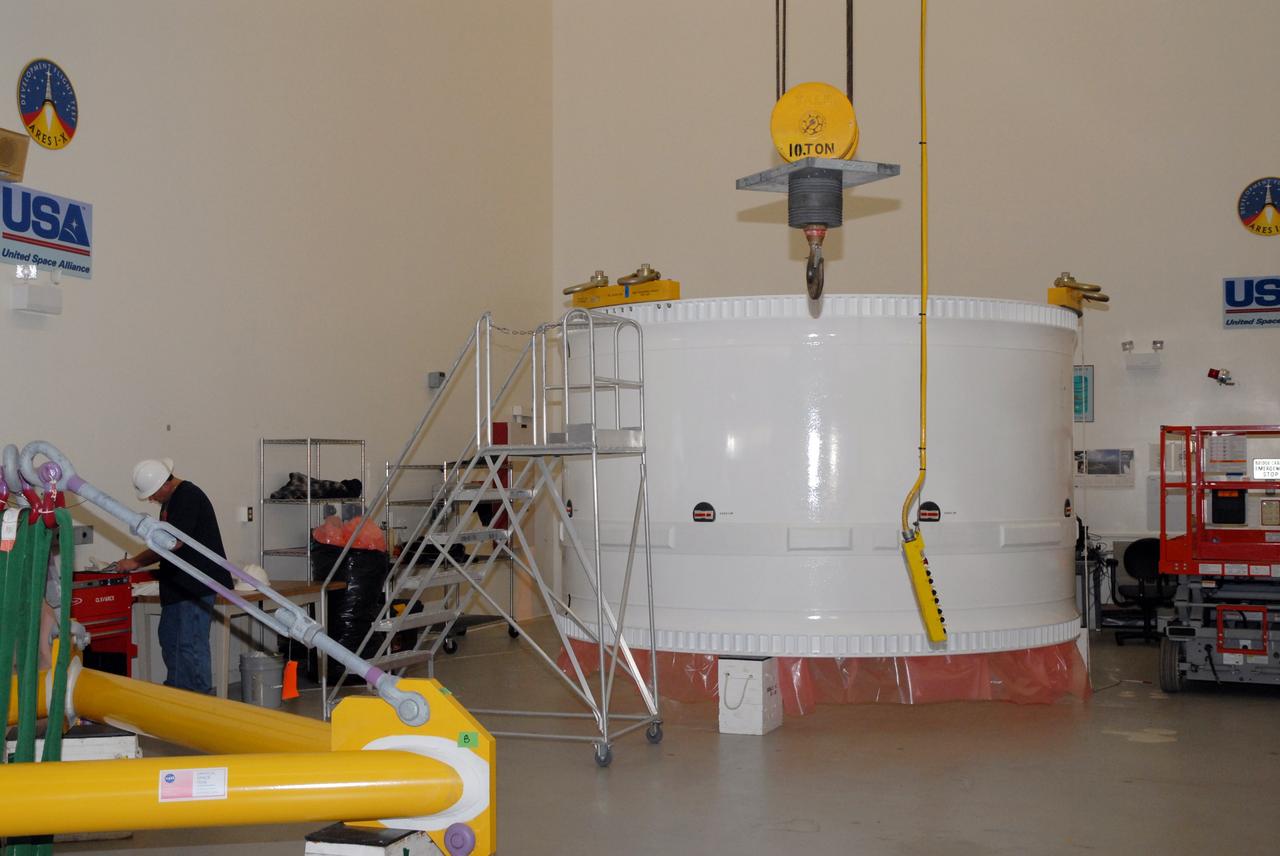
CAPE CANAVERAL, Fla. – In the Vehicle Assembly Building at NASA's Kennedy Space Center in Florida, the fifth segment simulator of the Ares I-X is on a work stand. Ares I-X is the test vehicle for the Ares I, which is part of the Constellation Program to return men to the moon and beyond. Ares I is the essential core of a safe, reliable, cost-effective space transportation system that eventually will carry crewed missions back to the moon, on to Mars and out into the solar system. Ares I-X is targeted for launch in July 2009.
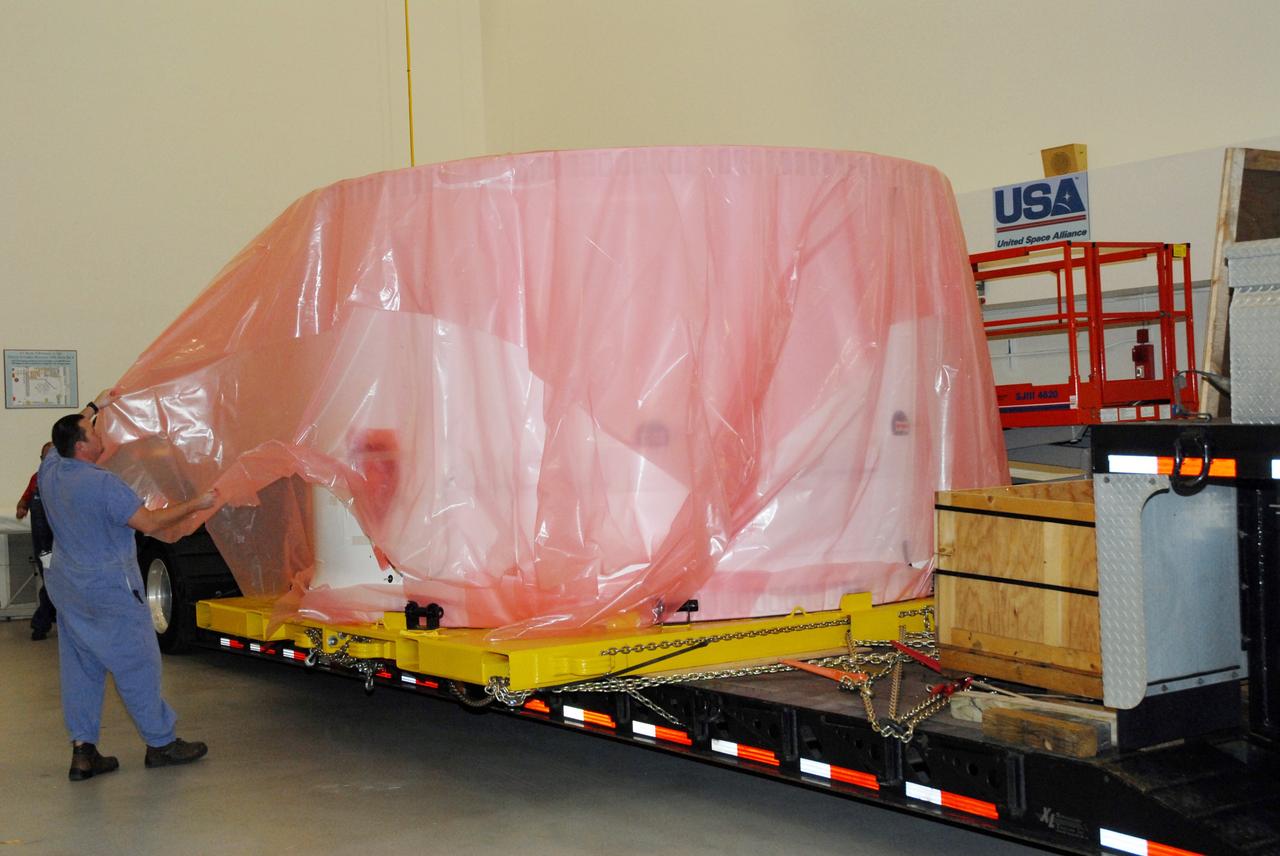
CAPE CANAVERAL, Fla. – In the Vehicle Assembly Building at NASA's Kennedy Space Center in Florida, workers begin removing the protective material wrapping the fifth segment simulator of the Ares I-X. Ares I-X is the test vehicle for the Ares I, which is part of the Constellation Program to return men to the moon and beyond. Ares I is the essential core of a safe, reliable, cost-effective space transportation system that eventually will carry crewed missions back to the moon, on to Mars and out into the solar system. Ares I-X is targeted for launch in July 2009. Photo credit: NASA/Tim Jacobs

CAPE CANAVERAL, Fla. – The covered fifth segment simulator of the Ares I-X is transported from Astrotech in Titusville, Fla. It is being moved to the Vehicle Assembly Building at NASA's Kennedy Space Center in Florida for stacking operations. Ares I-X is the test vehicle for the Ares I, which is part of the Constellation Program to return men to the moon and beyond. Ares I is the essential core of a safe, reliable, cost-effective space transportation system that eventually will carry crewed missions back to the moon, on to Mars and out into the solar system. Ares I-X is targeted for launch in July 2009. Photo credit: NASA/Tim Jacobs
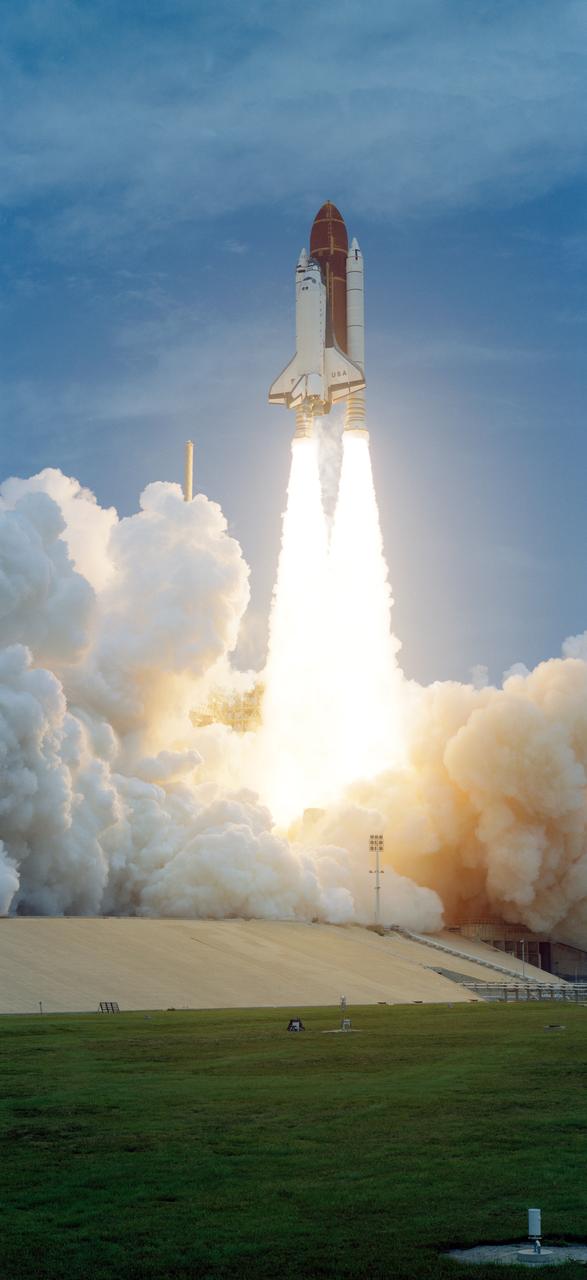
STS050-S-038 (25 June 1992) --- The Space Shuttle Columbia, NASA's first Extended Duration Orbiter (EDO), lifts off on its way toward a scheduled record 13-day mission in Earth-orbit. Liftoff occurred at 12:12:23:0534 p.m. (EDT) on June 25, 1992. Five NASA astronauts and two scientists/payload specialists are aboard. The seven will divide into two shifts to support United States Microgravity Laboratory (USML) research.
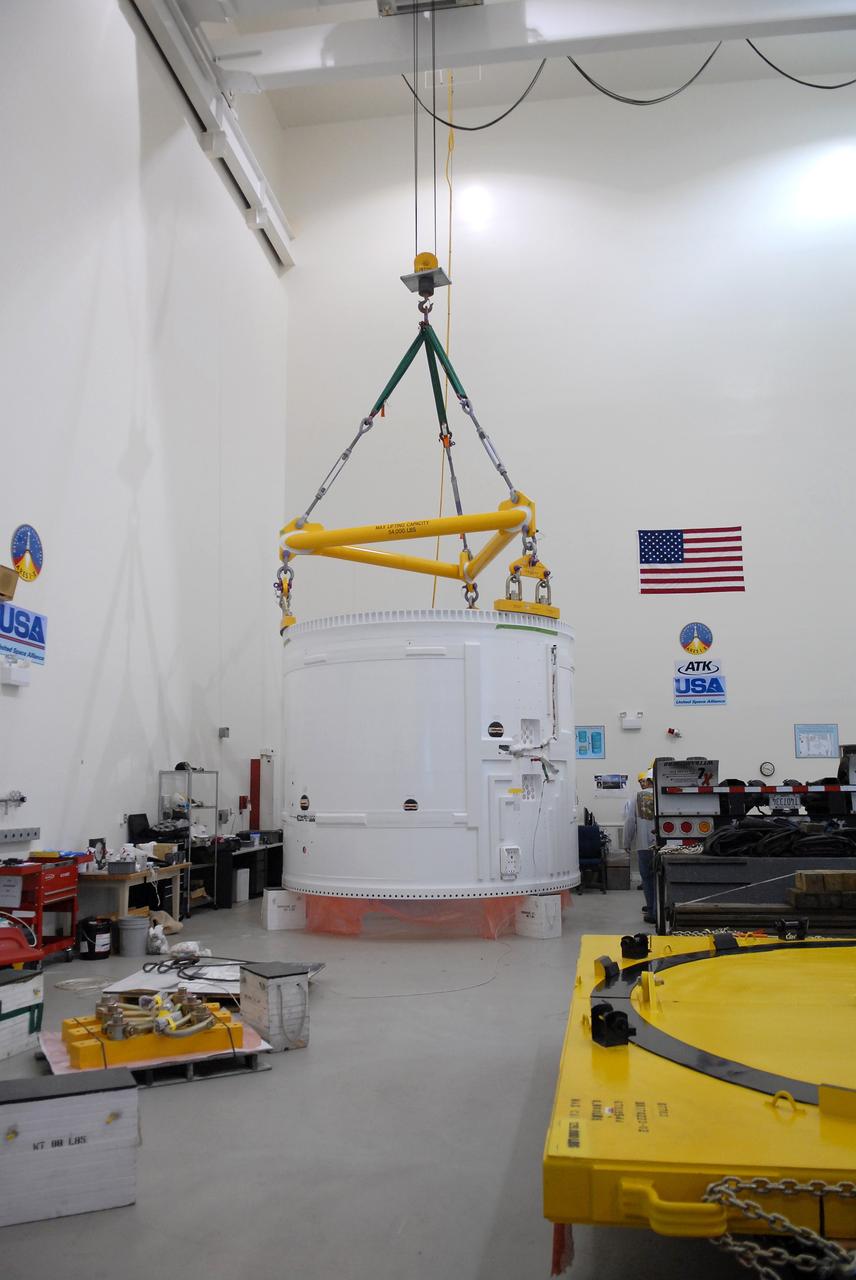
CAPE CANAVERAL, Fla. – The Ares I-X fifth segment simulator aft section is lowered onto a stand in the Vehicle Assembly Building's extended duration orbiter lab, or EDO, at NASA's Kennedy Space Center in Florida. Ares I-X is the test vehicle for the Ares I, which is part of the Constellation Program to return men to the moon and beyond. Ares I is the essential core of a safe, reliable, cost-effective space transportation system that eventually will carry crewed missions back to the moon, on to Mars and out into the solar system. Ares I-X is targeted for launch in July 2009. Photo credit: NASA/Troy Cryder
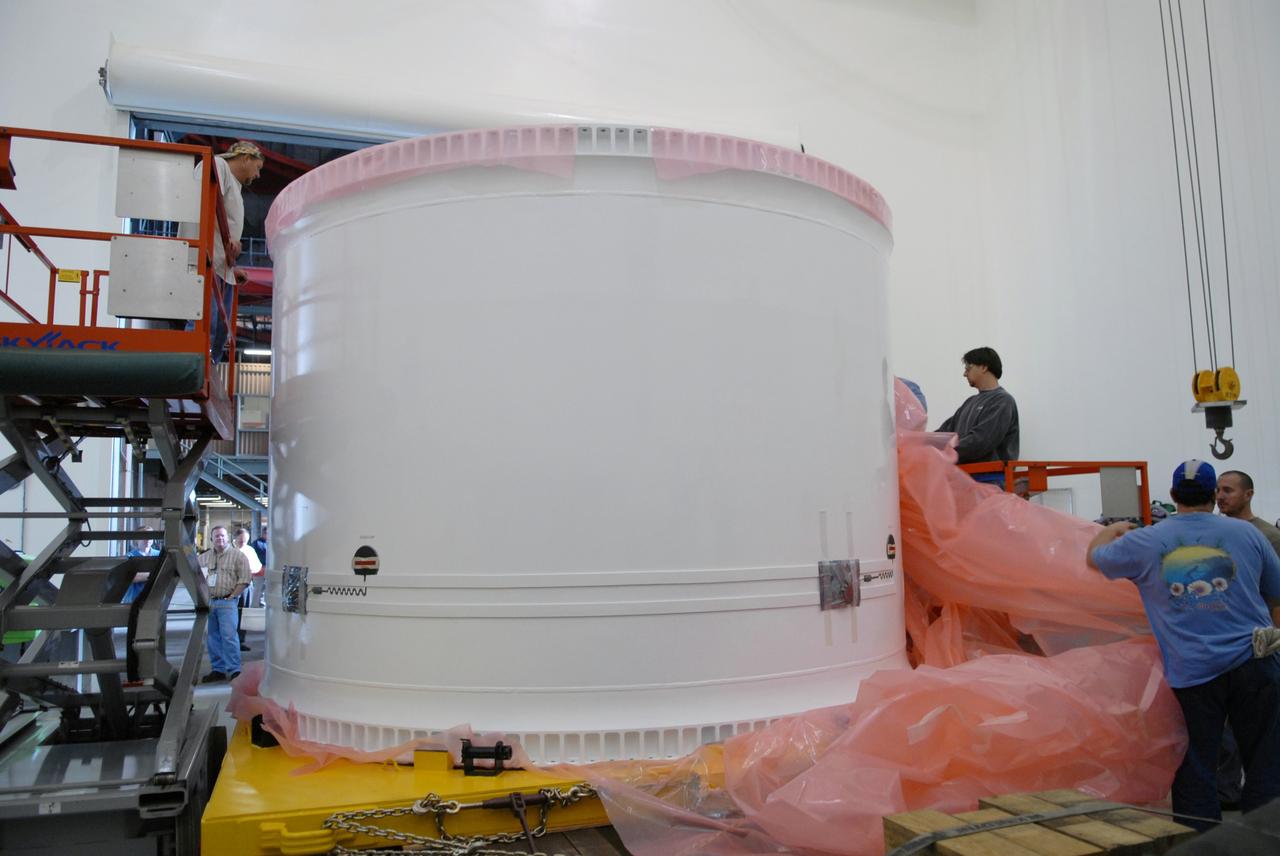
CAPE CANAVERAL, Fla. – In the extended duration orbiter lab, or EDO, of the Vehicle Assembly Building at NASA's Kennedy Space Center in Florida, workers remove the final plastic cover from the fifth segment simulator center. It will be prepared for stacking with other segments in the VAB. Ares I-X is the test vehicle for the Ares I, which is part of the Constellation Program to return men to the moon and beyond. Ares I is the essential core of a safe, reliable, cost-effective space transportation system that eventually will carry crewed missions back to the moon, on to Mars and out into the solar system. Ares I-X is targeted for launch in July 2009. Photo credit: NASA/Troy Cryder
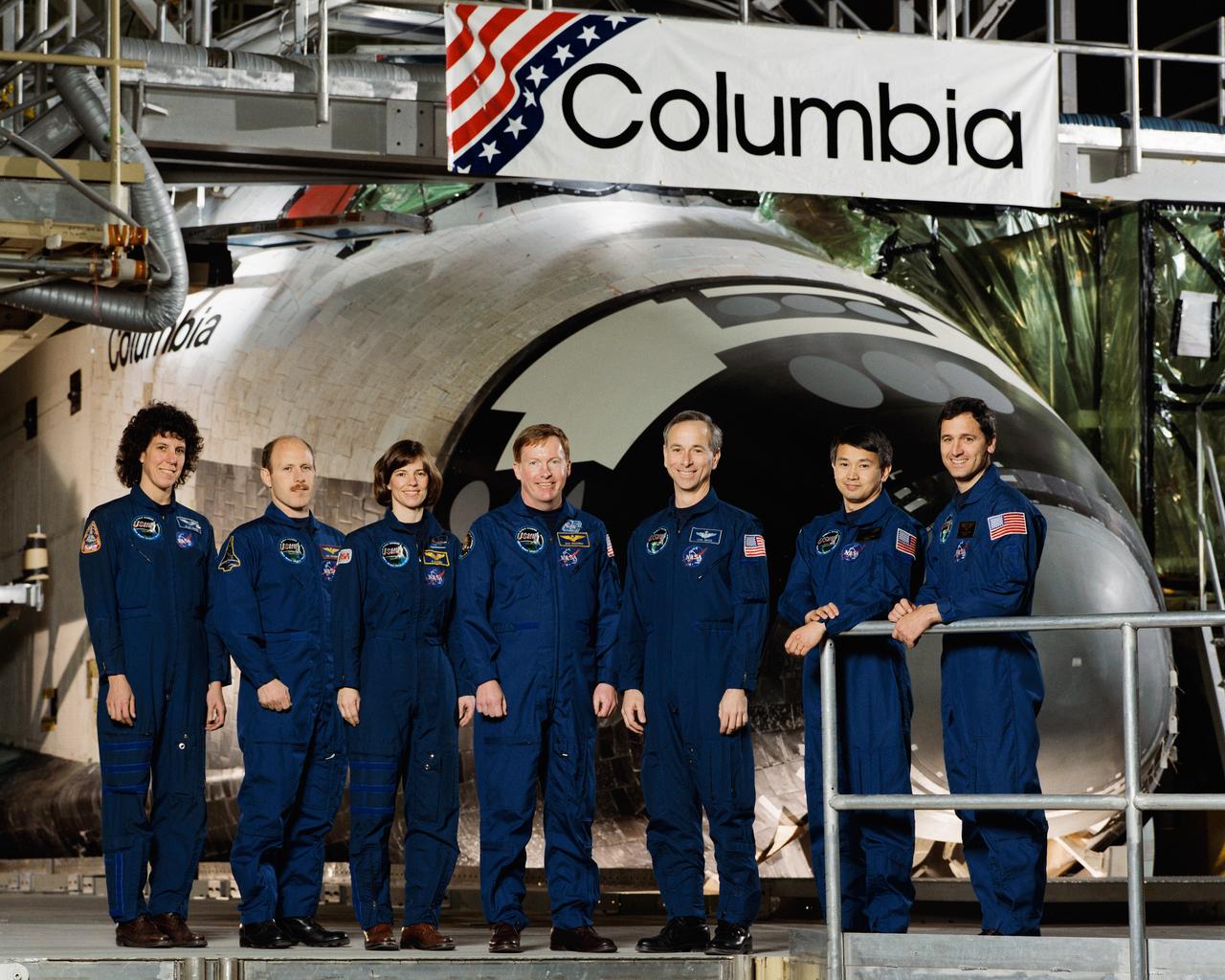
STS050-S-002 (24 Jan. 1992) --- The seven crew members assigned to NASA's mission pose for the traditional crew portrait. The crew was in Palmdale, California for the Space Shuttle Columbia's Extended-Duration Orbiter (EDO) modifications roll-out. Astronaut Richard N. Richards, mission commander, is center. Astronaut Kenneth D. Bowersox, pilot, is second from left. Others, left to right, are astronauts Ellen S. Baker, mission specialist; Bonnie J. Dunbar, payload commander; and Carl J. Meade, mission specialist; Eugene H. Trinh and Lawrence J. DeLucas, payload specialists.
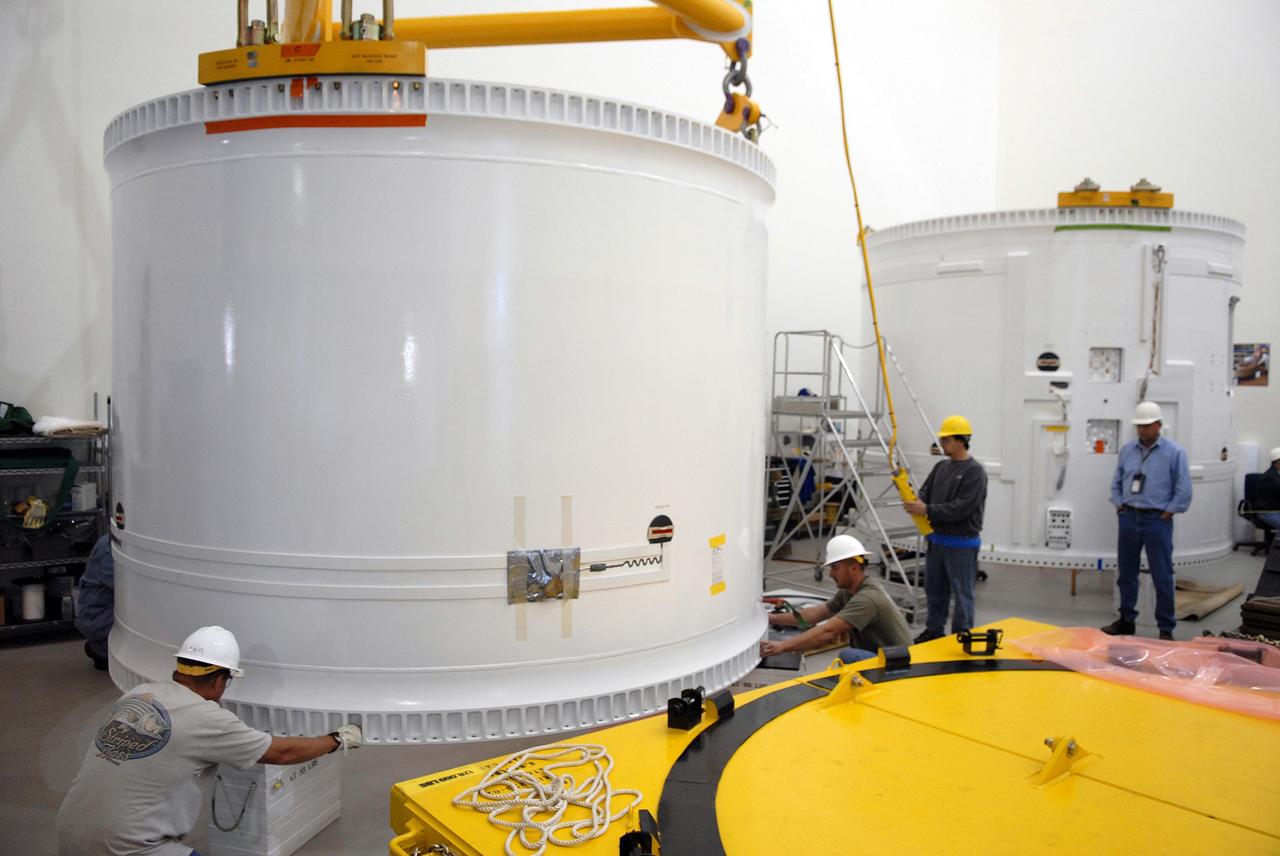
CAPE CANAVERAL, Fla. – In the extended duration orbiter lab, or EDO, of the Vehicle Assembly Building at NASA's Kennedy Space Center in Florida, workers help guide the fifth segment simulator center onto supports on the floor. Ares I-X is the test vehicle for the Ares I, which is part of the Constellation Program to return men to the moon and beyond. Ares I is the essential core of a safe, reliable, cost-effective space transportation system that eventually will carry crewed missions back to the moon, on to Mars and out into the solar system. Ares I-X is targeted for launch in July 2009. Photo credit: NASA/Troy Cryder
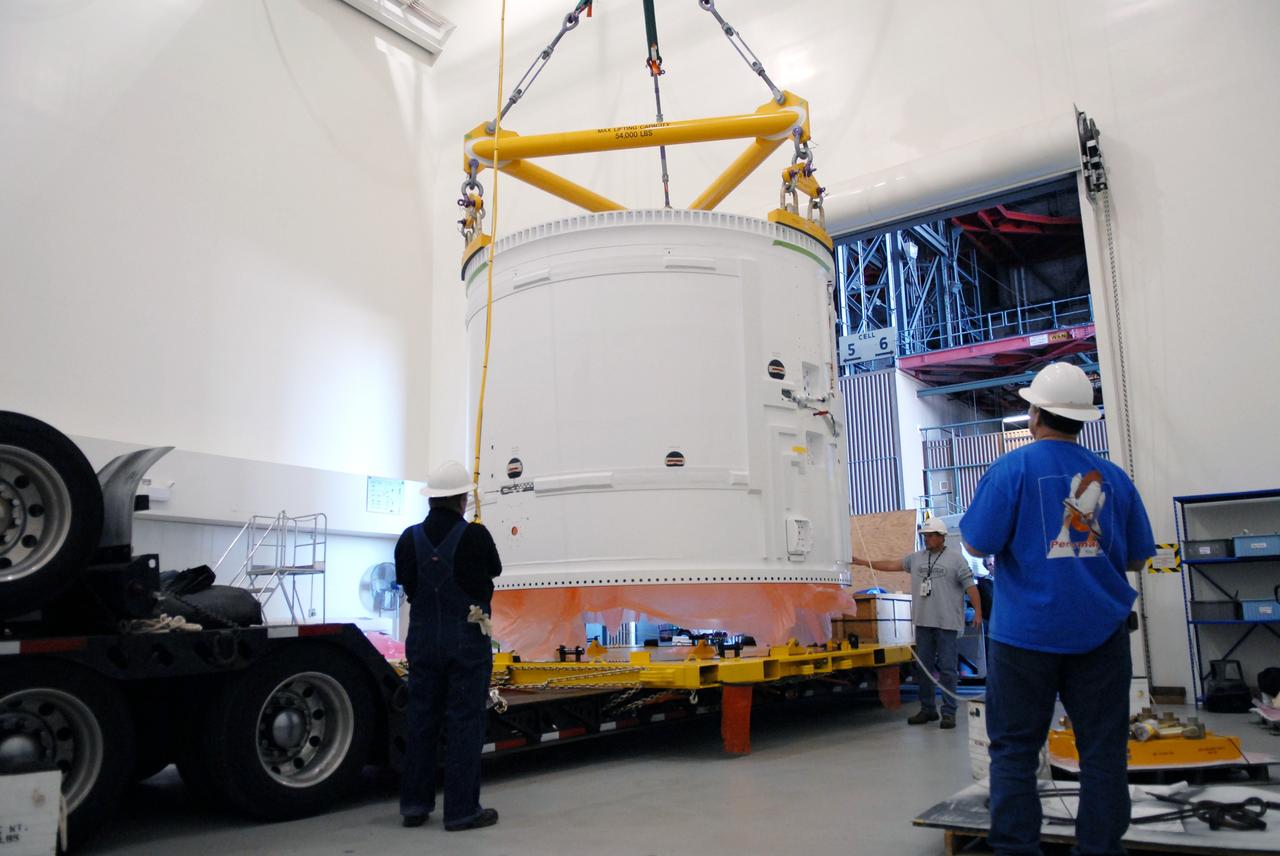
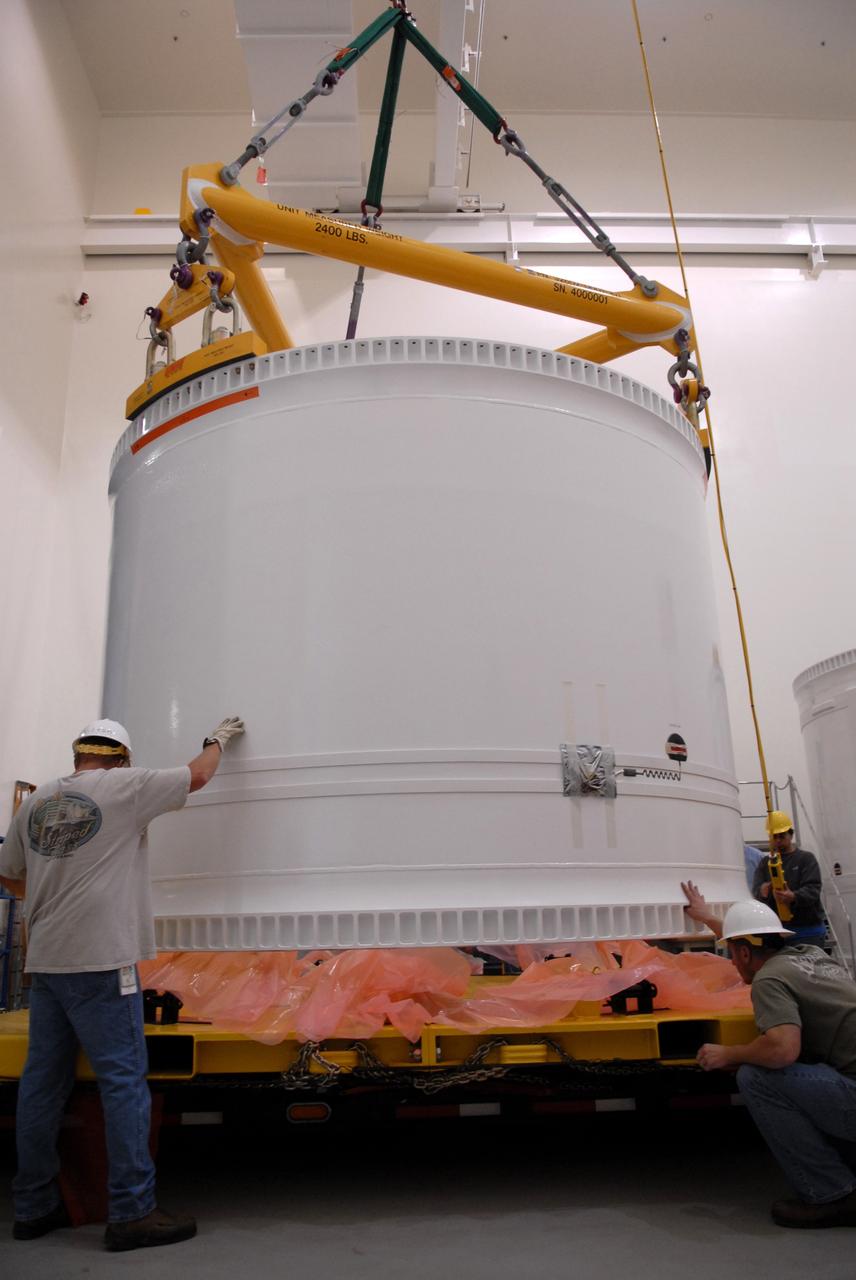
CAPE CANAVERAL, Fla. – In the Vehicle Assembly Building's extended duration orbiter lab, or EDO, at NASA's Kennedy Space Center in Florida, the Ares I-X fifth segment simulator aft section is lifted by a crane from the transporter. The aft section will be moved to a stand. Ares I-X is the test vehicle for the Ares I, which is part of the Constellation Program to return men to the moon and beyond. Ares I is the essential core of a safe, reliable, cost-effective space transportation system that eventually will carry crewed missions back to the moon, on to Mars and out into the solar system. Ares I-X is targeted for launch in July 2009. Photo credit: NASA/Troy Cryder
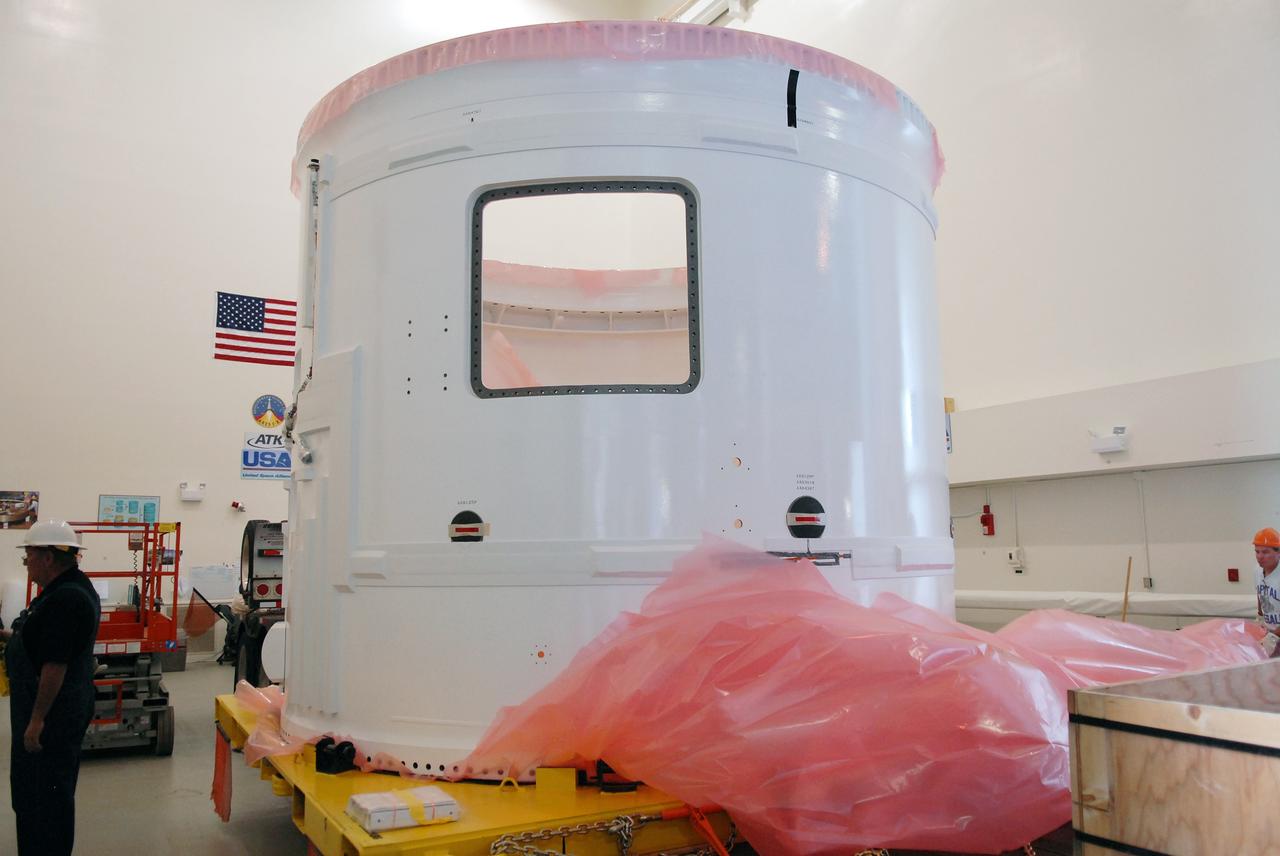
CAPE CANAVERAL, Fla. – In the Vehicle Assembly Building's extended duration orbiter lab, or EDO, at NASA's Kennedy Space Center in Florida, the Ares I-X fifth segment simulator aft section is rid of its protective cover before being moved to a stand. Ares I-X is the test vehicle for the Ares I, which is part of the Constellation Program to return men to the moon and beyond. Ares I is the essential core of a safe, reliable, cost-effective space transportation system that eventually will carry crewed missions back to the moon, on to Mars and out into the solar system. Ares I-X is targeted for launch in July 2009. Photo credit: NASA/Troy Cryder
CAPE CANAVERAL, Fla. – In the extended duration orbiter lab, or EDO, of the Vehicle Assembly Building at NASA's Kennedy Space Center in Florida, workers watch closely as a crane lifts the fifth segment simulator center from the transporter. The segment is being moved to supports on the floor. Ares I-X is the test vehicle for the Ares I, which is part of the Constellation Program to return men to the moon and beyond. Ares I is the essential core of a safe, reliable, cost-effective space transportation system that eventually will carry crewed missions back to the moon, on to Mars and out into the solar system. Ares I-X is targeted for launch in July 2009. Photo credit: NASA/Troy Cryder
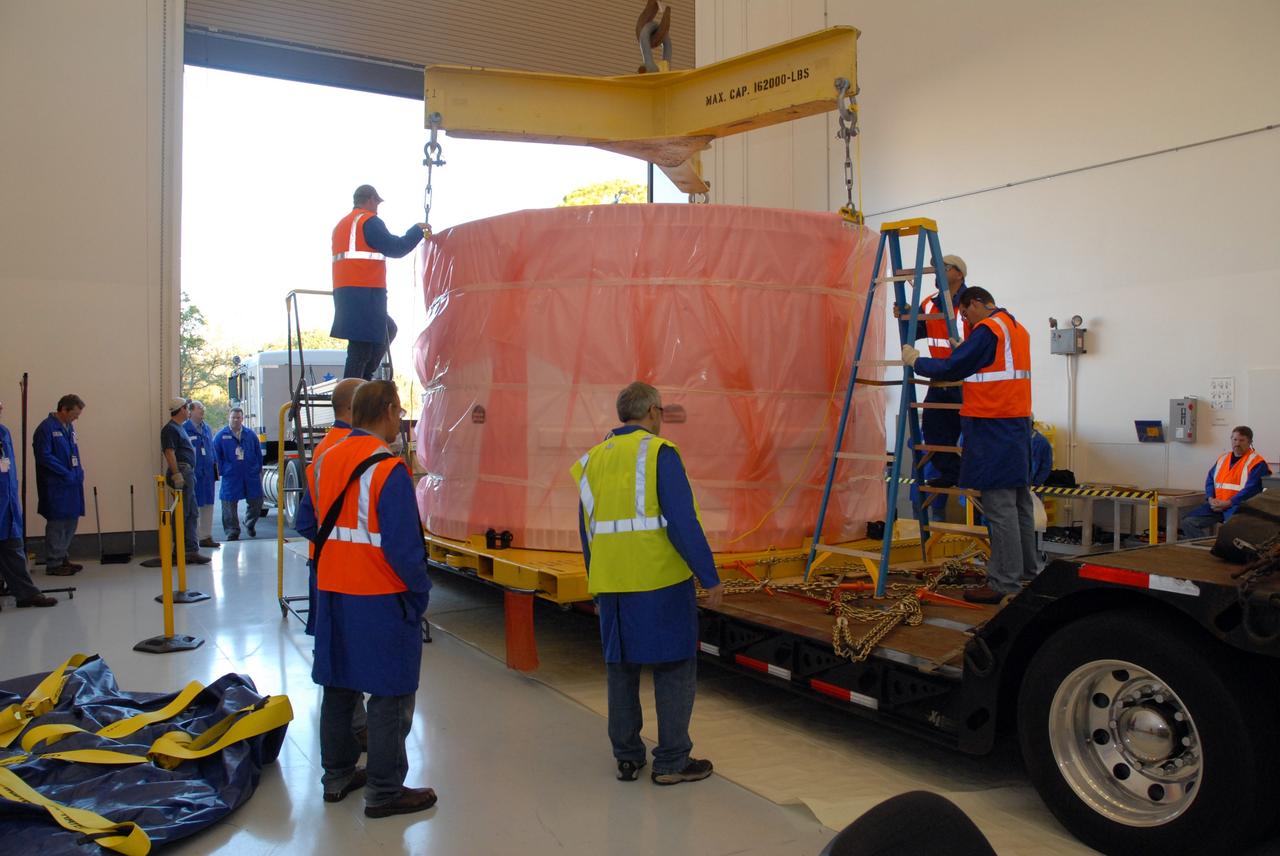
CAPE CANAVERAL, Fla. – At Astrotech in Titusville, Fla., the bagged fifth segment simulator of the Ares I-X is placed on a transporter. The segment will be transferred to the Vehicle Assembly Building's extended duration orbiter lab, or EDO, at NASA's Kennedy Space Center in Florida for stacking operations. Ares I-X is the test vehicle for the Ares I, which is part of the Constellation Program to return men to the moon and beyond. Ares I is the essential core of a safe, reliable, cost-effective space transportation system that eventually will carry crewed missions back to the moon, on to Mars and out into the solar system. Ares I-X is targeted for launch in July 2009. Photo credit: NASA/Tim Jacobs
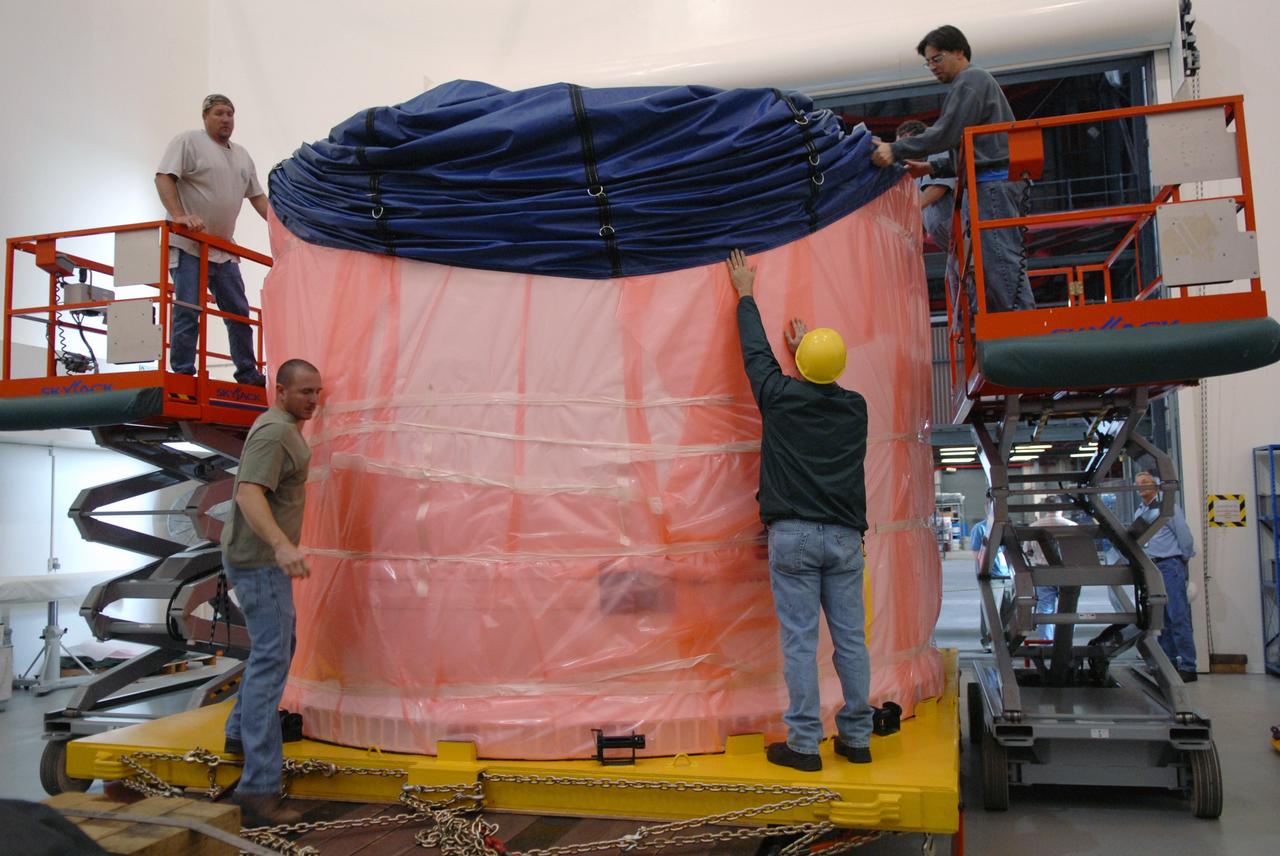
CAPE CANAVERAL, Fla. – In the extended duration orbiter lab, or EDO, of the Vehicle Assembly Building at NASA's Kennedy Space Center in Florida, workers remove the cover from the fifth segment simulator center. It will be prepared for stacking with other segments in the VAB. Ares I-X is the test vehicle for the Ares I, which is part of the Constellation Program to return men to the moon and beyond. Ares I is the essential core of a safe, reliable, cost-effective space transportation system that eventually will carry crewed missions back to the moon, on to Mars and out into the solar system. Ares I-X is targeted for launch in July 2009. Photo credit: NASA/Troy Cryder

STS050-S-040 (25 June 1992) --- A low-angle perspective captures the Space Shuttle Columbia as it lifts off on its way toward a scheduled record 13-day mission in Earth-orbit. Liftoff occurred at 12:12:23:0534 p.m. (EDT) on June 25, 1992. The modified Columbia is NASA's first Extended Duration Orbiter (EDO). Five NASA astronauts and two scientists/payload specialists are aboard. The seven will divide into two shifts to support United States Microgravity Laboratory 1 (USML-1) research.
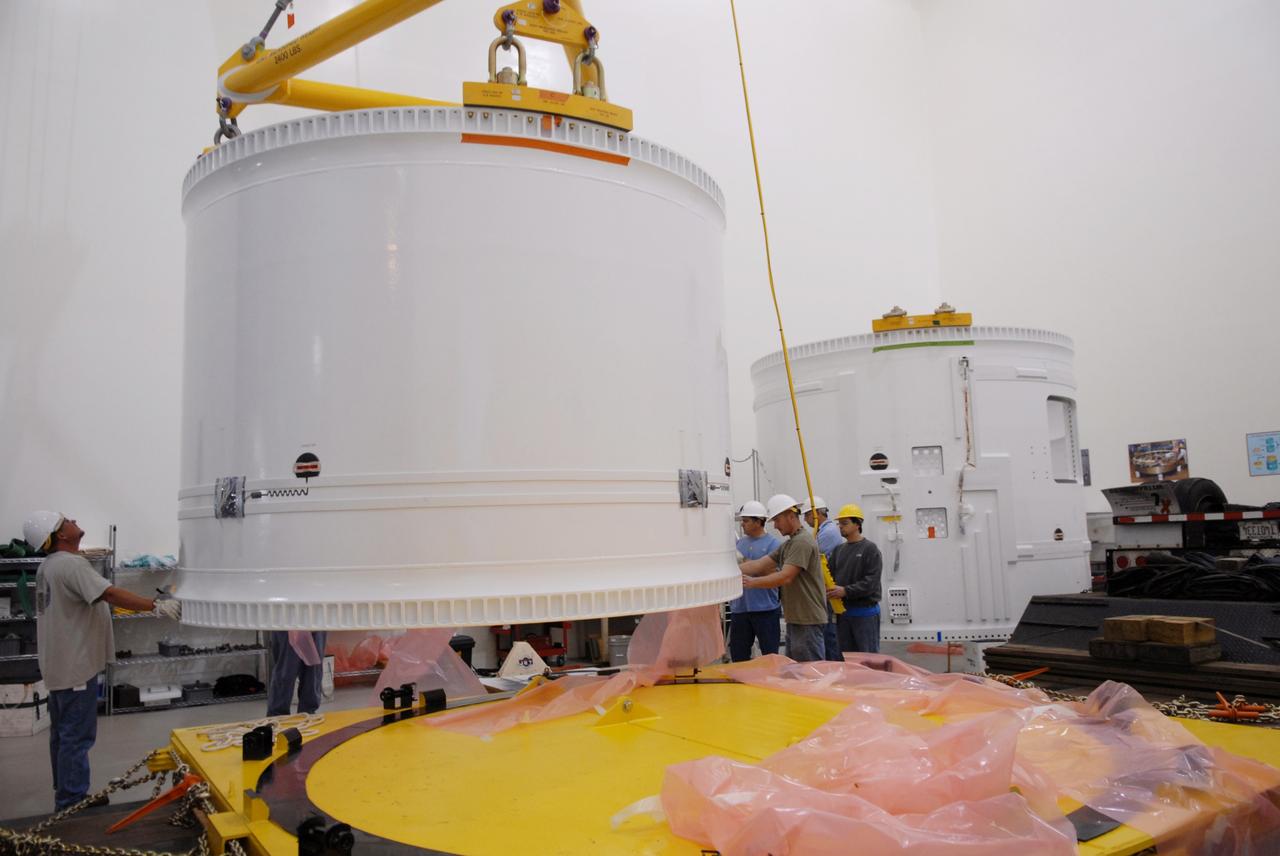
CAPE CANAVERAL, Fla. – In the extended duration orbiter lab, or EDO, of the Vehicle Assembly Building at NASA's Kennedy Space Center in Florida, workers watch closely as a crane lifts the fifth segment simulator center from the transporter. The segment will be moved to supports on the floor. Another segment is at right. Ares I-X is the test vehicle for the Ares I, which is part of the Constellation Program to return men to the moon and beyond. Ares I is the essential core of a safe, reliable, cost-effective space transportation system that eventually will carry crewed missions back to the moon, on to Mars and out into the solar system. Ares I-X is targeted for launch in July 2009. Photo credit: NASA/Troy Cryder
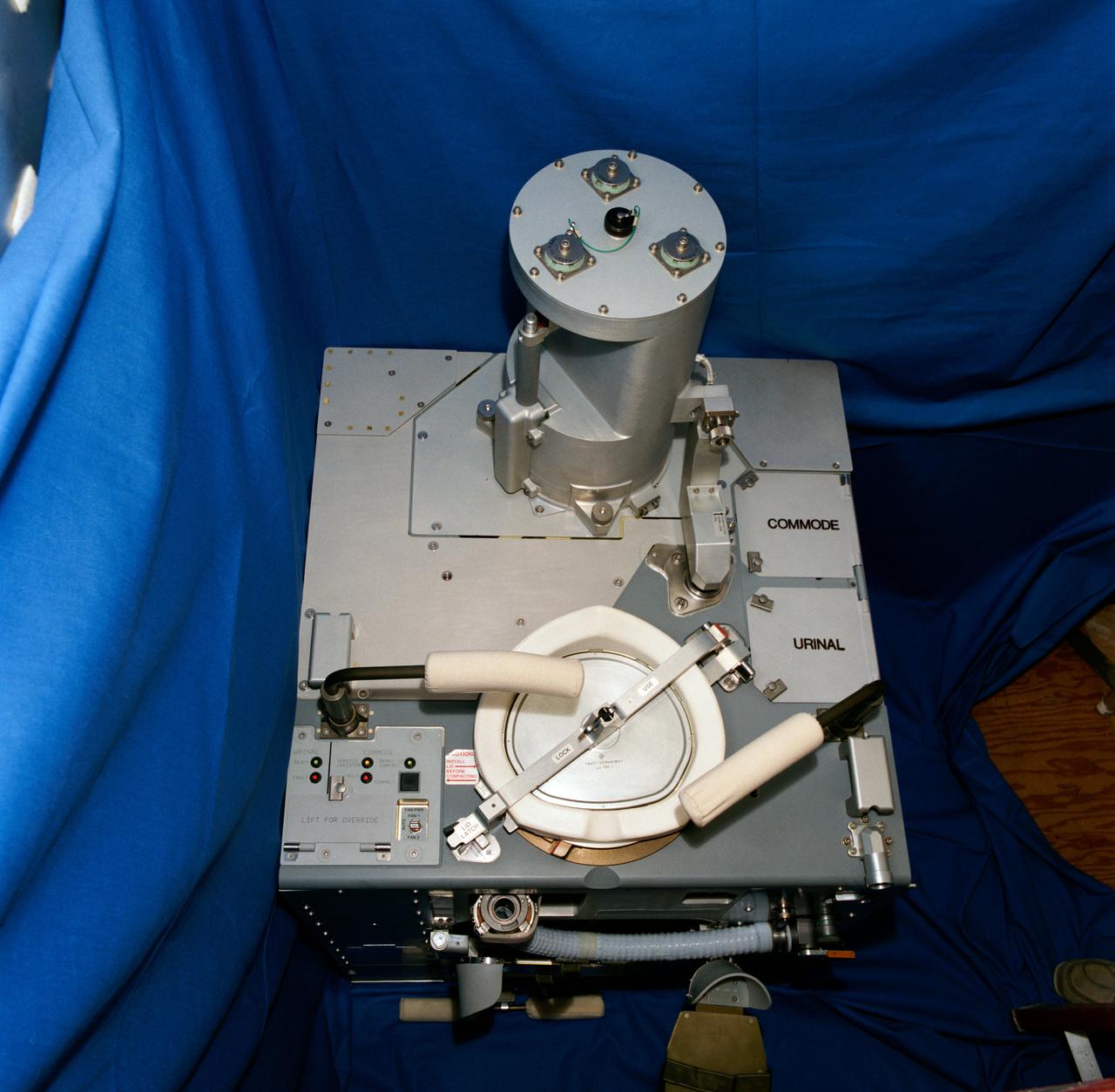
S92-46726 (November 1992) --- A high angle view of the Improved Waste Collection System (IWCS) scheduled to fly aboard NASA's Space Shuttle Endeavour for the STS-54 mission. Among the advantages the new IWCS is hoped to have over the current WCS are greater dependability, better hygiene, virtually unlimited capacity and more efficient preparation between Shuttle missions. Unlike the previous WCS, the improved version will not have to be removed from the spacecraft to be readied for the next flight.
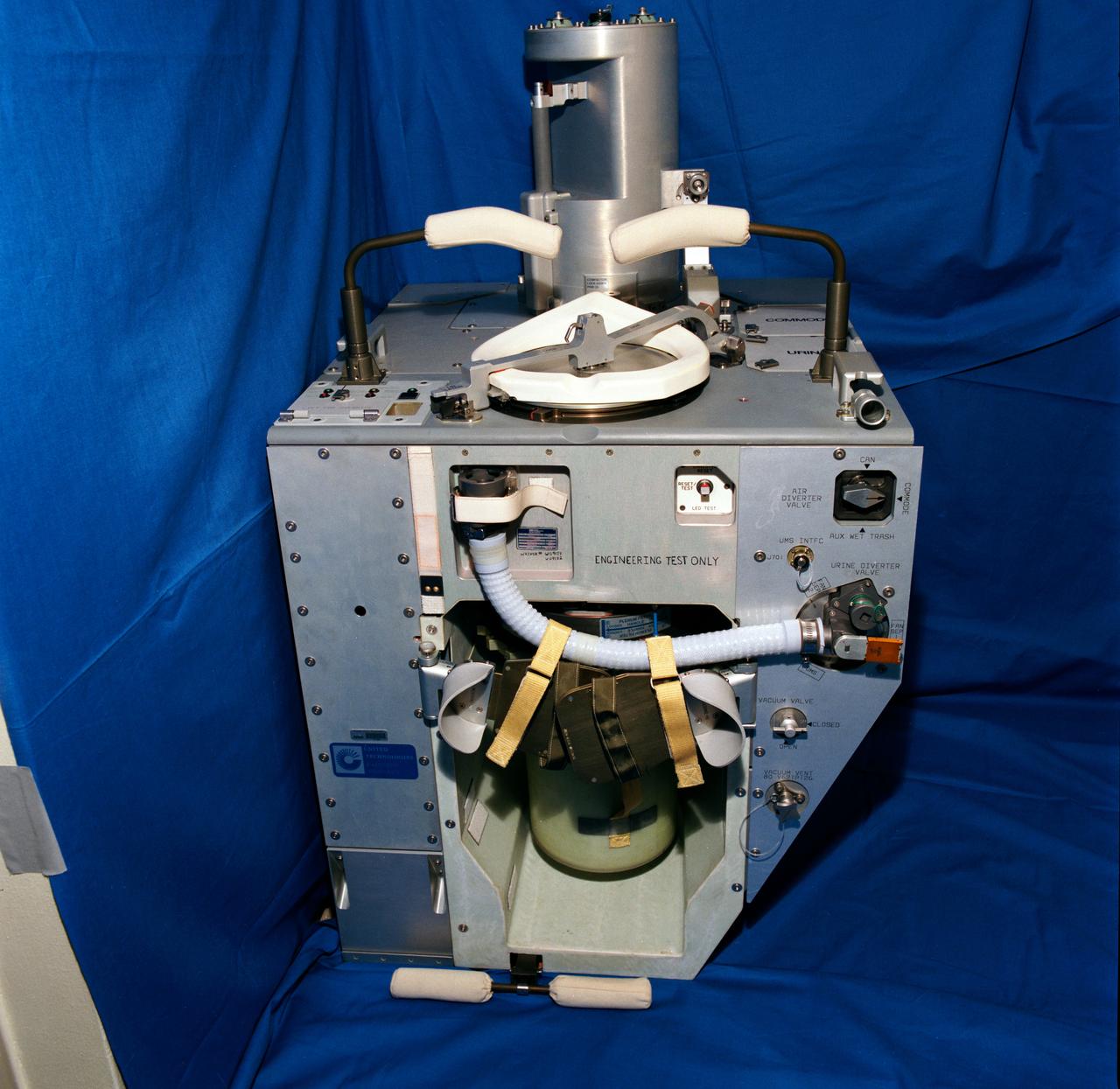
S92-46717 (November 1992) --- A front view of the improved waste collection system (IWCS) scheduled to fly aboard NASA's Space Shuttle Endeavour for the STS-54 mission. Among the advantages the new IWCS is hoped to have over the current WCS are greater dependability, better hygiene, virtually unlimited capacity and more efficient preparation between Shuttle missions. Unlike the previous WCS, the improved version will not have to be removed from the spacecraft to be readied for the next flight.
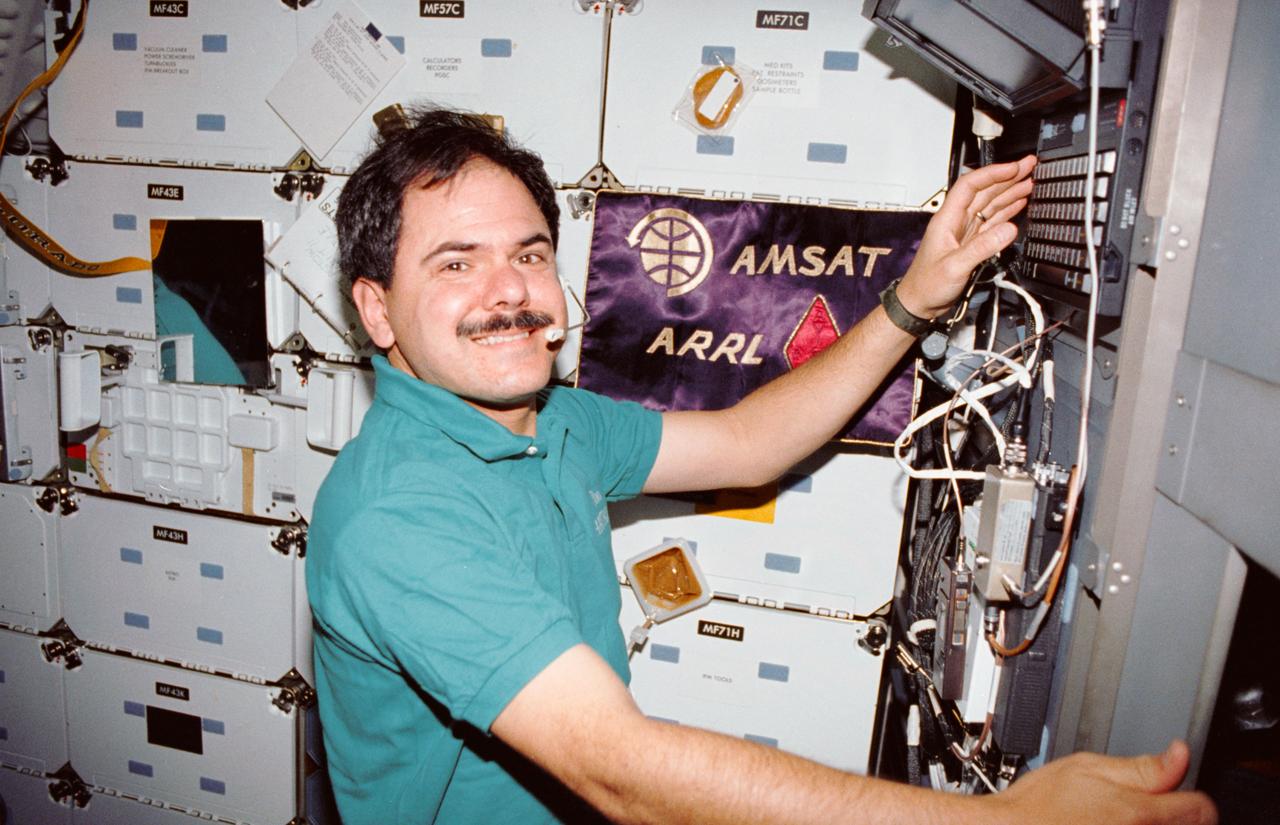
STS-35 Payload Specialist Ronald A. Parise enters data into the payload and general support computer (PGSC) in preparation for Earth communication via the Shuttle Amateur Radio Experiment (SAREX) aboard Columbia, Orbiter Vehicle (OV) 102. The SAREX equipment is secured to the middeck starboard sleep station. SAREX provided radio transmissions between ground based amateur radio operators around the world and Parise, a licensed amateur radio operator. The experiment enabled students to communicate with an astronaut in space, as Parise (call-sign WA4SIR) devoted some of his off-duty time to that purpose. Displayed on the forward lockers beside Parise is a AMSAT (Amateur Radio Satellite Corporation) / ARRL (American Radio Relay League) banner. Food items and checklists are attached to the lockers. In locker position MF43G, the Development Test Objective (DTO) Trash Compaction and Retention System Demonstration extended duration orbiter (EDO) compactor is visible.
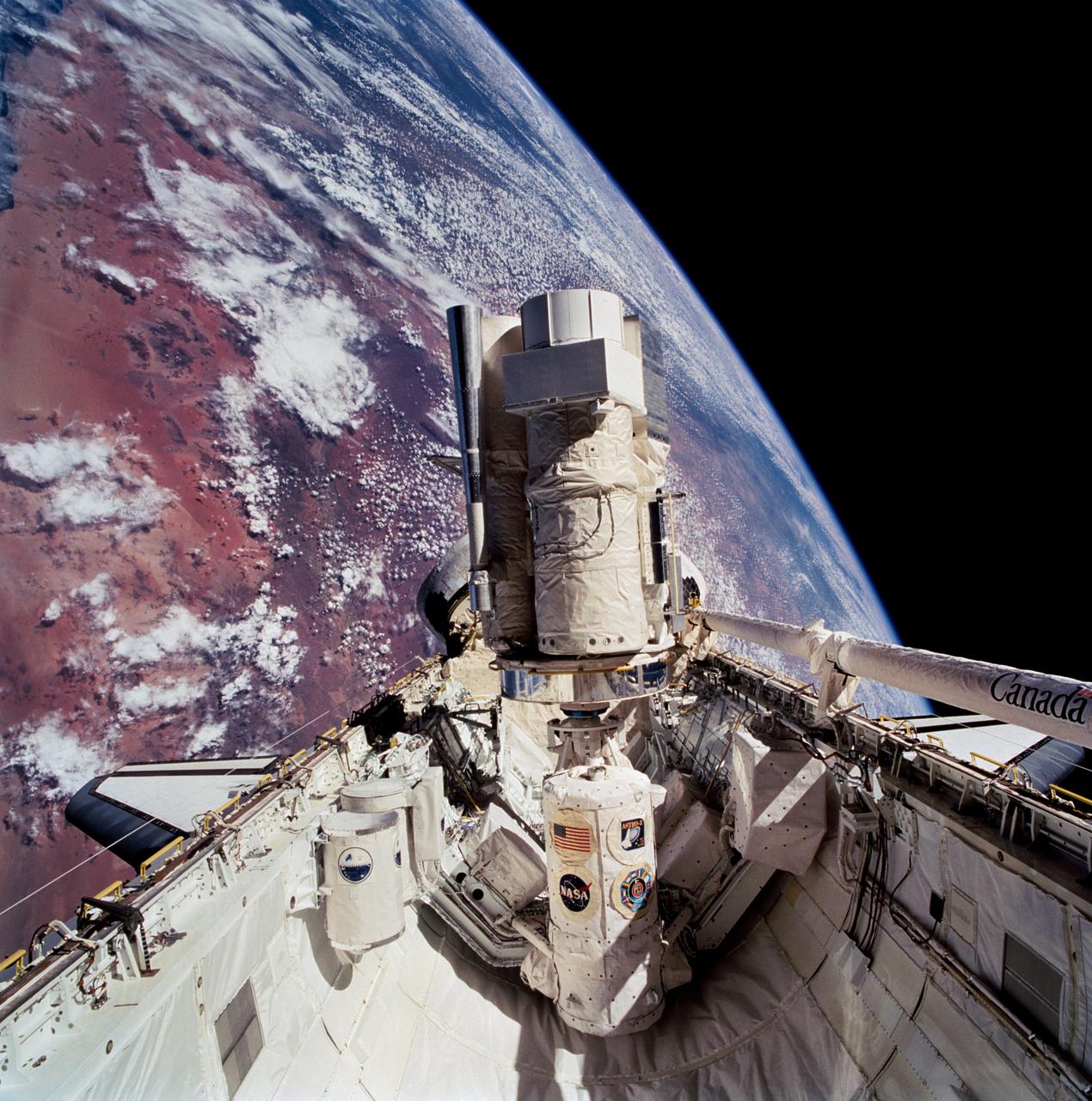
STS067-713-072 (2-18 March 1995) --- This 70mm cargo bay scene, backdropped against a desert area of Namibia, typifies the view that daily greeted the Astro-2 crew members during their almost 17-days aboard the Space Shuttle Endeavour. Positioned on the Spacelab pallet amidst other hardware, the Astro-2 payload is in its operational mode. Visible here are the Instrument Pointing System (IPS), Hopkins Ultraviolet Telescope (HUT), Star Tracker (ST), Ultraviolet Imaging Telescope (UIT), Wisconsin Ultraviolet Photo-Polarimeter Experiment (WUPPE), and Integrated Radiator System (IRS). At this angle, the Optical Sensor Package (OPS) is not seen. The Igloo, which supports the package of experiments, is in center foreground. Two Get-Away Special (GAS) canisters are in lower left foreground. The Extended Duration Orbiter (EDO) pallet, located aft of the cargo bay, is obscured by the Astro-2 payload. The Endeavour was 190 nautical miles above Earth.
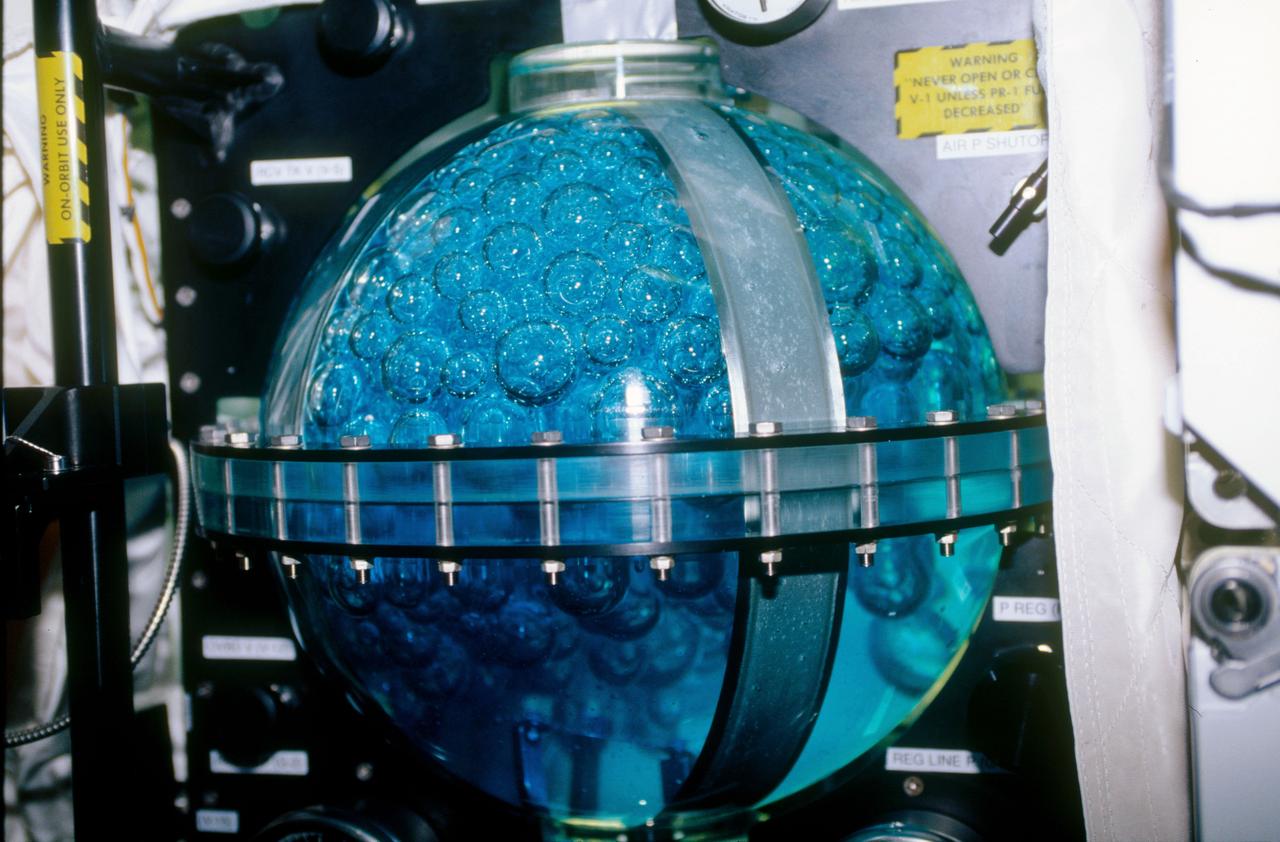
STS053-09-019 (2 - 9 Dec 1992) --- A medium close-up view of part of the Fluid Acquisition and Resupply Equipment (FARE) onboard the Space Shuttle Discovery. Featured in the mid-deck FARE setup is fluid activity in one of two 12.5-inch spherical tanks made of transparent acrylic. Pictured is the receiver tank. The other tank, out of frame below, is for supplying fluids. The purpose of FARE is to investigate the dynamics of fluid transfer in microgravity and develop methods for transferring vapor-free propellants and other liquids that must be replenished in long-term space systems like satellites, Extended-Duration Orbiters (EDO), and Space Station Freedom. Eight times over an eight-hour test period, the mission specialists conducted the FARE experiment. A sequence of manual valve operations caused pressurized air from the bottles to force fluids from the supply tank to the receiver tank and back again to the supply tank. Baffles in the receiver tank controlled fluid motion during transfer, a fine-mesh screen filtered vapor from the fluid, and the overboard vent removed vapor from the receiver tank as the liquid rose. FARE is managed by NASA's Marshall Space Flight Center (MSFC) in Alabama. The basic equipment was developed by Martin Marietta for the Storable Fluid Management Demonstration. Susan L. Driscoll is the principal investigator.
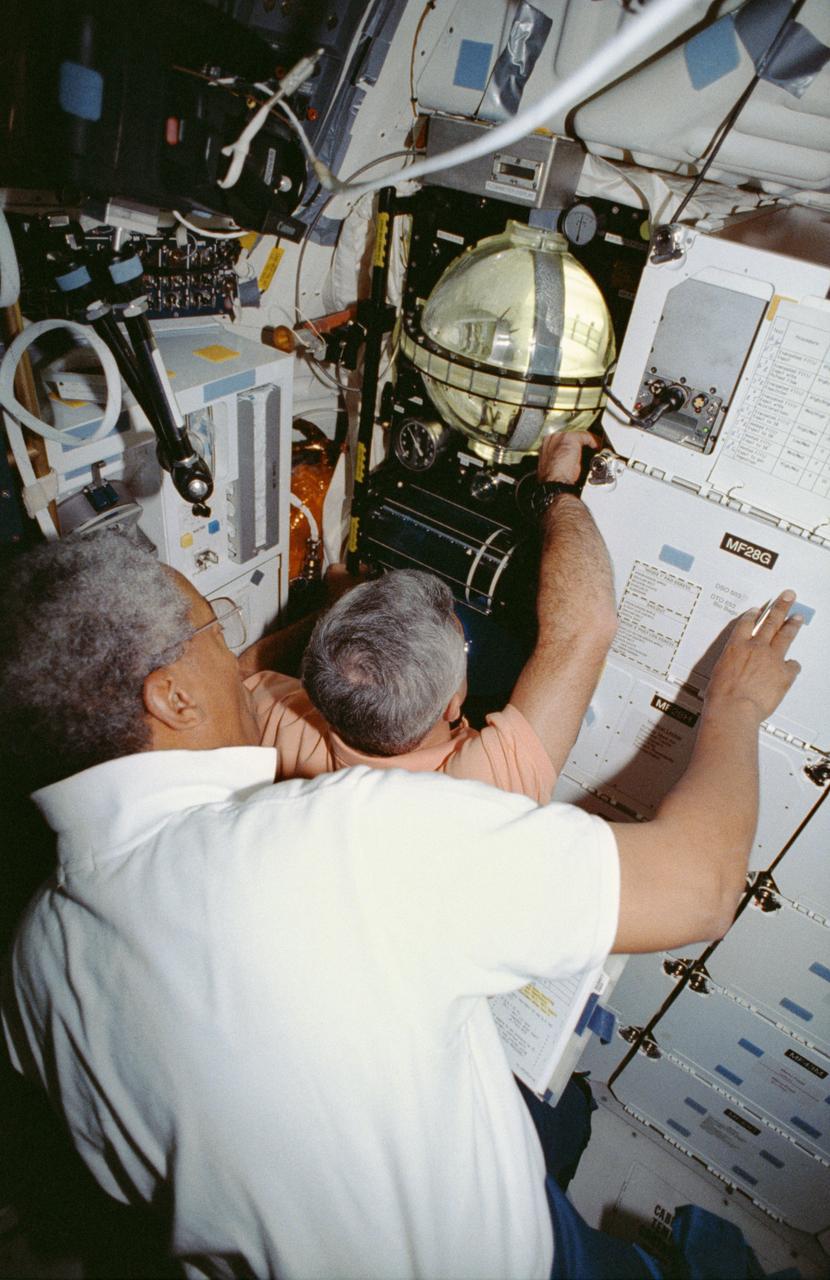
STS053-04-018 (2-9 Dec 1992) --- Astronauts Guion S. Bluford (left) and Michael R. U. (Rich) Clifford monitor the Fluid Acquisition and Resupply Equipment (FARE) onboard the Space Shuttle Discovery. Clearly visible in the mid-deck FARE setup is one of two 12.5-inch spherical tanks made of transparent acrylic, one to supply and one to receive fluids. The purpose of FARE is to investigate the dynamics of fluid transfer in microgravity and develop methods for transferring vapor-free propellants and other liquids that must be replenished in long-term space systems like satellites, Extended-Duration Orbiters (EDO), and Space Station Freedom. Eight times over an eight-hour test period, the mission specialists conducted the FARE experiment. A sequence of manual valve operations caused pressurized air from the bottles to force fluids from the supply tank to the receiver tank and back again to the supply tank. Baffles in the receiver tank controlled fluid motion during transfer, a fine-mesh screen filtered vapor from the fluid, and the overboard vent removed vapor from the receiver tank as the liquid rose. FARE is managed by NASA's Marshall Space Flight Center (MSFC) in Alabama. The basic equipment was developed by Martin Marietta for the Storable Fluid Management Demonstration. Susan L. Driscoll is the principal investigator.
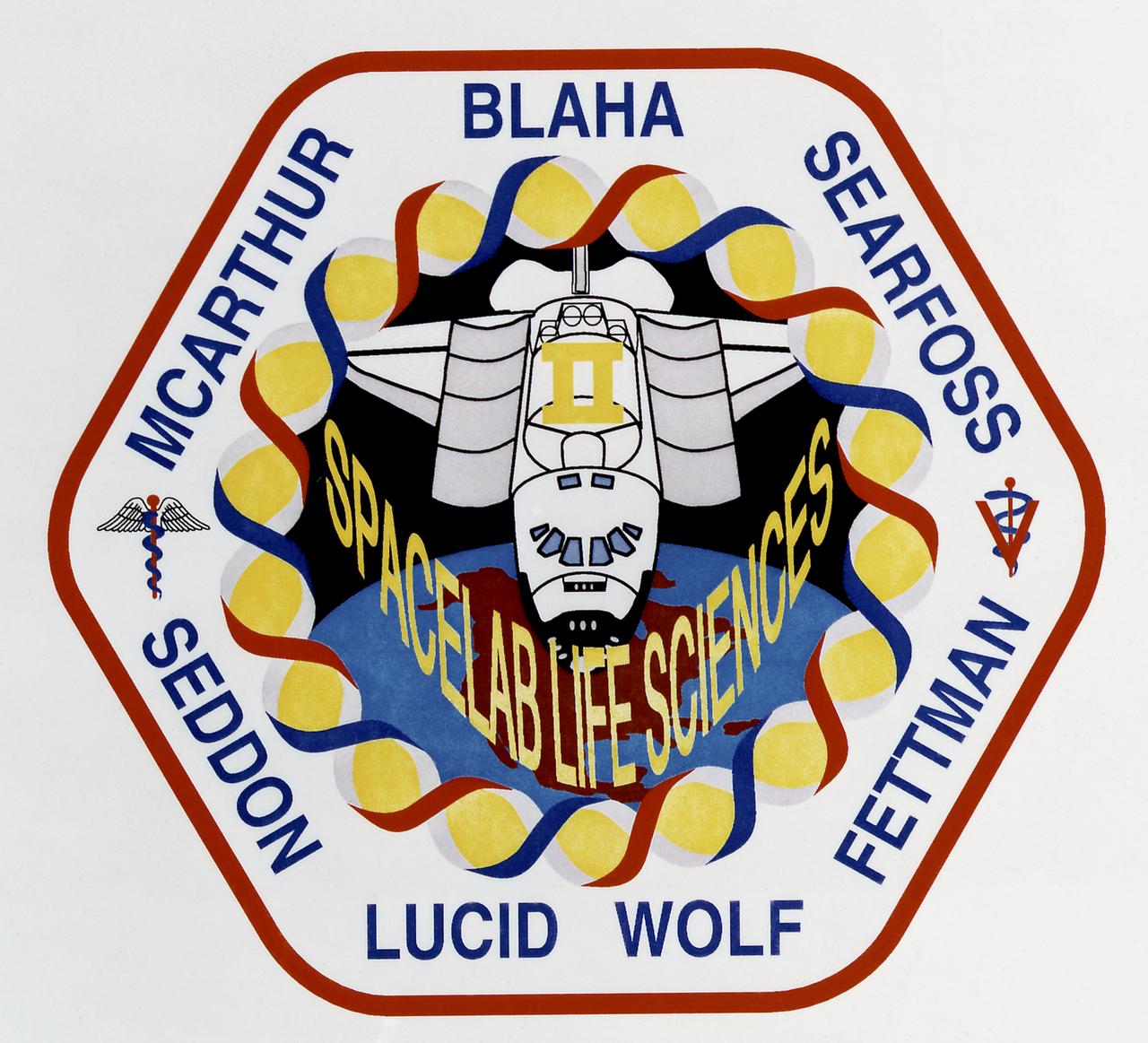
Designed by members of the flight crew, the STS-58 insignia depicts the Space Shuttle Columbia with a Spacelab module in its payload bay in orbit around Earth. The Spacelab and the lettering Spacelab Life Sciences ll highlight the primary mission of the second Space Shuttle flight dedicated to life sciences research. An Extended Duration Orbiter (EDO) support pallet is shown in the aft payload bay, stressing the scheduled two-week duration of the longest Space Shuttle mission to date. The hexagonal shape of the patch depicts the carbon ring, a molecule common to all living organisms. Encircling the inner border of the patch is the double helix of DNA, representing the genetic basis of life. Its yellow background represents the sun, energy source for all life on Earth. Both medical and veterinary caducei are shown to represent the STS- 58 life sciences experiments. The position of the spacecraft in orbit about Earth with the United States in the background symbolizes the ongoing support of the American people for scientific research intended to benefit all mankind.
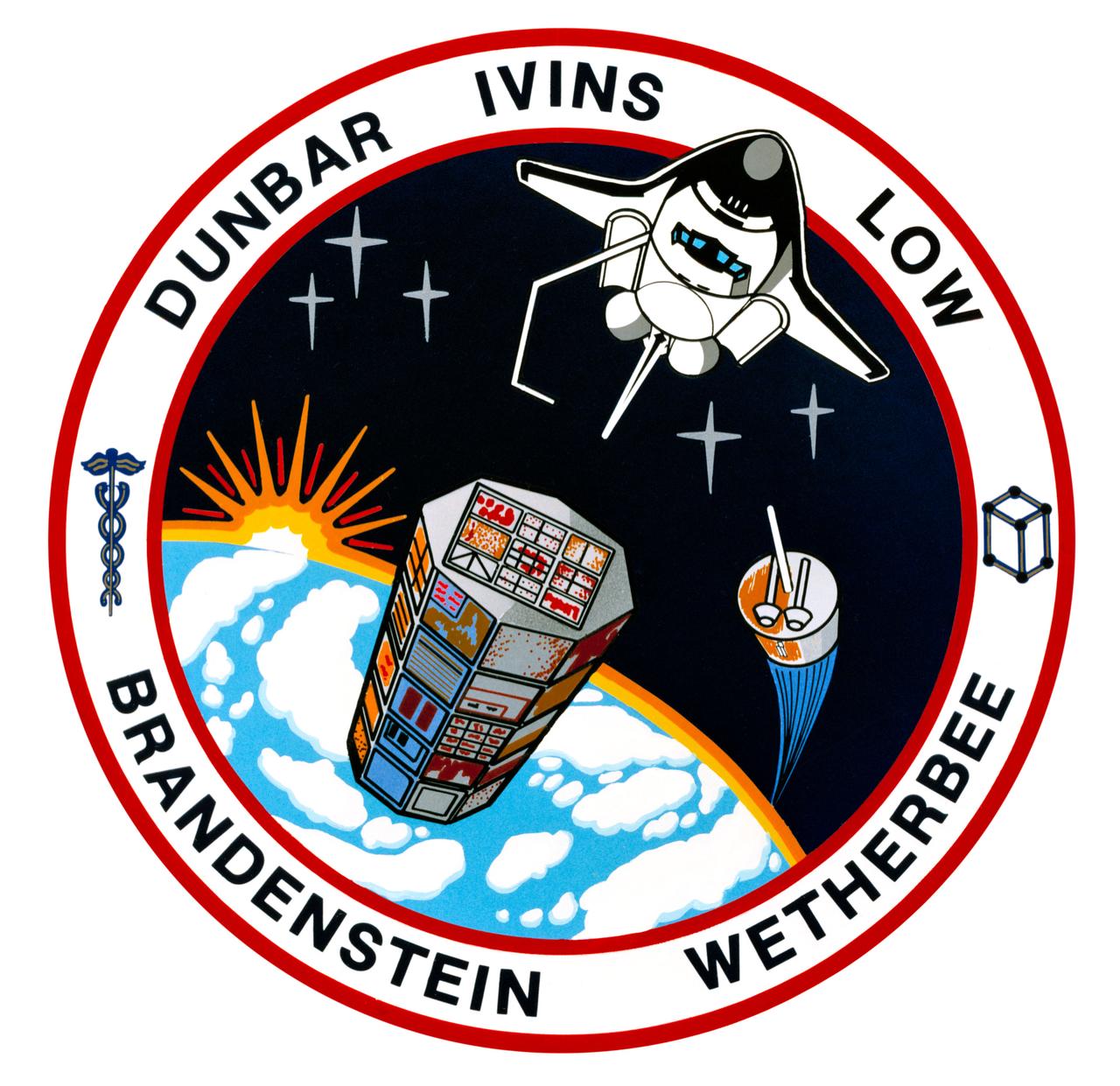
S89-44076 (November 1989) --- The STS-32 patch, designed by the five crew members for the scheduled December 1989 space mission, depicts the space shuttle orbiter rendezvousing with the Long Duration Exposure Facility (LDEF) satellite from above. The Syncom satellite is successfully deployed and on its way to geosynchronous orbit. Five stars have been arranged so that three are one side of the orbiter and two on the other to form the number 32. The seven major rays of the sun are in remembrance of the crew members for STS51-L. In preparation for the first Extended Duration Orbiter (EDO) missions, STS-32 will conduct a number of medical and middeck scientific experiments. The caduceus on the left represents the medical experiments, and the crystalline structure on the right represents the materials science. The crew is comprised of astronauts Daniel C. Brandenstein, James D. Wetherbee, Bonnie J. Dunbar, Marsha S. Ivins and G. David Low. The NASA insignia design for space shuttle flights is reserved for use by the astronauts and for other official use as the NASA Administrator may authorize. Public availability has been approved only in the form of illustrations by the various news media. When and if there is any change in this policy, which is not anticipated, it will be publicly announced. Photo credit: NASA
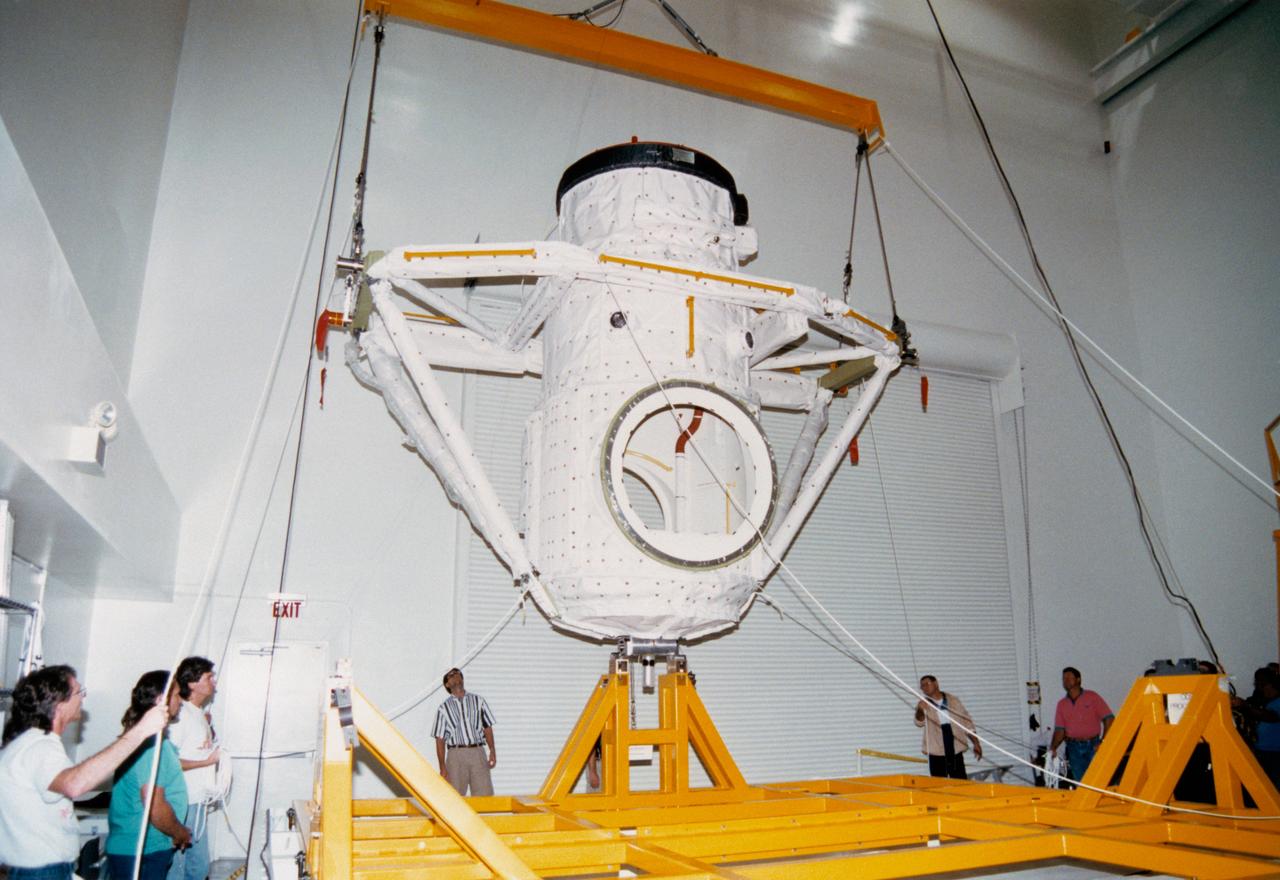
S94-47810 (2 Dec. 1994) --- Lockheed Space Operations Company workers in the Extended Duration Orbiter (EDO) Facility, located inside the Vehicle Assembly Building (VAB), carefully hoist the Orbiter Docking System (ODS) from its shipping container into a test stand. The ODS was shipped in a horizontal position to the Kennedy Space Center (KSC) from contractor Rockwell Aerospace's Downey plant. Once the ODS is upright, work can continue to prepare the hardware for the first docking of the United States Space Shuttle and Russian Space Station MIR in 1995. The ODS contains both United States-made and Russian-made hardware. The black band is Russian-made thermal insulation protecting part of the docking mechanism, also Russian-made, called the Androgynous Peripheral Docking System (APDS). A red protective cap covers the APDS itself. Other elements of the ODS, most of it protected by white United States-made thermal insulation, were developed by Rockwell, which also integrated and checked out the assembled Russian-United States system.
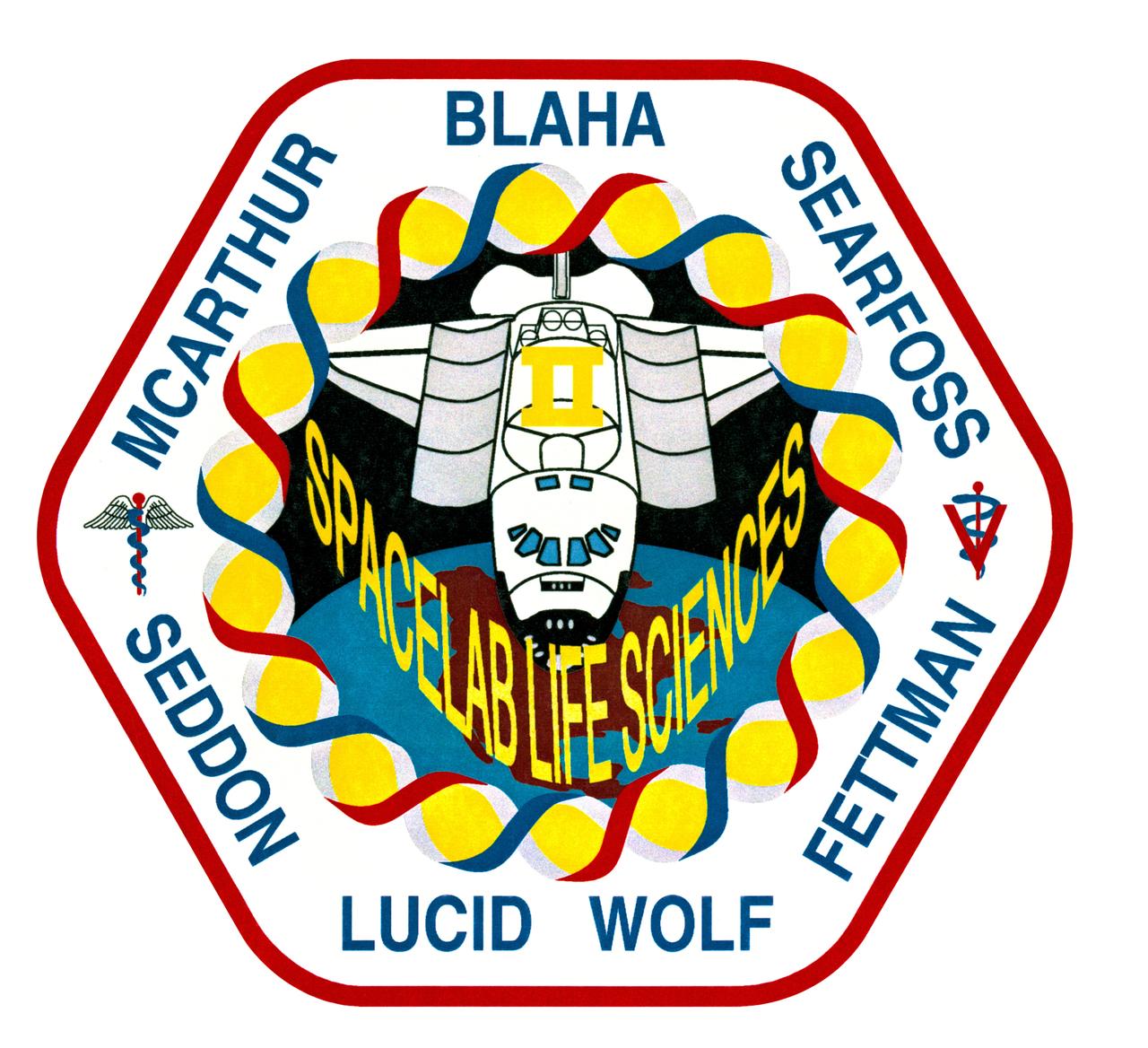
STS058-S-001 (May 1993) --- Designed by members of the flight crew, the STS-58 insignia depicts the space shuttle Columbia with a Spacelab module in its payload bay in orbit around Earth. The Spacelab and the lettering "Spacelab Life Sciences II" highlight the primary mission of the second space shuttle flight dedicated to life sciences research. An Extended Duration Orbiter (EDO) support pallet is shown in the aft payload bay, stressing the scheduled two-week duration of the longest space shuttle mission to date. The hexagonal shape of the patch depicts the carbon ring, a molecule common to all living organisms. Encircling the inner border of the patch is the double helix of DNA, representing the genetic basis of life. Its yellow background represents the sun, energy source for all life on Earth. Both medical and veterinary caducei are shown to represent the STS-58 life sciences experiments. The position of the spacecraft in orbit about Earth with the United States in the background symbolizes the ongoing support of the American people for scientific research intended to benefit all mankind. The NASA insignia design for space shuttle flights is reserved for use by the astronauts and for other official use as the NASA Administrator may authorize. Public availability has been approved only in the form of illustrations by the various news media. When and if there is any change in this policy, which we do not anticipate, it will be publicly announced. Photo credit: NASA
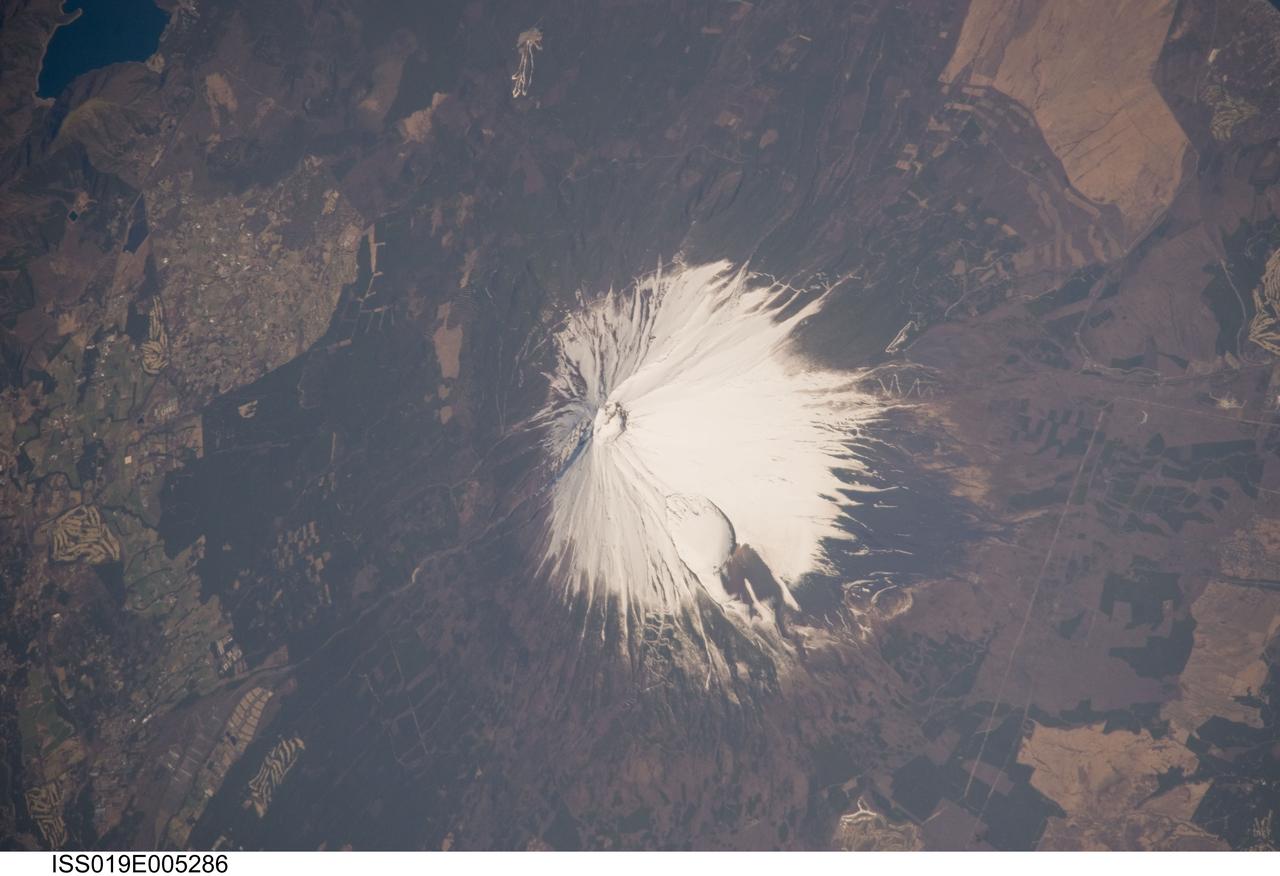
ISS019-E-005286 (8 April 2009) --- Mount Fuji, Japan is featured in this image photographed by an Expedition 19 crew member on the International Space Station. The 3,776 meters high Mount Fuji volcano, located on the island of Honshu in Japan, is one of the world?s classic examples of a stratovolcano. The volcano?s steep, conical profile is the result of numerous interlayered lava flows and explosive eruption products ? such as ash, cinders, and volcanic bombs ? building up the volcano over time. The steep profile is possible because of the relatively high viscosity of the volcanic rocks typically associated with stratovolcanoes. This leads to thick sequences of lava flows near the eruptive vent that build the cone structure, rather than low viscosity flows that spread out over the landscape and build lower-profile shield volcanoes. According to scientists, Mount Fuji, or Fuji-san in Japan, is actually comprised of several overlapping volcanoes that began erupting in the Pleistocene Epoch (1.8 million to approximately 10,000 years ago). Scientists believe that the currently active volcano, known as Younger Fuji, began forming approximately 11,000 to 8,000 years ago. The most recent explosive activity occurred in 1707, creating Hoei Crater on the southeastern flank of the volcano (center). This eruption deposited ash on Edo (present-day Tokyo) located 95 kilometers to the northeast. While there have been no further eruptions of Mount Fuji, steam was observed at the summit during 1780?1820, and the volcano is considered active. This oblique photograph illustrates the snow-covered southeastern flank of the volcano; the northeastern flank can be seen here. A representation of the topography of Mt. Fuji and its surroundings can be viewed here.