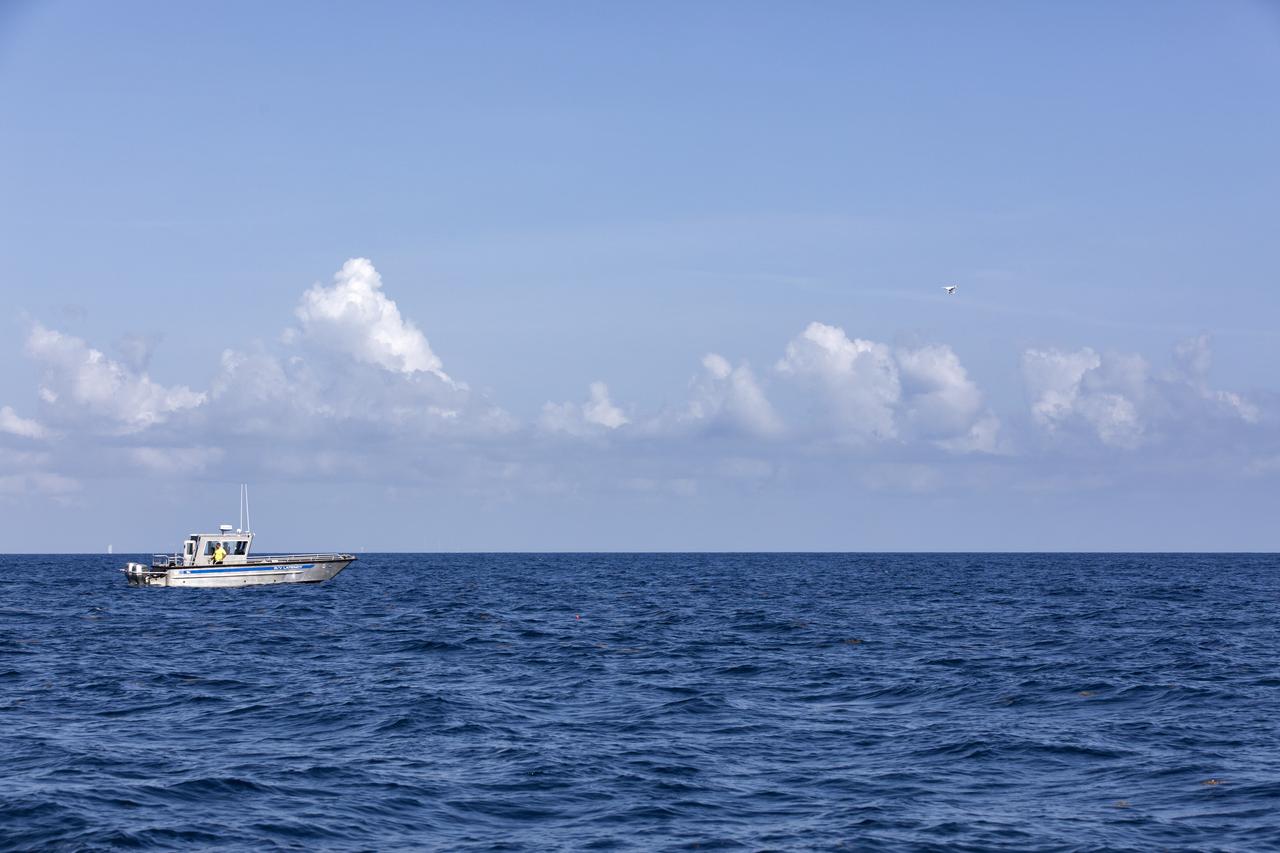
Members of the Ascent Abort-2 (AA-2) Flight Test team perform a drop test of data recording devices about 10 miles off the coast of NASA’s Kennedy Space Center in Florida on Wednesday, Aug. 8, 2018. These devices, called Ejectable Data Recorders (EDRs), were tossed out of a helicopter hovering 5,000 feet over the Atlantic Ocean and retrieved by recovery boats. The AA-2 Flight Test team is evaluating how the systems in the devices react to elements encountered from the sky to the ocean. In April 2019, the EDRs will eject from the Orion test article during a scheduled test of the spacecraft’s Launch Abort System (LAS).
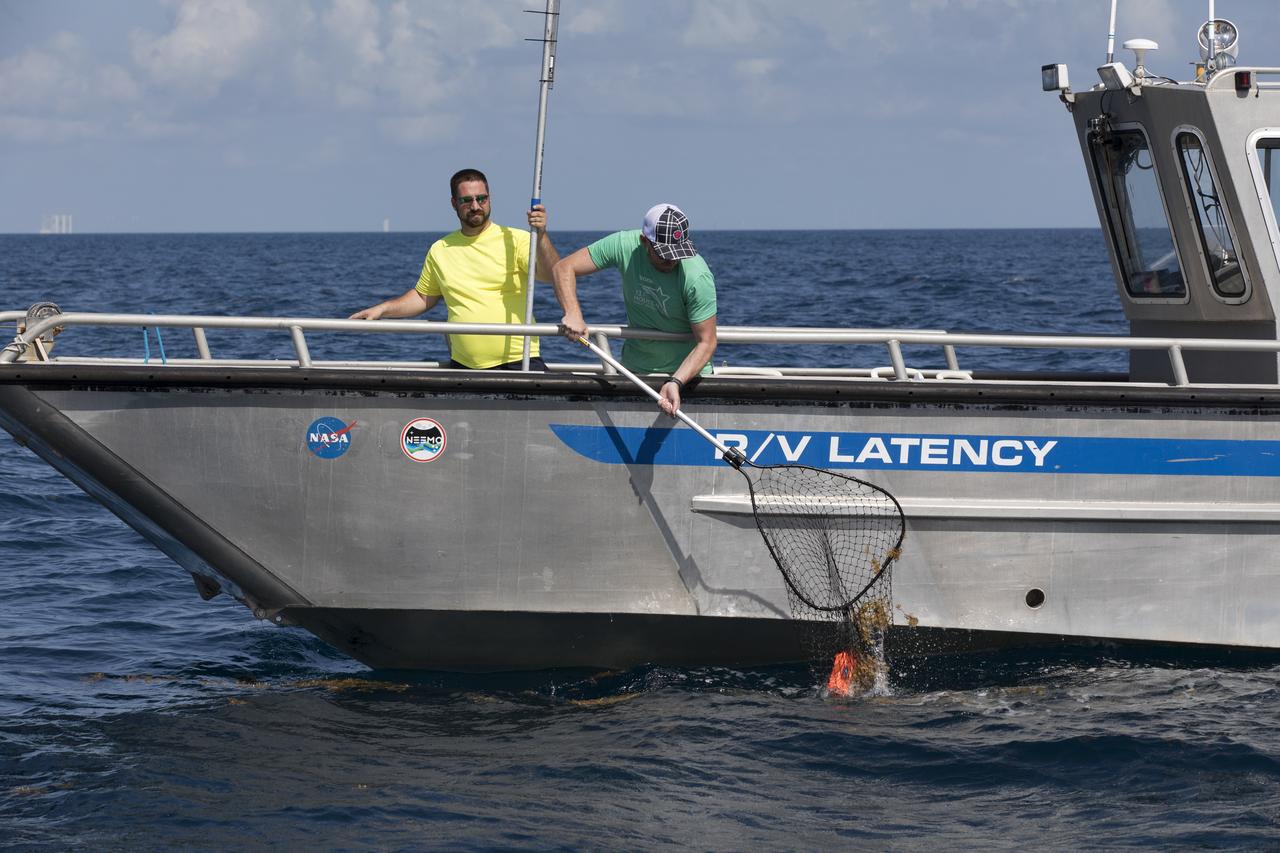
Members of the Ascent Abort-2 (AA-2) Flight Test team perform a drop test of data recording devices about 10 miles off the coast of NASA’s Kennedy Space Center in Florida on Wednesday, Aug. 8, 2018. These devices, called Ejectable Data Recorders (EDRs), were tossed out of a helicopter hovering 5,000 feet over the Atlantic Ocean and retrieved by recovery boats. The AA-2 Flight Test team is evaluating how the systems in the devices react to elements encountered from the sky to the ocean. In April 2019, the EDRs will eject from the Orion test article during a scheduled test of the spacecraft’s Launch Abort System (LAS).

Members of the Ascent Abort-2 (AA-2) Flight Test team perform a drop test of data recording devices about 10 miles off the coast of NASA’s Kennedy Space Center in Florida on Wednesday, Aug. 8, 2018. These devices, called Ejectable Data Recorders (EDRs), were tossed out of a helicopter hovering 5,000 feet over the Atlantic Ocean and retrieved by recovery boats. The AA-2 Flight Test team is evaluating how the systems in the devices react to elements encountered from the sky to the ocean. In April 2019, the EDRs will eject from the Orion test article during a scheduled test of the spacecraft’s Launch Abort System (LAS).
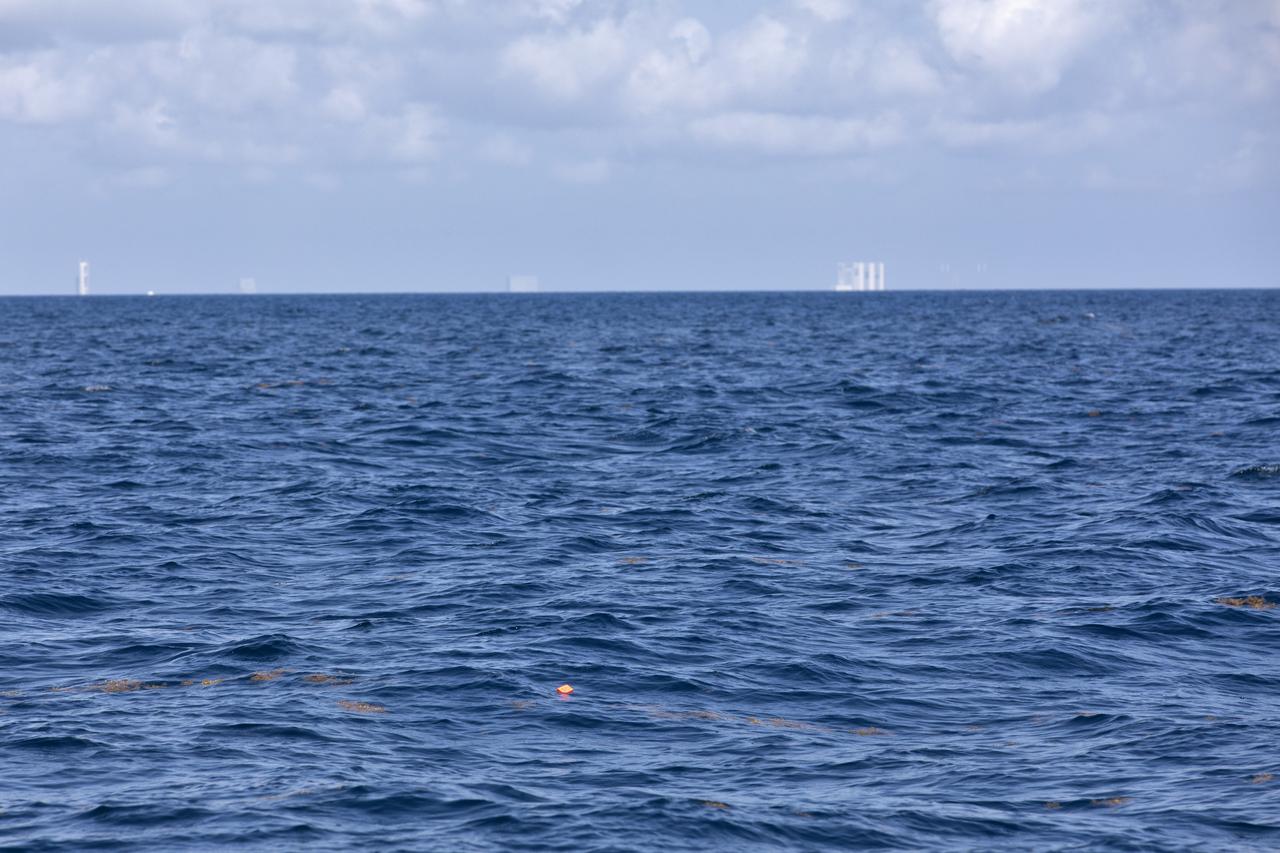
Members of the Ascent Abort-2 (AA-2) Flight Test team perform a drop test of data recording devices about 10 miles off the coast of NASA’s Kennedy Space Center in Florida on Wednesday, Aug. 8, 2018. These devices, called Ejectable Data Recorders (EDRs), were tossed out of a helicopter hovering 5,000 feet over the Atlantic Ocean and retrieved by recovery boats. The AA-2 Flight Test team is evaluating how the systems in the devices react to elements encountered from the sky to the ocean. In April 2019, the EDRs will eject from the Orion test article during a scheduled test of the spacecraft’s Launch Abort System (LAS).
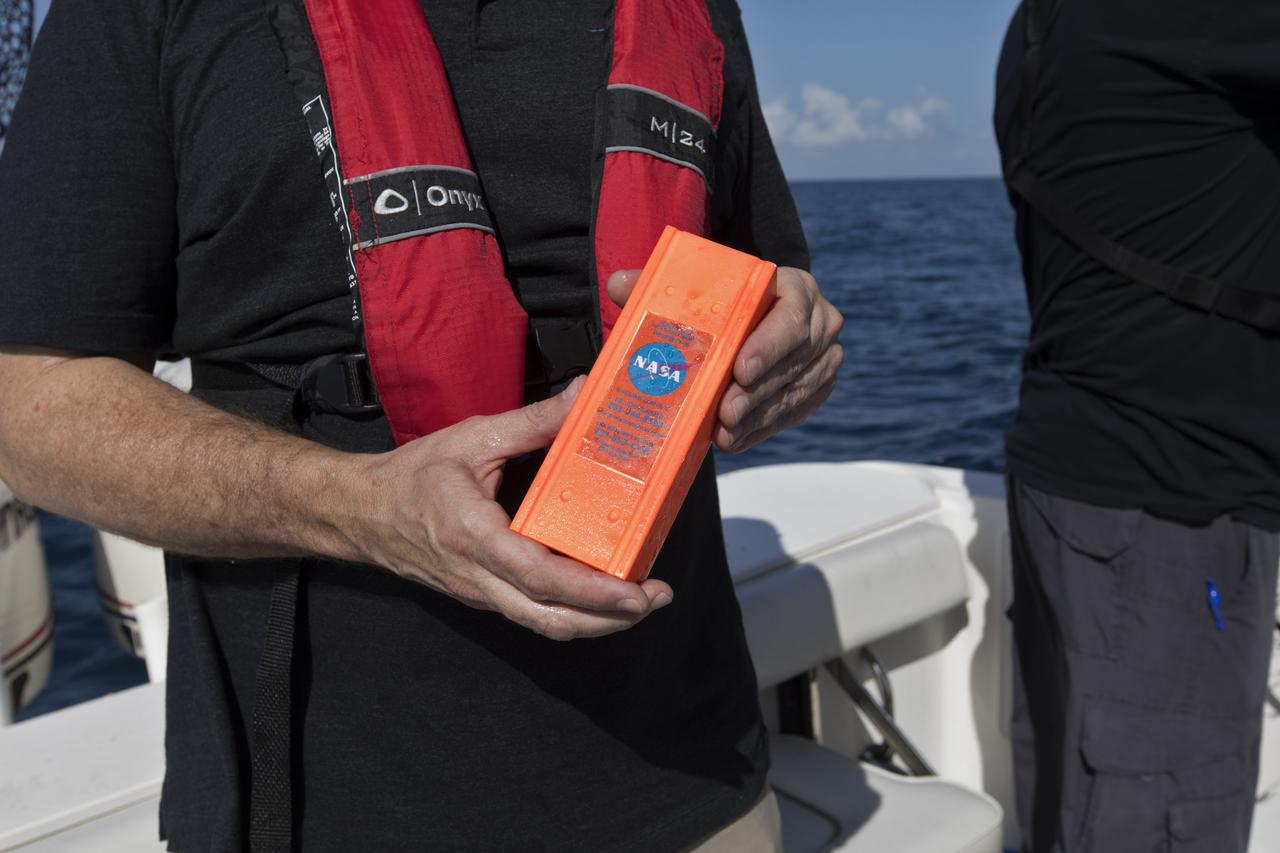
Members of the Ascent Abort-2 (AA-2) Flight Test team perform a drop test of data recording devices about 10 miles off the coast of NASA’s Kennedy Space Center in Florida on Wednesday, Aug. 8, 2018. These devices, called Ejectable Data Recorders (EDRs), were tossed out of a helicopter hovering 5,000 feet over the Atlantic Ocean and retrieved by recovery boats. The AA-2 Flight Test team is evaluating how the systems in the devices react to elements encountered from the sky to the ocean. In April 2019, the EDRs will eject from the Orion test article during a scheduled test of the spacecraft’s Launch Abort System (LAS).
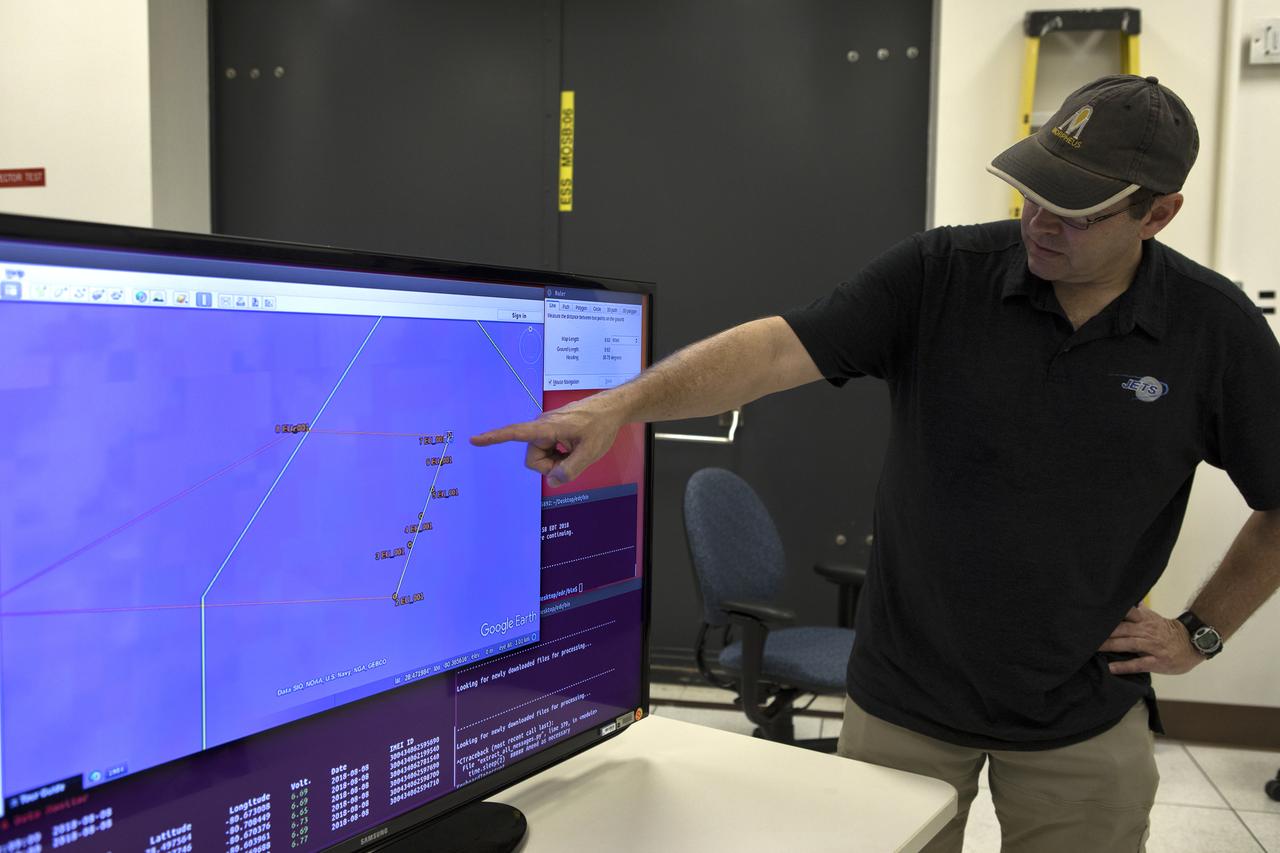
Members of the Ascent Abort-2 (AA-2) Flight Test team perform a drop test of data recording devices about 10 miles off the coast of NASA’s Kennedy Space Center in Florida on Wednesday, Aug. 8, 2018. These devices, called Ejectable Data Recorders (EDRs), were tossed out of a helicopter hovering 5,000 feet over the Atlantic Ocean and retrieved by recovery boats. The AA-2 Flight Test team is evaluating how the systems in the devices react to elements encountered from the sky to the ocean. In April 2019, the EDRs will eject from the Orion test article during a scheduled test of the spacecraft’s Launch Abort System (LAS).
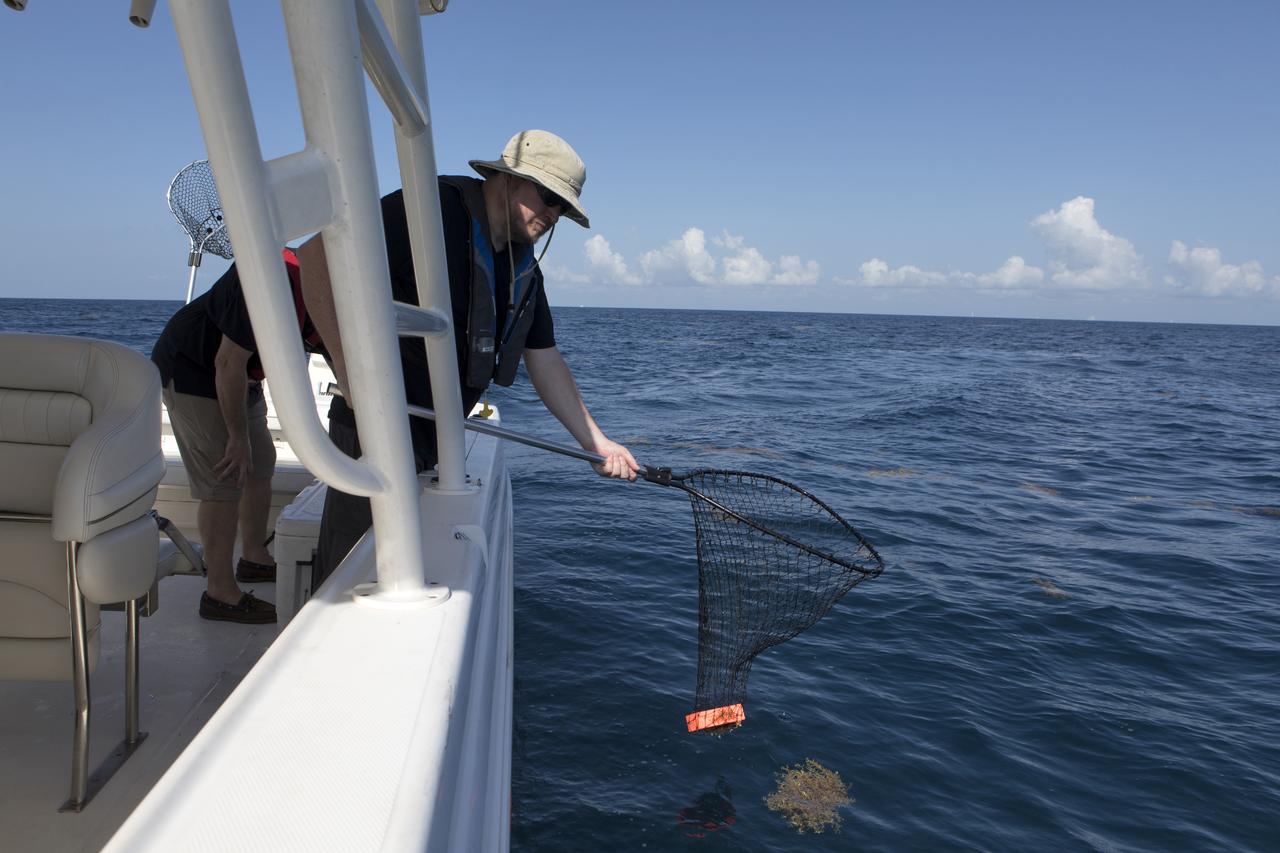
Members of the Ascent Abort-2 (AA-2) Flight Test team perform a drop test of data recording devices about 10 miles off the coast of NASA’s Kennedy Space Center in Florida on Wednesday, Aug. 8, 2018. These devices, called Ejectable Data Recorders (EDRs), were tossed out of a helicopter hovering 5,000 feet over the Atlantic Ocean and retrieved by recovery boats. The AA-2 Flight Test team is evaluating how the systems in the devices react to elements encountered from the sky to the ocean. In April 2019, the EDRs will eject from the Orion test article during a scheduled test of the spacecraft’s Launch Abort System (LAS).
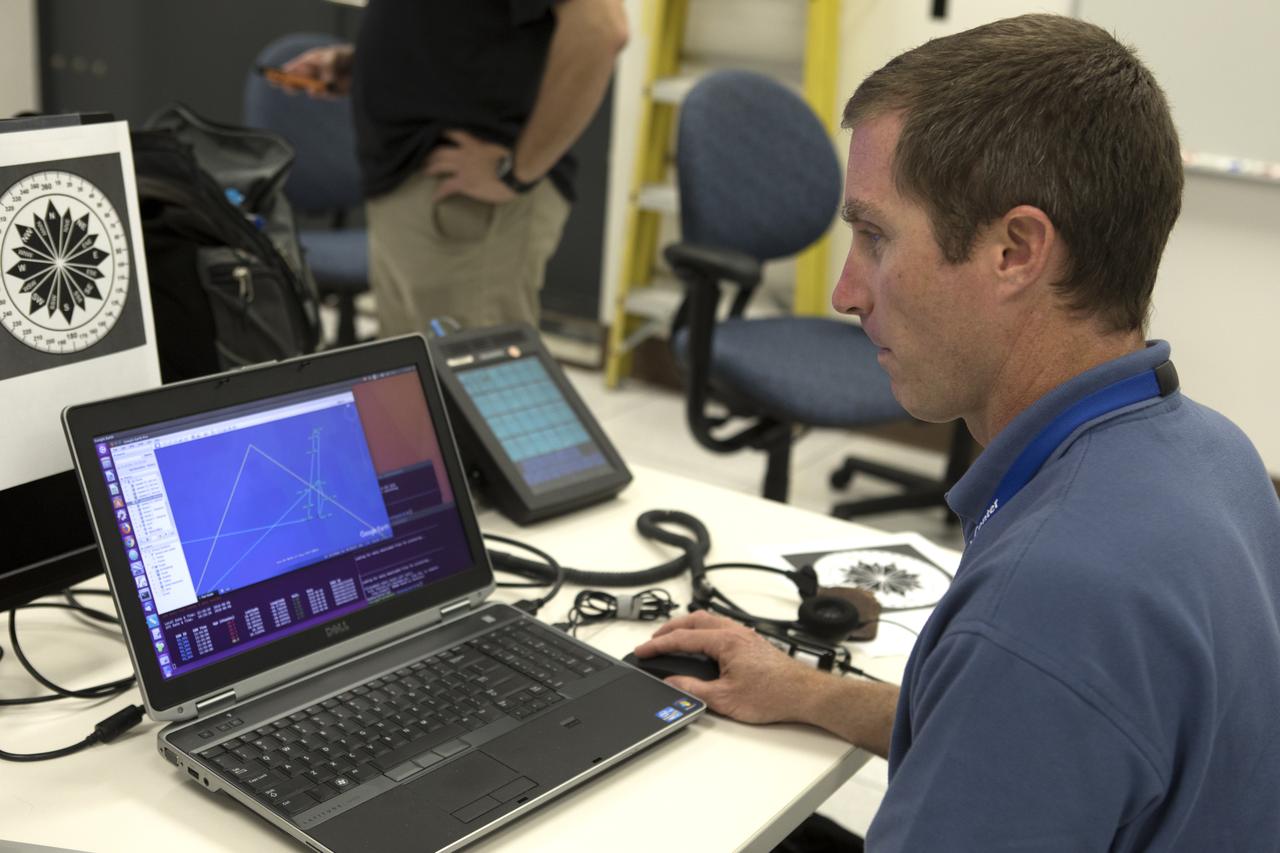
Members of the Ascent Abort-2 (AA-2) Flight Test team perform a drop test of data recording devices about 10 miles off the coast of NASA’s Kennedy Space Center in Florida on Wednesday, Aug. 8, 2018. These devices, called Ejectable Data Recorders (EDRs), were tossed out of a helicopter hovering 5,000 feet over the Atlantic Ocean and retrieved by recovery boats. The AA-2 Flight Test team is evaluating how the systems in the devices react to elements encountered from the sky to the ocean. In April 2019, the EDRs will eject from the Orion test article during a scheduled test of the spacecraft’s Launch Abort System (LAS).
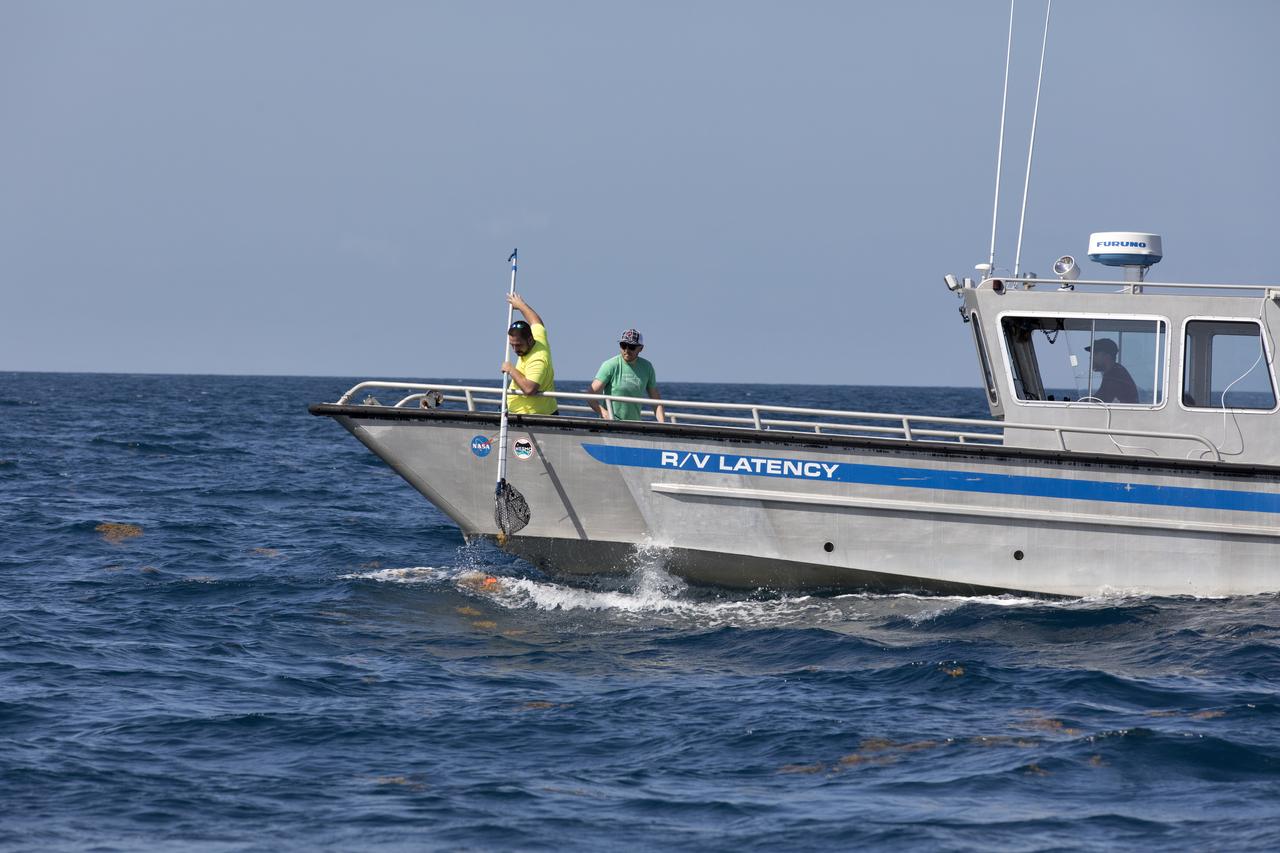
Members of the Ascent Abort-2 (AA-2) Flight Test team perform a drop test of data recording devices about 10 miles off the coast of NASA’s Kennedy Space Center in Florida on Wednesday, Aug. 8, 2018. These devices, called Ejectable Data Recorders (EDRs), were tossed out of a helicopter hovering 5,000 feet over the Atlantic Ocean and retrieved by recovery boats. The AA-2 Flight Test team is evaluating how the systems in the devices react to elements encountered from the sky to the ocean. In April 2019, the EDRs will eject from the Orion test article during a scheduled test of the spacecraft’s Launch Abort System (LAS).

Members of the Ascent Abort-2 (AA-2) Flight Test team perform a drop test of data recording devices about 10 miles off the coast of NASA’s Kennedy Space Center in Florida on Wednesday, Aug. 8, 2018. These devices, called Ejectable Data Recorders (EDRs), were tossed out of a helicopter hovering 5,000 feet over the Atlantic Ocean and retrieved by recovery boats. The AA-2 Flight Test team is evaluating how the systems in the devices react to elements encountered from the sky to the ocean. In April 2019, the EDRs will eject from the Orion test article during a scheduled test of the spacecraft’s Launch Abort System (LAS).
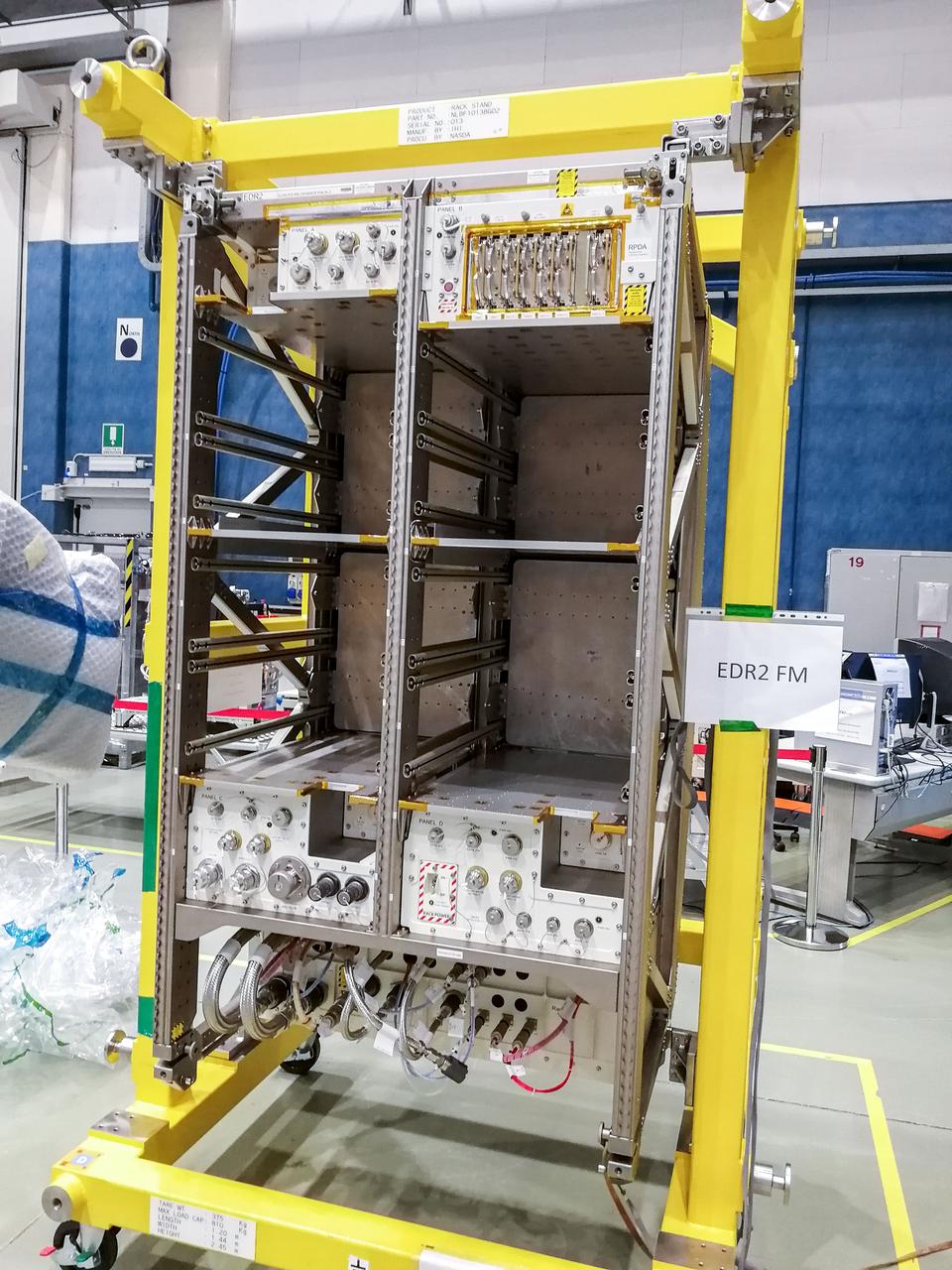
jsc2019e048243 (3/28/2019) — Preflight imagery of the EDR-2 Flight Model in its rack integration stand. The European Drawer Rack-2 (EDR-2) is an experiment support facility accommodated in the Columbus module. The rack provides general services to experiments, including power, data communication, water cooling, vacuum and venting/waste gas, nitrogen supply and structural interfaces.
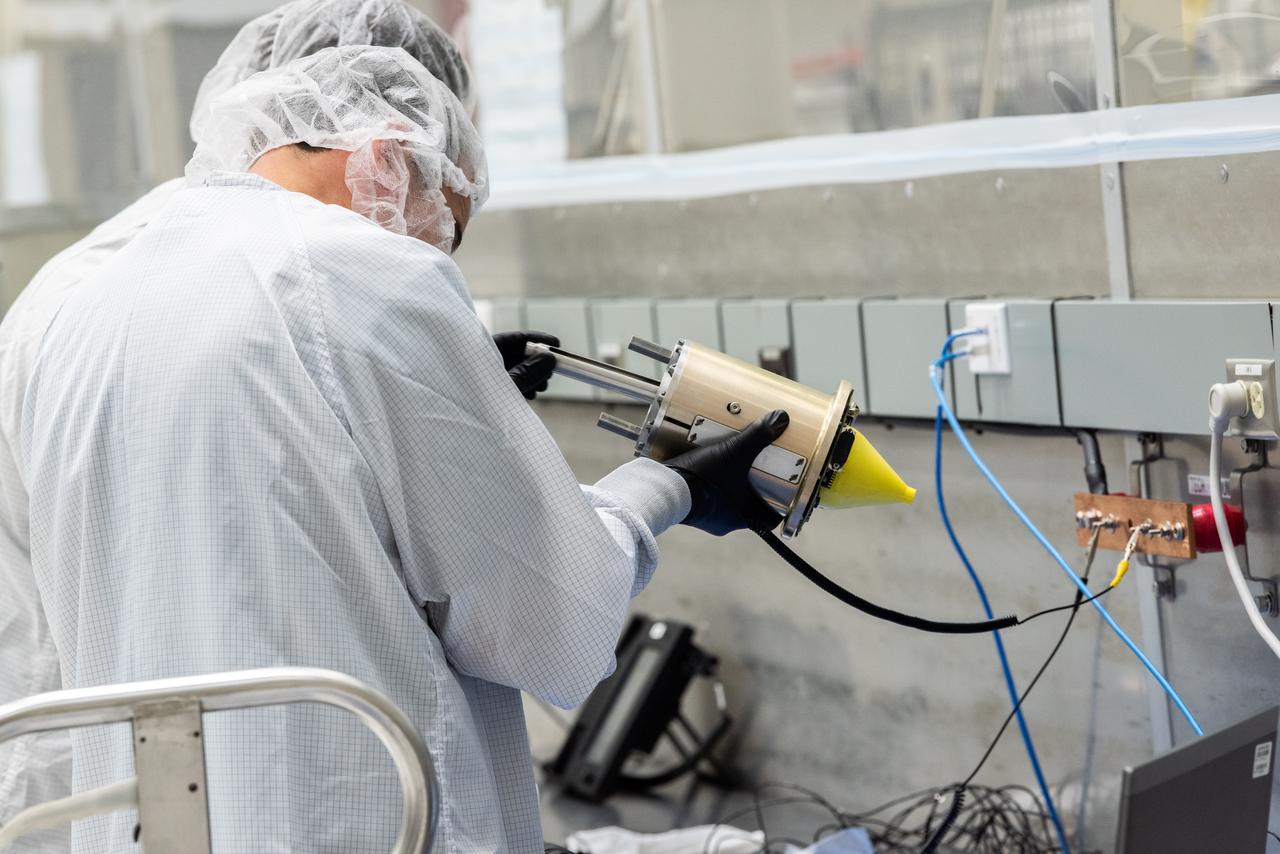
Inside Building 836 at Vandenberg Space Force Base in California, a technician works on installing ejetable data recorders onto NASA’s Low-Earth Orbit Flight Test of an Inflatable Decelerator (LOFTID) on Aug. 19, 2022. Dedicated to the memory of Bernard Kutter, LOFTID is a technology demonstration mission aimed at validating inflatable heat shield technology for atmospheric re-entry. This technology could enable missions to other planetary bodies, as well as allow NASA to return heavier payloads from low-Earth orbit. LOFTID is a rideshare launching with the National Oceanic and Atmospheric Administration’s (NOAA) Joint Polar Satellite System-2 (JPSS-2) satellite. NASA and NOAA are targeting Nov. 1, 2022, for the launch of JPSS-2 on a United Launch Alliance Atlas V rocket from Space Launch Complex-3 at Vandenberg.

Technicians work on installing ejectable data recorders onto NASA’s Low-Earth Orbit Flight Test of an Inflatable Decelerator (LOFTID) inside Building 836 at Vandenberg Space Force Base in California on Aug. 19, 2022. Dedicated to the memory of Bernard Kutter, LOFTID is a technology demonstration mission aimed at validating inflatable heat shield technology for atmospheric re-entry. This technology could enable missions to other planetary bodies, as well as allow NASA to return heavier payloads from low-Earth orbit. LOFTID is a rideshare launching with the National Oceanic and Atmospheric Administration’s (NOAA) Joint Polar Satellite System-2 (JPSS-2) satellite. NASA and NOAA are targeting Nov. 1, 2022, for the launch of JPSS-2 on a United Launch Alliance Atlas V rocket from Space Launch Complex-3 at Vandenberg.
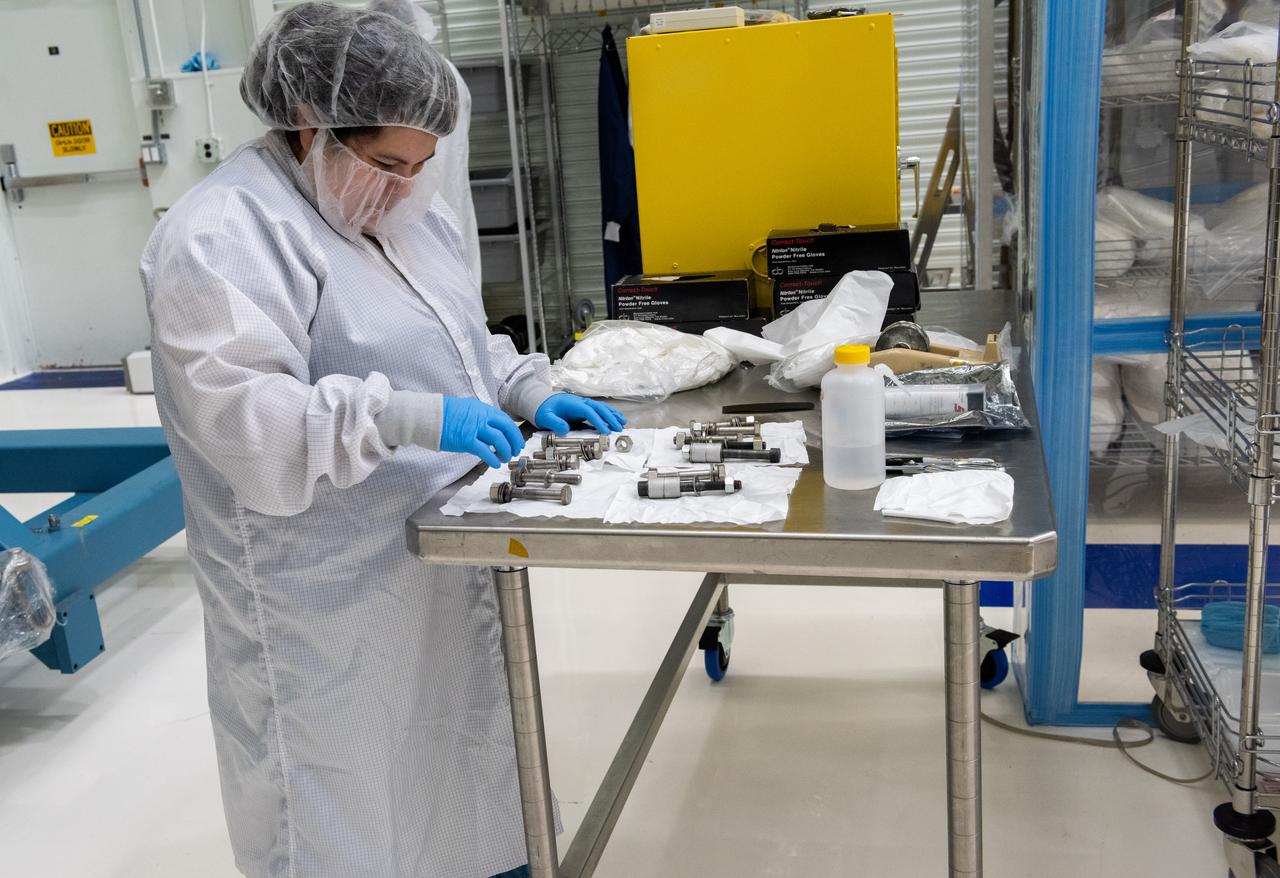
Inside Building 836 at Vandenberg Space Force Base in California, a worker inspects and prepares hardware used during the installation of ejectable data recorders onto NASA’s Low-Earth Orbit Flight Test of an Inflatable Decelerator (LOFTID) on Aug. 19, 2022. Dedicated to the memory of Bernard Kutter, LOFTID is a technology demonstration mission aimed at validating inflatable heat shield technology for atmospheric re-entry. This technology could enable missions to other planetary bodies, as well as allow NASA to return heavier payloads from low-Earth orbit. LOFTID is a rideshare launching with the National Oceanic and Atmospheric Administration’s (NOAA) Joint Polar Satellite System-2 (JPSS-2) satellite. NASA and NOAA are targeting Nov. 1, 2022, for the launch of JPSS-2 on a United Launch Alliance Atlas V rocket from Space Launch Complex-3 at Vandenberg.
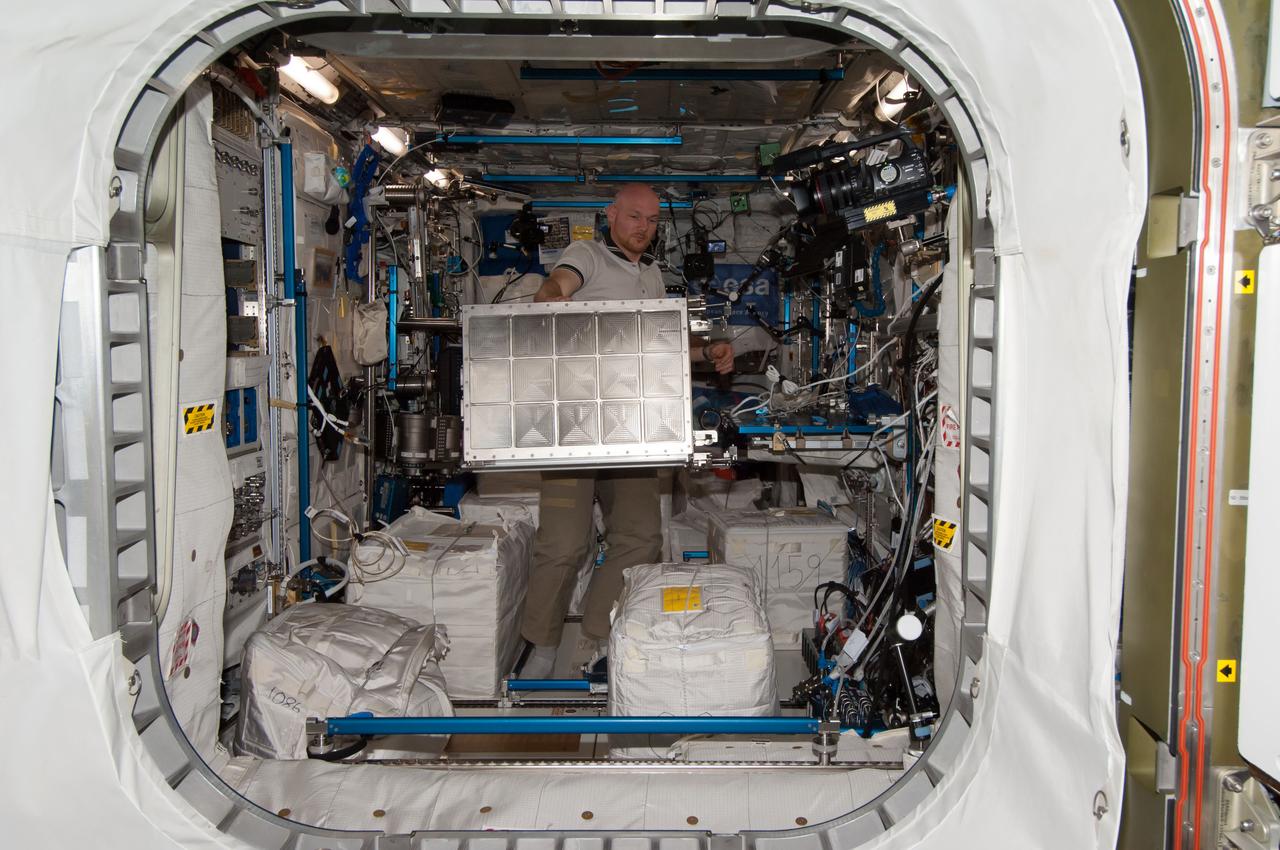
iss040e104595 (8/22/2014) --- European Space Agency (ESA) astronaut Alex Gerst is photographed removing the Facility for Absorption and Surface Tension (FASTER) hardware from the European Drawer Rack (EDR) and packing it for return on a future flight for refurbishment. The photo taken in the Columbus modulel aboard the International Space Station (ISS). The Facility for Adsorption and Surface Tension (FASTER) investigates the physical principles which determine the stability of different emulsions, and which compounds can influence this.
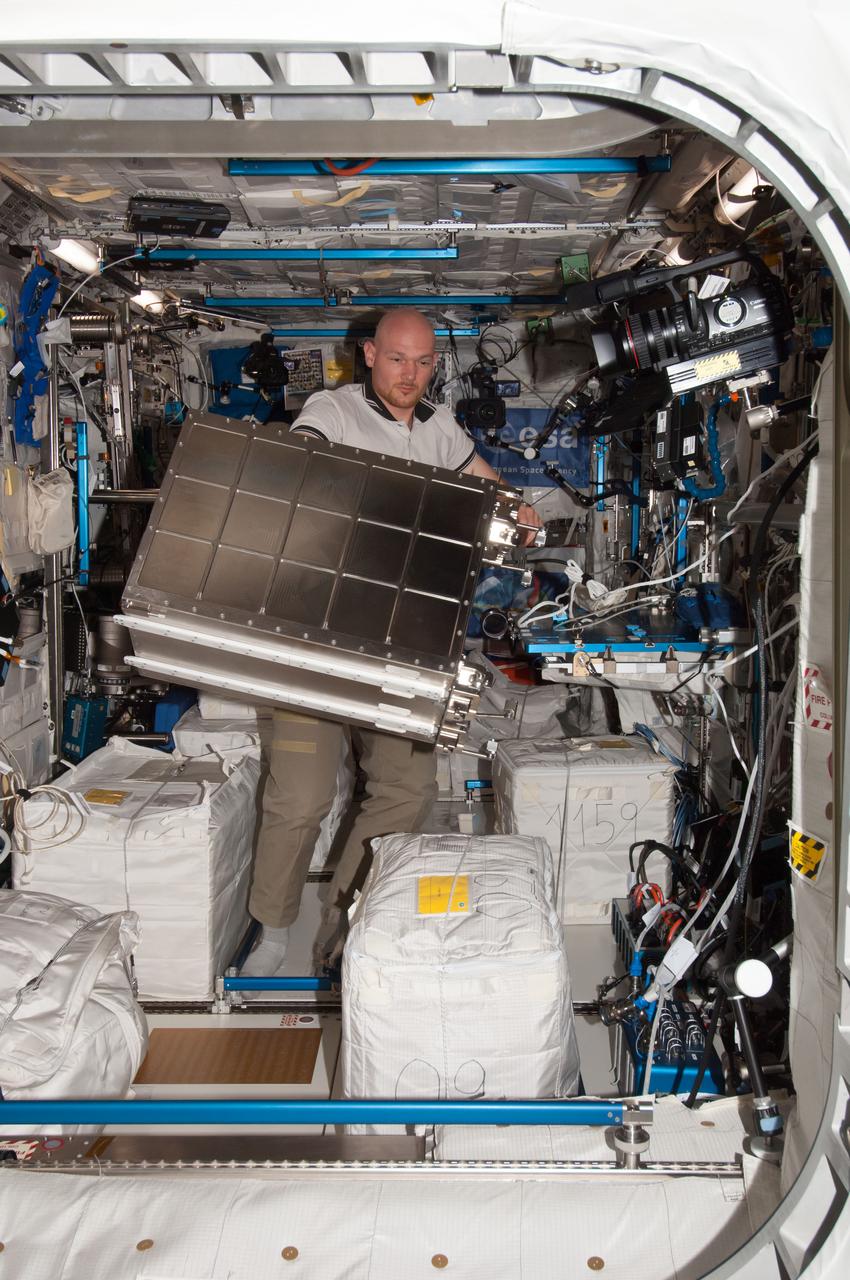
iss040e1045956 (8/22/2014) --- European Space Agency (ESA) astronaut Alex Gerst is photographed removing the Facility for Absorption and Surface Tension (FASTER) hardware from the European Drawer Rack (EDR) and packing it for return on a future flight for refurbishment. The photo taken in the Columbus modulel aboard the International Space Station (ISS). The Facility for Adsorption and Surface Tension (FASTER) investigates the physical principles which determine the stability of different emulsions, and which compounds can influence this.
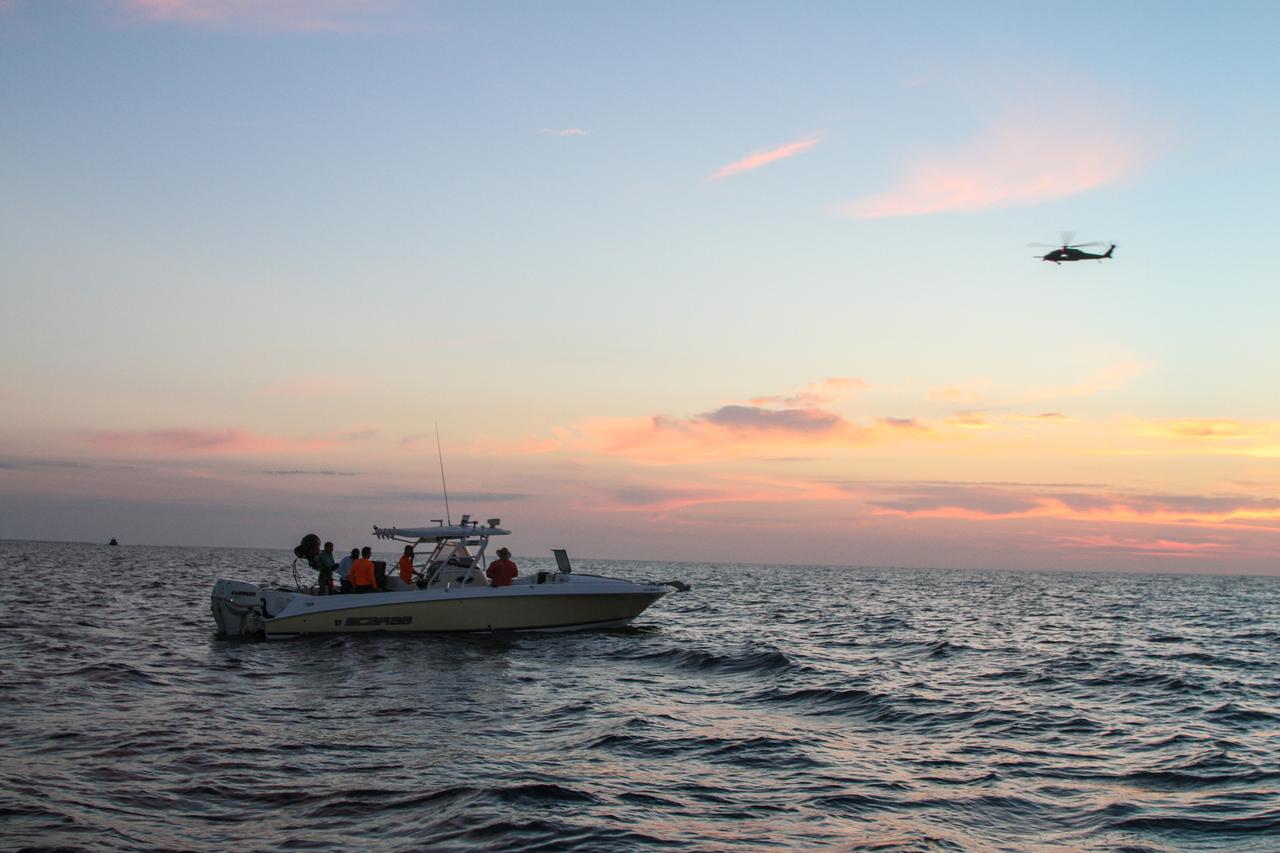
Members of the NASA Ejectable Data Recorder Recovery Team search for the ejectable data recorders in the Atlantic Ocean off the coast of Florida on July 2, 2019, after the Ascent Abort-2 (AA-2) flight test. During AA-2, a fully functional Launch Abort System (LAS) with a test version of Orion attached, launched atop a Northrop Grumman provided booster from Launch Pad 46 at Cape Canaveral Air Force Station on July 2, 2019. Liftoff was at 7 a.m. EDT. During AA-2, the booster sent the LAS and Orion to an altitude of 31,000 feet, traveling at Mach 1.15 (more than 1,000 mph). The LAS’ three motors worked together to pull the crew module away from the booster and prepare it for splashdown in the Atlantic Ocean. The flight test proves that the abort system can pull crew to safety in the unlikely event of an emergency during ascent. Data from the recorders will be analyzed by engineers.
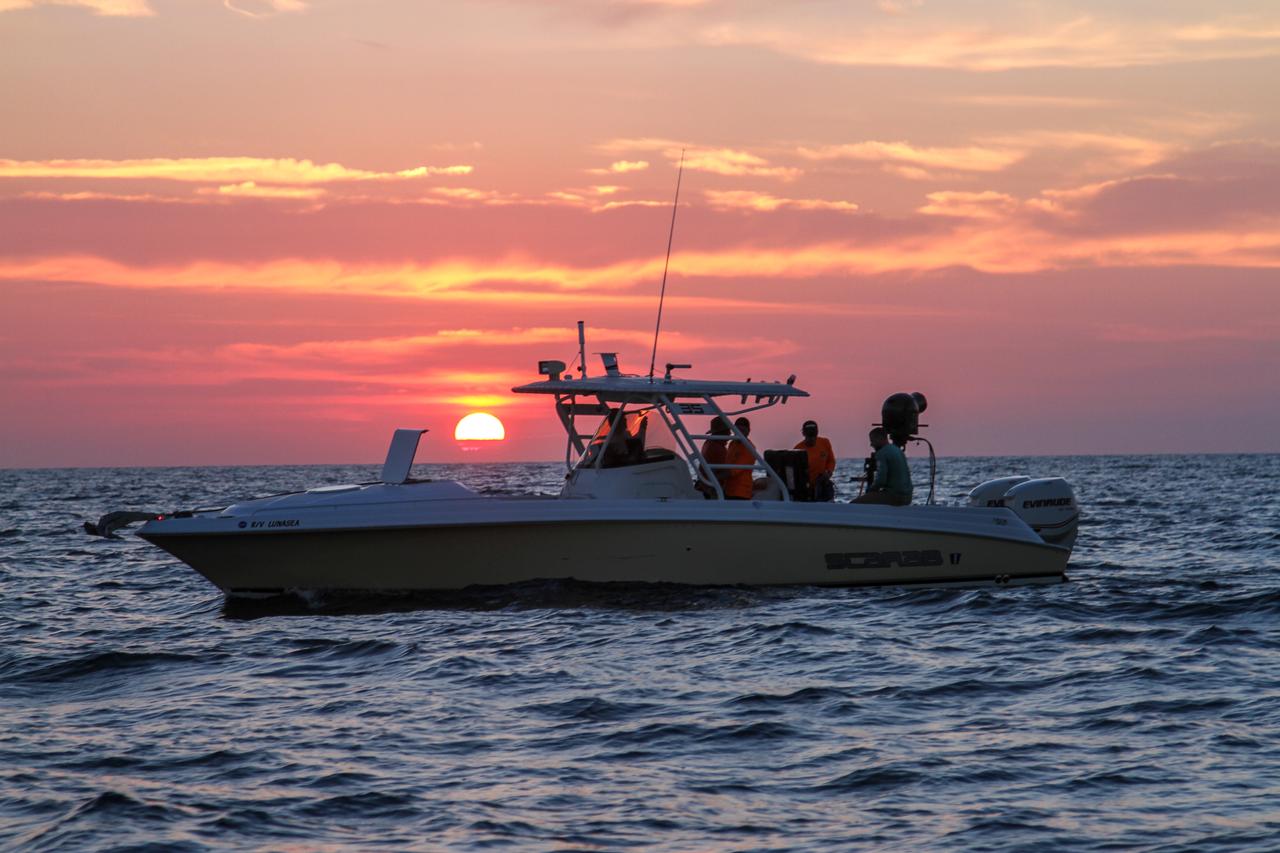
Members of the NASA Ejectable Data Recorder Recovery Team search for the ejectable data recorders in the Atlantic Ocean off the coast of Florida on July 2, 2019, after the Ascent Abort-2 (AA-2) flight test. During AA-2, a fully functional Launch Abort System (LAS) with a test version of Orion attached, launched atop a Northrop Grumman provided booster from Launch Pad 46 at Cape Canaveral Air Force Station on July 2, 2019. Liftoff was at 7 a.m. EDT. During AA-2, the booster sent the LAS and Orion to an altitude of 31,000 feet, traveling at Mach 1.15 (more than 1,000 mph). The LAS’ three motors worked together to pull the crew module away from the booster and prepare it for splashdown in the Atlantic Ocean. The flight test proves that the abort system can pull crew to safety in the unlikely event of an emergency during ascent. Data from the recorders will be analyzed by engineers.
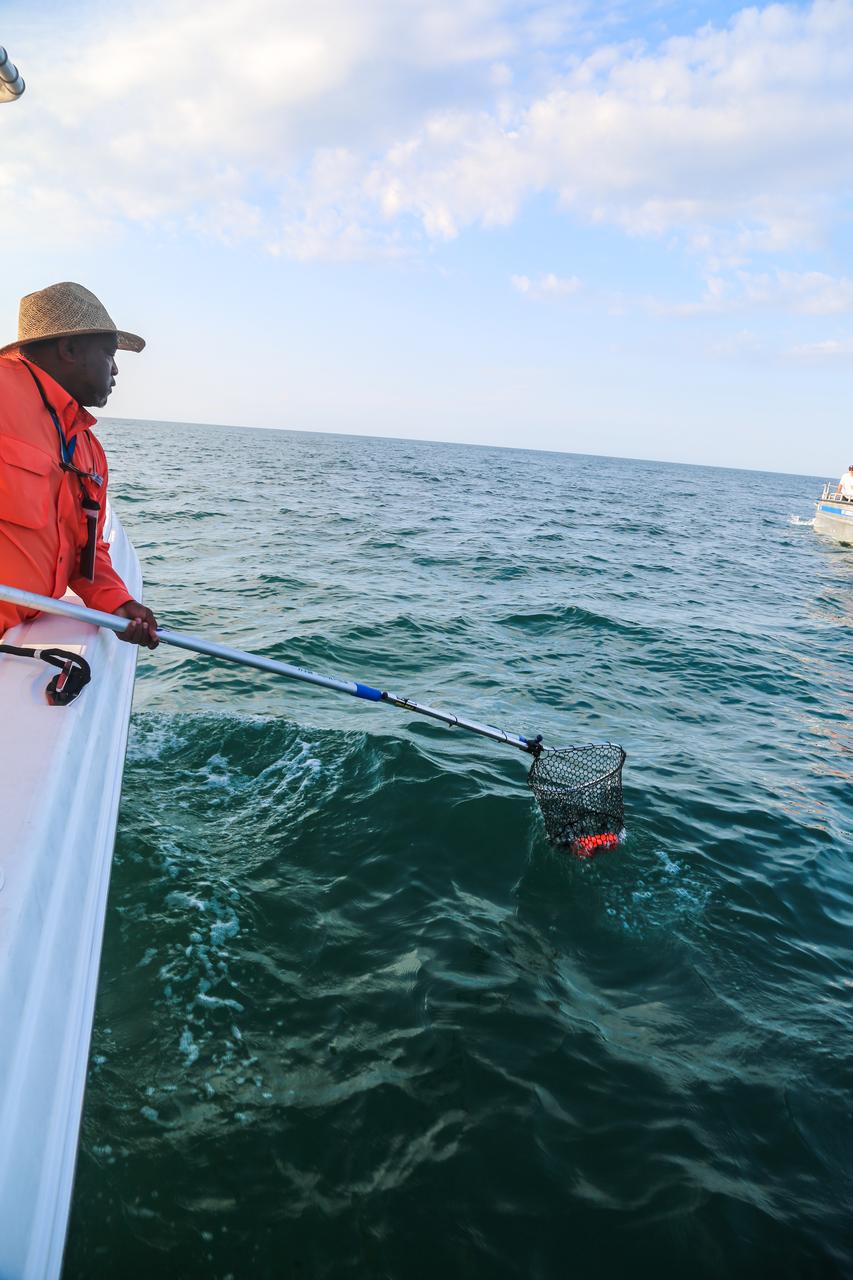
One of the 12 ejectable data recorders from NASA’s Ascent Abort-2 (AA-2) flight test is retrieved from the Atlantic Ocean off the coast of Florida by the NASA Ejectable Data Recorder Recovery Team on July 2, 2019. During AA-2, a fully functional Launch Abort System (LAS) with a test version of Orion attached, launched atop a Northrop Grumman provided booster from Launch Pad 46 at Cape Canaveral Air Force Station on July 2, 2019. Liftoff was at 7 a.m. EDT. During AA-2, the booster sent the LAS and Orion to an altitude of 31,000 feet, traveling at Mach 1.15 (more than 1,000 mph). The LAS’ three motors worked together to pull the crew module away from the booster and prepare it for splashdown in the Atlantic Ocean. The flight test proves that the abort system can pull crew to safety in the unlikely event of an emergency during ascent. Data from the recorders will be analyzed by engineers.
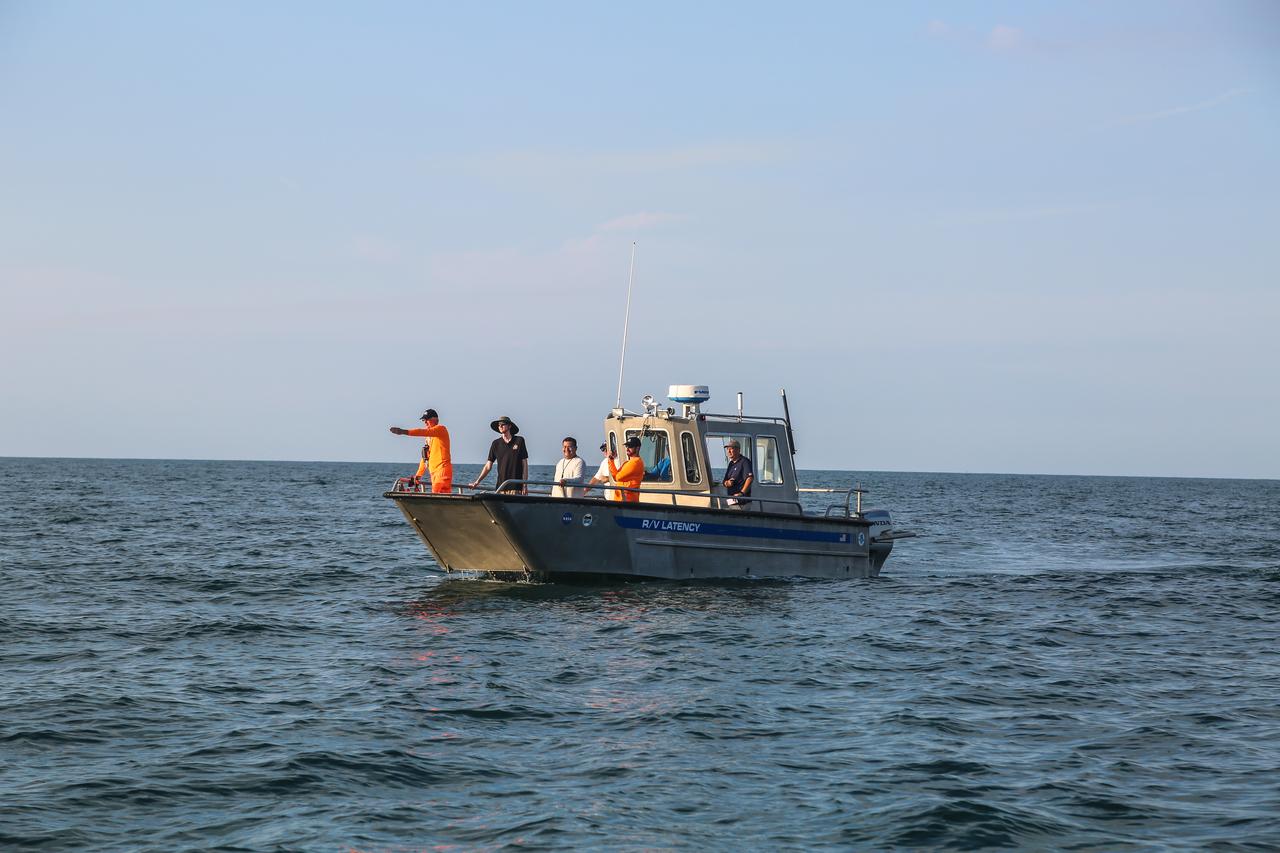
Members of the NASA Ejectable Data Recorder Recovery Team search for the ejectable data recorders in the Atlantic Ocean off the coast of Florida on July 2, 2019, after the Ascent Abort-2 (AA-2) flight test. During AA-2, a fully functional Launch Abort System (LAS) with a test version of Orion attached, launched atop a Northrop Grumman provided booster from Launch Pad 46 at Cape Canaveral Air Force Station on July 2, 2019. Liftoff was at 7 a.m. EDT. During AA-2, the booster sent the LAS and Orion to an altitude of 31,000 feet, traveling at Mach 1.15 (more than 1,000 mph). The LAS’ three motors worked together to pull the crew module away from the booster and prepare it for splashdown in the Atlantic Ocean. The flight test proves that the abort system can pull crew to safety in the unlikely event of an emergency during ascent. Data from the recorders will be analyzed by engineers.
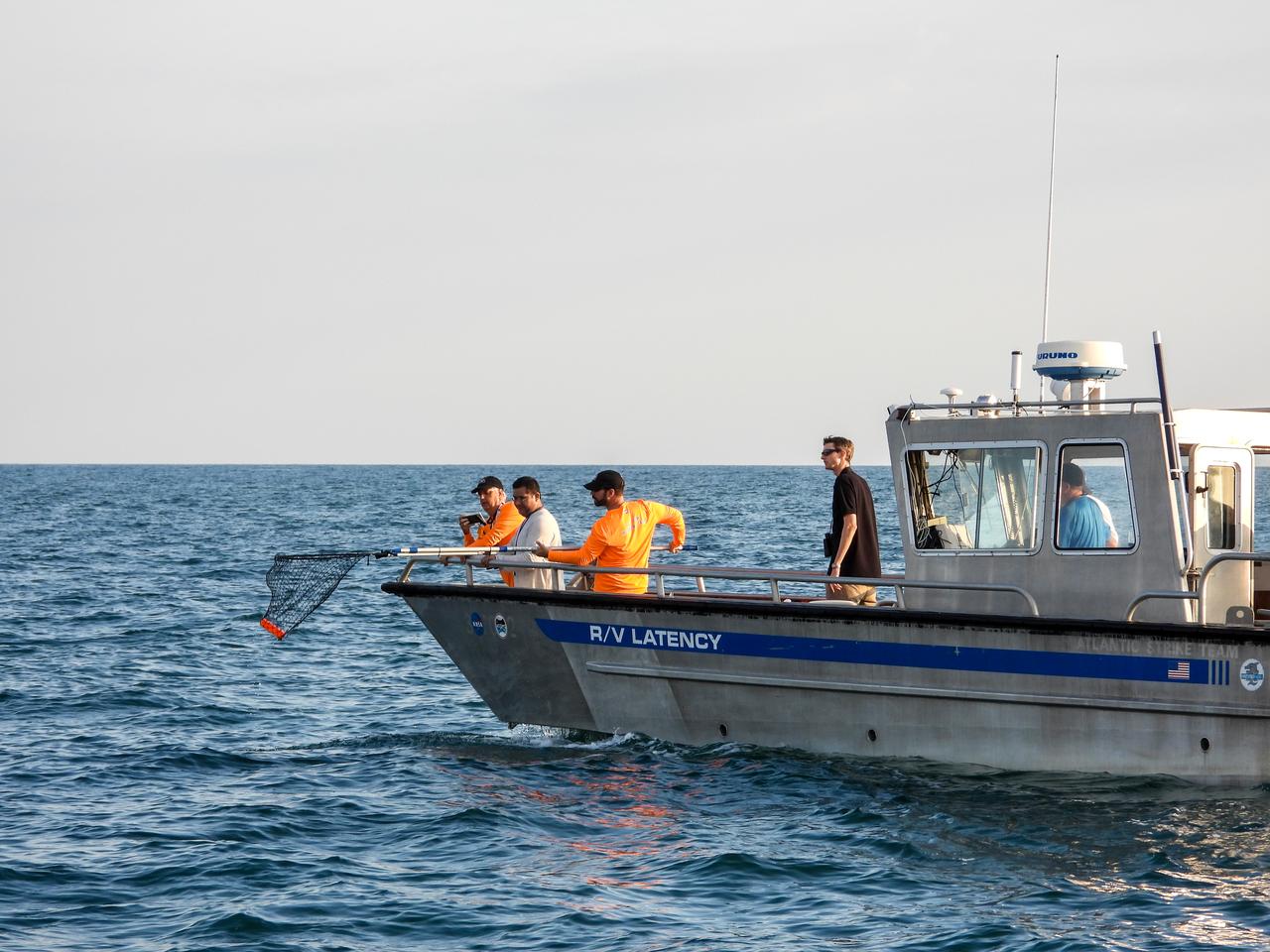
One of the 12 ejectable data recorders from NASA’s Ascent Abort-2 (AA-2) flight test is retrieved from the Atlantic Ocean off the coast of Florida by the NASA Ejectable Data Recorder Recovery Team on July 2, 2019. During AA-2, a fully functional Launch Abort System (LAS) with a test version of Orion attached, launched atop a Northrop Grumman provided booster from Launch Pad 46 at Cape Canaveral Air Force Station on July 2, 2019. Liftoff was at 7 a.m. EDT. During AA-2, the booster sent the LAS and Orion to an altitude of 31,000 feet, traveling at Mach 1.15 (more than 1,000 mph). The LAS’ three motors worked together to pull the crew module away from the booster and prepare it for splashdown in the Atlantic Ocean. The flight test proves that the abort system can pull crew to safety in the unlikely event of an emergency during ascent. Data from the recorders will be analyzed by engineers.
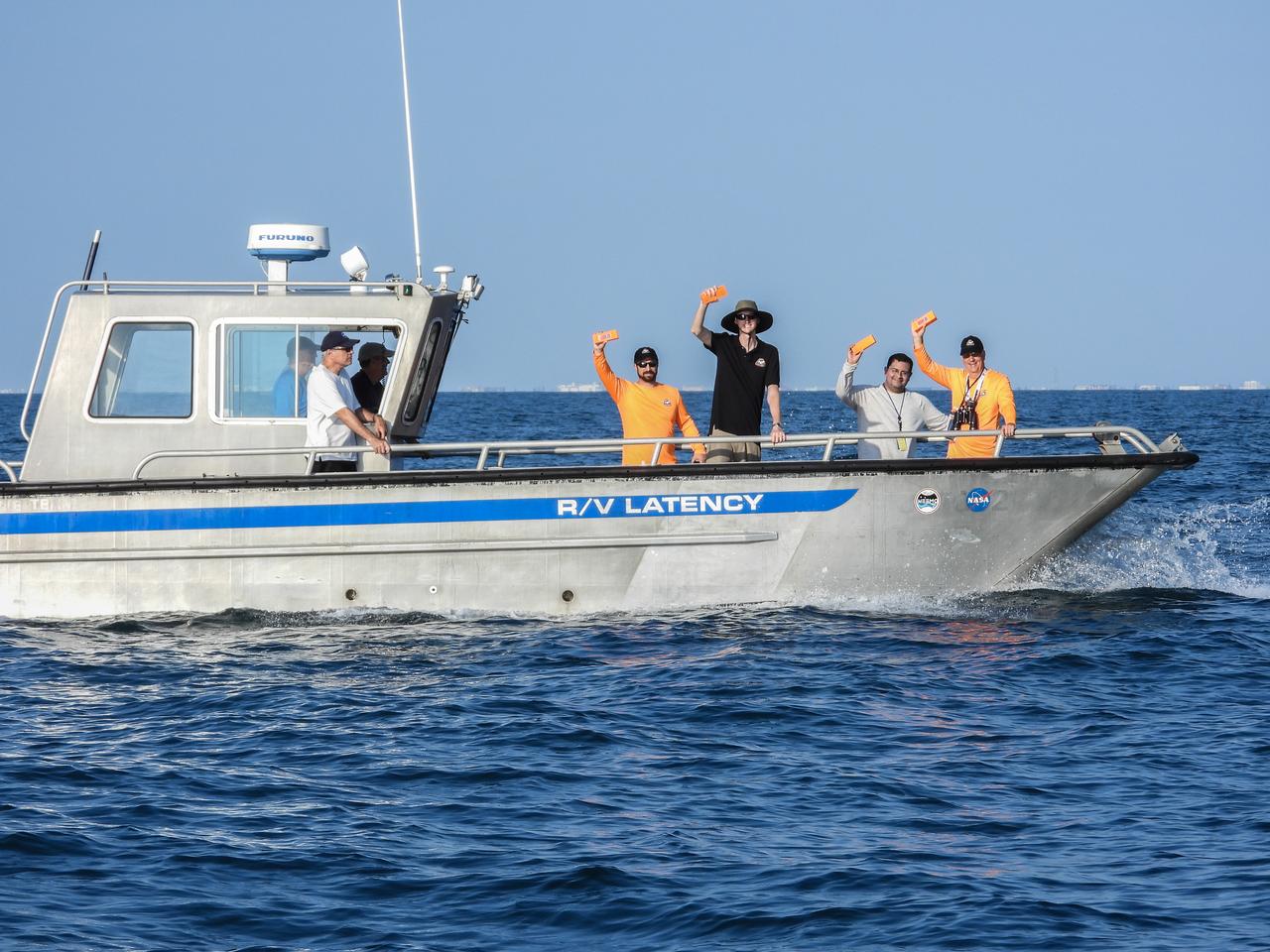
Members of the NASA Ejectable Data Recorder Recovery Team display some of the ejectable data recorders they recovered in the Atlantic Ocean off the coast of Florida on July 2, 2019, after the Ascent Abort-2 (AA-2) flight test. During AA-2, a fully functional Launch Abort System (LAS) with a test version of Orion attached, launched atop a Northrop Grumman provided booster from Launch Pad 46 at Cape Canaveral Air Force Station on July 2, 2019. Liftoff was at 7 a.m. EDT. During AA-2, the booster sent the LAS and Orion to an altitude of 31,000 feet, traveling at Mach 1.15 (more than 1,000 mph). The LAS’ three motors worked together to pull the crew module away from the booster and prepare it for splashdown in the Atlantic Ocean. The flight test proves that the abort system can pull crew to safety in the unlikely event of an emergency during ascent. Data from the recorders will be analyzed by engineers.