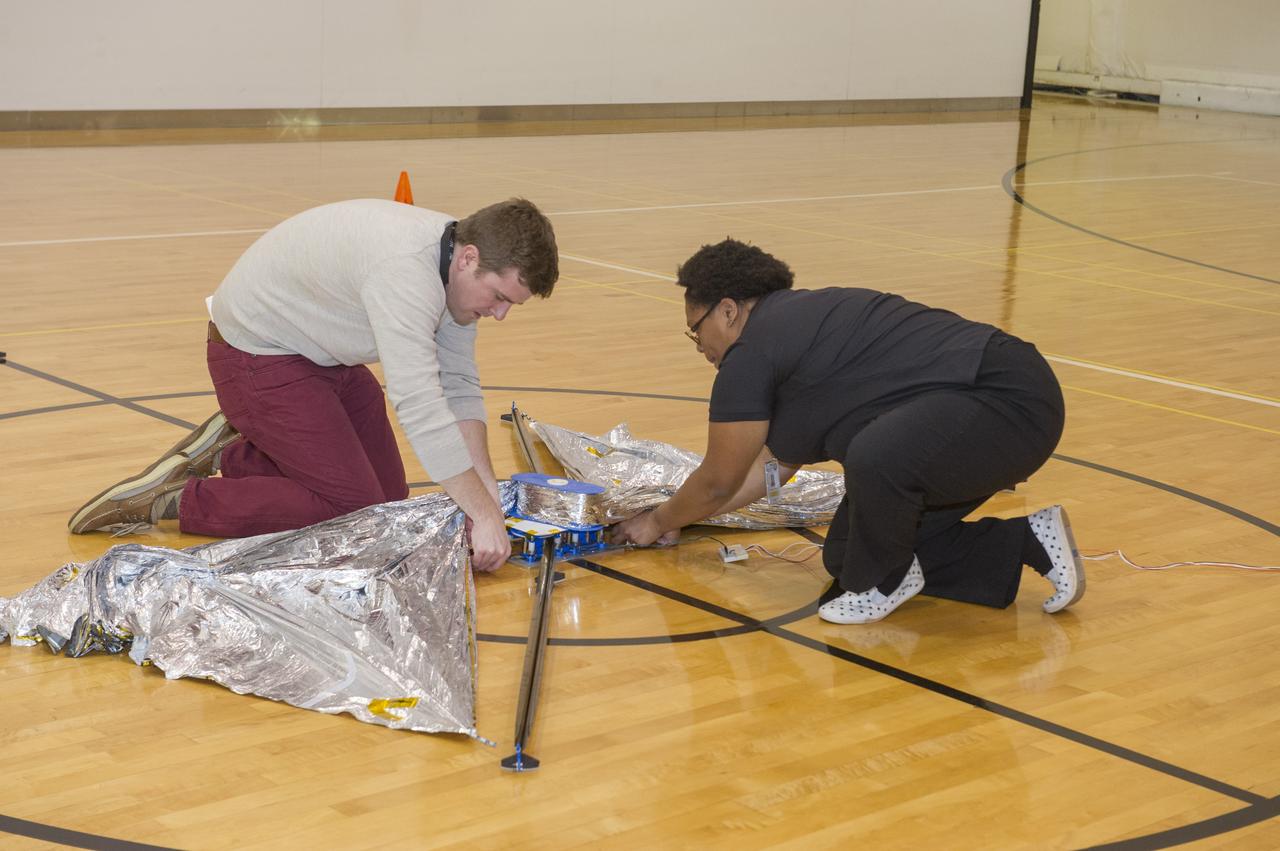
TIFFANY LOCKETT OVERSEES THE HALF SCALE (36 SQUARE METERS) ENGINEERING DEVELOPMENT UNIT (EDU) SOLAR SAIL DEPLOYMENT DEMONSTRATION IN PREPARATION FOR FULL SCALE EDU (86 SQUARE METERS) DEPLOYMENT IN APRIL, 2016
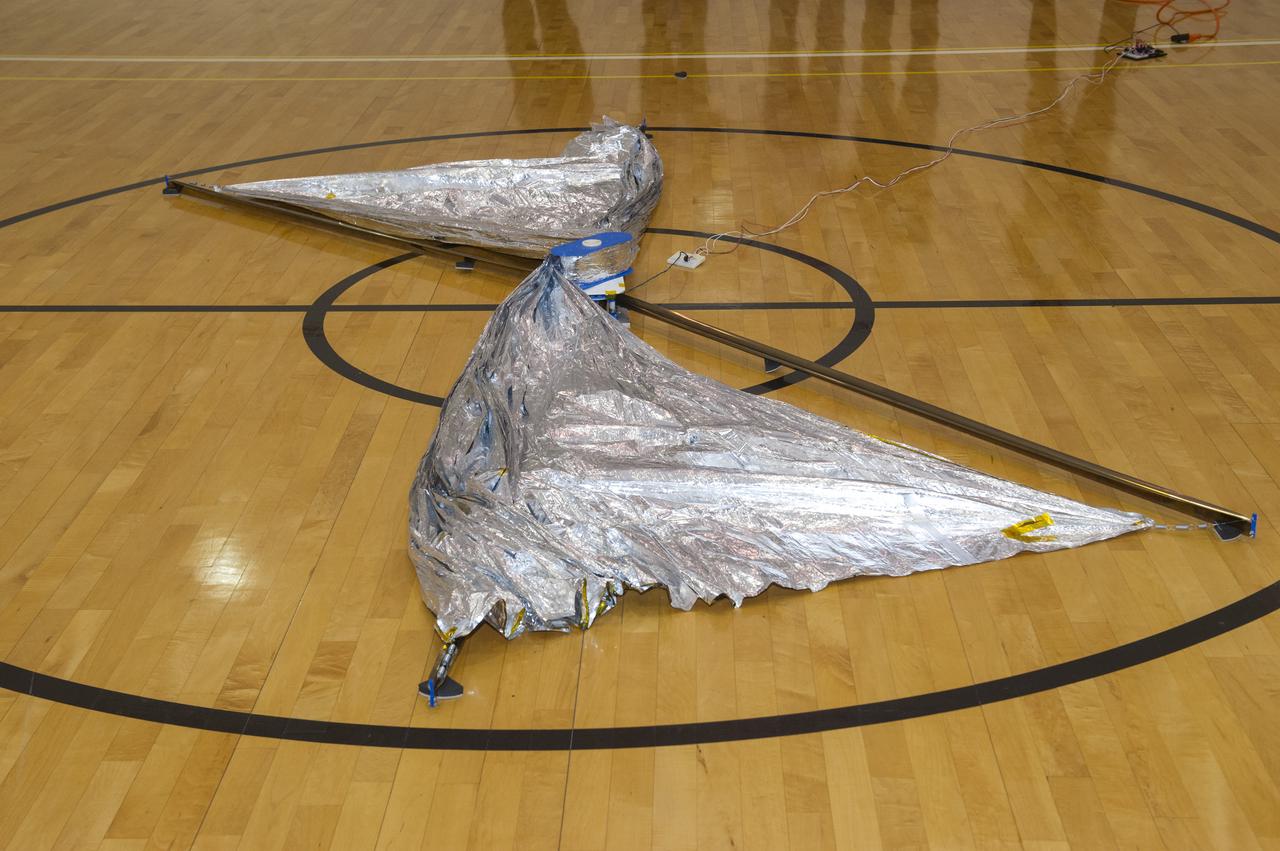
TIFFANY LOCKETT OVERSEES THE HALF SCALE (36 SQUARE METERS) ENGINEERING DEVELOPMENT UNIT (EDU) SOLAR SAIL DEPLOYMENT DEMONSTRATION IN PREPARATION FOR FULL SCALE EDU (86 SQUARE METERS) DEPLOYMENT IN APRIL, 2016
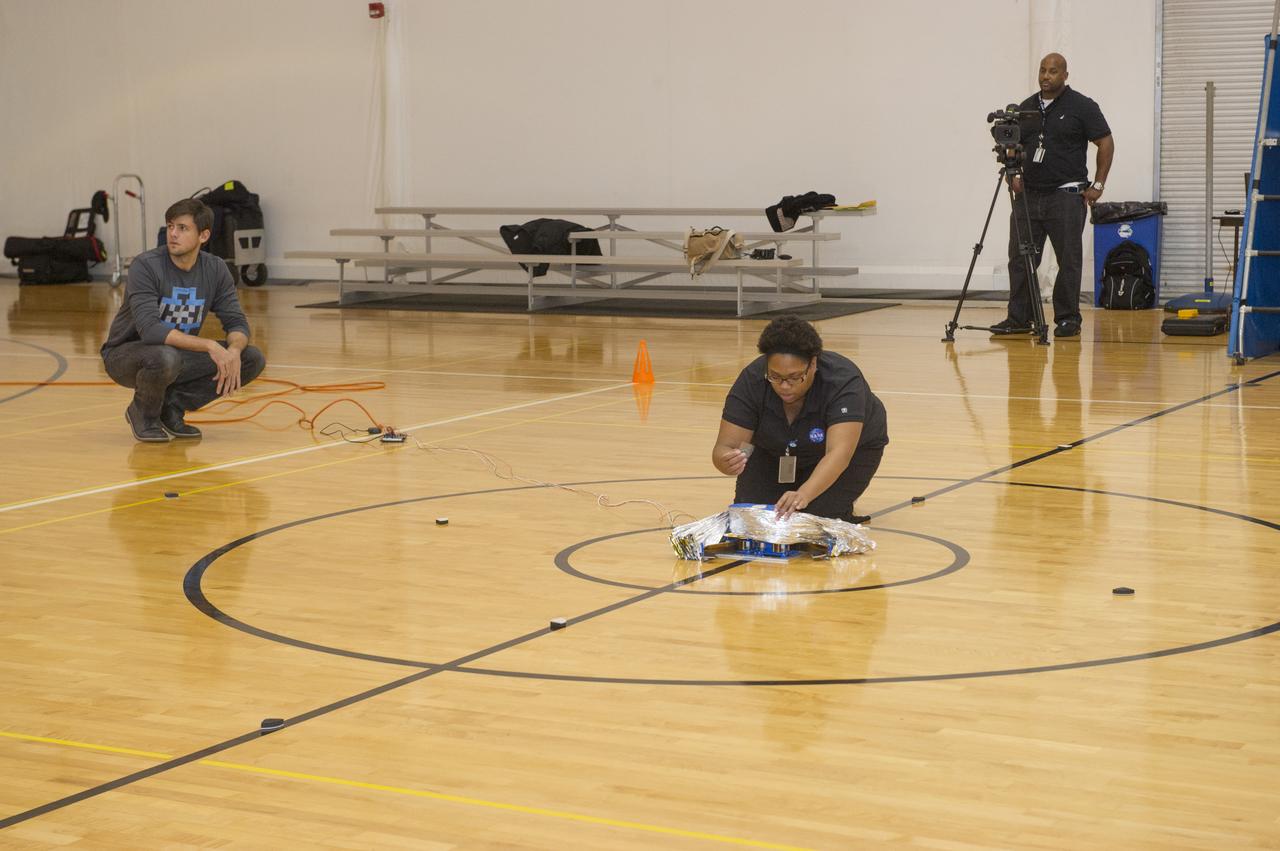
TIFFANY LOCKETT OVERSEES THE HALF SCALE (36 SQUARE METERS) ENGINEERING DEVELOPMENT UNIT (EDU) SOLAR SAIL DEPLOYMENT DEMONSTRATION IN PREPARATION FOR FULL SCALE EDU (86 SQUARE METERS) DEPLOYMENT IN APRIL, 2016
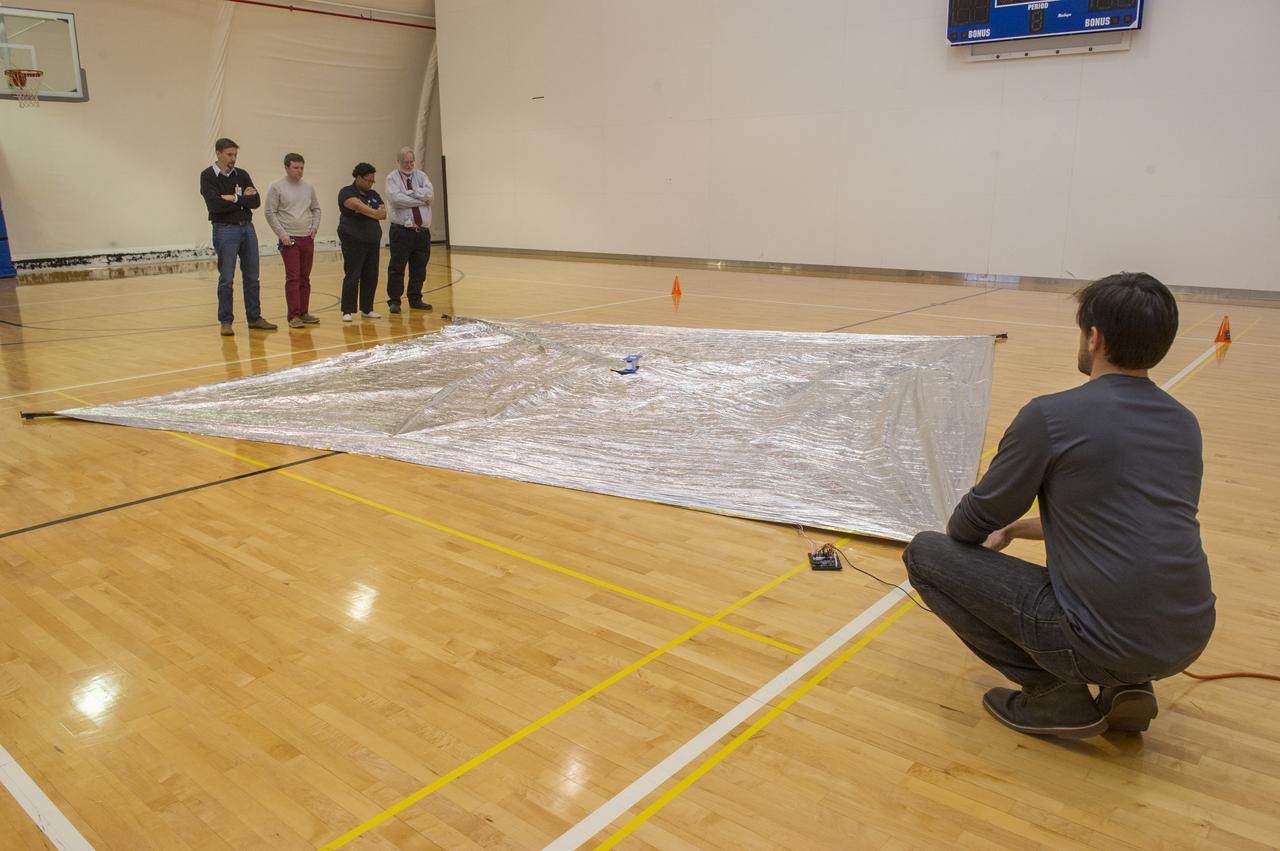
TIFFANY LOCKETT OVERSEES THE HALF SCALE (36 SQUARE METERS) ENGINEERING DEVELOPMENT UNIT (EDU) SOLAR SAIL DEPLOYMENT DEMONSTRATION IN PREPARATION FOR FULL SCALE EDU (86 SQUARE METERS) DEPLOYMENT IN APRIL, 2016
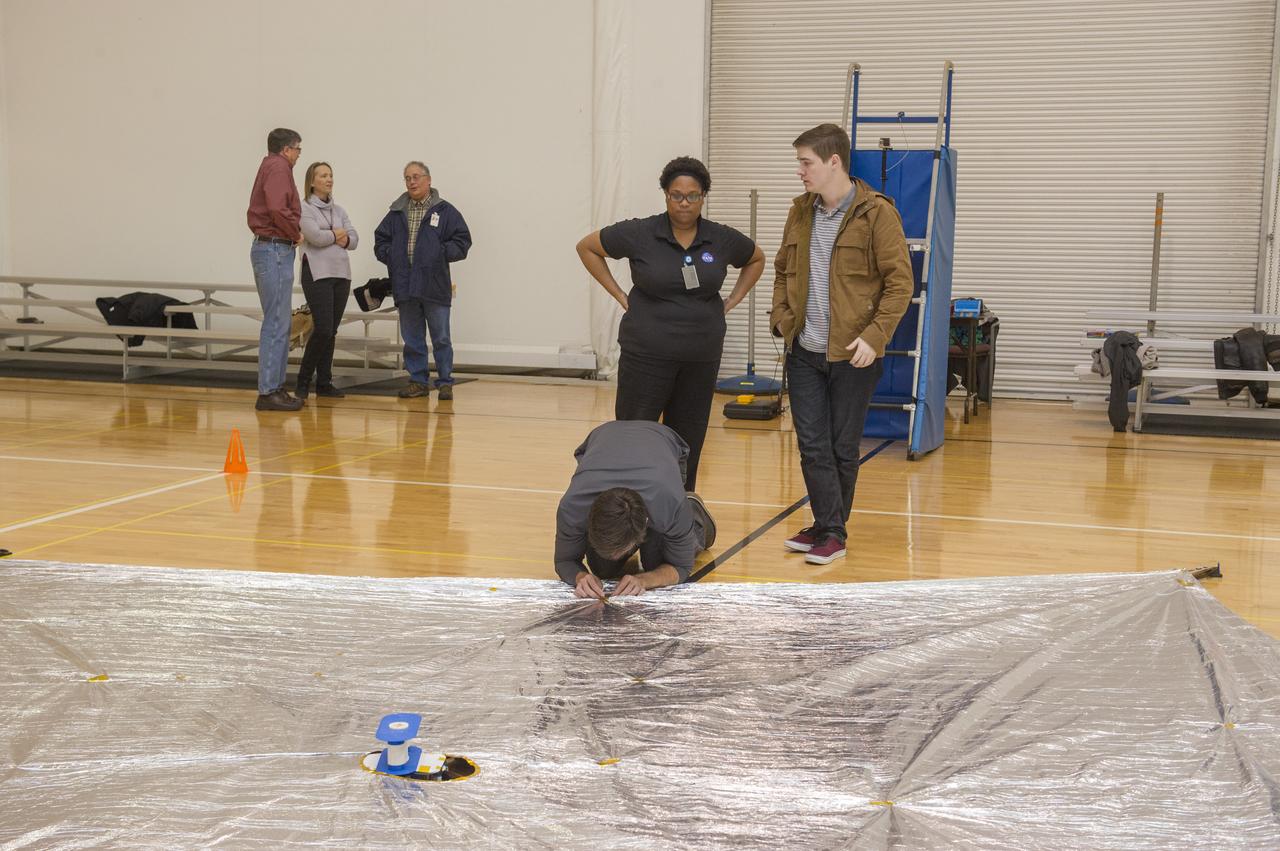
TIFFANY LOCKETT OVERSEES THE HALF SCALE (36 SQUARE METERS) ENGINEERING DEVELOPMENT UNIT (EDU) SOLAR SAIL DEPLOYMENT DEMONSTRATION IN PREPARATION FOR FULL SCALE EDU (86 SQUARE METERS) DEPLOYMENT IN APRIL, 2016
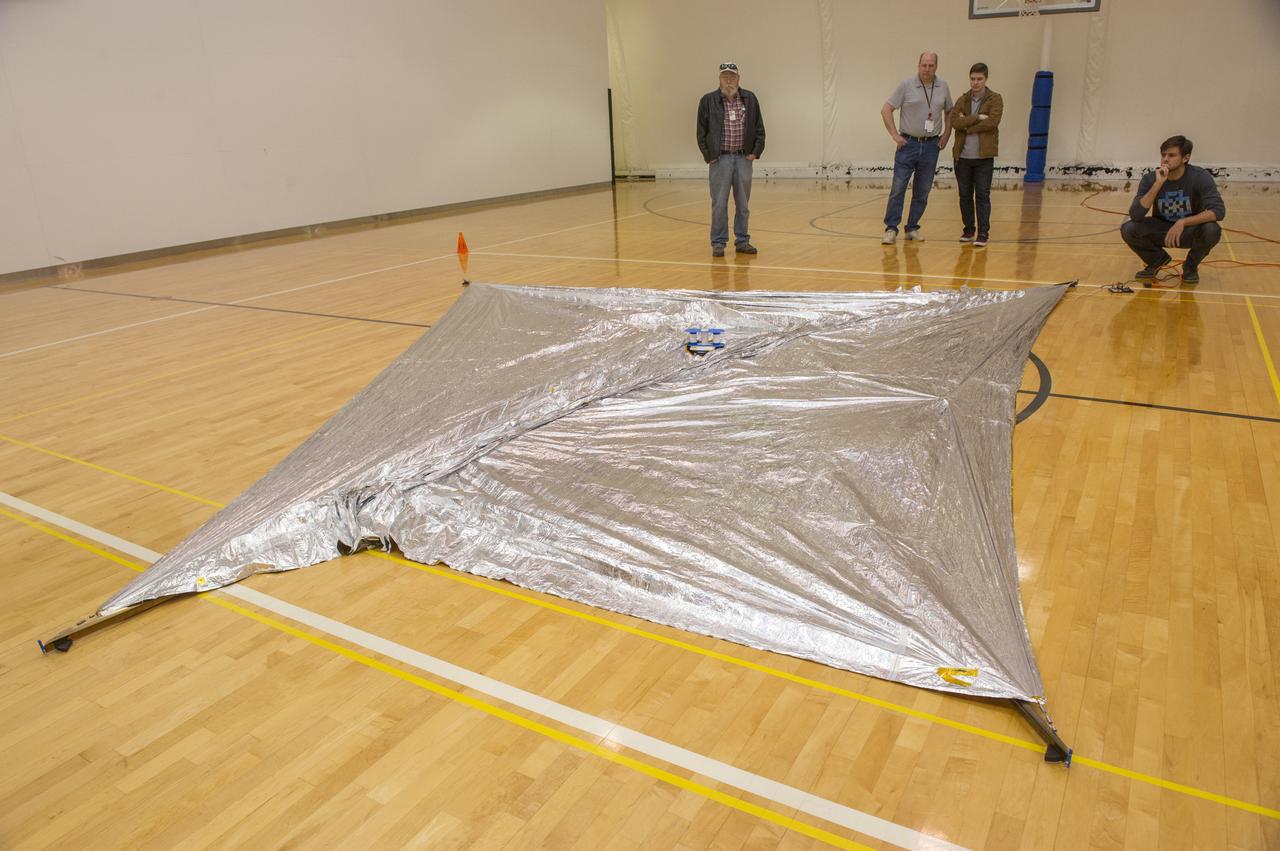
TIFFANY LOCKETT OVERSEES THE HALF SCALE (36 SQUARE METERS) ENGINEERING DEVELOPMENT UNIT (EDU) SOLAR SAIL DEPLOYMENT DEMONSTRATION IN PREPARATION FOR FULL SCALE EDU (86 SQUARE METERS) DEPLOYMENT IN APRIL, 2016
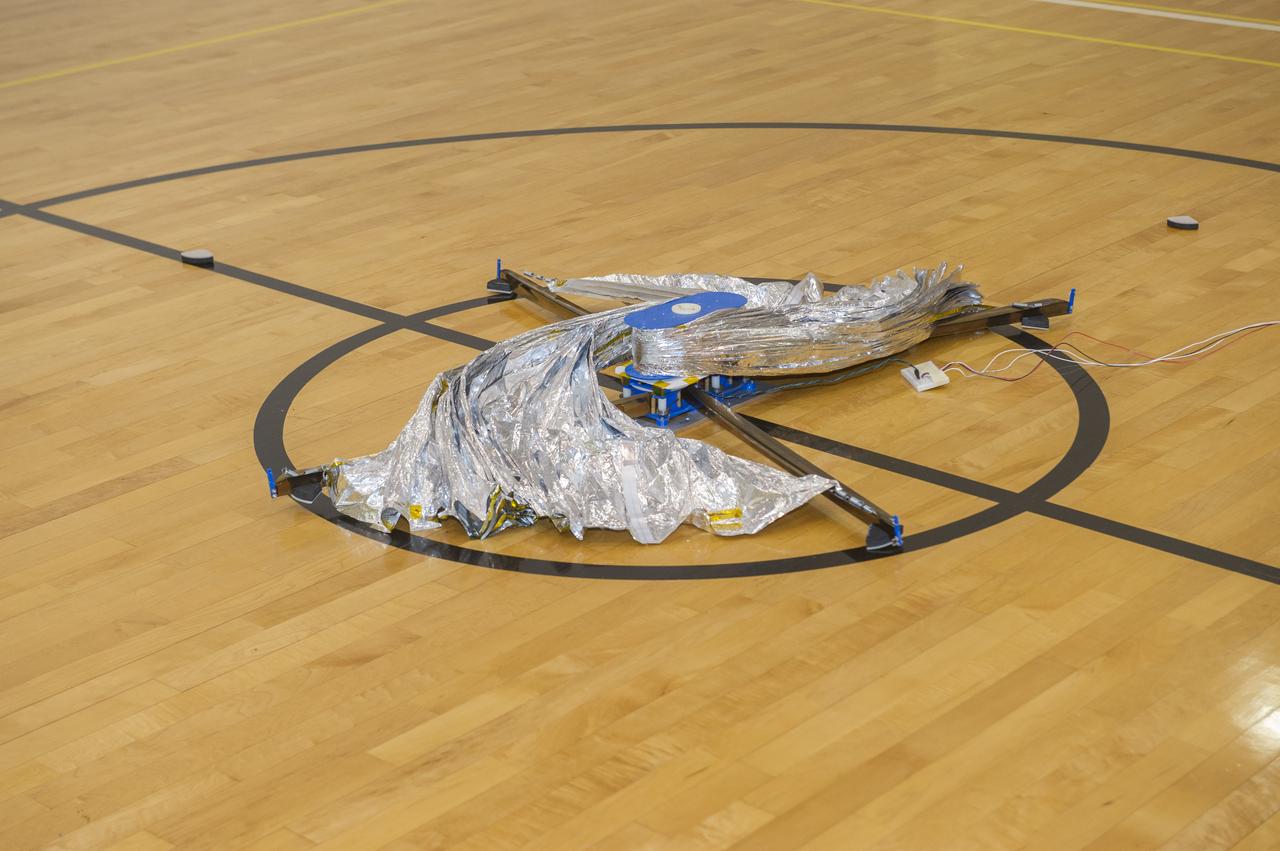
TIFFANY LOCKETT OVERSEES THE HALF SCALE (36 SQUARE METERS) ENGINEERING DEVELOPMENT UNIT (EDU) SOLAR SAIL DEPLOYMENT DEMONSTRATION IN PREPARATION FOR FULL SCALE EDU (86 SQUARE METERS) DEPLOYMENT IN APRIL, 2016
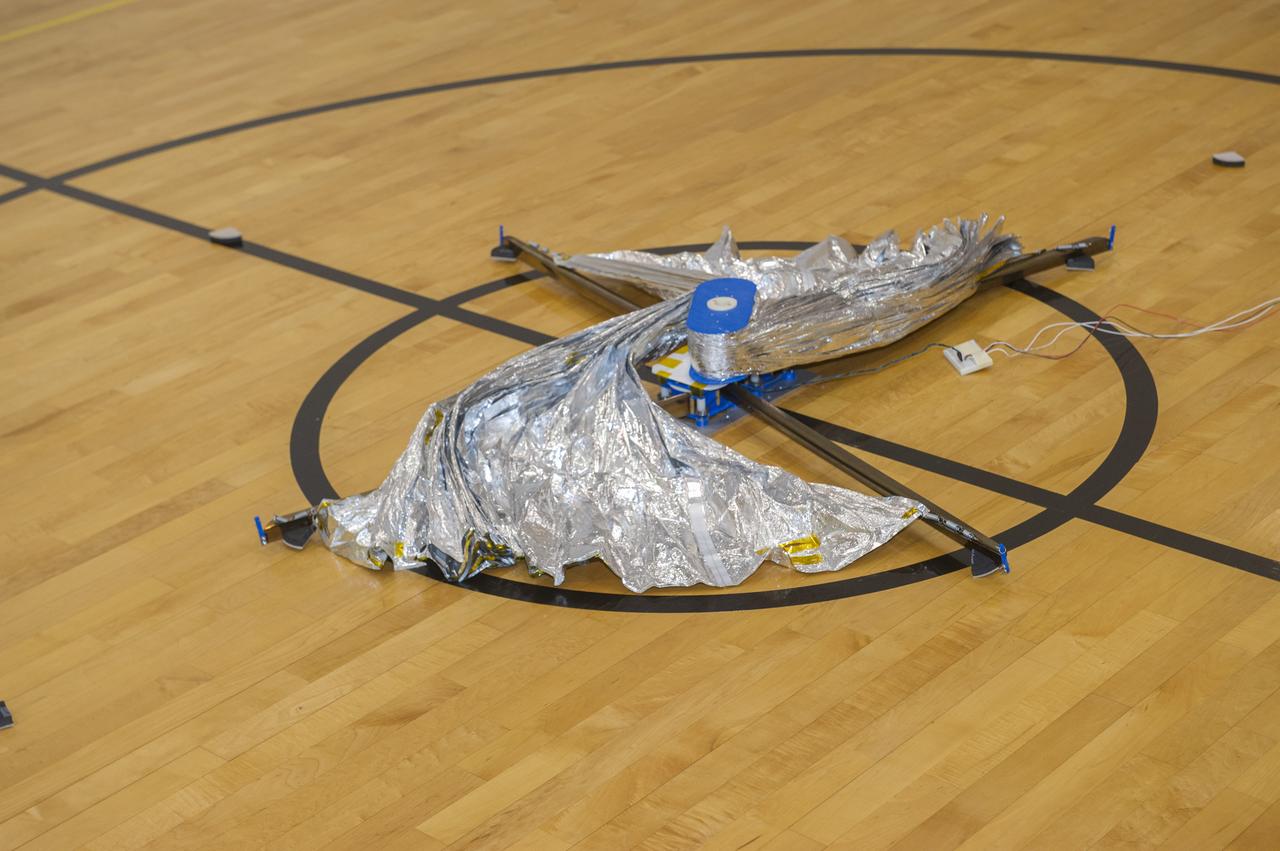
TIFFANY LOCKETT OVERSEES THE HALF SCALE (36 SQUARE METERS) ENGINEERING DEVELOPMENT UNIT (EDU) SOLAR SAIL DEPLOYMENT DEMONSTRATION IN PREPARATION FOR FULL SCALE EDU (86 SQUARE METERS) DEPLOYMENT IN APRIL, 2016
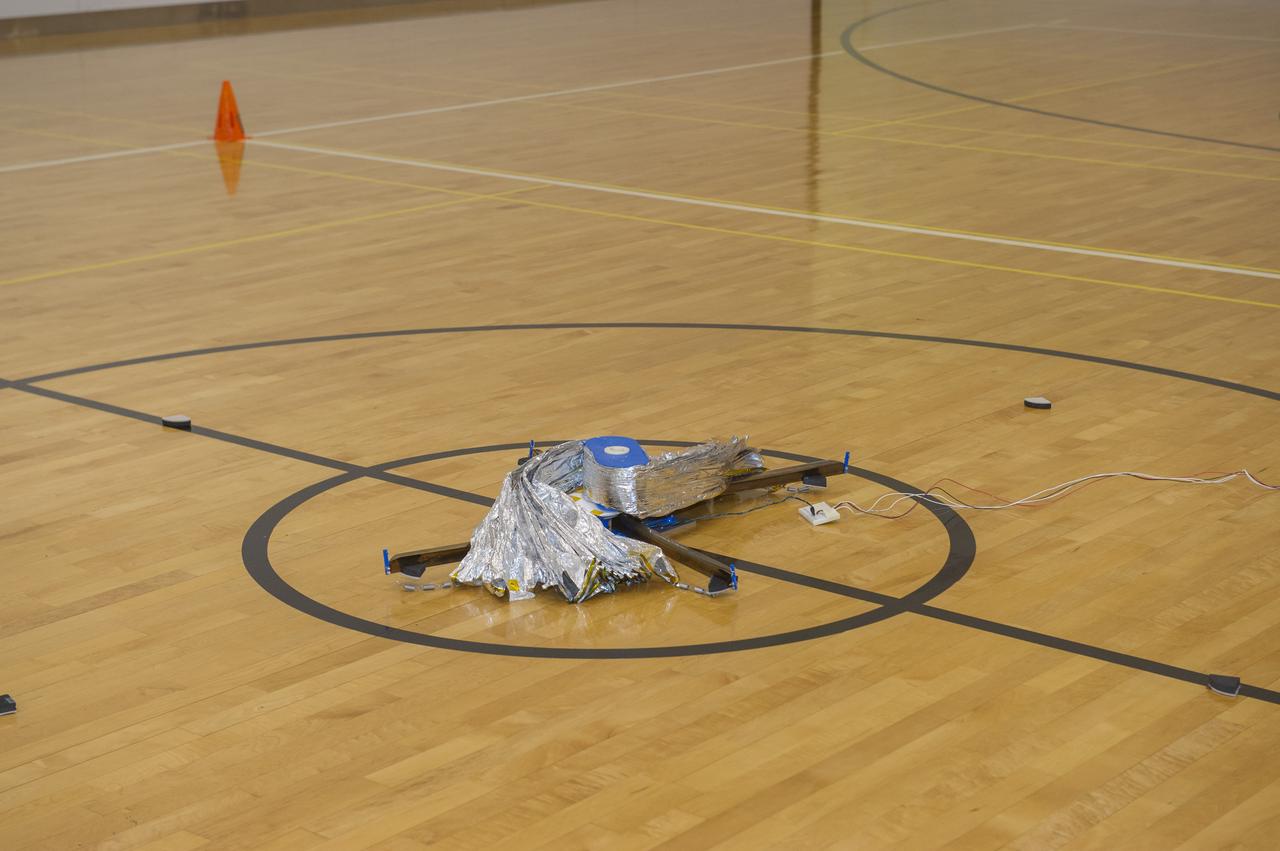
TIFFANY LOCKETT OVERSEES THE HALF SCALE (36 SQUARE METERS) ENGINEERING DEVELOPMENT UNIT (EDU) SOLAR SAIL DEPLOYMENT DEMONSTRATION IN PREPARATION FOR FULL SCALE EDU (86 SQUARE METERS) DEPLOYMENT IN APRIL, 2016
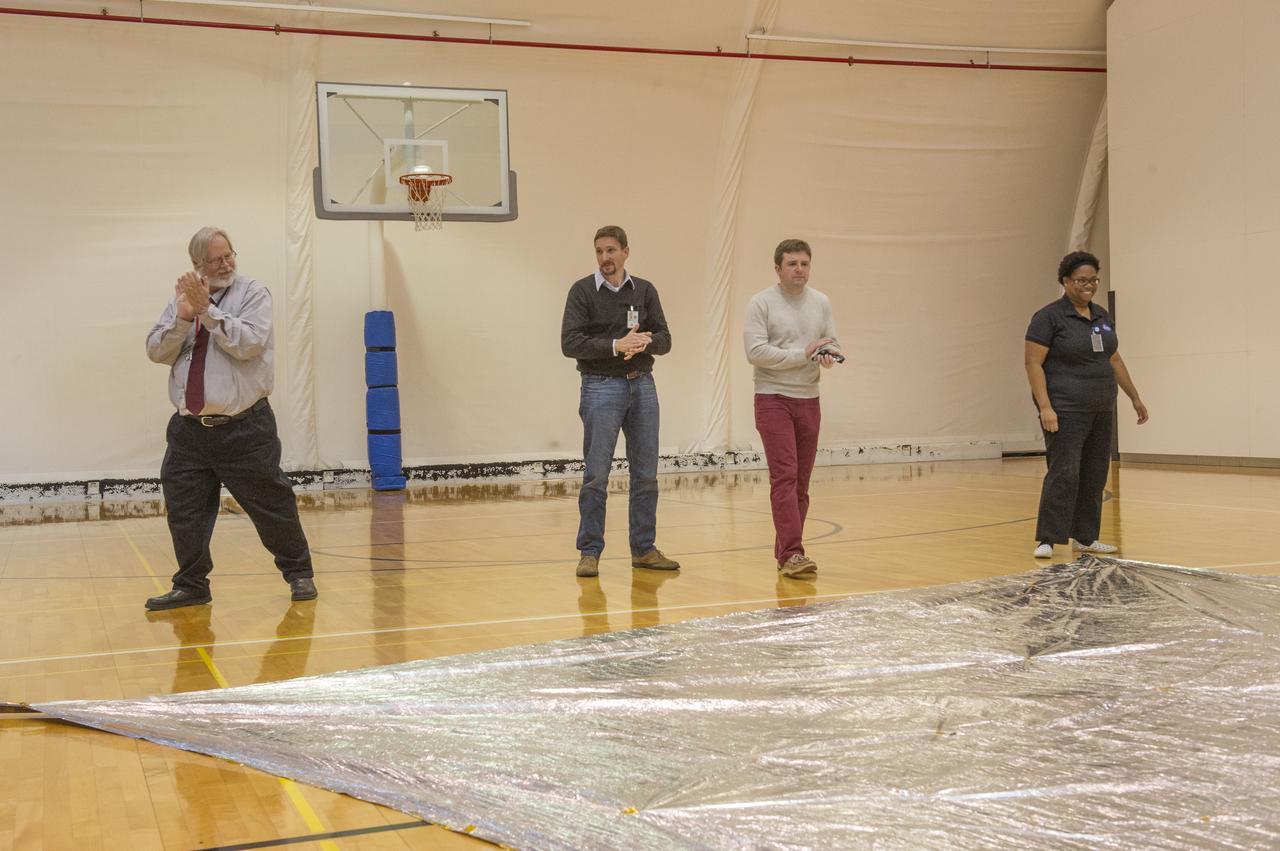
TIFFANY LOCKETT OVERSEES THE HALF SCALE (36 SQUARE METERS) ENGINEERING DEVELOPMENT UNIT (EDU) SOLAR SAIL DEPLOYMENT DEMONSTRATION IN PREPARATION FOR FULL SCALE EDU (86 SQUARE METERS) DEPLOYMENT IN APRIL, 2016
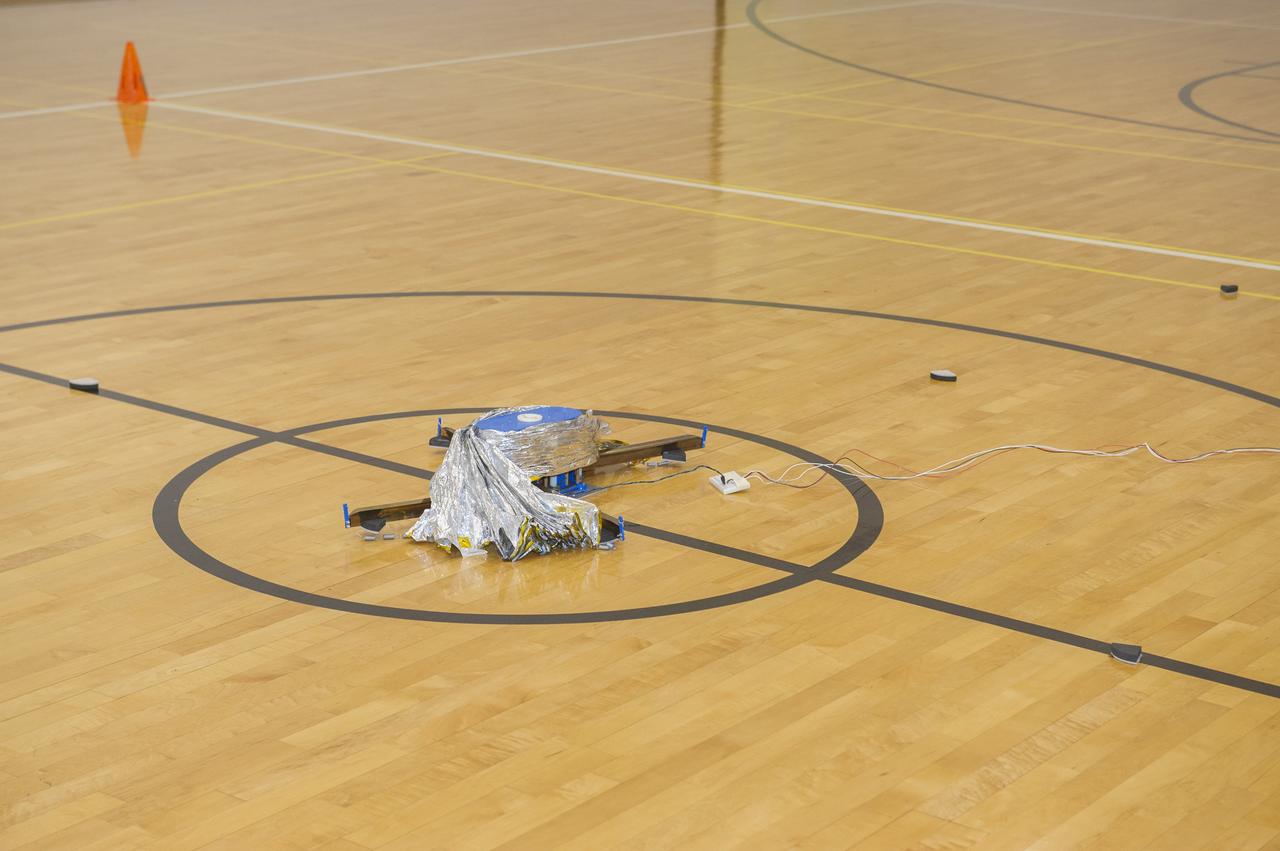
TIFFANY LOCKETT OVERSEES THE HALF SCALE (36 SQUARE METERS) ENGINEERING DEVELOPMENT UNIT (EDU) SOLAR SAIL DEPLOYMENT DEMONSTRATION IN PREPARATION FOR FULL SCALE EDU (86 SQUARE METERS) DEPLOYMENT IN APRIL, 2016
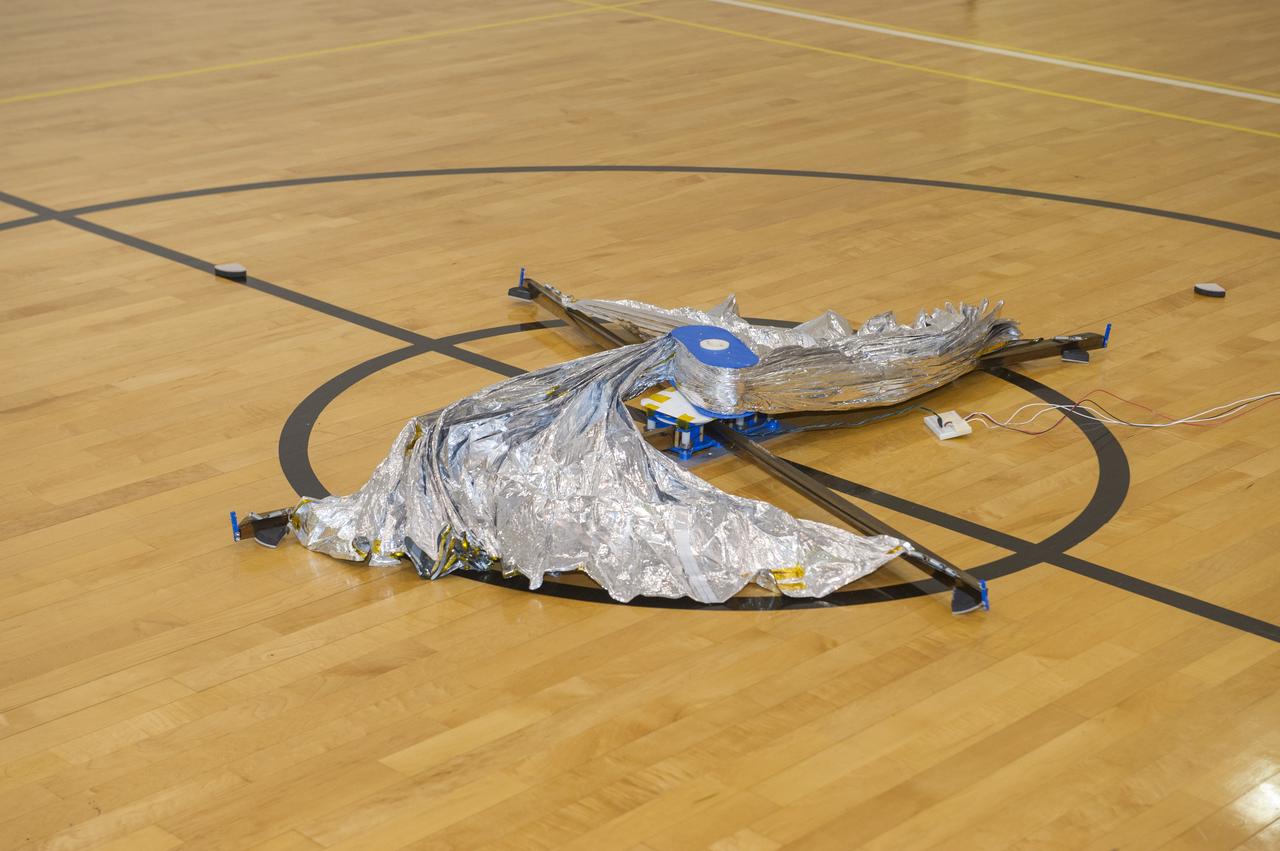
TIFFANY LOCKETT OVERSEES THE HALF SCALE (36 SQUARE METERS) ENGINEERING DEVELOPMENT UNIT (EDU) SOLAR SAIL DEPLOYMENT DEMONSTRATION IN PREPARATION FOR FULL SCALE EDU (86 SQUARE METERS) DEPLOYMENT IN APRIL, 2016
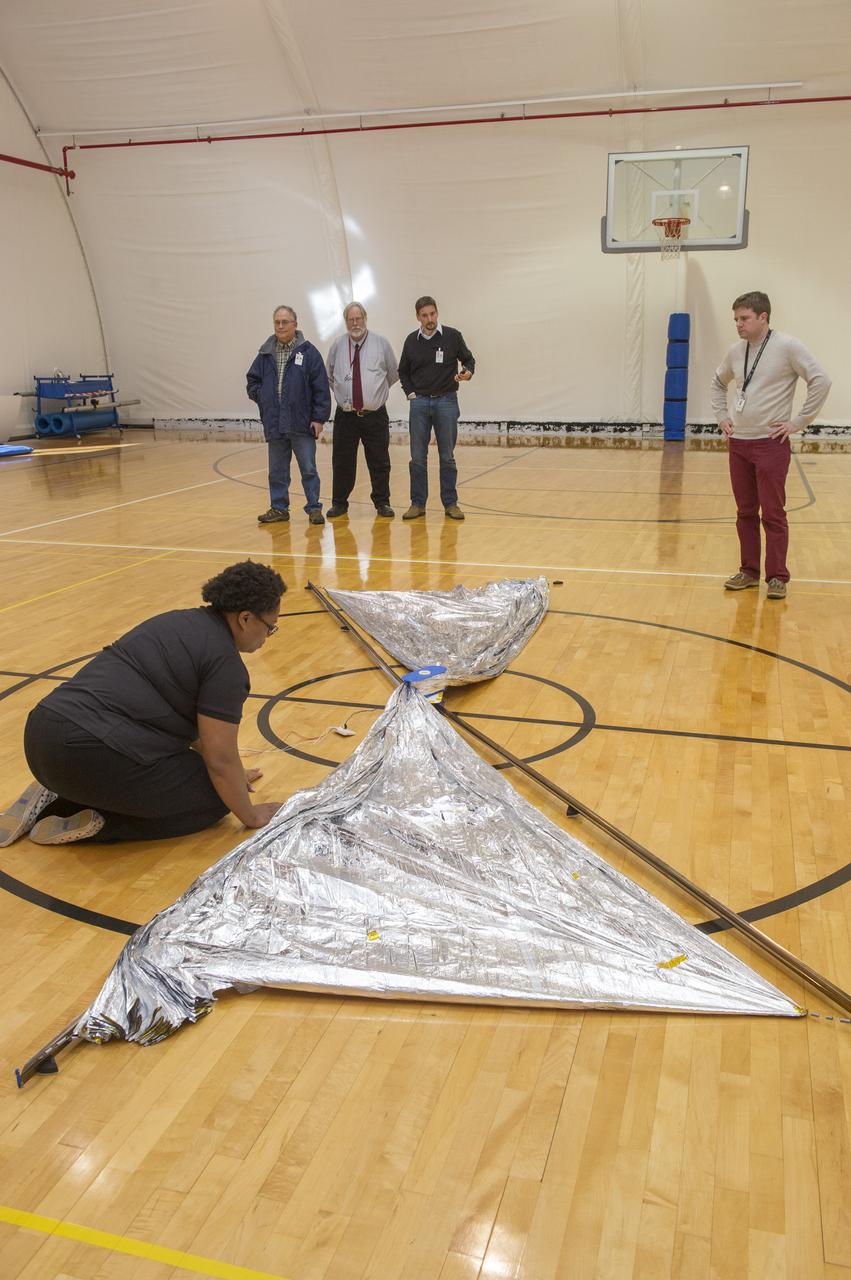
TIFFANY LOCKETT OVERSEES THE HALF SCALE (36 SQUARE METERS) ENGINEERING DEVELOPMENT UNIT (EDU) SOLAR SAIL DEPLOYMENT DEMONSTRATION IN PREPARATION FOR FULL SCALE EDU (86 SQUARE METERS) DEPLOYMENT IN APRIL, 2016
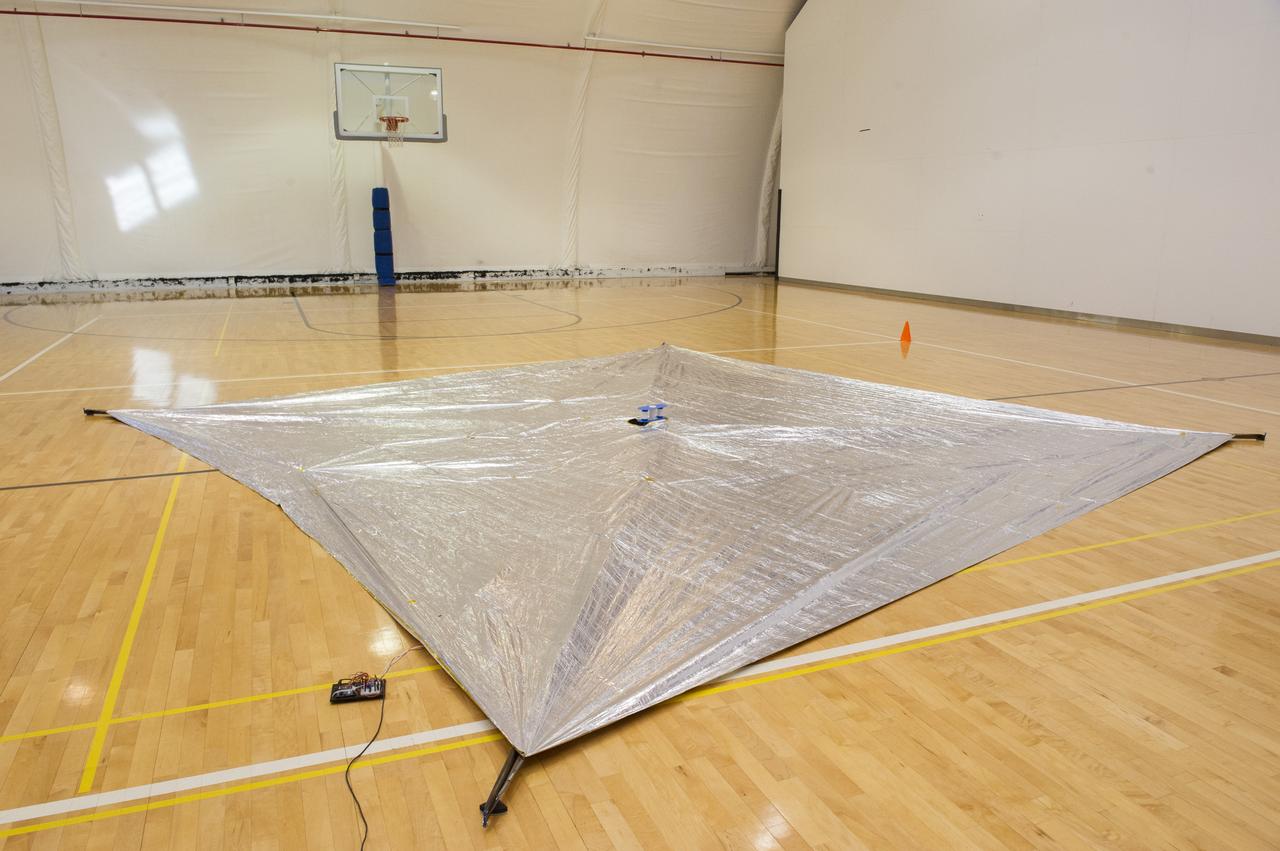
TIFFANY LOCKETT OVERSEES THE HALF SCALE (36 SQUARE METERS) ENGINEERING DEVELOPMENT UNIT (EDU) SOLAR SAIL DEPLOYMENT DEMONSTRATION IN PREPARATION FOR FULL SCALE EDU (86 SQUARE METERS) DEPLOYMENT IN APRIL, 2016
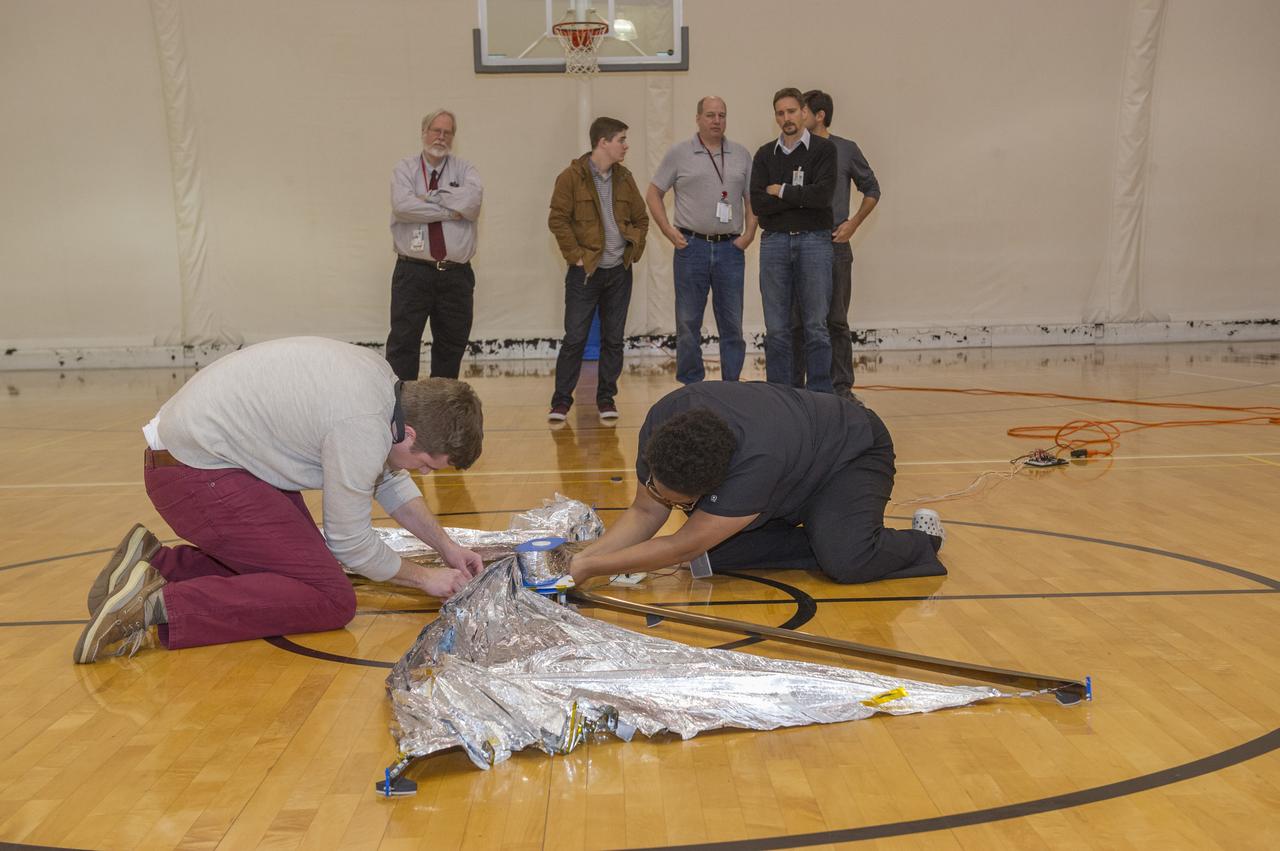
TIFFANY LOCKETT OVERSEES THE HALF SCALE (36 SQUARE METERS) ENGINEERING DEVELOPMENT UNIT (EDU) SOLAR SAIL DEPLOYMENT DEMONSTRATION IN PREPARATION FOR FULL SCALE EDU (86 SQUARE METERS) DEPLOYMENT IN APRIL, 2016
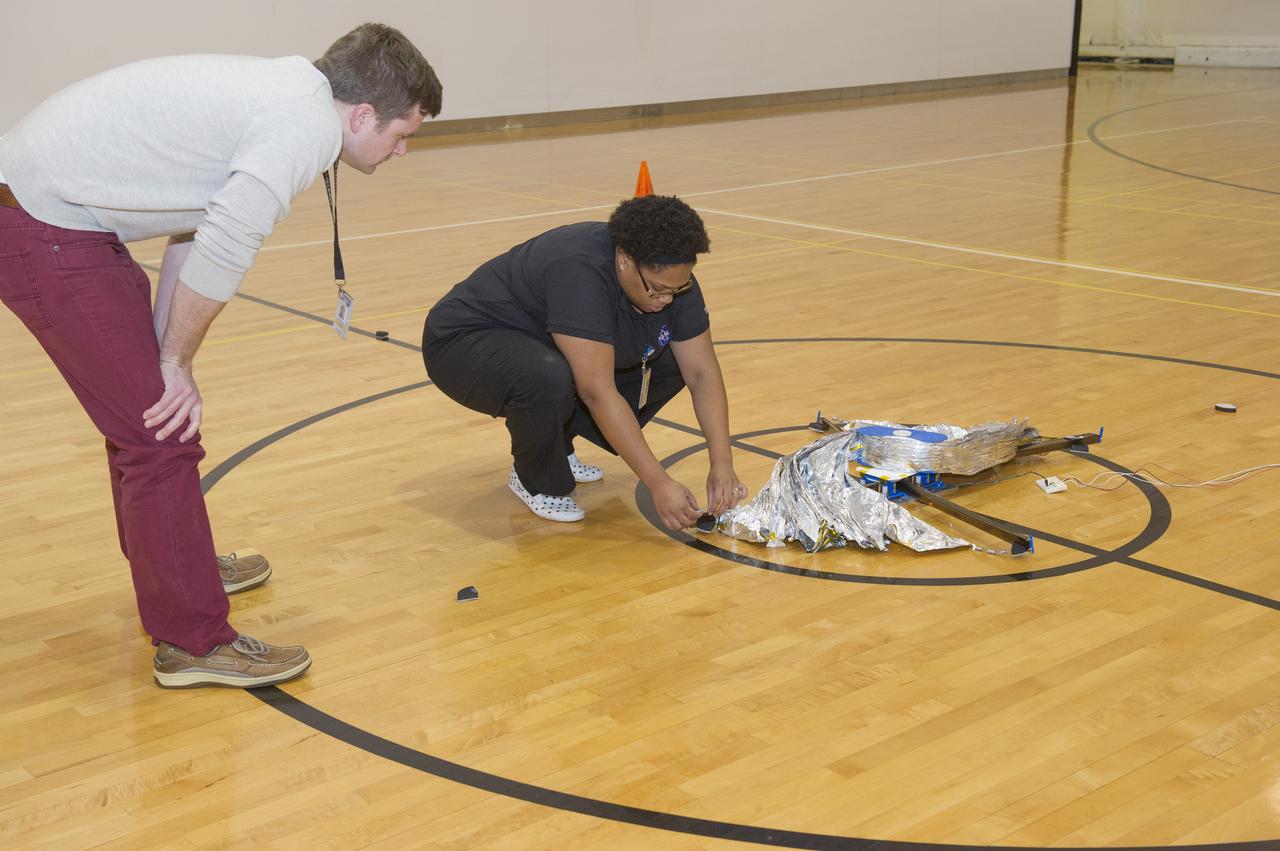
TIFFANY LOCKETT OVERSEES THE HALF SCALE (36 SQUARE METERS) ENGINEERING DEVELOPMENT UNIT (EDU) SOLAR SAIL DEPLOYMENT DEMONSTRATION IN PREPARATION FOR FULL SCALE EDU (86 SQUARE METERS) DEPLOYMENT IN APRIL, 2016
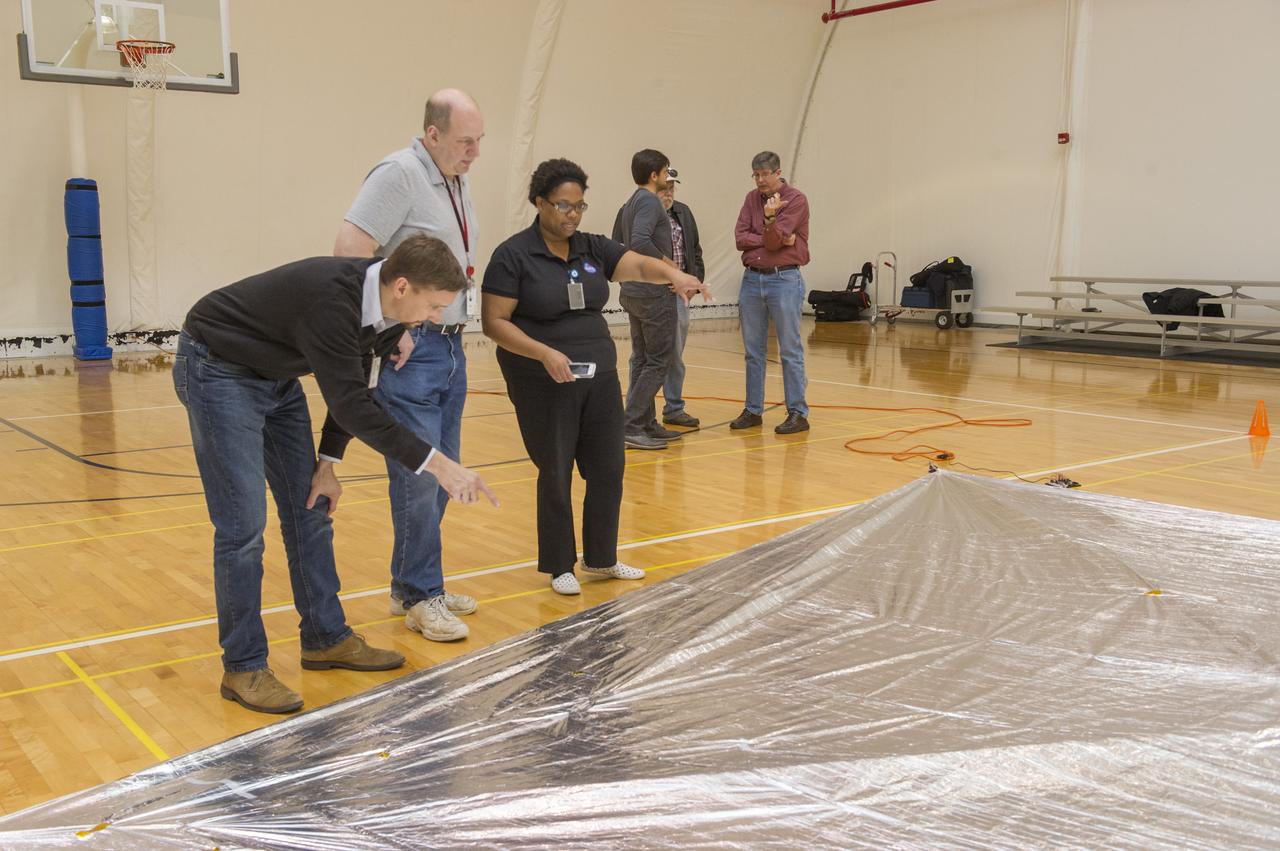
TIFFANY LOCKETT OVERSEES THE HALF SCALE (36 SQUARE METERS) ENGINEERING DEVELOPMENT UNIT (EDU) SOLAR SAIL DEPLOYMENT DEMONSTRATION IN PREPARATION FOR FULL SCALE EDU (86 SQUARE METERS) DEPLOYMENT IN APRIL, 2016
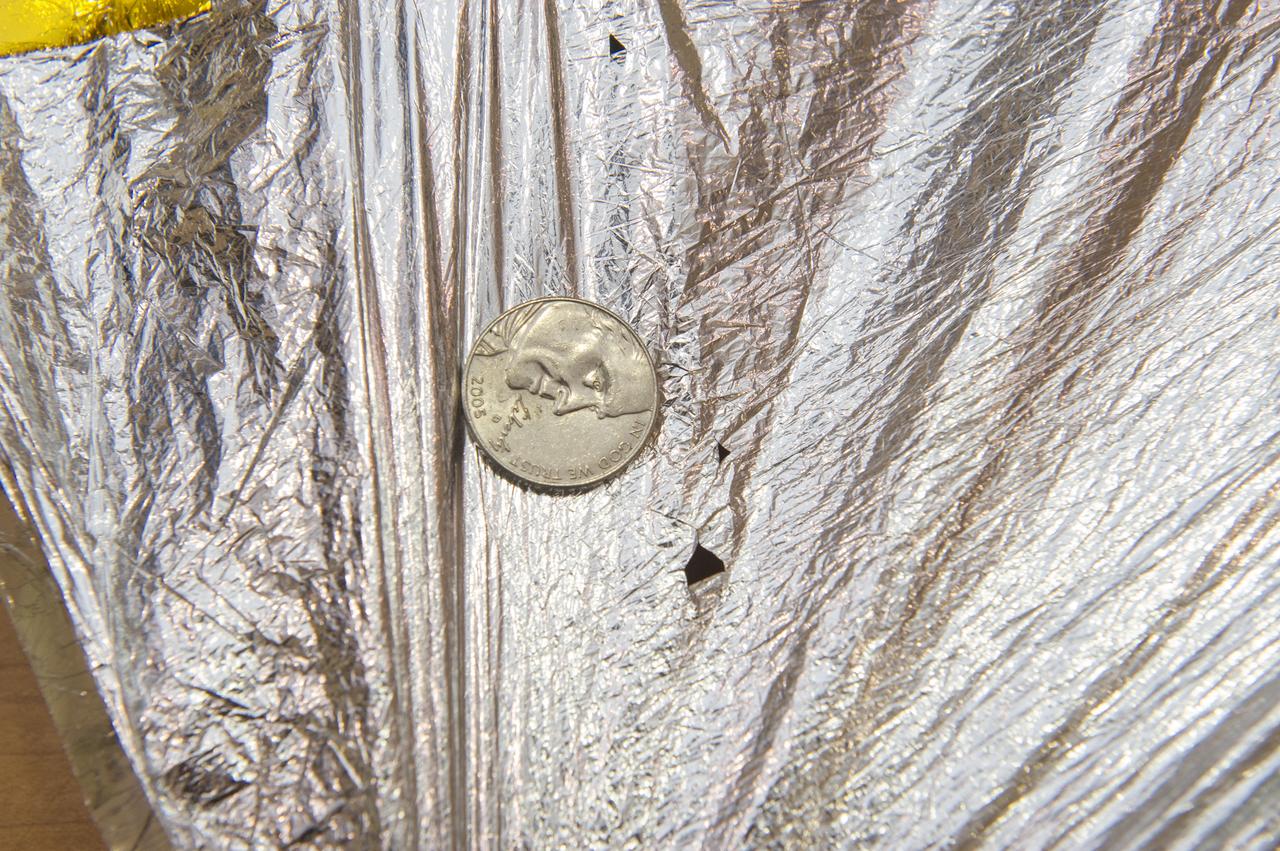
TIFFANY LOCKETT OVERSEES THE HALF SCALE (36 SQUARE METERS) ENGINEERING DEVELOPMENT UNIT (EDU) SOLAR SAIL DEPLOYMENT DEMONSTRATION IN PREPARATION FOR FULL SCALE EDU (86 SQUARE METERS) DEPLOYMENT IN APRIL, 2016. DETAILS OF RIPS AND HOLES IN SOLAR SAIL FABRIC.
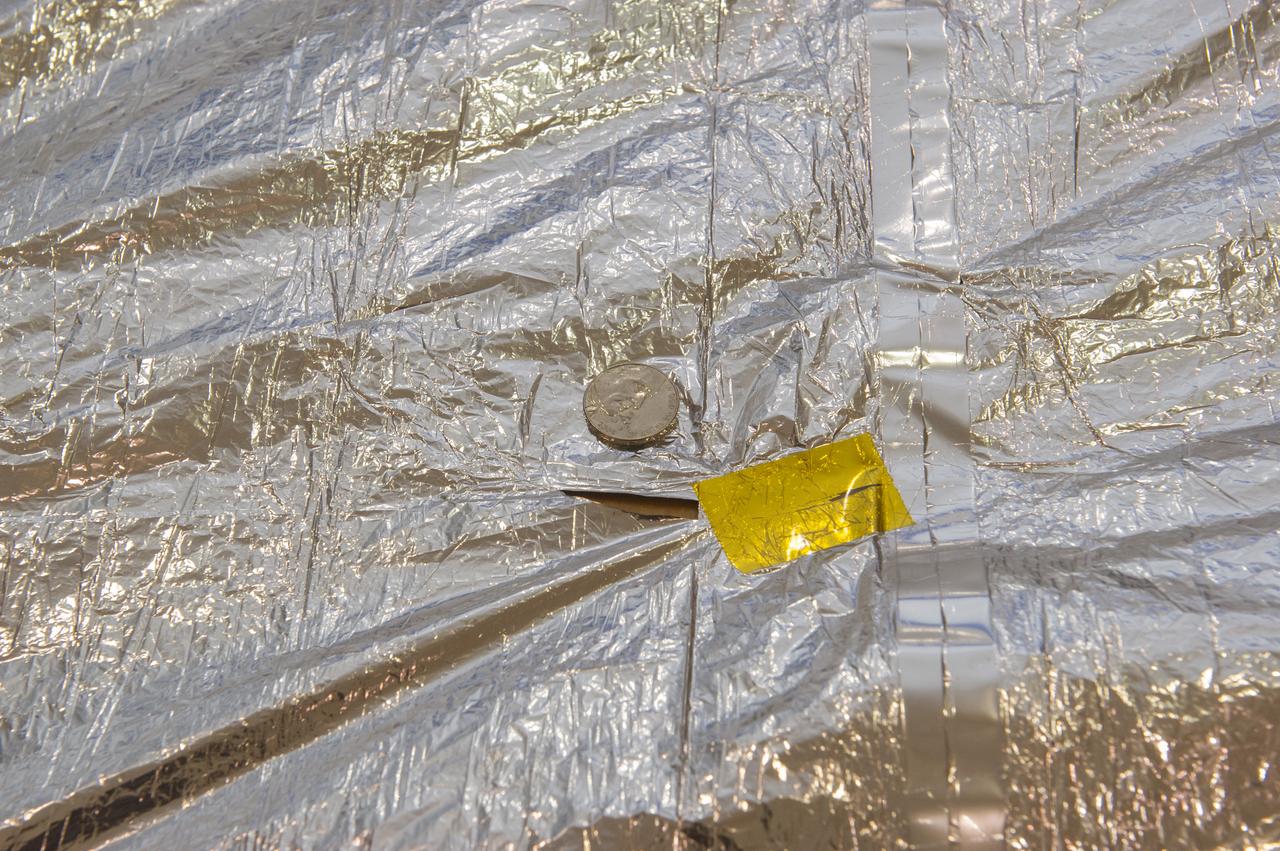
TIFFANY LOCKETT OVERSEES THE HALF SCALE (36 SQUARE METERS) ENGINEERING DEVELOPMENT UNIT (EDU) SOLAR SAIL DEPLOYMENT DEMONSTRATION IN PREPARATION FOR FULL SCALE EDU (86 SQUARE METERS) DEPLOYMENT IN APRIL, 2016. DETAILS OF RIPS AND HOLES IN SOLAR SAIL FABRIC.
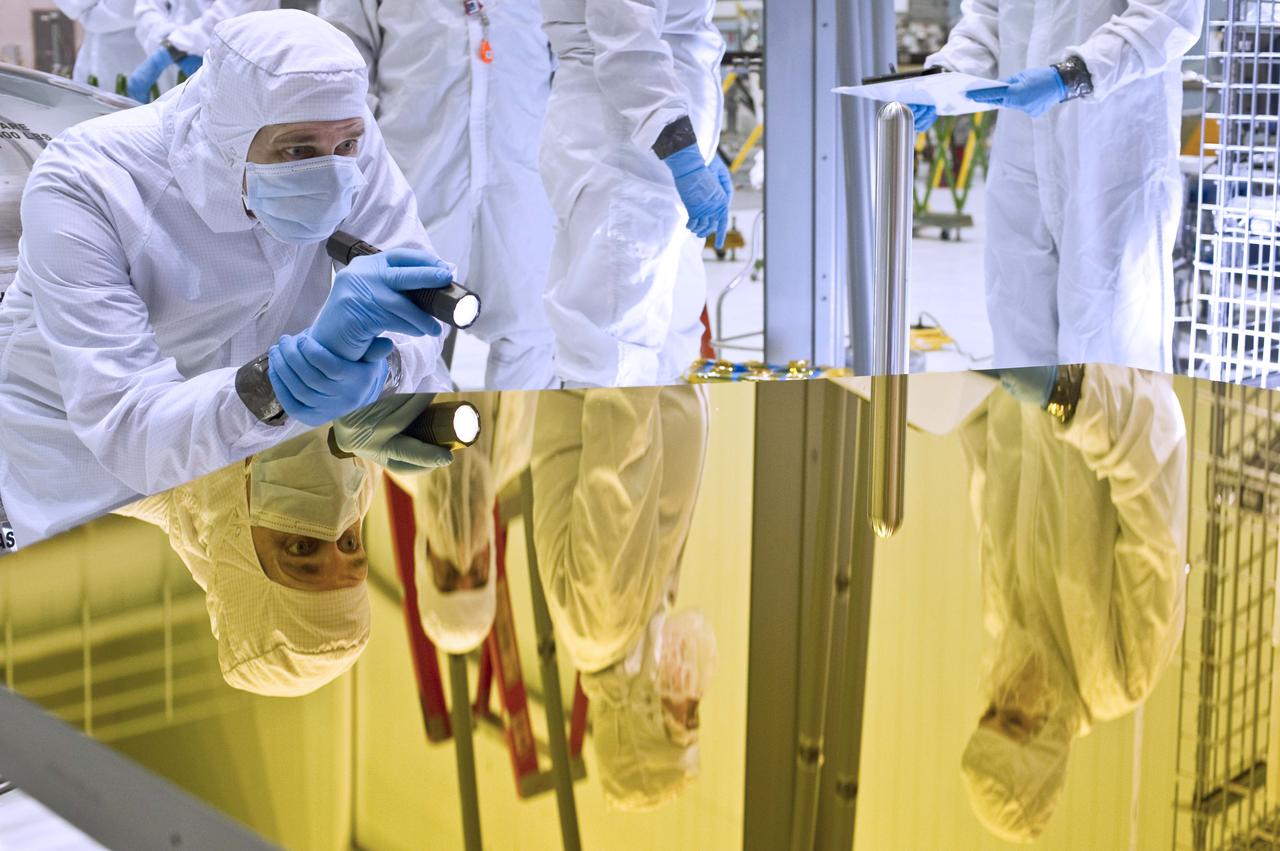
NASA image release April 13, 2011 An engineer examines the Webb telescope primary mirror Engineering Design Unit segment in the clean room at NASA's Goddard Space Flight Center, Greenbelt, Md. It takes two unique types of mirrors working together to see farther back in time and space than ever before, and engineers at NASA's Goddard Space Flight Center have just received one of each type. Primary and Secondary Mirror Engineering Design Units (EDUs) have recently arrived at NASA's Goddard Space Flight Center in Greenbelt, Md. from Northrop Grumman Aerospace Systems in Redondo Beach, Calif. and are undergoing examination and testing. When used on the James Webb Space Telescope those two types of mirrors will allow scientists to make those observations. "The Primary mirror EDU will be used next year to check out optical test equipment developed by Goddard and slated to be used to test the full Flight Primary mirror," said Lee Feinberg, the Optical Telescope Element Manager for the Webb telescope at NASA Goddard. "Following that, the primary and secondary EDU's will actually be assembled onto the Pathfinder telescope. The Pathfinder telescope includes two primary mirror segments (one being the Primary EDU) and the Secondary EDU and allows us to check out all of the assembly and test procedures (that occur both at Goddard and testing at Johnson Space Center, Houston, Texas) well in advance of the flight telescope assembly and test." To read more about this image go to: <a href="http://www.nasa.gov/topics/technology/features/two-webb-mirrors.html" rel="nofollow">www.nasa.gov/topics/technology/features/two-webb-mirrors....</a> Credit: NASA/GSFC/Chris Gunn <b><a href="http://www.nasa.gov/centers/goddard/home/index.html" rel="nofollow">NASA Goddard Space Flight Center</a></b> enables NASA’s mission through four scientific endeavors: Earth Science, Heliophysics, Solar System Exploration, and Astrophysics. Goddard plays a leading role in NASA’s accomplishments by contributing compelling scientific knowledge to advance the Agency’s mission. <b>Follow us on <a href="http://twitter.com/NASA_GoddardPix" rel="nofollow">Twitter</a></b> <b>Join us on <a href="http://www.facebook.com/pages/Greenbelt-MD/NASA-Goddard/395013845897?ref=tsd" rel="nofollow">Facebook</a></b>
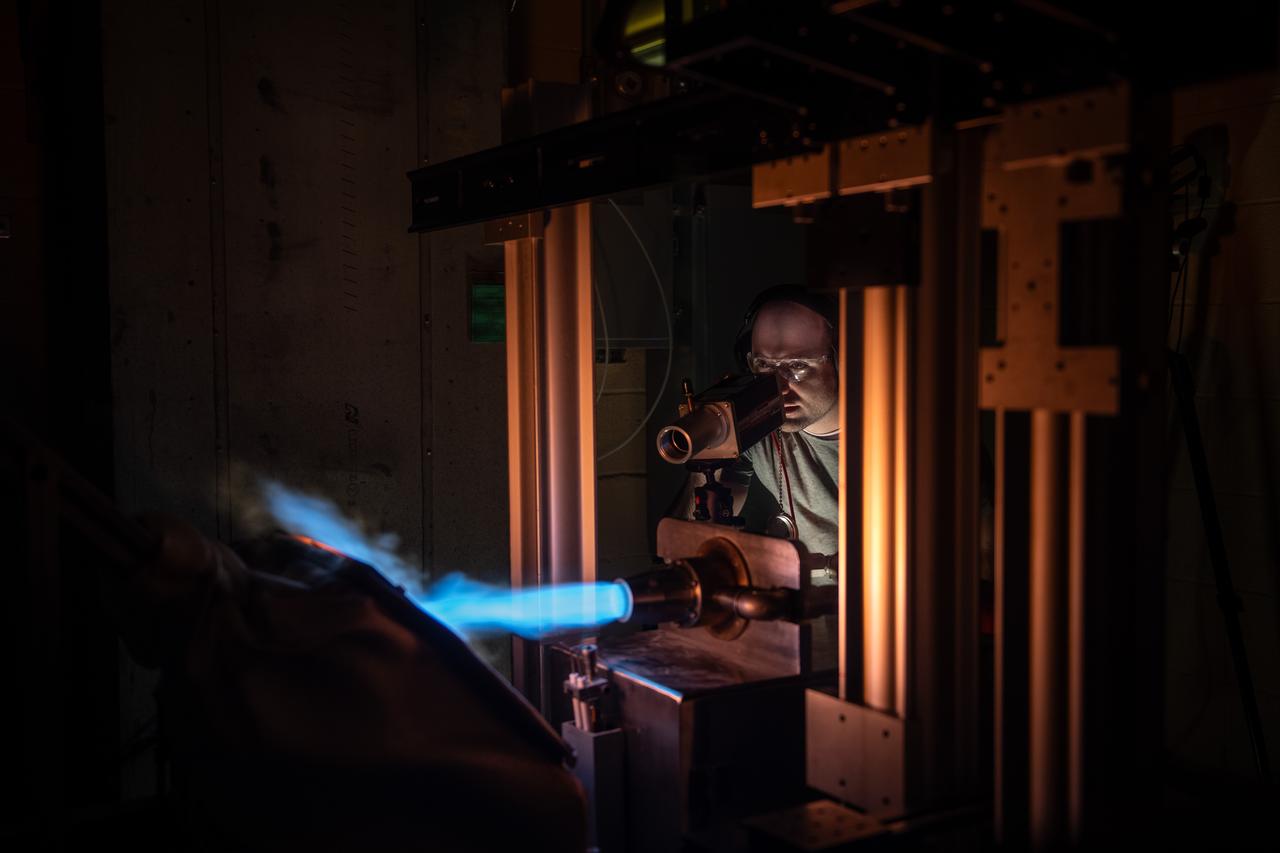
NASA Glenn’s Natural Gas/Oxygen Burner Rig is used to study the high temperature performance of various metal alloys, ceramics, and protective coatings for aero and space propulsion systems. The burner rig provides an easily accessible and economical method to simulate engine operating conditions to understand thermomechanical and thermochemical degradation of materials and structures. In the photo, Materials Research Engineer Michael Presby uses an infrared pyrometer to monitor the surface temperature of the material for a test on February 23, 2024. Photo Credit: (NASA/Sara Lowthian-Hanna)
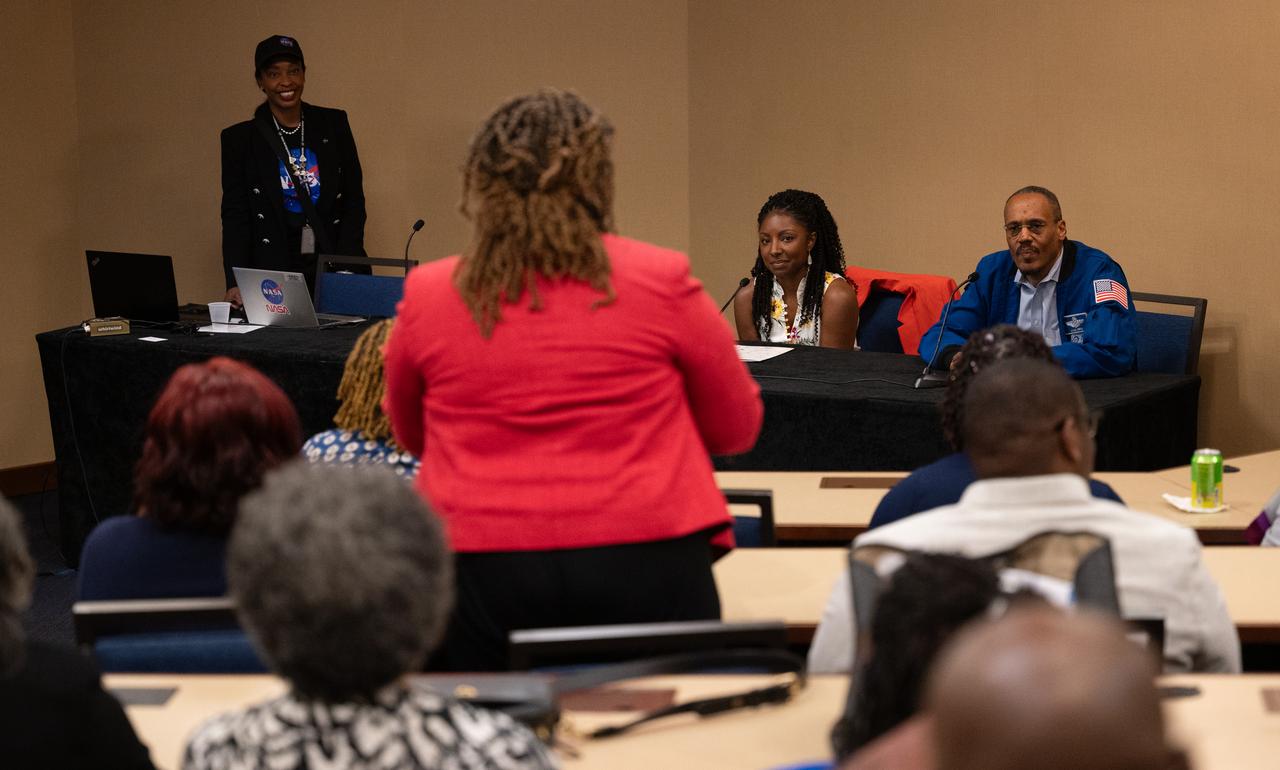
NASA TV producer of “The Color of Space” Jori Kates, left, and NASA astronaut Alvin Drew answer questions before a screening of “The Color of Space” as part of the Department of Education’s HBCU Week Conference, Monday, Sept. 25, 2023, at the Hyatt Regency in Arlington, Va. Photo Credit: (NASA/Joel Kowsky)
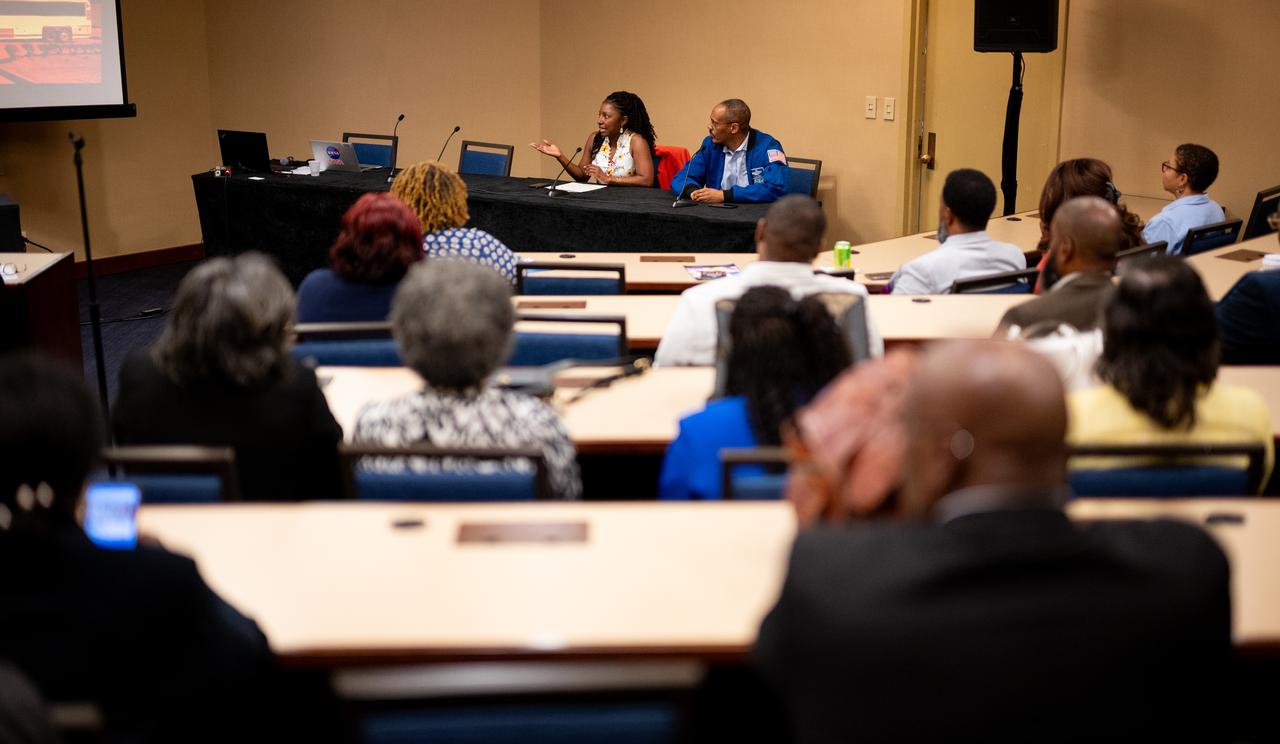
NASA TV producer of “The Color of Space” Jori Kates, left, and NASA astronaut Alvin Drew answer questions before a screening of “The Color of Space” as part of the Department of Education’s HBCU Week Conference, Monday, Sept. 25, 2023, at the Hyatt Regency in Arlington, Va. Photo Credit: (NASA/Joel Kowsky)
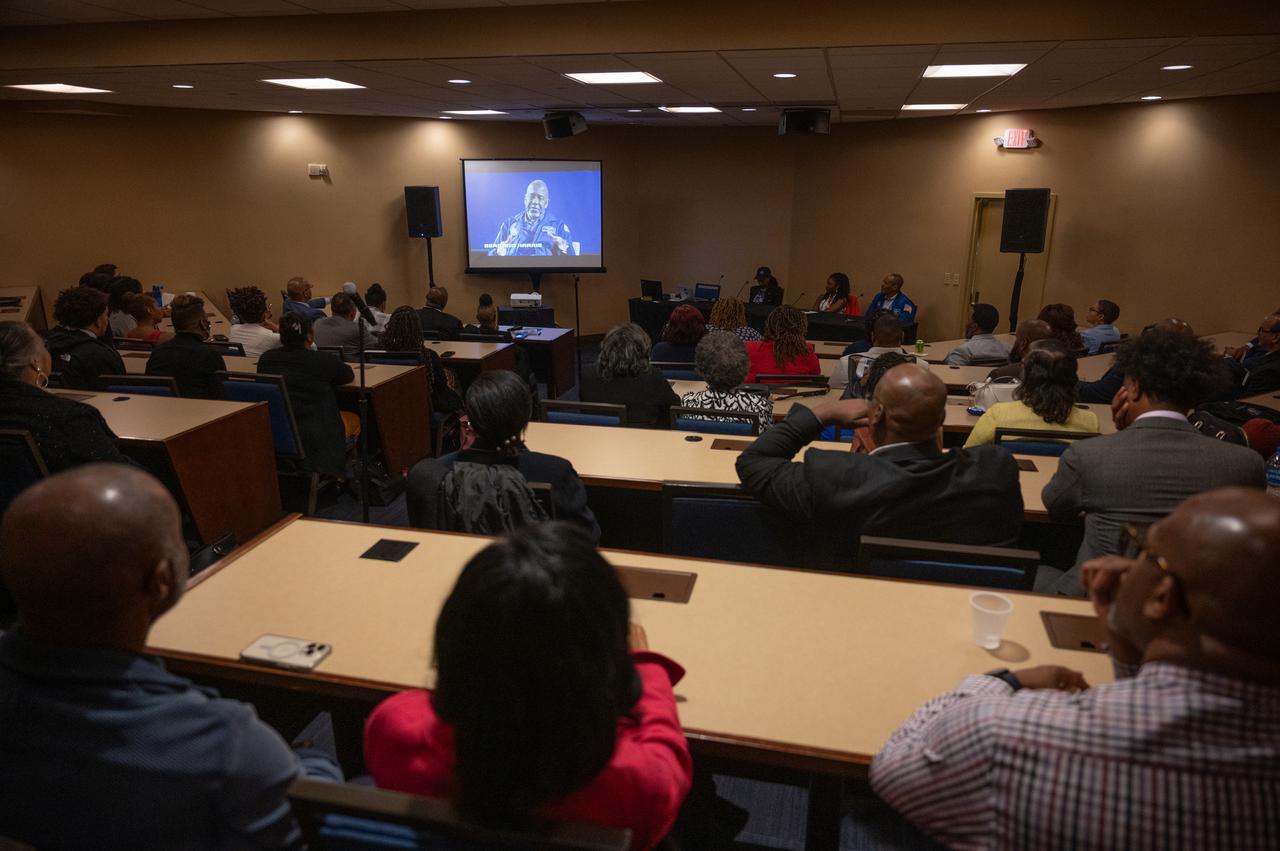
Attendees watch “The Color of Space” during a screening of the documentary as part of the Department of Education’s HBCU Week Conference, Monday, Sept. 25, 2023, at the Hyatt Regency in Arlington, Va. Photo Credit: (NASA/Joel Kowsky)
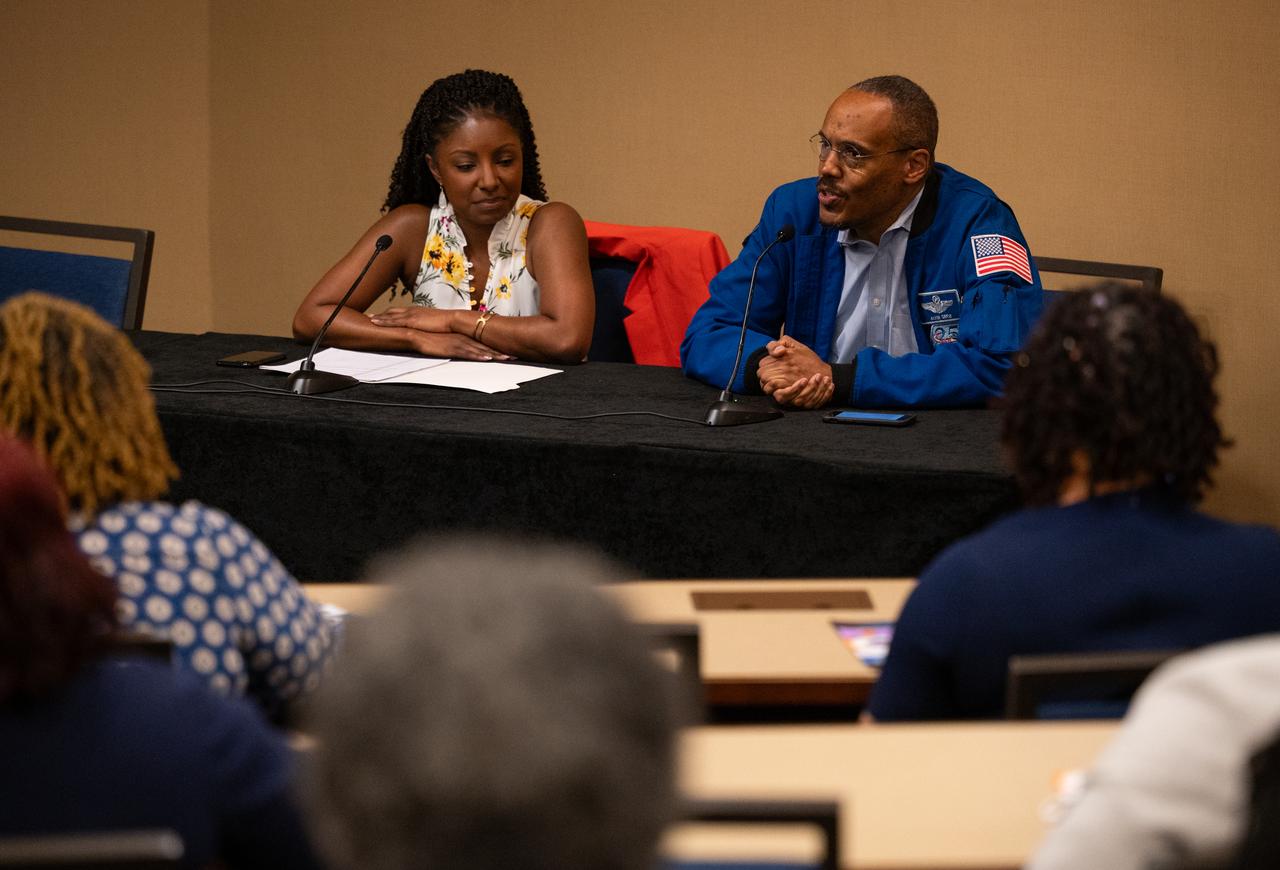
NASA TV producer of “The Color of Space” Jori Kates, left, and NASA astronaut Alvin Drew answer questions before a screening of “The Color of Space” as part of the Department of Education’s HBCU Week Conference, Monday, Sept. 25, 2023, at the Hyatt Regency in Arlington, Va. Photo Credit: (NASA/Joel Kowsky)

Attendees watch “The Color of Space” during a screening of the documentary as part of the Department of Education’s HBCU Week Conference, Monday, Sept. 25, 2023, at the Hyatt Regency in Arlington, Va. Photo Credit: (NASA/Joel Kowsky)
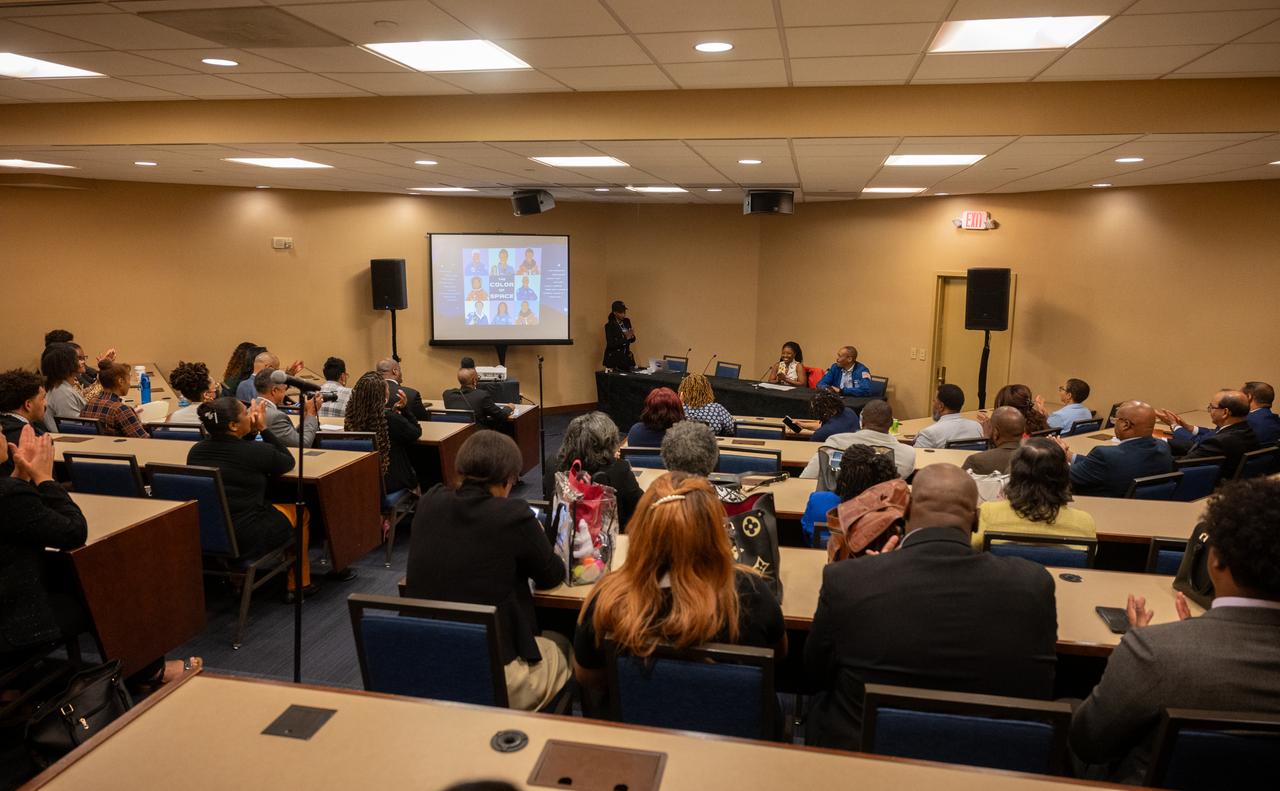
NASA’s Lisa Frazier introduces NASA TV producer of “The Color of Space” Jori Kates and NASA astronaut Alvin Drew before a screening of “The Color of Space” as part of the Department of Education’s HBCU Week Conference, Monday, Sept. 25, 2023, at the Hyatt Regency in Arlington, Va. Photo Credit: (NASA/Joel Kowsky)
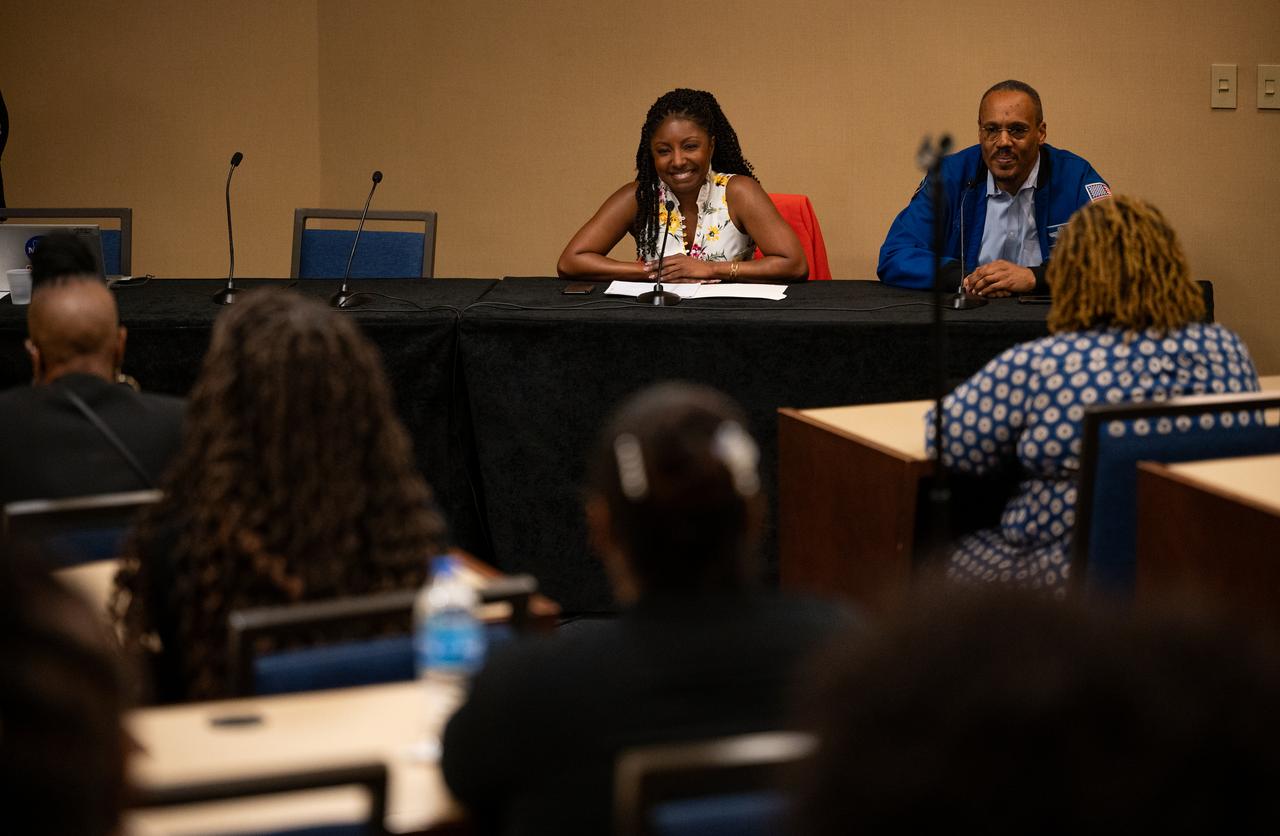
NASA TV producer of “The Color of Space” Jori Kates, left, and NASA astronaut Alvin Drew answer questions before a screening of “The Color of Space” as part of the Department of Education’s HBCU Week Conference, Monday, Sept. 25, 2023, at the Hyatt Regency in Arlington, Va. Photo Credit: (NASA/Joel Kowsky)

A test unit, or prototype, of NASA's Advanced Plant Habitat (APH) was delivered to the Space Station Processing Facility at the agency's Kennedy Space Center in Florida. The APH is the largest plant chamber built for the agency. Oscar Monje, a scientist on the Engineering Services Contract, prepares the base of the APH for engineering development tests to see how the science will integrate with the various systems of the plant habitat. The APH will have about 180 sensors and fourt times the light output of Veggie. The APH will be delivered to the International Space Station in March 2017.

A test unit, or prototype, of NASA's Advanced Plant Habitat (APH) was delivered to the Space Station Processing Facility at the agency's Kennedy Space Center in Florida. The APH is the largest plant chamber built for the agency. The base of the APH is being prepared for engineering development tests to see how the science will integrate with the various systems of the plant habitat. It will have 180 sensors and four times the light output of Veggie. The APH will be delivered to the International Space Station in March 2017.

A test unit, or prototype, of NASA's Advanced Plant Habitat (APH) was delivered to the Space Station Processing Facility at the agency's Kennedy Space Center in Florida. The APH is the largest plant chamber built for the agency. The unit is being prepared for engineering development tests to see how the science will integrate with the various systems of the plant habitat. It will have 180 sensors and four times the light output of Veggie. The APH will be delivered to the International Space Station in March 2017.

A test unit, or prototype, of NASA's Advanced Plant Habitat (APH) was delivered to the Space Station Processing Facility at the agency's Kennedy Space Center in Florida. The APH is the largest plant chamber built for the agency. The unit is being prepared for engineering development tests to see how the science will integrate with the various systems of the plant habitat. It will have 180 sensors and four times the light output of Veggie. The APH will be delivered to the International Space Station in March 2017.

A test unit, or prototype, of NASA's Advanced Plant Habitat (APH) was delivered to the Space Station Processing Facility at the agency's Kennedy Space Center in Florida. Inside a laboratory, Engineering Services Contract engineers set up test parameters on computers. From left, are Glenn Washington, ESC quality engineer; Claton Grosse, ESC mechanical engineer; and Jeff Richards, ESC project scientist. The APH is the largest plant chamber built for the agency. It will have 180 sensors and four times the light output of Veggie. The APH will be delivered to the International Space Station in March 2017.
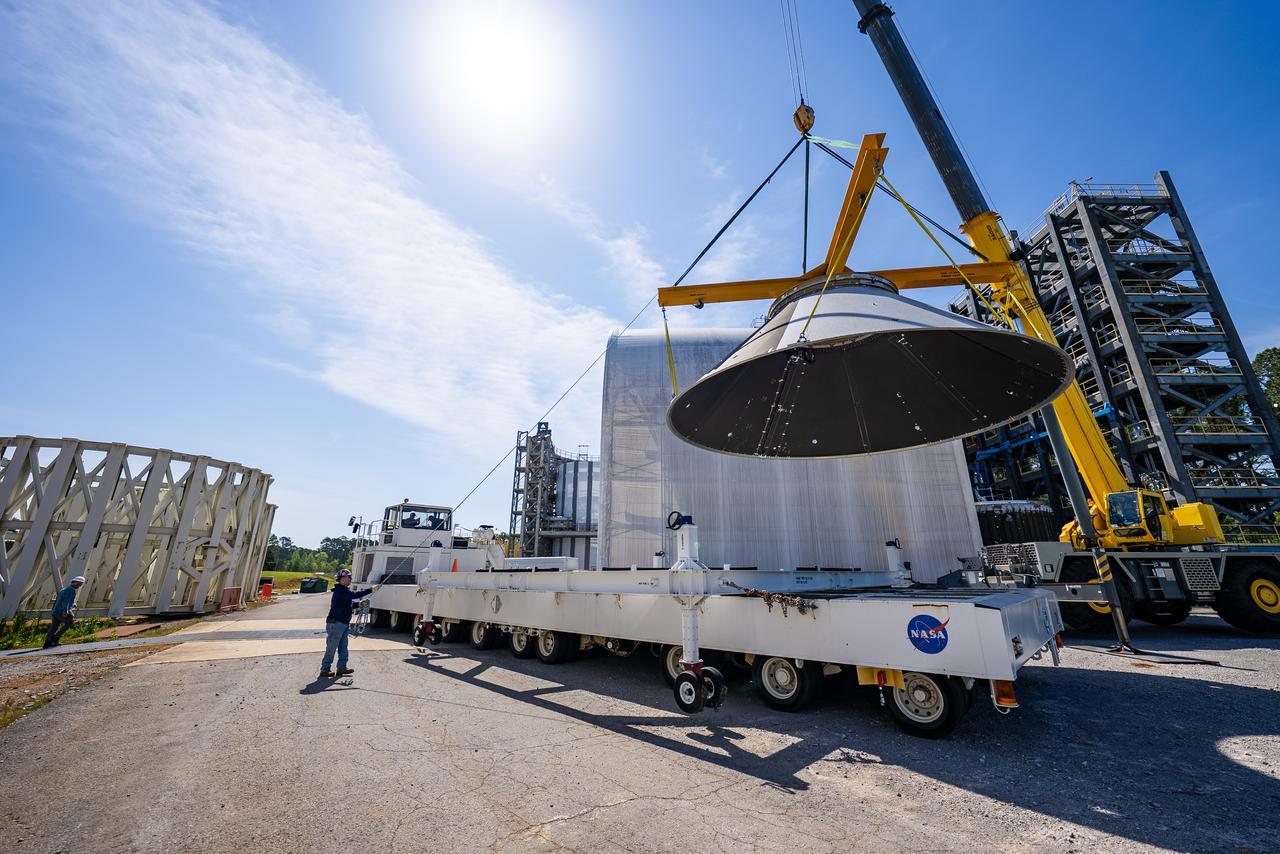
Technicians at NASA’s Marshall Space Flight Center in Huntsville, Alabama, are seen in these images taken April 17, 2025, moving the payload adapter test article from Building 4697 to Building 4705 for storage. This move marks the end of structural testing for the test article. Next, engineers will complete the qualification article and conduct additional for further testing before building the final flight hardware. Manufactured at Marshall, the test article underwent extensive and rigorous testing to validate the design before engineers finalized the configuration for the flight article. The newly completed composite payload adapter is an evolution from the Orion stage adapter to be used in the upgraded Block 1B configuration of the SLS (Space Launch System) rocket, debuting with Artemis IV.
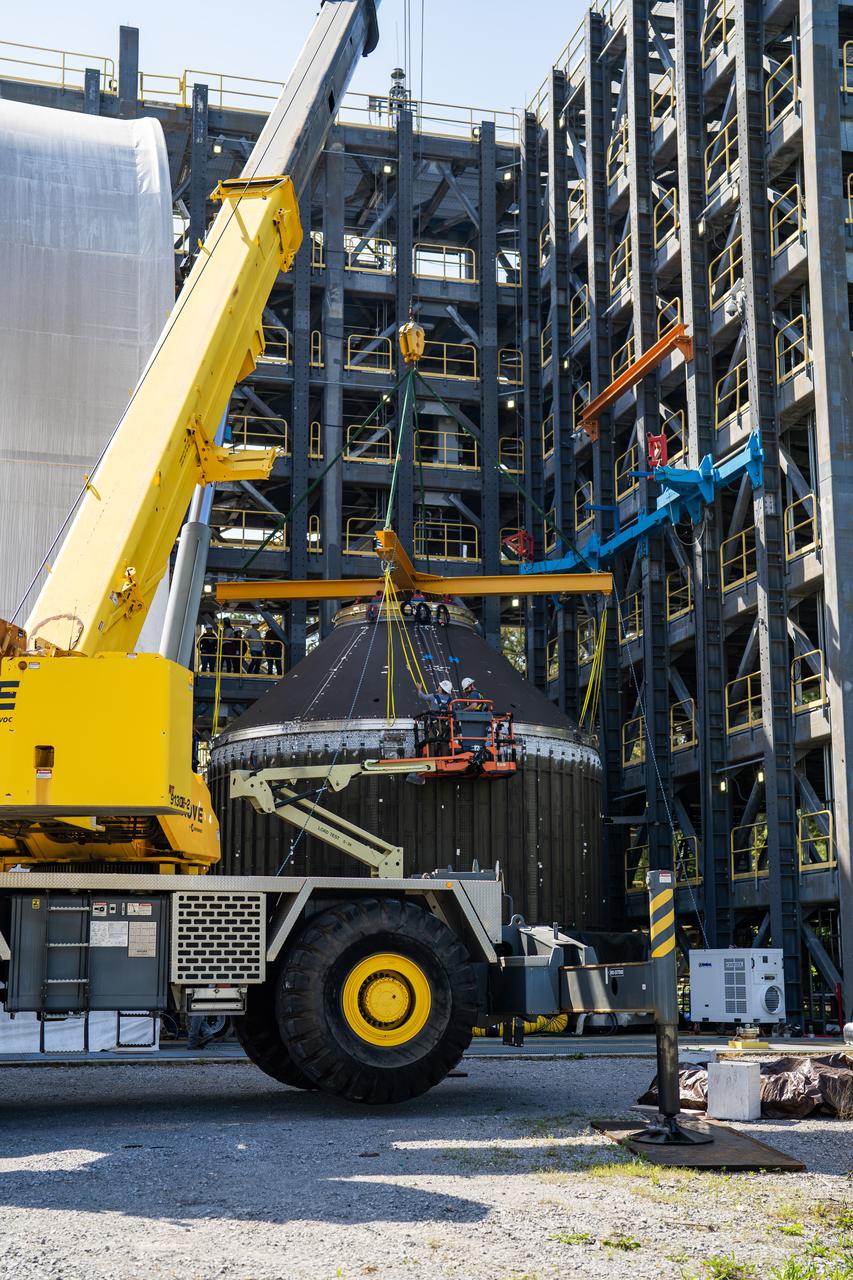
Technicians at NASA’s Marshall Space Flight Center in Huntsville, Alabama, are seen in these images taken April 17, 2025, moving the payload adapter test article from Building 4697 to Building 4705 for storage. This move marks the end of structural testing for the test article. Next, engineers will complete the qualification article and conduct additional for further testing before building the final flight hardware. Manufactured at Marshall, the test article underwent extensive and rigorous testing to validate the design before engineers finalized the configuration for the flight article. The newly completed composite payload adapter is an evolution from the Orion stage adapter to be used in the upgraded Block 1B configuration of the SLS (Space Launch System) rocket, debuting with Artemis IV.
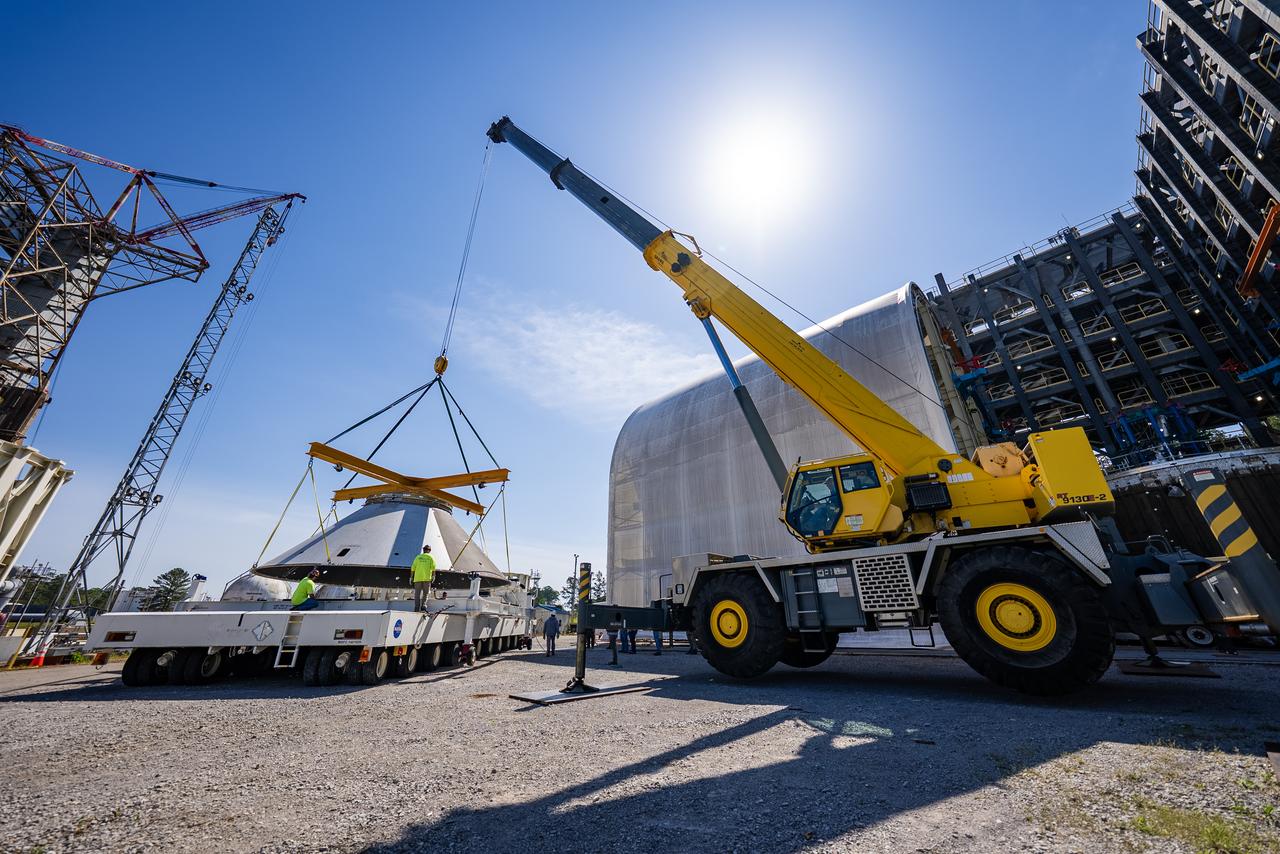
Technicians at NASA’s Marshall Space Flight Center in Huntsville, Alabama, are seen in these images taken April 17, 2025, moving the payload adapter test article from Building 4697 to Building 4705 for storage. This move marks the end of structural testing for the test article. Next, engineers will complete the qualification article and conduct additional for further testing before building the final flight hardware. Manufactured at Marshall, the test article underwent extensive and rigorous testing to validate the design before engineers finalized the configuration for the flight article. The newly completed composite payload adapter is an evolution from the Orion stage adapter to be used in the upgraded Block 1B configuration of the SLS (Space Launch System) rocket, debuting with Artemis IV.

Technicians at NASA’s Marshall Space Flight Center in Huntsville, Alabama, are seen in these images taken April 17, 2025, moving the payload adapter test article from Building 4697 to Building 4705 for storage. This move marks the end of structural testing for the test article. Next, engineers will complete the qualification article and conduct additional for further testing before building the final flight hardware. Manufactured at Marshall, the test article underwent extensive and rigorous testing to validate the design before engineers finalized the configuration for the flight article. The newly completed composite payload adapter is an evolution from the Orion stage adapter to be used in the upgraded Block 1B configuration of the SLS (Space Launch System) rocket, debuting with Artemis IV.
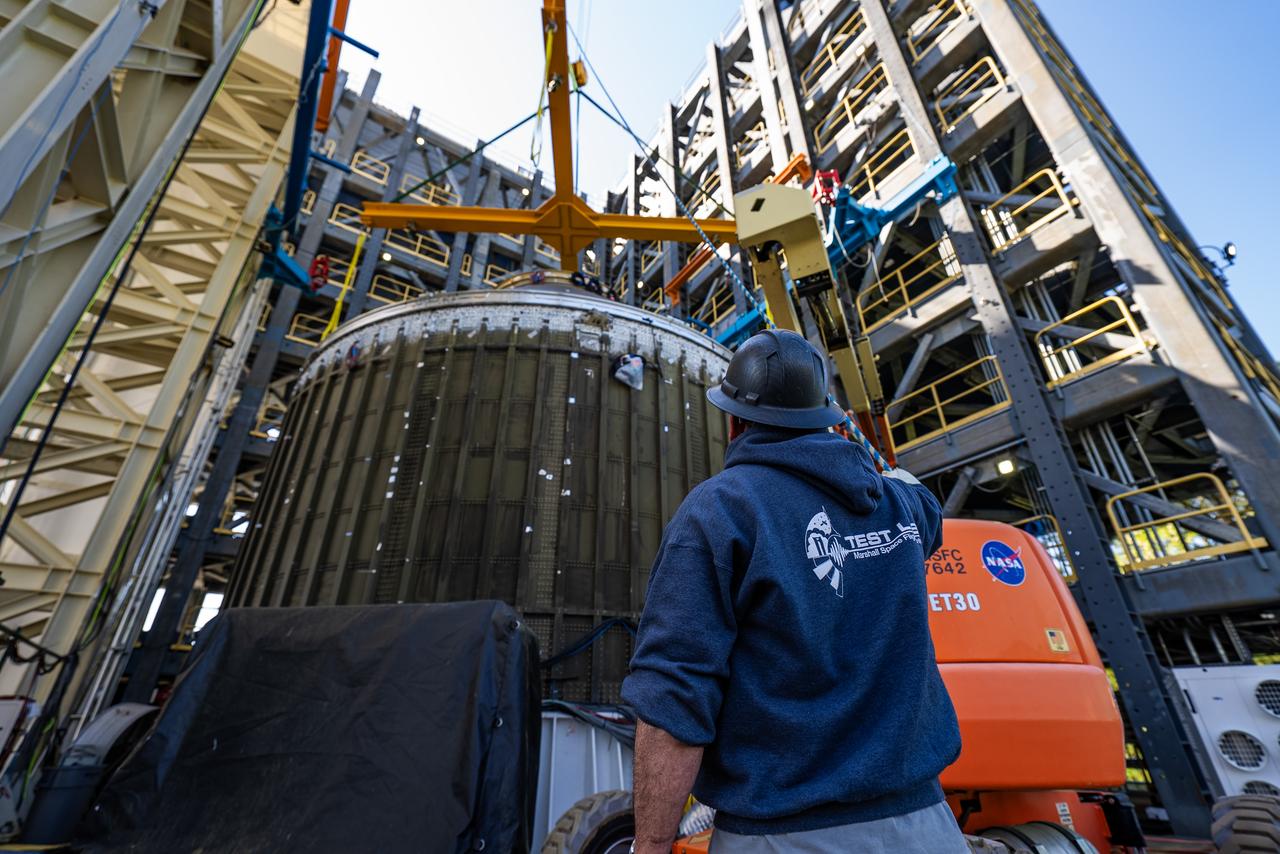
Technicians at NASA’s Marshall Space Flight Center in Huntsville, Alabama, are seen in these images taken April 17, 2025, moving the payload adapter test article from Building 4697 to Building 4705 for storage. This move marks the end of structural testing for the test article. Next, engineers will complete the qualification article and conduct additional for further testing before building the final flight hardware. Manufactured at Marshall, the test article underwent extensive and rigorous testing to validate the design before engineers finalized the configuration for the flight article. The newly completed composite payload adapter is an evolution from the Orion stage adapter to be used in the upgraded Block 1B configuration of the SLS (Space Launch System) rocket, debuting with Artemis IV.
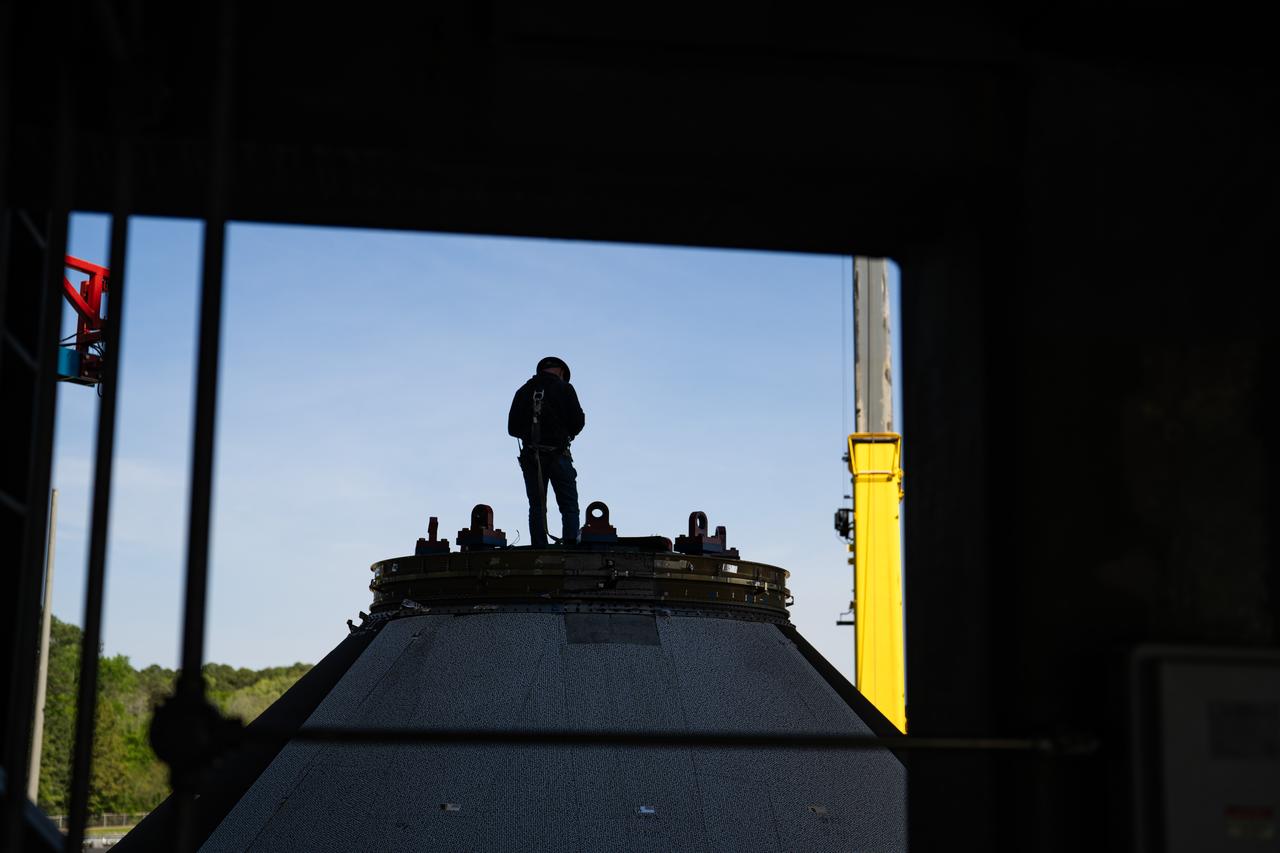
Technicians at NASA’s Marshall Space Flight Center in Huntsville, Alabama, are seen in these images taken April 17, 2025, moving the payload adapter test article from Building 4697 to Building 4705 for storage. This move marks the end of structural testing for the test article. Next, engineers will complete the qualification article and conduct additional for further testing before building the final flight hardware. Manufactured at Marshall, the test article underwent extensive and rigorous testing to validate the design before engineers finalized the configuration for the flight article. The newly completed composite payload adapter is an evolution from the Orion stage adapter to be used in the upgraded Block 1B configuration of the SLS (Space Launch System) rocket, debuting with Artemis IV.
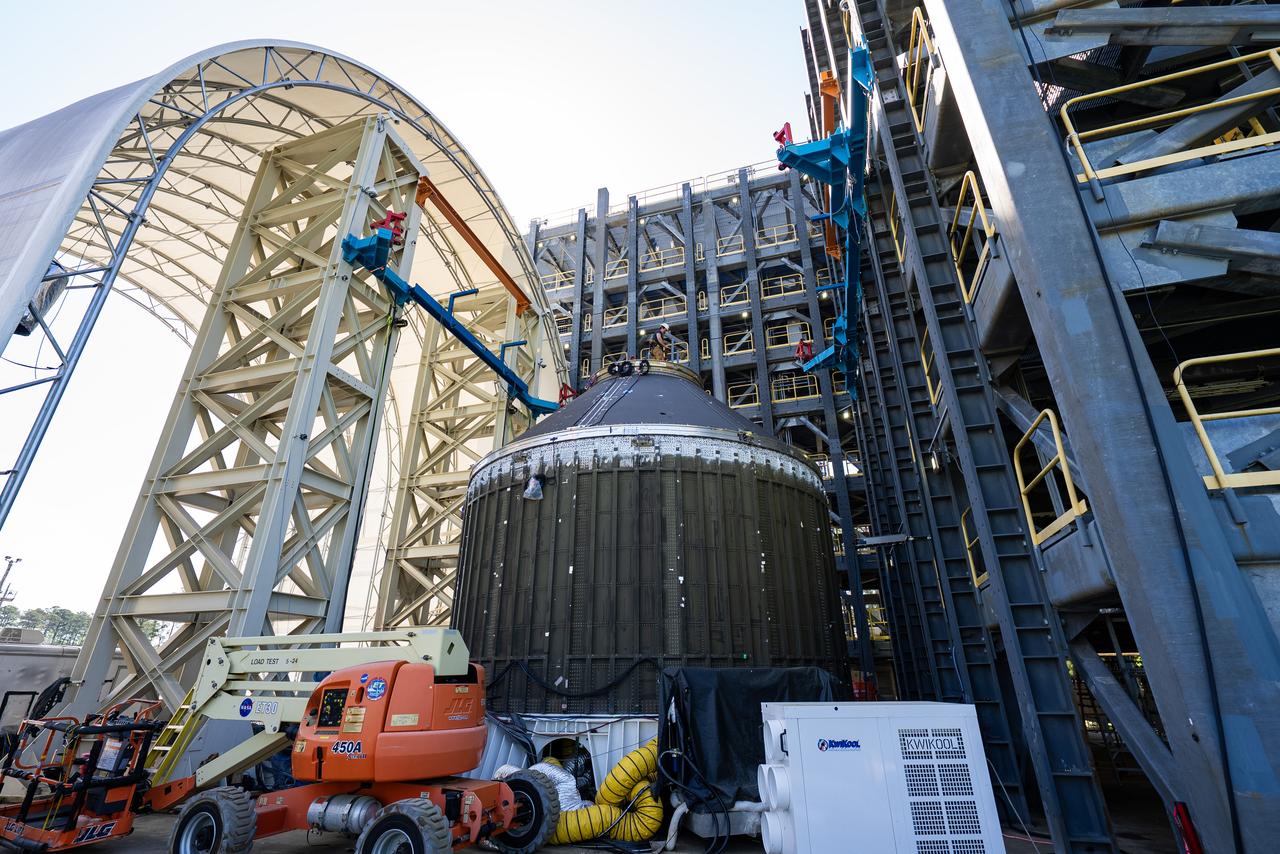
Technicians at NASA’s Marshall Space Flight Center in Huntsville, Alabama, are seen in these images taken April 17, 2025, moving the payload adapter test article from Building 4697 to Building 4705 for storage. This move marks the end of structural testing for the test article. Next, engineers will complete the qualification article and conduct additional for further testing before building the final flight hardware. Manufactured at Marshall, the test article underwent extensive and rigorous testing to validate the design before engineers finalized the configuration for the flight article. The newly completed composite payload adapter is an evolution from the Orion stage adapter to be used in the upgraded Block 1B configuration of the SLS (Space Launch System) rocket, debuting with Artemis IV.
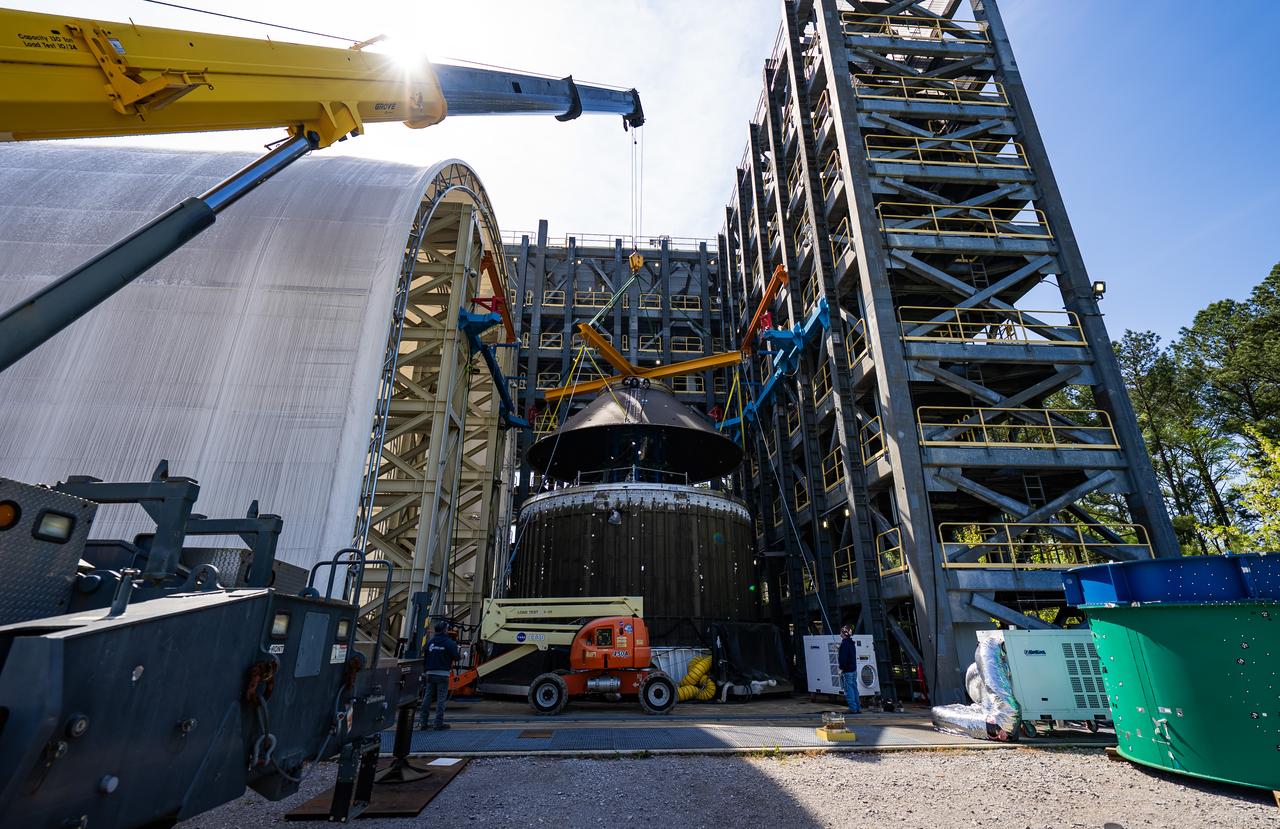
Technicians at NASA’s Marshall Space Flight Center in Huntsville, Alabama, are seen in these images taken April 17, 2025, moving the payload adapter test article from Building 4697 to Building 4705 for storage. This move marks the end of structural testing for the test article. Next, engineers will complete the qualification article and conduct additional for further testing before building the final flight hardware. Manufactured at Marshall, the test article underwent extensive and rigorous testing to validate the design before engineers finalized the configuration for the flight article. The newly completed composite payload adapter is an evolution from the Orion stage adapter to be used in the upgraded Block 1B configuration of the SLS (Space Launch System) rocket, debuting with Artemis IV.
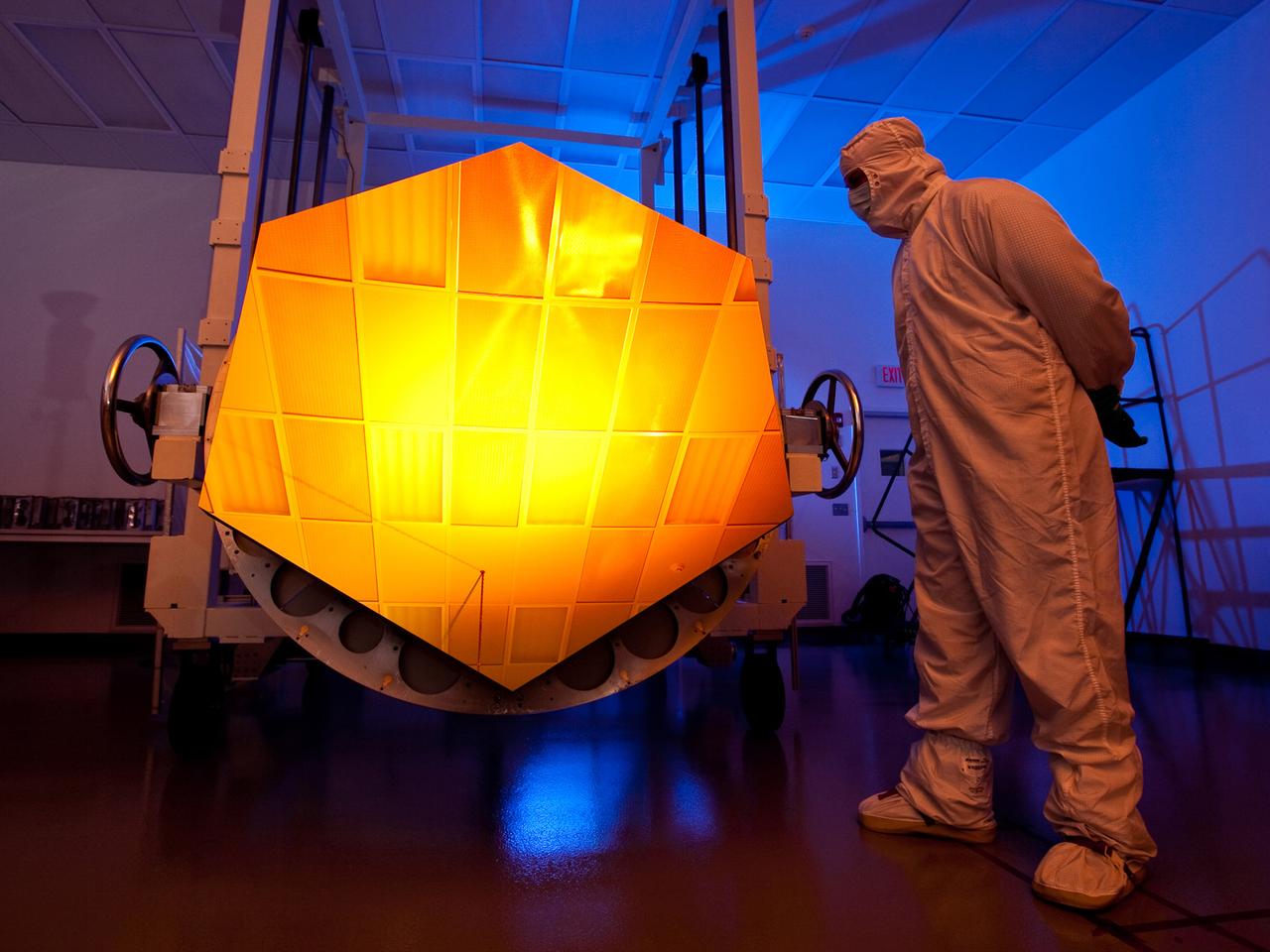
NASA image release December 9, 2010 Caption: The James Webb Space Telescope's Engineering Design Unit (EDU) primary mirror segment, coated with gold by Quantum Coating Incorporated. The actuator is located behind the mirror. Credit: Photo by Drew Noel NASA's James Webb Space Telescope is a wonder of modern engineering. As the planned successor to the Hubble Space telescope, even the smallest of parts on this giant observatory will play a critical role in its performance. A new video takes viewers behind the Webb's mirrors to investigate "actuators," one component that will help Webb focus on some of the earliest objects in the universe. The video called "Got Your Back" is part of an on-going video series about the Webb telescope called "Behind the Webb." It was produced at the Space Telescope Science Institute (STScI) in Baltimore, Md. and takes viewers behind the scenes with scientists and engineers who are creating the Webb telescope's components. During the 3 minute and 12 second video, STScI host Mary Estacion interviewed people involved in the project at Ball Aerospace in Boulder, Colo. and showed the actuators in action. The Webb telescope will study every phase in the history of our universe, ranging from the first luminous glows after the big bang, to the formation of solar systems capable of supporting life on planets like Earth, to the evolution of our own solar system. Measuring the light this distant light requires a primary mirror 6.5 meters (21 feet 4 inches) across – six times larger than the Hubble Space telescope’s mirror! Launching a mirror this large into space isn’t feasible. Instead, Webb engineers and scientists innovated a unique solution – building 18 mirrors that will act in unison as one large mirror. These mirrors are packaged together into three sections that fold up - much easier to fit inside a rocket. Each mirror is made from beryllium and weighs approximately 20 kilograms (46 pounds). Once in space, getting these mirrors to focus correctly on faraway galaxies is another challenge entirely. Actuators, or tiny mechanical motors, provide the answer to achieving a single perfect focus. The primary and secondary mirror segments are both moved by six actuators that are attached to the back of the mirrors. The primary segment has an additional actuator at the center of the mirror that adjusts its curvature. The third mirror segment remains stationary. Lee Feinberg, Webb Optical Telescope Element Manager at NASA's Goddard Space Flight Center in Greenbelt, Md. explained "Aligning the primary mirror segments as though they are a single large mirror means each mirror is aligned to 1/10,000th the thickness of a human hair. This alignment has to be done at 50 degrees above absolute zero! What's even more amazing is that the engineers and scientists working on the Webb telescope literally had to invent how to do this." With the actuators in place, Brad Shogrin, Webb Telescope Manager at Ball Aerospace, Boulder, Colo, details the next step: attaching the hexapod (meaning six-footed) assembly and radius of curvature subsystem (ROC). "Radius of curvature" refers to the distance to the center point of the curvature of the mirror. Feinberg added "To understand the concept in a more basic sense, if you change that radius of curvature, you change the mirror's focus." The "Behind the Webb" video series is available in HQ, large and small Quicktime formats, HD, Large and Small WMV formats, and HD, Large and Small Xvid formats. To see the actuators being attached to the back of a telescope mirror in this new "Behind the Webb" video, visit: <a href="http://webbtelescope.org/webb_telescope/behind_the_webb/7" rel="nofollow">webbtelescope.org/webb_telescope/behind_the_webb/7</a> For more information about Webb's mirrors, visit: <a href="http://www.jwst.nasa.gov/mirrors.html" rel="nofollow">www.jwst.nasa.gov/mirrors.html</a> For more information on the James Webb Space Telescope, visit: <a href="http://jwst.nasa.gov" rel="nofollow">jwst.nasa.gov</a> Rob Gutro NASA's Goddard Space Flight Center, Greenbelt, Md. <b><a href="http://www.nasa.gov/centers/goddard/home/index.html" rel="nofollow">NASA Goddard Space Flight Center</a></b> enables NASA’s mission through four scientific endeavors: Earth Science, Heliophysics, Solar System Exploration, and Astrophysics. Goddard plays a leading role in NASA’s accomplishments by contributing compelling scientific knowledge to advance the Agency’s mission. <b>Follow us on <a href="http://twitter.com/NASA_GoddardPix" rel="nofollow">Twitter</a></b> <b>Join us on <a href="http://www.facebook.com/pages/Greenbelt-MD/NASA-Goddard/395013845897?ref=tsd" rel="nofollow">Facebook</a></b>