
Eject! Eject! Eject!
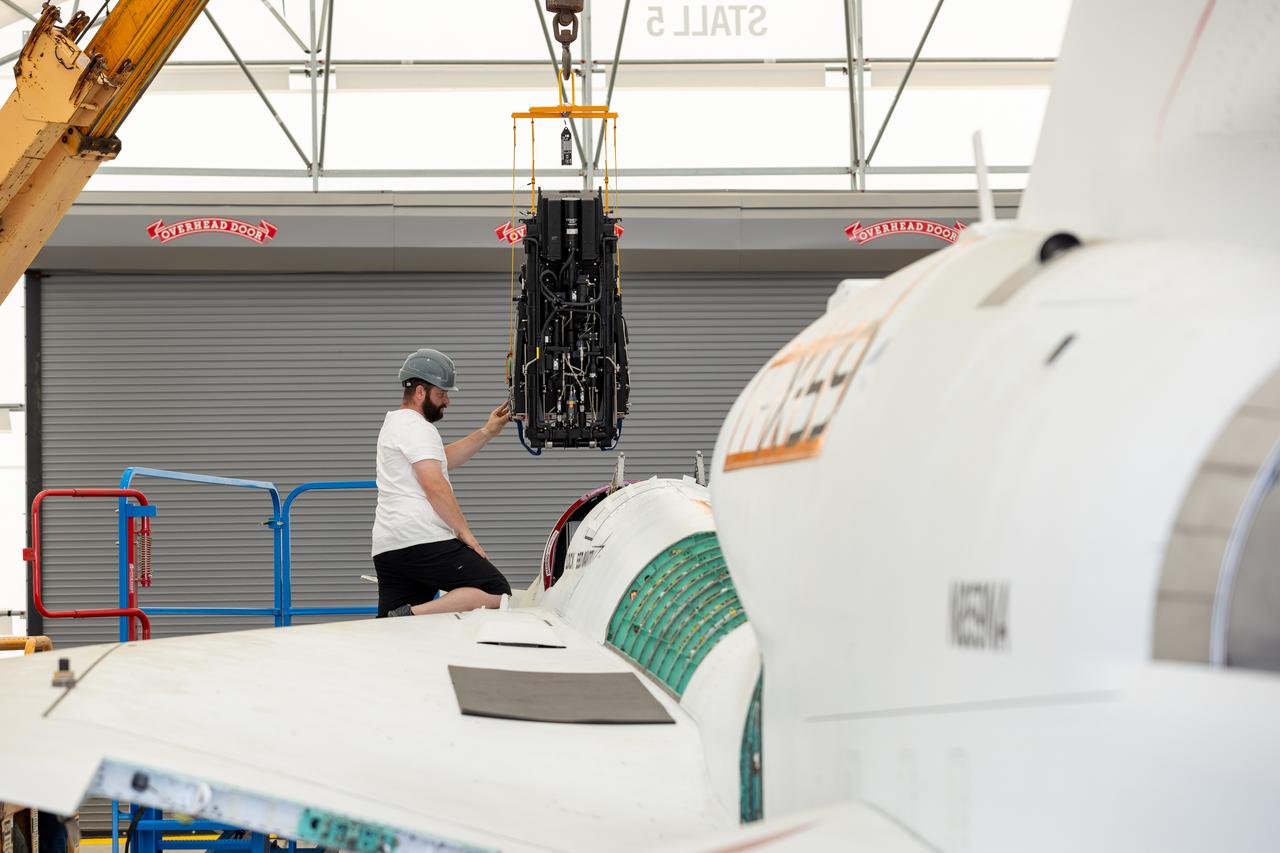
NASA Life Support Technician Mathew Sechler provides support as the X-59’s ejection seat is installed into the aircraft at Lockheed Martin Skunk Works’ facilities in Palmdale, California. Completion of the seat’s installation marks an integration milestone for the aircraft as it prepares for final ground tests.
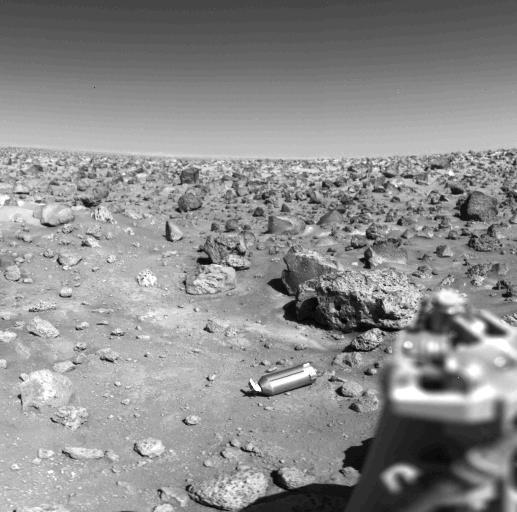
Ejected Shroud on the Martian Surface
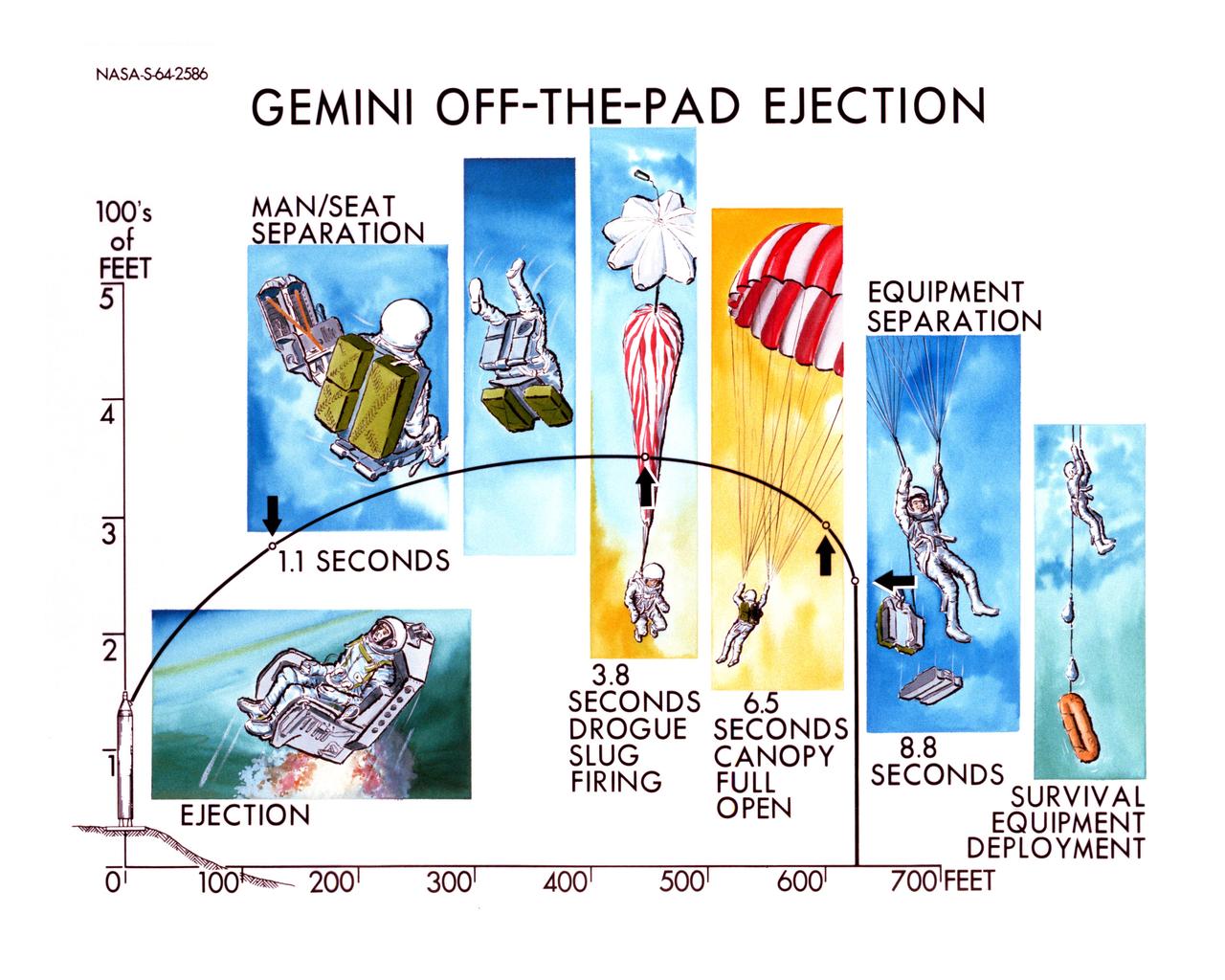
S64-02586 (1964) --- Gemini artist concept illustrating the sequence of events that take place if emergency ejection procedures are necessary before or following liftoff of a Gemini space flight.
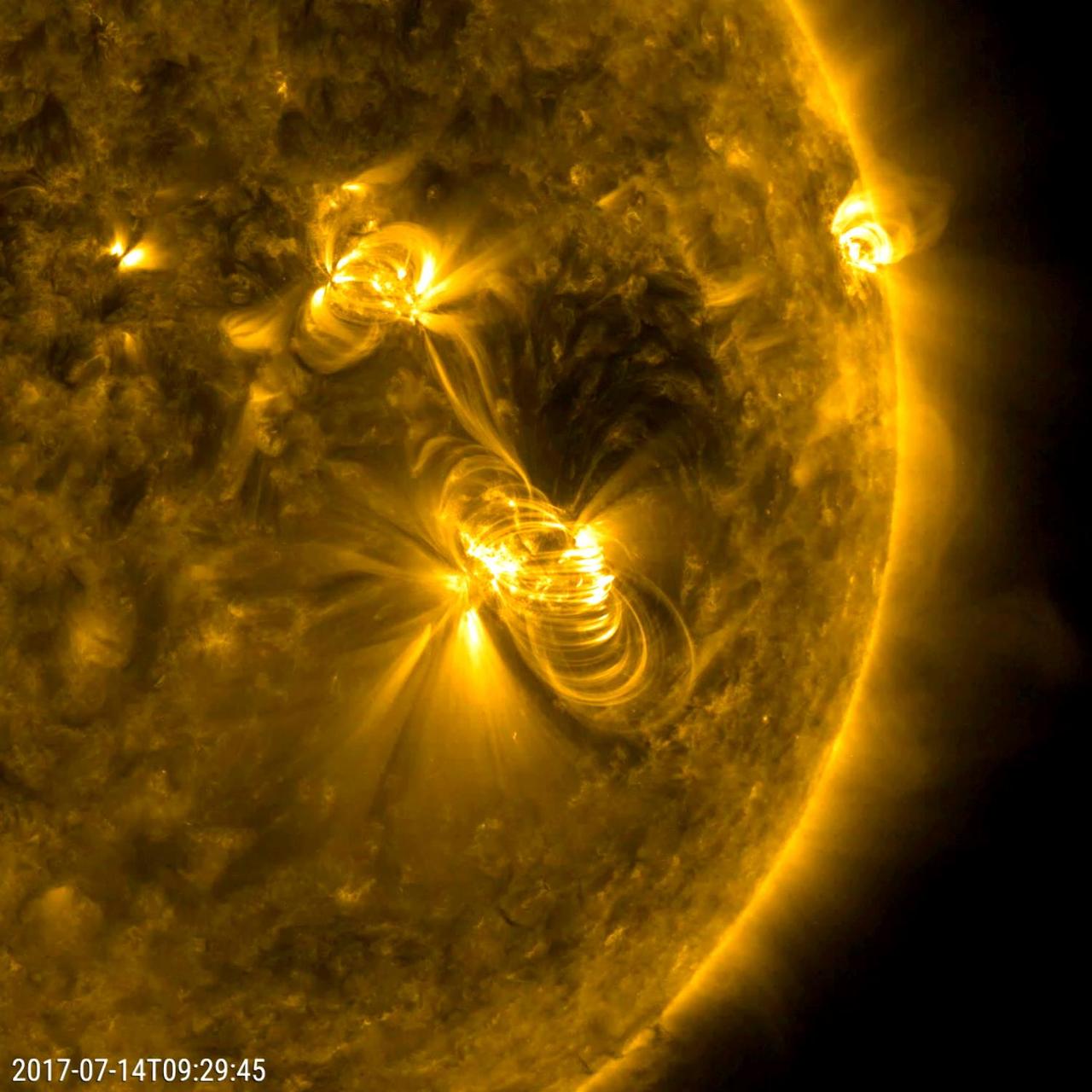
A flare medium-sized (M2) flare and a coronal mass ejection erupted from the same, large active region (July 14, 2017). The flare lasted almost two hours, quite a long duration. Coronagraphs on the SOHO spacecraft show a substantial cloud of charged particles blasting into space just after the blast. The coils arcing over this active region are particles spiraling along magnetic field lines, which were reorganizing themselves after the magnetic field was disrupted by the blast. Images were taken in a wavelength of extreme ultraviolet light. Movies are available at https://photojournal.jpl.nasa.gov/catalog/PIA21836

S90-45845 (29-31 July 1990) --- Eileen M. Collins, a USAF major and a candidate for a pilot astronaut's position with NASA, listens to a briefing on parachute ejection. The classroom session was part of a three-day survival training course hosted by Vance Air Force Base in Oklahoma. Photo credit: NASA
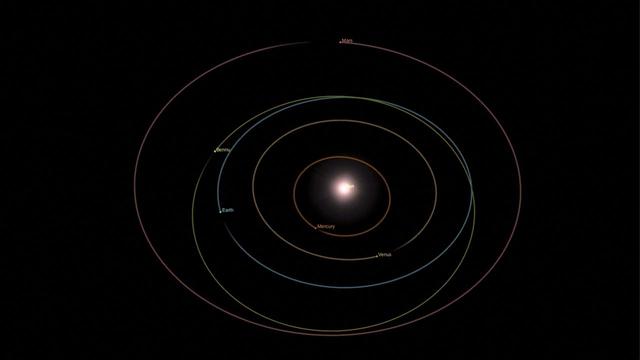
Using data collected by NASA's OSIRIS-REx mission, this animation shows the trajectories of rocky particles after being ejected from asteroid (101955) Bennu's surface. The animation emphasizes the four largest particle-ejection events detected at Bennu between December 2018 and September 2019. Additional particles not related to the ejections are also visible. Most of these pebble-size pieces of rock, typically measuring around a quarter inch (7 millimeters), were pulled back to Bennu under the asteroid's weak gravity after a short hop, sometimes even ricocheting back into space after colliding with the surface. Others remained in orbit for a few days and up to 16 revolutions. And some were ejected with enough force to completely escape from the Bennu environs. OSIRIS-REx — which stands for Origins, Spectral Interpretation, Resource Identification, and Security-Regolith Explorer — arrived at Bennu in December 2018. On Oct. 20, 2020, the mission will attempt to briefly touch down on the asteroid to scoop up material likely to include particles that were ejected before dropping back to the surface. If all goes as planned, the spacecraft will return to Earth in September 2023 with a cache of Bennu's particles for further study, including of which may even hold the physical clues as to what ejection mechanisms are at play. Movie available at https://photojournal.jpl.nasa.gov/catalog/PIA24101
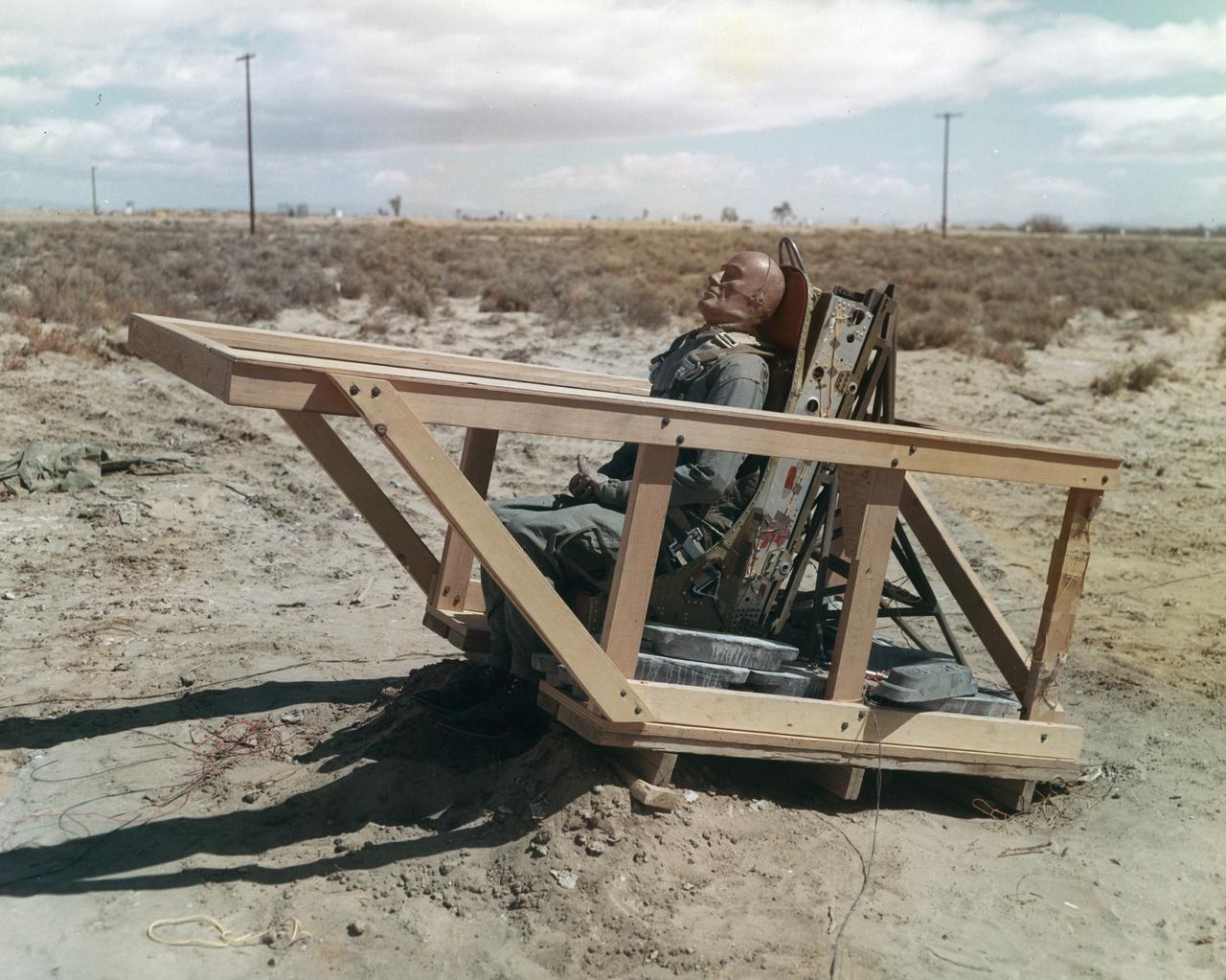
The M2-F1 was fitted with an ejection seat before the airtow flights began. The project selected the seat used in the T-37 as modified by the Weber Company to use a rocket rather than a ballistic charge for ejection. To test the ejection seat, the Flight Research Center's Dick Klein constructed a plywood mockup of the M2-F1's top deck and canopy. On the first firings, the test was unsuccessful, but on the final test the dummy in the seat landed safely. The M2-F1 ejection seat was later used in the two Lunar Landing Research Vehicles and the three Lunar Landing Training Vehicles. Three of them crashed, but in each case the pilot ejected from the vehicle successfully.

Hubble Sees Material Ejected From Comet Hale-Bopp
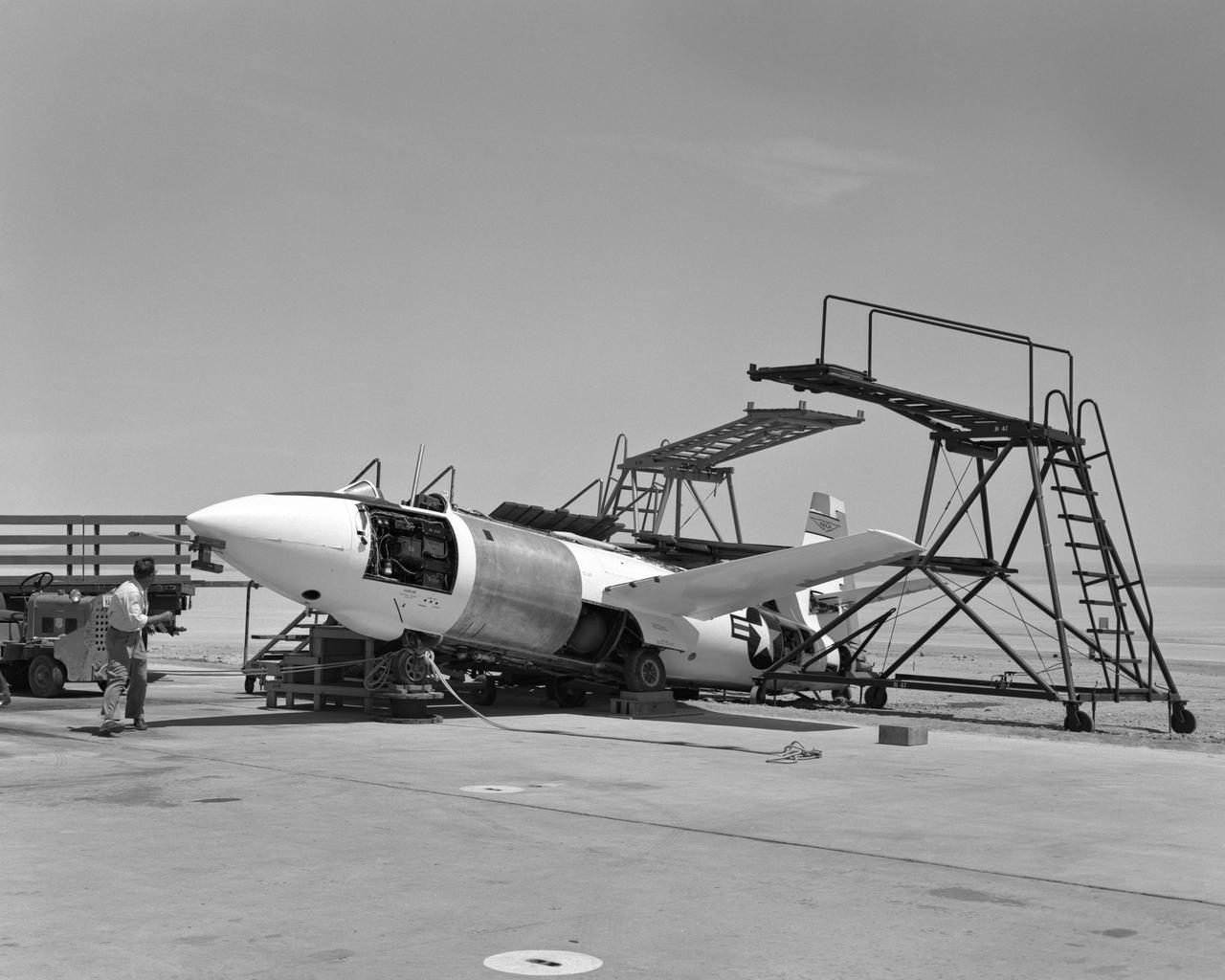
Bell X-1A ejection seat test setup
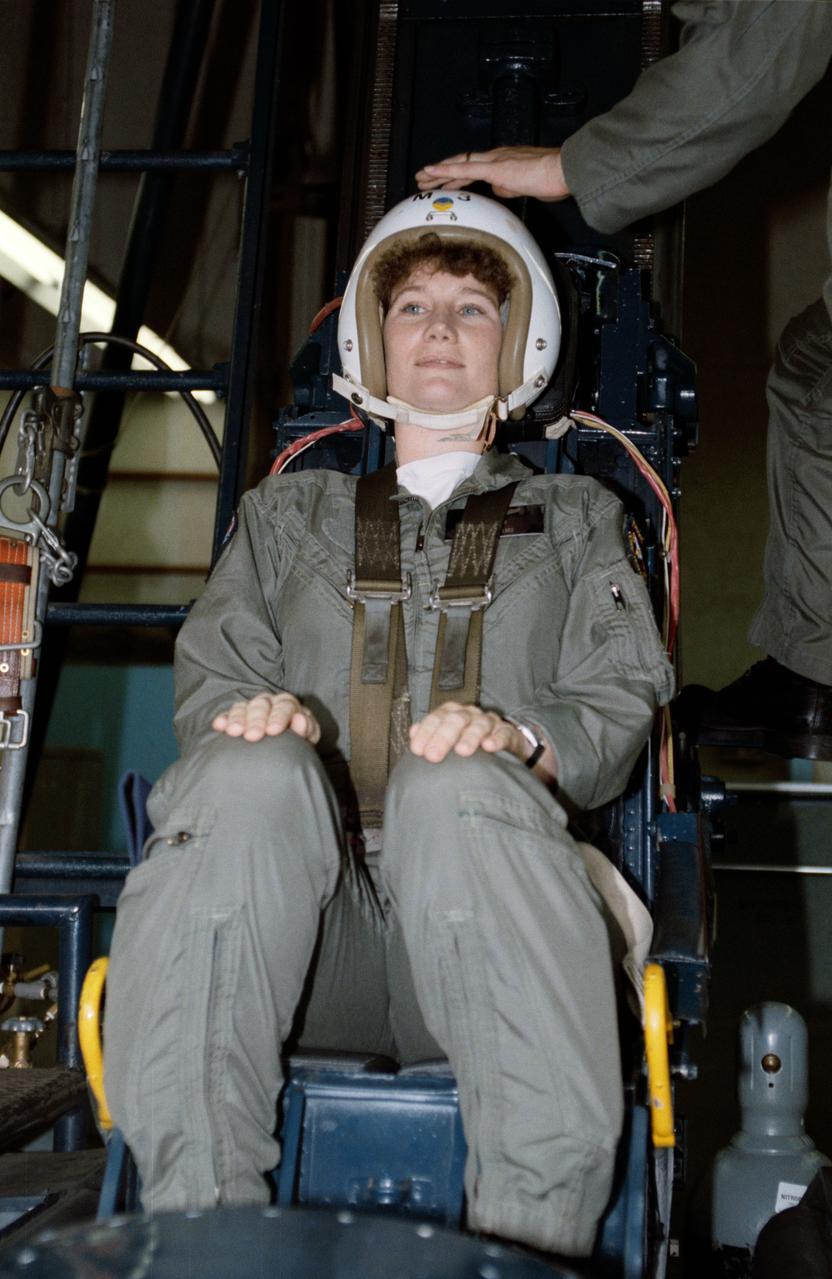
S90-45852 (29-31 July 1990) --- Susan J. Helms, one of 23 astronaut candidates who began a year's training and evaluation in July, participates in one of may sessions at a survival training course at Vance Air Force Base. This portion of the course is designed to familiarize the trainee with the "feel" of emergency ejection from a jet aircraft.

The sun shot out a small coronal mass ejection that was also associated with a small flare (Jan. 22, 2018). The video, which covers about 5 hours, shows the burst of plasma as the magnetic loops break apart. Immediately the magnetic fields brighten intensely and begin to reorganize themselves in coils above the active region. The images were taken in a wavelength of extreme ultraviolet light. Videos are available at https://photojournal.jpl.nasa.gov/catalog/PIA22184
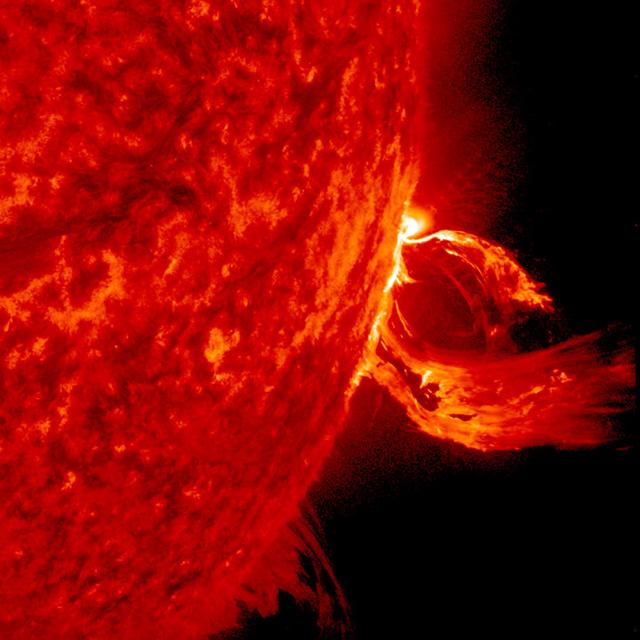
A substantial coronal mass ejection, or CME, blew out from side of the Sun, giving us a great view of the event in profile (June 17-18, 2015). NASA's Solar Dynamics Observatory caught the action in the 304 Angstrom wavelength of extreme ultraviolet light. The video clip covers about four hours of the event. While some of the plasma falls back into the Sun, a look at the coronagraph on SOHO shows a large cloud of particles heading into space. Credit: NASA/Goddard//SDO
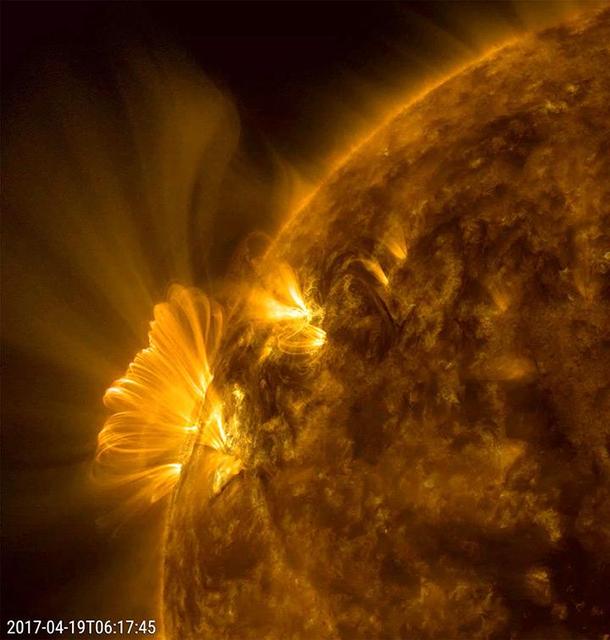
An active region that had just rotated into view blasted out a coronal mass ejection, which was immediately followed by a bright series of post-coronal loops seeking to reorganize that region's magnetic field (April 19, 2017). We have observed this phenomenon numerous times, but this one was one of the longest and clearest sequences we have seen in years. The bright loops are actually charged particles spinning along the magnetic field lines. The action was captured in a combination of two wavelengths of extreme ultraviolet light over a period of about 20 hours. Movies are available at https://photojournal.jpl.nasa.gov/catalog/PIA21598
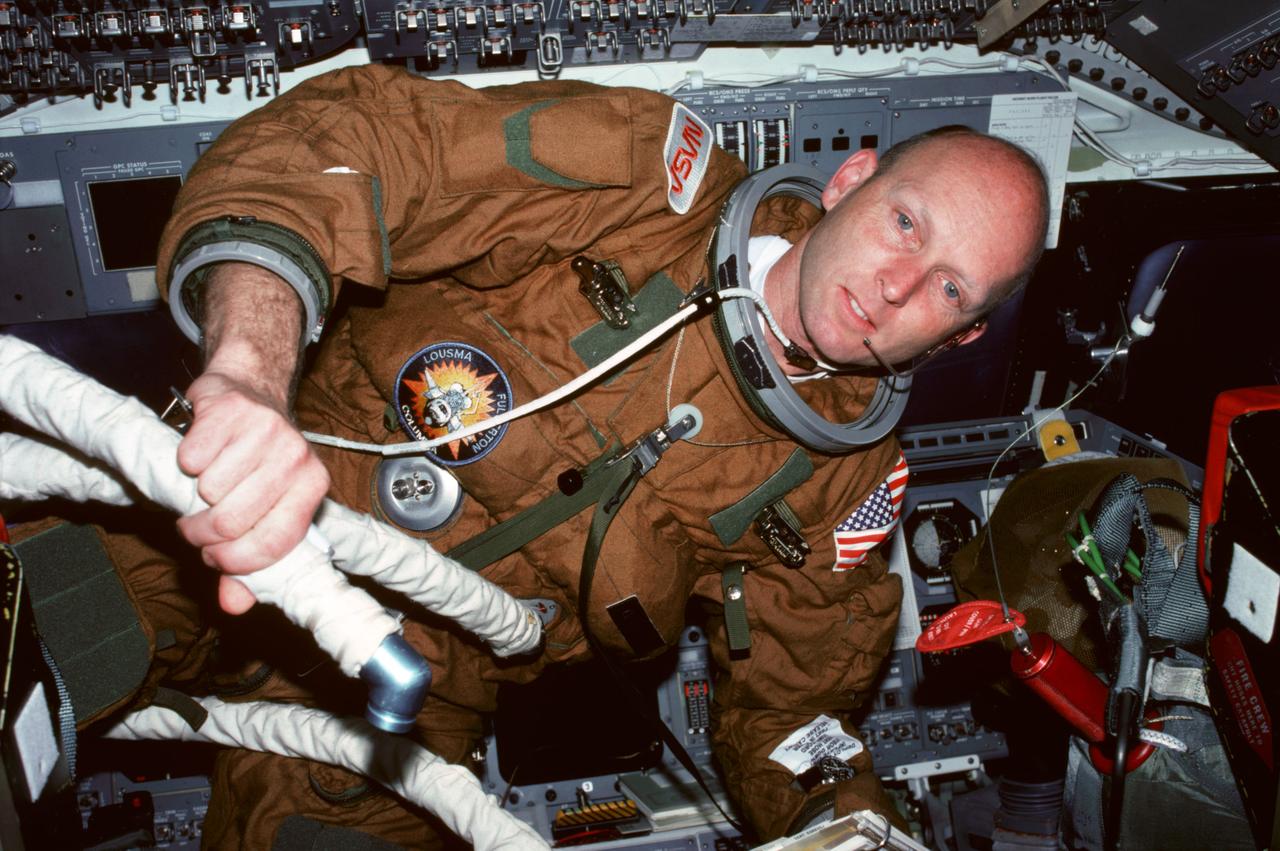
STS003-31-290 (30 March 1982) --- Astronaut Gordon Fullerton, STS-3 pilot, wearing communications kit assembly (ASSY) mini-headset (HDST) and ejection escape suit (EES), holds flexible hose attached to his EES vent hose fitting and second hose for commander's EES while behind pilots ejection seat (S2) seat back on the aft flight deck. Forward flight deck control panels are visible in the background. Photo credit: NASA
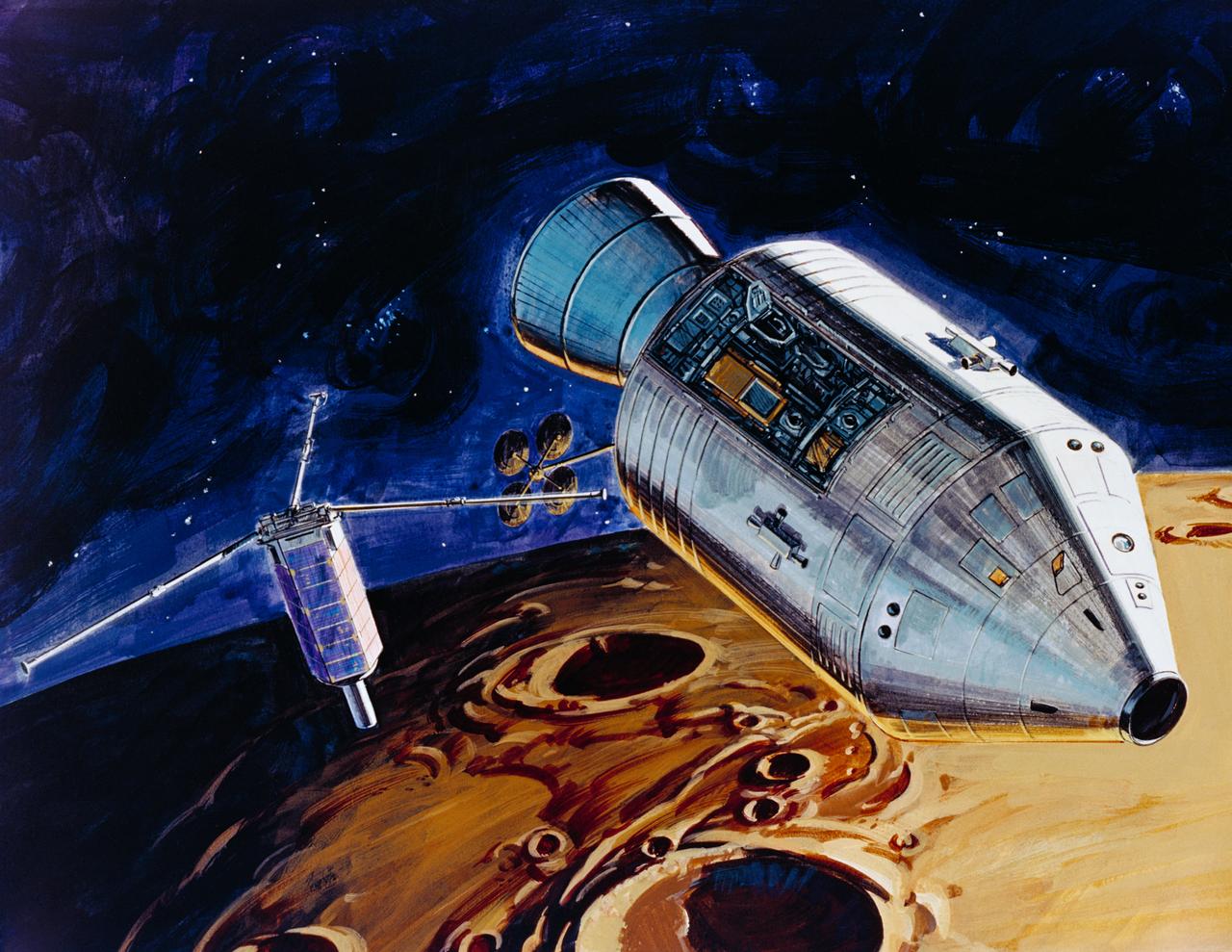
S71-39481 (July 1971) --- An artist's concept showing TRW's small lunar subsatellite being ejected into lunar orbit from the SIM bay of the Apollo 15 Service Module. The 80-pound satellite will remain in orbit a year or more, carrying scientific experiments to study space in the vicinity of the moon. The satellite carries three experiments: S-Band Transponder; Particle Shadows/Boundary Layer Experiment; and Subsatellite Magnetometer Experiment. The subsatellite is housed in a container resembling a rural mailbox, and when deployed is spring-ejected out-of-plane at 4 fps with a spin rate of 140 rpm. After the satellite booms are deployed, the spin rate is stabilized at about 12 rpm. The subsatellite is 31 inches long and has a 14 inch hexagonal diameter. The exact weight is 78.5 pounds. The folded booms deploy to a length of five feet. Subsatellite electrical power is supplied by a solar cell array outputting 25 watts for dayside operation and a rechargeable silver-cadmium battery for nightside passes.
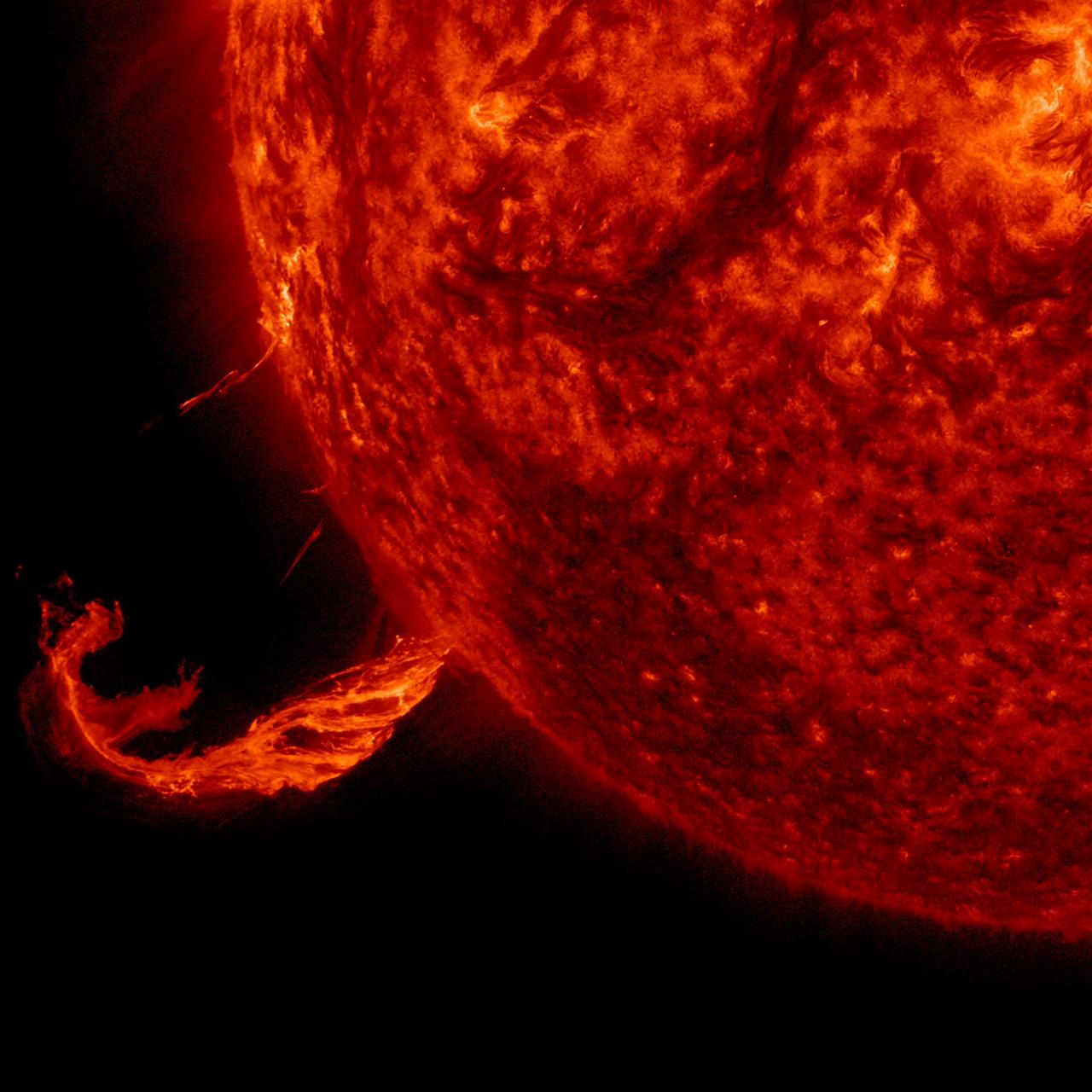
The Sun blew out a coronal mass ejection along with part of a solar filament over a three-hour period (Feb. 24, 2015). While some of the strands fell back into the Sun, a substantial part raced into space in a bright cloud of particles (as observed by the SOHO spacecraft). The activity was captured in a wavelength of extreme ultraviolet light. Because this occurred way over near the edge of the Sun, it was unlikely to have any effect on Earth. Credit: NASA/Solar Dynamics Observatory
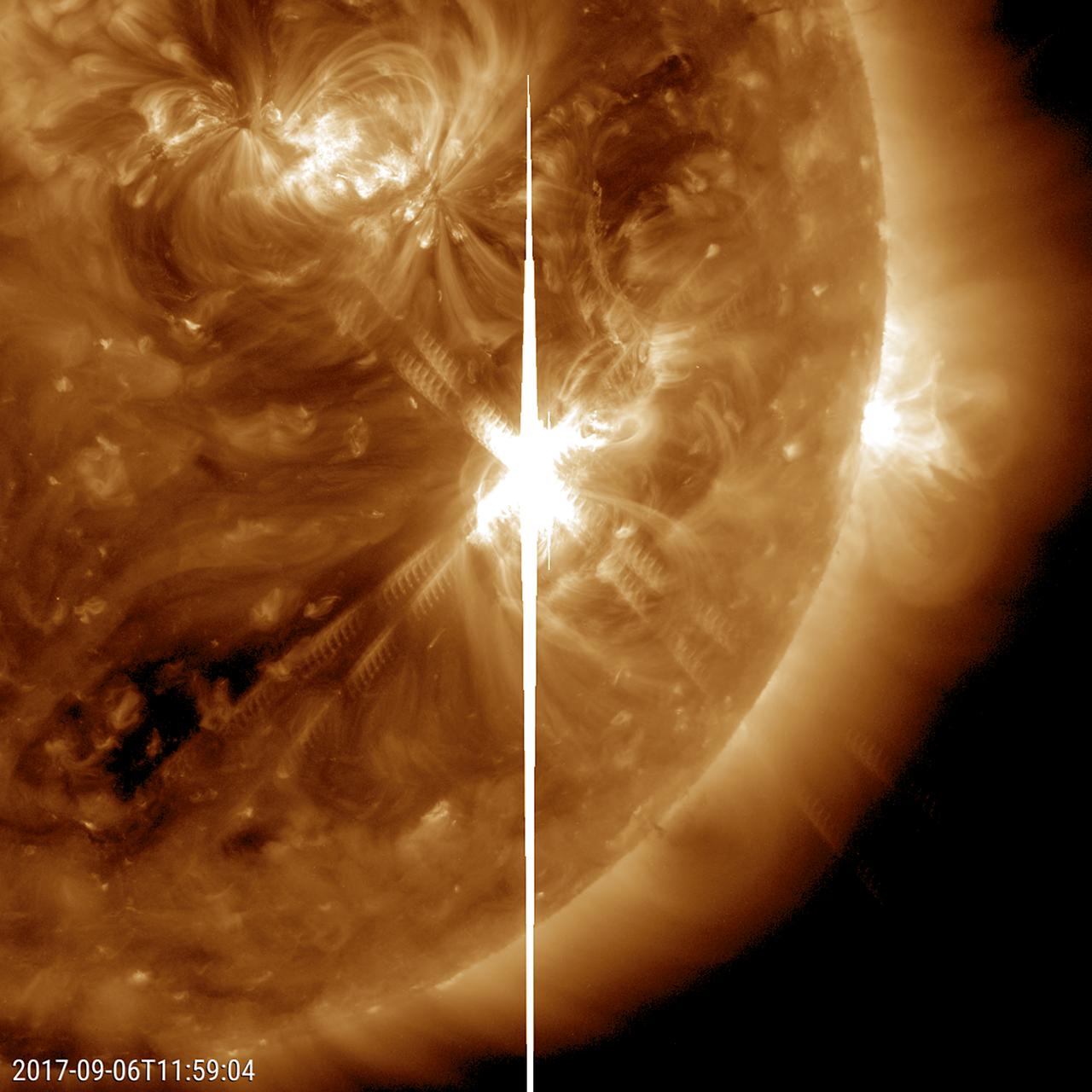
A large sunspot was the source of a powerful solar flare (an X 9.3) and a coronal mass ejection (Sept. 6, 2017). The flare was the largest solar flare of the last decade. For one thing, it created a strong shortwave radio blackout over Europe, Africa and the Atlantic Ocean. Sunspot 2673 has been also the source of several other smaller to medium-sized solar flares over the past few days. Data from the SOHO spacecraft shows the large cloud of particles blasting into space just after the flare. Note: the bright vertical line and the other rays with barred lines are aberrations in our instruments caused by the bright flash of the flare. https://photojournal.jpl.nasa.gov/catalog/PIA21949

This animation illustrates the modeled trajectories of particles that were ejected from Bennu's surface on Jan. 19, 2019. After ejecting from the asteroid's surface, the particles either briefly orbited Bennu and fell back to its surface or escaped from Bennu and into space. Animation available at https://photojournal.jpl.nasa.gov/catalog/PIA23555
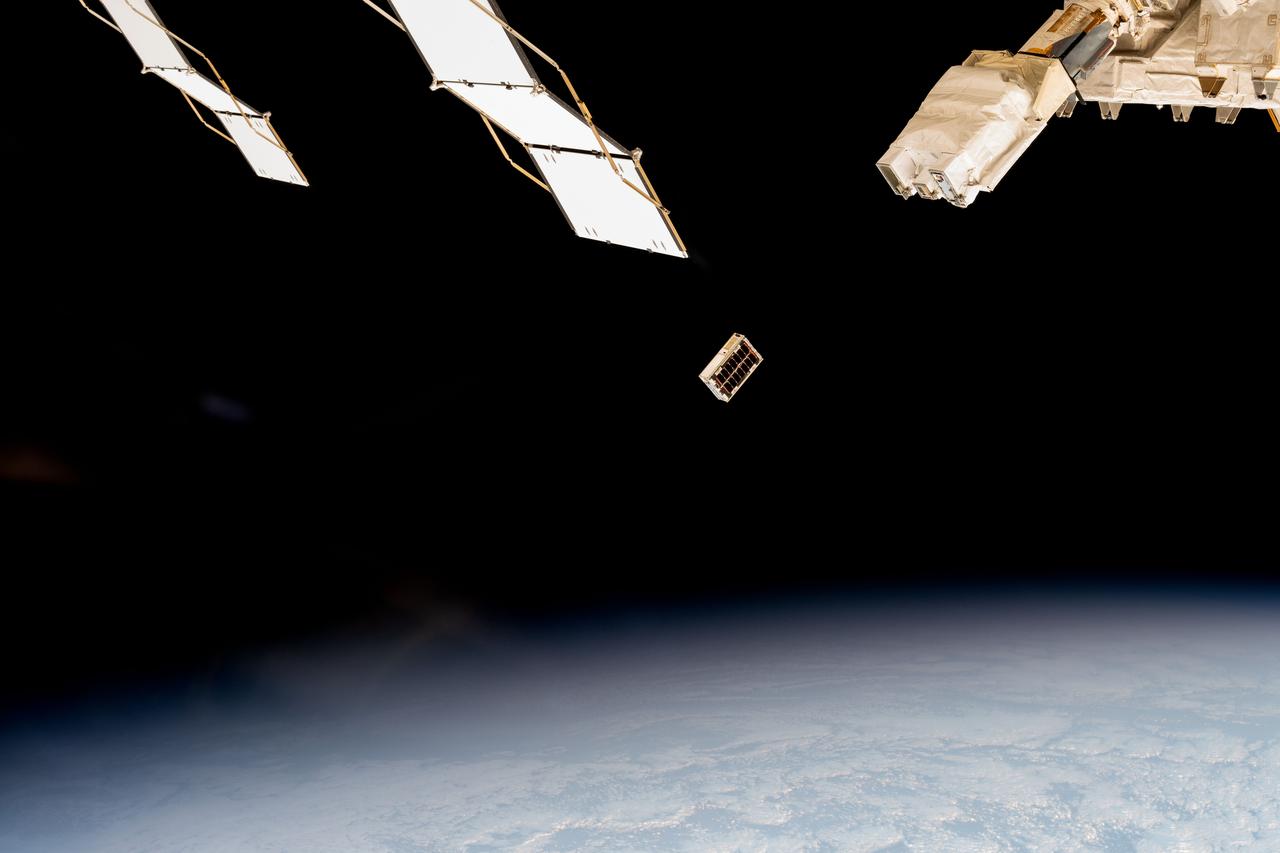
iss072e351959 (Dec. 9, 2024) --- A CubeSat is ejected into Earth orbit from a small satellite orbital deployer attached to the International Space Station's Kibo laboratory module. A series of CubeSats were deployed into Earth orbit on Dec. 9, 2024, for educational research missions designed by Japanese high school and college students. Credit: NASA/Butch Wilmore
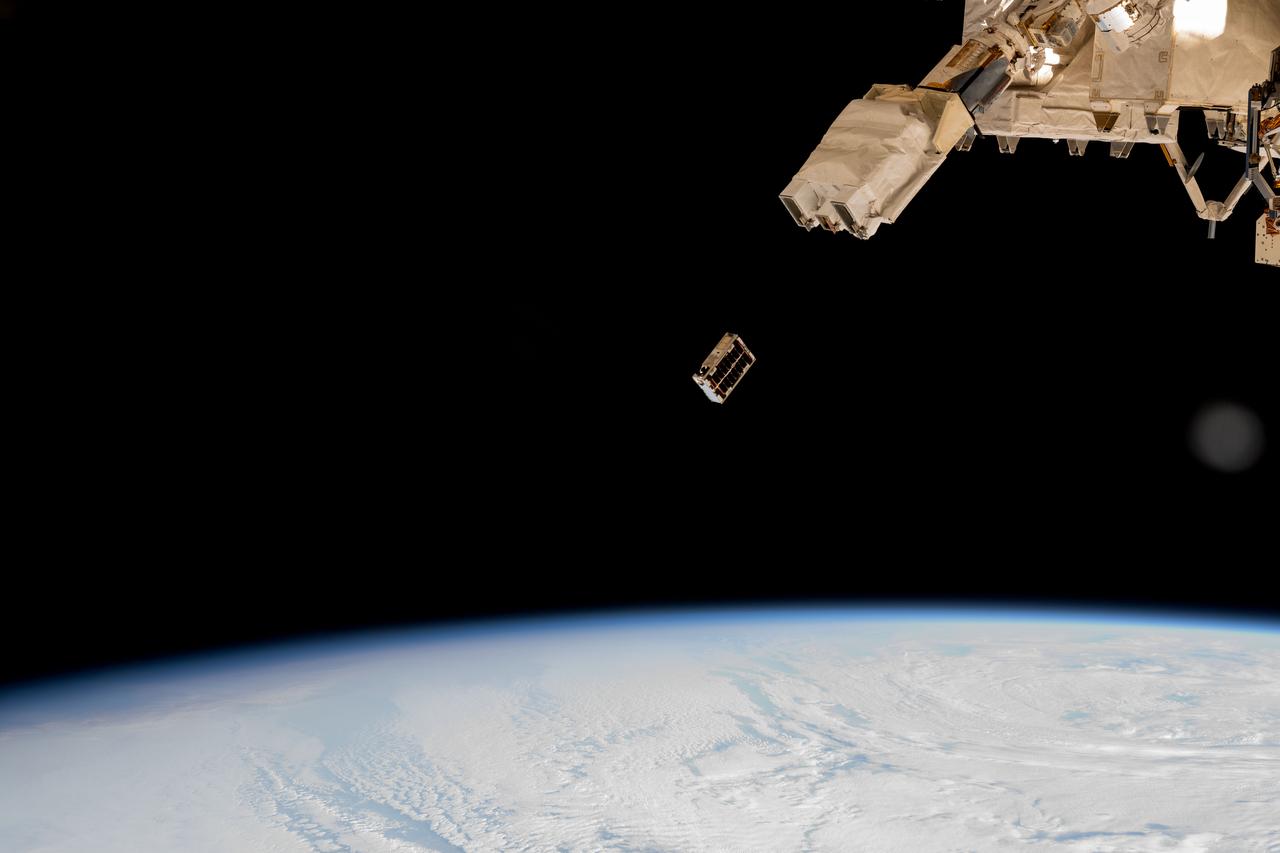
iss072e352235 (Dec. 9, 2024) --- A CubeSat is ejected into Earth orbit from a small satellite orbital deployer attached to the International Space Station's Kibo laboratory module. A series of CubeSats were deployed into Earth orbit on Dec. 9, 2024, for educational research missions designed by Japanese high school and college students. Credit: NASA/Butch Wilmore
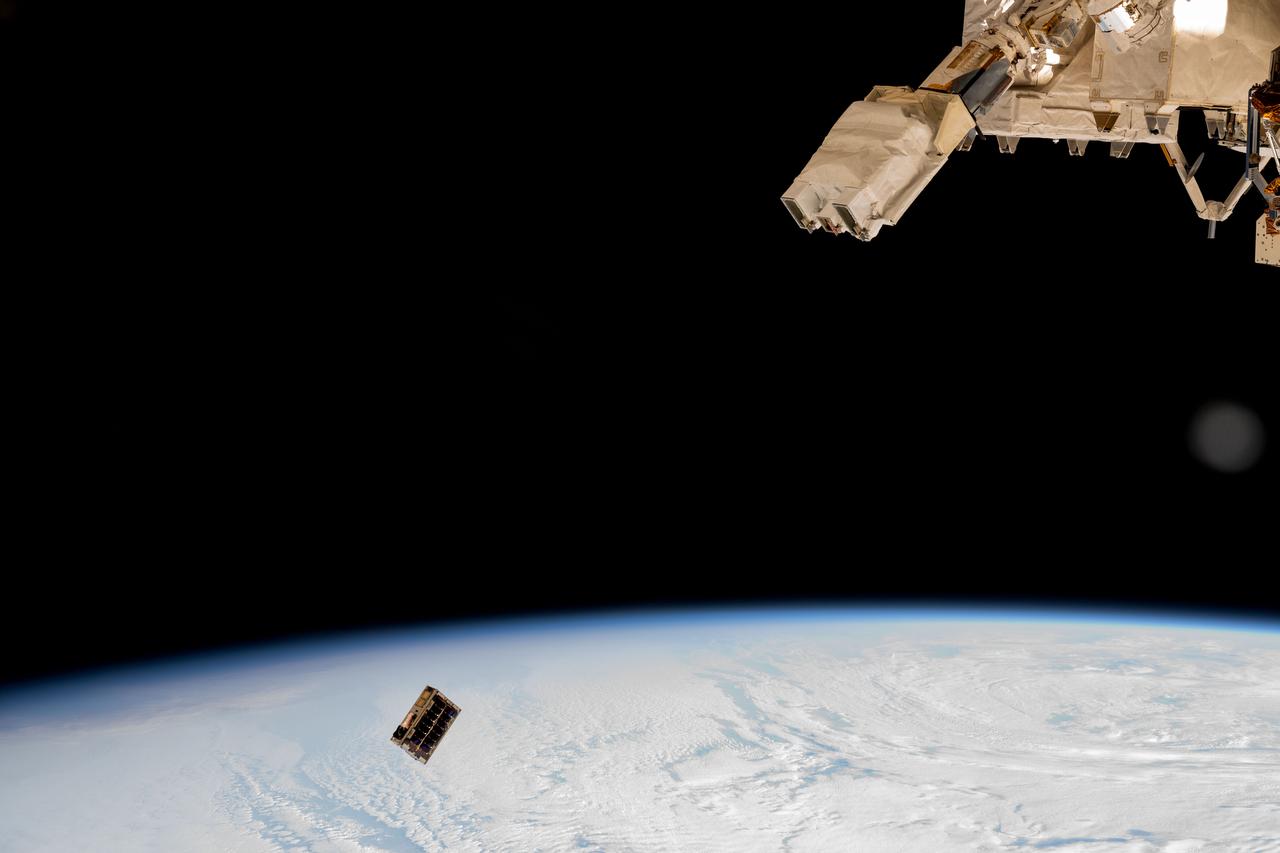
iss072e352275 (Dec. 9, 2024) --- A CubeSat is ejected into Earth orbit from a small satellite orbital deployer attached to the International Space Station's Kibo laboratory module. A series of CubeSats were deployed into Earth orbit on Dec. 9, 2024, for educational research missions designed by Japanese high school and college students. Credit: NASA/Butch Wilmore
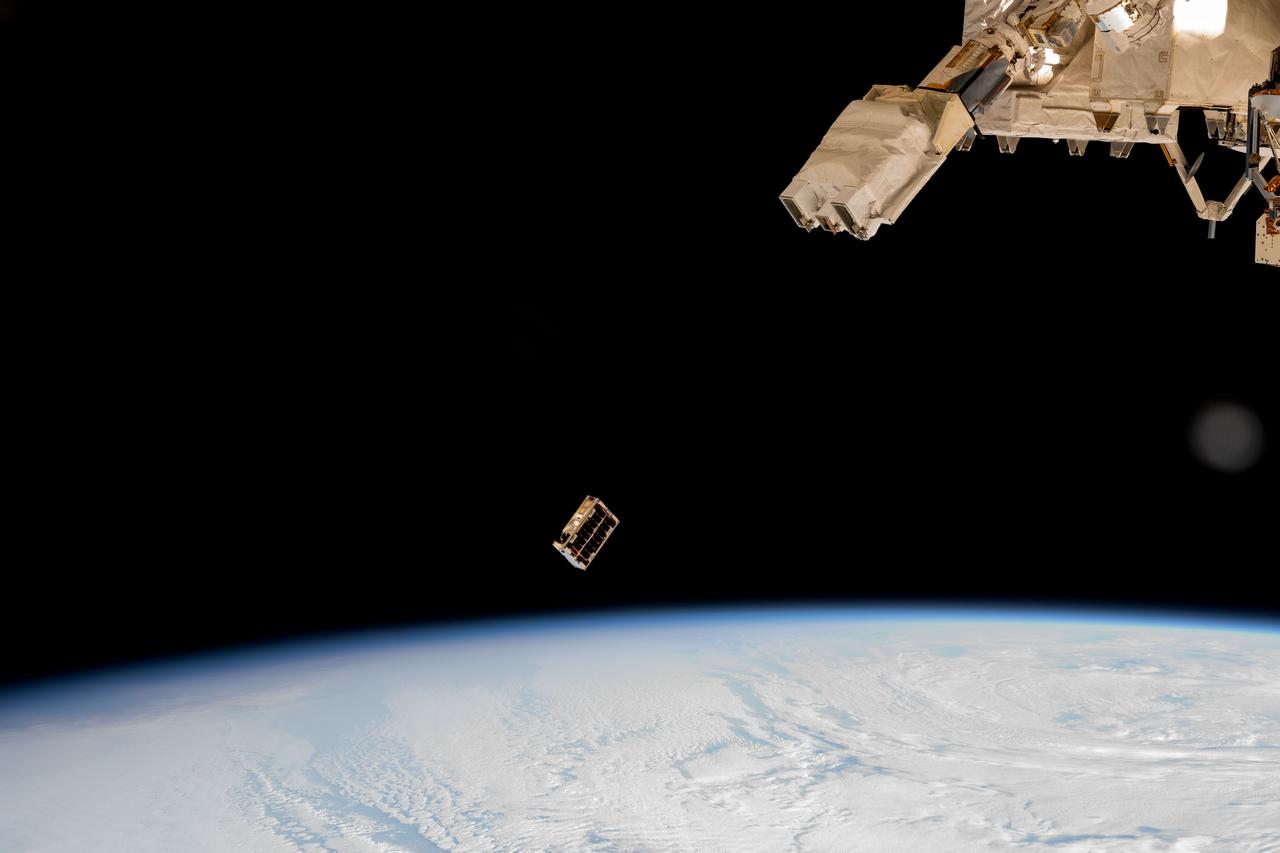
iss072e352225 (Dec. 9, 2024) --- A CubeSat is ejected into Earth orbit from a small satellite orbital deployer attached to the International Space Station's Kibo laboratory module. A series of CubeSats were deployed into Earth orbit on Dec. 9, 2024, for educational research missions designed by Japanese high school and college students. Credit: NASA/Butch Wilmore
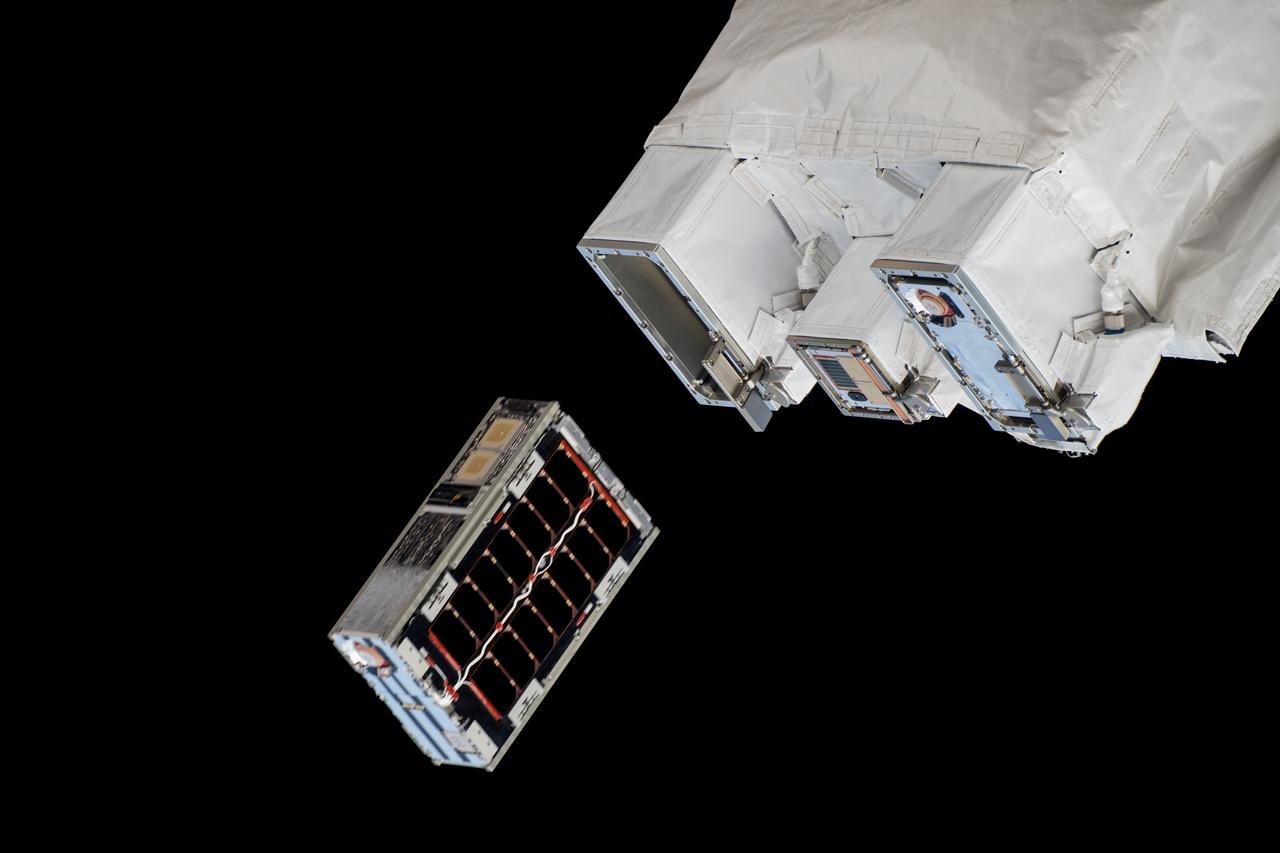
iss072e351732 (Dec. 9, 2024) --- A CubeSat is ejected into Earth orbit from a small satellite orbital deployer attached to the International Space Station's Kibo laboratory module. A series of CubeSats were deployed into Earth orbit on Dec. 9, 2024, for educational research missions designed by Japanese high school and college students. Credit: NASA/Butch Wilmore
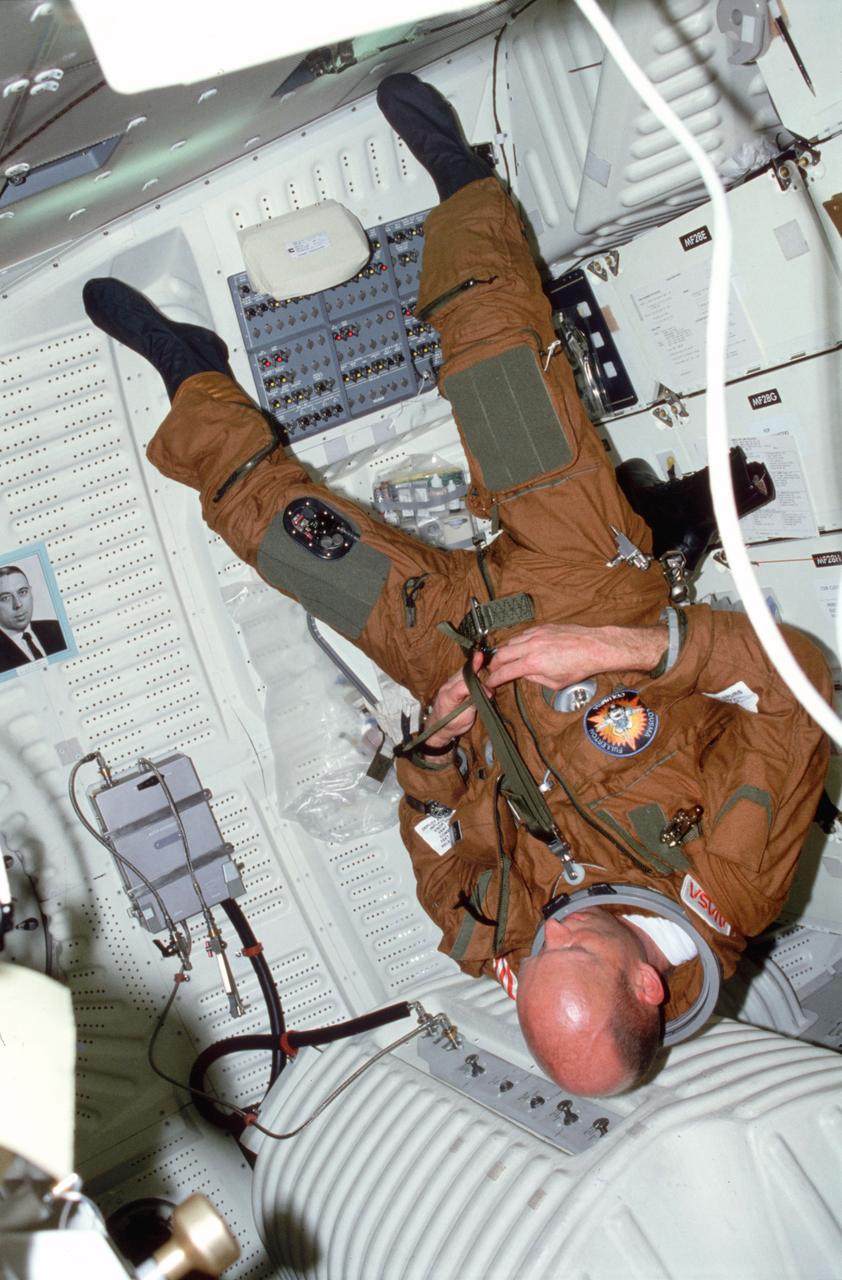
STS003-23-165 (22-30 March 1982) --- Astronaut Gordon Fullerton, STS-3 pilot, dons ejection escape suit (EES) (high altitude pressure garment) life preserver unit (LPU) on forward port side of middeck above potable water tank. Fullerton also adjusts lapbelt fitting and helmet holddown strap. Photo credit: NASA
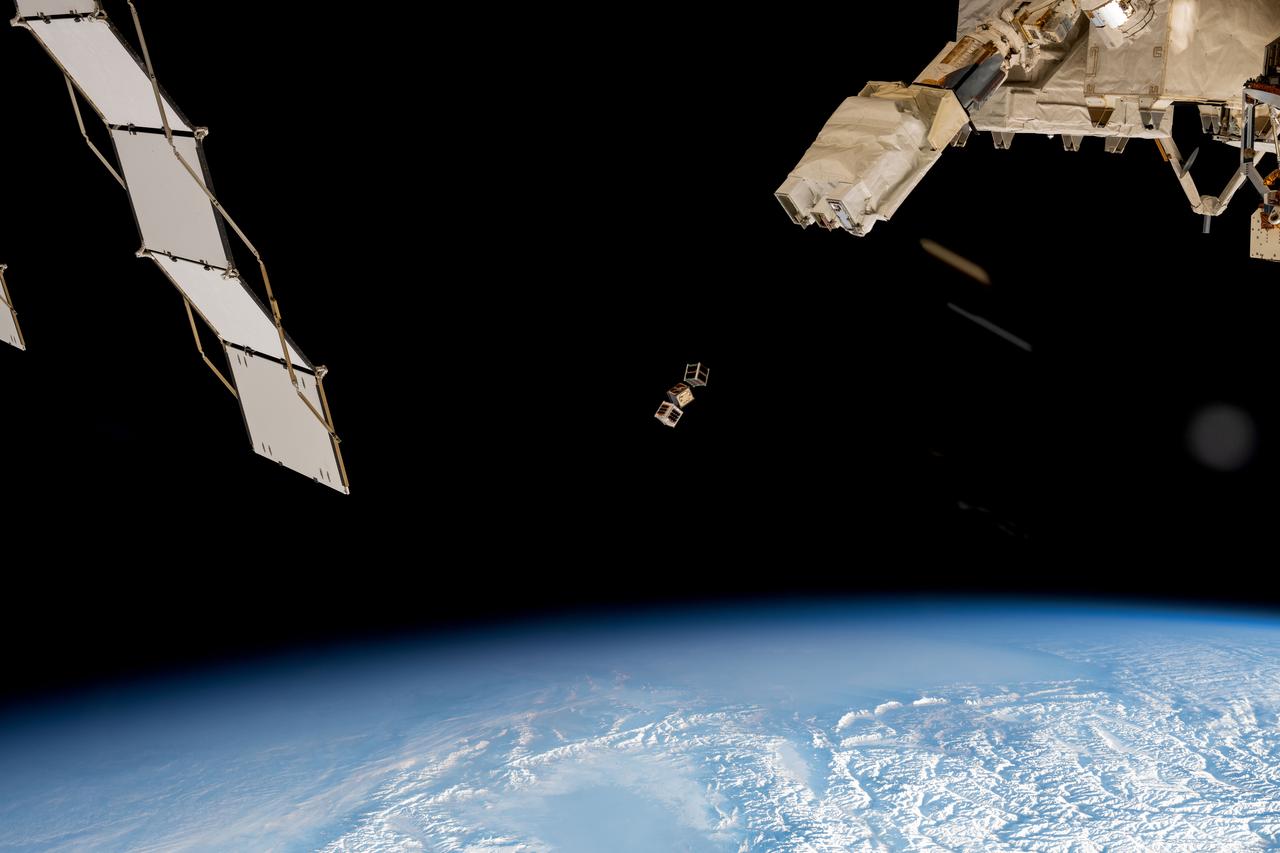
iss072e352045 (Dec. 9, 2024) --- A trio of CubeSats is ejected into Earth orbit from a small satellite orbital deployer attached to the International Space Station's Kibo laboratory module. A series of CubeSats were deployed into Earth orbit on Dec. 9, 2024, for educational research missions designed by Japanese high school and college students. Credit: NASA/Butch Wilmore
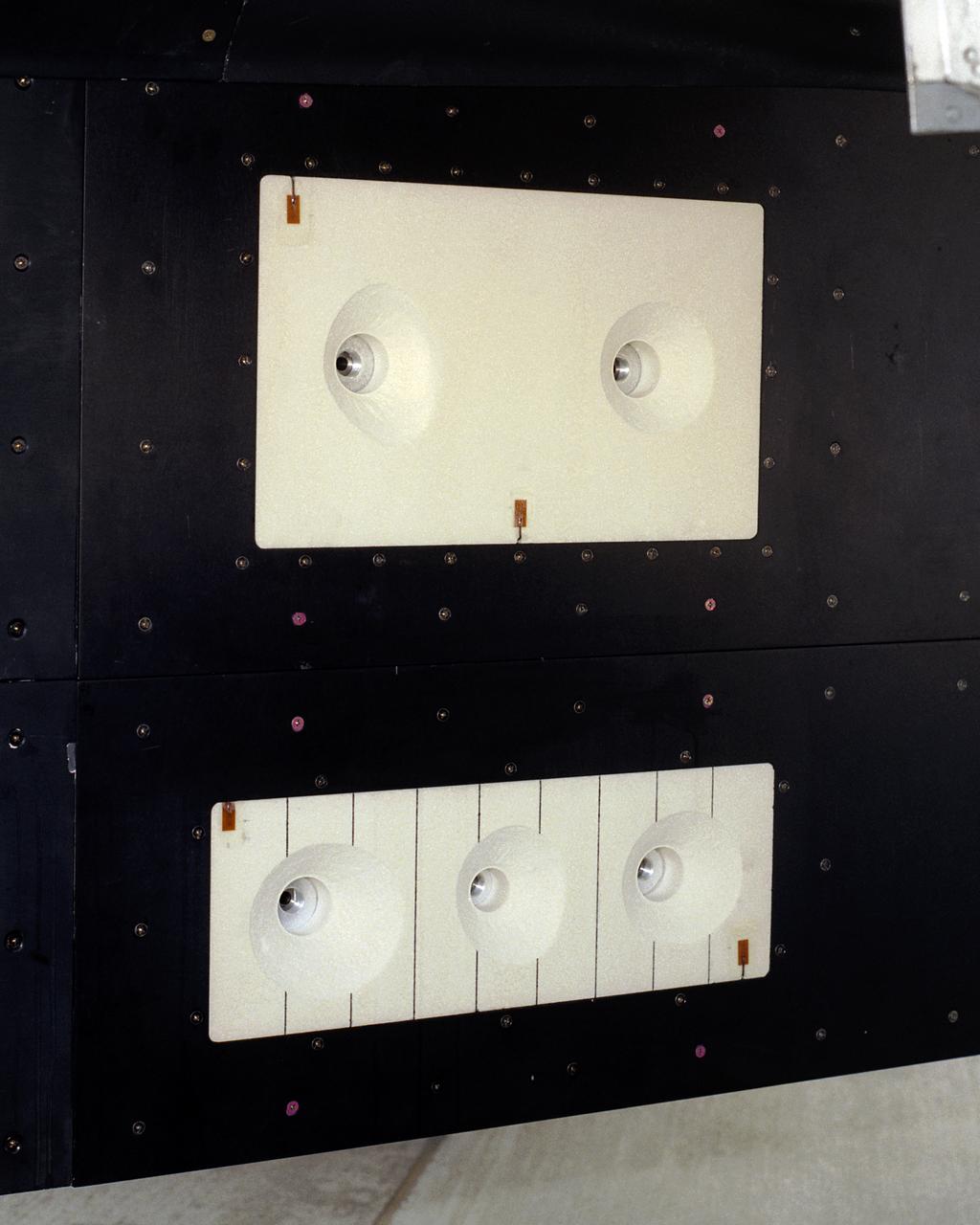
A close-up of the panels on the F-15B's flight test fixture shows five divots of TPS foam were successfully ejected during the LIFT experiment flight #2, the first flight with TPS foam.
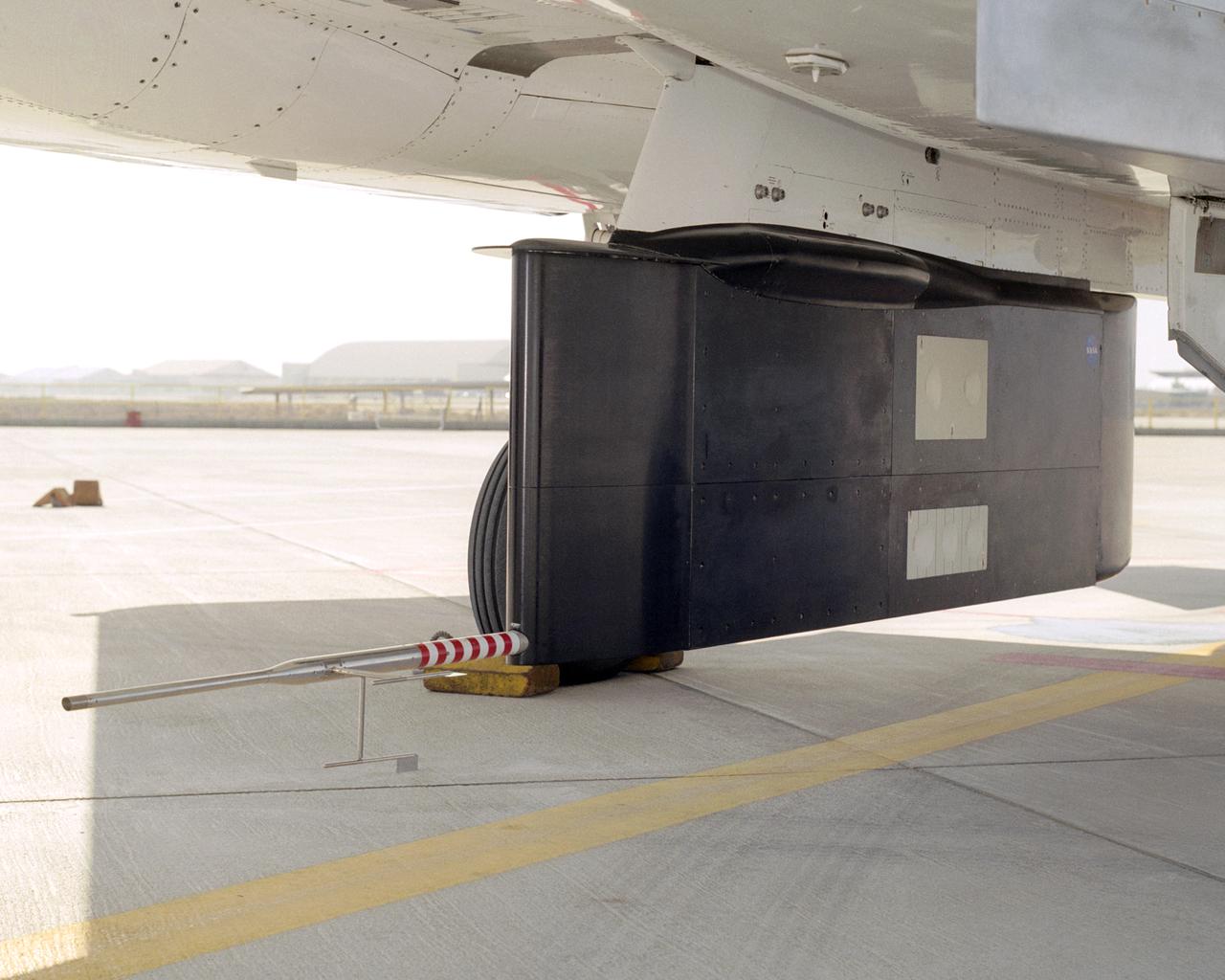
A post-flight inspection of the panels on the F-15B's flight test fixture shows five divots of TPS foam were successfully ejected during the LIFT experiment flight #2, the first flight with TPS foam.
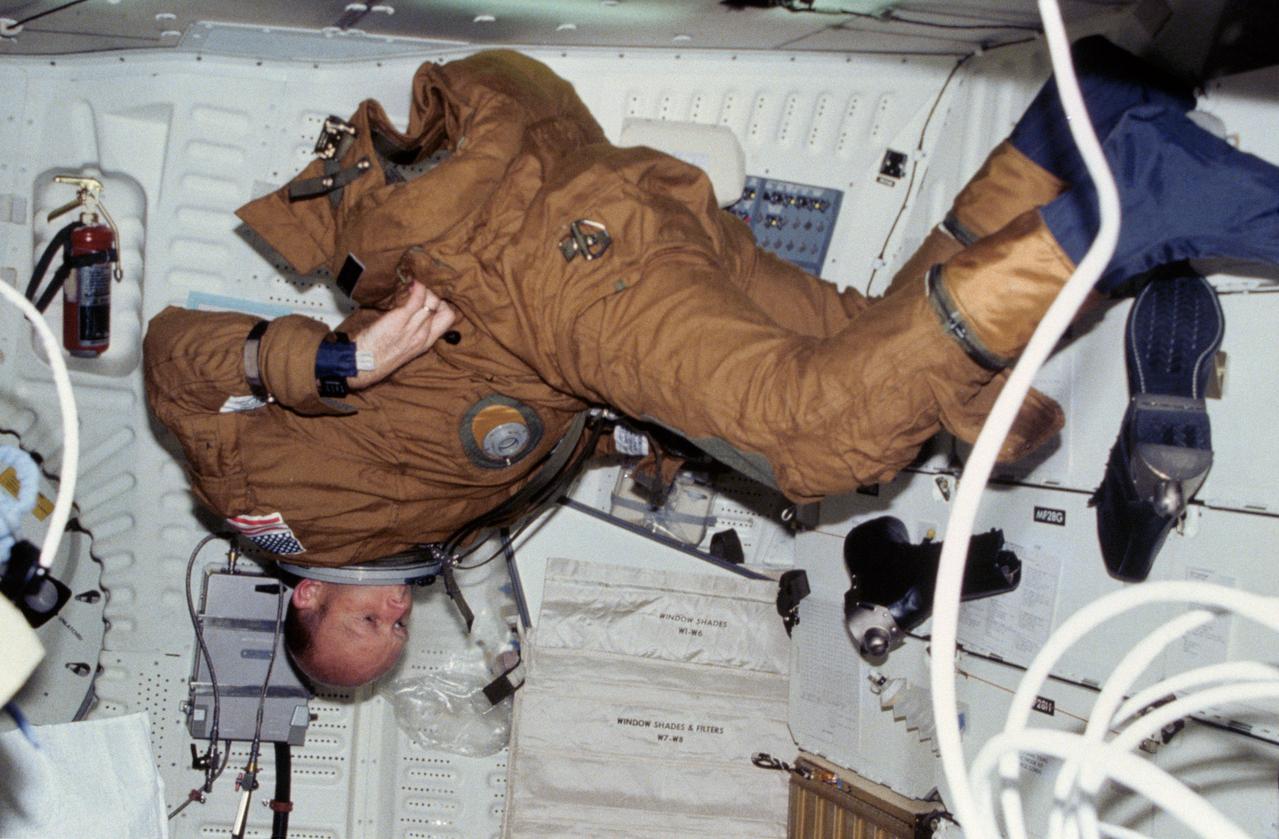
S82-28922 (30 March 1982) --- Astronaut C. Gordon Fullerton, STS-3 pilot, floats upside down in the zero-gravity environment of the middeck area of the Earth-orbiting space shuttle Columbia as he dons a modified USAF high altitude pressure garment. The brownish ejection/escape suit is used by the astronauts at launch and entry. Most of the remainder of their mission time, they are attired in a blue constant-wear garment. Astronaut Jack R. Lousma, crew commander, took this picture with a 35mm camera. The crew spent eight full days in the reusable spacecraft, a shuttle record. Photo credit: NASA
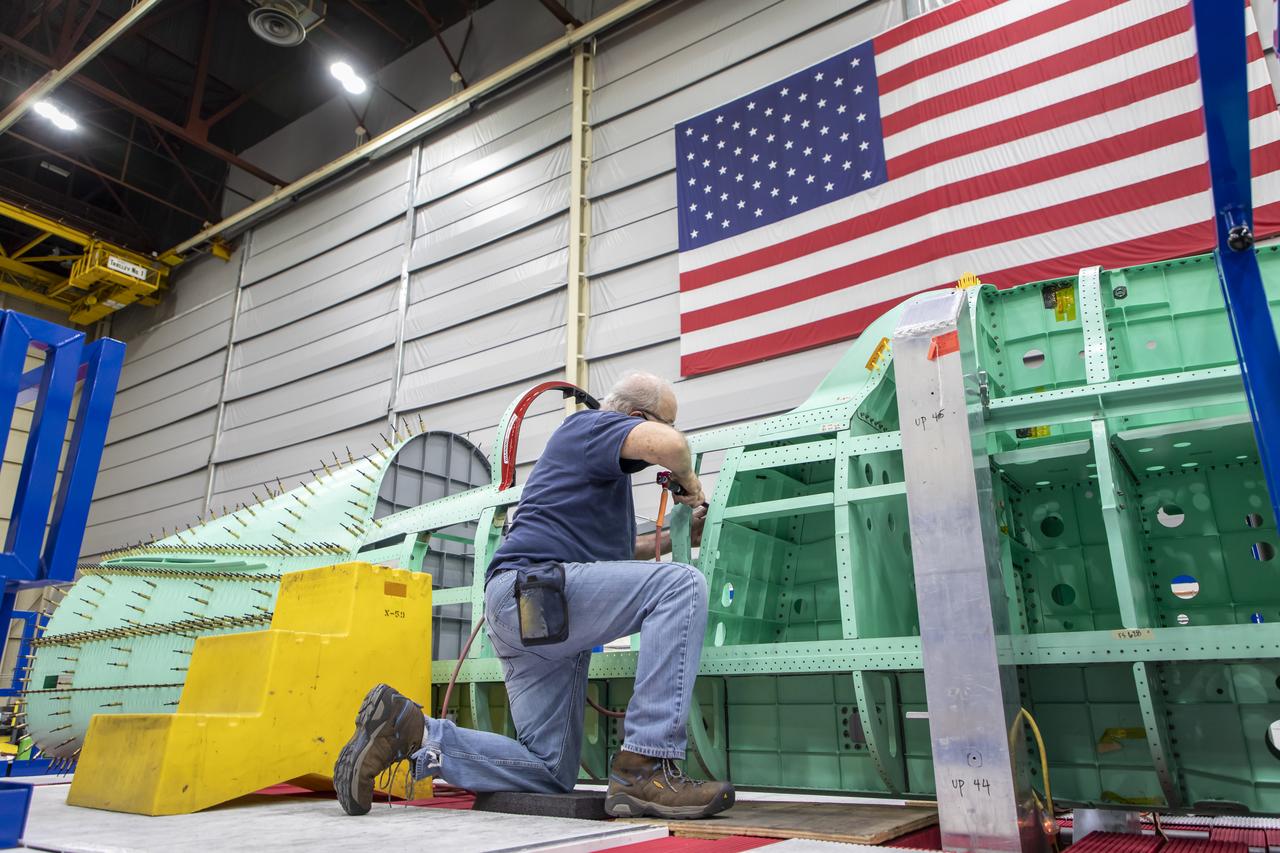
Event: SEG 210 Forebody A Lockheed Martin technician works on the ejection seat support structure and once complete, the ejection seat rails will be installed on the X-59 airplane. The aircraft, under construction at Lockheed Martin Skunk Works in Palmdale, California, will demonstrate the ability to fly supersonic while reducing the loud sonic boom to a quiet sonic thump.
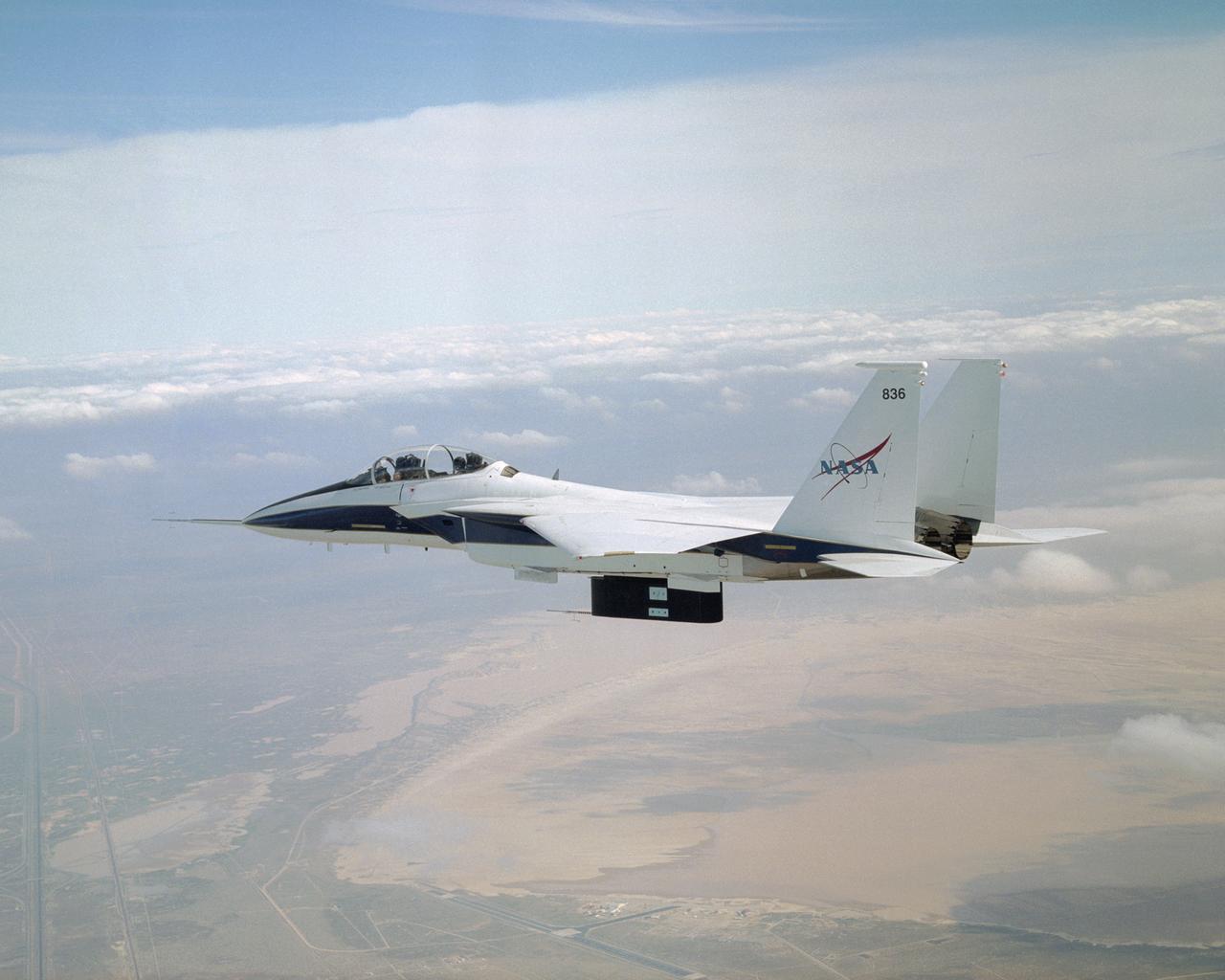
All six divots of thermal insulation foam have been ejected from the flight test fixture on NASA's F-15B testbed as it returns from a LIFT experiment flight.
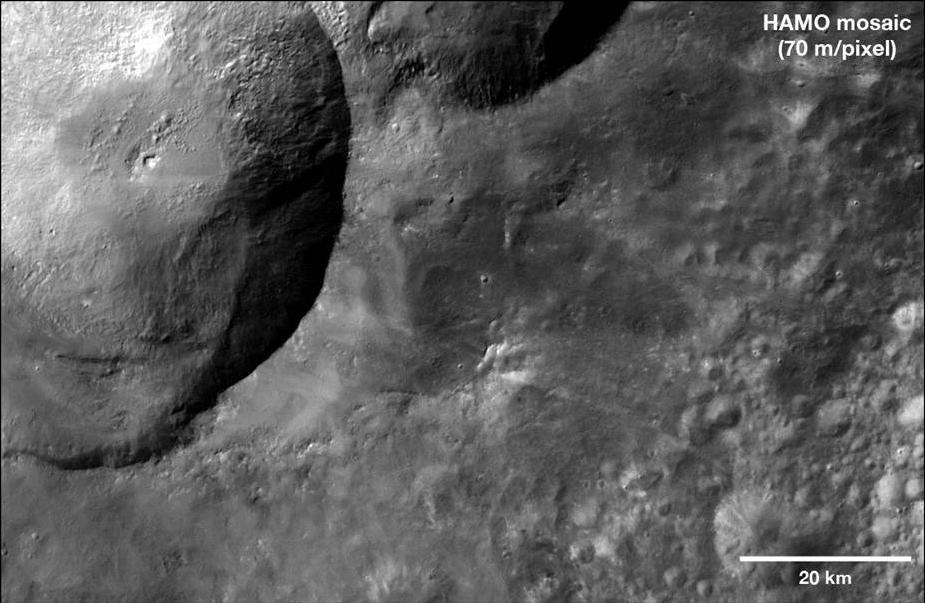
This mosaic from NASA Dawn spacecraft shows dark material near a series of craters known as the nowman on asteroid Vesta. That ejected material is a complex mixture of components.
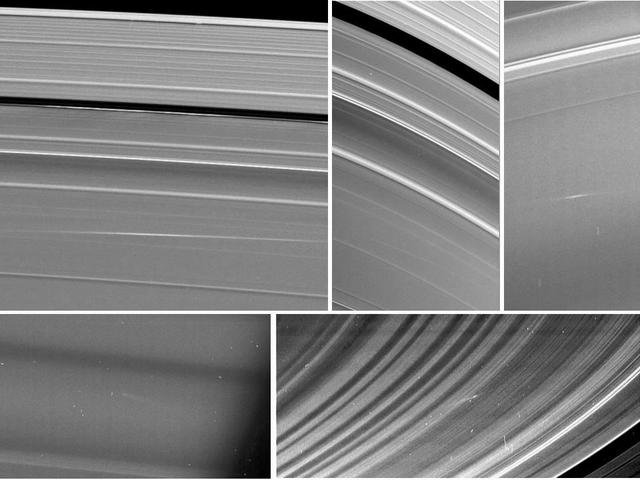
Five images of Saturn rings, taken by NASA Cassini spacecraft between 2009 and 2012, show clouds of material ejected from impacts of small objects into the rings.
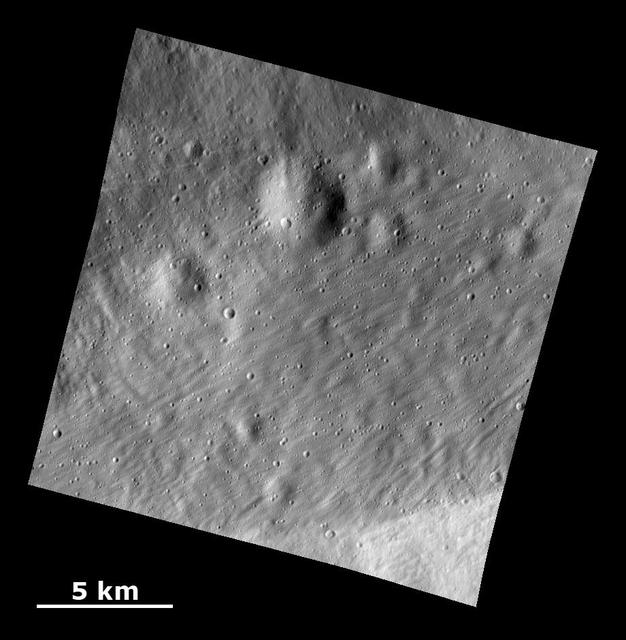
This image from NASA Dawn spacecraft shows a surface with craters buried under thick ejected material that displays a grooved texture on the giant asteroid Vesta.

Ejected material appears bright around some of Dione craters in the image taken during NASA Cassini spacecraft flyby of the moon on March 28, 2012.

S90-45896 (29-31 July 1990) --- Susan J. Helms, one of the 23 astronaut candidates who began a year's training and evaluation program in July, participates in one of themany sessions at a survival training course at Vance Air Force Base. This portion of the course is designed to familiarize the trainee with procedures to follow in preparation for ejection from a jet aircraft.
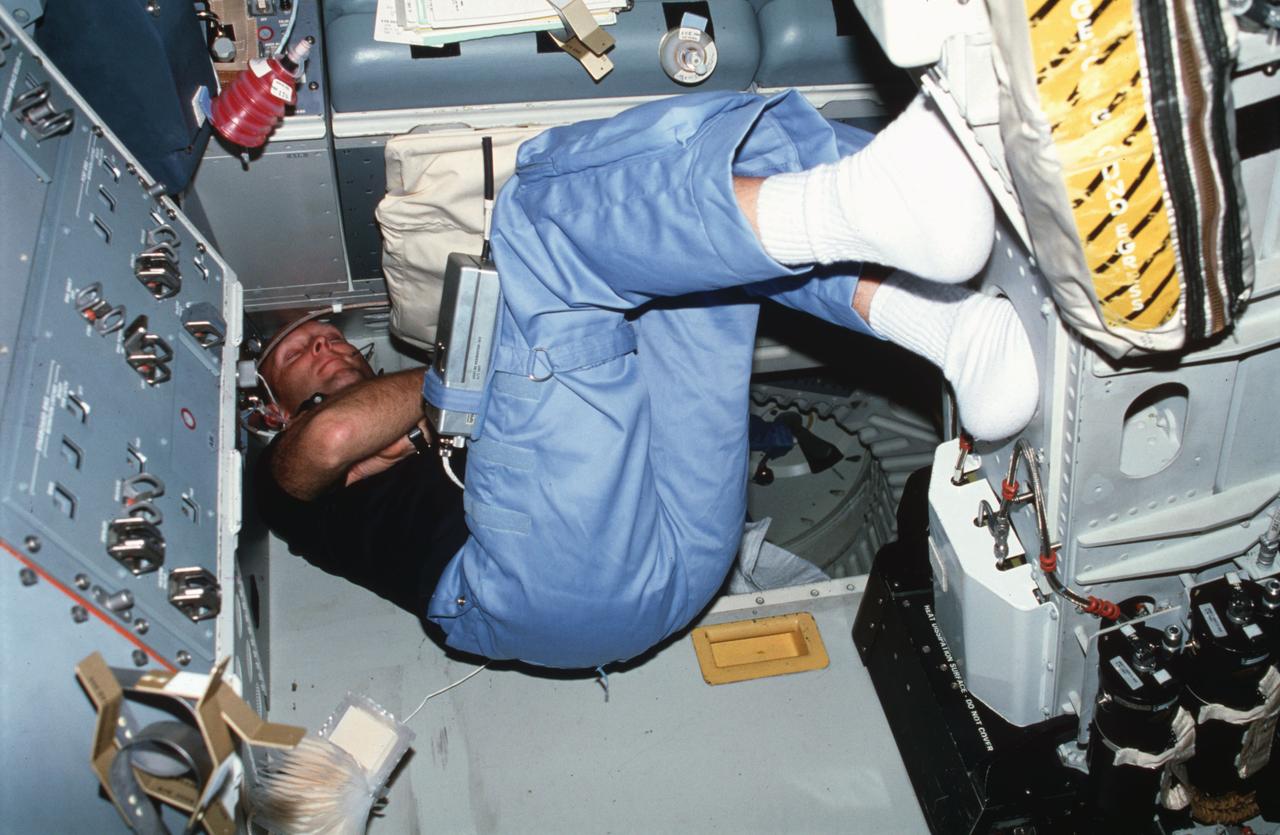
STS003-22-113 (24 March 1982) --- Astronaut Gordon Fullerton, STS-3 pilot, wearing communication kit assembly mini-headset (HDST), sleeps on aft flight deck resting his back against the floor and his feet against commander's ejection seat (S1) back. On-orbit station control panel A8 and payload station panel L15 appear above Fullerton. Special clips for holding notebooks open and beverage containers are velcroed on various panels. Photo credit: NASA
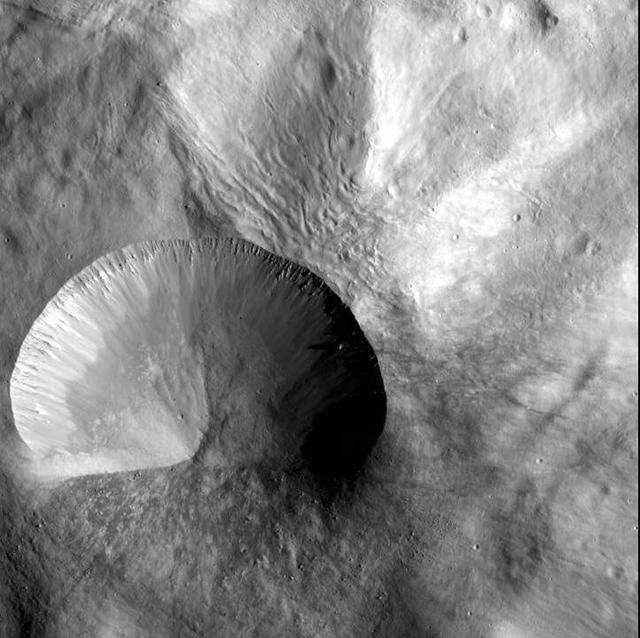
This image from NASA Dawn spacecraft shows a young crater on asteroid Vesta. Layering is visible in the crater walls, as are large boulders that were thrown out in the material ejected from the impact.

This image from NASA Dawn spacecraft of asteroid Vesta shows chains of craters on an undulating surface probably formed of fine-grained debris, called regolith, which was ejected from large impact craters as they formed nearby.
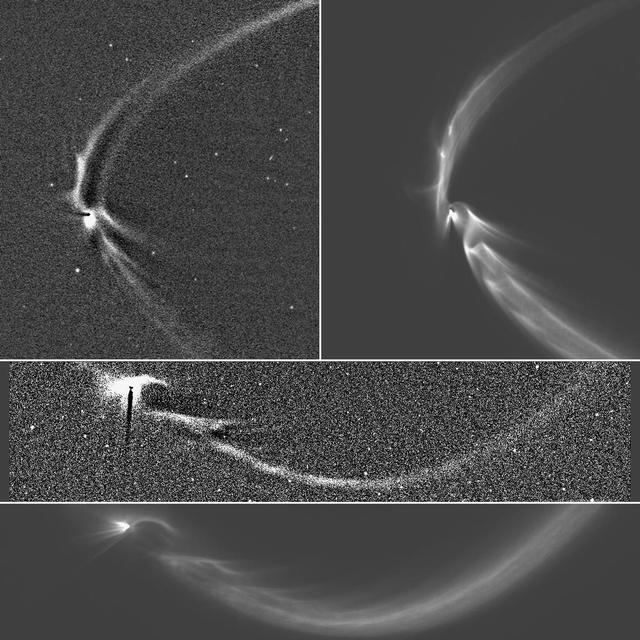
This collage of NASA Cassini spacecraft images and computer simulations shows how long, sinuous features from Enceladus can be modeled by tracing the trajectories of tiny, icy grains ejected from the moon south polar geysers.
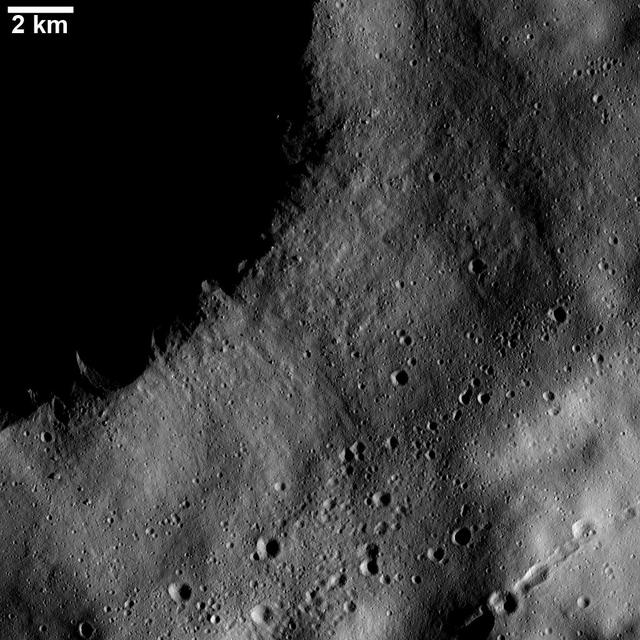
This image from NASA Dawn spacecraft shows numerous linear chains and clusters of small craters on asteroid Vesta. These chains and clusters of craters were created by material that was ejected during the formation of a large crater.

This artist concept depicts NASA Voyager 1 spacecraft entering interstellar space. Interstellar space is dominated by the plasma, or ionized gas, that was ejected by the death of nearby giant stars millions of years ago.
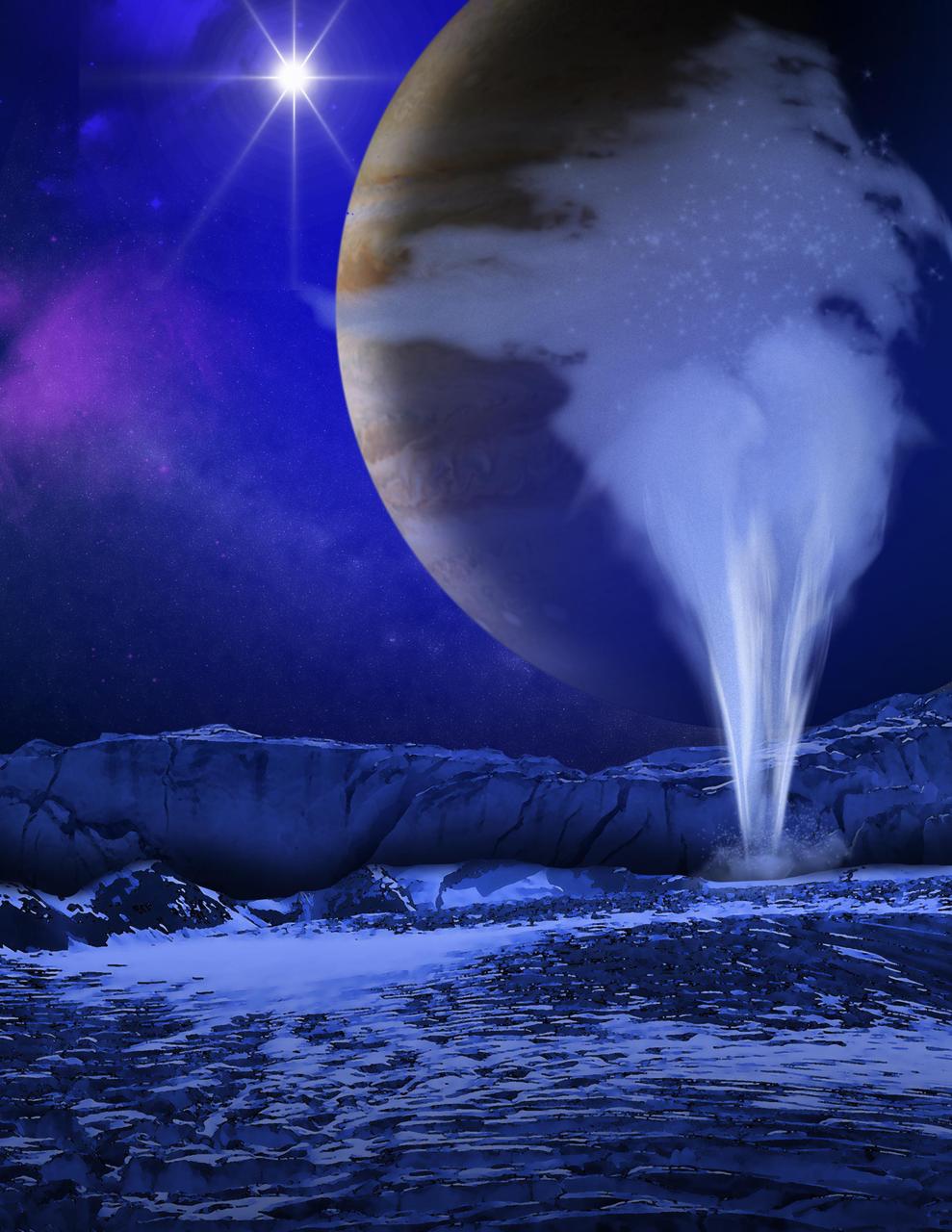
This is an artist concept of a plume of water vapor thought to be ejected off the frigid, icy surface of the Jovian moon Europa, located about 500 million miles 800 million kilometers from the sun.
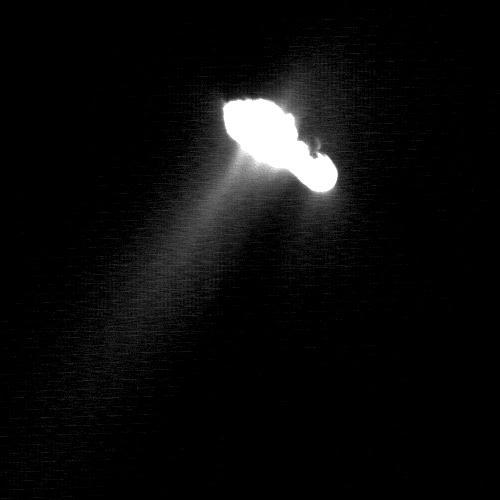
This image, taken by NASA Deep Space 1 on September 22, 2001, has been enhanced to reveal dust being ejected from the nucleus of comet Borrelly. As a result, the nucleus is bright white in the image.
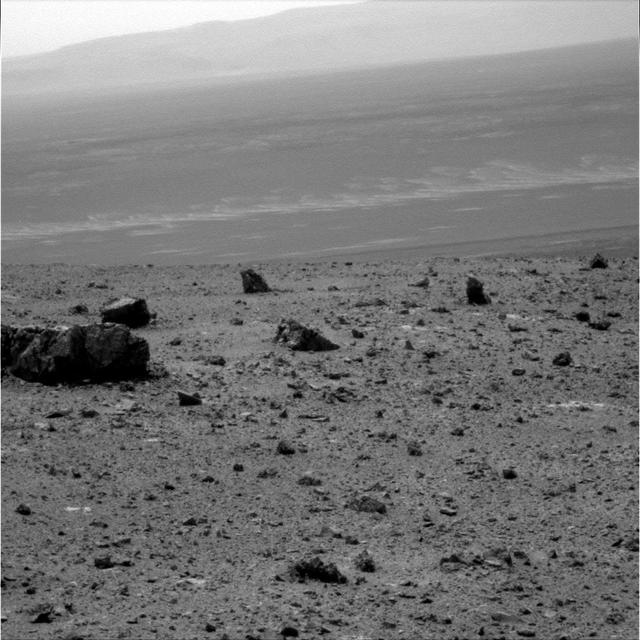
The large rock on the left in the foreground, informally named Tisdale 1. It is part of a group of rocks that appear to have been ejected by the excavation of Odyssey crater on the rim of Endeavour crater by NASA Mars rover Odyssey.

This image, taken by NASA Dawn spacecraft on Jan. 1, 2016, shows two relatively young, fresh craters on Ceres. Large blocks of ejected material fell near the rims of the craters and onto the floor of the larger crater.
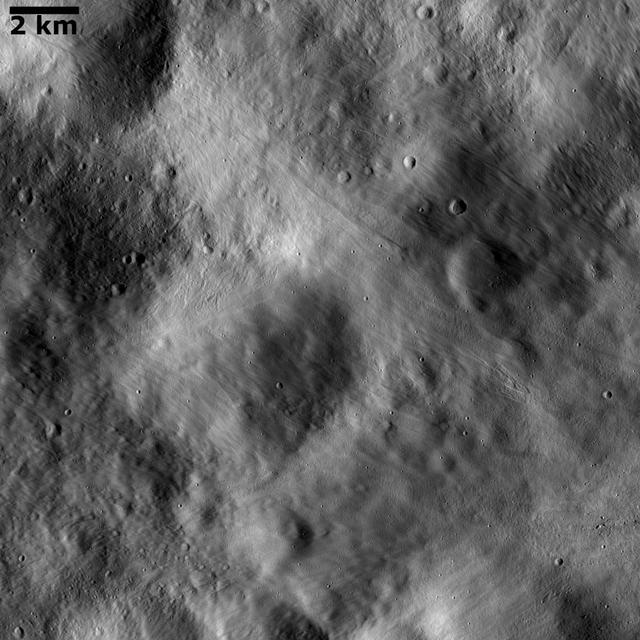
This image from NASA Dawn spacecraft shows impact ejecta deposits dominating asteroid Vesta landscape. This impact ejecta material was ejected from an impact crater located outside the imaged area.
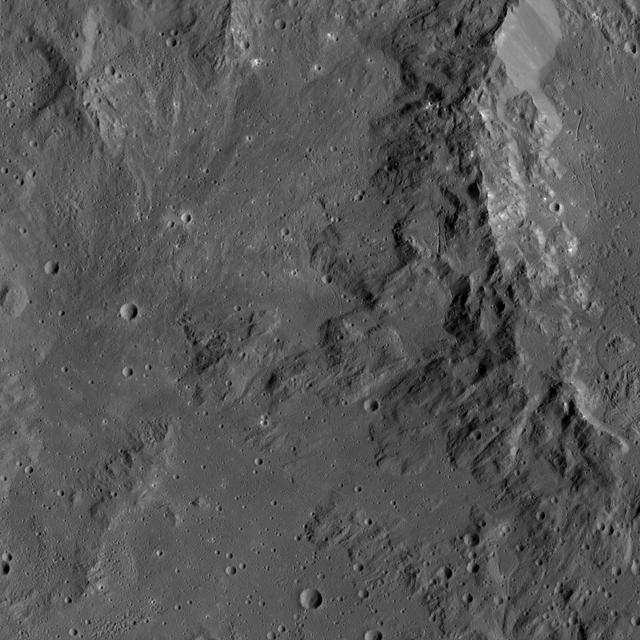
Smooth terrain around the western rim of Ikapati Crater on Ceres is visible in this image from NASA Dawn spacecraft. The area contains material ejected from Ikapati during its formation. http://photojournal.jpl.nasa.gov/catalog/PIA20820
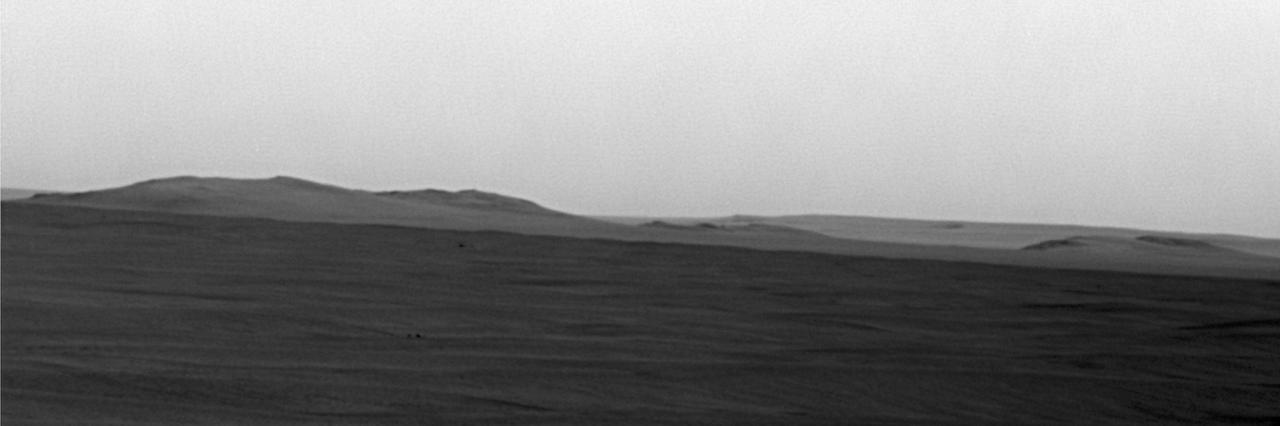
This image from NASA rover Opportunity shows mostly a portion of Endeavour western rim left; a paler-looking terrain on the horizon beyond Endeavour right is part of a thick deposit of material ejected by the impact that excavated Iazu Crater.

STS088-349-006 (15 Dec. 1998) --- MightySat, a 705-pound U.S. Air Force/Phillips Laboratory satellite, moves away from the Space Shuttle Endeavour. The tiny satellite was ejected from a canister in the shuttle's cargo bay, a few hours following the ejection of an Argentine satellite in the same manner.
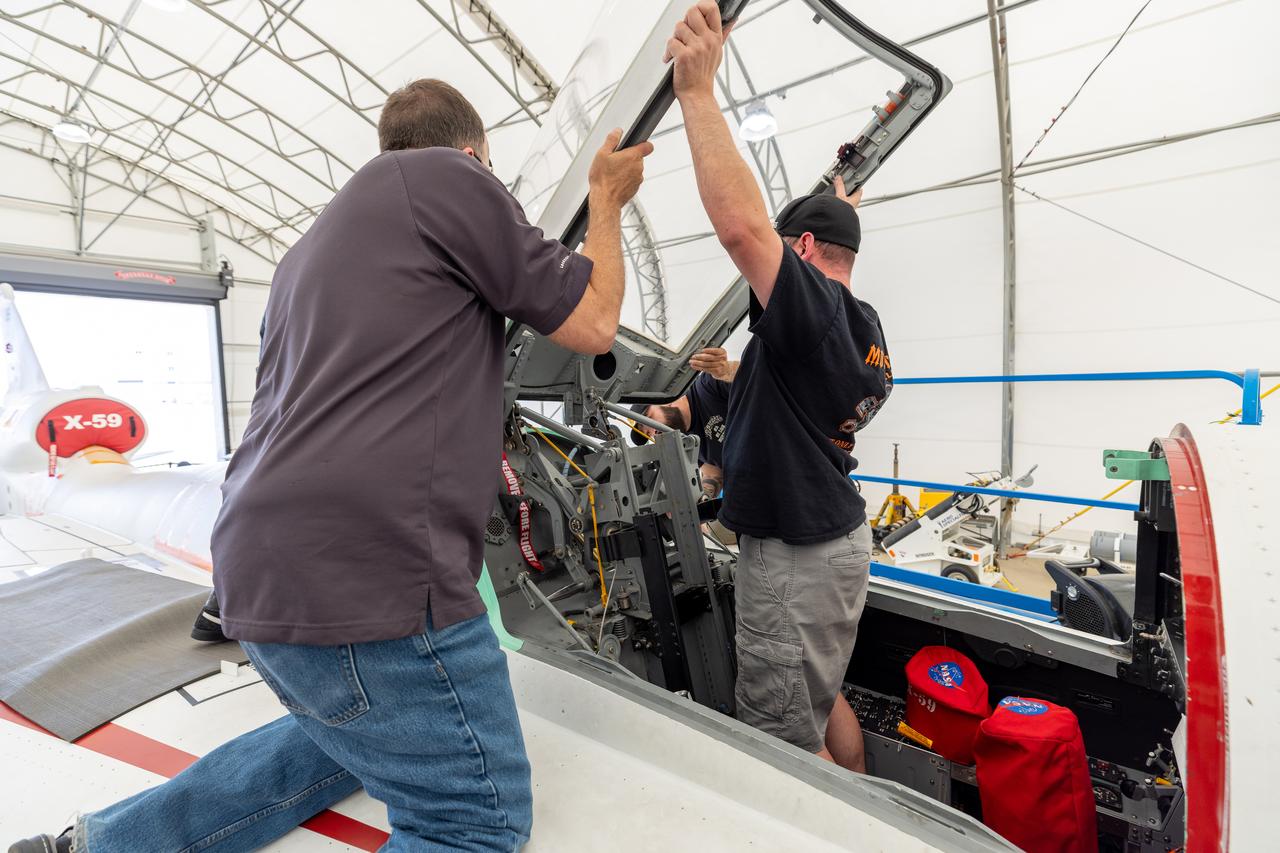
Lockheed Martin technicians temporarily remove the canopy from the X-59 in preparation for final installation of the ejection seat into the aircraft.

This image from NASA Dawn spacecraft shows many linear or sinuous grooves crisscrossing the surface of asteroid Vesta. They were created when large pieces of debris grazed and scoured the surface.
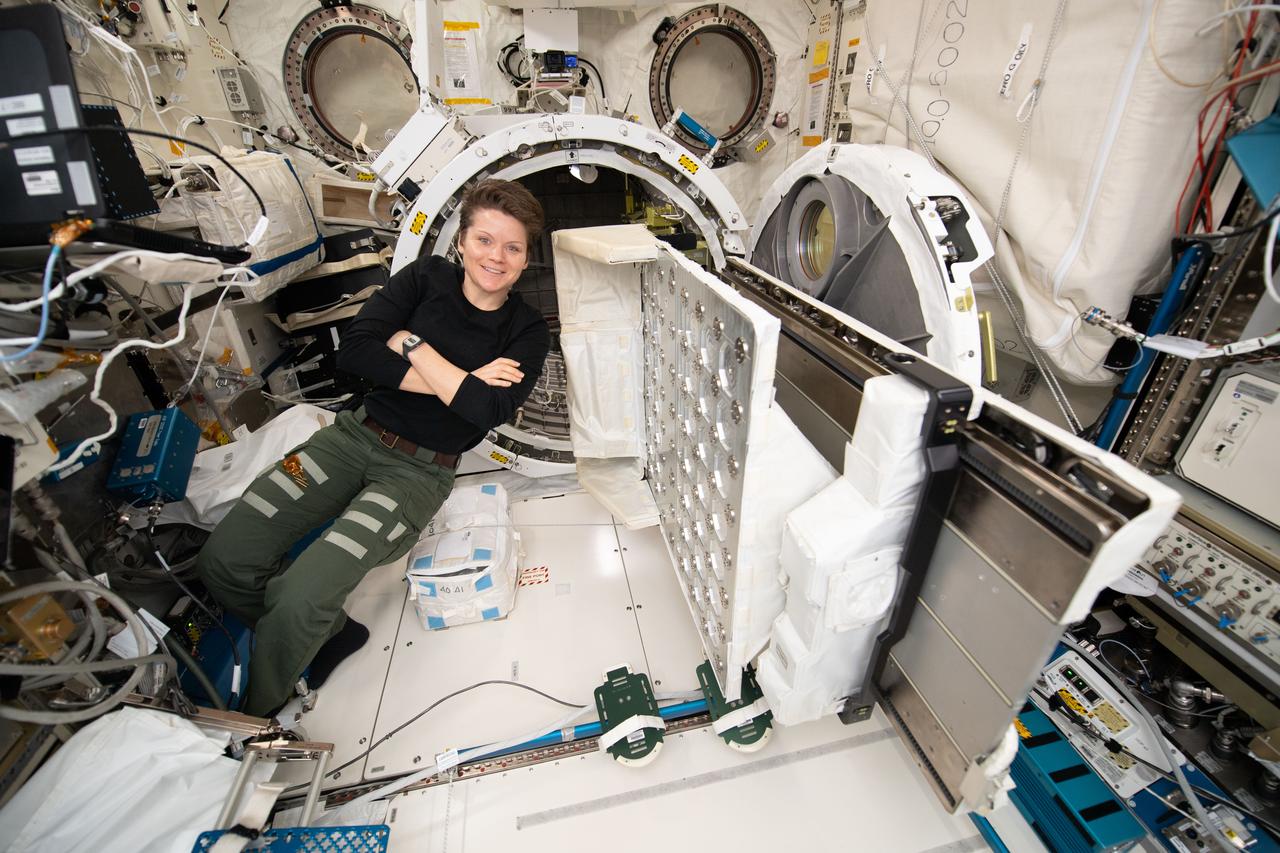
iss058e007370 (Jan. 29, 2019) --- NASA astronaut and Expedition 58 Flight Engineer Anne McClain works inside Japan's Kibo laboratory module. She was setting up and installing small satellite deployment hardware inside Kibo's airlock to eject a set of CubeSats outside the Japanese module.
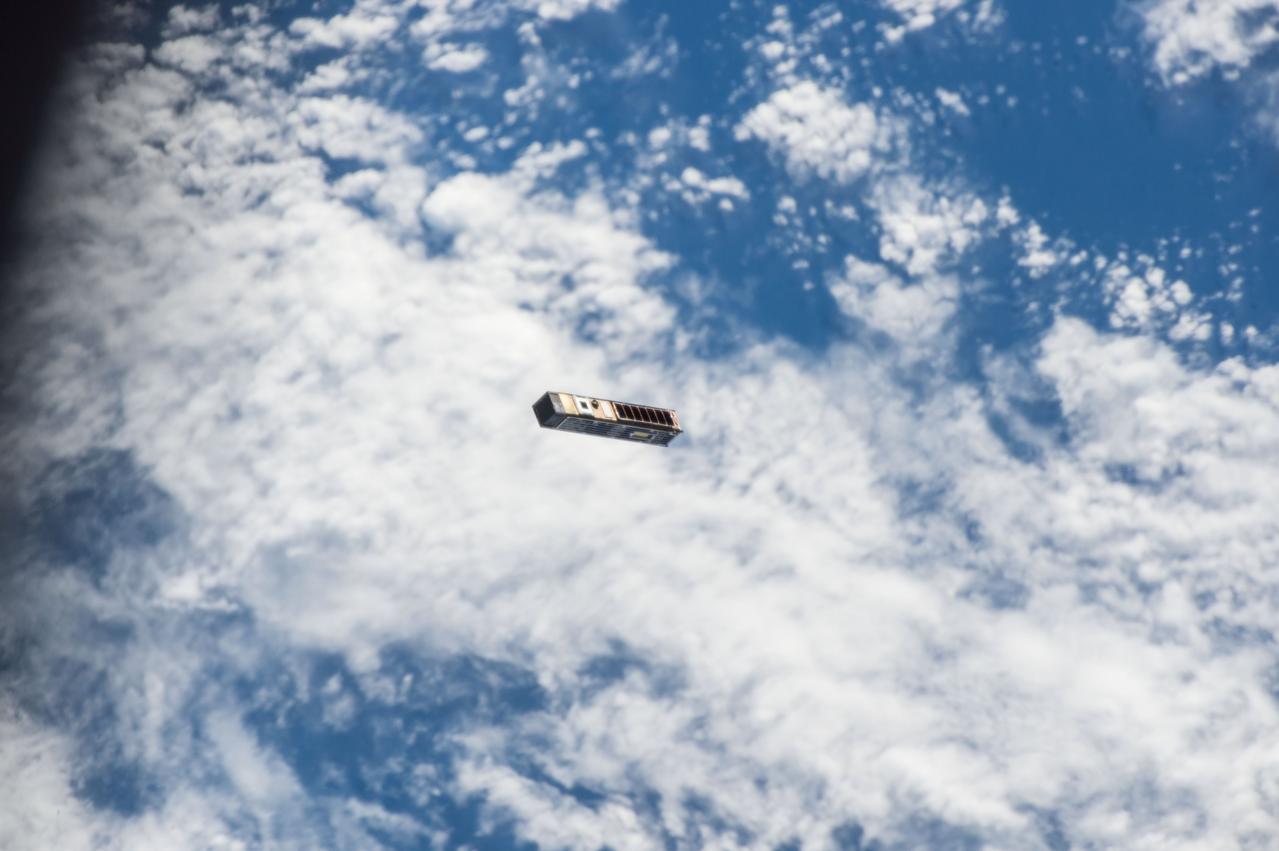
iss051e044839 (5/17/2017) -- The NanoRacks CubeSat Deployer "ejects" the Spacecraft for High Accuracy Radar Calibrationa (SHARC) microsatellite into orbit from the International Space Station.
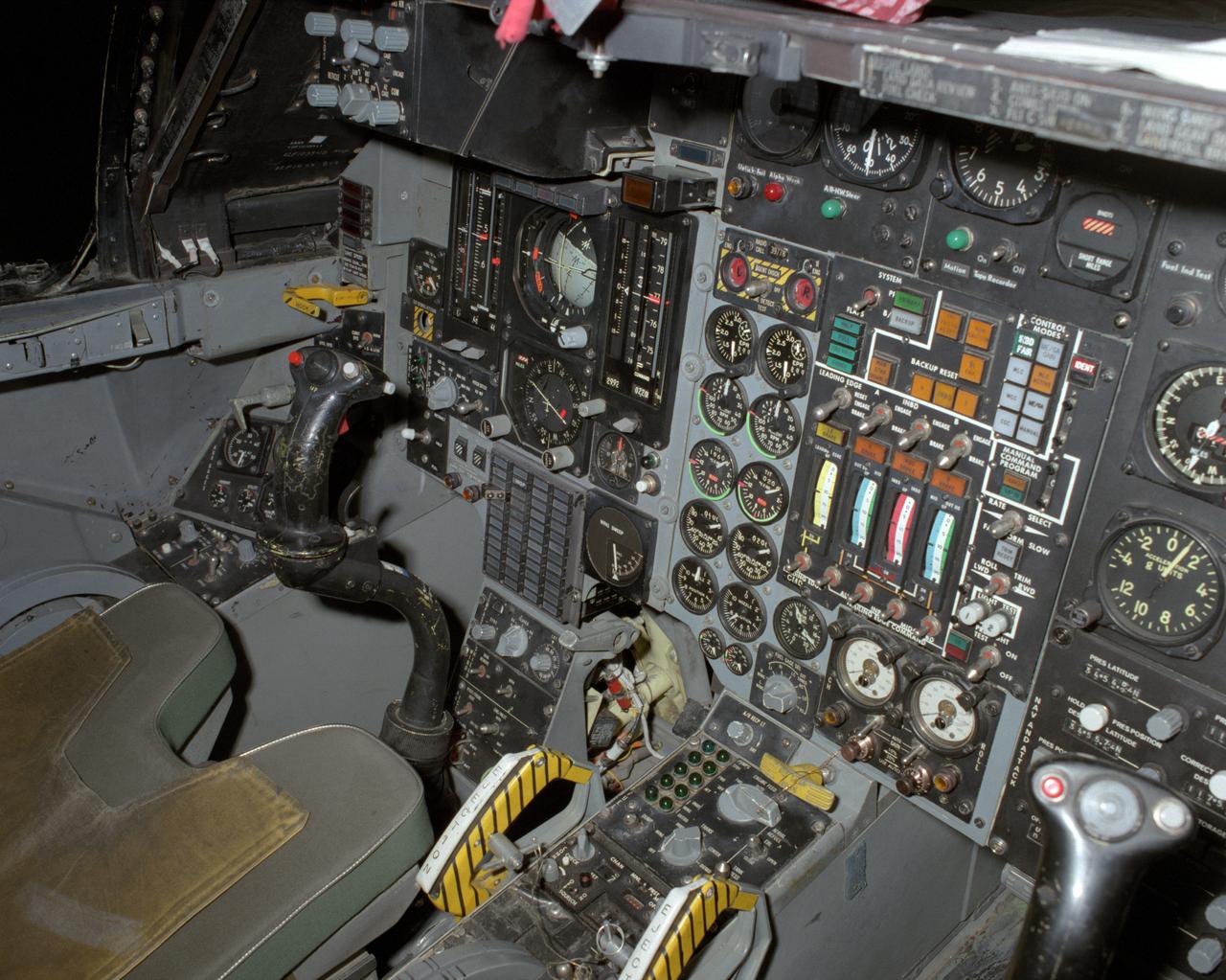
View of the left cockpit and pilot's seat of the F-111 MAW aircraft. Unlike most fighter aircraft of the time, the F-111 had side-by-side seating. The pilot sat on the left side, and the weapons systems officer on the right. Both had control sticks to fly the aircraft. The two yellow and black striped handles would be used in an emergency to eject the entire F-111 cockpit. The F-111 also did not have ejection seats, but used a capsule.
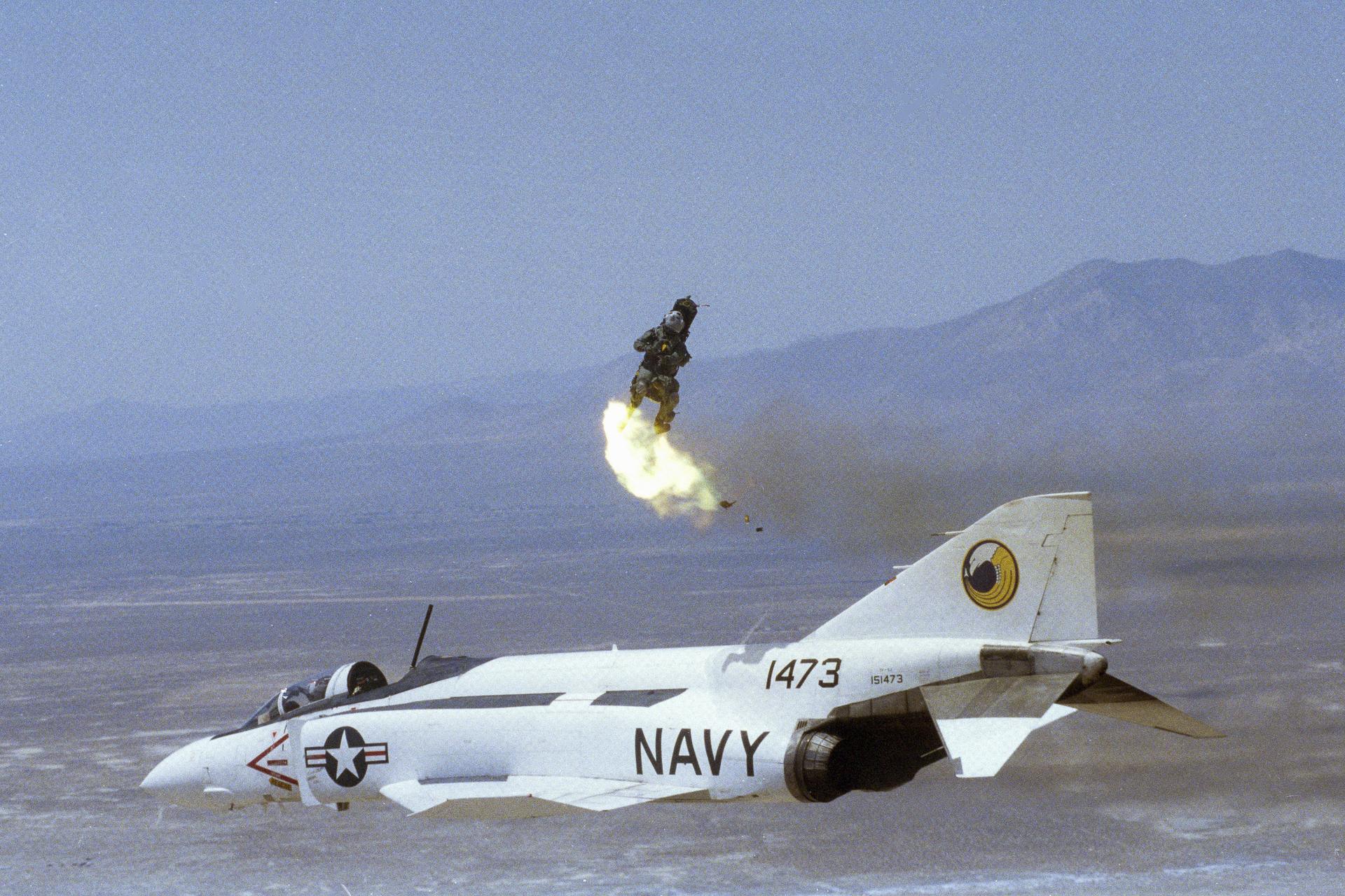
An instrumented mannequin ejects, with help of pyrotechnics, from a specially modified YF-4J drone at the Naval Warfare Center Weapons Division at China Lake, California, on Wednesday May 19, 1999. The test was the final flight in NASA’s ejection seat research, which began in 1995 at NASA’s Armstrong (then Dryden) Flight Research Center in Edwards, California. The project was a collaboration between NASA, the Naval Warfare Center, and the Canada’s Department of National Defense.
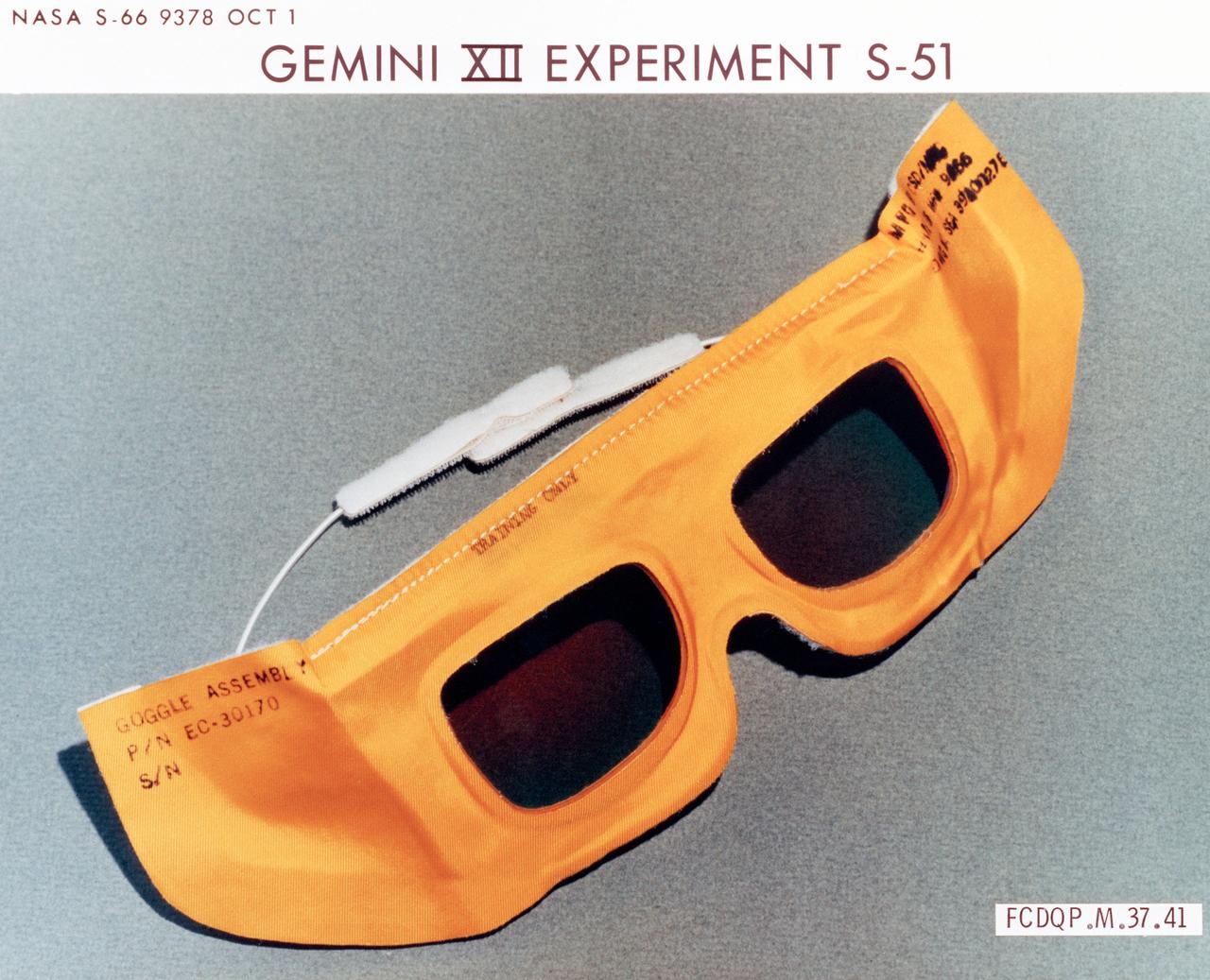
S66-09378 (1 Oct. 1966) --- Goggles which will be worn by Gemini-12 astronaut as he photographs sodium cloud ejected from French Centaure rocket launched from Hammaguir, Algeria. Photo credit: NASA

iss051e044807 (5/17/2017) -- The NanoRacks CubeSat Deployer "ejects" the Spacecraft for High Accuracy Radar Calibrationa (SHARC) microsatellite into orbit from the International Space Station. Credits: NASA

iss051e043291 (May 16, 2017) --- A pair of CubeSats, with the Earth’s limb in the background, is seen moments after being ejected from a small satellite deployer outside of the space station’s Kibo lab module.
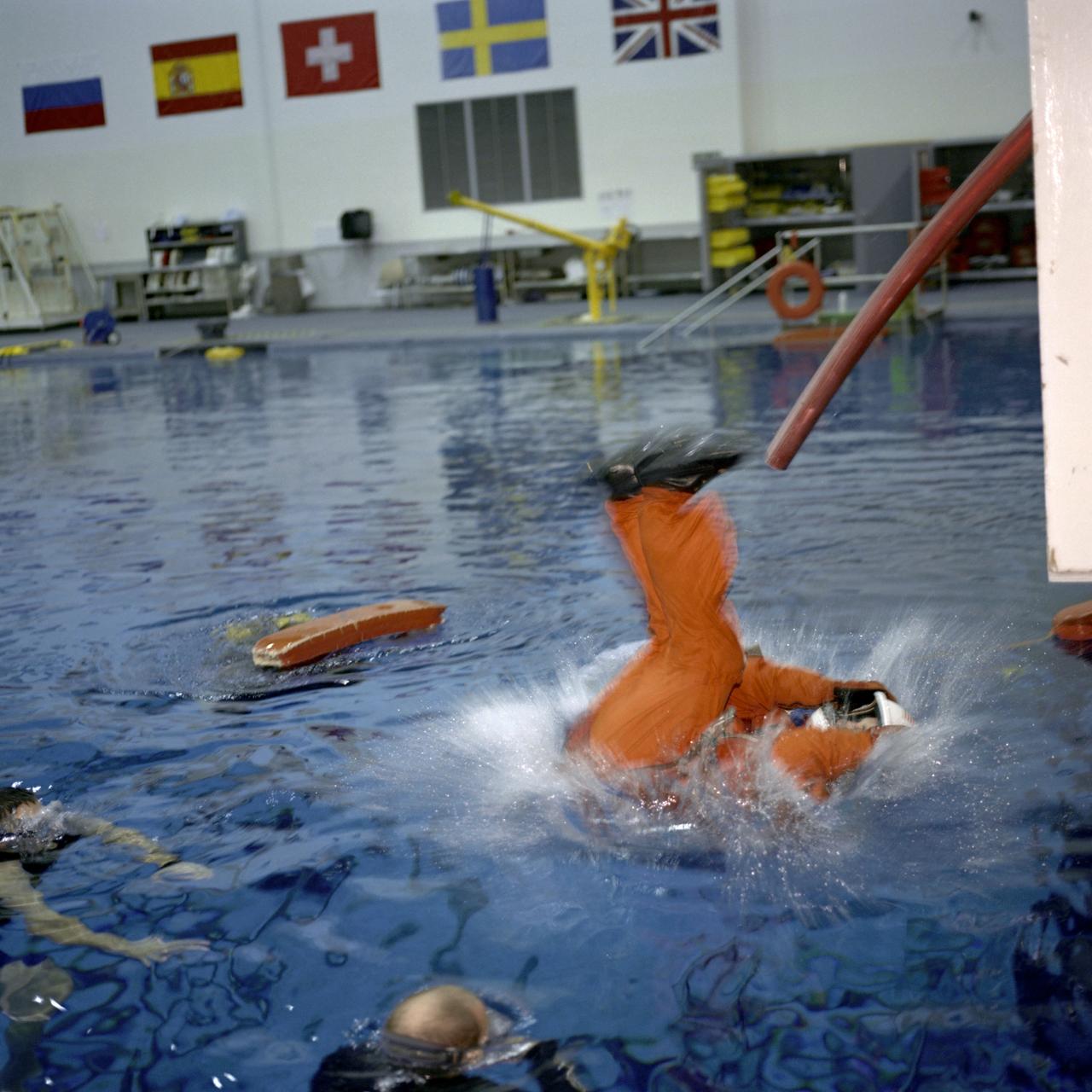
JSC2001-00006 (January 2001) --- An unidentified member of the STS-104 crew simulates an ejection into a body of water during an emergency bailout training session for the astronauts in the Neutral Buoyancy Laboratory (NBL) near the Johnson Space Center (JSC).
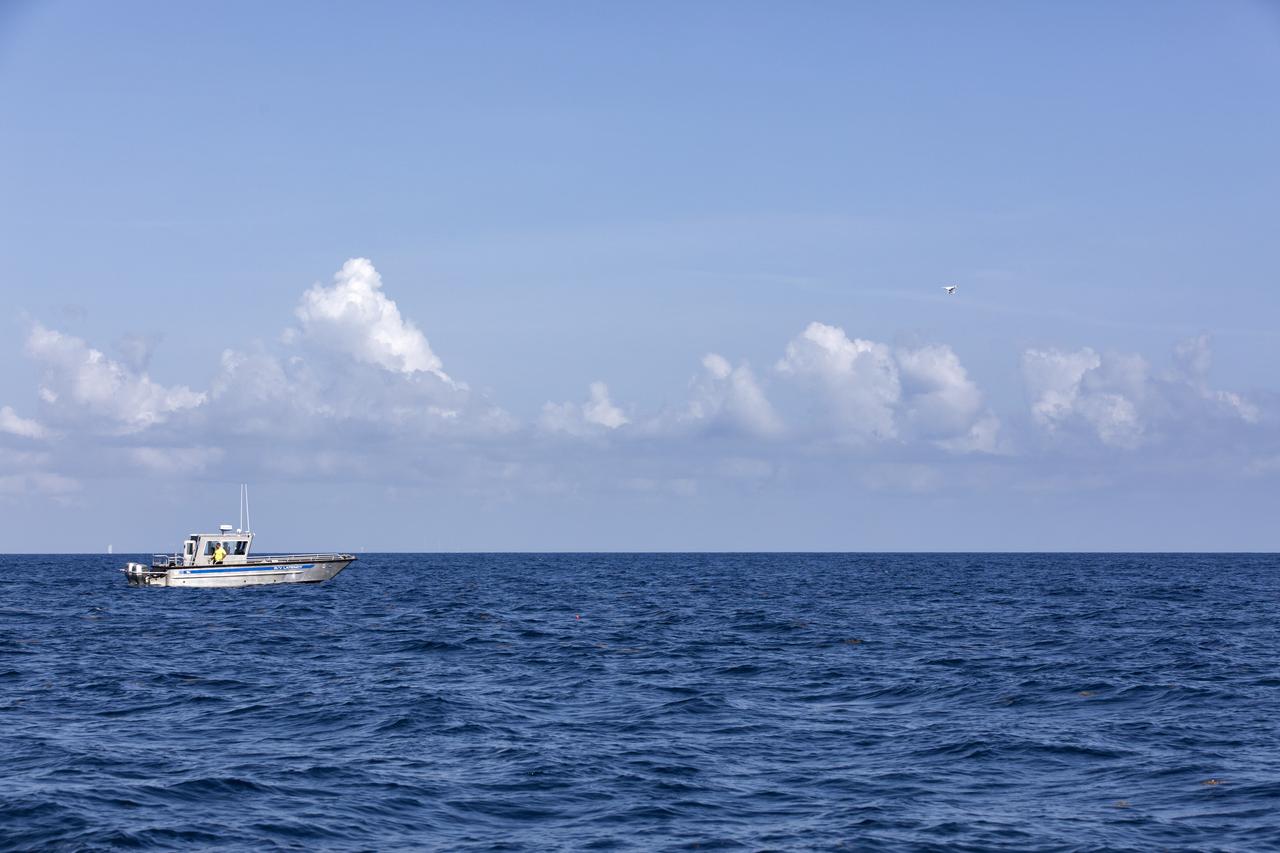
Members of the Ascent Abort-2 (AA-2) Flight Test team perform a drop test of data recording devices about 10 miles off the coast of NASA’s Kennedy Space Center in Florida on Wednesday, Aug. 8, 2018. These devices, called Ejectable Data Recorders (EDRs), were tossed out of a helicopter hovering 5,000 feet over the Atlantic Ocean and retrieved by recovery boats. The AA-2 Flight Test team is evaluating how the systems in the devices react to elements encountered from the sky to the ocean. In April 2019, the EDRs will eject from the Orion test article during a scheduled test of the spacecraft’s Launch Abort System (LAS).
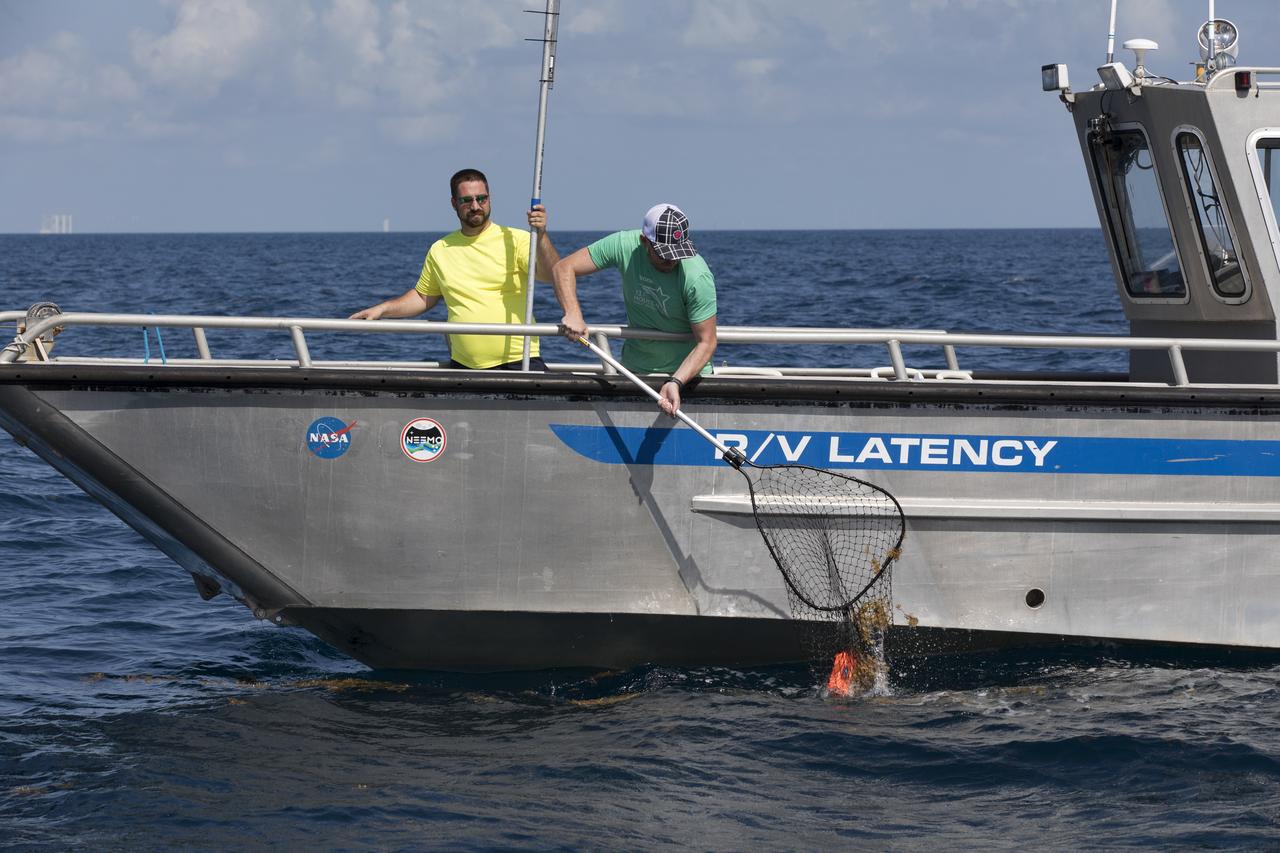
Members of the Ascent Abort-2 (AA-2) Flight Test team perform a drop test of data recording devices about 10 miles off the coast of NASA’s Kennedy Space Center in Florida on Wednesday, Aug. 8, 2018. These devices, called Ejectable Data Recorders (EDRs), were tossed out of a helicopter hovering 5,000 feet over the Atlantic Ocean and retrieved by recovery boats. The AA-2 Flight Test team is evaluating how the systems in the devices react to elements encountered from the sky to the ocean. In April 2019, the EDRs will eject from the Orion test article during a scheduled test of the spacecraft’s Launch Abort System (LAS).

Members of the Ascent Abort-2 (AA-2) Flight Test team perform a drop test of data recording devices about 10 miles off the coast of NASA’s Kennedy Space Center in Florida on Wednesday, Aug. 8, 2018. These devices, called Ejectable Data Recorders (EDRs), were tossed out of a helicopter hovering 5,000 feet over the Atlantic Ocean and retrieved by recovery boats. The AA-2 Flight Test team is evaluating how the systems in the devices react to elements encountered from the sky to the ocean. In April 2019, the EDRs will eject from the Orion test article during a scheduled test of the spacecraft’s Launch Abort System (LAS).
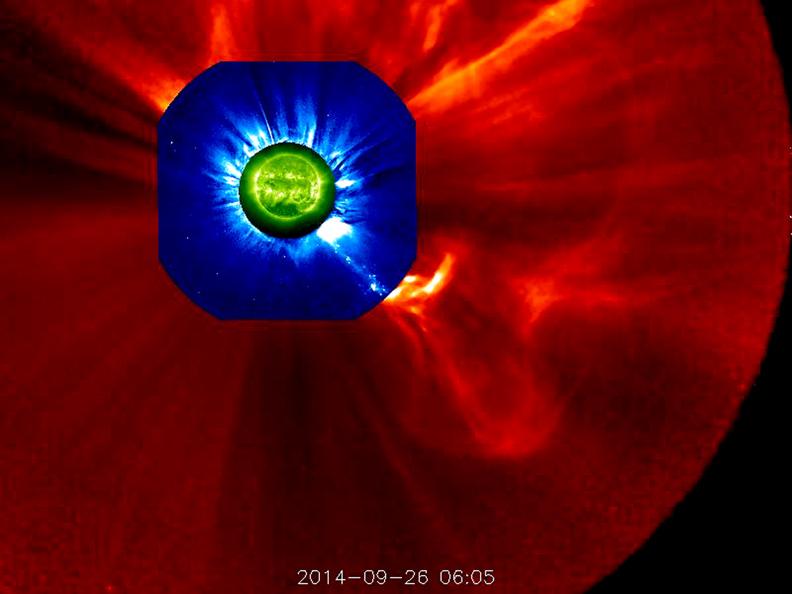
The STEREO (Behind) spacecraft captured this large prominence and corona mass ejection as they erupted into space (Sept. 26, 2014). By combining images from three instruments, scientists can see the eruption itself (in extreme UV light) as well as follow its progression over the period of about 13 hours with its two coronagraphs. Credit: NASA/Goddard/STEREO The STEREO (Behind) spacecraft captured this large prominence and corona mass ejection as they erupted into space (Sept. 26, 2014). By combining images from three instruments, scientists can see the eruption itself (in extreme UV light) as well as follow its progression over the period of about 13 hours with its two coronagraphs.
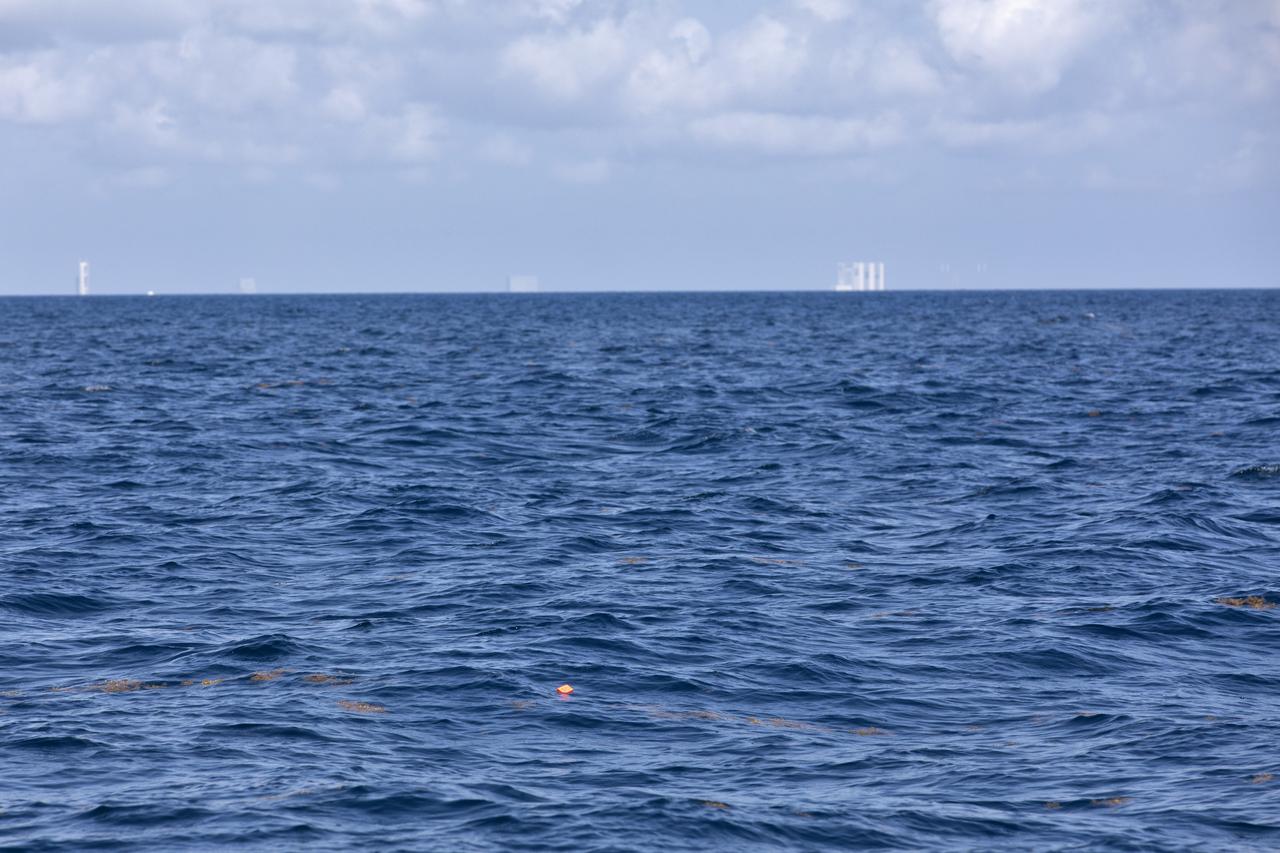
Members of the Ascent Abort-2 (AA-2) Flight Test team perform a drop test of data recording devices about 10 miles off the coast of NASA’s Kennedy Space Center in Florida on Wednesday, Aug. 8, 2018. These devices, called Ejectable Data Recorders (EDRs), were tossed out of a helicopter hovering 5,000 feet over the Atlantic Ocean and retrieved by recovery boats. The AA-2 Flight Test team is evaluating how the systems in the devices react to elements encountered from the sky to the ocean. In April 2019, the EDRs will eject from the Orion test article during a scheduled test of the spacecraft’s Launch Abort System (LAS).
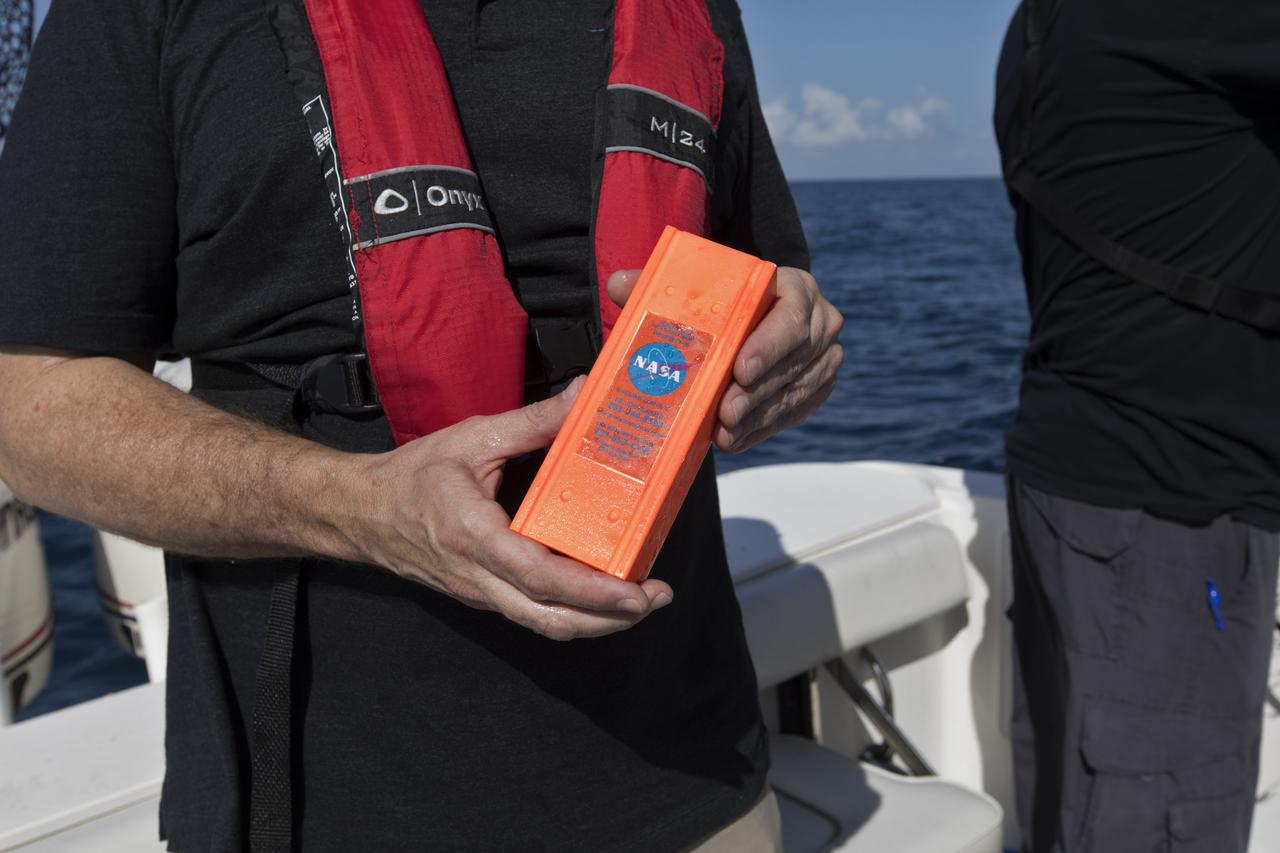
Members of the Ascent Abort-2 (AA-2) Flight Test team perform a drop test of data recording devices about 10 miles off the coast of NASA’s Kennedy Space Center in Florida on Wednesday, Aug. 8, 2018. These devices, called Ejectable Data Recorders (EDRs), were tossed out of a helicopter hovering 5,000 feet over the Atlantic Ocean and retrieved by recovery boats. The AA-2 Flight Test team is evaluating how the systems in the devices react to elements encountered from the sky to the ocean. In April 2019, the EDRs will eject from the Orion test article during a scheduled test of the spacecraft’s Launch Abort System (LAS).
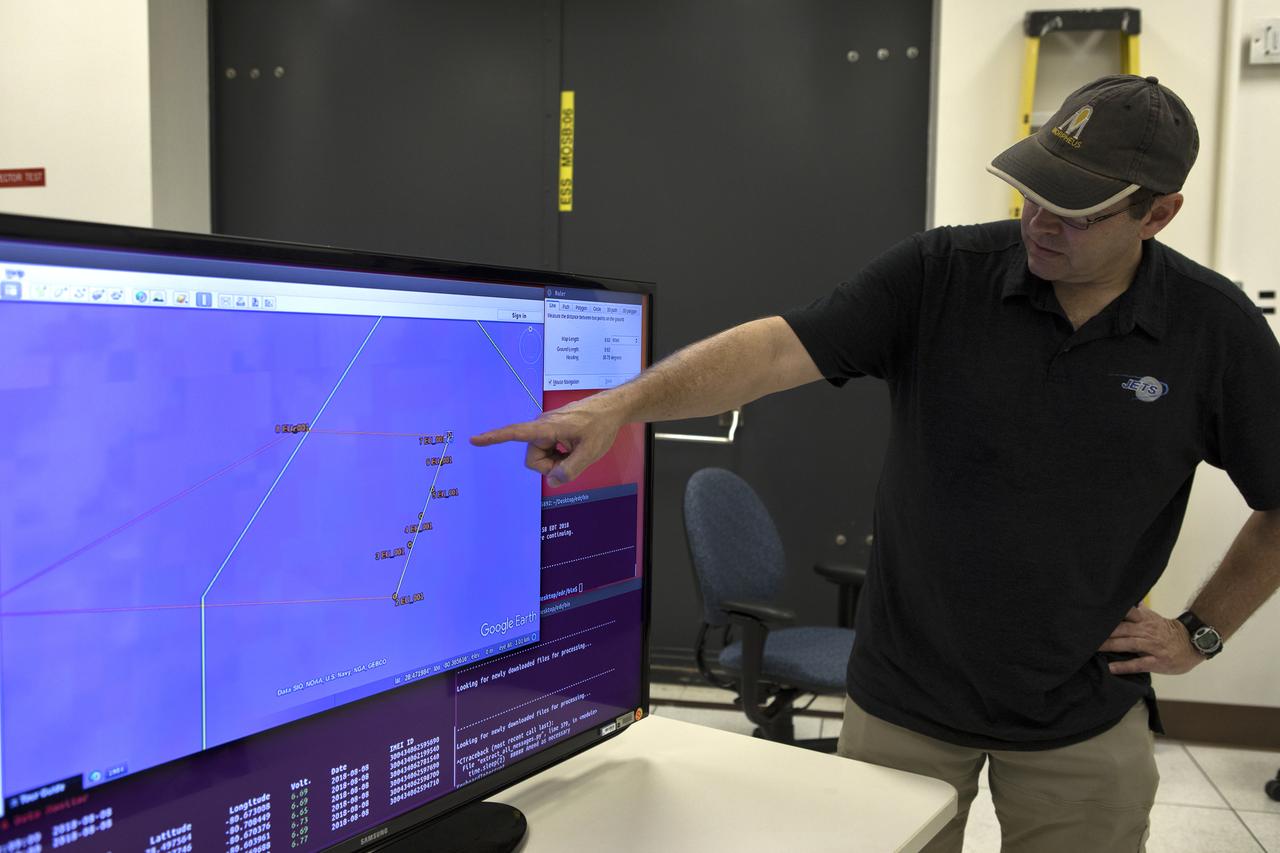
Members of the Ascent Abort-2 (AA-2) Flight Test team perform a drop test of data recording devices about 10 miles off the coast of NASA’s Kennedy Space Center in Florida on Wednesday, Aug. 8, 2018. These devices, called Ejectable Data Recorders (EDRs), were tossed out of a helicopter hovering 5,000 feet over the Atlantic Ocean and retrieved by recovery boats. The AA-2 Flight Test team is evaluating how the systems in the devices react to elements encountered from the sky to the ocean. In April 2019, the EDRs will eject from the Orion test article during a scheduled test of the spacecraft’s Launch Abort System (LAS).
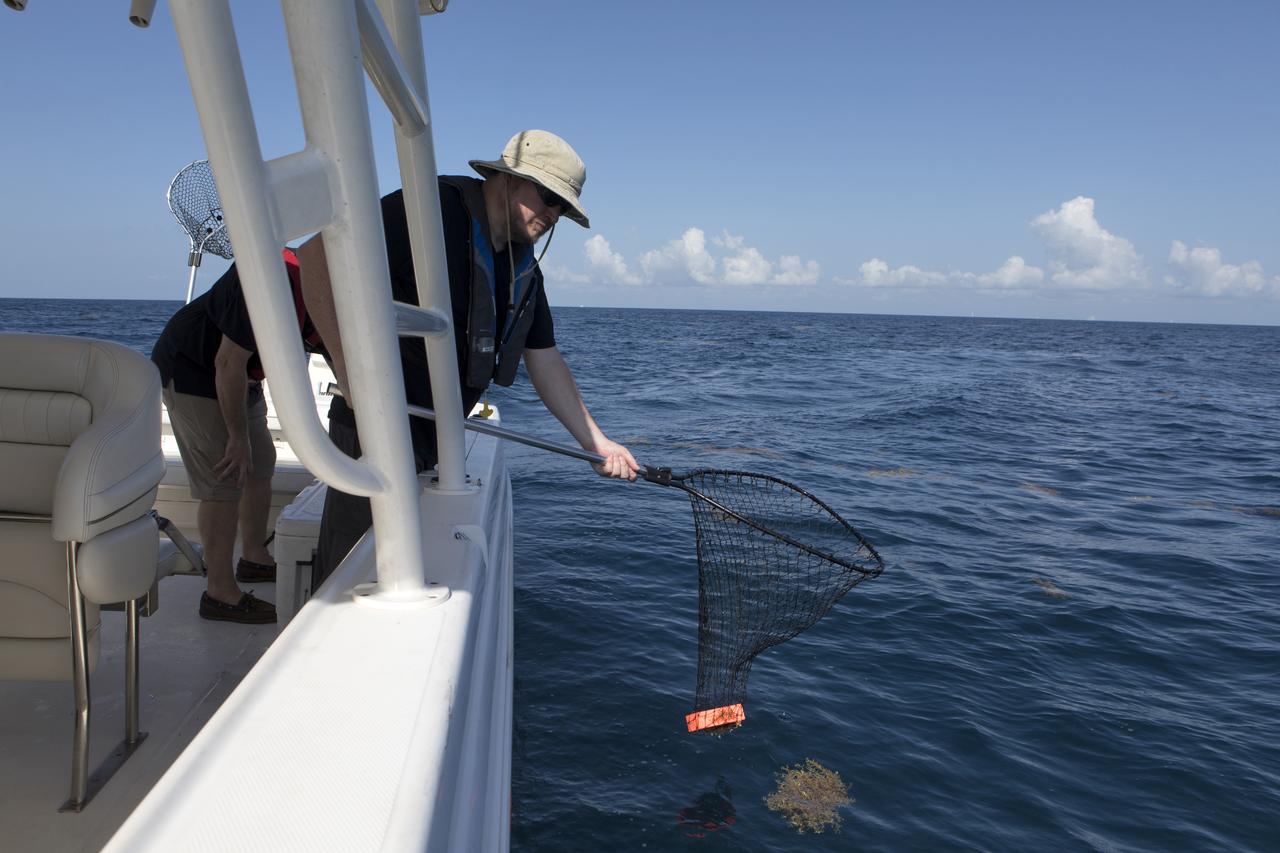
Members of the Ascent Abort-2 (AA-2) Flight Test team perform a drop test of data recording devices about 10 miles off the coast of NASA’s Kennedy Space Center in Florida on Wednesday, Aug. 8, 2018. These devices, called Ejectable Data Recorders (EDRs), were tossed out of a helicopter hovering 5,000 feet over the Atlantic Ocean and retrieved by recovery boats. The AA-2 Flight Test team is evaluating how the systems in the devices react to elements encountered from the sky to the ocean. In April 2019, the EDRs will eject from the Orion test article during a scheduled test of the spacecraft’s Launch Abort System (LAS).
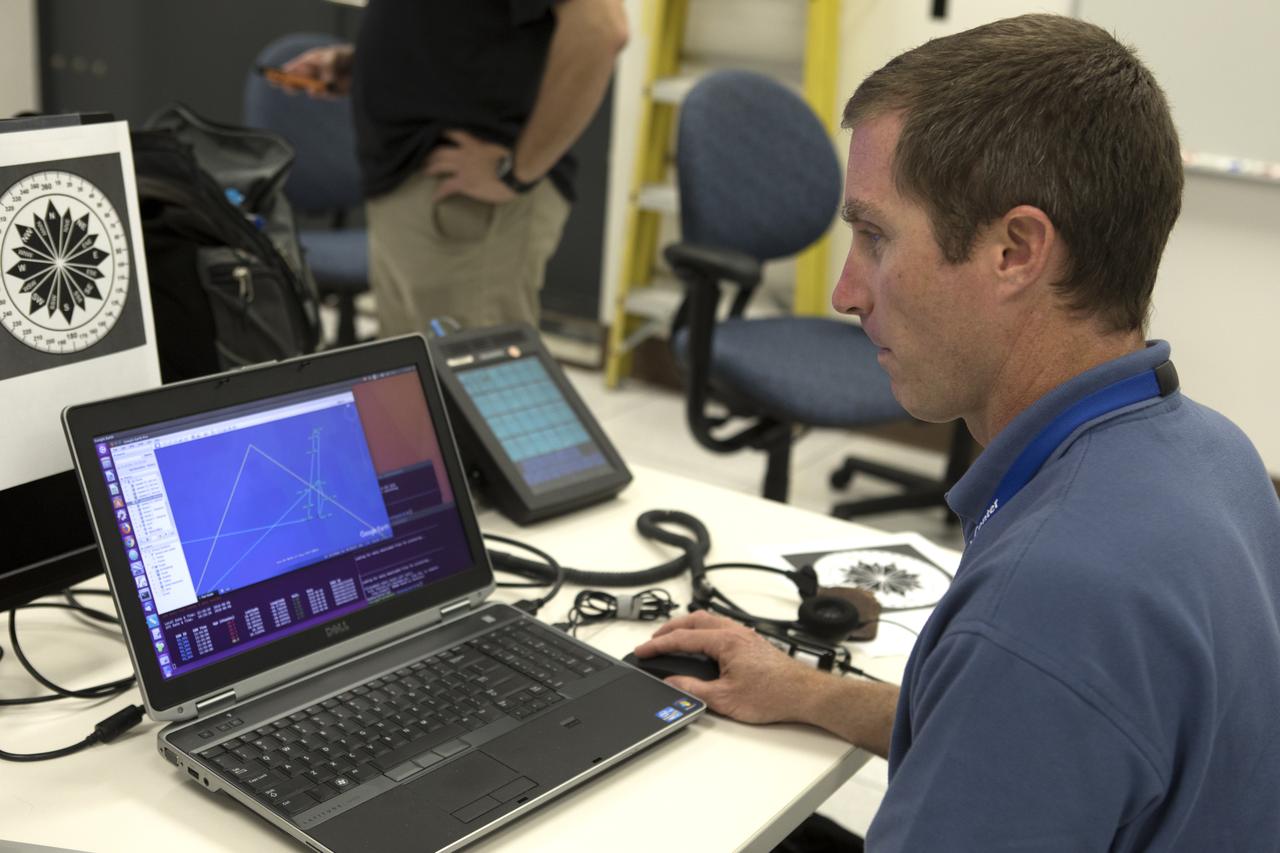
Members of the Ascent Abort-2 (AA-2) Flight Test team perform a drop test of data recording devices about 10 miles off the coast of NASA’s Kennedy Space Center in Florida on Wednesday, Aug. 8, 2018. These devices, called Ejectable Data Recorders (EDRs), were tossed out of a helicopter hovering 5,000 feet over the Atlantic Ocean and retrieved by recovery boats. The AA-2 Flight Test team is evaluating how the systems in the devices react to elements encountered from the sky to the ocean. In April 2019, the EDRs will eject from the Orion test article during a scheduled test of the spacecraft’s Launch Abort System (LAS).
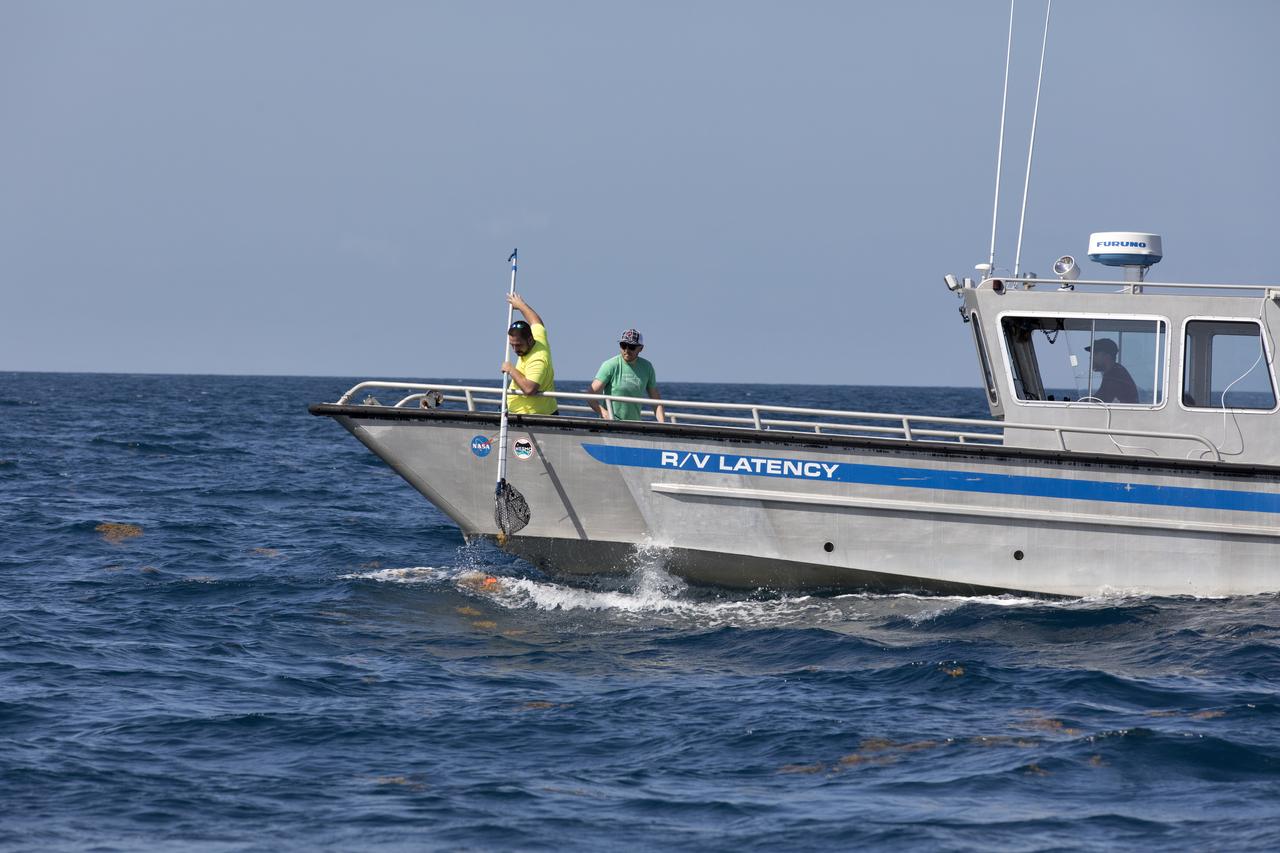
Members of the Ascent Abort-2 (AA-2) Flight Test team perform a drop test of data recording devices about 10 miles off the coast of NASA’s Kennedy Space Center in Florida on Wednesday, Aug. 8, 2018. These devices, called Ejectable Data Recorders (EDRs), were tossed out of a helicopter hovering 5,000 feet over the Atlantic Ocean and retrieved by recovery boats. The AA-2 Flight Test team is evaluating how the systems in the devices react to elements encountered from the sky to the ocean. In April 2019, the EDRs will eject from the Orion test article during a scheduled test of the spacecraft’s Launch Abort System (LAS).
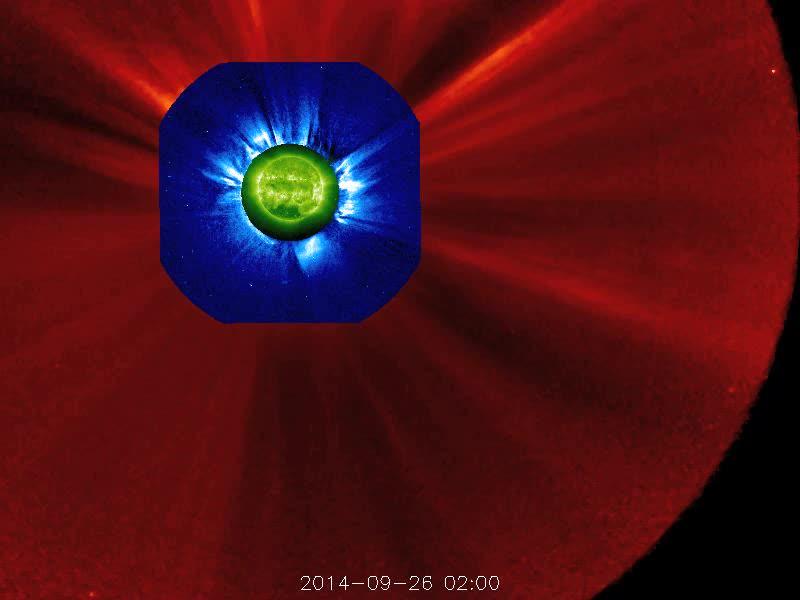
The STEREO (Behind) spacecraft captured this large prominence and corona mass ejection as they erupted into space (Sept. 26, 2014). By combining images from three instruments, scientists can see the eruption itself (in extreme UV light) as well as follow its progression over the period of about 13 hours with its two coronagraphs. Credit: NASA/Goddard/STEREO The STEREO (Behind) spacecraft captured this large prominence and corona mass ejection as they erupted into space (Sept. 26, 2014). By combining images from three instruments, scientists can see the eruption itself (in extreme UV light) as well as follow its progression over the period of about 13 hours with its two coronagraphs.

Members of the Ascent Abort-2 (AA-2) Flight Test team perform a drop test of data recording devices about 10 miles off the coast of NASA’s Kennedy Space Center in Florida on Wednesday, Aug. 8, 2018. These devices, called Ejectable Data Recorders (EDRs), were tossed out of a helicopter hovering 5,000 feet over the Atlantic Ocean and retrieved by recovery boats. The AA-2 Flight Test team is evaluating how the systems in the devices react to elements encountered from the sky to the ocean. In April 2019, the EDRs will eject from the Orion test article during a scheduled test of the spacecraft’s Launch Abort System (LAS).
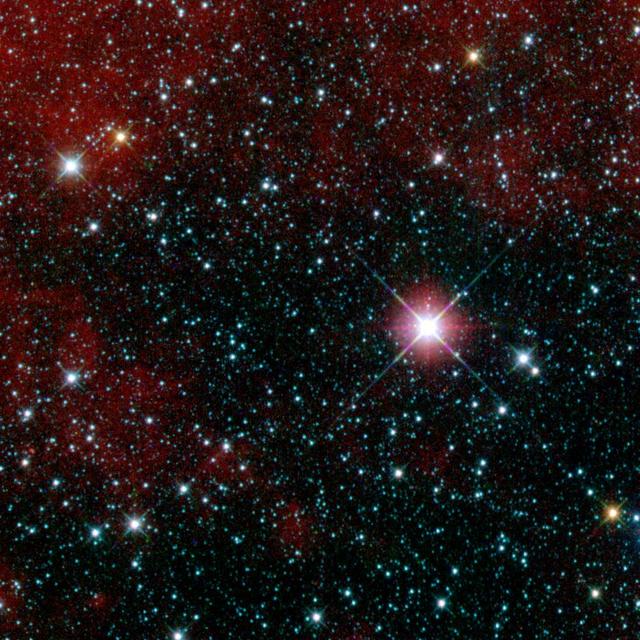
This infrared snapshot of a region in the constellation Carina near the Milky Way was taken shortly after NASA Wide-field Infrared Survey Explorer ejected its cover. The first-light picture shows thousands of stars and covers an area three times the s

iss051e050126 (May 26, 2017) --- Three CubeSats are ejected from the NanoRacks CubeSat Deployer attached to the outside of the Japanese Kibo laboratory module. The trio are part of a subset CubeSats released during the week to monitor different gaseous molecules and electrical properties of the Earth's thermosphere to better understand space weather and its long term trends.

JSC2005-E-31292 (28 July 2005) --- An unidentified member of the STS-116 crew simulates an ejection from a troubled shuttle into a body of water during an emergency bailout training session in the Neutral Buoyancy Laboratory (NBL) near the Johnson Space Center.
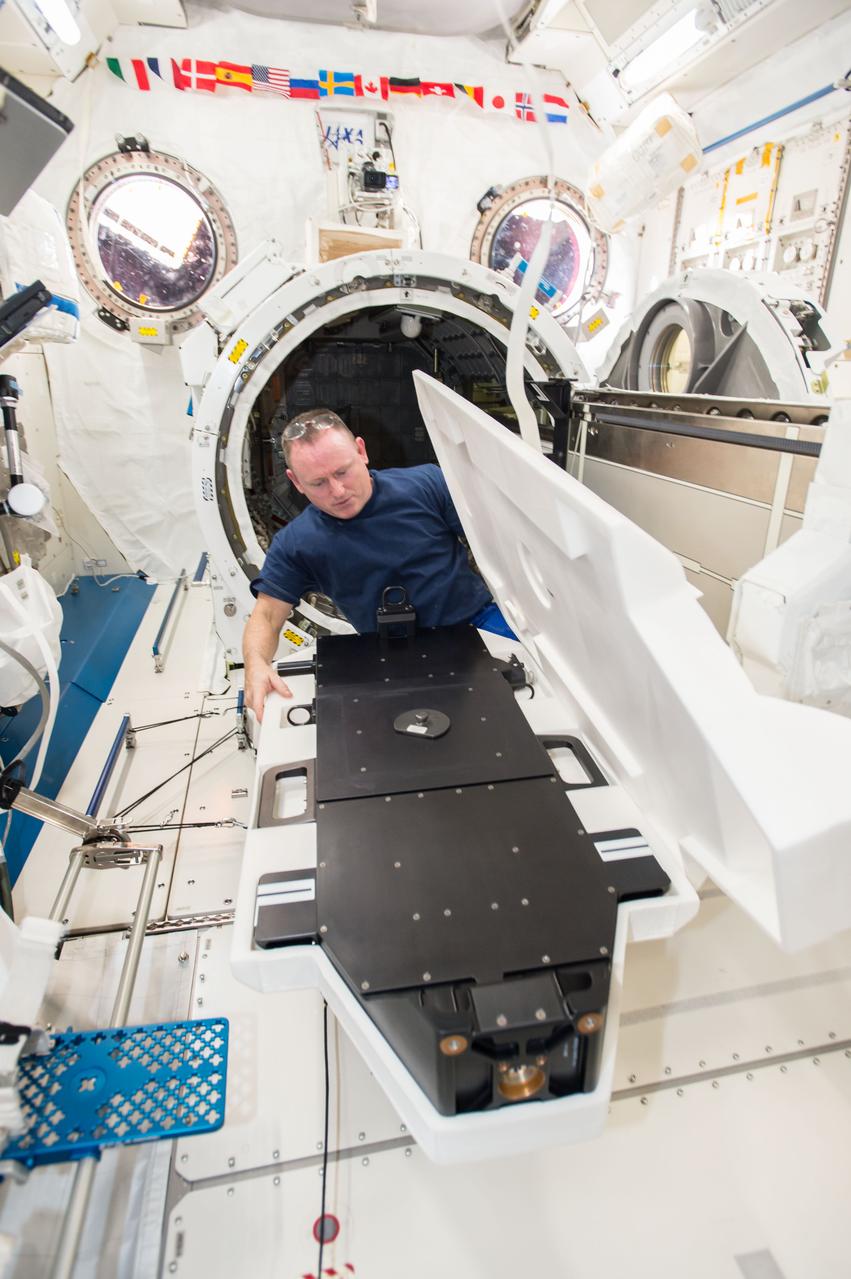
iss042e015943 (11/26/2014) --- Commander Barry Wilmore unpacks the Cyclops launch platform for installation on the Japanese Experiment Module Airlock (JEMAL) slide table. The Cyclops platform, also known as the Space Station Integrated Kinetic Launcher for Orbital Payload Systems (SSIKLOPS), holds and ejects nanosatellites from outside the ISS.
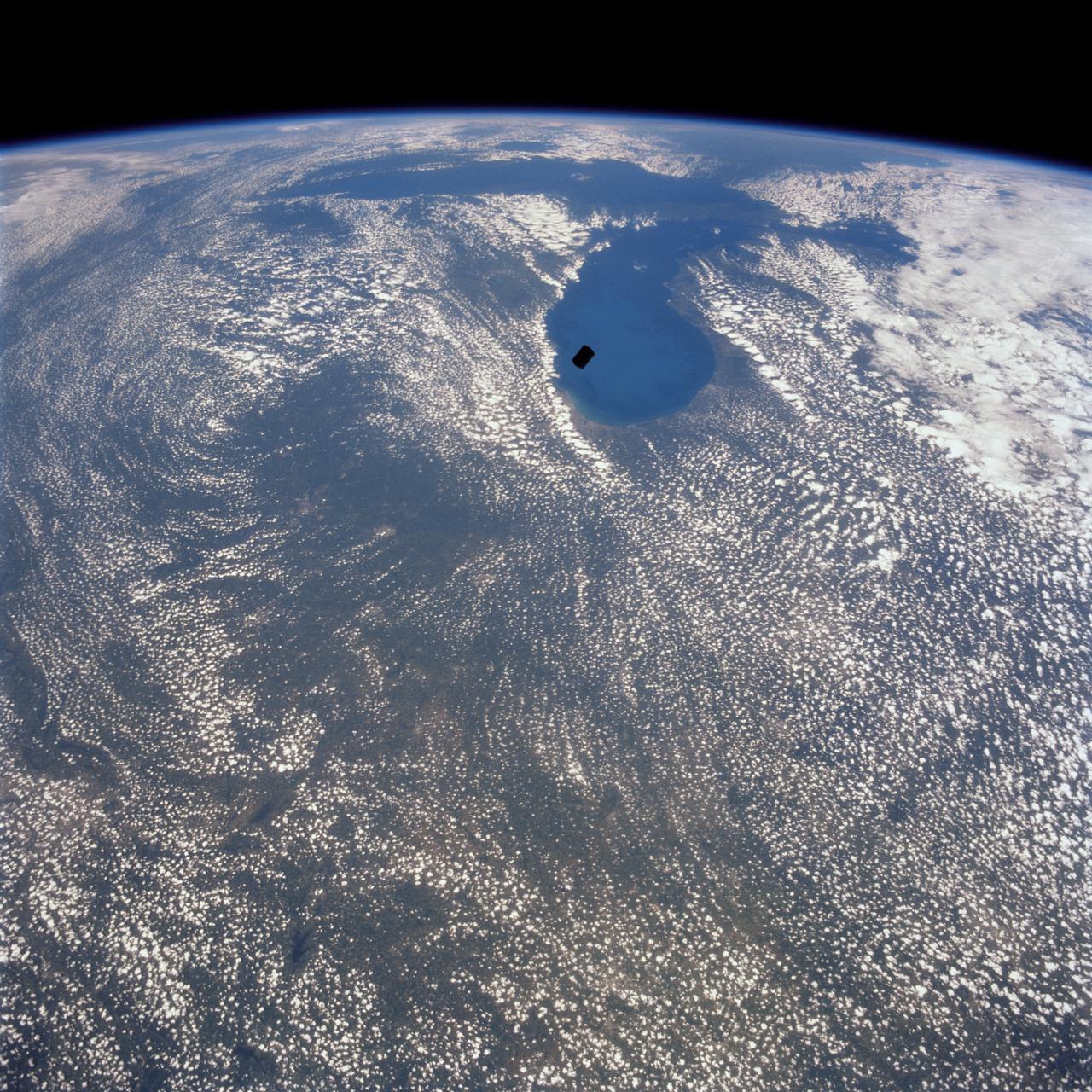
STS105-714-028 (20 August 2001) --- Backdropped by Lake Michigan, this distant view shows the recently deployed small science satellite called Simplesat, which is an engineering satellite, designed to evaluate the use of inexpensive commercial hardware for spacecraft. It was spring-ejected from a canister at the rear of the Shuttle's cargo bay.
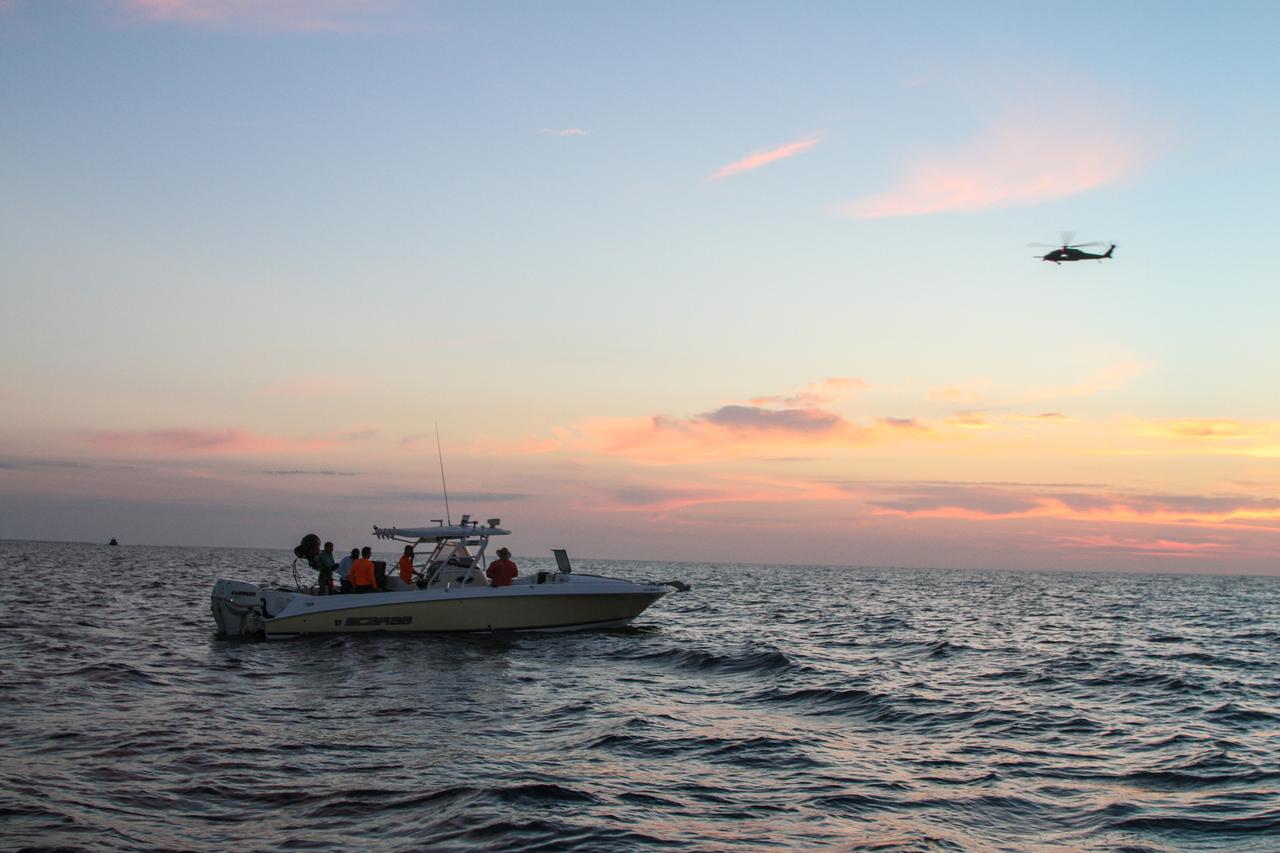
Members of the NASA Ejectable Data Recorder Recovery Team search for the ejectable data recorders in the Atlantic Ocean off the coast of Florida on July 2, 2019, after the Ascent Abort-2 (AA-2) flight test. During AA-2, a fully functional Launch Abort System (LAS) with a test version of Orion attached, launched atop a Northrop Grumman provided booster from Launch Pad 46 at Cape Canaveral Air Force Station on July 2, 2019. Liftoff was at 7 a.m. EDT. During AA-2, the booster sent the LAS and Orion to an altitude of 31,000 feet, traveling at Mach 1.15 (more than 1,000 mph). The LAS’ three motors worked together to pull the crew module away from the booster and prepare it for splashdown in the Atlantic Ocean. The flight test proves that the abort system can pull crew to safety in the unlikely event of an emergency during ascent. Data from the recorders will be analyzed by engineers.

This four-panel graphic illustrates how the binary-star system V Hydrae is launching balls of plasma into space. Panel 1 shows the two stars orbiting each other. One of the stars is nearing the end of its life and has swelled in size, becoming a red giant. In panel 2, the smaller star's orbit carries the star into the red giant's expanded atmosphere. As the star moves through the atmosphere, it gobbles up material from the red giant that settles into a disk around the star. The buildup of material reaches a tipping point and is eventually ejected as blobs of hot plasma along the star's spin axis, as shown in panel 3. This ejection process is repeated every eight years, which is the time it takes for the orbiting star to make another pass through the bloated red giant's envelope, as shown in panel 4. http://photojournal.jpl.nasa.gov/catalog/PIA21071
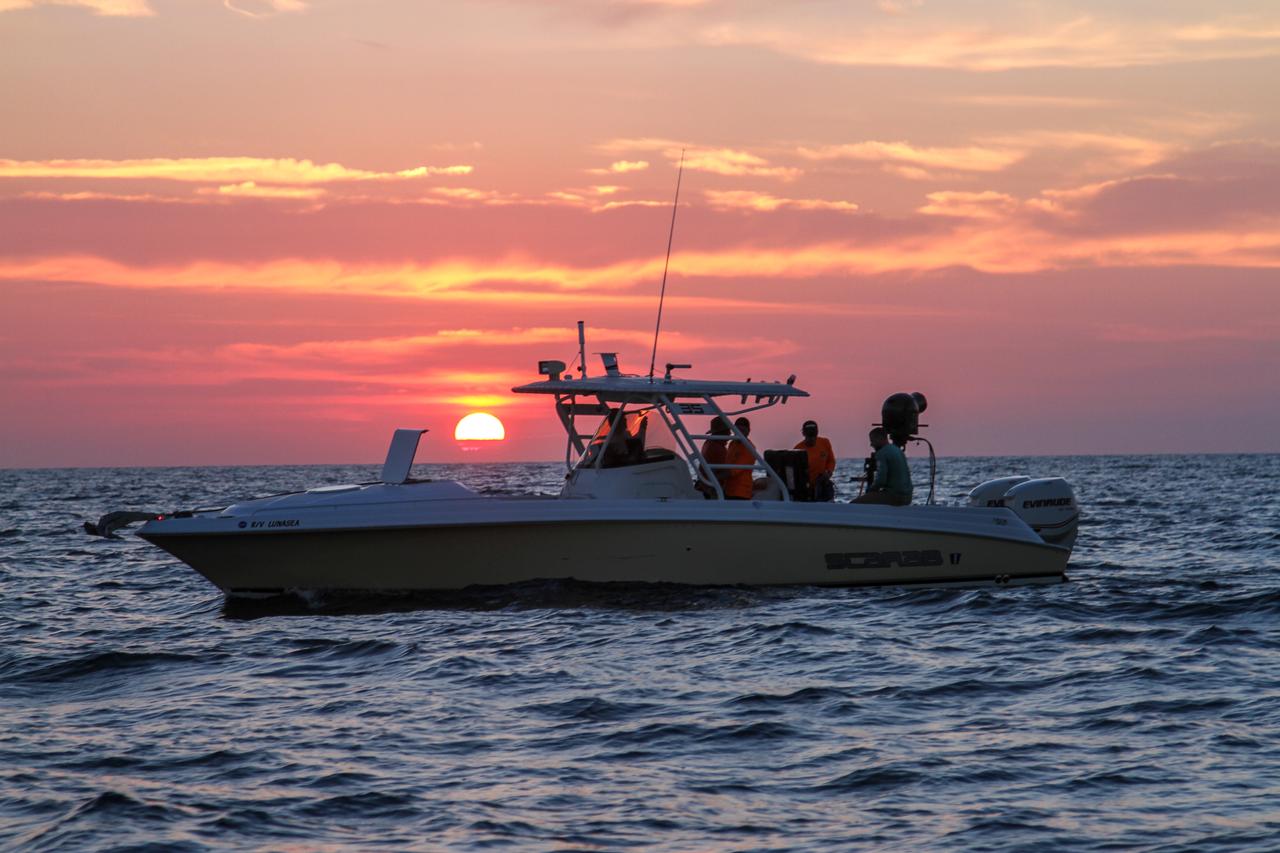
Members of the NASA Ejectable Data Recorder Recovery Team search for the ejectable data recorders in the Atlantic Ocean off the coast of Florida on July 2, 2019, after the Ascent Abort-2 (AA-2) flight test. During AA-2, a fully functional Launch Abort System (LAS) with a test version of Orion attached, launched atop a Northrop Grumman provided booster from Launch Pad 46 at Cape Canaveral Air Force Station on July 2, 2019. Liftoff was at 7 a.m. EDT. During AA-2, the booster sent the LAS and Orion to an altitude of 31,000 feet, traveling at Mach 1.15 (more than 1,000 mph). The LAS’ three motors worked together to pull the crew module away from the booster and prepare it for splashdown in the Atlantic Ocean. The flight test proves that the abort system can pull crew to safety in the unlikely event of an emergency during ascent. Data from the recorders will be analyzed by engineers.

Here we see the spectacular cosmic pairing of the star Hen 2-427 — more commonly known as WR 124 — and the nebula M1-67 which surrounds it. Both objects, captured here by the NASA/ESA Hubble Space Telescope are found in the constellation of Sagittarius and lie 15 000 light-years away. The star Hen 2-427 shines brightly at the very centre of this explosive image and around the hot clumps of gas are ejected into space at over 150 000 kilometres per hour. Hen 2-427 is a Wolf–Rayet star, named after the astronomers Charles Wolf and Georges Rayet. Wolf–Rayet are super-hot stars characterised by a fierce ejection of mass. The nebula M1-67 is estimated to be no more than 10 000 years old — just a baby in astronomical terms — but what a beautiful and magnificent sight it makes. A version of this image was released in 1998, but has now been re-reduced with the latest software.
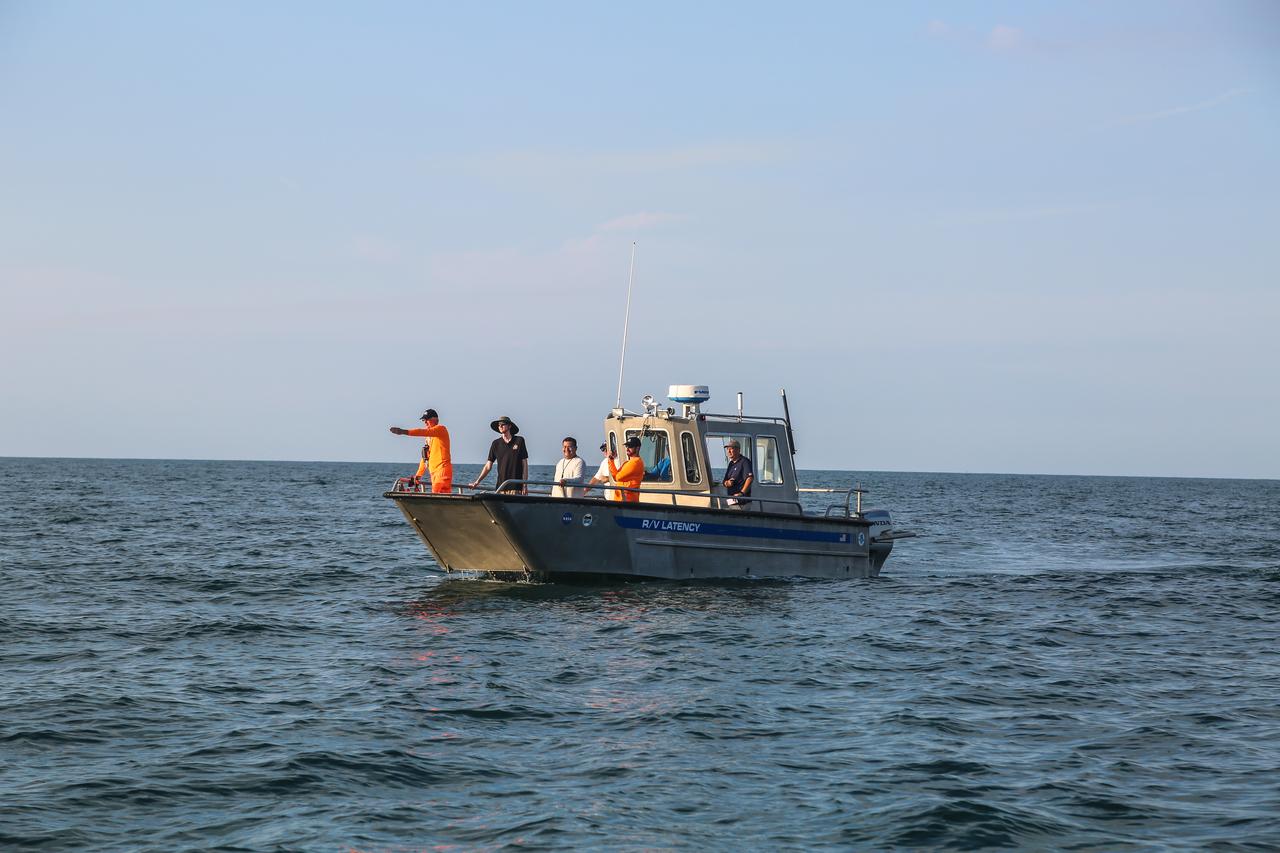
Members of the NASA Ejectable Data Recorder Recovery Team search for the ejectable data recorders in the Atlantic Ocean off the coast of Florida on July 2, 2019, after the Ascent Abort-2 (AA-2) flight test. During AA-2, a fully functional Launch Abort System (LAS) with a test version of Orion attached, launched atop a Northrop Grumman provided booster from Launch Pad 46 at Cape Canaveral Air Force Station on July 2, 2019. Liftoff was at 7 a.m. EDT. During AA-2, the booster sent the LAS and Orion to an altitude of 31,000 feet, traveling at Mach 1.15 (more than 1,000 mph). The LAS’ three motors worked together to pull the crew module away from the booster and prepare it for splashdown in the Atlantic Ocean. The flight test proves that the abort system can pull crew to safety in the unlikely event of an emergency during ascent. Data from the recorders will be analyzed by engineers.
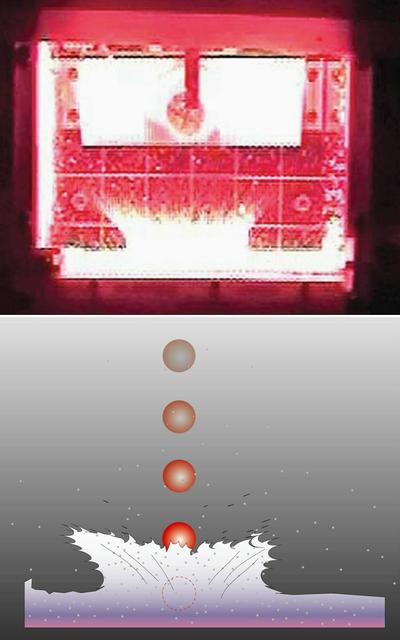
Clues to the formation of planets and planetary rings -- like Saturn's dazzling ring system -- may be found by studying how dust grains interact as they collide at low speeds. To study the question of low-speed dust collisions, NASA sponsored the COLLisions Into Dust Experiment (COLLIDE) at the University of Colorado. It was designed to spring-launch marble-size projectiles into trays of powder similar to space or lunar dust. COLLIDE-1 (1998) discovered that collisions below a certain energy threshold eject no material. COLLIDE-2 was designed to identify where the threshold is. In COLLIDE-2, scientists nudged small projectiles into dust beds and recorded how the dust splashed outward (video frame at top; artist's rendering at bottom). The slowest impactor ejected no material and stuck in the target. The faster impactors produced ejecta; some rebounded while others stuck in the target.

This image from NASA's Dawn spacecraft shows a crater at upper right with a sharply defined rim. To its left is an older impact crater whose features have been softened by a blanket of material, likely ejected from a nearby impact. The image is centered at 17 degrees north latitude, 123 degrees east longitude. Dawn took this image on June 6, 2016, from its low-altitude mapping orbit, at a distance of about 240 miles (385 kilometers) above the surface. The image resolution is 120 feet (35 meters) per pixel. http://photojournal.jpl.nasa.gov/catalog/PIA20954
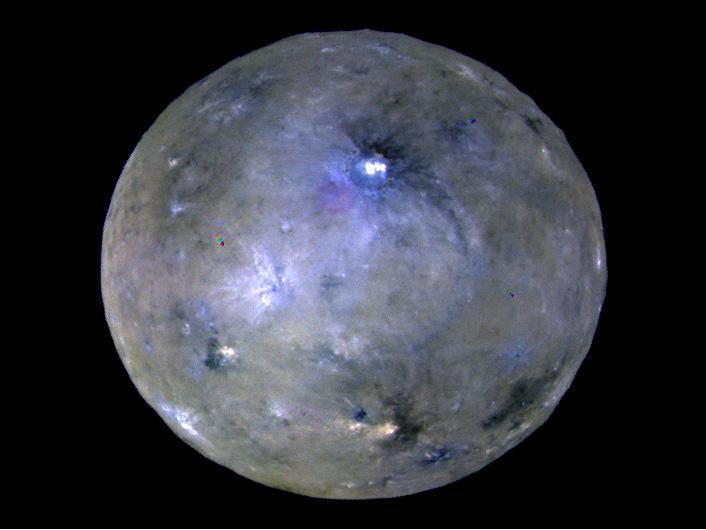
This enhanced color image of Ceres' surface was made from data obtained on April 29, 2017, when NASA's Dawn spacecraft was exactly between the sun and Ceres. Dawn's framing cameras took images of Ceres with a clear filter as well as five different color filters. Images combining these different color filter perspectives reveal fine details of Ceres' surface. For example, they emphasize the distinct compositions and textures of the material ejected from craters. The brightest region on Ceres, called Cerealia Facula, is highlighted in Occator Crater in the center of this image. Vinalia Faculae, the set of secondary bright spots in the same crater, are located to the right of Cerealia Facula. One of the darkest regions on Ceres is next to Occator, and represents ejected material from the impact that formed the crater. The ejected material forms a large arc that extends over several hundred kilometers, below the center of Ceres in this image. That material's distribution is partly determined by Ceres' rotation. Other craters also show a mixture of bright and dark regions. While the bright areas are generally identified as salt-rich material excavated from Ceres' crust, the origin of the dark material remains to be explained. It may have been excavated from a different layer within Ceres' subsurface than the rest of the ejecta blanket. Scientists will continue analyzing the color data to look for clues about the nature of the different materials on Ceres. The blueish color is generally found in association with young craters. Scientists believe the color relates to processes that occur when an impact ejects and redistributes material on the surface. The continuous bombardment of Ceres' surface by micrometeorites alters the texture of the exposed material, leading to its reddening. This image was taken altitude of about 12,000 miles (20,000 kilometers). https://photojournal.jpl.nasa.gov/catalog/PIA21406

The low sun elevation in this image of NASA Dawn spacecraft of asteroid Vesta enhances small topographic details near the rim of the large crater, part of which is visible in the bottom left of the image.
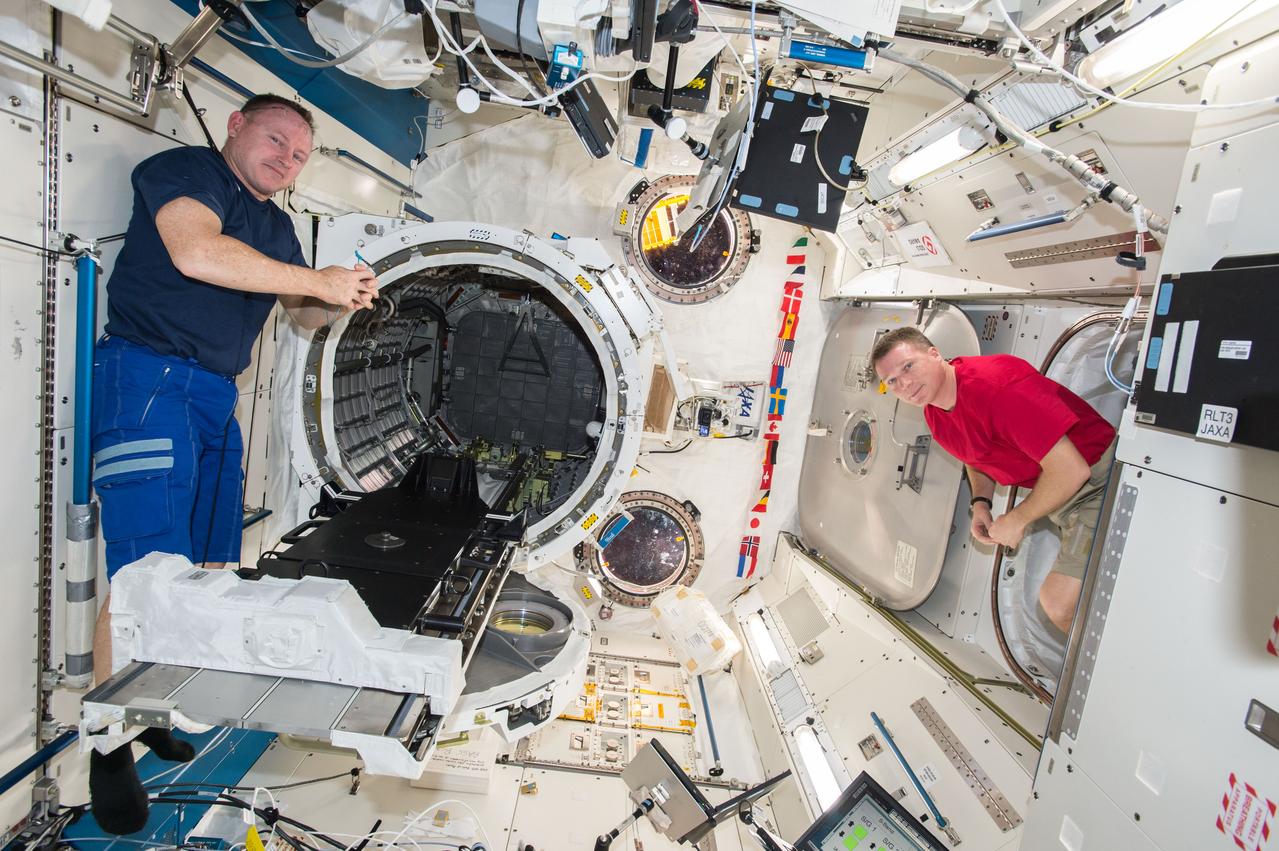
iss042e015971 (11/26/2011) --- NASA astronauts Barry Wilmore and Terry Virts are photographed during operations to install the Cyclops launch platform on the Japanese Experiment Module Airlock (JEMAL) slide table. The Cyclops platform, also known as the Space Station Integrated Kinetic Launcher for Orbital Payload Systems (SSIKLOPS), holds and ejects nanosatellites from outside the ISS.
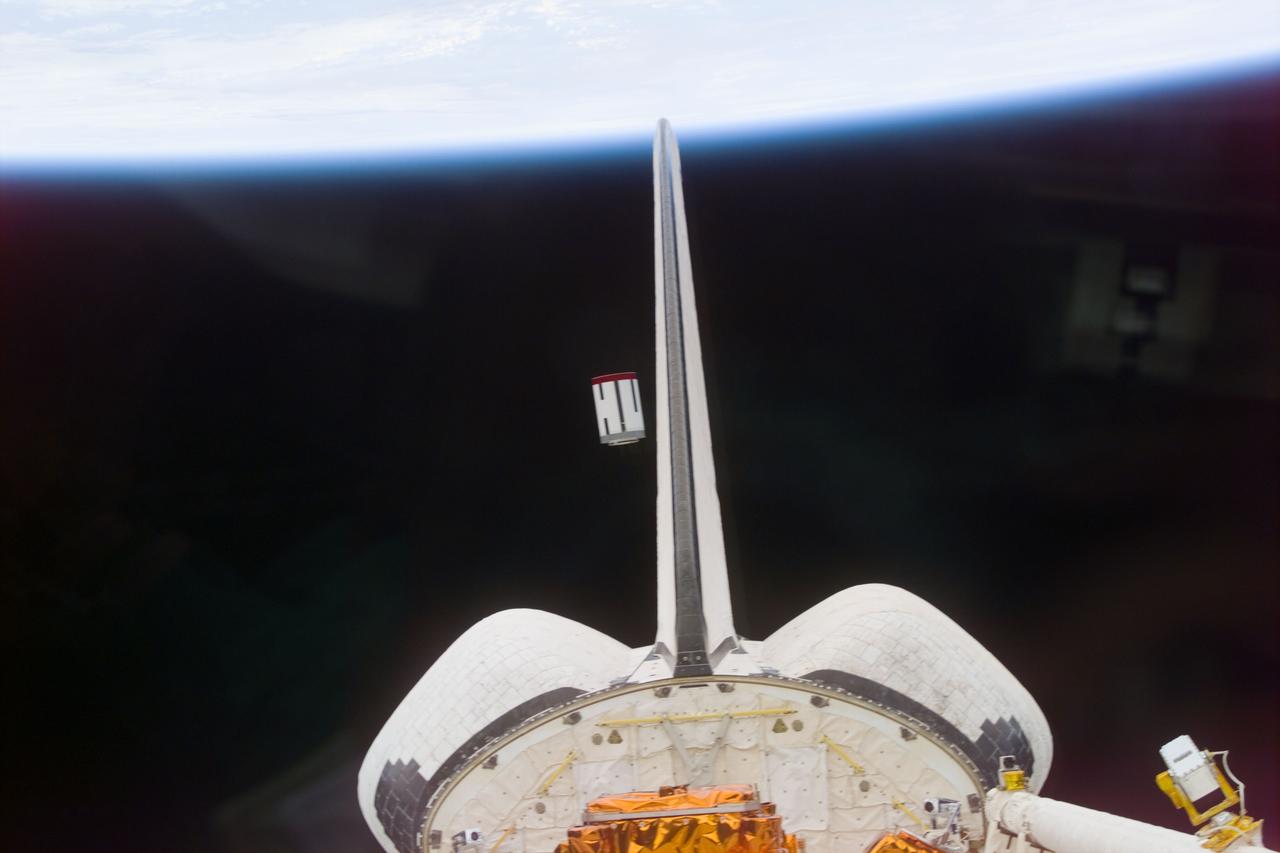
S77-E-5067 (22 May 1996) --- The Satellite Test Unit (STU), part of the Passive Aerodynamically Stabilized Magnetically Damped Satellite (PAMS) is seen moments after its ejection from the cargo bay of the Space Shuttle Endeavour. The scene was photographed with an Electronic Still Camera (ESC) onboard Endeavour's crew cabin during the deployment. The six-member crew will continue operations (tracking, rendezvousing and station-keeping) with PAMS-STU periodically throughout the remainder of the mission.
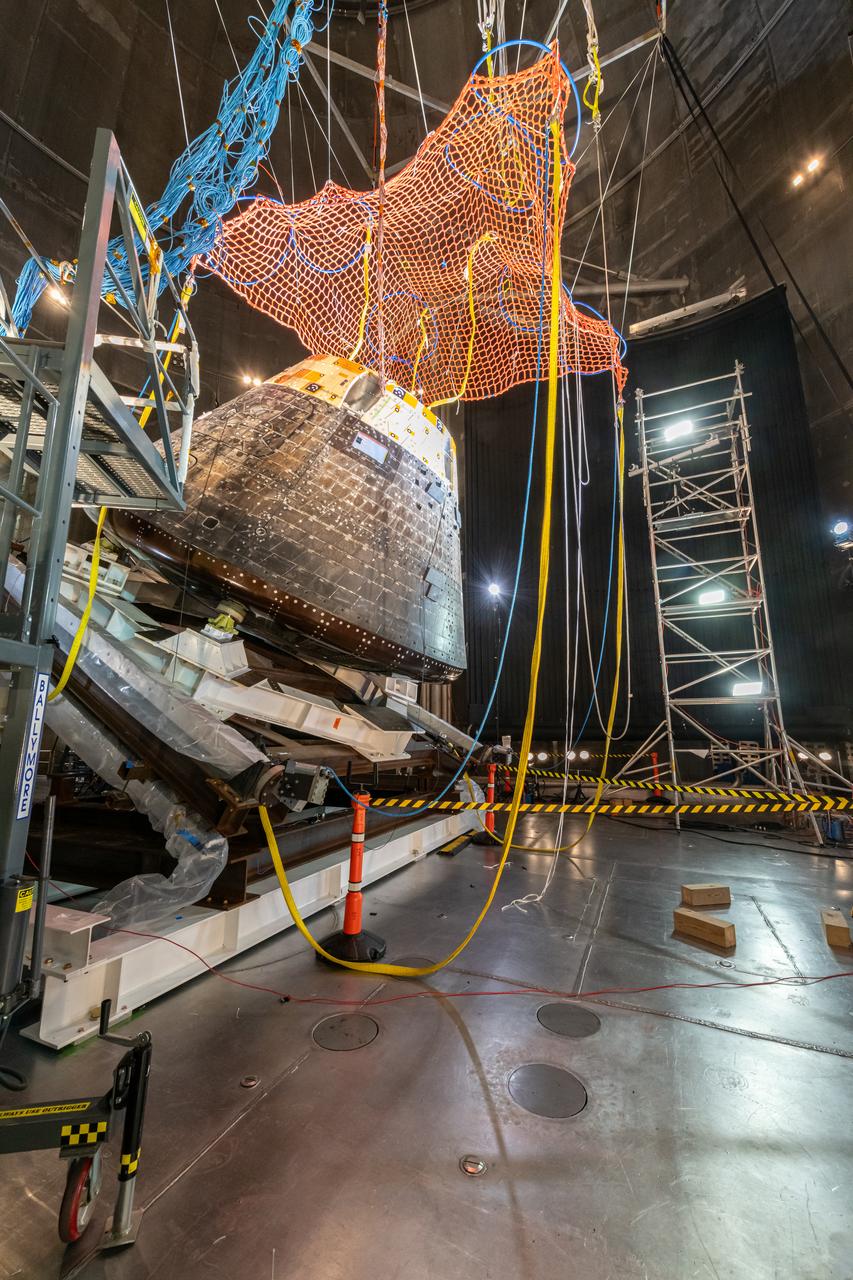
The Orion Crew Module, also known as the Orion Environmental Test Article (ETA), returned to NASA’s Neil Armstrong Test Facility in Sandusky, Ohio, in January 2024 and completed an 11-month test campaign necessary for the safety and success of Artemis II. In November 2024, experts completed the Forward Bay Cover jettison test, which is the last piece that must eject right before parachutes deploy. This image shows the setup right before the FBC deployment test. Photo Credit: (NASA/Jordan Salkin)
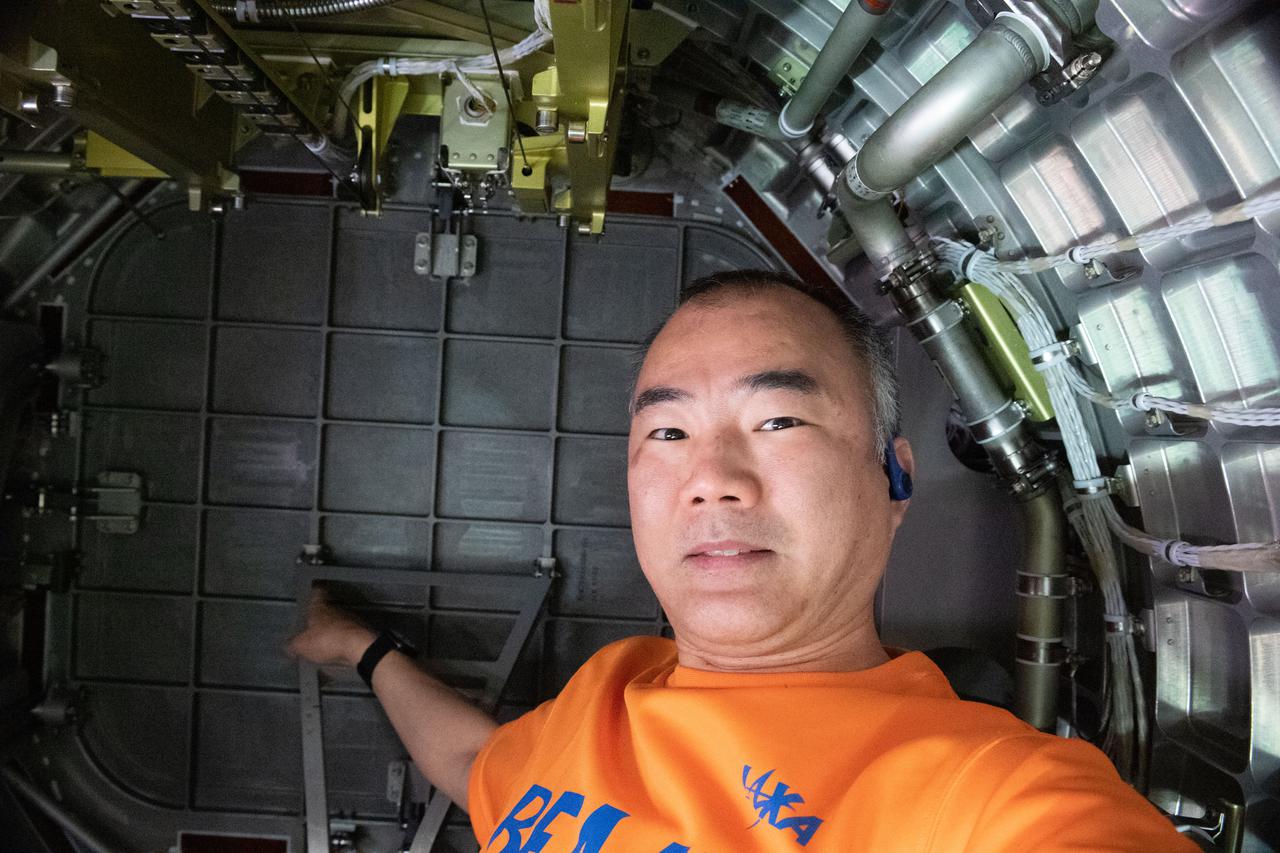
iss064e040776 (March 10, 2021) --- JAXA (Japan Aerospace Exploration Agency) astronaut Soichi Noguchi is pictured inside the Kibo laboratory module's airlock. Experiments and microsatellites, or CubeSats, are staged inside the airlock for deployment into the external environment of space. The airlock is then closed and depressurized before the Japanese robotic arm grapples the experiments and installs them on an external science platform outside Kibo. The CubeSats are ejected into Earth orbit from a small satellite deployer gripped at the end of the Japanese robotic arm.
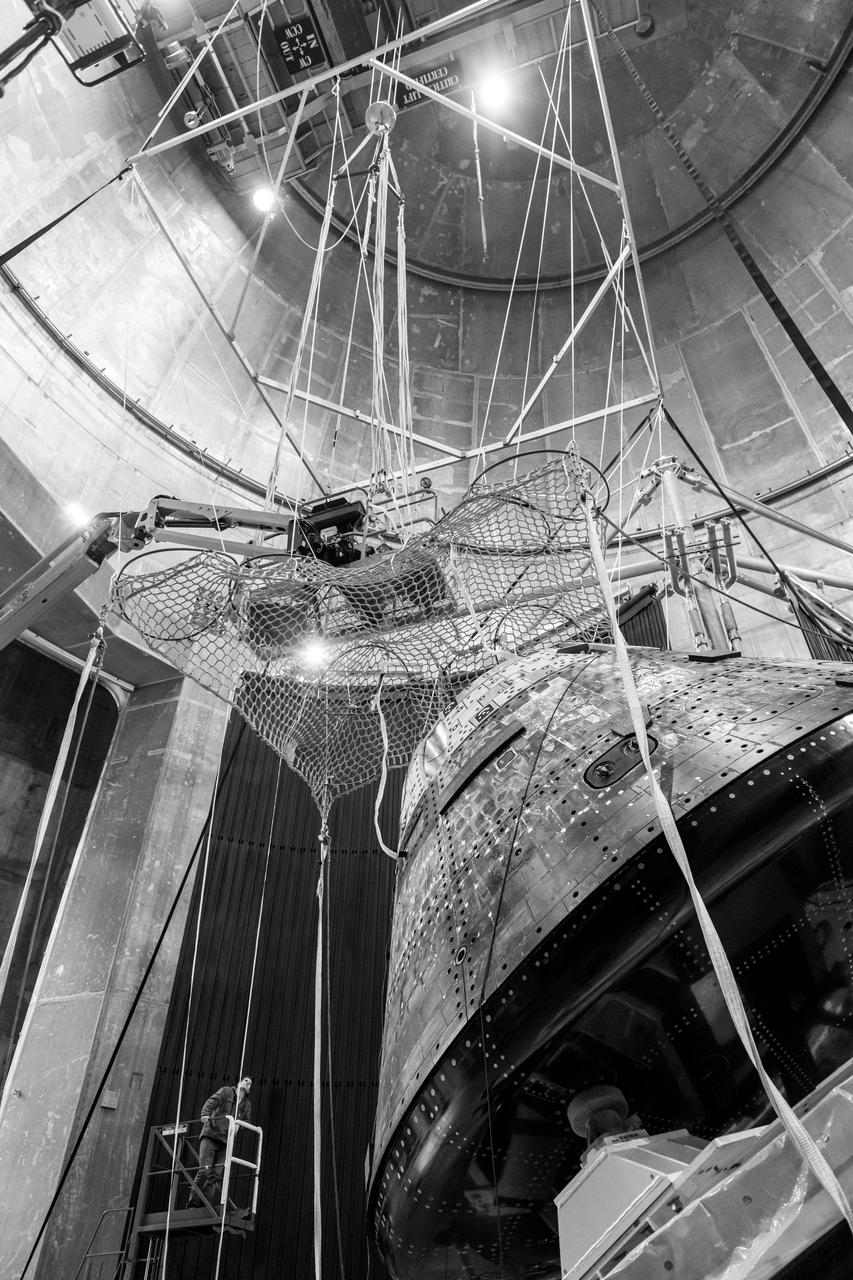
The Orion Crew Module, also known as the Orion Environmental Test Article (ETA), returned to NASA’s Neil Armstrong Test Facility in Sandusky, Ohio, in January 2024 and completed an 11-month test campaign necessary for the safety and success of Artemis II. In November 2024, experts completed the Forward Bay Cover jettison test, which is the last piece that must eject right before parachutes deploy. This image shows the setup right before the FBC deployment test. Photo Credit: (NASA/Jordan Salkin)
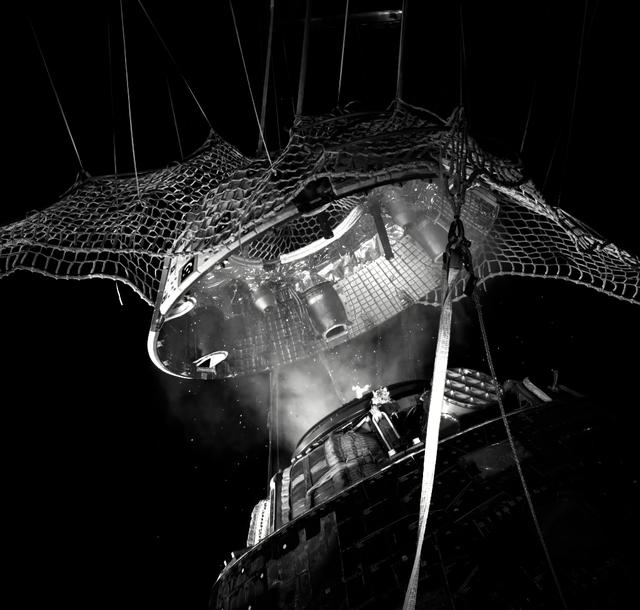
The Orion Crew Module, also known as the Orion Environmental Test Article (ETA), returned to NASA’s Neil Armstrong Test Facility in Sandusky, Ohio, in January 2024 and completed an 11-month test campaign necessary for the safety and success of Artemis II. In November 2024, experts completed the Forward Bay Cover jettison test, which is the last piece that must eject right before parachutes deploy.

This image of the Egg Nebula, also known as CRL-2688 and located roughly 3,000 light-years from us, was taken in red light with the Wide Field Planetary Camera 2 (WF/PC2) aboard the Hubble Space Telescope (HST). The image shows a pair of mysterious searchlight beams emerging from a hidden star, crisscrossed by numerous bright arcs. This image sheds new light on the poorly understood ejection of stellar matter that accompanies the slow death of Sun-like stars. The image is shown in false color.
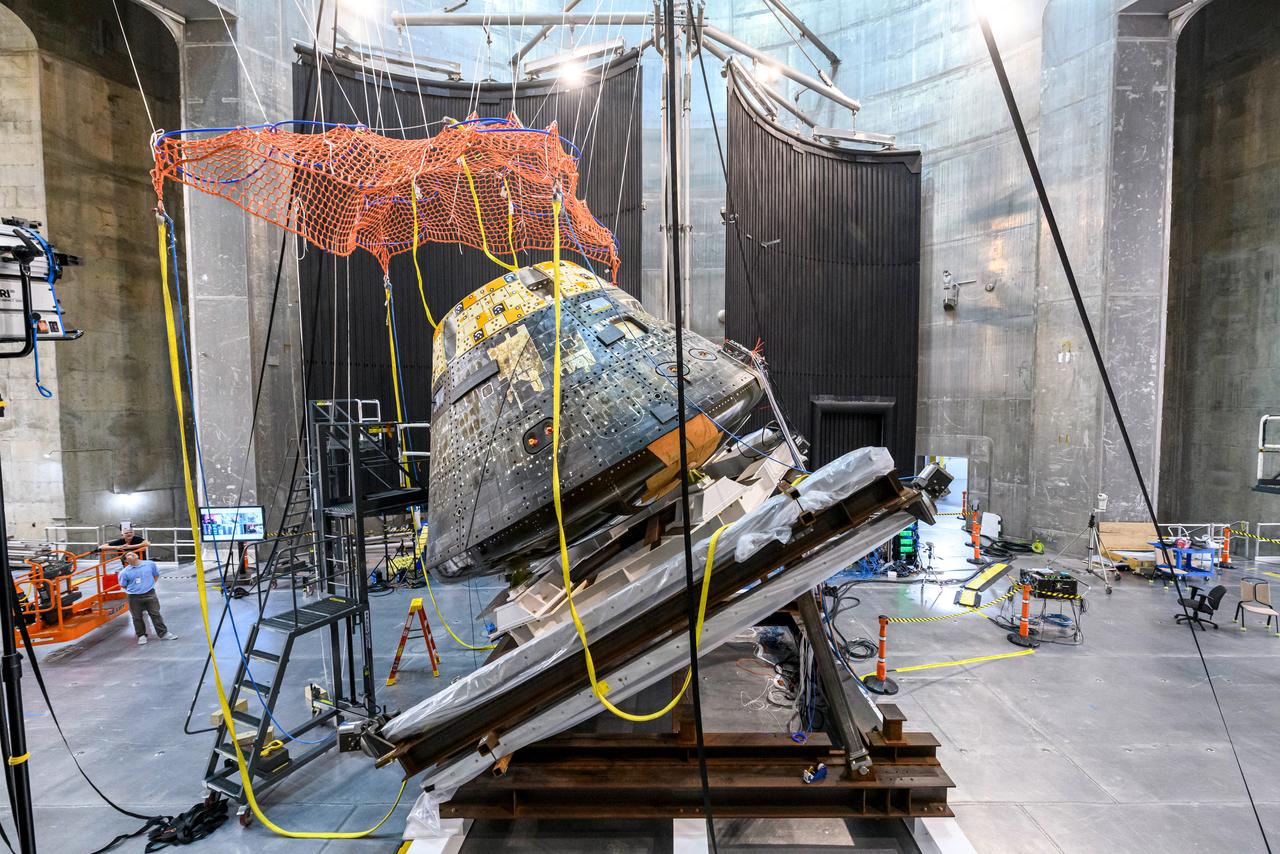
The Orion Crew Module, also known as the Orion Environmental Test Article (ETA), returned to NASA’s Neil Armstrong Test Facility in Sandusky, Ohio, in January 2024 and completed an 11-month test campaign necessary for the safety and success of Artemis II. In November 2024, experts completed the Forward Bay Cover jettison test, which is the last piece that must eject right before parachutes deploy. This image shows the setup right before the FBC deployment test. Photo Credit: (NASA/Jordan Salkin)
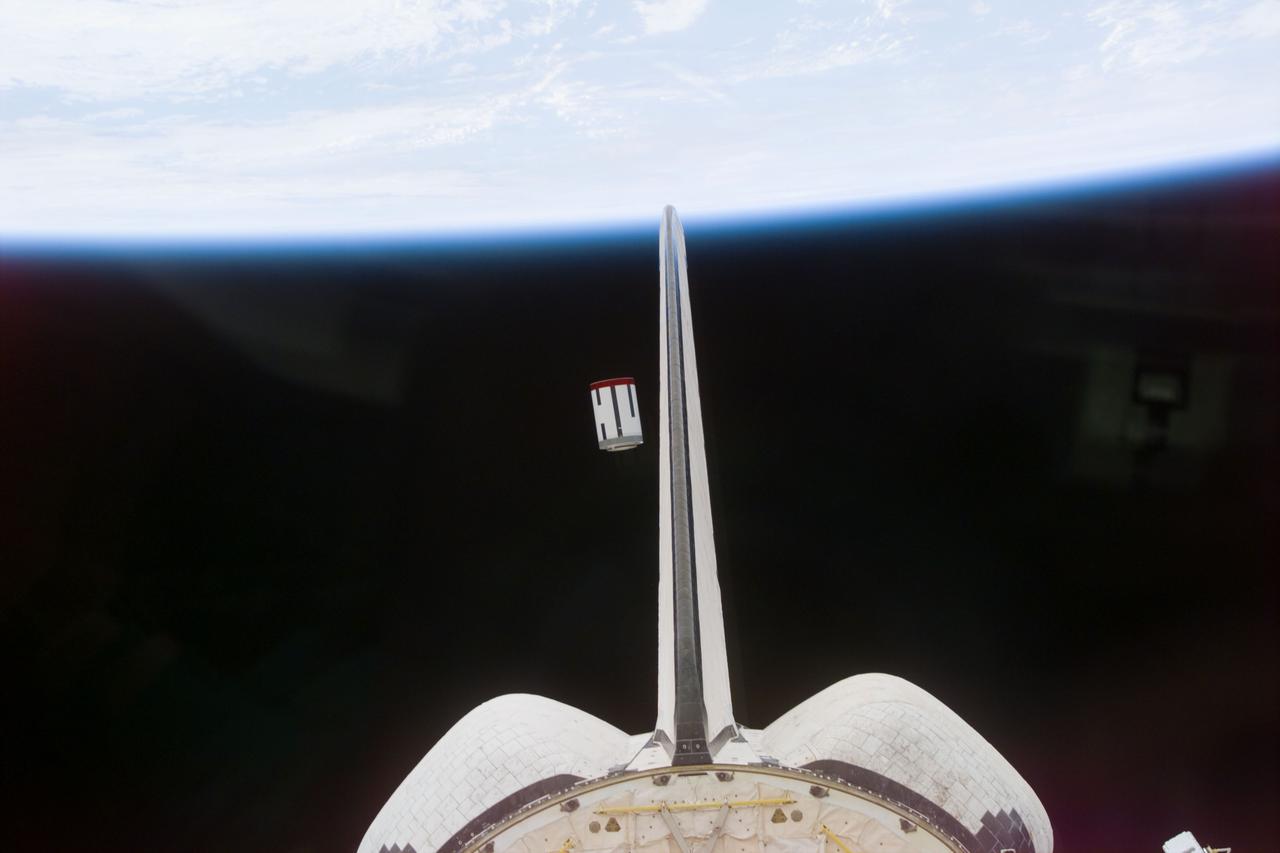
S77-E-5068 (22 May 1996) --- The Satellite Test Unit (STU), part of the Passive Aerodynamically Stabilized Magnetically Damped Satellite (PAMS) is seen moments after its ejection from the cargo bay of the Space Shuttle Endeavour. The scene was photographed with an Electronic Still Camera (ESC) onboard Endeavour's crew cabin during the deployment. The six-member crew will continue operations (tracking, rendezvousing and station-keeping) with PAMS-STU periodically throughout the remainder of the mission.

iss061e048841 (Nov. 19, 2019) --- NASA astronaut Andrew Morgan works inside Japan's Kibo laboratory module setting up a small satellite deployer loaded with three CubeSats developed by the nations of Japan, Rwanda and Egypt. The deployer was placed inside Kibo's airlock before the Japanese robotic arm grappled it and moved it outside Kibo where it would eject all three CubeSats into Earth orbit.
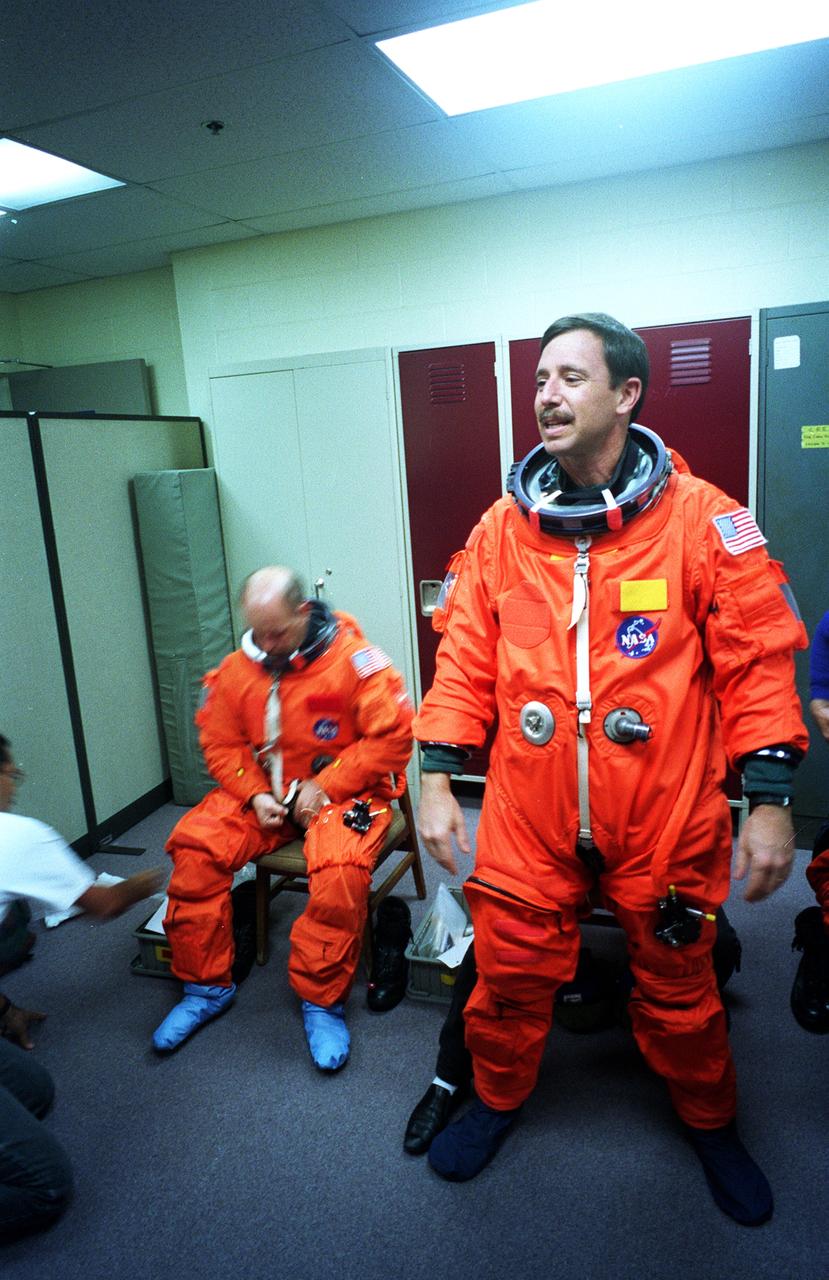
S96-18556 (30 Oct. 1996) --- Astronauts Scott J. Horowitz (standing) and Kenneth D. Bowersox wind up suit donning for a training session in JSC's systems integration facility. Wearing training versions of the partial pressure launch and entry escape suit, the STS-82 pilot and mission commander joined their crewmates in simulating an emergency ejection, using an escape pole on the mid deck, as well as other phases of their scheduled February mission.
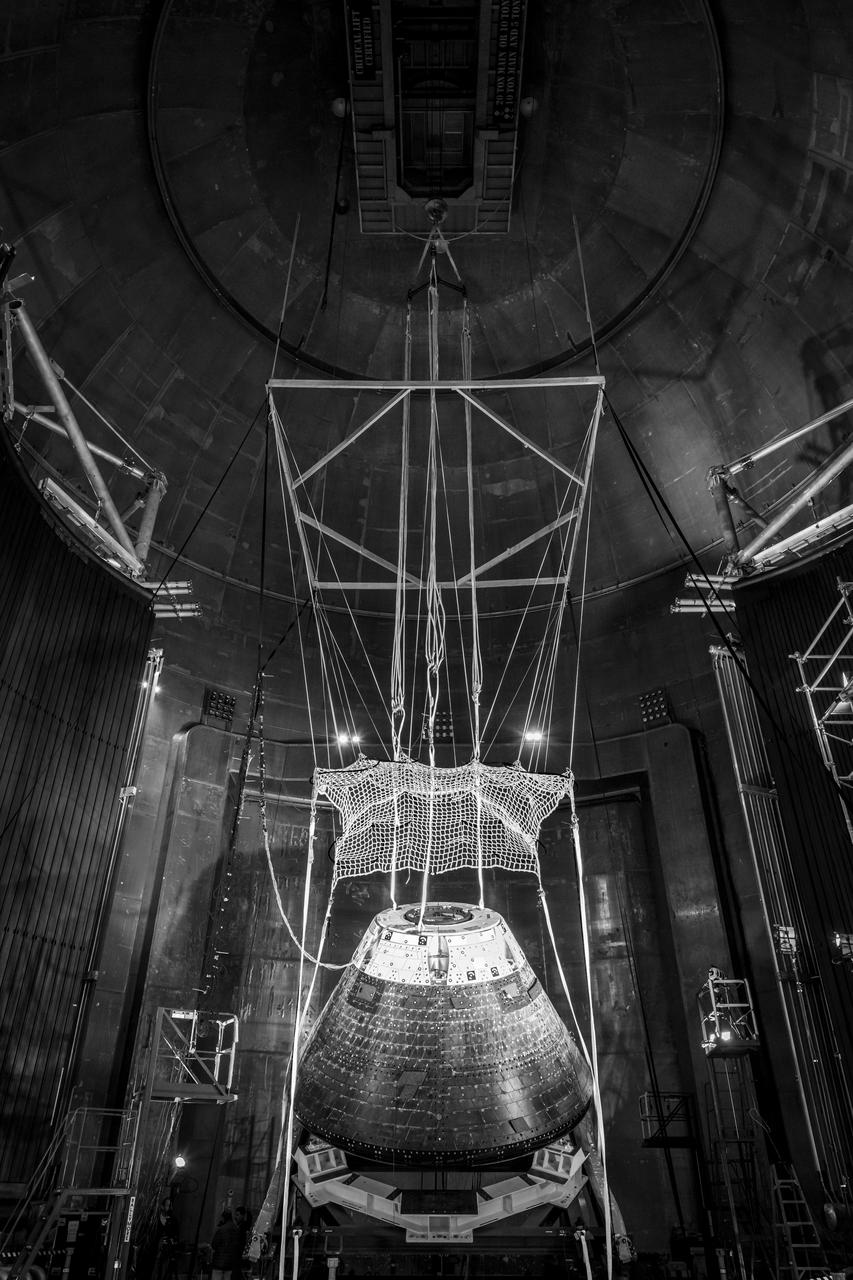
The Orion Crew Module, also known as the Orion Environmental Test Article (ETA), returned to NASA’s Neil Armstrong Test Facility in Sandusky, Ohio, in January 2024 and completed an 11-month test campaign necessary for the safety and success of Artemis II. In November 2024, experts completed the Forward Bay Cover jettison test, which is the last piece that must eject right before parachutes deploy. This image shows the setup right before the FBC deployment test. Photo Credit: (NASA/Jordan Salkin)
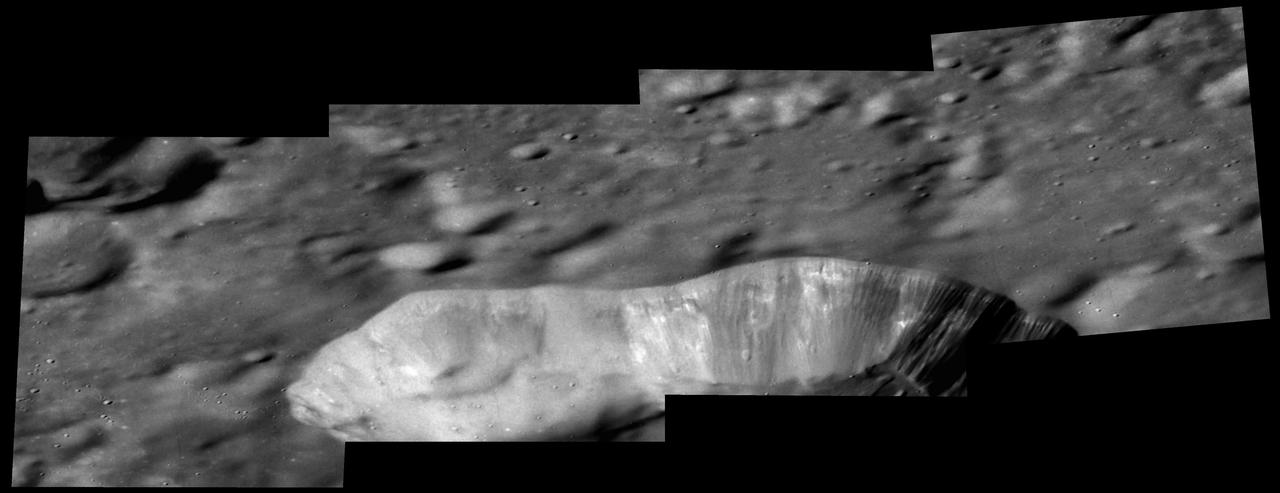
This series of oblique images highlight the wall and exterior of the beautiful volcanic vent located to the northeast of Rachmaninoff basin and west of Copland crater. Layering can be seen along a portion of the wall and the exterior is smooth due to a blanket of fine particles of lava that were ejected explosively from the vent in a pyroclastic eruption. This vent is deeper than Earth's Grand Canyon. http://photojournal.jpl.nasa.gov/catalog/PIA19282
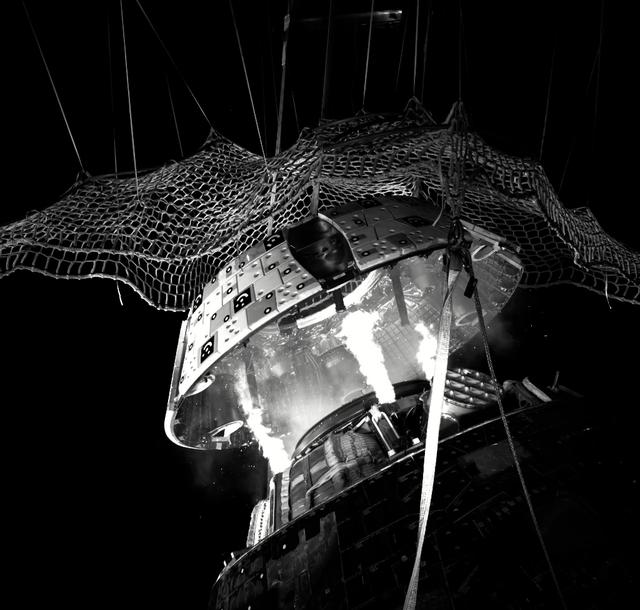
The Orion Crew Module, also known as the Orion Environmental Test Article (ETA), returned to NASA’s Neil Armstrong Test Facility in Sandusky, Ohio, in January 2024 and completed an 11-month test campaign necessary for the safety and success of Artemis II. In November 2024, experts completed the Forward Bay Cover jettison test, which is the last piece that must eject right before parachutes deploy. Photo Credit: (NASA/Quentin Schwinn and Jordan Salkin)