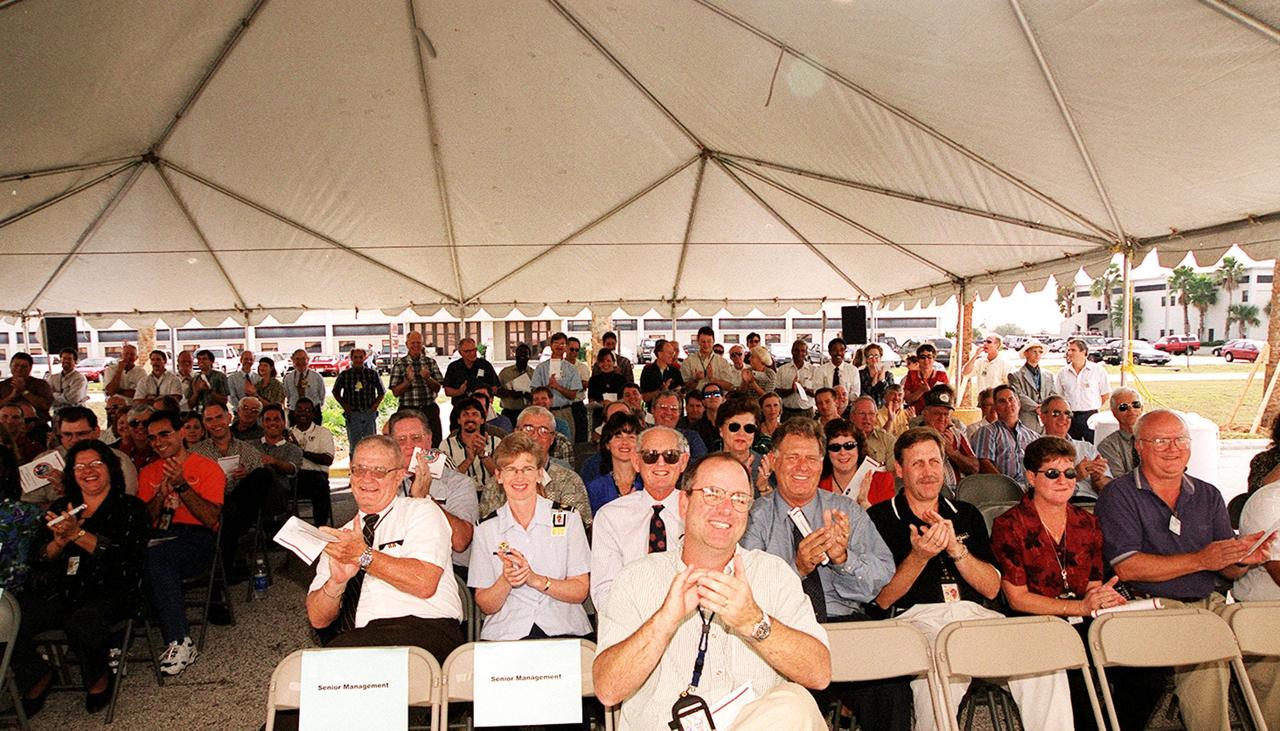
The audience applauds and enjoys the official opening of the E&O Building as the new site of the Expendable Launch Vehicle Program. Home for NASA’s unmanned missions since 1964, the building has been renovated to house the ELV Program.; Cutting the ribbon for the event were Deputy Manager of the ELV and Payload Carrier Programs, Steve Francois; Director of ELV Launch Services, Michael Benik; Center Director Roy Bridges; Manager of the ELV and Payload Carrier Programs, Bobby Bruckner; and Senior Manager of the Boeing ELV Program Support office, Jim Schofield
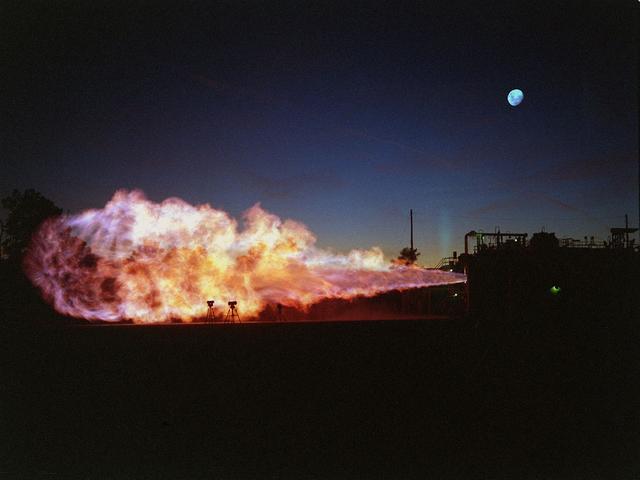
750 K motor is test fired at Marshall Test Stand 116 for the Air Force Expendable Launch Vehicle (ELV) project.

KENNEDY SPACE CENTER, FLA. -- Official portrait of Stephen Francois, manager of the Expendable Launch Vehicles (ELV) and Payload Carriers Programs, Kennedy Space Center.
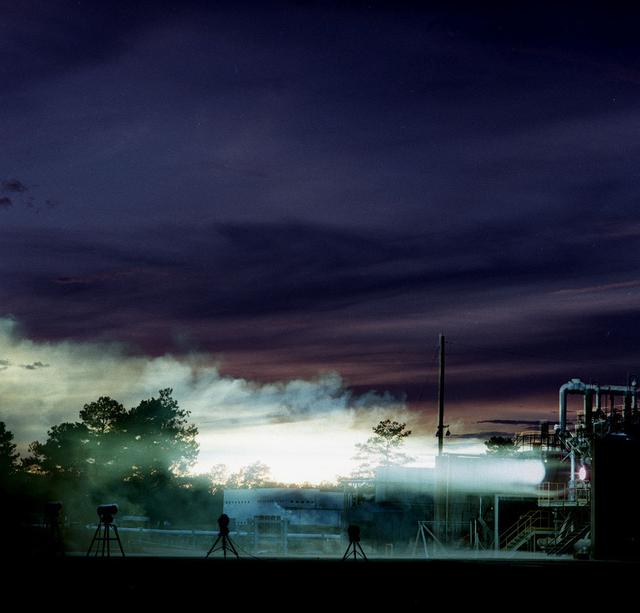
750 K motor test firing at Marshall's Test Stand 116 developing 650 pounds of thrust. The motor was tested for the Air Force Expendable Launch Vehicle (ELV) project.
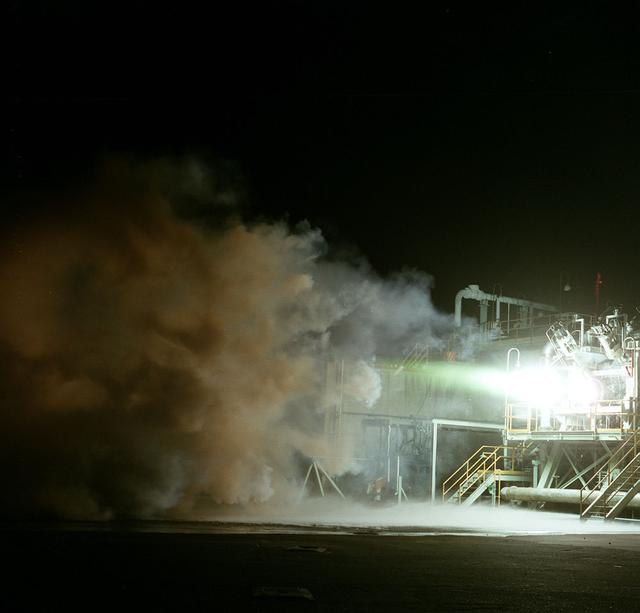
750 K motor test firing at Marshall's Test Stand 116 developing 650 pounds of thrust. The motor was tested for the Air Force Expendable Launch Vehicle (ELV) project.
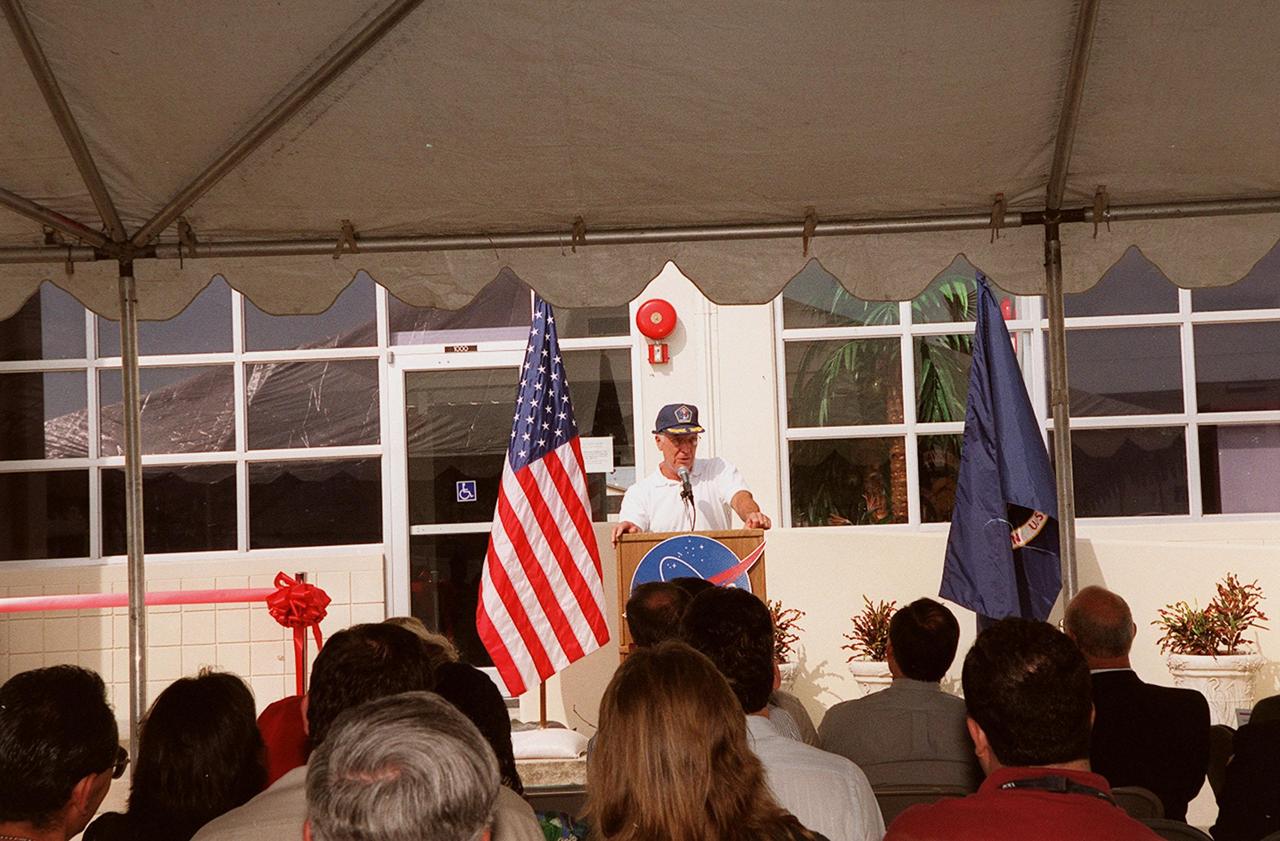
Bobby Bruckner, manager, ELV and Payload Carrier Programs, speaks at the ribbon-cutting ceremony of the E&O Building at KSC. Home for NASA’s unmanned missions since 1964, the building has been renovated to house the Expendable Launch Vehicle Program
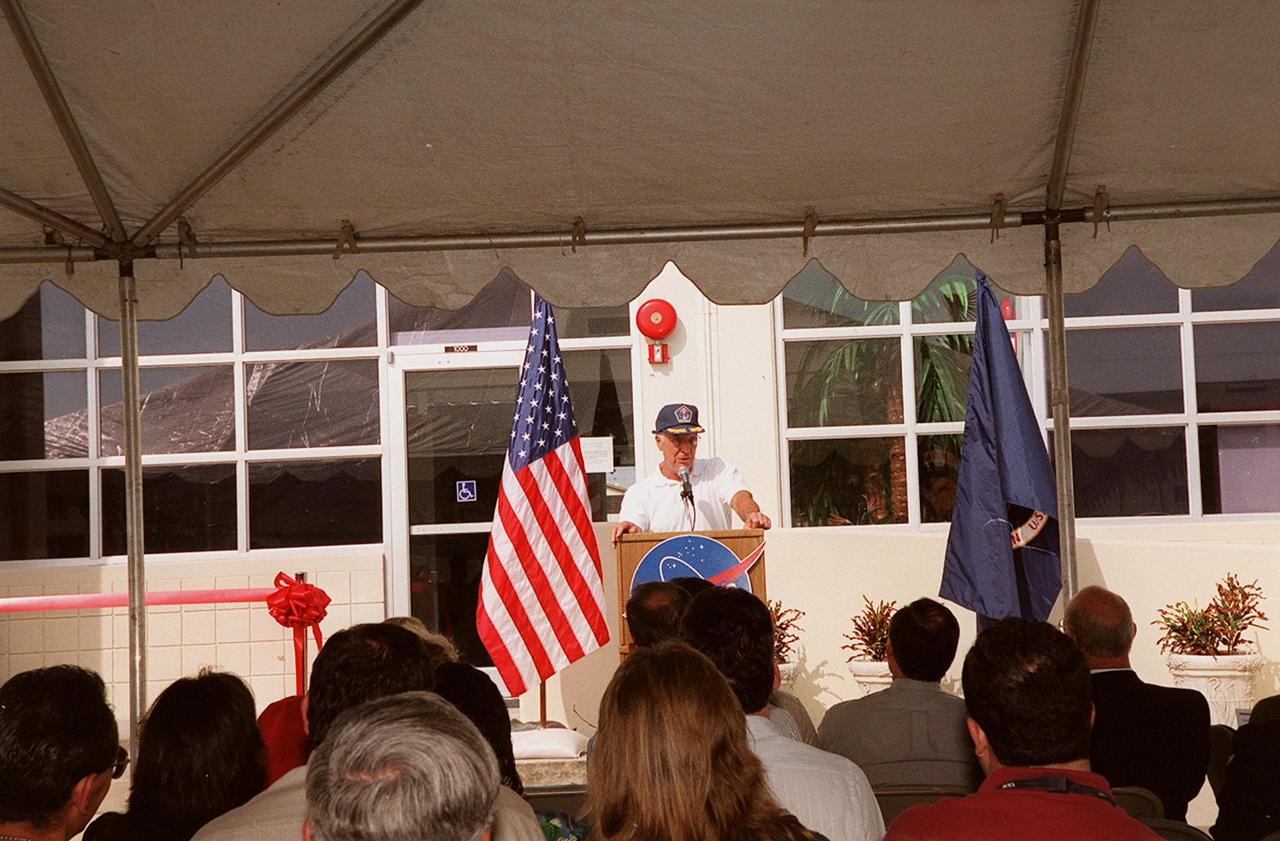
Bobby Bruckner, manager, ELV and Payload Carrier Programs, speaks at the ribbon-cutting ceremony of the E&O Building at KSC. Home for NASA’s unmanned missions since 1964, the building has been renovated to house the Expendable Launch Vehicle Program
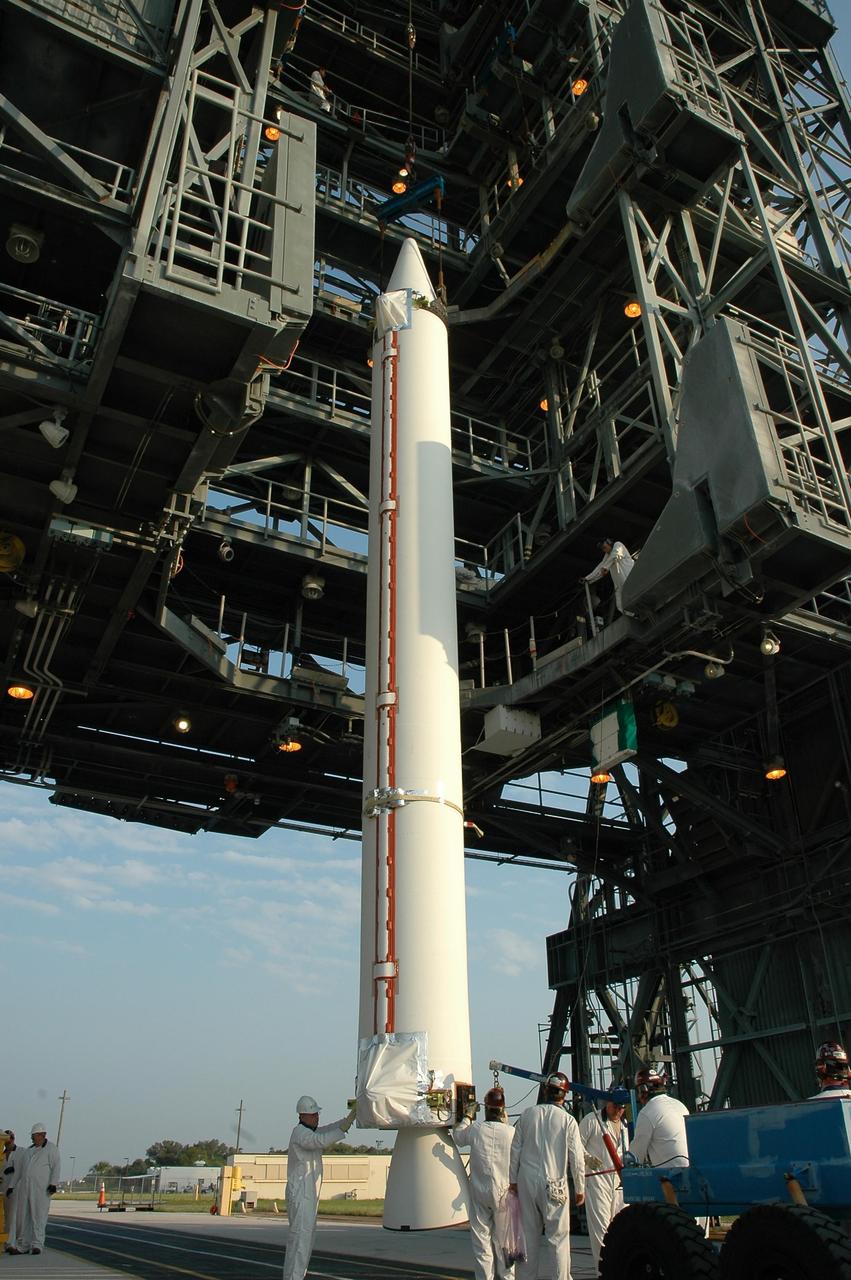
KENNEDY SPACE CENTER, FLA. -- A solid rocket booster is lifted into the mobile service tower on Launch Pad 17-B at Cape Canaveral Air Force Station. The booster will be mated to the Delta II first stage for launch of the Dawn spacecraft. Dawn's goal is to characterize the conditions and processes of the solar system's earliest epoch 4.5 billion years ago by investigating in detail two of the largest asteroids, Ceres and Vesta. They reside between Mars and Jupiter in the asteroid belt. Launch is targeted for July 7. Photo credit: NASA/Jim Grossmann
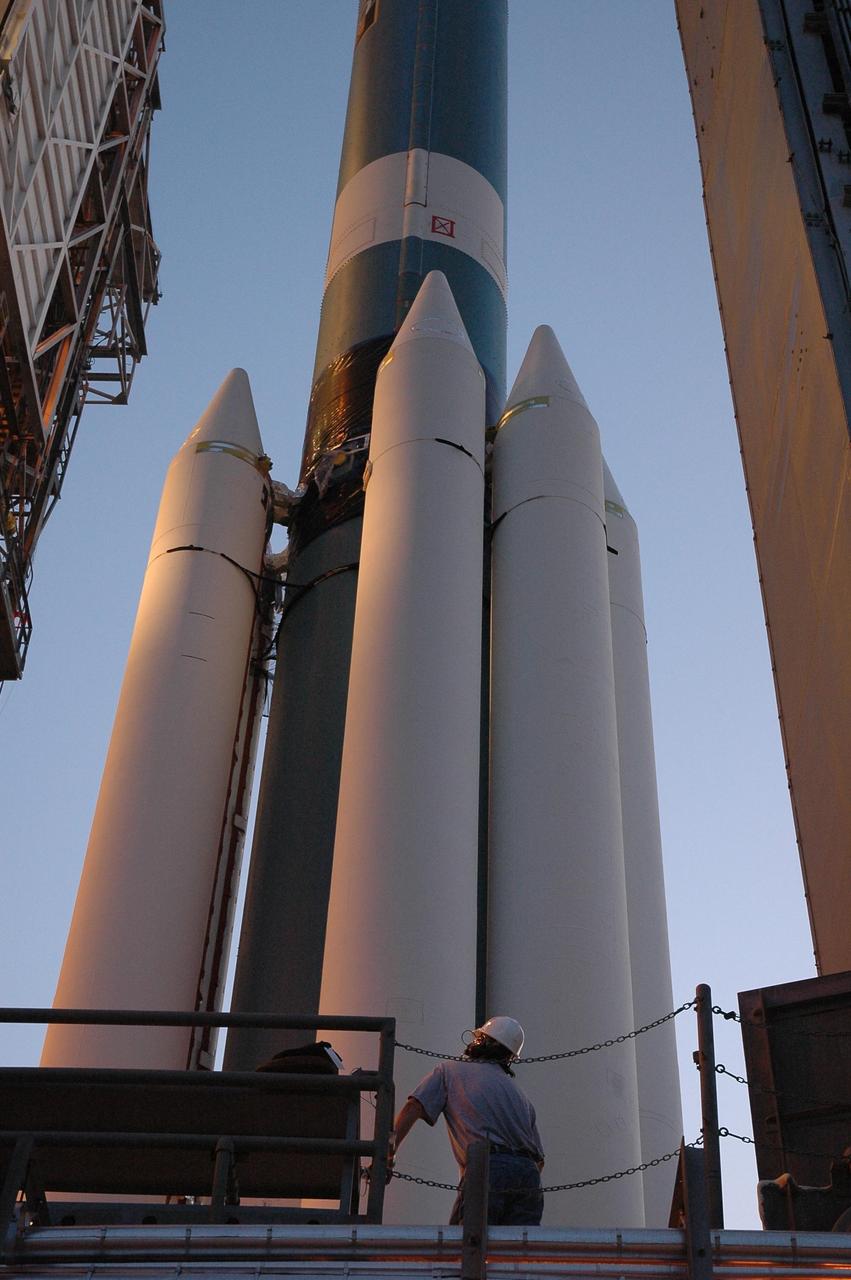
KENNEDY SPACE CENTER, FLA. -- This closeup shows four of the nine solid rocket boosters being mated to the Delta II first stage on Launch Pad 17-B at Cape Canaveral Air Force Station for launch of the Dawn spacecraft. Dawn's goal is to characterize the conditions and processes of the solar system's earliest epoch 4.5 billion years ago by investigating in detail two of the largest asteroids, Ceres and Vesta. They reside between Mars and Jupiter in the asteroid belt. Launch is targeted for July 7. Photo credit: NASA/Jim Grossmann
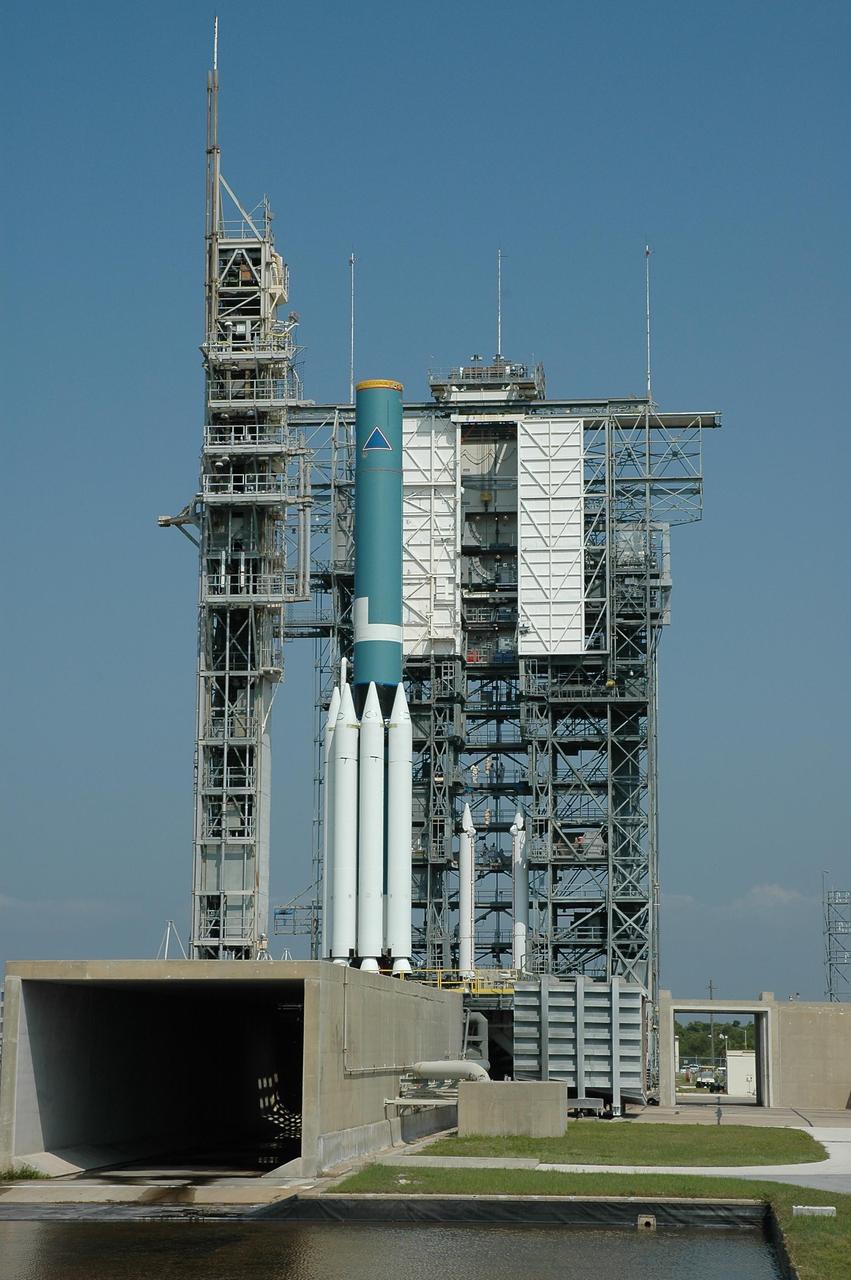
KENNEDY SPACE CENTER, FLA. -- On Launch Pad 17-B at Cape Canaveral Air Force Station, the Delta II first stage at left waits for additional solid rocket boosters in the mobile service tower to be mated with those already attached. The Delta is the launch vehicle of the Dawn spacecraft. Dawn's goal is to characterize the conditions and processes of the solar system's earliest epoch 4.5 billion years ago by investigating in detail two of the largest asteroids, Ceres and Vesta. They reside between Mars and Jupiter in the asteroid belt. Launch is targeted for July 7. Photo credit: NASA/Jim Grossmann
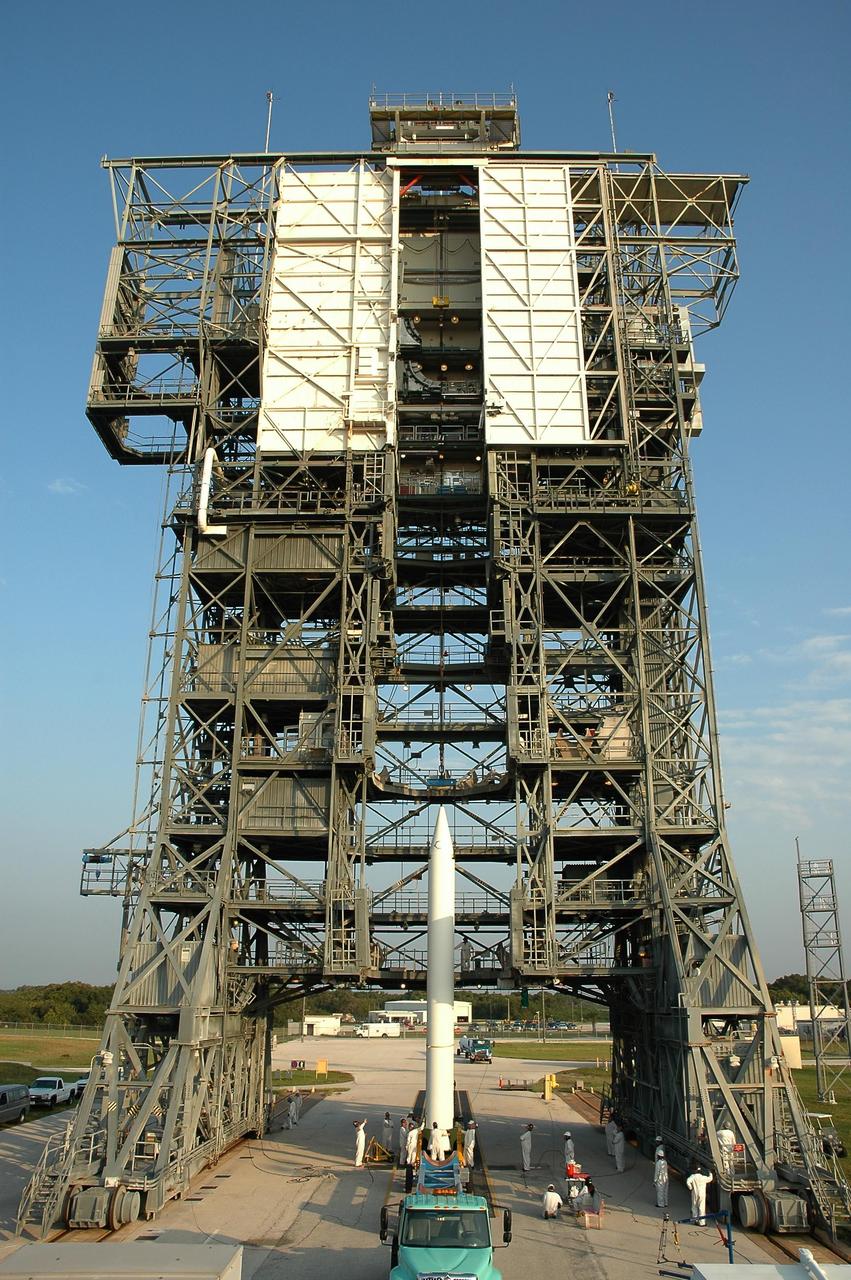
KENNEDY SPACE CENTER, FLA. -- A solid rocket booster is ready for lifting into the mobile service tower on Launch Pad 17-B at Cape Canaveral Air Force Station. The booster will be mated to the Delta II first stage for launch of the Dawn spacecraft. Dawn's goal is to characterize the conditions and processes of the solar system's earliest epoch 4.5 billion years ago by investigating in detail two of the largest asteroids, Ceres and Vesta. They reside between Mars and Jupiter in the asteroid belt. Launch is targeted for July 7. Photo credit: NASA/Jim Grossmann
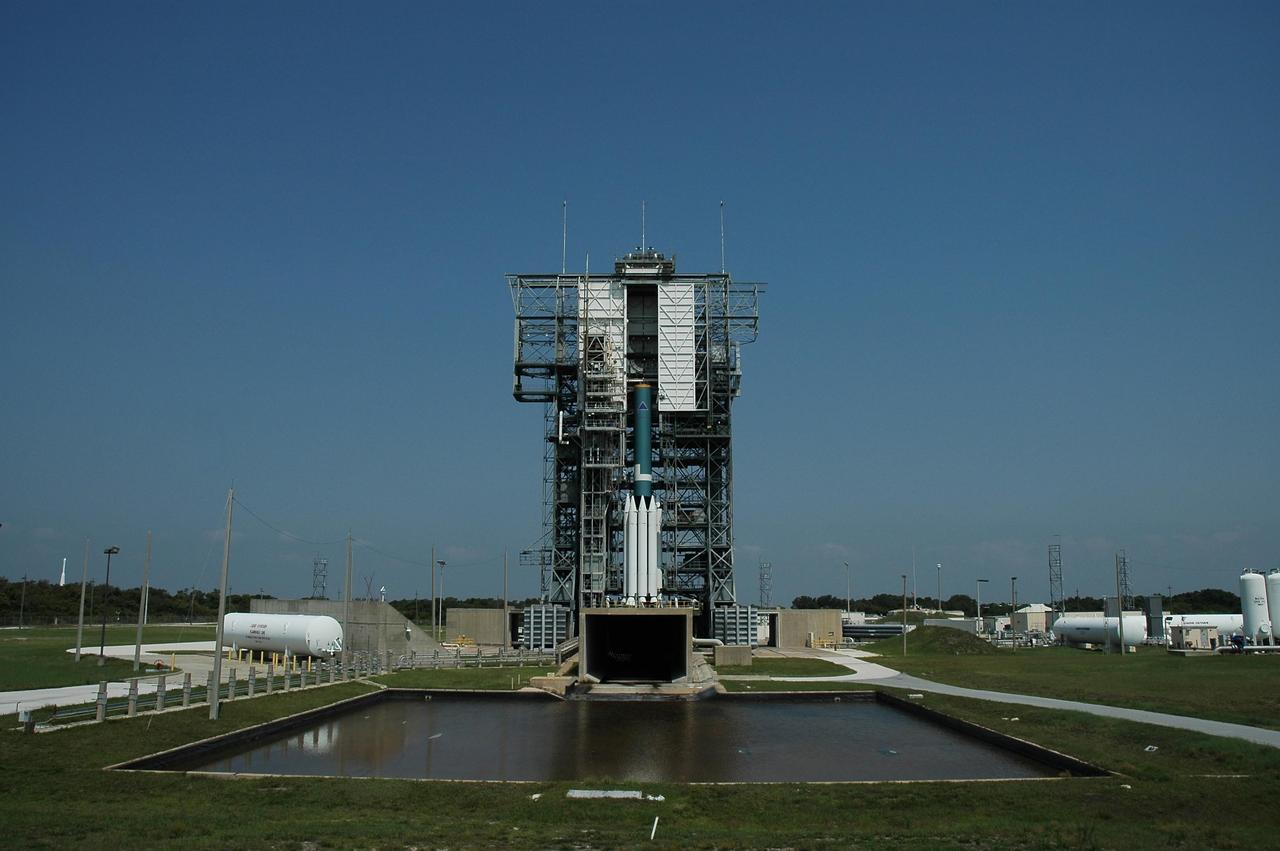
KENNEDY SPACE CENTER, FLA. -- On Launch Pad 17-B at Cape Canaveral Air Force Station, buildup of the Delta II first stage and solid rocket boosters for the Dawn spacecraft is seen. Below the rocket is the flame trench, and in the foreground is the overflow pool. Dawn's goal is to characterize the conditions and processes of the solar system's earliest epoch 4.5 billion years ago by investigating in detail two of the largest asteroids, Ceres and Vesta. They reside between Mars and Jupiter in the asteroid belt. Launch is targeted for July 7. Photo credit: NASA/Jim Grossmann
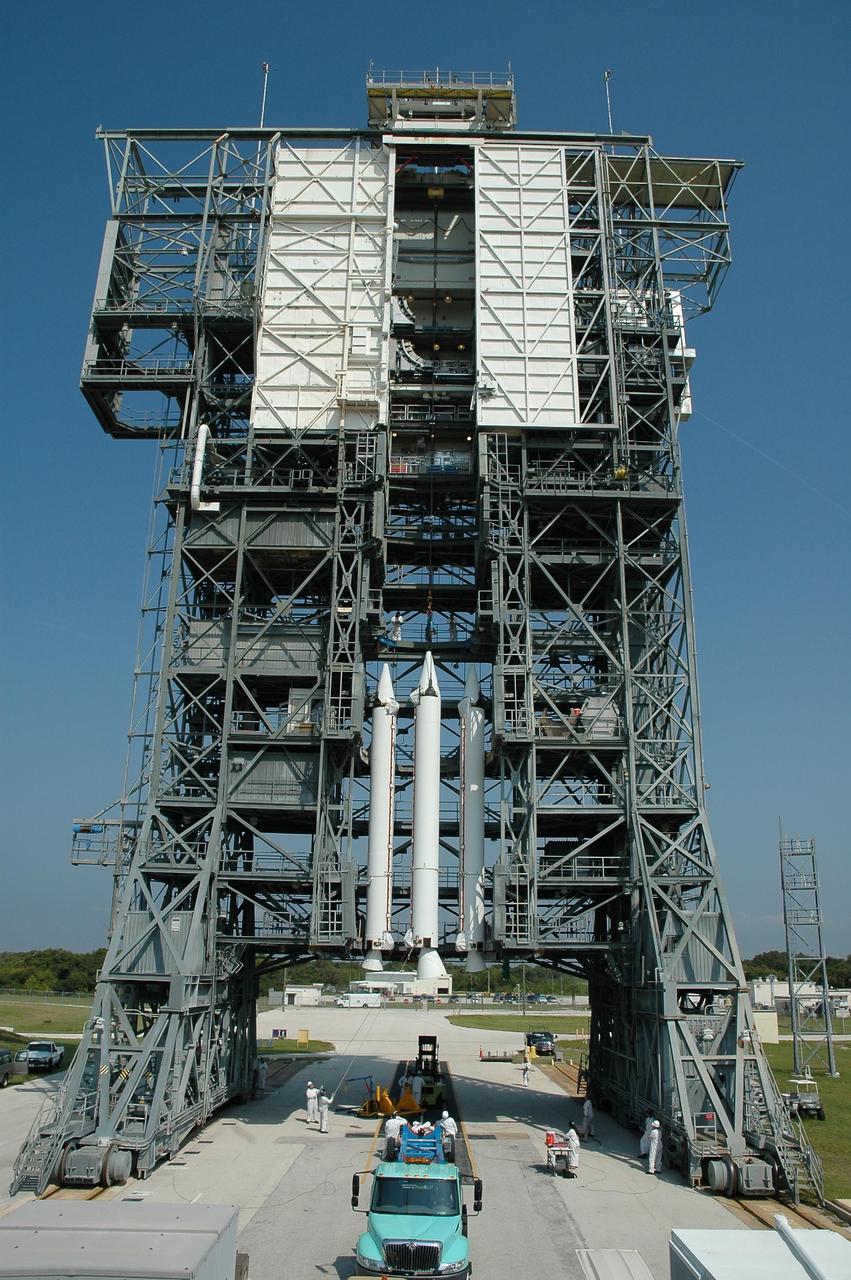
KENNEDY SPACE CENTER, FLA. -- Three solid rocket boosters are suspended in the mobile service tower on Launch Pad 17-B at Cape Canaveral Air Force Station for mating to the Delta II first stage for launch of the Dawn spacecraft. Dawn's goal is to characterize the conditions and processes of the solar system's earliest epoch 4.5 billion years ago by investigating in detail two of the largest asteroids, Ceres and Vesta. They reside between Mars and Jupiter in the asteroid belt. Launch is targeted for July 7. Photo credit: NASA/Jim Grossmann
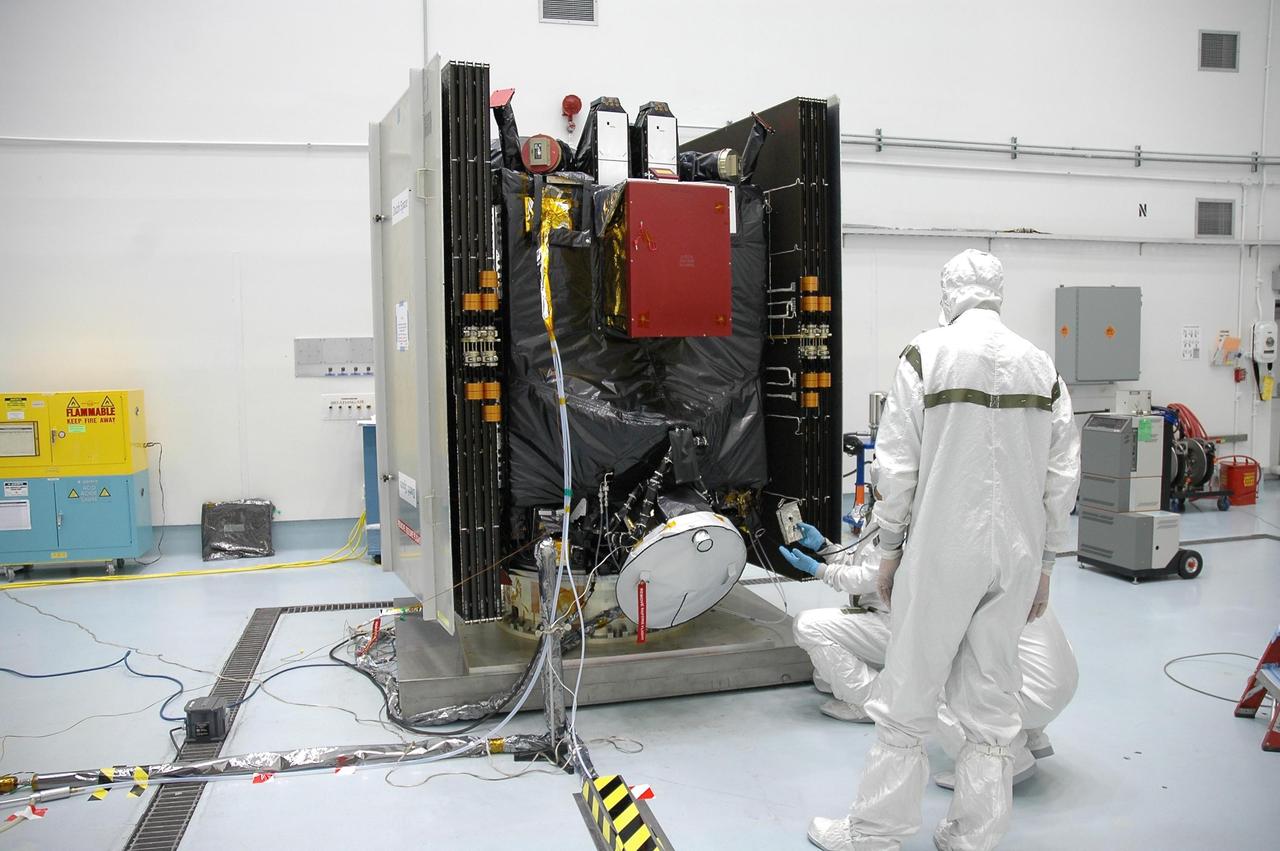
KENNEDY SPACE CENTER, FLA. -- At Astrotech's Hazardous Processing Facility, technicians are loading the Dawn spacecraft with xenon gas for the ion propulsion system. Dawn's mission is to explore two of the asteroid belt's most intriguing and dissimilar occupants: asteroid Vesta and the dwarf planet Ceres. The Dawn spacecraft uses ion propulsion to get the additional velocity needed to reach Vesta once it leaves the Delta rocket. It also uses ion propulsion to spiral to lower altitudes on Vesta, to leave Vesta and cruise to Ceres and to spiral to a low-altitude orbit at Ceres. Ion propulsion makes efficient use of the onboard fuel by accelerating it to a velocity 10 times that of chemical rockets. Dawn is scheduled to launch July 7aboard a Delta II rocket from Launch Complex 17-B at Cape Canaveral Air Force Station. Photo credit: NASA/Jim Grossmann
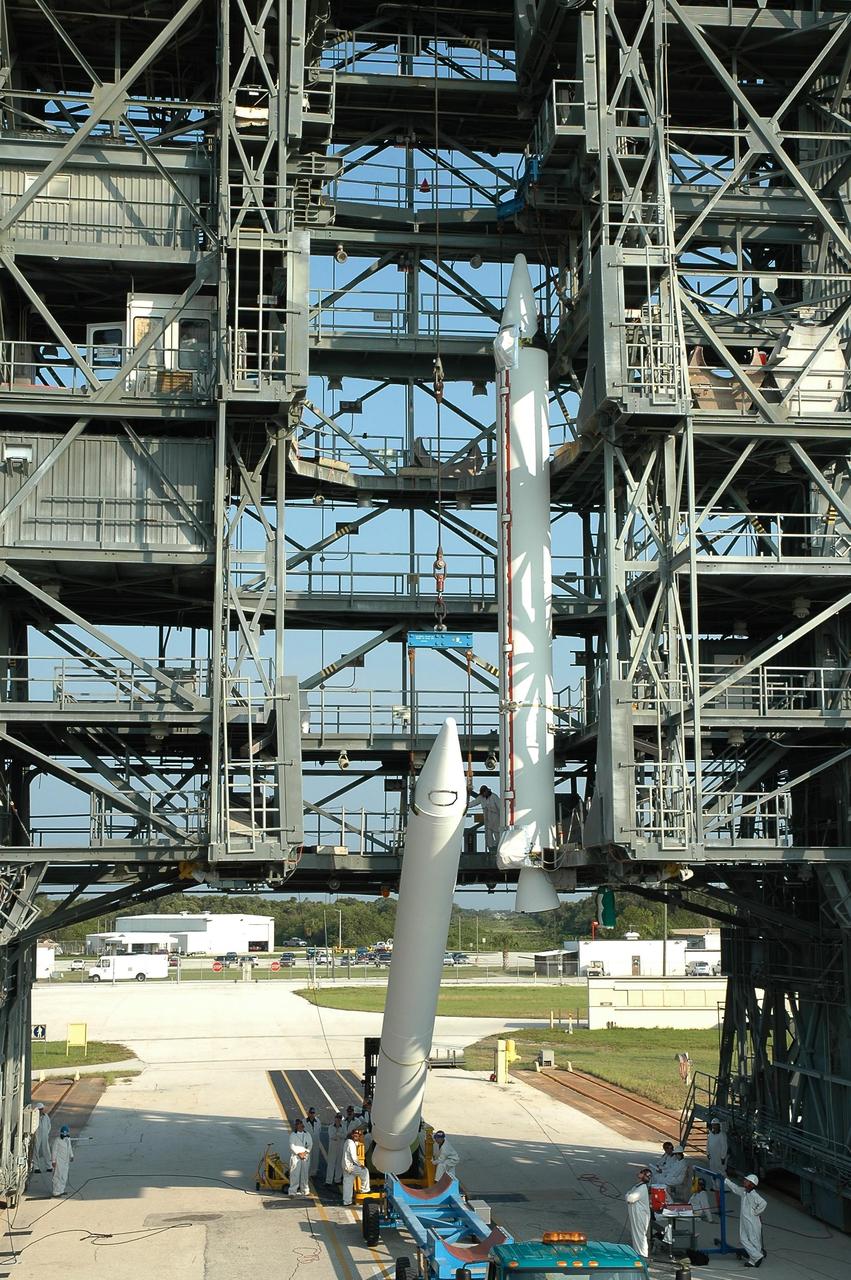
KENNEDY SPACE CENTER, FLA. -- Another solid rocket booster is raised off its transporter before being lifted into the mobile service tower on Launch Pad 17-B at Cape Canaveral Air Force Station. The booster will join the other suspended in the tower to be mated to the Delta II first stage for launch of the Dawn spacecraft. Dawn's goal is to characterize the conditions and processes of the solar system's earliest epoch 4.5 billion years ago by investigating in detail two of the largest asteroids, Ceres and Vesta. They reside between Mars and Jupiter in the asteroid belt. Launch is targeted for July 7. Photo credit: NASA/Jim Grossmann
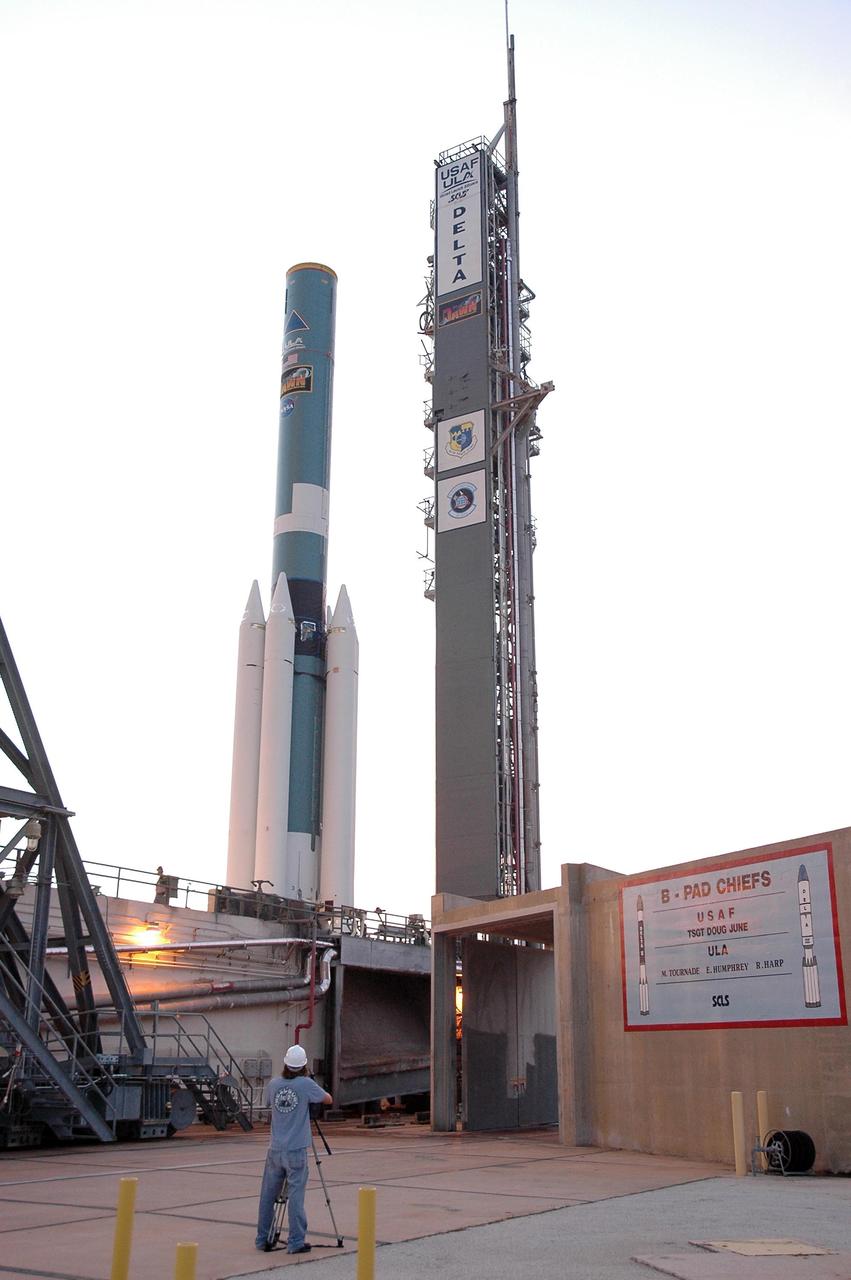
KENNEDY SPACE CENTER, FLA. -- On Launch Pad 17-B at Cape Canaveral Air Force Station, the Delta II first stage waits for the mating of additional solid rocket boosters for launch of the Dawn spacecraft. Dawn's goal is to characterize the conditions and processes of the solar system's earliest epoch 4.5 billion years ago by investigating in detail two of the largest asteroids, Ceres and Vesta. They reside between Mars and Jupiter in the asteroid belt. Launch is targeted for July 7. Photo credit: NASA/Jim Grossmann
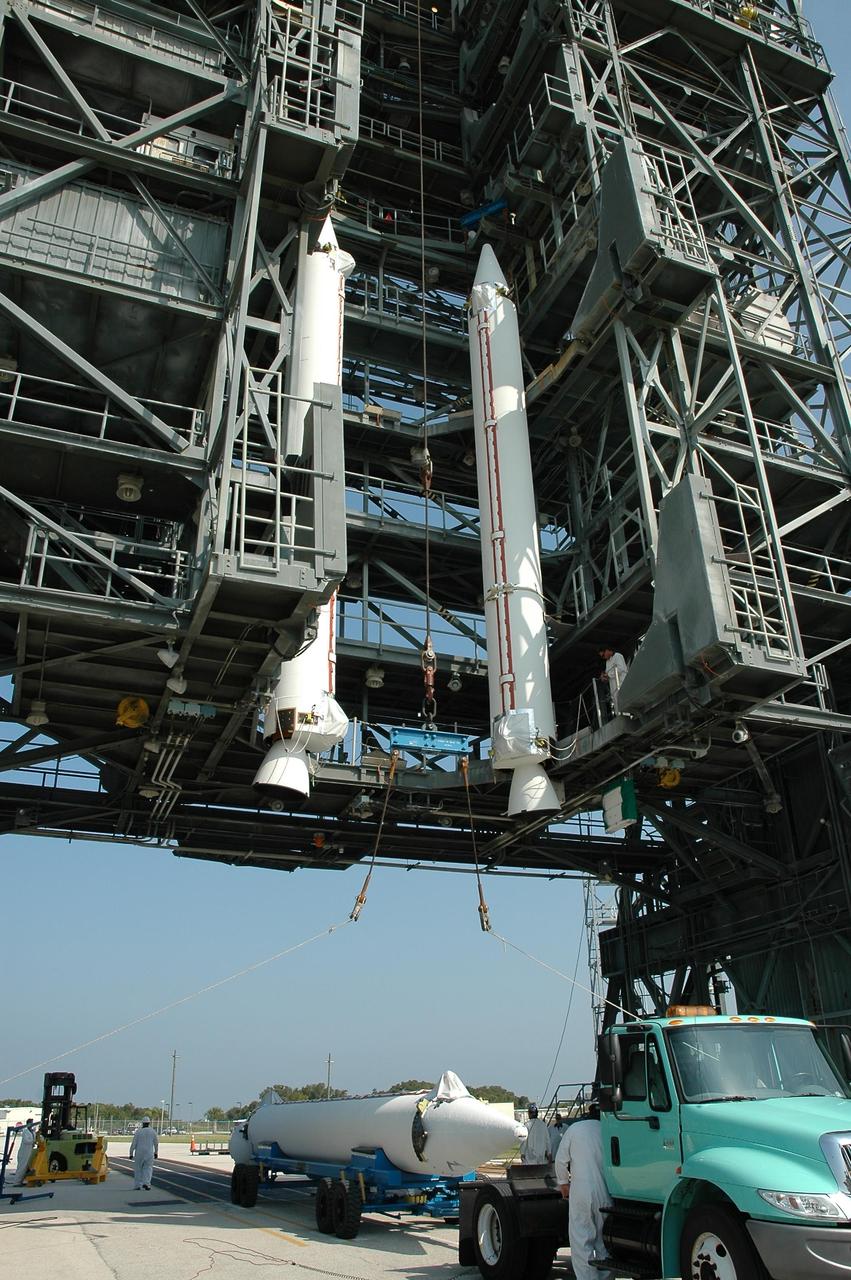
KENNEDY SPACE CENTER, FLA. -- Two solid rocket boosters in the mobile service tower on Launch Pad 17-B at Cape Canaveral Air Force Station wait for a third, below. They will all be mated to the Delta II first stage for launch of the Dawn spacecraft. Dawn's goal is to characterize the conditions and processes of the solar system's earliest epoch 4.5 billion years ago by investigating in detail two of the largest asteroids, Ceres and Vesta. They reside between Mars and Jupiter in the asteroid belt. Launch is targeted for July 7. Photo credit: NASA/Jim Grossmann
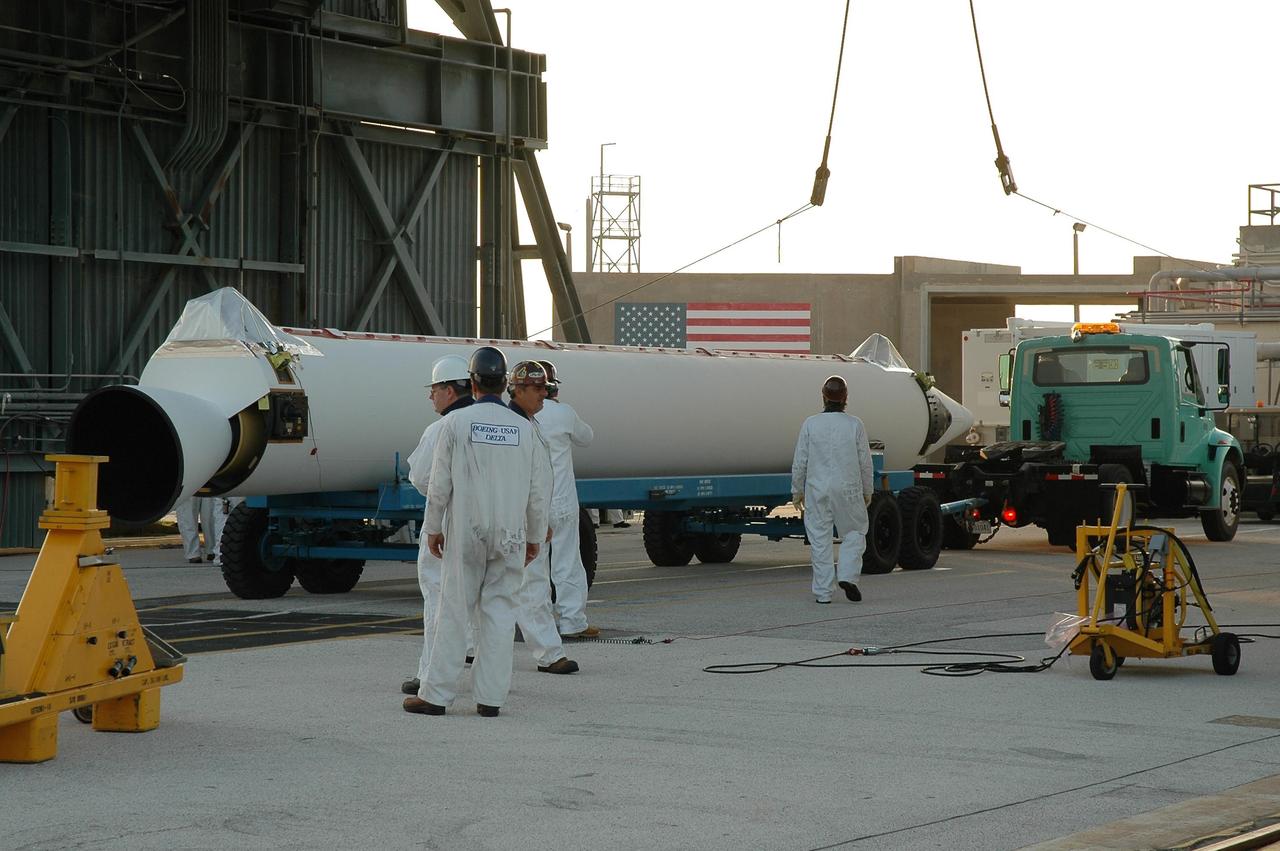
KENNEDY SPACE CENTER, FLA. -- Another solid rocket booster arrives on Launch Pad 17-B at Cape Canaveral Air Force Station to be mated to the Delta II first stage. The Delta is the launch vehicle for the Dawn spacecraft. Dawn's goal is to characterize the conditions and processes of the solar system's earliest epoch 4.5 billion years ago by investigating in detail two of the largest asteroids, Ceres and Vesta. They reside between Mars and Jupiter in the asteroid belt. Launch is targeted for July 7. Photo credit: NASA/Jim Grossmann
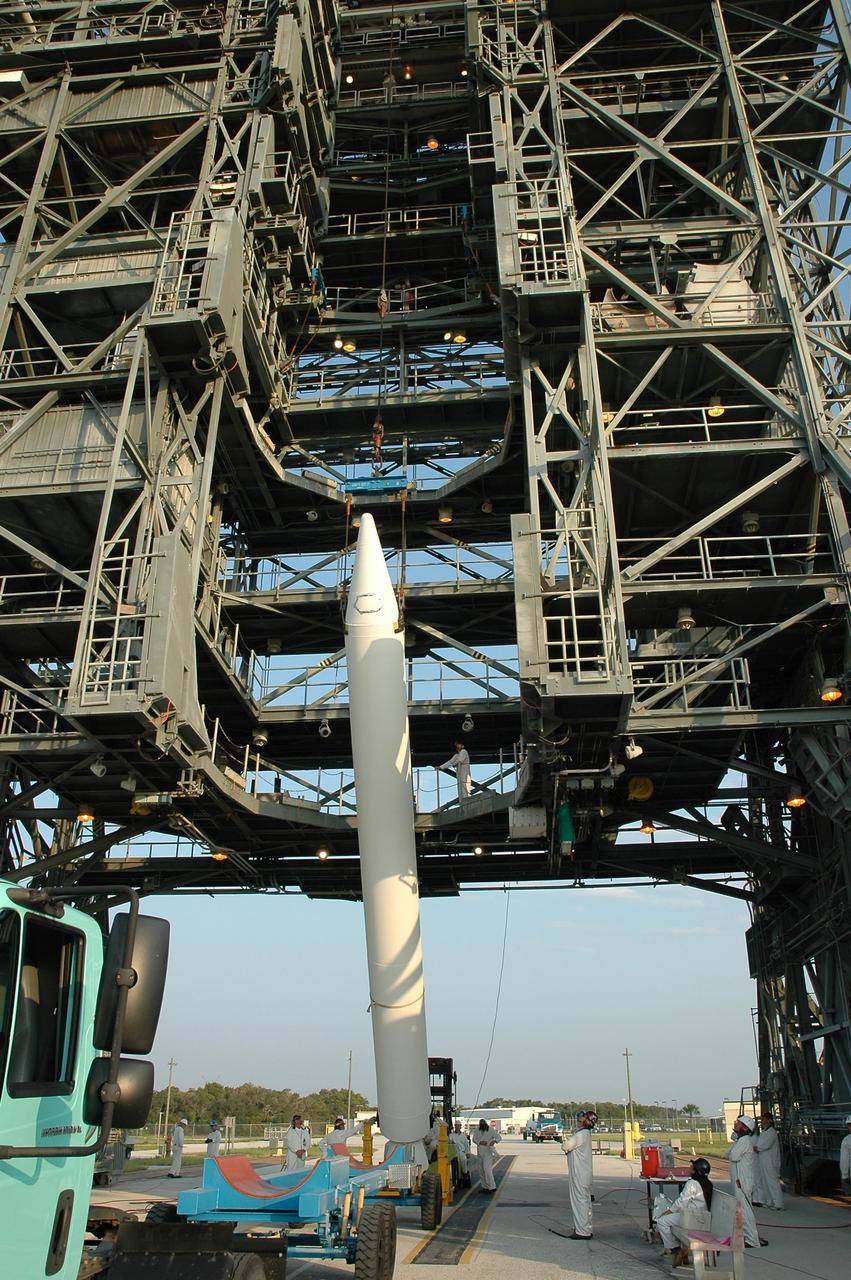
KENNEDY SPACE CENTER, FLA. -- A solid rocket booster is ready for lifting into the mobile service tower on Launch Pad 17-B at Cape Canaveral Air Force Station. The booster will be mated to the Delta II first stage for launch of the Dawn spacecraft. Dawn's goal is to characterize the conditions and processes of the solar system's earliest epoch 4.5 billion years ago by investigating in detail two of the largest asteroids, Ceres and Vesta. They reside between Mars and Jupiter in the asteroid belt. Launch is targeted for July 7. Photo credit: NASA/Jim Grossmann
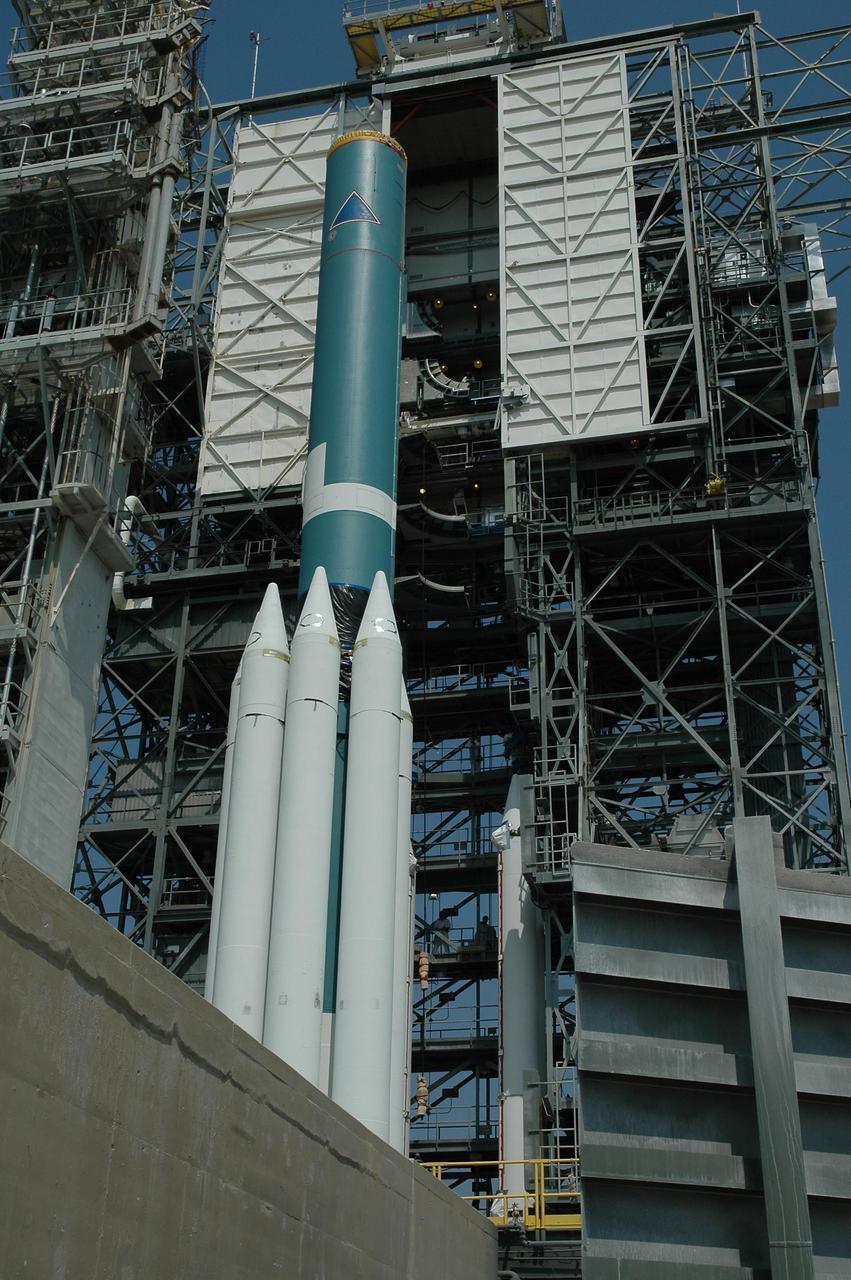
KENNEDY SPACE CENTER, FLA. -- On Launch Pad 17-B at Cape Canaveral Air Force Station, the mobile service tower with solid rocket boosters inside nears the Delta II first stage. The Delta is the launch vehicle of the Dawn spacecraft. Dawn's goal is to characterize the conditions and processes of the solar system's earliest epoch 4.5 billion years ago by investigating in detail two of the largest asteroids, Ceres and Vesta. They reside between Mars and Jupiter in the asteroid belt. Launch is targeted for July 7. Photo credit: NASA/Jim Grossmann
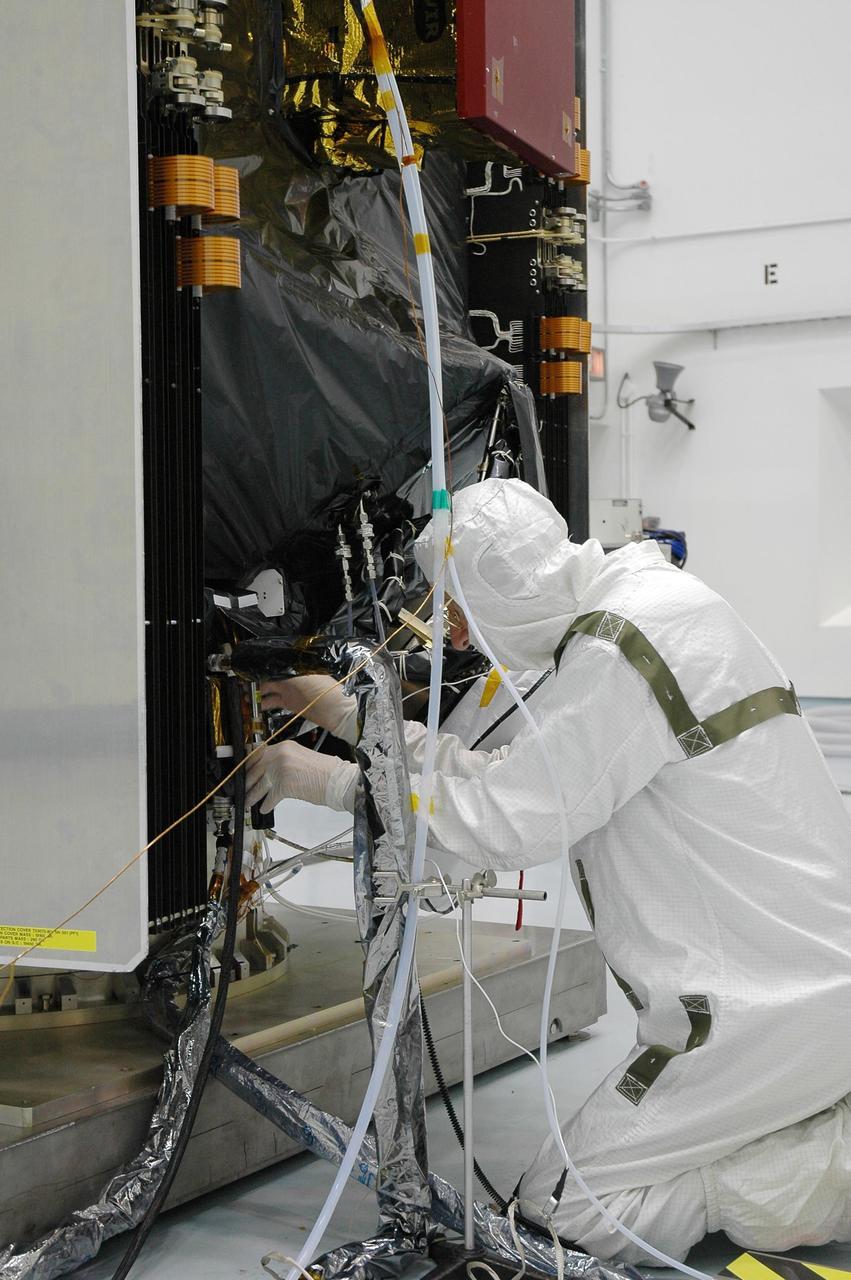
KENNEDY SPACE CENTER, FLA. -- At Astrotech's Hazardous Processing Facility, a technician checks the connections for loading the Dawn spacecraft with xenon gas for the ion propulsion system. Dawn's mission is to explore two of the asteroid belt's most intriguing and dissimilar occupants: asteroid Vesta and the dwarf planet Ceres. The Dawn spacecraft uses ion propulsion to get the additional velocity needed to reach Vesta once it leaves the Delta rocket. It also uses ion propulsion to spiral to lower altitudes on Vesta, to leave Vesta and cruise to Ceres and to spiral to a low-altitude orbit at Ceres. Ion propulsion makes efficient use of the onboard fuel by accelerating it to a velocity 10 times that of chemical rockets. Dawn is scheduled to launch July 7aboard a Delta II rocket from Launch Complex 17-B at Cape Canaveral Air Force Station. Photo credit: NASA/Jim Grossmann
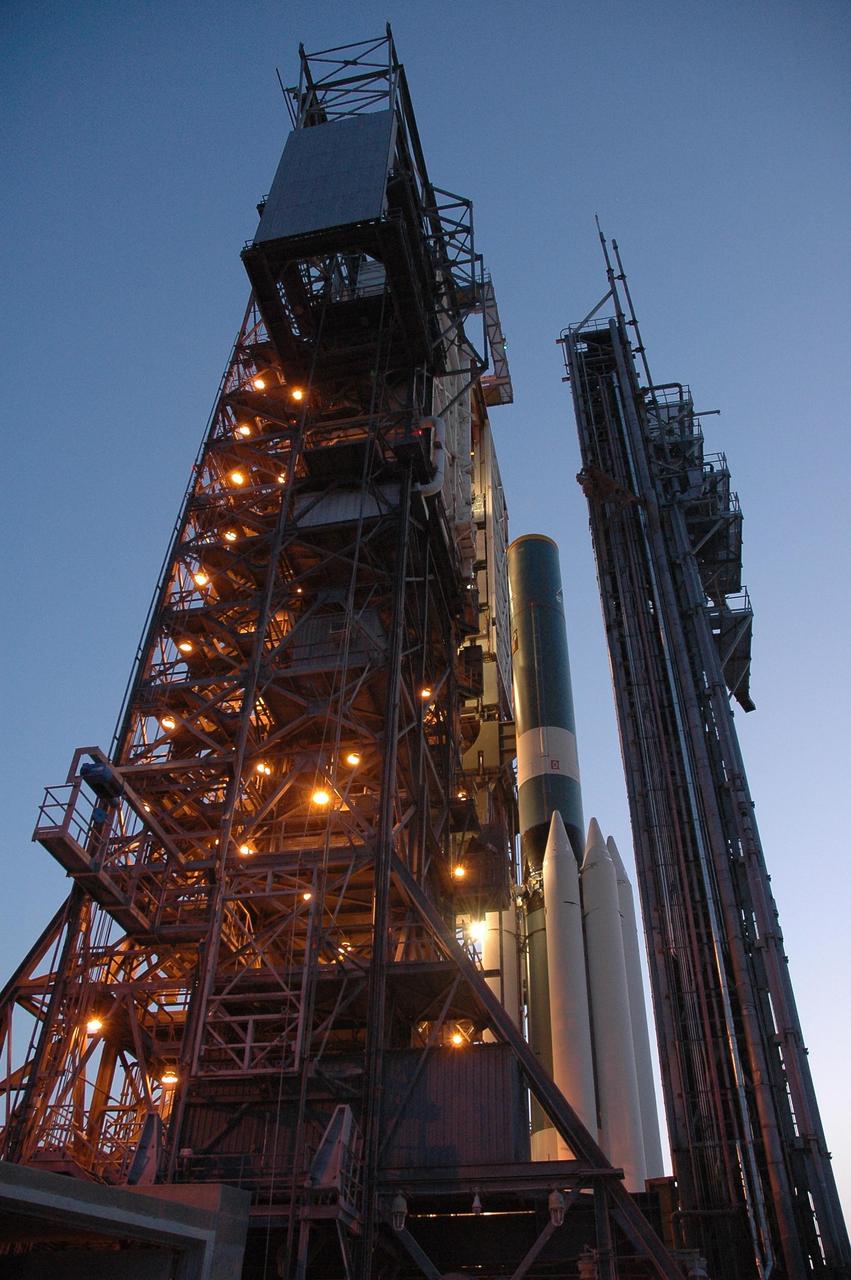
KENNEDY SPACE CENTER, FLA. -- Next to the mobile service tower on Launch Pad 17-B at Cape Canaveral Air Force Station, the Delta II first stage is being mated to the solid rocket boosters for launch of the Dawn spacecraft. Dawn's goal is to characterize the conditions and processes of the solar system's earliest epoch 4.5 billion years ago by investigating in detail two of the largest asteroids, Ceres and Vesta. They reside between Mars and Jupiter in the asteroid belt. Launch is targeted for July 7. Photo credit: NASA/Jim Grossmann
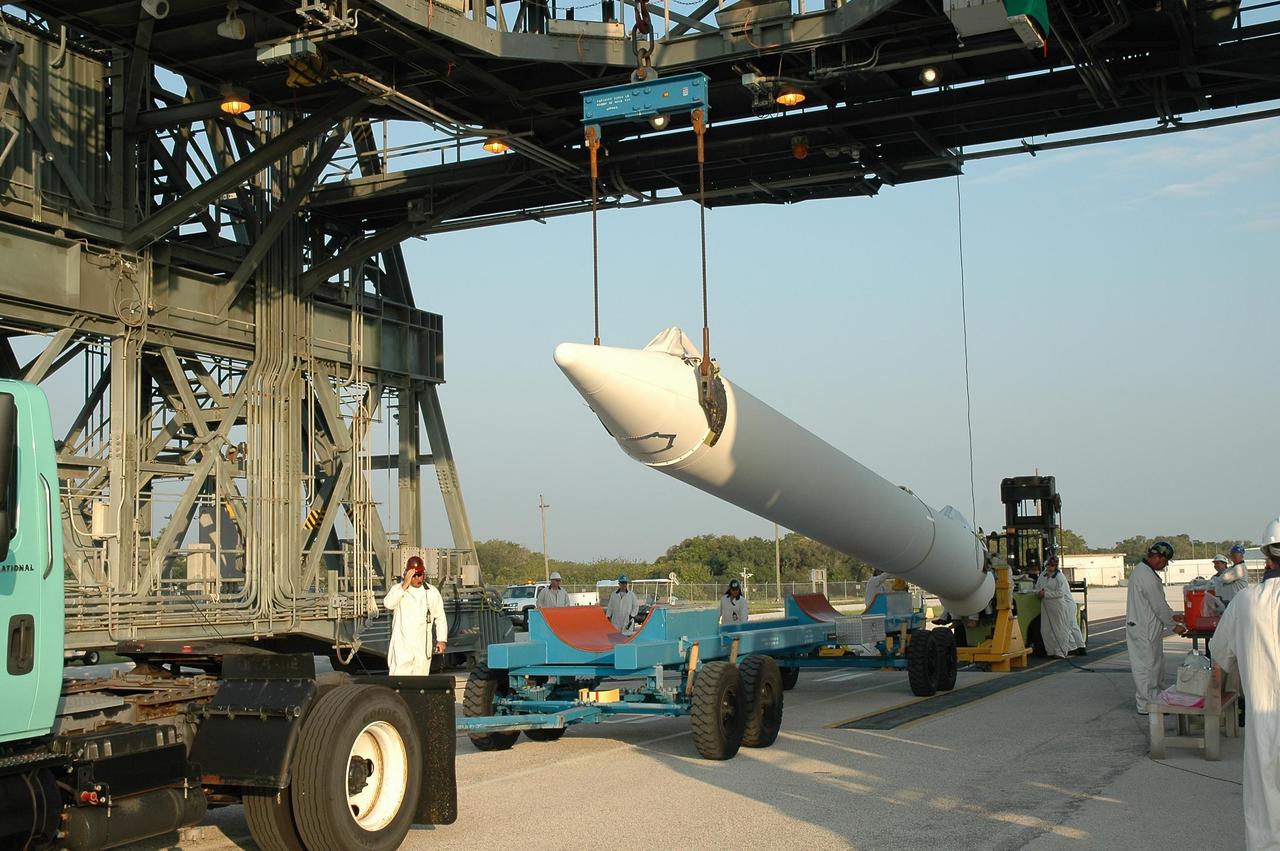
KENNEDY SPACE CENTER, FLA. -- A solid rocket booster is raised off its transporter before being lifted into the mobile service tower on Launch Pad 17-B at Cape Canaveral Air Force Station. The booster will be mated to the Delta II first stage for launch of the Dawn spacecraft. Dawn's goal is to characterize the conditions and processes of the solar system's earliest epoch 4.5 billion years ago by investigating in detail two of the largest asteroids, Ceres and Vesta. They reside between Mars and Jupiter in the asteroid belt. Launch is targeted for July 7. Photo credit: NASA/Jim Grossmann
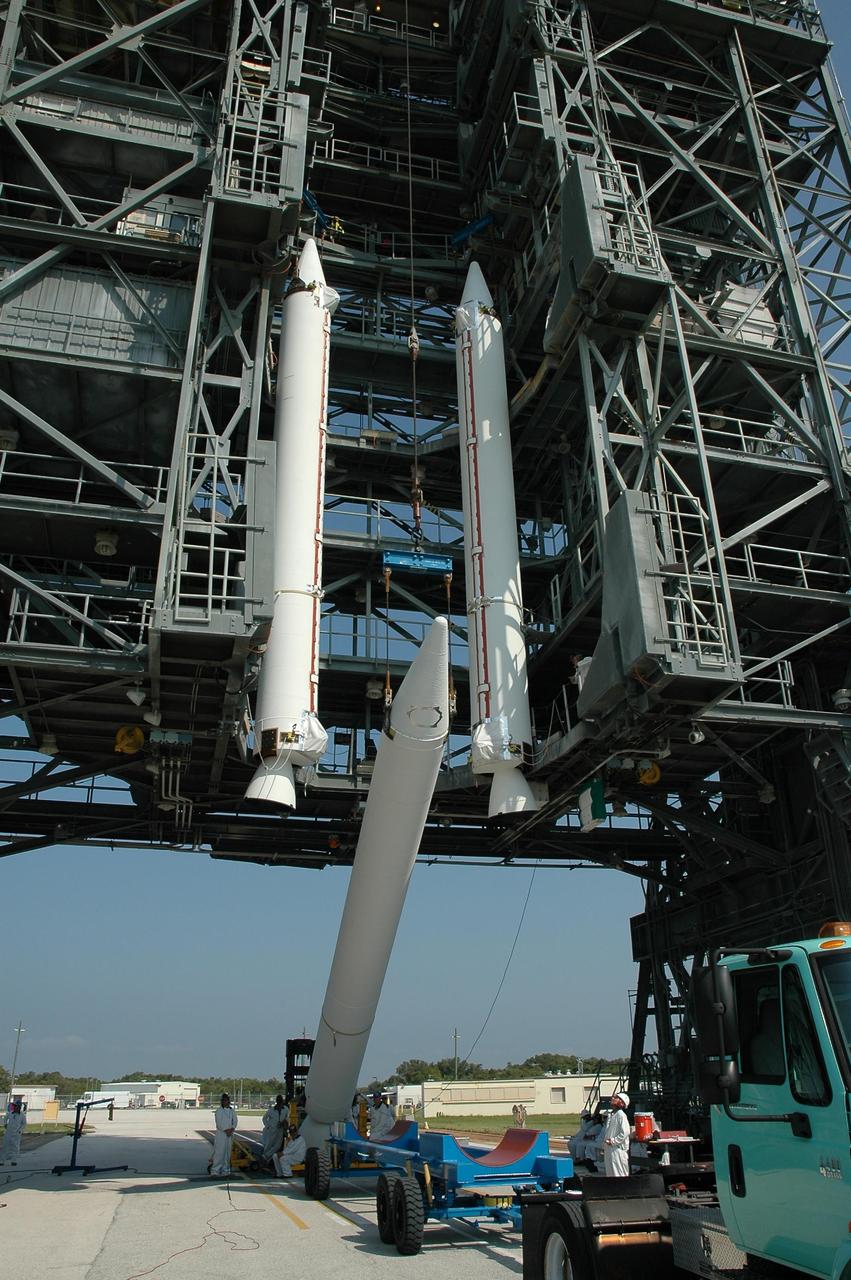
KENNEDY SPACE CENTER, FLA. -- A third solid rocket booster is raised off its transporter before being lifted into the mobile service tower on Launch Pad 17-B at Cape Canaveral Air Force Station. The booster will join the others suspended in the tower to be mated to the Delta II first stage for launch of the Dawn spacecraft. Dawn's goal is to characterize the conditions and processes of the solar system's earliest epoch 4.5 billion years ago by investigating in detail two of the largest asteroids, Ceres and Vesta. They reside between Mars and Jupiter in the asteroid belt. Launch is targeted for July 7. Photo credit: NASA/Jim Grossmann
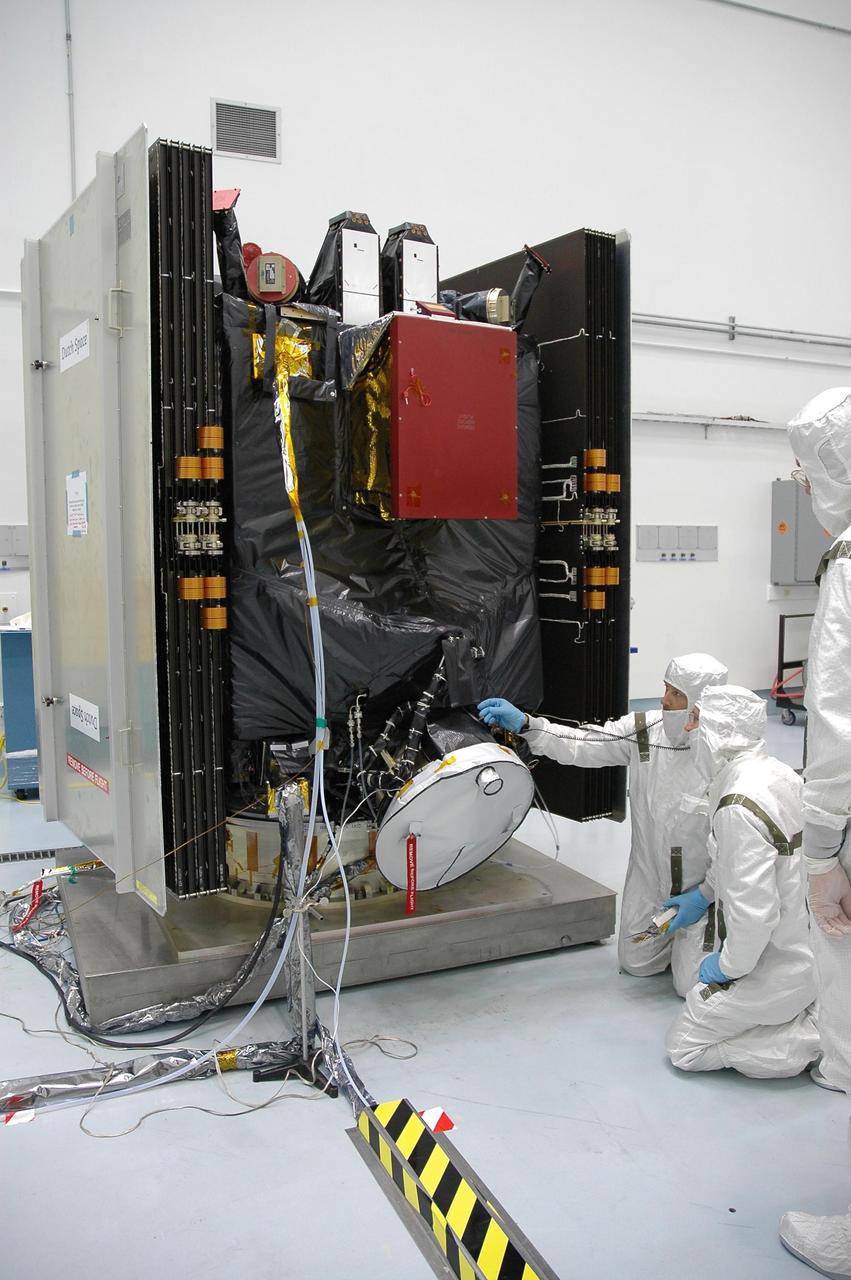
KENNEDY SPACE CENTER, FLA. -- At Astrotech's Hazardous Processing Facility, technicians look at the connections for loading the Dawn spacecraft with xenon gas for the ion propulsion system. Dawn's mission is to explore two of the asteroid belt's most intriguing and dissimilar occupants: asteroid Vesta and the dwarf planet Ceres. The Dawn spacecraft uses ion propulsion to get the additional velocity needed to reach Vesta once it leaves the Delta rocket. It also uses ion propulsion to spiral to lower altitudes on Vesta, to leave Vesta and cruise to Ceres and to spiral to a low-altitude orbit at Ceres. Ion propulsion makes efficient use of the onboard fuel by accelerating it to a velocity 10 times that of chemical rockets. Dawn is scheduled to launch July 7aboard a Delta II rocket from Launch Complex 17-B at Cape Canaveral Air Force Station. Photo credit: NASA/Jim Grossmann
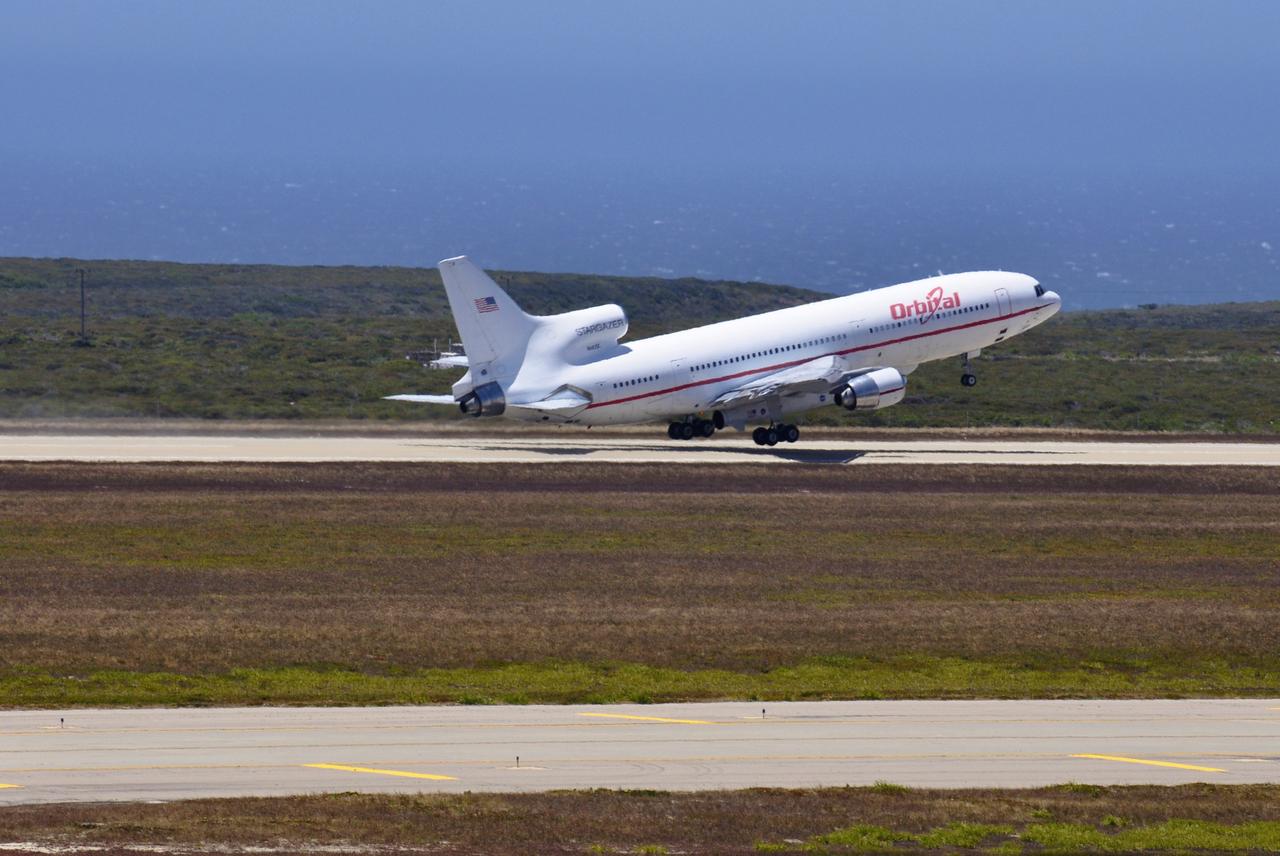
VANDENBERG AIR FORCE BASE, Calif. – Orbital Sciences’ L-1011 carrier aircraft appears to hover above the runway as it departs from Vandenberg Air Force Base in California. The aircraft is transporting Orbital’s Pegasus rocket and NASA’s Nuclear Spectroscopic Telescope Array, or NuSTAR, to the U.S. Army's Ronald Reagan Ballistic Missile Defense Test Site on Kwajalein Atoll, part of the Marshall Islands in the Pacific Ocean. The Pegasus, mated to its NuSTAR payload, will be launched from the carrier aircraft 117 nautical miles south of Kwajalein at latitude 6.75 degrees north of the equator. The high-energy X-ray telescope will conduct a census of black holes, map radioactive material in young supernovae remnants, and study the origins of cosmic rays and the extreme physics around collapsed stars. Launch is scheduled for June 13. For more information, visit http://www.nasa.gov/nustar. Photo credit: NASA/Randy Beaudoin, VAFB
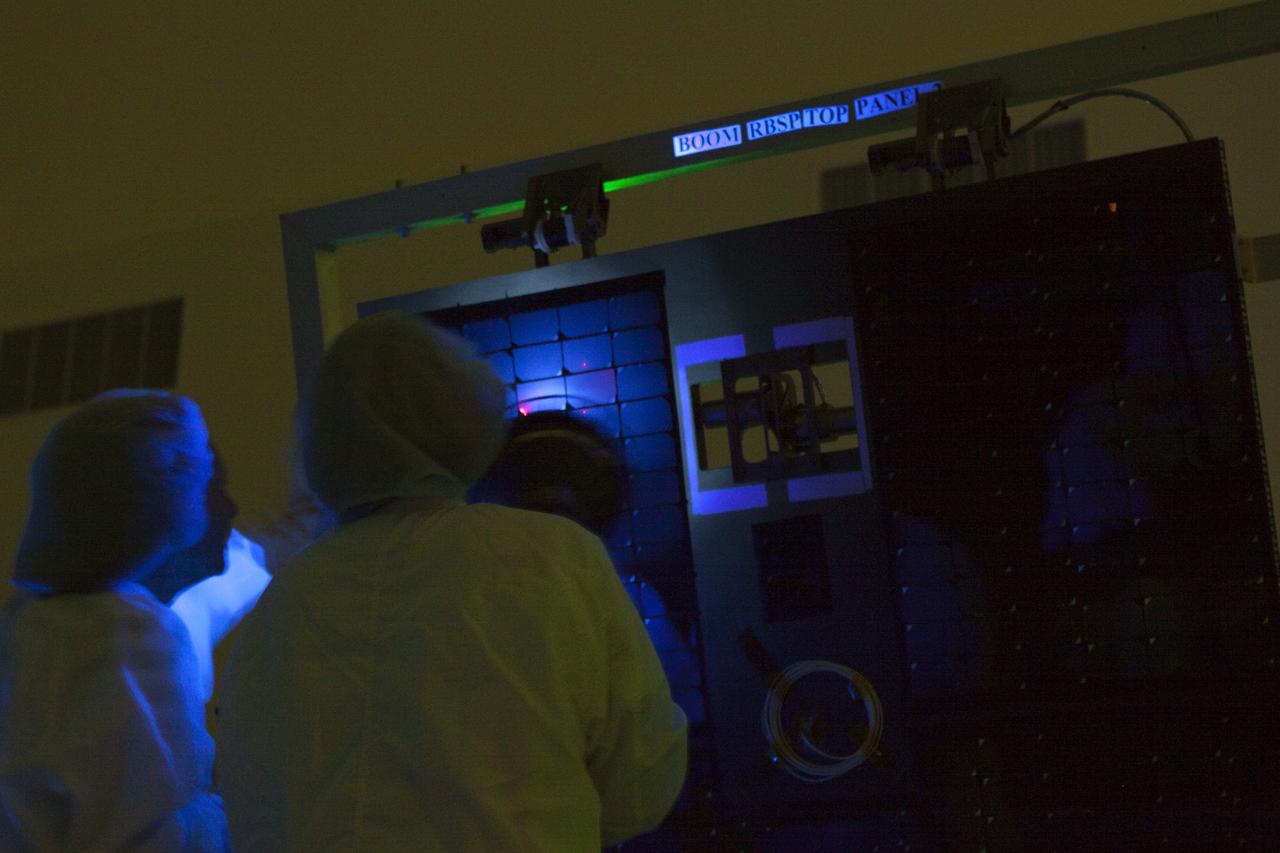
CAPE CANAVERAL, Fla. – Using a black light, technicians closely inspect a solar panel on one of NASA's twin Radiation Belt Storm Probes inside the clean room high bay at the Astrotech payload processing facility near NASA’s Kennedy Space Center in Florida. The technicians are dressed in clean-room attire known as “bunny suits.” Black-light inspection uses UVA fluorescence to detect possible microcontamination, small cracks or fluid leaks. The Radiation Belt Storm Probes, or RBSP, mission will help us understand the sun’s influence on Earth and near-Earth space by studying the Earth’s radiation belts on various scales of space and time. RBSP will begin its mission of exploration of Earth's Van Allen radiation belts and the extremes of space weather after its launch aboard a United Launch Alliance Atlas V rocket. Launch is targeted for Aug. 23. For more information, visit http://www.nasa.gov/rbsp. Photo credit: NASA/Jim Grossmann
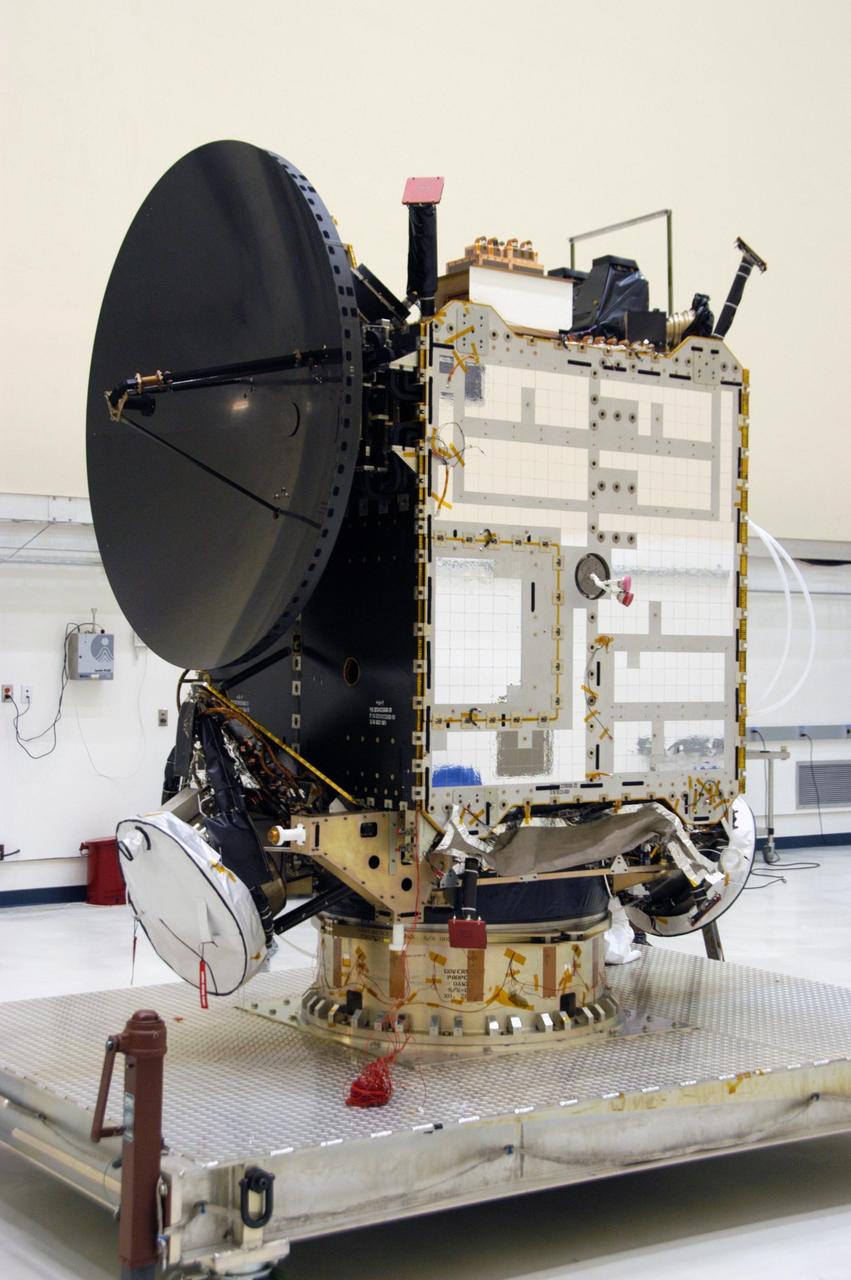
KENNEDY SPACE CENTER, FLA. -- The Dawn spacecraft is seen here in clean room C of Astrotech's Payload Processing Facility. In the clean room, the spacecraft will undergo further processing. Dawn's mission is to explore two of the asteroid belt's most intriguing and dissimilar occupants: asteroid Vesta and the dwarf planet Ceres. The Dawn mission is managed by JPL, a division of the California Institute of Technology in Pasadena, for NASA's Science Mission Directorate in Washington, D.C. Photo credit: NASA/George Shelton
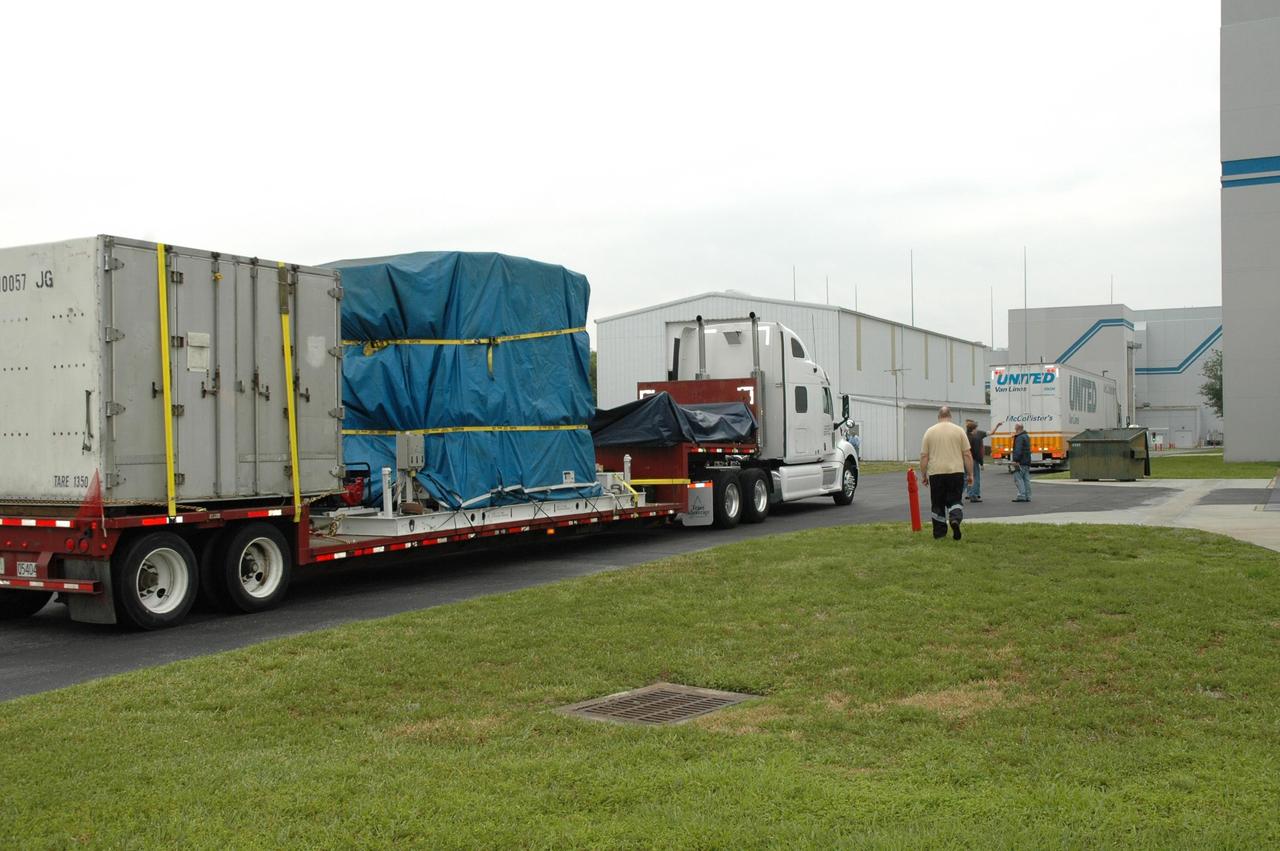
KENNEDY SPACE CENTER, FLA. -- Two trucks (one air-ride, one flat-bed) deliver the Dawn spacecraft, as well as additional electrical and ground support equipment and xenon ground support equipment, to Astrotech. Dawn will be moved from the truck and the shipping container removed. The spacecraft will then be moved into the high bay of the Payload Processing Facility. Dawn's mission is to explore two of the asteroid belt's most intriguing and dissimilar occupants: asteroid Vesta and the dwarf planet Ceres. The Dawn mission is managed by JPL, a division of the California Institute of Technology in Pasadena, for NASA's Science Mission Directorate in Washington, D.C. Photo credit: NASA/Jim Grossmann
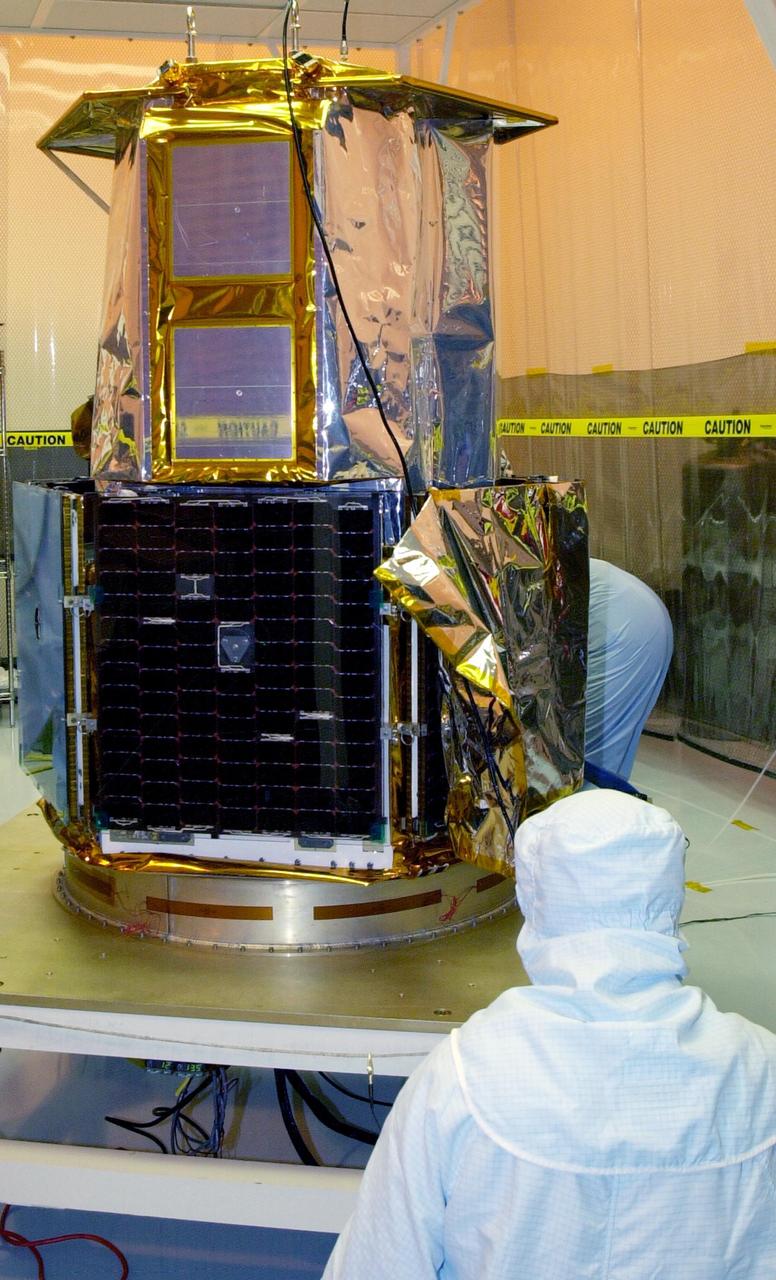
KENNEDY SPACE CENTER, FLA. - Workers in the Multi-Purpose Processing Facility return to the SORCE satellite after solar array testing is complete. SORCE is equipped with four instruments that will measure variations in solar radiation much more accurately than anything now in use and observe some of the spectral properties of solar radiation for the first time. With data from NASA’s SORCE mission, researchers should be able to follow how the Sun affects our climate now and in the future. The SORCE project is managed by NASA’s Goddard Space Flight Center. The instruments on the SORCE spacecraft are built by the Laboratory for Atmospheric and Space Physics (LASP). Launch of SORCE aboard a Pegasus XL rocket is scheduled for mid-December 2002. Launch site is Cape Canaveral Air Force Station, Fla.
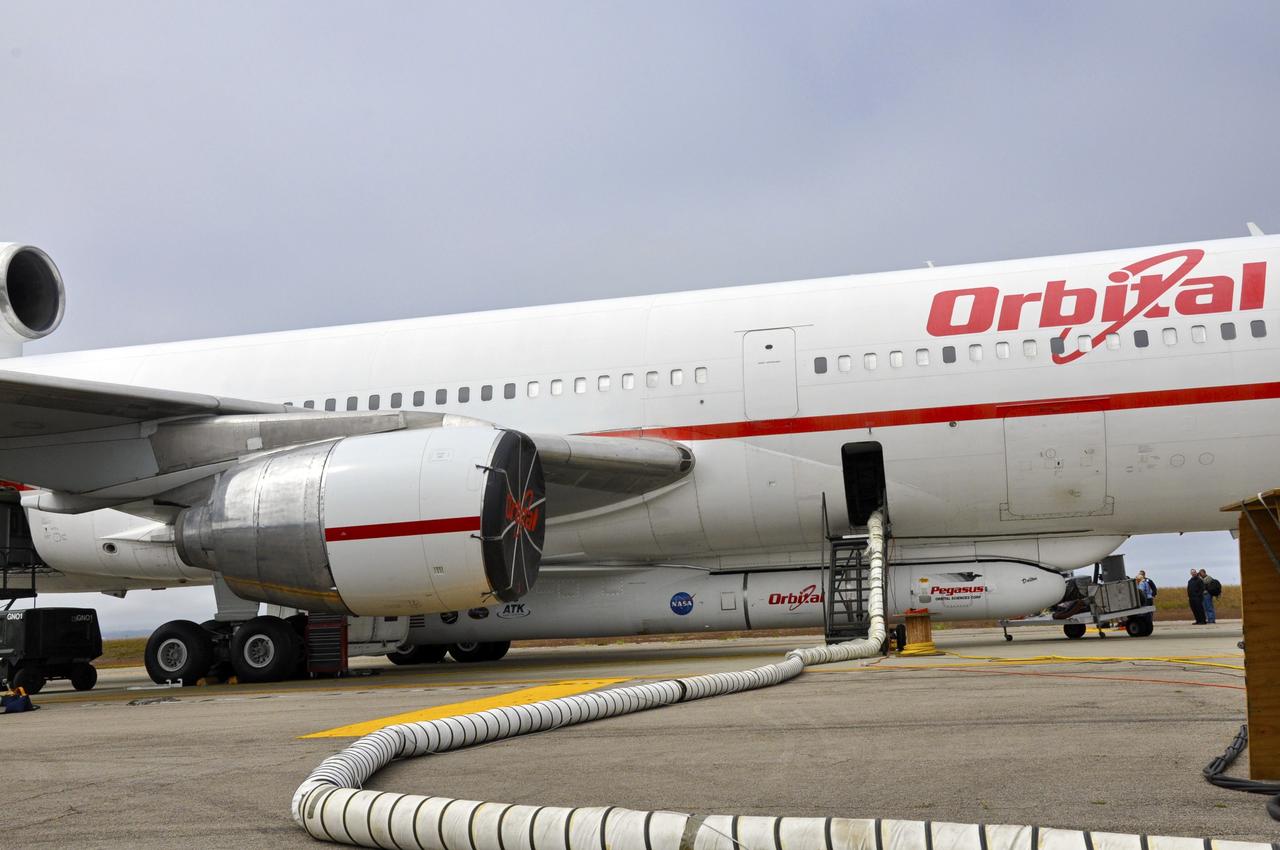
VANDENBERG AIR FORCE BASE, Calif. – An Orbital Sciences’ Pegasus rocket and NASA’s Nuclear Spectroscopic Telescope Array, or NuSTAR, are installed under Orbital’s L-1011 carrier aircraft and await departure from Vandenberg Air Force Base in California for the U.S. Army's Ronald Reagan Ballistic Missile Defense Test Site on Kwajalein Atoll, part of the Marshall Islands in the Pacific Ocean. The Pegasus, mated to its NuSTAR payload, will be launched from the carrier aircraft 117 nautical miles south of Kwajalein at latitude 6.75 degrees north of the equator. The high-energy X-ray telescope will conduct a census of black holes, map radioactive material in young supernovae remnants, and study the origins of cosmic rays and the extreme physics around collapsed stars. Launch is scheduled for June 13. For more information, visit http://www.nasa.gov/nustar. Photo credit: NASA/Randy Beaudoin, VAFB
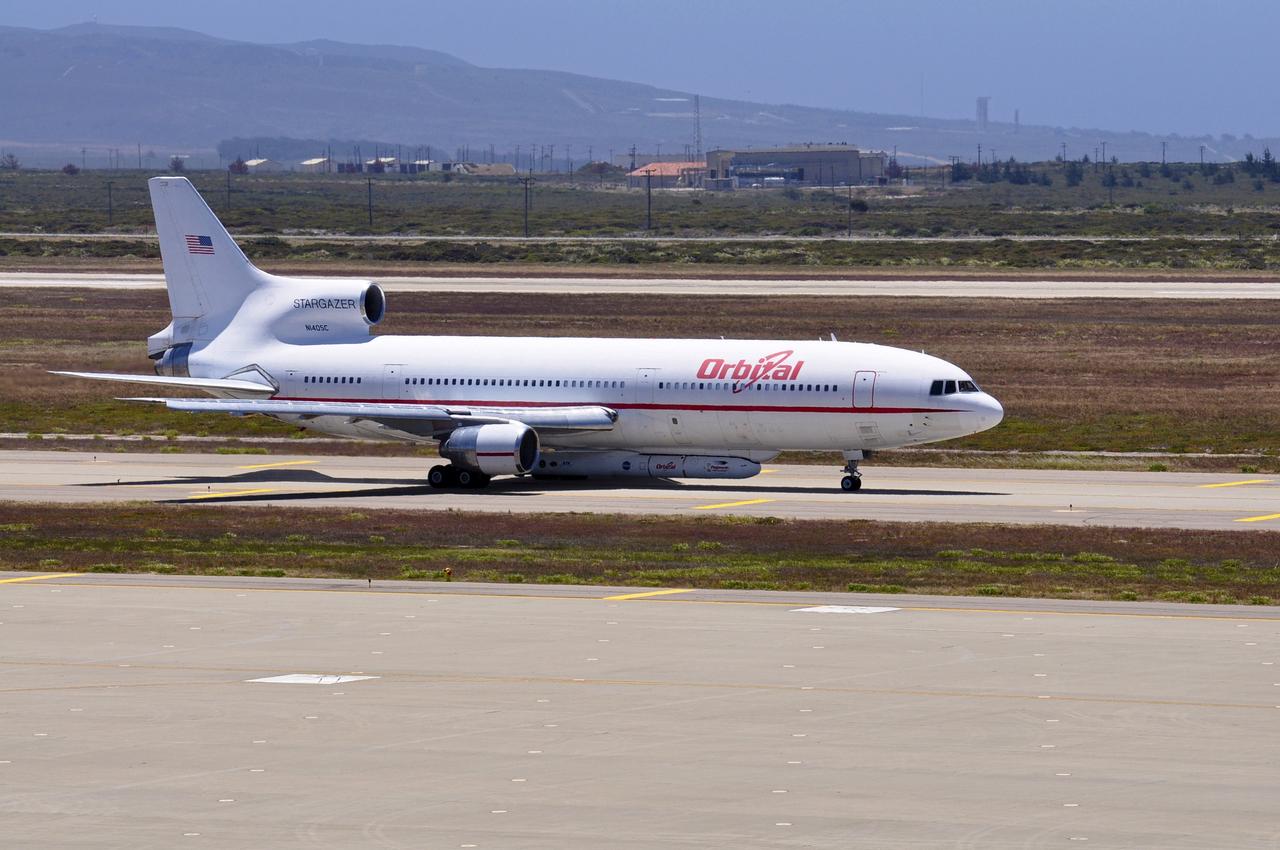
VANDENBERG AIR FORCE BASE, Calif. – Orbital Sciences’ L-1011 carrier aircraft taxies to the runway at Vandenberg Air Force Base in California. The aircraft is transporting Orbital’s Pegasus rocket and NASA’s Nuclear Spectroscopic Telescope Array, or NuSTAR, to the U.S. Army's Ronald Reagan Ballistic Missile Defense Test Site on Kwajalein Atoll, part of the Marshall Islands in the Pacific Ocean. The Pegasus, mated to its NuSTAR payload, will be launched from the carrier aircraft 117 nautical miles south of Kwajalein at latitude 6.75 degrees north of the equator. The high-energy X-ray telescope will conduct a census of black holes, map radioactive material in young supernovae remnants, and study the origins of cosmic rays and the extreme physics around collapsed stars. Launch is scheduled for June 13. For more information, visit http://www.nasa.gov/nustar. Photo credit: NASA/Randy Beaudoin, VAFB
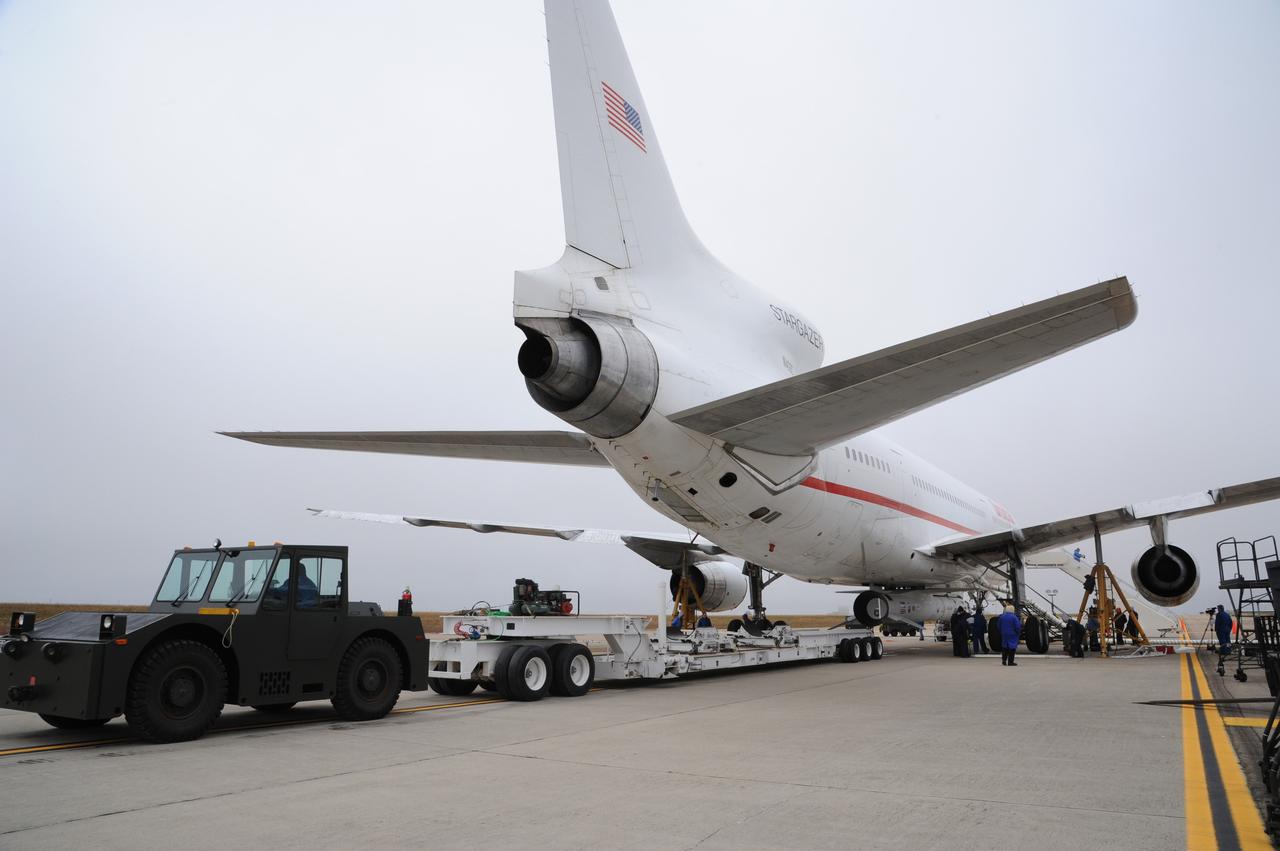
VANDENBERG AIR FORCE BASE, Calif. – The transporter rolls away from Orbital Sciences’ L-1011 carrier aircraft at the “hot pad,” located on the ramp adjacent to the runway on Vandenberg Air Force Base in California. Operations to attach NASA’s Nuclear Spectroscopic Telescope Array, or NuSTAR, mated to Orbital Sciences’ Pegasus XL rocket, beneath the L-1011 aircraft are complete. The duo will be flown from Vandenberg to the U.S. Army's Ronald Reagan Ballistic Missile Defense Test Site on Kwajalein Atoll, part of the Marshall Islands in the Pacific Ocean. The Pegasus and its NuSTAR payload will be launched June 13 from the carrier aircraft 117 nautical miles south of Kwajalein at latitude 6.75 degrees north of the equator. The high-energy X-ray telescope will conduct a census of black holes, map radioactive material in young supernovae remnants, and study the origins of cosmic rays and the extreme physics around collapsed stars. For more information, visit http://www.nasa.gov/nustar. Photo credit: NASA/Chris Wiant, VAFB
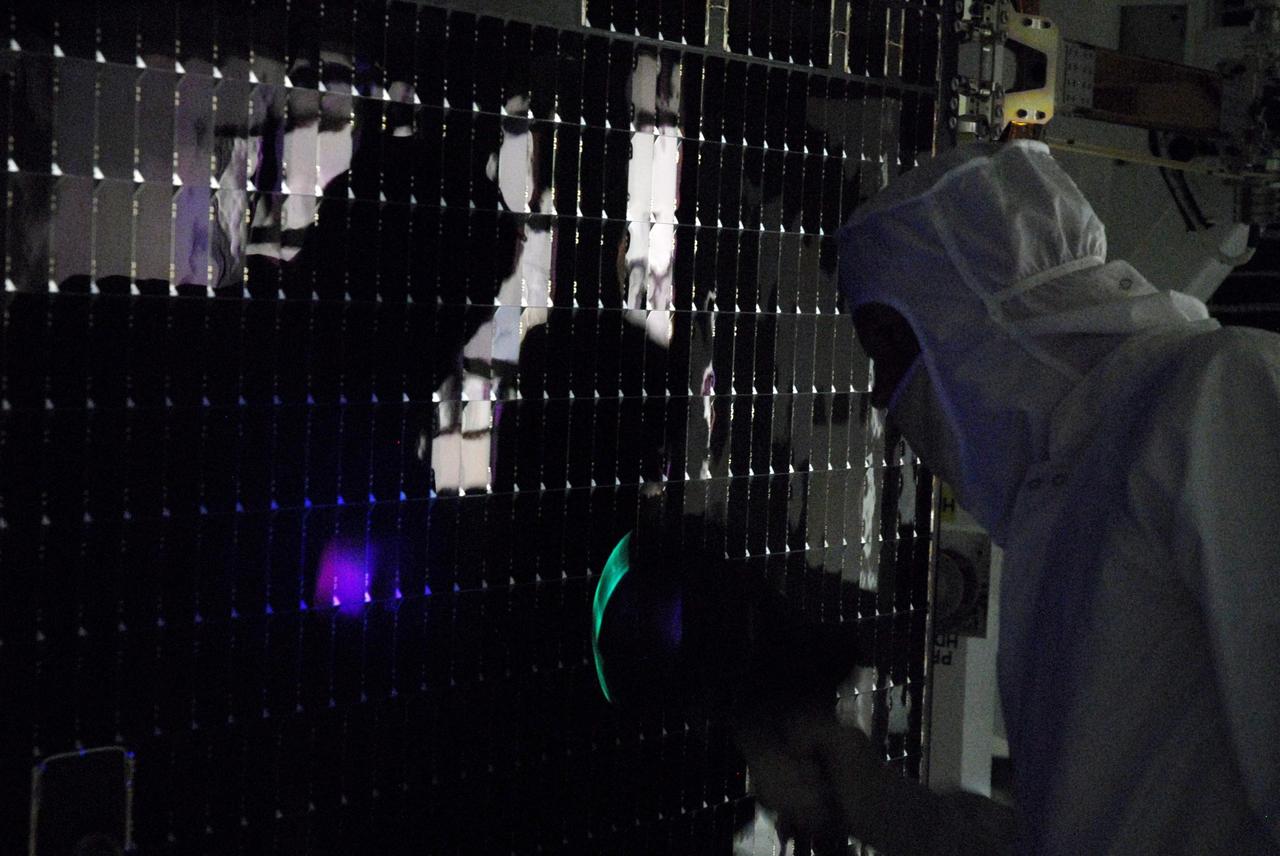
KENNEDY SPACE CENTER, FLA. -- In a clean room at Astrotech, workers begin black light testing on the solar panels of the Dawn spacecraft. Dawn's mission is to explore two of the asteroid belt's most intriguing and dissimilar occupants: asteroid Vesta and the dwarf planet Ceres. Dawn is scheduled to launch June 30 from Launch Complex 17-B. Photo credit: NASA/George Shelton
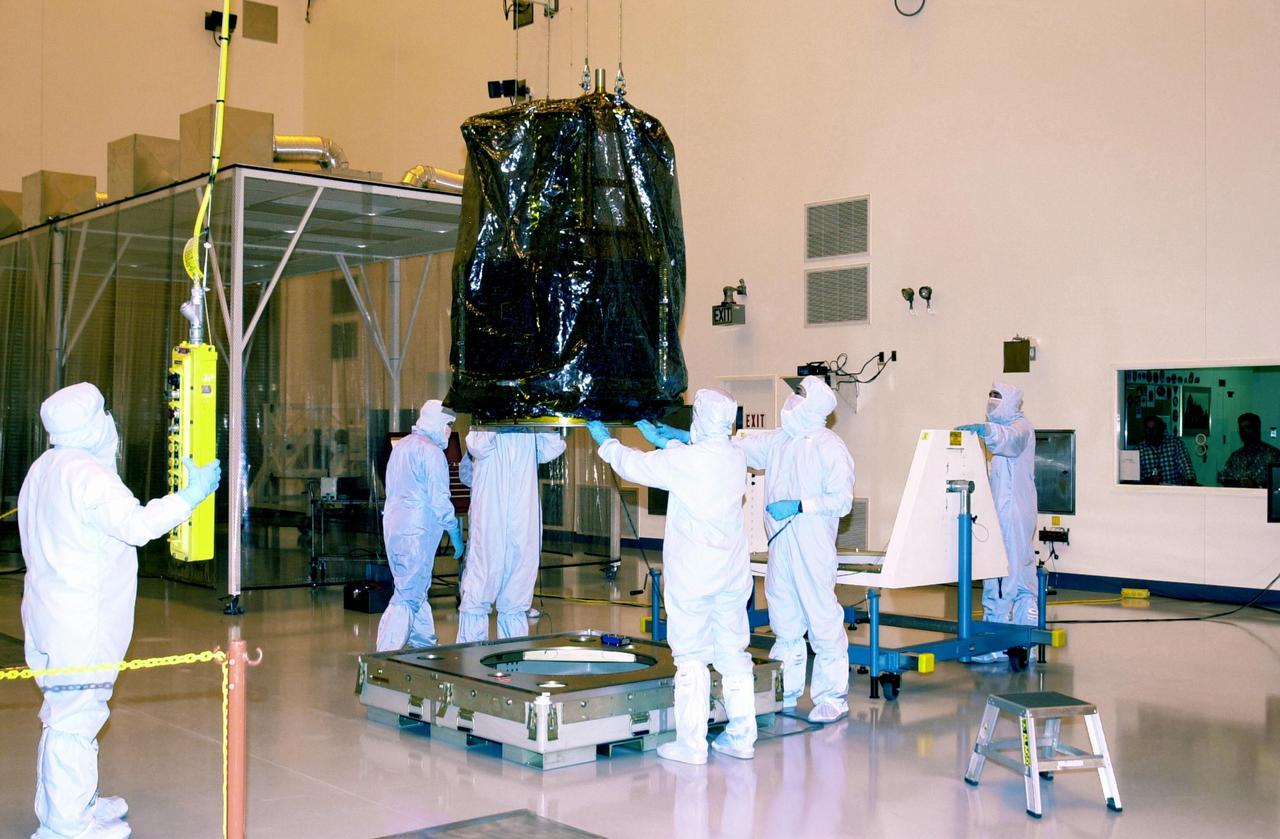
KENNEDY SPACE CENTER, FLA. -- Workers in the Multi-Purpose Processing Facility at KSC lift the Solar Radiation and Climate Experiment (SORCE) spacecraft to move it to a workstand. SORCE arrived at Kennedy Space Center Oct. 26 to begin final processing. SORCE is equipped with four instruments that will measure variations in solar radiation much more accurately than anything now in use and observe some of the spectral properties of solar radiation for the first time. With data from NASA's SORCE mission, researchers should be able to follow how the Sun affects our climate now and in the future. The SORCE project is managed by NASA's Goddard Space Flight Center. The instruments on the SORCE spacecraft are built by the Laboratory for Atmospheric and Space Physics (LASP). Launch of SORCE aboard a Pegasus XL rocket is scheduled for mid-December 2002. Launch site is Cape Canaveral Air Force Station, Fla.
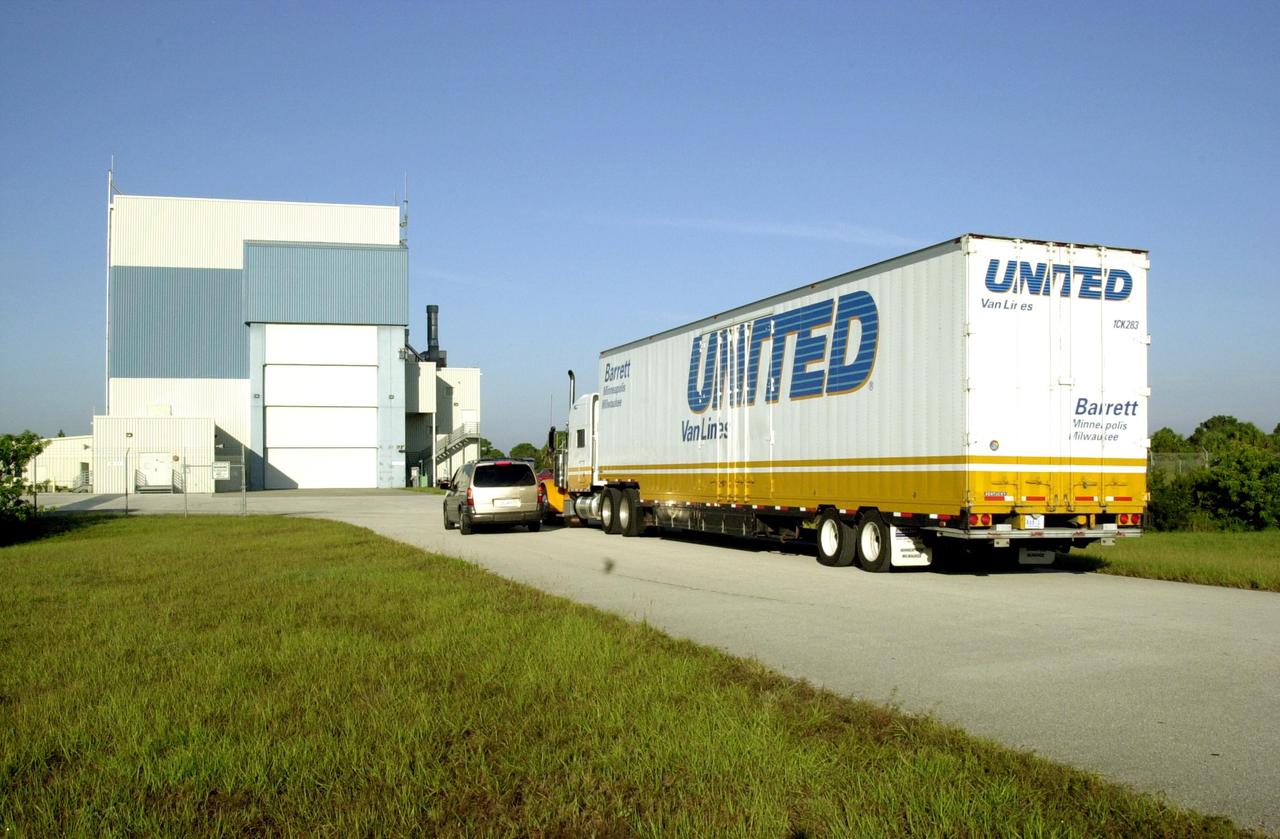
KENNEDY SPACE CENTER, FLA. -- A truck containing the Solar Radiation and Climate Experiment (SORCE) spacecraft approaches the Multi-Purpose Processing Facility at KSC. The spacecraft will undergo final processing for launch. SORCE is equipped with four instruments that will measure variations in solar radiation much more accurately than anything now in use and observe some of the spectral properties of solar radiation for the first time. With data from NASA's SORCE mission, researchers should be able to follow how the Sun affects our climate now and in the future. The SORCE project is managed by NASA's Goddard Space Flight Center. The instruments on the SORCE spacecraft are built by the Laboratory for Atmospheric and Space Physics (LASP). Launch of SORCE aboard a Pegasus XL rocket is scheduled for mid-December 2002. Launch site is Cape Canaveral Air Force Station, Fla.
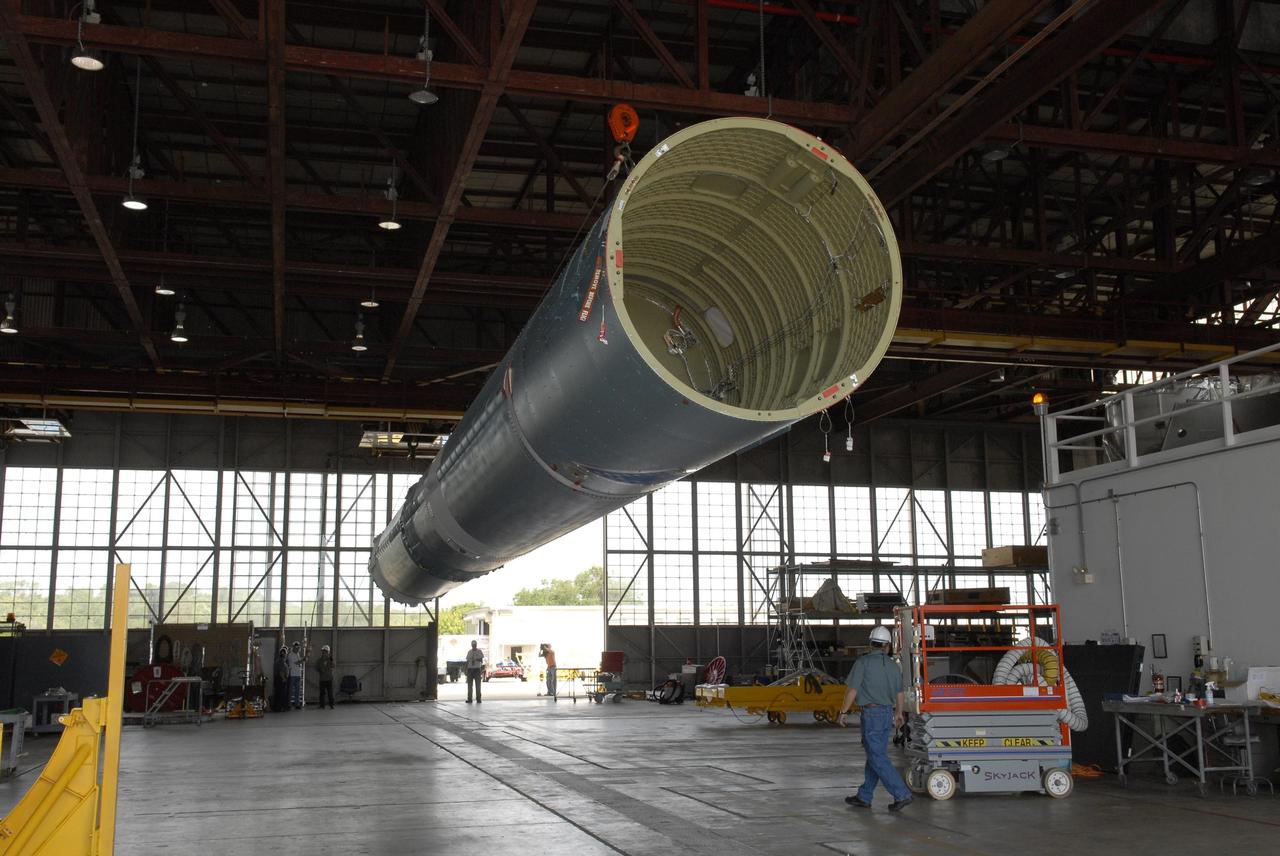
KENNEDY SPACE CENTER, FLA. -- Inside the Hangar M on Cape Canaveral Air Force Station, another Delta II first stage is suspended from an overhead crane to be placed on a transporter. The Delta will be moved to the launch pad for the future launch of a Global Positioning Satellite. Photo credit: NASA/Kim Shiflett
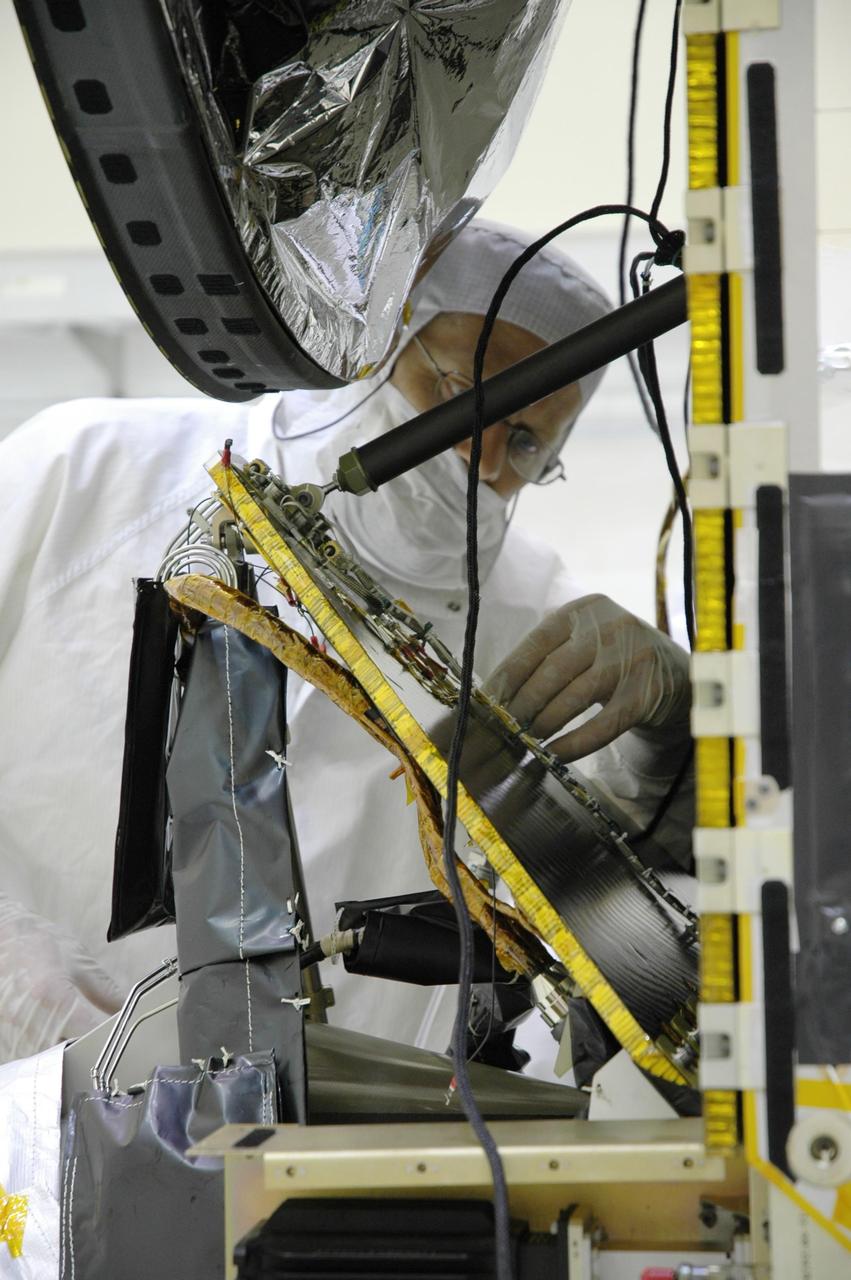
KENNEDY SPACE CENTER, FLA. -- In the Astrotech Space Operations facility, Orbital Science technicians install a computer chip on the Dawn spacecraft. The silicon chip holds the names of more than 360,000 space enthusiasts worldwide who signed up to participate in a virtual voyage to the asteroid belt and is about the size of an American five-cent coin. Dawn's mission is to explore two of the asteroid belt's most intriguing and dissimilar occupants: asteroid Vesta and the dwarf planet Ceres. Dawn is scheduled to launch June 30 from Launch Complex 17-B. Photo credit: NASA/Jim Grossmann
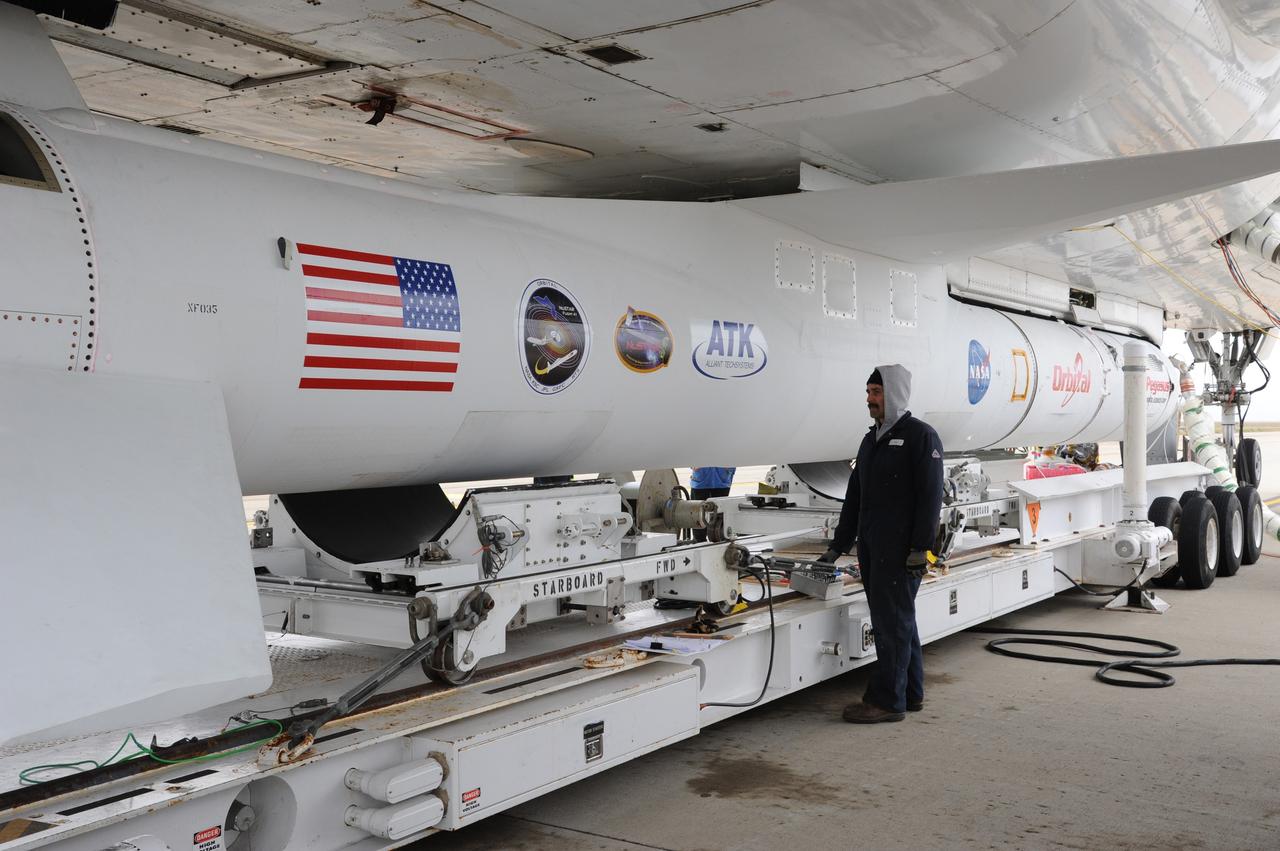
VANDENBERG AIR FORCE BASE, Calif. – A technician prepares to roll the transporter from under NASA’s Nuclear Spectroscopic Telescope Array, or NuSTAR, mated to Orbital Sciences’ Pegasus XL rocket, attached beneath Orbital’s L-1011 carrier aircraft at the “hot pad,” located on the ramp adjacent to the runway on Vandenberg Air Force Base in California. The duo will be flown from Vandenberg to the U.S. Army's Ronald Reagan Ballistic Missile Defense Test Site on Kwajalein Atoll, part of the Marshall Islands in the Pacific Ocean. The Pegasus and its NuSTAR payload will be launched June 13 from the carrier aircraft 117 nautical miles south of Kwajalein at latitude 6.75 degrees north of the equator. The high-energy X-ray telescope will conduct a census of black holes, map radioactive material in young supernovae remnants, and study the origins of cosmic rays and the extreme physics around collapsed stars. For more information, visit http://www.nasa.gov/nustar. Photo credit: NASA/Chris Wiant, VAFB
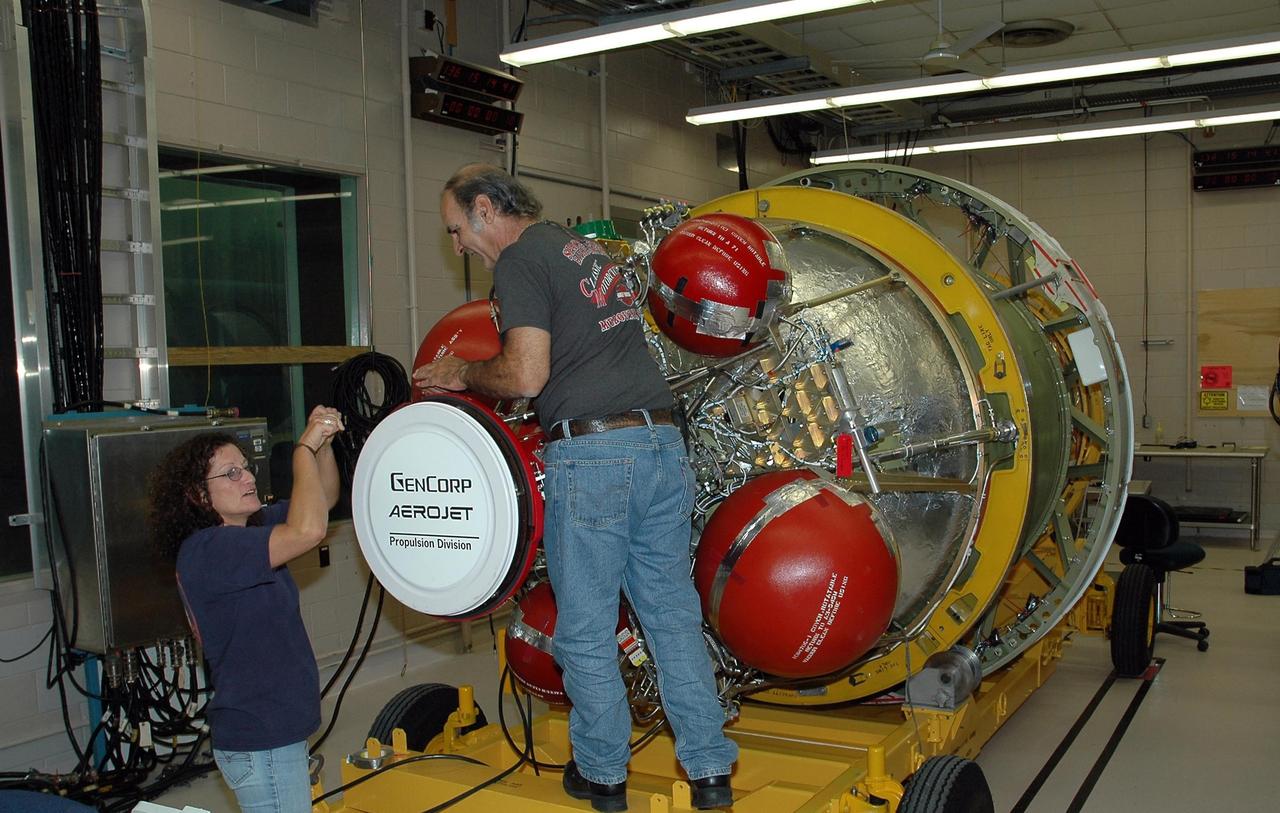
KENNEDY SPACE CENTER, FLA. -- In Hangar A&O at Cape Canaveral Air Force Station, United Launch Alliance workers prepare the Delta II second stage for the Phoenix spacecraft. Phoenix will land in icy soils near the north polar permanent ice cap of Mars and explore the history of the water in these soils and any associated rocks, while monitoring polar climate. Landing is planned in May 2008 on arctic ground where a mission currently in orbit, Mars Odyssey, has detected high concentrations of ice just beneath the top layer of soil. Launch of Phoenix aboard a Delta II rocket is targeted for Aug. 3 from Cape Canaveral Air Force Station in Florida. Photo credit: NASA/Jack Pfaller
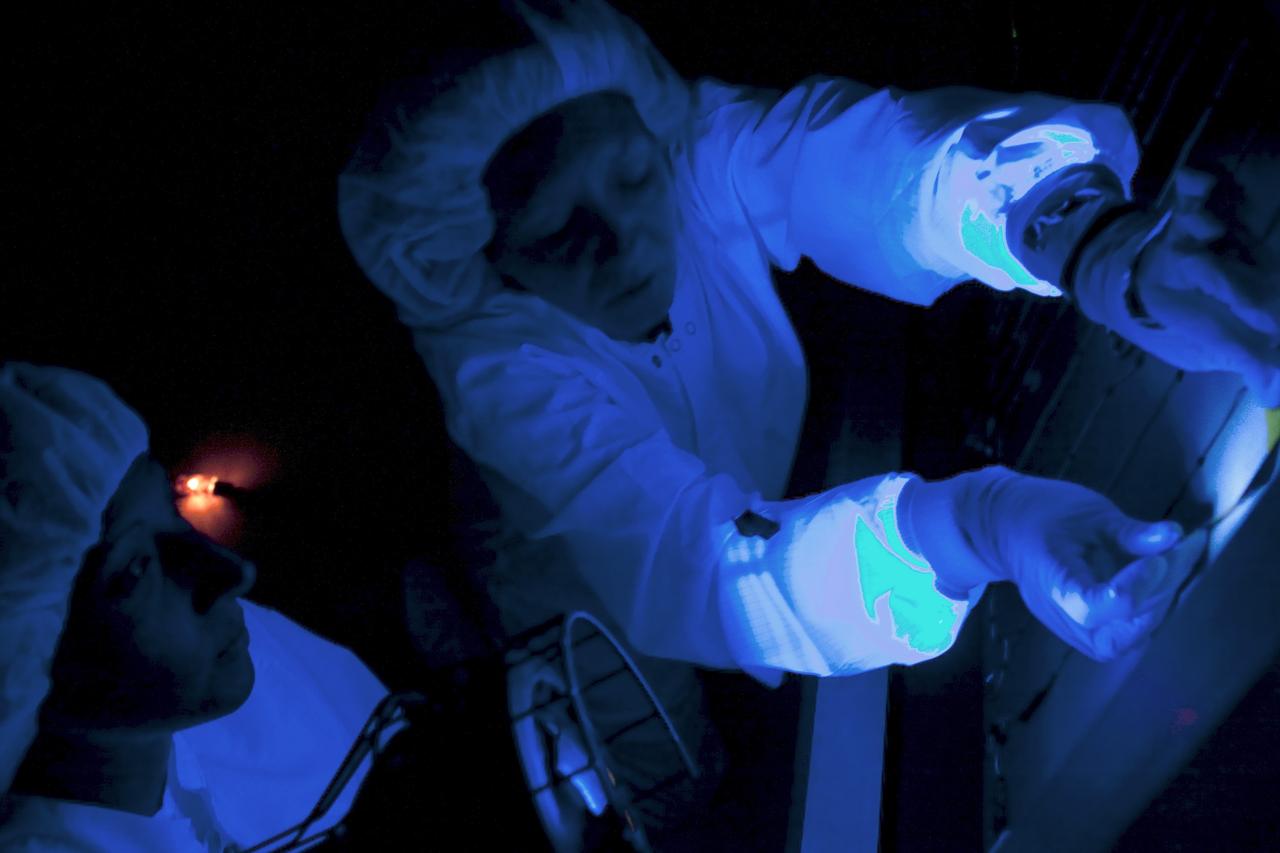
CAPE CANAVERAL, Fla. – Using a black light, technicians closely inspect a solar panel on one of NASA's twin Radiation Belt Storm Probes inside the clean room high bay at the Astrotech payload processing facility near NASA’s Kennedy Space Center in Florida. The technicians are dressed in clean-room attire known as “bunny suits.” Black-light inspection uses UVA fluorescence to detect possible microcontamination, small cracks or fluid leaks. The Radiation Belt Storm Probes, or RBSP, mission will help us understand the sun’s influence on Earth and near-Earth space by studying the Earth’s radiation belts on various scales of space and time. RBSP will begin its mission of exploration of Earth's Van Allen radiation belts and the extremes of space weather after its launch aboard a United Launch Alliance Atlas V rocket. Launch is targeted for Aug. 23. For more information, visit http://www.nasa.gov/rbsp. Photo credit: NASA/Jim Grossmann
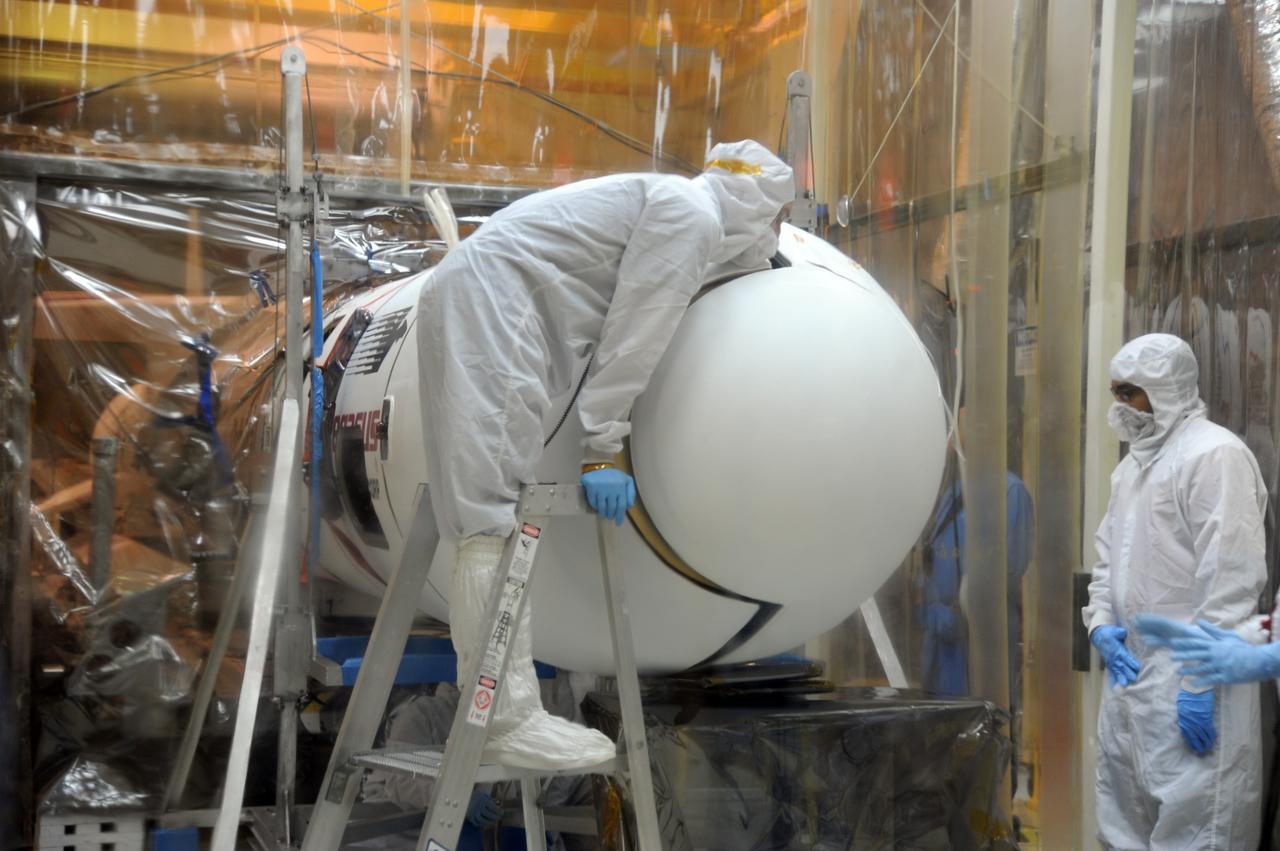
VANDENBERG AIR FORCE BASE, Calif. – In Orbital Sciences’ hangar on Vandenberg Air Force Base in California, a technician secures the Pegasus fairing around NASA’s Nuclear Spectroscopic Telescope Array, or NuSTAR. Access to the spacecraft was needed for compatibility testing to verify communication with a tracking station in Hawaii. With the change in the launch timeframe to June, this station will be needed to support launch. After processing of Orbital’s Pegasus XL rocket and the spacecraft is complete, they will be flown on Orbital's L-1011 carrier aircraft from Vandenberg, to the U.S. Army's Ronald Reagan Ballistic Missile Defense Test Site on Kwajalein Atoll, part of the Marshall Islands in the Pacific Ocean. The Pegasus, mated to its NuSTAR payload, will be launched from the carrier aircraft 117 nautical miles south of Kwajalein at latitude 6.75 degrees north of the equator. The high-energy X-ray telescope will conduct a census of black holes, map radioactive material in young supernovae remnants, and study the origins of cosmic rays and the extreme physics around collapsed stars. Launch is scheduled for June 13. For more information, visit http://www.nasa.gov/nustar. Photo credit: U.S. Air Force 30th Space Wing/Aaron Taubman, VAFB
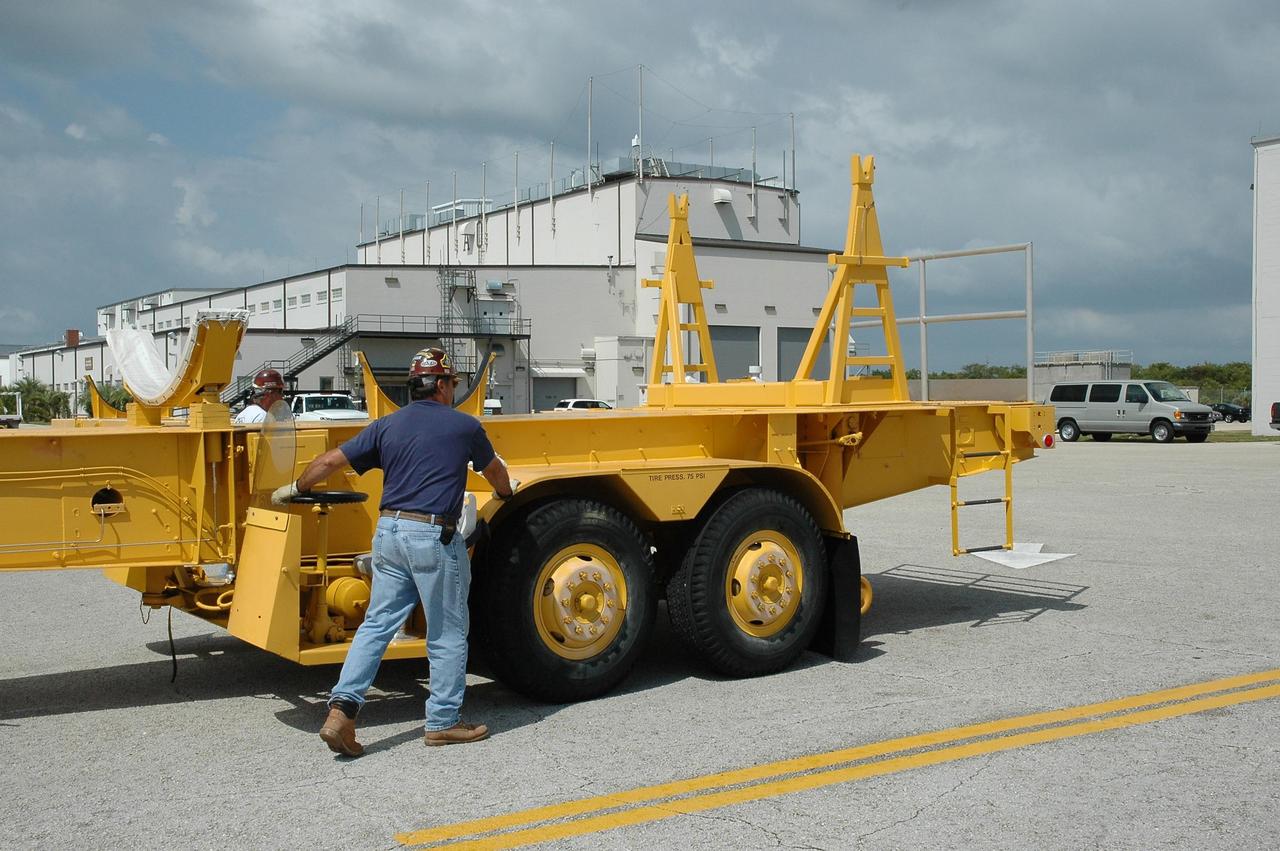
KENNEDY SPACE CENTER, FLA. -- In Hangar M on Cape Canaveral Air Force Station, a worker guides a transporter into place to receive the Delta II first stage. The Delta will be moved to the launch pad. Dawn's mission is to explore two of the asteroid belt's most intriguing and dissimilar occupants: asteroid Vesta and the dwarf planet Ceres. Dawn is scheduled to launch June 30 from Launch Complex 17-B. Photo credit: NASA/Jack Pfaller
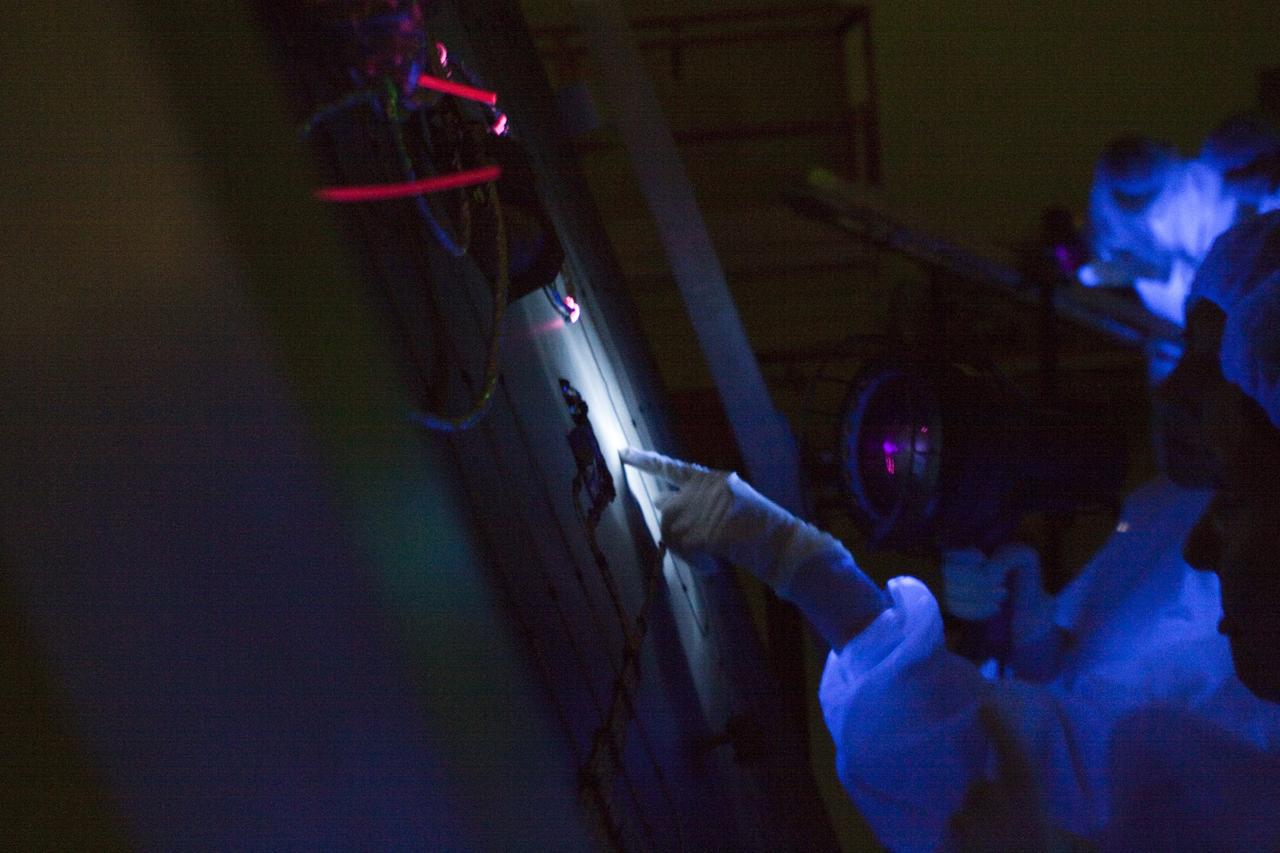
CAPE CANAVERAL, Fla. – Working in near-darkness inside the clean room high bay at the Astrotech payload processing facility near NASA’s Kennedy Space Center in Florida, technicians use black lights to inspect a solar panel on one of NASA's twin Radiation Belt Storm Probes. The technicians are dressed in clean-room attire known as “bunny suits.” Black-light inspection uses UVA fluorescence to detect possible microcontamination, small cracks or fluid leaks. The Radiation Belt Storm Probes, or RBSP, mission will help us understand the sun’s influence on Earth and near-Earth space by studying the Earth’s radiation belts on various scales of space and time. RBSP will begin its mission of exploration of Earth's Van Allen radiation belts and the extremes of space weather after its launch aboard a United Launch Alliance Atlas V rocket. Launch is targeted for Aug. 23. For more information, visit http://www.nasa.gov/rbsp. Photo credit: NASA/Jim Grossmann
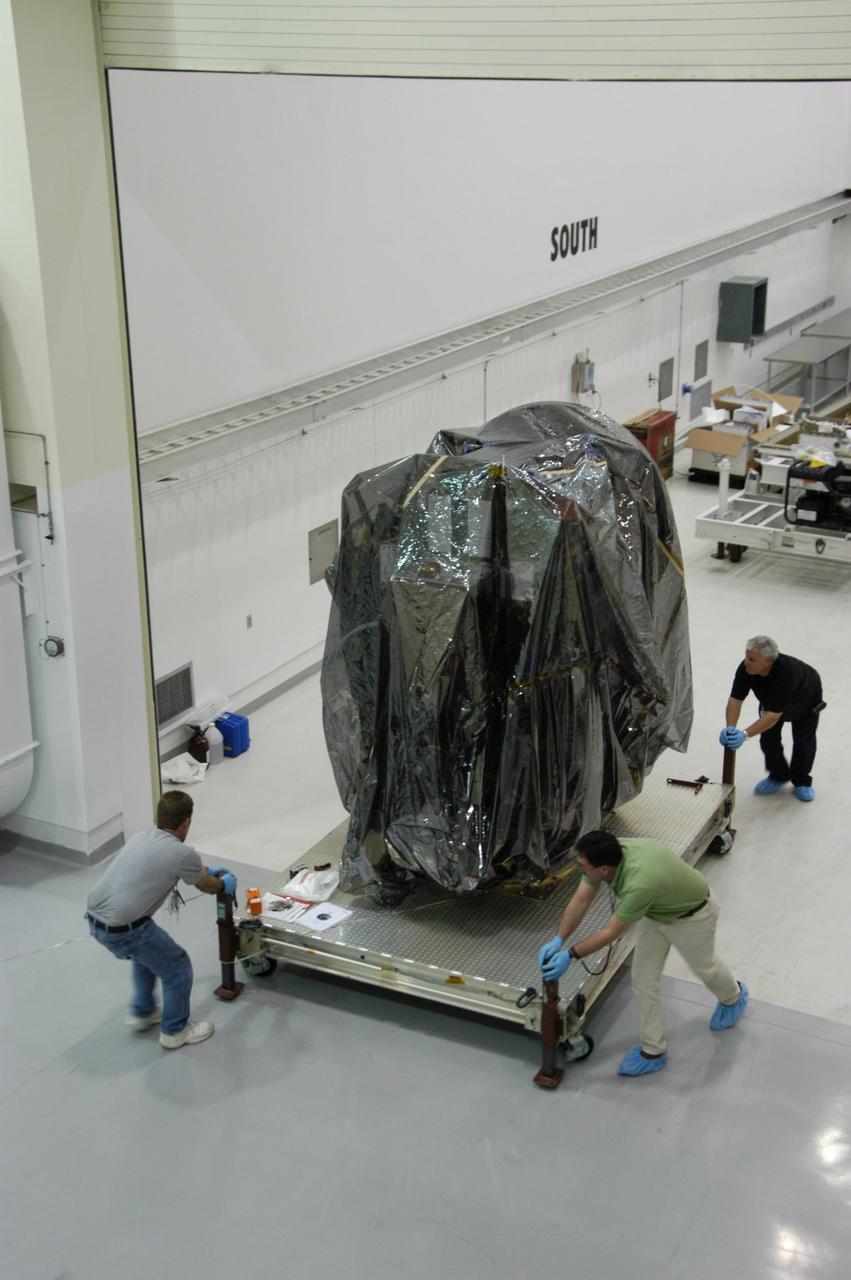
KENNEDY SPACE CENTER, FLA. -- In Astrotech's Payload Processing Facility, technicians roll the Dawn spacecraft into clean room C for unbagging and further processing. Dawn's mission is to explore two of the asteroid belt's most intriguing and dissimilar occupants: asteroid Vesta and the dwarf planet Ceres. The Dawn mission is managed by JPL, a division of the California Institute of Technology in Pasadena, for NASA's Science Mission Directorate in Washington, D.C. Photo credit: NASA/George Shelton
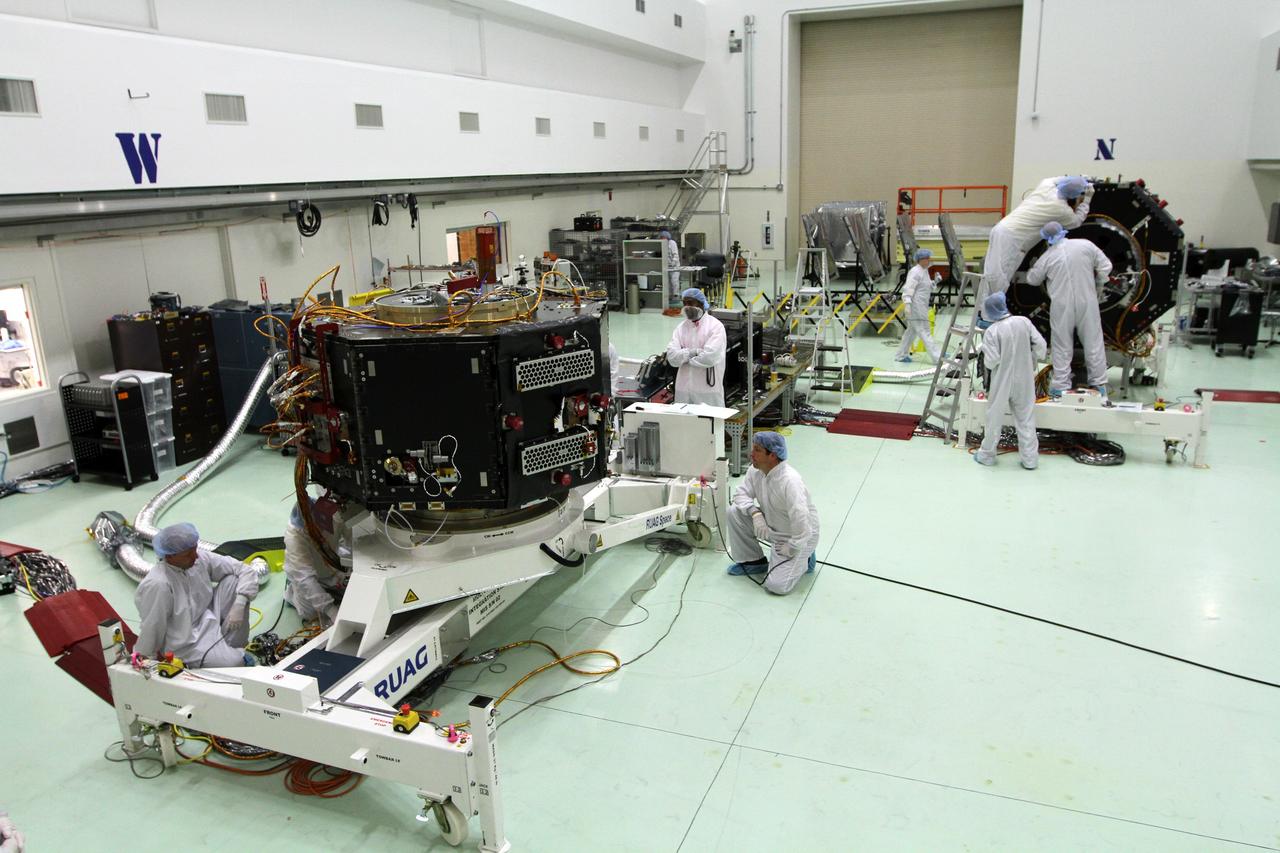
CAPE CANAVERAL, Fla. – Inside the Astrotech payload processing facility near NASA’s Kennedy Space Center in Florida, technicians monitor the progress as the test standing holding the Radiation Belt Storm Probes, or RBSP, spacecraft B is lowered to a horizontal position. The RBSP had been in a vertical position for testing. NASA’s RBSP mission will help us understand the sun’s influence on Earth and near-Earth space by studying the Earth’s radiation belts on various scales of space and time. RBSP will begin its mission of exploration of Earth’s Van Allen radiation belts and the extremes of space weather after its launch aboard a United Launch Alliance Atlas V rocket. Launch is targeted for Aug. 23. For more information, visit http://www.nasa.gov/rbsp. Photo credit: NASA/Kim Shiflett
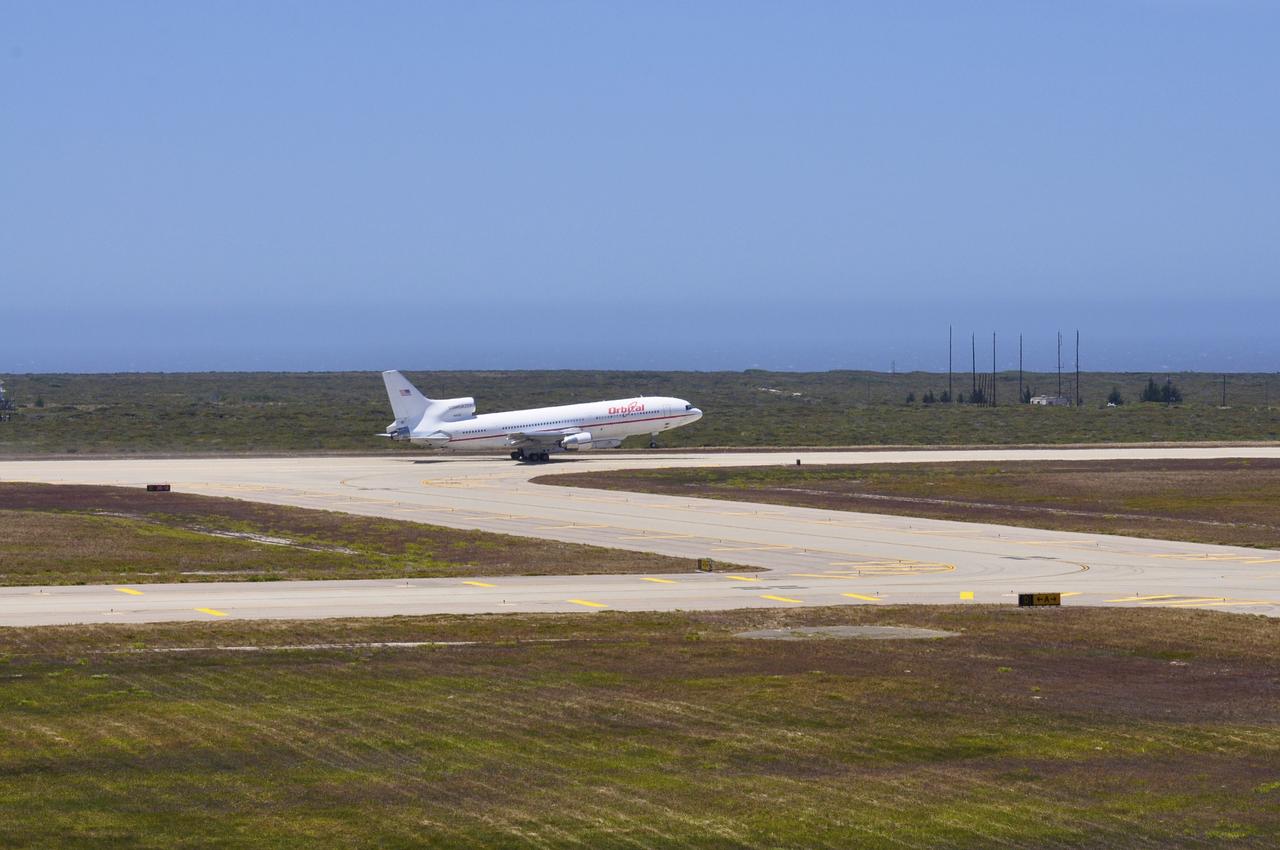
VANDENBERG AIR FORCE BASE, Calif. – Orbital Sciences’ L-1011 carrier aircraft lifts off the runway as it departs from Vandenberg Air Force Base in California. The aircraft is transporting Orbital’s Pegasus rocket and NASA’s Nuclear Spectroscopic Telescope Array, or NuSTAR, to the U.S. Army's Ronald Reagan Ballistic Missile Defense Test Site on Kwajalein Atoll, part of the Marshall Islands in the Pacific Ocean. The Pegasus, mated to its NuSTAR payload, will be launched from the carrier aircraft 117 nautical miles south of Kwajalein at latitude 6.75 degrees north of the equator. The high-energy X-ray telescope will conduct a census of black holes, map radioactive material in young supernovae remnants, and study the origins of cosmic rays and the extreme physics around collapsed stars. Launch is scheduled for June 13. For more information, visit http://www.nasa.gov/nustar. Photo credit: NASA/Randy Beaudoin, VAFB
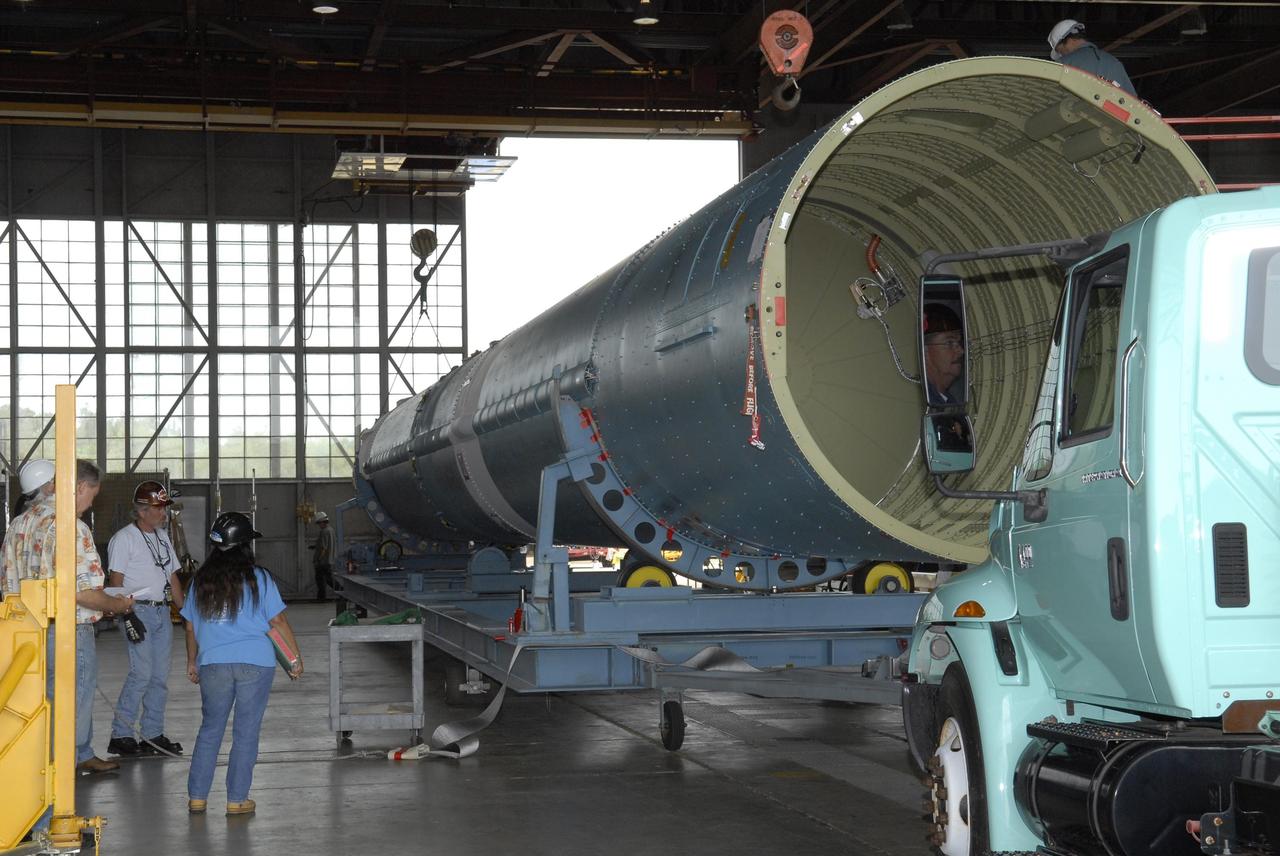
KENNEDY SPACE CENTER, FLA. -- Inside the Hangar M on Cape Canaveral Air Force Station, another Delta II first stage is ready to be placed on a transporter. The Delta will be moved to the launch pad for the future launch of a Global Positioning Satellite. Photo credit: NASA/Kim Shiflett

KENNEDY SPACE CENTER, FLA. -- In Hangar M on Cape Canaveral Air Force Station, workers secure straps to an overhead crane around the Delta II rocket's first stage. It will be lifted and placed onto a transporter for its move to the launch pad. Dawn's mission is to explore two of the asteroid belt's most intriguing and dissimilar occupants: asteroid Vesta and the dwarf planet Ceres. Dawn is scheduled to launch June 30 from Launch Complex 17-B. Photo credit: NASA/Jack Pfaller
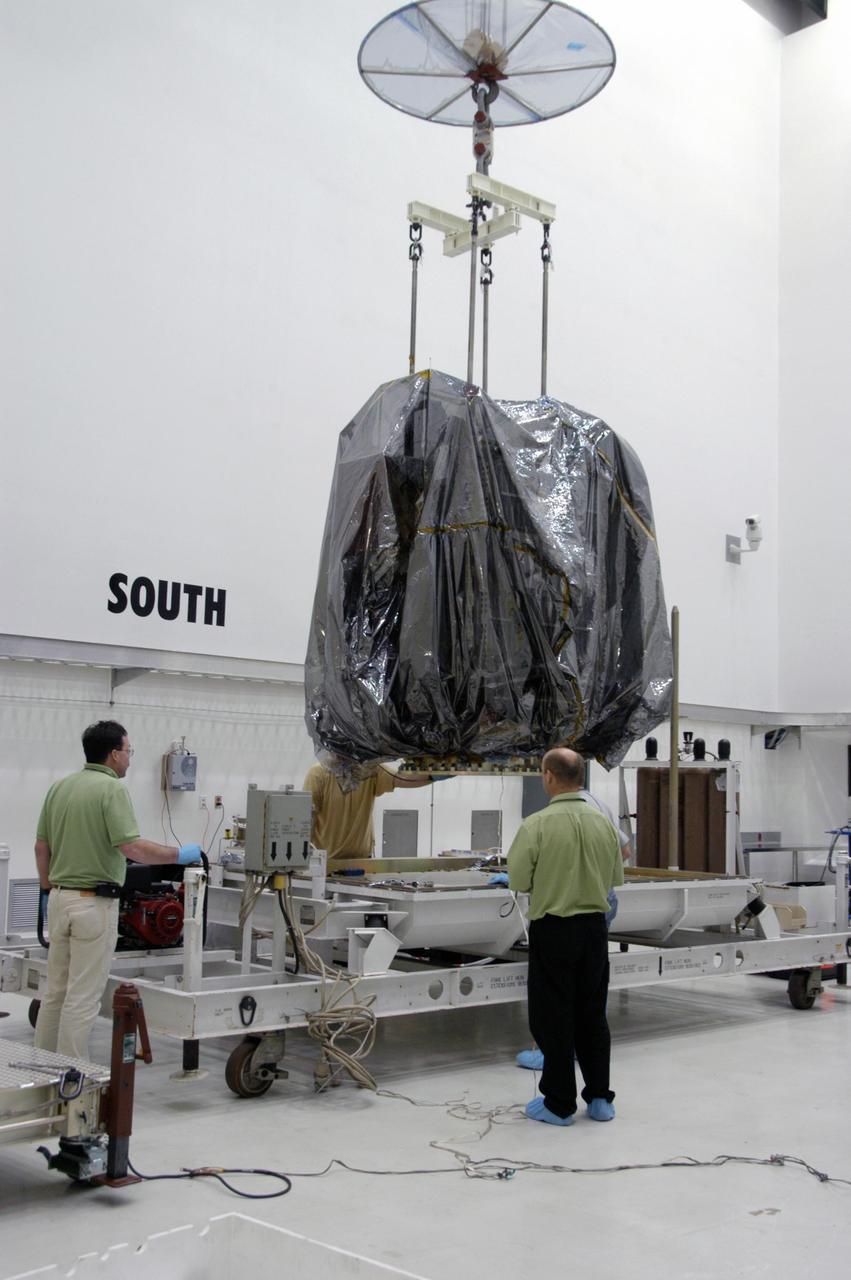
KENNEDY SPACE CENTER, FLA. -- In Astrotech's Payload Processing Facility, an overhead crane lifts the Dawn spacecraft from its transporter. Dawn will be moved into clean room C for unbagging and further processing. Dawn's mission is to explore two of the asteroid belt's most intriguing and dissimilar occupants: asteroid Vesta and the dwarf planet Ceres. The Dawn mission is managed by JPL, a division of the California Institute of Technology in Pasadena, for NASA's Science Mission Directorate in Washington, D.C. Photo credit: NASA/George Shelton
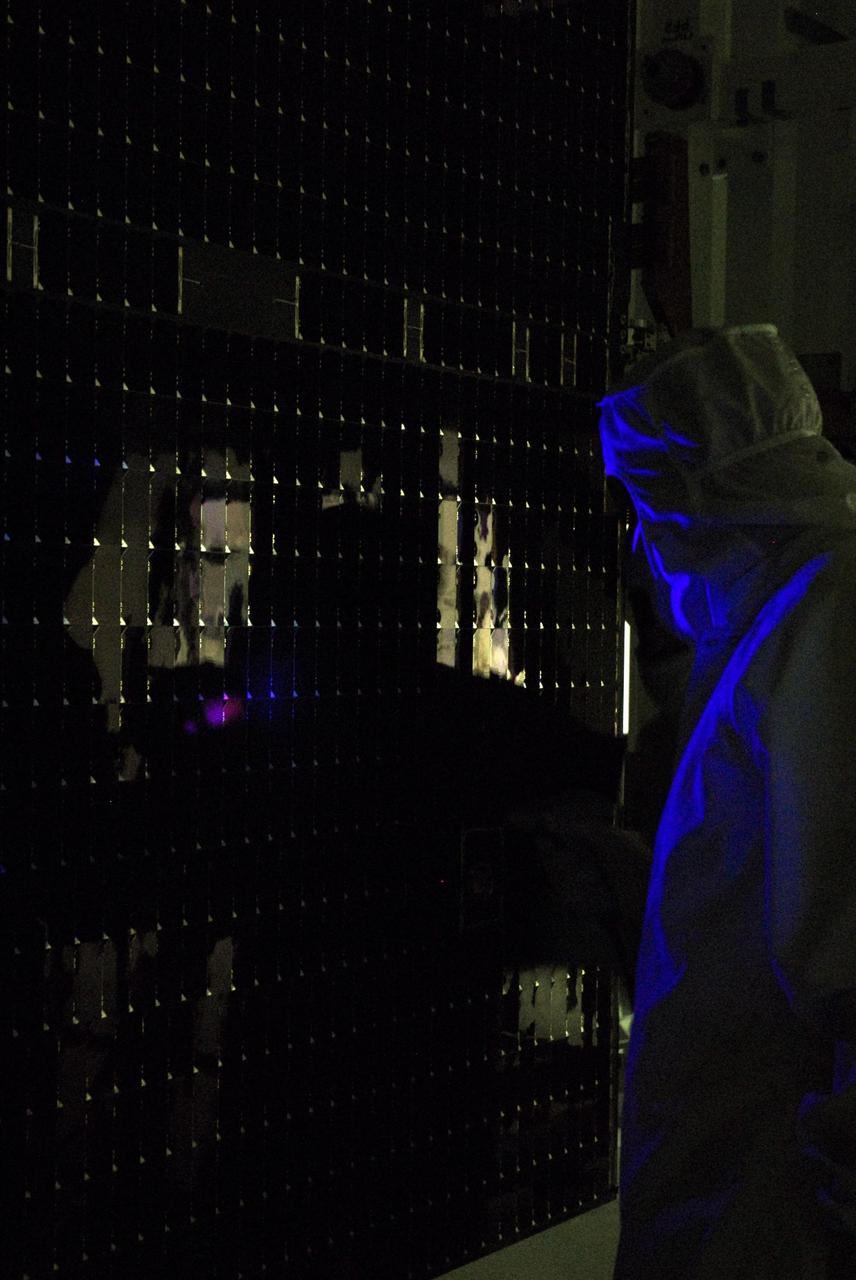
KENNEDY SPACE CENTER, FLA. -- In a clean room at Astrotech, workers begin black light testing on the solar panels of the Dawn spacecraft. Dawn's mission is to explore two of the asteroid belt's most intriguing and dissimilar occupants: asteroid Vesta and the dwarf planet Ceres. Dawn is scheduled to launch June 30 from Launch Complex 17-B. Photo credit: NASA/George Shelton
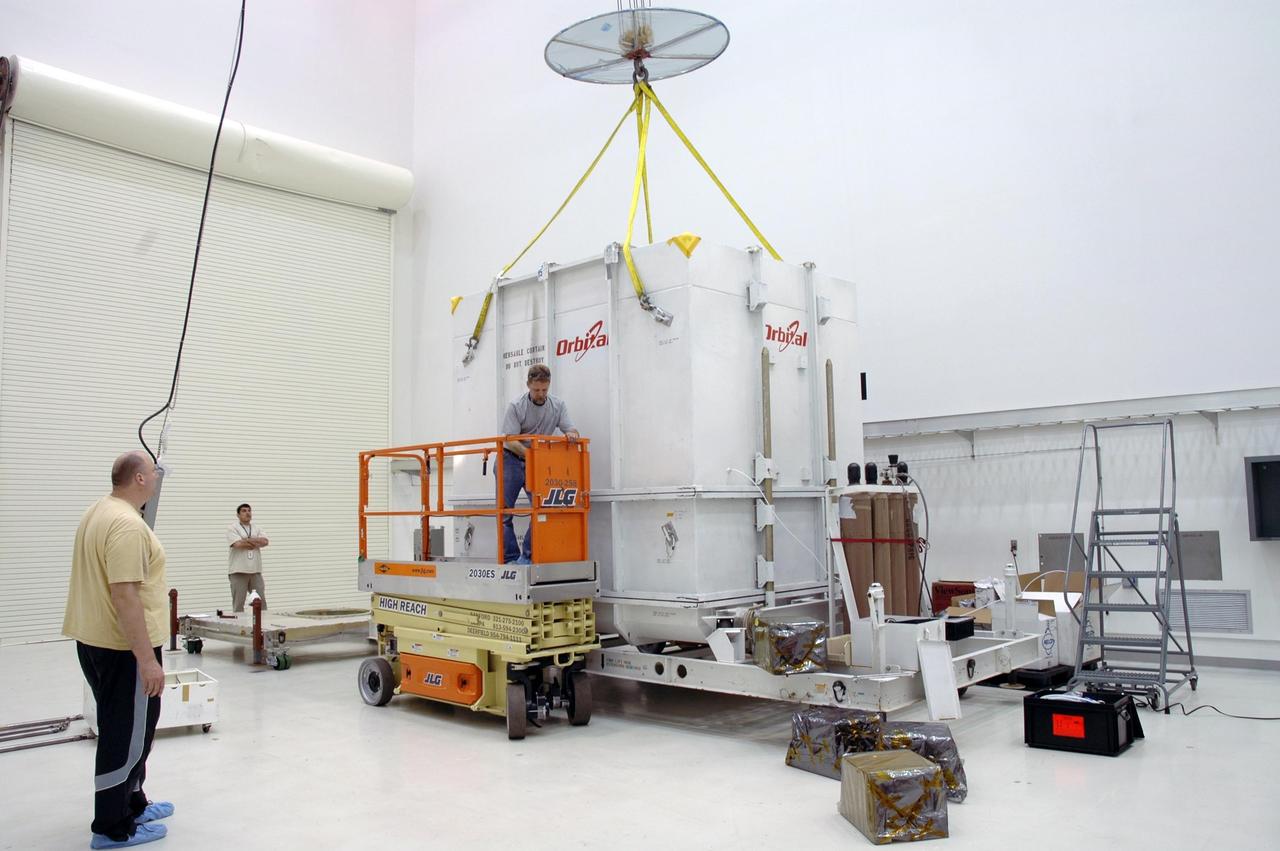
KENNEDY SPACE CENTER, FLA. -- In Astrotech's Payload Processing Facility, a crane is attached to the shipping container to remove it from around the Dawn spacecraft. Dawn's mission is to explore two of the asteroid belt's most intriguing and dissimilar occupants: asteroid Vesta and the dwarf planet Ceres. The Dawn mission is managed by JPL, a division of the California Institute of Technology in Pasadena, for NASA's Science Mission Directorate in Washington, D.C. Photo credit: NASA/Jim Grossmann
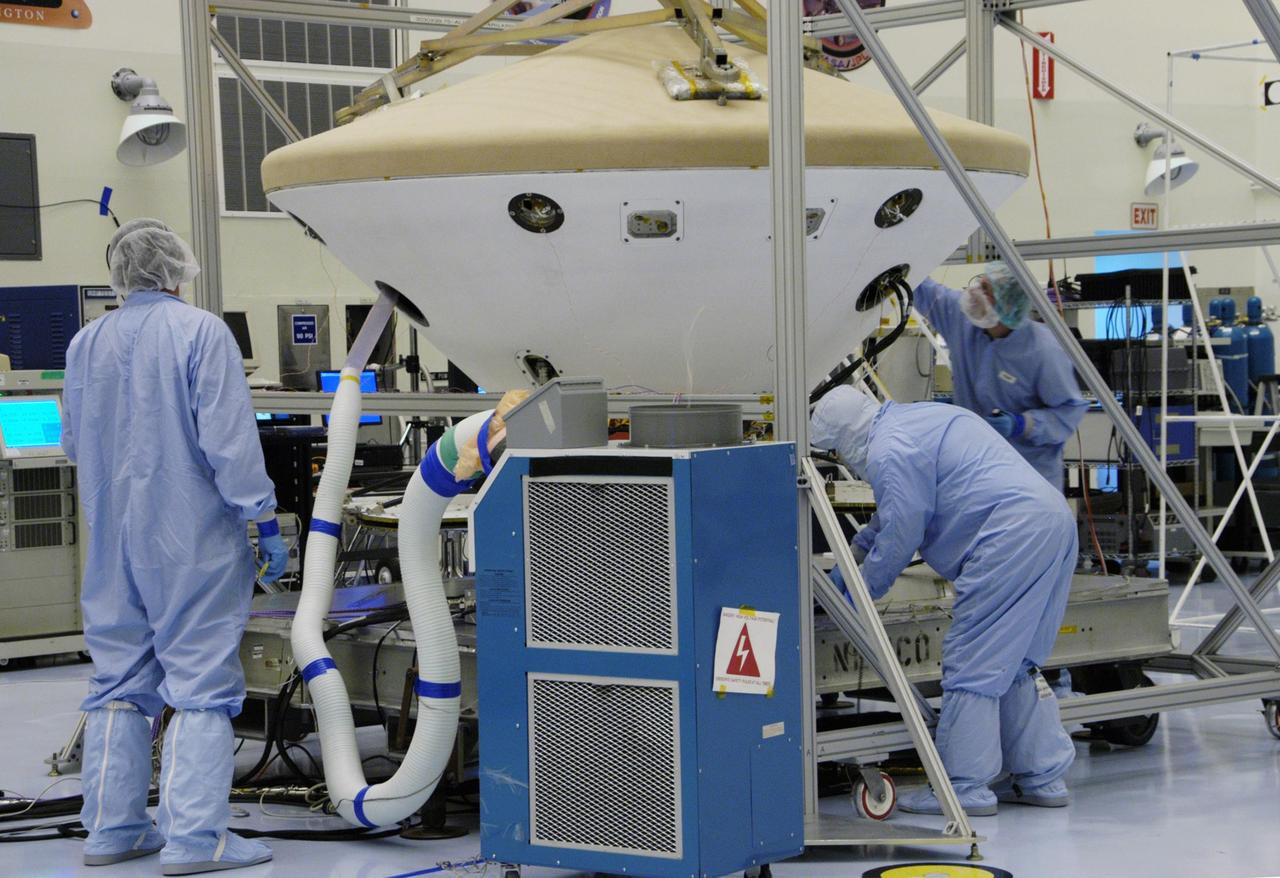
KENNEDY SPACE CENTER, FLA. -- In the Payload Hazardous Servicing Facility, workers monitor the Phoenix spacecraft during a heat shield deployment test, with a firing of ordnance associated with the separation device. Phoenix will land in icy soils near the north polar permanent ice cap of Mars and explore the history of the water in these soils and any associated rocks, while monitoring polar climate. Landing is planned in May 2008 on arctic ground where a mission currently in orbit, Mars Odyssey, has detected high concentrations of ice just beneath the top layer of soil. Launch of Phoenix aboard a Delta II rocket is targeted for Aug. 3 from Cape Canaveral Air Force Station in Florida. Photo credit: NASA/George Shelton
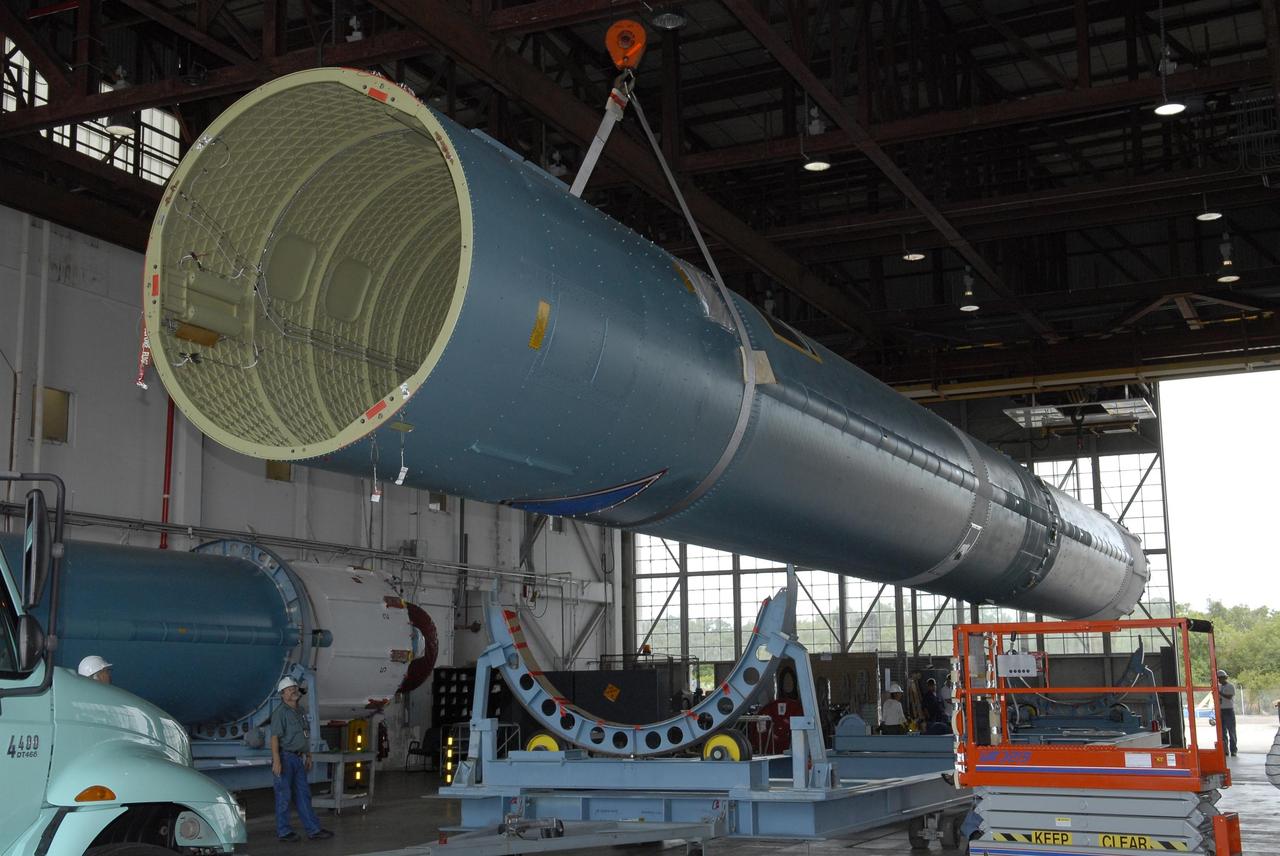
KENNEDY SPACE CENTER, FLA. -- Inside the Hangar M on Cape Canaveral Air Force Station, another Delta II first stage is lifted from its stand to be placed on a transporter. The Delta will be moved to the launch pad for the future launch of a Global Positioning Satellite. Photo credit: NASA/Kim Shiflett
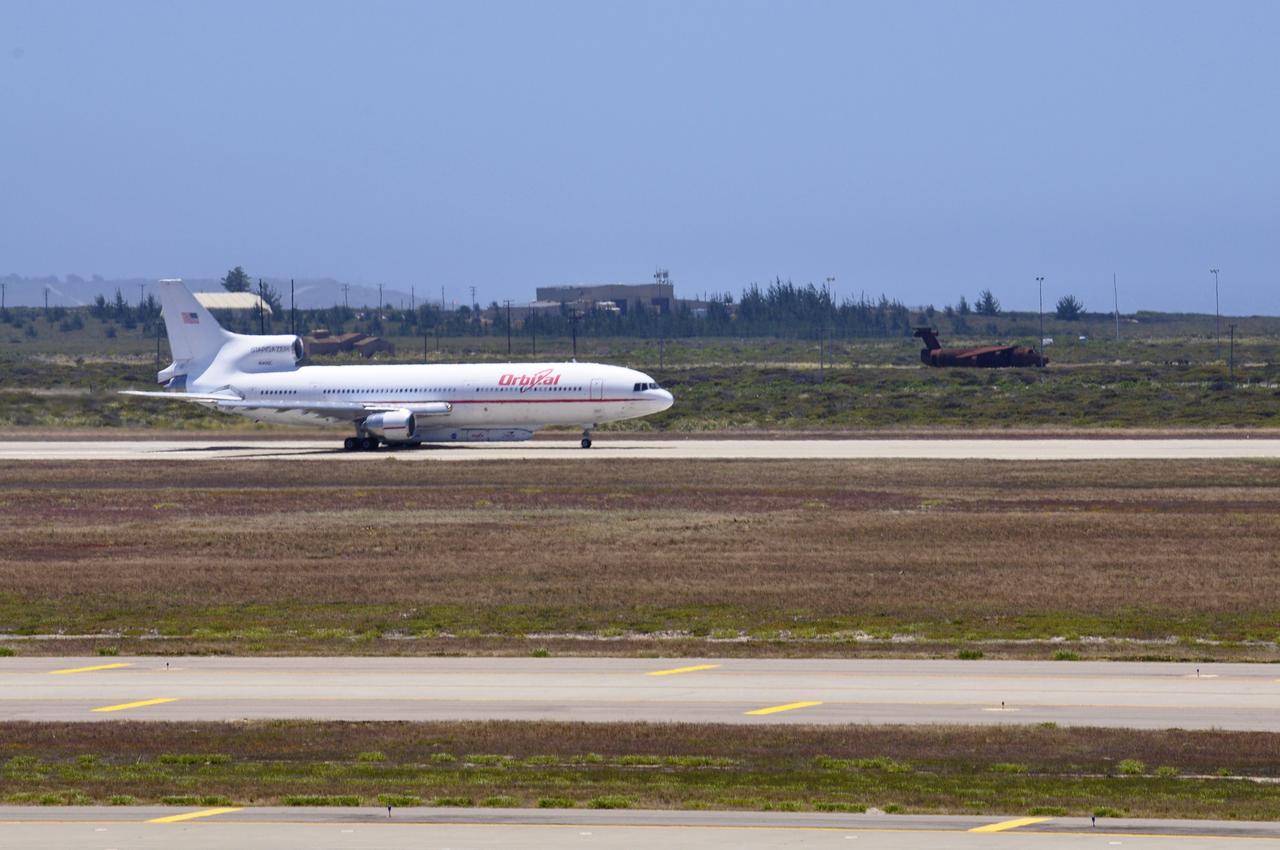
VANDENBERG AIR FORCE BASE, Calif. – Orbital Sciences’ L-1011 carrier aircraft prepares for takeoff from the runway at Vandenberg Air Force Base in California. The aircraft is transporting Orbital’s Pegasus rocket and NASA’s Nuclear Spectroscopic Telescope Array, or NuSTAR, to the U.S. Army's Ronald Reagan Ballistic Missile Defense Test Site on Kwajalein Atoll, part of the Marshall Islands in the Pacific Ocean. The Pegasus, mated to its NuSTAR payload, will be launched from the carrier aircraft 117 nautical miles south of Kwajalein at latitude 6.75 degrees north of the equator. The high-energy X-ray telescope will conduct a census of black holes, map radioactive material in young supernovae remnants, and study the origins of cosmic rays and the extreme physics around collapsed stars. Launch is scheduled for June 13. For more information, visit http://www.nasa.gov/nustar. Photo credit: NASA/Randy Beaudoin, VAFB

KENNEDY SPACE CENTER, FLA. - Workers carefully rotate the SORCE satellite for mating to the Pegasus launch vehicle. SORCE is equipped with four instruments that will measure variations in solar radiation and observe some spectral properties of solar radiation for the first time. With data from NASA's SORCE mission, researchers should be able to follow how the Sun affects our climate now and in the future. Launch of SORCE aboard the Pegasus XL rocket is scheduled for Jan. 25, 2003, at approximately 3:14 p.m. EST, from Cape Canaveral Air Force Station, Fla.
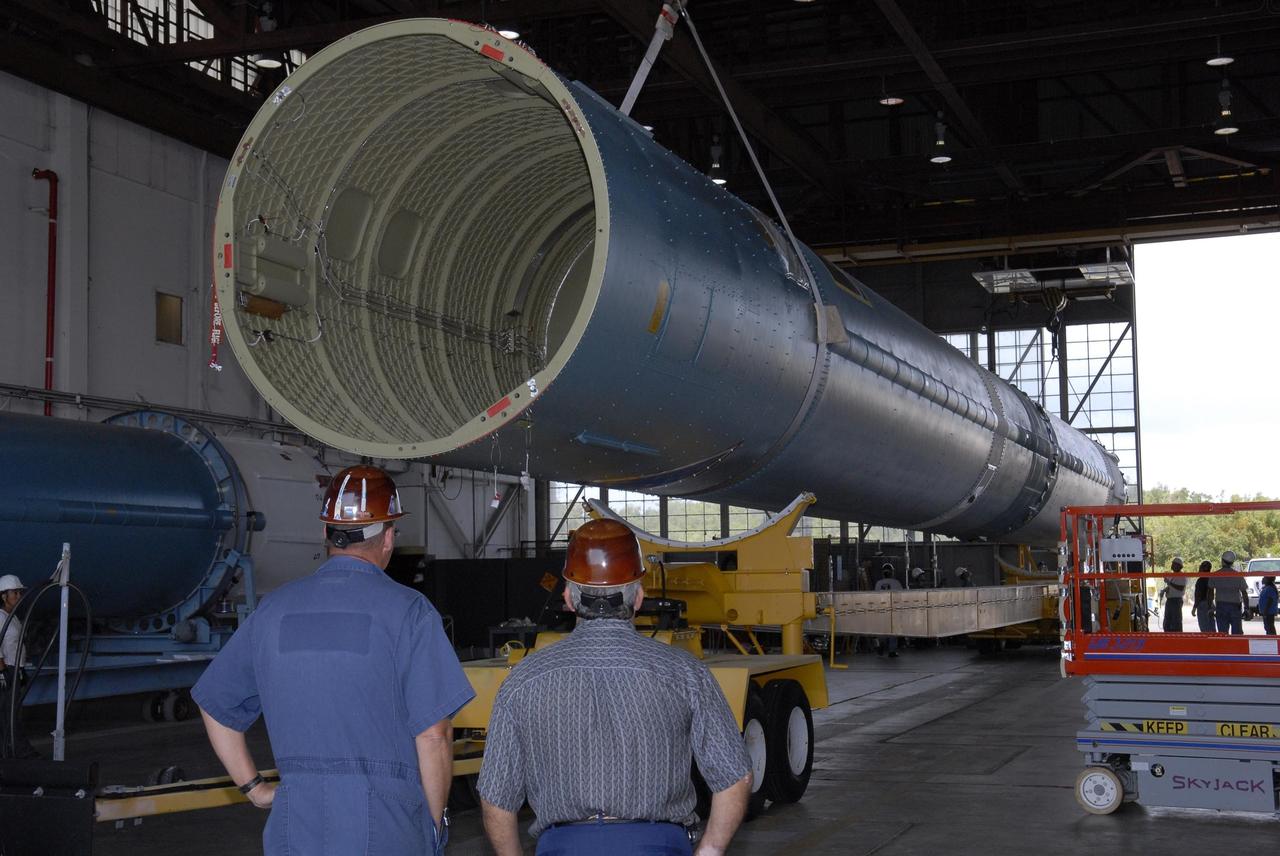
KENNEDY SPACE CENTER, FLA. -- Inside the Hangar M on Cape Canaveral Air Force Station, another Delta II first stage is lowered onto its transporter. The Delta will be moved to the launch pad for the future launch of a Global Positioning Satellite. Photo credit: NASA/Kim Shiflett
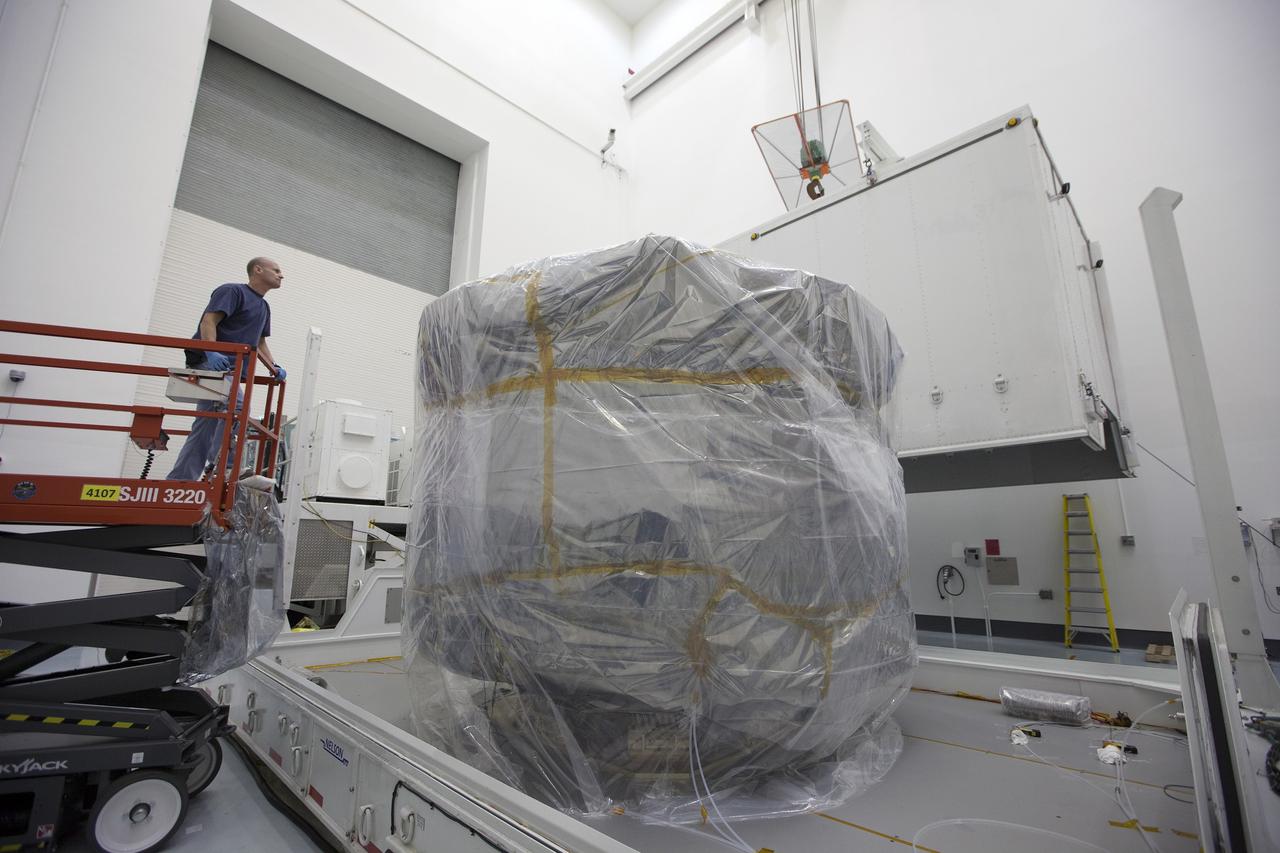
CAPE CANAVERAL, Fla. – The protective shipping container is removed from around the upper stack of the Magnetospheric Multiscale, or MMS, spacecraft in Building 2 of the Astrotech payload processing facility in Titusville, Florida, near Kennedy Space Center. The two MMS spacecraft comprising the lower stack arrived at Astrotech on Oct. 29. The Magnetospheric Multiscale mission is a Solar Terrestrial Probes mission comprising four identically instrumented spacecraft that will use Earth’s magnetosphere as a laboratory to study the microphysics of three fundamental plasma processes: magnetic reconnection, energetic particle acceleration and turbulence. Launch aboard a United Launch Alliance Atlas V rocket from Space Launch Complex 41 on Cape Canaveral Air Force Station is targeted for March 12, 2015. To learn more about MMS, visit http://mms.gsfc.nasa.gov. Photo credit: NASA/Kim Shiflett
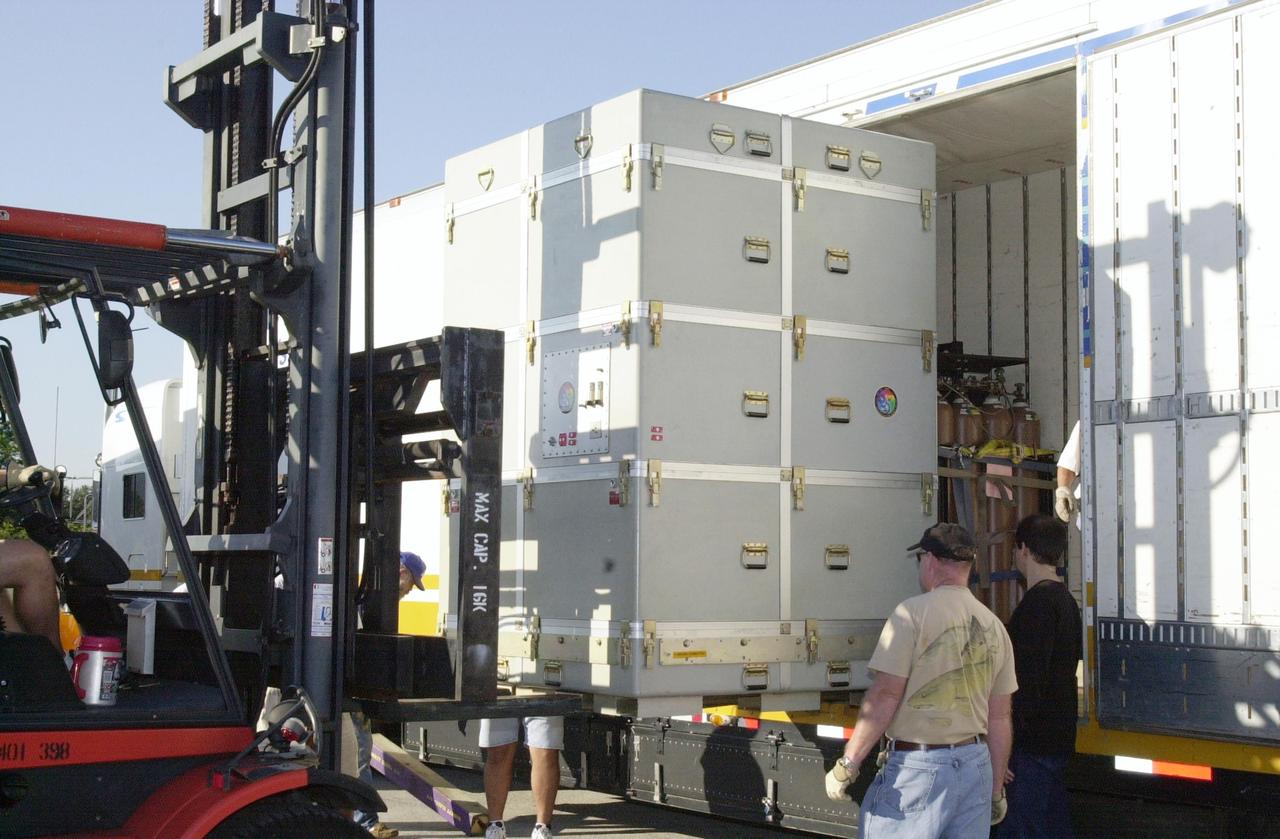
KENNEDY SPACE CENTER, FLA. -- A container with the Solar Radiation and Climate Experiment (SORCE) spacecraft inside is offloaded at the Multi-Purpose Processing Facility at KSC. The spacecraft will undergo final processing for launch. SORCE is equipped with four instruments that will measure variations in solar radiation much more accurately than anything now in use and observe some of the spectral properties of solar radiation for the first time. With data from NASA's SORCE mission, researchers should be able to follow how the Sun affects our climate now and in the future. The SORCE project is managed by NASA's Goddard Space Flight Center. The instruments on the SORCE spacecraft are built by the Laboratory for Atmospheric and Space Physics (LASP). Launch of SORCE aboard a Pegasus XL rocket is scheduled for mid-December 2002. Launch site is Cape Canaveral Air Force Station, Fla.
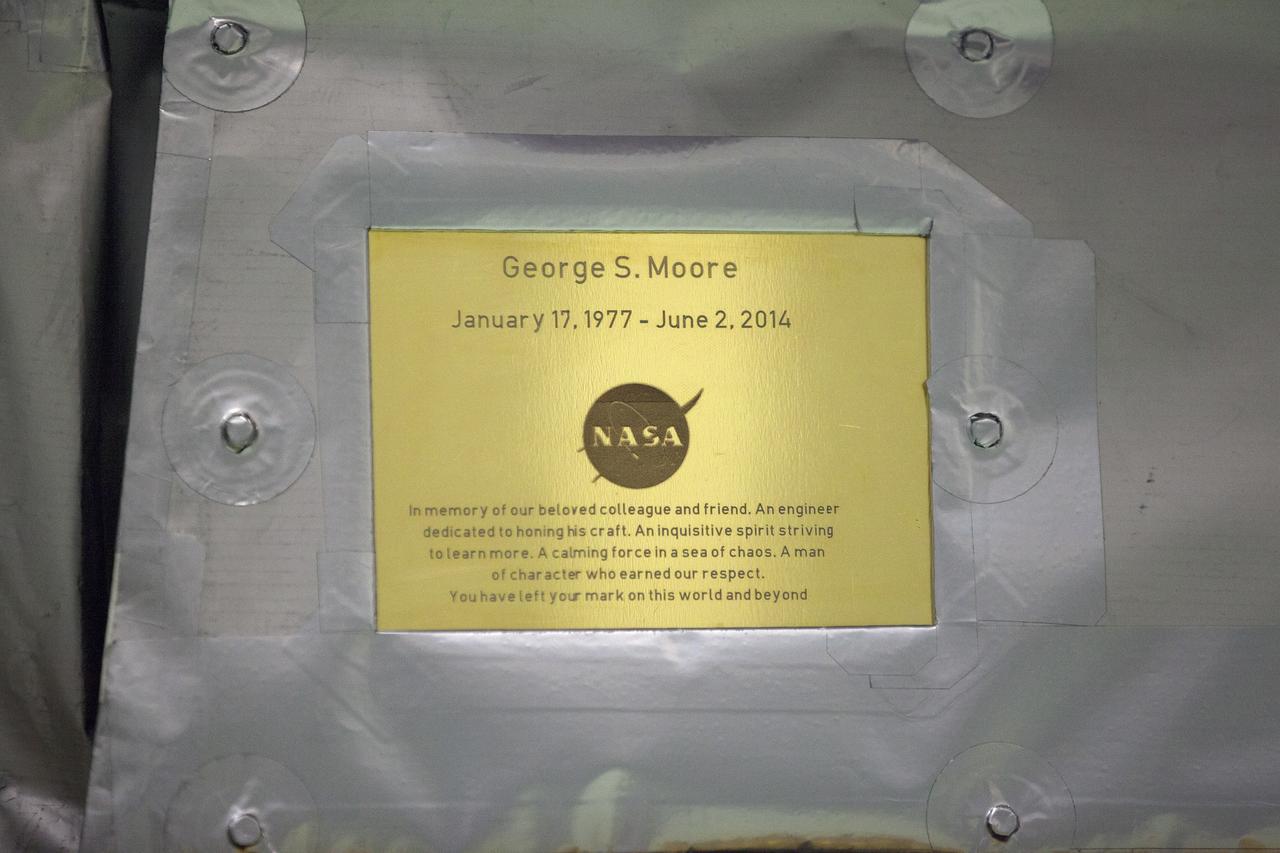
CAPE CANAVERAL, Fla. – A plaque affixed to the side of a Magnetospheric Multiscale, or MMS, observatory dedicates the mission to George S. Moore, now deceased, an engineer who was a beloved colleague and friend to the MMS team. MMS, led by a team from NASA's Goddard Space Flight Center, is a Solar Terrestrial Probes mission consisting of four identically instrumented spacecraft that will use Earth’s magnetosphere as a laboratory to study the microphysics of three fundamental plasma processes: magnetic reconnection, energetic particle acceleration and turbulence. Launch aboard a United Launch Alliance Atlas V rocket from Space Launch Complex 41 on Cape Canaveral Air Force Station is targeted for March 12, 2015. To learn more about MMS, visit http://mms.gsfc.nasa.gov. Photo credit: NASA/Kim Shiflett
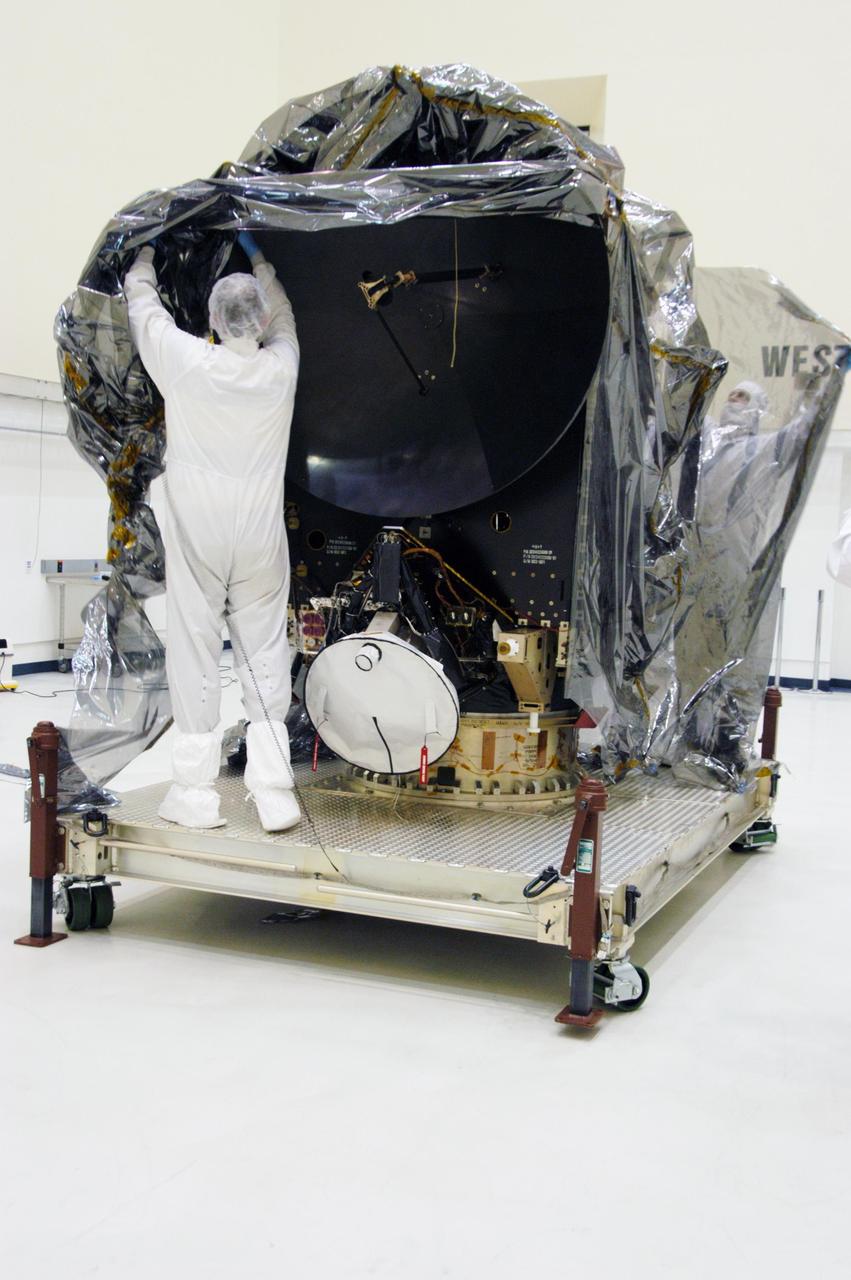
KENNEDY SPACE CENTER, FLA. -- In clean room C of Astrotech's Payload Processing Facility, a worker wearing a "bunny suit," or clean-room attire, begins removing the protective cover surrounding the Dawn spacecraft. In the clean room, the spacecraft will undergo further processing. Dawn's mission is to explore two of the asteroid belt's most intriguing and dissimilar occupants: asteroid Vesta and the dwarf planet Ceres. The Dawn mission is managed by JPL, a division of the California Institute of Technology in Pasadena, for NASA's Science Mission Directorate in Washington, D.C. Photo credit: NASA/George Shelton
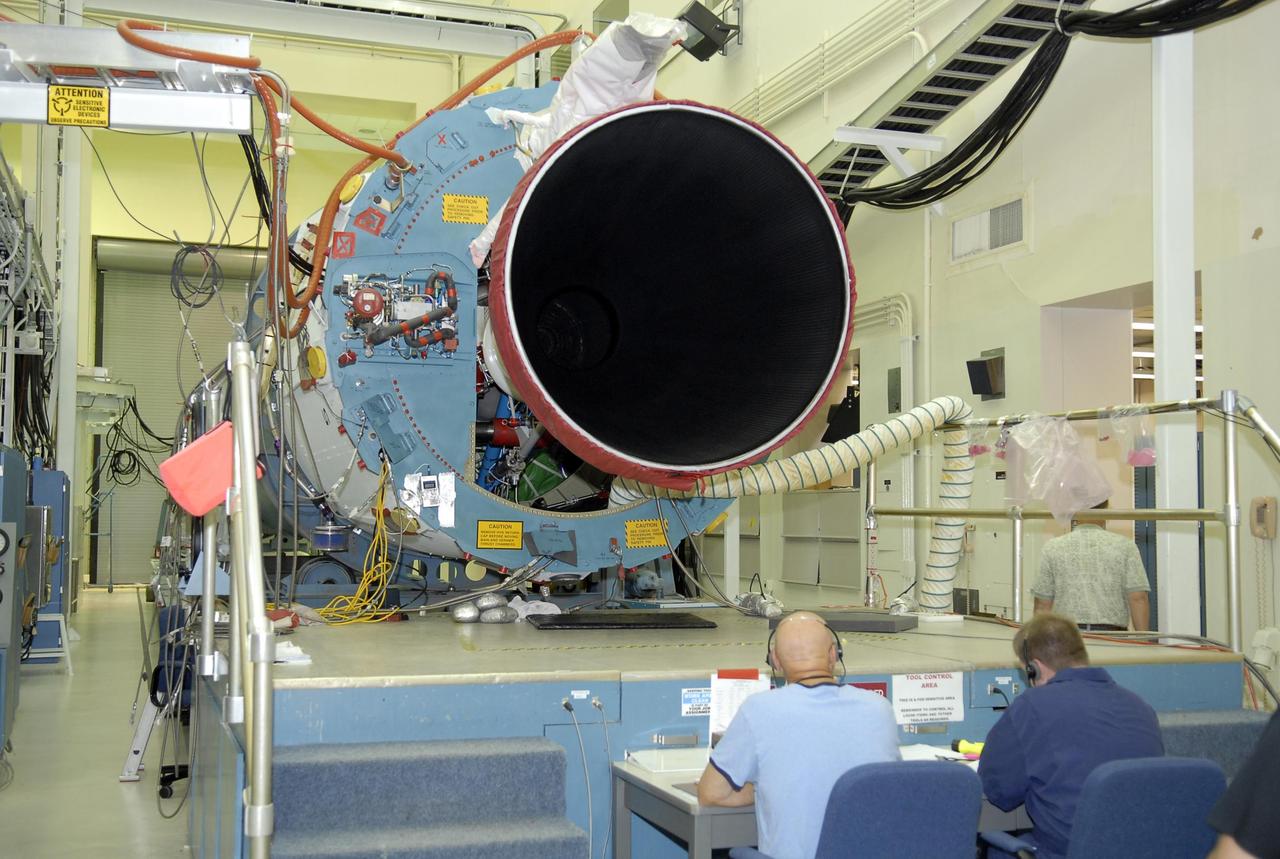
KENNEDY SPACE CENTER, FLA. -- In Hangar A&O on Cape Canaveral Air Force Station in Florida, workers conduct a steering test on the first stage of a Delta II rocket. The rocket is designated for the launch of the Phoenix Mars Lander spacecraft. Phoenix will land in icy soils near the north polar permanent ice cap of Mars and explore the history of the water in these soils and any associated rocks, while monitoring polar climate. Landing is planned in May 2008 on arctic ground where a mission currently in orbit, Mars Odyssey, has detected high concentrations of ice just beneath the top layer of soil. Launch of Phoenix is targeted for Aug. 3. Photo credit: NASA/Kim Shiflett
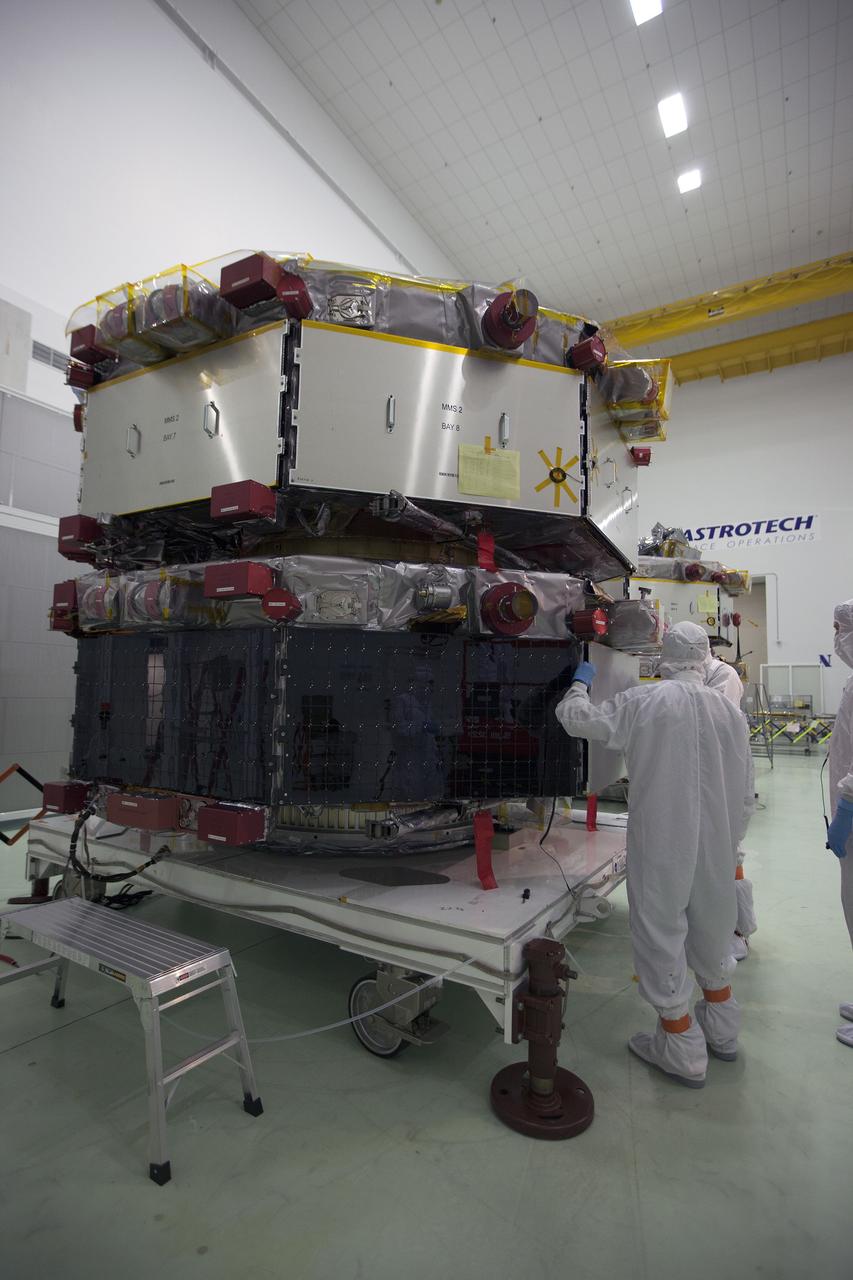
CAPE CANAVERAL, Fla. – Workers inspect the solar arrays on the Magnetospheric Multiscale, or MMS, observatories in the Building 1 D high bay of the Astrotech payload processing facility in Titusville, Florida, near Kennedy Space Center. The two MMS spacecraft comprising the upper deck arrived Nov. 12; the two comprising the lower stack arrived Oct. 29. MMS, led by a team from NASA's Goddard Space Flight Center, is a Solar Terrestrial Probes mission consisting of four identically instrumented spacecraft that will use Earth’s magnetosphere as a laboratory to study the microphysics of three fundamental plasma processes: magnetic reconnection, energetic particle acceleration and turbulence. Launch aboard a United Launch Alliance Atlas V rocket from Space Launch Complex 41 on Cape Canaveral Air Force Station is targeted for March 12, 2015. To learn more about MMS, visit http://mms.gsfc.nasa.gov. Photo credit: NASA/Kim Shiflett
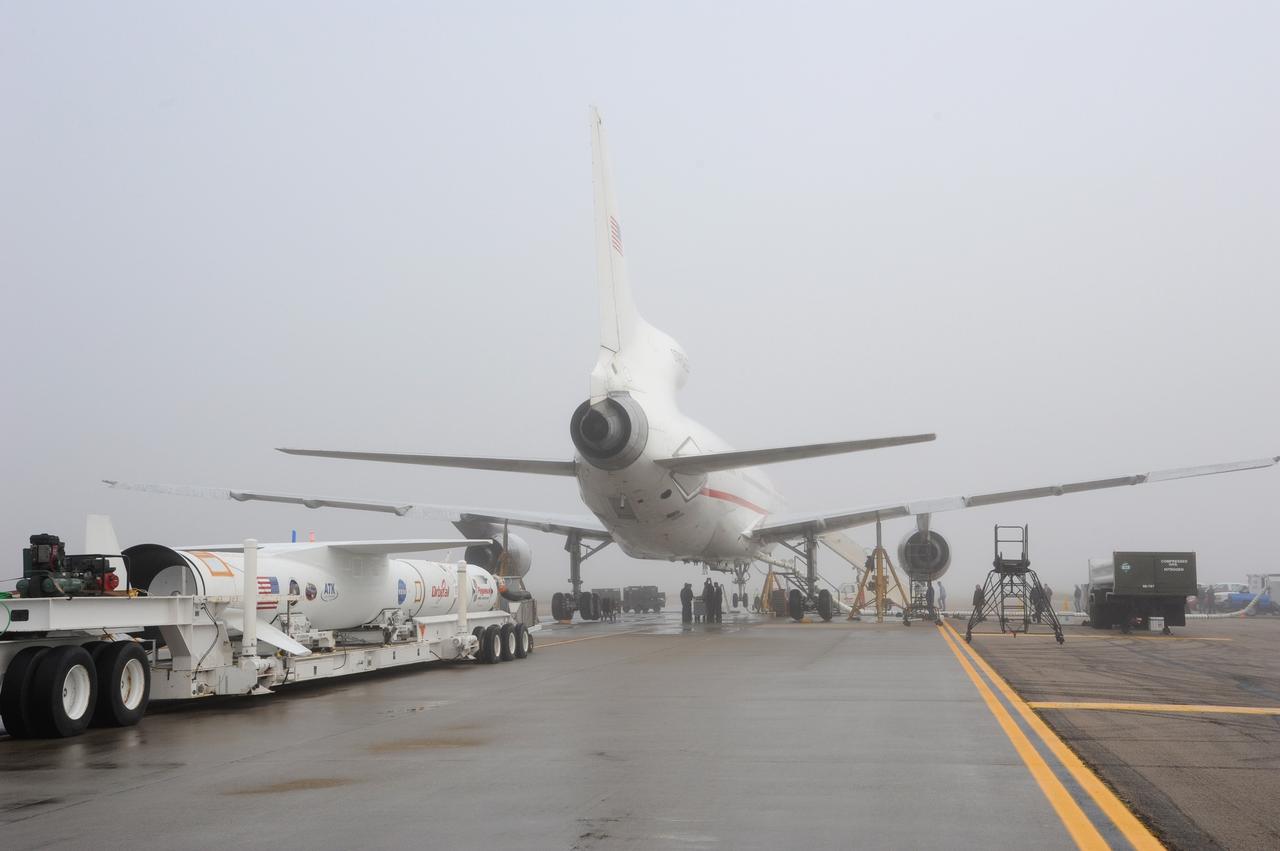
VANDENBERG AIR FORCE BASE, Calif. – NASA’s Nuclear Spectroscopic Telescope Array, or NuSTAR, mated to Orbital Sciences’ Pegasus XL rocket, approaches Orbital’s L-1011 carrier aircraft awaiting its arrival at the “hot pad,” located on the ramp adjacent to the runway on Vandenberg Air Force Base in California. The rocket will be attached beneath the L-1011 aircraft. The duo will be flown from Vandenberg to the U.S. Army's Ronald Reagan Ballistic Missile Defense Test Site on Kwajalein Atoll, part of the Marshall Islands in the Pacific Ocean. The Pegasus and its NuSTAR payload will be launched June 13 from the carrier aircraft 117 nautical miles south of Kwajalein at latitude 6.75 degrees north of the equator. The high-energy X-ray telescope will conduct a census of black holes, map radioactive material in young supernovae remnants, and study the origins of cosmic rays and the extreme physics around collapsed stars. For more information, visit http://www.nasa.gov/nustar. Photo credit: NASA/Chris Wiant, VAFB
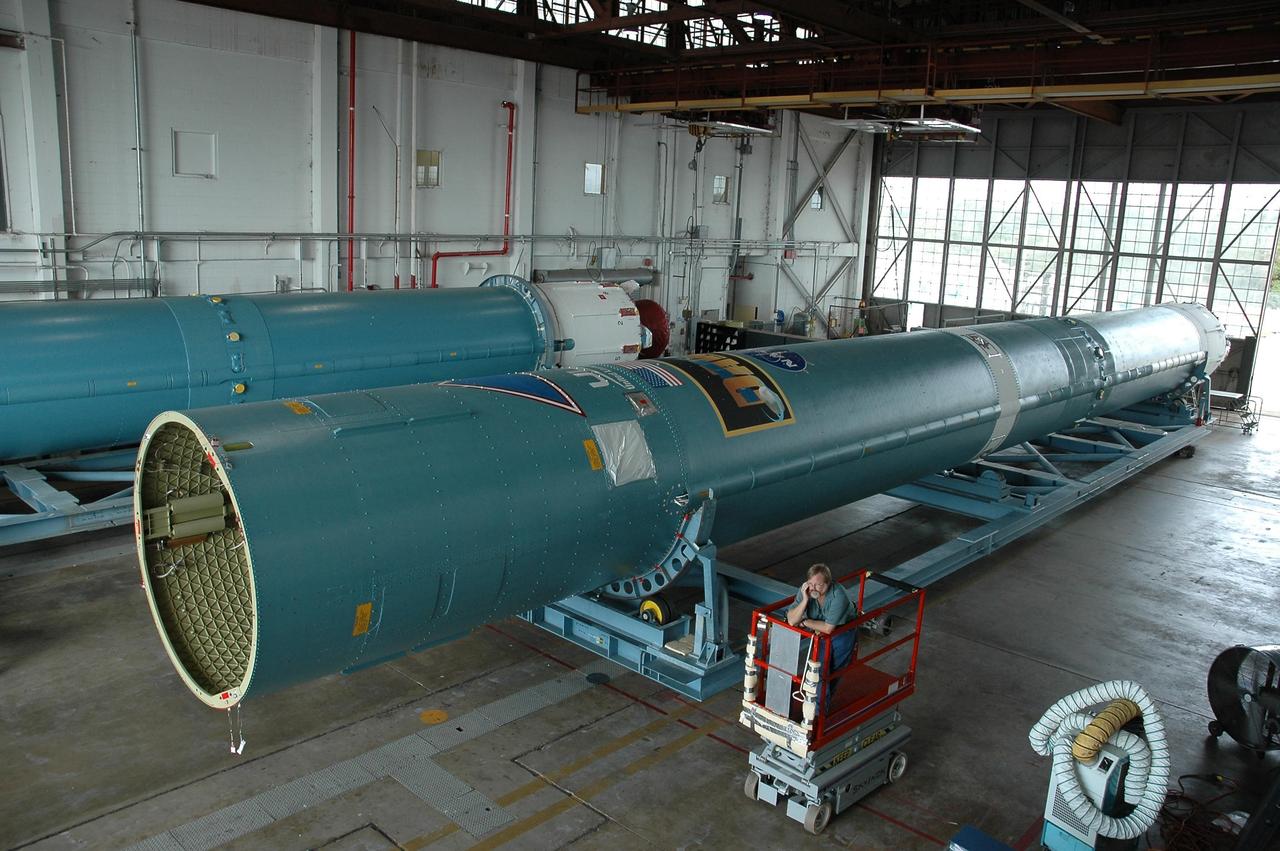
KENNEDY SPACE CENTER, FLA. -- In Hangar M on Cape Canaveral Air Force Station, the first stage of the Delta II rocket that will launch the Dawn spacecraft is ready to be transferred to a transporter for its move to the launch pad. Dawn's mission is to explore two of the asteroid belt's most intriguing and dissimilar occupants: asteroid Vesta and the dwarf planet Ceres. Dawn is scheduled to launch June 30 from Launch Complex 17-B. Photo credit: NASA/Jack Pfaller
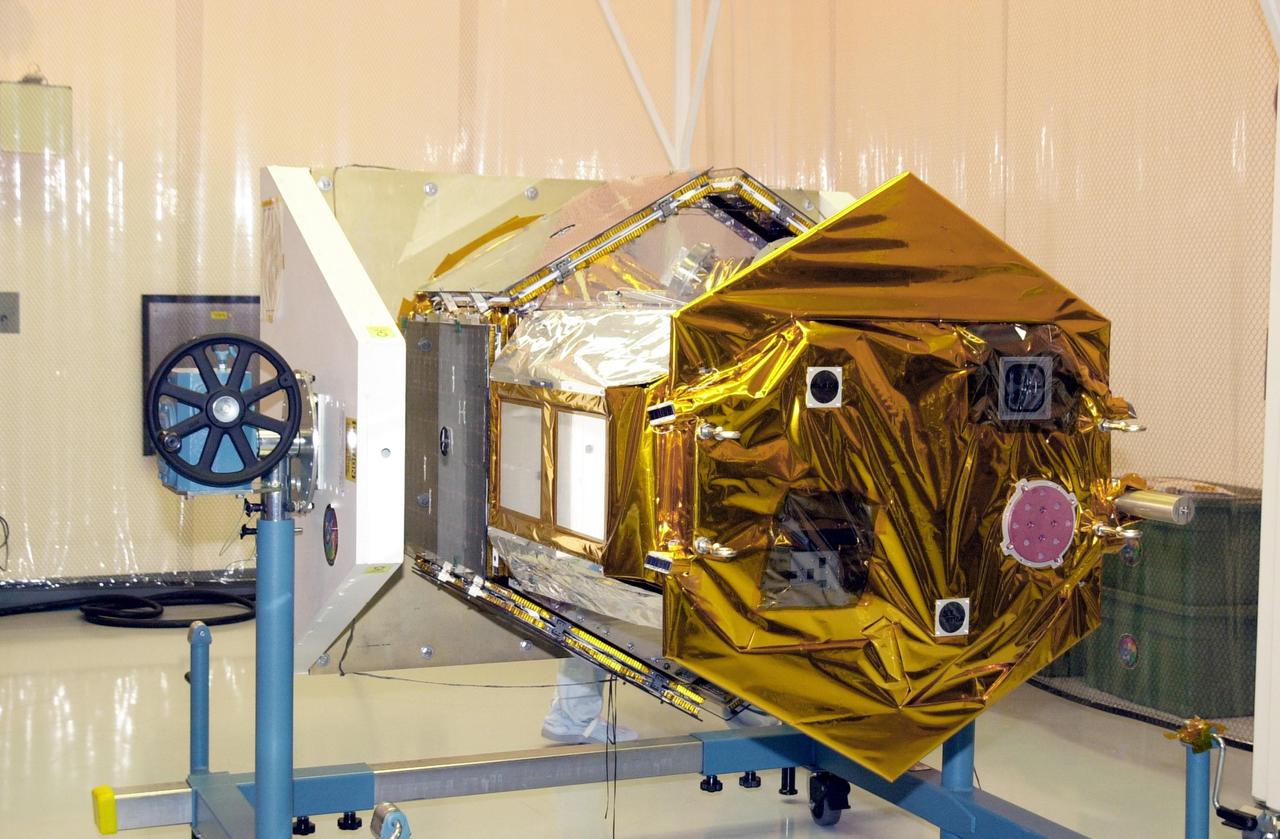
KENNEDY SPACE CENTER, FLA. -- In the Multi-Purpose Processing Facility at KSC, the Solar Radiation and Climate Experiment (SORCE) spacecraft rests in a horizontal position on a workstand after rotation and removal of its outer covering. SORCE arrived at Kennedy Space Center Oct. 26 to begin final processing. SORCE is equipped with four instruments that will measure variations in solar radiation much more accurately than anything now in use and observe some of the spectral properties of solar radiation for the first time. With data from NASA's SORCE mission, researchers should be able to follow how the Sun affects our climate now and in the future. The SORCE project is managed by NASA's Goddard Space Flight Center. The instruments on the SORCE spacecraft are built by the Laboratory for Atmospheric and Space Physics (LASP). Launch of SORCE aboard a Pegasus XL rocket is scheduled for mid-December 2002. Launch site is Cape Canaveral Air Force Station, Fla.
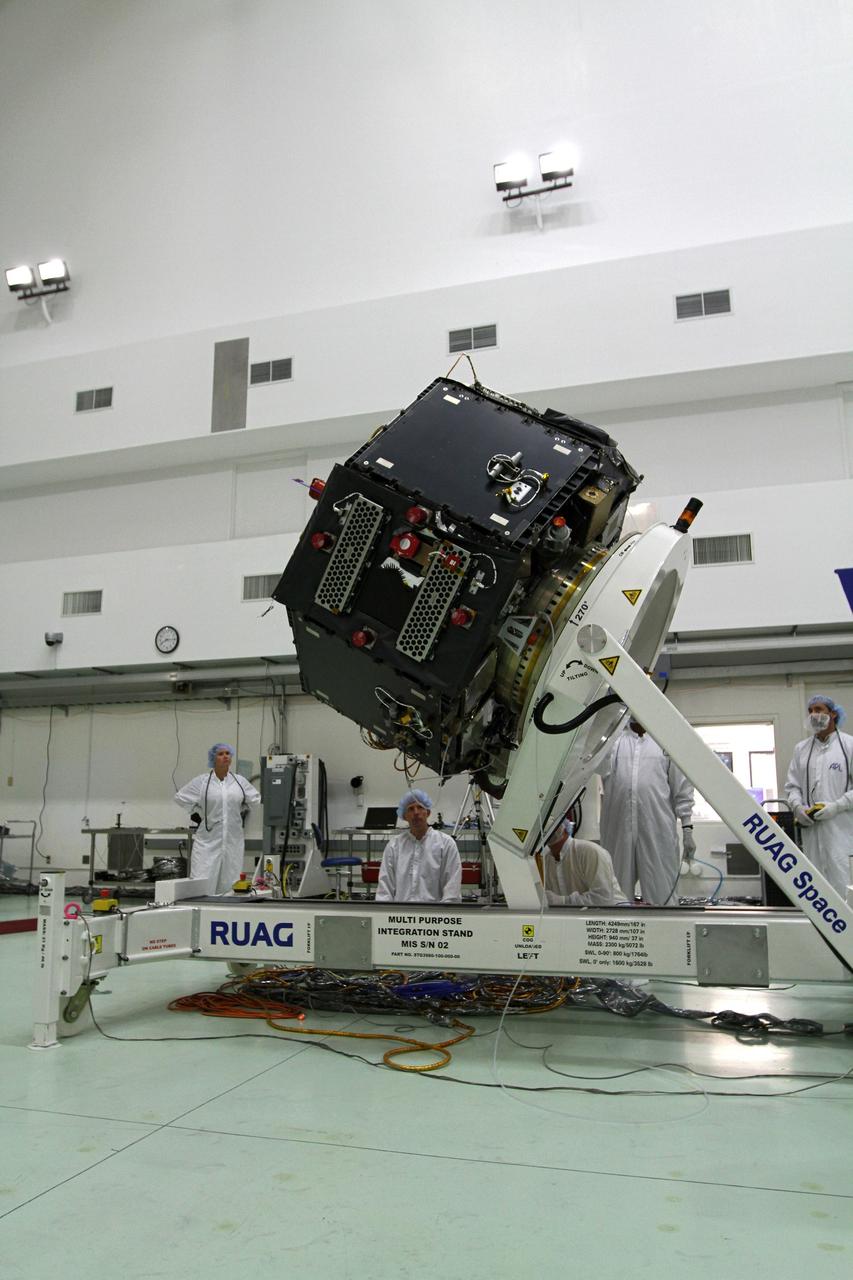
CAPE CANAVERAL, Fla. – Inside the Astrotech payload processing facility near NASA’s Kennedy Space Center in Florida, technicians monitor the progress as the Radiation Belt Storm Probes, or RBSP, spacecraft B is lowered to a horizontal position. The RBSP had been in a vertical position for testing. NASA’s RBSP mission will help us understand the sun’s influence on Earth and near-Earth space by studying the Earth’s radiation belts on various scales of space and time. RBSP will begin its mission of exploration of Earth’s Van Allen radiation belts and the extremes of space weather after its launch aboard a United Launch Alliance Atlas V rocket. Launch is targeted for Aug. 23. For more information, visit http://www.nasa.gov/rbsp. Photo credit: NASA/Kim Shiflett
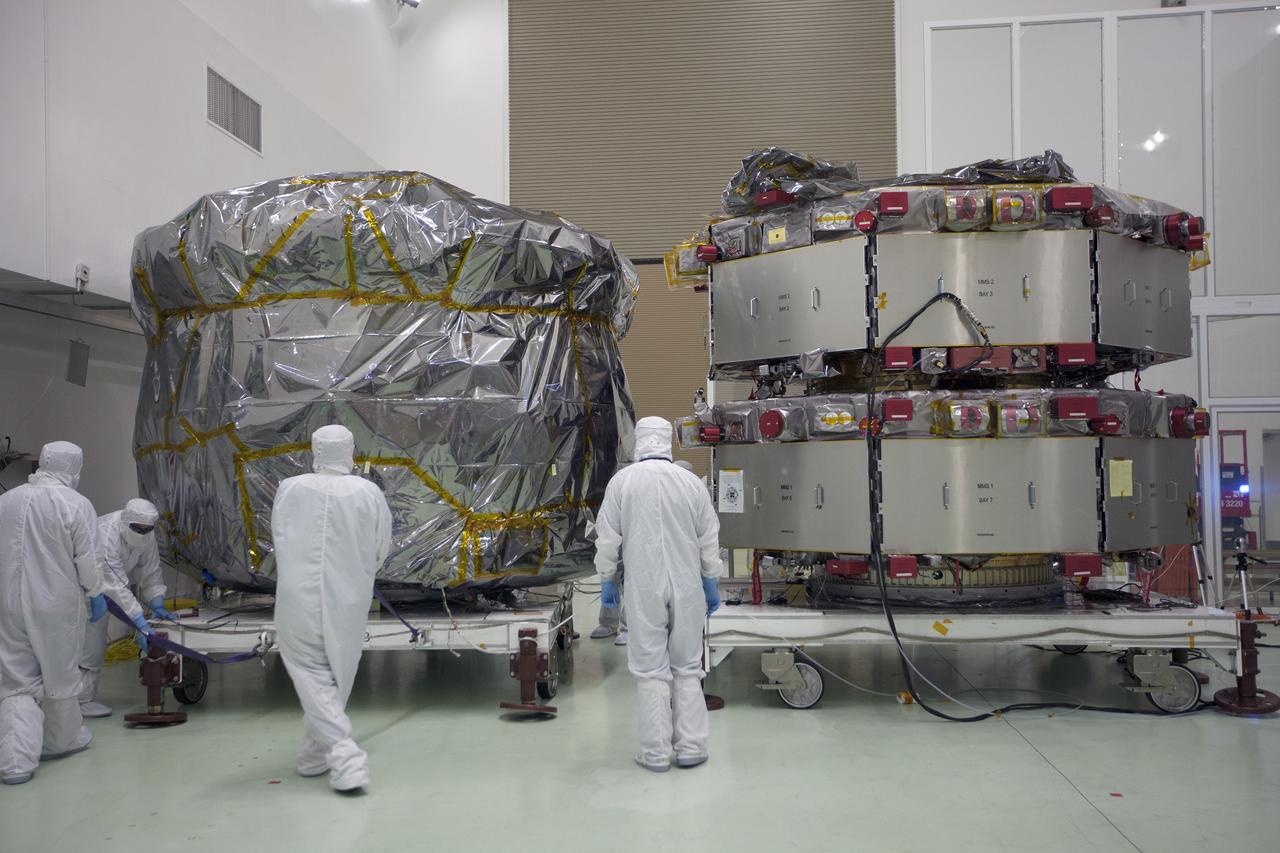
CAPE CANAVERAL, Fla. – Two Magnetospheric Multiscale, or MMS, spacecraft comprising the mission’s upper stack, at left, arrive in the Building 1 high bay of the Astrotech payload processing facility in Titusville, Florida, near Kennedy Space Center. The two MMS spacecraft comprising the lower stack, at right, arrived at Astrotech on Oct. 29. The Magnetospheric Multiscale mission is a Solar Terrestrial Probes mission comprising four identically instrumented spacecraft that will use Earth’s magnetosphere as a laboratory to study the microphysics of three fundamental plasma processes: magnetic reconnection, energetic particle acceleration and turbulence. Launch aboard a United Launch Alliance Atlas V rocket from Space Launch Complex 41 on Cape Canaveral Air Force Station is targeted for March 12, 2015. To learn more about MMS, visit http://mms.gsfc.nasa.gov. Photo credit: NASA/Kim Shiflett
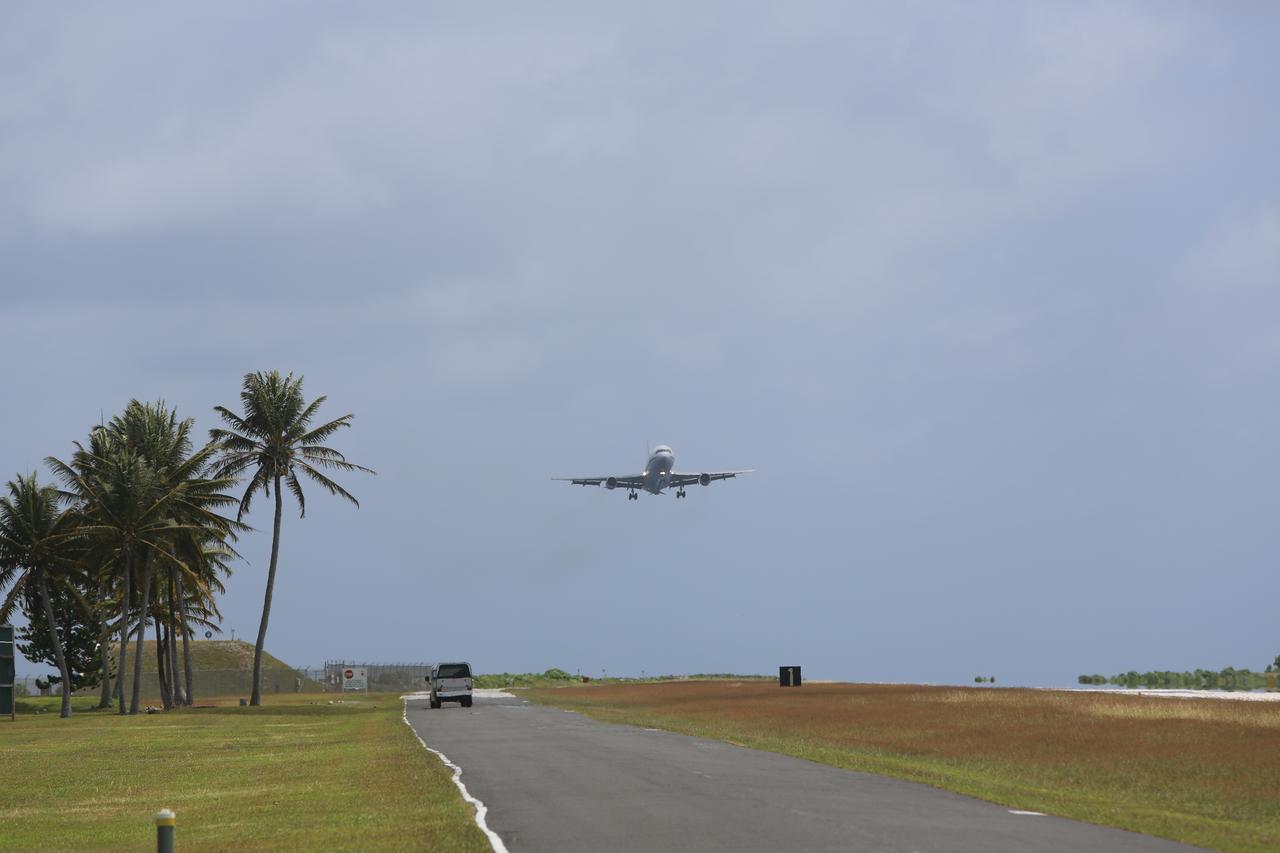
KWAJALEIN ATOLL, Marshall Islands – Orbital Sciences' L-1011 carrier aircraft approaches the runway at the U.S. Army's Ronald Reagan Ballistic Missile Defense Test Site on Kwajalein Atoll to deliver Orbital’s Pegasus rocket and NASA’s Nuclear Spectroscopic Telescope Array, or NuSTAR, for launch. The Pegasus, mated to its NuSTAR payload, will be launched from the carrier aircraft 117 nautical miles south of Kwajalein at latitude 6.75 degrees north of the equator. The high-energy X-ray telescope will conduct a census of black holes, map radioactive material in young supernovae remnants, and study the origins of cosmic rays and the extreme physics around collapsed stars. Launch and deployment of the telescope is scheduled for June 13. For more information, visit http://www.nasa.gov/nustar. Photo courtesy of Orbital Sciences Corp.
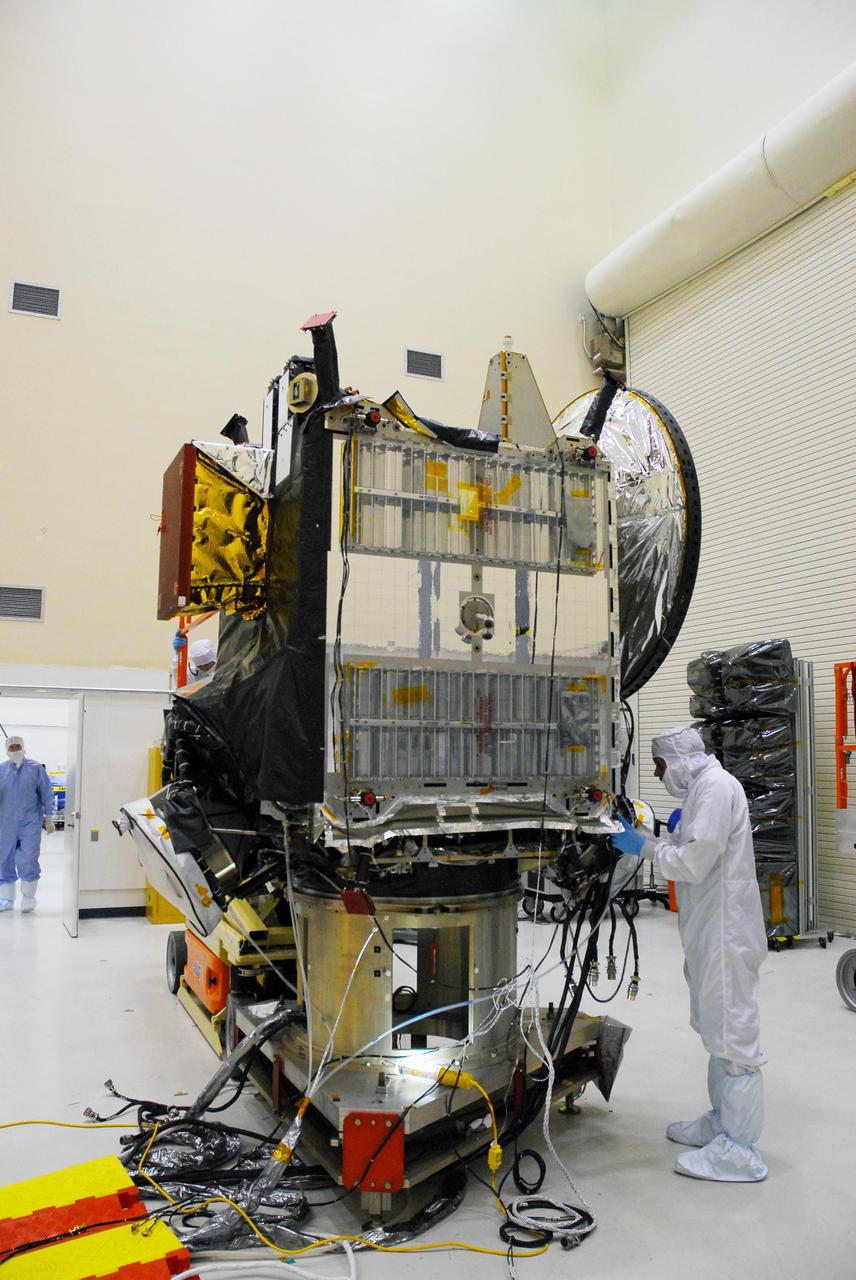
KENNEDY SPACE CENTER, FLA. -- In a clean room at Astrotech, workers prepare the Dawn spacecraft for thermal blanket installation. Dawn's mission is to explore two of the asteroid belt's most intriguing and dissimilar occupants: asteroid Vesta and the dwarf planet Ceres. Dawn is scheduled to launch June 30 from Launch Complex 17-B. Photo credit: NASA/George Shelton
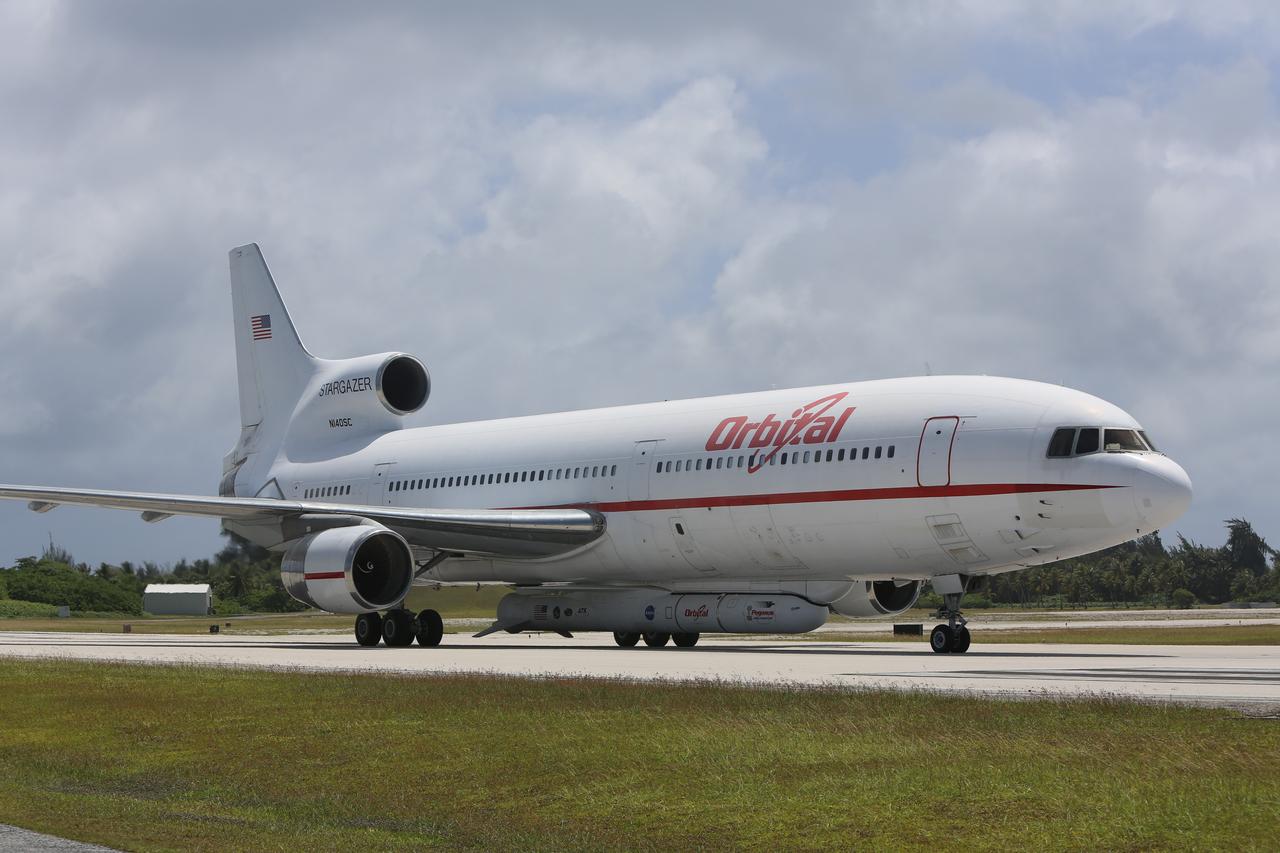
KWAJALEIN ATOLL, Marshall Islands – An Orbital Sciences’ Pegasus rocket and NASA’s Nuclear Spectroscopic Telescope Array, or NuSTAR, are delivered to the U.S. Army's Ronald Reagan Ballistic Missile Defense Test Site on Kwajalein Atoll secured beneath Orbital’s L-1011 carrier aircraft. The Pegasus, mated to its NuSTAR payload, will be launched from the carrier aircraft 117 nautical miles south of Kwajalein at latitude 6.75 degrees north of the equator. The high-energy X-ray telescope will conduct a census of black holes, map radioactive material in young supernovae remnants, and study the origins of cosmic rays and the extreme physics around collapsed stars. Launch and deployment of the telescope is scheduled for June 13. For more information, visit http://www.nasa.gov/nustar. Photo courtesy of Orbital Sciences Corp.
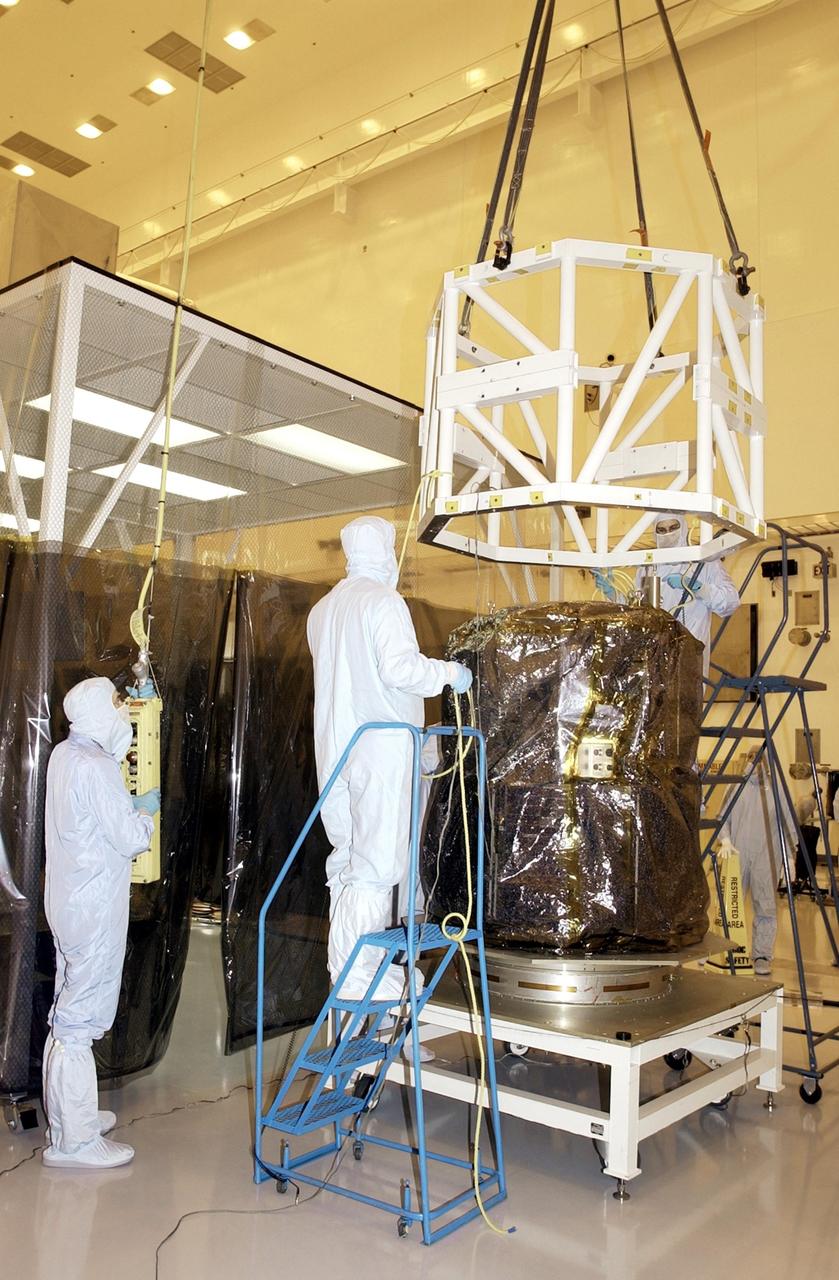
KENNEDY SPACE CENTER, FLA. - Workers guide equipment as it lowers over the SORCE satellite. The equipment will rotate the satellite for mating to the Pegasus launch vehicle. SORCE is equipped with four instruments that will measure variations in solar radiation and observe some spectral properties of solar radiation for the first time. With data from NASA's SORCE mission, researchers should be able to follow how the Sun affects our climate now and in the future. Launch of SORCE aboard the Pegasus XL rocket is scheduled for Jan. 25, 2003, at approximately 3:14 p.m. EST, from Cape Canaveral Air Force Station, Fla.
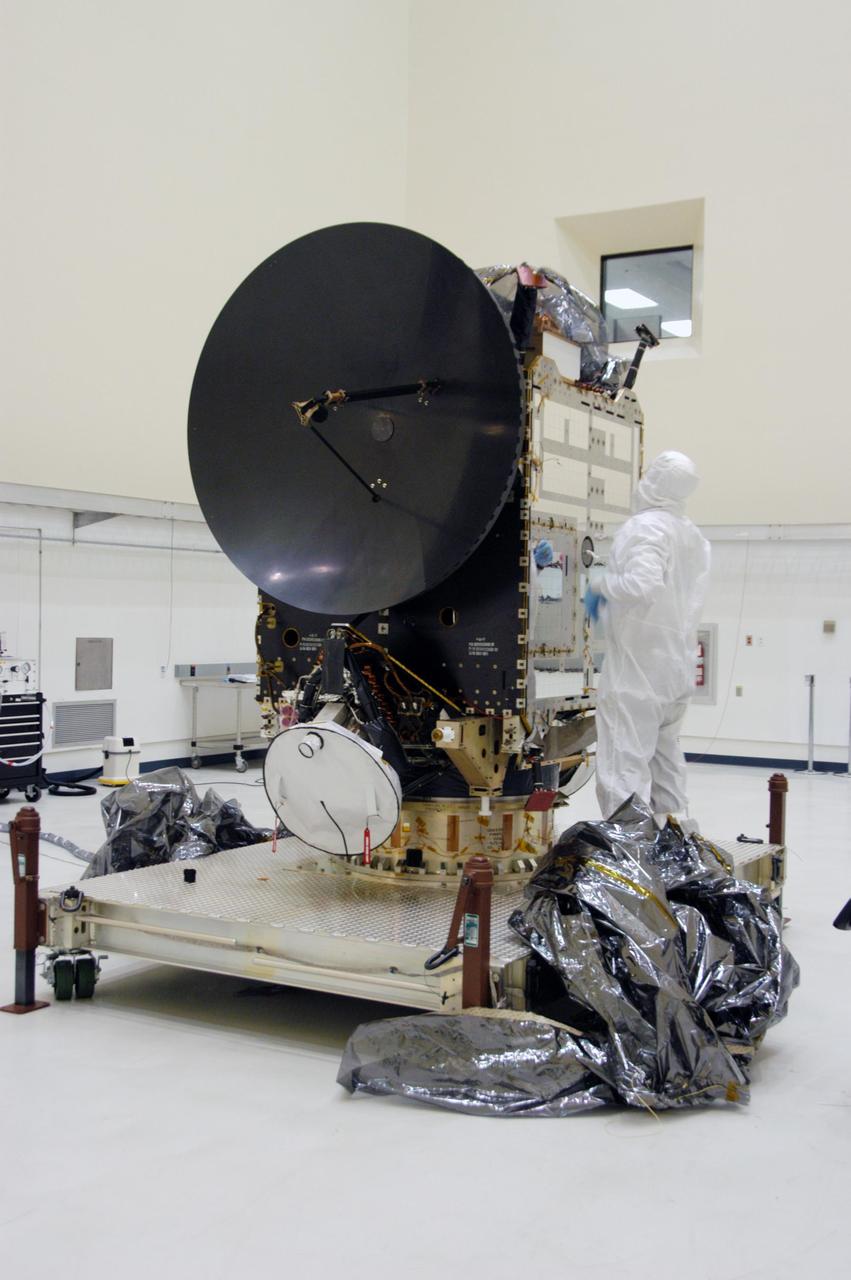
KENNEDY SPACE CENTER, FLA. -- In clean room C of Astrotech's Payload Processing Facility, a worker wearing a "bunny suit," or clean-room attire, looks over the Dawn spacecraft after removing the protective cover, at bottom right. In the clean room, the spacecraft will undergo further processing. Dawn's mission is to explore two of the asteroid belt's most intriguing and dissimilar occupants: asteroid Vesta and the dwarf planet Ceres. The Dawn mission is managed by JPL, a division of the California Institute of Technology in Pasadena, for NASA's Science Mission Directorate in Washington, D.C. Photo credit: NASA/George Shelton
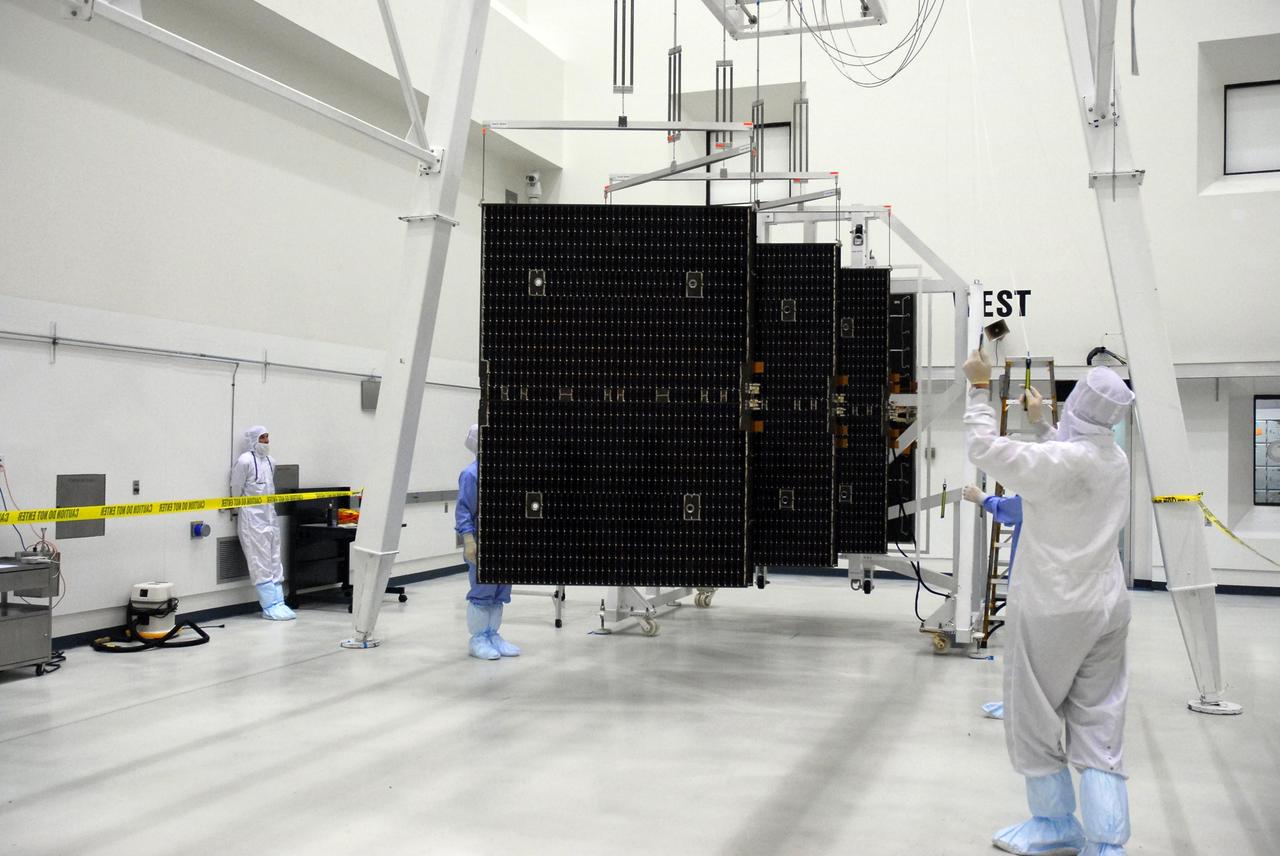
KENNEDY SPACE CENTER, FLA. -- In a clean room at Astrotech, workers deploy the solar panels of the Dawn spacecraft. The panels will be tested and undergo black light inspection. Dawn's mission is to explore two of the asteroid belt's most intriguing and dissimilar occupants: asteroid Vesta and the dwarf planet Ceres. Dawn is scheduled to launch June 30 from Launch Complex 17-B. Photo credit: NASA/George Shelton
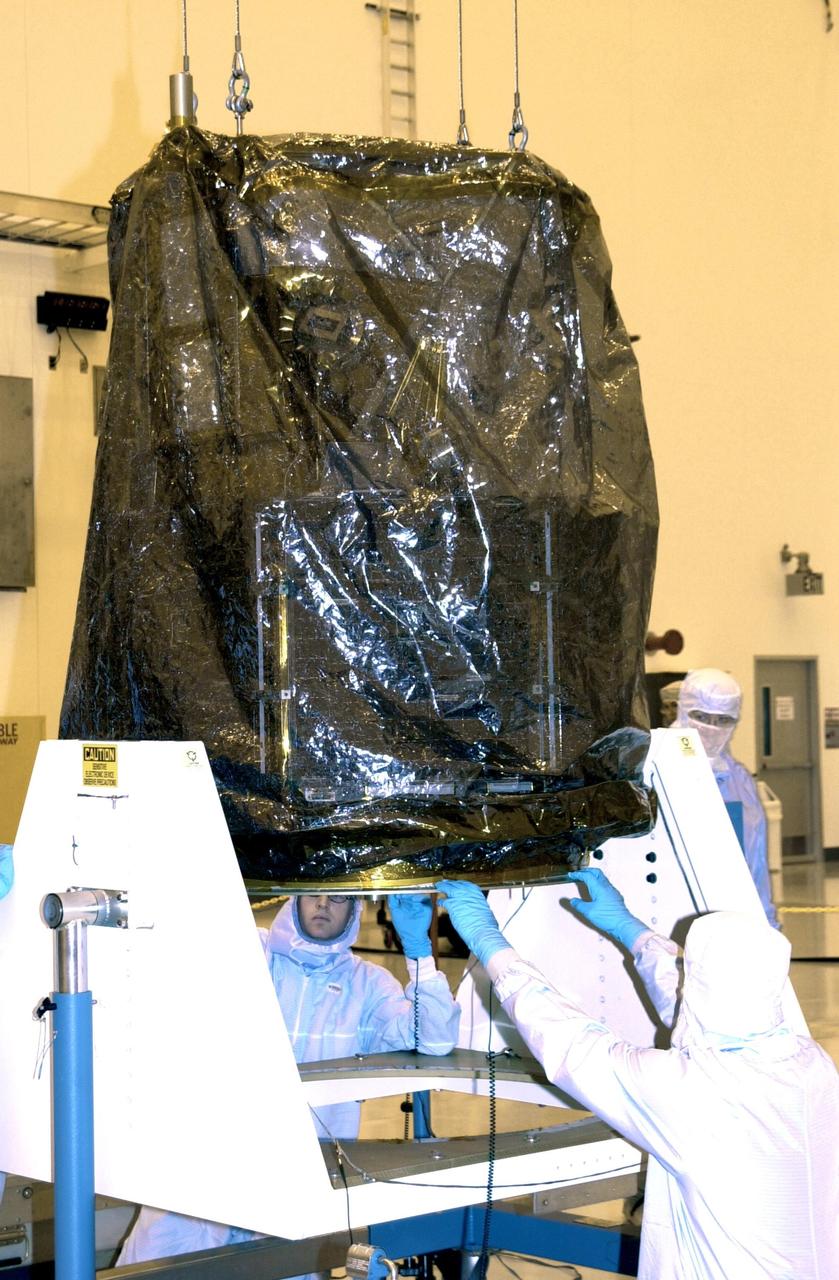
KENNEDY SPACE CENTER, FLA. -- Workers in the Multi-Purpose Processing Facility at KSC help guide the Solar Radiation and Climate Experiment (SORCE) spacecraft onto a workstand. SORCE arrived at Kennedy Space Center Oct. 26 to begin final processing. SORCE is equipped with four instruments that will measure variations in solar radiation much more accurately than anything now in use and observe some of the spectral properties of solar radiation for the first time. With data from NASA's SORCE mission, researchers should be able to follow how the Sun affects our climate now and in the future. The SORCE project is managed by NASA's Goddard Space Flight Center. The instruments on the SORCE spacecraft are built by the Laboratory for Atmospheric and Space Physics (LASP). Launch of SORCE aboard a Pegasus XL rocket is scheduled for mid-December 2002. Launch site is Cape Canaveral Air Force Station, Fla.
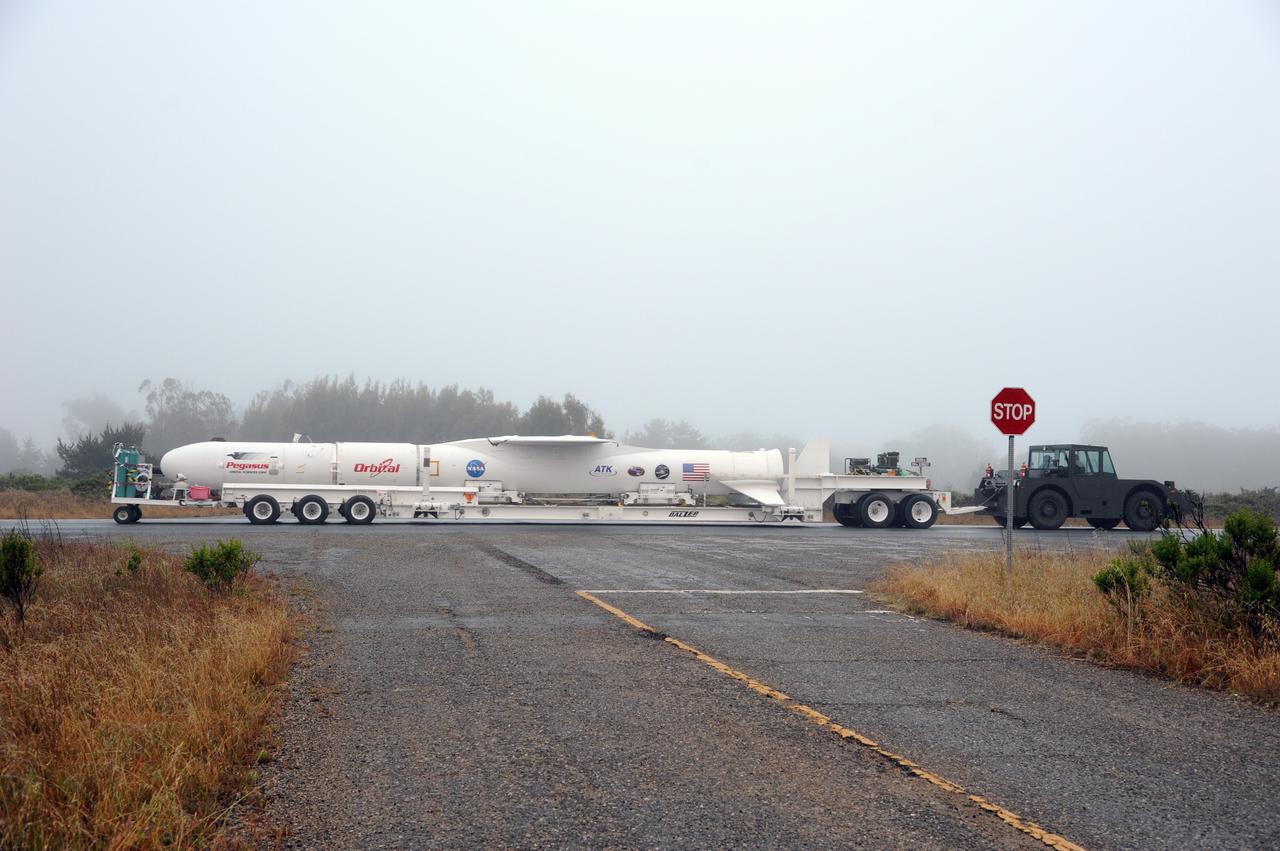
VANDENBERG AIR FORCE BASE, Calif. – NASA’s Nuclear Spectroscopic Telescope Array, or NuSTAR, mated to Orbital Sciences’ Pegasus XL rocket, travels along the roadway from Orbital’s processing hangar to the “hot pad,” located on the ramp adjacent to the runway on Vandenberg Air Force Base in California. At the hot pad, the rocket will be attached beneath Orbital’s L-1011 carrier aircraft. The duo will be flown from Vandenberg to the U.S. Army's Ronald Reagan Ballistic Missile Defense Test Site on Kwajalein Atoll, part of the Marshall Islands in the Pacific Ocean. The Pegasus and its NuSTAR payload will be launched June 13 from the carrier aircraft 117 nautical miles south of Kwajalein at latitude 6.75 degrees north of the equator. The high-energy X-ray telescope will conduct a census of black holes, map radioactive material in young supernovae remnants, and study the origins of cosmic rays and the extreme physics around collapsed stars. For more information, visit http://www.nasa.gov/nustar. Photo credit: NASA/Chris Wiant, VAFB
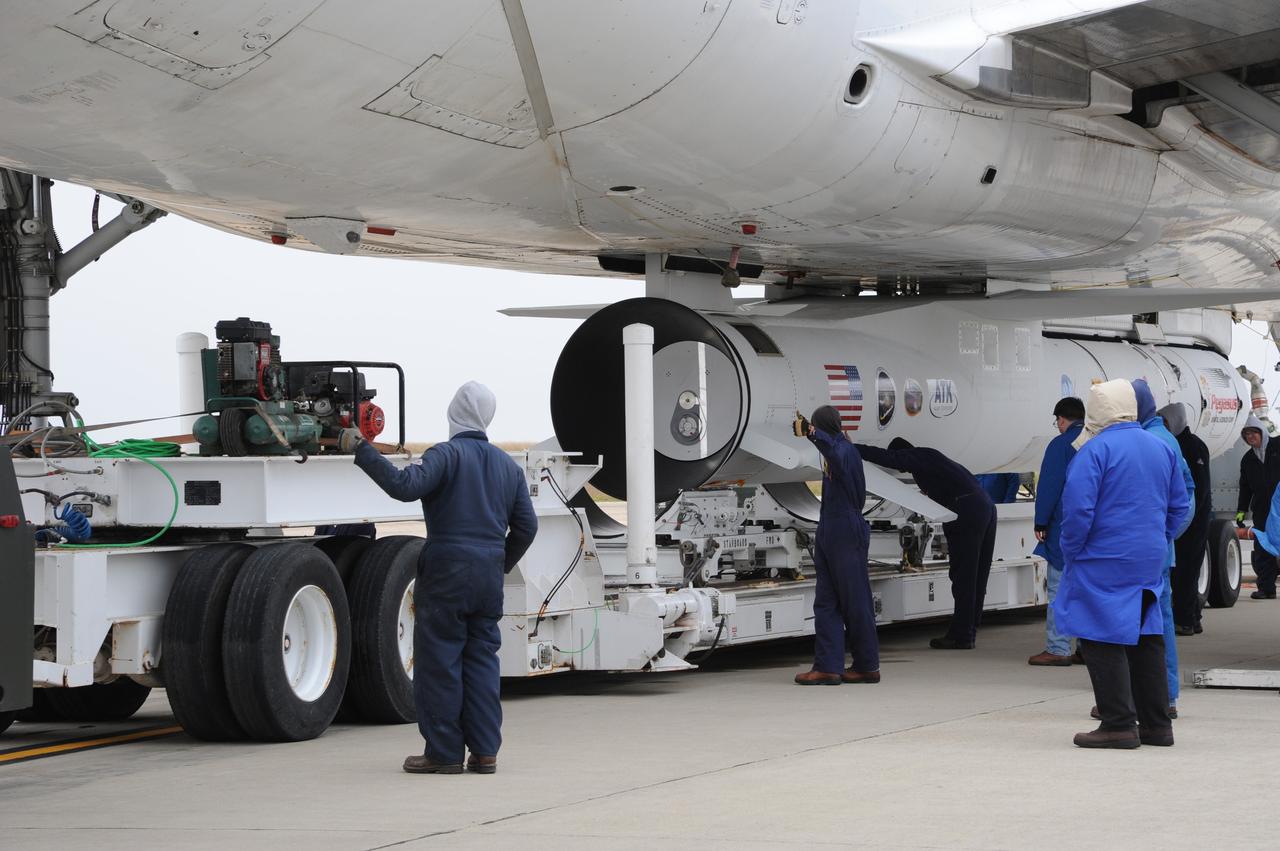
VANDENBERG AIR FORCE BASE, Calif. – Preparations are under way to roll the transporter from under NASA’s Nuclear Spectroscopic Telescope Array, or NuSTAR, mated to Orbital Sciences’ Pegasus XL rocket, which was just attached beneath Orbital’s L-1011 carrier aircraft at the “hot pad,” located on the ramp adjacent to the runway on Vandenberg Air Force Base in California. The duo will be flown from Vandenberg to the U.S. Army's Ronald Reagan Ballistic Missile Defense Test Site on Kwajalein Atoll, part of the Marshall Islands in the Pacific Ocean. The Pegasus and its NuSTAR payload will be launched June 13 from the carrier aircraft 117 nautical miles south of Kwajalein at latitude 6.75 degrees north of the equator. The high-energy X-ray telescope will conduct a census of black holes, map radioactive material in young supernovae remnants, and study the origins of cosmic rays and the extreme physics around collapsed stars. For more information, visit http://www.nasa.gov/nustar. Photo credit: NASA/Chris Wiant, VAFB
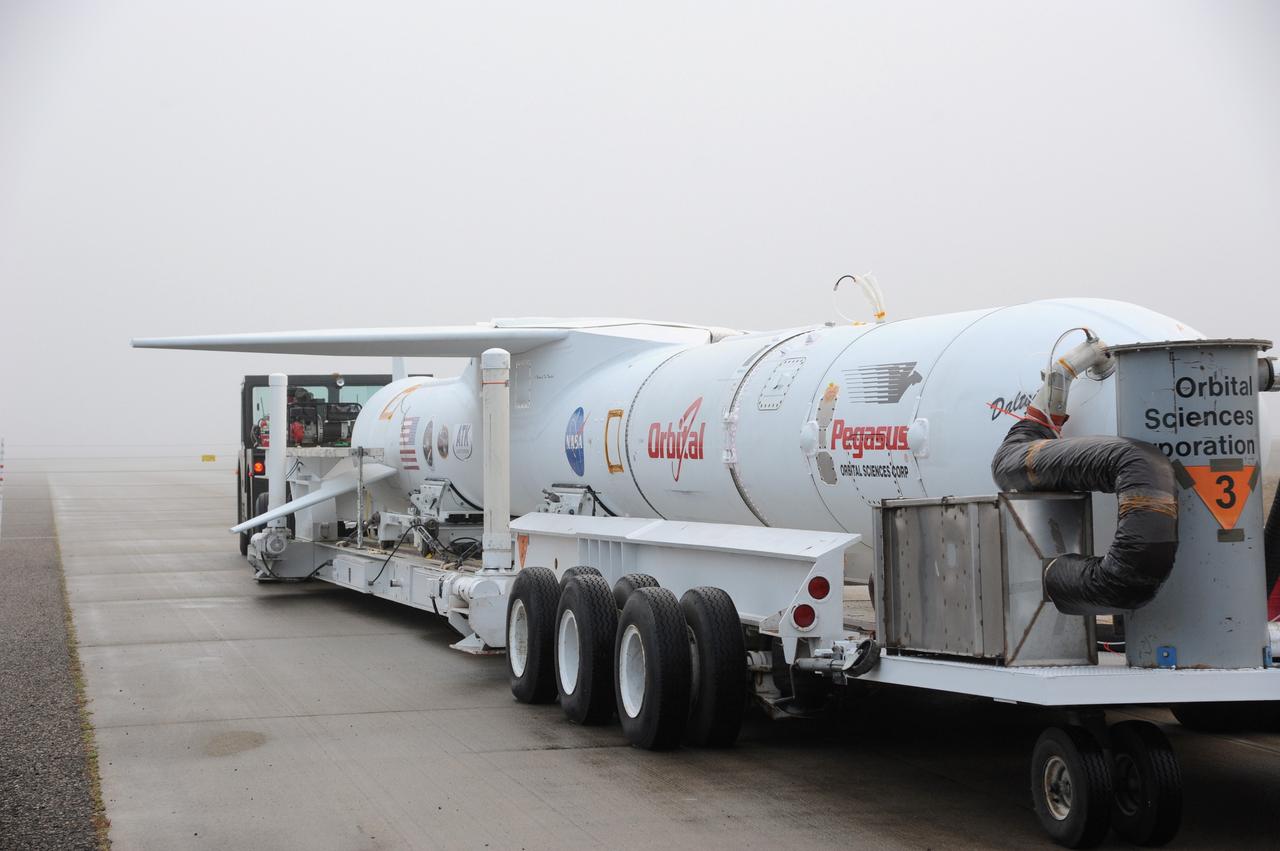
VANDENBERG AIR FORCE BASE, Calif. – Fog engulfs NASA’s Nuclear Spectroscopic Telescope Array, or NuSTAR, mated to Orbital Sciences’ Pegasus XL rocket, as it arrives at the “hot pad,” located on the ramp adjacent to the runway on Vandenberg Air Force Base in California. At the hot pad, the rocket will be attached beneath Orbital’s L-1011 carrier aircraft. The duo will be flown from Vandenberg to the U.S. Army's Ronald Reagan Ballistic Missile Defense Test Site on Kwajalein Atoll, part of the Marshall Islands in the Pacific Ocean. The Pegasus and its NuSTAR payload will be launched June 13 from the carrier aircraft 117 nautical miles south of Kwajalein at latitude 6.75 degrees north of the equator. The high-energy X-ray telescope will conduct a census of black holes, map radioactive material in young supernovae remnants, and study the origins of cosmic rays and the extreme physics around collapsed stars. For more information, visit http://www.nasa.gov/nustar. Photo credit: NASA/Chris Wiant, VAFB
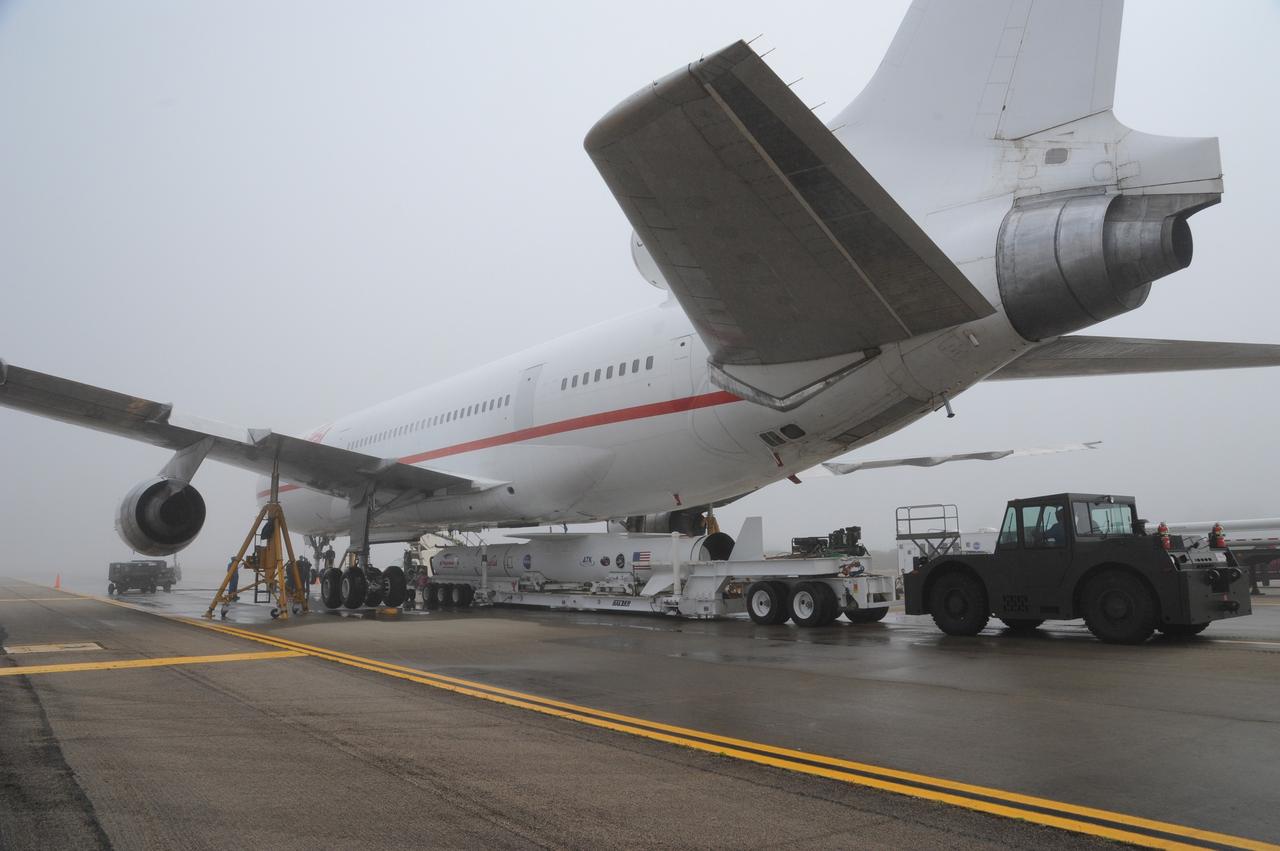
VANDENBERG AIR FORCE BASE, Calif. – NASA’s Nuclear Spectroscopic Telescope Array, or NuSTAR, mated to Orbital Sciences’ Pegasus XL rocket, is positioned under Orbital’s L-1011 carrier aircraft at the “hot pad,” located on the ramp adjacent to the runway on Vandenberg Air Force Base in California. Operations are under way to attach the rocket beneath the L-1011 aircraft. The duo will be flown from Vandenberg to the U.S. Army's Ronald Reagan Ballistic Missile Defense Test Site on Kwajalein Atoll, part of the Marshall Islands in the Pacific Ocean. The Pegasus and its NuSTAR payload will be launched June 13 from the carrier aircraft 117 nautical miles south of Kwajalein at latitude 6.75 degrees north of the equator. The high-energy X-ray telescope will conduct a census of black holes, map radioactive material in young supernovae remnants, and study the origins of cosmic rays and the extreme physics around collapsed stars. For more information, visit http://www.nasa.gov/nustar. Photo credit: NASA/Chris Wiant, VAFB
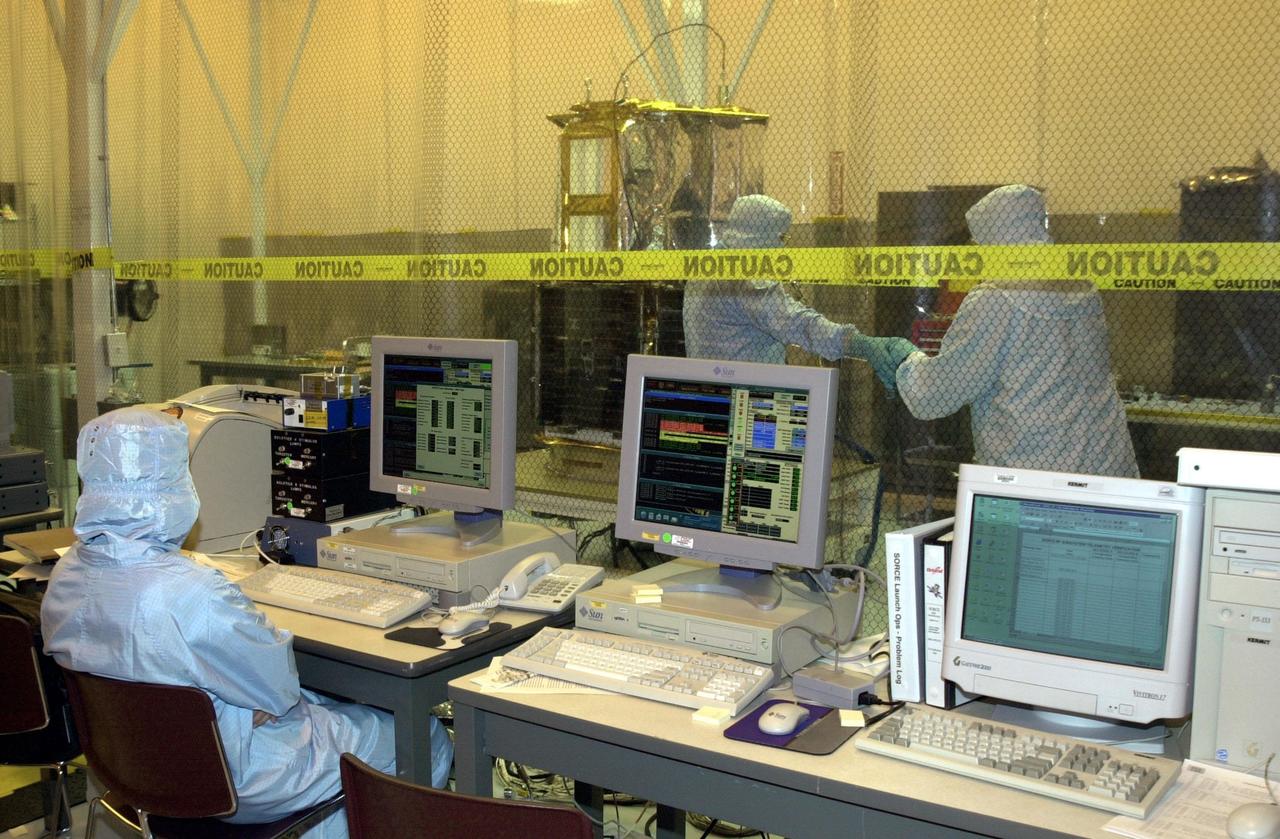
KENNEDY SPACE CENTER, FLA. - Computers in the Multi-Purpose Processing Facility are set up to conduct a solar array test on the SORCE satellite, beyond the screening. SORCE is equipped with four instruments that will measure variations in solar radiation much more accurately than anything now in use and observe some of the spectral properties of solar radiation for the first time. With data from NASA’s SORCE mission, researchers should be able to follow how the Sun affects our climate now and in the future. The SORCE project is managed by NASA’s Goddard Space Flight Center. The instruments on the SORCE spacecraft are built by the Laboratory for Atmospheric and Space Physics (LASP). Launch of SORCE aboard a Pegasus XL rocket is scheduled for mid-December 2002. Launch site is Cape Canaveral Air Force Station, Fla.
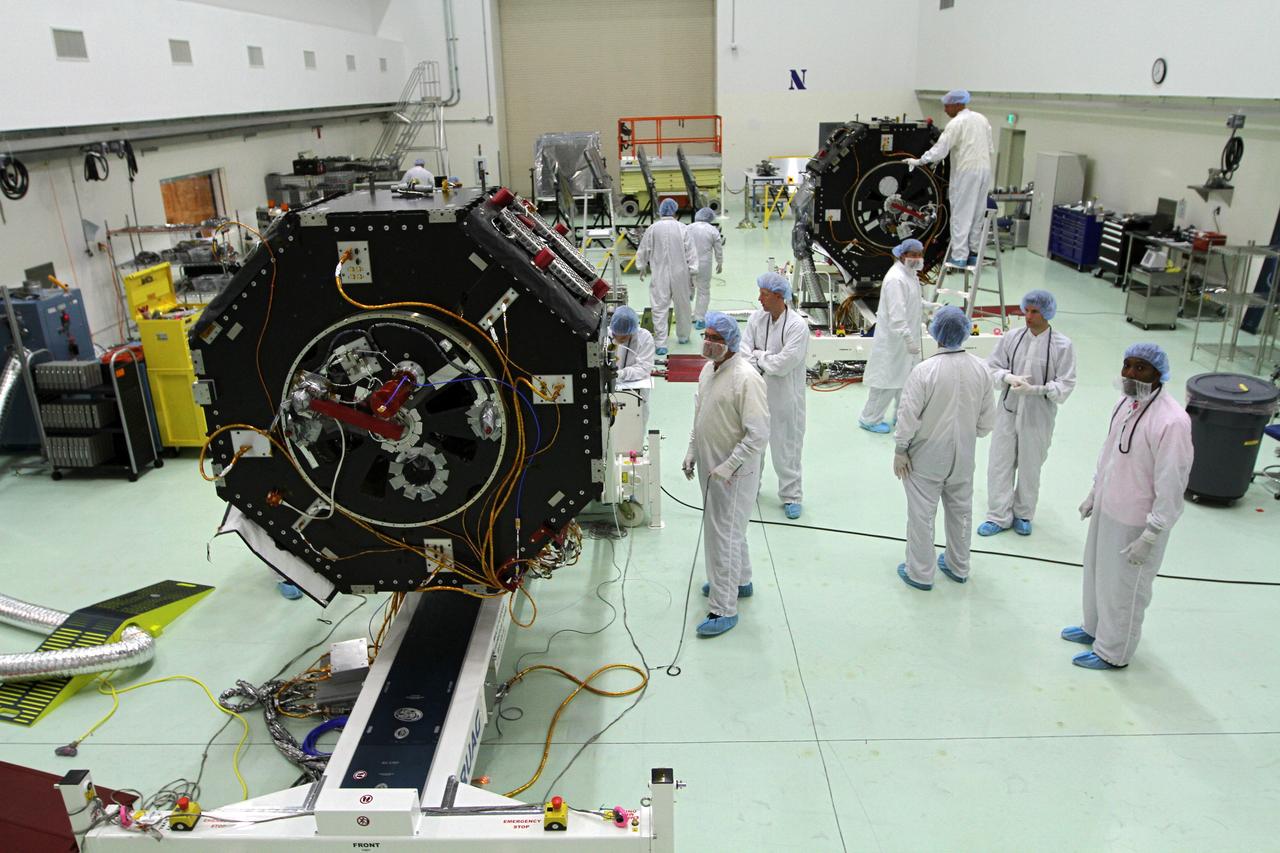
CAPE CANAVERAL, Fla. – Inside the Astrotech payload processing facility near NASA’s Kennedy Space Center in Florida, technicians monitor the progress as the Radiation Belt Storm Probes, or RBSP, spacecraft B is lowered to a horizontal position. The RBSP had been in a vertical position for testing. NASA’s RBSP mission will help us understand the sun’s influence on Earth and near-Earth space by studying the Earth’s radiation belts on various scales of space and time. RBSP will begin its mission of exploration of Earth’s Van Allen radiation belts and the extremes of space weather after its launch aboard a United Launch Alliance Atlas V rocket. Launch is targeted for Aug. 23. For more information, visit http://www.nasa.gov/rbsp. Photo credit: NASA/Kim Shiflett
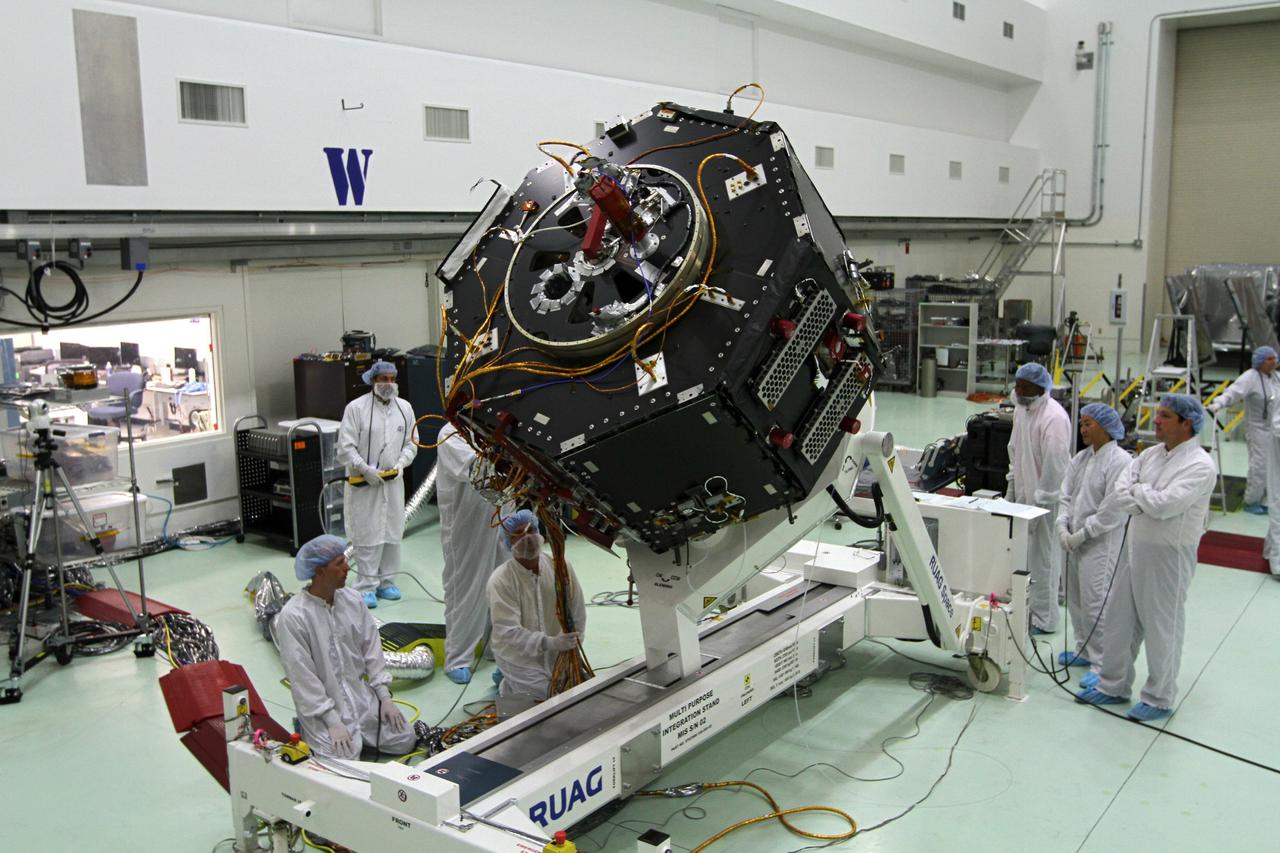
CAPE CANAVERAL, Fla. – Inside the Astrotech payload processing facility near NASA’s Kennedy Space Center in Florida, technicians assist as the Radiation Belt Storm Probes, or RBSP, spacecraft B is lowered to a horizontal position. The RBSP had been in a vertical position for testing. NASA’s RBSP mission will help us understand the sun’s influence on Earth and near-Earth space by studying the Earth’s radiation belts on various scales of space and time. RBSP will begin its mission of exploration of Earth’s Van Allen radiation belts and the extremes of space weather after its launch aboard a United Launch Alliance Atlas V rocket. Launch is targeted for Aug. 23. For more information, visit http://www.nasa.gov/rbsp. Photo credit: NASA/Kim Shiflett
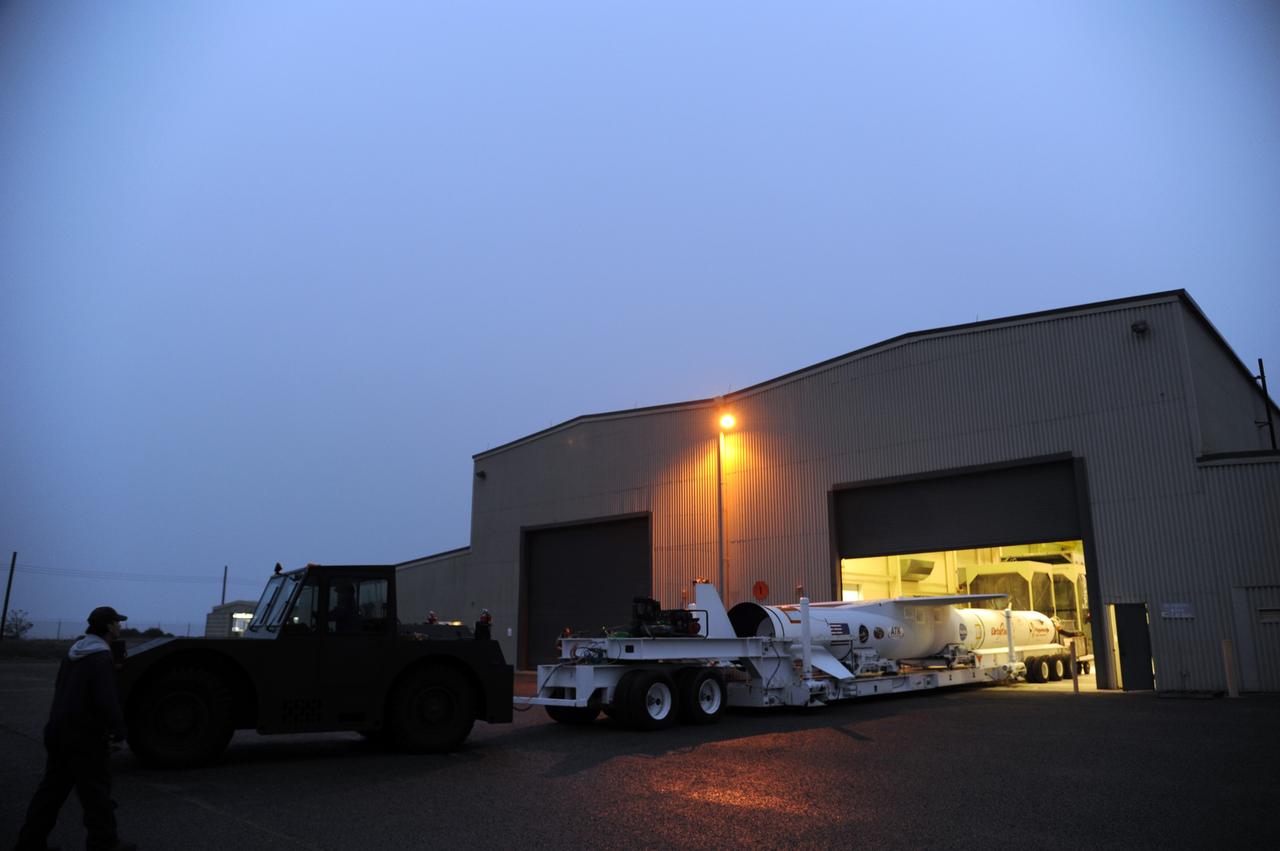
VANDENBERG AIR FORCE BASE, Calif. – NASA’s Nuclear Spectroscopic Telescope Array, or NuSTAR, mated to Orbital Sciences’ Pegasus XL rocket, rolls out of Orbital’s processing hangar headed for the “hot pad,” located on the ramp adjacent to the runway on Vandenberg Air Force Base in California. At the hot pad, the rocket will be attached beneath Orbital’s L-1011 carrier aircraft. The duo will be flown from Vandenberg to the U.S. Army's Ronald Reagan Ballistic Missile Defense Test Site on Kwajalein Atoll, part of the Marshall Islands in the Pacific Ocean. The Pegasus and its NuSTAR payload will be launched June 13 from the carrier aircraft 117 nautical miles south of Kwajalein at latitude 6.75 degrees north of the equator. The high-energy X-ray telescope will conduct a census of black holes, map radioactive material in young supernovae remnants, and study the origins of cosmic rays and the extreme physics around collapsed stars. For more information, visit http://www.nasa.gov/nustar. Photo credit: NASA/Chris Wiant, VAFB
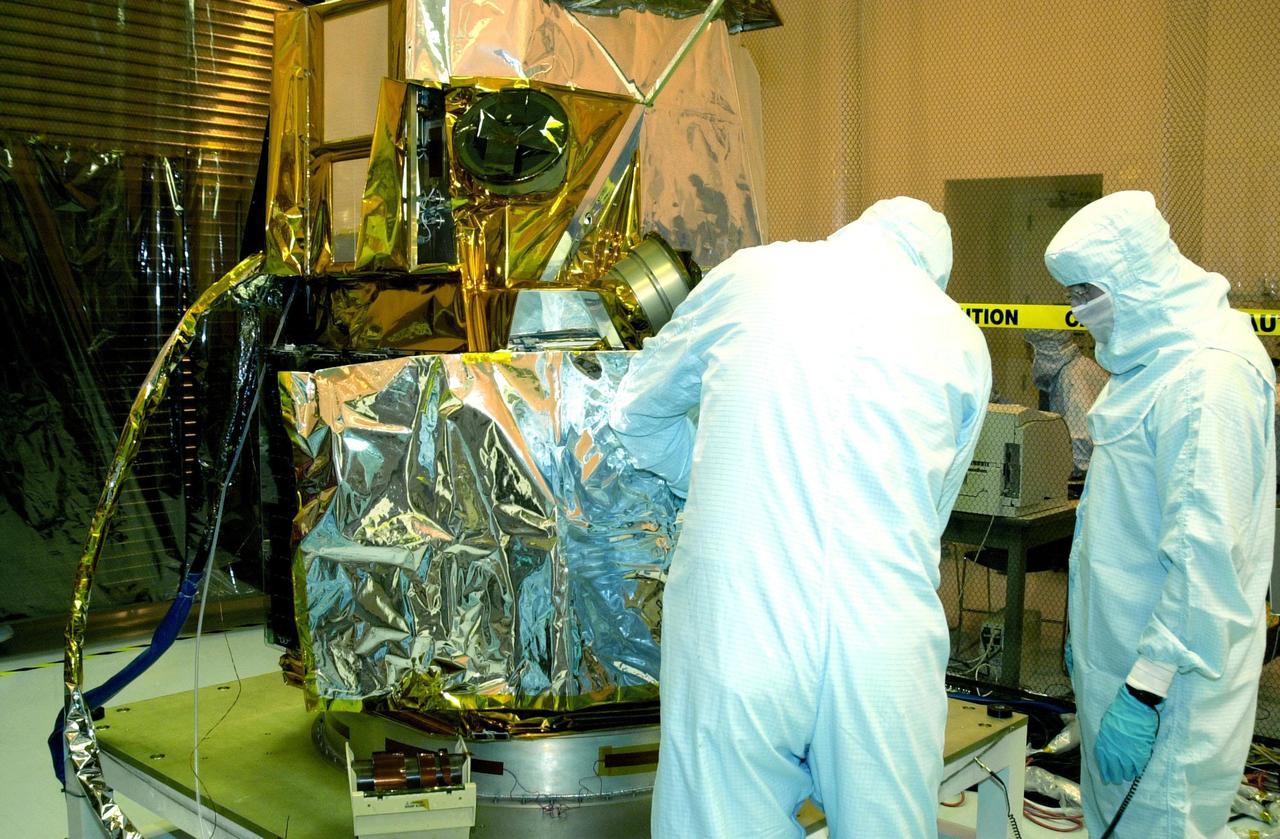
KENNEDY SPACE CENTER, FLA. - In the Multi-Purpose Processing Facility, workers adjust the SORCE satellite for a solar array test. SORCE is equipped with four instruments that will measure variations in solar radiation much more accurately than anything now in use and observe some of the spectral properties of solar radiation for the first time. With data from NASA’s SORCE mission, researchers should be able to follow how the Sun affects our climate now and in the future. The SORCE project is managed by NASA’s Goddard Space Flight Center. The instruments on the SORCE spacecraft are built by the Laboratory for Atmospheric and Space Physics (LASP). Launch of SORCE aboard a Pegasus XL rocket is scheduled for mid-December 2002. Launch site is Cape Canaveral Air Force Station, Fla.
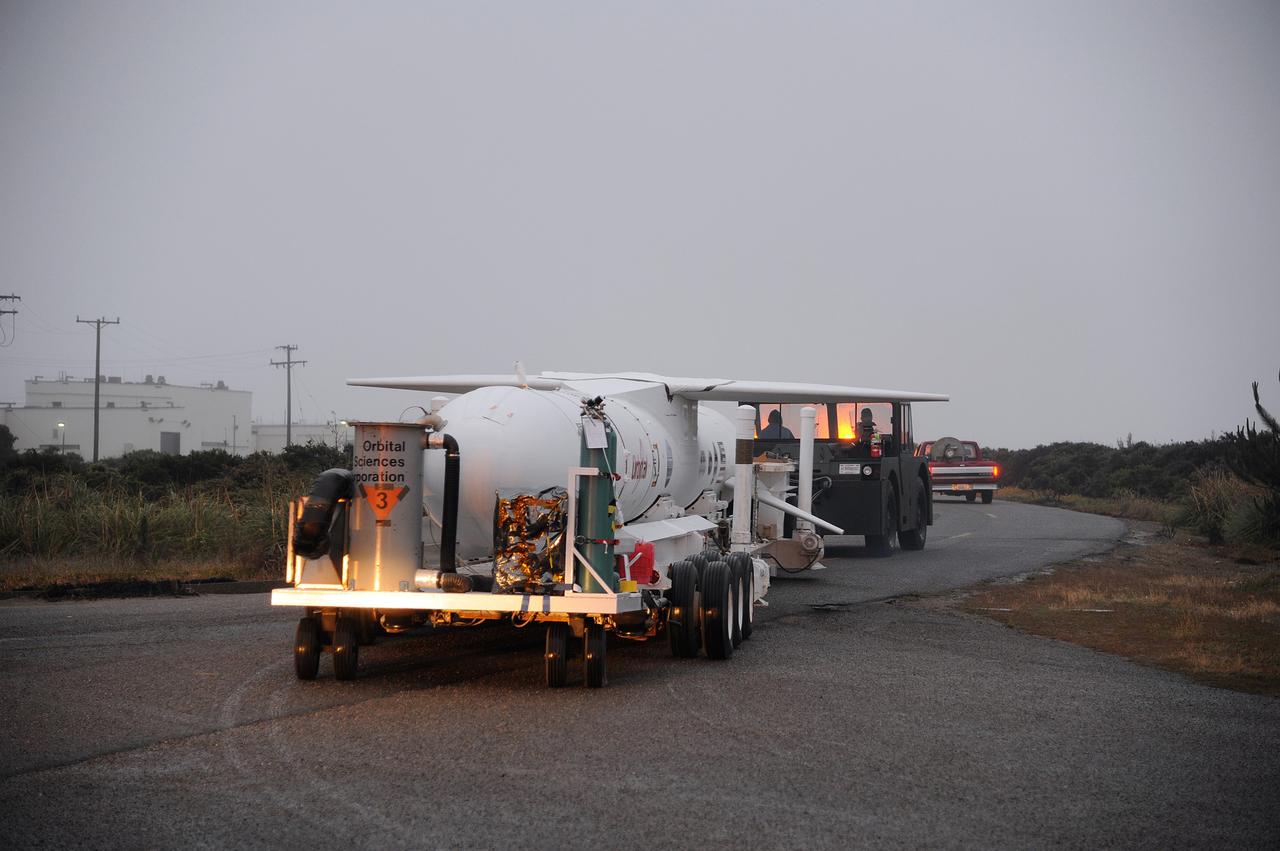
VANDENBERG AIR FORCE BASE, Calif. – NASA’s Nuclear Spectroscopic Telescope Array, or NuSTAR, mated to Orbital Sciences’ Pegasus XL rocket, makes its way from Orbital’s processing hangar to the “hot pad,” located on the ramp adjacent to the runway on Vandenberg Air Force Base in California. At the hot pad, the rocket will be attached beneath Orbital’s L-1011 carrier aircraft. The duo will be flown from Vandenberg to the U.S. Army's Ronald Reagan Ballistic Missile Defense Test Site on Kwajalein Atoll, part of the Marshall Islands in the Pacific Ocean. The Pegasus and its NuSTAR payload will be launched June 13 from the carrier aircraft 117 nautical miles south of Kwajalein at latitude 6.75 degrees north of the equator. The high-energy X-ray telescope will conduct a census of black holes, map radioactive material in young supernovae remnants, and study the origins of cosmic rays and the extreme physics around collapsed stars. For more information, visit http://www.nasa.gov/nustar. Photo credit: NASA/Chris Wiant, VAFB
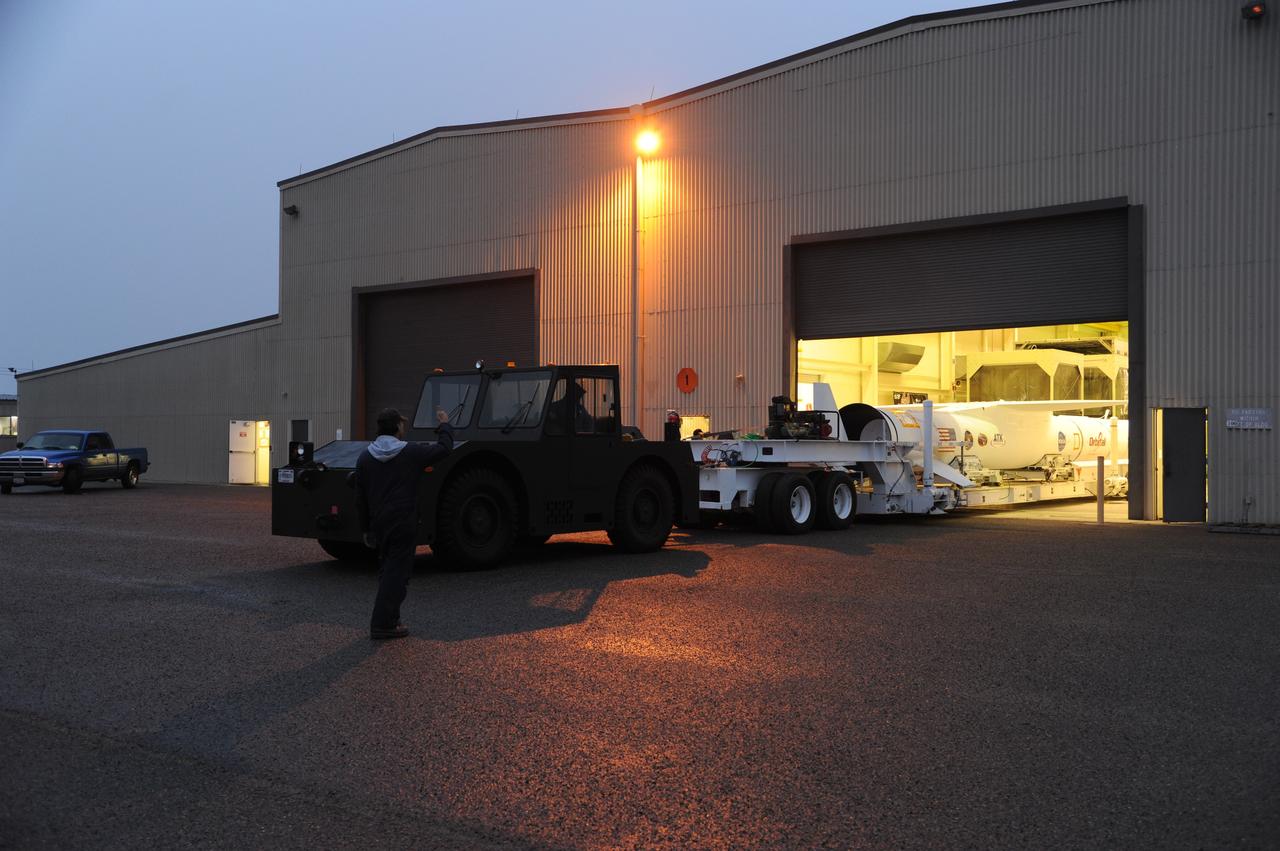
VANDENBERG AIR FORCE BASE, Calif. – NASA’s Nuclear Spectroscopic Telescope Array, or NuSTAR, mated to Orbital Sciences’ Pegasus XL rocket, rolls out of Orbital’s processing hangar headed for the “hot pad,” located on the ramp adjacent to the runway on Vandenberg Air Force Base in California. At the hot pad, the rocket will be attached beneath Orbital’s L-1011 carrier aircraft. The duo will be flown from Vandenberg to the U.S. Army's Ronald Reagan Ballistic Missile Defense Test Site on Kwajalein Atoll, part of the Marshall Islands in the Pacific Ocean. The Pegasus and its NuSTAR payload will be launched June 13 from the carrier aircraft 117 nautical miles south of Kwajalein at latitude 6.75 degrees north of the equator. The high-energy X-ray telescope will conduct a census of black holes, map radioactive material in young supernovae remnants, and study the origins of cosmic rays and the extreme physics around collapsed stars. For more information, visit http://www.nasa.gov/nustar. Photo credit: NASA/Chris Wiant, VAFB
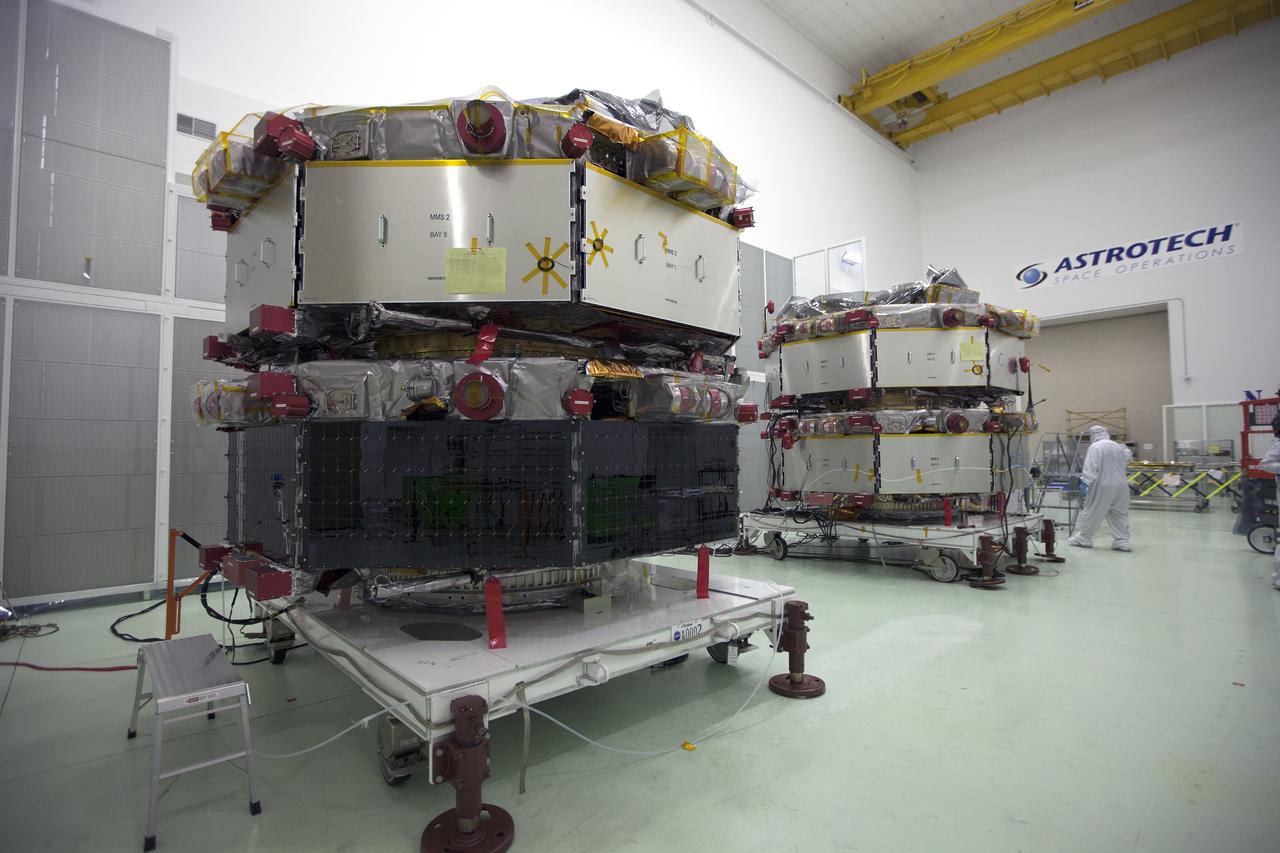
CAPE CANAVERAL, Fla. – The solar arrays on the Magnetospheric Multiscale, or MMS, observatories are uncovered for an inspection in the Building 1 D high bay of the Astrotech payload processing facility in Titusville, Florida, near Kennedy Space Center. The two MMS spacecraft comprising the upper deck arrived Nov. 12; the two comprising the lower stack arrived Oct. 29. MMS, led by a team from NASA's Goddard Space Flight Center, is a Solar Terrestrial Probes mission consisting of four identically instrumented spacecraft that will use Earth’s magnetosphere as a laboratory to study the microphysics of three fundamental plasma processes: magnetic reconnection, energetic particle acceleration and turbulence. Launch aboard a United Launch Alliance Atlas V rocket from Space Launch Complex 41 on Cape Canaveral Air Force Station is targeted for March 12, 2015. To learn more about MMS, visit http://mms.gsfc.nasa.gov. Photo credit: NASA/Kim Shiflett
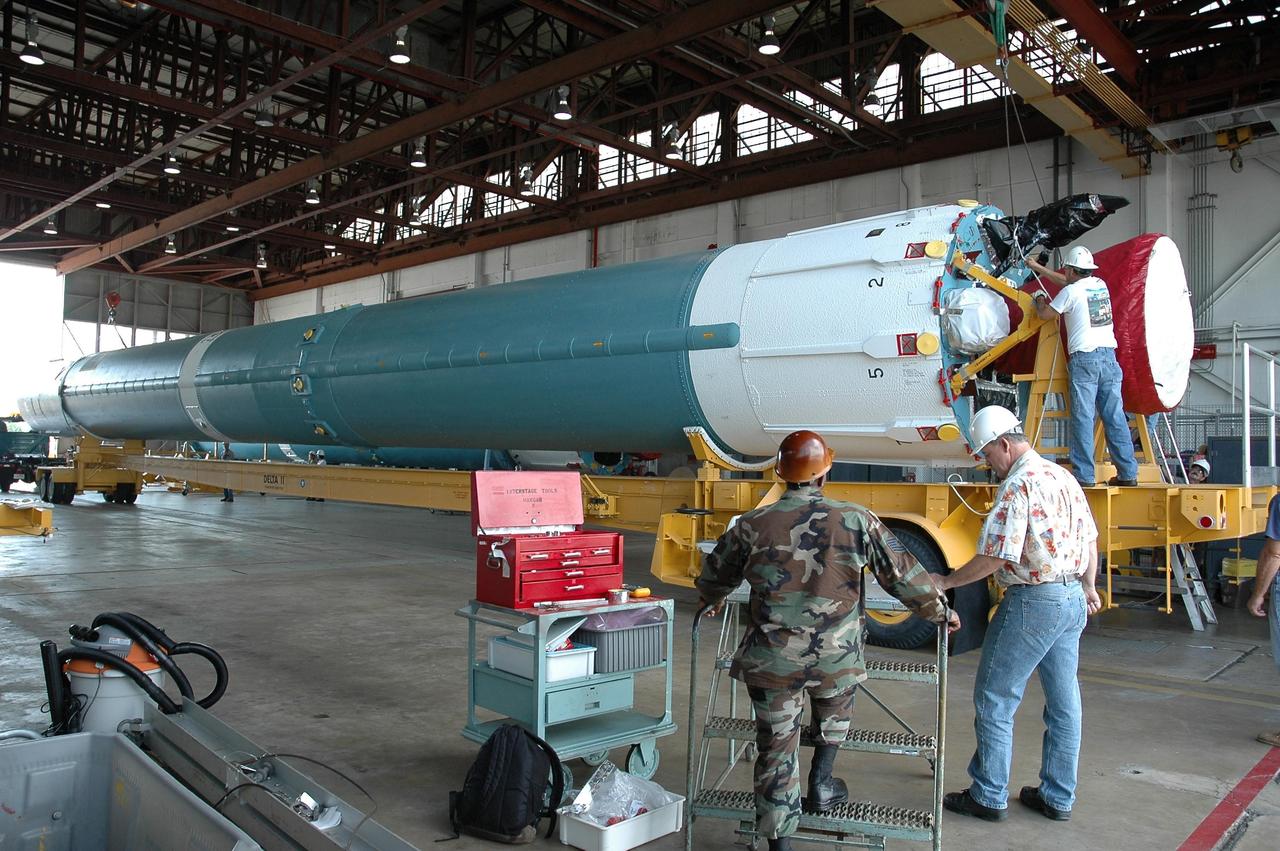
KENNEDY SPACE CENTER, FLA. -- After its successful transfer to a transporter, the Delta II first stage is ready to move out of Hangar M on Cape Canaveral Air Force Station. Dawn's mission is to explore two of the asteroid belt's most intriguing and dissimilar occupants: asteroid Vesta and the dwarf planet Ceres. Dawn is scheduled to launch June 30 from Launch Complex 17-B. Photo credit: NASA/Jack Pfaller
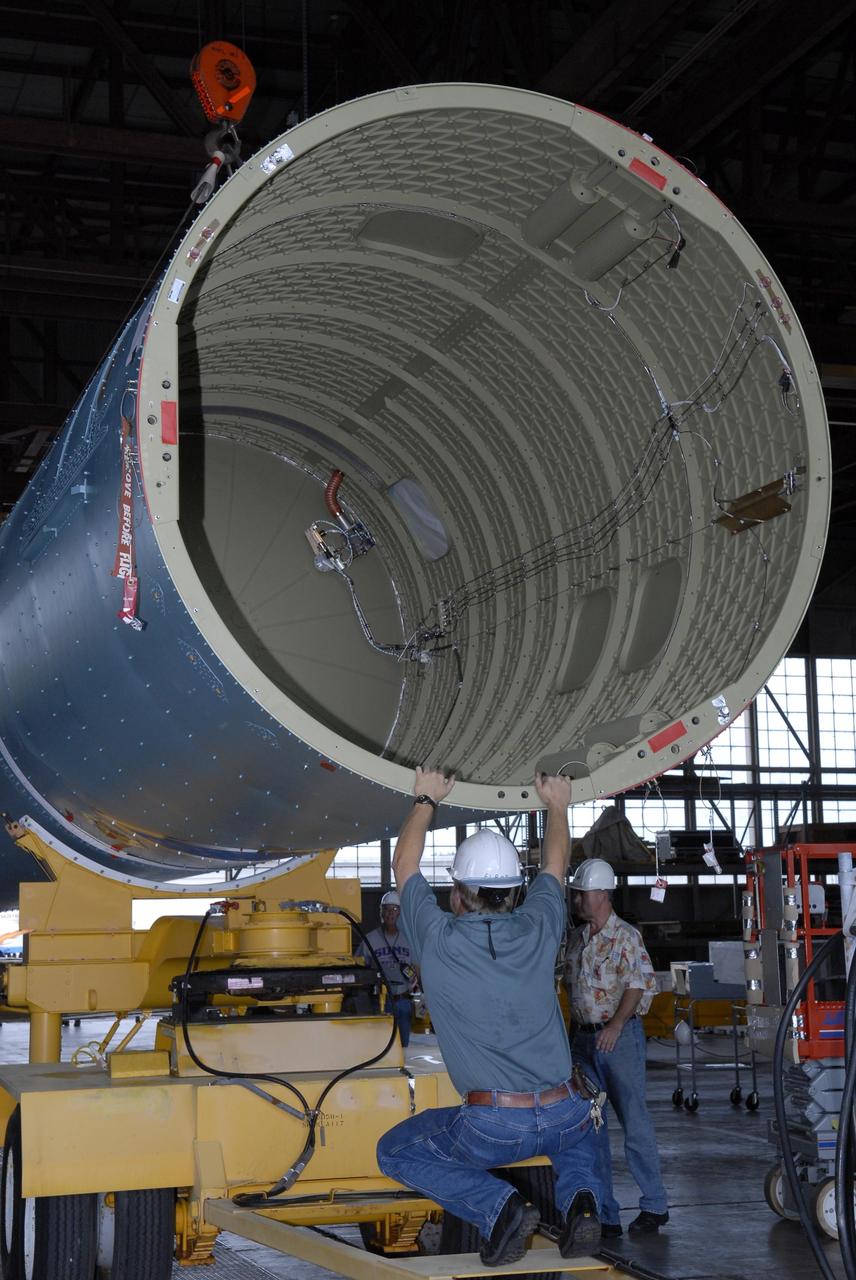
KENNEDY SPACE CENTER, FLA. -- Inside the Hangar M on Cape Canaveral Air Force Station, United Launch Alliance workers help guide the Delta II first stage onto its transporter. The Delta will be moved to the launch pad for the future launch of a Global Positioning Satellite. Photo credit: NASA/Kim Shiflett
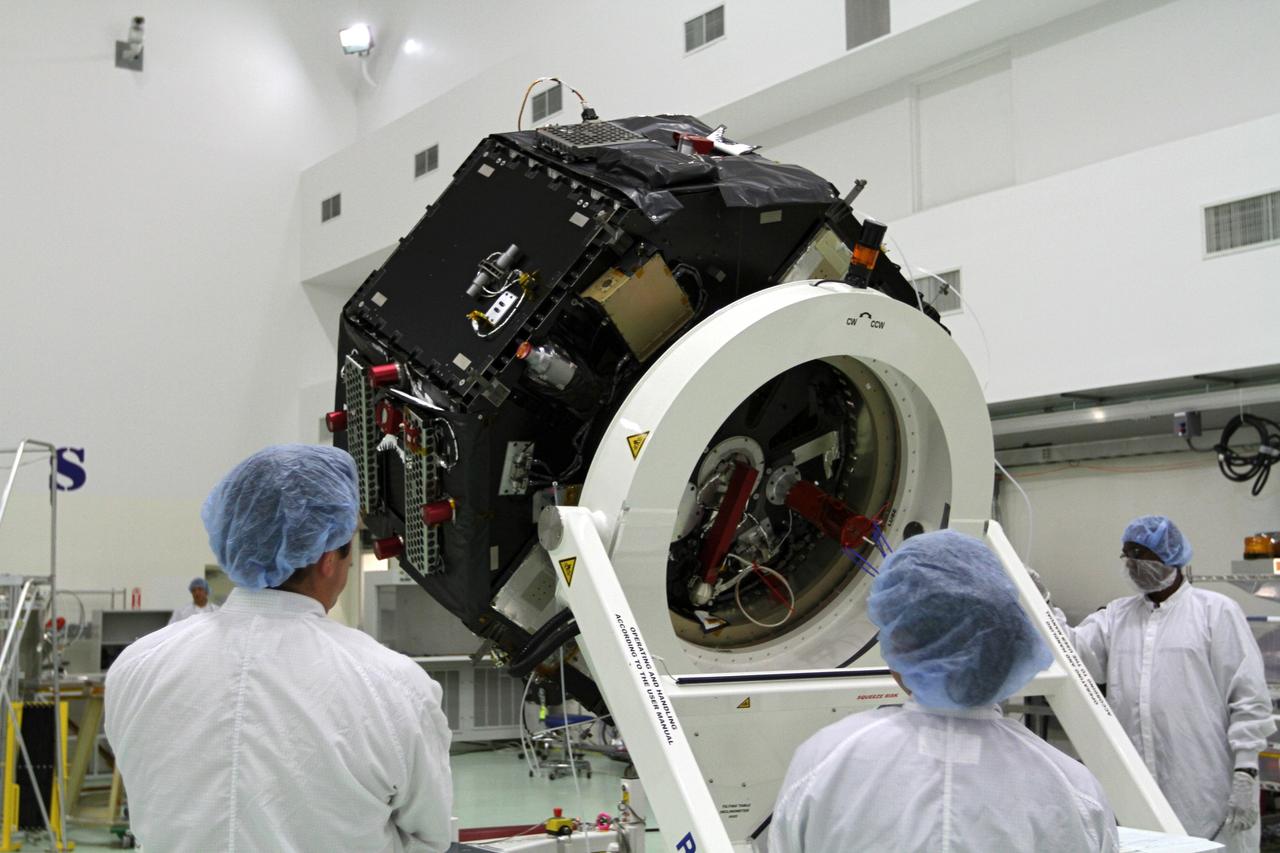
CAPE CANAVERAL, Fla. – Inside the Astrotech payload processing facility near NASA’s Kennedy Space Center in Florida, technicians monitor the progress as the Radiation Belt Storm Probes, or RBSP, spacecraft B is lowered to a horizontal position. The RBSP had been in a vertical position for testing. NASA’s RBSP mission will help us understand the sun’s influence on Earth and near-Earth space by studying the Earth’s radiation belts on various scales of space and time. RBSP will begin its mission of exploration of Earth’s Van Allen radiation belts and the extremes of space weather after its launch aboard a United Launch Alliance Atlas V rocket. Launch is targeted for Aug. 23. For more information, visit http://www.nasa.gov/rbsp. Photo credit: NASA/Kim Shiflett
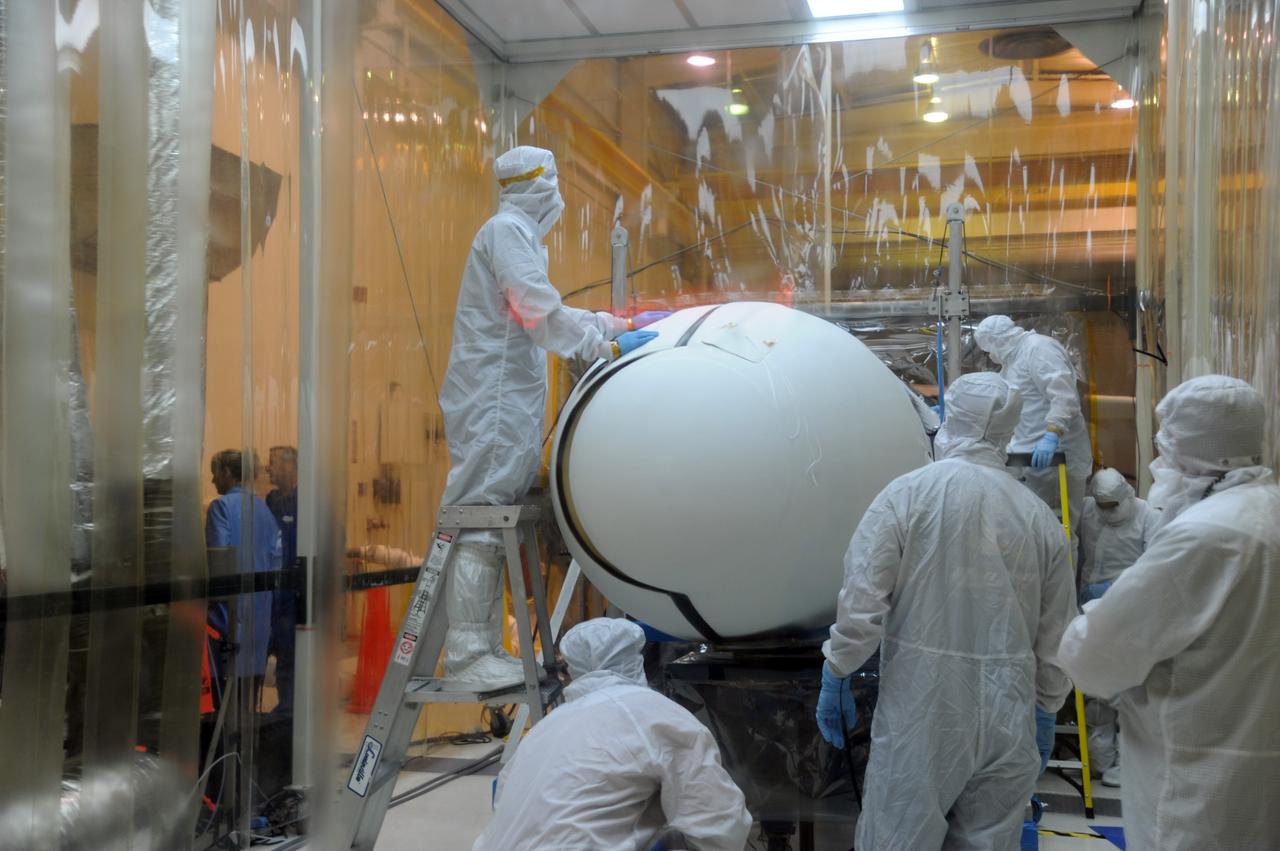
VANDENBERG AIR FORCE BASE, Calif. – In Orbital Sciences’ hangar on Vandenberg Air Force Base in California, NASA’s Nuclear Spectroscopic Telescope Array, or NuSTAR, is hidden from sight as the Pegasus fairing closes around it during the fairing’s reinstallation. Access to the spacecraft was needed for compatibility testing to verify communication with a tracking station in Hawaii. With the change in the launch timeframe to June, this station will be needed to support launch. After processing of Orbital’s Pegasus XL rocket and the spacecraft is complete, they will be flown on Orbital's L-1011 carrier aircraft from Vandenberg, to the U.S. Army's Ronald Reagan Ballistic Missile Defense Test Site on Kwajalein Atoll, part of the Marshall Islands in the Pacific Ocean. The Pegasus, mated to its NuSTAR payload, will be launched from the carrier aircraft 117 nautical miles south of Kwajalein at latitude 6.75 degrees north of the equator. The high-energy X-ray telescope will conduct a census of black holes, map radioactive material in young supernovae remnants, and study the origins of cosmic rays and the extreme physics around collapsed stars. Launch is scheduled for June 13. For more information, visit http://www.nasa.gov/nustar. Photo credit: U.S. Air Force 30th Space Wing/Aaron Taubman, VAFB
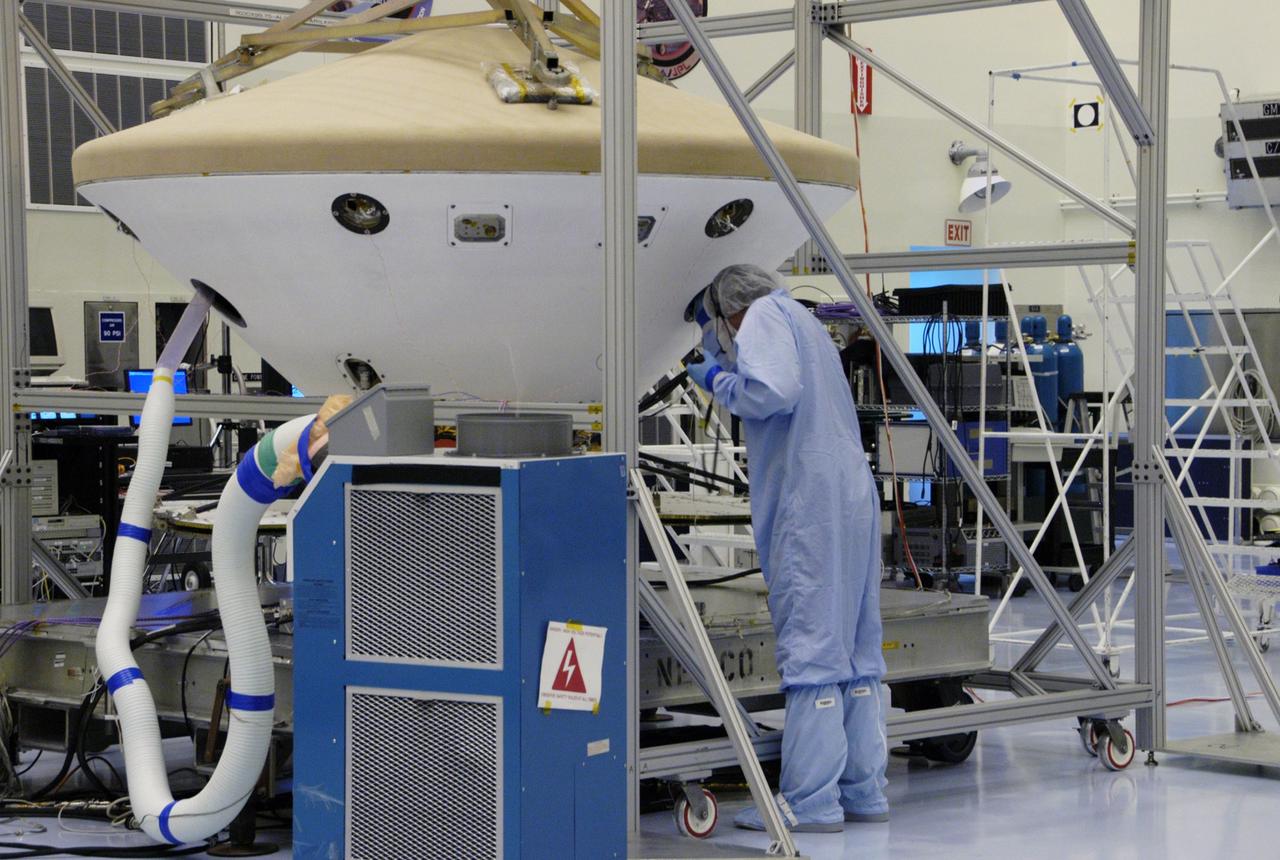
KENNEDY SPACE CENTER, FLA. -- In the Payload Hazardous Servicing Facility, a worker monitors the Phoenix spacecraft during a heat shield deployment test, with a firing of ordnance associated with the separation device. Phoenix will land in icy soils near the north polar permanent ice cap of Mars and explore the history of the water in these soils and any associated rocks, while monitoring polar climate. Landing is planned in May 2008 on arctic ground where a mission currently in orbit, Mars Odyssey, has detected high concentrations of ice just beneath the top layer of soil. Launch of Phoenix aboard a Delta II rocket is targeted for Aug. 3 from Cape Canaveral Air Force Station in Florida. Photo credit: NASA/George Shelton
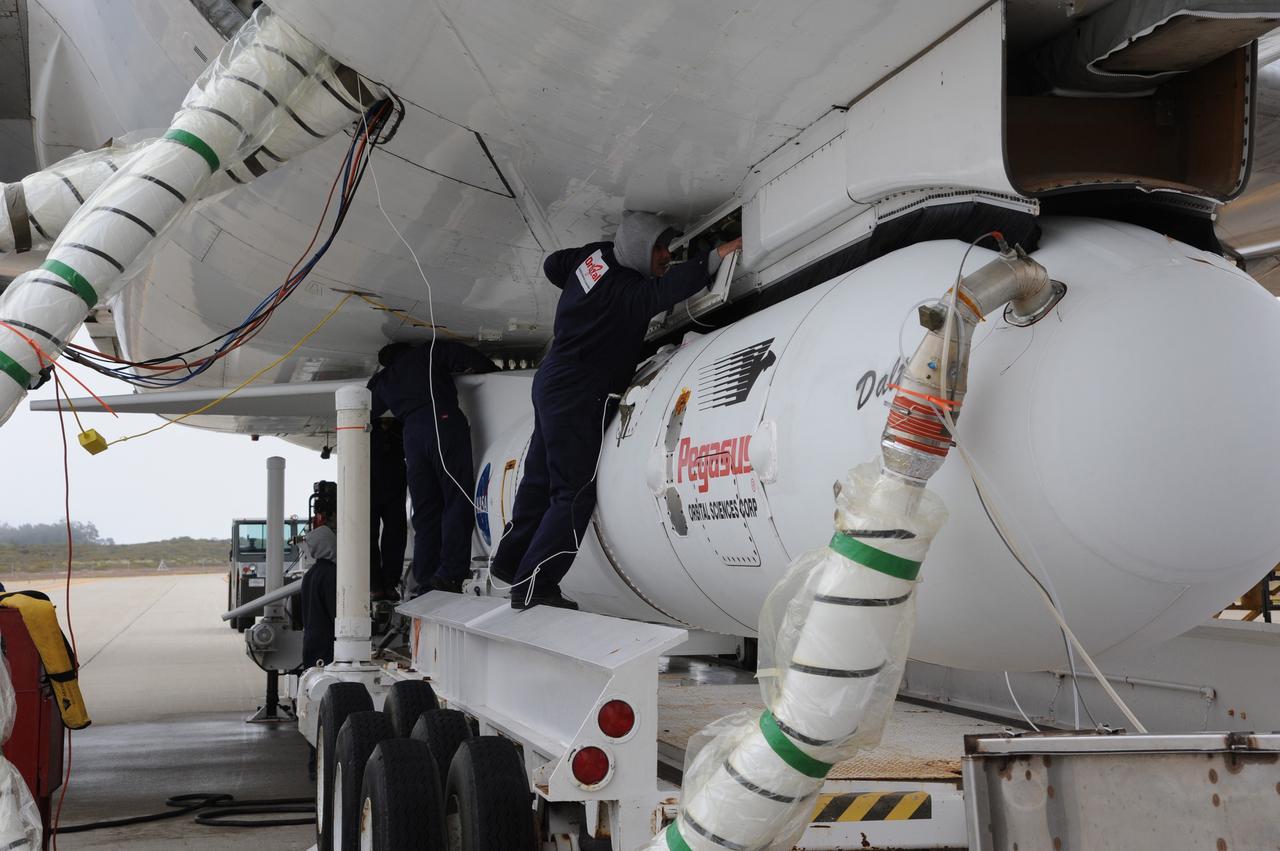
VANDENBERG AIR FORCE BASE, Calif. – Technicians attach a coolant line to the fairing enclosing NASA’s Nuclear Spectroscopic Telescope Array, or NuSTAR, mated to Orbital Sciences’ Pegasus XL rocket, beneath Orbital’s L-1011 carrier aircraft at the “hot pad,” located on the ramp adjacent to the runway on Vandenberg Air Force Base in California. The duo will be flown from Vandenberg to the U.S. Army's Ronald Reagan Ballistic Missile Defense Test Site on Kwajalein Atoll, part of the Marshall Islands in the Pacific Ocean. The Pegasus and its NuSTAR payload will be launched June 13 from the carrier aircraft 117 nautical miles south of Kwajalein at latitude 6.75 degrees north of the equator. The high-energy X-ray telescope will conduct a census of black holes, map radioactive material in young supernovae remnants, and study the origins of cosmic rays and the extreme physics around collapsed stars. For more information, visit http://www.nasa.gov/nustar. Photo credit: NASA/Chris Wiant, VAFB
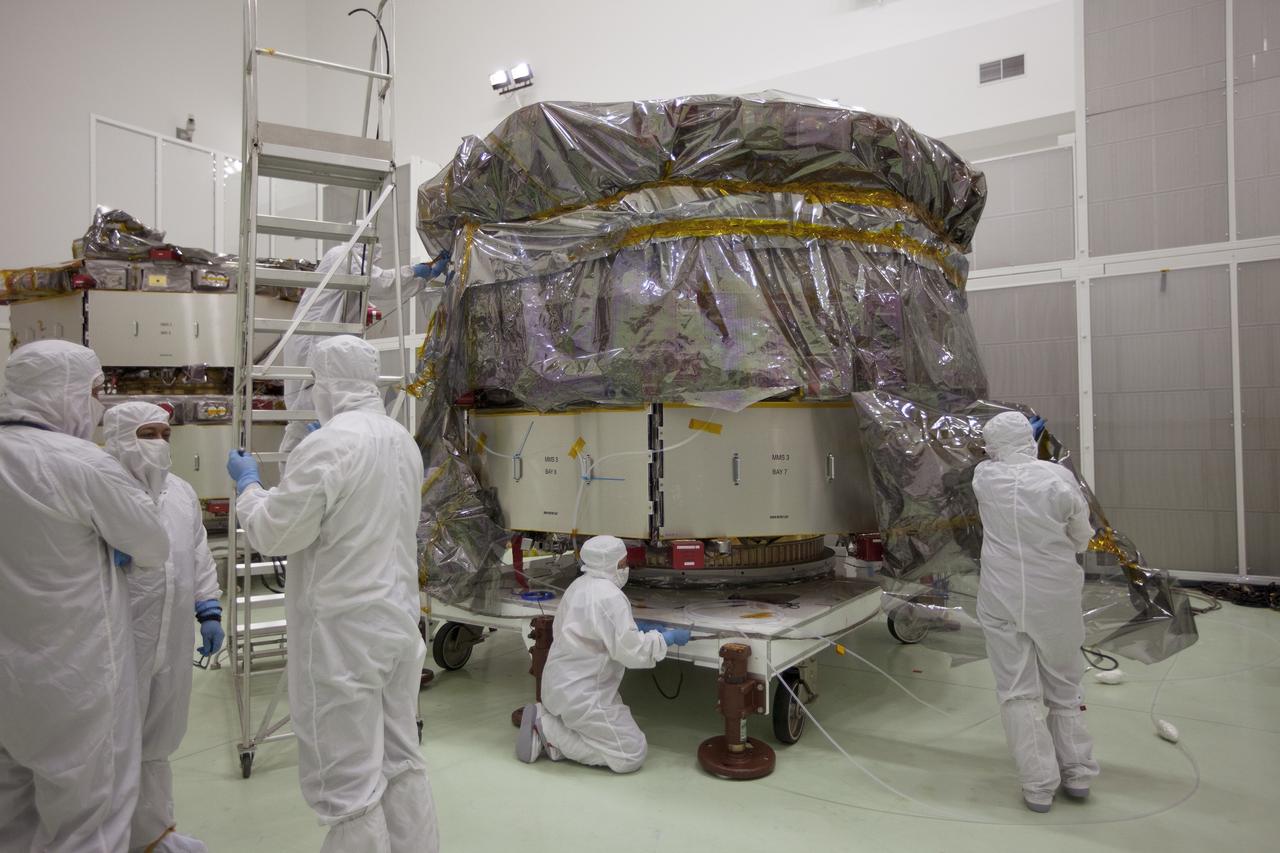
CAPE CANAVERAL, Fla. – The protective covering is removed from the two Magnetospheric Multiscale, or MMS, spacecraft comprising the mission’s upper stack in the Building 1 high bay of the Astrotech payload processing facility in Titusville, Florida, near Kennedy Space Center. The two MMS spacecraft comprising the lower stack arrived at Astrotech on Oct. 29. The Magnetospheric Multiscale mission is a Solar Terrestrial Probes mission comprising four identically instrumented spacecraft that will use Earth’s magnetosphere as a laboratory to study the microphysics of three fundamental plasma processes: magnetic reconnection, energetic particle acceleration and turbulence. Launch aboard a United Launch Alliance Atlas V rocket from Space Launch Complex 41 on Cape Canaveral Air Force Station is targeted for March 12, 2015. To learn more about MMS, visit http://mms.gsfc.nasa.gov. Photo credit: NASA/Kim Shiflett
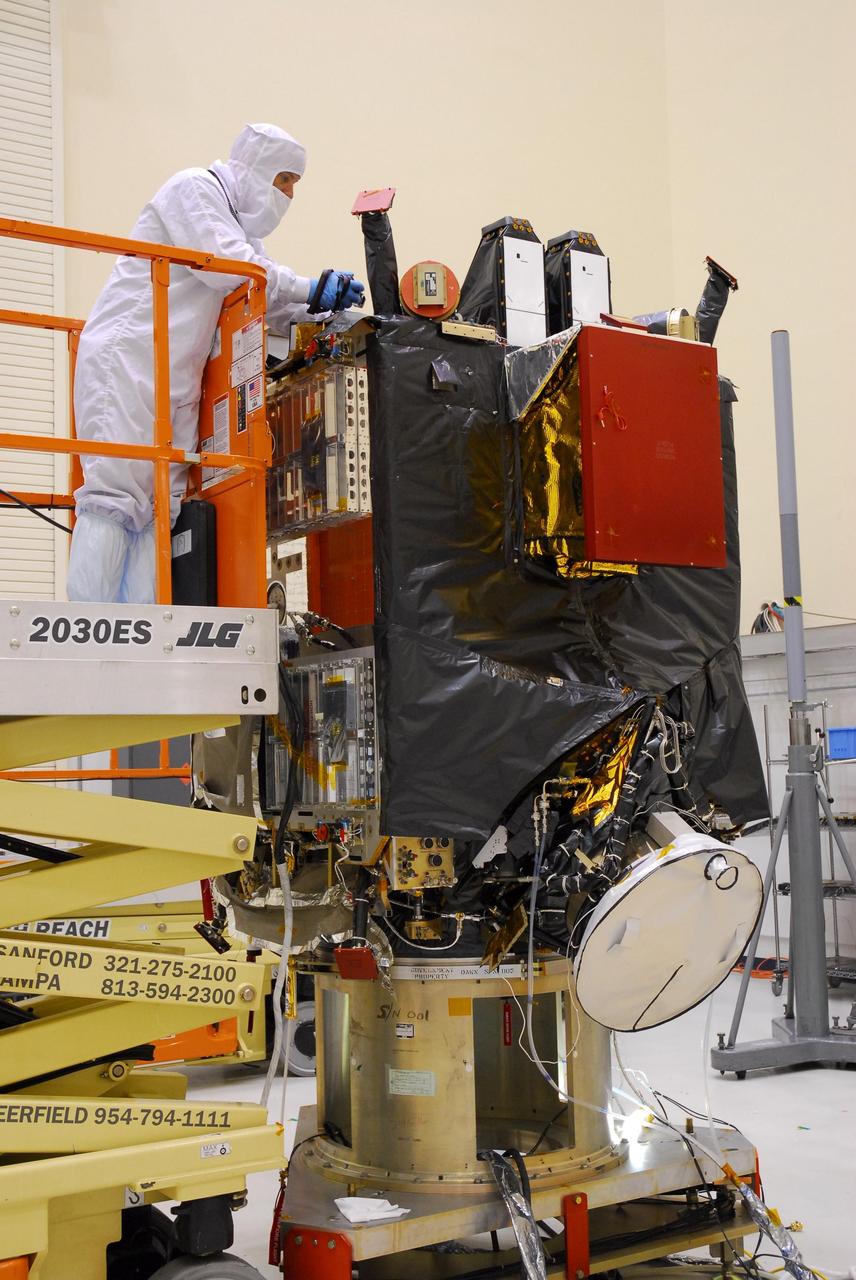
KENNEDY SPACE CENTER, FLA. -- In a clean room at Astrotech, workers prepare the Dawn spacecraft for thermal blanket installation. Dawn's mission is to explore two of the asteroid belt's most intriguing and dissimilar occupants: asteroid Vesta and the dwarf planet Ceres. Dawn is scheduled to launch June 30 from Launch Complex 17-B. Photo credit: NASA/George Shelton
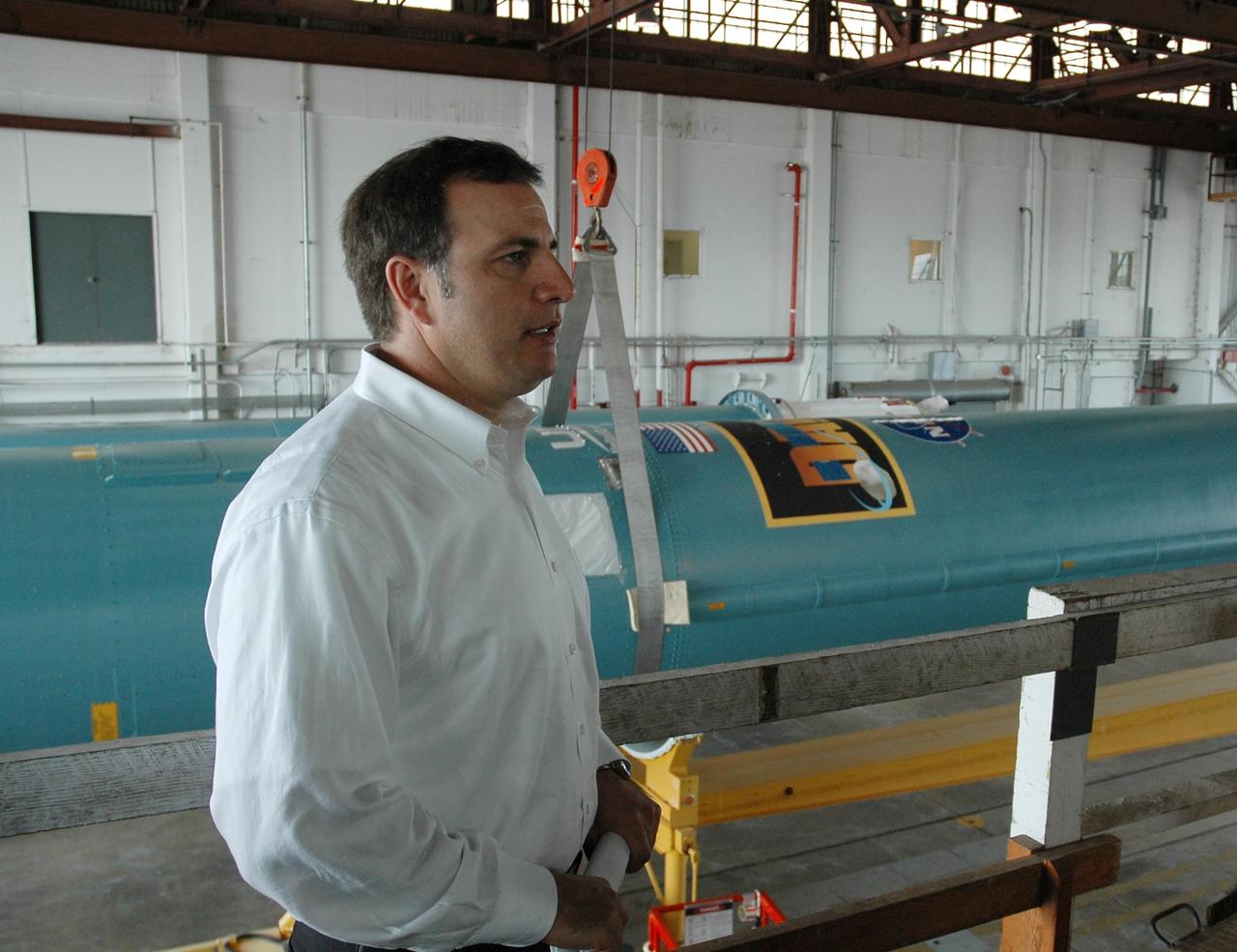
KENNEDY SPACE CENTER, FLA. -- Inside Hangar M on Cape Canaveral Air Force Station, Larry Penepent, manager of Launch Operations Engineering with United Launch Alliance, oversees the transfer of the Delta II first stage onto a transporter. The Delta will be moved to the launch pad. Dawn's mission is to explore two of the asteroid belt's most intriguing and dissimilar occupants: asteroid Vesta and the dwarf planet Ceres. Dawn is scheduled to launch June 30 from Launch Complex 17-B. Photo credit: NASA/Jack Pfaller
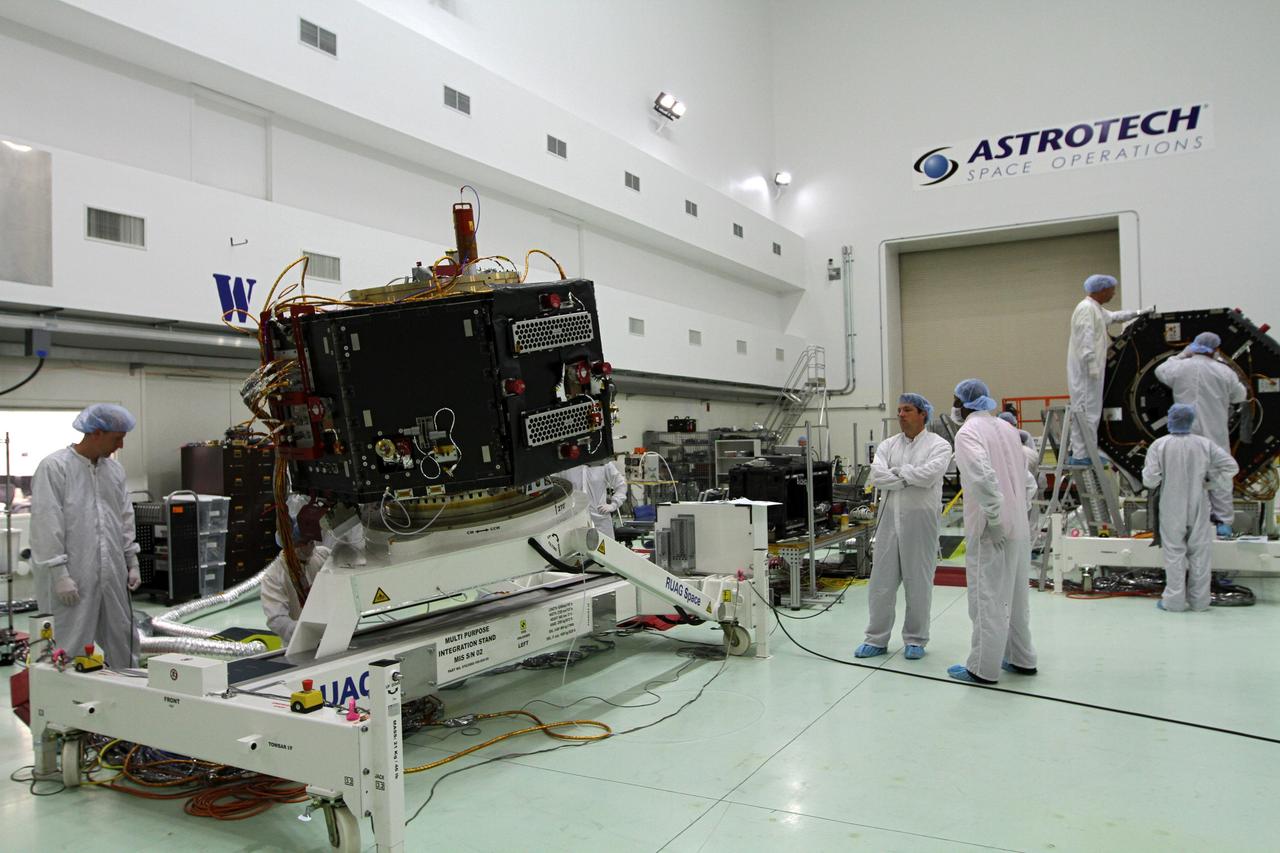
CAPE CANAVERAL, Fla. – Inside the Astrotech payload processing facility near NASA’s Kennedy Space Center in Florida, technicians monitor the progress as the Radiation Belt Storm Probes, or RBSP, spacecraft B is lowered to a horizontal position. The RBSP had been in a vertical position for testing. NASA’s RBSP mission will help us understand the sun’s influence on Earth and near-Earth space by studying the Earth’s radiation belts on various scales of space and time. RBSP will begin its mission of exploration of Earth’s Van Allen radiation belts and the extremes of space weather after its launch aboard a United Launch Alliance Atlas V rocket. Launch is targeted for Aug. 23. For more information, visit http://www.nasa.gov/rbsp. Photo credit: NASA/Kim Shiflett
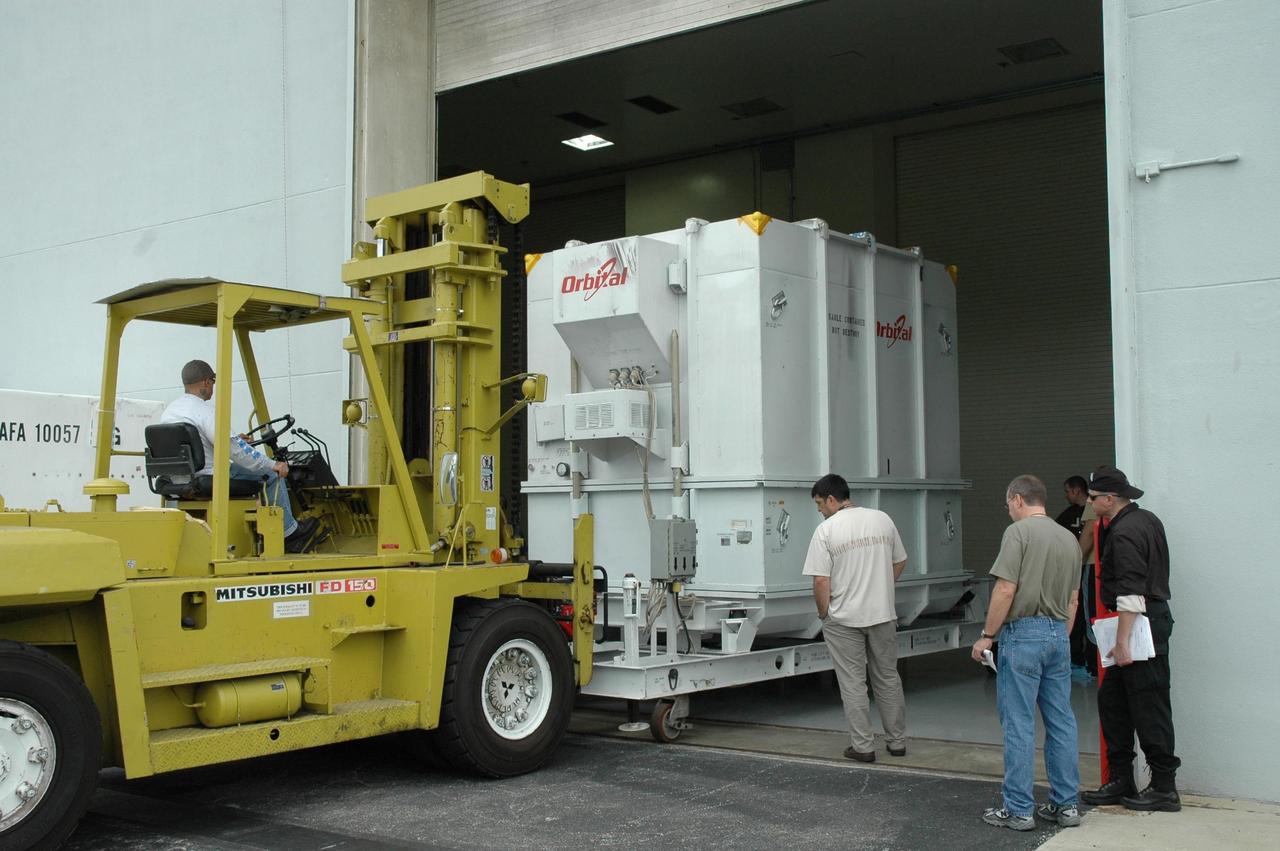
KENNEDY SPACE CENTER, FLA. -- At Astrotech, the shipping container holding the Dawn spacecraft is moved into the high bay of the Payload Processing Facility. The spacecraft will next be removed from the container. Dawn's mission is to explore two of the asteroid belt's most intriguing and dissimilar occupants: asteroid Vesta and the dwarf planet Ceres. The Dawn mission is managed by JPL, a division of the California Institute of Technology in Pasadena, for NASA's Science Mission Directorate in Washington, D.C. Photo credit: NASA/Jim Grossmann
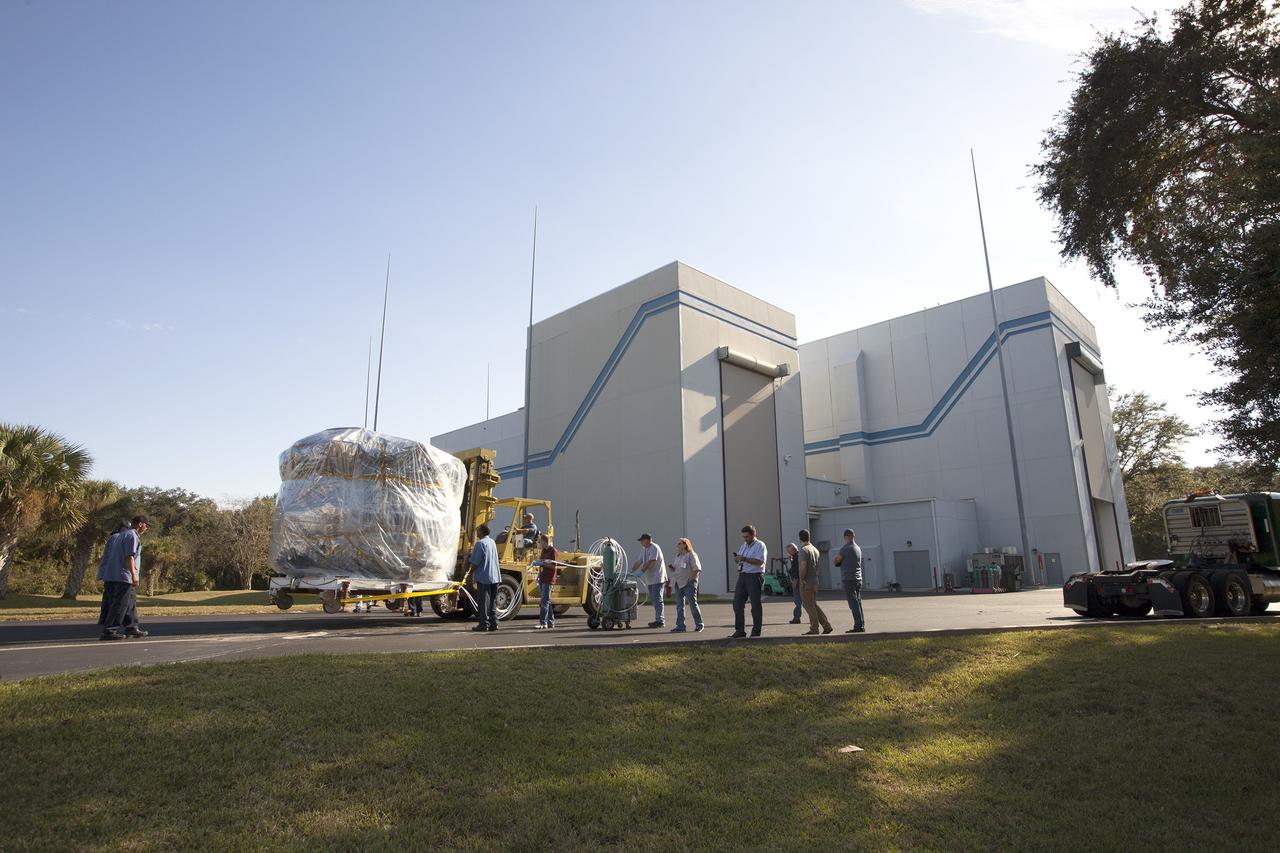
CAPE CANAVERAL, Fla. – Two Magnetospheric Multiscale, or MMS, spacecraft comprising the mission’s upper stack are towed between Buildings 1 and 2 of the Astrotech payload processing facility in Titusville, Florida, near Kennedy Space Center. The two MMS spacecraft comprising the lower stack arrived at Astrotech on Oct. 29. The Magnetospheric Multiscale mission is a Solar Terrestrial Probes mission comprising four identically instrumented spacecraft that will use Earth’s magnetosphere as a laboratory to study the microphysics of three fundamental plasma processes: magnetic reconnection, energetic particle acceleration and turbulence. Launch aboard a United Launch Alliance Atlas V rocket from Space Launch Complex 41 on Cape Canaveral Air Force Station is targeted for March 12, 2015. To learn more about MMS, visit http://mms.gsfc.nasa.gov. Photo credit: NASA/Kim Shiflett
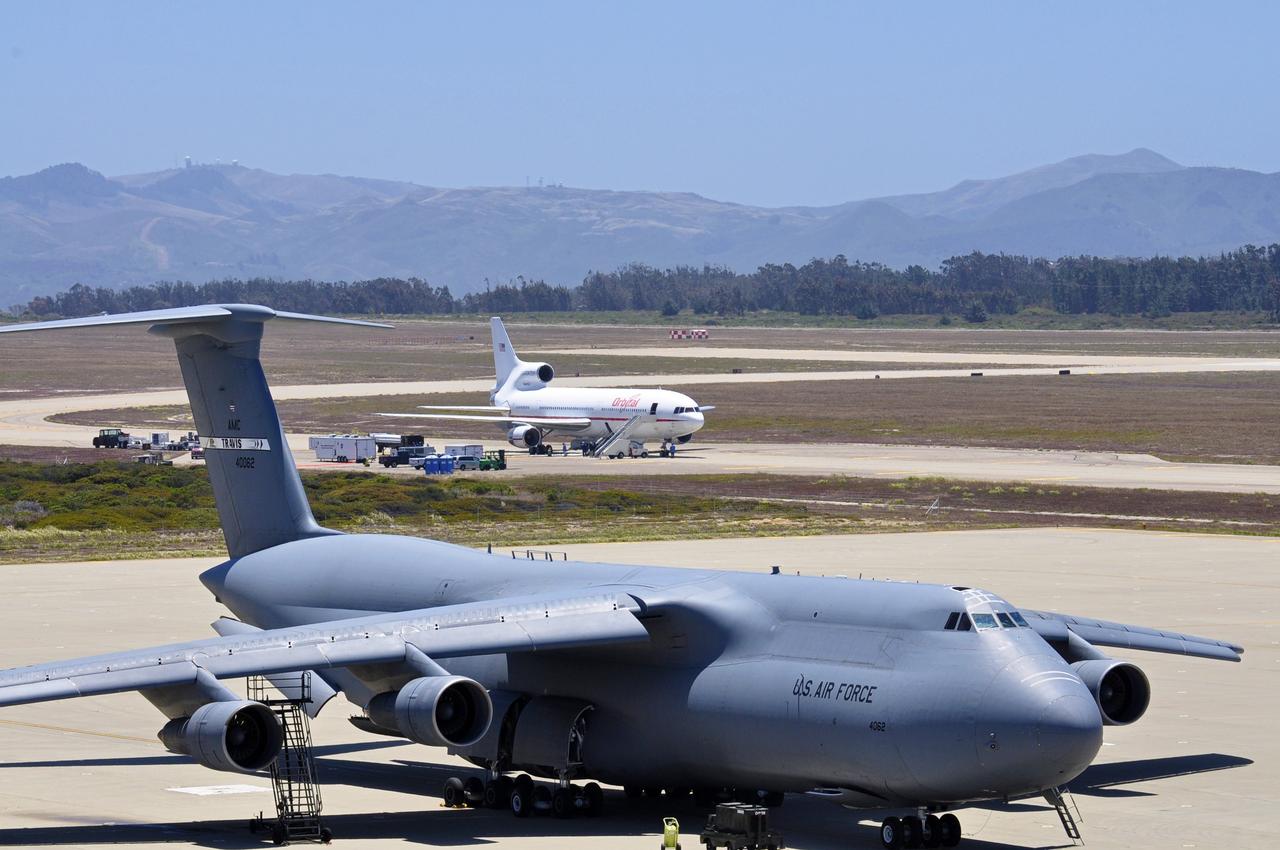
VANDENBERG AIR FORCE BASE, Calif. – A U.S. Air Force C-5 Galaxy cargo aircraft, foreground, sits on the tarmac at Vandenberg Air Force Base in California as final preparations are under way for the departure of Orbital Sciences’ L-1011 carrier aircraft for the U.S. Army's Ronald Reagan Ballistic Missile Defense Test Site on Kwajalein Atoll, part of the Marshall Islands in the Pacific Ocean. Orbital’s L-1011 is transporting their Pegasus rocket and NASA’s Nuclear Spectroscopic Telescope Array, or NuSTAR, to Kwajalein for launch. The Pegasus, mated to its NuSTAR payload, will be launched from the carrier aircraft 117 nautical miles south of Kwajalein at latitude 6.75 degrees north of the equator. The high-energy X-ray telescope will conduct a census of black holes, map radioactive material in young supernovae remnants, and study the origins of cosmic rays and the extreme physics around collapsed stars. Launch is scheduled for June 13. For more information, visit http://www.nasa.gov/nustar. Photo credit: NASA/Randy Beaudoin, VAFB