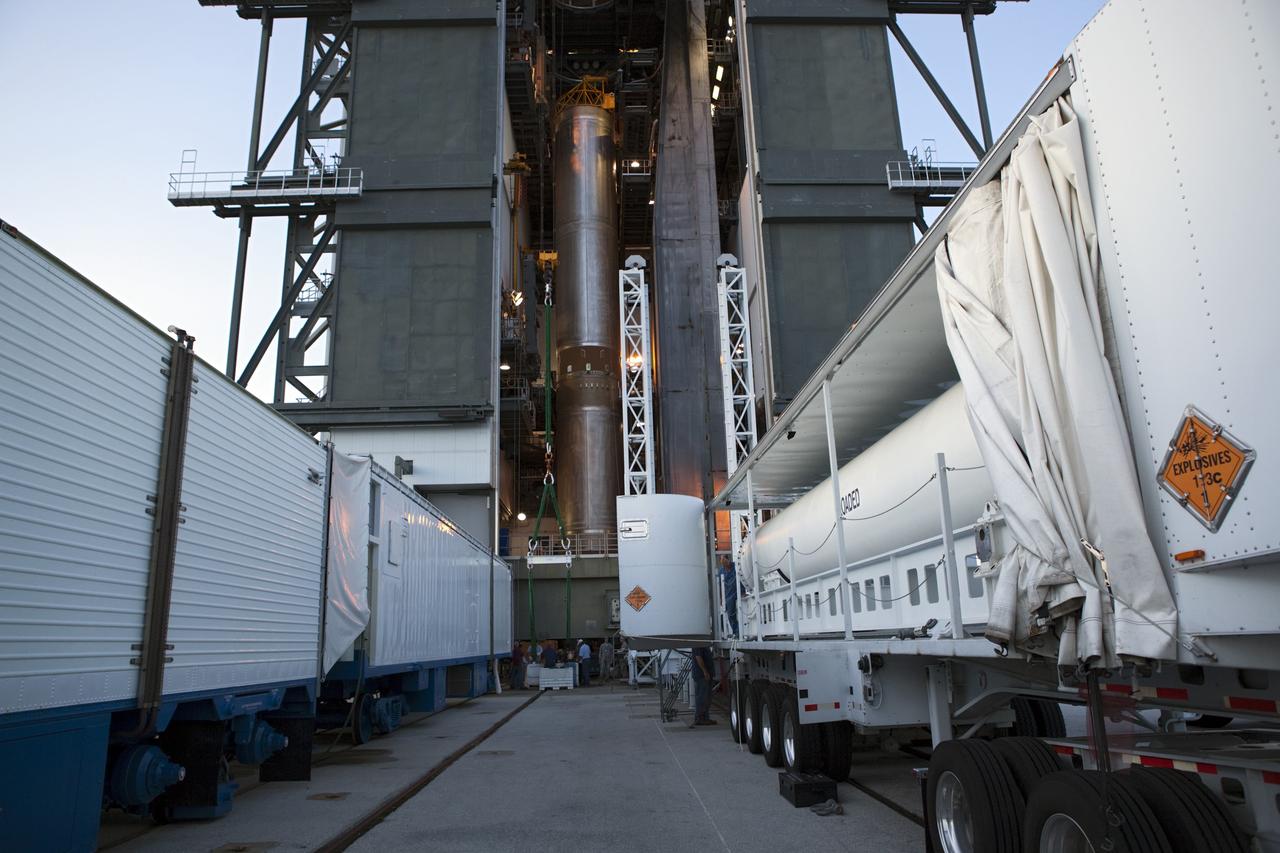
CAPE CANAVERAL, Fla. -- At the Vertical Integration Facility at Space Launch Complex 41 on Cape Canaveral Air Force Station in Florida, a trailer carrying a solid rocket motor (SRM) awaits unloading. The SRM will be mated to a United Launch Alliance Atlas V rocket being prepared to launch NASA's Mars Science Laboratory (MSL) mission. MSL's components include a compact car-sized rover, Curiosity, which has 10 science instruments designed to search for evidence on whether Mars has had environments favorable to microbial life, including chemical ingredients for life. The unique rover will use a laser to look inside rocks and release its gasses so that the rover’s spectrometer can analyze and send the data back to Earth. MSL is scheduled to launch Nov. 25 with a window extending to Dec. 18 and arrival at Mars Aug. 2012. For more information, visit http://www.nasa.gov/msl. Photo credit: NASA/Dimitri Gerondidakis
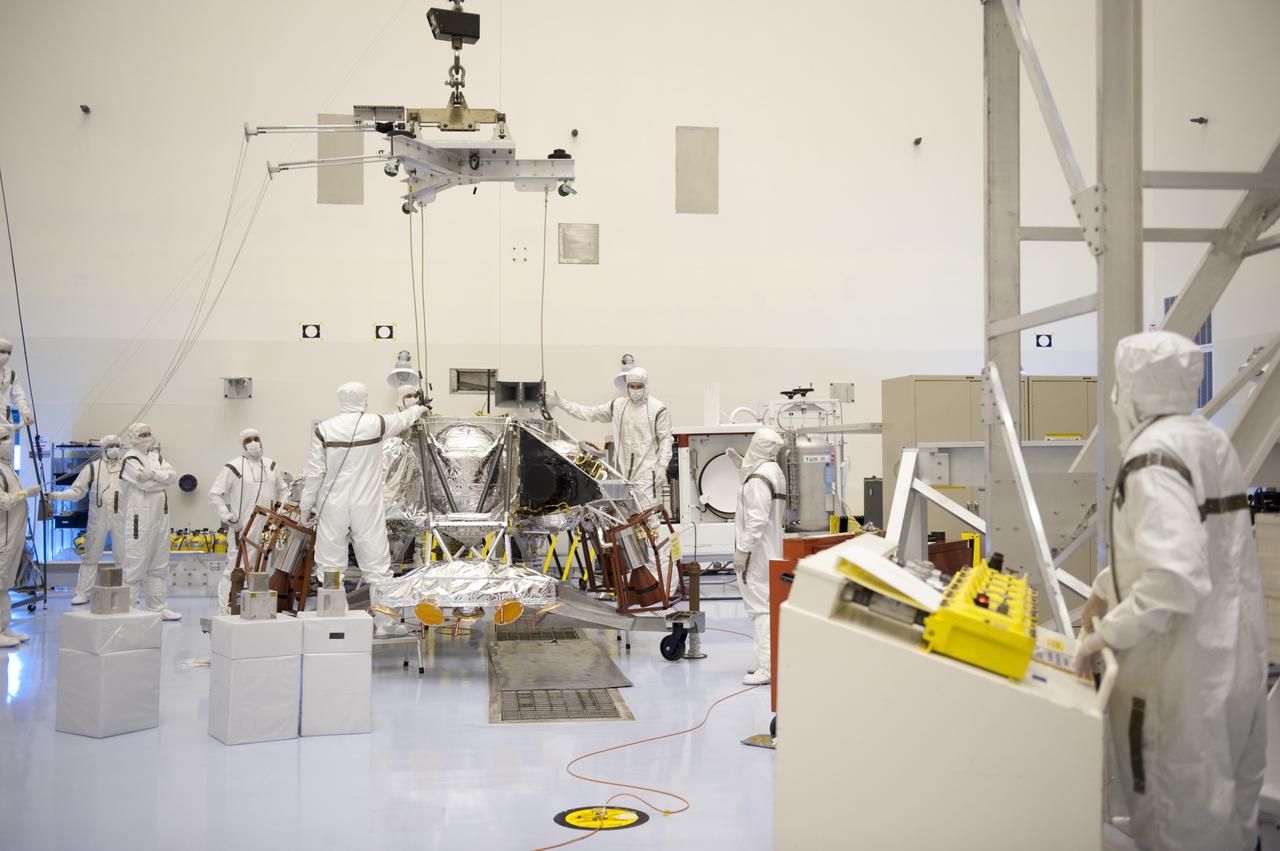
CAPE CANAVERAL, Fla. – At the Payload Hazardous Servicing Facility at NASA’s Kennedy Space Center in Florida, technicians dressed in clean room attire, known as "bunny" suits, attach an overhead crane to a rocket-powered descent stage preparing for integration with NASA's Mars Science Laboratory (MSL) rover, known as Curiosity. The descent stage will lower Curiosity to the surface of Mars. A United Launch Alliance Atlas V-541 configuration will be used to loft MSL into space. Curiosity’s 10 science instruments are designed to search for evidence on whether Mars has had environments favorable to microbial life, including chemical ingredients for life. The unique rover will use a laser to look inside rocks and release its gasses so that the rover’s spectrometer can analyze and send the data back to Earth. MSL is scheduled to launch Nov. 25 with a window extending to Dec. 18 and arrival at Mars Aug. 2012. For more information, visit http://www.nasa.gov/msl. Photo credit: NASA/Kim Shiflett
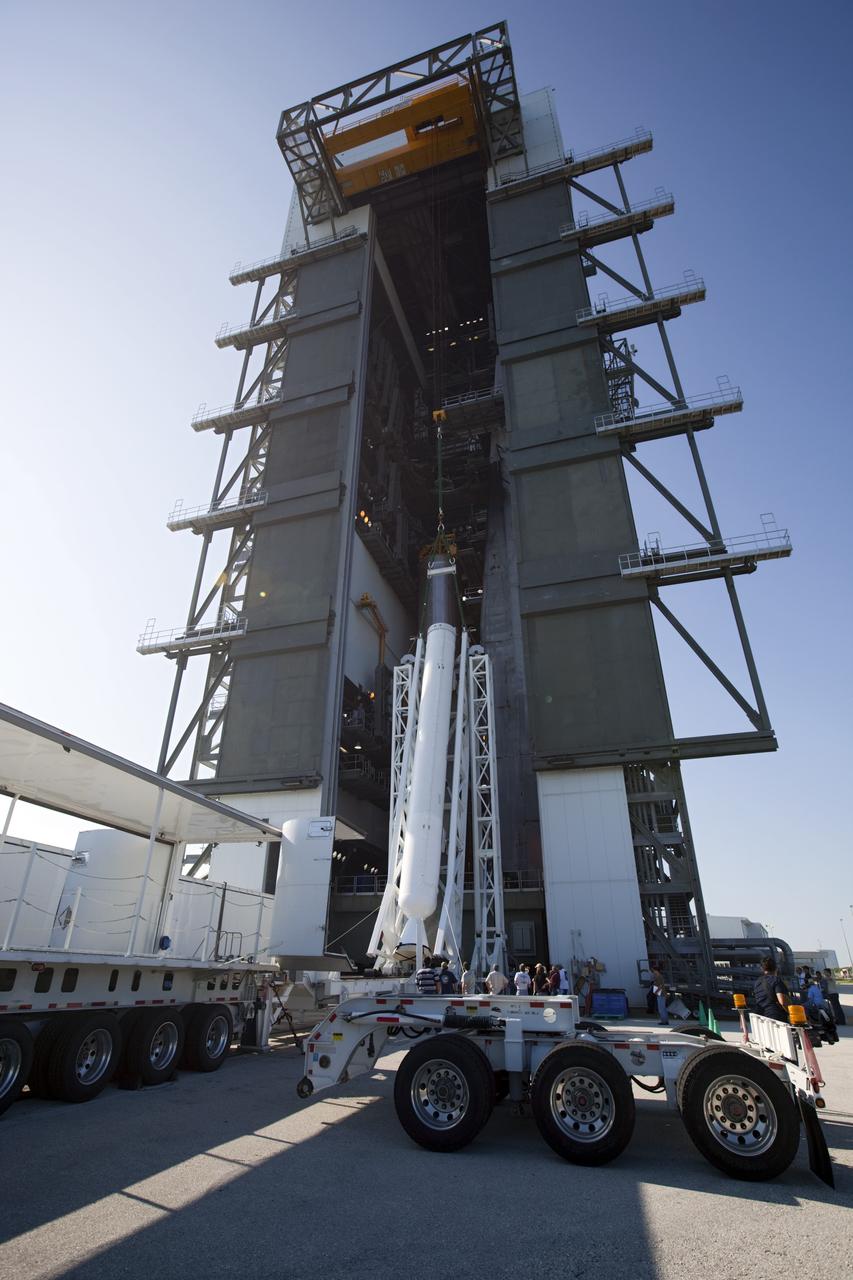
CAPE CANAVERAL, Fla. – At the Vertical Integration Facility at Space Launch Complex 41 on Cape Canaveral Air Force Station in Florida, technicians use a lifting device to elevate a solid rocket motor (SRM) into an upright position for mating to a United Launch Alliance Atlas V rocket which will carry NASA's Mars Science Laboratory (MSL) mission. MSL's components include a compact car-sized rover, Curiosity, which has 10 science instruments designed to search for evidence on whether Mars has had environments favorable to microbial life, including chemical ingredients for life. The unique rover will use a laser to look inside rocks and release its gasses so that the rover’s spectrometer can analyze and send the data back to Earth. MSL is scheduled to launch Nov. 25 with a window extending to Dec. 18 and arrival at Mars Aug. 2012. For more information, visit http://www.nasa.gov/msl. Photo credit: NASA/Dimitri Gerondidakis
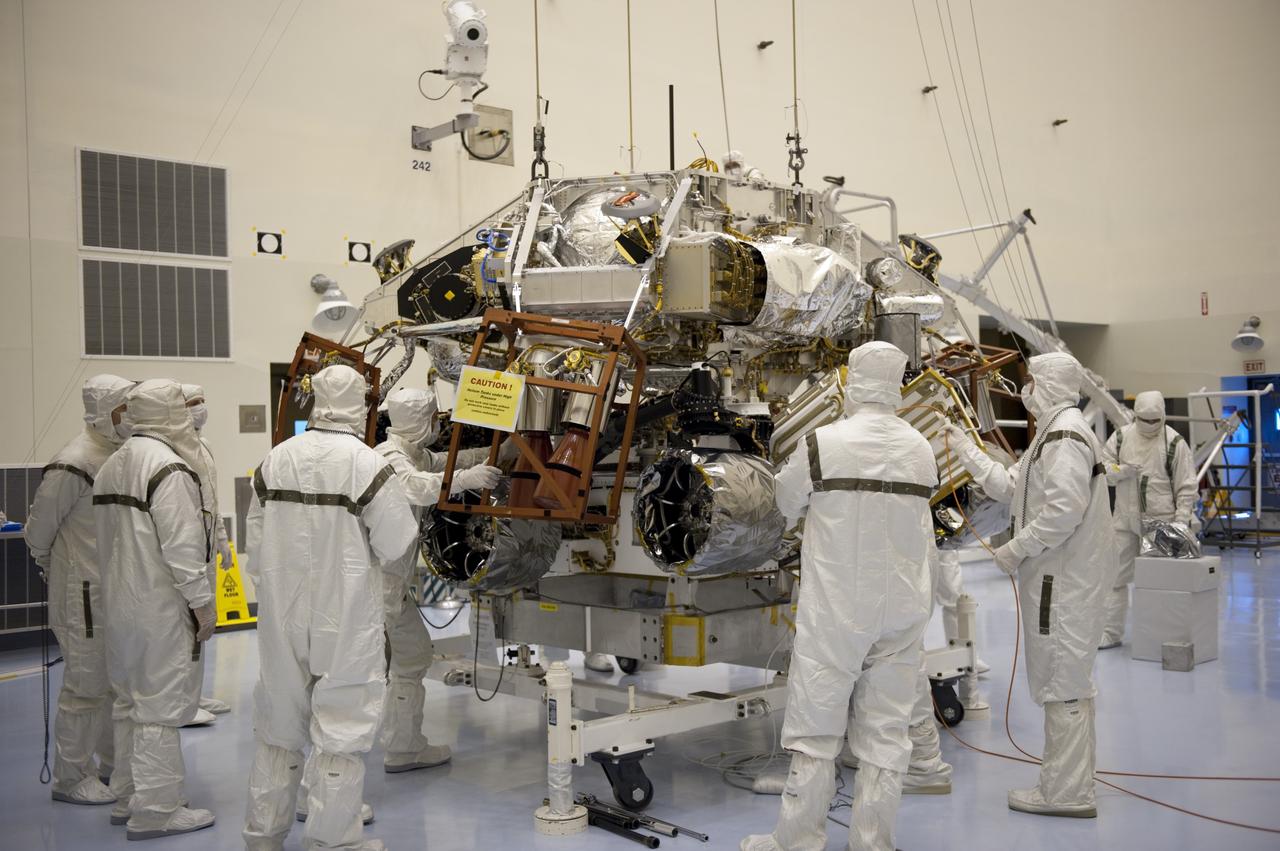
CAPE CANAVERAL, Fla. – Under the watchful eyes of technicians at the Payload Hazardous Servicing Facility at NASA's Kennedy Space Center in Florida, a rocket-powered descent stage, after being lowered by an overhead crane, is integrated with NASA's Mars Science Laboratory (MSL) rover, known as Curiosity. The descent stage will lower Curiosity to the surface of Mars. A United Launch Alliance Atlas V-541 configuration will be used to loft MSL into space. Curiosity’s 10 science instruments are designed to search for evidence on whether Mars has had environments favorable to microbial life, including chemical ingredients for life. The unique rover will use a laser to look inside rocks and release its gasses so that the rover’s spectrometer can analyze and send the data back to Earth. MSL is scheduled to launch Nov. 25 with a window extending to Dec. 18 and arrival at Mars Aug. 2012. For more information, visit http://www.nasa.gov/msl. Photo credit: NASA/Kim Shiflett

CAPE CANAVERAL, Fla. – Inside the Vertical Integration Facility at Space Launch Complex 41 on Cape Canaveral Air Force Station in Florida, a crane positions the final solid rocket motor (SRM) for mating to the first stage of a United Launch Alliance Atlas V rocket. The Atlas V will carry NASA's Mars Science Laboratory (MSL) mission into space. MSL's components include a compact car-sized rover, Curiosity, which has 10 science instruments designed to search for evidence on whether Mars has had environments favorable to microbial life, including chemical ingredients for life. The unique rover will use a laser to look inside rocks and release its gasses so that the rover’s spectrometer can analyze and send the data back to Earth. MSL is scheduled to launch Nov. 25 with a window extending to Dec. 18 and arrival at Mars Aug. 2012. For more information, visit http://www.nasa.gov/msl. Photo credit: NASA/Jim Grossmann
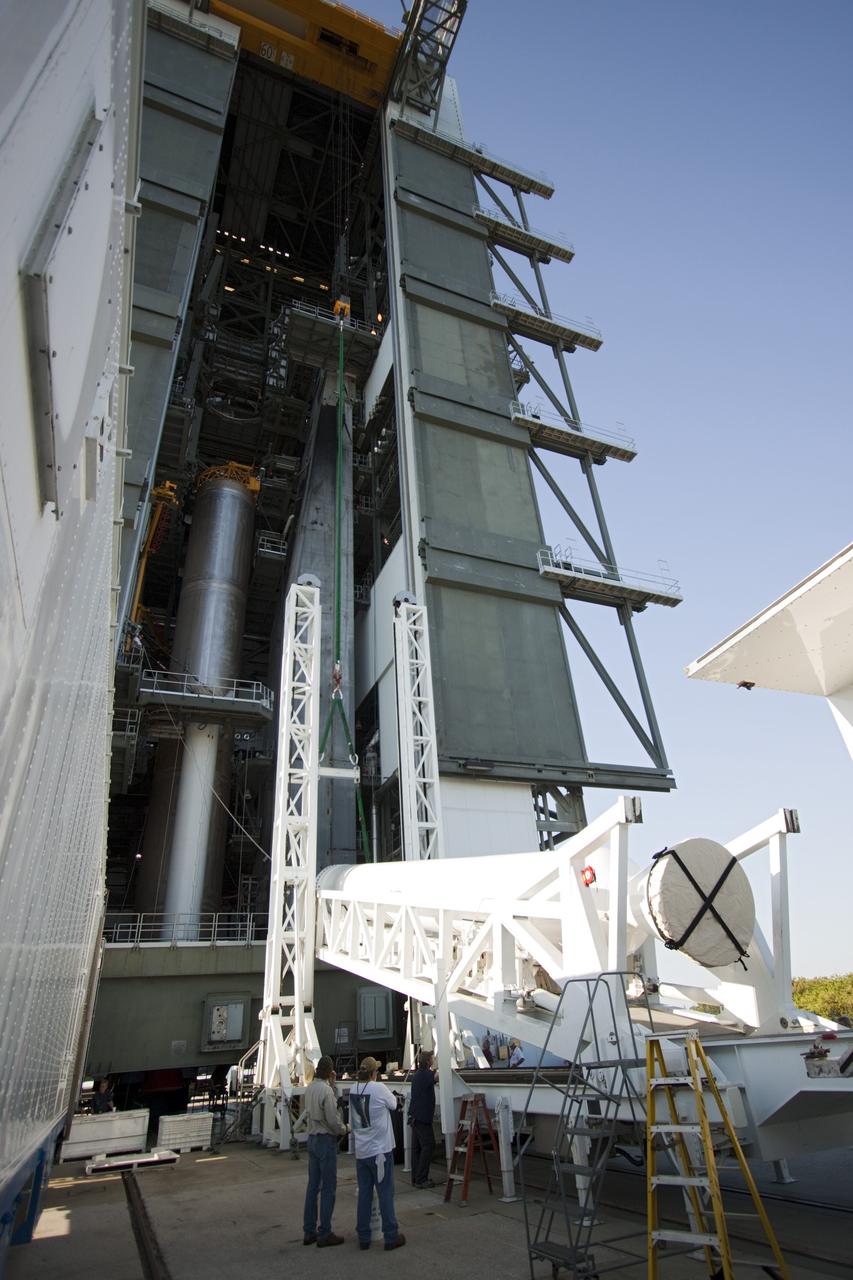
CAPE CANAVERAL, Fla. – At the Vertical Integration Facility at Space Launch Complex 41 on Cape Canaveral Air Force Station in Florida, technicians use a lifting device to elevate the final solid rocket motor (SRM) into an upright position for mating to a United Launch Alliance Atlas V rocket. The Atlas V will carry NASA's Mars Science Laboratory (MSL) mission into space. MSL's components include a compact car-sized rover, Curiosity, which has 10 science instruments designed to search for evidence on whether Mars has had environments favorable to microbial life, including chemical ingredients for life. The unique rover will use a laser to look inside rocks and release its gasses so that the rover’s spectrometer can analyze and send the data back to Earth. MSL is scheduled to launch Nov. 25 with a window extending to Dec. 18 and arrival at Mars Aug. 2012. For more information, visit http://www.nasa.gov/msl. Photo credit: NASA/Jim Grossmann

CAPE CANAVERAL, Fla. – Under the watchful eyes of technicians at the Payload Hazardous Servicing Facility at NASA's Kennedy Space Center in Florida, an overhead crane begins lifting a rocket-powered descent stage for integration with NASA's Mars Science Laboratory (MSL) rover, known as Curiosity. The descent stage will lower Curiosity to the surface of Mars. A United Launch Alliance Atlas V-541 configuration will be used to loft MSL into space. Curiosity’s 10 science instruments are designed to search for evidence on whether Mars has had environments favorable to microbial life, including chemical ingredients for life. The unique rover will use a laser to look inside rocks and release its gasses so that the rover’s spectrometer can analyze and send the data back to Earth. MSL is scheduled to launch Nov. 25 with a window extending to Dec. 18 and arrival at Mars Aug. 2012. For more information, visit http://www.nasa.gov/msl. Photo credit: NASA/Kim Shiflett

CAPE CANAVERAL, Fla. – At the Payload Hazardous Servicing Facility at NASA’s Kennedy Space Center in Florida, technicians dressed in clean room attire, known as "bunny" suits, prepare a rocket-powered descent stage for integration with NASA's Mars Science Laboratory (MSL) rover, known as Curiosity. The descent stage will lower Curiosity to the surface of Mars. A United Launch Alliance Atlas V-541 configuration will be used to loft MSL into space. Curiosity’s 10 science instruments are designed to search for evidence on whether Mars has had environments favorable to microbial life, including chemical ingredients for life. The unique rover will use a laser to look inside rocks and release its gasses so that the rover’s spectrometer can analyze and send the data back to Earth. MSL is scheduled to launch Nov. 25 with a window extending to Dec. 18 and arrival at Mars Aug. 2012. For more information, visit http://www.nasa.gov/msl. Photo credit: NASA/Kim Shiflett
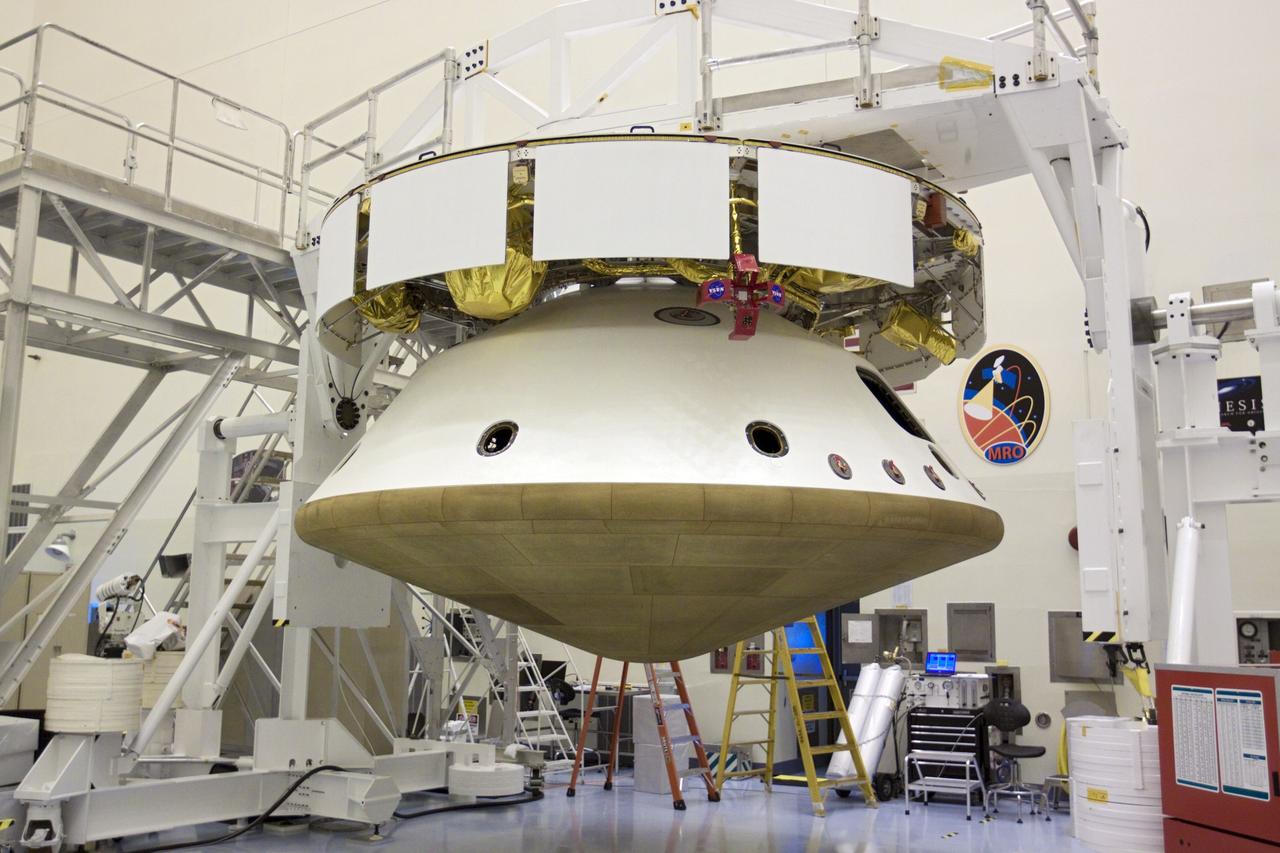
CAPE CANAVERAL, Fla. – In the Payload Hazardous Servicing Facility at NASA’s Kennedy Space Center in Florida, all elements of NASA's Mars Science Laboratory (MSL) mission have come together. The top portion is the cruise stage, next, the aeroshell, (containing the compact car-sized rover Curiosity), and on the bottom, the heat shield. The rover Curiosity has 10 science instruments designed to search for evidence on whether Mars has had environments favorable to microbial life, including chemical ingredients for life. The unique rover will use a laser to look inside rocks and release its gasses so that the rover’s spectrometer can analyze and send the data back to Earth. Launch of MSL aboard a United Launch Alliance Atlas V rocket is scheduled for Nov. 25 from Space Launch Complex 41 on Cape Canaveral Air Force Station in Florida. For more information, visit http://www.nasa.gov/msl. Photo credit: NASA/Glenn Benson
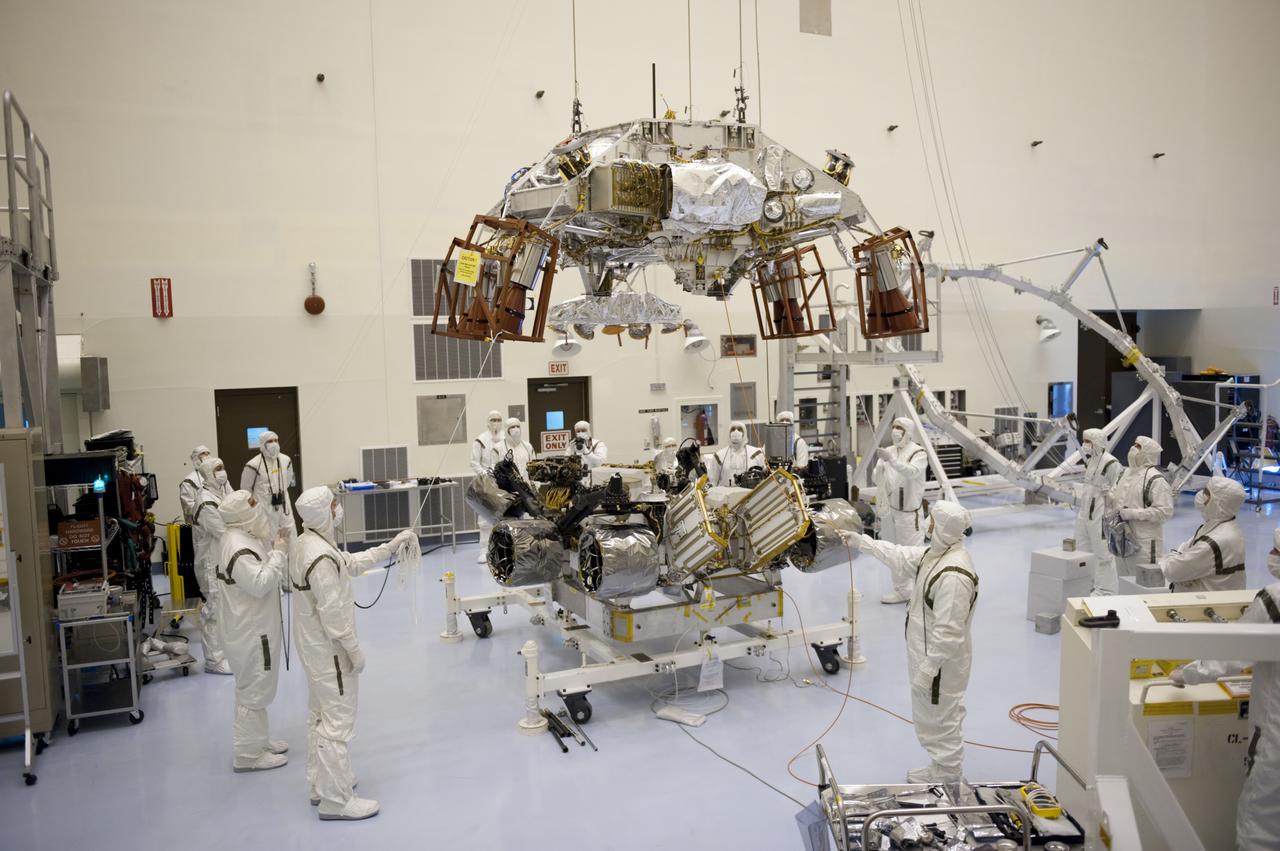
CAPE CANAVERAL, Fla. – Preparing for integration to NASA's Mars Science Laboratory (MSL) rover known as Curiosity, technicians help guide a rocket-powered descent stage over the rover at NASA's Kennedy Space Center Payload Hazardous Servicing Facility. The descent stage will lower Curiosity to the surface of Mars. A United Launch Alliance Atlas V-541 configuration will be used to loft MSL into space. Curiosity’s 10 science instruments are designed to search for evidence on whether Mars has had environments favorable to microbial life, including chemical ingredients for life. The unique rover will use a laser to look inside rocks and release its gasses so that the rover’s spectrometer can analyze and send the data back to Earth. MSL is scheduled to launch Nov. 25 with a window extending to Dec. 18 and arrival at Mars Aug. 2012. For more information, visit http://www.nasa.gov/msl. Photo credit: NASA/Kim Shiflett
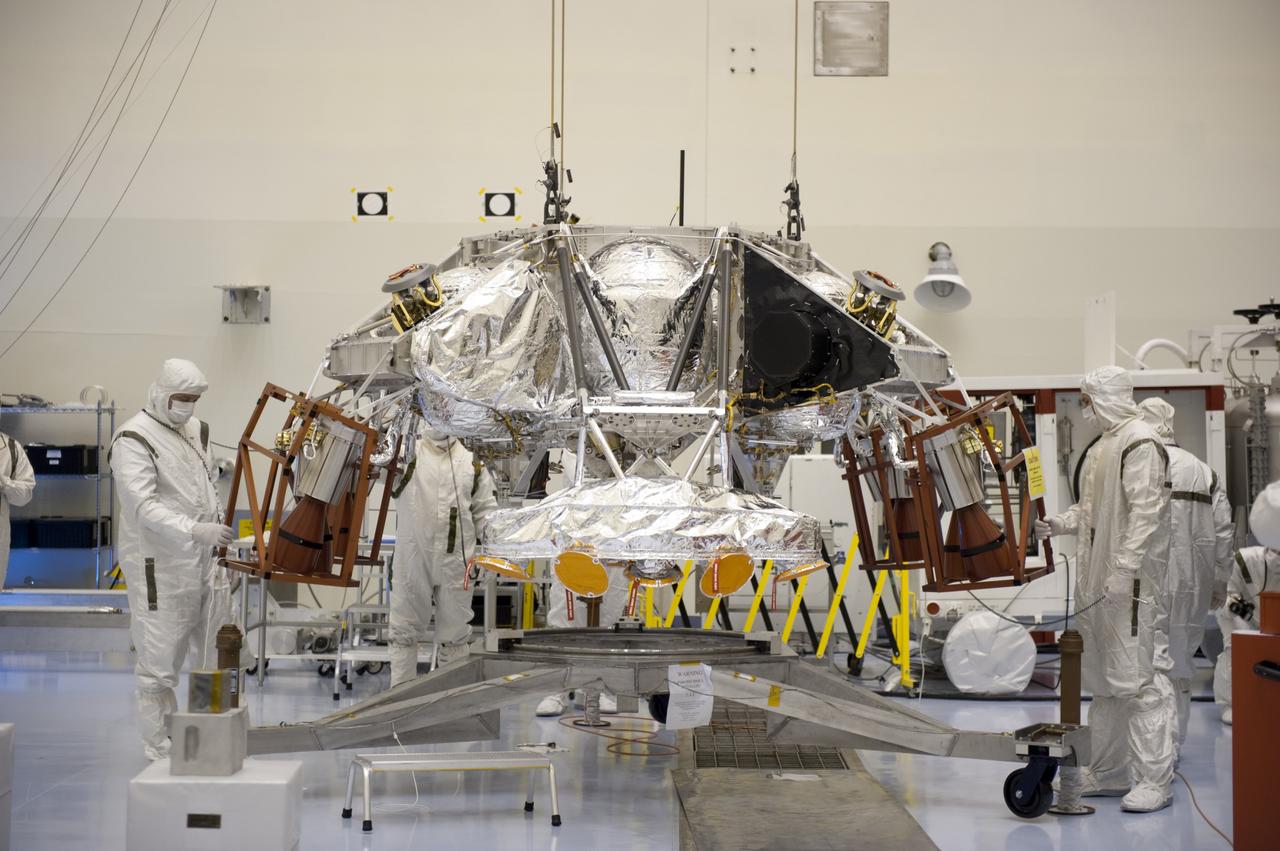
CAPE CANAVERAL, Fla. – At the Payload Hazardous Servicing Facility at NASA’s Kennedy Space Center in Florida, technicians carefully monitor the attachment of an overhead crane to a rocket-powered descent stage which will be integrated with NASA's Mars Science Laboratory (MSL) rover, known as Curiosity. The descent stage will lower Curiosity to the surface of Mars. A United Launch Alliance Atlas V-541 configuration will be used to loft MSL into space. Curiosity’s 10 science instruments are designed to search for evidence on whether Mars has had environments favorable to microbial life, including chemical ingredients for life. The unique rover will use a laser to look inside rocks and release its gasses so that the rover’s spectrometer can analyze and send the data back to Earth. MSL is scheduled to launch Nov. 25 with a window extending to Dec. 18 and arrival at Mars Aug. 2012. For more information, visit http://www.nasa.gov/msl. Photo credit: NASA/Kim Shiflett
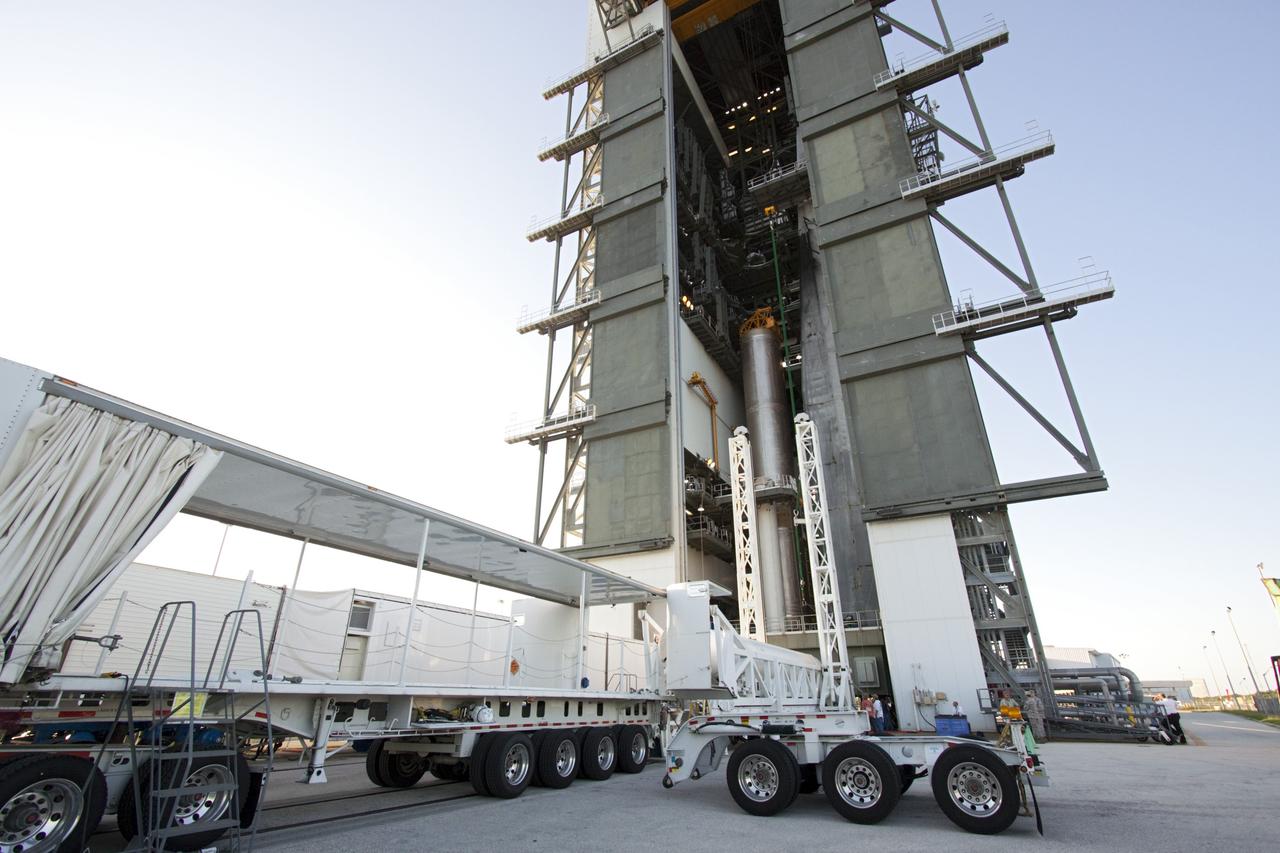
CAPE CANAVERAL, Fla. – At the Vertical Integration Facility at Space Launch Complex 41 on Cape Canaveral Air Force Station in Florida, technicians guide the final solid rocket motor (SRM) off a trailer. The motor will be mated to a United Launch Alliance Atlas V rocket which will carry NASA's Mars Science Laboratory (MSL) mission. MSL's components include a compact car-sized rover, Curiosity, which has 10 science instruments designed to search for evidence on whether Mars has had environments favorable to microbial life, including chemical ingredients for life. The unique rover will use a laser to look inside rocks and release its gasses so that the rover’s spectrometer can analyze and send the data back to Earth. MSL is scheduled to launch Nov. 25 with a window extending to Dec. 18 and arrival at Mars Aug. 2012. For more information, visit http://www.nasa.gov/msl. Photo credit: NASA/Jim Grossmann
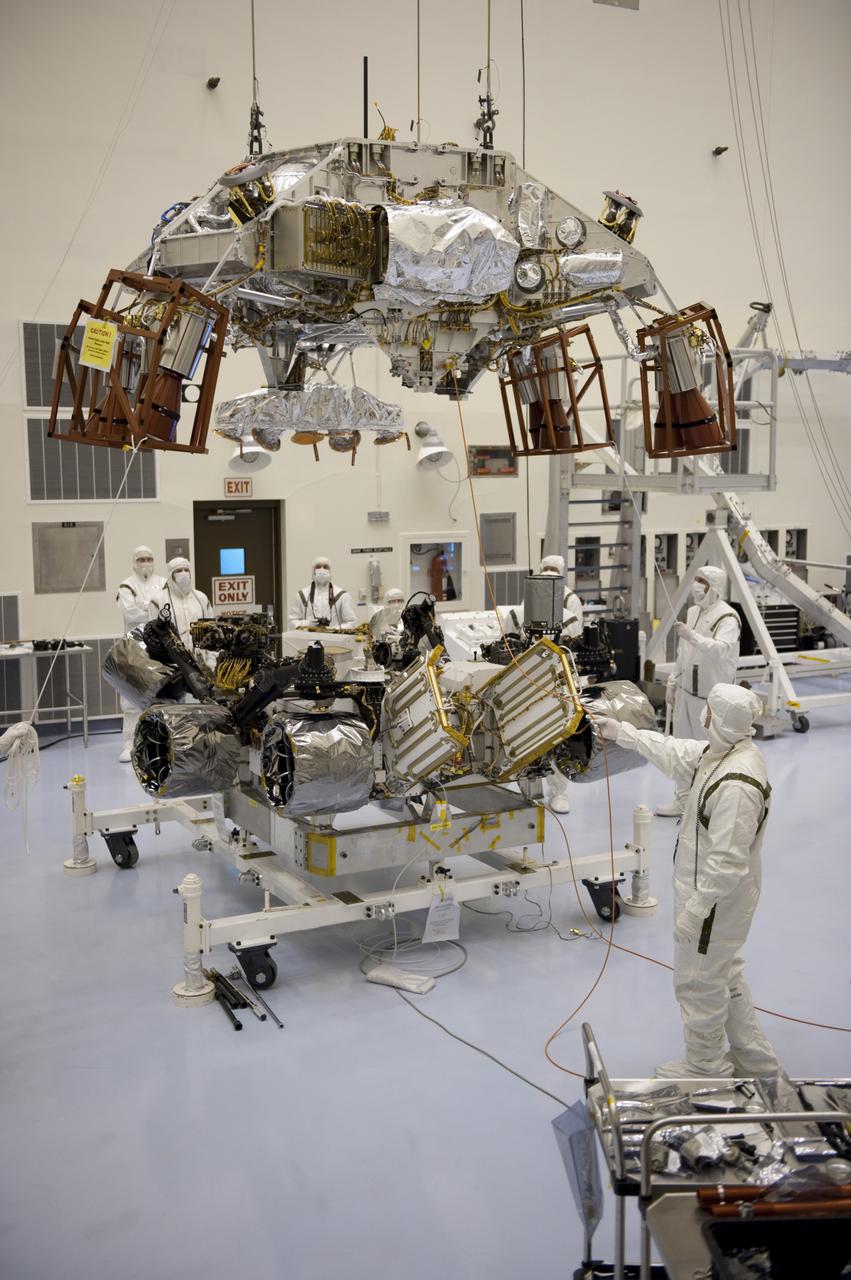
CAPE CANAVERAL, Fla. – Under the watchful eyes of technicians at the Payload Hazardous Servicing Facility at NASA's Kennedy Space Center in Florida, an overhead crane lowers a rocket-powered descent stage over NASA's Mars Science Laboratory (MSL) rover, known as Curiosity, for integration. The descent stage will lower Curiosity to the surface of Mars. A United Launch Alliance Atlas V-541 configuration will be used to loft MSL into space. Curiosity’s 10 science instruments are designed to search for evidence on whether Mars has had environments favorable to microbial life, including chemical ingredients for life. The unique rover will use a laser to look inside rocks and release its gasses so that the rover’s spectrometer can analyze and send the data back to Earth. MSL is scheduled to launch Nov. 25 with a window extending to Dec. 18 and arrival at Mars Aug. 2012. For more information, visit http://www.nasa.gov/msl. Photo credit: NASA/Kim Shiflett
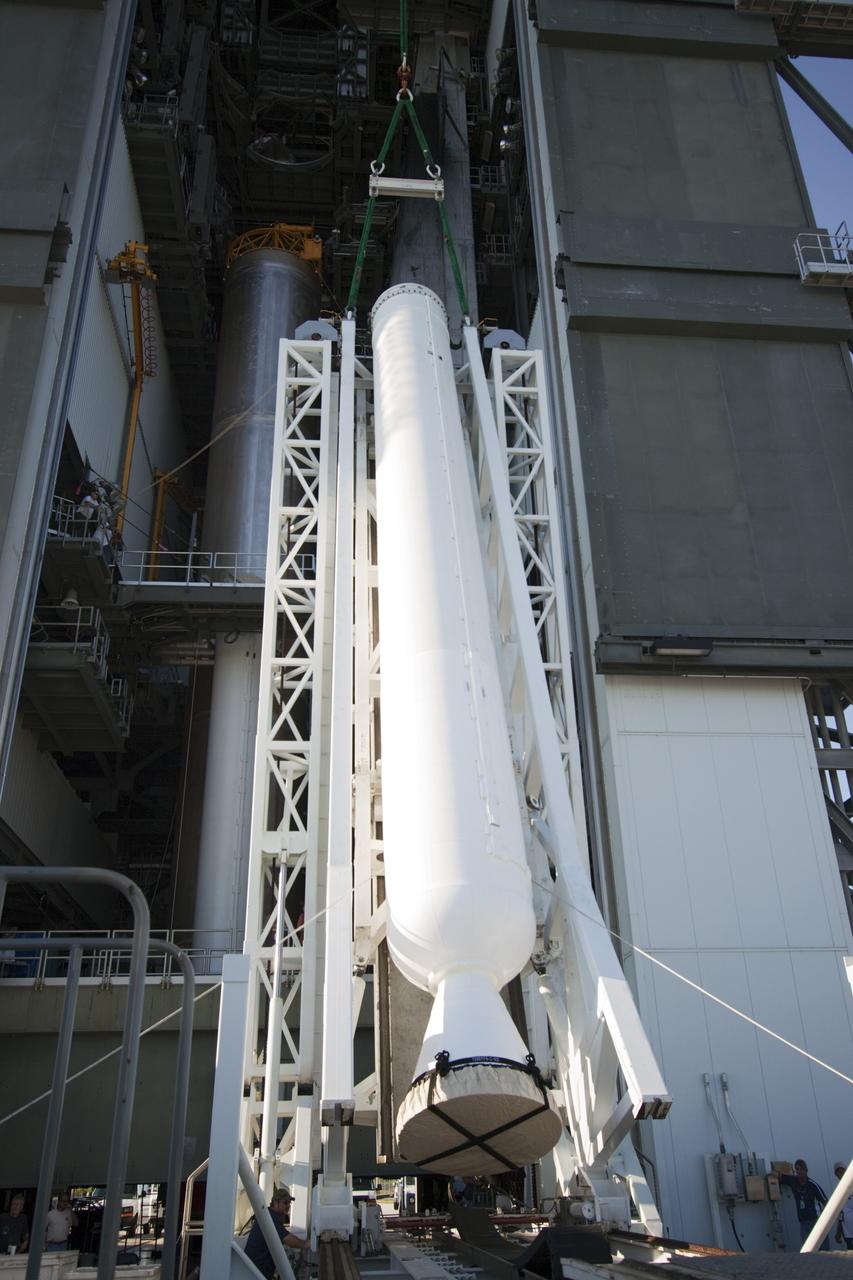
CAPE CANAVERAL, Fla. – At the Vertical Integration Facility at Space Launch Complex 41 on Cape Canaveral Air Force Station in Florida, the final solid rocket motor (SRM) hangs in an upright position for mating to a United Launch Alliance Atlas V rocket which will carry NASA's Mars Science Laboratory (MSL) mission. MSL's components include a compact car-sized rover, Curiosity, which has 10 science instruments designed to search for evidence on whether Mars has had environments favorable to microbial life, including chemical ingredients for life. The unique rover will use a laser to look inside rocks and release its gasses so that the rover’s spectrometer can analyze and send the data back to Earth. MSL is scheduled to launch Nov. 25 with a window extending to Dec. 18 and arrival at Mars Aug. 2012. For more information, visit http://www.nasa.gov/msl. Photo credit: NASA/Jim Grossmann

CAPE CANAVERAL, Fla. – As daylight breaks on Florida’s space coast, preparations are underway for mating of the final solid rocket motor (SRM) to a United Launch Alliance Atlas V rocket at the Vertical Integration Facility at Space Launch Complex 41 on Cape Canaveral Air Force Station. The Atlas V will carry NASA's Mars Science Laboratory (MSL) mission into space. MSL's components include a compact car-sized rover, Curiosity, which has 10 science instruments designed to search for evidence on whether Mars has had environments favorable to microbial life, including chemical ingredients for life. The unique rover will use a laser to look inside rocks and release its gasses so that the rover’s spectrometer can analyze and send the data back to Earth. MSL is scheduled to launch Nov. 25 with a window extending to Dec. 18 and arrival at Mars Aug. 2012. For more information, visit http://www.nasa.gov/msl. Photo credit: NASA/Jim Grossmann
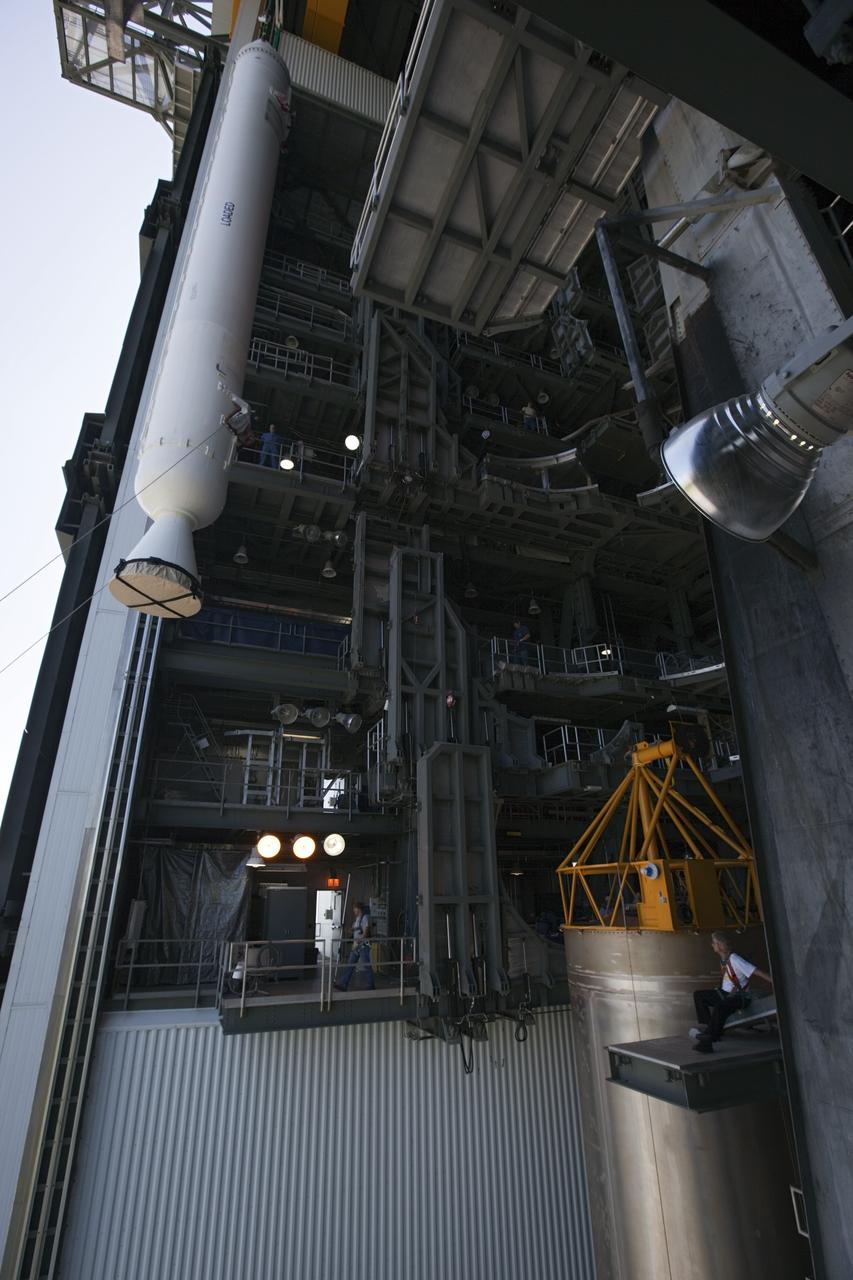
CAPE CANAVERAL, Fla. – Inside the Vertical Integration Facility at Space Launch Complex 41 on Cape Canaveral Air Force Station in Florida, a crane positions a solid rocket motor (SRM) for mating to the first stage of a United Launch Alliance Atlas V rocket. The Atlas V will carry NASA's Mars Science Laboratory (MSL) mission into space. MSL's components include a compact car-sized rover, Curiosity, which has 10 science instruments designed to search for evidence on whether Mars has had environments favorable to microbial life, including chemical ingredients for life. The unique rover will use a laser to look inside rocks and release its gasses so that the rover’s spectrometer can analyze and send the data back to Earth. MSL is scheduled to launch Nov. 25 with a window extending to Dec. 18 and arrival at Mars Aug. 2012. For more information, visit http://www.nasa.gov/msl. Photo credit: NASA/Dimitri Gerondidakis
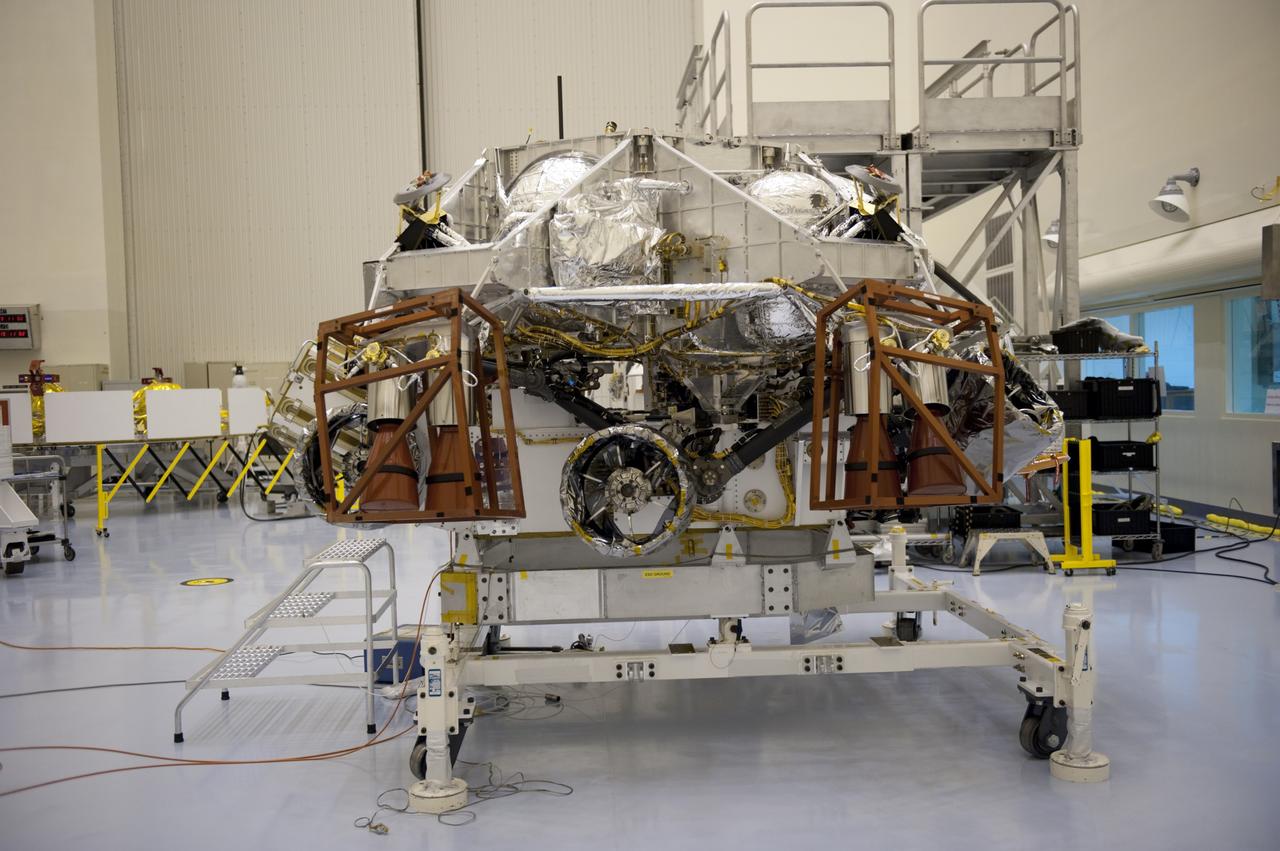
CAPE CANAVERAL, Fla. – At the Payload Hazardous Servicing Facility at NASA’s Kennedy Space Center in Florida, integration between a rocket-powered descent stage and NASA's Mars Science Laboratory (MSL) rover, known as Curiosity, is complete. The descent stage will lower Curiosity to the surface of Mars. A United Launch Alliance Atlas V-541 configuration will be used to loft MSL into space. Curiosity’s 10 science instruments are designed to search for evidence on whether Mars has had environments favorable to microbial life, including chemical ingredients for life. The unique rover will use a laser to look inside rocks and release its gasses so that the rover’s spectrometer can analyze and send the data back to Earth. MSL is scheduled to launch Nov. 25 with a window extending to Dec. 18 and arrival at Mars Aug. 2012. For more information, visit http://www.nasa.gov/msl. Photo credit: NASA/Kim Shiflett
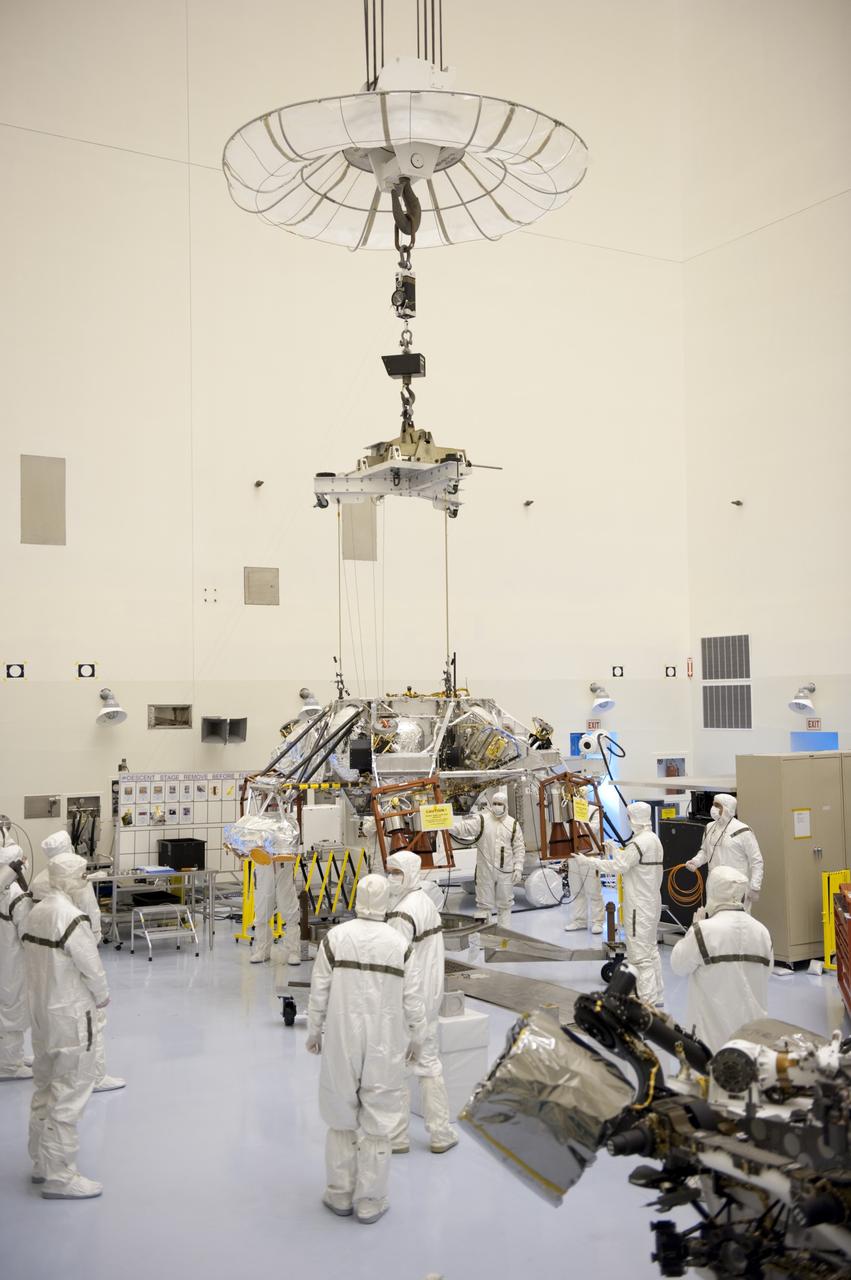
CAPE CANAVERAL, Fla. – Technicians, at the Payload Hazardous Servicing Facility at NASA's Kennedy Space Center in Florida, use an overhead crane to move a rocket-powered descent stage for integration with NASA's Mars Science Laboratory (MSL) rover, known as Curiosity. The descent stage will lower Curiosity to the surface of Mars. A United Launch Alliance Atlas V-541 configuration will be used to loft MSL into space. Curiosity’s 10 science instruments are designed to search for evidence on whether Mars has had environments favorable to microbial life, including chemical ingredients for life. The unique rover will use a laser to look inside rocks and release its gasses so that the rover’s spectrometer can analyze and send the data back to Earth. MSL is scheduled to launch Nov. 25 with a window extending to Dec. 18 and arrival at Mars Aug. 2012. For more information, visit http://www.nasa.gov/msl. Photo credit: NASA/Kim Shiflett
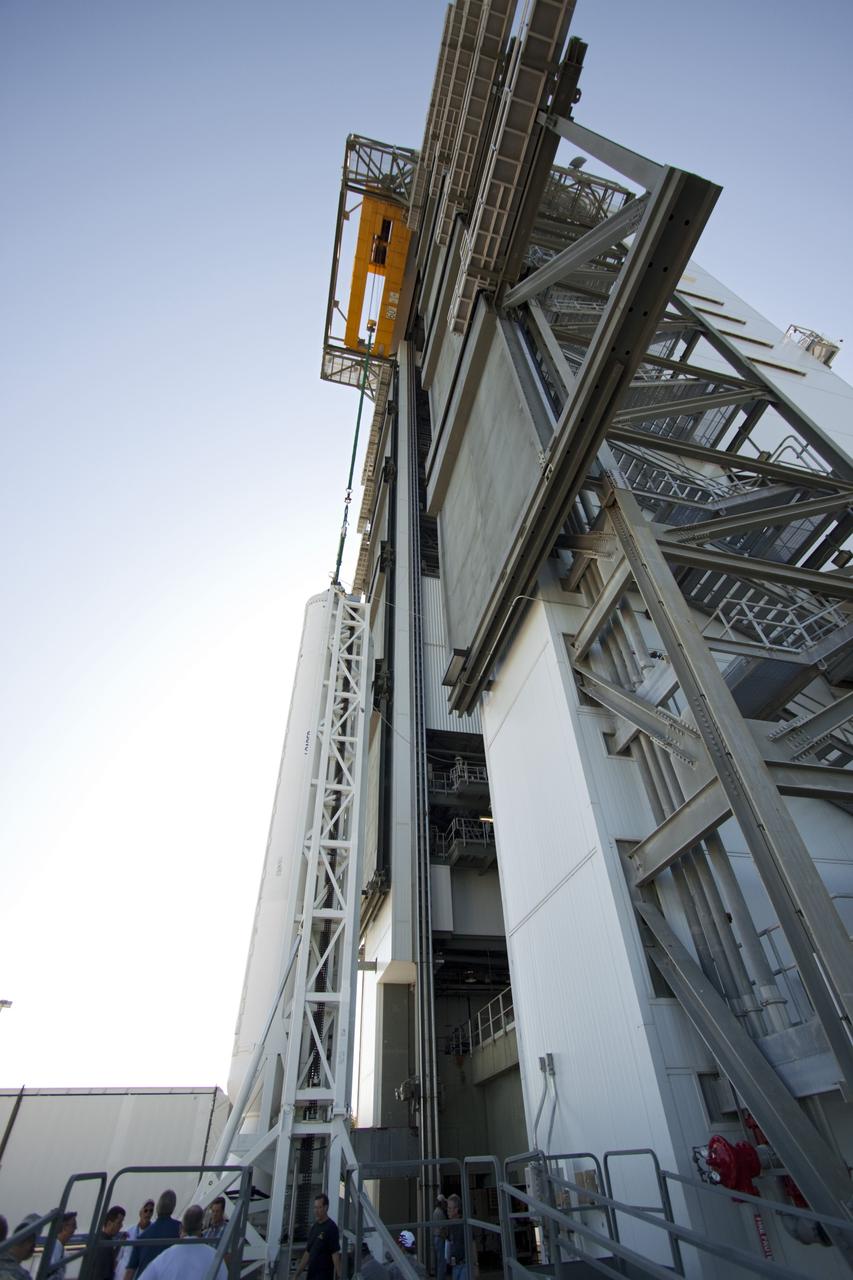
CAPE CANAVERAL, Fla. – With a side view of the Vertical Integration Facility at Space Launch Complex 41 on Cape Canaveral Air Force Station in Florida, technicians monitor nearby as the final solid rocket motor (SRM) hangs in an upright position for mating to a United Launch Alliance Atlas V rocket which will carry NASA's Mars Science Laboratory (MSL) mission. MSL's components include a compact car-sized rover, Curiosity, which has 10 science instruments designed to search for evidence on whether Mars has had environments favorable to microbial life, including chemical ingredients for life. The unique rover will use a laser to look inside rocks and release its gasses so that the rover’s spectrometer can analyze and send the data back to Earth. MSL is scheduled to launch Nov. 25 with a window extending to Dec. 18 and arrival at Mars Aug. 2012. For more information, visit http://www.nasa.gov/msl. Photo credit: NASA/Jim Grossmann
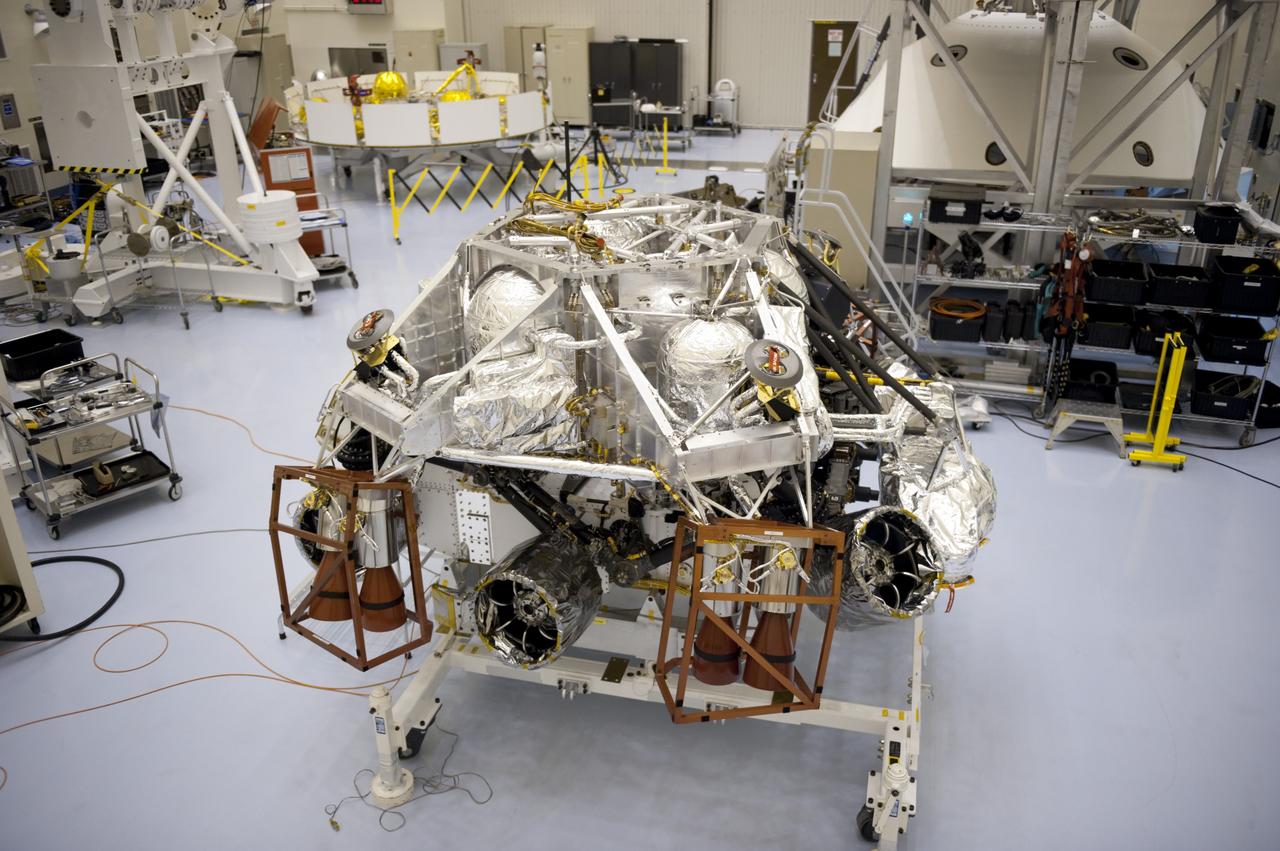
CAPE CANAVERAL, Fla. – At the Payload Hazardous Servicing Facility at NASA’s Kennedy Space Center in Florida, integration between a rocket-powered descent stage and NASA's Mars Science Laboratory (MSL) rover, known as Curiosity, is complete. The descent stage will lower Curiosity to the surface of Mars. A United Launch Alliance Atlas V-541 configuration will be used to loft MSL into space. Curiosity’s 10 science instruments are designed to search for evidence on whether Mars has had environments favorable to microbial life, including chemical ingredients for life. The unique rover will use a laser to look inside rocks and release its gasses so that the rover’s spectrometer can analyze and send the data back to Earth. MSL is scheduled to launch Nov. 25 with a window extending to Dec. 18 and arrival at Mars Aug. 2012. For more information, visit http://www.nasa.gov/msl. Photo credit: NASA/Kim Shiflett
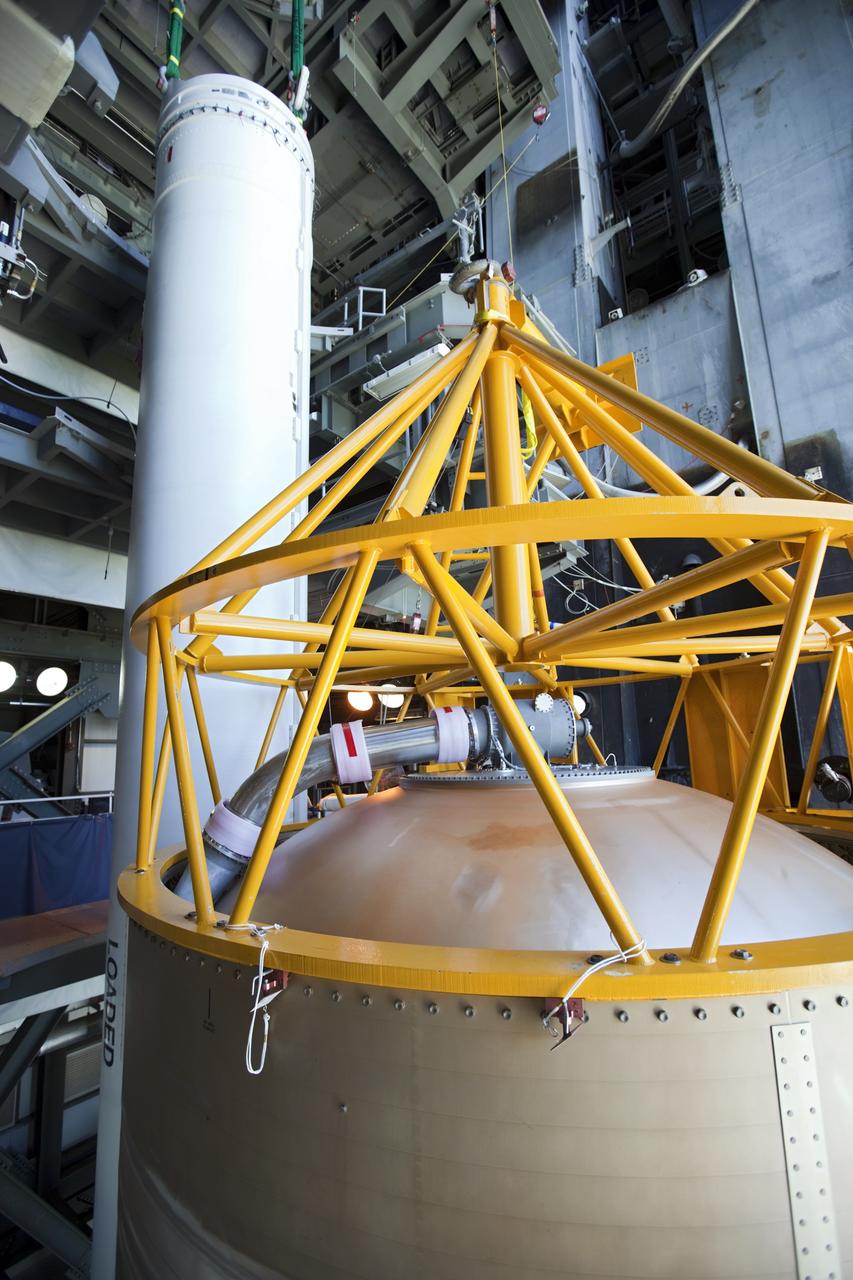
CAPE CANAVERAL, Fla. – Inside the Vertical Integration Facility at Space Launch Complex 41 on Cape Canaveral Air Force Station in Florida, a crane lowers a solid rocket motor (SRM) for mating to the first stage of a United Launch Alliance Atlas V rocket. The Atlas V will carry NASA's Mars Science Laboratory (MSL) mission into space. MSL's components include a compact car-sized rover, Curiosity, which has 10 science instruments designed to search for evidence on whether Mars has had environments favorable to microbial life, including chemical ingredients for life. The unique rover will use a laser to look inside rocks and release its gasses so that the rover’s spectrometer can analyze and send the data back to Earth. MSL is scheduled to launch Nov. 25 with a window extending to Dec. 18 and arrival at Mars Aug. 2012. For more information, visit http://www.nasa.gov/msl. Photo credit: NASA/Dimitri Gerondidakis
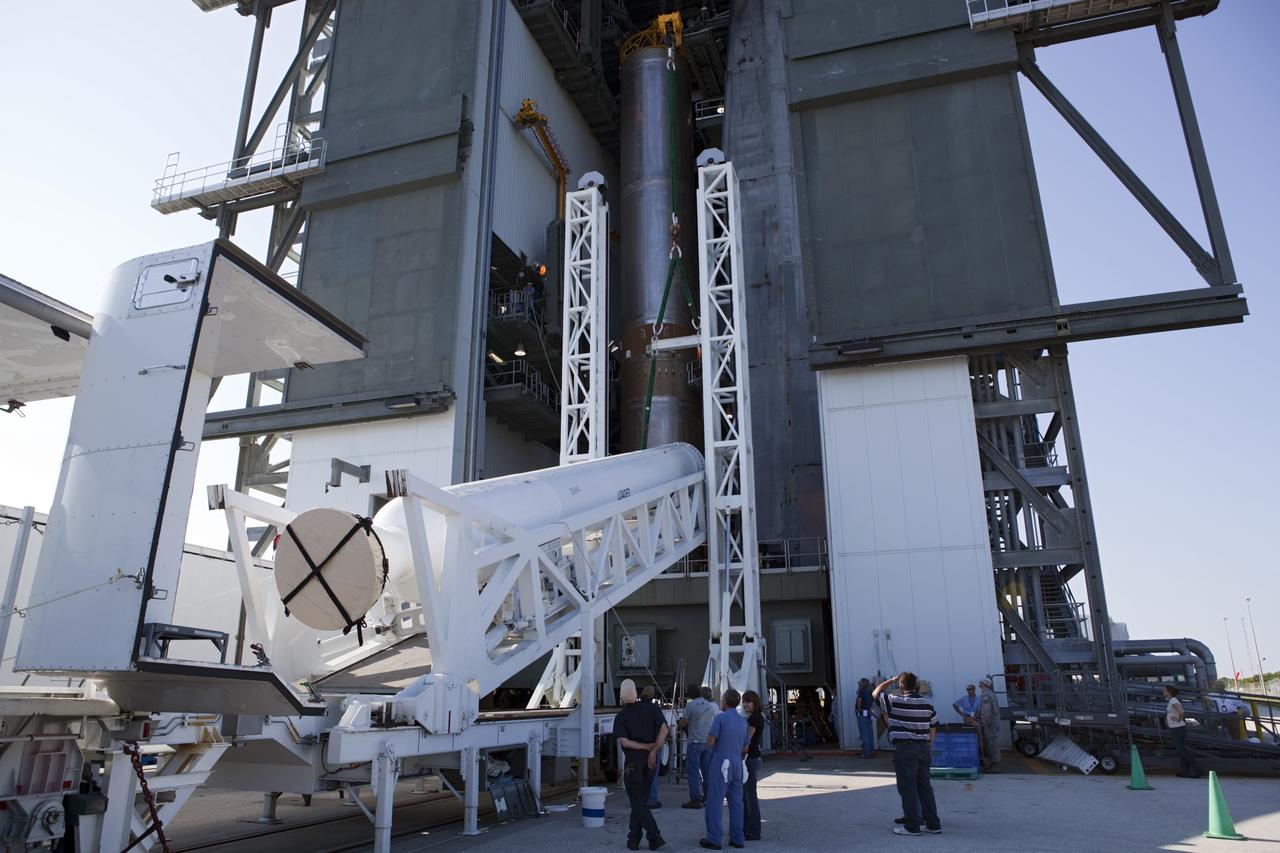
CAPE CANAVERAL, Fla. – At the Vertical Integration Facility at Space Launch Complex 41 on Cape Canaveral Air Force Station in Florida, technicians use a lifting device to elevate a solid rocket motor (SRM) into an upright position for mating to a United Launch Alliance Atlas V rocket. The Atlas V will carry NASA's Mars Science Laboratory (MSL) mission into space. MSL's components include a compact car-sized rover, Curiosity, which has 10 science instruments designed to search for evidence on whether Mars has had environments favorable to microbial life, including chemical ingredients for life. The unique rover will use a laser to look inside rocks and release its gasses so that the rover’s spectrometer can analyze and send the data back to Earth. MSL is scheduled to launch Nov. 25 with a window extending to Dec. 18 and arrival at Mars Aug. 2012. For more information, visit http://www.nasa.gov/msl. Photo credit: NASA/Dimitri Gerondidakis
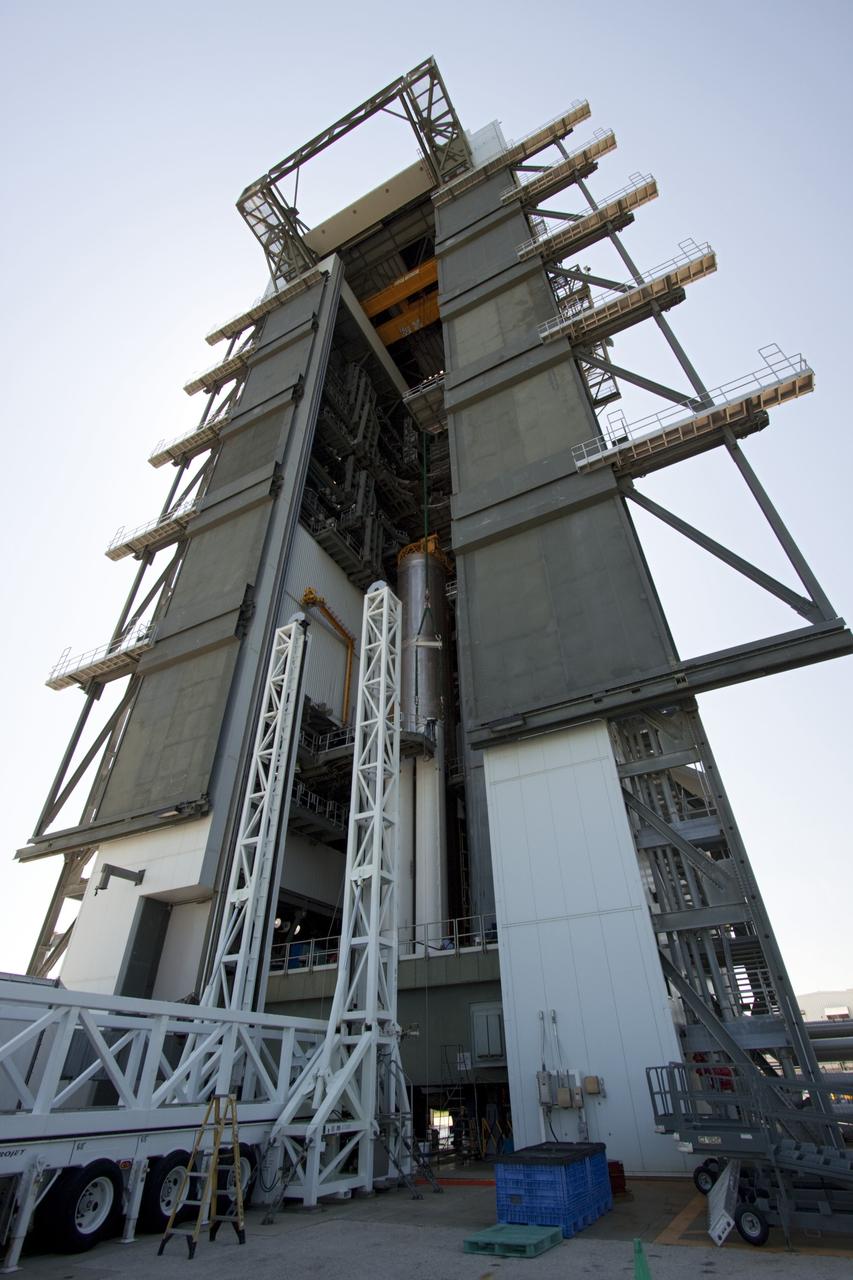
CAPE CANAVERAL, Fla. – At the Vertical Integration Facility at Space Launch Complex 41 on Cape Canaveral Air Force Station in Florida, the final solid rocket motor (SRM) is ready for mating to the first stage of a United Launch Alliance Atlas V rocket. The Atlas V will carry NASA's Mars Science Laboratory (MSL) mission into space. MSL's components include a compact car-sized rover, Curiosity, which has 10 science instruments designed to search for evidence on whether Mars has had environments favorable to microbial life, including chemical ingredients for life. The unique rover will use a laser to look inside rocks and release its gasses so that the rover’s spectrometer can analyze and send the data back to Earth. MSL is scheduled to launch Nov. 25 with a window extending to Dec. 18 and arrival at Mars Aug. 2012. For more information, visit http://www.nasa.gov/msl. Photo credit: NASA/Jim Grossmann

CAPE CANAVERAL, Fla. – A beautiful sun rises on Florida’s space coast as preparations are underway for mating the final solid rocket motor (SRM) to a United Launch Alliance Atlas V rocket at the Vertical Integration Facility at Space Launch Complex 41 on Cape Canaveral Air Force Station. The Atlas V will carry NASA's Mars Science Laboratory (MSL) mission into space. MSL's components include a compact car-sized rover, Curiosity, which has 10 science instruments designed to search for evidence on whether Mars has had environments favorable to microbial life, including chemical ingredients for life. The unique rover will use a laser to look inside rocks and release its gasses so that the rover’s spectrometer can analyze and send the data back to Earth. MSL is scheduled to launch Nov. 25 with a window extending to Dec. 18 and arrival at Mars Aug. 2012. For more information, visit http://www.nasa.gov/msl. Photo credit: NASA/Jim Grossmann
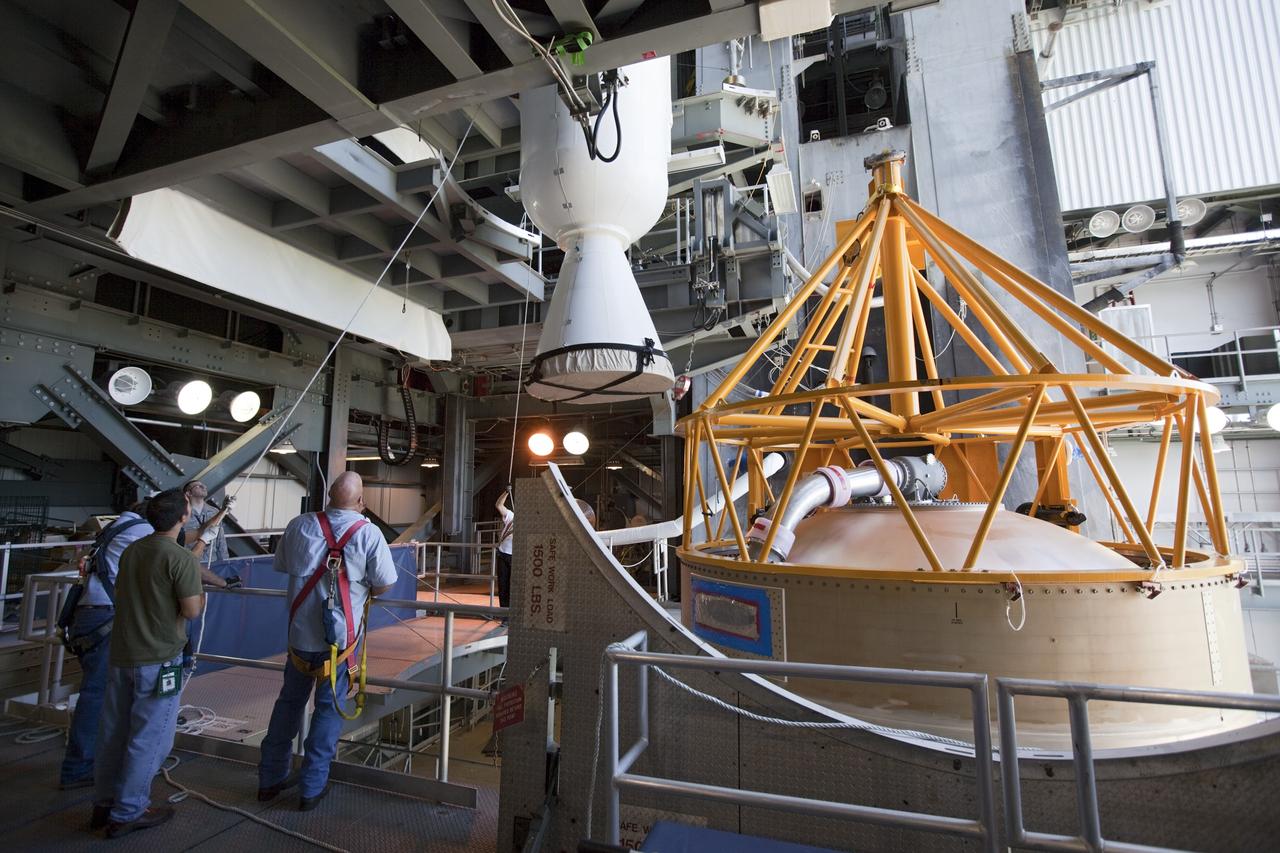
CAPE CANAVERAL, Fla. – Inside the Vertical Integration Facility at Space Launch Complex 41 on Cape Canaveral Air Force Station in Florida, technicians monitor the progress as a crane lowers a solid rocket motor (SRM) for mating to the first stage of a United Launch Alliance Atlas V rocket. The Atlas V will carry NASA's Mars Science Laboratory (MSL) mission into space. MSL's components include a compact car-sized rover, Curiosity, which has 10 science instruments designed to search for evidence on whether Mars has had environments favorable to microbial life, including chemical ingredients for life. The unique rover will use a laser to look inside rocks and release its gasses so that the rover’s spectrometer can analyze and send the data back to Earth. MSL is scheduled to launch Nov. 25 with a window extending to Dec. 18 and arrival at Mars Aug. 2012. For more information, visit http://www.nasa.gov/msl. Photo credit: NASA/Dimitri Gerondidakis
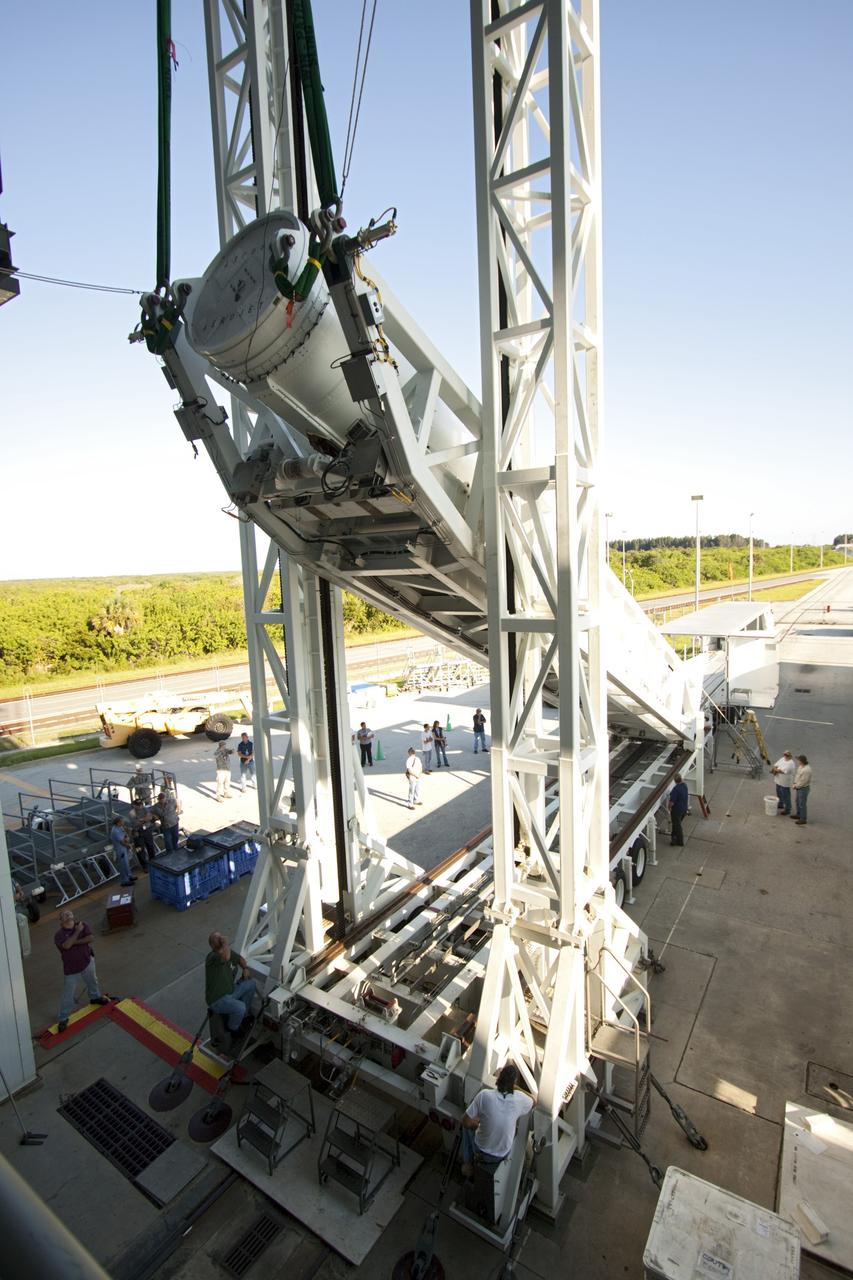
CAPE CANAVERAL, Fla. – With a view taken from inside the Vertical Integration Facility at Space Launch Complex 41 on Cape Canaveral Air Force Station in Florida, technicians use a lifting device to elevate the final solid rocket motor (SRM) into an upright position for mating to a United Launch Alliance Atlas V rocket which will carry NASA's Mars Science Laboratory (MSL) mission. MSL's components include a compact car-sized rover, Curiosity, which has 10 science instruments designed to search for evidence on whether Mars has had environments favorable to microbial life, including chemical ingredients for life. The unique rover will use a laser to look inside rocks and release its gasses so that the rover’s spectrometer can analyze and send the data back to Earth. MSL is scheduled to launch Nov. 25 with a window extending to Dec. 18 and arrival at Mars Aug. 2012. For more information, visit http://www.nasa.gov/msl. Photo credit: NASA/Jim Grossmann
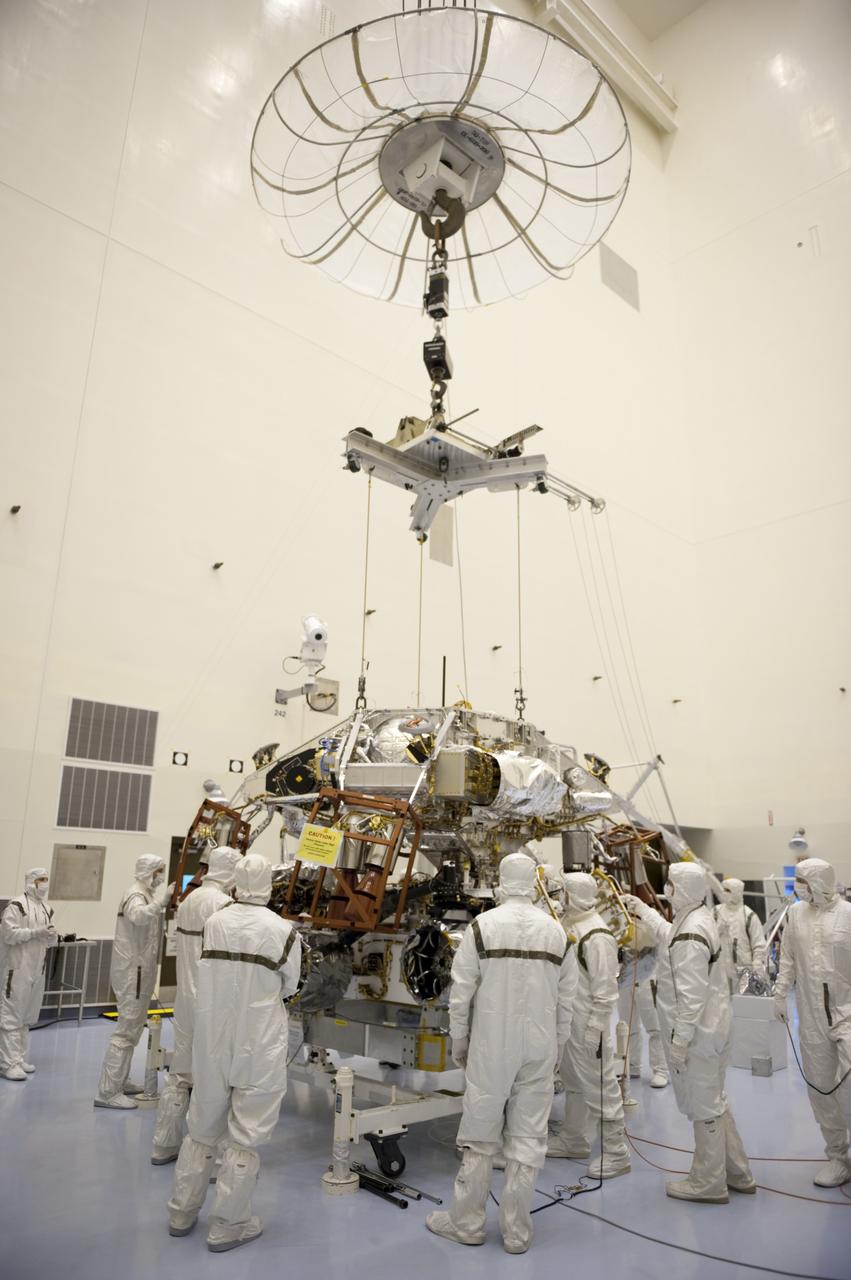
CAPE CANAVERAL, Fla. – Under the watchful eyes of technicians at the Payload Hazardous Servicing Facility at NASA's Kennedy Space Center in Florida, a rocket-powered descent stage, after being lowered by an overhead crane, is integrated with NASA's Mars Science Laboratory (MSL) rover, known as Curiosity. The descent stage will lower Curiosity to the surface of Mars. A United Launch Alliance Atlas V-541 configuration will be used to loft MSL into space. Curiosity’s 10 science instruments are designed to search for evidence on whether Mars has had environments favorable to microbial life, including chemical ingredients for life. The unique rover will use a laser to look inside rocks and release its gasses so that the rover’s spectrometer can analyze and send the data back to Earth. MSL is scheduled to launch Nov. 25 with a window extending to Dec. 18 and arrival at Mars Aug. 2012. For more information, visit http://www.nasa.gov/msl. Photo credit: NASA/Kim Shiflett

CAPE CANAVERAL, Fla. – At the Payload Hazardous Servicing Facility at NASA’s Kennedy Space Center in Florida, integration between a rocket-powered descent stage and NASA's Mars Science Laboratory (MSL) rover, known as Curiosity, is complete. The descent stage will lower Curiosity to the surface of Mars. A United Launch Alliance Atlas V-541 configuration will be used to loft MSL into space. Curiosity’s 10 science instruments are designed to search for evidence on whether Mars has had environments favorable to microbial life, including chemical ingredients for life. The unique rover will use a laser to look inside rocks and release its gasses so that the rover’s spectrometer can analyze and send the data back to Earth. MSL is scheduled to launch Nov. 25 with a window extending to Dec. 18 and arrival at Mars Aug. 2012. For more information, visit http://www.nasa.gov/msl. Photo credit: NASA/Kim Shiflett
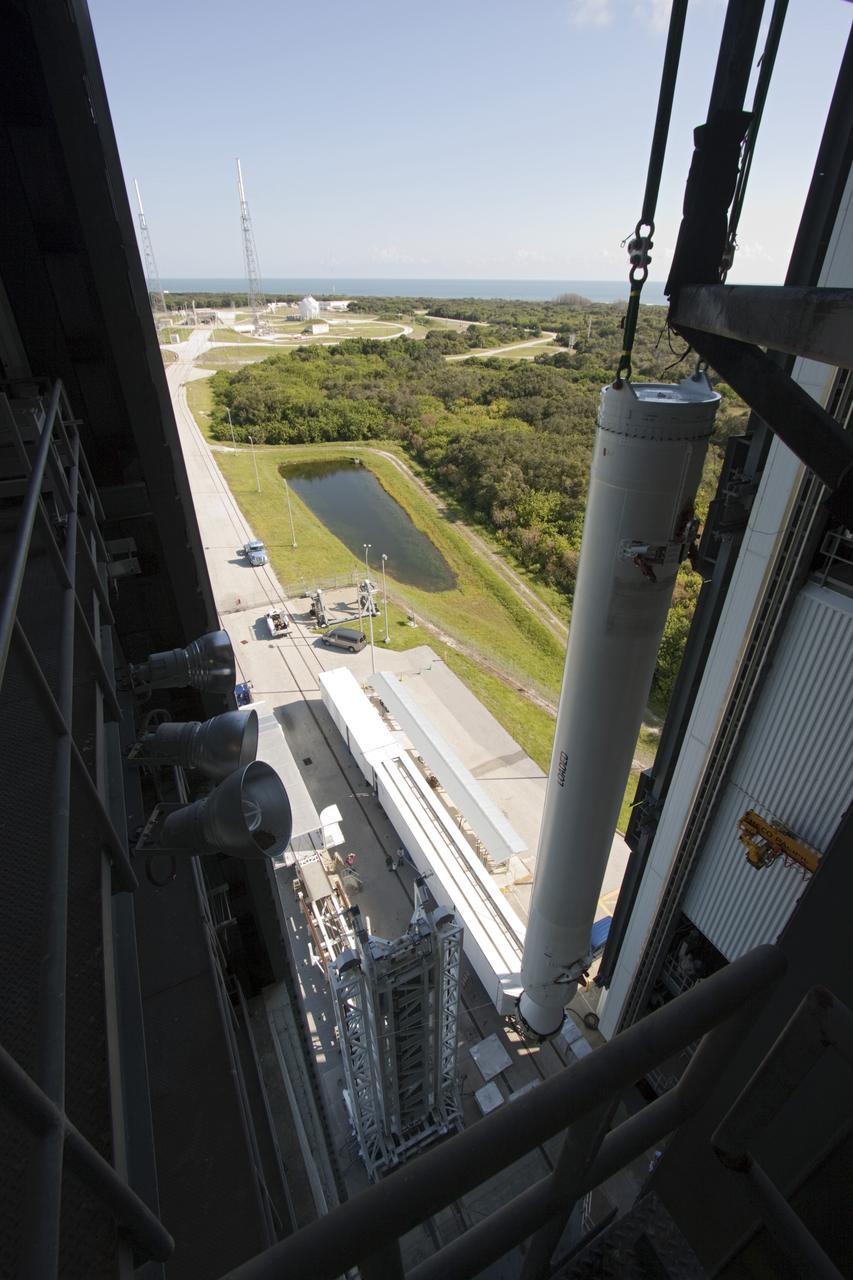
CAPE CANAVERAL, Fla. – A unique view is offered at the Vertical Integration Facility at Space Launch Complex 41 on Cape Canaveral Air Force Station in Florida, as the final solid rocket motor (SRM) hangs in an upright position for mating to a United Launch Alliance Atlas V rocket which will carry NASA's Mars Science Laboratory (MSL) mission. MSL's components include a compact car-sized rover, Curiosity, which has 10 science instruments designed to search for evidence on whether Mars has had environments favorable to microbial life, including chemical ingredients for life. The unique rover will use a laser to look inside rocks and release its gasses so that the rover’s spectrometer can analyze and send the data back to Earth. MSL is scheduled to launch Nov. 25 with a window extending to Dec. 18 and arrival at Mars Aug. 2012. For more information, visit http://www.nasa.gov/msl. Photo credit: NASA/Jim Grossmann
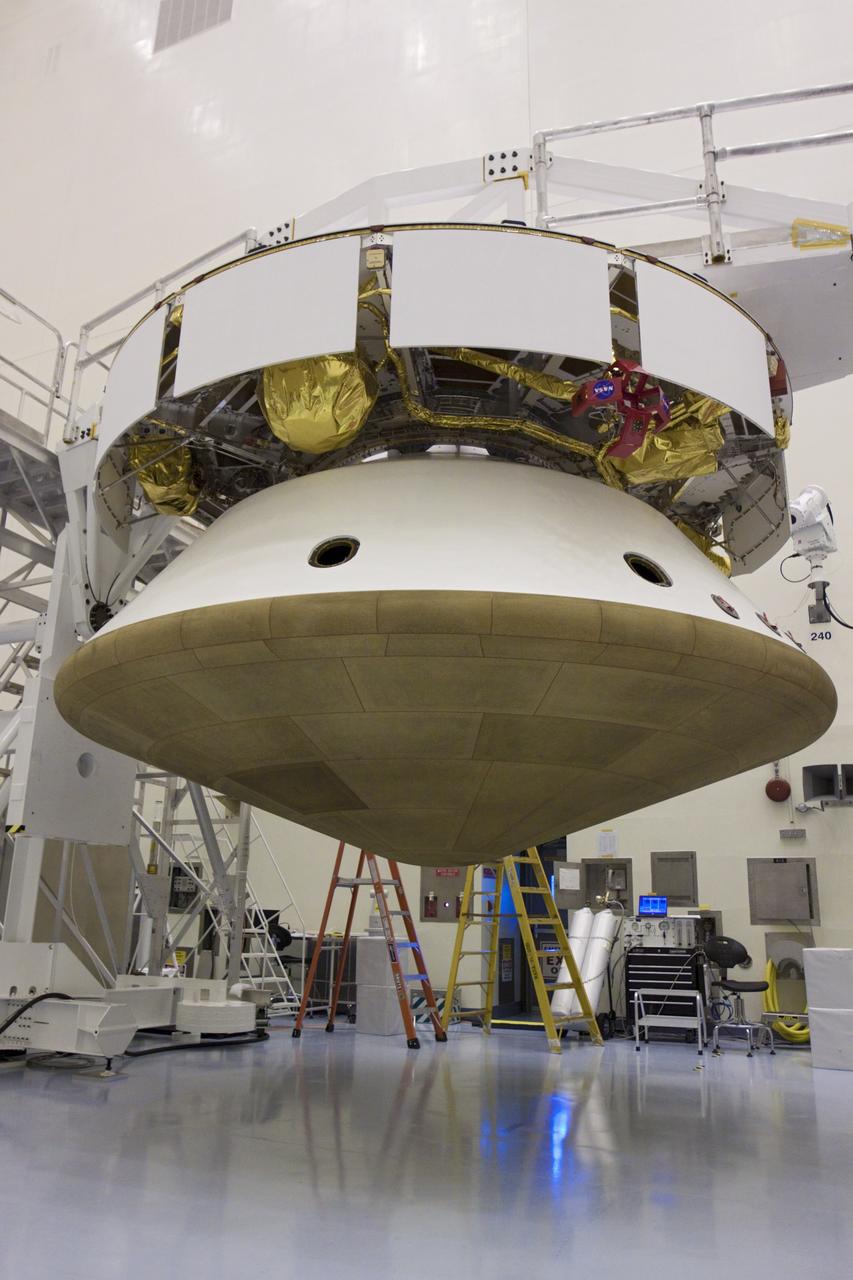
CAPE CANAVERAL, Fla. – In the Payload Hazardous Servicing Facility at NASA’s Kennedy Space Center in Florida, all elements of NASA's Mars Science Laboratory (MSL) mission have come together. The top portion is the cruise stage, next, the aeroshell, (containing the compact car-sized rover Curiosity), and on the bottom, the heat shield. The rover Curiosity has 10 science instruments designed to search for evidence on whether Mars has had environments favorable to microbial life, including chemical ingredients for life. The unique rover will use a laser to look inside rocks and release its gasses so that the rover’s spectrometer can analyze and send the data back to Earth. Launch of MSL aboard a United Launch Alliance Atlas V rocket is scheduled for Nov. 25 from Space Launch Complex 41 on Cape Canaveral Air Force Station in Florida. For more information, visit http://www.nasa.gov/msl. Photo credit: NASA/Glenn Benson
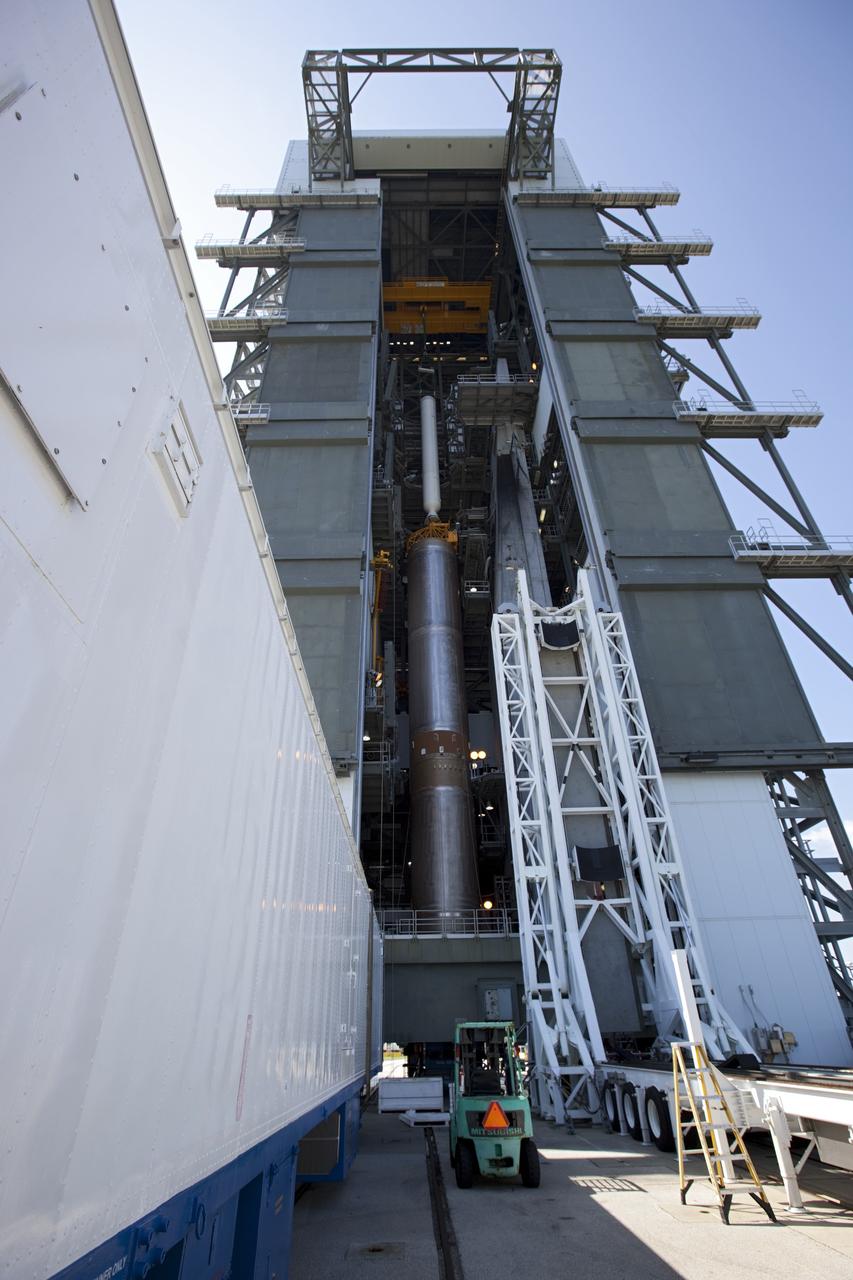
CAPE CANAVERAL, Fla. – Inside the Vertical Integration Facility at Space Launch Complex 41 on Cape Canaveral Air Force Station in Florida, a crane positions a solid rocket motor (SRM) for mating to the first stage of a United Launch Alliance Atlas V rocket. The Atlas V will carry NASA's Mars Science Laboratory (MSL) mission into space. MSL's components include a compact car-sized rover, Curiosity, which has 10 science instruments designed to search for evidence on whether Mars has had environments favorable to microbial life, including chemical ingredients for life. The unique rover will use a laser to look inside rocks and release its gasses so that the rover’s spectrometer can analyze and send the data back to Earth. MSL is scheduled to launch Nov. 25 with a window extending to Dec. 18 and arrival at Mars Aug. 2012. For more information, visit http://www.nasa.gov/msl. Photo credit: NASA/Dimitri Gerondidakis
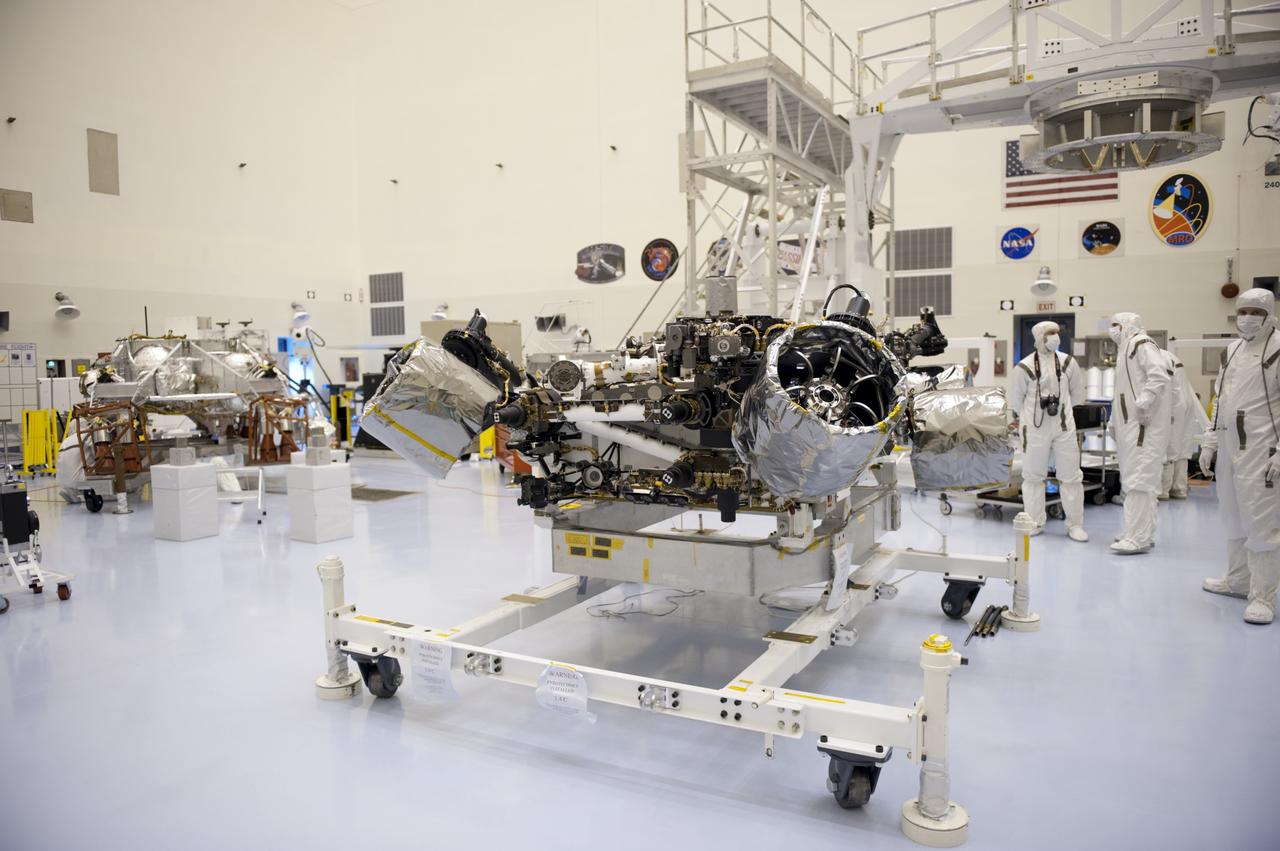
CAPE CANAVERAL, Fla. – At the Payload Hazardous Servicing Facility at NASA’s Kennedy Space Center in Florida, NASA's Mars Science Laboratory (MSL) rover, known as Curiosity, will be integrated with a rocket-powered descent stage (shown here to the left of the rover). The descent stage will lower Curiosity to the surface of Mars. A United Launch Alliance Atlas V-541 configuration will be used to loft MSL into space. Curiosity’s 10 science instruments are designed to search for evidence on whether Mars has had environments favorable to microbial life, including chemical ingredients for life. The unique rover will use a laser to look inside rocks and release its gasses so that the rover’s spectrometer can analyze and send the data back to Earth. MSL is scheduled to launch Nov. 25 with a window extending to Dec. 18 and arrival at Mars Aug. 2012. For more information, visit http://www.nasa.gov/msl. Photo credit: NASA/Kim Shiflett
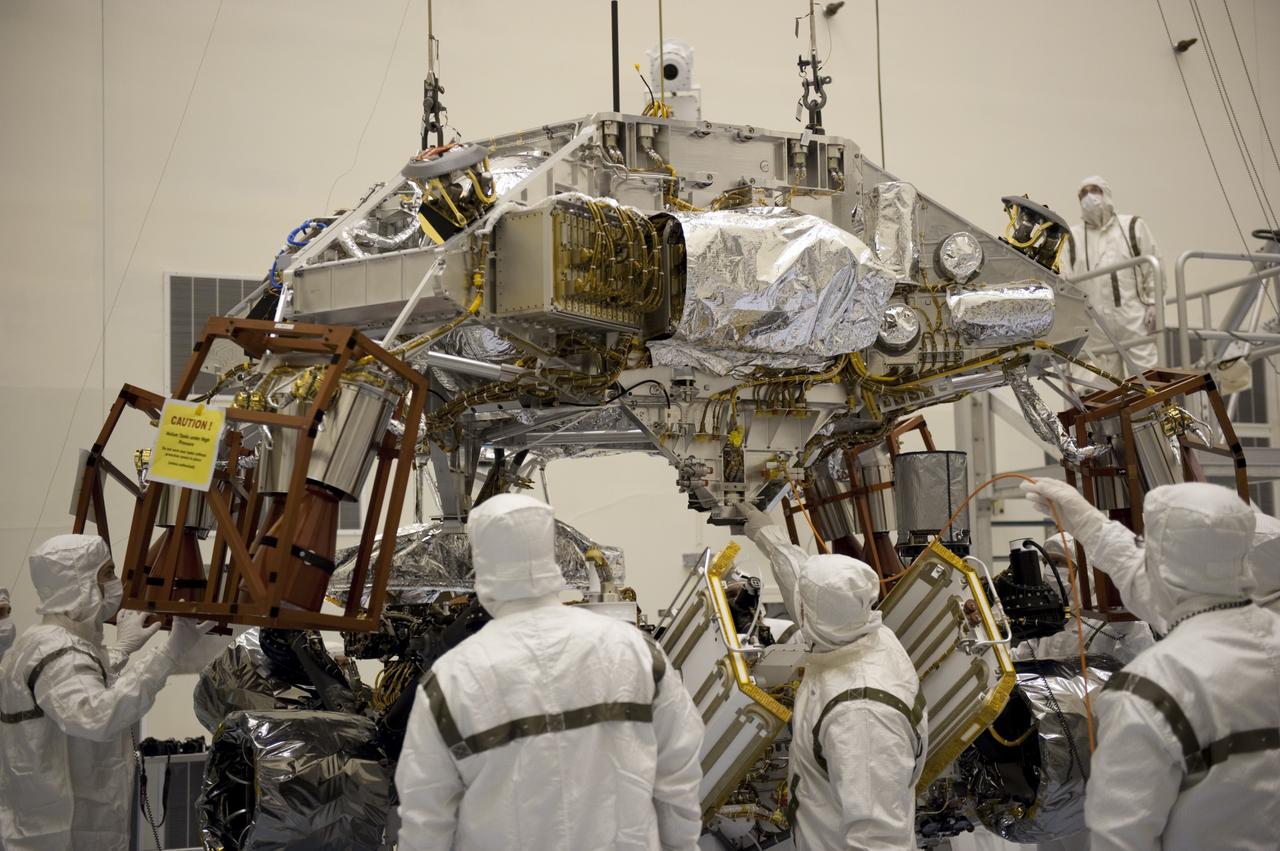
CAPE CANAVERAL, Fla. – Technicians at the Payload Hazardous Servicing Facility at NASA's Kennedy Space Center in Florida, guide an overhead crane as it lowers a rocket-powered descent stage over NASA's Mars Science Laboratory (MSL) rover, known as Curiosity, for integration. The descent stage will lower Curiosity to the surface of Mars. A United Launch Alliance Atlas V-541 configuration will be used to loft MSL into space. Curiosity’s 10 science instruments are designed to search for evidence on whether Mars has had environments favorable to microbial life, including chemical ingredients for life. The unique rover will use a laser to look inside rocks and release its gasses so that the rover’s spectrometer can analyze and send the data back to Earth. MSL is scheduled to launch Nov. 25 with a window extending to Dec. 18 and arrival at Mars Aug. 2012. For more information, visit http://www.nasa.gov/msl. Photo credit: NASA/Kim Shiflett
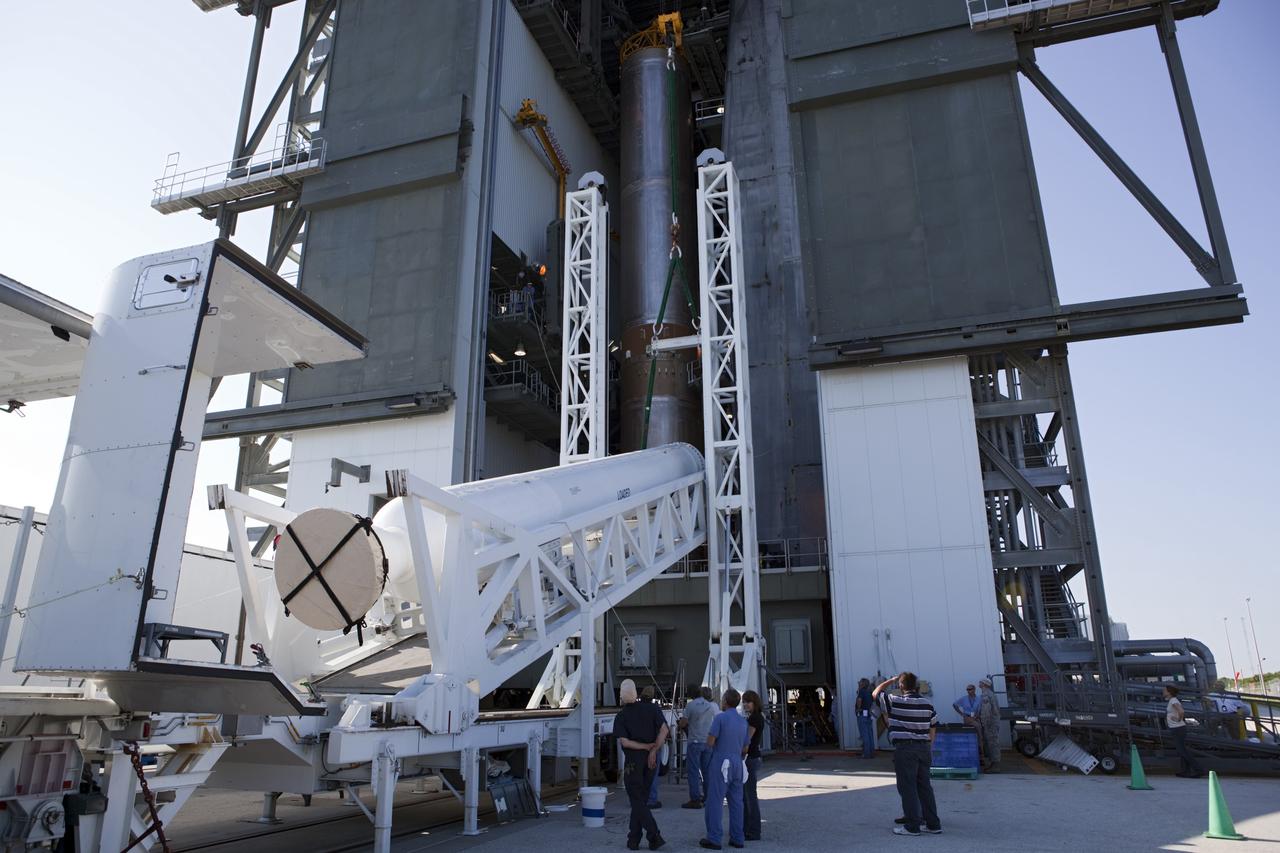
CAPE CANAVERAL, Fla. – At the Vertical Integration Facility at Space Launch Complex 41 on Cape Canaveral Air Force Station in Florida, technicians use a lifting device to elevate a solid rocket motor (SRM) into an upright position for mating to a United Launch Alliance Atlas V rocket. The Atlas V will carry NASA's Mars Science Laboratory (MSL) mission into space. MSL's components include a compact car-sized rover, Curiosity, which has 10 science instruments designed to search for evidence on whether Mars has had environments favorable to microbial life, including chemical ingredients for life. The unique rover will use a laser to look inside rocks and release its gasses so that the rover’s spectrometer can analyze and send the data back to Earth. MSL is scheduled to launch Nov. 25 with a window extending to Dec. 18 and arrival at Mars Aug. 2012. For more information, visit http://www.nasa.gov/msl. Photo credit: NASA/Dimitri Gerondidakis
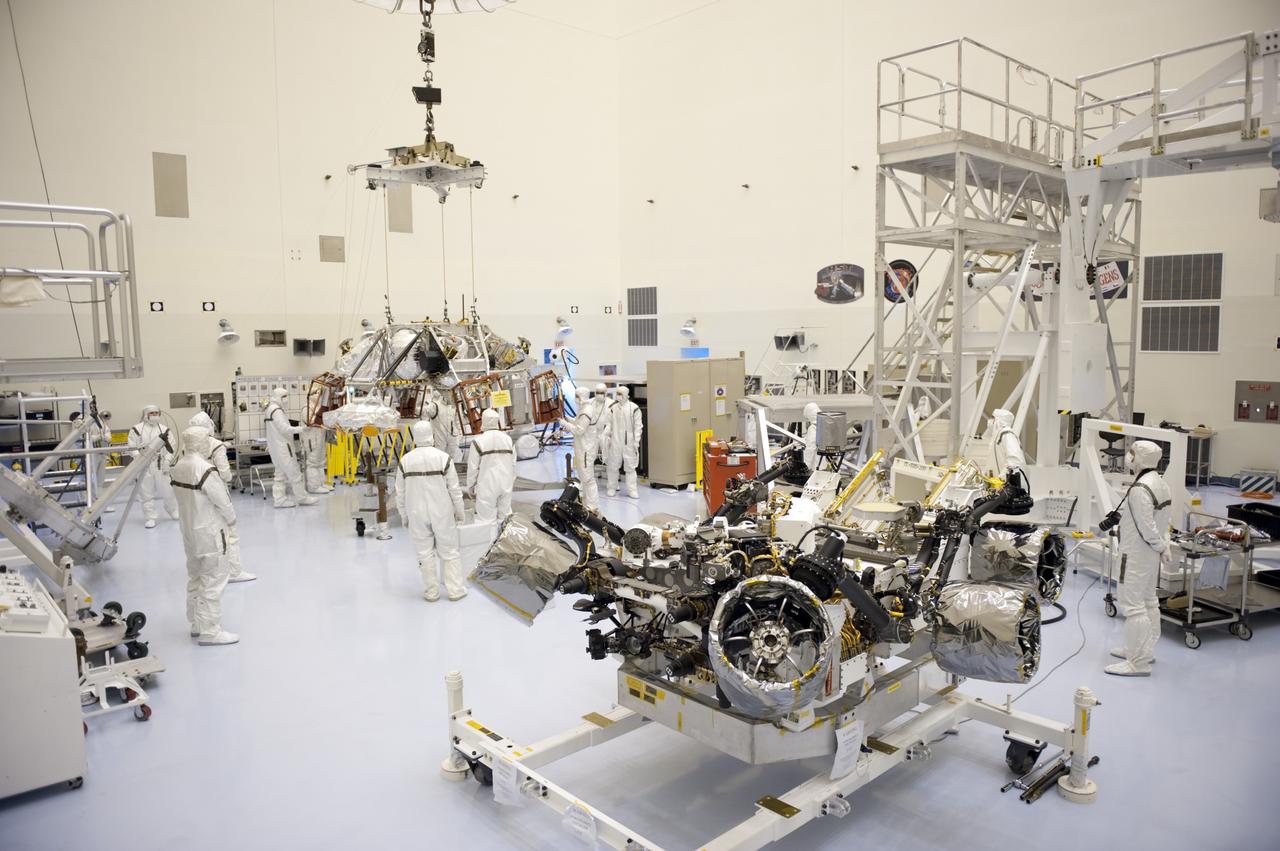
CAPE CANAVERAL, Fla. – At the Payload Hazardous Servicing Facility at NASA’s Kennedy Space Center in Florida, technicians carefully monitor the attachment of an overhead crane to a rocket-powered descent stage which will be integrated with NASA's Mars Science Laboratory (MSL) rover, known as Curiosity (in the foreground). The descent stage will lower Curiosity to the surface of Mars. A United Launch Alliance Atlas V-541 configuration will be used to loft MSL into space. Curiosity’s 10 science instruments are designed to search for evidence on whether Mars has had environments favorable to microbial life, including chemical ingredients for life. The unique rover will use a laser to look inside rocks and release its gasses so that the rover’s spectrometer can analyze and send the data back to Earth. MSL is scheduled to launch Nov. 25 with a window extending to Dec. 18 and arrival at Mars Aug. 2012. For more information, visit http://www.nasa.gov/msl. Photo credit: NASA/Kim Shiflett
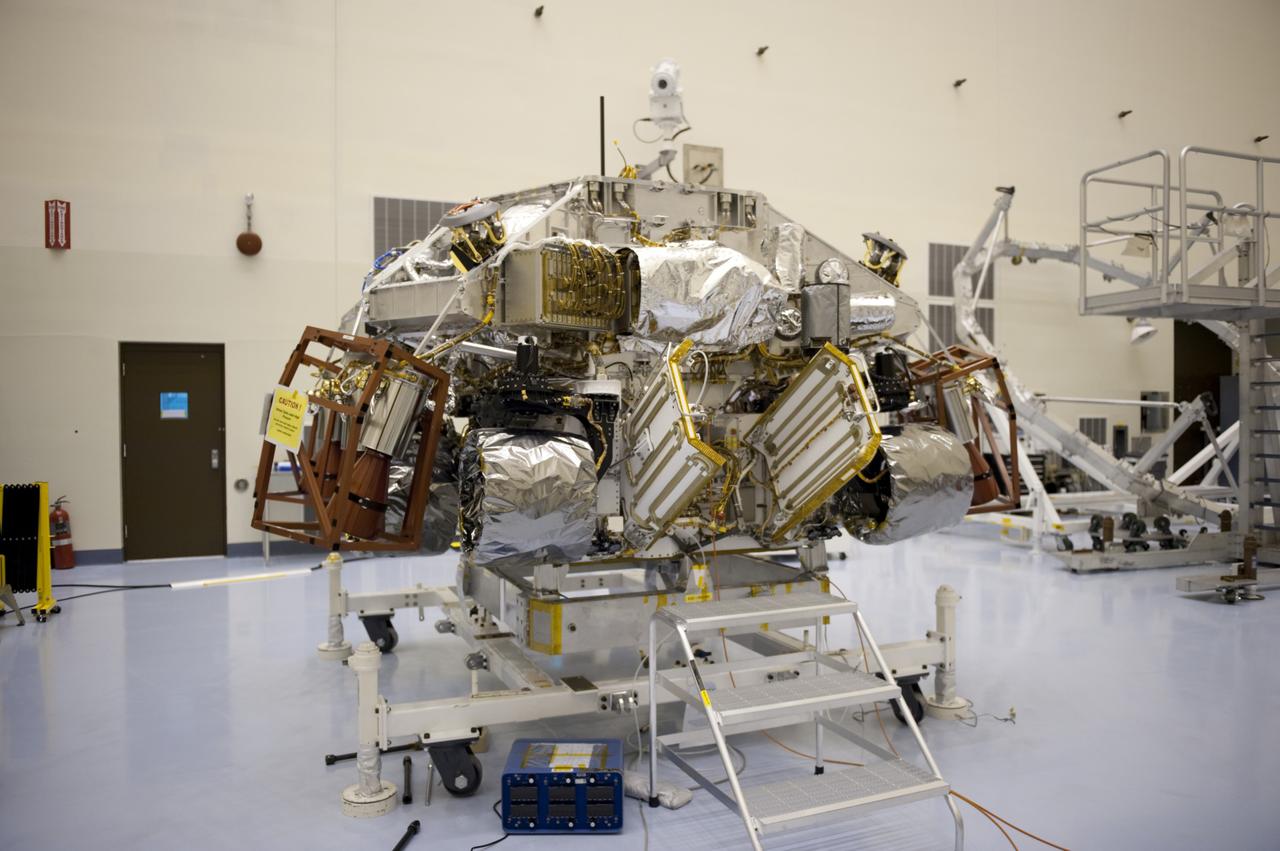
CAPE CANAVERAL, Fla. – At the Payload Hazardous Servicing Facility at NASA’s Kennedy Space Center in Florida, integration between a rocket-powered descent stage and NASA's Mars Science Laboratory (MSL) rover, known as Curiosity, is complete. The descent stage will lower Curiosity to the surface of Mars. A United Launch Alliance Atlas V-541 configuration will be used to loft MSL into space. Curiosity’s 10 science instruments are designed to search for evidence on whether Mars has had environments favorable to microbial life, including chemical ingredients for life. The unique rover will use a laser to look inside rocks and release its gasses so that the rover’s spectrometer can analyze and send the data back to Earth. MSL is scheduled to launch Nov. 25 with a window extending to Dec. 18 and arrival at Mars Aug. 2012. For more information, visit http://www.nasa.gov/msl. Photo credit: NASA/Kim Shiflett
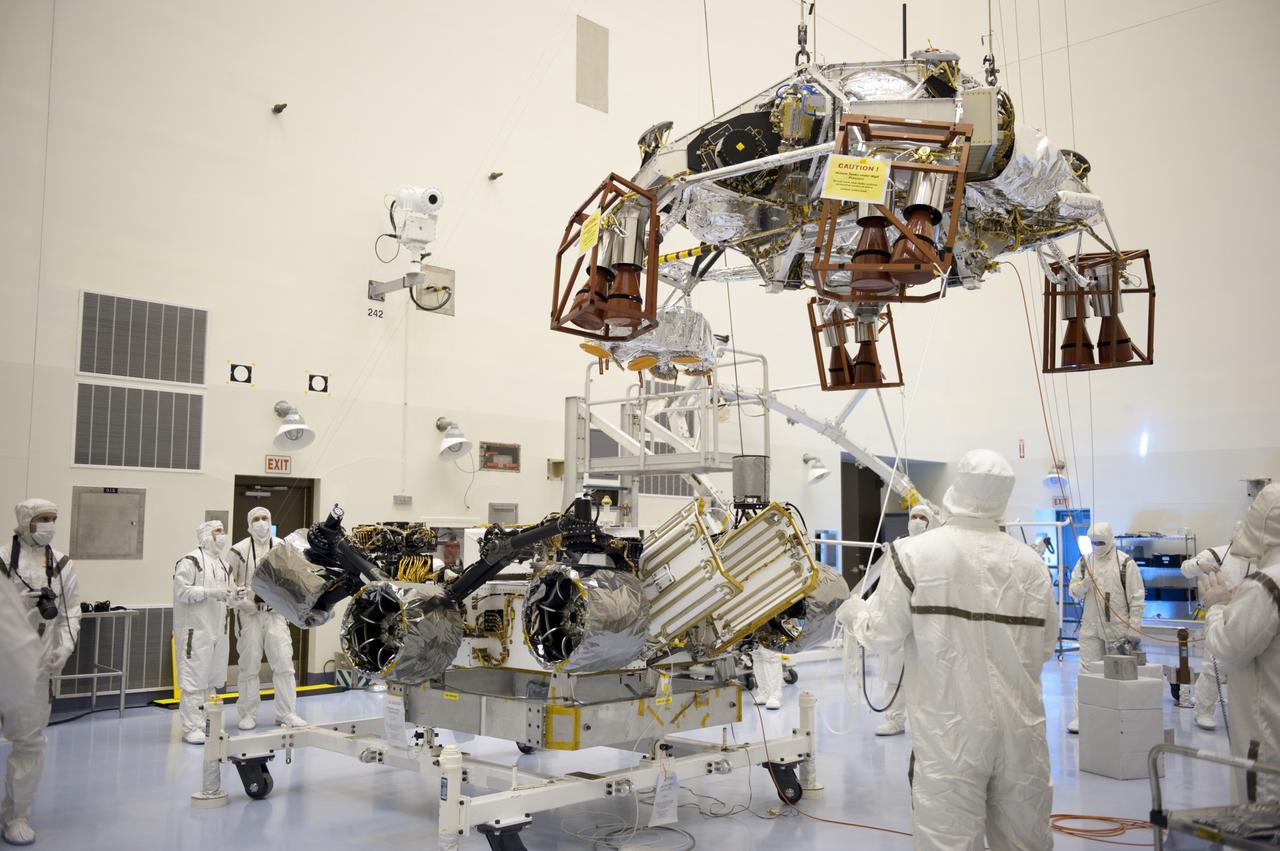
CAPE CANAVERAL, Fla. – Preparing for integration to NASA's Mars Science Laboratory (MSL) rover known as Curiosity, technicians help guide a rocket-powered descent stage over the rover at NASA's Kennedy Space Center Payload Hazardous Servicing Facility. The descent stage will lower Curiosity to the surface of Mars. A United Launch Alliance Atlas V-541 configuration will be used to loft MSL into space. Curiosity’s 10 science instruments are designed to search for evidence on whether Mars has had environments favorable to microbial life, including chemical ingredients for life. The unique rover will use a laser to look inside rocks and release its gasses so that the rover’s spectrometer can analyze and send the data back to Earth. MSL is scheduled to launch Nov. 25 with a window extending to Dec. 18 and arrival at Mars Aug. 2012. For more information, visit http://www.nasa.gov/msl. Photo credit: NASA/Kim Shiflett
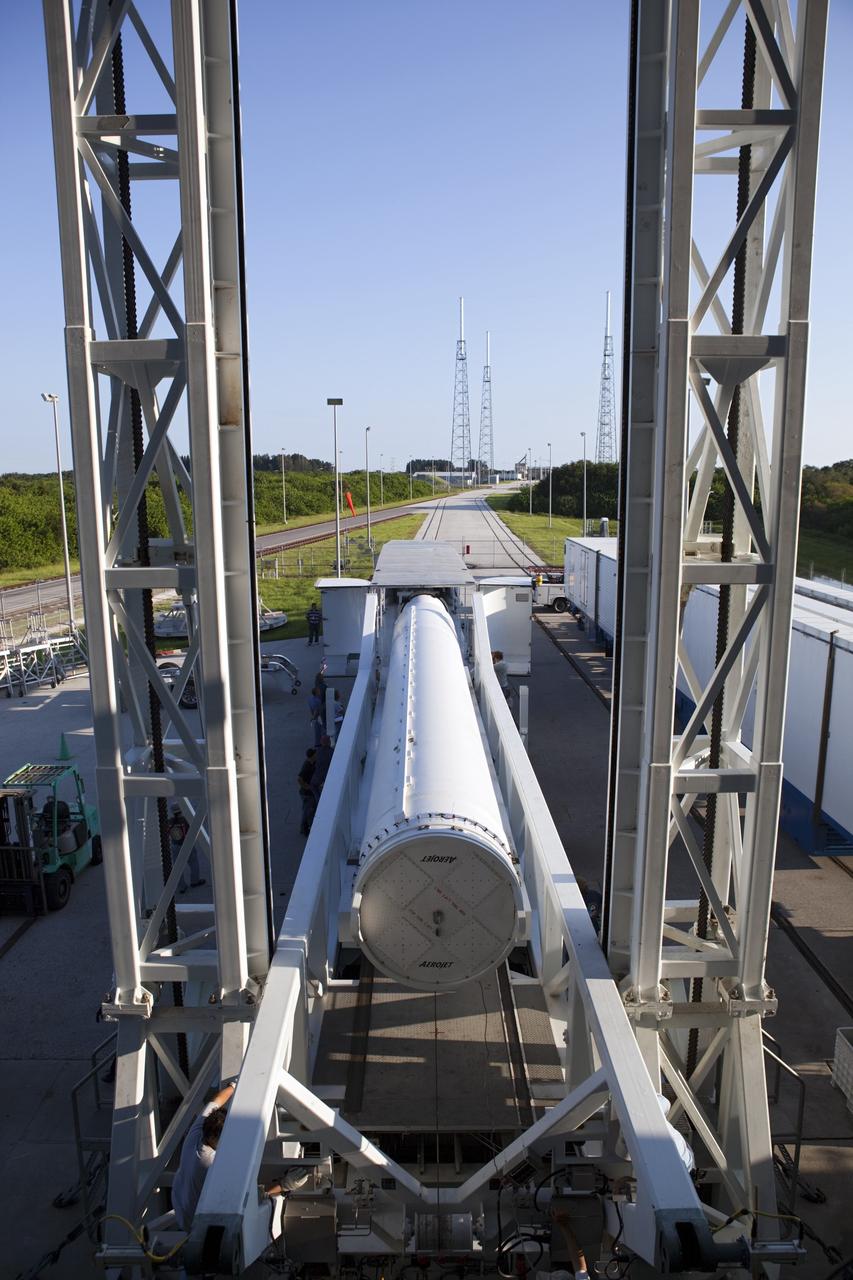
CAPE CANAVERAL, Fla. – With a view from an upper level at the Vertical Integration Facility at Space Launch Complex 41 on Cape Canaveral Air Force Station in Florida, a solid rocket motor (SRM) is being prepared for mating to a United Launch Alliance Atlas V rocket. The Atlas V will carry NASA's Mars Science Laboratory (MSL) mission into space. MSL's components include a compact car-sized rover, Curiosity, which has 10 science instruments designed to search for evidence on whether Mars has had environments favorable to microbial life, including chemical ingredients for life. The unique rover will use a laser to look inside rocks and release its gasses so that the rover’s spectrometer can analyze and send the data back to Earth. MSL is scheduled to launch Nov. 25 with a window extending to Dec. 18 and arrival at Mars Aug. 2012. For more information, visit http://www.nasa.gov/msl. Photo credit: NASA/Dimitri Gerondidakis

CAPE CANAVERAL, Fla. – At the Payload Hazardous Servicing Facility at NASA’s Kennedy Space Center in Florida, integration between a rocket-powered descent stage and NASA's Mars Science Laboratory (MSL) rover, known as Curiosity, is complete. The descent stage will lower Curiosity to the surface of Mars. A United Launch Alliance Atlas V-541 configuration will be used to loft MSL into space. Curiosity’s 10 science instruments are designed to search for evidence on whether Mars has had environments favorable to microbial life, including chemical ingredients for life. The unique rover will use a laser to look inside rocks and release its gasses so that the rover’s spectrometer can analyze and send the data back to Earth. MSL is scheduled to launch Nov. 25 with a window extending to Dec. 18 and arrival at Mars Aug. 2012. For more information, visit http://www.nasa.gov/msl. Photo credit: NASA/Kim Shiflett
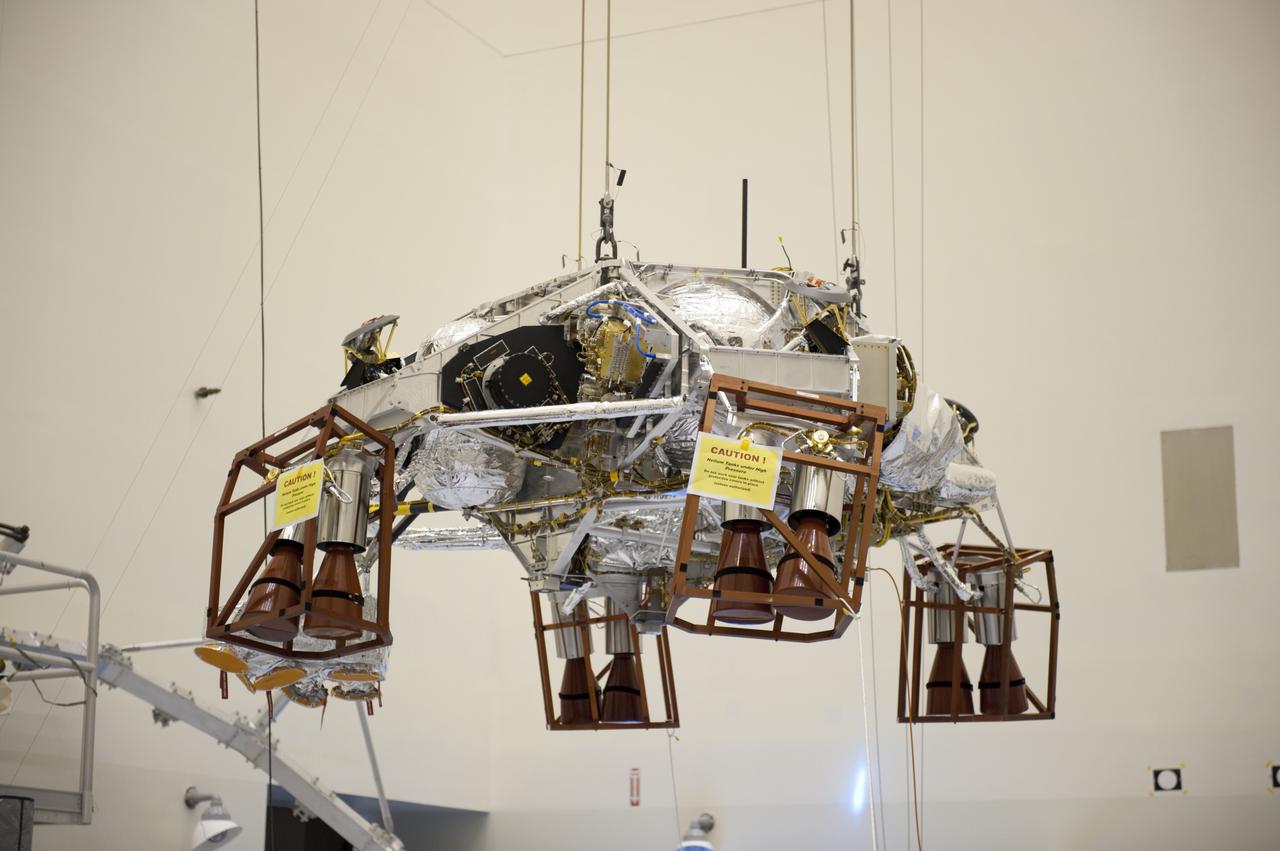
CAPE CANAVERAL, Fla. – At the Payload Hazardous Servicing Facility at NASA's Kennedy Space Center in Florida, an overhead crane lifts a rocket-powered descent stage for integration with NASA's Mars Science Laboratory (MSL) rover, known as Curiosity. The descent stage will lower Curiosity to the surface of Mars. A United Launch Alliance Atlas V-541 configuration will be used to loft MSL into space. Curiosity’s 10 science instruments are designed to search for evidence on whether Mars has had environments favorable to microbial life, including chemical ingredients for life. The unique rover will use a laser to look inside rocks and release its gasses so that the rover’s spectrometer can analyze and send the data back to Earth. MSL is scheduled to launch Nov. 25 with a window extending to Dec. 18 and arrival at Mars Aug. 2012. For more information, visit http://www.nasa.gov/msl. Photo credit: NASA/Kim Shiflett
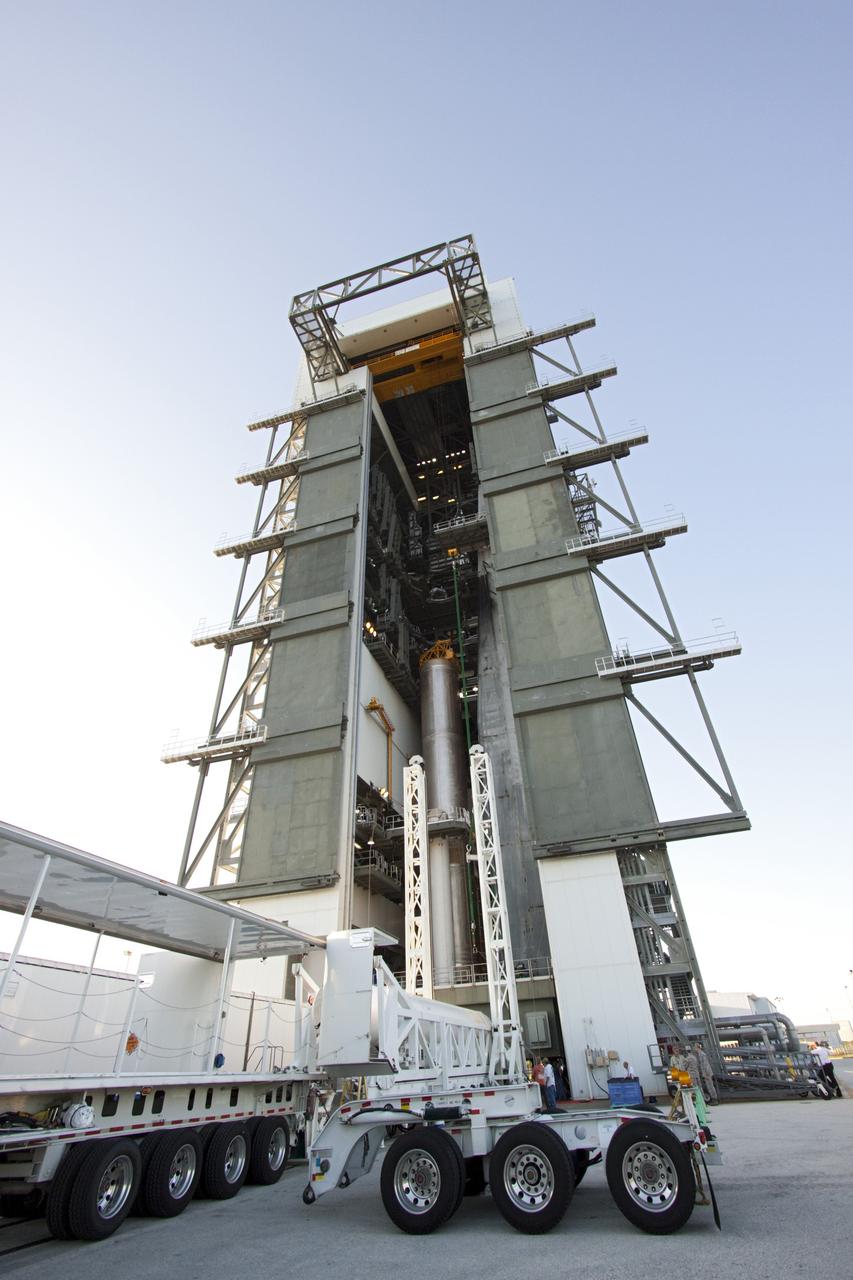
CAPE CANAVERAL, Fla. – At the Vertical Integration Facility at Space Launch Complex 41 on Cape Canaveral Air Force Station in Florida, technicians guide the final solid rocket motor (SRM) off a trailer. The motor will be mated to a United Launch Alliance Atlas V rocket which will carry NASA's Mars Science Laboratory (MSL) mission. MSL's components include a compact car-sized rover, Curiosity, which has 10 science instruments designed to search for evidence on whether Mars has had environments favorable to microbial life, including chemical ingredients for life. The unique rover will use a laser to look inside rocks and release its gasses so that the rover’s spectrometer can analyze and send the data back to Earth. MSL is scheduled to launch Nov. 25 with a window extending to Dec. 18 and arrival at Mars Aug. 2012. For more information, visit http://www.nasa.gov/msl. Photo credit: NASA/Jim Grossmann
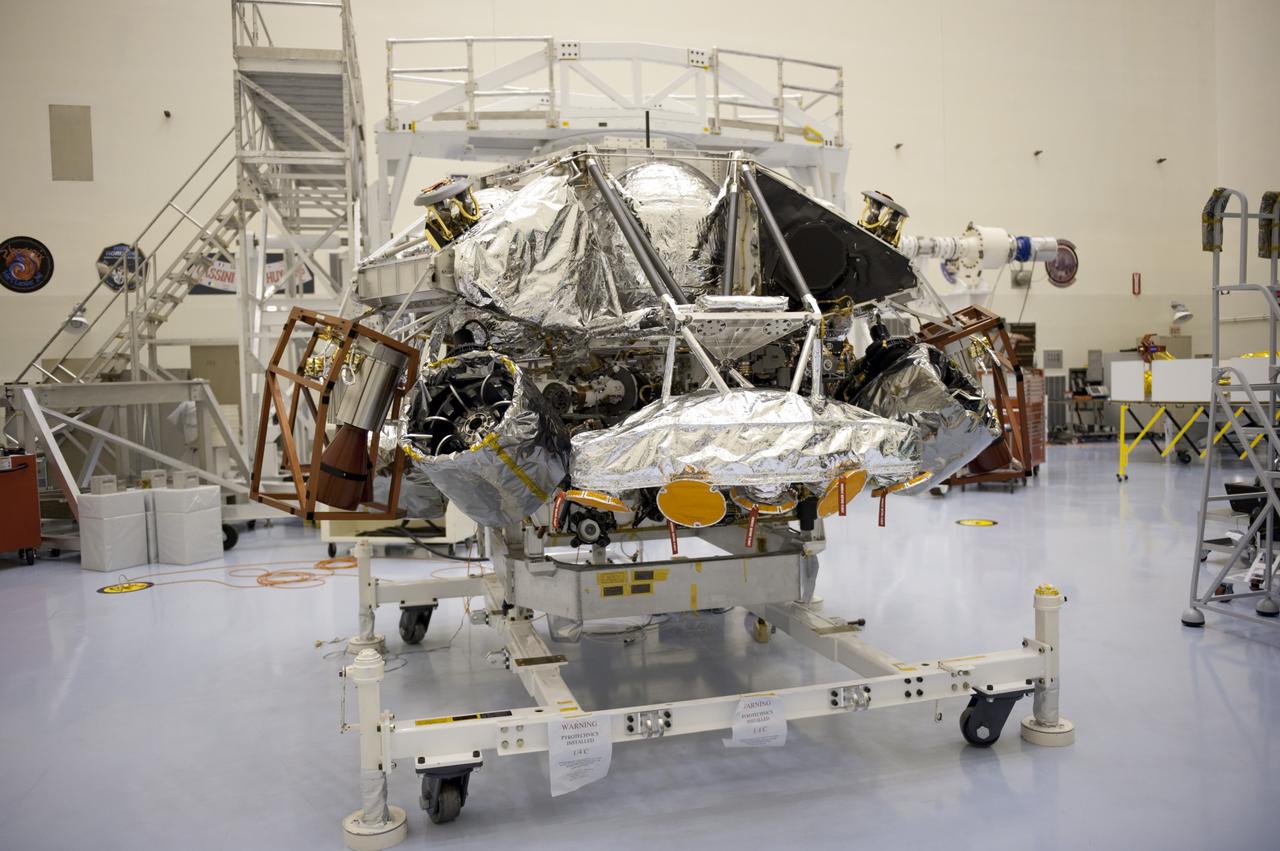
CAPE CANAVERAL, Fla. – At the Payload Hazardous Servicing Facility at NASA’s Kennedy Space Center in Florida, integration between a rocket-powered descent stage and NASA's Mars Science Laboratory (MSL) rover, known as Curiosity, is complete. The descent stage will lower Curiosity to the surface of Mars. A United Launch Alliance Atlas V-541 configuration will be used to loft MSL into space. Curiosity’s 10 science instruments are designed to search for evidence on whether Mars has had environments favorable to microbial life, including chemical ingredients for life. The unique rover will use a laser to look inside rocks and release its gasses so that the rover’s spectrometer can analyze and send the data back to Earth. MSL is scheduled to launch Nov. 25 with a window extending to Dec. 18 and arrival at Mars Aug. 2012. For more information, visit http://www.nasa.gov/msl. Photo credit: NASA/Kim Shiflett
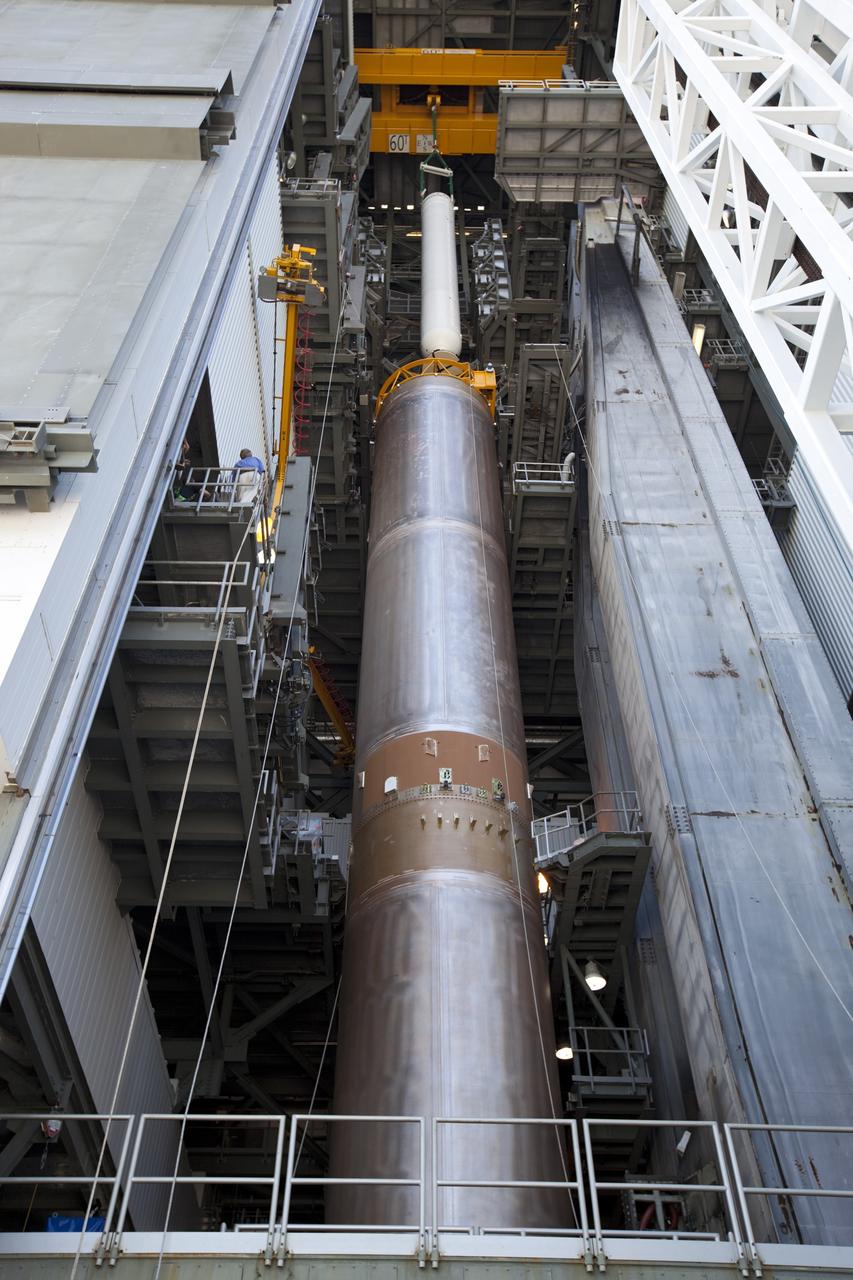
CAPE CANAVERAL, Fla. – At the Vertical Integration Facility at Space Launch Complex 41 on Cape Canaveral Air Force Station in Florida, a technician monitors the progress as a crane lifts a solid rocket motor (SRM) for mating to the first stage of a United Launch Alliance Atlas V rocket. The Atlas V will carry NASA's Mars Science Laboratory (MSL) mission into space. MSL's components include a compact car-sized rover, Curiosity, which has 10 science instruments designed to search for evidence on whether Mars has had environments favorable to microbial life, including chemical ingredients for life. The unique rover will use a laser to look inside rocks and release its gasses so that the rover’s spectrometer can analyze and send the data back to Earth. MSL is scheduled to launch Nov. 25 with a window extending to Dec. 18 and arrival at Mars Aug. 2012. For more information, visit http://www.nasa.gov/msl. Photo credit: NASA/Dimitri Gerondidakis
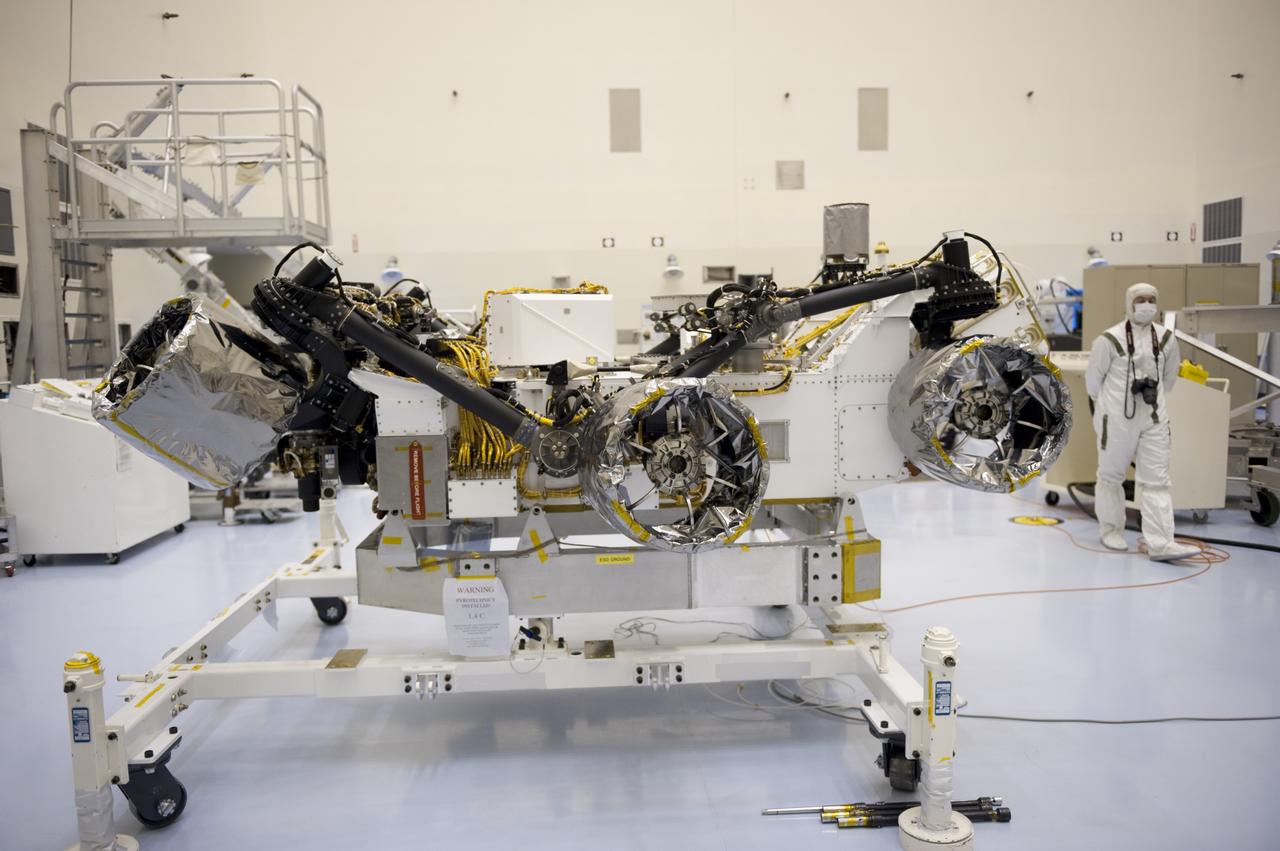
CAPE CANAVERAL, Fla. – At the Payload Hazardous Servicing Facility at NASA’s Kennedy Space Center in Florida, NASA's Mars Science Laboratory (MSL) rover, known as Curiosity, will be integrated with a rocket-powered descent stage. The descent stage will lower Curiosity to the surface of Mars. A United Launch Alliance Atlas V-541 configuration will be used to loft MSL into space. Curiosity’s 10 science instruments are designed to search for evidence on whether Mars has had environments favorable to microbial life, including chemical ingredients for life. The unique rover will use a laser to look inside rocks and release its gasses so that the rover’s spectrometer can analyze and send the data back to Earth. MSL is scheduled to launch Nov. 25 with a window extending to Dec. 18 and arrival at Mars Aug. 2012. For more information, visit http://www.nasa.gov/msl. Photo credit: NASA/Kim Shiflett
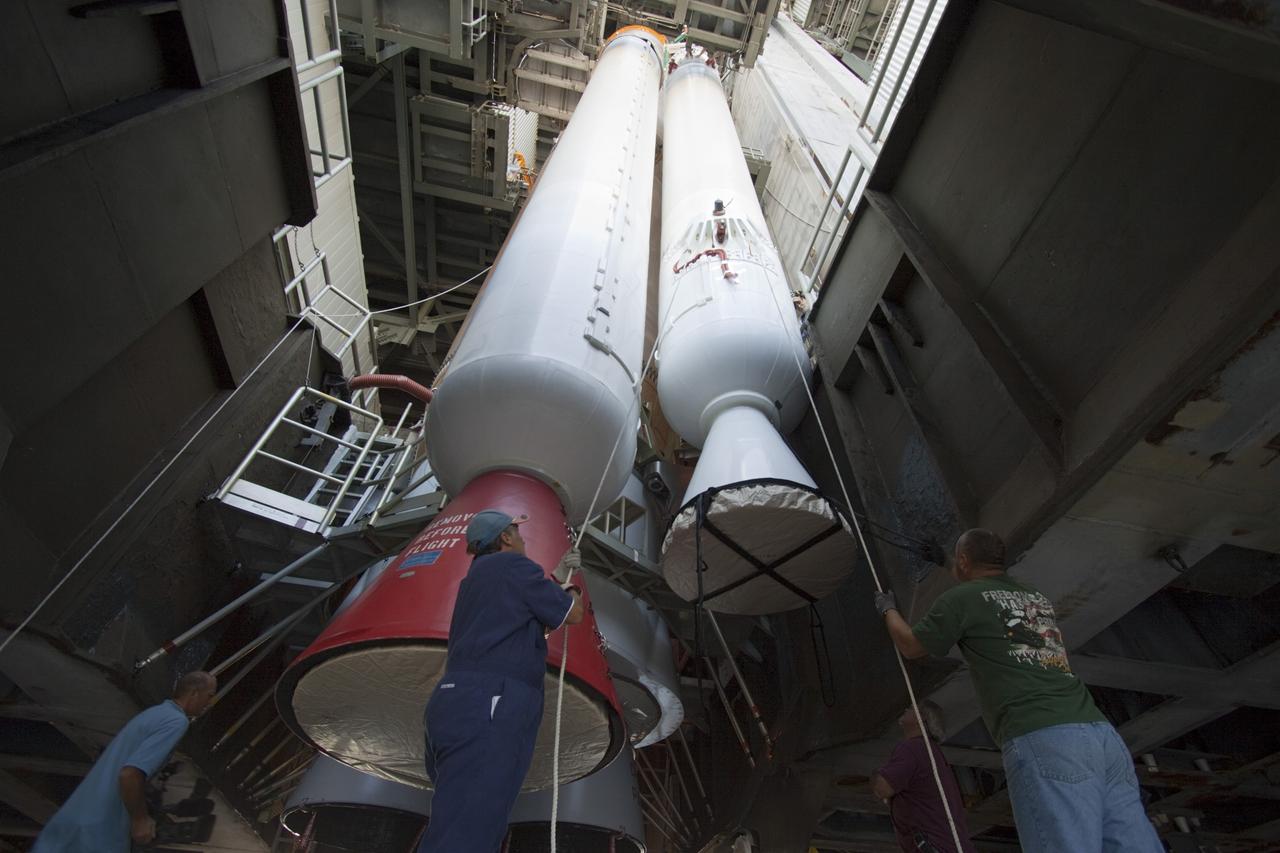
CAPE CANAVERAL, Fla. – Inside the Vertical Integration Facility at Space Launch Complex 41 on Cape Canaveral Air Force Station in Florida, technicians using an overhead crane guide the final solid rocket motor into position for mating to the first stage of a United Launch Alliance Atlas V rocket. The Atlas V will carry NASA's Mars Science Laboratory (MSL) mission into space. MSL's components include a compact car-sized rover, Curiosity, which has 10 science instruments designed to search for evidence on whether Mars has had environments favorable to microbial life, including chemical ingredients for life. The unique rover will use a laser to look inside rocks and release its gasses so that the rover’s spectrometer can analyze and send the data back to Earth. MSL is scheduled to launch Nov. 25 with a window extending to Dec. 18 and arrival at Mars Aug. 2012. For more information, visit http://www.nasa.gov/msl. Photo credit: NASA/Jim Grossmann
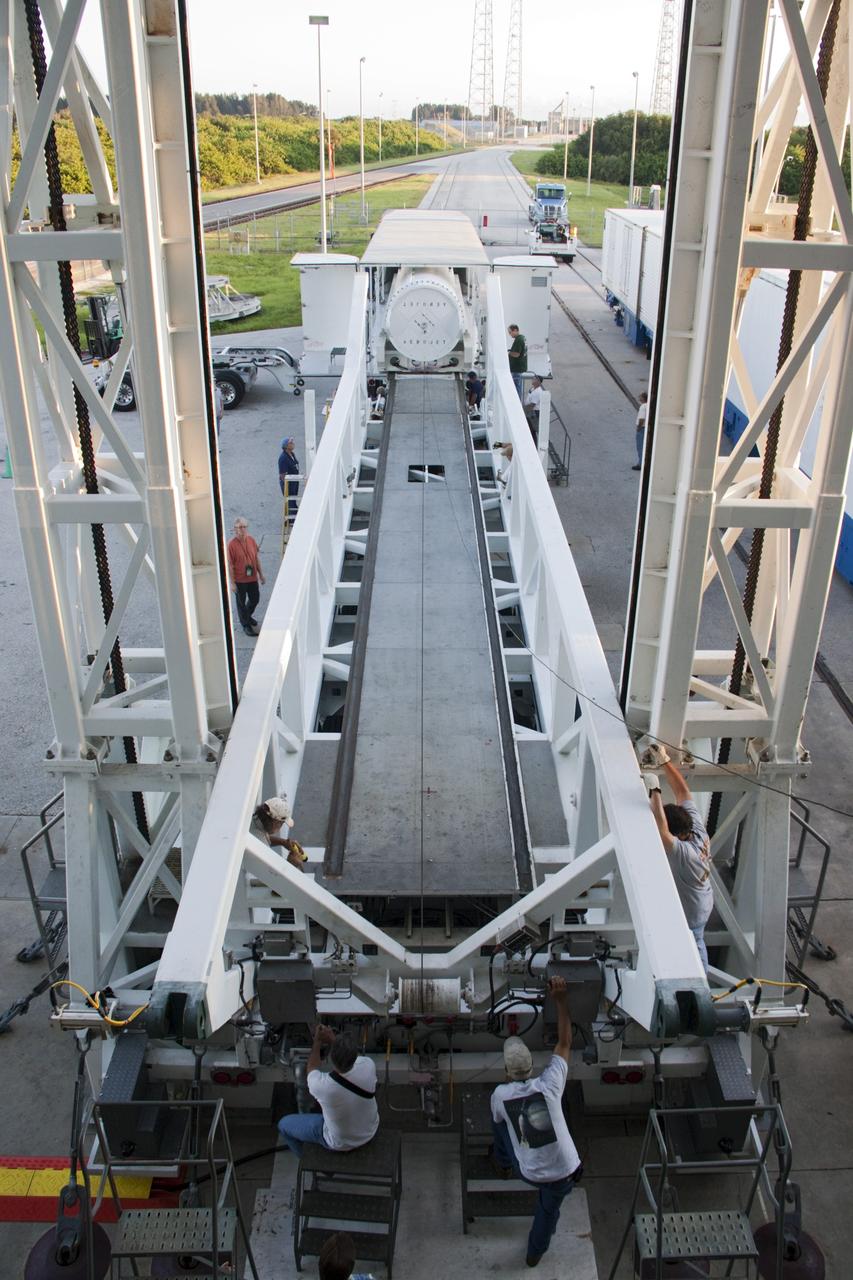
CAPE CANAVERAL, Fla. – With a view from an upper level at the Vertical Integration Facility at Space Launch Complex 41 on Cape Canaveral Air Force Station in Florida, technicians monitor as the final solid rocket motor (SRM) is being prepared for mating to a United Launch Alliance Atlas V rocket. The Atlas V will carry NASA's Mars Science Laboratory (MSL) mission into space. MSL's components include a compact car-sized rover, Curiosity, which has 10 science instruments designed to search for evidence on whether Mars has had environments favorable to microbial life, including chemical ingredients for life. The unique rover will use a laser to look inside rocks and release its gasses so that the rover’s spectrometer can analyze and send the data back to Earth. MSL is scheduled to launch Nov. 25 with a window extending to Dec. 18 and arrival at Mars Aug. 2012. For more information, visit http://www.nasa.gov/msl. Photo credit: NASA/Jim Grossmann
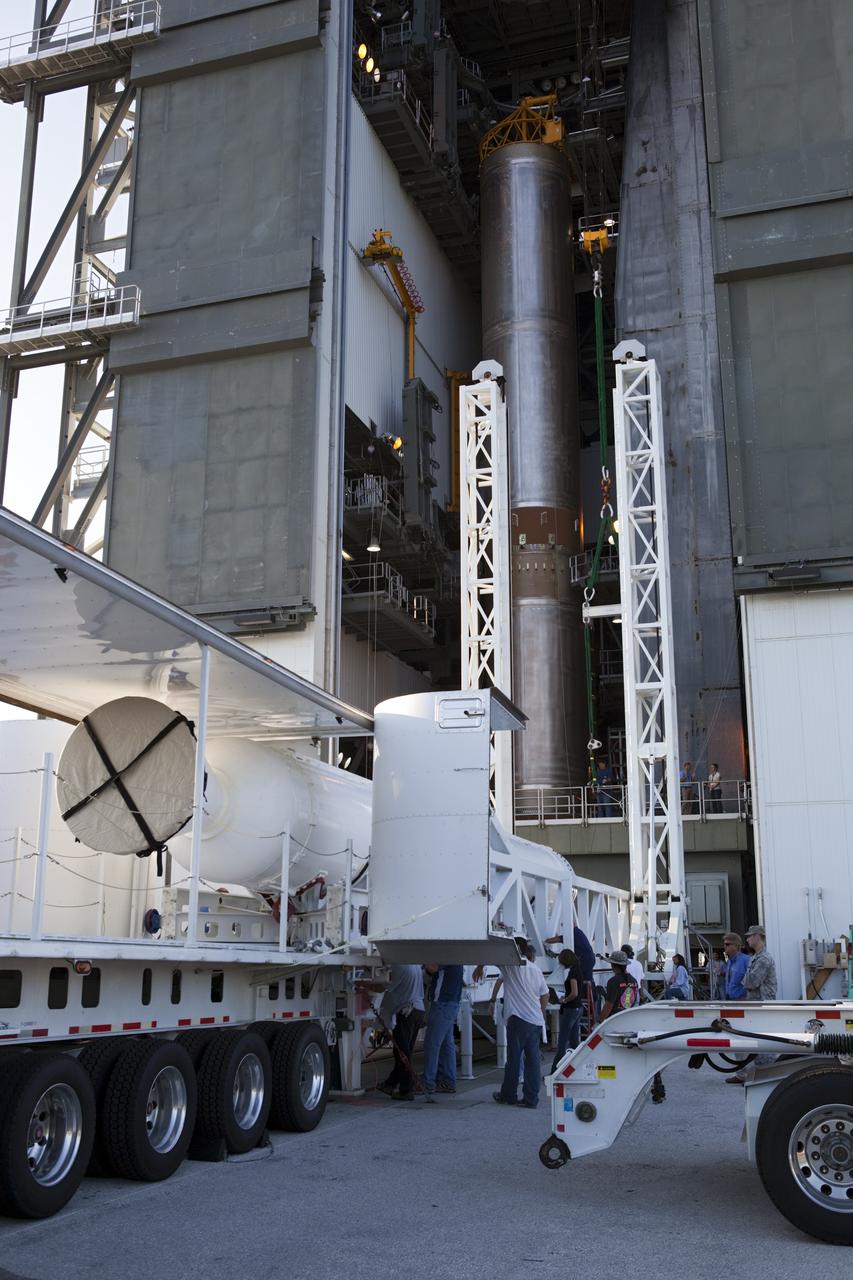
CAPE CANAVERAL, Fla. – At the Vertical Integration Facility at Space Launch Complex 41 on Cape Canaveral Air Force Station in Florida, technicians guide a solid rocket motor (SRM) off a trailer. The motor will be mated to a United Launch Alliance Atlas V rocket which will carry NASA's Mars Science Laboratory (MSL) mission. MSL's components include a compact car-sized rover, Curiosity, which has 10 science instruments designed to search for evidence on whether Mars has had environments favorable to microbial life, including chemical ingredients for life. The unique rover will use a laser to look inside rocks and release its gasses so that the rover’s spectrometer can analyze and send the data back to Earth. MSL is scheduled to launch Nov. 25 with a window extending to Dec. 18 and arrival at Mars Aug. 2012. For more information, visit http://www.nasa.gov/msl. Photo credit: NASA/Dimitri Gerondidakis
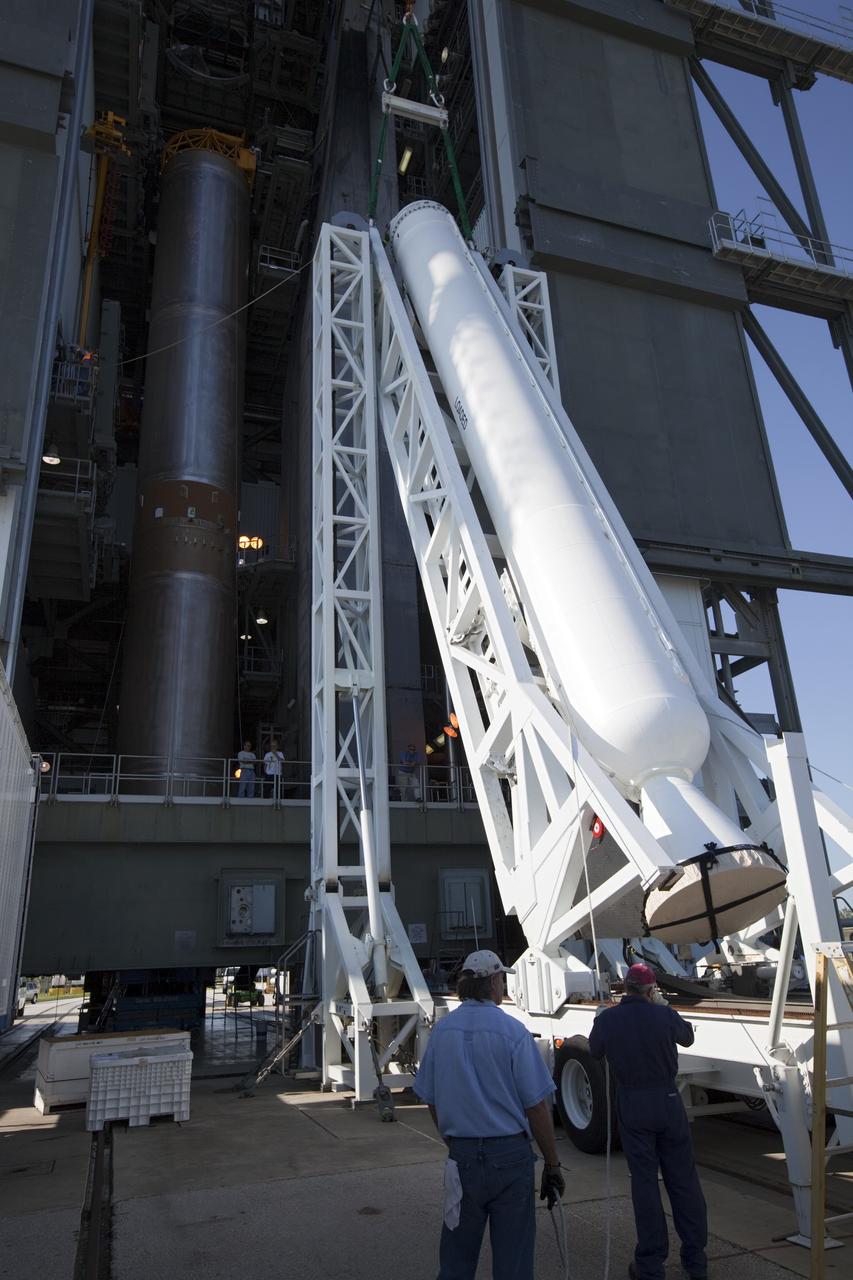
CAPE CANAVERAL, Fla. – At the Vertical Integration Facility at Space Launch Complex 41 on Cape Canaveral Air Force Station in Florida, technicians use a lifting device to elevate a solid rocket motor (SRM) into an upright position for mating to a United Launch Alliance Atlas V rocket which will carry NASA's Mars Science Laboratory (MSL) mission. MSL's components include a compact car-sized rover, Curiosity, which has 10 science instruments designed to search for evidence on whether Mars has had environments favorable to microbial life, including chemical ingredients for life. The unique rover will use a laser to look inside rocks and release its gasses so that the rover’s spectrometer can analyze and send the data back to Earth. MSL is scheduled to launch Nov. 25 with a window extending to Dec. 18 and arrival at Mars Aug. 2012. For more information, visit http://www.nasa.gov/msl. Photo credit: NASA/Dimitri Gerondidakis
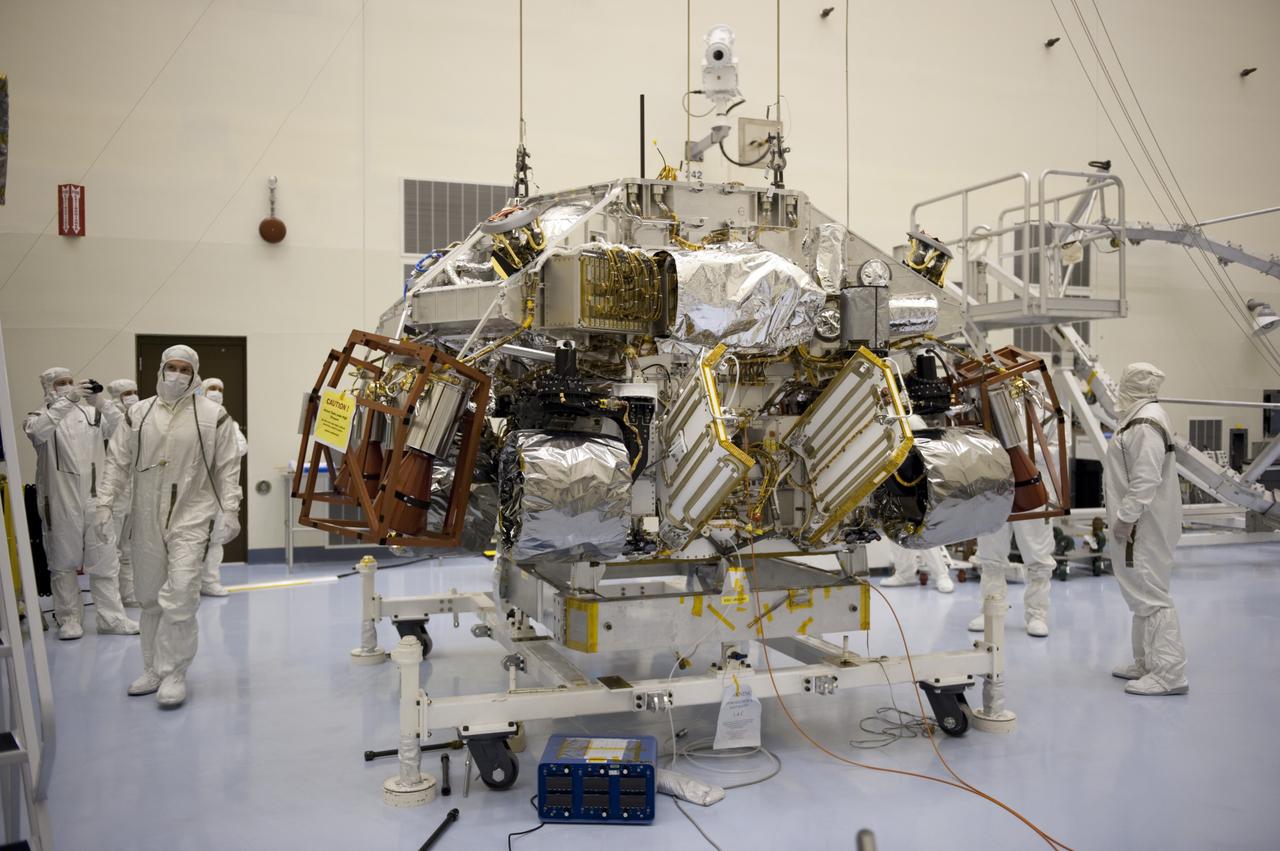
CAPE CANAVERAL, Fla. – At the Payload Hazardous Servicing Facility at NASA’s Kennedy Space Center in Florida, a rocket-powered descent stage, after being lowered by an overhead crane, is integrated with NASA's Mars Science Laboratory (MSL) rover, known as Curiosity. The descent stage will lower Curiosity to the surface of Mars. A United Launch Alliance Atlas V-541 configuration will be used to loft MSL into space. Curiosity’s 10 science instruments are designed to search for evidence on whether Mars has had environments favorable to microbial life, including chemical ingredients for life. The unique rover will use a laser to look inside rocks and release its gasses so that the rover’s spectrometer can analyze and send the data back to Earth. MSL is scheduled to launch Nov. 25 with a window extending to Dec. 18 and arrival at Mars Aug. 2012. For more information, visit http://www.nasa.gov/msl. Photo credit: NASA/Kim Shiflett
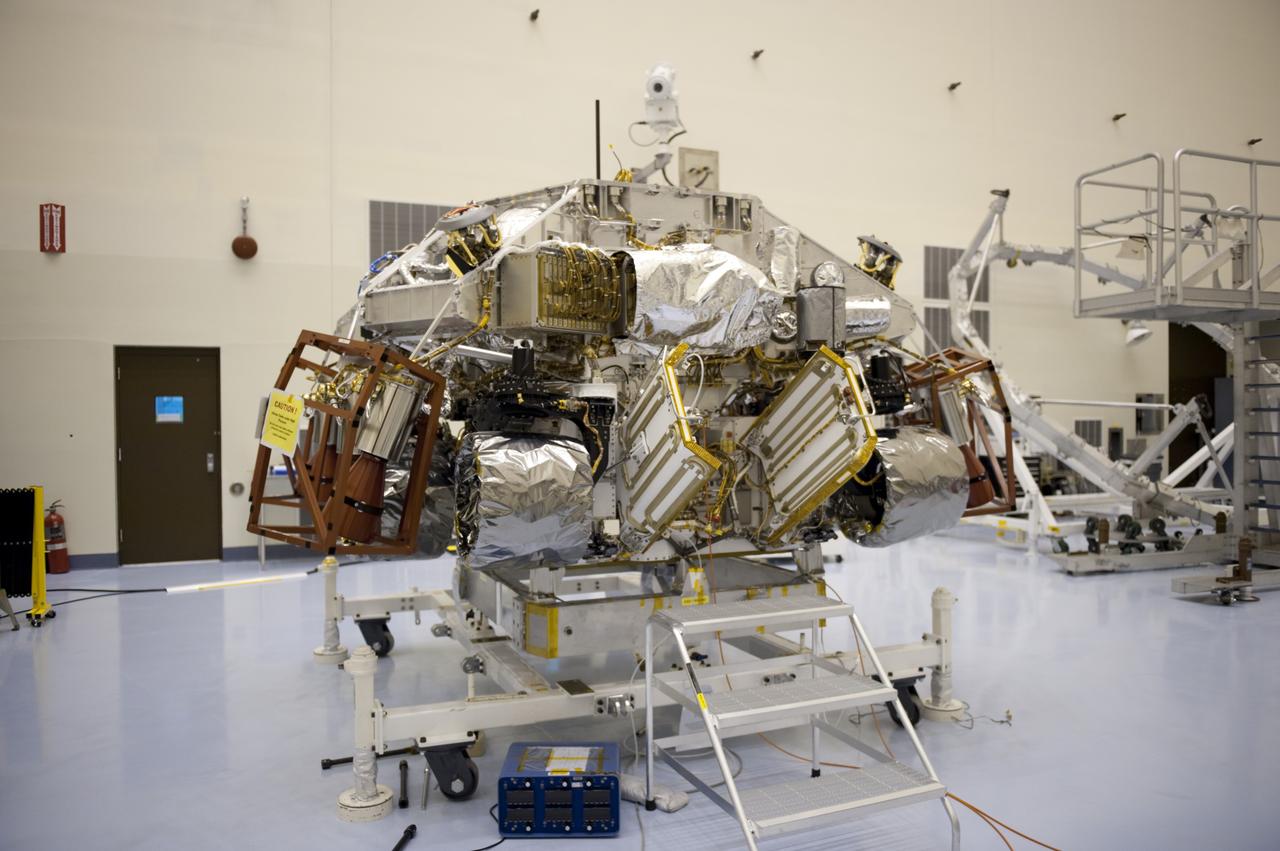
CAPE CANAVERAL, Fla. – At the Payload Hazardous Servicing Facility at NASA’s Kennedy Space Center in Florida, integration between a rocket-powered descent stage and NASA's Mars Science Laboratory (MSL) rover, known as Curiosity, is complete. The descent stage will lower Curiosity to the surface of Mars. A United Launch Alliance Atlas V-541 configuration will be used to loft MSL into space. Curiosity’s 10 science instruments are designed to search for evidence on whether Mars has had environments favorable to microbial life, including chemical ingredients for life. The unique rover will use a laser to look inside rocks and release its gasses so that the rover’s spectrometer can analyze and send the data back to Earth. MSL is scheduled to launch Nov. 25 with a window extending to Dec. 18 and arrival at Mars Aug. 2012. For more information, visit http://www.nasa.gov/msl. Photo credit: NASA/Kim Shiflett
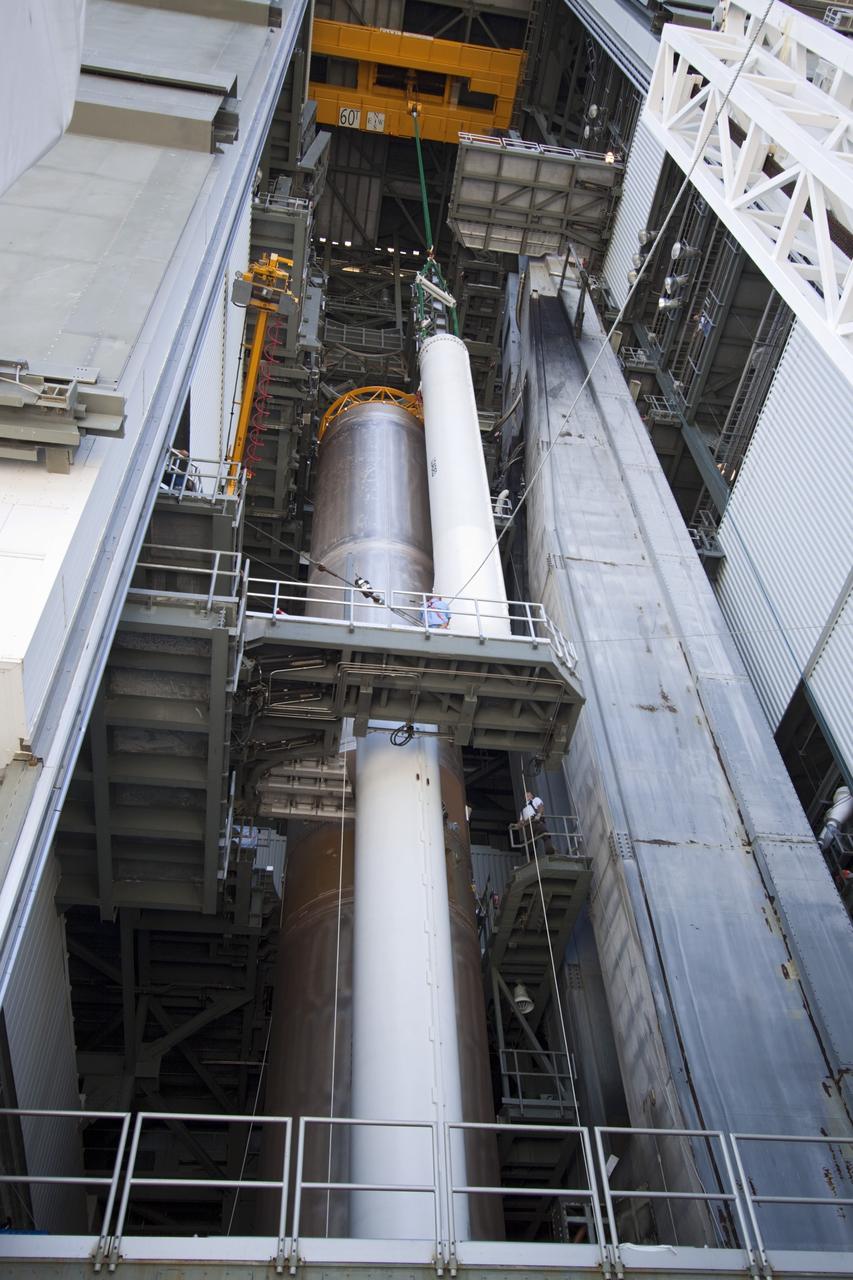
CAPE CANAVERAL, Fla. – Inside the Vertical Integration Facility at Space Launch Complex 41 on Cape Canaveral Air Force Station in Florida, a crane positions the final solid rocket motor (SRM) for mating to the first stage of a United Launch Alliance Atlas V rocket. The Atlas V will carry NASA's Mars Science Laboratory (MSL) mission into space. MSL's components include a compact car-sized rover, Curiosity, which has 10 science instruments designed to search for evidence on whether Mars has had environments favorable to microbial life, including chemical ingredients for life. The unique rover will use a laser to look inside rocks and release its gasses so that the rover’s spectrometer can analyze and send the data back to Earth. MSL is scheduled to launch Nov. 25 with a window extending to Dec. 18 and arrival at Mars Aug. 2012. For more information, visit http://www.nasa.gov/msl. Photo credit: NASA/Jim Grossmann

CAPE CANAVERAL, Fla. – At the Payload Hazardous Servicing Facility at NASA’s Kennedy Space Center in Florida, integration between a rocket-powered descent stage and NASA's Mars Science Laboratory (MSL) rover, known as Curiosity, is complete. The descent stage will lower Curiosity to the surface of Mars. A United Launch Alliance Atlas V-541 configuration will be used to loft MSL into space. Curiosity’s 10 science instruments are designed to search for evidence on whether Mars has had environments favorable to microbial life, including chemical ingredients for life. The unique rover will use a laser to look inside rocks and release its gasses so that the rover’s spectrometer can analyze and send the data back to Earth. MSL is scheduled to launch Nov. 25 with a window extending to Dec. 18 and arrival at Mars Aug. 2012. For more information, visit http://www.nasa.gov/msl. Photo credit: NASA/Kim Shiflett
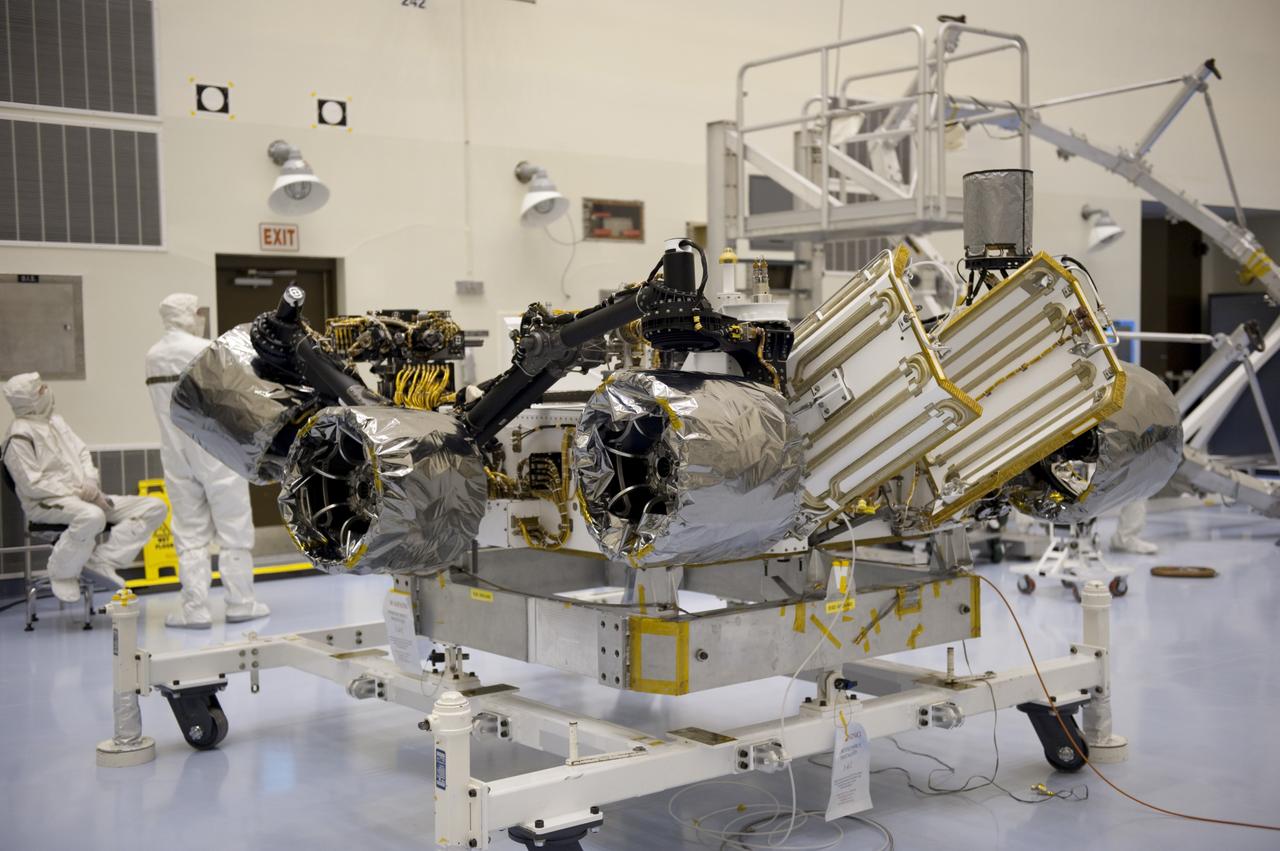
CAPE CANAVERAL, Fla. – At the Payload Hazardous Servicing Facility at NASA’s Kennedy Space Center in Florida, NASA's Mars Science Laboratory (MSL) rover, known as Curiosity, will be integrated with a rocket-powered descent stage. The descent stage will lower Curiosity to the surface of Mars. A United Launch Alliance Atlas V-541 configuration will be used to loft MSL into space. Curiosity’s 10 science instruments are designed to search for evidence on whether Mars has had environments favorable to microbial life, including chemical ingredients for life. The unique rover will use a laser to look inside rocks and release its gasses so that the rover’s spectrometer can analyze and send the data back to Earth. MSL is scheduled to launch Nov. 25 with a window extending to Dec. 18 and arrival at Mars Aug. 2012. For more information, visit http://www.nasa.gov/msl. Photo credit: NASA/Kim Shiflett
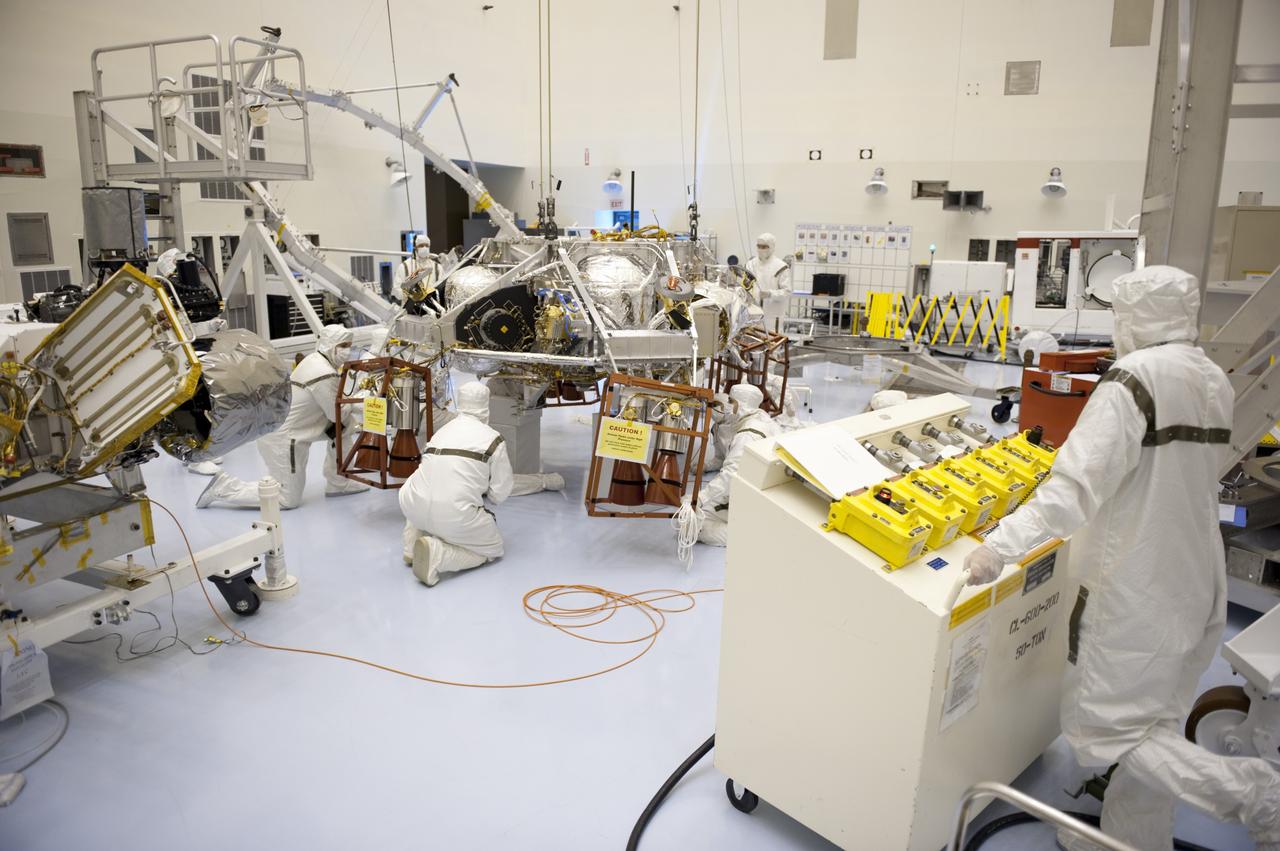
CAPE CANAVERAL, Fla. – At the Payload Hazardous Servicing Facility at NASA's Kennedy Space Center in Florida, technicians use an overhead crane to move a rocket-powered descent stage for integration with NASA's Mars Science Laboratory (MSL) rover, known as Curiosity. The descent stage will lower Curiosity to the surface of Mars. A United Launch Alliance Atlas V-541 configuration will be used to loft MSL into space. Curiosity’s 10 science instruments are designed to search for evidence on whether Mars has had environments favorable to microbial life, including chemical ingredients for life. The unique rover will use a laser to look inside rocks and release its gasses so that the rover’s spectrometer can analyze and send the data back to Earth. MSL is scheduled to launch Nov. 25 with a window extending to Dec. 18 and arrival at Mars Aug. 2012. For more information, visit http://www.nasa.gov/msl. Photo credit: NASA/Kim Shiflett
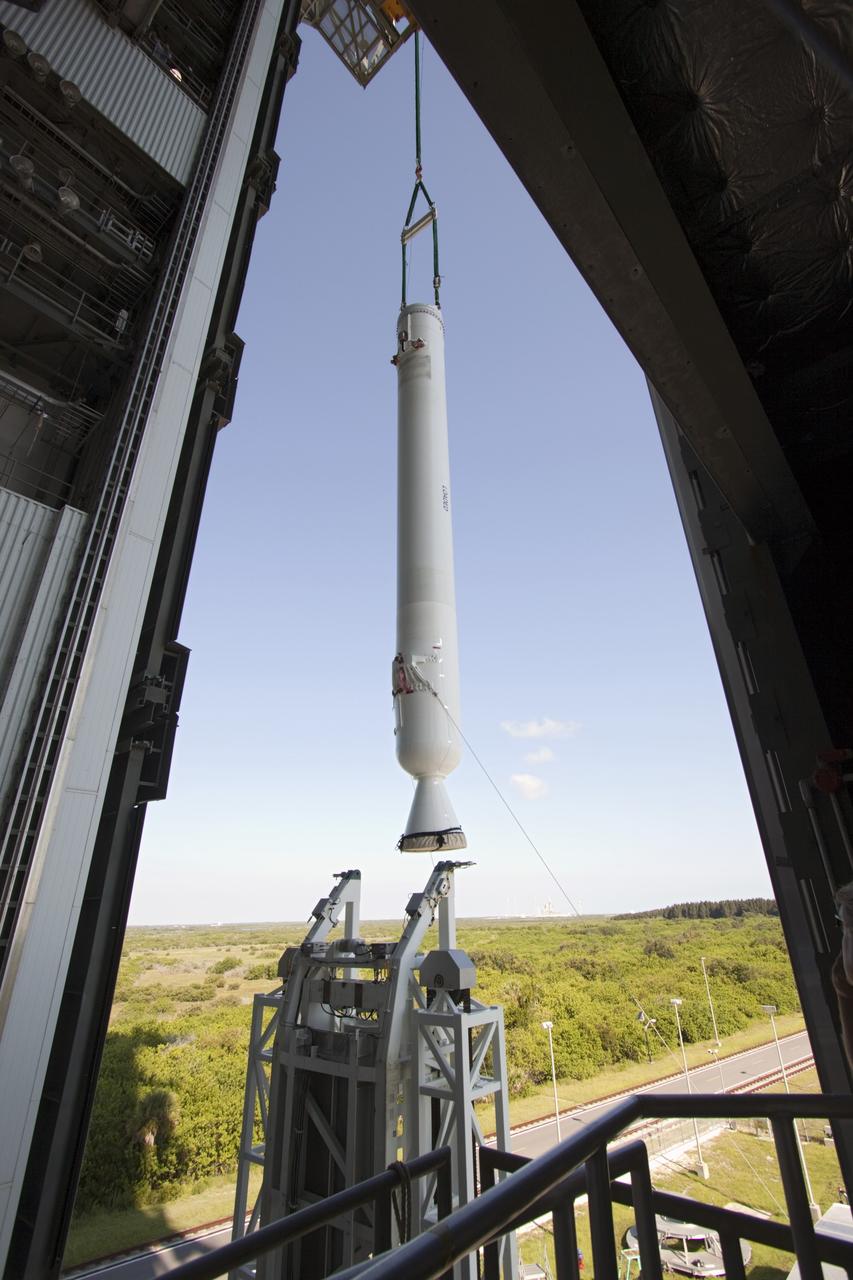
CAPE CANAVERAL, Fla. – With a view taken from inside the Vertical Integration Facility at Space Launch Complex 41 on Cape Canaveral Air Force Station in Florida, the final solid rocket motor (SRM) hangs in an upright position for mating to a United Launch Alliance Atlas V rocket which will carry NASA's Mars Science Laboratory (MSL) mission. MSL's components include a compact car-sized rover, Curiosity, which has 10 science instruments designed to search for evidence on whether Mars has had environments favorable to microbial life, including chemical ingredients for life. The unique rover will use a laser to look inside rocks and release its gasses so that the rover’s spectrometer can analyze and send the data back to Earth. MSL is scheduled to launch Nov. 25 with a window extending to Dec. 18 and arrival at Mars Aug. 2012. For more information, visit http://www.nasa.gov/msl. Photo credit: NASA/Jim Grossmann
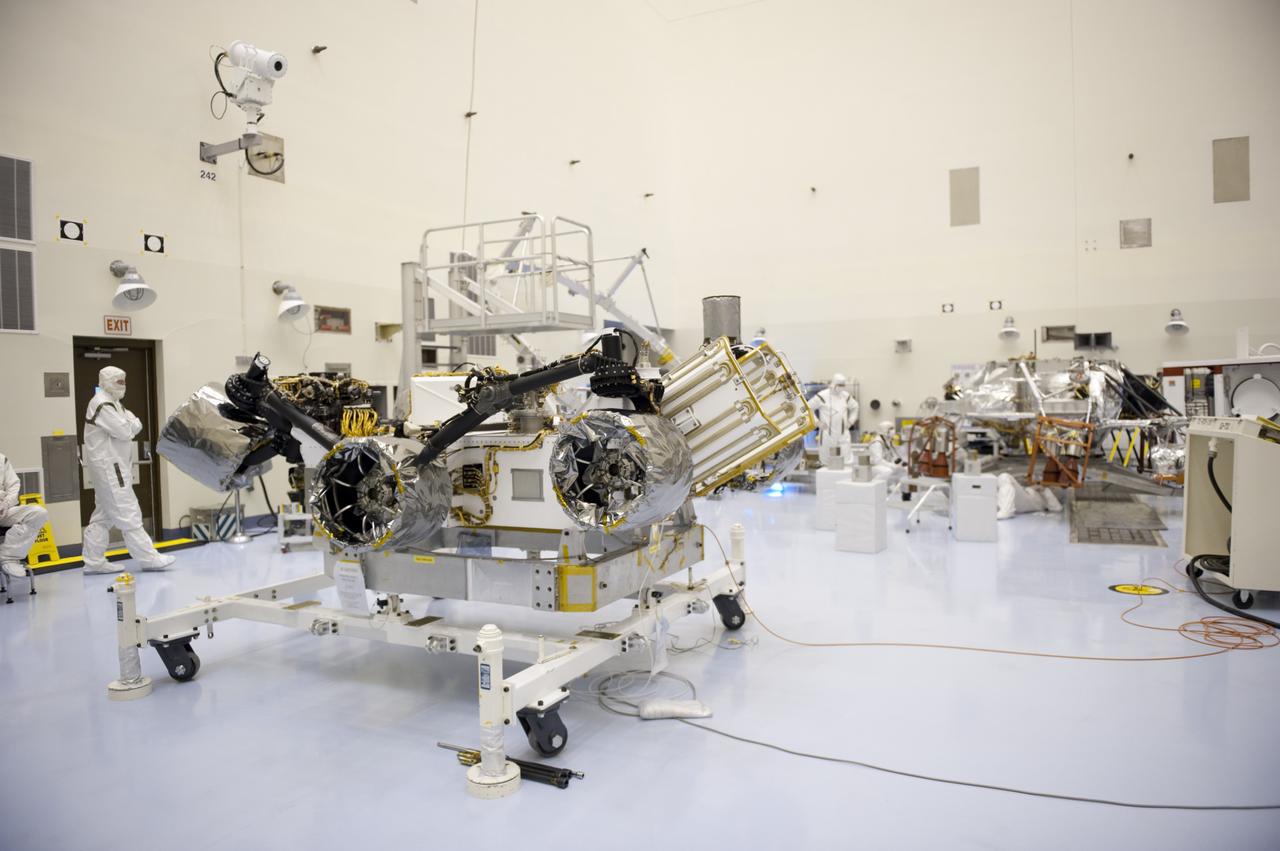
CAPE CANAVERAL, Fla. – At the Payload Hazardous Servicing Facility at NASA’s Kennedy Space Center in Florida, technicians prepare NASA's Mars Science Laboratory (MSL) rover, known as Curiosity, for integration with a rocket-powered descent stage. The descent stage will lower Curiosity to the surface of Mars. A United Launch Alliance Atlas V-541 configuration will be used to loft MSL into space. Curiosity’s 10 science instruments are designed to search for evidence on whether Mars has had environments favorable to microbial life, including chemical ingredients for life. The unique rover will use a laser to look inside rocks and release its gasses so that the rover’s spectrometer can analyze and send the data back to Earth. MSL is scheduled to launch Nov. 25 with a window extending to Dec. 18 and arrival at Mars Aug. 2012. For more information, visit http://www.nasa.gov/msl. Photo credit: NASA/Kim Shiflett
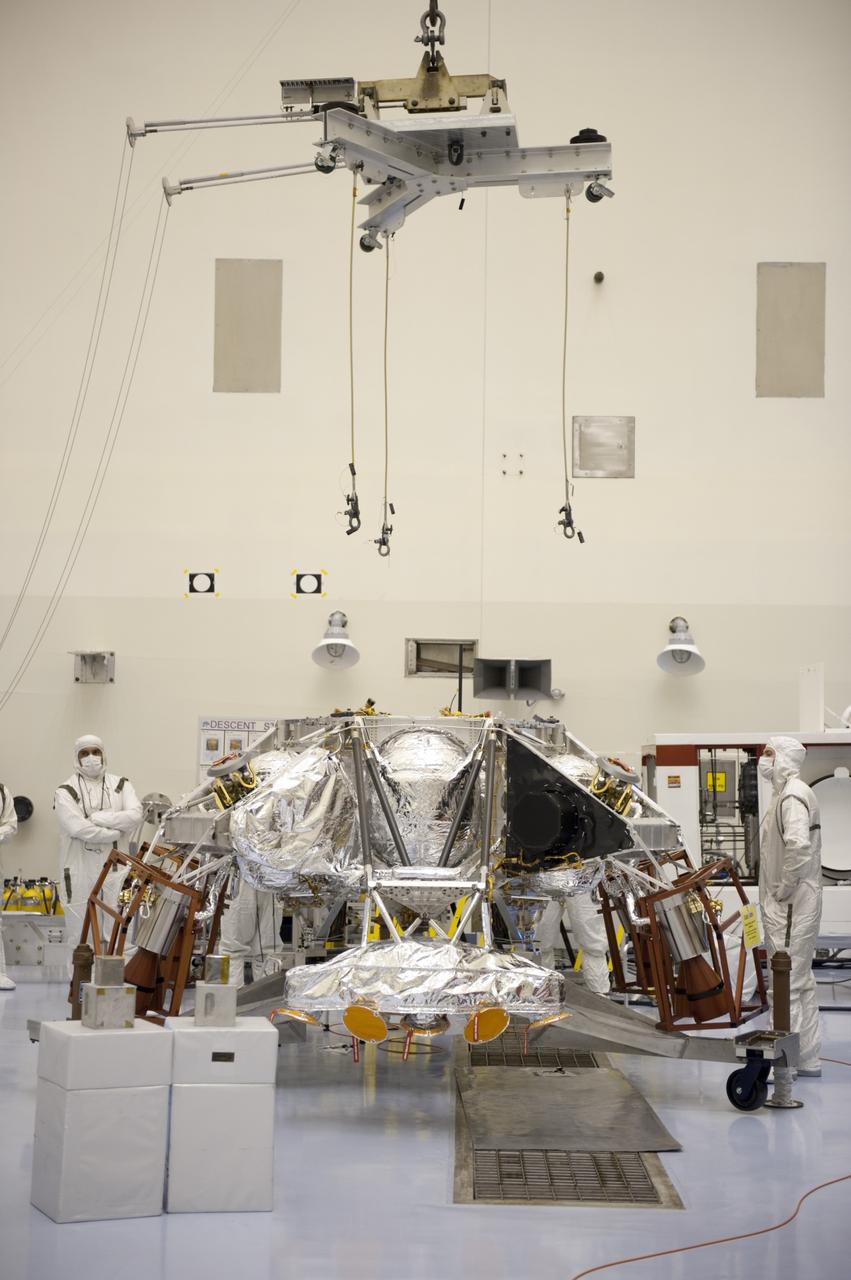
CAPE CANAVERAL, Fla. – At the Payload Hazardous Servicing Facility at NASA’s Kennedy Space Center in Florida, an overhead crane is being lowered over a rocket-powered descent stage for integration with NASA's Mars Science Laboratory (MSL) rover, known as Curiosity. The descent stage will lower Curiosity to the surface of Mars. A United Launch Alliance Atlas V-541 configuration will be used to loft MSL into space. Curiosity’s 10 science instruments are designed to search for evidence on whether Mars has had environments favorable to microbial life, including chemical ingredients for life. The unique rover will use a laser to look inside rocks and release its gasses so that the rover’s spectrometer can analyze and send the data back to Earth. MSL is scheduled to launch Nov. 25 with a window extending to Dec. 18 and arrival at Mars Aug. 2012. For more information, visit http://www.nasa.gov/msl. Photo credit: NASA/Kim Shiflett
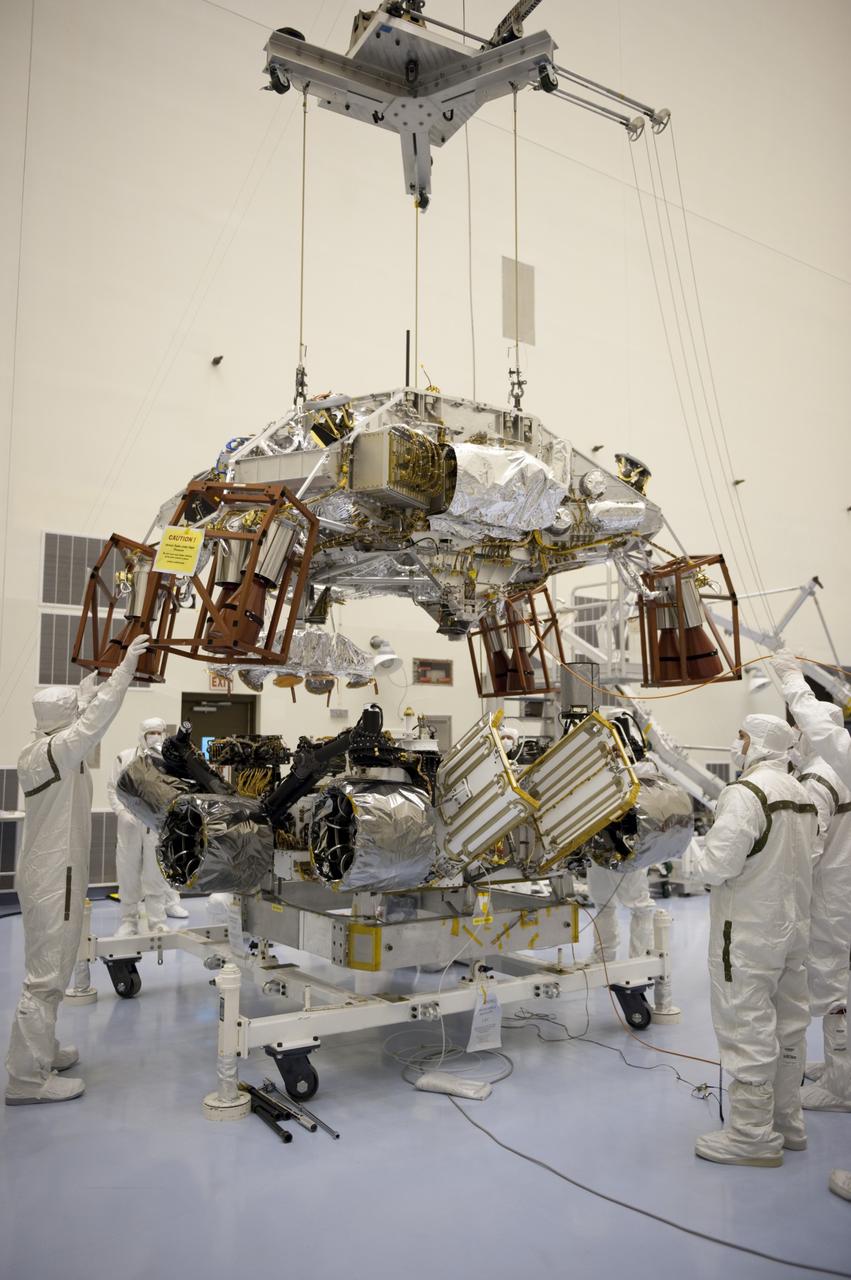
CAPE CANAVERAL, Fla. – Technicians at the Payload Hazardous Servicing Facility at NASA's Kennedy Space Center in Florida, guide an overhead crane as it lowers a rocket-powered descent stage over NASA's Mars Science Laboratory (MSL) rover, known as Curiosity, for integration. The descent stage will lower Curiosity to the surface of Mars. A United Launch Alliance Atlas V-541 configuration will be used to loft MSL into space. Curiosity’s 10 science instruments are designed to search for evidence on whether Mars has had environments favorable to microbial life, including chemical ingredients for life. The unique rover will use a laser to look inside rocks and release its gasses so that the rover’s spectrometer can analyze and send the data back to Earth. MSL is scheduled to launch Nov. 25 with a window extending to Dec. 18 and arrival at Mars Aug. 2012. For more information, visit http://www.nasa.gov/msl. Photo credit: NASA/Kim Shiflett
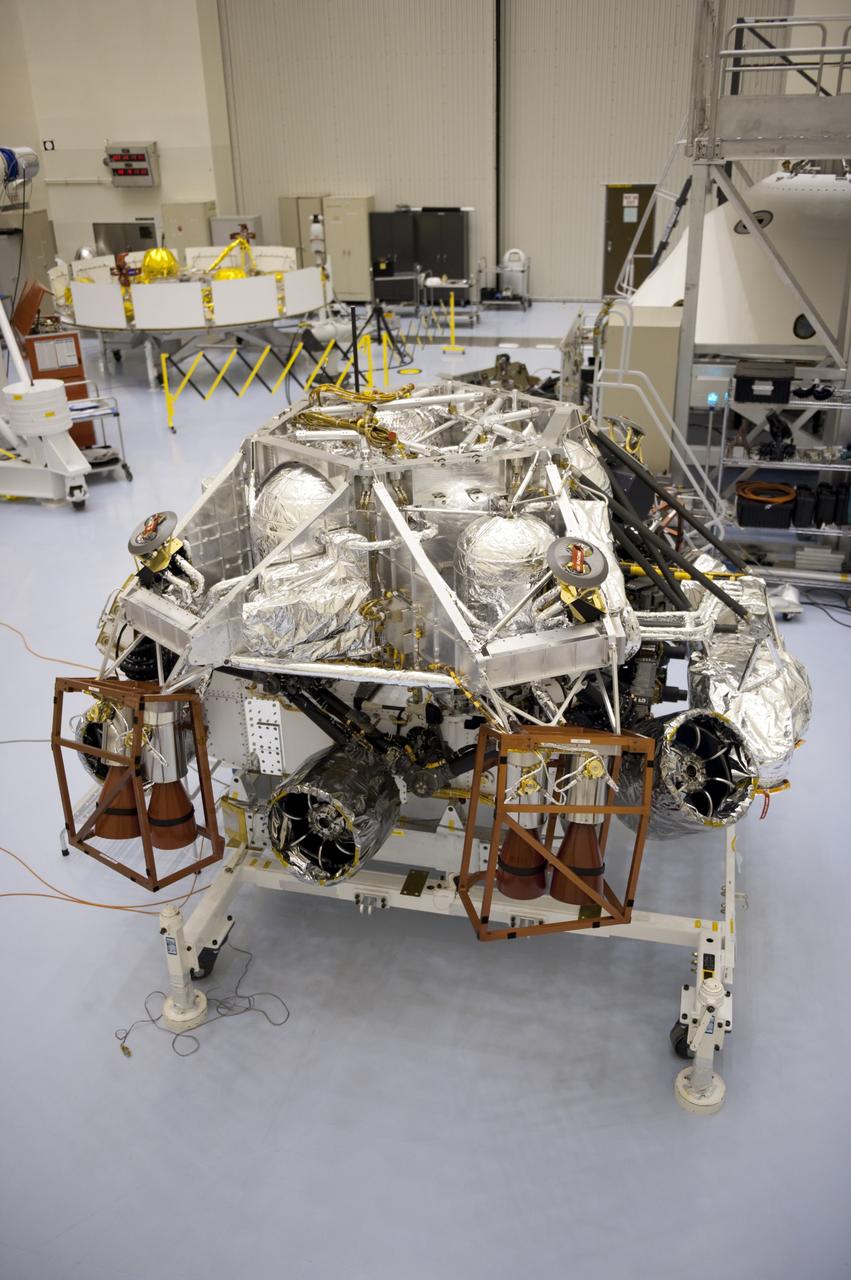
CAPE CANAVERAL, Fla. – At the Payload Hazardous Servicing Facility at NASA’s Kennedy Space Center in Florida, integration between a rocket-powered descent stage and NASA's Mars Science Laboratory (MSL) rover, known as Curiosity, is complete. The descent stage will lower Curiosity to the surface of Mars. A United Launch Alliance Atlas V-541 configuration will be used to loft MSL into space. Curiosity’s 10 science instruments are designed to search for evidence on whether Mars has had environments favorable to microbial life, including chemical ingredients for life. The unique rover will use a laser to look inside rocks and release its gasses so that the rover’s spectrometer can analyze and send the data back to Earth. MSL is scheduled to launch Nov. 25 with a window extending to Dec. 18 and arrival at Mars Aug. 2012. For more information, visit http://www.nasa.gov/msl. Photo credit: NASA/Kim Shiflett
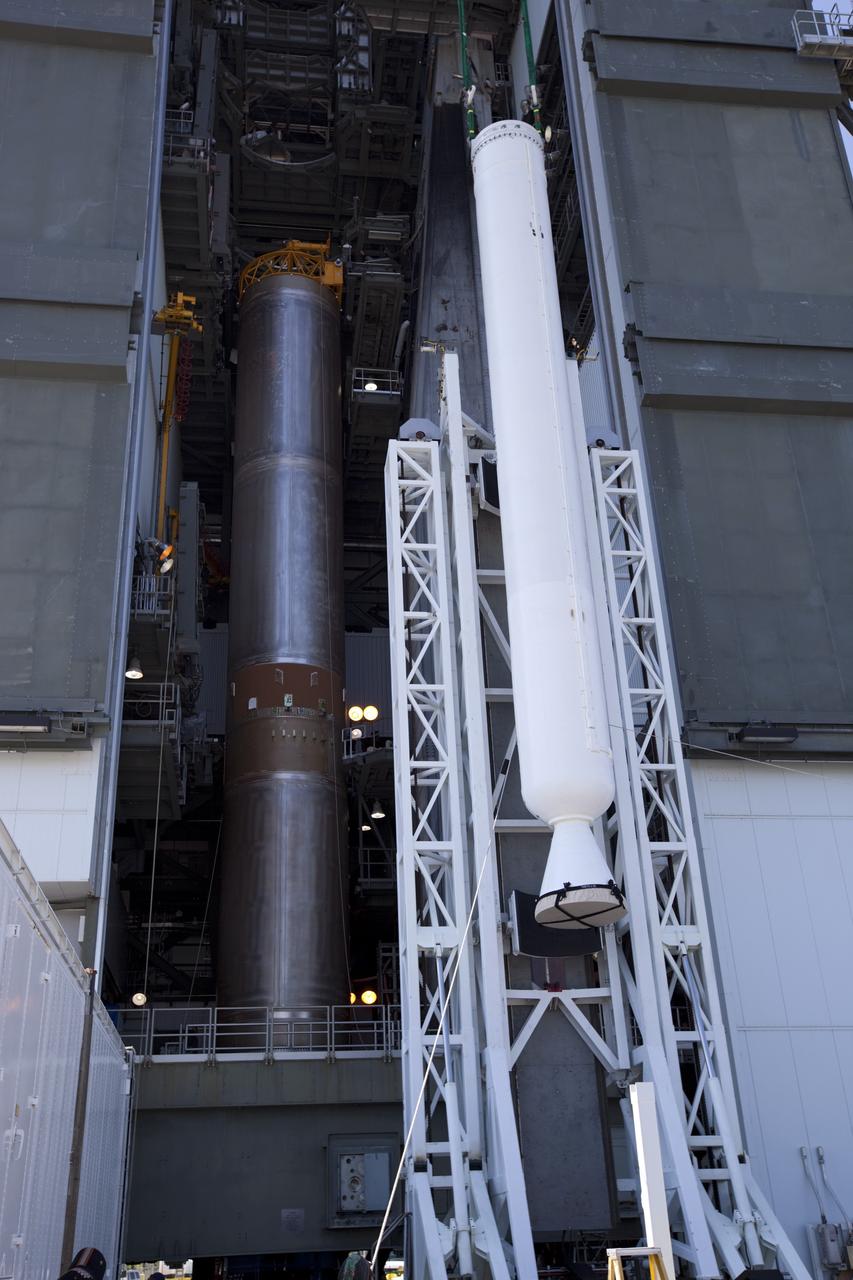
CAPE CANAVERAL, Fla. – At the Vertical Integration Facility at Space Launch Complex 41 on Cape Canaveral Air Force Station in Florida, a solid rocket motor (SRM) hangs in an upright position for mating to a United Launch Alliance Atlas V rocket which will carry NASA's Mars Science Laboratory (MSL) mission. MSL's components include a compact car-sized rover, Curiosity, which has 10 science instruments designed to search for evidence on whether Mars has had environments favorable to microbial life, including chemical ingredients for life. The unique rover will use a laser to look inside rocks and release its gasses so that the rover’s spectrometer can analyze and send the data back to Earth. MSL is scheduled to launch Nov. 25 with a window extending to Dec. 18 and arrival at Mars Aug. 2012. For more information, visit http://www.nasa.gov/msl. Photo credit: NASA/Dimitri Gerondidakis
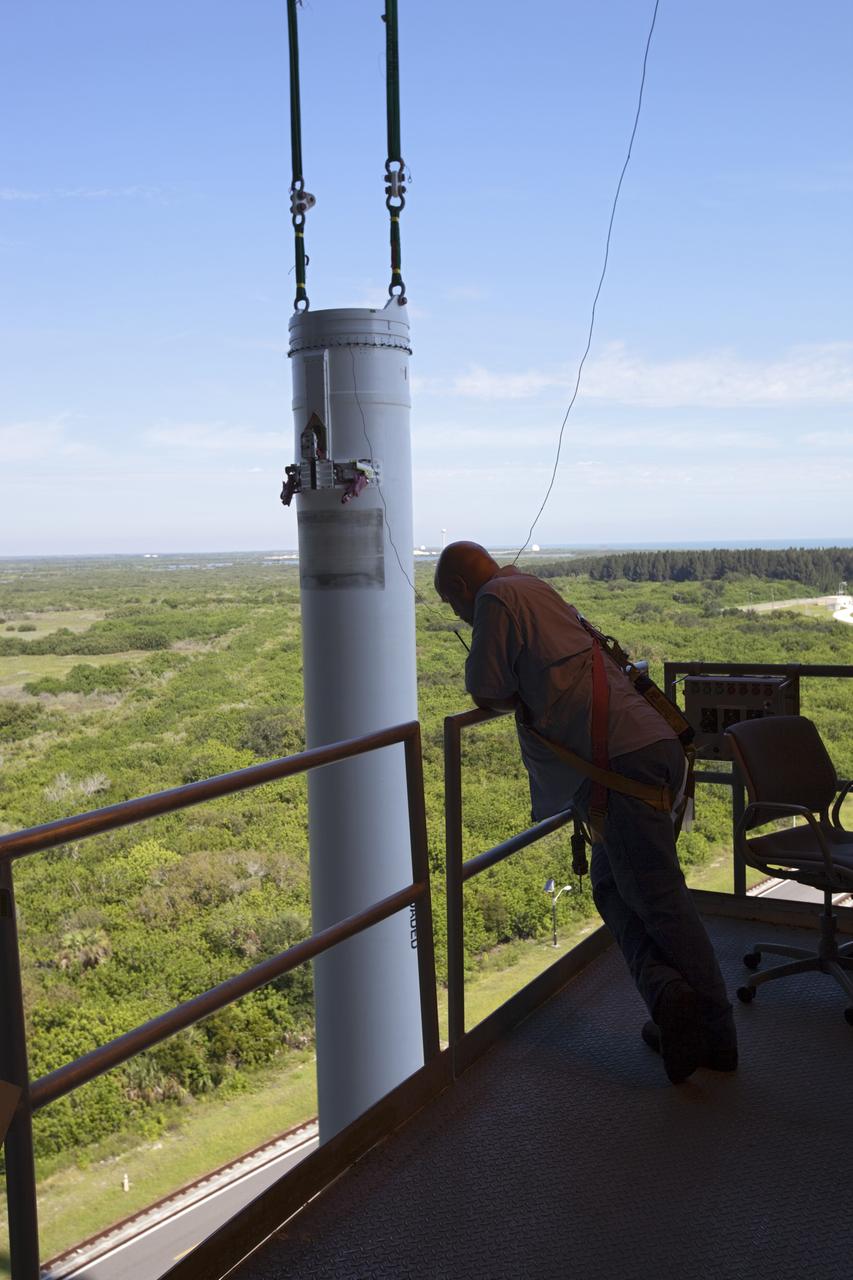
CAPE CANAVERAL, Fla. – A technician at the Vertical Integration Facility at Space Launch Complex 41 on Cape Canaveral Air Force Station in Florida monitors the lifting of a solid rocket motor (SRM) for mating to a United Launch Alliance Atlas V rocket which will carry NASA's Mars Science Laboratory (MSL) mission. MSL's components include a compact car-sized rover, Curiosity, which has 10 science instruments designed to search for evidence on whether Mars has had environments favorable to microbial life, including chemical ingredients for life. The unique rover will use a laser to look inside rocks and release its gasses so that the rover’s spectrometer can analyze and send the data back to Earth. MSL is scheduled to launch Nov. 25 with a window extending to Dec. 18 and arrival at Mars Aug. 2012. For more information, visit http://www.nasa.gov/msl. Photo credit: NASA/Dimitri Gerondidakis
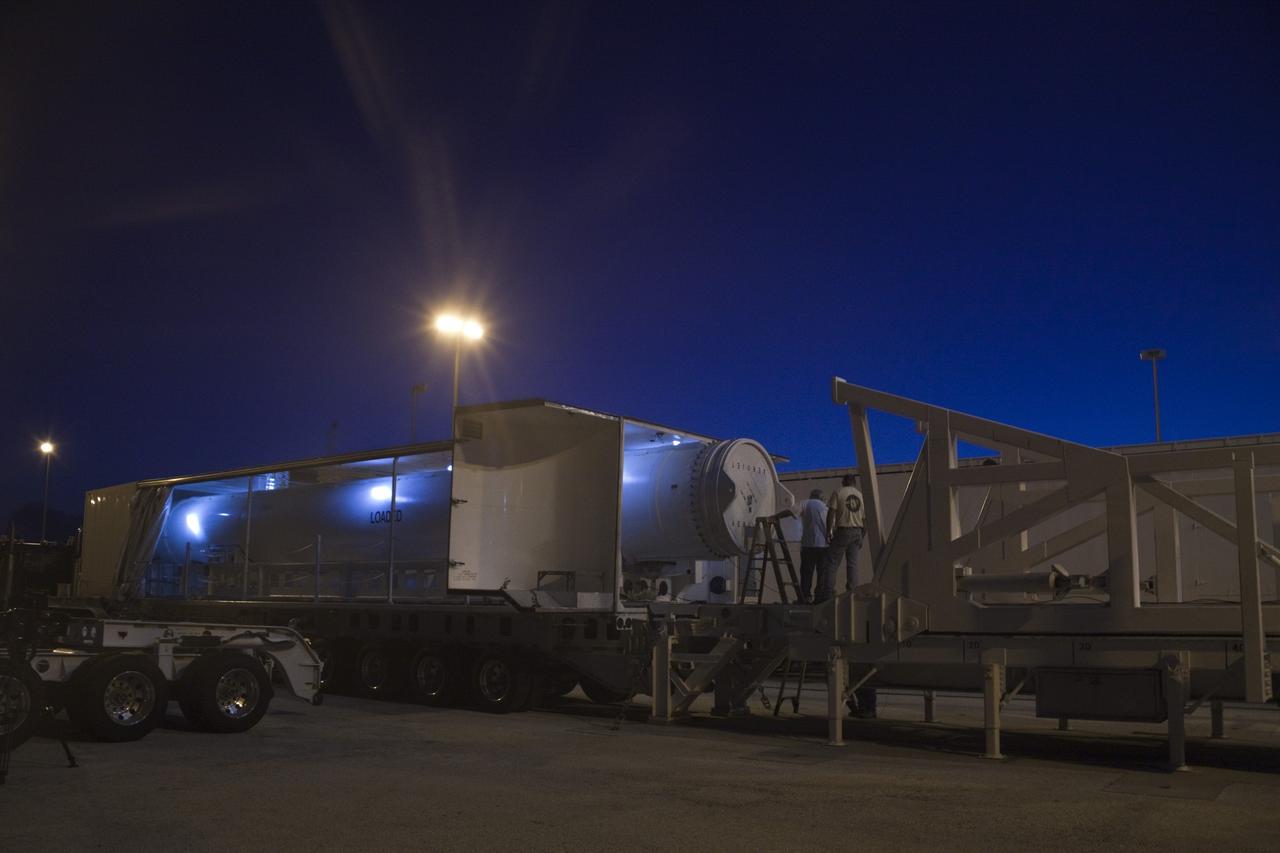
CAPE CANAVERAL, Fla. – Under the night sky at Space Launch Complex 41 on Cape Canaveral Air Force Station in Florida, workers prepare the final solid rocket motor (SRM) for lifting into the Vertical Integration Facility. The SRM will be mated to a United Launch Alliance Atlas V rocket being prepared to launch NASA's Mars Science Laboratory (MSL) mission. MSL's components include a compact car-sized rover, Curiosity, which has 10 science instruments designed to search for evidence on whether Mars has had environments favorable to microbial life, including chemical ingredients for life. The unique rover will use a laser to look inside rocks and release its gasses so that the rover’s spectrometer can analyze and send the data back to Earth. MSL is scheduled to launch Nov. 25 with a window extending to Dec. 18 and arrival at Mars Aug. 2012. For more information, visit http://www.nasa.gov/msl. Photo credit: NASA/Jim Grossmann