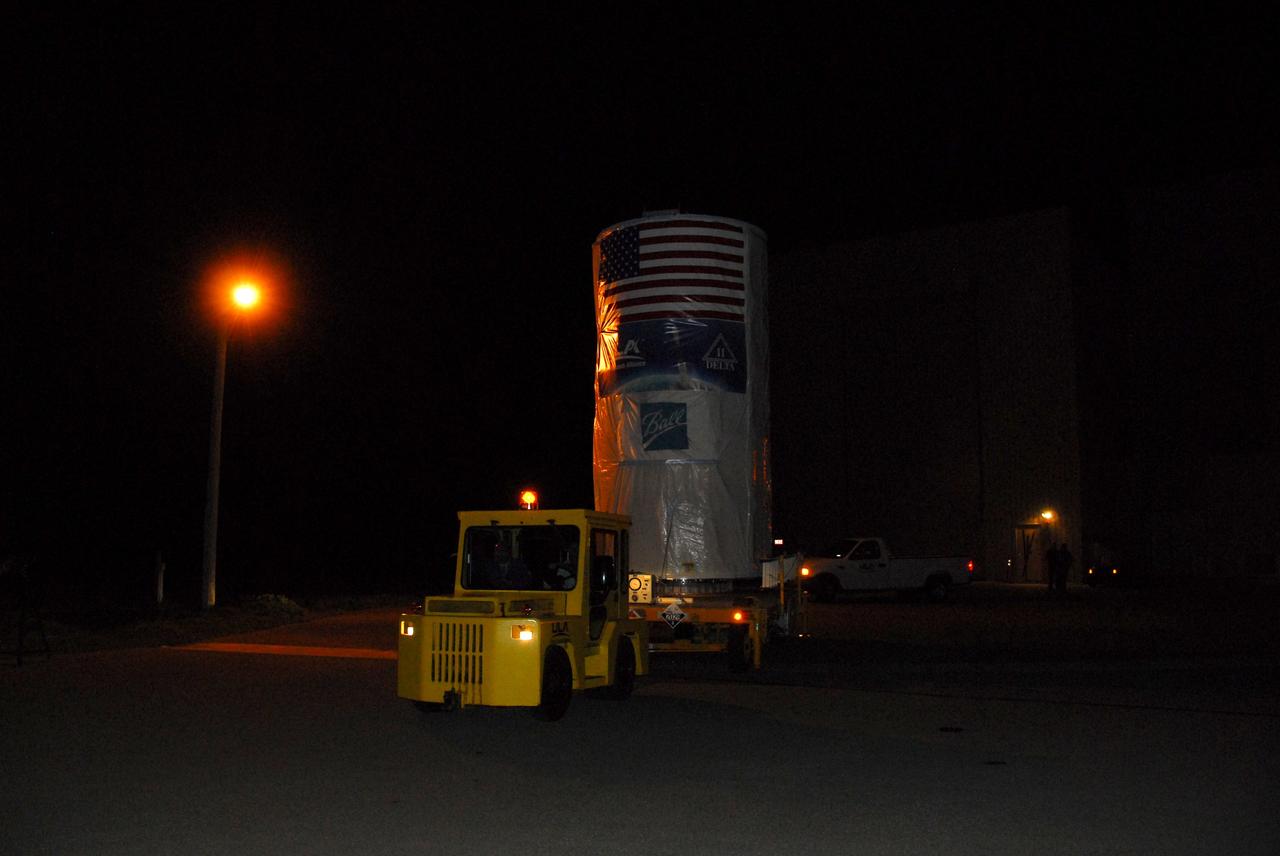
Tucked inside a protective payload transportation canister, NASA’s National Polar-orbiting Operational Environmental Satellite System Preparatory Project (NPP) spacecraft is trucked to launch pad. NPP represents a critical first step in building the next-generation of Earth-observing satellites. NPP will carry the first of the new sensors developed for this satellite fleet, now known as the Joint Polar Satellite System (JPSS), to be launched in 2016. NPP is the bridge between NASA's Earth Observing System (EOS) satellites and the forthcoming series of JPSS satellites. The mission will test key technologies and instruments for the JPSS missions. NPP is targeted to launch Oct. 28 from Space Launch Complex-2 aboard a United Launch Alliance Delta II rocket. For more information, visit http://www.nasa.gov/NPP. Photo credit: NASA/VAFB
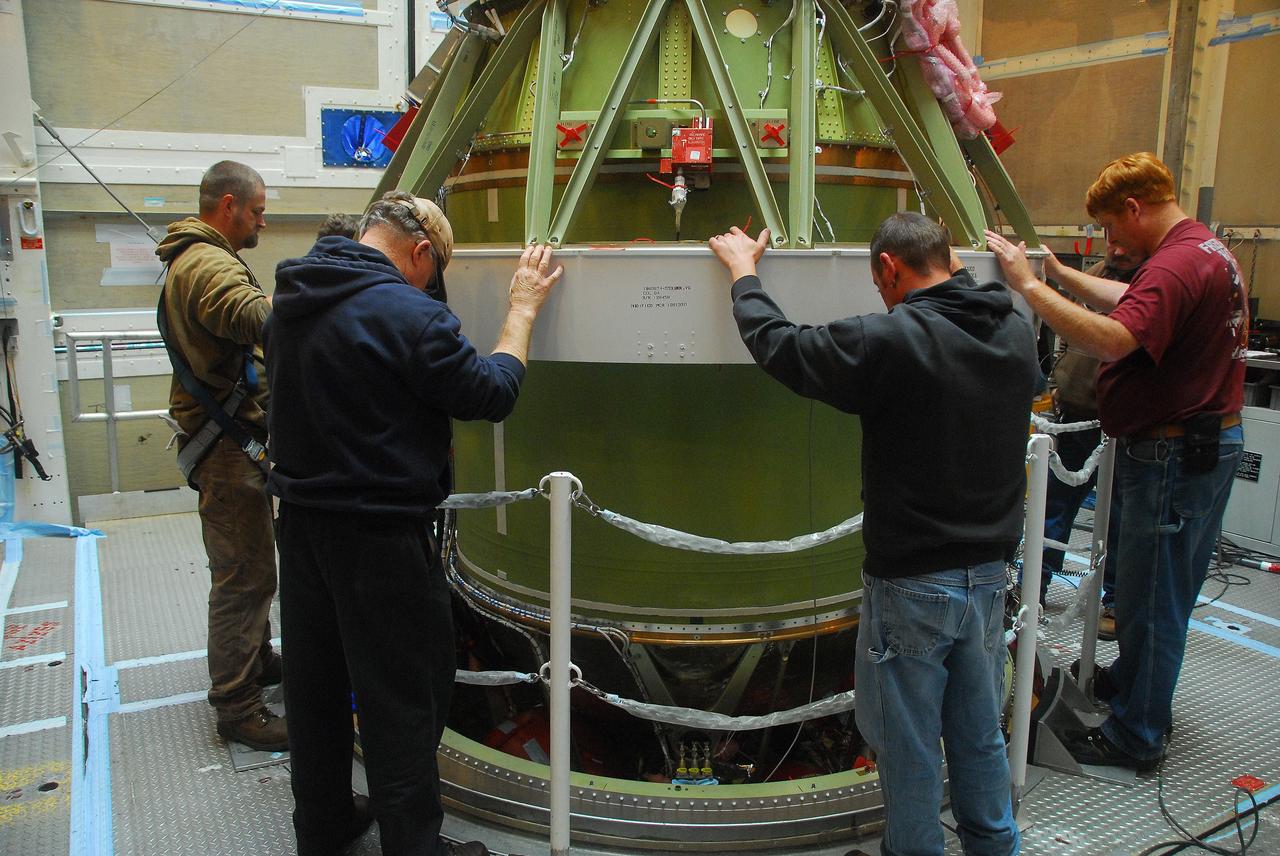
VANDENBERG AIR FORCE BASE, Calif. -- Technicians secure the AJ10 engine for the second stage of the United Launch Alliance Delta II rocket on a work stand at NASA’s Space Launch Complex-2 service tower. The Delta II will carry NASA's National Polar-orbiting Operational Environmental Satellite System Preparatory Project (NPP) satellite into space. NPP represents a critical first step in building the next-generation of Earth-observing satellites. NPP will carry the first of the new sensors developed for this satellite fleet, now known as the Joint Polar Satellite System (JPSS) to be launched in 2016. NPP is the bridge between NASA's Earth Observing System (EOS) satellites and the forthcoming series of JPSS satellites. The mission will test key technologies and instruments for the JPSS missions. NPP is targeted to launch Oct. 25. For more information, visit http://www.nasa.gov/NPP. Photo credit: NASA/VAFB

VANDENBERG AIR FORCE BASE, Calif. -- Ken Schwer, NPP project manager, Goddard Space Flight Center, Greenbelt, Md., participates in the prelaunch news conference at Vandenberg Air Force Base, Calif., for NASA’s National Polar-orbiting Operational Environmental Satellite System Preparatory Project (NPP) spacecraft. NPP represents a critical first step in building the next-generation of Earth-observing satellites. NPP will carry the first of the new sensors developed for this satellite fleet, now known as the Joint Polar Satellite System (JPSS), to be launched in 2016. NPP is the bridge between NASA's Earth Observing System (EOS) satellites and the forthcoming series of JPSS satellites. The mission will test key technologies and instruments for the JPSS missions. NPP is targeted to launch Oct. 28 from Space Launch Complex-2 aboard a United Launch Alliance Delta II rocket. For more information, visit http://www.nasa.gov/NPP. Photo credit: NASA/VAFB
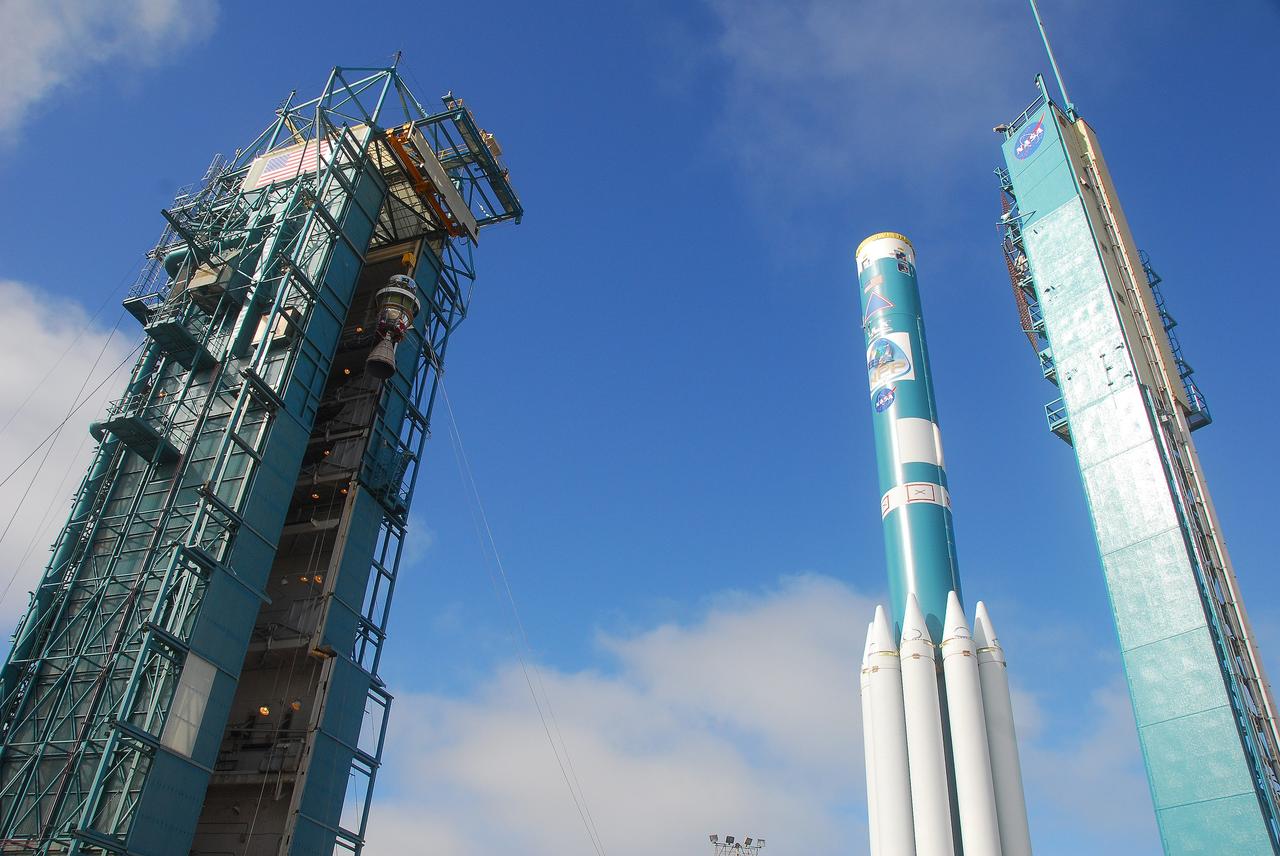
VANDENBERG AIR FORCE BASE, Calif. -- At Vandenberg Air Force Base in California, the AJ10 engine for the second stage of the United Launch Alliance Delta II rocket is hoisted high at NASA’s Space Launch Complex-2 service tower. The second stage of the rocket, with several solid rocket motors attached, sits on the launch pad. The Delta II will carry NASA's National Polar-orbiting Operational Environmental Satellite System Preparatory Project (NPP) satellite into space. NPP represents a critical first step in building the next-generation of Earth-observing satellites. NPP will carry the first of the new sensors developed for this satellite fleet, now known as the Joint Polar Satellite System (JPSS) to be launched in 2016. NPP is the bridge between NASA's Earth Observing System (EOS) satellites and the forthcoming series of JPSS satellites. The mission will test key technologies and instruments for the JPSS missions. NPP is targeted to launch Oct. 25. For more information, visit http://www.nasa.gov/NPP. Photo credit: NASA/VAFB
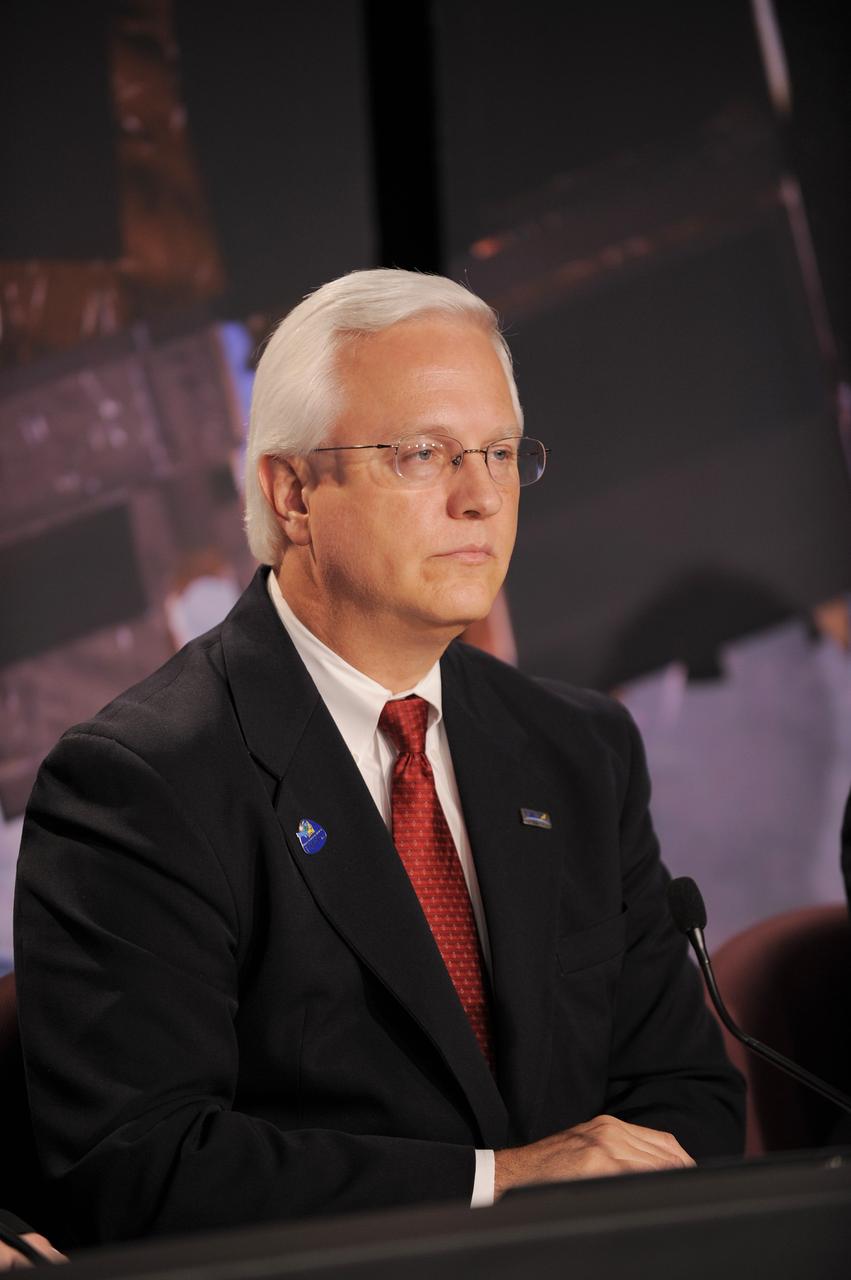
VANDENBERG AIR FORCE BASE, Calif. -- Vernon Thorp, program manager, NASA missions, United Launch Alliance, Cape Canaveral, Fla., participates in the prelaunch news conference at Vandenberg Air Force Base, Calif., for NASA’s National Polar-orbiting Operational Environmental Satellite System Preparatory Project (NPP) spacecraft. NPP represents a critical first step in building the next-generation of Earth-observing satellites. NPP will carry the first of the new sensors developed for this satellite fleet, now known as the Joint Polar Satellite System (JPSS), to be launched in 2016. NPP is the bridge between NASA's Earth Observing System (EOS) satellites and the forthcoming series of JPSS satellites. The mission will test key technologies and instruments for the JPSS missions. NPP is targeted to launch Oct. 28 from Space Launch Complex-2 aboard a United Launch Alliance Delta II rocket. For more information, visit http://www.nasa.gov/NPP. Photo credit: NASA/VAFB
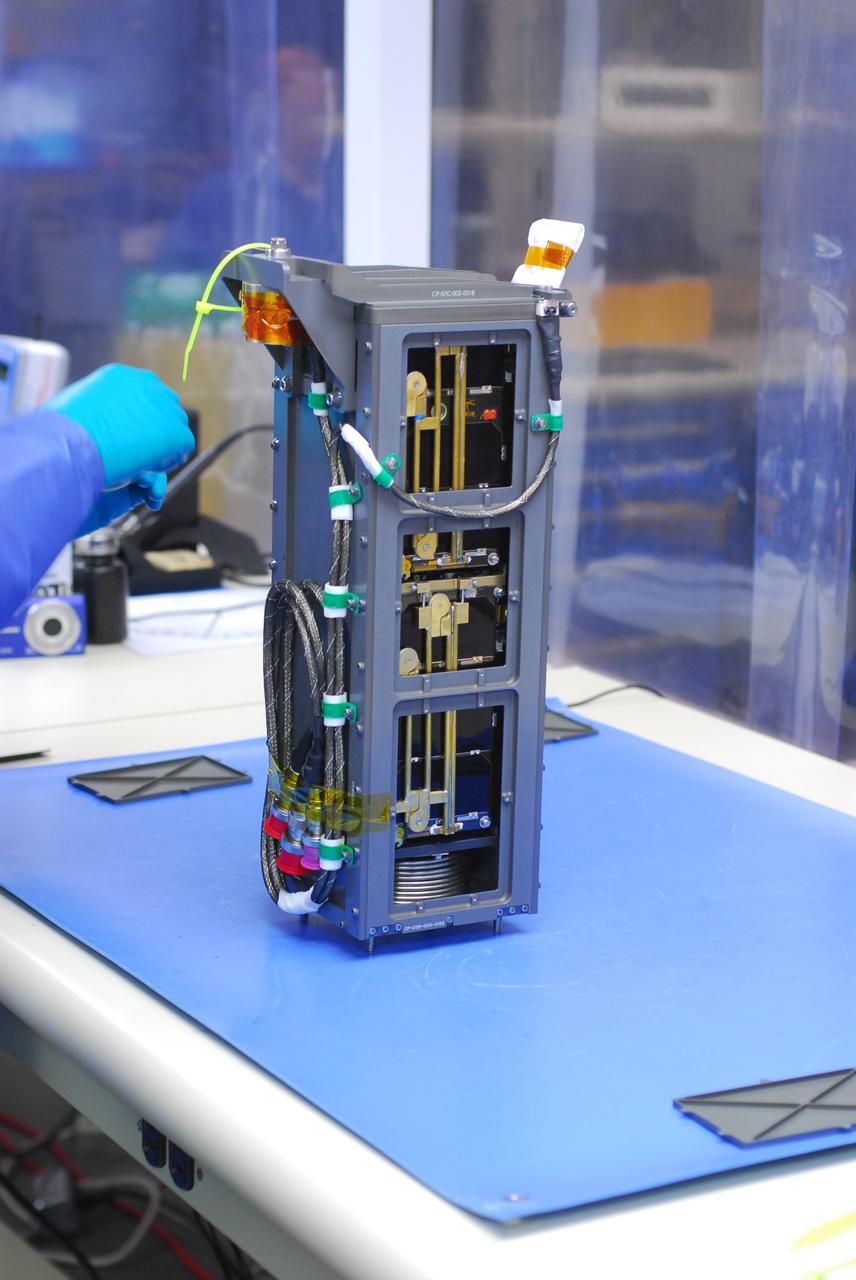
The Dynamic Ionosphere Cubesat Experiment DICE is prepared for launch aboard the Delta II rocket that will carry NASA’s National Polar-orbiting Operational Environmental Satellite System Preparatory Project NPP spacecraft. DICE is a National Science Foundation Project conducted by Utah State University in conjunction with the Atmospheric and Space Technology Research Associates ASTRA. NPP represents a critical first step in building the next-generation of Earth-observing satellites. NPP will carry the first of the new sensors developed for this satellite fleet, now known as the Joint Polar Satellite System JPSS, to be launched in 2016. NPP is the bridge between NASA's Earth Observing System EOS satellites and the forthcoming series of JPSS satellites. The mission will test key technologies and instruments for the JPSS missions. NPP is targeted to launch Oct. 28 from Space Launch Complex-2 aboard a United Launch Alliance Delta II rocket. For more information, visit http://www.nasa.gov/NPP. Photo credit: NASA/VAFB
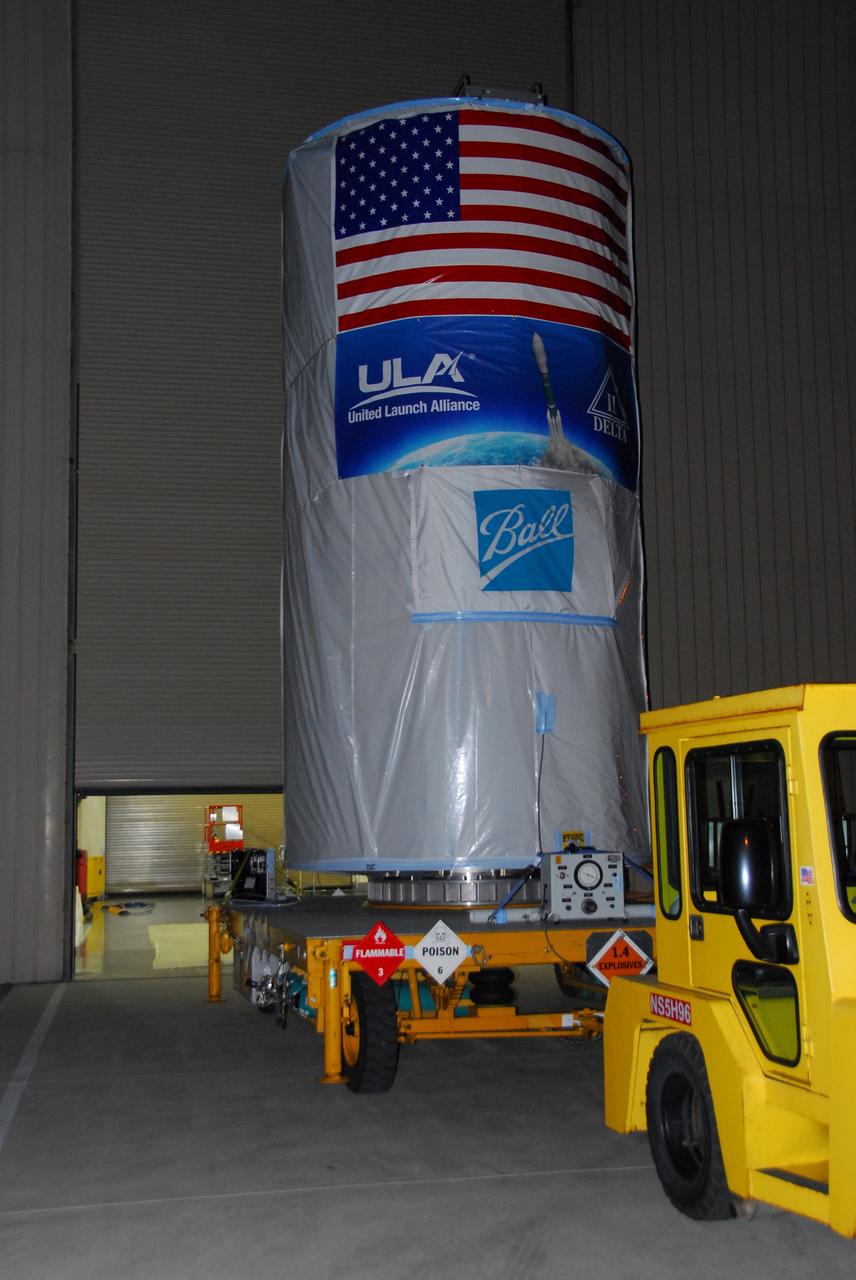
Tucked inside a protective payload transportation canister, NASA’s National Polar-orbiting Operational Environmental Satellite System Preparatory Project (NPP) spacecraft leaves the Astrotech Payload Processing Facility and heads for the launch pad. NPP represents a critical first step in building the next-generation of Earth-observing satellites. NPP will carry the first of the new sensors developed for this satellite fleet, now known as the Joint Polar Satellite System (JPSS), to be launched in 2016. NPP is the bridge between NASA's Earth Observing System (EOS) satellites and the forthcoming series of JPSS satellites. The mission will test key technologies and instruments for the JPSS missions. NPP is targeted to launch Oct. 28 from Space Launch Complex-2 aboard a United Launch Alliance Delta II rocket. For more information, visit http://www.nasa.gov/NPP. Photo credit: NASA/VAFB
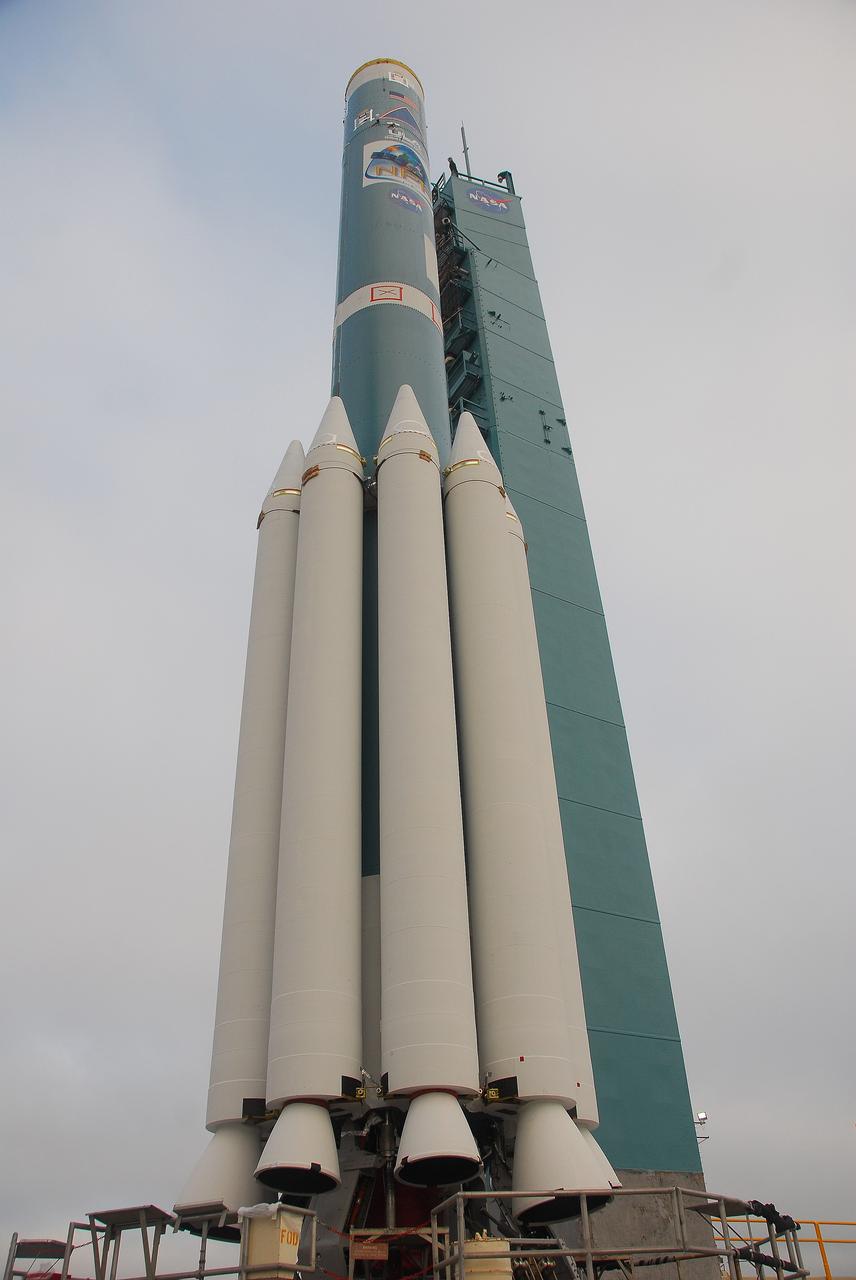
VANDENBERG AIR FORCE BASE, Calif. -- At Vandenberg Air Force Base in California, the first stage of a United Launch Alliance Delta II rocket with several solid rocket motors attached sits on NASA’s Space Launch Complex-2. The Delta II will carry NASA's National Polar-orbiting Operational Environmental Satellite System Preparatory Project (NPP) satellite into space. NPP represents a critical first step in building the next-generation of Earth-observing satellites. NPP will carry the first of the new sensors developed for this satellite fleet, now known as the Joint Polar Satellite System (JPSS) to be launched in 2016. NPP is the bridge between NASA's Earth Observing System (EOS) satellites and the forthcoming series of JPSS satellites. The mission will test key technologies and instruments for the JPSS missions. NPP is targeted to launch Oct. 25. For more information, visit http://www.nasa.gov/NPP. Photo credit: NASA/VAFB

VANDENBERG AIR FORCE BASE, Calif. -- Tim Dunn, NASA launch director, Kennedy Space Center, Fla., participates in the prelaunch news conference at Vandenberg Air Force Base, Calif., for NASA’s National Polar-orbiting Operational Environmental Satellite System Preparatory Project (NPP) spacecraft. NPP represents a critical first step in building the next-generation of Earth-observing satellites. NPP will carry the first of the new sensors developed for this satellite fleet, now known as the Joint Polar Satellite System (JPSS), to be launched in 2016. NPP is the bridge between NASA's Earth Observing System (EOS) satellites and the forthcoming series of JPSS satellites. The mission will test key technologies and instruments for the JPSS missions. NPP is targeted to launch Oct. 28 from Space Launch Complex-2 aboard a United Launch Alliance Delta II rocket. For more information, visit http://www.nasa.gov/NPP. Photo credit: NASA/VAFB
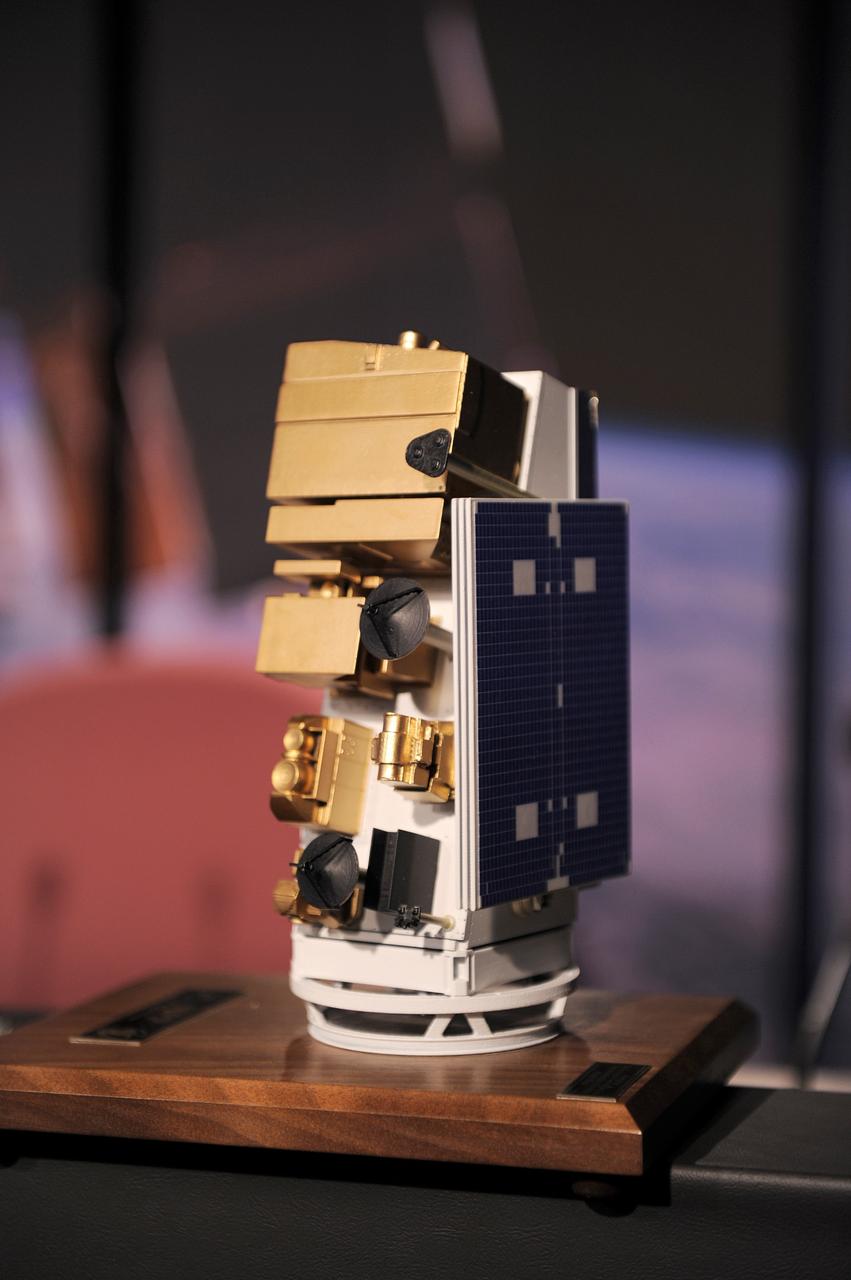
VANDENBERG AIR FORCE BASE, Calif. -- A model of the NASA’s National Polar-orbiting Operational Environmental Satellite System Preparatory Project (NPP) spacecraft is displayed during the prelaunch news conference at Vandenberg Air Force Base, Calif. NPP represents a critical first step in building the next-generation of Earth-observing satellites. NPP will carry the first of the new sensors developed for this satellite fleet, now known as the Joint Polar Satellite System (JPSS), to be launched in 2016. NPP is the bridge between NASA's Earth Observing System (EOS) satellites and the forthcoming series of JPSS satellites. The mission will test key technologies and instruments for the JPSS missions. NPP is targeted to launch Oct. 28 from Space Launch Complex-2 aboard a United Launch Alliance Delta II rocket. For more information, visit http://www.nasa.gov/NPP. Photo credit: NASA/VAFB
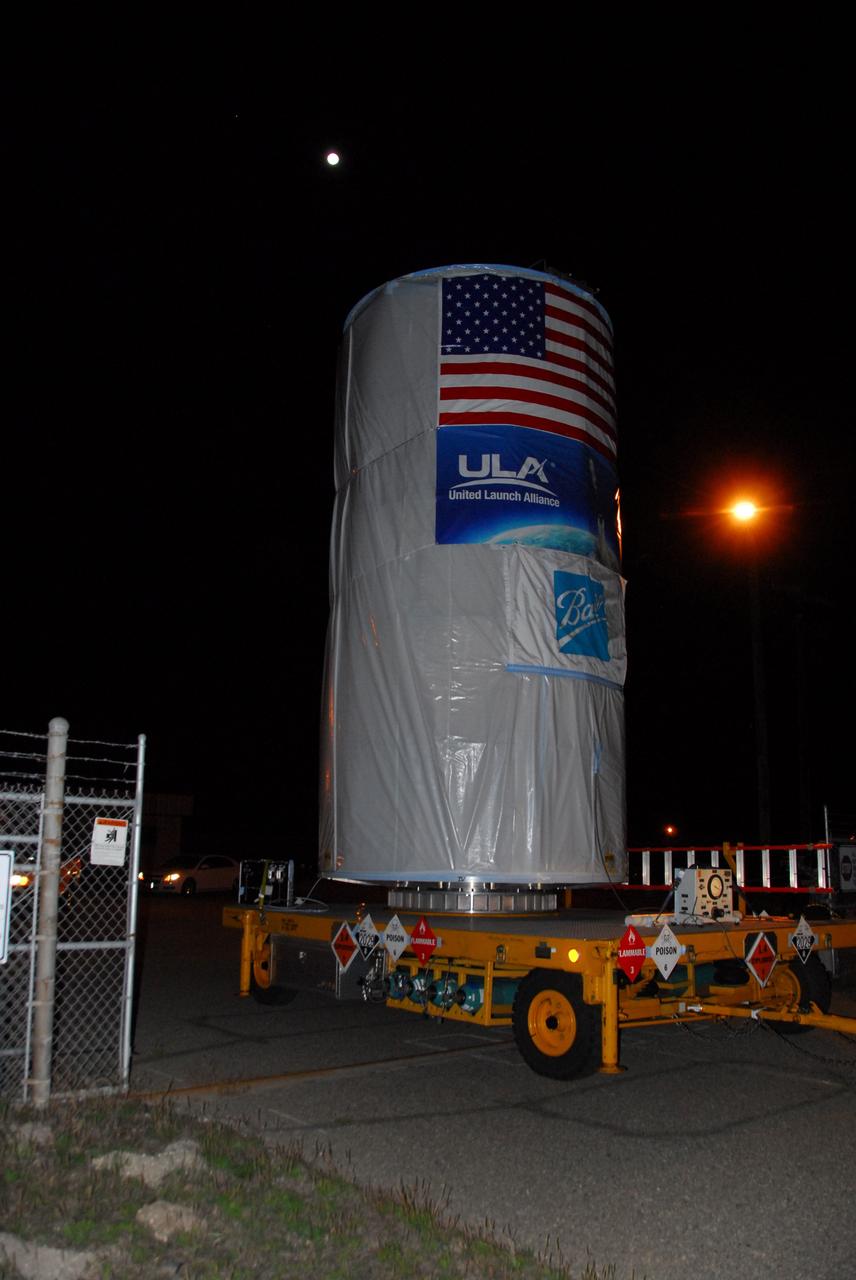
Tucked inside a protective payload transportation canister, NASA’s National Polar-orbiting Operational Environmental Satellite System Preparatory Project (NPP) spacecraft is trucked to launch pad. NPP represents a critical first step in building the next-generation of Earth-observing satellites. NPP will carry the first of the new sensors developed for this satellite fleet, now known as the Joint Polar Satellite System (JPSS), to be launched in 2016. NPP is the bridge between NASA's Earth Observing System (EOS) satellites and the forthcoming series of JPSS satellites. The mission will test key technologies and instruments for the JPSS missions. NPP is targeted to launch Oct. 28 from Space Launch Complex-2 aboard a United Launch Alliance Delta II rocket. For more information, visit http://www.nasa.gov/NPP. Photo credit: NASA/VAFB
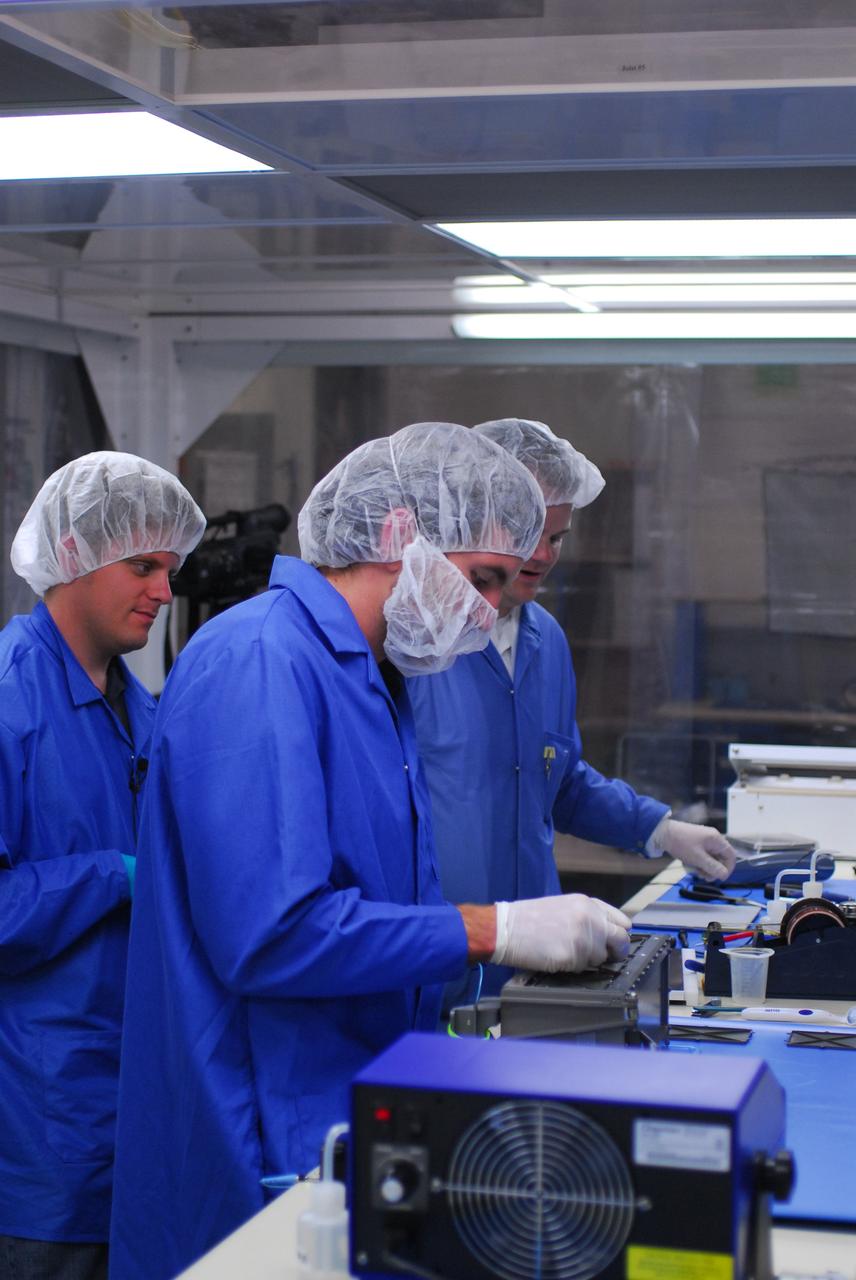
The Dynamic Ionosphere Cubesat Experiment DICE is prepared for launch aboard the Delta II rocket that will carry NASA’s National Polar-orbiting Operational Environmental Satellite System Preparatory Project NPP spacecraft. DICE is a National Science Foundation Project conducted by Utah State University in conjunction with the Atmospheric and Space Technology Research Associates ASTRA. NPP represents a critical first step in building the next-generation of Earth-observing satellites. NPP will carry the first of the new sensors developed for this satellite fleet, now known as the Joint Polar Satellite System JPSS, to be launched in 2016. NPP is the bridge between NASA's Earth Observing System EOS satellites and the forthcoming series of JPSS satellites. The mission will test key technologies and instruments for the JPSS missions. NPP is targeted to launch Oct. 28 from Space Launch Complex-2 aboard a United Launch Alliance Delta II rocket. For more information, visit http://www.nasa.gov/NPP. Photo credit: NASA/VAFB
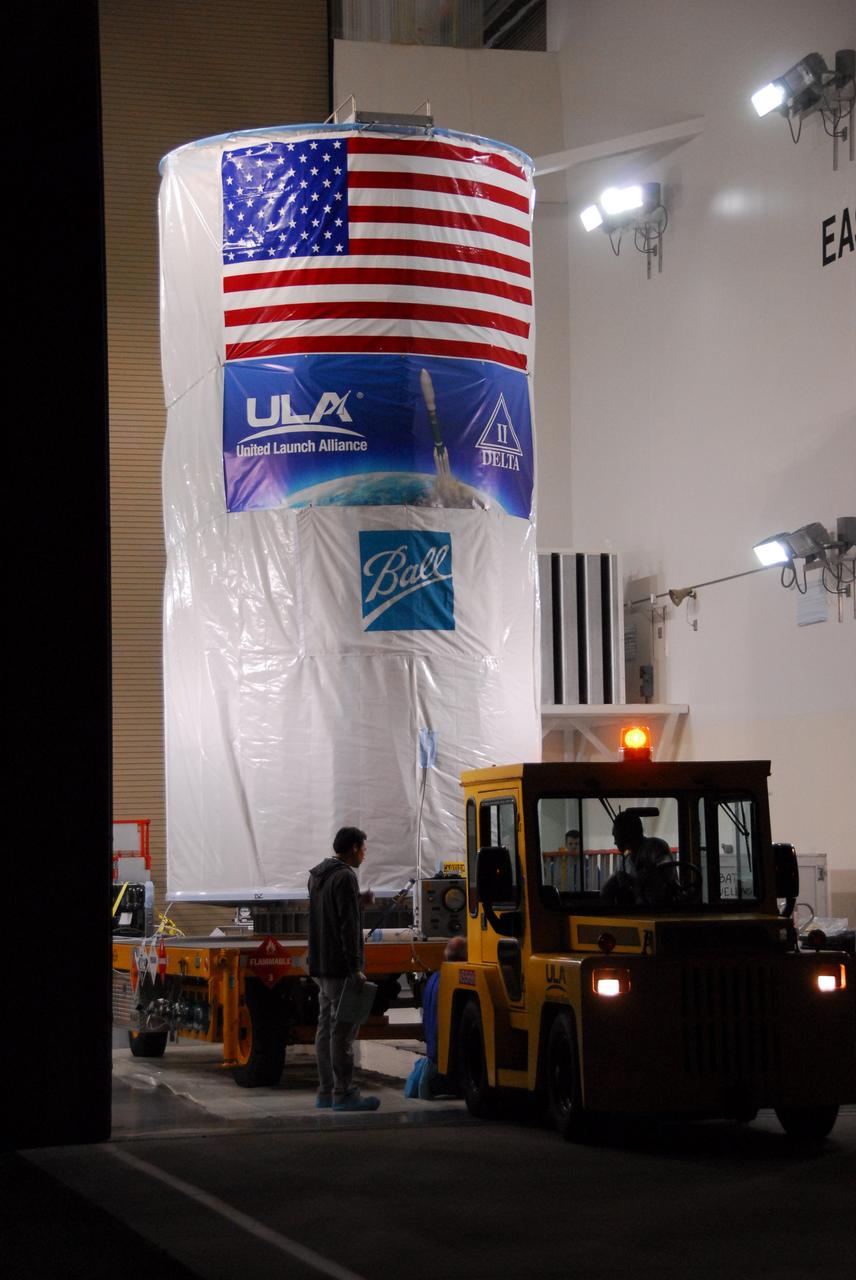
Tucked inside a protective payload transportation canister, NASA’s National Polar-orbiting Operational Environmental Satellite System Preparatory Project (NPP) spacecraft prepares to leave the Astrotech Payload Processing Facility for the launch pad. NPP represents a critical first step in building the next-generation of Earth-observing satellites. NPP will carry the first of the new sensors developed for this satellite fleet, now known as the Joint Polar Satellite System (JPSS), to be launched in 2016. NPP is the bridge between NASA's Earth Observing System (EOS) satellites and the forthcoming series of JPSS satellites. The mission will test key technologies and instruments for the JPSS missions. NPP is targeted to launch Oct. 28 from Space Launch Complex-2 aboard a United Launch Alliance Delta II rocket. For more information, visit http://www.nasa.gov/NPP. Photo credit: NASA/VAFB
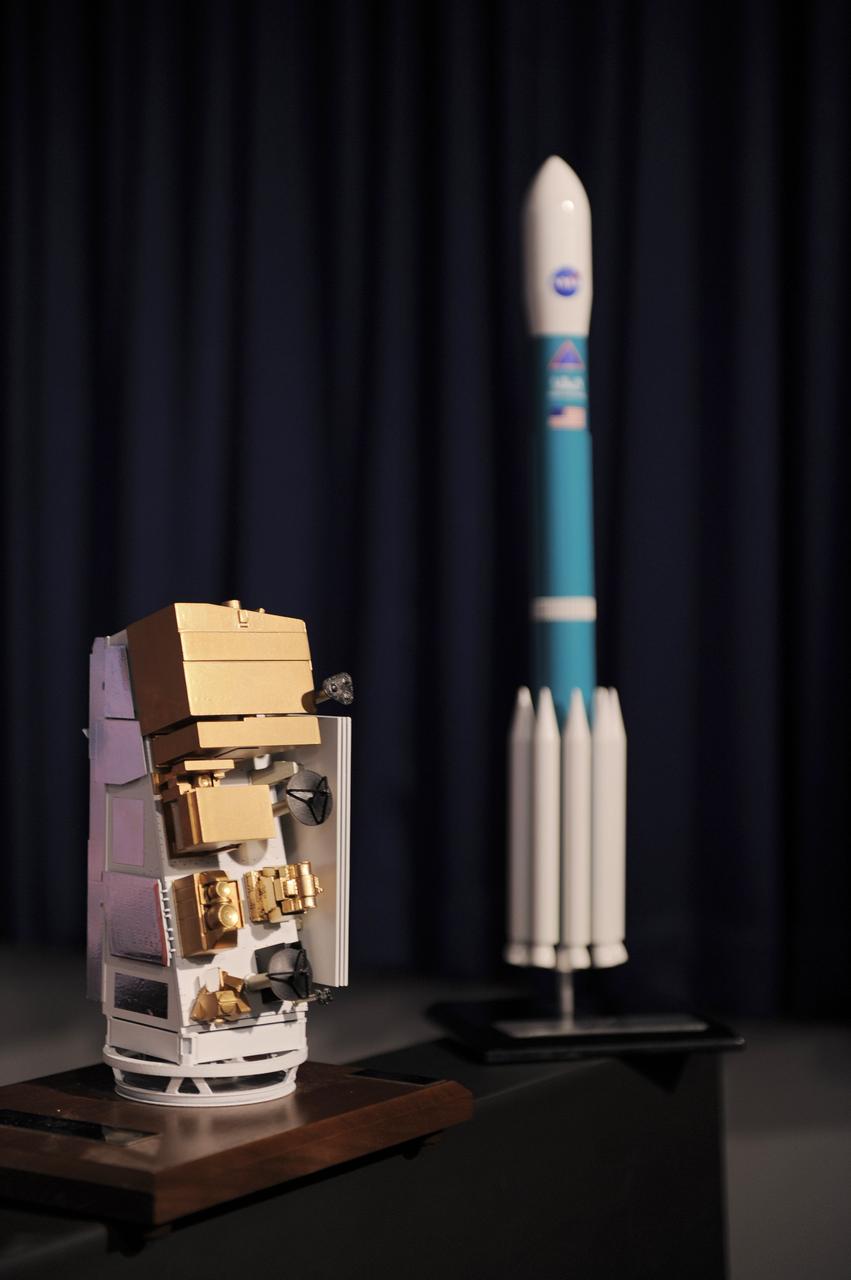
VANDENBERG AIR FORCE BASE, Calif. -- A model of the NASA’s National Polar-orbiting Operational Environmental Satellite System Preparatory Project (NPP) spacecraft and the United Launch Alliance Delta II rocket are displayed during the prelaunch news conference at Vandenberg Air Force Base, Calif. NPP represents a critical first step in building the next-generation of Earth-observing satellites. NPP will carry the first of the new sensors developed for this satellite fleet, now known as the Joint Polar Satellite System (JPSS), to be launched in 2016. NPP is the bridge between NASA's Earth Observing System (EOS) satellites and the forthcoming series of JPSS satellites. The mission will test key technologies and instruments for the JPSS missions. NPP is targeted to launch Oct. 28 from Space Launch Complex-2 aboard a United Launch Alliance Delta II rocket. For more information, visit http://www.nasa.gov/NPP. Photo credit: NASA/VAFB
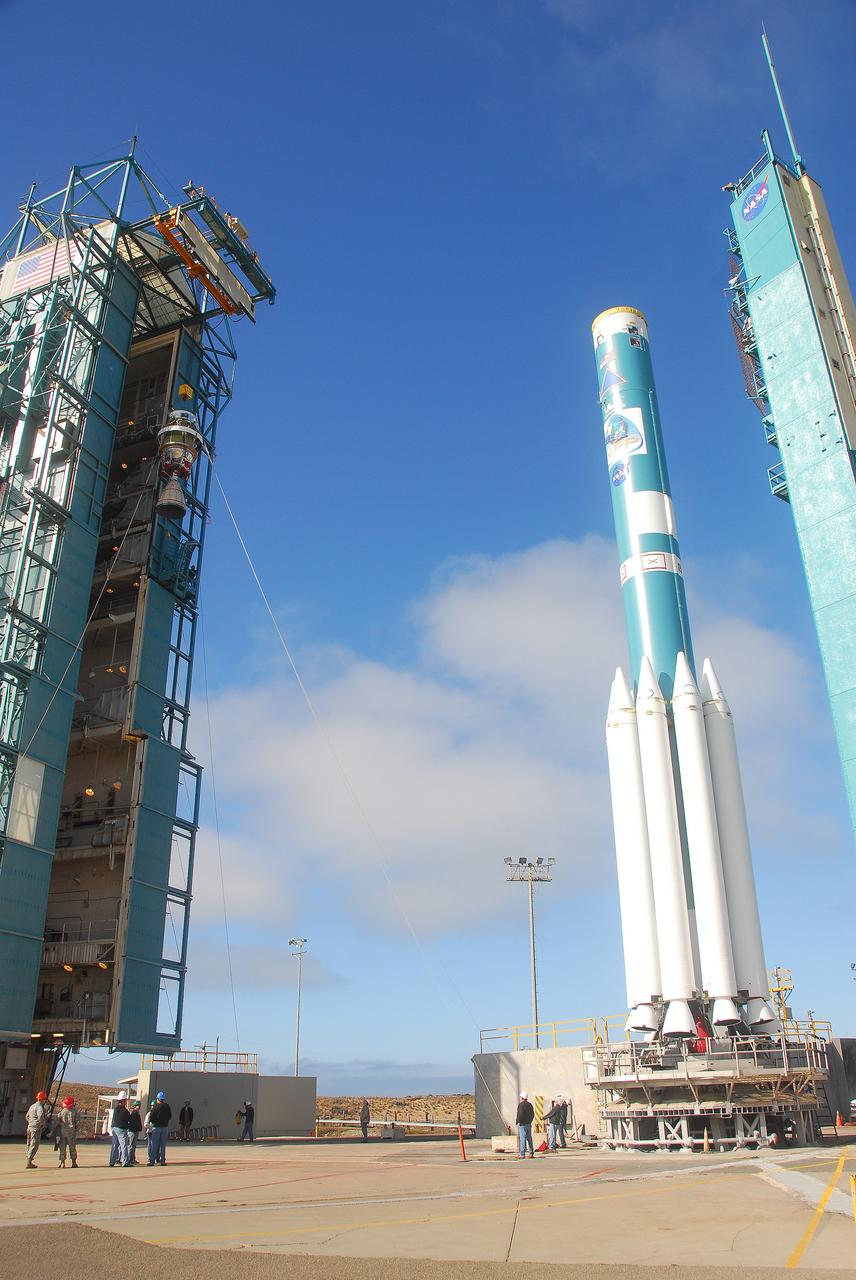
VANDENBERG AIR FORCE BASE, Calif. -- At Vandenberg Air Force Base in California, the AJ10 engine for the second stage of the United Launch Alliance Delta II rocket is hoisted high at the service tower. To the right is the rocket’s third stage with several solid rocket motors attached. The Delta II will carry NASA's National Polar-orbiting Operational Environmental Satellite System Preparatory Project (NPP) satellite into space. NPP represents a critical first step in building the next-generation of Earth-observing satellites. NPP will carry the first of the new sensors developed for this satellite fleet, now known as the Joint Polar Satellite System (JPSS) to be launched in 2016. NPP is the bridge between NASA's Earth Observing System (EOS) satellites and the forthcoming series of JPSS satellites. The mission will test key technologies and instruments for the JPSS missions. NPP is targeted to launch Oct. 25. For more information, visit http://www.nasa.gov/NPP. Photo credit: NASA/VAFB
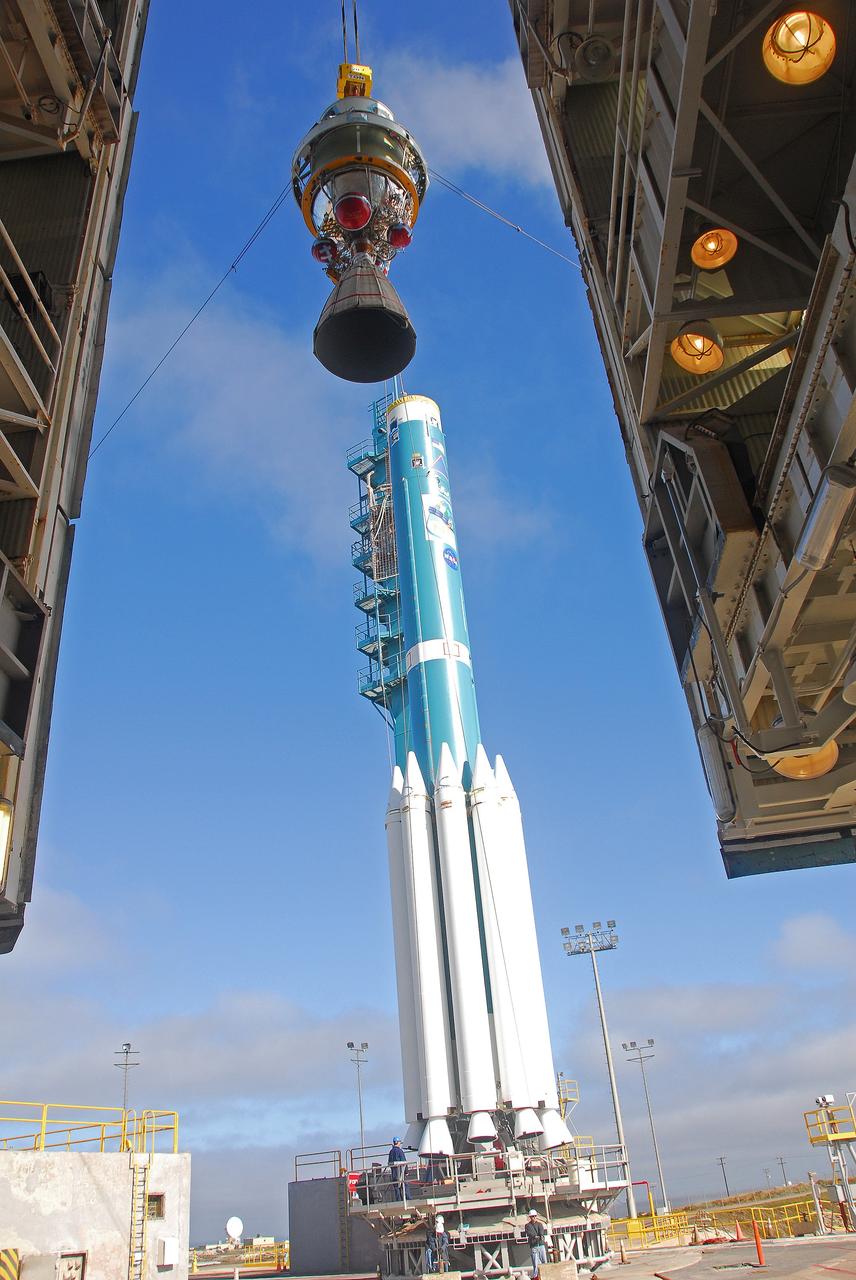
VANDENBERG AIR FORCE BASE, Calif. – This view is from inside the service tower at NASA’s Space Launch Complex-2 at Vandenberg Air Force Base in California, as the second stage of the United Launch Alliance Delta II rocket is hoisted up. The third stage of the rocket with several solid rocket motors attached sits on the launch pad. The Delta II will carry NASA's National Polar-orbiting Operational Environmental Satellite System Preparatory Project (NPP) satellite into space. NPP represents a critical first step in building the next-generation of Earth-observing satellites. NPP will carry the first of the new sensors developed for this satellite fleet, now known as the Joint Polar Satellite System (JPSS) to be launched in 2016. NPP is the bridge between NASA's Earth Observing System (EOS) satellites and the forthcoming series of JPSS satellites. The mission will test key technologies and instruments for the JPSS missions. NPP is targeted to launch Oct. 25. For more information, visit http://www.nasa.gov/NPP. Photo credit: NASA/VAFB
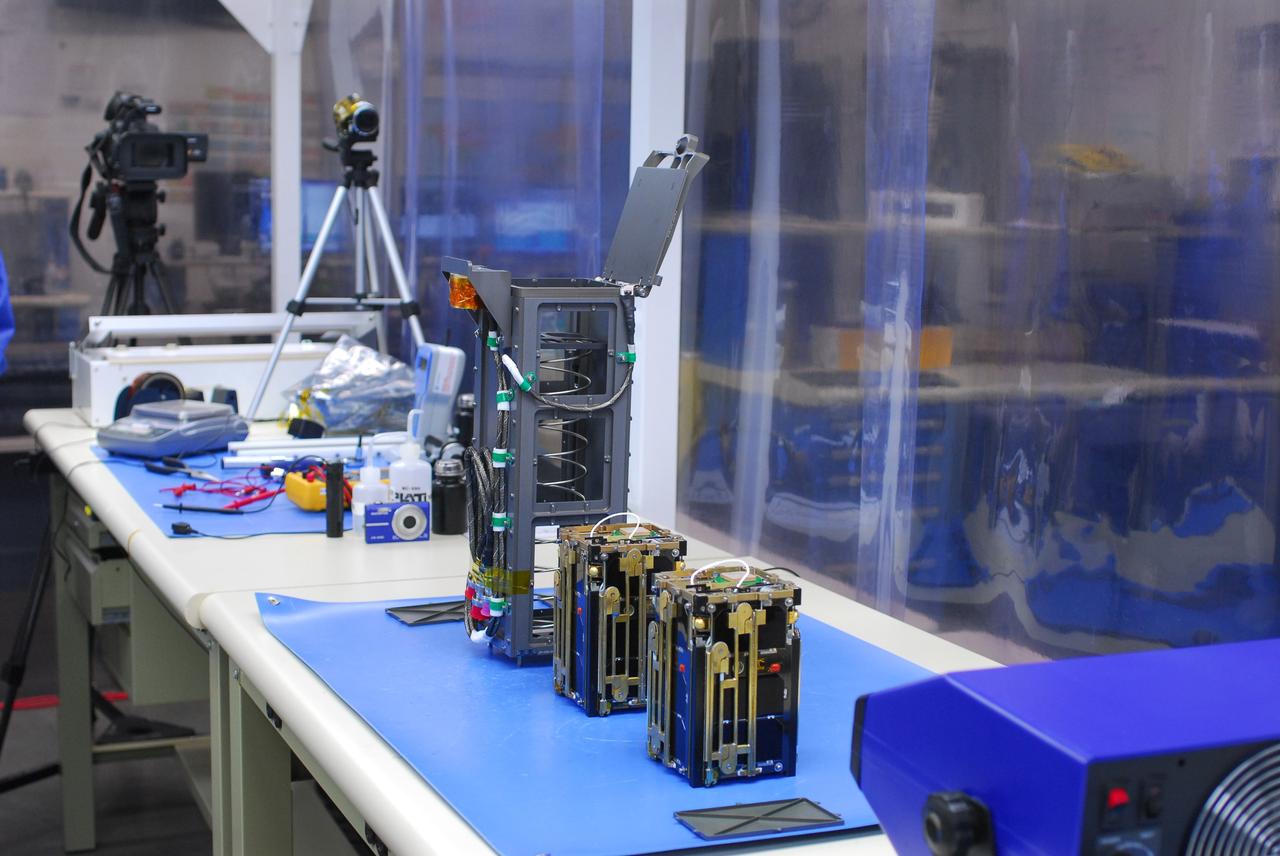
The Dynamic Ionosphere Cubesat Experiment DICE is prepared for launch aboard the Delta II rocket that will carry NASA’s National Polar-orbiting Operational Environmental Satellite System Preparatory Project NPP spacecraft. DICE is a National Science Foundation Project conducted by Utah State University in conjunction with the Atmospheric and Space Technology Research Associates ASTRA. NPP represents a critical first step in building the next-generation of Earth-observing satellites. NPP will carry the first of the new sensors developed for this satellite fleet, now known as the Joint Polar Satellite System JPSS, to be launched in 2016. NPP is the bridge between NASA's Earth Observing System EOS satellites and the forthcoming series of JPSS satellites. The mission will test key technologies and instruments for the JPSS missions. NPP is targeted to launch Oct. 28 from Space Launch Complex-2 aboard a United Launch Alliance Delta II rocket. For more information, visit http://www.nasa.gov/NPP. Photo credit: NASA/VAFB
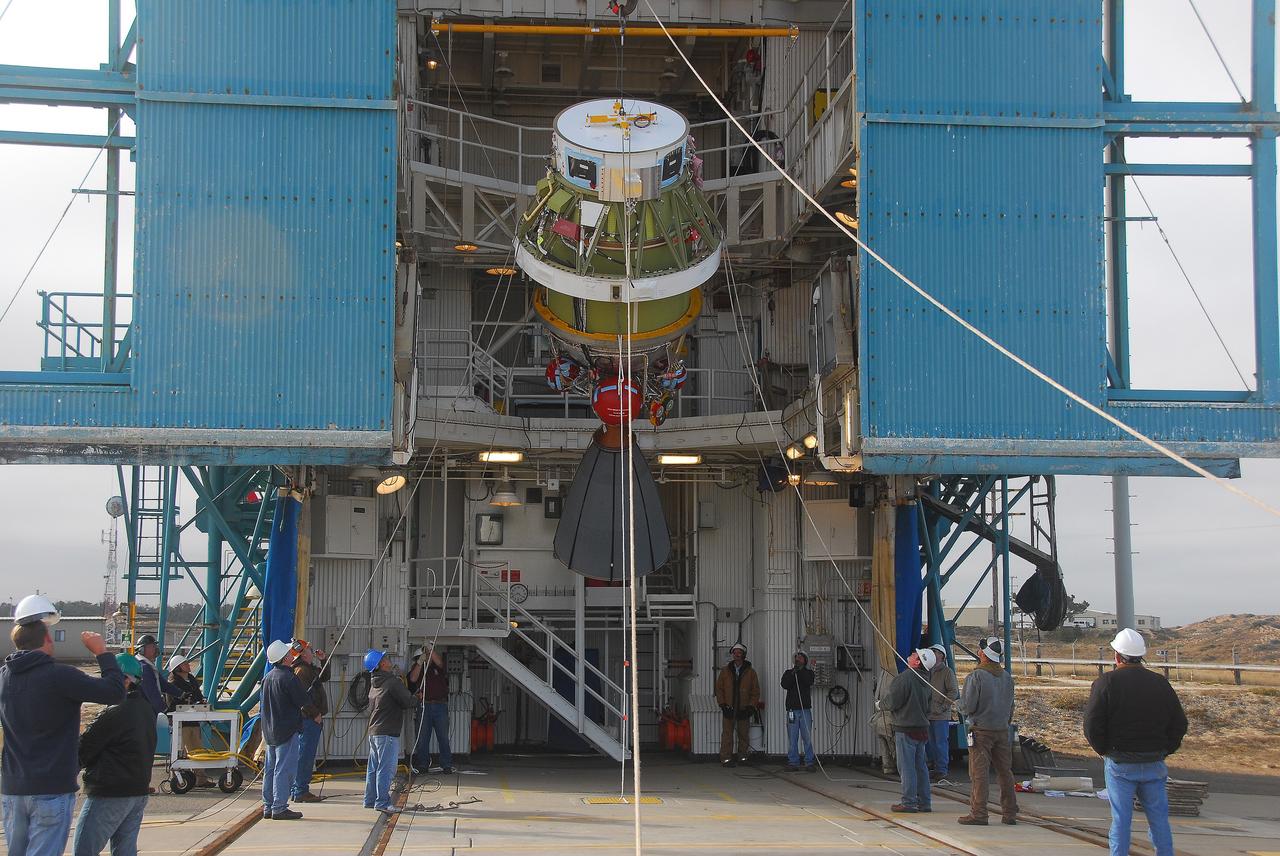
VANDENBERG AIR FORCE BASE, Calif. -- At Vandenberg Air Force Base in California, technicians monitor the progress as the AJ10 engine for the second stage of a United Launch Alliance Delta II rocket is hoisted up in the service tower at NASA’s Space Launch Complex-2. The Delta II will carry NASA's National Polar-orbiting Operational Environmental Satellite System Preparatory Project (NPP) satellite into space. NPP represents a critical first step in building the next-generation of Earth-observing satellites. NPP will carry the first of the new sensors developed for this satellite fleet, now known as the Joint Polar Satellite System (JPSS) to be launched in 2016. NPP is the bridge between NASA's Earth Observing System (EOS) satellites and the forthcoming series of JPSS satellites. The mission will test key technologies and instruments for the JPSS missions. NPP is targeted to launch Oct. 25. For more information, visit http://www.nasa.gov/NPP. Photo credit: NASA/VAFB
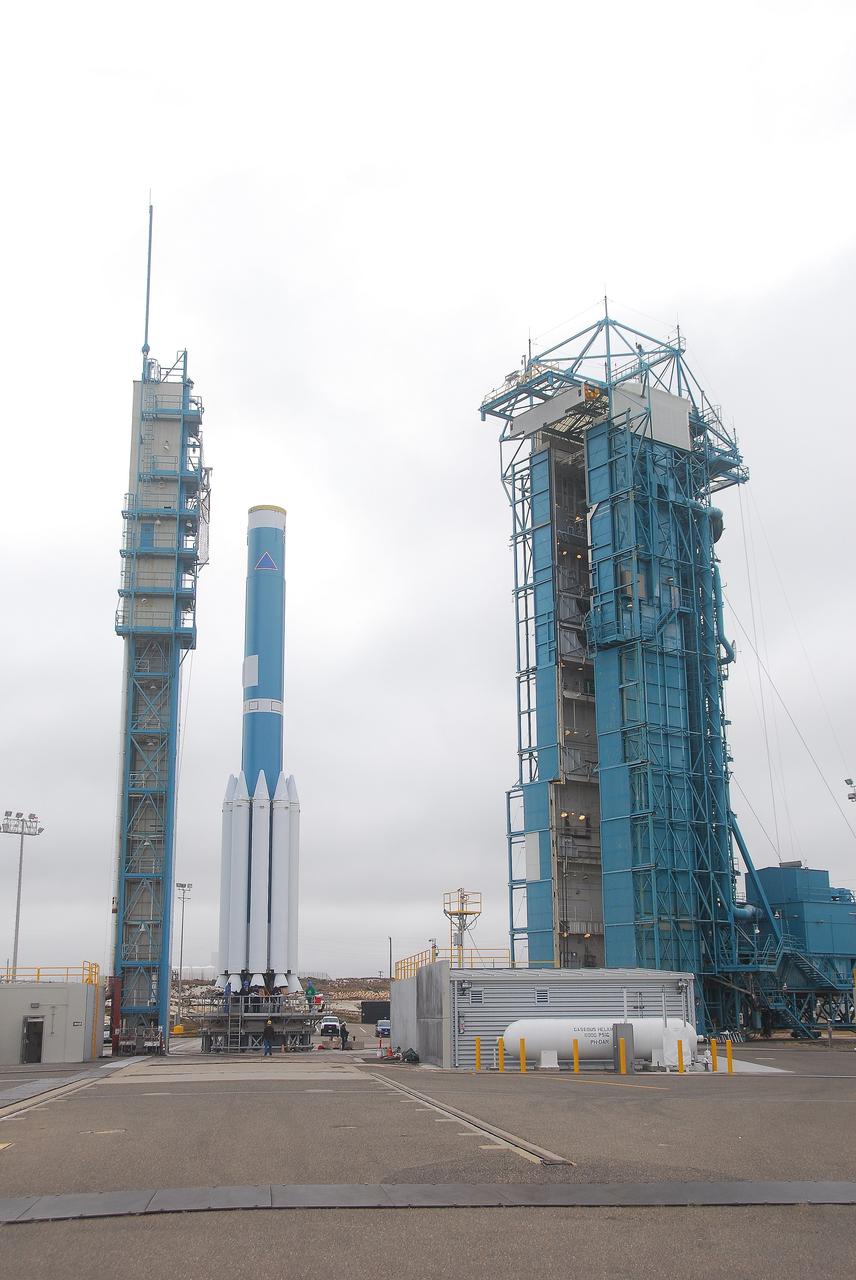
VANDENBERG AIR FORCE BASE, Calif. -- At Vandenberg Air Force Base in California, the first stage of a United Launch Alliance Delta II rocket with several solid rocket motors attached sits on NASA’s Space Launch Complex-2, while the service tower to the right awaits delivery of the Delta II second stage. The Delta II will carry NASA's National Polar-orbiting Operational Environmental Satellite System Preparatory Project (NPP) satellite into space. NPP represents a critical first step in building the next-generation of Earth-observing satellites. NPP will carry the first of the new sensors developed for this satellite fleet, now known as the Joint Polar Satellite System (JPSS) to be launched in 2016. NPP is the bridge between NASA's Earth Observing System (EOS) satellites and the forthcoming series of JPSS satellites. The mission will test key technologies and instruments for the JPSS missions. NPP is targeted to launch Oct. 25. For more information, visit http://www.nasa.gov/NPP. Photo credit: NASA/VAFB

VANDENBERG AIR FORCE BASE, Calif. -- Participants in the prelaunch news conference at Vandenberg Air Force Base, Calif., for NASA’s National Polar-orbiting Operational Environmental Satellite System Preparatory Project (NPP) spacecraft prepare to address members of the news media gathered at Vandenberg Air Force Base, Calif. NPP represents a critical first step in building the next-generation of Earth-observing satellites. NPP will carry the first of the new sensors developed for this satellite fleet, now known as the Joint Polar Satellite System (JPSS), to be launched in 2016. NPP is the bridge between NASA's Earth Observing System (EOS) satellites and the forthcoming series of JPSS satellites. The mission will test key technologies and instruments for the JPSS missions. NPP is targeted to launch Oct. 28 from Space Launch Complex-2 aboard a United Launch Alliance Delta II rocket. For more information, visit http://www.nasa.gov/NPP. Photo credit: NASA/VAFB

VANDENBERG AIR FORCE BASE, Calif. -- Andrew Carson, NPP program executive, NASA Headquarters, Washington, DC, participates in the prelaunch news conference at Vandenberg Air Force Base, Calif., for NASA’s National Polar-orbiting Operational Environmental Satellite System Preparatory Project (NPP) spacecraft. NPP represents a critical first step in building the next-generation of Earth-observing satellites. NPP will carry the first of the new sensors developed for this satellite fleet, now known as the Joint Polar Satellite System (JPSS), to be launched in 2016. NPP is the bridge between NASA's Earth Observing System (EOS) satellites and the forthcoming series of JPSS satellites. The mission will test key technologies and instruments for the JPSS missions. NPP is targeted to launch Oct. 28 from Space Launch Complex-2 aboard a United Launch Alliance Delta II rocket. For more information, visit http://www.nasa.gov/NPP. Photo credit: NASA/VAFB

VANDENBERG AIR FORCE BASE, Calif. -- 2nd Lt. Lisa Cochran, launch weather officer, 30th Operations Support Squadron, Vandenberg Air Force Base, Calif., participates in the prelaunch news conference at Vandenberg Air Force Base, Calif., for NASA’s National Polar-orbiting Operational Environmental Satellite System Preparatory Project (NPP) spacecraft. NPP represents a critical first step in building the next-generation of Earth-observing satellites. NPP will carry the first of the new sensors developed for this satellite fleet, now known as the Joint Polar Satellite System (JPSS), to be launched in 2016. NPP is the bridge between NASA's Earth Observing System (EOS) satellites and the forthcoming series of JPSS satellites. The mission will test key technologies and instruments for the JPSS missions. NPP is targeted to launch Oct. 28 from Space Launch Complex-2 aboard a United Launch Alliance Delta II rocket. For more information, visit http://www.nasa.gov/NPP. Photo credit: NASA/VAFB
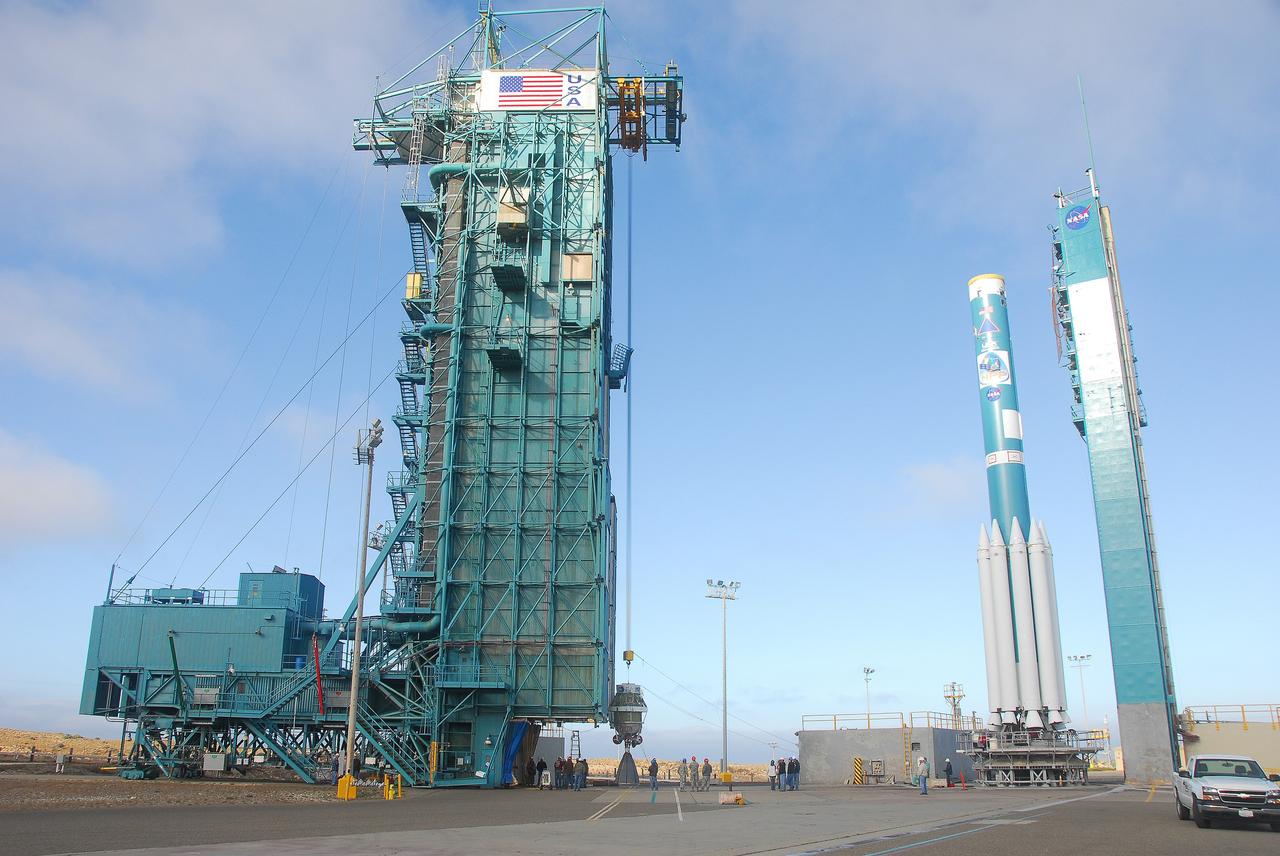
VANDENBERG AIR FORCE BASE, Calif. -- At Vandenberg Air Force Base in California, the AJ10 engine for the second stage of a United Launch Alliance Delta II rocket is hoisted up in the service tower at NASA’s Space Launch Complex 2. The rocket’s third stage with several solid rocket motors attached sits on the launch pad to the right. The Delta II will carry NASA's National Polar-orbiting Operational Environmental Satellite System Preparatory Project (NPP) satellite into space. NPP represents a critical first step in building the next-generation of Earth-observing satellites. NPP will carry the first of the new sensors developed for this satellite fleet, now known as the Joint Polar Satellite System (JPSS) to be launched in 2016. NPP is the bridge between NASA's Earth Observing System (EOS) satellites and the forthcoming series of JPSS satellites. The mission will test key technologies and instruments for the JPSS missions. NPP is targeted to launch Oct. 25. For more information, visit http://www.nasa.gov/NPP. Photo credit: NASA/VAFB
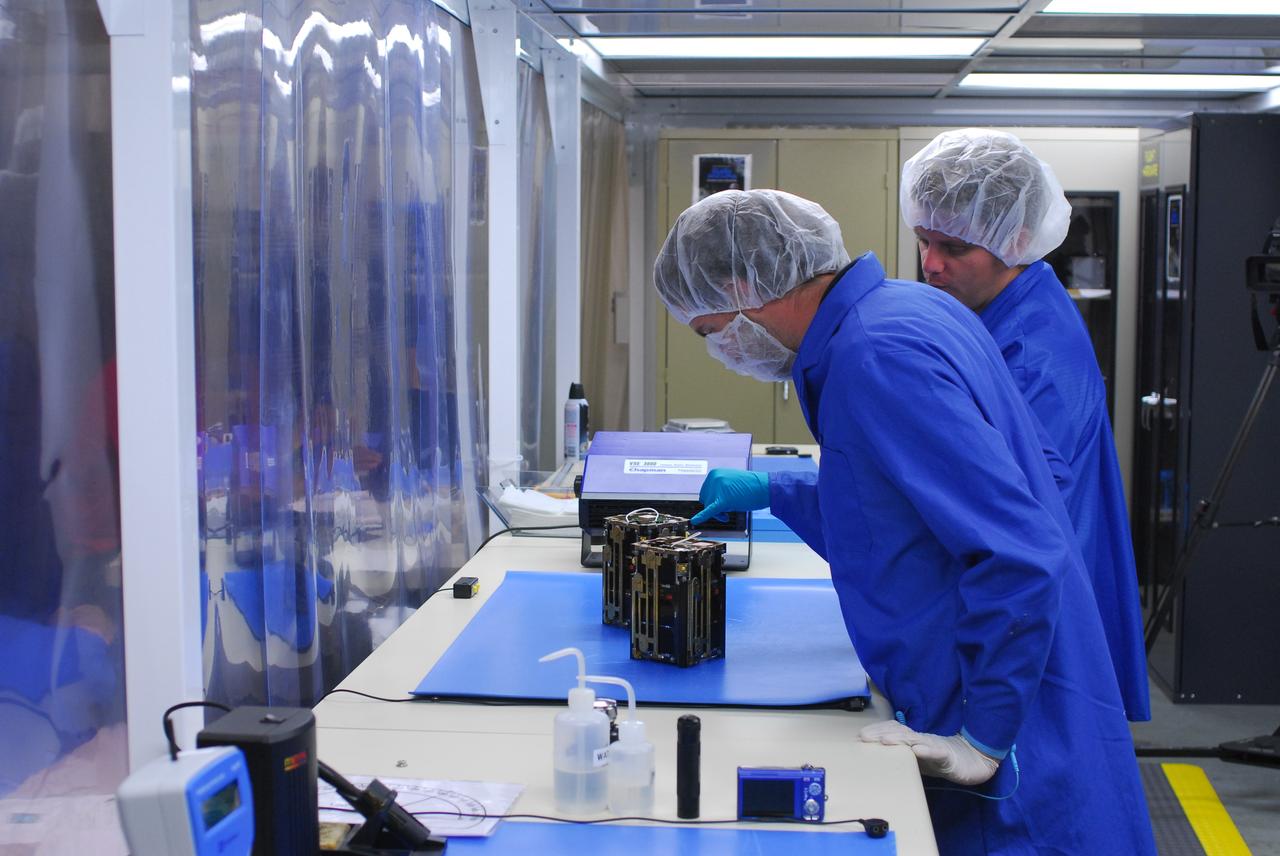
The Dynamic Ionosphere Cubesat Experiment DICE is prepared for launch aboard the Delta II rocket that will carry NASA’s National Polar-orbiting Operational Environmental Satellite System Preparatory Project NPP spacecraft. DICE is a National Science Foundation Project conducted by Utah State University in conjunction with the Atmospheric and Space Technology Research Associates ASTRA. NPP represents a critical first step in building the next-generation of Earth-observing satellites. NPP will carry the first of the new sensors developed for this satellite fleet, now known as the Joint Polar Satellite System JPSS, to be launched in 2016. NPP is the bridge between NASA's Earth Observing System EOS satellites and the forthcoming series of JPSS satellites. The mission will test key technologies and instruments for the JPSS missions. NPP is targeted to launch Oct. 28 from Space Launch Complex-2 aboard a United Launch Alliance Delta II rocket. For more information, visit http://www.nasa.gov/NPP. Photo credit: NASA/VAFB
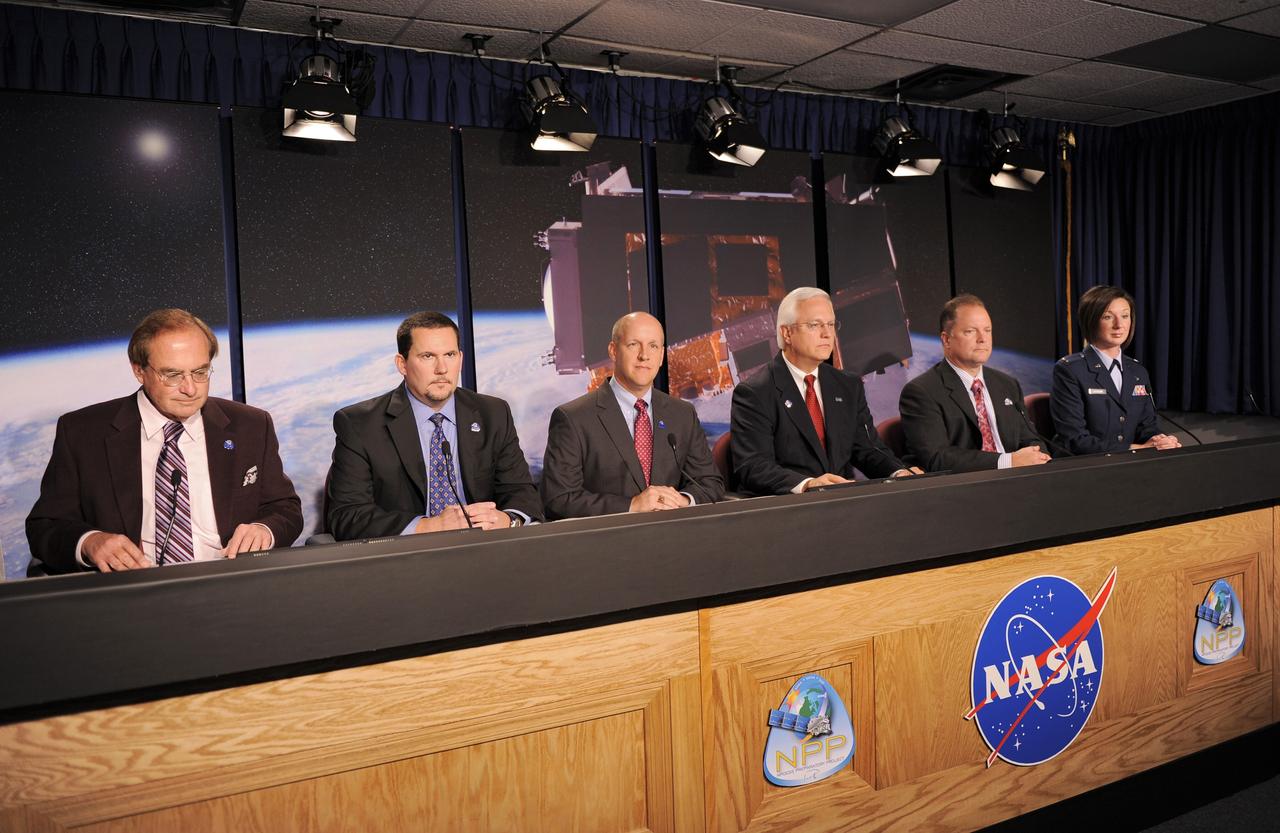
VANDENBERG AIR FORCE BASE, Calif. -- Participants in the prelaunch news conference for NASA’s National Polar-orbiting Operational Environmental Satellite System Preparatory Project (NPP) spacecraft prepare to address members of the news media gathered at Vandenberg Air Force Base, Calif. Panelists are, from left, George Diller, NASA launch commentator, Andrew Carson, NPP program executive, NASA Headquarters, Tim Dunn, NASA launch director, Kennedy Space Center, Vernon Thorp, program manager, NASA missions, United Launch Alliance, Ken Schwer, NPP project manager, Goddard Space Flight Center, and 2nd Lt. Lisa Cochran, launch weather officer, 30th Operations Support Squadron, Vandenberg Air Force Base, Calif. NPP represents a critical first step in building the next-generation of Earth-observing satellites. NPP will carry the first of the new sensors developed for this satellite fleet, now known as the Joint Polar Satellite System (JPSS), to be launched in 2016. NPP is the bridge between NASA's Earth Observing System (EOS) satellites and the forthcoming series of JPSS satellites. The mission will test key technologies and instruments for the JPSS missions. NPP is targeted to launch Oct. 28 from Space Launch Complex-2 aboard a United Launch Alliance Delta II rocket. For more information, visit http://www.nasa.gov/NPP. Photo credit: NASA/VAFB