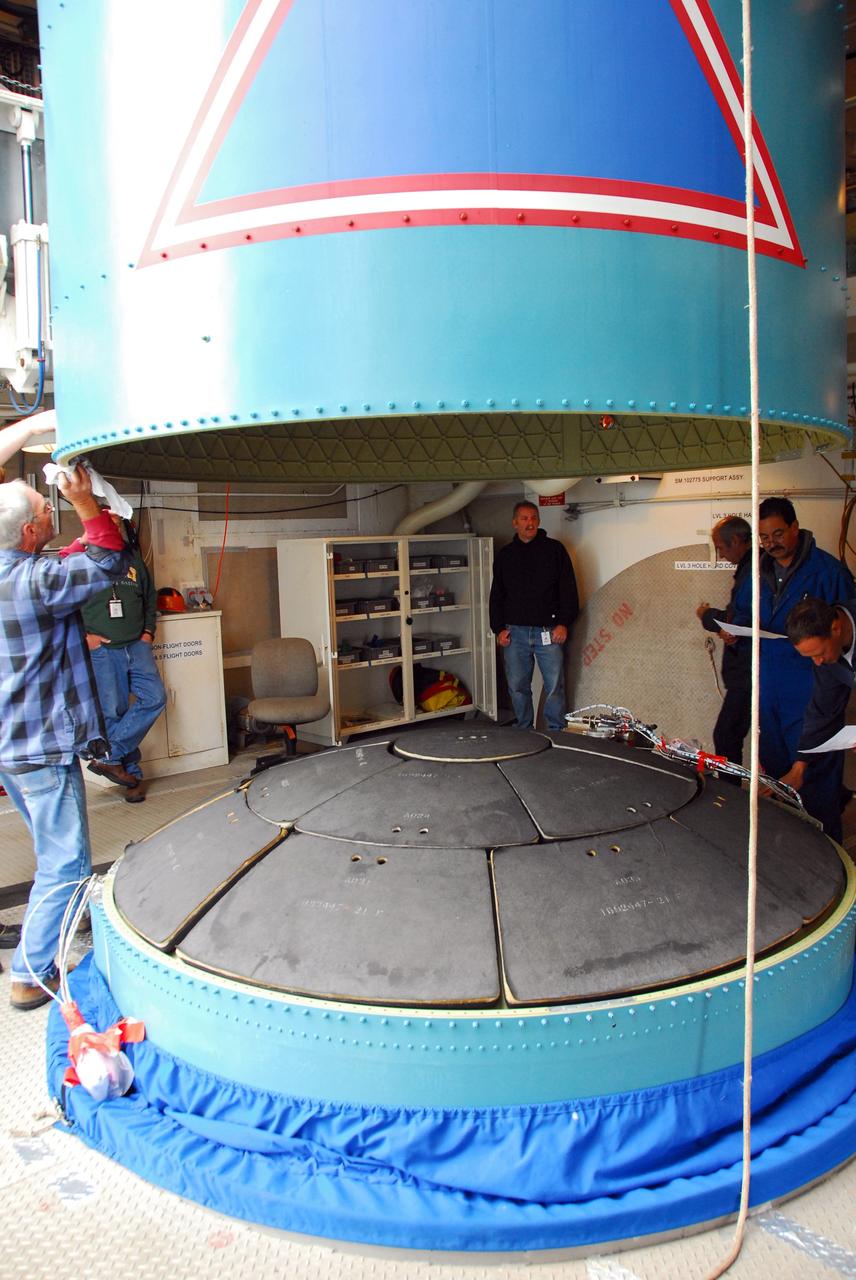
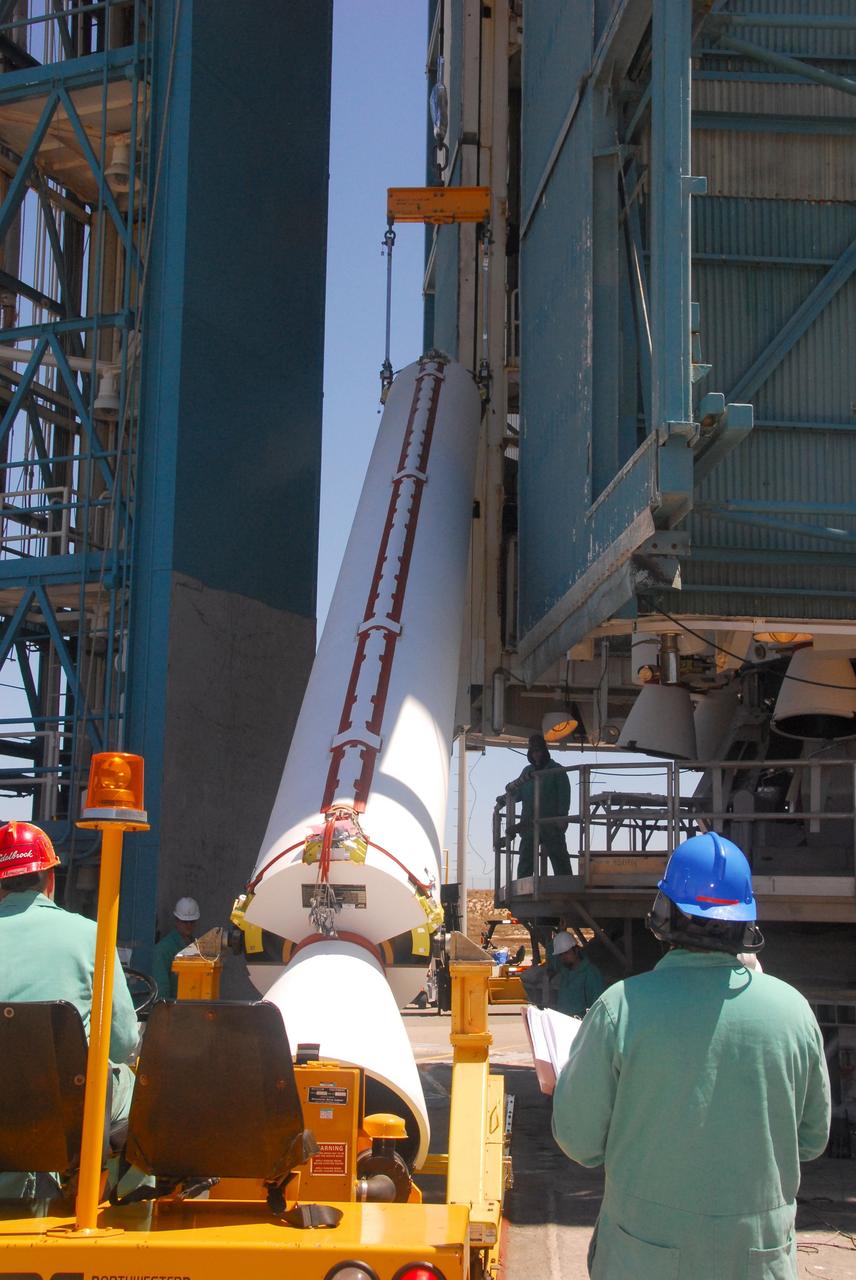
VANDENBERG AIR FORCE BASE, Calif. -- At NASA's Space Launch Complex-2 on Vandenberg Air Force Base in California, the interstage of the United Launch Alliance Delta II that will carry NASA's National Polar-orbiting Operational Environmental Satellite System Preparatory Project (NPP) satellite into space is lowered toward the rocket's first stage. The interstage provides an interface between the launch vehicle's first and second stages. NPP represents a critical first step in building the next-generation of Earth-observing satellites. NPP will carry the first of the new sensors developed for this satellite fleet, now known as the Joint Polar Satellite System (JPSS) to be launched in 2016. NPP is the bridge between NASA's Earth Observing System (EOS) satellites and the forthcoming series of JPSS satellites. The mission will test key technologies and instruments for the JPSS missions. For more information, visit http://www.nasa.gov/NPP. Photo credit: NASA/VAFB, Rudy Bledsoe
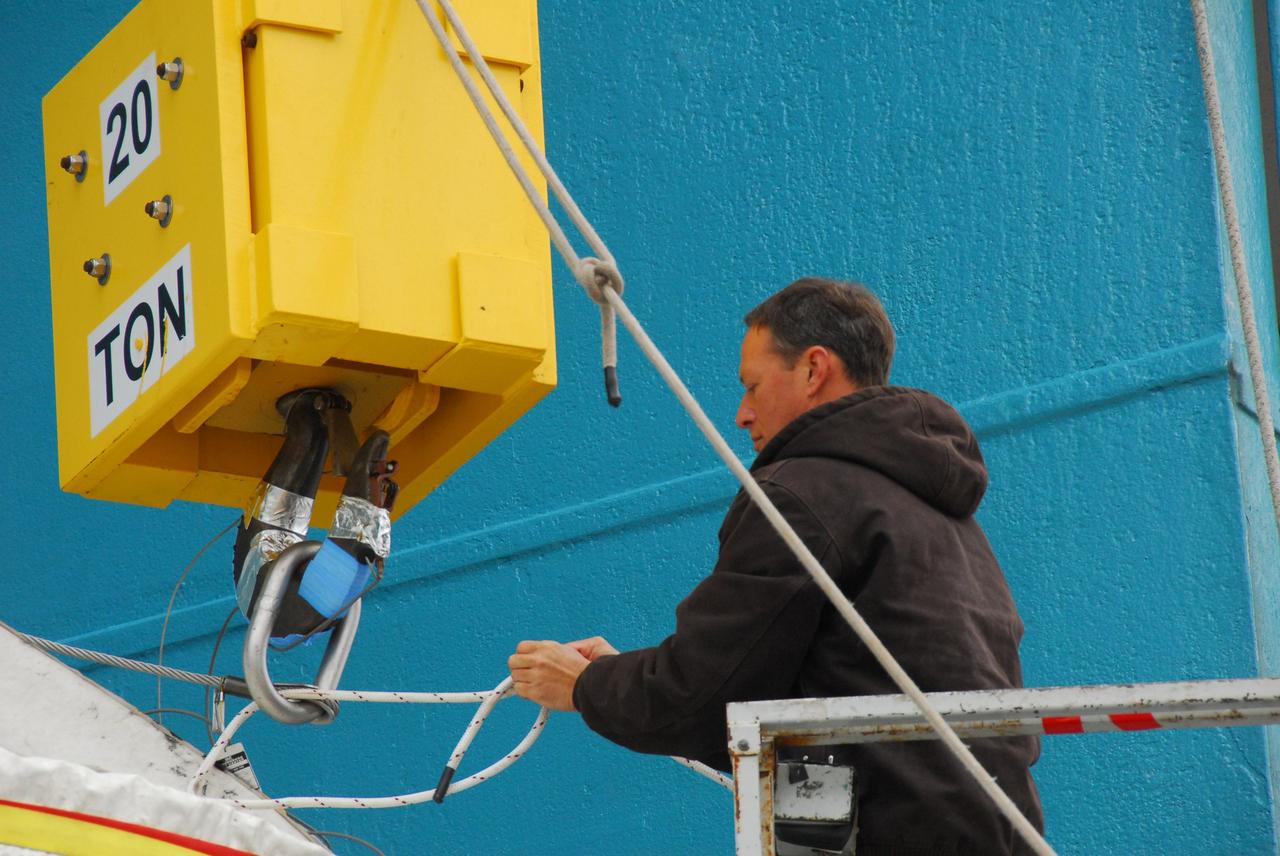
VANDENBERG AIR FORCE BASE, Calif. -- At NASA's Space Launch Complex-2 on Vandenberg Air Force Base in California, a spacecraft technician secures the interstage of the United Launch Alliance Delta II that will carry NASA's National Polar-orbiting Operational Environmental Satellite System Preparatory Project (NPP) satellite into space to a lifting device. The interstage provides an interface between the launch vehicle's first and second stages. NPP represents a critical first step in building the next-generation of Earth-observing satellites. NPP will carry the first of the new sensors developed for this satellite fleet, now known as the Joint Polar Satellite System (JPSS) to be launched in 2016. NPP is the bridge between NASA's Earth Observing System (EOS) satellites and the forthcoming series of JPSS satellites. The mission will test key technologies and instruments for the JPSS missions. For more information, visit http://www.nasa.gov/NPP. Photo credit: NASA/VAFB, Rudy Bledsoe
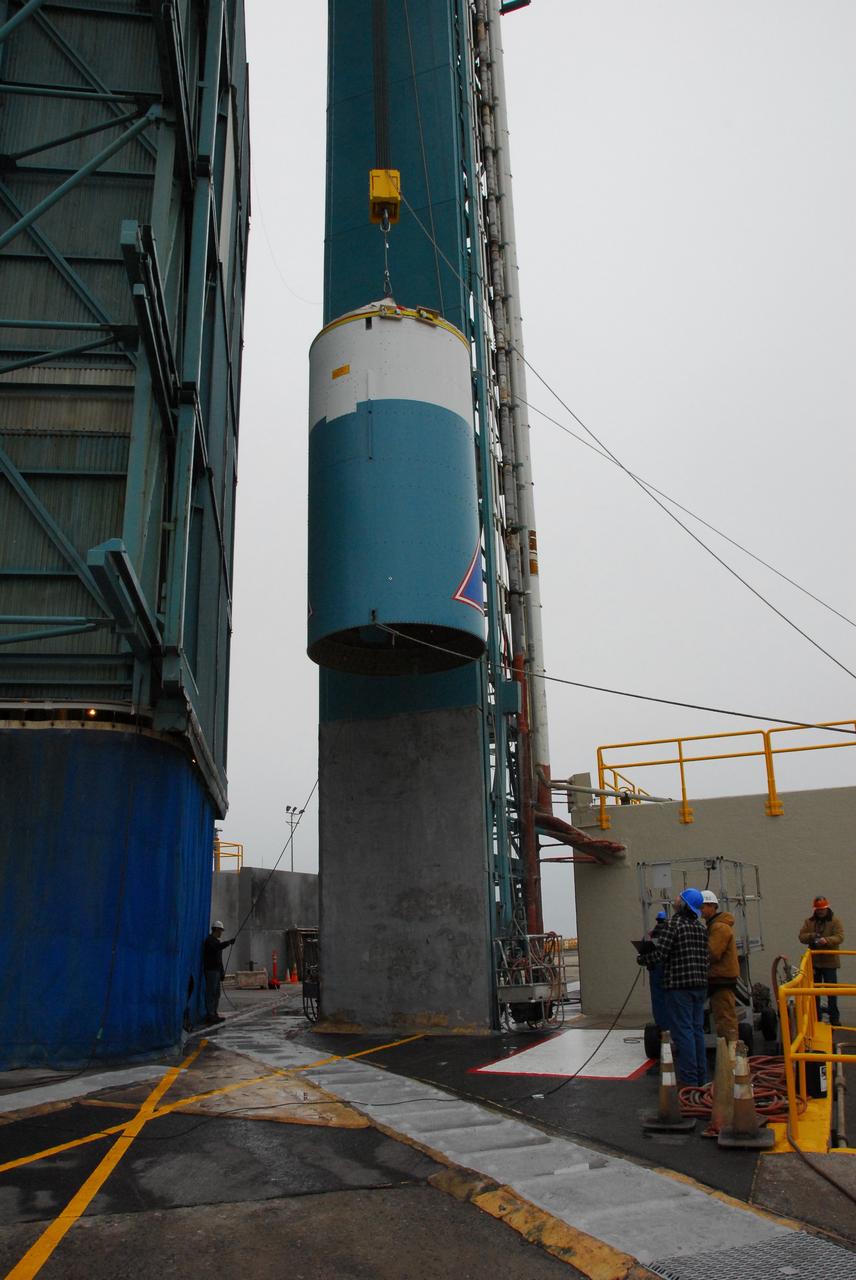
VANDENBERG AIR FORCE BASE, Calif. -- At Vandenberg Air Force Base in California, the interstage of the United Launch Alliance Delta II that will carry NASA's National Polar-orbiting Operational Environmental Satellite System Preparatory Project (NPP) satellite into space is lifted up the side of NASA's Space Launch Complex-2. The interstage provides an interface between the launch vehicle's first and second stages. NPP represents a critical first step in building the next-generation of Earth-observing satellites. NPP will carry the first of the new sensors developed for this satellite fleet, now known as the Joint Polar Satellite System (JPSS) to be launched in 2016. NPP is the bridge between NASA's Earth Observing System (EOS) satellites and the forthcoming series of JPSS satellites. The mission will test key technologies and instruments for the JPSS missions. For more information, visit http://www.nasa.gov/NPP. Photo credit: NASA/VAFB, Rudy Bledsoe
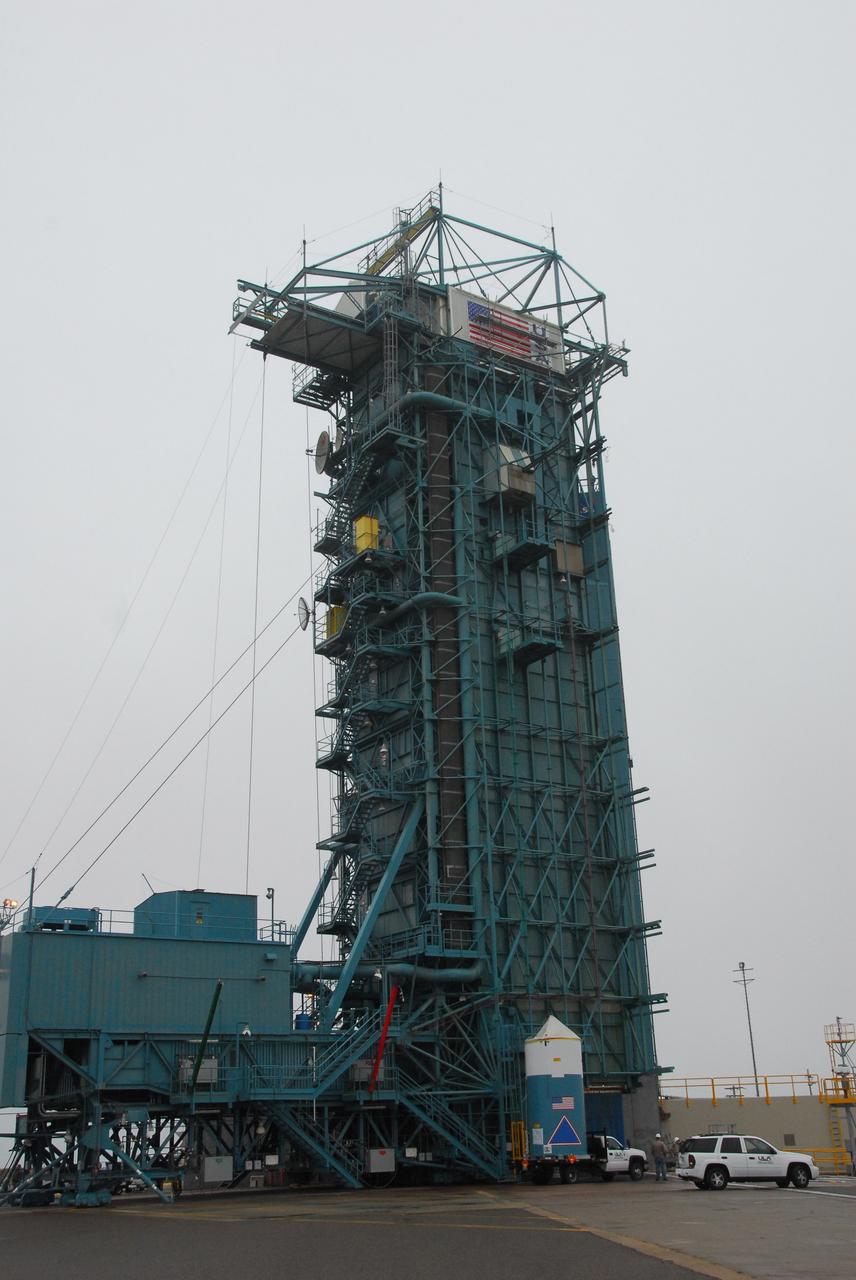
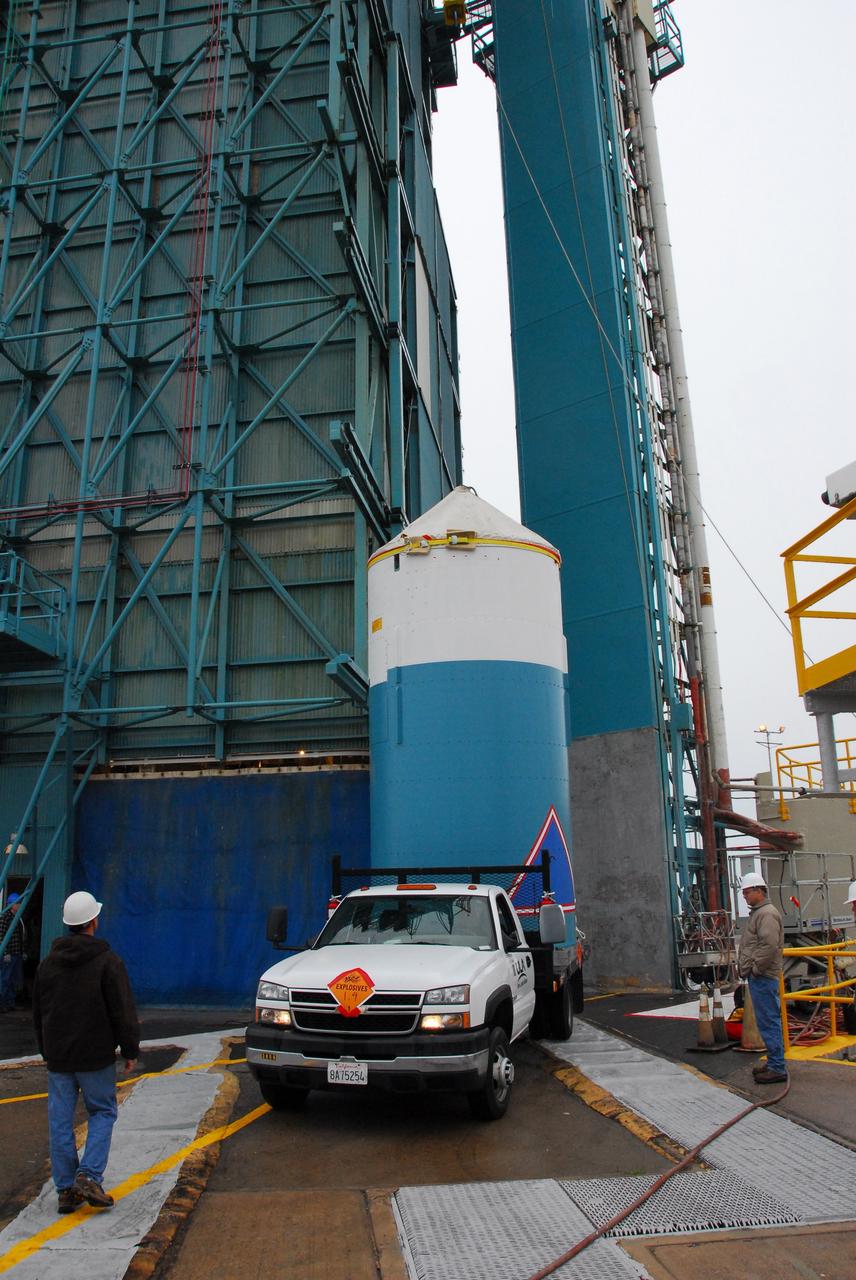
VANDENBERG AIR FORCE BASE, Calif. -- At Vandenberg Air Force Base in California, the interstage of the United Launch Alliance Delta II that will carry NASA's National Polar-orbiting Operational Environmental Satellite System Preparatory Project (NPP) satellite into space arrives at NASA's Space Launch Complex-2. The interstage provides an interface between the launch vehicle's first and second stages. NPP represents a critical first step in building the next-generation of Earth-observing satellites. NPP will carry the first of the new sensors developed for this satellite fleet, now known as the Joint Polar Satellite System (JPSS) to be launched in 2016. NPP is the bridge between NASA's Earth Observing System (EOS) satellites and the forthcoming series of JPSS satellites. The mission will test key technologies and instruments for the JPSS missions. For more information, visit http://www.nasa.gov/NPP. Photo credit: NASA/VAFB, Rudy Bledsoe
VANDENBERG AIR FORCE BASE, Calif. -- At Vandenberg Air Force Base in California, preparations are under way to lift the interstage of the United Launch Alliance Delta II that will carry NASA's National Polar-orbiting Operational Environmental Satellite System Preparatory Project (NPP) satellite into space at NASA's Space Launch Complex-2. The interstage provides an interface between the launch vehicle's first and second stages. NPP represents a critical first step in building the next-generation of Earth-observing satellites. NPP will carry the first of the new sensors developed for this satellite fleet, now known as the Joint Polar Satellite System (JPSS) to be launched in 2016. NPP is the bridge between NASA's Earth Observing System (EOS) satellites and the forthcoming series of JPSS satellites. The mission will test key technologies and instruments for the JPSS missions. For more information, visit http://www.nasa.gov/NPP. Photo credit: NASA/VAFB, Rudy Bledsoe
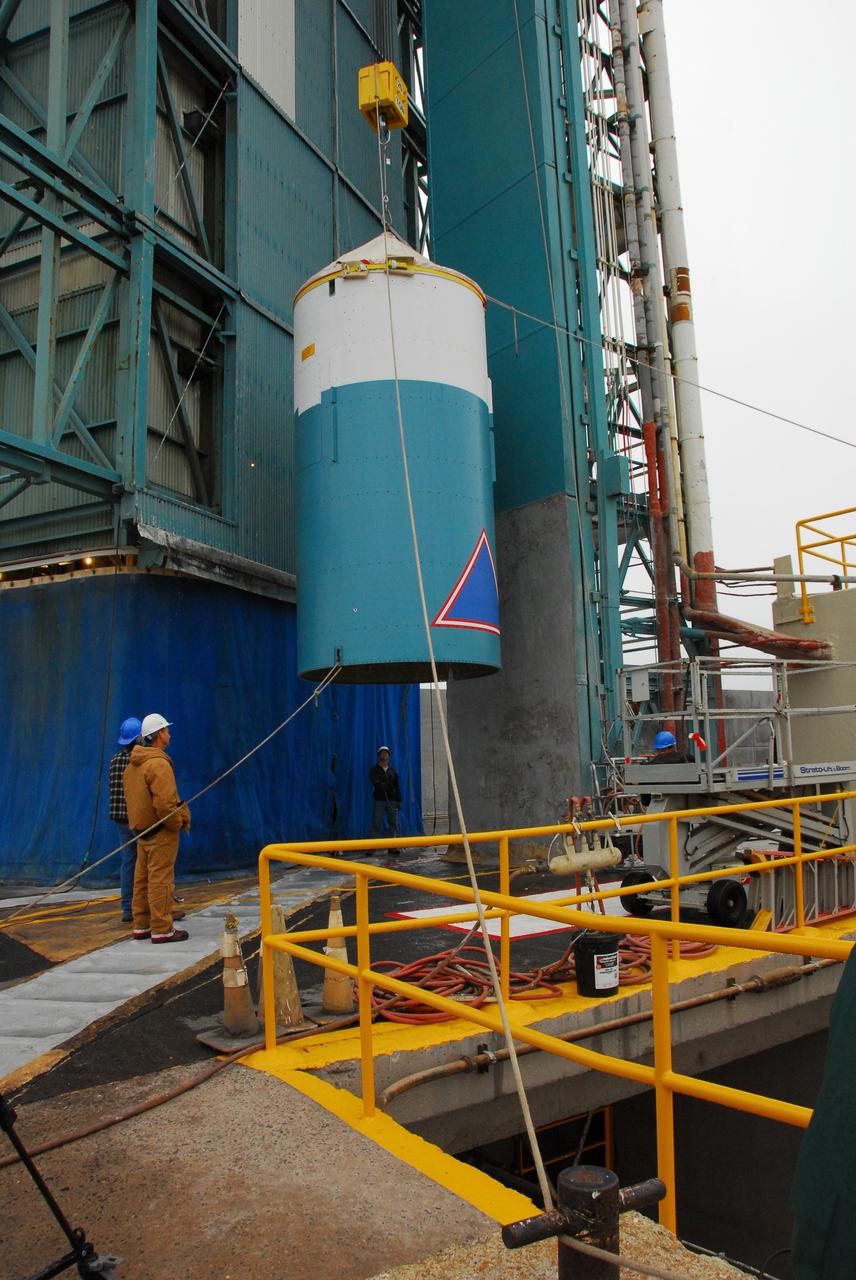
VANDENBERG AIR FORCE BASE, Calif. -- At Vandenberg Air Force Base in California, the interstage of the United Launch Alliance Delta II that will carry NASA's National Polar-orbiting Operational Environmental Satellite System Preparatory Project (NPP) satellite into space is lifted up the side of NASA's Space Launch Complex-2. The interstage provides an interface between the launch vehicle's first and second stages. NPP represents a critical first step in building the next-generation of Earth-observing satellites. NPP will carry the first of the new sensors developed for this satellite fleet, now known as the Joint Polar Satellite System (JPSS) to be launched in 2016. NPP is the bridge between NASA's Earth Observing System (EOS) satellites and the forthcoming series of JPSS satellites. The mission will test key technologies and instruments for the JPSS missions. For more information, visit http://www.nasa.gov/NPP. Photo credit: NASA/VAFB, Rudy Bledsoe
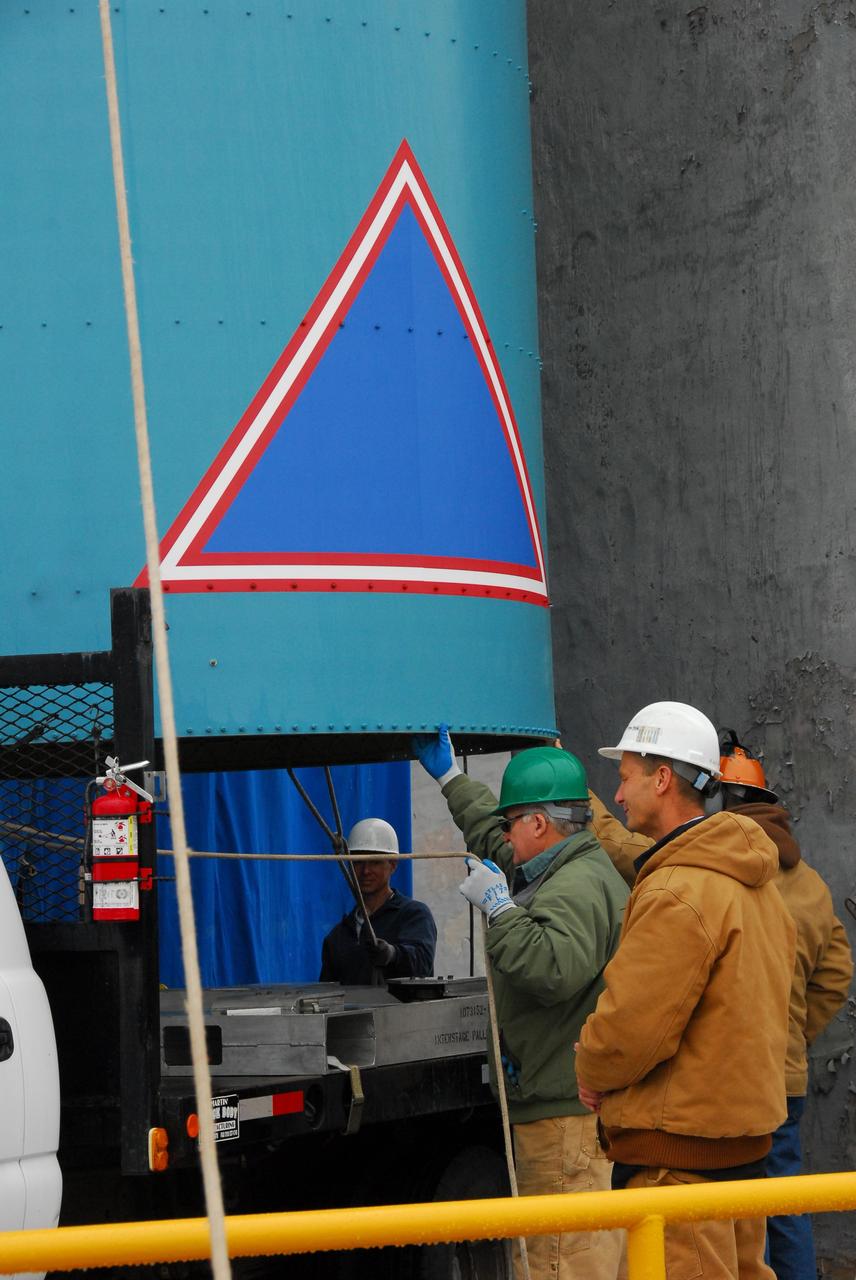
VANDENBERG AIR FORCE BASE, Calif. -- At NASA's Space Launch Complex-2 on Vandenberg Air Force Base in California, spacecraft technicians oversee the lift of the interstage of the United Launch Alliance Delta II that will carry NASA's National Polar-orbiting Operational Environmental Satellite System Preparatory Project (NPP) satellite into space from its transporter. The interstage provides an interface between the launch vehicle's first and second stages. NPP represents a critical first step in building the next-generation of Earth-observing satellites. NPP will carry the first of the new sensors developed for this satellite fleet, now known as the Joint Polar Satellite System (JPSS) to be launched in 2016. NPP is the bridge between NASA's Earth Observing System (EOS) satellites and the forthcoming series of JPSS satellites. The mission will test key technologies and instruments for the JPSS missions. For more information, visit http://www.nasa.gov/NPP. Photo credit: NASA/VAFB, Rudy Bledsoe
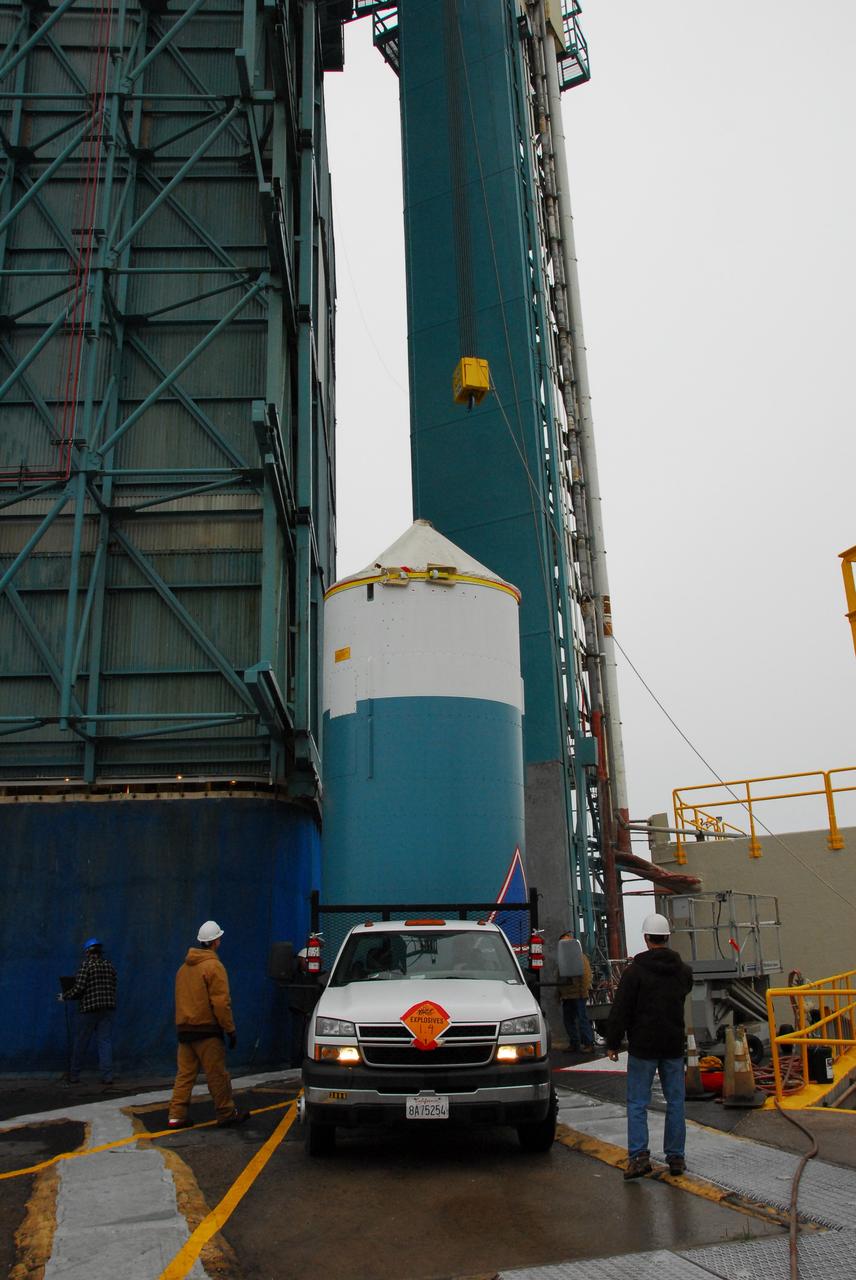
VANDENBERG AIR FORCE BASE, Calif. -- At NASA's Space Launch Complex-2 on Vandenberg Air Force Base in California, preparations are under way to attach the interstage of the United Launch Alliance Delta II that will carry NASA's National Polar-orbiting Operational Environmental Satellite System Preparatory Project (NPP) satellite into space to a lifting device. The interstage provides an interface between the launch vehicle's first and second stages. NPP represents a critical first step in building the next-generation of Earth-observing satellites. NPP will carry the first of the new sensors developed for this satellite fleet, now known as the Joint Polar Satellite System (JPSS) to be launched in 2016. NPP is the bridge between NASA's Earth Observing System (EOS) satellites and the forthcoming series of JPSS satellites. The mission will test key technologies and instruments for the JPSS missions. For more information, visit http://www.nasa.gov/NPP. Photo credit: NASA/VAFB, Rudy Bledsoe

VANDENBERG AIR FORCE BASE, Calif. -- At Vandenberg Air Force Base in California, the interstage of the United Launch Alliance Delta II that will carry NASA's National Polar-orbiting Operational Environmental Satellite System Preparatory Project (NPP) satellite into space arrives at NASA's Space Launch Complex-2. The interstage provides an interface between the launch vehicle's first and second stages. NPP represents a critical first step in building the next-generation of Earth-observing satellites. NPP will carry the first of the new sensors developed for this satellite fleet, now known as the Joint Polar Satellite System (JPSS) to be launched in 2016. NPP is the bridge between NASA's Earth Observing System (EOS) satellites and the forthcoming series of JPSS satellites. The mission will test key technologies and instruments for the JPSS missions. For more information, visit http://www.nasa.gov/NPP. Photo credit: NASA/VAFB, Rudy Bledsoe
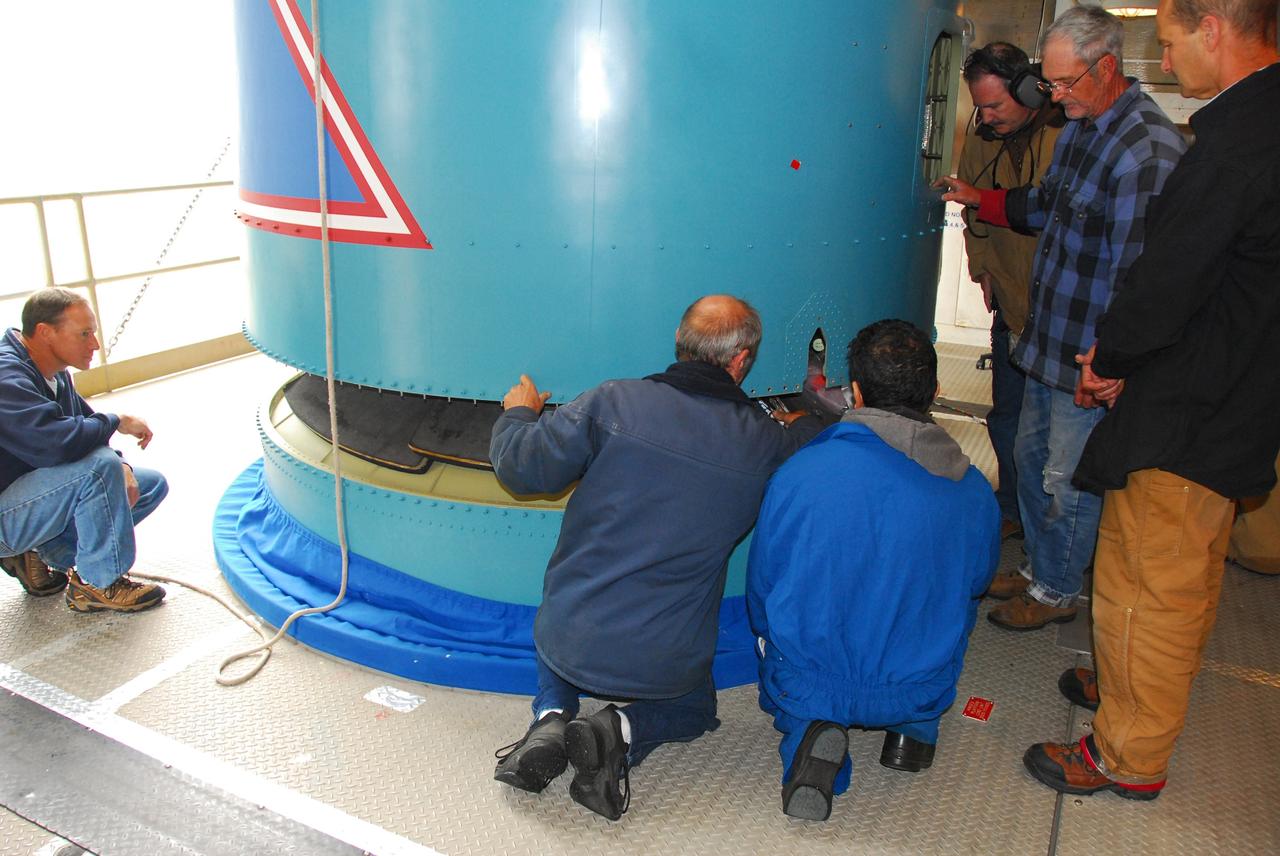
VANDENBERG AIR FORCE BASE, Calif. -- At NASA's Space Launch Complex-2 on Vandenberg Air Force Base in California, spacecraft technicians position the interstage of the United Launch Alliance Delta II that will carry NASA's National Polar-orbiting Operational Environmental Satellite System Preparatory Project (NPP) satellite into space onto the rocket's first stage. The interstage provides an interface between the launch vehicle's first and second stages. NPP represents a critical first step in building the next-generation of Earth-observing satellites. NPP will carry the first of the new sensors developed for this satellite fleet, now known as the Joint Polar Satellite System (JPSS) to be launched in 2016. NPP is the bridge between NASA's Earth Observing System (EOS) satellites and the forthcoming series of JPSS satellites. The mission will test key technologies and instruments for the JPSS missions. For more information, visit http://www.nasa.gov/NPP. Photo credit: NASA/VAFB, Rudy Bledsoe
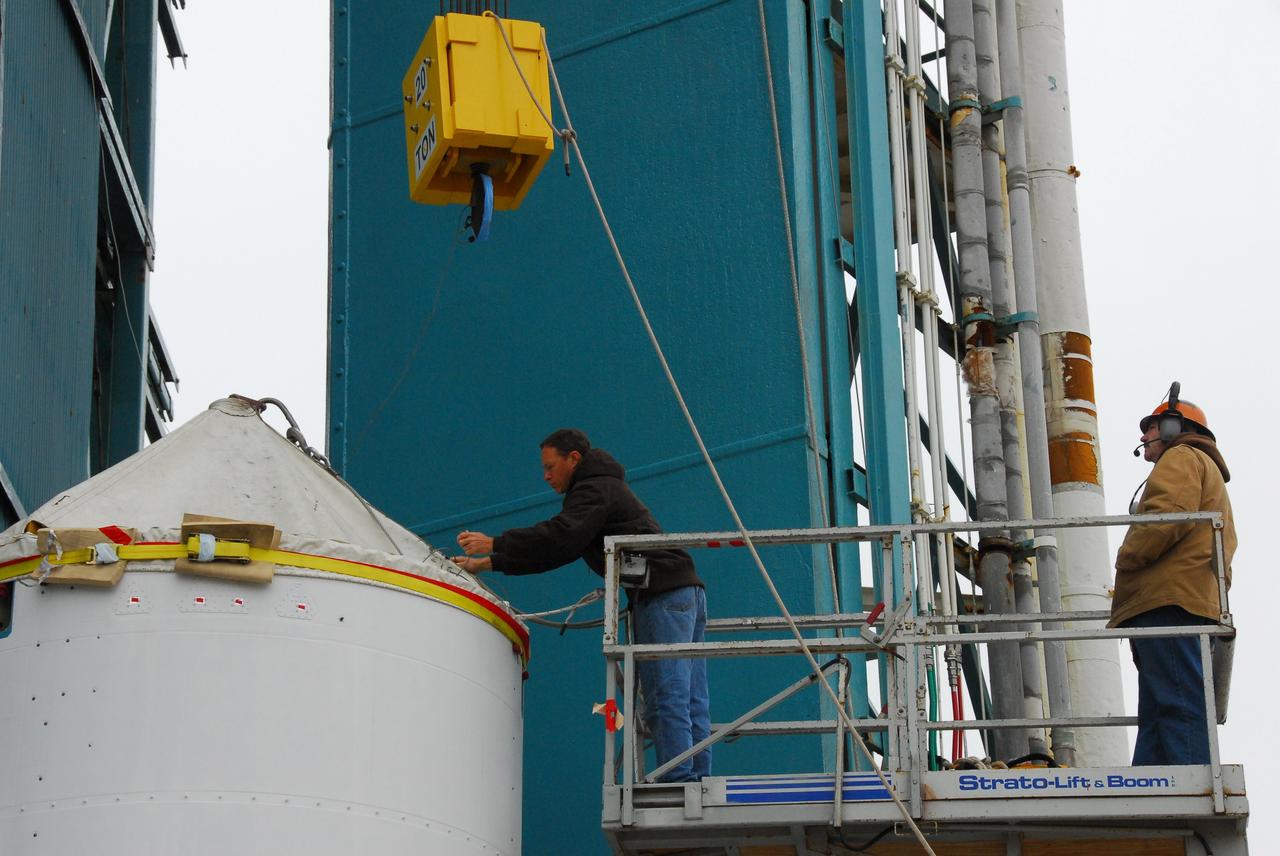
VANDENBERG AIR FORCE BASE, Calif. -- At NASA's Space Launch Complex-2 on Vandenberg Air Force Base in California, spacecraft technicians prepare to attach the interstage of the United Launch Alliance Delta II that will carry NASA's National Polar-orbiting Operational Environmental Satellite System Preparatory Project (NPP) satellite into space to a lifting device. The interstage provides an interface between the launch vehicle's first and second stages. NPP represents a critical first step in building the next-generation of Earth-observing satellites. NPP will carry the first of the new sensors developed for this satellite fleet, now known as the Joint Polar Satellite System (JPSS) to be launched in 2016. NPP is the bridge between NASA's Earth Observing System (EOS) satellites and the forthcoming series of JPSS satellites. The mission will test key technologies and instruments for the JPSS missions. For more information, visit http://www.nasa.gov/NPP. Photo credit: NASA/VAFB, Rudy Bledsoe

VANDENBERG AIR FORCE BASE, Calif. -- At Vandenberg Air Force Base in California, a solid rocket motor for the United Launch Alliance Delta II that will carry NASA's National Polar-orbiting Operational Environmental Satellite System Preparatory Project (NPP) satellite into space arrives at NASA's Space Launch Complex-2. NPP represents a critical first step in building the next-generation of Earth-observing satellites. NPP will carry the first of the new sensors developed for this satellite fleet, now known as the Joint Polar Satellite System (JPSS) to be launched in 2016. NPP is the bridge between NASA's Earth Observing System (EOS) satellites and the forthcoming series of JPSS satellites. The mission will test key technologies and instruments for the JPSS missions. NPP is targeted to launch Oct. 25. For more information, visit http://www.nasa.gov/NPP. Photo credit: NASA/VAFB, Dan Liberotti
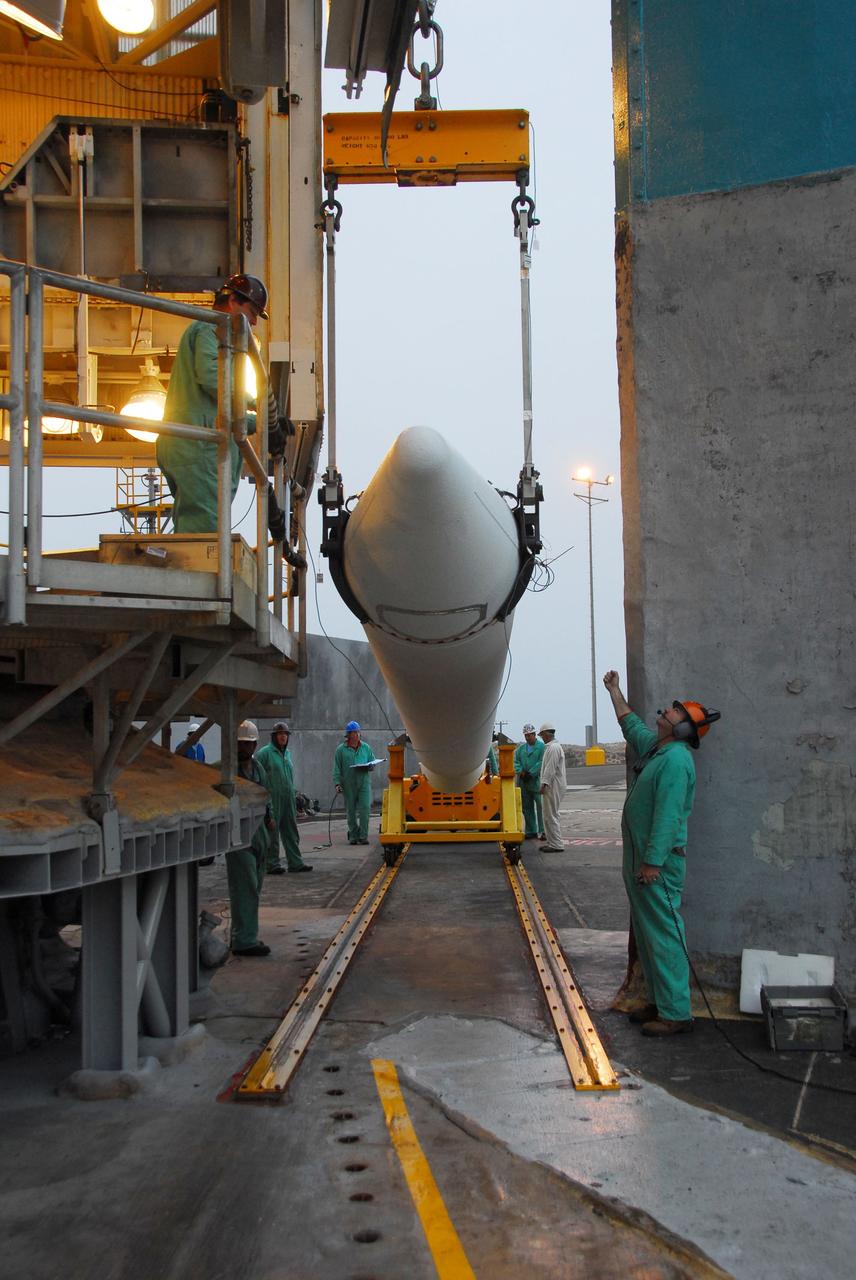
VANDENBERG AIR FORCE BASE, Calif. -- At Vandenberg Air Force Base in California, a crane is used to hoist up a solid rocket motor for the United Launch Alliance Delta II that will carry NASA's National Polar-orbiting Operational Environmental Satellite System Preparatory Project (NPP) satellite into space at NASA's Space Launch Complex-2. NPP represents a critical first step in building the next-generation of Earth-observing satellites. NPP will carry the first of the new sensors developed for this satellite fleet, now known as the Joint Polar Satellite System (JPSS) to be launched in 2016. NPP is the bridge between NASA's Earth Observing System (EOS) satellites and the forthcoming series of JPSS satellites. The mission will test key technologies and instruments for the JPSS missions. NPP is targeted to launch Oct. 25. For more information, visit http://www.nasa.gov/NPP. Photo credit: NASA/VAFB, Dan Liberotti
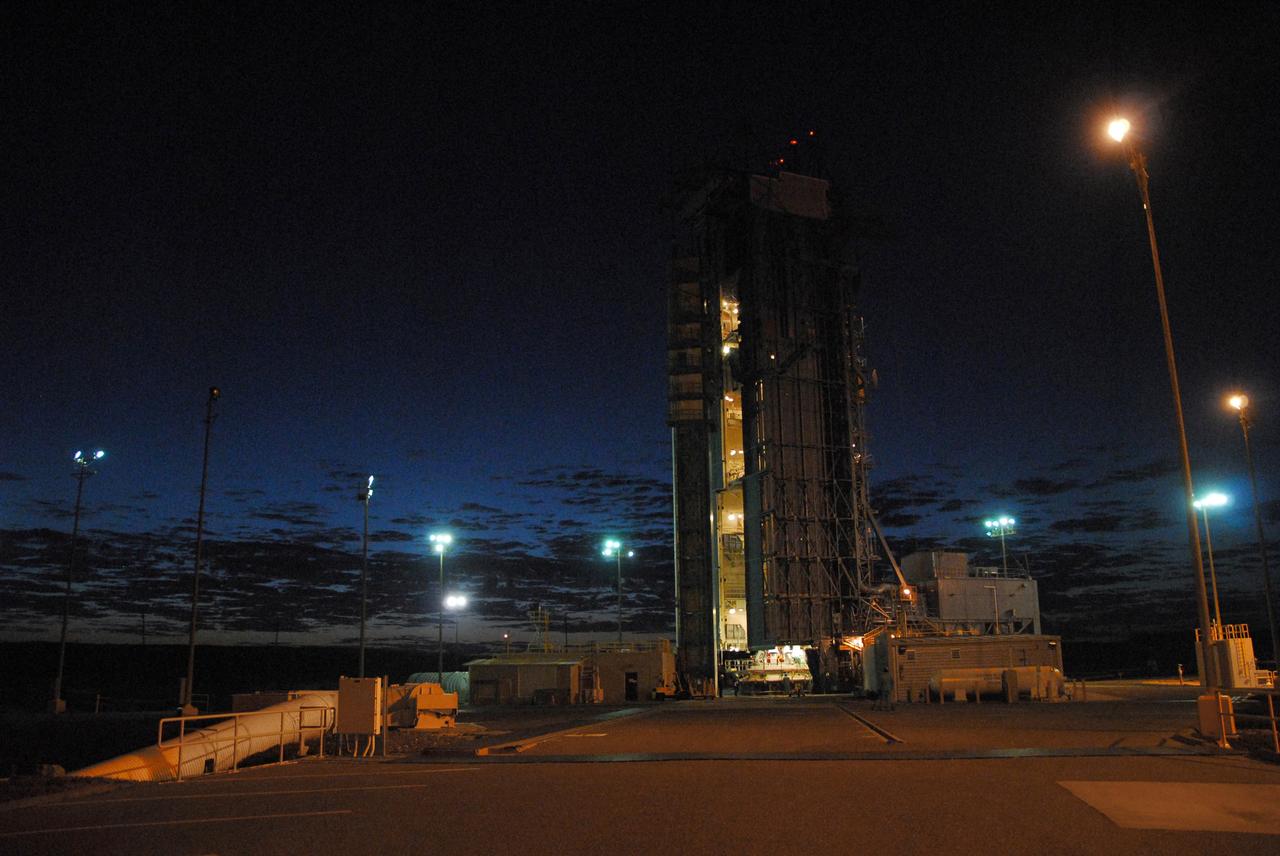
VANDENBERG AIR FORCE BASE, Calif. -- NASA’s Space Launch Complex-2 at Vandenberg Air Force Base in California, is illuminated against a midnight blue sky as solid rocket motors are attached to the United Launch Alliance Delta II rocket that will carry NASA's National Polar-orbiting Operational Environmental Satellite System Preparatory Project (NPP) satellite into space. NPP represents a critical first step in building the next-generation of Earth-observing satellites. NPP will carry the first of the new sensors developed for this satellite fleet, now known as the Joint Polar Satellite System (JPSS) to be launched in 2016. NPP is the bridge between NASA's Earth Observing System (EOS) satellites and the forthcoming series of JPSS satellites. The mission will test key technologies and instruments for the JPSS missions. NPP is targeted to launch Oct. 25. For more information, visit http://www.nasa.gov/NPP. Photo credit: NASA/VAFB, Mark Mackley
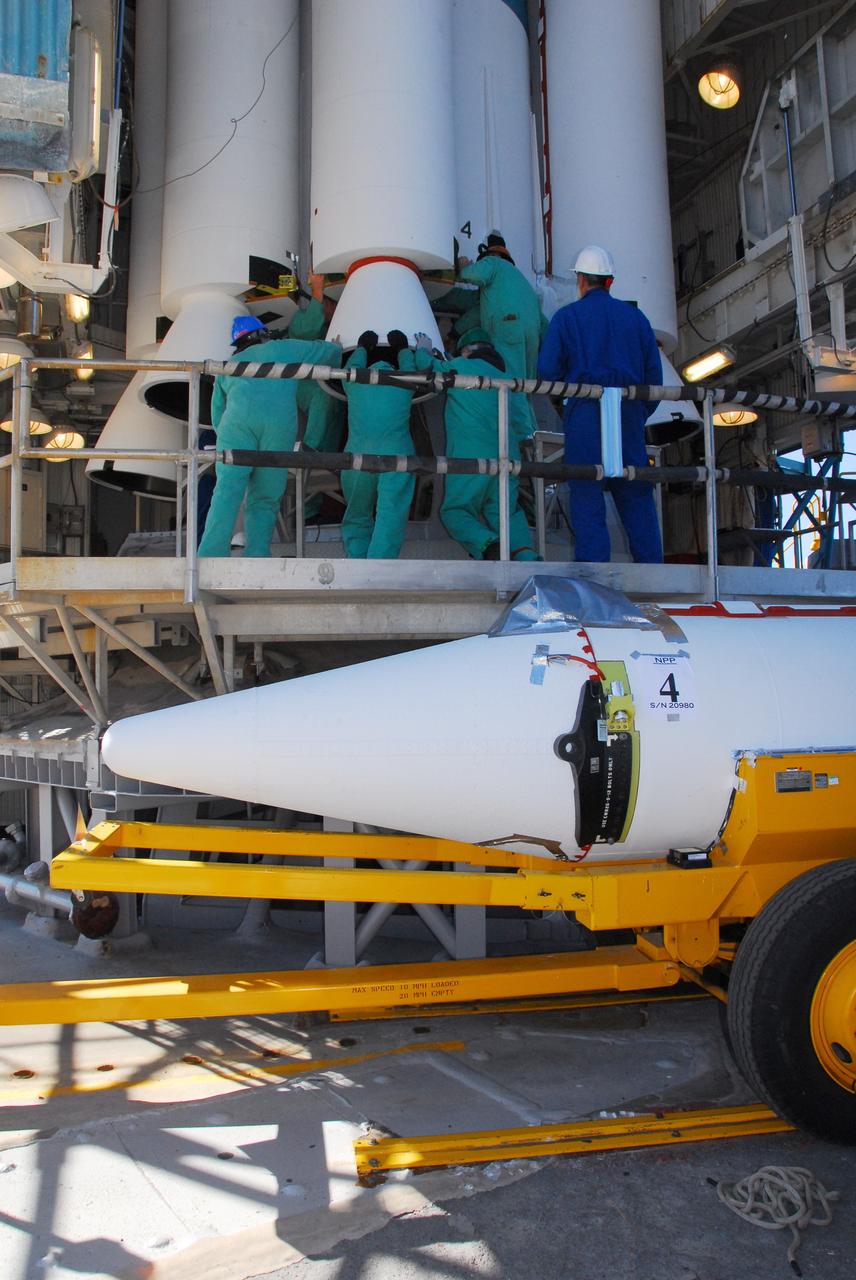
VANDENBERG AIR FORCE BASE, Calif. -- At Space Launch Complex-2 at Vandenberg Air Force Base in California, technicians assist as a solid rocket motor is attached to the United Launch Alliance Delta II rocket. The Delta II will carry NASA’s National Polar-orbiting Operational Environmental Satellite System Preparatory Project (NPP) satellite into space. NPP represents a critical first step in building the next-generation of Earth-observing satellites. NPP will carry the first of the new sensors developed for this satellite fleet, now known as the Joint Polar Satellite System (JPSS) to be launched in 2016. NPP is the bridge between NASA's Earth Observing System (EOS) satellites and the forthcoming series of JPSS satellites. The mission will test key technologies and instruments for the JPSS missions. NPP is targeted to launch Oct. 25. For more information, visit http://www.nasa.gov/NPP. Photo credit: NASA/VAFB, Mark Mackley
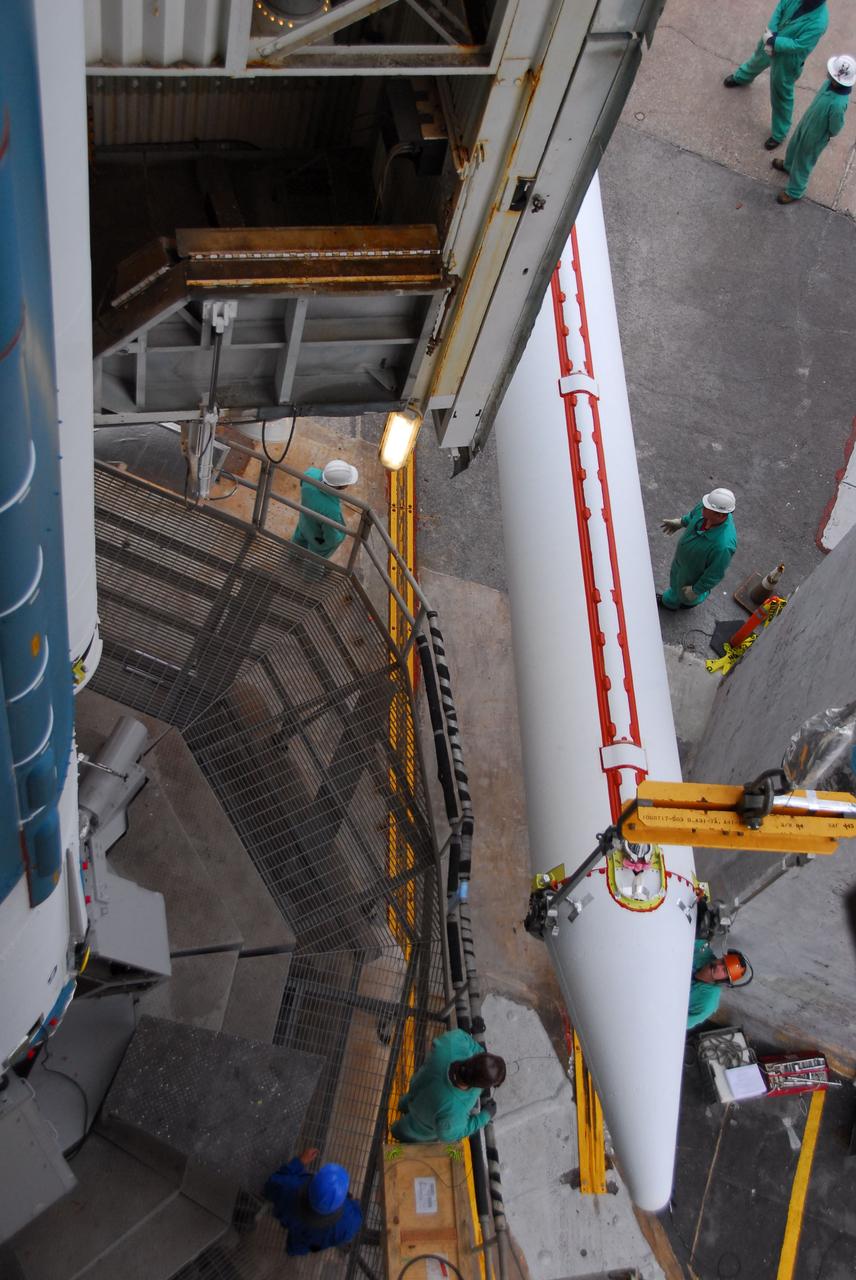
VANDENBERG AIR FORCE BASE, Calif. -- A view from above at NASA’s Space Launch Complex-2 at Vandenberg Air Force Base in California, as a crane lifts a solid rocket motor into position for the United Launch Alliance Delta II that will carry NASA's National Polar-orbiting Operational Environmental Satellite System Preparatory Project (NPP) satellite into space. NPP represents a critical first step in building the next-generation of Earth-observing satellites. NPP will carry the first of the new sensors developed for this satellite fleet, now known as the Joint Polar Satellite System (JPSS) to be launched in 2016. NPP is the bridge between NASA's Earth Observing System (EOS) satellites and the forthcoming series of JPSS satellites. The mission will test key technologies and instruments for the JPSS missions. NPP is targeted to launch Oct. 25. For more information, visit http://www.nasa.gov/NPP. Photo credit: NASA/VAFB, Dan Liberotti
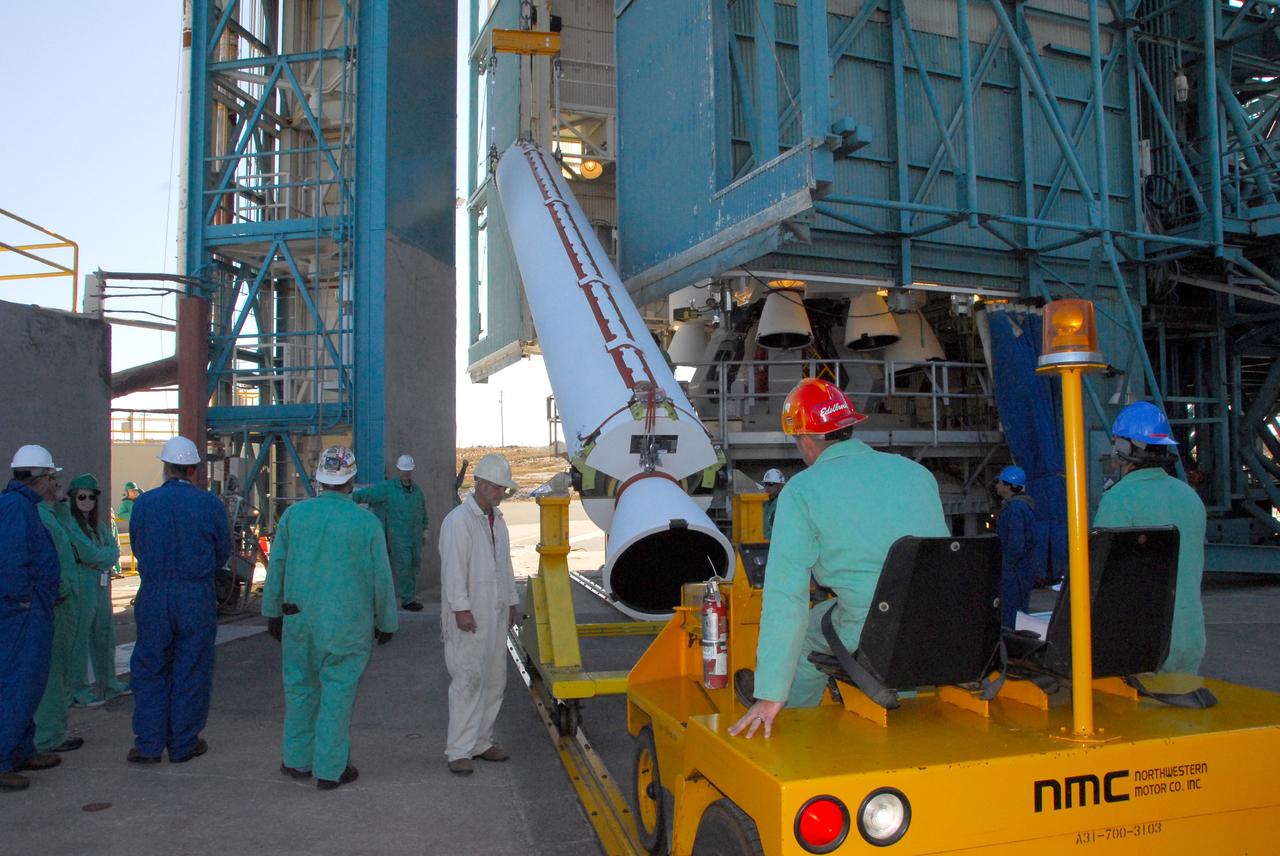
VANDENBERG AIR FORCE BASE, Calif. -- At NASA’s Space Launch Complex-2 at Vandenberg Air Force Base in California, technicians monitor the progress as a crane begins to lift up a solid rocket motor for the United Launch Alliance Delta II rocket. The Delta II will carry NASA’s National Polar-orbiting Operational Environmental Satellite System Preparatory Project (NPP) satellite into space. NPP represents a critical first step in building the next-generation of Earth-observing satellites. NPP will carry the first of the new sensors developed for this satellite fleet, now known as the Joint Polar Satellite System (JPSS) to be launched in 2016. NPP is the bridge between NASA's Earth Observing System (EOS) satellites and the forthcoming series of JPSS satellites. The mission will test key technologies and instruments for the JPSS missions. NPP is targeted to launch Oct. 25. For more information, visit http://www.nasa.gov/NPP. Photo credit: NASA/VAFB, Mark Mackley
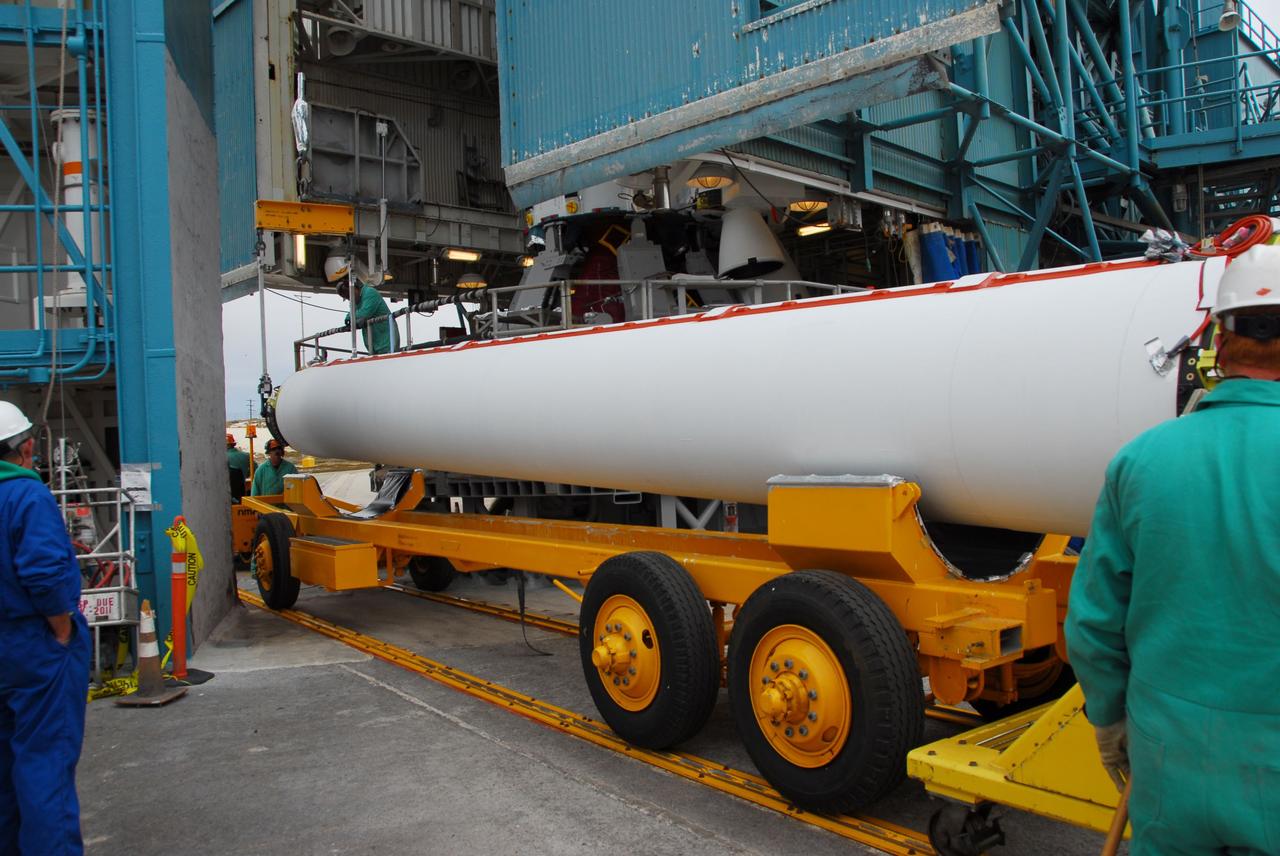
VANDENBERG AIR FORCE BASE, Calif. -- At Vandenberg Air Force Base in California, a solid rocket motor for the United Launch Alliance Delta II that will carry NASA's National Polar-orbiting Operational Environmental Satellite System Preparatory Project (NPP) satellite arrives at NASA's Space Launch Complex-2. NPP represents a critical first step in building the next-generation of Earth-observing satellites. NPP will carry the first of the new sensors developed for this satellite fleet, now known as the Joint Polar Satellite System (JPSS) to be launched in 2016. NPP is the bridge between NASA's Earth Observing System (EOS) satellites and the forthcoming series of JPSS satellites. The mission will test key technologies and instruments for the JPSS missions. NPP is targeted to launch Oct. 25. For more information, visit http://www.nasa.gov/NPP. Photo credit: NASA/VAFB, Dan Liberotti
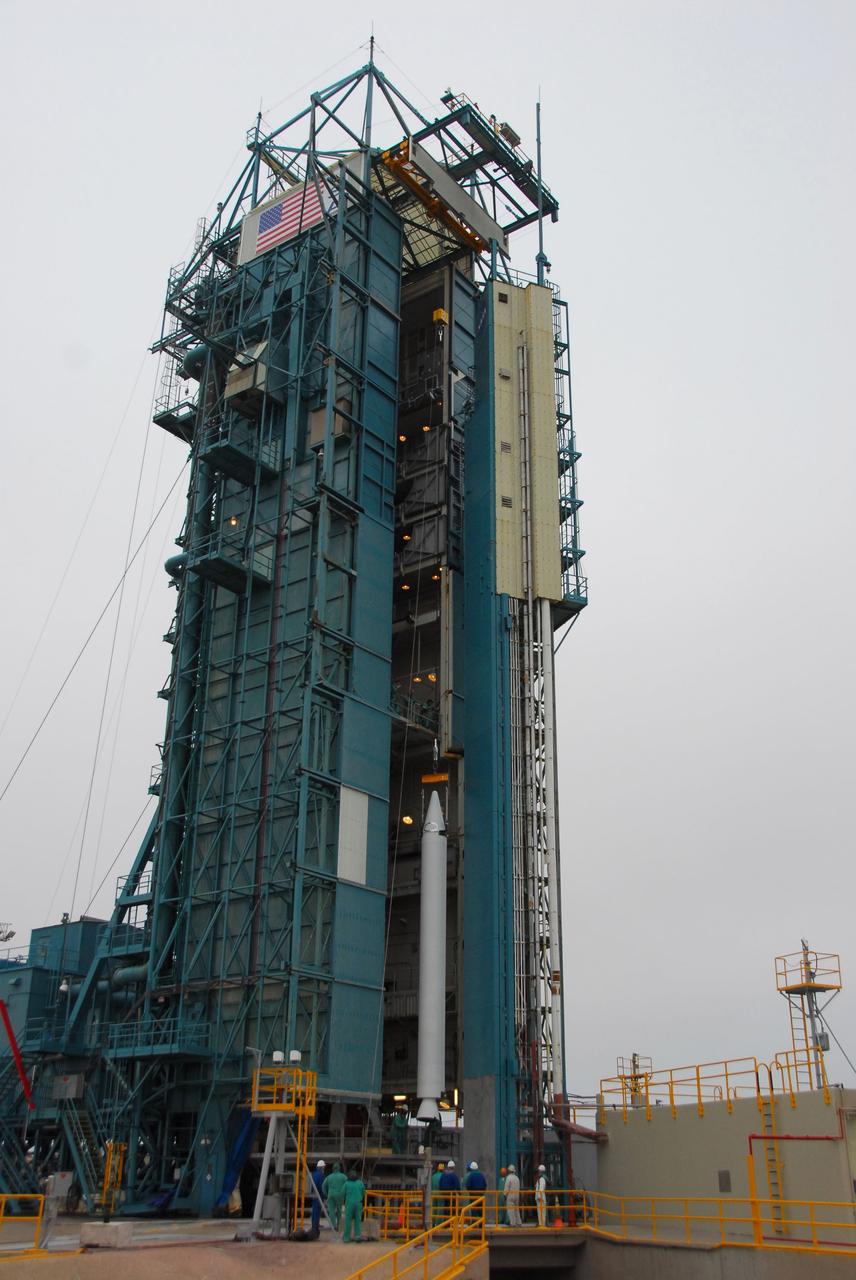
VANDENBERG AIR FORCE BASE, Calif. -- At Vandenberg Air Force Base in California, a solid rocket motor for the United Launch Alliance Delta II that will carry NASA's National Polar-orbiting Operational Environmental Satellite System Preparatory Project (NPP) satellite is hoisted up at NASA's Space Launch Complex-2. NPP represents a critical first step in building the next-generation of Earth-observing satellites. NPP will carry the first of the new sensors developed for this satellite fleet, now known as the Joint Polar Satellite System (JPSS) to be launched in 2016. NPP is the bridge between NASA's Earth Observing System (EOS) satellites and the forthcoming series of JPSS satellites. The mission will test key technologies and instruments for the JPSS missions. NPP is targeted to launch Oct. 25. For more information, visit http://www.nasa.gov/NPP. Photo credit: NASA/VAFB, Dan Liberotti
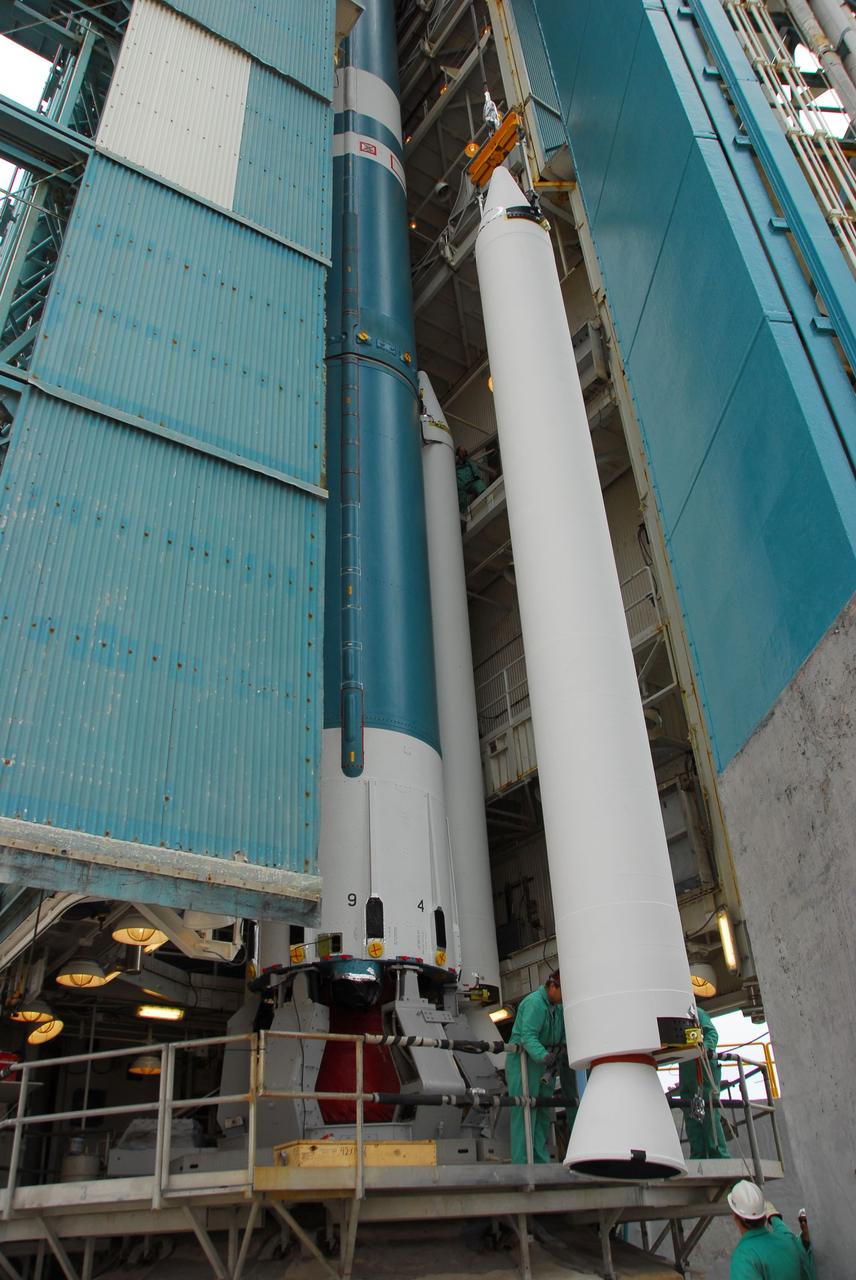
VANDENBERG AIR FORCE BASE, Calif. -- At Vandenberg Air Force Base in California, a crane is used to lift and position a solid rocket motor for attachment to the United Launch Alliance Delta II that will carry NASA's National Polar-orbiting Operational Environmental Satellite System Preparatory Project (NPP) satellite at NASA's Space Launch Complex-2. NPP represents a critical first step in building the next-generation of Earth-observing satellites. NPP will carry the first of the new sensors developed for this satellite fleet, now known as the Joint Polar Satellite System (JPSS) to be launched in 2016. NPP is the bridge between NASA's Earth Observing System (EOS) satellites and the forthcoming series of JPSS satellites. The mission will test key technologies and instruments for the JPSS missions. NPP is targeted to launch Oct. 25. For more information, visit http://www.nasa.gov/NPP. Photo credit: NASA/VAFB, Dan Liberotti
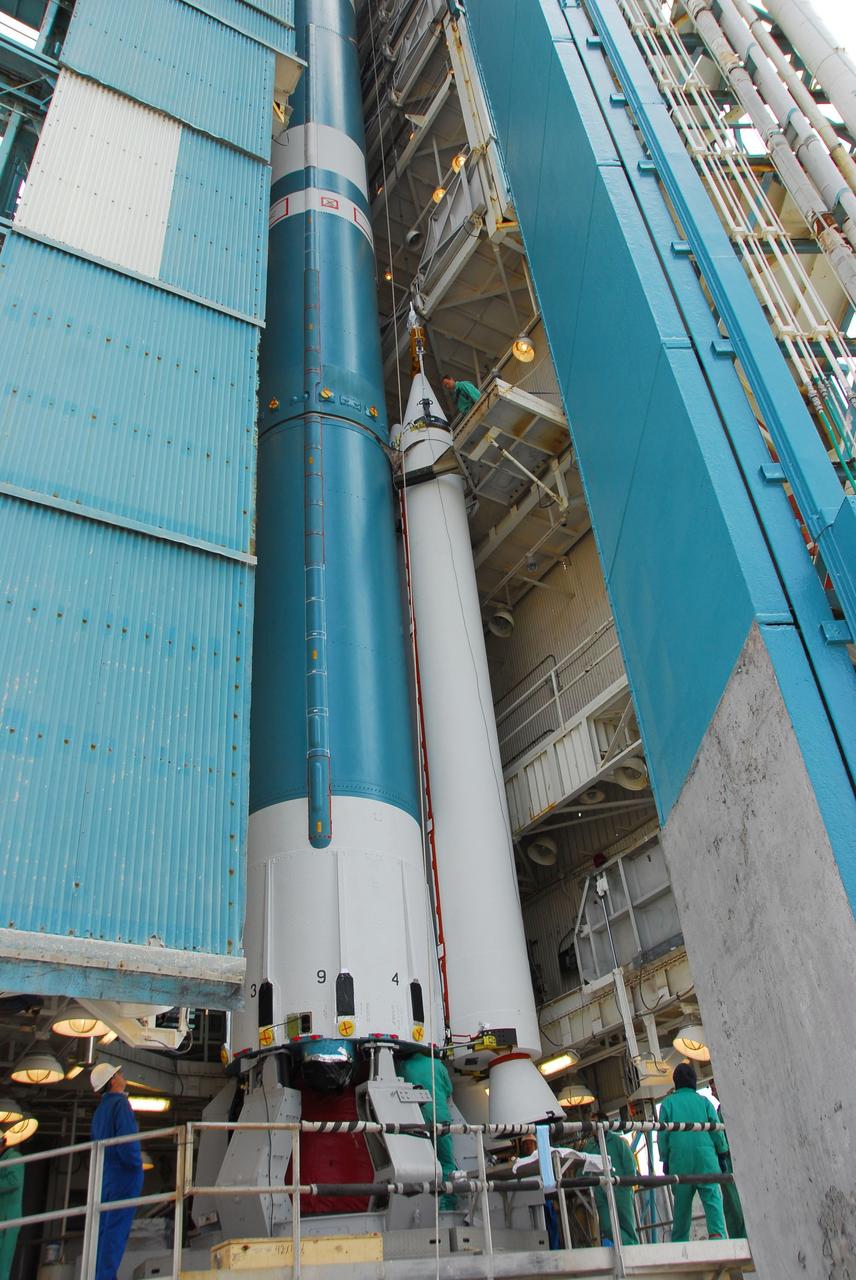
VANDENBERG AIR FORCE BASE, Calif. -- At Vandenberg Air Force Base in California, technicians monitor the progress as a crane lifts and positions a solid rocket motor for attachment to the United Launch Alliance Delta II that will carry NASA's National Polar-orbiting Operational Environmental Satellite System Preparatory Project (NPP) satellite at NASA's Space Launch Complex-2. NPP represents a critical first step in building the next-generation of Earth-observing satellites. NPP will carry the first of the new sensors developed for this satellite fleet, now known as the Joint Polar Satellite System (JPSS) to be launched in 2016. NPP is the bridge between NASA's Earth Observing System (EOS) satellites and the forthcoming series of JPSS satellites. The mission will test key technologies and instruments for the JPSS missions. NPP is targeted to launch Oct. 25. For more information, visit http://www.nasa.gov/NPP. Photo credit: NASA/VAFB, Dan Liberotti
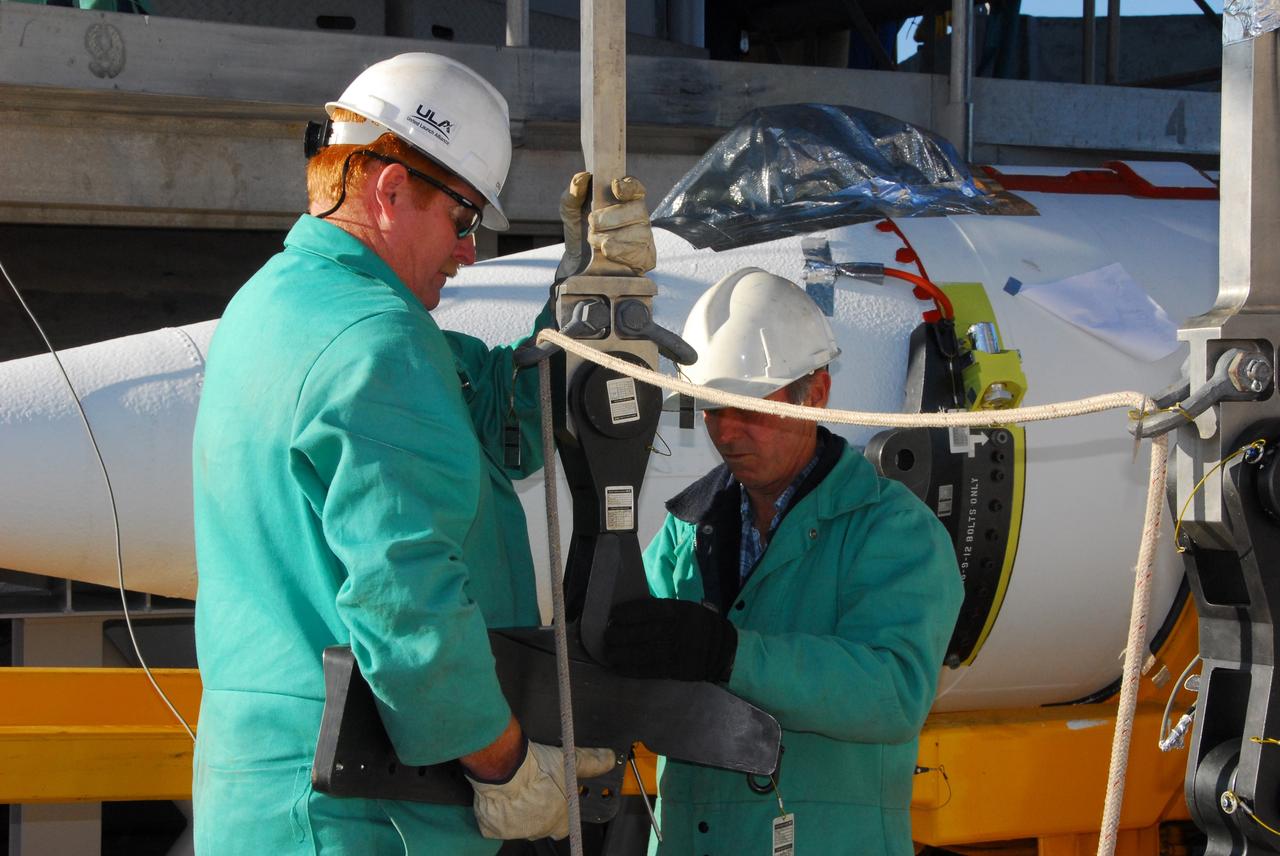
VANDENBERG AIR FORCE BASE, Calif. -- At NASA’s Space Launch Complex-2 at Vandenberg Air Force Base in California, technicians prepare a crane that will be used to lift the recently-arrived solid rocket motor for the United Launch Alliance Delta II rocket. The Delta II will carry NASA’s National Polar-orbiting Operational Environmental Satellite System Preparatory Project (NPP) satellite into space. NPP represents a critical first step in building the next-generation of Earth-observing satellites. NPP will carry the first of the new sensors developed for this satellite fleet, now known as the Joint Polar Satellite System (JPSS) to be launched in 2016. NPP is the bridge between NASA's Earth Observing System (EOS) satellites and the forthcoming series of JPSS satellites. The mission will test key technologies and instruments for the JPSS missions. NPP is targeted to launch Oct. 25. For more information, visit http://www.nasa.gov/NPP. Photo credit: NASA/VAFB, Mark Mackley
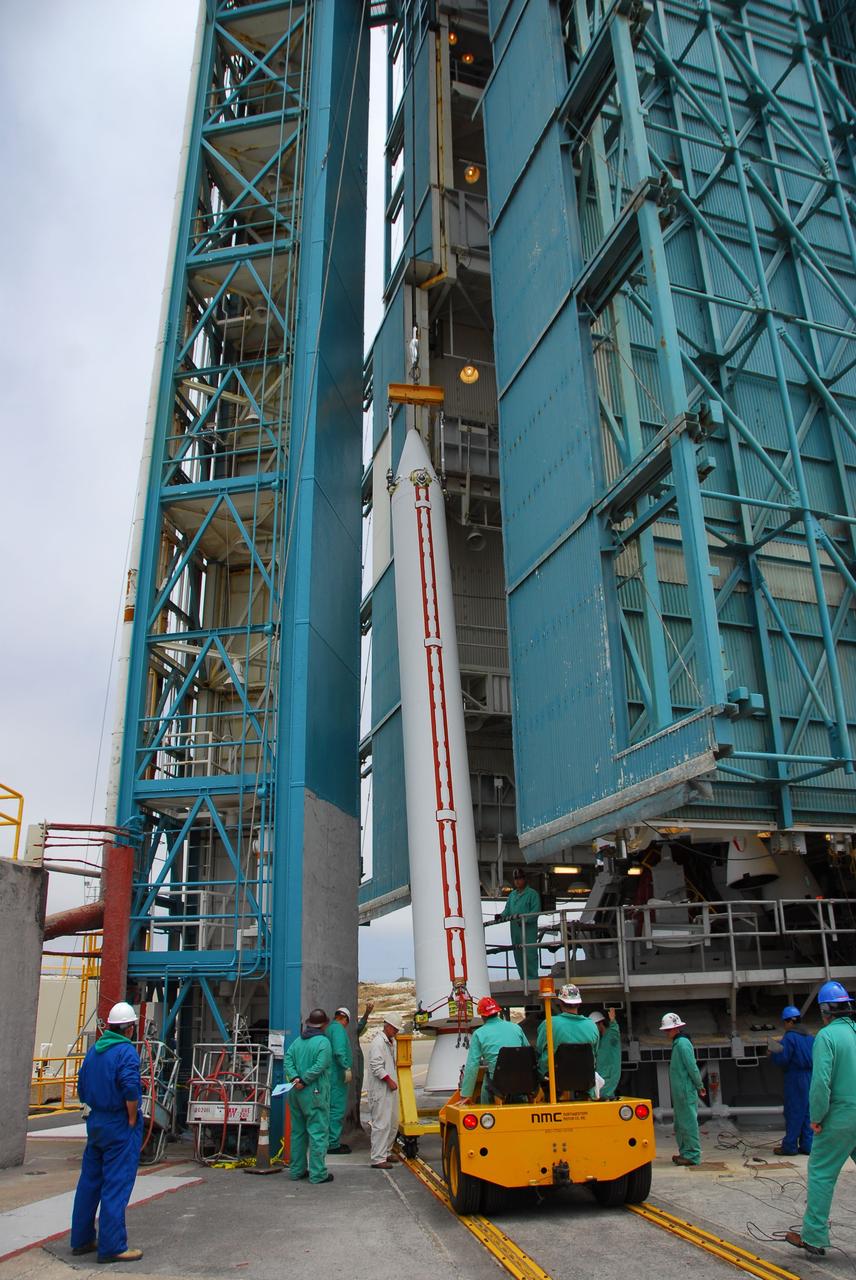
VANDENBERG AIR FORCE BASE, Calif. -- At Vandenberg Air Force Base in California, technicians use a crane to lift a solid rocket motor for the United Launch Alliance Delta II that will carry NASA's National Polar-orbiting Operational Environmental Satellite System Preparatory Project (NPP) satellite at NASA's Space Launch Complex-2. NPP represents a critical first step in building the next-generation of Earth-observing satellites. NPP will carry the first of the new sensors developed for this satellite fleet, now known as the Joint Polar Satellite System (JPSS) to be launched in 2016. NPP is the bridge between NASA's Earth Observing System (EOS) satellites and the forthcoming series of JPSS satellites. The mission will test key technologies and instruments for the JPSS missions. NPP is targeted to launch Oct. 25. For more information, visit http://www.nasa.gov/NPP. Photo credit: NASA/VAFB, Dan Liberotti

VANDENBERG AIR FORCE BASE, Calif. -- At NASA’s Space Launch Complex-2 at Vandenberg Air Force Base in California, technicians monitor the progress as solid rocket motors are lifted and attached to the United Launch Alliance Delta II rocket. The Delta II will carry NASA’s National Polar-orbiting Operational Environmental Satellite System Preparatory Project (NPP) satellite into space. NPP represents a critical first step in building the next-generation of Earth-observing satellites. NPP will carry the first of the new sensors developed for this satellite fleet, now known as the Joint Polar Satellite System (JPSS) to be launched in 2016. NPP is the bridge between NASA's Earth Observing System (EOS) satellites and the forthcoming series of JPSS satellites. The mission will test key technologies and instruments for the JPSS missions. NPP is targeted to launch Oct. 25. For more information, visit http://www.nasa.gov/NPP. Photo credit: NASA/VAFB, Mark Mackley
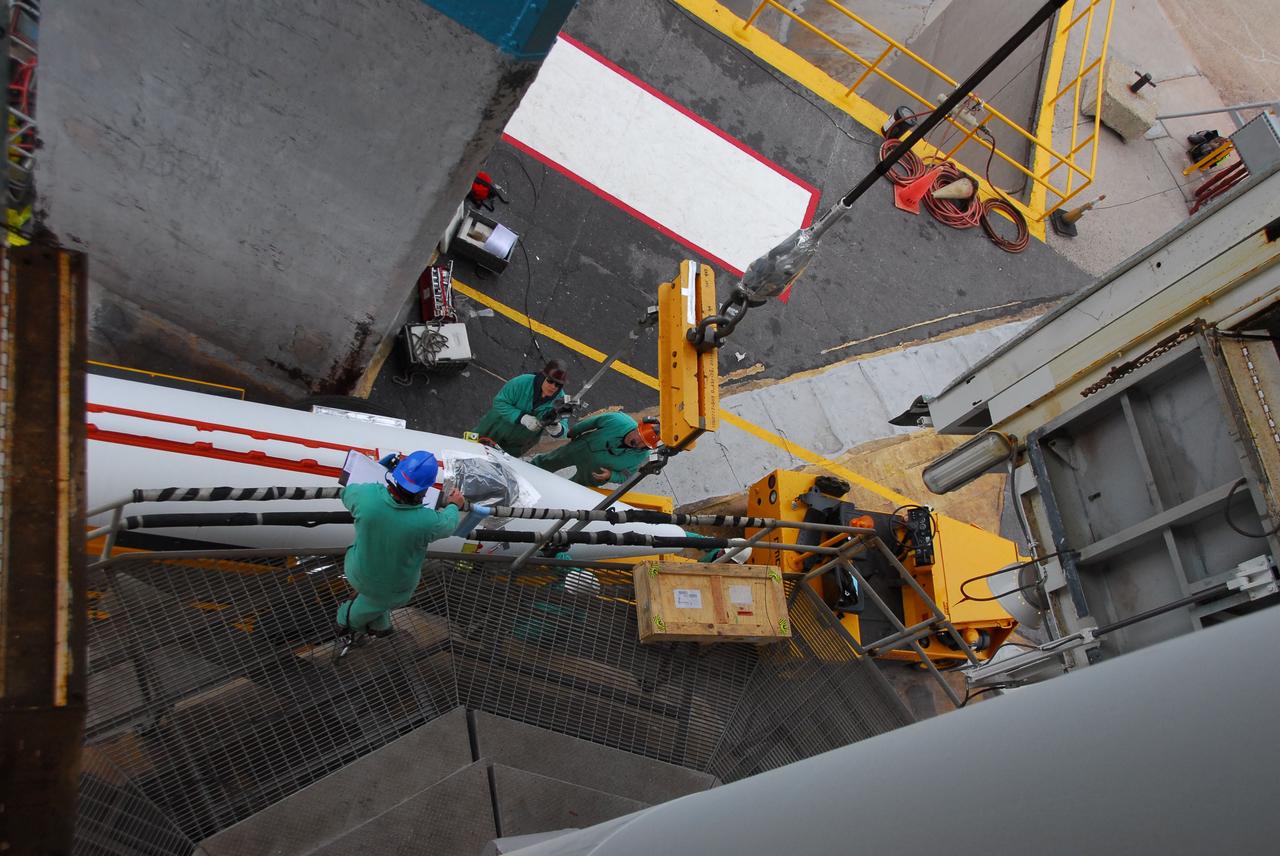
VANDENBERG AIR FORCE BASE, Calif. -- A view from above at NASA’s Space Launch Complex-2 at Vandenberg Air Force Base in California, as a solid rocket motor for the United Launch Alliance Delta II that will carry NASA's National Polar-orbiting Operational Environmental Satellite System Preparatory Project (NPP) satellite into space arrives. NPP represents a critical first step in building the next-generation of Earth-observing satellites. NPP will carry the first of the new sensors developed for this satellite fleet, now known as the Joint Polar Satellite System (JPSS) to be launched in 2016. NPP is the bridge between NASA's Earth Observing System (EOS) satellites and the forthcoming series of JPSS satellites. The mission will test key technologies and instruments for the JPSS missions. NPP is targeted to launch Oct. 25. For more information, visit http://www.nasa.gov/NPP. Photo credit: NASA/VAFB, Dan Liberotti
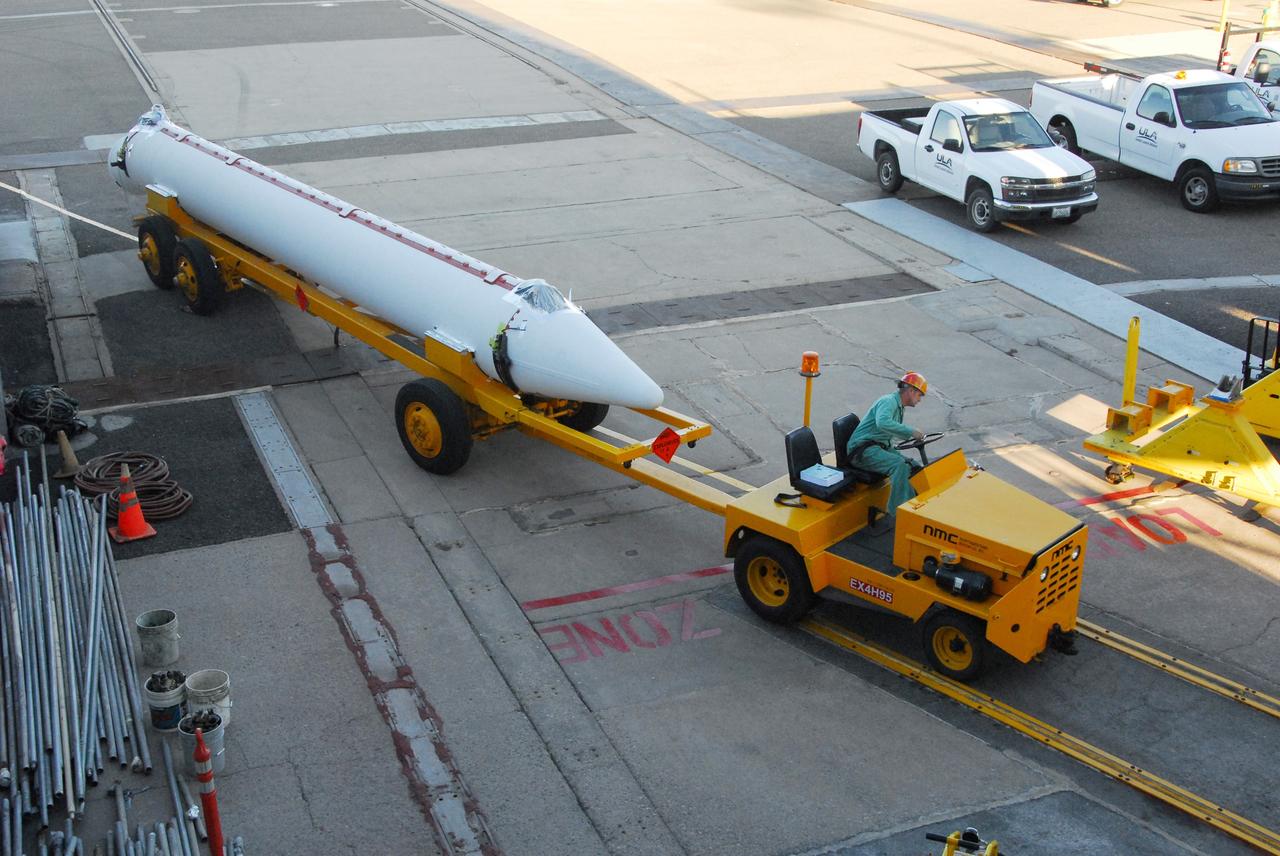
VANDENBERG AIR FORCE BASE, Calif. -- At Vandenberg Air Force Base in California, a solid rocket motor for the United Launch Alliance Delta II that will carry NASA’s National Polar-orbiting Operational Environmental Satellite System Preparatory Project (NPP) satellite into space arrives at NASA’s Space Launch Complex-2. NPP represents a critical first step in building the next-generation of Earth-observing satellites. NPP will carry the first of the new sensors developed for this satellite fleet, now known as the Joint Polar Satellite System (JPSS) to be launched in 2016. NPP is the bridge between NASA's Earth Observing System (EOS) satellites and the forthcoming series of JPSS satellites. The mission will test key technologies and instruments for the JPSS missions. NPP is targeted to launch Oct. 25. For more information, visit http://www.nasa.gov/NPP. Photo credit: NASA/VAFB, Mark Mackley
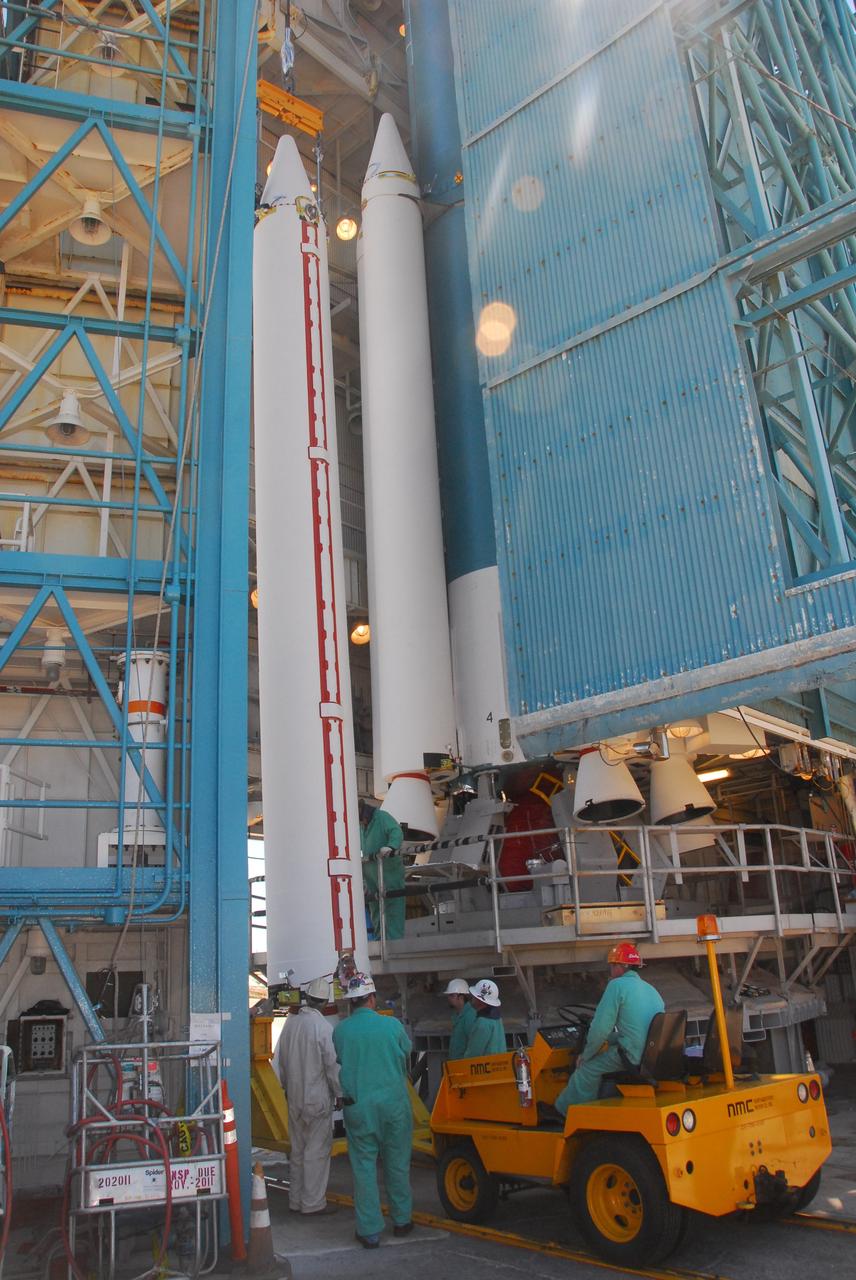
VANDENBERG AIR FORCE BASE, Calif. -- At Space Launch Complex-2 at Vandenberg Air Force Base in California, a crane lifts a solid rocket motor for attachment to the United Launch Alliance Delta II rocket. The Delta II will carry NASA’s National Polar-orbiting Operational Environmental Satellite System Preparatory Project (NPP) satellite into space. NPP represents a critical first step in building the next-generation of Earth-observing satellites. NPP will carry the first of the new sensors developed for this satellite fleet, now known as the Joint Polar Satellite System (JPSS) to be launched in 2016. NPP is the bridge between NASA's Earth Observing System (EOS) satellites and the forthcoming series of JPSS satellites. The mission will test key technologies and instruments for the JPSS missions. NPP is targeted to launch Oct. 25. For more information, visit http://www.nasa.gov/NPP. Photo credit: NASA/VAFB, Mark Mackley
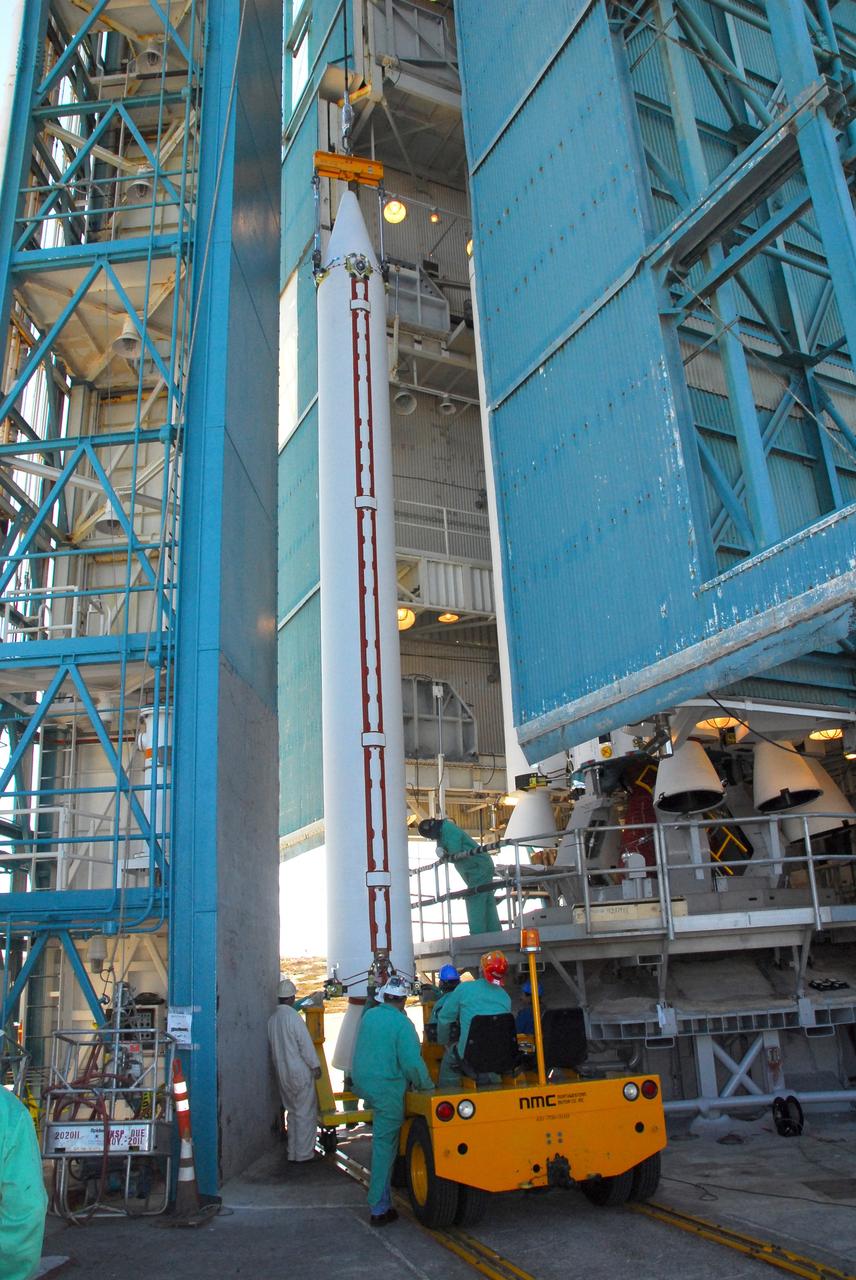
VANDENBERG AIR FORCE BASE, Calif. -- At NASA’s Space Launch Complex-2 at Vandenberg Air Force Base in California, technicians monitor the progress as a crane lifts a solid rocket motor for the United Launch Alliance Delta II rocket. The Delta II will carry NASA’s National Polar-orbiting Operational Environmental Satellite System Preparatory Project (NPP) satellite into space. NPP represents a critical first step in building the next-generation of Earth-observing satellites. NPP will carry the first of the new sensors developed for this satellite fleet, now known as the Joint Polar Satellite System (JPSS) to be launched in 2016. NPP is the bridge between NASA's Earth Observing System (EOS) satellites and the forthcoming series of JPSS satellites. The mission will test key technologies and instruments for the JPSS missions. NPP is targeted to launch Oct. 25. For more information, visit http://www.nasa.gov/NPP. Photo credit: NASA/VAFB, Mark Mackley
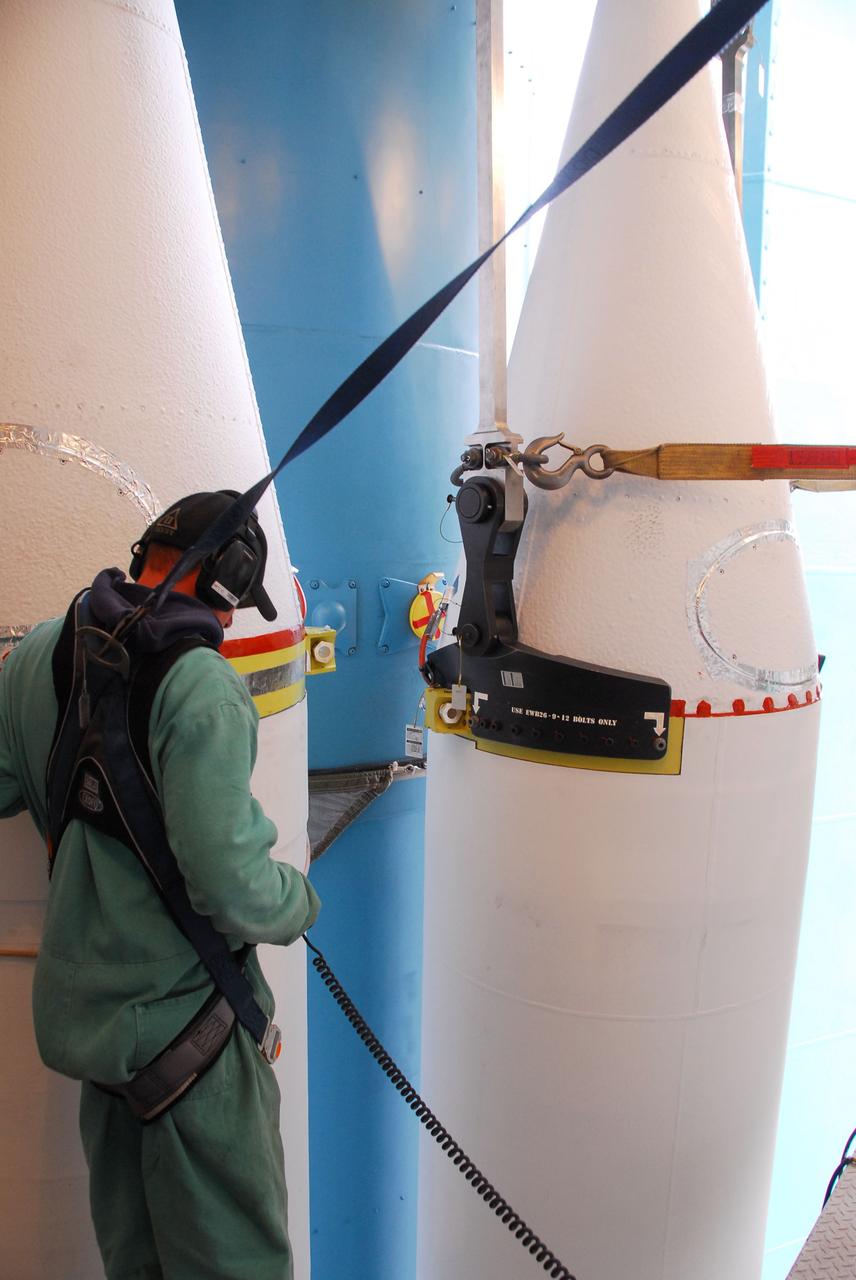
VANDENBERG AIR FORCE BASE, Calif. -- At NASA’s Space Launch Complex-2 at Vandenberg Air Force Base in California, a technician in a safety harness monitors the progress as a solid rocket motor is attached to the United Launch Alliance Delta II rocket. The Delta II will carry NASA's National Polar-orbiting Operational Environmental Satellite System Preparatory Project (NPP) satellite into space. NPP represents a critical first step in building the next-generation of Earth-observing satellites. NPP will carry the first of the new sensors developed for this satellite fleet, now known as the Joint Polar Satellite System (JPSS) to be launched in 2016. NPP is the bridge between NASA's Earth Observing System (EOS) satellites and the forthcoming series of JPSS satellites. The mission will test key technologies and instruments for the JPSS missions. NPP is targeted to launch Oct. 25. For more information, visit http://www.nasa.gov/NPP. Photo credit: NASA/VAFB, Dan Liberotti
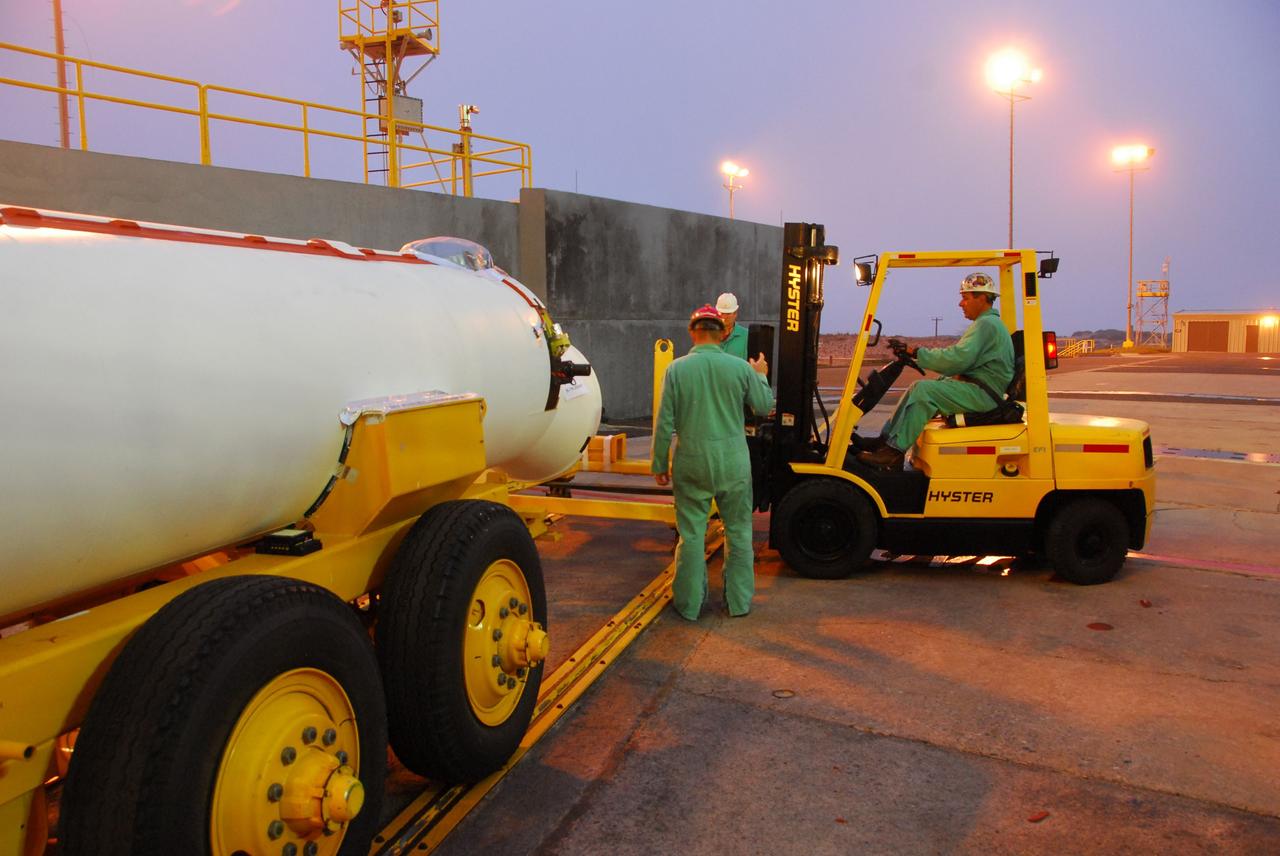
VANDENBERG AIR FORCE BASE, Calif. -- At Vandenberg Air Force Base in California, a solid rocket motor for the United Launch Alliance Delta II that will carry NASA's National Polar-orbiting Operational Environmental Satellite System Preparatory Project (NPP) satellite into space arrives at NASA's Space Launch Complex-2. NPP represents a critical first step in building the next-generation of Earth-observing satellites. NPP will carry the first of the new sensors developed for this satellite fleet, now known as the Joint Polar Satellite System (JPSS) to be launched in 2016. NPP is the bridge between NASA's Earth Observing System (EOS) satellites and the forthcoming series of JPSS satellites. The mission will test key technologies and instruments for the JPSS missions. NPP is targeted to launch Oct. 25. For more information, visit http://www.nasa.gov/NPP. Photo credit: NASA/VAFB, Dan Liberotti
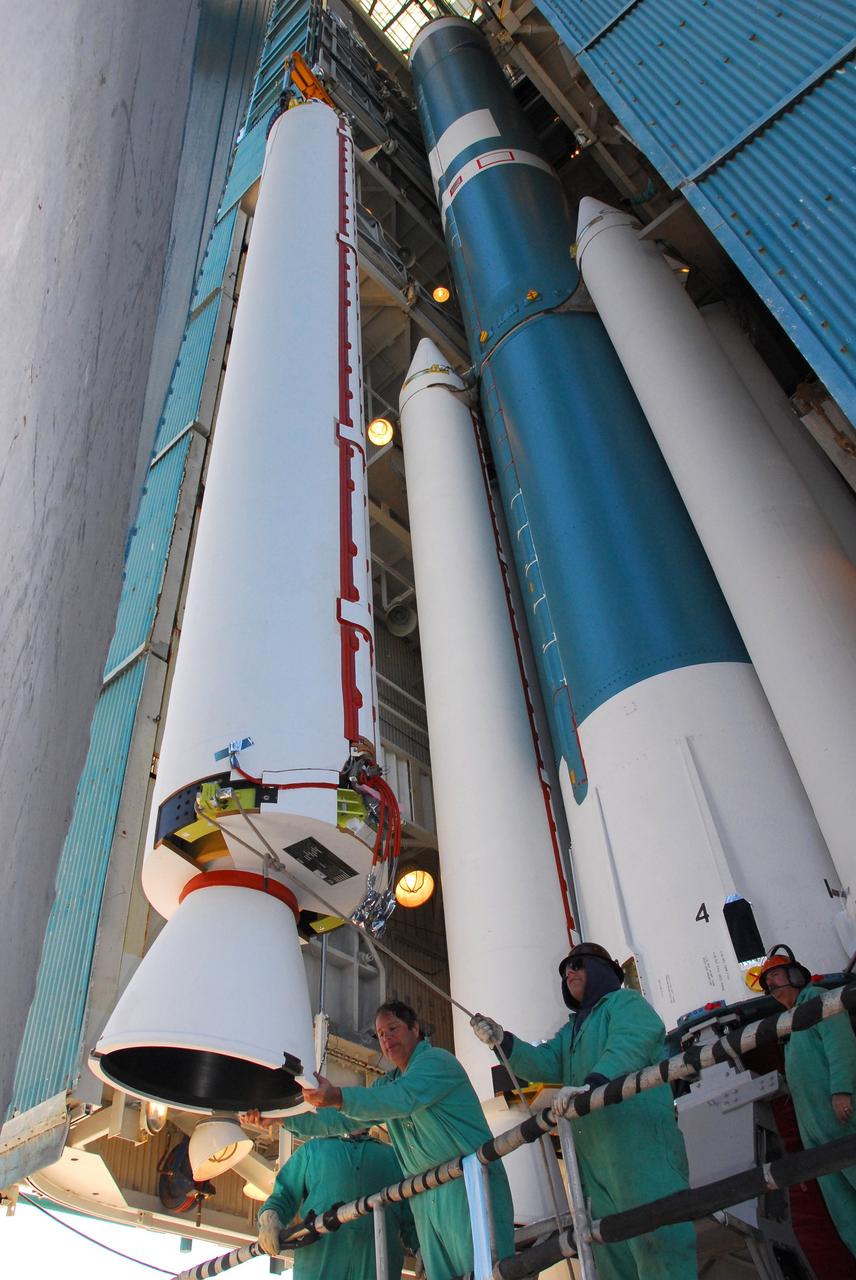
VANDENBERG AIR FORCE BASE, Calif. -- At NASA’s Space Launch Complex-2 at Vandenberg Air Force Base in California, technicians assist as a crane lifts a solid rocket motor closer to the United Launch Alliance Delta II rocket. The Delta II will carry NASA’s National Polar-orbiting Operational Environmental Satellite System Preparatory Project (NPP) satellite into space. NPP represents a critical first step in building the next-generation of Earth-observing satellites. NPP will carry the first of the new sensors developed for this satellite fleet, now known as the Joint Polar Satellite System (JPSS) to be launched in 2016. NPP is the bridge between NASA's Earth Observing System (EOS) satellites and the forthcoming series of JPSS satellites. The mission will test key technologies and instruments for the JPSS missions. NPP is targeted to launch Oct. 25. For more information, visit http://www.nasa.gov/NPP. Photo credit: NASA/VAFB, Mark Mackley
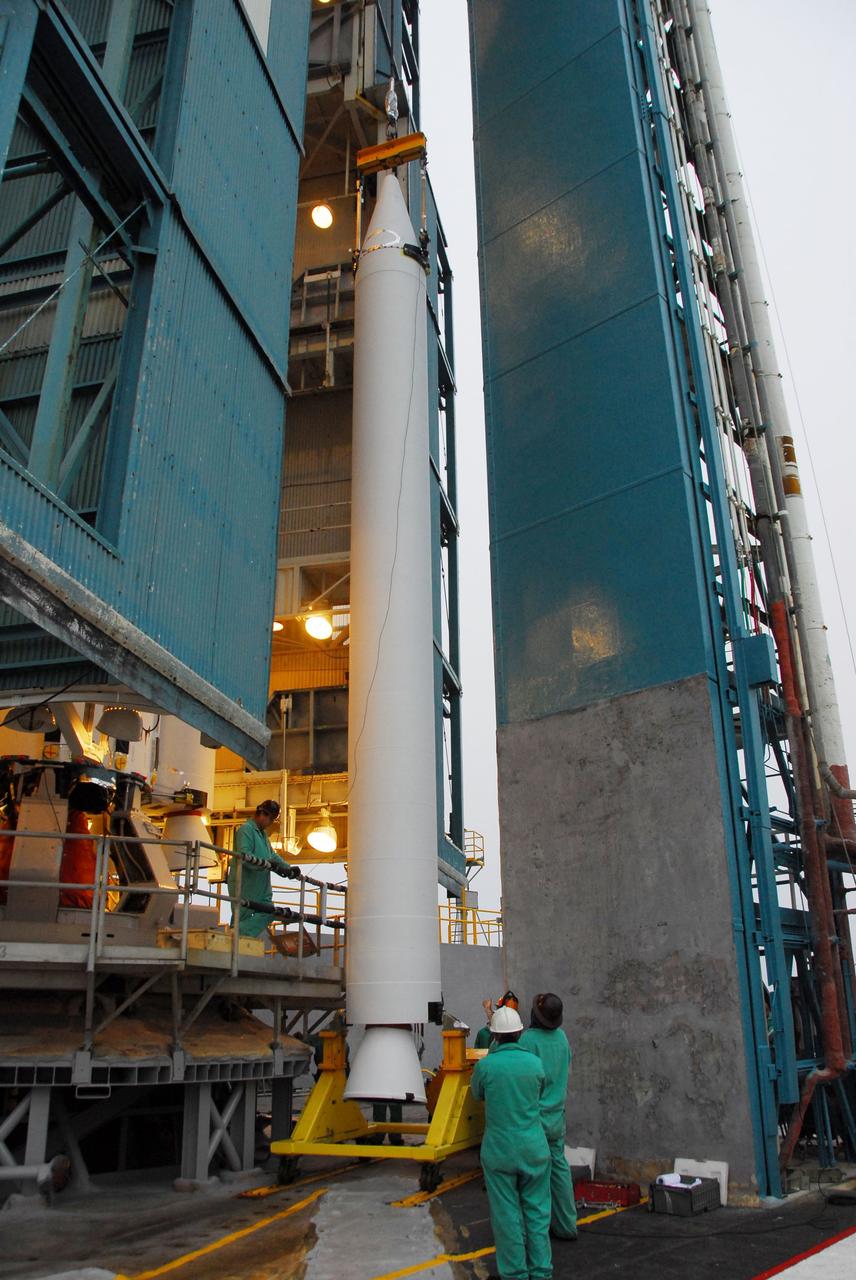
VANDENBERG AIR FORCE BASE, Calif. -- At Vandenberg Air Force Base in California, a crane is used to hoist up a solid rocket motor for the United Launch Alliance Delta II that will carry NASA's National Polar-orbiting Operational Environmental Satellite System Preparatory Project (NPP) satellite into space at NASA's Space Launch Complex-2. NPP represents a critical first step in building the next-generation of Earth-observing satellites. NPP will carry the first of the new sensors developed for this satellite fleet, now known as the Joint Polar Satellite System (JPSS) to be launched in 2016. NPP is the bridge between NASA's Earth Observing System (EOS) satellites and the forthcoming series of JPSS satellites. The mission will test key technologies and instruments for the JPSS missions. NPP is targeted to launch Oct. 25. For more information, visit http://www.nasa.gov/NPP. Photo credit: NASA/VAFB, Dan Liberotti
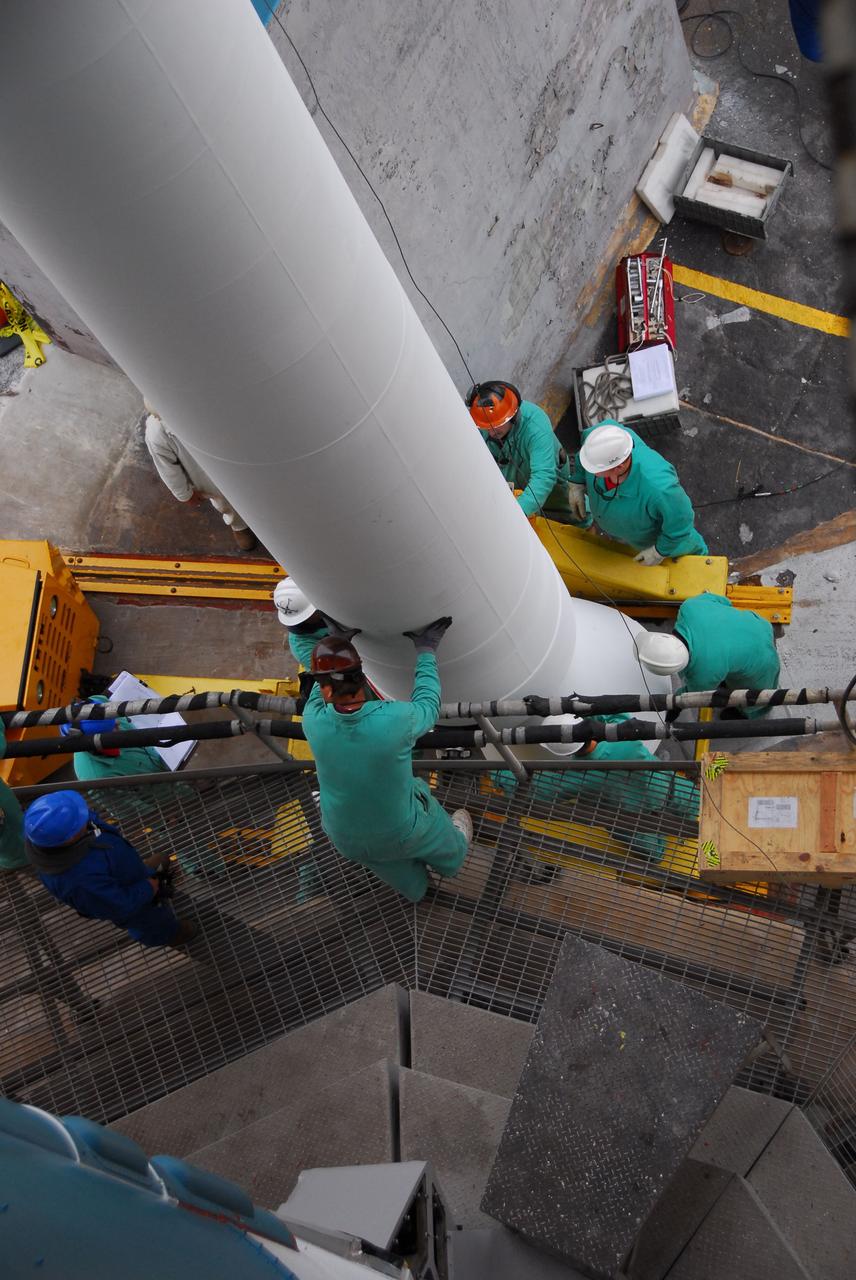
VANDENBERG AIR FORCE BASE, Calif. -- A view from above at NASA’s Space Launch Complex-2 at Vandenberg Air Force Base in California, as technicians help position a solid rocket motor for attachment to the United Launch Alliance Delta II that will carry NASA's National Polar-orbiting Operational Environmental Satellite System Preparatory Project (NPP) satellite into space. NPP represents a critical first step in building the next-generation of Earth-observing satellites. NPP will carry the first of the new sensors developed for this satellite fleet, now known as the Joint Polar Satellite System (JPSS) to be launched in 2016. NPP is the bridge between NASA's Earth Observing System (EOS) satellites and the forthcoming series of JPSS satellites. The mission will test key technologies and instruments for the JPSS missions. NPP is targeted to launch Oct. 25. For more information, visit http://www.nasa.gov/NPP. Photo credit: NASA/VAFB, Dan Liberotti
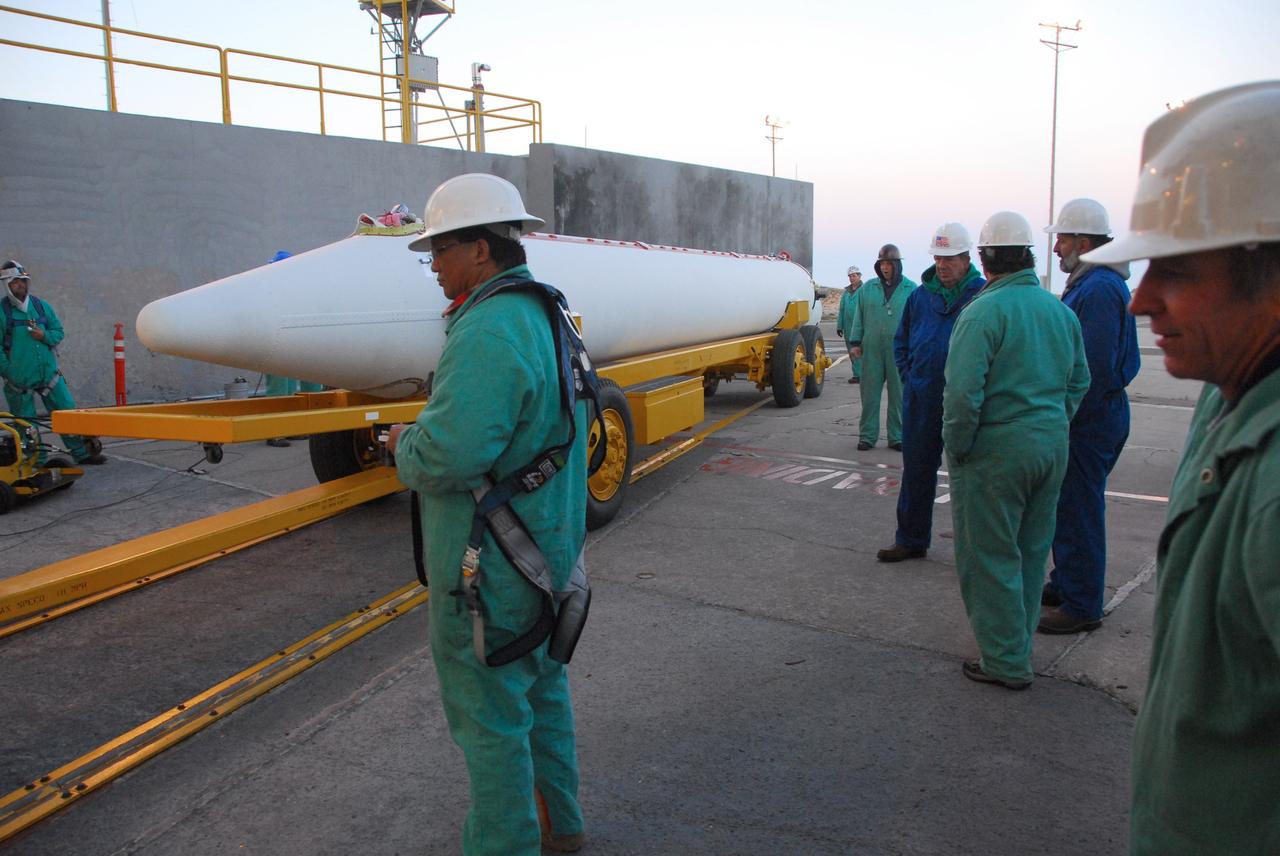
VANDENBERG AIR FORCE BASE, Calif. -- At Vandenberg Air Force Base in California, a solid rocket motor for the United Launch Alliance Delta II that will carry NASA’s National Polar-orbiting Operational Environmental Satellite System Preparatory Project (NPP) satellite into space arrives at NASA’s Space Launch Complex-2. NPP represents a critical first step in building the next-generation of Earth-observing satellites. NPP will carry the first of the new sensors developed for this satellite fleet, now known as the Joint Polar Satellite System (JPSS) to be launched in 2016. NPP is the bridge between NASA's Earth Observing System (EOS) satellites and the forthcoming series of JPSS satellites. The mission will test key technologies and instruments for the JPSS missions. NPP is targeted to launch Oct. 25. For more information, visit http://www.nasa.gov/NPP. Photo credit: NASA/VAFB, Mark Mackley
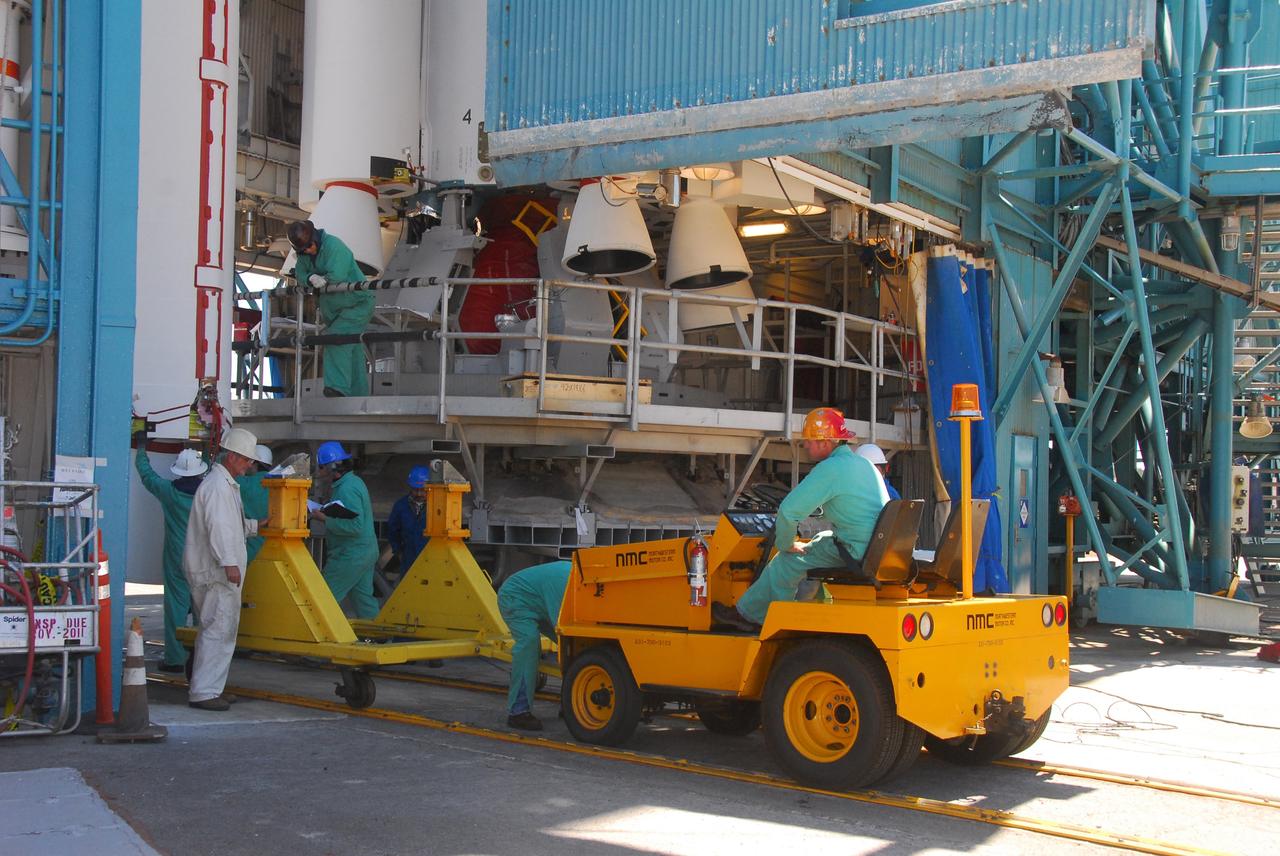
VANDENBERG AIR FORCE BASE, Calif. -- At Space Launch Complex-2 at Vandenberg Air Force Base in California, technicians monitor the progress as a crane lifts a solid rocket motor for the United Launch Alliance Delta II rocket. The Delta II will carry NASA’s National Polar-orbiting Operational Environmental Satellite System Preparatory Project (NPP) satellite into space. NPP represents a critical first step in building the next-generation of Earth-observing satellites. NPP will carry the first of the new sensors developed for this satellite fleet, now known as the Joint Polar Satellite System (JPSS) to be launched in 2016. NPP is the bridge between NASA's Earth Observing System (EOS) satellites and the forthcoming series of JPSS satellites. The mission will test key technologies and instruments for the JPSS missions. NPP is targeted to launch Oct. 25. For more information, visit http://www.nasa.gov/NPP. Photo credit: NASA/VAFB, Mark Mackley
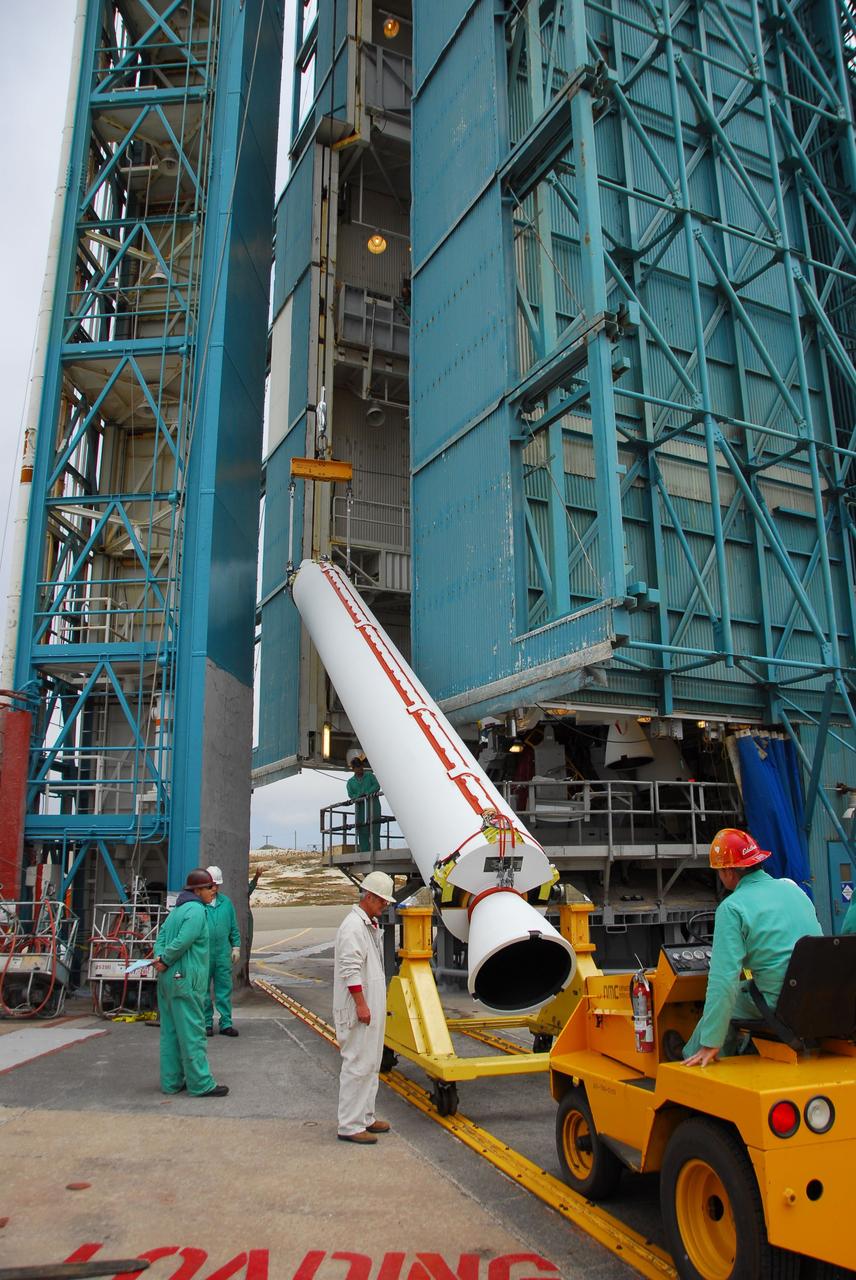
VANDENBERG AIR FORCE BASE, Calif. -- At Vandenberg Air Force Base in California, technicians use a crane to lift a solid rocket motor for the United Launch Alliance Delta II that will carry NASA's National Polar-orbiting Operational Environmental Satellite System Preparatory Project (NPP) satellite at NASA's Space Launch Complex-2. NPP represents a critical first step in building the next-generation of Earth-observing satellites. NPP will carry the first of the new sensors developed for this satellite fleet, now known as the Joint Polar Satellite System (JPSS) to be launched in 2016. NPP is the bridge between NASA's Earth Observing System (EOS) satellites and the forthcoming series of JPSS satellites. The mission will test key technologies and instruments for the JPSS missions. NPP is targeted to launch Oct. 25. For more information, visit http://www.nasa.gov/NPP. Photo credit: NASA/VAFB, Dan Liberotti

VANDENBERG AIR FORCE BASE, Calif. -- At Space Launch Complex-2 at Vandenberg Air Force Base in California, technicians prepare a solid rocket motor for attachment to the United Launch Alliance Delta II rocket. A work platform has been placed around the solid rocket motors. The Delta II will carry NASA’s National Polar-orbiting Operational Environmental Satellite System Preparatory Project (NPP) satellite into space. NPP represents a critical first step in building the next-generation of Earth-observing satellites. NPP will carry the first of the new sensors developed for this satellite fleet, now known as the Joint Polar Satellite System (JPSS) to be launched in 2016. NPP is the bridge between NASA's Earth Observing System (EOS) satellites and the forthcoming series of JPSS satellites. The mission will test key technologies and instruments for the JPSS missions. NPP is targeted to launch Oct. 25. For more information, visit http://www.nasa.gov/NPP. Photo credit: NASA/VAFB, Mark Mackley
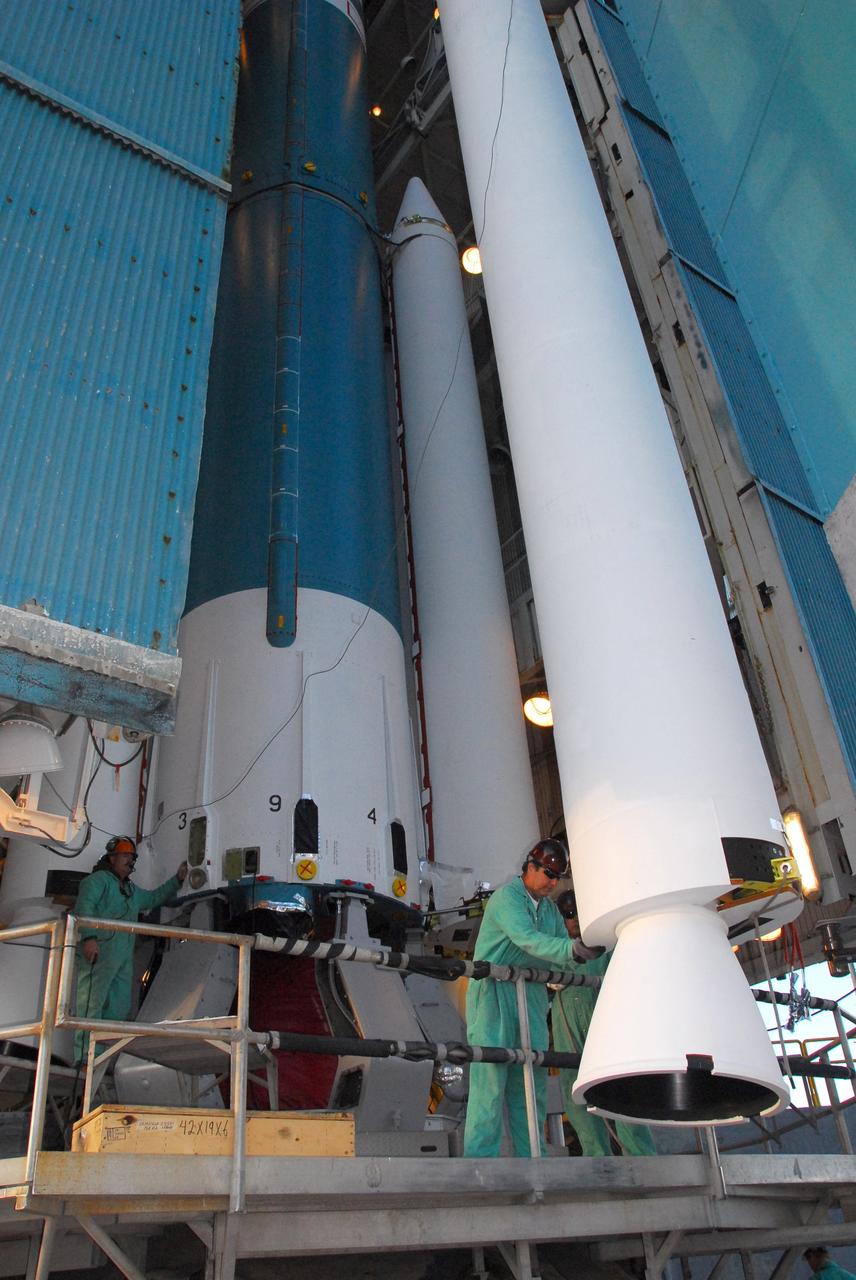
VANDENBERG AIR FORCE BASE, Calif. -- At NASA’s Space Launch Complex-2 at Vandenberg Air Force Base in California, technicians monitor the progress as a solid rocket motor is lifted by crane for attachment to the United Launch Alliance Delta II rocket is lifted by crane. The Delta II will carry NASA’s National Polar-orbiting Operational Environmental Satellite System Preparatory Project (NPP) satellite into space. NPP represents a critical first step in building the next-generation of Earth-observing satellites. NPP will carry the first of the new sensors developed for this satellite fleet, now known as the Joint Polar Satellite System (JPSS) to be launched in 2016. NPP is the bridge between NASA's Earth Observing System (EOS) satellites and the forthcoming series of JPSS satellites. The mission will test key technologies and instruments for the JPSS missions. NPP is targeted to launch Oct. 25. For more information, visit http://www.nasa.gov/NPP. Photo credit: NASA/VAFB, Mark Mackley
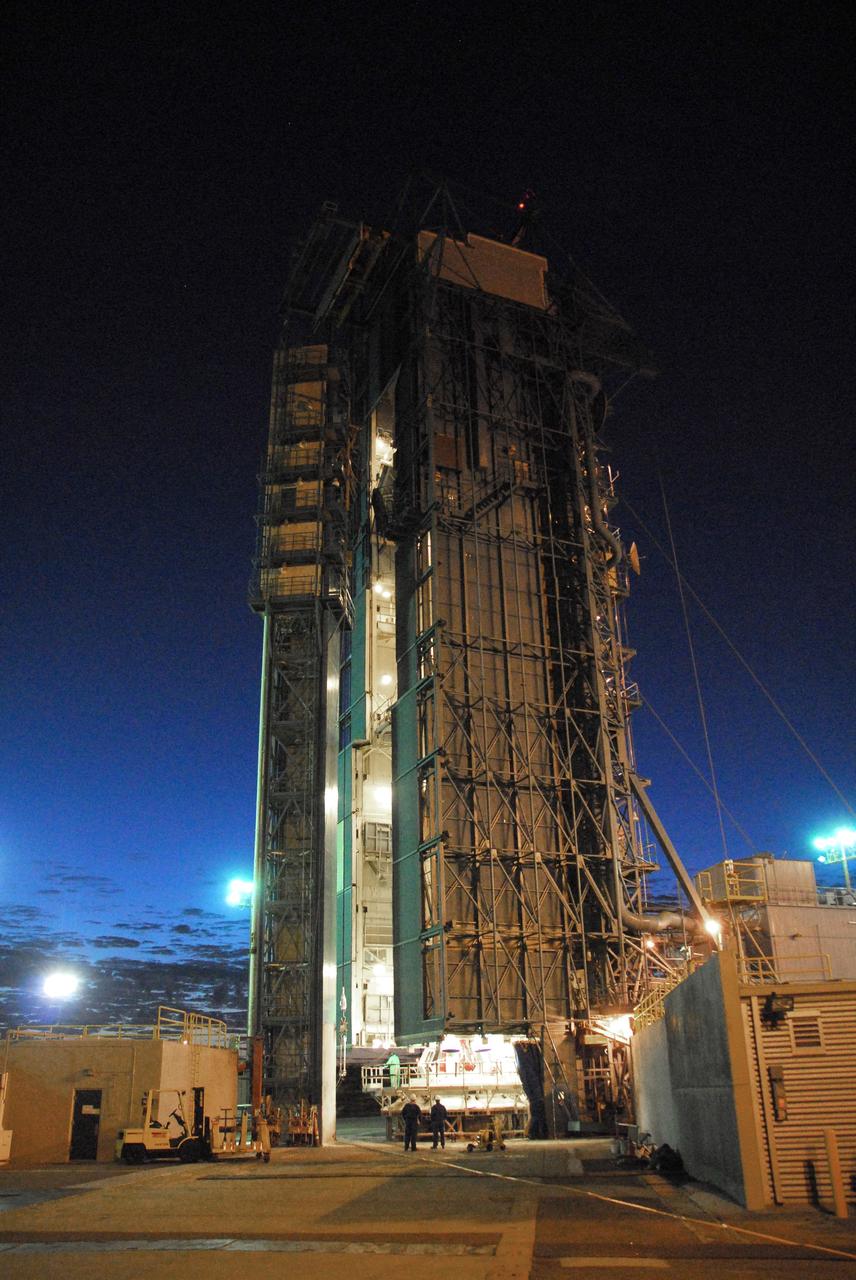
VANDENBERG AIR FORCE BASE, Calif. -- NASA’s Space Launch Complex-2 at Vandenberg Air Force Base in California, is illuminated against a midnight blue sky as solid rocket motors are attached to the United Launch Alliance Delta II rocket that will carry NASA's National Polar-orbiting Operational Environmental Satellite System Preparatory Project (NPP) satellite into space. NPP represents a critical first step in building the next-generation of Earth-observing satellites. NPP will carry the first of the new sensors developed for this satellite fleet, now known as the Joint Polar Satellite System (JPSS) to be launched in 2016. NPP is the bridge between NASA's Earth Observing System (EOS) satellites and the forthcoming series of JPSS satellites. The mission will test key technologies and instruments for the JPSS missions. NPP is targeted to launch Oct. 25. For more information, visit http://www.nasa.gov/NPP. Photo credit: NASA/VAFB, Mark Mackley
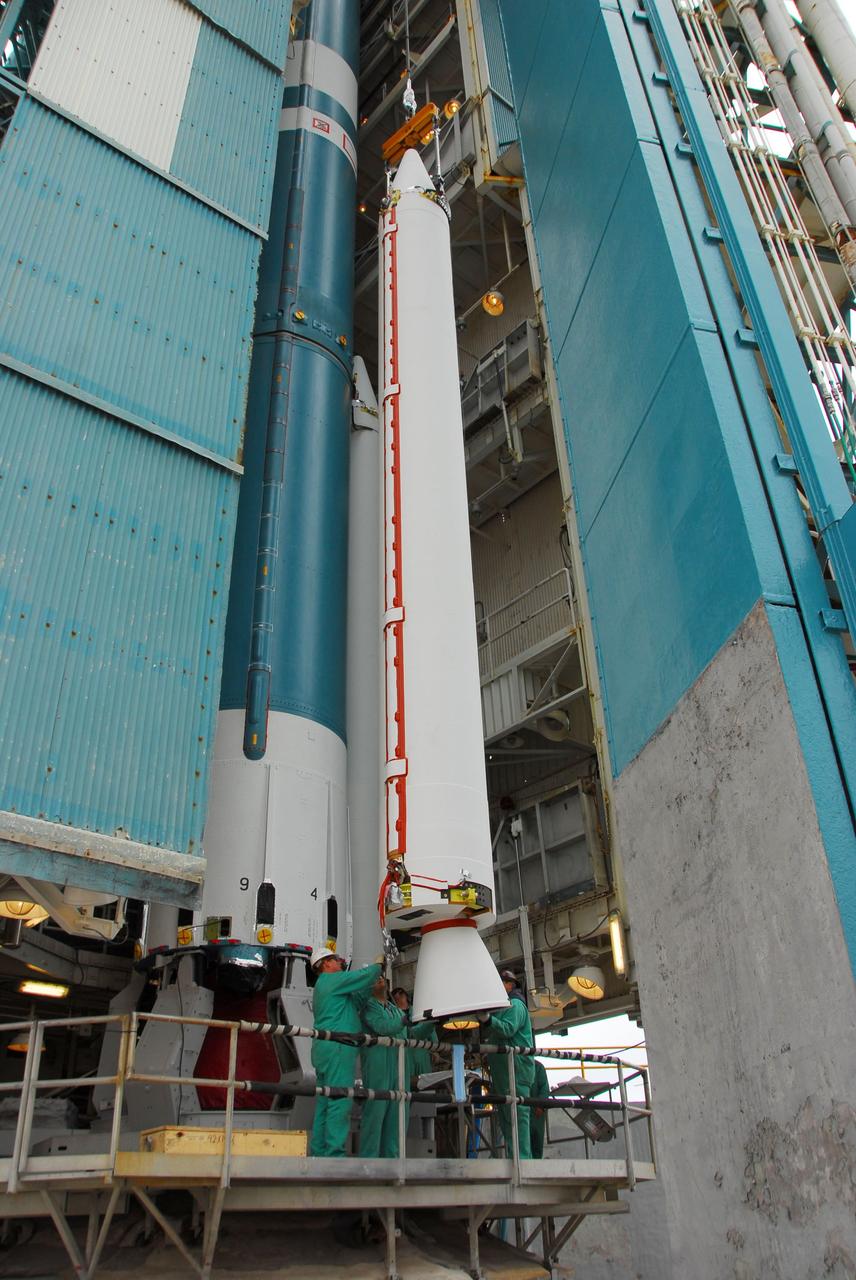
VANDENBERG AIR FORCE BASE, Calif. -- At Vandenberg Air Force Base in California, a crane is used to lift and position a solid rocket motor for attachment to the United Launch Alliance Delta II that will carry NASA's National Polar-orbiting Operational Environmental Satellite System Preparatory Project (NPP) satellite at NASA's Space Launch Complex-2. NPP represents a critical first step in building the next-generation of Earth-observing satellites. NPP will carry the first of the new sensors developed for this satellite fleet, now known as the Joint Polar Satellite System (JPSS) to be launched in 2016. NPP is the bridge between NASA's Earth Observing System (EOS) satellites and the forthcoming series of JPSS satellites. The mission will test key technologies and instruments for the JPSS missions. NPP is targeted to launch Oct. 25. For more information, visit http://www.nasa.gov/NPP. Photo credit: NASA/VAFB, Dan Liberotti
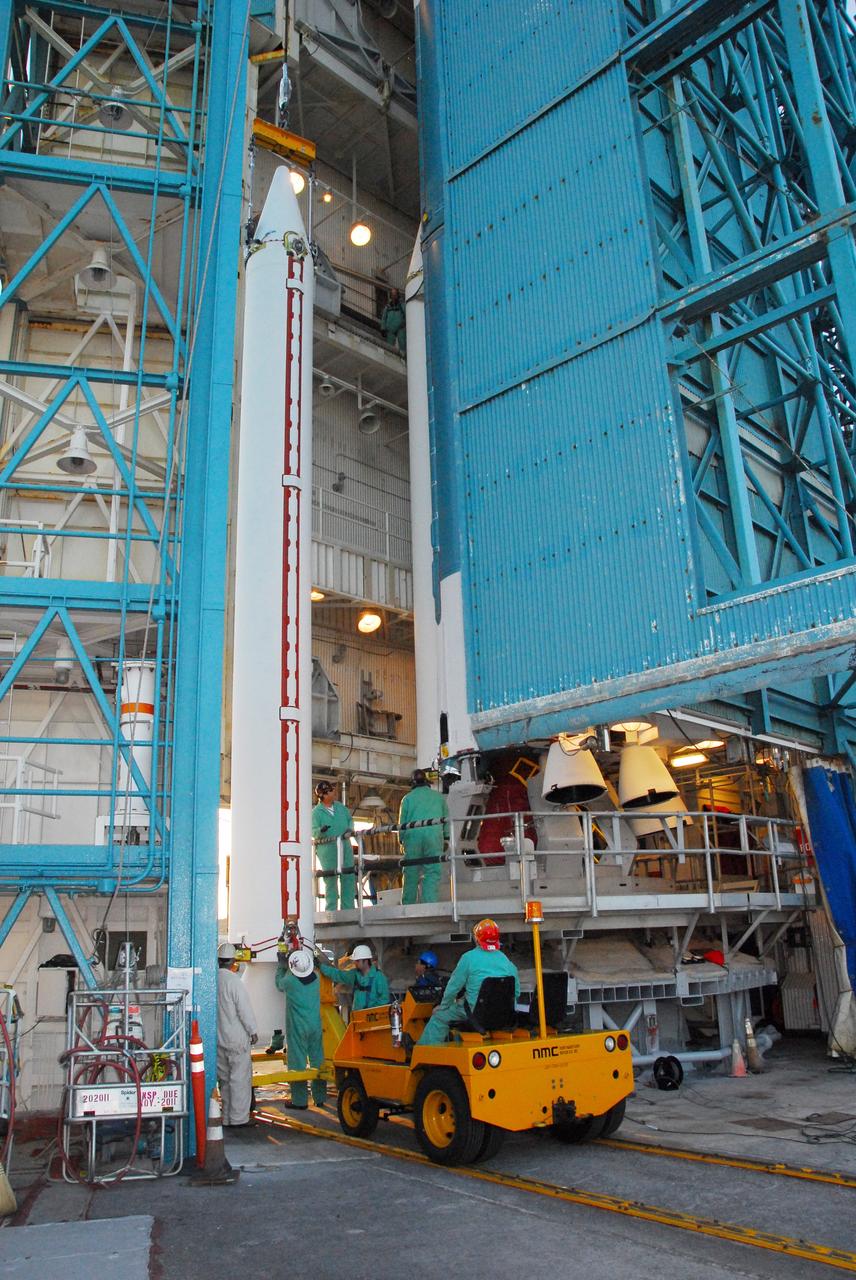
VANDENBERG AIR FORCE BASE, Calif. -- At NASA’s Space Launch Complex-2 at Vandenberg Air Force Base in California, several technicians assist as a crane begins to lift a solid rocket motor for attachment to the United Launch Alliance Delta II rocket. The Delta II will carry NASA’s National Polar-orbiting Operational Environmental Satellite System Preparatory Project (NPP) satellite into space. NPP represents a critical first step in building the next-generation of Earth-observing satellites. NPP will carry the first of the new sensors developed for this satellite fleet, now known as the Joint Polar Satellite System (JPSS) to be launched in 2016. NPP is the bridge between NASA's Earth Observing System (EOS) satellites and the forthcoming series of JPSS satellites. The mission will test key technologies and instruments for the JPSS missions. NPP is targeted to launch Oct. 25. For more information, visit http://www.nasa.gov/NPP. Photo credit: NASA/VAFB, Mark Mackley
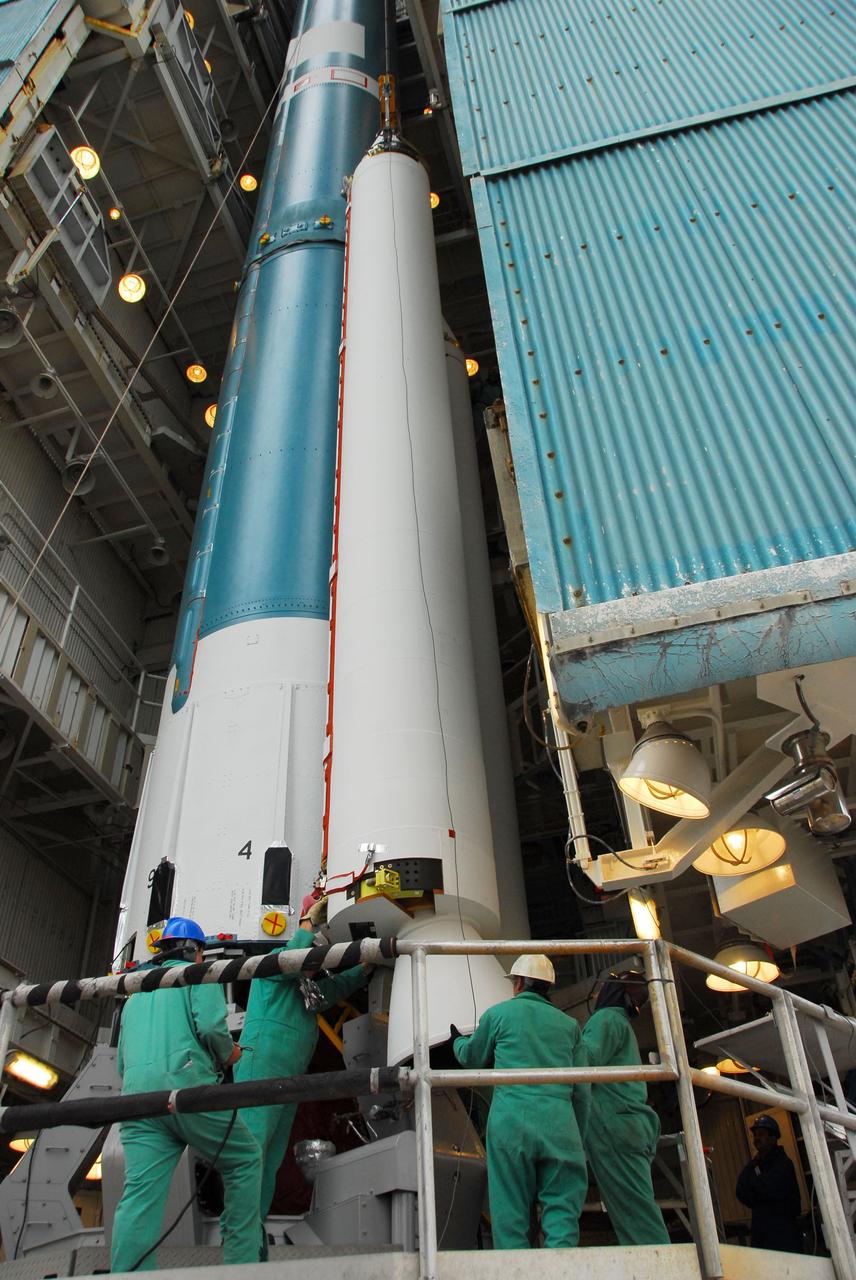
VANDENBERG AIR FORCE BASE, Calif. -- At Vandenberg Air Force Base in California, technicians monitor the progress as a solid rocket motor is attached to a United Launch Alliance Delta II rocket at NASA’s Space Launch Complex-2. The Delta II will carry NASA's National Polar-orbiting Operational Environmental Satellite System Preparatory Project (NPP) satellite. NPP represents a critical first step in building the next-generation of Earth-observing satellites. NPP will carry the first of the new sensors developed for this satellite fleet, now known as the Joint Polar Satellite System (JPSS) to be launched in 2016. NPP is the bridge between NASA's Earth Observing System (EOS) satellites and the forthcoming series of JPSS satellites. The mission will test key technologies and instruments for the JPSS missions. NPP is targeted to launch Oct. 25. For more information, visit http://www.nasa.gov/NPP. Photo credit: NASA/VAFB, Dan Liberotti
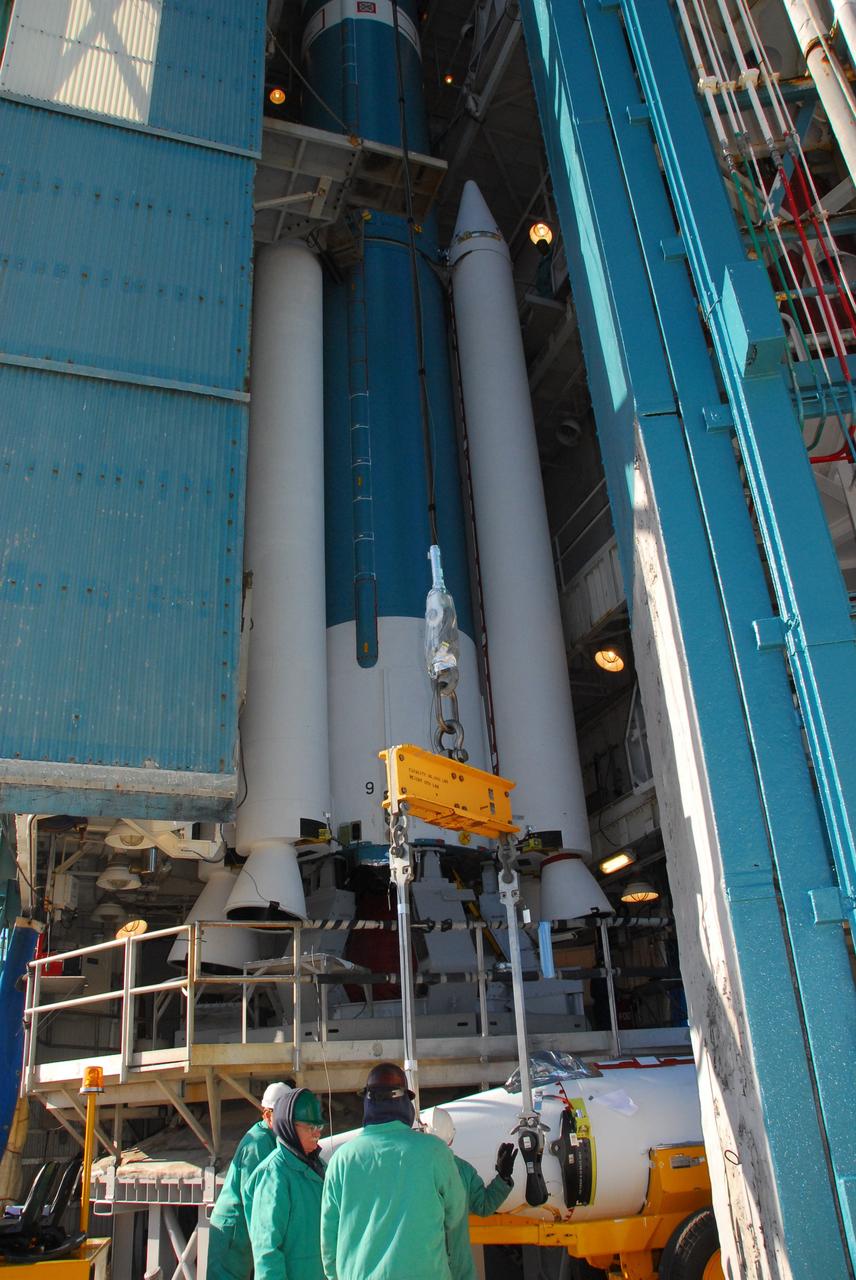
VANDENBERG AIR FORCE BASE, Calif. -- At NASA’s Space Launch Complex-2 at Vandenberg Air Force Base in California, technicians attach a crane to a solid rocket motor that will be lifted and attached to the United Launch Alliance Delta II rocket. The Delta II will carry NASA’s National Polar-orbiting Operational Environmental Satellite System Preparatory Project (NPP) satellite into space. NPP represents a critical first step in building the next-generation of Earth-observing satellites. NPP will carry the first of the new sensors developed for this satellite fleet, now known as the Joint Polar Satellite System (JPSS) to be launched in 2016. NPP is the bridge between NASA's Earth Observing System (EOS) satellites and the forthcoming series of JPSS satellites. The mission will test key technologies and instruments for the JPSS missions. NPP is targeted to launch Oct. 25. For more information, visit http://www.nasa.gov/NPP. Photo credit: NASA/VAFB, Mark Mackley
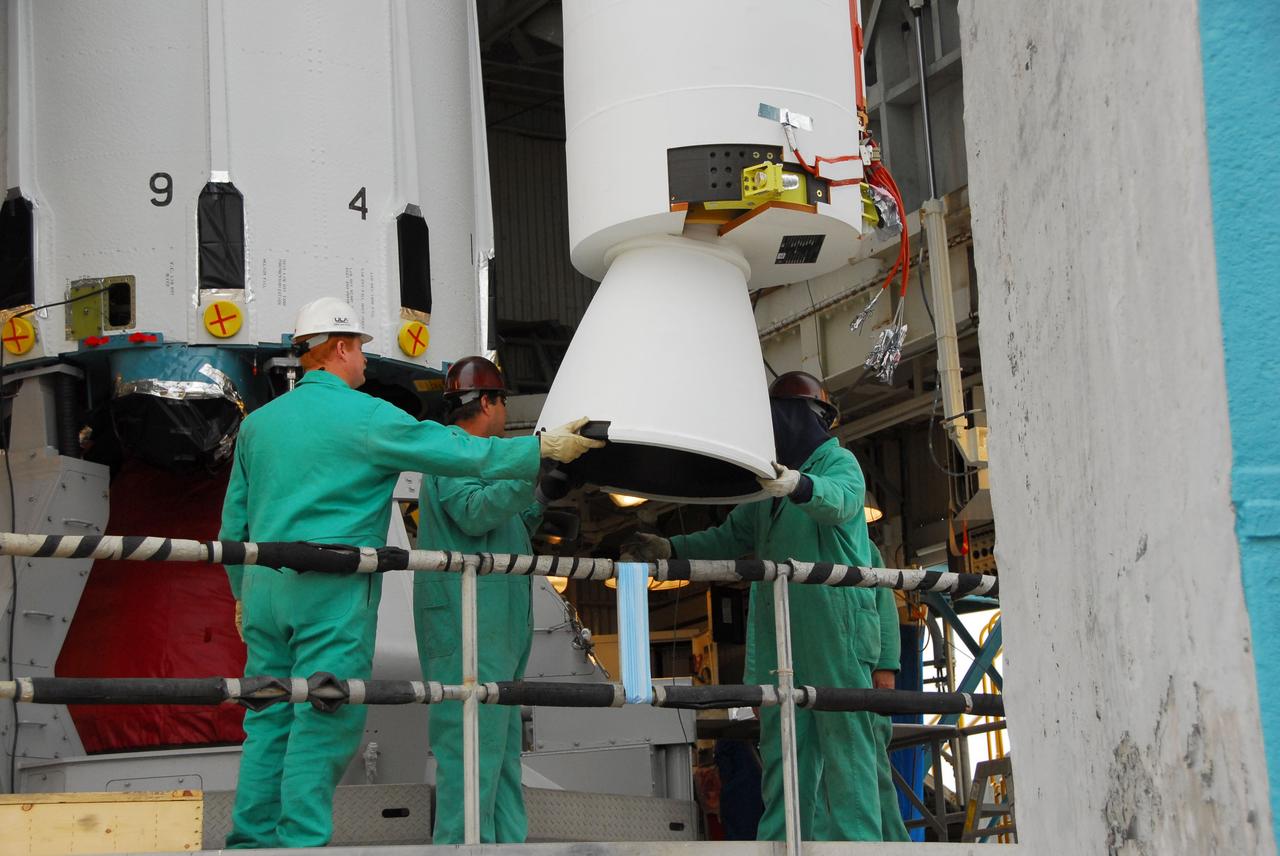
VANDENBERG AIR FORCE BASE, Calif. -- At Vandenberg Air Force Base in California, technicians check the position of a solid rocket motor for the United Launch Alliance Delta II that will carry NASA's National Polar-orbiting Operational Environmental Satellite System Preparatory Project (NPP) satellite at NASA's Space Launch Complex-2. NPP represents a critical first step in building the next-generation of Earth-observing satellites. NPP will carry the first of the new sensors developed for this satellite fleet, now known as the Joint Polar Satellite System (JPSS) to be launched in 2016. NPP is the bridge between NASA's Earth Observing System (EOS) satellites and the forthcoming series of JPSS satellites. The mission will test key technologies and instruments for the JPSS missions. NPP is targeted to launch Oct. 25. For more information, visit http://www.nasa.gov/NPP. Photo credit: NASA/VAFB, Dan Liberotti
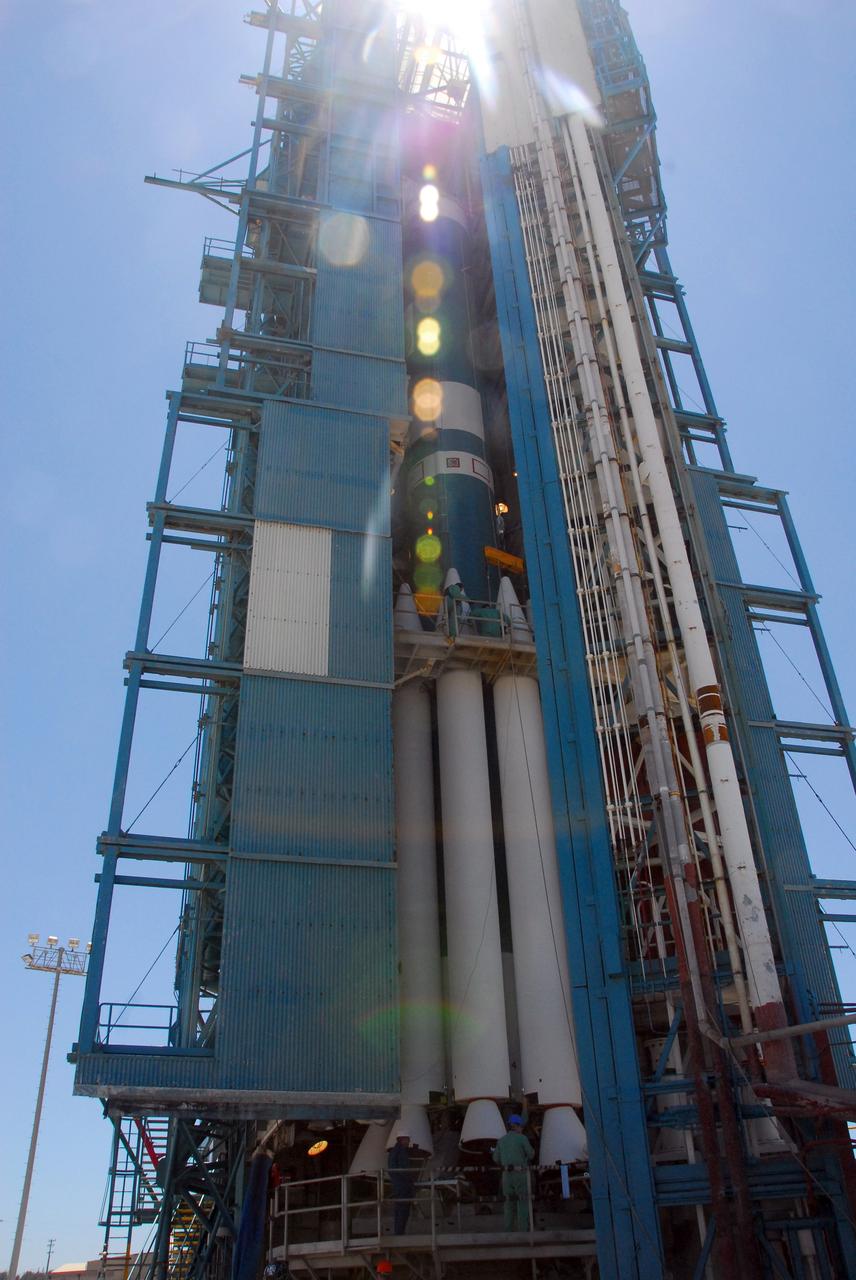
VANDENBERG AIR FORCE BASE, Calif. -- At Space Launch Compmlex-2 at Vandenberg Air Force Base in California, a work platform has been placed around the United Launch Alliance Delta II rocket so that technicians can complete the work to attach the solid rocket motors. The Delta II will carry NASA’s National Polar-orbiting Operational Environmental Satellite System Preparatory Project (NPP) satellite into space. NPP represents a critical first step in building the next-generation of Earth-observing satellites. NPP will carry the first of the new sensors developed for this satellite fleet, now known as the Joint Polar Satellite System (JPSS) to be launched in 2016. NPP is the bridge between NASA's Earth Observing System (EOS) satellites and the forthcoming series of JPSS satellites. The mission will test key technologies and instruments for the JPSS missions. NPP is targeted to launch Oct. 25. For more information, visit http://www.nasa.gov/NPP. Photo credit: NASA/VAFB, Mark Mackley
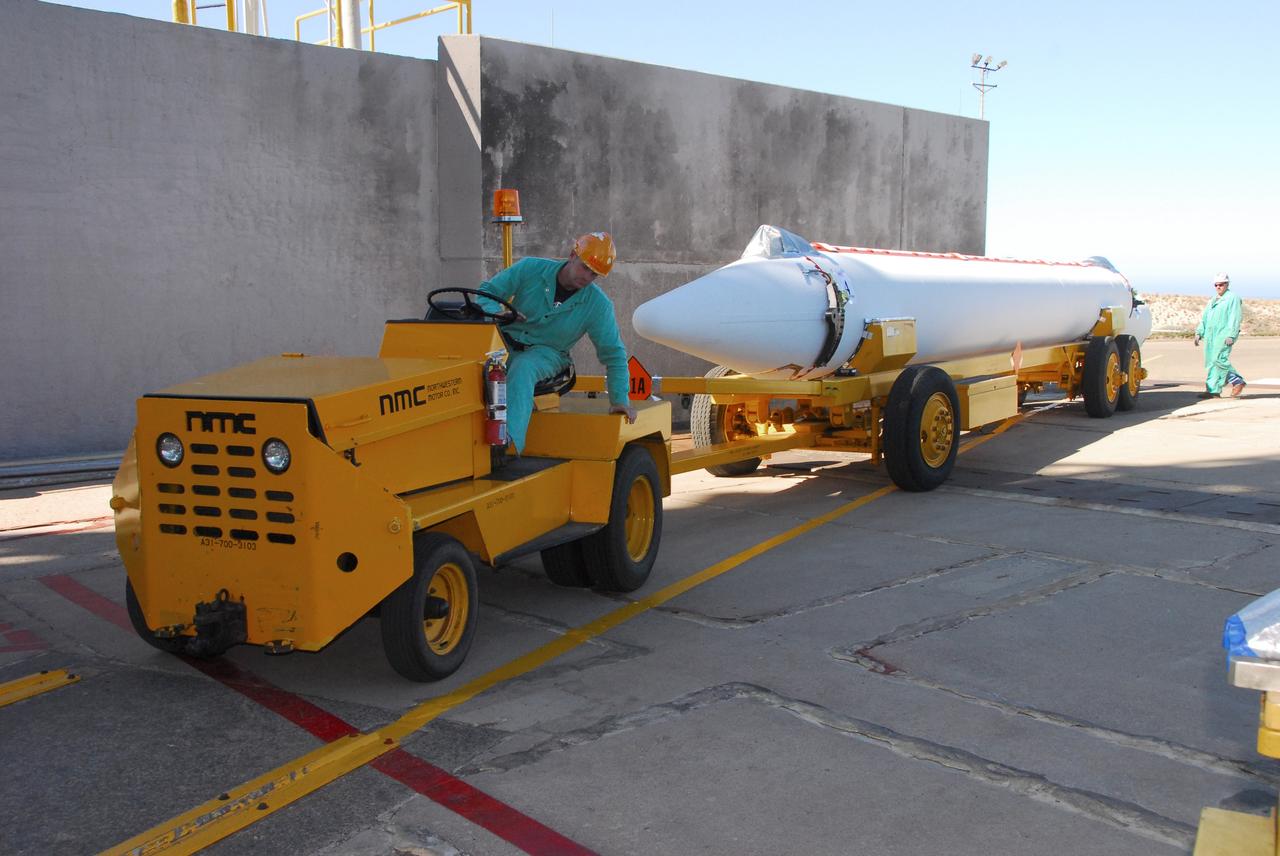
VANDENBERG AIR FORCE BASE, Calif. -- At Vandenberg Air Force Base in California, a solid rocket motor for the United Launch Alliance Delta II that will carry NASA’s National Polar-orbiting Operational Environmental Satellite System Preparatory Project (NPP) satellite into space arrives at NASA’s Space Launch Complex-2. NPP represents a critical first step in building the next-generation of Earth-observing satellites. NPP will carry the first of the new sensors developed for this satellite fleet, now known as the Joint Polar Satellite System (JPSS) to be launched in 2016. NPP is the bridge between NASA's Earth Observing System (EOS) satellites and the forthcoming series of JPSS satellites. The mission will test key technologies and instruments for the JPSS missions. NPP is targeted to launch Oct. 25. For more information, visit http://www.nasa.gov/NPP. Photo credit: NASA/VAFB, Mark Mackley
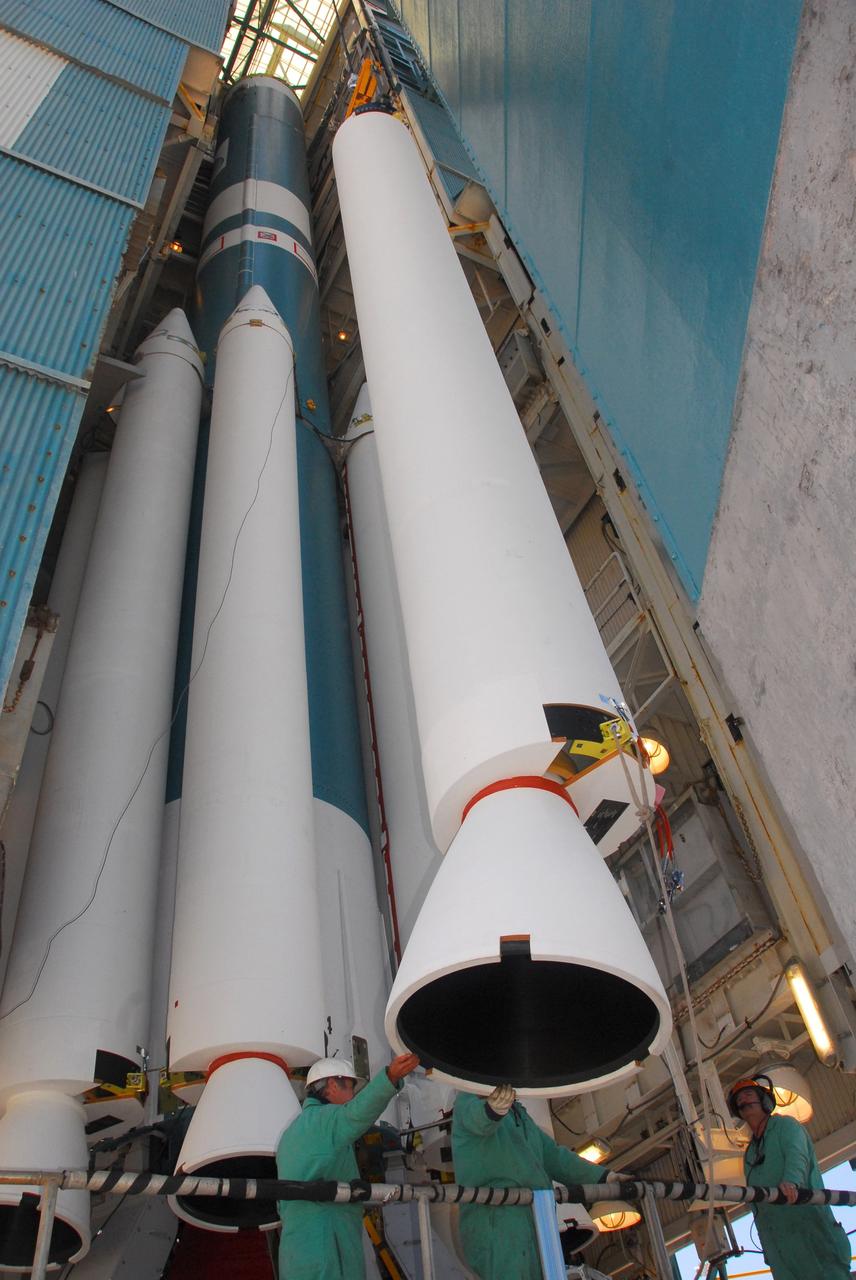
VANDENBERG AIR FORCE BASE, Calif. -- At Space Launch Complex-2 at Vandenberg Air Force Base in California, technicians check the position as a crane moves a solid rocket motor closer to the United Launch Alliance Delta II rocket. The Delta II will carry NASA’s National Polar-orbiting Operational Environmental Satellite System Preparatory Project (NPP) satellite into space. NPP represents a critical first step in building the next-generation of Earth-observing satellites. NPP will carry the first of the new sensors developed for this satellite fleet, now known as the Joint Polar Satellite System (JPSS) to be launched in 2016. NPP is the bridge between NASA's Earth Observing System (EOS) satellites and the forthcoming series of JPSS satellites. The mission will test key technologies and instruments for the JPSS missions. NPP is targeted to launch Oct. 25. For more information, visit http://www.nasa.gov/NPP. Photo credit: NASA/VAFB, Mark Mackley
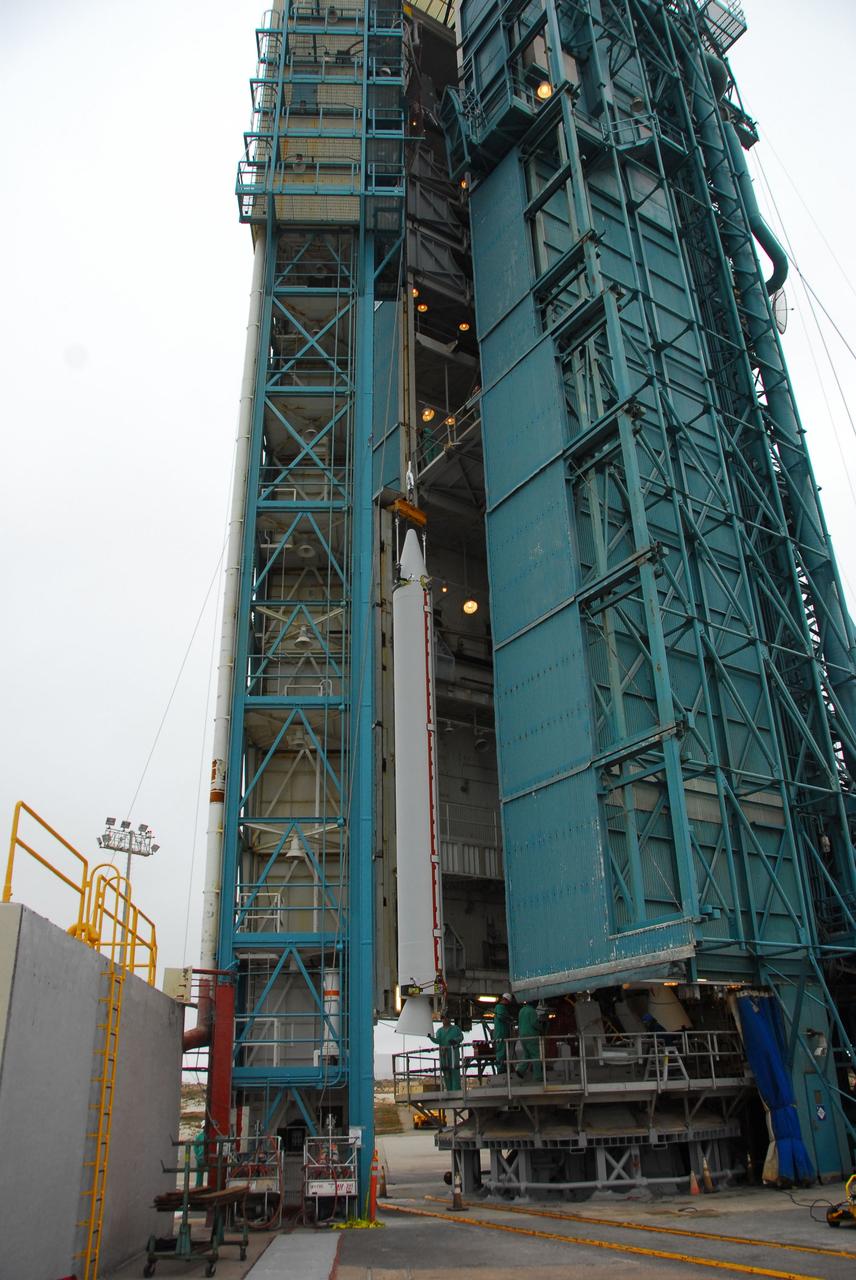
VANDENBERG AIR FORCE BASE, Calif. -- At Vandenberg Air Force Base in California, a solid rocket motor for the United Launch Alliance Delta II that will carry NASA's National Polar-orbiting Operational Environmental Satellite System Preparatory Project (NPP) satellite is hoisted up at NASA's Space Launch Complex-2. NPP represents a critical first step in building the next-generation of Earth-observing satellites. NPP will carry the first of the new sensors developed for this satellite fleet, now known as the Joint Polar Satellite System (JPSS) to be launched in 2016. NPP is the bridge between NASA's Earth Observing System (EOS) satellites and the forthcoming series of JPSS satellites. The mission will test key technologies and instruments for the JPSS missions. NPP is targeted to launch Oct. 25. For more information, visit http://www.nasa.gov/NPP. Photo credit: NASA/VAFB, Dan Liberotti
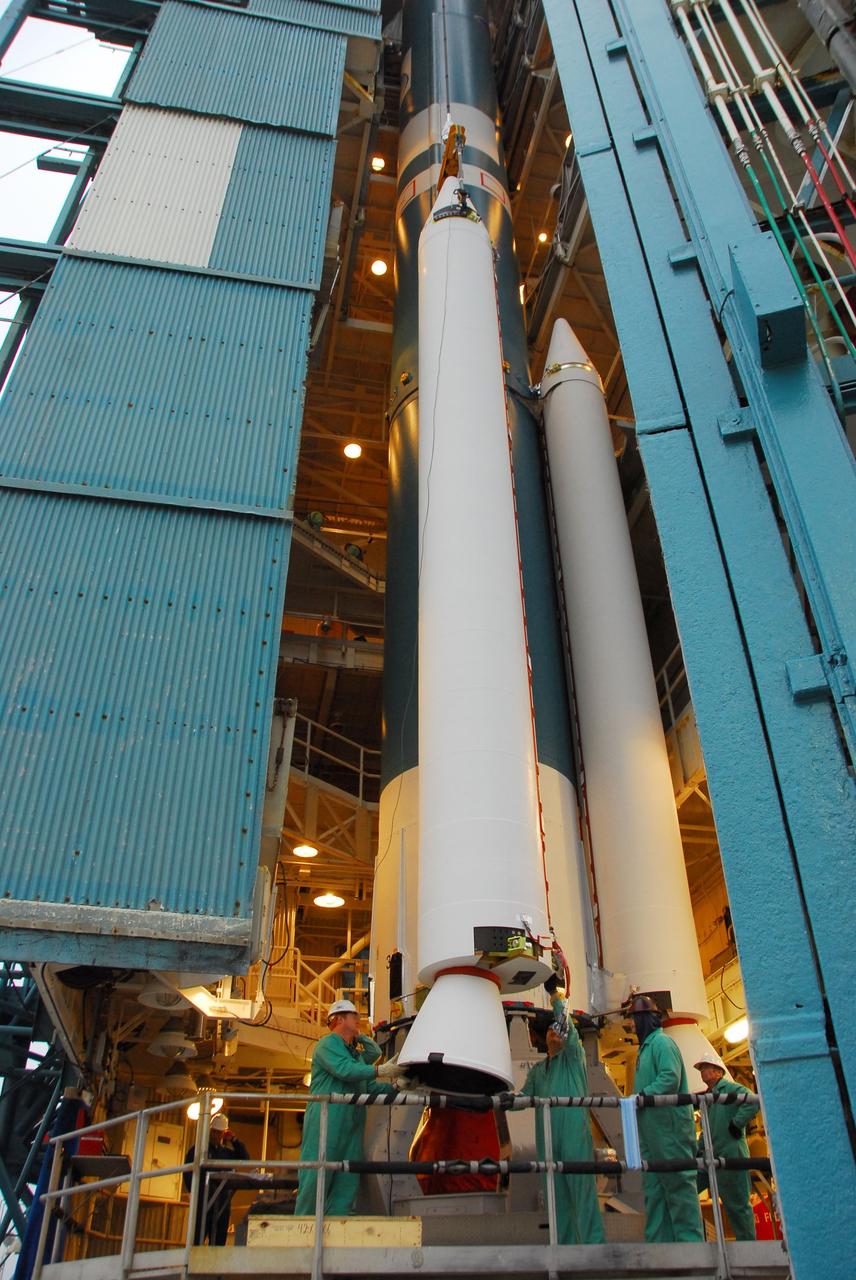
VANDENBERG AIR FORCE BASE, Calif. -- At Space Launch Complex-2 at Vandenberg Air Force Base in California, a crane lifts a solid rocket motor for attachment to the United Launch Alliance Delta II rocket. The Delta II will carry NASA’s National Polar-orbiting Operational Environmental Satellite System Preparatory Project (NPP) satellite into space. NPP represents a critical first step in building the next-generation of Earth-observing satellites. NPP will carry the first of the new sensors developed for this satellite fleet, now known as the Joint Polar Satellite System (JPSS) to be launched in 2016. NPP is the bridge between NASA's Earth Observing System (EOS) satellites and the forthcoming series of JPSS satellites. The mission will test key technologies and instruments for the JPSS missions. NPP is targeted to launch Oct. 25. For more information, visit http://www.nasa.gov/NPP. Photo credit: NASA/VAFB, Mark Mackley
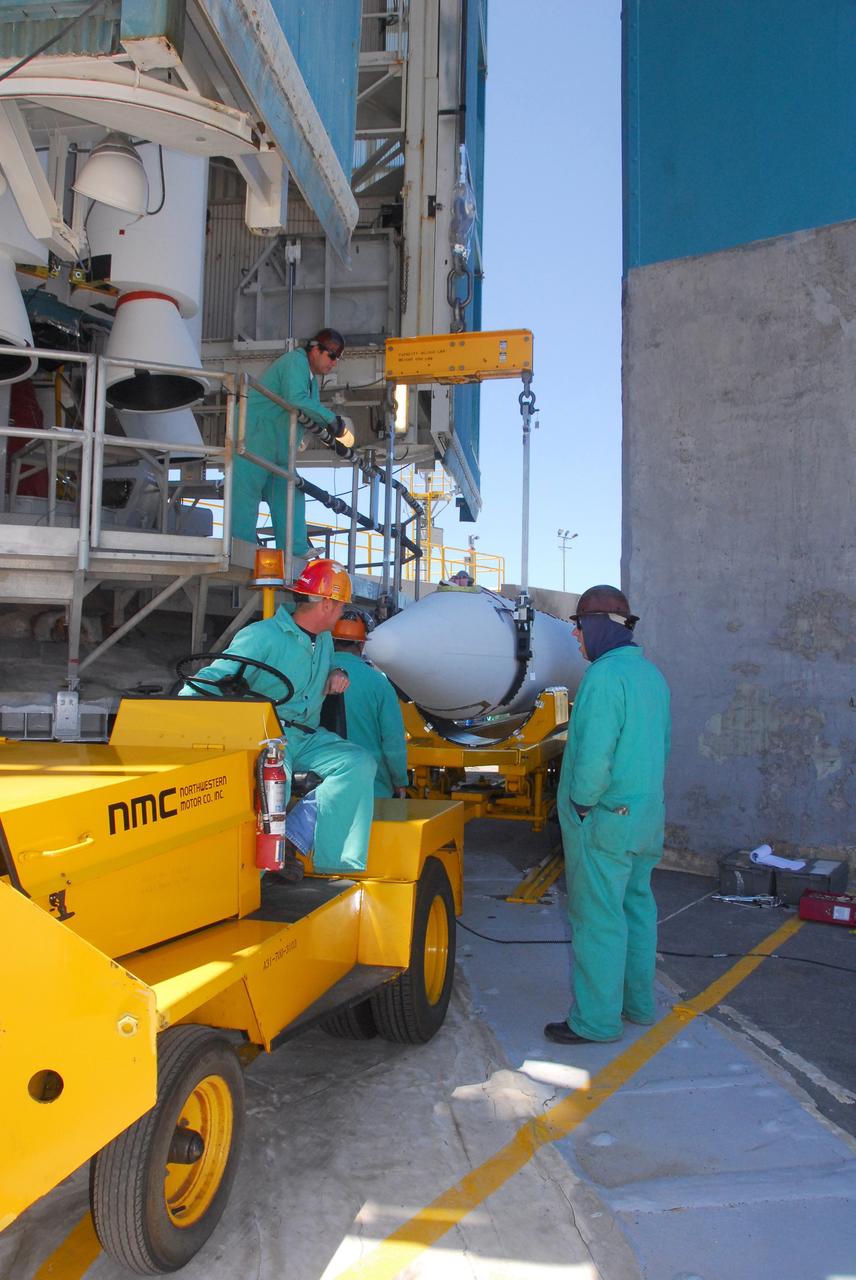
VANDENBERG AIR FORCE BASE, Calif. -- At Vandenberg Air Force Base in California, technicians monitor the progress as a crane lifts a solid rocket motor for the United Launch Alliance Delta II that will carry NASA's National Polar-orbiting Operational Environmental Satellite System Preparatory Project (NPP) satellite at NASA's Space Launch Complex-2. NPP represents a critical first step in building the next-generation of Earth-observing satellites. NPP will carry the first of the new sensors developed for this satellite fleet, now known as the Joint Polar Satellite System (JPSS) to be launched in 2016. NPP is the bridge between NASA's Earth Observing System (EOS) satellites and the forthcoming series of JPSS satellites. The mission will test key technologies and instruments for the JPSS missions. NPP is targeted to launch Oct. 25. For more information, visit http://www.nasa.gov/NPP. Photo credit: NASA/VAFB, Dan Liberotti
VANDENBERG AIR FORCE BASE, Calif. -- At Vandenberg Air Force Base in California, a solid rocket motor for the United Launch Alliance Delta II that will carry NASA’s National Polar-orbiting Operational Environmental Satellite System Preparatory Project (NPP) satellite into space arrives at NASA’s Space Launch Complex-2. NPP represents a critical first step in building the next-generation of Earth-observing satellites. NPP will carry the first of the new sensors developed for this satellite fleet, now known as the Joint Polar Satellite System (JPSS) to be launched in 2016. NPP is the bridge between NASA's Earth Observing System (EOS) satellites and the forthcoming series of JPSS satellites. The mission will test key technologies and instruments for the JPSS missions. NPP is targeted to launch Oct. 25. For more information, visit http://www.nasa.gov/NPP. Photo credit: NASA/VAFB, Mark Mackley
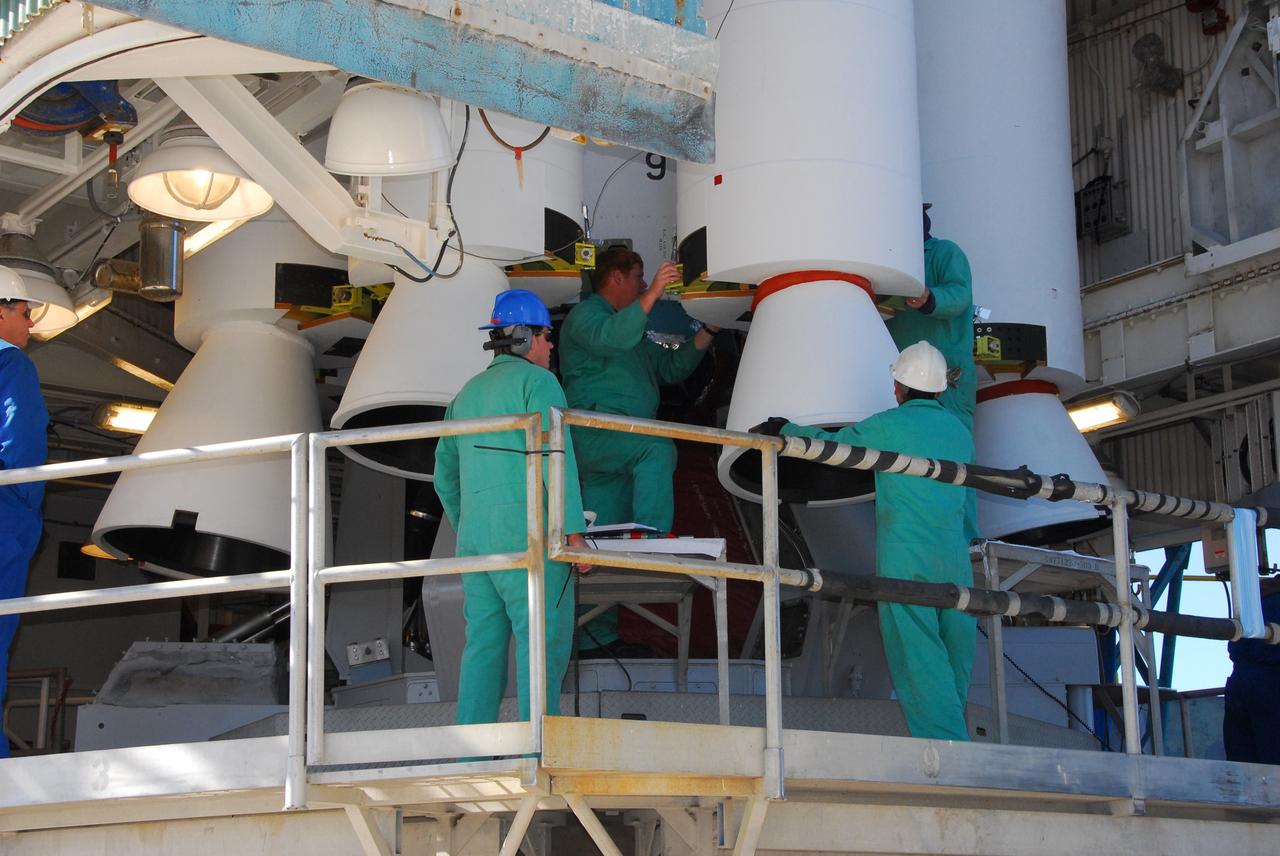
VANDENBERG AIR FORCE BASE, Calif. -- At NASA’s Space Launch Complex-2 at Vandenberg Air Force Base in California, technicians assist as a crane is used to position a solid rocket motor for attachment to the United Launch Alliance Delta II rocket. The Delta II will carry NASA’s National Polar-orbiting Operational Environmental Satellite System Preparatory Project (NPP) satellite into space. NPP represents a critical first step in building the next-generation of Earth-observing satellites. NPP will carry the first of the new sensors developed for this satellite fleet, now known as the Joint Polar Satellite System (JPSS) to be launched in 2016. NPP is the bridge between NASA's Earth Observing System (EOS) satellites and the forthcoming series of JPSS satellites. The mission will test key technologies and instruments for the JPSS missions. NPP is targeted to launch Oct. 25. For more information, visit http://www.nasa.gov/NPP. Photo credit: NASA/VAFB, Mark Mackley
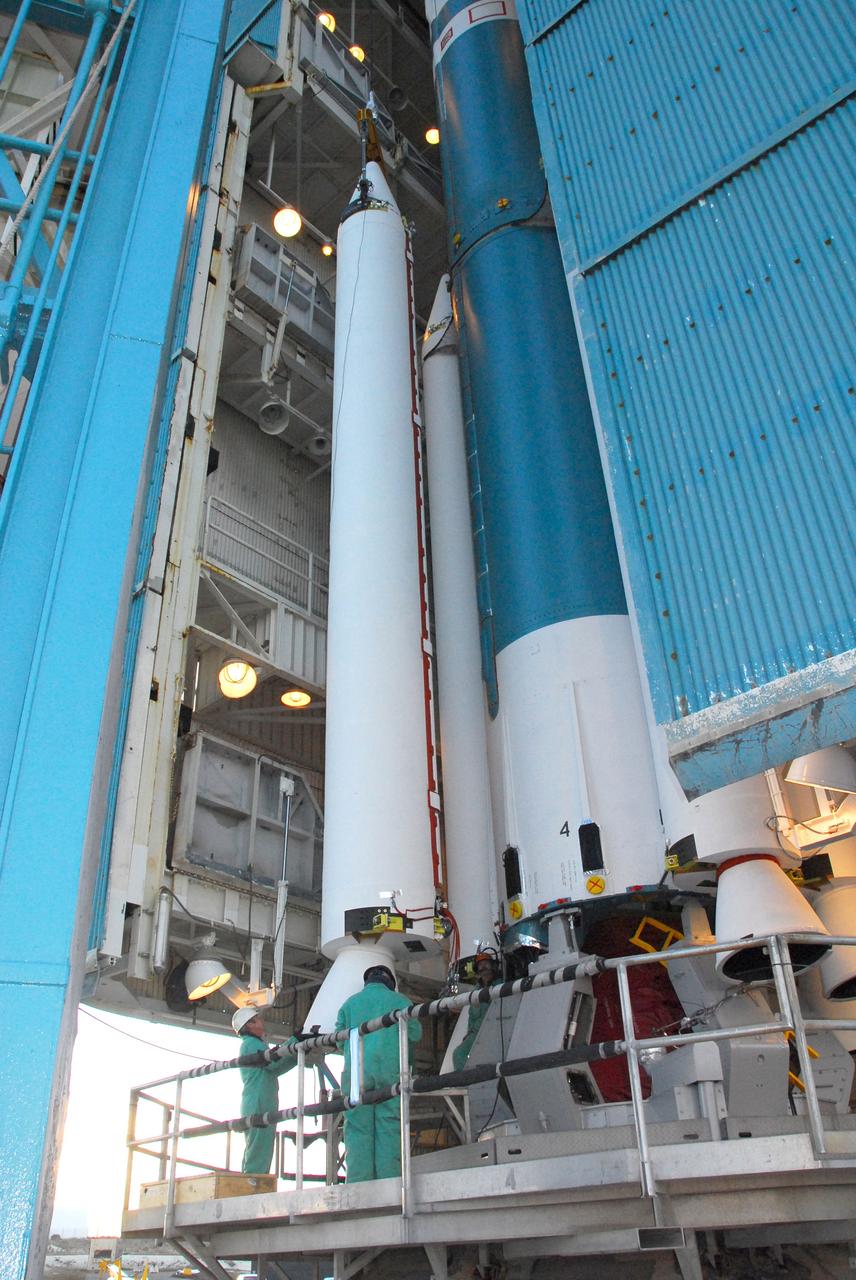
VANDENBERG AIR FORCE BASE, Calif. -- At NASA’s Space Launch Complex-2 at Vandenberg Air Force Base in California, technicians monitor the progress as a crane moves a solid rocket motor closer to the United Launch Alliance Delta II rocket. The Delta II will carry NASA’s National Polar-orbiting Operational Environmental Satellite System Preparatory Project (NPP) satellite into space. NPP represents a critical first step in building the next-generation of Earth-observing satellites. NPP will carry the first of the new sensors developed for this satellite fleet, now known as the Joint Polar Satellite System (JPSS) to be launched in 2016. NPP is the bridge between NASA's Earth Observing System (EOS) satellites and the forthcoming series of JPSS satellites. The mission will test key technologies and instruments for the JPSS missions. NPP is targeted to launch Oct. 25. For more information, visit http://www.nasa.gov/NPP. Photo credit: NASA/VAFB, Mark Mackley
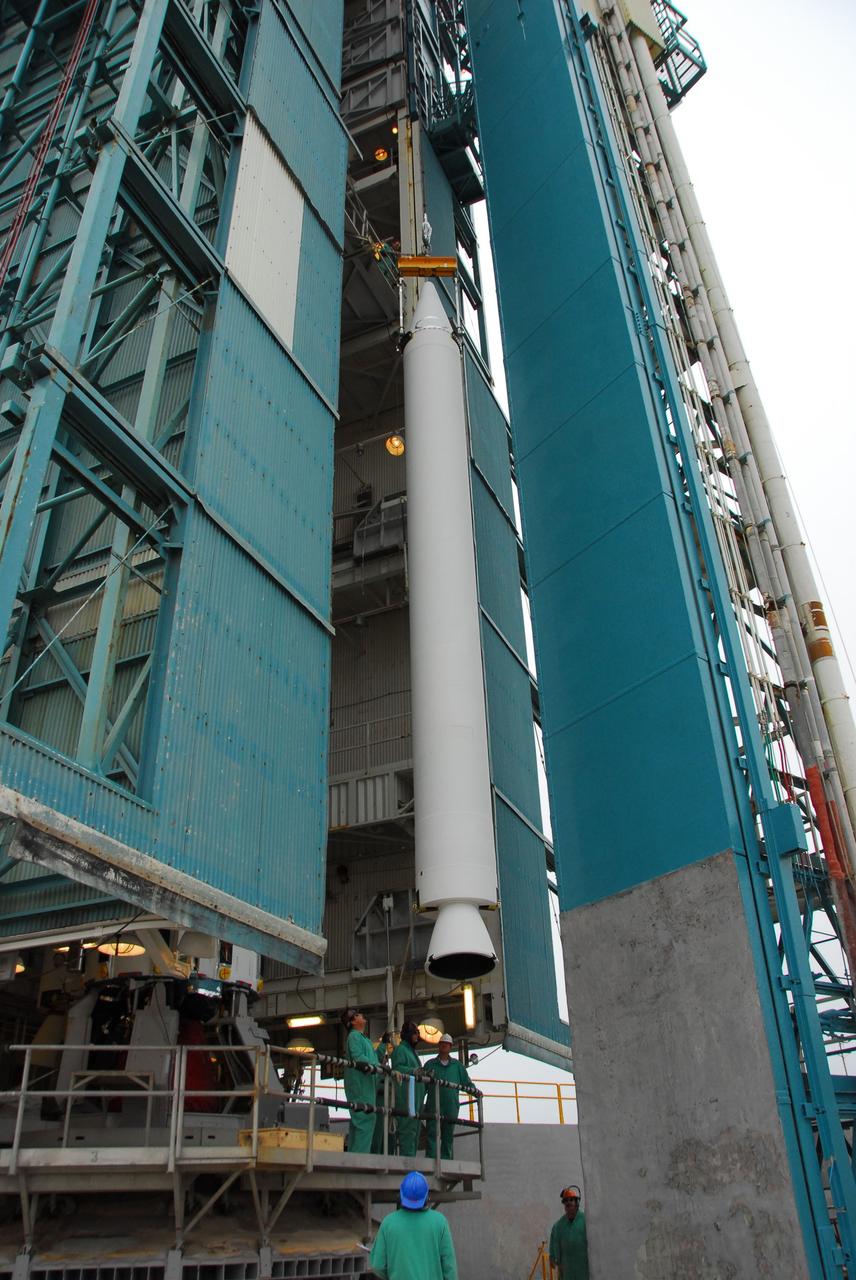
VANDENBERG AIR FORCE BASE, Calif. -- At Vandenberg Air Force Base in California, technicians monitor the progress as a solid rocket motor for the United Launch Alliance Delta II that will carry NASA's National Polar-orbiting Operational Environmental Satellite System Preparatory Project (NPP) satellite is hoisted up at NASA's Space Launch Complex-2. NPP represents a critical first step in building the next-generation of Earth-observing satellites. NPP will carry the first of the new sensors developed for this satellite fleet, now known as the Joint Polar Satellite System (JPSS) to be launched in 2016. NPP is the bridge between NASA's Earth Observing System (EOS) satellites and the forthcoming series of JPSS satellites. The mission will test key technologies and instruments for the JPSS missions. NPP is targeted to launch Oct. 25. For more information, visit http://www.nasa.gov/NPP. Photo credit: NASA/VAFB, Dan Liberotti
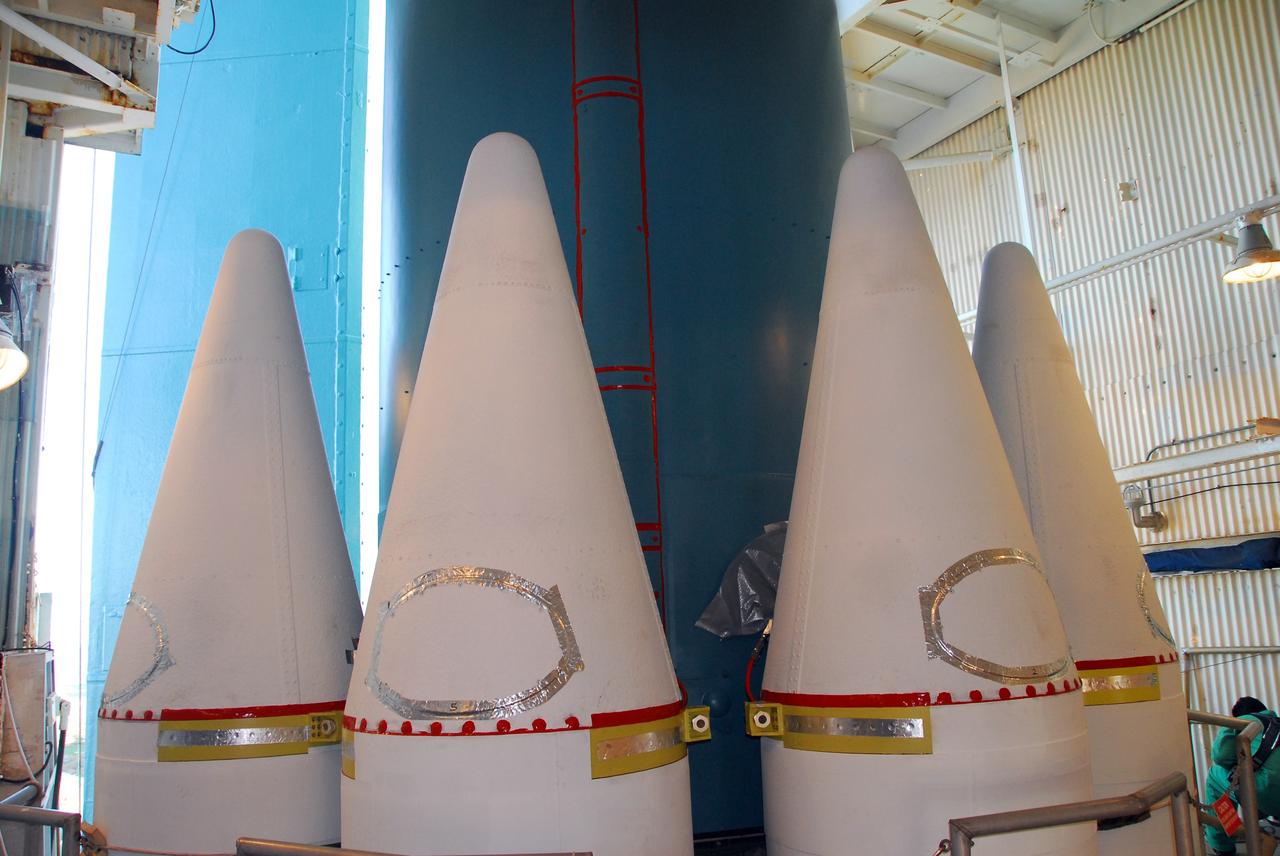
VANDENBERG AIR FORCE BASE, Calif. -- At NASA’s Space Launch Complex-2 at Vandenberg Air Force Base in California, several solid rocket motor closers have been attached to the United Launch Alliance Delta II rocket. The Delta II will carry NASA’s National Polar-orbiting Operational Environmental Satellite System Preparatory Project (NPP) satellite into space. NPP represents a critical first step in building the next-generation of Earth-observing satellites. NPP will carry the first of the new sensors developed for this satellite fleet, now known as the Joint Polar Satellite System (JPSS) to be launched in 2016. NPP is the bridge between NASA's Earth Observing System (EOS) satellites and the forthcoming series of JPSS satellites. The mission will test key technologies and instruments for the JPSS missions. NPP is targeted to launch Oct. 25. For more information, visit http://www.nasa.gov/NPP. Photo credit: NASA/VAFB, Mark Mackley
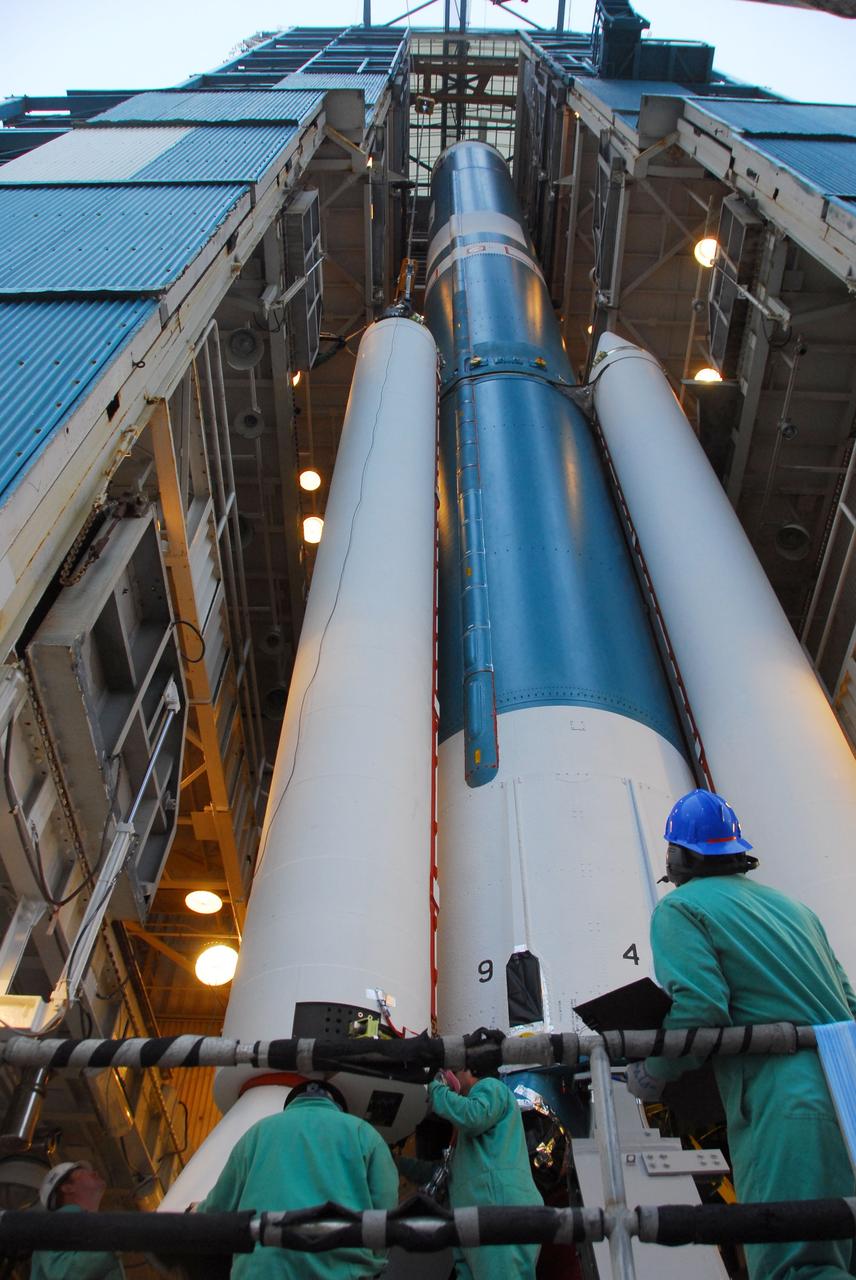
VANDENBERG AIR FORCE BASE, Calif. -- At Vandenberg Air Force Base in California, technicians monitor the progress as a crane lifts a solid rocket motor into position for attachment to the United Launch Alliance Delta II that will carry NASA's National Polar-orbiting Operational Environmental Satellite System Preparatory Project (NPP) satellite at NASA's Space Launch Complex-2. NPP represents a critical first step in building the next-generation of Earth-observing satellites. NPP will carry the first of the new sensors developed for this satellite fleet, now known as the Joint Polar Satellite System (JPSS) to be launched in 2016. NPP is the bridge between NASA's Earth Observing System (EOS) satellites and the forthcoming series of JPSS satellites. The mission will test key technologies and instruments for the JPSS missions. NPP is targeted to launch Oct. 25. For more information, visit http://www.nasa.gov/NPP. Photo credit: NASA/VAFB, Dan Liberotti
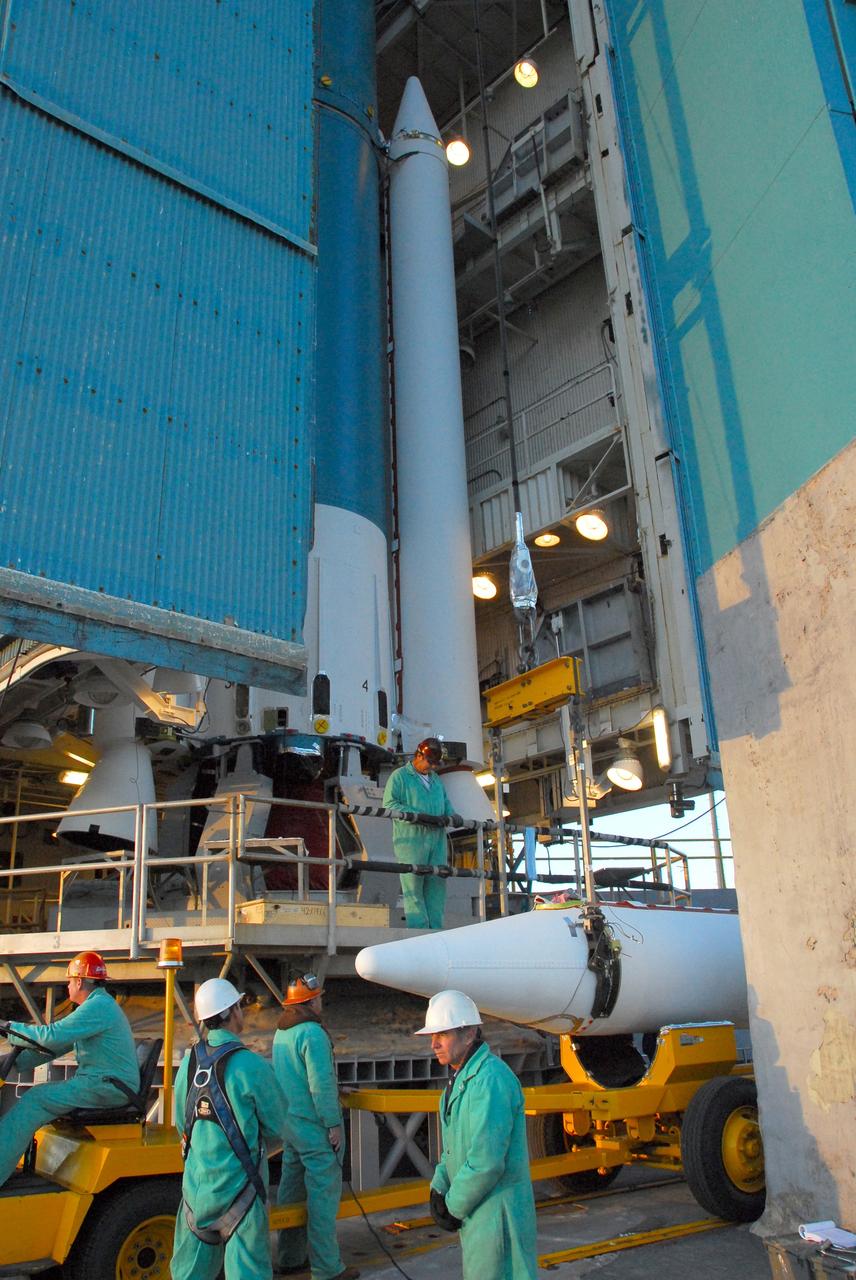
VANDENBERG AIR FORCE BASE, Calif. -- At Vandenberg Air Force Base in California, a solid rocket motor for the United Launch Alliance Delta II that will carry NASA’s National Polar-orbiting Operational Environmental Satellite System Preparatory Project (NPP) satellite into space is transported to NASA’s Space Launch Complex-2. NPP represents a critical first step in building the next-generation of Earth-observing satellites. NPP will carry the first of the new sensors developed for this satellite fleet, now known as the Joint Polar Satellite System (JPSS) to be launched in 2016. NPP is the bridge between NASA's Earth Observing System (EOS) satellites and the forthcoming series of JPSS satellites. The mission will test key technologies and instruments for the JPSS missions. NPP is targeted to launch Oct. 25. For more information, visit http://www.nasa.gov/NPP. Photo credit: NASA/VAFB, Mark Mackley
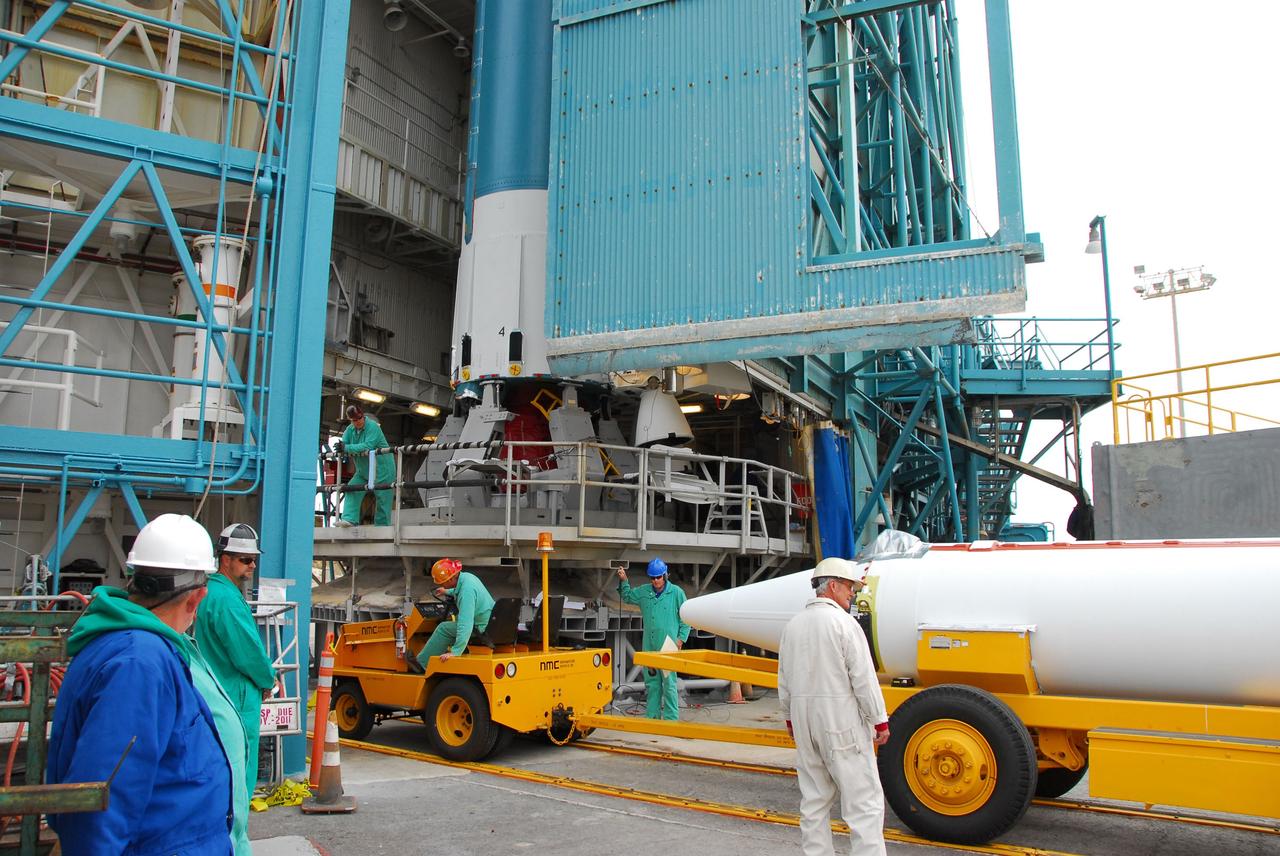
VANDENBERG AIR FORCE BASE, Calif. -- At Vandenberg Air Force Base in California, a solid rocket motor for the United Launch Alliance Delta II that will carry NASA's National Polar-orbiting Operational Environmental Satellite System Preparatory Project (NPP) satellite arrives at NASA's Space Launch Complex-2. NPP represents a critical first step in building the next-generation of Earth-observing satellites. NPP will carry the first of the new sensors developed for this satellite fleet, now known as the Joint Polar Satellite System (JPSS) to be launched in 2016. NPP is the bridge between NASA's Earth Observing System (EOS) satellites and the forthcoming series of JPSS satellites. The mission will test key technologies and instruments for the JPSS missions. NPP is targeted to launch Oct. 25. For more information, visit http://www.nasa.gov/NPP. Photo credit: NASA/VAFB, Dan Liberotti
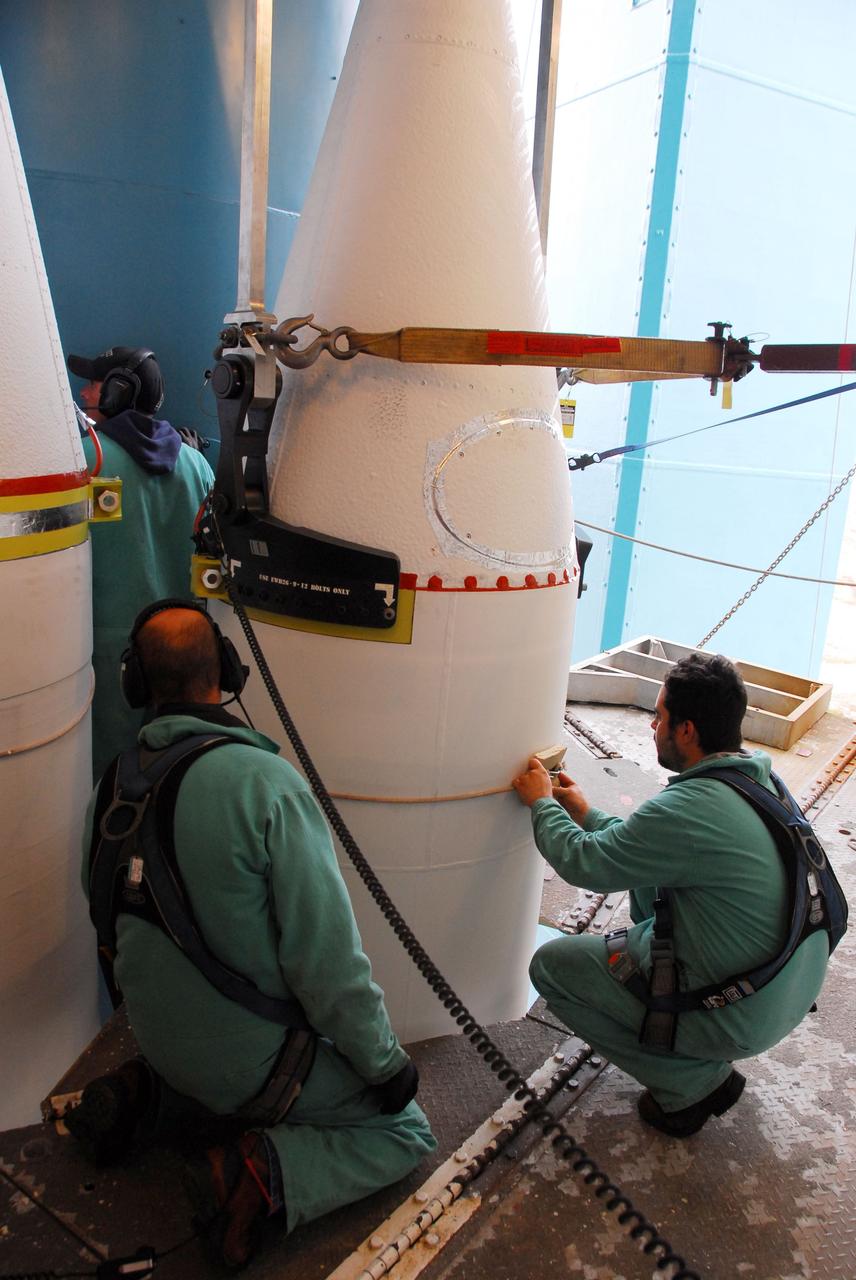
VANDENBERG AIR FORCE BASE, Calif. -- At NASA’s Space Launch Complex-2 at Vandenberg Air Force Base in California, technicians wearing safety harnesses prepare a solid rocket motor to be attached to the United Launch Alliance Delta II rocket. The Delta II will carry NASA's National Polar-orbiting Operational Environmental Satellite System Preparatory Project (NPP) satellite into space. NPP represents a critical first step in building the next-generation of Earth-observing satellites. NPP will carry the first of the new sensors developed for this satellite fleet, now known as the Joint Polar Satellite System (JPSS) to be launched in 2016. NPP is the bridge between NASA's Earth Observing System (EOS) satellites and the forthcoming series of JPSS satellites. The mission will test key technologies and instruments for the JPSS missions. NPP is targeted to launch Oct. 25. For more information, visit http://www.nasa.gov/NPP. Photo credit: NASA/VAFB, Dan Liberotti
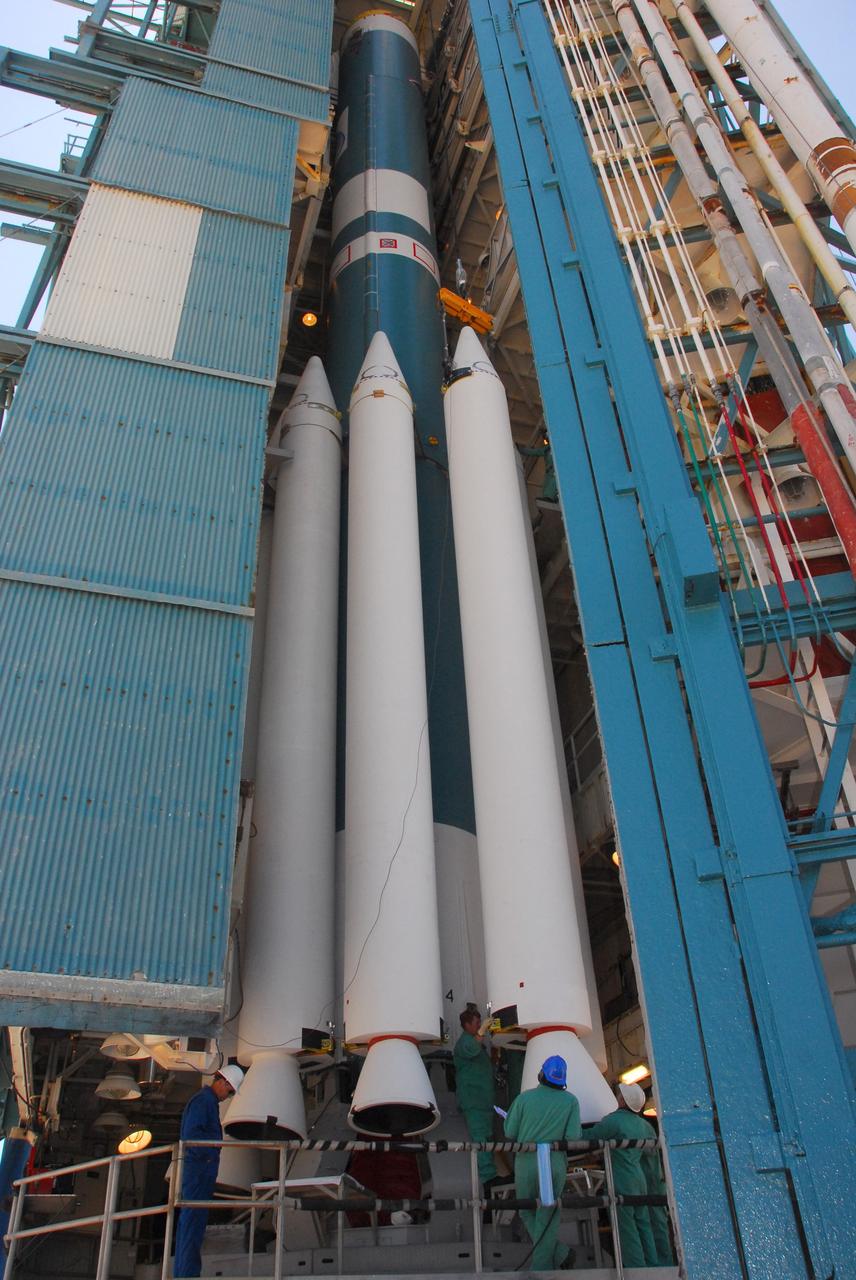
VANDENBERG AIR FORCE BASE, Calif. -- At Space Launch Complex-2 at Vandenberg Air Force Base in California, technicians monitor the progress as a crane positions a solid rocket motor for attachment to the United Launch Alliance Delta II rocket. The Delta II will carry NASA’s National Polar-orbiting Operational Environmental Satellite System Preparatory Project (NPP) satellite into space. NPP represents a critical first step in building the next-generation of Earth-observing satellites. NPP will carry the first of the new sensors developed for this satellite fleet, now known as the Joint Polar Satellite System (JPSS) to be launched in 2016. NPP is the bridge between NASA's Earth Observing System (EOS) satellites and the forthcoming series of JPSS satellites. The mission will test key technologies and instruments for the JPSS missions. NPP is targeted to launch Oct. 25. For more information, visit http://www.nasa.gov/NPP. Photo credit: NASA/VAFB, Mark Mackley
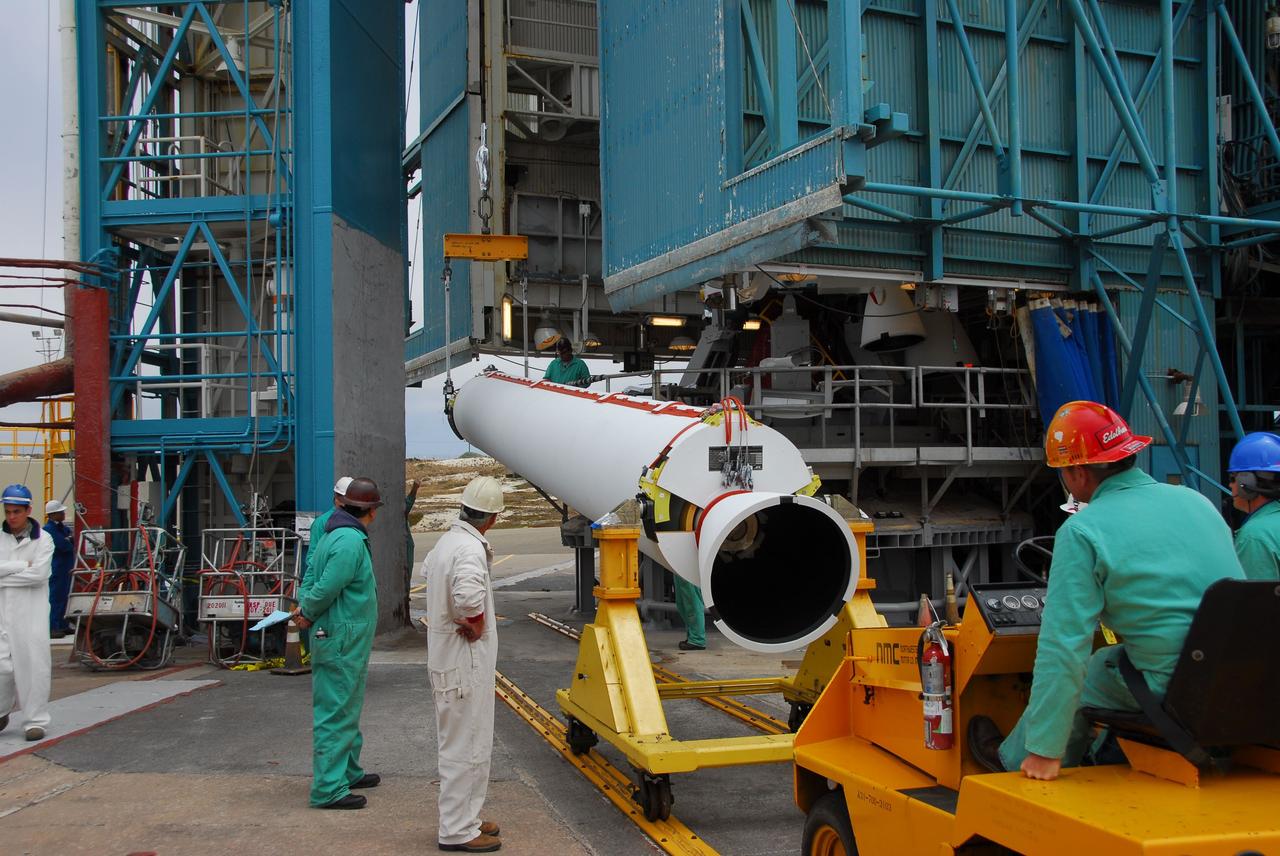
VANDENBERG AIR FORCE BASE, Calif. -- At Vandenberg Air Force Base in California, technicians use a crane to lift a solid rocket motor for the United Launch Alliance Delta II that will carry NASA's National Polar-orbiting Operational Environmental Satellite System Preparatory Project (NPP) satellite at NASA's Space Launch Complex-2. NPP represents a critical first step in building the next-generation of Earth-observing satellites. NPP will carry the first of the new sensors developed for this satellite fleet, now known as the Joint Polar Satellite System (JPSS) to be launched in 2016. NPP is the bridge between NASA's Earth Observing System (EOS) satellites and the forthcoming series of JPSS satellites. The mission will test key technologies and instruments for the JPSS missions. NPP is targeted to launch Oct. 25. For more information, visit http://www.nasa.gov/NPP. Photo credit: NASA/VAFB, Dan Liberotti
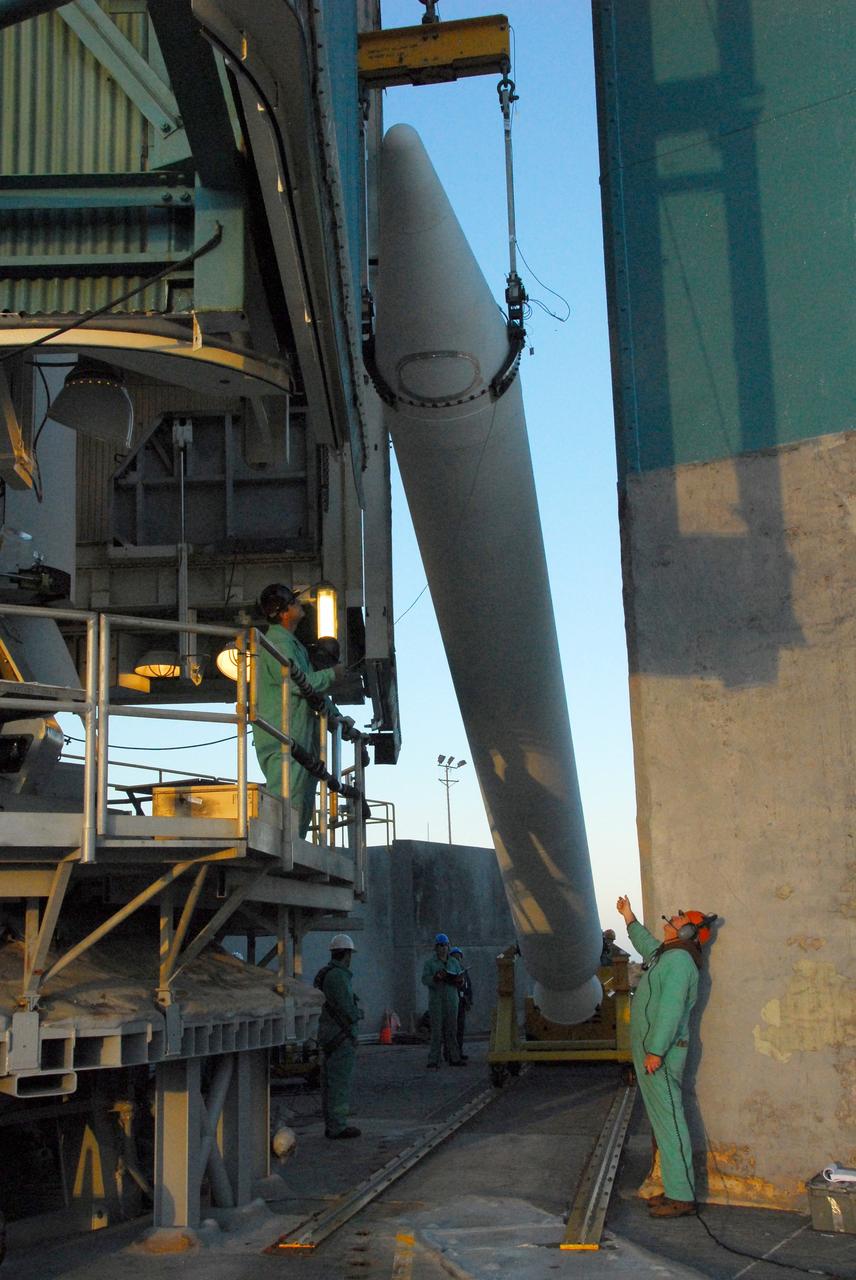
VANDENBERG AIR FORCE BASE, Calif. -- At NASA’s Space Launch Complex-2 at Vandenberg Air Force Base in California, technicians monitor the progress as a solid rocket motor is lifted for attachment to the United Launch Alliance Delta II rocket. The Delta II will carry NASA’s National Polar-orbiting Operational Environmental Satellite System Preparatory Project (NPP) satellite into space. NPP represents a critical first step in building the next-generation of Earth-observing satellites. NPP will carry the first of the new sensors developed for this satellite fleet, now known as the Joint Polar Satellite System (JPSS) to be launched in 2016. NPP is the bridge between NASA's Earth Observing System (EOS) satellites and the forthcoming series of JPSS satellites. The mission will test key technologies and instruments for the JPSS missions. NPP is targeted to launch Oct. 25. For more information, visit http://www.nasa.gov/NPP. Photo credit: NASA/VAFB, Mark Mackley