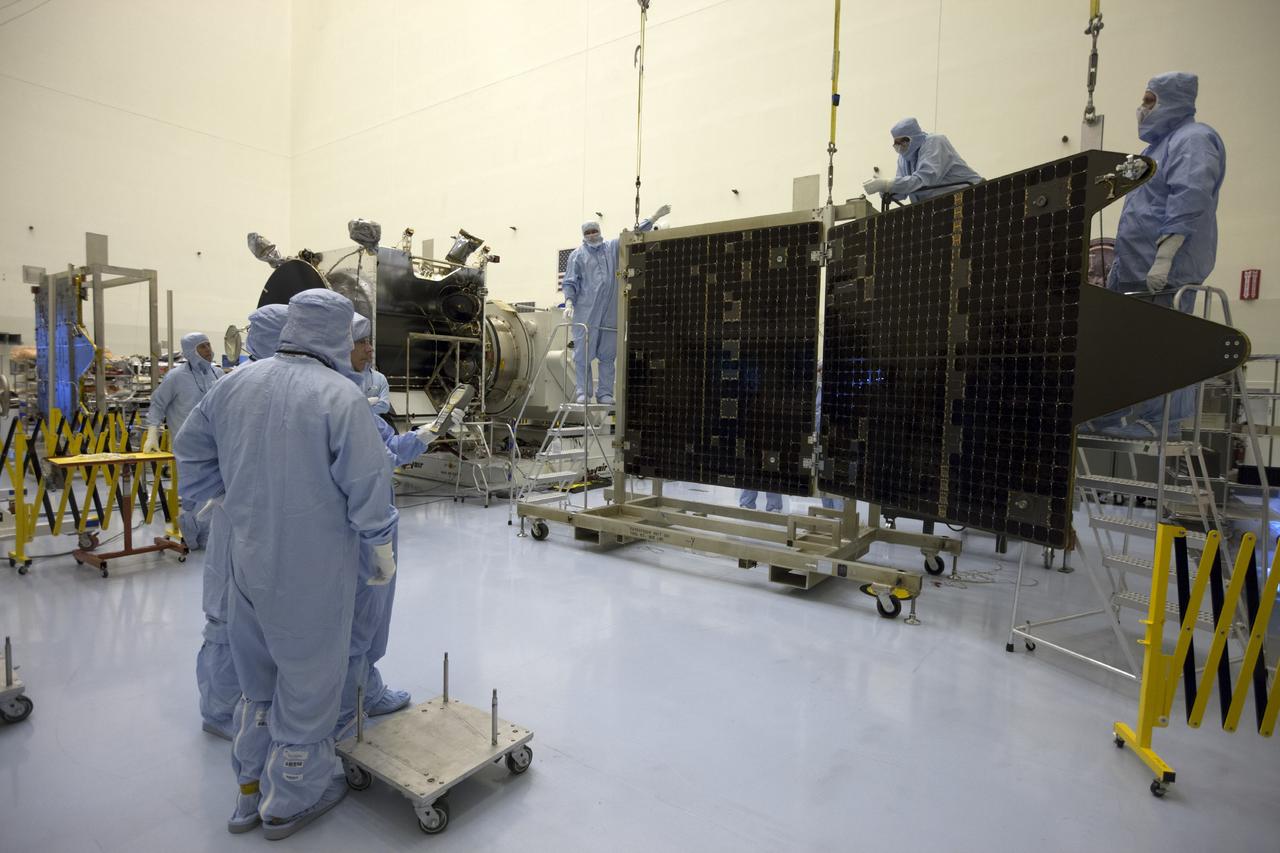
CAPE CANAVERAL, Fla. – Inside the Payload Hazardous Servicing Facility at NASA's Kennedy Space Center in Florida, engineers and technicians reattach twin solar arrays to the Mars Atmosphere and Volatile Evolution, or MAVEN, spacecraft following inspection and testing. MAVEN is being prepared for its scheduled launch in November from Cape Canaveral Air Force Station, Fla. atop a United Launch Alliance Atlas V rocket. Positioned in an orbit above the Red Planet, MAVEN will study the upper atmosphere of Mars in unprecedented detail. For more information, visit: http://www.nasa.gov/mission_pages/maven/main/index.html Photo credit: NASA/Kim Shiflett

CAPE CANAVERAL, Fla. – Inside the Payload Hazardous Servicing Facility at NASA's Kennedy Space Center in Florida, Dr. Ellen Stofan, NASA's chief scientist, speaks to members of the news media. The Mars Atmosphere and Volatile Evolution, or MAVEN, spacecraft is in the background following encapsulation in its payload fairing. MAVEN is being prepared for its scheduled launch on Nov 18, 2013 from Cape Canaveral Air Force Station, Fla. atop a United Launch Alliance Atlas V rocket. Positioned in an orbit above the Red Planet, MAVEN will study the upper atmosphere of Mars in unprecedented detail. For more information, visit: http://www.nasa.gov/mission_pages/maven/main/index.html Photo credit: NASA/Kim Shiflett
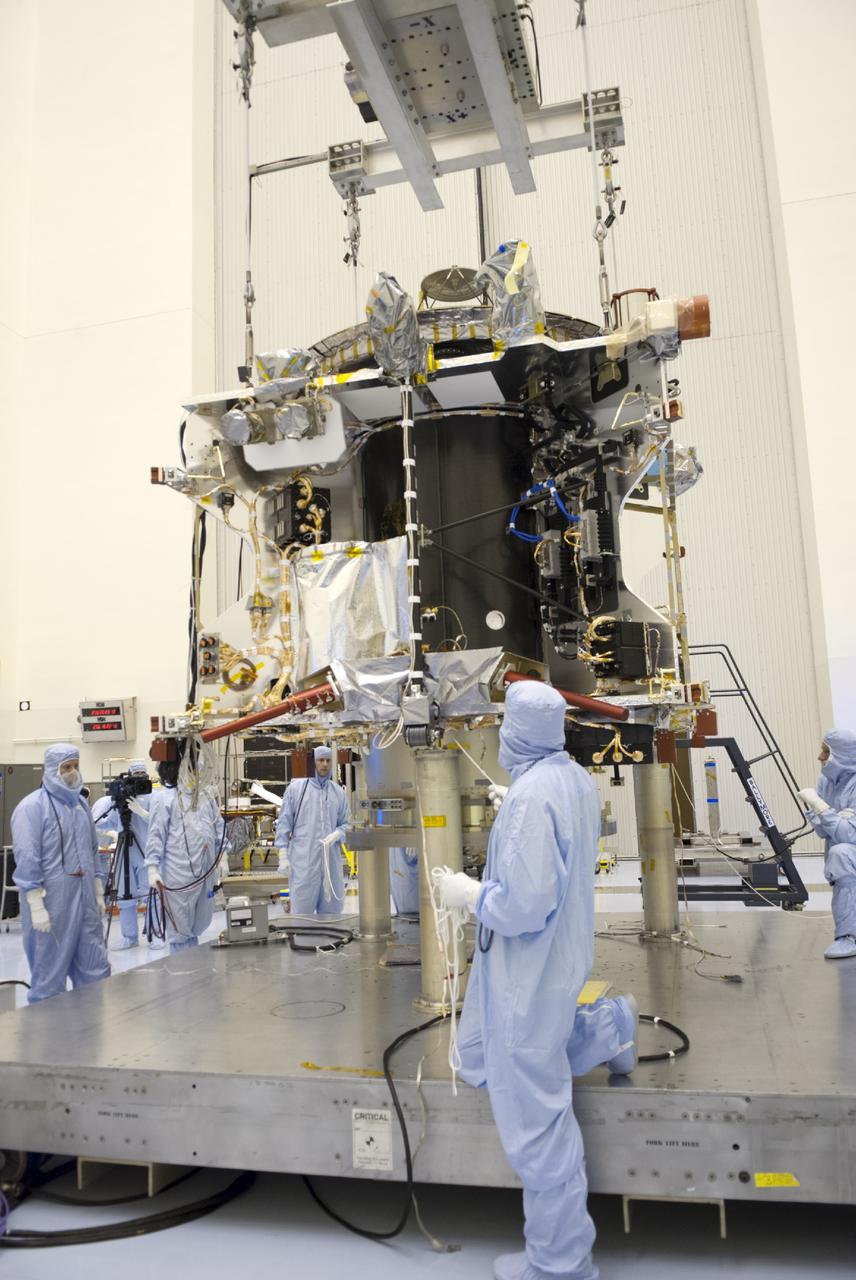
CAPE CANAVERAL, Fla. – Inside the Payload Hazardous Servicing Facility at NASA's Kennedy Space Center in Florida, engineers and technicians use a crane to move the Mars Atmosphere and Volatile Evolution, or MAVEN, spacecraft from a work fixture to a tilt and rotation stand for further pre-flight processing. MAVEN is being prepared for its scheduled launch in November from Cape Canaveral Air Force Station, Fla. atop a United Launch Alliance Atlas V rocket. Positioned in an orbit above the Red Planet, MAVEN will study the upper atmosphere of Mars in unprecedented detail. For more information, visit: http://www.nasa.gov/mission_pages/maven/main/index.html Photo credit: NASA/ Charisse Nahser
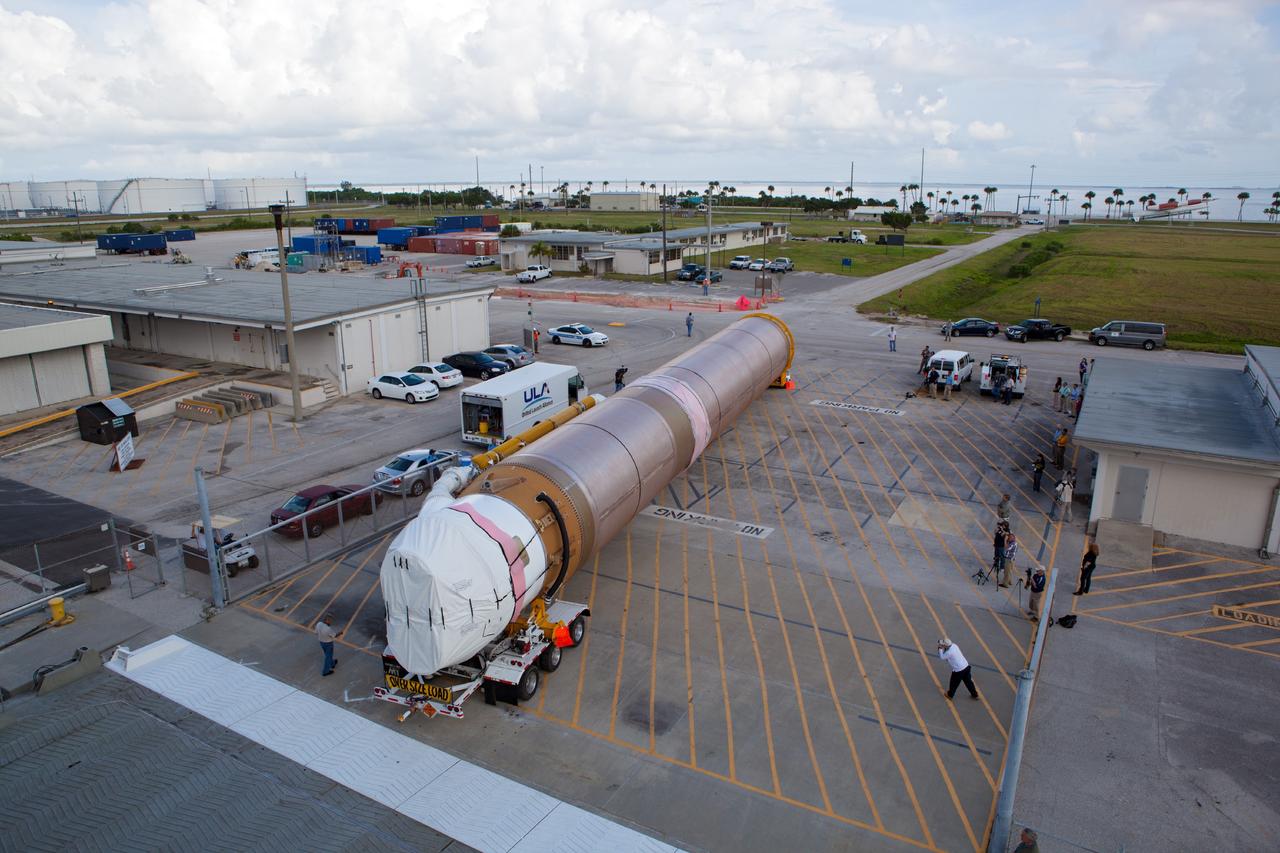
PORT CANAVERAL, Fla. – An Atlas V rocket is off loaded from the United Launch Alliance barge Delta Mariner that just arrived at Port Canaveral, Fla. The launch vehicle will boost the Mars Atmosphere and Volatile Evolution, or MAVEN, spacecraft to the Red Planet. The rocket will be transported to the Atlas Spaceflight Operations Center, or ASOC, at Cape Canaveral Air Force Station to begin processing. MAVEN is being prepared for its scheduled launch in November from Cape Canaveral Air Force Station, Fla. atop a United Launch Alliance Atlas V rocket. Positioned in an orbit above the Red Planet, MAVEN will study the upper atmosphere of Mars in unprecedented detail. For more information, visit: http://www.nasa.gov/mission_pages/maven/main/index.html Photo credit: NASA/ Dimitri Gerondidakis
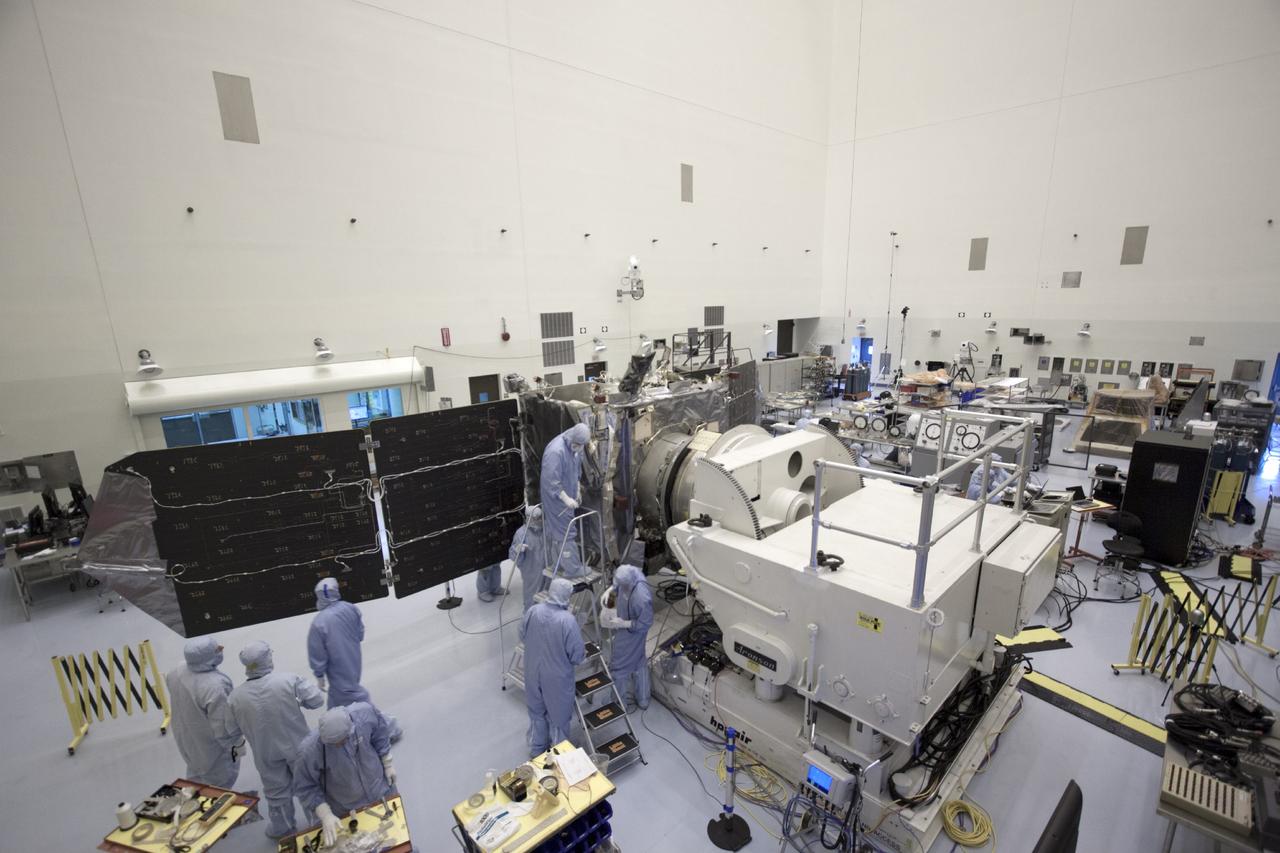
CAPE CANAVERAL, Fla. – Inside the Payload Hazardous Servicing Facility at NASA's Kennedy Space Center in Florida, engineers and technicians have begun the process to stow the power-generating solar arrays for the Mars Atmosphere and Volatile Evolution, or MAVEN, spacecraft. MAVEN is being prepared for its scheduled launch on Nov 18, 2013 from Cape Canaveral Air Force Station, Fla. atop a United Launch Alliance Atlas V rocket. Positioned in an orbit above the Red Planet, MAVEN will study the upper atmosphere of Mars in unprecedented detail. For more information, visit: http://www.nasa.gov/mission_pages/maven/main/index.html Photo credit: NASA/Jim Grossmann
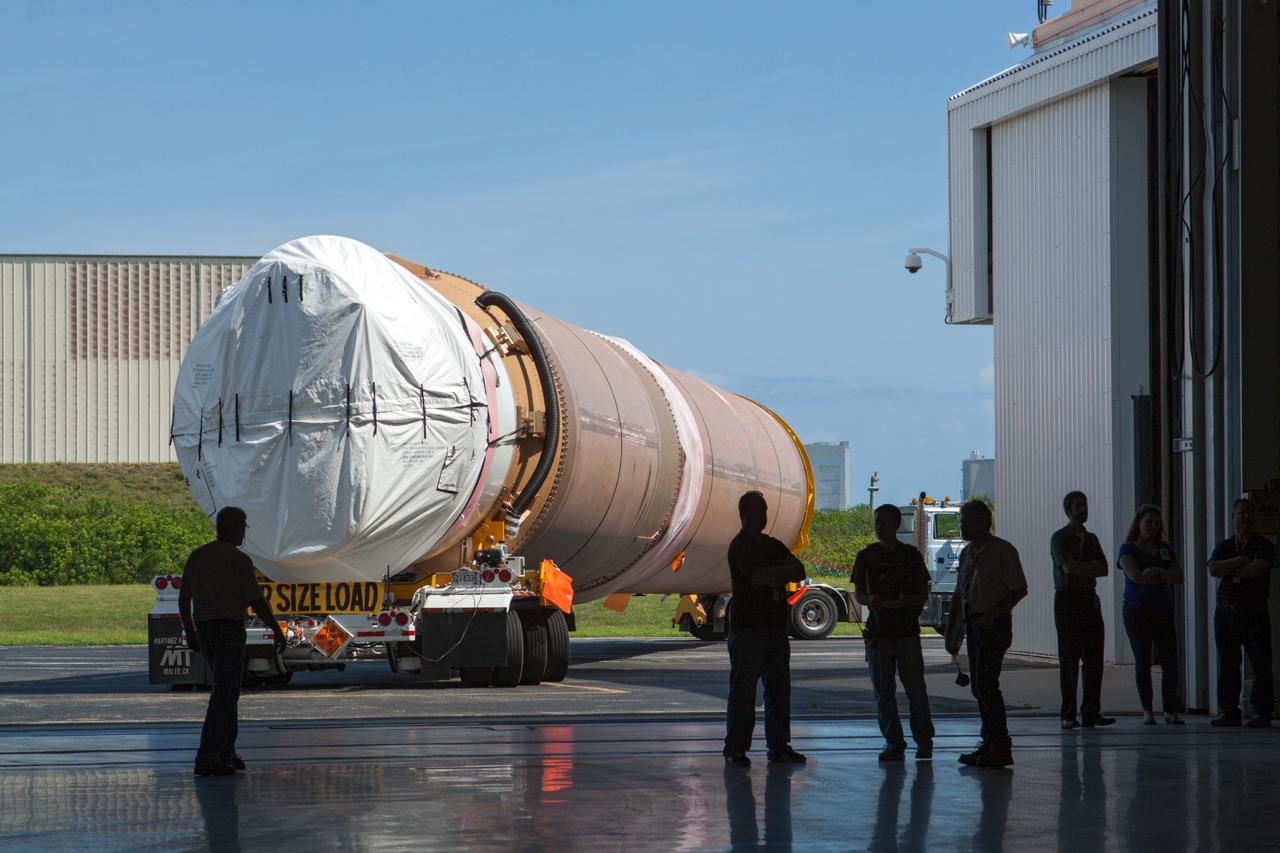
CAPE CANAVERAL, Fla. – United Launch Alliance Atlas V rocket first and second stages arrive at to the Atlas Spaceflight Operations Center, or ASOC, at Cape Canaveral Air Force Station. There, the launch vehicle will begin processing for the Mars Atmosphere and Volatile Evolution, or MAVEN, spacecraft to the Red Planet. MAVEN is being prepared for its scheduled launch in November from Cape Canaveral Air Force Station, Fla. atop a United Launch Alliance Atlas V rocket. Positioned in an orbit above the Red Planet, MAVEN will study the upper atmosphere of Mars in unprecedented detail. For more information, visit: http://www.nasa.gov/mission_pages/maven/main/index.html Photo credit: NASA/Kim Shiflett
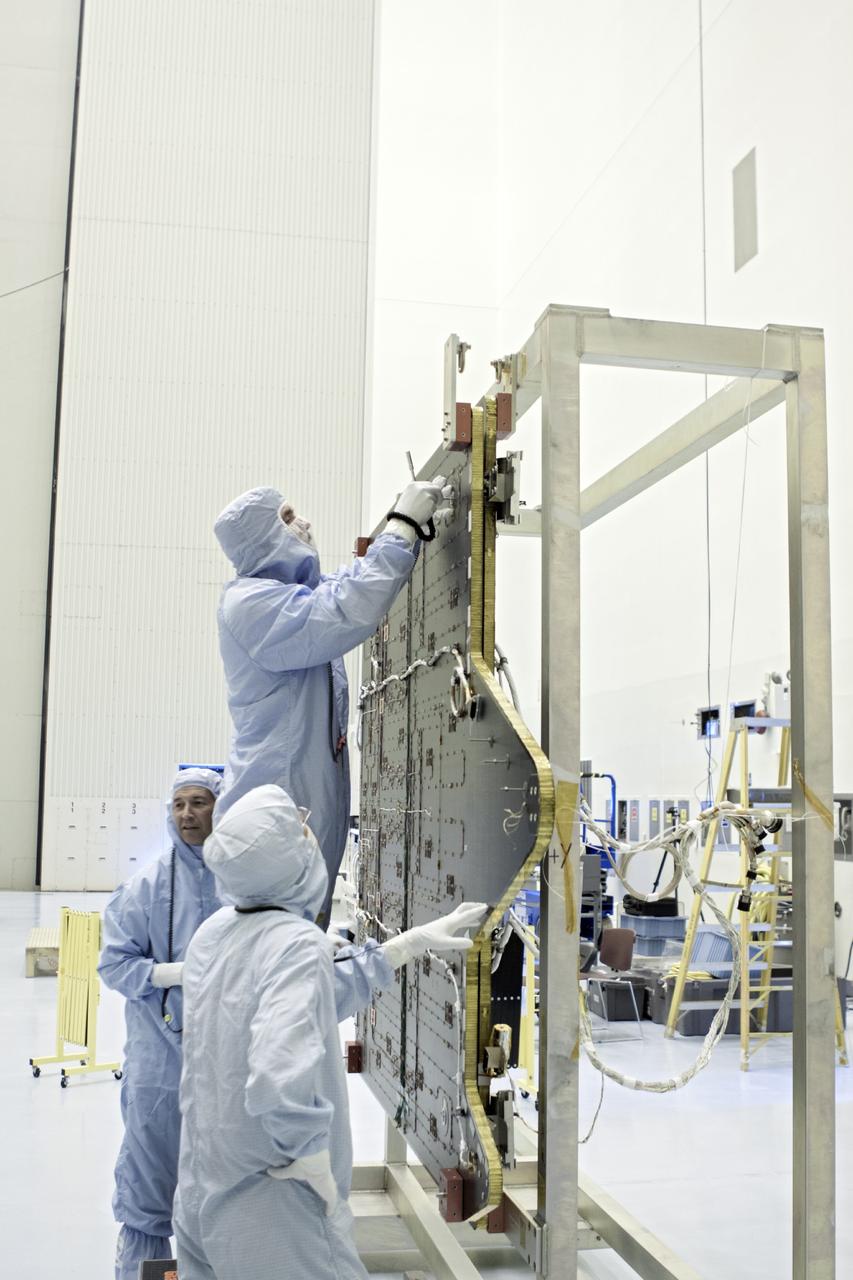
CAPE CANAVERAL, Fla. – Inside the Payload Hazardous Servicing Facility at NASA's Kennedy Space Center in Florida, technicians clean the electricity-producing solar arrays for the Mars Atmosphere and Volatile Evolution, or MAVEN, spacecraft. MAVEN is being prepared for its scheduled launch in November from Cape Canaveral Air Force Station, Fla. atop a United Launch Alliance Atlas V rocket. Positioned in an orbit above the Red Planet, MAVEN will study the upper atmosphere of Mars in unprecedented detail. For more information, visit: http://www.nasa.gov/mission_pages/maven/main/index.html Photo credit: NASA/ Jim Grossmann
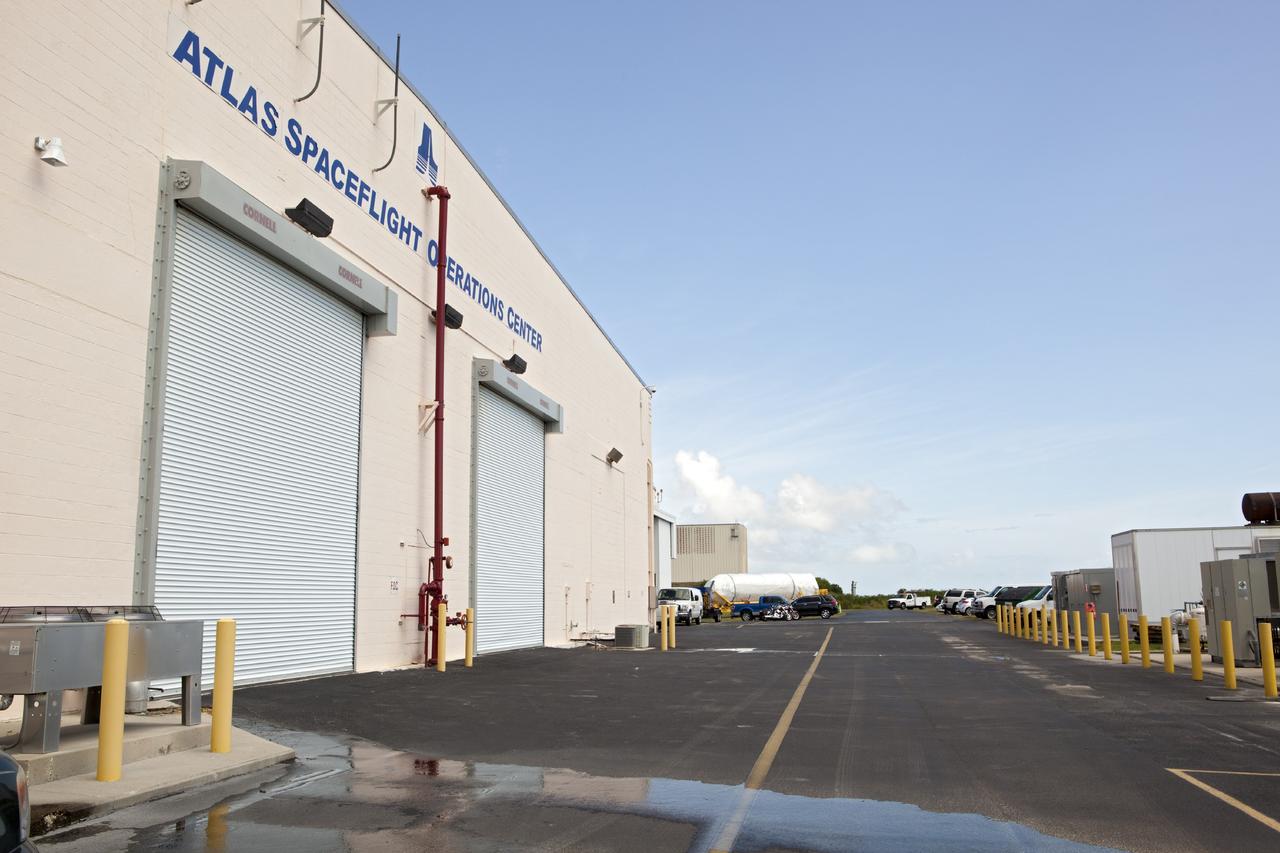
CAPE CANAVERAL, Fla. – United Launch Alliance Atlas V rocket first and second stages arrive at the Atlas Spaceflight Operations Center, or ASOC, at Cape Canaveral Air Force Station, Fla., to begin processing for the Mars Atmosphere and Volatile Evolution, or MAVEN, spacecraft to the Red Planet. MAVEN is being prepared for its scheduled launch in November from Cape Canaveral Air Force Station, Fla. atop a United Launch Alliance Atlas V rocket. Positioned in an orbit above the Red Planet, MAVEN will study the upper atmosphere of Mars in unprecedented detail. For more information, visit: http://www.nasa.gov/mission_pages/maven/main/index.html Photo credit: NASA/ Dimitri Gerondidakis
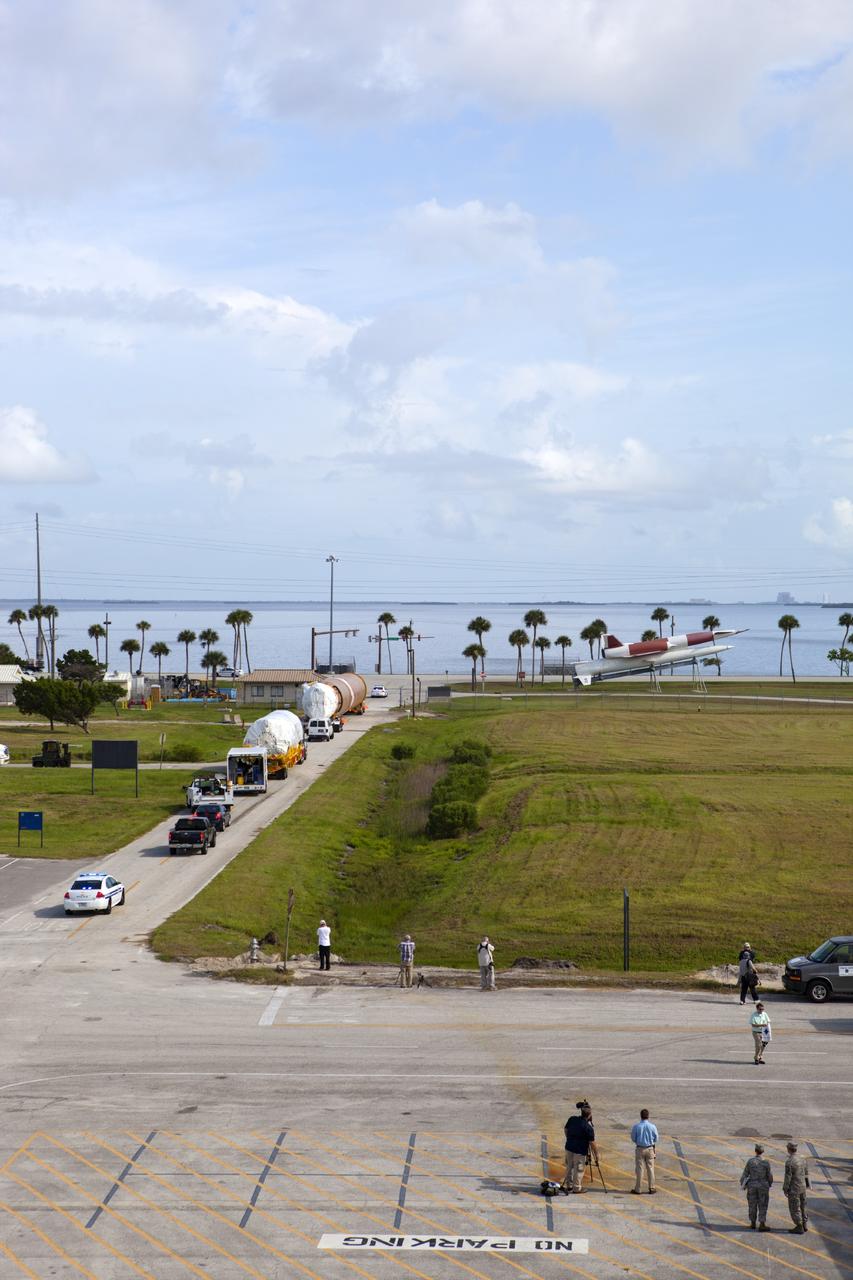
PORT CANAVERAL, Fla. – The Atlas V rocket first and second stages are off loaded from the United Launch Alliance barge Delta Mariner that just arrived at Port Canaveral, Fla. The launch vehicle will boost the Mars Atmosphere and Volatile Evolution, or MAVEN, spacecraft to the Red Planet. The rocket will be transported to the Atlas Spaceflight Operations Center, or ASOC, at Cape Canaveral Air Force Station to begin processing. MAVEN is being prepared for its scheduled launch in November from Cape Canaveral Air Force Station, Fla. atop a United Launch Alliance Atlas V rocket. Positioned in an orbit above the Red Planet, MAVEN will study the upper atmosphere of Mars in unprecedented detail. For more information, visit: http://www.nasa.gov/mission_pages/maven/main/index.html Photo credit: NASA/ Dimitri Gerondidakis
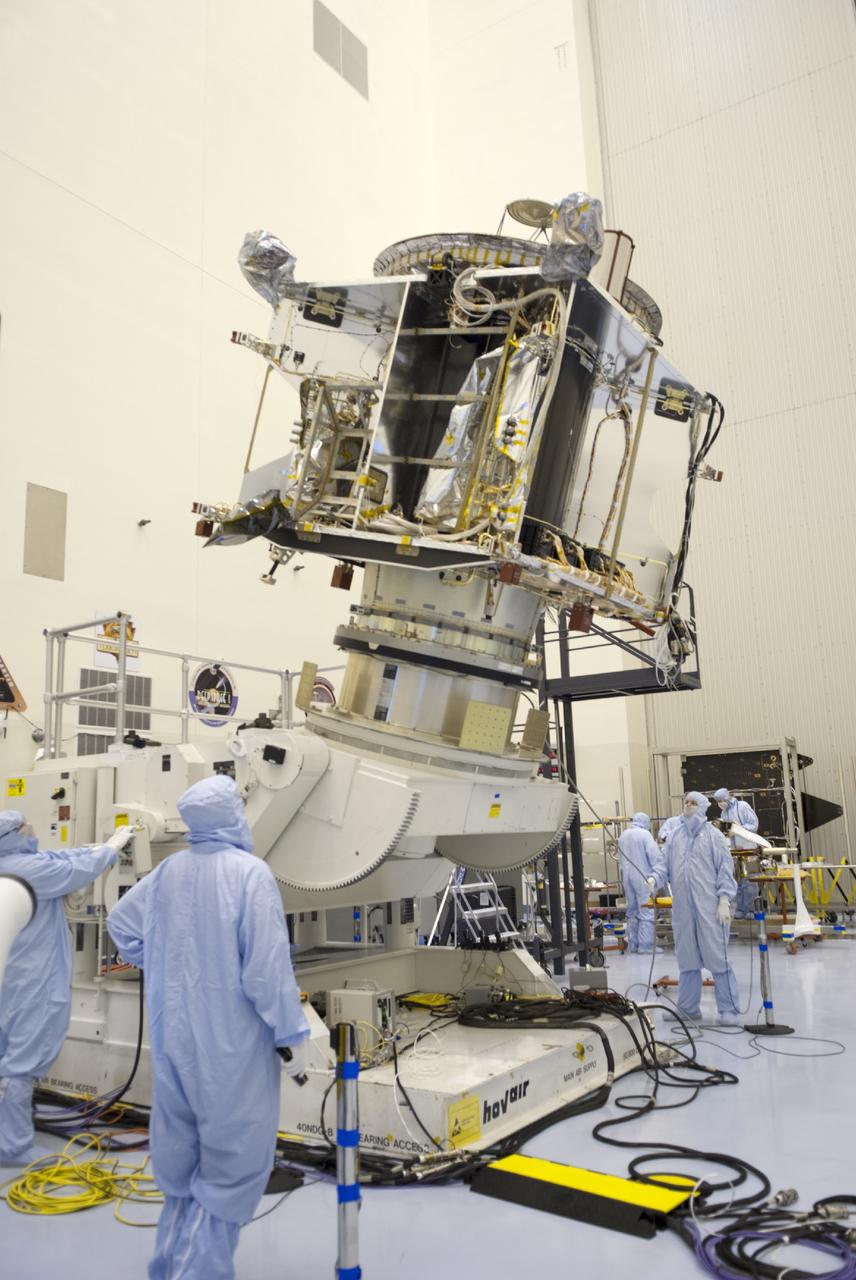
CAPE CANAVERAL, Fla. – Inside the Payload Hazardous Servicing Facility at NASA's Kennedy Space Center in Florida, engineers and technicians move the Mars Atmosphere and Volatile Evolution, or MAVEN, spacecraft into position on a tilt and rotation stand for further pre-flight processing. MAVEN is being prepared for its scheduled launch in November from Cape Canaveral Air Force Station, Fla. atop a United Launch Alliance Atlas V rocket. Positioned in an orbit above the Red Planet, MAVEN will study the upper atmosphere of Mars in unprecedented detail. For more information, visit: http://www.nasa.gov/mission_pages/maven/main/index.html Photo credit: NASA/ Charisse Nahser
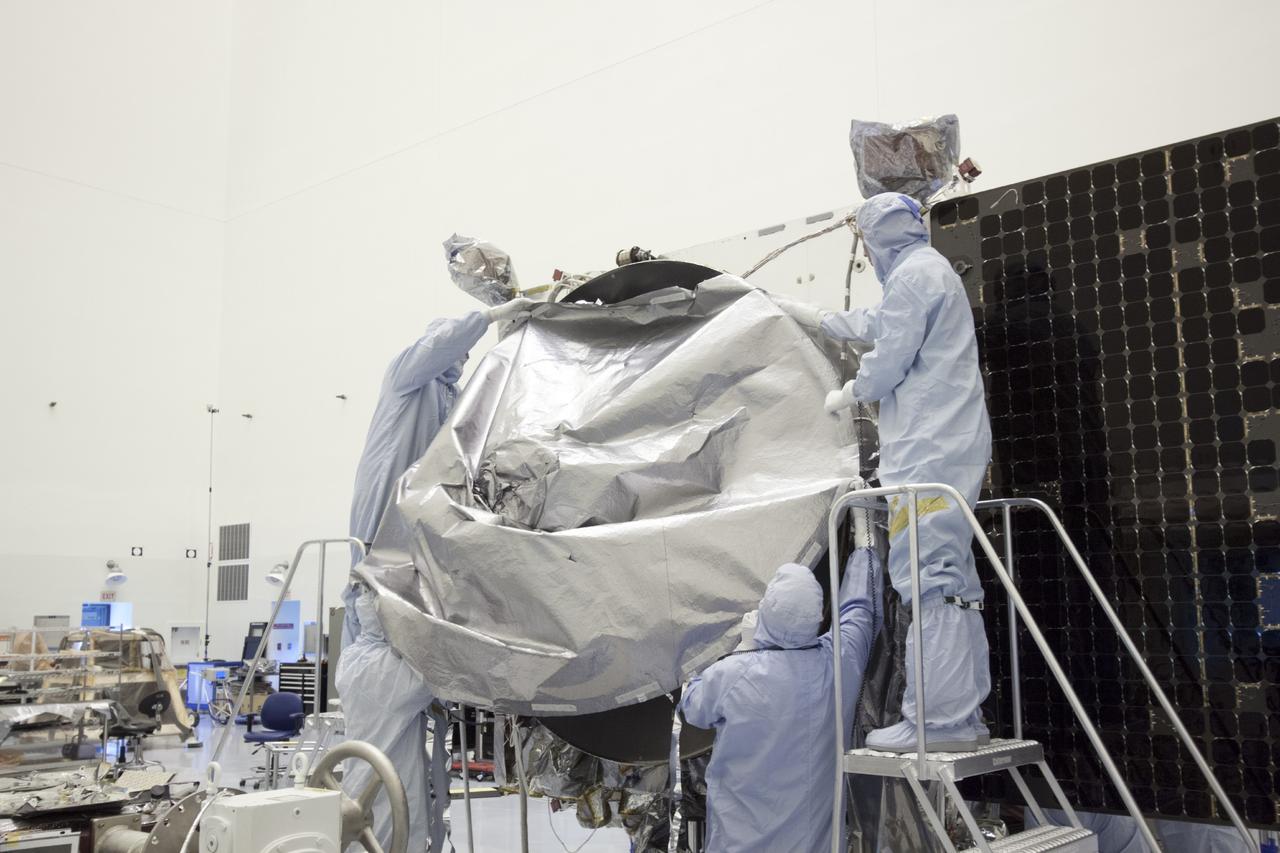
CAPE CANAVERAL, Fla. – Inside the Payload Hazardous Servicing Facility at NASA's Kennedy Space Center in Florida, engineers and technicians install a radome over the antenna for the Mars Atmosphere and Volatile Evolution, or MAVEN, spacecraft. The radome is a coated kapton cover providing thermal protection for the high gain antenna while not interfering with radio frequency transmissions from the spacecraft. MAVEN is being prepared for its scheduled launch in November from Cape Canaveral Air Force Station, Fla. atop a United Launch Alliance Atlas V rocket. Positioned in an orbit above the Red Planet, MAVEN will study the upper atmosphere of Mars in unprecedented detail. For more information, visit: http://www.nasa.gov/mission_pages/maven/main/index.html Photo credit: NASA/Jim Grossmann
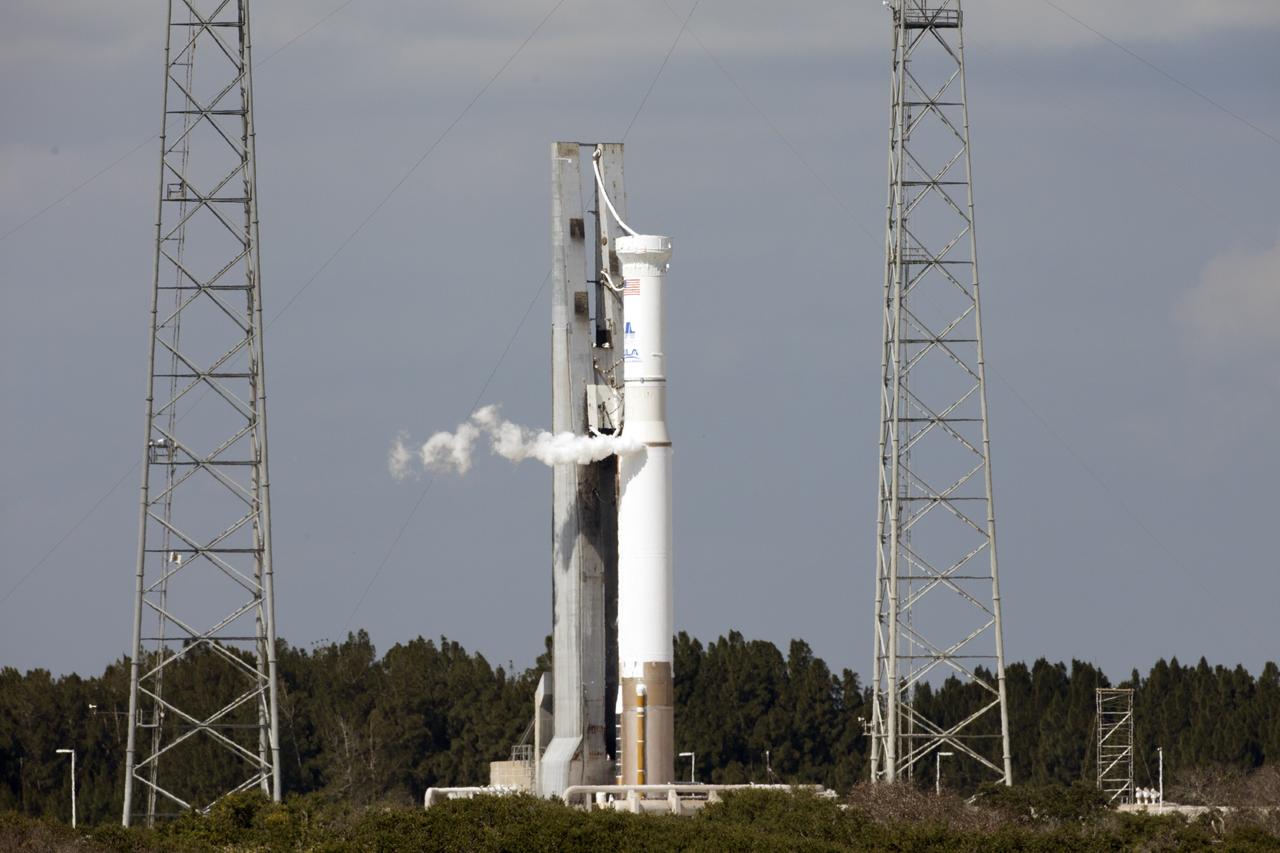
CAPE CANAVERAL, Fla. – The United Launch Alliance Atlas V rocket stands at Launch Complex 41 on Cape Canaveral Air Force Station in Florida during a "wet dress rehearsal." The test called for the launch vehicle to be fully loaded with propellants and put through a countdown procedure, ending just before the T-0 mark. The spacecraft is undergoing prelaunch processing activities in the Kennedy Space Center's Payload Hazardous Servicing Facility and was not atop the rocket for this rehearsal. The Atlas V rocket is slated to launch the Mars Atmosphere and Volatile Evolution, or MAVEN, spacecraft on a journey to the Red Planet on Nov. 18. The spacecraft is undergoing prelaunch processing activities in the Kennedy Space Center's Payload Hazardous Servicing Facility and was not atop the rocket for this rehearsal. Positioned in an orbit above the Red Planet, MAVEN will study the upper atmosphere of Mars in unprecedented detail. For more information, visit: http://www.nasa.gov/mission_pages/maven/main/index.html Photo credit: NASA/Daniel Cooper
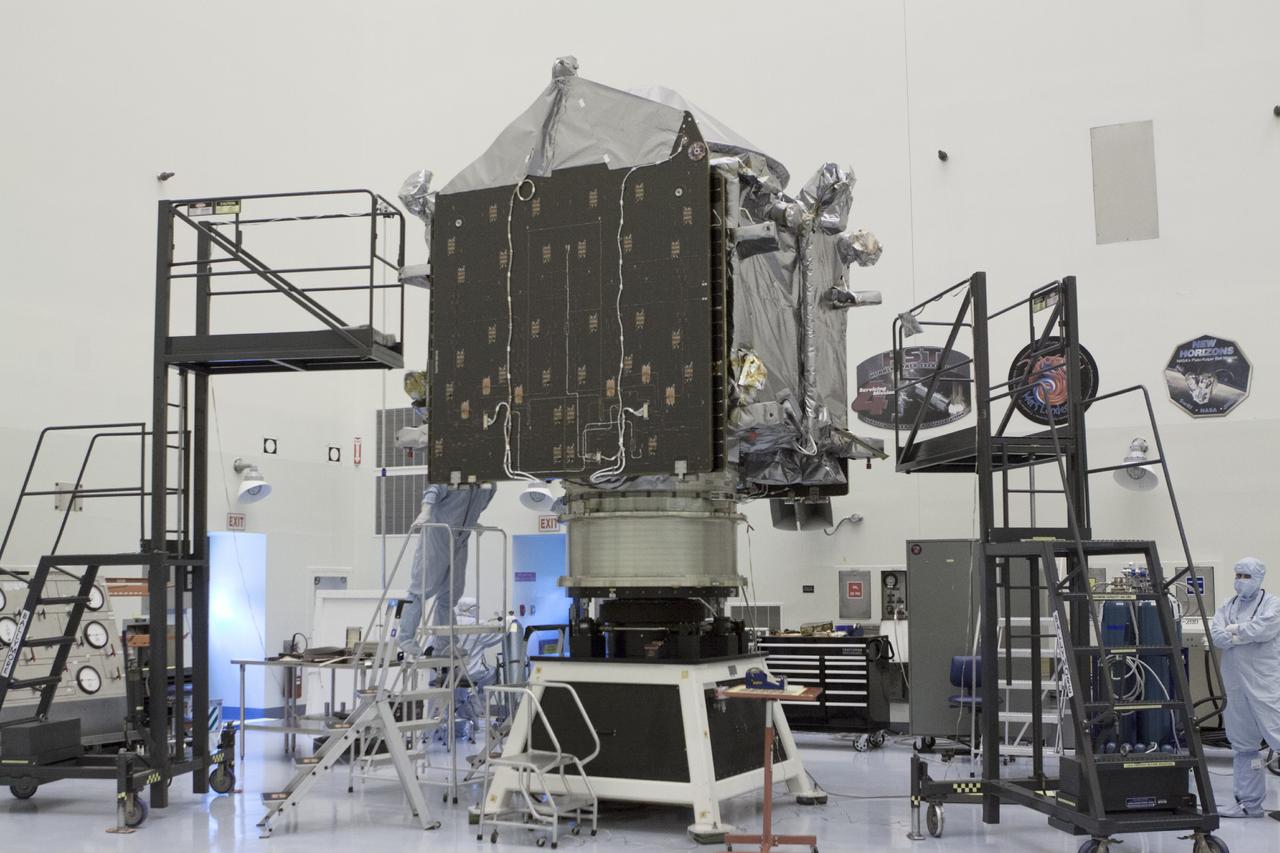
CAPE CANAVERAL, Fla. – Inside the Payload Hazardous Servicing Facility at NASA's Kennedy Space Center in Florida, engineers and technicians prepare for a spin test of the Mars Atmosphere and Volatile Evolution, or MAVEN, spacecraft. The operation is designed to verify that MAVEN is properly balanced as it spins during the initial mission activities. MAVEN is being prepared for its scheduled launch on Nov 18, 2013 from Cape Canaveral Air Force Station, Fla. atop a United Launch Alliance Atlas V rocket. Positioned in an orbit above the Red Planet, MAVEN will study the upper atmosphere of Mars in unprecedented detail. For more information, visit: http://www.nasa.gov/mission_pages/maven/main/index.html Photo credit: NASA/Kim Shiflett
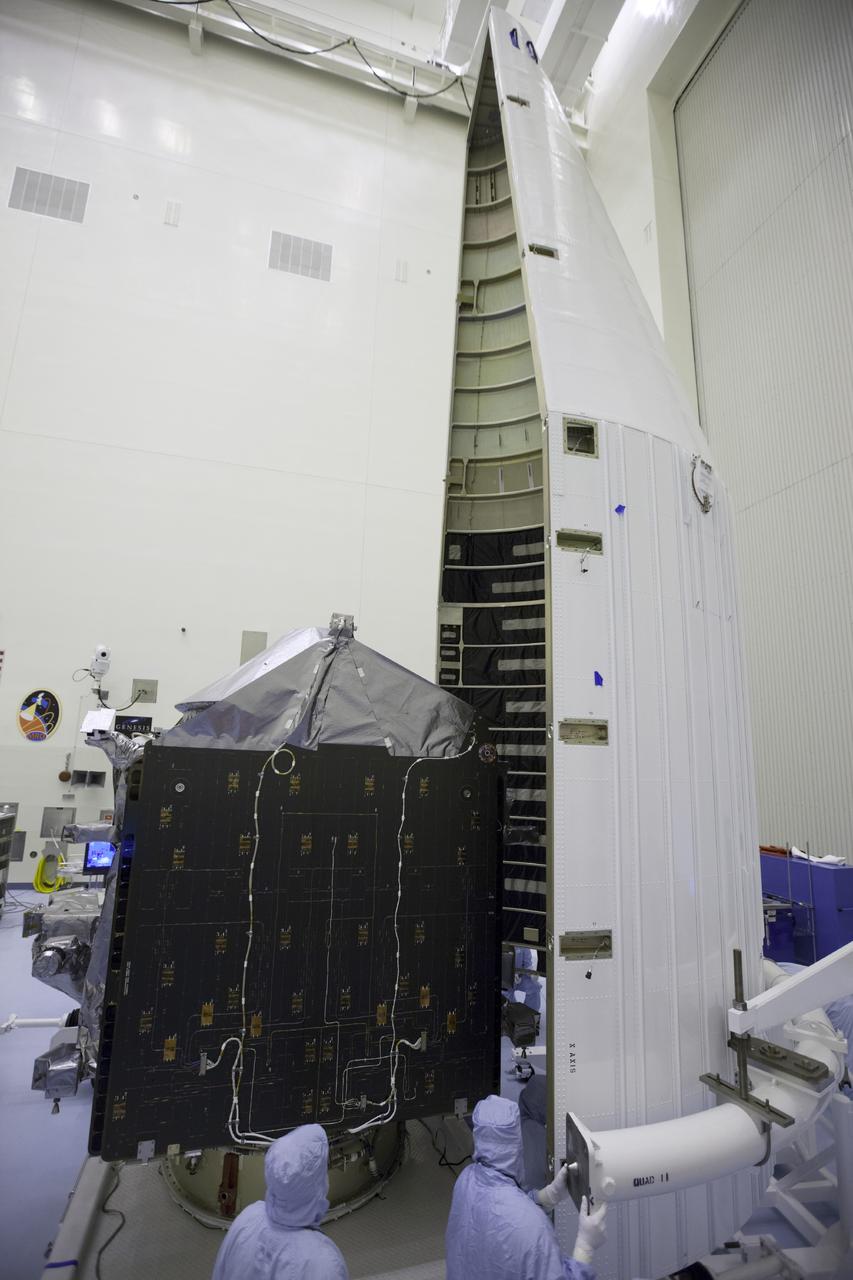
CAPE CANAVERAL, Fla. – Inside the Payload Hazardous Servicing Facility at NASA's Kennedy Space Center in Florida, engineers and technicians begin encapsulation of the Mars Atmosphere and Volatile Evolution, or MAVEN, spacecraft inside its payload fairing. MAVEN is being prepared for its scheduled launch on Nov 18, 2013 from Cape Canaveral Air Force Station, Fla. atop a United Launch Alliance Atlas V rocket. Positioned in an orbit above the Red Planet, MAVEN will study the upper atmosphere of Mars in unprecedented detail. For more information, visit: http://www.nasa.gov/mission_pages/maven/main/index.html Photo credit: NASA/Kim Shiflett
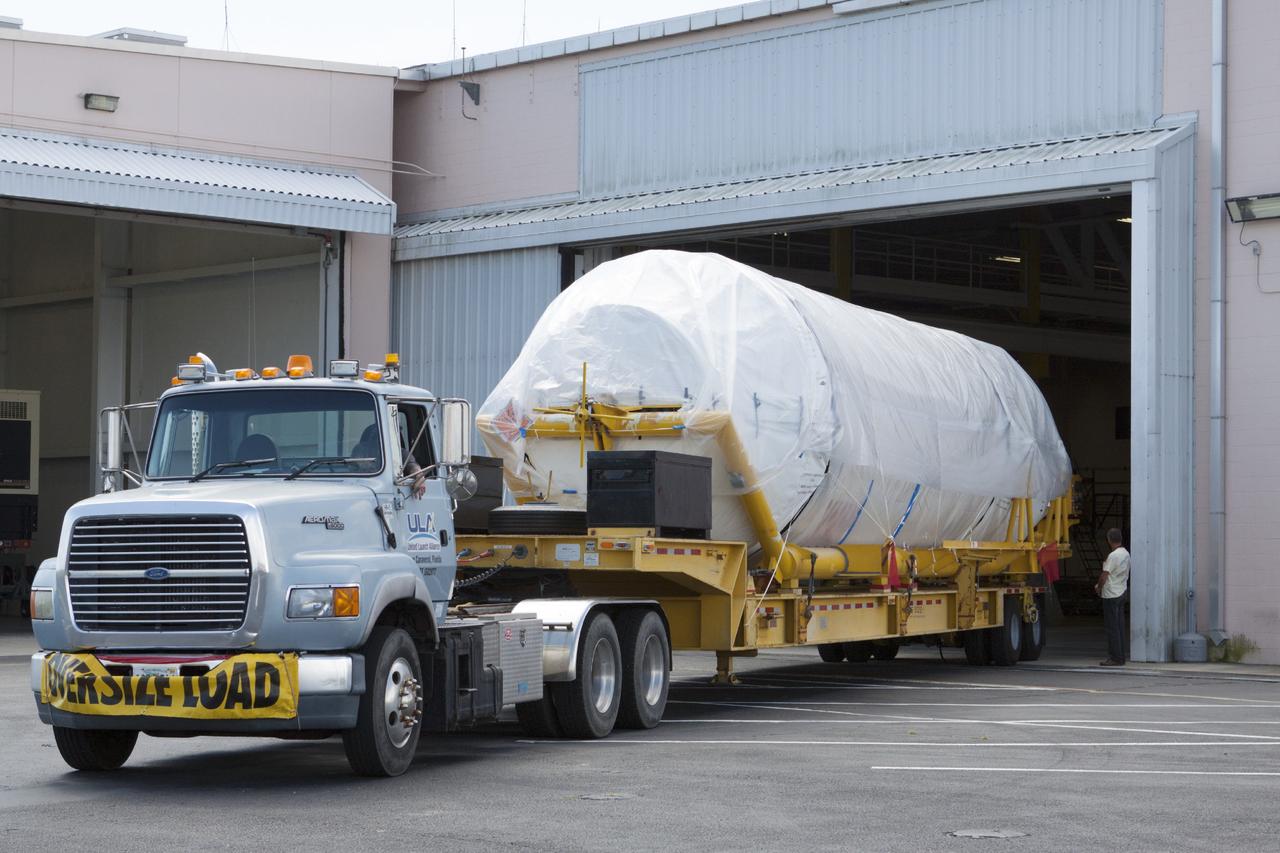
CAPE CANAVERAL, Fla. – United Launch Alliance Atlas V rocket first and second stages arrive at to the Atlas Spaceflight Operations Center, or ASOC, at Cape Canaveral Air Force Station. There, the launch vehicle will begin processing for the Mars Atmosphere and Volatile Evolution, or MAVEN, spacecraft to the Red Planet. MAVEN is being prepared for its scheduled launch in November from Cape Canaveral Air Force Station, Fla. atop a United Launch Alliance Atlas V rocket. Positioned in an orbit above the Red Planet, MAVEN will study the upper atmosphere of Mars in unprecedented detail. For more information, visit: http://www.nasa.gov/mission_pages/maven/main/index.html Photo credit: NASA/Kim Shiflett
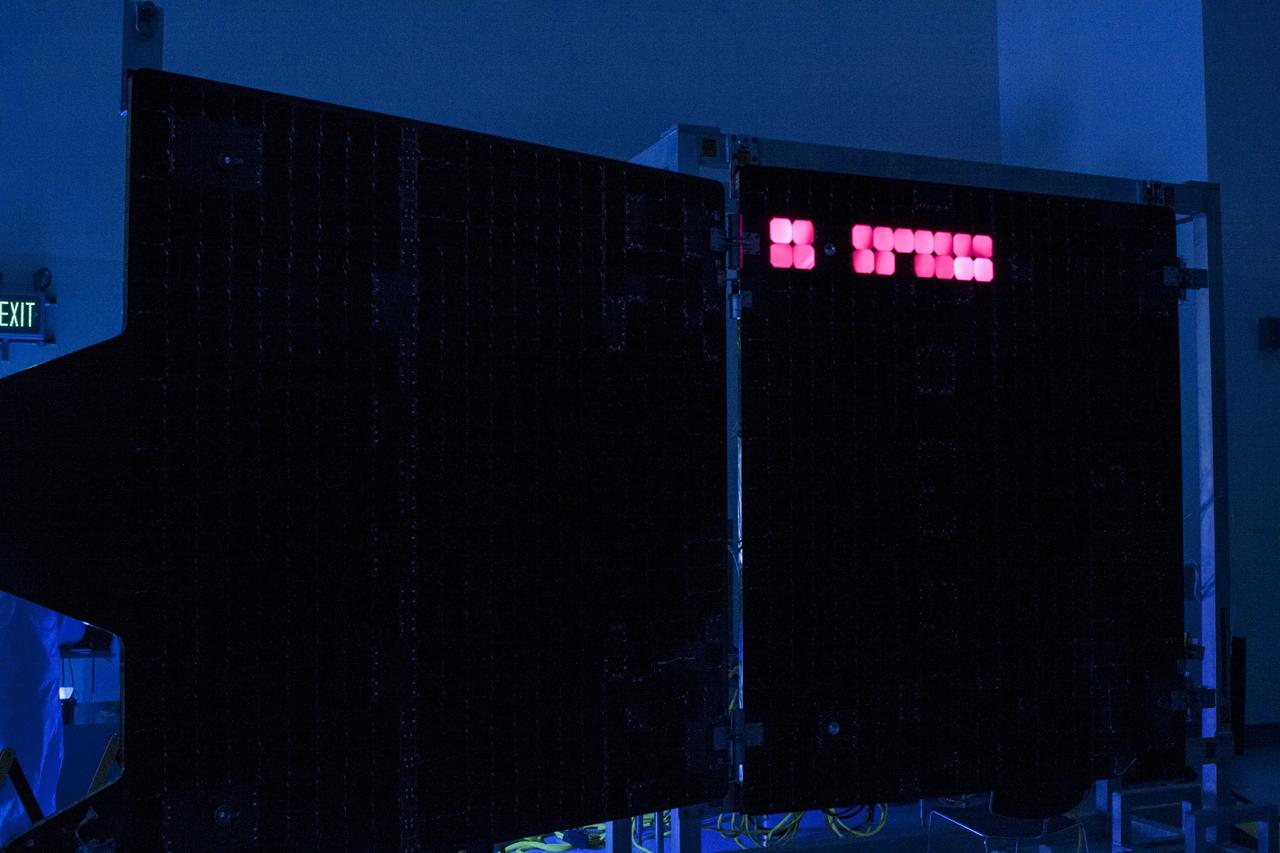
CAPE CANAVERAL, Fla. – Inside the Payload Hazardous Servicing Facility at NASA's Kennedy Space Center in Florida, illumination testing is underway on the electricity-producing solar arrays for the Mars Atmosphere and Volatile Evolution, or MAVEN, spacecraft. MAVEN is being prepared for its scheduled launch in November from Cape Canaveral Air Force Station, Fla. atop a United Launch Alliance Atlas V rocket. Positioned in an orbit above the Red Planet, MAVEN will study the upper atmosphere of Mars in unprecedented detail. For more information, visit: http://www.nasa.gov/mission_pages/maven/main/index.html Photo credit: NASA/ Jim Grossmann

CAPE CANAVERAL, Fla. – During a news conference at NASA's Kennedy Space Center in Florida, agency and contractor officials discussed preparations for the launch of the Mars Atmosphere and Volatile EvolutioN, or MAVEN, mission. Participating in the briefing is Clay Flinn, launch weather officer, 45th Weather Squadron at Cape Canaveral Air Force Station, Fla. MAVEN is being prepared for its scheduled launch on Nov 18, 2013 from Cape Canaveral Air Force Station, Fla. atop a United Launch Alliance Atlas V rocket. Positioned in an orbit above the Red Planet, MAVEN will study the upper atmosphere of Mars in unprecedented detail. For information on the MAVEN mission, visit: http://www.nasa.gov/mission_pages/maven/main/index.html. Photo credit: NASA MAVEN is being prepared for its scheduled launch on Nov 18, 2013 from Cape Canaveral Air Force Station, Fla. atop a United Launch Alliance Atlas V rocket. Positioned in an orbit above the Red Planet, MAVEN will study the upper atmosphere of Mars in unprecedented detail. For more information, visit: http://www.nasa.gov/mission_pages/maven/main/index.html Photo credit: NASA/Kim Shiflett
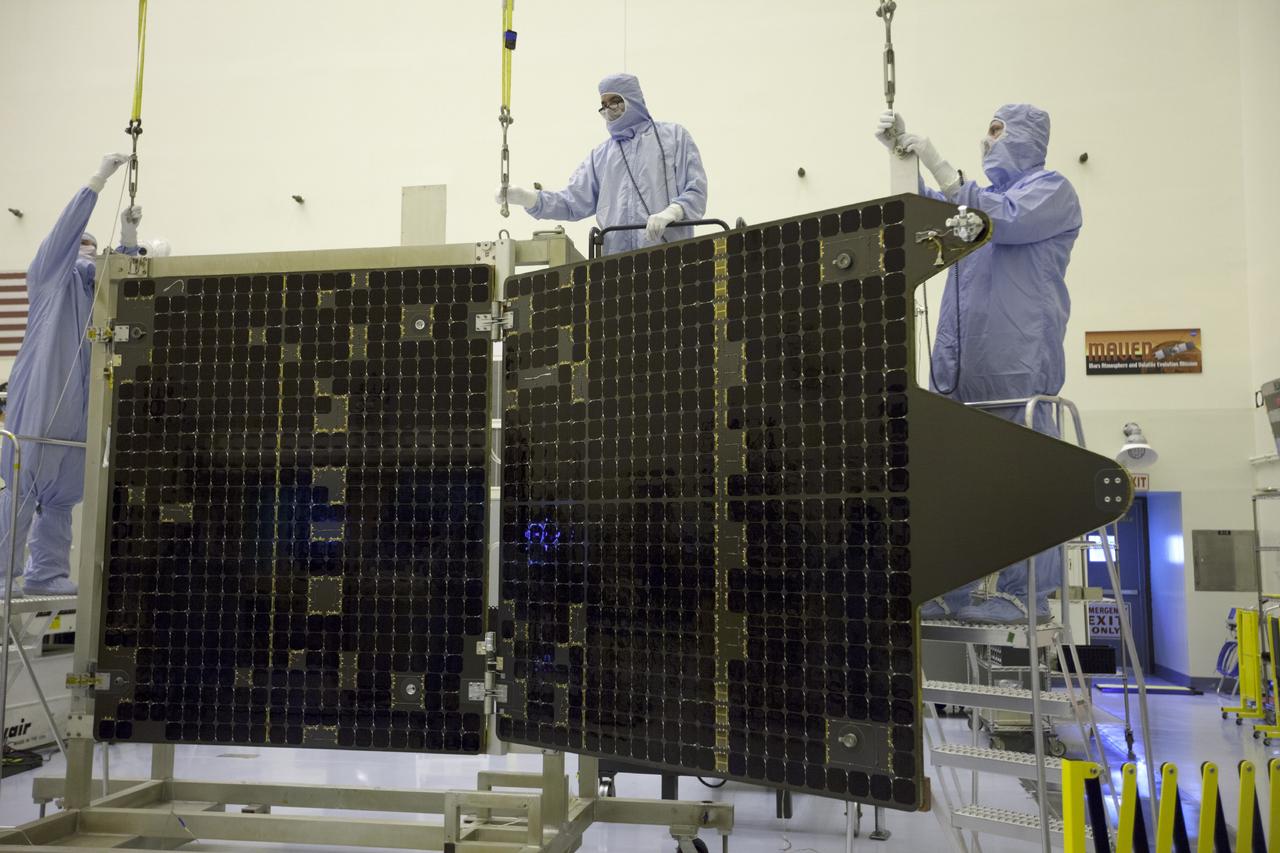
CAPE CANAVERAL, Fla. – Inside the Payload Hazardous Servicing Facility at NASA's Kennedy Space Center in Florida, engineers and technicians prepare to reattach twin solar arrays to the Mars Atmosphere and Volatile Evolution, or MAVEN, spacecraft following inspection and testing. MAVEN is being prepared for its scheduled launch in November from Cape Canaveral Air Force Station, Fla. atop a United Launch Alliance Atlas V rocket. Positioned in an orbit above the Red Planet, MAVEN will study the upper atmosphere of Mars in unprecedented detail. For more information, visit: http://www.nasa.gov/mission_pages/maven/main/index.html Photo credit: NASA/Kim Shiflett

CAPE CANAVERAL, Fla. – During a news conference at NASA's Kennedy Space Center in Florida, agency and contractor officials discussed preparations for the launch of the Mars Atmosphere and Volatile EvolutioN, or MAVEN, mission. Participating in the briefing are David Mitchell, NASA's MAVEN project manager at the Goddard Space Flight Center in Greenbelt, Md., left and Guy Beutelschies, Lockheed Martin's MAVEN project manager. MAVEN is being prepared for its scheduled launch on Nov 18, 2013 from Cape Canaveral Air Force Station, Fla. atop a United Launch Alliance Atlas V rocket. Positioned in an orbit above the Red Planet, MAVEN will study the upper atmosphere of Mars in unprecedented detail. For information on the MAVEN mission, visit: http://www.nasa.gov/mission_pages/maven/main/index.html. Photo credit: NASA MAVEN is being prepared for its scheduled launch on Nov 18, 2013 from Cape Canaveral Air Force Station, Fla. atop a United Launch Alliance Atlas V rocket. Positioned in an orbit above the Red Planet, MAVEN will study the upper atmosphere of Mars in unprecedented detail. For more information, visit: http://www.nasa.gov/mission_pages/maven/main/index.html Photo credit: NASA/Kim Shiflett
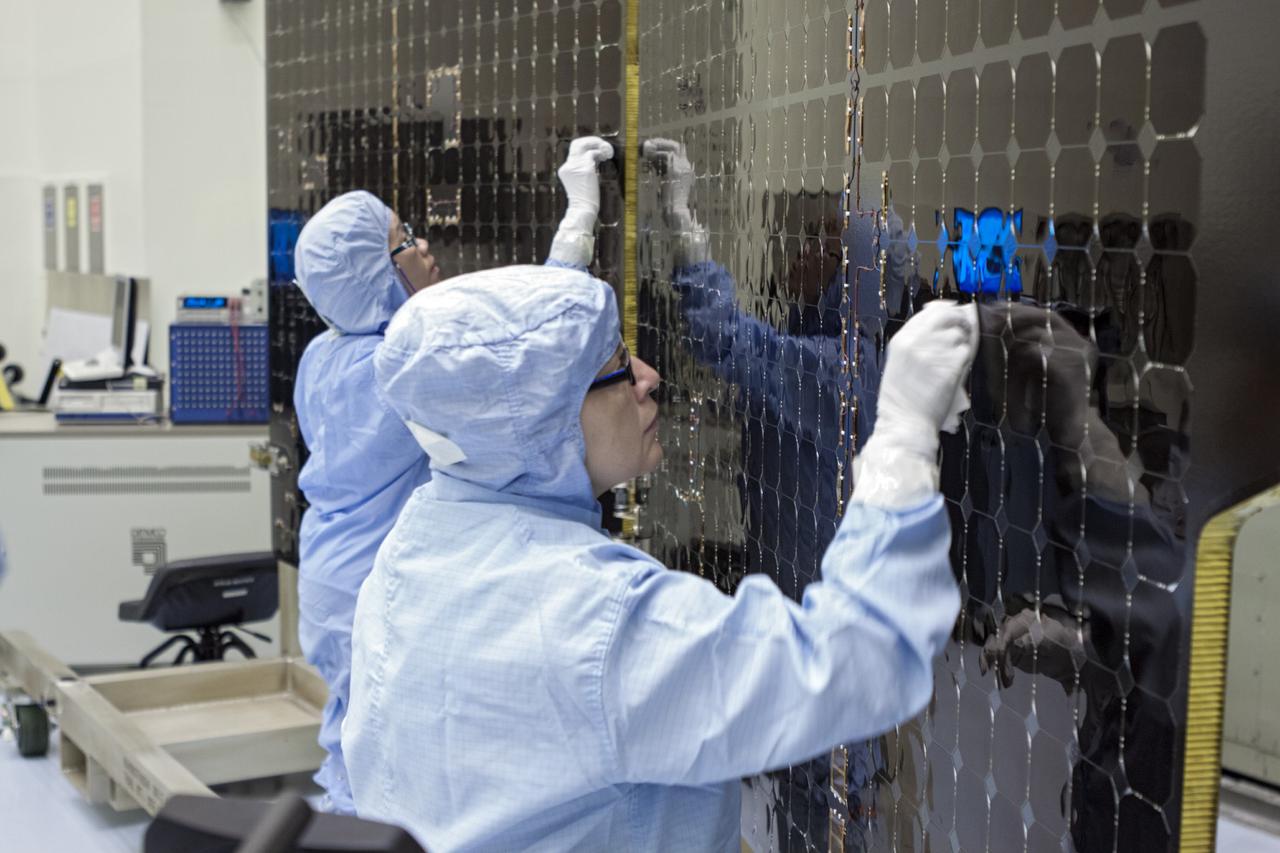
CAPE CANAVERAL, Fla. – Inside the Payload Hazardous Servicing Facility at NASA's Kennedy Space Center in Florida, technicians clean the electricity-producing solar arrays for the Mars Atmosphere and Volatile Evolution, or MAVEN, spacecraft. MAVEN is being prepared for its scheduled launch in November from Cape Canaveral Air Force Station, Fla. atop a United Launch Alliance Atlas V rocket. Positioned in an orbit above the Red Planet, MAVEN will study the upper atmosphere of Mars in unprecedented detail. For more information, visit: http://www.nasa.gov/mission_pages/maven/main/index.html Photo credit: NASA/ Jim Grossmann
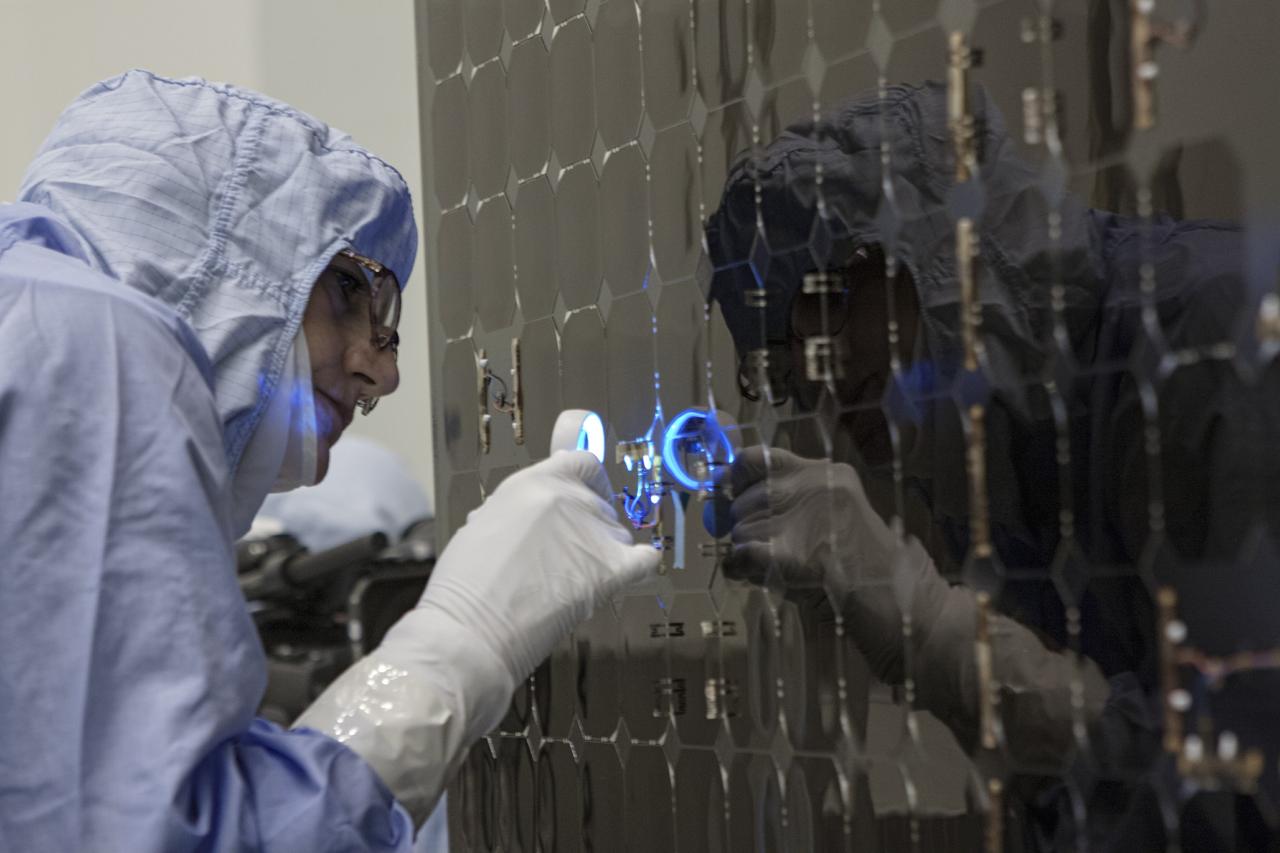
CAPE CANAVERAL, Fla. – Inside the Payload Hazardous Servicing Facility at NASA's Kennedy Space Center in Florida, a technician inspects a cell from one of the electricity-producing solar arrays for the Mars Atmosphere and Volatile Evolution, or MAVEN, spacecraft. MAVEN is being prepared for its scheduled launch in November from Cape Canaveral Air Force Station, Fla. atop a United Launch Alliance Atlas V rocket. Positioned in an orbit above the Red Planet, MAVEN will study the upper atmosphere of Mars in unprecedented detail. For more information, visit: http://www.nasa.gov/mission_pages/maven/main/index.html Photo credit: NASA/ Jim Grossmann
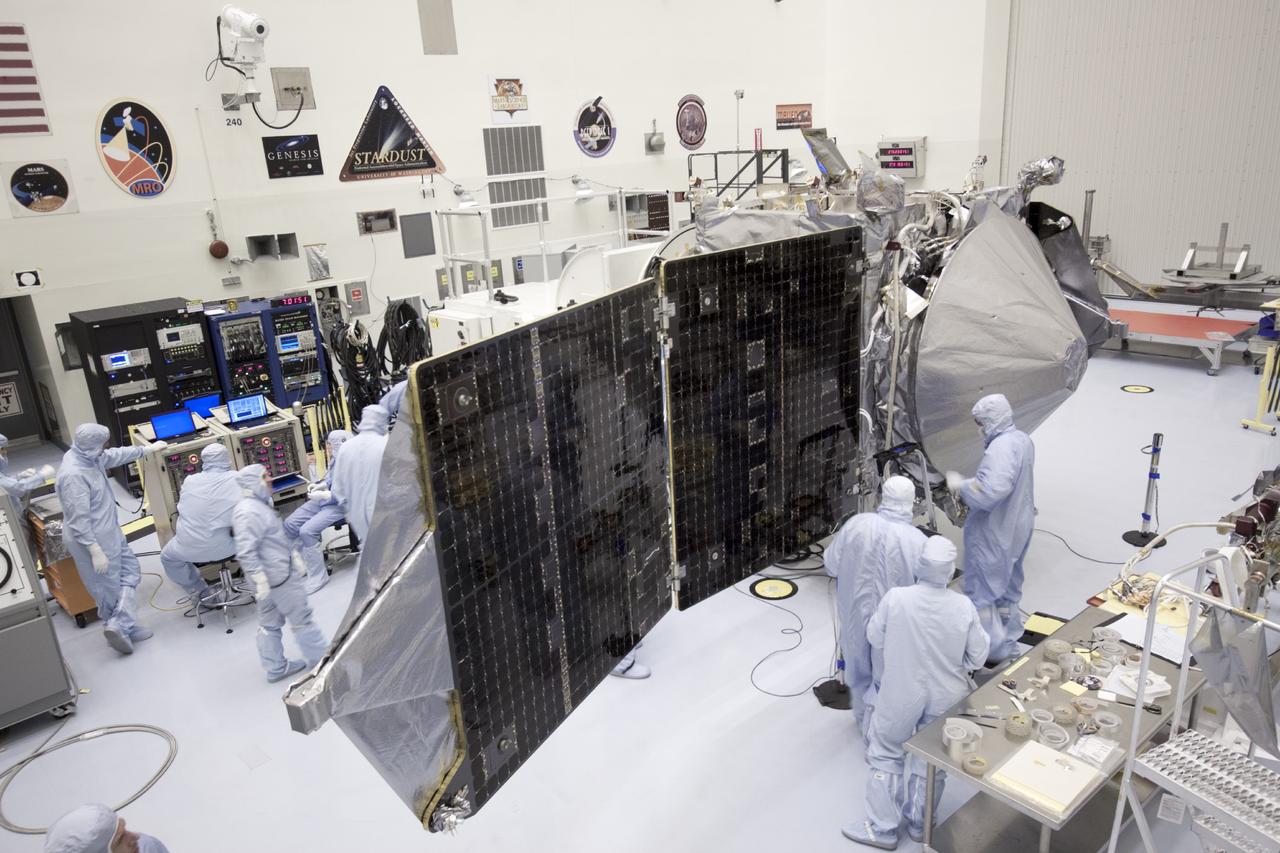
CAPE CANAVERAL, Fla. – Inside the Payload Hazardous Servicing Facility at NASA's Kennedy Space Center in Florida, engineers and technicians have begun the process to stow the power-generating solar arrays for the Mars Atmosphere and Volatile Evolution, or MAVEN, spacecraft. MAVEN is being prepared for its scheduled launch on Nov 18, 2013 from Cape Canaveral Air Force Station, Fla. atop a United Launch Alliance Atlas V rocket. Positioned in an orbit above the Red Planet, MAVEN will study the upper atmosphere of Mars in unprecedented detail. For more information, visit: http://www.nasa.gov/mission_pages/maven/main/index.html Photo credit: NASA/Jim Grossmann
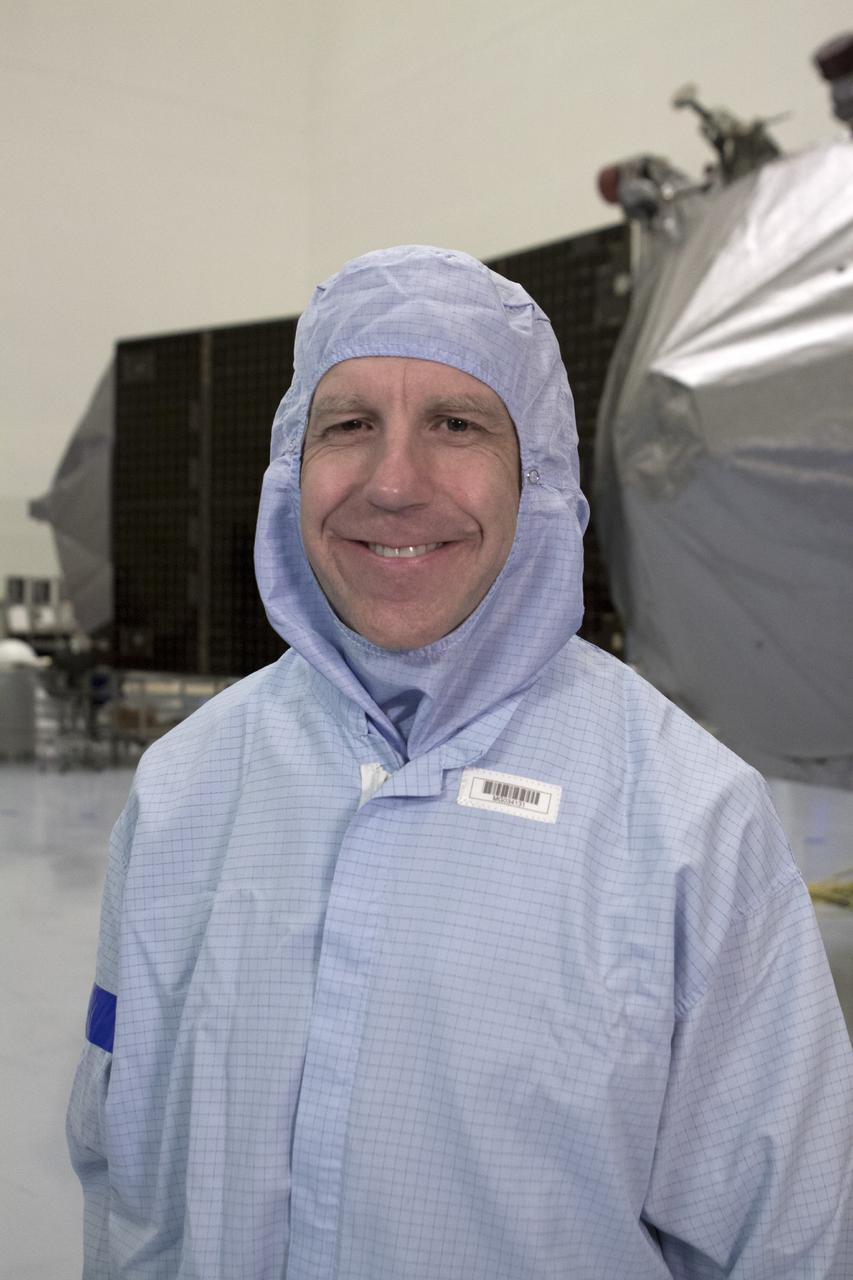
CAPE CANAVERAL, Fla. – Guy Beutelschies, Lockheed Martin's project manager for the Mars Atmosphere and Volatile Evolution, or MAVEN, spacecraft, spoke to member of the news media inside the Payload Hazardous Servicing Facility at the agency's Kennedy Space Center in Florida. MAVEN is going through pre-launch processing at Kennedy. Engineers will soon fold MAVEN's power-generating solar arrays into launch position on either side of the spacecraft's main body. MAVEN is being prepared for its scheduled launch in November from Cape Canaveral Air Force Station, Fla. atop a United Launch Alliance Atlas V rocket. Positioned in an orbit above the Red Planet, MAVEN will study the upper atmosphere of Mars in unprecedented detail. For more information, visit: http://www.nasa.gov/mission_pages/maven/main/index.html Photo credit: NASA/Kim Shiflett
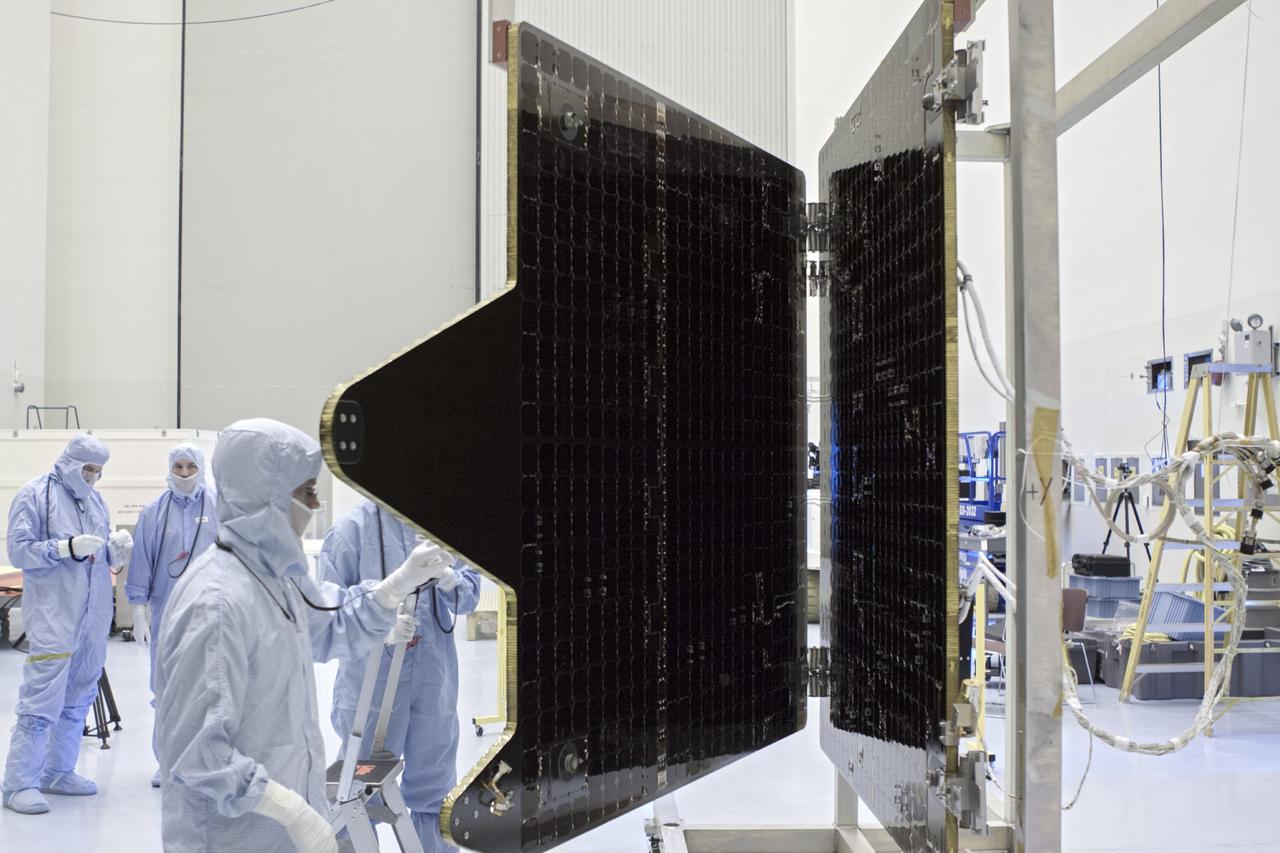
CAPE CANAVERAL, Fla. – Inside the Payload Hazardous Servicing Facility at NASA's Kennedy Space Center in Florida, technicians clean the electricity-producing solar arrays for the Mars Atmosphere and Volatile Evolution, or MAVEN, spacecraft. MAVEN is being prepared for its scheduled launch in November from Cape Canaveral Air Force Station, Fla. atop a United Launch Alliance Atlas V rocket. Positioned in an orbit above the Red Planet, MAVEN will study the upper atmosphere of Mars in unprecedented detail. For more information, visit: http://www.nasa.gov/mission_pages/maven/main/index.html Photo credit: NASA/ Jim Grossmann
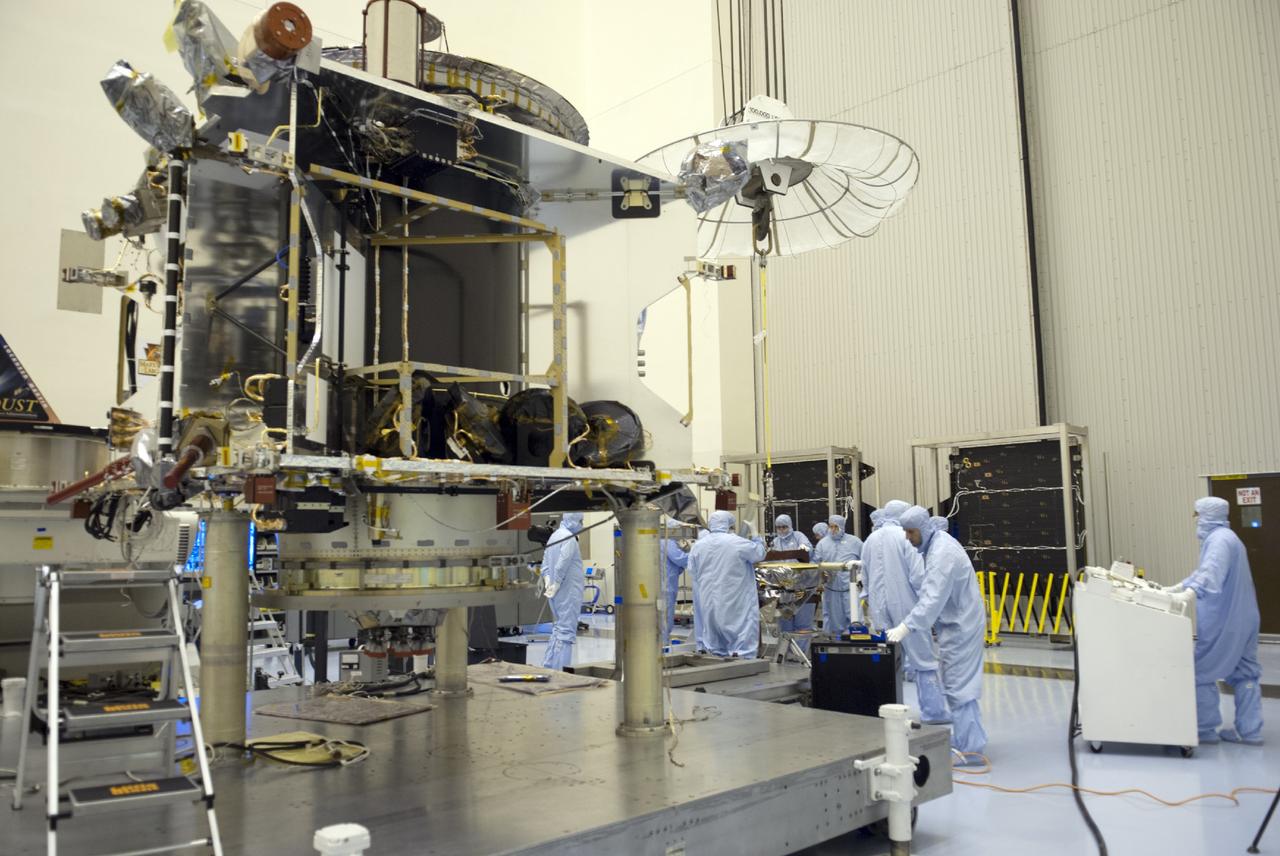
CAPE CANAVERAL, Fla. – Inside the Payload Hazardous Servicing Facility at NASA's Kennedy Space Center in Florida, engineers and technicians prepare to move the Mars Atmosphere and Volatile Evolution, or MAVEN, spacecraft from a work fixture to a tilt and rotation stand for further pre-flight processing. MAVEN is being prepared for its scheduled launch in November from Cape Canaveral Air Force Station, Fla. atop a United Launch Alliance Atlas V rocket. Positioned in an orbit above the Red Planet, MAVEN will study the upper atmosphere of Mars in unprecedented detail. For more information, visit: http://www.nasa.gov/mission_pages/maven/main/index.html Photo credit: NASA/ Charisse Nahser
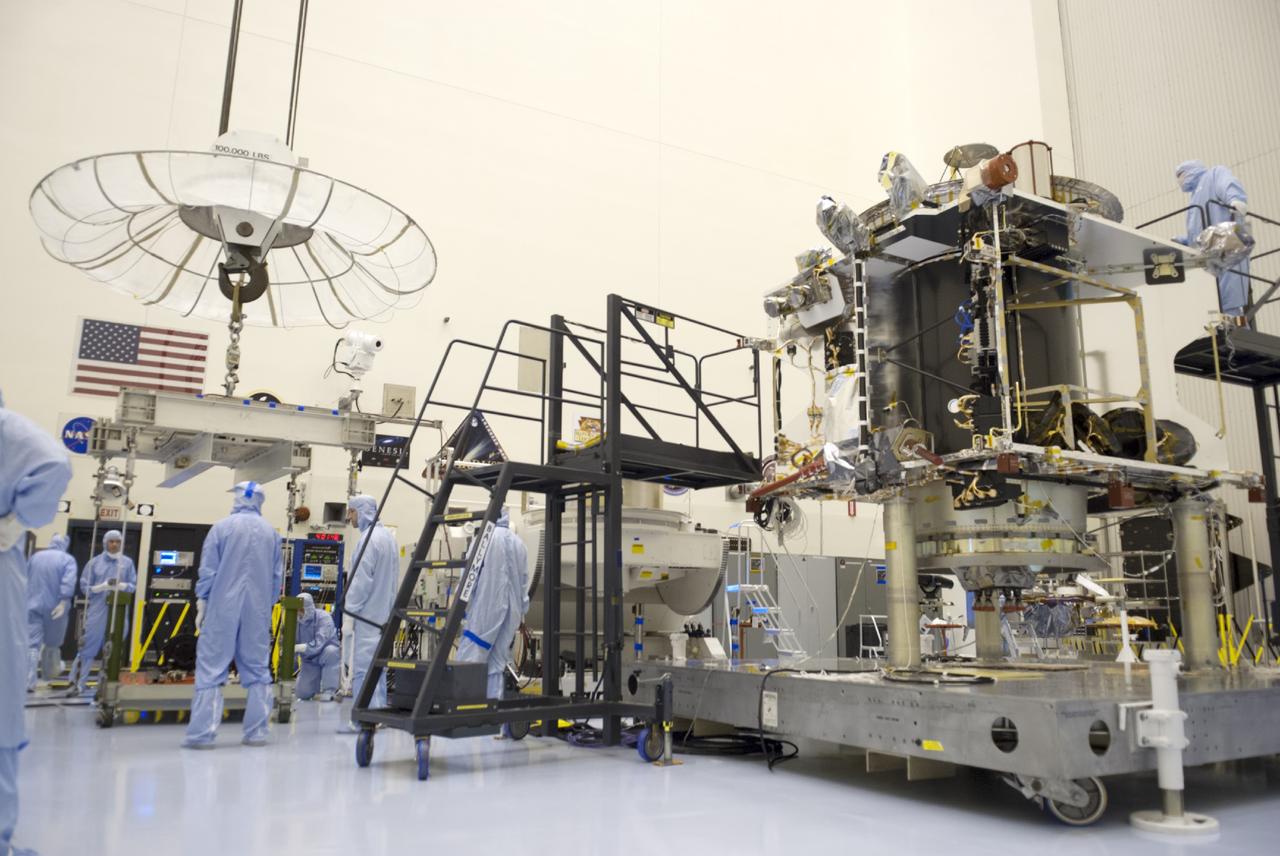
CAPE CANAVERAL, Fla. – Inside the Payload Hazardous Servicing Facility at NASA's Kennedy Space Center in Florida, engineers and technicians prepare to move the Mars Atmosphere and Volatile Evolution, or MAVEN, spacecraft from a work fixture to a tilt and rotation stand for further pre-flight processing. MAVEN is being prepared for its scheduled launch in November from Cape Canaveral Air Force Station, Fla. atop a United Launch Alliance Atlas V rocket. Positioned in an orbit above the Red Planet, MAVEN will study the upper atmosphere of Mars in unprecedented detail. For more information, visit: http://www.nasa.gov/mission_pages/maven/main/index.html Photo credit: NASA/ Charisse Nahser
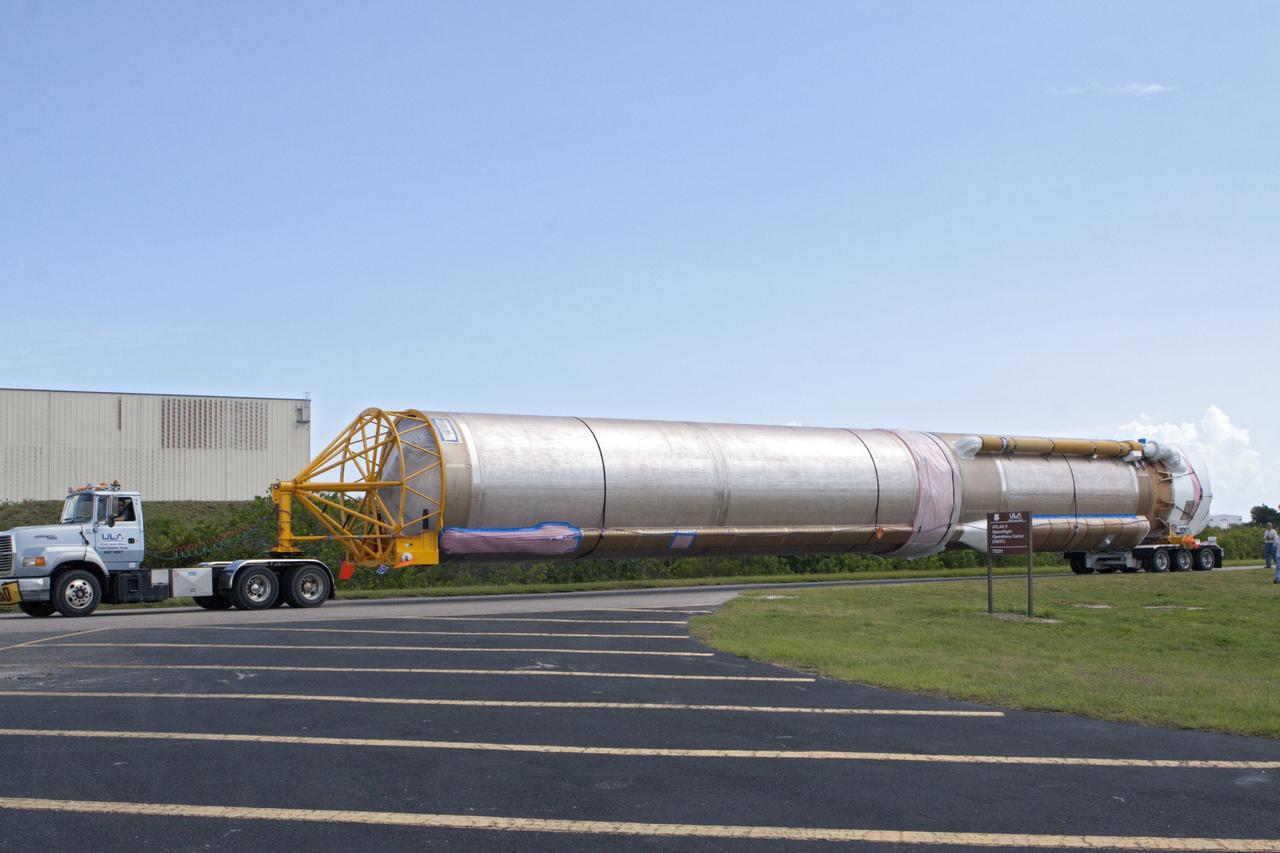
CAPE CANAVERAL, Fla. – United Launch Alliance Atlas V rocket first and second stages arrive at to the Atlas Spaceflight Operations Center, or ASOC, at Cape Canaveral Air Force Station. There, the launch vehicle will begin processing for the Mars Atmosphere and Volatile Evolution, or MAVEN, spacecraft to the Red Planet. MAVEN is being prepared for its scheduled launch in November from Cape Canaveral Air Force Station, Fla. atop a United Launch Alliance Atlas V rocket. Positioned in an orbit above the Red Planet, MAVEN will study the upper atmosphere of Mars in unprecedented detail. For more information, visit: http://www.nasa.gov/mission_pages/maven/main/index.html Photo credit: NASA/Kim Shiflett

CAPE CANAVERAL, Fla. – Inside the Payload Hazardous Servicing Facility at NASA's Kennedy Space Center in Florida, illumination testing is underway on the electricity-producing solar arrays for the Mars Atmosphere and Volatile Evolution, or MAVEN, spacecraft. MAVEN is being prepared for its scheduled launch in November from Cape Canaveral Air Force Station, Fla. atop a United Launch Alliance Atlas V rocket. Positioned in an orbit above the Red Planet, MAVEN will study the upper atmosphere of Mars in unprecedented detail. For more information, visit: http://www.nasa.gov/mission_pages/maven/main/index.html Photo credit: NASA/ Jim Grossmann
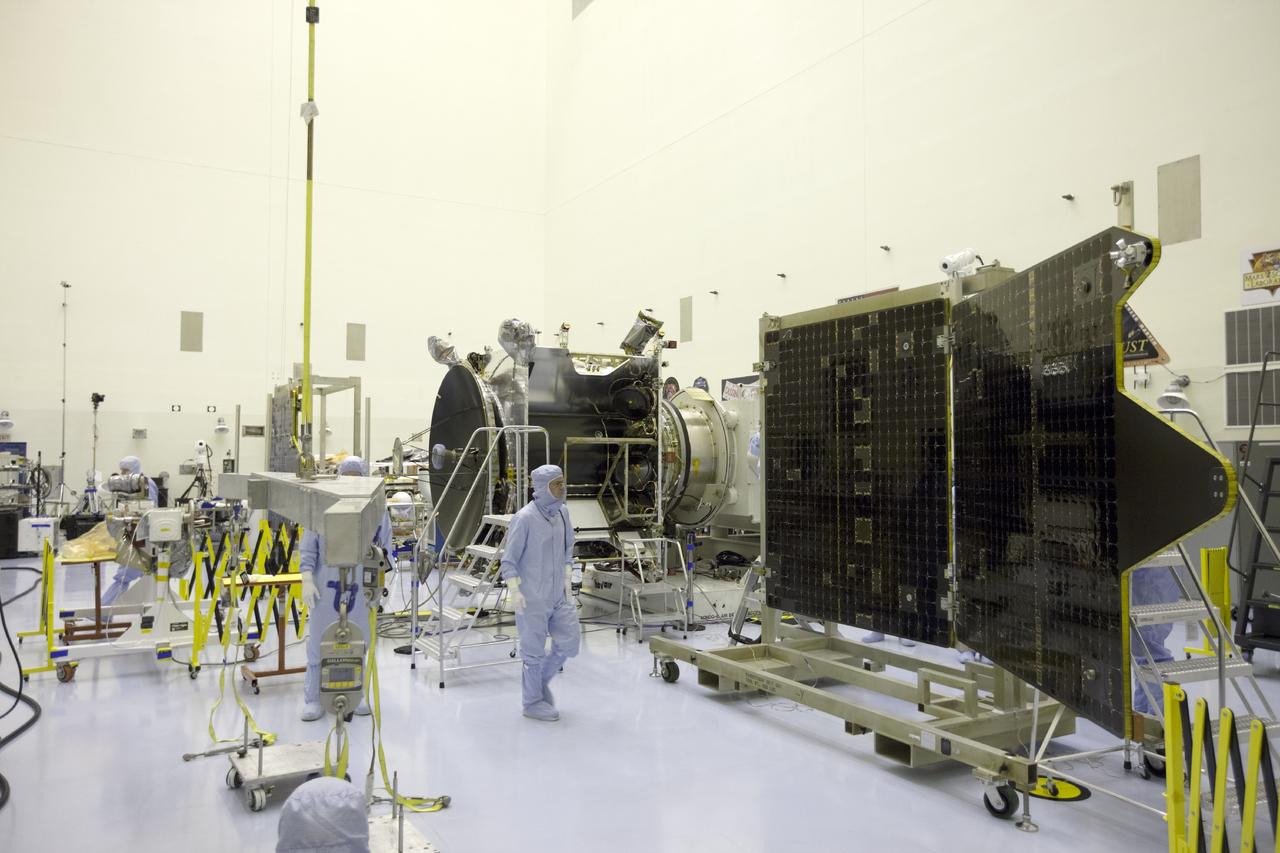
CAPE CANAVERAL, Fla. – Inside the Payload Hazardous Servicing Facility at NASA's Kennedy Space Center in Florida, engineers and technicians prepare to reattach twin solar arrays to the Mars Atmosphere and Volatile Evolution, or MAVEN, spacecraft following inspection and testing. MAVEN is being prepared for its scheduled launch in November from Cape Canaveral Air Force Station, Fla. atop a United Launch Alliance Atlas V rocket. Positioned in an orbit above the Red Planet, MAVEN will study the upper atmosphere of Mars in unprecedented detail. For more information, visit: http://www.nasa.gov/mission_pages/maven/main/index.html Photo credit: NASA/Kim Shiflett
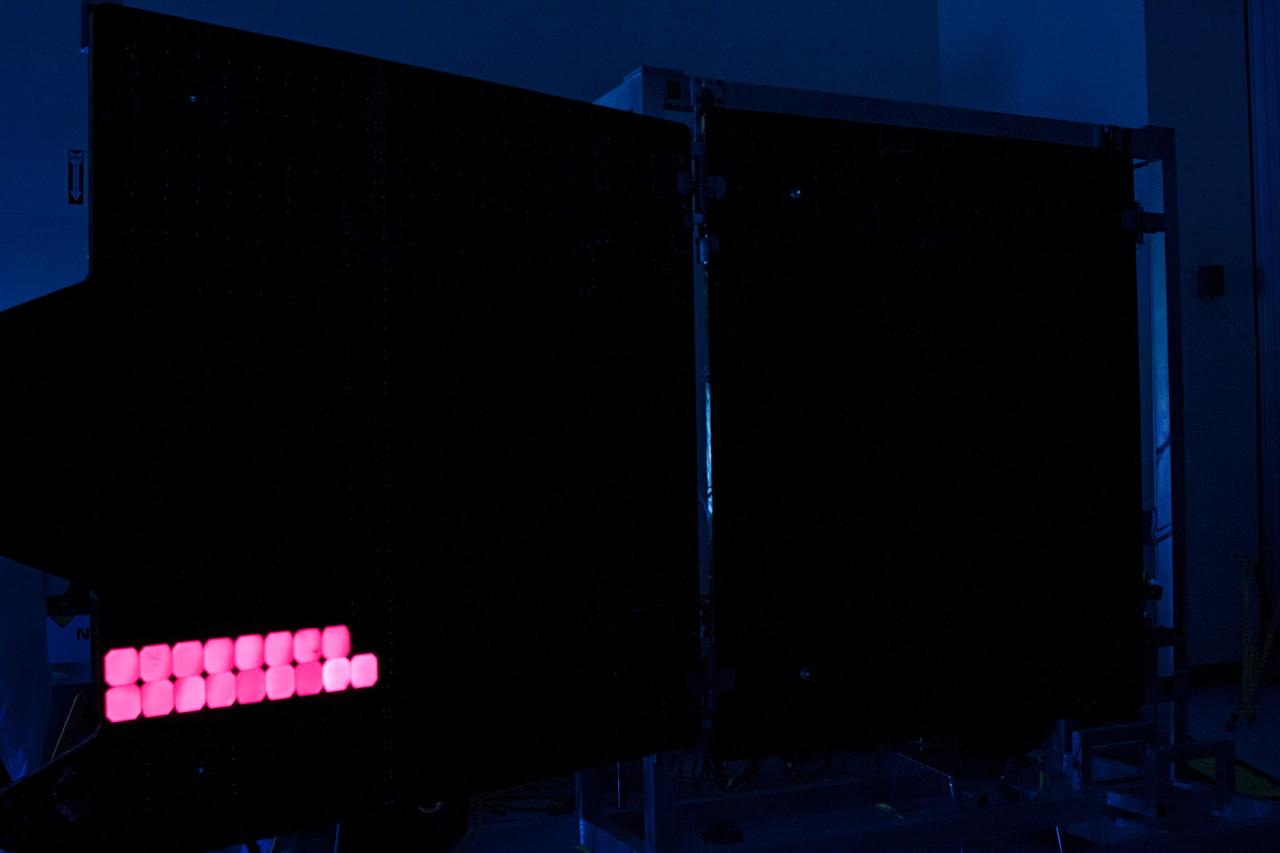
CAPE CANAVERAL, Fla. – Inside the Payload Hazardous Servicing Facility at NASA's Kennedy Space Center in Florida, illumination testing is underway on the electricity-producing solar arrays for the Mars Atmosphere and Volatile Evolution, or MAVEN, spacecraft. MAVEN is being prepared for its scheduled launch in November from Cape Canaveral Air Force Station, Fla. atop a United Launch Alliance Atlas V rocket. Positioned in an orbit above the Red Planet, MAVEN will study the upper atmosphere of Mars in unprecedented detail. For more information, visit: http://www.nasa.gov/mission_pages/maven/main/index.html Photo credit: NASA/ Jim Grossmann
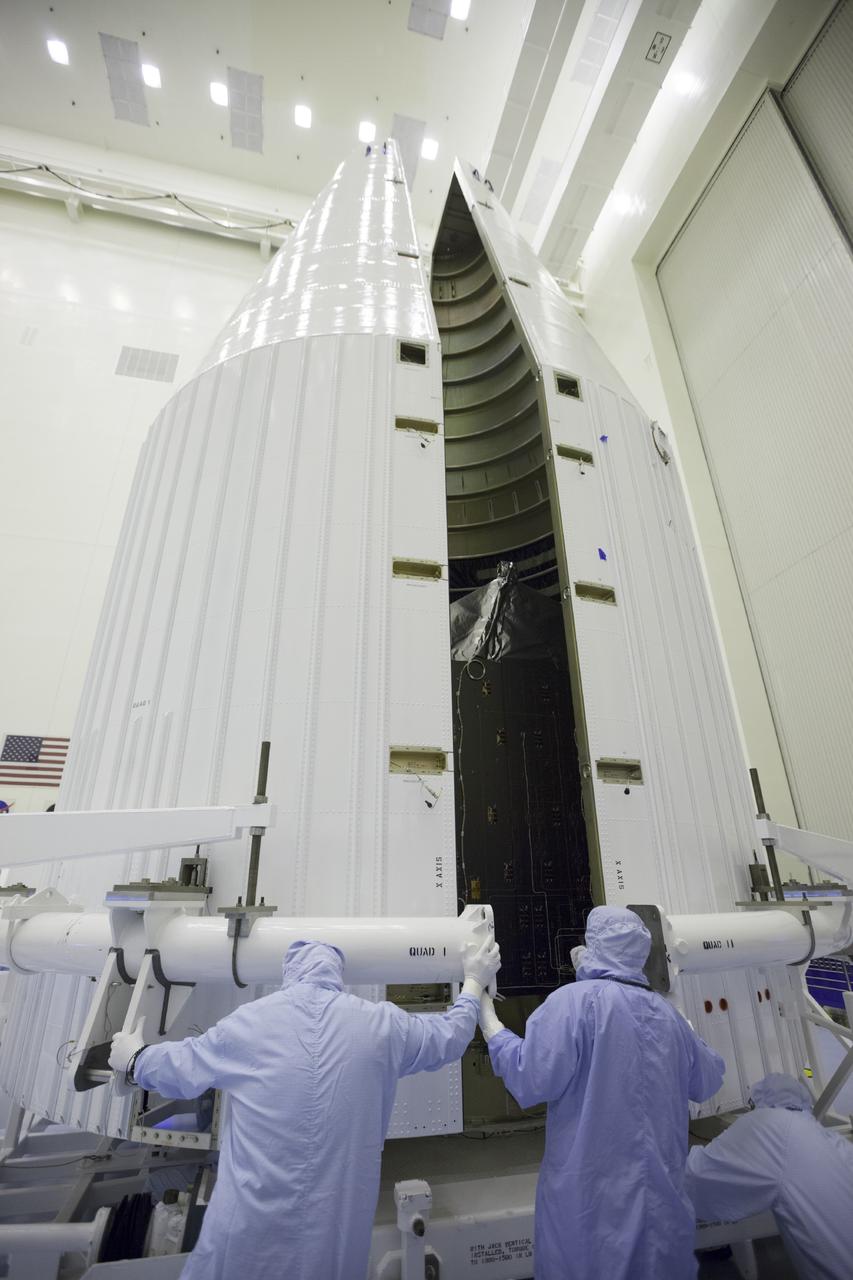
CAPE CANAVERAL, Fla. – Inside the Payload Hazardous Servicing Facility at NASA's Kennedy Space Center in Florida, engineers and technicians encapsulate the Mars Atmosphere and Volatile Evolution, or MAVEN, spacecraft inside its payload fairing. MAVEN is being prepared for its scheduled launch on Nov 18, 2013 from Cape Canaveral Air Force Station, Fla. atop a United Launch Alliance Atlas V rocket. Positioned in an orbit above the Red Planet, MAVEN will study the upper atmosphere of Mars in unprecedented detail. For more information, visit: http://www.nasa.gov/mission_pages/maven/main/index.html Photo credit: NASA/Kim Shiflett
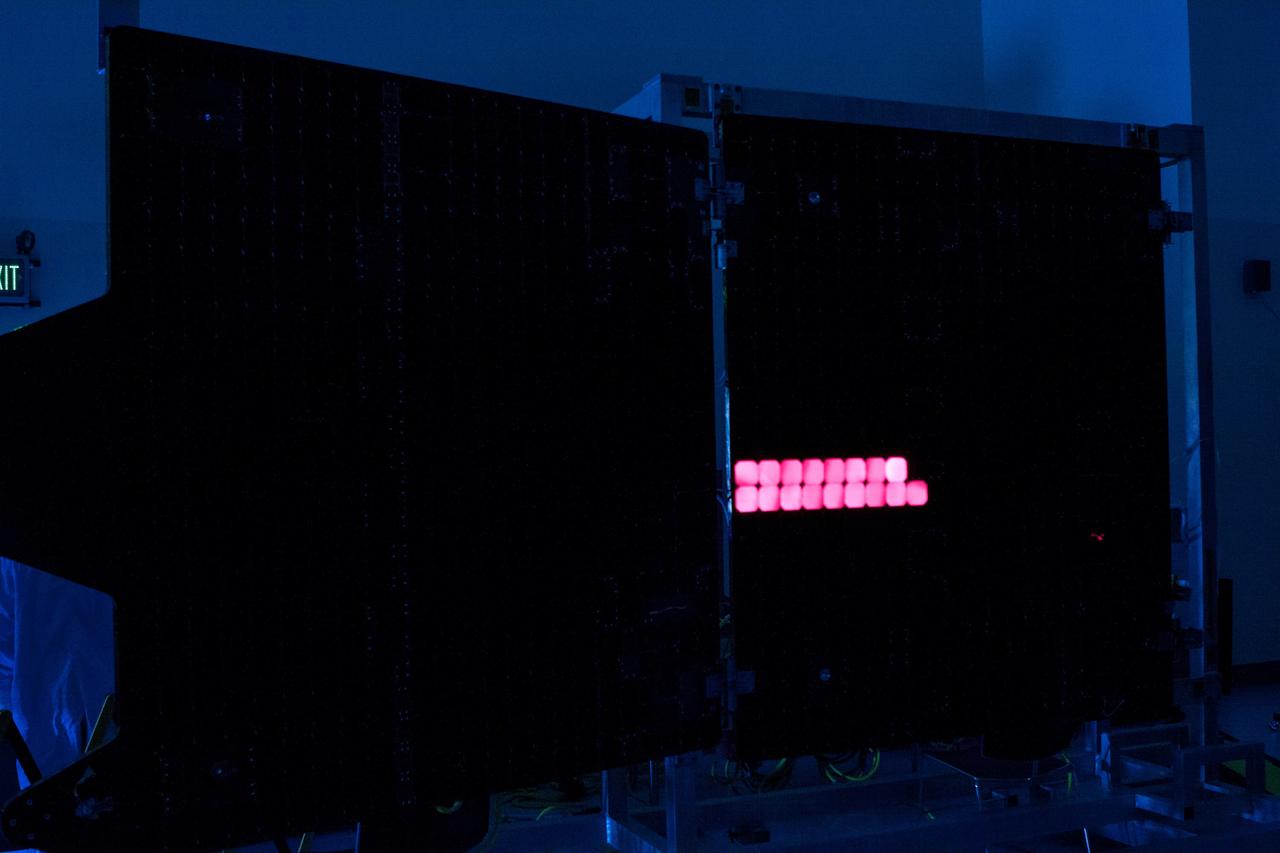
CAPE CANAVERAL, Fla. – Inside the Payload Hazardous Servicing Facility at NASA's Kennedy Space Center in Florida, illumination testing is underway on the electricity-producing solar arrays for the Mars Atmosphere and Volatile Evolution, or MAVEN, spacecraft. MAVEN is being prepared for its scheduled launch in November from Cape Canaveral Air Force Station, Fla. atop a United Launch Alliance Atlas V rocket. Positioned in an orbit above the Red Planet, MAVEN will study the upper atmosphere of Mars in unprecedented detail. For more information, visit: http://www.nasa.gov/mission_pages/maven/main/index.html Photo credit: NASA/ Jim Grossmann
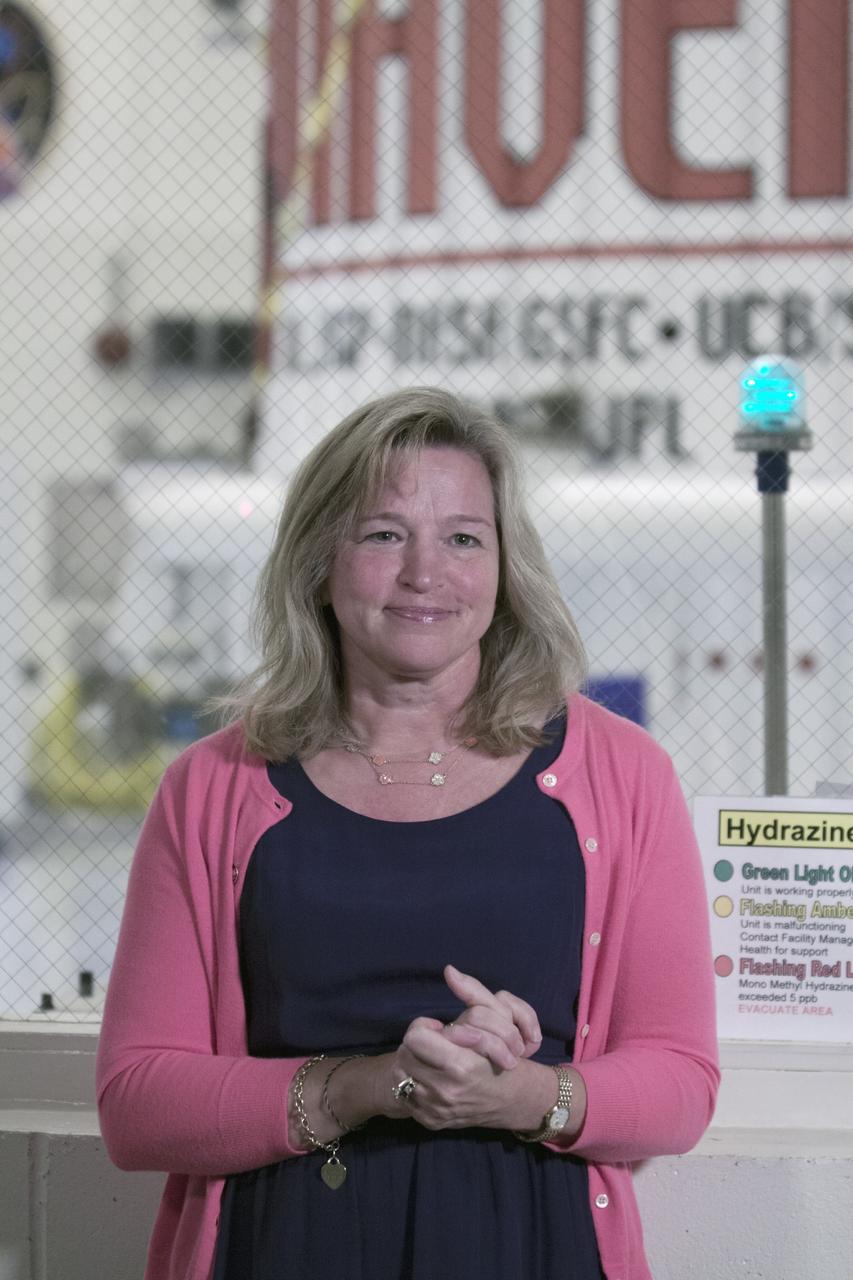
CAPE CANAVERAL, Fla. – Inside the Payload Hazardous Servicing Facility at NASA's Kennedy Space Center in Florida, Dr. Ellen Stofan, NASA's chief scientist, speaks to members of the news media. The Mars Atmosphere and Volatile Evolution, or MAVEN, spacecraft is in the background following encapsulation in its payload fairing. MAVEN is being prepared for its scheduled launch on Nov 18, 2013 from Cape Canaveral Air Force Station, Fla. atop a United Launch Alliance Atlas V rocket. Positioned in an orbit above the Red Planet, MAVEN will study the upper atmosphere of Mars in unprecedented detail. For more information, visit: http://www.nasa.gov/mission_pages/maven/main/index.html Photo credit: NASA/Kim Shiflett

CAPE CANAVERAL, Fla. – Inside the Payload Hazardous Servicing Facility at NASA's Kennedy Space Center in Florida, engineers and technicians have begun the process to stow the power-generating solar arrays for the Mars Atmosphere and Volatile Evolution, or MAVEN, spacecraft. MAVEN is being prepared for its scheduled launch on Nov 18, 2013 from Cape Canaveral Air Force Station, Fla. atop a United Launch Alliance Atlas V rocket. Positioned in an orbit above the Red Planet, MAVEN will study the upper atmosphere of Mars in unprecedented detail. For more information, visit: http://www.nasa.gov/mission_pages/maven/main/index.html Photo credit: NASA/Jim Grossmann
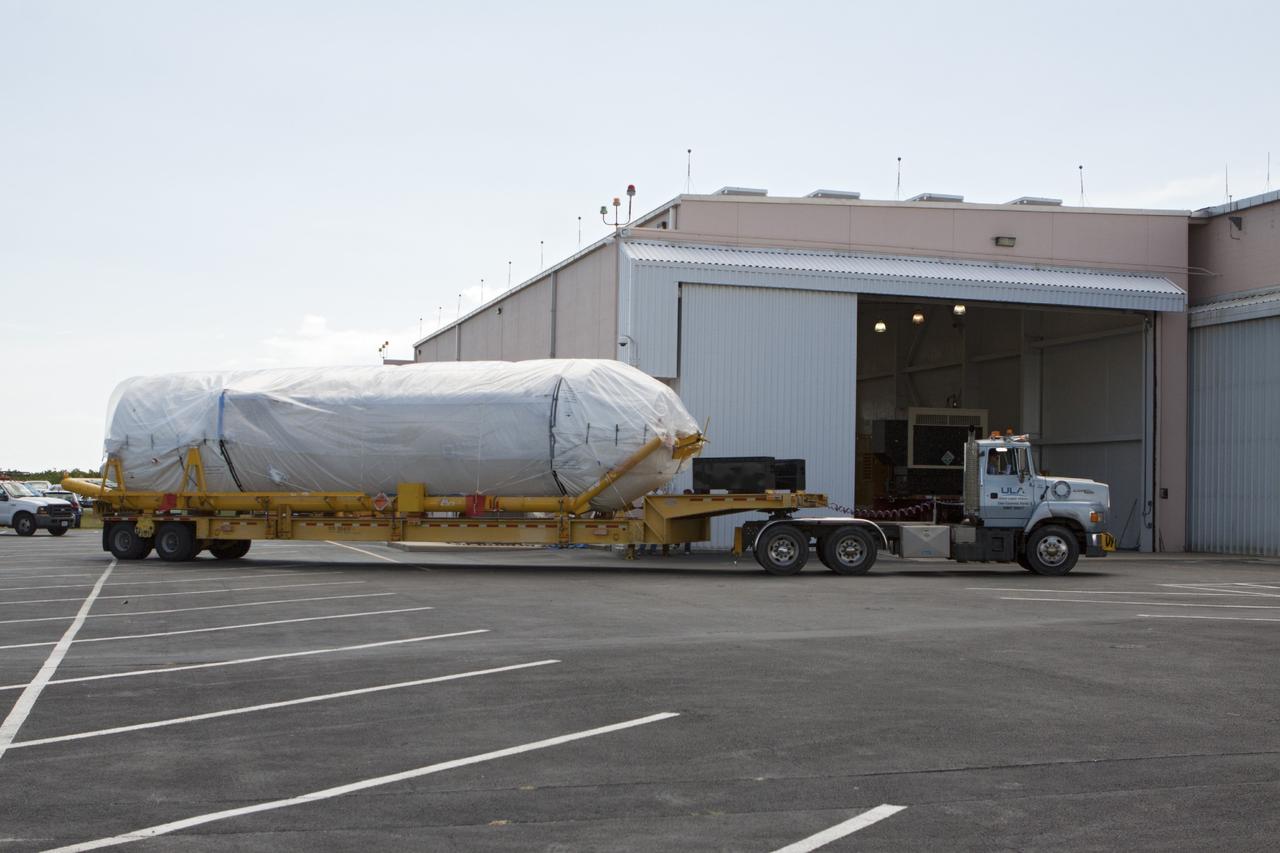
CAPE CANAVERAL, Fla. – United Launch Alliance Atlas V rocket first and second stages arrive at to the Atlas Spaceflight Operations Center, or ASOC, at Cape Canaveral Air Force Station. There, the launch vehicle will begin processing for the Mars Atmosphere and Volatile Evolution, or MAVEN, spacecraft to the Red Planet. MAVEN is being prepared for its scheduled launch in November from Cape Canaveral Air Force Station, Fla. atop a United Launch Alliance Atlas V rocket. Positioned in an orbit above the Red Planet, MAVEN will study the upper atmosphere of Mars in unprecedented detail. For more information, visit: http://www.nasa.gov/mission_pages/maven/main/index.html Photo credit: NASA/Kim Shiflett
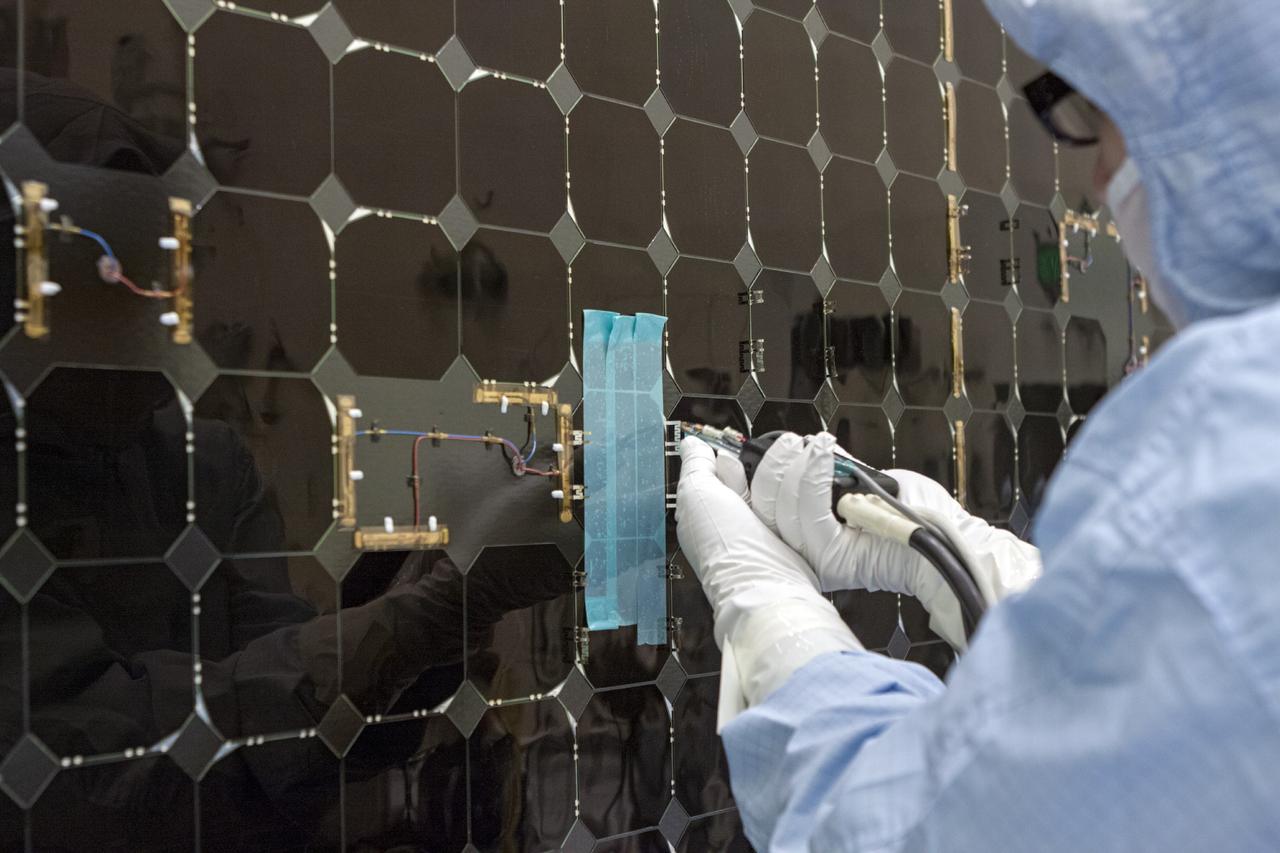
CAPE CANAVERAL, Fla. – Inside the Payload Hazardous Servicing Facility at NASA's Kennedy Space Center in Florida, a technician tests a cell from one of the electricity-producing solar arrays for the Mars Atmosphere and Volatile Evolution, or MAVEN, spacecraft. MAVEN is being prepared for its scheduled launch in November from Cape Canaveral Air Force Station, Fla. atop a United Launch Alliance Atlas V rocket. Positioned in an orbit above the Red Planet, MAVEN will study the upper atmosphere of Mars in unprecedented detail. For more information, visit: http://www.nasa.gov/mission_pages/maven/main/index.html Photo credit: NASA/ Jim Grossmann
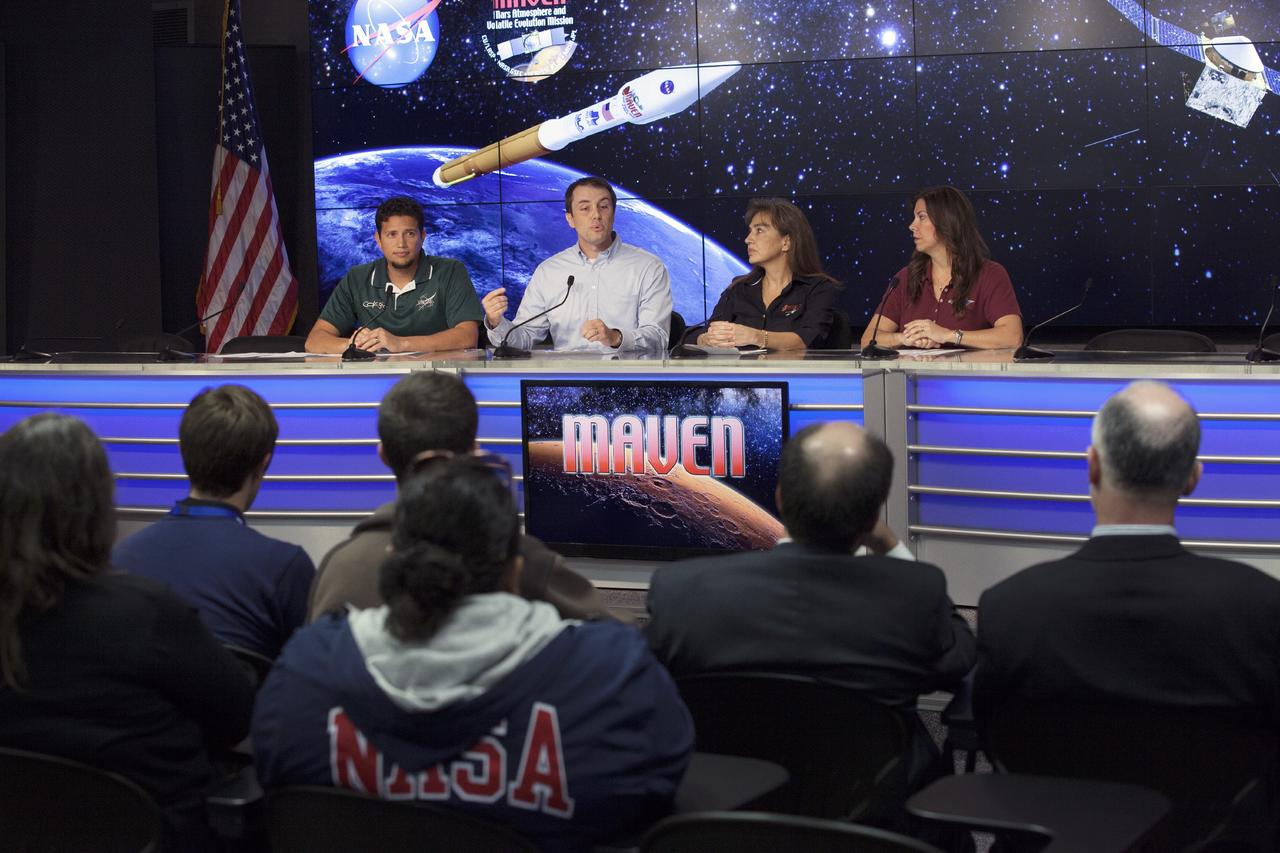
CAPE CANAVERAL, Fla. – During a Spanish language news conference at NASA's Kennedy Space Center in Florida, agency officials discussed preparations for the launch of the Mars Atmosphere and Volatile EvolutioN, or MAVEN, mission. Participating in the briefing, from the left, are Andres Adorno of NASA Public Affairs, Jared Espley, project scientist at Goddard Space Flight Center in Greenbelt, Md., Sandra Cauffman, deputy project manager at Goddard and Diana Calero, launch integration engineer in NASA's Launch Services Program at Kennedy. MAVEN is being prepared for its scheduled launch on Nov 18, 2013 from Cape Canaveral Air Force Station, Fla. atop a United Launch Alliance Atlas V rocket. Positioned in an orbit above the Red Planet, MAVEN will study the upper atmosphere of Mars in unprecedented detail. For information on the MAVEN mission, visit: http://www.nasa.gov/mission_pages/maven/main/index.html. Photo credit: NASA/Kim Shiflett
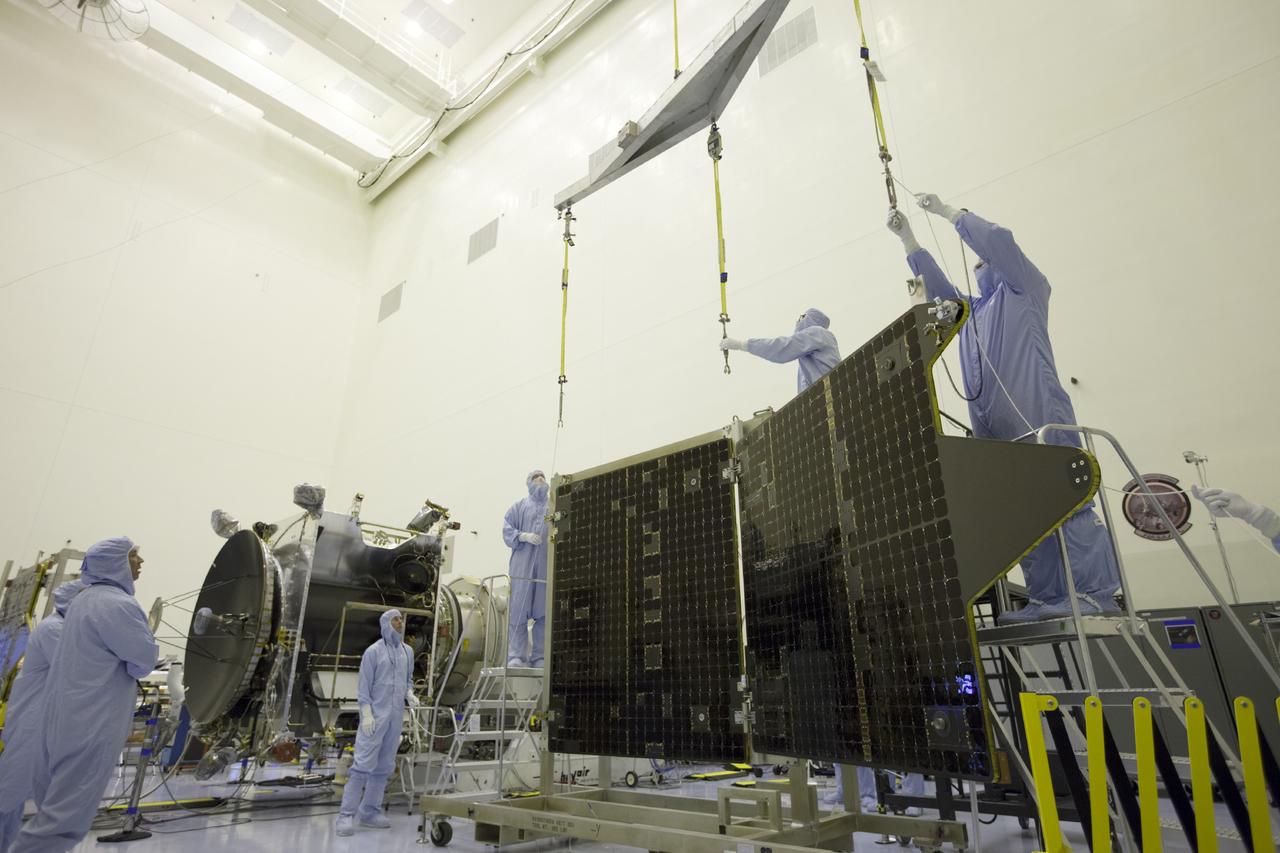
CAPE CANAVERAL, Fla. – Inside the Payload Hazardous Servicing Facility at NASA's Kennedy Space Center in Florida, engineers and technicians prepare to reattach twin solar arrays to the Mars Atmosphere and Volatile Evolution, or MAVEN, spacecraft following inspection and testing. MAVEN is being prepared for its scheduled launch in November from Cape Canaveral Air Force Station, Fla. atop a United Launch Alliance Atlas V rocket. Positioned in an orbit above the Red Planet, MAVEN will study the upper atmosphere of Mars in unprecedented detail. For more information, visit: http://www.nasa.gov/mission_pages/maven/main/index.html Photo credit: NASA/Kim Shiflett
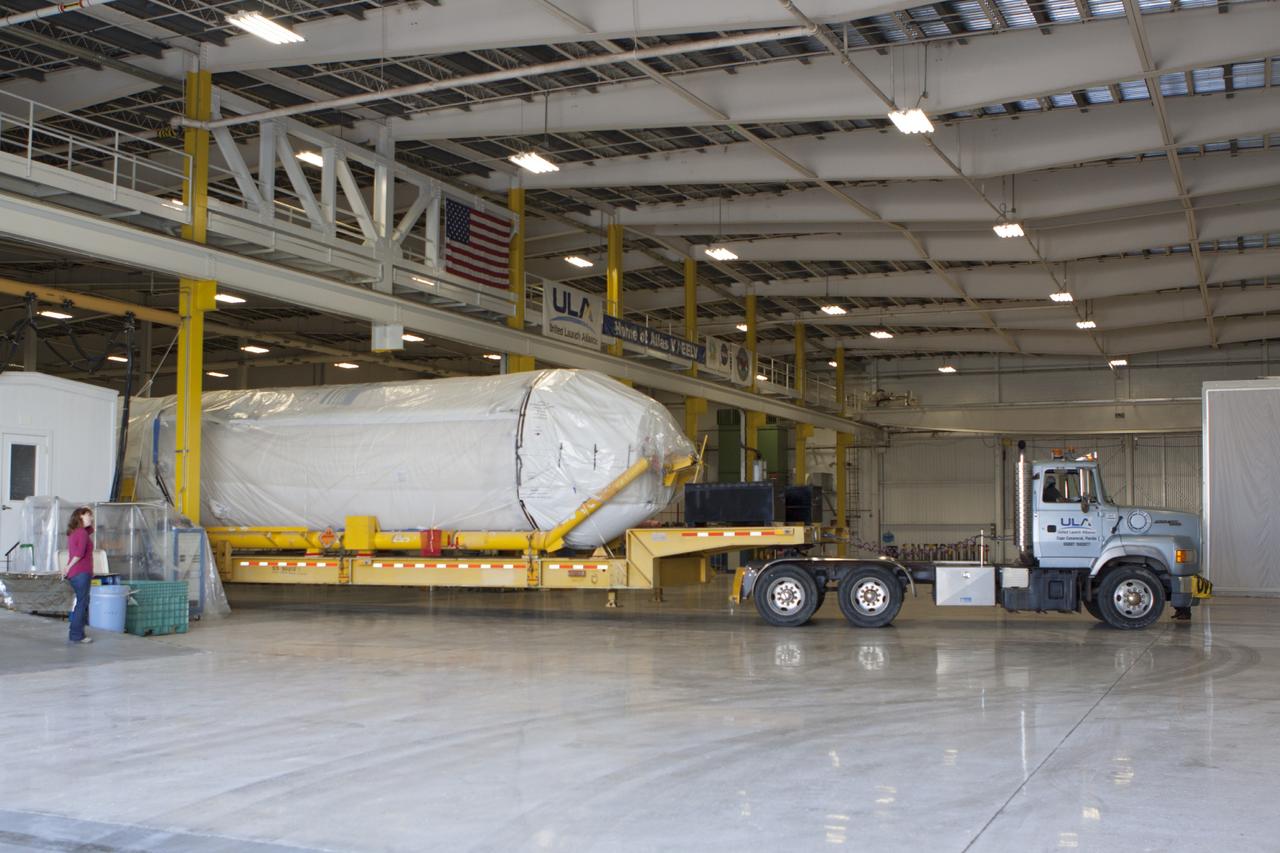
CAPE CANAVERAL, Fla. – United Launch Alliance Atlas V rocket first and second stages arrive at to the Atlas Spaceflight Operations Center, or ASOC, at Cape Canaveral Air Force Station. There, the launch vehicle will begin processing for the Mars Atmosphere and Volatile Evolution, or MAVEN, spacecraft to the Red Planet. MAVEN is being prepared for its scheduled launch in November from Cape Canaveral Air Force Station, Fla. atop a United Launch Alliance Atlas V rocket. Positioned in an orbit above the Red Planet, MAVEN will study the upper atmosphere of Mars in unprecedented detail. For more information, visit: http://www.nasa.gov/mission_pages/maven/main/index.html Photo credit: NASA/Kim Shiflett
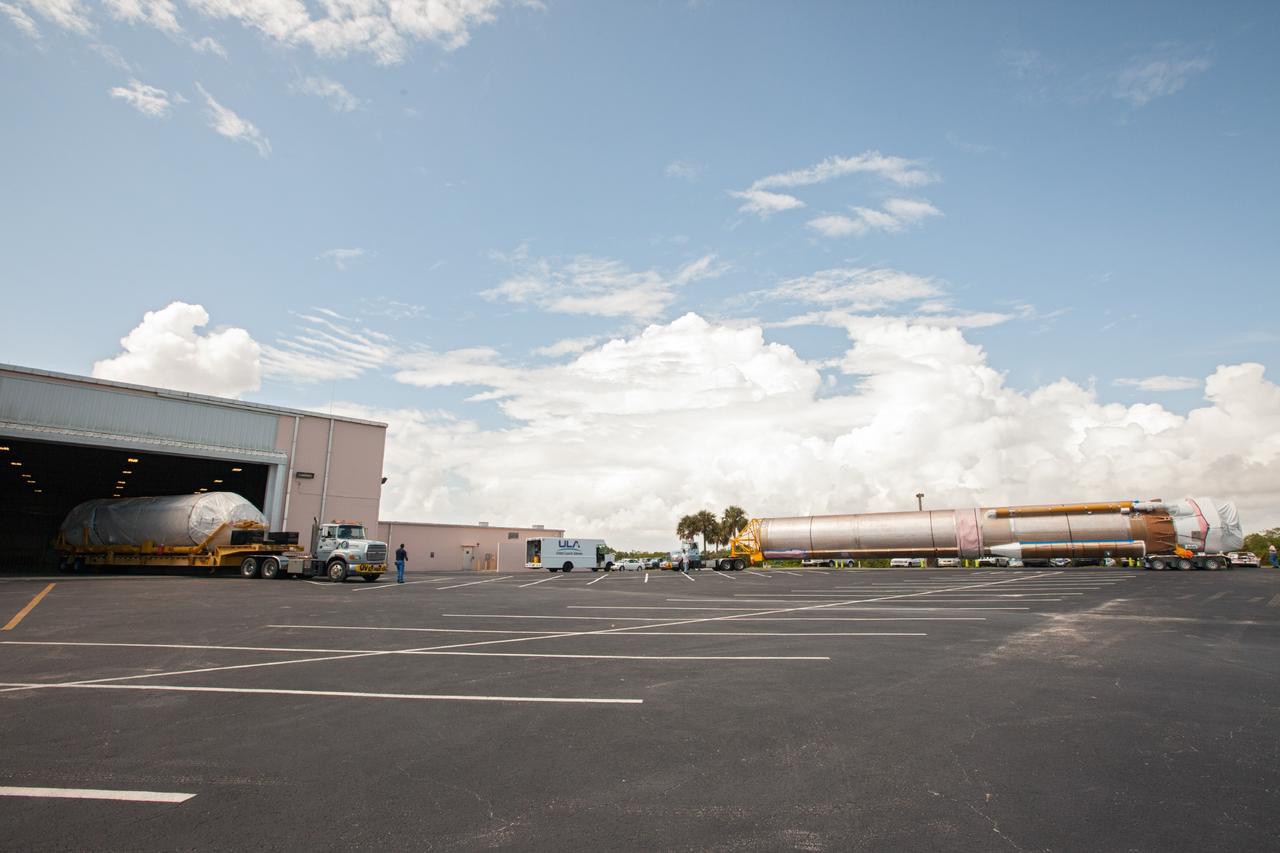
CAPE CANAVERAL, Fla. – United Launch Alliance Atlas V rocket first and second stages arrive at to the Atlas Spaceflight Operations Center, or ASOC, at Cape Canaveral Air Force Station. There, the launch vehicle will begin processing for the Mars Atmosphere and Volatile Evolution, or MAVEN, spacecraft to the Red Planet. MAVEN is being prepared for its scheduled launch in November from Cape Canaveral Air Force Station, Fla. atop a United Launch Alliance Atlas V rocket. Positioned in an orbit above the Red Planet, MAVEN will study the upper atmosphere of Mars in unprecedented detail. For more information, visit: http://www.nasa.gov/mission_pages/maven/main/index.html Photo credit: NASA/Kim Shiflett
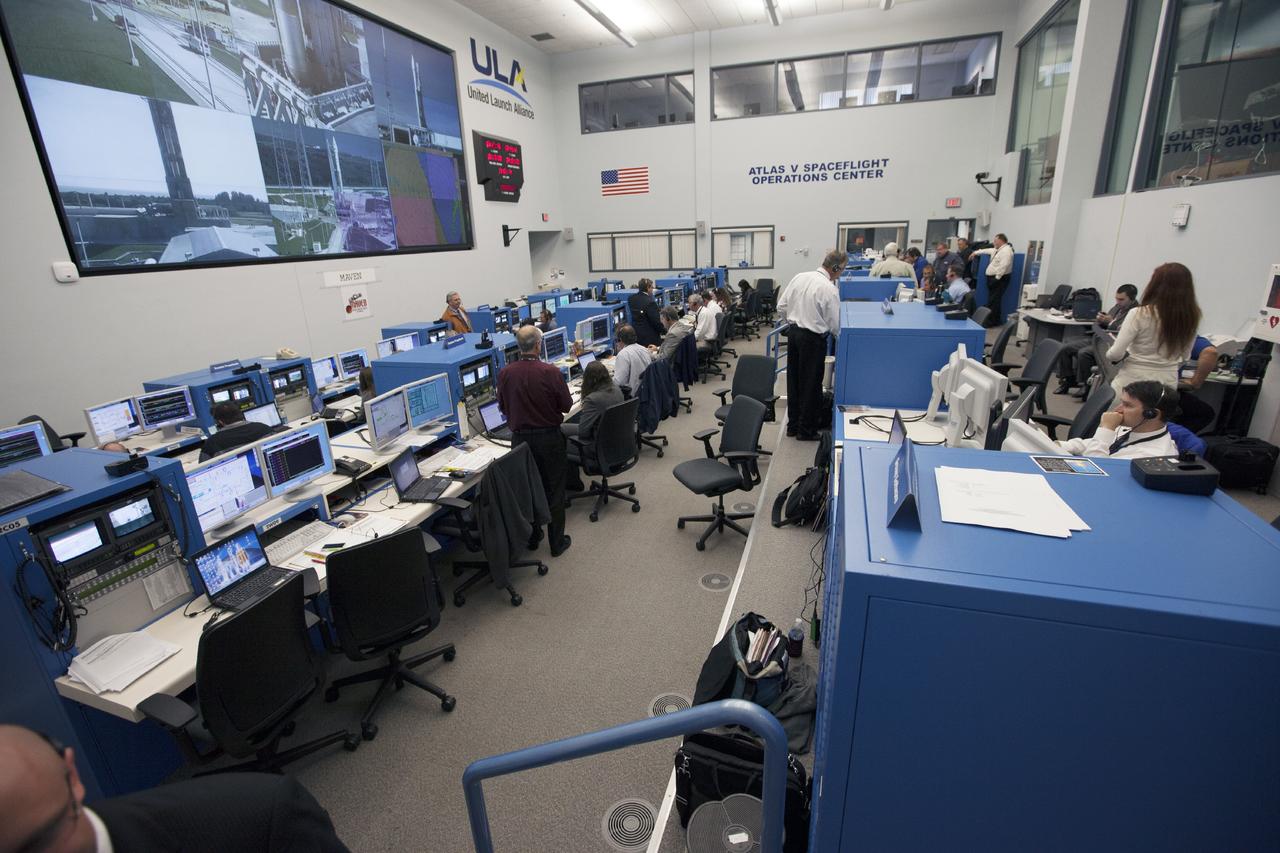
CAPE CANAVERAL, Fla. – At Cape Canaveral Air Force Station's Atlas V Spaceflight Operations Center NASA and contractor managers and engineers monitor progress of the countdown for the launch the agency's Mars Atmosphere and Volatile Evolution, or MAVEN, spacecraft. MAVEN was launched on Nov. 18, 2013 from Cape Canaveral's Space Launch Complex 41 atop a United Launch Alliance Atlas V rocket. Positioned in an orbit above the Red Planet, MAVEN will study the upper atmosphere of Mars in unprecedented detail. For more information, visit: http://www.nasa.gov/mission_pages/maven/main/index.html Photo credit: NASA/Kim Shiflett
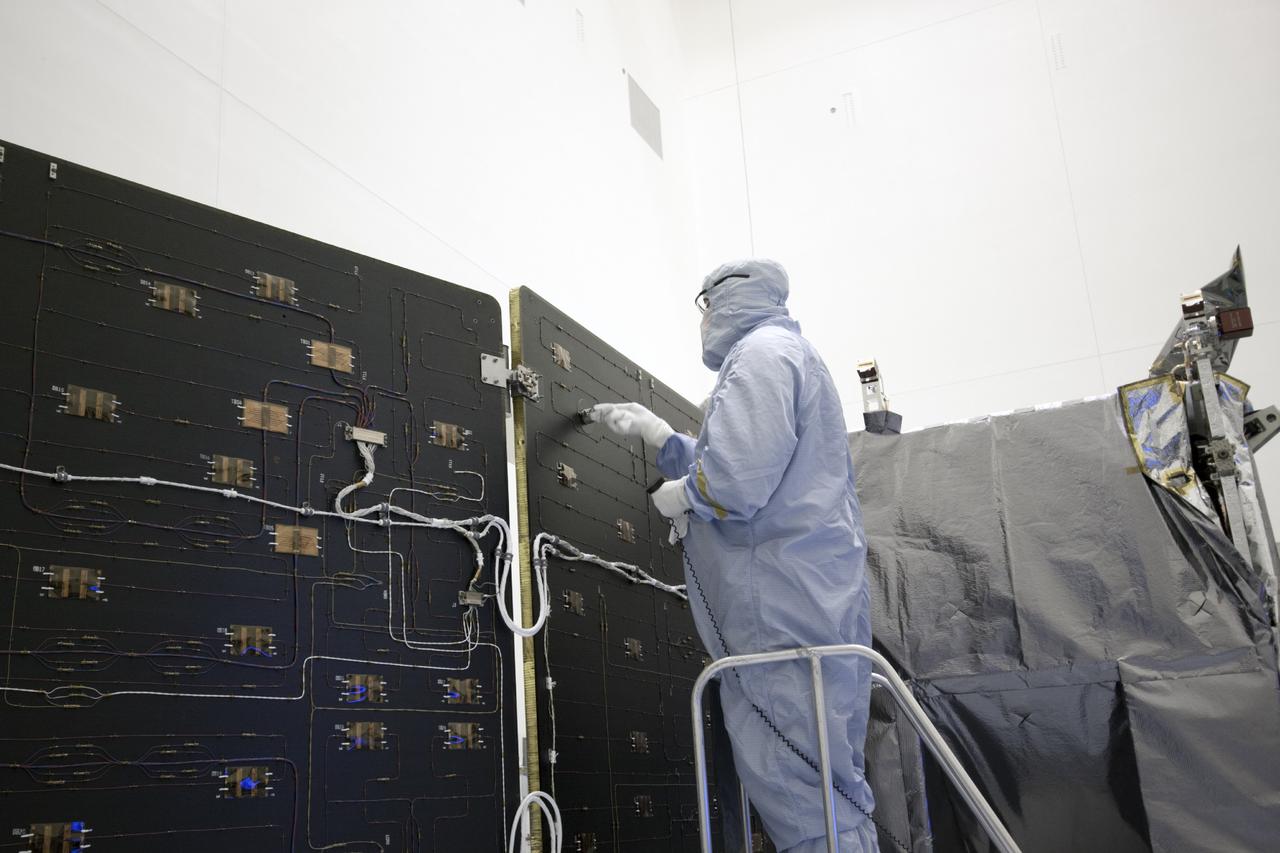
CAPE CANAVERAL, Fla. – Inside the Payload Hazardous Servicing Facility at NASA's Kennedy Space Center in Florida, the solar arrays are being checked out prior to beginning process of stowing the power-generating panels on the Mars Atmosphere and Volatile Evolution, or MAVEN, spacecraft. MAVEN is being prepared for its scheduled launch on Nov 18, 2013 from Cape Canaveral Air Force Station, Fla. atop a United Launch Alliance Atlas V rocket. Positioned in an orbit above the Red Planet, MAVEN will study the upper atmosphere of Mars in unprecedented detail. For more information, visit: http://www.nasa.gov/mission_pages/maven/main/index.html Photo credit: NASA/Jim Grossmann
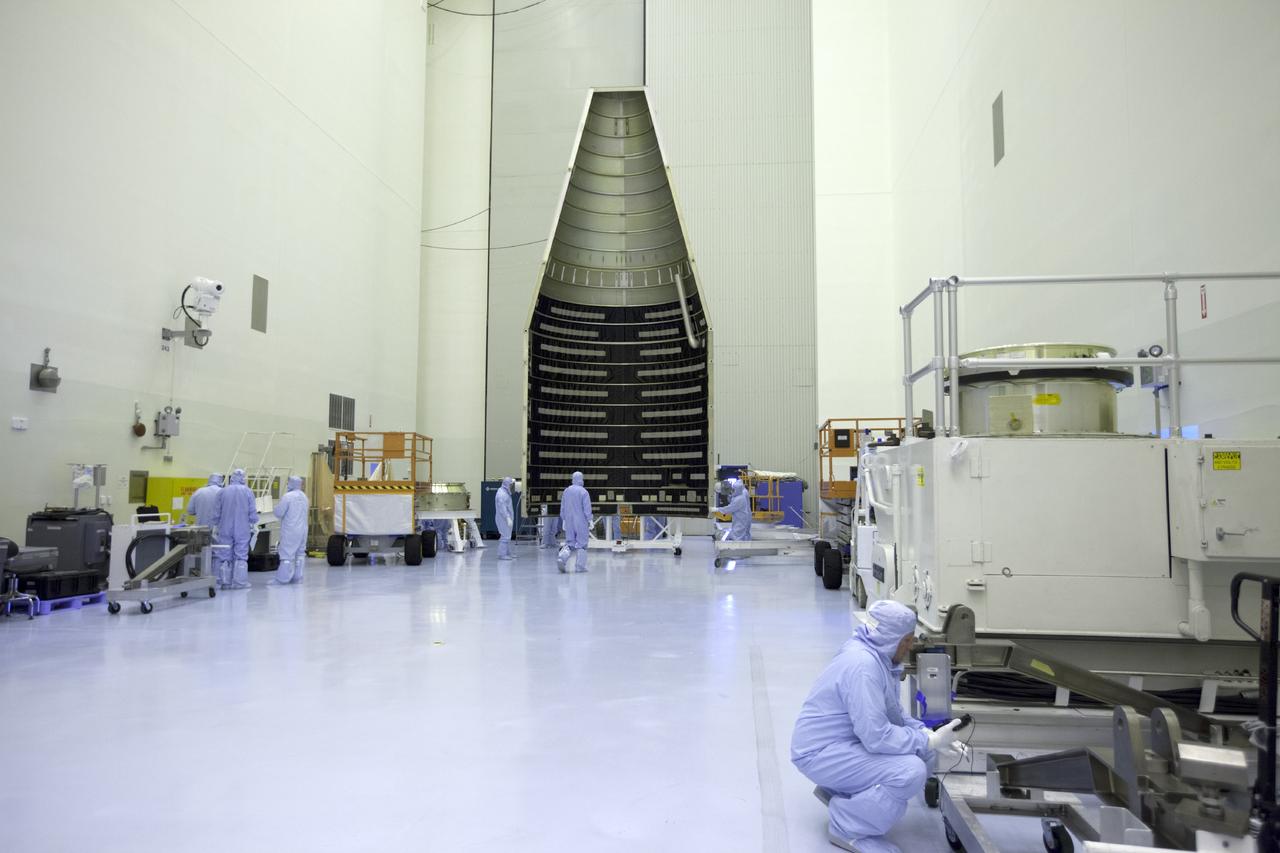
CAPE CANAVERAL, Fla. – The payload fairing for the Mars Atmosphere and Volatile Evolution, or MAVEN, spacecraft arrives at the Payload Hazardous Servicing Facility at NASA's Kennedy Space Center in Florida. MAVEN is being prepared for its scheduled launch on Nov 18, 2013 from Cape Canaveral Air Force Station, Fla. atop a United Launch Alliance Atlas V rocket. Positioned in an orbit above the Red Planet, MAVEN will study the upper atmosphere of Mars in unprecedented detail. For more information, visit: http://www.nasa.gov/mission_pages/maven/main/index.html Photo credit: NASA/Kim Shiflett
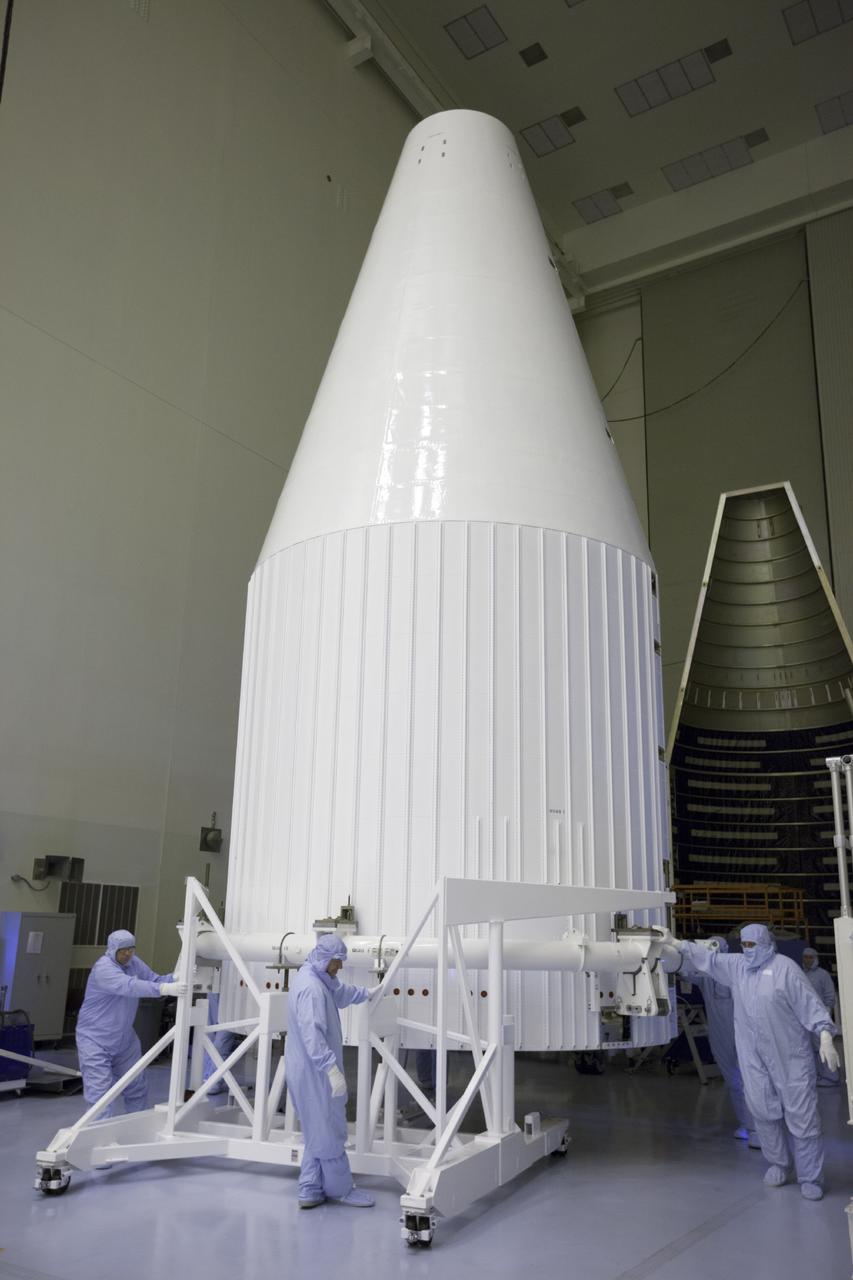
CAPE CANAVERAL, Fla. – The payload fairing for the Mars Atmosphere and Volatile Evolution, or MAVEN, spacecraft arrives at the Payload Hazardous Servicing Facility at NASA's Kennedy Space Center in Florida. MAVEN is being prepared for its scheduled launch on Nov 18, 2013 from Cape Canaveral Air Force Station, Fla. atop a United Launch Alliance Atlas V rocket. Positioned in an orbit above the Red Planet, MAVEN will study the upper atmosphere of Mars in unprecedented detail. For more information, visit: http://www.nasa.gov/mission_pages/maven/main/index.html Photo credit: NASA/Kim Shiflett
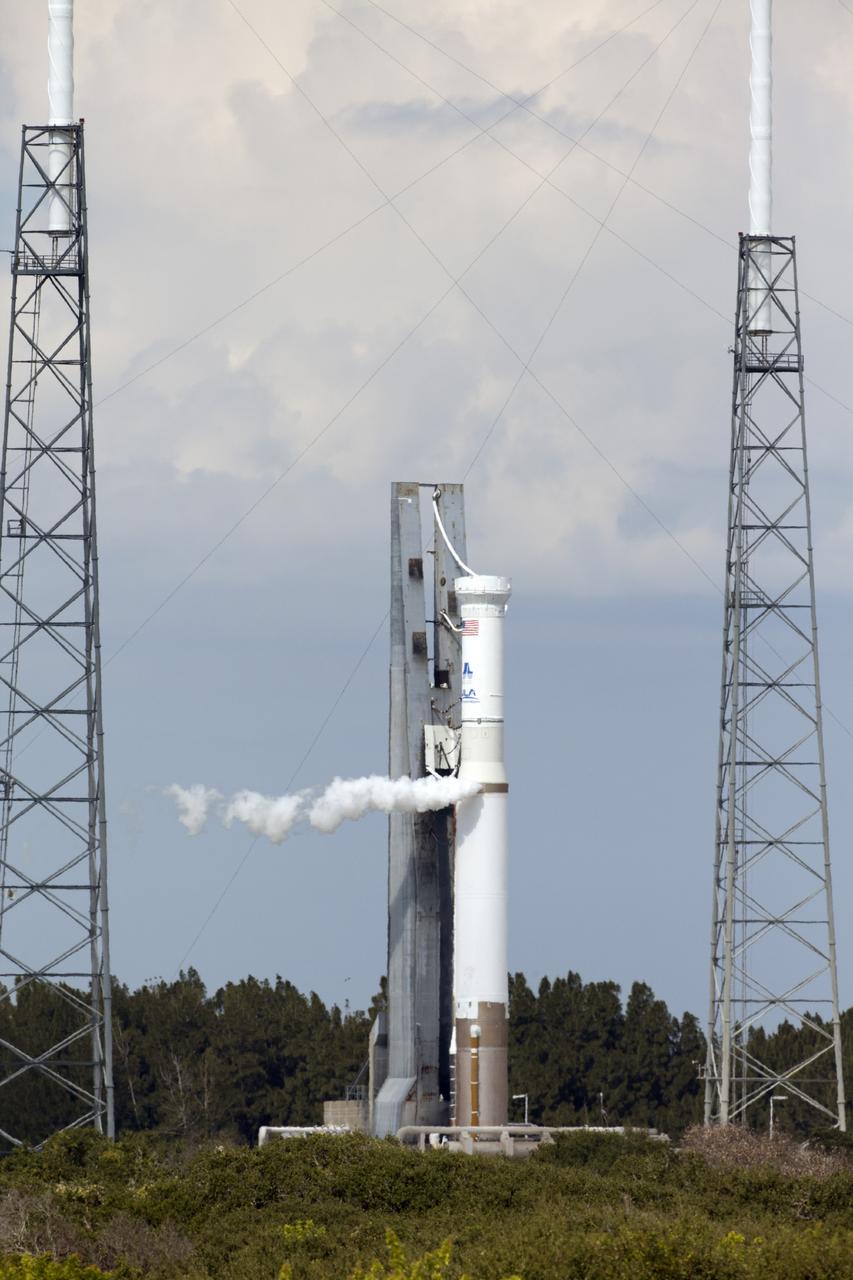
CAPE CANAVERAL, Fla. – The United Launch Alliance Atlas V rocket stands at Launch Complex 41 on Cape Canaveral Air Force Station in Florida during a "wet dress rehearsal." The test called for the launch vehicle to be fully loaded with propellants and put through a countdown procedure, ending just before the T-0 mark. The spacecraft is undergoing prelaunch processing activities in the Kennedy Space Center's Payload Hazardous Servicing Facility and was not atop the rocket for this rehearsal. The Atlas V rocket is slated to launch the Mars Atmosphere and Volatile Evolution, or MAVEN, spacecraft on a journey to the Red Planet on Nov. 18. The spacecraft is undergoing prelaunch processing activities in the Kennedy Space Center's Payload Hazardous Servicing Facility and was not atop the rocket for this rehearsal. Positioned in an orbit above the Red Planet, MAVEN will study the upper atmosphere of Mars in unprecedented detail. For more information, visit: http://www.nasa.gov/mission_pages/maven/main/index.html Photo credit: NASA/Daniel Cooper
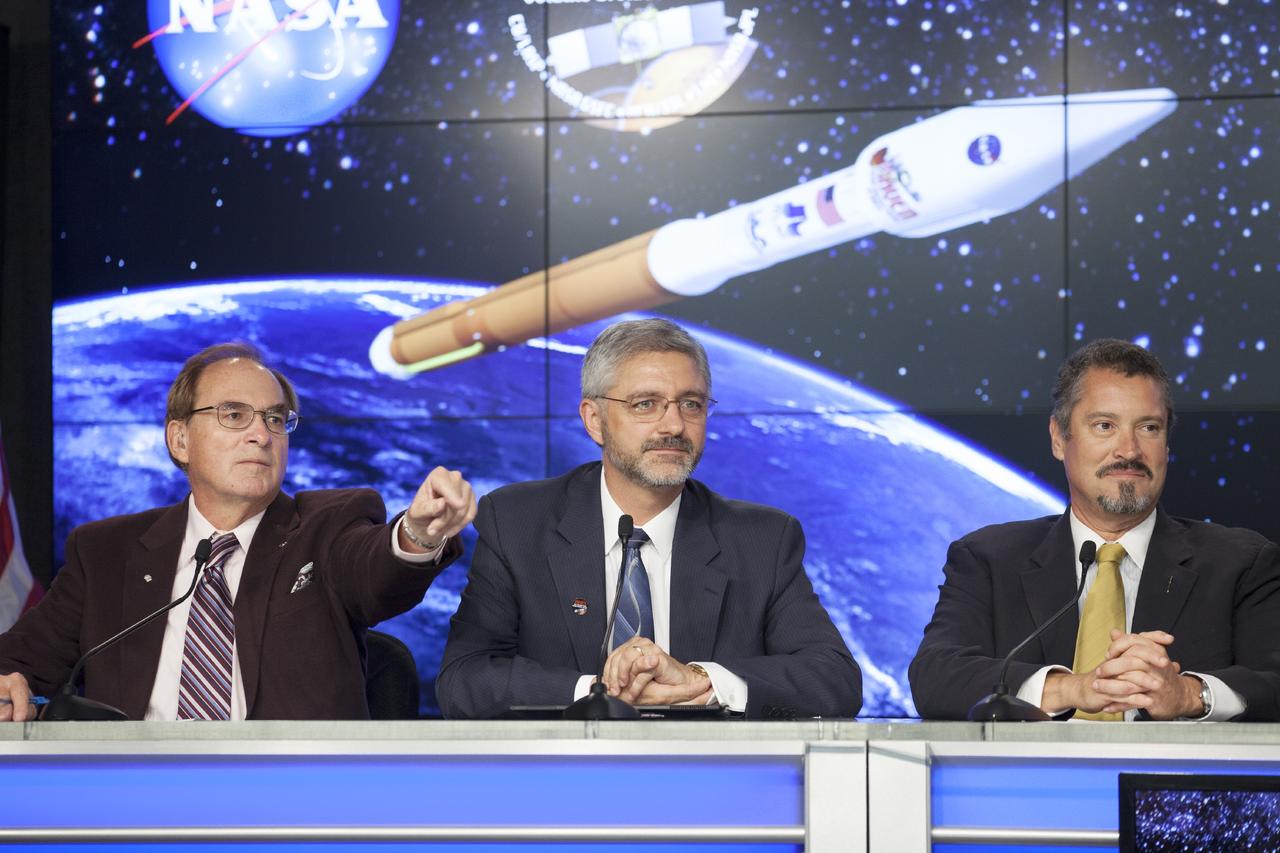
CAPE CANAVERAL, Fla. – During a news conference at NASA's Kennedy Space Center in Florida, agency and contractor officials discussed preparations for the launch of the Mars Atmosphere and Volatile EvolutioN, or MAVEN, mission. Calling on a member of the news media for a question, is George Diller of NASA Public Affairs, left. Also participating are Geoffrey Yoder, NASA deputy associate administrator of programs in the Science Mission Directorate, center, and Omar Baez, NASA launch director. MAVEN is being prepared for its scheduled launch on Nov 18, 2013 from Cape Canaveral Air Force Station, Fla. atop a United Launch Alliance Atlas V rocket. Positioned in an orbit above the Red Planet, MAVEN will study the upper atmosphere of Mars in unprecedented detail. For information on the MAVEN mission, visit: http://www.nasa.gov/mission_pages/maven/main/index.html. Photo credit: NASA MAVEN is being prepared for its scheduled launch on Nov 18, 2013 from Cape Canaveral Air Force Station, Fla. atop a United Launch Alliance Atlas V rocket. Positioned in an orbit above the Red Planet, MAVEN will study the upper atmosphere of Mars in unprecedented detail. For more information, visit: http://www.nasa.gov/mission_pages/maven/main/index.html Photo credit: NASA/Kim Shiflett
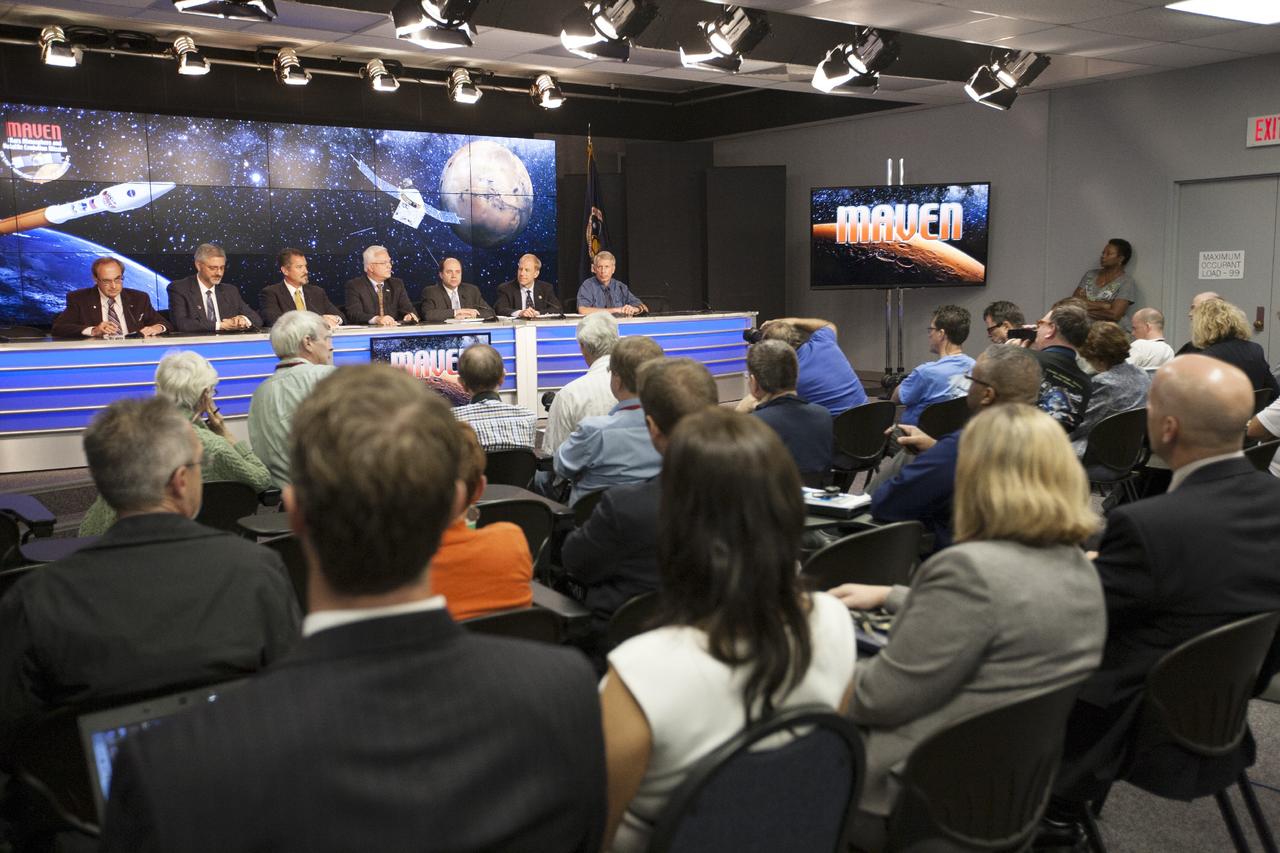
CAPE CANAVERAL, Fla. – During a news conference at NASA's Kennedy Space Center in Florida, agency and contractor officials discussed preparations for the launch of the Mars Atmosphere and Volatile EvolutioN, or MAVEN, mission. Participating in the briefing, from the left, are George Diller of NASA Public Affairs, Geoffrey Yoder, NASA deputy associate administrator of programs in the Science Mission Directorate, Omar Baez, NASA launch director, Vernon Thorp, program manager for NASA Missions with United Launch Alliance in Centennial, Colo., David Mitchell, NASA's MAVEN project manager at the Goddard Space Flight Center in Greenbelt, Md., Guy Beutelschies, Lockheed Martin's MAVEN project manager and Clay Flinn, launch weather officer, 45th Weather Squadron at Cape Canaveral Air Force Station, Fla. MAVEN is being prepared for its scheduled launch on Nov 18, 2013 from Cape Canaveral Air Force Station, Fla. atop a United Launch Alliance Atlas V rocket. Positioned in an orbit above the Red Planet, MAVEN will study the upper atmosphere of Mars in unprecedented detail. For information on the MAVEN mission, visit: http://www.nasa.gov/mission_pages/maven/main/index.html. Photo credit: NASA MAVEN is being prepared for its scheduled launch on Nov 18, 2013 from Cape Canaveral Air Force Station, Fla. atop a United Launch Alliance Atlas V rocket. Positioned in an orbit above the Red Planet, MAVEN will study the upper atmosphere of Mars in unprecedented detail. For more information, visit: http://www.nasa.gov/mission_pages/maven/main/index.html Photo credit: NASA/Kim Shiflett
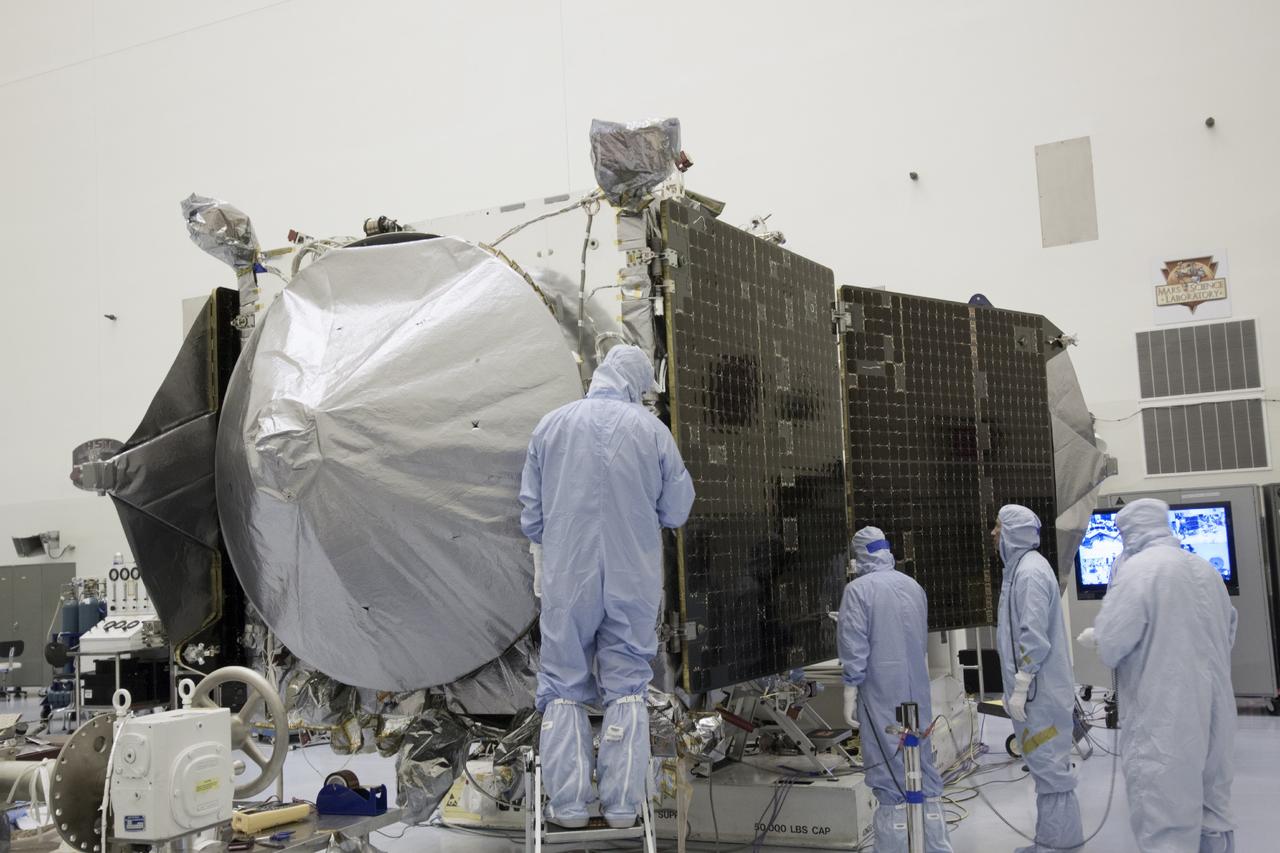
CAPE CANAVERAL, Fla. – Inside the Payload Hazardous Servicing Facility at NASA's Kennedy Space Center in Florida, engineers and technicians test close the twin solar arrays on the Mars Atmosphere and Volatile Evolution, or MAVEN, spacecraft. MAVEN is being prepared for its scheduled launch in November from Cape Canaveral Air Force Station, Fla. atop a United Launch Alliance Atlas V rocket. Positioned in an orbit above the Red Planet, MAVEN will study the upper atmosphere of Mars in unprecedented detail. For more information, visit: http://www.nasa.gov/mission_pages/maven/main/index.html Photo credit: NASA/Jim Grossmann
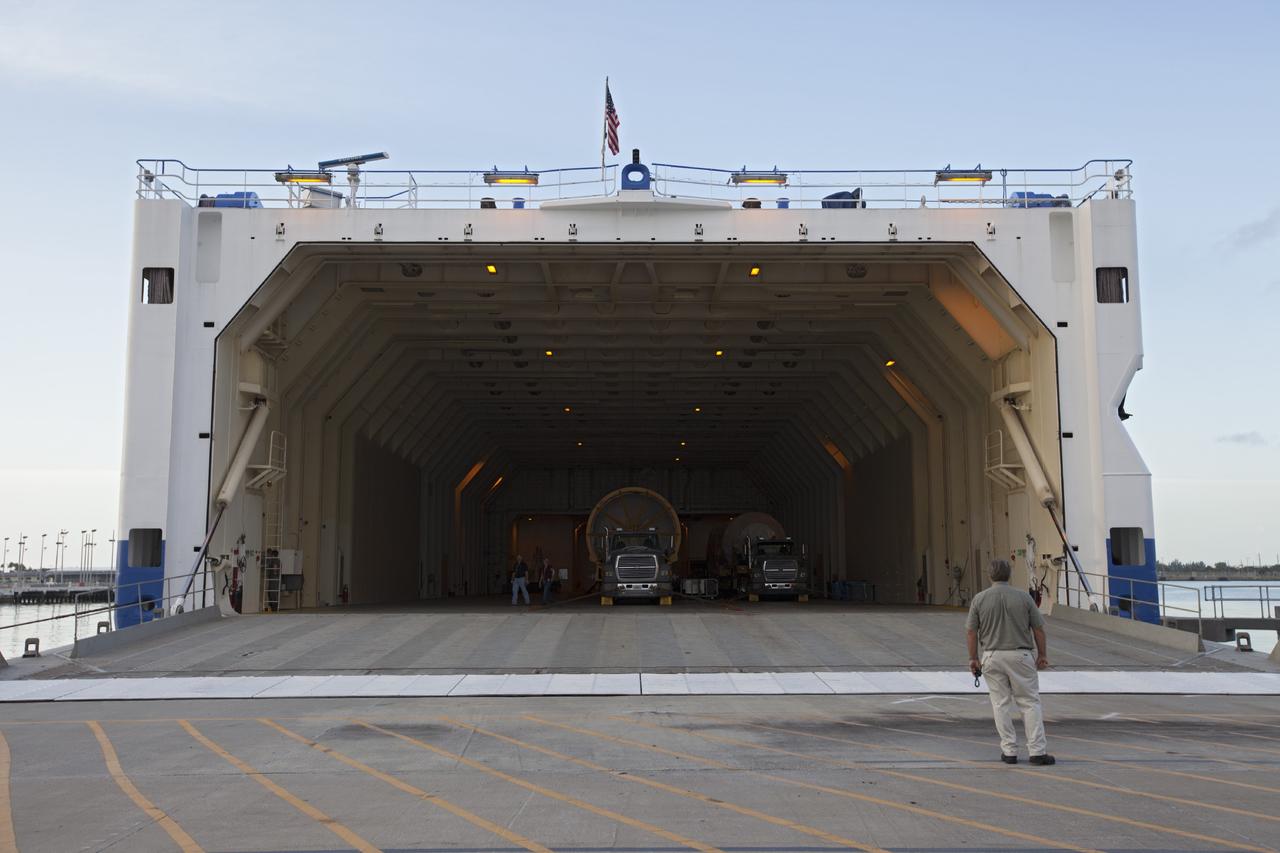
PORT CANAVERAL, Fla. – The United Launch Alliance barge Delta Mariner arrives at Port Canaveral, Fla. delivering the Atlas V launch vehicle that will boost the Mars Atmosphere and Volatile Evolution, or MAVEN, spacecraft to the Red Planet. MAVEN is being prepared for its scheduled launch in November from Cape Canaveral Air Force Station, Fla. atop a United Launch Alliance Atlas V rocket. Positioned in an orbit above the Red Planet, MAVEN will study the upper atmosphere of Mars in unprecedented detail. For more information, visit: http://www.nasa.gov/mission_pages/maven/main/index.html Photo credit: NASA/Kim Shiflett
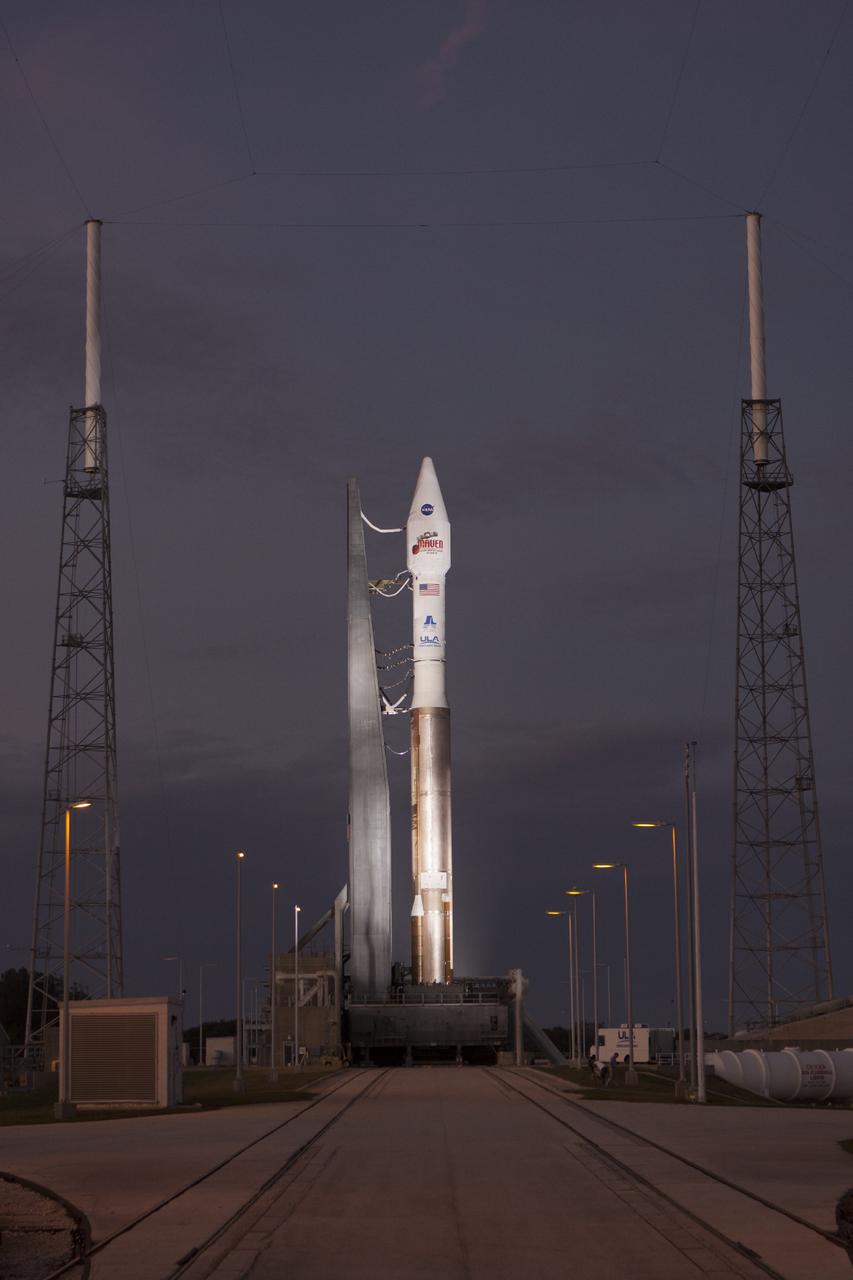
CAPE CANAVERAL, Fla. – At Cape Canaveral Air Force Station's Space Launch Complex 41 a United Launch Alliance Atlas V rocket stands ready to boost the Mars Atmosphere and Volatile Evolution, or MAVEN, spacecraft on a 10-month journey to the Red Planet. MAVEN is being prepared for its scheduled launch on Nov 18, 2013 from Cape Canaveral Air Force Station, Fla. atop a United Launch Alliance Atlas V rocket. Positioned in an orbit above the Red Planet, MAVEN will study the upper atmosphere of Mars in unprecedented detail. For more information, visit: http://www.nasa.gov/mission_pages/maven/main/index.html Photo credit: NASA/Jim Grossman
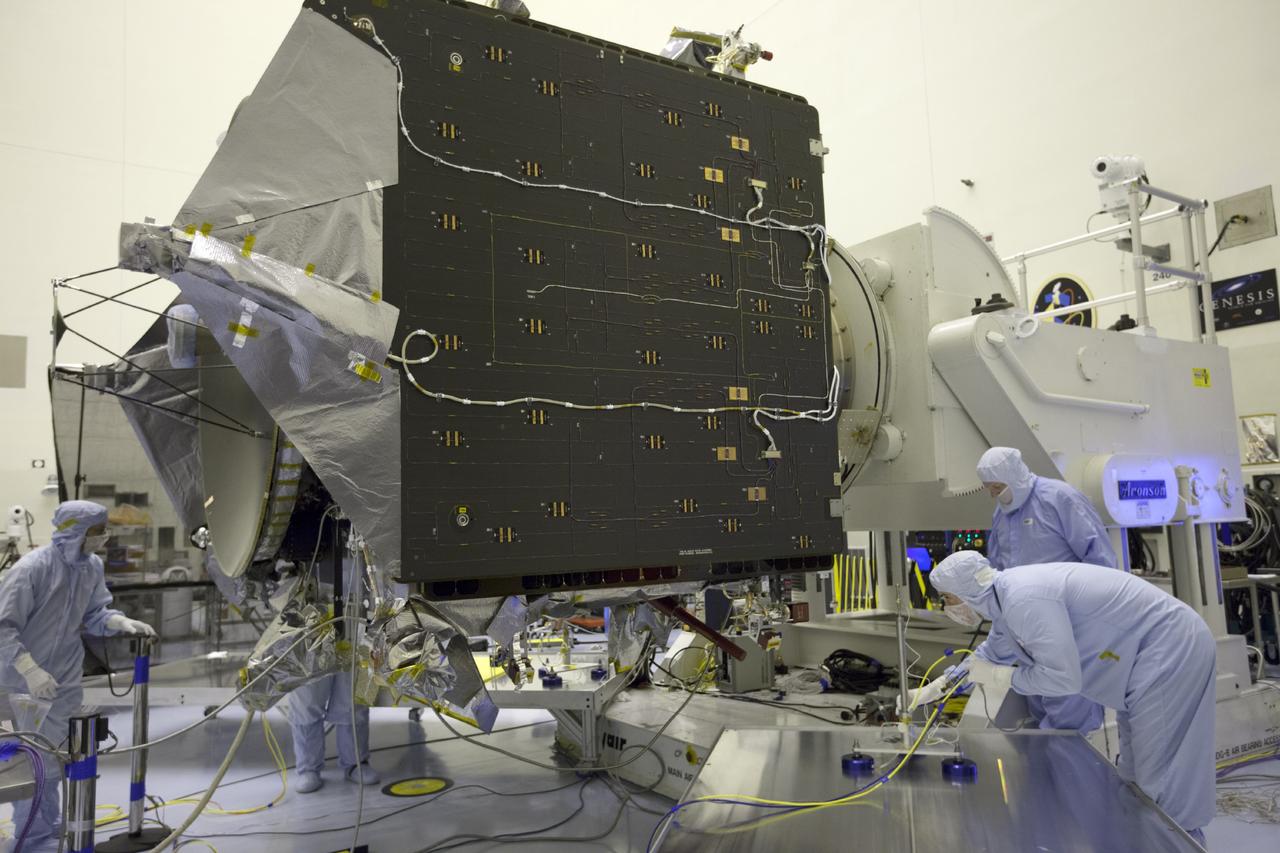
CAPE CANAVERAL, Fla. – Inside the Payload Hazardous Servicing Facility at NASA's Kennedy Space Center in Florida, engineers and technicians prepare to test deployment of the twin solar arrays on the Mars Atmosphere and Volatile Evolution, or MAVEN, spacecraft. MAVEN is being prepared for its scheduled launch in November from Cape Canaveral Air Force Station, Fla. atop a United Launch Alliance Atlas V rocket. Positioned in an orbit above the Red Planet, MAVEN will study the upper atmosphere of Mars in unprecedented detail. For more information, visit: http://www.nasa.gov/mission_pages/maven/main/index.html Photo credit: NASA/Kim Shiflett
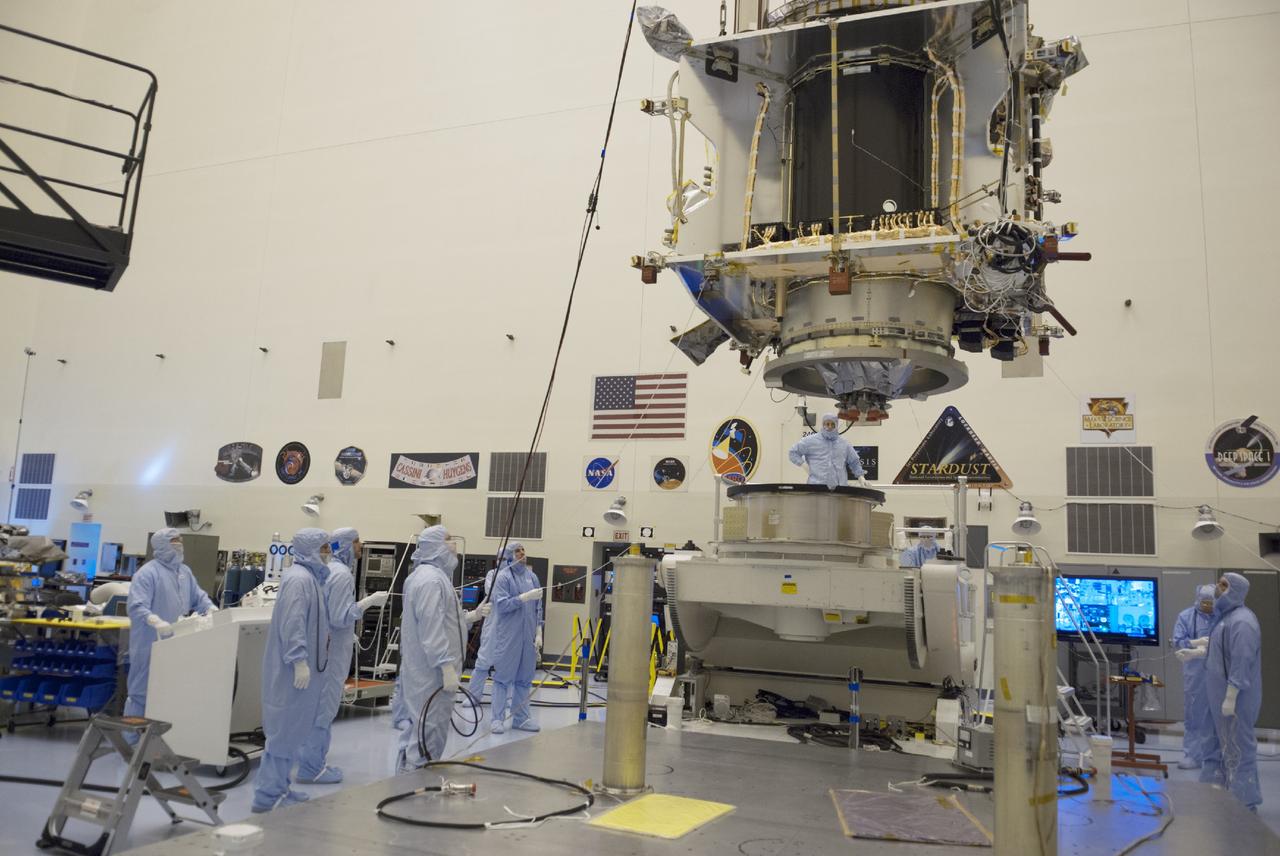
CAPE CANAVERAL, Fla. – Inside the Payload Hazardous Servicing Facility at NASA's Kennedy Space Center in Florida, engineers and technicians use a crane to move the Mars Atmosphere and Volatile Evolution, or MAVEN, spacecraft from a work fixture to a tilt and rotation stand for further pre-flight processing. MAVEN is being prepared for its scheduled launch in November from Cape Canaveral Air Force Station, Fla. atop a United Launch Alliance Atlas V rocket. Positioned in an orbit above the Red Planet, MAVEN will study the upper atmosphere of Mars in unprecedented detail. For more information, visit: http://www.nasa.gov/mission_pages/maven/main/index.html Photo credit: NASA/ Charisse Nahser
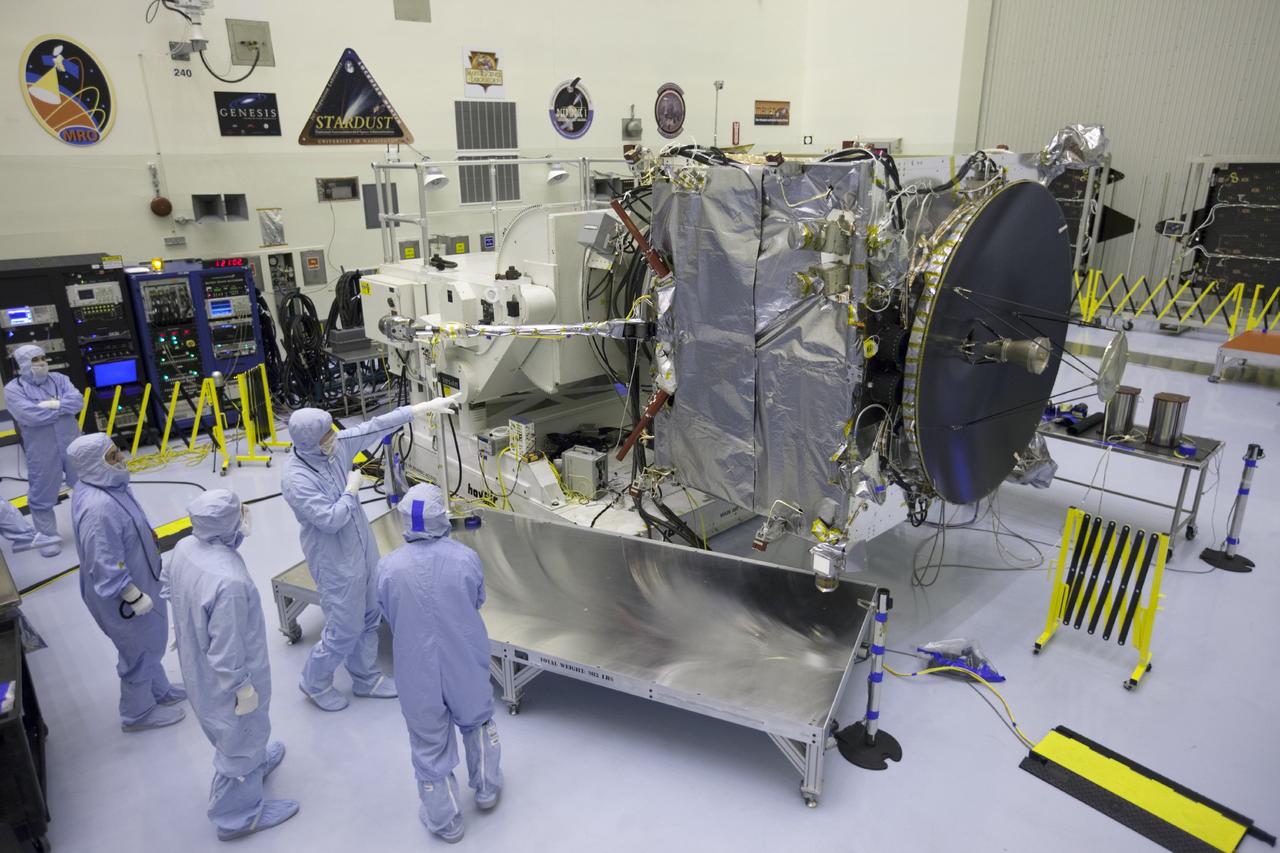
CAPE CANAVERAL, Fla. – Inside the Payload Hazardous Servicing Facility at NASA's Kennedy Space Center in Florida, engineers and technicians deploy the Solar Wind Electron Analyzer boom on the Mars Atmosphere and Volatile Evolution, or MAVEN, spacecraft. The analyzer will measure the solar wind and electrons in the ionosphere of the Red Planet. MAVEN is being prepared for its scheduled launch in November from Cape Canaveral Air Force Station, Fla. atop a United Launch Alliance Atlas V rocket. Positioned in an orbit above the Red Planet, MAVEN will study the upper atmosphere of Mars in unprecedented detail. For more information, visit: http://www.nasa.gov/mission_pages/maven/main/index.html Photo credit: NASA/Kim Shiflett
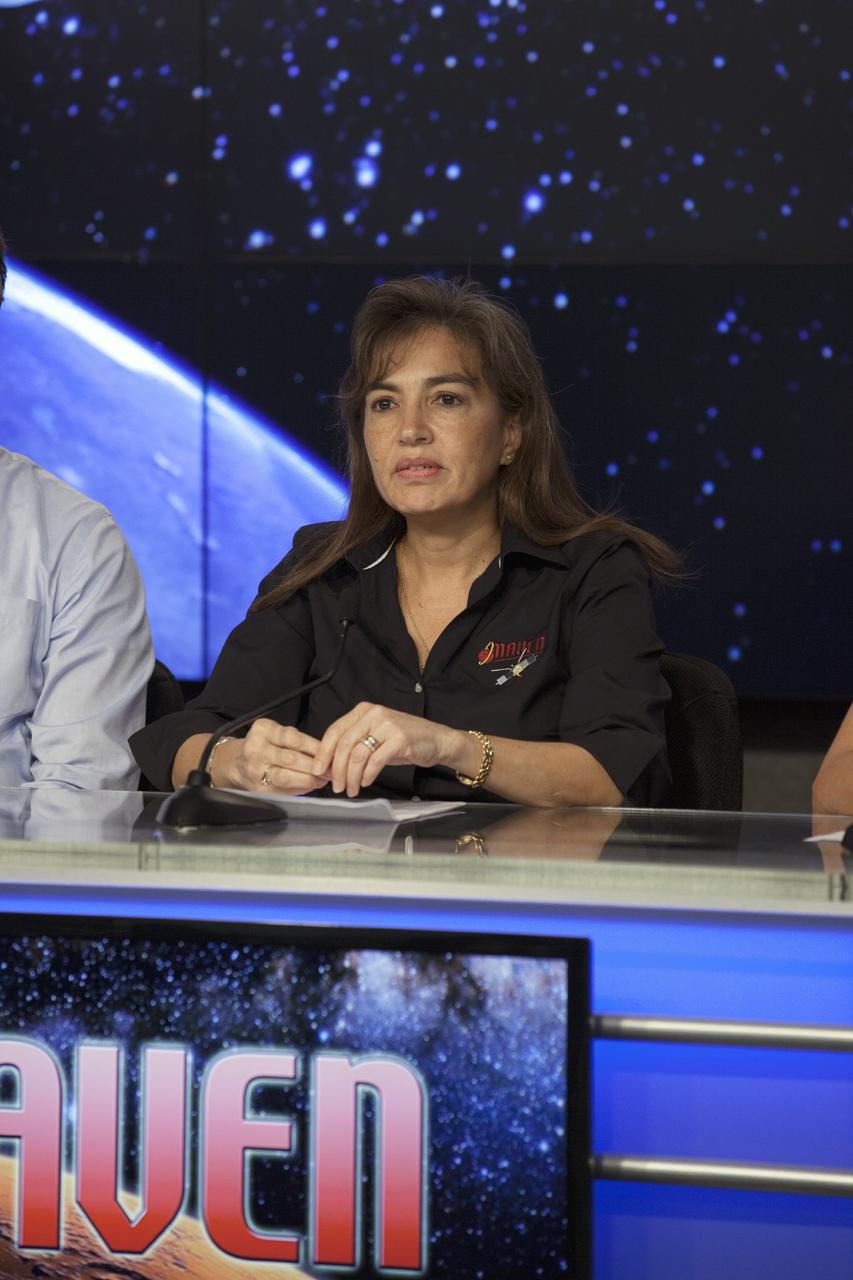
CAPE CANAVERAL, Fla. – During a Spanish language news conference at NASA's Kennedy Space Center in Florida, agency officials discussed preparations for the launch of the Mars Atmosphere and Volatile EvolutioN, or MAVEN, mission. Participating in the briefing is Sandra Cauffman, deputy project manager at the Goddard Space Flight Center in Greenbelt, Md. MAVEN is being prepared for its scheduled launch on Nov 18, 2013 from Cape Canaveral Air Force Station, Fla. atop a United Launch Alliance Atlas V rocket. Positioned in an orbit above the Red Planet, MAVEN will study the upper atmosphere of Mars in unprecedented detail. For information on the MAVEN mission, visit: http://www.nasa.gov/mission_pages/maven/main/index.html. Photo credit: NASA/Kim Shiflett
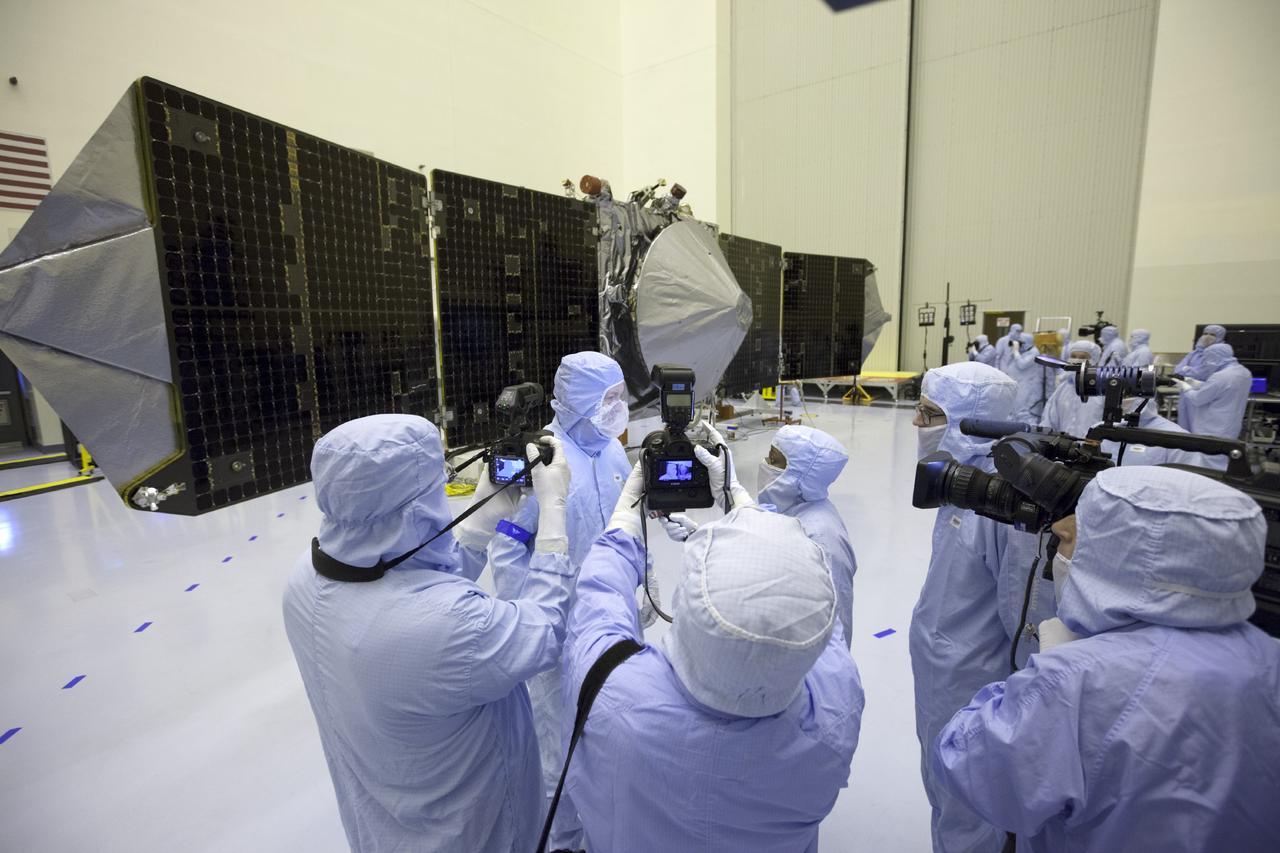
CAPE CANAVERAL, Fla. – Inside the Payload Hazardous Servicing Facility at NASA's Kennedy Space Center in Florida, reporters and photographers look over the Mars Atmosphere and Volatile Evolution, or MAVEN, spacecraft. Members of the news media were given an opportunity to view MAVEN and interview program officials. MAVEN is being prepared for its scheduled launch in November from Cape Canaveral Air Force Station, Fla. atop a United Launch Alliance Atlas V rocket. Positioned in an orbit above the Red Planet, MAVEN will study the upper atmosphere of Mars in unprecedented detail. For more information, visit: http://www.nasa.gov/mission_pages/maven/main/index.html Photo credit: NASA/Kim Shiflett
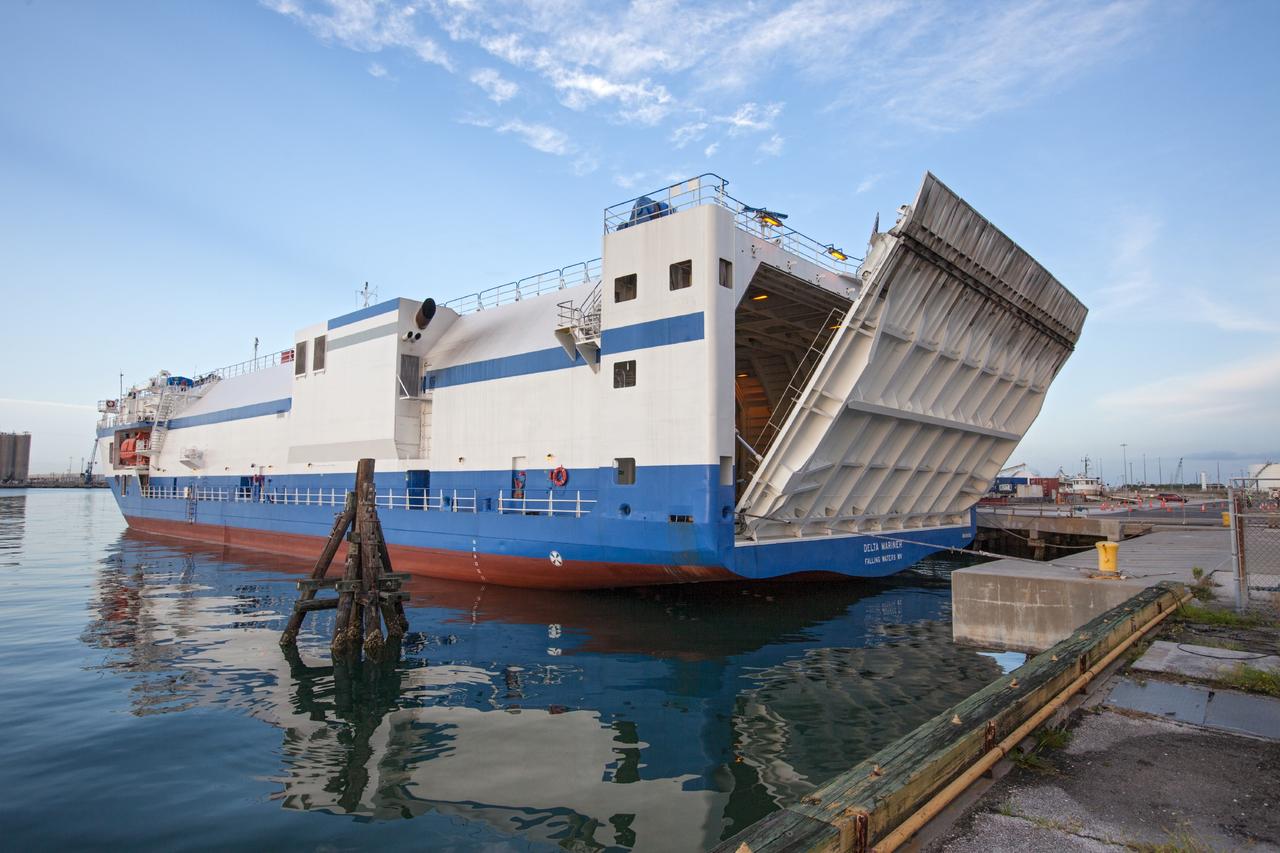
PORT CANAVERAL, Fla. – The United Launch Alliance barge Delta Mariner arrives at Port Canaveral, Fla. delivering the Atlas V launch vehicle that will boost the Mars Atmosphere and Volatile Evolution, or MAVEN, spacecraft to the Red Planet. MAVEN is being prepared for its scheduled launch in November from Cape Canaveral Air Force Station, Fla. atop a United Launch Alliance Atlas V rocket. Positioned in an orbit above the Red Planet, MAVEN will study the upper atmosphere of Mars in unprecedented detail. For more information, visit: http://www.nasa.gov/mission_pages/maven/main/index.html Photo credit: NASA/Kim Shiflett
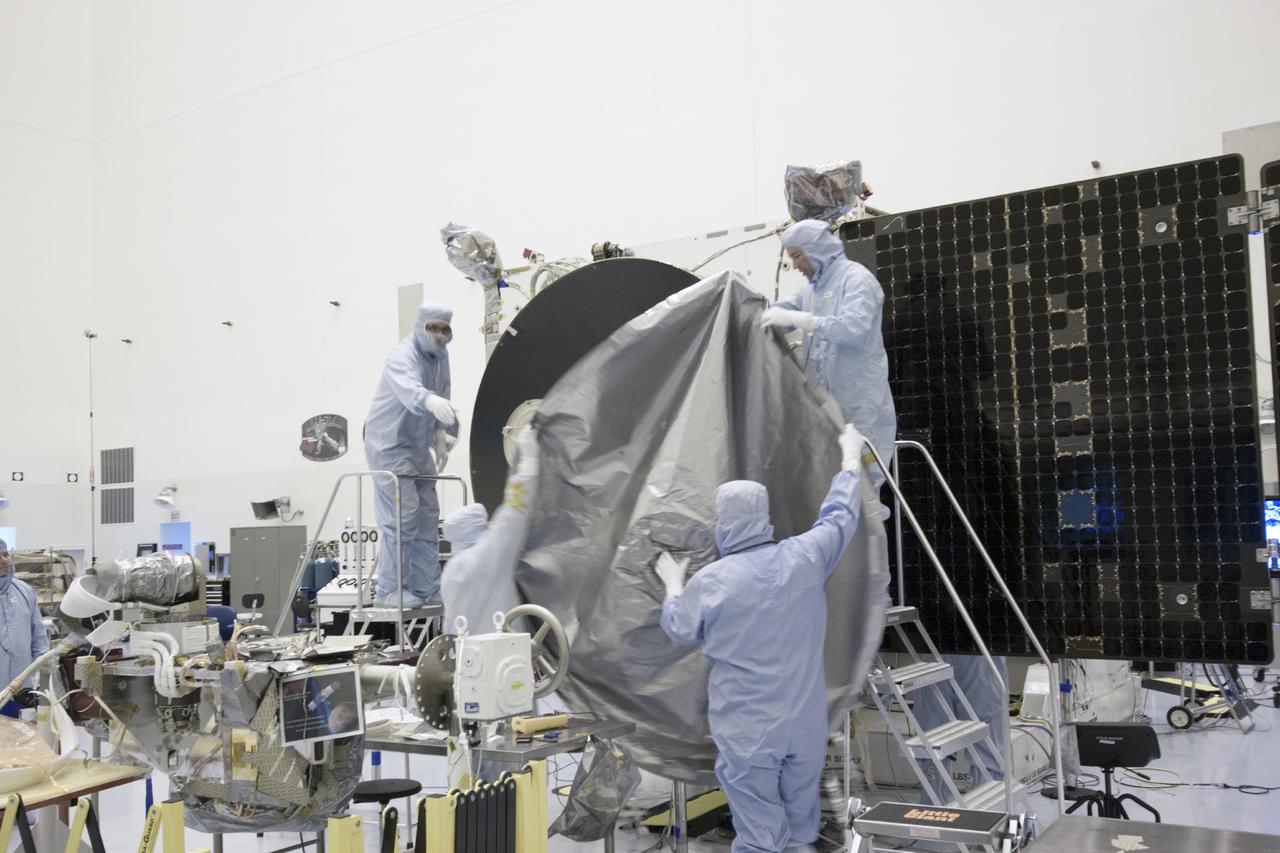
CAPE CANAVERAL, Fla. – Inside the Payload Hazardous Servicing Facility at NASA's Kennedy Space Center in Florida, engineers and technicians install a radome over the antenna for the Mars Atmosphere and Volatile Evolution, or MAVEN, spacecraft. The radome is a coated kapton cover providing thermal protection for the high gain antenna while not interfering with radio frequency transmissions from the spacecraft. MAVEN is being prepared for its scheduled launch in November from Cape Canaveral Air Force Station, Fla. atop a United Launch Alliance Atlas V rocket. Positioned in an orbit above the Red Planet, MAVEN will study the upper atmosphere of Mars in unprecedented detail. For more information, visit: http://www.nasa.gov/mission_pages/maven/main/index.html Photo credit: NASA/Jim Grossmann
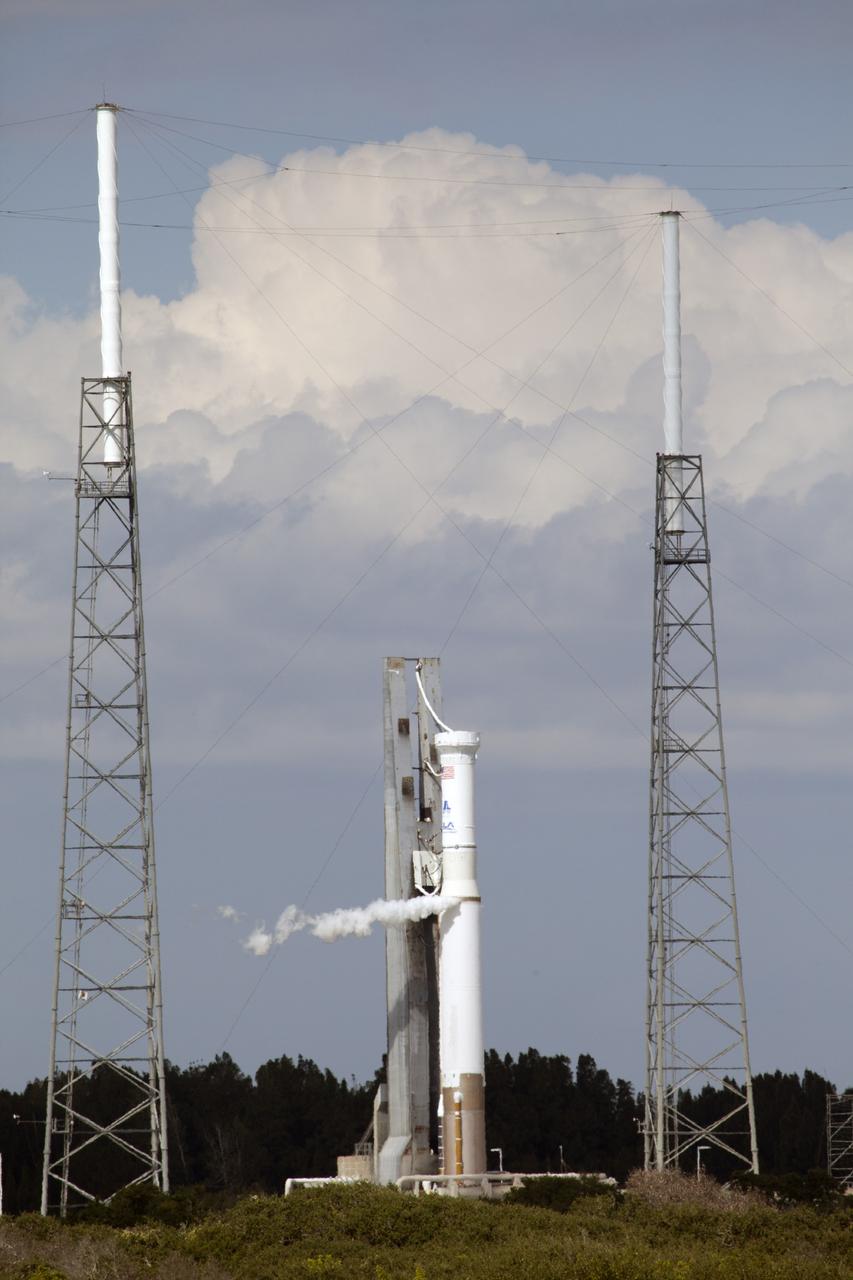
CAPE CANAVERAL, Fla. – The United Launch Alliance Atlas V rocket stands at Launch Complex 41 on Cape Canaveral Air Force Station in Florida during a "wet dress rehearsal." The test called for the launch vehicle to be fully loaded with propellants and put through a countdown procedure, ending just before the T-0 mark. The spacecraft is undergoing prelaunch processing activities in the Kennedy Space Center's Payload Hazardous Servicing Facility and was not atop the rocket for this rehearsal. The Atlas V rocket is slated to launch the Mars Atmosphere and Volatile Evolution, or MAVEN, spacecraft on a journey to the Red Planet on Nov. 18. The spacecraft is undergoing prelaunch processing activities in the Kennedy Space Center's Payload Hazardous Servicing Facility and was not atop the rocket for this rehearsal. Positioned in an orbit above the Red Planet, MAVEN will study the upper atmosphere of Mars in unprecedented detail. For more information, visit: http://www.nasa.gov/mission_pages/maven/main/index.html Photo credit: NASA/Daniel Cooper
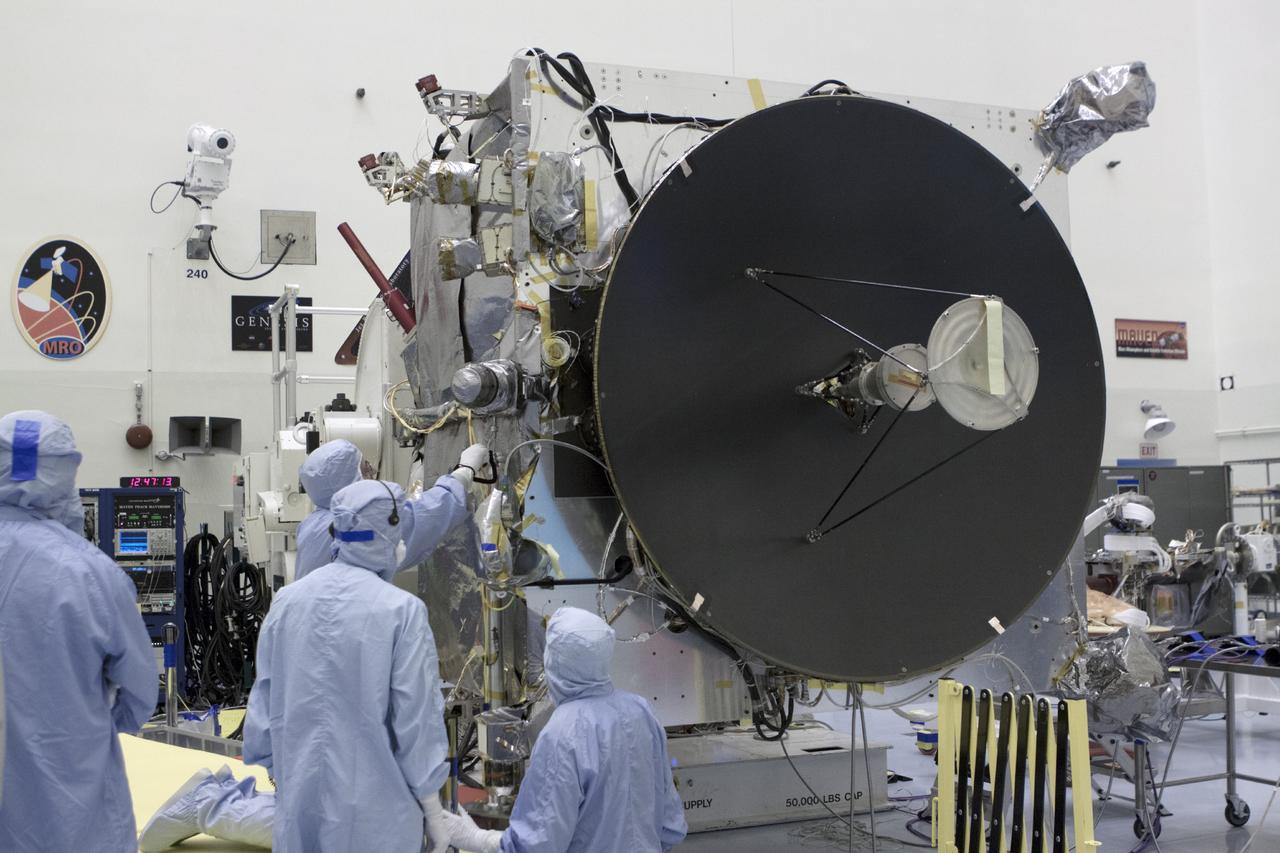
CAPE CANAVERAL, Fla. – Inside the Payload Hazardous Servicing Facility at NASA's Kennedy Space Center in Florida, engineers and technicians prepare to deploy the Solar Wind Electron Analyzer boom on the Mars Atmosphere and Volatile Evolution, or MAVEN, spacecraft. The analyzer will measure the solar wind and electrons in the ionosphere of the Red Planet. MAVEN is being prepared for its scheduled launch in November from Cape Canaveral Air Force Station, Fla. atop a United Launch Alliance Atlas V rocket. Positioned in an orbit above the Red Planet, MAVEN will study the upper atmosphere of Mars in unprecedented detail. For more information, visit: http://www.nasa.gov/mission_pages/maven/main/index.html Photo credit: NASA/Kim Shiflett
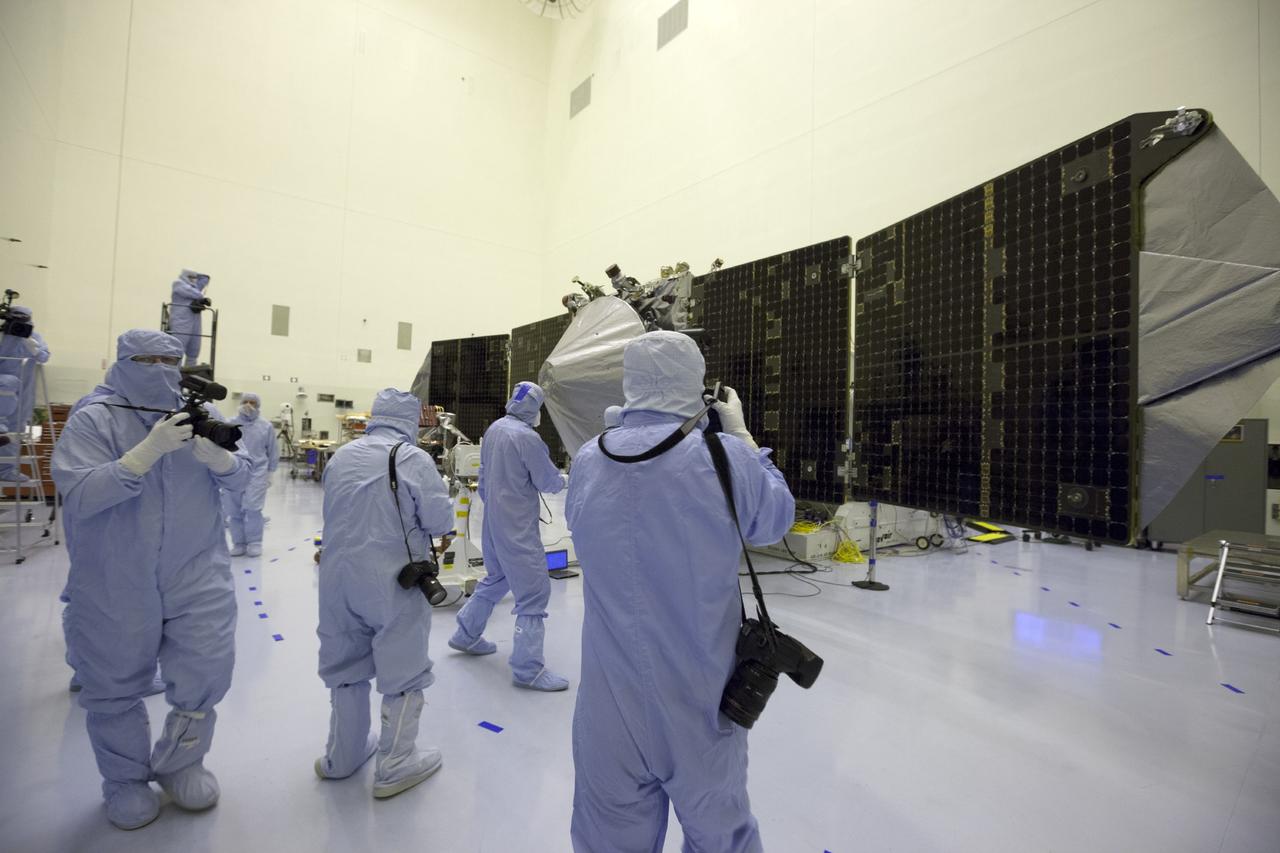
CAPE CANAVERAL, Fla. – Inside the Payload Hazardous Servicing Facility at NASA's Kennedy Space Center in Florida, reporters and photographers look over the Mars Atmosphere and Volatile Evolution, or MAVEN, spacecraft. Members of the news media were given an opportunity to view MAVEN and interview program officials. MAVEN is being prepared for its scheduled launch in November from Cape Canaveral Air Force Station, Fla. atop a United Launch Alliance Atlas V rocket. Positioned in an orbit above the Red Planet, MAVEN will study the upper atmosphere of Mars in unprecedented detail. For more information, visit: http://www.nasa.gov/mission_pages/maven/main/index.html Photo credit: NASA/Kim Shiflett
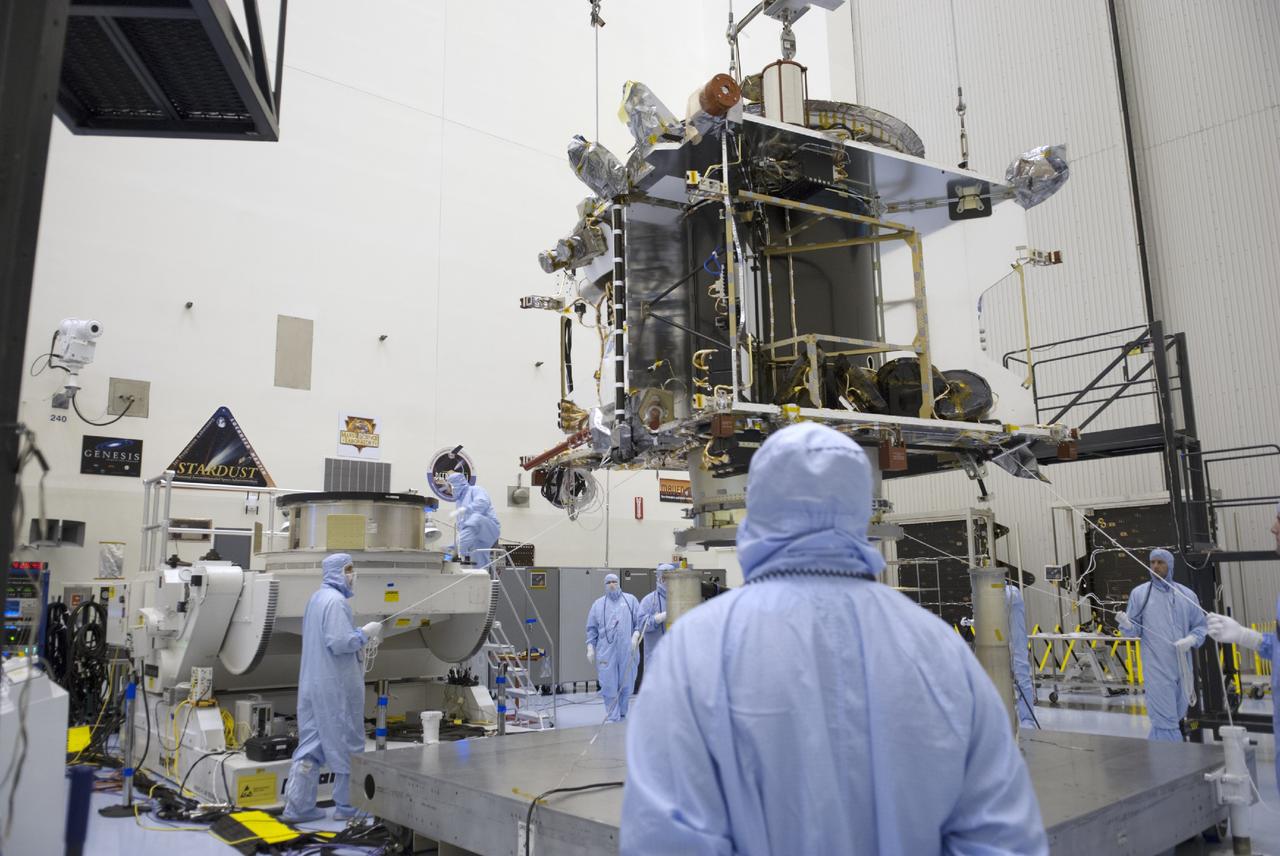
CAPE CANAVERAL, Fla. – Inside the Payload Hazardous Servicing Facility at NASA's Kennedy Space Center in Florida, engineers and technicians use a crane to move the Mars Atmosphere and Volatile Evolution, or MAVEN, spacecraft from a work fixture to a tilt and rotation stand for further pre-flight processing. MAVEN is being prepared for its scheduled launch in November from Cape Canaveral Air Force Station, Fla. atop a United Launch Alliance Atlas V rocket. Positioned in an orbit above the Red Planet, MAVEN will study the upper atmosphere of Mars in unprecedented detail. For more information, visit: http://www.nasa.gov/mission_pages/maven/main/index.html Photo credit: NASA/ Charisse Nahser
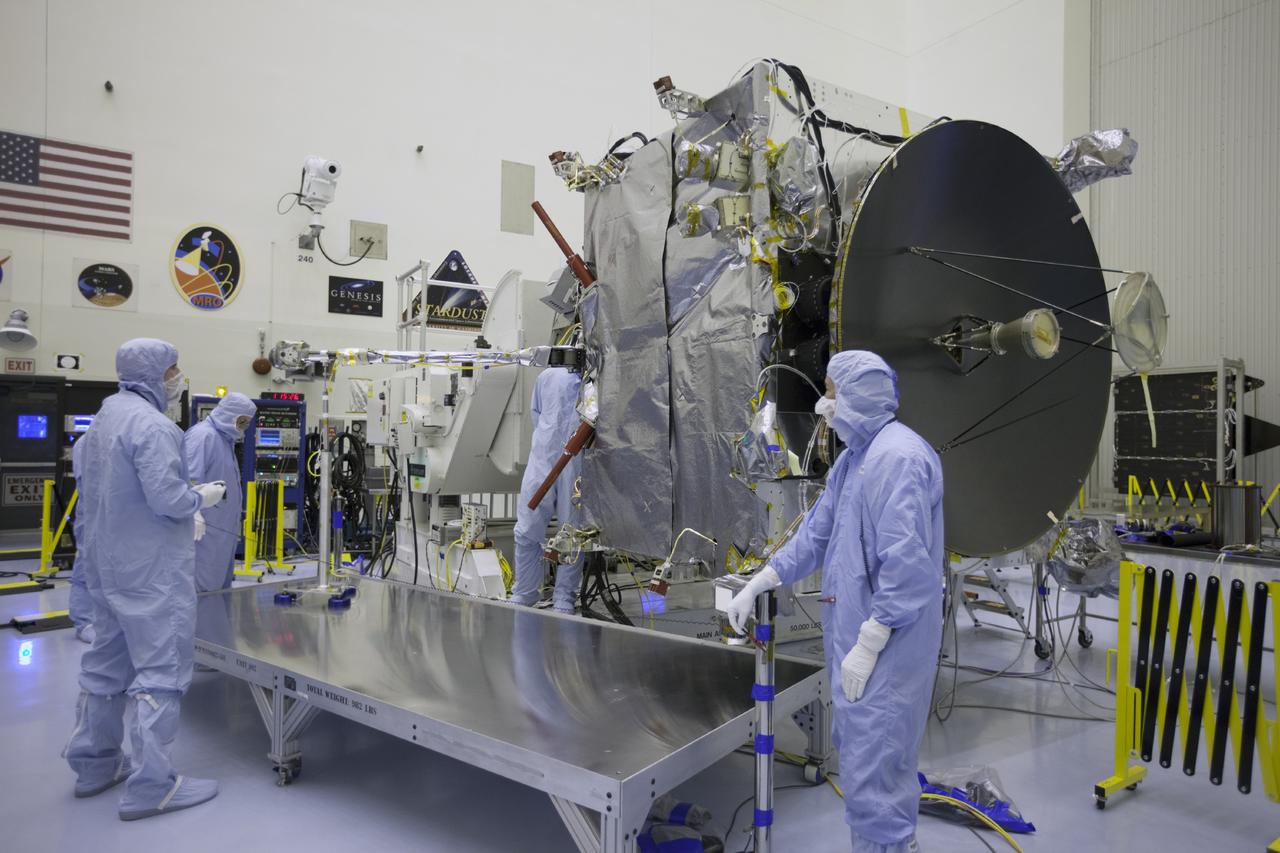
CAPE CANAVERAL, Fla. – Inside the Payload Hazardous Servicing Facility at NASA's Kennedy Space Center in Florida, engineers and technicians deploy the Solar Wind Electron Analyzer boom on the Mars Atmosphere and Volatile Evolution, or MAVEN, spacecraft. The analyzer will measure the solar wind and electrons in the ionosphere of the Red Planet. MAVEN is being prepared for its scheduled launch in November from Cape Canaveral Air Force Station, Fla. atop a United Launch Alliance Atlas V rocket. Positioned in an orbit above the Red Planet, MAVEN will study the upper atmosphere of Mars in unprecedented detail. For more information, visit: http://www.nasa.gov/mission_pages/maven/main/index.html Photo credit: NASA/Kim Shiflett
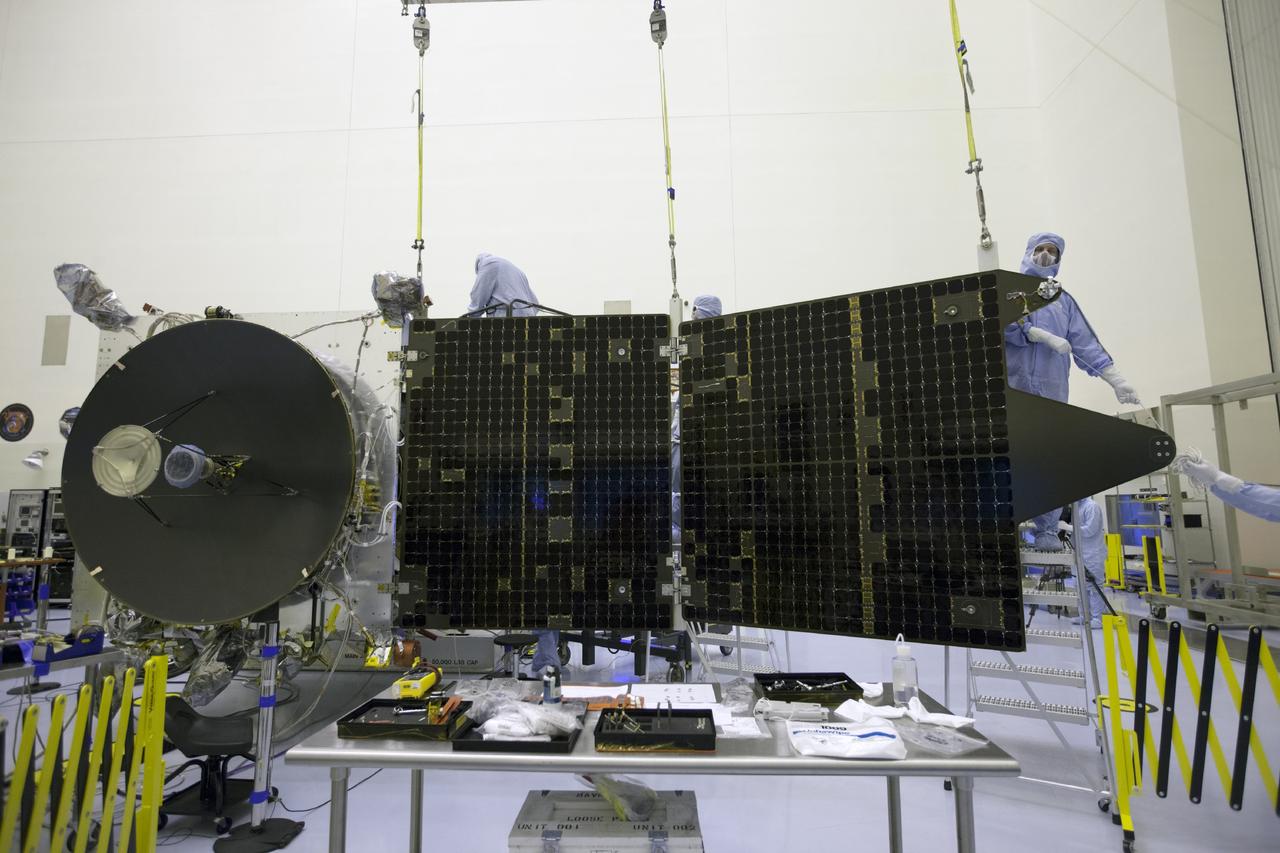
CAPE CANAVERAL, Fla. – Inside the Payload Hazardous Servicing Facility at NASA's Kennedy Space Center in Florida, engineers and technicians reattach twin solar arrays to the Mars Atmosphere and Volatile Evolution, or MAVEN, spacecraft following inspection and testing. MAVEN is being prepared for its scheduled launch in November from Cape Canaveral Air Force Station, Fla. atop a United Launch Alliance Atlas V rocket. Positioned in an orbit above the Red Planet, MAVEN will study the upper atmosphere of Mars in unprecedented detail. For more information, visit: http://www.nasa.gov/mission_pages/maven/main/index.html Photo credit: NASA/Kim Shiflett
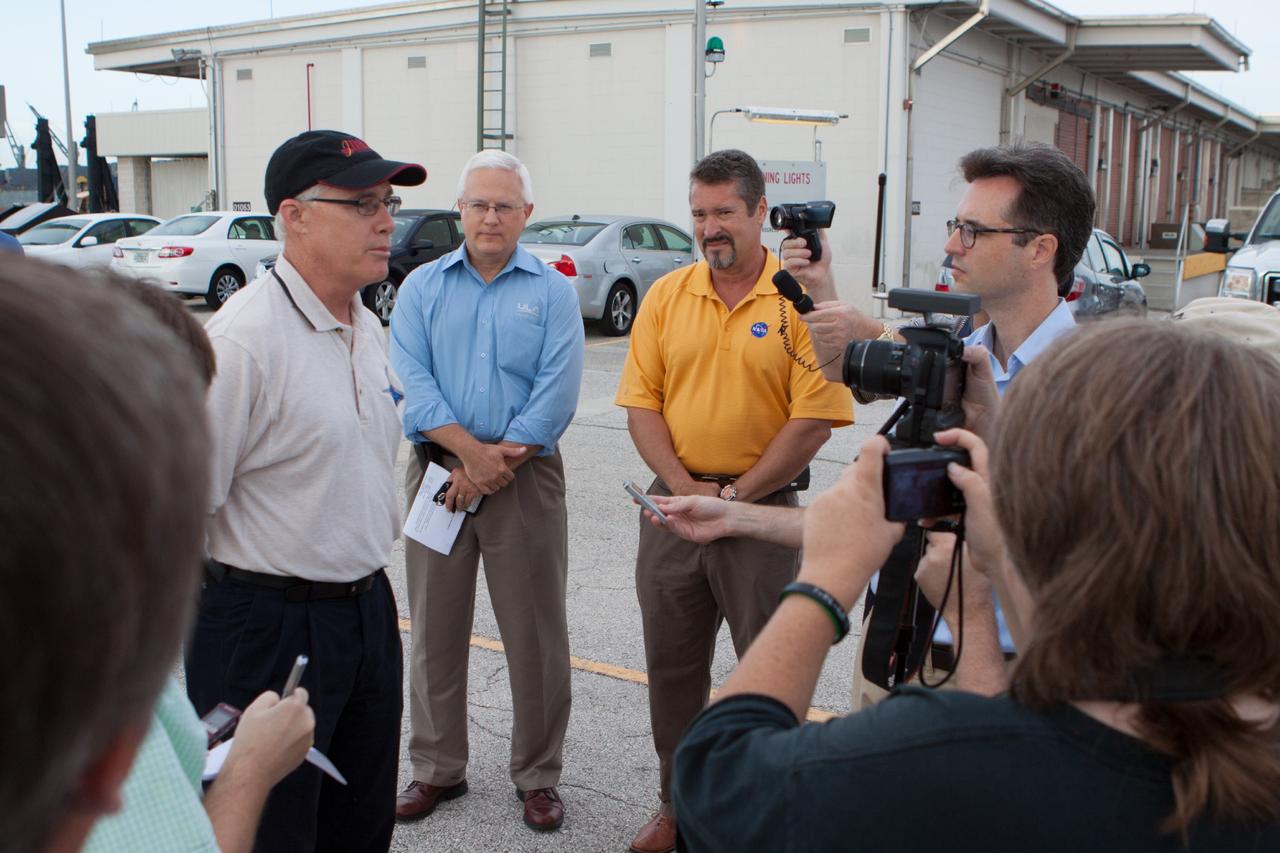
PORT CANAVERAL, Fla. – At Port Canaveral, Fla., NASA and United Launch Alliance managers brief members of the news media on the arrival of the ULA Atlas V rocket that will boost the Mars Atmosphere and Volatile Evolution, or MAVEN, spacecraft to the Red Planet. From the left, are Chuck Tatro, NASA's MAVEN mission manager, Vernon Thorp, ULA's NASA and Commercial Program manager and Omar Baez, NASA's launch director. MAVEN is being prepared for its scheduled launch in November from Cape Canaveral Air Force Station, Fla. atop a United Launch Alliance Atlas V rocket. Positioned in an orbit above the Red Planet, MAVEN will study the upper atmosphere of Mars in unprecedented detail. For more information, visit: http://www.nasa.gov/mission_pages/maven/main/index.html Photo credit: NASA/Kim Shiflett
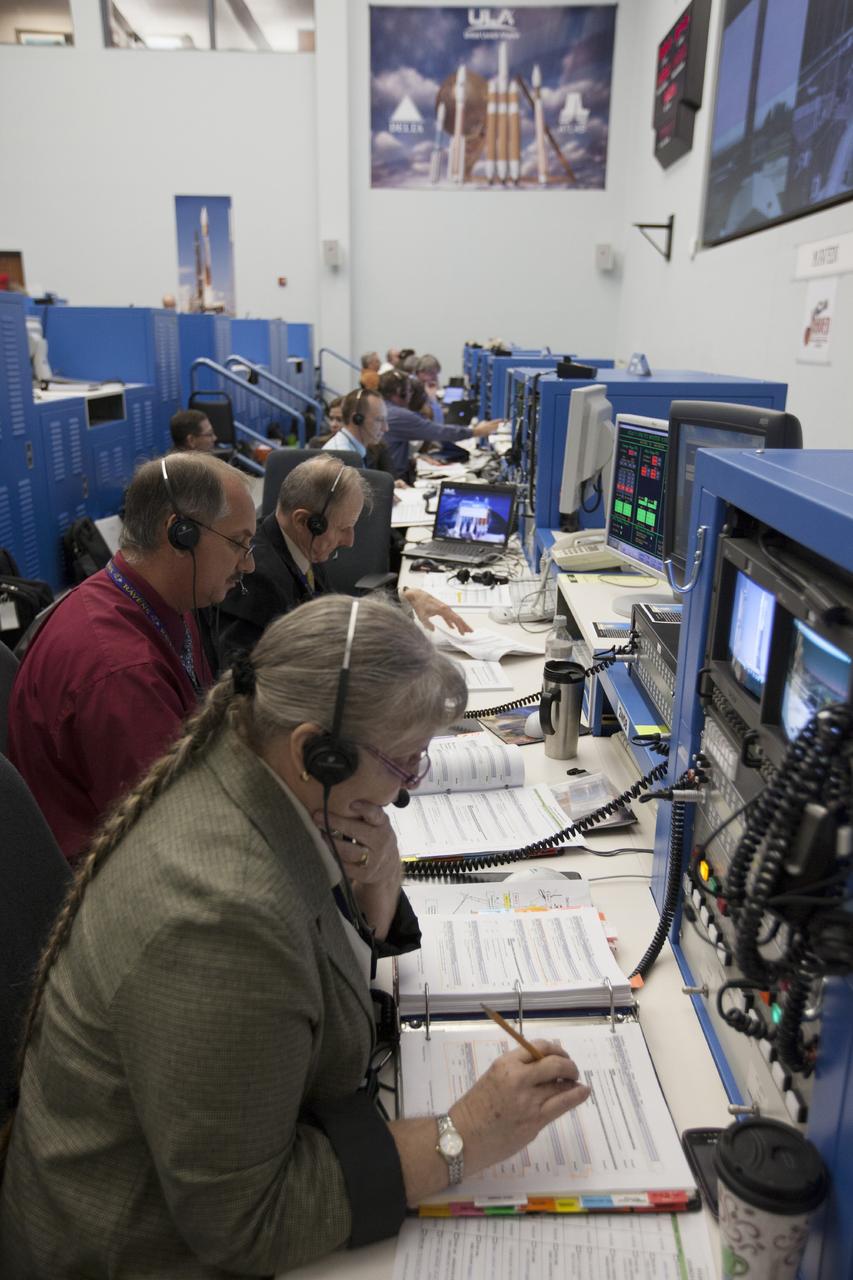
CAPE CANAVERAL, Fla. – At Cape Canaveral Air Force Station's Atlas V Spaceflight Operations Center NASA and contractor managers and engineers monitor progress of the countdown for the launch the agency's Mars Atmosphere and Volatile Evolution, or MAVEN, spacecraft. MAVEN was launched on Nov. 18, 2013 from Cape Canaveral's Space Launch Complex 41 atop a United Launch Alliance Atlas V rocket. Positioned in an orbit above the Red Planet, MAVEN will study the upper atmosphere of Mars in unprecedented detail. For more information, visit: http://www.nasa.gov/mission_pages/maven/main/index.html Photo credit: NASA/Kim Shiflett
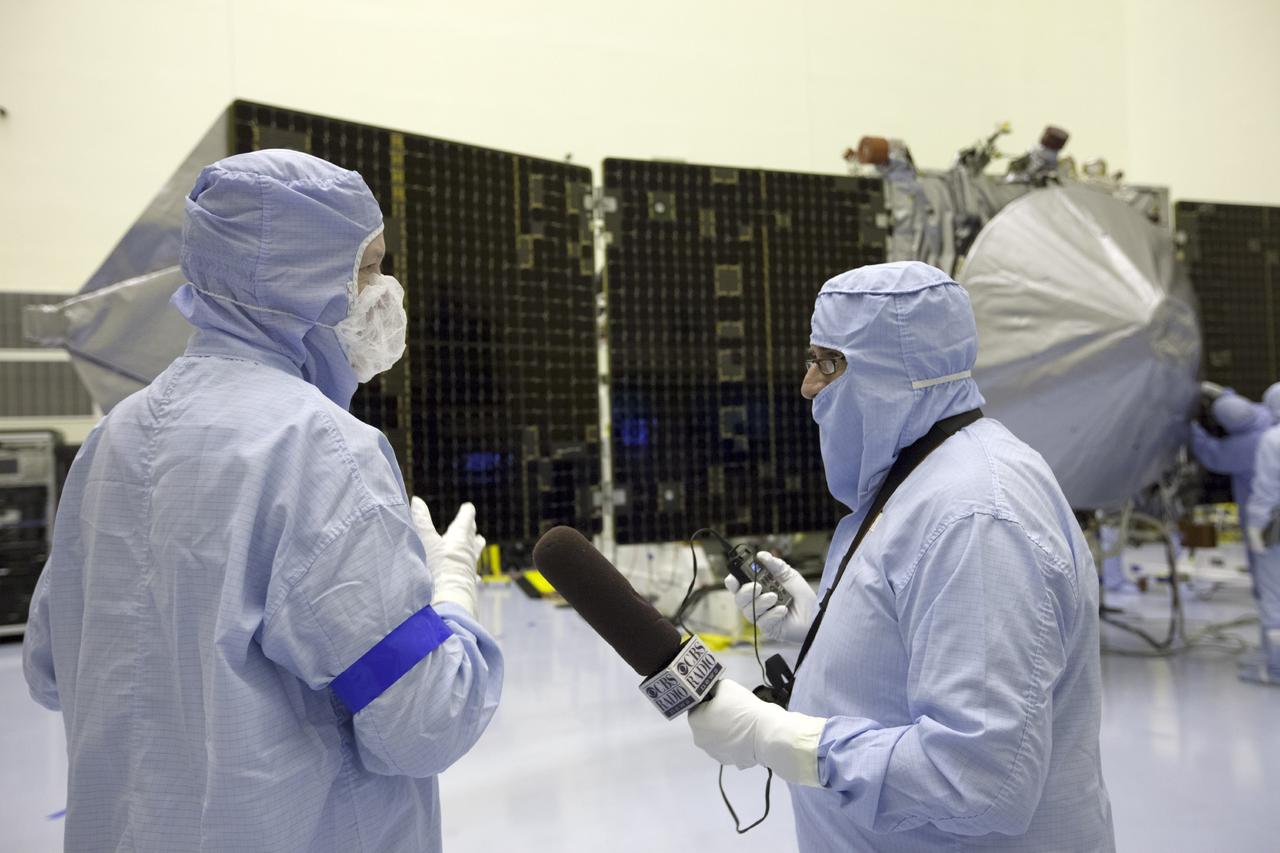
CAPE CANAVERAL, Fla. – Inside the Payload Hazardous Servicing Facility at NASA's Kennedy Space Center in Florida, reporters and photographers look over the Mars Atmosphere and Volatile Evolution, or MAVEN, spacecraft. Members of the news media were given an opportunity to view MAVEN and interview program officials. MAVEN is being prepared for its scheduled launch in November from Cape Canaveral Air Force Station, Fla. atop a United Launch Alliance Atlas V rocket. Positioned in an orbit above the Red Planet, MAVEN will study the upper atmosphere of Mars in unprecedented detail. For more information, visit: http://www.nasa.gov/mission_pages/maven/main/index.html Photo credit: NASA/Kim Shiflett
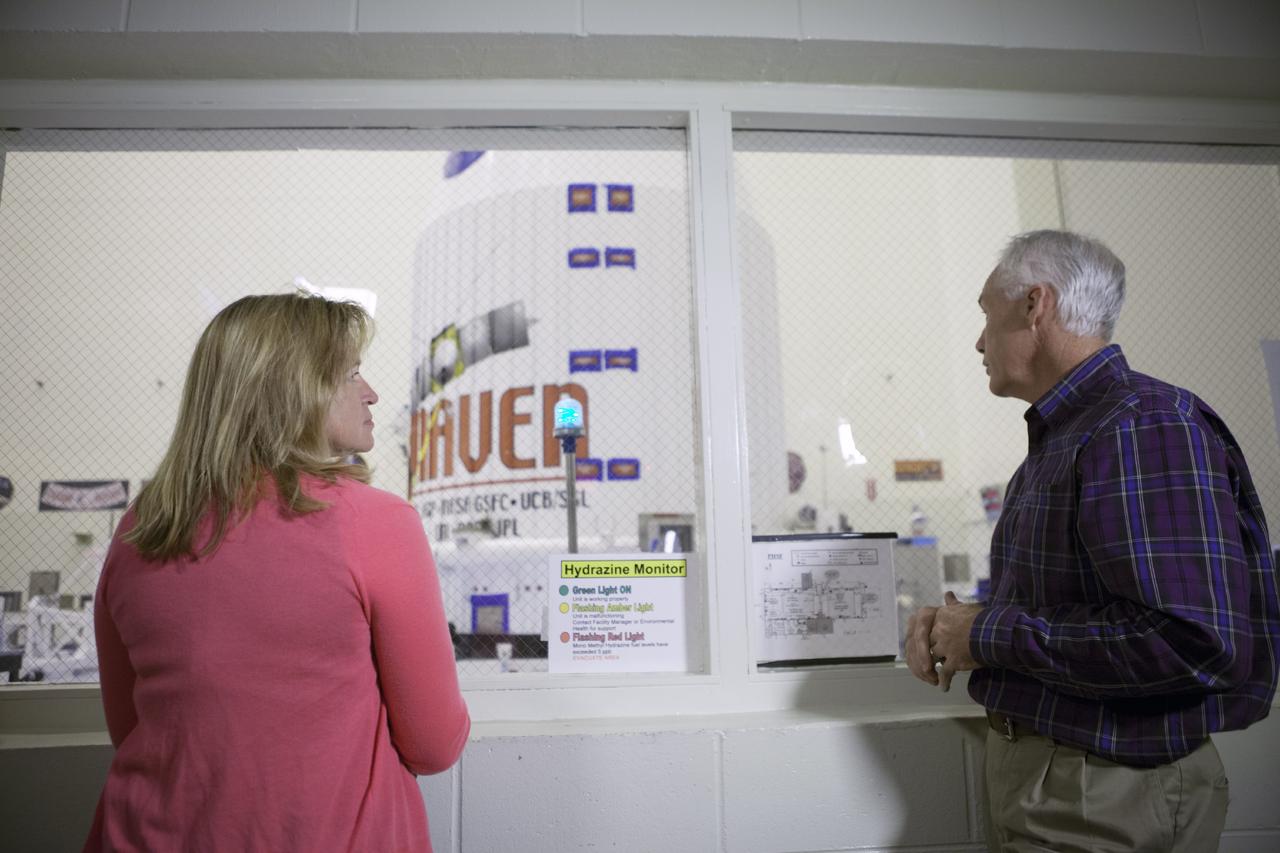
CAPE CANAVERAL, Fla. – Inside the Payload Hazardous Servicing Facility at NASA's Kennedy Space Center in Florida, Dr. Ellen Stofan, NASA's chief scientist, talks with Chuck Tatro of NASA's Launch Services Program. Tatro is mission manager for the Mars Atmosphere and Volatile Evolution, or MAVEN, mission. The MAVEN spacecraft can be seen through the window following encapsulation in its payload fairing. MAVEN is being prepared for its scheduled launch on Nov 18, 2013 from Cape Canaveral Air Force Station, Fla. atop a United Launch Alliance Atlas V rocket. Positioned in an orbit above the Red Planet, MAVEN will study the upper atmosphere of Mars in unprecedented detail. For more information, visit: http://www.nasa.gov/mission_pages/maven/main/index.html Photo credit: NASA/Kim Shiflett
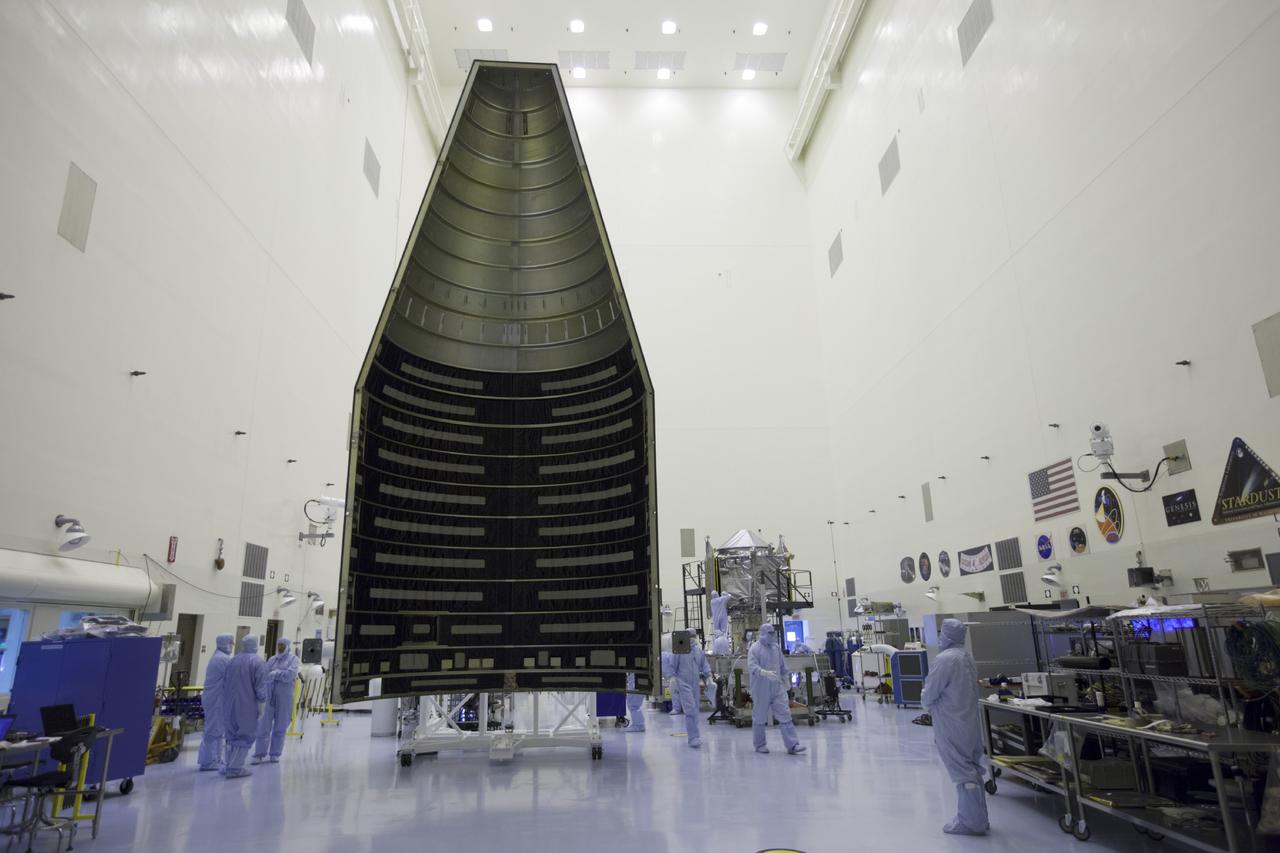
CAPE CANAVERAL, Fla. – The payload fairing for the Mars Atmosphere and Volatile Evolution, or MAVEN, spacecraft arrives at the Payload Hazardous Servicing Facility at NASA's Kennedy Space Center in Florida. MAVEN is being prepared for its scheduled launch on Nov 18, 2013 from Cape Canaveral Air Force Station, Fla. atop a United Launch Alliance Atlas V rocket. Positioned in an orbit above the Red Planet, MAVEN will study the upper atmosphere of Mars in unprecedented detail. For more information, visit: http://www.nasa.gov/mission_pages/maven/main/index.html Photo credit: NASA/Kim Shiflett
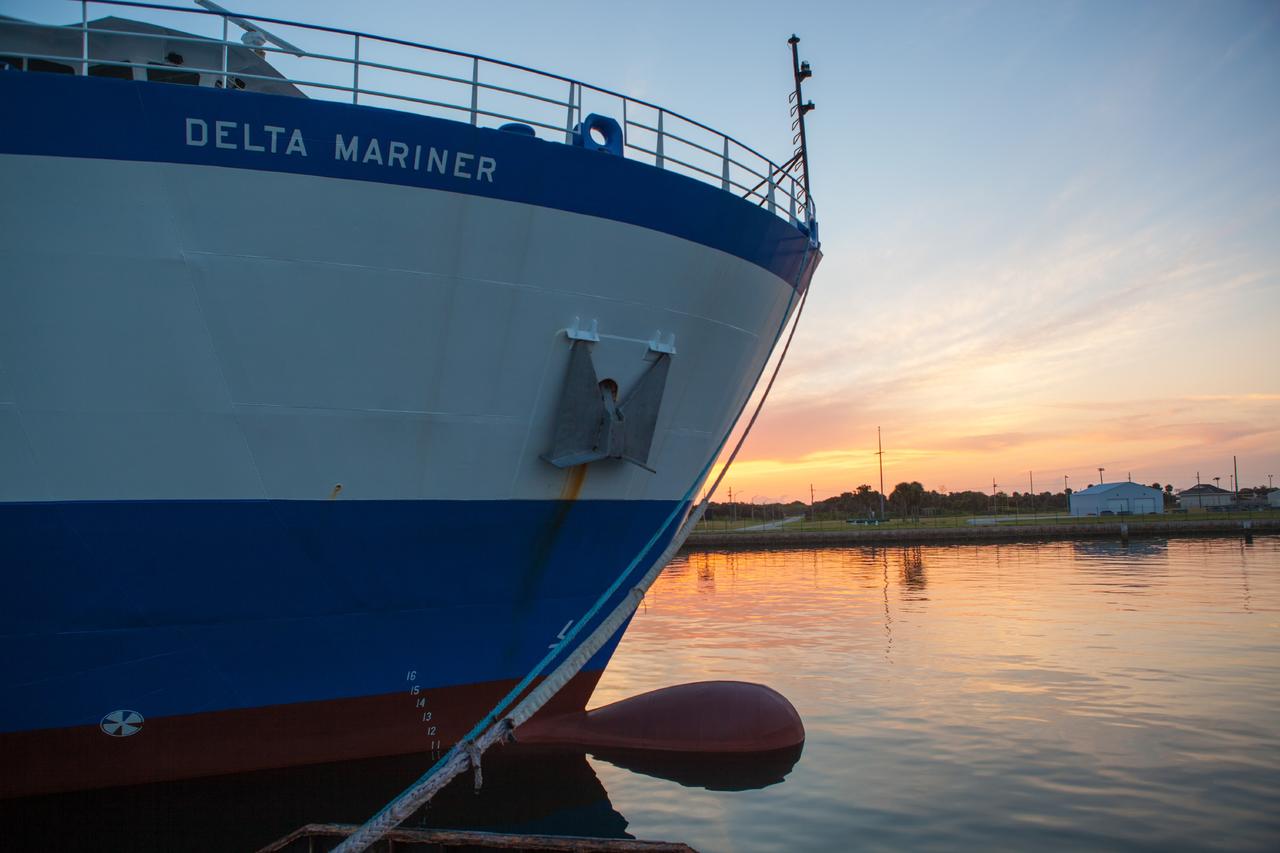
PORT CANAVERAL, Fla. – The United Launch Alliance barge Delta Mariner arrives at Port Canaveral, Fla. delivering the Atlas V launch vehicle that will boost the Mars Atmosphere and Volatile Evolution, or MAVEN, spacecraft to the Red Planet. MAVEN is being prepared for its scheduled launch in November from Cape Canaveral Air Force Station, Fla. atop a United Launch Alliance Atlas V rocket. Positioned in an orbit above the Red Planet, MAVEN will study the upper atmosphere of Mars in unprecedented detail. For more information, visit: http://www.nasa.gov/mission_pages/maven/main/index.html Photo credit: NASA/ Dimitri Gerondidakis
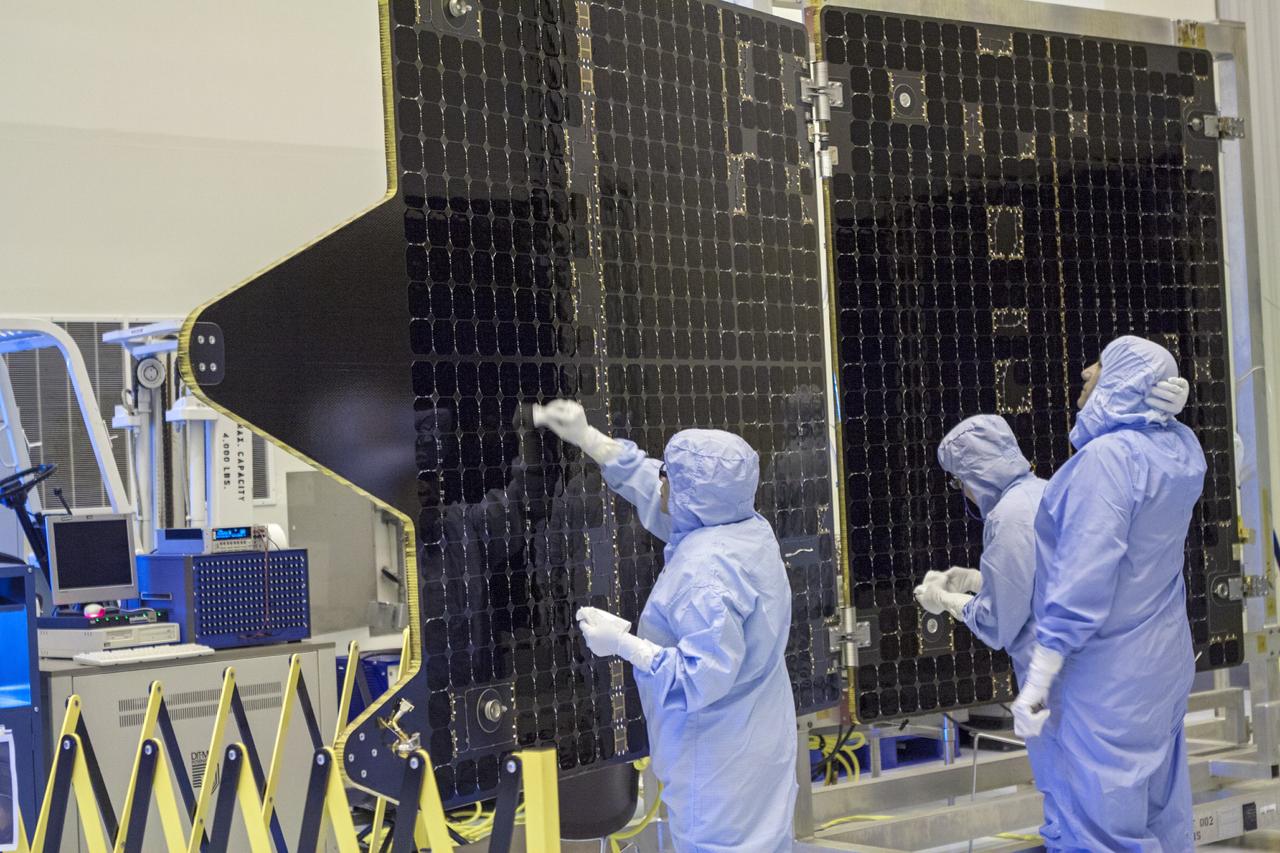
CAPE CANAVERAL, Fla. – Inside the Payload Hazardous Servicing Facility at NASA's Kennedy Space Center in Florida, technicians clean the electricity-producing solar arrays for the Mars Atmosphere and Volatile Evolution, or MAVEN, spacecraft. MAVEN is being prepared for its scheduled launch in November from Cape Canaveral Air Force Station, Fla. atop a United Launch Alliance Atlas V rocket. Positioned in an orbit above the Red Planet, MAVEN will study the upper atmosphere of Mars in unprecedented detail. For more information, visit: http://www.nasa.gov/mission_pages/maven/main/index.html Photo credit: NASA/ Jim Grossmann
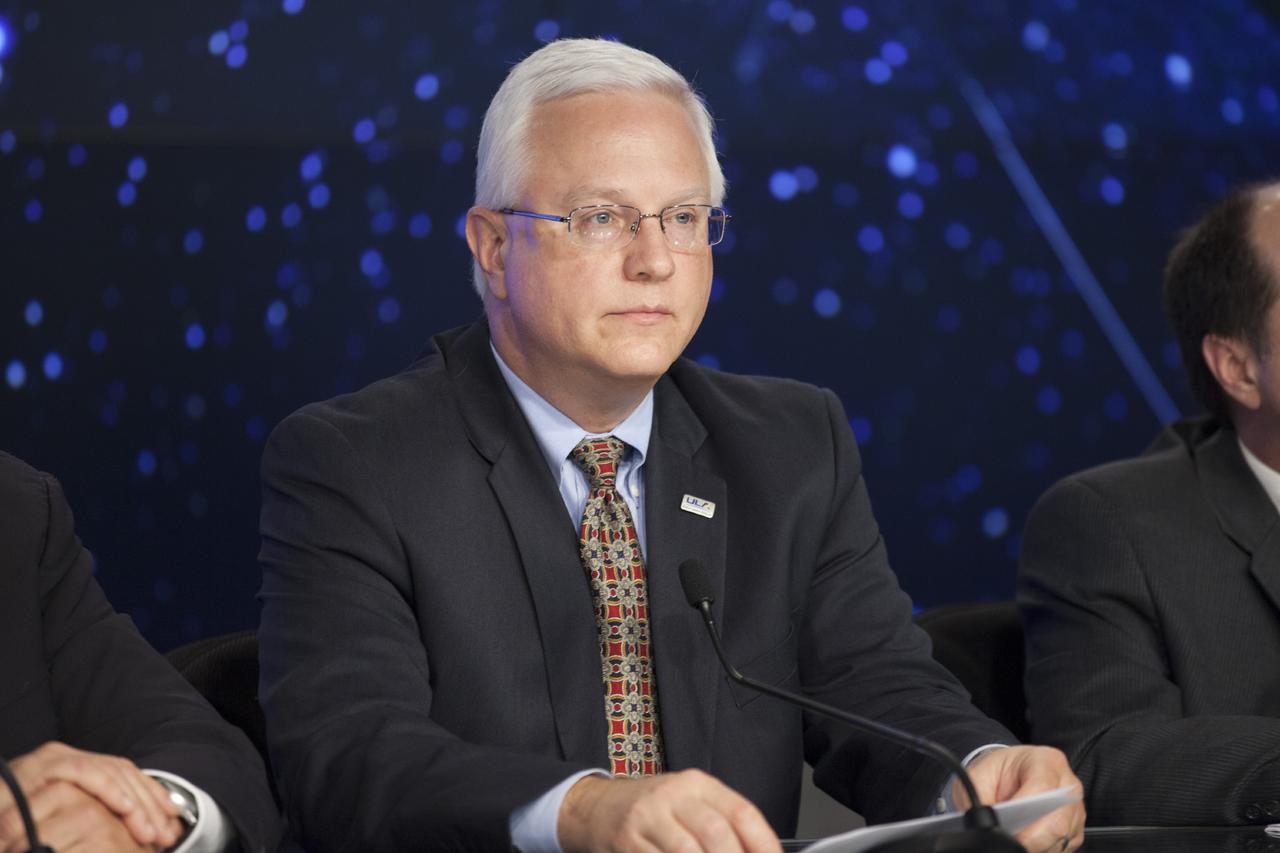
CAPE CANAVERAL, Fla. – During a news conference at NASA's Kennedy Space Center in Florida, agency and contractor officials discussed preparations for the launch of the Mars Atmosphere and Volatile EvolutioN, or MAVEN, mission. Participating in the briefing is Vernon Thorp, program manager for NASA Missions with United Launch Alliance in Centennial, Colo. MAVEN is being prepared for its scheduled launch on Nov 18, 2013 from Cape Canaveral Air Force Station, Fla. atop a United Launch Alliance Atlas V rocket. Positioned in an orbit above the Red Planet, MAVEN will study the upper atmosphere of Mars in unprecedented detail. For information on the MAVEN mission, visit: http://www.nasa.gov/mission_pages/maven/main/index.html. Photo credit: NASA MAVEN is being prepared for its scheduled launch on Nov 18, 2013 from Cape Canaveral Air Force Station, Fla. atop a United Launch Alliance Atlas V rocket. Positioned in an orbit above the Red Planet, MAVEN will study the upper atmosphere of Mars in unprecedented detail. For more information, visit: http://www.nasa.gov/mission_pages/maven/main/index.html Photo credit: NASA/Kim Shiflett
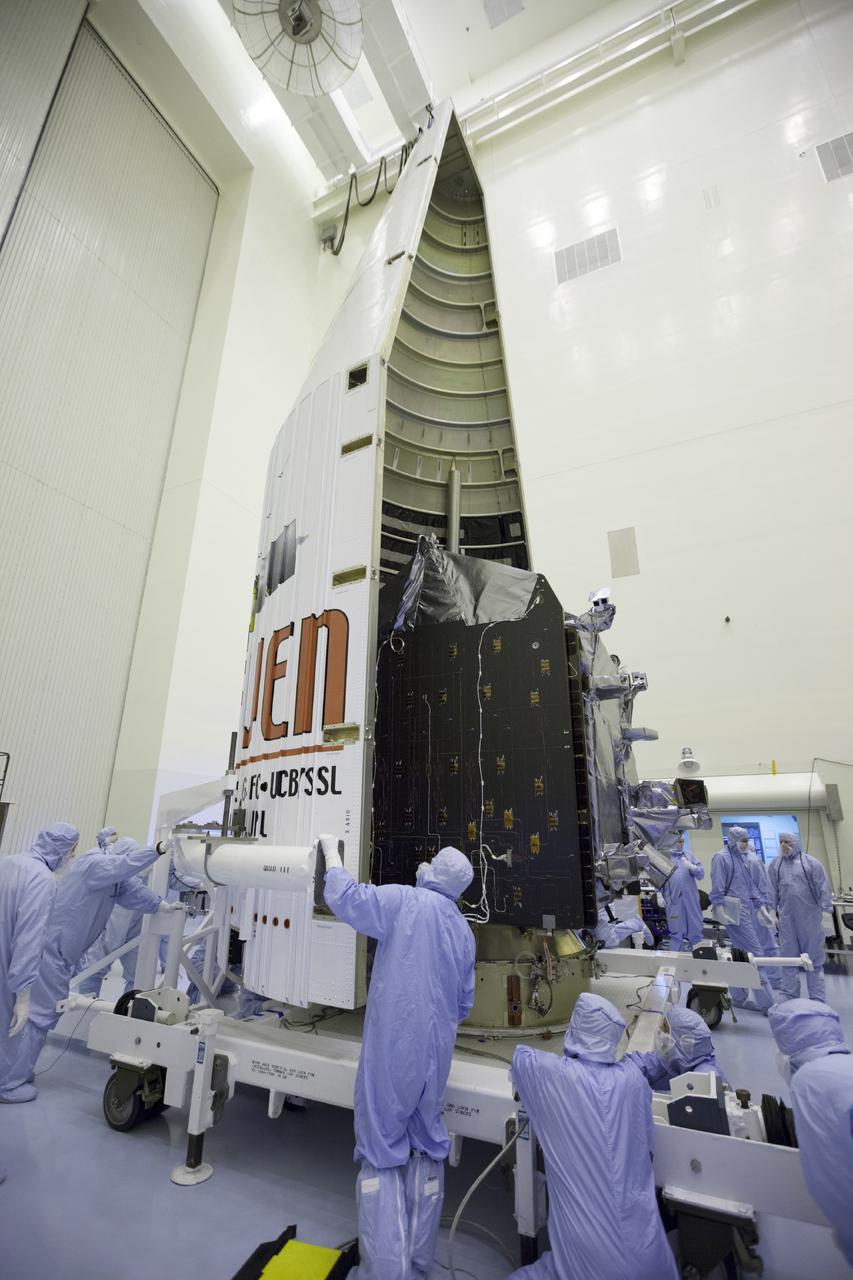
CAPE CANAVERAL, Fla. – Inside the Payload Hazardous Servicing Facility at NASA's Kennedy Space Center in Florida, engineers and technicians begin encapsulation of the Mars Atmosphere and Volatile Evolution, or MAVEN, spacecraft inside its payload fairing. MAVEN is being prepared for its scheduled launch on Nov 18, 2013 from Cape Canaveral Air Force Station, Fla. atop a United Launch Alliance Atlas V rocket. Positioned in an orbit above the Red Planet, MAVEN will study the upper atmosphere of Mars in unprecedented detail. For more information, visit: http://www.nasa.gov/mission_pages/maven/main/index.html Photo credit: NASA/Kim Shiflett
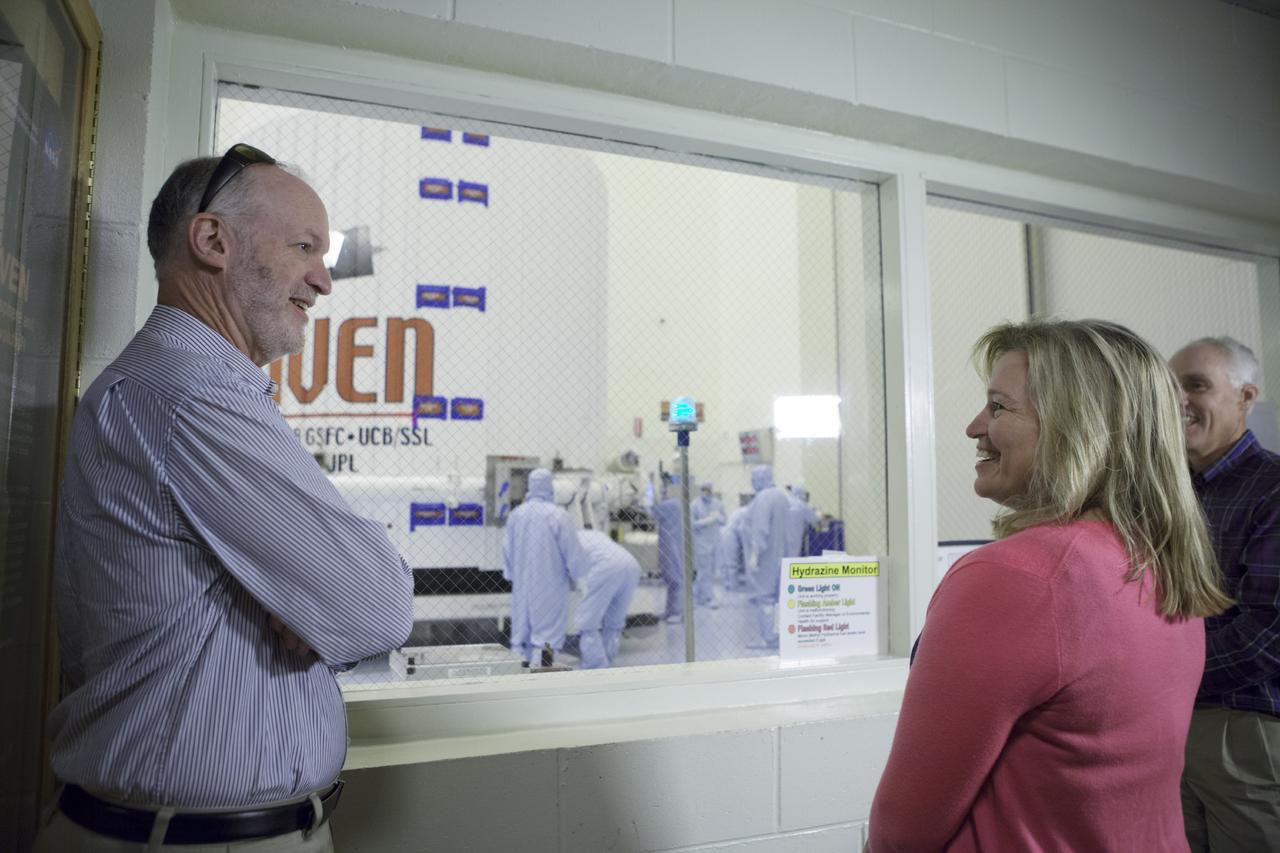
CAPE CANAVERAL, Fla. – Inside the Payload Hazardous Servicing Facility at NASA's Kennedy Space Center in Florida, Dr. Ellen Stofan, NASA's chief scientist, talks with Bruck Jakosky, left, of the University of Colorado’s Laboratory for Atmospheric and Space Physics. He is the principal investigator for the Mars Atmosphere and Volatile Evolution, or MAVEN, mission. On the right is Chuck Tatro of NASA's Launch Services Program who is the MAVEN mission manager. The MAVEN spacecraft can be seen through the window following encapsulation in its payload fairing. MAVEN is being prepared for its scheduled launch on Nov 18, 2013 from Cape Canaveral Air Force Station, Fla. atop a United Launch Alliance Atlas V rocket. Positioned in an orbit above the Red Planet, MAVEN will study the upper atmosphere of Mars in unprecedented detail. For more information, visit: http://www.nasa.gov/mission_pages/maven/main/index.html Photo credit: NASA/Kim Shiflett
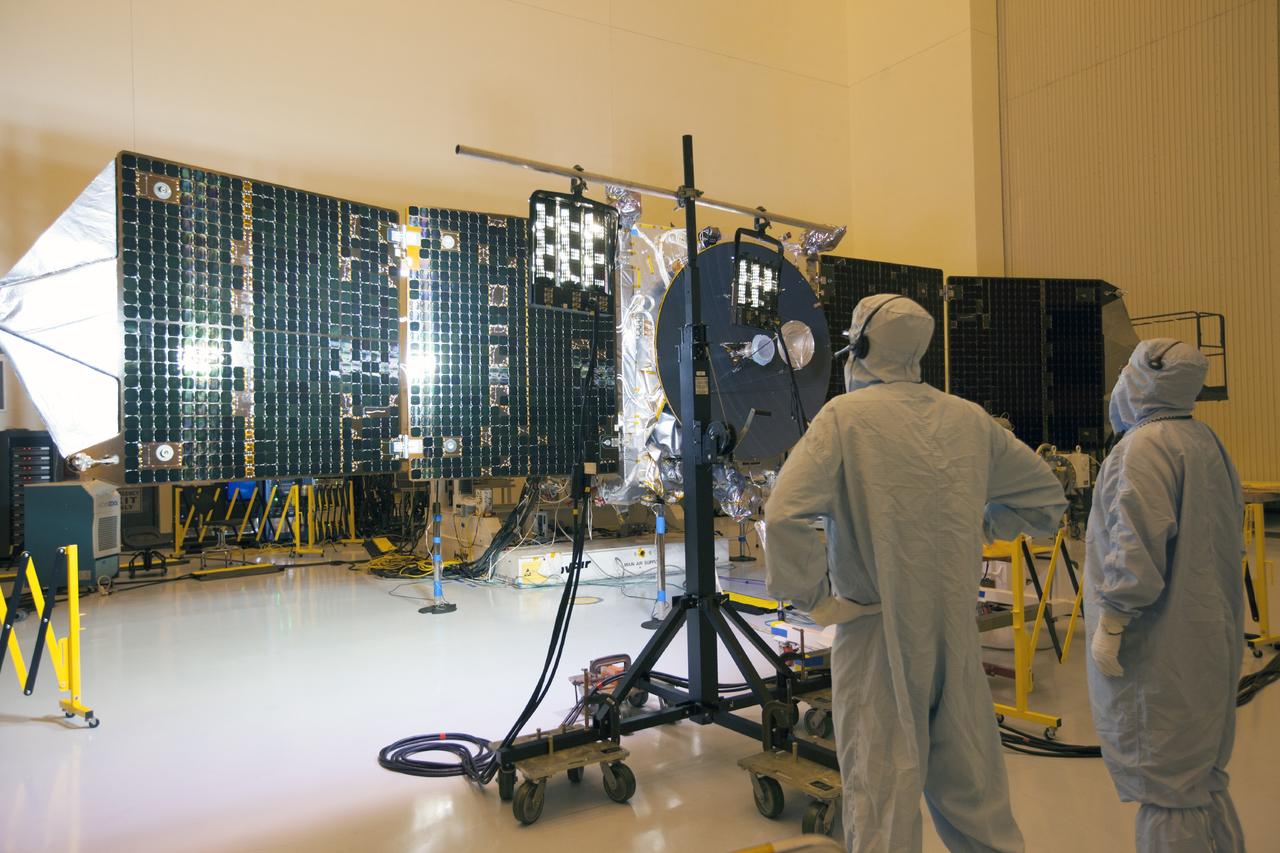
CAPE CANAVERAL, Fla. – Inside the Payload Hazardous Servicing Facility at NASA's Kennedy Space Center in Florida, engineers and technicians use special lighting to test the power-producing capabilities of the twin solar arrays on the Mars Atmosphere and Volatile Evolution, or MAVEN, spacecraft. MAVEN is being prepared for its scheduled launch in November from Cape Canaveral Air Force Station, Fla. atop a United Launch Alliance Atlas V rocket. Positioned in an orbit above the Red Planet, MAVEN will study the upper atmosphere of Mars in unprecedented detail. For more information, visit: http://www.nasa.gov/mission_pages/maven/main/index.html Photo credit: NASA/Kim Shiflett
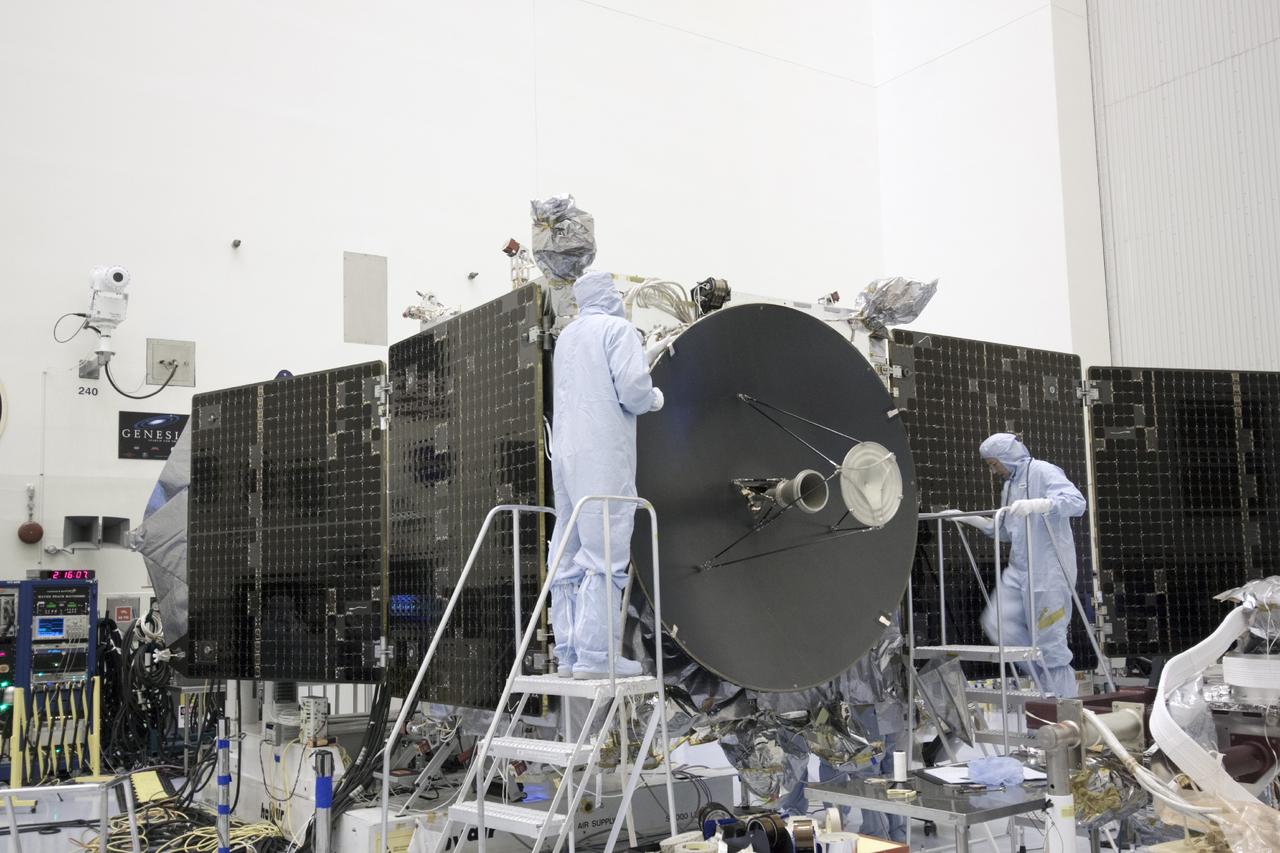
CAPE CANAVERAL, Fla. – Inside the Payload Hazardous Servicing Facility at NASA's Kennedy Space Center in Florida, engineers and technicians prepare to install a radome over the antenna for the Mars Atmosphere and Volatile Evolution, or MAVEN, spacecraft. The radome is a coated kapton cover providing thermal protection for the high gain antenna while not interfering with radio frequency transmissions from the spacecraft. MAVEN is being prepared for its scheduled launch in November from Cape Canaveral Air Force Station, Fla. atop a United Launch Alliance Atlas V rocket. Positioned in an orbit above the Red Planet, MAVEN will study the upper atmosphere of Mars in unprecedented detail. For more information, visit: http://www.nasa.gov/mission_pages/maven/main/index.html Photo credit: NASA/Jim Grossmann
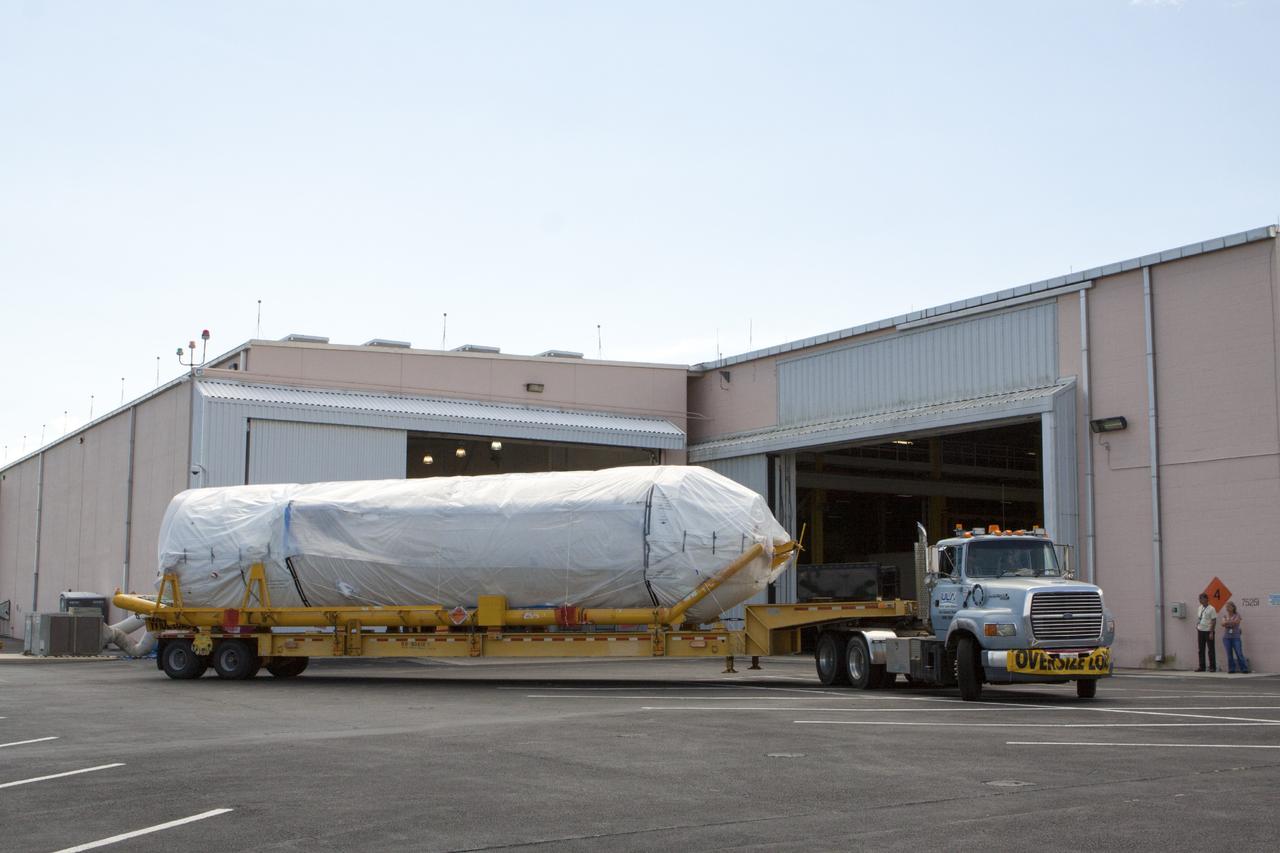
CAPE CANAVERAL, Fla. – United Launch Alliance Atlas V rocket first and second stages arrive at to the Atlas Spaceflight Operations Center, or ASOC, at Cape Canaveral Air Force Station. There, the launch vehicle will begin processing for the Mars Atmosphere and Volatile Evolution, or MAVEN, spacecraft to the Red Planet. MAVEN is being prepared for its scheduled launch in November from Cape Canaveral Air Force Station, Fla. atop a United Launch Alliance Atlas V rocket. Positioned in an orbit above the Red Planet, MAVEN will study the upper atmosphere of Mars in unprecedented detail. For more information, visit: http://www.nasa.gov/mission_pages/maven/main/index.html Photo credit: NASA/Kim Shiflett

PORT CANAVERAL, Fla. – The United Launch Alliance barge Delta Mariner arrives at Port Canaveral, Fla. delivering the Atlas V launch vehicle that will boost the Mars Atmosphere and Volatile Evolution, or MAVEN, spacecraft to the Red Planet. MAVEN is being prepared for its scheduled launch in November from Cape Canaveral Air Force Station, Fla. atop a United Launch Alliance Atlas V rocket. Positioned in an orbit above the Red Planet, MAVEN will study the upper atmosphere of Mars in unprecedented detail. For more information, visit: http://www.nasa.gov/mission_pages/maven/main/index.html Photo credit: NASA/Kim Shiflett
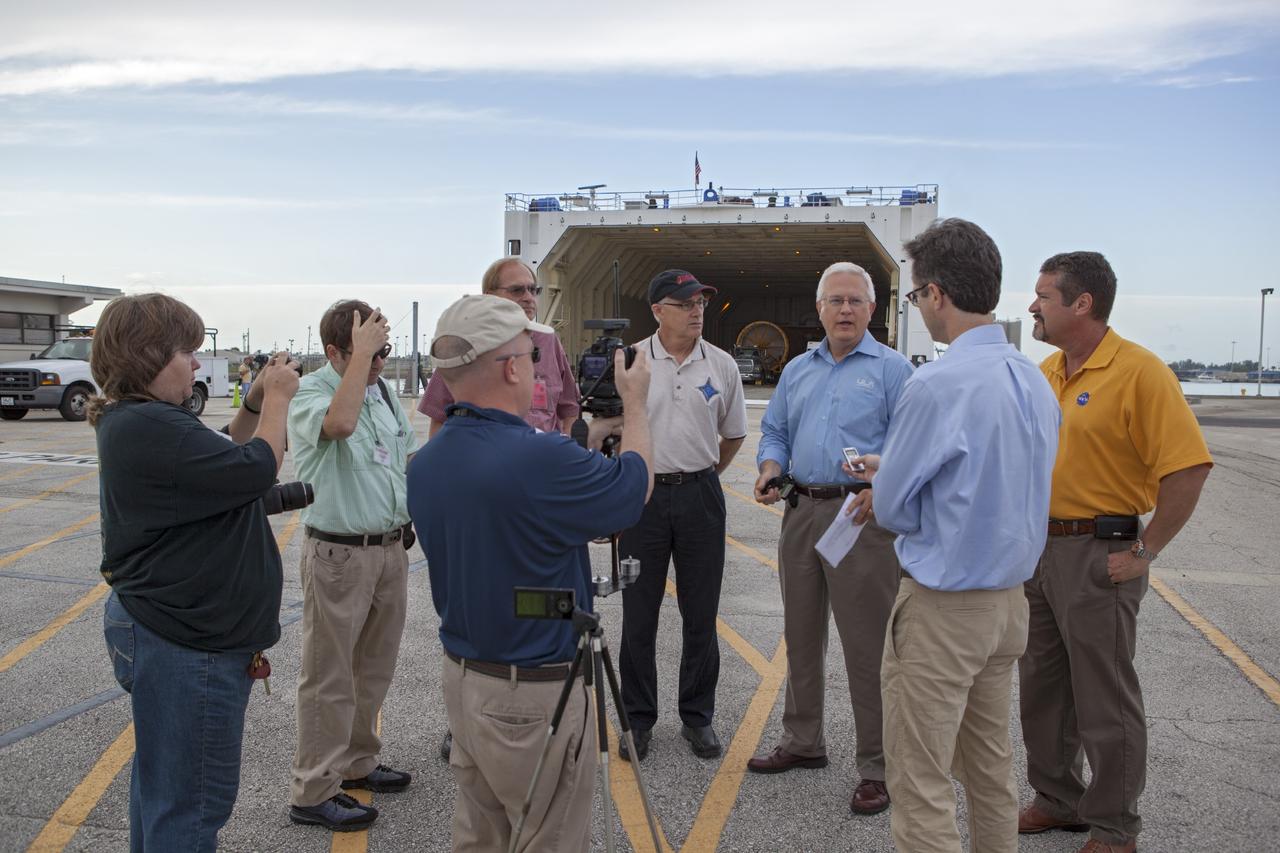
PORT CANAVERAL, Fla. – At Port Canaveral, Fla., NASA and United Launch Alliance managers brief members of the news media on the arrival of the ULA Atlas V rocket that will boost the Mars Atmosphere and Volatile Evolution, or MAVEN, spacecraft to the Red Planet. From the left, are Chuck Tatro, NASA's MAVEN mission manager, Vernon Thorp, ULA's NASA and Commercial Program manager and Omar Baez, NASA's launch director. MAVEN is being prepared for its scheduled launch in November from Cape Canaveral Air Force Station, Fla. atop a United Launch Alliance Atlas V rocket. Positioned in an orbit above the Red Planet, MAVEN will study the upper atmosphere of Mars in unprecedented detail. For more information, visit: http://www.nasa.gov/mission_pages/maven/main/index.html Photo credit: NASA/ Dimitri Gerondidakis
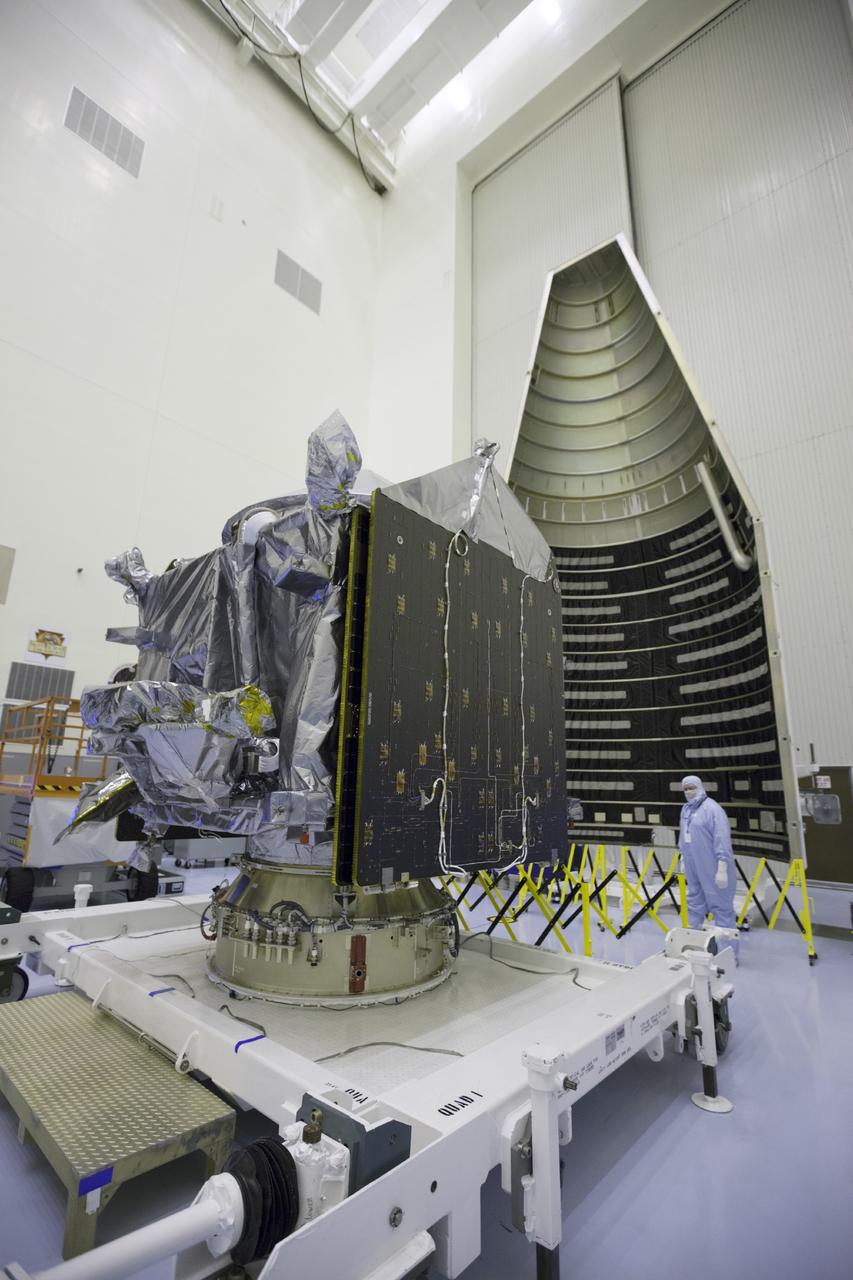
CAPE CANAVERAL, Fla. – Inside the Payload Hazardous Servicing Facility at NASA's Kennedy Space Center in Florida, engineers and technicians prepare the Mars Atmosphere and Volatile Evolution, or MAVEN, spacecraft for encapsulation inside its payload fairing. MAVEN is being prepared for its scheduled launch on Nov 18, 2013 from Cape Canaveral Air Force Station, Fla. atop a United Launch Alliance Atlas V rocket. Positioned in an orbit above the Red Planet, MAVEN will study the upper atmosphere of Mars in unprecedented detail. For more information, visit: http://www.nasa.gov/mission_pages/maven/main/index.html Photo credit: NASA/Kim Shiflett
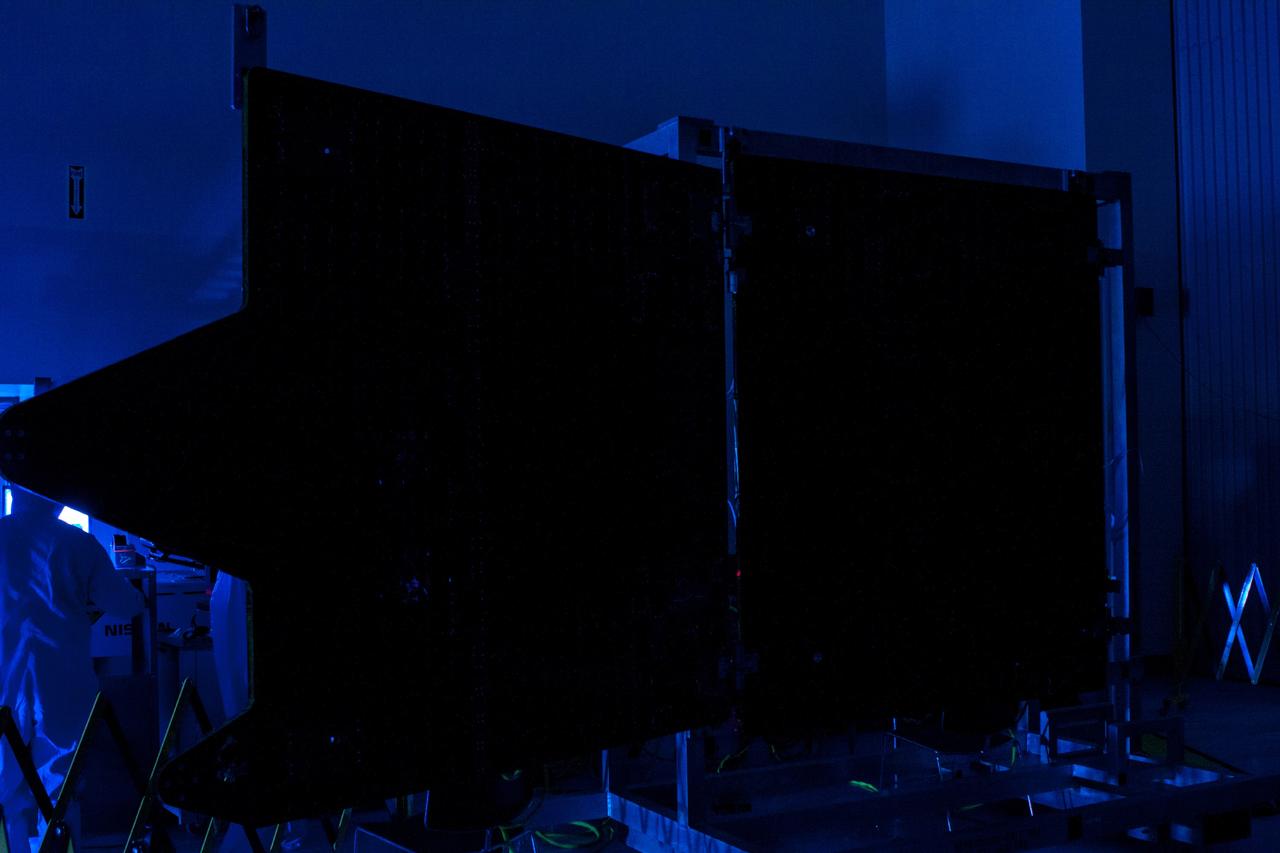
CAPE CANAVERAL, Fla. – Inside the Payload Hazardous Servicing Facility at NASA's Kennedy Space Center in Florida, illumination testing is underway on the electricity-producing solar arrays for the Mars Atmosphere and Volatile Evolution, or MAVEN, spacecraft. MAVEN is being prepared for its scheduled launch in November from Cape Canaveral Air Force Station, Fla. atop a United Launch Alliance Atlas V rocket. Positioned in an orbit above the Red Planet, MAVEN will study the upper atmosphere of Mars in unprecedented detail. For more information, visit: http://www.nasa.gov/mission_pages/maven/main/index.html Photo credit: NASA/ Jim Grossmann
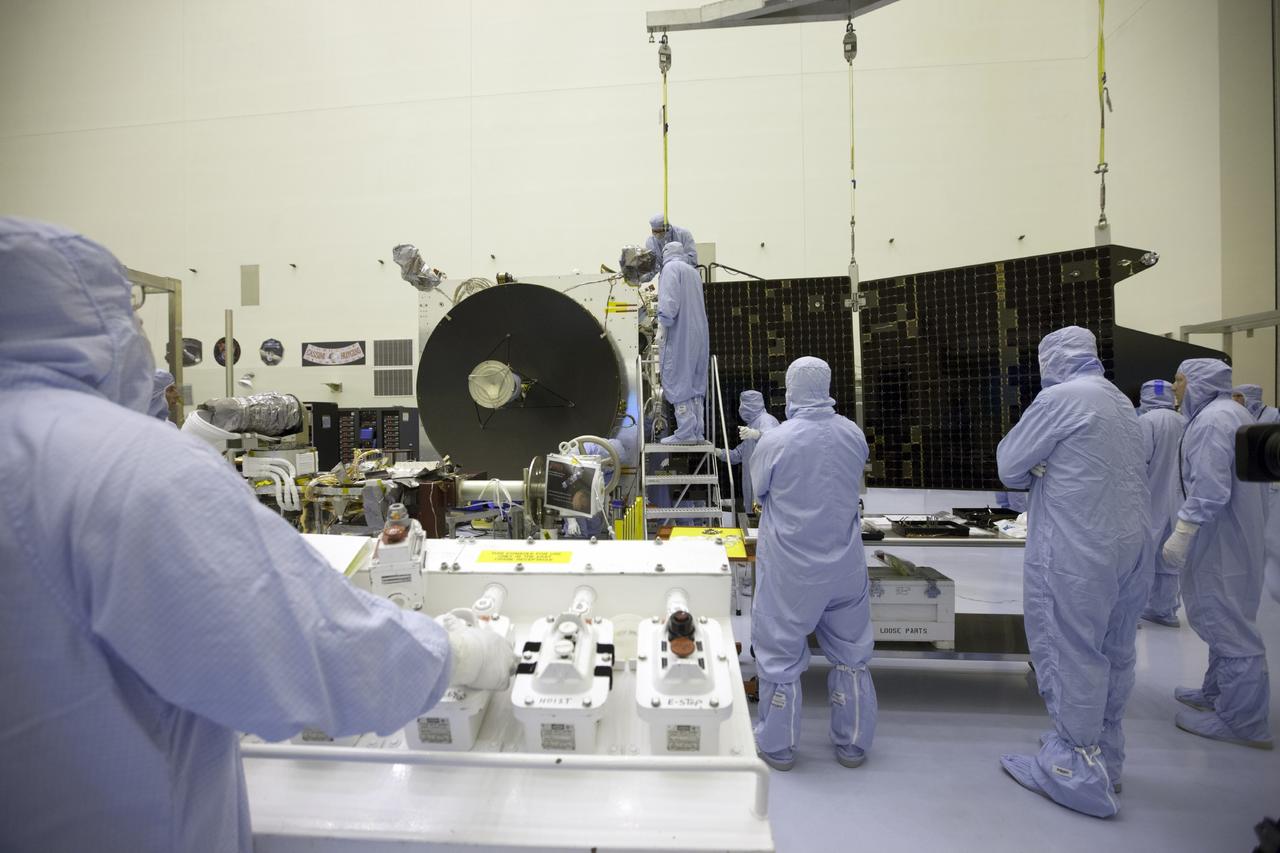
CAPE CANAVERAL, Fla. – Inside the Payload Hazardous Servicing Facility at NASA's Kennedy Space Center in Florida, engineers and technicians reattach twin solar arrays to the Mars Atmosphere and Volatile Evolution, or MAVEN, spacecraft following inspection and testing. MAVEN is being prepared for its scheduled launch in November from Cape Canaveral Air Force Station, Fla. atop a United Launch Alliance Atlas V rocket. Positioned in an orbit above the Red Planet, MAVEN will study the upper atmosphere of Mars in unprecedented detail. For more information, visit: http://www.nasa.gov/mission_pages/maven/main/index.html Photo credit: NASA/Kim Shiflett
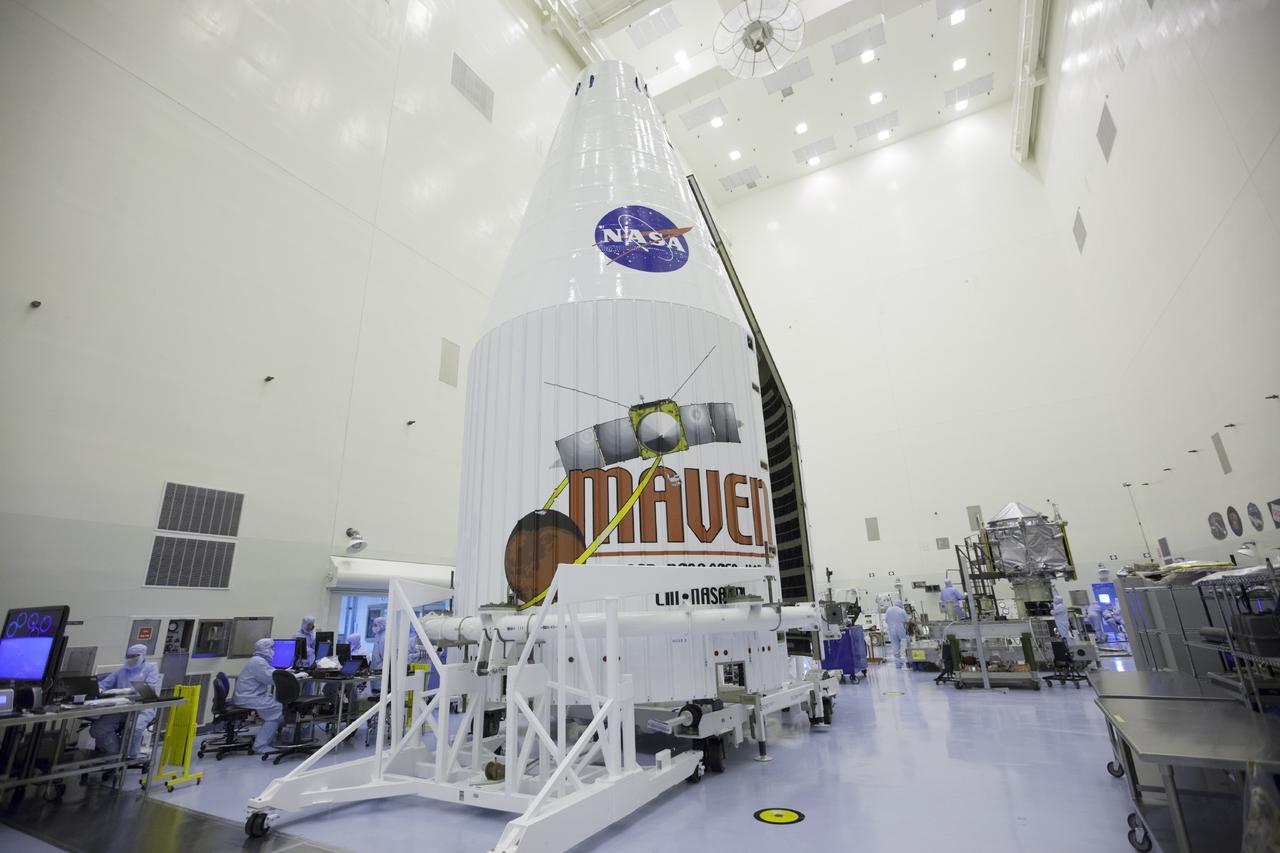
CAPE CANAVERAL, Fla. – Inside the Payload Hazardous Servicing Facility at NASA's Kennedy Space Center in Florida, engineers and technicians begin inspections of the payload fairing for the Mars Atmosphere and Volatile Evolution, or MAVEN, spacecraft. MAVEN is being prepared for its scheduled launch on Nov 18, 2013 from Cape Canaveral Air Force Station, Fla. atop a United Launch Alliance Atlas V rocket. Positioned in an orbit above the Red Planet, MAVEN will study the upper atmosphere of Mars in unprecedented detail. For more information, visit: http://www.nasa.gov/mission_pages/maven/main/index.html Photo credit: NASA/Kim Shiflett
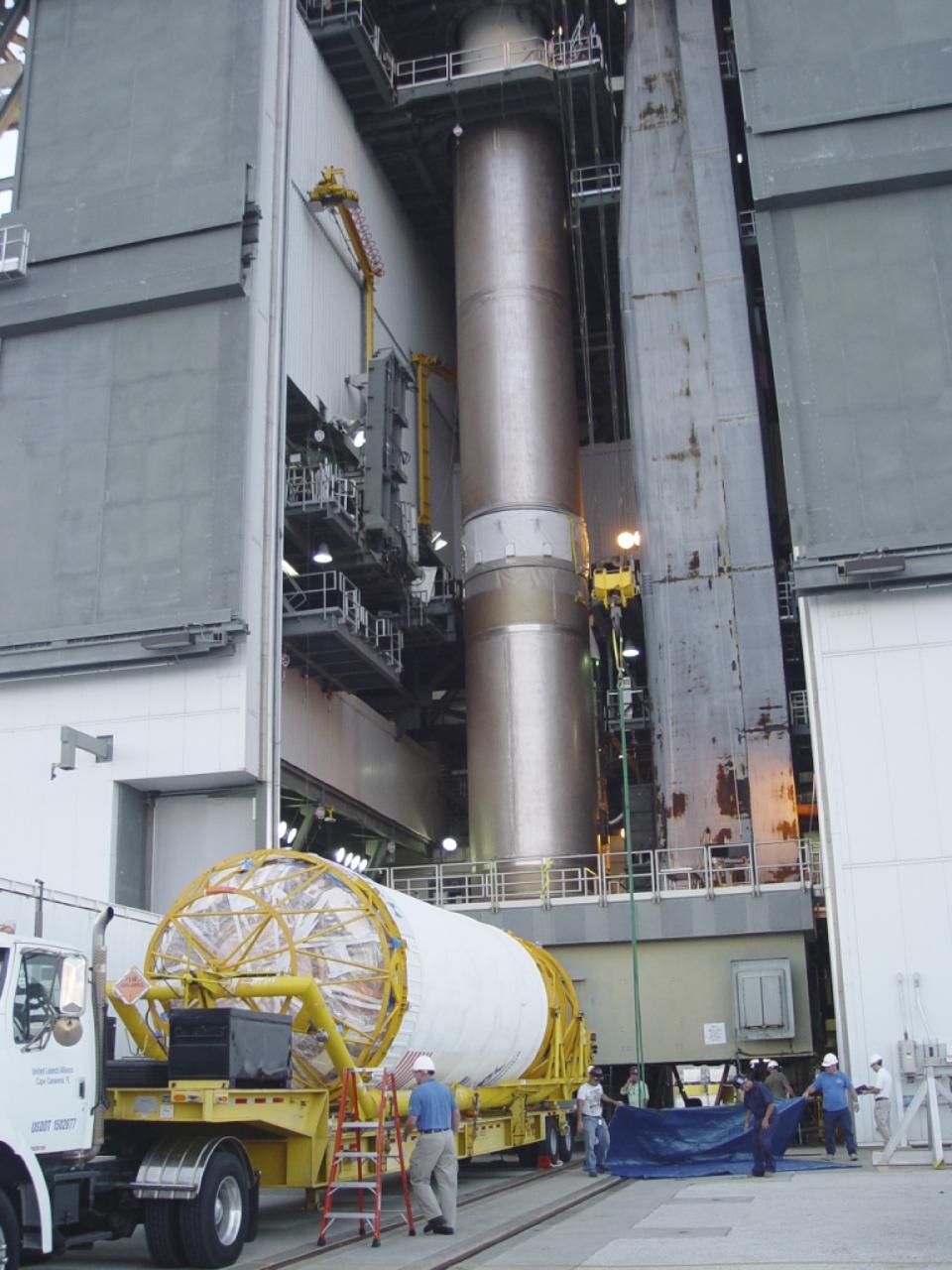
CAPE CANAVERAL, Fla. – At Cape Canaveral Air Force Station in Florida, the United Launch Alliance Centaur second stage is prepared for stacking atop the Atlas V first stage at Launch Pad 41 in preparation for the Mars Atmosphere and Volatile Evolution, or MAVEN, mission. MAVEN is being prepared for its scheduled launch on Nov 18, 2013 from Cape Canaveral Air Force Station, Fla. atop a United Launch Alliance Atlas V rocket. Positioned in an orbit above the Red Planet, MAVEN will study the upper atmosphere of Mars in unprecedented detail. For more information, visit: http://www.nasa.gov/mission_pages/maven/main/index.html Photo credit: United Launch Alliance
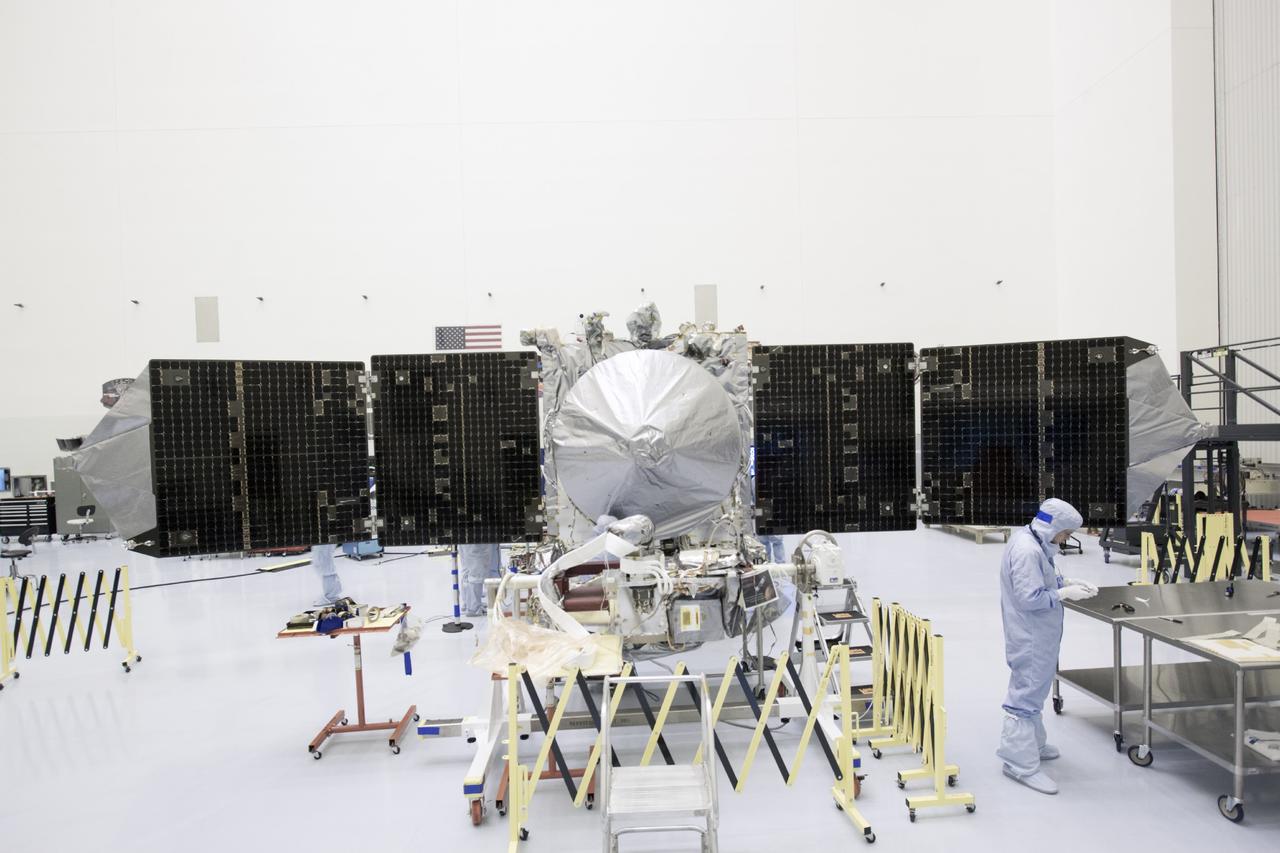
CAPE CANAVERAL, Fla. – Inside the Payload Hazardous Servicing Facility at NASA's Kennedy Space Center in Florida, engineers and technicians test close the twin solar arrays on the Mars Atmosphere and Volatile Evolution, or MAVEN, spacecraft. MAVEN is being prepared for its scheduled launch in November from Cape Canaveral Air Force Station, Fla. atop a United Launch Alliance Atlas V rocket. Positioned in an orbit above the Red Planet, MAVEN will study the upper atmosphere of Mars in unprecedented detail. For more information, visit: http://www.nasa.gov/mission_pages/maven/main/index.html Photo credit: NASA/Jim Grossmann

CAPE CANAVERAL, Fla. – Inside the Payload Hazardous Servicing Facility at NASA's Kennedy Space Center in Florida, Dr. Ellen Stofan, NASA's chief scientist, talks with Bruck Jakosky, left, of the University of Colorado’s Laboratory for Atmospheric and Space Physics. He is the principal investigator for the Mars Atmosphere and Volatile Evolution, or MAVEN, mission. On the right is Chuck Tatro of NASA's Launch Services Program who is the MAVEN mission manager. The MAVEN spacecraft can be seen through the window following encapsulation in its payload fairing. MAVEN is being prepared for its scheduled launch on Nov 18, 2013 from Cape Canaveral Air Force Station, Fla. atop a United Launch Alliance Atlas V rocket. Positioned in an orbit above the Red Planet, MAVEN will study the upper atmosphere of Mars in unprecedented detail. For more information, visit: http://www.nasa.gov/mission_pages/maven/main/index.html Photo credit: NASA/Kim Shiflett
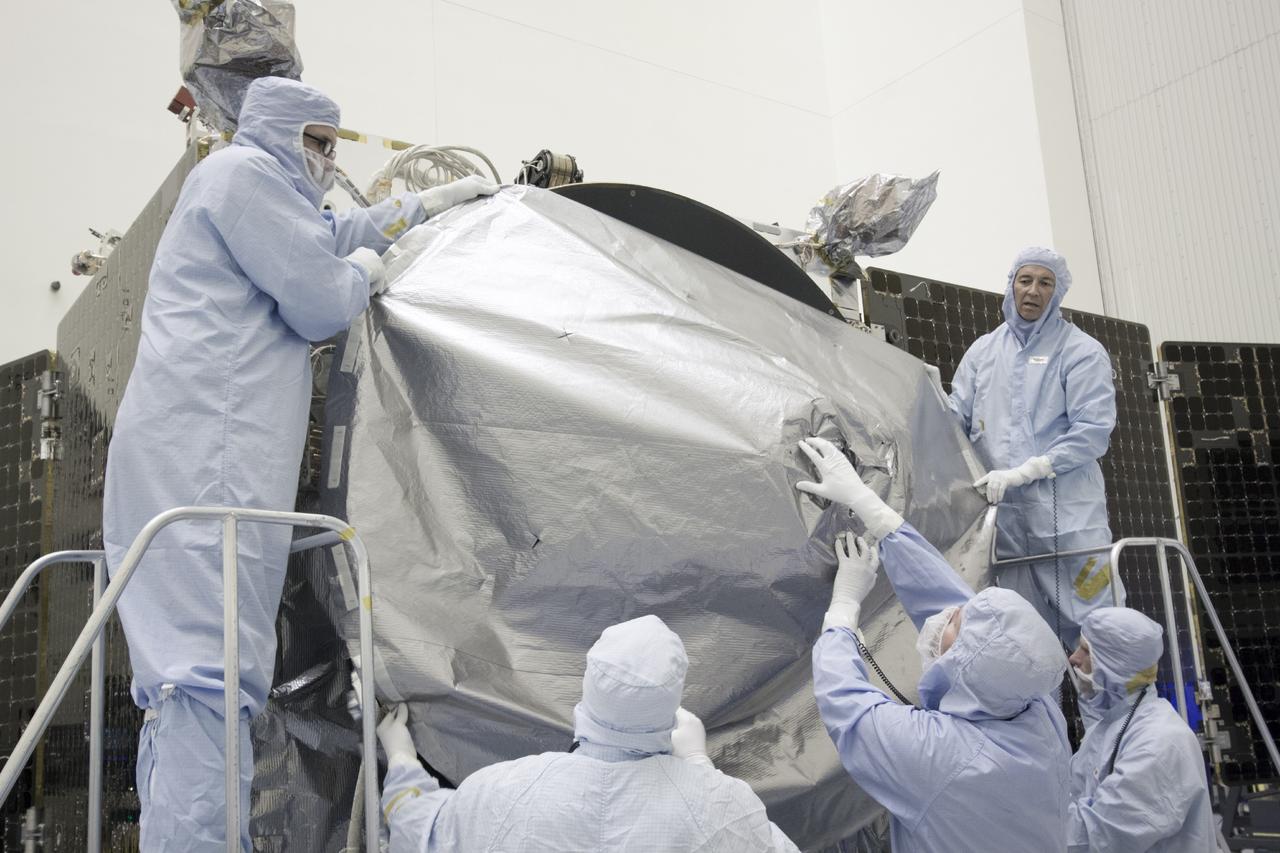
CAPE CANAVERAL, Fla. – Inside the Payload Hazardous Servicing Facility at NASA's Kennedy Space Center in Florida, engineers and technicians install a radome over the antenna for the Mars Atmosphere and Volatile Evolution, or MAVEN, spacecraft. The radome is a coated kapton cover providing thermal protection for the high gain antenna while not interfering with radio frequency transmissions from the spacecraft. MAVEN is being prepared for its scheduled launch in November from Cape Canaveral Air Force Station, Fla. atop a United Launch Alliance Atlas V rocket. Positioned in an orbit above the Red Planet, MAVEN will study the upper atmosphere of Mars in unprecedented detail. For more information, visit: http://www.nasa.gov/mission_pages/maven/main/index.html Photo credit: NASA/Jim Grossmann
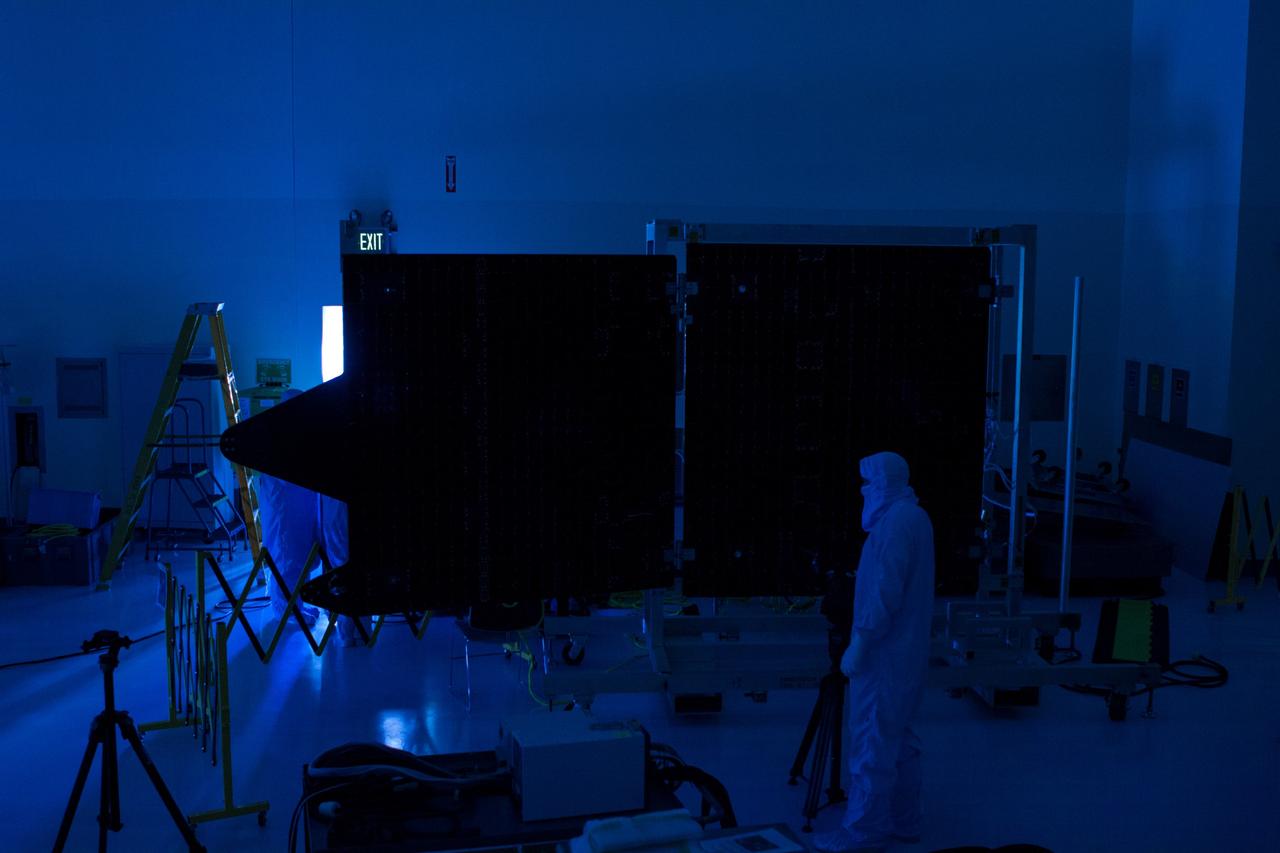
CAPE CANAVERAL, Fla. – Inside the Payload Hazardous Servicing Facility at NASA's Kennedy Space Center in Florida, illumination testing is underway on the electricity-producing solar arrays for the Mars Atmosphere and Volatile Evolution, or MAVEN, spacecraft. MAVEN is being prepared for its scheduled launch in November from Cape Canaveral Air Force Station, Fla. atop a United Launch Alliance Atlas V rocket. Positioned in an orbit above the Red Planet, MAVEN will study the upper atmosphere of Mars in unprecedented detail. For more information, visit: http://www.nasa.gov/mission_pages/maven/main/index.html Photo credit: NASA/ Jim Grossmann
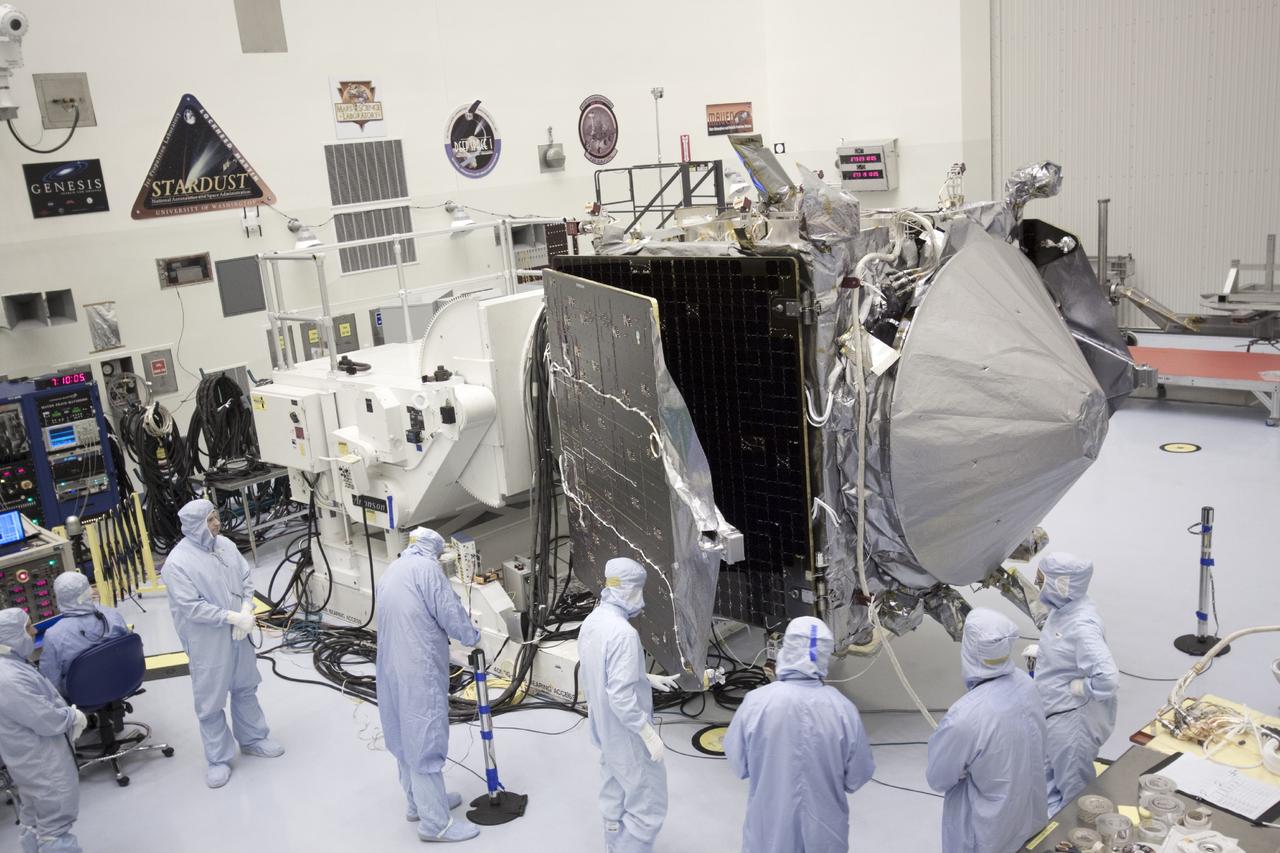
CAPE CANAVERAL, Fla. – Inside the Payload Hazardous Servicing Facility at NASA's Kennedy Space Center in Florida, engineers and technicians have begun the process to stow the power-generating solar arrays for the Mars Atmosphere and Volatile Evolution, or MAVEN, spacecraft. MAVEN is being prepared for its scheduled launch on Nov 18, 2013 from Cape Canaveral Air Force Station, Fla. atop a United Launch Alliance Atlas V rocket. Positioned in an orbit above the Red Planet, MAVEN will study the upper atmosphere of Mars in unprecedented detail. For more information, visit: http://www.nasa.gov/mission_pages/maven/main/index.html Photo credit: NASA/Jim Grossmann
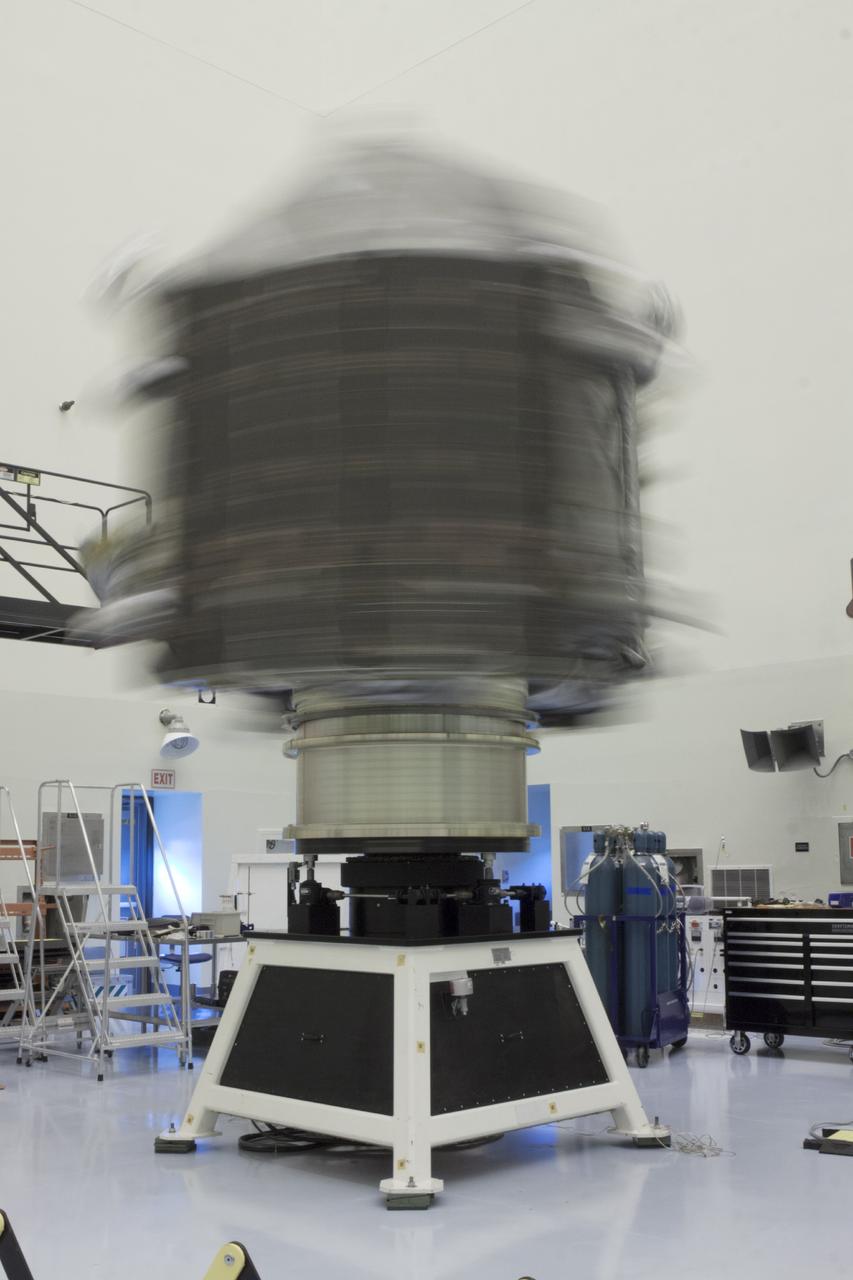
CAPE CANAVERAL, Fla. – Inside the Payload Hazardous Servicing Facility at NASA's Kennedy Space Center in Florida, engineers and technicians perform a spin test of the Mars Atmosphere and Volatile Evolution, or MAVEN, spacecraft. The operation is designed to verify that MAVEN is properly balanced as it spins during the initial mission activities. MAVEN is being prepared for its scheduled launch on Nov 18, 2013 from Cape Canaveral Air Force Station, Fla. atop a United Launch Alliance Atlas V rocket. Positioned in an orbit above the Red Planet, MAVEN will study the upper atmosphere of Mars in unprecedented detail. For more information, visit: http://www.nasa.gov/mission_pages/maven/main/index.html Photo credit: NASA/Kim Shiflett
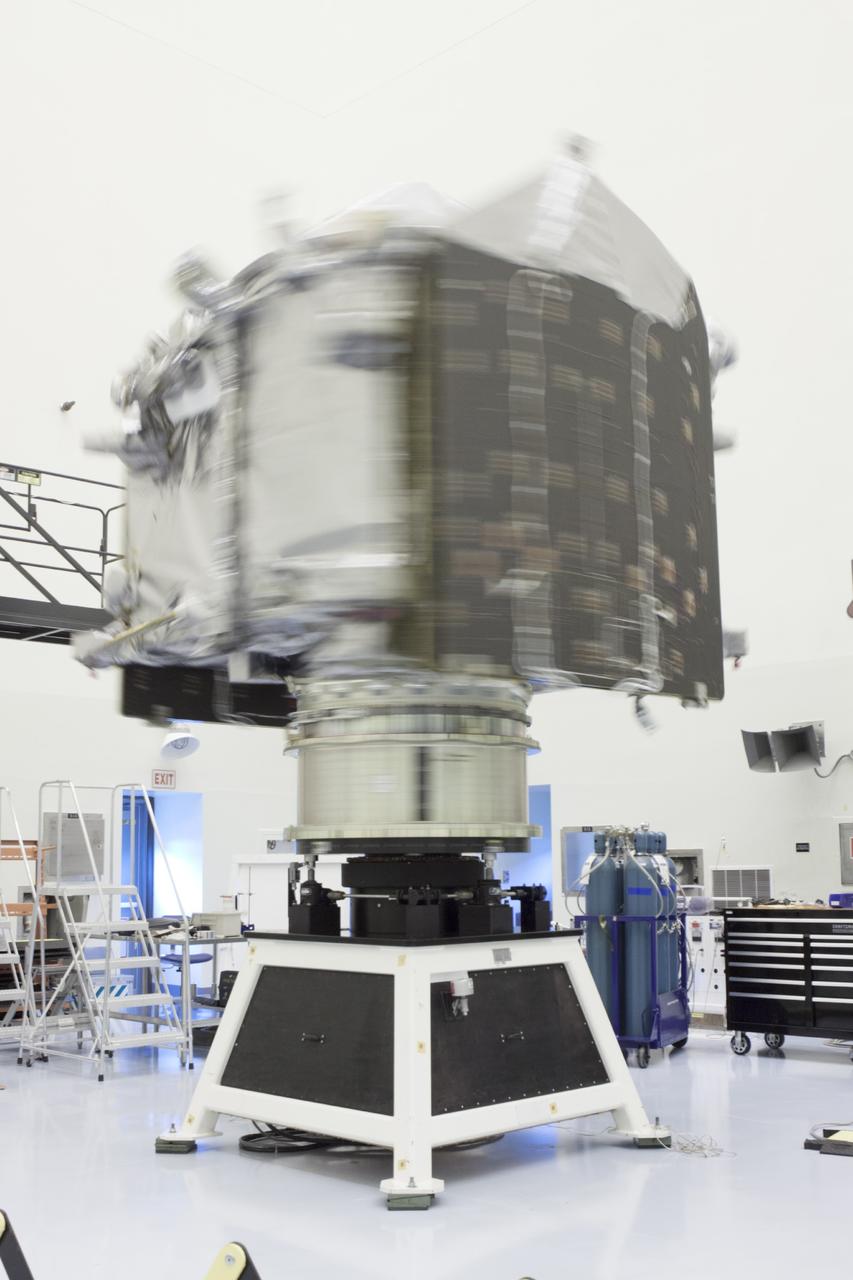
CAPE CANAVERAL, Fla. – Inside the Payload Hazardous Servicing Facility at NASA's Kennedy Space Center in Florida, engineers and technicians perform a spin test of the Mars Atmosphere and Volatile Evolution, or MAVEN, spacecraft. The operation is designed to verify that MAVEN is properly balanced as it spins during the initial mission activities. MAVEN is being prepared for its scheduled launch on Nov 18, 2013 from Cape Canaveral Air Force Station, Fla. atop a United Launch Alliance Atlas V rocket. Positioned in an orbit above the Red Planet, MAVEN will study the upper atmosphere of Mars in unprecedented detail. For more information, visit: http://www.nasa.gov/mission_pages/maven/main/index.html Photo credit: NASA/Kim Shiflett
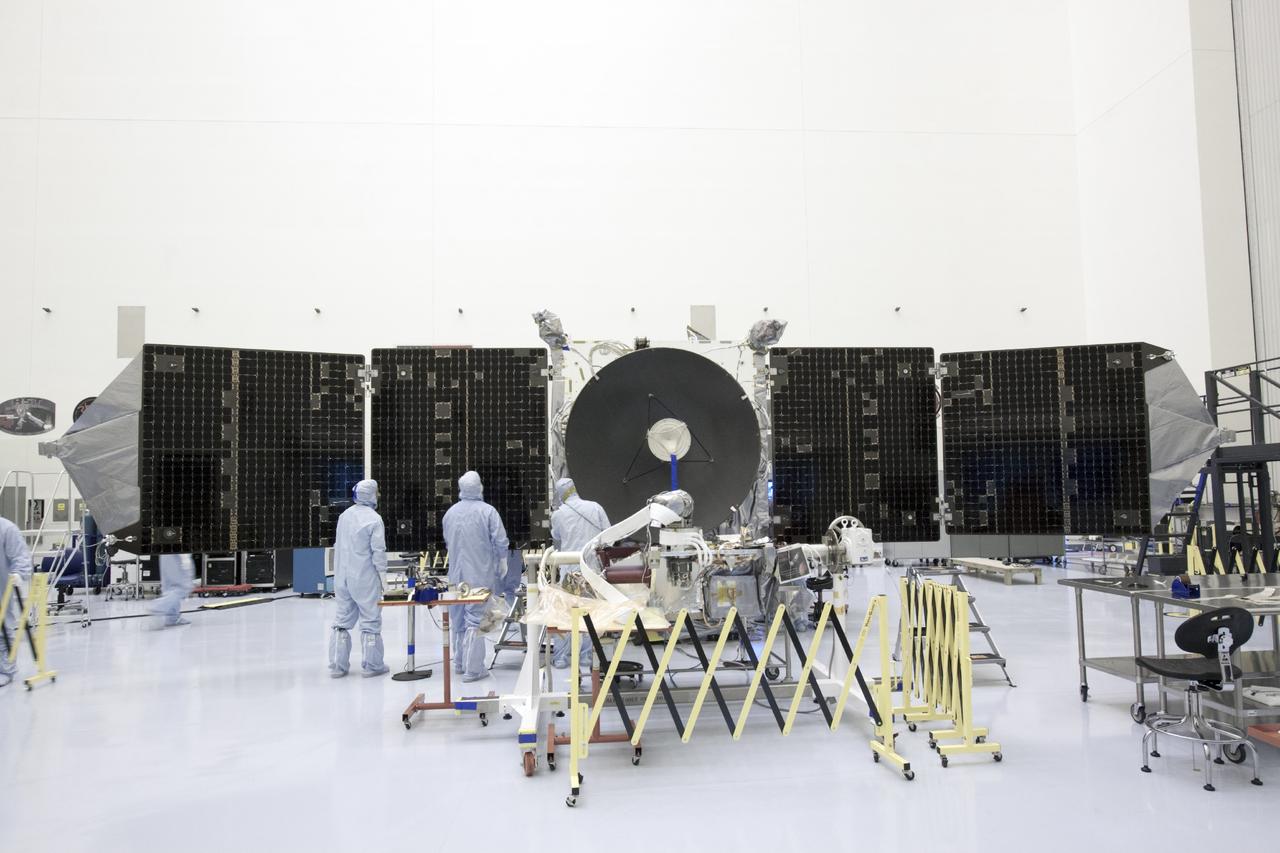
CAPE CANAVERAL, Fla. – Inside the Payload Hazardous Servicing Facility at NASA's Kennedy Space Center in Florida, engineers and technicians prepare to install a radome over the antenna for the Mars Atmosphere and Volatile Evolution, or MAVEN, spacecraft. The radome is a coated kapton cover providing thermal protection for the high gain antenna while not interfering with radio frequency transmissions from the spacecraft. MAVEN is being prepared for its scheduled launch in November from Cape Canaveral Air Force Station, Fla. atop a United Launch Alliance Atlas V rocket. Positioned in an orbit above the Red Planet, MAVEN will study the upper atmosphere of Mars in unprecedented detail. For more information, visit: http://www.nasa.gov/mission_pages/maven/main/index.html Photo credit: NASA/Jim Grossmann
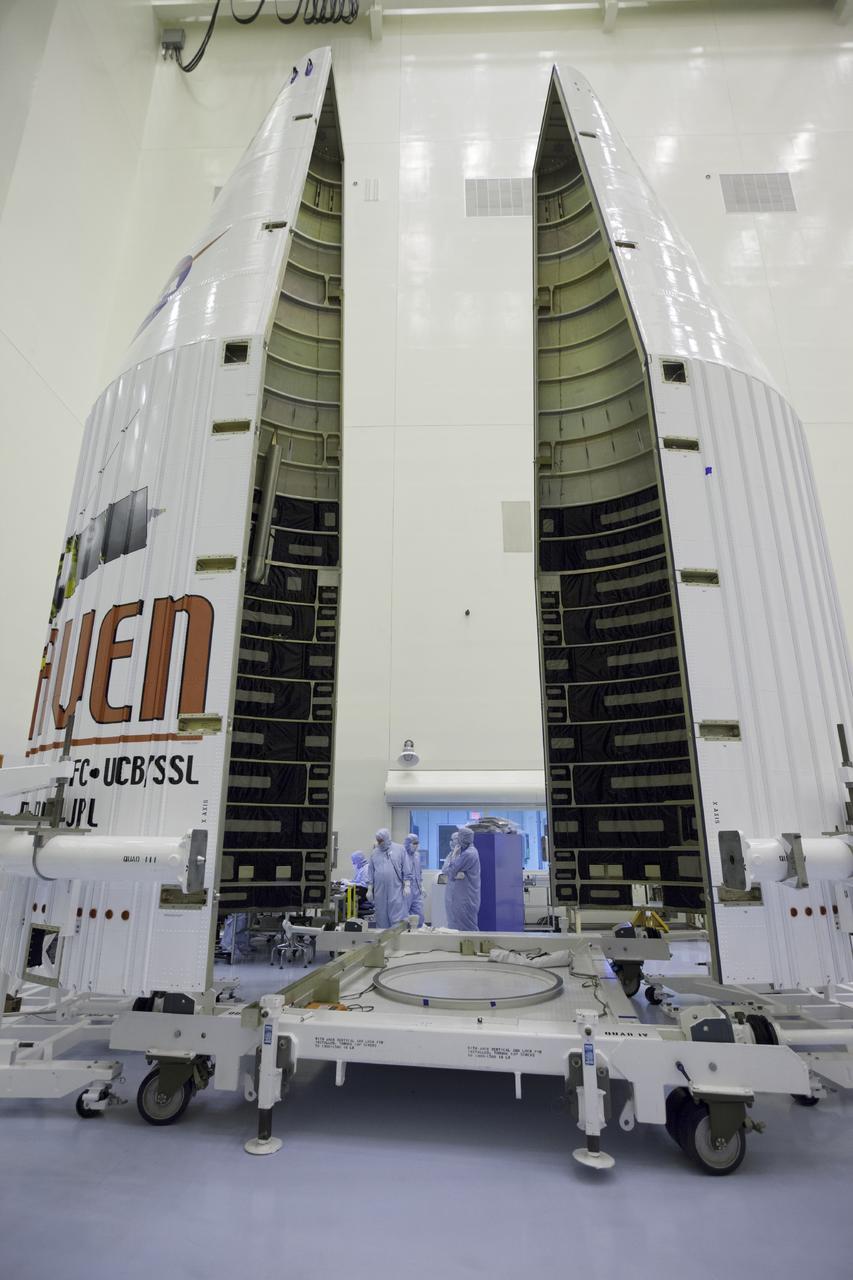
CAPE CANAVERAL, Fla. – Inside the Payload Hazardous Servicing Facility at NASA's Kennedy Space Center in Florida, engineers and technicians begin inspections of the payload fairing for the Mars Atmosphere and Volatile Evolution, or MAVEN, spacecraft. MAVEN is being prepared for its scheduled launch on Nov 18, 2013 from Cape Canaveral Air Force Station, Fla. atop a United Launch Alliance Atlas V rocket. Positioned in an orbit above the Red Planet, MAVEN will study the upper atmosphere of Mars in unprecedented detail. For more information, visit: http://www.nasa.gov/mission_pages/maven/main/index.html Photo credit: NASA/Kim Shiflett
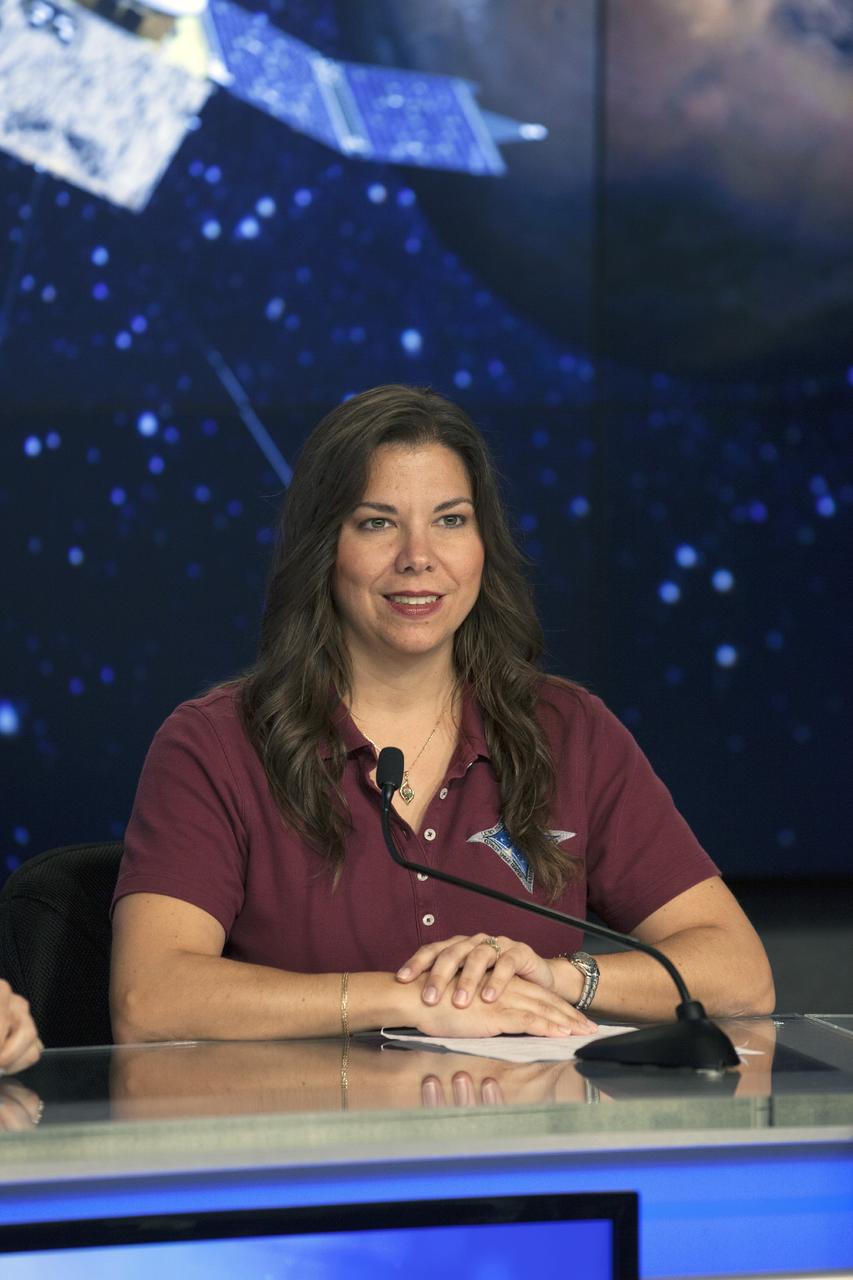
CAPE CANAVERAL, Fla. – During a Spanish language news conference at NASA's Kennedy Space Center in Florida, agency officials discussed preparations for the launch of the Mars Atmosphere and Volatile EvolutioN, or MAVEN, mission. Participating in the briefing is Diana Calero, launch integration engineer in NASA's Launch Services Program at Kennedy. MAVEN is being prepared for its scheduled launch on Nov 18, 2013 from Cape Canaveral Air Force Station, Fla. atop a United Launch Alliance Atlas V rocket. Positioned in an orbit above the Red Planet, MAVEN will study the upper atmosphere of Mars in unprecedented detail. For information on the MAVEN mission, visit: http://www.nasa.gov/mission_pages/maven/main/index.html. Photo credit: NASA/Kim Shiflett
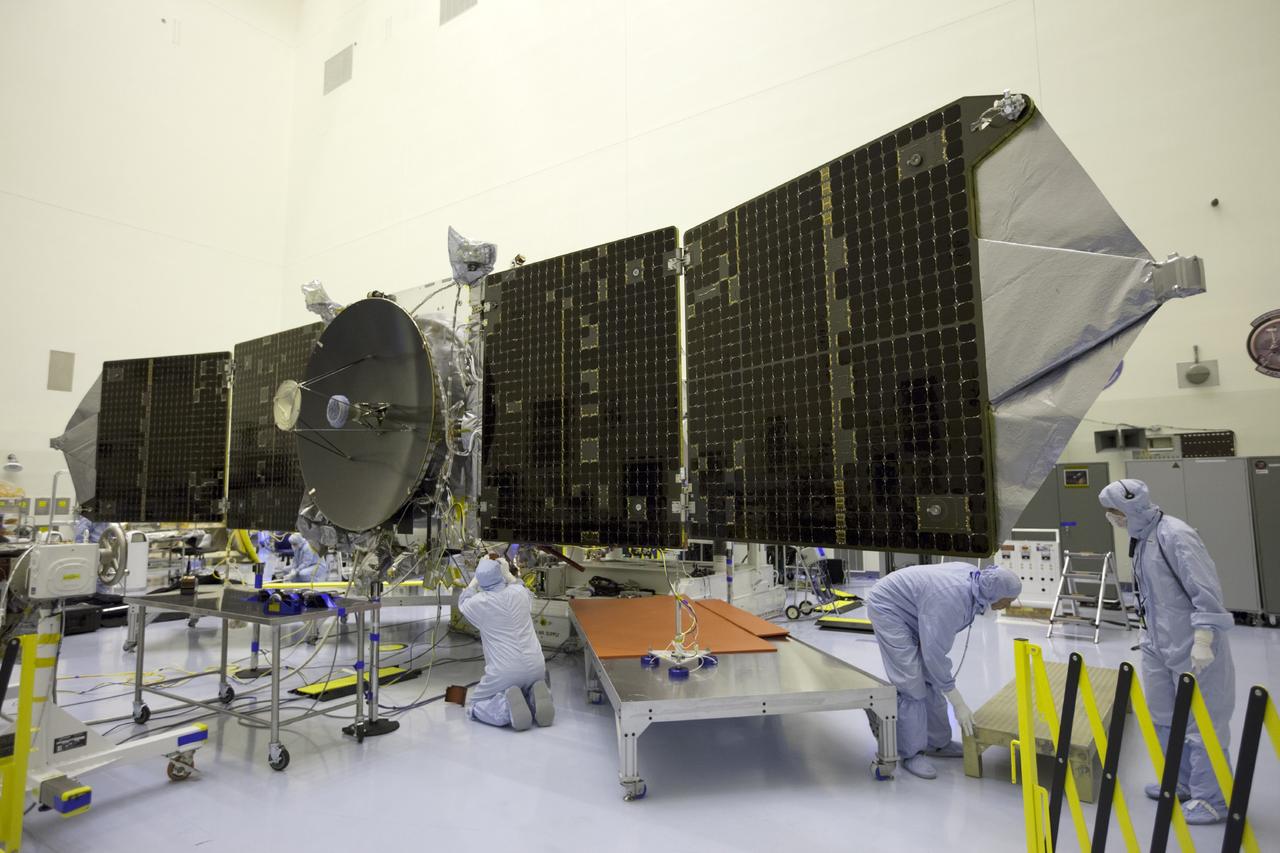
CAPE CANAVERAL, Fla. – Inside the Payload Hazardous Servicing Facility at NASA's Kennedy Space Center in Florida, engineers and technicians test deploy the twin solar arrays on the Mars Atmosphere and Volatile Evolution, or MAVEN, spacecraft. MAVEN is being prepared for its scheduled launch in November from Cape Canaveral Air Force Station, Fla. atop a United Launch Alliance Atlas V rocket. Positioned in an orbit above the Red Planet, MAVEN will study the upper atmosphere of Mars in unprecedented detail. For more information, visit: http://www.nasa.gov/mission_pages/maven/main/index.html Photo credit: NASA/Kim Shiflett
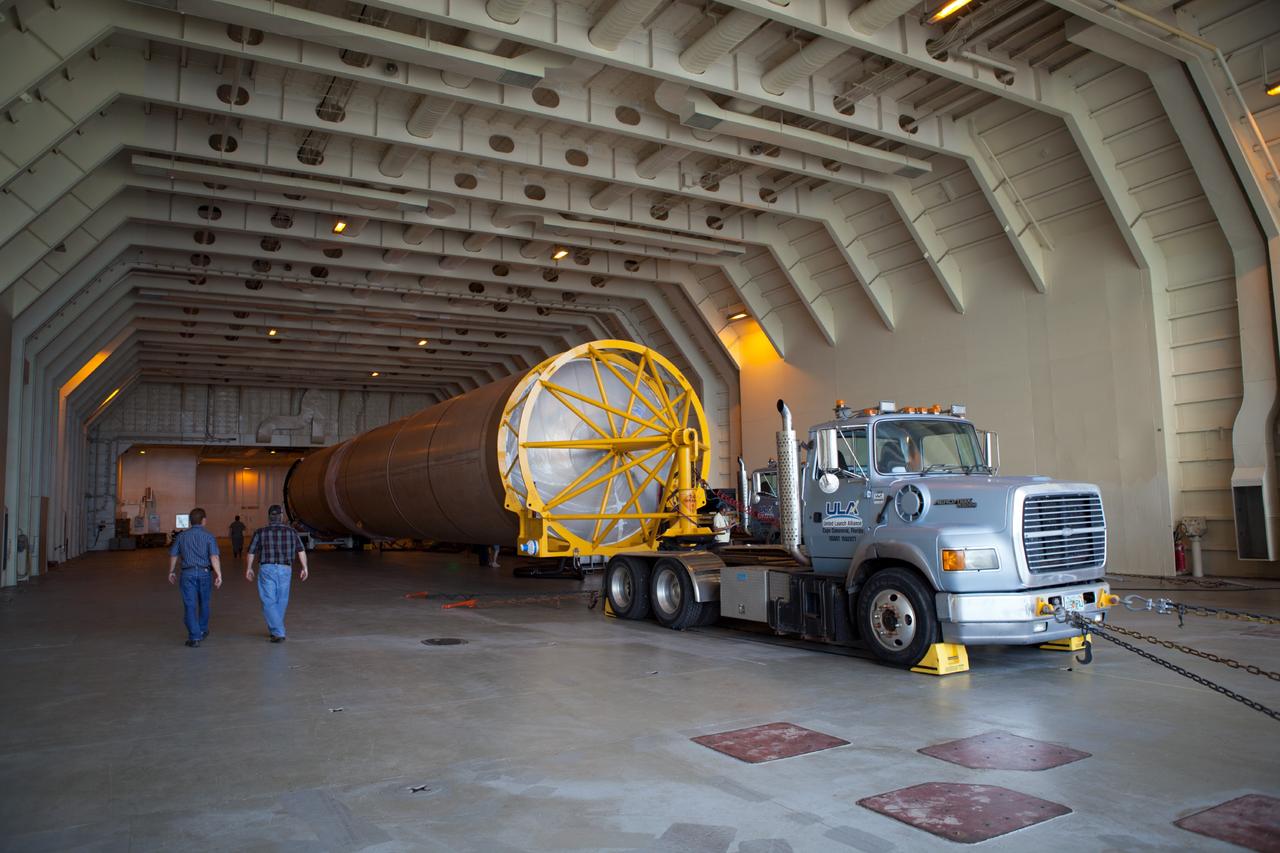
PORT CANAVERAL, Fla. – An Atlas V rocket is off loaded from the United Launch Alliance barge Delta Mariner that just arrived at Port Canaveral, Fla. The launch vehicle will boost the Mars Atmosphere and Volatile Evolution, or MAVEN, spacecraft to the Red Planet. The rocket will be transported to the Atlas Spaceflight Operations Center, or ASOC, at Cape Canaveral Air Force Station to begin processing. MAVEN is being prepared for its scheduled launch in November from Cape Canaveral Air Force Station, Fla. atop a United Launch Alliance Atlas V rocket. Positioned in an orbit above the Red Planet, MAVEN will study the upper atmosphere of Mars in unprecedented detail. For more information, visit: http://www.nasa.gov/mission_pages/maven/main/index.html Photo credit: NASA/ Dimitri Gerondidakis
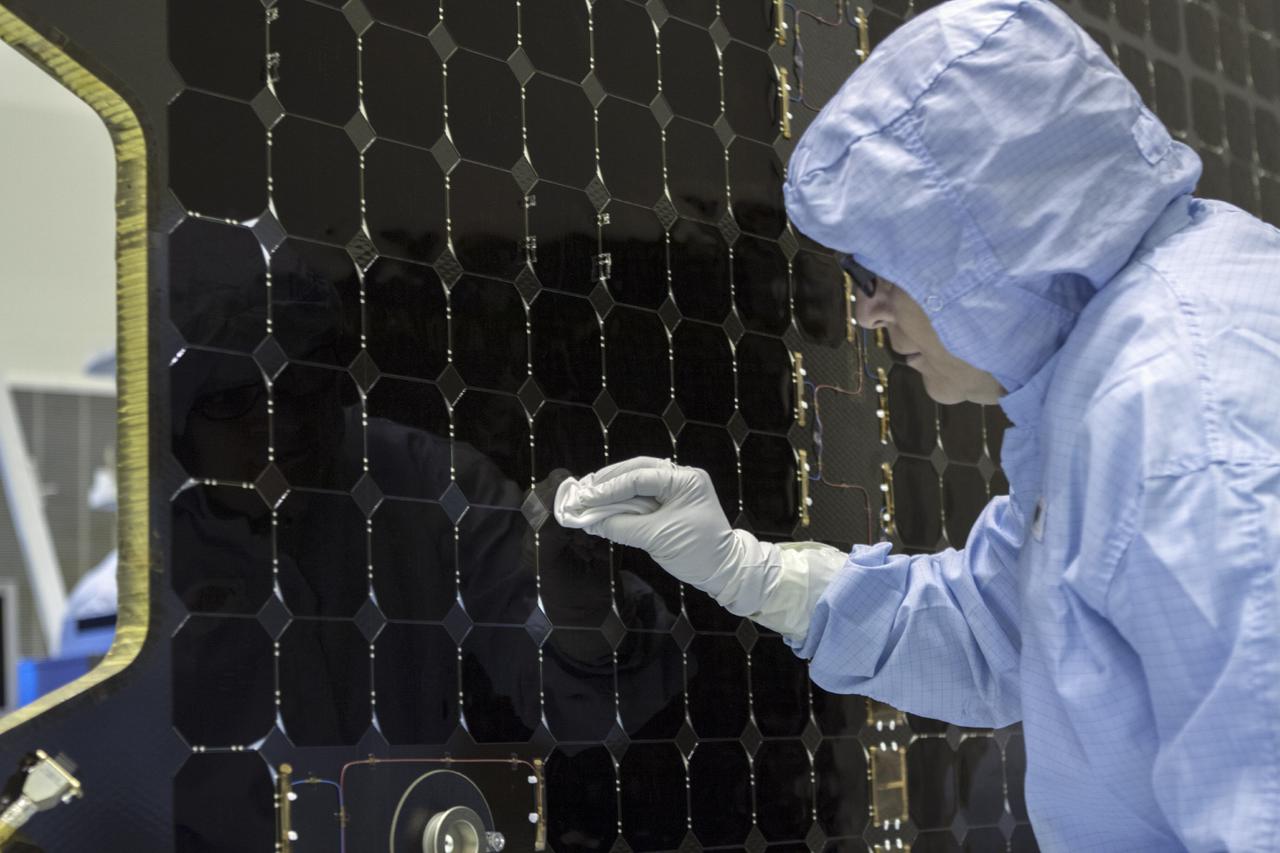
CAPE CANAVERAL, Fla. – Inside the Payload Hazardous Servicing Facility at NASA's Kennedy Space Center in Florida, a technician cleans one of the cells of the electricity-producing solar arrays for the Mars Atmosphere and Volatile Evolution, or MAVEN, spacecraft. MAVEN is being prepared for its scheduled launch in November from Cape Canaveral Air Force Station, Fla. atop a United Launch Alliance Atlas V rocket. Positioned in an orbit above the Red Planet, MAVEN will study the upper atmosphere of Mars in unprecedented detail. For more information, visit: http://www.nasa.gov/mission_pages/maven/main/index.html Photo credit: NASA/ Jim Grossmann

CAPE CANAVERAL, Fla. – Chuck Tatro of NASA's Launch Services Program is the Mars Atmosphere and Volatile Evolution, or MAVEN, mission manager. The MAVEN spacecraft is seen in the background prior to encapsulation in its payload fairing inside the Payload Hazardous Servicing Facility at NASA's Kennedy Space Center in Florida. MAVEN is being prepared for its scheduled launch on Nov 18, 2013 from Cape Canaveral Air Force Station, Fla. atop a United Launch Alliance Atlas V rocket. Positioned in an orbit above the Red Planet, MAVEN will study the upper atmosphere of Mars in unprecedented detail. For more information, visit: http://www.nasa.gov/mission_pages/maven/main/index.html Photo credit: NASA/Kim Shiflett
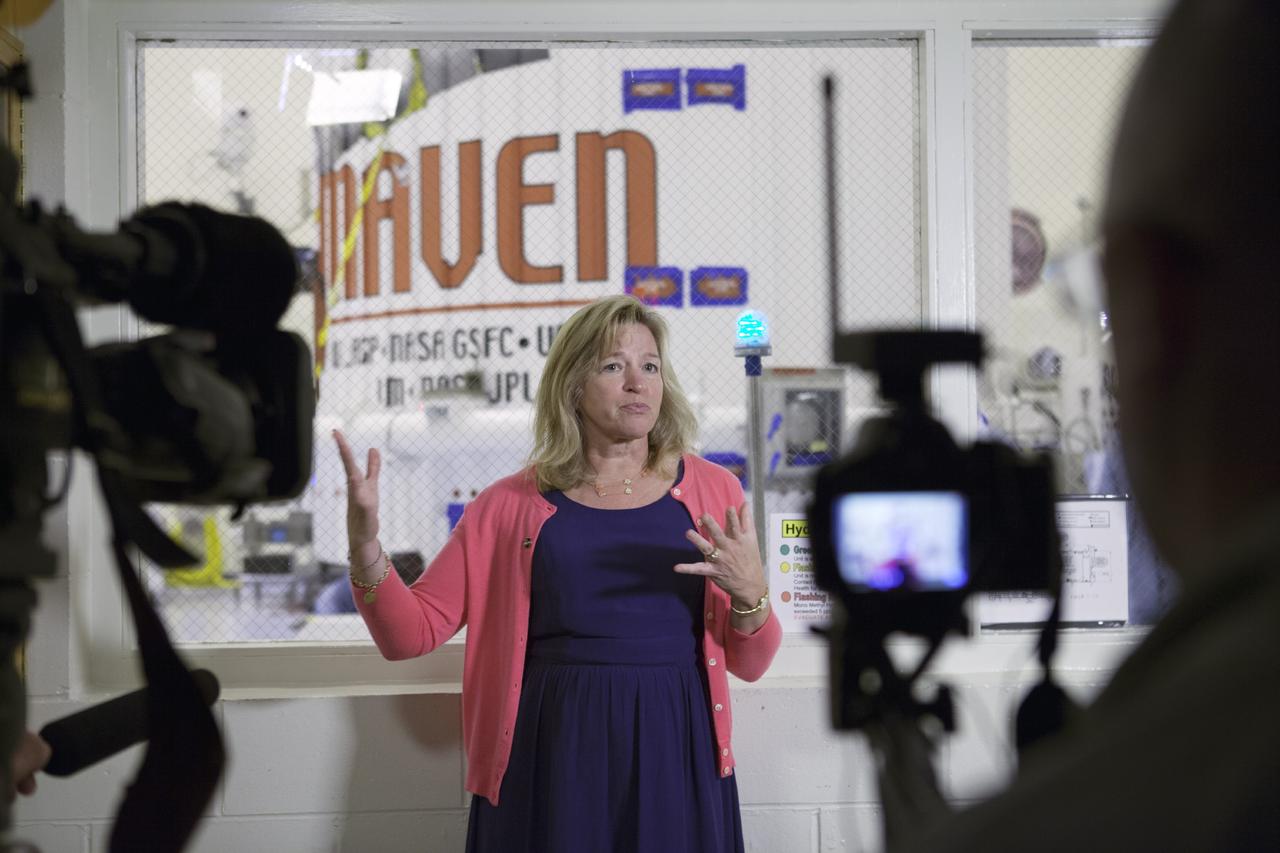
CAPE CANAVERAL, Fla. – Inside the Payload Hazardous Servicing Facility at NASA's Kennedy Space Center in Florida, Dr. Ellen Stofan, NASA's chief scientist, speaks to members of the news media. The Mars Atmosphere and Volatile Evolution, or MAVEN, spacecraft is in the background following encapsulation in its payload fairing. MAVEN is being prepared for its scheduled launch on Nov 18, 2013 from Cape Canaveral Air Force Station, Fla. atop a United Launch Alliance Atlas V rocket. Positioned in an orbit above the Red Planet, MAVEN will study the upper atmosphere of Mars in unprecedented detail. For more information, visit: http://www.nasa.gov/mission_pages/maven/main/index.html Photo credit: NASA/Kim Shiflett
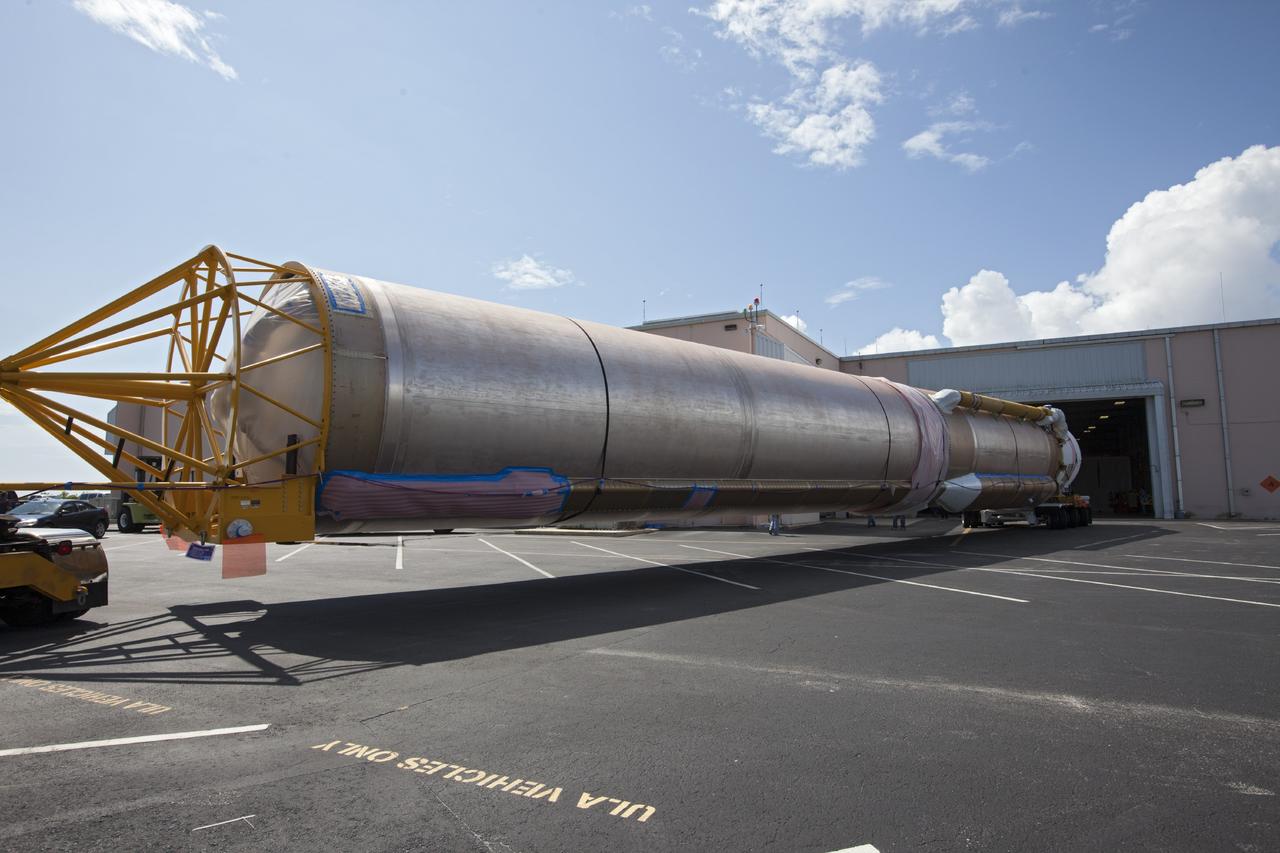
CAPE CANAVERAL, Fla. – United Launch Alliance Atlas V rocket first and second stages arrive at to the Atlas Spaceflight Operations Center, or ASOC, at Cape Canaveral Air Force Station. There, the launch vehicle will begin processing for the Mars Atmosphere and Volatile Evolution, or MAVEN, spacecraft to the Red Planet. MAVEN is being prepared for its scheduled launch in November from Cape Canaveral Air Force Station, Fla. atop a United Launch Alliance Atlas V rocket. Positioned in an orbit above the Red Planet, MAVEN will study the upper atmosphere of Mars in unprecedented detail. For more information, visit: http://www.nasa.gov/mission_pages/maven/main/index.html Photo credit: NASA/Kim Shiflett
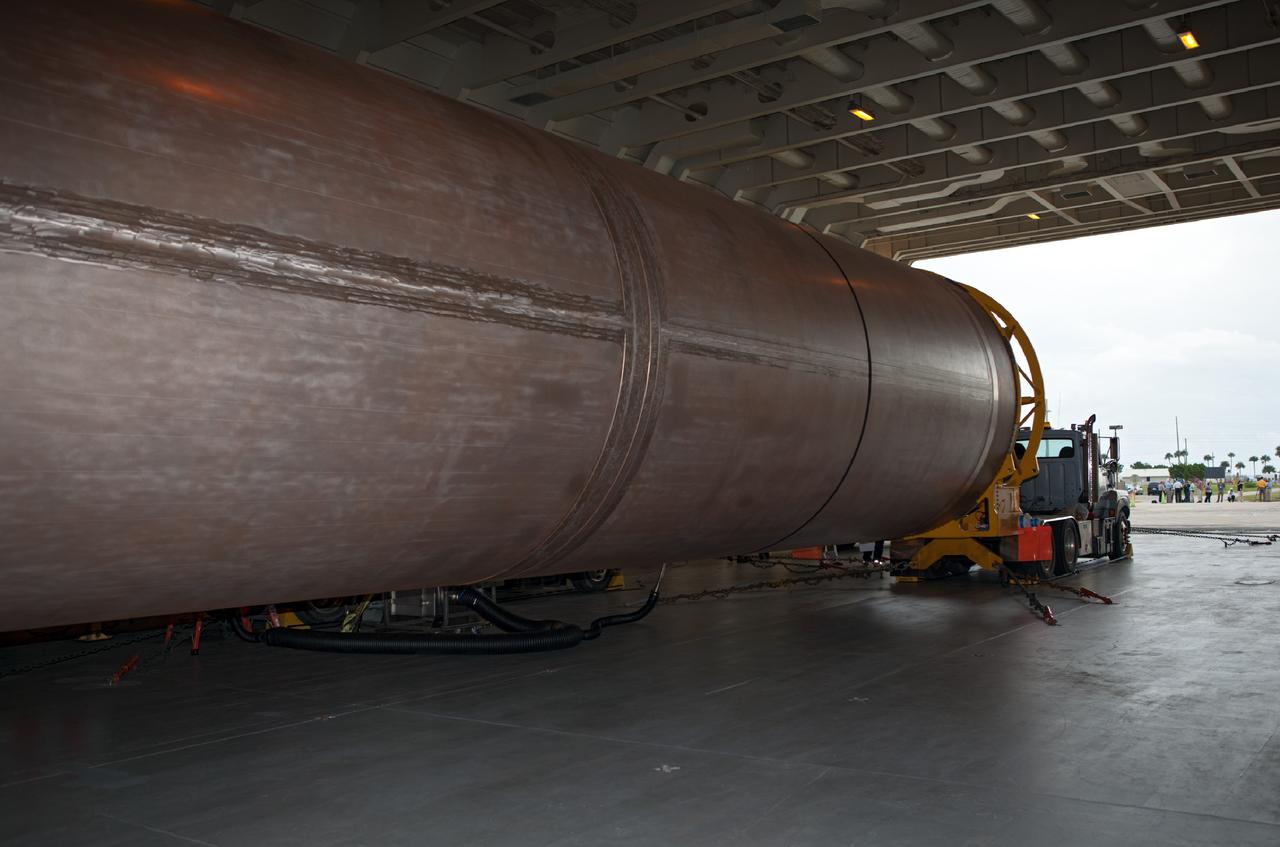
PORT CANAVERAL, Fla. – An Atlas V rocket is off loaded from the United Launch Alliance barge Delta Mariner that just arrived at Port Canaveral, Fla. The launch vehicle will boost the Mars Atmosphere and Volatile Evolution, or MAVEN, spacecraft to the Red Planet. The rocket will be transported to the Atlas Spaceflight Operations Center, or ASOC, at Cape Canaveral Air Force Station to begin processing. MAVEN is being prepared for its scheduled launch in November from Cape Canaveral Air Force Station, Fla. atop a United Launch Alliance Atlas V rocket. Positioned in an orbit above the Red Planet, MAVEN will study the upper atmosphere of Mars in unprecedented detail. For more information, visit: http://www.nasa.gov/mission_pages/maven/main/index.html Photo credit: NASA/ Dimitri Gerondidakis