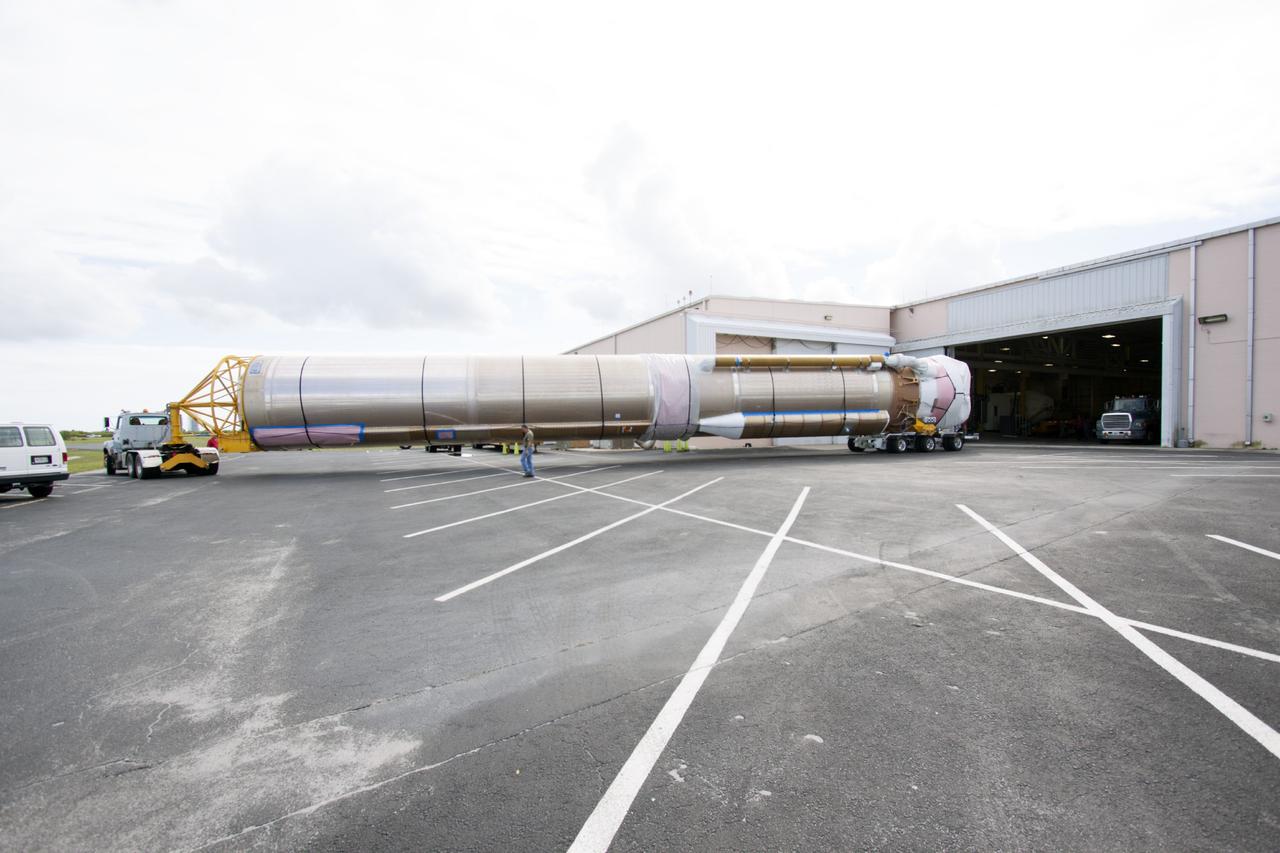
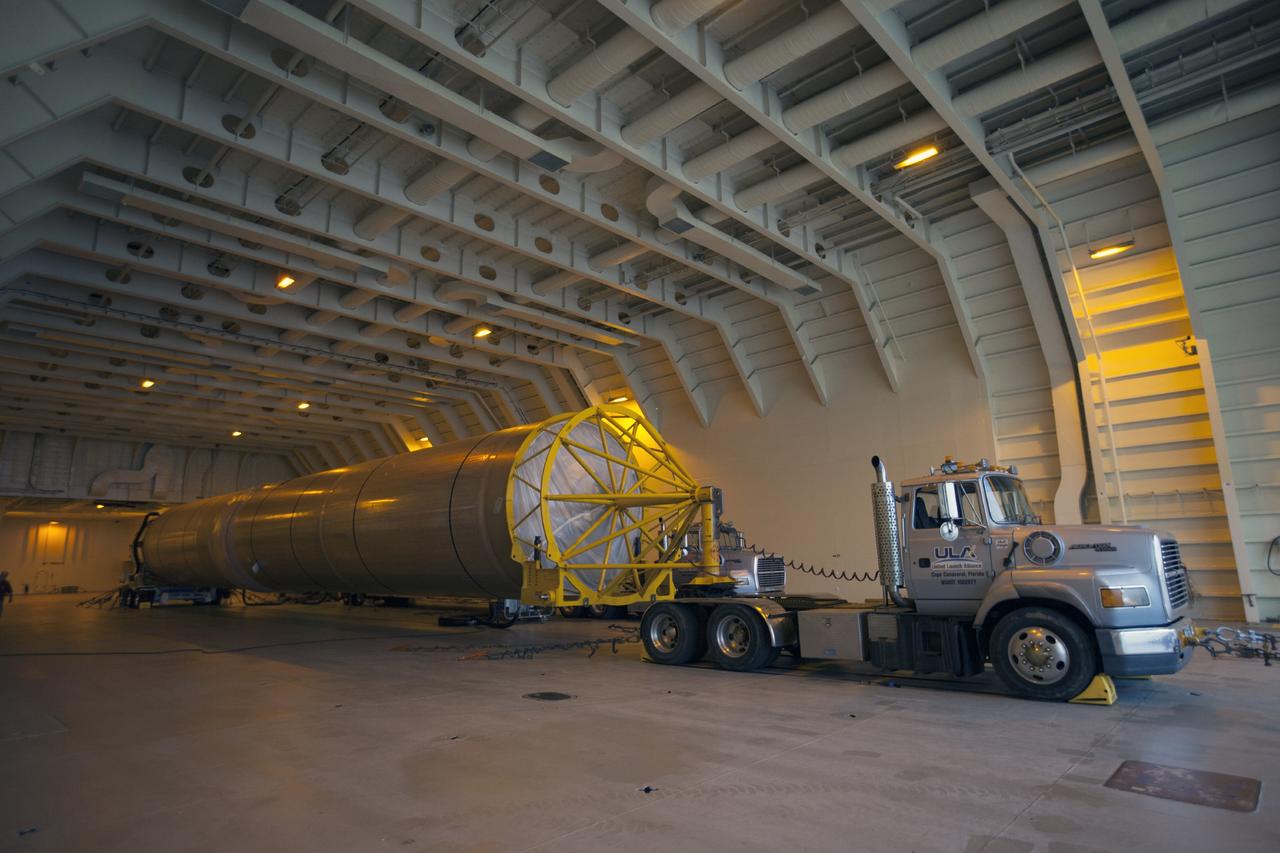
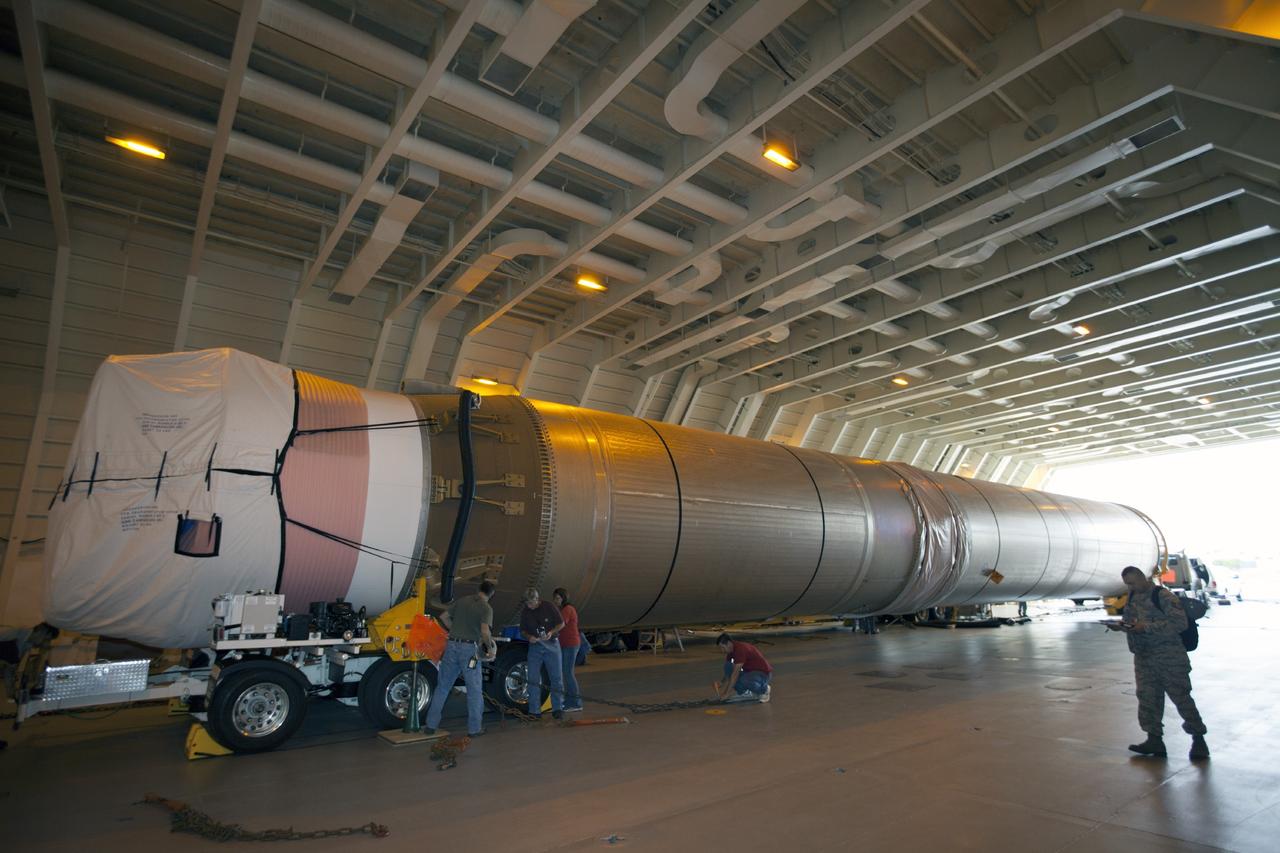
CAPE CANAVERAL, Fla. – The United Launch Alliance Atlas V launch vehicle that will boost the Tracking and Data Relay Satellite, or TDRS-L, spacecraft into orbit arrives at the Atlas Spaceflight Operations Center on Cape Canaveral Air Force Station for checkout in preparation for launch. TDRS-L is the second of three next-generation satellites designed to ensure vital operational continuity for the NASA Space Network. It is scheduled to launch from Cape Canaveral's Space Launch Complex 41 atop an Atlas V rocket in January 2014. The current Tracking and Data Relay Satellite system consists of eight in-orbit satellites distributed to provide near continuous information relay service to missions such as the Hubble Space Telescope and International Space Station. For more information, visit: http://www.nasa.gov/content/tracking-and-data-relay-satellite-tdrs/ Photo credit: NASA/ Jim Grossman
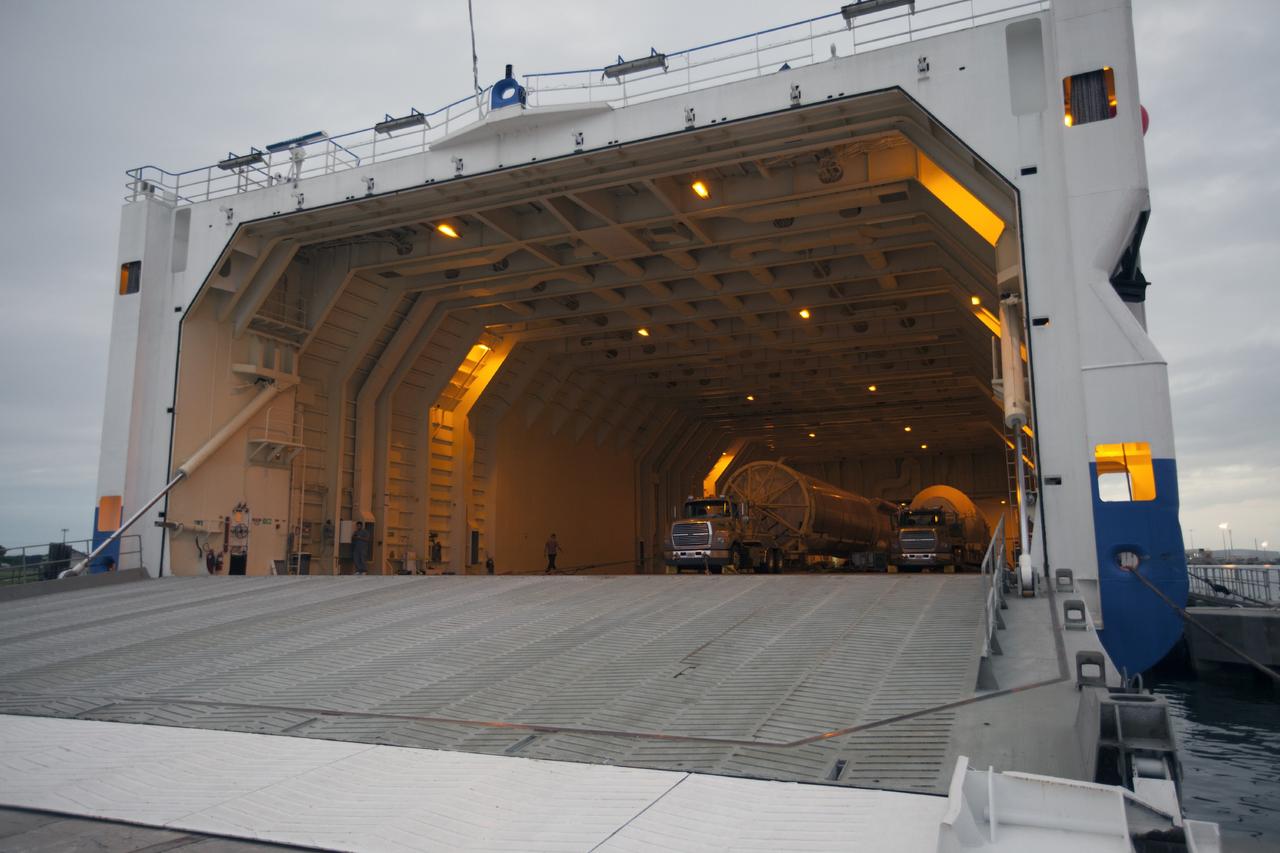
PORT CANAVERAL, Fla. – The United Launch Alliance barge Delta Mariner arrives at Port Canaveral, Fla. delivering the Atlas V launch vehicle that will boost the Tracking and Data Relay Satellite, or TDRS-L, spacecraft into orbit around the Earth. The rocket's first-stage booster and Centaur upper stage will be transported to the hangar at the Atlas Spaceflight Operations Center on Cape Canaveral Air Force Station for checkout in preparation for launch. TDRS-L is the second of three next-generation satellites designed to ensure vital operational continuity for the NASA Space Network. It is scheduled to launch from Cape Canaveral's Space Launch Complex 41 atop an Atlas V rocket in January 2014. The current Tracking and Data Relay Satellite system consists of eight in-orbit satellites distributed to provide near continuous information relay service to missions such as the Hubble Space Telescope and International Space Station. For more information, visit: http://www.nasa.gov/content/tracking-and-data-relay-satellite-tdrs/ Photo credit: NASA/ Kim Shiflett
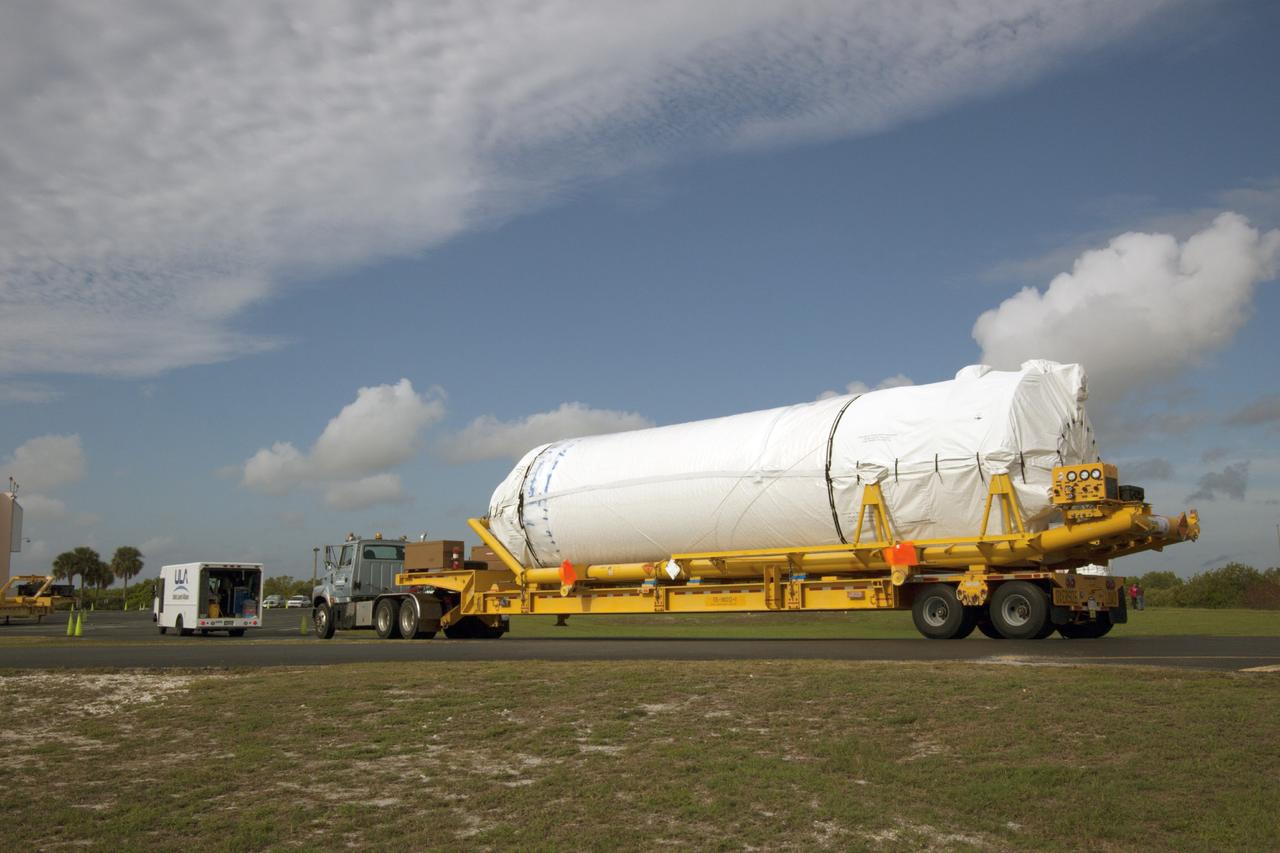
CAPE CANAVERAL, Fla. – The United Launch Alliance Centaur upper stage that will boost the Tracking and Data Relay Satellite, or TDRS-L, spacecraft into orbit is being transported to the hangar at the Atlas Spaceflight Operations Center on Cape Canaveral Air Force Station for checkout in preparation for launch. TDRS-L is the second of three next-generation satellites designed to ensure vital operational continuity for the NASA Space Network. It is scheduled to launch from Cape Canaveral's Space Launch Complex 41 atop an Atlas V rocket in January 2014. The current Tracking and Data Relay Satellite system consists of eight in-orbit satellites distributed to provide near continuous information relay service to missions such as the Hubble Space Telescope and International Space Station. For more information, visit: http://www.nasa.gov/content/tracking-and-data-relay-satellite-tdrs/ Photo credit: NASA/ Jim Grossman
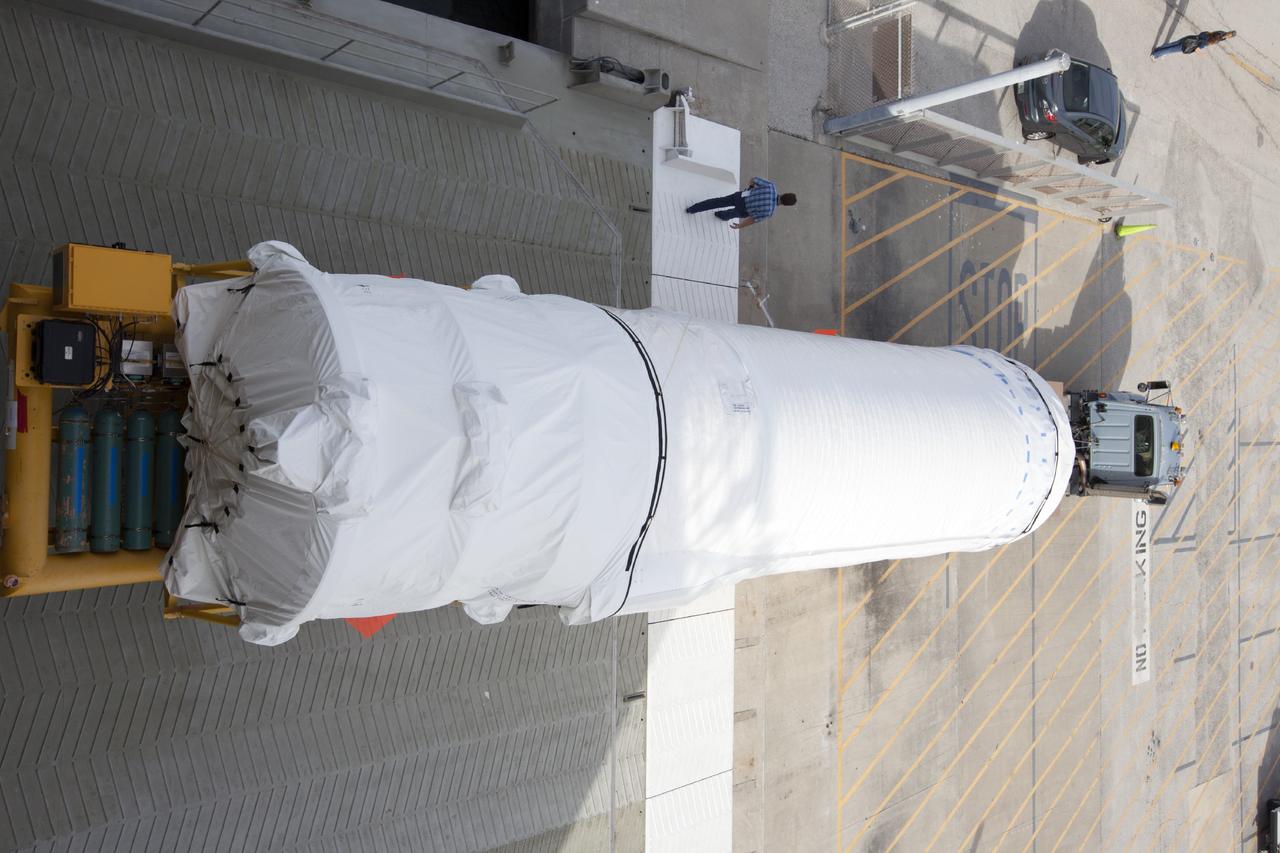
PORT CANAVERAL, Fla. – Following arrival at Port Canaveral, Fla., the United Launch Alliance Centaur upper stage that will boost the Tracking and Data Relay Satellite, or TDRS-L, spacecraft into orbit is being towed off the barge, Delta Mariner. The first and second stages of the launch vehicle will then be transported to Cape Canaveral Air Force Station's Atlas Spaceflight Operations Center for checkout in preparation for launch. TDRS-L is the second of three next-generation satellites designed to ensure vital operational continuity for the NASA Space Network. It is scheduled to launch from Cape Canaveral's Space Launch Complex 41 atop an Atlas V rocket in January 2014. The current Tracking and Data Relay Satellite system consists of eight in-orbit satellites distributed to provide near continuous information relay service to missions such as the Hubble Space Telescope and International Space Station. For more information, visit: http://www.nasa.gov/content/tracking-and-data-relay-satellite-tdrs/ Photo credit: NASA/ Kim Shiflett
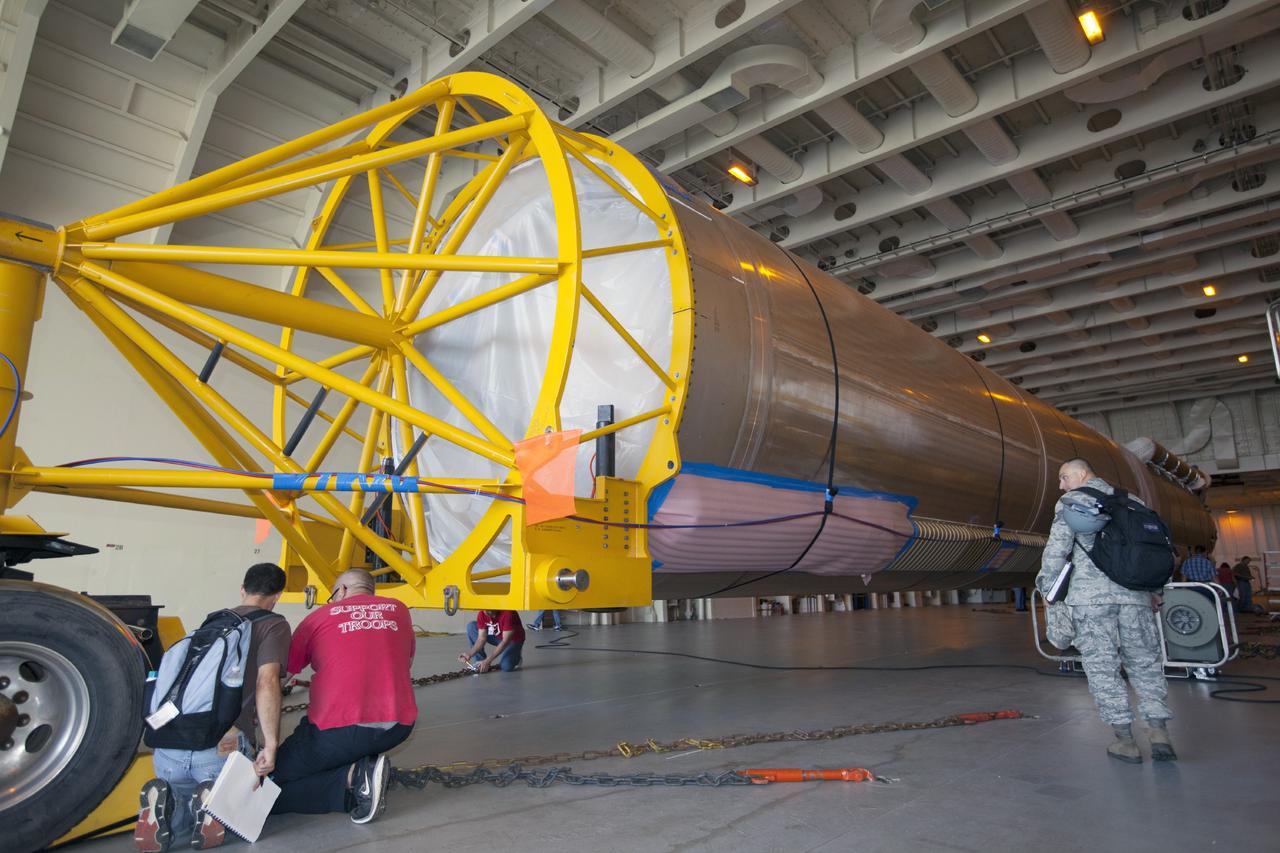
PORT CANAVERAL, Fla. – Following arrival of the United Launch Alliance barge, Delta Mariner, at Port Canaveral, Fla. engineers and technicians prepare to offload the Atlas V launch vehicle that will boost the Tracking and Data Relay Satellite, or TDRS-L, spacecraft into orbit around the Earth. The rocket's first-stage booster and Centaur upper stage will be transported to the hangar at the Atlas Spaceflight Operations Center on Cape Canaveral Air Force Station for checkout in preparation for launch. TDRS-L is the second of three next-generation satellites designed to ensure vital operational continuity for the NASA Space Network. It is scheduled to launch from Cape Canaveral's Space Launch Complex 41 atop an Atlas V rocket in January 2014. The current Tracking and Data Relay Satellite system consists of eight in-orbit satellites distributed to provide near continuous information relay service to missions such as the Hubble Space Telescope and International Space Station. For more information, visit: http://www.nasa.gov/content/tracking-and-data-relay-satellite-tdrs/ Photo credit: NASA/ Kim Shiflett
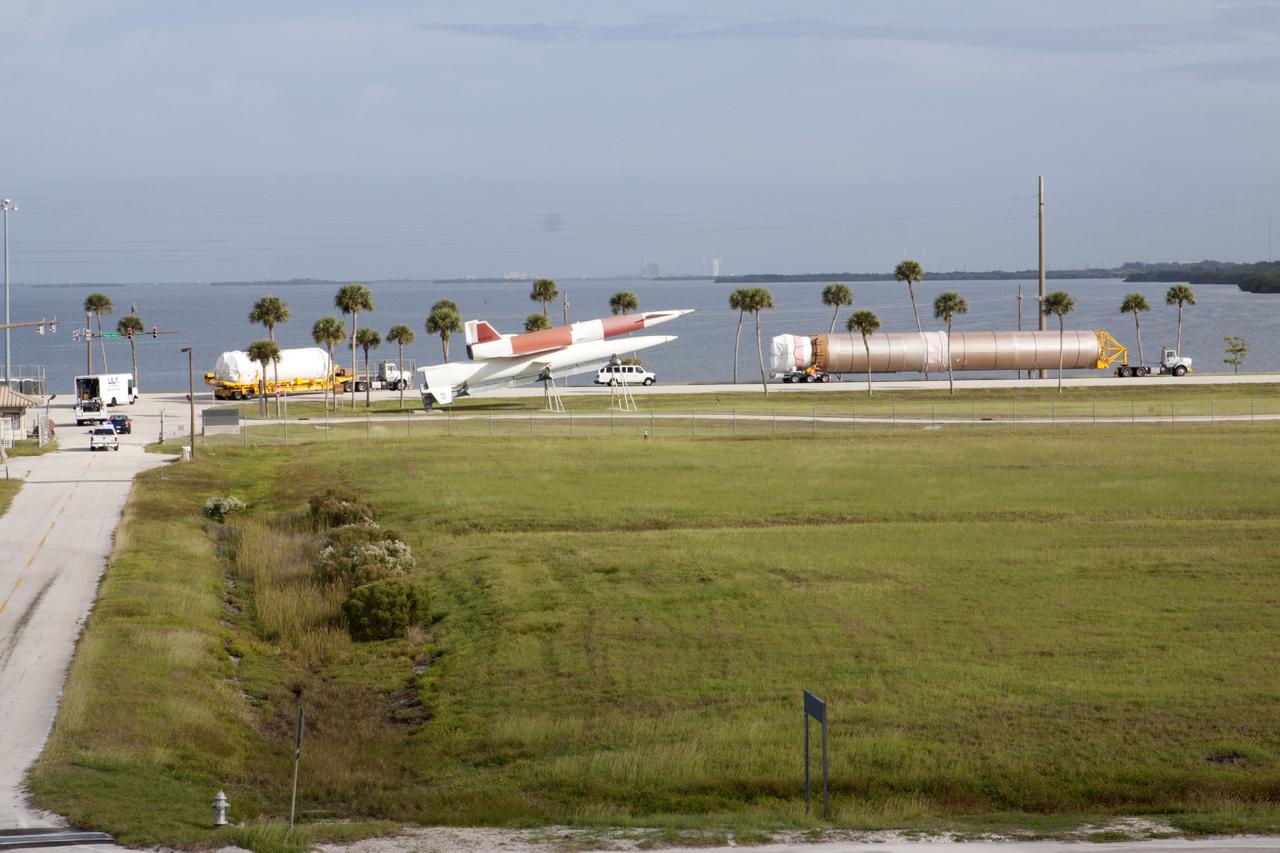
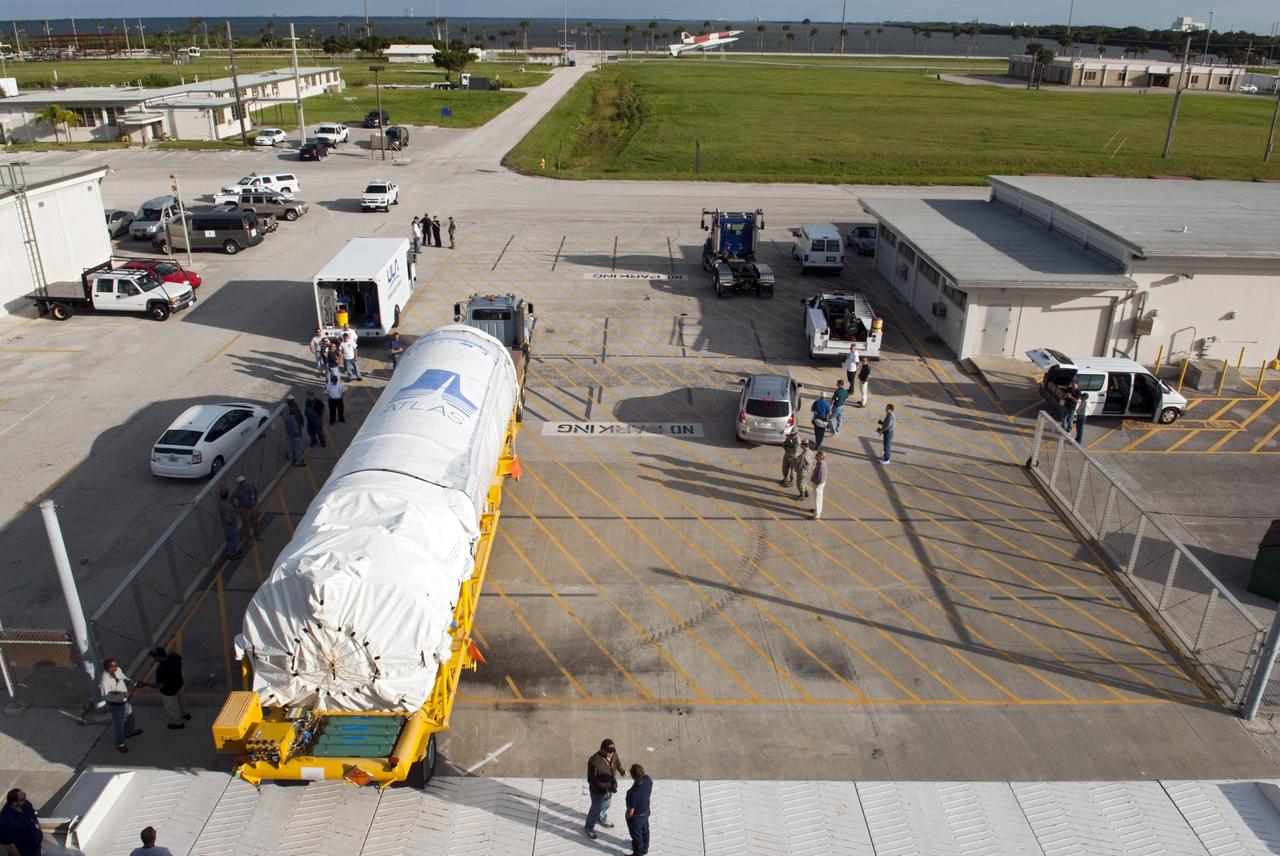
PORT CANAVERAL, Fla. – Following arrival at Port Canaveral, Fla., the United Launch Alliance Atlas V first stage and Centaur upper stage that will boost the Tracking and Data Relay Satellite, or TDRS-L, spacecraft into orbit is being transported to Cape Canaveral Air Force Station's Atlas Spaceflight Operations Center for checkout in preparation for launch. The convoy passes a red and white vintage Navajo rocket displayed near the entrance of Cape Canaveral. TDRS-L is the second of three next-generation satellites designed to ensure vital operational continuity for the NASA Space Network. It is scheduled to launch from Cape Canaveral's Space Launch Complex 41 atop an Atlas V rocket in January 2014. The current Tracking and Data Relay Satellite system consists of eight in-orbit satellites distributed to provide near continuous information relay service to missions such as the Hubble Space Telescope and International Space Station. For more information, visit: http://www.nasa.gov/content/tracking-and-data-relay-satellite-tdrs/ Photo credit: NASA/ Kim Shiflett
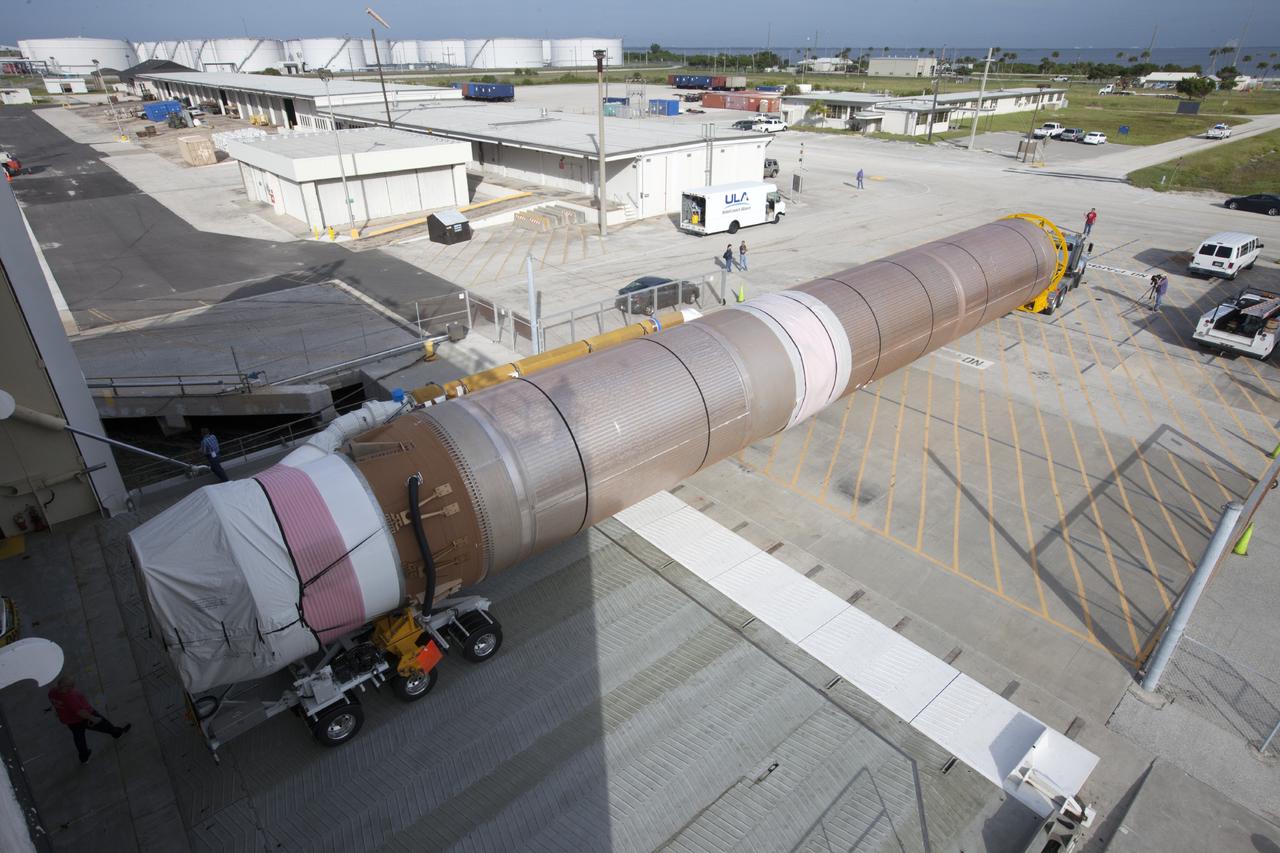
PORT CANAVERAL, Fla. – Following arrival at Port Canaveral, Fla., the United Launch Alliance Atlas V rocket that will boost the Tracking and Data Relay Satellite, or TDRS-L, spacecraft into orbit is being towed off the barge, Delta Mariner. The launch vehicle will then be transported to Cape Canaveral Air Force Station's Atlas Spaceflight Operations Center for checkout in preparation for launch. TDRS-L is the second of three next-generation satellites designed to ensure vital operational continuity for the NASA Space Network. It is scheduled to launch from Cape Canaveral's Space Launch Complex 41 atop an Atlas V rocket in January 2014. The current Tracking and Data Relay Satellite system consists of eight in-orbit satellites distributed to provide near continuous information relay service to missions such as the Hubble Space Telescope and International Space Station. For more information, visit: http://www.nasa.gov/content/tracking-and-data-relay-satellite-tdrs/ Photo credit: NASA/ Kim Shiflett
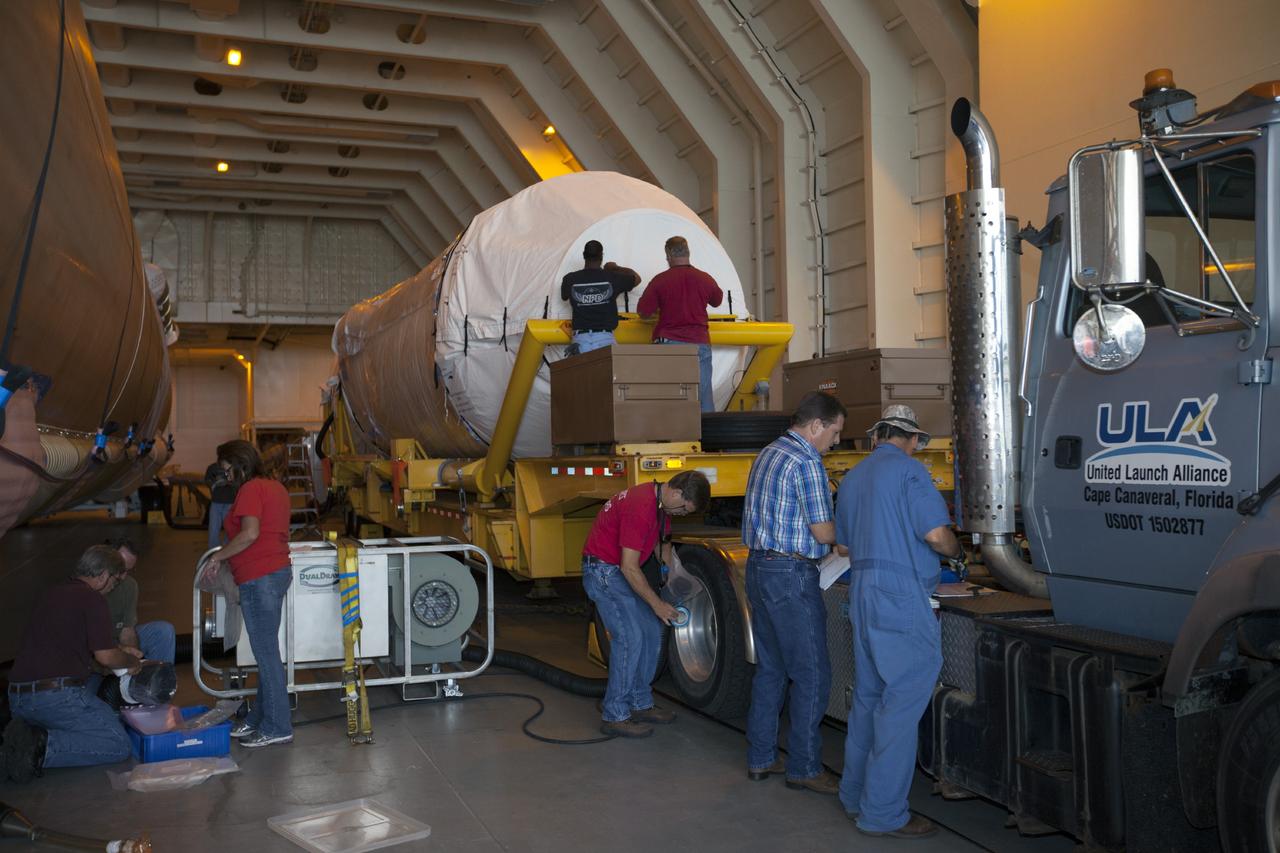
PORT CANAVERAL, Fla. – Following arrival of the United Launch Alliance barge, Delta Mariner, at Port Canaveral, Fla. engineers and technicians prepare to offload the Atlas V launch vehicle that will boost the Tracking and Data Relay Satellite, or TDRS-L, spacecraft into orbit around the Earth. The rocket's first-stage booster and Centaur upper stage will be transported to the hangar at the Atlas Spaceflight Operations Center on Cape Canaveral Air Force Station for checkout in preparation for launch. TDRS-L is the second of three next-generation satellites designed to ensure vital operational continuity for the NASA Space Network. It is scheduled to launch from Cape Canaveral's Space Launch Complex 41 atop an Atlas V rocket in January 2014. The current Tracking and Data Relay Satellite system consists of eight in-orbit satellites distributed to provide near continuous information relay service to missions such as the Hubble Space Telescope and International Space Station. For more information, visit: http://www.nasa.gov/content/tracking-and-data-relay-satellite-tdrs/ Photo credit: NASA/ Kim Shiflett
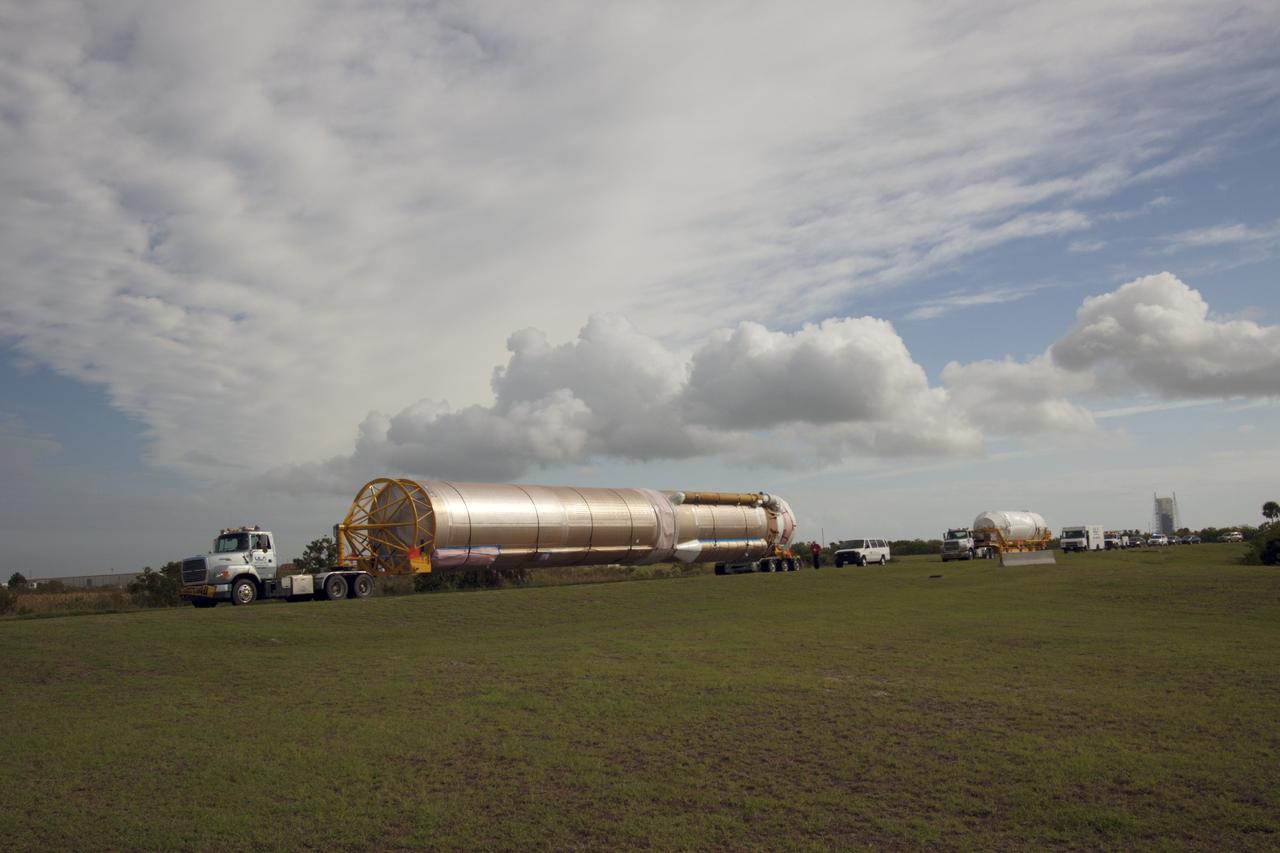
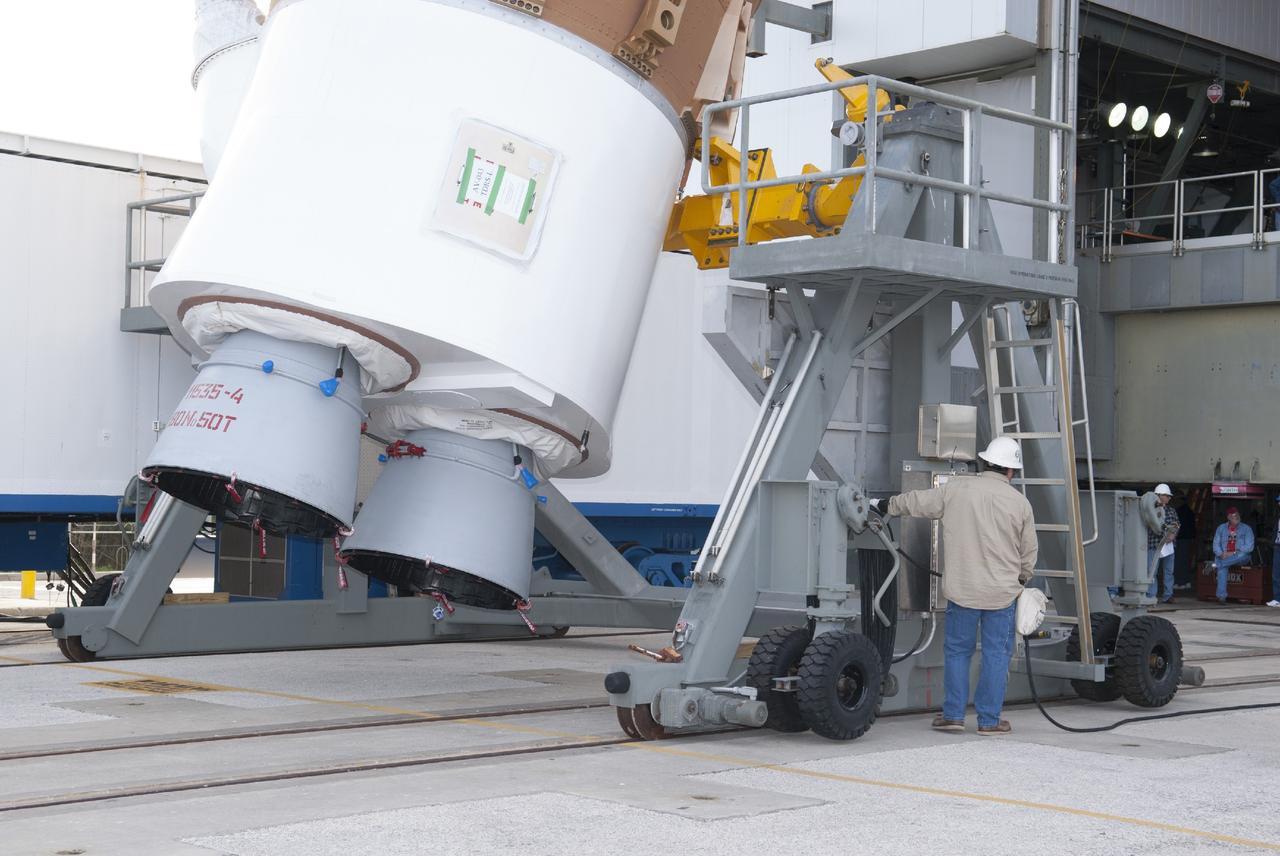
CAPE CANAVERAL, Fla. – The United Launch Alliance Atlas V launch vehicle, left, and Centaur upper stage that will boost the Tracking and Data Relay Satellite, or TDRS-L, spacecraft into orbit is being transported to the hangar at the Atlas Spaceflight Operations Center on Cape Canaveral Air Force Station for checkout in preparation for launch. TDRS-L is the second of three next-generation satellites designed to ensure vital operational continuity for the NASA Space Network. It is scheduled to launch from Cape Canaveral's Space Launch Complex 41 atop an Atlas V rocket in January 2014. The current Tracking and Data Relay Satellite system consists of eight in-orbit satellites distributed to provide near continuous information relay service to missions such as the Hubble Space Telescope and International Space Station. For more information, visit: http://www.nasa.gov/content/tracking-and-data-relay-satellite-tdrs/ Photo credit: NASA/ Jim Grossman
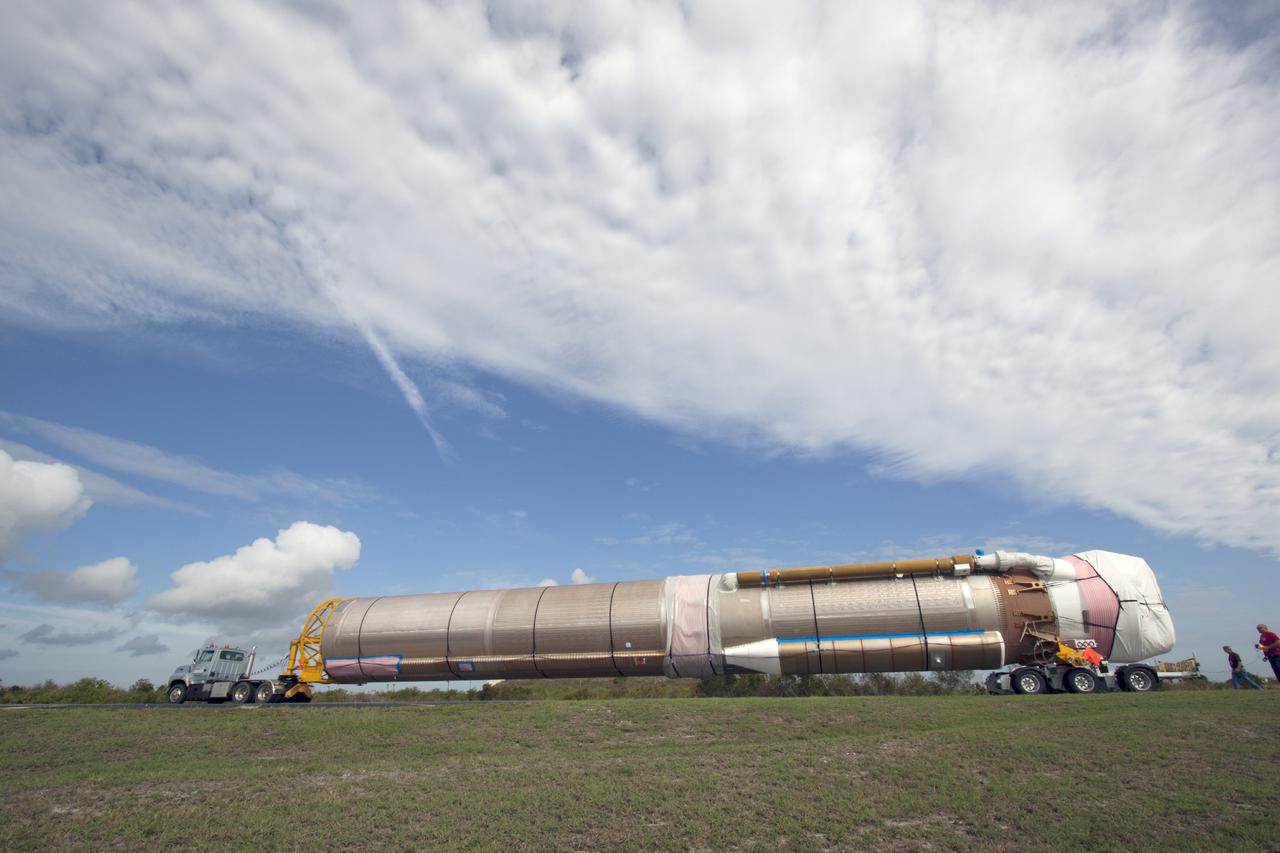
CAPE CANAVERAL, Fla. – The United Launch Alliance Atlas V launch vehicle that will boost the Tracking and Data Relay Satellite, or TDRS-L, spacecraft into orbit is being transported to the hangar at the Atlas Spaceflight Operations Center on Cape Canaveral Air Force Station for checkout in preparation for launch. TDRS-L is the second of three next-generation satellites designed to ensure vital operational continuity for the NASA Space Network. It is scheduled to launch from Cape Canaveral's Space Launch Complex 41 atop an Atlas V rocket in January 2014. The current Tracking and Data Relay Satellite system consists of eight in-orbit satellites distributed to provide near continuous information relay service to missions such as the Hubble Space Telescope and International Space Station. For more information, visit: http://www.nasa.gov/content/tracking-and-data-relay-satellite-tdrs/ Photo credit: NASA/ Jim Grossman
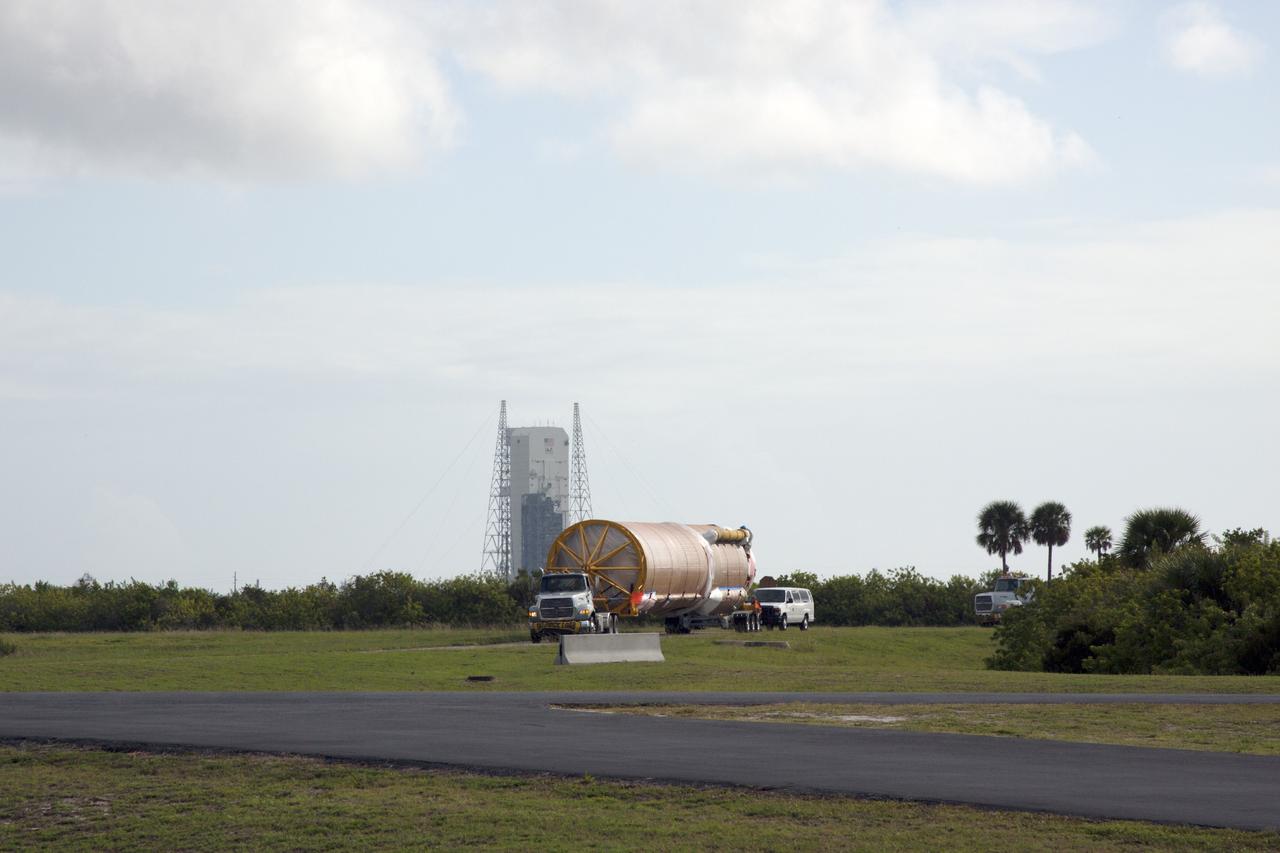
CAPE CANAVERAL, Fla. – The United Launch Alliance Atlas V launch vehicle that will boost the Tracking and Data Relay Satellite, or TDRS-L, spacecraft into orbit is being transported to the hangar at the Atlas Spaceflight Operations Center on Cape Canaveral Air Force Station for checkout in preparation for launch. TDRS-L is the second of three next-generation satellites designed to ensure vital operational continuity for the NASA Space Network. It is scheduled to launch from Cape Canaveral's Space Launch Complex 41 atop an Atlas V rocket in January 2014. The current Tracking and Data Relay Satellite system consists of eight in-orbit satellites distributed to provide near continuous information relay service to missions such as the Hubble Space Telescope and International Space Station. For more information, visit: http://www.nasa.gov/content/tracking-and-data-relay-satellite-tdrs/ Photo credit: NASA/ Jim Grossman
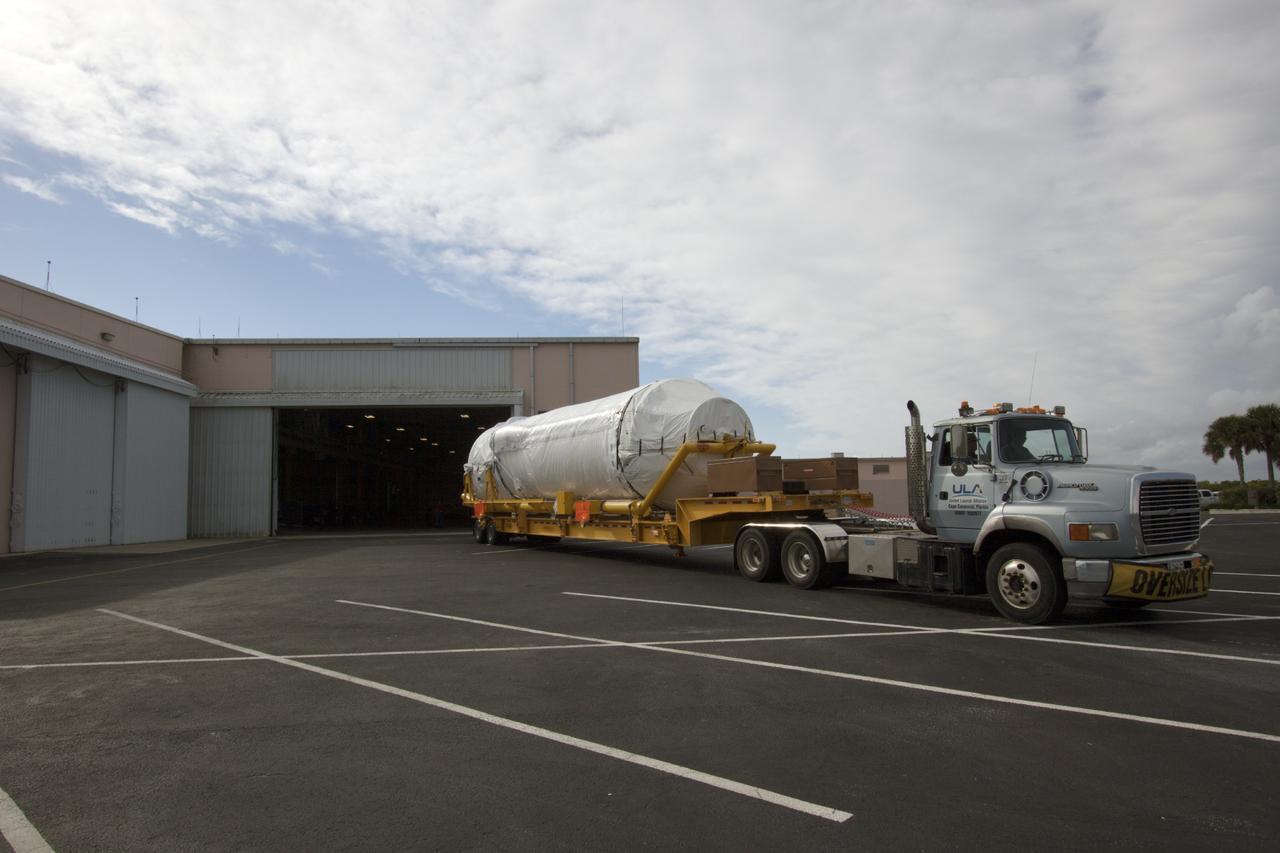
CAPE CANAVERAL, Fla. – The United Launch Alliance Centaur upper stage that will boost the Tracking and Data Relay Satellite, or TDRS-L, spacecraft into orbit arrives at the Atlas Spaceflight Operations Center on Cape Canaveral Air Force Station for checkout in preparation for launch. TDRS-L is the second of three next-generation satellites designed to ensure vital operational continuity for the NASA Space Network. It is scheduled to launch from Cape Canaveral's Space Launch Complex 41 atop an Atlas V rocket in January 2014. The current Tracking and Data Relay Satellite system consists of eight in-orbit satellites distributed to provide near continuous information relay service to missions such as the Hubble Space Telescope and International Space Station. For more information, visit: http://www.nasa.gov/content/tracking-and-data-relay-satellite-tdrs/ Photo credit: NASA/ Jim Grossman
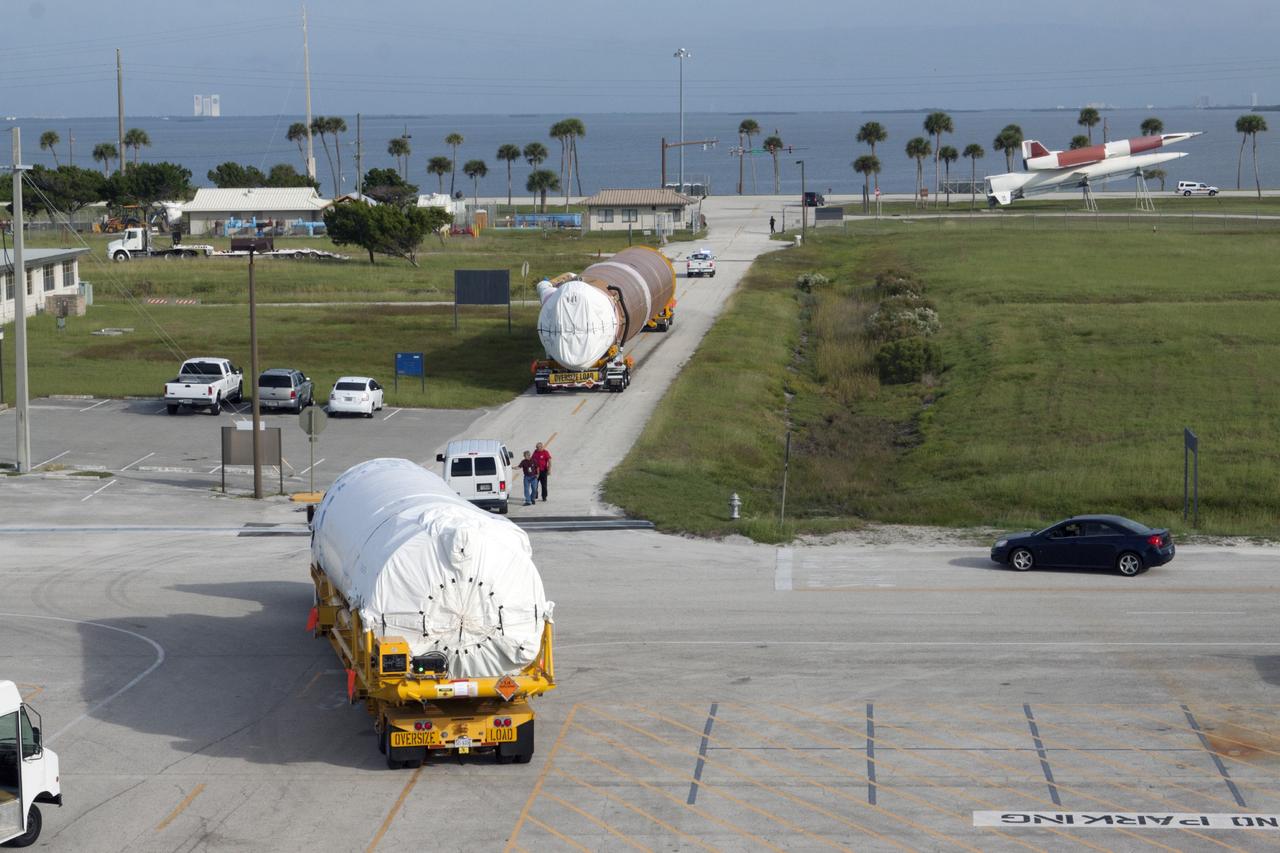
PORT CANAVERAL, Fla. – Following arrival at Port Canaveral, Fla., the United Launch Alliance Atlas V first stage and Centaur upper stage that will boost the Tracking and Data Relay Satellite, or TDRS-L, spacecraft into orbit is being transported to Cape Canaveral Air Force Station's Atlas Spaceflight Operations Center for checkout in preparation for launch. TDRS-L is the second of three next-generation satellites designed to ensure vital operational continuity for the NASA Space Network. It is scheduled to launch from Cape Canaveral's Space Launch Complex 41 atop an Atlas V rocket in January 2014. The current Tracking and Data Relay Satellite system consists of eight in-orbit satellites distributed to provide near continuous information relay service to missions such as the Hubble Space Telescope and International Space Station. For more information, visit: http://www.nasa.gov/content/tracking-and-data-relay-satellite-tdrs/ Photo credit: NASA/ Kim Shiflett
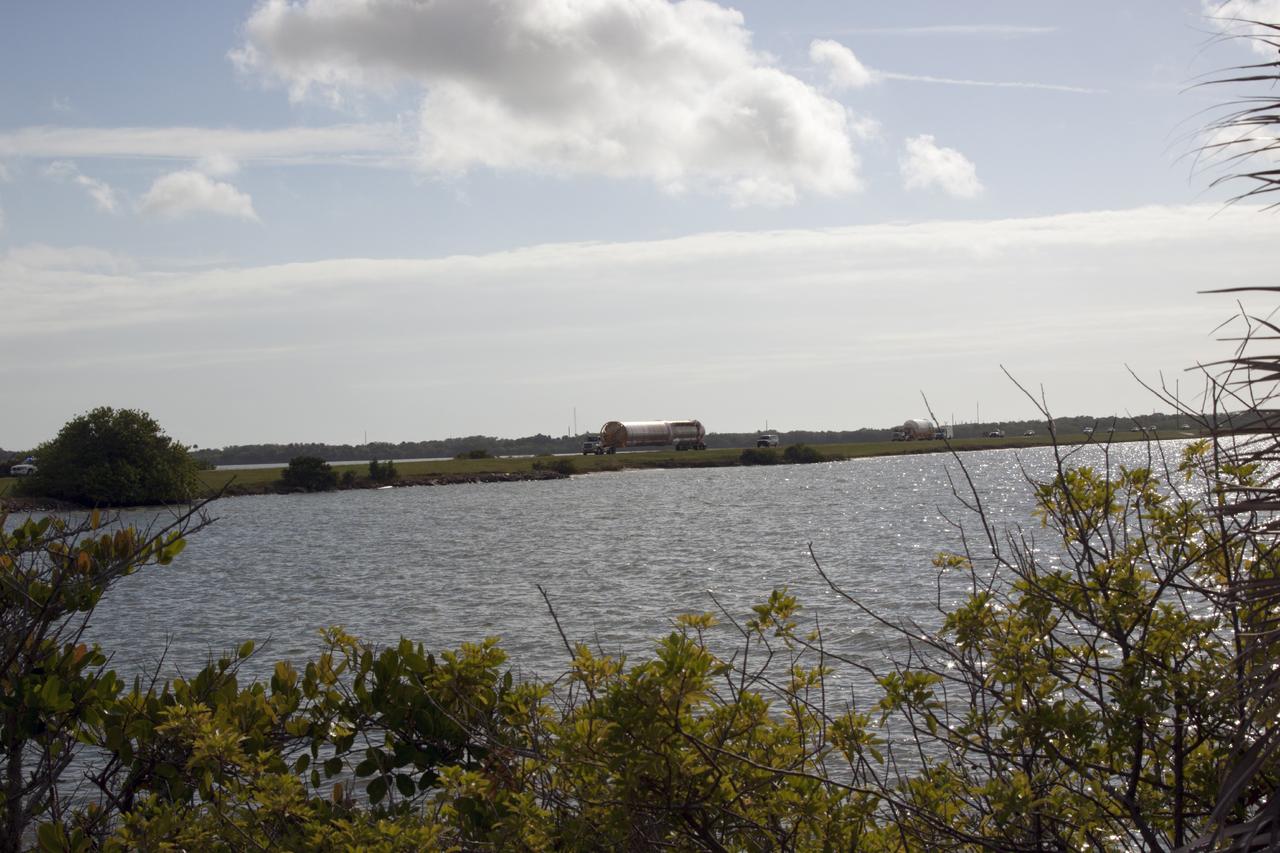
CAPE CANAVERAL, Fla. – The United Launch Alliance Atlas V launch vehicle that will boost the Tracking and Data Relay Satellite, or TDRS-L, spacecraft into orbit is being transported to the hangar at the Atlas Spaceflight Operations Center on Cape Canaveral Air Force Station for checkout in preparation for launch. TDRS-L is the second of three next-generation satellites designed to ensure vital operational continuity for the NASA Space Network. It is scheduled to launch from Cape Canaveral's Space Launch Complex 41 atop an Atlas V rocket in January 2014. The current Tracking and Data Relay Satellite system consists of eight in-orbit satellites distributed to provide near continuous information relay service to missions such as the Hubble Space Telescope and International Space Station. For more information, visit: http://www.nasa.gov/content/tracking-and-data-relay-satellite-tdrs/ Photo credit: NASA/ Jim Grossman
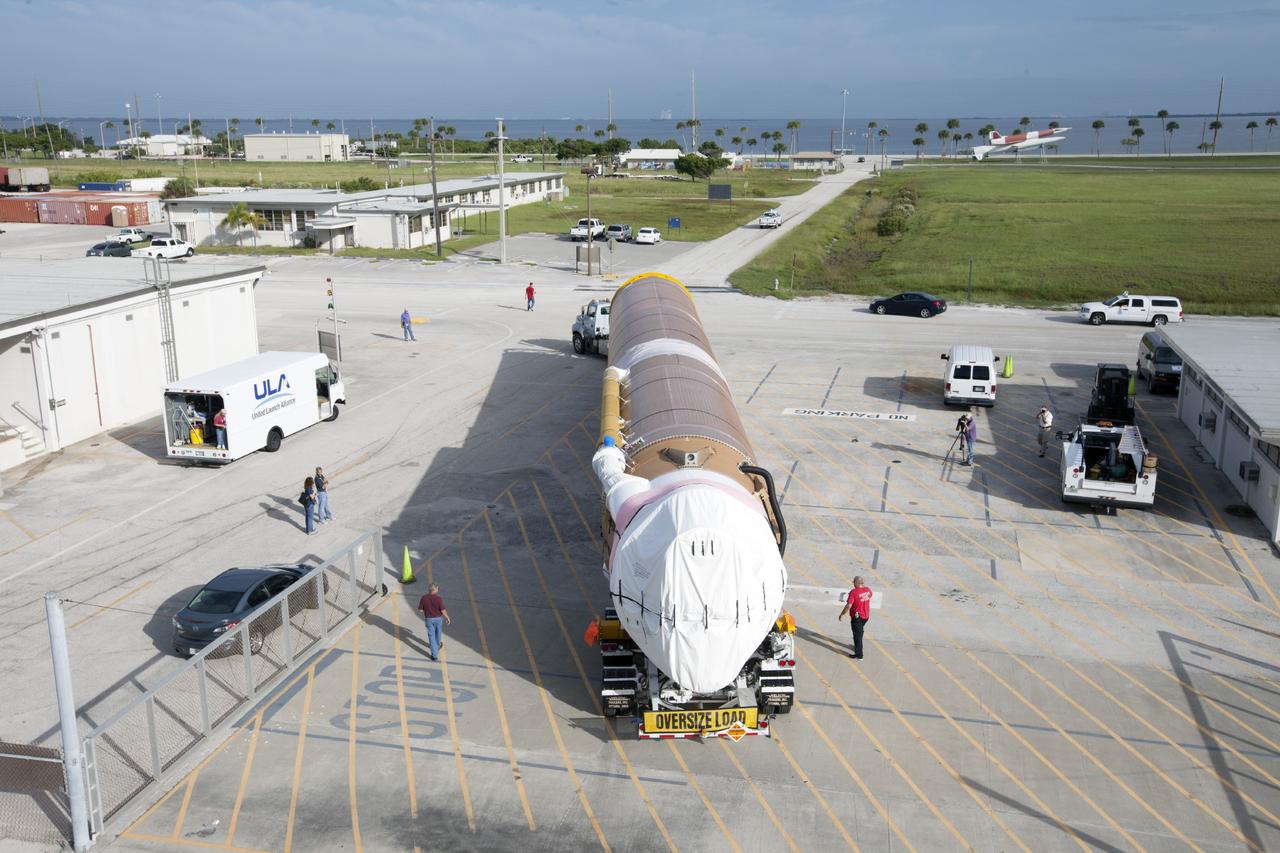
PORT CANAVERAL, Fla. – Following arrival at Port Canaveral, Fla., the United Launch Alliance Atlas V rocket that will boost the Tracking and Data Relay Satellite, or TDRS-L, spacecraft into orbit is being towed off the barge, Delta Mariner. The launch vehicle will then be transported to Cape Canaveral Air Force Station's Atlas Spaceflight Operations Center for checkout in preparation for launch. TDRS-L is the second of three next-generation satellites designed to ensure vital operational continuity for the NASA Space Network. It is scheduled to launch from Cape Canaveral's Space Launch Complex 41 atop an Atlas V rocket in January 2014. The current Tracking and Data Relay Satellite system consists of eight in-orbit satellites distributed to provide near continuous information relay service to missions such as the Hubble Space Telescope and International Space Station. For more information, visit: http://www.nasa.gov/content/tracking-and-data-relay-satellite-tdrs/ Photo credit: NASA/ Kim Shiflett
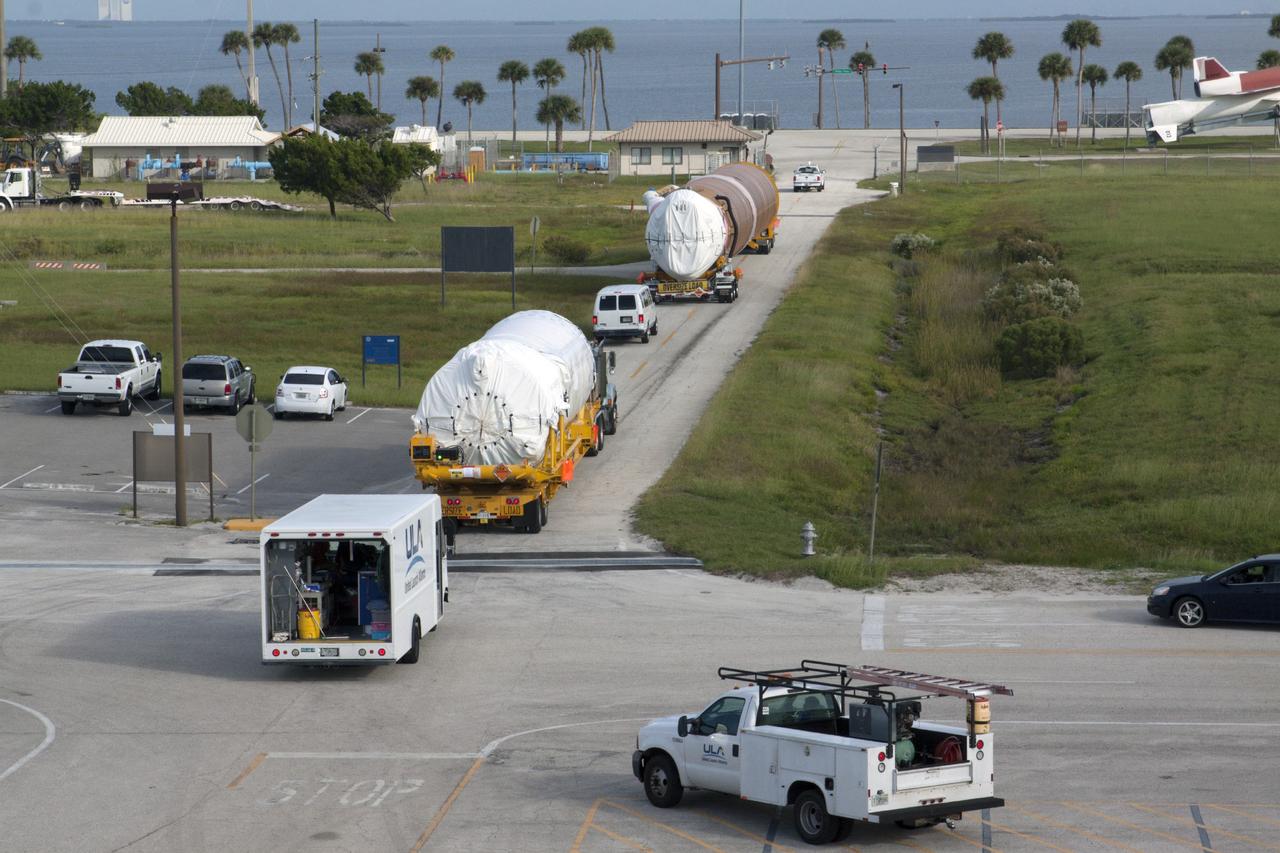
PORT CANAVERAL, Fla. – Following arrival at Port Canaveral, Fla., the United Launch Alliance Atlas V first stage and Centaur upper stage that will boost the Tracking and Data Relay Satellite, or TDRS-L, spacecraft into orbit is being transported to Cape Canaveral Air Force Station's Atlas Spaceflight Operations Center for checkout in preparation for launch. TDRS-L is the second of three next-generation satellites designed to ensure vital operational continuity for the NASA Space Network. It is scheduled to launch from Cape Canaveral's Space Launch Complex 41 atop an Atlas V rocket in January 2014. The current Tracking and Data Relay Satellite system consists of eight in-orbit satellites distributed to provide near continuous information relay service to missions such as the Hubble Space Telescope and International Space Station. For more information, visit: http://www.nasa.gov/content/tracking-and-data-relay-satellite-tdrs/ Photo credit: NASA/ Kim Shiflett
PORT CANAVERAL, Fla. – The United Launch Alliance barge Delta Mariner arrives at Port Canaveral, Fla. delivering the Atlas V launch vehicle that will boost the Tracking and Data Relay Satellite, or TDRS-L, spacecraft into orbit around the Earth. The rocket's first-stage booster and Centaur upper stage will be transported to the hangar at the Atlas Spaceflight Operations Center on Cape Canaveral Air Force Station for checkout in preparation for launch. TDRS-L is the second of three next-generation satellites designed to ensure vital operational continuity for the NASA Space Network. It is scheduled to launch from Cape Canaveral's Space Launch Complex 41 atop an Atlas V rocket in January 2014. The current Tracking and Data Relay Satellite system consists of eight in-orbit satellites distributed to provide near continuous information relay service to missions such as the Hubble Space Telescope and International Space Station. For more information, visit: http://www.nasa.gov/content/tracking-and-data-relay-satellite-tdrs/ Photo credit: NASA/ Kim Shiflett

CAPE CANAVERAL, Fla. – The United Launch Alliance Atlas V launch vehicle that will boost the Tracking and Data Relay Satellite, or TDRS-L, spacecraft into orbit is being transported to the hangar at the Atlas Spaceflight Operations Center on Cape Canaveral Air Force Station for checkout in preparation for launch. TDRS-L is the second of three next-generation satellites designed to ensure vital operational continuity for the NASA Space Network. It is scheduled to launch from Cape Canaveral's Space Launch Complex 41 atop an Atlas V rocket in January 2014. The current Tracking and Data Relay Satellite system consists of eight in-orbit satellites distributed to provide near continuous information relay service to missions such as the Hubble Space Telescope and International Space Station. For more information, visit: http://www.nasa.gov/content/tracking-and-data-relay-satellite-tdrs/ Photo credit: NASA/ Jim Grossman
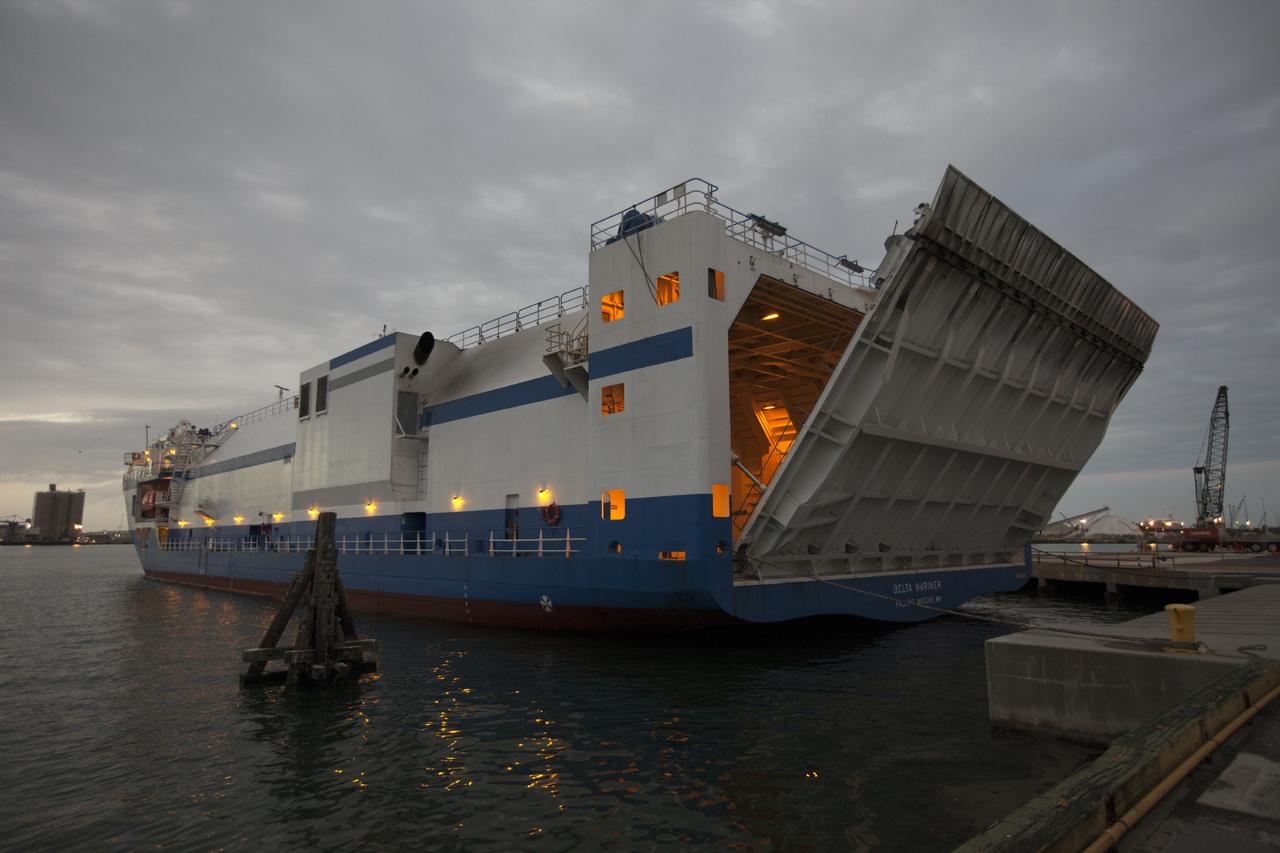
PORT CANAVERAL, Fla. – The United Launch Alliance barge Delta Mariner arrives at Port Canaveral, Fla. delivering the Atlas V launch vehicle that will boost the Tracking and Data Relay Satellite, or TDRS-L, spacecraft into orbit around the Earth. The rocket's first-stage booster and Centaur upper stage will be transported to the hangar at the Atlas Spaceflight Operations Center on Cape Canaveral Air Force Station for checkout in preparation for launch. TDRS-L is the second of three next-generation satellites designed to ensure vital operational continuity for the NASA Space Network. It is scheduled to launch from Cape Canaveral's Space Launch Complex 41 atop an Atlas V rocket in January 2014. The current Tracking and Data Relay Satellite system consists of eight in-orbit satellites distributed to provide near continuous information relay service to missions such as the Hubble Space Telescope and International Space Station. For more information, visit: http://www.nasa.gov/content/tracking-and-data-relay-satellite-tdrs/ Photo credit: NASA/ Kim Shiflett
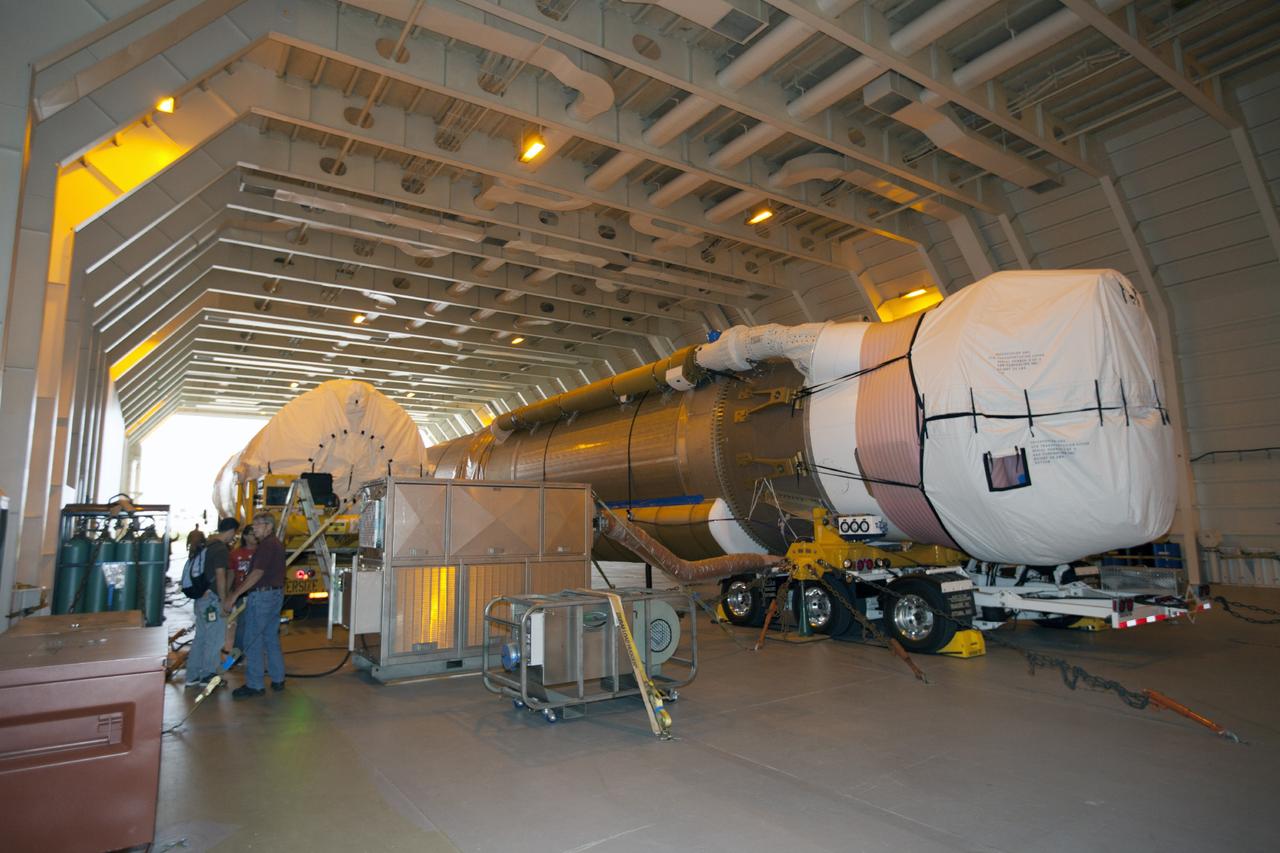
PORT CANAVERAL, Fla. – Following arrival of the United Launch Alliance barge, Delta Mariner, at Port Canaveral, Fla. engineers and technicians prepare to offload the Atlas V launch vehicle that will boost the Tracking and Data Relay Satellite, or TDRS-L, spacecraft into orbit around the Earth. The rocket's first-stage booster and Centaur upper stage will be transported to the hangar at the Atlas Spaceflight Operations Center on Cape Canaveral Air Force Station for checkout in preparation for launch. TDRS-L is the second of three next-generation satellites designed to ensure vital operational continuity for the NASA Space Network. It is scheduled to launch from Cape Canaveral's Space Launch Complex 41 atop an Atlas V rocket in January 2014. The current Tracking and Data Relay Satellite system consists of eight in-orbit satellites distributed to provide near continuous information relay service to missions such as the Hubble Space Telescope and International Space Station. For more information, visit: http://www.nasa.gov/content/tracking-and-data-relay-satellite-tdrs/ Photo credit: NASA/ Kim Shiflett
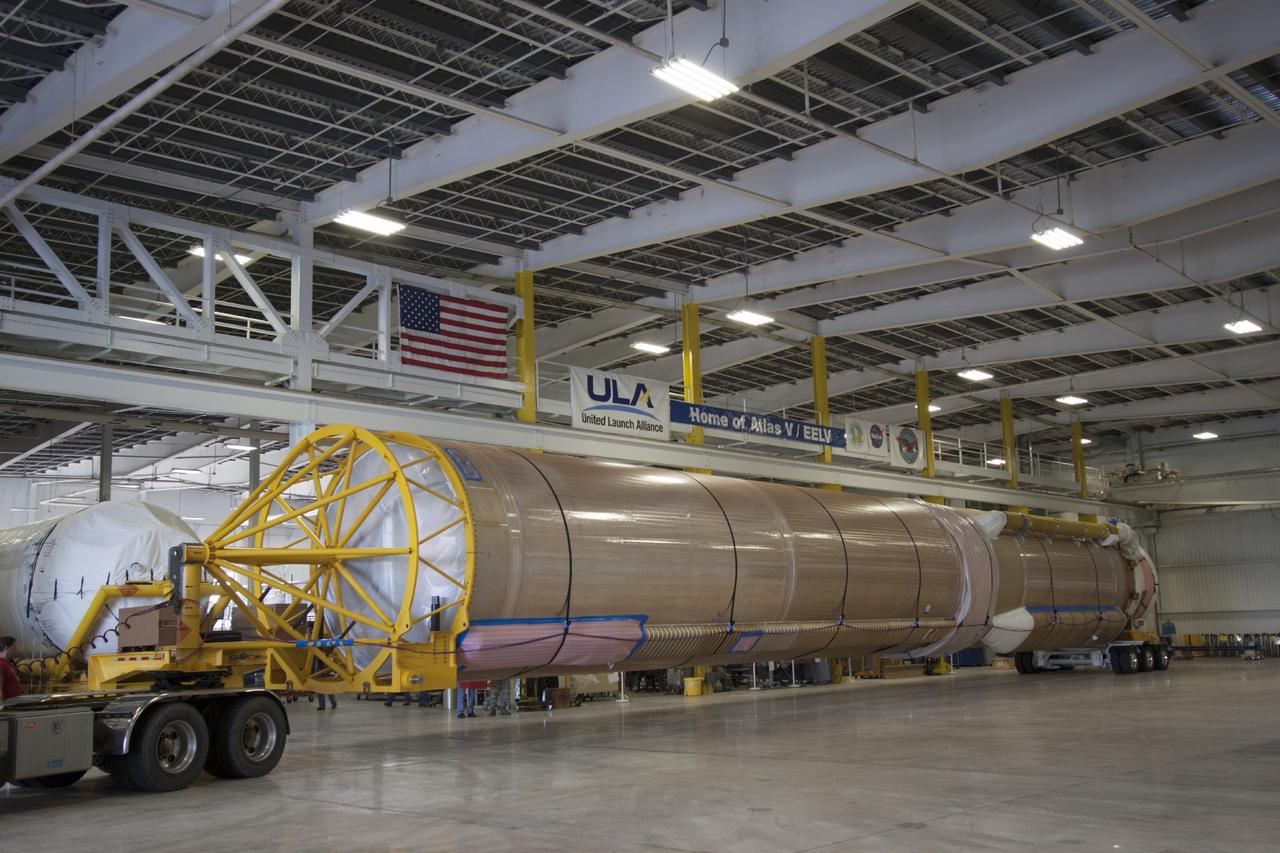
CAPE CANAVERAL, Fla. – The United Launch Alliance Atlas V launch vehicle that will boost the Tracking and Data Relay Satellite, or TDRS-L, spacecraft into orbit arrives at the Atlas Spaceflight Operations Center on Cape Canaveral Air Force Station for checkout in preparation for launch. TDRS-L is the second of three next-generation satellites designed to ensure vital operational continuity for the NASA Space Network. It is scheduled to launch from Cape Canaveral's Space Launch Complex 41 atop an Atlas V rocket in January 2014. The current Tracking and Data Relay Satellite system consists of eight in-orbit satellites distributed to provide near continuous information relay service to missions such as the Hubble Space Telescope and International Space Station. For more information, visit: http://www.nasa.gov/content/tracking-and-data-relay-satellite-tdrs/ Photo credit: NASA/ Jim Grossman
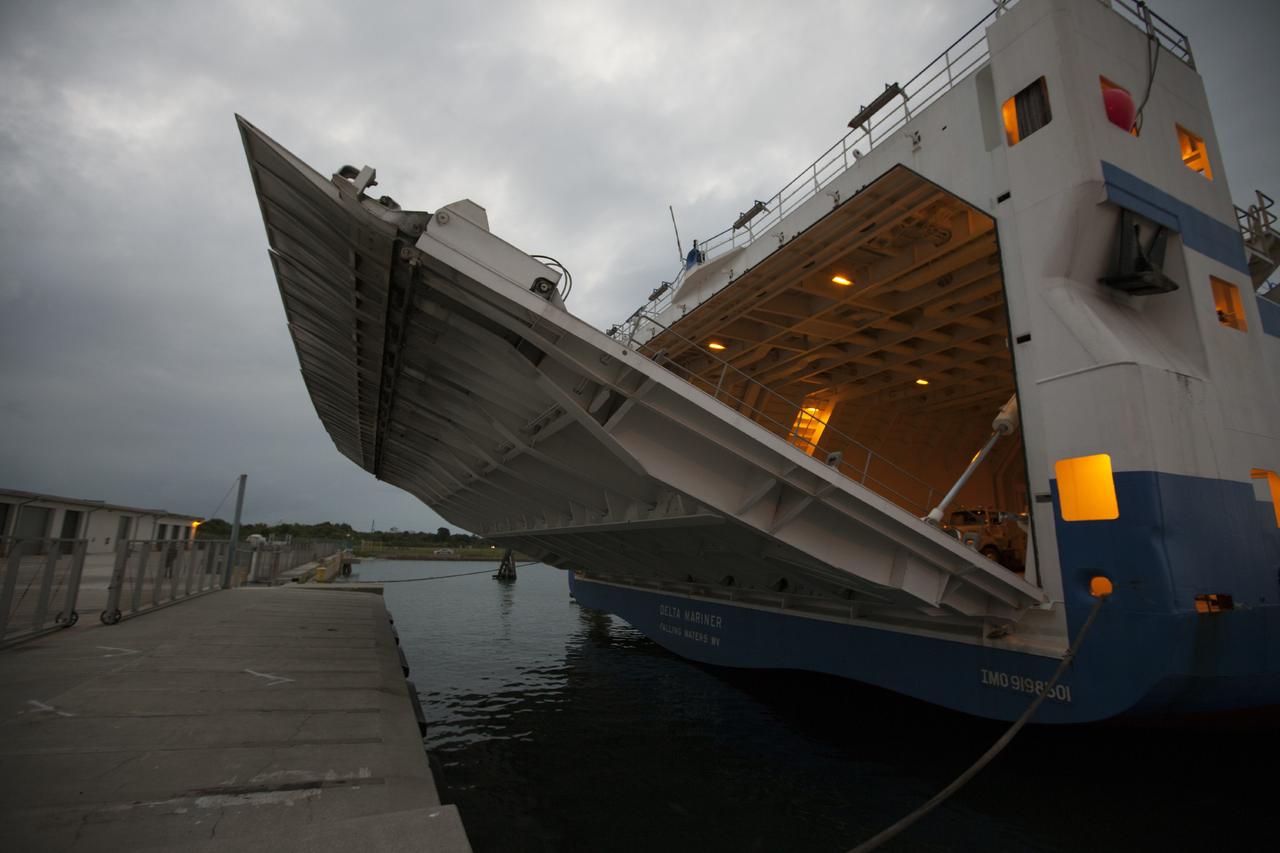
PORT CANAVERAL, Fla. – The United Launch Alliance barge Delta Mariner arrives at Port Canaveral, Fla. delivering the Atlas V launch vehicle that will boost the Tracking and Data Relay Satellite, or TDRS-L, spacecraft into orbit around the Earth. The rocket's first-stage booster and Centaur upper stage will be transported to the hangar at the Atlas Spaceflight Operations Center on Cape Canaveral Air Force Station for checkout in preparation for launch. TDRS-L is the second of three next-generation satellites designed to ensure vital operational continuity for the NASA Space Network. It is scheduled to launch from Cape Canaveral's Space Launch Complex 41 atop an Atlas V rocket in January 2014. The current Tracking and Data Relay Satellite system consists of eight in-orbit satellites distributed to provide near continuous information relay service to missions such as the Hubble Space Telescope and International Space Station. For more information, visit: http://www.nasa.gov/content/tracking-and-data-relay-satellite-tdrs/ Photo credit: NASA/ Kim Shiflett
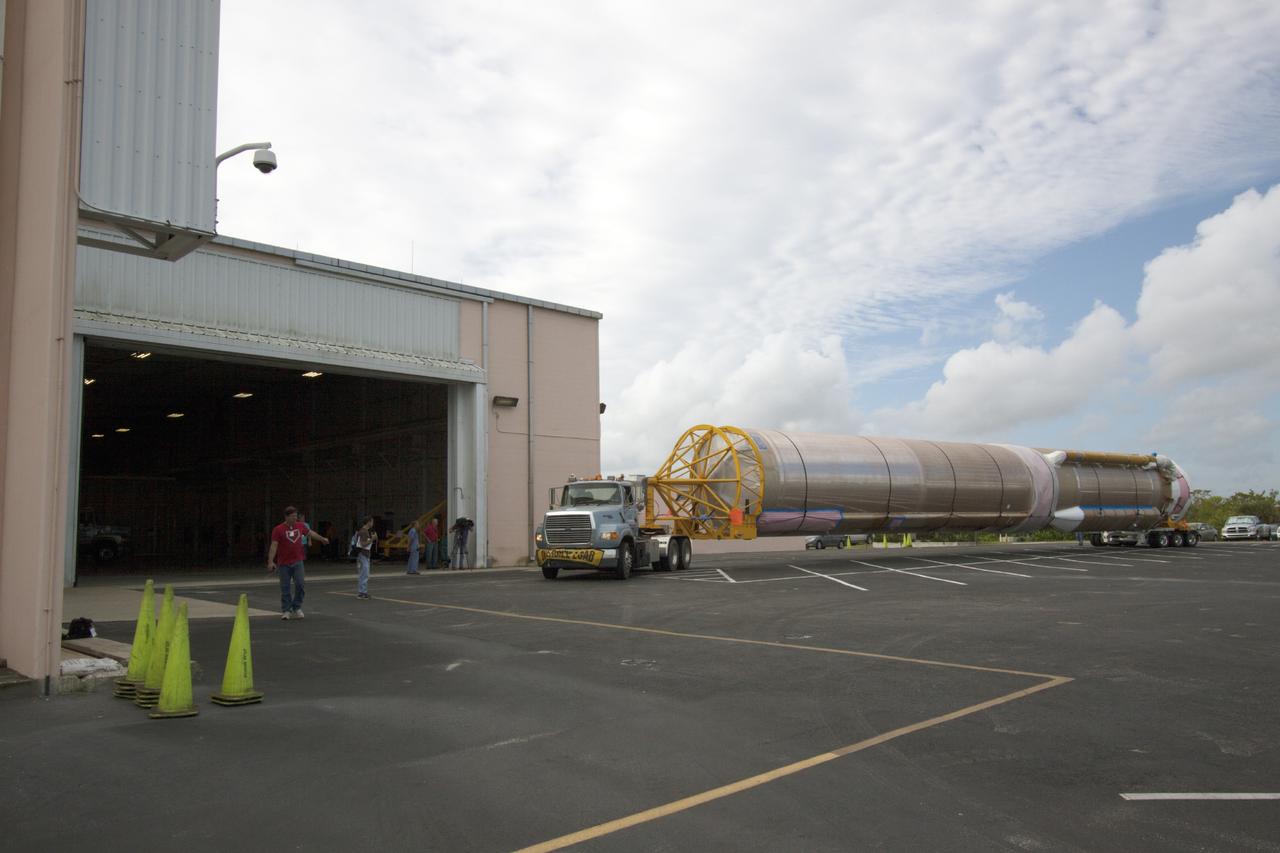
CAPE CANAVERAL, Fla. – The United Launch Alliance Atlas V launch vehicle that will boost the Tracking and Data Relay Satellite, or TDRS-L, spacecraft into orbit arrives at the Atlas Spaceflight Operations Center on Cape Canaveral Air Force Station for checkout in preparation for launch. TDRS-L is the second of three next-generation satellites designed to ensure vital operational continuity for the NASA Space Network. It is scheduled to launch from Cape Canaveral's Space Launch Complex 41 atop an Atlas V rocket in January 2014. The current Tracking and Data Relay Satellite system consists of eight in-orbit satellites distributed to provide near continuous information relay service to missions such as the Hubble Space Telescope and International Space Station. For more information, visit: http://www.nasa.gov/content/tracking-and-data-relay-satellite-tdrs/ Photo credit: NASA/ Jim Grossman
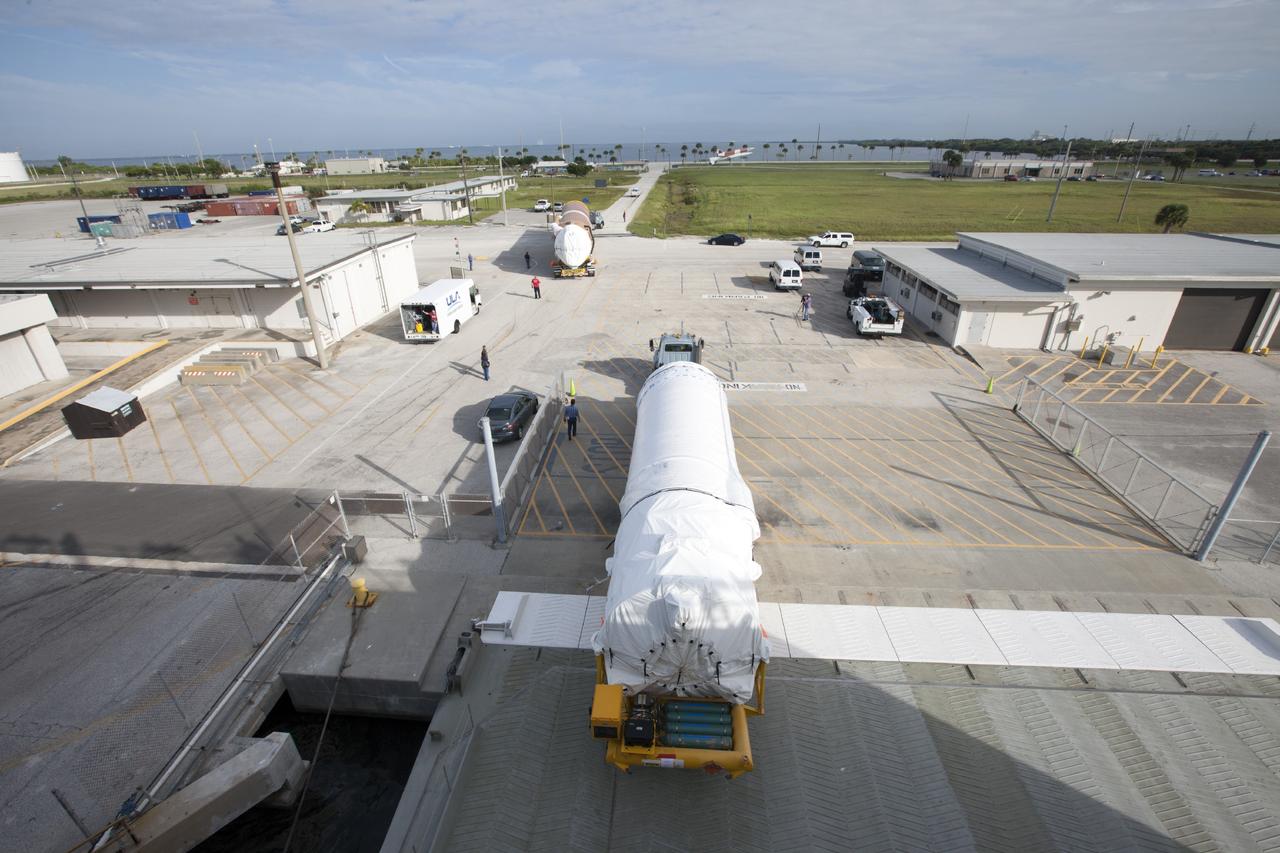
PORT CANAVERAL, Fla. – Following arrival at Port Canaveral, Fla., the United Launch Alliance Centaur upper stage that will boost the Tracking and Data Relay Satellite, or TDRS-L, spacecraft into orbit is being towed off the barge, Delta Mariner. The first and second stages of the launch vehicle will then be transported to Cape Canaveral Air Force Station's Atlas Spaceflight Operations Center for checkout in preparation for launch. TDRS-L is the second of three next-generation satellites designed to ensure vital operational continuity for the NASA Space Network. It is scheduled to launch from Cape Canaveral's Space Launch Complex 41 atop an Atlas V rocket in January 2014. The current Tracking and Data Relay Satellite system consists of eight in-orbit satellites distributed to provide near continuous information relay service to missions such as the Hubble Space Telescope and International Space Station. For more information, visit: http://www.nasa.gov/content/tracking-and-data-relay-satellite-tdrs/ Photo credit: NASA/ Kim Shiflett
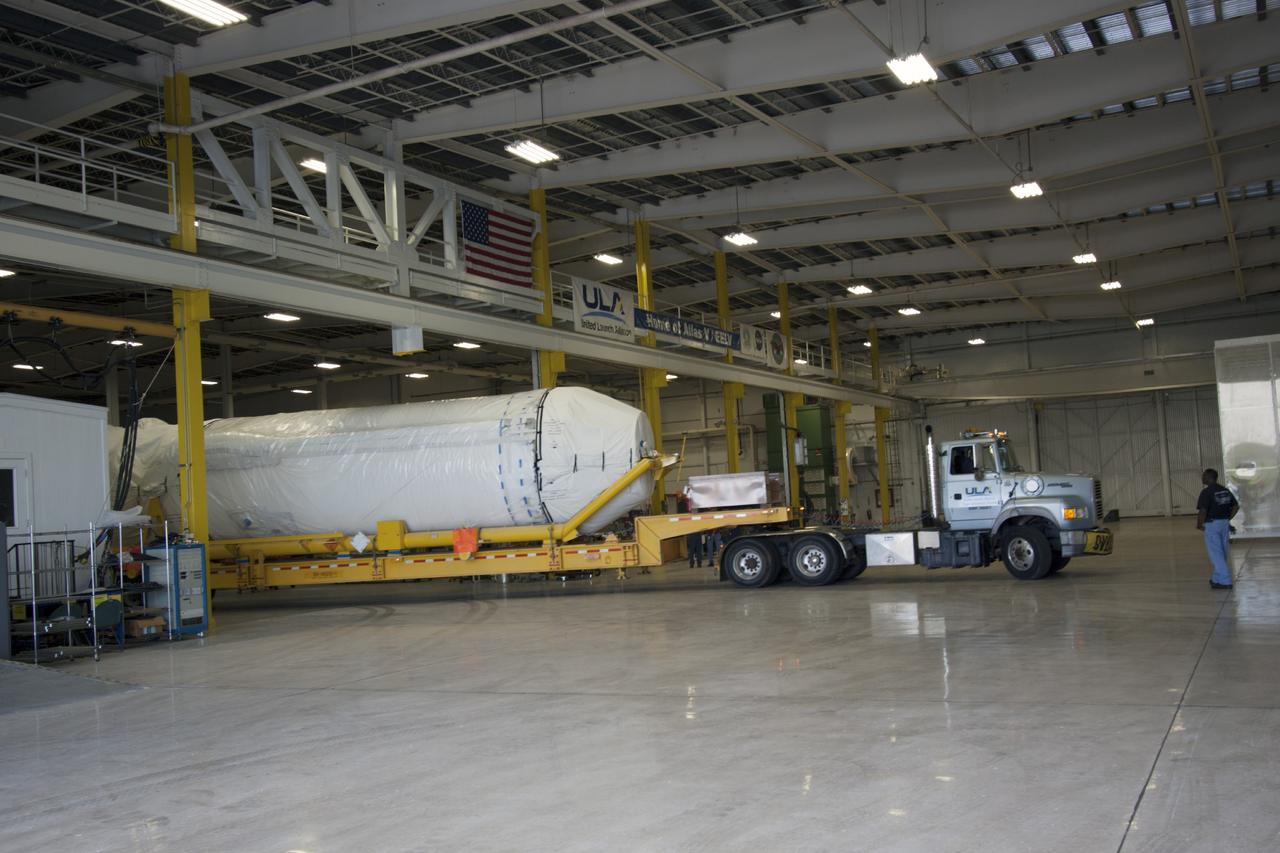
CAPE CANAVERAL, Fla. – The United Launch Alliance Centaur upper stage that will boost the Tracking and Data Relay Satellite, or TDRS-L, spacecraft into orbit arrives at the Atlas Spaceflight Operations Center on Cape Canaveral Air Force Station for checkout in preparation for launch. TDRS-L is the second of three next-generation satellites designed to ensure vital operational continuity for the NASA Space Network. It is scheduled to launch from Cape Canaveral's Space Launch Complex 41 atop an Atlas V rocket in January 2014. The current Tracking and Data Relay Satellite system consists of eight in-orbit satellites distributed to provide near continuous information relay service to missions such as the Hubble Space Telescope and International Space Station. For more information, visit: http://www.nasa.gov/content/tracking-and-data-relay-satellite-tdrs/ Photo credit: NASA/ Jim Grossman
PORT CANAVERAL, Fla. – Following arrival of the United Launch Alliance barge, Delta Mariner, at Port Canaveral, Fla. engineers and technicians prepare to offload the Atlas V launch vehicle that will boost the Tracking and Data Relay Satellite, or TDRS-L, spacecraft into orbit around the Earth. The rocket's first-stage booster and Centaur upper stage will be transported to the hangar at the Atlas Spaceflight Operations Center on Cape Canaveral Air Force Station for checkout in preparation for launch. TDRS-L is the second of three next-generation satellites designed to ensure vital operational continuity for the NASA Space Network. It is scheduled to launch from Cape Canaveral's Space Launch Complex 41 atop an Atlas V rocket in January 2014. The current Tracking and Data Relay Satellite system consists of eight in-orbit satellites distributed to provide near continuous information relay service to missions such as the Hubble Space Telescope and International Space Station. For more information, visit: http://www.nasa.gov/content/tracking-and-data-relay-satellite-tdrs/ Photo credit: NASA/ Kim Shiflett
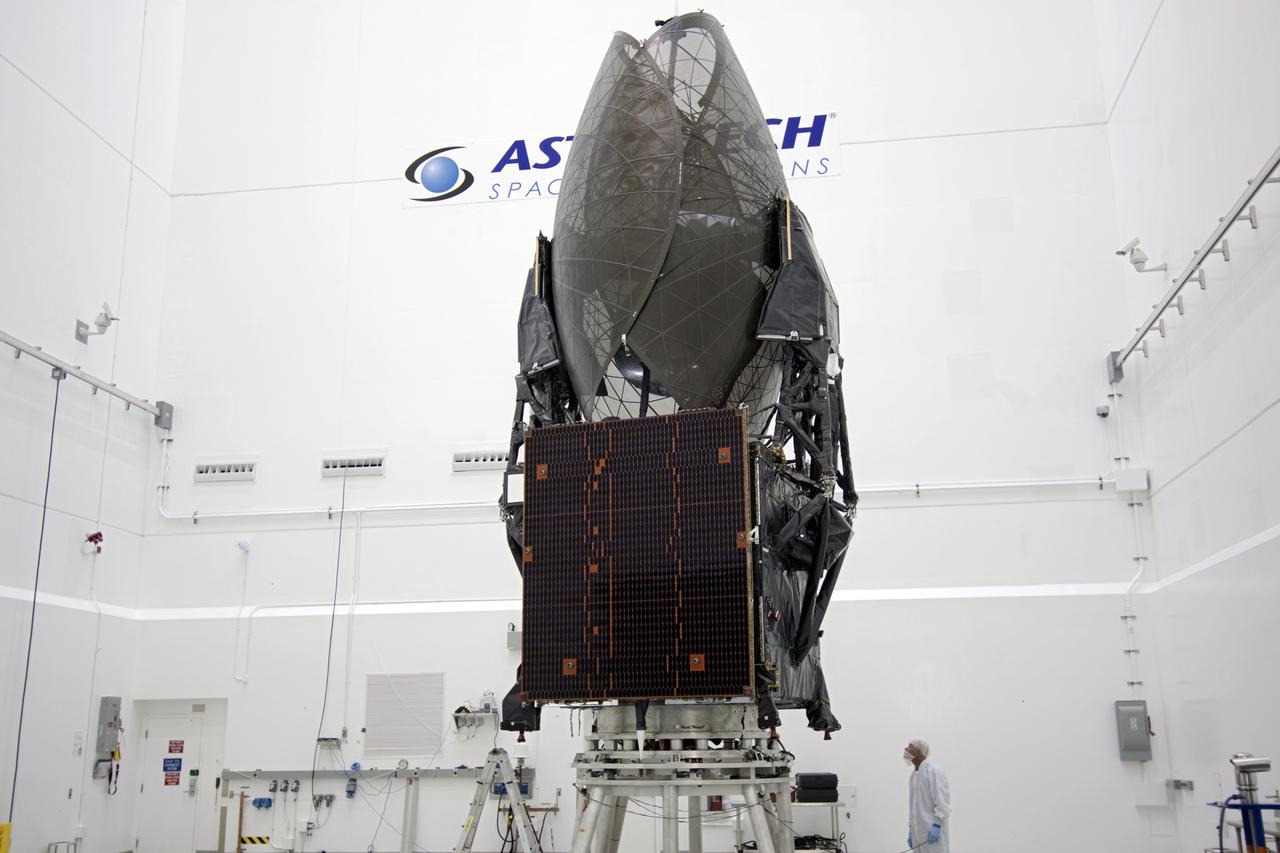
TITUSVILLE, Fla. - In the Astrotech payload processing facility in Titusville, Fla. near NASA’s Kennedy Space Center, a Boeing technician checks out the Tracking and Data Relay Satellite, TDRS-K. Launch of the TDRS-K on the Atlas V rocket is planned for January 29, 2013. The TDRS-K spacecraft is part of the next-generation series in the Tracking and Data Relay Satellite System, a constellation of space-based communication satellites providing tracking, telemetry, command and high-bandwidth data return services. For more information, visit http://www.nasa.gov/mission_pages/tdrs/index.html Photo credit: NASA/Jim Grossmann
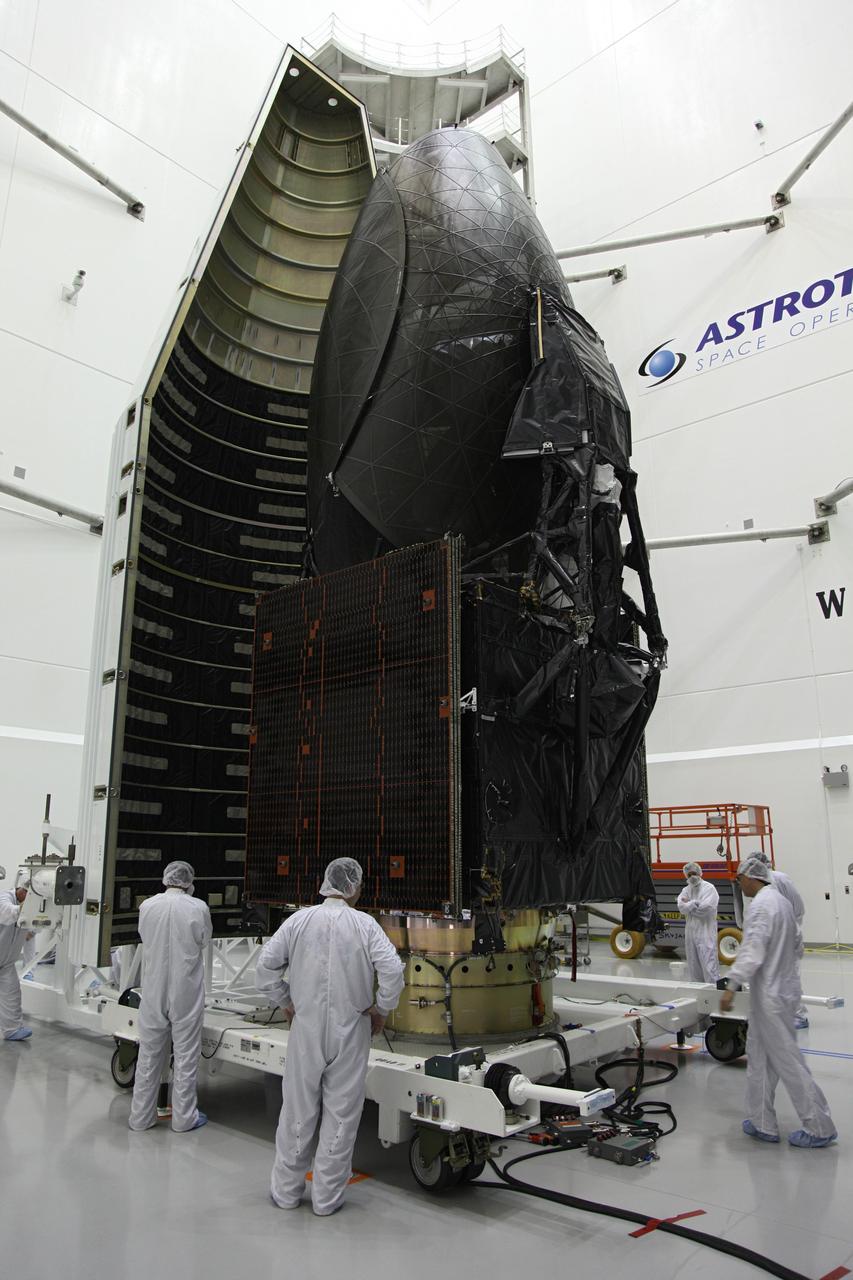
TITUSVILLE, Fla. – Technicians move one half of the payload fairing into place over NASA's Tracking and Data Relay Satellite, TDRS-K, inside the Astrotech payload processing facility in Titusville, Fla., near NASA’s Kennedy Space Center. Launch of the TDRS-K on a United Launch Alliance Atlas V rocket is planned for January 29, 2013. The TDRS-K spacecraft is part of the next-generation series in the Tracking and Data Relay Satellite System, a constellation of space-based communication satellites providing tracking, telemetry, command and high-bandwidth data return services. Photo credit: NASA/Frankie Martin
PORT CANAVERAL, Fla. – A Centaur stage is off loaded from the United Launch Alliance barge Delta Mariner that just arrived at Port Canaveral, Fla. The Centaur will be part of a launch vehicle that will boost the Tracking and Data Relay Satellite-K, or TDRS-K, into Earth orbit atop an Atlas V rocket. The Centaur will be transported to the Atlas Spaceflight Operations Center, or ASOC, at Cape Canaveral Air Force Station to begin processing. The TDRS-K spacecraft is part of the next-generation series in the Tracking and Data Relay Satellite System, a constellation of space-based communication satellites providing tracking, telemetry, command and high-bandwidth data return services. For more information, visit http://tdrs.gsfc.nasa.gov/ Photo credit: NASA/Charisse Nahser
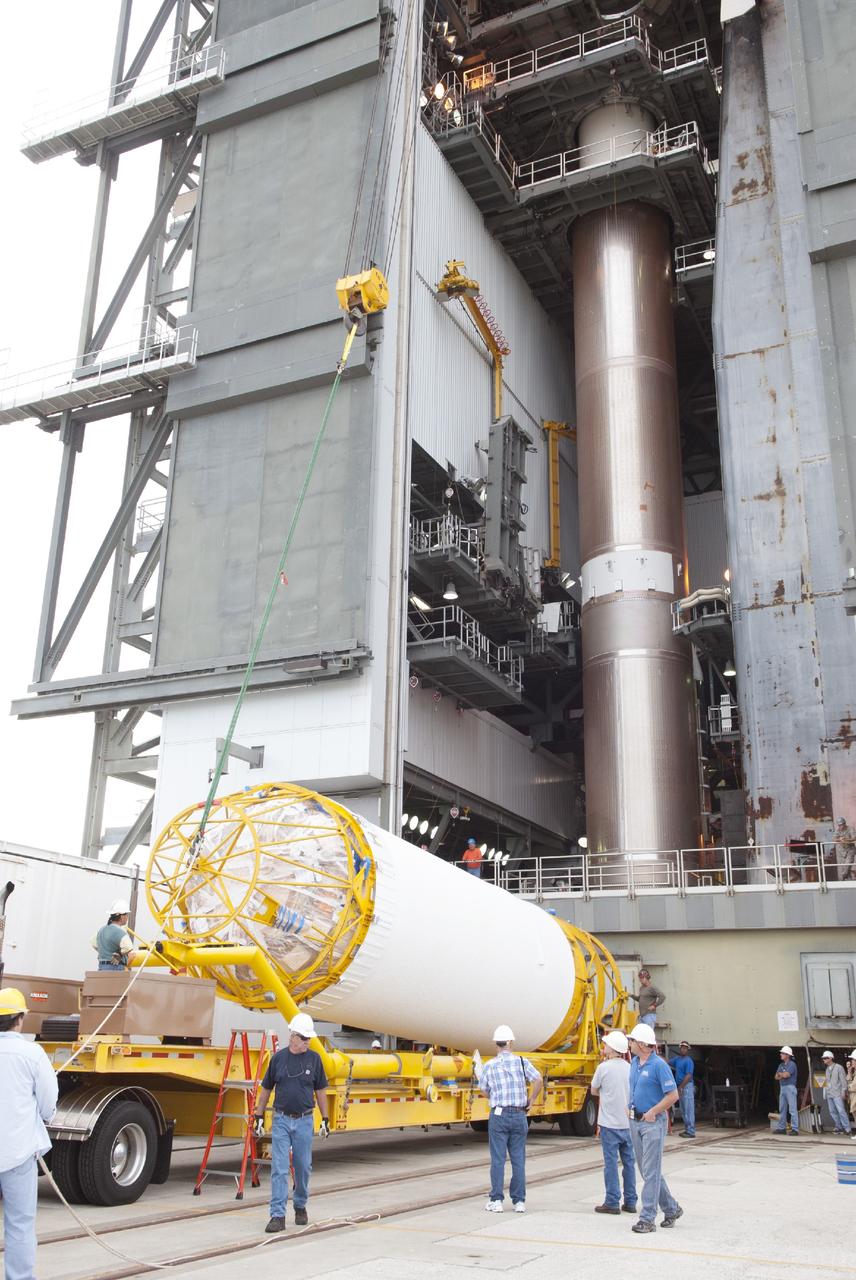
CAPE CANAVERAL, Fla. – At Cape Canaveral Air Force Station's Launch Complex 41, engineers and technicians support lifting a Centaur second stage for stacking atop a United Launch Alliance Atlas V rocket that will be used to boost the Tracking and Data Relay Satellite, or TDRS-L, spacecraft to orbit. TDRS-L is the second of three next-generation satellites designed to ensure vital operational continuity for the NASA Space Network. It is scheduled to launch from Cape Canaveral's Space Launch Complex 41 atop an Atlas V rocket in January 2014. The current Tracking and Data Relay Satellite system consists of eight in-orbit satellites distributed to provide near continuous information relay service to missions such as the Hubble Space Telescope and International Space Station. For more information, visit: http://www.nasa.gov/content/tracking-and-data-relay-satellite-tdrs/ Photo credit: NASA/Charisse Nahser
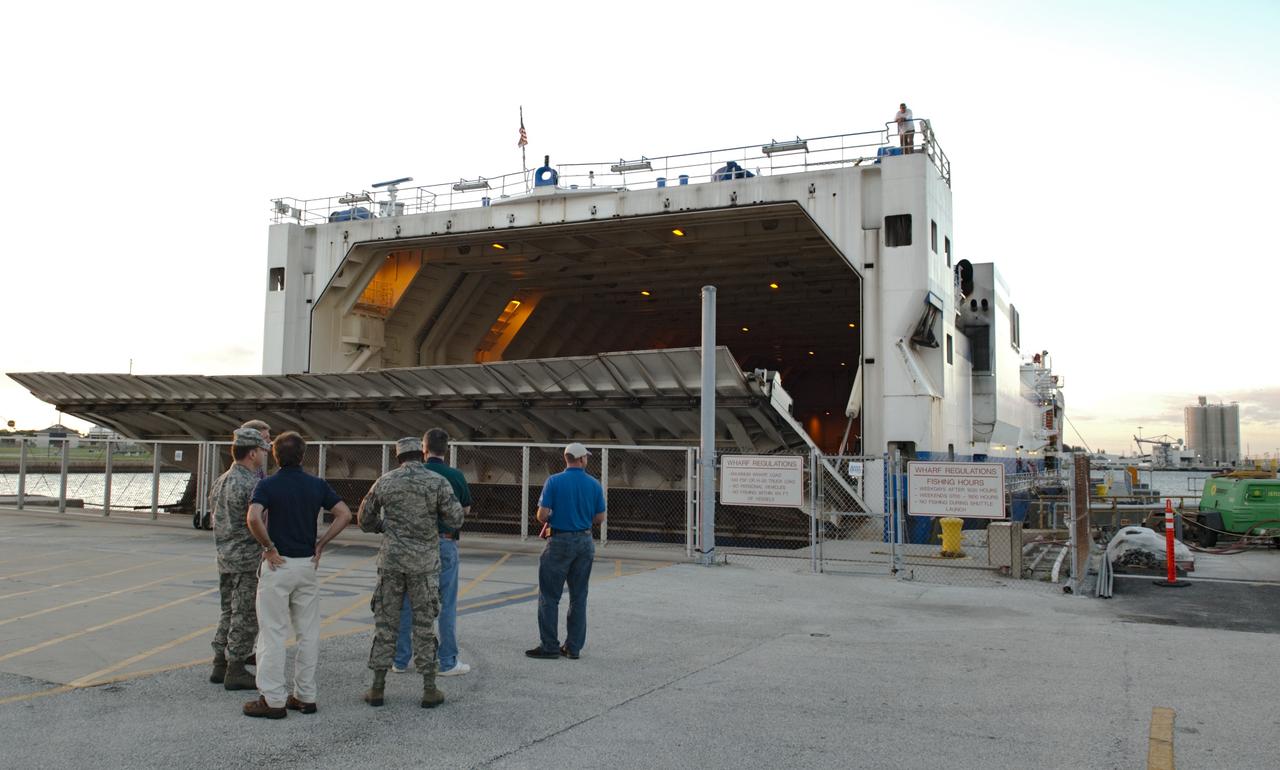
PORT CANAVERAL, Fla. – The United Launch Alliance barge Delta Mariner arrives at Port Canaveral, Fla. delivering the Centaur stage of the launch vehicle that will boost the Tracking and Data Relay Satellite-K, or TDRS-K, into Earth orbit atop an Atlas V rocket. After off-loading, the Centaur will be transported to the Atlas Spaceflight Operations Center, ASOC, at Cape Canaveral Air Force Station to begin processing. The TDRS-K spacecraft is part of the next-generation series in the Tracking and Data Relay Satellite System, a constellation of space-based communication satellites providing tracking, telemetry, command and high-bandwidth data return services. For more information, visit http://tdrs.gsfc.nasa.gov/ Photo credit: NASA/Charisse Nahser
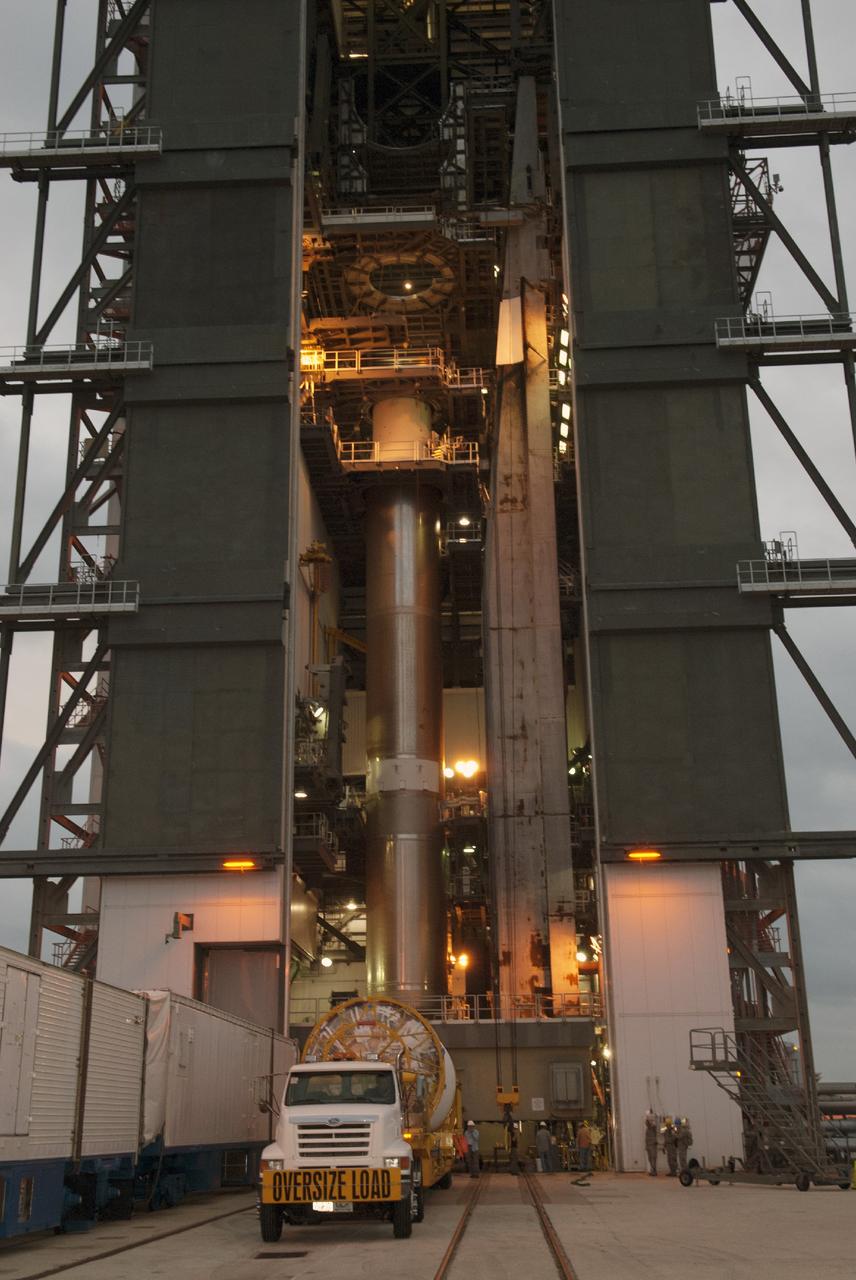
CAPE CANAVERAL, Fla. – The United Launch Alliance Centaur second stage that will help boost the Tracking and Data Relay Satellite, or TDRS-L, spacecraft into orbit arrives at Cape Canaveral Air Force Station's Launch Complex 41. It will be lifted and mounted atop the Atlas V first stage already in position inside the Vertical Integration Facility. TDRS-L is the second of three next-generation satellites designed to ensure vital operational continuity for the NASA Space Network. It is scheduled to launch from Cape Canaveral's Space Launch Complex 41 atop an Atlas V rocket in January 2014. The current Tracking and Data Relay Satellite system consists of eight in-orbit satellites distributed to provide near continuous information relay service to missions such as the Hubble Space Telescope and International Space Station. For more information, visit: http://www.nasa.gov/content/tracking-and-data-relay-satellite-tdrs/ Photo credit: NASA/Charisse Nahser
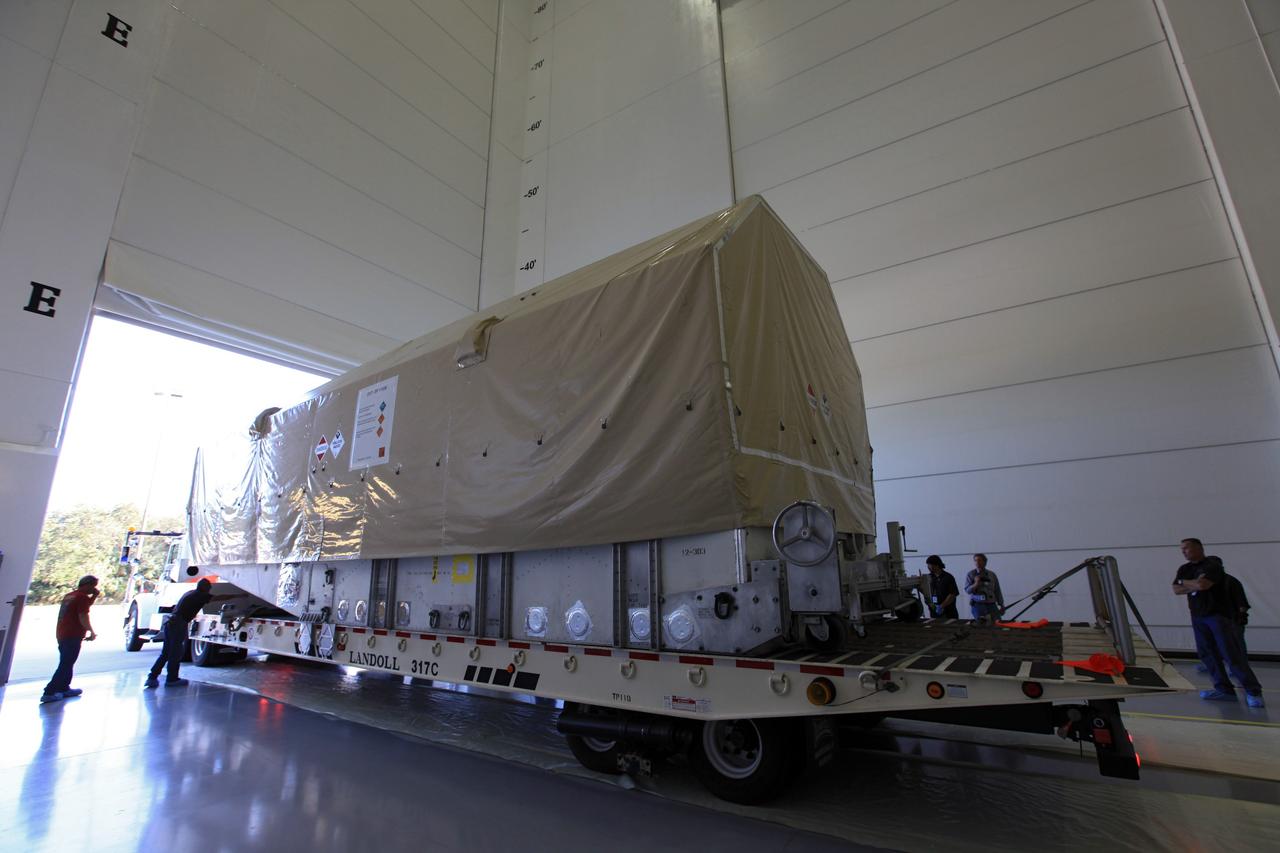
TITUSVILLE, Fla. - A truck transporting the Tracking and Data Relay Satellite, TDRS-K, arrives at the Astrotech payload processing facility in Titusville, Fla. near NASA’s Kennedy Space Center. Launch of the TDRS-K on the Atlas V rocket is planned for January 29, 2013. The TDRS-K spacecraft is part of the next-generation series in the Tracking and Data Relay Satellite System, a constellation of space-based communication satellites providing tracking, telemetry, command and high-bandwidth data return services. For more information, visit http://www.nasa.gov/mission_pages/tdrs/index.html Photo credit: NASA/Kim Shiflett
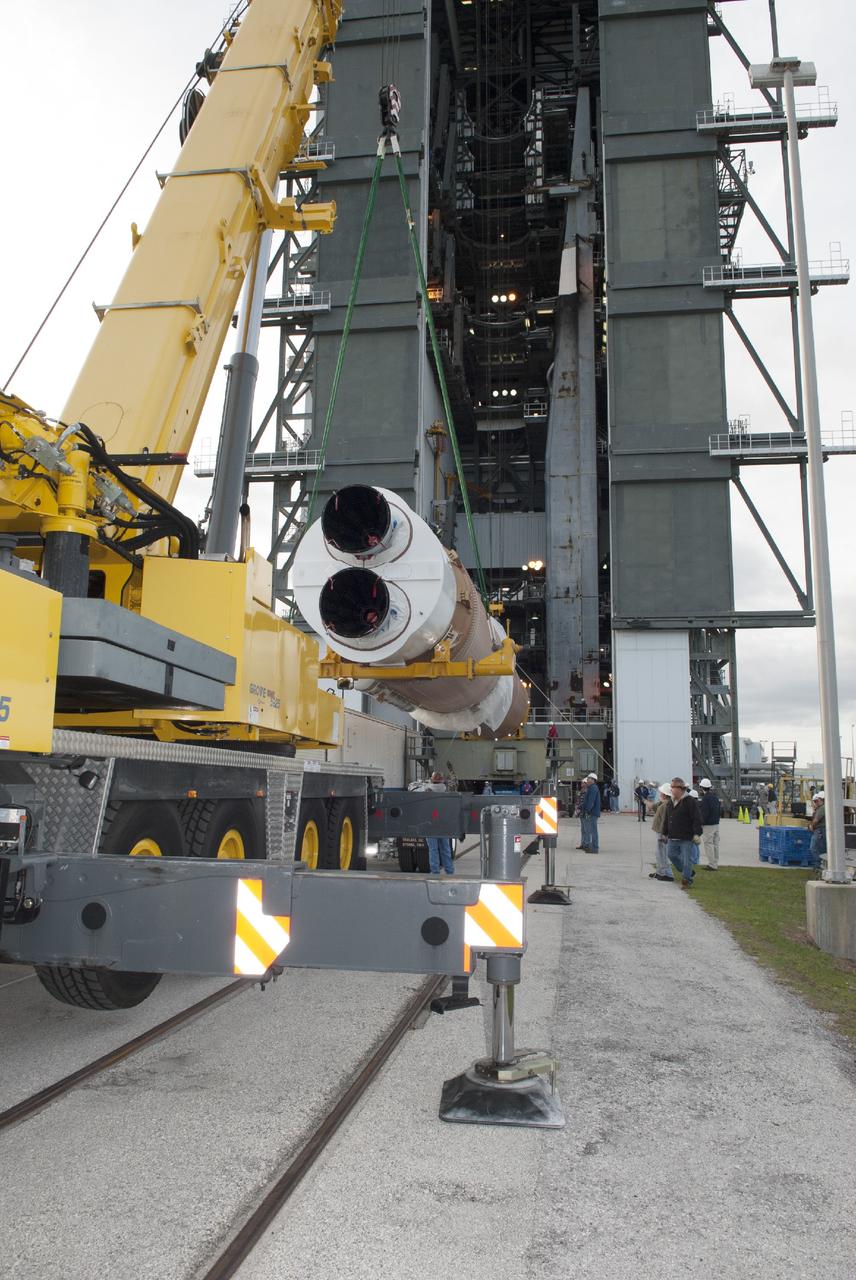
CAPE CANAVERAL, Fla. – At Cape Canaveral Air Force Station, the first stage of the United Launch Alliance Atlas V rocket is lifted for stacking in the Vertical Integration Facility at Launch Complex 41. The vehicle will be used to boost the Tracking and Data Relay Satellite, or TDRS-L, spacecraft to orbit. TDRS-L is the second of three next-generation satellites designed to ensure vital operational continuity for the NASA Space Network. It is scheduled to launch from Cape Canaveral's Space Launch Complex 41 atop an Atlas V rocket in January 2014. The current Tracking and Data Relay Satellite system consists of eight in-orbit satellites distributed to provide near continuous information relay service to missions such as the Hubble Space Telescope and International Space Station. For more information, visit: http://www.nasa.gov/content/tracking-and-data-relay-satellite-tdrs/ Photo credit: NASA/Charisse Nahser
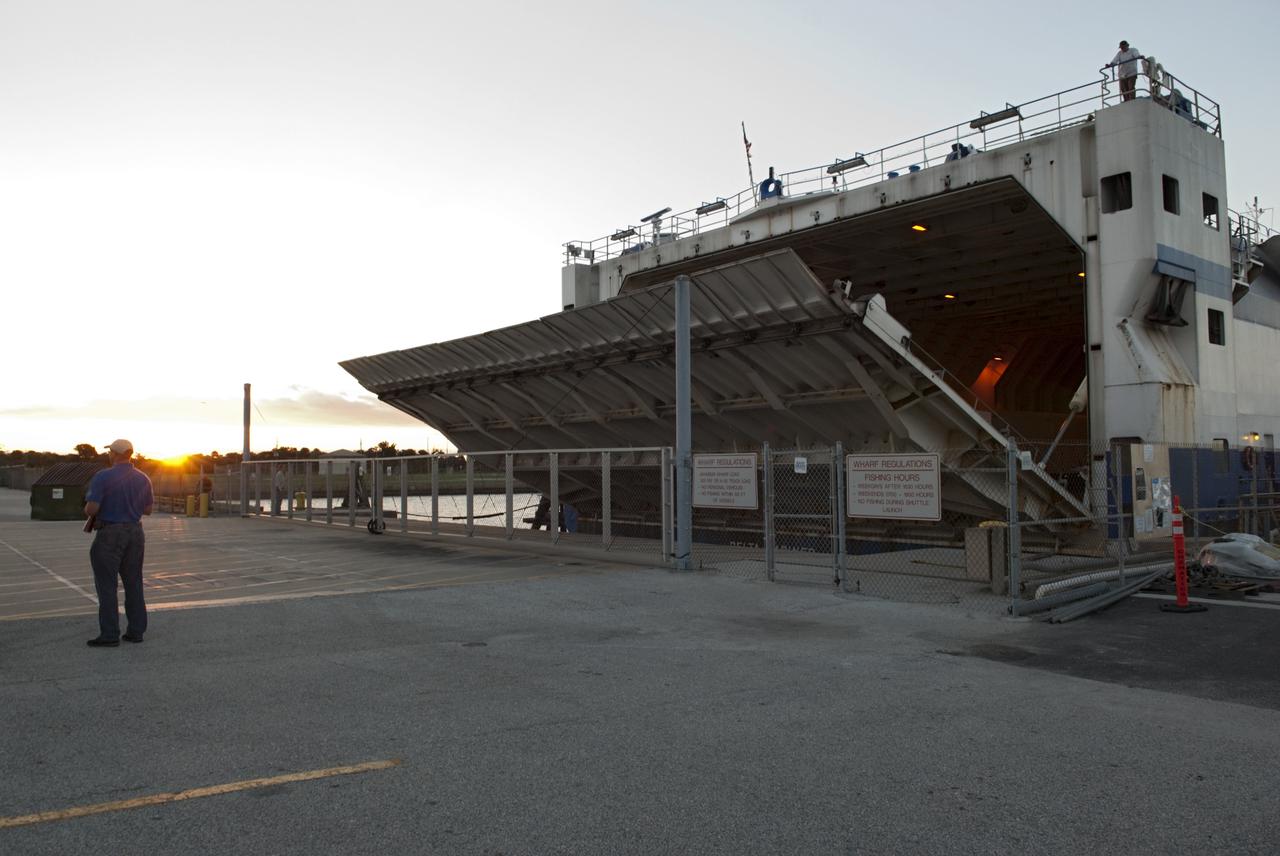
PORT CANAVERAL, Fla. – The United Launch Alliance barge Delta Mariner arrives at Port Canaveral, Fla. delivering the Centaur stage of the launch vehicle that will boost the Tracking and Data Relay Satellite-K, or TDRS-K, into Earth orbit atop an Atlas V rocket. After off-loading, the Centaur will be transported to the Atlas Spaceflight Operations Center, or ASOC, at Cape Canaveral Air Force Station to begin processing. The TDRS-K spacecraft is part of the next-generation series in the Tracking and Data Relay Satellite System, a constellation of space-based communication satellites providing tracking, telemetry, command and high-bandwidth data return services. For more information, visit http://tdrs.gsfc.nasa.gov/ Photo credit: NASA/Charisse Nahser
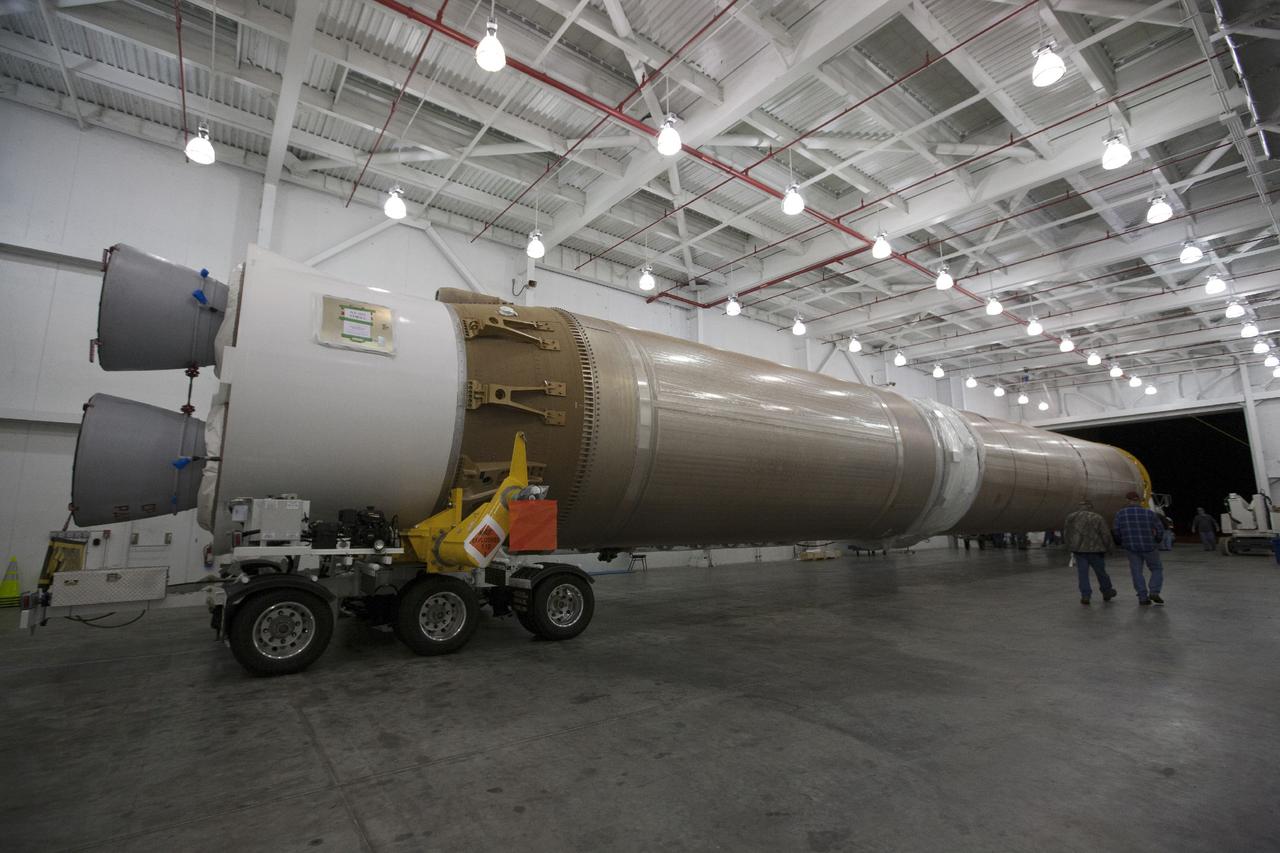
CAPE CANAVERAL, Fla. – The United Launch Alliance Atlas V first stage booster that will boost the Tracking and Data Relay Satellite, or TDRS-L, spacecraft into orbit is being transported from the hangar at the Atlas Spaceflight Operations Center on Cape Canaveral Air Force Station to Launch Complex 41. TDRS-L is the second of three next-generation satellites designed to ensure vital operational continuity for the NASA Space Network. It is scheduled to launch from Cape Canaveral's Space Launch Complex 41 atop an Atlas V rocket in January 2014. The current Tracking and Data Relay Satellite system consists of eight in-orbit satellites distributed to provide near continuous information relay service to missions such as the Hubble Space Telescope and International Space Station. For more information, visit: http://www.nasa.gov/content/tracking-and-data-relay-satellite-tdrs/ Photo credit: NASA/Kim Shiflett
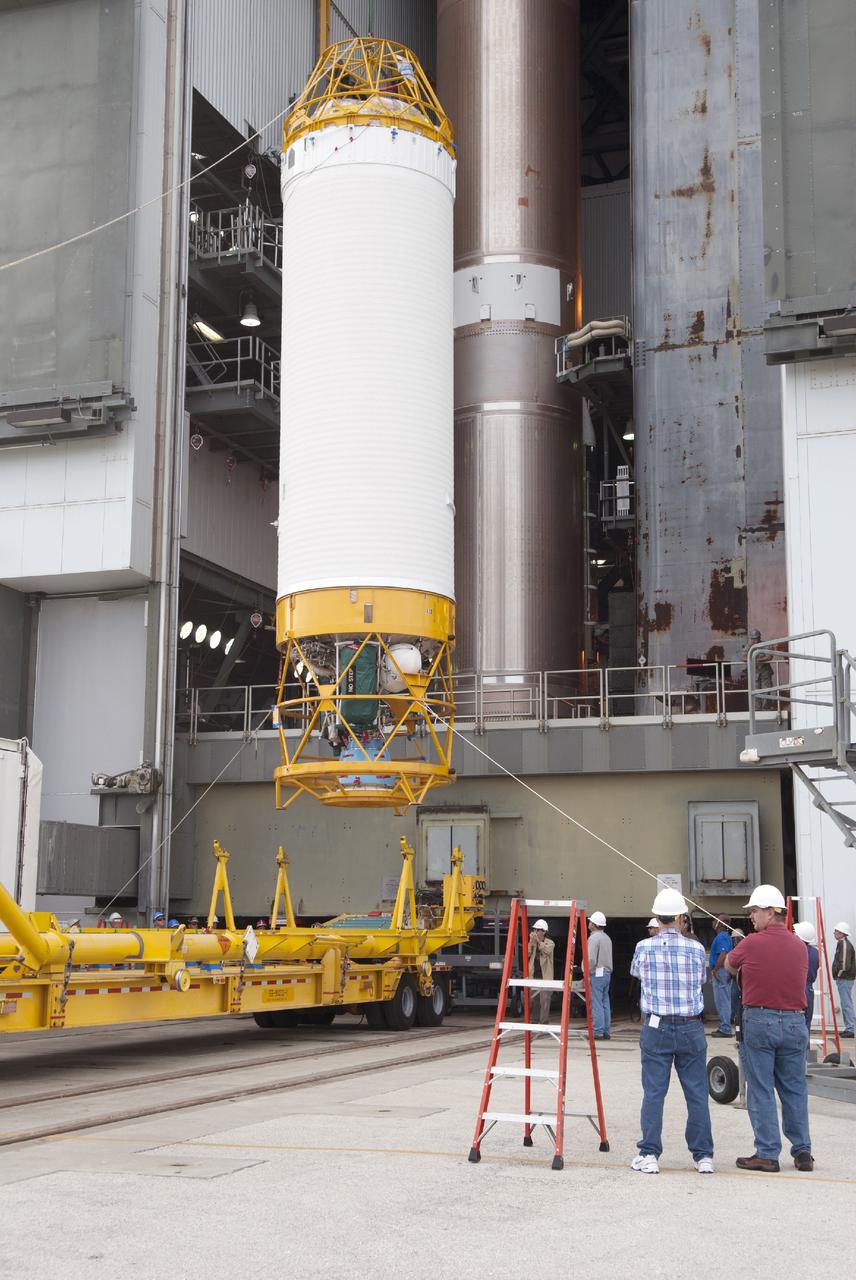
CAPE CANAVERAL, Fla. – At Cape Canaveral Air Force Station's Launch Complex 41, engineers and technicians support lifting a Centaur second stage for stacking atop a United Launch Alliance Atlas V rocket that will be used to boost the Tracking and Data Relay Satellite, or TDRS-L, spacecraft to orbit. TDRS-L is the second of three next-generation satellites designed to ensure vital operational continuity for the NASA Space Network. It is scheduled to launch from Cape Canaveral's Space Launch Complex 41 atop an Atlas V rocket in January 2014. The current Tracking and Data Relay Satellite system consists of eight in-orbit satellites distributed to provide near continuous information relay service to missions such as the Hubble Space Telescope and International Space Station. For more information, visit: http://www.nasa.gov/content/tracking-and-data-relay-satellite-tdrs/ Photo credit: NASA/Charisse Nahser
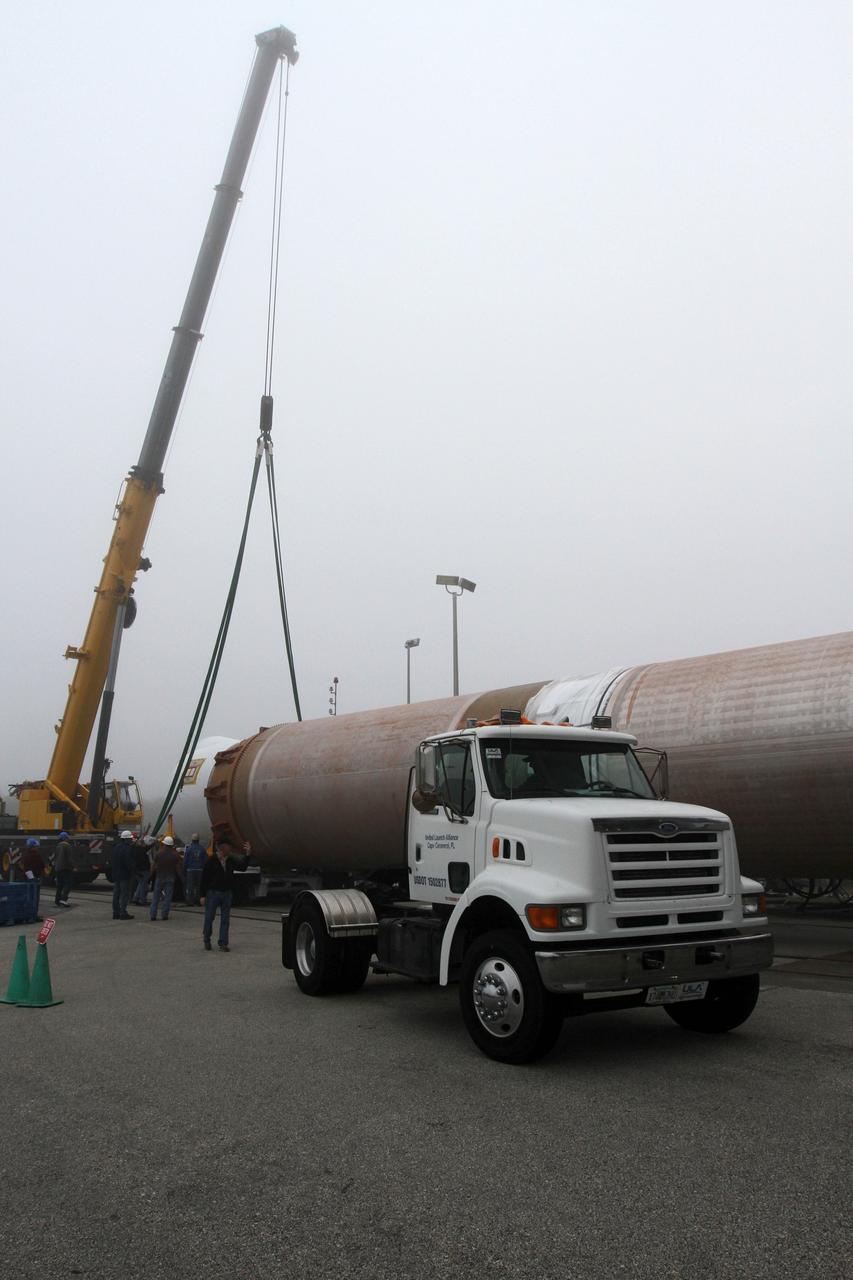
CAPE CANAVERAL, Fla. -- In the morning fog at Cape Canaveral Air Force Station's Space Launch Complex 41 in Florida, preparations are underway to erect the first stage of the Atlas V rocket that will carry the Tracking and Data Relay Satellite, TDRS-K, into orbit. Launch of the TDRS-K on the Atlas V rocket is planned for January 29, 2013. The TDRS-K spacecraft is part of the next-generation series in the Tracking and Data Relay Satellite System, a constellation of space-based communication satellites providing tracking, telemetry, command and high-bandwidth data return services. For more information, visit http://www.nasa.gov/mission_pages/tdrs/index.html Photo credit: NASA/ Ben Smegelsky
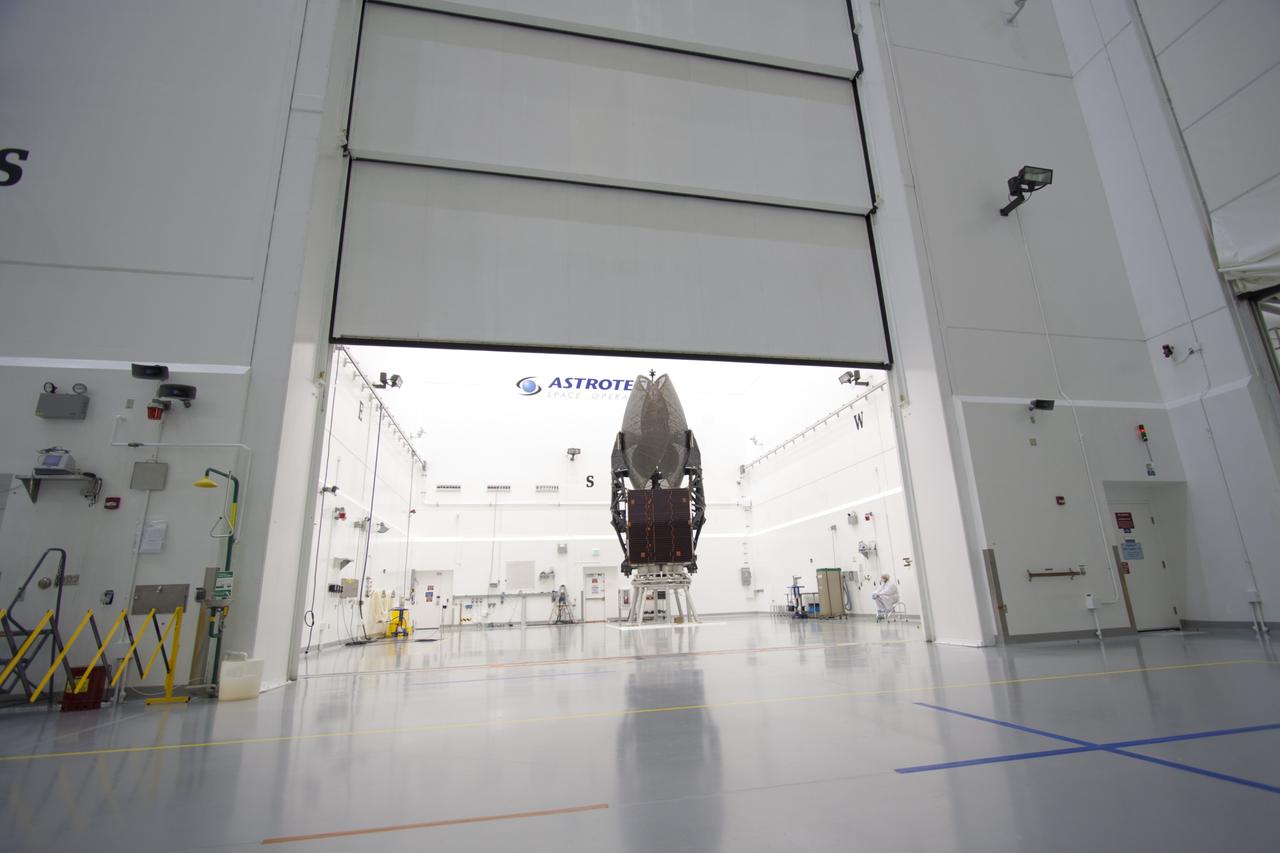
TITUSVILLE, Fla. - Inside the Astrotech payload processing facility in Titusville, Fla. near NASA’s Kennedy Space Center, the Tracking and Data Relay Satellite, TDRS-K, is being checked out prior to being encapsulated in the nose faring. Launch of the TDRS-K on the Atlas V rocket is planned for January 29, 2013. The TDRS-K spacecraft is part of the next-generation series in the Tracking and Data Relay Satellite System, a constellation of space-based communication satellites providing tracking, telemetry, command and high-bandwidth data return services. For more information, visit http://www.nasa.gov/mission_pages/tdrs/index.html Photo credit: NASA/Jim Grossmann
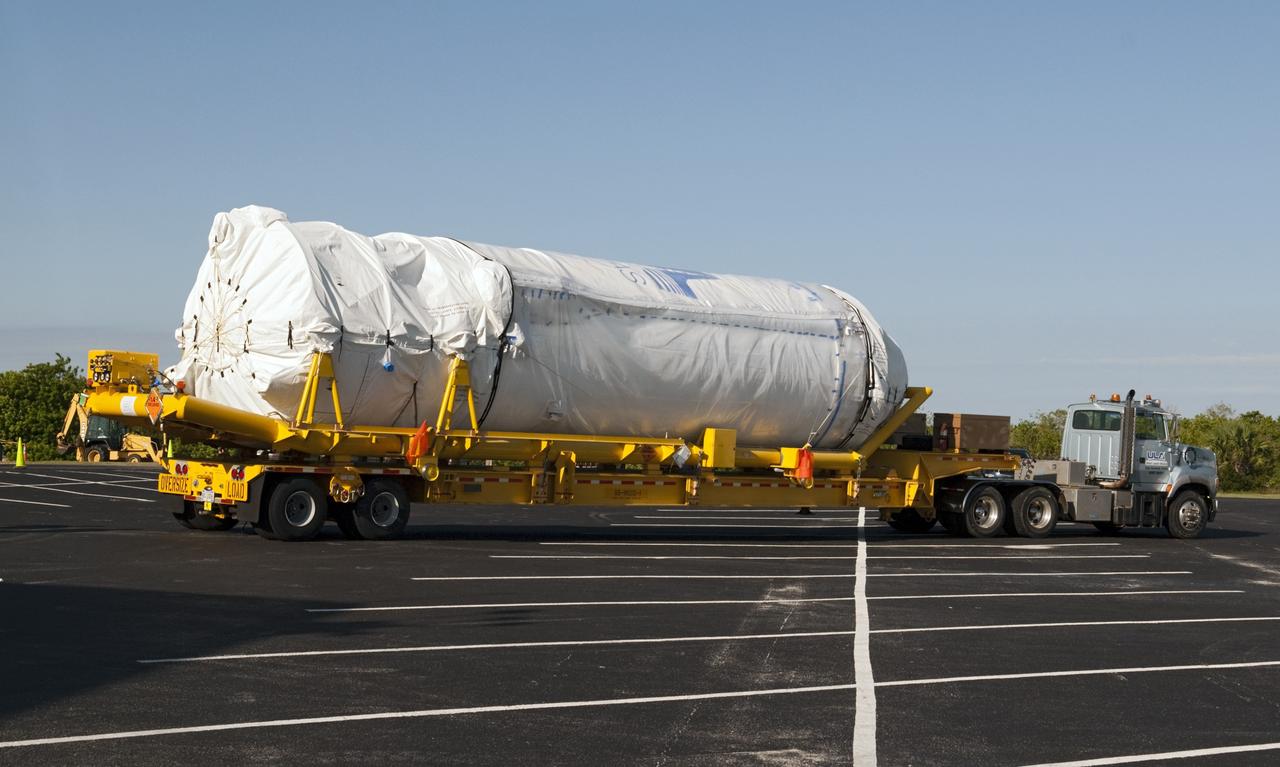
CAPE CANAVERAL, Fla. – A Centaur stage arrives the Atlas Spaceflight Operations Center, or ASOC, at Cape Canaveral Air Force Station to begin processing. The Centaur will be part of a launch vehicle that will boost the Tracking and Data Relay Satellite-K, or TDRS-K, into Earth orbit atop an Atlas V rocket. Lift off is scheduled for 11:57 p.m. on Dec. 13, 2012 from Space Launch Complex 41 at Cape Canaveral. The TDRS-K spacecraft is part of the next-generation series in the Tracking and Data Relay Satellite System, a constellation of space-based communication satellites providing tracking, telemetry, command and high-bandwidth data return services. For more information, visit http://tdrs.gsfc.nasa.gov/ Photo credit: NASA/Charisse Nahser
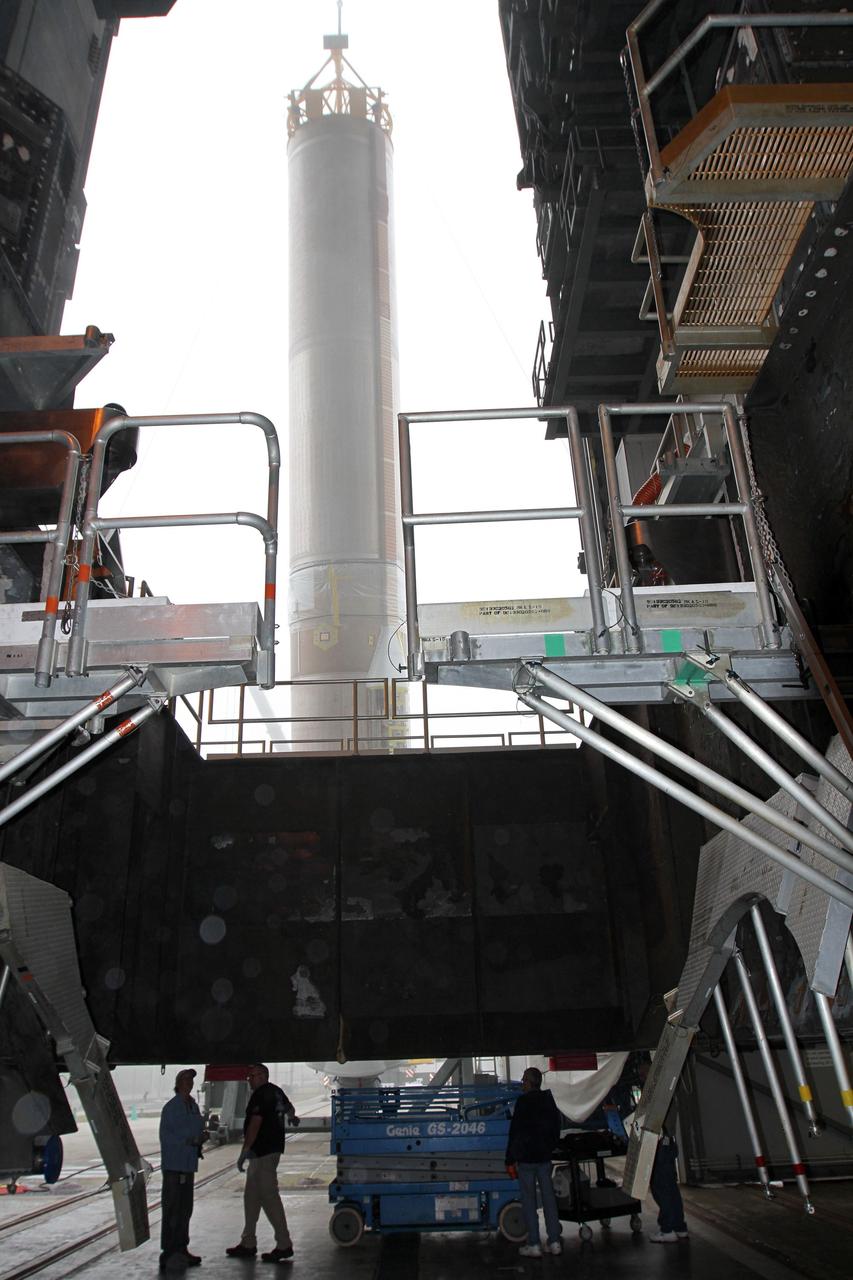
CAPE CANAVERAL, Fla. -- In the morning fog at Cape Canaveral Air Force Station's Space Launch Complex 41 in Florida, United Launch Alliance technicians support operations to erect the first stage of the Atlas V rocket that will carry the Tracking and Data Relay Satellite, TDRS-K, into orbit. Launch of the TDRS-K on the Atlas V rocket is planned for January 29, 2013. The TDRS-K spacecraft is part of the next-generation series in the Tracking and Data Relay Satellite System, a constellation of space-based communication satellites providing tracking, telemetry, command and high-bandwidth data return services. For more information, visit http://www.nasa.gov/mission_pages/tdrs/index.html Photo credit: NASA/ Ben Smegelsky
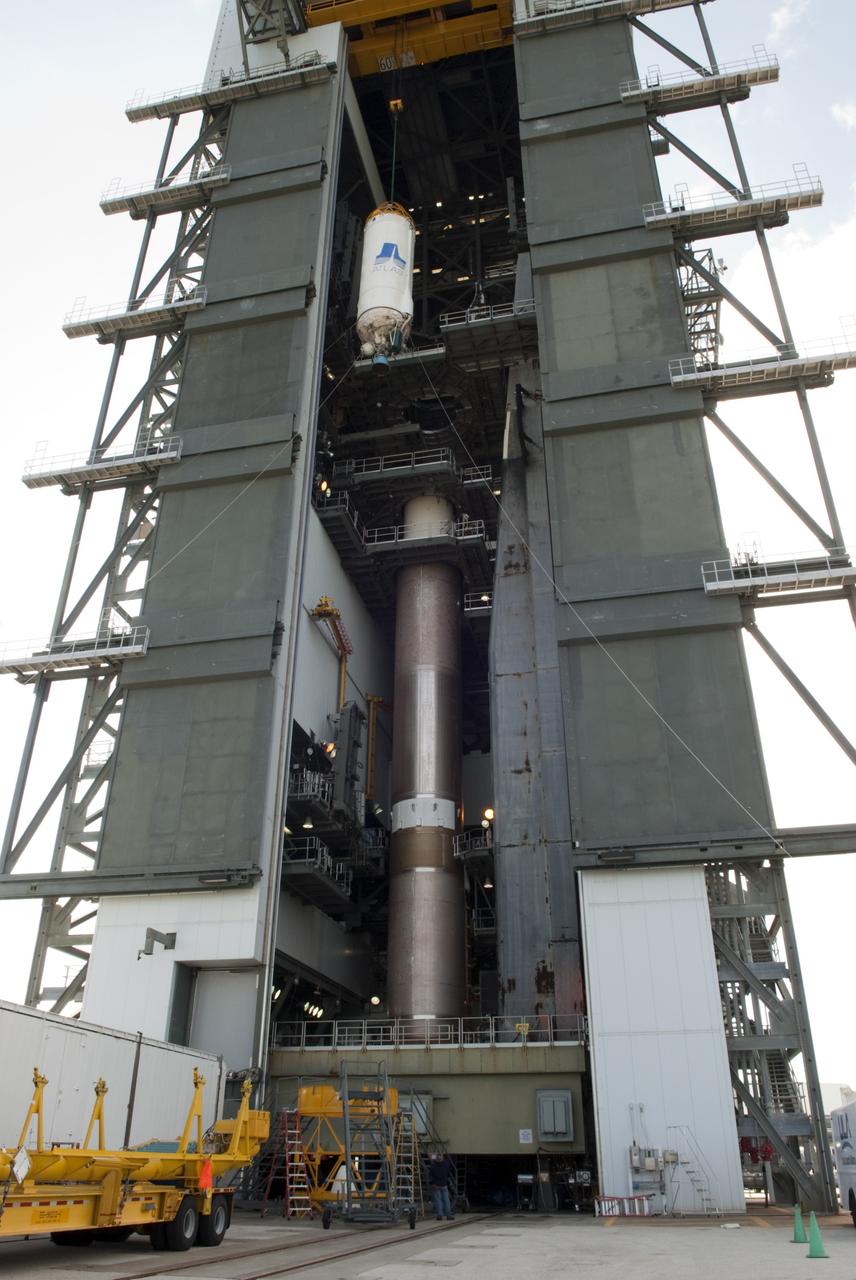
CAPE CANAVERAL, Fla. -- At Cape Canaveral Air Force Station's Space Launch Complex 41 in Florida, operations are underway to lift the Centaur stage for mating to the Atlas V rocket that will carry the Tracking and Data Relay Satellite, TDRS-K, into orbit. Launch of the TDRS-K on the Atlas V rocket is planned for January 29, 2013. The TDRS-K spacecraft is part of the next-generation series in the Tracking and Data Relay Satellite System, a constellation of space-based communication satellites providing tracking, telemetry, command and high-bandwidth data return services. For more information, visit http://www.nasa.gov/mission_pages/tdrs/index.html Photo credit: NASA/Charisse Nahser
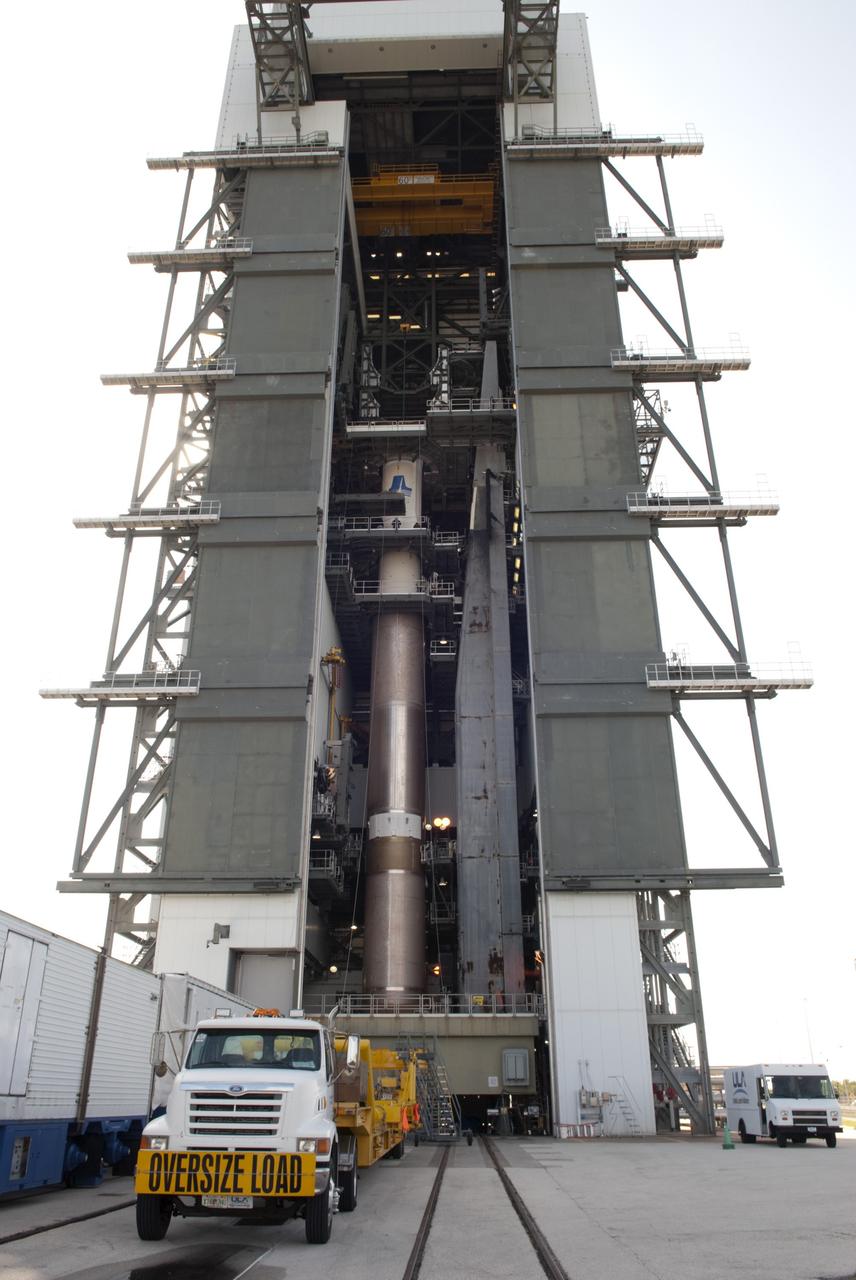
CAPE CANAVERAL, Fla. -- At Cape Canaveral Air Force Station's Space Launch Complex 41 in Florida, the Centaur stage has been mated to the Atlas V rocket that will carry the Tracking and Data Relay Satellite, TDRS-K, into orbit. Launch of the TDRS-K on the Atlas V rocket is planned for January 29, 2013. The TDRS-K spacecraft is part of the next-generation series in the Tracking and Data Relay Satellite System, a constellation of space-based communication satellites providing tracking, telemetry, command and high-bandwidth data return services. For more information, visit http://www.nasa.gov/mission_pages/tdrs/index.html Photo credit: NASA/Charisse Nahser

CAPE CANAVERAL, Fla. -- At Cape Canaveral Air Force Station's Space Launch Complex 41 in Florida, preparations are underway to mate the Centaur stage to the Atlas V rocket that will carry the Tracking and Data Relay Satellite, TDRS-K, into orbit. Launch of the TDRS-K on the Atlas V rocket is planned for January 29, 2013. The TDRS-K spacecraft is part of the next-generation series in the Tracking and Data Relay Satellite System, a constellation of space-based communication satellites providing tracking, telemetry, command and high-bandwidth data return services. For more information, visit http://www.nasa.gov/mission_pages/tdrs/index.html Photo credit: NASA/Charisse Nahser
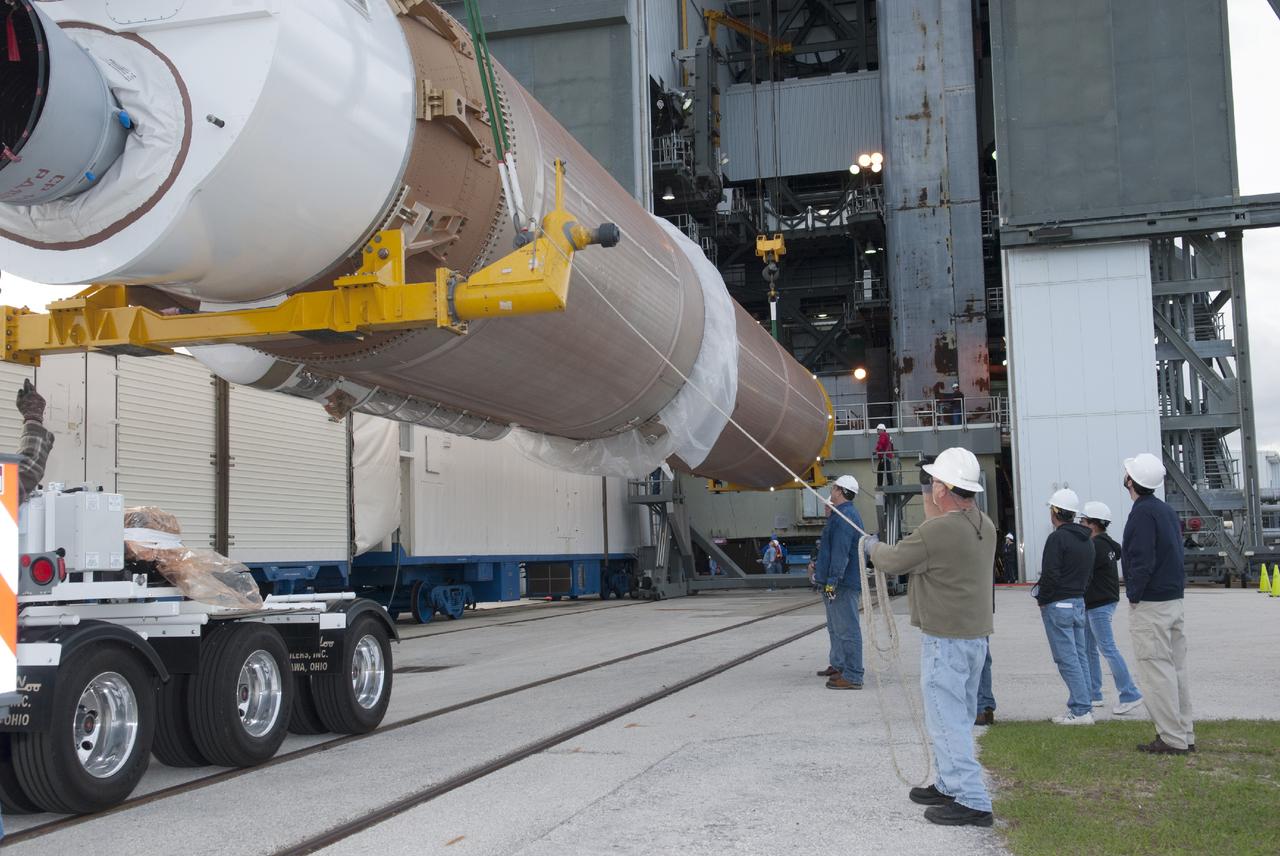
CAPE CANAVERAL, Fla. – At Cape Canaveral Air Force Station, engineers and technicians support lifting the first stage of the United Launch Alliance Atlas V rocket during stacking operations in the Vertical Integration Facility at Launch Complex 41. The vehicle will be used to boost the Tracking and Data Relay Satellite, or TDRS-L, spacecraft to orbit. TDRS-L is the second of three next-generation satellites designed to ensure vital operational continuity for the NASA Space Network. It is scheduled to launch from Cape Canaveral's Space Launch Complex 41 atop an Atlas V rocket in January 2014. The current Tracking and Data Relay Satellite system consists of eight in-orbit satellites distributed to provide near continuous information relay service to missions such as the Hubble Space Telescope and International Space Station. For more information, visit: http://www.nasa.gov/content/tracking-and-data-relay-satellite-tdrs/ Photo credit: NASA/Charisse Nahser
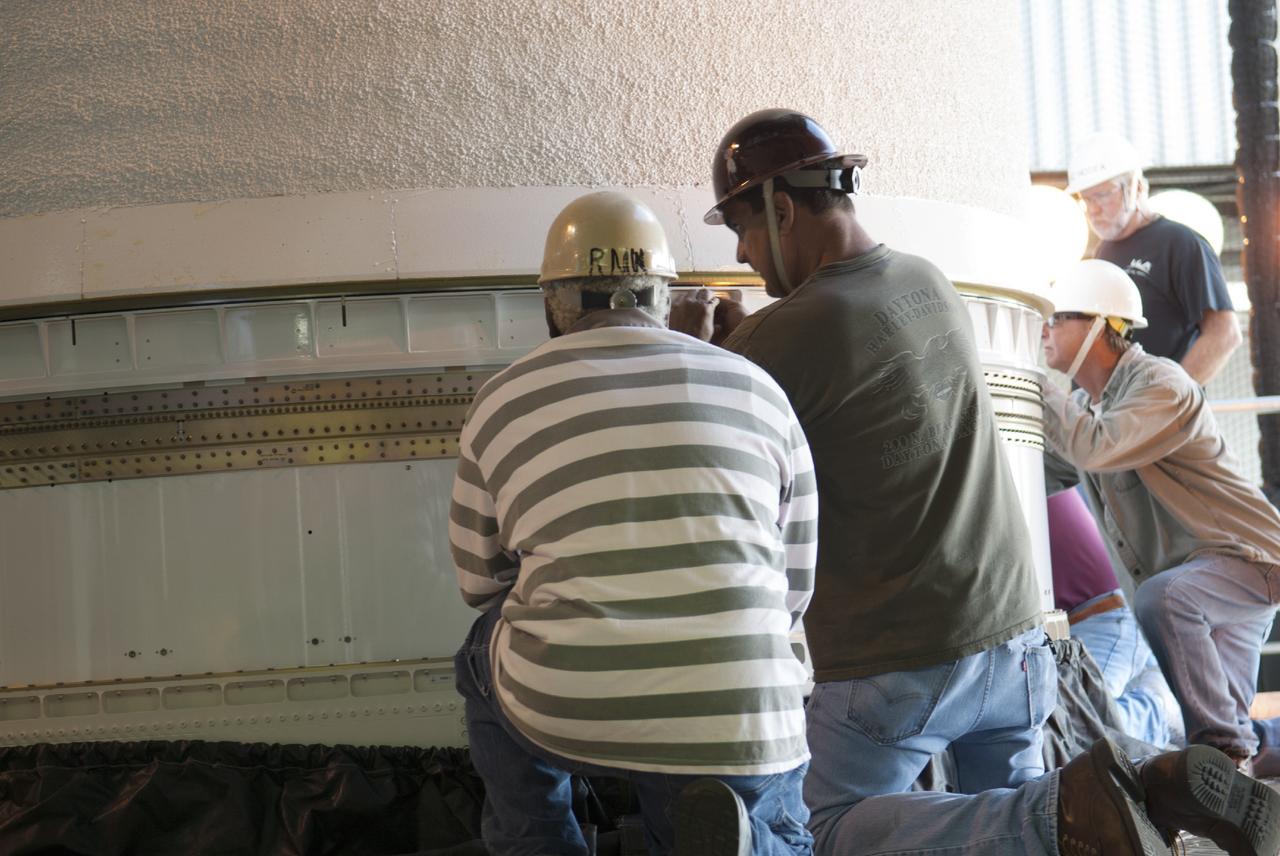
CAPE CANAVERAL, Fla. – At Cape Canaveral Air Force Station's Launch Complex 41, engineers and technicians inspect a Centaur second stage that was just stacked atop a United Launch Alliance Atlas V rocket that will be used to boost the Tracking and Data Relay Satellite, or TDRS-L, spacecraft to orbit. TDRS-L is the second of three next-generation satellites designed to ensure vital operational continuity for the NASA Space Network. It is scheduled to launch from Cape Canaveral's Space Launch Complex 41 atop an Atlas V rocket in January 2014. The current Tracking and Data Relay Satellite system consists of eight in-orbit satellites distributed to provide near continuous information relay service to missions such as the Hubble Space Telescope and International Space Station. For more information, visit: http://www.nasa.gov/content/tracking-and-data-relay-satellite-tdrs/ Photo credit: NASA/Charisse Nahser
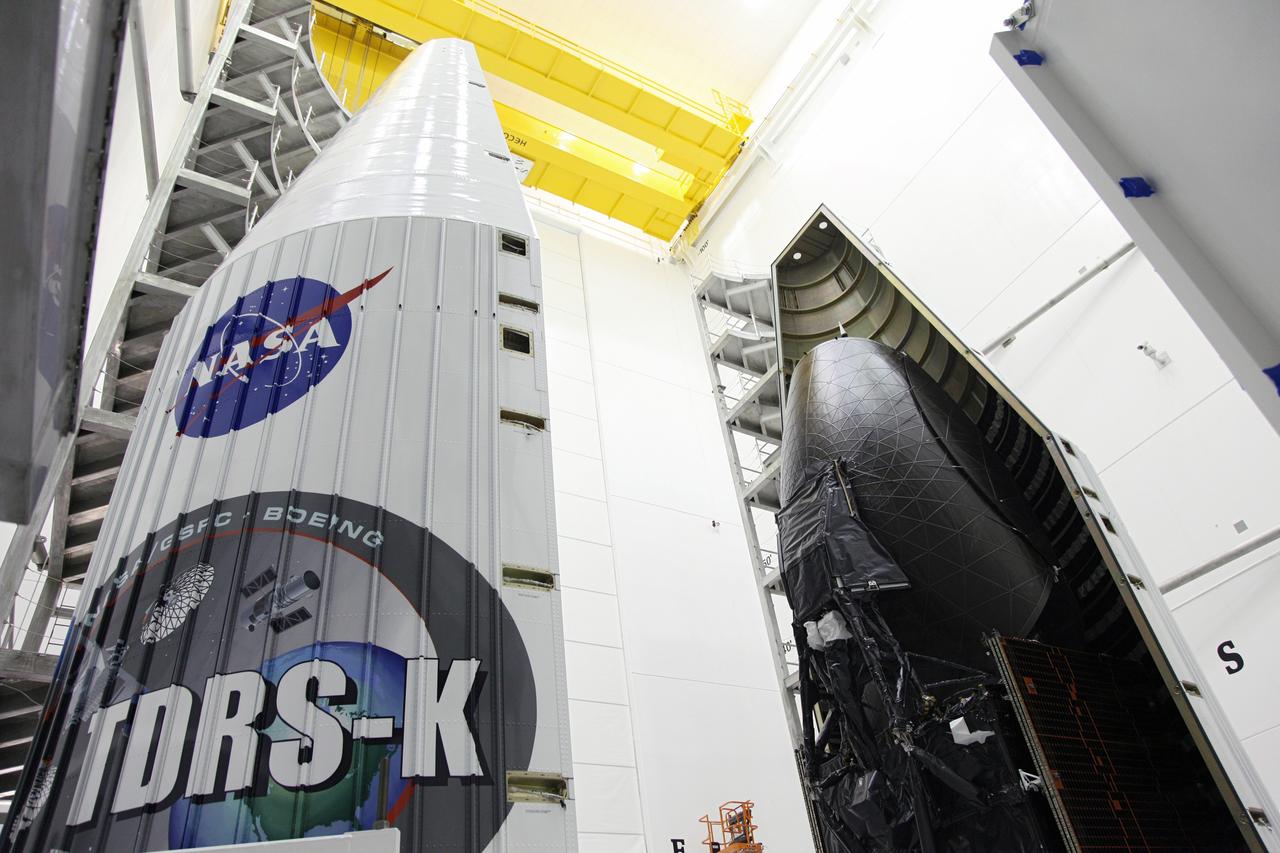
TITUSVILLE, Fla. – Technicians move one half of the payload fairing into place over NASA's Tracking and Data Relay Satellite, TDRS-K, inside the Astrotech payload processing facility in Titusville, Fla., near NASA’s Kennedy Space Center. Launch of the TDRS-K on a United Launch Alliance Atlas V rocket is planned for January 29, 2013. The TDRS-K spacecraft is part of the next-generation series in the Tracking and Data Relay Satellite System, a constellation of space-based communication satellites providing tracking, telemetry, command and high-bandwidth data return services. Photo credit: NASA/Frankie Martin
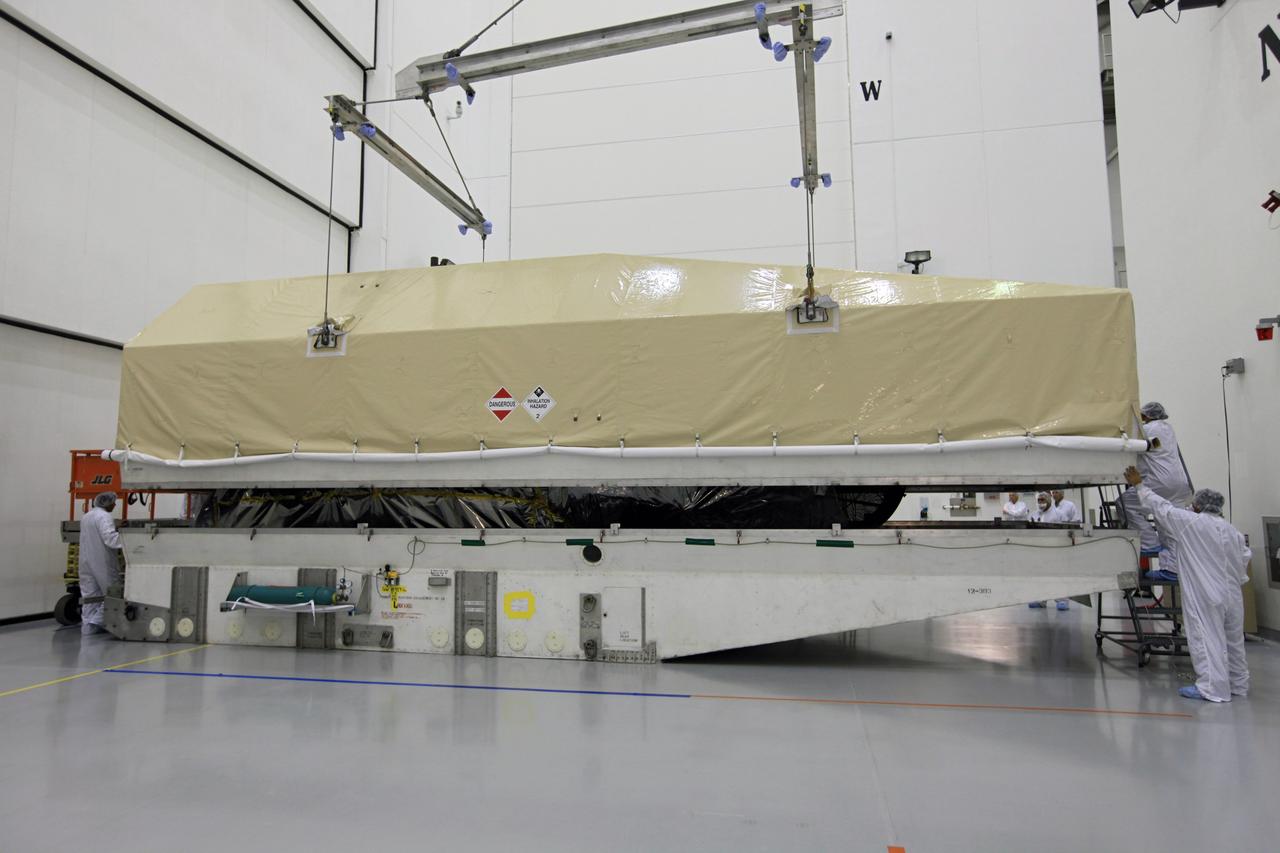
TITUSVILLE, Fla. - Technicians begin the process of removing the Tracking and Data Relay Satellite, TDRS-K, from the shipping container after arrival at the Astrotech payload processing facility in Titusville, Fla. near NASA’s Kennedy Space Center. Launch of the TDRS-K on the Atlas V rocket is planned for January 29, 2013. The TDRS-K spacecraft is part of the next-generation series in the Tracking and Data Relay Satellite System, a constellation of space-based communication satellites providing tracking, telemetry, command and high-bandwidth data return services. For more information, visit http://www.nasa.gov/mission_pages/tdrs/index.html Photo credit: NASA/Kim Shiflett
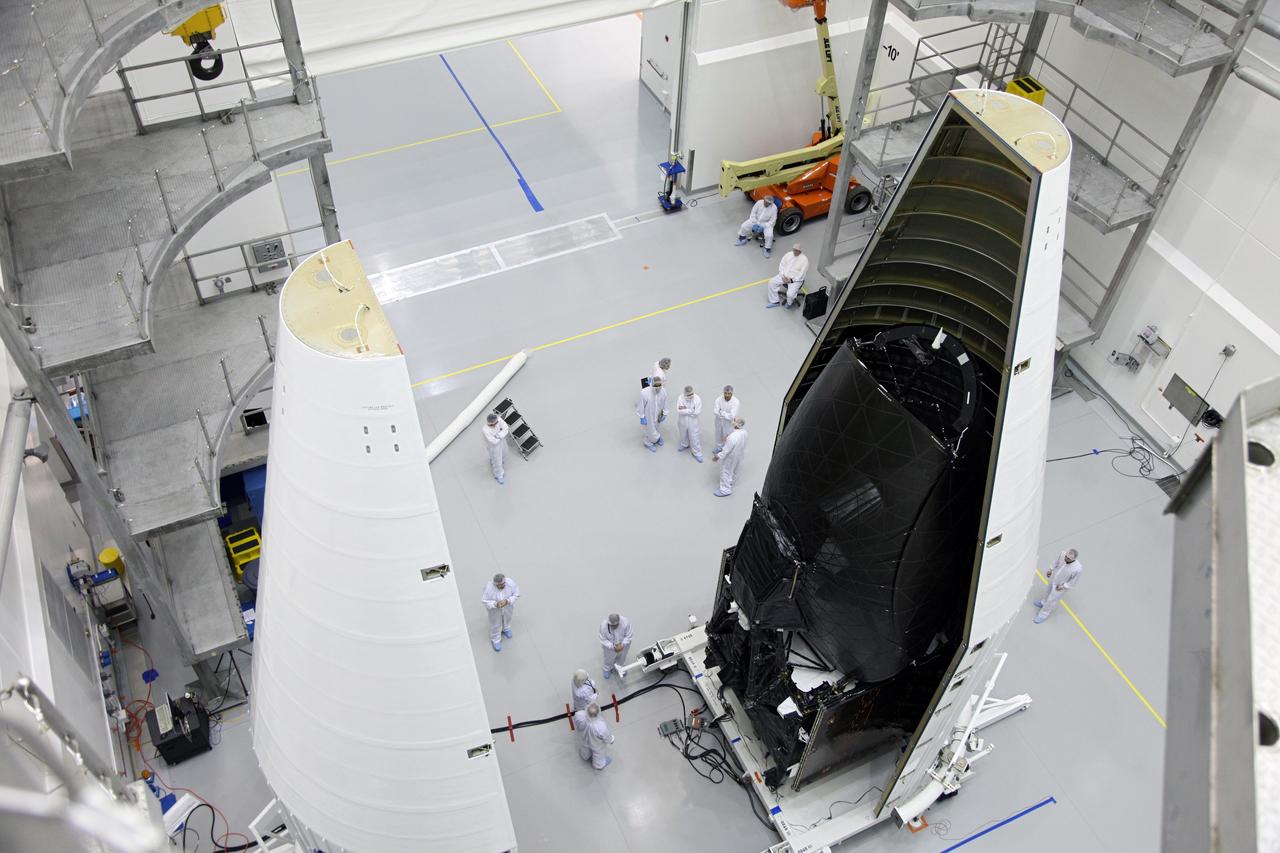
TITUSVILLE, Fla. – NASA's Tracking and Data Relay Satellite, TDRS-K, stands inside one half of the payload fairing as the spacecraft is encapsulated inside the Astrotech payload processing facility in Titusville, Fla., near NASA’s Kennedy Space Center. Launch of the TDRS-K on a United Launch Alliance Atlas V rocket is planned for January 29, 2013. The TDRS-K spacecraft is part of the next-generation series in the Tracking and Data Relay Satellite System, a constellation of space-based communication satellites providing tracking, telemetry, command and high-bandwidth data return services. Photo credit: NASA/Frankie Martin
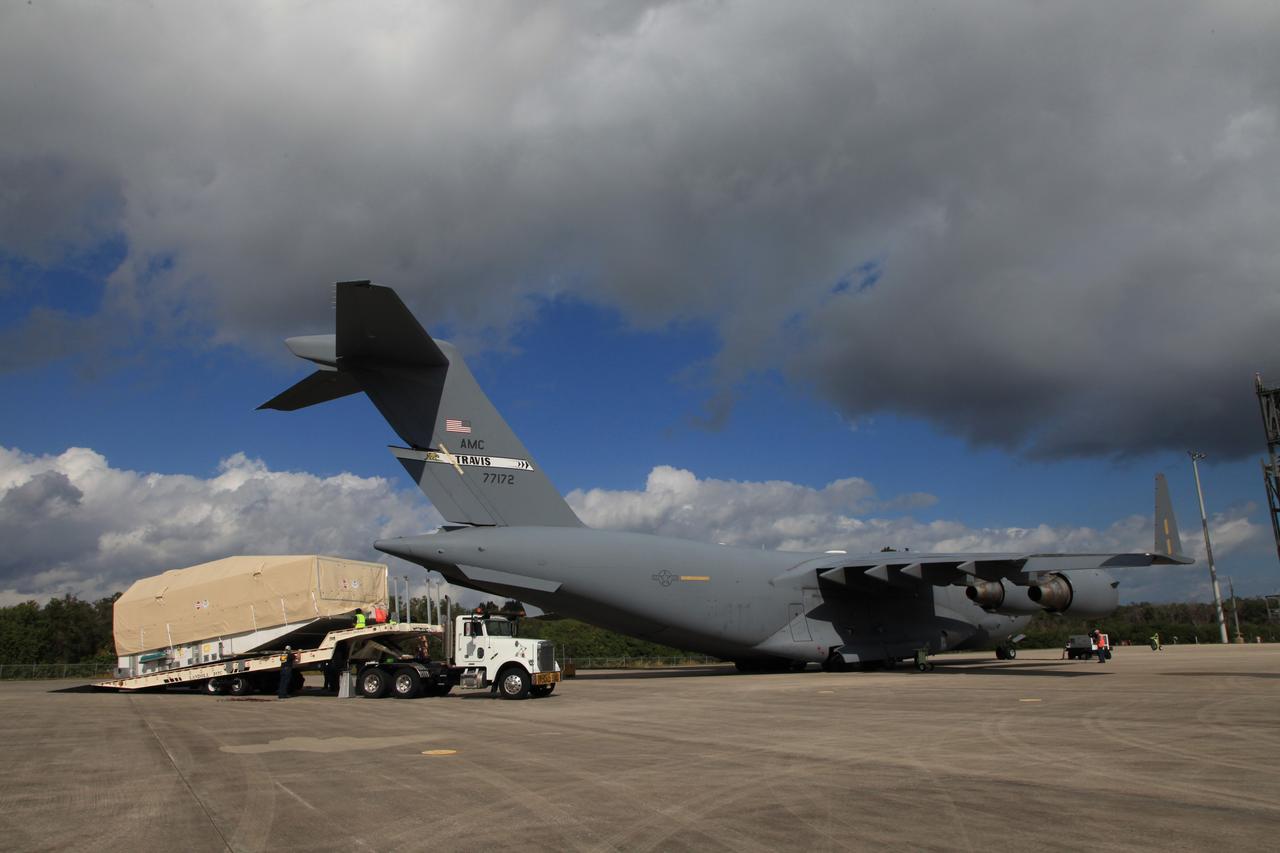
CAPE CANAVERAL, Fla. - The Tracking and Data Relay Satellite, TDRS-K, is off-loaded from a military transport aircraft after its arrival at the Shuttle Landing Facility at NASA's Kennedy Space Center in Florida. Launch of the TDRS-K on the Atlas V rocket is planned for January 29, 2013. The TDRS-K spacecraft is part of the next-generation series in the Tracking and Data Relay Satellite System, a constellation of space-based communication satellites providing tracking, telemetry, command and high-bandwidth data return services. For more information, visit http://www.nasa.gov/mission_pages/tdrs/index.html Photo credit: NASA/Kim Shiflett
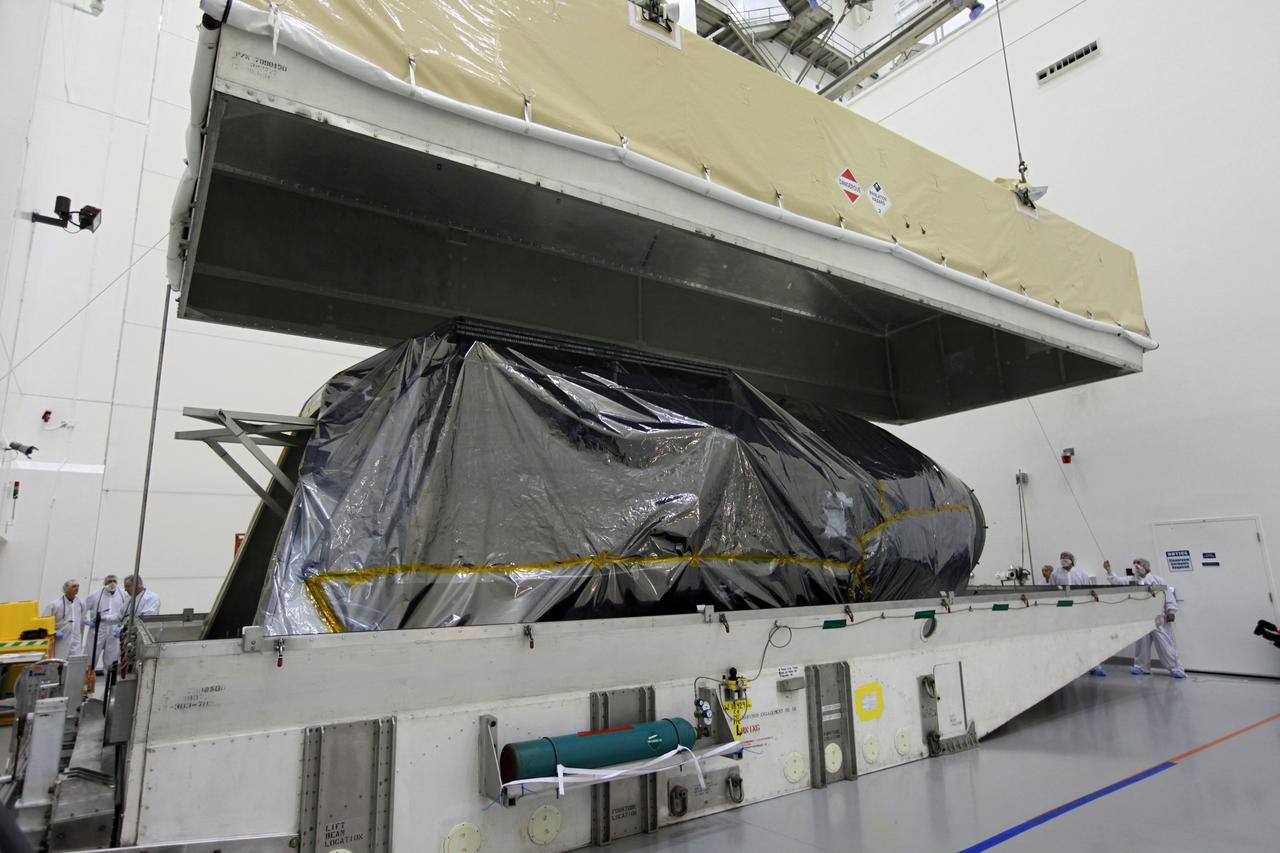
TITUSVILLE, Fla. - Technicians unpack the Tracking and Data Relay Satellite, TDRS-K, after arrival at the Astrotech payload processing facility in Titusville, Fla. near NASA’s Kennedy Space Center. Launch of the TDRS-K on the Atlas V rocket is planned for January 29, 2013. The TDRS-K spacecraft is part of the next-generation series in the Tracking and Data Relay Satellite System, a constellation of space-based communication satellites providing tracking, telemetry, command and high-bandwidth data return services. For more information, visit http://www.nasa.gov/mission_pages/tdrs/index.html Photo credit: NASA/Kim Shiflett
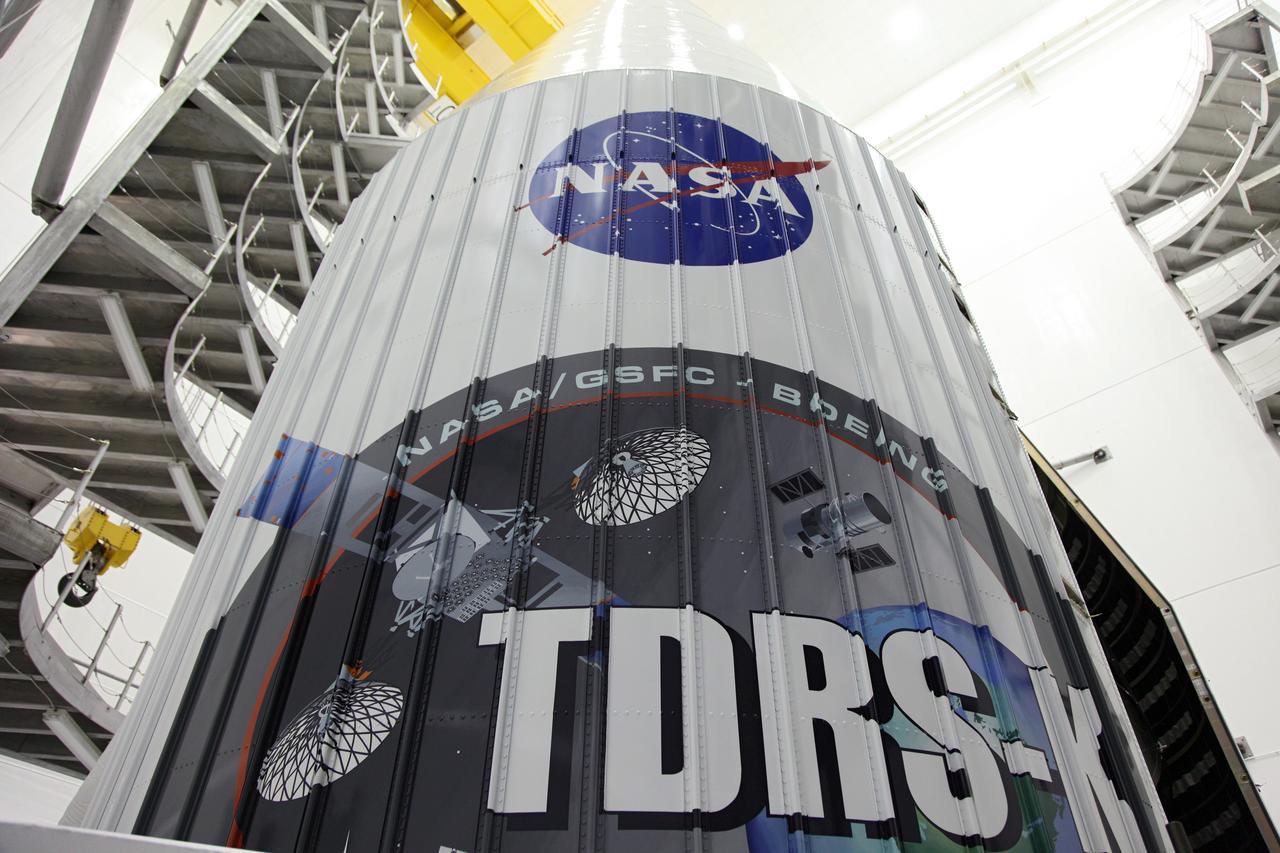
TITUSVILLE, Fla. – A closer look at the logo painted on one half of the payload fairing that will protect NASA's Tracking and Data Relay Satellite, TDRS-K, inside the Astrotech payload processing facility in Titusville, Fla., near NASA’s Kennedy Space Center. Launch of the TDRS-K on a United Launch Alliance Atlas V rocket is planned for January 29, 2013. The TDRS-K spacecraft is part of the next-generation series in the Tracking and Data Relay Satellite System, a constellation of space-based communication satellites providing tracking, telemetry, command and high-bandwidth data return services. Photo credit: NASA/Frankie Martin
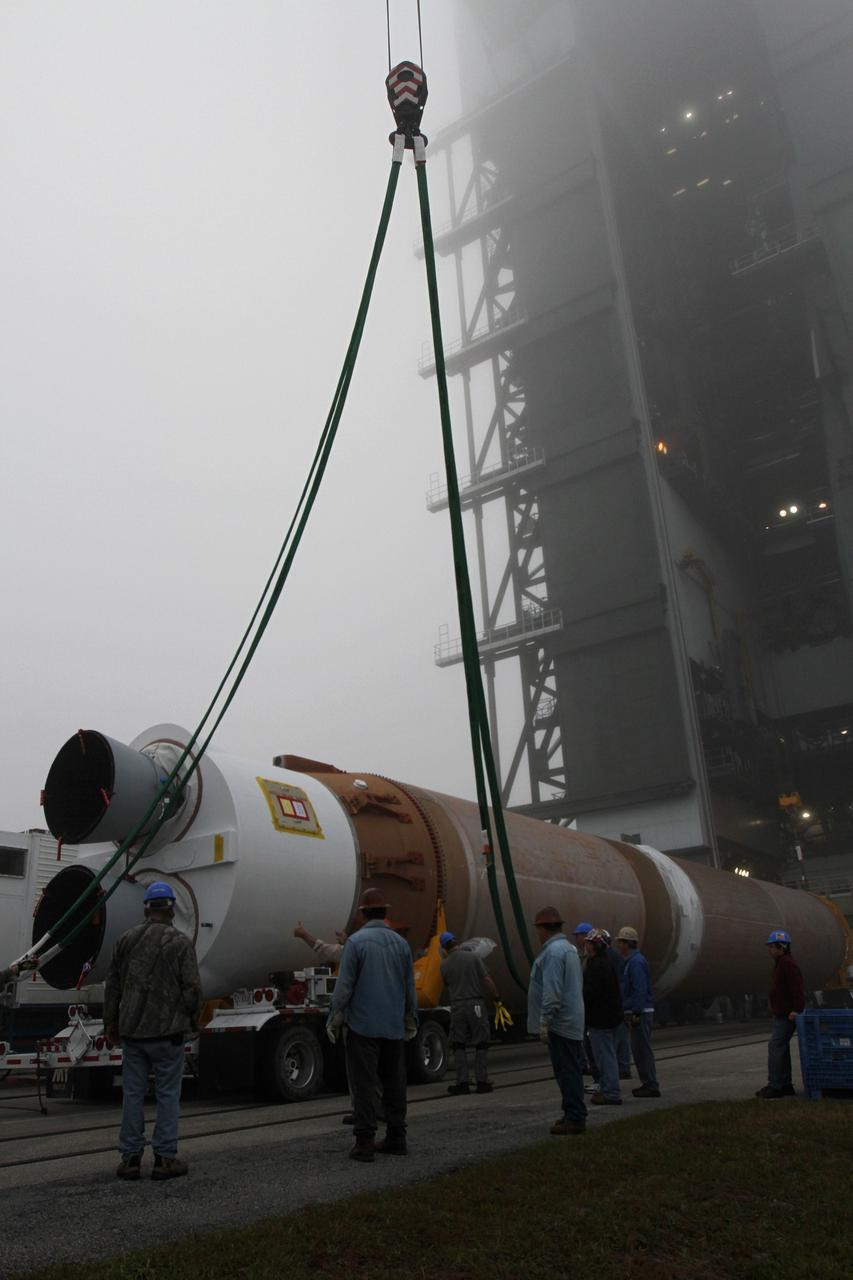
CAPE CANAVERAL, Fla. -- In the morning fog at Cape Canaveral Air Force Station's Space Launch Complex 41 in Florida, preparations are underway to erect the first stage of the Atlas V rocket that will carry the Tracking and Data Relay Satellite, TDRS-K, into orbit. Launch of the TDRS-K on the Atlas V rocket is planned for January 29, 2013. The TDRS-K spacecraft is part of the next-generation series in the Tracking and Data Relay Satellite System, a constellation of space-based communication satellites providing tracking, telemetry, command and high-bandwidth data return services. For more information, visit http://www.nasa.gov/mission_pages/tdrs/index.html Photo credit: NASA/ Ben Smegelsky
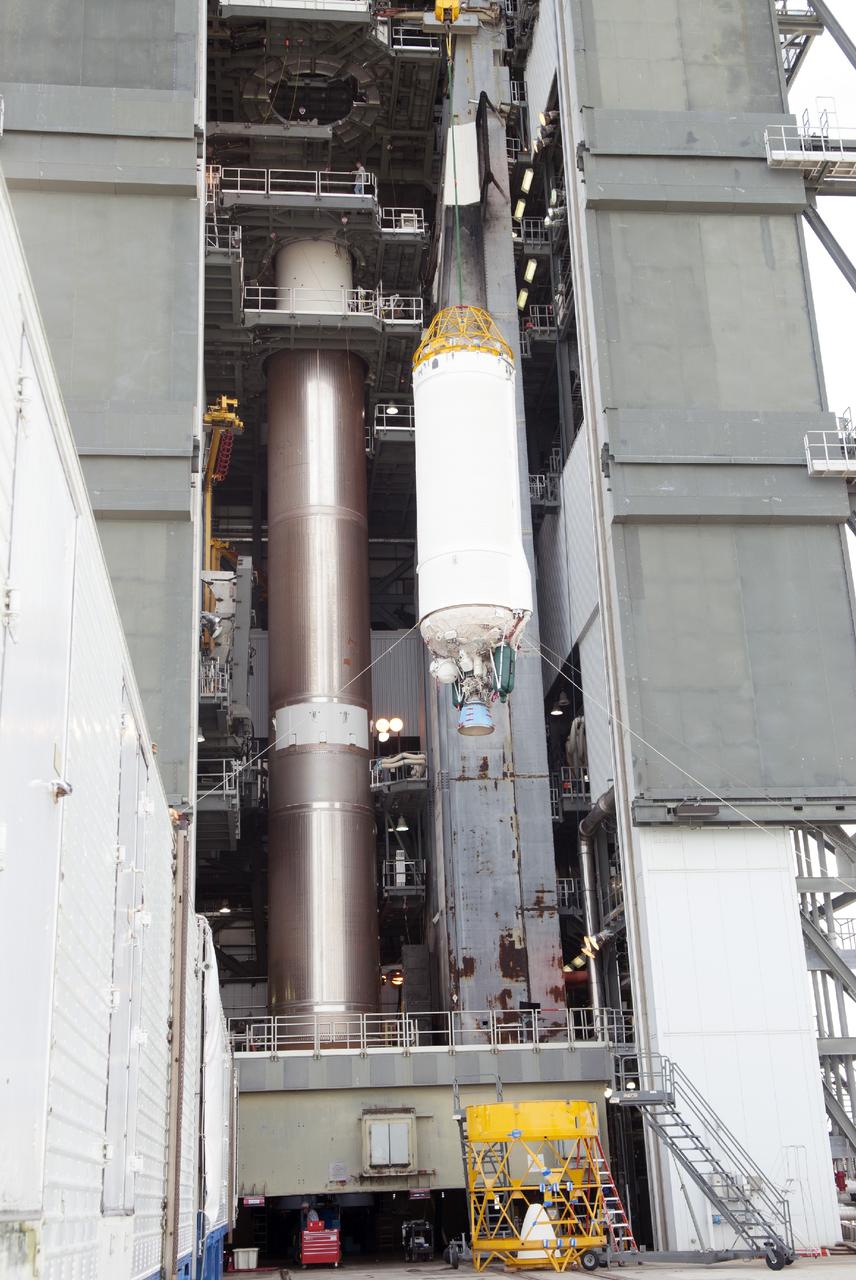
CAPE CANAVERAL, Fla. – At Cape Canaveral Air Force Station's Launch Complex 41, a Centaur second stage is lifted for stacking atop a United Launch Alliance Atlas V rocket that will be used to boost the Tracking and Data Relay Satellite, or TDRS-L, spacecraft to orbit. TDRS-L is the second of three next-generation satellites designed to ensure vital operational continuity for the NASA Space Network. It is scheduled to launch from Cape Canaveral's Space Launch Complex 41 atop an Atlas V rocket in January 2014. The current Tracking and Data Relay Satellite system consists of eight in-orbit satellites distributed to provide near continuous information relay service to missions such as the Hubble Space Telescope and International Space Station. For more information, visit: http://www.nasa.gov/content/tracking-and-data-relay-satellite-tdrs/ Photo credit: NASA/Charisse Nahser
CAPE CANAVERAL, Fla. – At Cape Canaveral Air Force Station, a technician supports lifting of a United Launch Alliance Atlas V rocket in the Vertical Integration Facility at Launch Complex 41. The vehicle will be used to boost the Tracking and Data Relay Satellite, or TDRS-L, spacecraft to orbit. TDRS-L is the second of three next-generation satellites designed to ensure vital operational continuity for the NASA Space Network. It is scheduled to launch from Cape Canaveral's Space Launch Complex 41 atop an Atlas V rocket in January 2014. The current Tracking and Data Relay Satellite system consists of eight in-orbit satellites distributed to provide near continuous information relay service to missions such as the Hubble Space Telescope and International Space Station. For more information, visit: http://www.nasa.gov/content/tracking-and-data-relay-satellite-tdrs/ Photo credit: NASA/Charisse Nahser
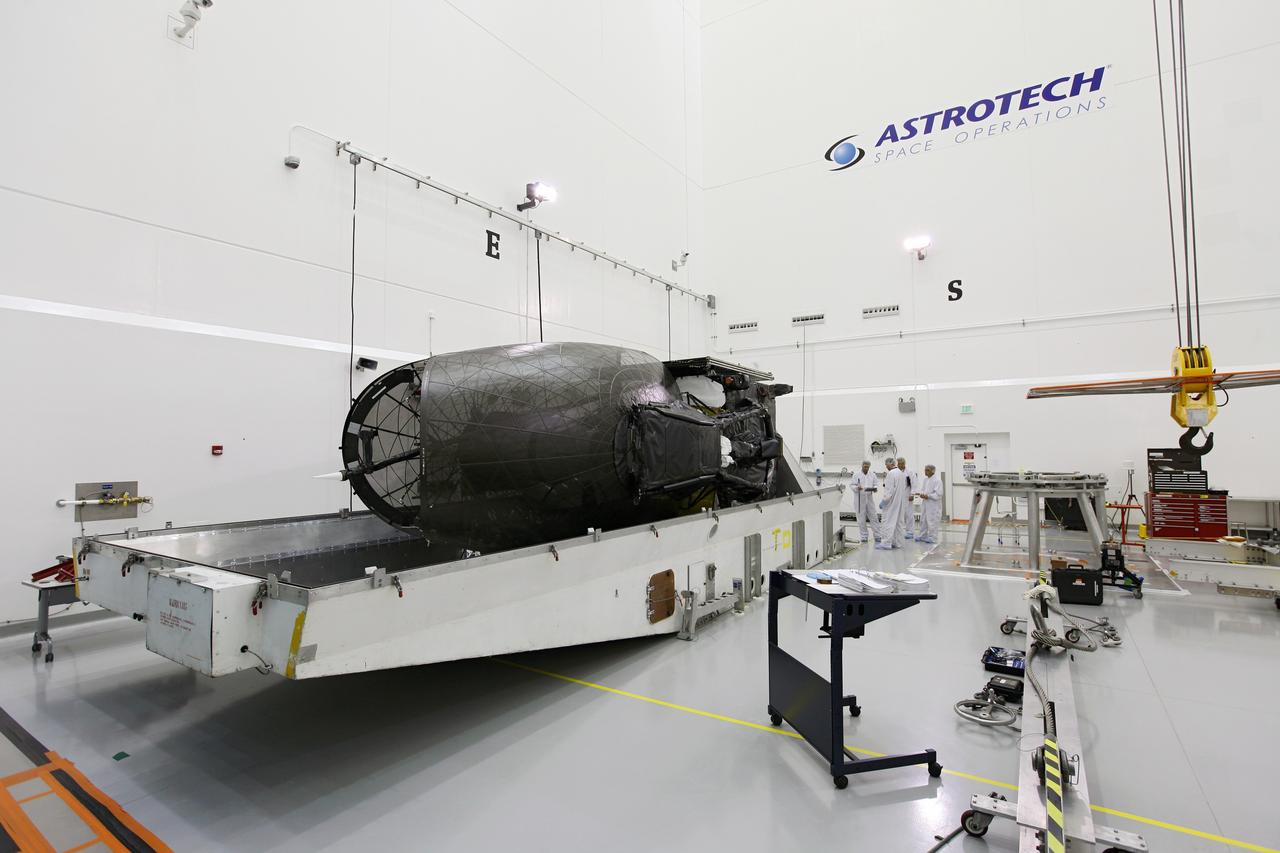
TITUSVILLE, Fla. - Technicians inspect the Tracking and Data Relay Satellite, TDRS-K, after arrival at the Astrotech payload processing facility in Titusville, Fla. near NASA’s Kennedy Space Center. Launch of the TDRS-K on the Atlas V rocket is planned for January 29, 2013. The TDRS-K spacecraft is part of the next-generation series in the Tracking and Data Relay Satellite System, a constellation of space-based communication satellites providing tracking, telemetry, command and high-bandwidth data return services. For more information, visit http://www.nasa.gov/mission_pages/tdrs/index.html Photo credit: NASA/Kim Shiflett
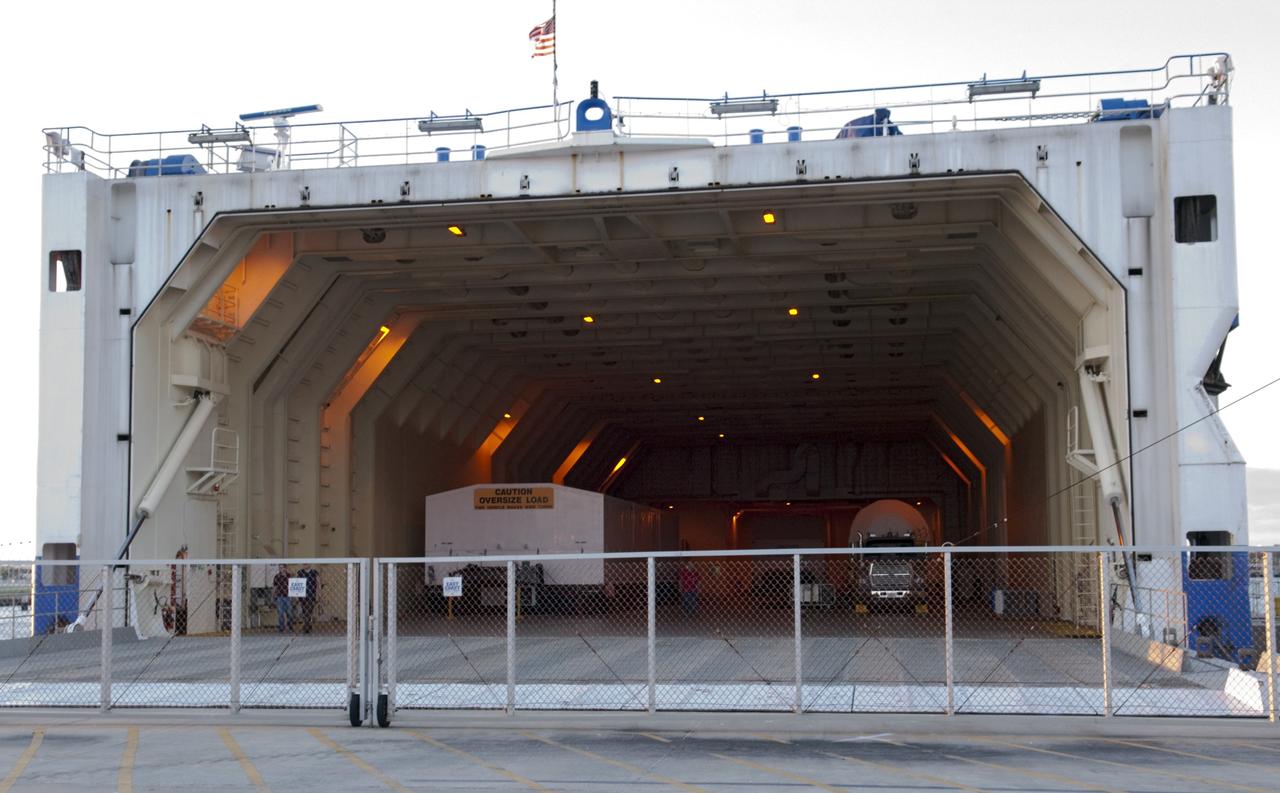
PORT CANAVERAL, Fla. – The United Launch Alliance barge Delta Mariner arrives at Port Canaveral, Fla. delivering the Centaur stage of the launch vehicle that will boost the Tracking and Data Relay Satellite-K, or TDRS-K, into Earth orbit atop an Atlas V rocket. After off-loading, the Centaur will be transported to the Atlas Spaceflight Operations Center, ASOC, at Cape Canaveral Air Force Station to begin processing. The TDRS-K spacecraft is part of the next-generation series in the Tracking and Data Relay Satellite System, a constellation of space-based communication satellites providing tracking, telemetry, command and high-bandwidth data return services. For more information, visit http://tdrs.gsfc.nasa.gov/ Photo credit: NASA/Charisse Nahser
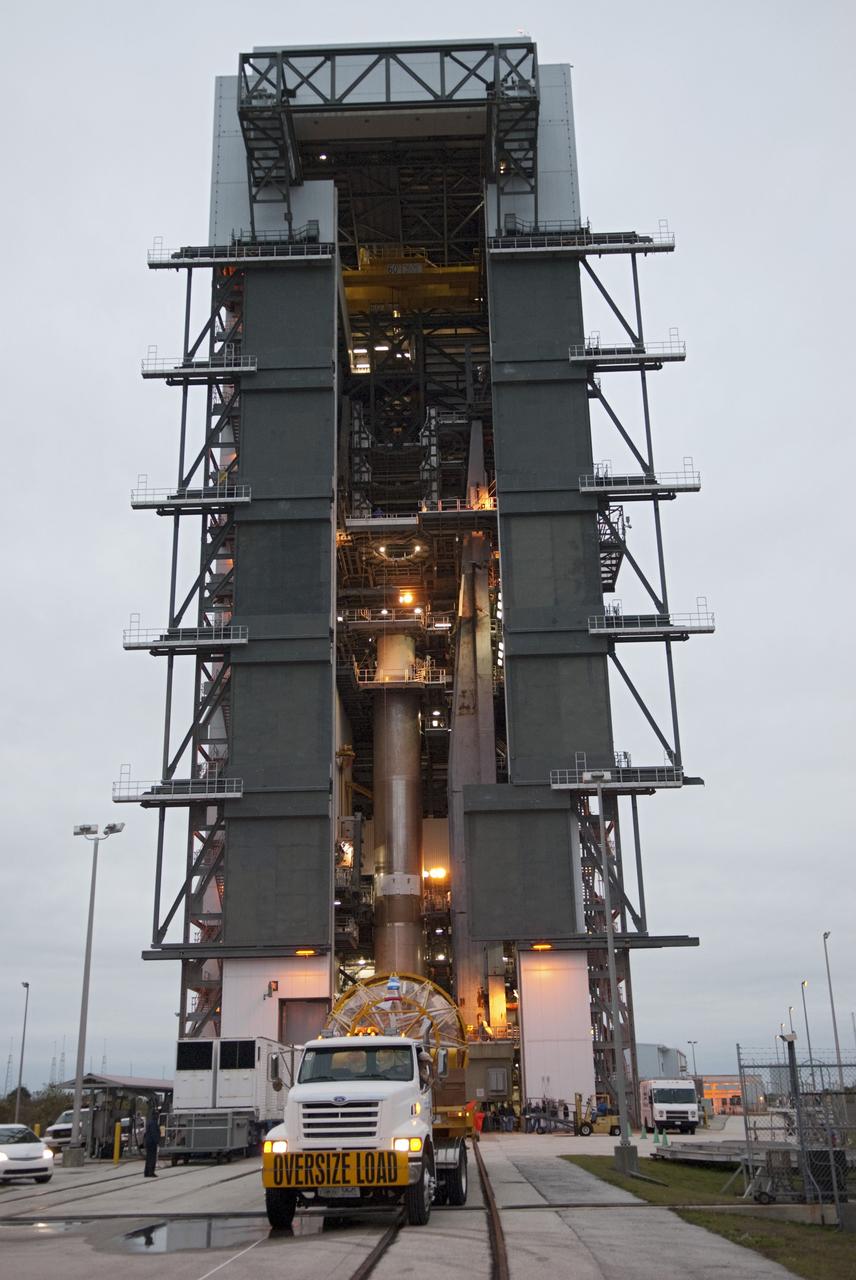
CAPE CANAVERAL, Fla. -- The Centaur stage which will help boost the Tracking and Data Relay Satellite, TDRS-K, into orbit arrives by transport truck at Cape Canaveral Air Force Station's Space Launch Complex 41 in Florida for mating to an Atlas V rocket. Launch of the TDRS-K on the Atlas V rocket is planned for January 29, 2013. The TDRS-K spacecraft is part of the next-generation series in the Tracking and Data Relay Satellite System, a constellation of space-based communication satellites providing tracking, telemetry, command and high-bandwidth data return services. For more information, visit http://www.nasa.gov/mission_pages/tdrs/index.html Photo credit: NASA/Charisse Nahser
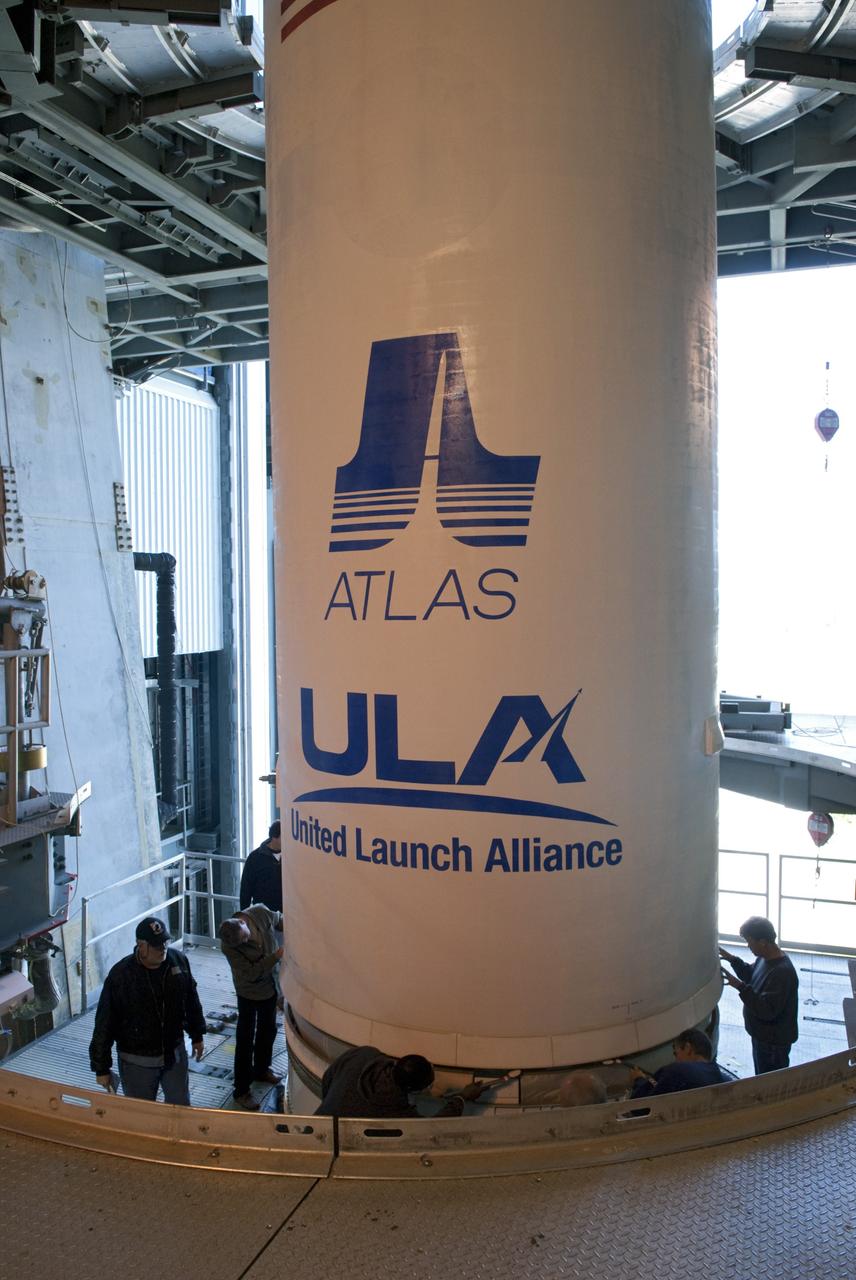
CAPE CANAVERAL, Fla. -- At Cape Canaveral Air Force Station's Space Launch Complex 41 in Florida, United Launch Alliance technicians support operations to mate the Centaur stage to the Atlas V rocket that will carry the Tracking and Data Relay Satellite, TDRS-K, into orbit. Launch of the TDRS-K on the Atlas V rocket is planned for January 29, 2013. The TDRS-K spacecraft is part of the next-generation series in the Tracking and Data Relay Satellite System, a constellation of space-based communication satellites providing tracking, telemetry, command and high-bandwidth data return services. For more information, visit http://www.nasa.gov/mission_pages/tdrs/index.html Photo credit: NASA/Charisse Nahser
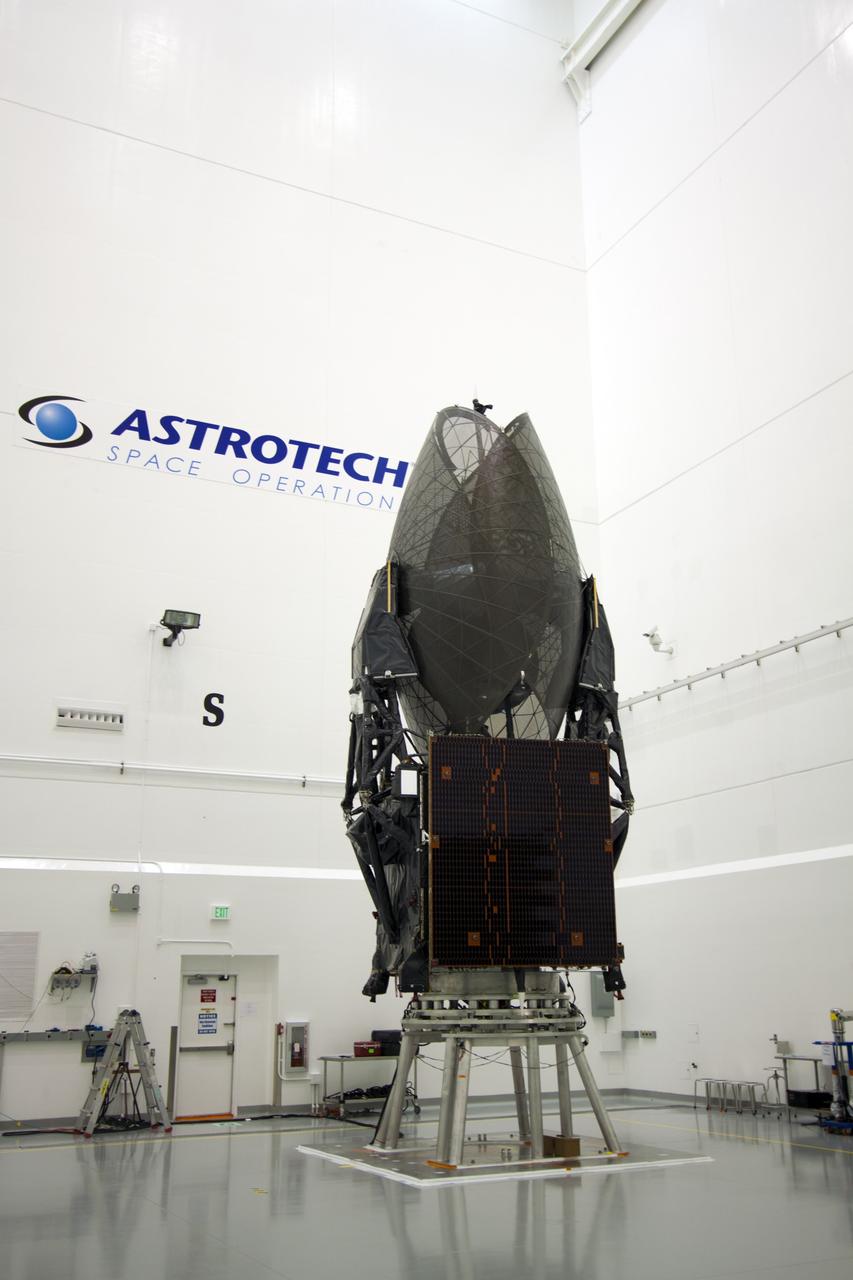
TITUSVILLE, Fla. - Inside the Astrotech payload processing facility in Titusville, Fla. near NASA’s Kennedy Space Center, the Tracking and Data Relay Satellite, TDRS-K, has been checked out and awaits the arrival of the TDRS-K. Launch of the TDRS-K on the Atlas V rocket is planned for January 29, 2013. The TDRS-K spacecraft is part of the next-generation series in the Tracking and Data Relay Satellite System, a constellation of space-based communication satellites providing tracking, telemetry, command and high-bandwidth data return services. For more information, visit http://www.nasa.gov/mission_pages/tdrs/index.html Photo credit: NASA/Jim Grossmann

CAPE CANAVERAL, Fla. -- In the morning fog at Cape Canaveral Air Force Station's Space Launch Complex 41 in Florida, operations are underway to erect the first stage of the Atlas V rocket that will carry the Tracking and Data Relay Satellite, TDRS-K, into orbit. Launch of the TDRS-K on the Atlas V rocket is planned for January 29, 2013. The TDRS-K spacecraft is part of the next-generation series in the Tracking and Data Relay Satellite System, a constellation of space-based communication satellites providing tracking, telemetry, command and high-bandwidth data return services. For more information, visit http://www.nasa.gov/mission_pages/tdrs/index.html Photo credit: NASA/ Ben Smegelsky
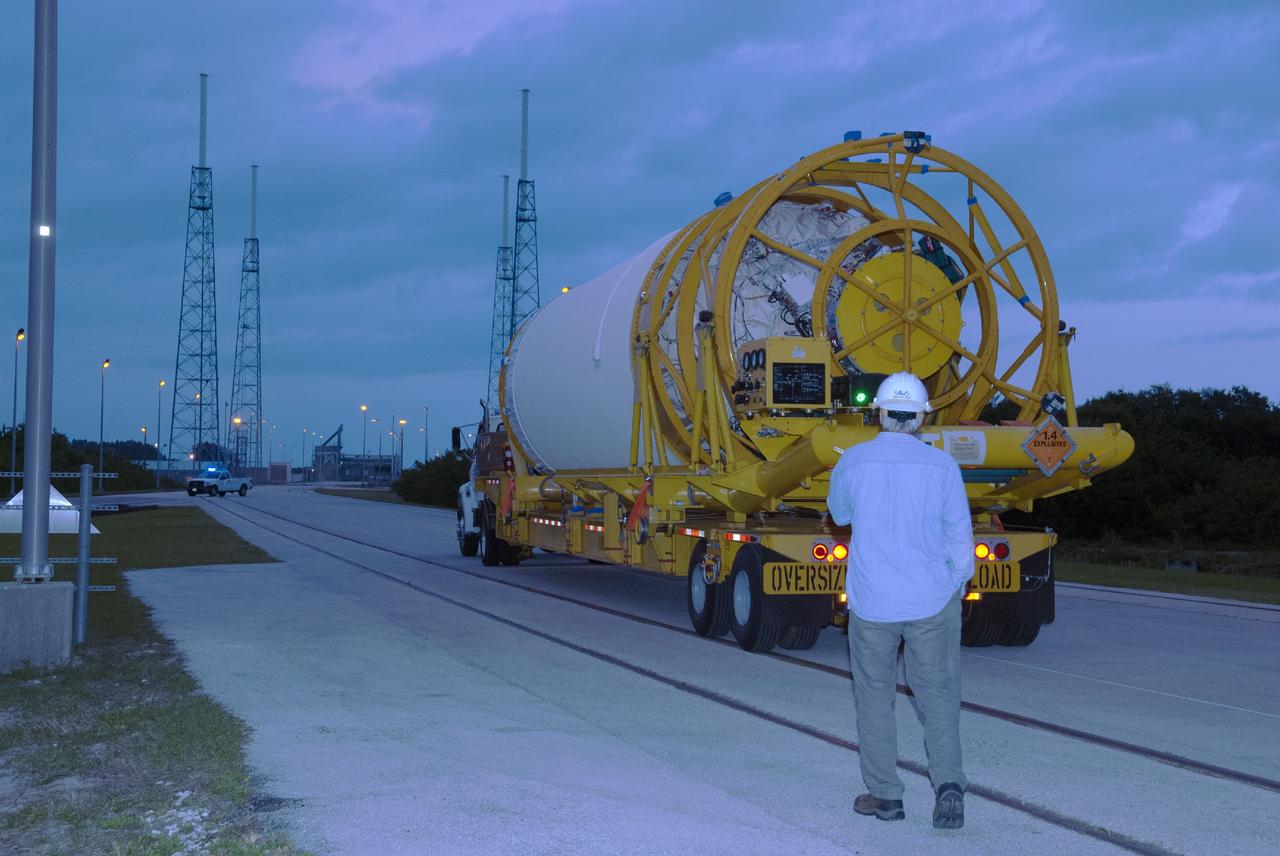
CAPE CANAVERAL, Fla. – The United Launch Alliance Centaur second stage that will help boost the Tracking and Data Relay Satellite, or TDRS-L, spacecraft into orbit is being transported from the hangar at the Atlas Spaceflight Operations Center on Cape Canaveral Air Force Station to Launch Complex 41. TDRS-L is the second of three next-generation satellites designed to ensure vital operational continuity for the NASA Space Network. It is scheduled to launch from Cape Canaveral's Space Launch Complex 41 atop an Atlas V rocket in January 2014. The current Tracking and Data Relay Satellite system consists of eight in-orbit satellites distributed to provide near continuous information relay service to missions such as the Hubble Space Telescope and International Space Station. For more information, visit: http://www.nasa.gov/content/tracking-and-data-relay-satellite-tdrs/ Photo credit: NASA/Charisse Nahser
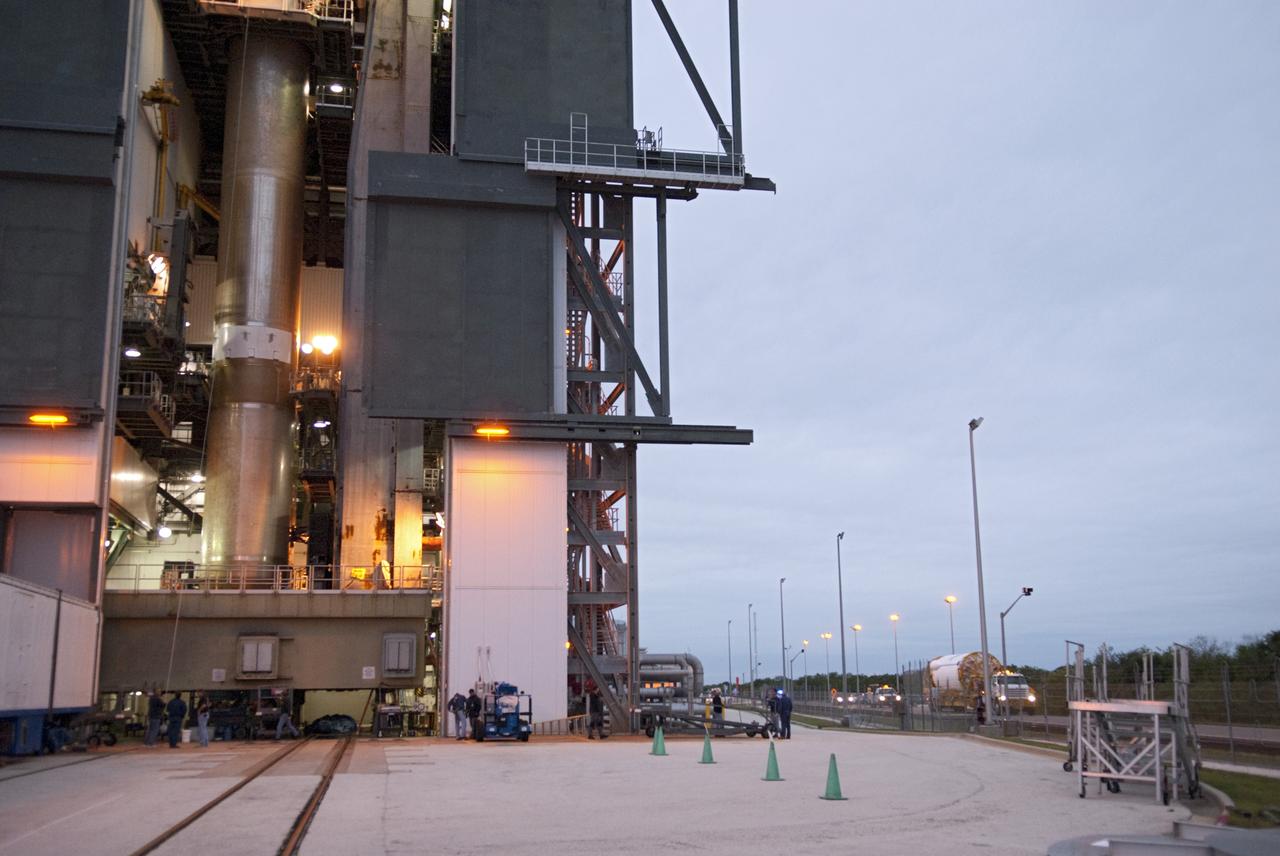
CAPE CANAVERAL, Fla. -- At Cape Canaveral Air Force Station's Space Launch Complex 41 in Florida, preparations are underway to mate the Centaur stage to the Atlas V rocket that will carry the Tracking and Data Relay Satellite, TDRS-K, into orbit. Launch of the TDRS-K on the Atlas V rocket is planned for January 29, 2013. The TDRS-K spacecraft is part of the next-generation series in the Tracking and Data Relay Satellite System, a constellation of space-based communication satellites providing tracking, telemetry, command and high-bandwidth data return services. For more information, visit http://www.nasa.gov/mission_pages/tdrs/index.html Photo credit: NASA/Charisse Nahser

TITUSVILLE, Fla. - Technicians unpack the Tracking and Data Relay Satellite, TDRS-K, after arrival at the Astrotech payload processing facility in Titusville, Fla. near NASA’s Kennedy Space Center. Launch of the TDRS-K on the Atlas V rocket is planned for January 29, 2013. The TDRS-K spacecraft is part of the next-generation series in the Tracking and Data Relay Satellite System, a constellation of space-based communication satellites providing tracking, telemetry, command and high-bandwidth data return services. For more information, visit http://www.nasa.gov/mission_pages/tdrs/index.html Photo credit: NASA/Kim Shiflett
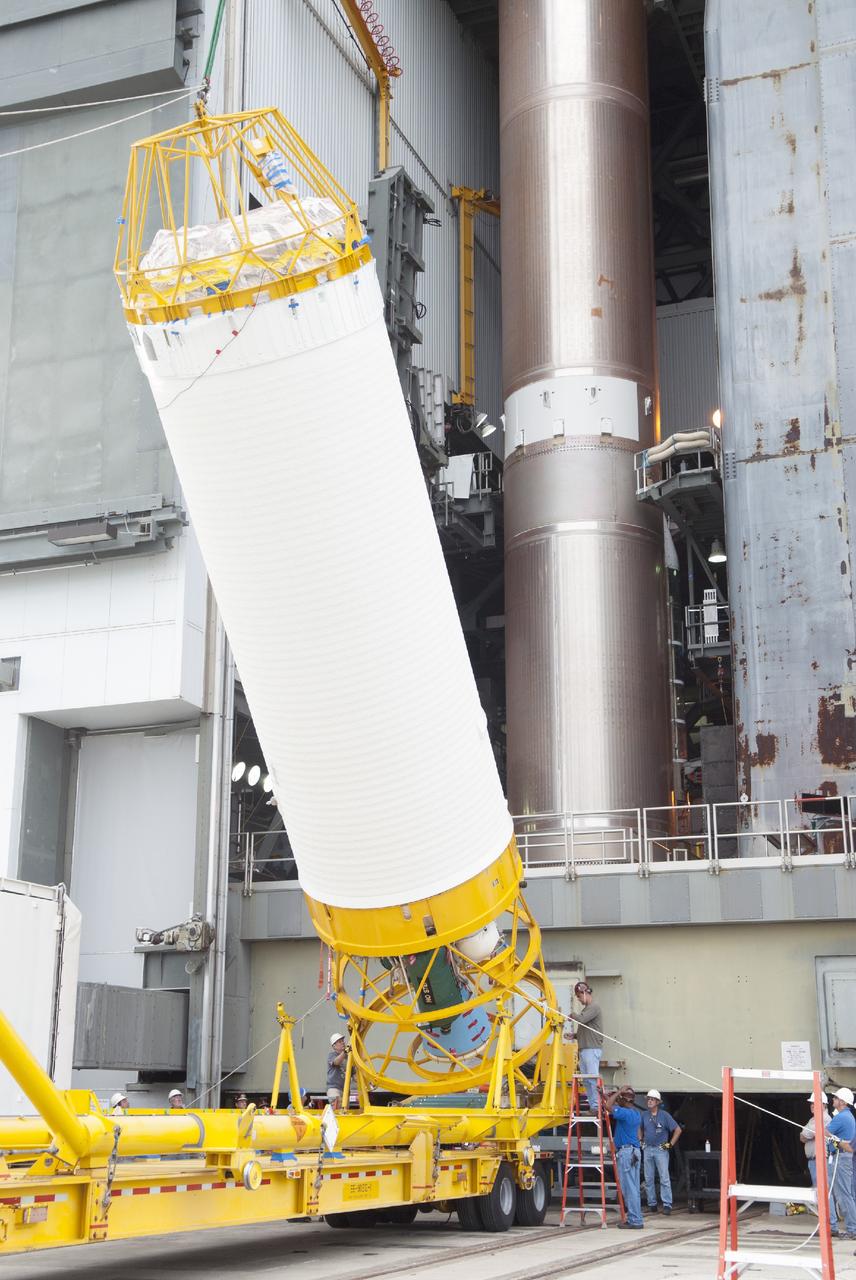
CAPE CANAVERAL, Fla. – At Cape Canaveral Air Force Station's Launch Complex 41, engineers and technicians support lifting a Centaur second stage for stacking atop a United Launch Alliance Atlas V rocket that will be used to boost the Tracking and Data Relay Satellite, or TDRS-L, spacecraft to orbit. TDRS-L is the second of three next-generation satellites designed to ensure vital operational continuity for the NASA Space Network. It is scheduled to launch from Cape Canaveral's Space Launch Complex 41 atop an Atlas V rocket in January 2014. The current Tracking and Data Relay Satellite system consists of eight in-orbit satellites distributed to provide near continuous information relay service to missions such as the Hubble Space Telescope and International Space Station. For more information, visit: http://www.nasa.gov/content/tracking-and-data-relay-satellite-tdrs/ Photo credit: NASA/Charisse Nahser
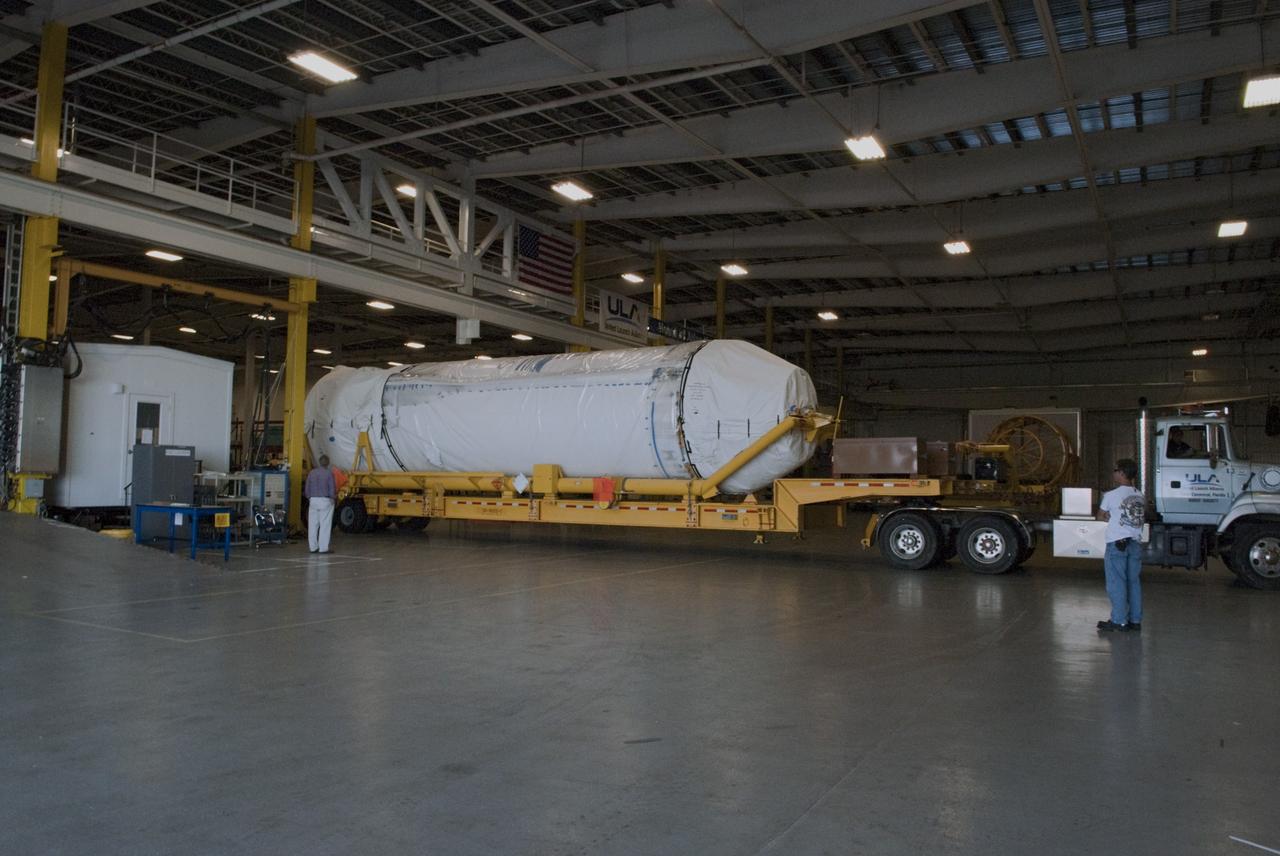
CAPE CANAVERAL, Fla. – A Centaur stage arrives the Atlas Spaceflight Operations Center, or ASOC, at Cape Canaveral Air Force Station to begin processing. The Centaur will be part of a launch vehicle that will boost the Tracking and Data Relay Satellite-K, or TDRS-K, into Earth orbit atop an Atlas V rocket. Lift off is scheduled for 11:57 p.m. on Dec. 13, 2012 from Space Launch Complex 41 at Cape Canaveral. The TDRS-K spacecraft is part of the next-generation series in the Tracking and Data Relay Satellite System, a constellation of space-based communication satellites providing tracking, telemetry, command and high-bandwidth data return services. For more information, visit http://tdrs.gsfc.nasa.gov/ Photo credit: NASA/Charisse Nahser
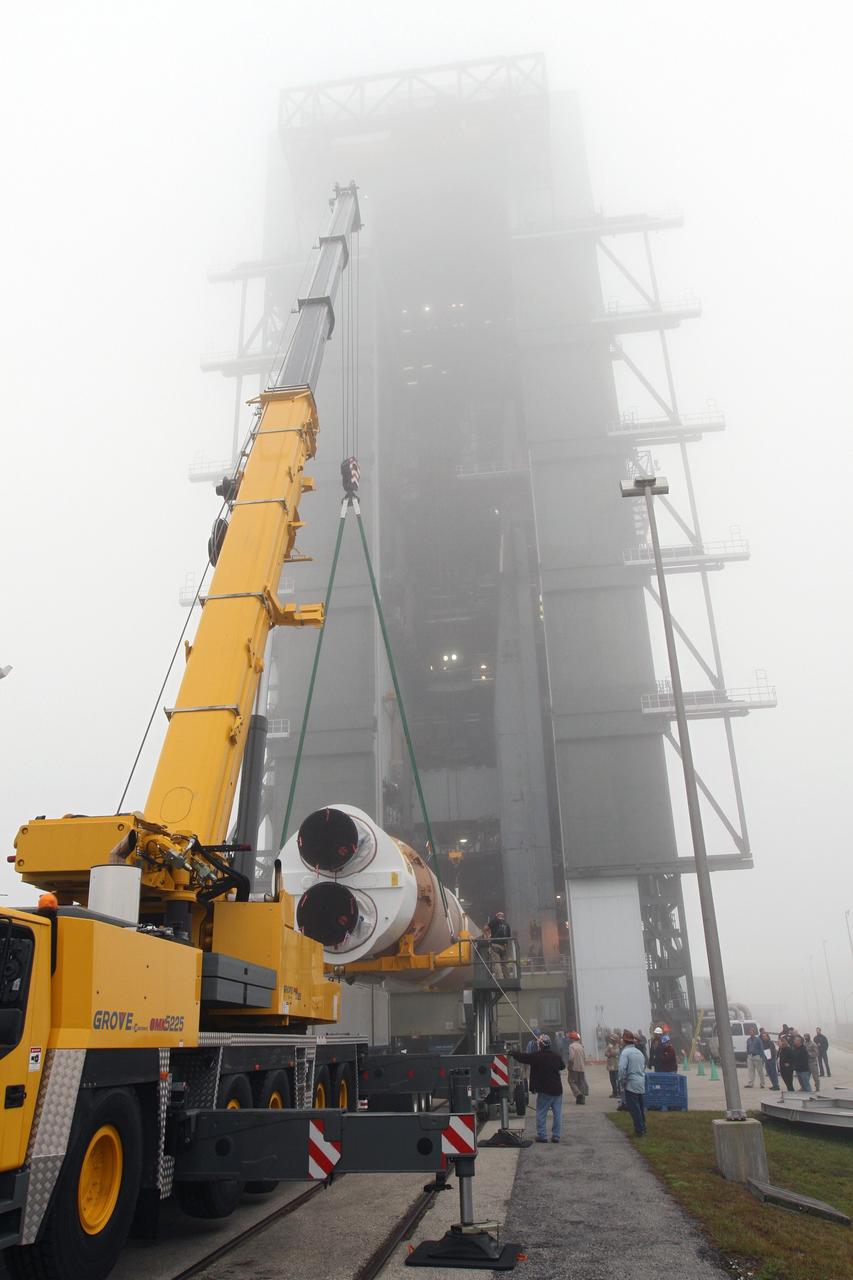
CAPE CANAVERAL, Fla. -- In the morning fog at Cape Canaveral Air Force Station's Space Launch Complex 41 in Florida, United Launch Alliance technicians support operations to erect the first stage of the Atlas V rocket that will carry the Tracking and Data Relay Satellite, TDRS-K, into orbit. Launch of the TDRS-K on the Atlas V rocket is planned for January 29, 2013. The TDRS-K spacecraft is part of the next-generation series in the Tracking and Data Relay Satellite System, a constellation of space-based communication satellites providing tracking, telemetry, command and high-bandwidth data return services. For more information, visit http://www.nasa.gov/mission_pages/tdrs/index.html Photo credit: NASA/ Ben Smegelsky
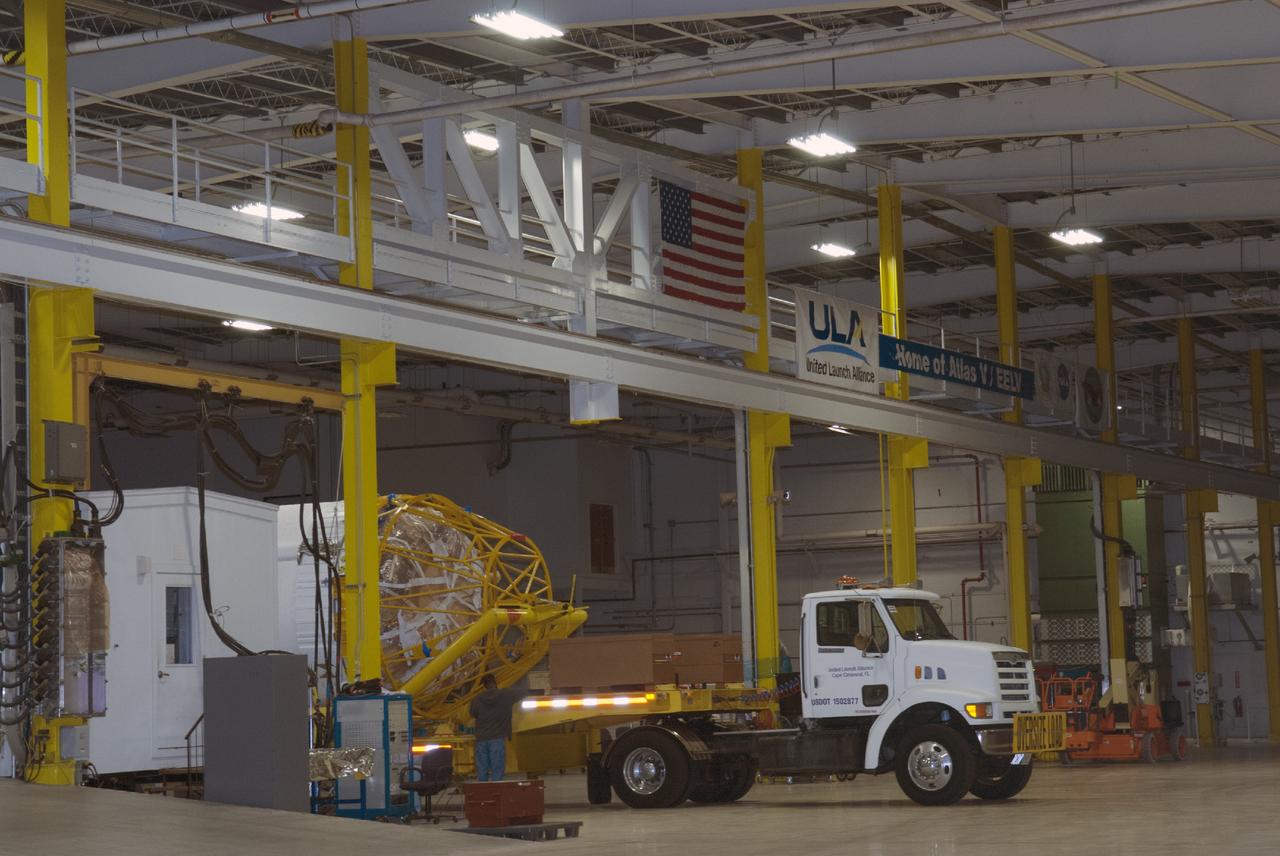
CAPE CANAVERAL, Fla. – The United Launch Alliance Centaur second stage that will help boost the Tracking and Data Relay Satellite, or TDRS-L, spacecraft into orbit is being transported from the hangar at the Atlas Spaceflight Operations Center on Cape Canaveral Air Force Station to Launch Complex 41. TDRS-L is the second of three next-generation satellites designed to ensure vital operational continuity for the NASA Space Network. It is scheduled to launch from Cape Canaveral's Space Launch Complex 41 atop an Atlas V rocket in January 2014. The current Tracking and Data Relay Satellite system consists of eight in-orbit satellites distributed to provide near continuous information relay service to missions such as the Hubble Space Telescope and International Space Station. For more information, visit: http://www.nasa.gov/content/tracking-and-data-relay-satellite-tdrs/ Photo credit: NASA/Charisse Nahser
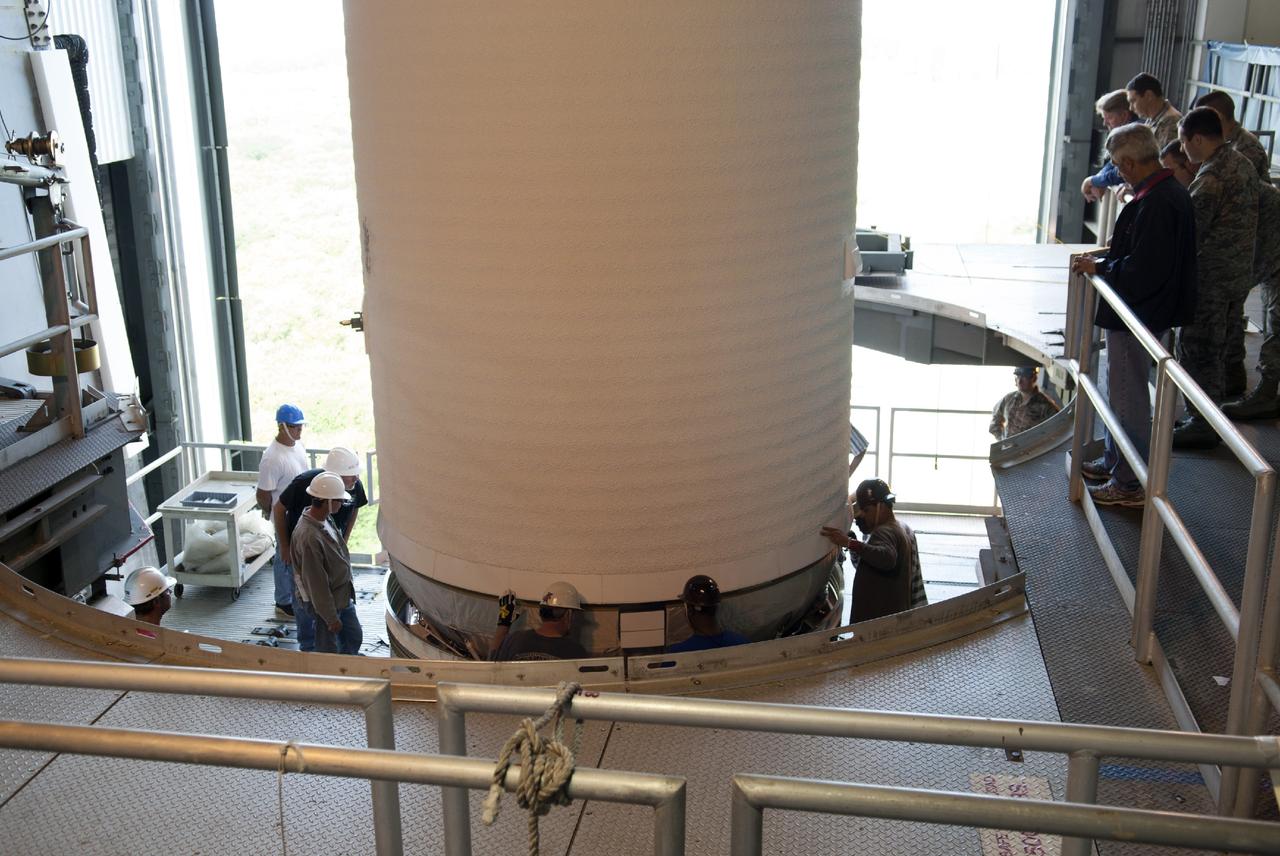
CAPE CANAVERAL, Fla. – At Cape Canaveral Air Force Station's Launch Complex 41, a Centaur second stage is positioned atop a United Launch Alliance Atlas V rocket that will be used to boost the Tracking and Data Relay Satellite, or TDRS-L, spacecraft to orbit. TDRS-L is the second of three next-generation satellites designed to ensure vital operational continuity for the NASA Space Network. It is scheduled to launch from Cape Canaveral's Space Launch Complex 41 atop an Atlas V rocket in January 2014. The current Tracking and Data Relay Satellite system consists of eight in-orbit satellites distributed to provide near continuous information relay service to missions such as the Hubble Space Telescope and International Space Station. For more information, visit: http://www.nasa.gov/content/tracking-and-data-relay-satellite-tdrs/ Photo credit: NASA/Charisse Nahser
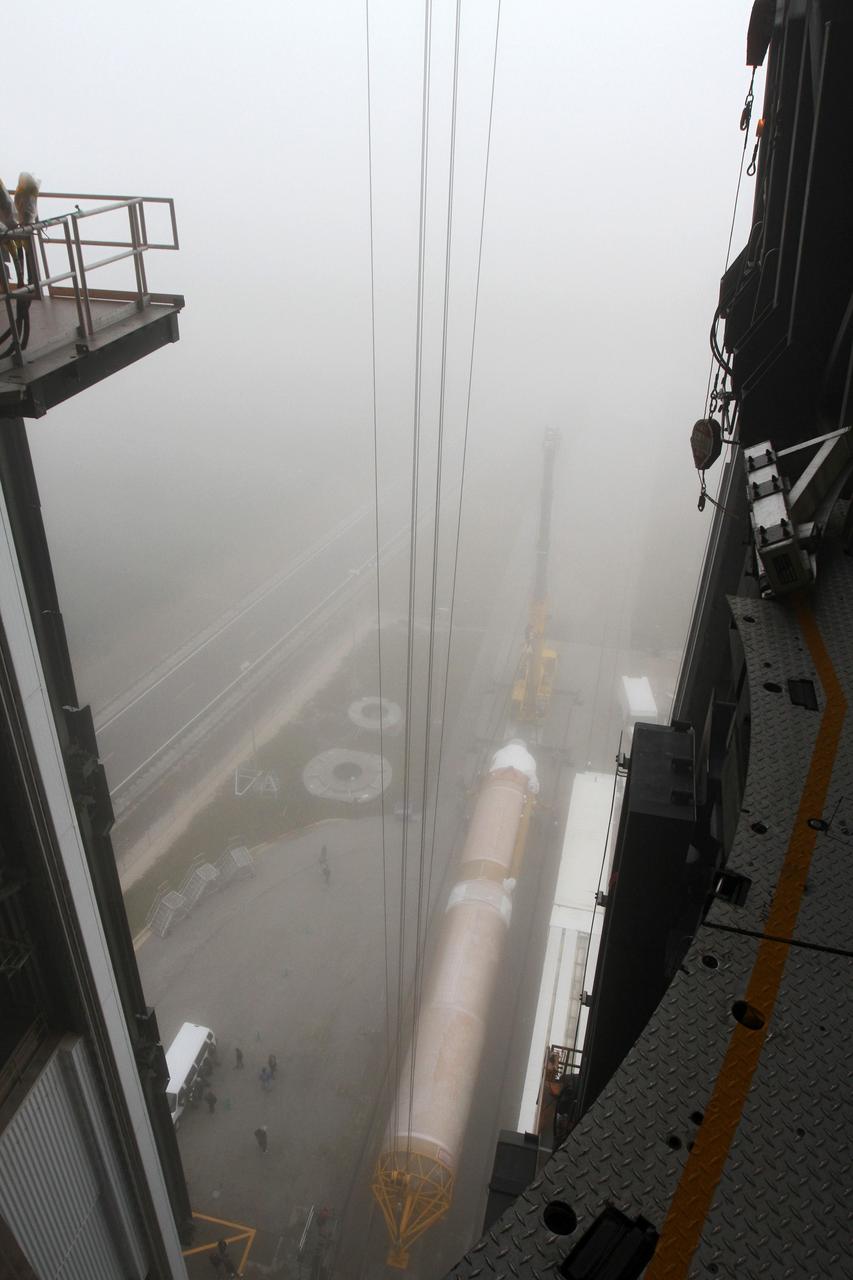
CAPE CANAVERAL, Fla. -- In the morning fog at Cape Canaveral Air Force Station's Space Launch Complex 41 in Florida, operations are underway to erect the first stage of the Atlas V rocket that will carry the Tracking and Data Relay Satellite, TDRS-K, into orbit. Launch of the TDRS-K on the Atlas V rocket is planned for January 29, 2013. The TDRS-K spacecraft is part of the next-generation series in the Tracking and Data Relay Satellite System, a constellation of space-based communication satellites providing tracking, telemetry, command and high-bandwidth data return services. For more information, visit http://www.nasa.gov/mission_pages/tdrs/index.html Photo credit: NASA/ Ben Smegelsky
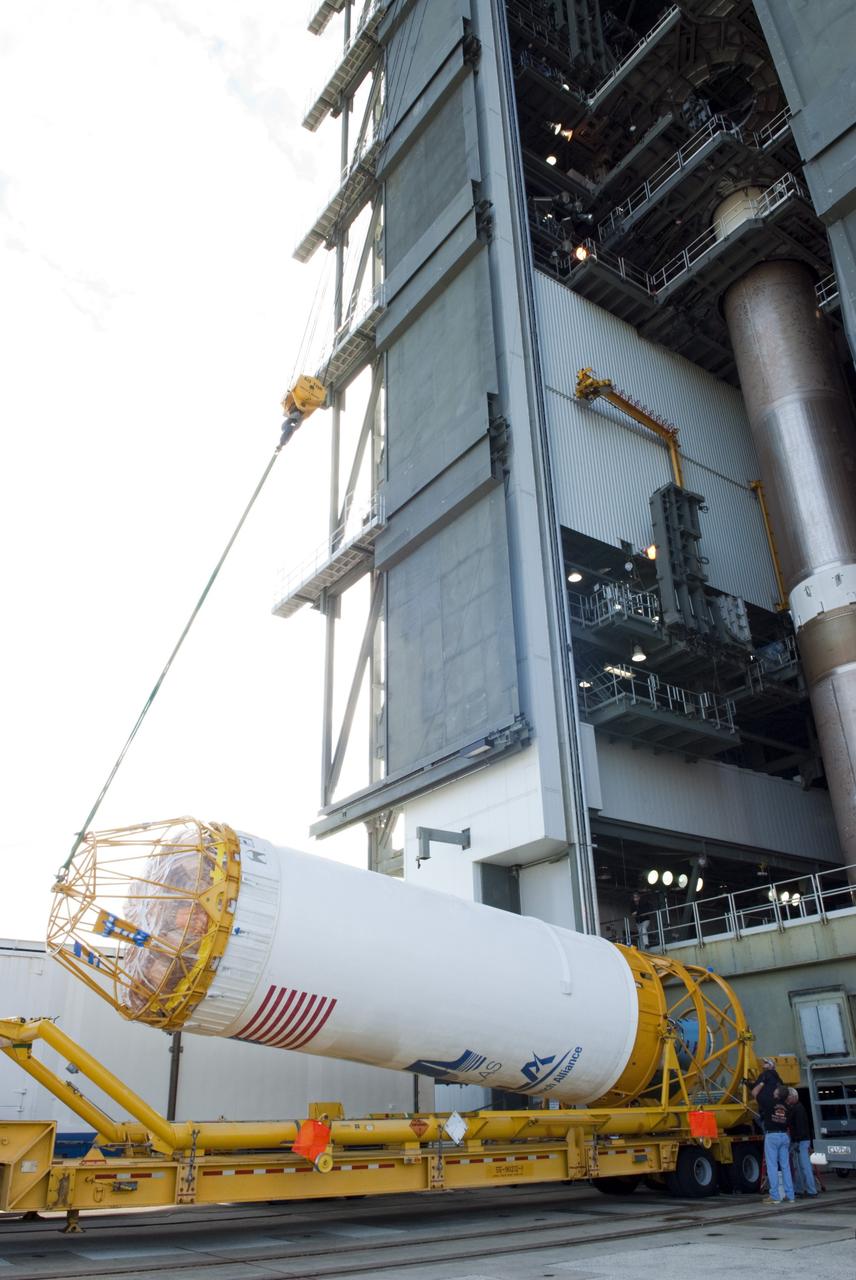
CAPE CANAVERAL, Fla. -- At Cape Canaveral Air Force Station's Space Launch Complex 41 in Florida, operations are underway to lift the Centaur stage for mating to the Atlas V rocket that will carry the Tracking and Data Relay Satellite, TDRS-K, into orbit. Launch of the TDRS-K on the Atlas V rocket is planned for January 29, 2013. The TDRS-K spacecraft is part of the next-generation series in the Tracking and Data Relay Satellite System, a constellation of space-based communication satellites providing tracking, telemetry, command and high-bandwidth data return services. For more information, visit http://www.nasa.gov/mission_pages/tdrs/index.html Photo credit: NASA/Charisse Nahser
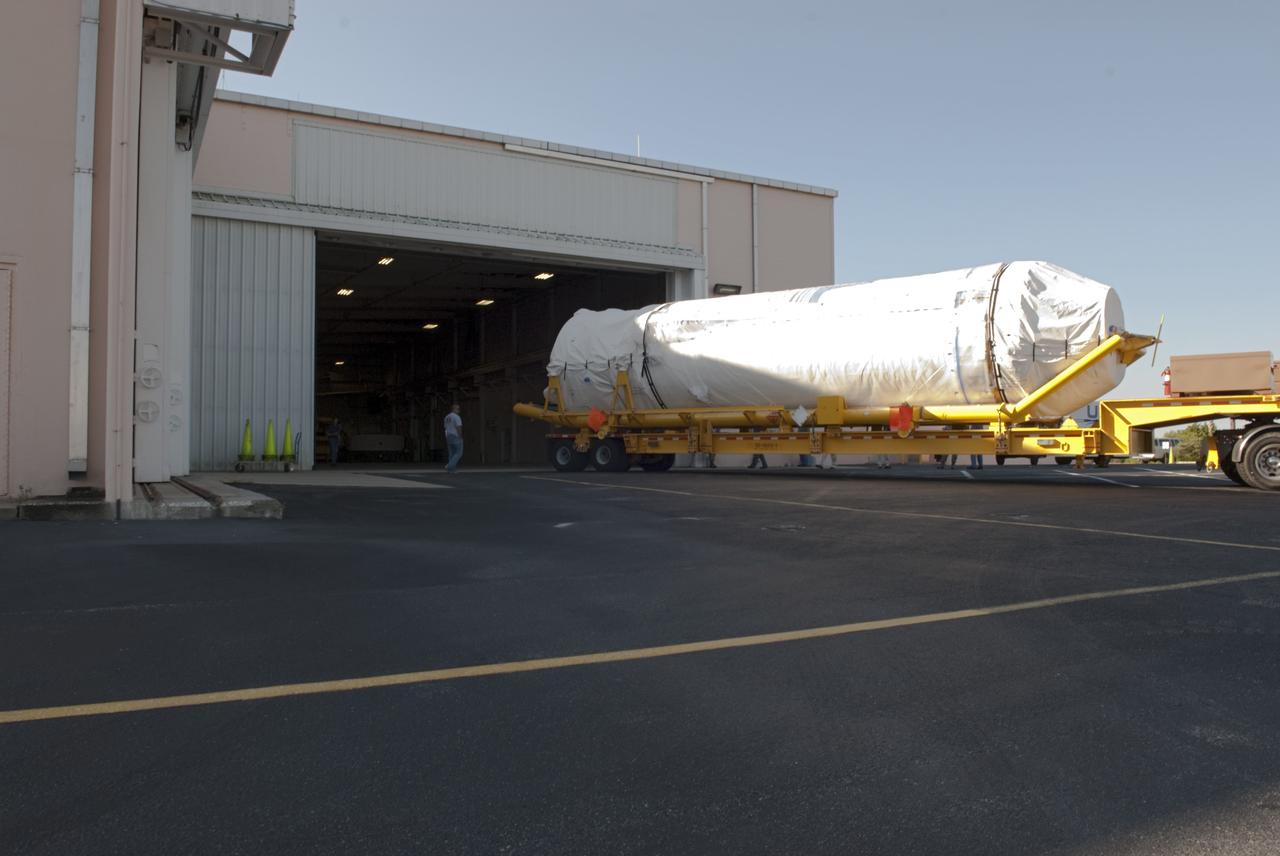
CAPE CANAVERAL, Fla. – A Centaur stage arrives the Atlas Spaceflight Operations Center, or ASOC, at Cape Canaveral Air Force Station to begin processing. The Centaur will be part of a launch vehicle that will boost the Tracking and Data Relay Satellite-K, or TDRS-K, into Earth orbit atop an Atlas V rocket. Lift off is scheduled for 11:57 p.m. on Dec. 13, 2012 from Space Launch Complex 41 at Cape Canaveral. The TDRS-K spacecraft is part of the next-generation series in the Tracking and Data Relay Satellite System, a constellation of space-based communication satellites providing tracking, telemetry, command and high-bandwidth data return services. For more information, visit http://tdrs.gsfc.nasa.gov/ Photo credit: NASA/Charisse Nahser
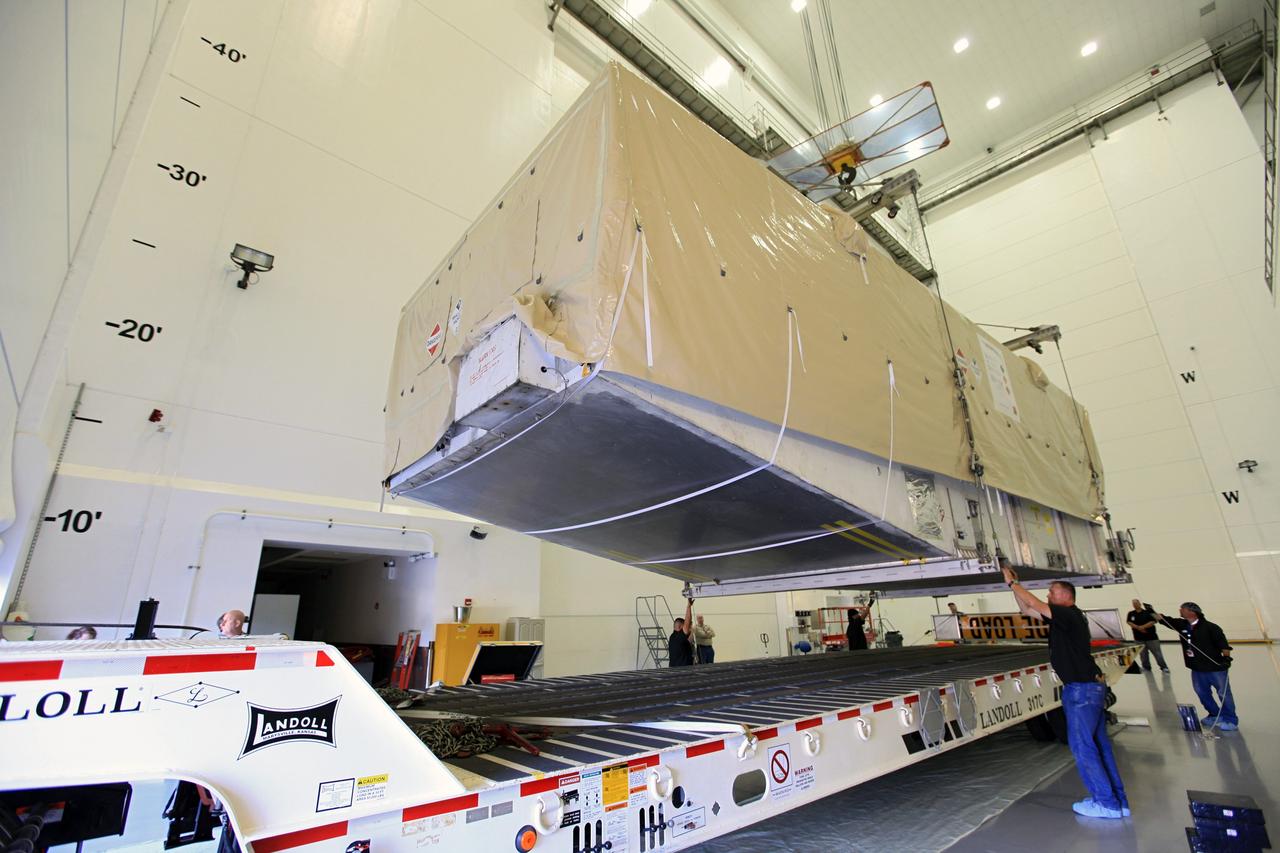
TITUSVILLE, Fla. - Technicians use a crane to lift the Tracking and Data Relay Satellite, TDRS-K, after arrival at the Astrotech payload processing facility in Titusville, Fla. near NASA’s Kennedy Space Center. Launch of the TDRS-K on the Atlas V rocket is planned for January 29, 2013. The TDRS-K spacecraft is part of the next-generation series in the Tracking and Data Relay Satellite System, a constellation of space-based communication satellites providing tracking, telemetry, command and high-bandwidth data return services. For more information, visit http://www.nasa.gov/mission_pages/tdrs/index.html Photo credit: NASA/Kim Shiflett
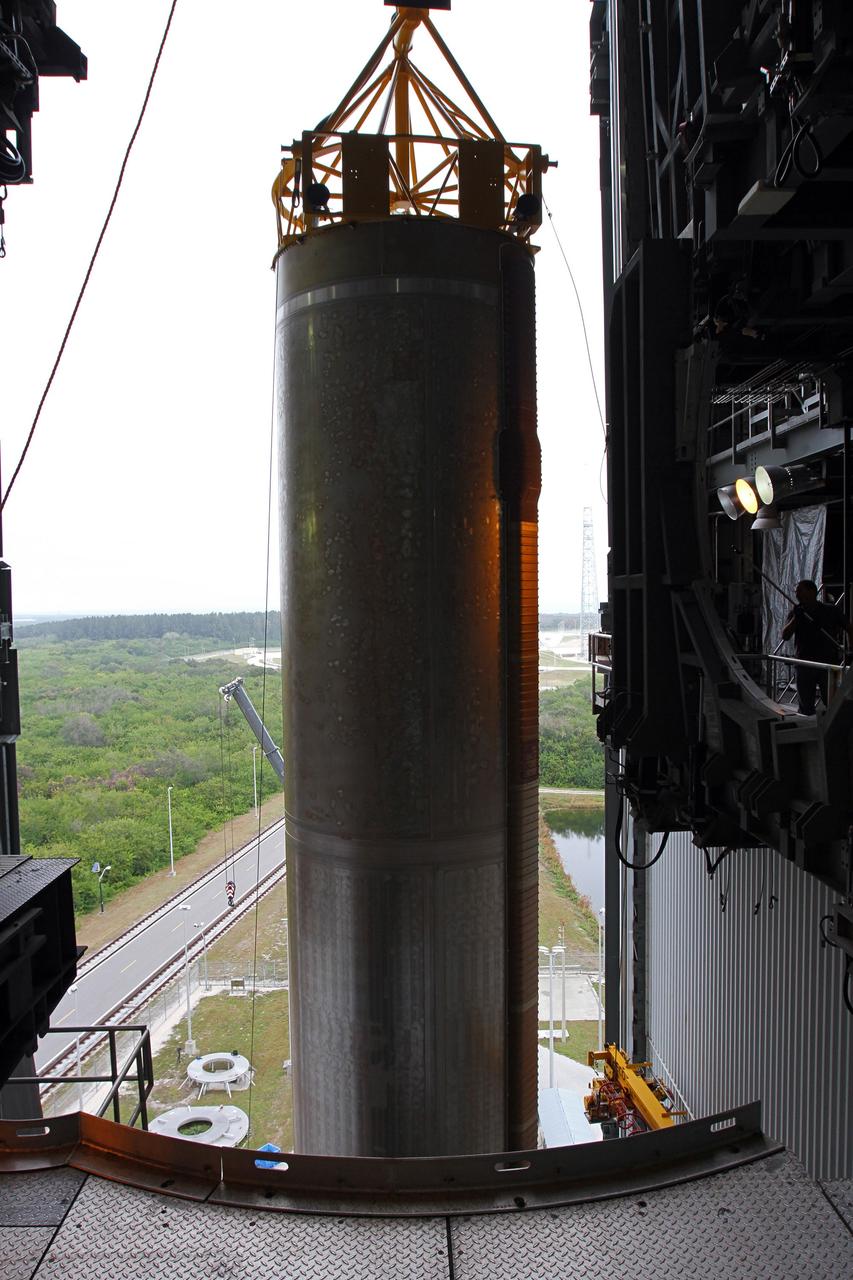
CAPE CANAVERAL, Fla. -- At Cape Canaveral Air Force Station's Space Launch Complex 41 in Florida, operations are underway to erect the first stage of the Atlas V rocket that will carry the Tracking and Data Relay Satellite, TDRS-K, into orbit. Launch of the TDRS-K on the Atlas V rocket is planned for January 29, 2013. The TDRS-K spacecraft is part of the next-generation series in the Tracking and Data Relay Satellite System, a constellation of space-based communication satellites providing tracking, telemetry, command and high-bandwidth data return services. For more information, visit http://www.nasa.gov/mission_pages/tdrs/index.html Photo credit: NASA/ Ben Smegelsky
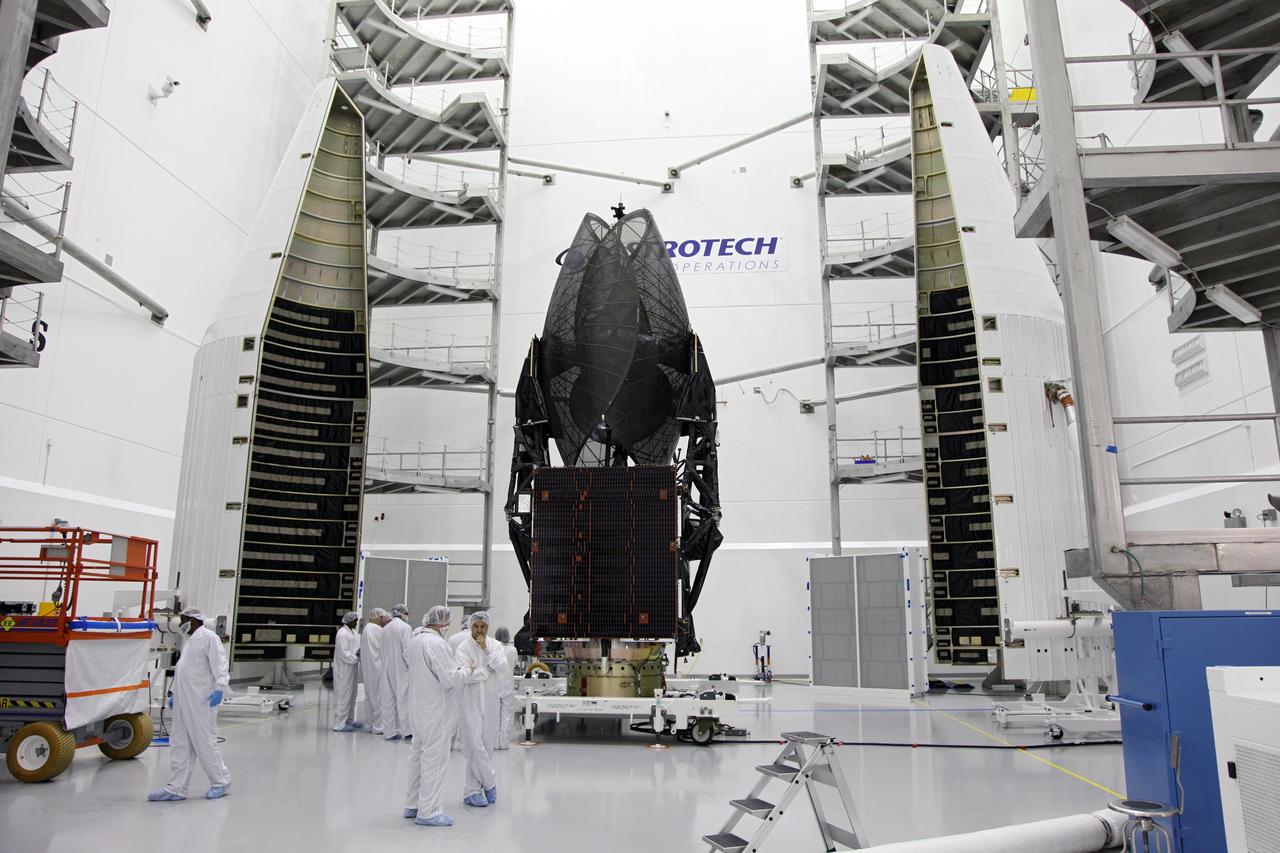
TITUSVILLE, Fla. – NASA's Tracking and Data Relay Satellite, TDRS-K, stands positioned between two pieces that make up the payload fairing that will protect the spacecraft during launch and ascent into space. Technicians working inside the Astrotech payload processing facility in Titusville, Fla., near NASA’s Kennedy Space Center will perform the encapsulation. Launch of the TDRS-K on the United Launch Alliance Atlas V rocket is planned for January 29, 2013. The TDRS-K spacecraft is part of the next-generation series in the Tracking and Data Relay Satellite System, a constellation of space-based communication satellites providing tracking, telemetry, command and high-bandwidth data return services. Photo credit: NASA/Frankie Martin
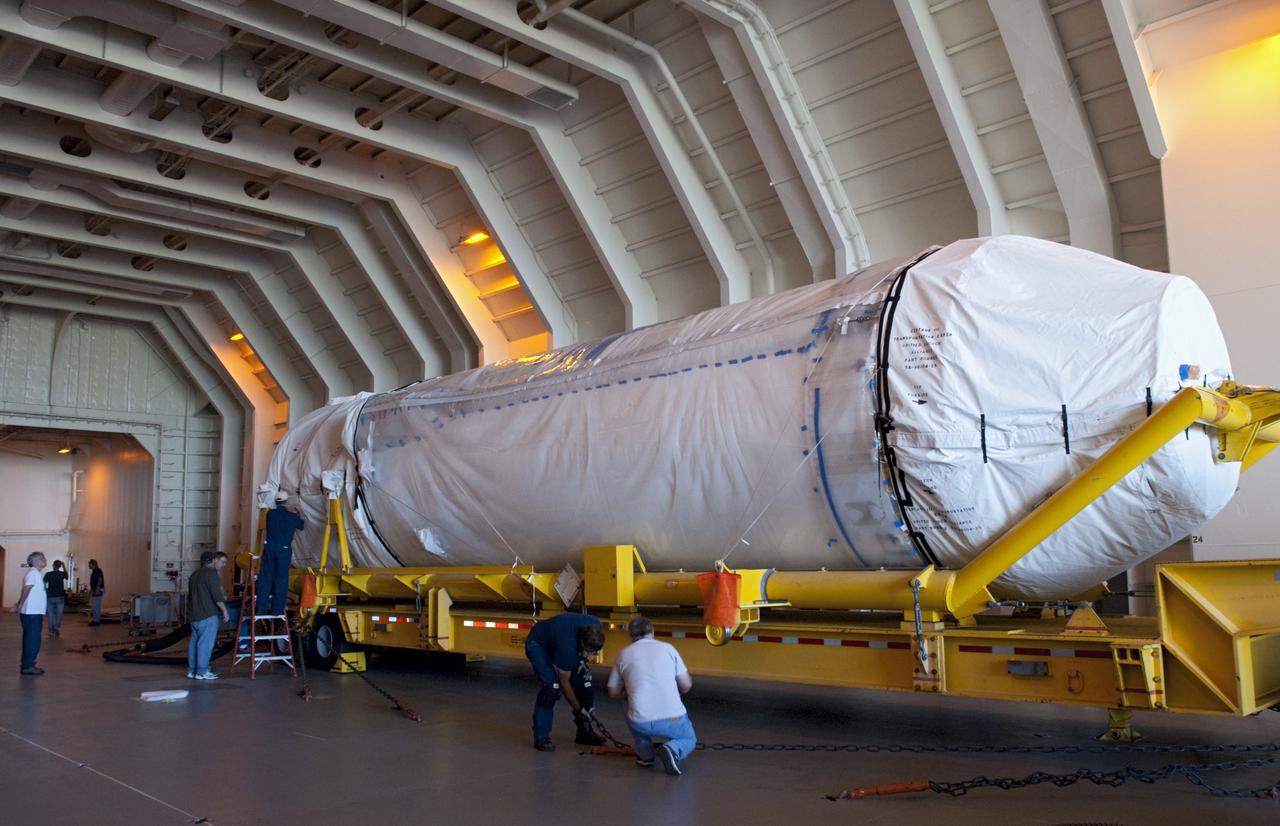
PORT CANAVERAL, Fla. – A Centaur stage is off loaded from the United Launch Alliance barge Delta Mariner that just arrived at Port Canaveral, Fla. The Centaur will be part of a launch vehicle that will boost the Tracking and Data Relay Satellite-K, or TDRS-K, into Earth orbit atop an Atlas V rocket. The Centaur will be transported to the Atlas Spaceflight Operations Center, or ASOC, at Cape Canaveral Air Force Station to begin processing. The TDRS-K spacecraft is part of the next-generation series in the Tracking and Data Relay Satellite System, a constellation of space-based communication satellites providing tracking, telemetry, command and high-bandwidth data return services. For more information, visit http://tdrs.gsfc.nasa.gov/ Photo credit: NASA/Charisse Nahser
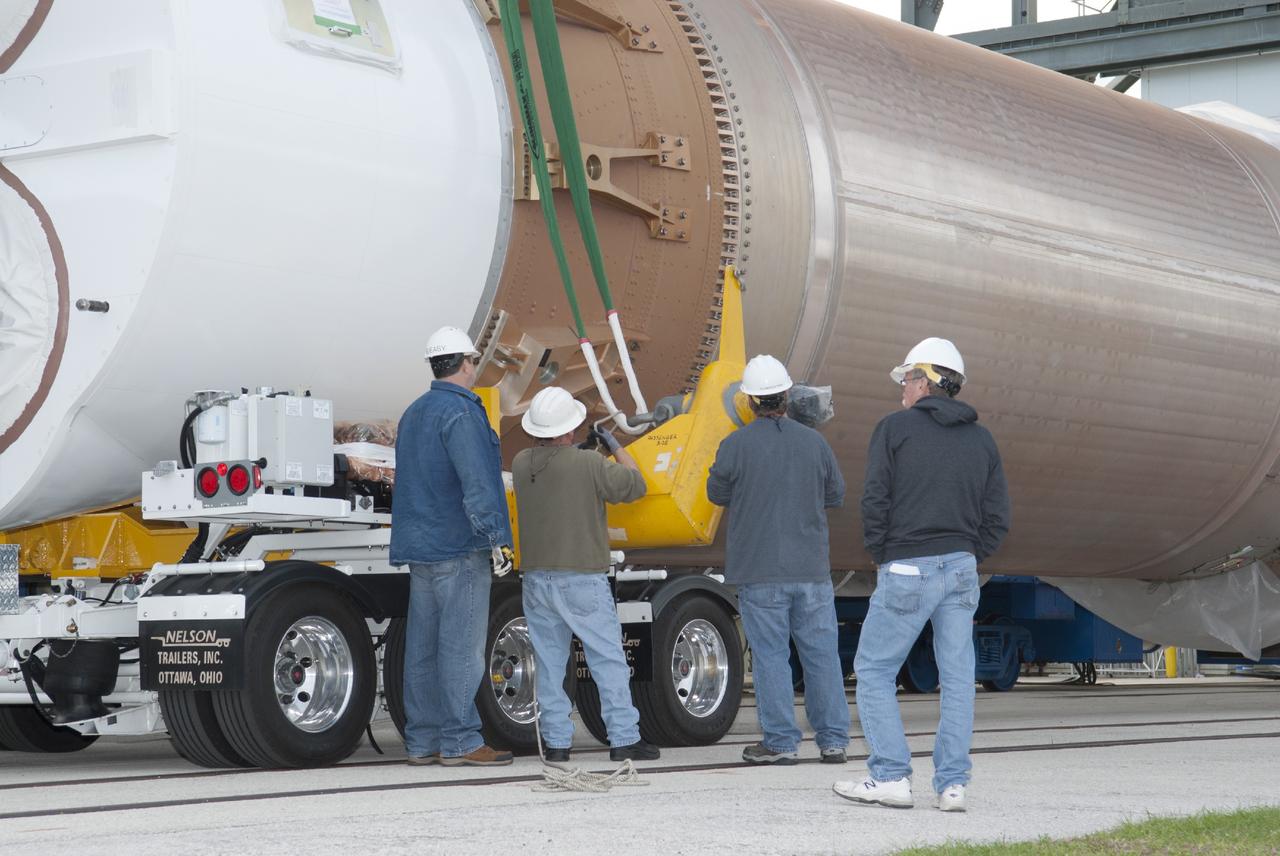
CAPE CANAVERAL, Fla. – At Cape Canaveral Air Force Station, engineers and technicians prepare the United Launch Alliance Atlas V rocket for stacking in the Vertical Integration Facility at Launch Complex 41. The vehicle will be used to boost the Tracking and Data Relay Satellite, or TDRS-L, spacecraft to orbit. TDRS-L is the second of three next-generation satellites designed to ensure vital operational continuity for the NASA Space Network. It is scheduled to launch from Cape Canaveral's Space Launch Complex 41 atop an Atlas V rocket in January 2014. The current Tracking and Data Relay Satellite system consists of eight in-orbit satellites distributed to provide near continuous information relay service to missions such as the Hubble Space Telescope and International Space Station. For more information, visit: http://www.nasa.gov/content/tracking-and-data-relay-satellite-tdrs/ Photo credit: NASA/Charisse Nahser
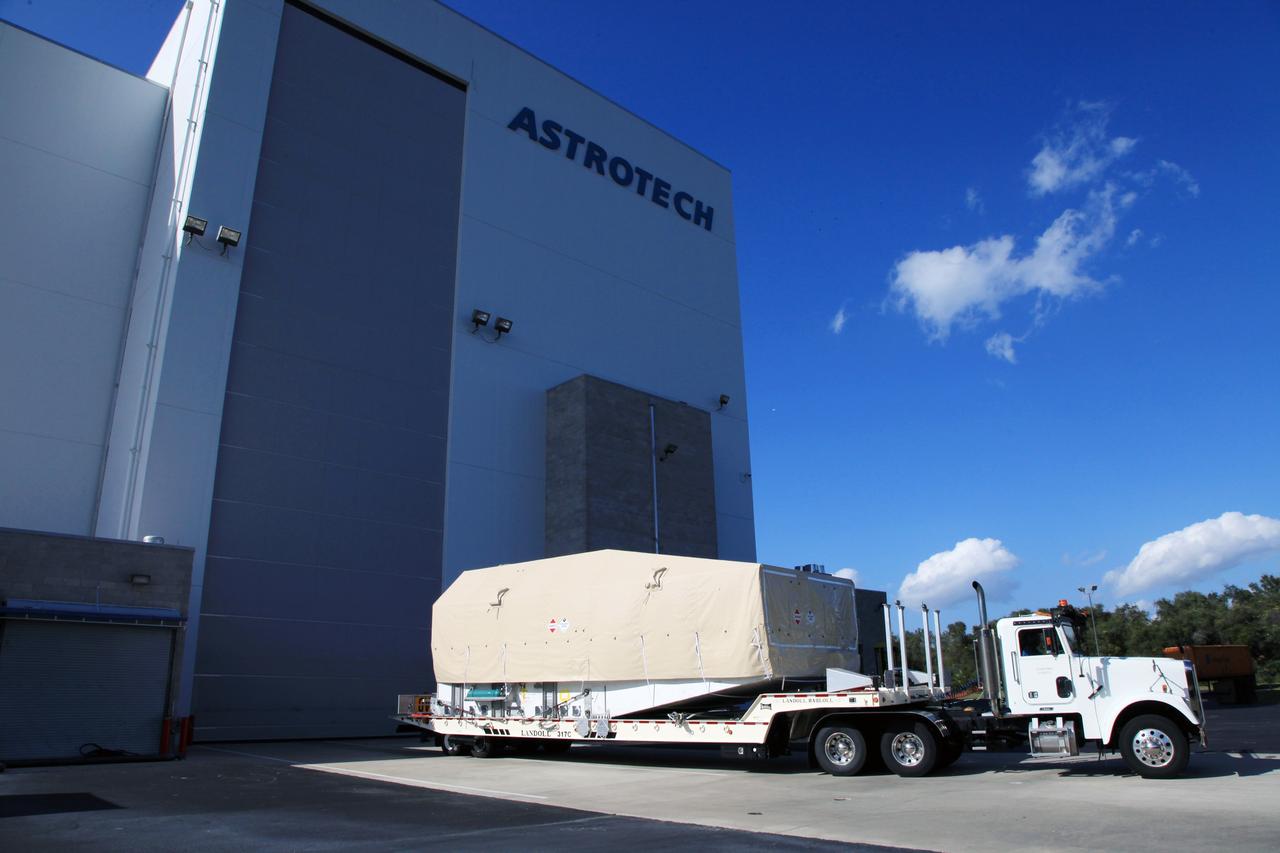
TITUSVILLE, Fla. - A truck transporting the Tracking and Data Relay Satellite, TDRS-K, arrives at the Astrotech payload processing facility in Titusville, Fla. near NASA’s Kennedy Space Center. Launch of the TDRS-K on the Atlas V rocket is planned for January 29, 2013. The TDRS-K spacecraft is part of the next-generation series in the Tracking and Data Relay Satellite System, a constellation of space-based communication satellites providing tracking, telemetry, command and high-bandwidth data return services. For more information, visit http://www.nasa.gov/mission_pages/tdrs/index.html Photo credit: NASA/Kim Shiflett
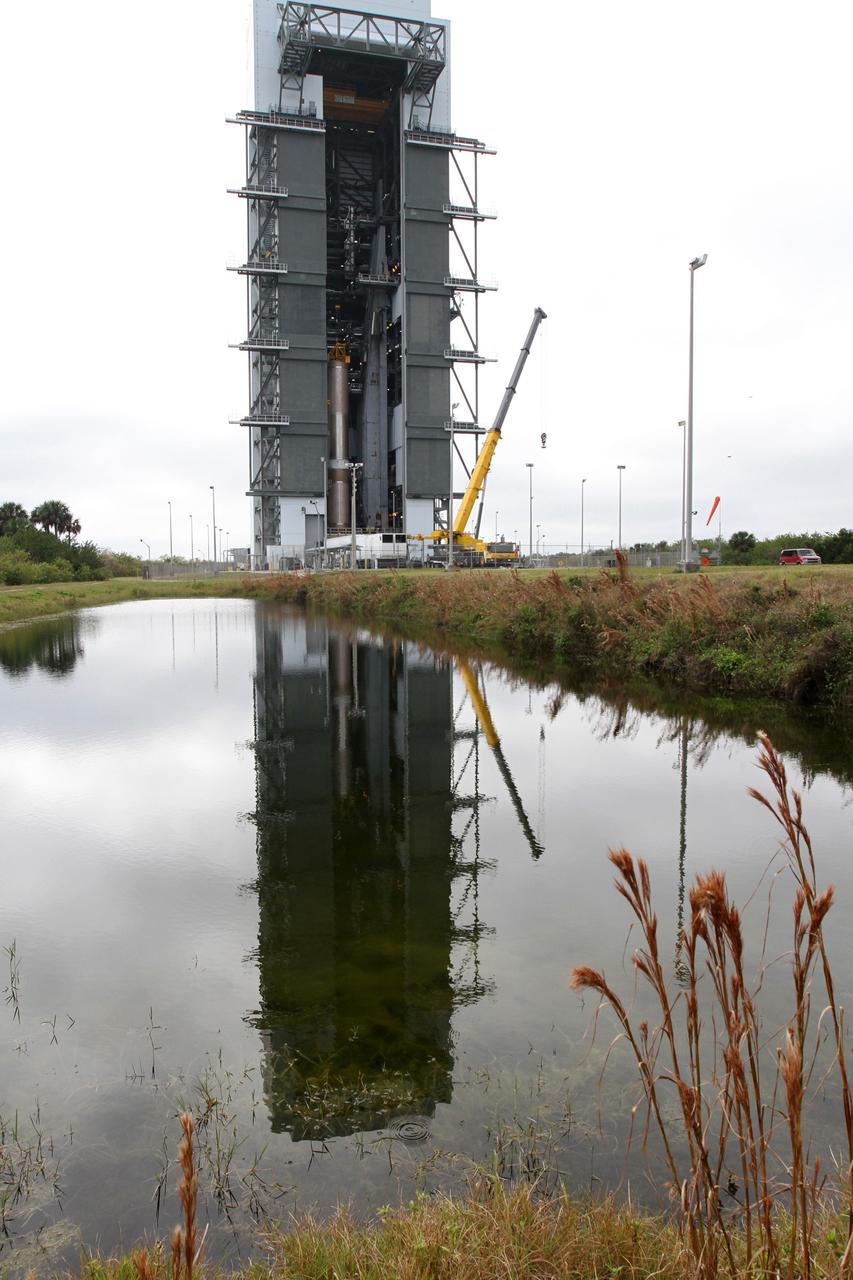
CAPE CANAVERAL, Fla. -- The first stage of the Atlas V rocket that will carry the Tracking and Data Relay Satellite, TDRS-K, into orbit has been erected at Cape Canaveral Air Force Station's Space Launch Complex 41 in Florida. Launch of the TDRS-K on the Atlas V rocket is planned for January 29, 2013. The TDRS-K spacecraft is part of the next-generation series in the Tracking and Data Relay Satellite System, a constellation of space-based communication satellites providing tracking, telemetry, command and high-bandwidth data return services. For more information, visit http://www.nasa.gov/mission_pages/tdrs/index.html Photo credit: NASA/ Ben Smegelsky
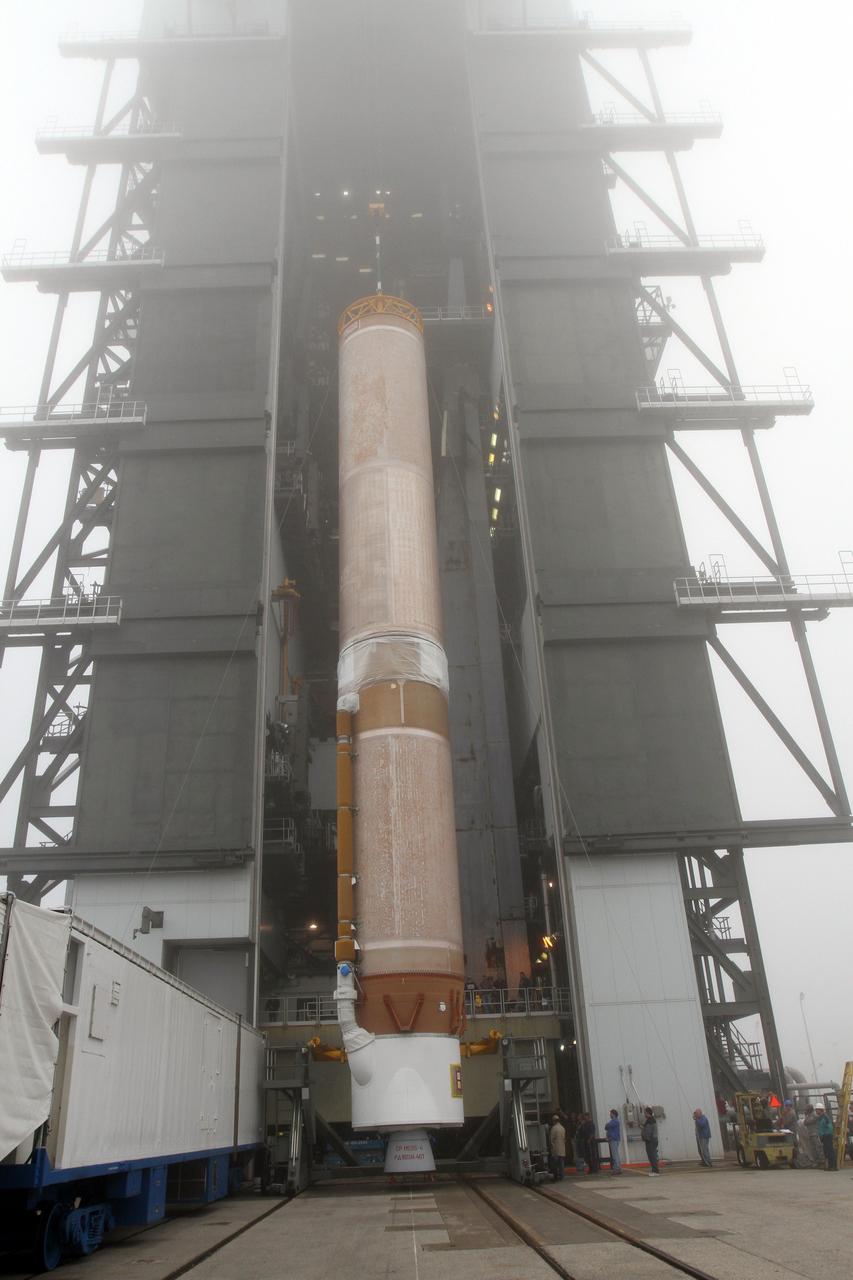
CAPE CANAVERAL, Fla. -- In the morning fog at Cape Canaveral Air Force Station's Space Launch Complex 41 in Florida, operations are underway to erect the first stage of the Atlas V rocket that will carry the Tracking and Data Relay Satellite, TDRS-K, into orbit. Launch of the TDRS-K on the Atlas V rocket is planned for January 29, 2013. The TDRS-K spacecraft is part of the next-generation series in the Tracking and Data Relay Satellite System, a constellation of space-based communication satellites providing tracking, telemetry, command and high-bandwidth data return services. For more information, visit http://www.nasa.gov/mission_pages/tdrs/index.html Photo credit: NASA/ Ben Smegelsky
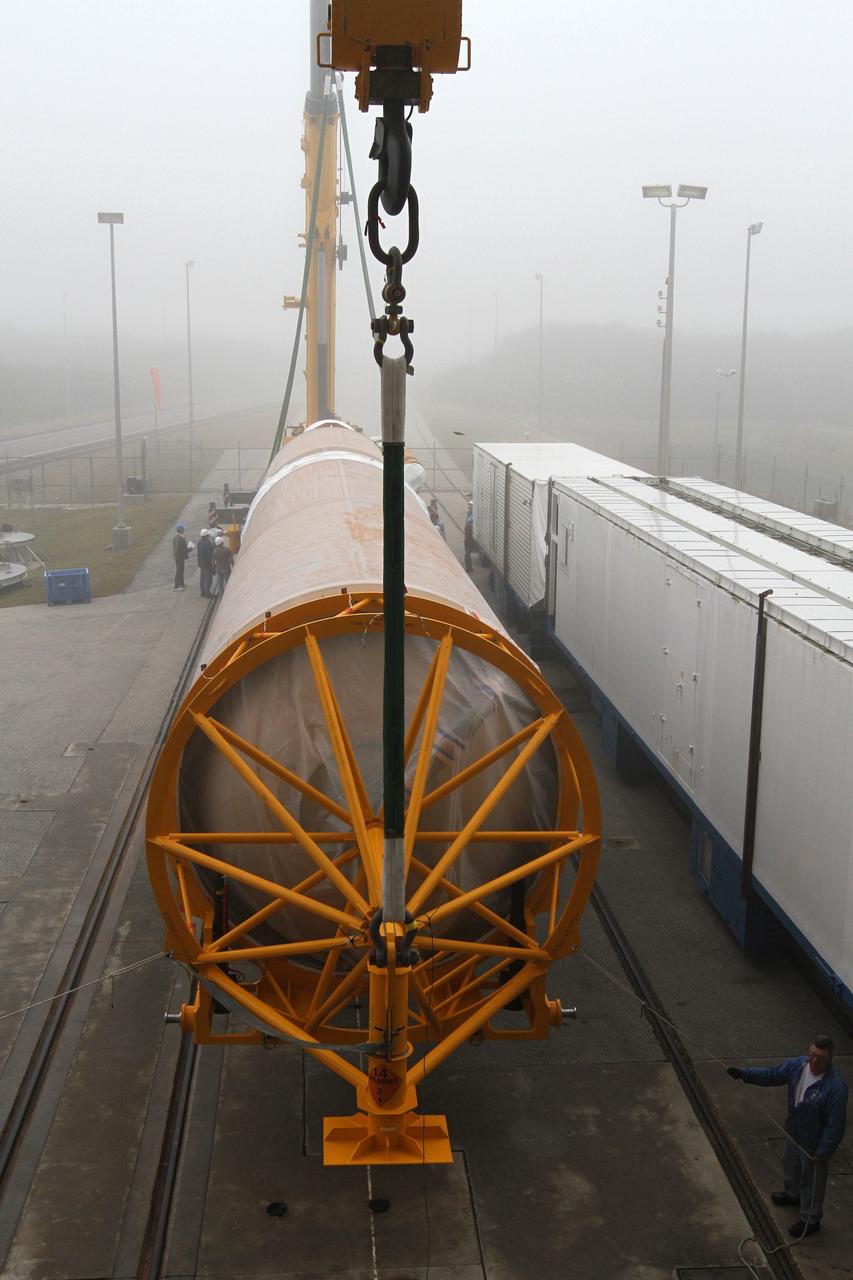
CAPE CANAVERAL, Fla. -- In the morning fog at Cape Canaveral Air Force Station's Space Launch Complex 41 in Florida, preparations are underway to erect the first stage of the Atlas V rocket that will carry the Tracking and Data Relay Satellite, TDRS-K, into orbit. Launch of the TDRS-K on the Atlas V rocket is planned for January 29, 2013. The TDRS-K spacecraft is part of the next-generation series in the Tracking and Data Relay Satellite System, a constellation of space-based communication satellites providing tracking, telemetry, command and high-bandwidth data return services. For more information, visit http://www.nasa.gov/mission_pages/tdrs/index.html Photo credit: NASA/ Ben Smegelsky
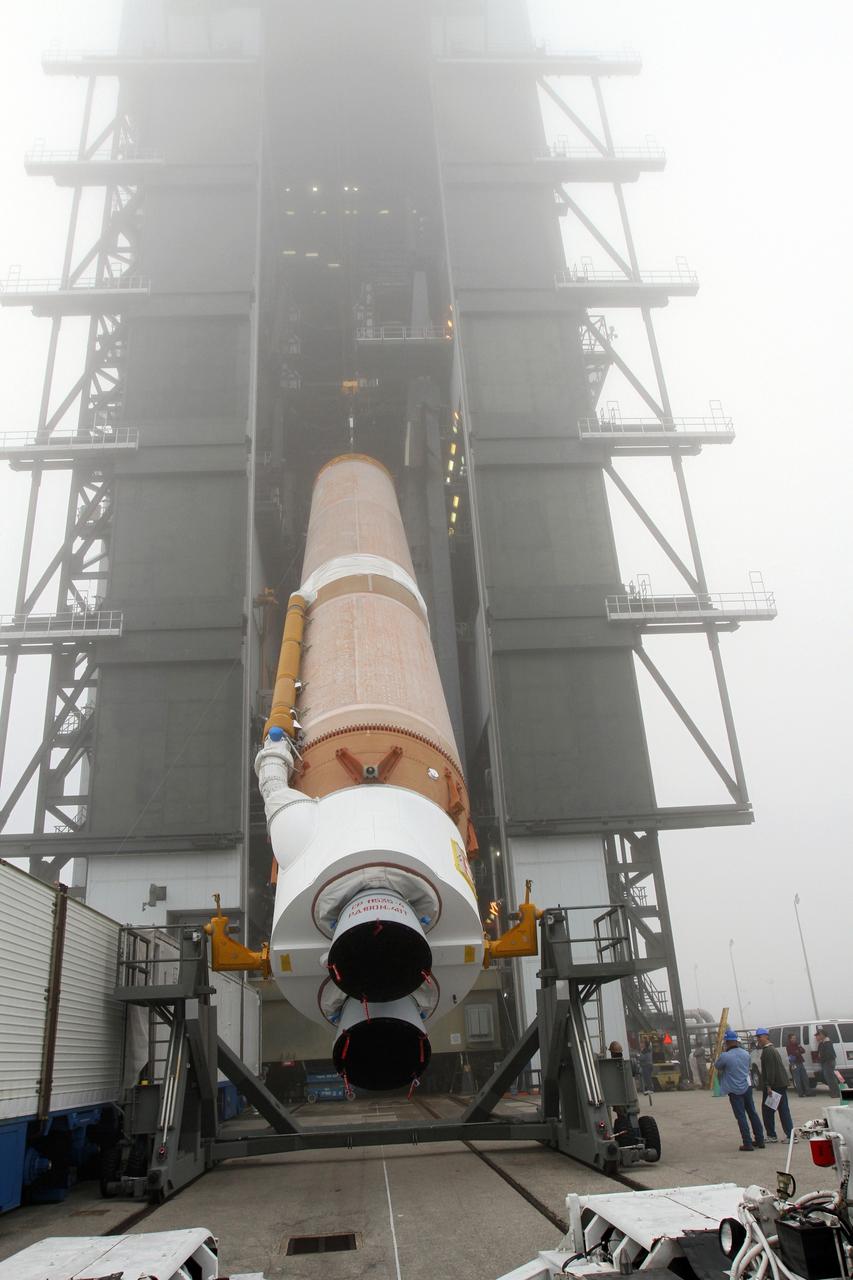
CAPE CANAVERAL, Fla. -- At Cape Canaveral Air Force Station's Space Launch Complex 41 in Florida, operations are underway to erect the first stage of the Atlas V rocket that will carry the Tracking and Data Relay Satellite, TDRS-K, into orbit. Launch of the TDRS-K on the Atlas V rocket is planned for January 29, 2013. The TDRS-K spacecraft is part of the next-generation series in the Tracking and Data Relay Satellite System, a constellation of space-based communication satellites providing tracking, telemetry, command and high-bandwidth data return services. For more information, visit http://www.nasa.gov/mission_pages/tdrs/index.html Photo credit: NASA/ Ben Smegelsky
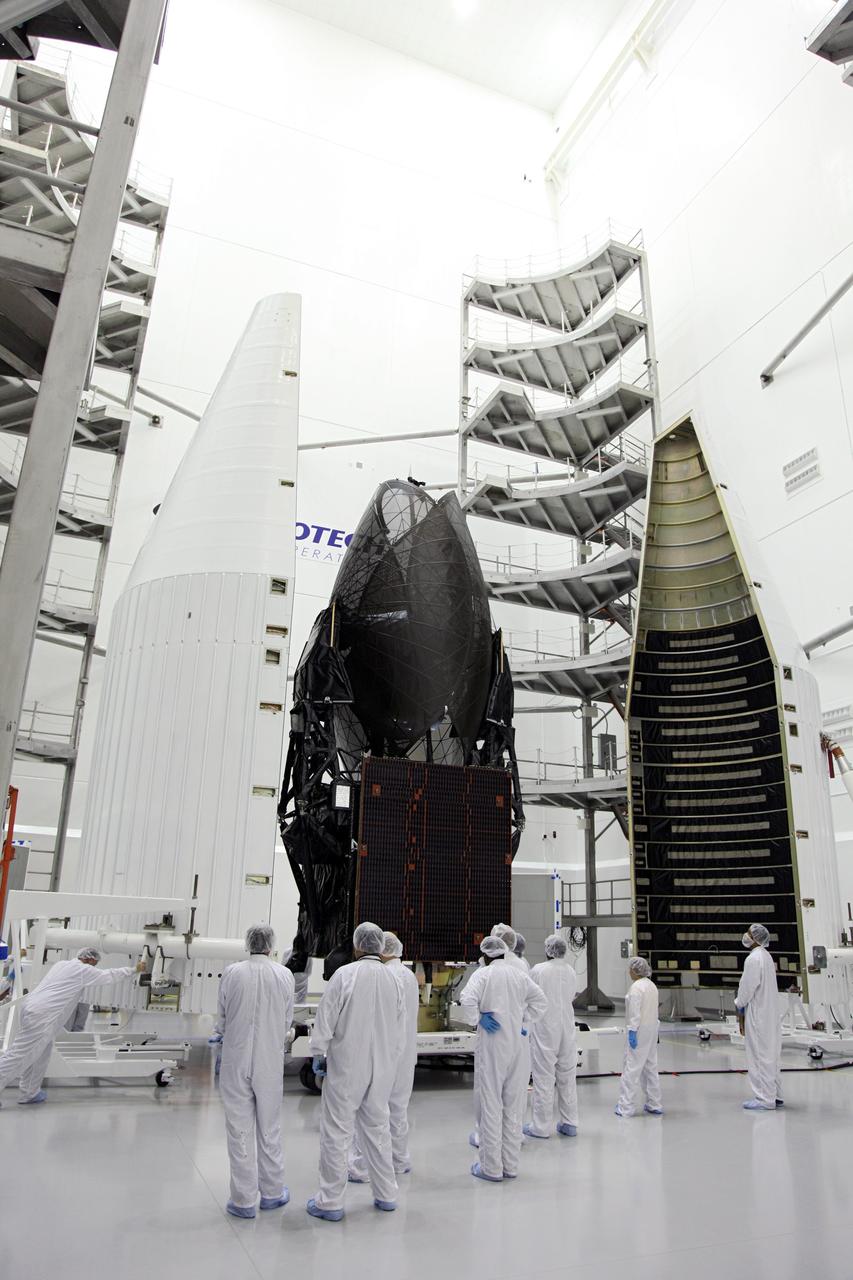
TITUSVILLE, Fla. - NASA's Tracking and Data Relay Satellite, TDRS-K, stands positioned between two pieces that make up the payload fairing that will protect the spacecraft during launch and ascent into space. Technicians working inside the Astrotech payload processing facility in Titusville, Fla., near NASA’s Kennedy Space Center will perform the encapsulation. Launch of the TDRS-K on the United Launch Alliance Atlas V rocket is planned for January 29, 2013. The TDRS-K spacecraft is part of the next-generation series in the Tracking and Data Relay Satellite System, a constellation of space-based communication satellites providing tracking, telemetry, command and high-bandwidth data return services. Photo credit: NASA/Frankie Martin
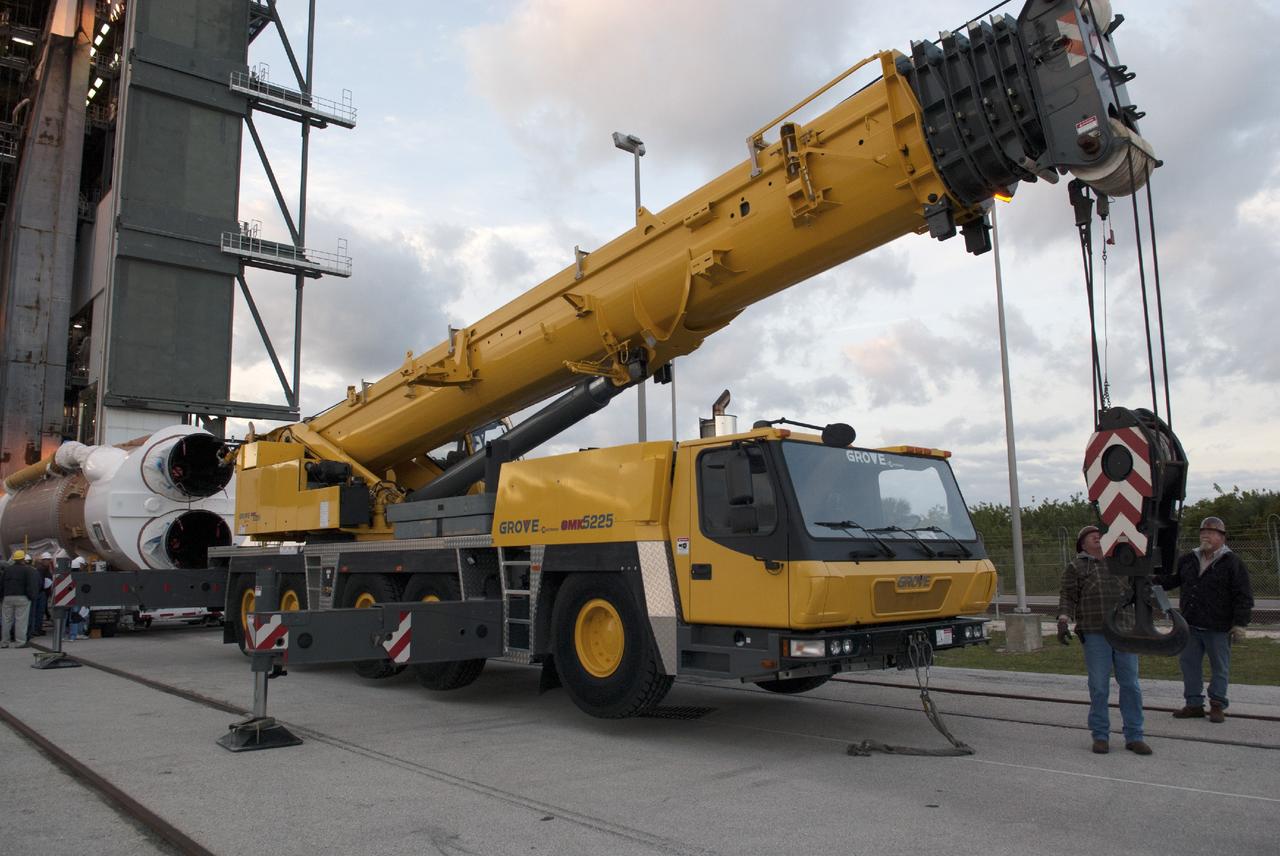
CAPE CANAVERAL, Fla. – At Cape Canaveral Air Force Station's Vertical Integration Facility at Launch Complex 41, a crane is positioned to support stacking of the United Launch Alliance Atlas V rocket that will boost the Tracking and Data Relay Satellite, or TDRS-L, spacecraft into orbit. TDRS-L is the second of three next-generation satellites designed to ensure vital operational continuity for the NASA Space Network. It is scheduled to launch from Cape Canaveral's Space Launch Complex 41 atop an Atlas V rocket in January 2014. The current Tracking and Data Relay Satellite system consists of eight in-orbit satellites distributed to provide near continuous information relay service to missions such as the Hubble Space Telescope and International Space Station. For more information, visit: http://www.nasa.gov/content/tracking-and-data-relay-satellite-tdrs/ Photo credit: NASA/Charisse Nahser
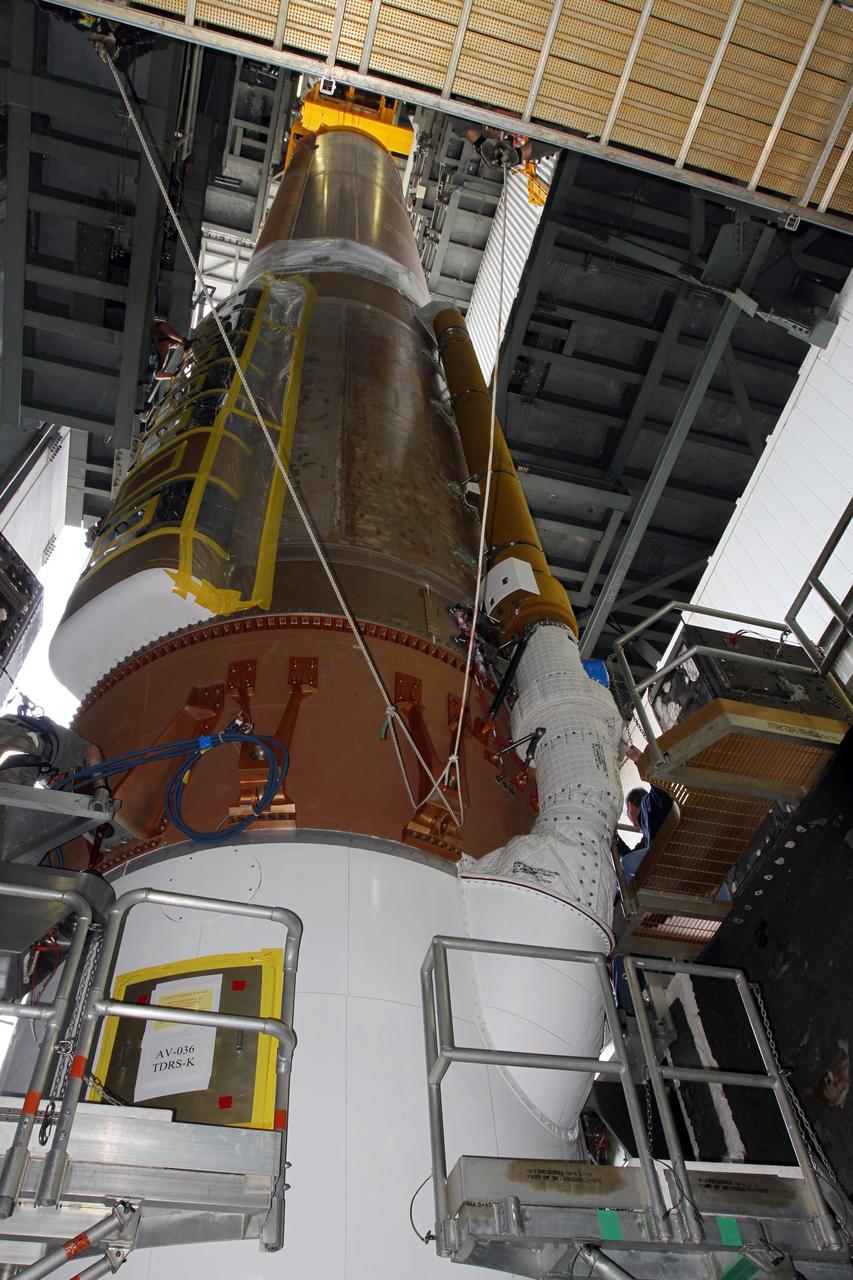
CAPE CANAVERAL, Fla. -- At Cape Canaveral Air Force Station's Space Launch Complex 41 in Florida, operations are underway to erect the first stage of the Atlas V rocket that will carry the Tracking and Data Relay Satellite, TDRS-K, into orbit. Launch of the TDRS-K on the Atlas V rocket is planned for January 29, 2013. The TDRS-K spacecraft is part of the next-generation series in the Tracking and Data Relay Satellite System, a constellation of space-based communication satellites providing tracking, telemetry, command and high-bandwidth data return services. For more information, visit http://www.nasa.gov/mission_pages/tdrs/index.html Photo credit: NASA/ Ben Smegelsky
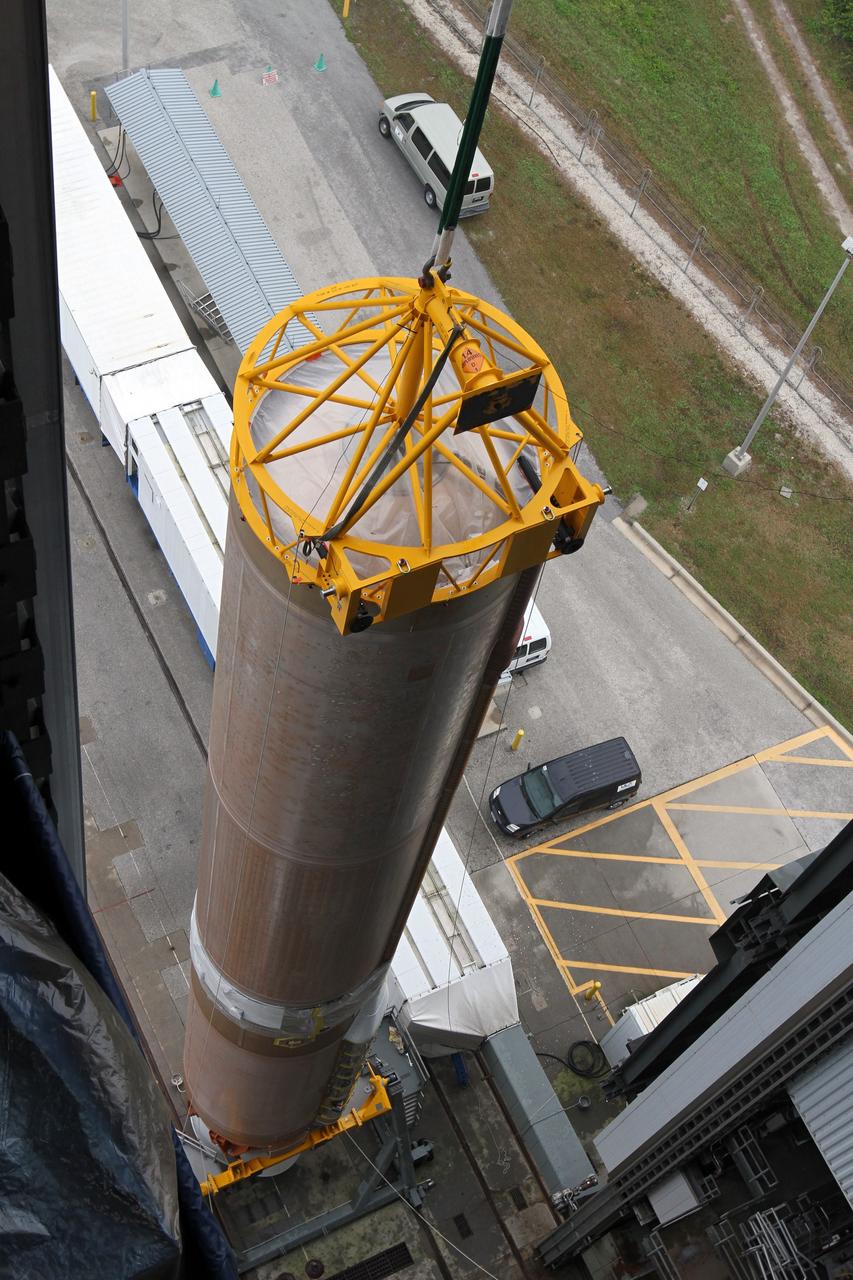
CAPE CANAVERAL, Fla. -- At Cape Canaveral Air Force Station's Space Launch Complex 41 in Florida, operations are underway to erect the first stage of the Atlas V rocket that will carry the Tracking and Data Relay Satellite, TDRS-K, into orbit. Launch of the TDRS-K on the Atlas V rocket is planned for January 29, 2013. The TDRS-K spacecraft is part of the next-generation series in the Tracking and Data Relay Satellite System, a constellation of space-based communication satellites providing tracking, telemetry, command and high-bandwidth data return services. For more information, visit http://www.nasa.gov/mission_pages/tdrs/index.html Photo credit: NASA/ Ben Smegelsky
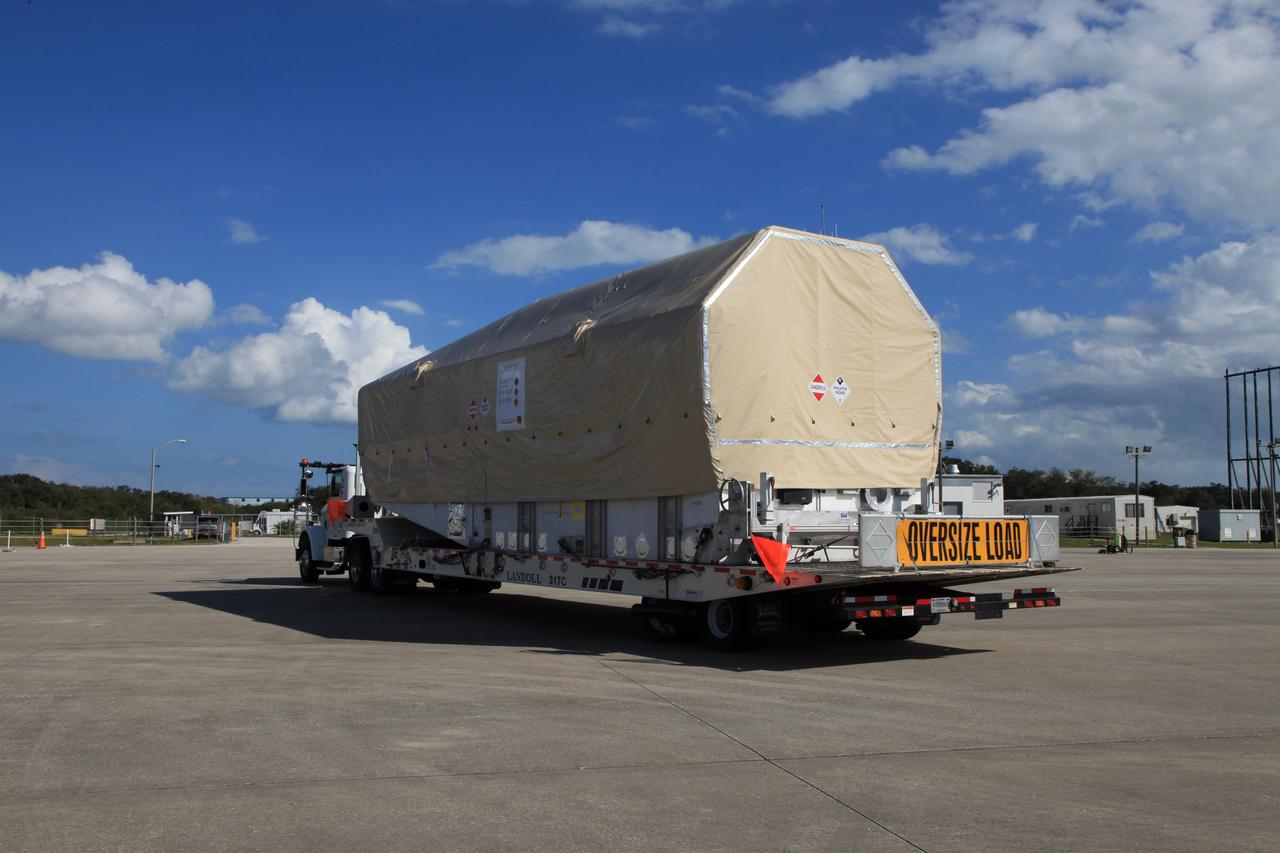
CAPE CANAVERAL, Fla. - A truck transporting the Tracking and Data Relay Satellite, TDRS-K, departs from the Shuttle Landing Facility at NASA's Kennedy Space Center in Florida. Launch of the TDRS-K on the Atlas V rocket is planned for January 29, 2013. The TDRS-K spacecraft is part of the next-generation series in the Tracking and Data Relay Satellite System, a constellation of space-based communication satellites providing tracking, telemetry, command and high-bandwidth data return services. For more information, visit http://www.nasa.gov/mission_pages/tdrs/index.html Photo credit: NASA/Kim Shiflett
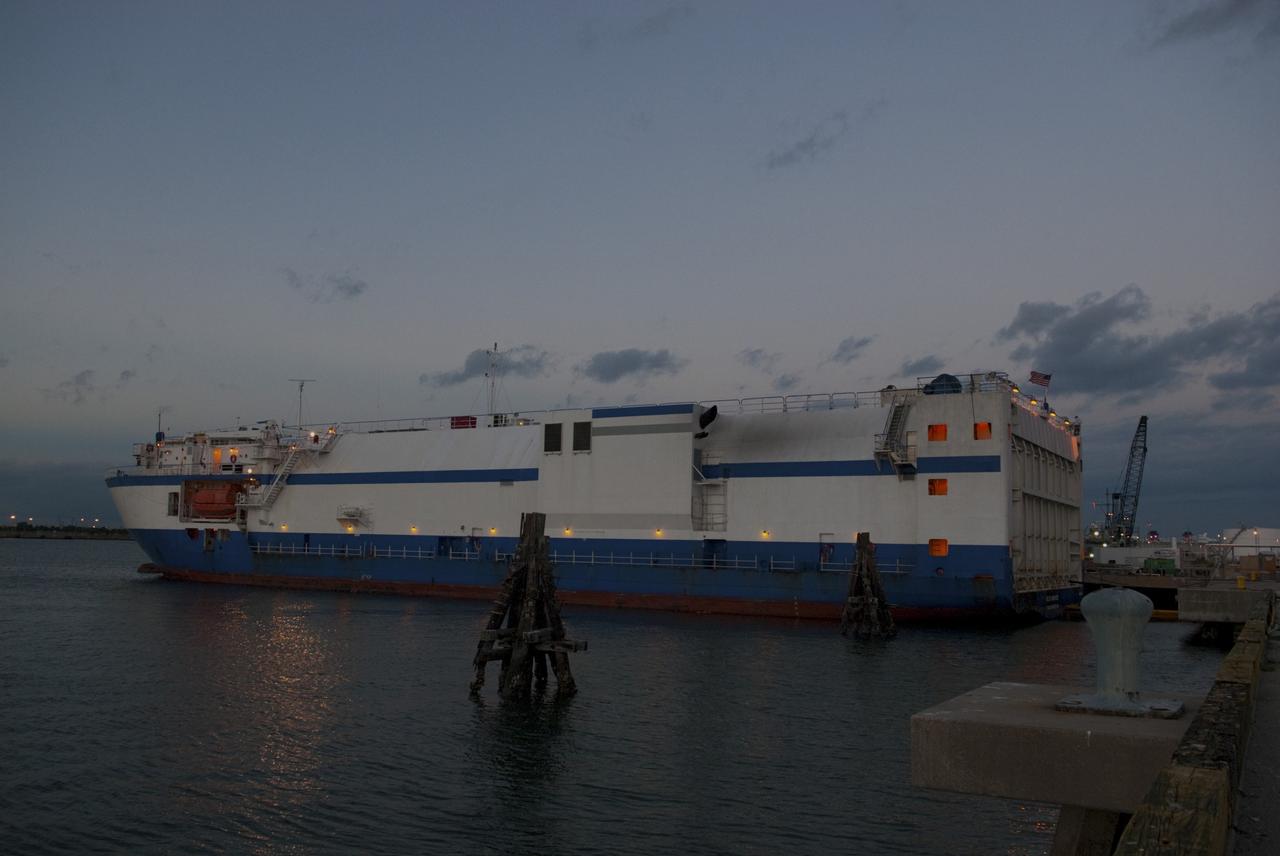
PORT CANAVERAL, Fla. – The United Launch Alliance barge Delta Mariner arrives at Port Canaveral, Fla. delivering the Centaur stage of the launch vehicle that will boost the Tracking and Data Relay Satellite-K, or TDRS-K, into Earth orbit atop an Atlas V rocket. After off-loading, the Centaur will be transported to the Atlas Spaceflight Operations Center, or ASOC, at Cape Canaveral Air Force Station to begin processing. The TDRS-K spacecraft is part of the next-generation series in the Tracking and Data Relay Satellite System, a constellation of space-based communication satellites providing tracking, telemetry, command and high-bandwidth data return services. For more information, visit http://tdrs.gsfc.nasa.gov/ Photo credit: NASA/Charisse Nahser
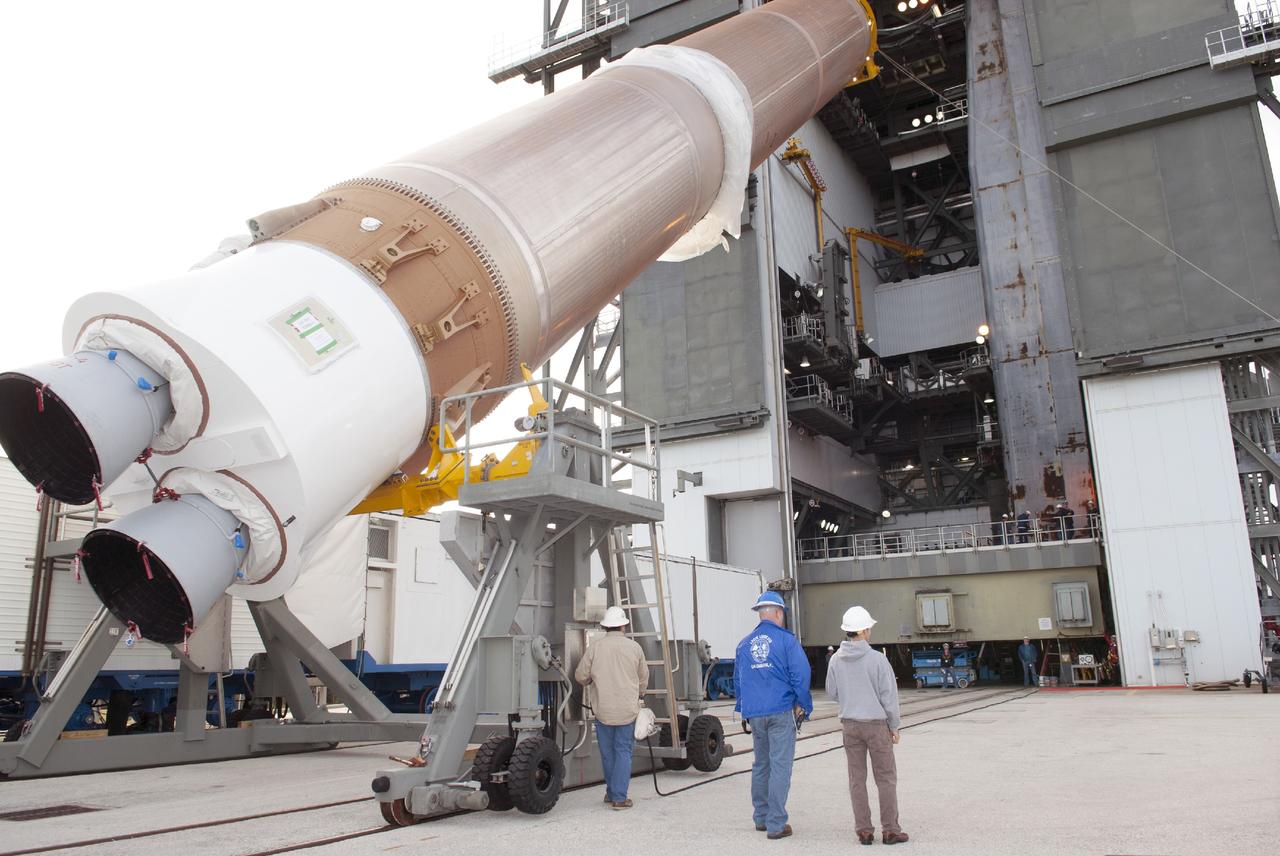
CAPE CANAVERAL, Fla. – At Cape Canaveral Air Force Station, the first stage of the United Launch Alliance Atlas V rocket is lifted for stacking in the Vertical Integration Facility at Launch Complex 41. The vehicle will be used to boost the Tracking and Data Relay Satellite, or TDRS-L, spacecraft to orbit. TDRS-L is the second of three next-generation satellites designed to ensure vital operational continuity for the NASA Space Network. It is scheduled to launch from Cape Canaveral's Space Launch Complex 41 atop an Atlas V rocket in January 2014. The current Tracking and Data Relay Satellite system consists of eight in-orbit satellites distributed to provide near continuous information relay service to missions such as the Hubble Space Telescope and International Space Station. For more information, visit: http://www.nasa.gov/content/tracking-and-data-relay-satellite-tdrs/ Photo credit: NASA/Charisse Nahser
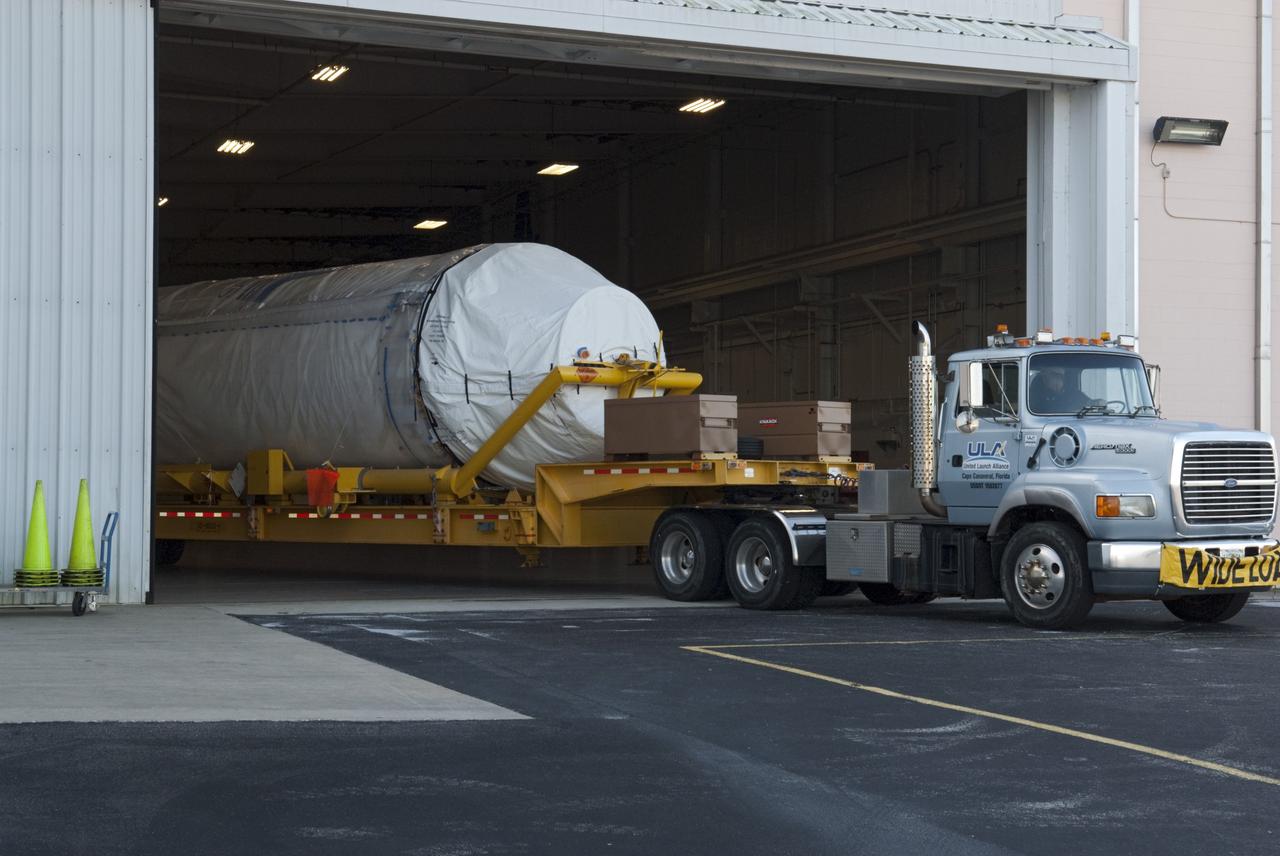
CAPE CANAVERAL, Fla. – A Centaur stage arrives the Atlas Spaceflight Operations Center, or ASOC, at Cape Canaveral Air Force Station to begin processing. The Centaur will be part of a launch vehicle that will boost the Tracking and Data Relay Satellite-K, or TDRS-K, into Earth orbit atop an Atlas V rocket. Lift off is scheduled for 11:57 p.m. on Dec. 13, 2012 from Space Launch Complex 41 at Cape Canaveral. The TDRS-K spacecraft is part of the next-generation series in the Tracking and Data Relay Satellite System, a constellation of space-based communication satellites providing tracking, telemetry, command and high-bandwidth data return services. For more information, visit http://tdrs.gsfc.nasa.gov/ Photo credit: NASA/Charisse Nahser
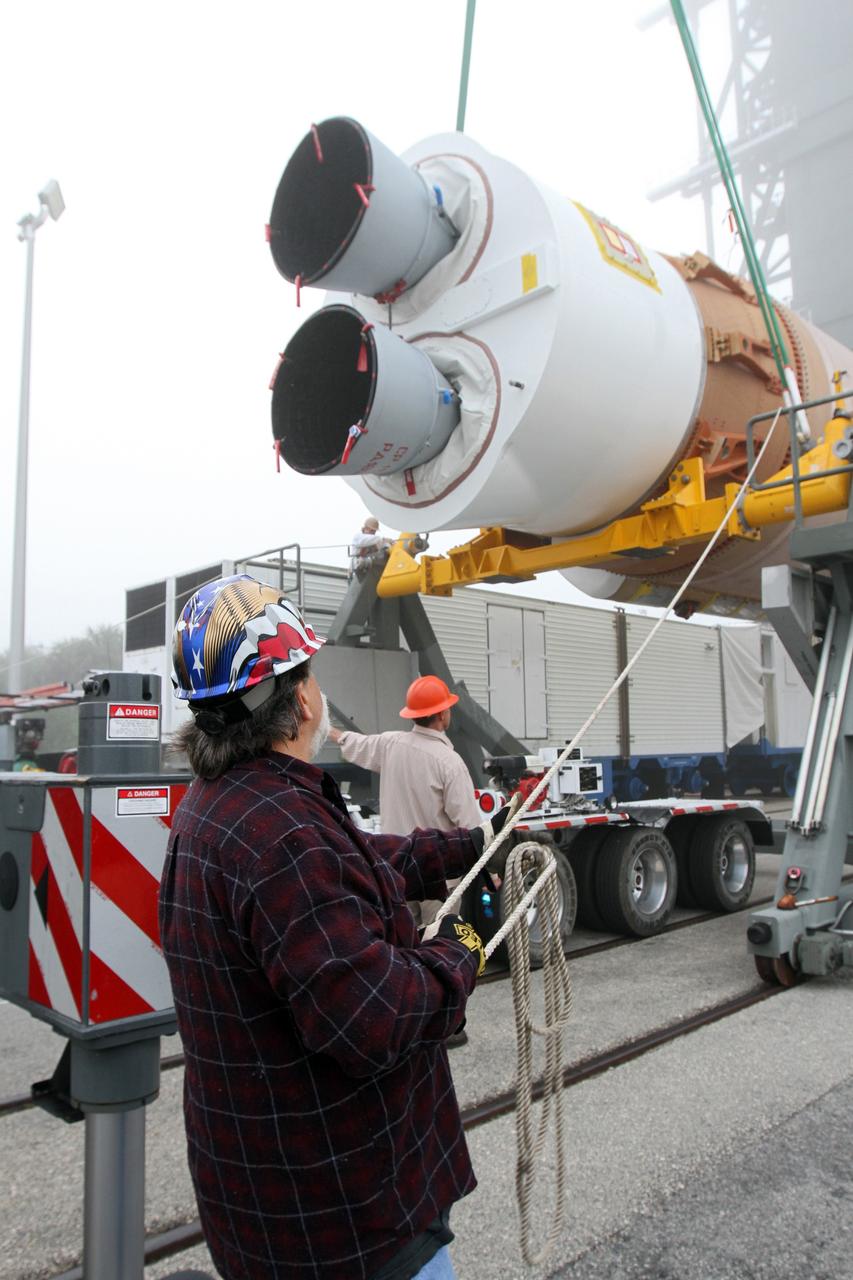
CAPE CANAVERAL, Fla. -- At Cape Canaveral Air Force Station's Space Launch Complex 41 in Florida, United Launch Alliance technicians support operations to erect the first stage of the Atlas V rocket that will carry the Tracking and Data Relay Satellite, TDRS-K, into orbit. Launch of the TDRS-K on the Atlas V rocket is planned for January 29, 2013. The TDRS-K spacecraft is part of the next-generation series in the Tracking and Data Relay Satellite System, a constellation of space-based communication satellites providing tracking, telemetry, command and high-bandwidth data return services. For more information, visit http://www.nasa.gov/mission_pages/tdrs/index.html Photo credit: NASA/ Ben Smegelsky

TITUSVILLE, Fla. – Technicians move one half of the payload fairing into place over NASA's Tracking and Data Relay Satellite, TDRS-K, inside the Astrotech payload processing facility in Titusville, Fla., near NASA’s Kennedy Space Center. Launch of the TDRS-K on a United Launch Alliance Atlas V rocket is planned for January 29, 2013. The TDRS-K spacecraft is part of the next-generation series in the Tracking and Data Relay Satellite System, a constellation of space-based communication satellites providing tracking, telemetry, command and high-bandwidth data return services. Photo credit: NASA/Frankie Martin
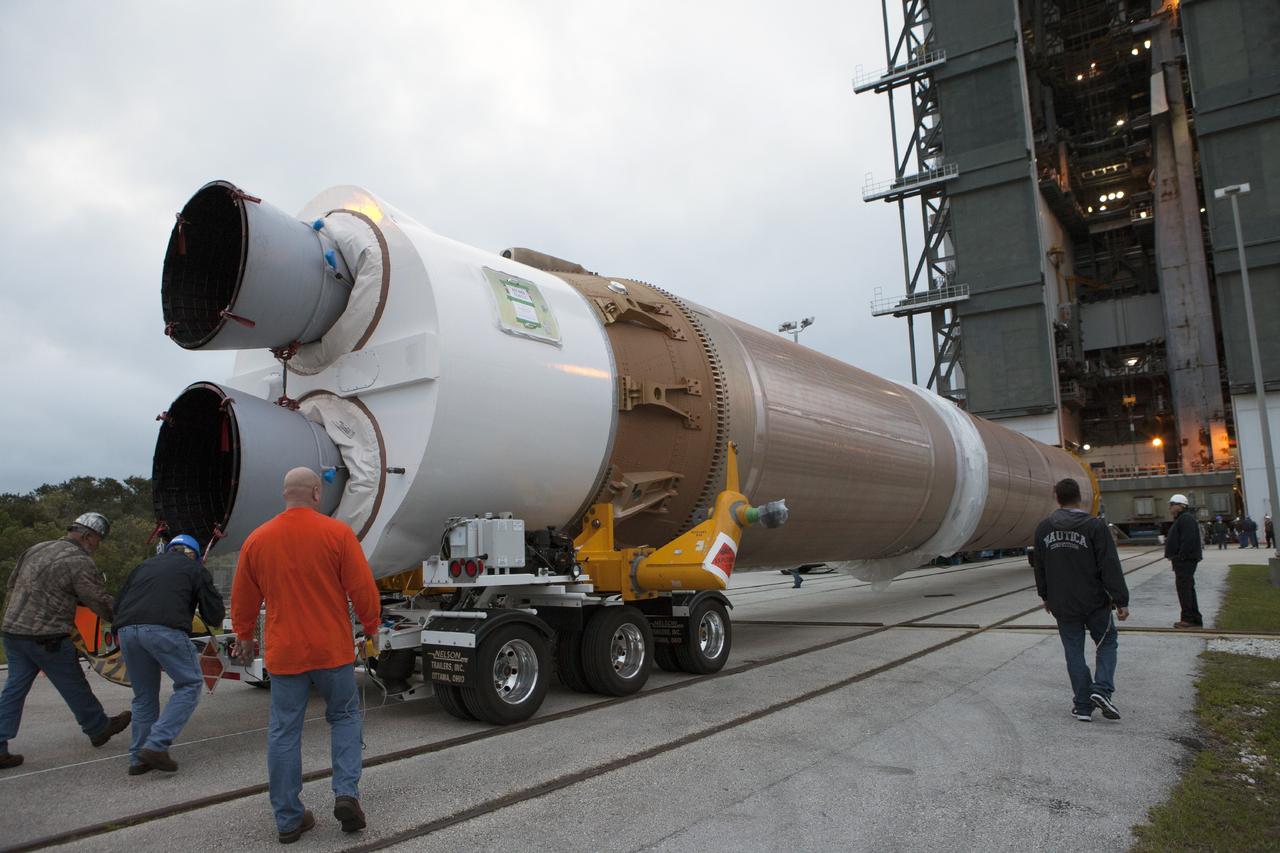
CAPE CANAVERAL, Fla. – The United Launch Alliance Atlas V first stage booster that will boost the Tracking and Data Relay Satellite, or TDRS-L, spacecraft into orbit arrives at Cape Canaveral Air Force Station's Launch Complex 41. TDRS-L is the second of three next-generation satellites designed to ensure vital operational continuity for the NASA Space Network. It is scheduled to launch from Cape Canaveral's Space Launch Complex 41 atop an Atlas V rocket in January 2014. The current Tracking and Data Relay Satellite system consists of eight in-orbit satellites distributed to provide near continuous information relay service to missions such as the Hubble Space Telescope and International Space Station. For more information, visit: http://www.nasa.gov/content/tracking-and-data-relay-satellite-tdrs/ Photo credit: NASA/Kim Shiflett
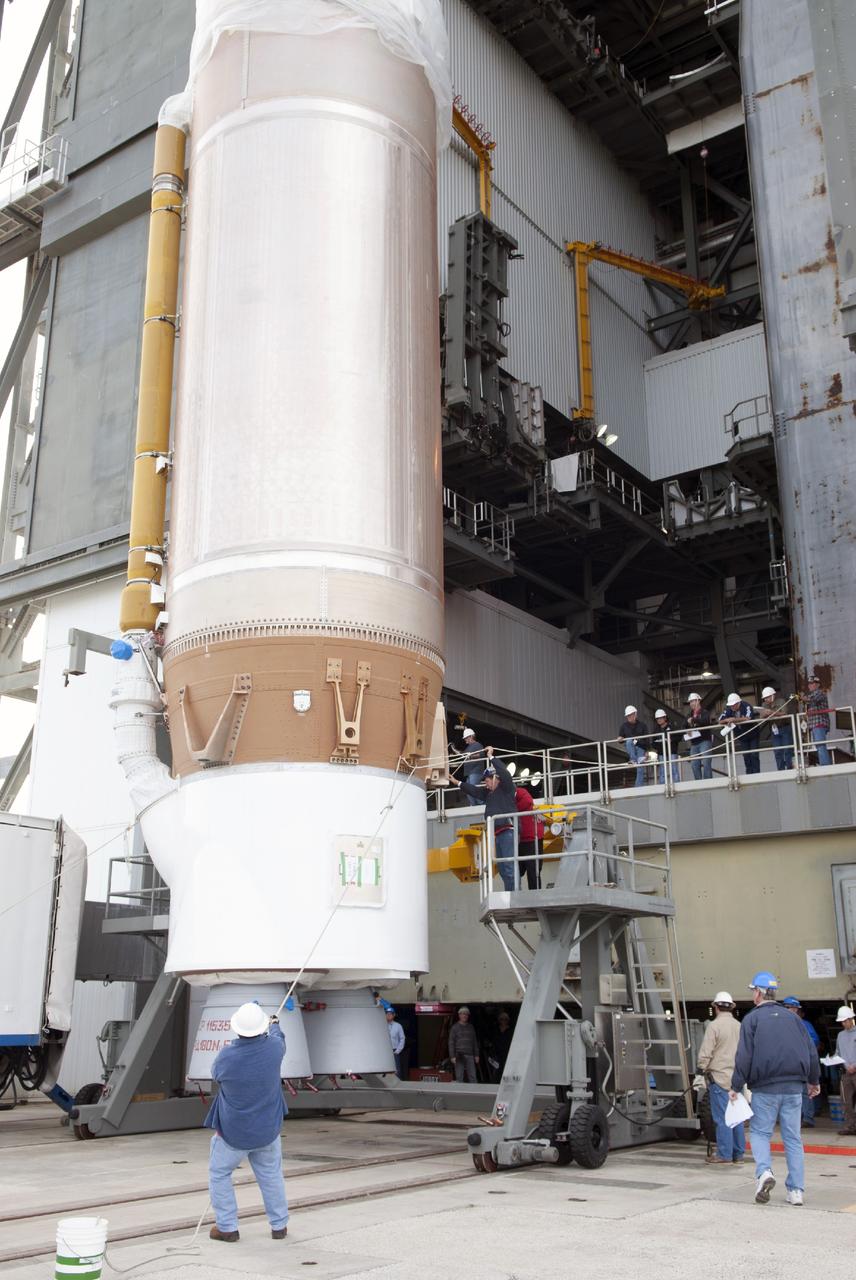
CAPE CANAVERAL, Fla. – At Cape Canaveral Air Force Station, engineers and technicians support lifting the first stage of the United Launch Alliance Atlas V rocket during stacking operations in the Vertical Integration Facility at Launch Complex 41. The vehicle will be used to boost the Tracking and Data Relay Satellite, or TDRS-L, spacecraft to orbit. TDRS-L is the second of three next-generation satellites designed to ensure vital operational continuity for the NASA Space Network. It is scheduled to launch from Cape Canaveral's Space Launch Complex 41 atop an Atlas V rocket in January 2014. The current Tracking and Data Relay Satellite system consists of eight in-orbit satellites distributed to provide near continuous information relay service to missions such as the Hubble Space Telescope and International Space Station. For more information, visit: http://www.nasa.gov/content/tracking-and-data-relay-satellite-tdrs/ Photo credit: NASA/Charisse Nahser
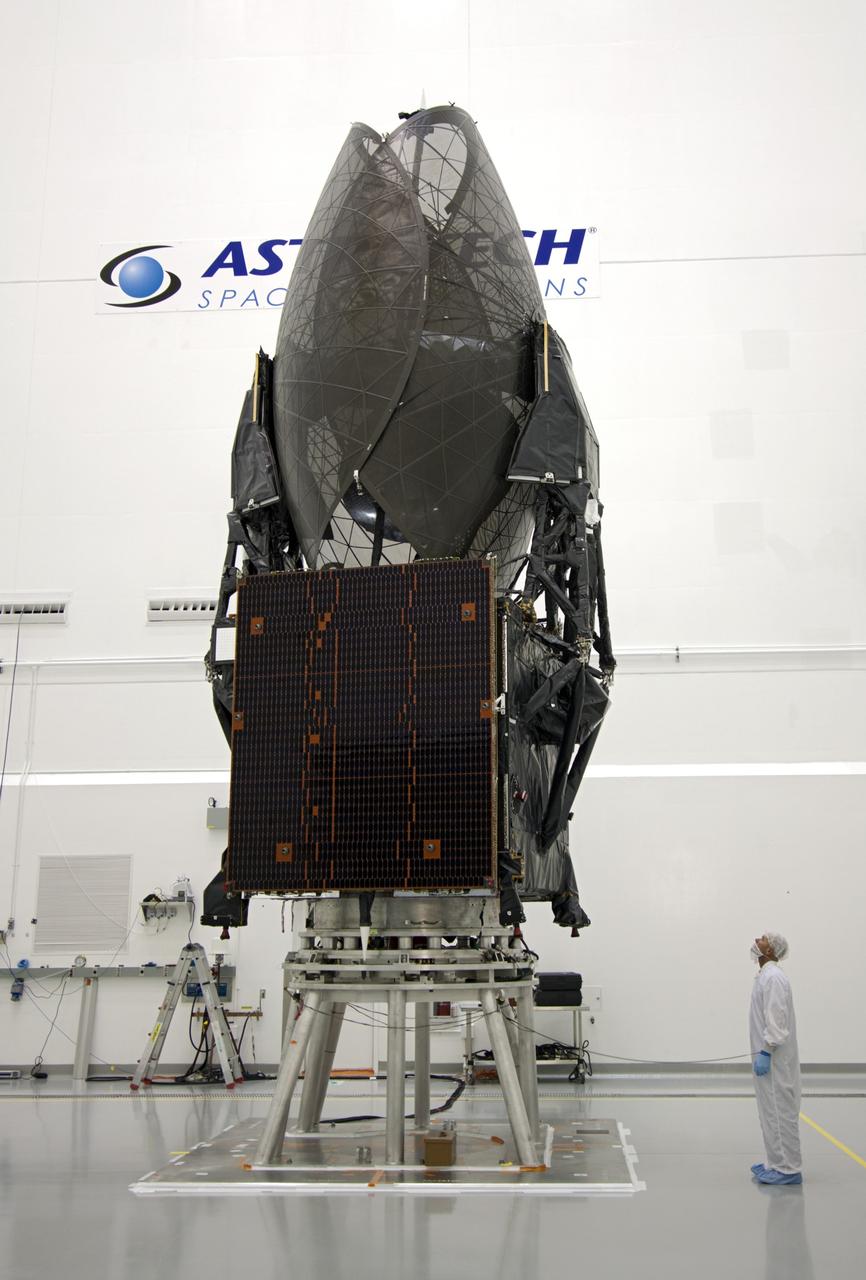
TITUSVILLE, Fla. - In the Astrotech payload processing facility in Titusville, Fla. near NASA’s Kennedy Space Center, a Boeing technician checks out the Tracking and Data Relay Satellite, TDRS-K. Launch of the TDRS-K on the Atlas V rocket is planned for January 29, 2013. The TDRS-K spacecraft is part of the next-generation series in the Tracking and Data Relay Satellite System, a constellation of space-based communication satellites providing tracking, telemetry, command and high-bandwidth data return services. For more information, visit http://www.nasa.gov/mission_pages/tdrs/index.html Photo credit: NASA/Jim Grossmann
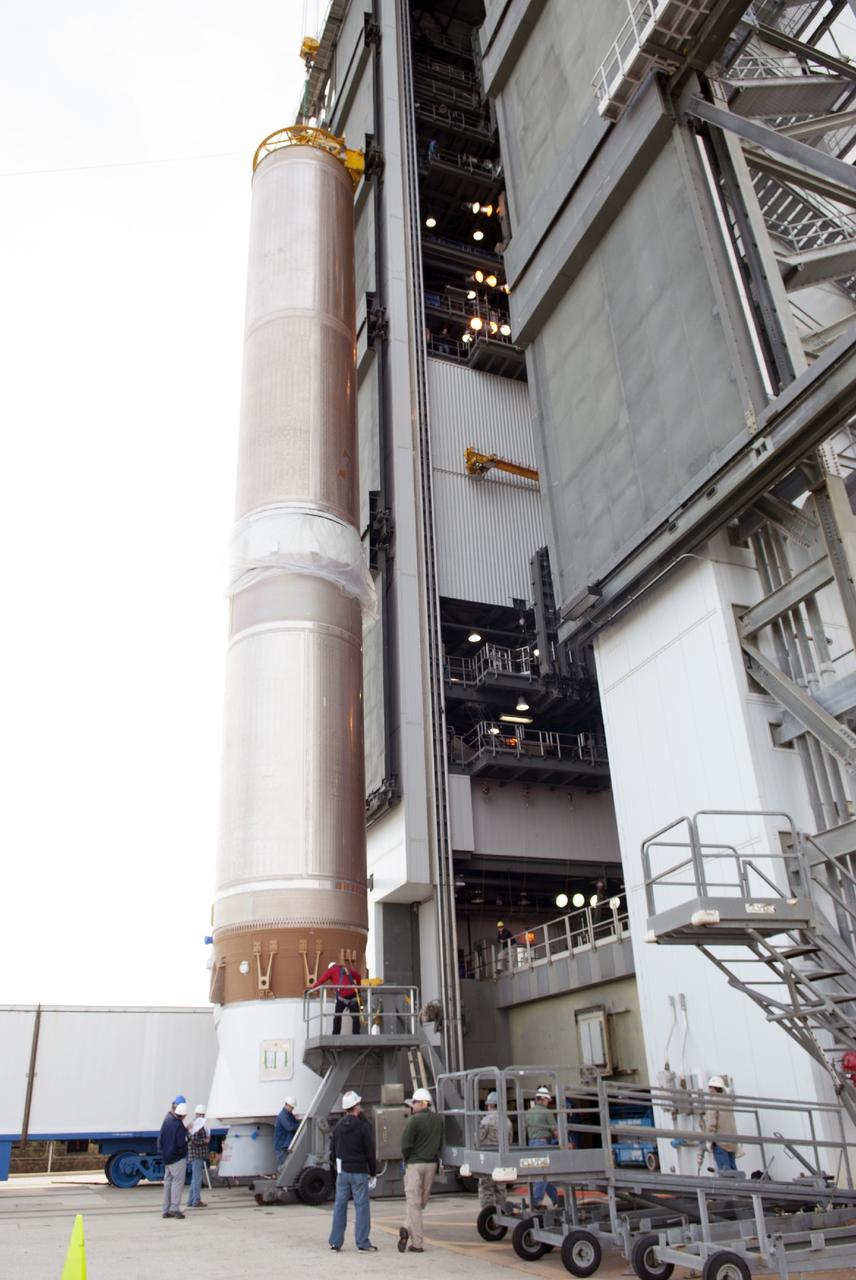
CAPE CANAVERAL, Fla. – At Cape Canaveral Air Force Station, the first stage of the United Launch Alliance Atlas V rocket is lifted for stacking in the Vertical Integration Facility at Launch Complex 41. The vehicle will be used to boost the Tracking and Data Relay Satellite, or TDRS-L, spacecraft to orbit. TDRS-L is the second of three next-generation satellites designed to ensure vital operational continuity for the NASA Space Network. It is scheduled to launch from Cape Canaveral's Space Launch Complex 41 atop an Atlas V rocket in January 2014. The current Tracking and Data Relay Satellite system consists of eight in-orbit satellites distributed to provide near continuous information relay service to missions such as the Hubble Space Telescope and International Space Station. For more information, visit: http://www.nasa.gov/content/tracking-and-data-relay-satellite-tdrs/ Photo credit: NASA/Charisse Nahser
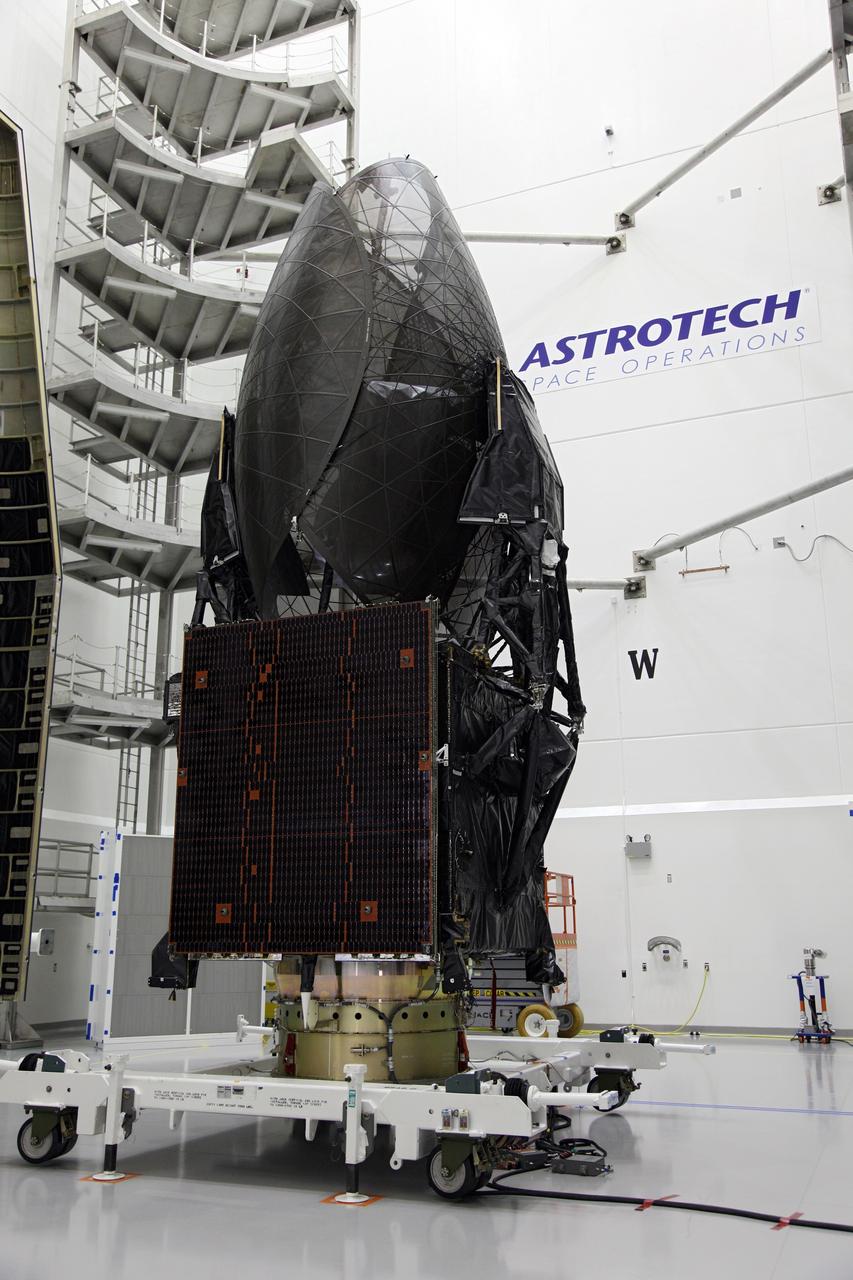
TITUSVILLE, Fla. - NASA's Tracking and Data Relay Satellite, TDRS-K, stands positioned between two pieces that make up the payload fairing that will protect the spacecraft during launch and ascent into space. Technicians working inside the Astrotech payload processing facility in Titusville, Fla., near NASA’s Kennedy Space Center will perform the encapsulation. Launch of the TDRS-K on the United Launch Alliance Atlas V rocket is planned for January 29, 2013. The TDRS-K spacecraft is part of the next-generation series in the Tracking and Data Relay Satellite System, a constellation of space-based communication satellites providing tracking, telemetry, command and high-bandwidth data return services. Photo credit: NASA/Frankie Martin
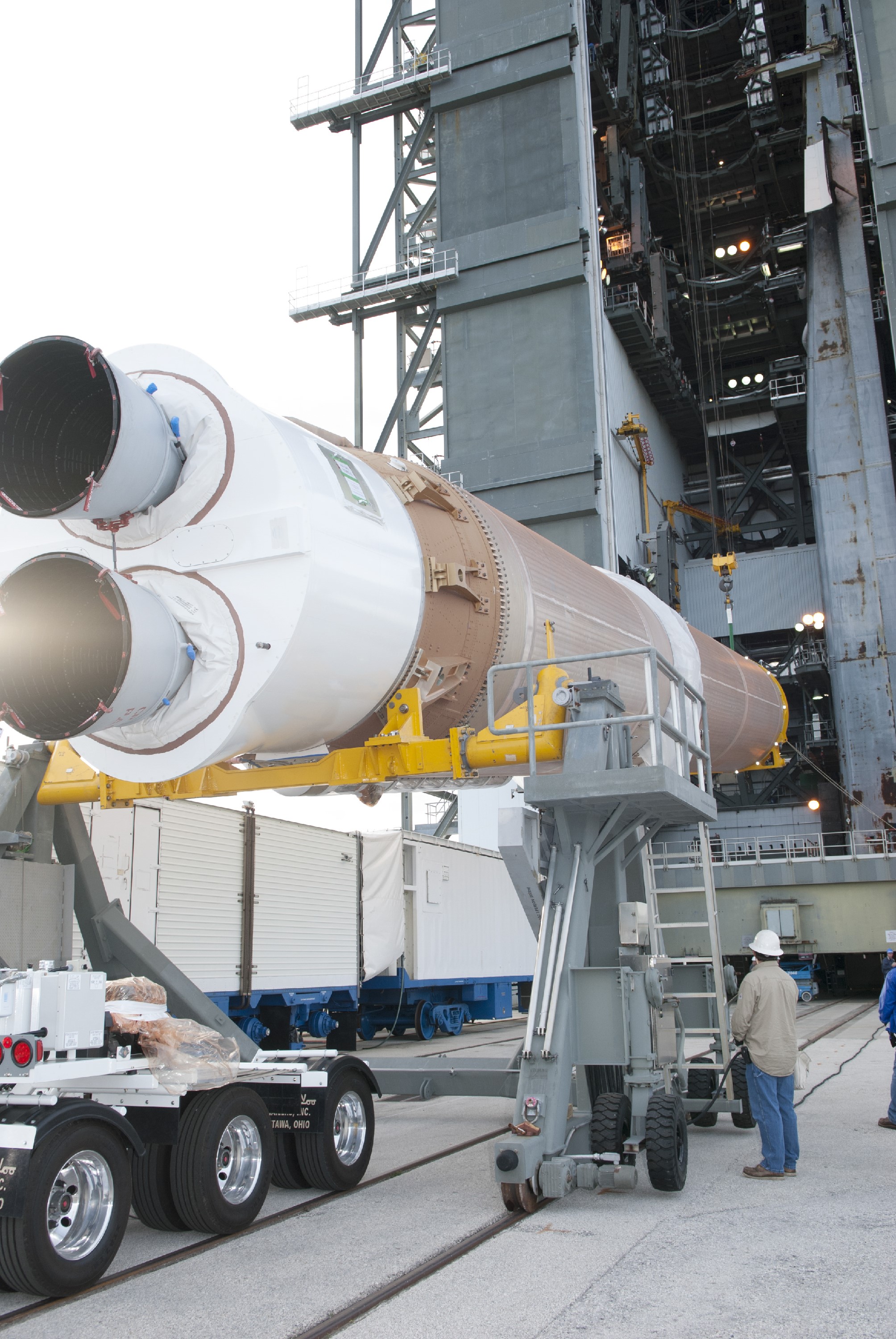
CAPE CANAVERAL, Fla. – At Cape Canaveral Air Force Station, the first stage of the United Launch Alliance Atlas V rocket is lifted for stacking in the Vertical Integration Facility at Launch Complex 41. The vehicle will be used to boost the Tracking and Data Relay Satellite, or TDRS-L, spacecraft to orbit. TDRS-L is the second of three next-generation satellites designed to ensure vital operational continuity for the NASA Space Network. It is scheduled to launch from Cape Canaveral's Space Launch Complex 41 atop an Atlas V rocket in January 2014. The current Tracking and Data Relay Satellite system consists of eight in-orbit satellites distributed to provide near continuous information relay service to missions such as the Hubble Space Telescope and International Space Station. For more information, visit: http://www.nasa.gov/content/tracking-and-data-relay-satellite-tdrs/ Photo credit: NASA/Charisse Nahser
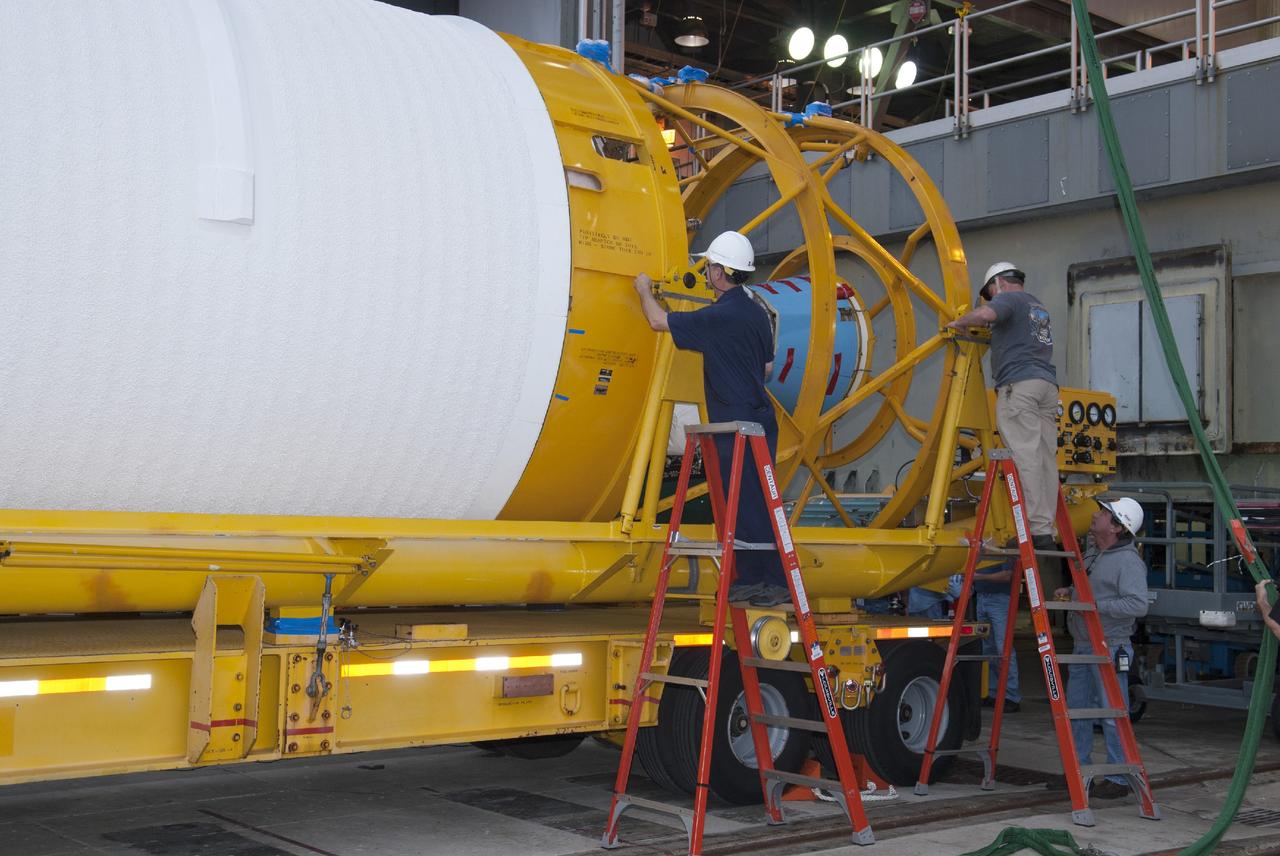
CAPE CANAVERAL, Fla. – At Cape Canaveral Air Force Station's Launch Complex 41, a technician supports preparations for lifting the Centaur second stage of the United Launch Alliance rocket that will be used to boost the Tracking and Data Relay Satellite, or TDRS-L, spacecraft to orbit. TDRS-L is the second of three next-generation satellites designed to ensure vital operational continuity for the NASA Space Network. It is scheduled to launch from Cape Canaveral's Space Launch Complex 41 atop an Atlas V rocket in January 2014. The current Tracking and Data Relay Satellite system consists of eight in-orbit satellites distributed to provide near continuous information relay service to missions such as the Hubble Space Telescope and International Space Station. For more information, visit: http://www.nasa.gov/content/tracking-and-data-relay-satellite-tdrs/ Photo credit: NASA/Charisse Nahser
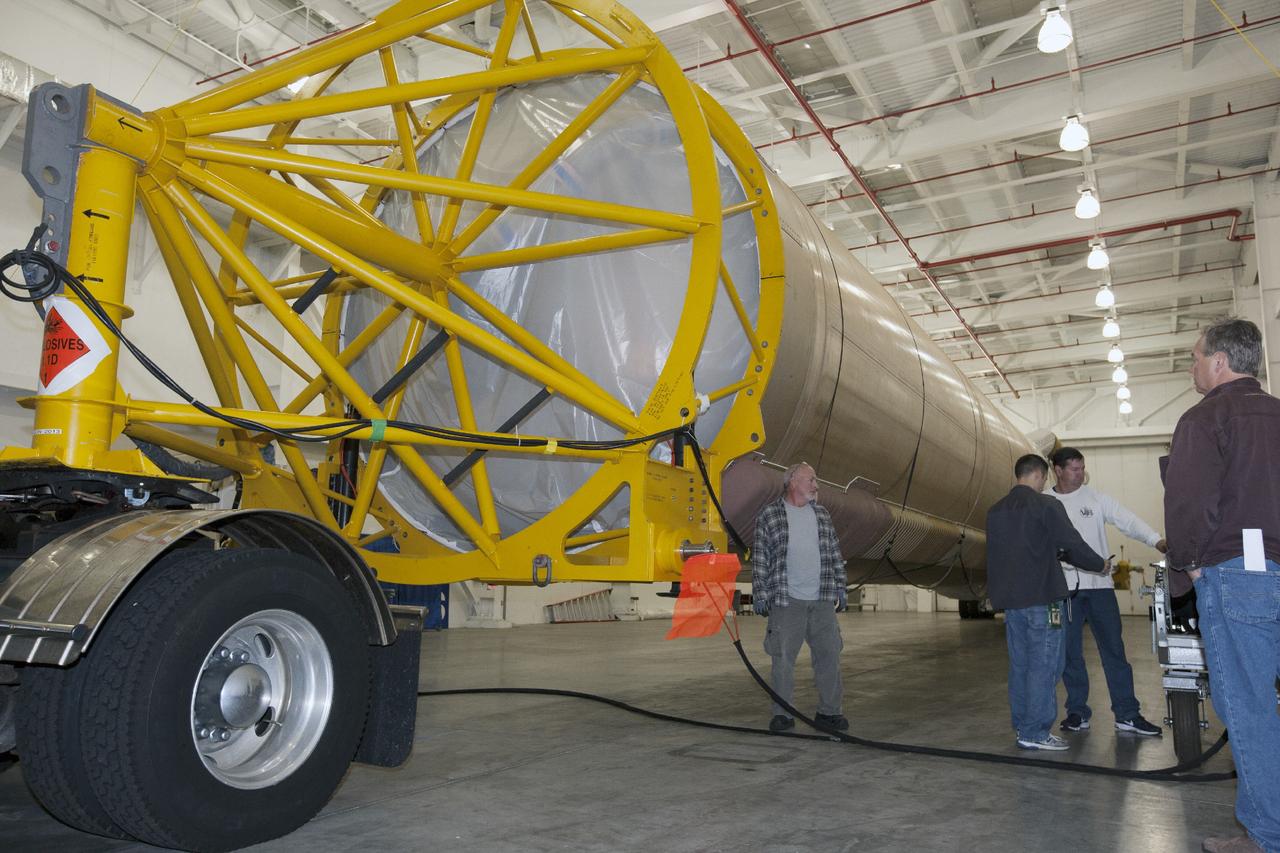
CAPE CANAVERAL, Fla. – The United Launch Alliance Atlas V first stage booster that will boost the Tracking and Data Relay Satellite, or TDRS-L, spacecraft into orbit is being prepared for transport from the hangar at the Atlas Spaceflight Operations Center on Cape Canaveral Air Force Station to Launch Complex 41. TDRS-L is the second of three next-generation satellites designed to ensure vital operational continuity for the NASA Space Network. It is scheduled to launch from Cape Canaveral's Space Launch Complex 41 atop an Atlas V rocket in January 2014. The current Tracking and Data Relay Satellite system consists of eight in-orbit satellites distributed to provide near continuous information relay service to missions such as the Hubble Space Telescope and International Space Station. For more information, visit: http://www.nasa.gov/content/tracking-and-data-relay-satellite-tdrs/ Photo credit: NASA/Kim Shiflett