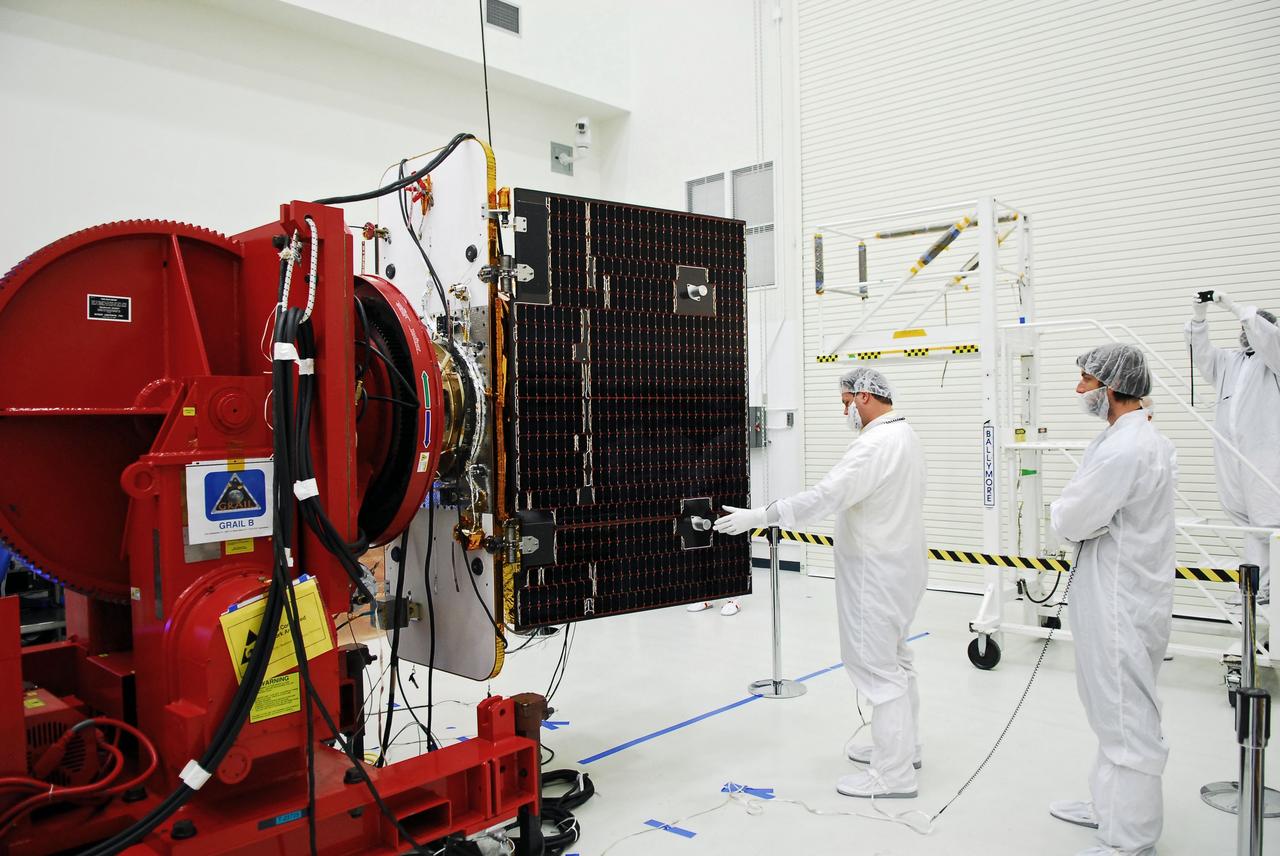
CAPE CANAVERAL, Fla. -- Technicians at Astrotech payload processing facility in Titusville, Fla., are conducting solar panel deployment tests on NASA's Gravity Recovery and Interior Laboratory, or GRAIL, twin spacecraft. The United Launch Alliance Delta II rocket that will carry GRAIL into lunar orbit already is fully stacked at NASA's Space Launch Complex 17B, and launch is scheduled for Sept. 8. The GRAIL mission is a part of NASA's Discovery Program. GRAIL will fly the twin spacecraft in tandem orbits around the moon for several months to measure its gravity field. The mission also will answer longstanding questions about Earth's moon and provide scientists a better understanding of how Earth and other rocky planets in the solar system formed. For more information, visit http://solarsystem.nasa.gov/grail/. Photo credit: NASA/Jim Grossmann
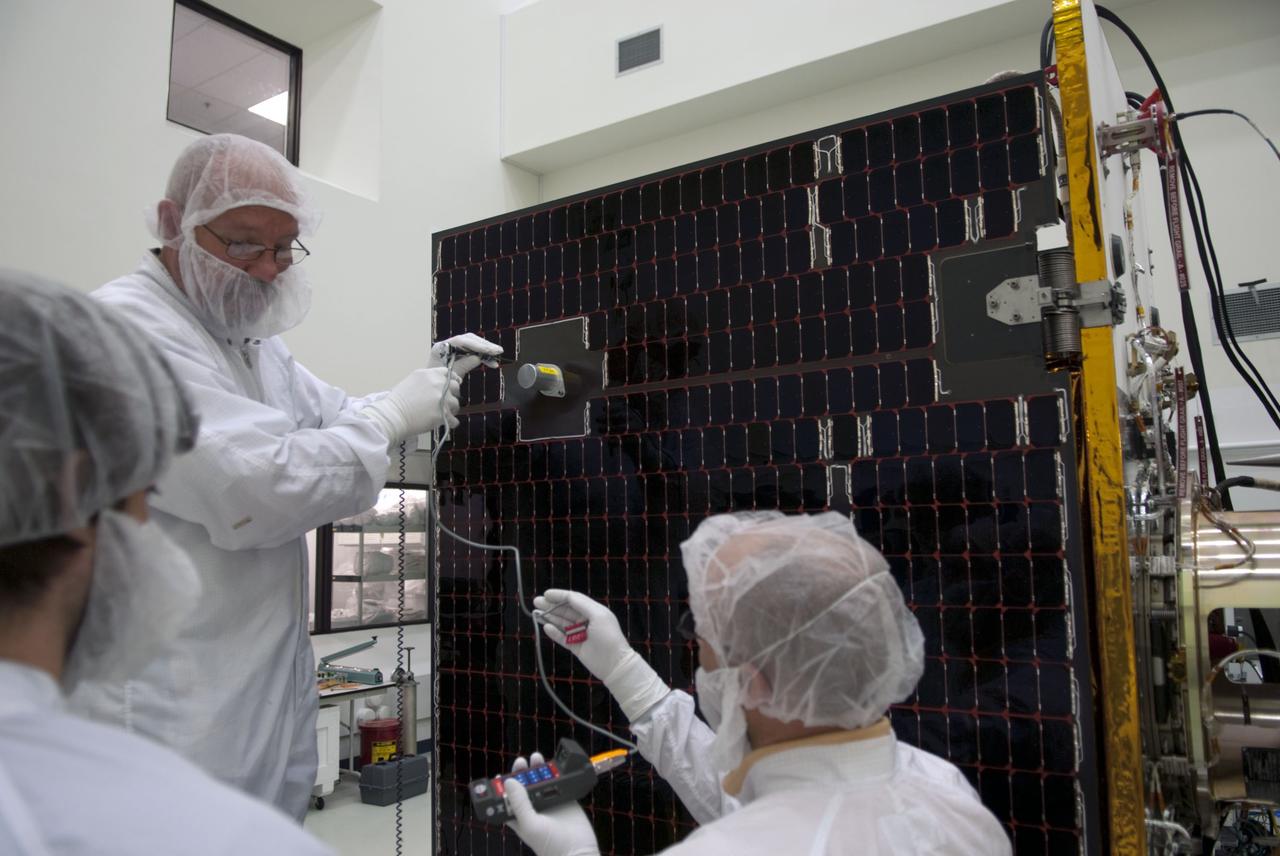
CAPE CANAVERAL, Fla. -- Technicians at Astrotech payload processing facility in Titusville, Fla., are preparing NASA's Gravity Recovery and Interior Laboratory, or GRAIL, twin spacecraft for solar panel deployment testing. The United Launch Alliance Delta II rocket that will carry GRAIL into lunar orbit already is fully stacked at NASA's Space Launch Complex 17B, and launch is scheduled for Sept. 8. The GRAIL mission is a part of NASA's Discovery Program. GRAIL will fly the twin spacecraft in tandem orbits around the moon for several months to measure its gravity field. The mission also will answer longstanding questions about Earth's moon and provide scientists a better understanding of how Earth and other rocky planets in the solar system formed. For more information, visit http://solarsystem.nasa.gov/grail/. Photo credit: NASA/Jim Grossmann
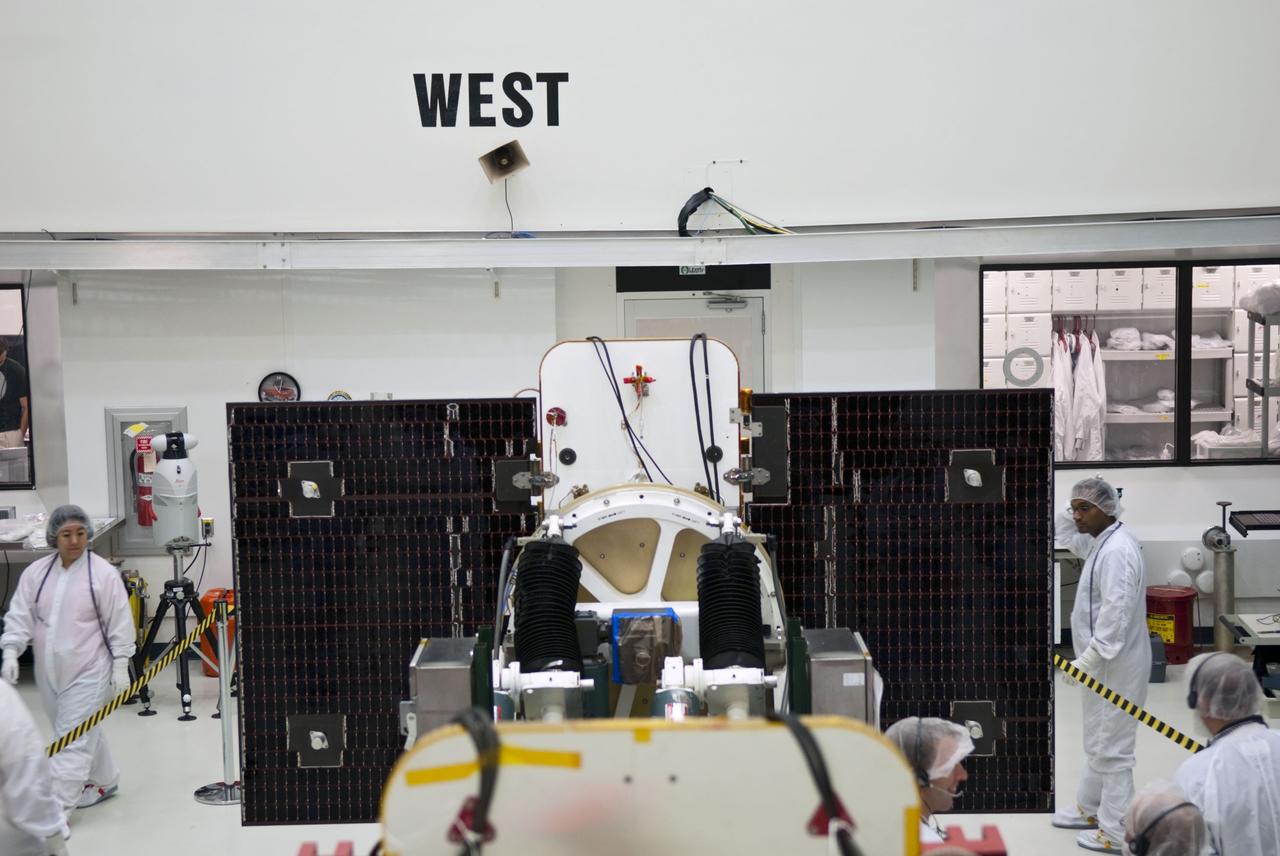
CAPE CANAVERAL, Fla. -- Technicians at Astrotech payload processing facility in Titusville, Fla., are conducting solar panel deployment tests on NASA's Gravity Recovery and Interior Laboratory, or GRAIL, twin spacecraft. The United Launch Alliance Delta II rocket that will carry GRAIL into lunar orbit already is fully stacked at NASA's Space Launch Complex 17B, and launch is scheduled for Sept. 8. The GRAIL mission is a part of NASA's Discovery Program. GRAIL will fly the twin spacecraft in tandem orbits around the moon for several months to measure its gravity field. The mission also will answer longstanding questions about Earth's moon and provide scientists a better understanding of how Earth and other rocky planets in the solar system formed. For more information, visit http://solarsystem.nasa.gov/grail/. Photo credit: NASA/Jim Grossmann
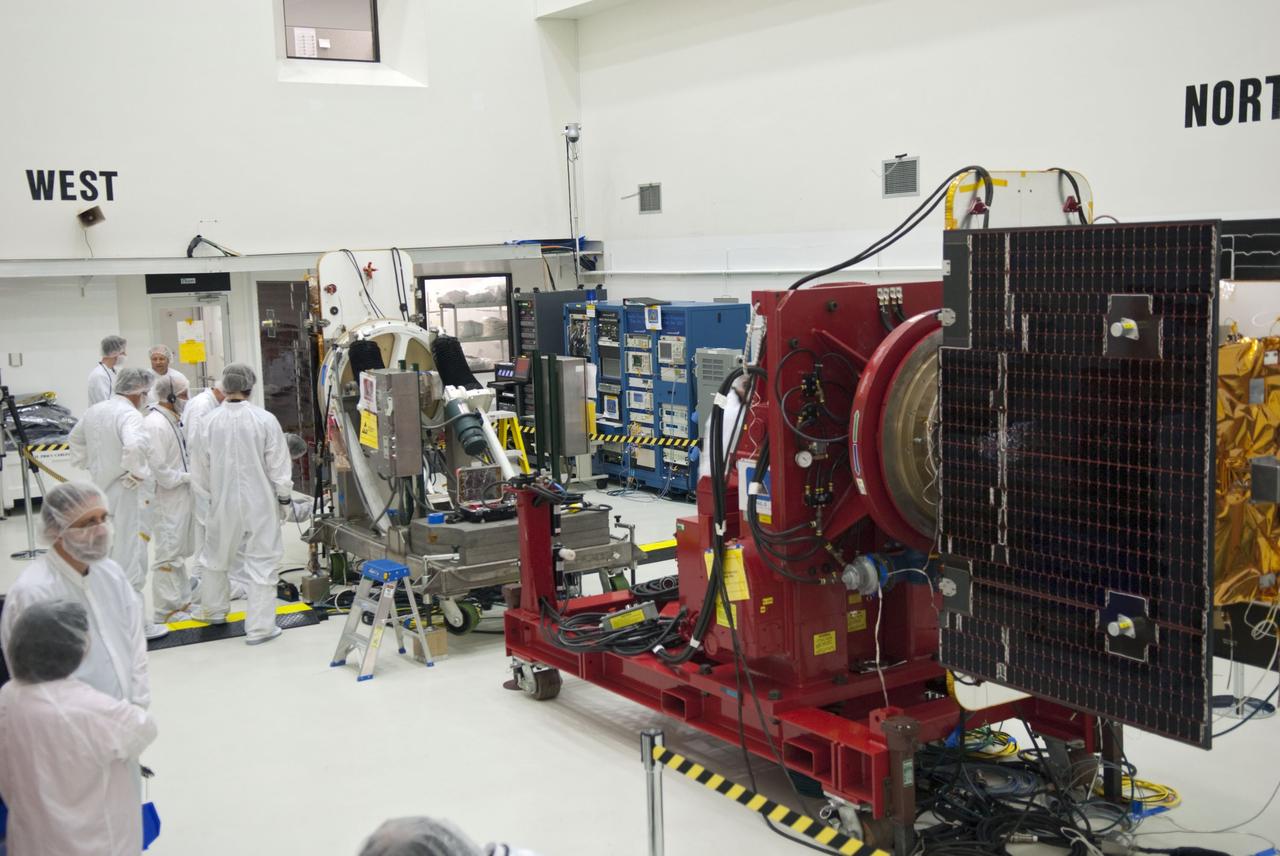
CAPE CANAVERAL, Fla. -- Technicians at Astrotech payload processing facility in Titusville, Fla., are conducting solar panel deployment tests on NASA's Gravity Recovery and Interior Laboratory, or GRAIL, twin spacecraft. The United Launch Alliance Delta II rocket that will carry GRAIL into lunar orbit already is fully stacked at NASA's Space Launch Complex 17B, and launch is scheduled for Sept. 8. The GRAIL mission is a part of NASA's Discovery Program. GRAIL will fly the twin spacecraft in tandem orbits around the moon for several months to measure its gravity field. The mission also will answer longstanding questions about Earth's moon and provide scientists a better understanding of how Earth and other rocky planets in the solar system formed. For more information, visit http://solarsystem.nasa.gov/grail/. Photo credit: NASA/Jim Grossmann
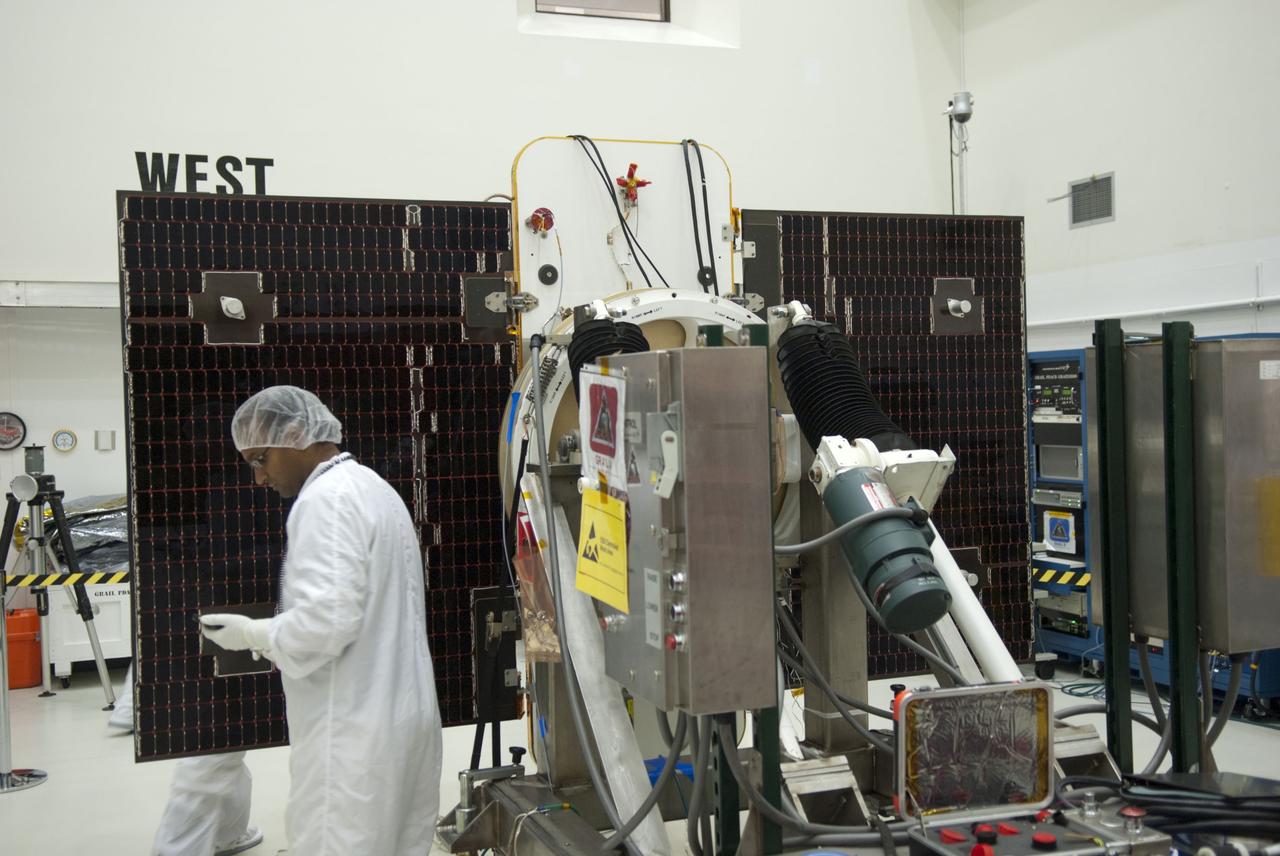
CAPE CANAVERAL, Fla. -- Technicians at Astrotech payload processing facility in Titusville, Fla., are conducting solar panel deployment tests on NASA's Gravity Recovery and Interior Laboratory, or GRAIL, twin spacecraft. The United Launch Alliance Delta II rocket that will carry GRAIL into lunar orbit already is fully stacked at NASA's Space Launch Complex 17B, and launch is scheduled for Sept. 8. The GRAIL mission is a part of NASA's Discovery Program. GRAIL will fly the twin spacecraft in tandem orbits around the moon for several months to measure its gravity field. The mission also will answer longstanding questions about Earth's moon and provide scientists a better understanding of how Earth and other rocky planets in the solar system formed. For more information, visit http://solarsystem.nasa.gov/grail/. Photo credit: NASA/Jim Grossmann
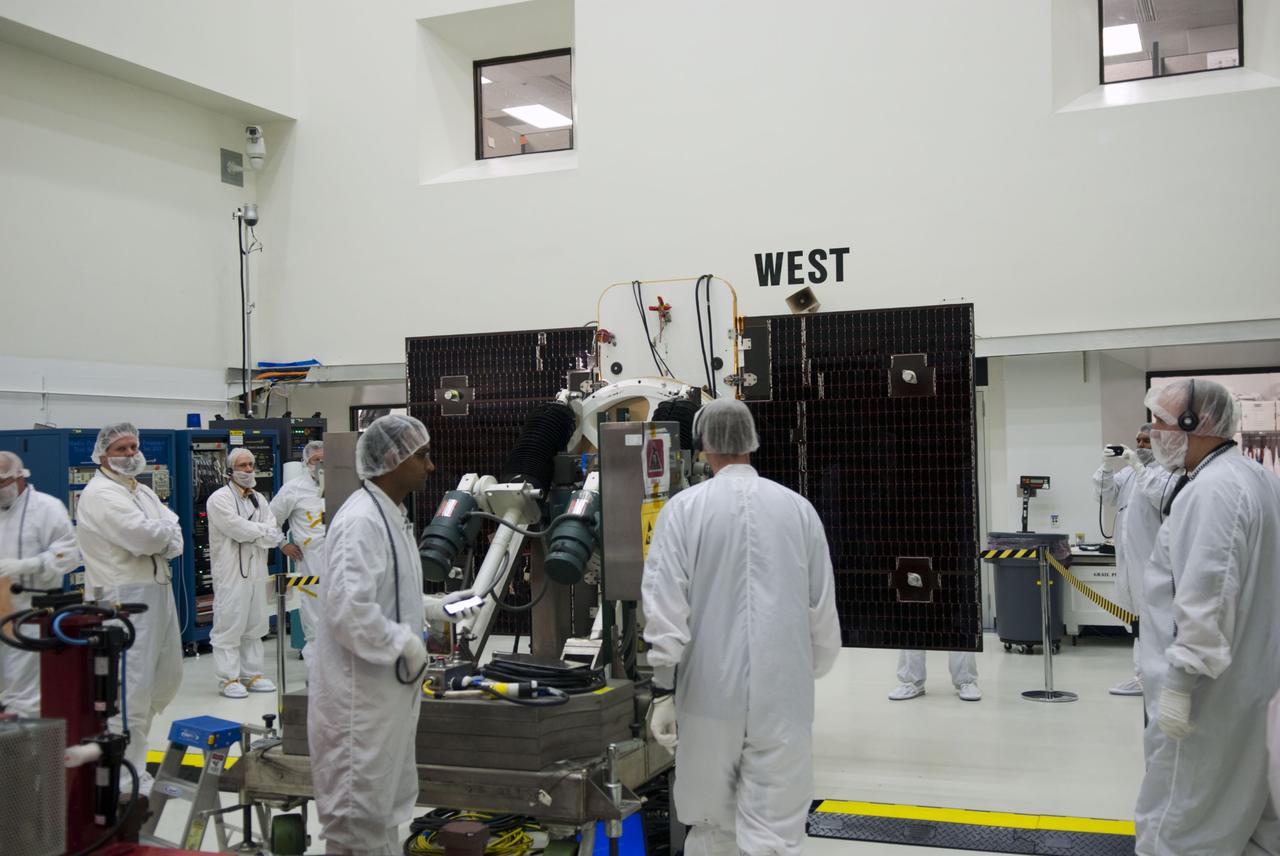
CAPE CANAVERAL, Fla. -- Technicians at Astrotech payload processing facility in Titusville, Fla., are conducting solar panel deployment tests on NASA's Gravity Recovery and Interior Laboratory, or GRAIL, twin spacecraft. The United Launch Alliance Delta II rocket that will carry GRAIL into lunar orbit already is fully stacked at NASA's Space Launch Complex 17B, and launch is scheduled for Sept. 8. The GRAIL mission is a part of NASA's Discovery Program. GRAIL will fly the twin spacecraft in tandem orbits around the moon for several months to measure its gravity field. The mission also will answer longstanding questions about Earth's moon and provide scientists a better understanding of how Earth and other rocky planets in the solar system formed. For more information, visit http://solarsystem.nasa.gov/grail/. Photo credit: NASA/Jim Grossmann
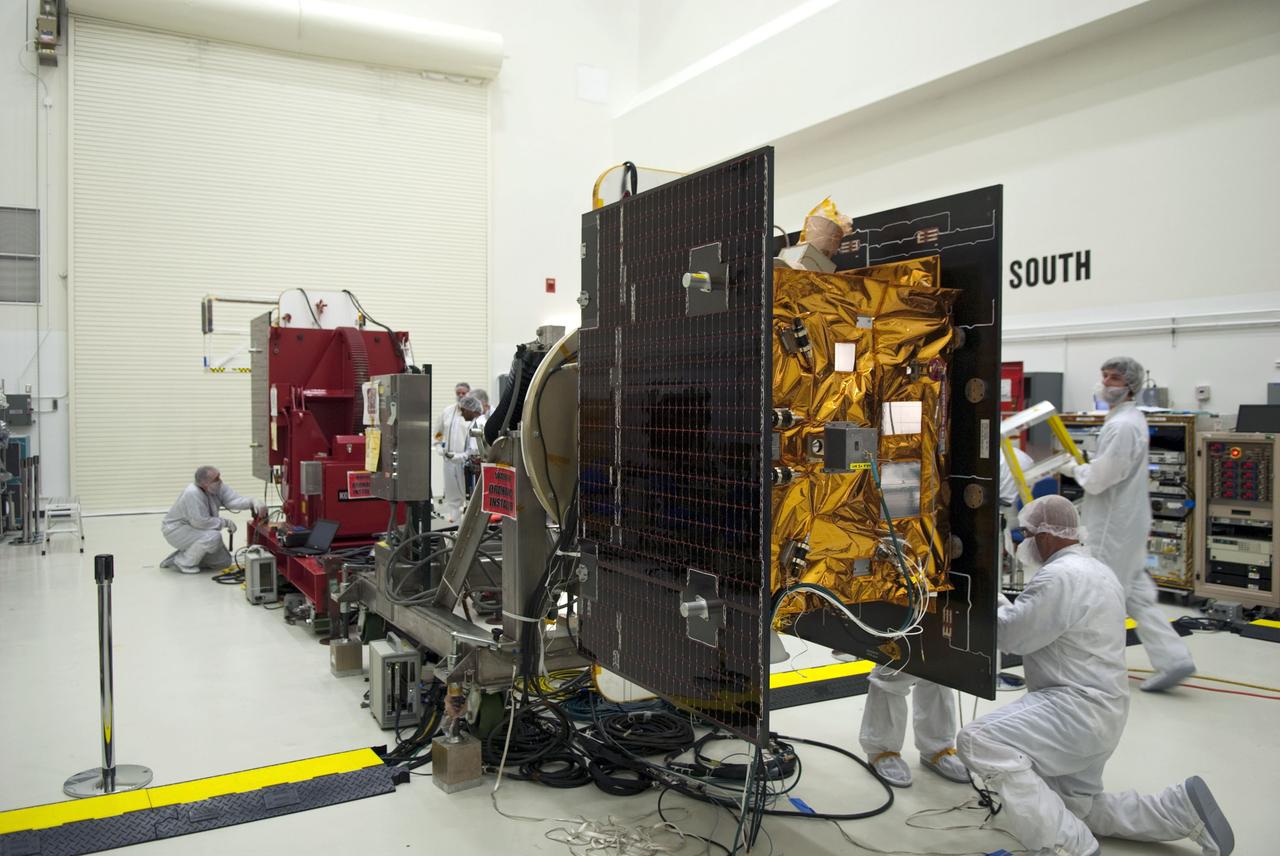
CAPE CANAVERAL, Fla. -- Technicians at Astrotech payload processing facility in Titusville, Fla., are preparing NASA's Gravity Recovery and Interior Laboratory, or GRAIL, twin spacecraft for solar panel deployment testing. The United Launch Alliance Delta II rocket that will carry GRAIL into lunar orbit already is fully stacked at NASA's Space Launch Complex 17B, and launch is scheduled for Sept. 8. The GRAIL mission is a part of NASA's Discovery Program. GRAIL will fly the twin spacecraft in tandem orbits around the moon for several months to measure its gravity field. The mission also will answer longstanding questions about Earth's moon and provide scientists a better understanding of how Earth and other rocky planets in the solar system formed. For more information, visit http://solarsystem.nasa.gov/grail/. Photo credit: NASA/Jim Grossmann
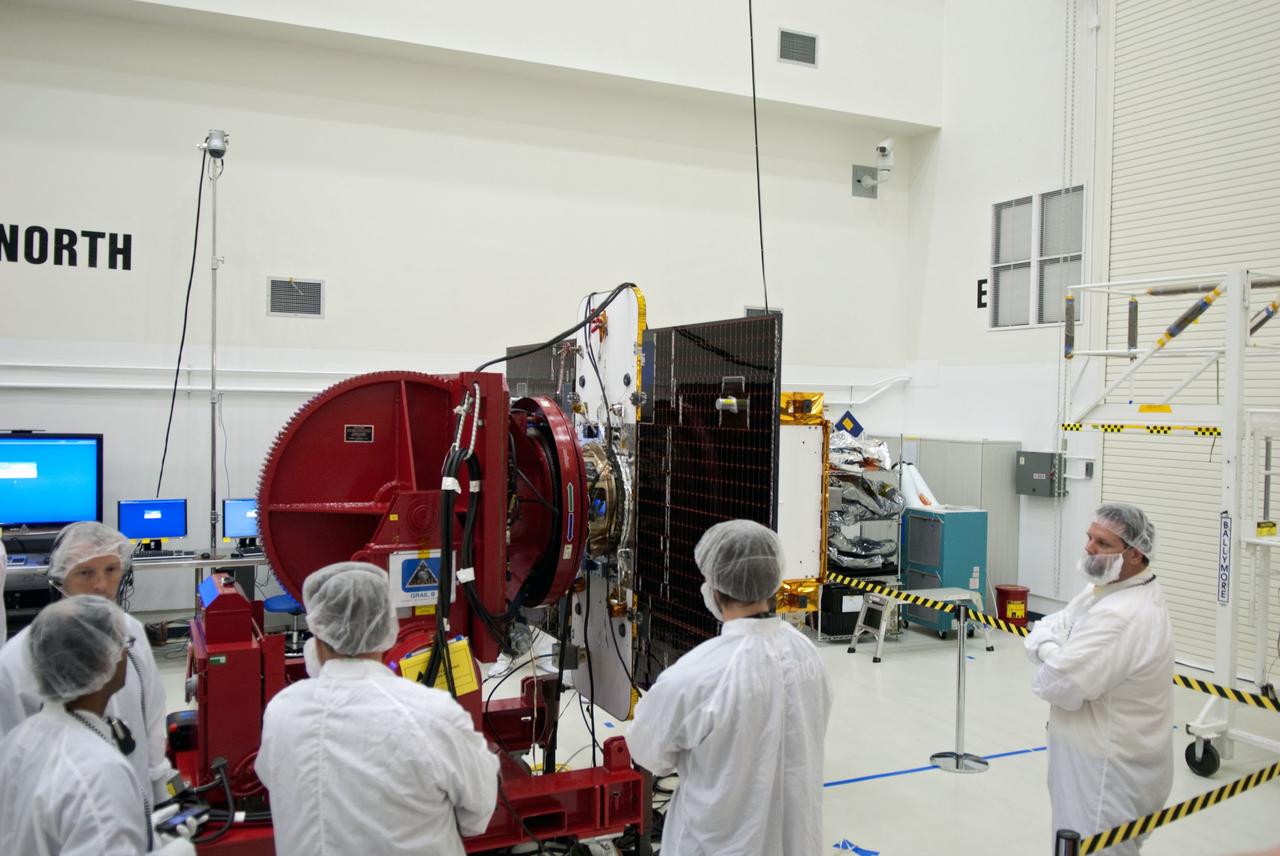
CAPE CANAVERAL, Fla. -- Technicians at Astrotech payload processing facility in Titusville, Fla., are conducting solar panel deployment tests on NASA's Gravity Recovery and Interior Laboratory, or GRAIL, twin spacecraft. The United Launch Alliance Delta II rocket that will carry GRAIL into lunar orbit already is fully stacked at NASA's Space Launch Complex 17B, and launch is scheduled for Sept. 8. The GRAIL mission is a part of NASA's Discovery Program. GRAIL will fly the twin spacecraft in tandem orbits around the moon for several months to measure its gravity field. The mission also will answer longstanding questions about Earth's moon and provide scientists a better understanding of how Earth and other rocky planets in the solar system formed. For more information, visit http://solarsystem.nasa.gov/grail/. Photo credit: NASA/Jim Grossmann
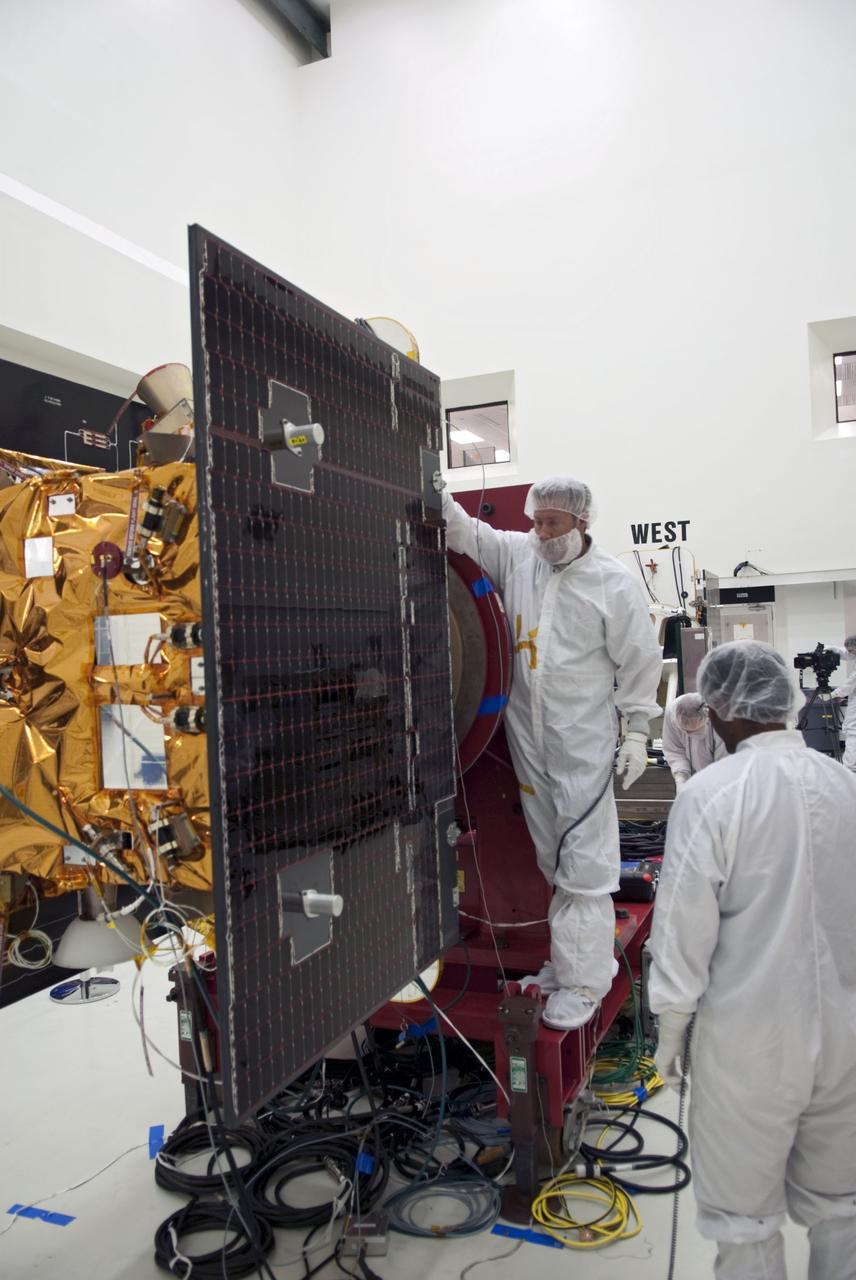
CAPE CANAVERAL, Fla. -- Technicians at Astrotech payload processing facility in Titusville, Fla., are conducting solar panel deployment tests on NASA's Gravity Recovery and Interior Laboratory, or GRAIL, twin spacecraft. The United Launch Alliance Delta II rocket that will carry GRAIL into lunar orbit already is fully stacked at NASA's Space Launch Complex 17B, and launch is scheduled for Sept. 8. The GRAIL mission is a part of NASA's Discovery Program. GRAIL will fly the twin spacecraft in tandem orbits around the moon for several months to measure its gravity field. The mission also will answer longstanding questions about Earth's moon and provide scientists a better understanding of how Earth and other rocky planets in the solar system formed. For more information, visit http://solarsystem.nasa.gov/grail/. Photo credit: NASA/Jim Grossmann
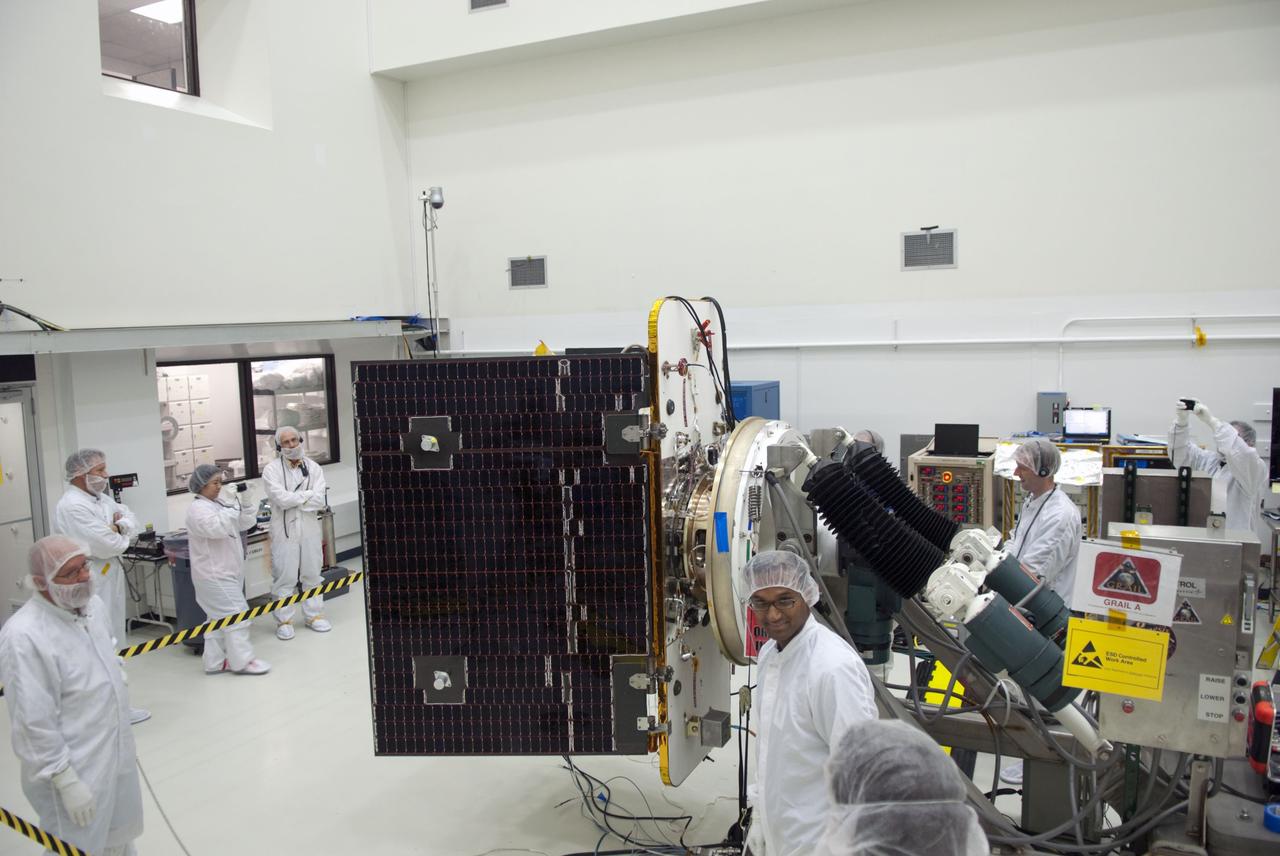
CAPE CANAVERAL, Fla. -- Technicians at Astrotech payload processing facility in Titusville, Fla., are conducting solar panel deployment tests on NASA's Gravity Recovery and Interior Laboratory, or GRAIL, twin spacecraft. The United Launch Alliance Delta II rocket that will carry GRAIL into lunar orbit already is fully stacked at NASA's Space Launch Complex 17B, and launch is scheduled for Sept. 8. The GRAIL mission is a part of NASA's Discovery Program. GRAIL will fly the twin spacecraft in tandem orbits around the moon for several months to measure its gravity field. The mission also will answer longstanding questions about Earth's moon and provide scientists a better understanding of how Earth and other rocky planets in the solar system formed. For more information, visit http://solarsystem.nasa.gov/grail/. Photo credit: NASA/Jim Grossmann