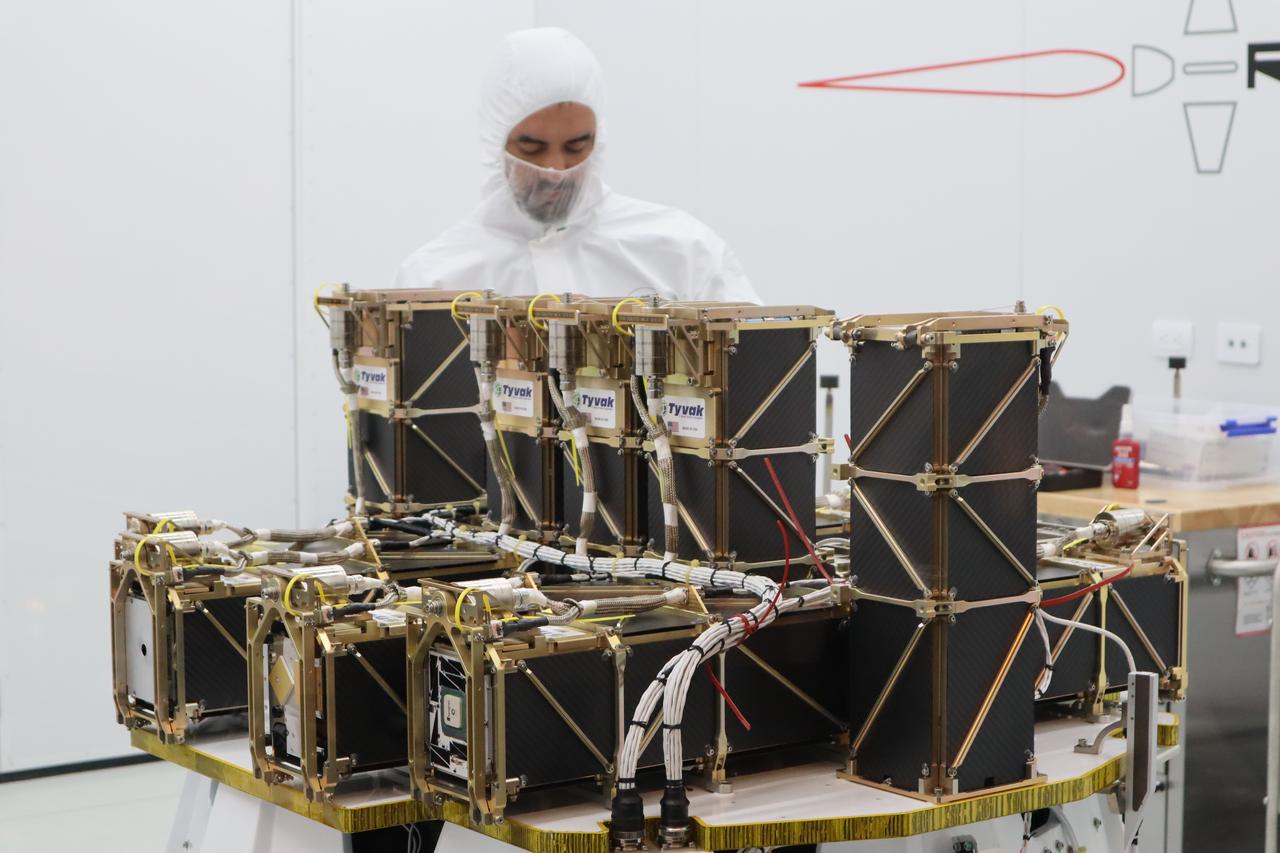
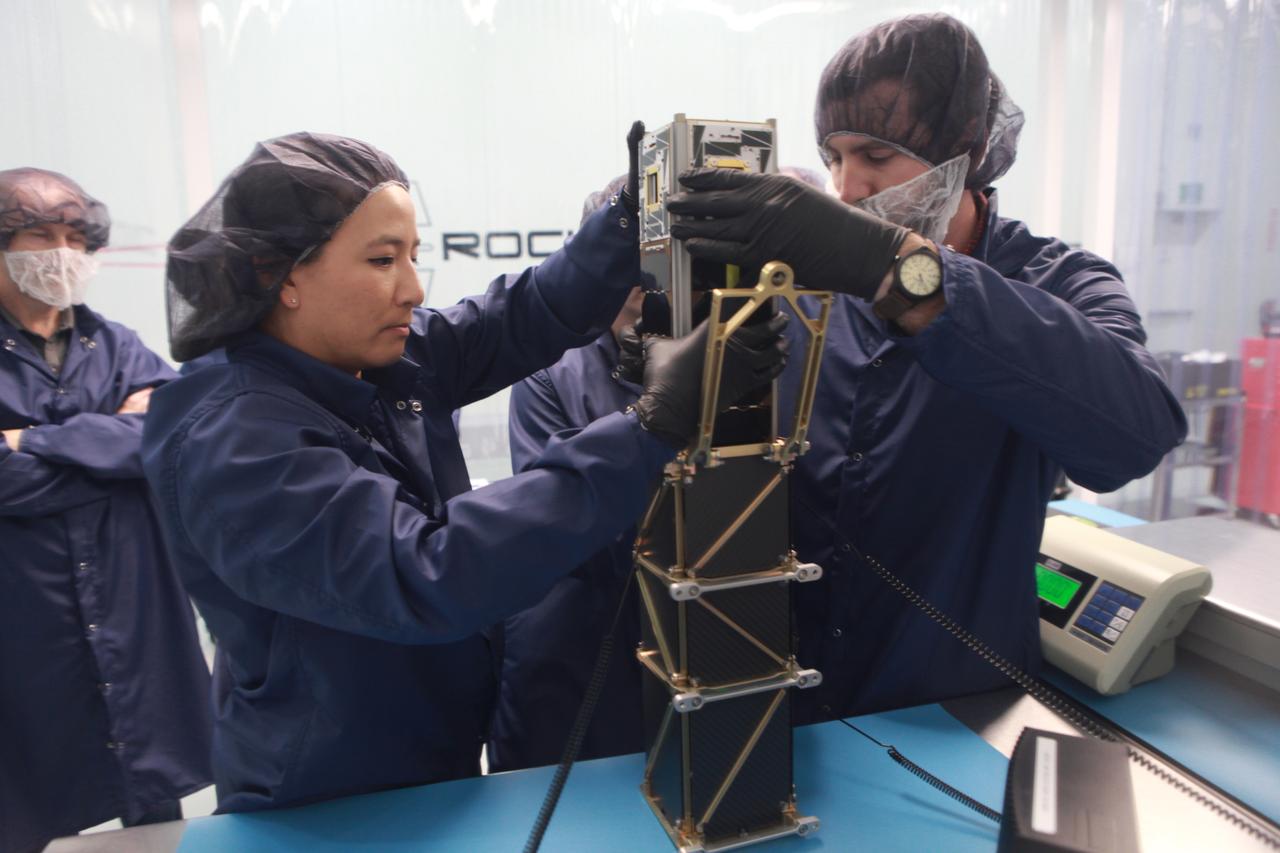
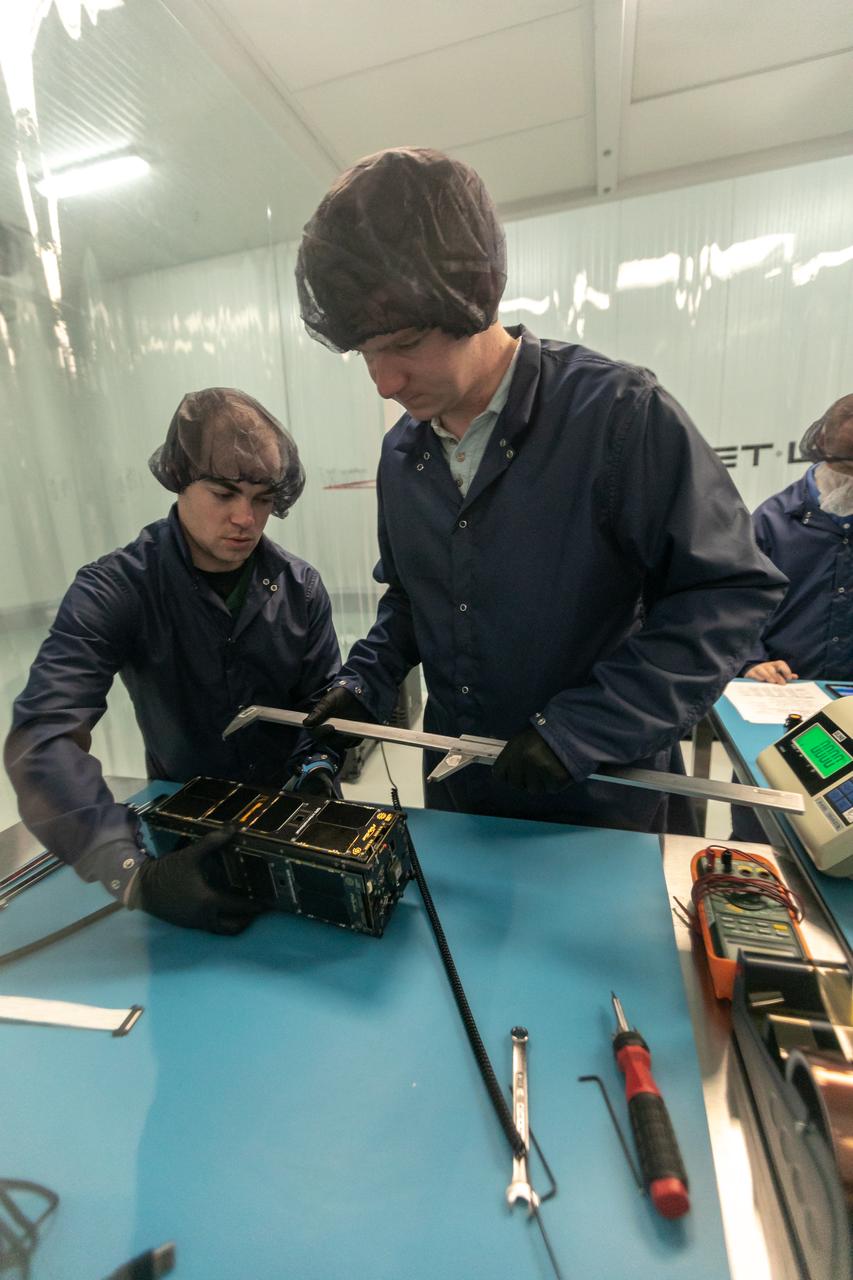
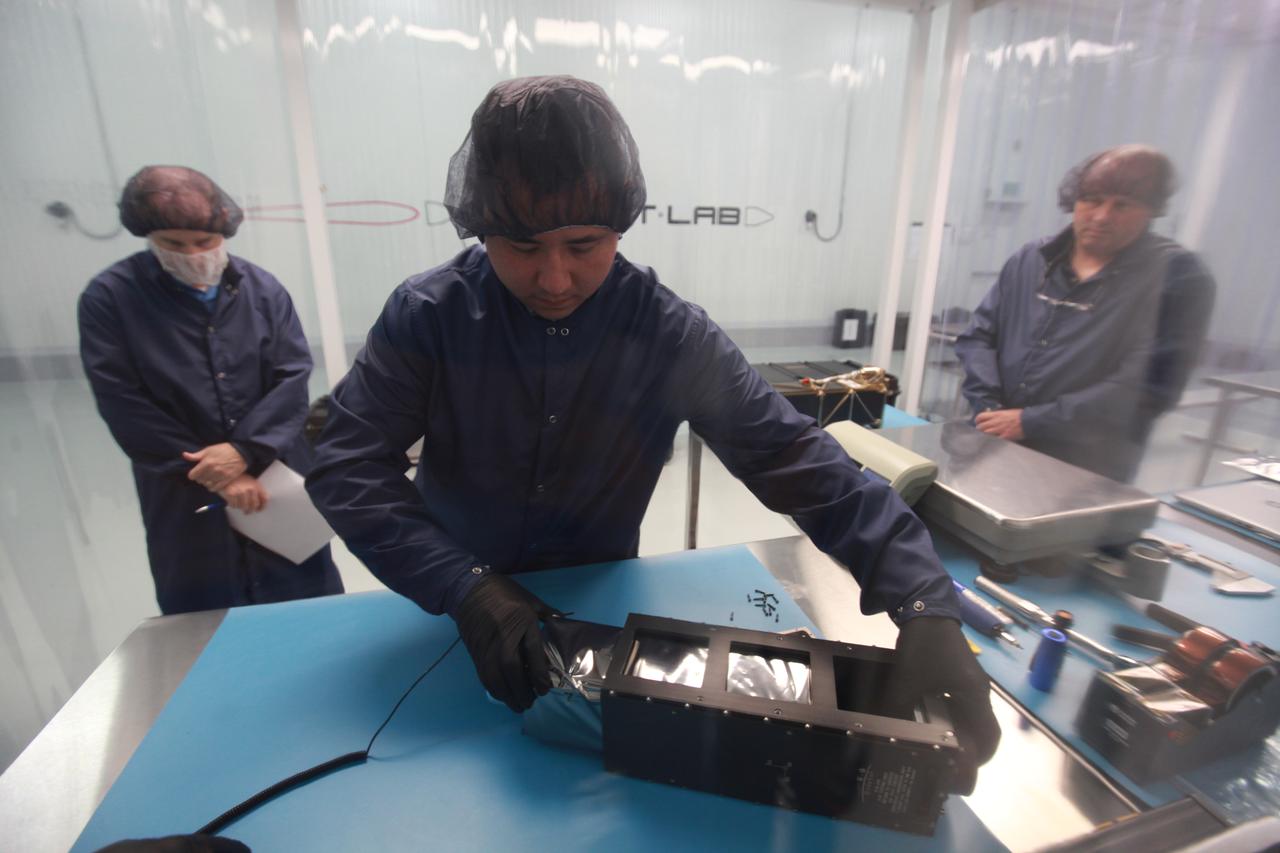
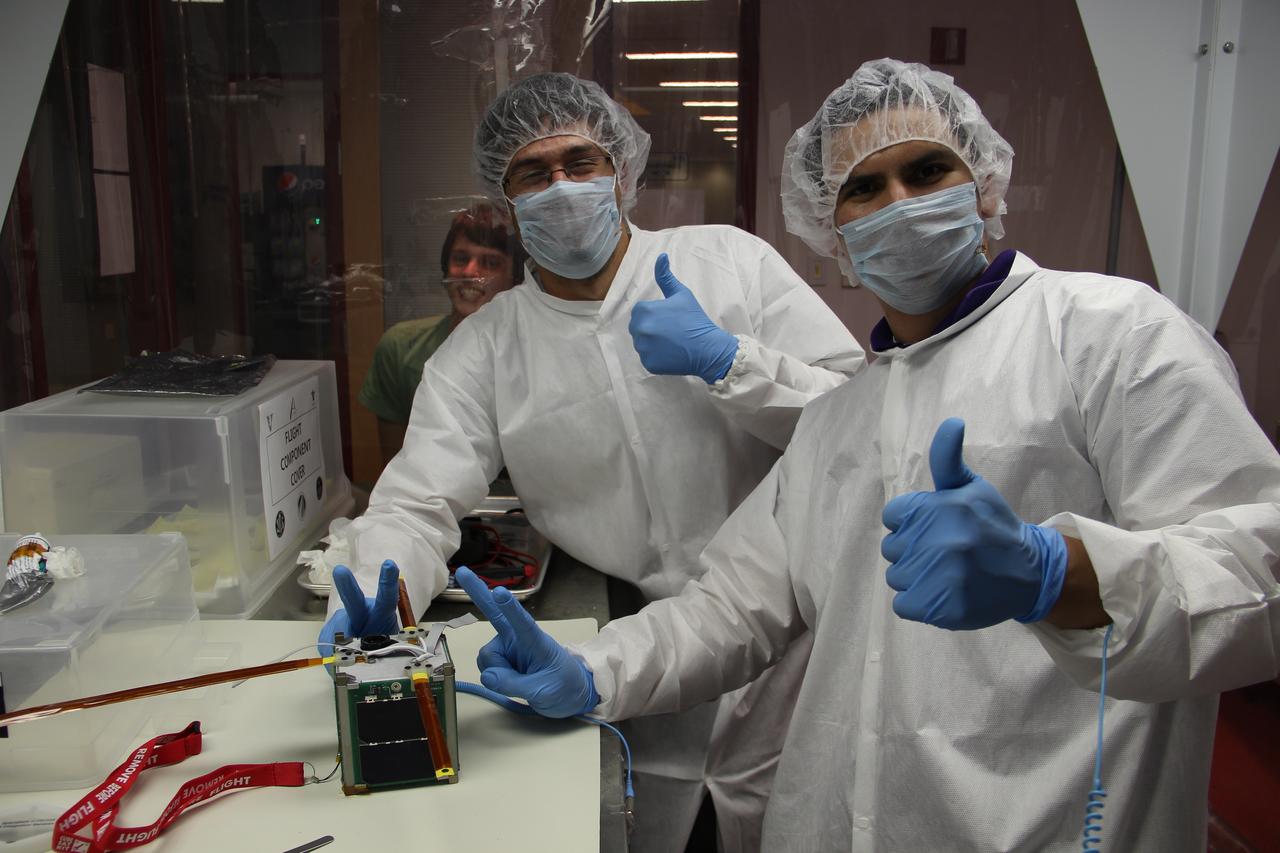
The Educational Launch of Nanosatellites 19 (ELaNa 19) payload is prepared to be encapsulated inside the Rocket Lab Electron rocket payload fairing on Dec. 1, 2018, at the company’s facility in New Zealand. The ELaNa 19 payload comprises 10 CubeSats selected through NASA’s CubeSat Launch Initiative. The liftoff marks the debut of the agency’s innovative Venture Class Launch Services (VCLS) effort. Managed by NASA’s Launch Services Program at Kennedy Space Center in Florida, VCLS was developed to offer small payloads dedicated rides to space.
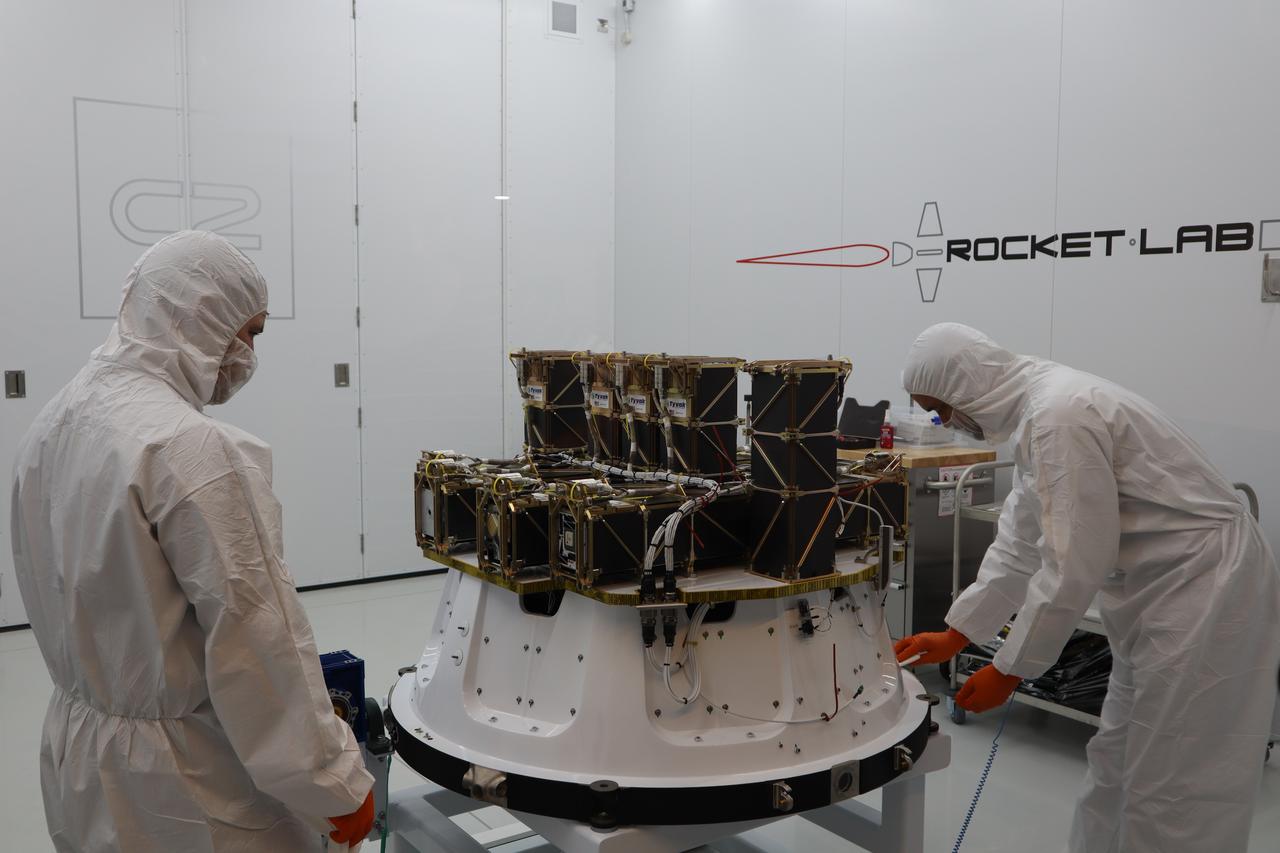
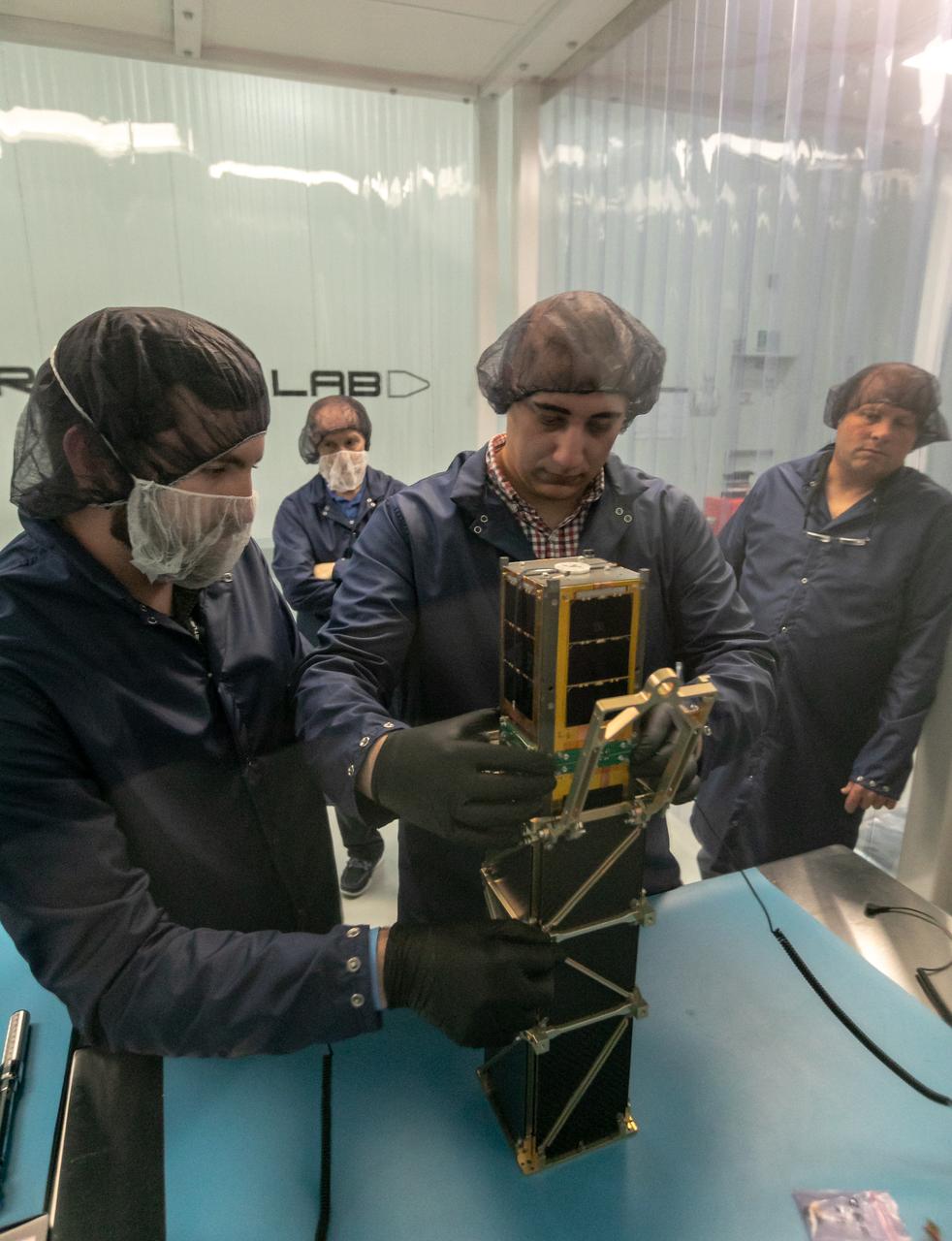
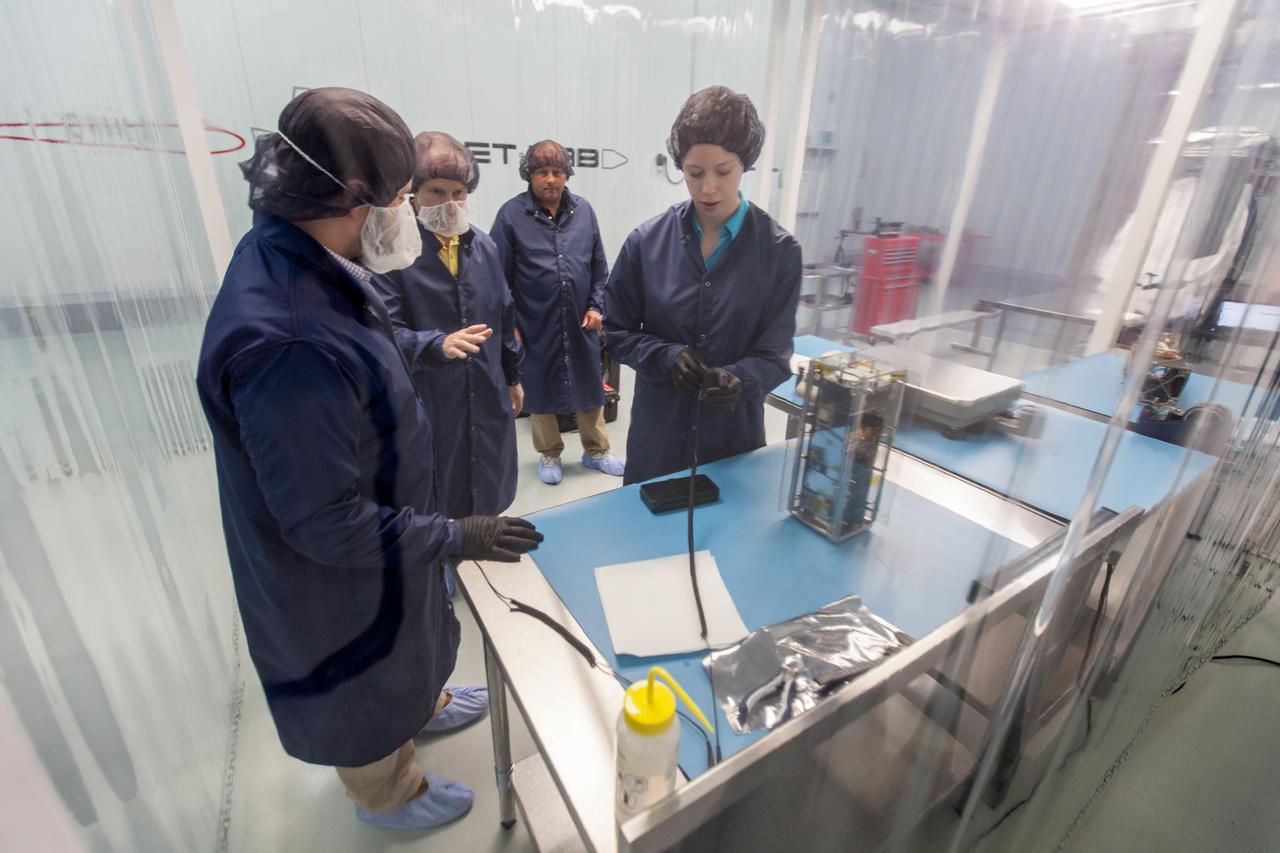
The Educational Launch of Nanosatellites 19 (ELaNa 19) payload is prepared to be encapsulated inside the Rocket Lab Electron rocket payload fairing on Dec. 1, 2018, at the company’s facility in New Zealand. The ELaNa 19 payload comprises 10 CubeSats selected through NASA’s CubeSat Launch Initiative. The liftoff marks the debut of the agency’s innovative Venture Class Launch Services (VCLS) effort. Managed by NASA’s Launch Services Program at Kennedy Space Center in Florida, VCLS was developed to offer small payloads dedicated rides to space.
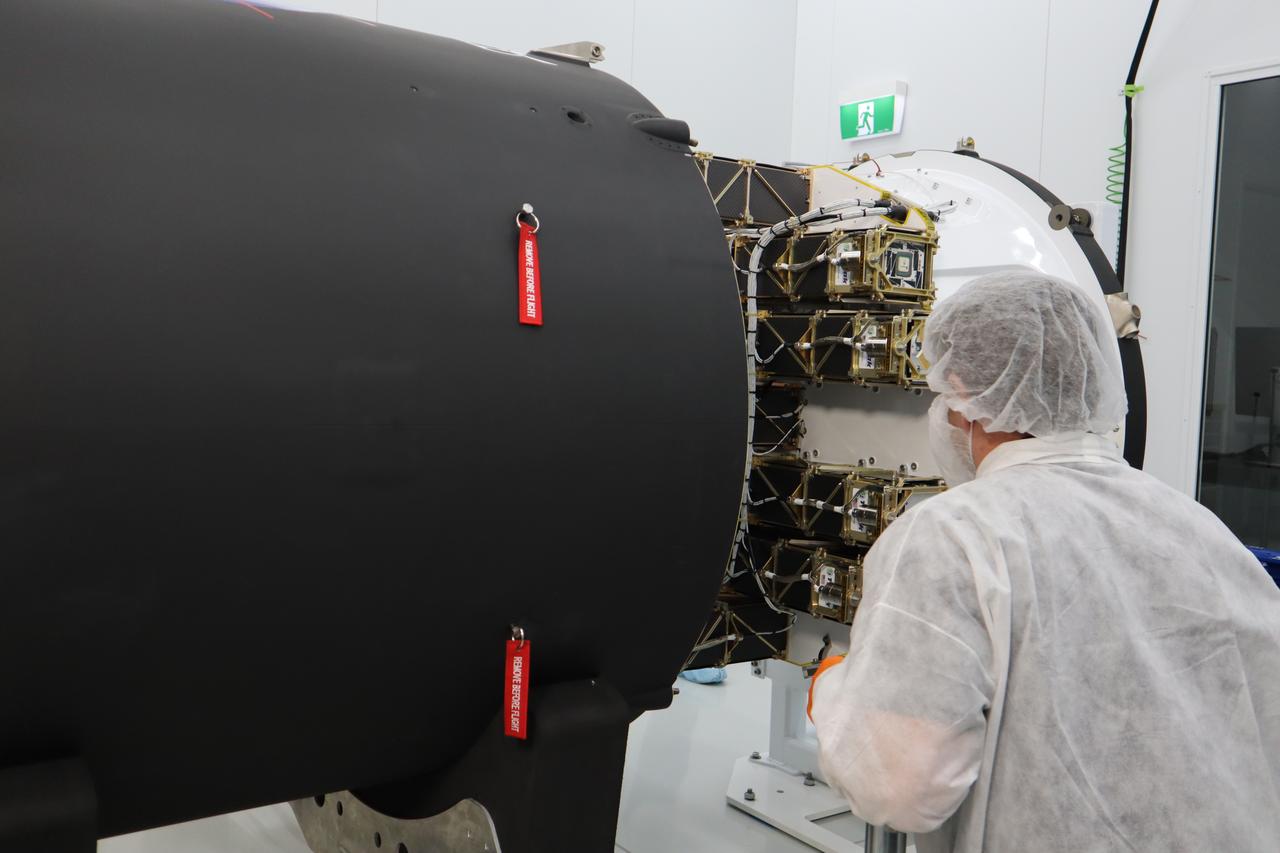
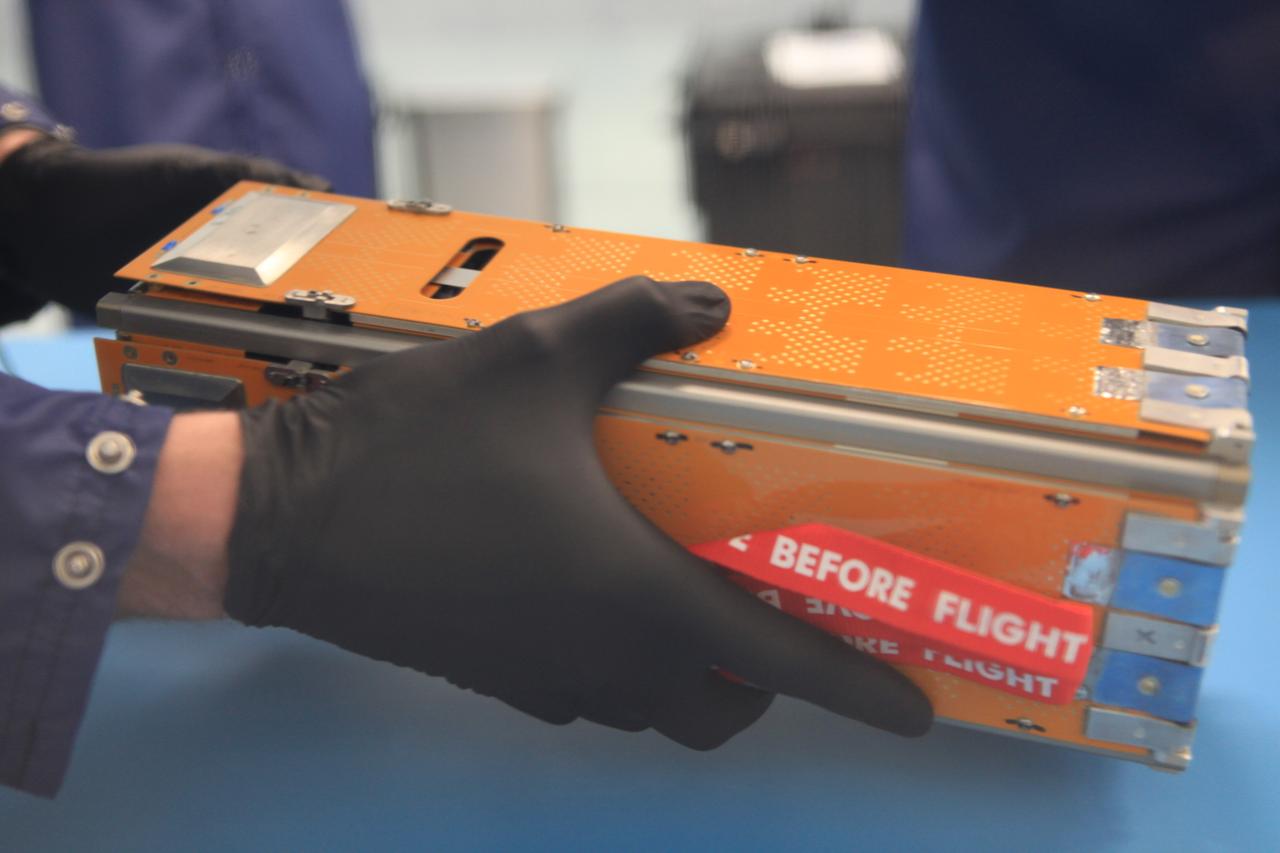
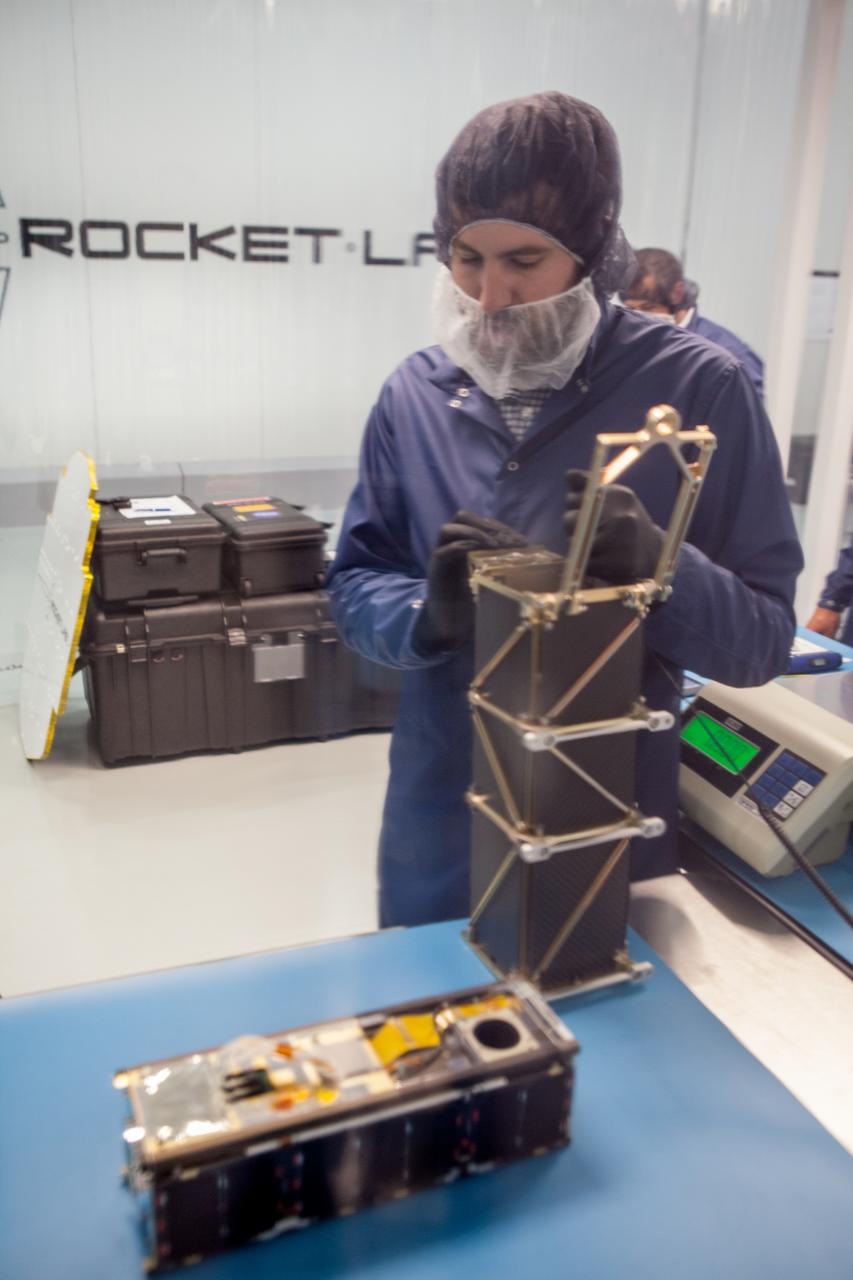
The Educational Launch of Nanosatellites 19 (ELaNa 19) payload is encapsulated inside the Rocket Lab Electron rocket payload fairing on Dec. 1, 2018, at the company’s facility in New Zealand. The ELaNa 19 payload comprises 10 CubeSats selected through NASA’s CubeSat Launch Initiative. The liftoff marks the debut of the agency’s innovative Venture Class Launch Services (VCLS) effort. Managed by NASA’s Launch Services Program at Kennedy Space Center in Florida, VCLS was developed to offer small payloads dedicated rides to space.
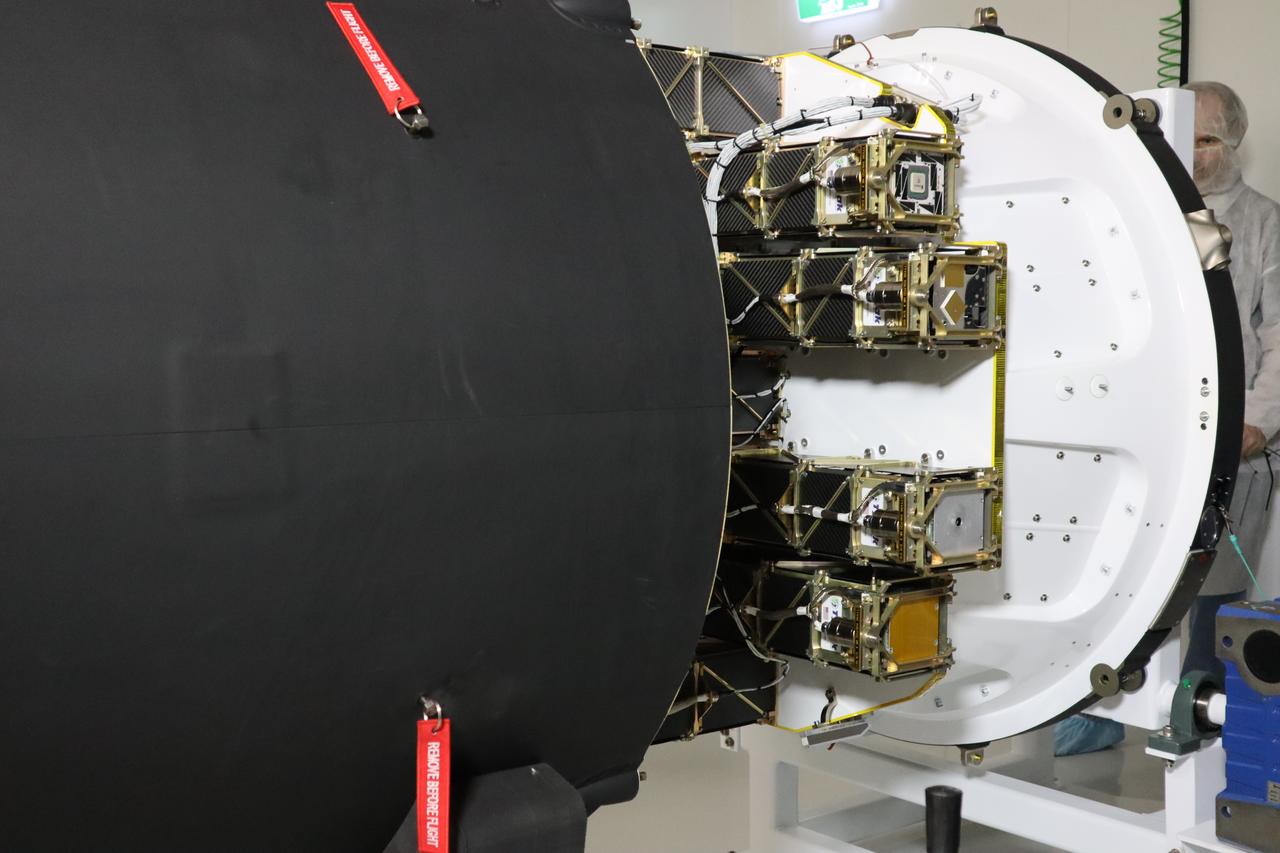
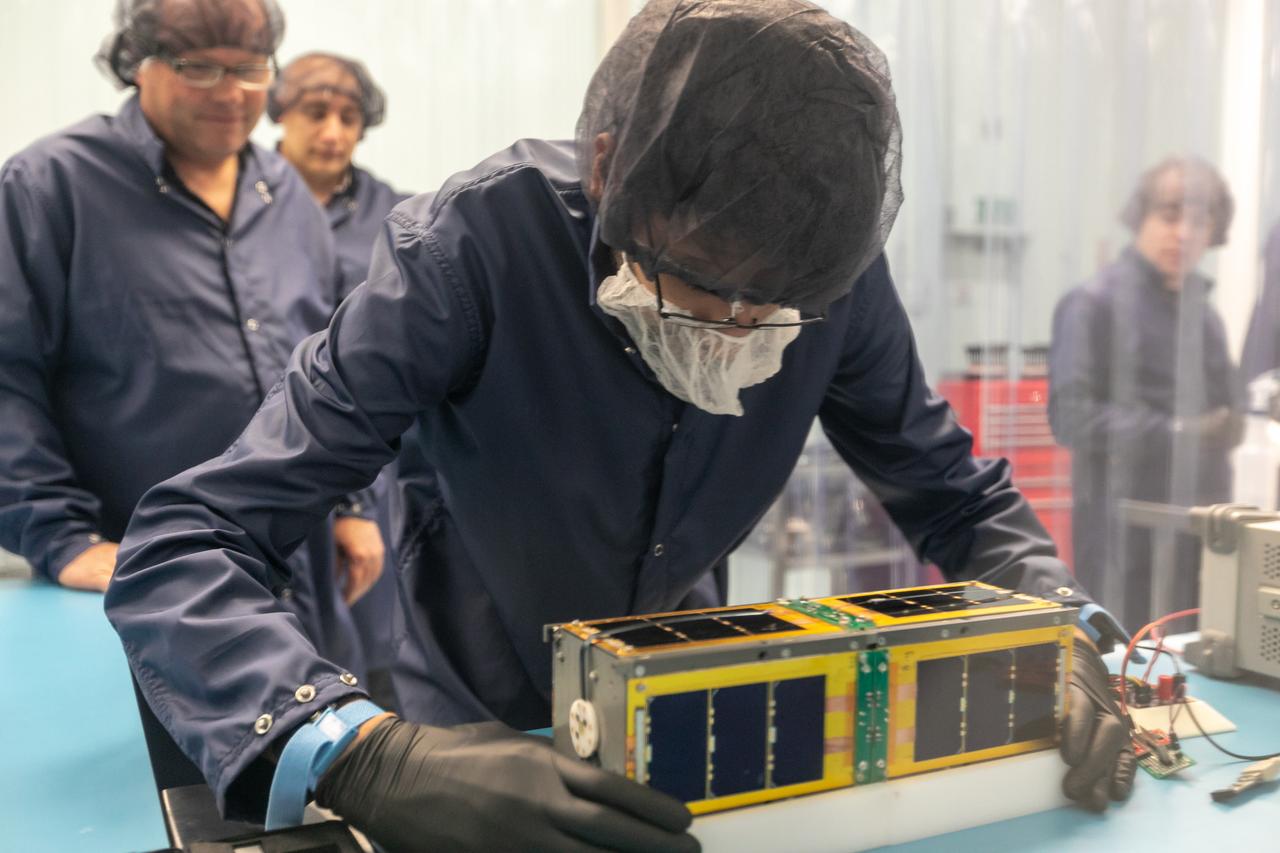
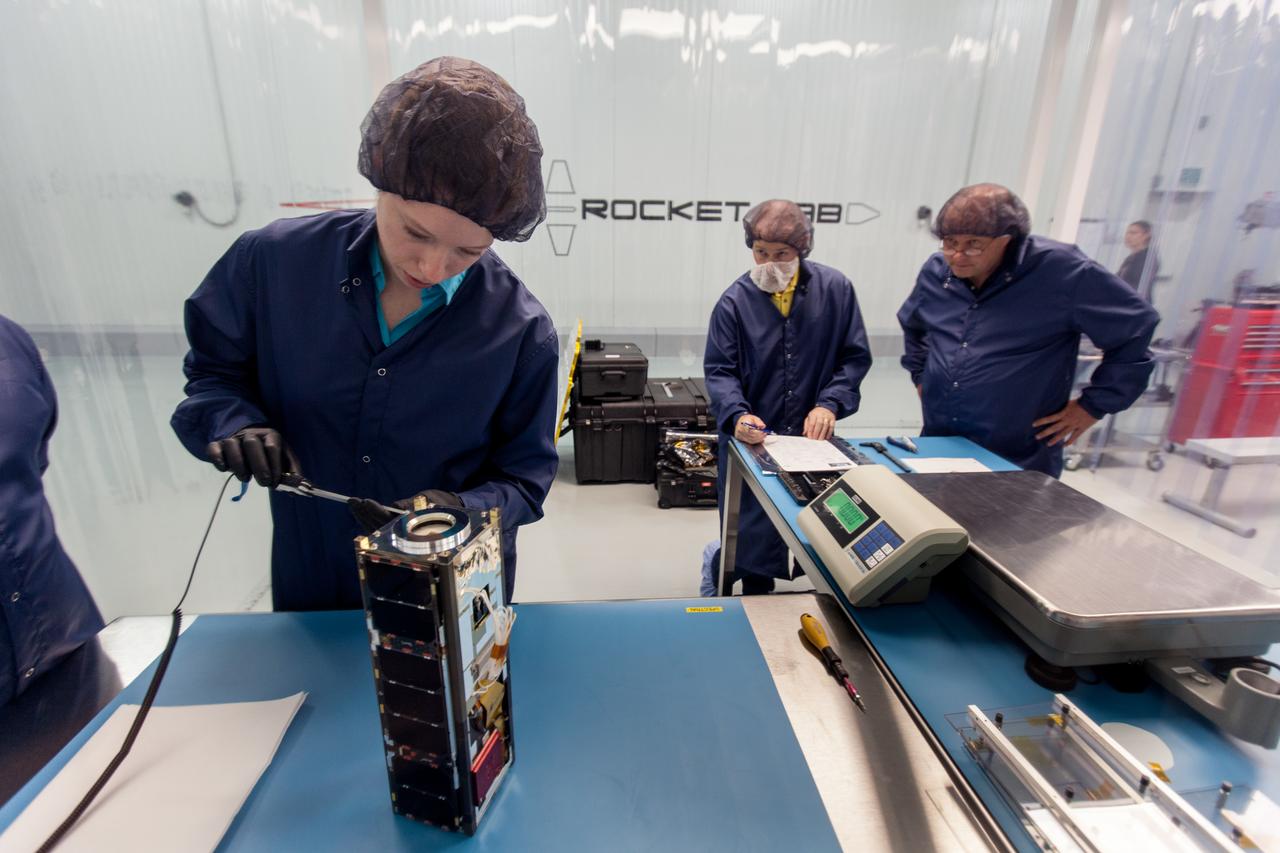
The Educational Launch of Nanosatellites 19 (ELaNa 19) payload is encapsulated inside the Rocket Lab Electron rocket payload fairing on Dec. 1, 2018, at the company’s facility in New Zealand. The ELaNa 19 payload comprises 10 CubeSats selected through NASA’s CubeSat Launch Initiative. The liftoff marks the debut of the agency’s innovative Venture Class Launch Services (VCLS) effort. Managed by NASA’s Launch Services Program at Kennedy Space Center in Florida, VCLS was developed to offer small payloads dedicated rides to space.
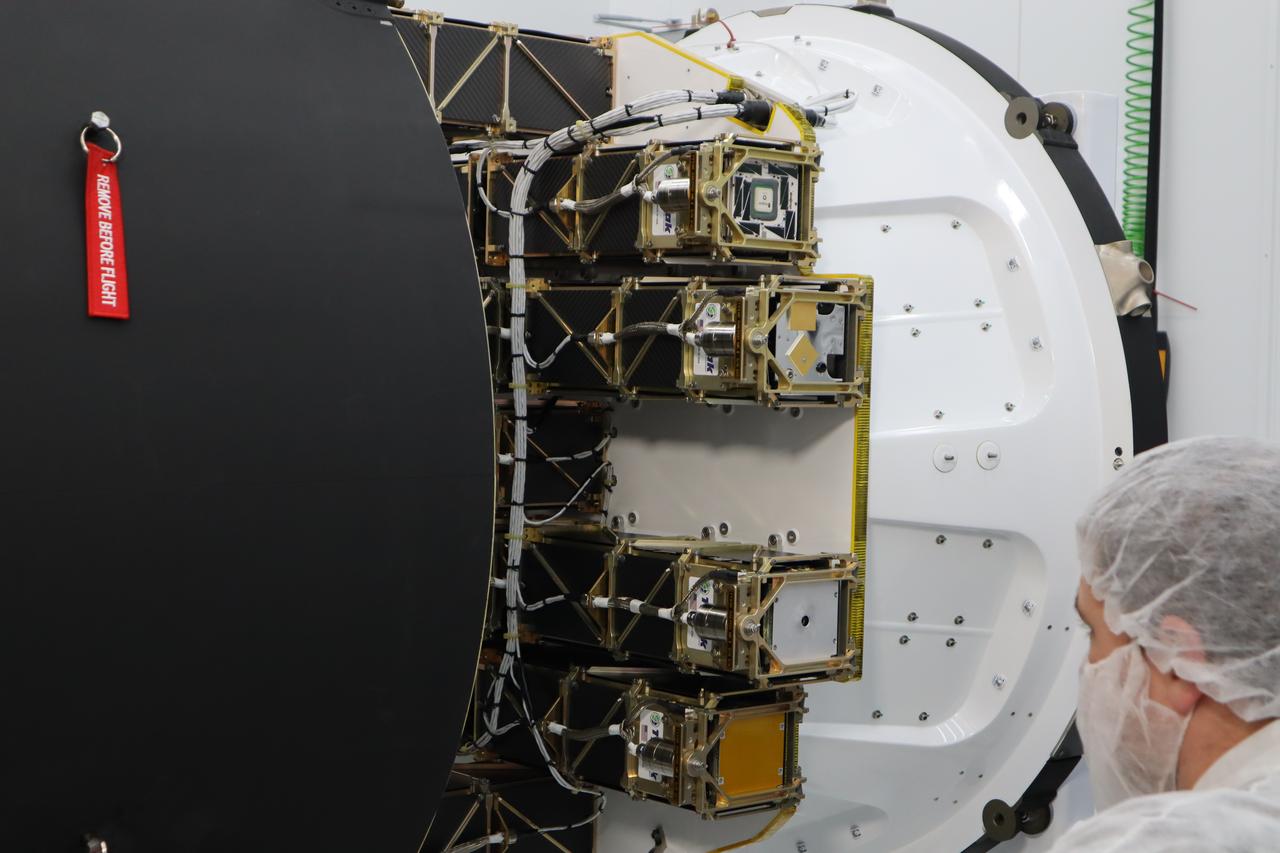
The Educational Launch of Nanosatellites 19 (ELaNa 19) payload is encapsulated inside the Rocket Lab Electron rocket payload fairing on Dec. 1, 2018, at the company’s facility in New Zealand. The ELaNa 19 payload comprises 10 CubeSats selected through NASA’s CubeSat Launch Initiative. The liftoff marks the debut of the agency’s innovative Venture Class Launch Services (VCLS) effort. Managed by NASA’s Launch Services Program at Kennedy Space Center in Florida, VCLS was developed to offer small payloads dedicated rides to space.

The Educational Launch of Nanosatellites 19 (ELaNa 19) payload is prepared to be encapsulated inside the Rocket Lab Electron rocket payload fairing on Dec. 1, 2018, at the company’s facility in New Zealand. The ELaNa 19 payload comprises 10 CubeSats selected through NASA’s CubeSat Launch Initiative. The liftoff marks the debut of the agency’s innovative Venture Class Launch Services (VCLS) effort. Managed by NASA’s Launch Services Program at Kennedy Space Center in Florida, VCLS was developed to offer small payloads dedicated rides to space.
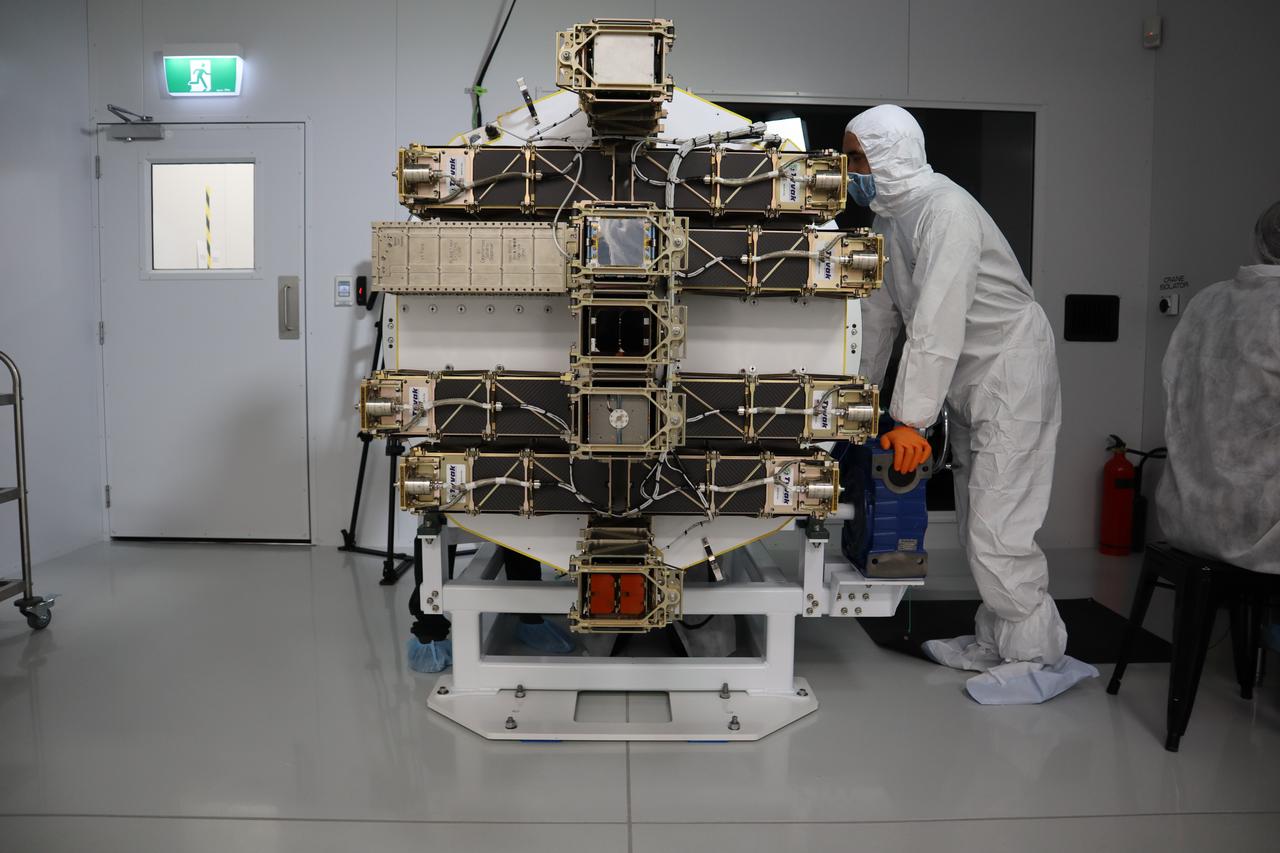
The Educational Launch of Nanosatellites 19 (ELaNa 19) payload has been encapsulated inside the Rocket Lab Electron rocket payload fairing on Dec. 1, 2018, at the company’s facility in New Zealand. The ELaNa 19 payload comprises 10 CubeSats selected through NASA’s CubeSat Launch Initiative. The liftoff marks the debut of the agency’s innovative Venture Class Launch Services (VCLS) effort. Managed by NASA’s Launch Services Program at Kennedy Space Center in Florida, VCLS was developed to offer small payloads dedicated rides to space.
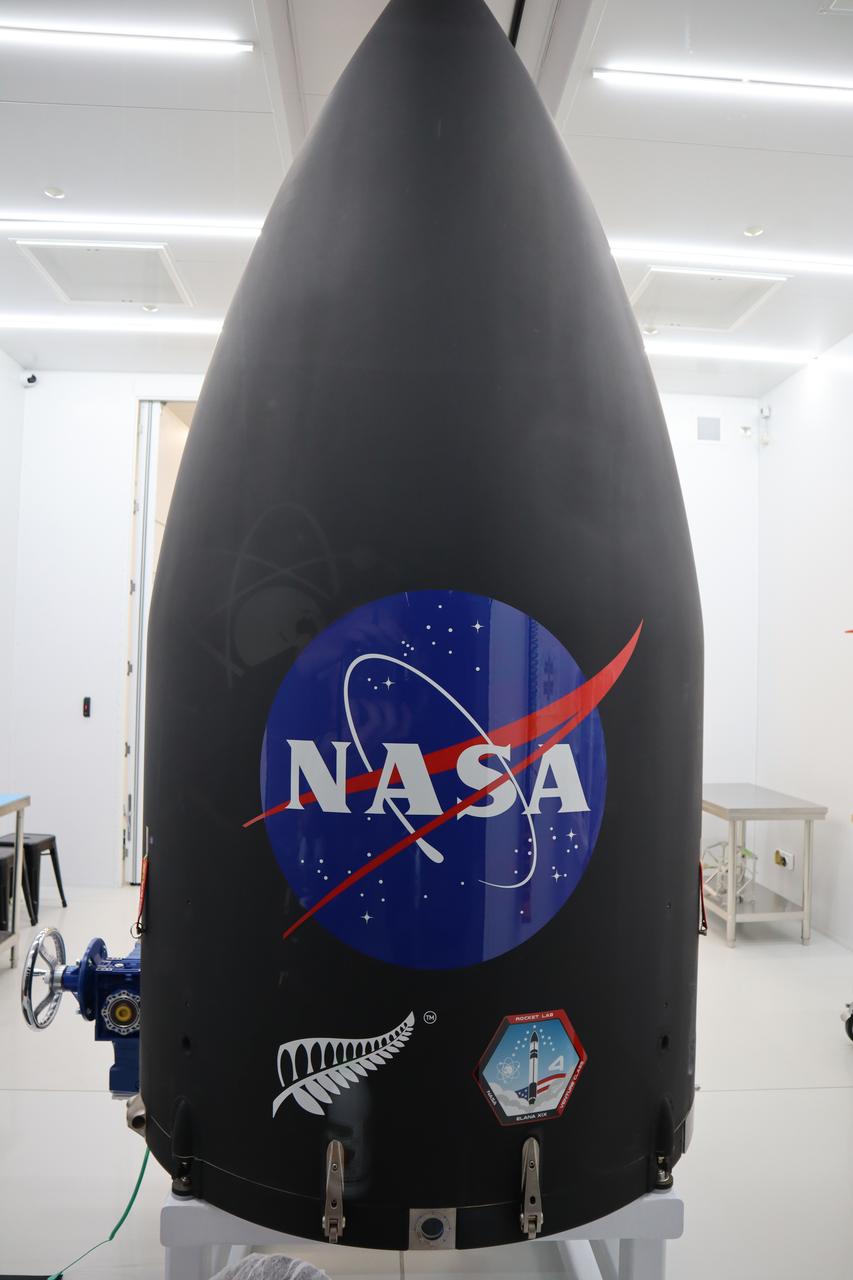
The Educational Launch of Nanosatellites 19 (ELaNa 19) payload has been encapsulated inside the Rocket Lab Electron rocket payload fairing on Dec. 1, 2018, at the company’s facility in New Zealand. The ELaNa 19 payload comprises 10 CubeSats selected through NASA’s CubeSat Launch Initiative. The liftoff marks the debut of the agency’s innovative Venture Class Launch Services (VCLS) effort. Managed by NASA’s Launch Services Program at Kennedy Space Center in Florida, VCLS was developed to offer small payloads dedicated rides to space.
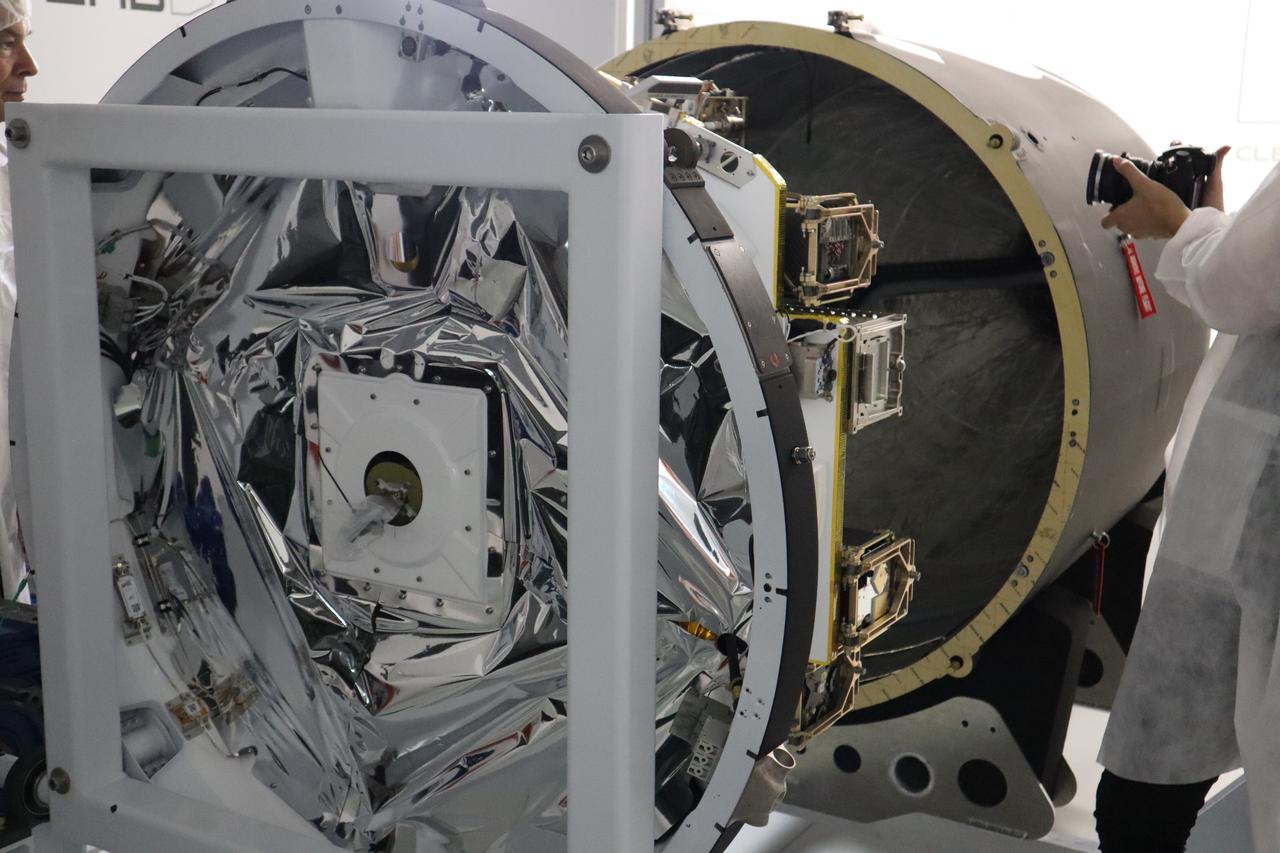
The Educational Launch of Nanosatellites 19 (ELaNa 19) payload is encapsulated inside the Rocket Lab Electron rocket payload fairing on Dec. 1, 2018, at the company’s facility in New Zealand. The ELaNa 19 payload comprises 10 CubeSats selected through NASA’s CubeSat Launch Initiative. The liftoff marks the debut of the agency’s innovative Venture Class Launch Services (VCLS) effort. Managed by NASA’s Launch Services Program at Kennedy Space Center in Florida, VCLS was developed to offer small payloads dedicated rides to space.
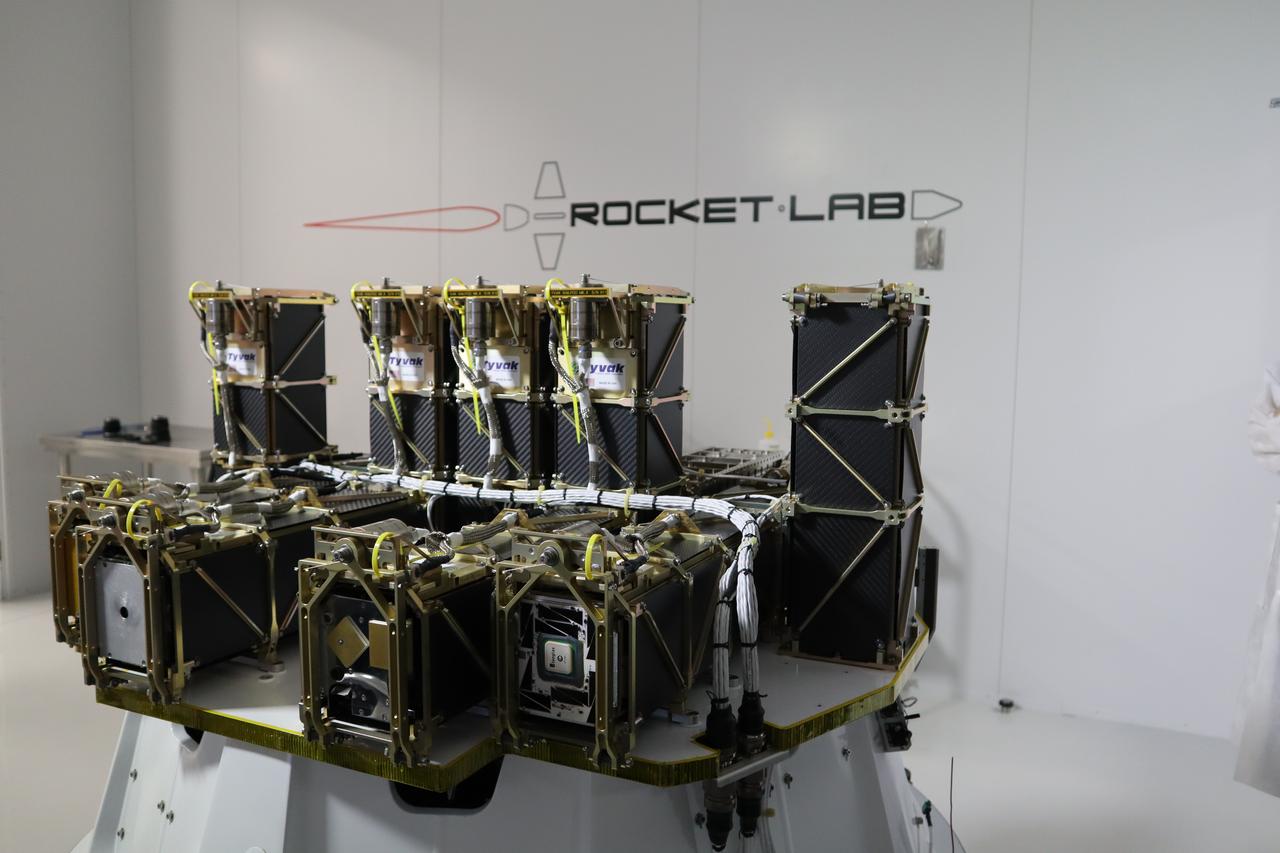
The Educational Launch of Nanosatellites 19 (ELaNa 19) payload has been encapsulated inside the Rocket Lab Electron rocket payload fairing on Dec. 1, 2018, at the company’s facility in New Zealand. The ELaNa 19 payload comprises 10 CubeSats selected through NASA’s CubeSat Launch Initiative. The liftoff marks the debut of the agency’s innovative Venture Class Launch Services (VCLS) effort. Managed by NASA’s Launch Services Program at Kennedy Space Center in Florida, VCLS was developed to offer small payloads dedicated rides to space.
The Educational Launch of Nanosatellites 19 (ELaNa 19) payload has been encapsulated inside the Rocket Lab Electron rocket payload fairing on Dec. 1, 2018, at the company’s facility in New Zealand. The ELaNa 19 payload comprises 10 CubeSats selected through NASA’s CubeSat Launch Initiative. The liftoff marks the debut of the agency’s innovative Venture Class Launch Services (VCLS) effort. Managed by NASA’s Launch Services Program at Kennedy Space Center in Florida, VCLS was developed to offer small payloads dedicated rides to space.
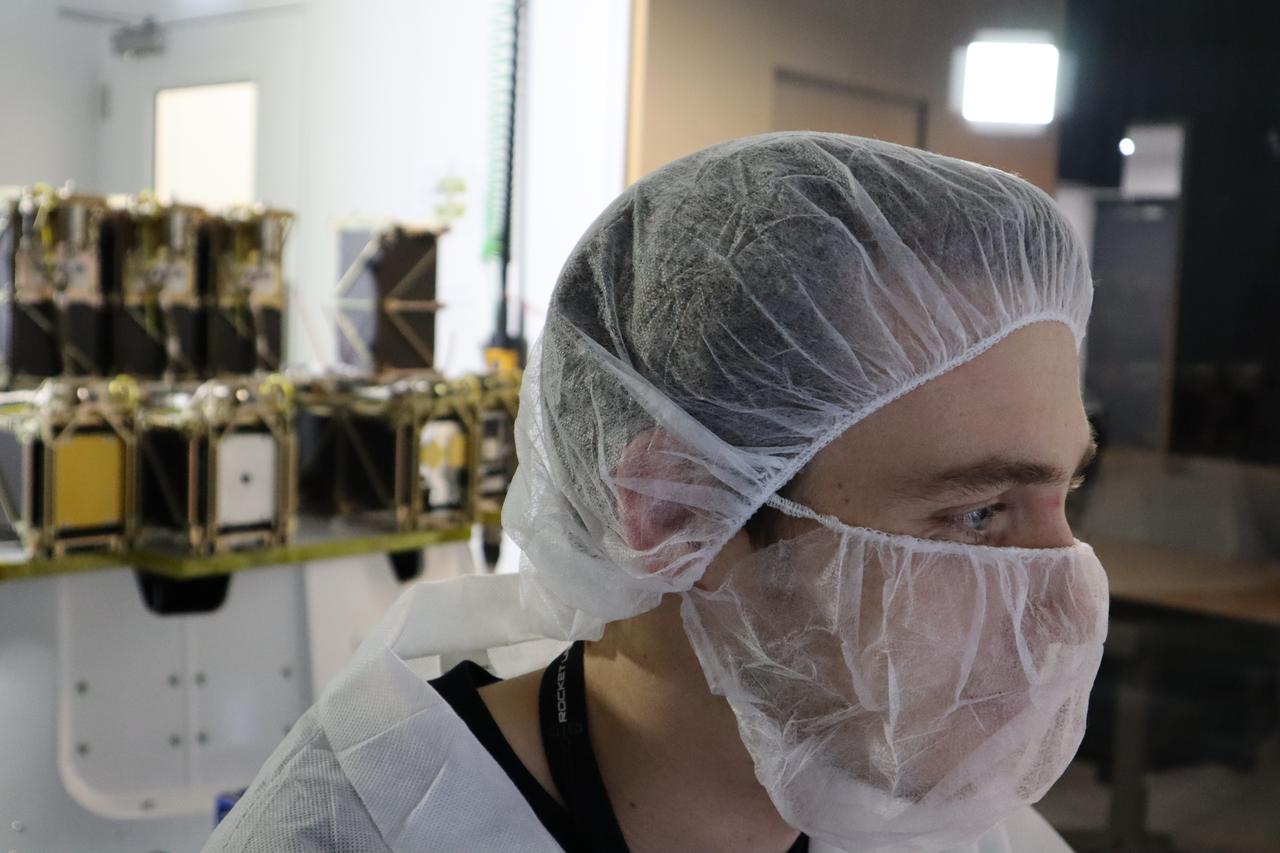
The Educational Launch of Nanosatellites 19 (ELaNa 19) payload is prepared to be encapsulated inside the Rocket Lab Electron rocket payload fairing on Dec. 1, 2018, at the company’s facility in New Zealand. The ELaNa 19 payload comprises 10 CubeSats selected through NASA’s CubeSat Launch Initiative. The liftoff marks the debut of the agency’s innovative Venture Class Launch Services (VCLS) effort. Managed by NASA’s Launch Services Program at Kennedy Space Center in Florida, VCLS was developed to offer small payloads dedicated rides to space.
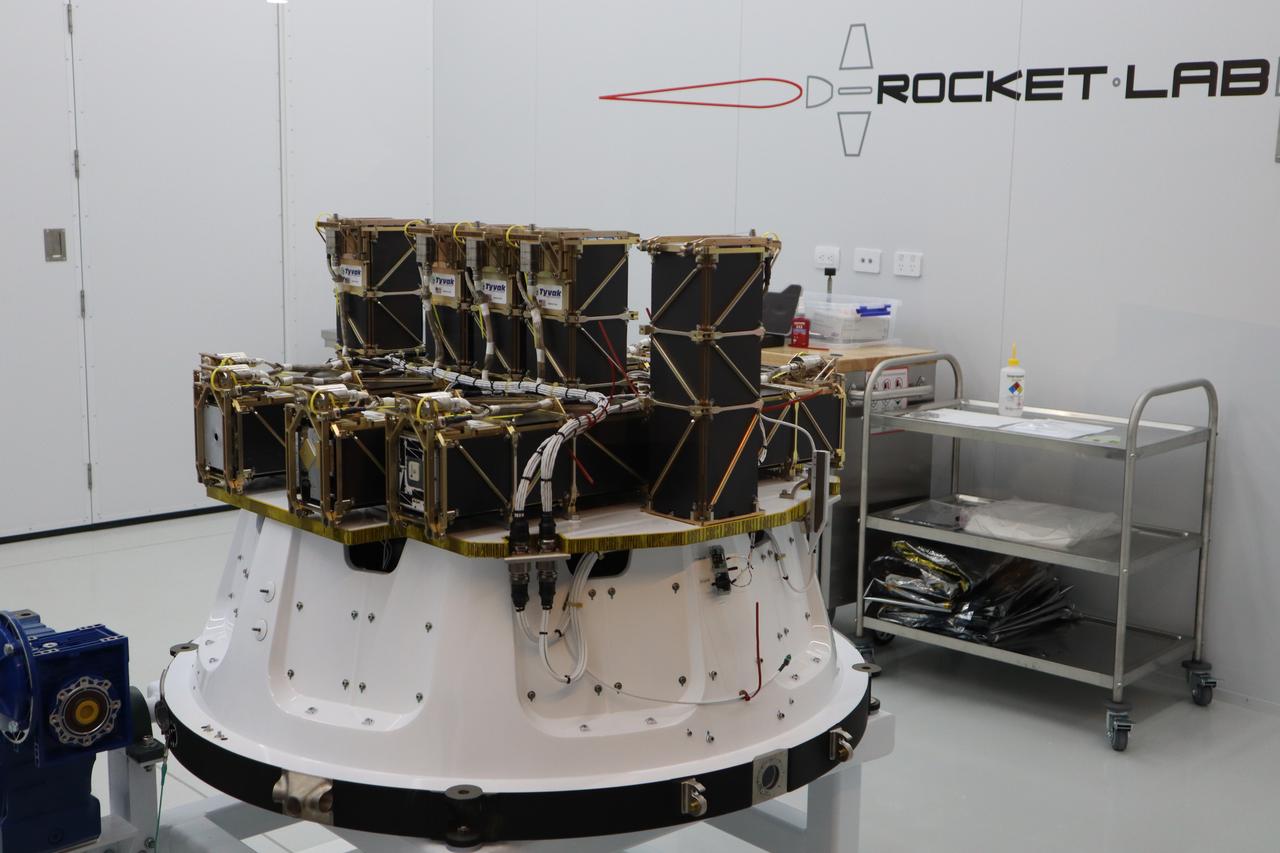
The Educational Launch of Nanosatellites 19 (ELaNa 19) payload is prepared to be encapsulated inside the Rocket Lab Electron rocket payload fairing on Dec. 1, 2018, at the company’s facility in New Zealand. The ELaNa 19 payload comprises 10 CubeSats selected through NASA’s CubeSat Launch Initiative. The liftoff marks the debut of the agency’s innovative Venture Class Launch Services (VCLS) effort. Managed by NASA’s Launch Services Program at Kennedy Space Center in Florida, VCLS was developed to offer small payloads dedicated rides to space.
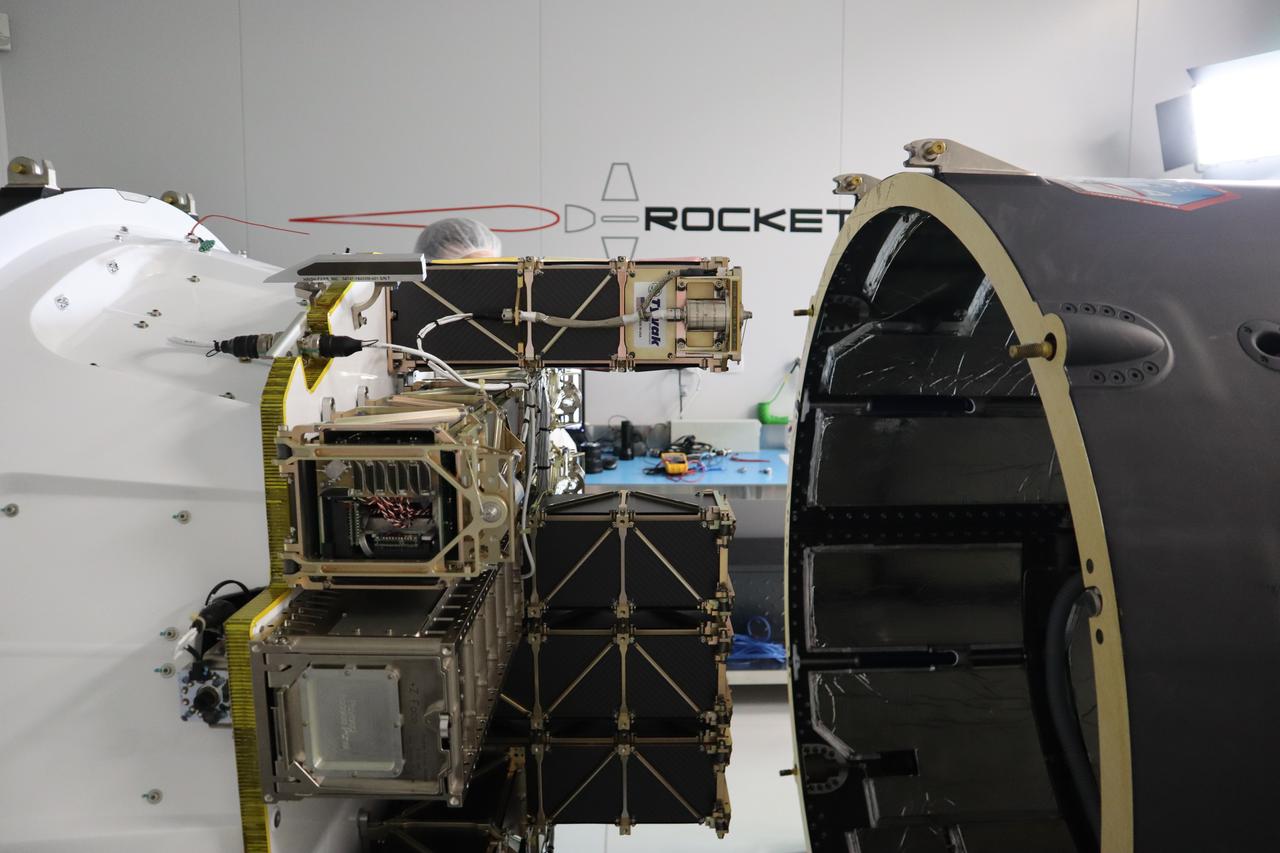
The Educational Launch of Nanosatellites 19 (ELaNa 19) payload is encapsulated inside the Rocket Lab Electron rocket payload fairing on Dec. 1, 2018, at the company’s facility in New Zealand. The ELaNa 19 payload comprises 10 CubeSats selected through NASA’s CubeSat Launch Initiative. The liftoff marks the debut of the agency’s innovative Venture Class Launch Services (VCLS) effort. Managed by NASA’s Launch Services Program at Kennedy Space Center in Florida, VCLS was developed to offer small payloads dedicated rides to space.
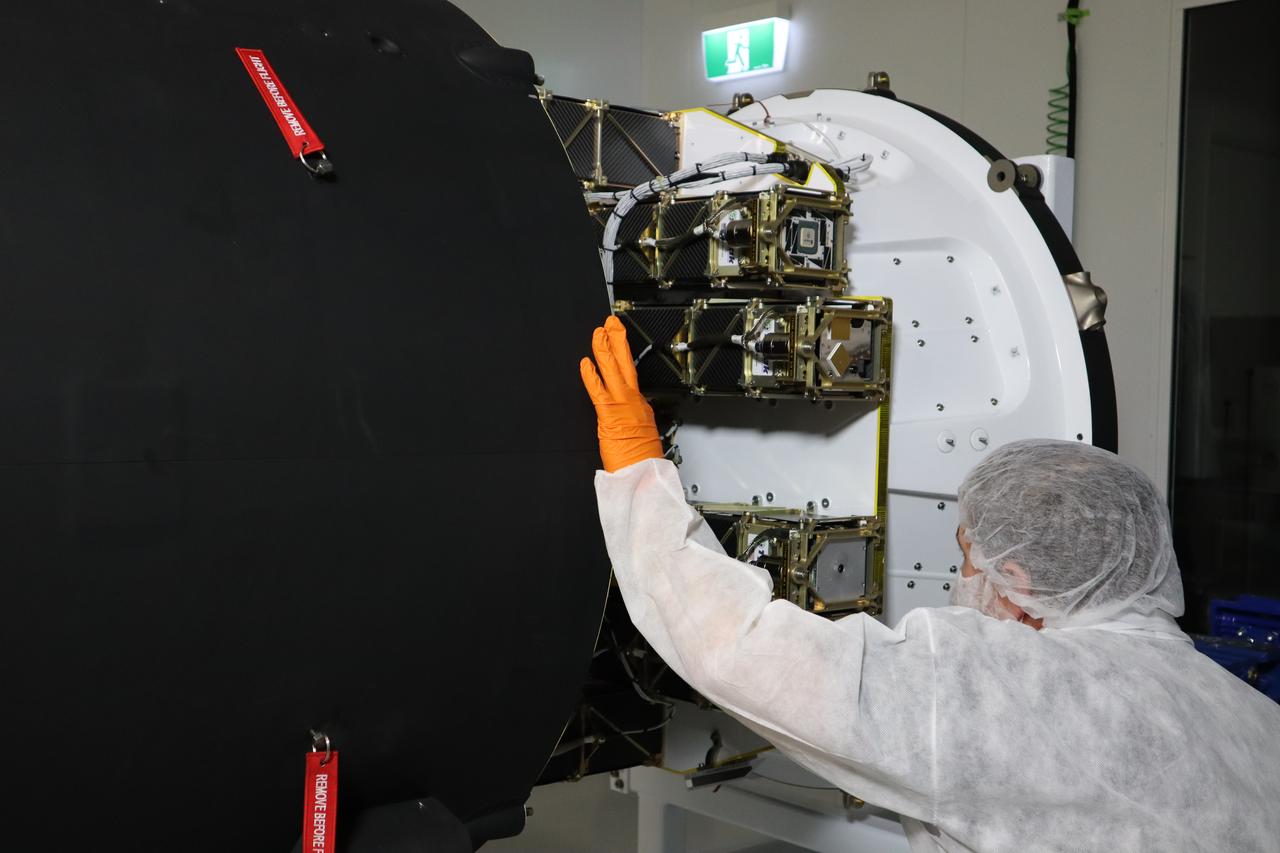
The Educational Launch of Nanosatellites 19 (ELaNa 19) payload is encapsulated inside the Rocket Lab Electron rocket payload fairing on Dec. 1, 2018, at the company’s facility in New Zealand. The ELaNa 19 payload comprises 10 CubeSats selected through NASA’s CubeSat Launch Initiative. The liftoff marks the debut of the agency’s innovative Venture Class Launch Services (VCLS) effort. Managed by NASA’s Launch Services Program at Kennedy Space Center in Florida, VCLS was developed to offer small payloads dedicated rides to space.
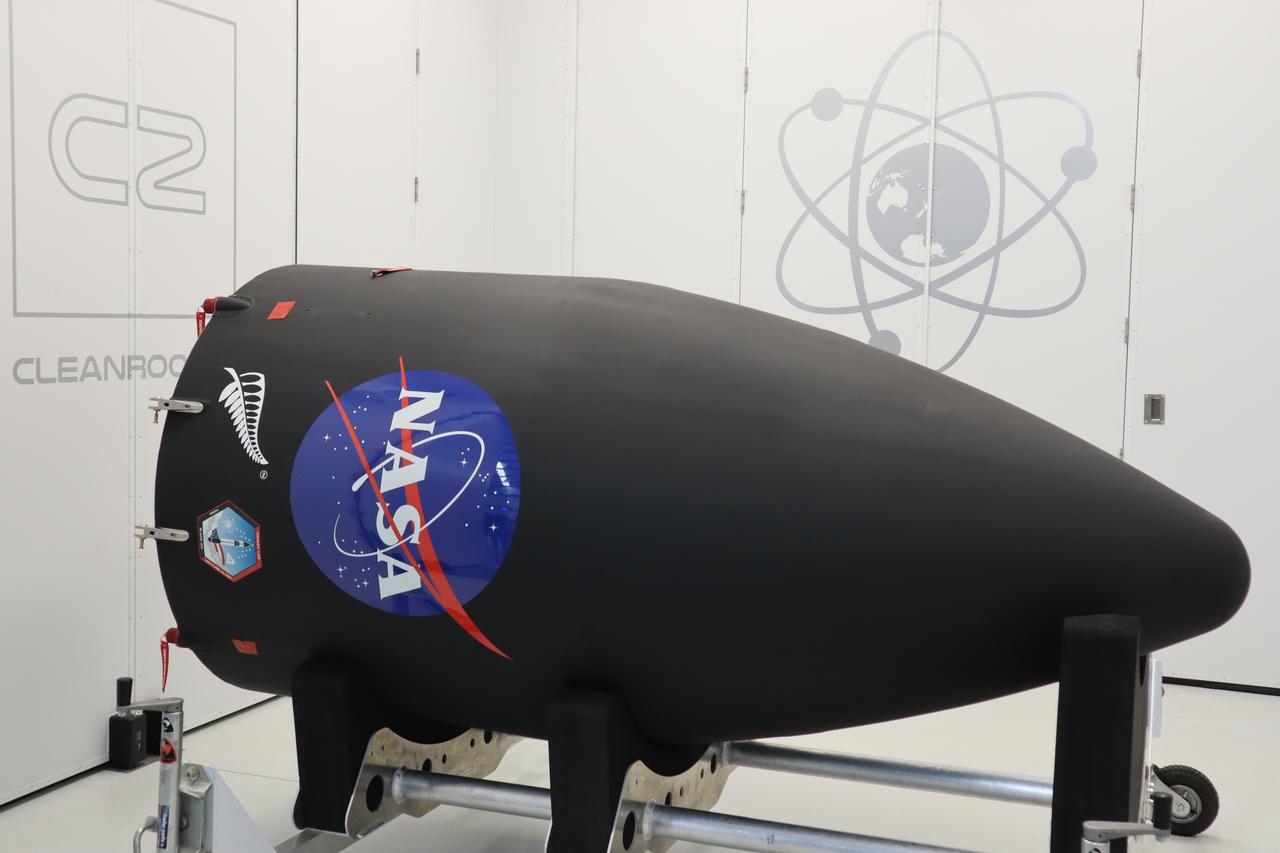
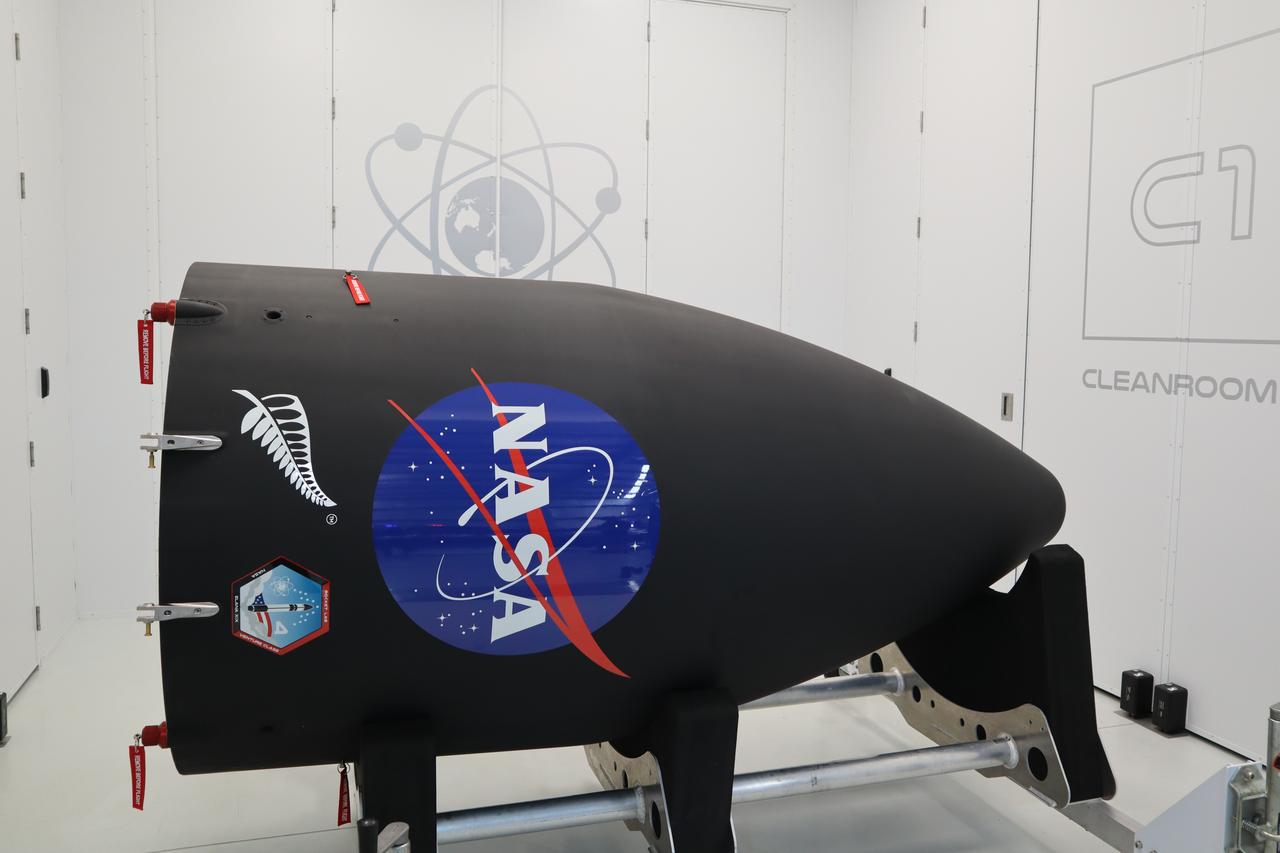
The Rocket Lab Electron rocket payload fairing is prepared for the encapsulation of the Educational Launch of Nanosatellites 19 (ELaNa 19) payload on Dec. 1, 2018, at the company’s facility in New Zealand. The ELaNa 19 payload comprises 10 CubeSats selected through NASA’s CubeSat Launch Initiative. The liftoff marks the debut of the agency’s innovative Venture Class Launch Services (VCLS) effort. Managed by NASA’s Launch Services Program at Kennedy Space Center in Florida, VCLS was developed to offer small payloads dedicated rides to space.
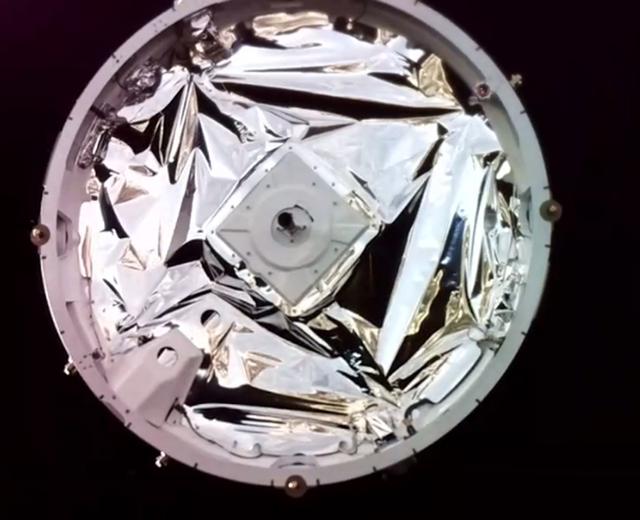
NASA’s Educational Launch of Nanosatellites-19 (ELaNa-19) payload after separation from a Rocket Lab Electron rocket after successful liftoff from Launch Complex-1 at Māhia Peninsula in New Zealand. Launched at 6:33 a.m. UTC on Dec. 17 (1:33 p.m. EST on Dec 16), this marks the first flight of a payload under NASA’s Venture Class Launch Services (VCLS). Managed by NASA’s Launch Services Program at Kennedy Space Center in Florida, VCLS was developed to provide increased access to space specifically for payloads like this, carrying small spacecraft called CubeSats. The successful launch and deployment officially begins the venture-class era.
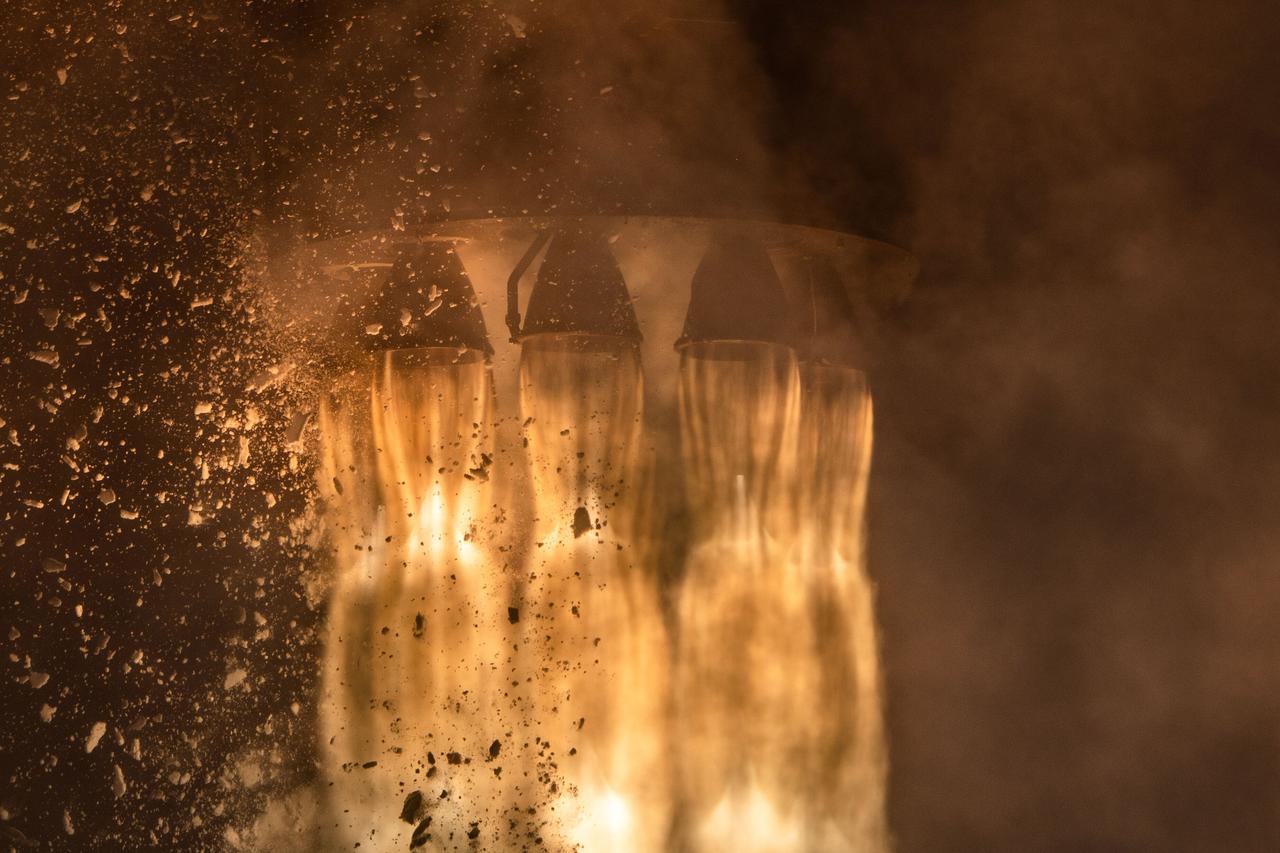
A Rocket Lab Electron rocket’s nine first-stage Rutherford engines ignite as NASA’s Educational Launch of Nanosatellites-19 (ELaNa-19) payload lifts off at 6:33 a.m. UTC on Dec. 17 (1:33 p.m. EST on Dec. 16) from Launch Complex-1, located at Māhia Peninsula in New Zealand. The liftoff marks the first flight of a payload under NASA’s Venture Class Launch Services (VCLS). Managed by NASA’s Launch Services Program at Kennedy Space Center in Florida, VCLS was developed to provide increased access to space specifically for these small spacecraft, called CubeSats.

A Rocket Lab Electron rocket lifts off Launch Complex-1 at Māhia Peninsula in New Zealand carrying NASA’s Educational Launch of Nanosatellites-19 (ELaNa-19) payload. Liftoff occurred at 6:33 a.m. UTC on Dec. 17 (1:33 p.m. EST on Dec. 16). The liftoff marks the first flight of a payload under NASA’s Venture Class Launch Services (VCLS). Managed by NASA’s Launch Services Program at Kennedy Space Center in Florida, VCLS was developed to provide increased access to space specifically for these small spacecraft, called CubeSats.
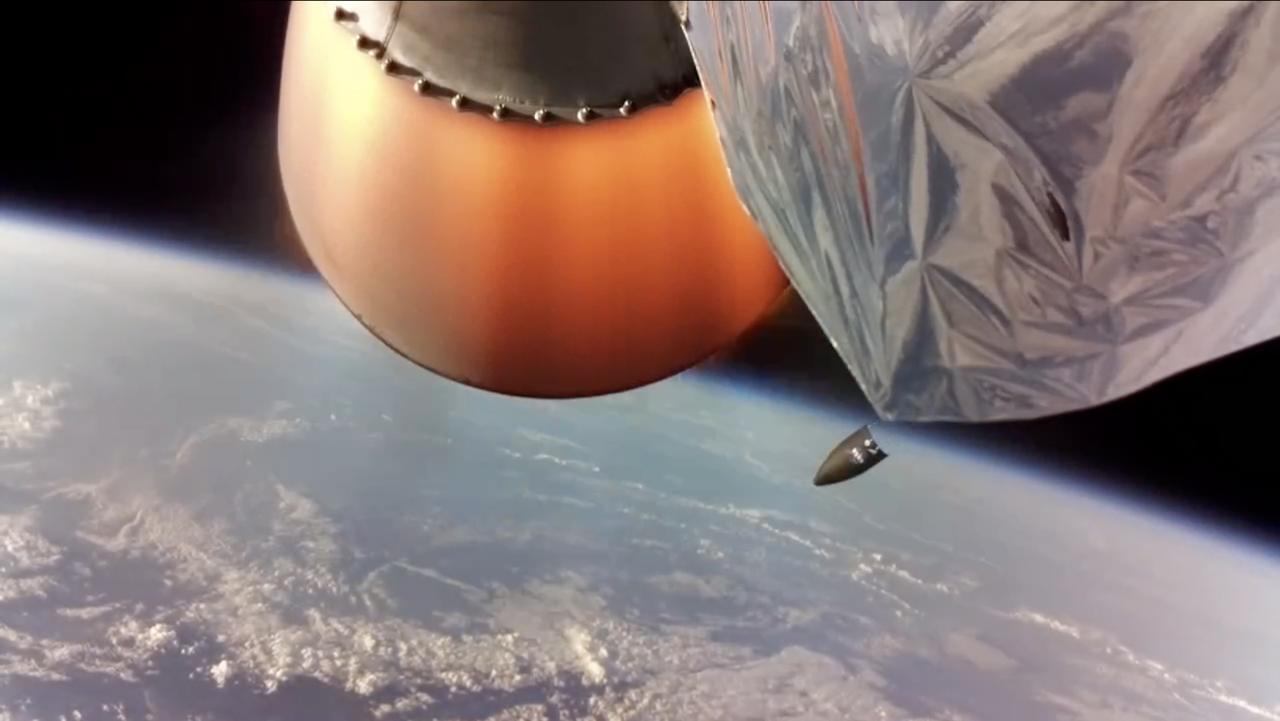
NASA’s Educational Launch of Nanosatellites-19 (ELaNa-19) payload separates from the upper stage of a Rocket Lab Electron rocket after successful liftoff from Launch Complex-1 at Māhia Peninsula in New Zealand. Launched at 6:33 a.m. UTC on Dec. 17 (1:33 p.m. EST on Dec. 16), this marks the first flight of a payload under NASA’s Venture Class Launch Services (VCLS). Managed by NASA’s Launch Services Program at Kennedy Space Center in Florida, VCLS was developed to provide increased access to space specifically for these small spacecraft, called CubeSats.
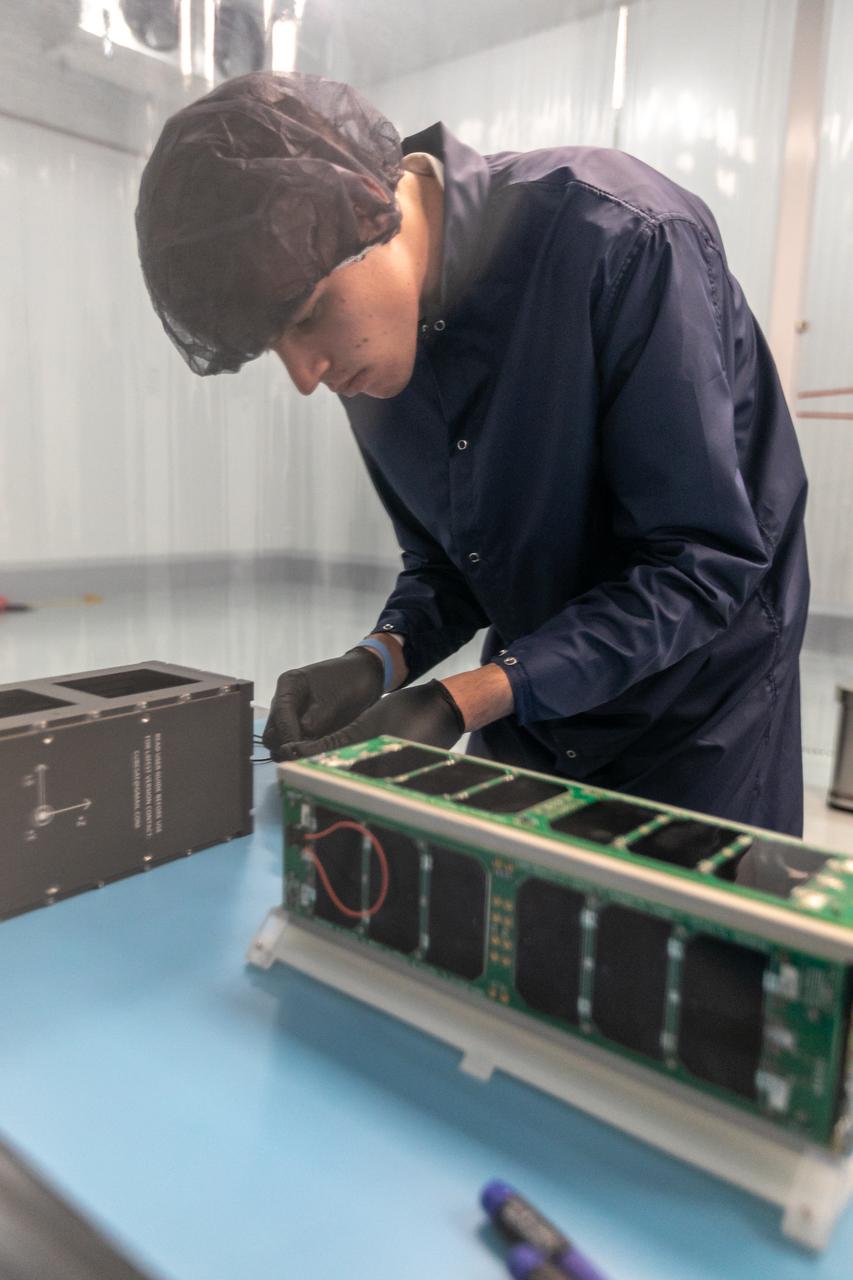
RSat is a 3U CubeSat with two seven degree of freedom robotic arms designed to latch onto a host satellite and maneuver around to image and potentially repair malfunctioning components. RSat is part of the AMODS research project developed by a team of Midshipmen from the United States Naval Academy. The three-year-old program aims to employ a small satellite platform to provide both new and legacy spacecraft with cost-effective on-orbit assessments and repair services. Currently, if a satellite makes it to orbit, there is no guarantee it will work as intended. In these cases, not only is the spacecraft lost, but invaluable experience vanishes with it. RSat takes advantage of cost and profile efficiencies of the small satellite platform to offer satellite developers and operators a fundamentally new way to reduce risk, protect investment and effect design improvements correlated against observed space environment experience. RSat-P is launching as part of ELaNa XIX as a free-flying unit intended to validate the on-orbit effectiveness of compact robotic manipulators.
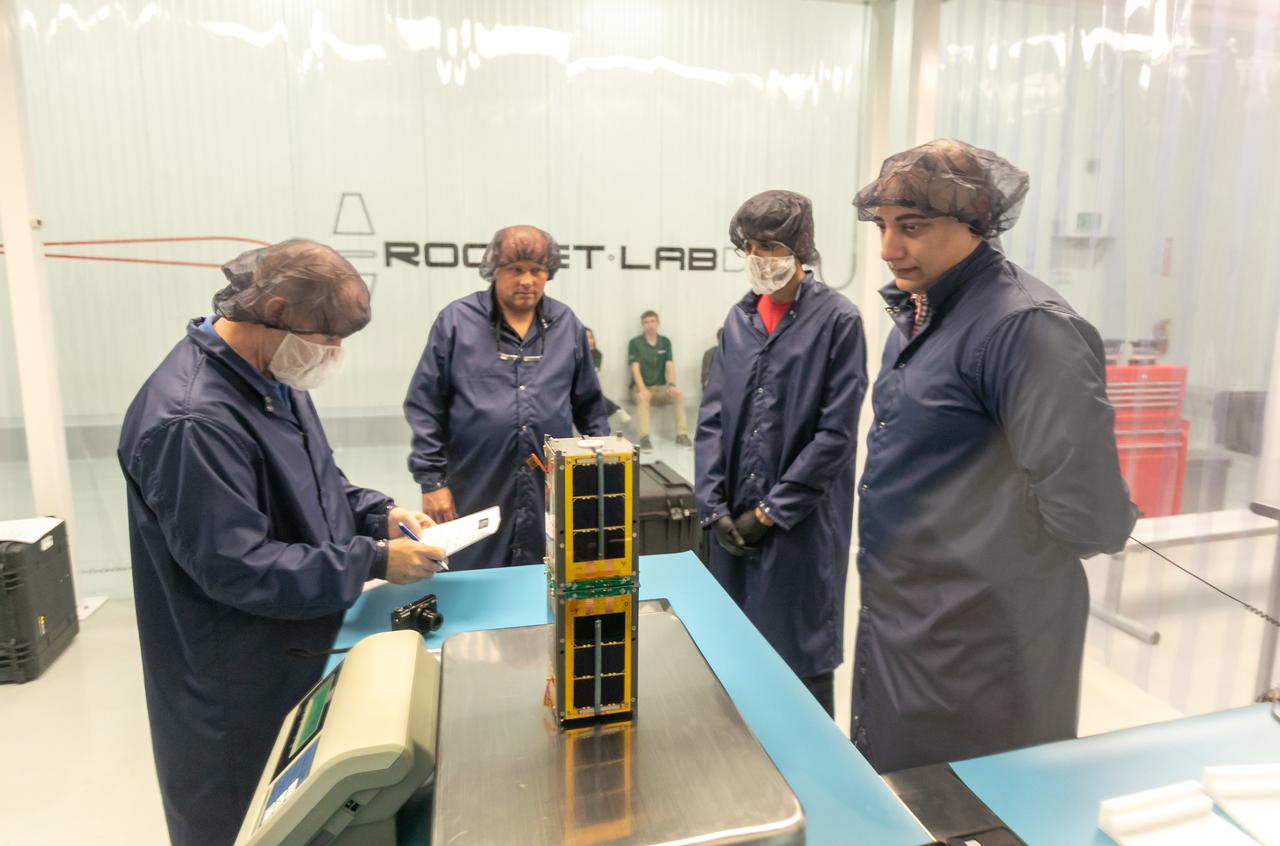
CubeSail is a nano-scale flight experiment to demonstrate deployment and control of a single 250-meter (20 m2) solar sail blade as a low-cost risk reduction precursor of the exciting advanced interplanetary UltraSail concept having four 5-kilometer blades (with approximately 100,000 m2 of sail area). CubeSail was built by the University of Illinois at Urbana-Champaign and CU Aerospace, the same team that designed the I-Sail and UltraSail concepts funded by NASA’s SBIR program. CubeSail represents an affordable stepping-stone towards the future development of the UltraSail solar sail concept that would enable very high-energy inner heliosphere and interstellar scientific missions. In addition, near-earth missions such as Heliostorm for early warning of solar storms will provide more warning margin as the solar sail performance is increased with UltraSail technology. Spacecraft design studies show that for sail areal densities below 5 gm/m2, as proposed with UltraSail, that spacecraft payloads can be significantly increased to 50-60% because of the elimination of the propellant, without sacrificing flight time. Furthermore, higher payload fractions will result in dramatically lower total spacecraft mass and consequently much lower launch cost, enabling more missions for the research dollar.
The goal of the CHOMPTT mission is to demonstrate new technologies that could be used for navigation and satellite networking in deep space. For future explorers and colonizers of the Moon or Mars, navigation systems like GPS here on Earth, will be essential. The key idea behind CHOMPTT is to use lasers to transfer time code data over long distances instead of radio waves. Because lasers can be more tightly beamed compared to radio waves, more of the transmitted energy reaches its intended target, making them more power-efficient. CHOMPTT takes advantage of this and of new miniature but very stable atomic clocks to produce a timing system with performance similar to that of GPS, but in a very compact and power efficient form factor. We will use a pulsed laser system, located at the Kennedy Space Center that will be synchronized with an atomic clock. Laser pulses will propagate from the ground to the orbiting CHOMPTT CubeSat and back. By precisely measuring the time of emission and detection of these pulses on the ground and in space we can calculate the time discrepancy between the ground atomic clock and the atomic clock on CHOMPTT. Our goal is to do this with an accuracy of 0.2 billionths of a second, or the time it takes light to travel just 6 centimeters. In the future, we envision using this technology on constellations or swarms of small satellites, for example orbiting the Moon, to equip them with precision navigation, networking, and ranging capabilities. CHOMPTT is a collaboration between the University of Florida and the NASA Ames Research Center. The CHOMPTT precision timing payload was designed and built by the Precision Space Systems Lab at the University of Florida, while the 3U CubeSat bus that has prior flight heritage, was provided by NASA Ames. The CHOMPTT mission has been funded by the Air Force Research Lab and by NASA.

RSat is a 3U CubeSat with two seven degree of freedom robotic arms designed to latch onto a host satellite and maneuver around to image and potentially repair malfunctioning components. RSat is part of the AMODS research project developed by a team of Midshipmen from the United States Naval Academy. The three-year-old program aims to employ a small satellite platform to provide both new and legacy spacecraft with cost-effective on-orbit assessments and repair services. Currently, if a satellite makes it to orbit, there is no guarantee it will work as intended. In these cases, not only is the spacecraft lost, but invaluable experience vanishes with it. RSat takes advantage of cost and profile efficiencies of the small satellite platform to offer satellite developers and operators a fundamentally new way to reduce risk, protect investment and effect design improvements correlated against observed space environment experience. RSat-P is launching as part of ELaNa XIX as a free-flying unit intended to validate the on-orbit effectiveness of compact robotic manipulators.
CubeSail is a nano-scale flight experiment to demonstrate deployment and control of a single 250-meter (20 m2) solar sail blade as a low-cost risk reduction precursor of the exciting advanced interplanetary UltraSail concept having four 5-kilometer blades (with approximately 100,000 m2 of sail area). CubeSail was built by the University of Illinois at Urbana-Champaign and CU Aerospace, the same team that designed the I-Sail and UltraSail concepts funded by NASA’s SBIR program. CubeSail represents an affordable stepping-stone towards the future development of the UltraSail solar sail concept that would enable very high-energy inner heliosphere and interstellar scientific missions. In addition, near-earth missions such as Heliostorm for early warning of solar storms will provide more warning margin as the solar sail performance is increased with UltraSail technology. Spacecraft design studies show that for sail areal densities below 5 gm/m2, as proposed with UltraSail, that spacecraft payloads can be significantly increased to 50-60% because of the elimination of the propellant, without sacrificing flight time. Furthermore, higher payload fractions will result in dramatically lower total spacecraft mass and consequently much lower launch cost, enabling more missions for the research dollar.
The Advanced Electrical Bus (ALBus) mission is a technology demonstration of resettable Shape Memory Alloy (SMA) mechanisms for deployable solar arrays and a pathfinder for high power density CubeSats. The mission has two primary objectives. The first is to demonstrate the functionality of the novel SMA activated solar array mechanisms in the on-orbit environment. The second objective is to assess the system level ability to charge a high capacity battery, distribute 100 W of electrical power and thermally control the 3-U CubeSat system. Performance from the mission will be used to mature the SMA mechanism designs for CubeSat applications and plan for future high power density CubeSat missions.
CubeSail is a nano-scale flight experiment to demonstrate deployment and control of a single 250-meter (20 m2) solar sail blade as a low-cost risk reduction precursor of the exciting advanced interplanetary UltraSail concept having four 5-kilometer blades (with approximately 100,000 m2 of sail area). CubeSail was built by the University of Illinois at Urbana-Champaign and CU Aerospace, the same team that designed the I-Sail and UltraSail concepts funded by NASA’s SBIR program. CubeSail represents an affordable stepping-stone towards the future development of the UltraSail solar sail concept that would enable very high-energy inner heliosphere and interstellar scientific missions. In addition, near-earth missions such as Heliostorm for early warning of solar storms will provide more warning margin as the solar sail performance is increased with UltraSail technology. Spacecraft design studies show that for sail areal densities below 5 gm/m2, as proposed with UltraSail, that spacecraft payloads can be significantly increased to 50-60% because of the elimination of the propellant, without sacrificing flight time. Furthermore, higher payload fractions will result in dramatically lower total spacecraft mass and consequently much lower launch cost, enabling more missions for the research dollar.
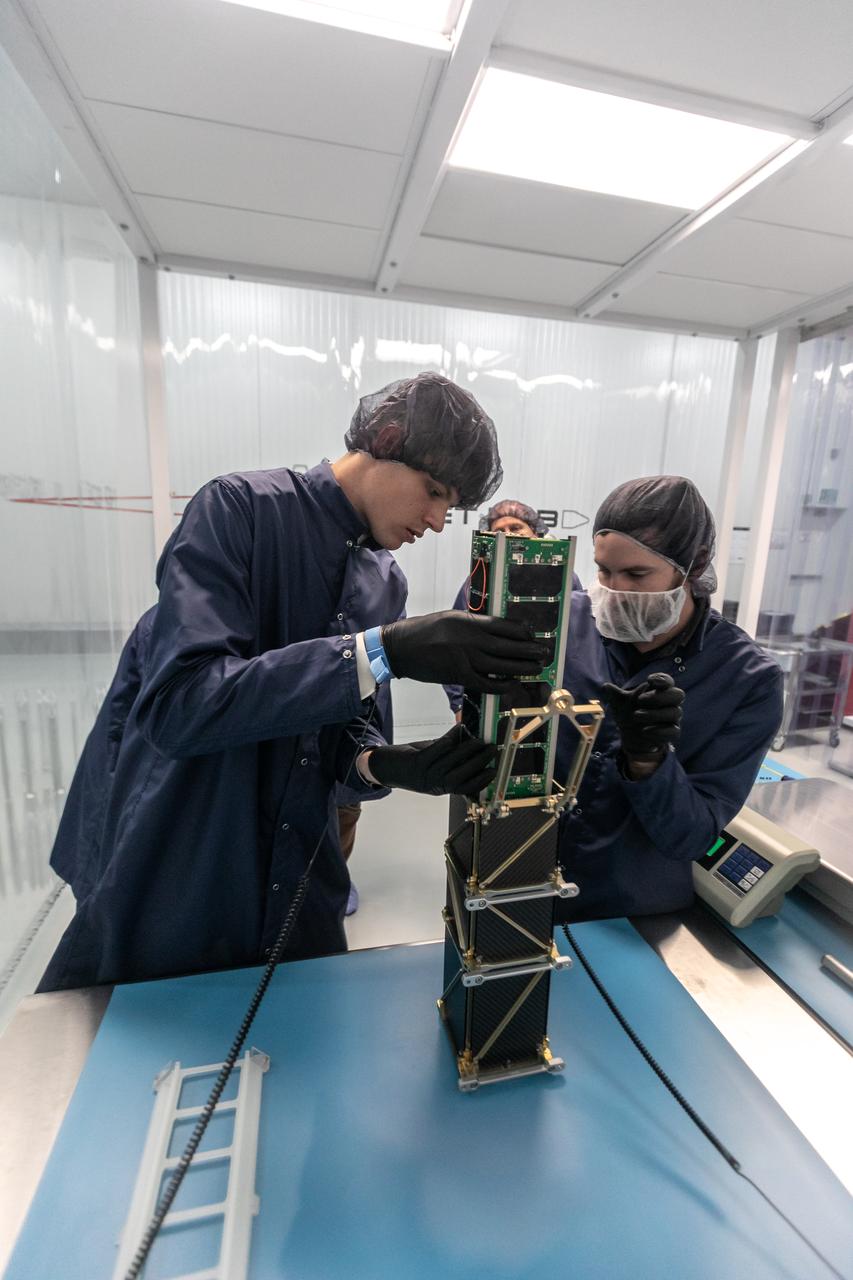
RSat is a 3U CubeSat with two seven degree of freedom robotic arms designed to latch onto a host satellite and maneuver around to image and potentially repair malfunctioning components. RSat is part of the AMODS research project developed by a team of Midshipmen from the United States Naval Academy. The three-year-old program aims to employ a small satellite platform to provide both new and legacy spacecraft with cost-effective on-orbit assessments and repair services. Currently, if a satellite makes it to orbit, there is no guarantee it will work as intended. In these cases, not only is the spacecraft lost, but invaluable experience vanishes with it. RSat takes advantage of cost and profile efficiencies of the small satellite platform to offer satellite developers and operators a fundamentally new way to reduce risk, protect investment and effect design improvements correlated against observed space environment experience. RSat-P is launching as part of ELaNa XIX as a free-flying unit intended to validate the on-orbit effectiveness of compact robotic manipulators.
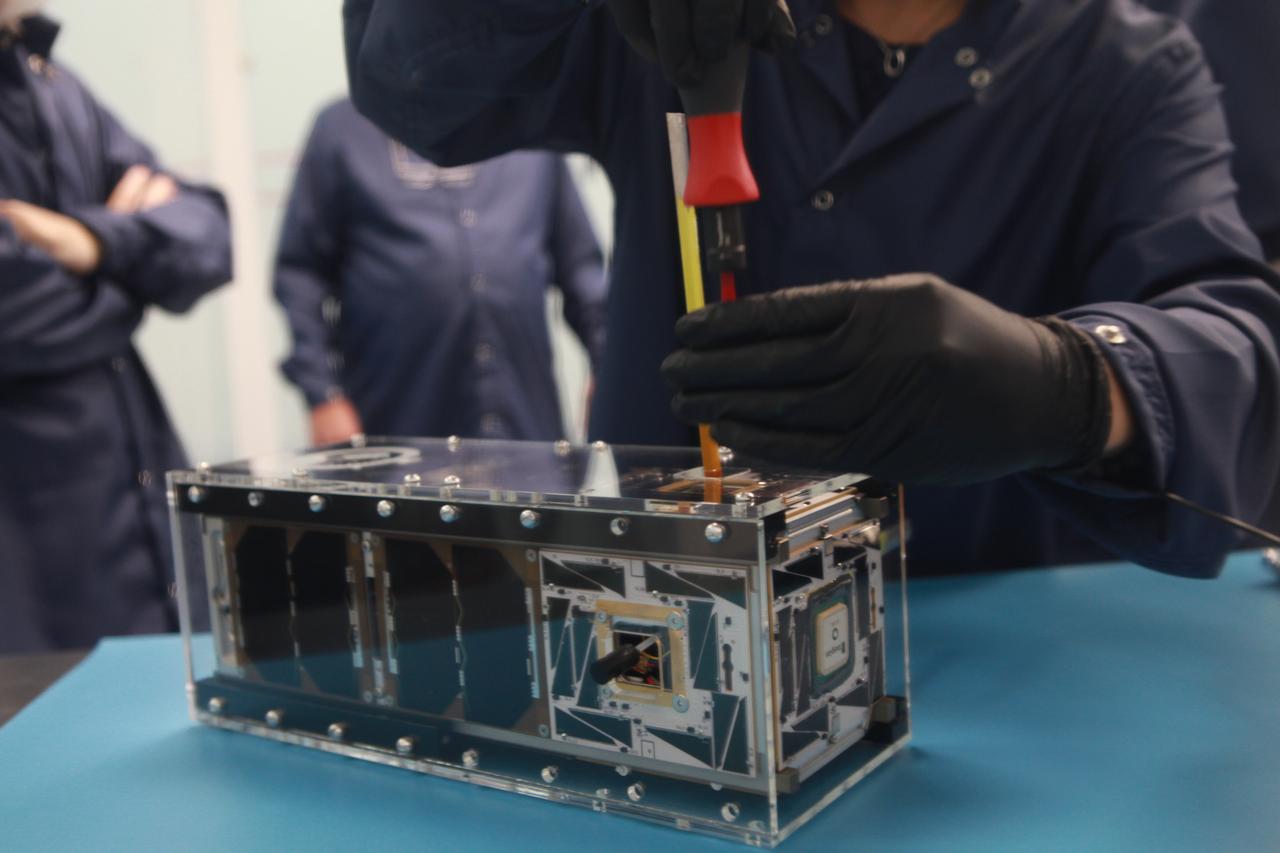
The goal of the CHOMPTT mission is to demonstrate new technologies that could be used for navigation and satellite networking in deep space. For future explorers and colonizers of the Moon or Mars, navigation systems like GPS here on Earth, will be essential. The key idea behind CHOMPTT is to use lasers to transfer time code data over long distances instead of radio waves. Because lasers can be more tightly beamed compared to radio waves, more of the transmitted energy reaches its intended target, making them more power-efficient. CHOMPTT takes advantage of this and of new miniature but very stable atomic clocks to produce a timing system with performance similar to that of GPS, but in a very compact and power efficient form factor. We will use a pulsed laser system, located at the Kennedy Space Center that will be synchronized with an atomic clock. Laser pulses will propagate from the ground to the orbiting CHOMPTT CubeSat and back. By precisely measuring the time of emission and detection of these pulses on the ground and in space we can calculate the time discrepancy between the ground atomic clock and the atomic clock on CHOMPTT. Our goal is to do this with an accuracy of 0.2 billionths of a second, or the time it takes light to travel just 6 centimeters. In the future, we envision using this technology on constellations or swarms of small satellites, for example orbiting the Moon, to equip them with precision navigation, networking, and ranging capabilities. CHOMPTT is a collaboration between the University of Florida and the NASA Ames Research Center. The CHOMPTT precision timing payload was designed and built by the Precision Space Systems Lab at the University of Florida, while the 3U CubeSat bus that has prior flight heritage, was provided by NASA Ames. The CHOMPTT mission has been funded by the Air Force Research Lab and by NASA.
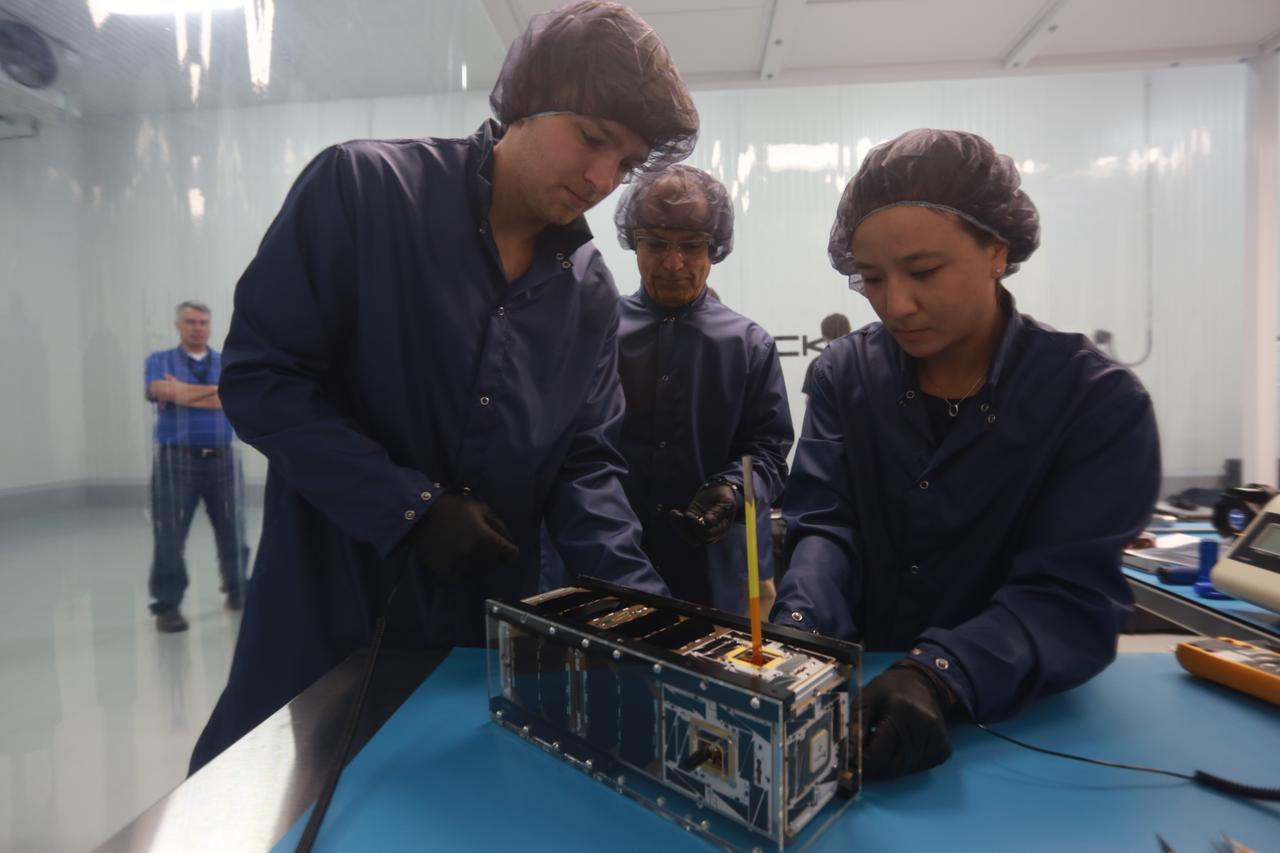
The goal of the CHOMPTT mission is to demonstrate new technologies that could be used for navigation and satellite networking in deep space. For future explorers and colonizers of the Moon or Mars, navigation systems like GPS here on Earth, will be essential. The key idea behind CHOMPTT is to use lasers to transfer time code data over long distances instead of radio waves. Because lasers can be more tightly beamed compared to radio waves, more of the transmitted energy reaches its intended target, making them more power-efficient. CHOMPTT takes advantage of this and of new miniature but very stable atomic clocks to produce a timing system with performance similar to that of GPS, but in a very compact and power efficient form factor. We will use a pulsed laser system, located at the Kennedy Space Center that will be synchronized with an atomic clock. Laser pulses will propagate from the ground to the orbiting CHOMPTT CubeSat and back. By precisely measuring the time of emission and detection of these pulses on the ground and in space we can calculate the time discrepancy between the ground atomic clock and the atomic clock on CHOMPTT. Our goal is to do this with an accuracy of 0.2 billionths of a second, or the time it takes light to travel just 6 centimeters. In the future, we envision using this technology on constellations or swarms of small satellites, for example orbiting the Moon, to equip them with precision navigation, networking, and ranging capabilities. CHOMPTT is a collaboration between the University of Florida and the NASA Ames Research Center. The CHOMPTT precision timing payload was designed and built by the Precision Space Systems Lab at the University of Florida, while the 3U CubeSat bus that has prior flight heritage, was provided by NASA Ames. The CHOMPTT mission has been funded by the Air Force Research Lab and by NASA.
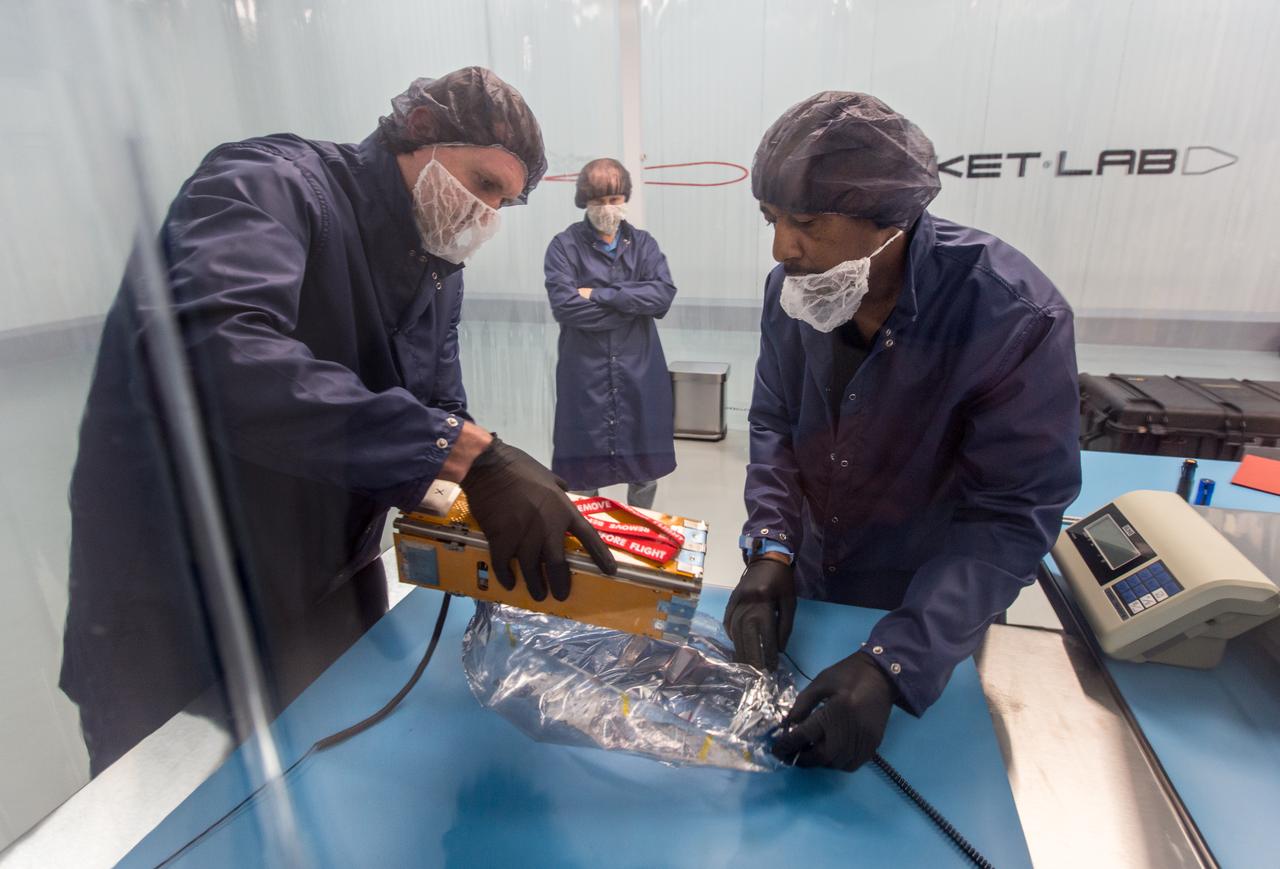
The Advanced Electrical Bus (ALBus) mission is a technology demonstration of resettable Shape Memory Alloy (SMA) mechanisms for deployable solar arrays and a pathfinder for high power density CubeSats. The mission has two primary objectives. The first is to demonstrate the functionality of the novel SMA activated solar array mechanisms in the on-orbit environment. The second objective is to assess the system level ability to charge a high capacity battery, distribute 100 W of electrical power and thermally control the 3-U CubeSat system. Performance from the mission will be used to mature the SMA mechanism designs for CubeSat applications and plan for future high power density CubeSat missions.
Plasma fluctuations in the upper atmosphere can distort radio signals as they pass into space, damaging radio communication with satellites. The ISX (Ionospheric Scintillation Explorer) mission will study these effects by measuring and comparing digital TV signals produced on the ground. Developed as a collaboration between SRI International and PolySat at Cal Poly, San Luis Obispo, the ISX mission will attempt to improve our understanding of these plasma irregularities and help model space weather predictions in the future.

The NASA Langley Research Center (LaRC) Shields-1 CubeSat will demonstrate a research payload with materials durability experiments on emerging radiation shielding technologies. Shields-1 incorporates eight mdosimeters for radiation shielding experiments: one in the atomic number (Z)-grade radiation shielding vault, three behind experimental Z-grade radiation shielding samples developed at NASA LaRC, three behind baseline aluminum shielding samples, and one deep inside the research payload. The Z-grade is defined as an atomic number gradient of shielding materials using a low atomic number metal, such as aluminum, with a high atomic number material, like tantalum. The metals are fabricated into the vault structure. Also, Shields-1 measures a charge dissipation film resistance for technology development. The Shields-1 mission contributes to the SmallSat community with the development of technologies to increase the lifetimes of CubeSat missions from months to years in multiple radiation environments and increase the return on investment for scientific and commercial spacecraft.
The CubeSat CeREs — short for Compact Radiation Belt Explorer. Its final destination: Earth’s radiation belts. Our planet is nestled in the center of two immense doughnut-shaped rings of radiation that swell and shrink in response to solar activity. This is a dynamic region of near-Earth space through which spacecraft and astronauts travel; understanding the belts’ behavior is crucial for ensuring their safety. From its high inclination, low-Earth orbit, the CubeSat — no larger than a loaf of bread — will face the tumultuous storms of the radiation belts. In particular, CeREs will examine how radiation belt electrons are energized and lost, particularly during events called microbursts — when sudden swarms of electrons stream into the atmosphere. CeREs will also inspect and characterize the high-energy particles that arrive at near-Earth space by way of the solar wind, the constant flow of charged particles from the Sun, 93 million miles away. The CubeSat was designed and built at NASA’s Goddard Space Flight Center in Greenbelt, Maryland.
The CubeSat CeREs — short for Compact Radiation Belt Explorer. Its final destination: Earth’s radiation belts. Our planet is nestled in the center of two immense doughnut-shaped rings of radiation that swell and shrink in response to solar activity. This is a dynamic region of near-Earth space through which spacecraft and astronauts travel; understanding the belts’ behavior is crucial for ensuring their safety. From its high inclination, low-Earth orbit, the CubeSat — no larger than a loaf of bread — will face the tumultuous storms of the radiation belts. In particular, CeREs will examine how radiation belt electrons are energized and lost, particularly during events called microbursts — when sudden swarms of electrons stream into the atmosphere. CeREs will also inspect and characterize the high-energy particles that arrive at near-Earth space by way of the solar wind, the constant flow of charged particles from the Sun, 93 million miles away. The CubeSat was designed and built at NASA’s Goddard Space Flight Center in Greenbelt, Maryland.

As the size of a satellite is scaled down to the form factor of a CubeSat, the hardware must scale down as well. Unfortunately, the software inside does not follow the same trend. Simulation-to-Flight 1 (STF-1) aims to solve this problem by providing a simulation of the CubeSat that can be used for developing and testing the software on any laptop or desktop computer. Additionally, STF-1 hosts payloads that aim to increase the accuracy of navigation for CubeSats, monitor Space Weather over the North and South Poles, and test the durability of new materials used for Light Emitting Diodes (LEDs). The first spacecraft built in the state of West Virginia, STF-1, is a collaborative effort between the NASA Independent Verification and Validation Program, West Virginia University, and West Virginia small businesses.

NMTSat is a student-built satellite built by undergraduate and graduates students primarily from New Mexico Tech. NMTSat is designed to operate five sensors in four experiments in space for 3 months of data collection. The experiments will provide data on earth’s magnetic field, high altitude plasma density, atmospheric weather measurements, and an optical beacon experiment. Approximately 50 students have contributed to NMTSat and its design not including the students and groups who have developed the science instruments. NMTSat CubeSat is providing the opportunity for these science experiments to be conducted on orbit and demonstrates the collaborative nature of the Educational Launch of Nano Satellite (ELaNa) Program at NASA. The instruments have been contributed by New Mexico Tech, Turabo University in Puerto Rico, Los Alamos National Laboratory, and Atmospheric and Space Technology Research Associates (ASTRA) in Boulder, CO. Dr. Anders M. Jorgensen, Associate Professor at New Mexico Tech is the PI and Dr. Hien Vo from Vietnamese-German University in Ho Chi Minh University in Vietnam is a Co-Investigator. NMTSat is funded by the New Mexico NASA EPSCoR program as well as New Mexico Tech.
The CubeSat CeREs — short for Compact Radiation Belt Explorer. Its final destination: Earth’s radiation belts. Our planet is nestled in the center of two immense doughnut-shaped rings of radiation that swell and shrink in response to solar activity. This is a dynamic region of near-Earth space through which spacecraft and astronauts travel; understanding the belts’ behavior is crucial for ensuring their safety. From its high inclination, low-Earth orbit, the CubeSat — no larger than a loaf of bread — will face the tumultuous storms of the radiation belts. In particular, CeREs will examine how radiation belt electrons are energized and lost, particularly during events called microbursts — when sudden swarms of electrons stream into the atmosphere. CeREs will also inspect and characterize the high-energy particles that arrive at near-Earth space by way of the solar wind, the constant flow of charged particles from the Sun, 93 million miles away. The CubeSat was designed and built at NASA’s Goddard Space Flight Center in Greenbelt, Maryland.

NMTSat is a student-built satellite built by undergraduate and graduates students primarily from New Mexico Tech. NMTSat is designed to operate five sensors in four experiments in space for 3 months of data collection. The experiments will provide data on earth’s magnetic field, high altitude plasma density, atmospheric weather measurements, and an optical beacon experiment. Approximately 50 students have contributed to NMTSat and its design not including the students and groups who have developed the science instruments. NMTSat CubeSat is providing the opportunity for these science experiments to be conducted on orbit and demonstrates the collaborative nature of the Educational Launch of Nano Satellite (ELaNa) Program at NASA. The instruments have been contributed by New Mexico Tech, Turabo University in Puerto Rico, Los Alamos National Laboratory, and Atmospheric and Space Technology Research Associates (ASTRA) in Boulder, CO. Dr. Anders M. Jorgensen, Associate Professor at New Mexico Tech is the PI and Dr. Hien Vo from Vietnamese-German University in Ho Chi Minh University in Vietnam is a Co-Investigator. NMTSat is funded by the New Mexico NASA EPSCoR program as well as New Mexico Tech.
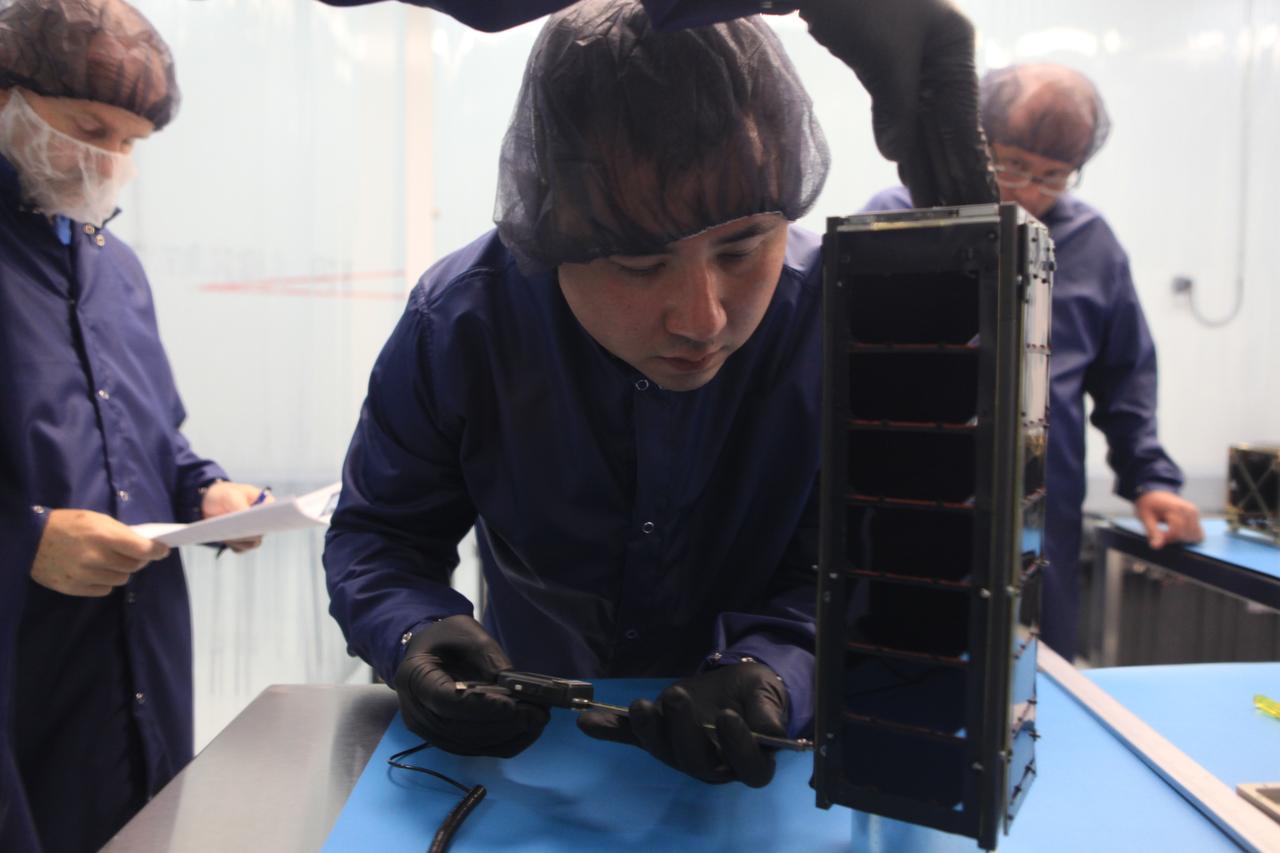
The NASA Langley Research Center (LaRC) Shields-1 CubeSat will demonstrate a research payload with materials durability experiments on emerging radiation shielding technologies. Shields-1 incorporates eight mdosimeters for radiation shielding experiments: one in the atomic number (Z)-grade radiation shielding vault, three behind experimental Z-grade radiation shielding samples developed at NASA LaRC, three behind baseline aluminum shielding samples, and one deep inside the research payload. The Z-grade is defined as an atomic number gradient of shielding materials using a low atomic number metal, such as aluminum, with a high atomic number material, like tantalum. The metals are fabricated into the vault structure. Also, Shields-1 measures a charge dissipation film resistance for technology development. The Shields-1 mission contributes to the SmallSat community with the development of technologies to increase the lifetimes of CubeSat missions from months to years in multiple radiation environments and increase the return on investment for scientific and commercial spacecraft.

As the size of a satellite is scaled down to the form factor of a CubeSat, the hardware must scale down as well. Unfortunately, the software inside does not follow the same trend. Simulation-to-Flight 1 (STF-1) aims to solve this problem by providing a simulation of the CubeSat that can be used for developing and testing the software on any laptop or desktop computer. Additionally, STF-1 hosts payloads that aim to increase the accuracy of navigation for CubeSats, monitor Space Weather over the North and South Poles, and test the durability of new materials used for Light Emitting Diodes (LEDs). The first spacecraft built in the state of West Virginia, STF-1, is a collaborative effort between the NASA Independent Verification and Validation Program, West Virginia University, and West Virginia small businesses.
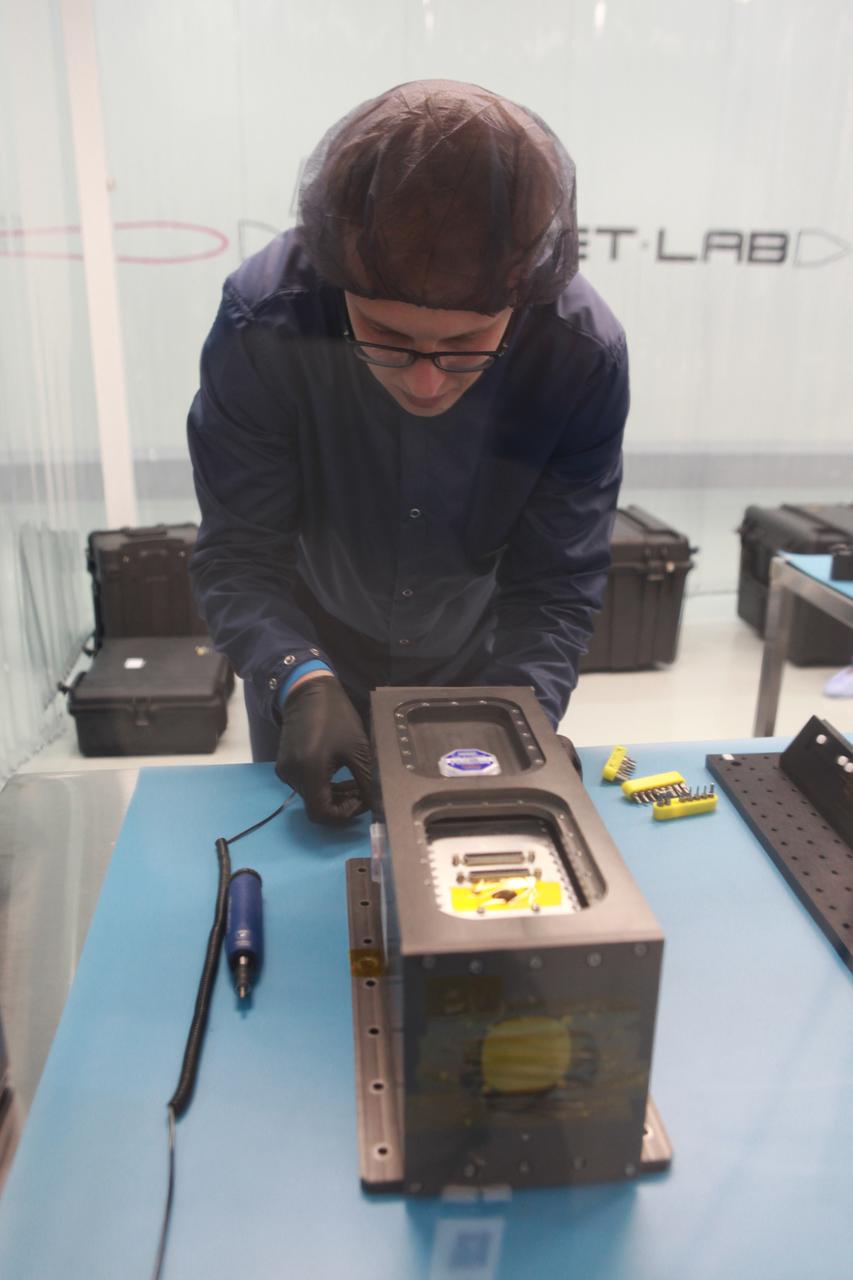
The NASA Langley Research Center (LaRC) Shields-1 CubeSat will demonstrate a research payload with materials durability experiments on emerging radiation shielding technologies. Shields-1 incorporates eight mdosimeters for radiation shielding experiments: one in the atomic number (Z)-grade radiation shielding vault, three behind experimental Z-grade radiation shielding samples developed at NASA LaRC, three behind baseline aluminum shielding samples, and one deep inside the research payload. The Z-grade is defined as an atomic number gradient of shielding materials using a low atomic number metal, such as aluminum, with a high atomic number material, like tantalum. The metals are fabricated into the vault structure. Also, Shields-1 measures a charge dissipation film resistance for technology development. The Shields-1 mission contributes to the SmallSat community with the development of technologies to increase the lifetimes of CubeSat missions from months to years in multiple radiation environments and increase the return on investment for scientific and commercial spacecraft.
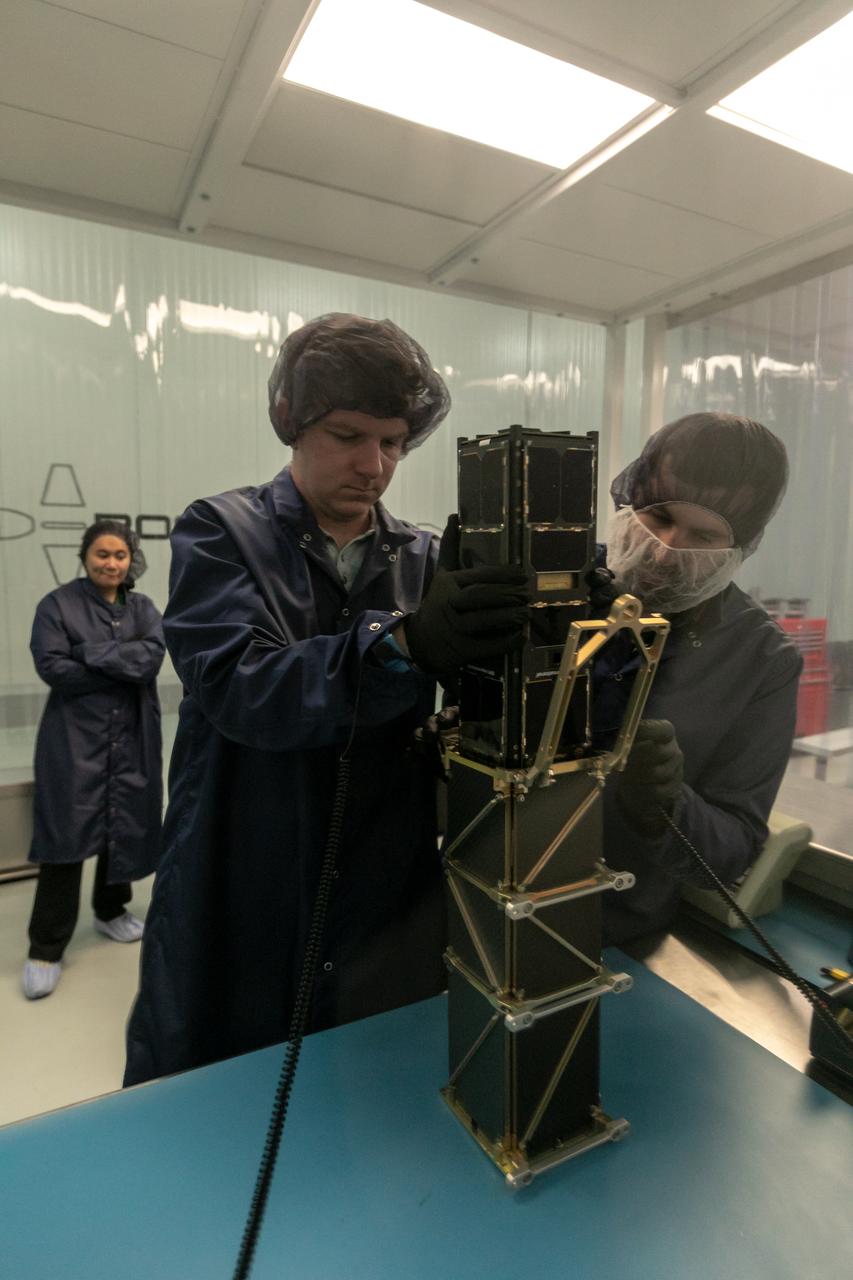
Project DaVinci is a student-led team at North Idaho STEM Charter Academy. Their spacecraft, the DaVinci satellite, has been constructed with the intent to connect with students worldwide to help reignite a passion for space. When launched, the DaVinci satellite will begin broadcasting messages across the globe using amateur radio uplink and downlink frequencies. Students in nearly every country will be able to receive these messages using a USB receiver dongle, open source software, and a yagi antenna in locations where the signal may be weaker. All messages will be education-related, and messages received will be in Morse Code requiring students to download a translating app or to translate it themselves. The DaVinci satellite will use the internet as a redundancy communication channel while in orbit. It is one of the few CubeSat to have a GlobalStar modem onboard, and will allow team members to upload digital messages to internet through the satellite. DaVinci satellite has an onboard Arducam as well, and will provide photos of Earth from its position in orbit. These pictures can be retrieved by the team using the GlobalStar modem and its corresponding server. To Learn more about the DaVinci satellite, visit www.projectdavincicubesat.org/
Plasma fluctuations in the upper atmosphere can distort radio signals as they pass into space, damaging radio communication with satellites. The ISX (Ionospheric Scintillation Explorer) mission will study these effects by measuring and comparing digital TV signals produced on the ground. Developed as a collaboration between SRI International and PolySat at Cal Poly, San Luis Obispo, the ISX mission will attempt to improve our understanding of these plasma irregularities and help model space weather predictions in the future.
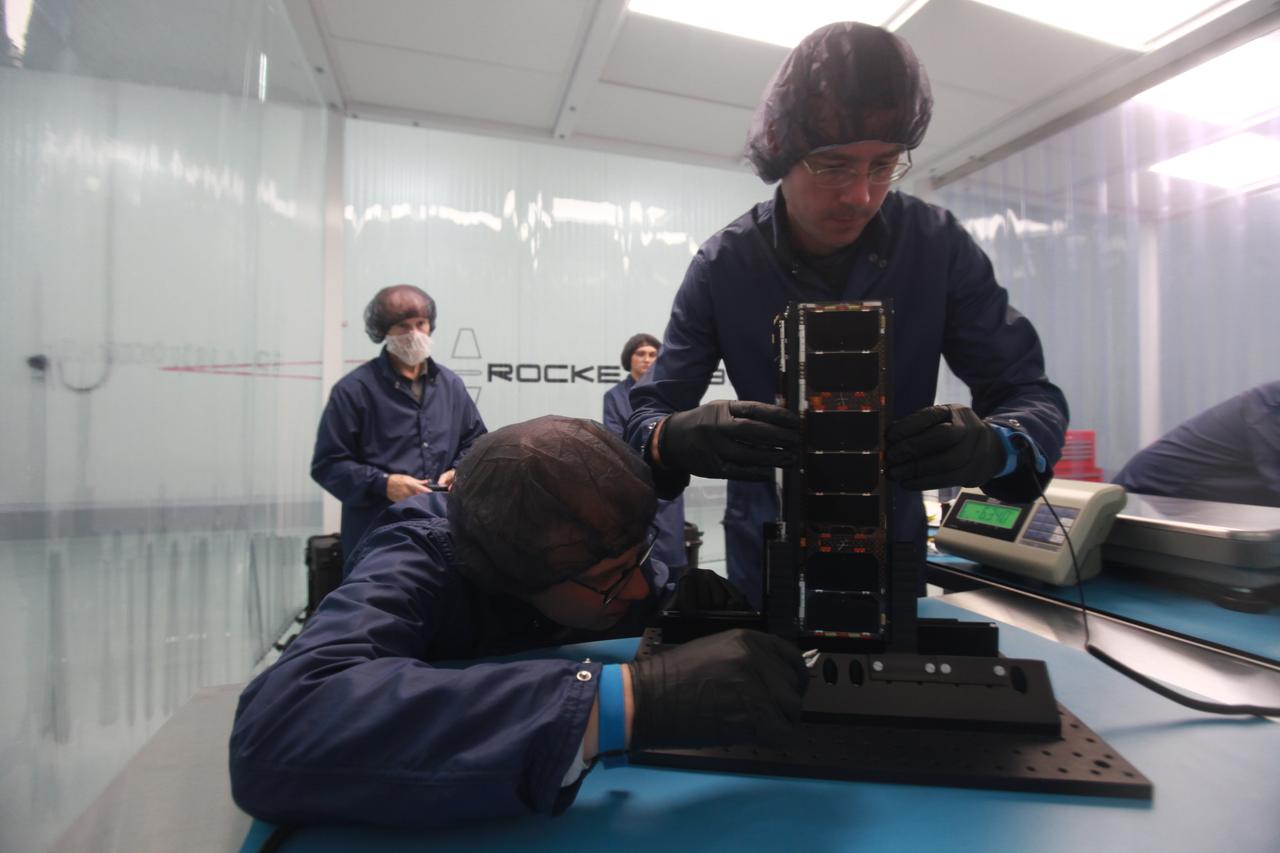
Project DaVinci is a student-led team at North Idaho STEM Charter Academy. Their spacecraft, the DaVinci satellite, has been constructed with the intent to connect with students worldwide to help reignite a passion for space. When launched, the DaVinci satellite will begin broadcasting messages across the globe using amateur radio uplink and downlink frequencies. Students in nearly every country will be able to receive these messages using a USB receiver dongle, open source software, and a yagi antenna in locations where the signal may be weaker. All messages will be education-related, and messages received will be in Morse Code requiring students to download a translating app or to translate it themselves. The DaVinci satellite will use the internet as a redundancy communication channel while in orbit. It is one of the few CubeSat to have a GlobalStar modem onboard, and will allow team members to upload digital messages to internet through the satellite. DaVinci satellite has an onboard Arducam as well, and will provide photos of Earth from its position in orbit. These pictures can be retrieved by the team using the GlobalStar modem and its corresponding server. To Learn more about the DaVinci satellite, visit www.projectdavincicubesat.org/
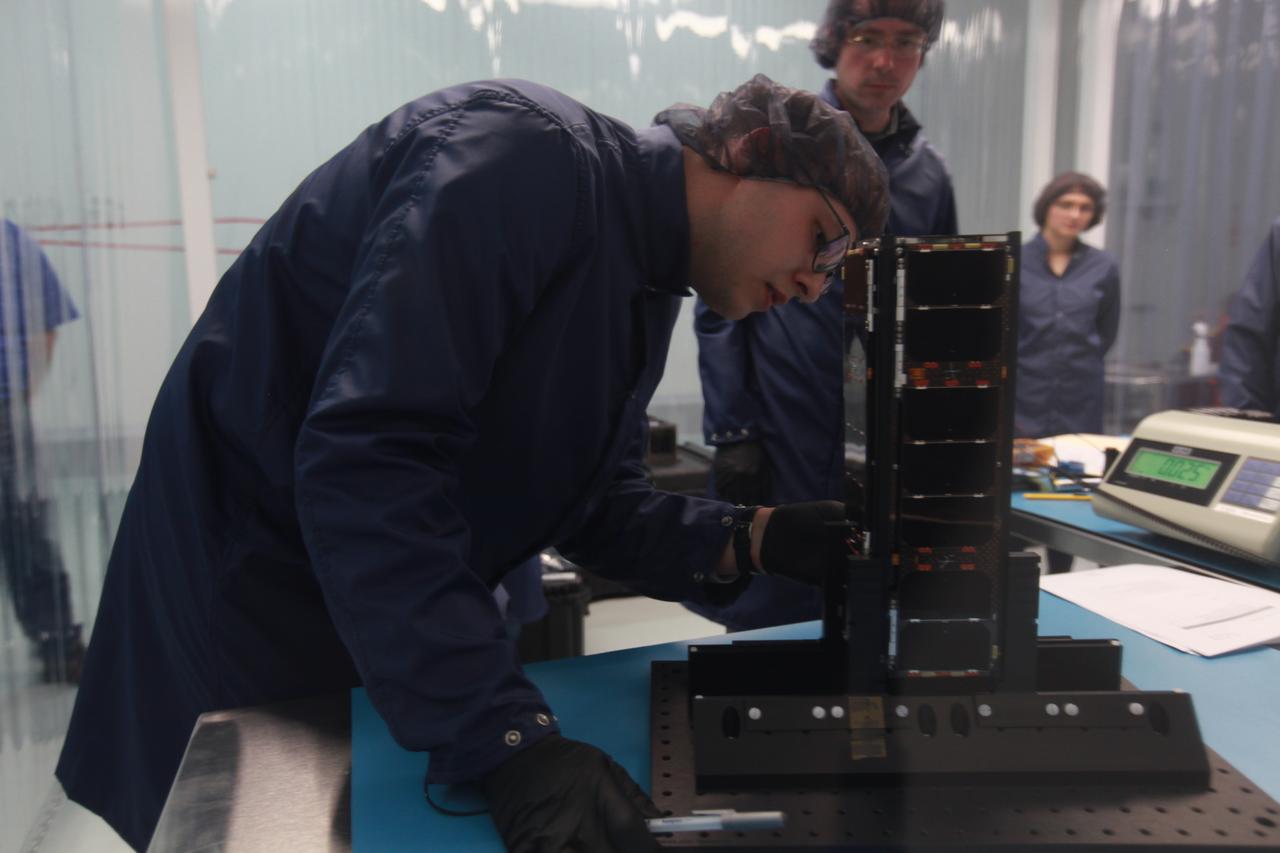
Project DaVinci is a student-led team at North Idaho STEM Charter Academy. Their spacecraft, the DaVinci satellite, has been constructed with the intent to connect with students worldwide to help reignite a passion for space. When launched, the DaVinci satellite will begin broadcasting messages across the globe using amateur radio uplink and downlink frequencies. Students in nearly every country will be able to receive these messages using a USB receiver dongle, open source software, and a yagi antenna in locations where the signal may be weaker. All messages will be education-related, and messages received will be in Morse Code requiring students to download a translating app or to translate it themselves. The DaVinci satellite will use the internet as a redundancy communication channel while in orbit. It is one of the few CubeSat to have a GlobalStar modem onboard, and will allow team members to upload digital messages to internet through the satellite. DaVinci satellite has an onboard Arducam as well, and will provide photos of Earth from its position in orbit. These pictures can be retrieved by the team using the GlobalStar modem and its corresponding server. To Learn more about the DaVinci satellite, visit www.projectdavincicubesat.org/
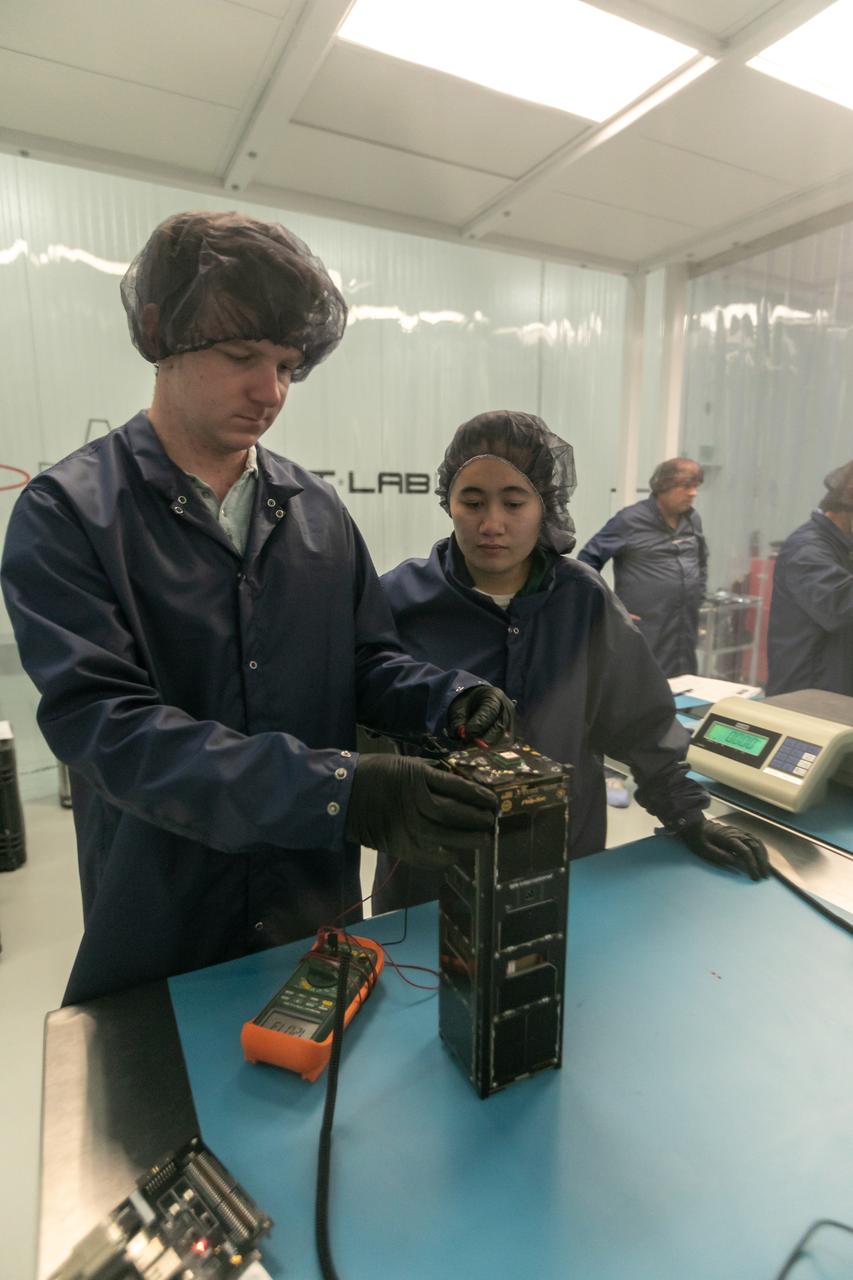
Plasma fluctuations in the upper atmosphere can distort radio signals as they pass into space, damaging radio communication with satellites. The ISX (Ionospheric Scintillation Explorer) mission will study these effects by measuring and comparing digital TV signals produced on the ground. Developed as a collaboration between SRI International and PolySat at Cal Poly, San Luis Obispo, the ISX mission will attempt to improve our understanding of these plasma irregularities and help model space weather predictions in the future.

NMTSat is a student-built satellite built by undergraduate and graduates students primarily from New Mexico Tech. NMTSat is designed to operate five sensors in four experiments in space for 3 months of data collection. The experiments will provide data on earth’s magnetic field, high altitude plasma density, atmospheric weather measurements, and an optical beacon experiment. Approximately 50 students have contributed to NMTSat and its design not including the students and groups who have developed the science instruments. NMTSat CubeSat is providing the opportunity for these science experiments to be conducted on orbit and demonstrates the collaborative nature of the Educational Launch of Nano Satellite (ELaNa) Program at NASA. The instruments have been contributed by New Mexico Tech, Turabo University in Puerto Rico, Los Alamos National Laboratory, and Atmospheric and Space Technology Research Associates (ASTRA) in Boulder, CO. Dr. Anders M. Jorgensen, Associate Professor at New Mexico Tech is the PI and Dr. Hien Vo from Vietnamese-German University in Ho Chi Minh University in Vietnam is a Co-Investigator. NMTSat is funded by the New Mexico NASA EPSCoR program as well as New Mexico Tech.

As the size of a satellite is scaled down to the form factor of a CubeSat, the hardware must scale down as well. Unfortunately, the software inside does not follow the same trend. Simulation-to-Flight 1 (STF-1) aims to solve this problem by providing a simulation of the CubeSat that can be used for developing and testing the software on any laptop or desktop computer. Additionally, STF-1 hosts payloads that aim to increase the accuracy of navigation for CubeSats, monitor Space Weather over the North and South Poles, and test the durability of new materials used for Light Emitting Diodes (LEDs). The first spacecraft built in the state of West Virginia, STF-1, is a collaborative effort between the NASA Independent Verification and Validation Program, West Virginia University, and West Virginia small businesses.
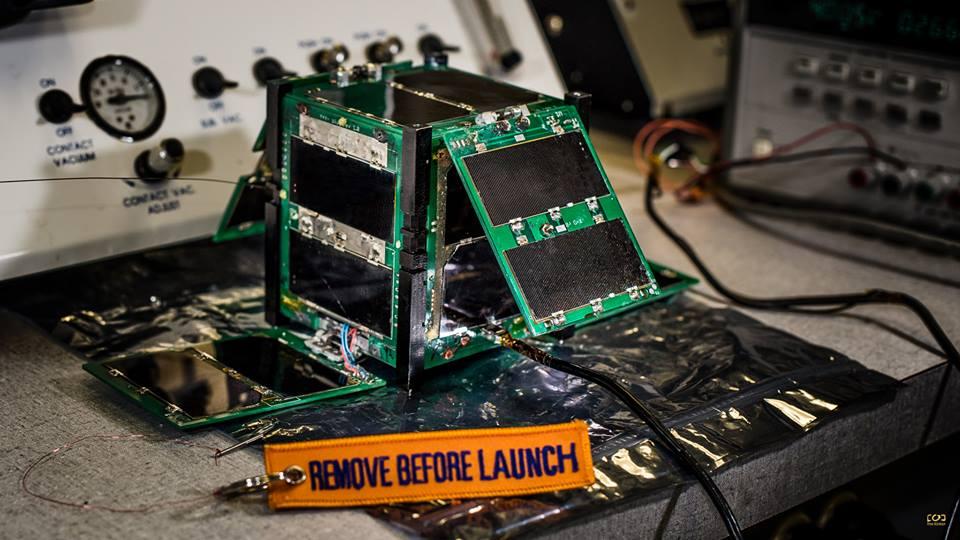
CAPE-2: Cajun Advanced Picosatellite Experiment – ELaNa IV CAPE-2 was developed by students from the University of Louisiana Lafayette to engage, inspire and educate K-12 students to encourage them to pursue STEM careers. The secondary focus is the technology demonstration of deployed solar panels to support the following payloads: text to speech, voice repeater, tweeting, email, file transfer and data collection from buoys. Launched by NASA’s CubeSat Launch Initiative on the ELaNa IV mission as an auxiliary payload aboard the U.S. Air Force-led Operationally Responsive Space (ORS-3) Mission on November 19, 2013.
The Close Orbiting Propellant Plume Elemental Recognition (COPPER) was developed by students from St. Louis University as a technology demonstration mission whose objective is to test the suitability of a commercially-available compact uncooled microbolometer (tiny infrared camera) array for scientific imagery of Earth in the long-wave infrared range (LWIR, 7-13 microns). Launched by NASA’s CubeSat Launch Initiative on the ELaNa IV mission as an auxiliary payload aboard the U.S. Air Force-led Operationally Responsive Space (ORS-3) Mission on November 19, 2013.