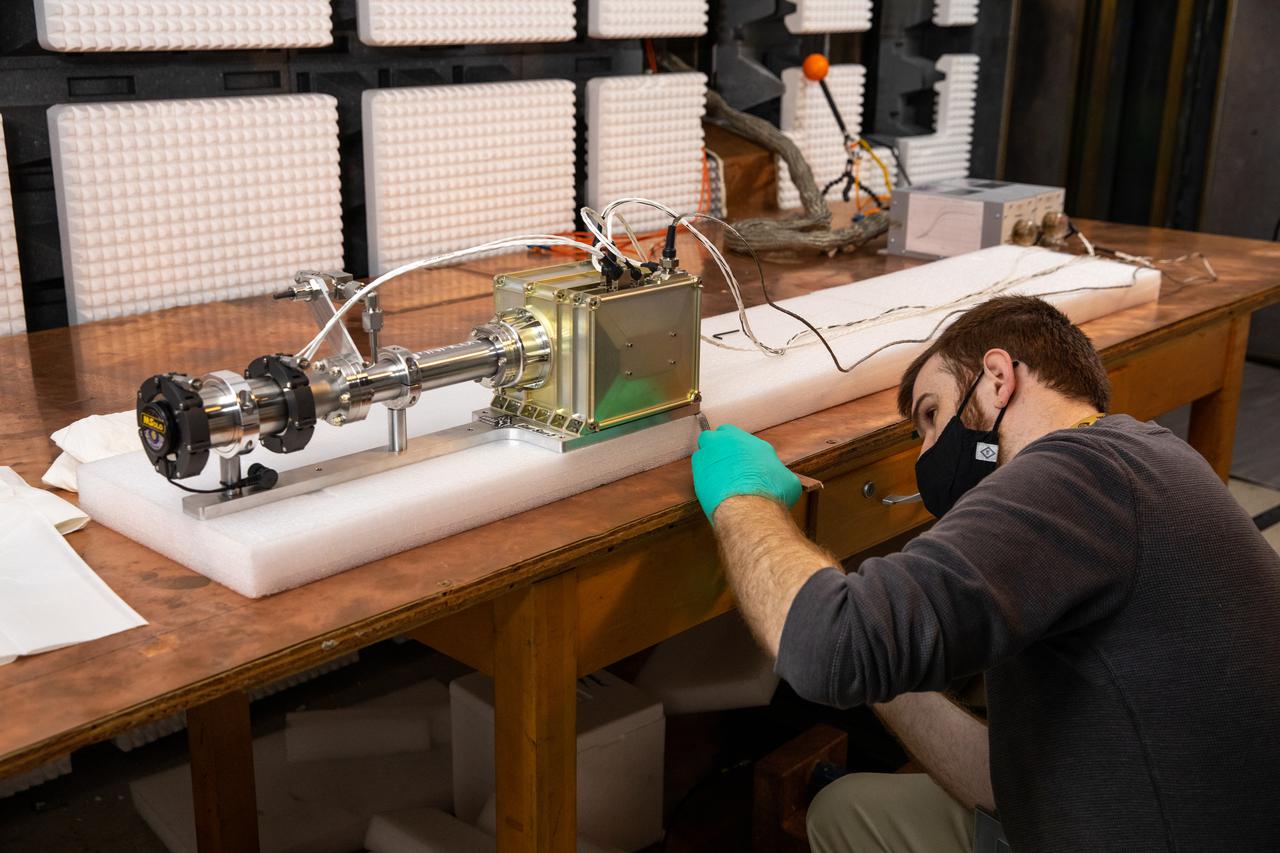
Electronics Engineer and Mass Spectrometer Observing Lunar Operations (MSolo) team member Nate Cain conducts electromagnetic interference (EMI) testing inside the EMI Laboratory at NASA’s Kennedy Space Center in Florida on Feb. 14, 2022. The tests will verify that MSolo can control the emissions it will produce during its missions and meets EMI susceptibility requirements as part of its preparation to operate in the lunar environment. The third MSolo to go through EMI testing, this is an engineering development unit representative of the flight unit manifested to fly to the Moon’s South Pole as a payload on the agency’s Volatiles Investigating Polar Exploration Rover (VIPER) in 2023. Researchers and engineers are preparing MSolo instruments to launch on four robotic missions as part of NASA’s Commercial Lunar Payload Services (CLPS) – the first of which is slated for later this year. MSolo will help analyze the chemical makeup of landing sites on the Moon, with the later missions also studying water on the lunar surface.
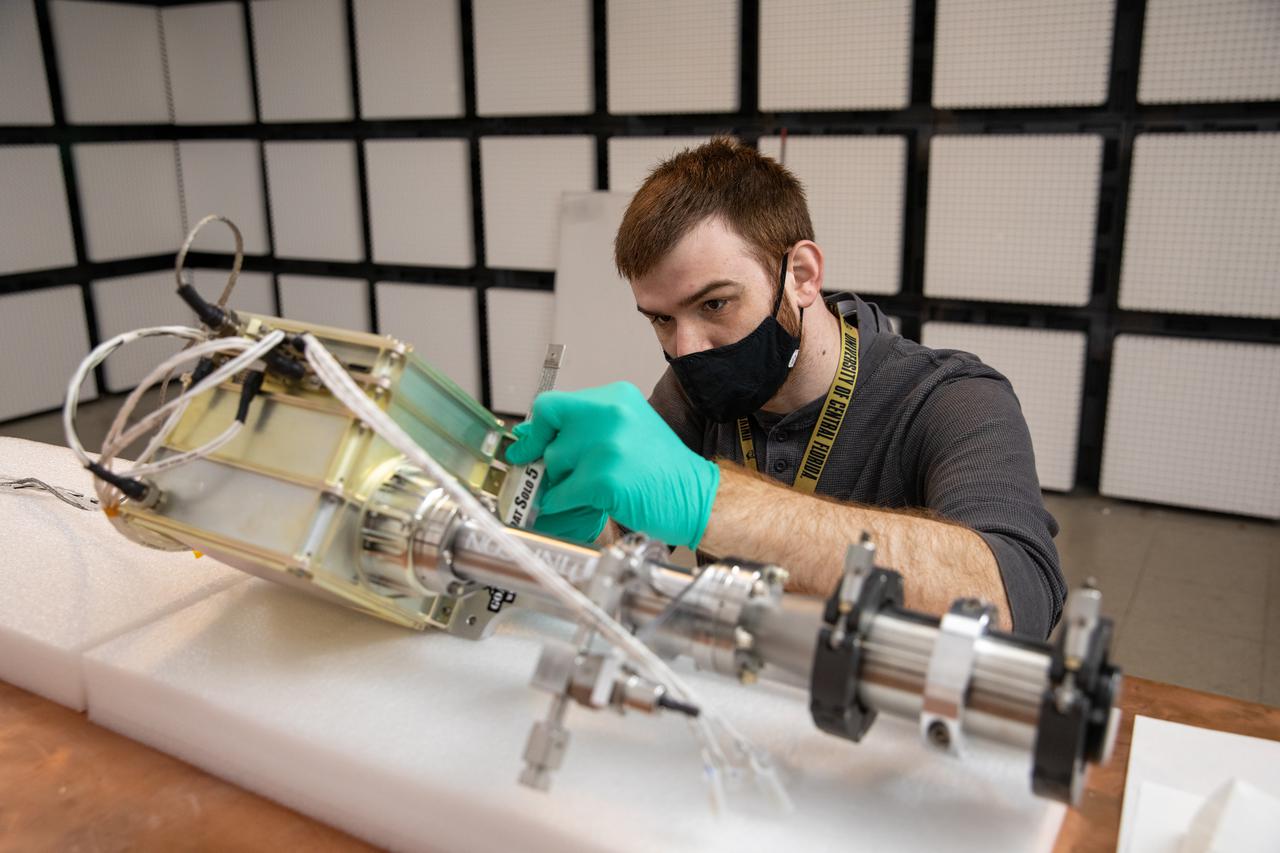
Electronics Engineer and Mass Spectrometer Observing Lunar Operations (MSolo) team member Nate Cain conducts electromagnetic interference (EMI) testing inside the EMI Laboratory at NASA’s Kennedy Space Center in Florida on Feb. 14, 2022. These tests will verify that MSolo can control the emissions it will produce during its missions and meets EMI susceptibility requirements as part of its preparation to operate in the lunar environment. The third MSolo to go through EMI testing, this is an engineering development unit representative of the flight unit manifested to fly to the Moon’s South Pole as a payload on the agency’s Volatiles Investigating Polar Exploration Rover (VIPER) in 2023. Researchers and engineers are preparing MSolo instruments to launch on four robotic missions as part of NASA’s Commercial Lunar Payload Services (CLPS) – the first of which is slated for later this year. MSolo will help analyze the chemical makeup of landing sites on the Moon, with the later missions also studying water on the lunar surface.

Electronics Engineer and Mass Spectrometer Observing Lunar Operations (MSolo) team member Nate Cain conducts electromagnetic interference (EMI) testing inside the EMI Laboratory at NASA’s Kennedy Space Center in Florida on Feb. 14, 2022. The tests will verify that MSolo can control the emissions it will produce during its missions and meets EMI susceptibility requirements as part of its preparation to operate in the lunar environment. The third MSolo to go through EMI testing, this is an engineering development unit representative of the flight unit manifested to fly to the Moon’s South Pole as a payload on the agency’s Volatiles Investigating Polar Exploration Rover (VIPER) in 2023. Researchers and engineers are preparing MSolo instruments to launch on four robotic missions as part of NASA’s Commercial Lunar Payload Services (CLPS) – the first of which is slated for later this year. MSolo will help analyze the chemical makeup of landing sites on the Moon, with the later missions also studying water on the lunar surface.
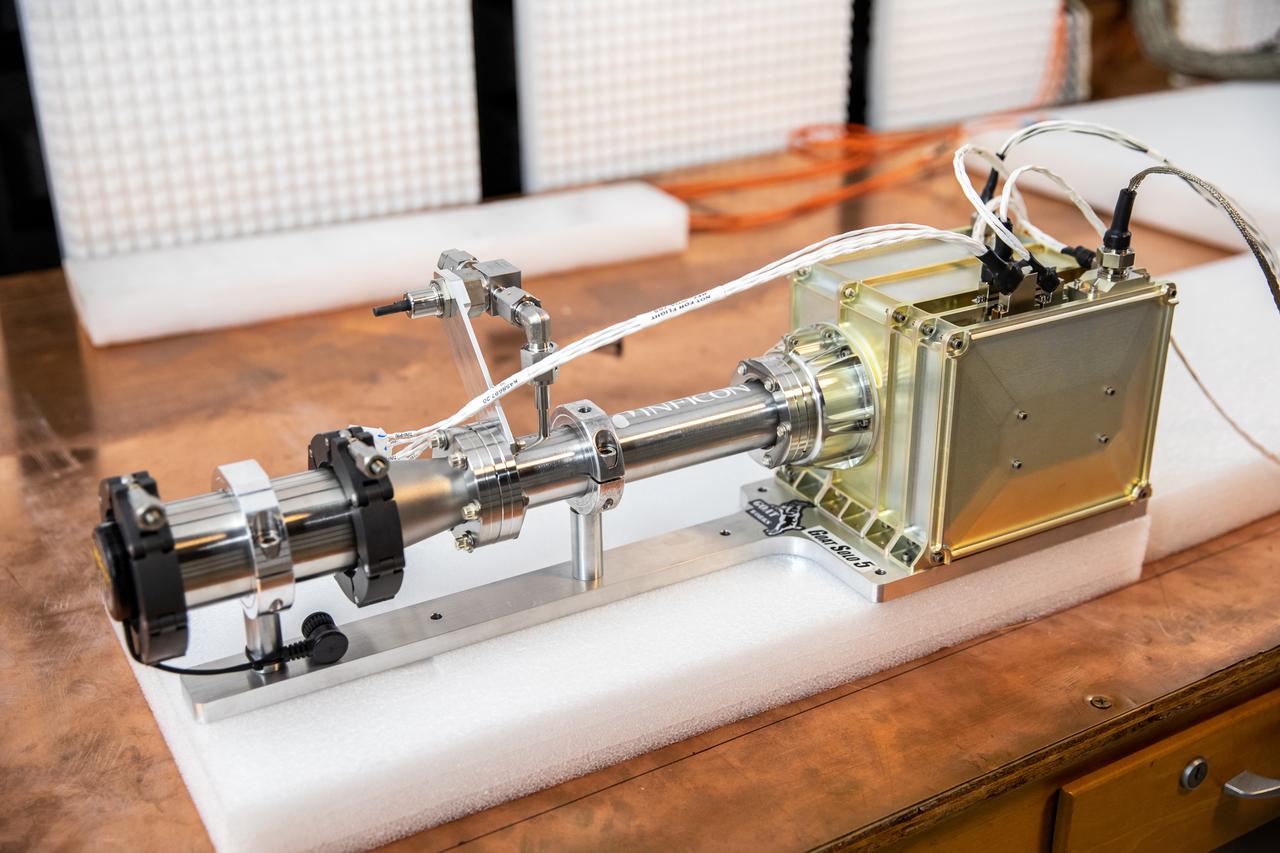
NASA’s Mass Spectrometer Observing Lunar Operations (MSolo) undergoes electromagnetic interference (EMI) testing inside the EMI Laboratory at the agency’s Kennedy Space Center in Florida on Feb. 14, 2022. These tests will verify that MSolo can control the emissions it will produce during its missions and meets EMI susceptibility requirements as part of its preparation to operate in the lunar environment. The third MSolo to go through EMI testing, this is an engineering development unit representative of the flight unit manifested to fly to the Moon’s South Pole as a payload on the agency’s Volatiles Investigating Polar Exploration Rover (VIPER) in 2023. Researchers and engineers are preparing MSolo to launch on four robotic missions as part of NASA’s Commercial Lunar Payload Services (CLPS) – the first of which is slated for later this year. MSolo will help analyze the chemical makeup of landing sites on the Moon, with the later missions also studying water on the lunar surface.

Nate Cain, an electronics engineer with the Advanced Engineering Development Branch at NASA’s Kennedy Space Center in Florida, prepares to conduct electromagnetic interference (EMI) testing for the agency’s Mass Spectrometer Observing Lunar Operations (MSolo) instrument inside the EMI Laboratory on Feb. 14, 2022. These tests will verify that MSolo can control the emissions it will produce during its missions and meets EMI susceptibility requirements as part of its preparation to operate in the lunar environment. The third MSolo to go through EMI testing, this is an engineering development unit representative of the flight unit manifested to fly to the Moon’s South Pole as a payload on the agency’s Volatiles Investigating Polar Exploration Rover (VIPER) in 2023. Researchers and engineers are preparing MSolo instruments to launch on four robotic missions as part of NASA’s Commercial Lunar Payload Services (CLPS) – the first of which is slated for later this year. MSolo will help analyze the chemical makeup of landing sites on the Moon, with the later missions also studying water on the lunar surface.
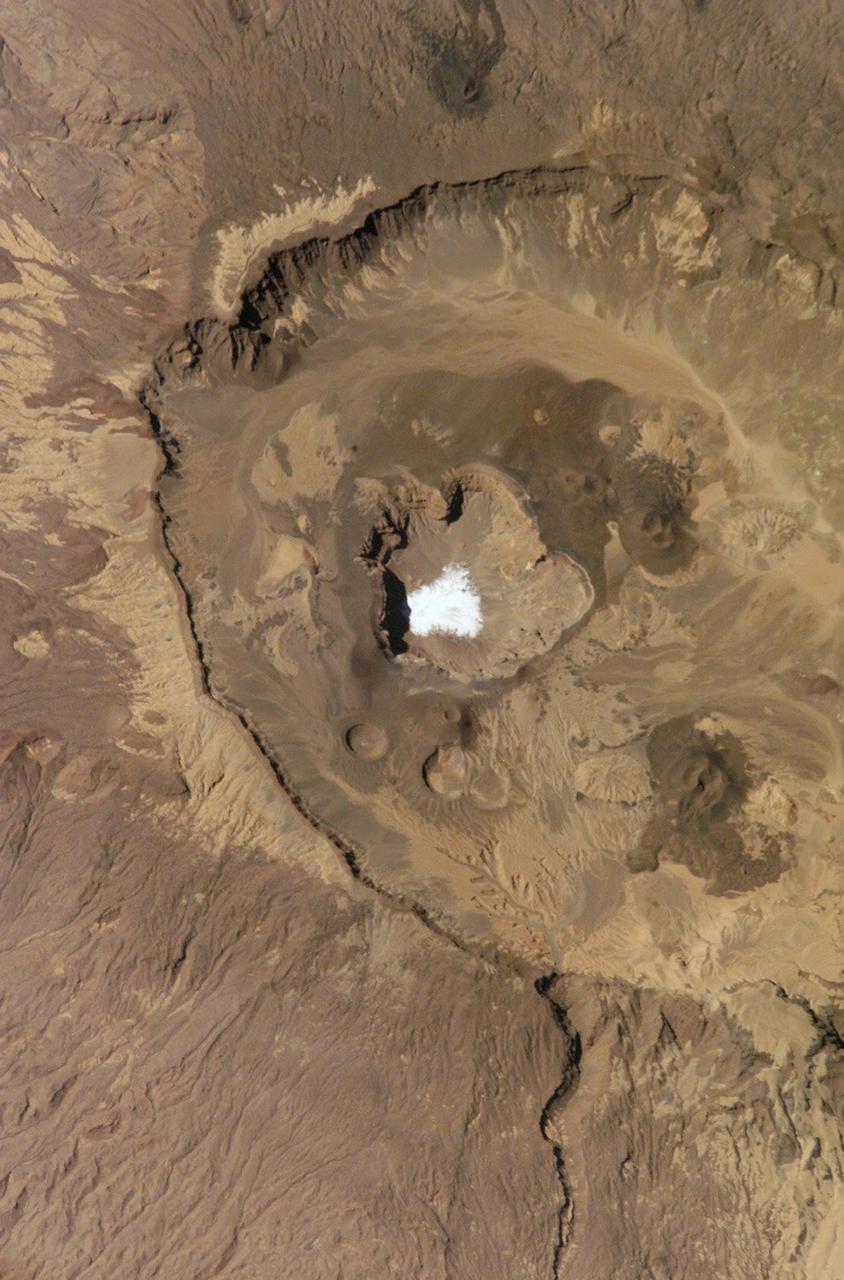
This is a view of the Emi Koussi Caldera captured by the Expedition Six Crew Observation (CEO) experiment aboard the International Space Station (ISS). Rising 2.3 km above the surrounding sandstone plains, Emi Koussi is a 6.5 km wide volcano located at the south end of the Tibesti Mountains in the central Sahara desert. The volcano is one of several in the Tibesti massif and has been used as a close analog to the famous Martian volcano Elysium Mons. Major charnels can be seen on volcanoes on both planets that indicate low points in caldera rims where lava spilled out of the pre-collapsed craters.
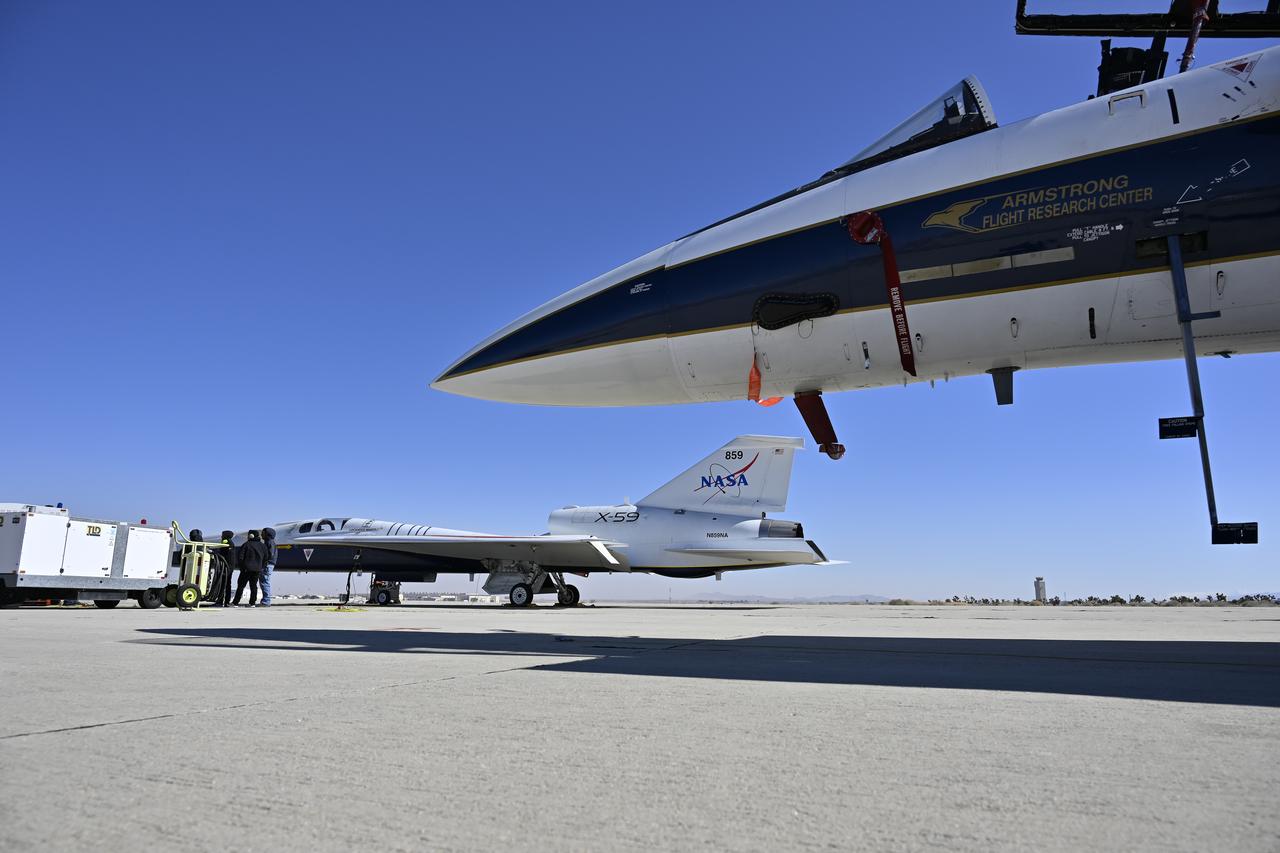
NASA’s X-59 quiet supersonic research aircraft successfully completed electromagnetic interference (EMI) testing at Lockheed Martin Skunk Works in Palmdale, California. During EMI tests, the team examined each of the X-59’s internal electronic systems, ensuring they worked with one another without interference. The X-59 is designed to fly faster than the speed of sound while reducing the loud sonic boom to a quieter sonic thump.
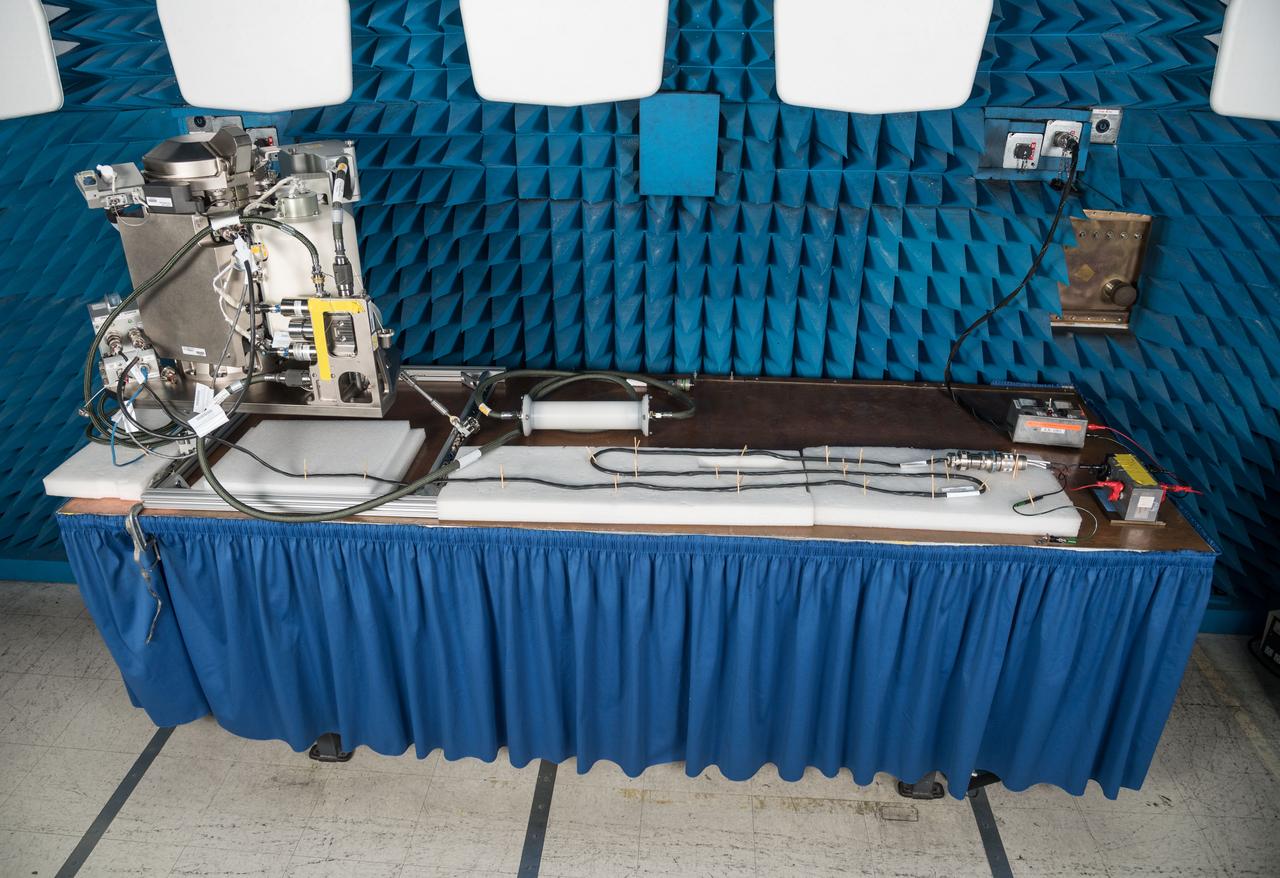
jsc2019e070457 (12/13/2019) --- A preflight view taken of the ISS Universal Waste Management System, Unit 1 during EMI/EMC Testing. This technology provides additional waste disposal points to the International Space Station (ISS) and aids in planning for future exploration missions including Deep Space Gateway (DSG). A smaller, more comfortable and more reliable waste-disposal method allows the crew to focus on other activities and enables further exploration in space.
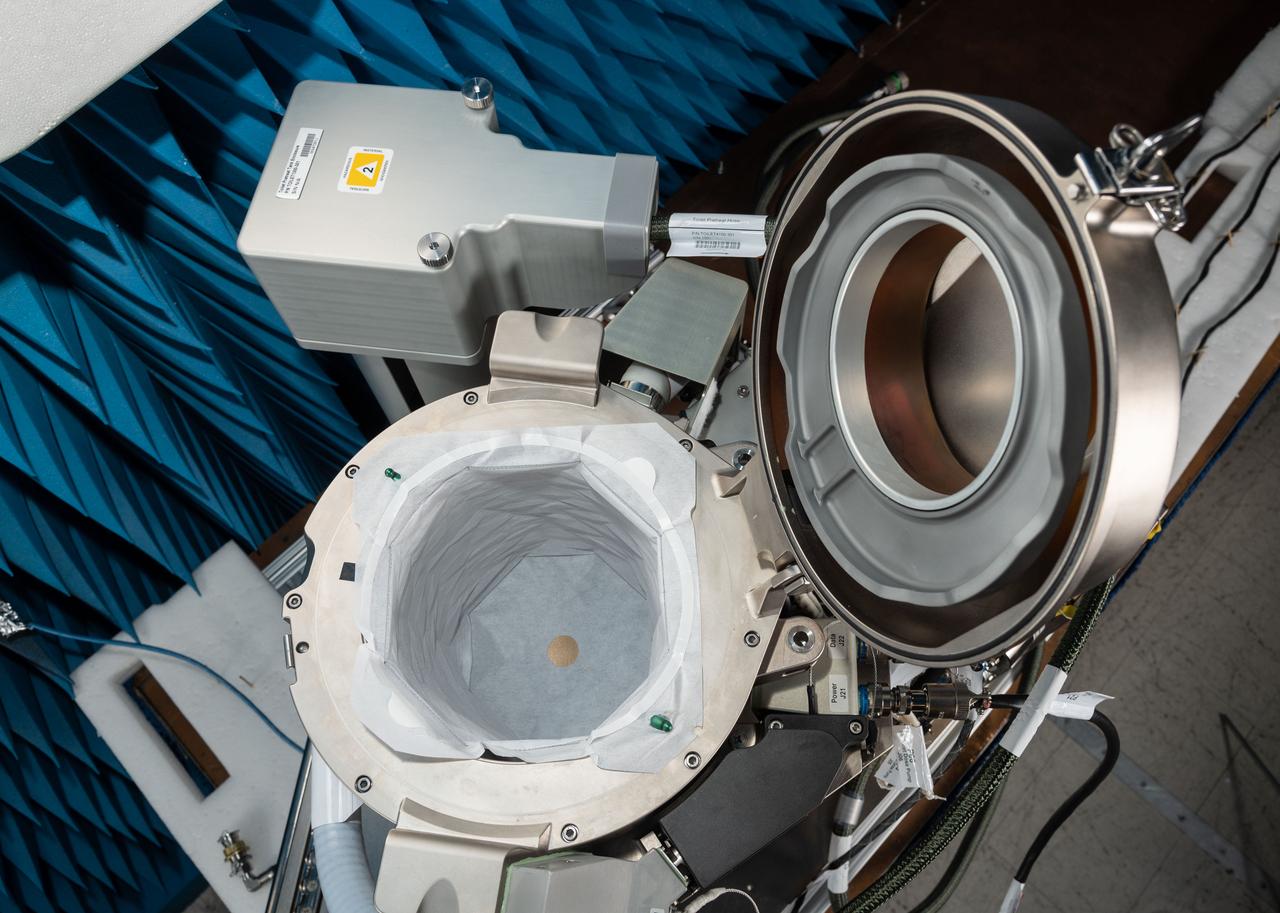
jsc2019e070462 (12/13/2019) --- A preflight view taken of the ISS Universal Waste Management System, Unit 1 during EMI/EMC Testing. This technology provides additional waste disposal points to the International Space Station (ISS) and aids in planning for future exploration missions including Deep Space Gateway (DSG). A smaller, more comfortable and more reliable waste-disposal method allows the crew to focus on other activities and enables further exploration in space.
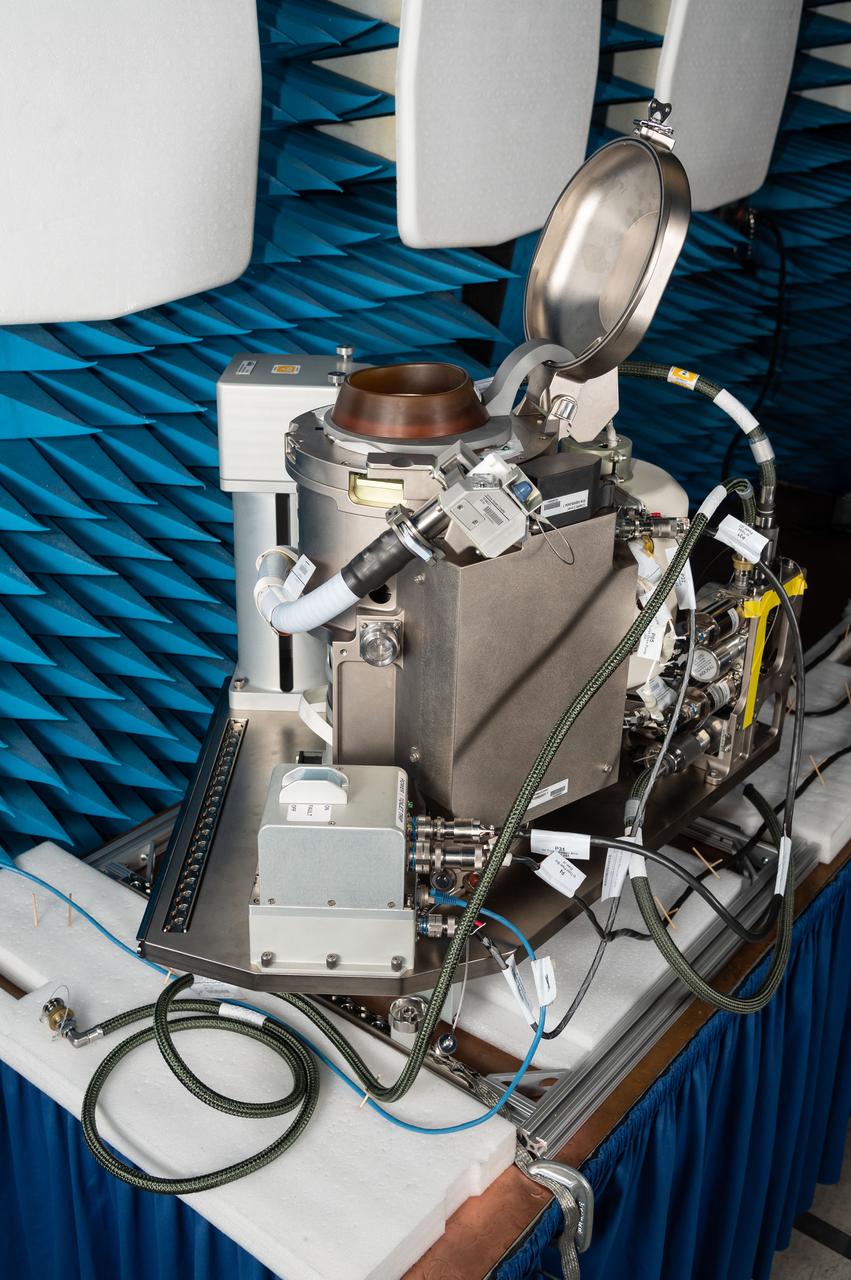
jsc2019e070459 (12/13/2019) --- A preflight view taken of the ISS Universal Waste Management System, Unit 1 during EMI/EMC Testing. This technology provides additional waste disposal points to the International Space Station (ISS) and aids in planning for future exploration missions including Deep Space Gateway (DSG). A smaller, more comfortable and more reliable waste-disposal method allows the crew to focus on other activities and enables further exploration in space.
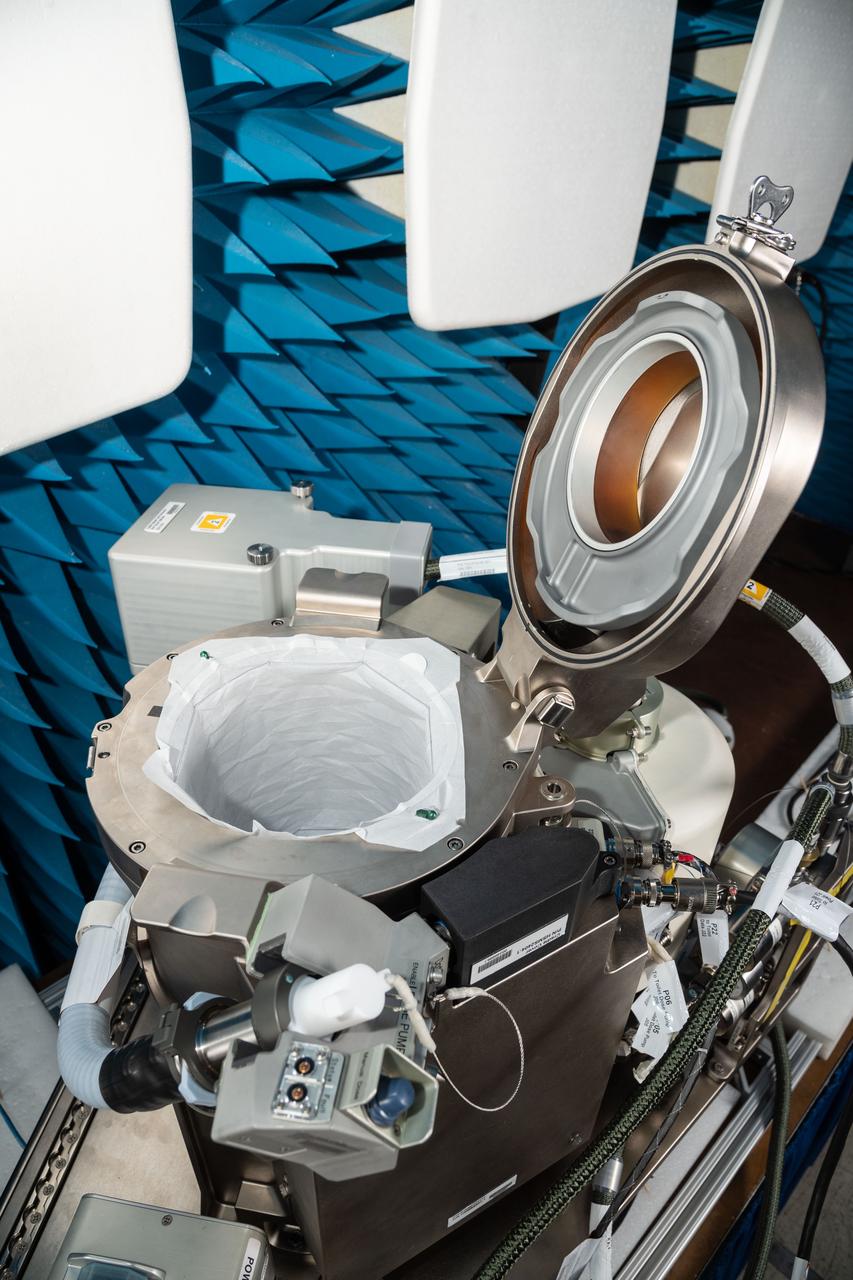
jsc2019e070461 (12/13/2019) --- A preflight view taken of the ISS Universal Waste Management System, Unit 1 during EMI/EMC Testing. This technology provides additional waste disposal points to the International Space Station (ISS) and aids in planning for future exploration missions including Deep Space Gateway (DSG). A smaller, more comfortable and more reliable waste-disposal method allows the crew to focus on other activities and enables further exploration in space.
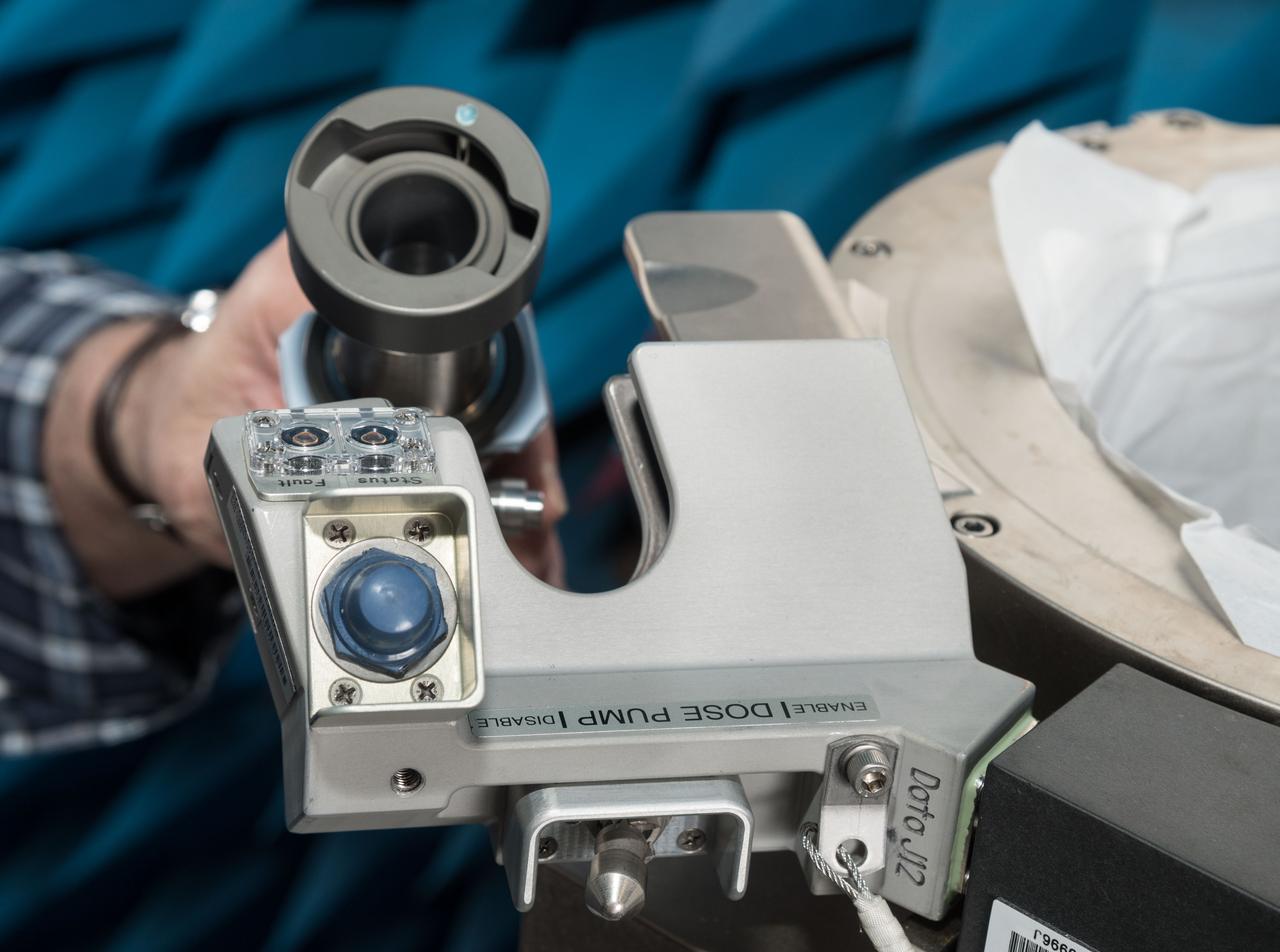
jsc2019e070463 (12/13/2019) --- A preflight view taken of the ISS Universal Waste Management System, Unit 1 during EMI/EMC Testing. This technology provides additional waste disposal points to the International Space Station (ISS) and aids in planning for future exploration missions including Deep Space Gateway (DSG). A smaller, more comfortable and more reliable waste-disposal method allows the crew to focus on other activities and enables further exploration in space.
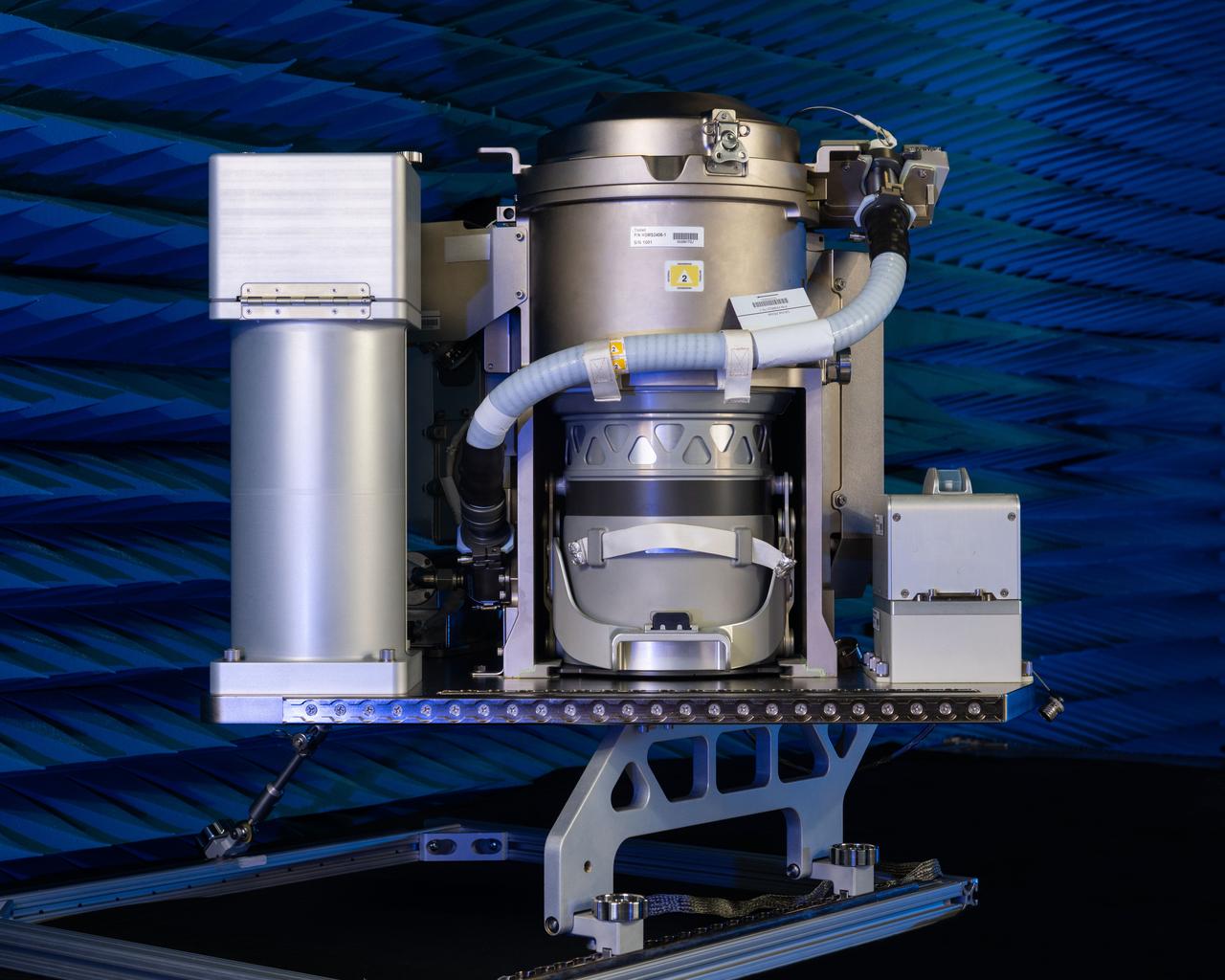
jsc2019e070684_alt (12/16/2019) --- A preflight view taken of the ISS Universal Waste Management System, Unit 1 during EMI/EMC Testing. This technology provides additional waste disposal points to the International Space Station (ISS) and aids in planning for future exploration missions including Deep Space Gateway (DSG). A smaller, more comfortable and more reliable waste-disposal method allows the crew to focus on other activities and enables further exploration in space.
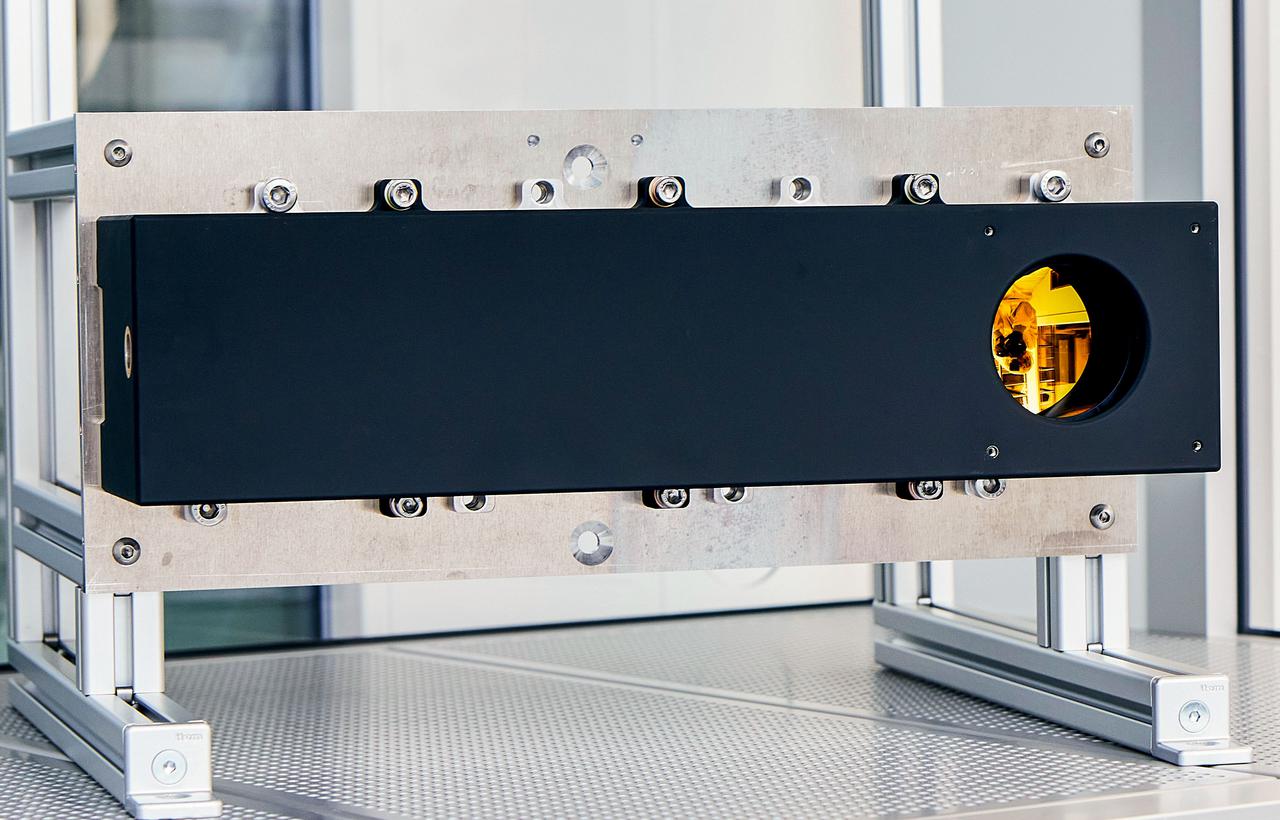
jsc2021e064350 (10/28/2021) --- Preflight image showing LisR on the assembly support structure in the clean room of Fraunhofer EMI. Longwave Infrared Sensing demonstratoR (Nanoracks-LisR) takes precise measurements of Earth's surface temperature as a way to monitor water resources. Copyright by Fraunhofer EMI.
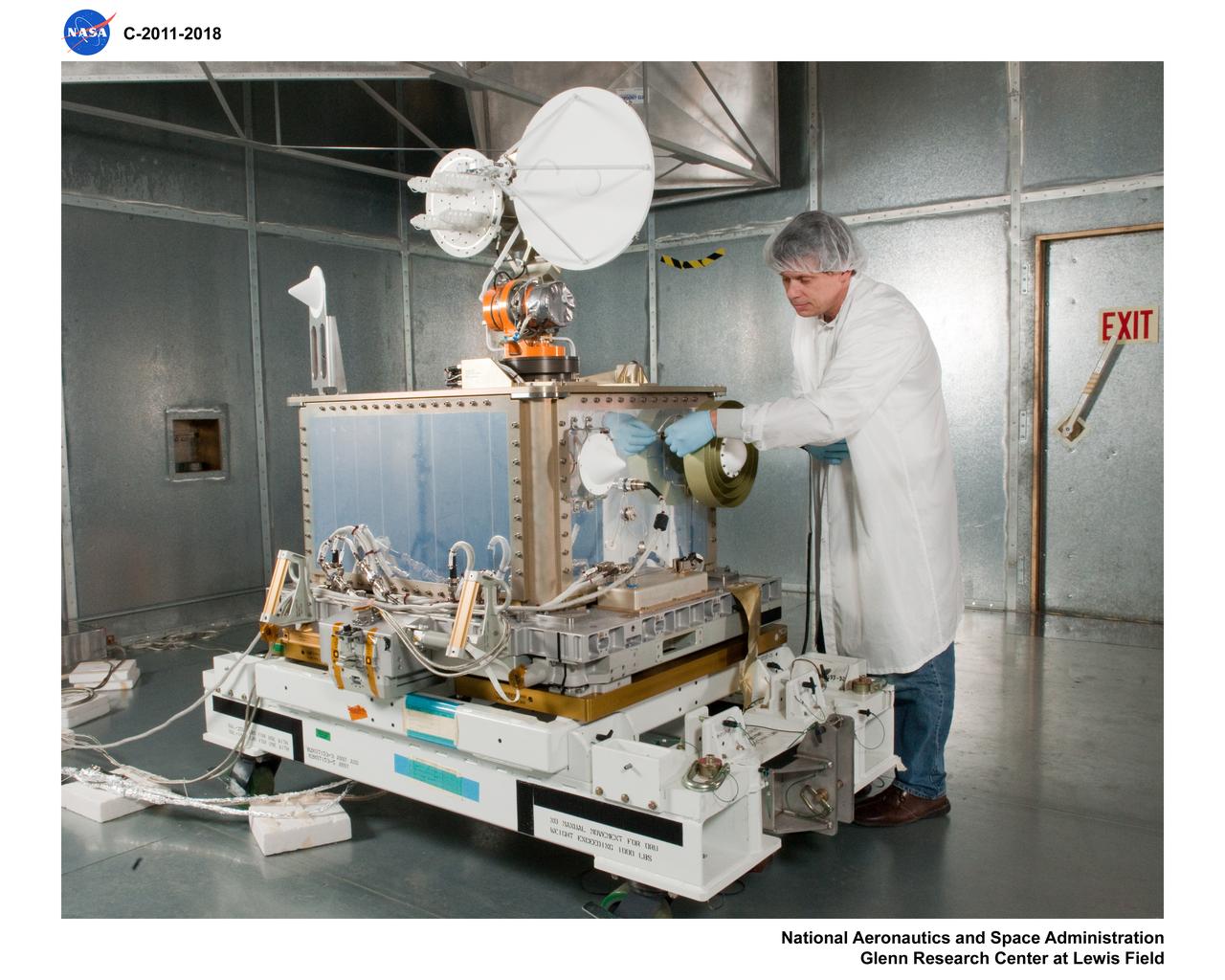
Communications, Navigation, and Network Reconfigurable Test-bed, CoNNeCT hardware in the Electromagnetic Interferance, EMI, Laboratory
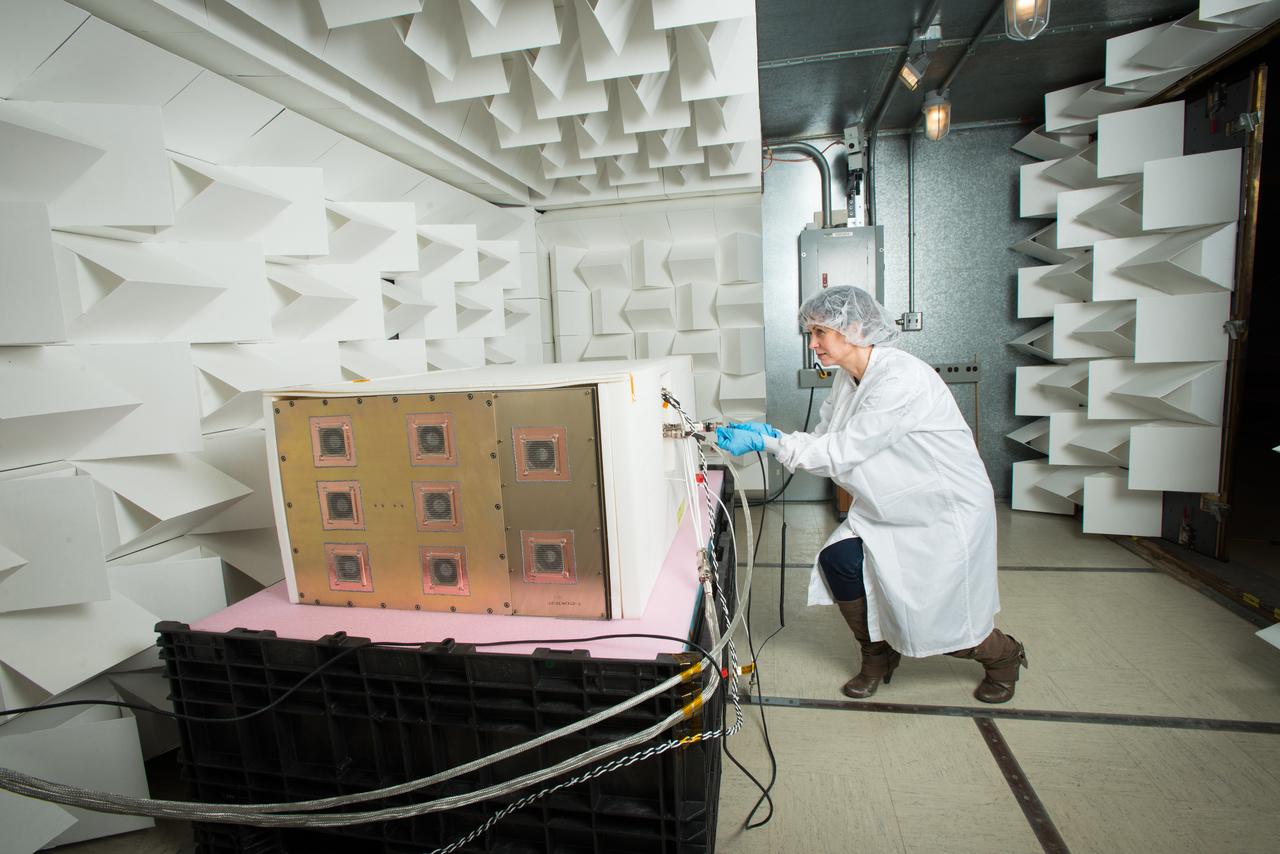
Spacecraft Fire Safety Demonstration, SAFFIRE, Hardware Testing in the Electromagnetic Interference Laboratory, EMI
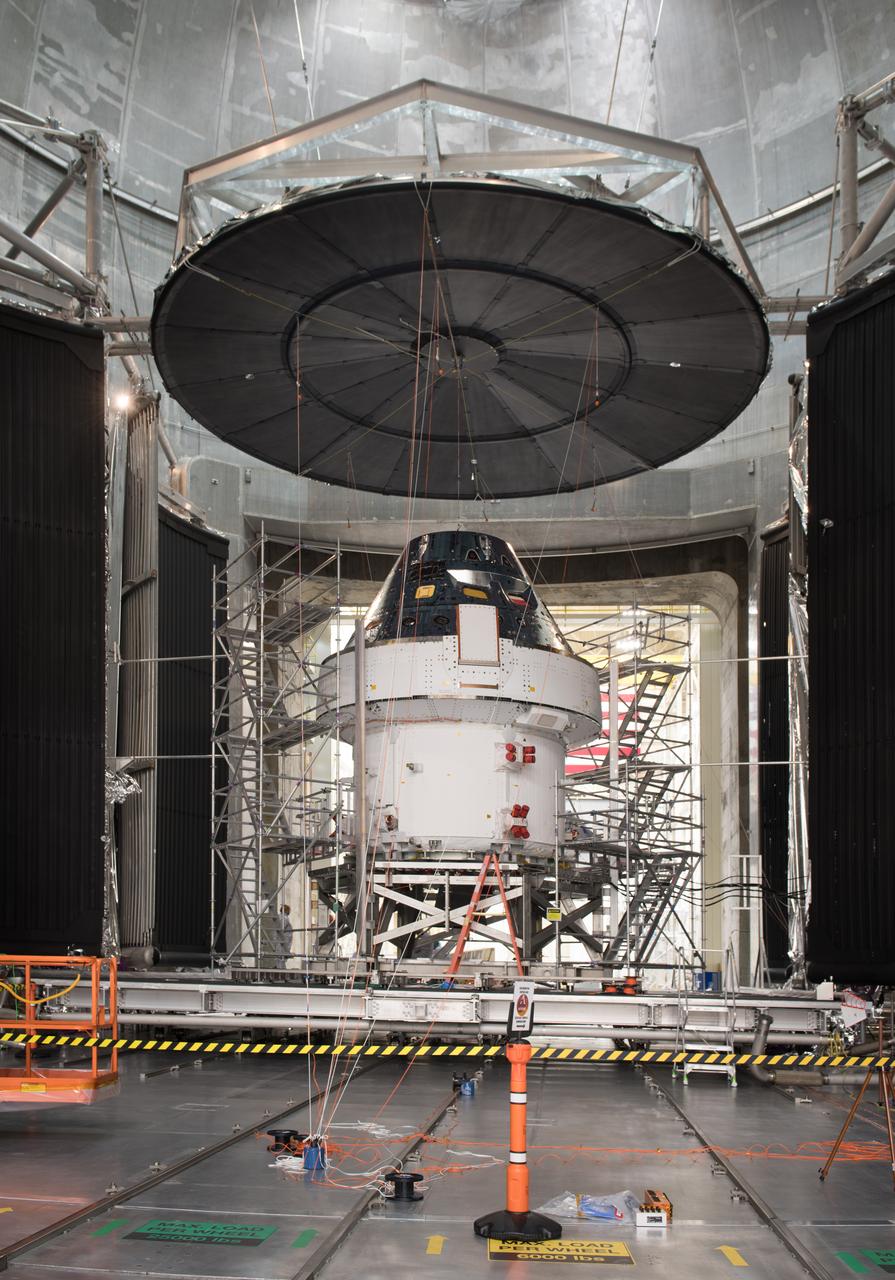
The Orion Spacecraft Crew and Service Module is being prepared for Electromagnetic Interference. EMI testing as part of testing to be certified for launch for the first Artemis mission
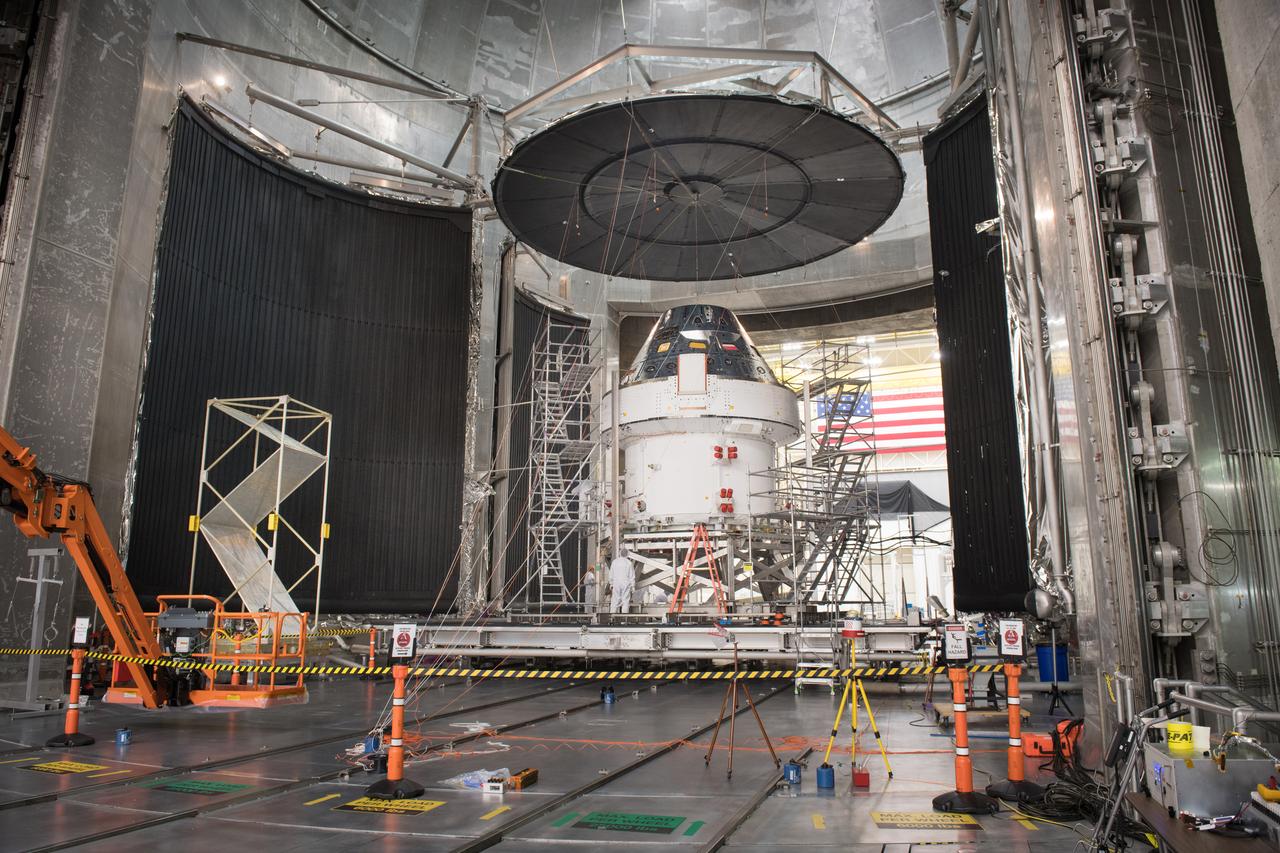
The Orion Spacecraft Crew and Service Module is being prepared for Electromagnetic Interference. EMI testing as part of testing to be certified for launch for the first Artemis mission
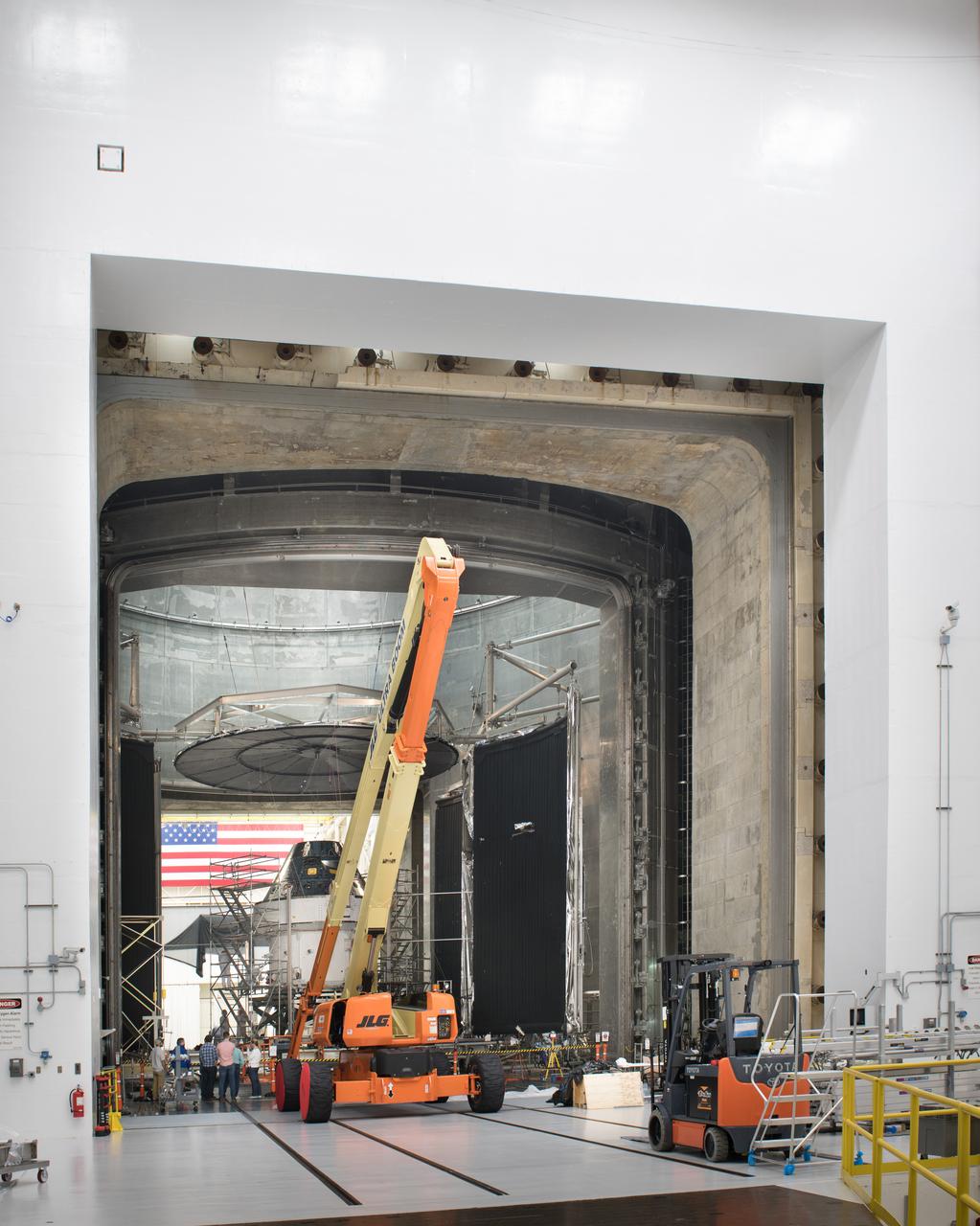
The Orion Spacecraft Crew and Service Module is being prepared for Electromagnetic Interference. EMI testing as part of testing to be certified for launch for the first Artemis mission
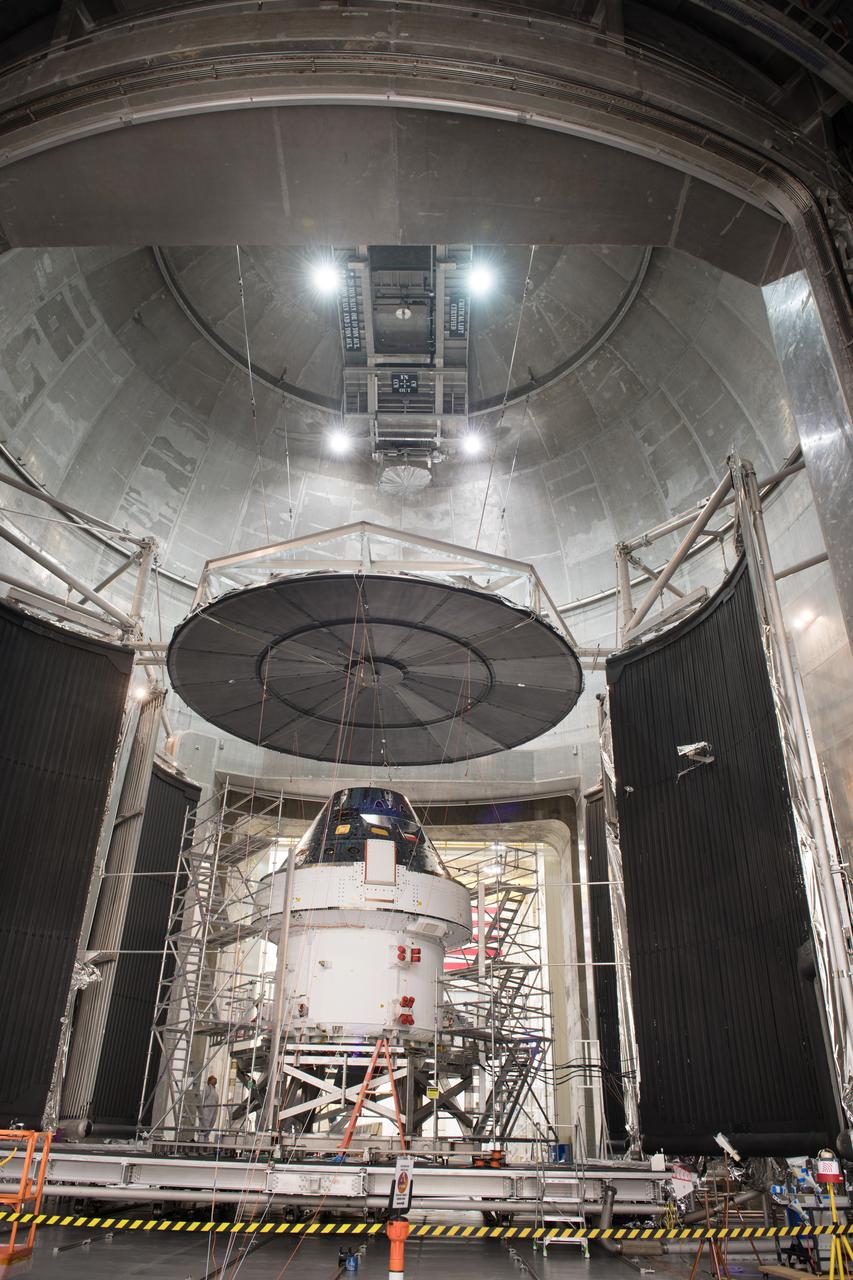
The Orion Spacecraft Crew and Service Module is being prepared for Electromagnetic Interference. EMI testing as part of testing to be certified for launch for the first Artemis mission
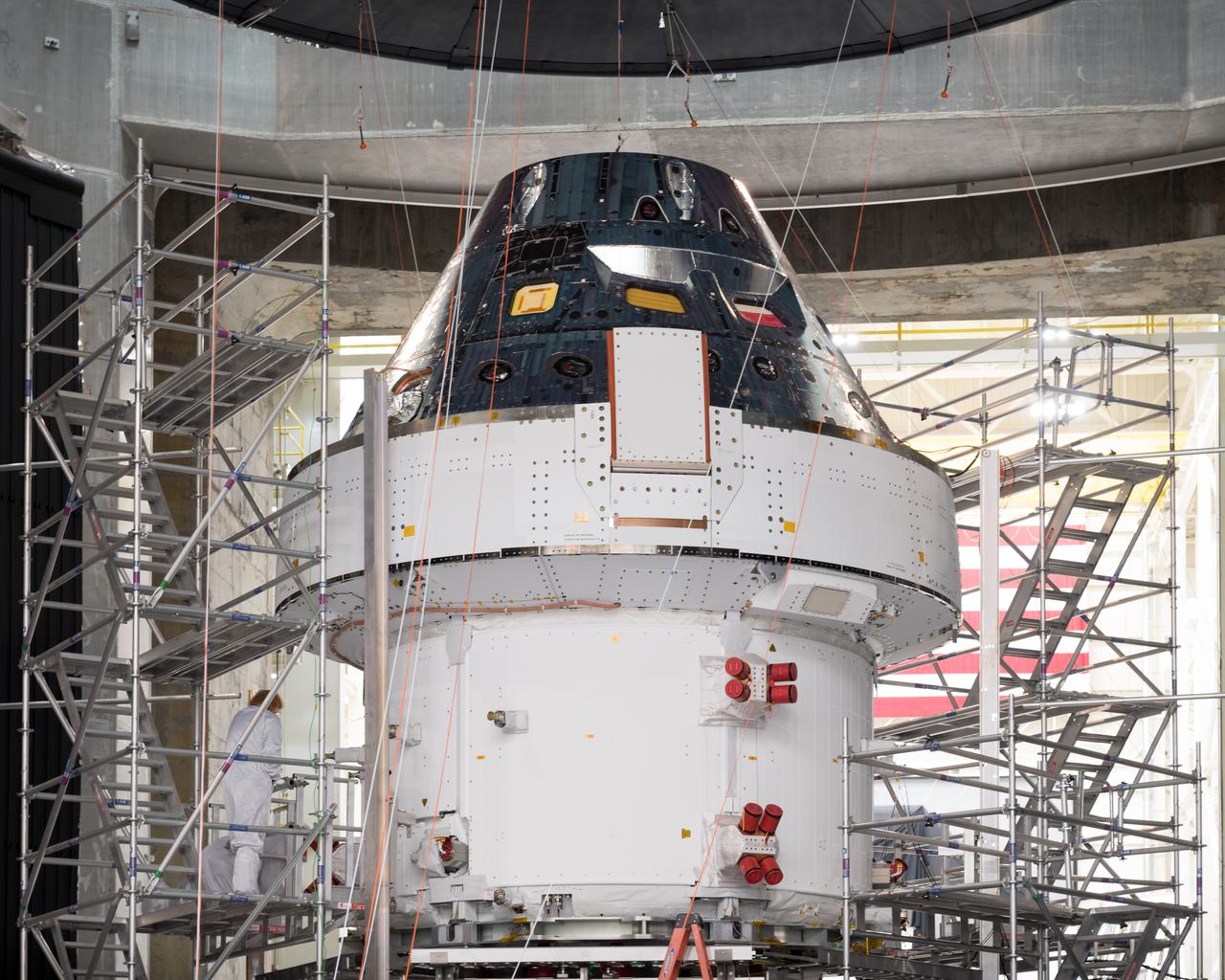
The Orion Spacecraft Crew and Service Module is being prepared for Electromagnetic Interference. EMI testing as part of testing to be certified for launch for the first Artemis mission
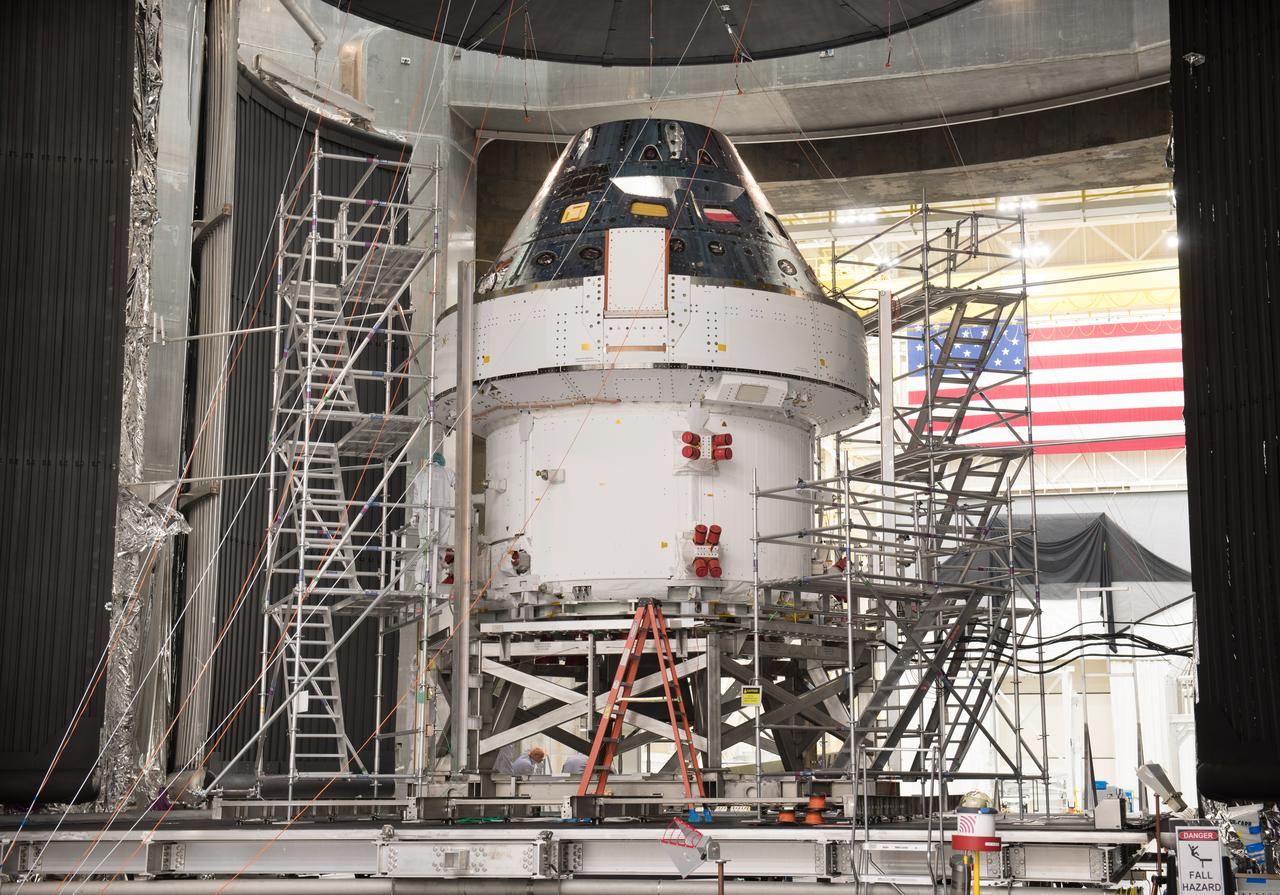
The Orion Spacecraft Crew and Service Module is being prepared for Electromagnetic Interference. EMI testing as part of testing to be certified for launch for the first Artemis mission
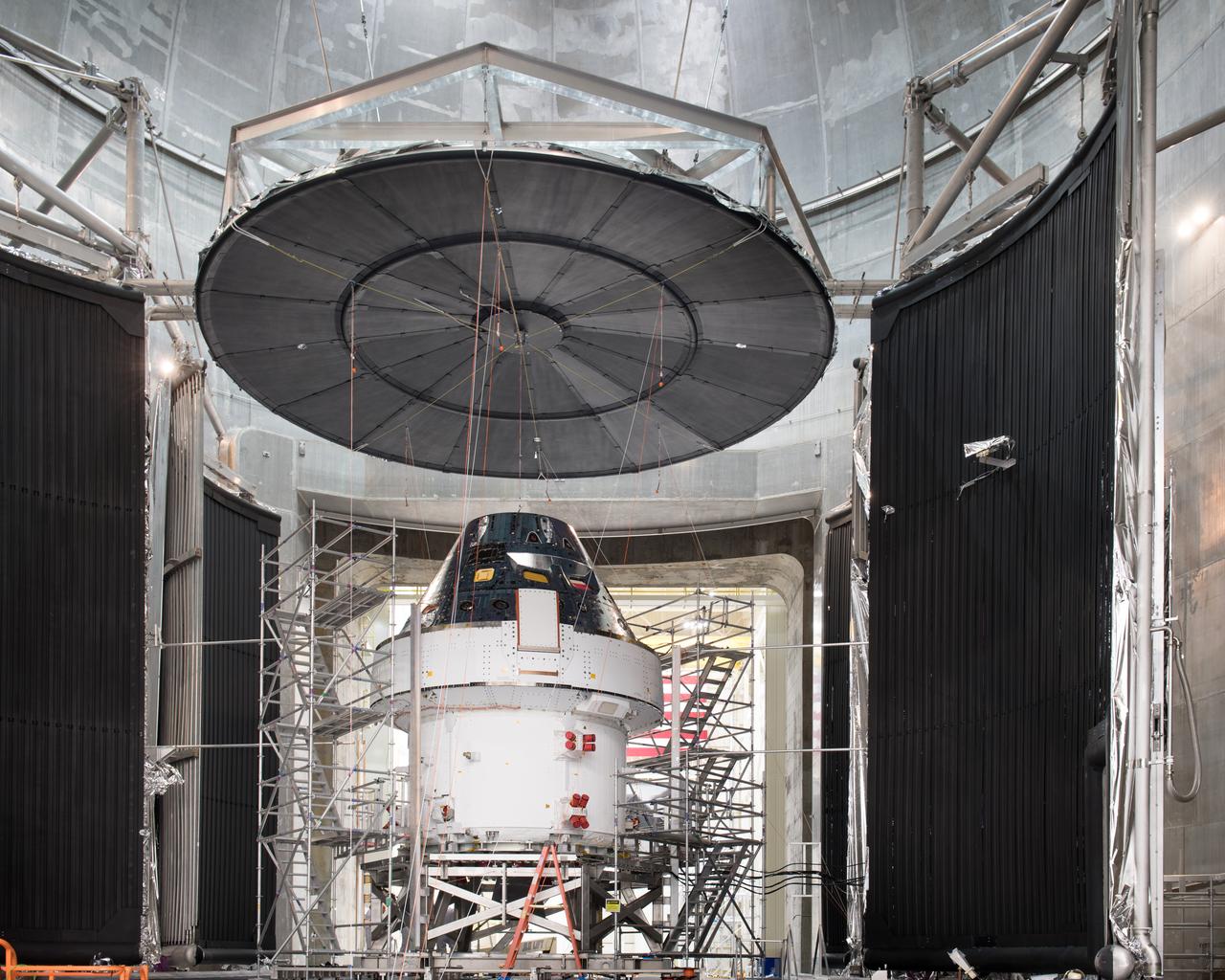
The Orion Spacecraft Crew and Service Module is being prepared for Electromagnetic Interference. EMI testing as part of testing to be certified for launch for the first Artemis mission

NASA test pilot Jim Less prepares to exit the cockpit of the quiet supersonic X-59 aircraft in between electromagnetic interference (EMI) testing. The EMI testing ensures an aircraft’s systems function properly under various conditions of electromagnetic radiation. The X-59 is the centerpiece of the NASA’s Quesst mission, designed to demonstrate quiet supersonic technology and provide data to address a key barrier to commercial supersonic travel.
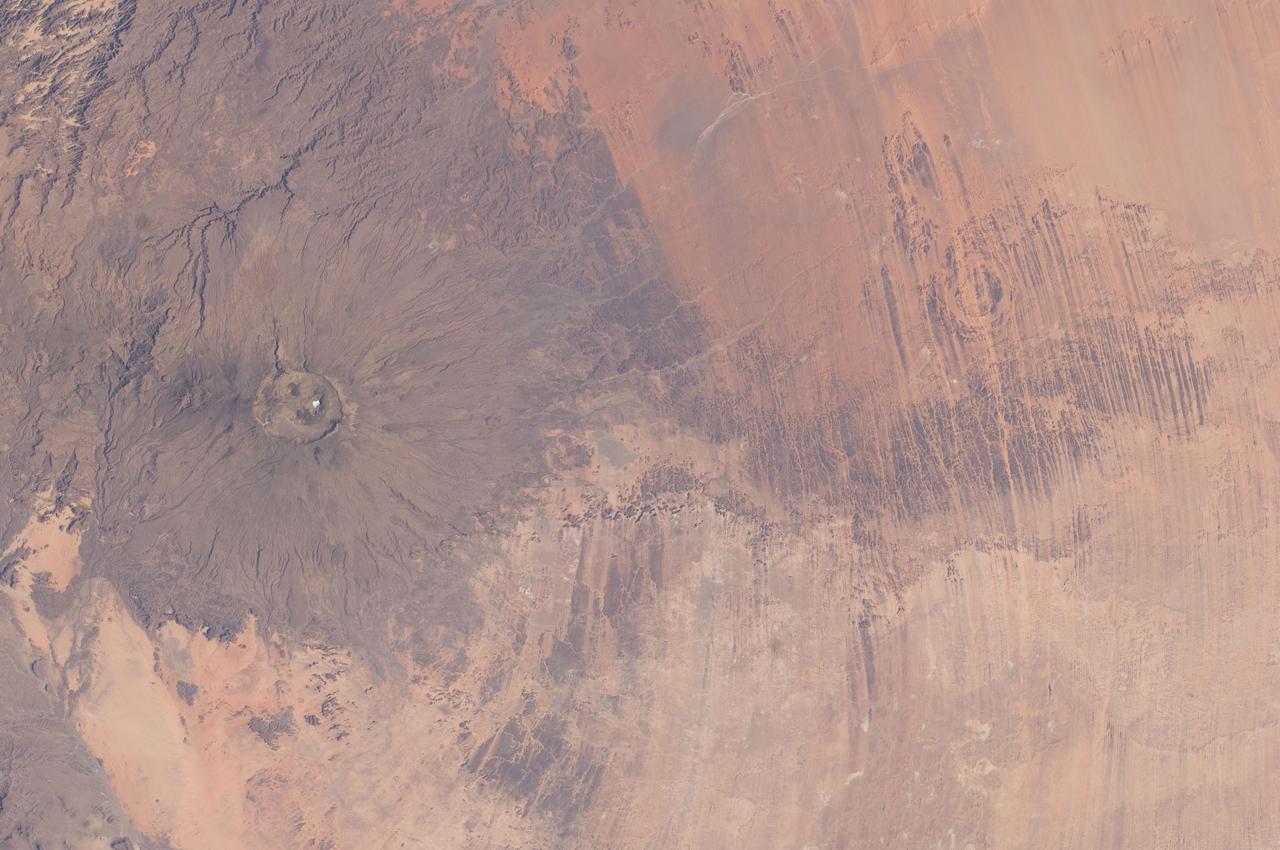
ISS030-E-005456 (26 Nov. 2011) --- Emi Koussi Volcano and Aorounga Impact Crater, Chad are featured in this image photographed by an Expedition 30 crew member on the International Space Station. This striking photograph features two examples of circular landscape features?labeled as craters?that were produced by very different geological processes. At left, the broad grey-green shield volcano of Emi Koussi is visible. The volcano is marked by three overlapping calderas formed by eruptions; these form a large oblong depression at the 3,415 meter ASL summit of the volcano. A smaller crater sits within the larger caldera depression. While volcanic activity has not been observed, nor is mentioned in the historical record, an active thermal area is located on the southern flank. The circular Aorounga Impact Crater is located approximately 110 kilometers to the southeast of Emi Koussi and has its origin in forces from above rather than eruptions from below. According to scientists, the Aorounga structure is thought to record a meteor impact approximately 345-370 million years ago. The circular feature visible at upper right may be only one of three impact craters formed by the same event ? the other two are buried by sand deposits. The linear features (lower right) that arc around Emi Koussi and overprint Aorounga and the surrounding bedrock are known as yardangs; these are rock ridges formed by wind erosion.
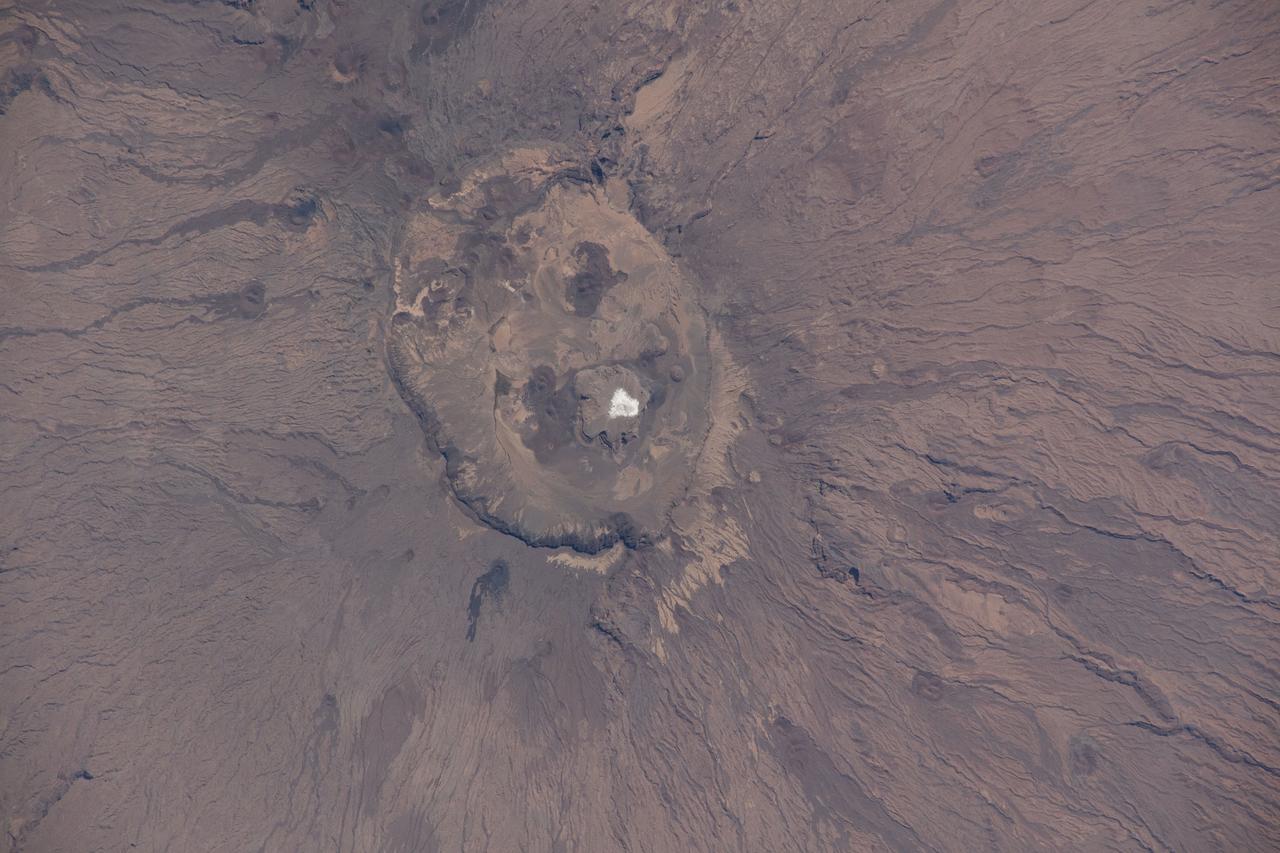
iss064e000448 (Oct. 25, 2020) --- Emi Koussi, a high pyroclastic shield volcano in northern Chad, is also the highest mountain in the Sahara. The International Space Station was orbiting above the Tibesti Mountains in Chad when this photograph was taken.
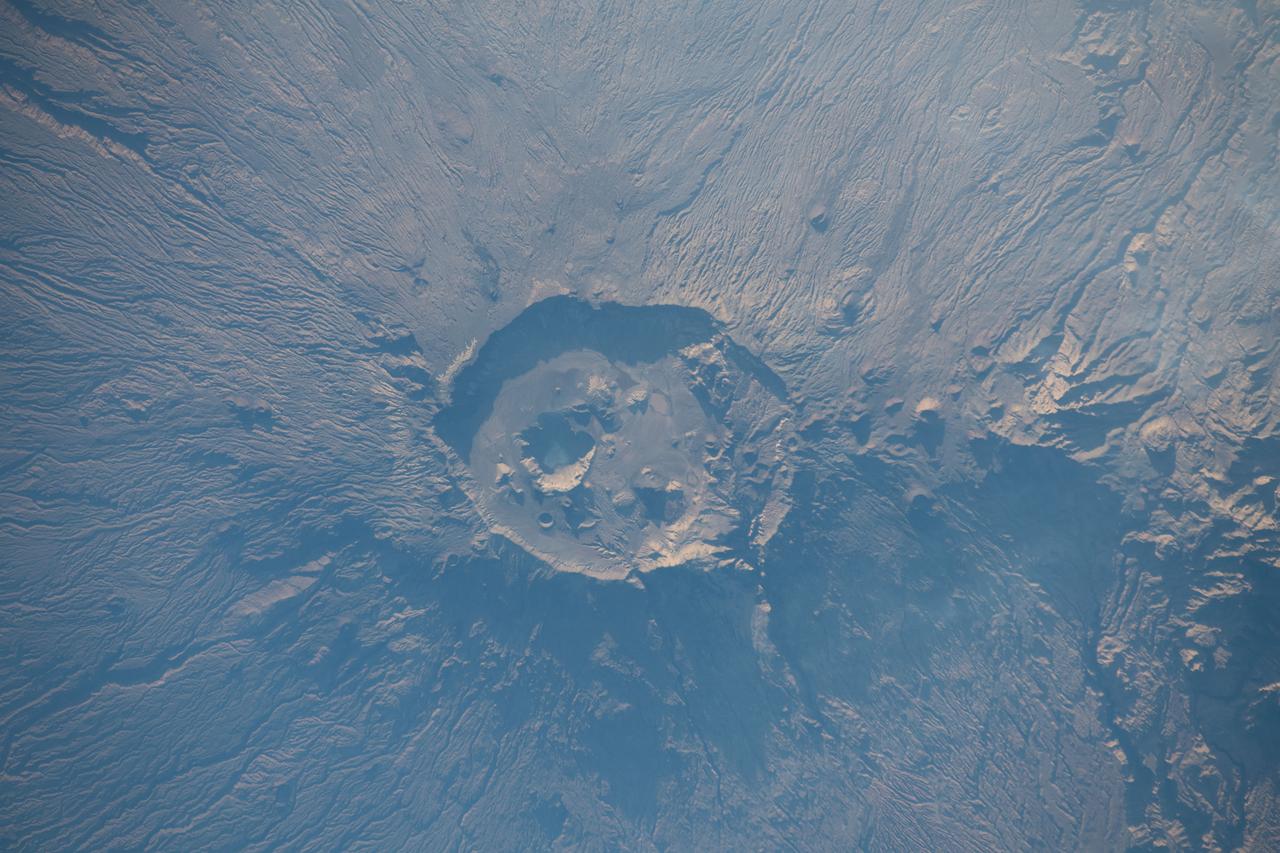
iss068e029498 (Dec. 13, 2022) --- Emi Koussi, a volcano and the highest peak in the Tibesti Mountains of Chad, was photographed from the International Space Station as it orbited 257 miles above Africa.
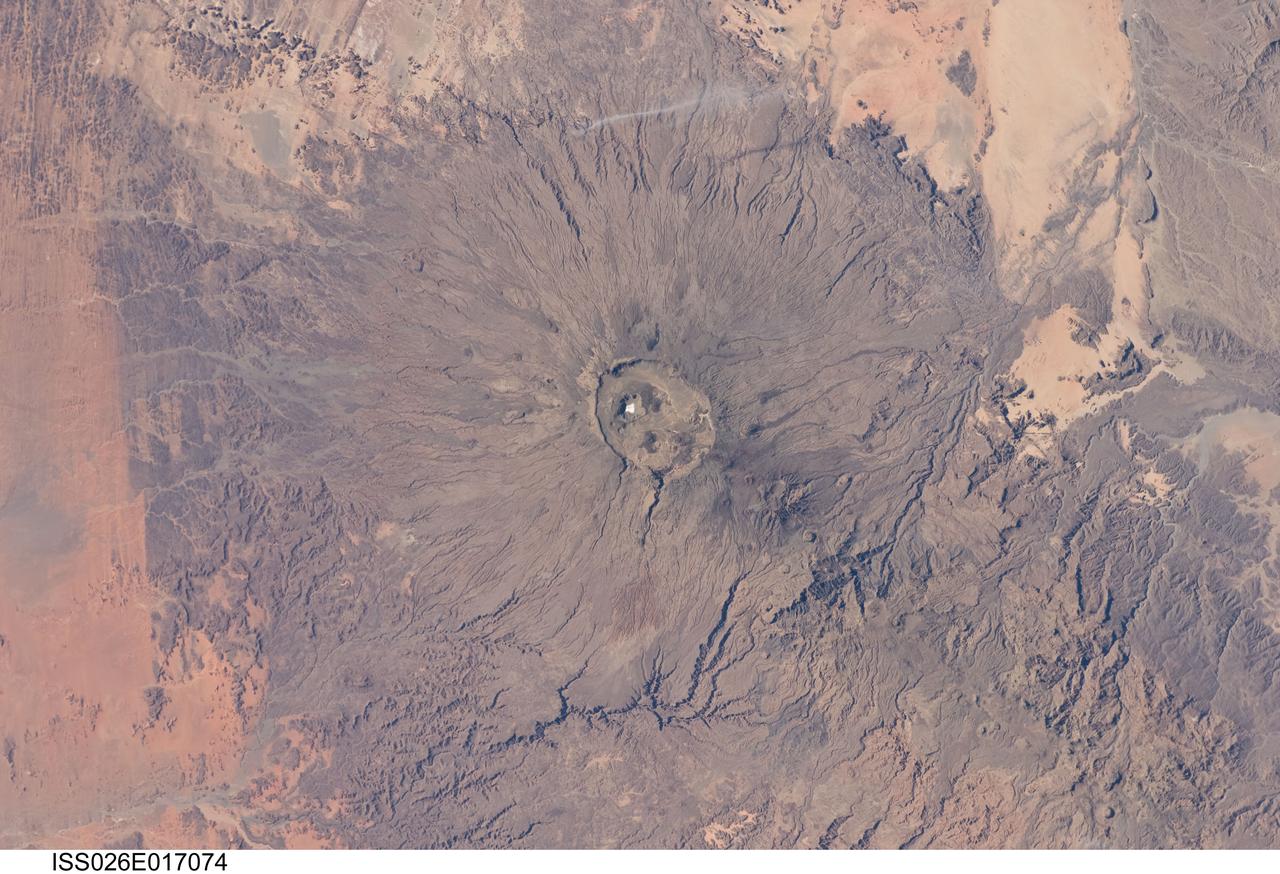
ISS026-E-017074 (11 Jan. 2011) --- Emi Koussi volcano in Chad is featured in this image photographed by an Expedition 26 crew member on the International Space Station. The large Emi Koussi volcano is located in northern Chad at the southeastern end of the Tibesti Range. The dark volcanic rocks of the volcano provide a sharp contrast to the underlying tan and light brown sandstones exposed to the west, south, and east. Emi Koussi is a shield volcano formed from relatively low viscosity lavas—flowing more like motor oil as opposed to toothpaste—and explosively-erupted ignimbrites that produce a characteristic low and broad structure that covers a wide area (approximately 60 x 80 kilometers). This photograph highlights the entire volcanic structure; at 3,415 meters above sea level, Emi Koussi is the highest summit of the Sahara region. The summit area contains three calderas formed by powerful eruptions. Two older, and overlapping, calderas form a depression approximately 12 x 15 kilometers in area bounded by a distinct rim (center). According to scientists, the youngest and smallest caldera, Era Kohor, formed as a result of eruptive activity that occurred within the past 2 million years. Young volcanic features including lava flows and scoria cones are also thought to be less than 2 million years old. There are no historical records of eruptive activity at Emi Koussi, but there is an active thermal area on the southern flank of the volcano.
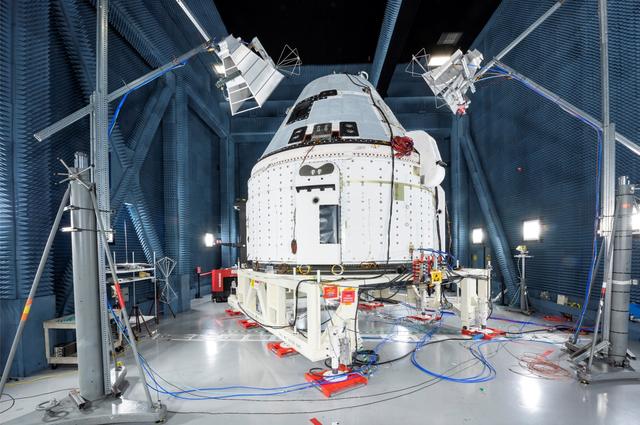
Boeing’s CST-100 Starliner prepares for electromagnetic interference and electromagnetic contamination (EMI/EMC) testing in a specialized test chamber at Boeing’s Space Environment Test Facilities in El Segundo, Calif. These tests were the final part of Starliner’s environmental qualification test campaign. EMI/EMC testing ensures that Starliner’s systems will function properly in the orbital radiation environment and also not interfere with other electrical systems on the International Space Station. Once back in Boeing’s Starliner facilities at the Kennedy Space Center in Florida, this same vehicle will be prepared to fly Starliner’s first crew during the Crew Flight Test mission later this year. NASA’s Commercial Crew Program is working with Boeing to return human spaceflight launches to the space station from U.S. soil.

The Ocean Color Instrument (OCI) Electro-Magnetic Interference (EMI) & Electrical Ground Support Equipment (EGSE) Team pose in the control room. From this room, they are able to analyze the data from the test remotely and send commands through electrical cables that run through the walls into the EMI lab. OCI is a highly advanced optical spectrometer that will be used to measure properties of light over portions of the electromagnetic spectrum. It will enable continuous measurement of light at finer wavelength resolution than previous NASA satellite sensors, extending key system ocean color data records for climate studies. OCI is PACE's (Plankton, Aerosol, Cloud, ocean Ecosystem) primary sensor built at Goddard Space Flight Center in Greenbelt, MD.
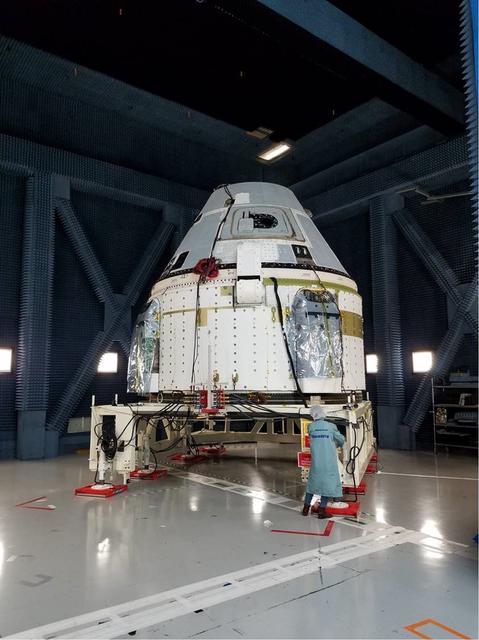
Boeing’s CST-100 Starliner prepares for electromagnetic interference and electromagnetic contamination (EMI/EMC) testing in a specialized test chamber at Boeing’s Space Environment Test Facility in El Segundo, Calif. These tests were the final part of Starliner’s environmental qualification test campaign. EMI/EMC testing ensures that Starliner’s systems will function properly in the orbital radiation environment and also not interfere with other electrical systems on the International Space Station. Once back in Boeing’s Starliner facilities at NASA’s Kennedy Space Center in Florida, this same vehicle will be prepared to fly Starliner’s first crew during the Crew Flight Test mission later this year. Boeing’s Crew Flight Test is part of NASA’s Commercial Crew Program, which is working with Boeing to return human spaceflight launches to the space station from U.S. soil.
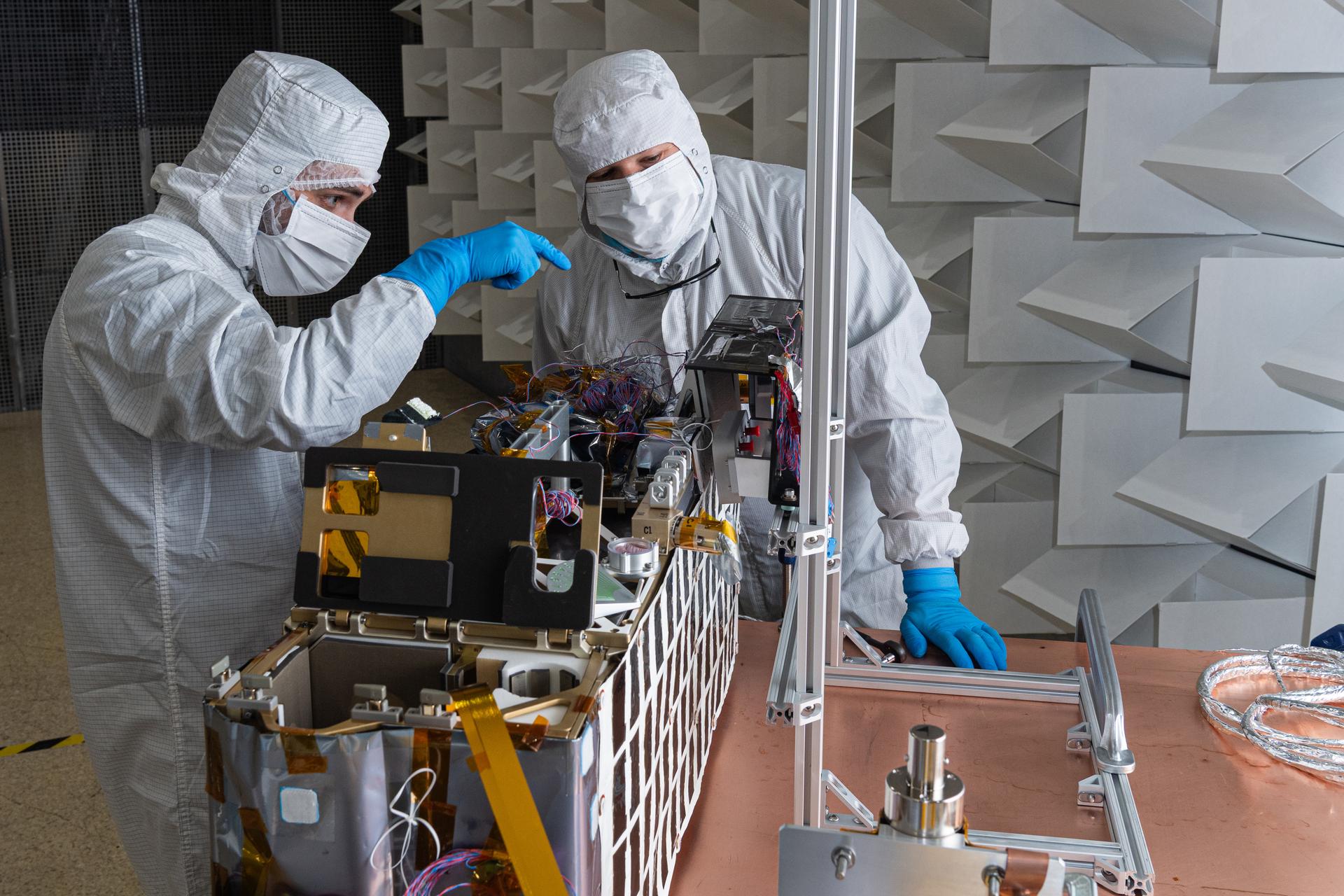
Mitchell Hamann and John Pindell configure the Lunar Environment Monitoring Station (LEMS) instrument for testing in the Electromagnetic Interference/Electromagnetic Compatibility (EMI/EMC) Chamber at Goddard Space Flight Center, Greenbelt Md., Feb 17, 2026. LEMS is a compact, autonomous, and self-sustaining seismometer suite designed to carry out continuous, long-term, monitoring of the lunar seismic environment at the South Polar region. Photo Credit: NASA/Mike Guinto
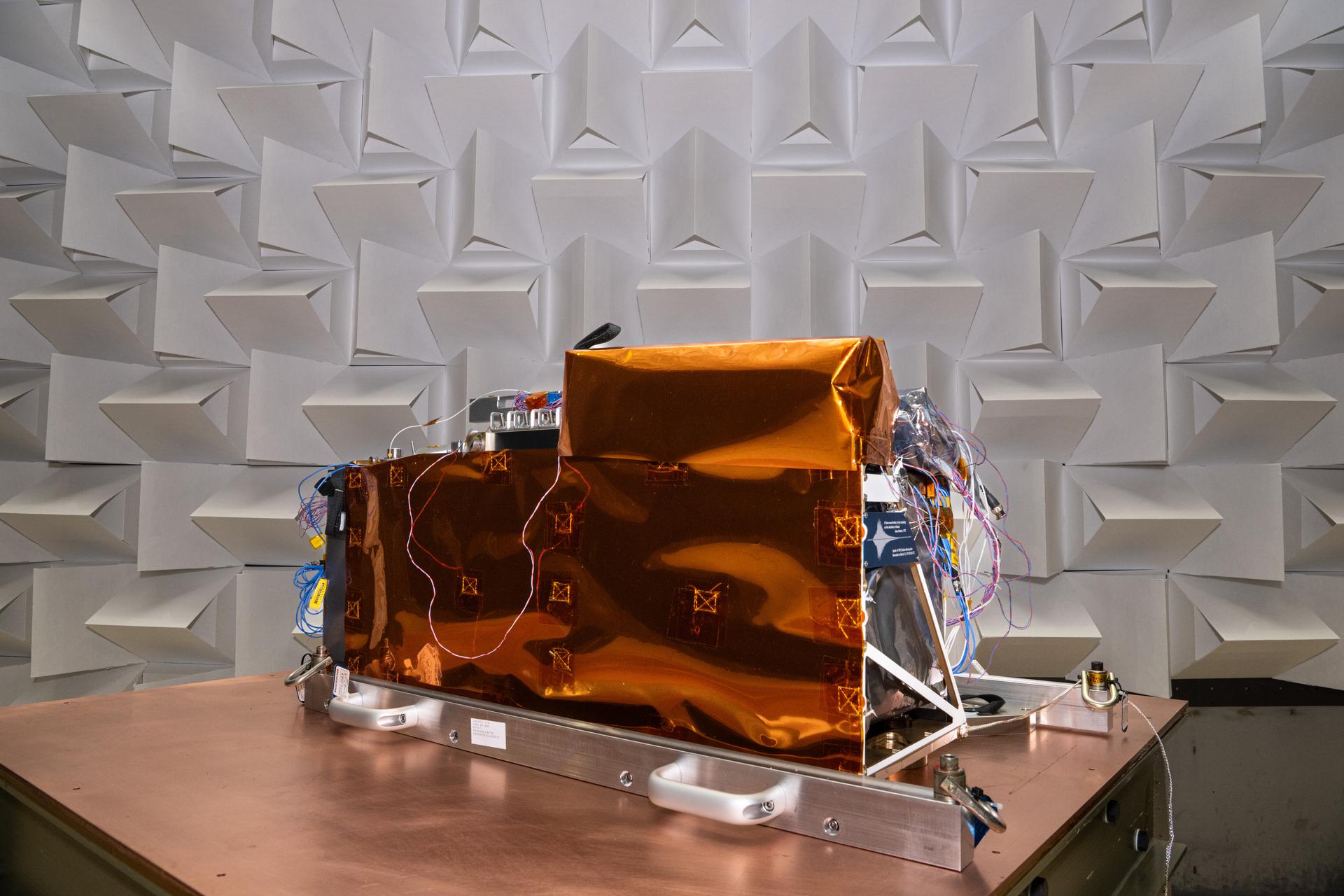
The Lunar Environment Monitoring Station (LEMS) in Electromagnetic Interference/Electromagnetic Compatibility (EMI/EMC) Chamber at Goddard Space Flight Center, Greenbelt Md., Feb 11, 2026. LEMS is a compact, autonomous, and self-sustaining seismometer suite designed to carry out continuous, long-term, monitoring of the lunar seismic environment at the South Polar region. Photo Credit: NASA/Denny Henry
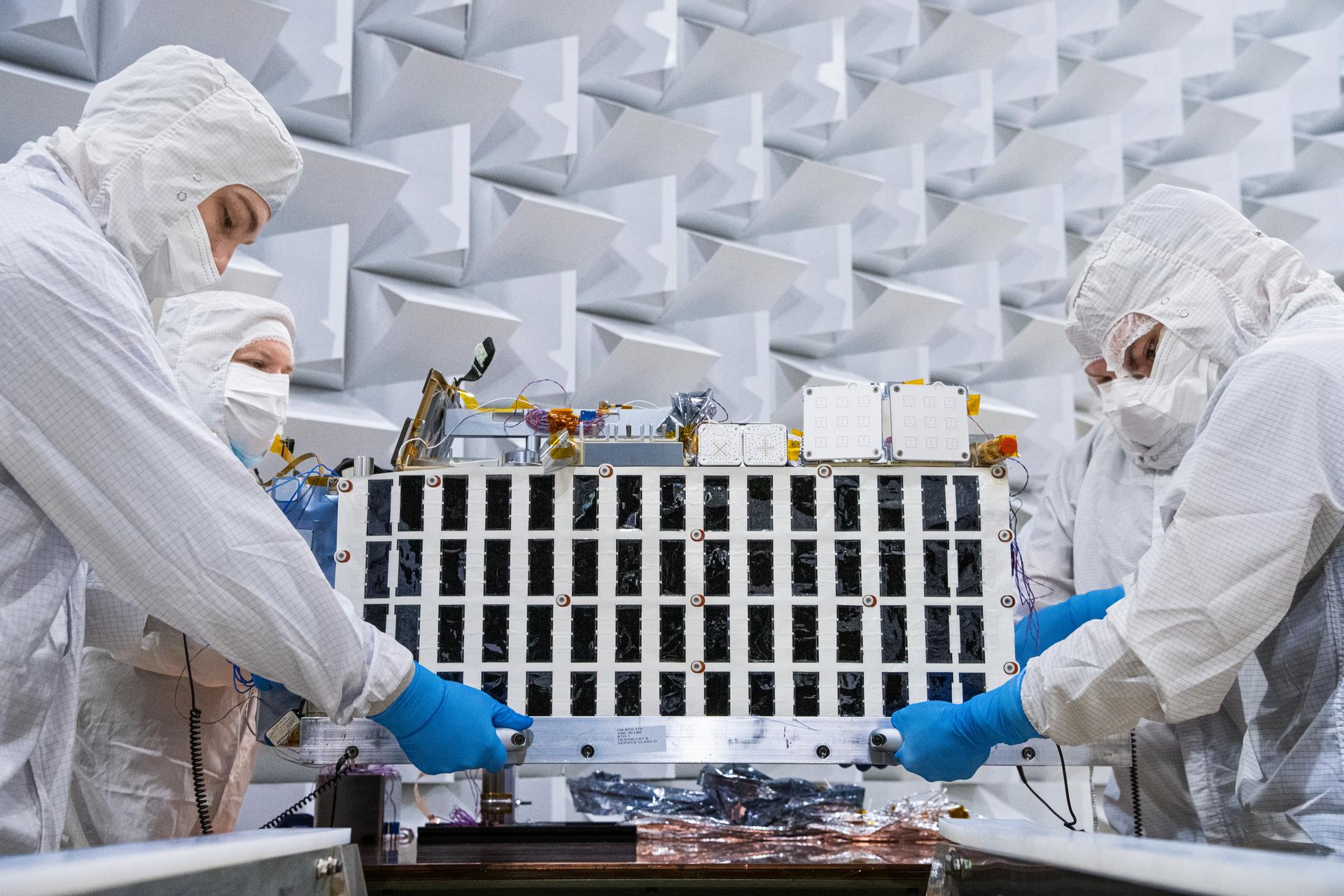
Lunar Environment Monitoring Station (LEMS) team members install the instrument for testing in the Electromagnetic Interference/Electromagnetic Compatibility (EMI/EMC) Chamber at Goddard Space Flight Center, Greenbelt Md., Feb 13, 2026. LEMS is a compact, autonomous, and self-sustaining seismometer suite designed to carry out continuous, long-term, monitoring of the lunar seismic environment at the South Polar region. Photo Credit: NASA/Denny Henry
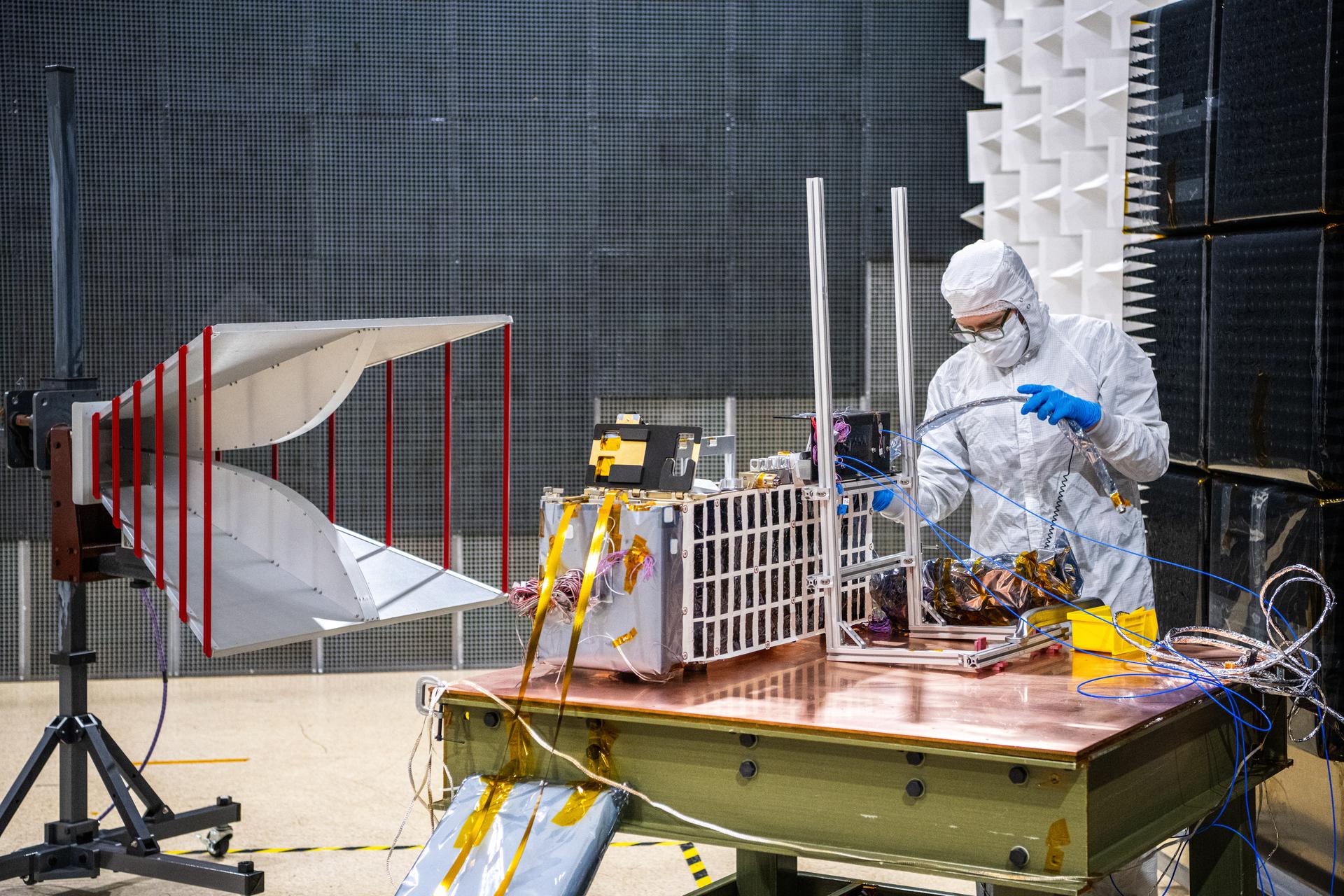
Electrical test engineer Thomas Schluszas configures the Lunar Environment Monitoring Station (LEMS) instrument for testing in the Electromagnetic Interference/Electromagnetic Compatibility (EMI/EMC) Chamber at Goddard Space Flight Center, Greenbelt Md., Feb 17, 2026. LEMS is a compact, autonomous, and self-sustaining seismometer suite designed to carry out continuous, long-term, monitoring of the lunar seismic environment at the South Polar region. Photo Credit: NASA/Denny Henry
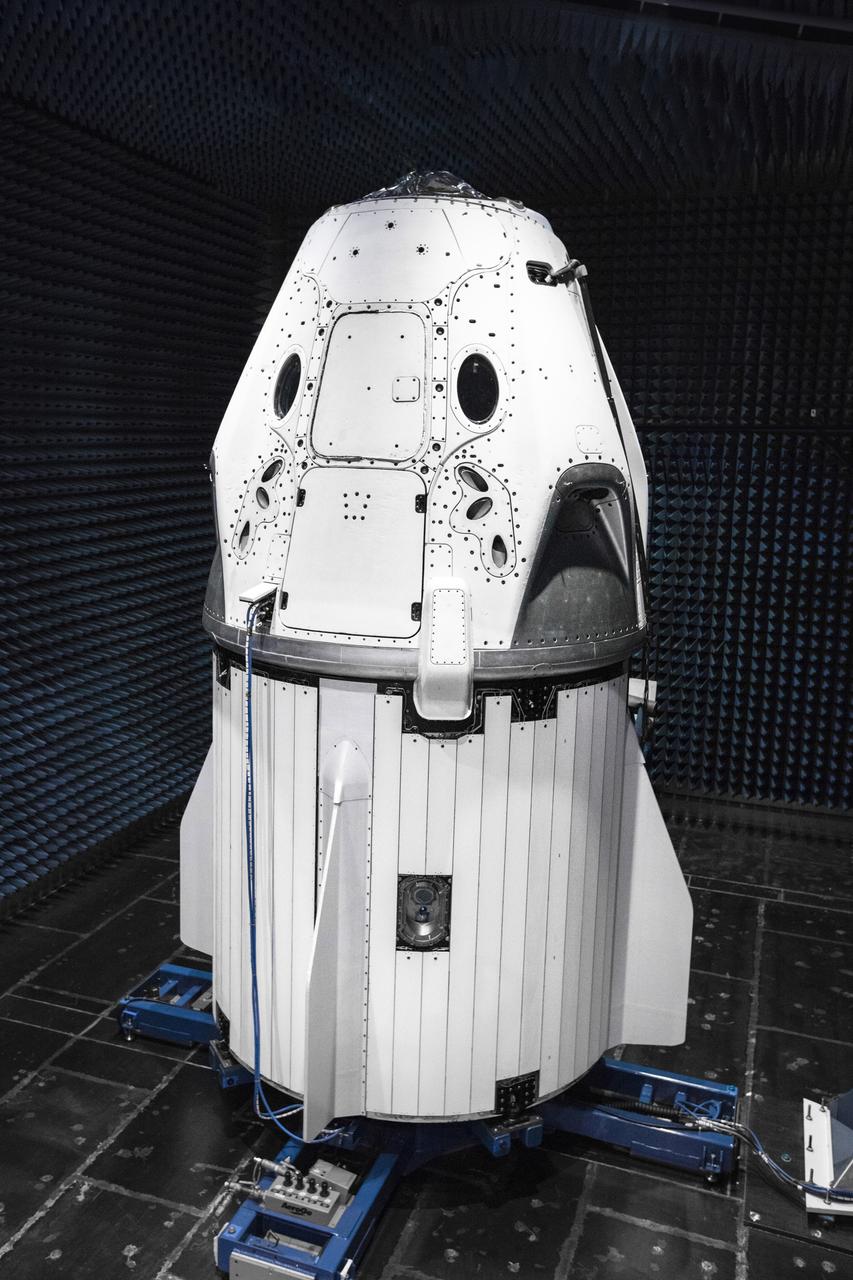
The SpaceX Crew Dragon spacecraft is in the anechoic chamber for electromagnetic interference testing on May 20, 2018, at NASA's Kennedy Space Center in Florida. The Crew Dragon will be shipped to the agency's Plum Brook Station test facility at Glenn Research City in Cleveland, Ohio, for testing in the Reverberant Acoustic Test Facility, the world's most powerful acoustic test chamber. Crew Dragon is being prepared for its first uncrewed test flight, targeted for August 2018.
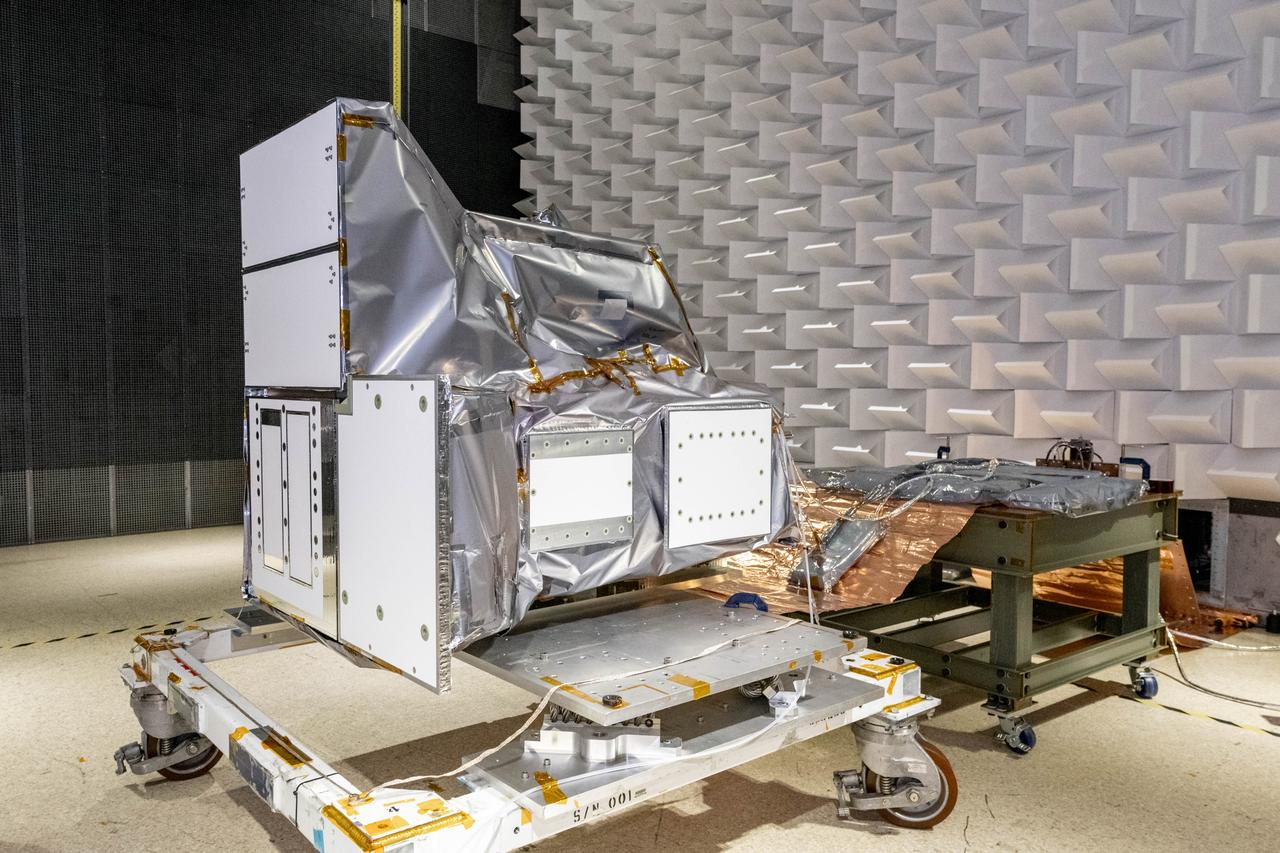
The Ocean Color Instrument (OCI) is prepared for testing in the Electro Magnetic Interference (EMI) chamber showing the radiator side of the instrument. This test will help engineers and scientists learn if OCI will be compatible with the electromagnetic environment on the spacecraft. OCI is a highly advanced optical spectrometer that will be used to measure properties of light over portions of the electromagnetic spectrum. It will enable continuous measurement of light at finer wavelength resolution than previous NASA satellite sensors, extending key system ocean color data records for climate studies. OCI is PACE's (Plankton, Aerosol, Cloud, ocean Ecosystem) primary sensor built at Goddard Space Flight Center in Greenbelt, MD.
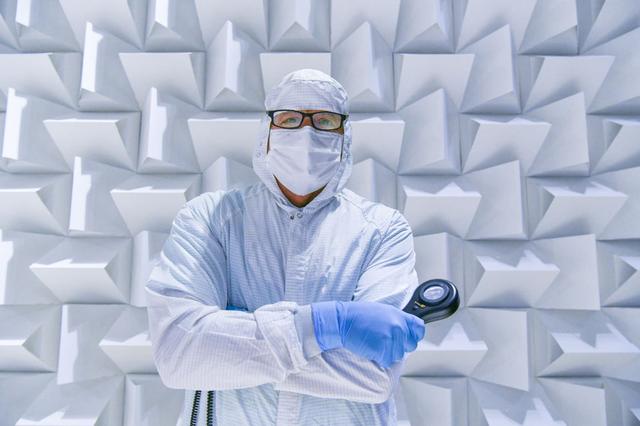
Quality engineer, John Tota, poses with a magnifying glass and stands close to the textured wall in the Electro Magnetic Interference (EMI) chamber. Mr. Tota works to ensure the overall quality of the flight hardware builds on the Ocean Color Instrument (OCI). OCI is a highly advanced optical spectrometer that will be used to measure properties of light over portions of the electromagnetic spectrum. It will enable continuous measurement of light at finer wavelength resolution than previous NASA satellite sensors, extending key system ocean color data records for climate studies. OCI is PACE's (Plankton, Aerosol, Cloud, ocean Ecosystem) primary sensor built at Goddard Space Flight Center in Greenbelt, MD.
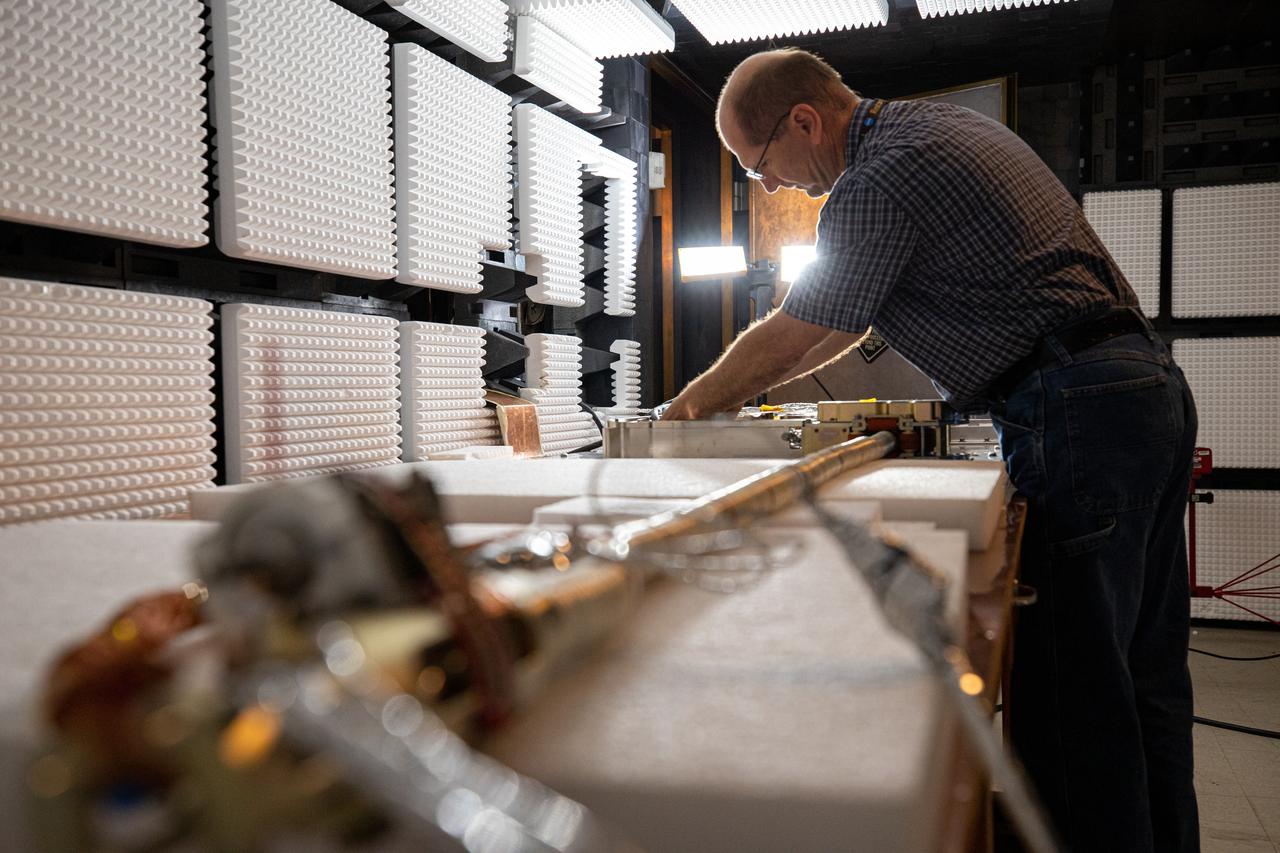
Inside the Electromagnetic Lab at NASA's Kennedy Space Center in Florida, Gabor Tamasy, Hose Management Assembly (HMA) system lead for Restore-L, prepares the HMA test unit for electromagnetic interference testing on Feb. 19, 2020. The HMA is able to extend and retract the hose, somewhat similar to the function of a tape measure. Managed by the agency's Goddard Space Flight Center in Greenbelt, Maryland, Restore-L is an inflight robotic satellite servicer spacecraft.
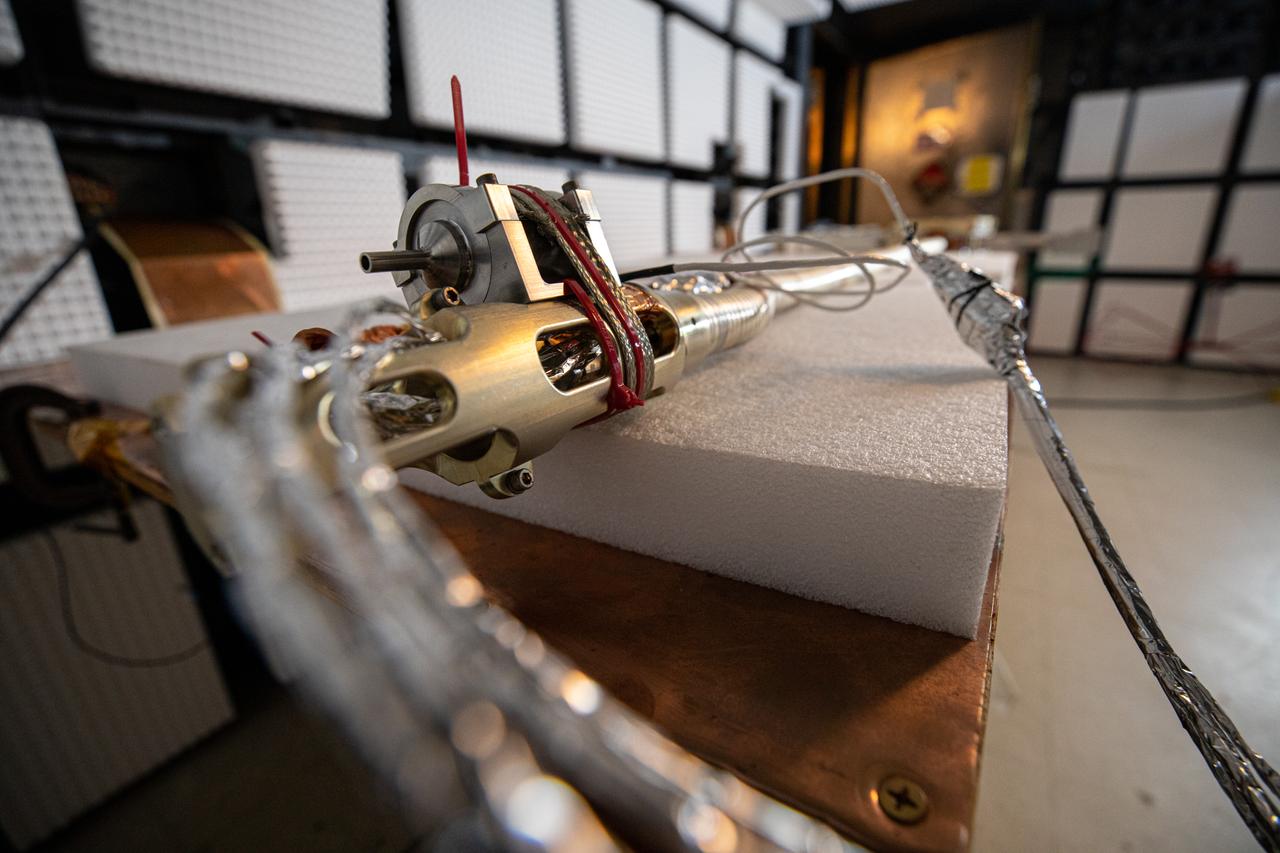
The Restore-L hose management assembly (HMA) test unit undergoes electromagnetic interference testing in the Electromagnetic Lab at NASA's Kennedy Space Center in Florida on Feb. 19, 2020. The HMA is able to extend and retract the hose, somewhat similar to the function of a tape measure. Managed by the agency's Goddard Space Flight Center in Greenbelt, Maryland, Restore-L is an inflight robotic satellite servicer spacecraft.
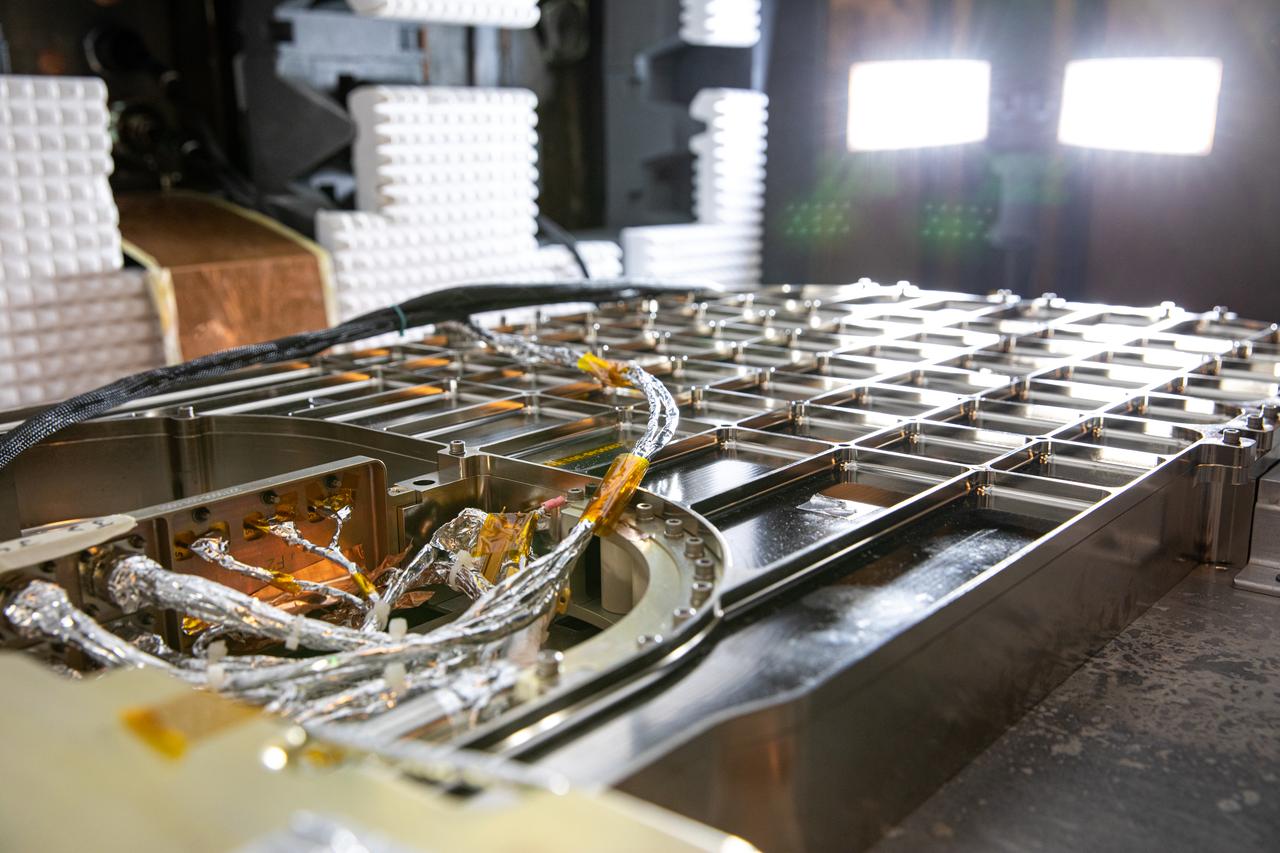
The Restore-L hose management assembly (HMA) test unit undergoes electromagnetic interference testing in the Electromagnetic Lab at NASA's Kennedy Space Center in Florida on Feb. 19, 2020. The HMA is able to extend and retract the hose, somewhat similar to the function of a tape measure. Managed by the agency's Goddard Space Flight Center in Greenbelt, Maryland, Restore-L is an inflight robotic satellite servicer spacecraft.
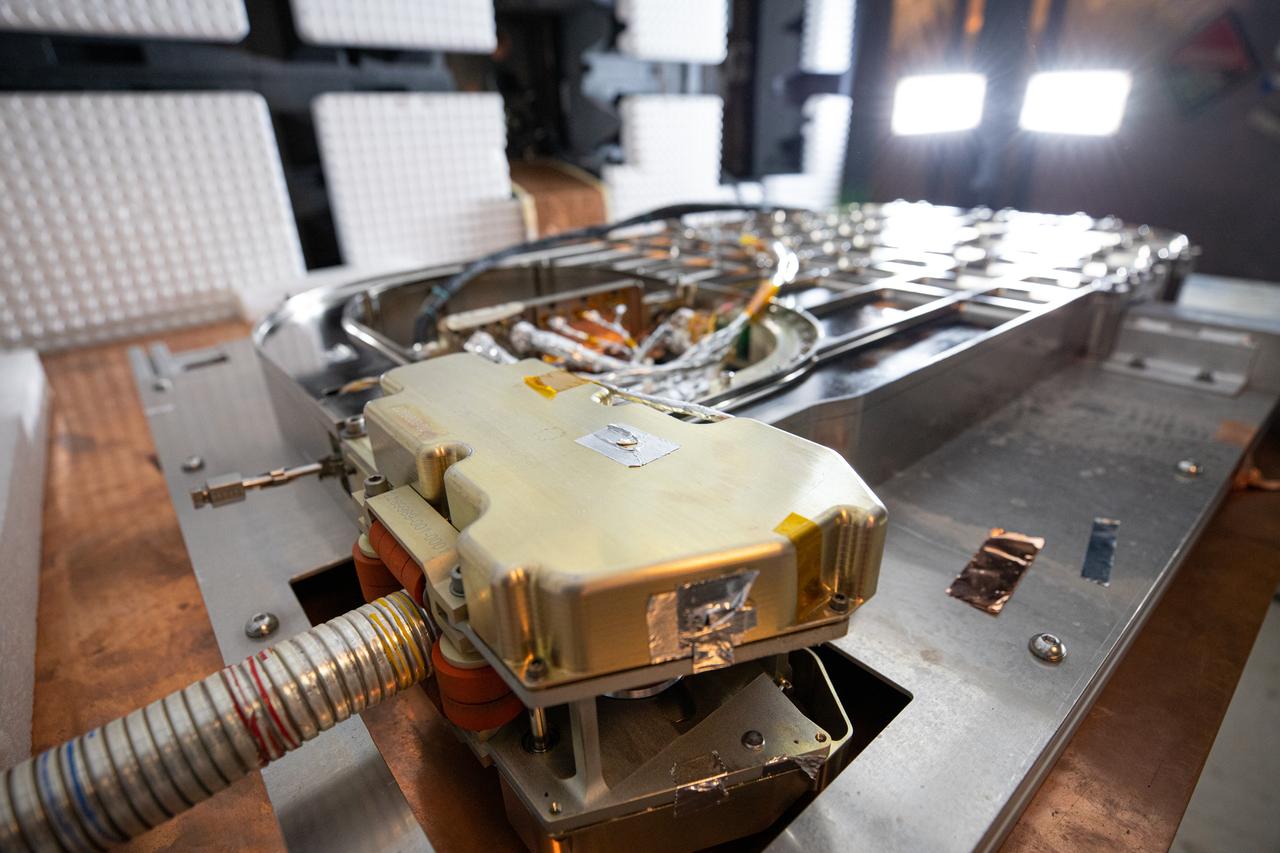
The Restore-L hose management assembly (HMA) test unit undergoes electromagnetic interference testing in the Electromagnetic Lab at NASA's Kennedy Space Center in Florida on Feb. 19, 2020. The HMA is able to extend and retract the hose, somewhat similar to the function of a tape measure. Managed by the agency's Goddard Space Flight Center in Greenbelt, Maryland, Restore-L is an inflight robotic satellite servicer spacecraft.
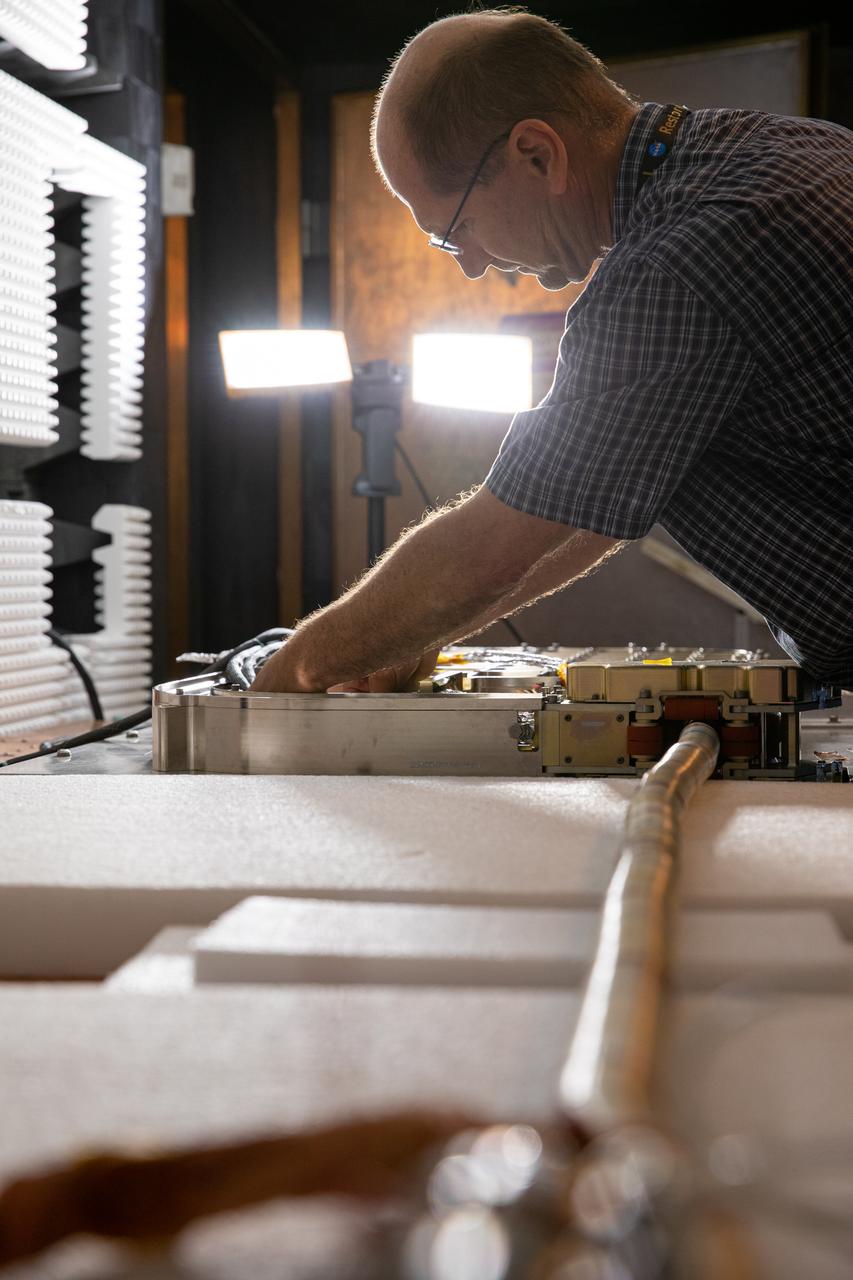
Inside the Electromagnetic Lab at NASA's Kennedy Space Center in Florida, Gabor Tamasy, Hose Management Assembly (HMA) system lead for Restore-L, prepares the HMA test unit for electromagnetic interference testing on Feb. 19, 2020. The HMA is able to extend and retract the hose, somewhat similar to the function of a tape measure. Managed by the agency's Goddard Space Flight Center in Greenbelt, Maryland, Restore-L is an inflight robotic satellite servicer spacecraft.
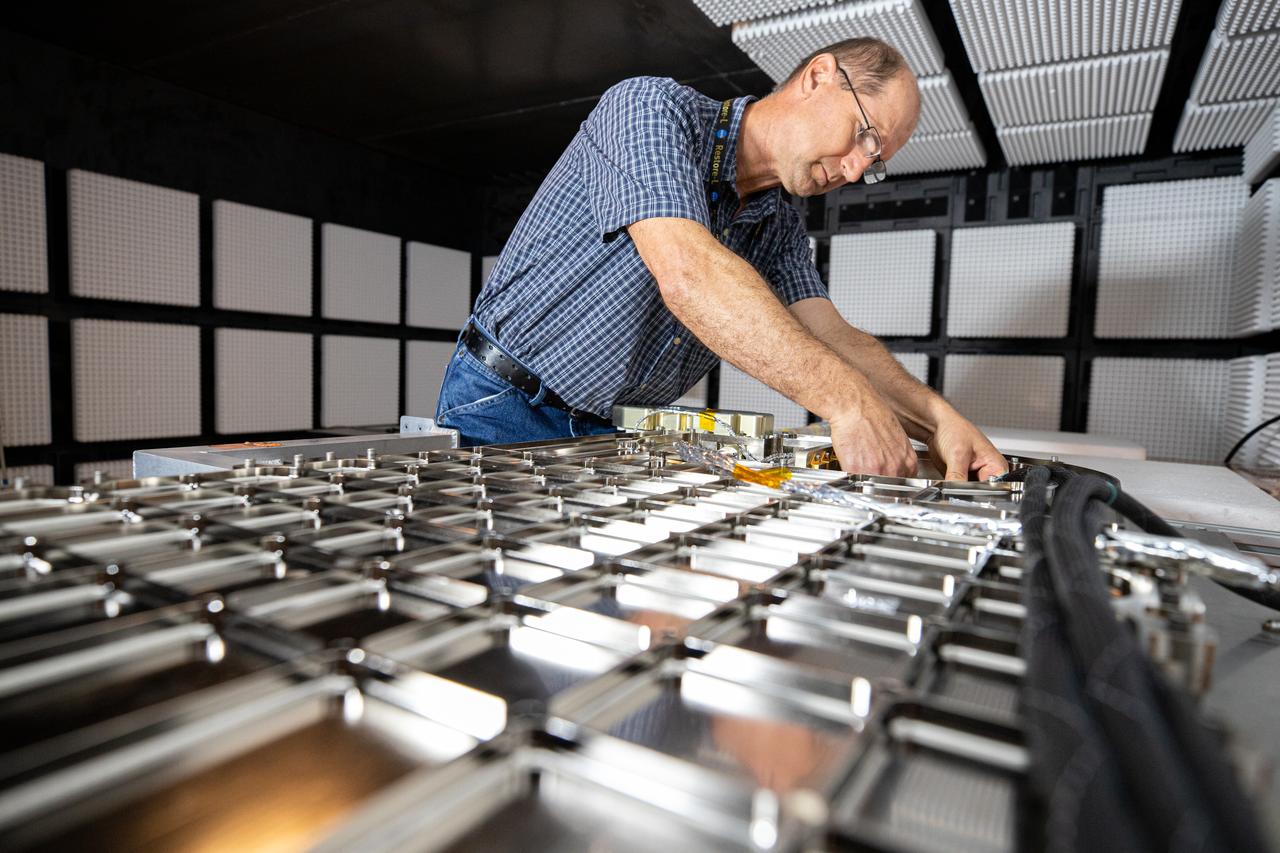
Inside the Electromagnetic Lab at NASA's Kennedy Space Center in Florida, Gabor Tamasy, Hose Management Assembly (HMA) system lead for Restore-L, prepares the HMA test unit for electromagnetic interference testing on Feb. 19, 2020. The HMA is able to extend and retract the hose, somewhat similar to the function of a tape measure. Managed by the agency's Goddard Space Flight Center in Greenbelt, Maryland, Restore-L is an inflight robotic satellite servicer spacecraft.
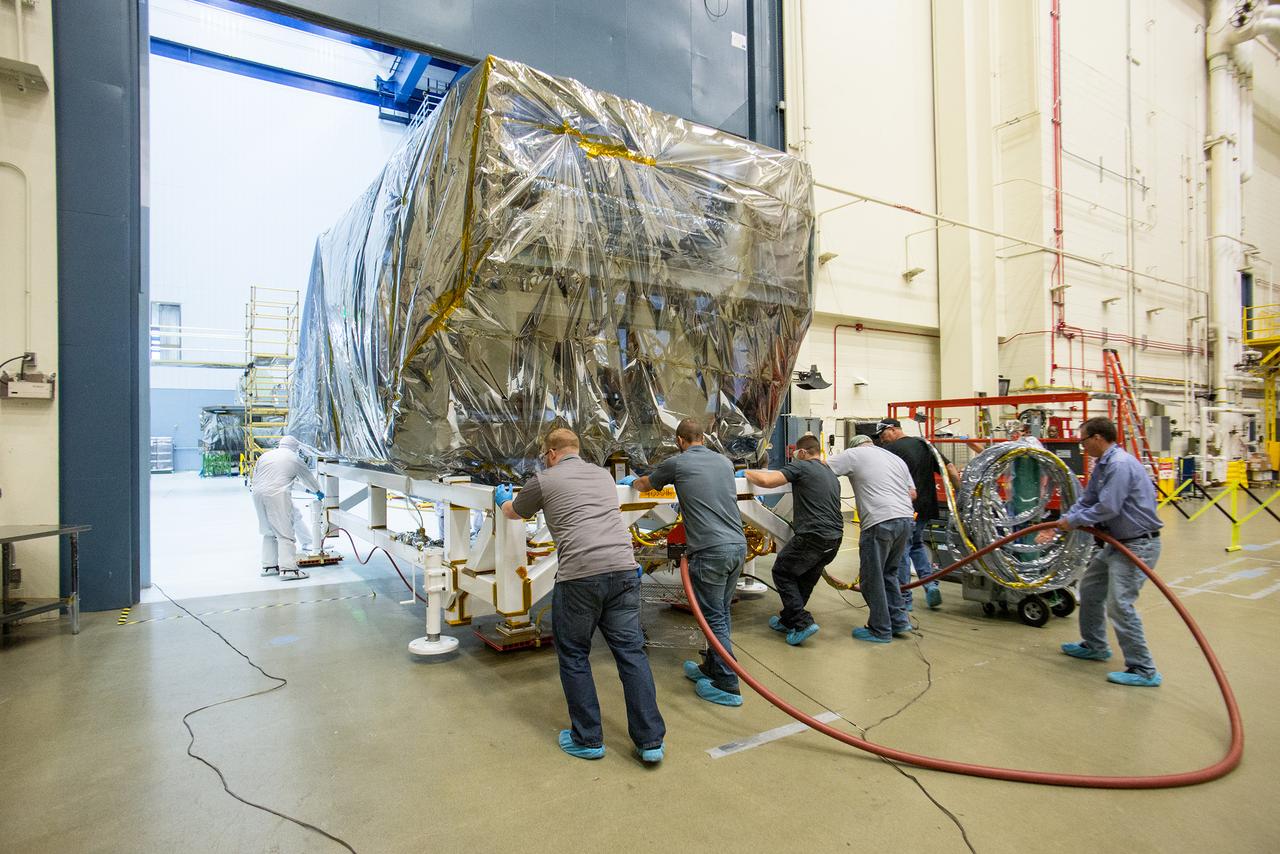
The wrapped up ISIM structure pushed back to the clean room post acoustics-test, to prepare for the EMI test. Credits: NASA/Desiree Stover Read more: <a href="http://1.usa.gov/1KvoY4p" rel="nofollow">1.usa.gov/1KvoY4p</a> <b><a href="http://www.nasa.gov/audience/formedia/features/MP_Photo_Guidelines.html" rel="nofollow">NASA image use policy.</a></b> <b><a href="http://www.nasa.gov/centers/goddard/home/index.html" rel="nofollow">NASA Goddard Space Flight Center</a></b> enables NASA’s mission through four scientific endeavors: Earth Science, Heliophysics, Solar System Exploration, and Astrophysics. Goddard plays a leading role in NASA’s accomplishments by contributing compelling scientific knowledge to advance the Agency’s mission. <b>Follow us on <a href="http://twitter.com/NASAGoddardPix" rel="nofollow">Twitter</a></b> <b>Like us on <a href="http://www.facebook.com/pages/Greenbelt-MD/NASA-Goddard/395013845897?ref=tsd" rel="nofollow">Facebook</a></b> <b>Find us on <a href="http://instagrid.me/nasagoddard/?vm=grid" rel="nofollow">Instagram</a></b>
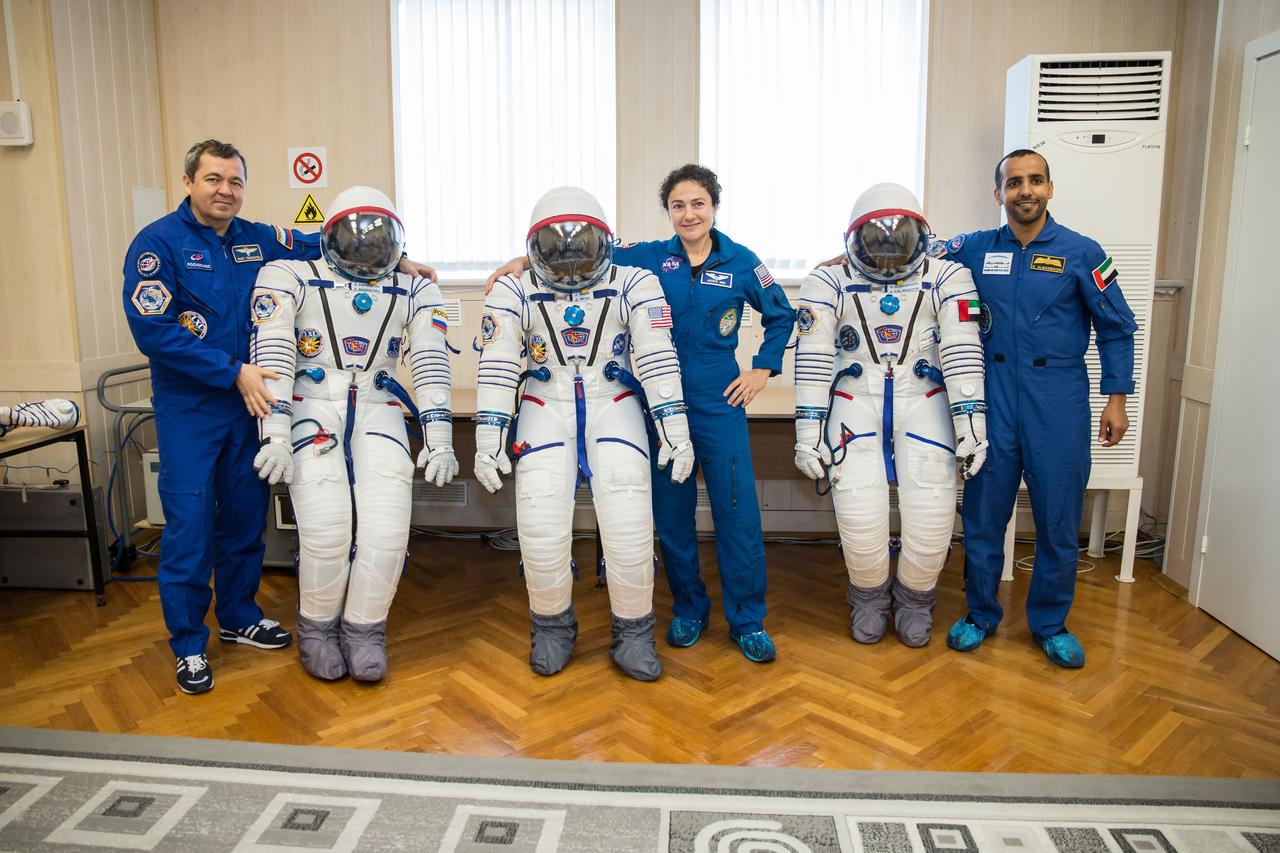
In the Integration Building at the Baikonur Cosmodrome in Kazakhstan, Expedition 61 crewmembers Oleg Skripochka of Roscosmos (left) and Jessica Meir of NASA (center) and spaceflight participant Hazzaa Ali Almansoori of the United Arab Emirates pose for pictures with their Russian Sokol launch and entry suits Sept. 11. They will launch Sept. 25 on the Soyuz MS-15 spacecraft from the Baikonur Cosmodrome for a mission on the International Space Station. NASA/Victor Zelentsov