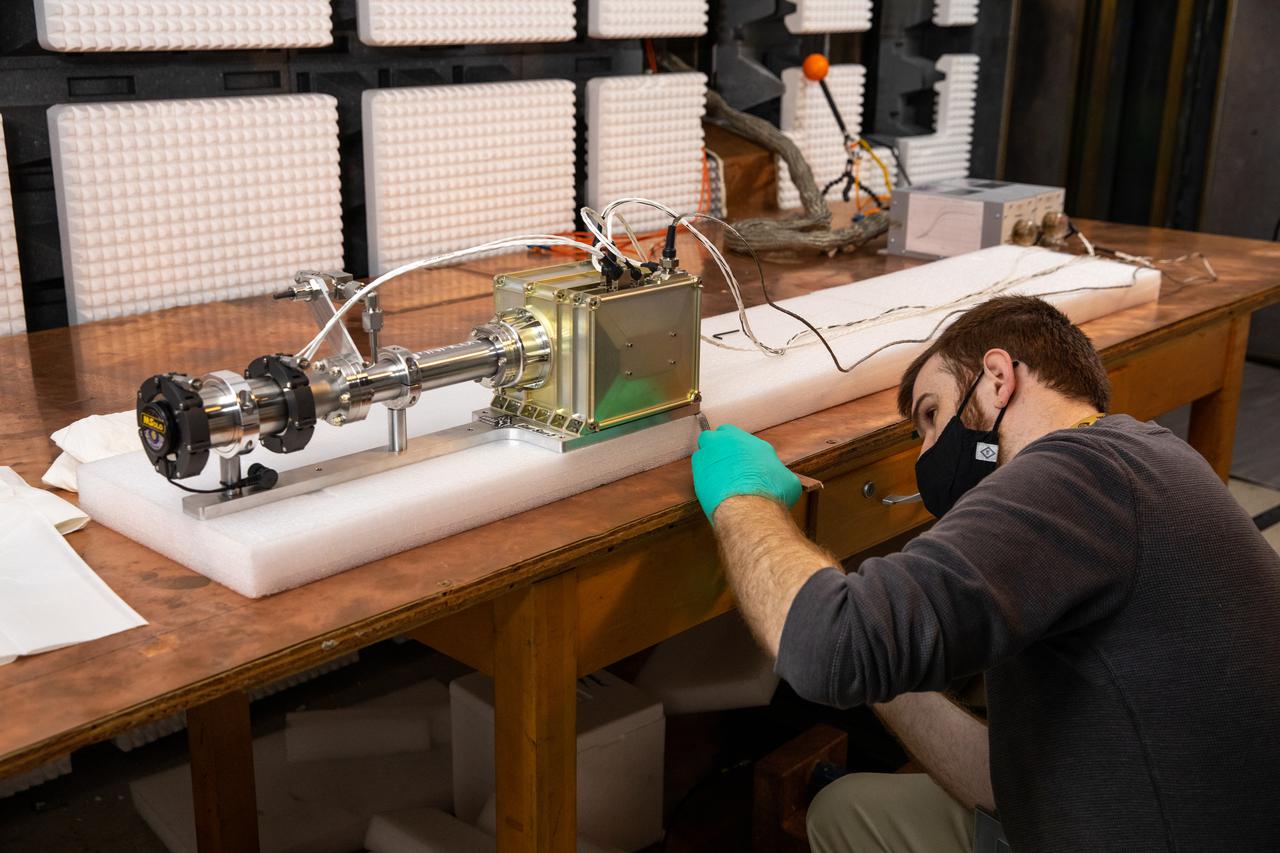
Electronics Engineer and Mass Spectrometer Observing Lunar Operations (MSolo) team member Nate Cain conducts electromagnetic interference (EMI) testing inside the EMI Laboratory at NASA’s Kennedy Space Center in Florida on Feb. 14, 2022. The tests will verify that MSolo can control the emissions it will produce during its missions and meets EMI susceptibility requirements as part of its preparation to operate in the lunar environment. The third MSolo to go through EMI testing, this is an engineering development unit representative of the flight unit manifested to fly to the Moon’s South Pole as a payload on the agency’s Volatiles Investigating Polar Exploration Rover (VIPER) in 2023. Researchers and engineers are preparing MSolo instruments to launch on four robotic missions as part of NASA’s Commercial Lunar Payload Services (CLPS) – the first of which is slated for later this year. MSolo will help analyze the chemical makeup of landing sites on the Moon, with the later missions also studying water on the lunar surface.
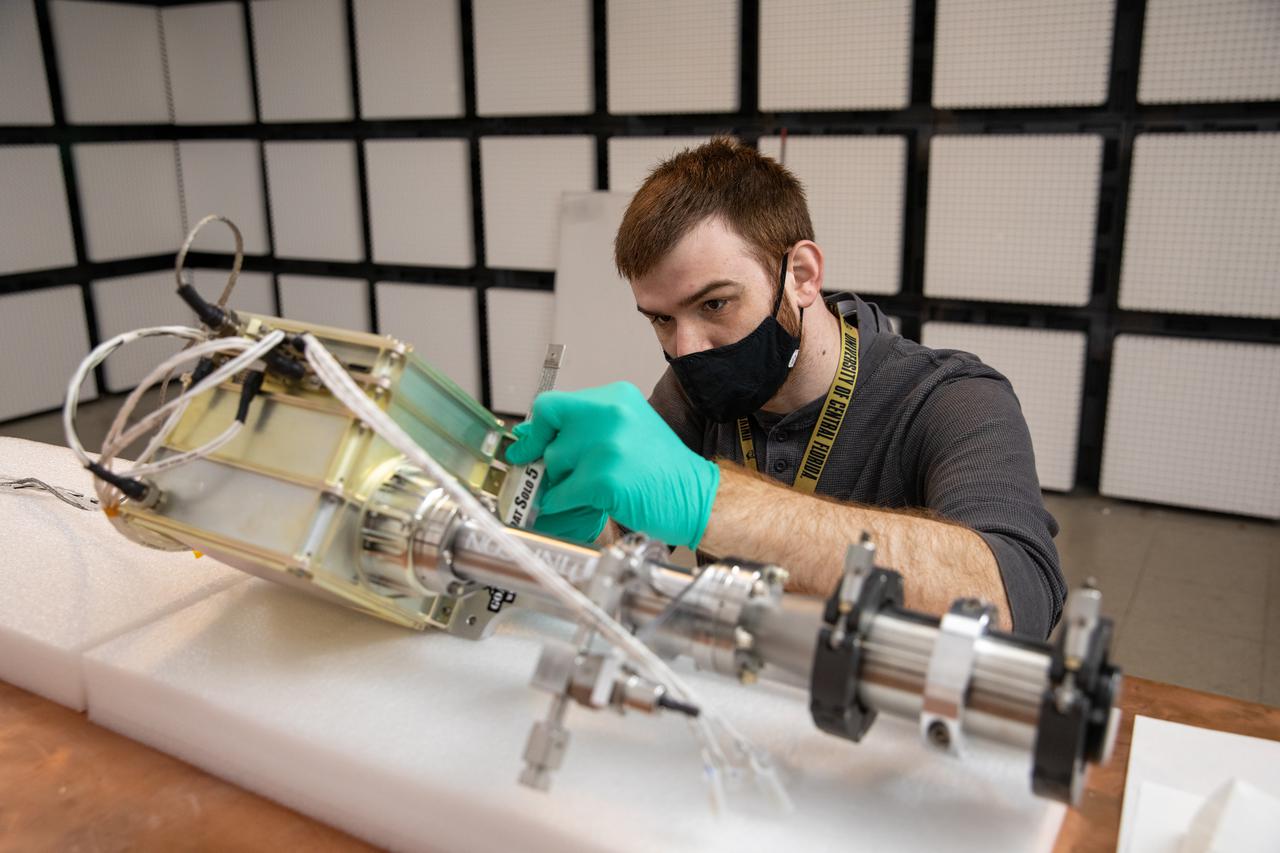
Electronics Engineer and Mass Spectrometer Observing Lunar Operations (MSolo) team member Nate Cain conducts electromagnetic interference (EMI) testing inside the EMI Laboratory at NASA’s Kennedy Space Center in Florida on Feb. 14, 2022. These tests will verify that MSolo can control the emissions it will produce during its missions and meets EMI susceptibility requirements as part of its preparation to operate in the lunar environment. The third MSolo to go through EMI testing, this is an engineering development unit representative of the flight unit manifested to fly to the Moon’s South Pole as a payload on the agency’s Volatiles Investigating Polar Exploration Rover (VIPER) in 2023. Researchers and engineers are preparing MSolo instruments to launch on four robotic missions as part of NASA’s Commercial Lunar Payload Services (CLPS) – the first of which is slated for later this year. MSolo will help analyze the chemical makeup of landing sites on the Moon, with the later missions also studying water on the lunar surface.

Electronics Engineer and Mass Spectrometer Observing Lunar Operations (MSolo) team member Nate Cain conducts electromagnetic interference (EMI) testing inside the EMI Laboratory at NASA’s Kennedy Space Center in Florida on Feb. 14, 2022. The tests will verify that MSolo can control the emissions it will produce during its missions and meets EMI susceptibility requirements as part of its preparation to operate in the lunar environment. The third MSolo to go through EMI testing, this is an engineering development unit representative of the flight unit manifested to fly to the Moon’s South Pole as a payload on the agency’s Volatiles Investigating Polar Exploration Rover (VIPER) in 2023. Researchers and engineers are preparing MSolo instruments to launch on four robotic missions as part of NASA’s Commercial Lunar Payload Services (CLPS) – the first of which is slated for later this year. MSolo will help analyze the chemical makeup of landing sites on the Moon, with the later missions also studying water on the lunar surface.
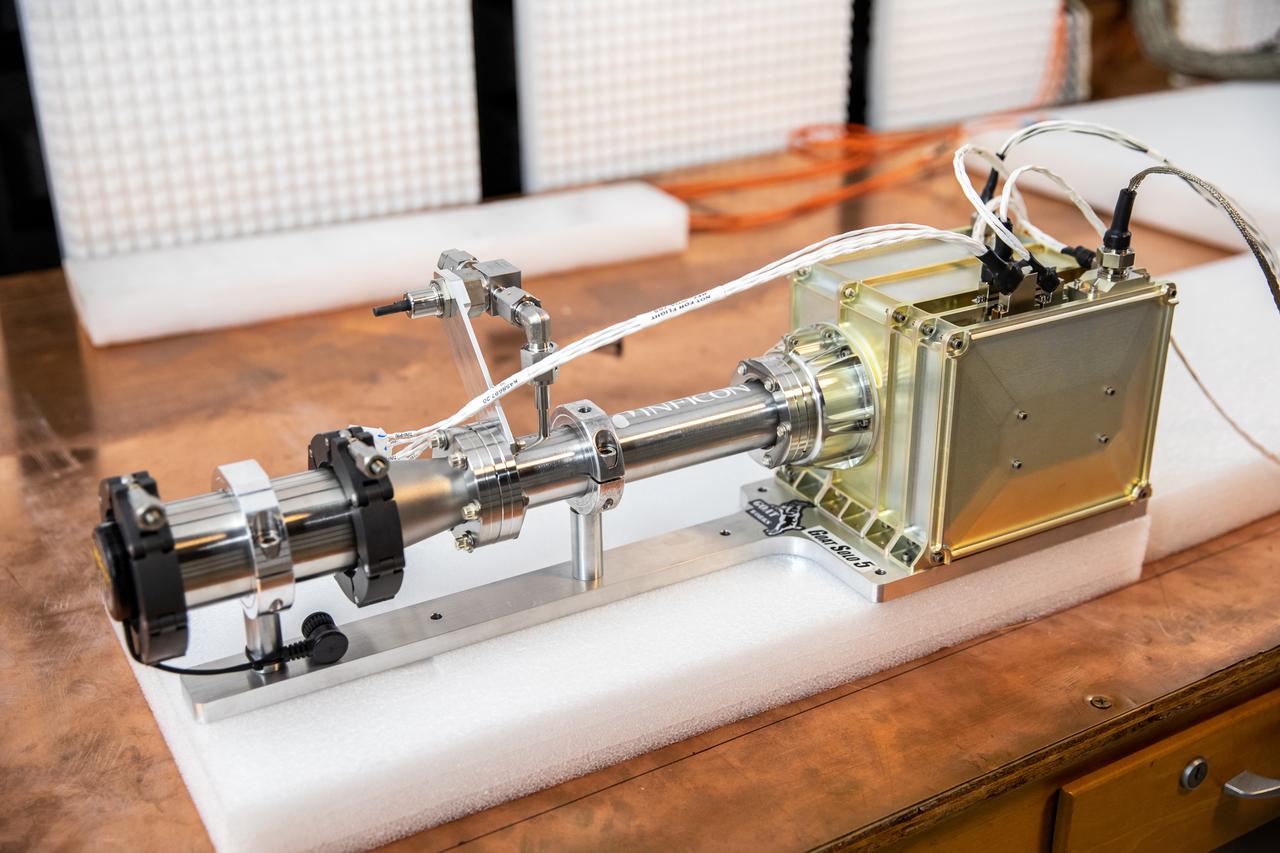
NASA’s Mass Spectrometer Observing Lunar Operations (MSolo) undergoes electromagnetic interference (EMI) testing inside the EMI Laboratory at the agency’s Kennedy Space Center in Florida on Feb. 14, 2022. These tests will verify that MSolo can control the emissions it will produce during its missions and meets EMI susceptibility requirements as part of its preparation to operate in the lunar environment. The third MSolo to go through EMI testing, this is an engineering development unit representative of the flight unit manifested to fly to the Moon’s South Pole as a payload on the agency’s Volatiles Investigating Polar Exploration Rover (VIPER) in 2023. Researchers and engineers are preparing MSolo to launch on four robotic missions as part of NASA’s Commercial Lunar Payload Services (CLPS) – the first of which is slated for later this year. MSolo will help analyze the chemical makeup of landing sites on the Moon, with the later missions also studying water on the lunar surface.

Nate Cain, an electronics engineer with the Advanced Engineering Development Branch at NASA’s Kennedy Space Center in Florida, prepares to conduct electromagnetic interference (EMI) testing for the agency’s Mass Spectrometer Observing Lunar Operations (MSolo) instrument inside the EMI Laboratory on Feb. 14, 2022. These tests will verify that MSolo can control the emissions it will produce during its missions and meets EMI susceptibility requirements as part of its preparation to operate in the lunar environment. The third MSolo to go through EMI testing, this is an engineering development unit representative of the flight unit manifested to fly to the Moon’s South Pole as a payload on the agency’s Volatiles Investigating Polar Exploration Rover (VIPER) in 2023. Researchers and engineers are preparing MSolo instruments to launch on four robotic missions as part of NASA’s Commercial Lunar Payload Services (CLPS) – the first of which is slated for later this year. MSolo will help analyze the chemical makeup of landing sites on the Moon, with the later missions also studying water on the lunar surface.
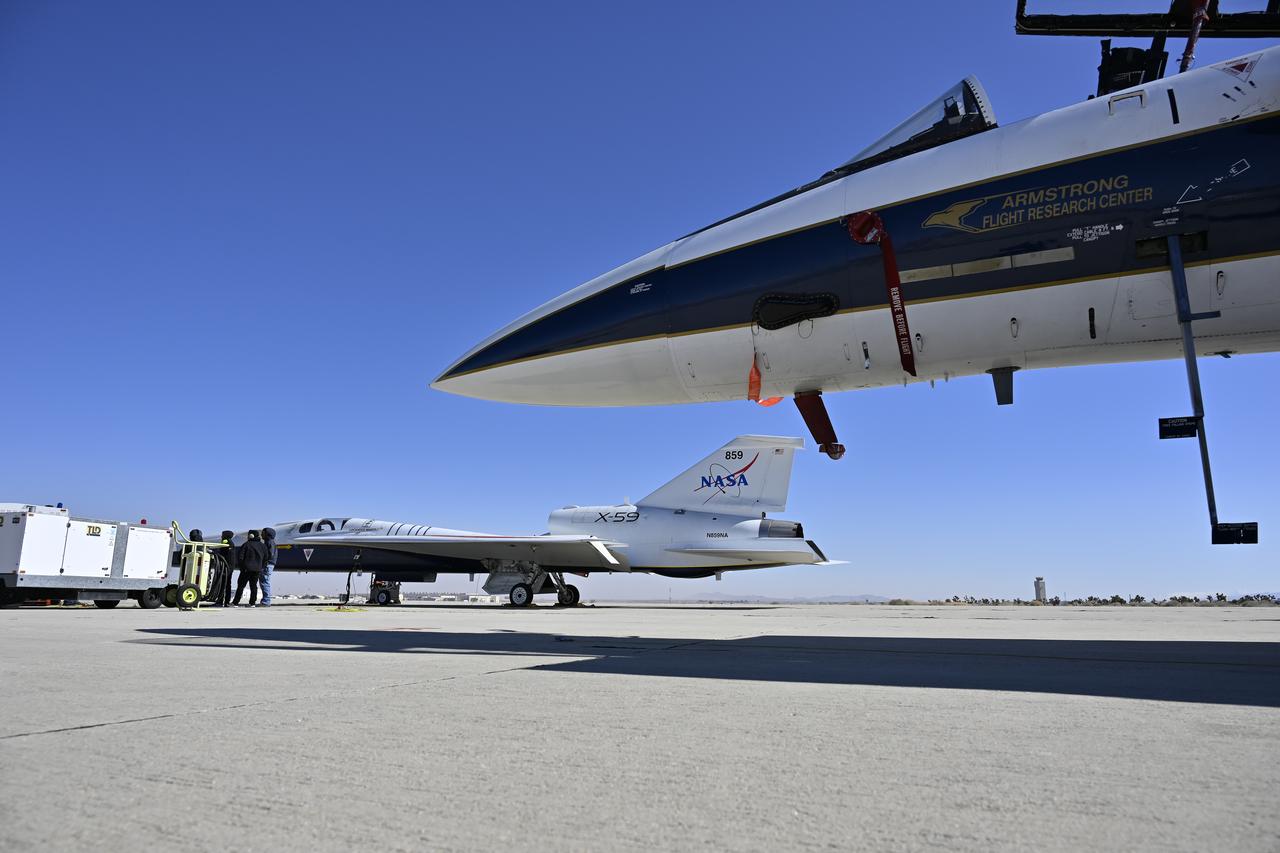
NASA’s X-59 quiet supersonic research aircraft successfully completed electromagnetic interference (EMI) testing at Lockheed Martin Skunk Works in Palmdale, California. During EMI tests, the team examined each of the X-59’s internal electronic systems, ensuring they worked with one another without interference. The X-59 is designed to fly faster than the speed of sound while reducing the loud sonic boom to a quieter sonic thump.
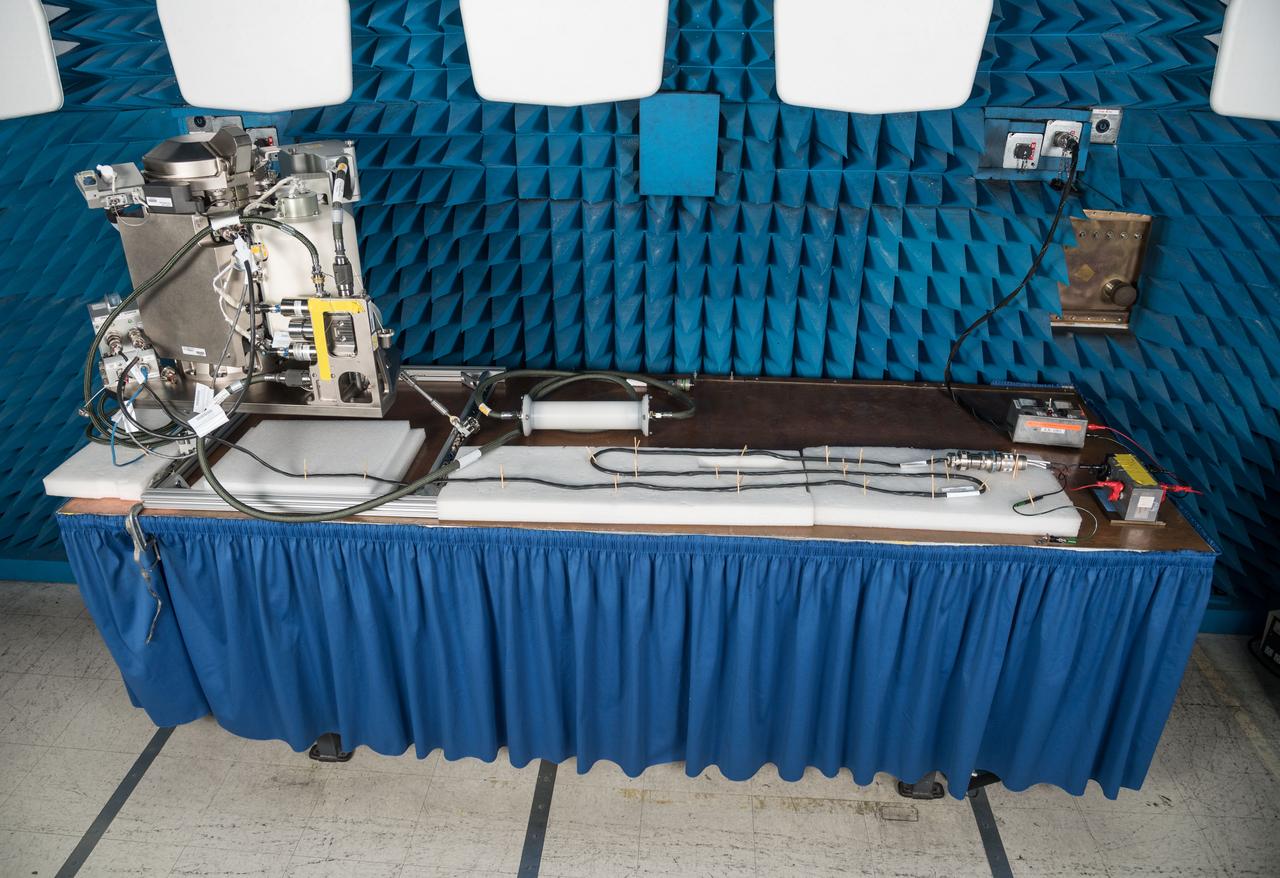
jsc2019e070457 (12/13/2019) --- A preflight view taken of the ISS Universal Waste Management System, Unit 1 during EMI/EMC Testing. This technology provides additional waste disposal points to the International Space Station (ISS) and aids in planning for future exploration missions including Deep Space Gateway (DSG). A smaller, more comfortable and more reliable waste-disposal method allows the crew to focus on other activities and enables further exploration in space.
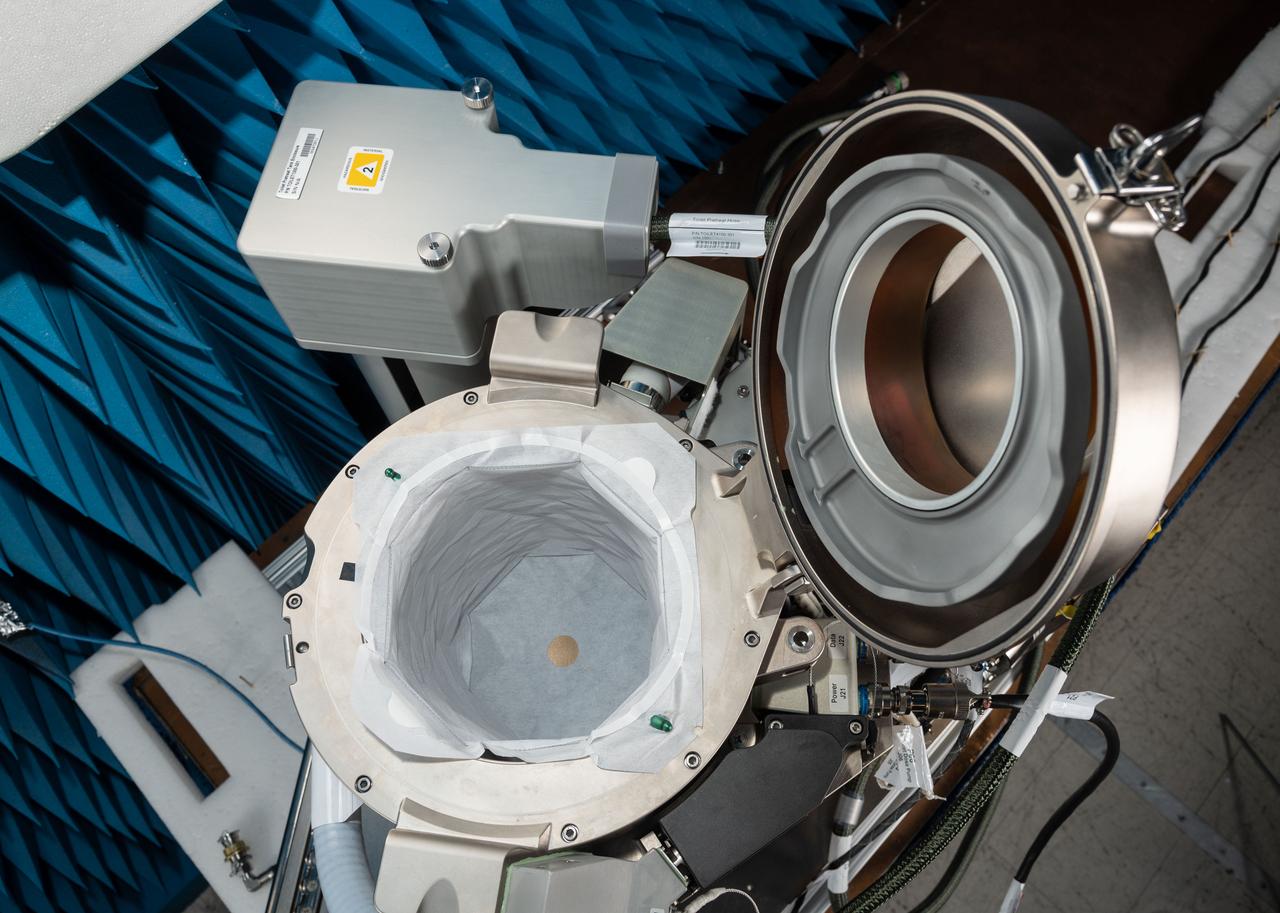
jsc2019e070462 (12/13/2019) --- A preflight view taken of the ISS Universal Waste Management System, Unit 1 during EMI/EMC Testing. This technology provides additional waste disposal points to the International Space Station (ISS) and aids in planning for future exploration missions including Deep Space Gateway (DSG). A smaller, more comfortable and more reliable waste-disposal method allows the crew to focus on other activities and enables further exploration in space.
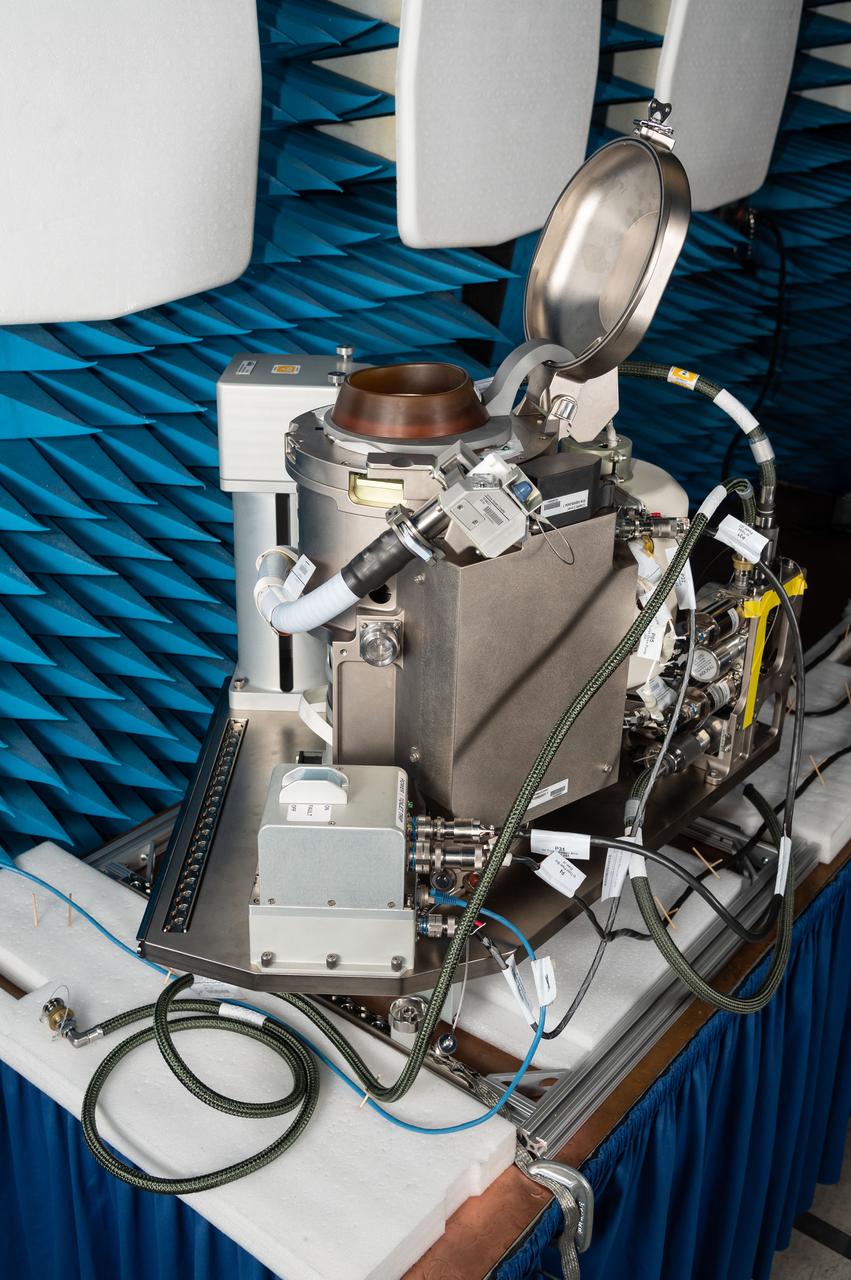
jsc2019e070459 (12/13/2019) --- A preflight view taken of the ISS Universal Waste Management System, Unit 1 during EMI/EMC Testing. This technology provides additional waste disposal points to the International Space Station (ISS) and aids in planning for future exploration missions including Deep Space Gateway (DSG). A smaller, more comfortable and more reliable waste-disposal method allows the crew to focus on other activities and enables further exploration in space.
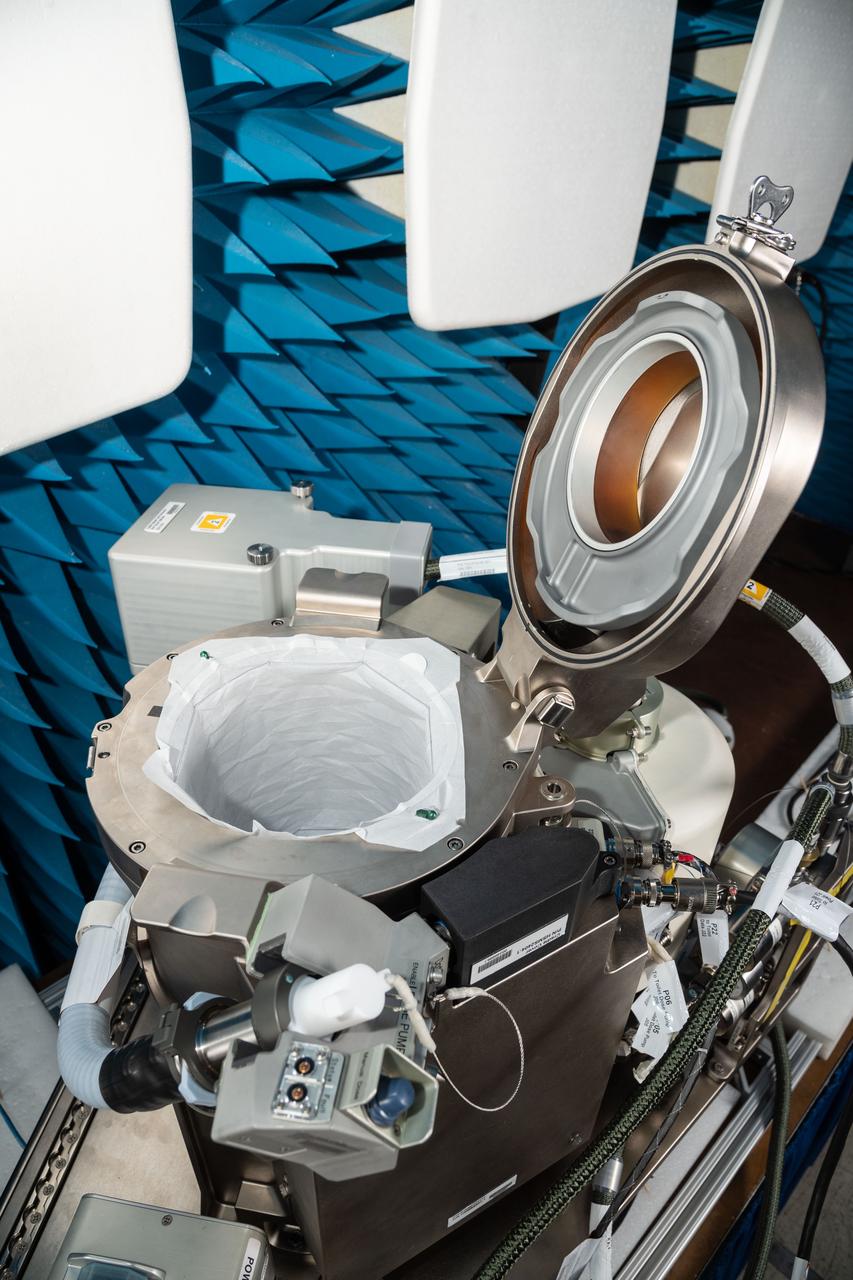
jsc2019e070461 (12/13/2019) --- A preflight view taken of the ISS Universal Waste Management System, Unit 1 during EMI/EMC Testing. This technology provides additional waste disposal points to the International Space Station (ISS) and aids in planning for future exploration missions including Deep Space Gateway (DSG). A smaller, more comfortable and more reliable waste-disposal method allows the crew to focus on other activities and enables further exploration in space.
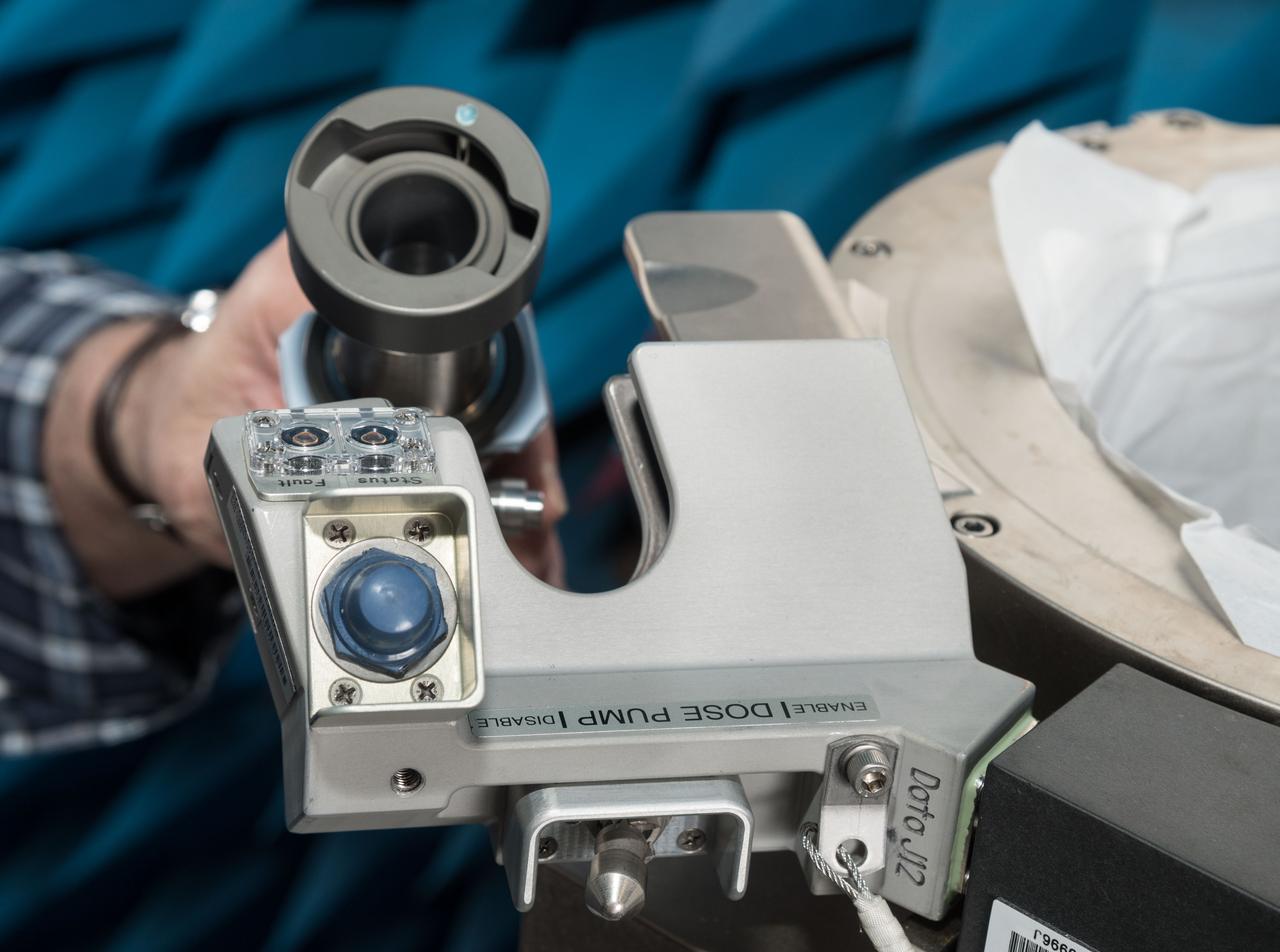
jsc2019e070463 (12/13/2019) --- A preflight view taken of the ISS Universal Waste Management System, Unit 1 during EMI/EMC Testing. This technology provides additional waste disposal points to the International Space Station (ISS) and aids in planning for future exploration missions including Deep Space Gateway (DSG). A smaller, more comfortable and more reliable waste-disposal method allows the crew to focus on other activities and enables further exploration in space.
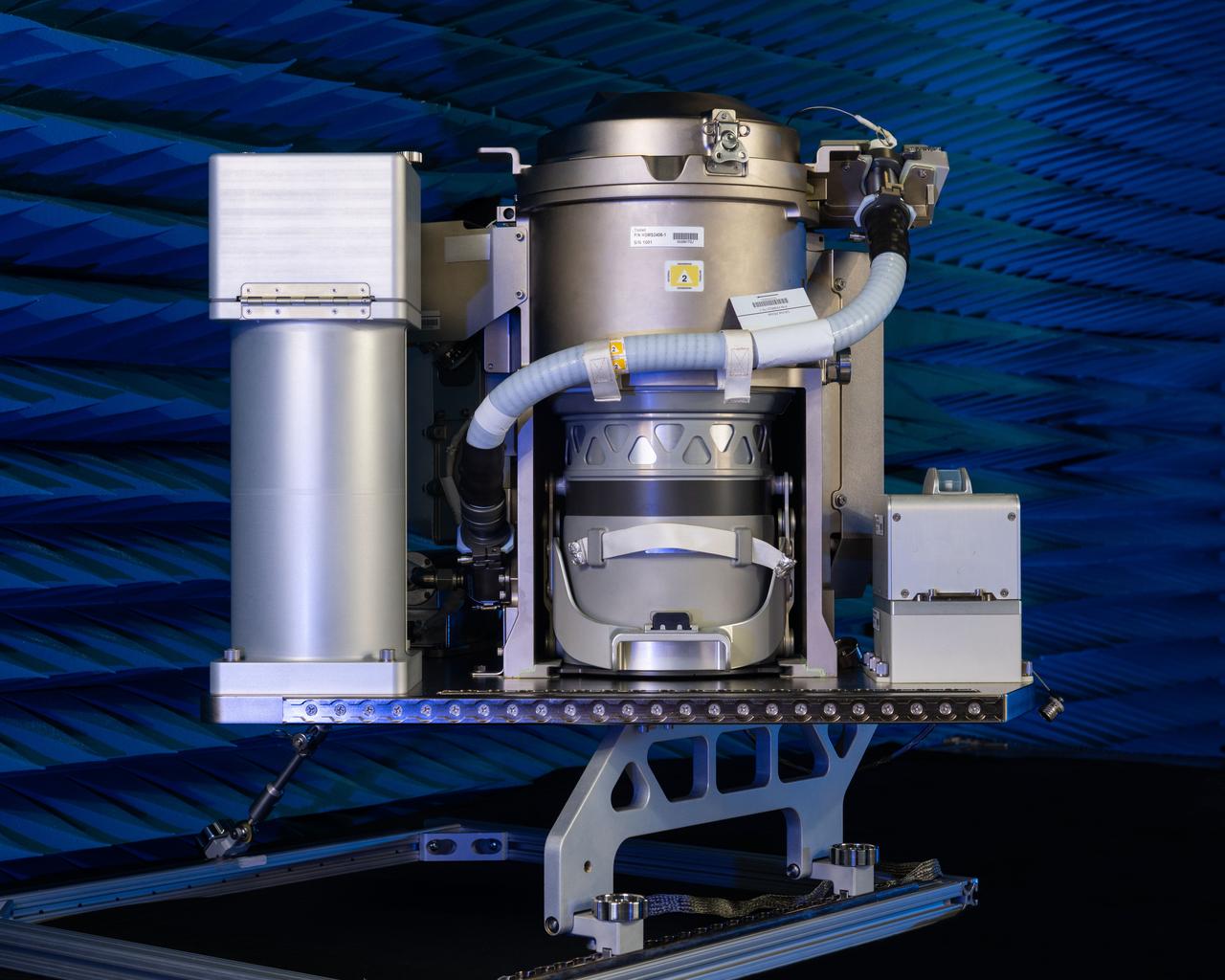
jsc2019e070684_alt (12/16/2019) --- A preflight view taken of the ISS Universal Waste Management System, Unit 1 during EMI/EMC Testing. This technology provides additional waste disposal points to the International Space Station (ISS) and aids in planning for future exploration missions including Deep Space Gateway (DSG). A smaller, more comfortable and more reliable waste-disposal method allows the crew to focus on other activities and enables further exploration in space.
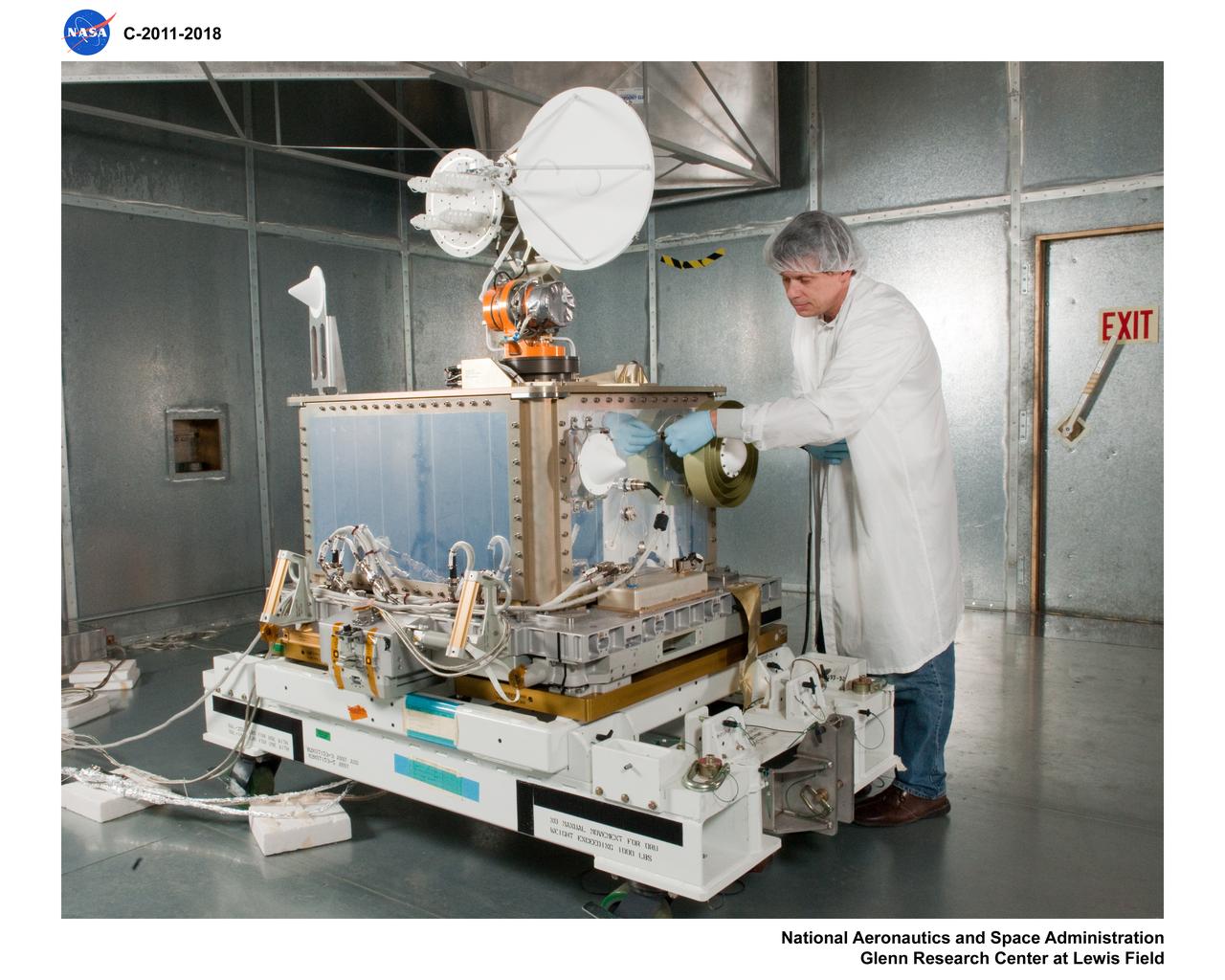
Communications, Navigation, and Network Reconfigurable Test-bed, CoNNeCT hardware in the Electromagnetic Interferance, EMI, Laboratory
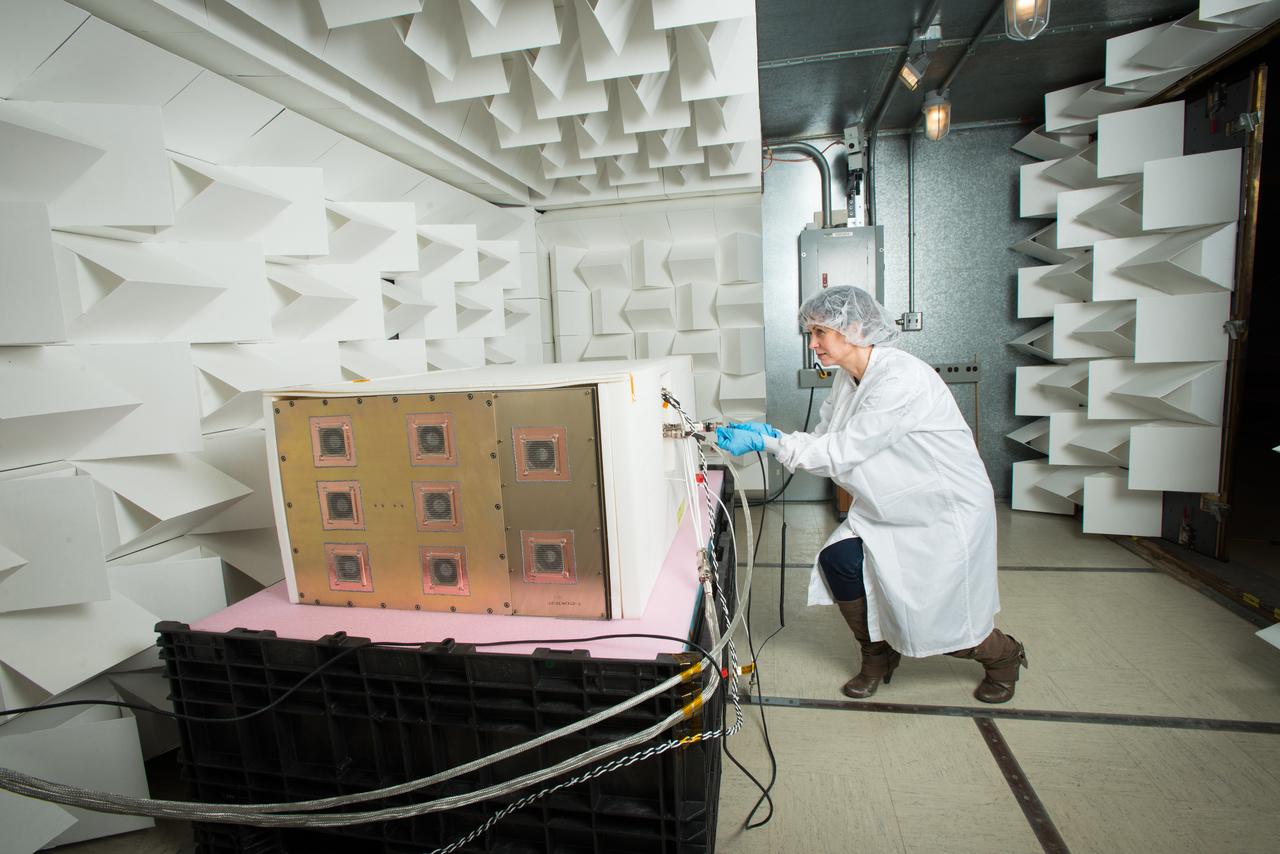
Spacecraft Fire Safety Demonstration, SAFFIRE, Hardware Testing in the Electromagnetic Interference Laboratory, EMI
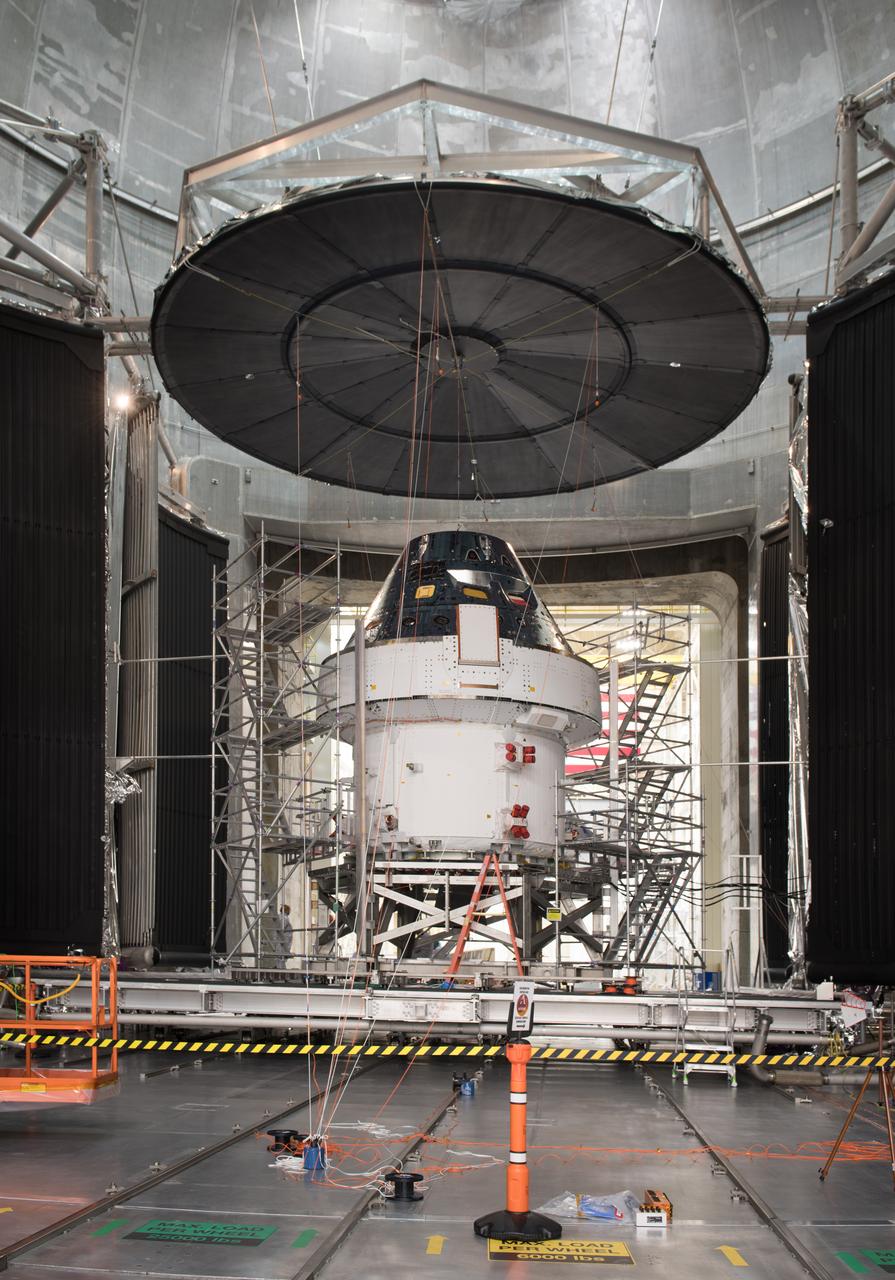
The Orion Spacecraft Crew and Service Module is being prepared for Electromagnetic Interference. EMI testing as part of testing to be certified for launch for the first Artemis mission
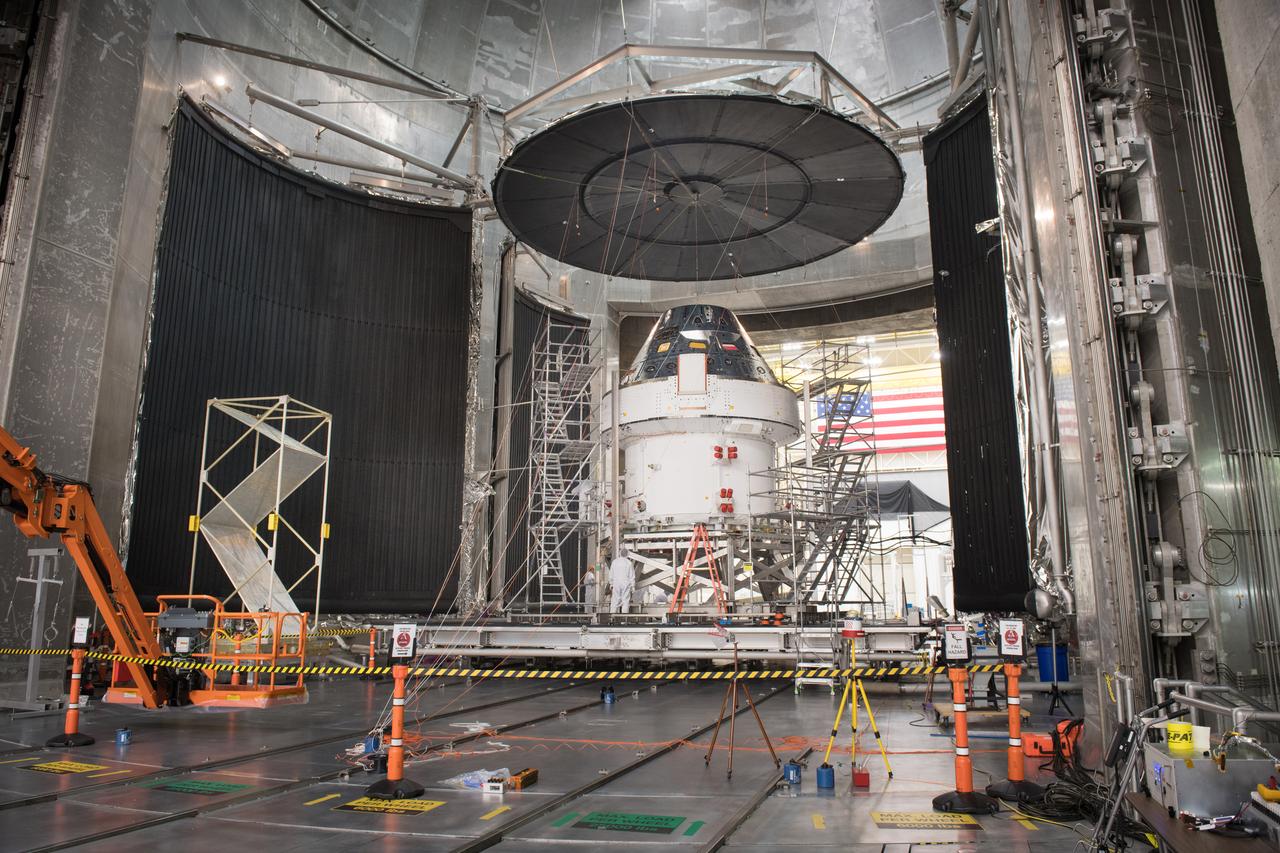
The Orion Spacecraft Crew and Service Module is being prepared for Electromagnetic Interference. EMI testing as part of testing to be certified for launch for the first Artemis mission
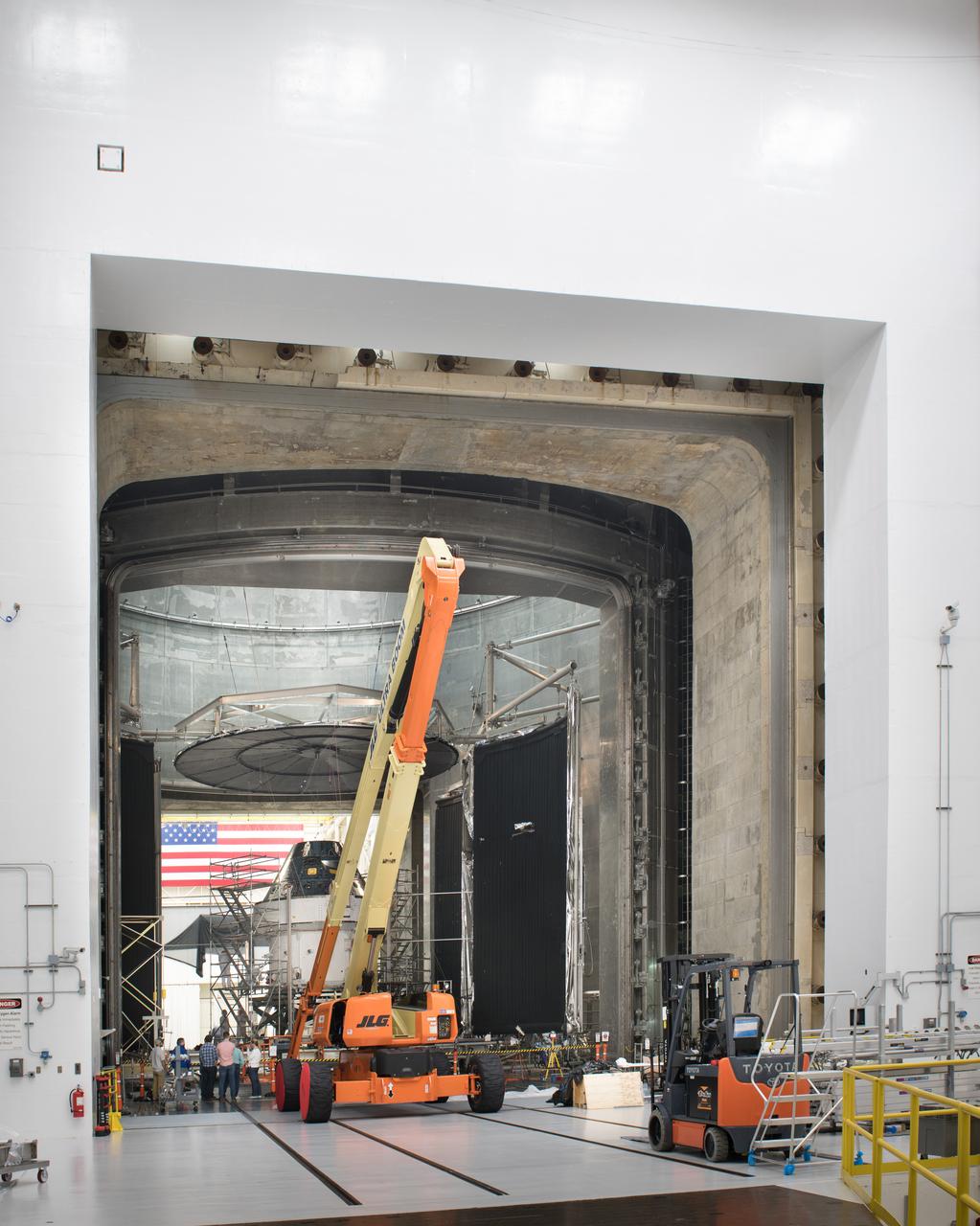
The Orion Spacecraft Crew and Service Module is being prepared for Electromagnetic Interference. EMI testing as part of testing to be certified for launch for the first Artemis mission
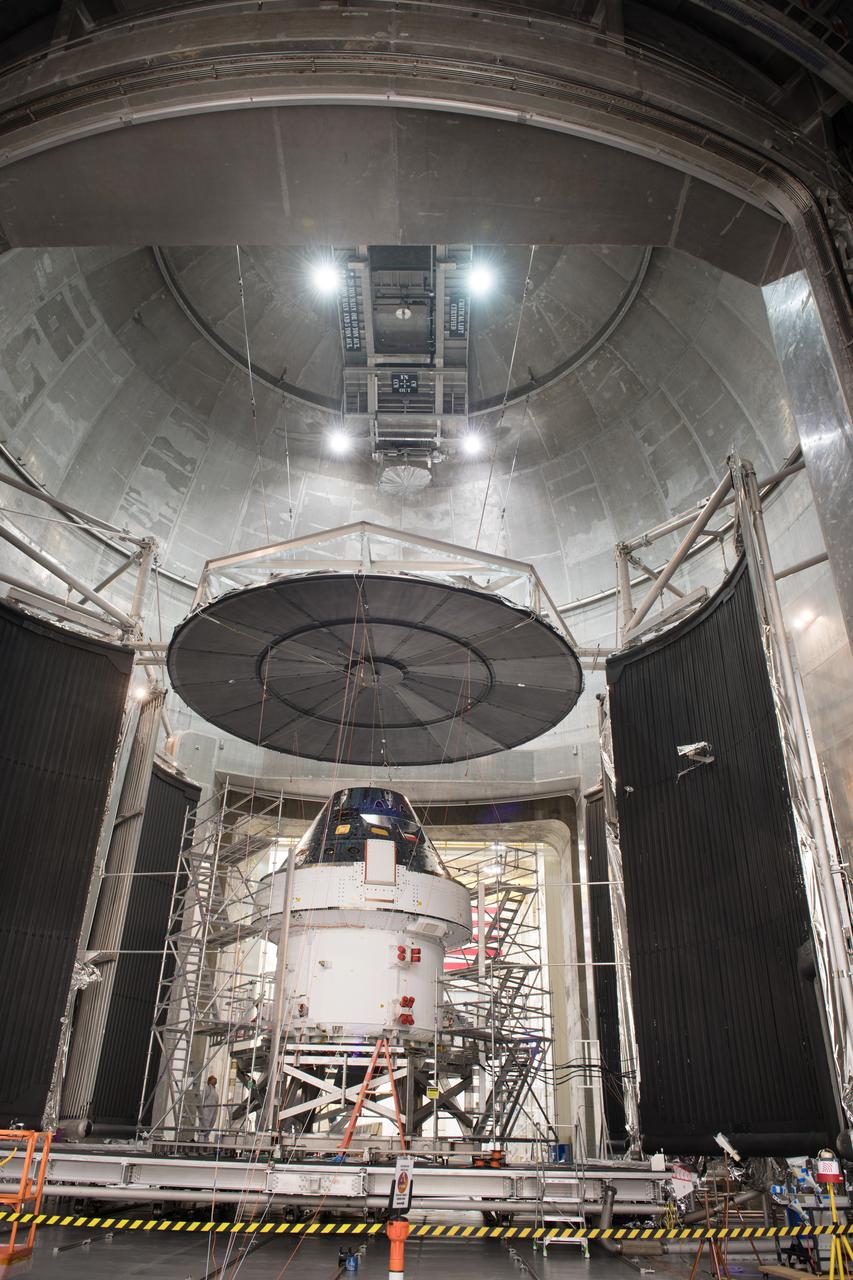
The Orion Spacecraft Crew and Service Module is being prepared for Electromagnetic Interference. EMI testing as part of testing to be certified for launch for the first Artemis mission
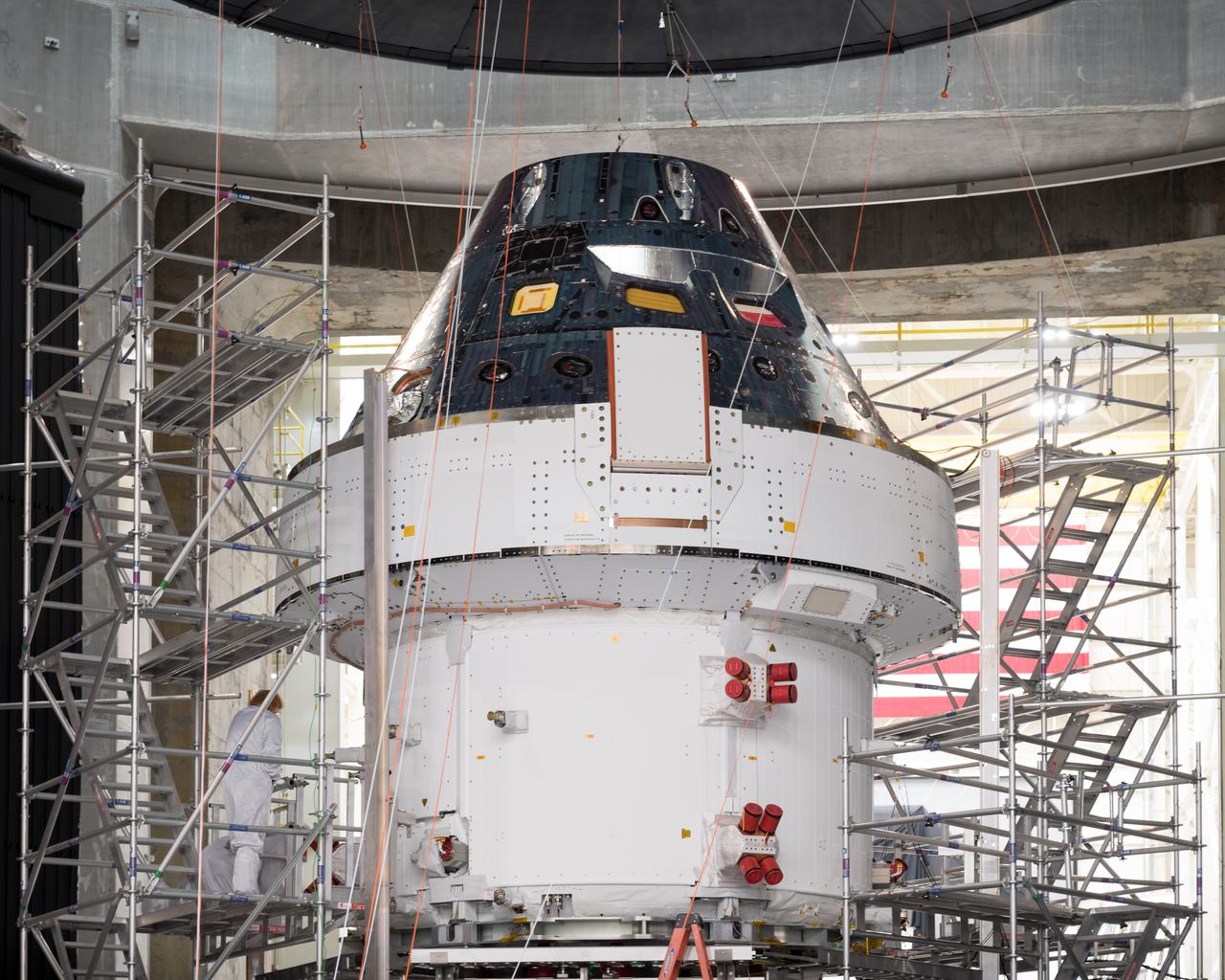
The Orion Spacecraft Crew and Service Module is being prepared for Electromagnetic Interference. EMI testing as part of testing to be certified for launch for the first Artemis mission
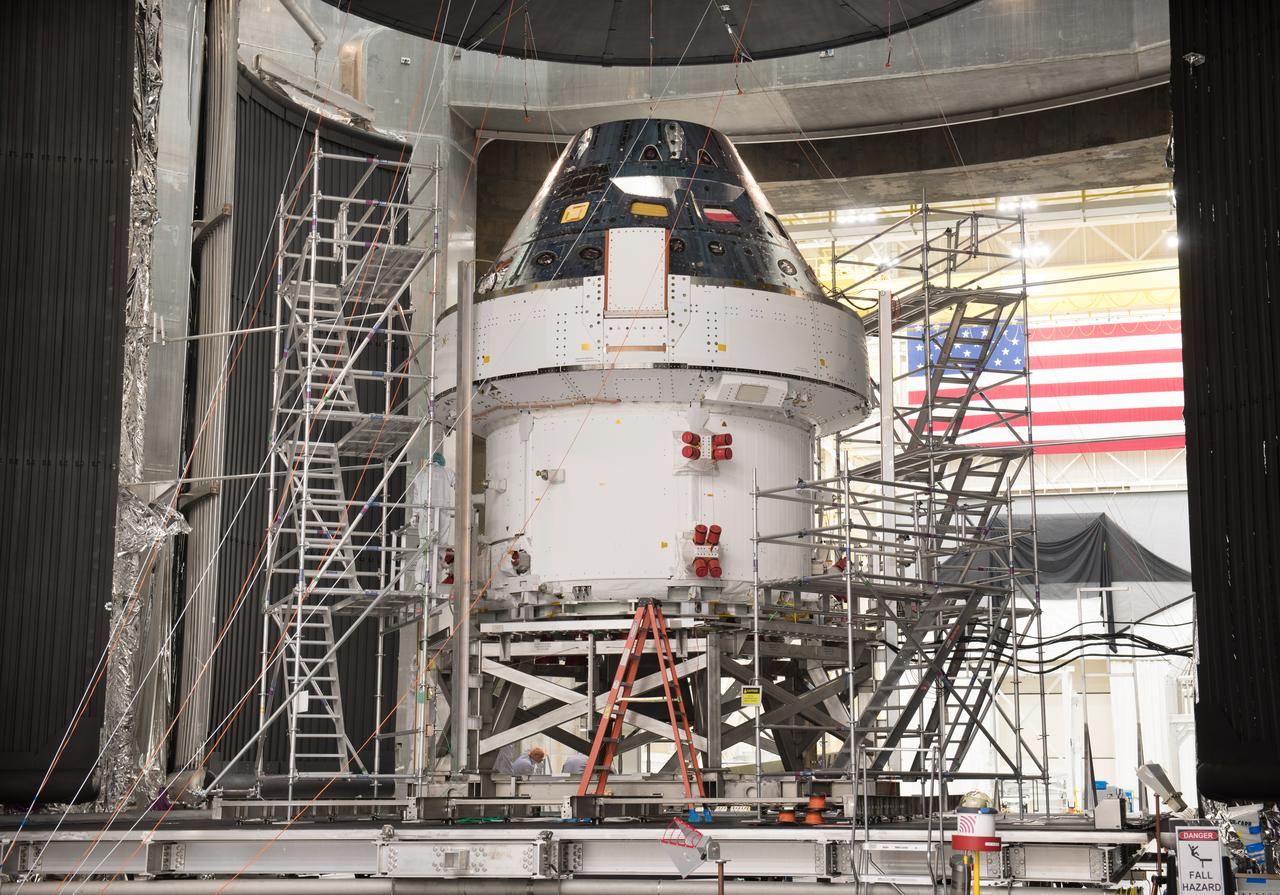
The Orion Spacecraft Crew and Service Module is being prepared for Electromagnetic Interference. EMI testing as part of testing to be certified for launch for the first Artemis mission
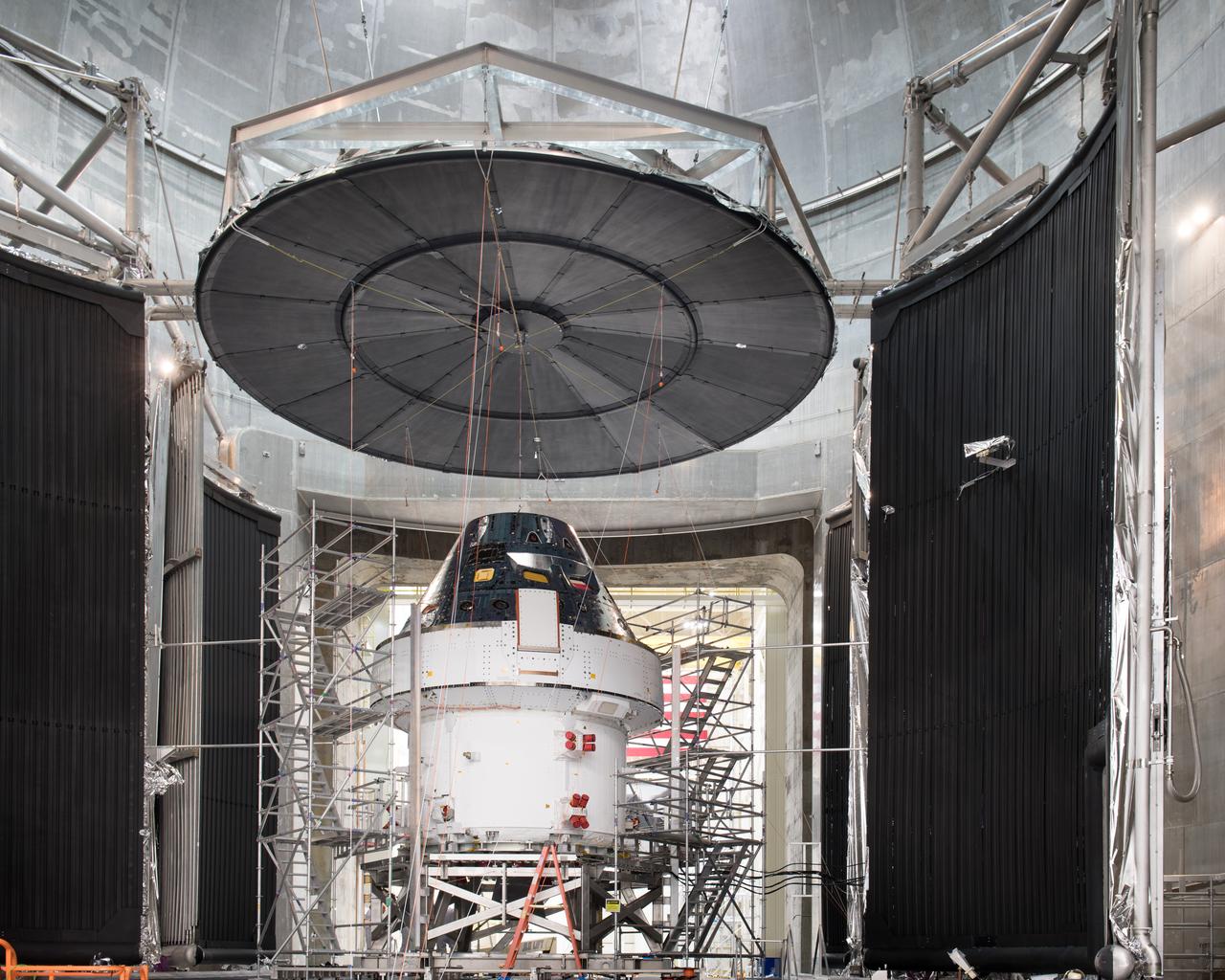
The Orion Spacecraft Crew and Service Module is being prepared for Electromagnetic Interference. EMI testing as part of testing to be certified for launch for the first Artemis mission

NASA test pilot Jim Less prepares to exit the cockpit of the quiet supersonic X-59 aircraft in between electromagnetic interference (EMI) testing. The EMI testing ensures an aircraft’s systems function properly under various conditions of electromagnetic radiation. The X-59 is the centerpiece of the NASA’s Quesst mission, designed to demonstrate quiet supersonic technology and provide data to address a key barrier to commercial supersonic travel.
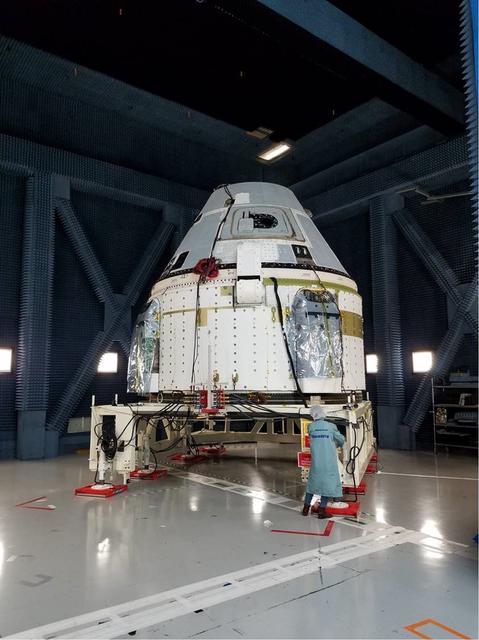
Boeing’s CST-100 Starliner prepares for electromagnetic interference and electromagnetic contamination (EMI/EMC) testing in a specialized test chamber at Boeing’s Space Environment Test Facility in El Segundo, Calif. These tests were the final part of Starliner’s environmental qualification test campaign. EMI/EMC testing ensures that Starliner’s systems will function properly in the orbital radiation environment and also not interfere with other electrical systems on the International Space Station. Once back in Boeing’s Starliner facilities at NASA’s Kennedy Space Center in Florida, this same vehicle will be prepared to fly Starliner’s first crew during the Crew Flight Test mission later this year. Boeing’s Crew Flight Test is part of NASA’s Commercial Crew Program, which is working with Boeing to return human spaceflight launches to the space station from U.S. soil.
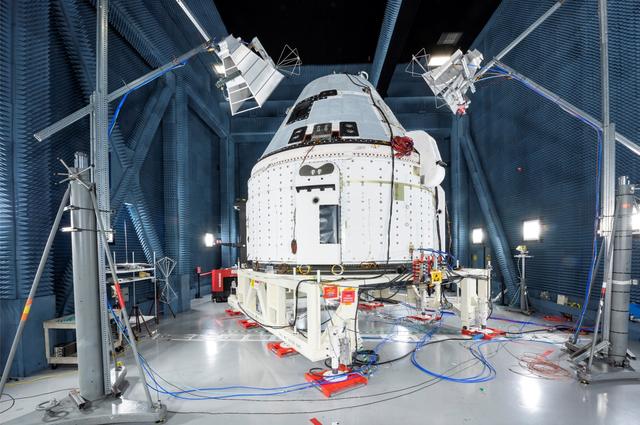
Boeing’s CST-100 Starliner prepares for electromagnetic interference and electromagnetic contamination (EMI/EMC) testing in a specialized test chamber at Boeing’s Space Environment Test Facilities in El Segundo, Calif. These tests were the final part of Starliner’s environmental qualification test campaign. EMI/EMC testing ensures that Starliner’s systems will function properly in the orbital radiation environment and also not interfere with other electrical systems on the International Space Station. Once back in Boeing’s Starliner facilities at the Kennedy Space Center in Florida, this same vehicle will be prepared to fly Starliner’s first crew during the Crew Flight Test mission later this year. NASA’s Commercial Crew Program is working with Boeing to return human spaceflight launches to the space station from U.S. soil.
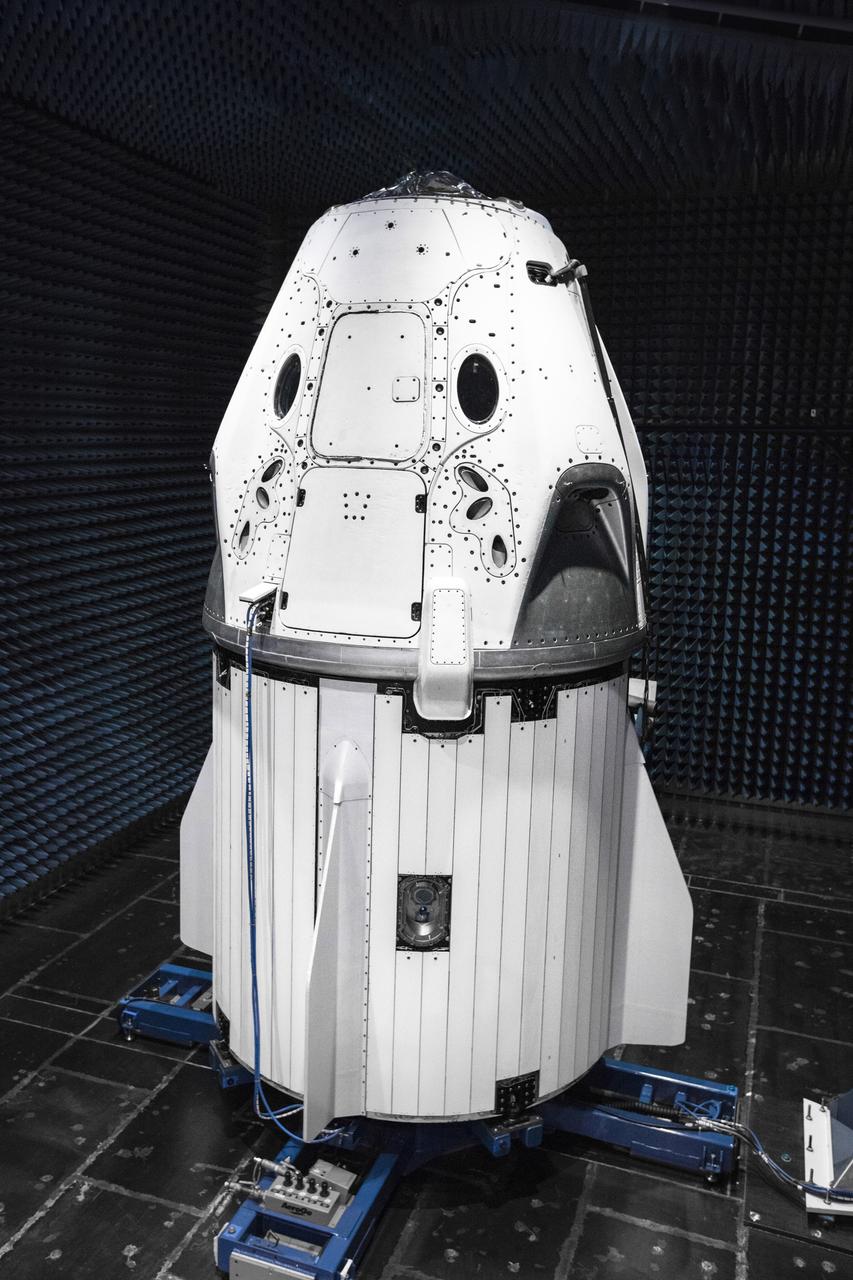
The SpaceX Crew Dragon spacecraft is in the anechoic chamber for electromagnetic interference testing on May 20, 2018, at NASA's Kennedy Space Center in Florida. The Crew Dragon will be shipped to the agency's Plum Brook Station test facility at Glenn Research City in Cleveland, Ohio, for testing in the Reverberant Acoustic Test Facility, the world's most powerful acoustic test chamber. Crew Dragon is being prepared for its first uncrewed test flight, targeted for August 2018.

The Ocean Color Instrument (OCI) Electro-Magnetic Interference (EMI) & Electrical Ground Support Equipment (EGSE) Team pose in the control room. From this room, they are able to analyze the data from the test remotely and send commands through electrical cables that run through the walls into the EMI lab. OCI is a highly advanced optical spectrometer that will be used to measure properties of light over portions of the electromagnetic spectrum. It will enable continuous measurement of light at finer wavelength resolution than previous NASA satellite sensors, extending key system ocean color data records for climate studies. OCI is PACE's (Plankton, Aerosol, Cloud, ocean Ecosystem) primary sensor built at Goddard Space Flight Center in Greenbelt, MD.
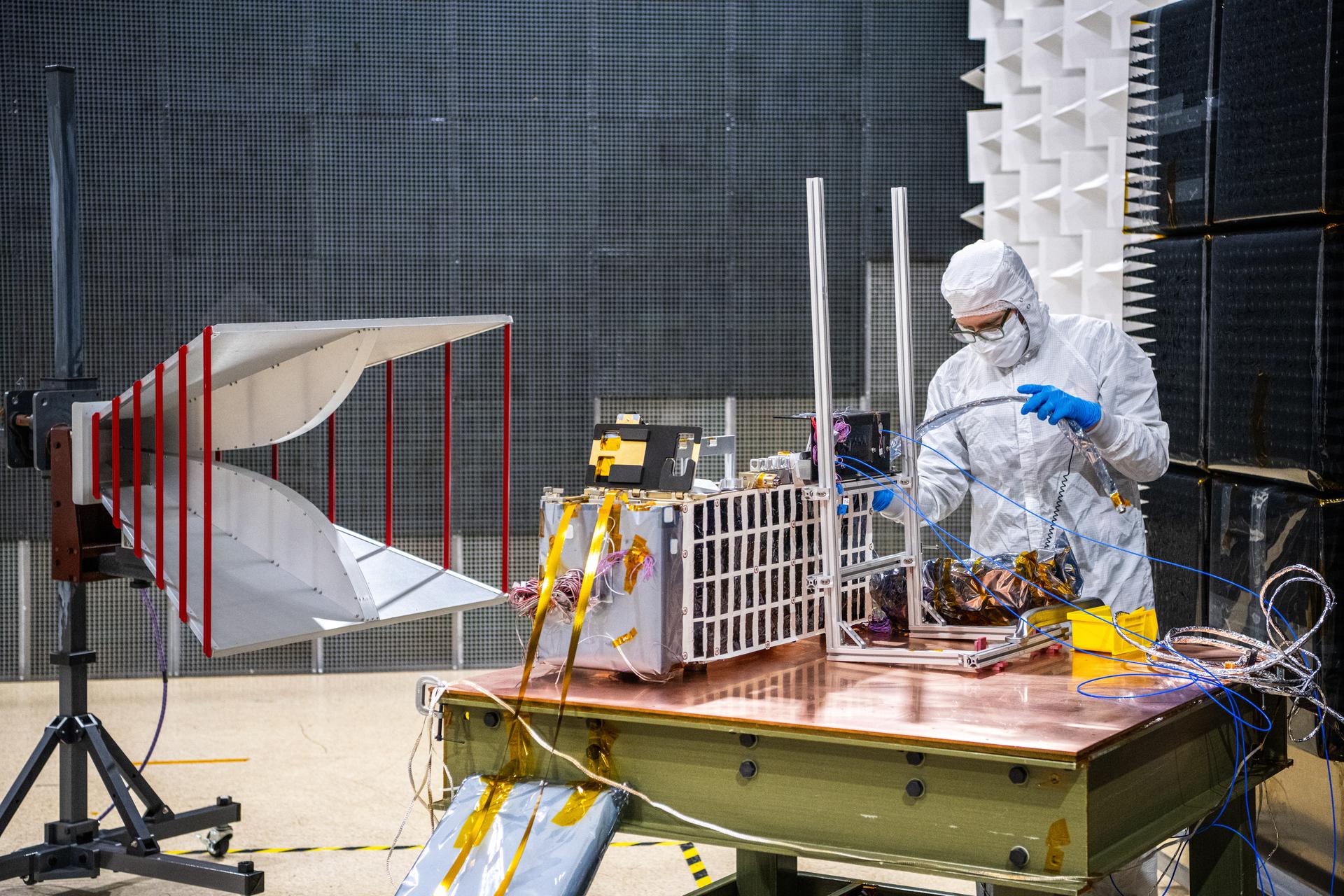
Electrical test engineer Thomas Schluszas configures the Lunar Environment Monitoring Station (LEMS) instrument for testing in the Electromagnetic Interference/Electromagnetic Compatibility (EMI/EMC) Chamber at Goddard Space Flight Center, Greenbelt Md., Feb 17, 2026. LEMS is a compact, autonomous, and self-sustaining seismometer suite designed to carry out continuous, long-term, monitoring of the lunar seismic environment at the South Polar region. Photo Credit: NASA/Denny Henry
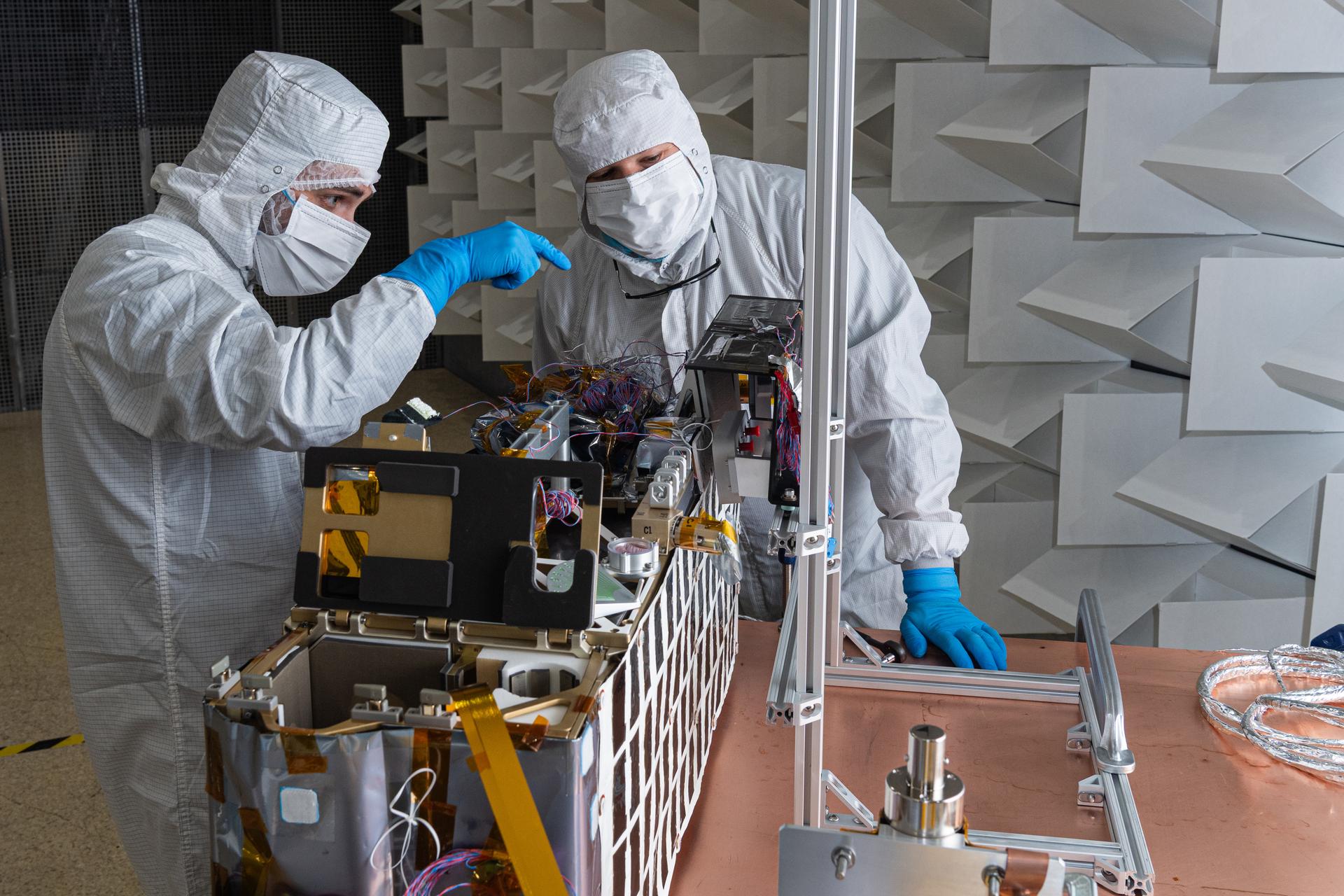
Mitchell Hamann and John Pindell configure the Lunar Environment Monitoring Station (LEMS) instrument for testing in the Electromagnetic Interference/Electromagnetic Compatibility (EMI/EMC) Chamber at Goddard Space Flight Center, Greenbelt Md., Feb 17, 2026. LEMS is a compact, autonomous, and self-sustaining seismometer suite designed to carry out continuous, long-term, monitoring of the lunar seismic environment at the South Polar region. Photo Credit: NASA/Mike Guinto
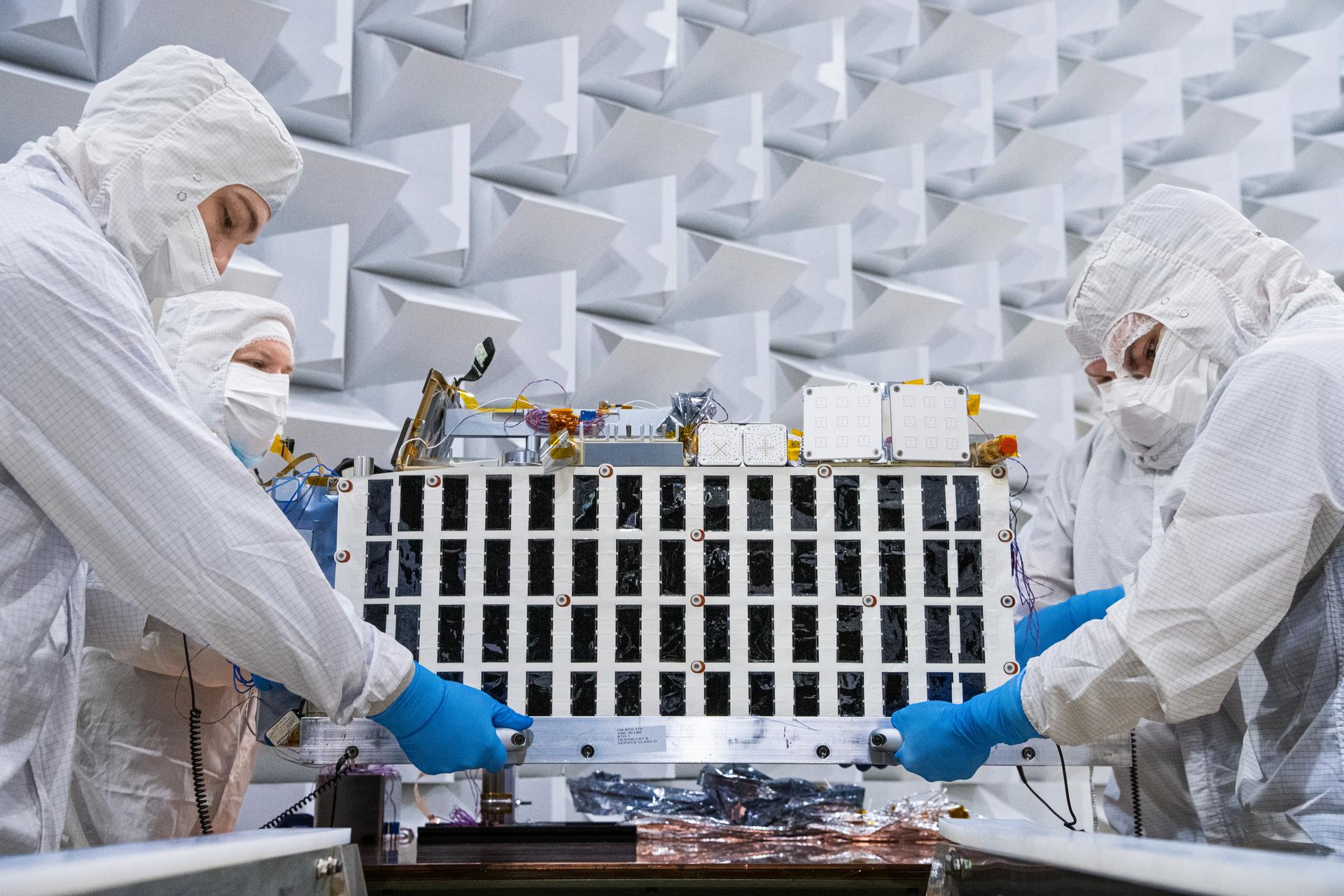
Lunar Environment Monitoring Station (LEMS) team members install the instrument for testing in the Electromagnetic Interference/Electromagnetic Compatibility (EMI/EMC) Chamber at Goddard Space Flight Center, Greenbelt Md., Feb 13, 2026. LEMS is a compact, autonomous, and self-sustaining seismometer suite designed to carry out continuous, long-term, monitoring of the lunar seismic environment at the South Polar region. Photo Credit: NASA/Denny Henry
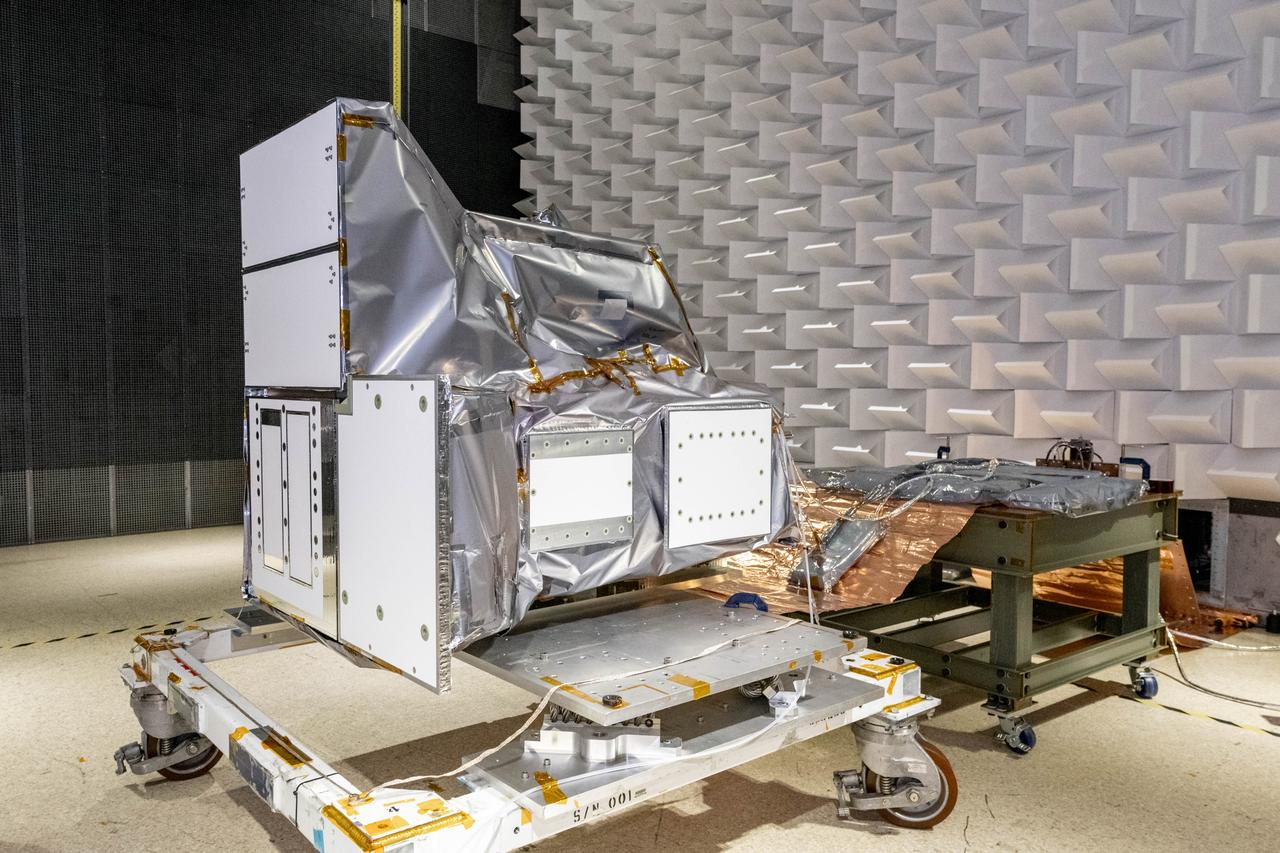
The Ocean Color Instrument (OCI) is prepared for testing in the Electro Magnetic Interference (EMI) chamber showing the radiator side of the instrument. This test will help engineers and scientists learn if OCI will be compatible with the electromagnetic environment on the spacecraft. OCI is a highly advanced optical spectrometer that will be used to measure properties of light over portions of the electromagnetic spectrum. It will enable continuous measurement of light at finer wavelength resolution than previous NASA satellite sensors, extending key system ocean color data records for climate studies. OCI is PACE's (Plankton, Aerosol, Cloud, ocean Ecosystem) primary sensor built at Goddard Space Flight Center in Greenbelt, MD.
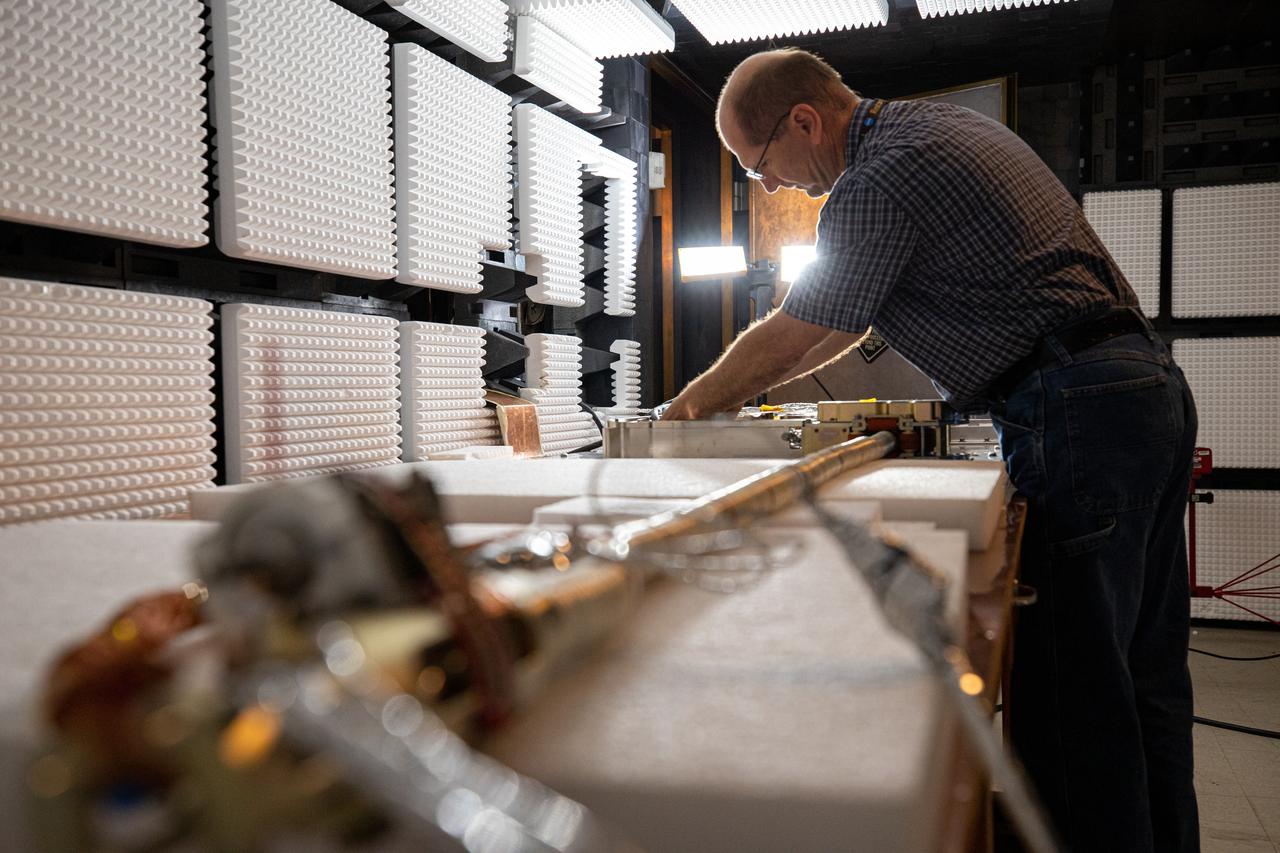
Inside the Electromagnetic Lab at NASA's Kennedy Space Center in Florida, Gabor Tamasy, Hose Management Assembly (HMA) system lead for Restore-L, prepares the HMA test unit for electromagnetic interference testing on Feb. 19, 2020. The HMA is able to extend and retract the hose, somewhat similar to the function of a tape measure. Managed by the agency's Goddard Space Flight Center in Greenbelt, Maryland, Restore-L is an inflight robotic satellite servicer spacecraft.
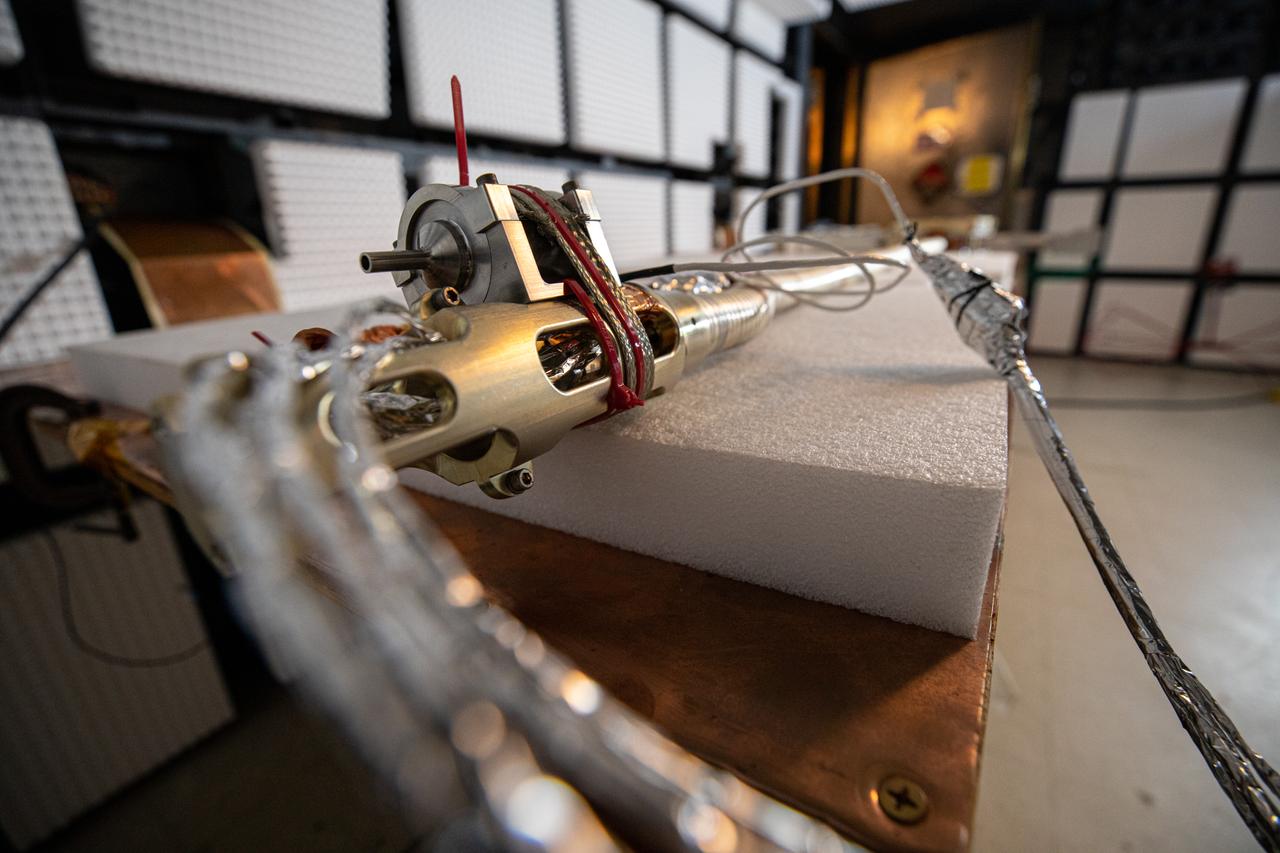
The Restore-L hose management assembly (HMA) test unit undergoes electromagnetic interference testing in the Electromagnetic Lab at NASA's Kennedy Space Center in Florida on Feb. 19, 2020. The HMA is able to extend and retract the hose, somewhat similar to the function of a tape measure. Managed by the agency's Goddard Space Flight Center in Greenbelt, Maryland, Restore-L is an inflight robotic satellite servicer spacecraft.
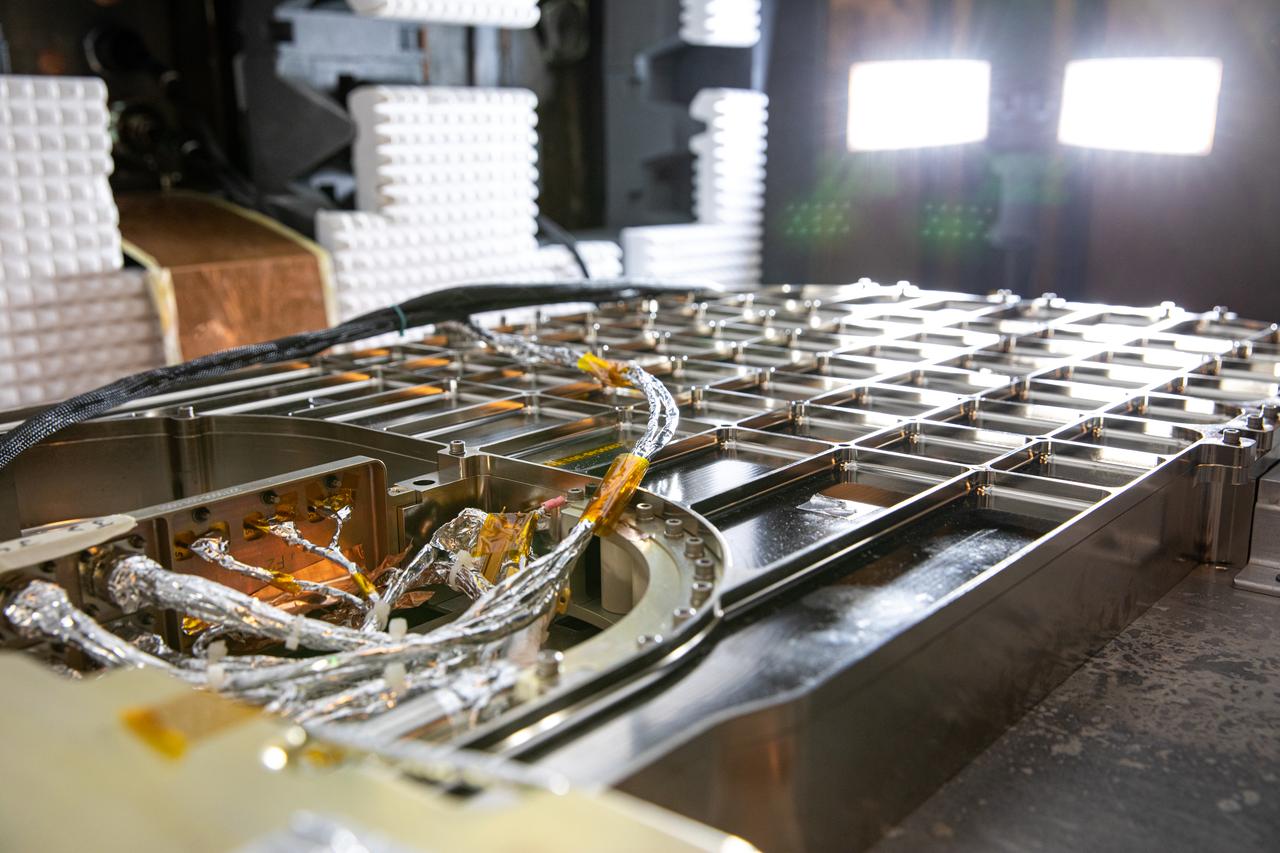
The Restore-L hose management assembly (HMA) test unit undergoes electromagnetic interference testing in the Electromagnetic Lab at NASA's Kennedy Space Center in Florida on Feb. 19, 2020. The HMA is able to extend and retract the hose, somewhat similar to the function of a tape measure. Managed by the agency's Goddard Space Flight Center in Greenbelt, Maryland, Restore-L is an inflight robotic satellite servicer spacecraft.
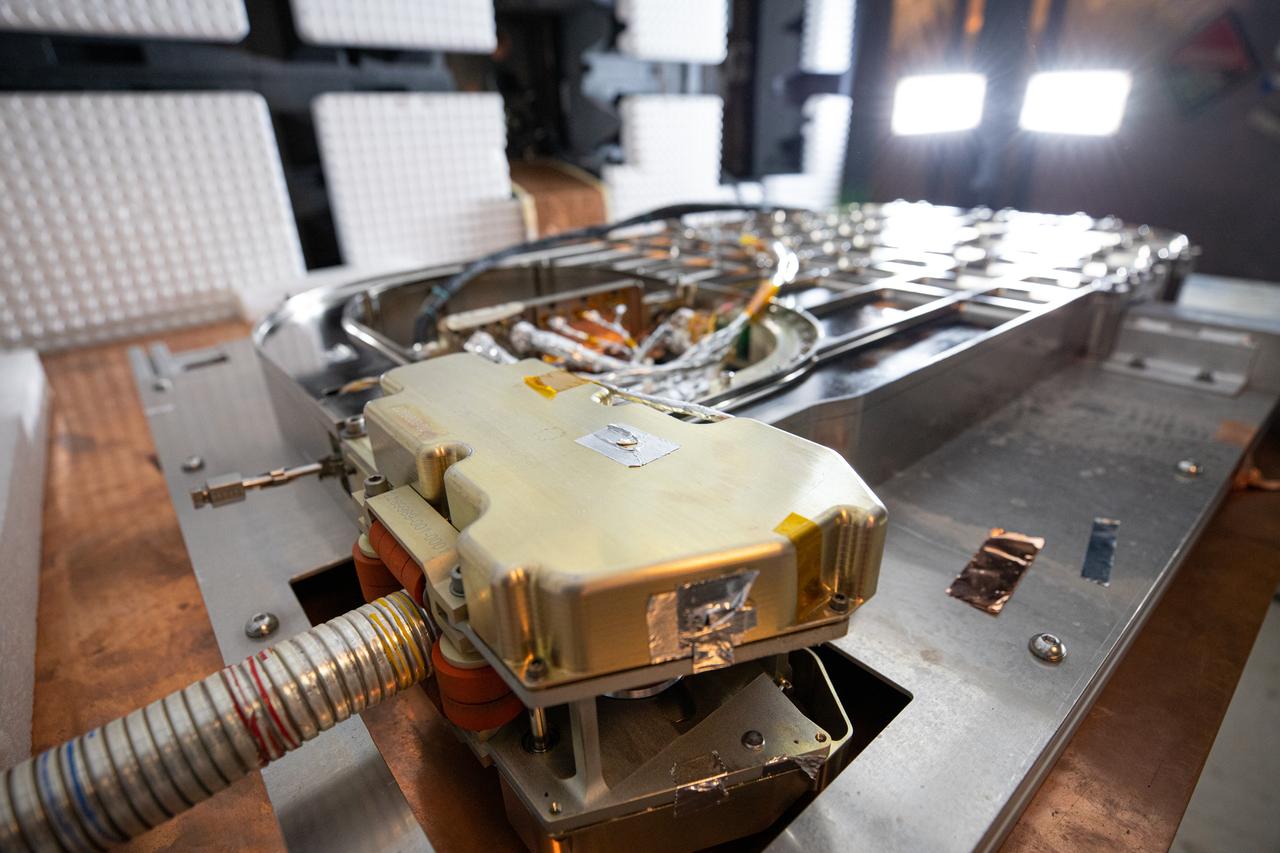
The Restore-L hose management assembly (HMA) test unit undergoes electromagnetic interference testing in the Electromagnetic Lab at NASA's Kennedy Space Center in Florida on Feb. 19, 2020. The HMA is able to extend and retract the hose, somewhat similar to the function of a tape measure. Managed by the agency's Goddard Space Flight Center in Greenbelt, Maryland, Restore-L is an inflight robotic satellite servicer spacecraft.
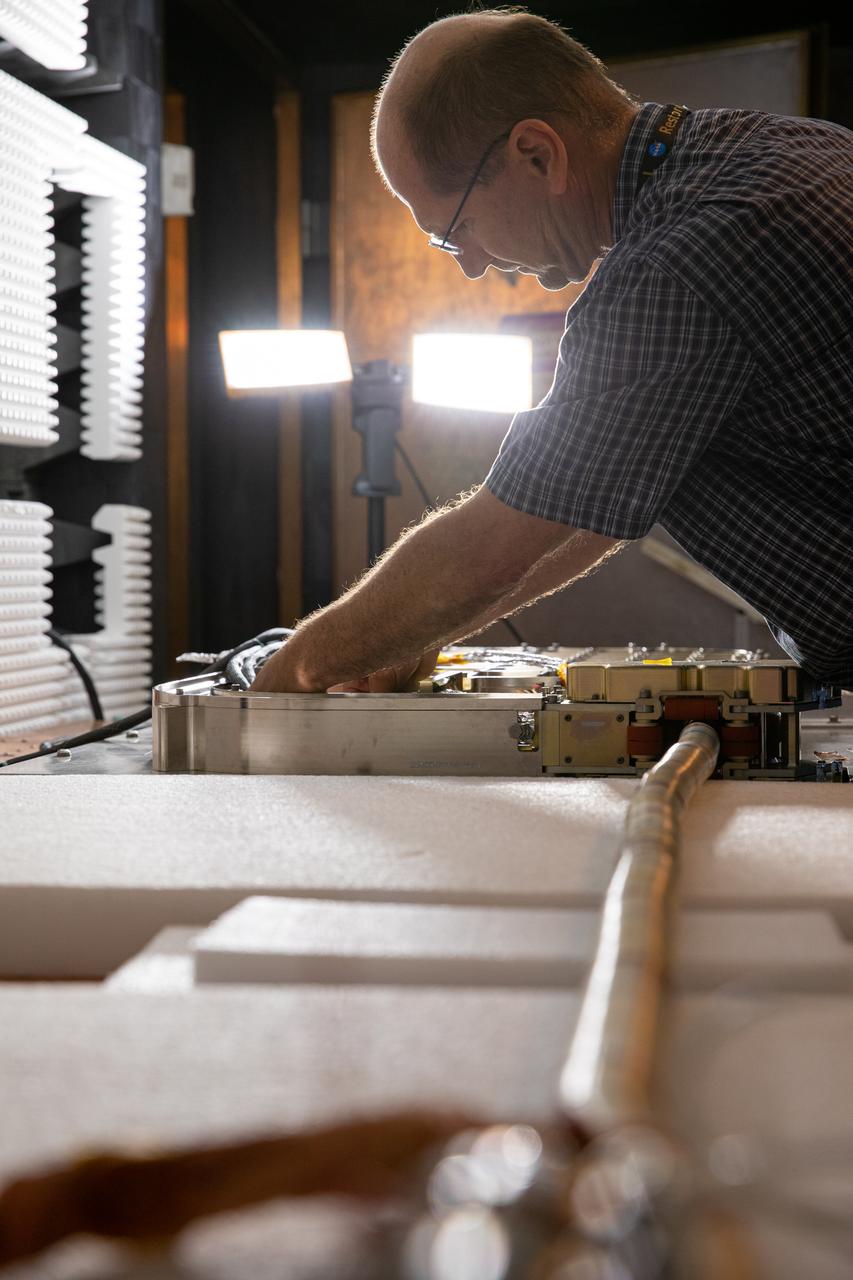
Inside the Electromagnetic Lab at NASA's Kennedy Space Center in Florida, Gabor Tamasy, Hose Management Assembly (HMA) system lead for Restore-L, prepares the HMA test unit for electromagnetic interference testing on Feb. 19, 2020. The HMA is able to extend and retract the hose, somewhat similar to the function of a tape measure. Managed by the agency's Goddard Space Flight Center in Greenbelt, Maryland, Restore-L is an inflight robotic satellite servicer spacecraft.
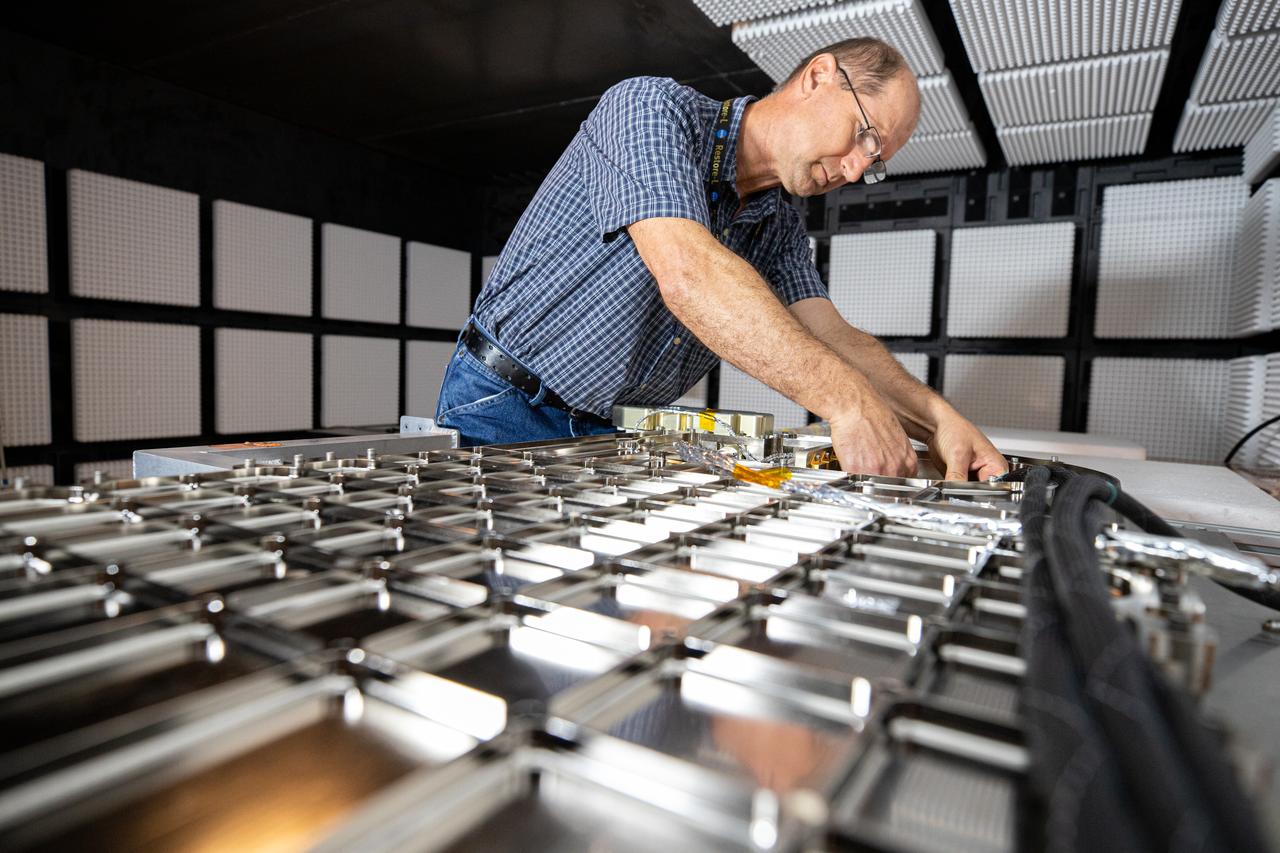
Inside the Electromagnetic Lab at NASA's Kennedy Space Center in Florida, Gabor Tamasy, Hose Management Assembly (HMA) system lead for Restore-L, prepares the HMA test unit for electromagnetic interference testing on Feb. 19, 2020. The HMA is able to extend and retract the hose, somewhat similar to the function of a tape measure. Managed by the agency's Goddard Space Flight Center in Greenbelt, Maryland, Restore-L is an inflight robotic satellite servicer spacecraft.
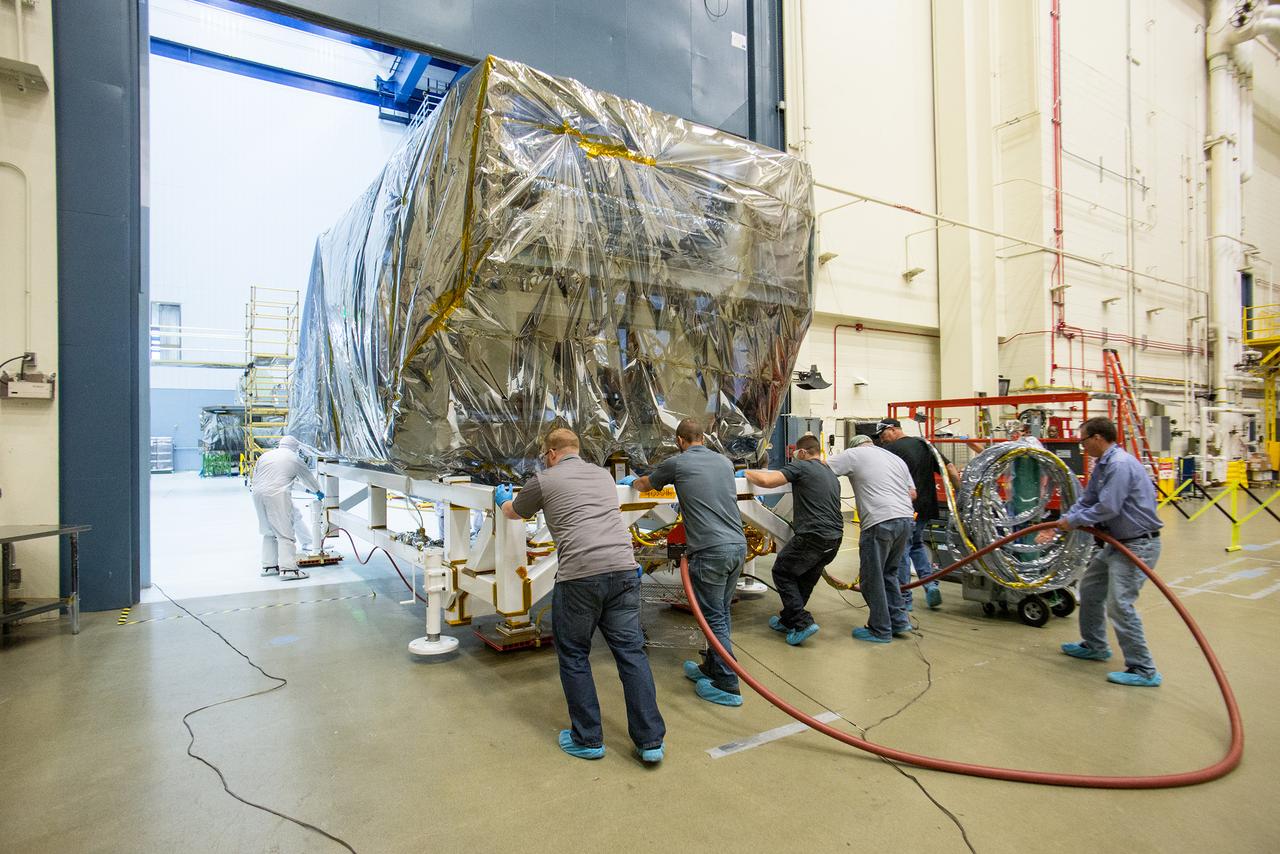
The wrapped up ISIM structure pushed back to the clean room post acoustics-test, to prepare for the EMI test. Credits: NASA/Desiree Stover Read more: <a href="http://1.usa.gov/1KvoY4p" rel="nofollow">1.usa.gov/1KvoY4p</a> <b><a href="http://www.nasa.gov/audience/formedia/features/MP_Photo_Guidelines.html" rel="nofollow">NASA image use policy.</a></b> <b><a href="http://www.nasa.gov/centers/goddard/home/index.html" rel="nofollow">NASA Goddard Space Flight Center</a></b> enables NASA’s mission through four scientific endeavors: Earth Science, Heliophysics, Solar System Exploration, and Astrophysics. Goddard plays a leading role in NASA’s accomplishments by contributing compelling scientific knowledge to advance the Agency’s mission. <b>Follow us on <a href="http://twitter.com/NASAGoddardPix" rel="nofollow">Twitter</a></b> <b>Like us on <a href="http://www.facebook.com/pages/Greenbelt-MD/NASA-Goddard/395013845897?ref=tsd" rel="nofollow">Facebook</a></b> <b>Find us on <a href="http://instagrid.me/nasagoddard/?vm=grid" rel="nofollow">Instagram</a></b>