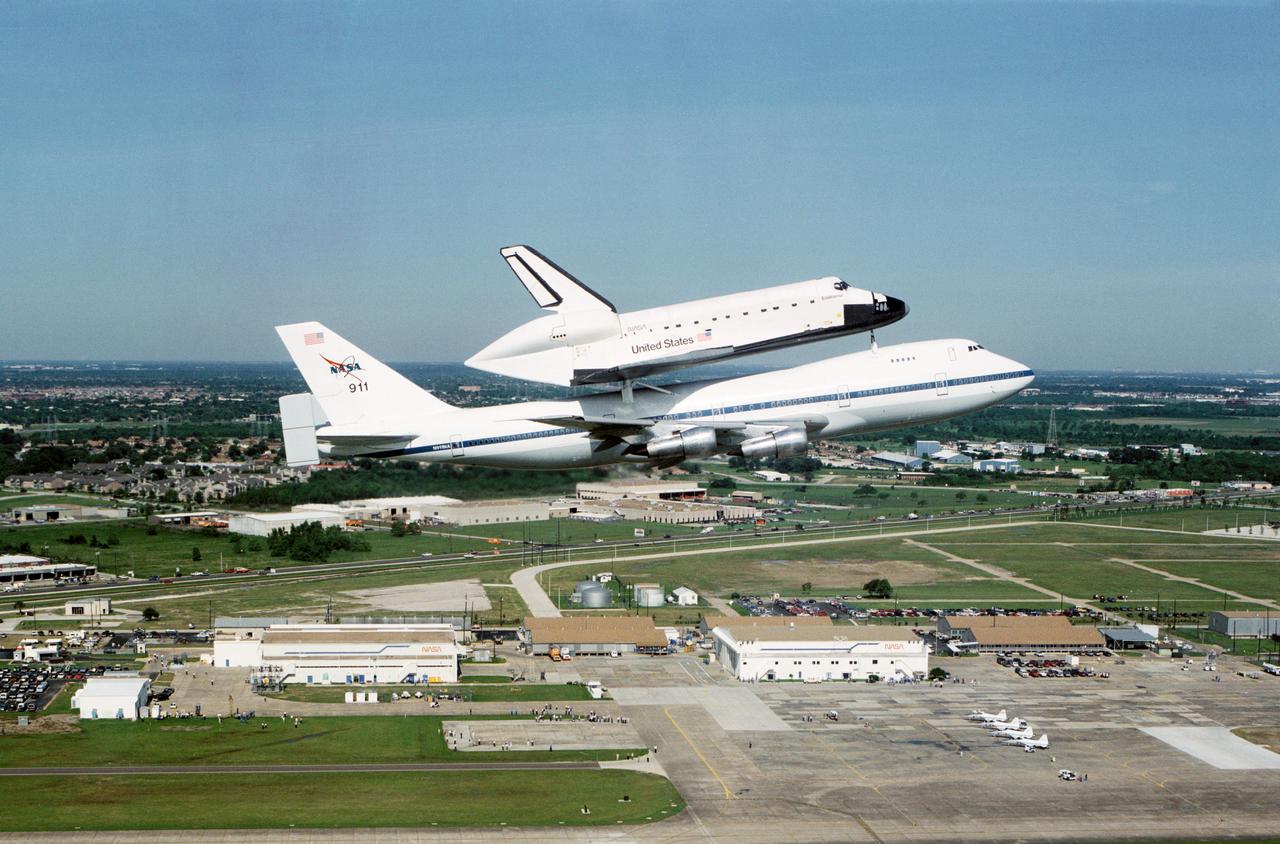
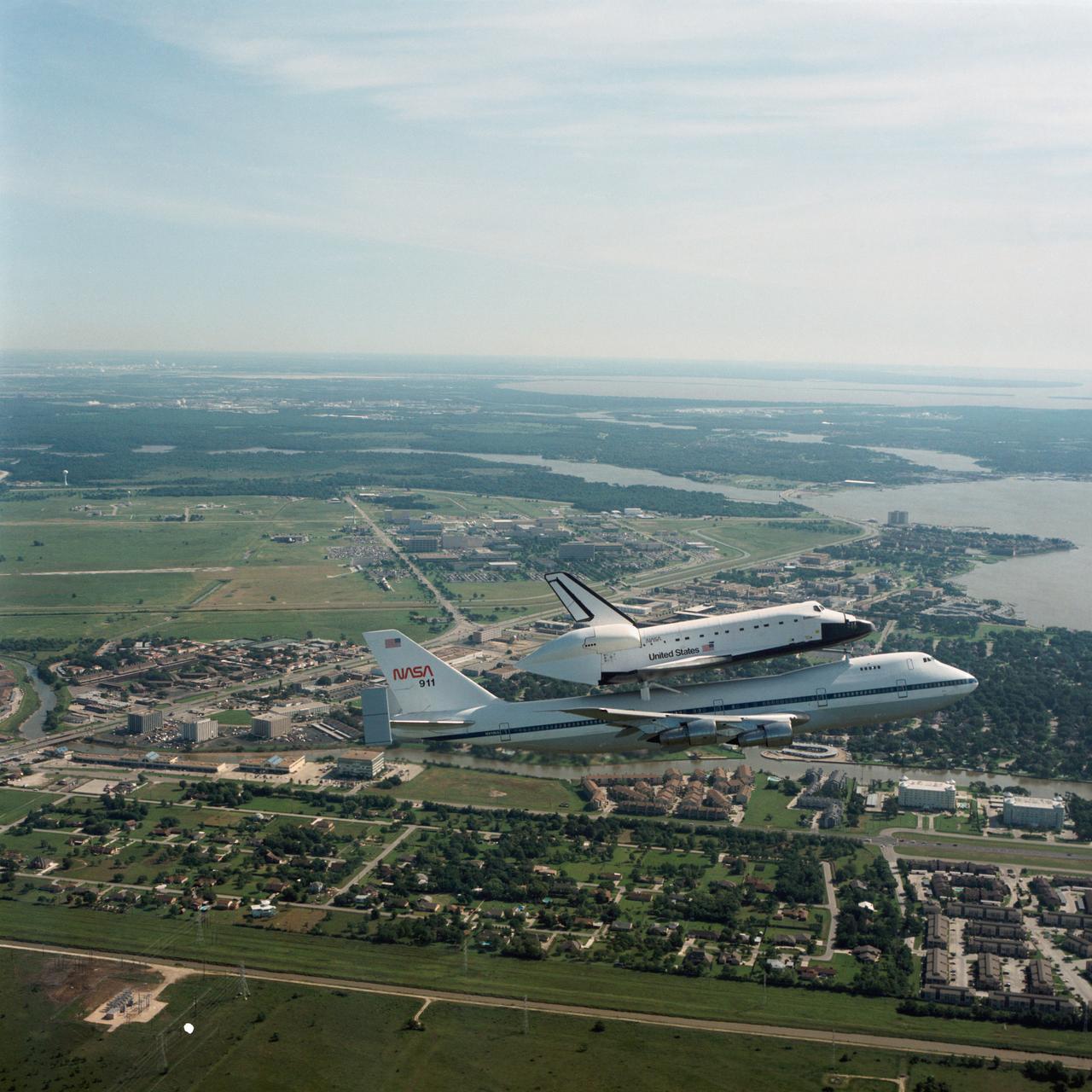
Air to air views of Endeavour, Orbiter Vehicle (OV) 105, transported via the  Shuttle Carrier Aircraft (SCA), NASA 911, on its way to KSC, 05-06-91. JSC with Clear Creek and Egret Bay Blvd in the foreground and Clear Lake and Galveston Bay in the background
Air to air views of Endeavour, Orbiter Vehicle (OV) 105
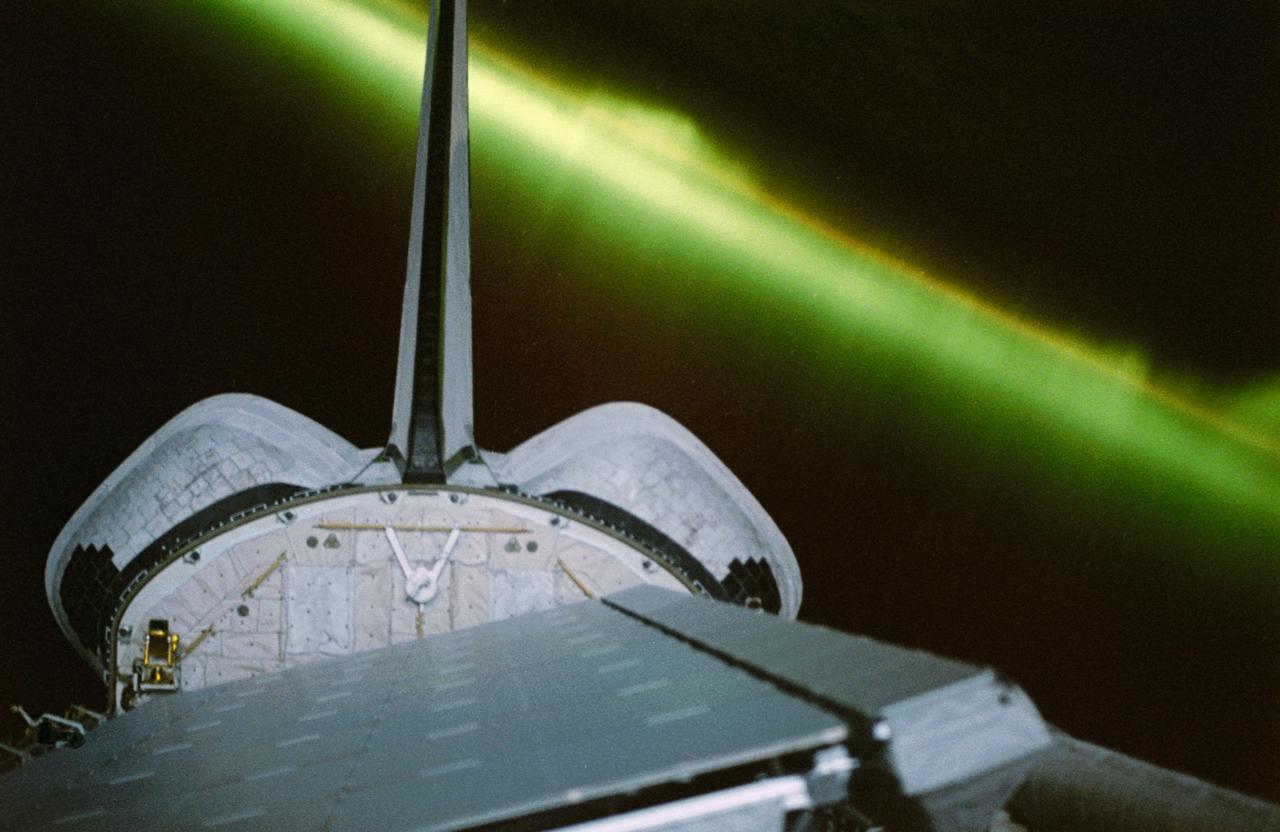
STS059-50-011 (9-20 April 94) --- A greenish appearing aurora forms the backdrop for this 35mm scene of the Earth orbiting Space Shuttle Endeavour's aft cargo bay.  Featured in the bay are the antennae for the SIR-C/X-SAR imaging radar instruments, illuminated by moonlight.  The crew sighted the southern lights (aurora australis) several times during each of the eleven days of the mission.
STS-59 Endeavour's aft cargo bay in orbit
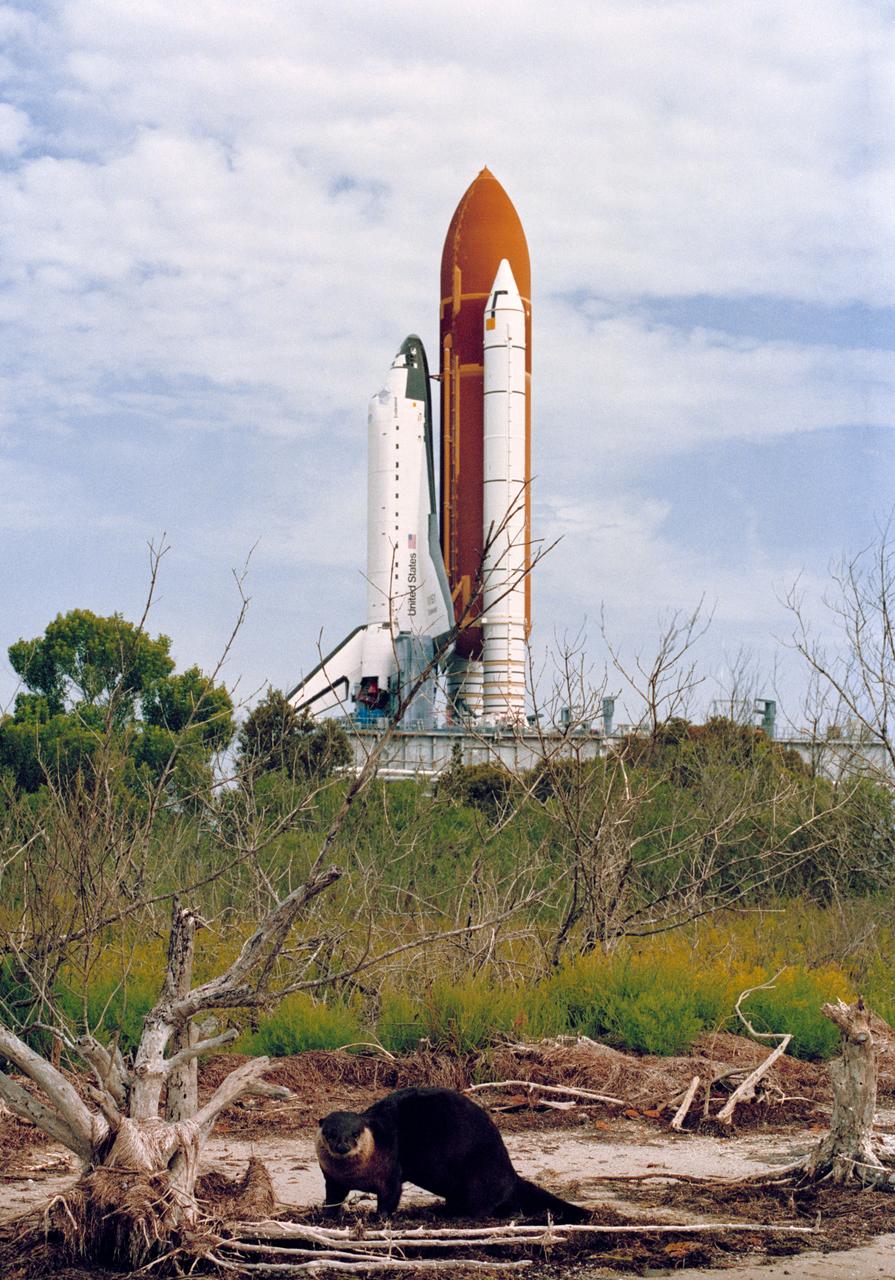
S92-34862 (13 March 1992) --- An otter, surprised by the unexpected presence of the photographer, seems unaware of the Space Shuttle Endeavour rolling behind it to Launch Pad 39B.  Endeavour is the newest orbiter in the Shuttle fleet.  Still ahead for Endeavour (OV-105) is a Flight Readiness Firing of its three main engines, and the Terminal Countdown Demonstration Test with the flight crew.  Endeavour's maiden voyage on NASA's mission STS-49 will occur in late spring.
Endeavour, Orbiter Vehicle (OV) 105, roll out to KSC Launch Complex Pad 39B
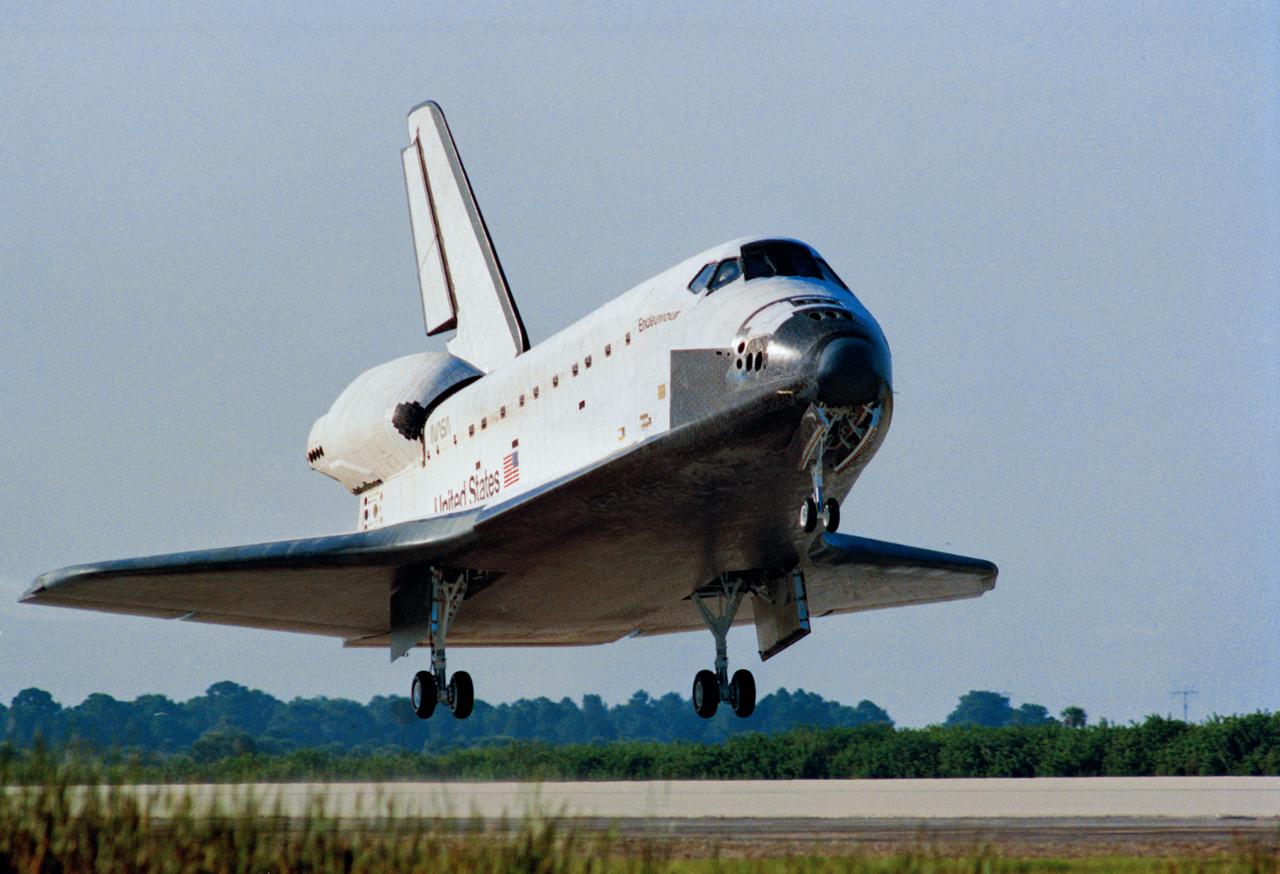
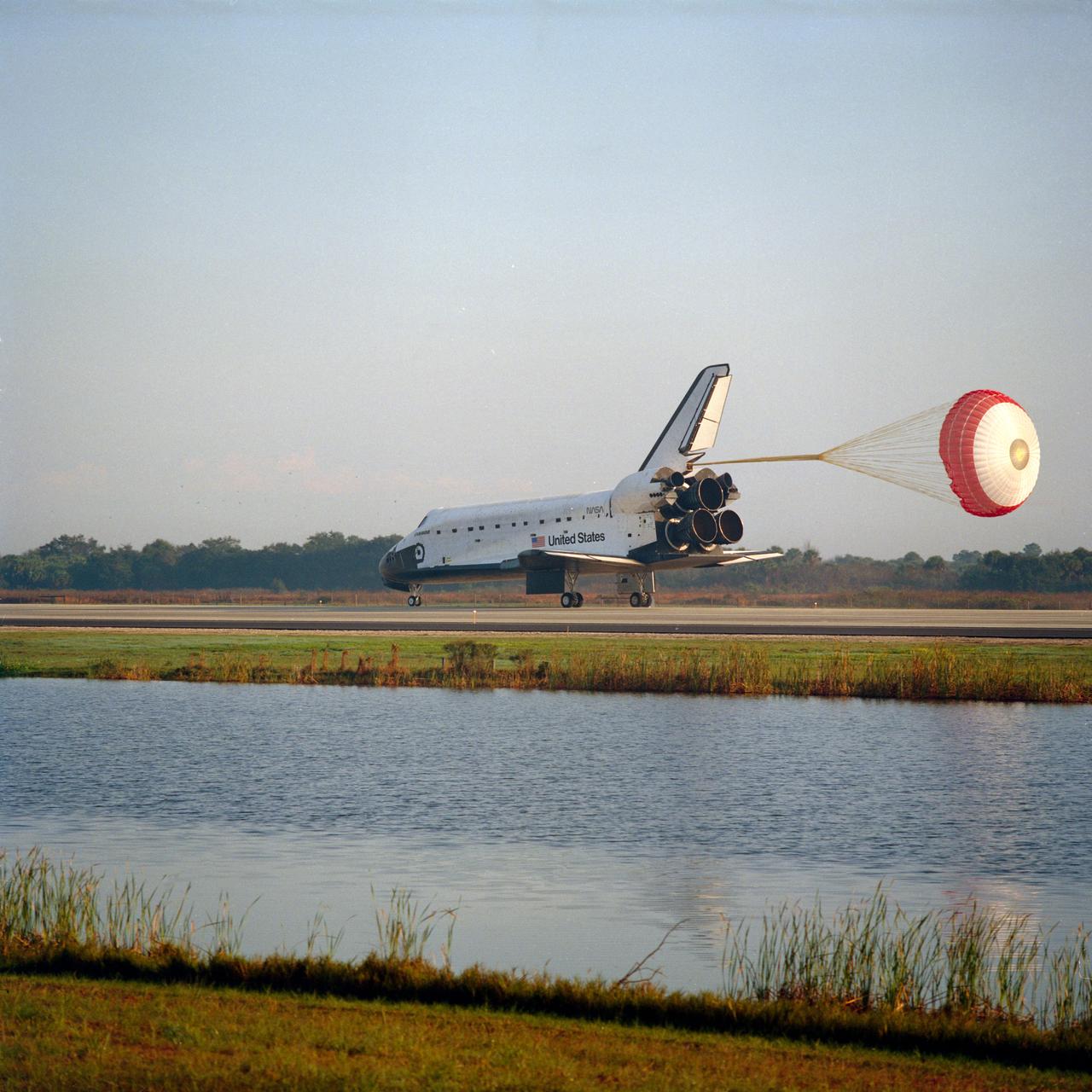
STS047-S-116 (20 Sept 1992) --- The Space Shuttle Endeavour prepares to land on the Kennedy Space Center's Shuttle landing facility runway.  The successful landing marked the completion of an eight-day Earth-orbital mission for the orbiter, its seven-member crew and the Spacelab-J payload.  Landing occurred at 8:53 a.m.  (EDT), September 20, 1992.  Onboard the spacecraft were astronauts Robert L. Gibson, Curtis L. Brown Jr., Mark C. Lee, Jerome (Jay) Apt, N. Jan Davis and Mae C. Jemison, along with Japanese payload specialist Dr. Mamoru Mohri.
STS-47 Endeavour, Orbiter Vehicle (OV) 105, landing sequence at KSC SLF
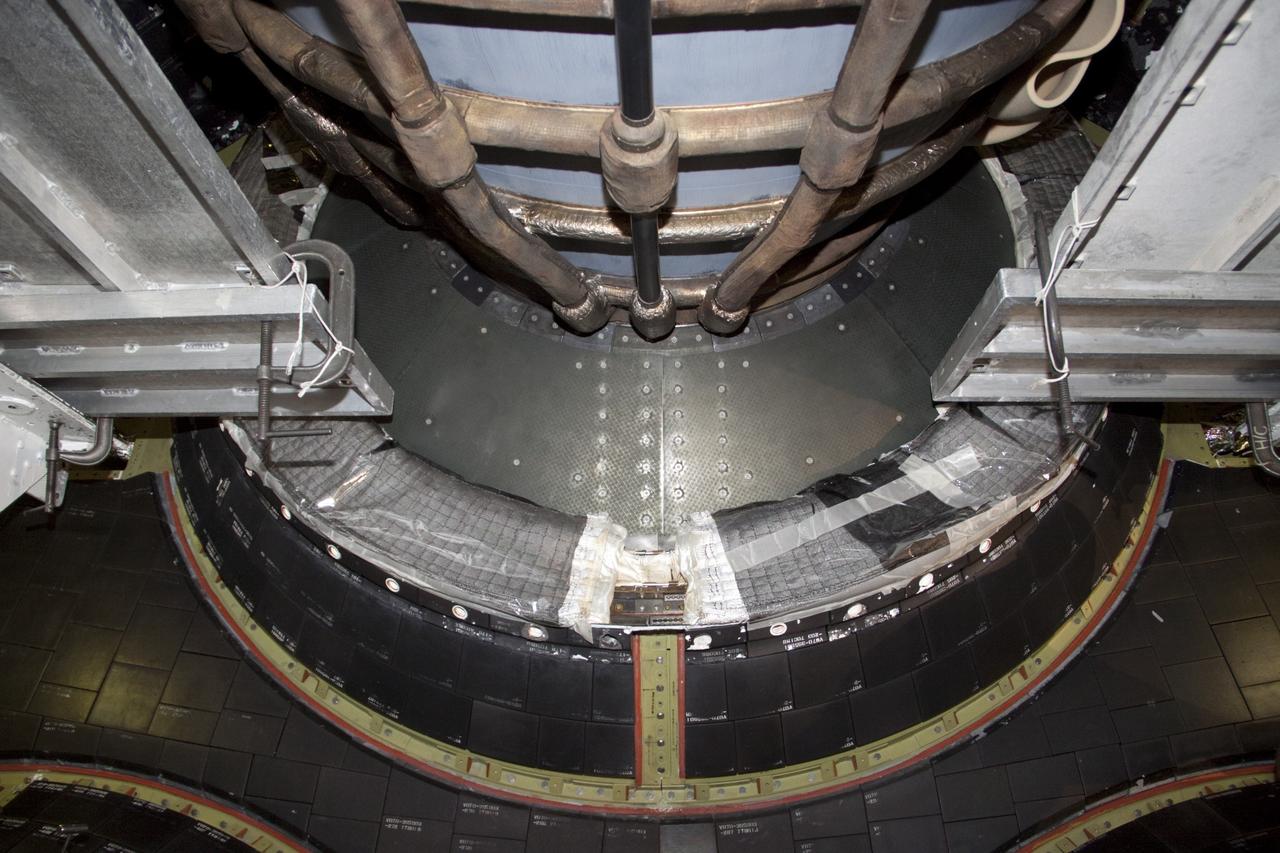
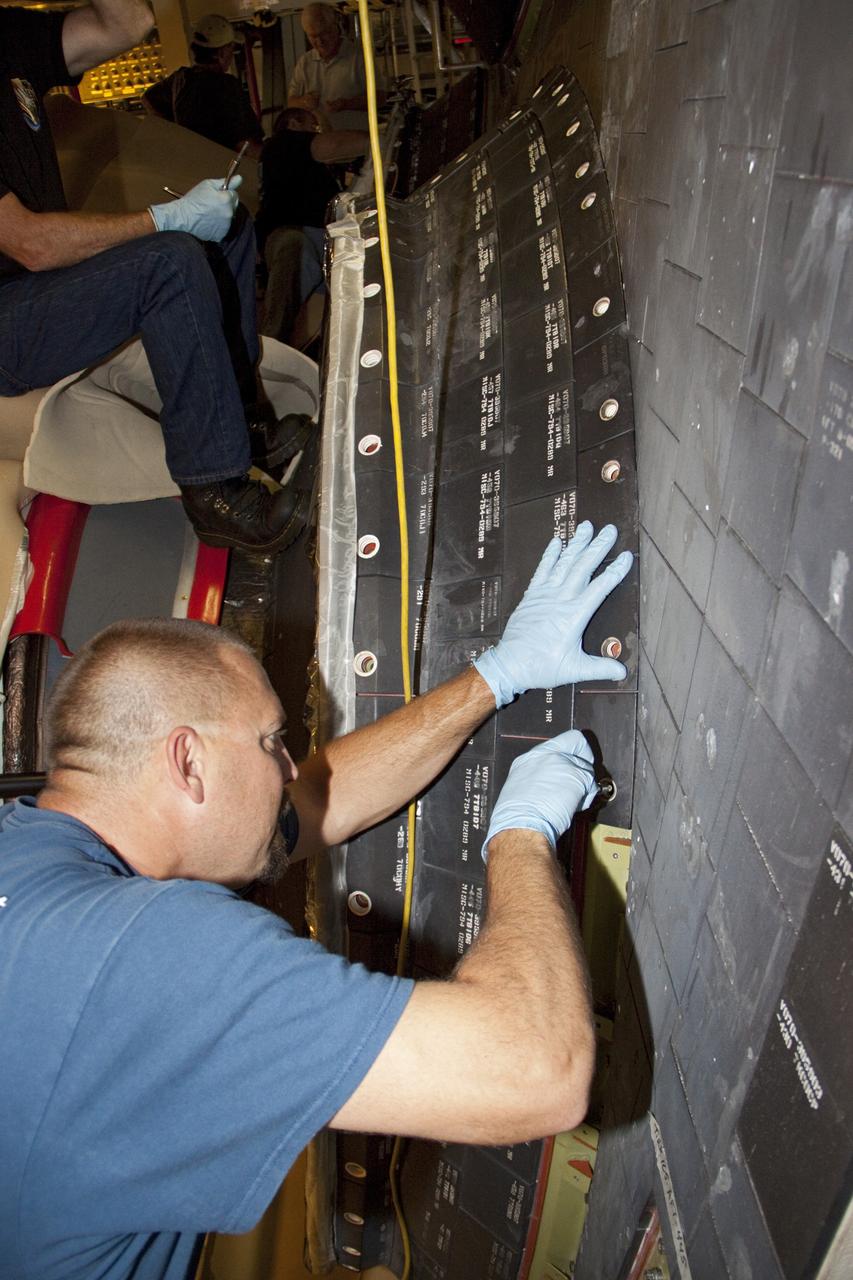
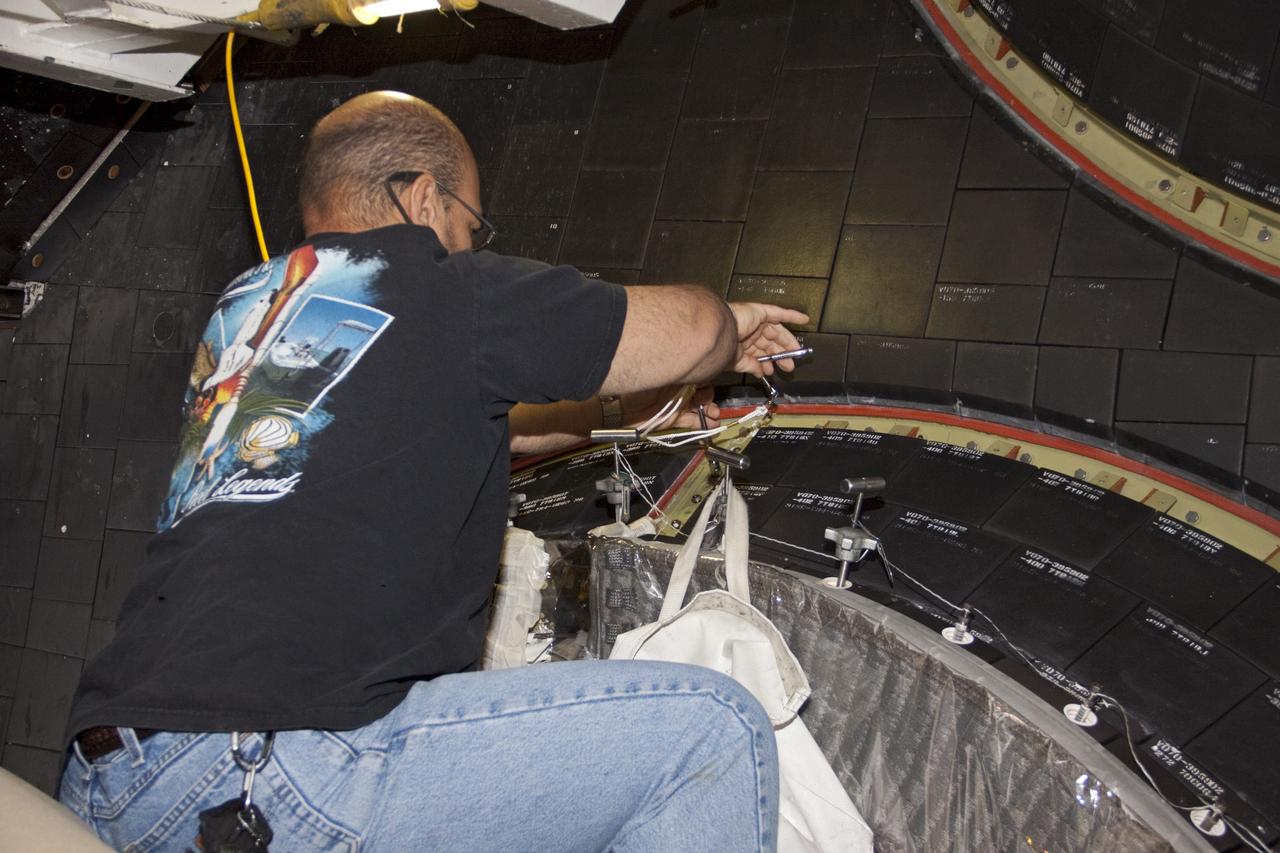
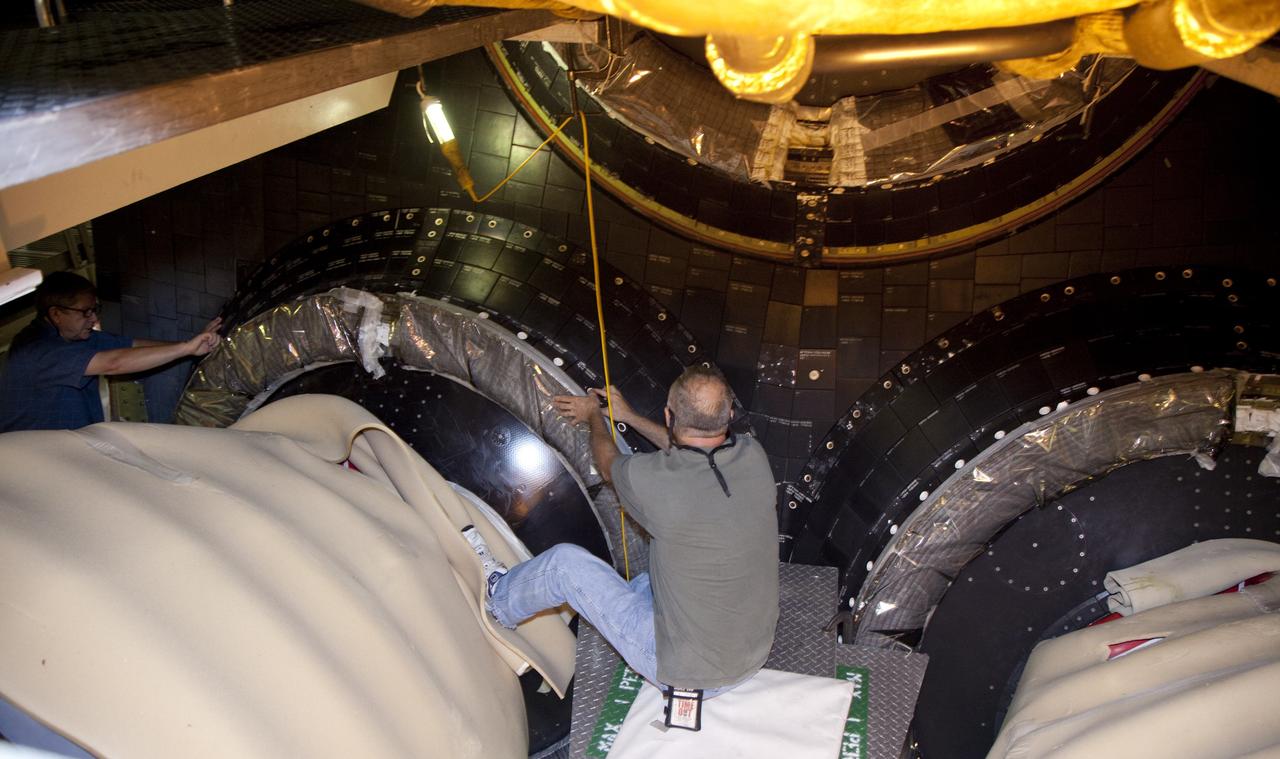
CAPE CANAVERAL, Fla. – In Orbiter Processing Facility Bay 2 at NASA’s Kennedy Space Center in Florida, heat shield tiles are being installed around the base of space shuttle Endeavour’s replica shuttle main engines.      The work is part of Transition and Retirement of the remaining space shuttles, Endeavour and Atlantis. Endeavour is being prepared for public display at the California Science Center in Los Angeles. Its ferry flight to California is targeted for mid-September. Endeavour was the last space shuttle added to NASA’s orbiter fleet. Over the course of its 19-year career, Endeavour spent 299 days in space during 25 missions. For more information, visit http://www.nasa.gov/transition Photo credit: NASA/ Jim Grossmann
KSC-2012-4005
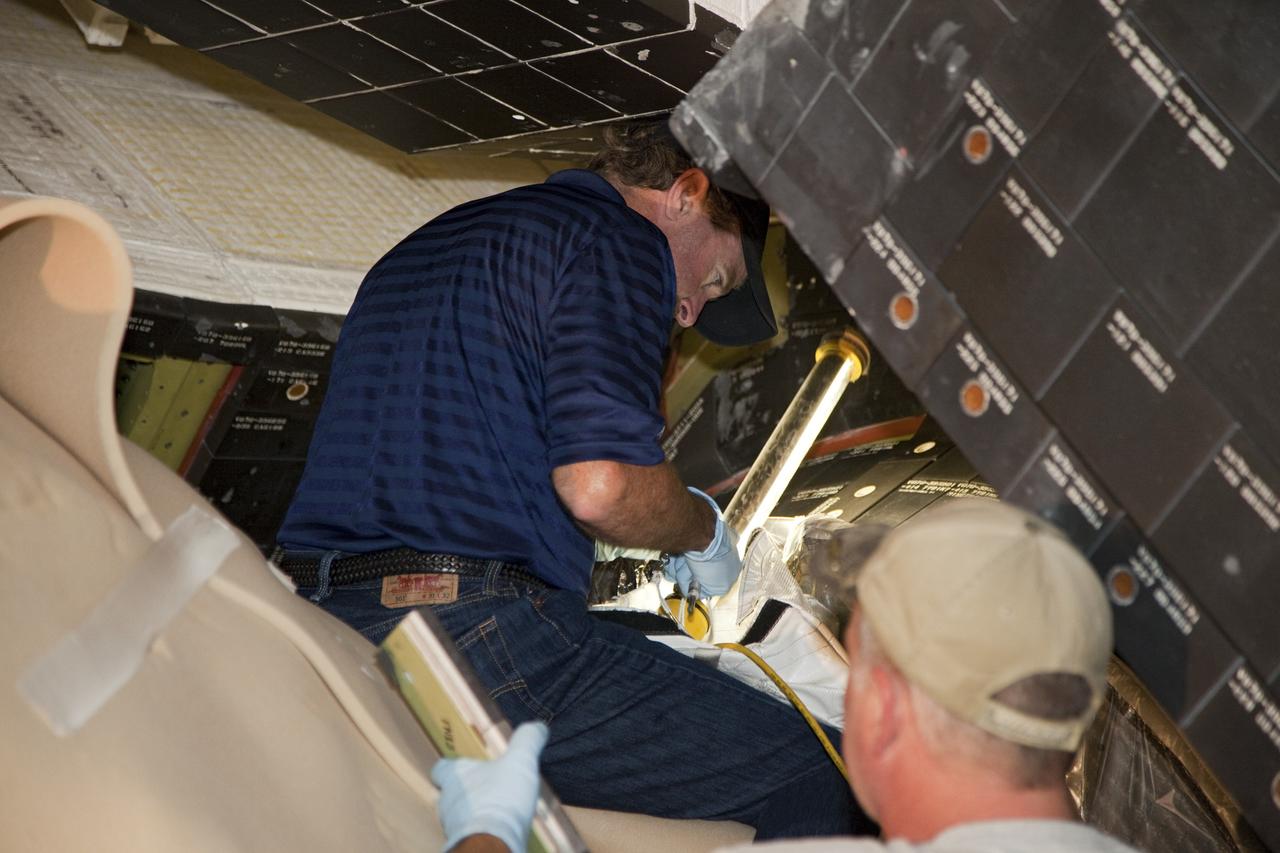
CAPE CANAVERAL, Fla. – In Orbiter Processing Facility Bay 2 at NASA’s Kennedy Space Center in Florida, United Space Alliance technicians install an outer heat shield carrier panel on the space shuttle Endeavour.      The work is part of Transition and Retirement of the remaining space shuttles, Endeavour and Atlantis. Endeavour is being prepared for public display at the California Science Center in Los Angeles. Its ferry flight to California is targeted for mid-September. Endeavour was the last space shuttle added to NASA’s orbiter fleet. Over the course of its 19-year career, Endeavour spent 299 days in space during 25 missions. For more information, visit http://www.nasa.gov/transition Photo credit: NASA/ Frankie Martin
KSC-2012-4123
CAPE CANAVERAL, Fla. – In Orbiter Processing Facility Bay 2 at NASA’s Kennedy Space Center in Florida, a United Space Alliance technician installs a heat shield carrier panel on the space shuttle Endeavour.      The work is part of Transition and Retirement of the remaining space shuttles, Endeavour and Atlantis. Endeavour is being prepared for public display at the California Science Center in Los Angeles. Its ferry flight to California is targeted for mid-September. Endeavour was the last space shuttle added to NASA’s orbiter fleet. Over the course of its 19-year career, Endeavour spent 299 days in space during 25 missions. For more information, visit http://www.nasa.gov/transition Photo credit: NASA/ Jim Grossmann
KSC-2012-4003
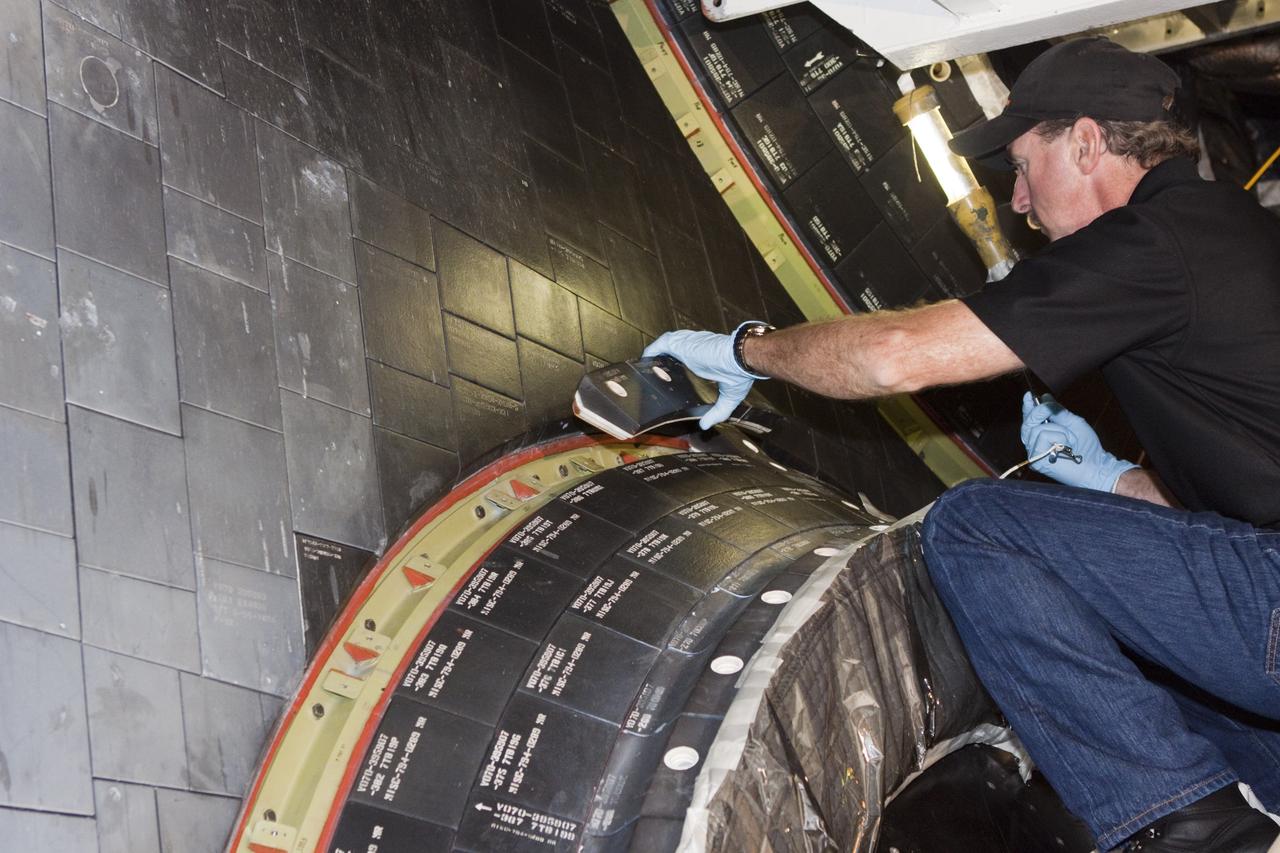
CAPE CANAVERAL, Fla. – In Orbiter Processing Facility Bay 2 at NASA’s Kennedy Space Center in Florida, United Space Alliance aerospace technician Chris Peluso installs a heat shield carrier panel on the space shuttle Endeavour.      The work is part of Transition and Retirement of the remaining space shuttles, Endeavour and Atlantis. Endeavour is being prepared for public display at the California Science Center in Los Angeles. Its ferry flight to California is targeted for mid-September. Endeavour was the last space shuttle added to NASA’s orbiter fleet. Over the course of its 19-year career, Endeavour spent 299 days in space during 25 missions. For more information, visit http://www.nasa.gov/transition Photo credit: NASA/ Jim Grossmann
KSC-2012-4004
CAPE CANAVERAL, Fla. – In Orbiter Processing Facility Bay 2 at NASA’s Kennedy Space Center in Florida, United Space Alliance aerospace technicians Hector Castillo, left, and Tom Goldean inspect a heat shield carrier panel to be installed on the space shuttle Endeavour.      The work is part of Transition and Retirement of the remaining space shuttles, Endeavour and Atlantis. Endeavour is being prepared for public display at the California Science Center in Los Angeles. Its ferry flight to California is targeted for mid-September. Endeavour was the last space shuttle added to NASA’s orbiter fleet. Over the course of its 19-year career, Endeavour spent 299 days in space during 25 missions. For more information, visit http://www.nasa.gov/transition Photo credit: NASA/ Jim Grossmann
KSC-2012-4007
CAPE CANAVERAL, Fla. – In Orbiter Processing Facility Bay 2 at NASA’s Kennedy Space Center in Florida, United Space Alliance aerospace technician Tom Goldean installs a heat shield carrier panel on the space shuttle Endeavour.      The work is part of Transition and Retirement of the remaining space shuttles, Endeavour and Atlantis. Endeavour is being prepared for public display at the California Science Center in Los Angeles. Its ferry flight to California is targeted for mid-September. Endeavour was the last space shuttle added to NASA’s orbiter fleet. Over the course of its 19-year career, Endeavour spent 299 days in space during 25 missions. For more information, visit http://www.nasa.gov/transition Photo credit: NASA/ Jim Grossmann
KSC-2012-4006
CAPE CANAVERAL, Fla. – In Orbiter Processing Facility Bay 2 at NASA’s Kennedy Space Center in Florida, a United Space Alliance technician installs an outer heat shield carrier panel on the space shuttle Endeavour.      The work is part of Transition and Retirement of the remaining space shuttles, Endeavour and Atlantis. Endeavour is being prepared for public display at the California Science Center in Los Angeles. Its ferry flight to California is targeted for mid-September. Endeavour was the last space shuttle added to NASA’s orbiter fleet. Over the course of its 19-year career, Endeavour spent 299 days in space during 25 missions. For more information, visit http://www.nasa.gov/transition Photo credit: NASA/ Frankie Martin
KSC-2012-4124
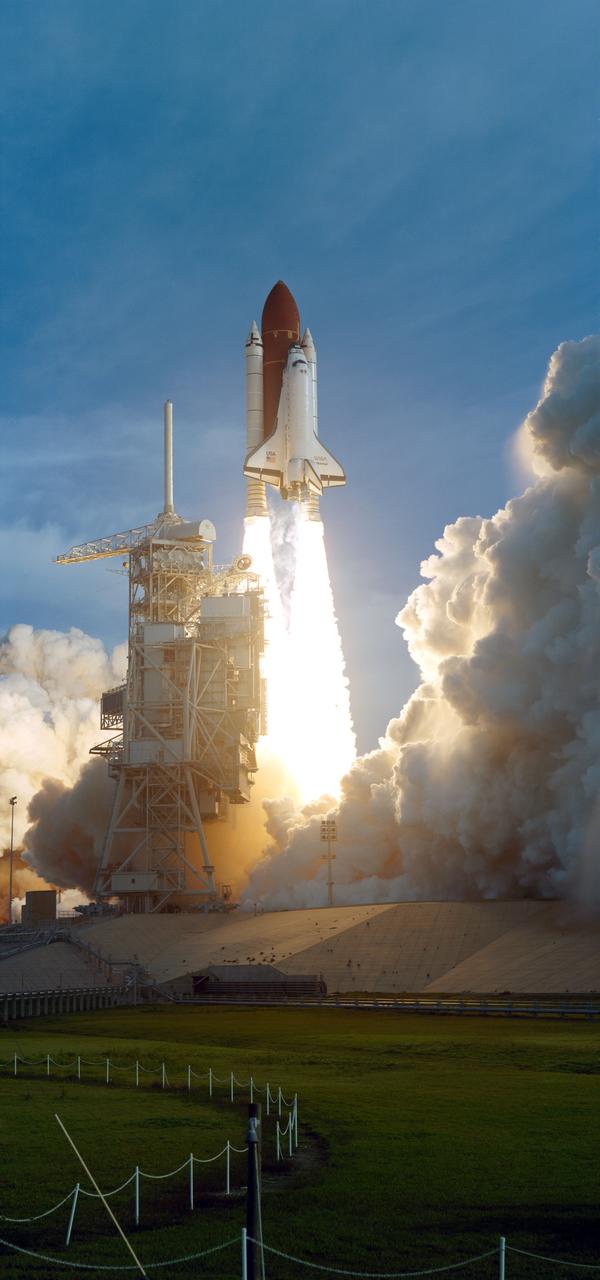
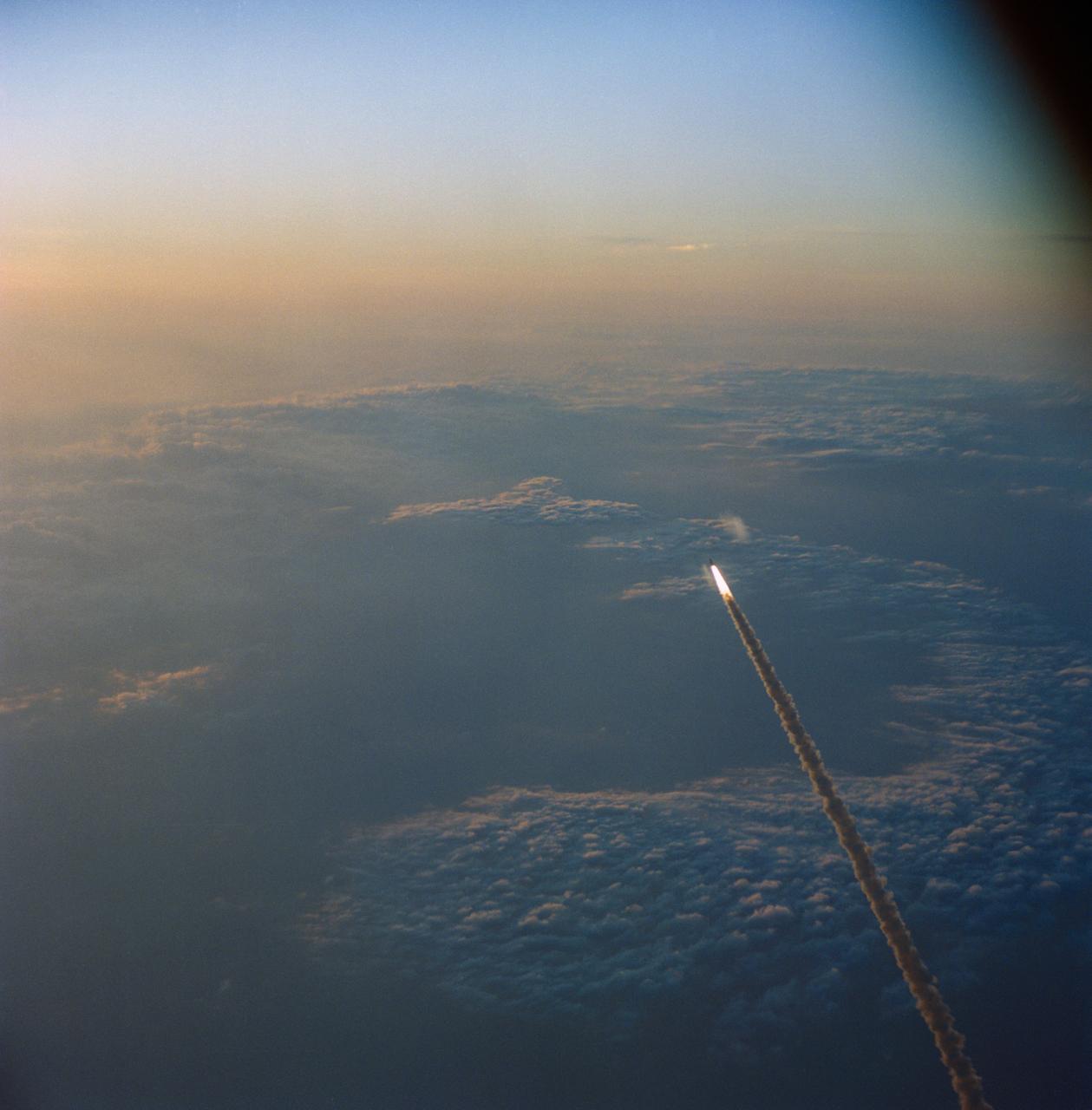
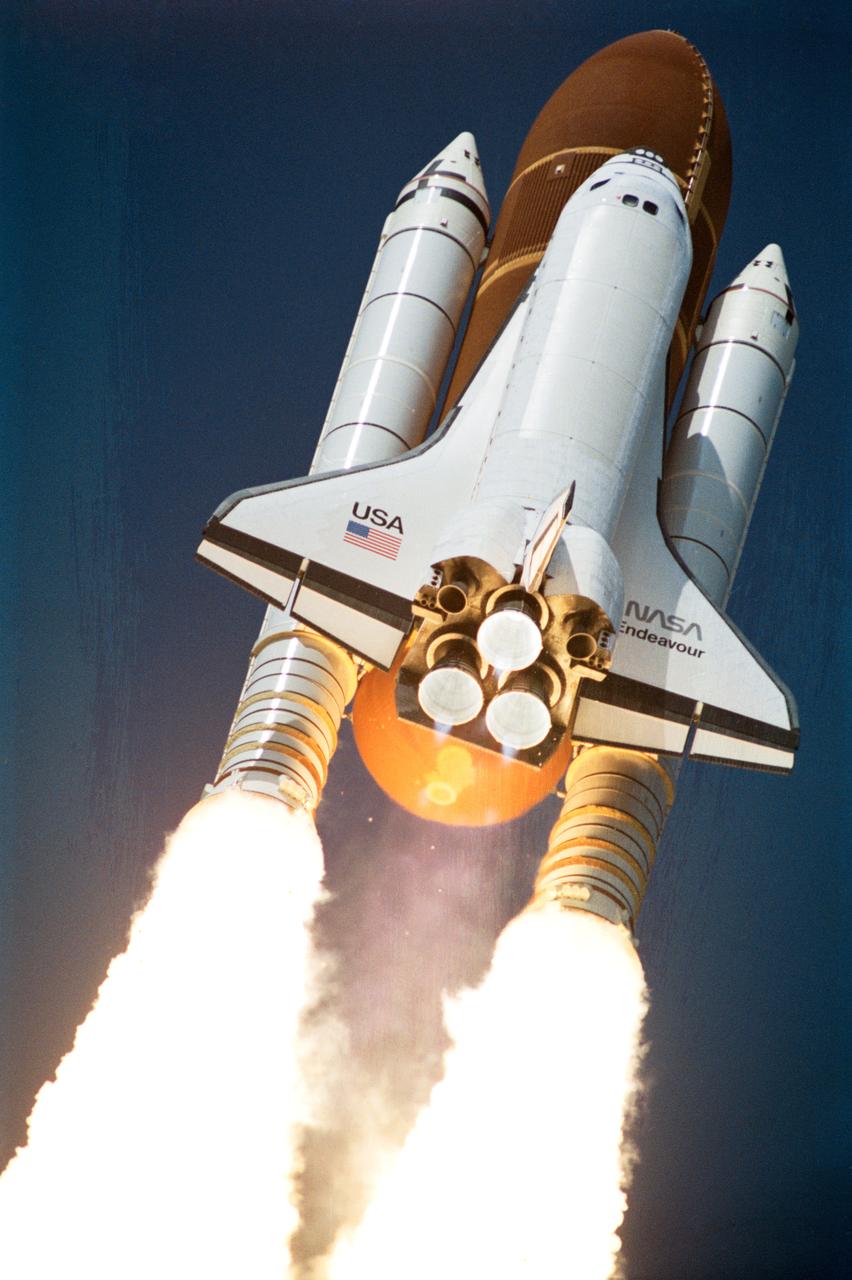
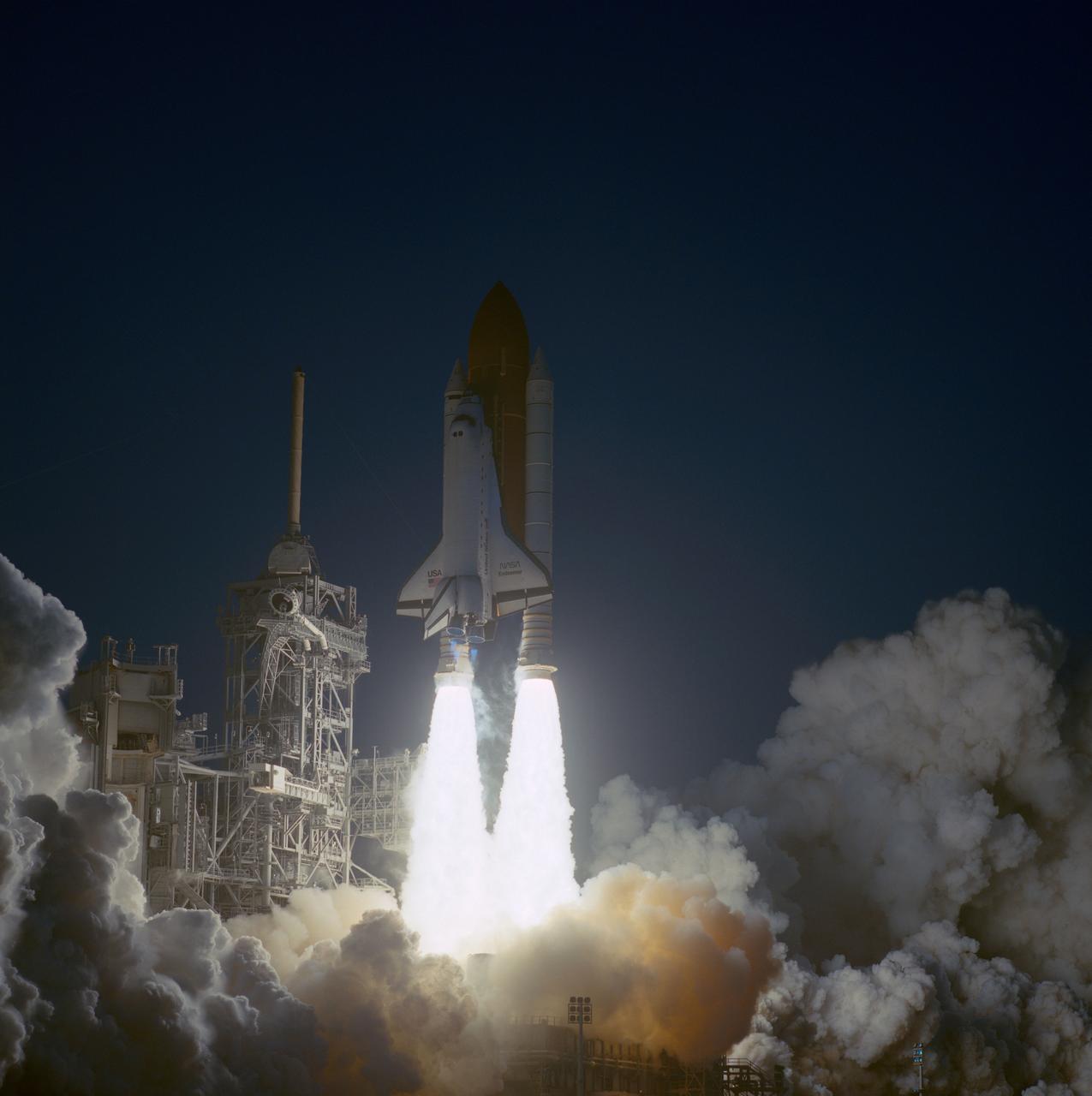
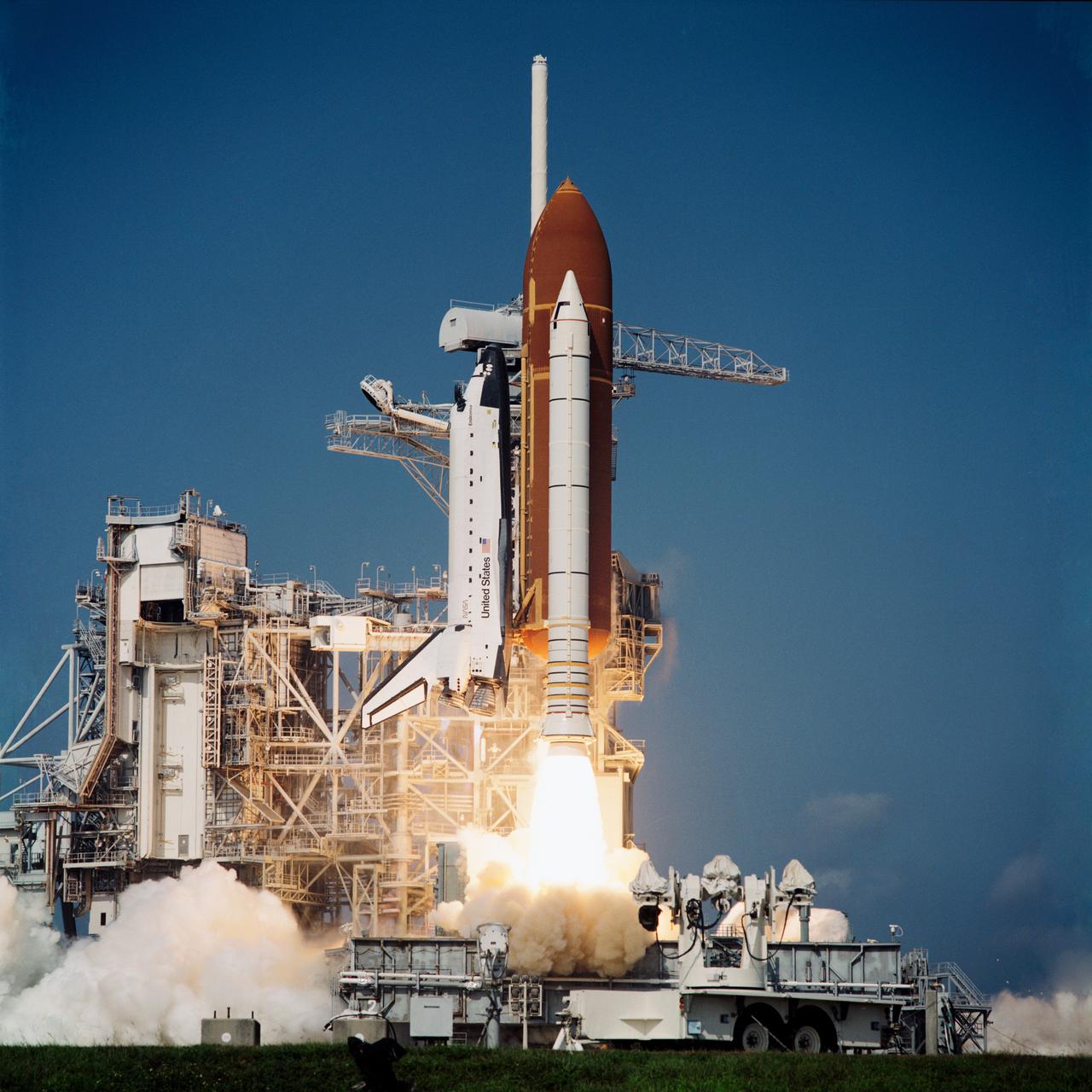
STS049-S-251 (7 May 1992) --- The Space Shuttle Endeavour soars toward Earth orbit where a crew of seven NASA astronauts will spend at least a week. Endeavour, the newest orbiter in NASA's Space Shuttle fleet, lifted off from Pad 39B at 7:40 p.m. (EDT), May 7, 1992. A diamond shock effect can be seen beneath the three main engines. Onboard are astronauts Daniel C. Brandenstein, mission commander; Kevin P. Chilton, pilot; and Richard J. Hieb, Bruce E. Melnick, Pierre J. Thuot, Kathryn C. Thornton and Thomas D. Akers, all mission specialists.
STS-49 Endeavour, Orbiter Vehicle (OV) 105, lifts off from KSC LC Pad 39B
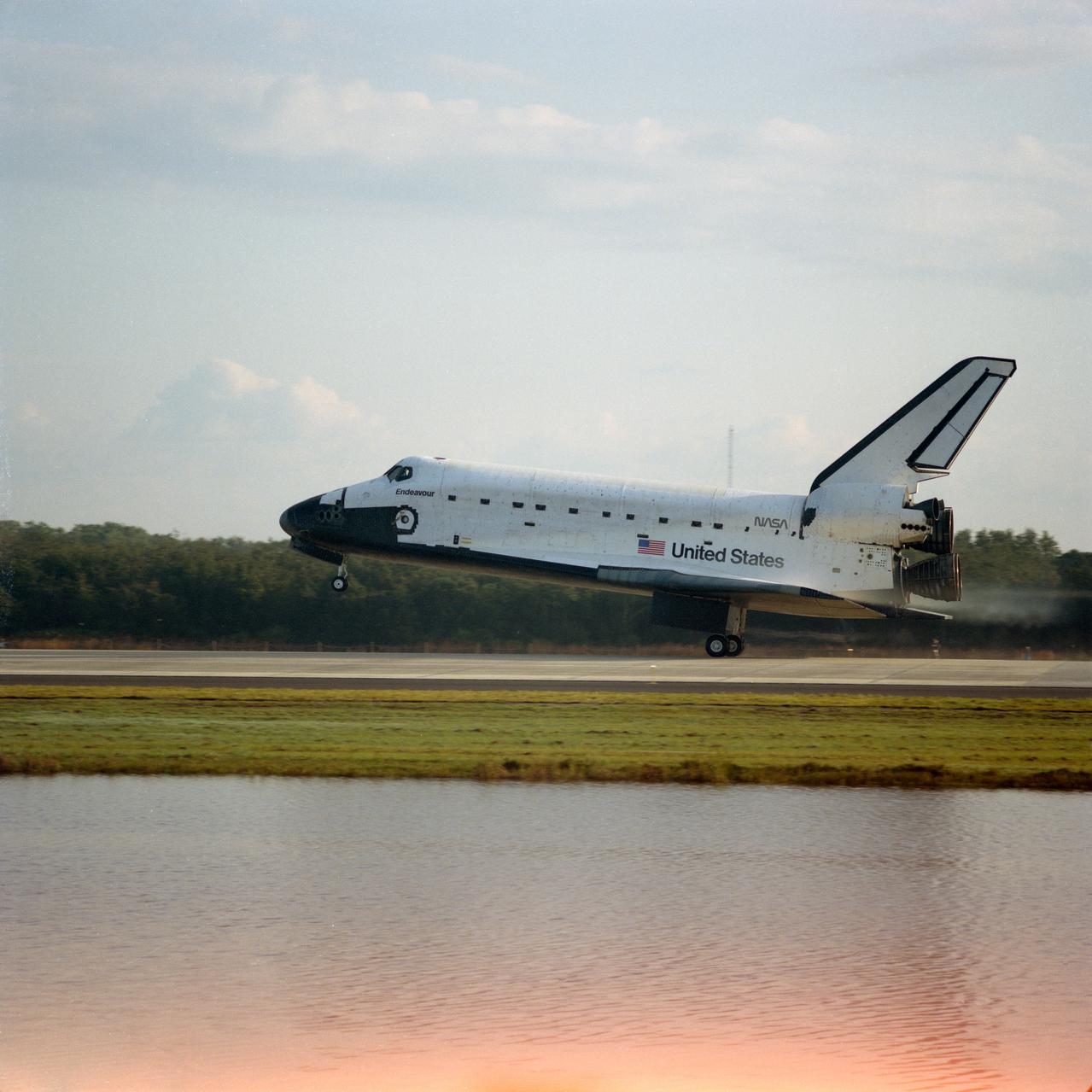
STS054-S-098 (19 Jan 1993) --- This ground-level side view shows the Space Shuttle Endeavour during main landing gear touchdown at KSC's Shuttle Landing Facility to successfully complete a six day Earth-orbital mission.  Landing occurred at 8:38 a.m. (EST), Jan. 19, 1993.  Onboard were astronauts John H. Casper, mission commander; Donald R. McMonagle, pilot; Gregory J. Harbaugh, Mario Runco Jr. and Susan J. Helms, mission specialists.
STS-54 Endeavour, Orbiter Vehicle (OV) 105, lands on runway 33 at KSC's SLF
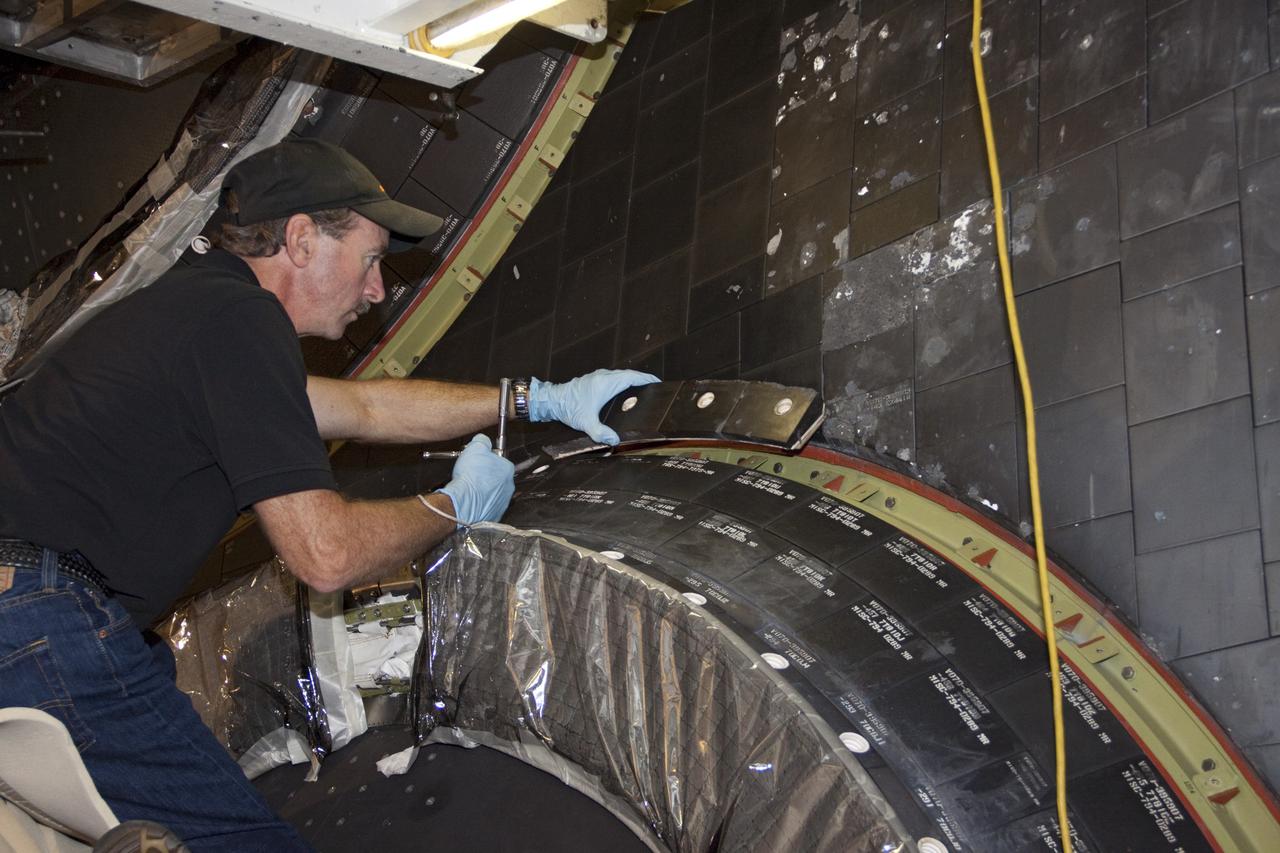
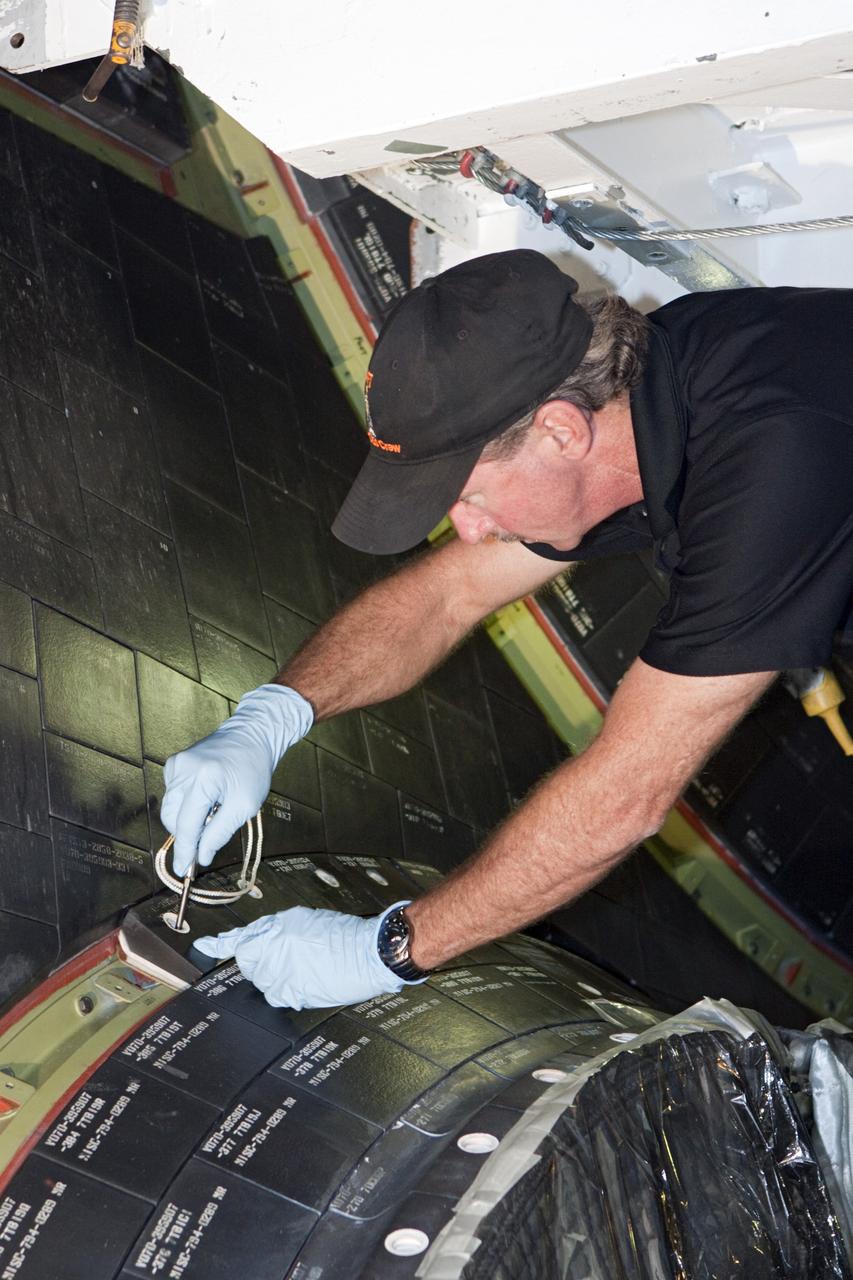
CAPE CANAVERAL, Fla. – In Orbiter Processing Facility Bay 2 at NASA’s Kennedy Space Center in Florida, United Space Alliance aerospace technician Chris Peluso installs a heat shield carrier panel on the space shuttle Endeavour.      The work is part of Transition and Retirement of the remaining space shuttles, Endeavour and Atlantis. Endeavour is being prepared for public display at the California Science Center in Los Angeles. Its ferry flight to California is targeted for mid-September. Endeavour was the last space shuttle added to NASA’s orbiter fleet. Over the course of its 19-year career, Endeavour spent 299 days in space during 25 missions. For more information, visit http://www.nasa.gov/transition Photo credit: NASA/ Jim Grossmann
KSC-2012-4055
CAPE CANAVERAL, Fla. – In Orbiter Processing Facility Bay 2 at NASA’s Kennedy Space Center in Florida, United Space Alliance aerospace technician Chris Peluso installs a heat shield carrier panel on the space shuttle Endeavour.      The work is part of Transition and Retirement of the remaining space shuttles, Endeavour and Atlantis. Endeavour is being prepared for public display at the California Science Center in Los Angeles. Its ferry flight to California is targeted for mid-September. Endeavour was the last space shuttle added to NASA’s orbiter fleet. Over the course of its 19-year career, Endeavour spent 299 days in space during 25 missions. For more information, visit http://www.nasa.gov/transition Photo credit: NASA/ Jim Grossmann
KSC-2012-4056
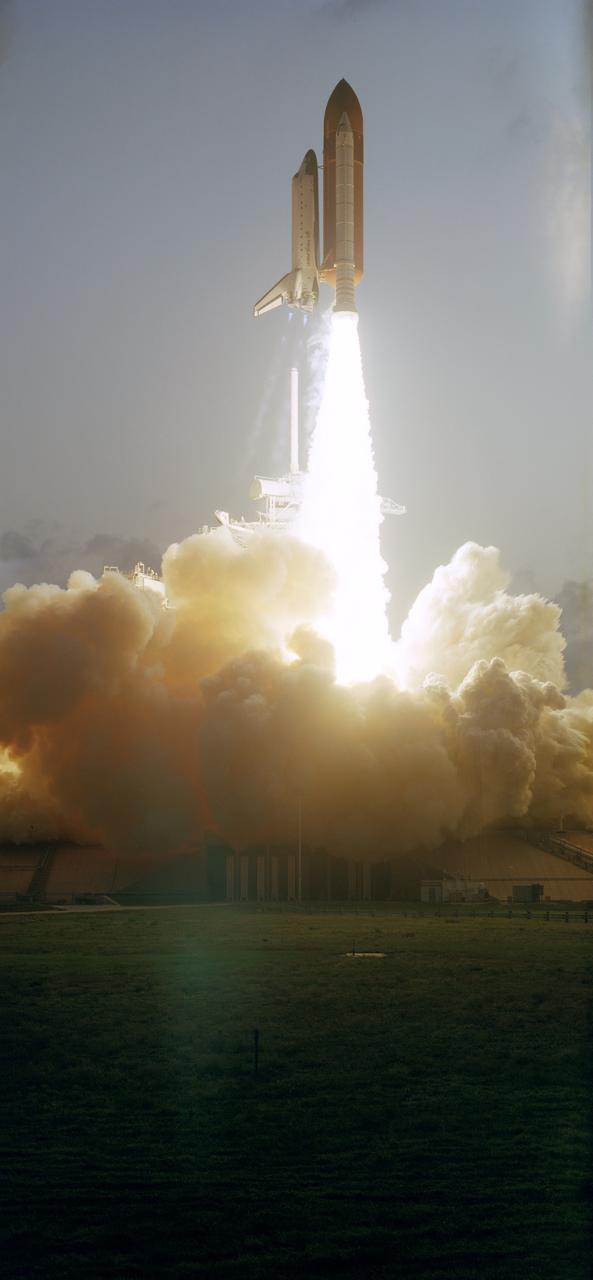
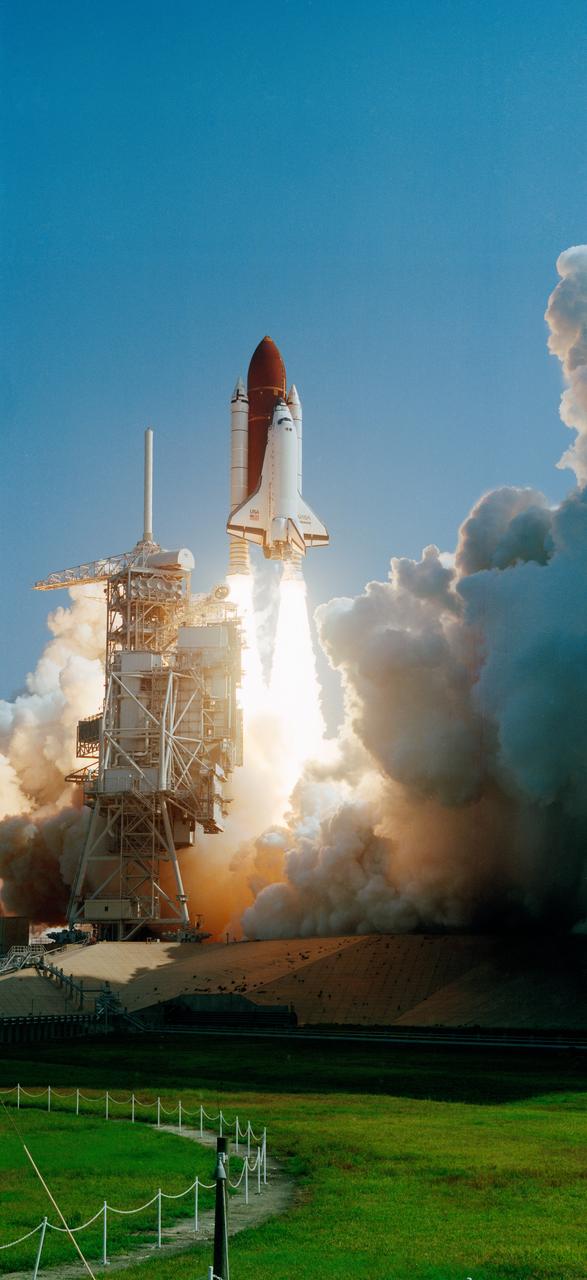
STS054-S-060 (13 Jan 1993) --- The Space Shuttle Endeavour soars off the launch pad and heads toward Earth orbit with a crew of five and the Tracking and Data Relay Satellite (TDRS-F) aboard.  Launch occurred at 8:59:30 a.m. (EST), January 13, 1993.  Onboard were John H. Casper, mission commander, Donald R. McMonagle, pilot, Gregory J. Harbaugh, Mario Runco Jr., and Susan J. Helms, mission specialists.
STS-54 Endeavour, Orbiter Vehicle (OV) 105, lifts off from KSC LC Pad 39B
STS054-S-057 (13 Jan 1993) --- The Space Shuttle Endeavour soars off the launch pad and heads toward Earth orbit with a crew of five and the Tracking and Data Relay Satellite (TDRS-F) aboard.  Launch occurred at 8:59:30 a.m. (EST), January 13, 1993.  Onboard were John H. Casper, mission commander, Donald R. McMonagle, pilot, Gregory J. Harbaugh, Mario Runco Jr., and Susan J. Helms, mission specialists.
STS-54 Endeavour, Orbiter Vehicle (OV) 105, lifts off from KSC LC Pad 39B
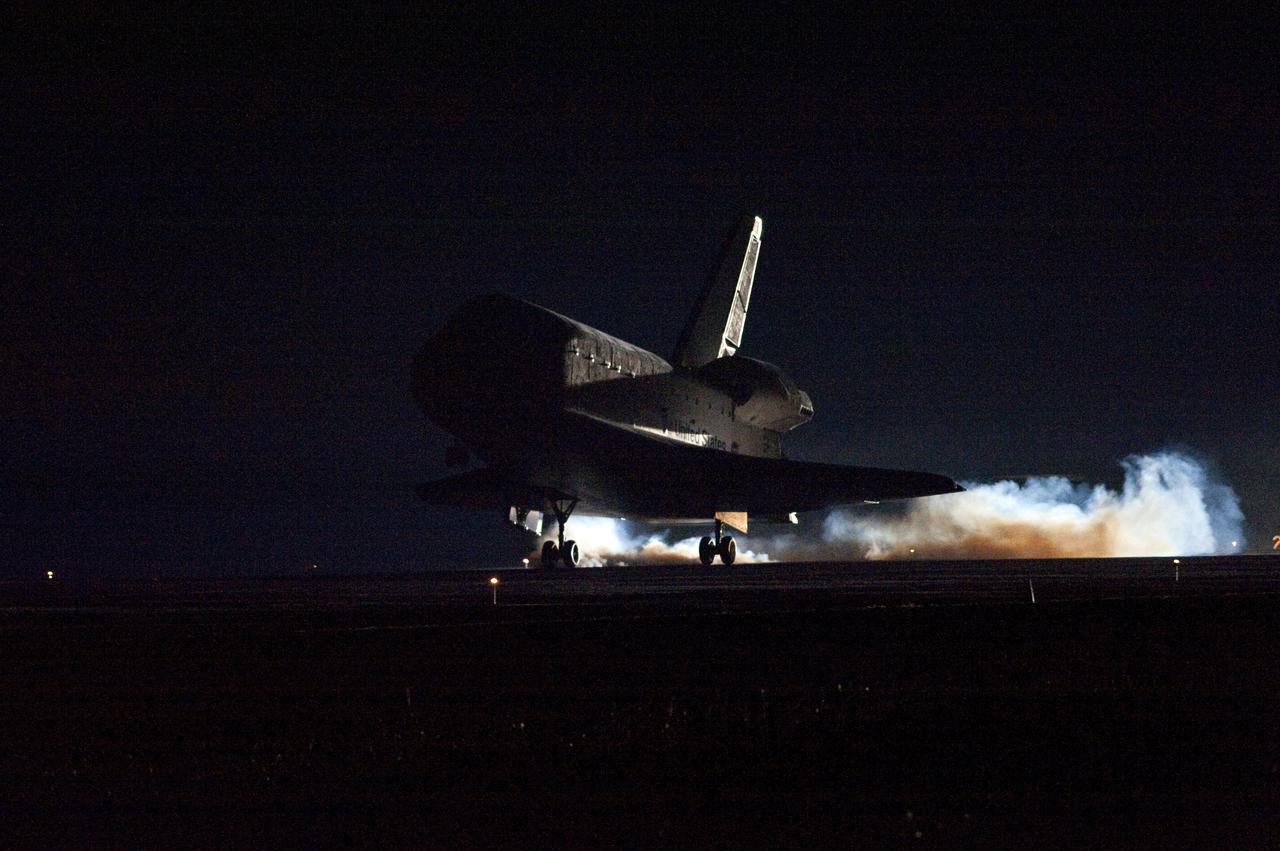
STS130-S-092 (21 Feb. 2010) --- Space shuttle Endeavour lands on Runway 15 at the Shuttle Landing Facility at NASA's Kennedy Space Center in Florida after 14 days in space, completing the 5.7-million-mile STS-130 mission to the International Space Station on orbit 217. Main gear touchdown was at 10:20:31 p.m. (EST) on Feb. 21, 2010; followed by nose gear touchdown at 10:20:39 p.m. and wheels stop at 10:22:10 p.m. It was the 23rd night landing in shuttle history and the 17th at Kennedy. Aboard are NASA astronauts George Zamka, commander; Terry Virts, pilot; Robert Behnken, Nicholas Patrick, Kathryn Hire and Stephen Robinson, all mission specialists. During Endeavour's STS-130 mission, astronauts installed the Tranquility node, a module that provides additional room for crew members and many of the station's life support and environmental control systems. Attached to Tranquility is a Cupola with seven windows that provide a panoramic view of Earth, celestial objects and visiting spacecraft. The module was built in Turin, Italy, by Thales Alenia Space for the European Space Agency. The orbiting laboratory is approximately 90 percent complete now in terms of mass. STS-130 was the 24th flight for Endeavour, the 32nd shuttle mission devoted to ISS assembly and maintenance, and the 130th shuttle mission to date.
STS-130 Endeavour Lands at KSC
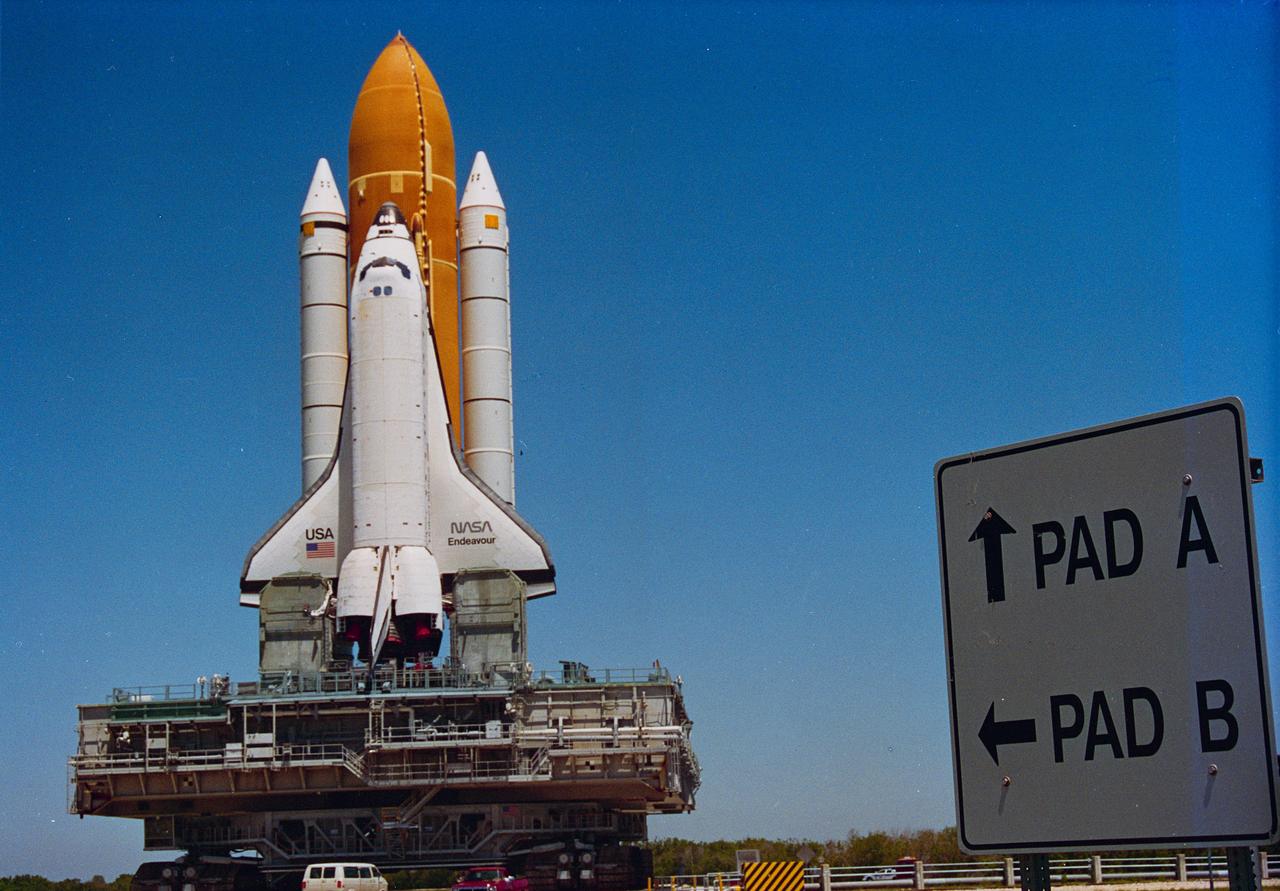
S96-07957 (16 April 1996) --- A road sign points to Launch Pad 39B, the final earthly destination for the Space Shuttle Endeavour and its final stepping stone into space.  Endeavour began the slow journey from the Vehicle Assembly Building (VAB) at about 10:00a.m., April 16, 1996, perched atop the Mobile Launcher Platform and carried by the Crawler-Transporter.  Upcoming activities at the pad to prepare Endeavour for flight on STS-77 include installation of the payloads in the Orbiter?s payload bay.
Pre-flight views of orbiter Endeavour on way to launch pad for STS-77
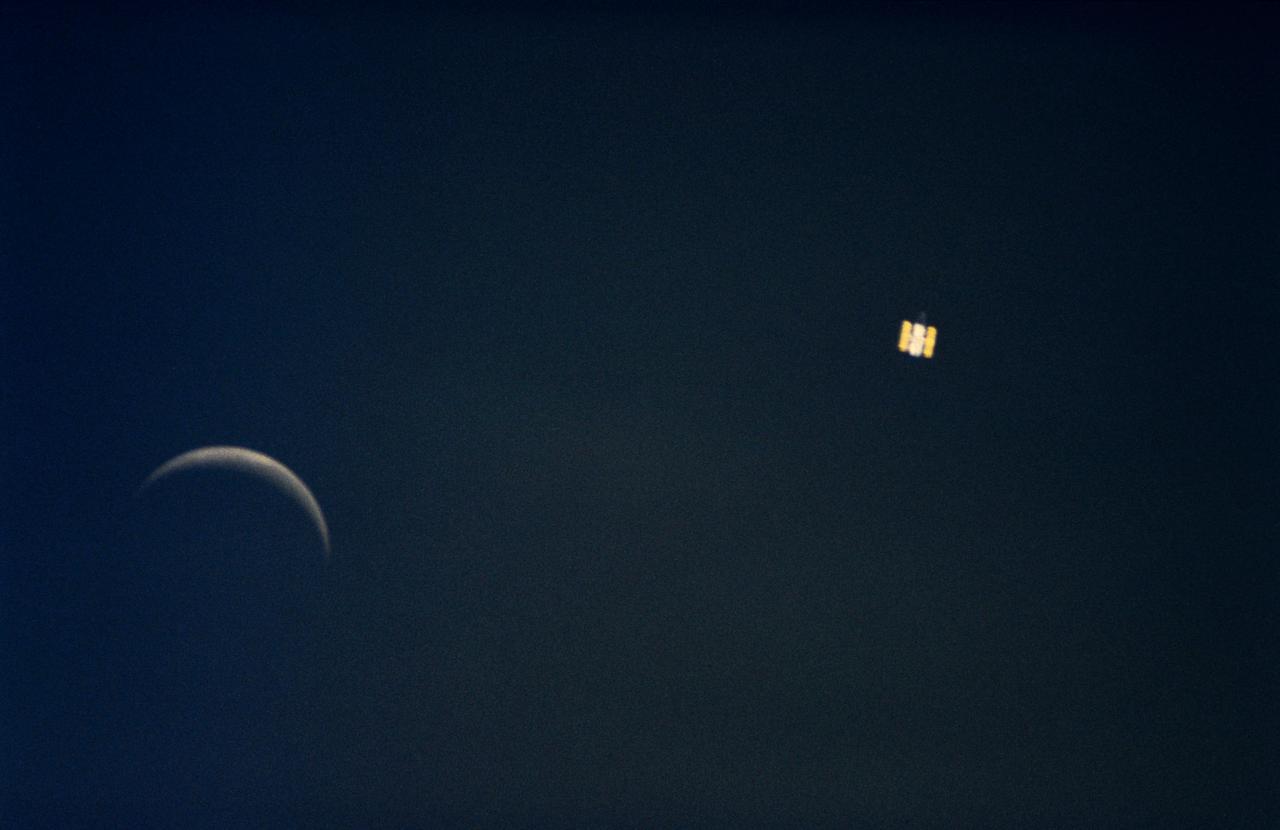
STS061-57-021 (2-12 Dec 1993) --- This scene, captured with a 35mm camera from inside the Space Shuttle Endeavour, shows the Earth-orbiting Hubble Space Telescope (HST) and the Moon together.
Onboard view from STS-61 of the Hubble Space Telescope and moon together
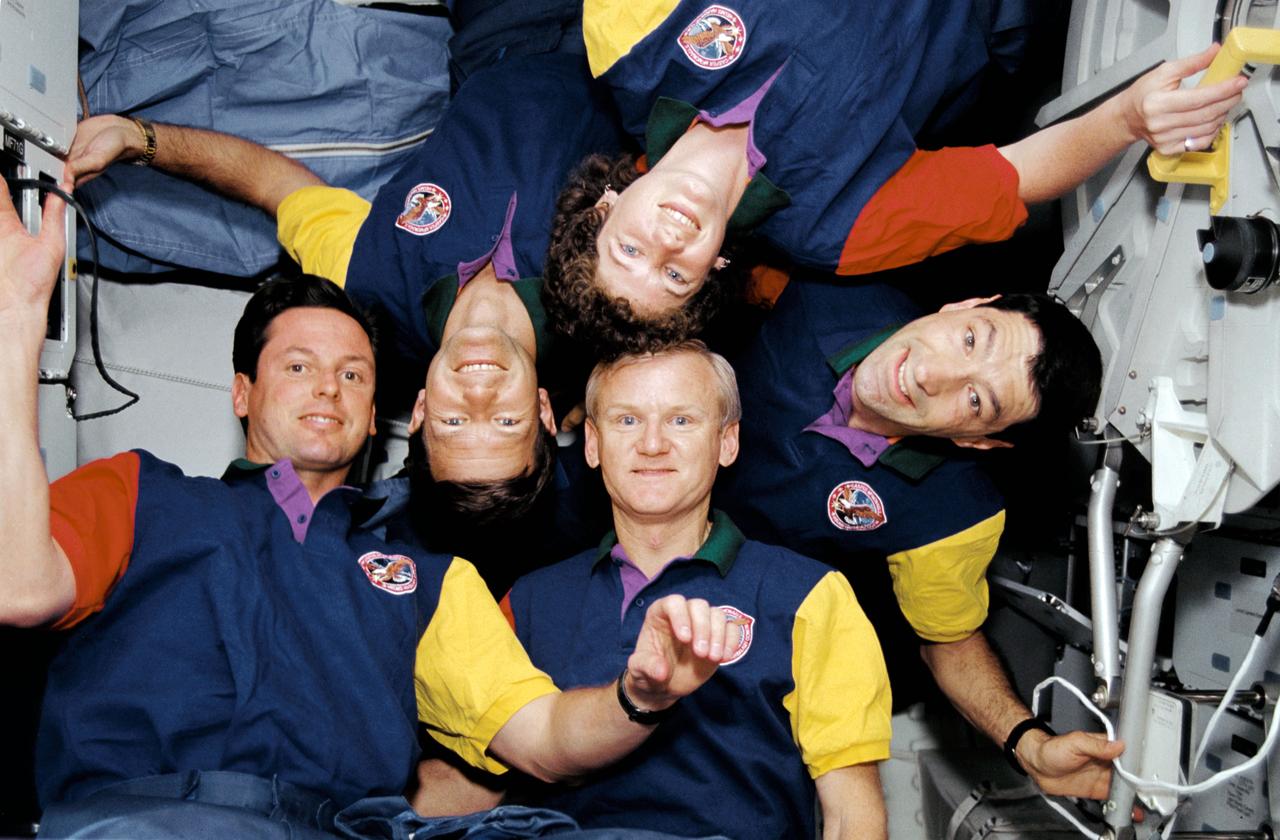
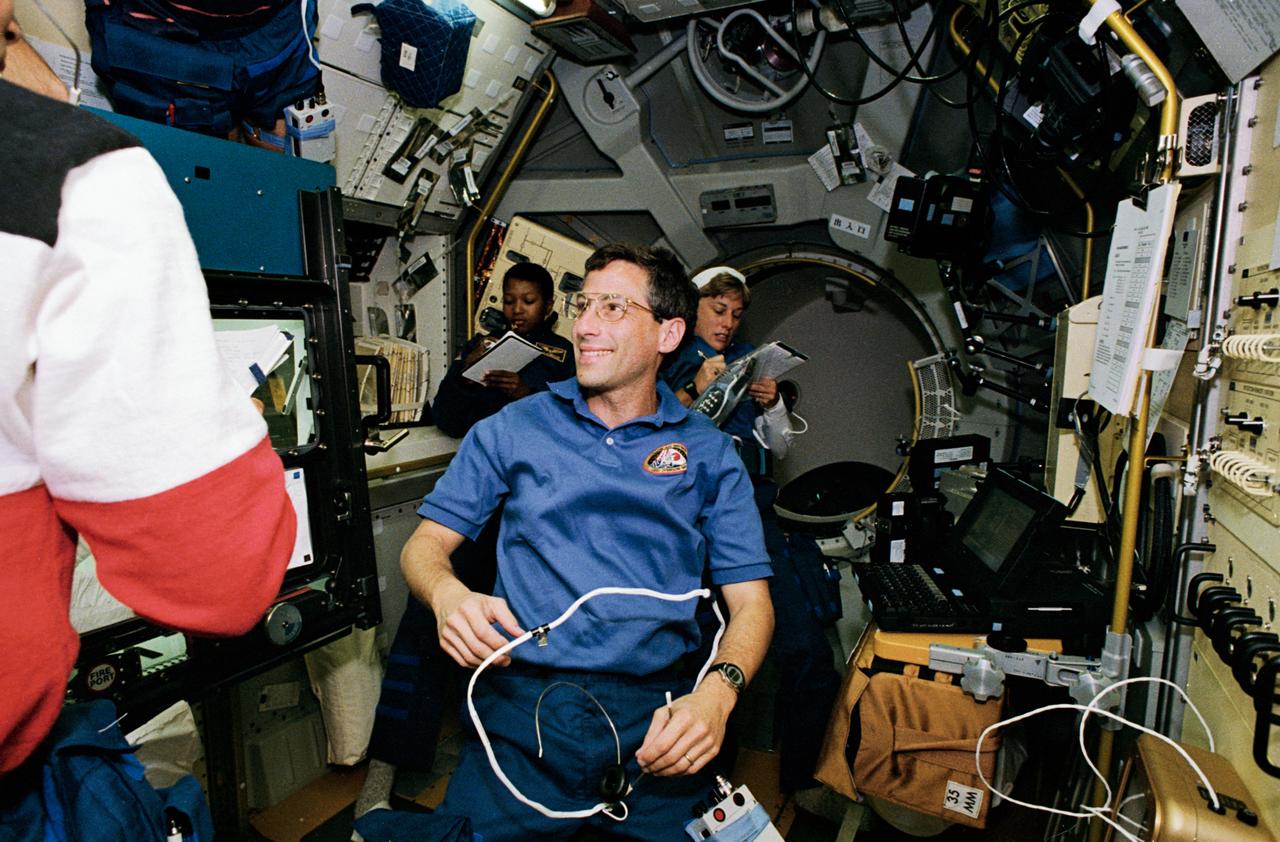
STS072-321-019 (11-20 Jan. 1996) --- Astronaut Koichi Wakata takes advantage of the microgravity environment on the middeck of the Earth-orbiting Space Shuttle Endeavour. Representing Japan's National Space Development Agency (NASDA), Wakata joined five other astronauts for a week and a half of activity aboard Endeavour. Astronaut Leroy Chiao works in the background.
STS-72 crewmember activities in middeck of the shuttle orbiter Endeavour
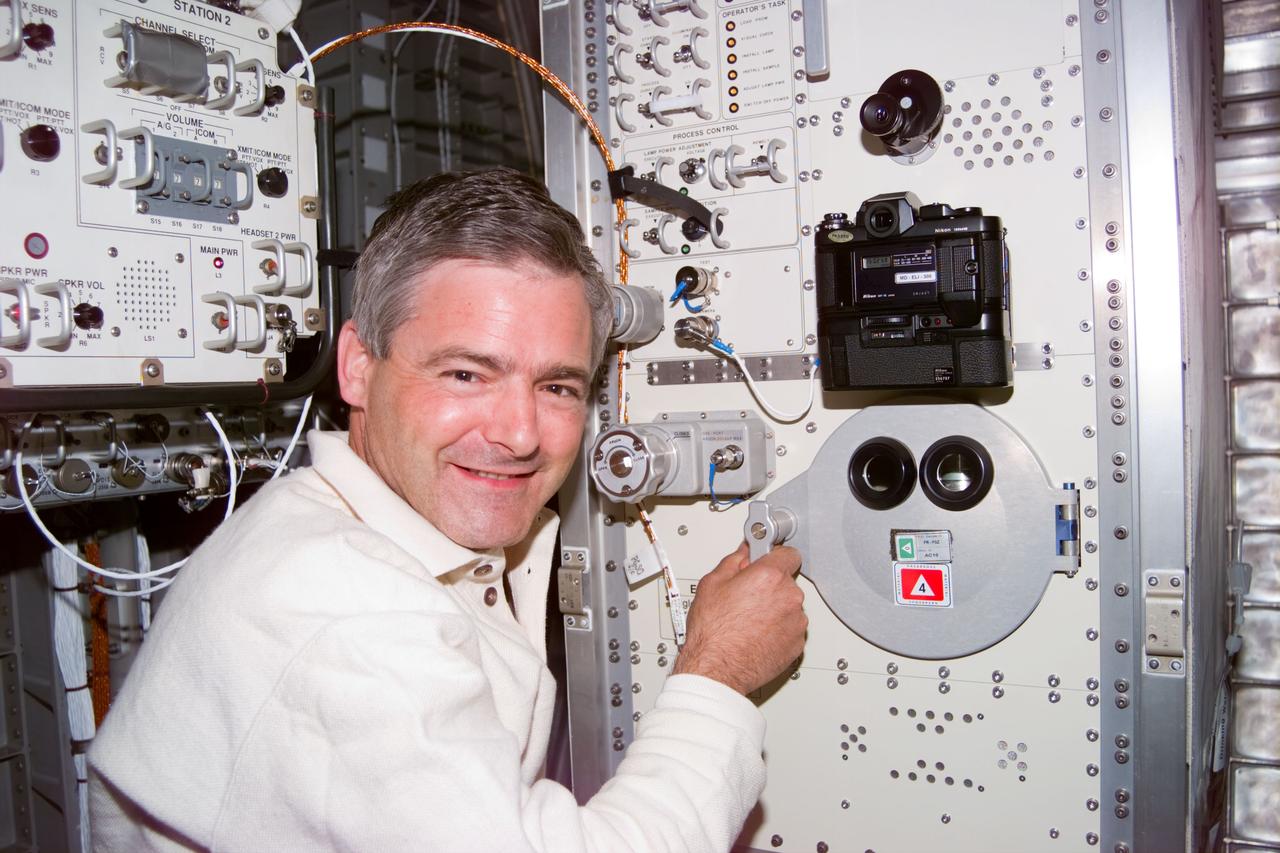
S77-E-5094 (25 May 1996) --- Astronaut Marc Garneau, mission specialist representing the Canadian Space Agency (CSA), stands at the Commercial Float Zone Furnace (CFZF) in the Spacehab Module onboard the Earth-orbiting Space Shuttle Endeavour.
Commercial Float Zone Furnace
STS054-97-018 (13-19 Jan 1993) --- The STS-54 crew used a handheld 70mm camera to record this view of the constellation Orion. Five astronauts spent six days aboard the Space Shuttle Endeavour in Earth orbit.
STS-54 astronomical observation of the constellation Orion
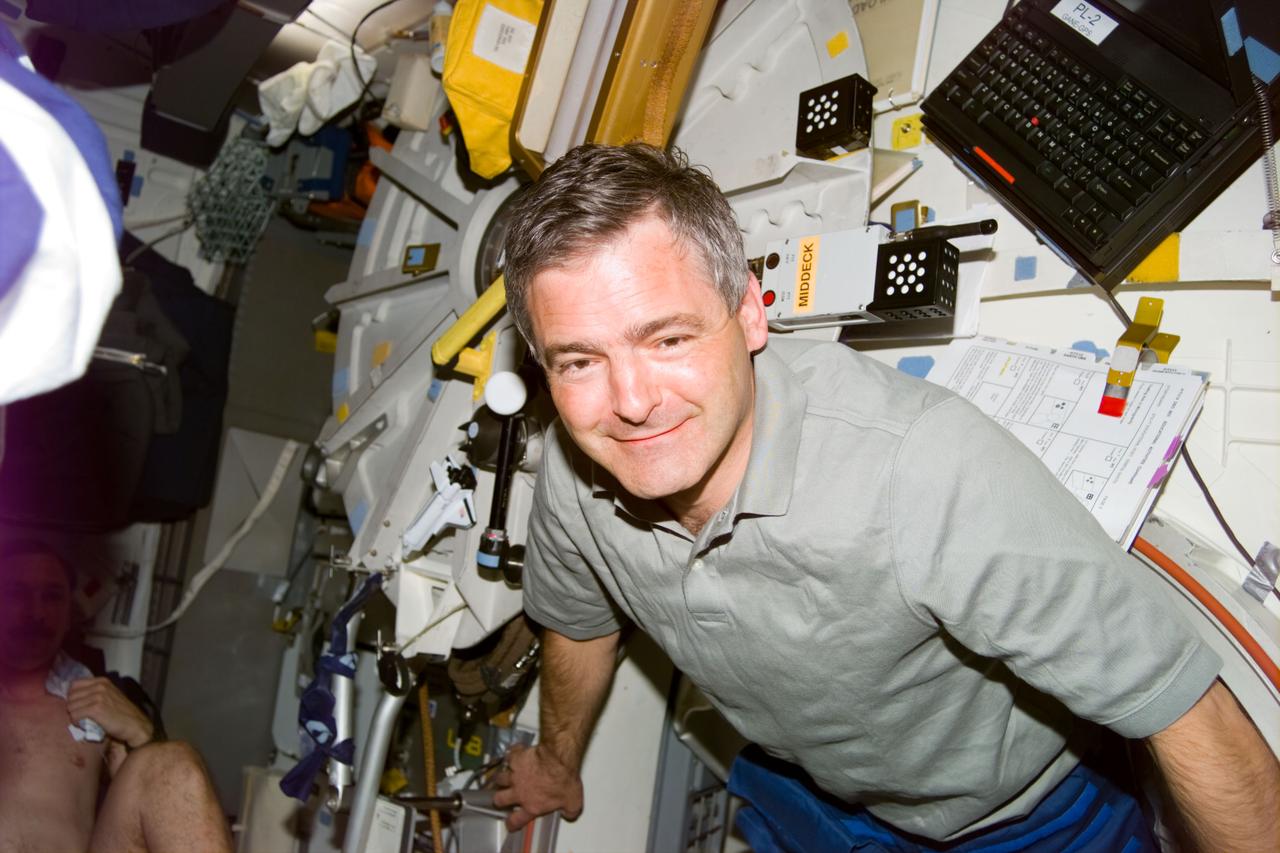
S77-E-5107 (26 May 1996) --- Astronaut Marc Garneau, mission specialist representing the Canadian Space Agency (CSA), poses for a photograph onboard the middeck of the Earth-orbiting Space Shuttle Endeavour.  The scene was recorded with an Electronic Still Camera (ESC).
Garneau enters middeck from Spacehab
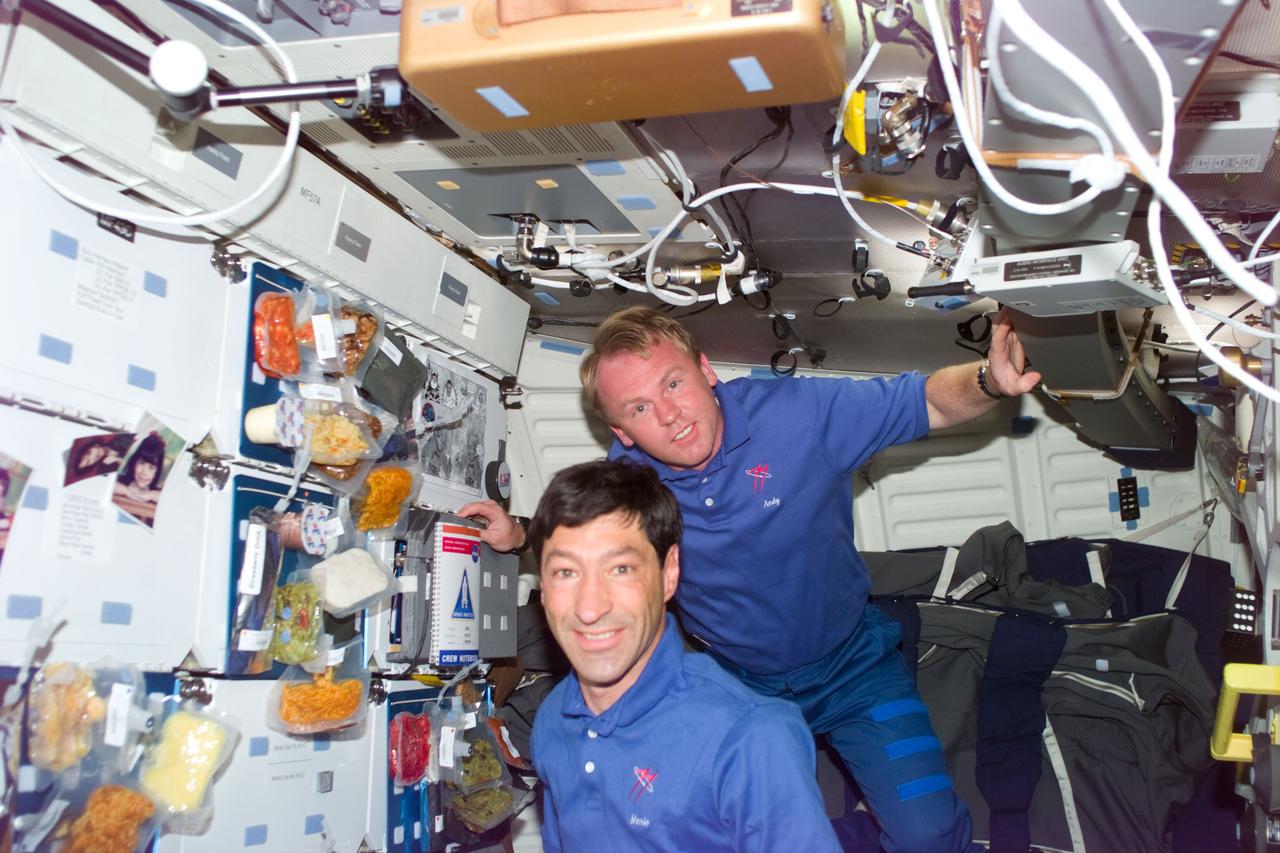
S77-E-5120 (26 May 1996) --- Astronauts Mario Runco, Jr. and Andrew S. W. Thomas, both mission specialists, pose for photo while in the middeck of the Earth-orbiting Space Shuttle Endeavour.  The scene was recorded with an Electronic Still Camera (ESC).
Runco and Thomas show off trays of food on the middeck
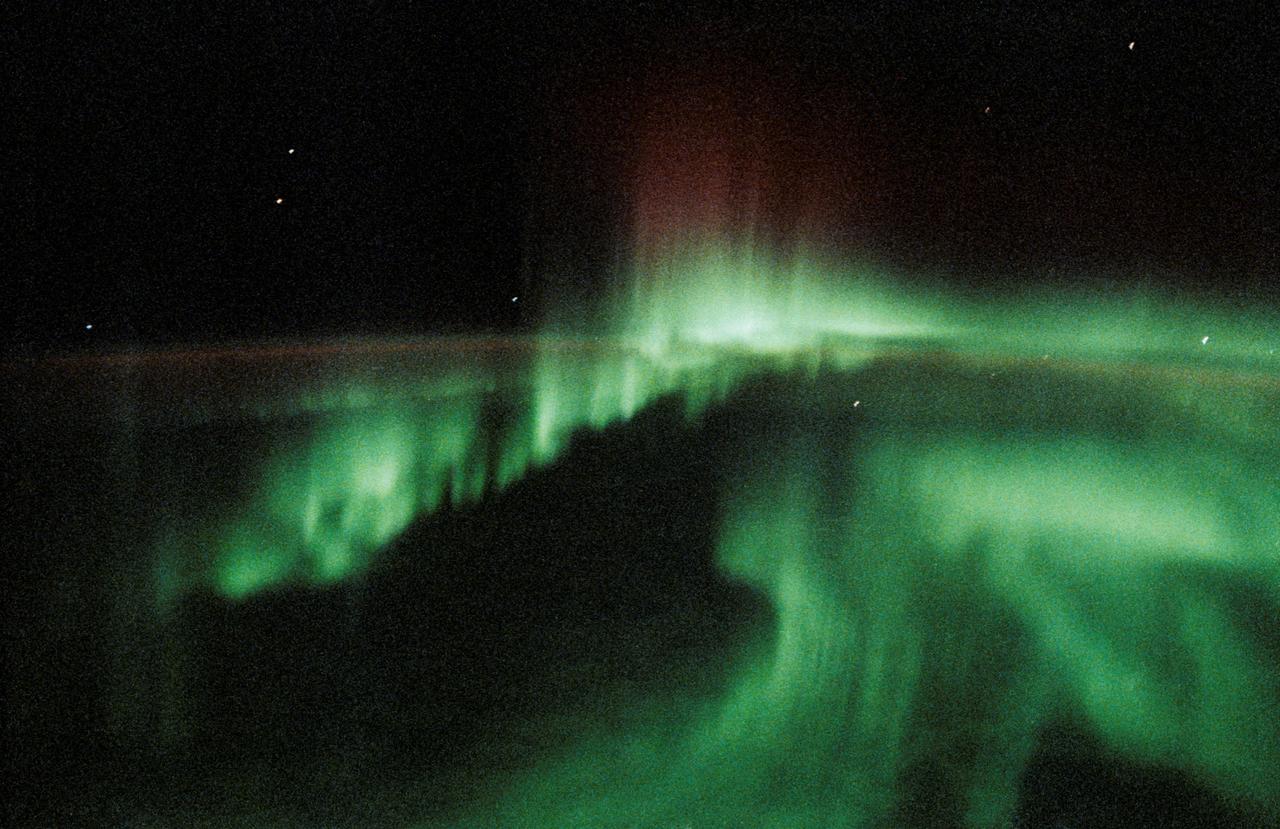
STS047-20-015 (12-20 Sept. 1992) --- This 35mm frame represents one of the more spectacular views of Aurora Australis, photographed by the crew. The crew observed and photographed a great deal of auroral activity from the Earth-orbiting Space Shuttle Endeavour during the eight-day Spacelab-J mission.
STS-47 view of the Aurora Australis
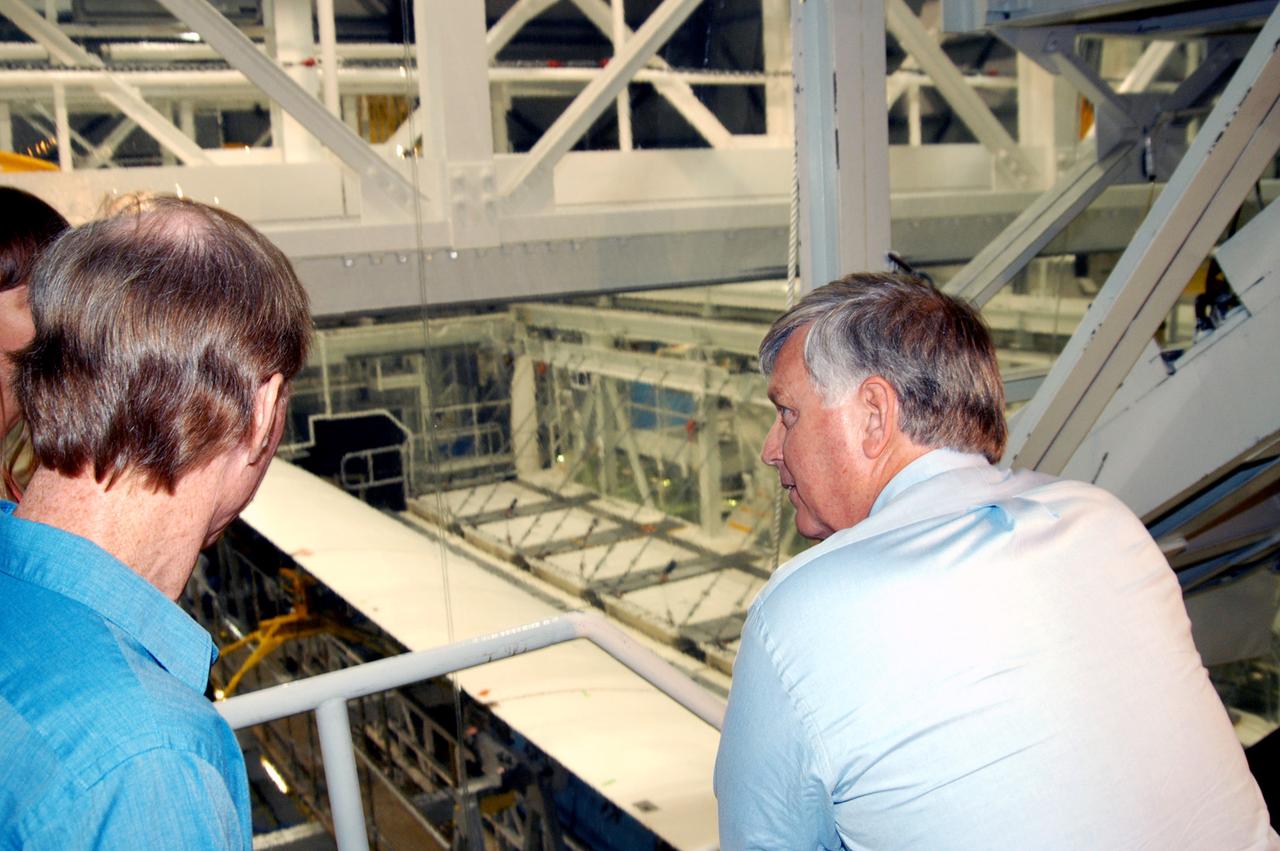
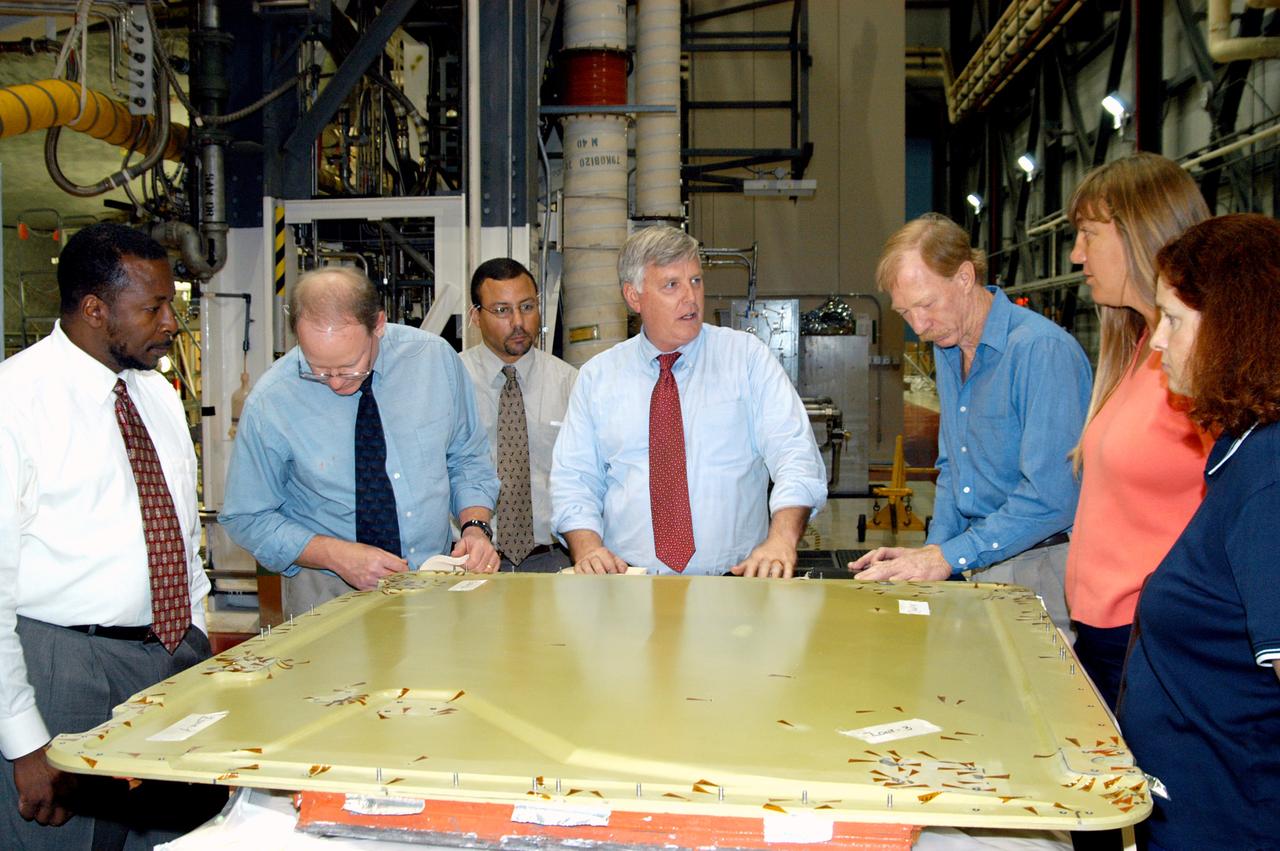
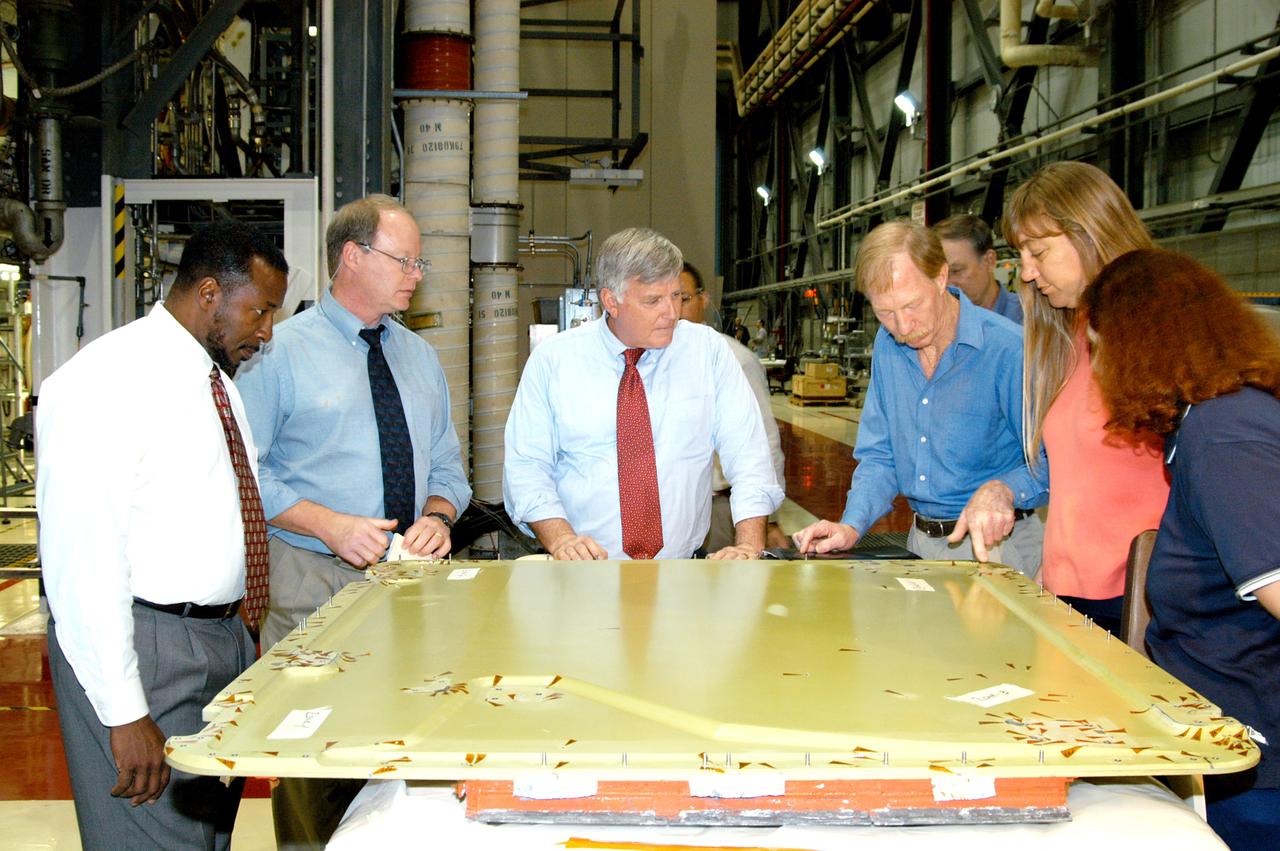
KENNEDY SPACE CENTER, FLA. - On a tour of the Orbiter Processing Facility, Center Director Jim Kennedy (right) looks over some of the work being done on the orbiter Endeavour.  At left is Tom Roberts, who is with United Space Alliance.  Endeavour is in its Orbiter Major Modification period, which began in December 2003.
KENNEDY SPACE CENTER, FLA. - On a tour of the Orbiter Processing Facility, Center Director Jim Kennedy (right) looks over some of the work being done on the orbiter Endeavour. At left is Tom Roberts, who is with United Space Alliance. Endeavour is in its Orbiter Major Modification period, which began in December 2003.
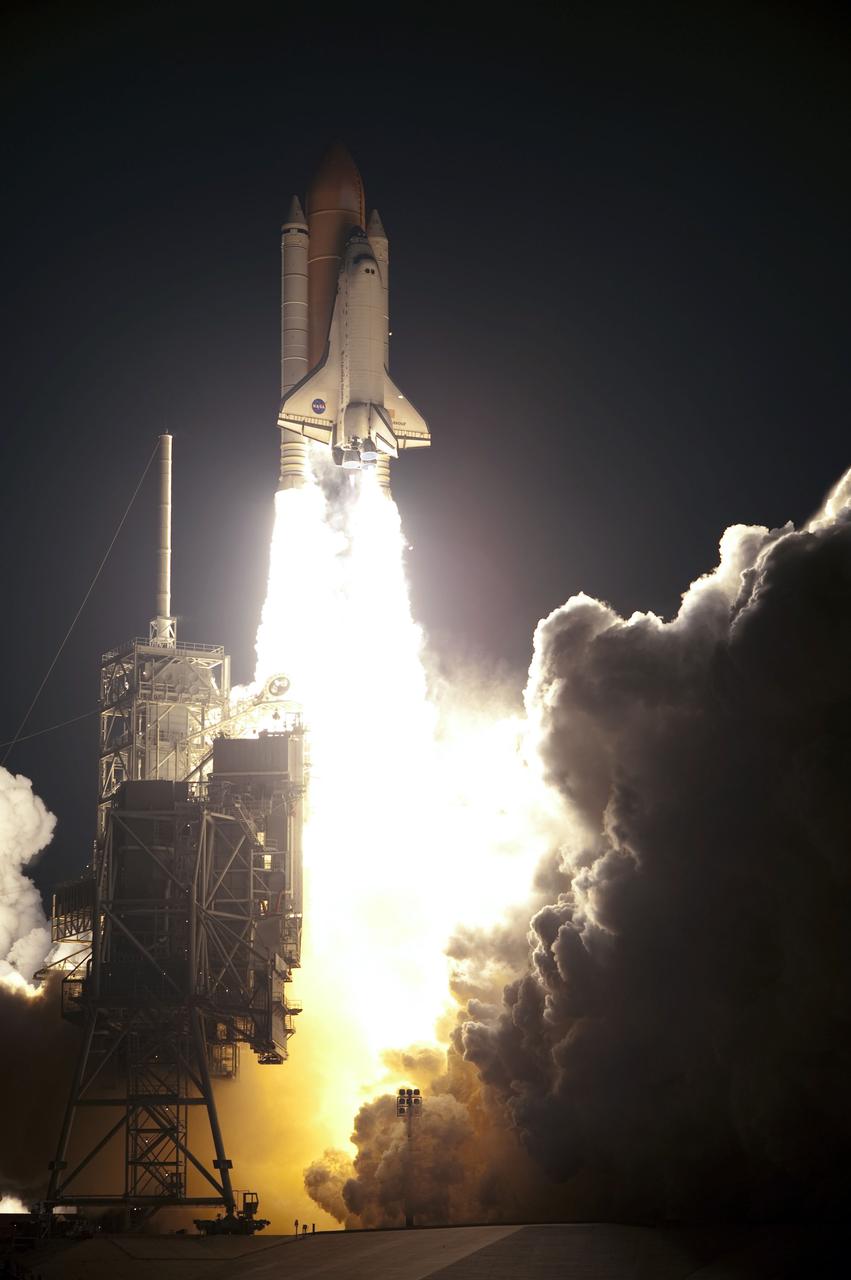
STS130-S-031 (8 Feb. 2010) --- Against a black night sky, space shuttle Endeavour and its six-member STS-130 crew head toward Earth orbit and rendezvous with the International Space Station. Liftoff was at 4:14 a.m. (EST) on Feb. 8, 2010 from launch pad 39A at NASA's Kennedy Space Center. Onboard are NASA astronauts George Zamka, commander; Terry Virts, pilot; Robert Behnken, Kathryn Hire, Nicholas Patrick and Stephen Robinson, all mission specialists. This was the second launch attempt for Endeavour's STS-130 crew and the final scheduled space shuttle night launch. The first attempt on Feb. 7 was scrubbed due to unfavorable weather. The primary payload for the STS-130 mission to the International Space Station is the Tranquility node, a pressurized module that will provide additional room for crew members and many of the station's life support and environmental control systems. Attached to one end of Tranquility is the Cupola module, a unique work area with six windows on its sides and one on top. The Cupola resembles a circular bay window and will provide a vastly improved view of the station's exterior. The multi-directional view will allow the crew to monitor spacewalks and docking operations, as well as provide a spectacular view of Earth and other celestial objects. The module was built in Turin, Italy, by Thales Alenia Space for the European Space Agency.
Endeavour Launches on STS-130 Mission
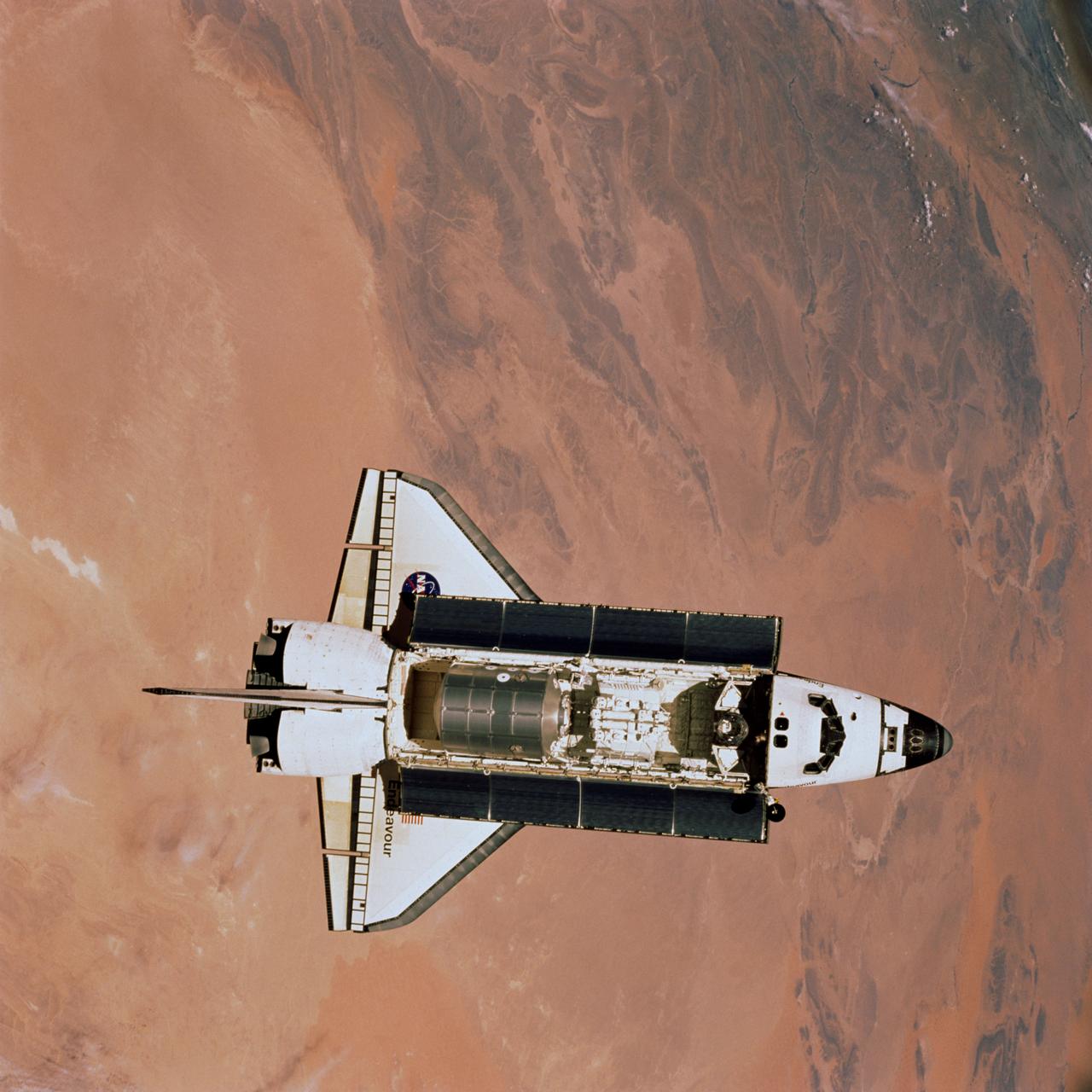
ISS002-707-048 (21 April 2001) --- One of the three Expedition Two crewmembers aboard the International Space Station (ISS) captured this view of the Space Shuttle Endeavour with payload bay doors open as the shuttle approached the orbital outpost for an April 21, 2001 docking.  Raffaello, the second Multipurpose Logistics Module (MPLM) provided by the Italian Space Agency (ASI), can be seen in its berthed position in the cargo bay. Topography in northern Africa serves as a backdrop for the scene. Onboard the station are cosmonaut Yury V. Usachev, Expedition Two commander, and astronauts Susan J. Helms and James S. Voss, flight engineers. Onboard the shuttle are astronauts Kent V. Rominger, Jeffrey S. Ashby, Scott E. Parazynski, John L. Phillips, Chris A. Hadfield,  and Umberto Guidoni, along with cosmonaut Yuri V. Lonchakov. Hadfield represents the Canadian Space Agency (CSA); Guidoni is with the European Space Agency (ESA) and Lonchakov is associated with Rosaviakosmos.
STS-100 orbiter Endeavour approaching ISS for docking
STS054-02-008 (13-19 Jan. 1993) --- The traditional inflight crew portrait has, (clockwise), Susan J. Helms, Mario Runco Jr., both mission specialists, John H. Casper, mission commander, Donald R. McMonagle, pilot, and Gregory J. Harbaugh, mission specialist.  This frame was taken with a 35mm camera aboard the Earth-orbiting Space Shuttle Endeavour during the six-day mission.
In orbit crew group portraits.
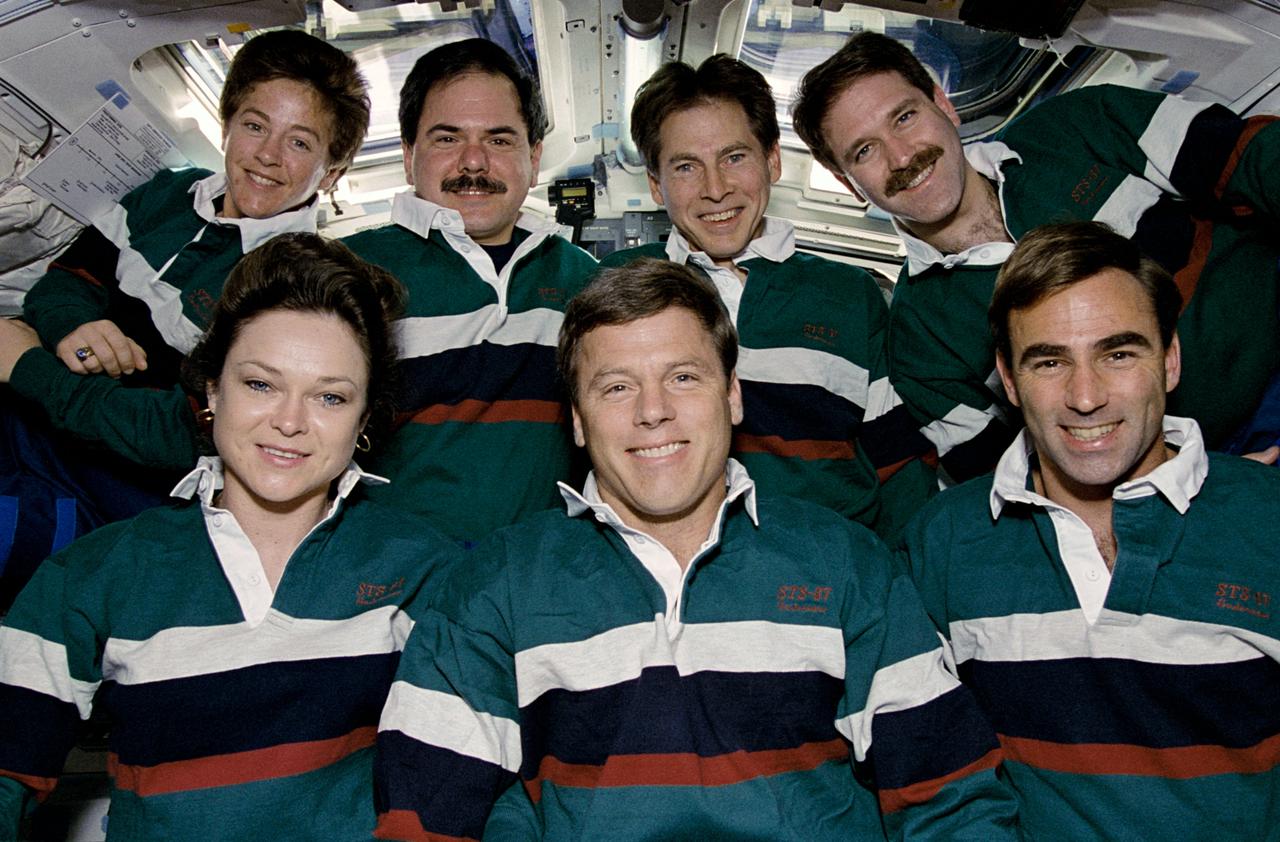
The STS-67/ASTRO-2 crew members pose for their traditional inflight portrait on the aft flight deck of the Earth orbiting Space Shuttle Endeavour. Left to right in the front are astronauts Tamara E. Jernigan, payload commander; Steven S. Oswald, mission commander; and William G. Gregory, pilot. Left to right on the back row are astronaut Wendy B. Lawrence, flight engineer; payload specialists Ronald A. Parise and Samuel T. Durrance; and John M. Grunsfeld, mission specialist.
STS-67 in-flight crew portrait
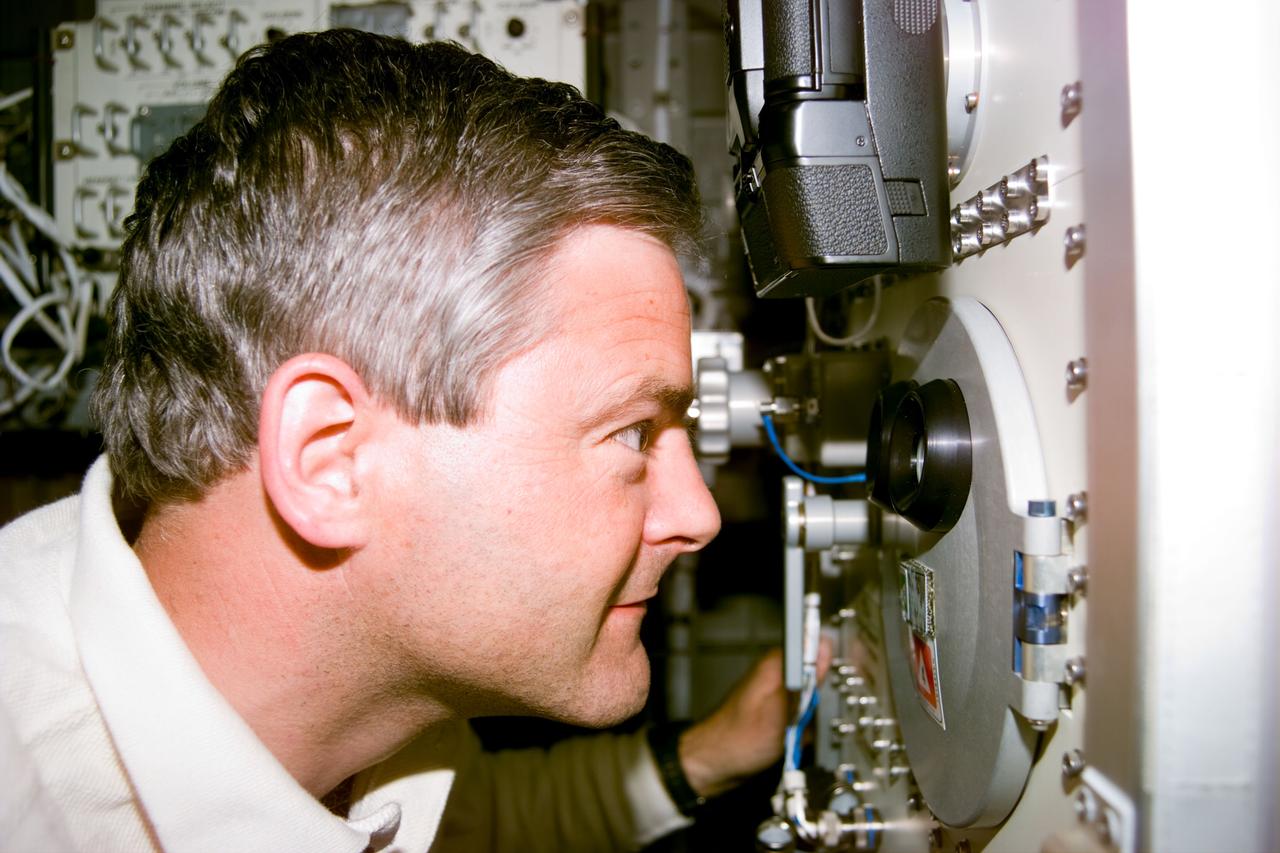
S77-E-5093 (25 May 1996) --- Astronaut Marc Garneau, mission specialist representing the Canadian Space Agency (CSA), makes a visual check of the Commercial Float Zone Furnace (CFZF), a single-rack-mounted facility in the Spacehab Module onboard the Earth-orbiting Space Shuttle Endeavour.  The scene was recorded with an Electronic Still Camera (ESC).
Commercial Float Zone Furnace
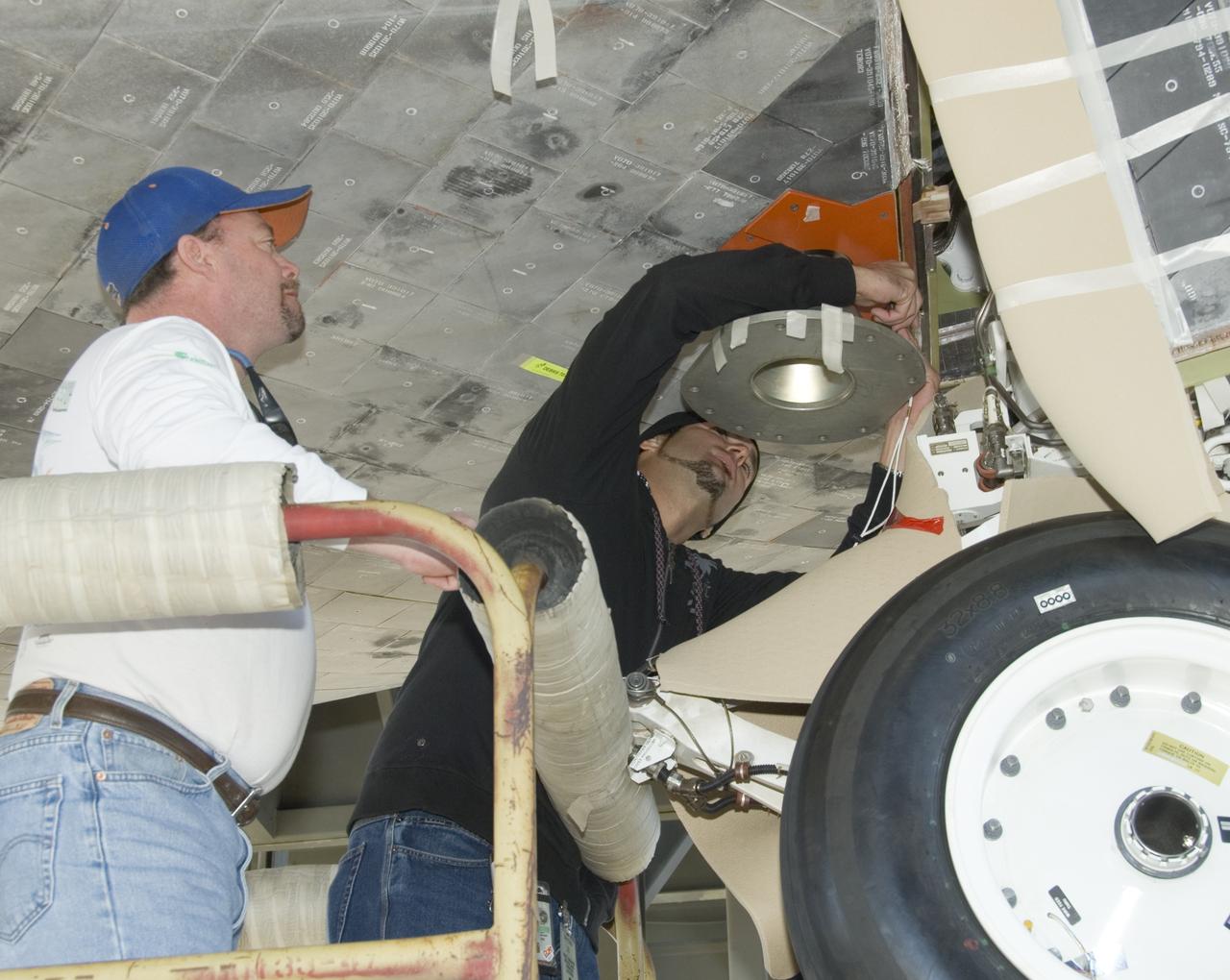
United Space Alliance employees Mark Burton and Russell Wazniak attach the forward mount fixture to Shuttle Endeavour for mounting the orbiter to the 747 Shuttle Carrier Aircraft.
Mark Burton and Russell Wazniak attach the forward mount fixture to Shuttle Endeavour for mounting the orbiter to the 747 Shuttle Carrier Aircraft
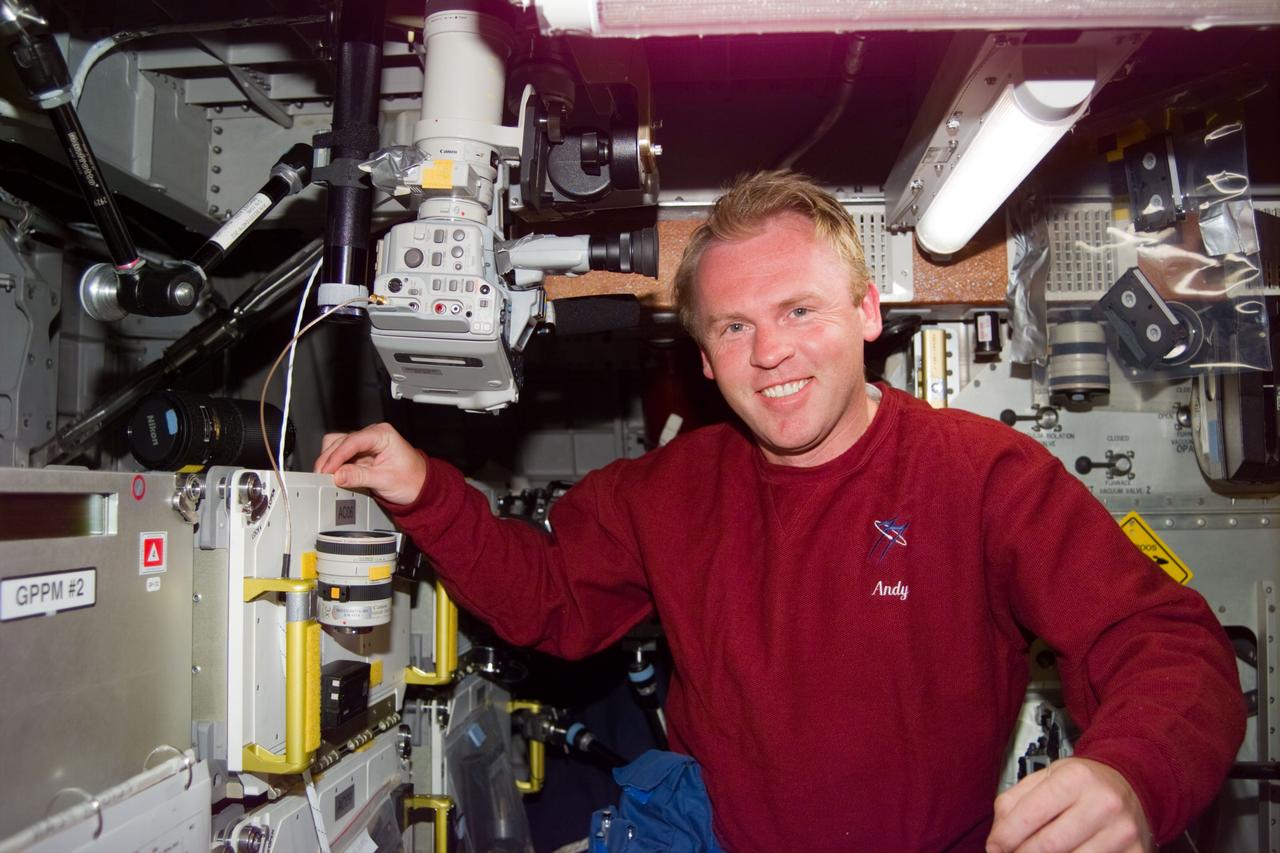
S77-E-5089 (25 May 1996) --- Astronaut Andrew S. W. Thomas, mission specialist, interrupts a Spacehab task to pose for an Electronic Still Camera (ESC) snapshot inside the Spacehab Module onboard the Earth-orbiting Space Shuttle Endeavour.  In upper left is the view port which crew members had used for viewing and photographing operations with the Spartan 207/Inflatable Antenna Experiment (IAE).  Thomas has his hand on an aft-bulkhead-mounted locker.  The Space Experiment Facility (SEF), designed and managed by the University of Alabama, is just behind his left shoulder.
Thomas in Spacehab module
STS059-S-066 (9 April 1994) --- The liftoff of the Space Shuttle Endeavour is backdropped against clouds at the Kennedy Space Center (KSC) as six NASA astronauts head for a week and a half in Earth orbit.  Liftoff occurred at 7:05 a.m. (EDT), April 9, 1994.  The air-to-air view was photographed from the Shuttle Training Aircraft (STA) piloted by astronaut Robert L. Gibson.  Onboard for the Space Radar Laboratory (SRL-1) mission were astronauts Sidney M. Gutierrez, Kevin P. Chilton, Jerome (Jay) Apt, Linda M. Godwin, Michael (Rich) Clifford and Thomas D. Jones.
Liftoff of STS-59 Shuttle Endeavour
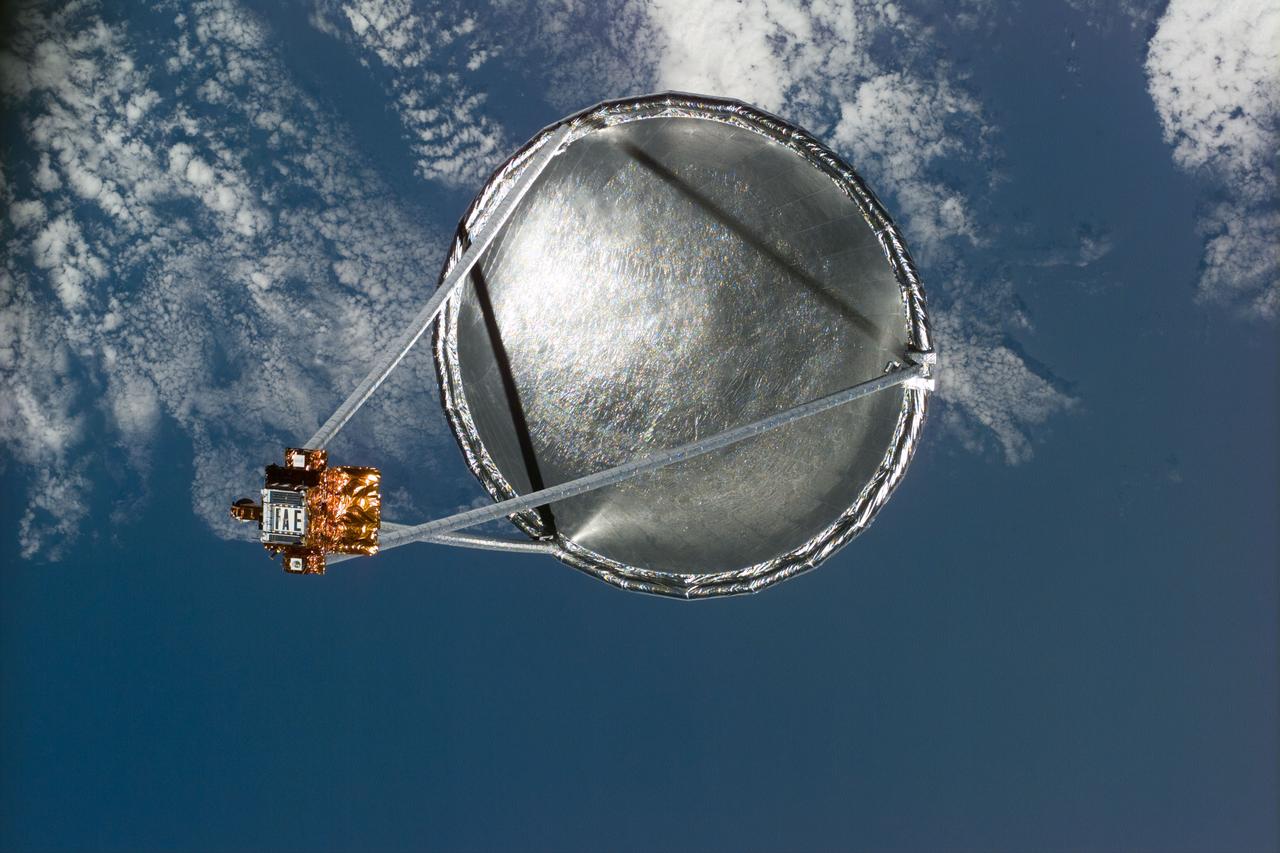
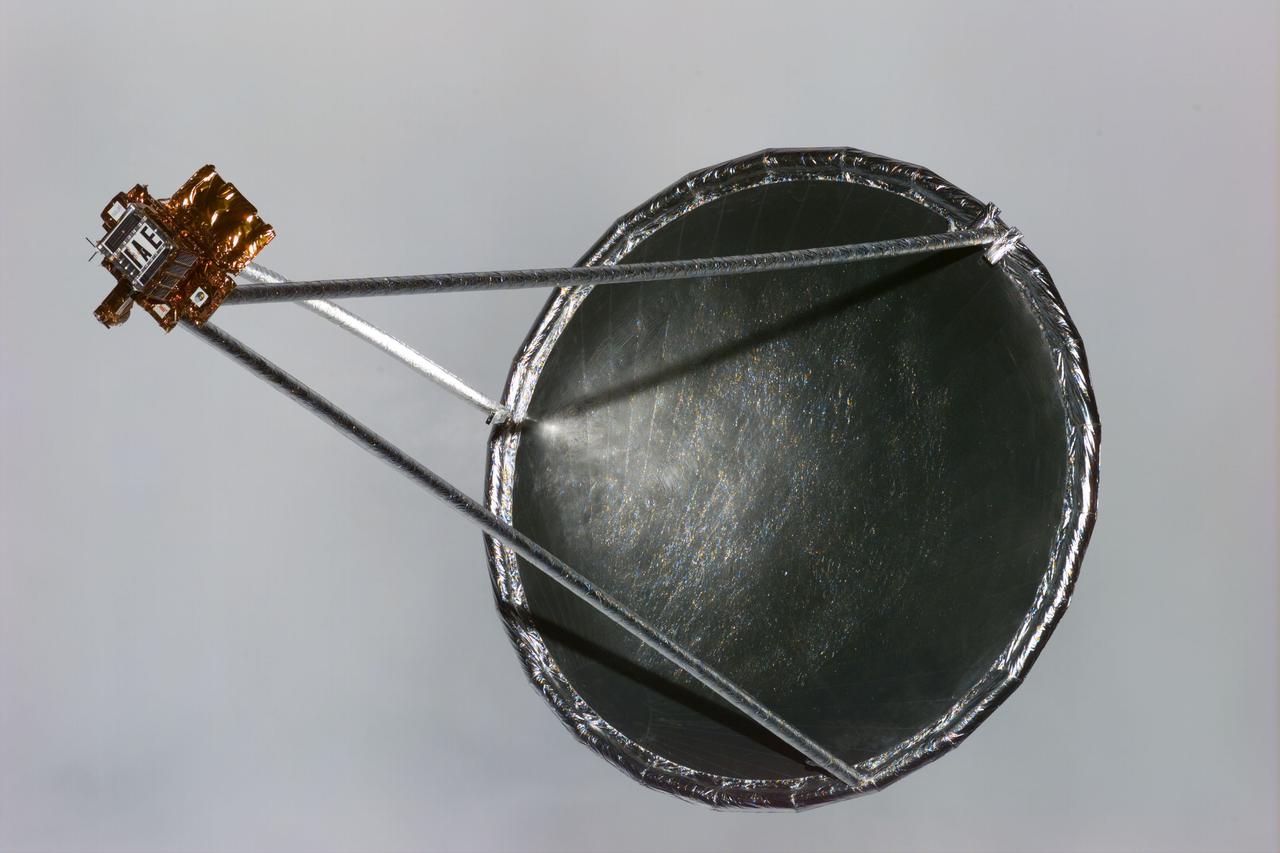
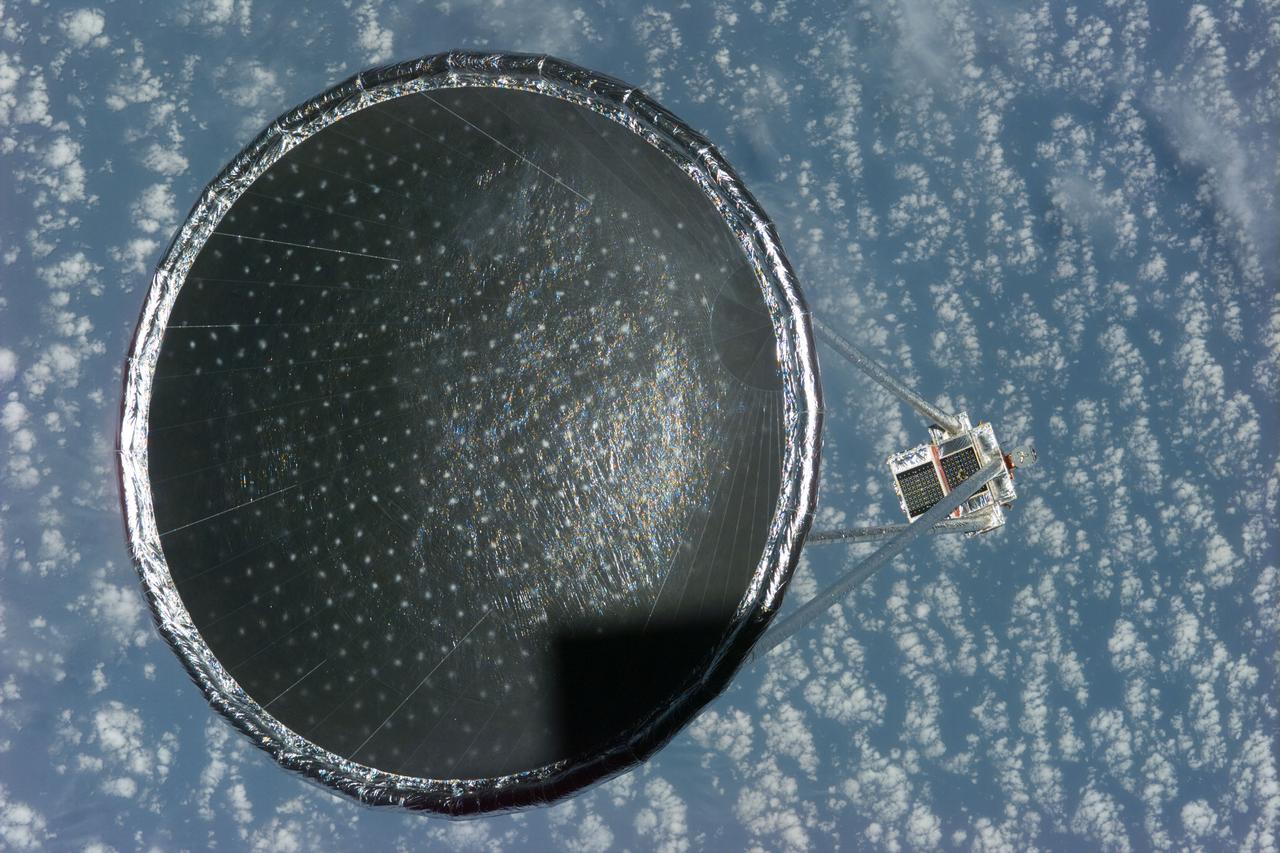
S77-E-5022 (20 May 1996)--- Following its deployment from the Space Shuttle Endeavour, the Spartan 207/Inflatable Antenna Experiment (IAE) payload is backdropped over clouds and water.  The view was photographed with an Electronic Still Camera (ESC) and downlinked to flight controllers on the first full day of orbital operations by the six-member crew.  Managed by Goddard Space Flight Center (GSFC), Spartan is designed to provide short-duration, free-flight opportunities for a variety of scientific studies.  The Spartan configuration on this flight is unique in that the IAE is part of an additional separate unit which is ejected once the experiment is completed.  The IAE experiment will lay the groundwork for future technology development in inflatable space structures, which will be launched and then inflated like a balloon on-orbit.
Inflatable Antenna Experiment (IAE)
S77-E-5033 (20 May 1996) --- Following its deployment from the Space Shuttle Endeavour, the Spartan 207/Inflatable Antenna Experiment (IAE) payload is backdropped against a wall of grayish clouds.  The view was photographed with an Electronic Still Camera (ESC) and downlinked to flight controllers on the first full day of orbital operations by the six-member crew.  Managed by Goddard Space Flight Center (GSFC), Spartan is designed to provide short-duration, free-flight opportunities for a variety of scientific studies.  The Spartan configuration on this flight is unique in that the IAE is part of an additional separate unit which is ejected once the experiment is completed.  The IAE experiment will lay the groundwork for future technology development in inflatable space structures, which will be launched and then inflated like a balloon on-orbit.
Inflatable Antenna Experiment (IAE)
S77-E-5027 (20 May 1996)--- Following its deployment from the Space Shuttle Endeavour, the Spartan 207/Inflatable Antenna Experiment (IAE) payload is backdropped over clouds and water.  The view was photographed with an Electronic Still Camera (ESC) and downlinked to flight controllers on the first full day of orbital operations by the six-member crew.  Managed by Goddard Space Flight Center (GSFC), Spartan is designed to provide short-duration, free-flight opportunities for a variety of scientific studies.  The Spartan configuration on this flight is unique in that the IAE is part of an additional separate unit which is ejected once the experiment is completed.  The IAE experiment will lay the groundwork for future technology development in inflatable space structures, which will be launched and then inflated like a balloon on-orbit.
Inflatable Antenna Experiment (IAE)
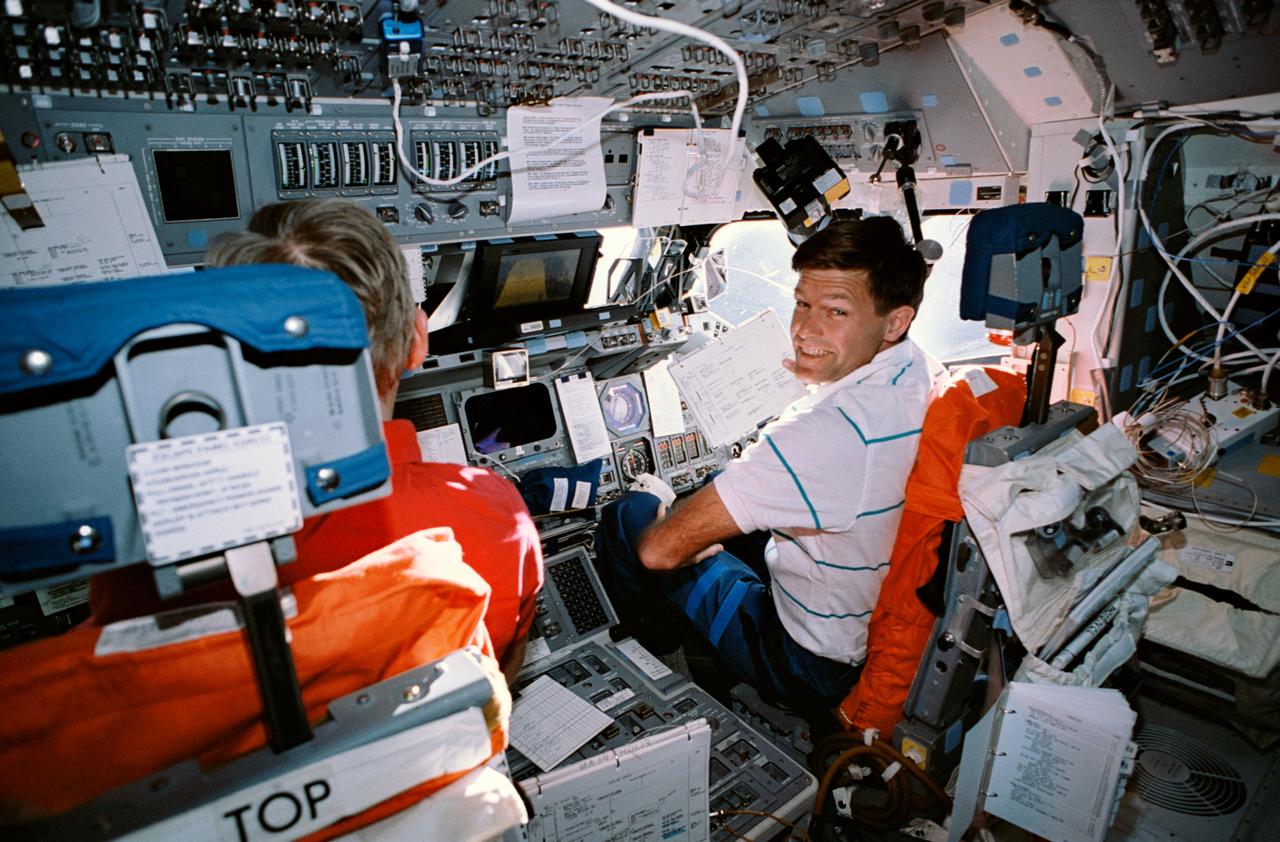
STS054-30-022 (13-19 Jan 1993) --- Astronaut Donald R. McMonagle (right), pilot, shares the forward flight deck with astronaut John H. Casper, mission commander, as the pair performs a maneuver of the Shuttle Endeavour in Earth orbit.  The photograph was taken with a 35mm camera.
Crewmembers in the forward flight deck.
STS059-32-016 (20 April 1994) --- Astronaut Linda M. Godwin, STS-59 payload commander, poses with the spacesuit she wore for launch.  She will eventually wear the partial pressure suit for the entry phase of the Space Shuttle Endeavour's week and a half mission in Earth orbit.
Astronaut Linda Godwin poses with spacesuit she wore for launch
KENNEDY SPACE CENTER, FLA. - On a tour of the Orbiter Processing Facility, Center Director Jim Kennedy (left) listens to Kathy Laufenberg, Orbiter Airframe Engineering ground area manager, with United Space Alliance, about corrosion work being done on the external tank door of orbiter Endeavour. On either side of Laufenberg are Tom Roberts, Airframe Engineering System specialist, also with USA, and Joy Huff, with KSC Space Shuttle Processing.  Endeavour is in its Orbiter Major Modification period, which began in December 2003.
KENNEDY SPACE CENTER, FLA. - On a tour of the Orbiter Processing Facility, Center Director Jim Kennedy (left) listens to Kathy Laufenberg, Orbiter Airframe Engineering ground area manager, with United Space Alliance, about corrosion work being done on the external tank door of orbiter Endeavour. On either side of Laufenberg are Tom Roberts, Airframe Engineering System specialist, also with USA, and Joy Huff, with KSC Space Shuttle Processing. Endeavour is in its Orbiter Major Modification period, which began in December 2003.
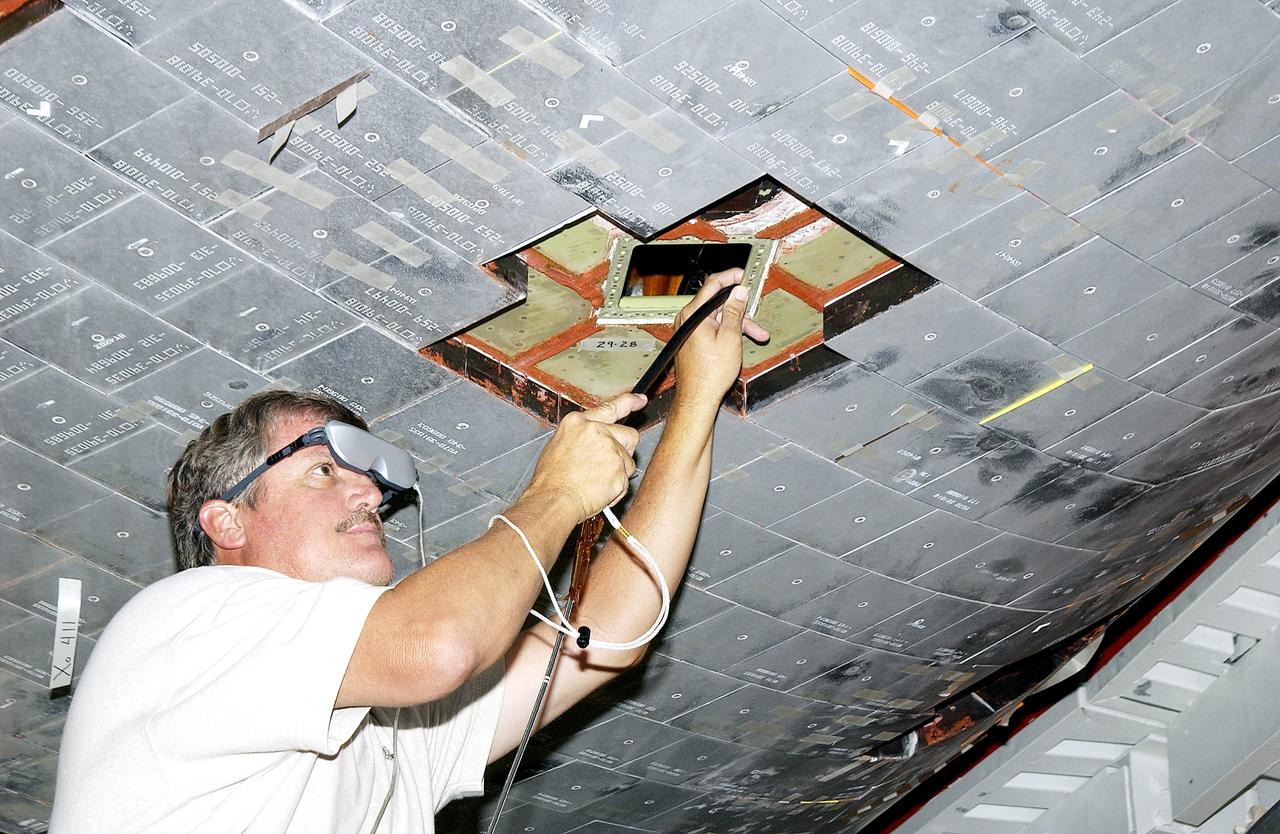
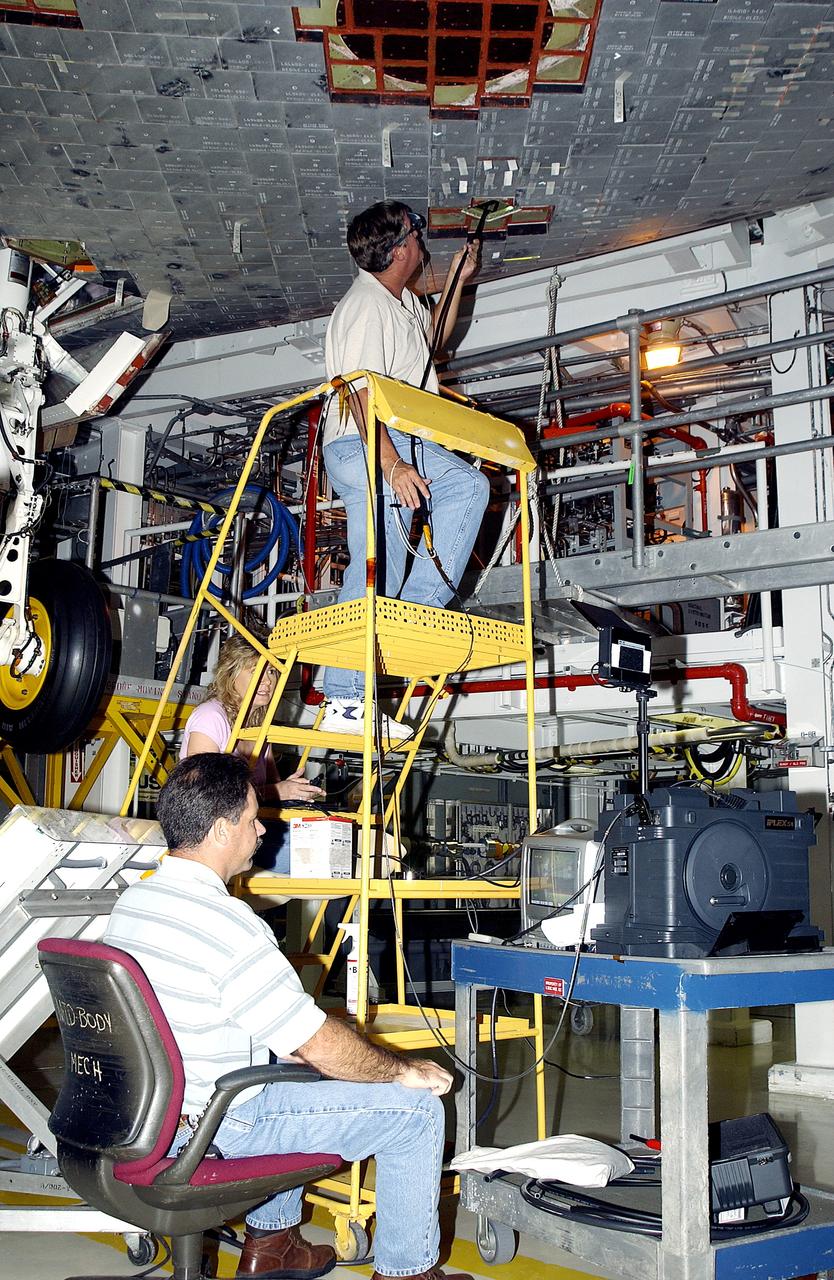
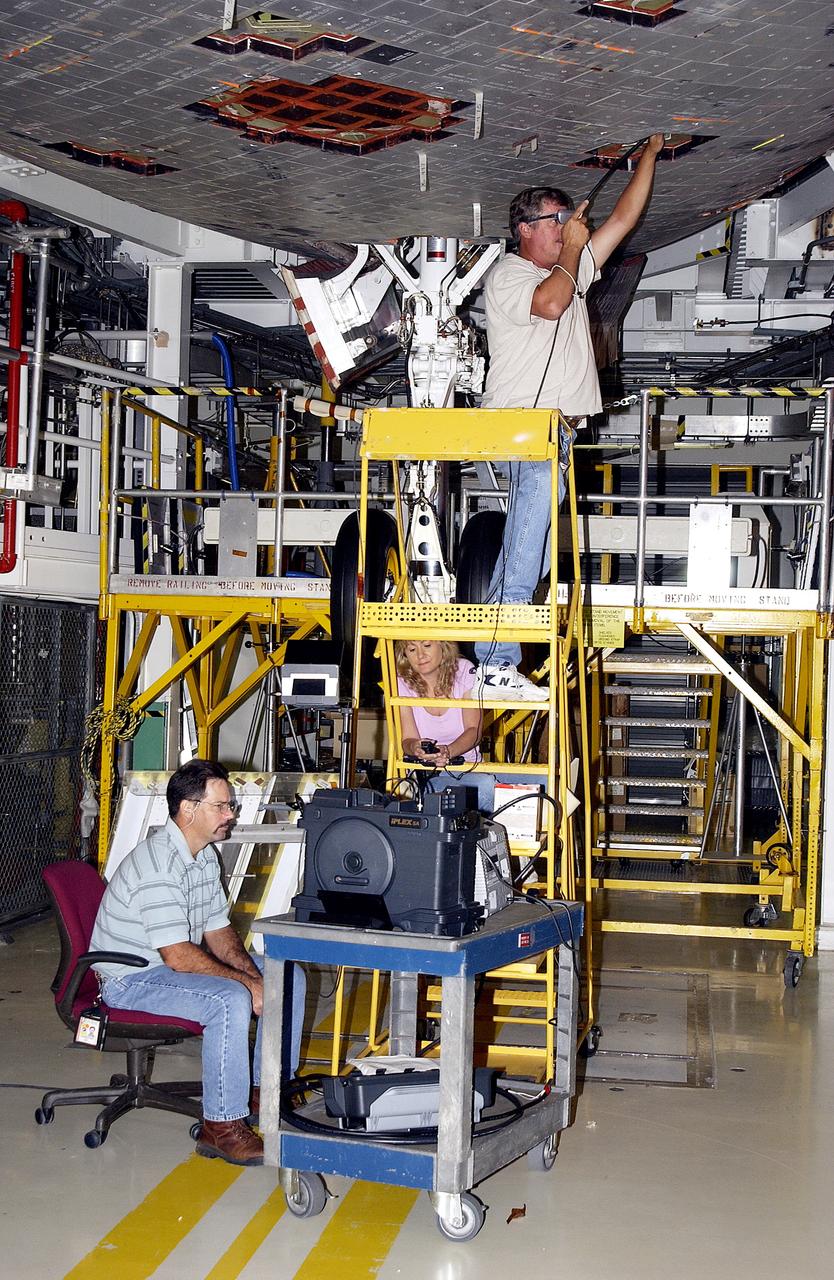
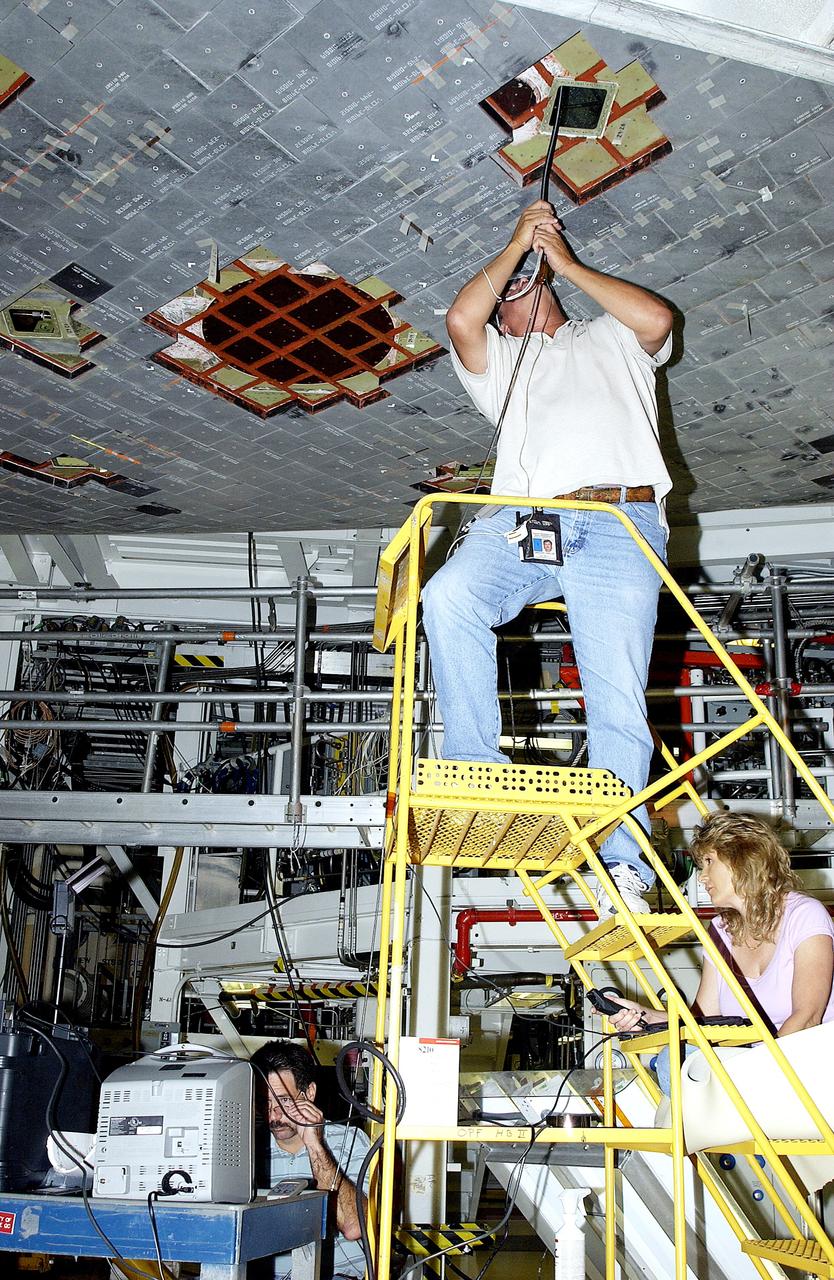
KENNEDY SPACE CENTER, FLA. -  In the Orbiter Processing Facility, Greg Harlow, with United Space Alliance (USA), threads a camera under the tiles of the orbiter Endeavour to inspect for corrosion.
KENNEDY SPACE CENTER, FLA. - In the Orbiter Processing Facility, Greg Harlow, with United Space Alliance (USA), threads a camera under the tiles of the orbiter Endeavour to inspect for corrosion.
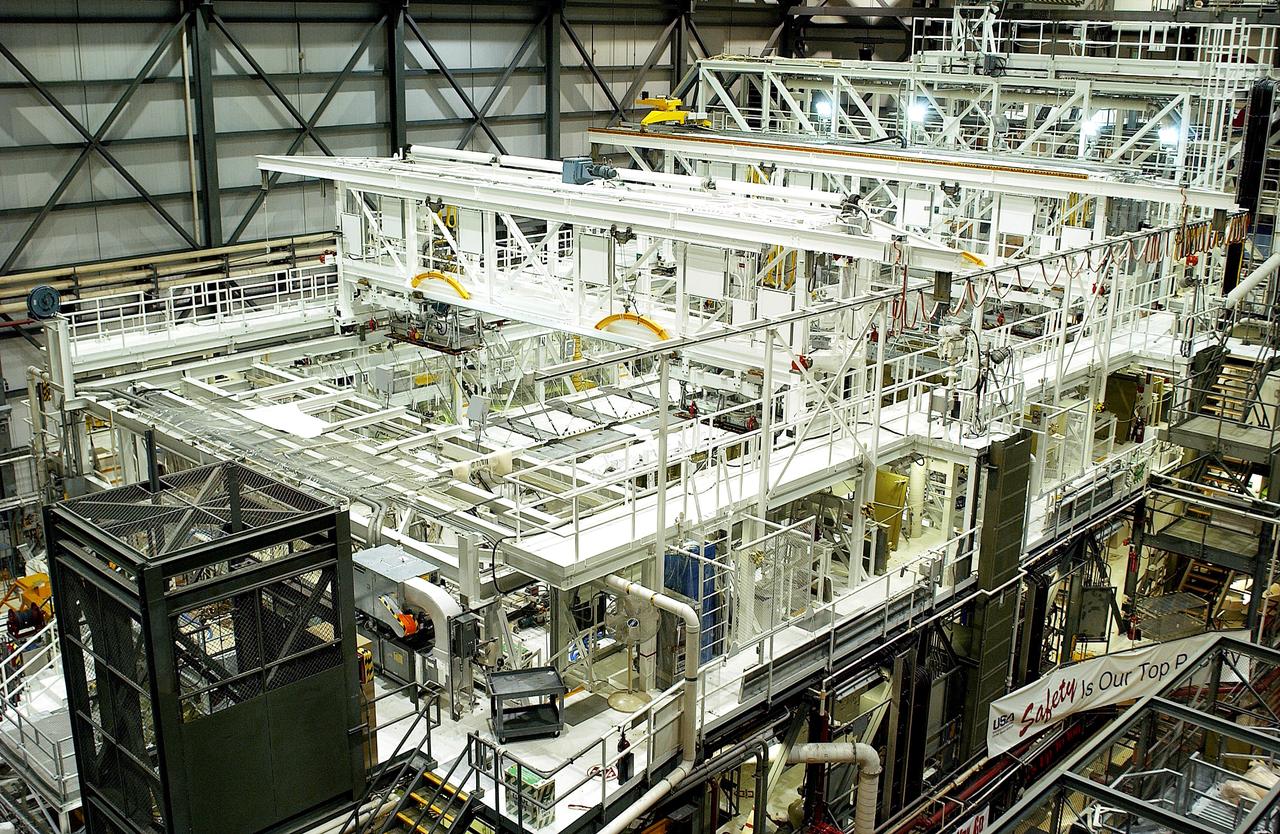
KENNEDY SPACE CENTER, FLA. -   Workstands at various levels surround the orbiter Endeavour in the Orbiter Processing Facility (OPF).  The OPF provides postflight servicing and checkout, as well as vehicle modifications.
KENNEDY SPACE CENTER, FLA. - Workstands at various levels surround the orbiter Endeavour in the Orbiter Processing Facility (OPF). The OPF provides postflight servicing and checkout, as well as vehicle modifications.
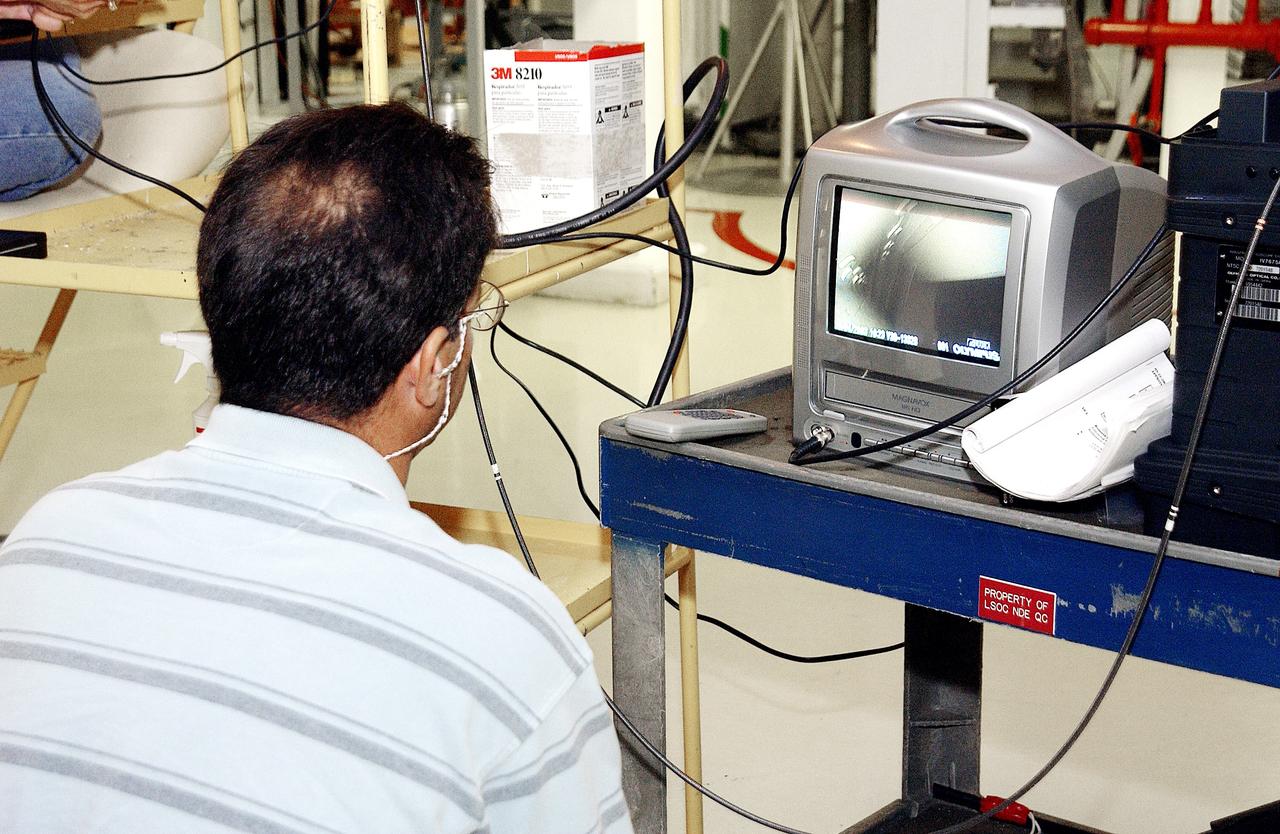
KENNEDY SPACE CENTER, FLA. -  In the Orbiter Processing Facility,  Richard Parker, with NASA, watches a monitor showing images from a camera inserted beneath tiles of the orbiter Endeavour to inspect for corrosion.
KENNEDY SPACE CENTER, FLA. - In the Orbiter Processing Facility, Richard Parker, with NASA, watches a monitor showing images from a camera inserted beneath tiles of the orbiter Endeavour to inspect for corrosion.
STS059-S-036 (9 April 1994) --- The liftoff of the Space Shuttle Endeavour is backdropped against a dawn sky at the Kennedy Space Center (KSC) as six NASA astronauts head for a week and a half in Earth orbit.  The morning sky allows for a contrasting backdrop for the diamond shock effect of the thrust from Endeavour's main engines.  Liftoff occurred at 7:05 a.m. (EDT), April 9, 1994.  Onboard for the Space Radar Laboratory (SRL-1) mission were astronauts Sidney M. Gutierrez, Kevin P. Chilton, Jerome (Jay) Apt, Linda M. Godwin, Michael R. U. (Rich) Clifford and Thomas D. Jones.
Liftoff of STS-59 Shuttle Endeavour
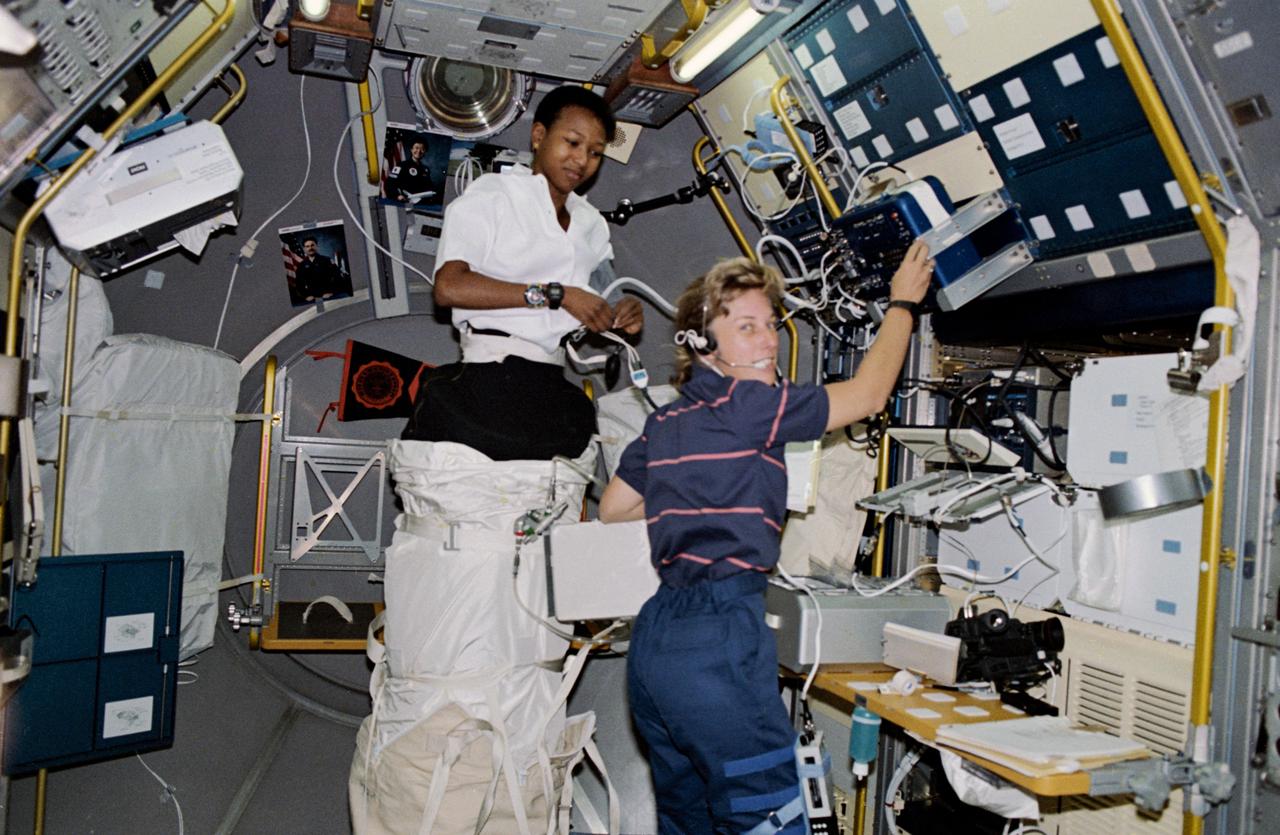
STS047-05-019 (12 - 20 Sept 1992) --- Astronaut Jerome (Jay) Apt, mission specialist, responds to a crew mate's query during a shift change in the Spacelab-J Science Module aboard the Earth-orbiting Space Shuttle Endeavour.  Others pictured, left to right, are astronauts Mark C. Lee (immediate foreground, partially out of frame), payload commander; Mae C. Jemison and N. Jan Davis, mission specialists.  The four joined two other NASA astronauts and a Japanese payload specialist for eight days aboard Endeavour in support of the joint Japanese-American effort.
STS-47 crewmembers work in the Spacelab Japan (SLJ) module aboard OV-105
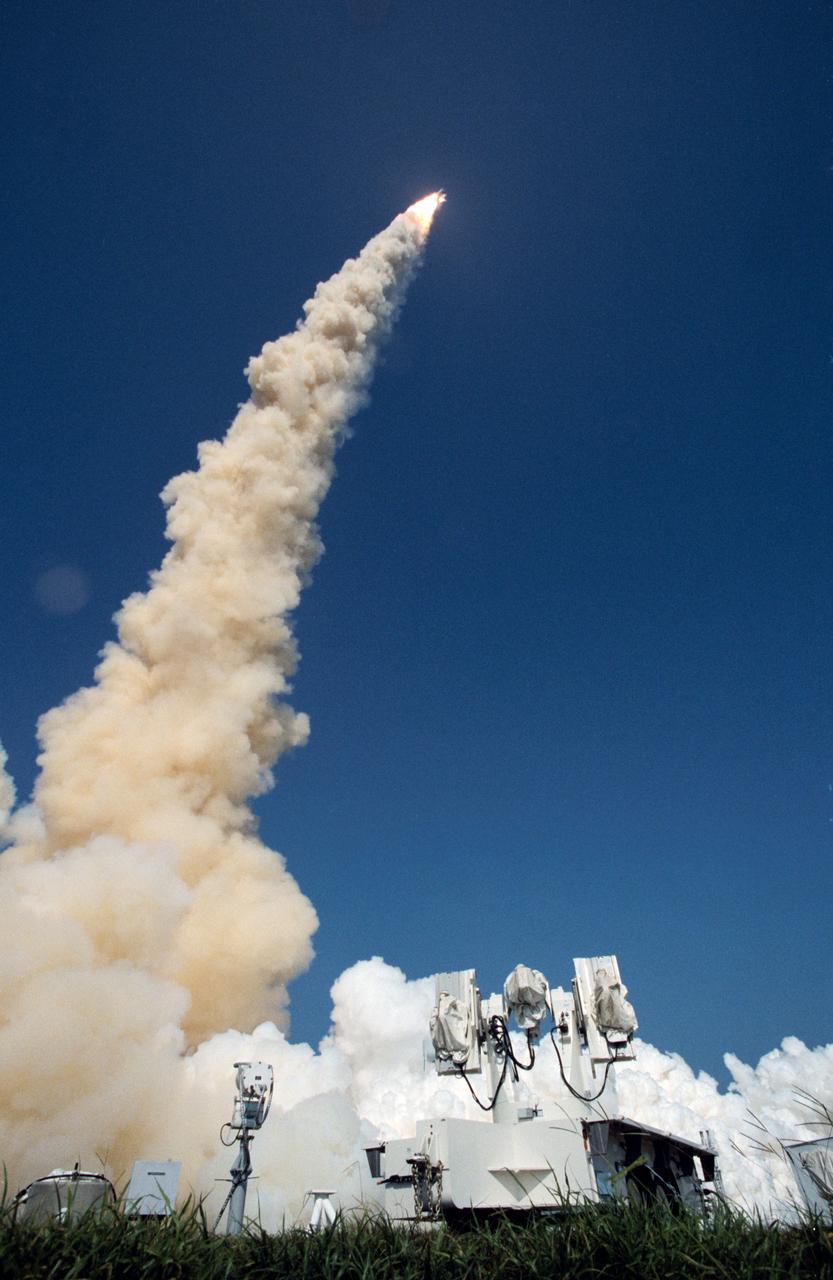
STS047-S-039 (12 Sept 1992) --- A 35mm camera was used to record this low-angle view of the STS-47 launch.  With a crew of six NASA astronauts and a Japanese payload specialist onboard, the Space Shuttle Endeavour was heading for its second trip into space.  This mission will be devoted to support of the Spacelab-J mission, a joint effort between Japan and the United States.  Launch occurred at 10:23:00:0680 a.m. (EDT), September 12, 1992.  Onboard were astronauts Robert L. Gibson, mission commander; Curtis L. Brown Jr., pilot; Mark C. Lee, payload commander; and Jerome (Jay) Apt, Mae C.  Jemison and N. Jan Davis, mission specialists; along with payload specialist Mamoru Mohri, representing the National Space Development Agency (NASDA) of Japan.
STS-47 Endeavour, Orbiter Vehicle (OV) 105, liftoff from KSC
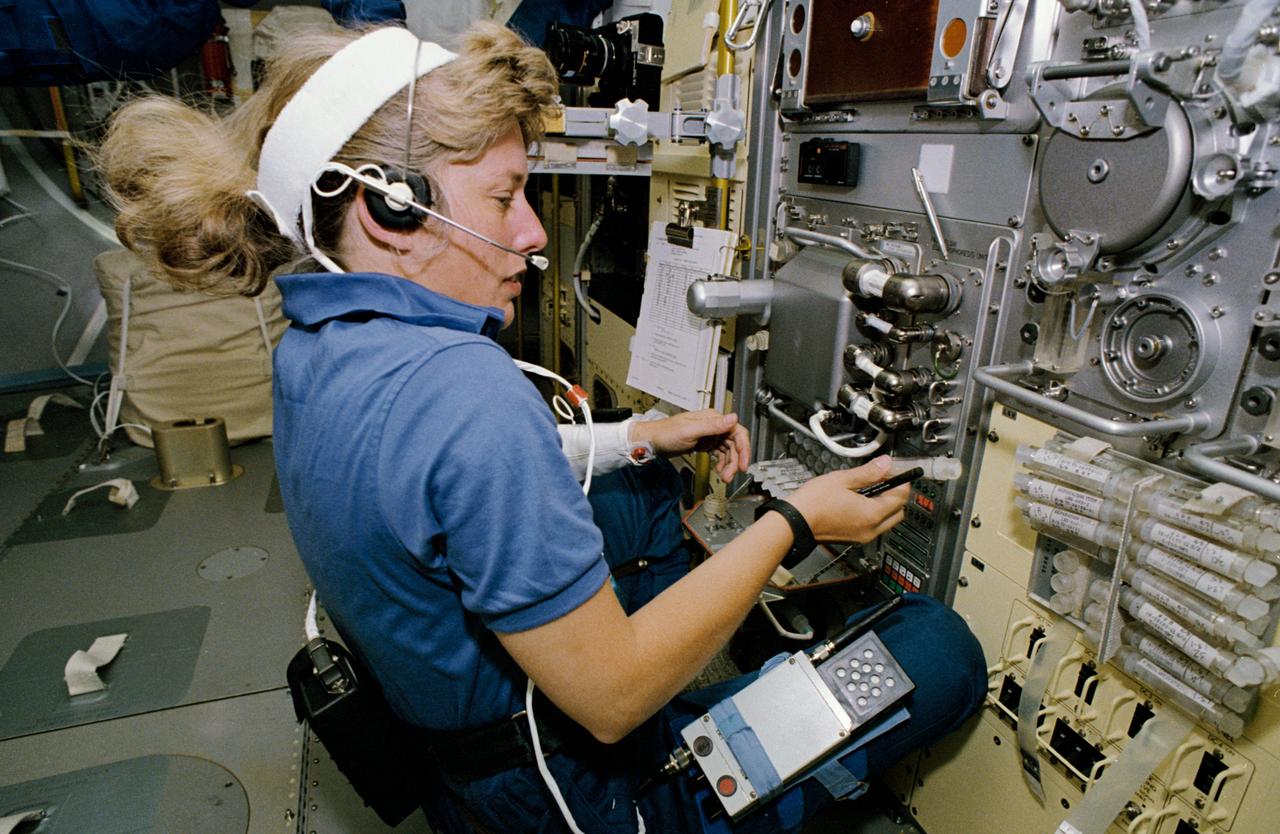
STS047-03-024 (12 - 20 Sept 1992) --- Astronaut N. Jan Davis, mission specialist, talks to ground controllers as she works with the Free Flow Electrophoresis Unit (FFEU) in the Science Module of the Earth-orbiting Space Shuttle Endeavour.  Davis joined five other NASA astronauts and a Japanese payload specialist for eight days of scientific research onboard Endeavour.
STS-47 MS Davis holds mixed protein sample while working at SLJ Rack 7 FFEU
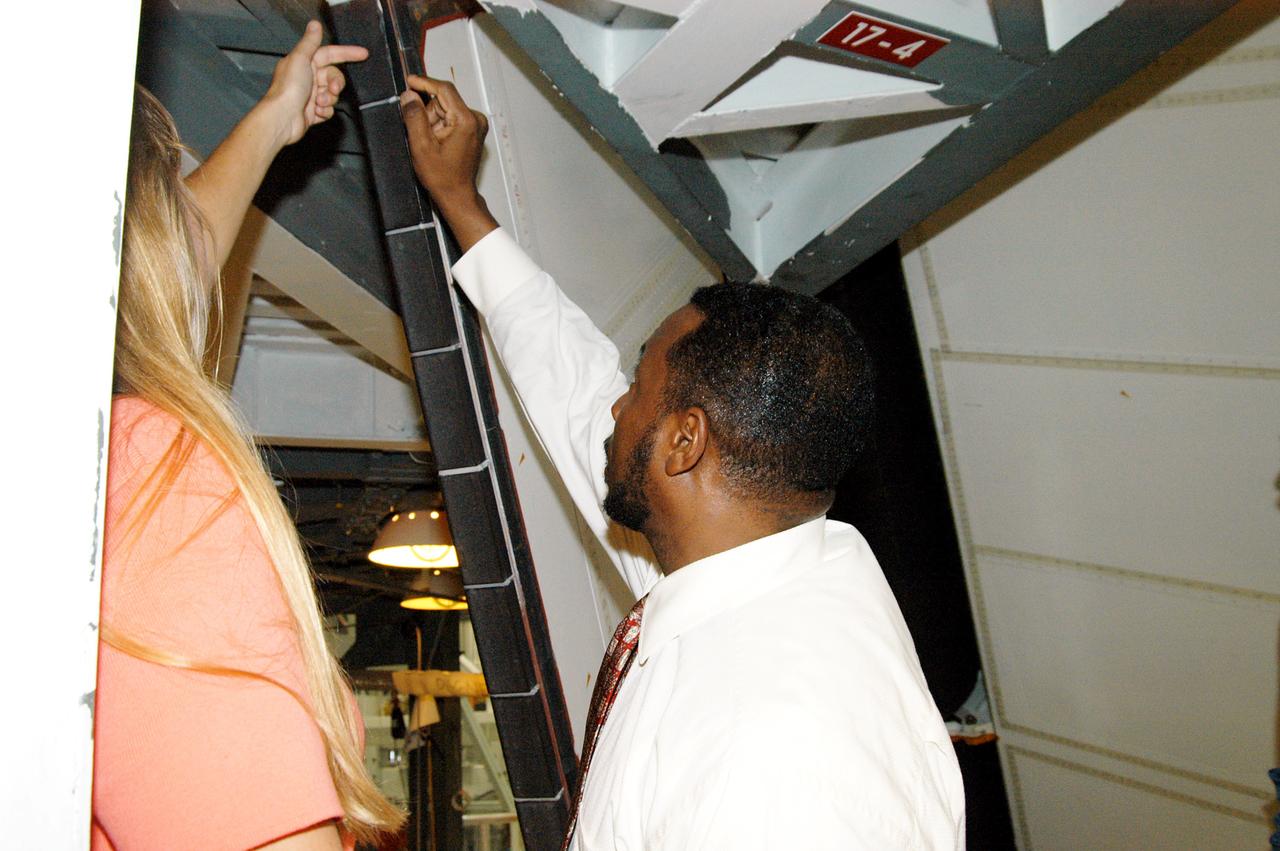
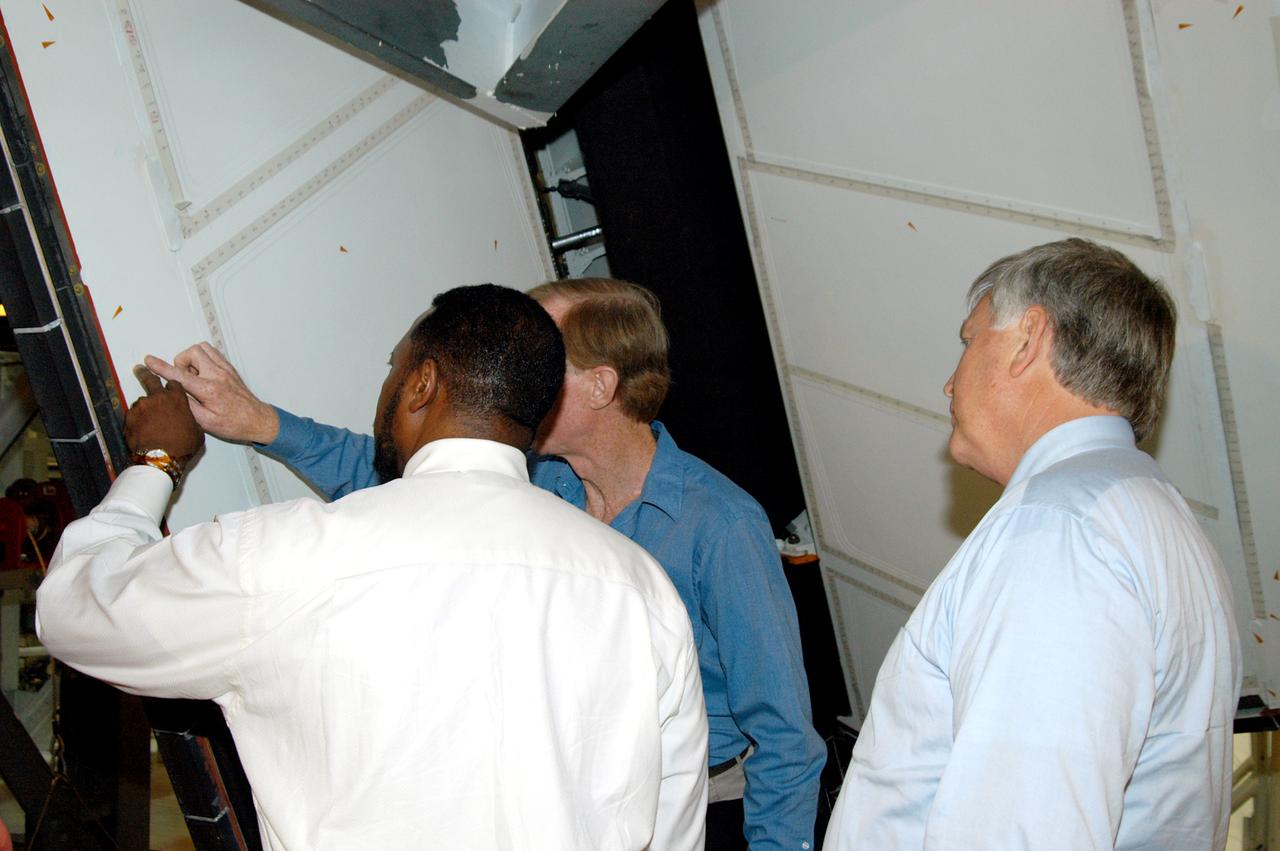
KENNEDY SPACE CENTER, FLA. - On a tour of the Orbiter Processing Facility, Kathy Laufenberg (left) directs the attention of Deputy Director Woodrow Whitlow Jr. to an area on a rudder speed brake panel on Endeavour.  The Center Director, Jim Kennedy, and Whitlow are on a tour of the Orbiter Processing Facility.  Endeavour is in its Orbiter Major Modification period, which began in December 2003.
KENNEDY SPACE CENTER, FLA. - On a tour of the Orbiter Processing Facility, Kathy Laufenberg (left) directs the attention of Deputy Director Woodrow Whitlow Jr. to an area on a rudder speed brake panel on Endeavour. The Center Director, Jim Kennedy, and Whitlow are on a tour of the Orbiter Processing Facility. Endeavour is in its Orbiter Major Modification period, which began in December 2003.
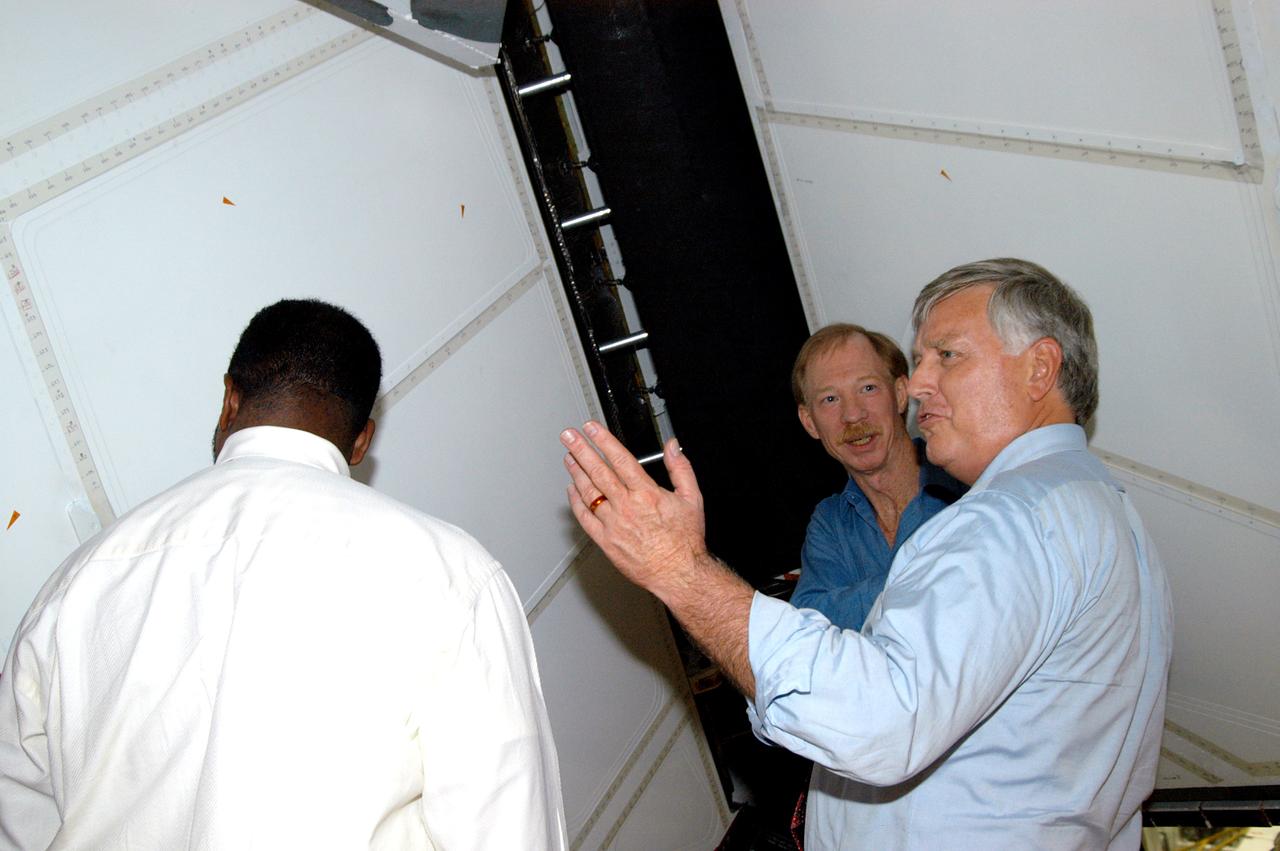
KENNEDY SPACE CENTER, FLA. - On a tour of the Orbiter Processing Facility, Center Director Jim Kennedy and Deputy Director Woodrow Whitlow Jr. (both at left) look over some of the work being done on the orbiter Endeavour that Tom Roberts, with United Space Alliance, is pointing out.  Endeavour is in its Orbiter Major Modification period, which began in December 2003.
KENNEDY SPACE CENTER, FLA. - On a tour of the Orbiter Processing Facility, Center Director Jim Kennedy and Deputy Director Woodrow Whitlow Jr. (both at left) look over some of the work being done on the orbiter Endeavour that Tom Roberts, with United Space Alliance, is pointing out. Endeavour is in its Orbiter Major Modification period, which began in December 2003.
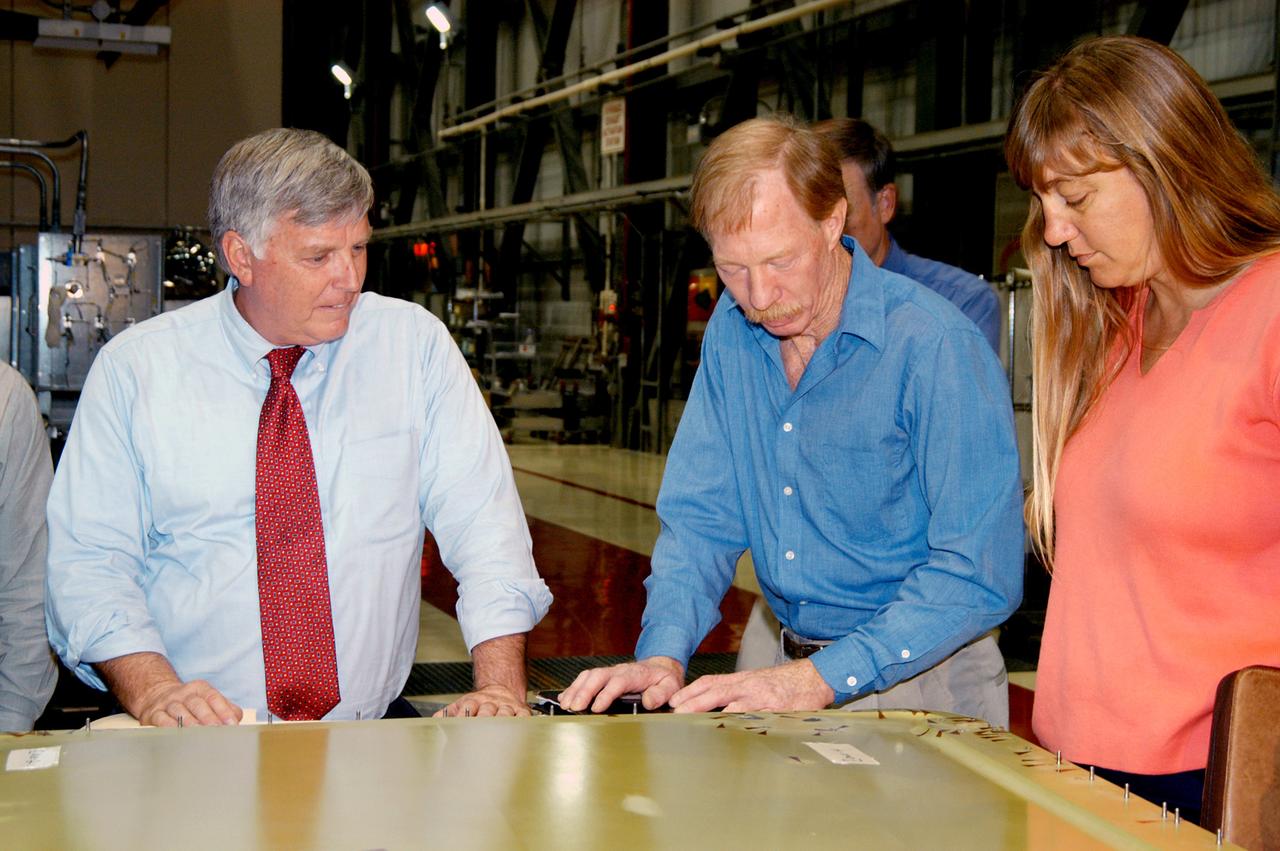
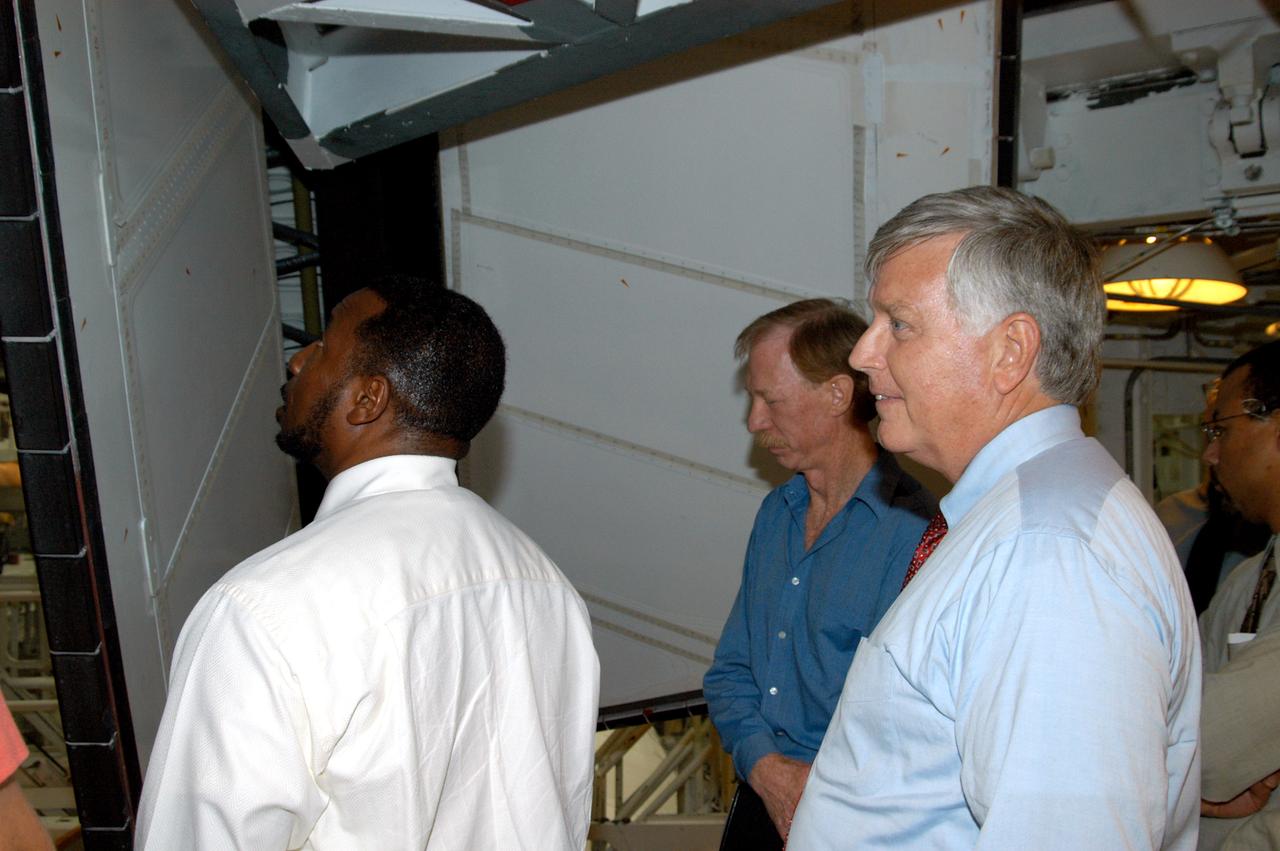
KENNEDY SPACE CENTER, FLA. - On a tour of the Orbiter Processing Facility, Center Director Jim Kennedy (left) looks at an external tank door corrosion work being done on Endeavour.  At right, Tom Roberts, Airframe Engineering System specialist with United Space Alliance, is describing the work. At right is Kathy Laufenberg, Orbiter Airframe Engineering ground area manager,also with USA.  Endeavour is in its Orbiter Major Modification period, which began in December 2003.
KENNEDY SPACE CENTER, FLA. - On a tour of the Orbiter Processing Facility, Center Director Jim Kennedy (left) looks at an external tank door corrosion work being done on Endeavour. At right, Tom Roberts, Airframe Engineering System specialist with United Space Alliance, is describing the work. At right is Kathy Laufenberg, Orbiter Airframe Engineering ground area manager,also with USA. Endeavour is in its Orbiter Major Modification period, which began in December 2003.
KENNEDY SPACE CENTER, FLA. - On a tour of the Orbiter Processing Facility, Center Director Jim Kennedy (right) and Deputy Director Woodrow Whitlow Jr. (center) look at the rudder speed brake panels on the orbiter Endeavour.  In the background is Tom Roberts, who is with United Space Alliance.  Endeavour is in its Orbiter Major Modification period, which began in December 2003.
KENNEDY SPACE CENTER, FLA. - On a tour of the Orbiter Processing Facility, Center Director Jim Kennedy (right) and Deputy Director Woodrow Whitlow Jr. (center) look at the rudder speed brake panels on the orbiter Endeavour. In the background is Tom Roberts, who is with United Space Alliance. Endeavour is in its Orbiter Major Modification period, which began in December 2003.
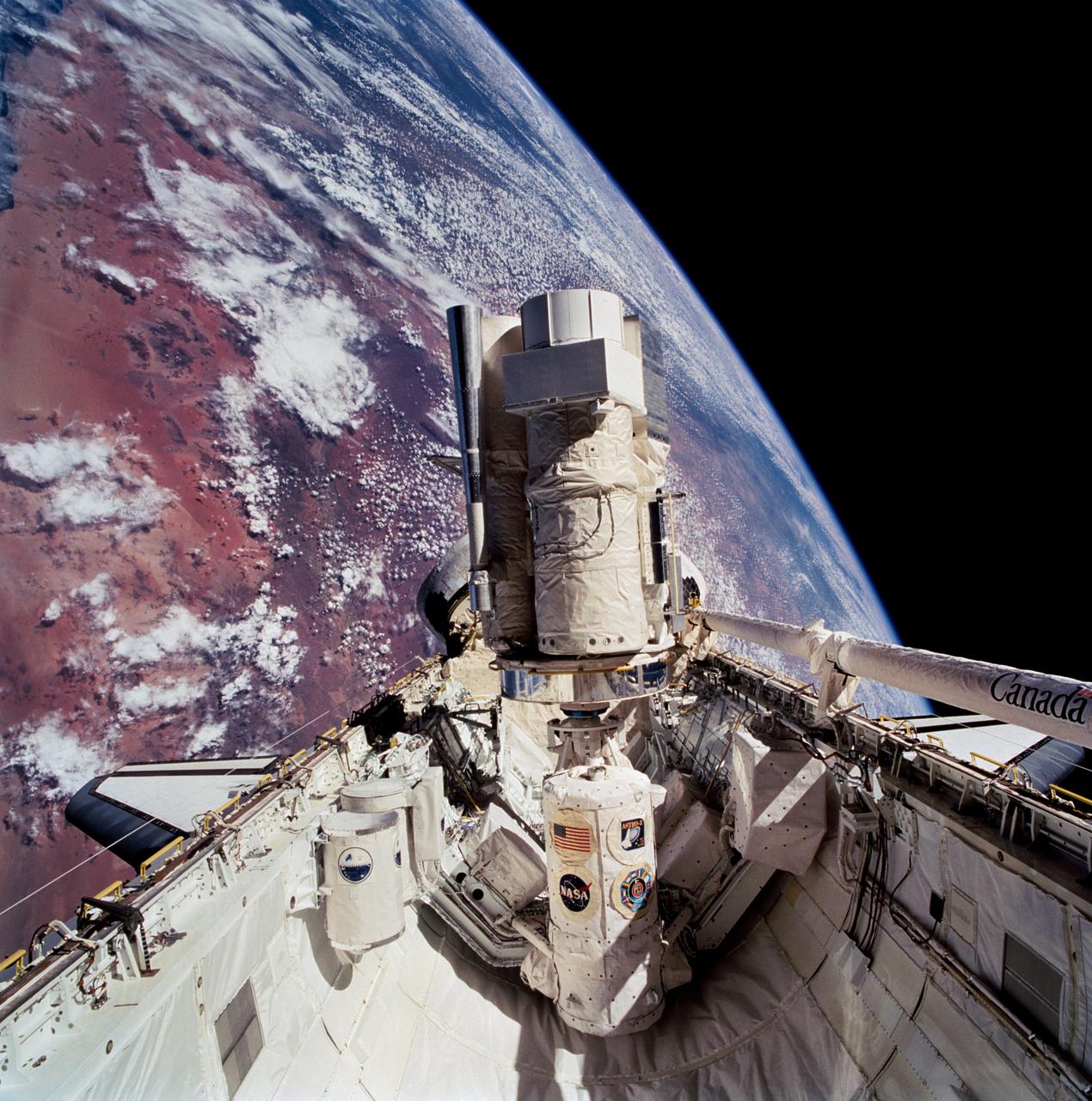
STS067-713-072 (2-18 March 1995) --- This 70mm cargo bay scene, backdropped against a desert area of Namibia, typifies the view that daily greeted the Astro-2 crew members during their almost 17-days aboard the Space Shuttle Endeavour.  Positioned on the Spacelab pallet amidst other hardware, the Astro-2 payload is in its operational mode.  Visible here are the Instrument Pointing System (IPS), Hopkins Ultraviolet Telescope (HUT), Star Tracker (ST), Ultraviolet Imaging Telescope (UIT), Wisconsin Ultraviolet Photo-Polarimeter Experiment (WUPPE), and Integrated Radiator System (IRS).  At this angle, the Optical Sensor Package (OPS) is not seen.  The Igloo, which supports the package of experiments, is in center foreground.  Two Get-Away Special (GAS) canisters are in lower left foreground.  The Extended Duration Orbiter (EDO) pallet, located aft of the cargo bay, is obscured by the Astro-2 payload.  The Endeavour was 190 nautical miles above Earth.
View of ASTRO-2 payload in cargo bay of STS-67 Endeavour
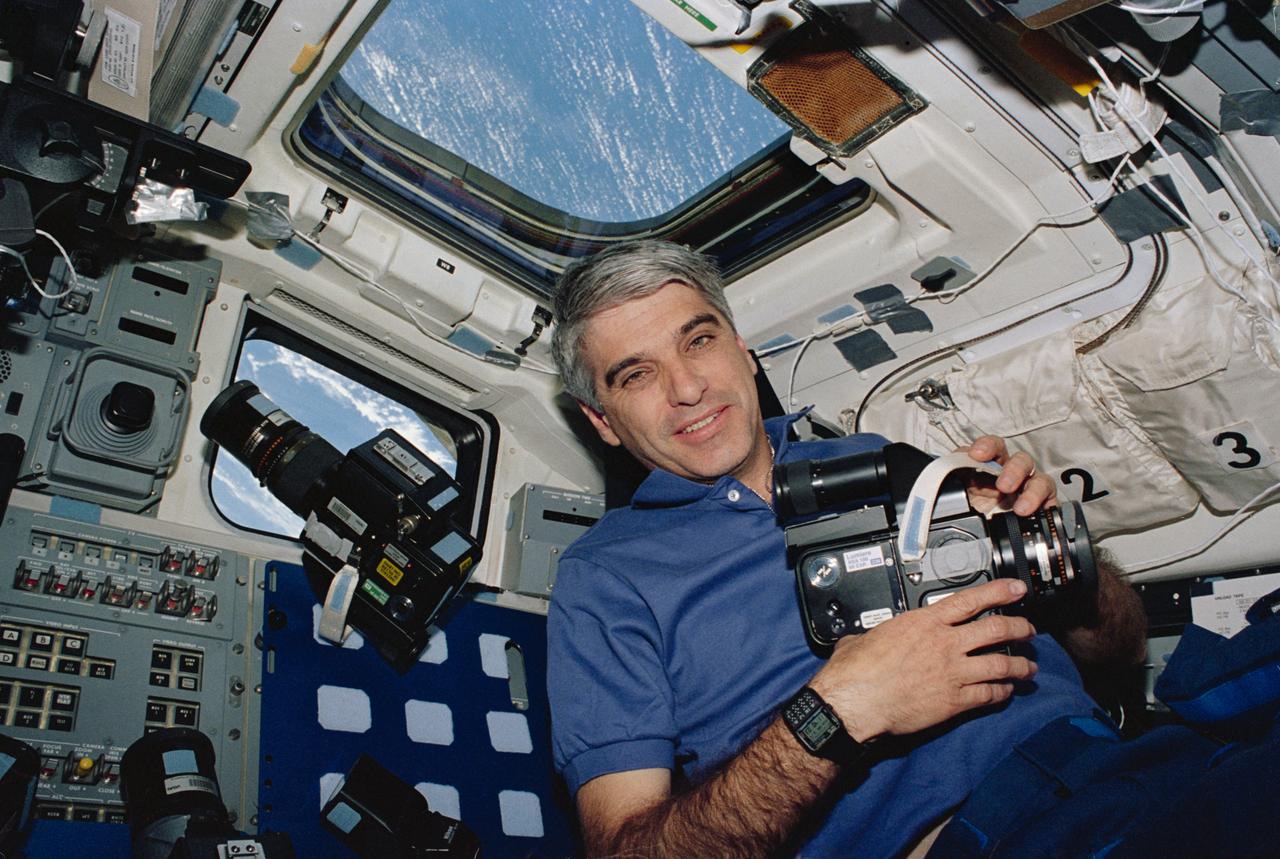
STS059-19-004 (9-20 April 1994) --- Astronaut Sidney M. Gutierrez, mission commander, pauses on the flight deck during Earth observations on the Space Shuttle Endeavour.  Gutierrez, who was joined by five other NASA astronauts for 11-days in Earth orbit, holds a 70mm Hasselblad camera.  The camera was one of several instruments used during the SRL mission to record an unprecedented compilation of data on planet Earth.
Astronaut Sidney Gutierrez on flight deck holding Hasselblad camera
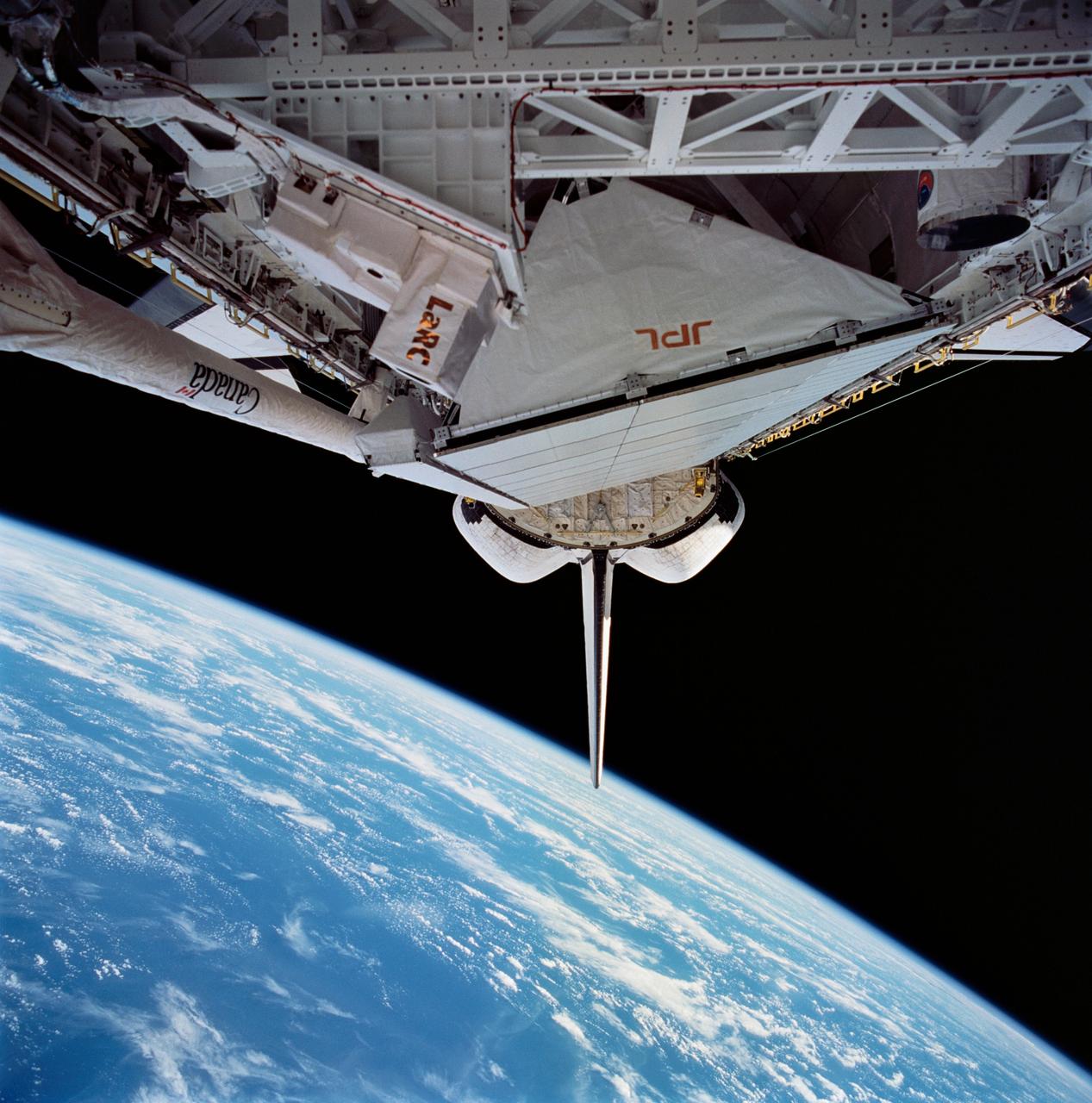
STS59-215-022 (12 April 1994) --- This 70mm frame, photographed through the aft flight deck windows of the Space Shuttle Endeavour, features the Space Radar Laboratory (SRL) payload in the cargo bay.  An area of the Pacific Ocean northeast of Hawaii forms the backdrop for the image.  Six NASA astronauts spent a week and a half in Earth orbit in support of the SRL mission.
View of STS-59 Endeavour's payload bay featuring Space Radar Laboratory
STS059-S-034 (9 April 1994) --- The liftoff of the Space Shuttle Endeavour is backdropped against a dawn sky at the Kennedy Space Center (KSC) as six NASA astronauts head for a week and a half in Earth orbit.  Liftoff occurred at 7:05 a.m. (EDT), April 9, 1994.  Onboard for the Space Radar Laboratory (SRL-1) mission were astronauts Sidney M. Gutierrez, Kevin P. Chilton, Jerome (Jay) Apt, Linda M. Godwin, Michael R. U. (Rich) Clifford and Thomas D. Jones.
Liftoff of STS-59 Shuttle Endeavour
STS059-S-037 (9 April 1994) --- The liftoff of the Space Shuttle Endeavour is backdropped against a dawn sky at the Kennedy Space Center (KSC) as six NASA astronauts head for a week and a half in Earth orbit.  Liftoff occurred at 7:05 a.m. (EDT), April 9, 1994.  Onboard for the Space Radar Laboratory (SRL-1) mission were astronauts Sidney M. Gutierrez, Kevin P. Chilton, Jerome (Jay) Apt, Linda M. Godwin, Michael R.U. (Rich) Clifford and Thomas D. Jones.
Liftoff of STS-59 Shuttle Endeavour
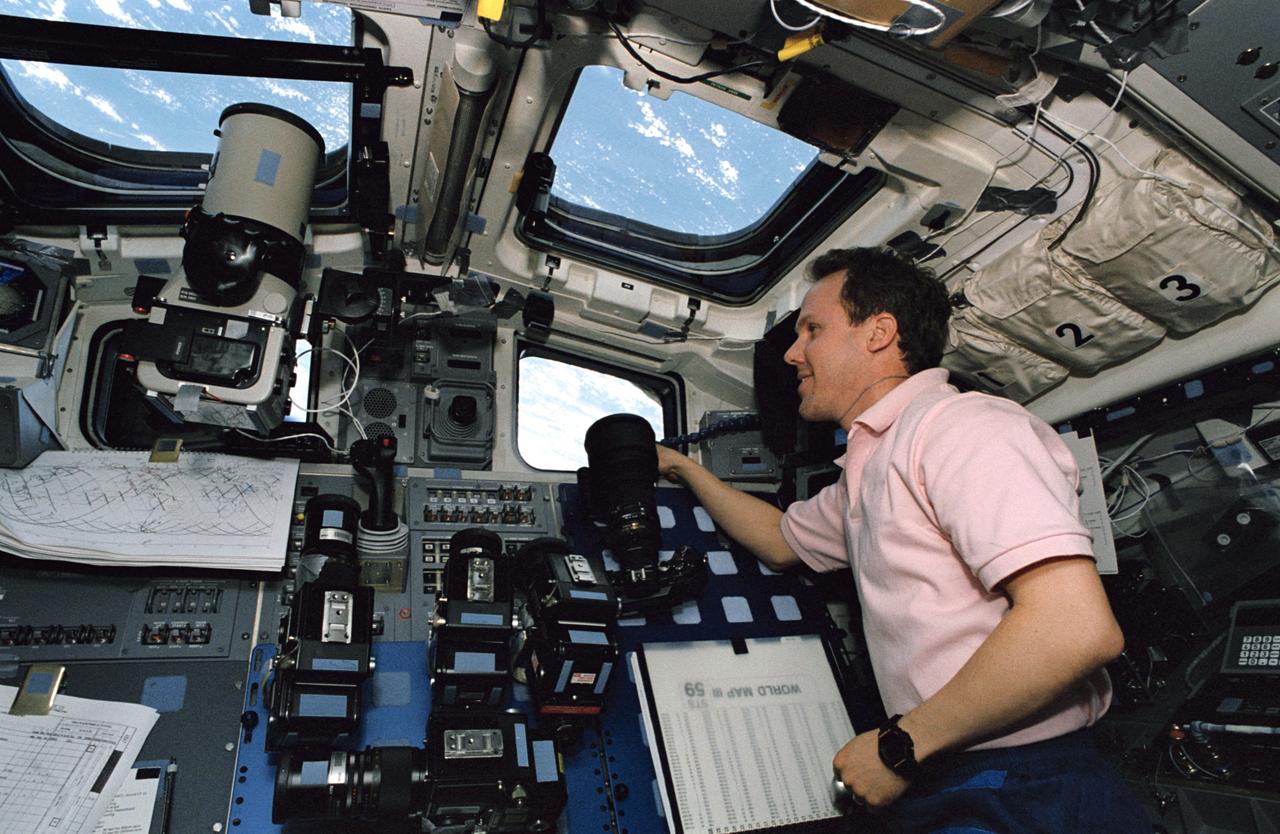
STS059-09-021 (9-20 April 1994) --- Astronaut Thomas D. Jones, mission specialist, monitors a number of cameras fixed on targets of opportunity as the Space Shuttle Endeavour orbits Earth.  Jones is one of six NASA astronauts supporting the week and half Space Radar Laboratory (SRL-1) mission.  He has been assigned as payload commander for SRL-2, scheduled to fly later this year.
Astronaut Thomas Jones monitors cameras on targets of opportunity
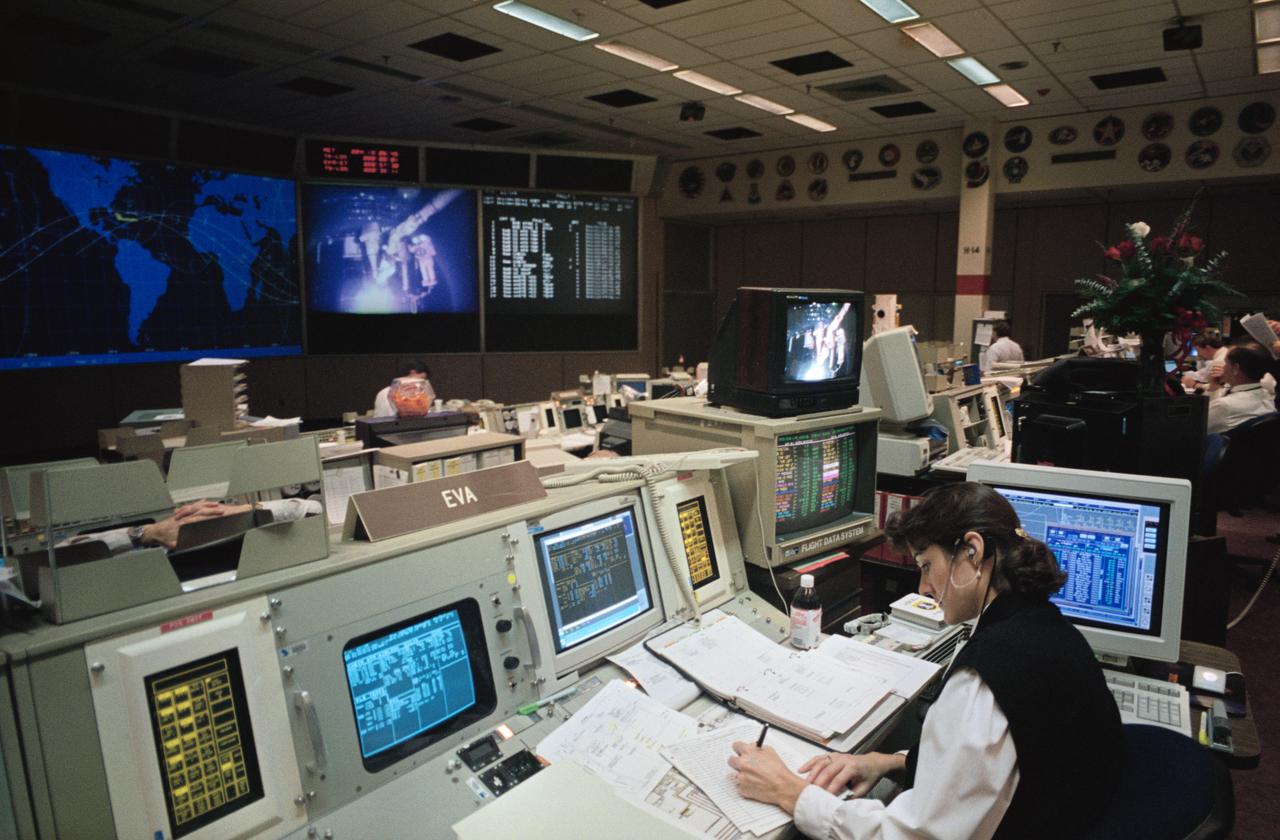
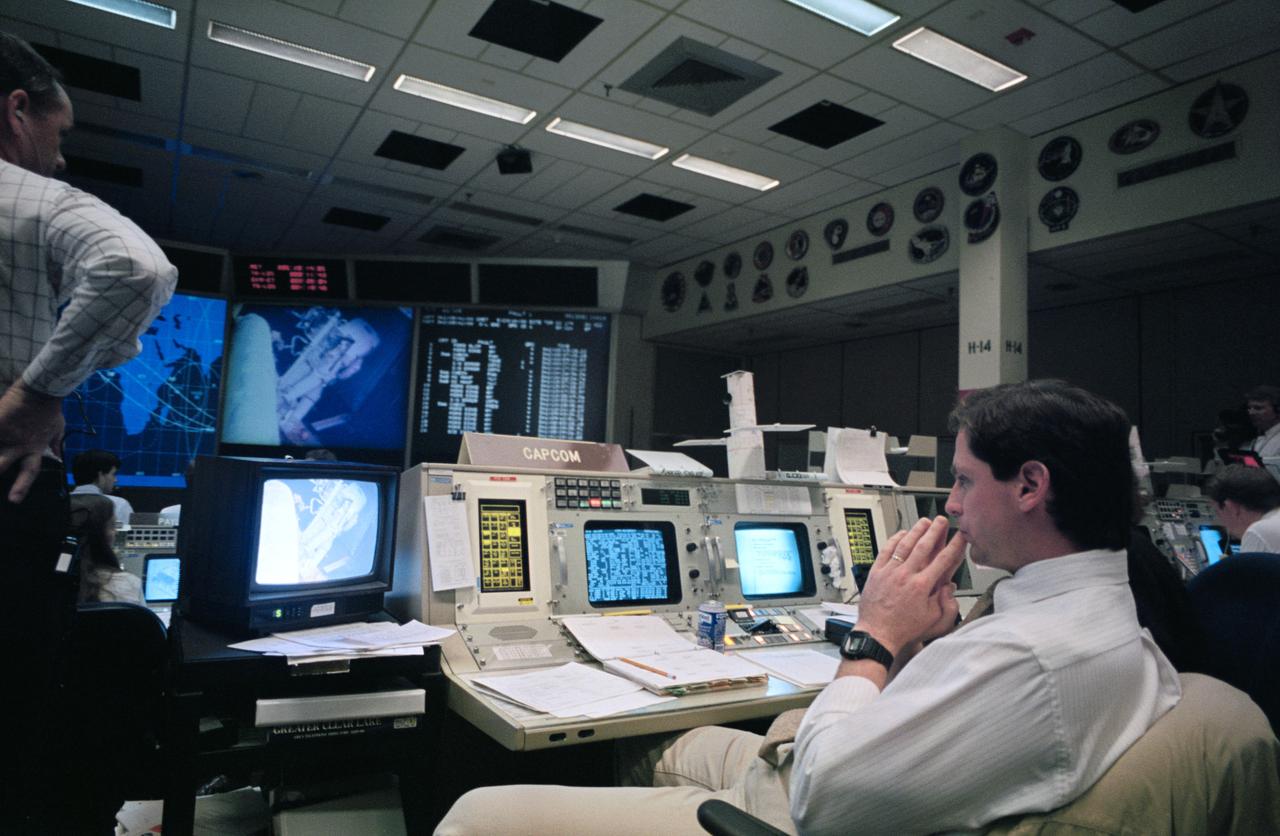
Flight controller Susan P. Rainwater observes as two astronauts work through a lengthy period of extravehicular activity (EVA) in the cargo bay of the Earth-looking Space Shuttle Endeavour. Rainwater's EVA console was one of Mission Control's busiest during this eleven-day Hubble Space Telescope (HST) servicing mission in Earth orbit.
Mission control activity during STS-61 EVA
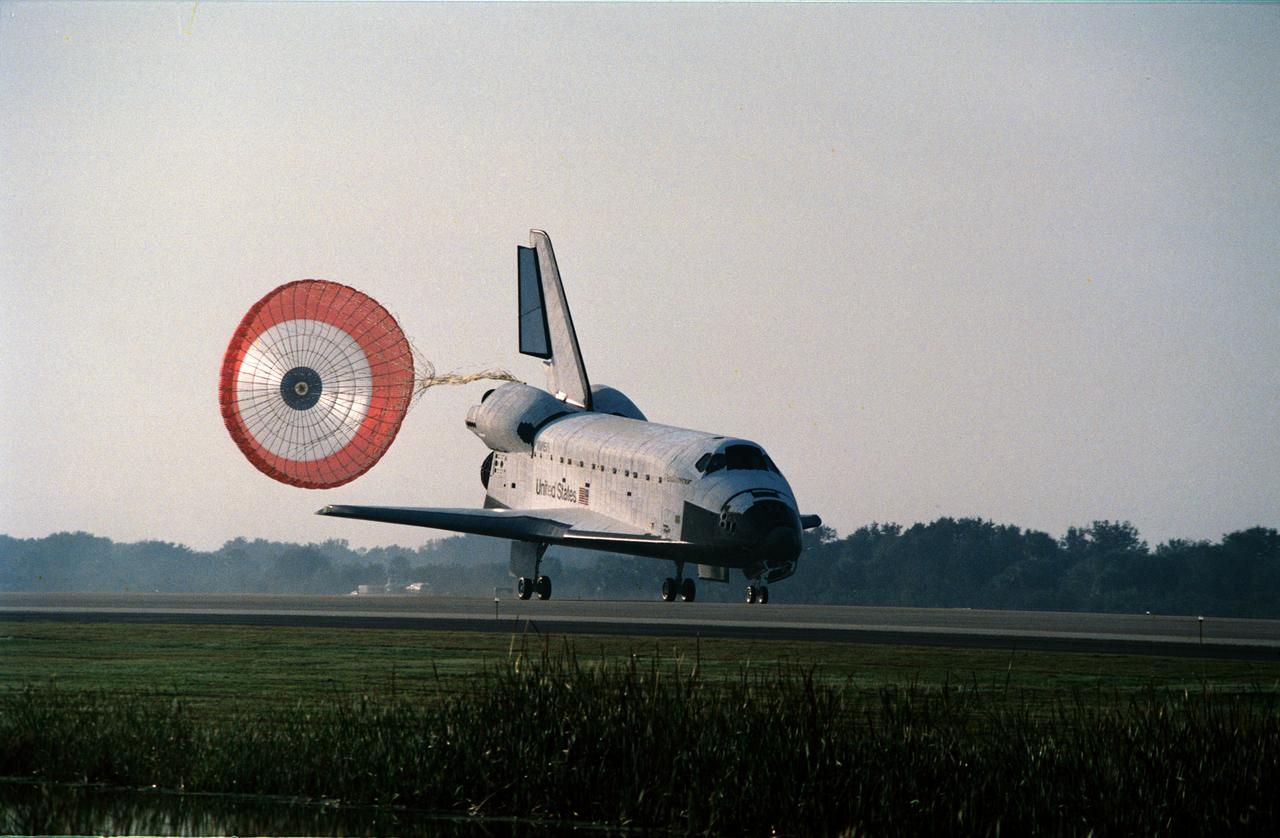
STS054-S-100 (19 Jan 1993) --- The drag chute is fully deployed as the Space Shuttle Endeavour rolls toward wheelstop at KSC's Shuttle landing facility. Landing occurred at 8:38 a.m. (EST), Jan. 19, 1993.  Onboard for the six-day mission were astronauts John H. Casper, mission commander, Donald R. McMonagle, pilot, Gregory J. Harbaugh, Mario Runco Jr. and Susan J. Helms, mission specialists.
STS-54 Endeavour, Orbiter Vehicle (OV) 105, lands on runway 33 at KSC's SLF
STS054-S-101 (19 Jan 1993) --- The drag chute is just about to be released as the Space Shuttle Endeavour rolls toward wheelstop at KSC's Shuttle landing facility. Landing occurred at 8:38 a.m. (EST), Jan. 19, 1993.  Onboard for the six-day mission were astronauts John H. Casper, mission commander, Donald R. McMonagle, pilot, Gregory J. Harbaugh, Mario Runco Jr. and Susan J. Helms, mission specialists.
STS-54 Endeavour, Orbiter Vehicle (OV) 105, lands on runway 33 at KSC's SLF
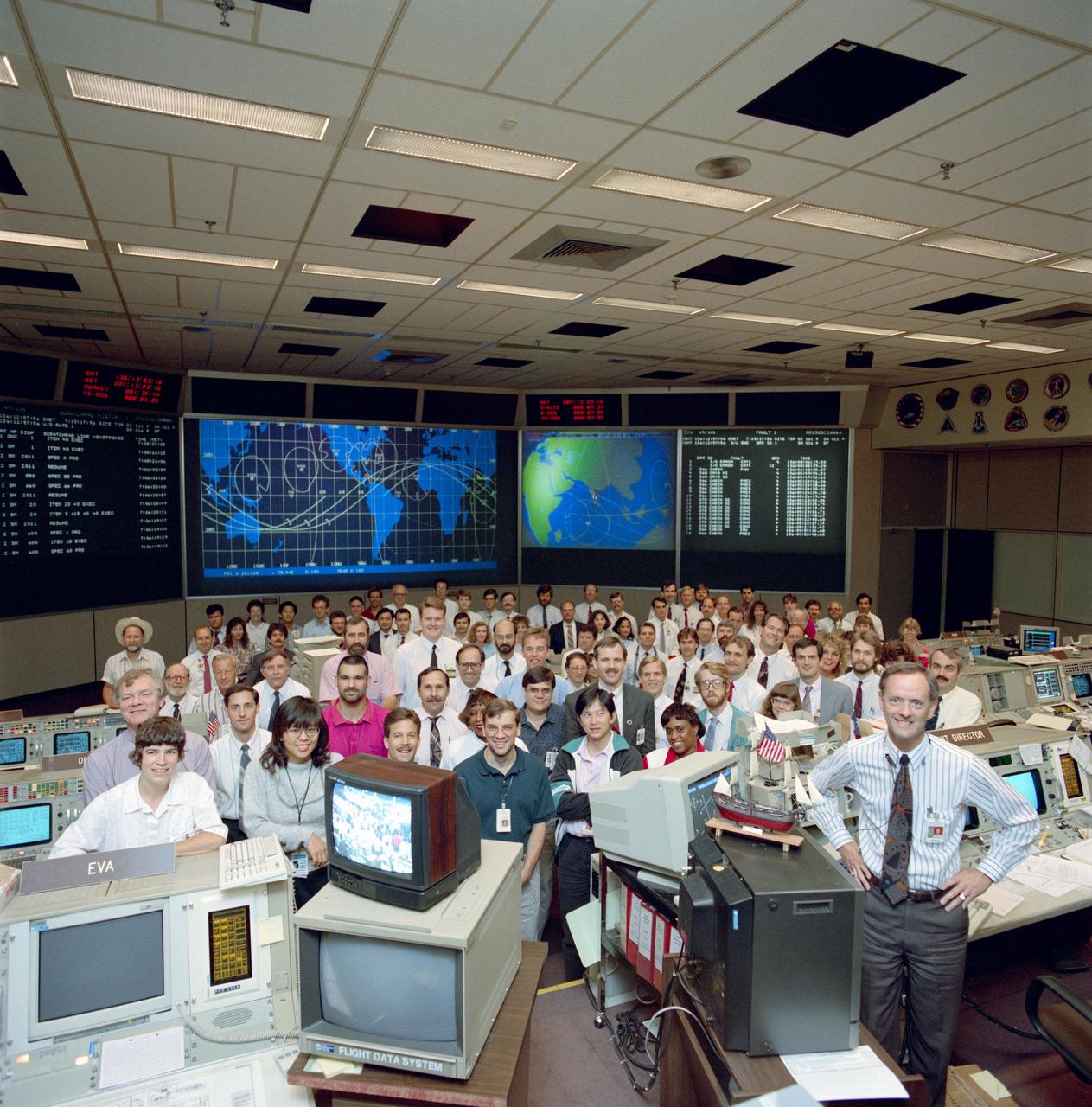
S92-36606 (20 May 1992) --- STS-49 Endeavour, Orbiter Vehicle (OV) 105, Planning Team with Flight Director (FD) James M. Heflin, Jr. (front right next to ship model) poses in Johnson Space Center?s (JSC) Mission Control Center (MCC) Bldg 30 Flight Control Room (FCR). The group stands in front of visual displays projecting STS-49 data and ground track map.
STS-49 Endeavour, Orbiter Vehicle (OV) 105, Planning Team in MCC Bldg 30 FCR
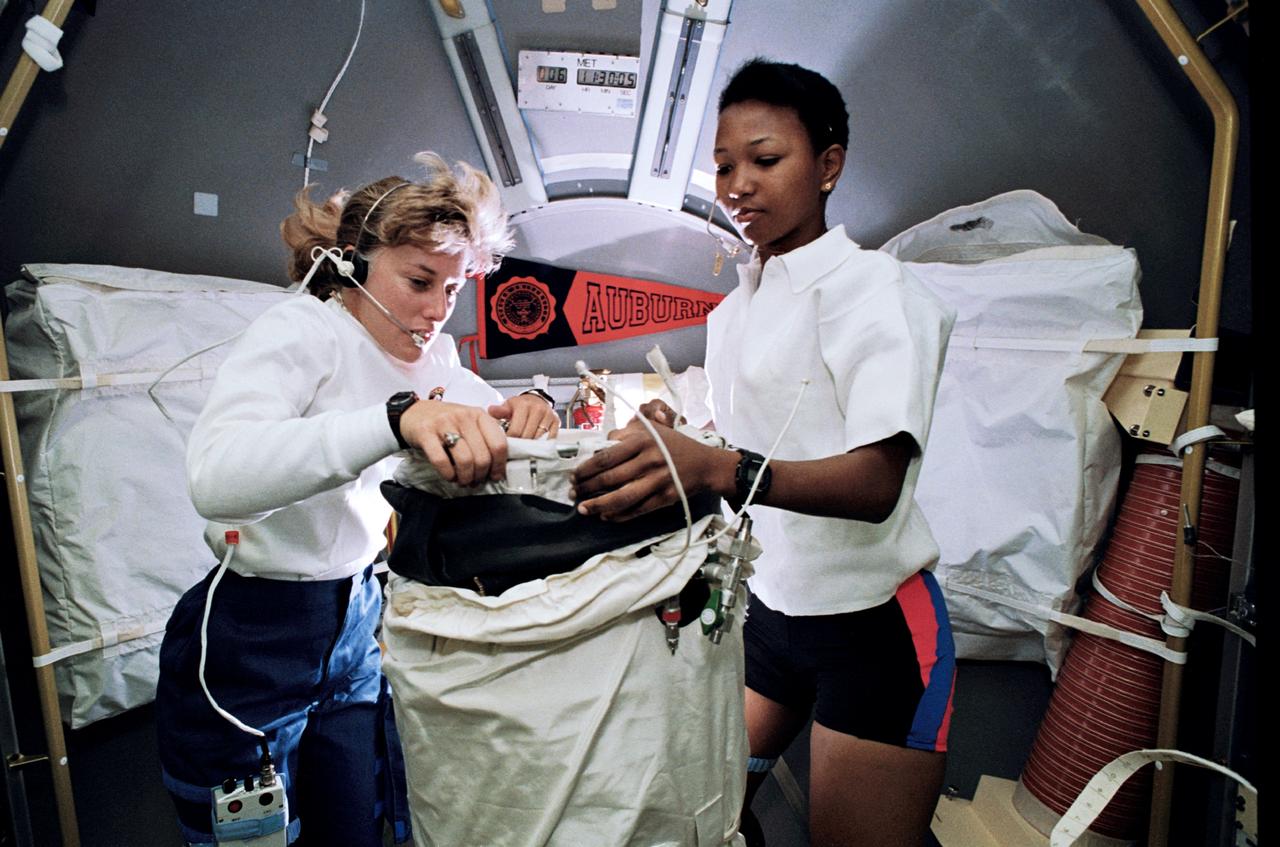
STS047-46-027 (12-20 Sept. 1992) --- Astronauts N. Jan Davis (left) and Mae C. Jemison, STS-47 mission specialists, prepare to deploy the Lower Body Negative Pressure (LBNP) apparatus in this 35mm frame photographed in the Science Module aboard the Earth-orbiting Space Shuttle Endeavour. Making their first flight in space, the two were joined by four other NASA astronauts and a Japanese payload specialist for eight days of research. The Spacelab-J mission is a joint effort between Japan and the United States of America.
STS-47 MS Davis & MS Jemison with LBNP device in SLJ module aboard OV-105
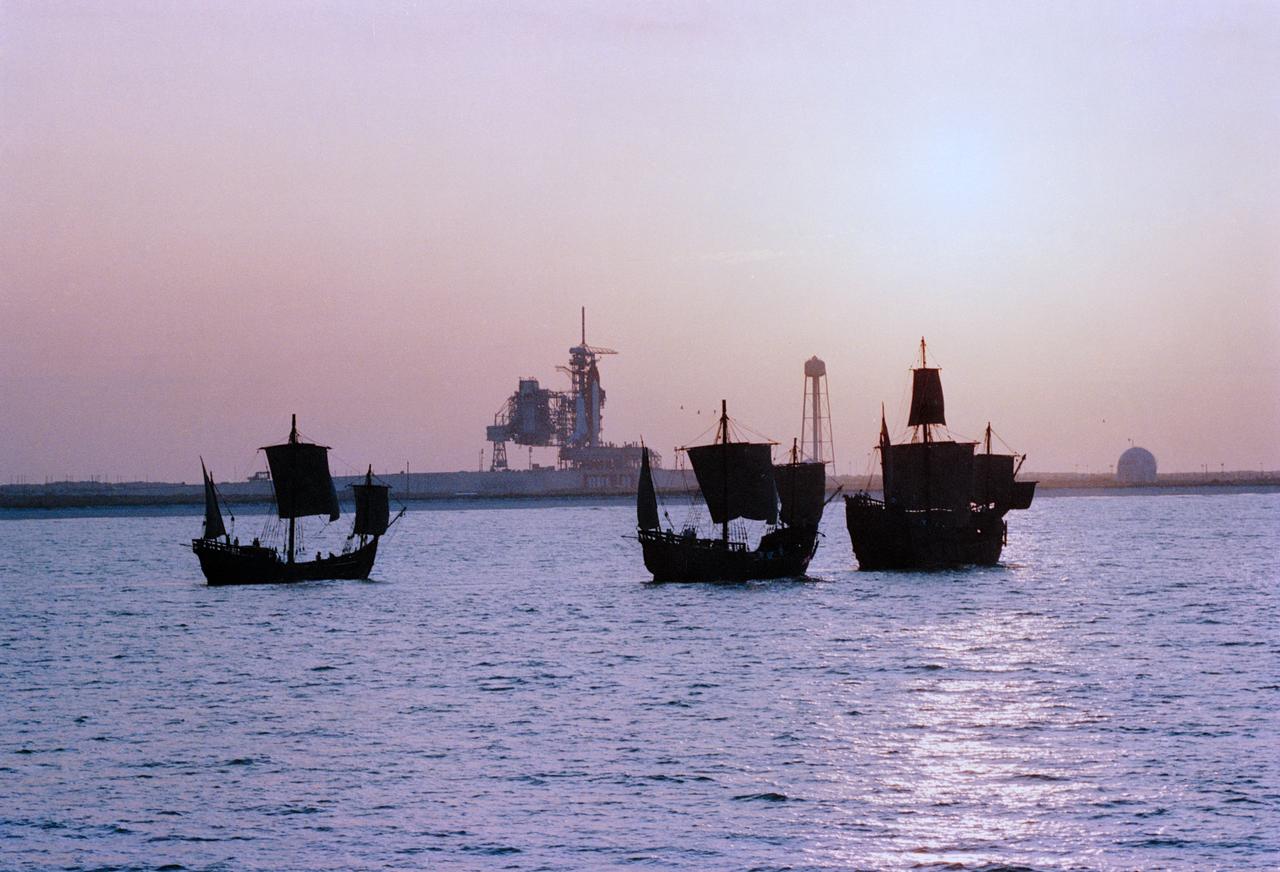
Replicas of Christopher Columbus' sailing ships Santa Maria, Nina, and Pinta sail by Endeavour, Orbiter Vehicle (OV) 105, on Kennedy Space Center (KSC) Launch Complex (LC) Pad 39B awaiting liftoff on its maiden voyage, STS-49. This view was taken from the water showing the three ships silhouetted in the foreground with OV-105 on mobile launcher platform profiled against fixed service structure (FSS) tower and rectracted rotating service structure (RSS) in the background. Next to the launch pad (at right) are the sound suppression water system tower and the liquid hydrogen (LH2) storage tank. View provided by KSC with alternate number KSC-92PC-970.
Replicas of the Santa Maria, Nina, Pinta sail by OV-105 on KSC LC Pad 39B
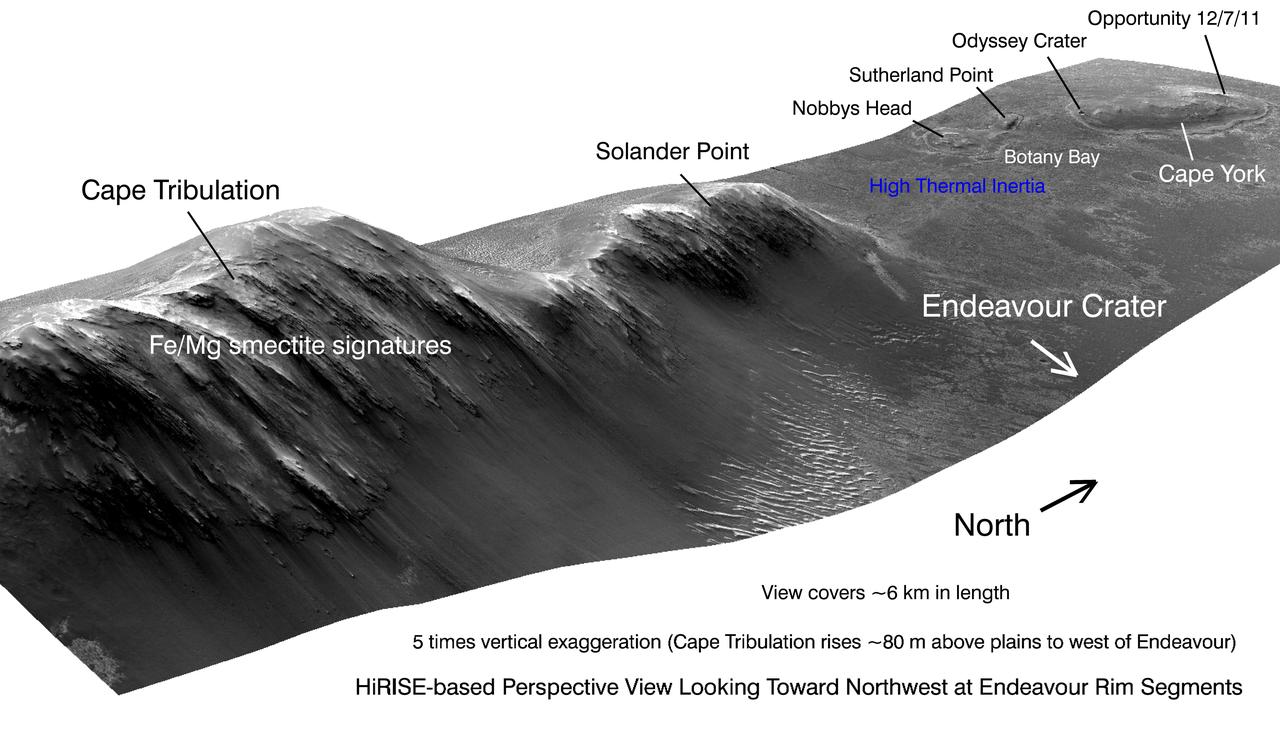
This view from NASA Mars Reconnaissance Orbiter shows portions of the western rim of Endeavour Crater on Mars from a perspective looking toward the northwest.
West Rim of Endeavour with Vertical Exaggeration
This image taken from orbit shows the path driven by NASA Mars Exploration Rover Opportunity in the weeks around the rover arrival at the rim of Endeavour crater.
Opportunity First Neighborhood on Rim of Endeavour
STS057-S-001 (February 1993) --- Designed by the crew members, the STS-57 crew patch depicts the space shuttle Endeavour maneuvering to retrieve the European Space Agency's (ESA) microgravity experiment satellite EURECA. SpaceHab - the first commercial space laboratory - is depicted in the cargo bay, and its characteristic shape is represented by the inner red border of the patch.  The three gold plumes surrounded by the five stars trailing EURECA are suggestive of the United States astronaut logo. The five gold stars together with the shape of the orbiter's mechanical arm form the mission's numerical designation. The six stars on the American flag represent the United States astronauts who comprise the crew. With detailed input from the crew members, the final artwork was accomplished by artist Tim Hall.    The NASA insignia design for space shuttle flights is reserved for use by the astronauts and for other official use as the NASA Administrator may authorize. Public availability has been approved only in the form of illustrations by the various news media. When and if there is any change in this policy, which we do not anticipate, it will be publicly announced. Photo credit: NASA
STS-57 Endeavour, Orbiter Vehicle (OV) 105, crew insignia
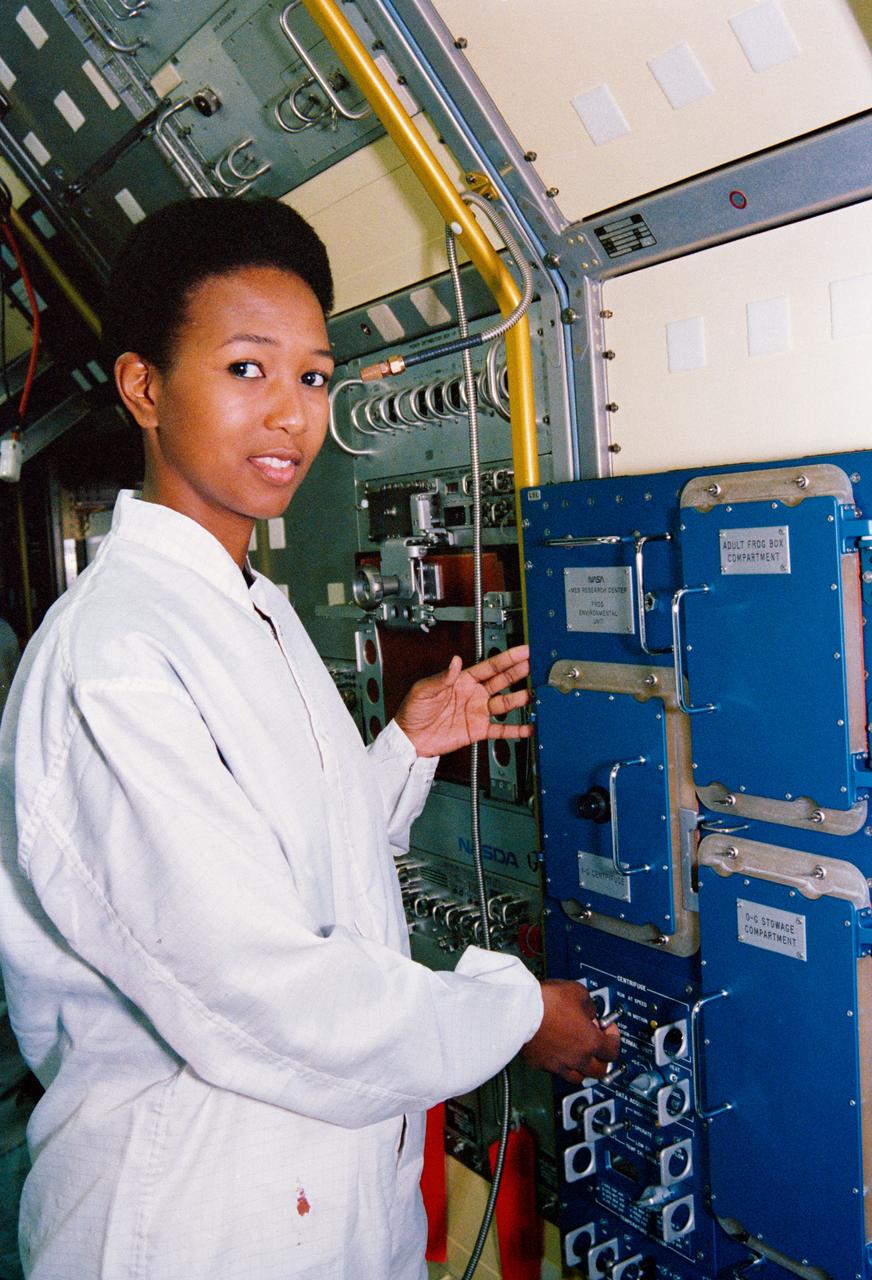
S92-44302 (25 July 1992) --- Astronaut Mae C. Jemison, mission specialist, examines the interior of the Spacelab-J laboratory module installed in Endeavour's cargo bay.  The STS-47 crewmembers visited Endeavour, currently undergoing pre-flight processing in a high bay area of the Orbiter Processing Facility at the Kennedy Space Center.  The Spacelab-J mission is currently scheduled for September of this year.
STS-47 MS Jemison works at SLJ Rack 5 during crew station review at KSC
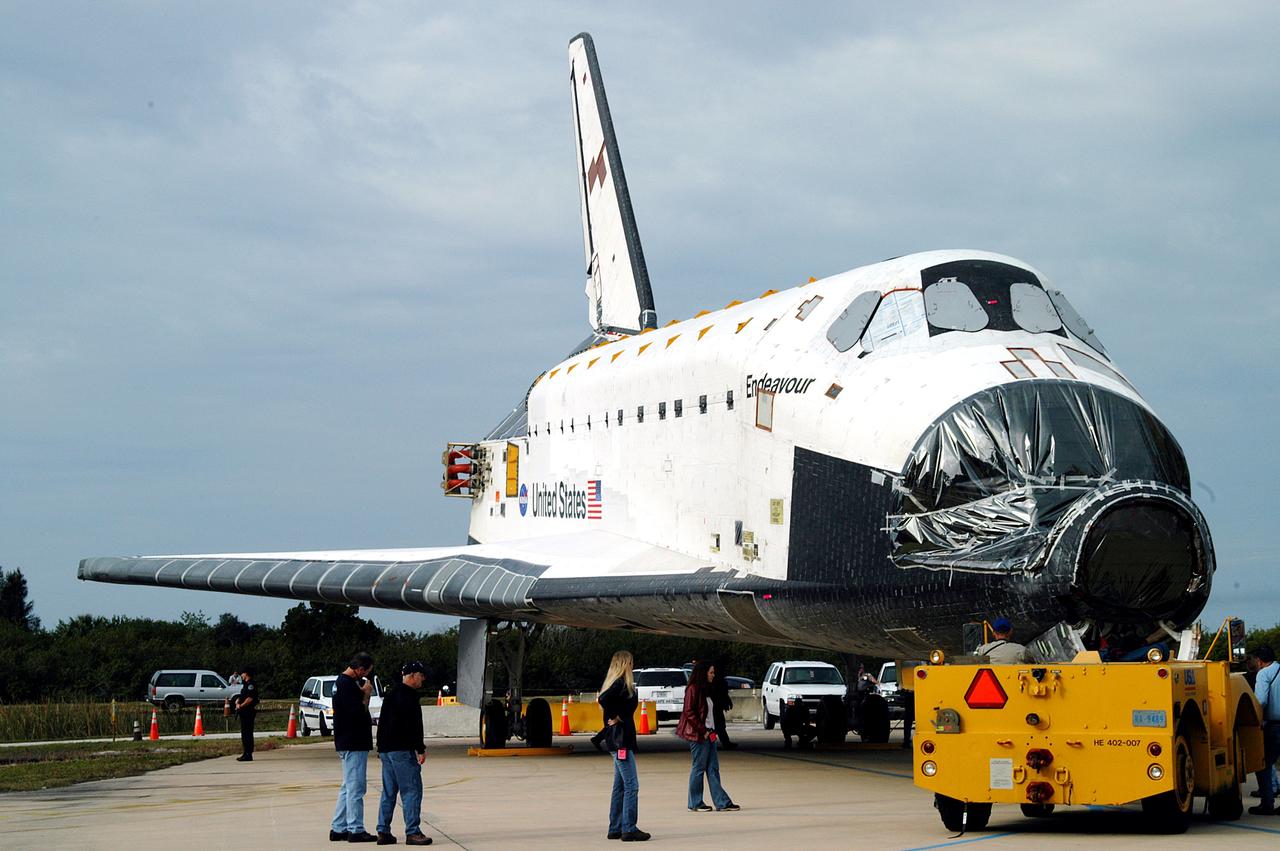
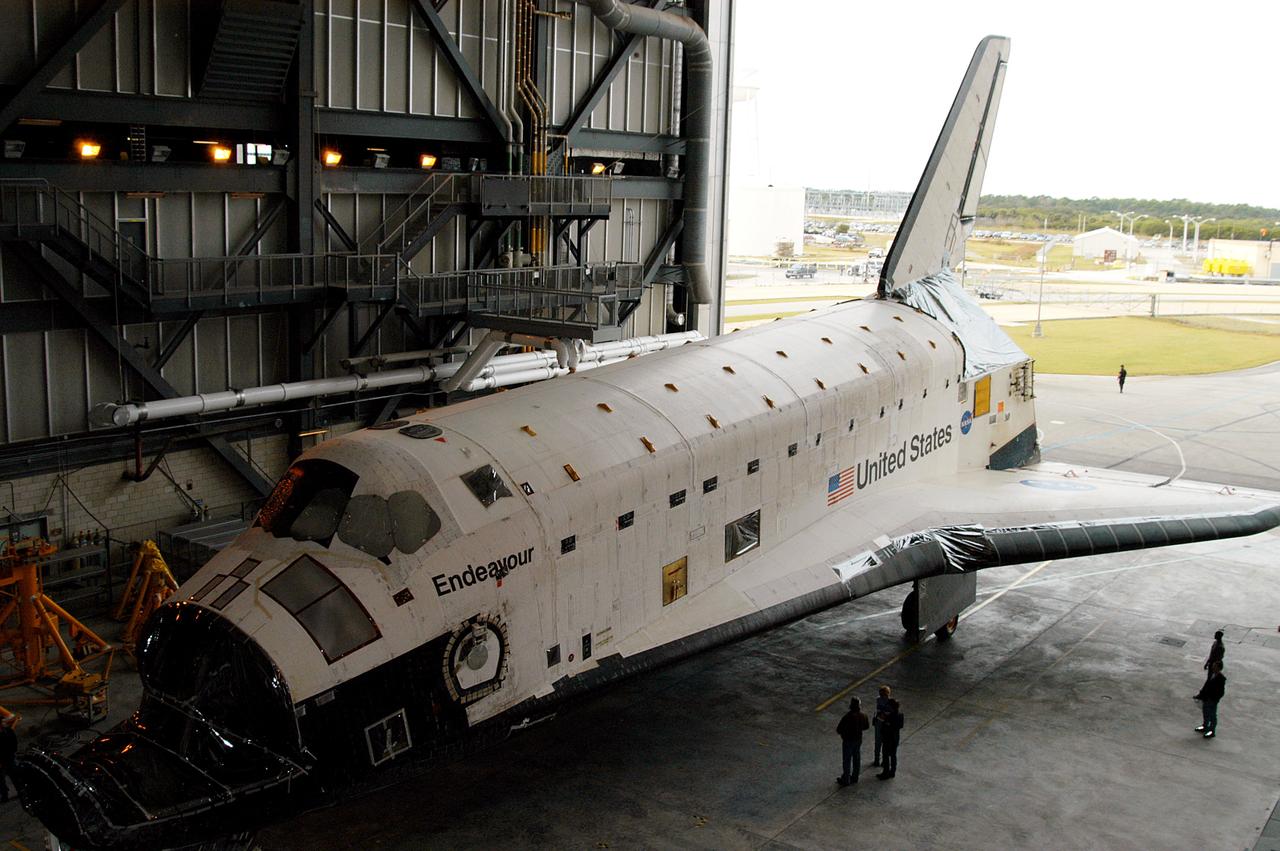
KENNEDY SPACE CENTER, FLA. -- After Endeavour’s rollout from inside the Orbiter Processing Facility, the transporter (foreground) prepares to tow it to the Vehicle Assembly Building for temporary transfer.  A protective cover surrounds the nose of Endeavour.  The move to the VAB allows work to be performed in the OPF that can only be accomplished while the bay is empty. Work scheduled in the OPF includes annual validation of the bay’s cranes, work platforms, lifting mechanisms and jack stands. Endeavour will remain in the VAB for approximately 12 days, then return to the OPF.
KENNEDY SPACE CENTER, FLA. -- After Endeavour’s rollout from inside the Orbiter Processing Facility, the transporter (foreground) prepares to tow it to the Vehicle Assembly Building for temporary transfer. A protective cover surrounds the nose of Endeavour. The move to the VAB allows work to be performed in the OPF that can only be accomplished while the bay is empty. Work scheduled in the OPF includes annual validation of the bay’s cranes, work platforms, lifting mechanisms and jack stands. Endeavour will remain in the VAB for approximately 12 days, then return to the OPF.
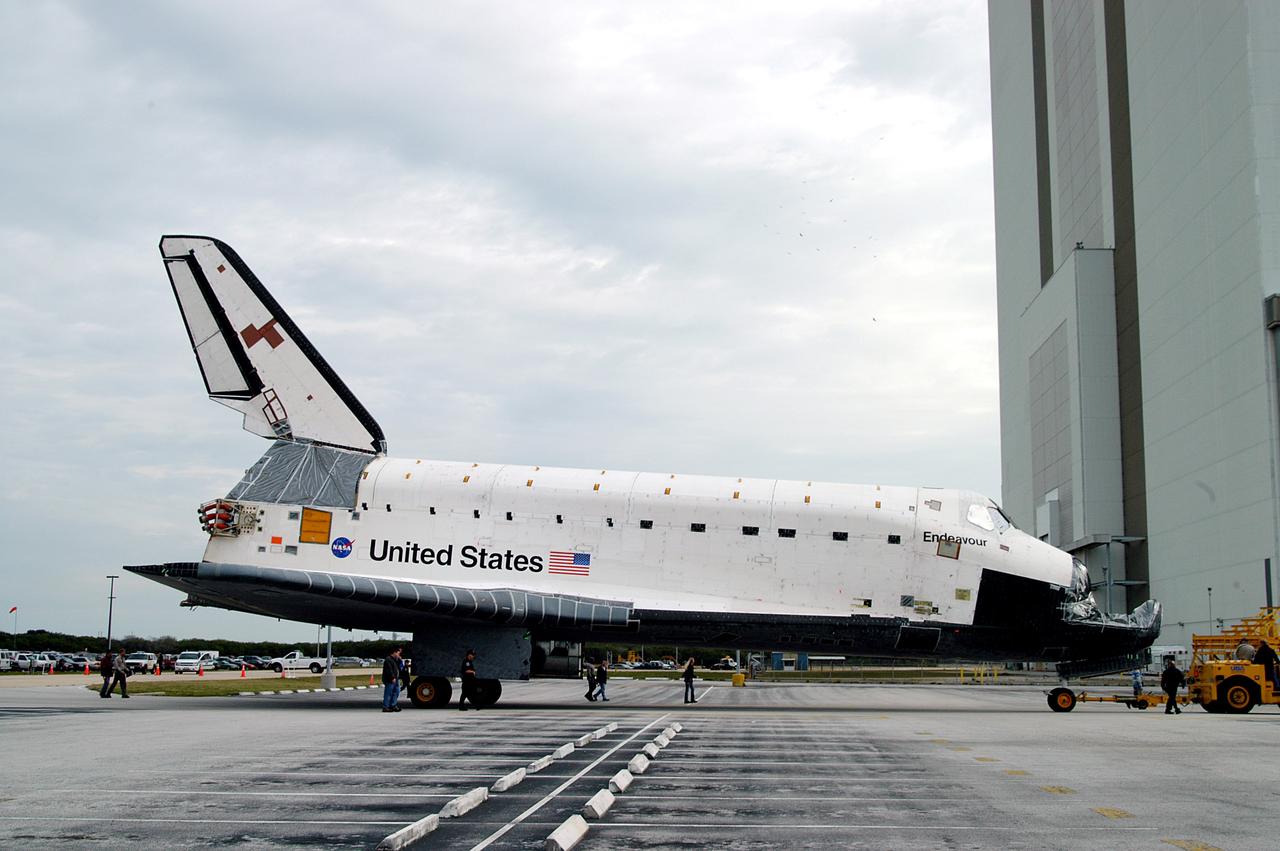
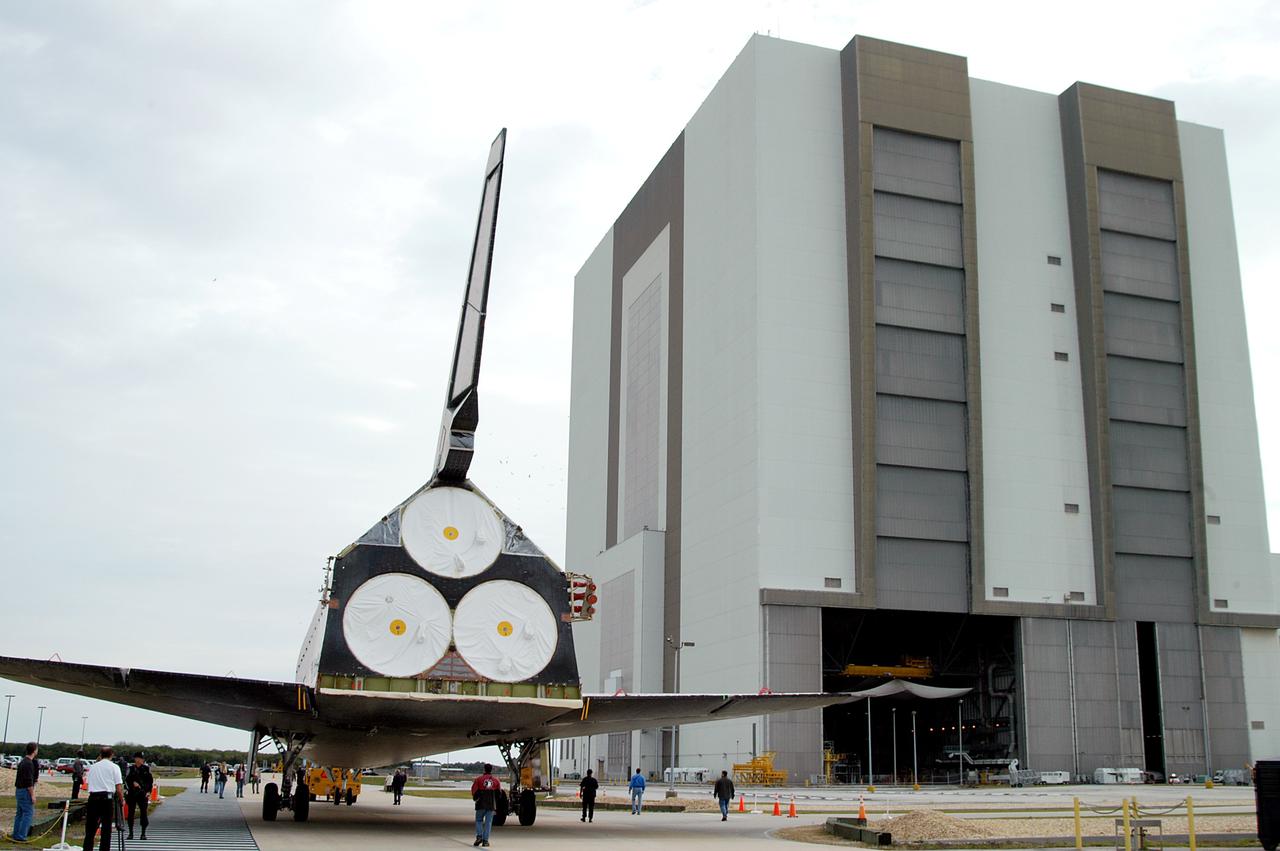
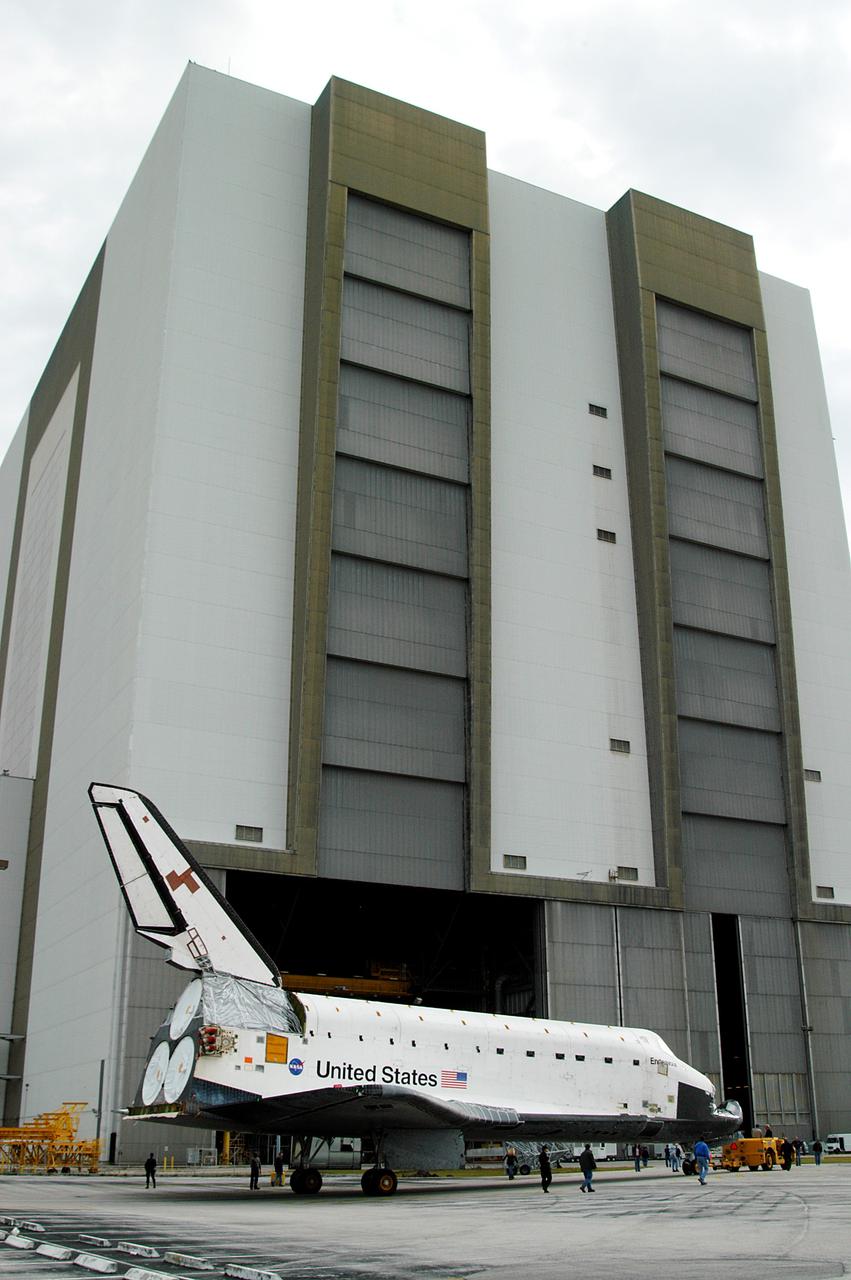
KENNEDY SPACE CENTER, FLA. -- Endeavour is towed in front of the Vehicle Assembly Building (VAB) where it is going for temporary storage.  The orbiter has been moved from the Orbiter Processing Facility (OPF) to allow work to be performed in the OPF that can only be accomplished while the bay is empty. Work scheduled in the OPF includes annual validation of the bay’s cranes, work platforms, lifting mechanisms and jack stands. Endeavour will remain in the VAB for approximately 12 days, then return to the OPF.
KENNEDY SPACE CENTER, FLA. -- Endeavour is towed in front of the Vehicle Assembly Building (VAB) where it is going for temporary storage. The orbiter has been moved from the Orbiter Processing Facility (OPF) to allow work to be performed in the OPF that can only be accomplished while the bay is empty. Work scheduled in the OPF includes annual validation of the bay’s cranes, work platforms, lifting mechanisms and jack stands. Endeavour will remain in the VAB for approximately 12 days, then return to the OPF.
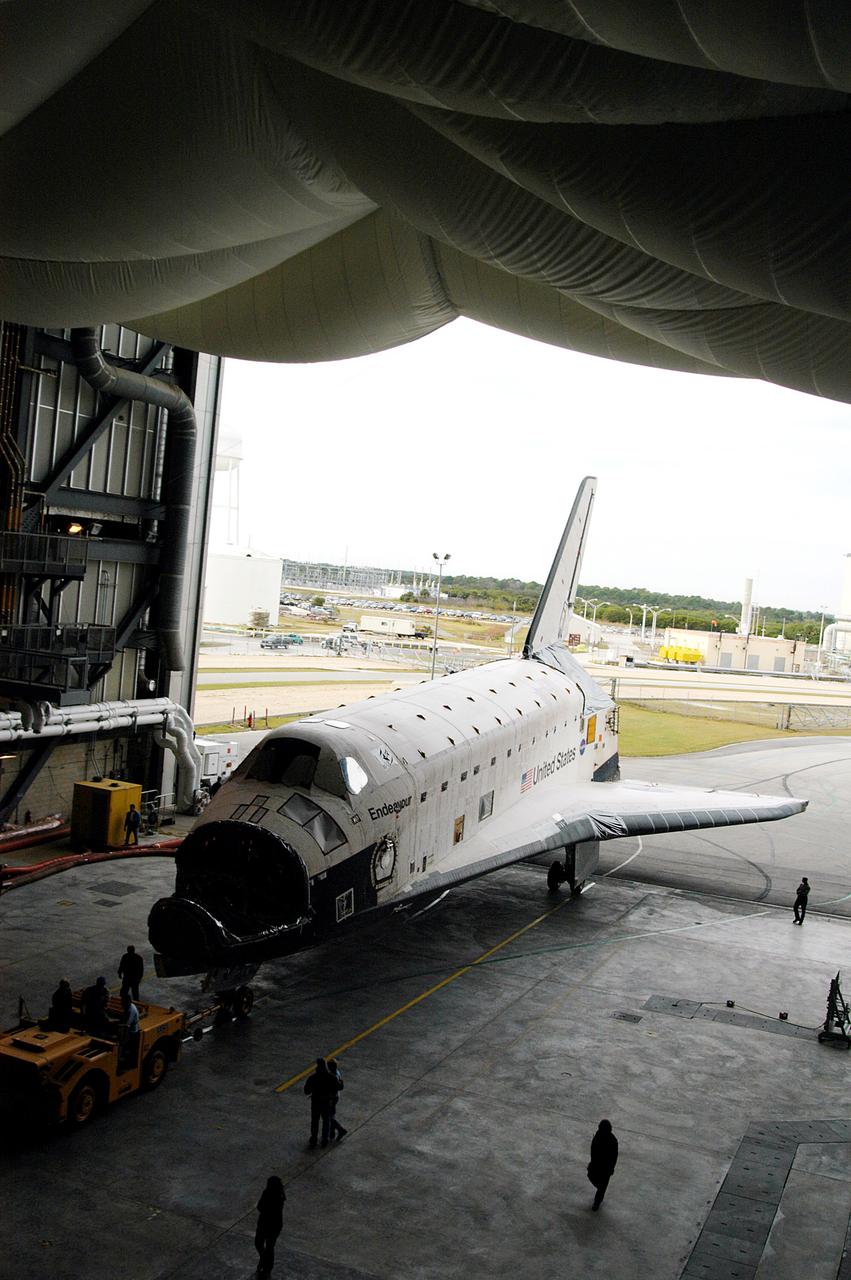
KENNEDY SPACE CENTER, FLA. -- Endeavour rolls into the Vehicle Assembly Building (VAB) for temporary storage.  The orbiter has been moved from the Orbiter Processing Facility (OPF) to allow work to be performed in the OPF that can only be accomplished while the bay is empty. Work scheduled in the OPF includes annual validation of the bay’s cranes, work platforms, lifting mechanisms and jack stands. Endeavour will remain in the VAB for approximately 12 days, then return to the OPF.
KENNEDY SPACE CENTER, FLA. -- Endeavour rolls into the Vehicle Assembly Building (VAB) for temporary storage. The orbiter has been moved from the Orbiter Processing Facility (OPF) to allow work to be performed in the OPF that can only be accomplished while the bay is empty. Work scheduled in the OPF includes annual validation of the bay’s cranes, work platforms, lifting mechanisms and jack stands. Endeavour will remain in the VAB for approximately 12 days, then return to the OPF.
KENNEDY SPACE CENTER, FLA. -- Endeavour is towed toward the Vehicle Assembly Building for temporary storage.  The orbiter has been moved from the Orbiter Processing Facility (OPF) to allow work to be performed in the OPF that can only be accomplished while the bay is empty. Work scheduled in the OPF includes annual validation of the bay’s cranes, work platforms, lifting mechanisms and jack stands. Endeavour will remain in the VAB for approximately 12 days, then return to the OPF.
KENNEDY SPACE CENTER, FLA. -- Endeavour is towed toward the Vehicle Assembly Building for temporary storage. The orbiter has been moved from the Orbiter Processing Facility (OPF) to allow work to be performed in the OPF that can only be accomplished while the bay is empty. Work scheduled in the OPF includes annual validation of the bay’s cranes, work platforms, lifting mechanisms and jack stands. Endeavour will remain in the VAB for approximately 12 days, then return to the OPF.
KENNEDY SPACE CENTER, FLA. -- Endeavour is towed in front of the Vehicle Assembly Building (VAB) where it is going for temporary storage.  The orbiter has been moved from the Orbiter Processing Facility (OPF) to allow work to be performed in the OPF that can only be accomplished while the bay is empty. Work scheduled in the OPF includes annual validation of the bay’s cranes, work platforms, lifting mechanisms and jack stands. Endeavour will remain in the VAB for approximately 12 days, then return to the OPF.
KENNEDY SPACE CENTER, FLA. -- Endeavour is towed in front of the Vehicle Assembly Building (VAB) where it is going for temporary storage. The orbiter has been moved from the Orbiter Processing Facility (OPF) to allow work to be performed in the OPF that can only be accomplished while the bay is empty. Work scheduled in the OPF includes annual validation of the bay’s cranes, work platforms, lifting mechanisms and jack stands. Endeavour will remain in the VAB for approximately 12 days, then return to the OPF.
KENNEDY SPACE CENTER, FLA. - On a tour of the Orbiter Processing Facility, Deputy Director Woodrow Whitlow Jr. points to an area on a rudder speed brake panel on Endeavour that Tom Roberts, who is with United Space Alliance, is showing him.  At right is Center Director Jim Kennedy.  Endeavour is in its Orbiter Major Modification period, which began in December 2003.
KENNEDY SPACE CENTER, FLA. - On a tour of the Orbiter Processing Facility, Deputy Director Woodrow Whitlow Jr. points to an area on a rudder speed brake panel on Endeavour that Tom Roberts, who is with United Space Alliance, is showing him. At right is Center Director Jim Kennedy. Endeavour is in its Orbiter Major Modification period, which began in December 2003.
KENNEDY SPACE CENTER, FLA. -- Endeavour rolls into the Vehicle Assembly Building (VAB) for temporary storage.  The orbiter has been moved from the Orbiter Processing Facility (OPF) to allow work to be performed in the OPF that can only be accomplished while the bay is empty. Work scheduled in the OPF includes annual validation of the bay’s cranes, work platforms, lifting mechanisms and jack stands. Endeavour will remain in the VAB for approximately 12 days, then return to the OPF.
KENNEDY SPACE CENTER, FLA. -- Endeavour rolls into the Vehicle Assembly Building (VAB) for temporary storage. The orbiter has been moved from the Orbiter Processing Facility (OPF) to allow work to be performed in the OPF that can only be accomplished while the bay is empty. Work scheduled in the OPF includes annual validation of the bay’s cranes, work platforms, lifting mechanisms and jack stands. Endeavour will remain in the VAB for approximately 12 days, then return to the OPF.
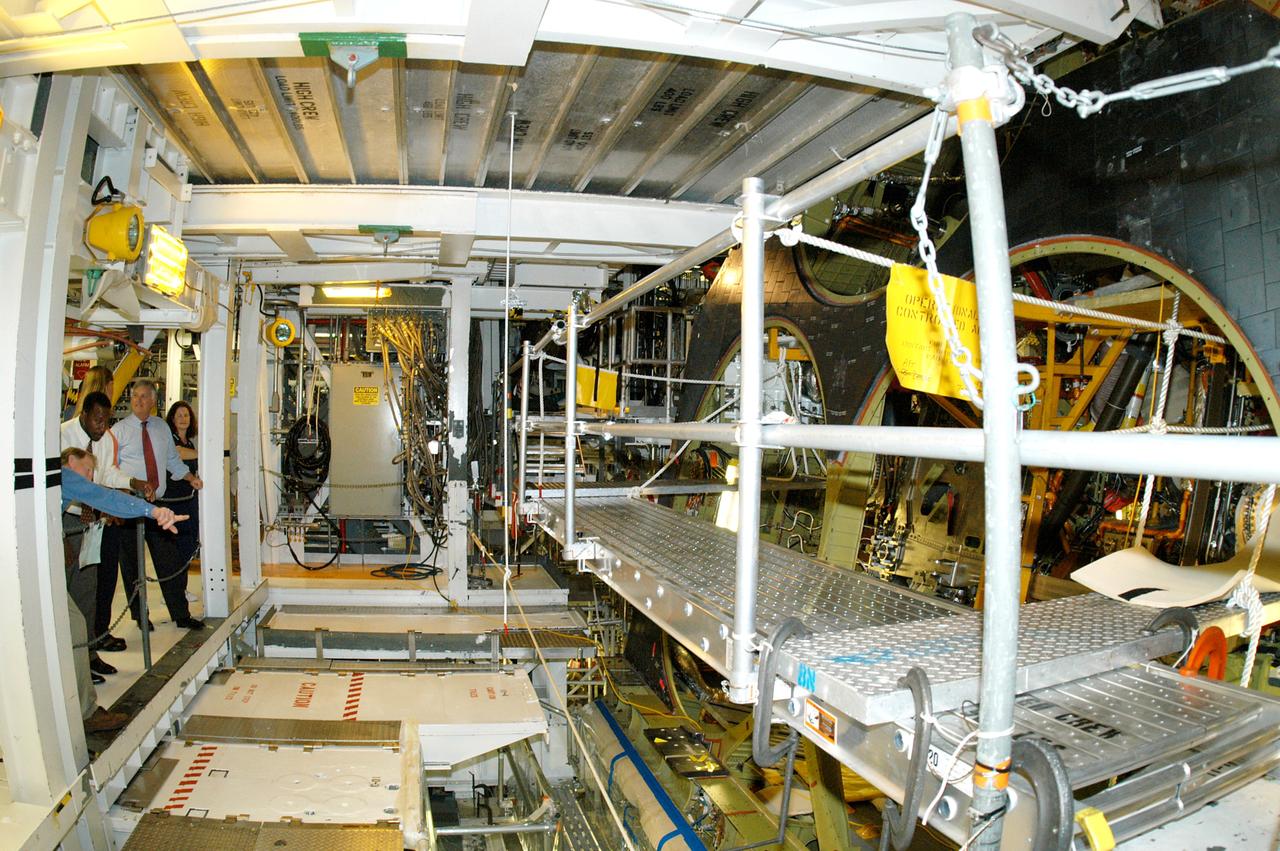
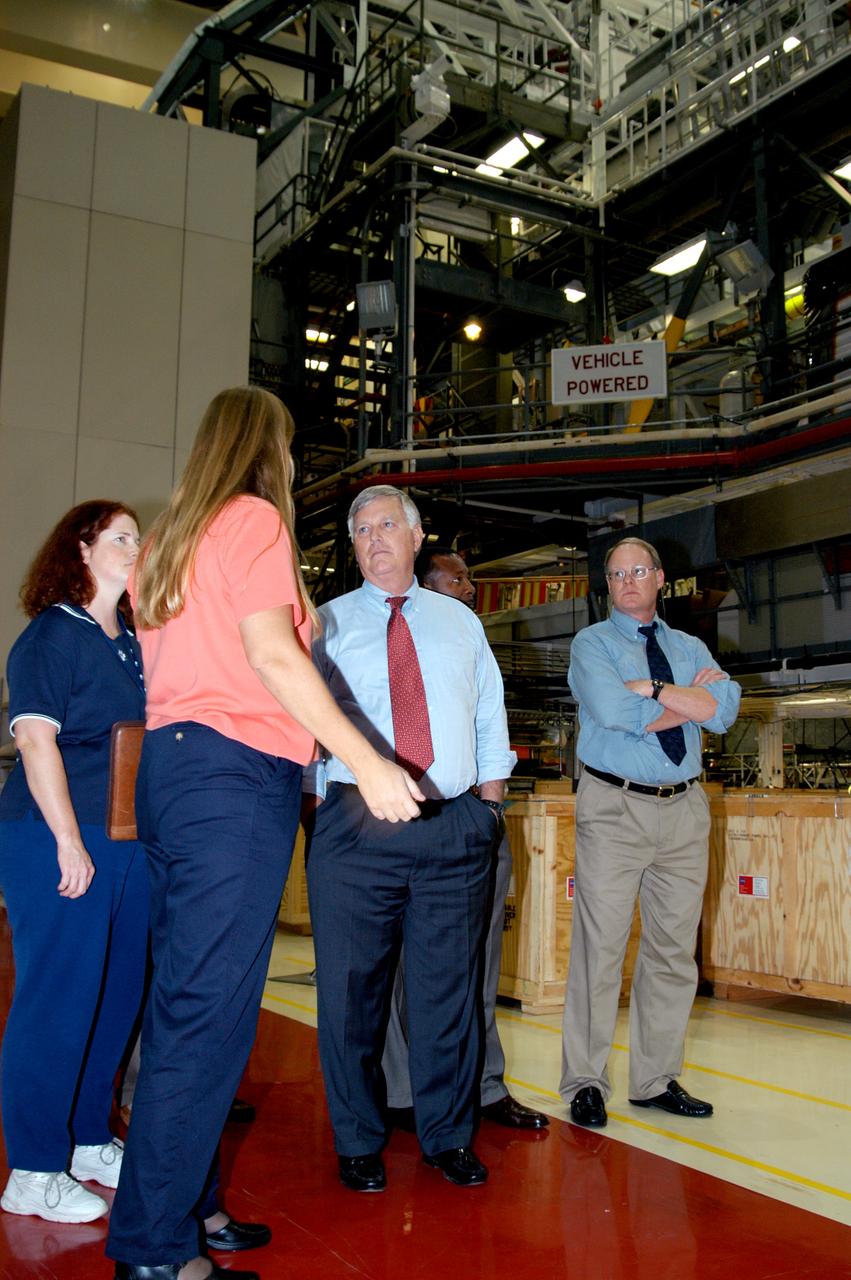
KENNEDY SPACE CENTER, FLA. - Standing near Endeavour in the Orbiter Processing Facility are (left to right) Joy Huff, with KSC Space Shuttle Processing; Kathy Laufenberg, with United Space Alliance; Center Director Jim Kennedy; and Bruce Buckingham, assistant to Deputy Director Woodrow Whitlow Jr.  Kennedy and Whitlow are touring the OPF, viewing the work being done on Endeavour, which is in its Orbiter Major Modification period.
KENNEDY SPACE CENTER, FLA. - Standing near Endeavour in the Orbiter Processing Facility are (left to right) Joy Huff, with KSC Space Shuttle Processing; Kathy Laufenberg, with United Space Alliance; Center Director Jim Kennedy; and Bruce Buckingham, assistant to Deputy Director Woodrow Whitlow Jr. Kennedy and Whitlow are touring the OPF, viewing the work being done on Endeavour, which is in its Orbiter Major Modification period.
KENNEDY SPACE CENTER, FLA. - On a tour of the Orbiter Processing Facility, Center Director Jim Kennedy (right) and Deputy Director Woodrow Whitlow Jr. (left) look at rudder speed brake panels on Endeavour  In the background is Tom Roberts, who is with United Space Alliance.  Endeavour is in its Orbiter Major Modification period, which began in December 2003.
KENNEDY SPACE CENTER, FLA. - On a tour of the Orbiter Processing Facility, Center Director Jim Kennedy (right) and Deputy Director Woodrow Whitlow Jr. (left) look at rudder speed brake panels on Endeavour In the background is Tom Roberts, who is with United Space Alliance. Endeavour is in its Orbiter Major Modification period, which began in December 2003.
STS049-S-269 (16 May 1992) --- The seven crewmembers of STS-49 pose near Endeavour for a post-flight shot soon after getting their feet on terra firma following nine days in Earth orbit.  Left to right are astronauts Richard J.  Hieb, Kevin P. Chilton, Daniel C. Brandenstein, Thomas D. Akers, Pierre J. Thuot, Kathryn C. Thornton and Bruce E. Melnick.  Brandenstein was mission commander; Chilton, pilot; and the others, mission specialists.
STS-49 crew poses for group portrait on EAFB runway 22 after OV-105 landing
STS047-230-030 (12 - 20 Sept 1992) --- Astronauts Mae C. Jemison (left) and N. Jan Davis, mission specialists, are pictured in the Spacelab-J science module preparing to conduct a session with the Lower Body Negative Pressure (LBNP) experiment.  The two joined four other NASA astronauts and a payload specialist representing Japan's National Space Development Agency (NASDA) aboard the Earth-orbiting Space Shuttle Endeavour for eight days of Spacelab-J research.
STS-47 MS Davis and MS Jemison conduct LBNP experiment in the SLJ module
STS049-S-268 (16 May 1992) --- A three-quarter forward view of the Space Shuttle Endeavour making its first landing, following a successful nine-day mission in Earth orbit.  The drogue chute precedes the main chute in NASA's first exercise of its detailed test objective (DTO-521) on the drag chute system.  Main gear touchdown occurred at 1:57:38 p.m. (PDT), May 16, 1992.
STS-49 Endeavour, OV-105, drag chute deployment during landing at EAFB, Calif
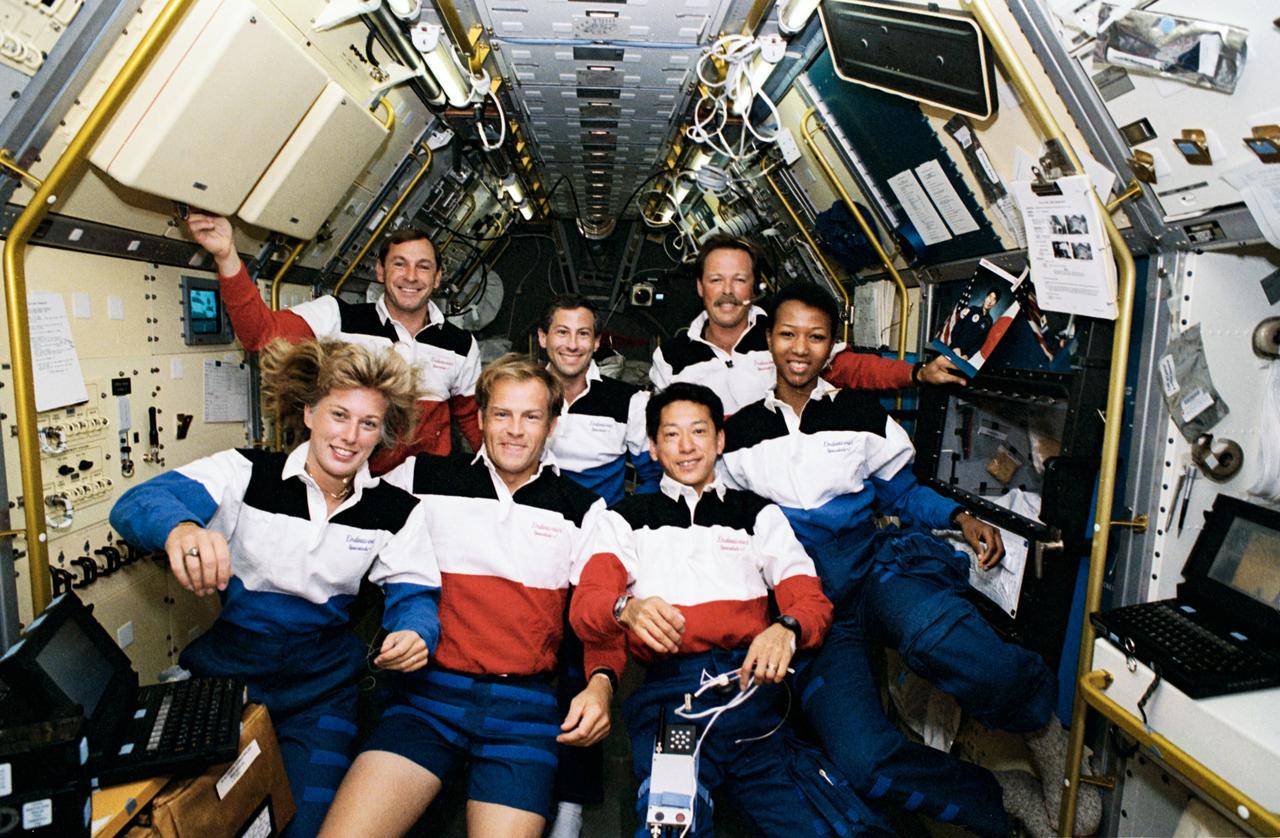
STS047-12-002 (12 - 20 Sept 1992)  --- The crew members assemble for their traditional in-flight portrait in this 35mm frame photographed in the Science Module aboard the Earth-orbiting Space Shuttle Endeavour.  Left to right (front) are N. Jan Davis, Mark C. Lee and Mamoru Mohri; and (rear) Curtis L. Brown, Jr., Jerome (Jay) Apt, Robert L. Gibson and Mae C. Jemison.  The seven spent eight days in space in support of the Spacelab-J mission.
STS-47 crew poses for official onboard (in space) portrait in SLJ module
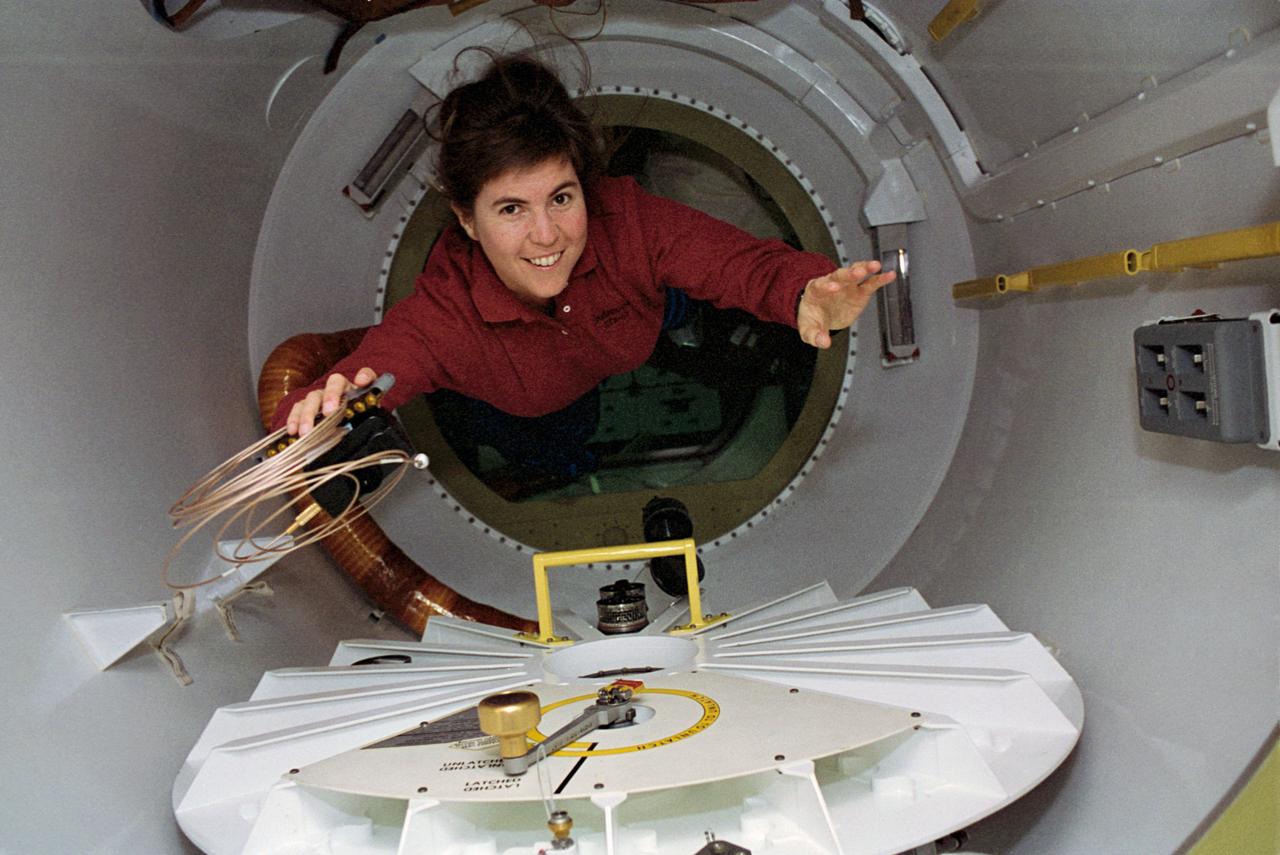
STS057-28-013 (21 June - 1 July 1993) --- With a camera and cable in hand, astronaut Janice E. Voss, mission specialist, floats through a special tunnel into the SpaceHab module.  Voss and five other NASA astronauts spent almost ten days aboard the Space Shuttle Endeavour in Earth-orbit supporting the SpaceHab mission, retrieving the European Retrievable Carrier (EURECA) and conducting various experiments.
Candid views of a crewmember in the SPACEHAB access tunnel.
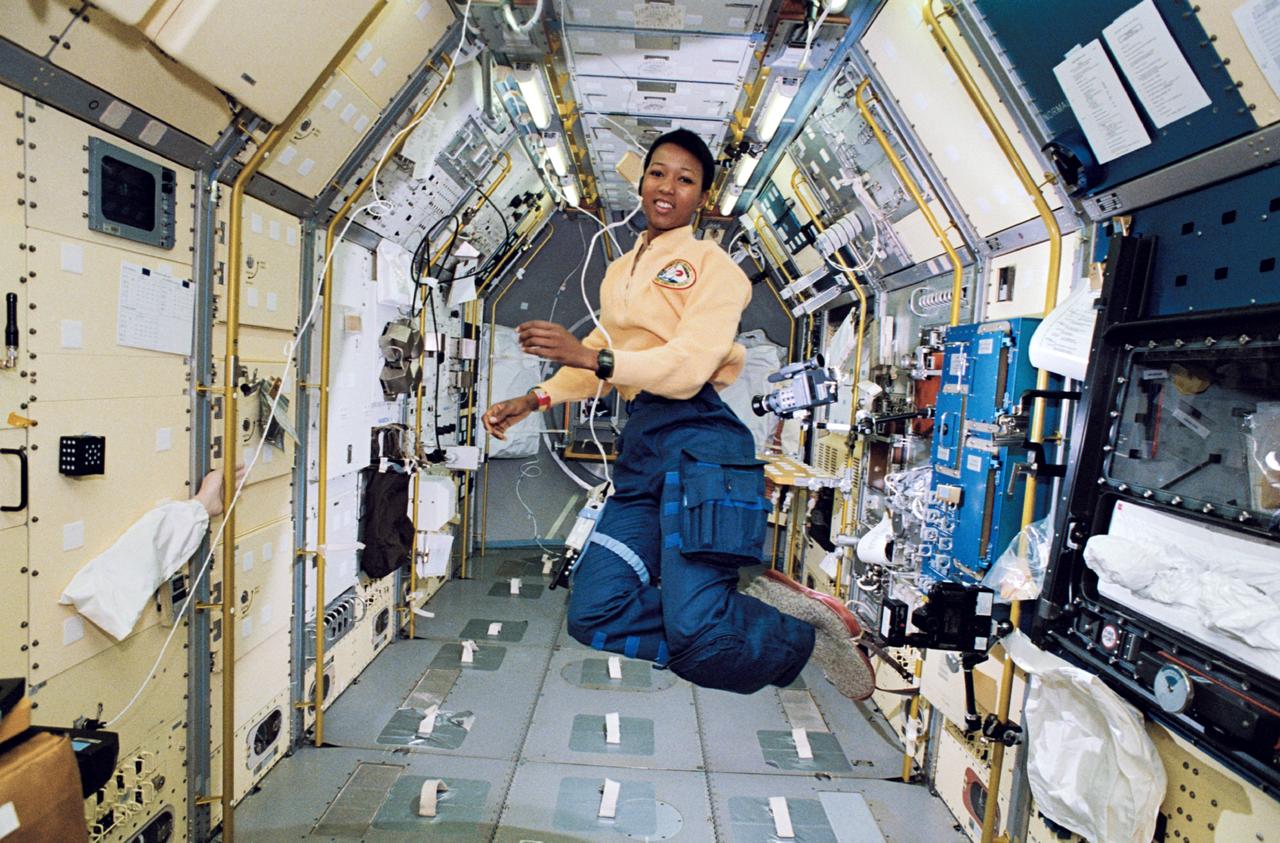
STS047-37-003 (12-20 Sept. 1992) --- Astronaut Mae C. Jemison, STS-47 mission specialist, appears to be clicking her heels in zero-gravity in this 35mm frame photographed in the Science Module aboard the Earth-orbiting Space Shuttle Endeavour. Making her first flight in space, Dr. Jemison was joined by five other NASA astronauts and a Japanese payload specialist for eight days of research in support of the Spacelab-J mission, a joint effort between Japan and the United States.
STS-47 MS Jemison works in the Spacelab Japan (SLJ) module aboard OV-105
KENNEDY SPACE CENTER, FLA. -  In the Orbiter Processing Facility, while Greg Harlow, with United Space Alliance (USA), (above) threads a camera under the tiles of the orbiter Endeavour, Peggy Ritchie, with USA, (behind the stand) and NASA’s Richard Parker watch the images on a monitor to inspect for corrosion.
KENNEDY SPACE CENTER, FLA. - In the Orbiter Processing Facility, while Greg Harlow, with United Space Alliance (USA), (above) threads a camera under the tiles of the orbiter Endeavour, Peggy Ritchie, with USA, (behind the stand) and NASA’s Richard Parker watch the images on a monitor to inspect for corrosion.
KENNEDY SPACE CENTER, FLA. - In the Orbiter Processing Facility, while Greg Harlow, with United Space Alliance (USA), (above) threads a camera under the tiles of the orbiter Endeavour, NASA’s Richard Parker (below left) and Peggy Ritchie, with USA, (at right) watch the images on a monitor to inspect for corrosion.
KENNEDY SPACE CENTER, FLA. -   In the Orbiter Processing Facility, while Greg Harlow, with United Space Alliance (USA) (above) threads a camera under the tiles of the orbiter Endeavour, Peggy Ritchie, USA, (behind the stand) and NASA’s Richard Parker (seated) watch the images on a monitor to inspect for corrosion.
KENNEDY SPACE CENTER, FLA. - In the Orbiter Processing Facility, while Greg Harlow, with United Space Alliance (USA) (above) threads a camera under the tiles of the orbiter Endeavour, Peggy Ritchie, USA, (behind the stand) and NASA’s Richard Parker (seated) watch the images on a monitor to inspect for corrosion.
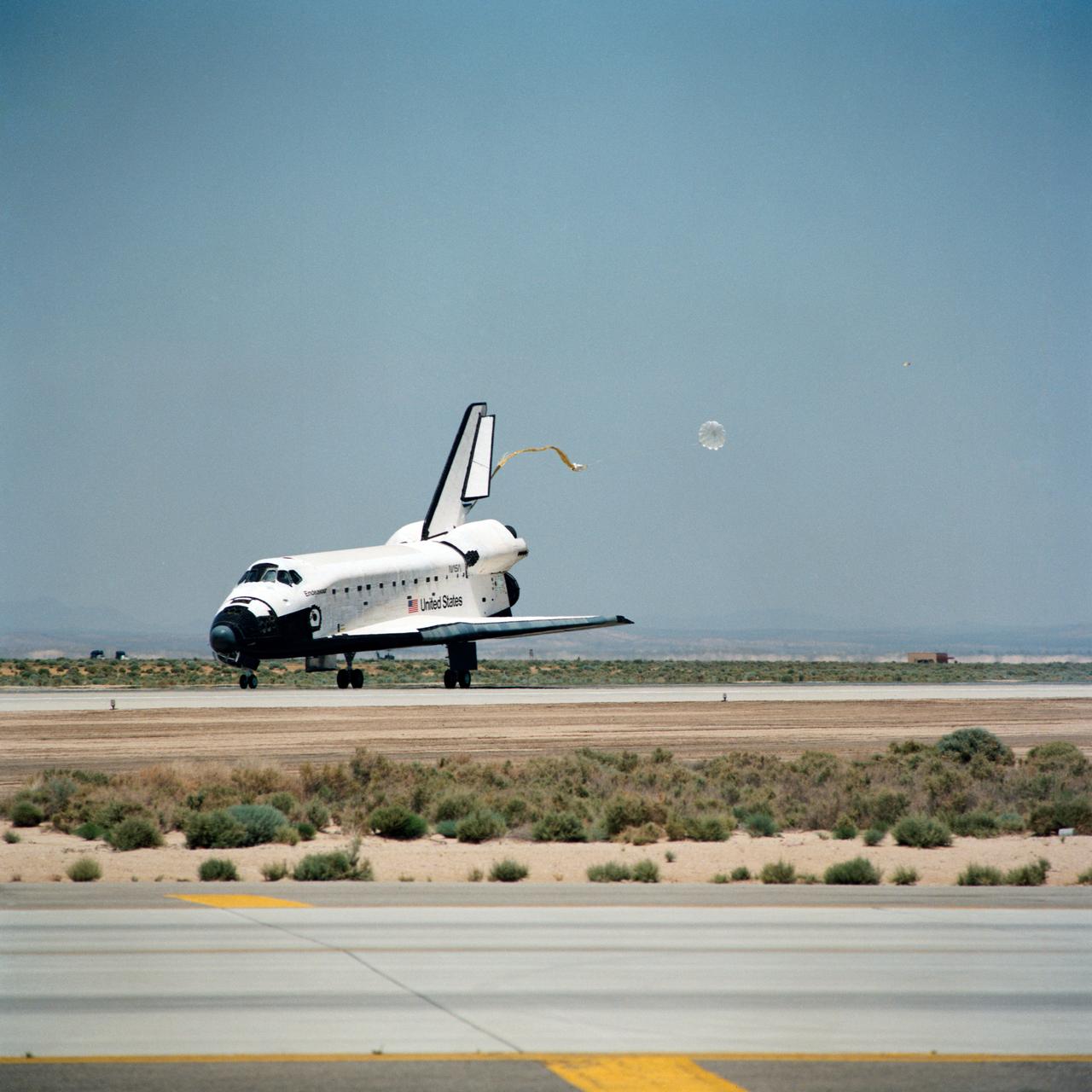
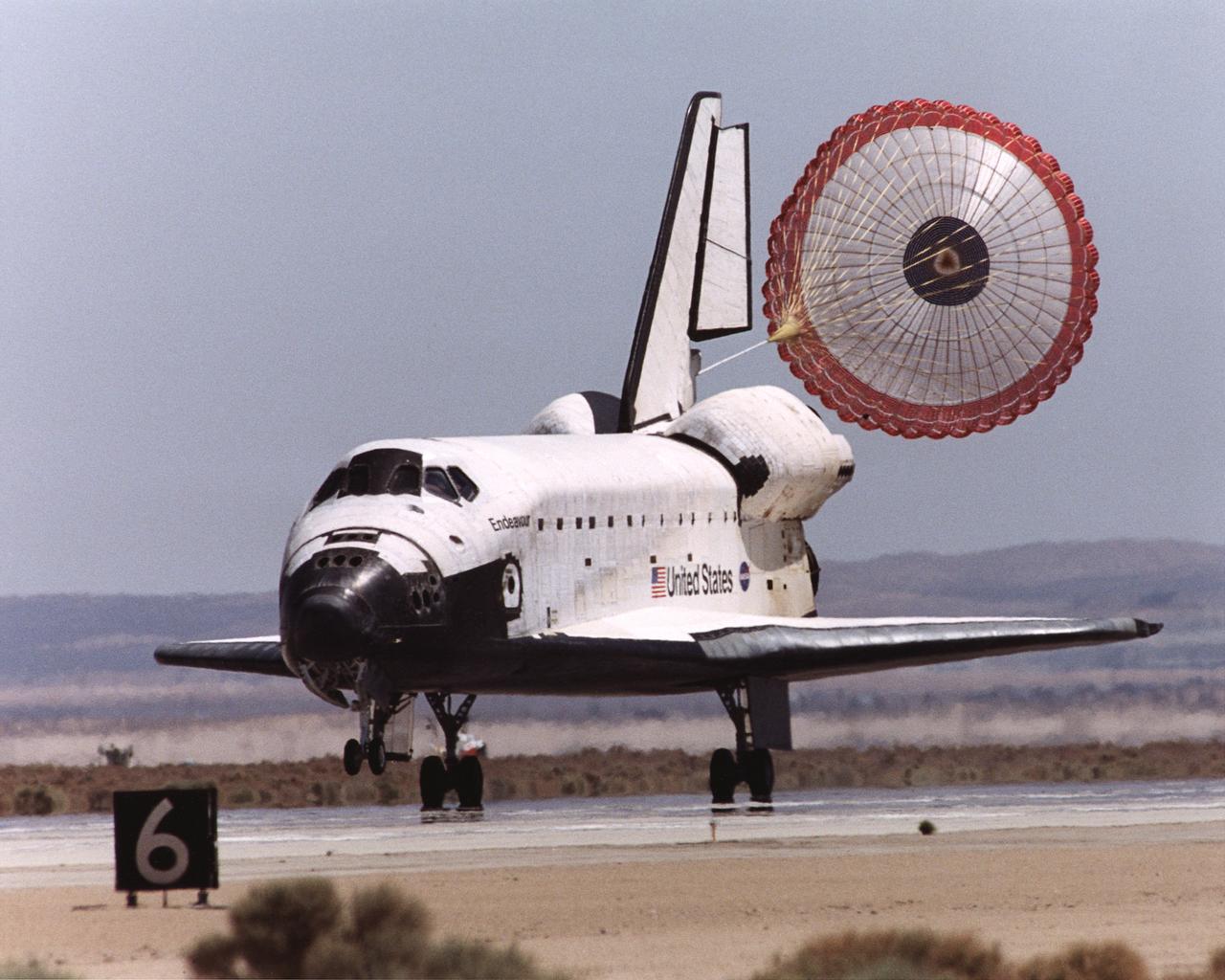
The Space Shuttle Endeavour's drag chute deploys to slow the orbiter as it rolls out on Runway 22 at Edwards Air Force Base at the conclusion of its 14-day STS-111 mission to the International Space Station.
The Space Shuttle Endeavour's drag chute deploys to slow the orbiter as it rolls out on Runway 22 at Edwards Air Force Base at the conclusion of its 14-day STS-111 mission to the International Space Station
The Space Shuttle Endeavour's drag chute deploys to slow the orbiter as it rolls out on Runway 22 at Edwards Air Force Base at the conclusion of its 14-day STS-111 mission to the International Space Station.
The Space Shuttle Endeavour's drag chute deploys to slow the orbiter as it rolls out on Runway 22 at Edwards Air Force Base at the conclusion of its 14-day STS-111 mission to the International Space Station
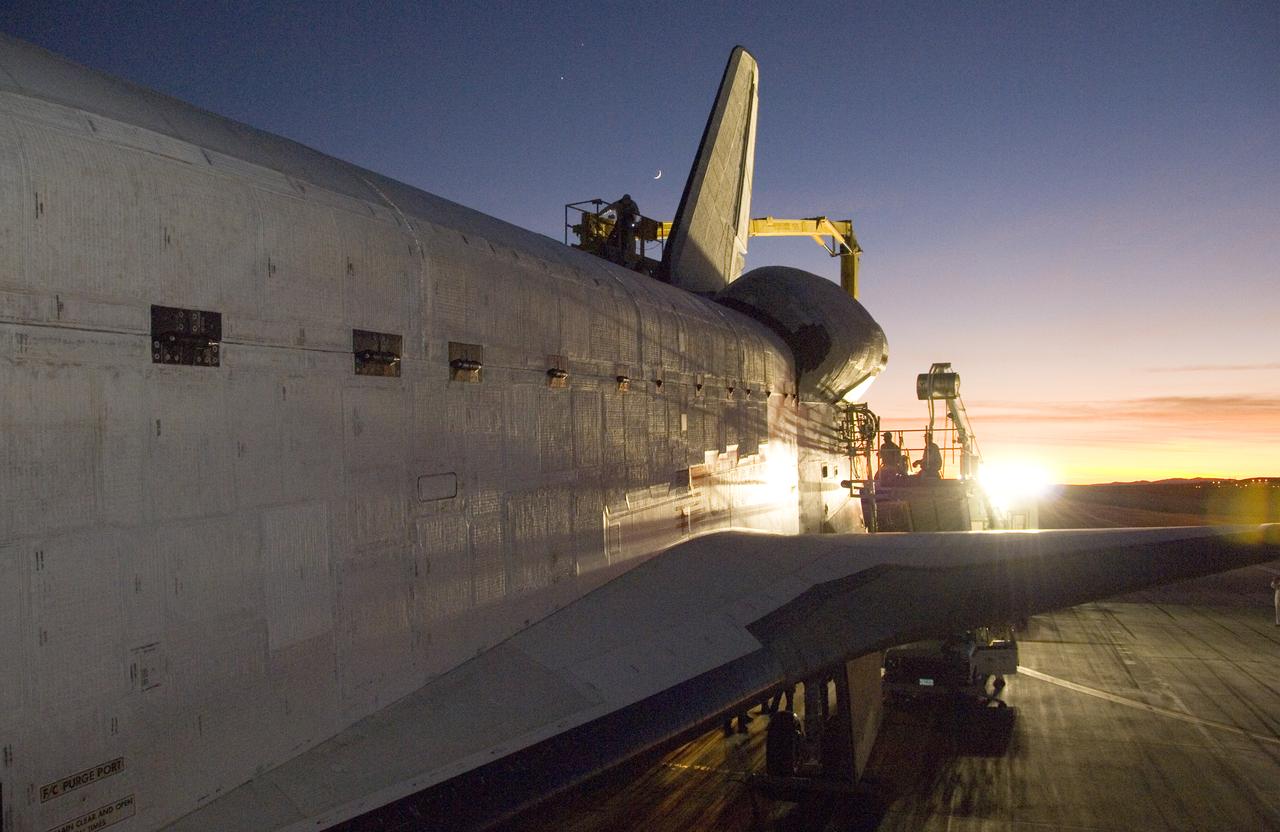
The setting sun casts long shadows over shuttle Endeavour as technicians prepare to tow the orbiter from the Edwards Air Force Base runway after landing Nov. 30.
he setting sun casts long shadows over shuttle Endeavour as technicians prepare to tow the orbiter from the Edwards AFB runway after landing Nov. 30
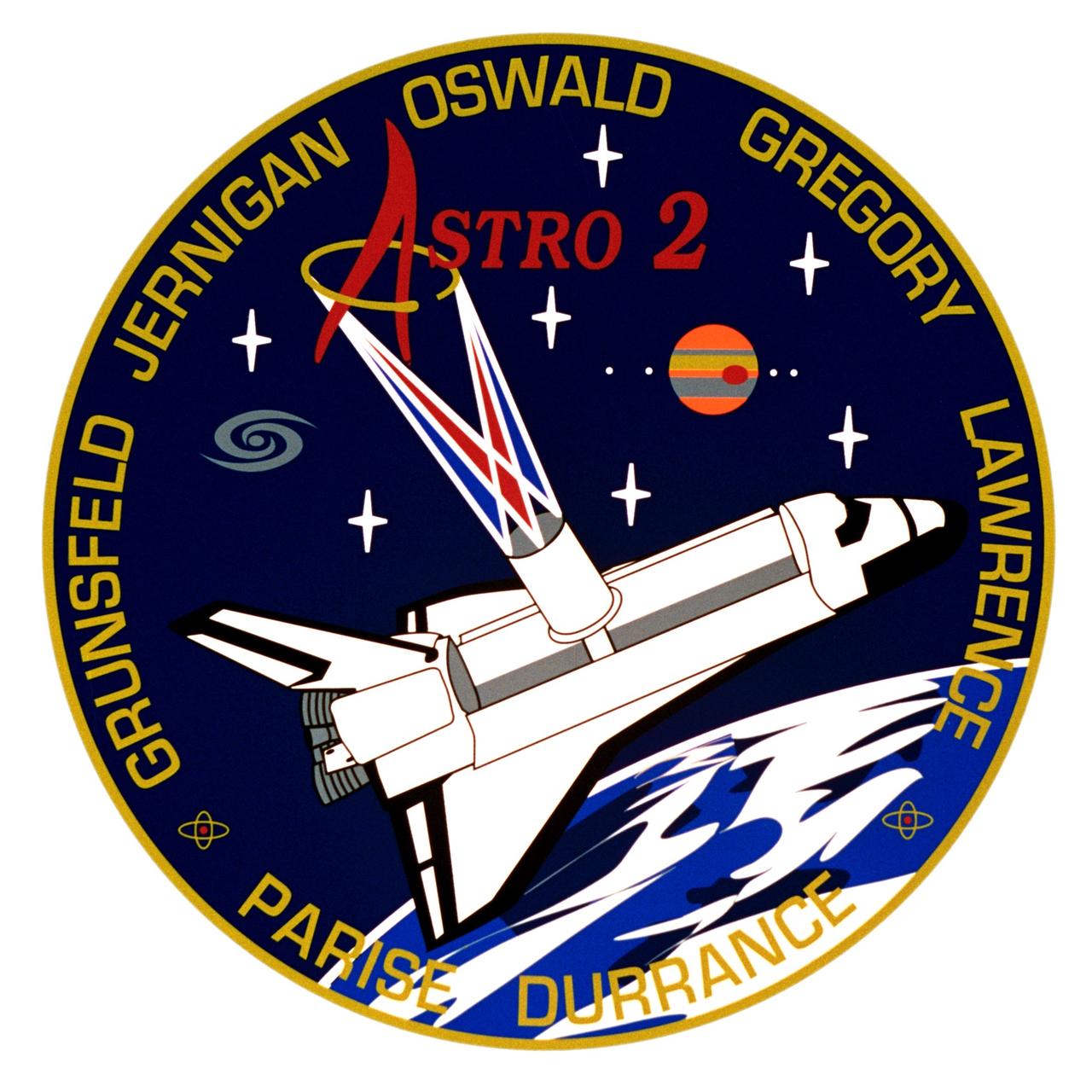
STS067-S-001 (October 1994) --- Observation and remote exploration of the Universe in the ultraviolet wavelengths of light are the focus of the STS-67/ASTRO-2 mission, as depicted in the crew patch designed by the crew members. The insignia shows the ASTRO-2 telescopes in the space shuttle Endeavour's payload bay, orbiting high above Earth's atmosphere. The three sets of rays, diverging from the telescope on the patch atop the Instrument Pointing System (IPS), correspond to the three ASTRO-2 telescopes -- the Hopkins Ultraviolet Telescope (HUT), the Ultraviolet Imaging Telescope (UIT), and the Wisconsin Ultraviolet Photo-Polarimeter Experiment (WUPPE).  The telescopes are co-aligned to simultaneously view the same astronomical object, as shown by the convergence of rays on the NASA symbol. This symbol also represents the excellence of the union of the NASA teams and universality's in the exploration of the universe through astronomy.  The celestial targets of ASTRO-2 include the observation of planets, stars and galaxies shown in the design. The two small atoms represent the search in the ultraviolet spectrum for the signature of primordial helium in intergalactic space left over from the Big Bang. The observations performed on ASTRO-2 will contribute to man's knowledge and understanding of the vast universe, from the planets in out system to the farthest reaches of space.    The NASA insignia design for space shuttle flights is reserved for use by the astronauts and for other official use as the NASA Administrator may authorize. Public availability has been approved only in the forms of illustrations by the various news media. When and if there is any change in this policy, which is not anticipated, the change will be publicly announced. Photo credit: NASA
STS-67 crew insignia
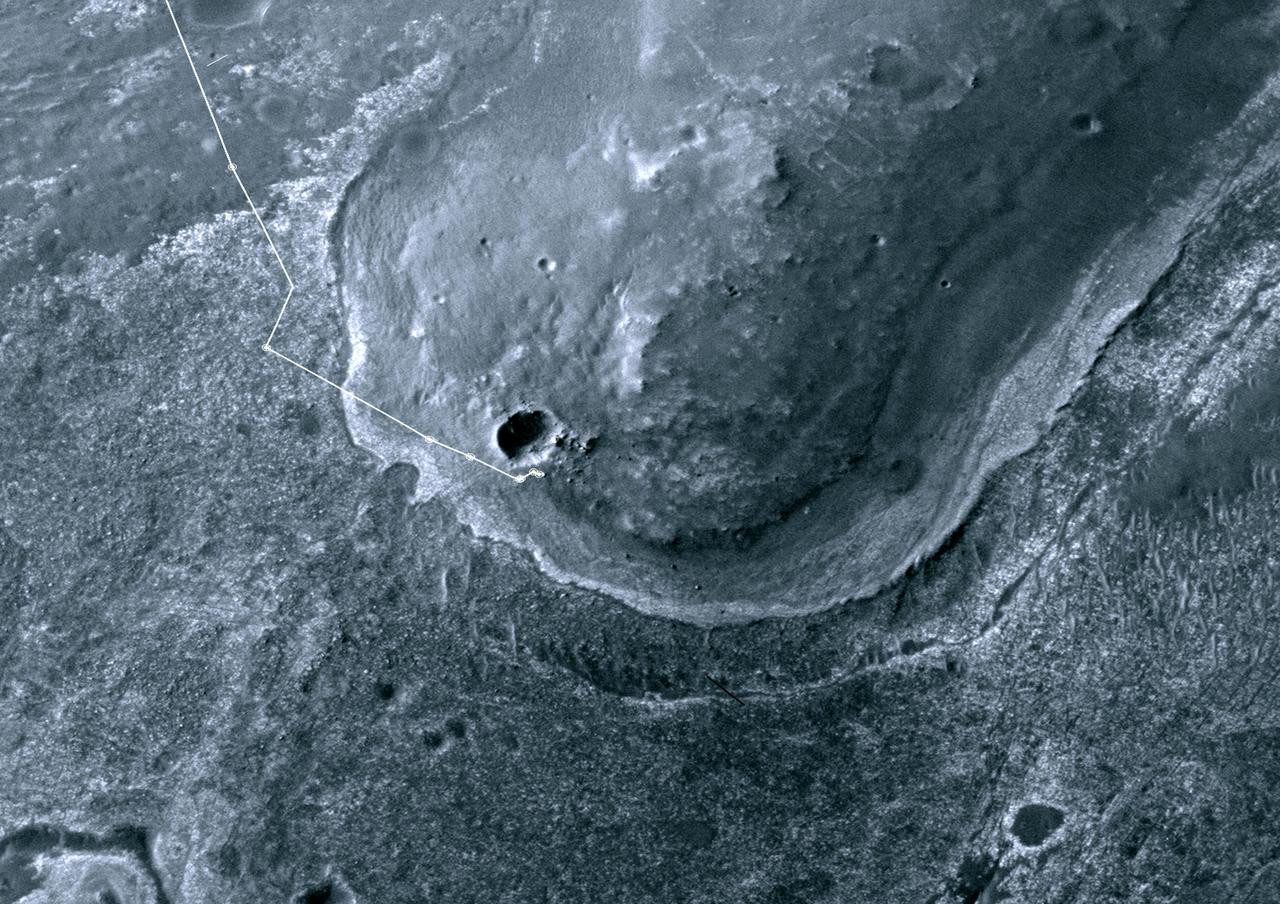
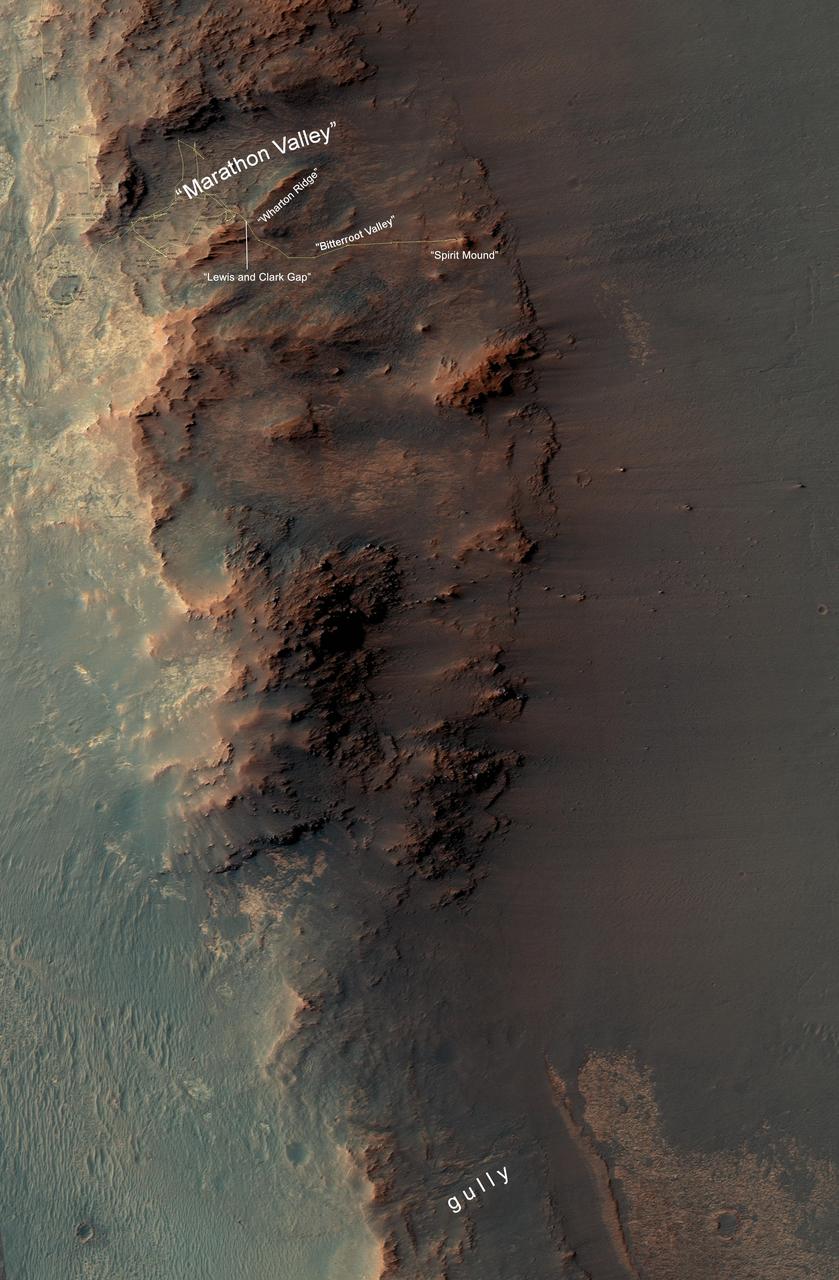
This map show a portion of Endeavour Crater's western rim that includes the "Marathon Valley" area investigated intensively by NASA's Mars Exploration Rover Opportunity in 2015 and 2016, and a fluid-carved gully that is a destination to the south for the mission.  The width of the area covered in the map is about half a mile (about 800 meters). North is up. Opportunity entered the northern end of the mapped area in January 2015 and entered Marathon Valley in July 2015. A gold line on the map, which may not be visible without zooming into the image, shows the rover's route. Curiosity departed Marathon Valley in September 2016 by driving southward through "Lewis and Clark Gap" into "Bitterroot Valley."  The gully near the south end of the map was incised into Endeavour's rim long ago by a fluid, possibly a water-lubricated debris flow or a flow with mostly water. Driving into this gully to learn more about that flow is one of the goals for a two-year mission extension taking Opportunity through September 2018.  A map showing wider context of Opportunity's route from its January 2004 landing in Eagle Crater to Endeavour Crater and Marathon Valley is at PIA19154.  The rover's traverse shown here has been mapped by Tim Parker of NASA's Jet Propulsion Laboratory, Pasadena, California, onto an image from the High Resolution Imaging Science Experiment (HiRISE) camera on NASA's Mars Reconnaissance Orbiter.   http://photojournal.jpl.nasa.gov/catalog/PIA20854
From Marathon Valley to Gully on Endeavour Rim
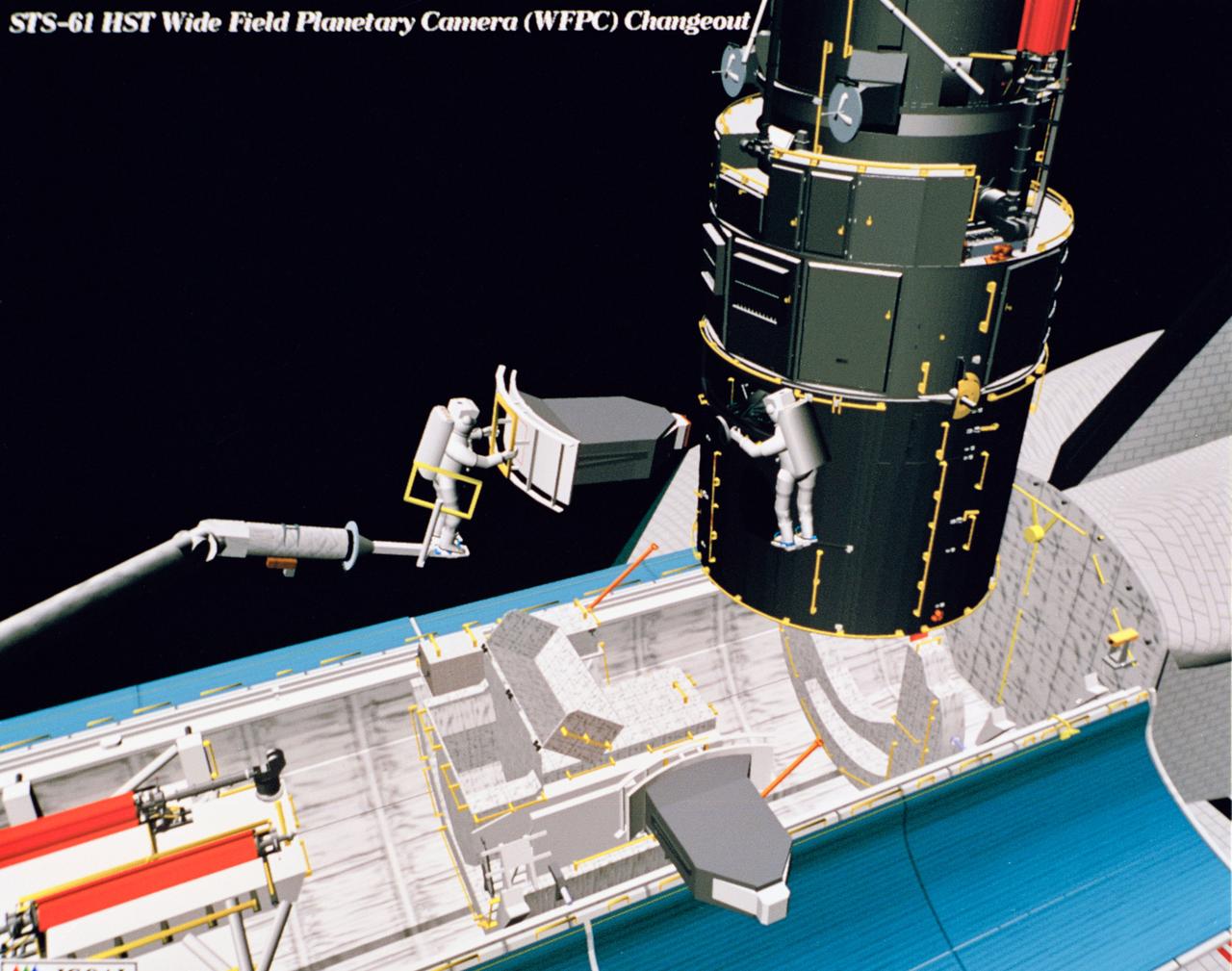
Computer generated scenes depicting the Hubble Space Telescope capture and a sequence of planned events on the planned extravehicular activity (EVA). Scenes include the Remote Manipulator System (RMS) arm assisting two astronauts changing out the Wide Field/Planetary Camera (WF/PC) (48699); RMS arm assisting in the temporary mating of the orbiting telescope to the flight support system in Endeavour's cargo bay (48700); Endeavour's RMS arm assisting in the "capture" of the orbiting telescope (48701); Two astronauts changing out the telescope's coprocessor (48702); RMS arm assistign two astronauts replacing one of the telescope's electronic control units (48703); RMS assisting two astronauts replacing the fuse plugs on the telescope's Power Distribution Unit (PDU) (48704); The telescope's High Resolution Spectrograph (HRS) kit is depicted in this scene (48705); Two astronauts during the removal of the high speed photometer and the installation of the COSTAR instrument (48706); Two astronauts, standing on the RMS, during installation of one of the Magnetic Sensing System (MSS) (48707); High angle view of the orbiting Space Shuttle Endeavour with its cargo bay doors open, revealing the bay's pre-capture configuration. Seen are, from the left, the Solar Array Carrier, the ORU Carrier and the flight support system (48708); Two astronauts performing the replacement of HST's Rate Sensor Units (RSU) (48709); The RMS arm assisting two astronauts with the replacement of the telescope's solar array panels (48710); Two astronauts replacing the telescope's Solar Array Drive Electronics (SADE) (48711).
Computer-generated scenes depicting the HST capture and EVA repair mission
S91-36097 (6 May 1991) --- Air to air view of Endeavour, Orbiter Vehicle (OV) 105, atop a Shuttle Carrier Aircraft (SCA) NASA 911, a modified Boeing 747, approaches touchdown for a brief stopover at Ellington Field, near JSC. Visible below the spacecraft/aircraft combination are the NASA T-38 flight line, NASA aircraft hangars and facilities, and a runway. OV-105 rolled out at Rockwell's Palmdale facility on 04-25-91 to once more bring to four the total of NASA Shuttles available for flight assignment. The spacecraft and aircraft-tandem left Houston later on this day headed for another stop in Mississippi before landing in Florida on 05-07-91. This photograph was taken from a T-38 aircraft by Sheri J. Dunnette of JSC's Image Science Division (ISD).
Air to air view of Endeavour, OV-105, atop SCA approaches Ellington runway
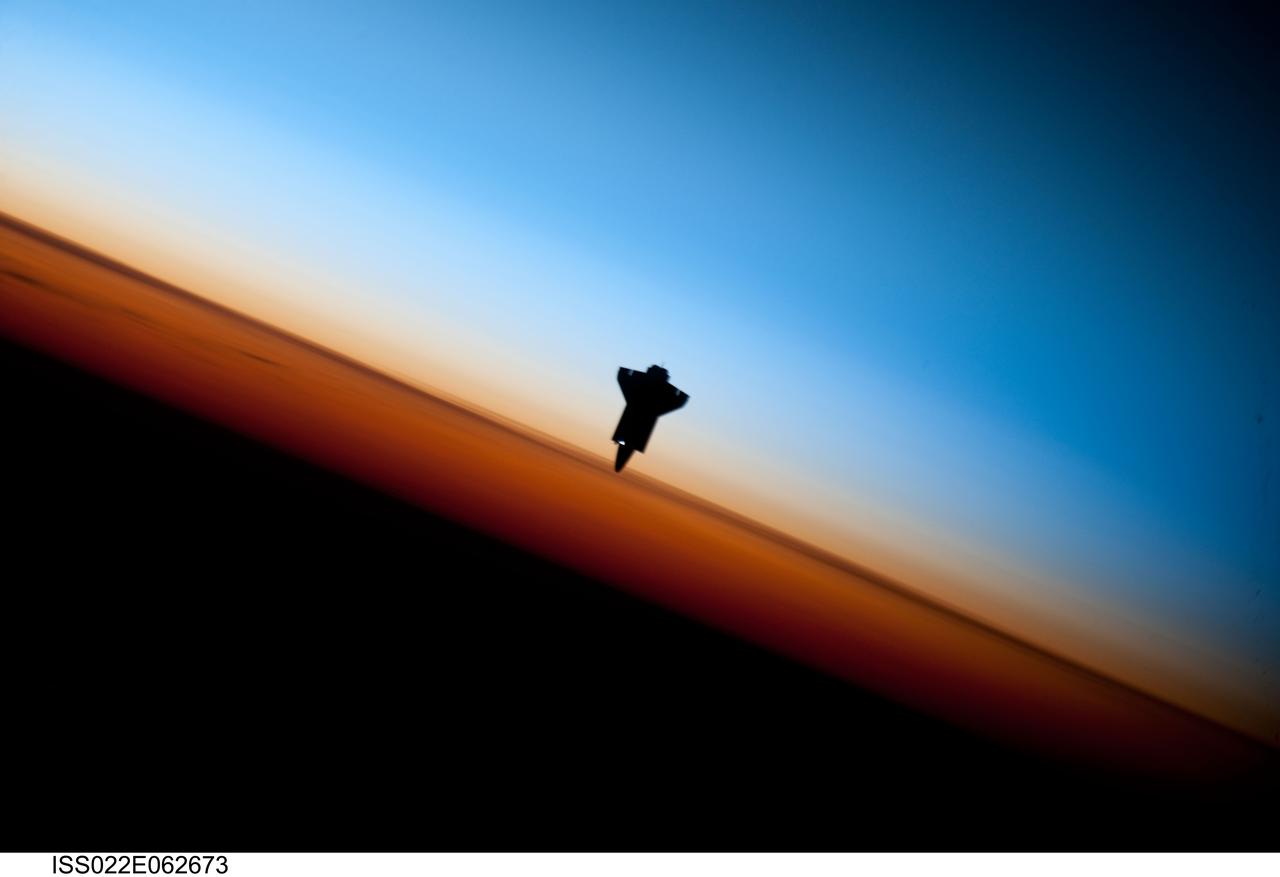
ISS022-E-062673 (9 Feb. 2010) --- Though astronauts and cosmonauts often encounter striking scenes of Earth's limb, this very unique image, part of a series over Earth's colorful horizon, has the added feature of a silhouette of the space shuttle Endeavour. The image was photographed by an Expedition 22 crew member prior to STS-130 rendezvous and docking operations with the International Space Station. Docking occurred at 11:06 p.m. (CST) on Feb. 9, 2010. The orbital outpost was at 46.9 south latitude and 80.5 west longitude, over the South Pacific Ocean off the coast of southern Chile with an altitude of 183 nautical miles when the image was recorded. The orange layer is the troposphere, where all of the weather and clouds which we typically watch and experience are generated and contained. This orange layer gives way to the whitish Stratosphere and then into the Mesosphere. In some frames the black color is part of a window frame rather than the blackness of space.
Space Shuttle Endeavour Arrival to the ISS during Expedition 22
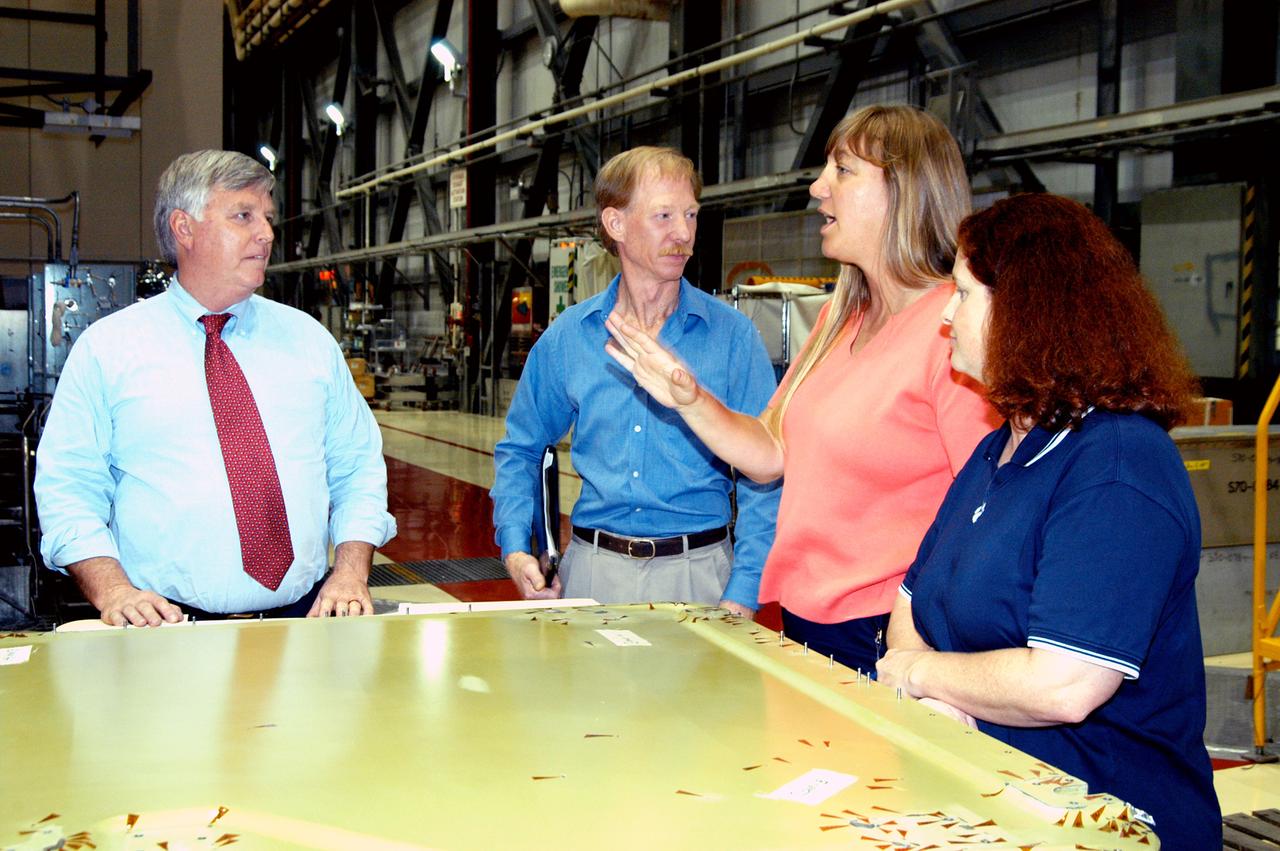
KENNEDY SPACE CENTER, FLA. - On a tour of the Orbiter Processing Facility, Center Director Jim Kennedy (center) and Deputy Director Woodrow Whitlow Jr. (far left) look at the external tank door corrosion work being done on Endeavour.  Next to Whitlow is Bruce Buckingham, assistant to the deputy director.  Providing information, at right, are Orbiter Airframe Engineering ground area manager, and Tom Roberts, Airframe Engineering System specialist, both with United Space Alliance; and Joy Huff, with KSC Space Shuttle Processing.  Endeavour is in its Orbiter Major Modification period, which began in December 2003.
KENNEDY SPACE CENTER, FLA. - On a tour of the Orbiter Processing Facility, Center Director Jim Kennedy (center) and Deputy Director Woodrow Whitlow Jr. (far left) look at the external tank door corrosion work being done on Endeavour. Next to Whitlow is Bruce Buckingham, assistant to the deputy director. Providing information, at right, are Orbiter Airframe Engineering ground area manager, and Tom Roberts, Airframe Engineering System specialist, both with United Space Alliance; and Joy Huff, with KSC Space Shuttle Processing. Endeavour is in its Orbiter Major Modification period, which began in December 2003.
KENNEDY SPACE CENTER, FLA. - On a tour of the Orbiter Processing Facility, Center Director Jim Kennedy (center) and Deputy Director Woodrow Whitlow Jr. (far left) look at the external tank door corrosion work being done on Endeavour.  Next to Whitlow is Bruce Buckingham, assistant to the deputy director.  Providing information, at right, are Kathy Laufenberg, Orbiter Airframe Engineering ground area manager, and Tom Roberts, Airframe Engineering System specialist, both with United Space Alliance; and Joy Huff, with Space Shuttle Processing.  Endeavour is in its Orbiter Major Modification period, which began in December 2003.
KENNEDY SPACE CENTER, FLA. - On a tour of the Orbiter Processing Facility, Center Director Jim Kennedy (center) and Deputy Director Woodrow Whitlow Jr. (far left) look at the external tank door corrosion work being done on Endeavour. Next to Whitlow is Bruce Buckingham, assistant to the deputy director. Providing information, at right, are Kathy Laufenberg, Orbiter Airframe Engineering ground area manager, and Tom Roberts, Airframe Engineering System specialist, both with United Space Alliance; and Joy Huff, with Space Shuttle Processing. Endeavour is in its Orbiter Major Modification period, which began in December 2003.
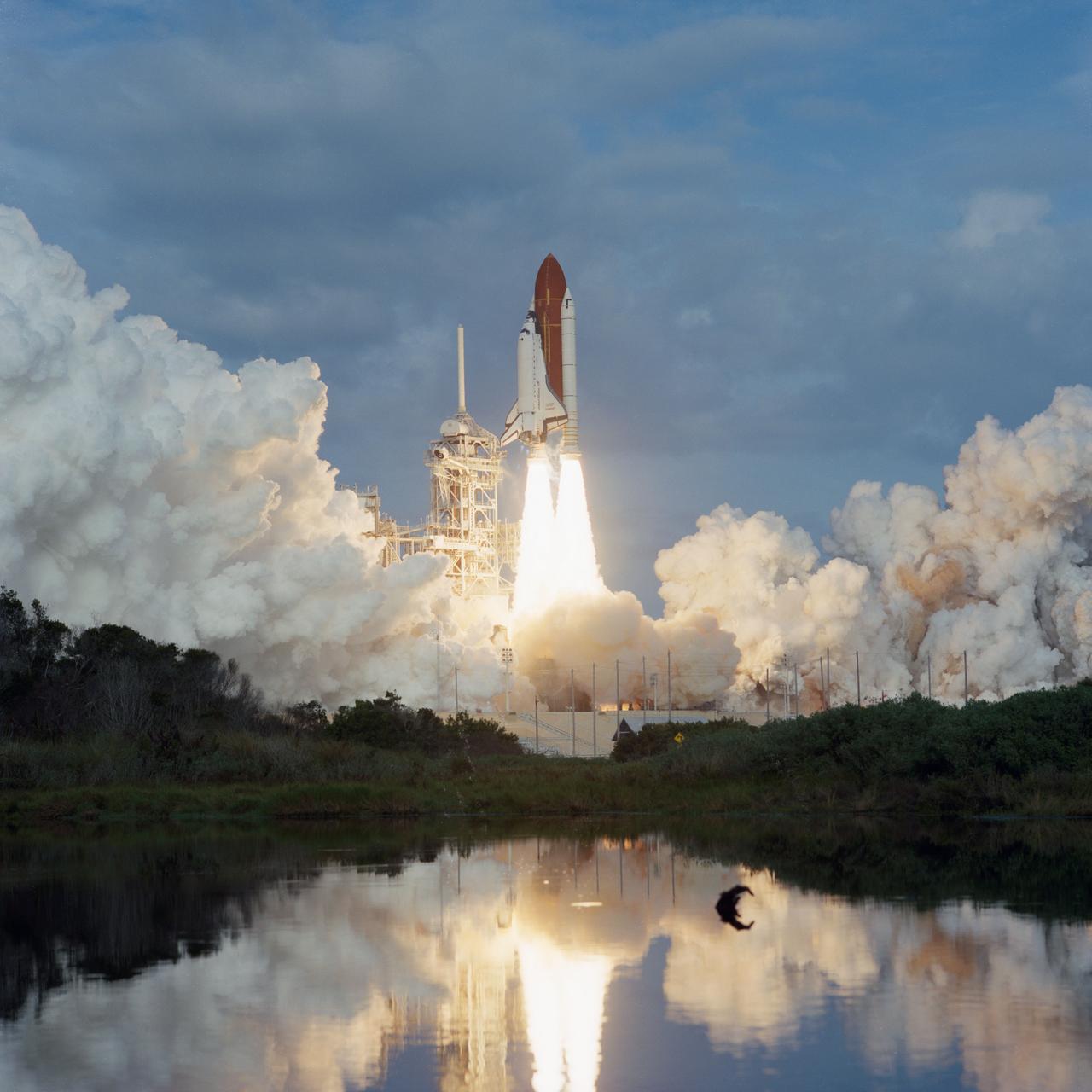
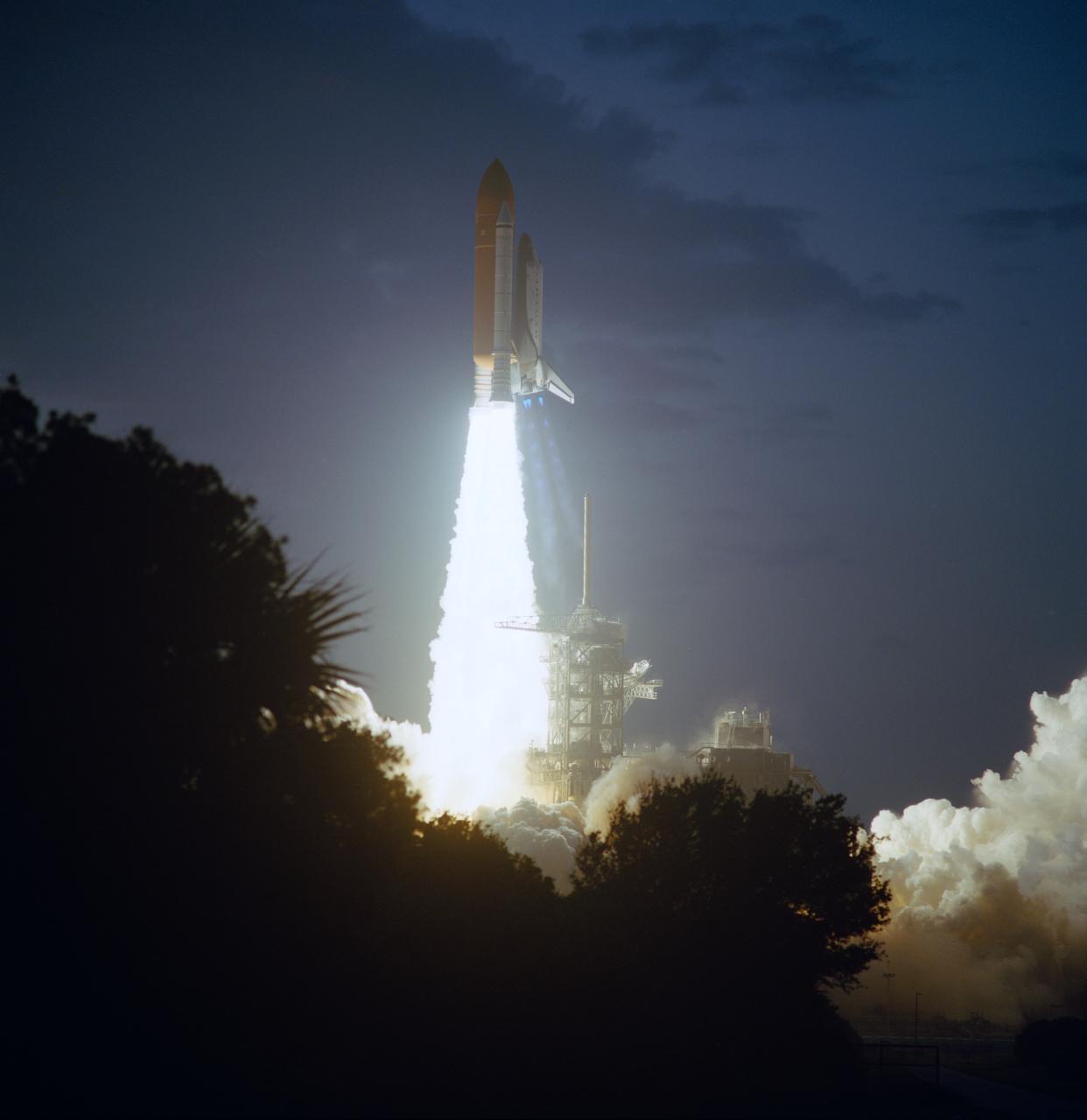
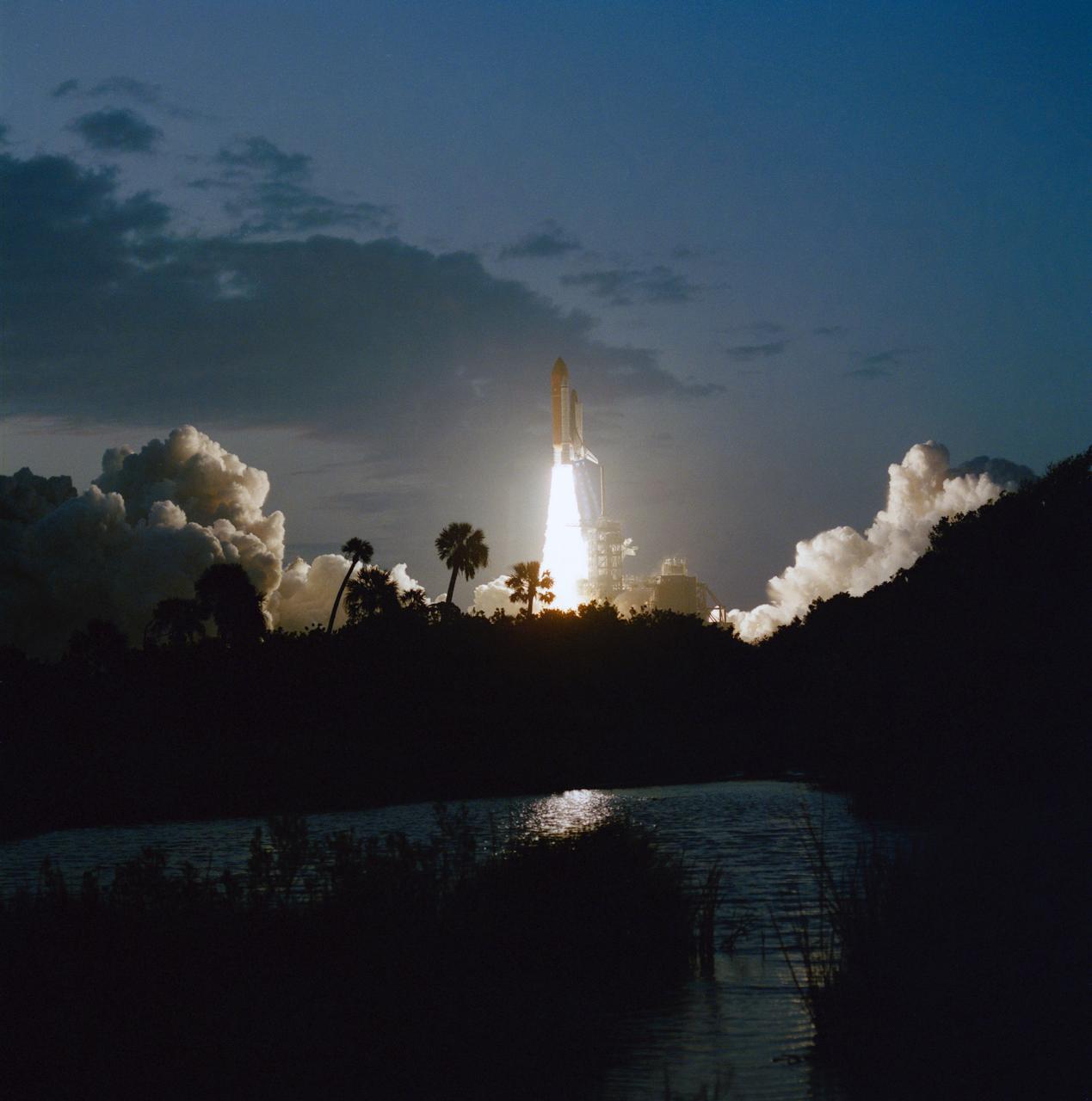
STS047-S-019 (12 Sept 1992) --- With a crew of six NASA astronauts and a Japanese payload specialist onboard, the Space Shuttle Endeavour heads for its second trip into space.  This trip will be devoted to support of the Spacelab-J mission, a joint effort between Japan and the United States.  Launch occurred at 10:23:00:0680 a.m. (EDT), September 12, 1992. Onboard were astronauts Robert L. Gibson, mission commander; Curtis L. Brown Jr., pilot; Mark C. Lee, payload commander; and Jerome (Jay) Apt, Mae C. Jemison and N. Jan Davis, mission specialists; along with payload specialist Mamoru Mohri, representing the National Space Development Agency of Japan.
STS-47 Endeavour, Orbiter Vehicle (OV) 105, lifts off from KSC LC 39 pad
STS047-S-040 (12 Sept 1992) --- A 35mm camera was used to record this distant, low-angle view of the STS-47 launch.  With a crew of six NASA astronauts and a Japanese payload specialist onboard, the Space Shuttle Endeavour was heading for its second trip into space.  This mission is devoted to support of the Spacelab-J mission, a joint effort between Japan and the United States.  Launch occurred at 10:23:00:0680 a.m. (EDT), September 12, 1992.  Onboard were astronauts Robert L. Gibson, mission commander; Curtis L. Brown Jr., pilot; Mark C. Lee, payload commander; and Jerome (Jay) Apt, Mae C.  Jemison and N. Jan Davis, mission specialists; along with payload specialist Mamoru Mohri, representing the National Space Development Agency (NASDA) of Japan.
STS-47 Endeavour, Orbiter Vehicle (OV) 105, lifts off from KSC LC 39 pad
STS047-S-021 (12 Sept 1992) --- With a crew of six NASA astronauts and a Japanese payload specialist onboard, the Space Shuttle Endeavour heads for its second trip into space.  This trip will be devoted to support of the Spacelab-J mission, a joint effort between Japan and the United States.  Launch occurred at 10:23:00:0680 a.m. (EDT), September 12, 1992. Onboard were astronauts Robert L. Gibson, mission commander; Curtis L. Brown Jr., pilot; Mark C. Lee, payload commander; and Jerome (Jay) Apt, Mae C. Jemison and N. Jan Davis, mission specialists, along with payload specialist Mamoru Mohri, representing the National Space Development Agency of Japan.
STS-47 Endeavour, Orbiter Vehicle (OV) 105, lifts off from KSC LC 39 pad
STS089-S-001 (October 1997) --- The link between the United States and Russia is symbolically represented by the space shuttle Endeavour and Russia?s Mir Space Station orbiting above the Bering Strait between Siberia and Alaska. The success of the joint United States-Russian missions is depicted by the space shuttle and Mir colored by the rising sun in the background. A shadowed representation of the International Space Station (ISS) rising with the sun represents the future program for which the Shuttle-Mir missions are prototypes. The inside rim of the insignia describes the outline of the number eight representing STS-89 as the eighth Shuttle/Mir docking mission. The nine stars represent the nine joint missions to be flown of the program and ? when combined with the number eight in the rim -- reflect the mission number. The nine stars also symbolize the children of the crew members who will be the future beneficiaries of the joint development work of the space programs of the two countries. Along the rim are the crew members? names with David A. Wolf?s name on the left and Andrew S. W. Thomas? name on the right, the returning and upgoing cosmonaut guest researcher crew members. In between and at the bottom is the name of Salizan S. Sharipov, mission specialist representing Russian Space Agency (RSA), in Cyrillic alphabet. The other crew members are Terrence W. Wilcutt, commander; Joe F. Edwards Jr., pilot; and mission specialists Michael P. Anderson, Bonnie J. Dunbar, and James F. Reilly. The red, white and blue of the rim reflect the colors of the American and Russian flags which are also represented in the rim on either side of the joined spacecraft.    The NASA insignia design for space shuttle flights is reserved for use by the astronauts and for other official use as the NASA Administrator may authorize. Public availability has been approved only in the forms of illustrations by the various news media. When and if there is any change in this policy, which is not anticipated, the change will be publicly announced. Photo credit: NASA
STS-89 Endeavour, Orbiter Vehicle (OV) 105, crew insignia