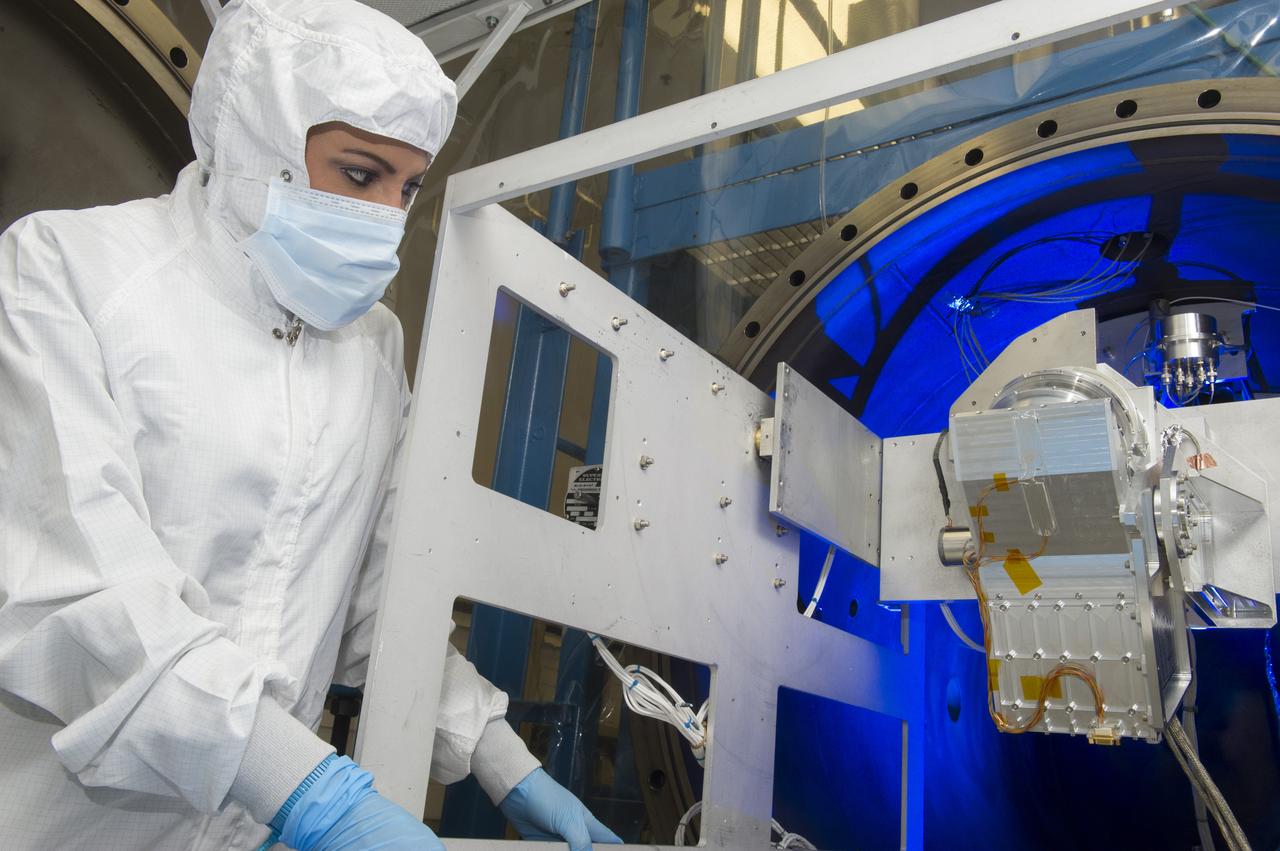
DUAL ION SPECTROMETER (DIS) ENGINEERING TEST UNIT (ETU) AT THE LOW ENERGY ELECTRON AND ION FACILITY (LEEIF), NSSTC
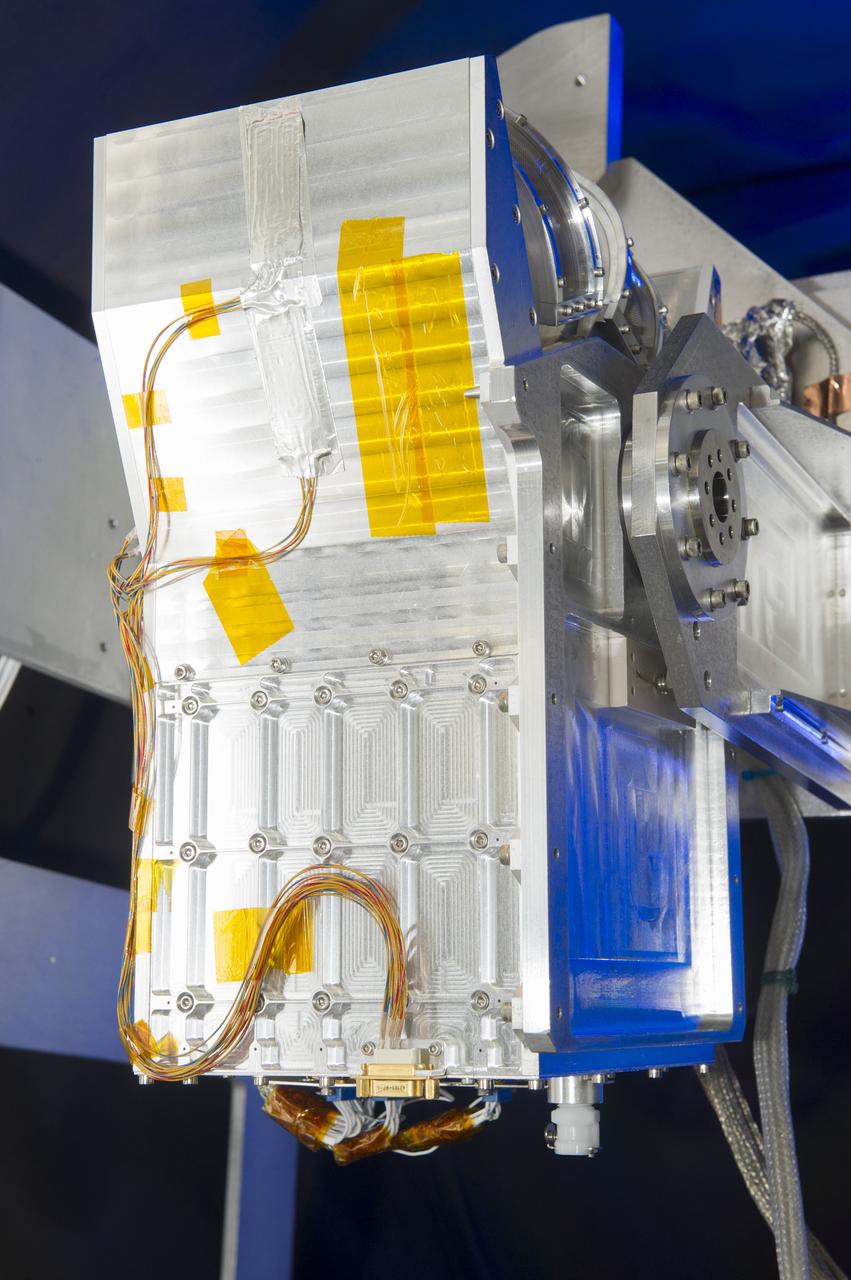
DUAL ION SPECTROMETER (DIS) ENGINEERING TEST UNIT (ETU) AT THE LOW ENERGY ELECTRON AND ION FACILITY (LEEIF), NSSTC
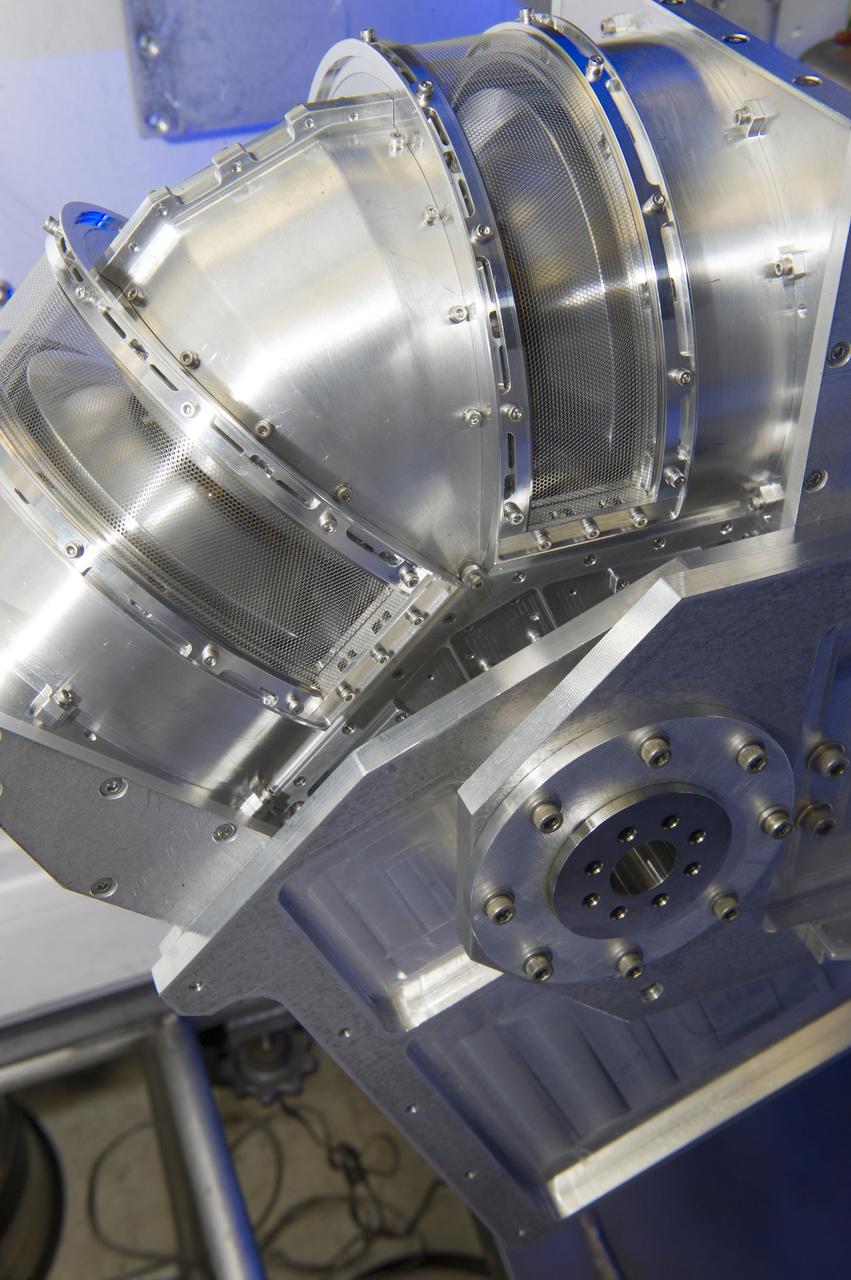
DUAL ION SPECTROMETER (DIS) ENGINEERING TEST UNIT (ETU) AT THE LOW ENERGY ELECTRON AND ION FACILITY (LEEIF), NSSTC
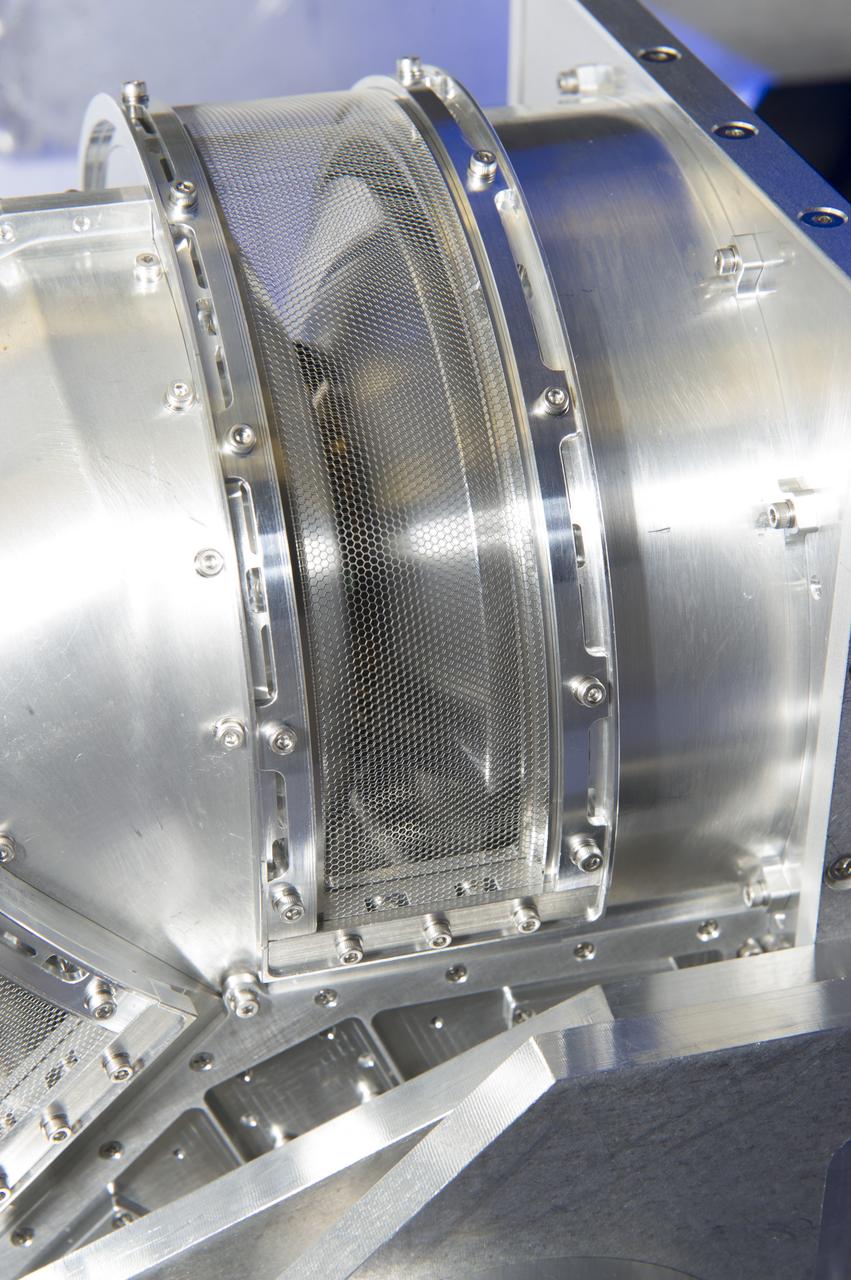
DUAL ION SPECTROMETER (DIS) ENGINEERING TEST UNIT (ETU) AT THE LOW ENERGY ELECTRON AND ION FACILITY (LEEIF), NSSTC
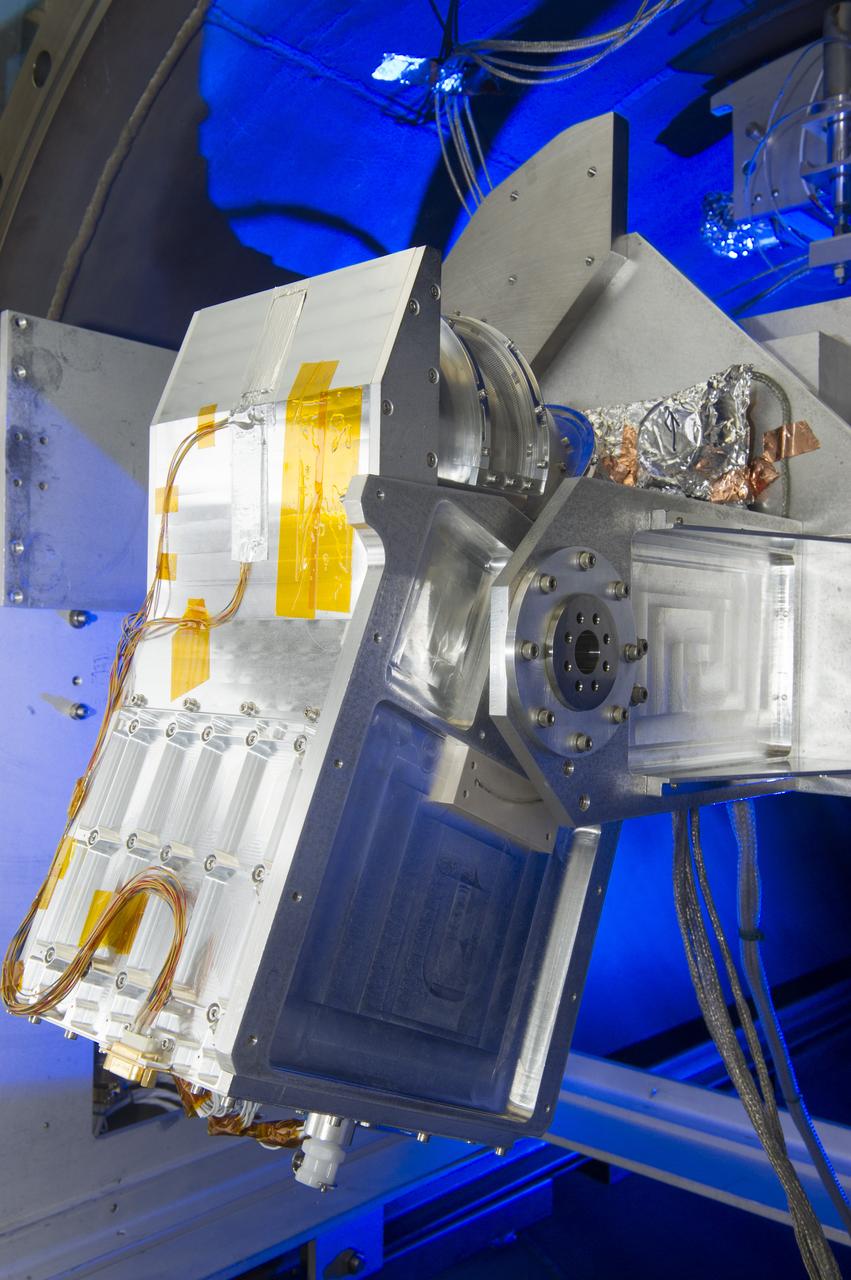
DUAL ION SPECTROMETER (DIS) ENGINEERING TEST UNIT (ETU) AT THE LOW ENERGY ELECTRON AND ION FACILITY (LEEIF), NSSTC
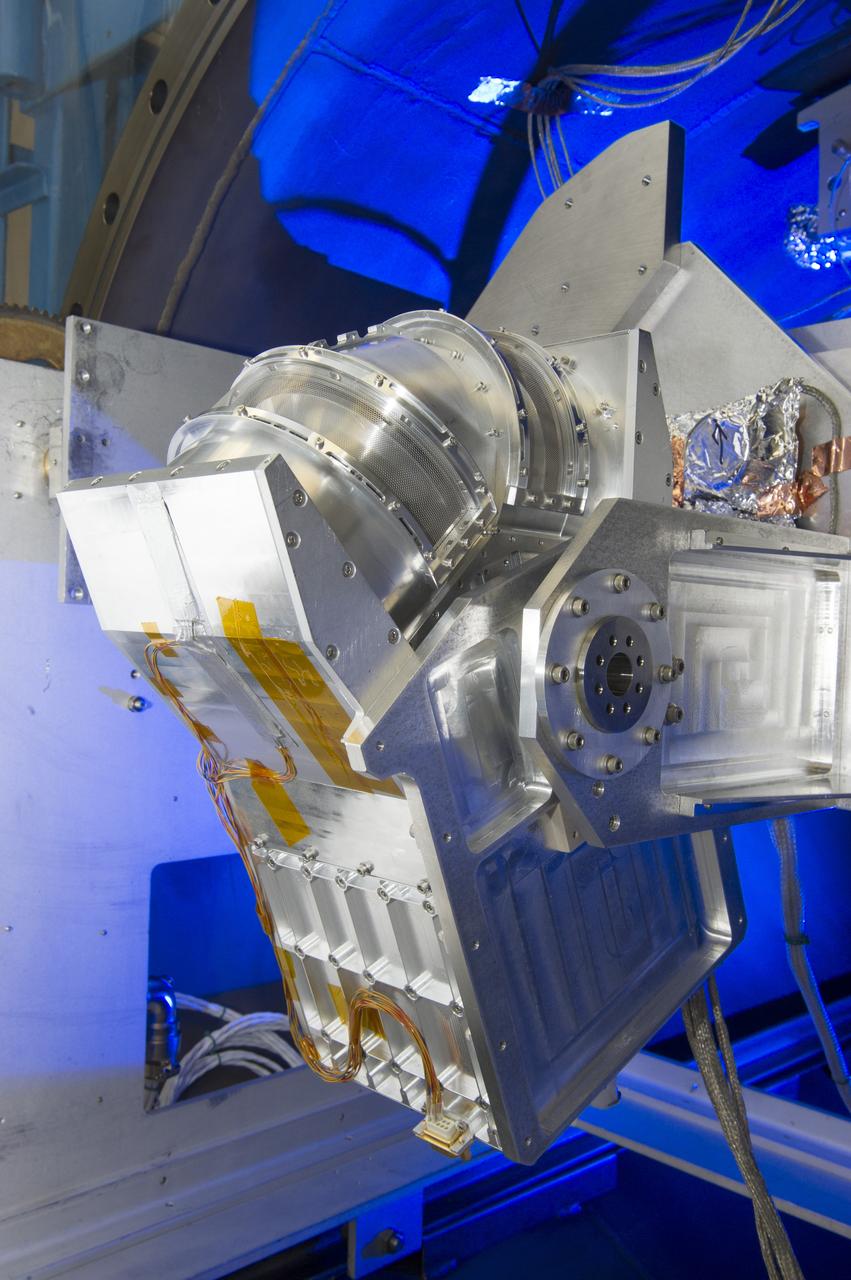
DUAL ION SPECTROMETER (DIS) ENGINEERING TEST UNIT (ETU) AT THE LOW ENERGY ELECTRON AND ION FACILITY (LEEIF), NSSTC
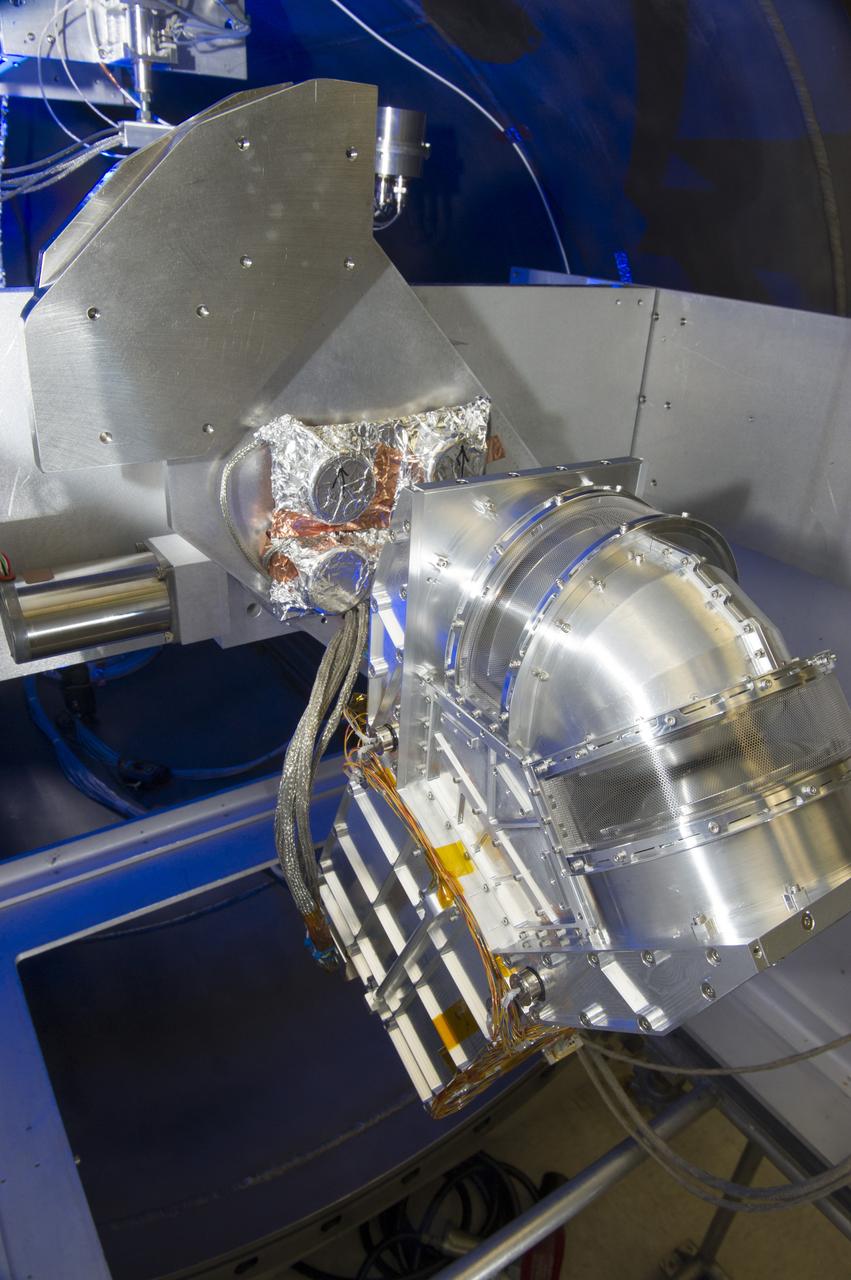
DUAL ION SPECTROMETER (DIS) ENGINEERING TEST UNIT (ETU) AT THE LOW ENERGY ELECTRON AND ION FACILITY (LEEIF), NSSTC
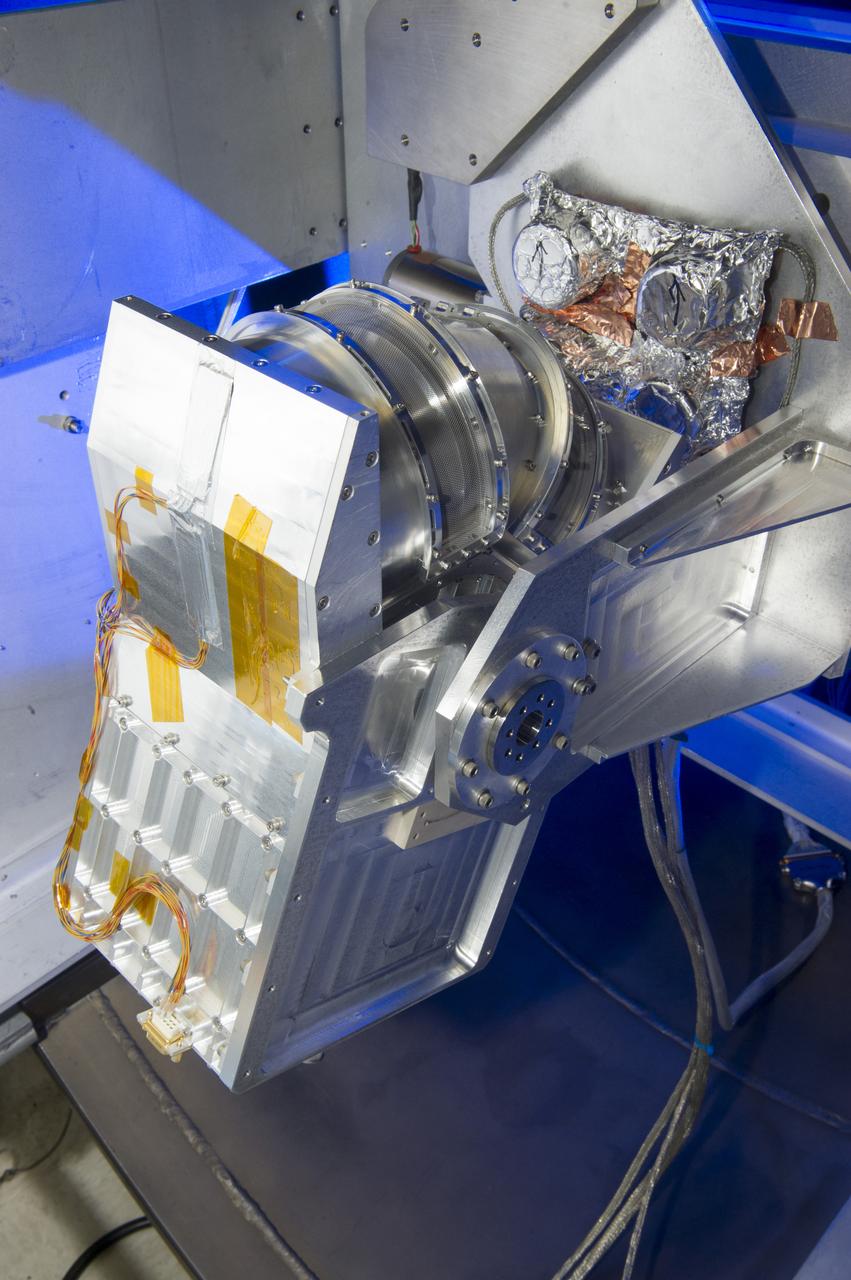
DUAL ION SPECTROMETER (DIS) ENGINEERING TEST UNIT (ETU) AT THE LOW ENERGY ELECTRON AND ION FACILITY (LEEIF), NSSTC
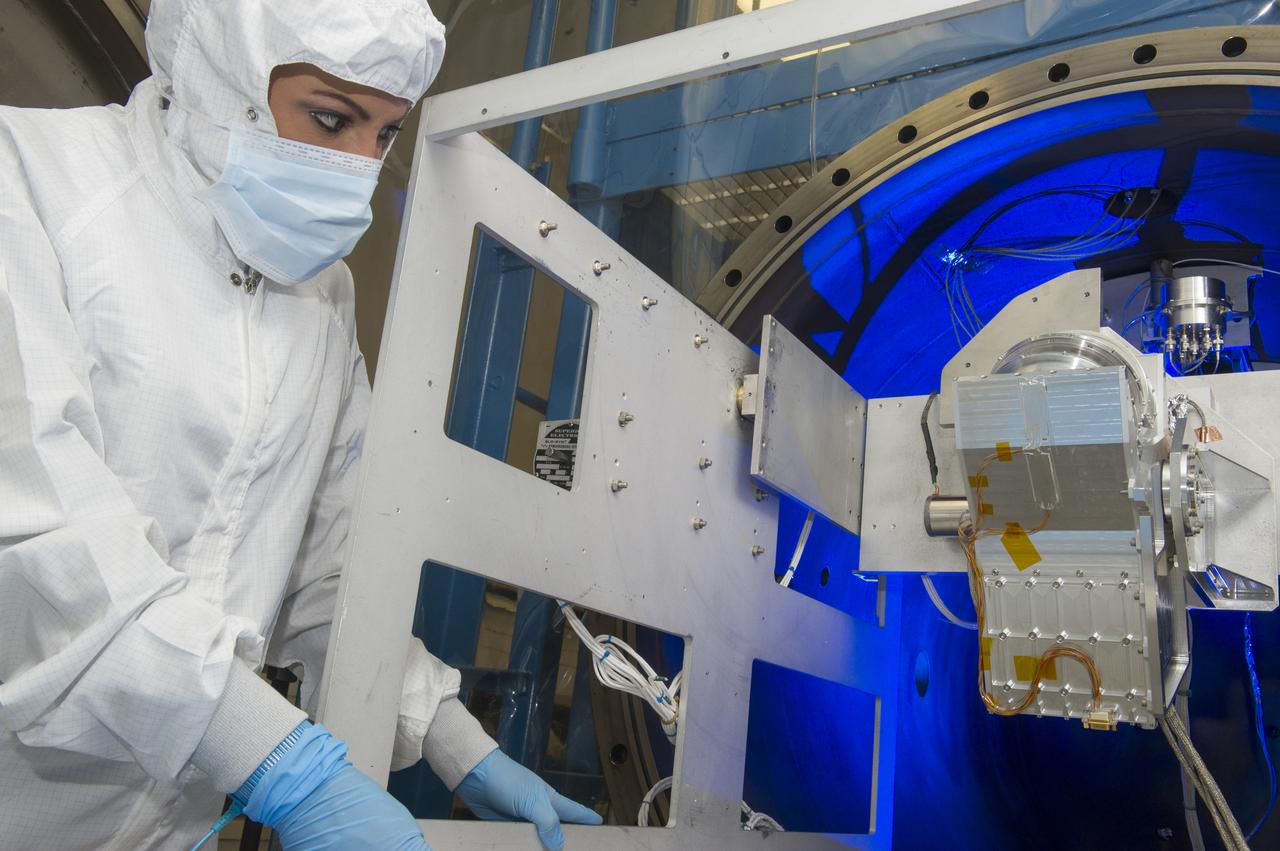
DUAL ION SPECTROMETER (DIS) ENGINEERING TEST UNIT (ETU) AT THE LOW ENERGY ELECTRON AND ION FACILITY (LEEIF), NSSTC
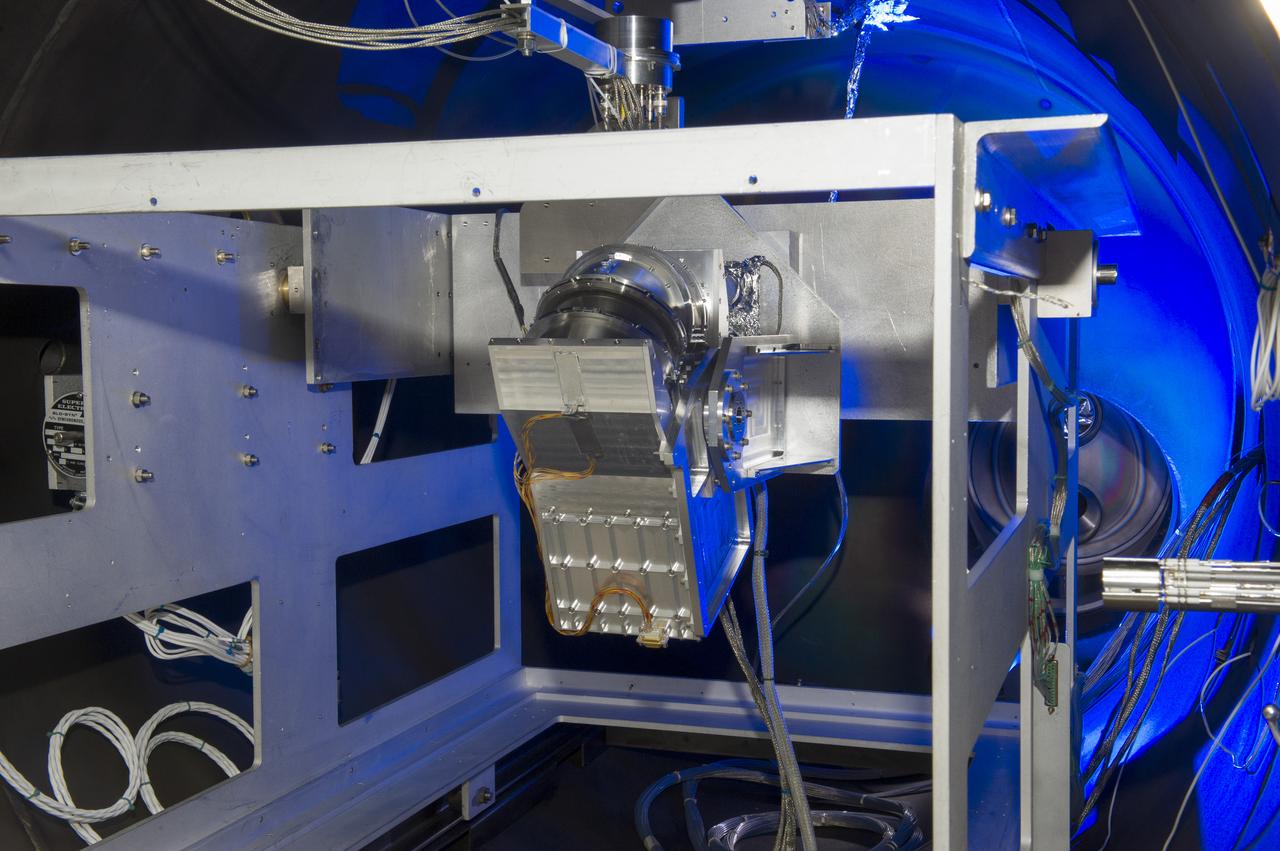
DUAL ION SPECTROMETER (DIS) ENGINEERING TEST UNIT (ETU) AT THE LOW ENERGY ELECTRON AND ION FACILITY (LEEIF), NSSTC
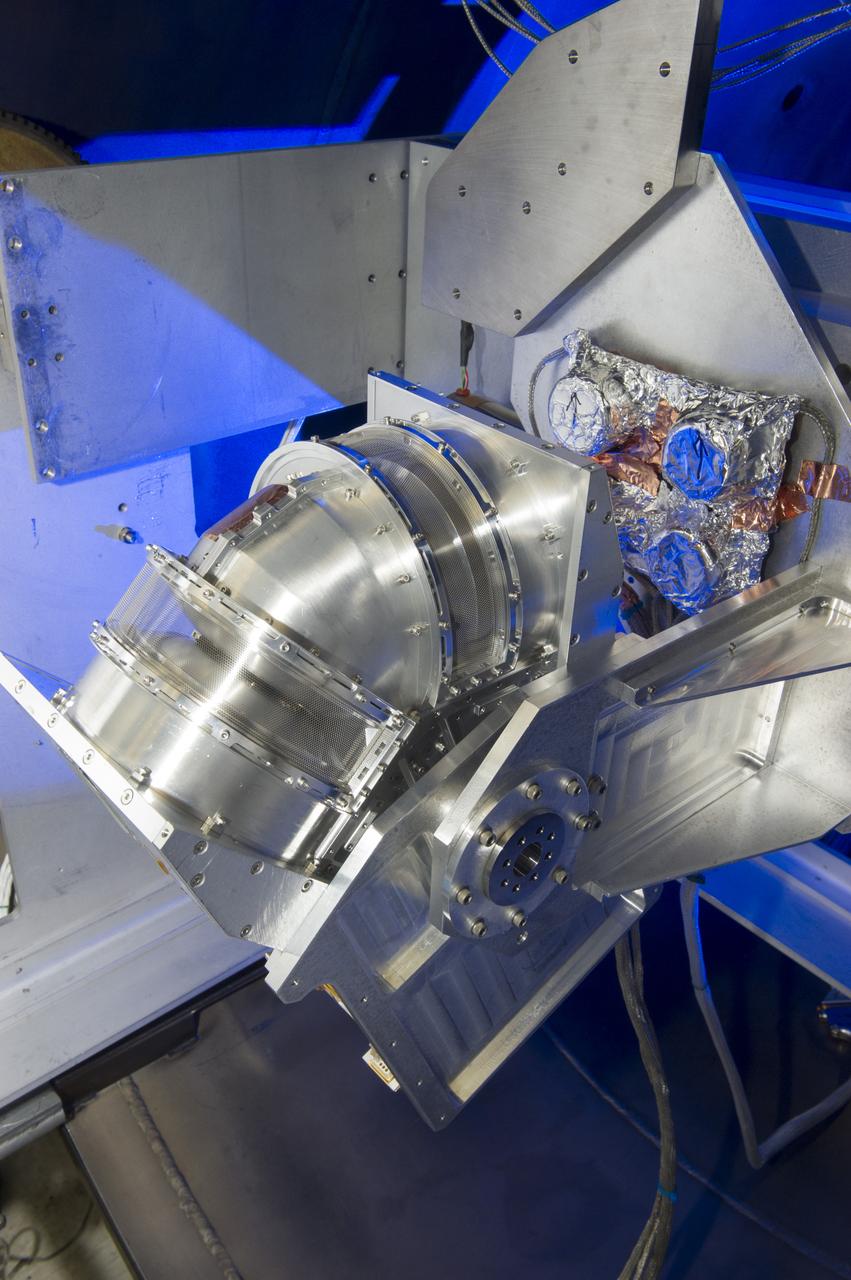
DUAL ION SPECTROMETER (DIS) ENGINEERING TEST UNIT (ETU) AT THE LOW ENERGY ELECTRON AND ION FACILITY (LEEIF), NSSTC
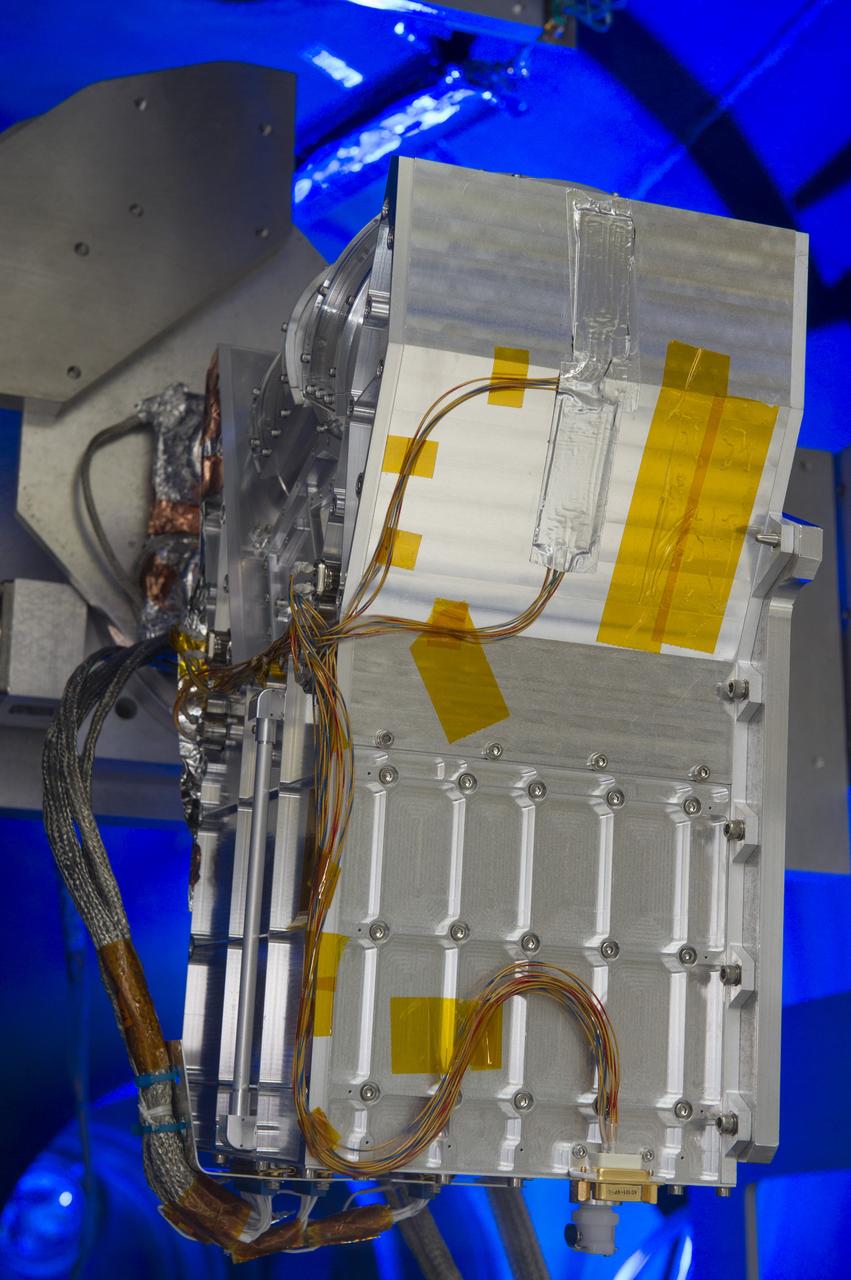
DUAL ION SPECTROMETER (DIS) ENGINEERING TEST UNIT (ETU) AT THE LOW ENERGY ELECTRON AND ION FACILITY (LEEIF), NSSTC
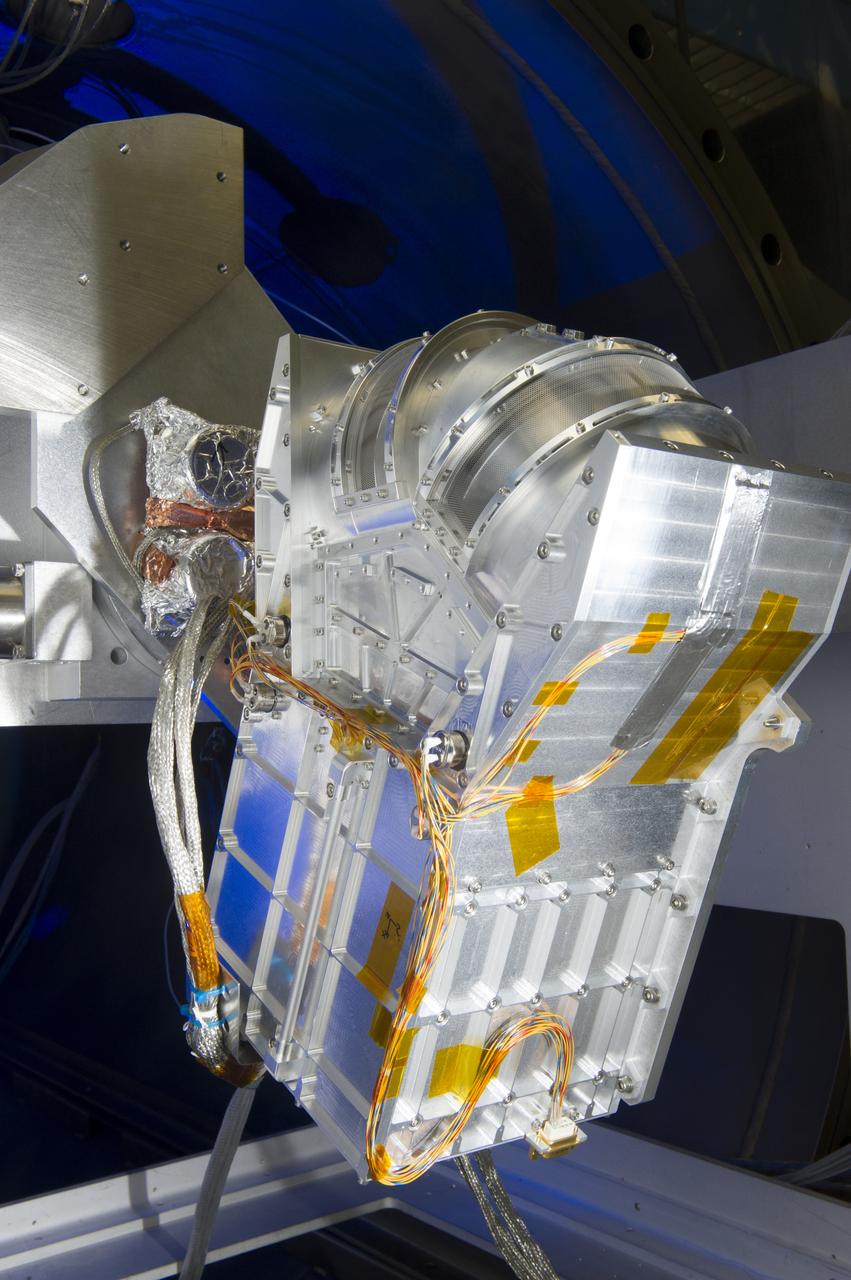
DUAL ION SPECTROMETER (DIS) ENGINEERING TEST UNIT (ETU) AT THE LOW ENERGY ELECTRON AND ION FACILITY (LEEIF), NSSTC
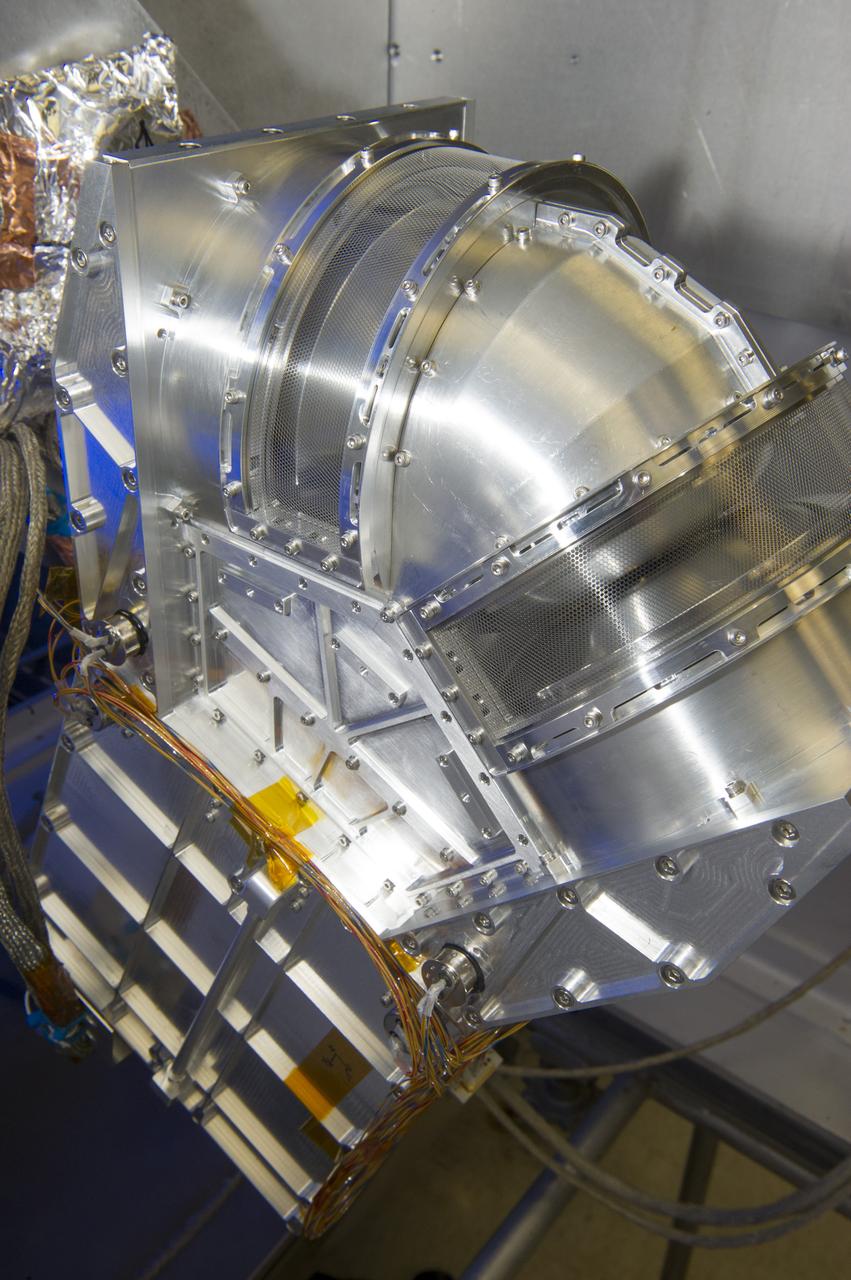
DUAL ION SPECTROMETER (DIS) ENGINEERING TEST UNIT (ETU) AT THE LOW ENERGY ELECTRON AND ION FACILITY (LEEIF), NSSTC
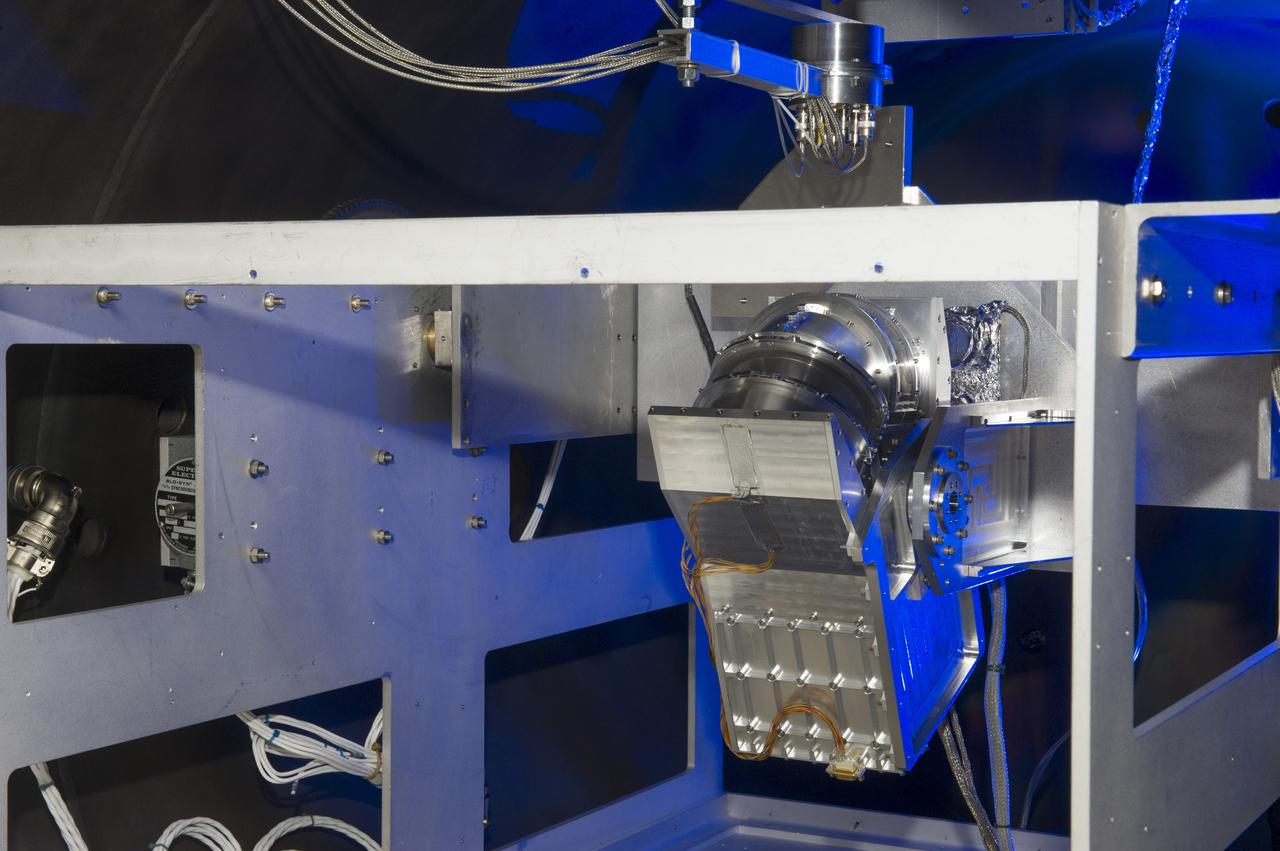
DUAL ION SPECTROMETER (DIS) ENGINEERING TEST UNIT (ETU) AT THE LOW ENERGY ELECTRON AND ION FACILITY (LEEIF), NSSTC
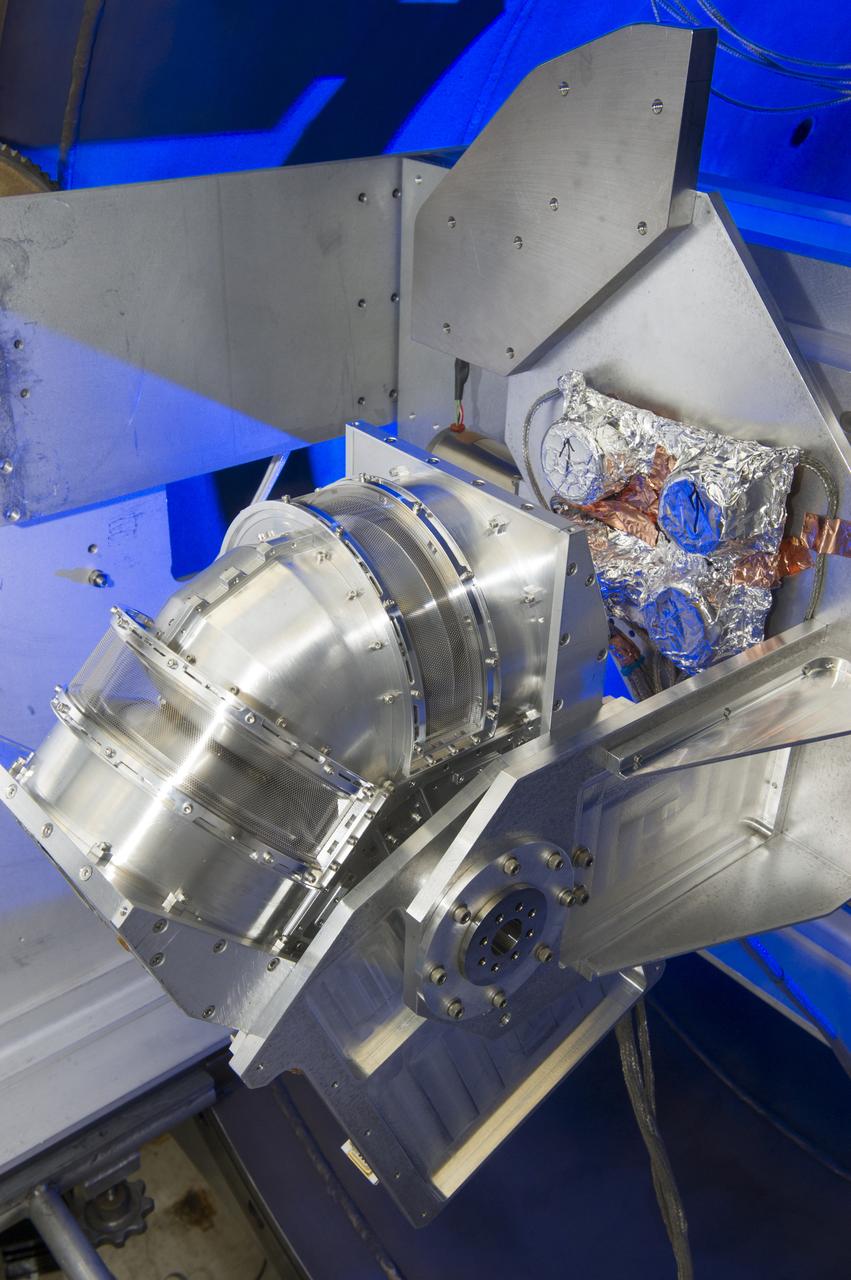
DUAL ION SPECTROMETER (DIS) ENGINEERING TEST UNIT (ETU) AT THE LOW ENERGY ELECTRON AND ION FACILITY (LEEIF), NSSTC
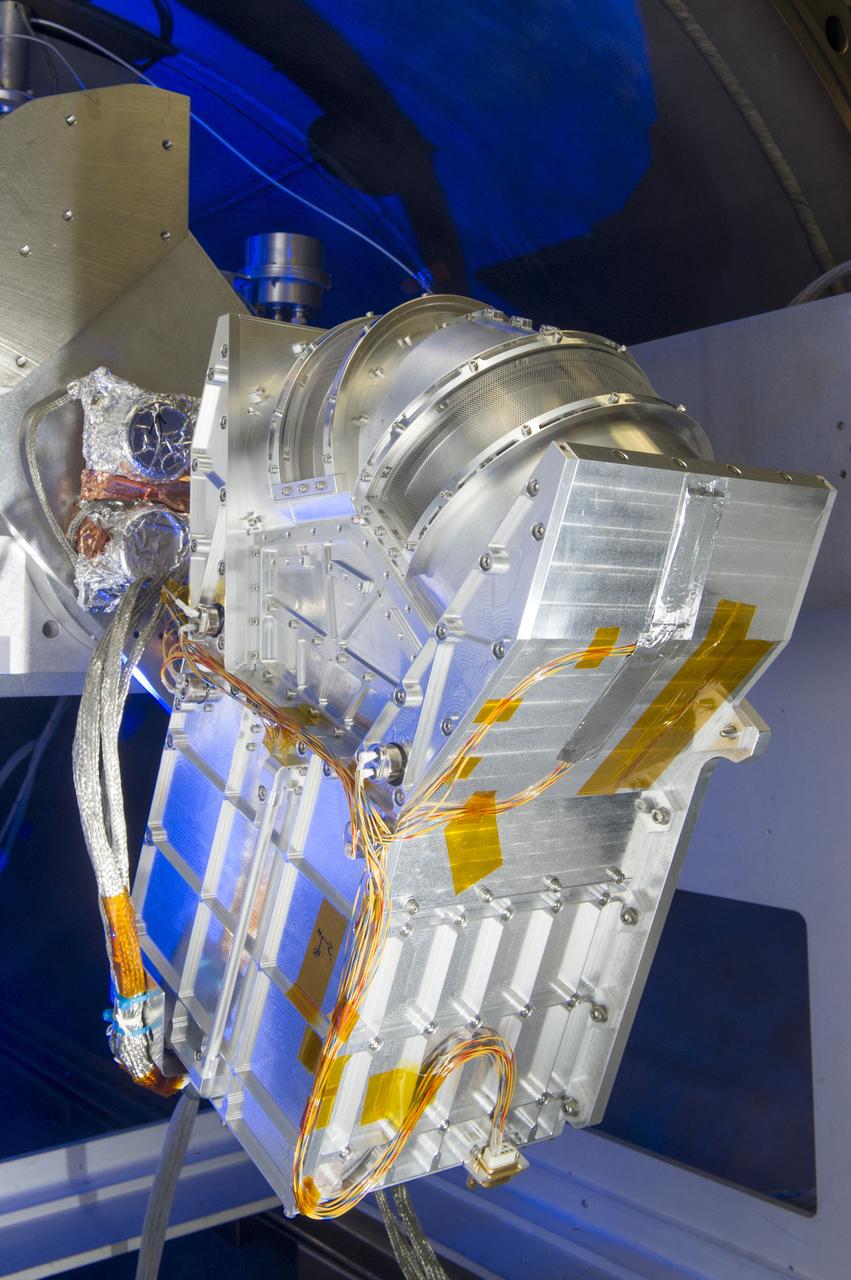
DUAL ION SPECTROMETER (DIS) ENGINEERING TEST UNIT (ETU) AT THE LOW ENERGY ELECTRON AND ION FACILITY (LEEIF), NSSTC

DUAL ION SPECTROMETER (DIS) ENGINEERING TEST UNIT (ETU) AT THE LOW ENERGY ELECTRON AND ION FACILITY (LEEIF), NSSTC

Advanced Electric Propulsion System, AEPS, Engineering Test Unit 2, ETU-2, Thruster Hardware
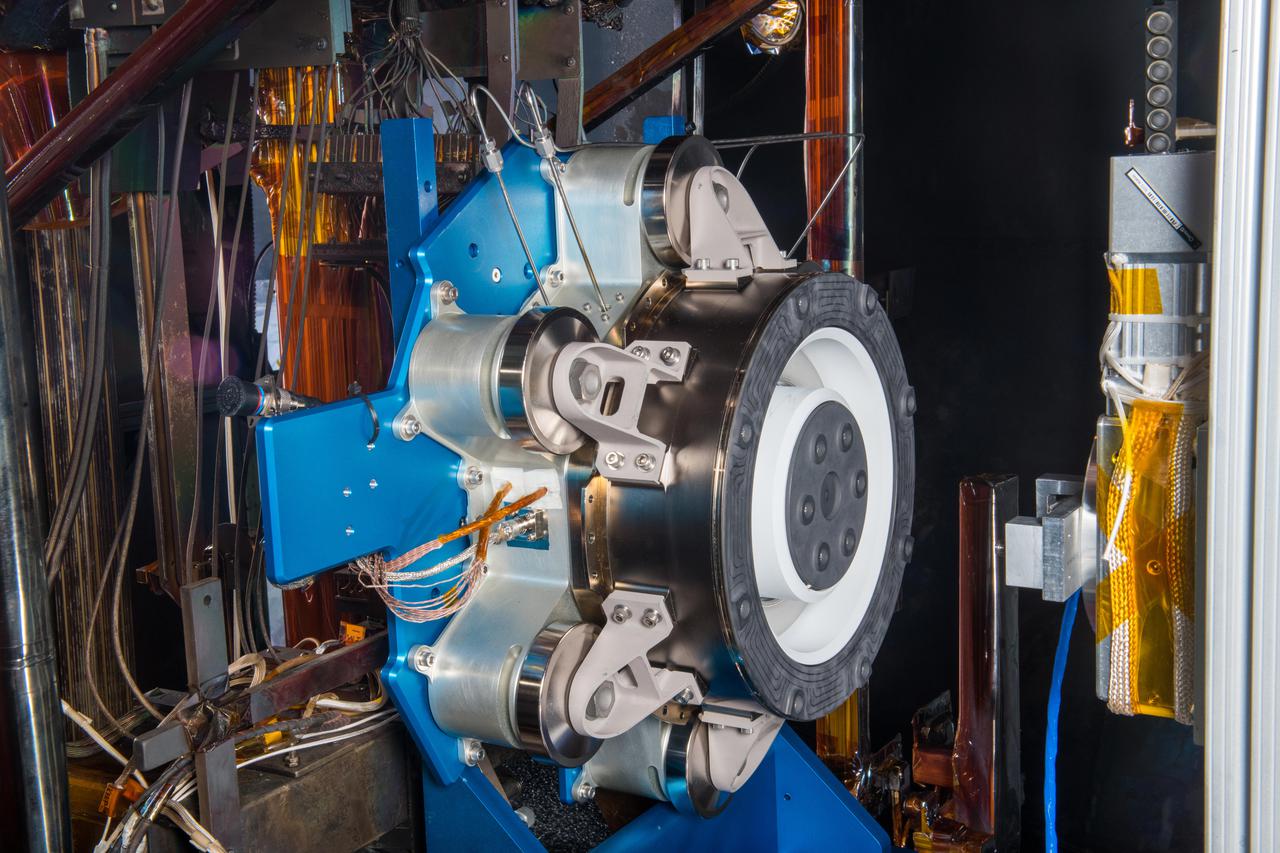
Advanced Electric Propulsion System, AEPS, Engineering Test Unit 2, ETU-2, Thruster Hardware
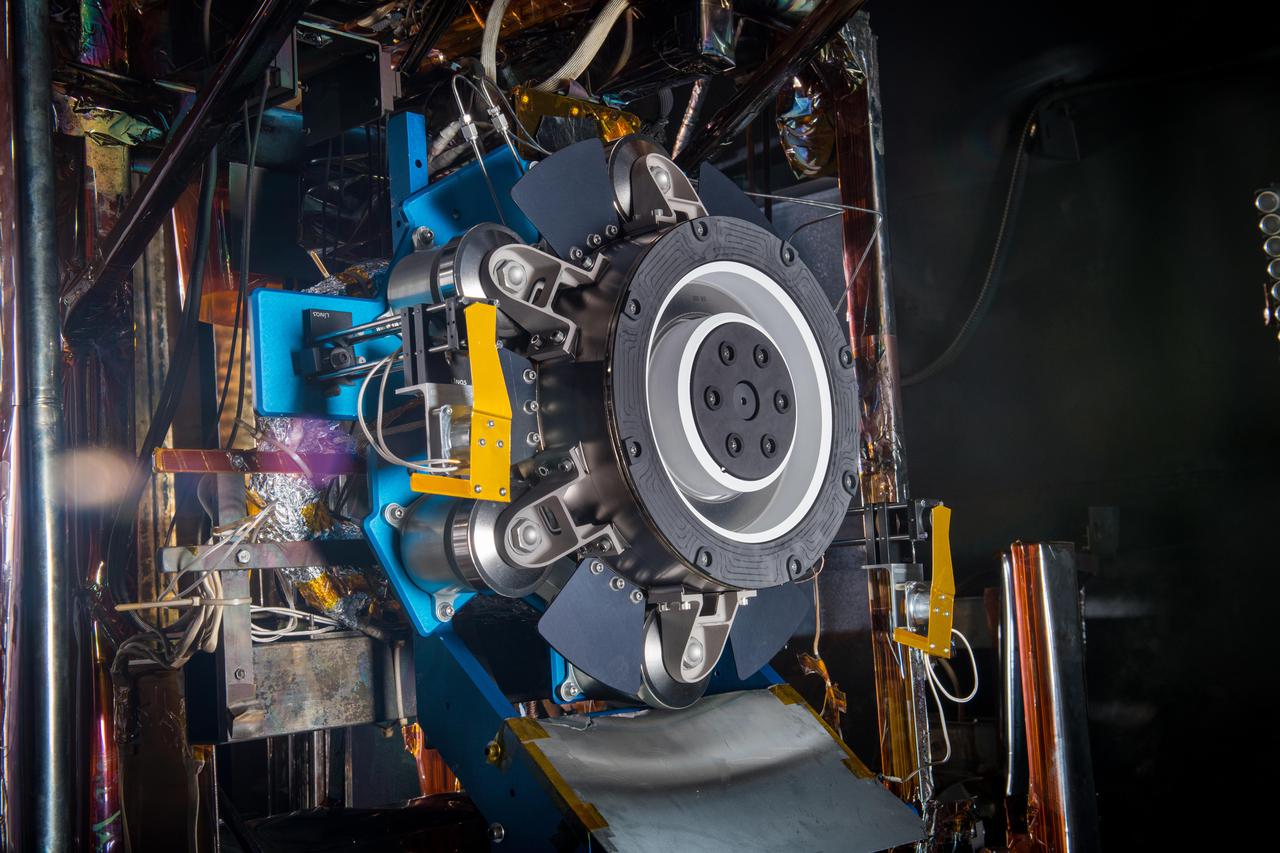
Advanced Electric Propulsion System, AEPS, Engineering Test Unit 2, ETU-2, Thruster Hardware
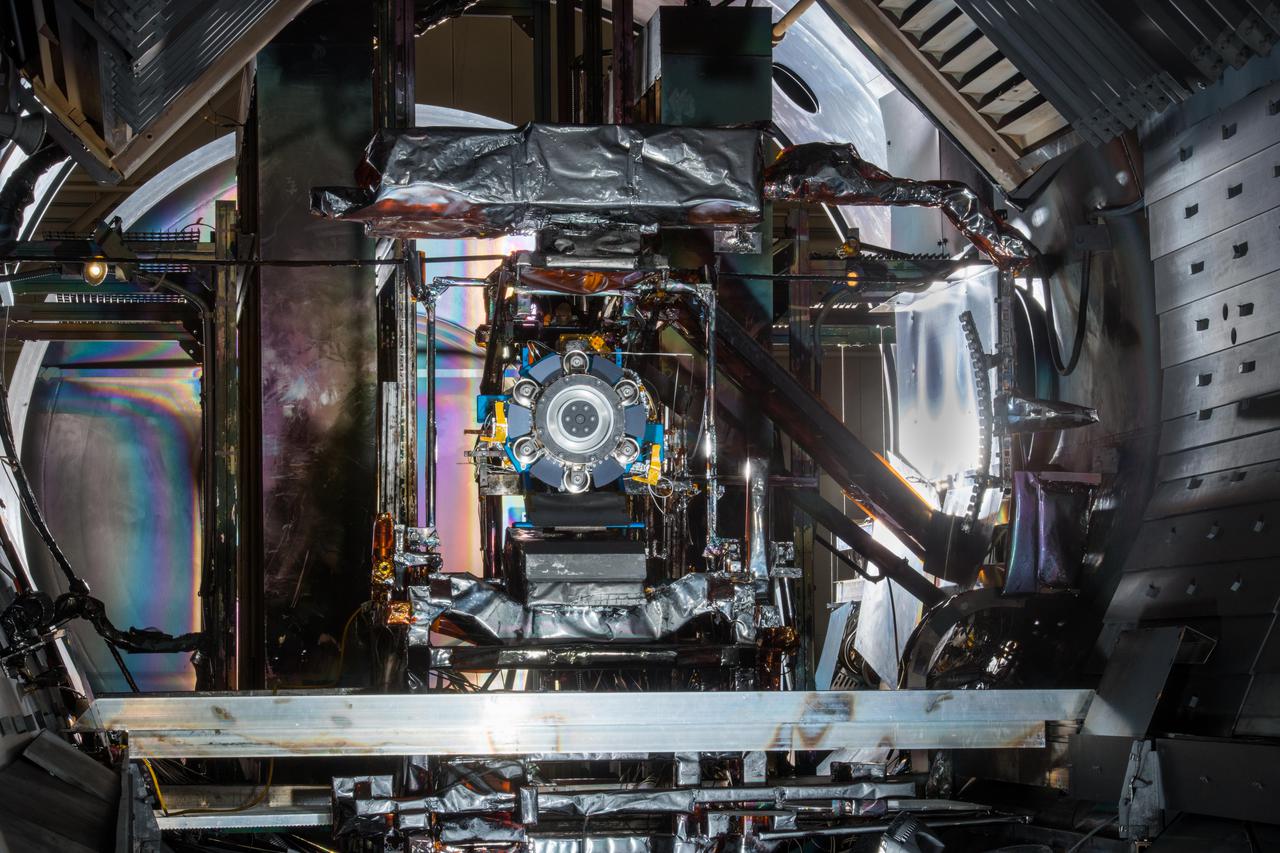
Advanced Electric Propulsion System, AEPS, Engineering Test Unit 2, ETU-2, Thruster Hardware
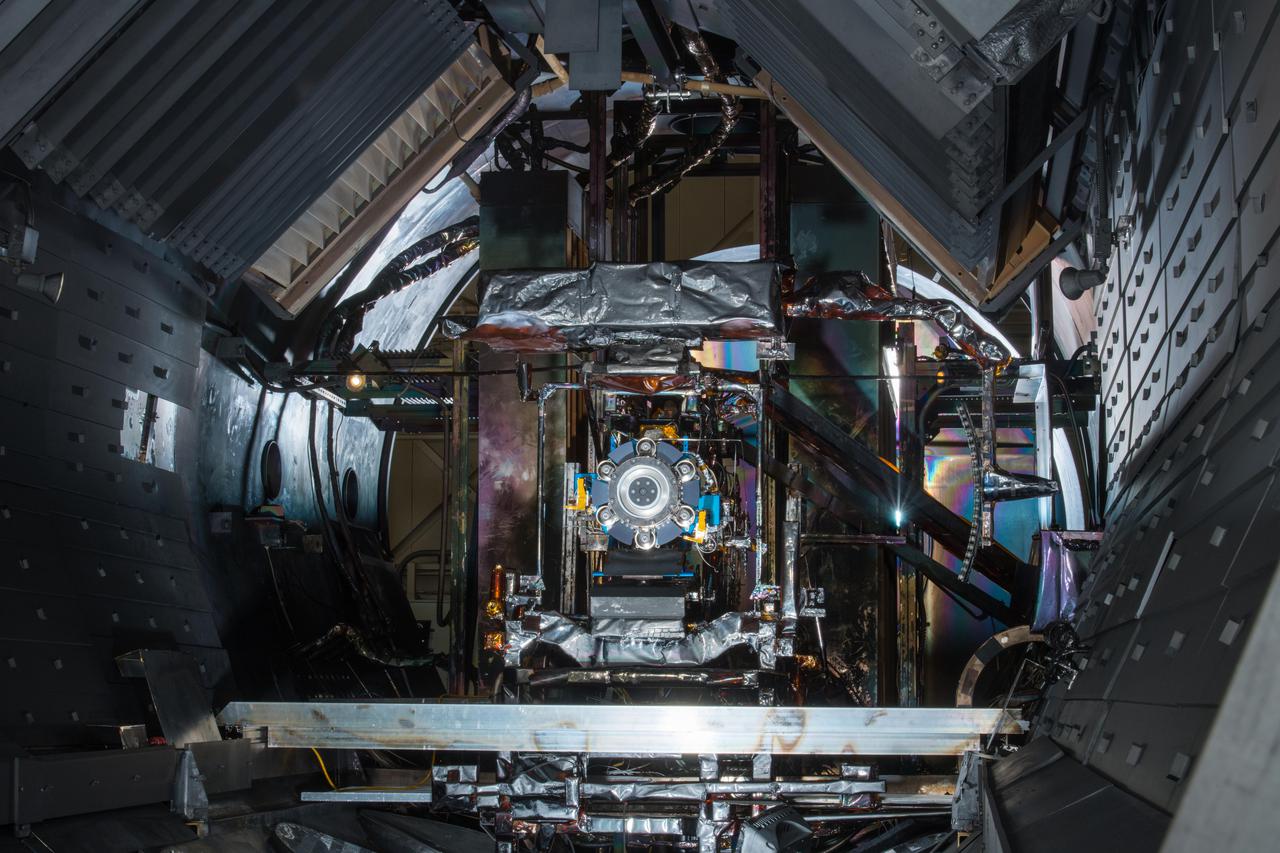
Advanced Electric Propulsion System, AEPS, Engineering Test Unit 2, ETU-2, Thruster Hardware
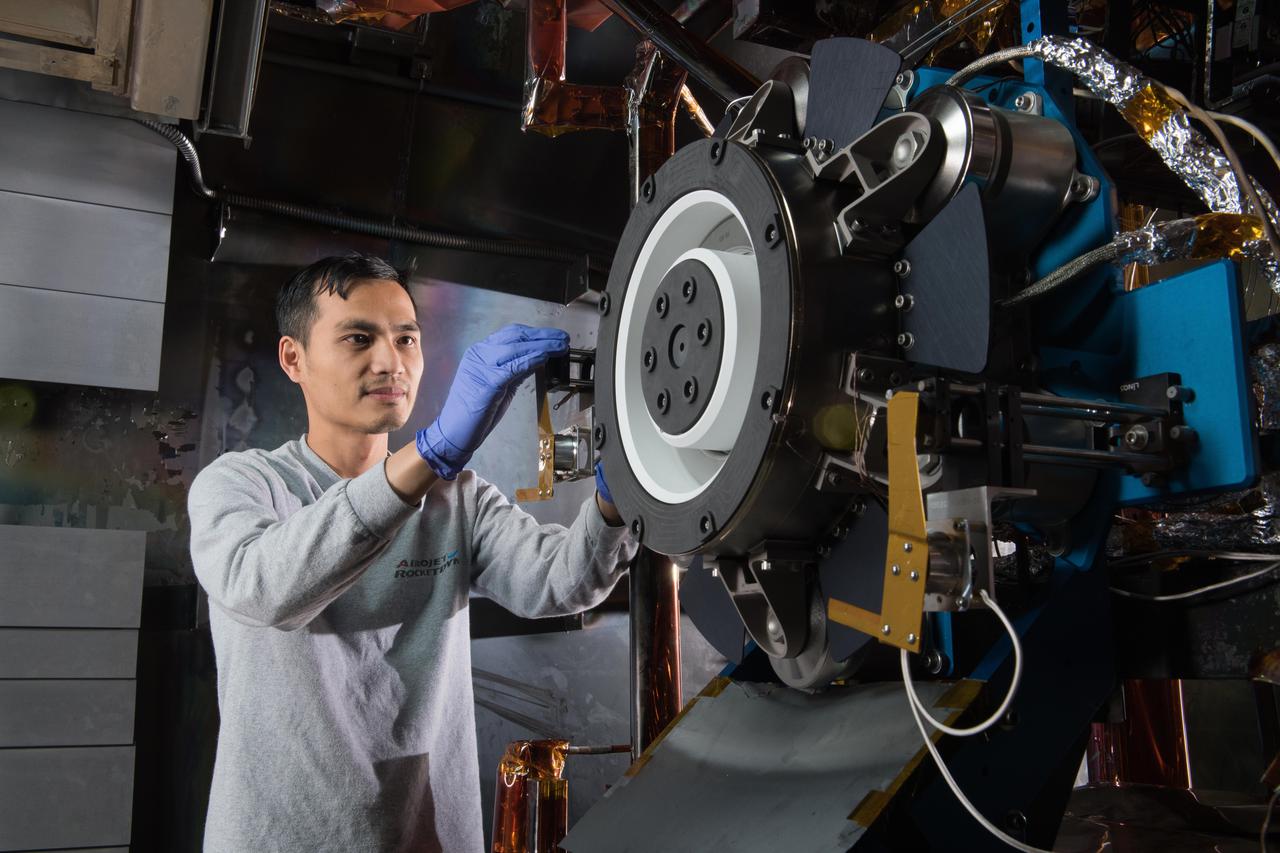
Advanced Electric Propulsion System, AEPS, Engineering Test Unit 2, ETU-2, Thruster Hardware
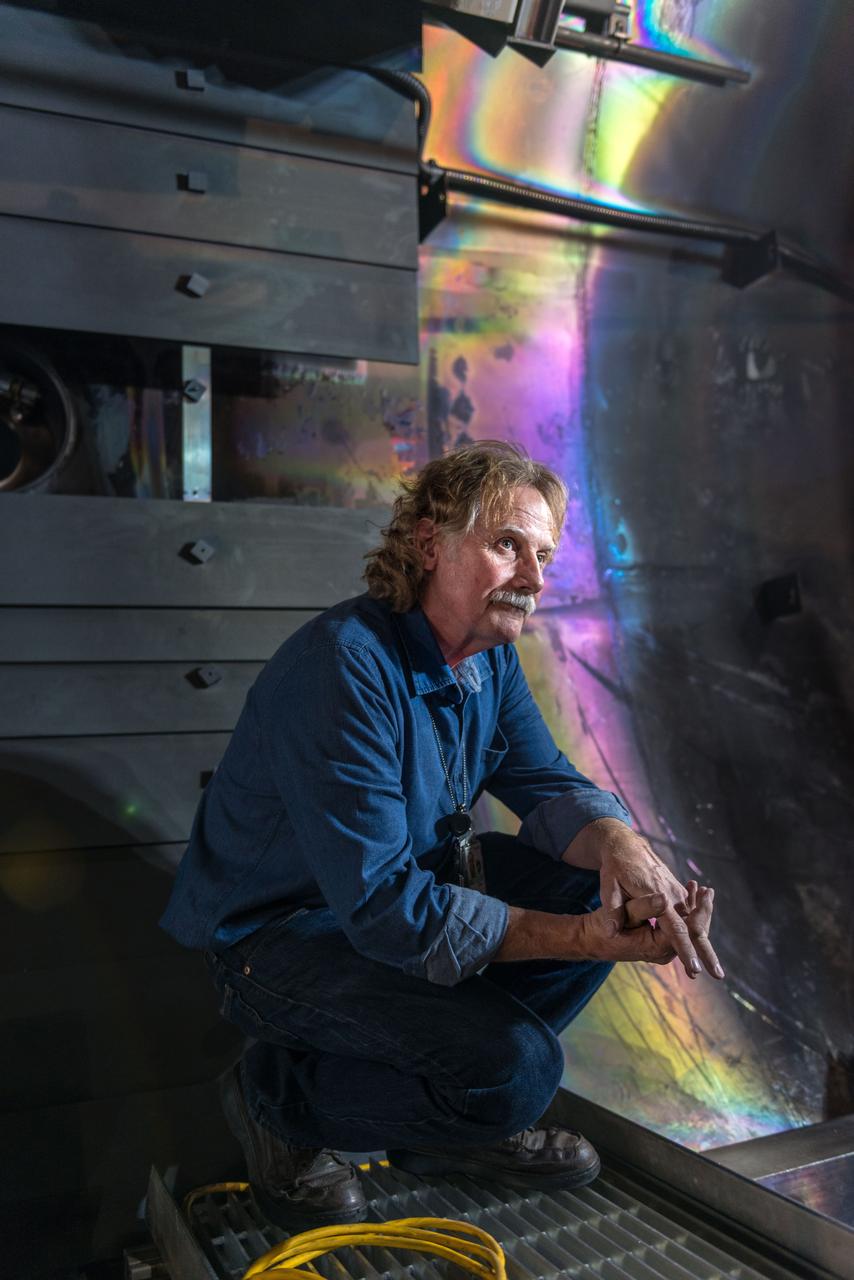
Advanced Electric Propulsion System, AEPS, Engineering Test Unit 2, ETU-2, Thruster Hardware
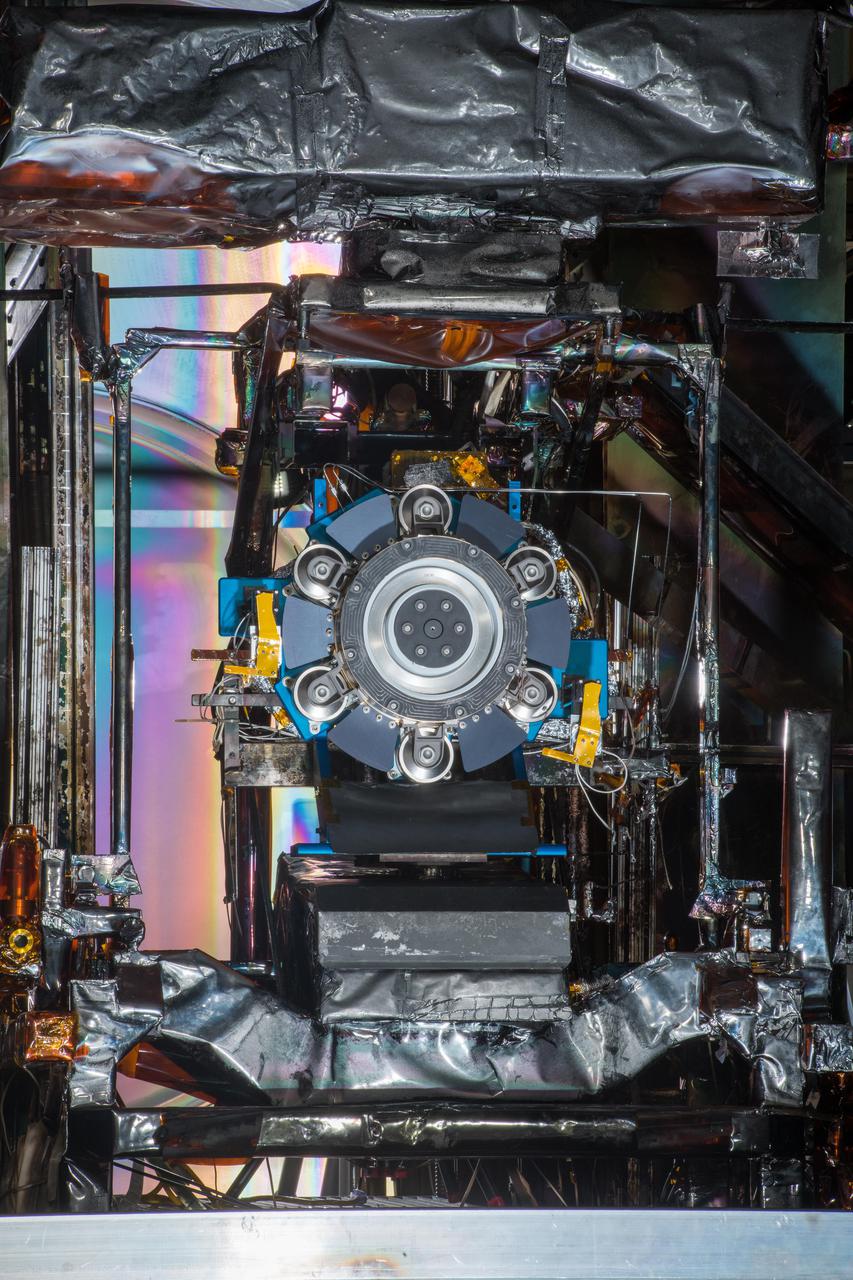
Advanced Electric Propulsion System, AEPS, Engineering Test Unit 2, ETU-2, Thruster Hardware

Advanced Electric Propulsion System, AEPS, Engineering Test Unit 2, ETU-2, Thruster Hardware
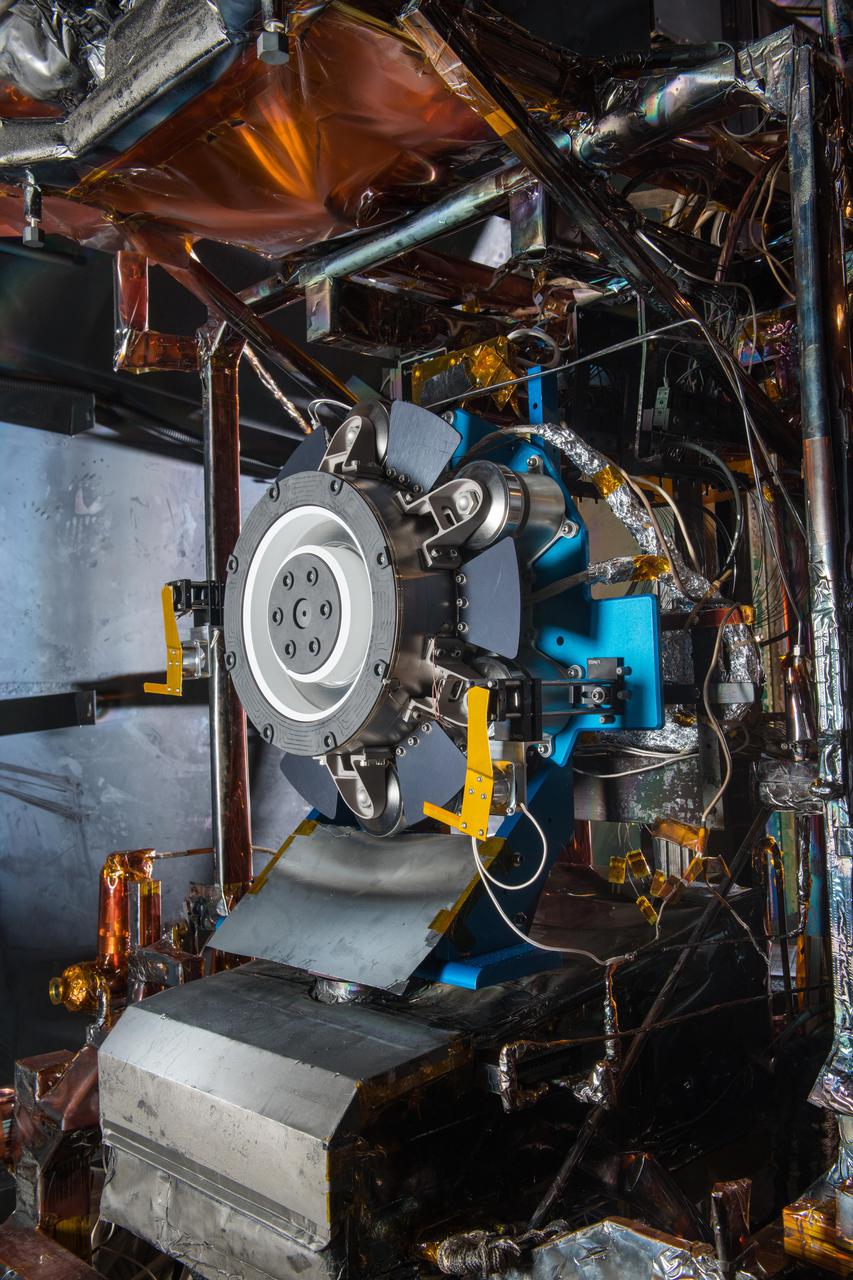
Advanced Electric Propulsion System, AEPS, Engineering Test Unit 2, ETU-2, Thruster Hardware
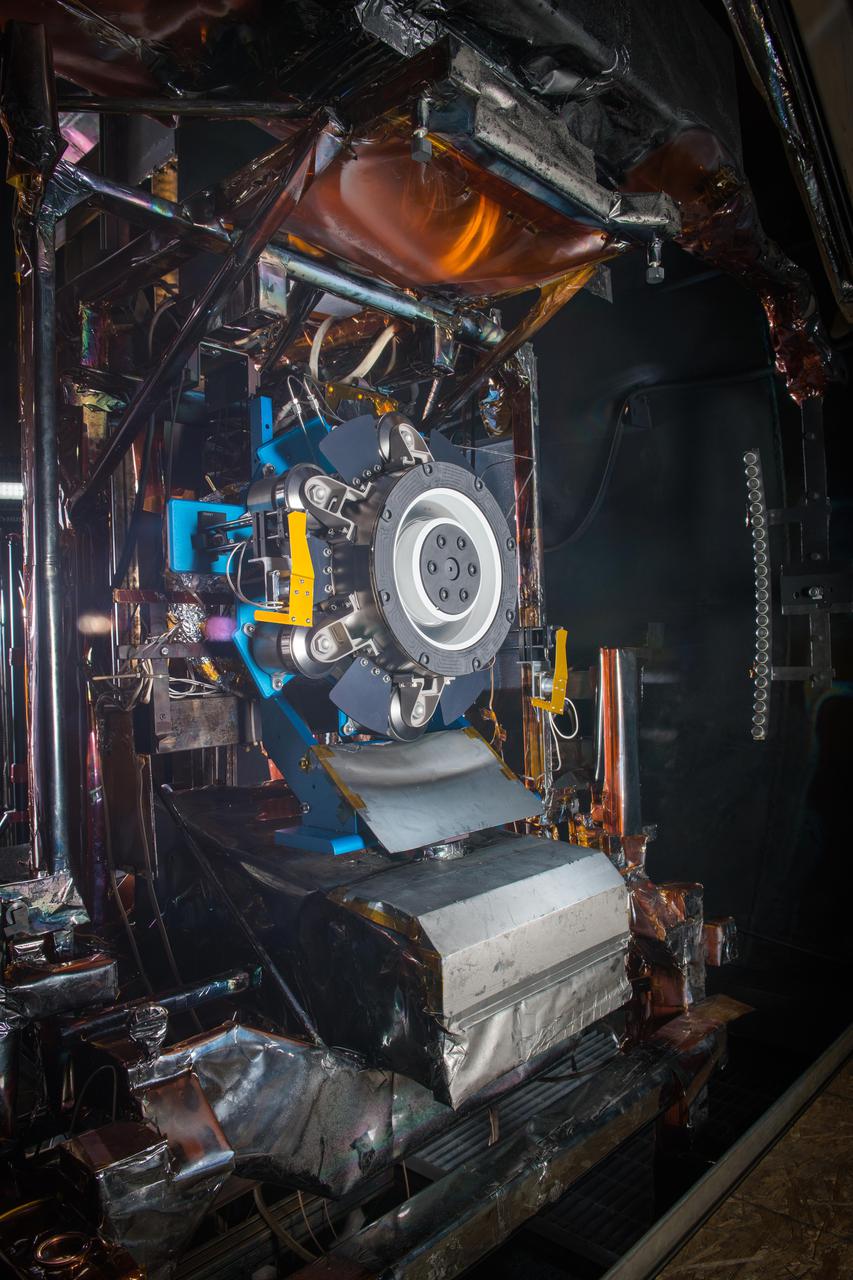
Advanced Electric Propulsion System, AEPS, Engineering Test Unit 2, ETU-2, Thruster Hardware
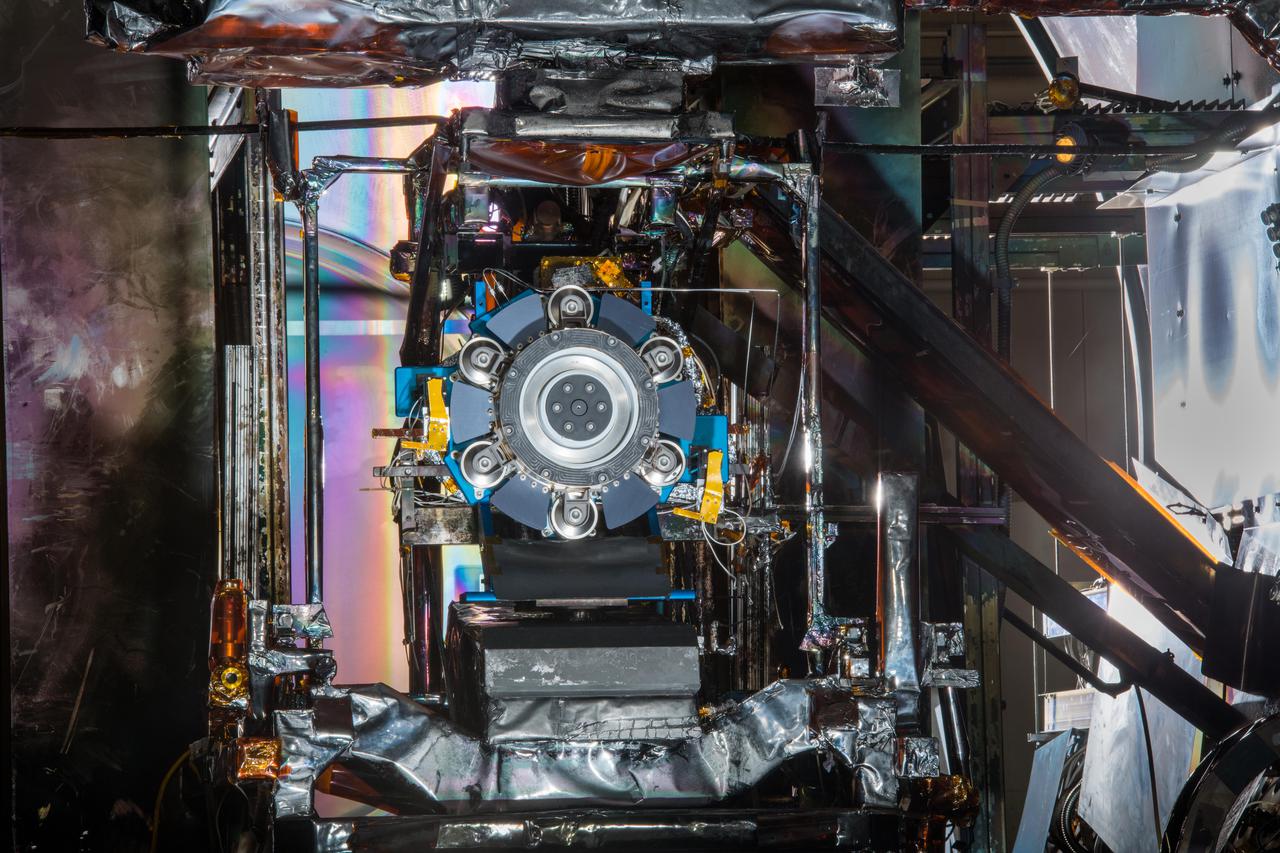
Advanced Electric Propulsion System, AEPS, Engineering Test Unit 2, ETU-2, Thruster Hardware
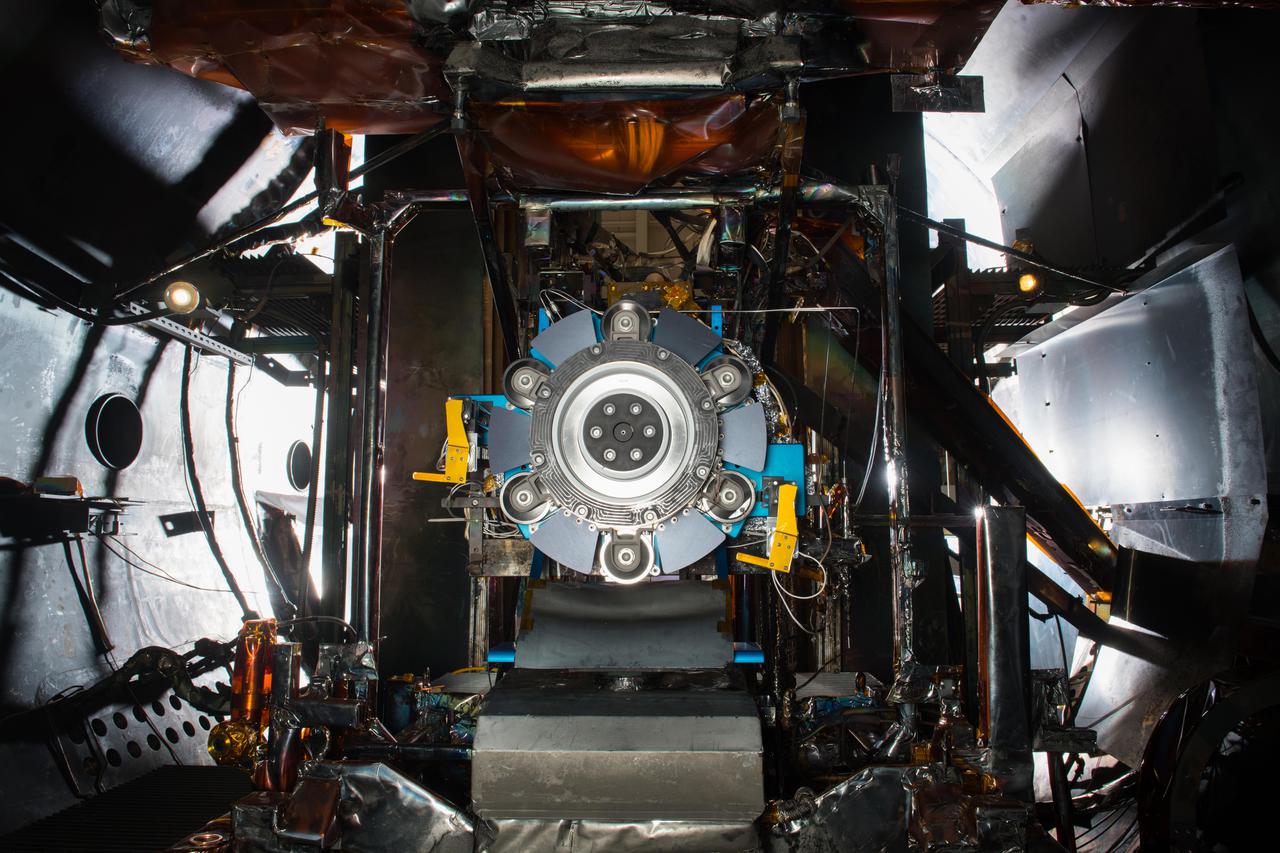
Advanced Electric Propulsion System, AEPS, Engineering Test Unit 2, ETU-2, Thruster Hardware
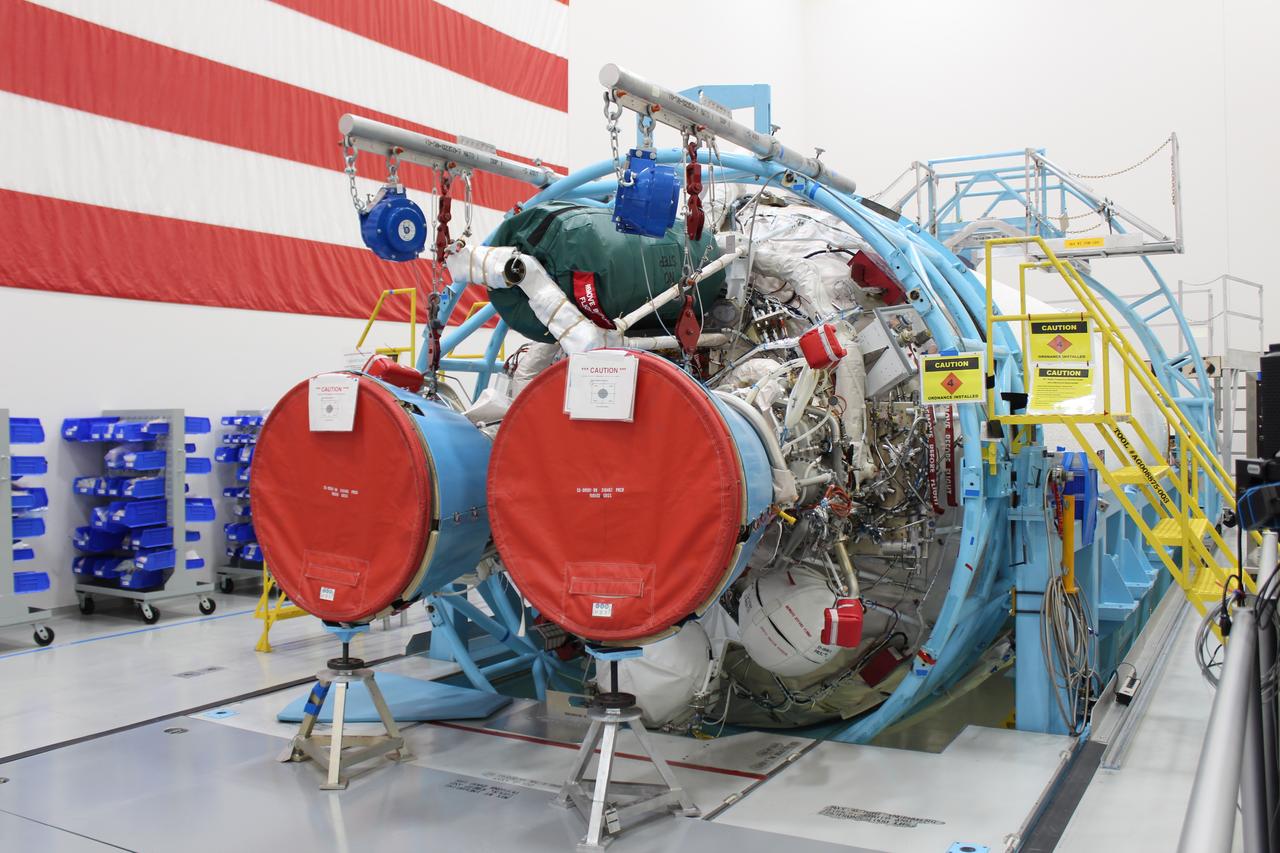
A United Launch Alliance (ULA) Atlas V dual engine Centaur upper stage is in ULA’s factory in Decatur, Alabama on March 29, 2019. The dual engine upper stage is being prepared for Boeing’s CST-100 Starliner Crew Flight Test. Soon the upper stage will be assembled with the first stage booster and shipped aboard the company’s Mariner cargo ship to NASA’s Kennedy Space Center in Florida. Starliner and the Atlas V rockets that will launch the spacecraft, are key elements of NASA’s Commercial Crew Program to restore the capability to send astronauts to the International Space Station from U.S. soil.
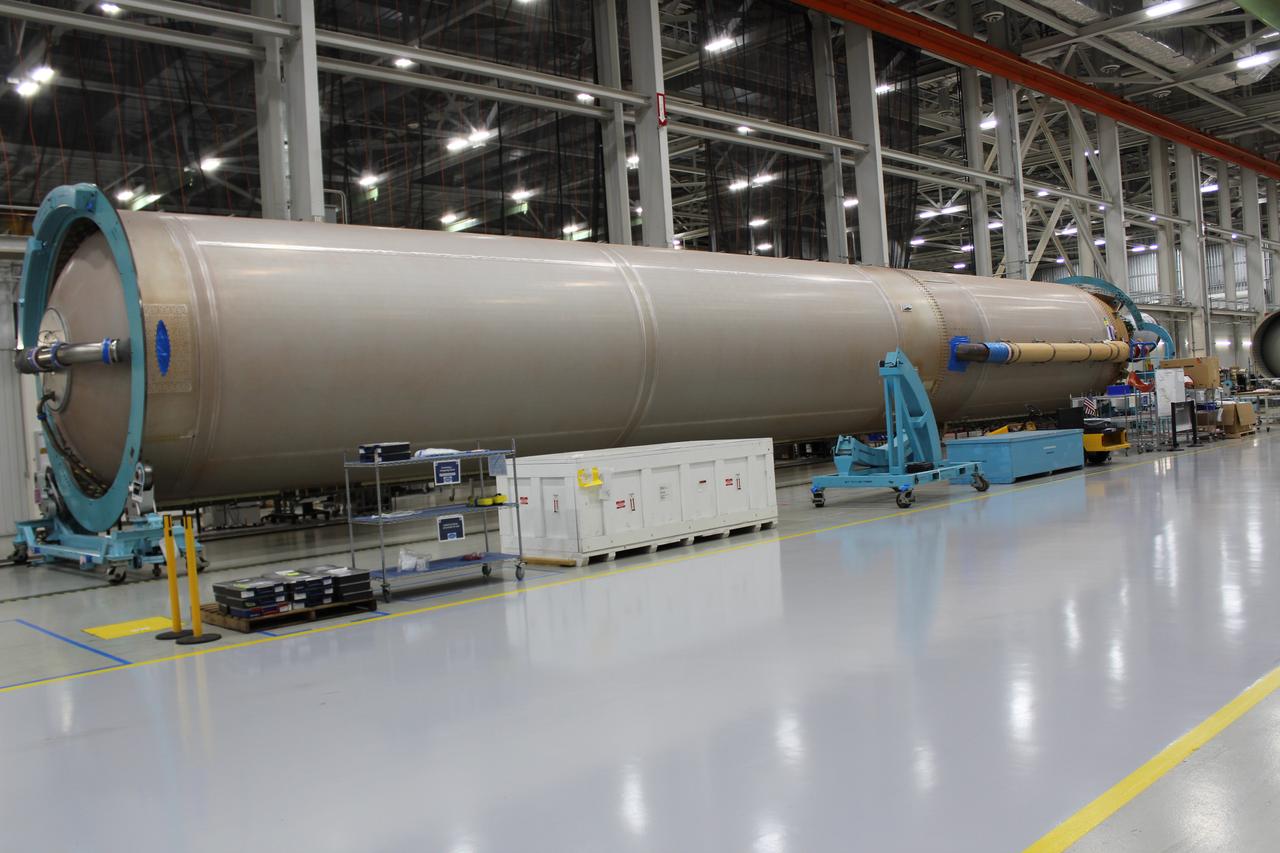
The United Launch Alliance (ULA) Atlas V first stage booster for the Crew Flight Test of Boeing’s CST-100 Starliner is in production in ULA's factory in Decatur, Alabama on March 1, 2019. Soon the booster will be assembled with the dual engine Centaur upper stage. They will be shipped aboard the company’s Mariner cargo ship to NASA’s Kennedy Space Center in Florida. Starliner and the Atlas V rockets that will launch the spacecraft, are key to restoring the nation’s capability to send astronauts to the space station from U.S. soil with NASA’s Commercial Crew Program. NASA astronauts Mike Fincke and Nicole Mann, and Boeing astronaut Chris Ferguson will launch to the space station aboard the Starliner for the Crew Flight Test.
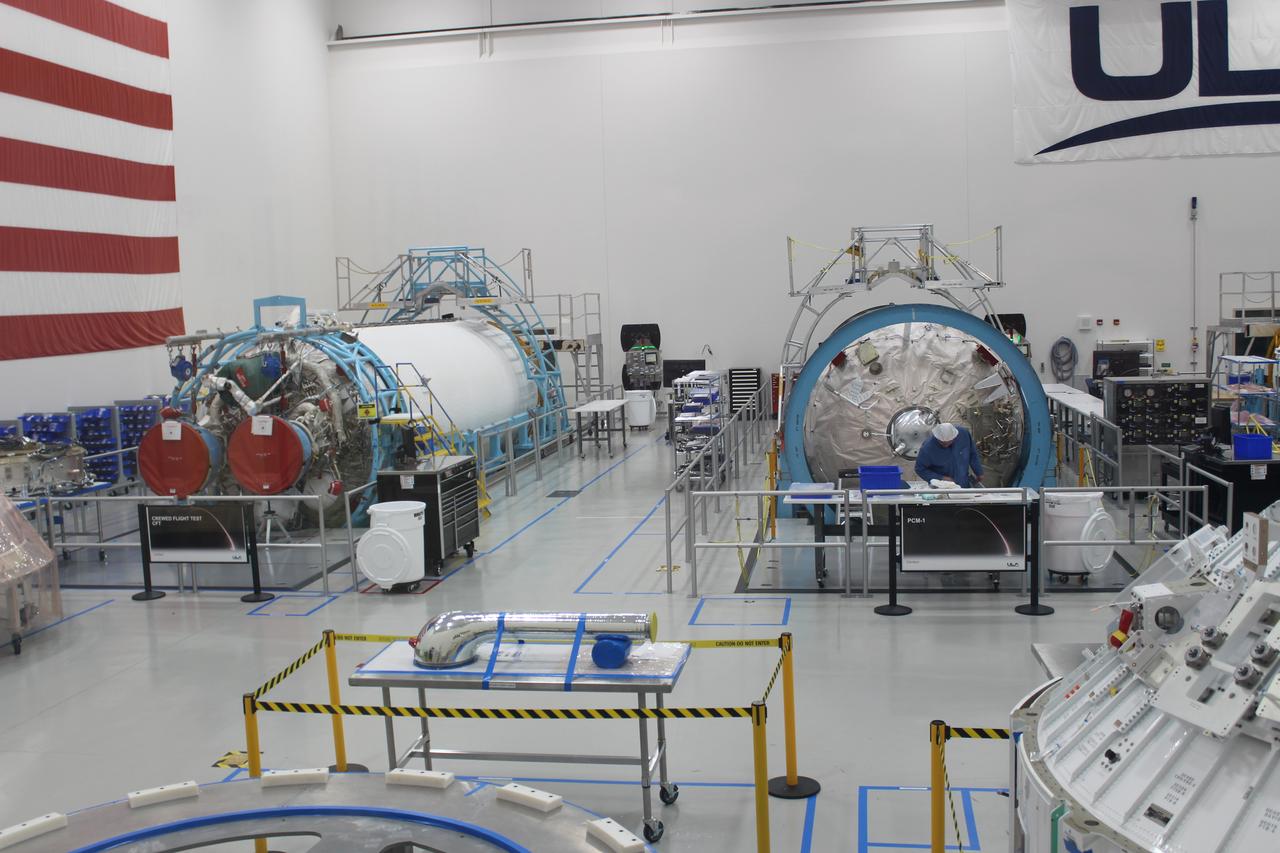
Two United Launch Alliance (ULA) Atlas V dual engine Centaur upper stages are in production in ULA's factory in Decatur, Alabama on March 1, 2019. One is for Boeing’s Crew Flight Test on the CST-100 Starliner, and the other will be used for the first crew rotation mission on the Starliner. One of the Centaur upper stages will be assembled to the first stage booster. They will be shipped aboard the company’s Mariner cargo ship to NASA’s Kennedy Space Center in Florida. Starliner and the Atlas V rockets that will launch the spacecraft, are key to restoring the nation’s capability to send astronauts to the space station from U.S. soil with NASA’s Commercial Crew Program. NASA astronauts Mike Fincke and Nicole Mann, and Boeing astronaut Chris Ferguson will launch to the space station aboard the Starliner for the Crew Flight Test.
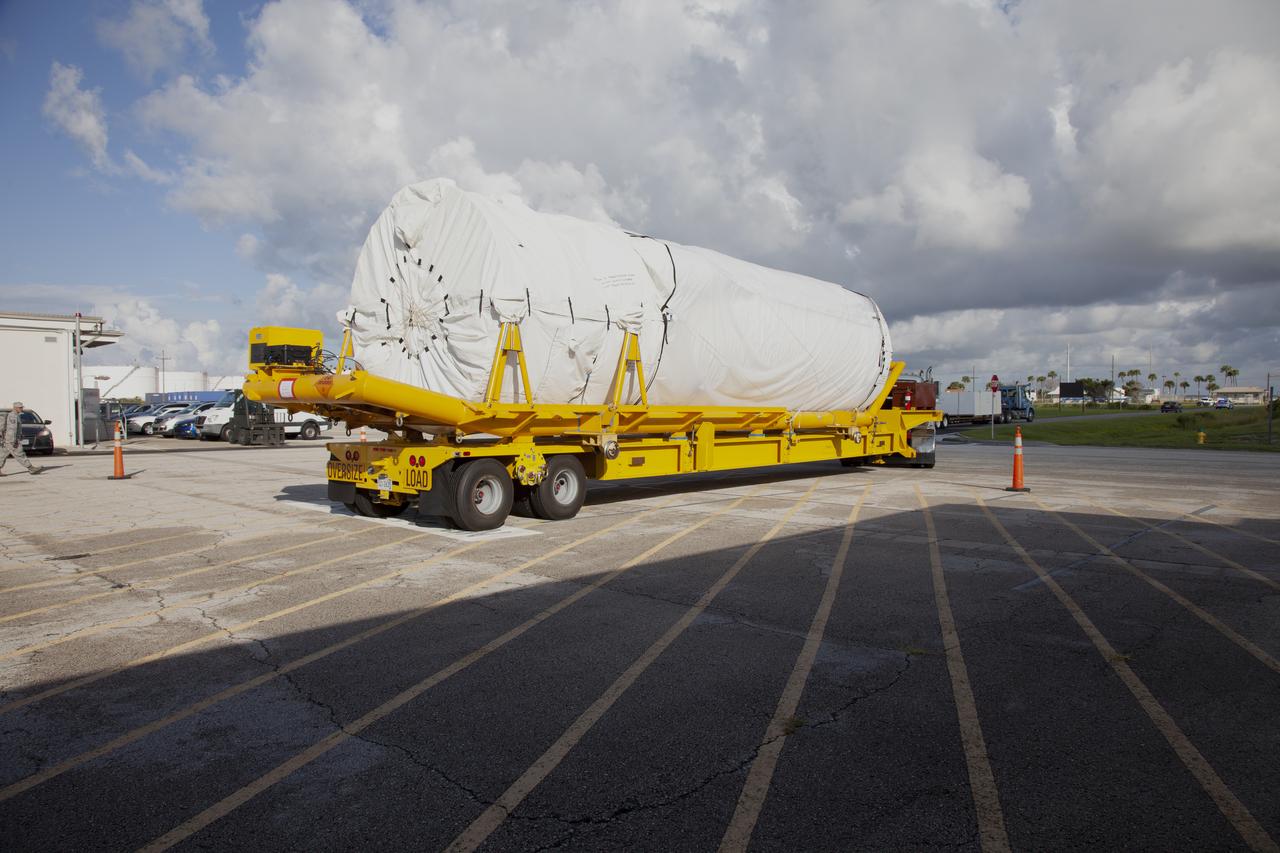
A transport truck moves a United Launch Alliance (ULA) two-engine Centaur upper stage from the company’s Mariner ship that just arrived at Port Canaveral in Florida. The Centaur will be transported to the Atlas Spaceflight Operations Center at Cape Canaveral Air Force Station for preliminary checkouts. Mounted atop a ULA Atlas V rocket, the Centaur will help launch a Boeing CST-100 Starliner spacecraft on an uncrewed Orbital Flight Test from Space Launch Complex 41 at the Cape. NASA’s Commercial Crew Program will return human spaceflight launches to U.S. soil, providing safe, reliable and cost-effective access to low-Earth orbit on systems that meet our safety and mission requirements.
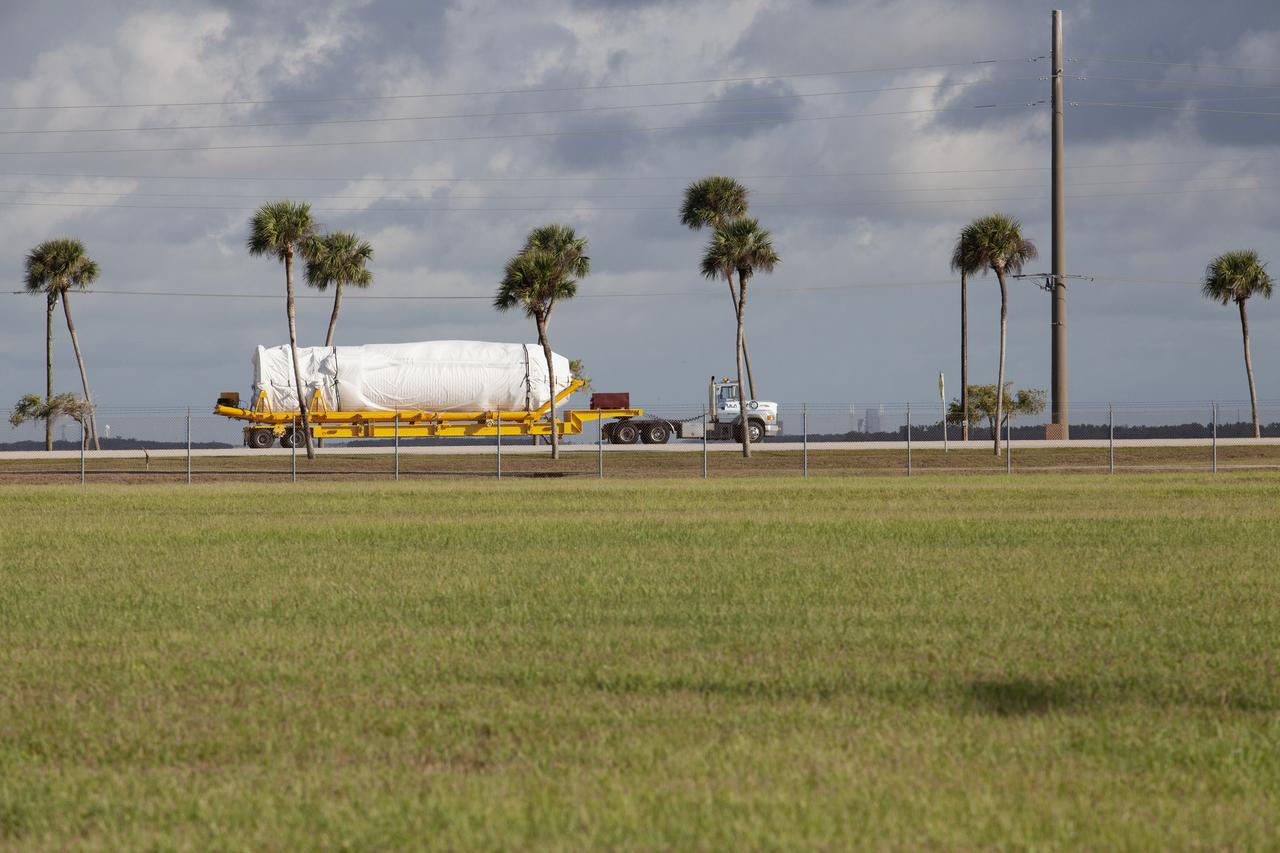
A truck transports a United Launch Alliance (ULA) two-engine Centaur upper stage from Port Canaveral in Florida to the Atlas Spaceflight Operations Center at Cape Canaveral Air Force Station for preliminary checkouts. Mounted atop a ULA Atlas V rocket, the Centaur will help launch a Boeing CST-100 Starliner spacecraft on an uncrewed Orbital Flight Test from Space Launch Complex 41 at the Cape. NASA’s Commercial Crew Program will return human spaceflight launches to U.S. soil, providing safe, reliable and cost-effective access to low-Earth orbit on systems that meet our safety and mission requirements.
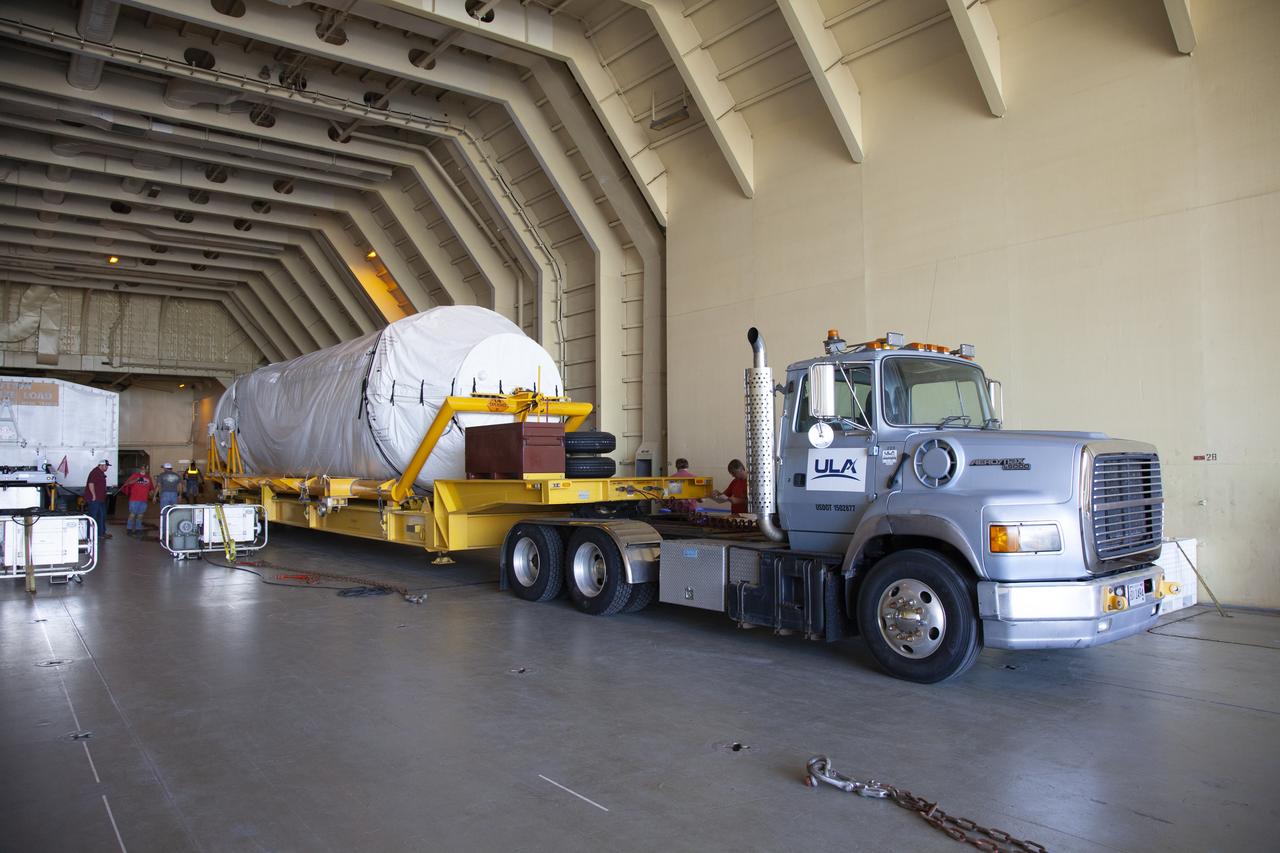
A transport truck moves a United Launch Alliance (ULA) two-engine Centaur upper stage from the company’s Mariner ship that just arrived at Port Canaveral in Florida. The Centaur will be transported to the Atlas Spaceflight Operations Center at Cape Canaveral Air Force Station for preliminary checkouts. Mounted atop a ULA Atlas V rocket, the Centaur will help launch a Boeing CST-100 Starliner spacecraft on an uncrewed Orbital Flight Test from Space Launch Complex 41 at the Cape. NASA’s Commercial Crew Program will return human spaceflight launches to U.S. soil, providing safe, reliable and cost-effective access to low-Earth orbit on systems that meet our safety and mission requirements.
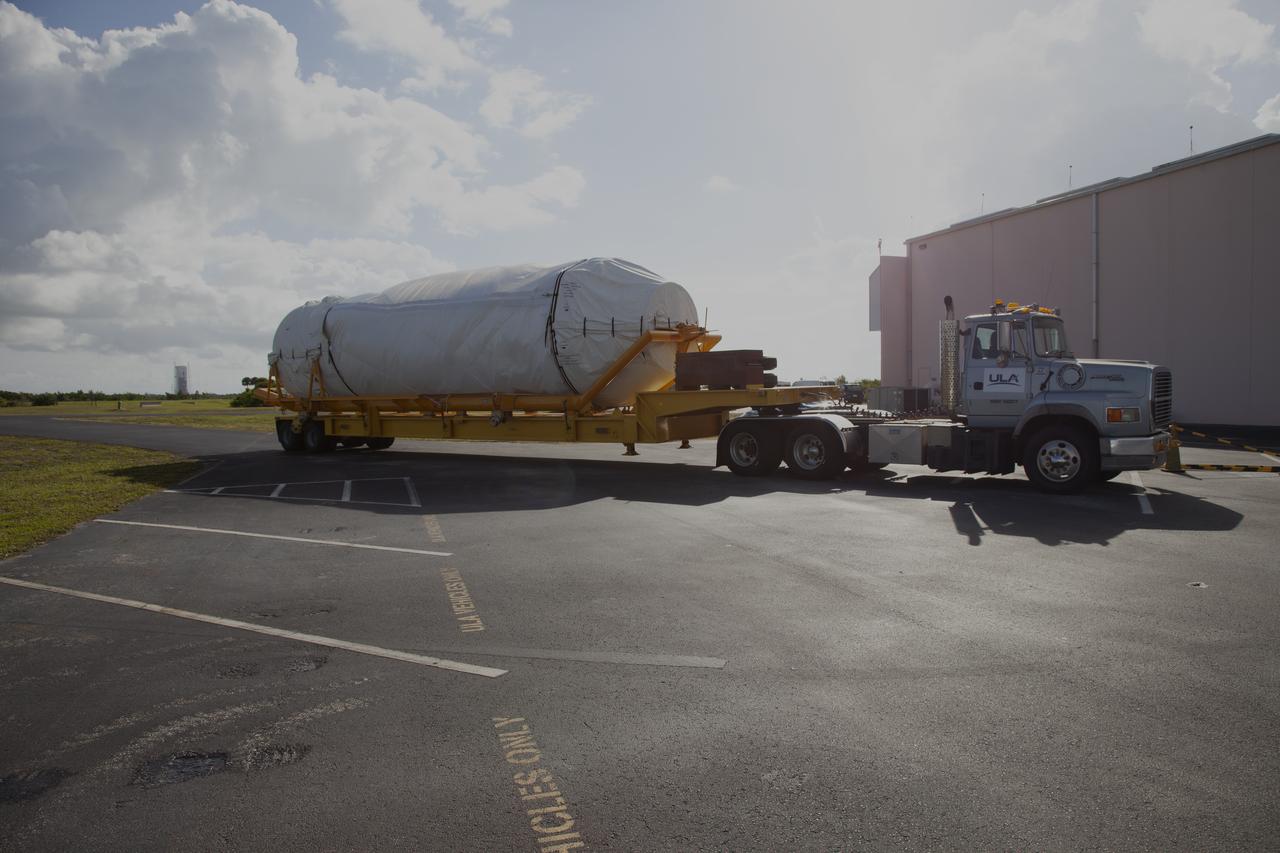
A transport truck with a United Launch Alliance (ULA) two-engine Centaur upper stage arrives at the Atlas Spaceflight Operations Center at Cape Canaveral Air Force Station for preliminary checkouts. Mounted atop a ULA Atlas V rocket, the Centaur will help launch a Boeing CST-100 Starliner spacecraft on an uncrewed Orbital Flight Test from Space Launch Complex 41 at the Cape. NASA’s Commercial Crew Program will return human spaceflight launches to U.S. soil, providing safe, reliable and cost-effective access to low-Earth orbit on systems that meet our safety and mission requirements.
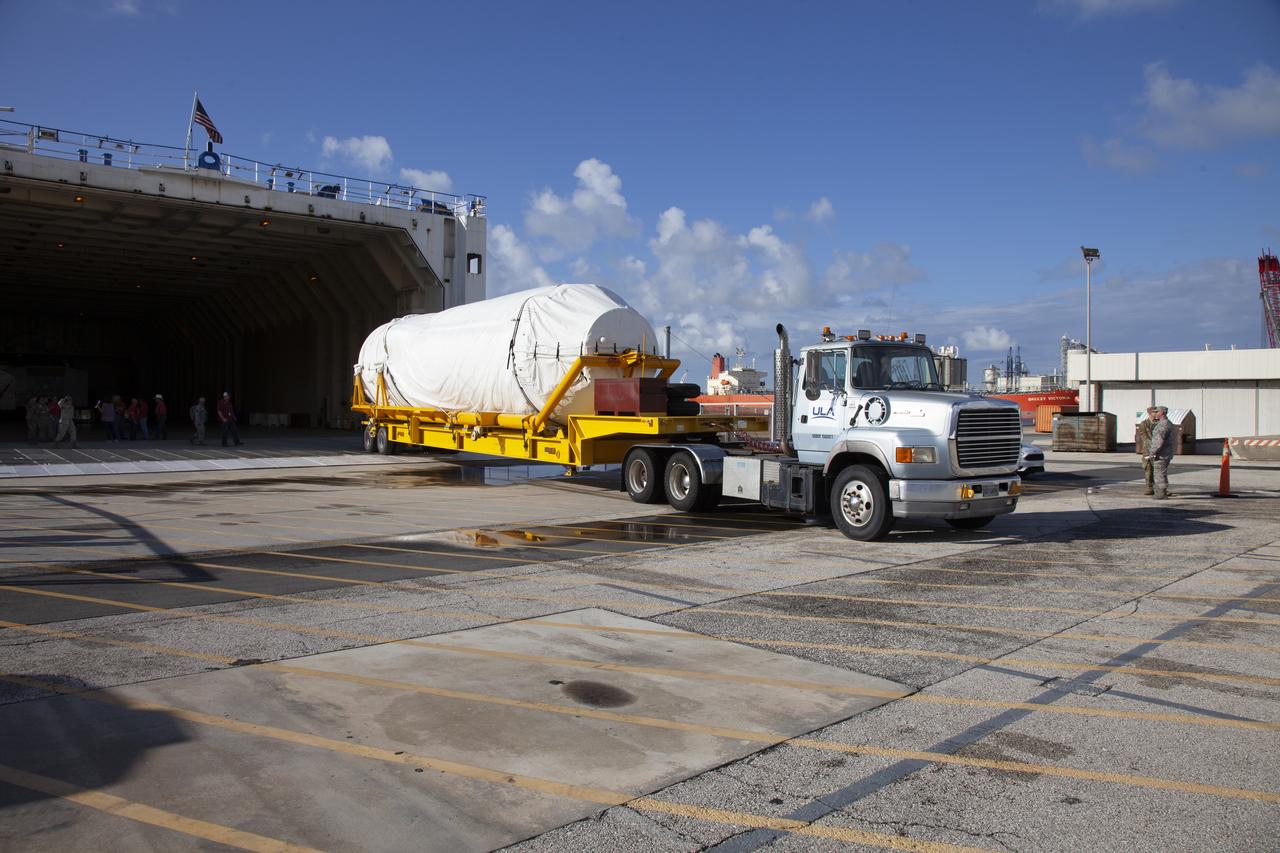
A transport truck moves a United Launch Alliance (ULA) two-engine Centaur upper stage from the company’s Mariner ship that just arrived at Port Canaveral in Florida. The Centaur will be transported to the Atlas Spaceflight Operations Center at Cape Canaveral Air Force Station for preliminary checkouts. Mounted atop a ULA Atlas V rocket, the Centaur will help launch a Boeing CST-100 Starliner spacecraft on an uncrewed Orbital Flight Test from Space Launch Complex 41 at the Cape. NASA’s Commercial Crew Program will return human spaceflight launches to U.S. soil, providing safe, reliable and cost-effective access to low-Earth orbit on systems that meet our safety and mission requirements.
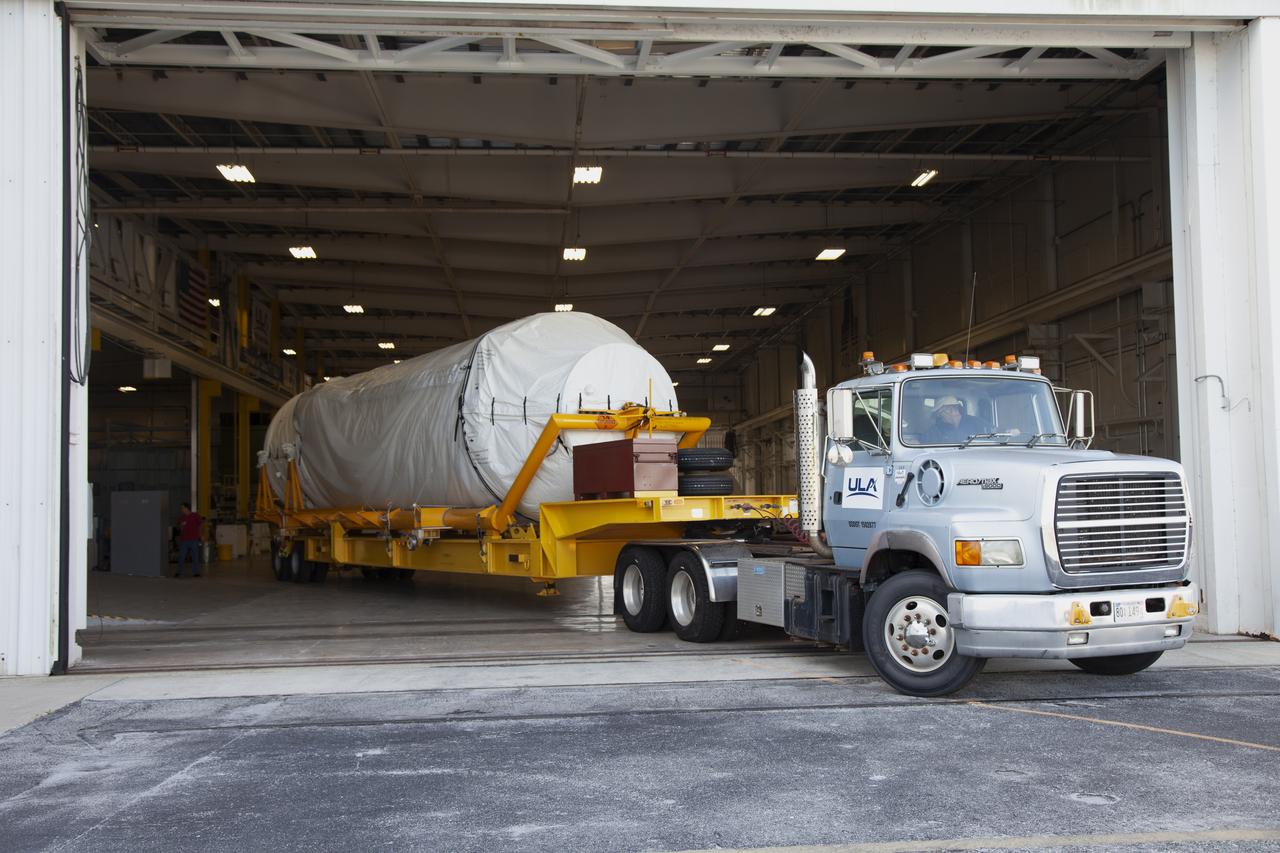
A transport truck with a United Launch Alliance (ULA) two-engine Centaur upper stage arrives at the Atlas Spaceflight Operations Center at Cape Canaveral Air Force Station for preliminary checkouts. Mounted atop a ULA Atlas V rocket, the Centaur will help launch a Boeing CST-100 Starliner spacecraft on an uncrewed Orbital Flight Test from Space Launch Complex 41 at the Cape. NASA’s Commercial Crew Program will return human spaceflight launches to U.S. soil, providing safe, reliable and cost-effective access to low-Earth orbit on systems that meet our safety and mission requirements.
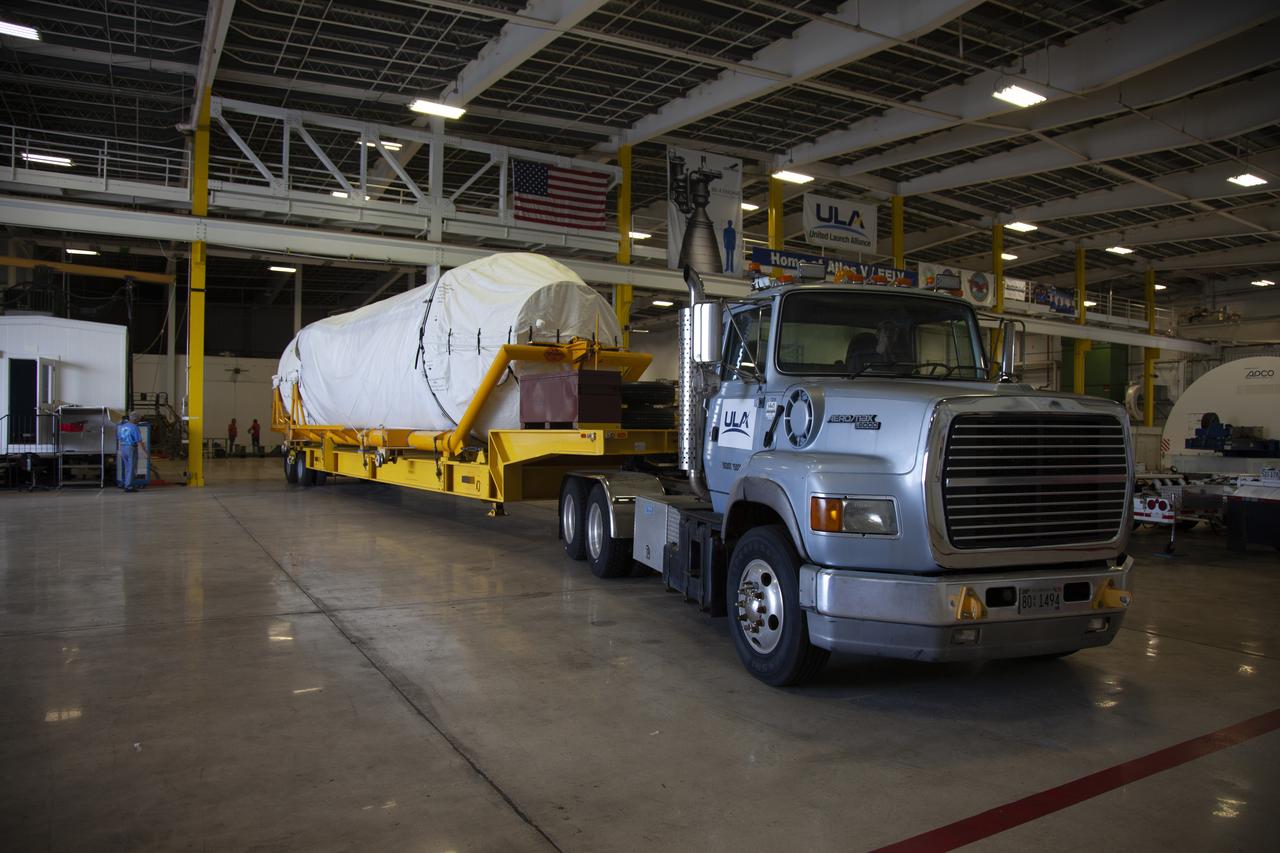
A transport truck with a United Launch Alliance (ULA) two-engine Centaur upper stage arrives at the Atlas Spaceflight Operations Center at Cape Canaveral Air Force Station for preliminary checkouts. Mounted atop a ULA Atlas V rocket, the Centaur will help launch a Boeing CST-100 Starliner spacecraft on an uncrewed Orbital Flight Test from Space Launch Complex 41 at the Cape. NASA’s Commercial Crew Program will return human spaceflight launches to U.S. soil, providing safe, reliable and cost-effective access to low-Earth orbit on systems that meet our safety and mission requirements.
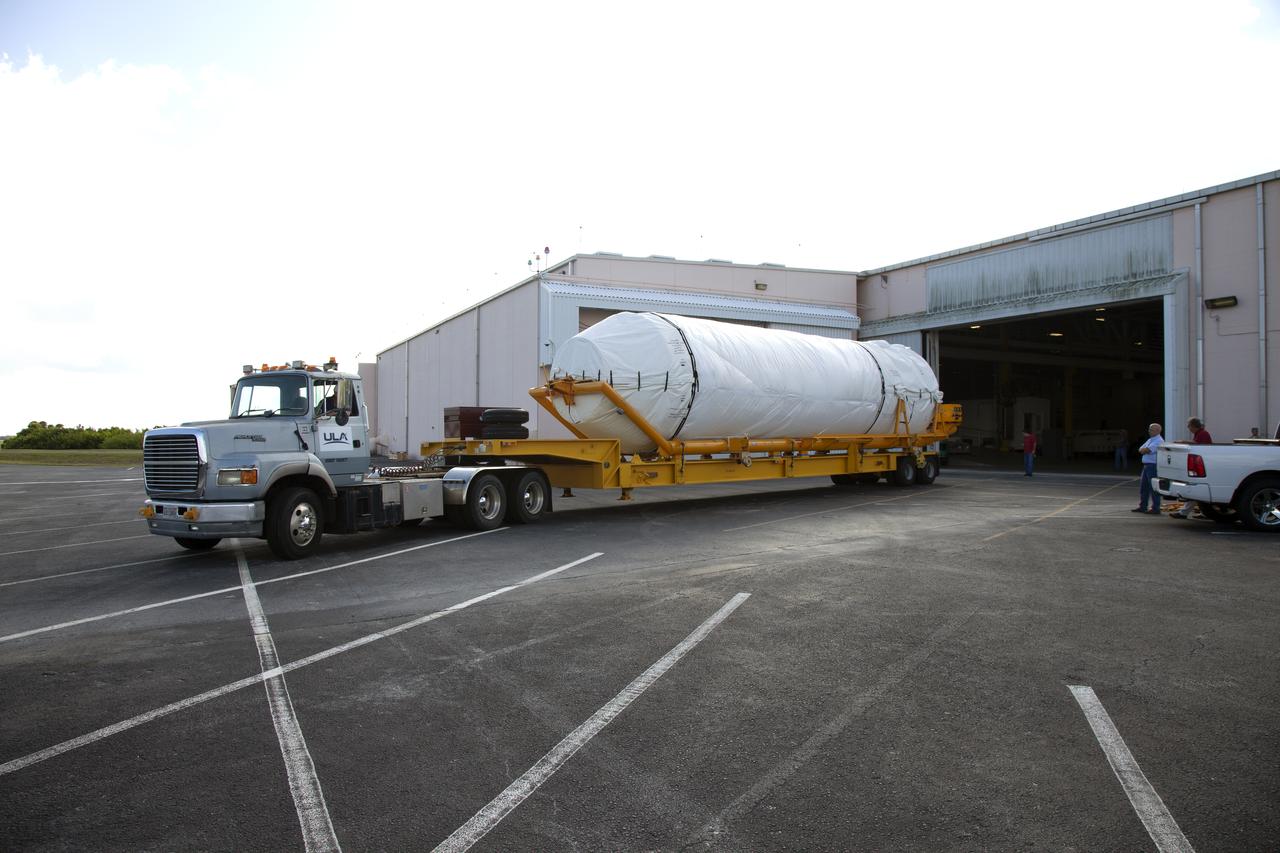
A transport truck with a United Launch Alliance (ULA) two-engine Centaur upper stage arrives at the Atlas Spaceflight Operations Center at Cape Canaveral Air Force Station for preliminary checkouts. Mounted atop a ULA Atlas V rocket, the Centaur will help launch a Boeing CST-100 Starliner spacecraft on an uncrewed Orbital Flight Test from Space Launch Complex 41 at the Cape. NASA’s Commercial Crew Program will return human spaceflight launches to U.S. soil, providing safe, reliable and cost-effective access to low-Earth orbit on systems that meet our safety and mission requirements.
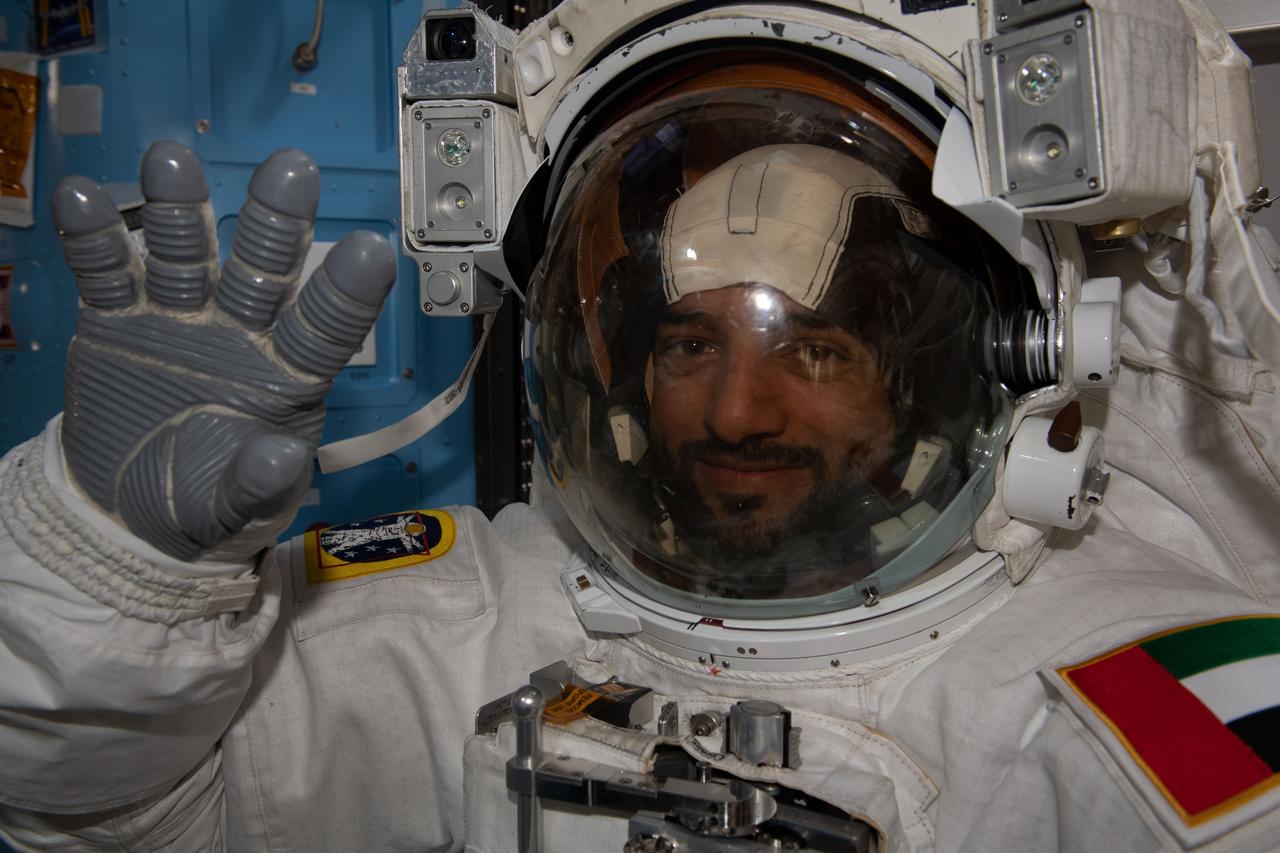
iss069e005102 (April 24, 2023) --- UAE (United Arab Emirates) astronaut and Expedition 69 Flight Engineer Sultan Alneyadi is pictured trying on his Extravehicular Mobility Unit, or spacesuit, and testing it ahead of a spacewalk planned for Friday, April 28. Alneyadi, along with NASA astronaut Stephen Bowen, will spend about six-and-a-half hours in the vacuum of space continuing to upgrade the International Space Station’s power generation system readying the orbiting lab for its next set of roll-out solar arrays.
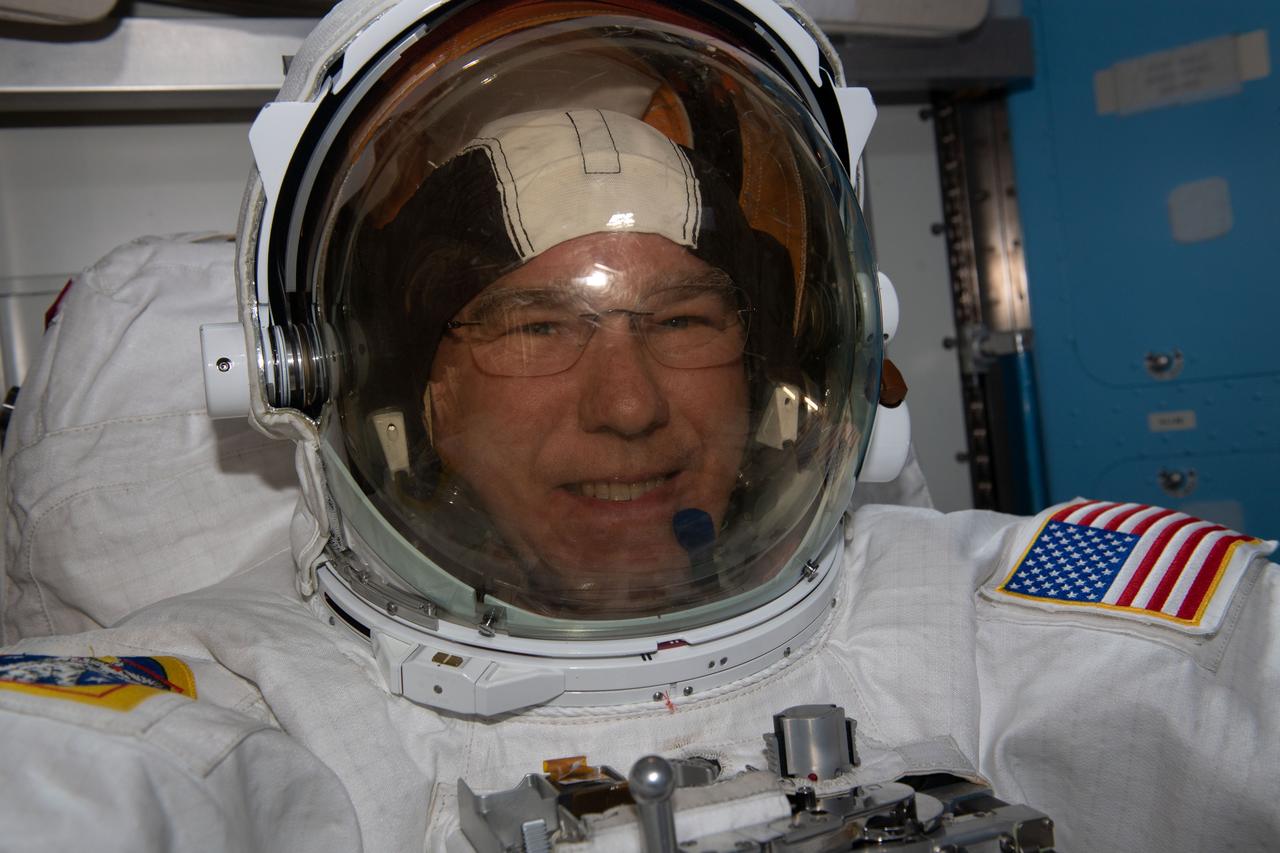
iss069e005093 (April 24, 2023) --- NASA astronaut and Expedition 69 Flight Engineer Stephen Bowen is pictured trying on his Extravehicular Mobility Unit, or spacesuit, and testing it ahead of a spacewalk planned for Friday, April 28. Bowen, along with UAE (United Arab Emirates) astronaut Sultan Alneyadi, will spend about six-and-a-half hours in the vacuum of space continuing to upgrade the International Space Station’s power generation system readying the orbiting lab for its next set of roll-out solar arrays.
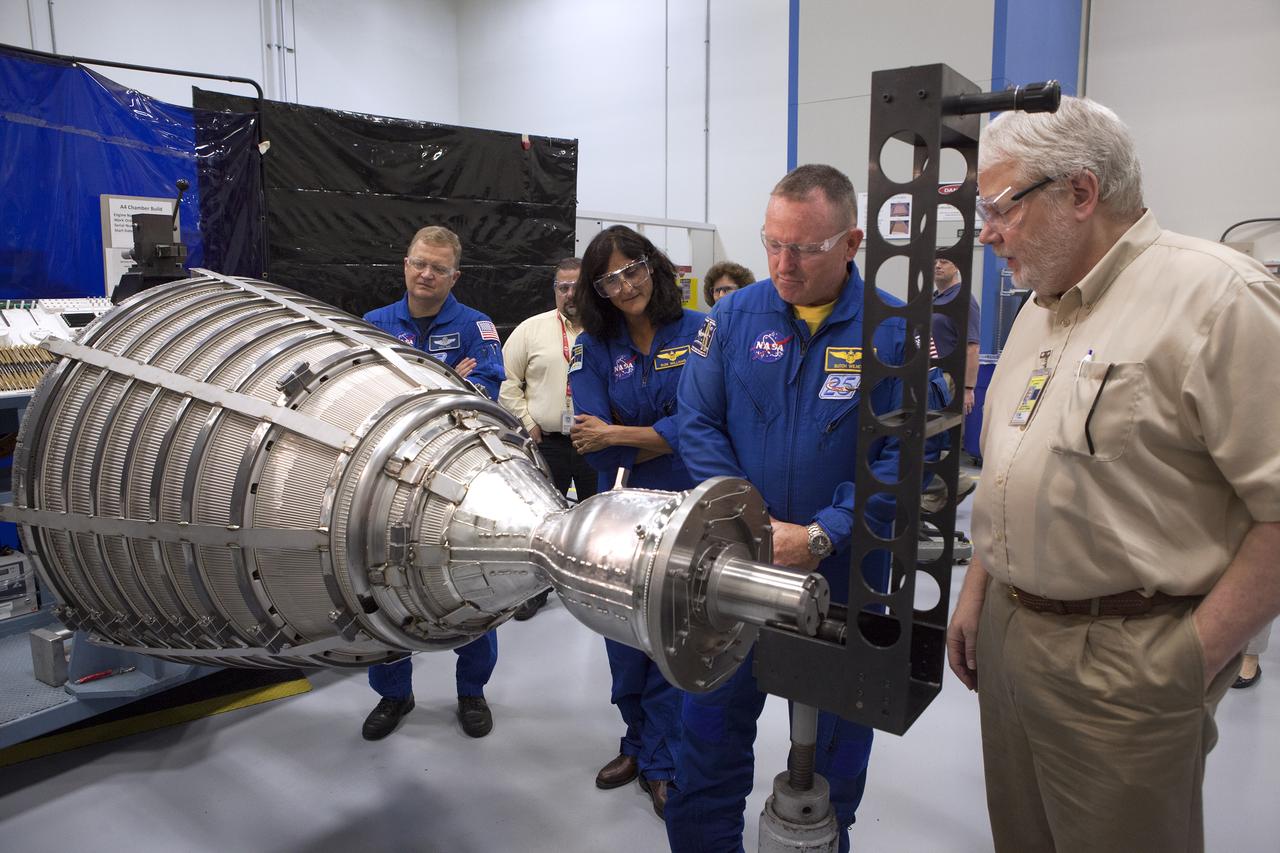
NASA astronauts Eric Boe, from left, Barry "Butch" Wilmore and Suni Williams listen as United Launch Alliance engineer Tom Harper discusses aspects of an RL10 engine during a tour of Aerojet Rocketdyne's facility in West Palm Beach, Florida. The engine will be one of two used for the Centaur upper stage during a United Launch Alliance Atlas V mission to launch Boeing's CST-100 Starliner on a flight test carrying a crew. The engine was test-fired as part of acceptance testing to confirm the engine is ready for flight.
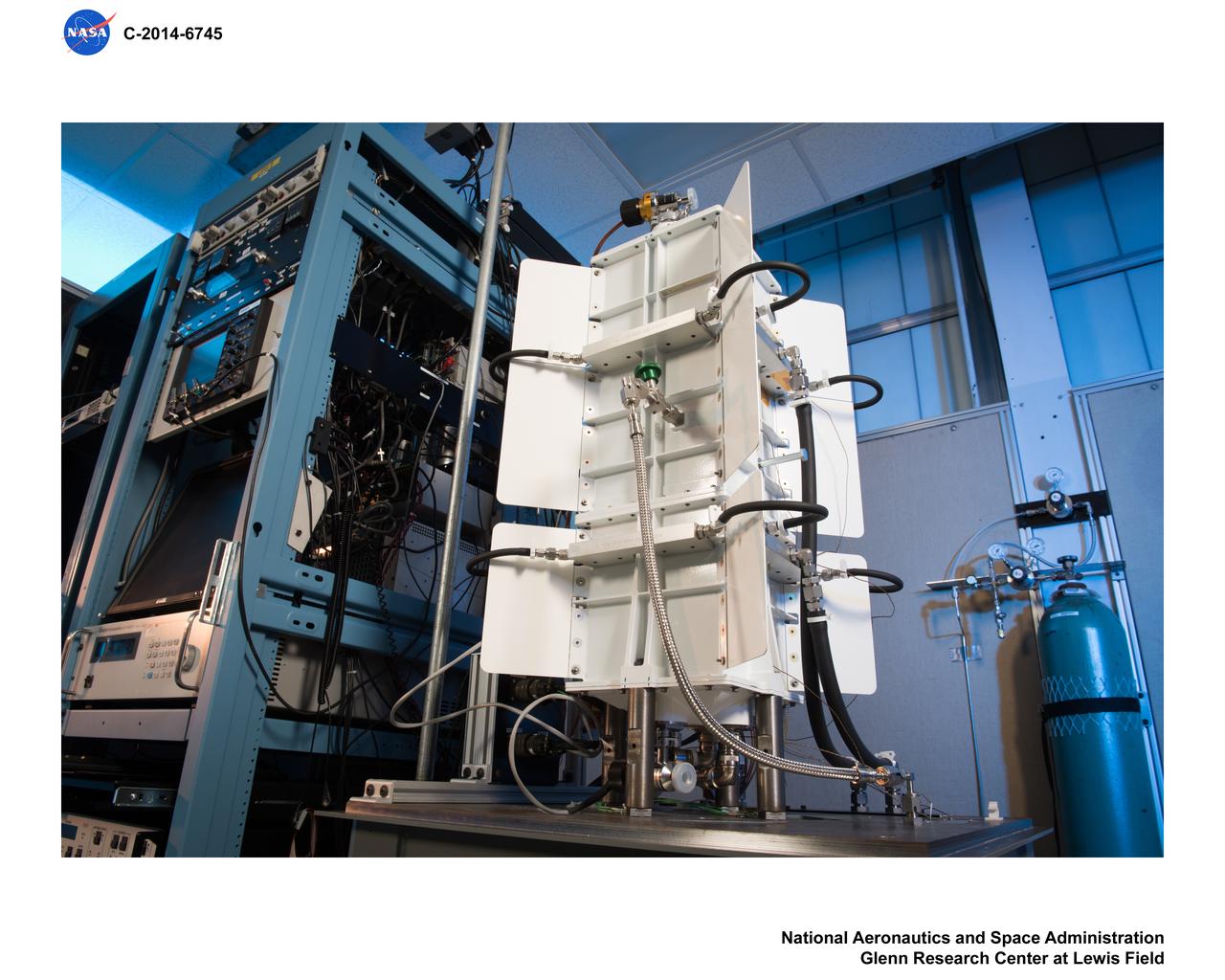
Advanced Stirling Radioisotope Generator Engineering Unit 2, Full Power Test
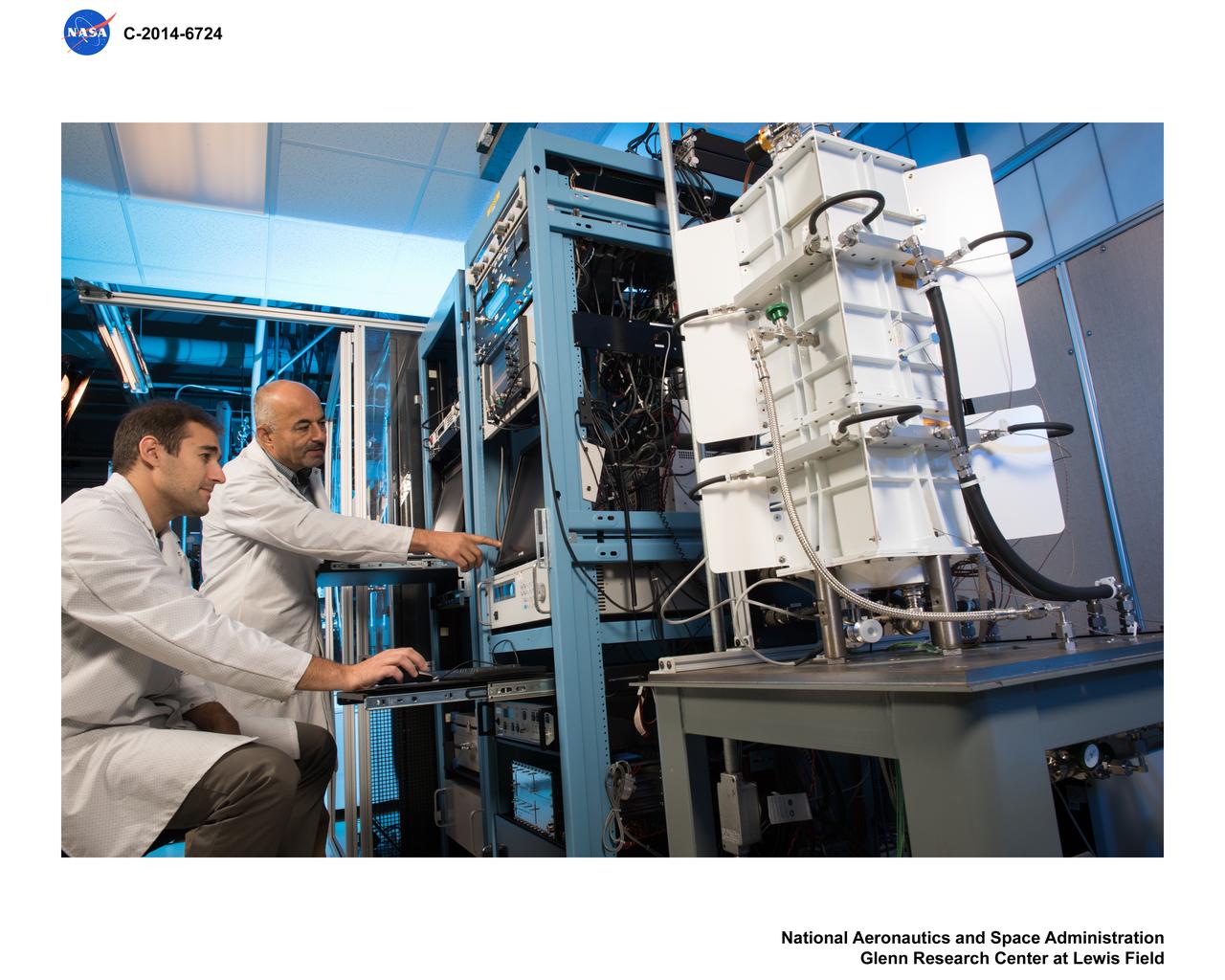
Advanced Stirling Radioisotope Generator Engineering Unit 2, Full Power Test

NASA engineers test a chemical steam generator (CSG) unit on the E-2 Test Stand at John C. Stennis Space Center on Nov. 6. The test was one of 27 conducted in Stennis' E Test Complex the week of Nov. 5. Twenty-seven CSG units will be used on the new A-3 Test Stand at Stennis to produce a vacuum that allows testing of engines at simulated altitudes up to 100,000 feet.
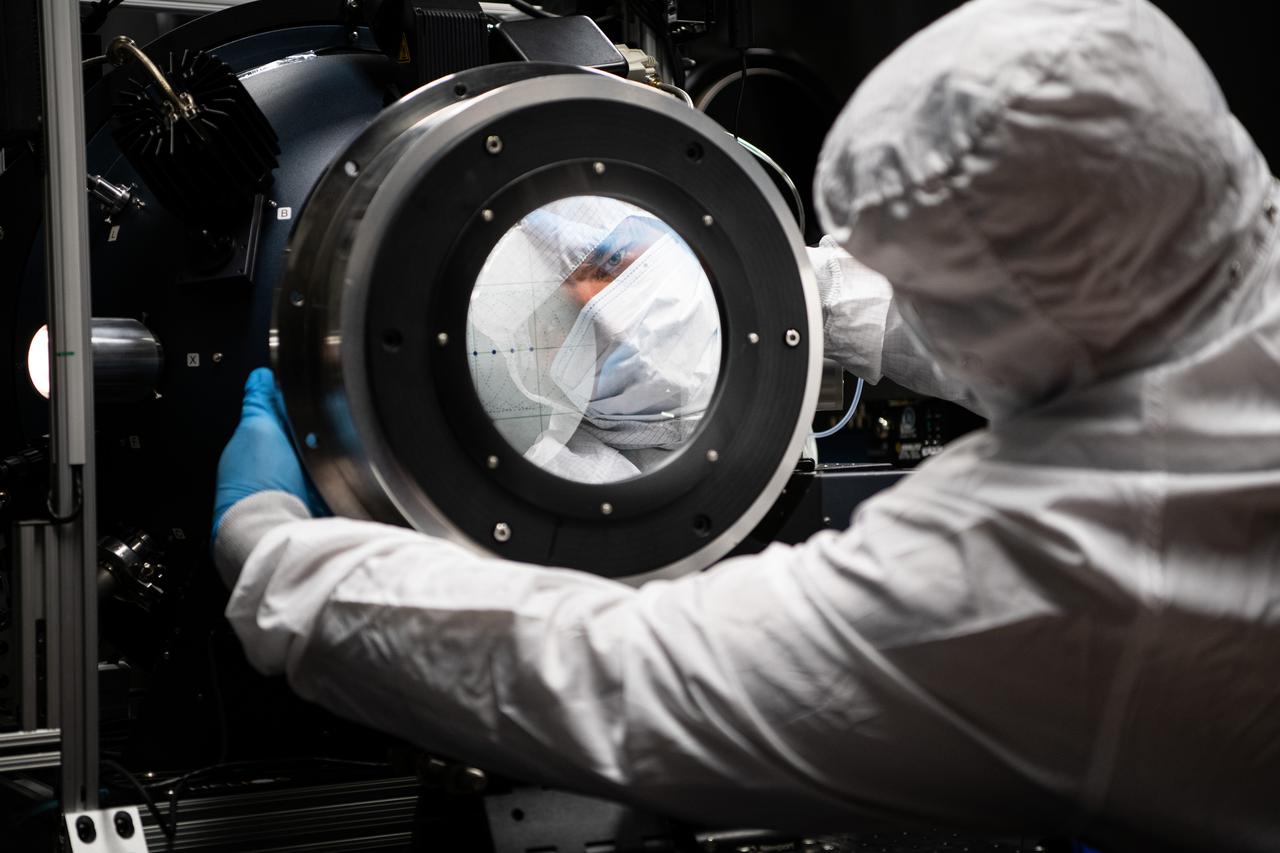
Senior Engineer George Hilton adjusts a polarizer during GSE testing of the Ocean Color Instrument Engineering Test Unit at NASA Goddard Space Flight Center on December 10th, 2020. Photo Credit: (NASA/Denny Henry)
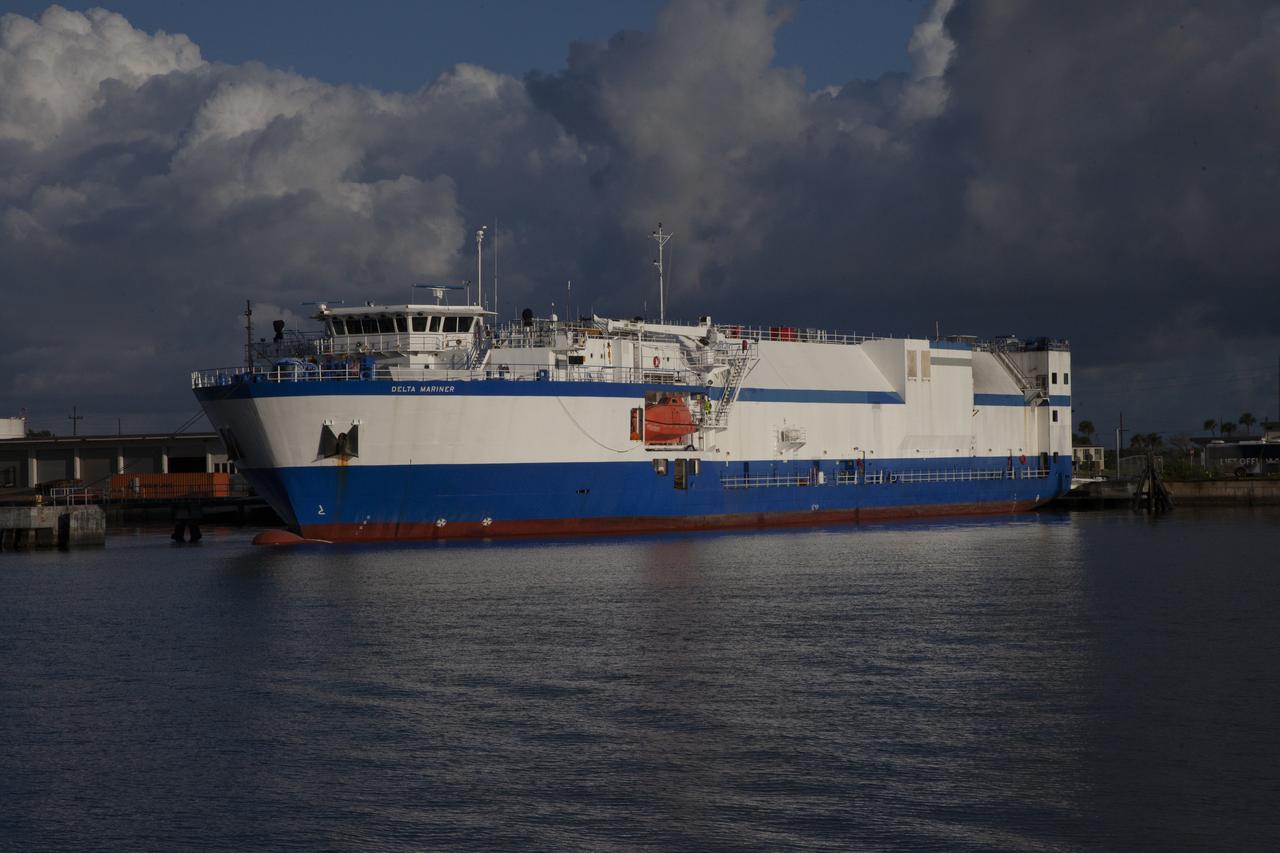
The United Launch Alliance (ULA) Mariner ship arrives at Port Canaveral in Florida carrying a two-engine Centaur upper stage for the upcoming uncrewed Orbital Flight Test of a Boeing CST-100 Starliner spacecraft. As part of NASA's Commercial Crew Program (CCP), the Starliner is part of the next generation of American spacecraft that will launch astronauts to the International Space Station. Starliner will launch early next year atop a ULA Atlas V rocket with the Centaur upper stage from Space Launch Complex 41 at Cape Canaveral Air Force Statin. NASA’s Commercial Crew Program will return human spaceflight launches to U.S. soil, providing safe, reliable and cost-effective access to low-Earth orbit on systems that meet our safety and mission requirements.
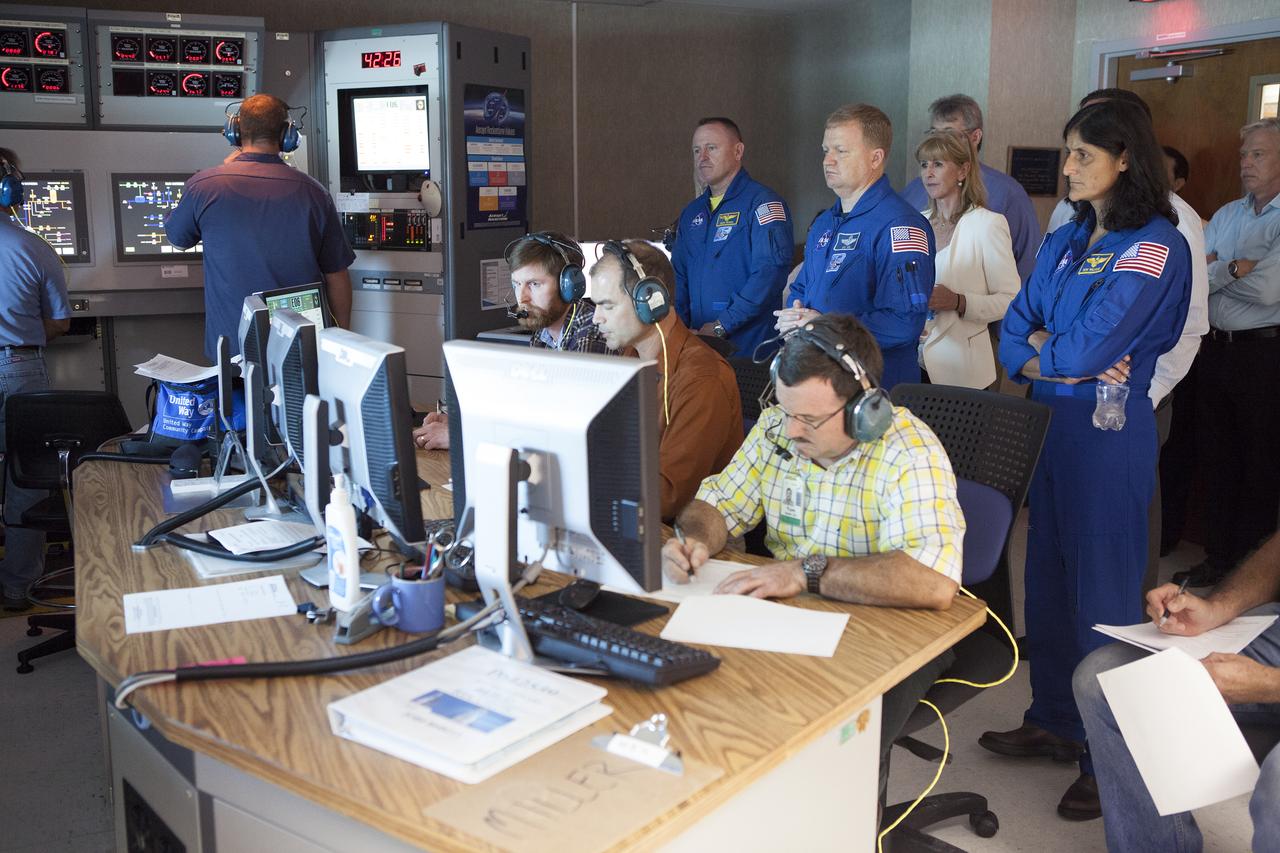
NASA astronauts Barry "Butch" Wilmore, from left, Eric Boe and Suni Williams watch as Aerojet Rocketdyne test team engineers direct the test-firing of an RL10 engine at the company's facility in West Palm Beach, Florida. The engine will be one of two used for the Centaur upper stage during a United Launch Alliance Atlas V mission to launch Boeing's CST-100 Starliner on a flight test carrying a crew. The engine was test-fired as part of acceptance testing to confirm the engine is ready for flight.
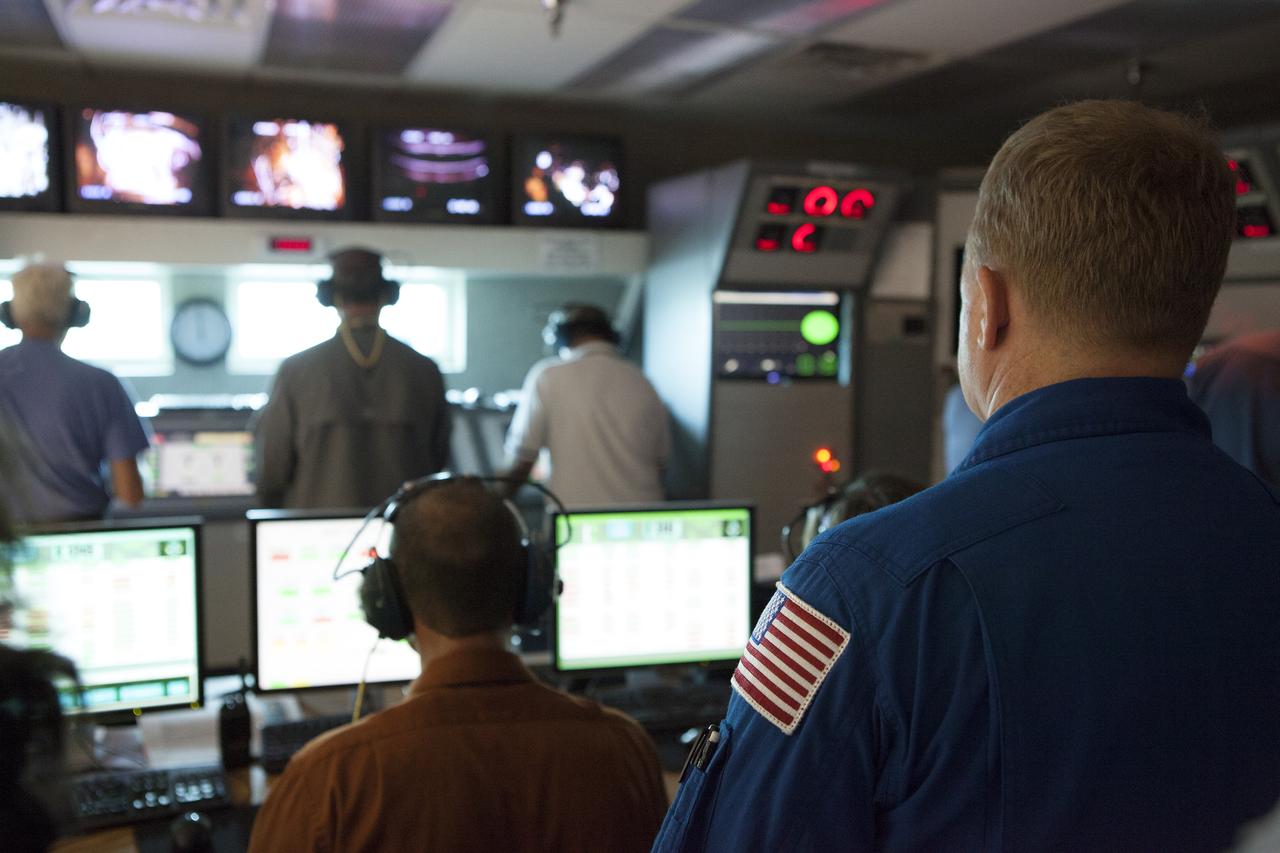
NASA astronaut Eric Boe watches as Aerojet Rocketdyne test team engineers direct the test-firing of an RL10 engine at the company's facility in West Palm Beach, Florida. The engine will be one of two used for the Centaur upper stage during a United Launch Alliance Atlas V mission to launch Boeing's CST-100 Starliner on a flight test carrying a crew. The engine was test-fired as part of acceptance testing to confirm the engine is ready for flight.
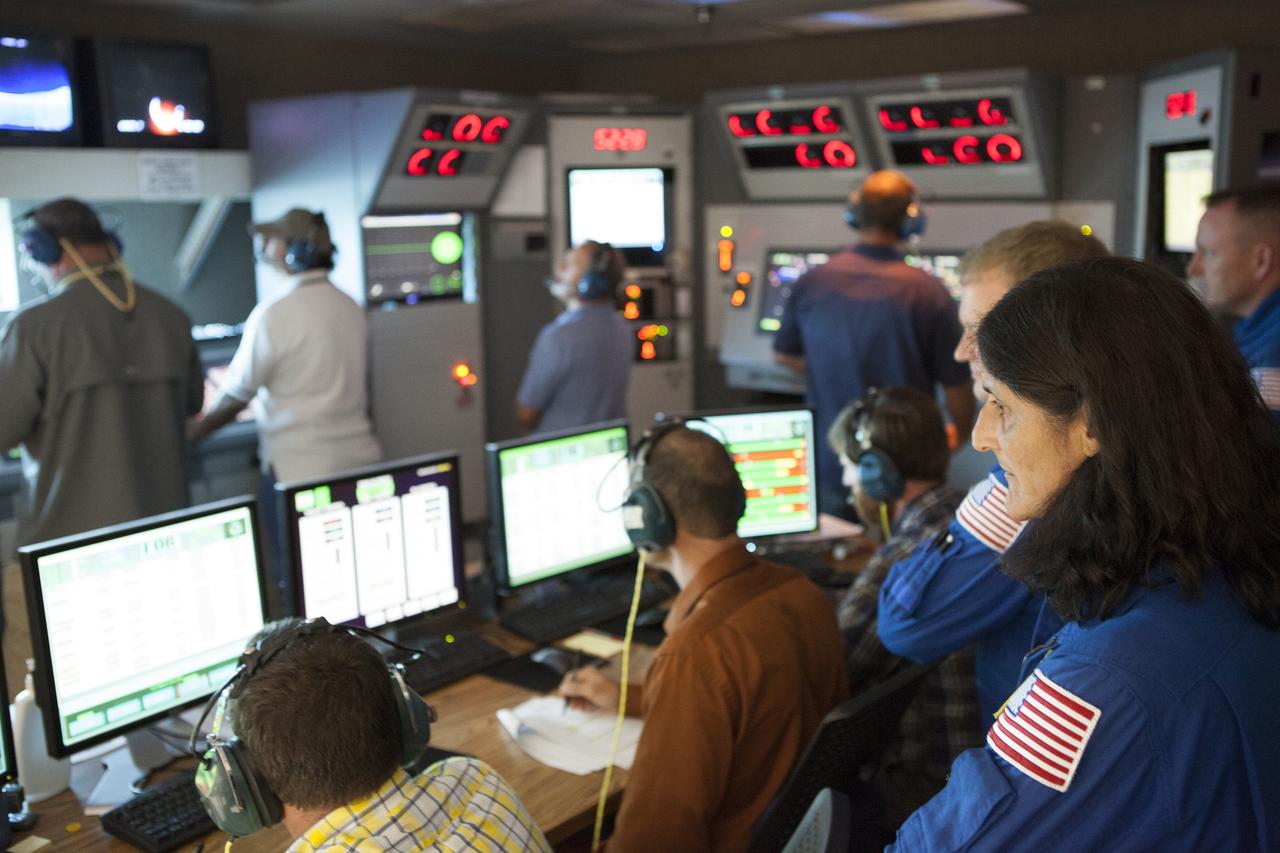
NASA astronaut Suni Williams watches as Aerojet Rocketdyne test team engineers direct the test-firing of an RL10 engine at the company's facility in West Palm Beach, Florida. The engine will be one of two used for the Centaur upper stage during a United Launch Alliance Atlas V mission to launch Boeing's CST-100 Starliner on a flight test carrying a crew. The engine was test-fired as part of acceptance testing to confirm the engine is ready for flight.
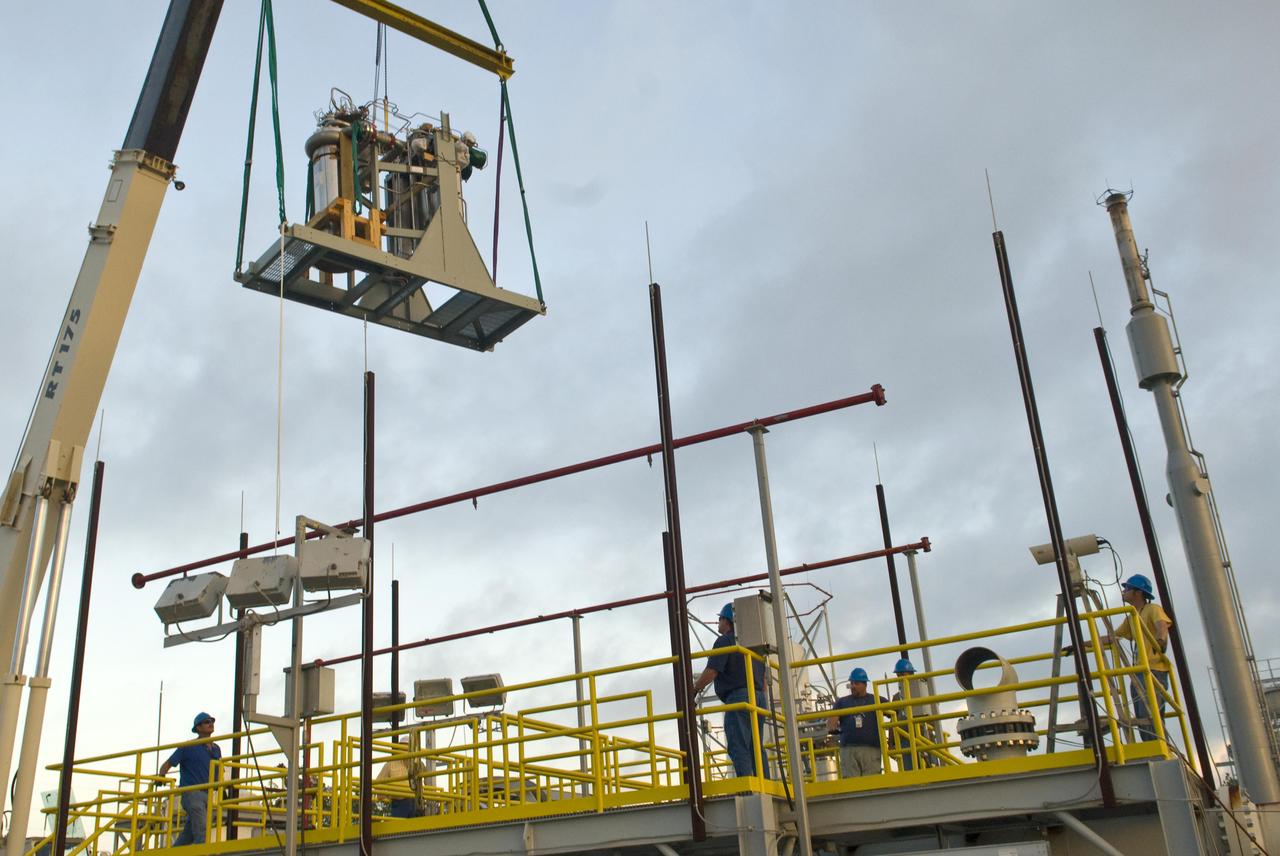
The first of nine chemical steam generator (CSG) units that will be used on the A-3 Test Stand is hoisted into place at the E-2 Test Stand at John C. Stennis Space Center on Oct. 24, 2010. The unit was installed at the E-2 stand for verification and validation testing before it is moved to the A-3 stand. Steam generated by the nine CSG units that will be installed on the A-3 stand will create a vacuum that allows Stennis operators to test next-generation rocket engines at simulated altitudes up to 100,000 feet.
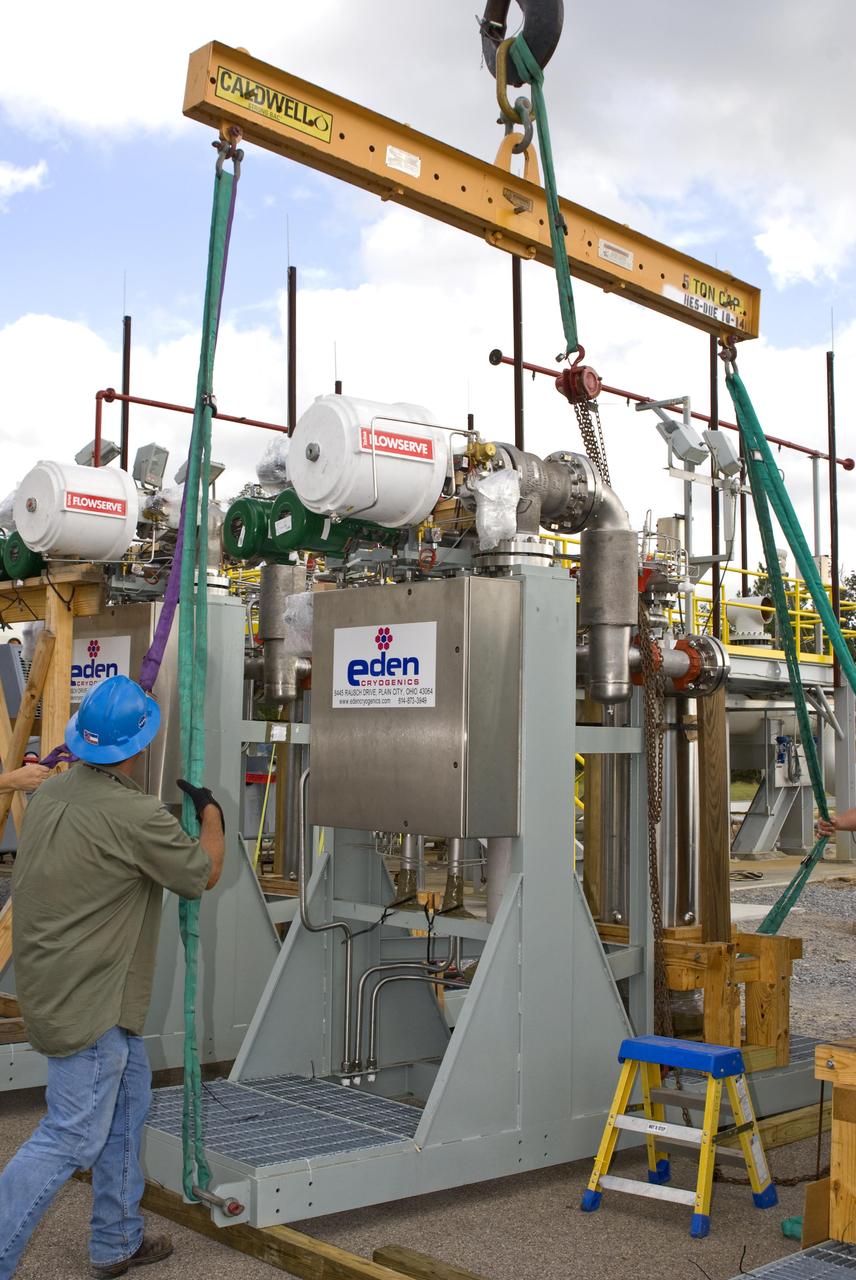
The first of nine chemical steam generator (CSG) units that will be used on the A-3 Test Stand is prepared for installation Oct. 24, 2010, at John C. Stennis Space Center. The unit was installed at the E-2 Test Stand for verification and validation testing before it is moved to the A-3 stand. Steam generated by the nine CSG units that will be installed on the A-3 stand will create a vacuum that allows Stennis operators to test next-generation rocket engines at simulated altitudes up to 100,000 feet.
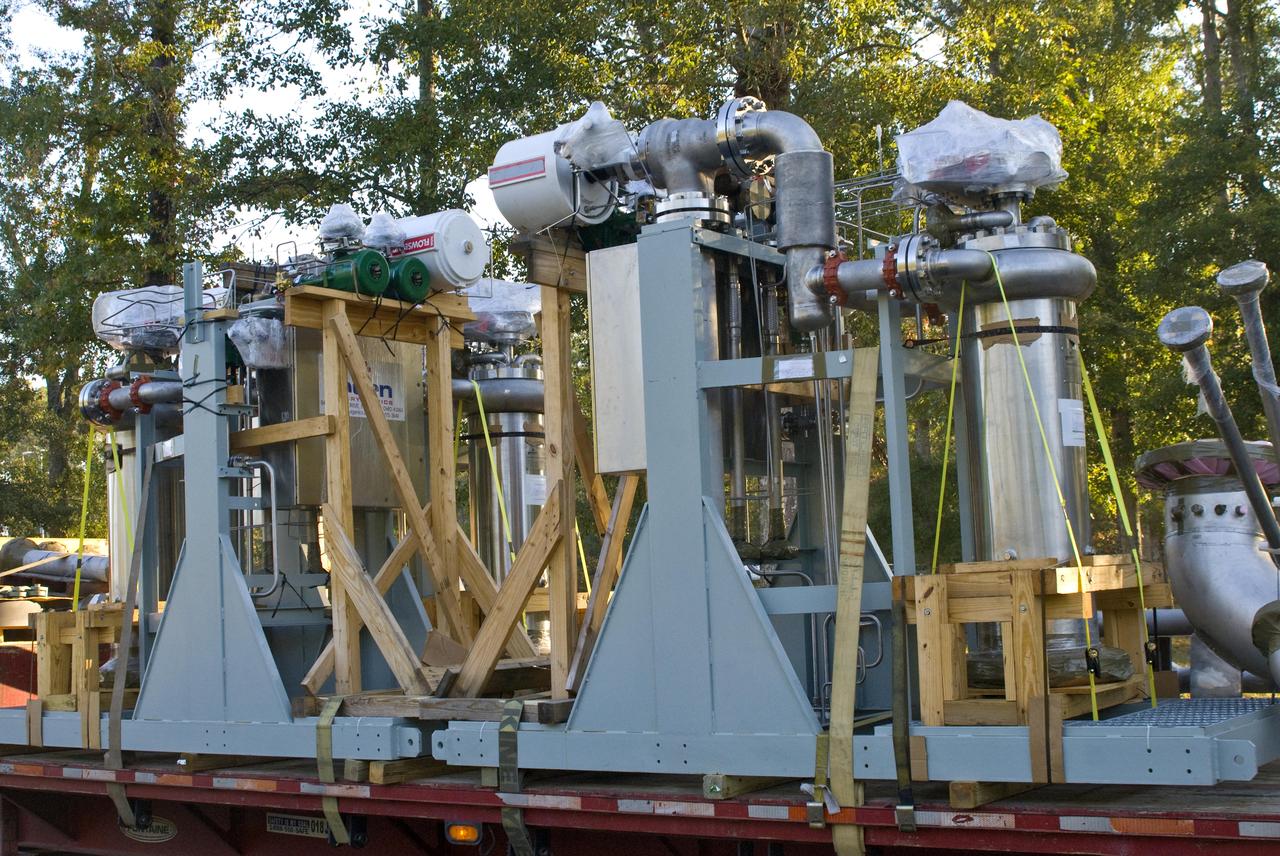
The first of nine chemical steam generator (CSG) units that will be used on the A-3 Test Stand arrived at John. C. Stennis Space Center on Oct. 22, 2010. The unit was installed at the E-2 Test Stand for verification and validation testing before it is moved to the A-3 stand. Steam generated by the nine CSG units that will be installed on the A-3 stand will create a vacuum that allows Stennis operators to test next-generation rocket engines at simulated altitudes up to 100,000 feet.

An RL10 engine stands in a vacuum chamber at Aerojet Rocketdyne's test stand in West Palm Beach, Florida. The engine will be one of two used for the Centaur upper stage during a United Launch Alliance Atlas V mission to launch Boeing's CST-100 Starliner on a flight test carrying a crew. The engine was test-fired as part of acceptance testing to confirm the engine is ready for flight.
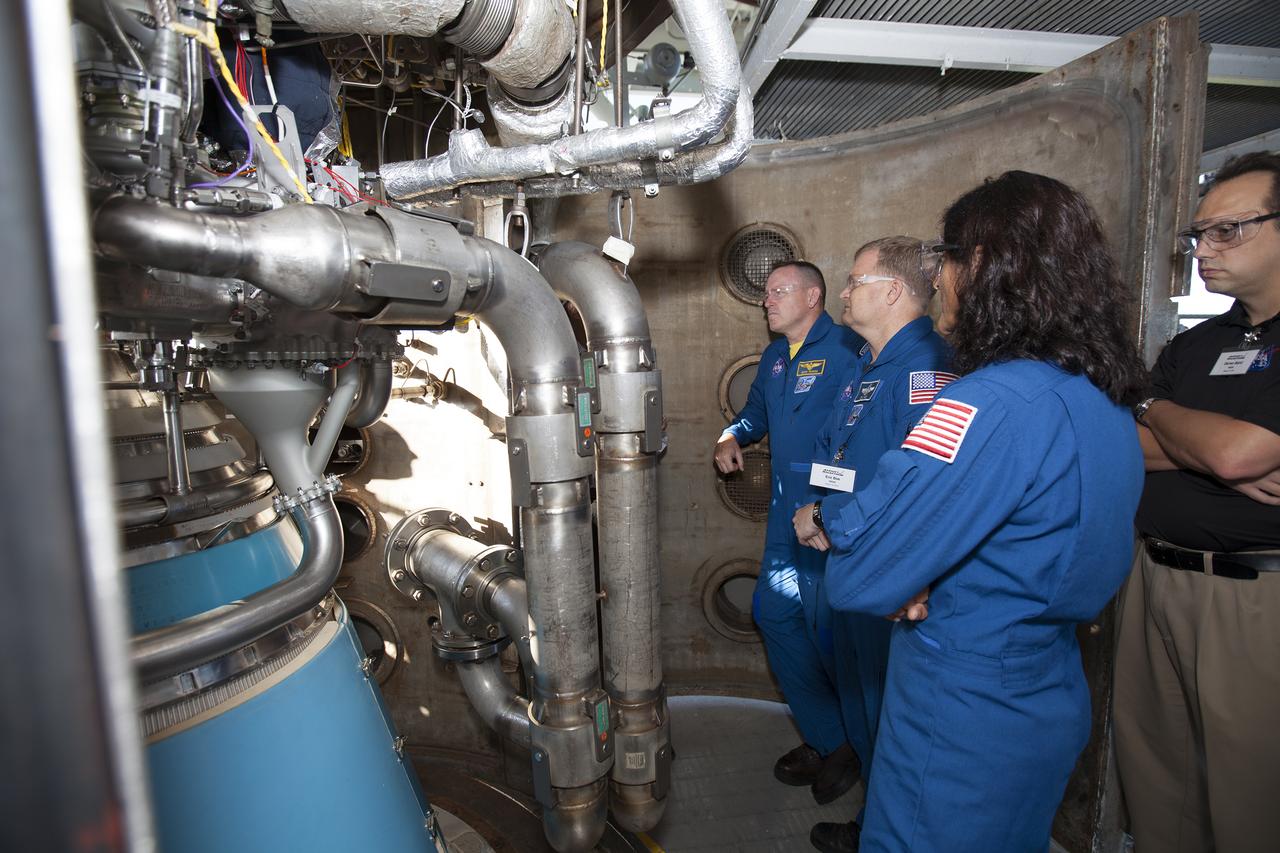
NASA astronauts Barry "Butch" Wilmore, from left, Eric Boe and Suni Williams survey an RL10 engine as it stands in a vacuum chamber at Aerojet Rocketdyne's test stand in West Palm Beach, Florida. The engine will be one of two used for the Centaur upper stage during a United Launch Alliance Atlas V mission to launch Boeing's CST-100 Starliner on a flight test carrying a crew. The engine was test-fired as part of acceptance testing to confirm the engine is ready for flight.
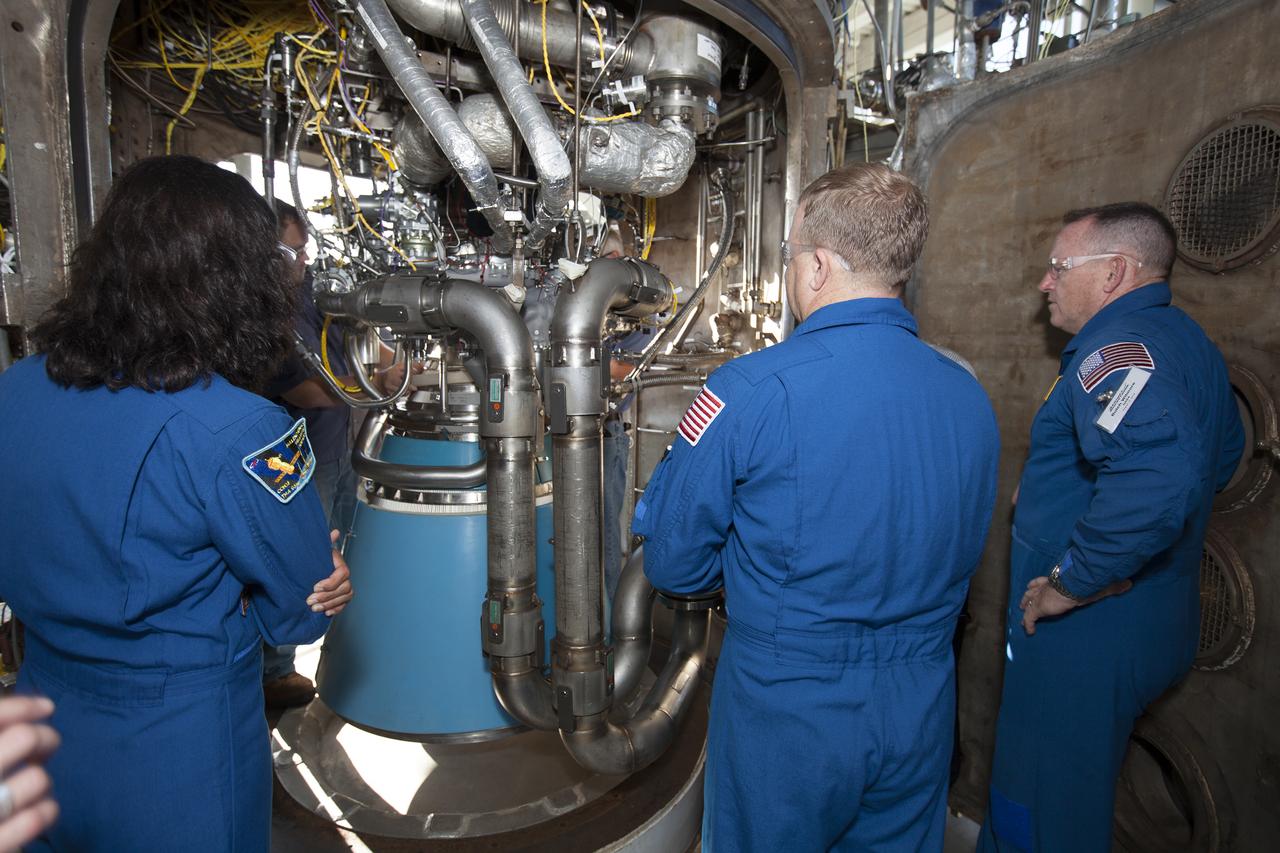
NASA astronauts Suni Williams, from left, Eric Boe and Barry "Butch" Wilmore survey an RL10 engine as it stands in a vacuum chamber at Aerojet Rocketdyne's test stand in West Palm Beach, Florida. The engine will be one of two used for the Centaur upper stage during a United Launch Alliance Atlas V mission to launch Boeing's CST-100 Starliner on a flight test carrying a crew. The engine was test-fired as part of acceptance testing to confirm the engine is ready for flight.
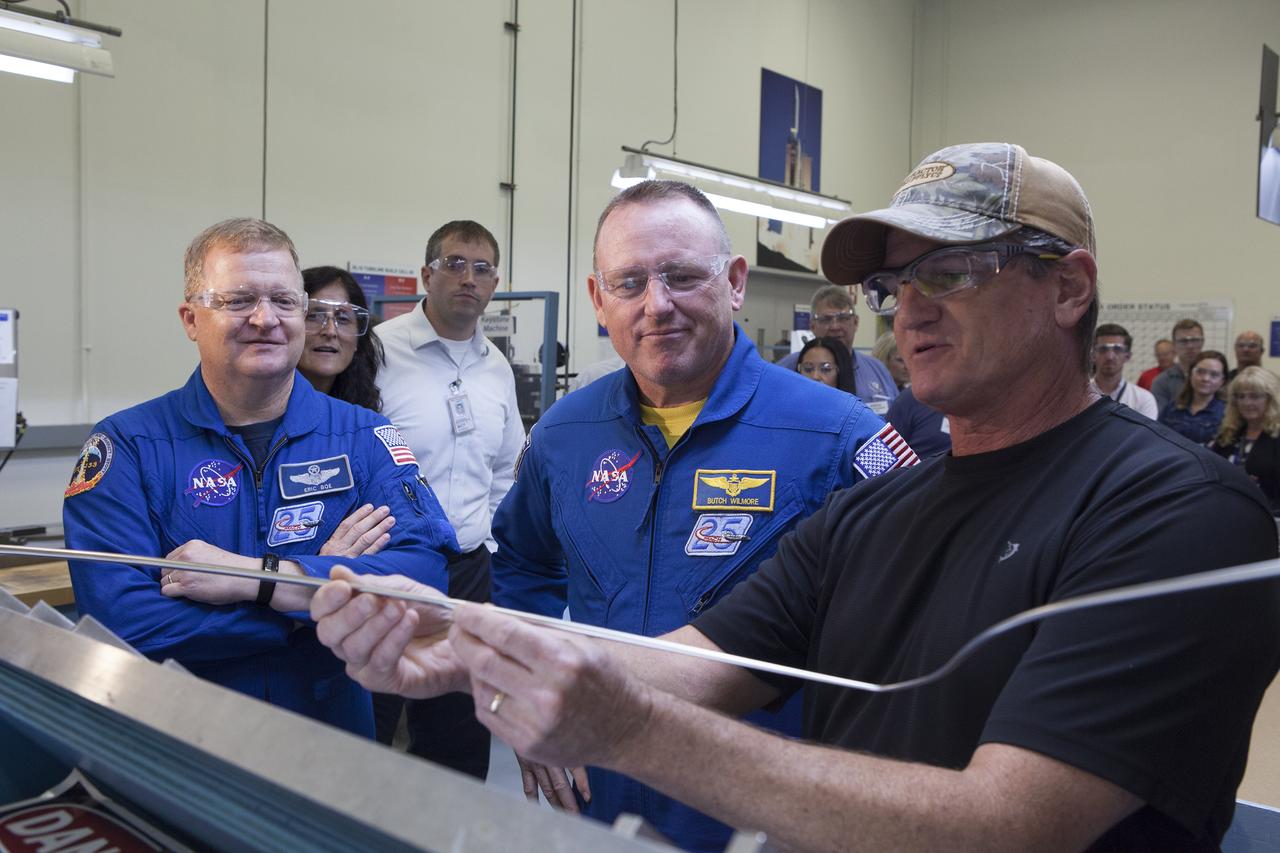
NASA astronauts Eric Boe, from left, and Barry "Butch" Wilmore listen as an Aerojet Rocketdyne engineer discusses aspects of an RL10 engine during a tour of Aerojet Rocketdyne's facility in West Palm Beach, Florida. The engine will be one of two used for the Centaur upper stage during a United Launch Alliance Atlas V mission to launch Boeing's CST-100 Starliner on a flight test carrying a crew. The engine was test-fired as part of acceptance testing to confirm the engine is ready for flight.
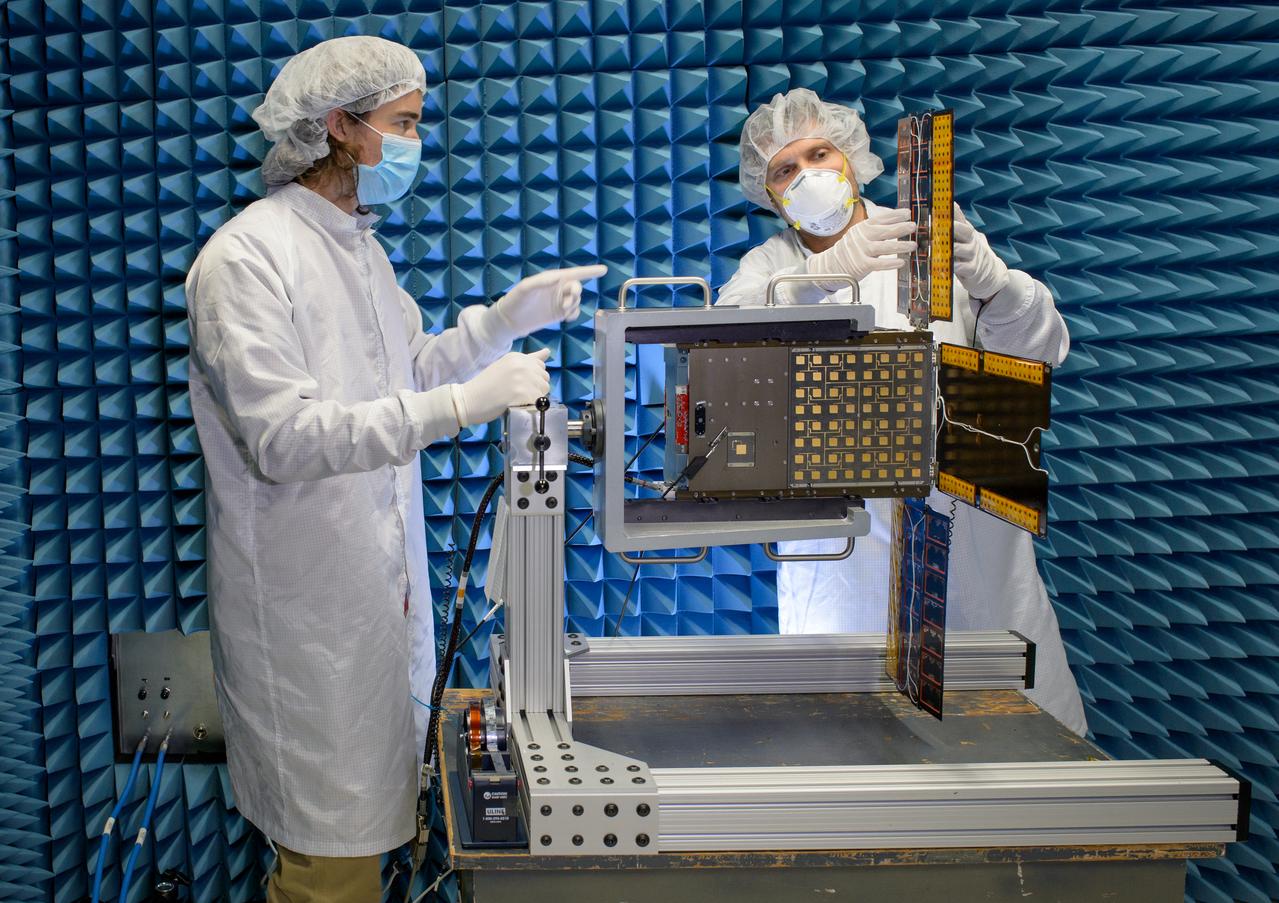
Austin Bowie, left, and Jesse Fusco fold the BioSentinel flight unit solar array in the Engineering Evaluation Laboratory, or EEL, Radio Frequency test facility, N244, after completion of an electromagnetic compatibility test procedure.

John C. Stennis Space Center employees complete installation of a chemical steam generator (CSG) unit at the site's E-2 Test Stand. On Oct. 24, 2010. The unit will undergo verification and validation testing on the E-2 stand before it is moved to the A-3 Test Stand under construction at Stennis. Each CSG unit includes three modules. Steam generated by the nine CSG units that will be installed on the A-3 stand will create a vacuum that allows Stennis operators to test next-generation rocket engines at simulated altitudes up to 100,000 feet.
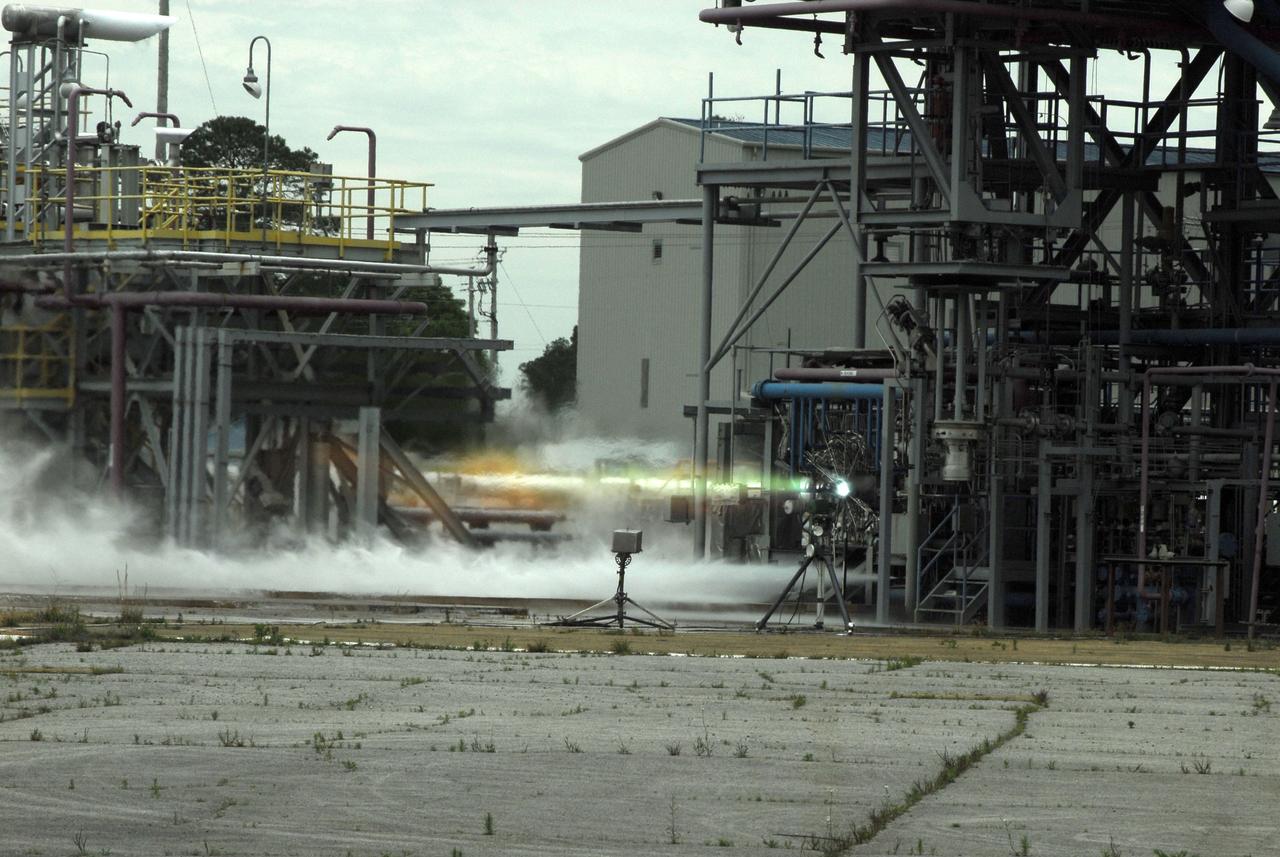
Chosen to power the upper stages of the new Ares I Crew Launch Vehicle (CLV) and the Ares V cargo segment, the J-2X engine is a stepped up version of the hydrogen/oxygen-fuelled Apollo-era J-2 engine. It was developed for NASA by Pratt & Whitney Rocketdyne (PWR), a business unit of United Technologies Corporation of Canoga Park, California. As seen in this photograph, the engine underwent a series of hot fire tests, performed on sub scale main injector hardware in the Test Stand 116 at Marshall Space Flight Center (MSFC). The injector is a major component of the engine that injects and mixes propellants in the combustion chamber, where they are ignited and burned to produce thrust.
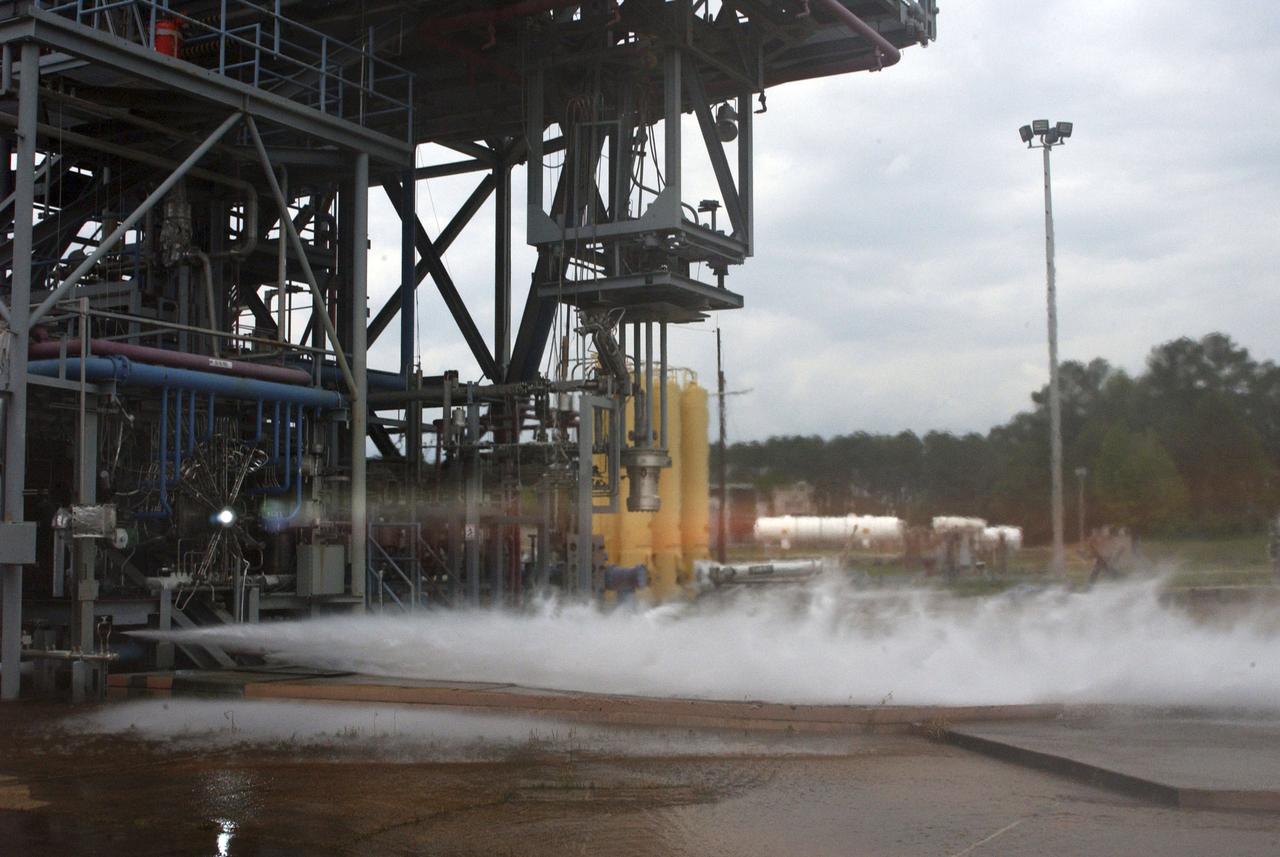
Chosen to power the upper stages of the new Ares I Crew Launch Vehicle (CLV) and the Ares V cargo segment, the J-2X engine is a stepped up version of the hydrogen/oxygen-fuelled Apollo-era J-2 engine. It was developed for NASA by Pratt & Whitney Rocketdyne (PWR), a business unit of United Technologies Corporation of Canoga Park, California. As seen in this photograph, the engine underwent a series of hot fire tests, performed on sub scale main injector hardware in the Test Stand 116 at Marshall Space Flight Center (MSFC). The injector is a major component of the engine that injects and mixes propellants in the combustion chamber, where they are ignited and burned to produce thrust.
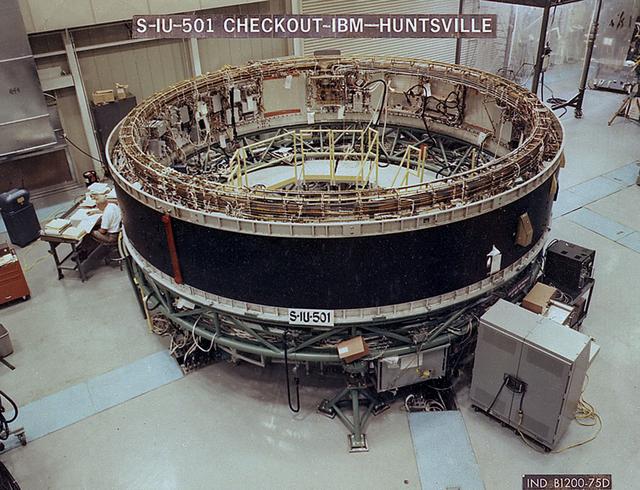
A technician checks the systems of the Saturn V instrument unit in a test facility in Huntsville. This instrument unit was flown aboard Apollo 4 on November 7, 1967, which was the first test flight of the Saturn V. The towering 363-foot Saturn V was a multi-stage, multi-engine launch vehicle standing taller than the Statue of Liberty. Altogether, the Saturn V engines produced as much power as 85 Hoover Dams.
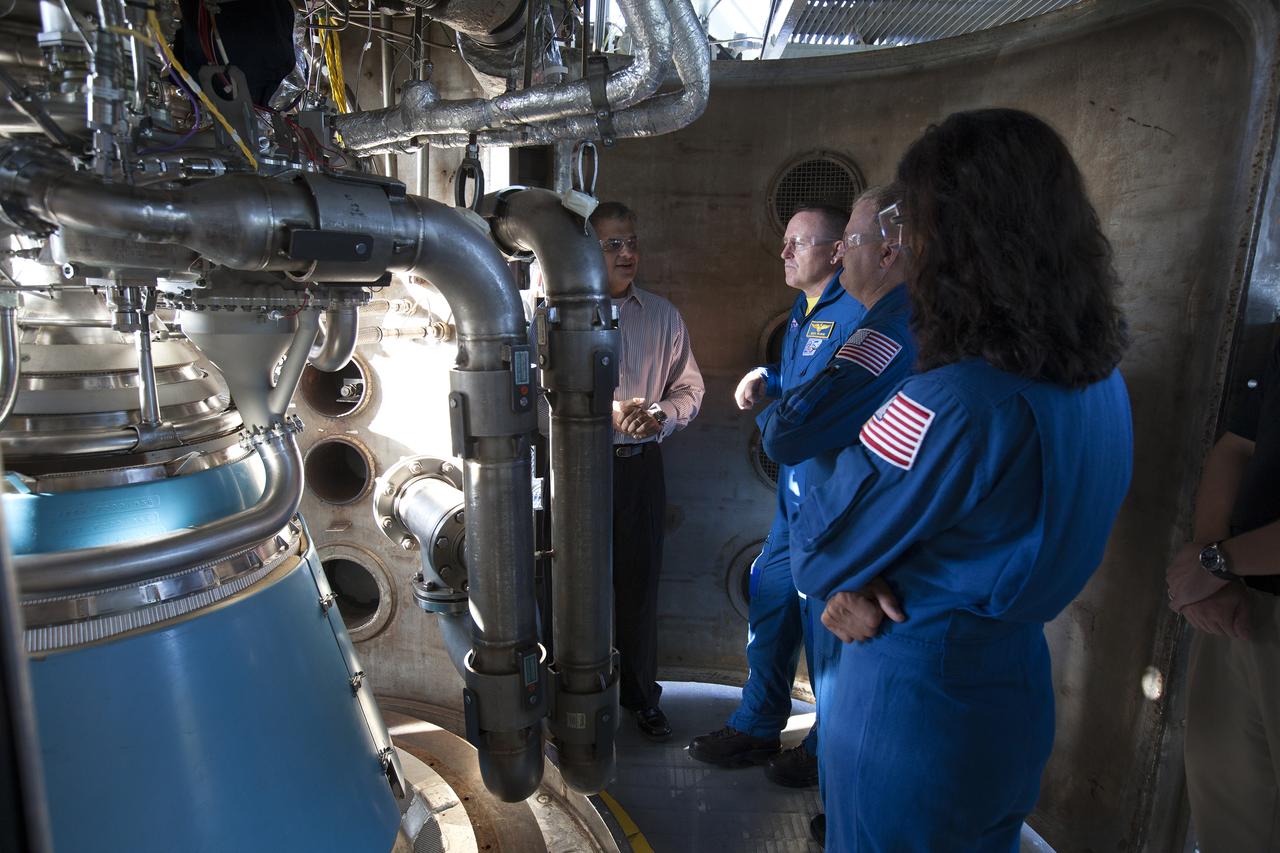
Carlos Rodriguez, from left, manager of systems development, verification and testing for Aerojet Rocketdyne, talks with NASA astronauts Barry "Butch" Wilmore, Eric Boe and Suni Williams as the group surveys an RL10 engine as it stands in a vacuum chamber at Aerojet Rocketdyne's test stand in West Palm Beach, Florida. The engine will be one of two used for the Centaur upper stage during a United Launch Alliance Atlas V mission to launch Boeing's CST-100 Starliner on a flight test carrying a crew. The engine was test-fired as part of acceptance testing to confirm the engine is ready for flight.
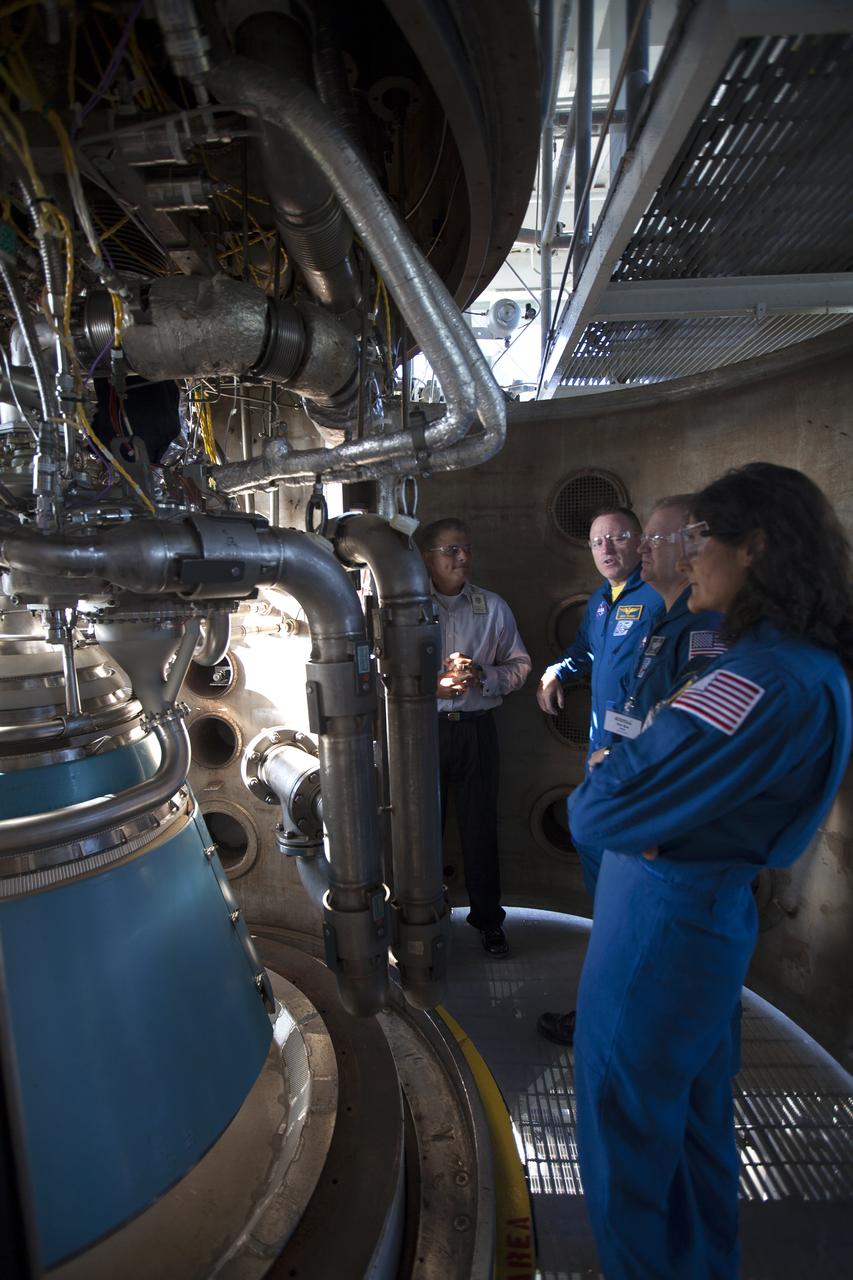
Carlos Rodriguez, from left, manager of systems development, verification and testing for Aerojet Rocketdyne, talks with NASA astronauts Barry "Butch" Wilmore, Eric Boe and Suni Williams as the group surveys an RL10 engine as it stands in a vacuum chamber at Aerojet Rocketdyne's test stand in West Palm Beach, Florida. The engine will be one of two used for the Centaur upper stage during a United Launch Alliance Atlas V mission to launch Boeing's CST-100 Starliner on a flight test carrying a crew. The engine was test-fired as part of acceptance testing to confirm the engine is ready for flight.
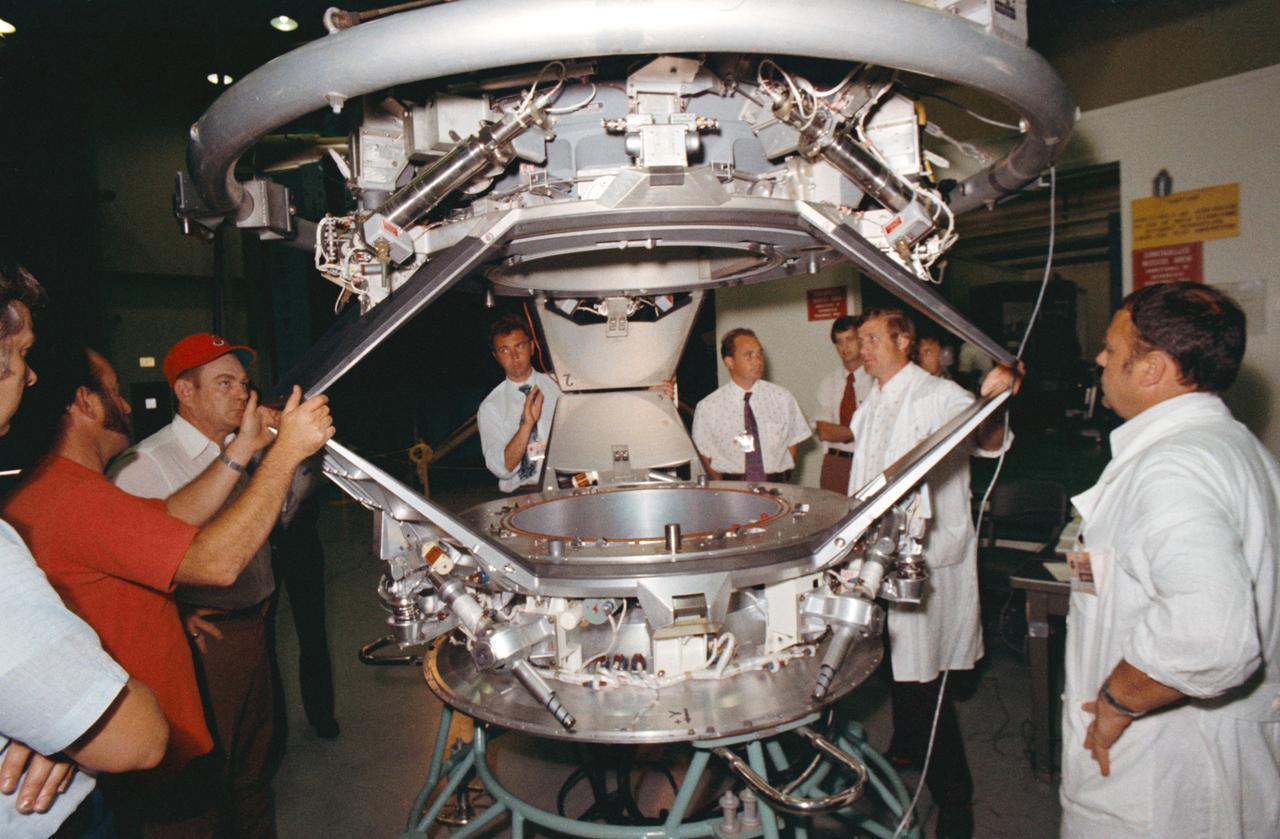
S74-25394 (10 July 1974) --- A group of American and Soviet engineers of the Apollo-Soyuz Test Project working group three examines an ASTP docking set-up following a docking mechanism fitness test conducted in Building 13 at the Johnson Space Center. Working Group No. 3 is concerned with ASTP docking problems and techniques. The joint U.S.-USSR ASTP docking mission in Earth orbit is scheduled for the summer of 1975. The Apollo docking mechanism is atop the Soyuz docking mechanism.

NASA Commercial Crew astronaut Eric Boe listens as Jim Moss, site director for Aerojet Rocketdyne's West Palm Beach facility, discusses aspects of the RL10 engine as it stands in a vacuum chamber at Aerojet Rocketdyne's test stand in West Palm Beach, Florida. The engine will be one of two used for the Centaur upper stage during a United Launch Alliance Atlas V mission to launch Boeing's CST-100 Starliner on a flight test carrying a crew. The engine was test-fired as part of acceptance testing to confirm the engine is ready for flight.
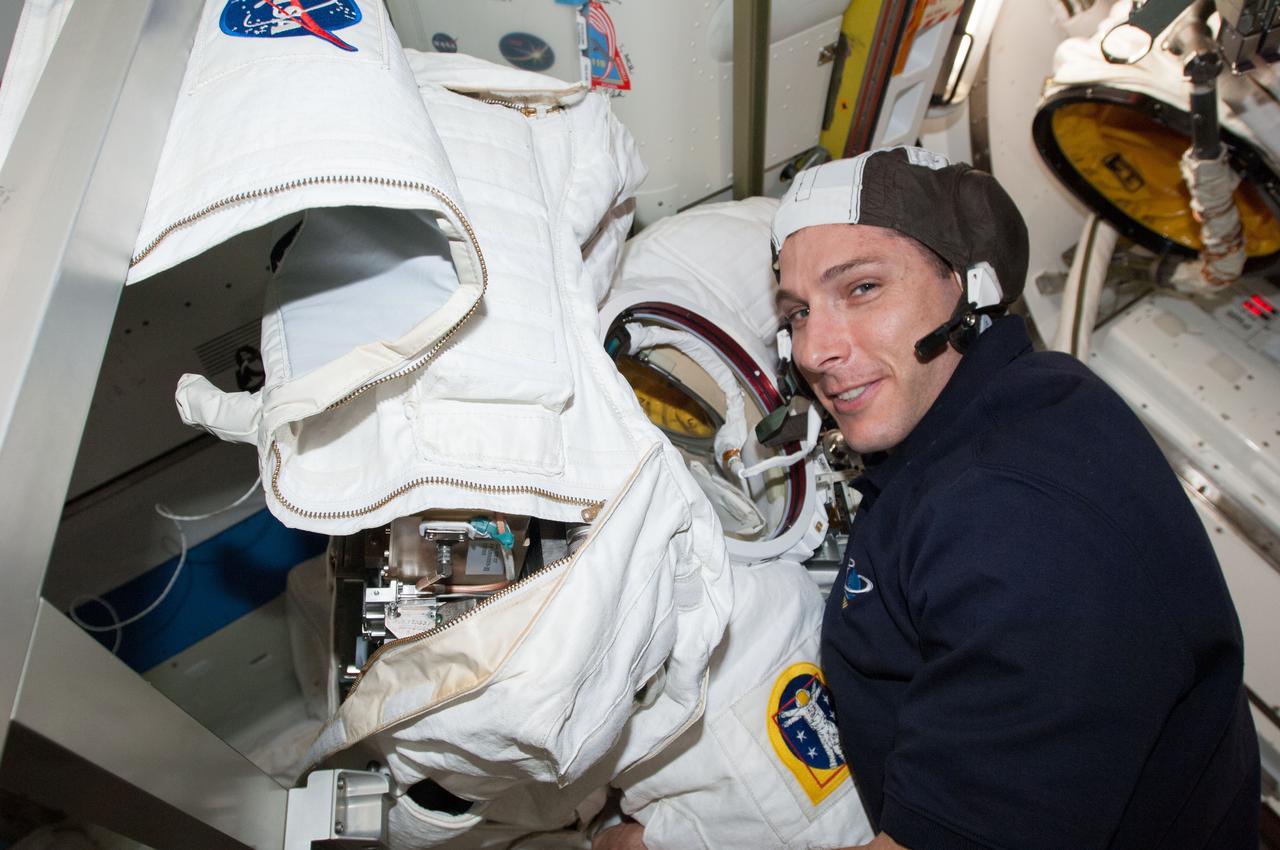
ISS038-E-004128 (18 Nov. 2013) --- NASA astronaut Michael Hopkins, Expedition 38 flight engineer, participates in Extravehicular Mobility Unit (EMU) spacesuit tests and repairs in the Quest airlock of the International Space Station.
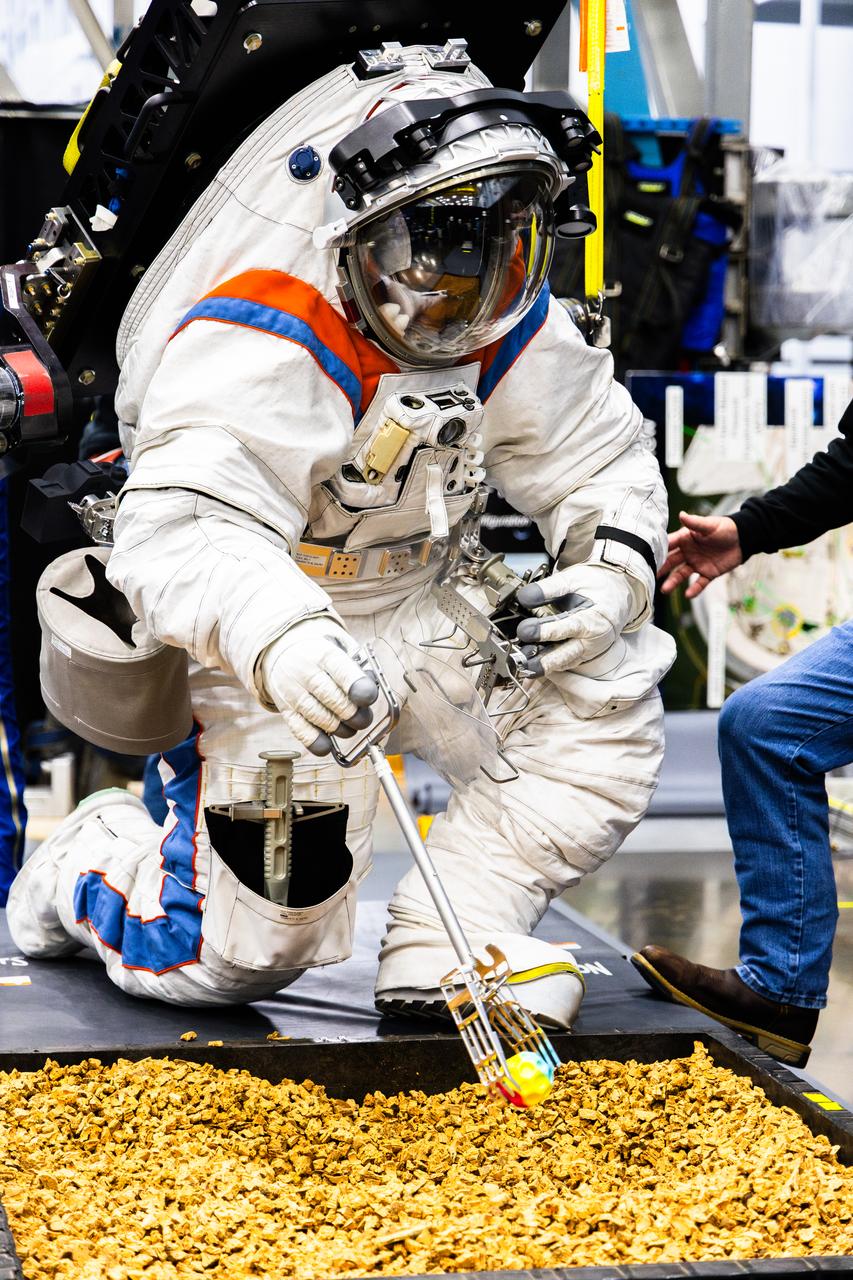
An Axiom Space engineer uses tongs to pick up a simulated lunar rock while wearing the AxEMU (Axiom Extravehicular Mobility Unit) spacesuit during testing at NASA’s Johnson Space Center. Image Credit: Axiom Space
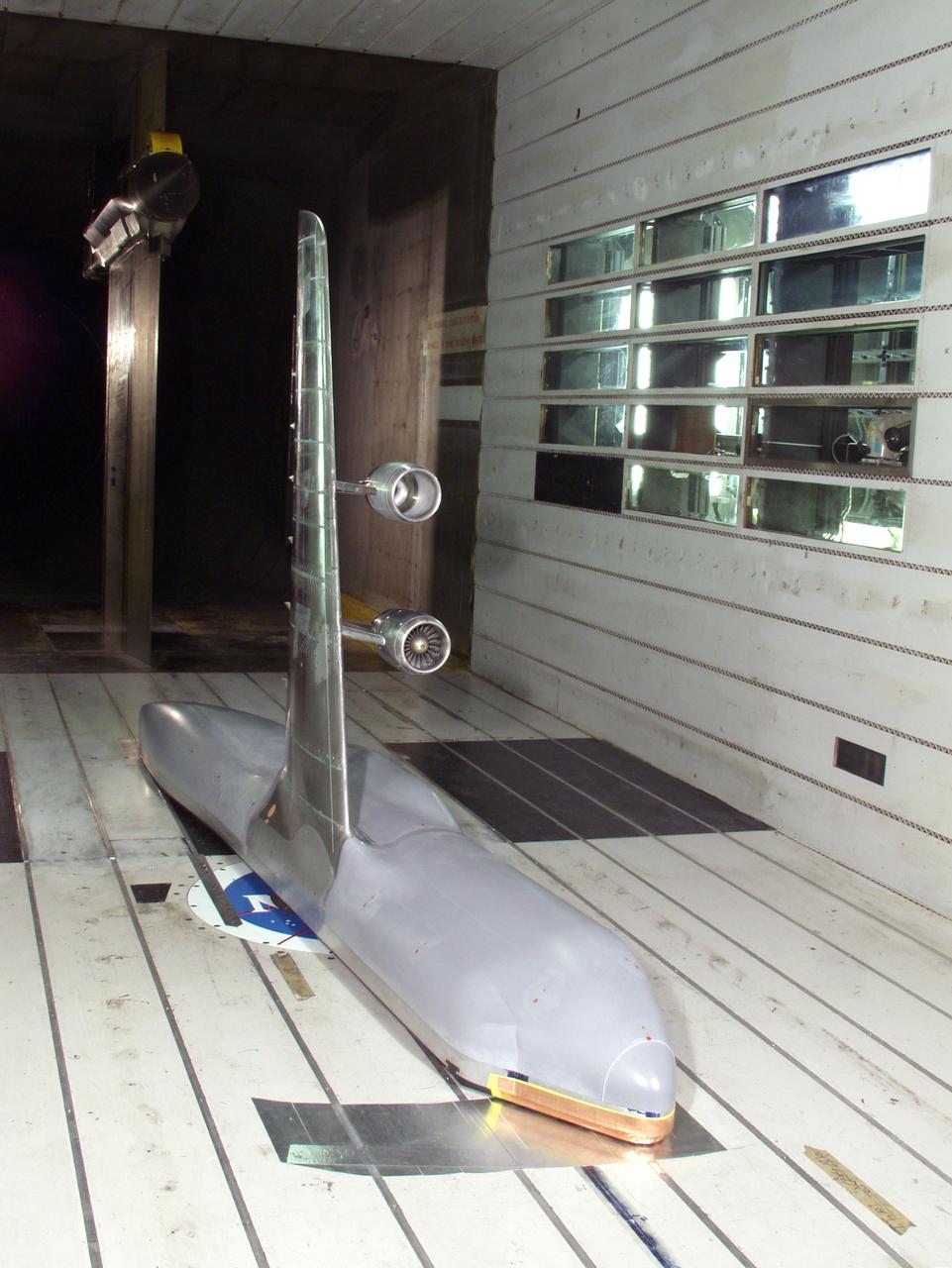
C-5 Re-engineering and Realiability Program semi-span model; 11ft w.t. Test-11-0103; Throught flow nacelle and inboard nacelle with turbine propulsion systems unit
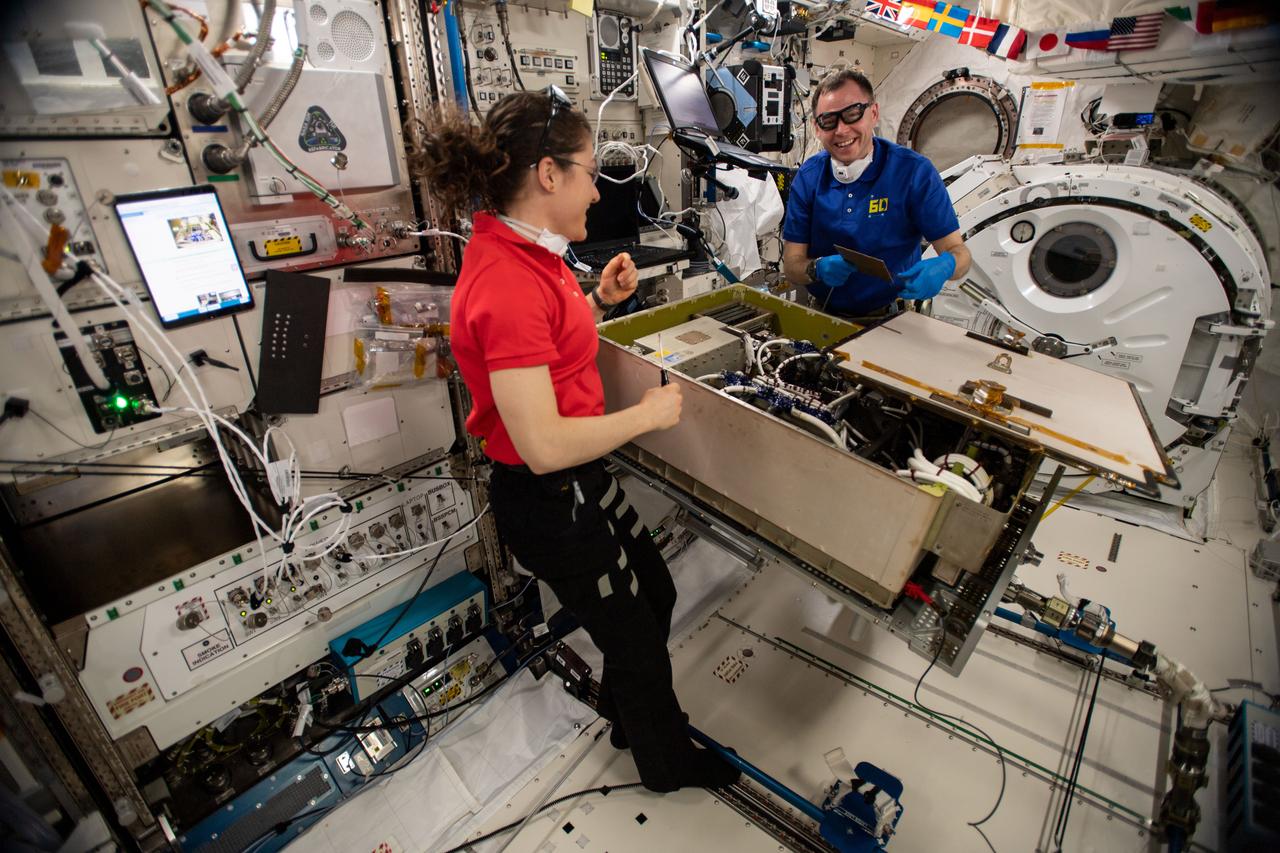
Expedition 60 flight engineers Christina Koch and Nick Hague of NASA work together on the Main Bus Switching Unit aboard the space station to replace a failed circuit card before performing a test to ensure its functionality.
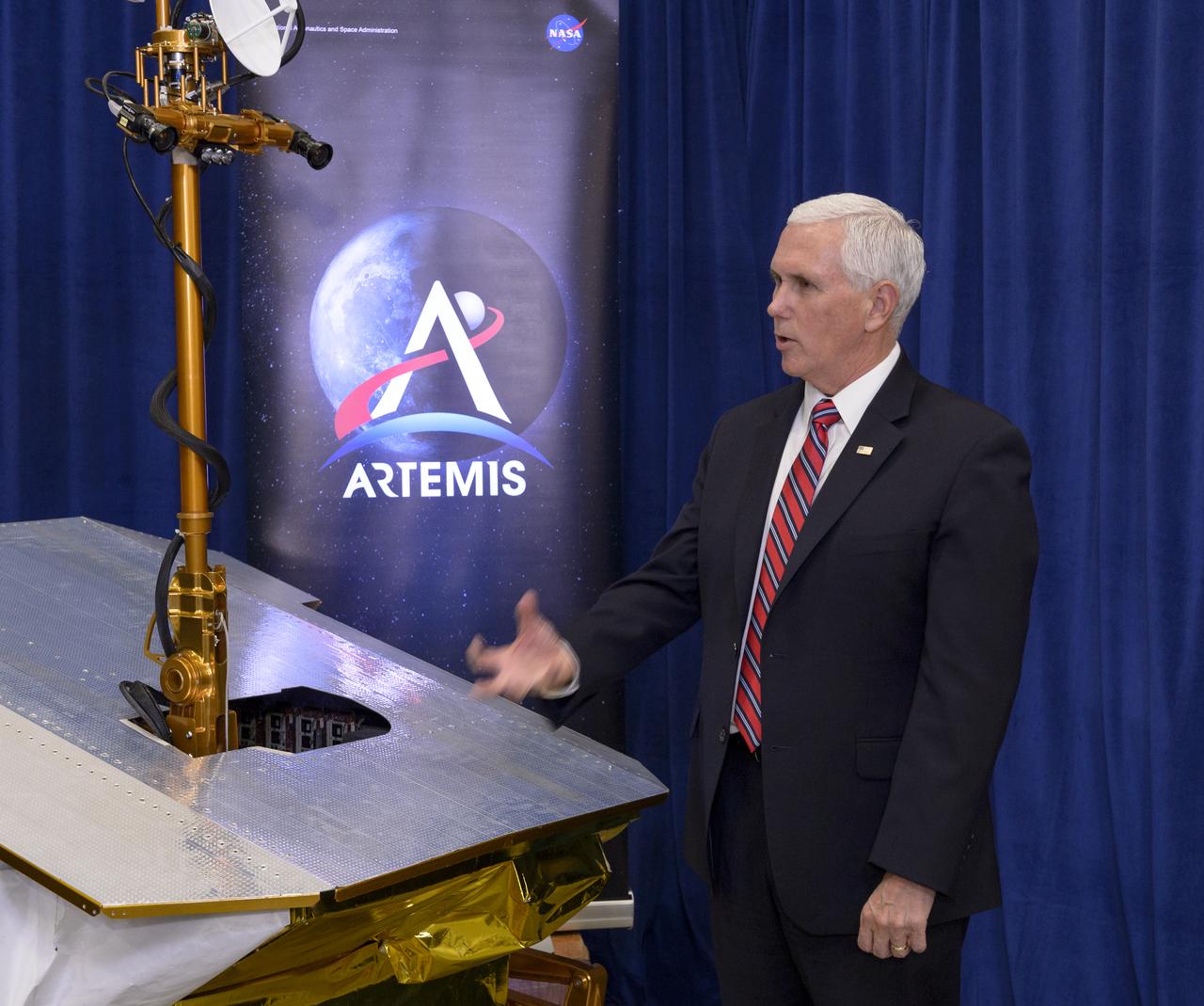
Vice President Mike Pence examines the Volatiles Investigating Polar Exploration Rover, or VIPER engineering test unit during his vist to NASA Ames Research Center, in California’s Silicon Valley.
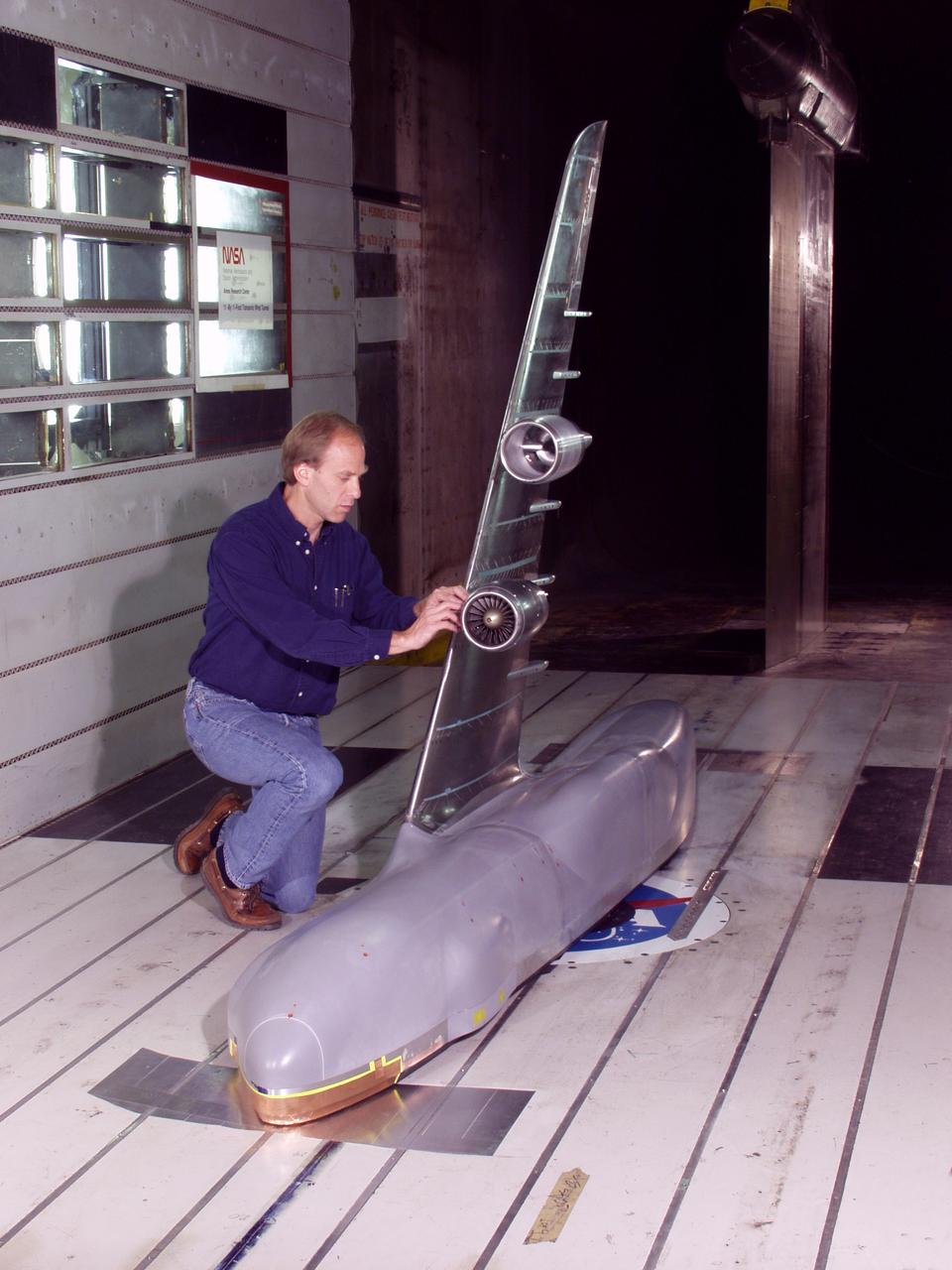
C-5 Re-engineering and Realiability Program semi-span model; 11ft w.t. Test-11-0103; Throught flow nacelle and inboard nacelle with turbine propulsion systems unit with Doug Atler
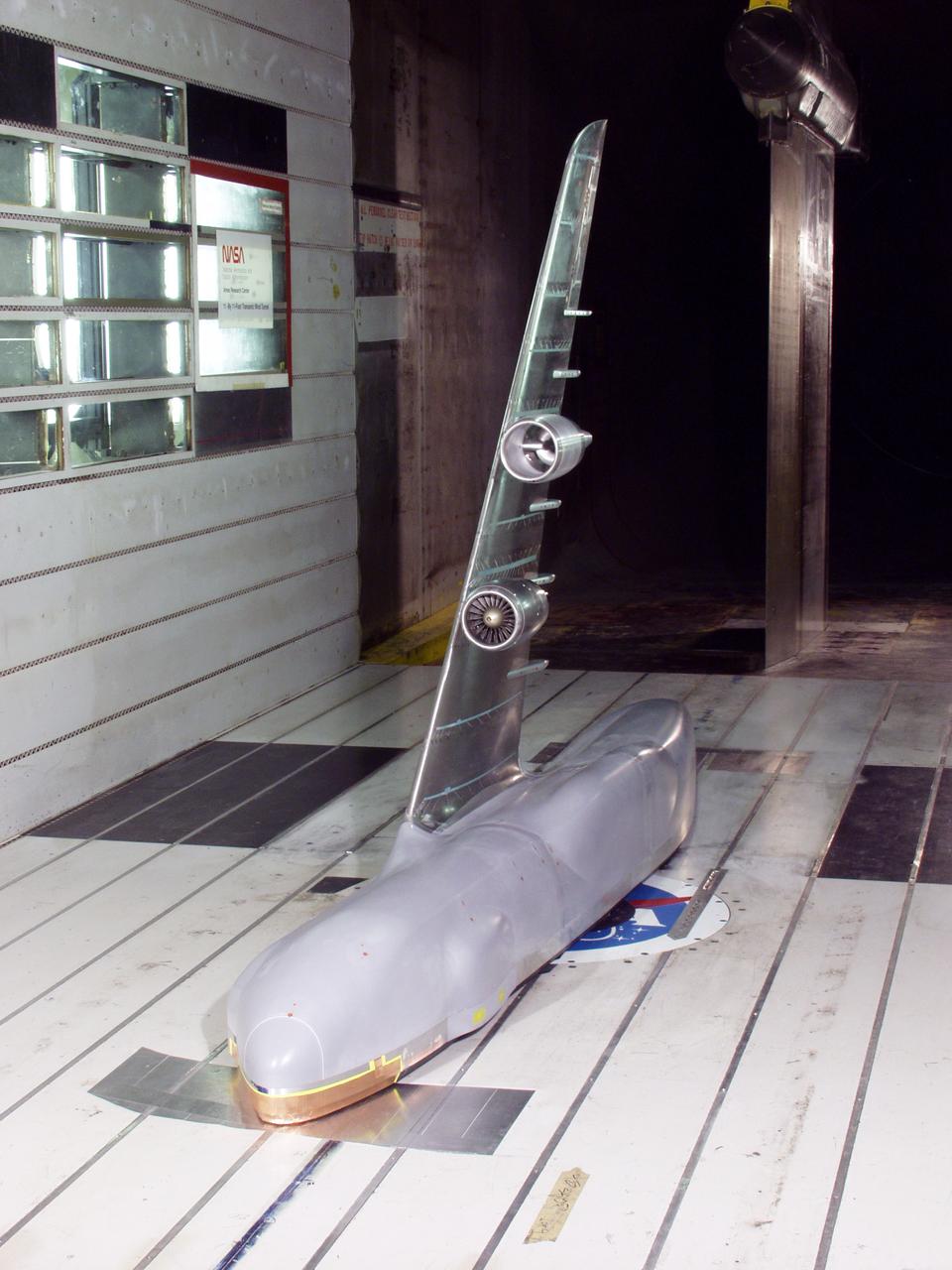
C-5 Re-engineering and Realiability Program semi-span model; 11ft w.t. Test-11-0103; Throught flow nacelle and inboard nacelle with turbine propulsion systems unit
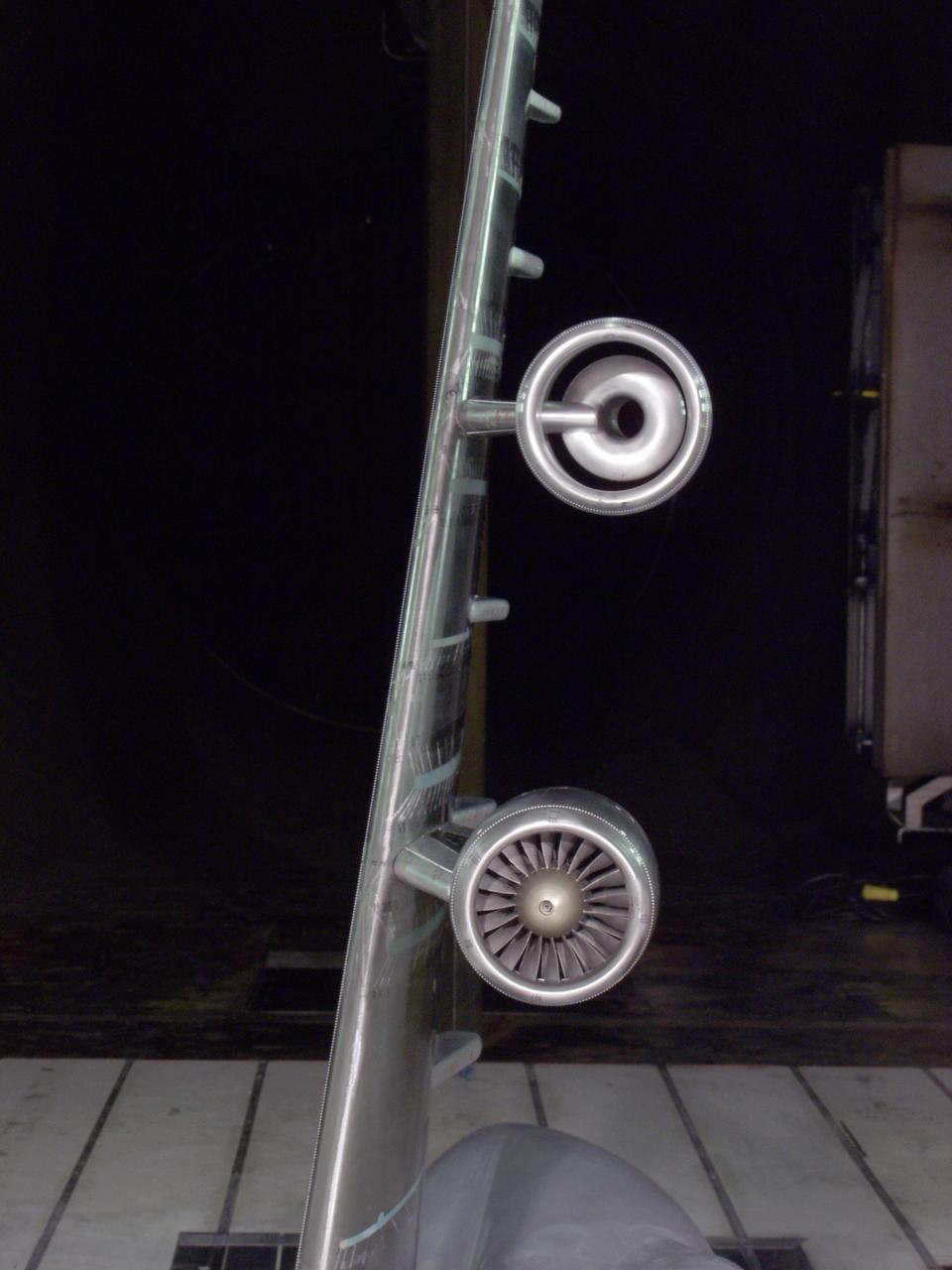
C-5 Re-engineering and Realiability Program semi-span model; 11ft w.t. Test-11-0103; Throught flow nacelle and inboard nacelle with turbine propulsion systems unit
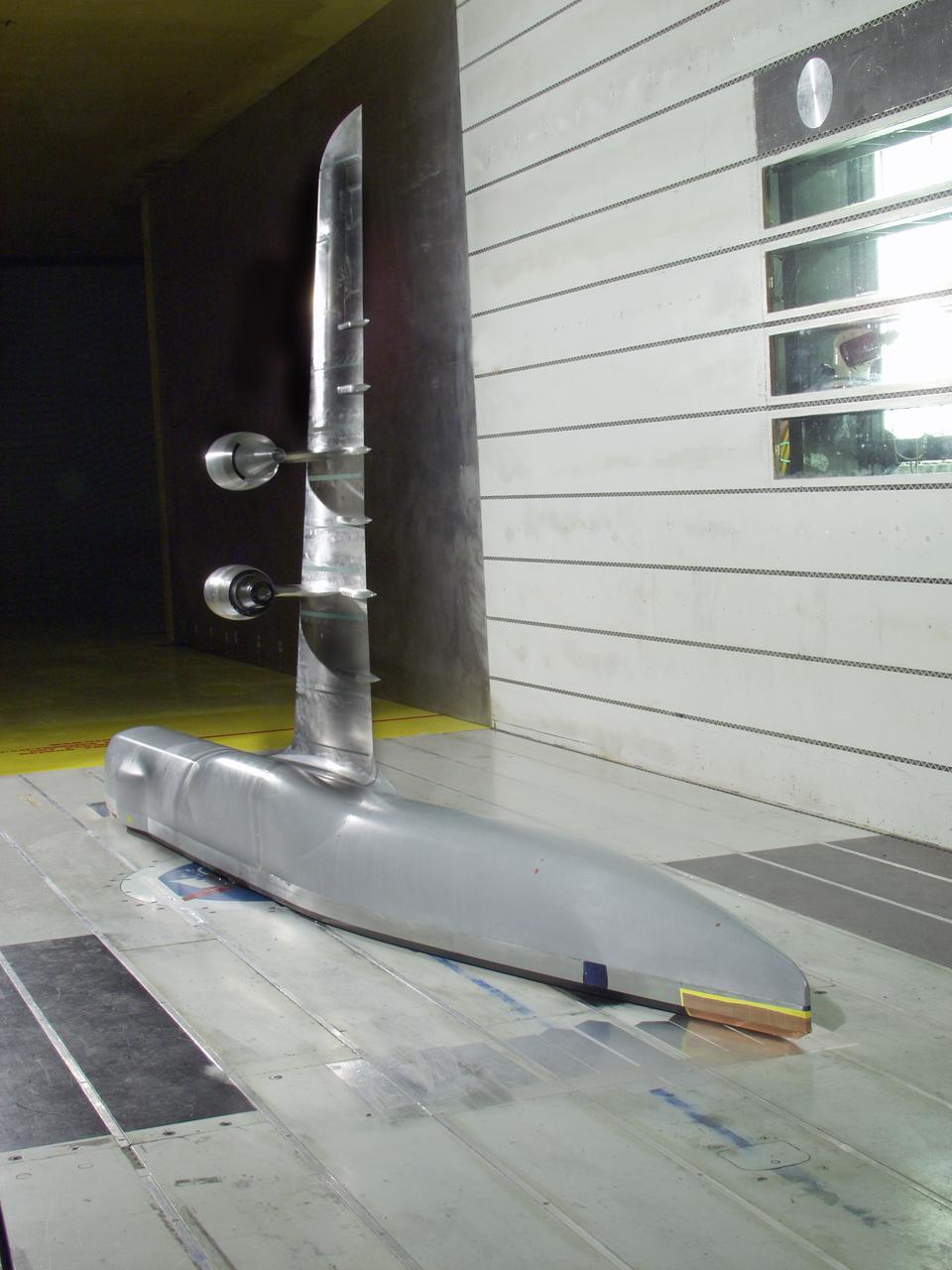
C-5 Re-engineering and Realiability Program semi-span model; 11ft w.t. Test-11-0103; Throught flow nacelle and inboard nacelle with turbine propulsion systems unit
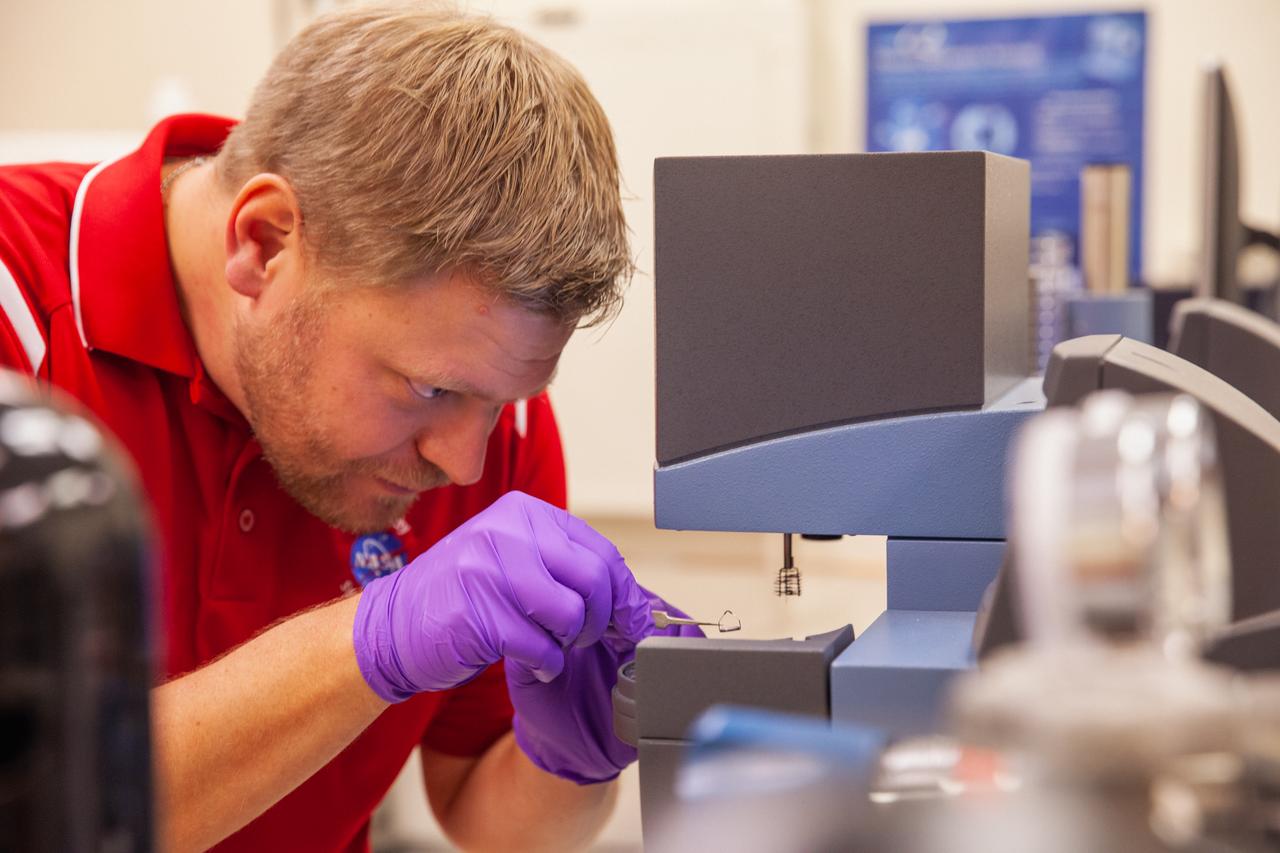
Jerry Buhrow, an engineer in the Materials Analysis Lab, places a sample on a thermal testing unit inside a lab at NASA Kennedy Space Center’s Neil Armstrong Operations and Checkout Building on Oct. 6, 2020.
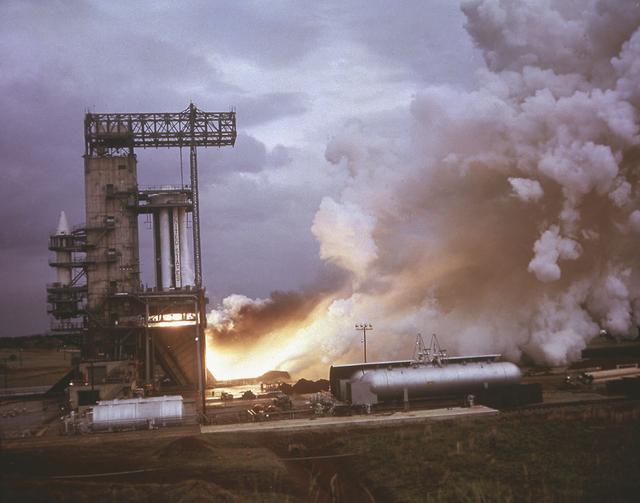
Marshall Space Flight Center (MSFC) was the birthplace of the United States' rocket program. In the early 1960s, most of the rocket development and testing were done at the MSFC. Pictured is an example of what the test engineers would have seen from the pillbox as eight H-1 engines for the first stage of the Saturn I rocket were test fired.
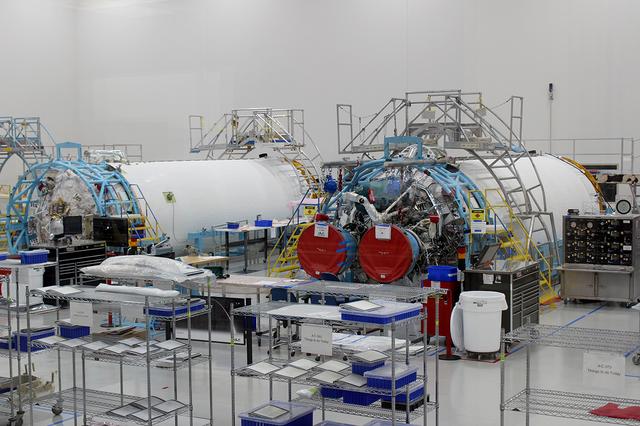
The United Launch Alliance (ULA) Crew Flight Test dual engine, at left, and the Orbital Flight test dual engine, at right, for the Centaur stage of the Atlas V rocket are in production on June 11, 2018, at ULA's factory in Decatur, Alabama. Boeing's CST-100 Starliner will launch on its first uncrewed flight test on the ULA Atlas V rocket. The Starliner is being developed and manufactured in partnership with NASA's Commercial Crew Program to return human spaceflight capabilities to the U.S.
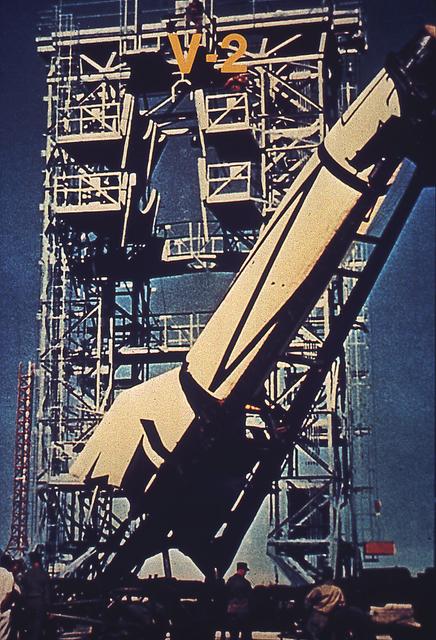
A V-2 rocket is hoisted into a static test facility at White Sands, New Mexico. The German engineers and scientists who developed the V-2 came to the United States at the end of World War II and continued rocket testing under the direction of the U. S. Army, launching more than sixty V-2s.
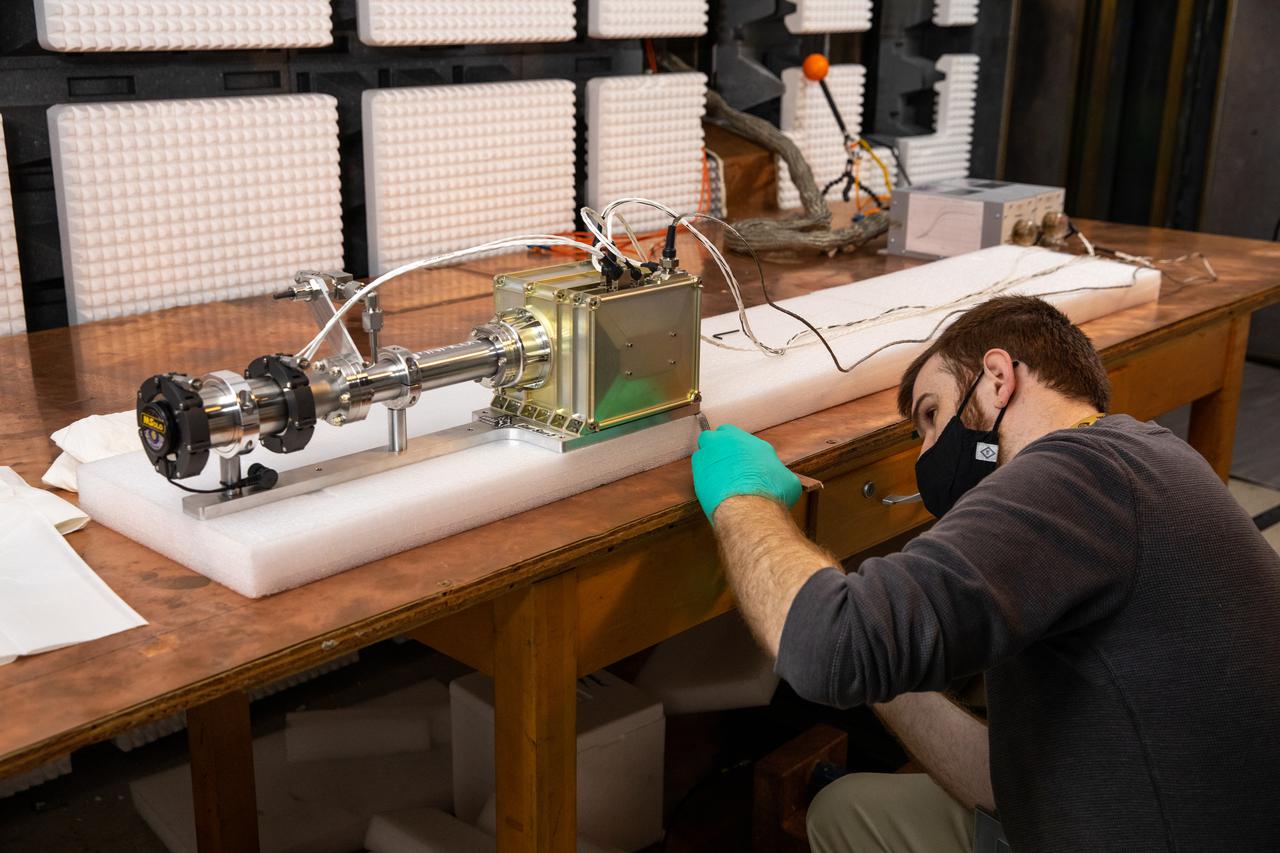
Electronics Engineer and Mass Spectrometer Observing Lunar Operations (MSolo) team member Nate Cain conducts electromagnetic interference (EMI) testing inside the EMI Laboratory at NASA’s Kennedy Space Center in Florida on Feb. 14, 2022. The tests will verify that MSolo can control the emissions it will produce during its missions and meets EMI susceptibility requirements as part of its preparation to operate in the lunar environment. The third MSolo to go through EMI testing, this is an engineering development unit representative of the flight unit manifested to fly to the Moon’s South Pole as a payload on the agency’s Volatiles Investigating Polar Exploration Rover (VIPER) in 2023. Researchers and engineers are preparing MSolo instruments to launch on four robotic missions as part of NASA’s Commercial Lunar Payload Services (CLPS) – the first of which is slated for later this year. MSolo will help analyze the chemical makeup of landing sites on the Moon, with the later missions also studying water on the lunar surface.
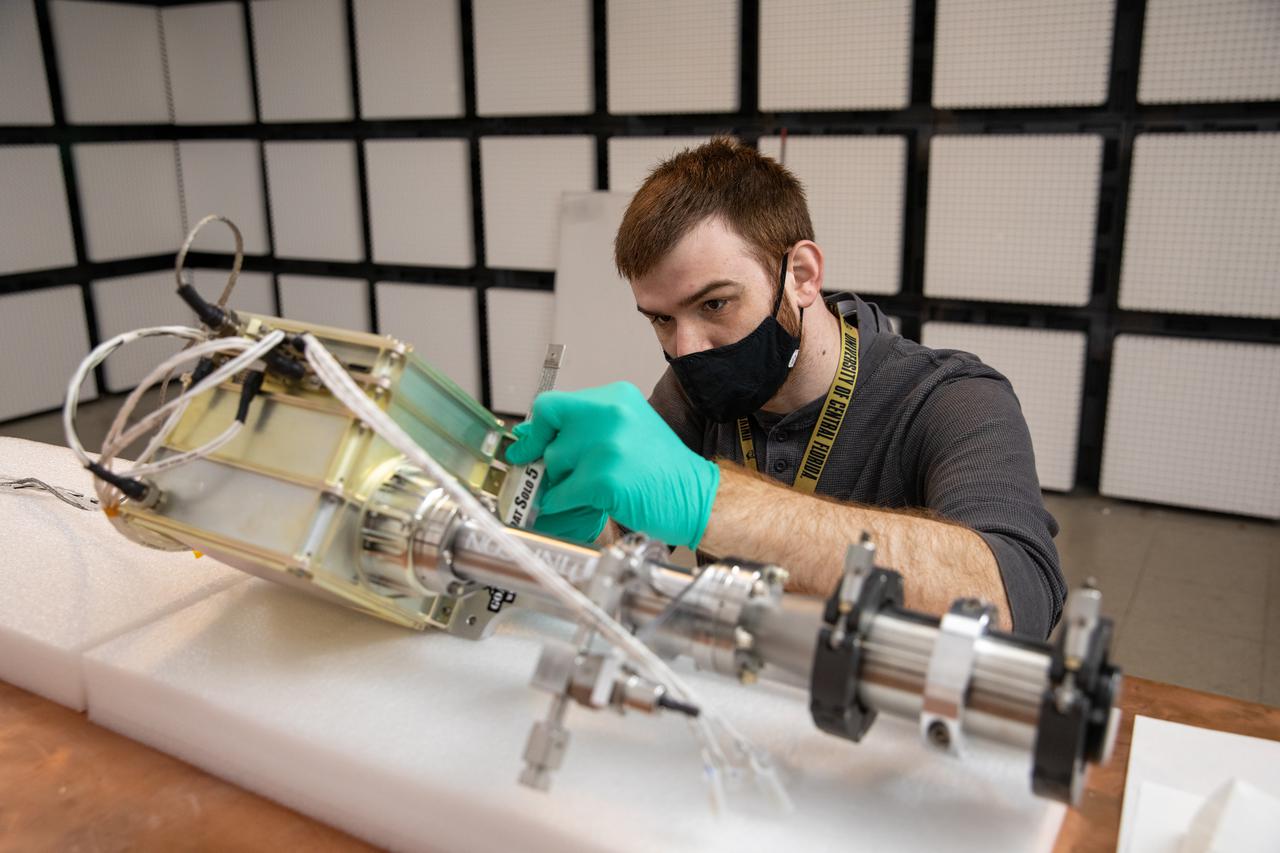
Electronics Engineer and Mass Spectrometer Observing Lunar Operations (MSolo) team member Nate Cain conducts electromagnetic interference (EMI) testing inside the EMI Laboratory at NASA’s Kennedy Space Center in Florida on Feb. 14, 2022. These tests will verify that MSolo can control the emissions it will produce during its missions and meets EMI susceptibility requirements as part of its preparation to operate in the lunar environment. The third MSolo to go through EMI testing, this is an engineering development unit representative of the flight unit manifested to fly to the Moon’s South Pole as a payload on the agency’s Volatiles Investigating Polar Exploration Rover (VIPER) in 2023. Researchers and engineers are preparing MSolo instruments to launch on four robotic missions as part of NASA’s Commercial Lunar Payload Services (CLPS) – the first of which is slated for later this year. MSolo will help analyze the chemical makeup of landing sites on the Moon, with the later missions also studying water on the lunar surface.

Electronics Engineer and Mass Spectrometer Observing Lunar Operations (MSolo) team member Nate Cain conducts electromagnetic interference (EMI) testing inside the EMI Laboratory at NASA’s Kennedy Space Center in Florida on Feb. 14, 2022. The tests will verify that MSolo can control the emissions it will produce during its missions and meets EMI susceptibility requirements as part of its preparation to operate in the lunar environment. The third MSolo to go through EMI testing, this is an engineering development unit representative of the flight unit manifested to fly to the Moon’s South Pole as a payload on the agency’s Volatiles Investigating Polar Exploration Rover (VIPER) in 2023. Researchers and engineers are preparing MSolo instruments to launch on four robotic missions as part of NASA’s Commercial Lunar Payload Services (CLPS) – the first of which is slated for later this year. MSolo will help analyze the chemical makeup of landing sites on the Moon, with the later missions also studying water on the lunar surface.
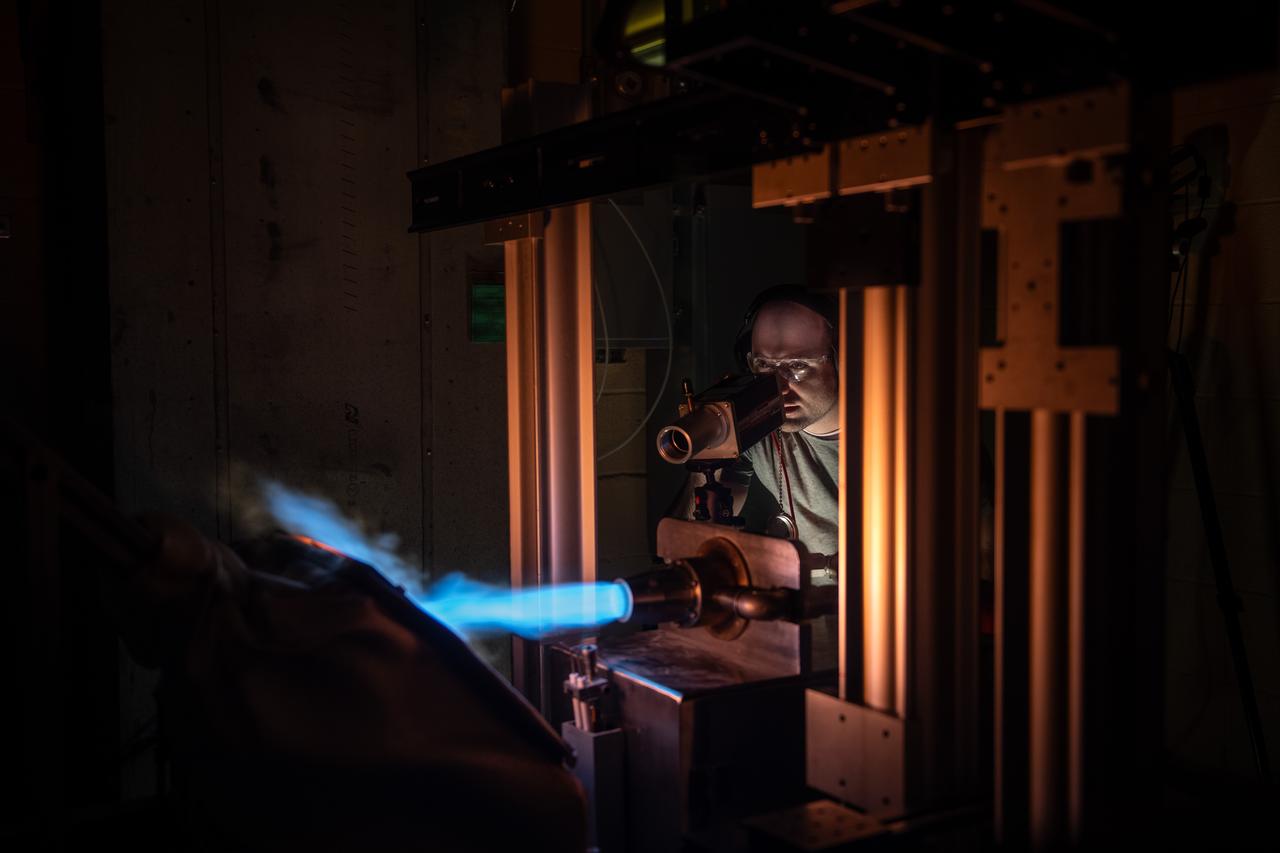
NASA Glenn’s Natural Gas/Oxygen Burner Rig is used to study the high temperature performance of various metal alloys, ceramics, and protective coatings for aero and space propulsion systems. The burner rig provides an easily accessible and economical method to simulate engine operating conditions to understand thermomechanical and thermochemical degradation of materials and structures. In the photo, Materials Research Engineer Michael Presby uses an infrared pyrometer to monitor the surface temperature of the material for a test on February 23, 2024. Photo Credit: (NASA/Sara Lowthian-Hanna)

A test unit, or prototype, of NASA's Advanced Plant Habitat (APH) was delivered to the Space Station Processing Facility at the agency's Kennedy Space Center in Florida. The APH is the largest plant chamber built for the agency. The unit is being prepared for engineering development tests to see how the science will integrate with the various systems of the plant habitat. It will have 180 sensors and four times the light output of Veggie. The APH will be delivered to the International Space Station in March 2017.

A test unit, or prototype, of NASA's Advanced Plant Habitat (APH) was delivered to the Space Station Processing Facility at the agency's Kennedy Space Center in Florida. The APH is the largest plant chamber built for the agency. The unit is being prepared for engineering development tests to see how the science will integrate with the various systems of the plant habitat. It will have 180 sensors and four times the light output of Veggie. The APH will be delivered to the International Space Station in March 2017.

John "JC" Carver, a payload integration engineer with NASA Kennedy Space Center's Test and Operations Support Contract, harvests half the Arabidopsis thaliana plants inside the growth chamber of the Advanced Plant Habitat (APH) Flight Unit No. 1. The harvest is part of an ongoing verification test of the APH unit, which is located inside the International Space Station Environmental Simulator in Kennedy's Space Station Processing Facility. The APH undergoing testing at Kennedy is identical to one on the station and uses red, green and broad-spectrum white LED lights to grow plants in an environmentally controlled chamber. The seeds grown during the verification test will be grown on the station to help scientists understand how these plants adapt to spaceflight.
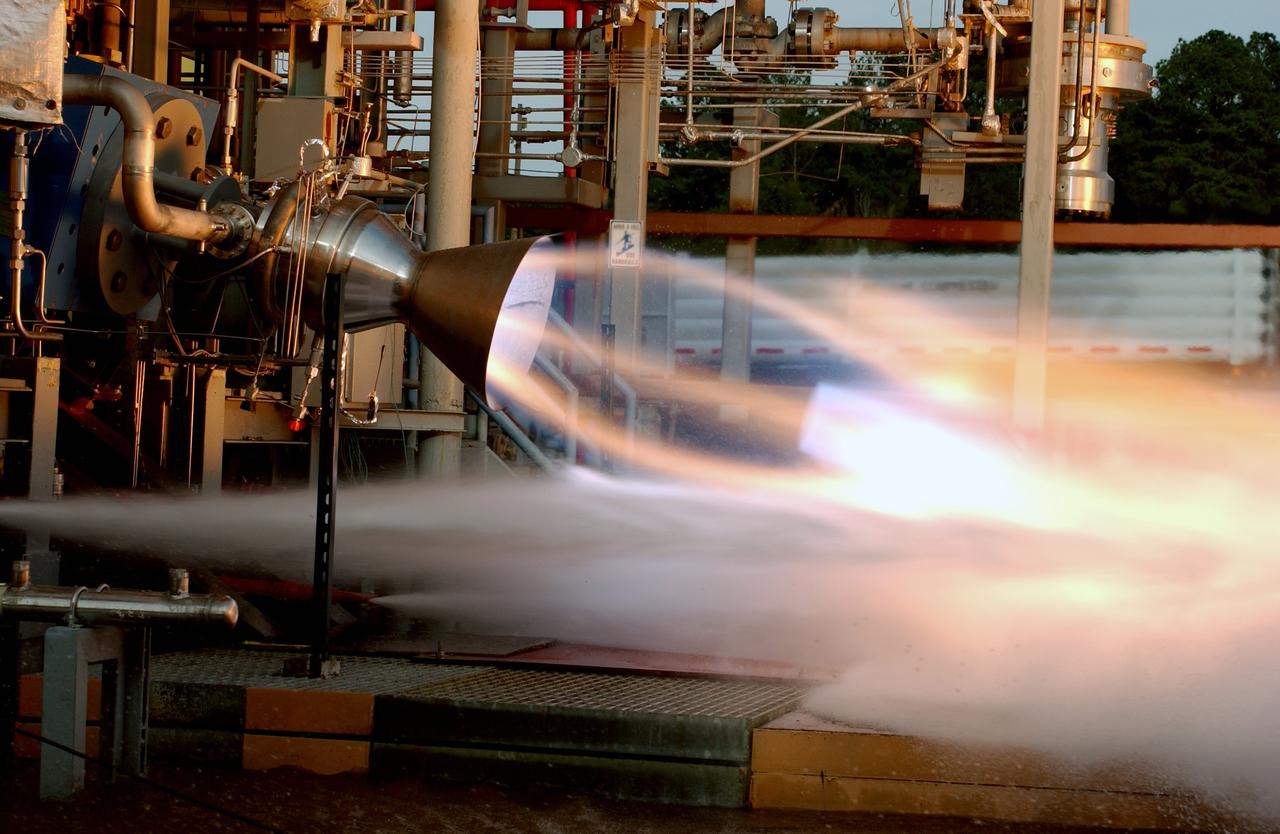
In this photo, an RS-88 development rocket engine is being test fired at NASA's Marshall Space Flight Center in Huntsville, Alabama, in support of the Pad Abort Demonstration (PAD) test flights for NASA's Orbital Space Plane (OSP). The tests could be instrumental in developing the first crew launch escape system in almost 30 years. Paving the way for a series of integrated PAD test flights, the engine tests support development of a system that could pull a crew safely away from danger during liftoff. A series of 16 hot fire tests of a 50,000-pound thrust RS-88 rocket engine were conducted, resulting in a total of 55 seconds of successful engine operation. The engine is being developed by the Rocketdyne Propulsion and Power unit of the Boeing Company. Integrated launch abort demonstration tests in 2005 will use four RS-88 engines to separate a test vehicle from a test platform, simulating pulling a crewed vehicle away from an aborted launch. Four 156-foot parachutes will deploy and carry the vehicle to landing. Lockheed Martin is building the vehicles for the PAD tests. Seven integrated tests are plarned for 2005 and 2006.
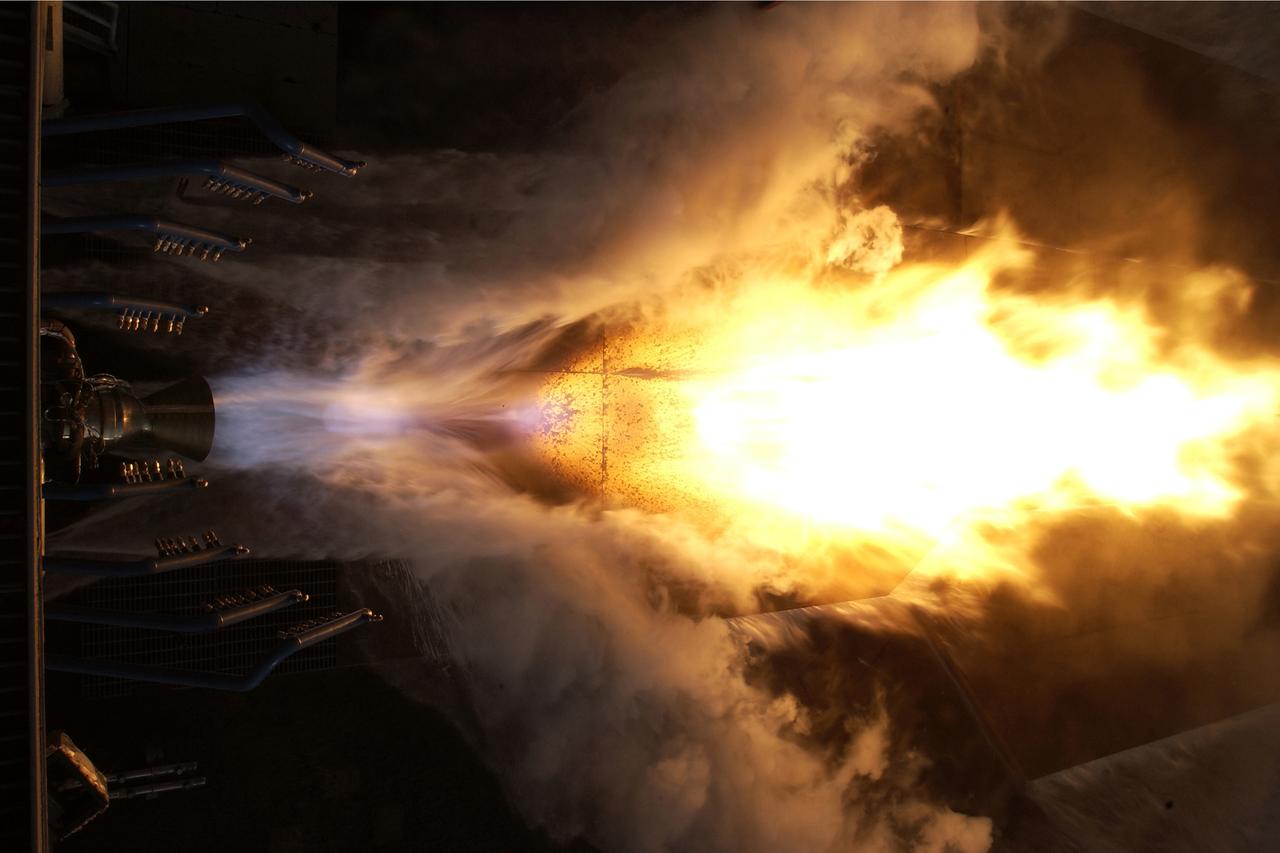
This photo gives an overhead look at an RS-88 development rocket engine being test fired at NASA's Marshall Space Flight Center in Huntsville, Alabama, in support of the Pad Abort Demonstration (PAD) test flights for NASA's Orbital Space Plane (OSP). The tests could be instrumental in developing the first crew launch escape system in almost 30 years. Paving the way for a series of integrated PAD test flights, the engine tests support development of a system that could pull a crew safely away from danger during liftoff. A series of 16 hot fire tests of a 50,000-pound thrust RS-88 rocket engine were conducted, resulting in a total of 55 seconds of successful engine operation. The engine is being developed by the Rocketdyne Propulsion and Power unit of the Boeing Company. Integrated launch abort demonstration tests in 2005 will use four RS-88 engines to separate a test vehicle from a test platform, simulating pulling a crewed vehicle away from an aborted launch. Four 156-foot parachutes will deploy and carry the vehicle to landing. Lockheed Martin is building the vehicles for the PAD tests. Seven integrated tests are plarned for 2005 and 2006.

Team members pause for a photo after the successful harvest of half the Arabidopsis thaliana plants inside the growth chamber of the Advanced Plant Habitat (APH) Flight Unit No. 1. From right to left are Jeff Richards with Stinger-Ghaffarian Technologies; David Hanson, part of the principal investigator's team; Oscar Monje with NASA Kennedy Space Center's Engineering Services Contract; and John "JC" Carver, a payload integration engineer with Kennedy's Test and Operations Support Contract. The harvest is part of an ongoing verification test of the APH unit, which is located inside the International Space Station Environmental Simulator in Kennedy's Space Station Processing Facility. The APH undergoing testing at Kennedy is identical to one on the station and uses red, green and broad-spectrum white LED lights to grow plants in an environmentally controlled chamber. The seeds grown during the verification test will be grown on the station to help scientists understand how these plants adapt to spaceflight.

A test unit, or prototype, of NASA's Advanced Plant Habitat (APH) was delivered to the Space Station Processing Facility at the agency's Kennedy Space Center in Florida. The APH is the largest plant chamber built for the agency. Oscar Monje, a scientist on the Engineering Services Contract, prepares the base of the APH for engineering development tests to see how the science will integrate with the various systems of the plant habitat. The APH will have about 180 sensors and fourt times the light output of Veggie. The APH will be delivered to the International Space Station in March 2017.

A test unit, or prototype, of NASA's Advanced Plant Habitat (APH) was delivered to the Space Station Processing Facility at the agency's Kennedy Space Center in Florida. Inside a laboratory, Engineering Services Contract engineers set up test parameters on computers. From left, are Glenn Washington, ESC quality engineer; Claton Grosse, ESC mechanical engineer; and Jeff Richards, ESC project scientist. The APH is the largest plant chamber built for the agency. It will have 180 sensors and four times the light output of Veggie. The APH will be delivered to the International Space Station in March 2017.
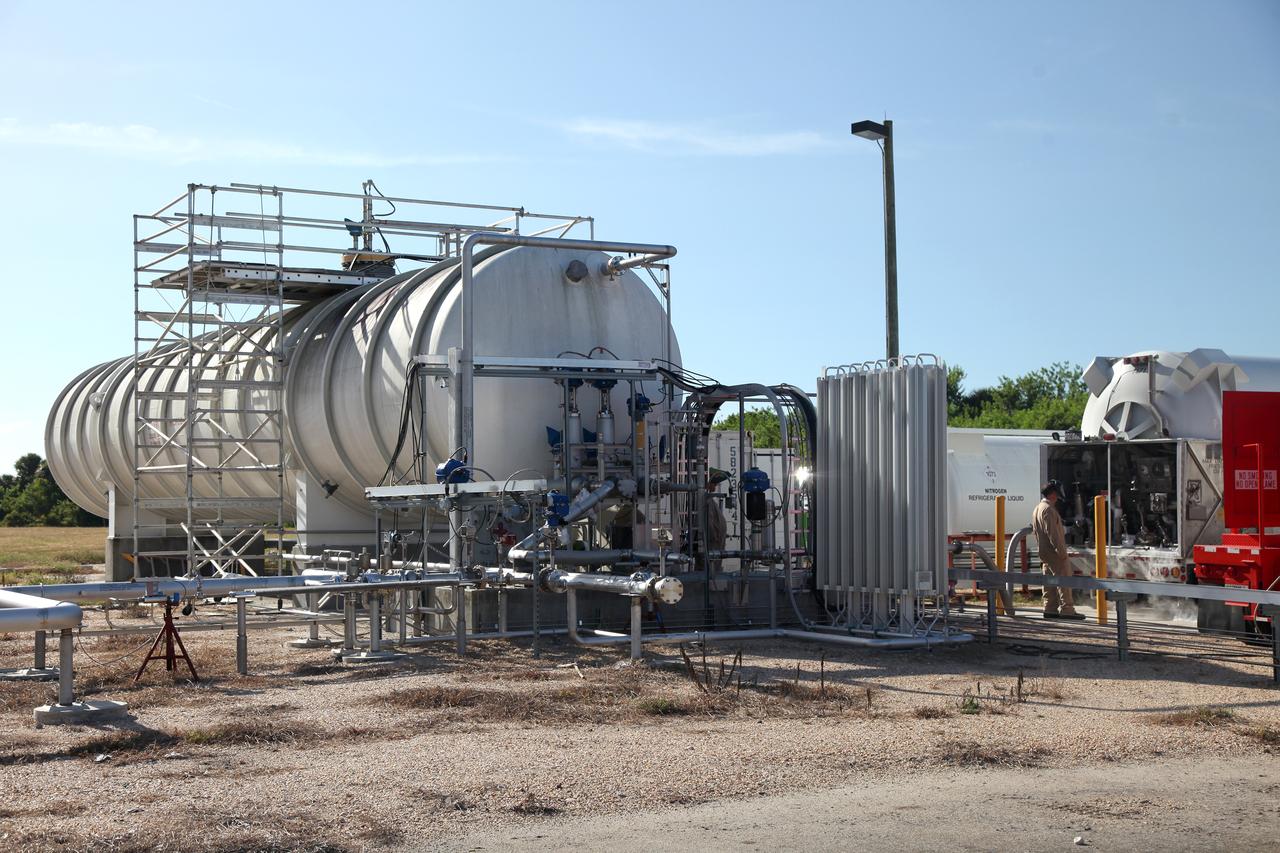
Engineers complete a test of the Ground Operations Demo Unit for liquid hydrogen at NASA's Kennedy Space Center in Florida. The system includes a 33,000 gallon liquid hydrogen storage tank with an internal cold heat exchanger supplied from a cryogenic refrigerator. The primary goal of the testing is to achieve a liquid hydrogen zero boil-off capability. The system was designed, installed and tested by a team of civil servants and contractors from the center's Cryogenic Test Laboratory, with support from engineers at NASA's Glenn Research Center in Cleveland and Stennis Space Center in Mississippi. It may be applicable for use by the Ground Systems Development and Operations Program at Launch Pad 39B.
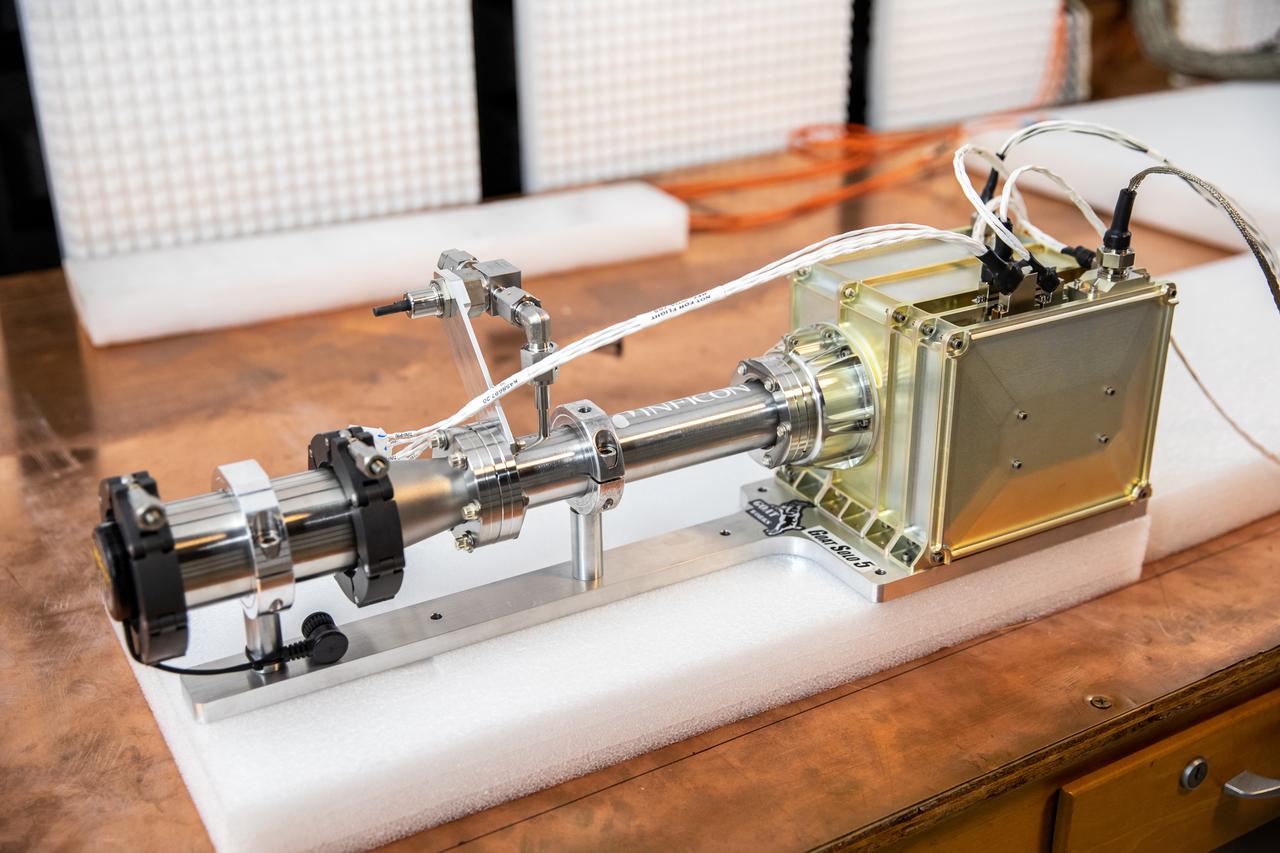
NASA’s Mass Spectrometer Observing Lunar Operations (MSolo) undergoes electromagnetic interference (EMI) testing inside the EMI Laboratory at the agency’s Kennedy Space Center in Florida on Feb. 14, 2022. These tests will verify that MSolo can control the emissions it will produce during its missions and meets EMI susceptibility requirements as part of its preparation to operate in the lunar environment. The third MSolo to go through EMI testing, this is an engineering development unit representative of the flight unit manifested to fly to the Moon’s South Pole as a payload on the agency’s Volatiles Investigating Polar Exploration Rover (VIPER) in 2023. Researchers and engineers are preparing MSolo to launch on four robotic missions as part of NASA’s Commercial Lunar Payload Services (CLPS) – the first of which is slated for later this year. MSolo will help analyze the chemical makeup of landing sites on the Moon, with the later missions also studying water on the lunar surface.
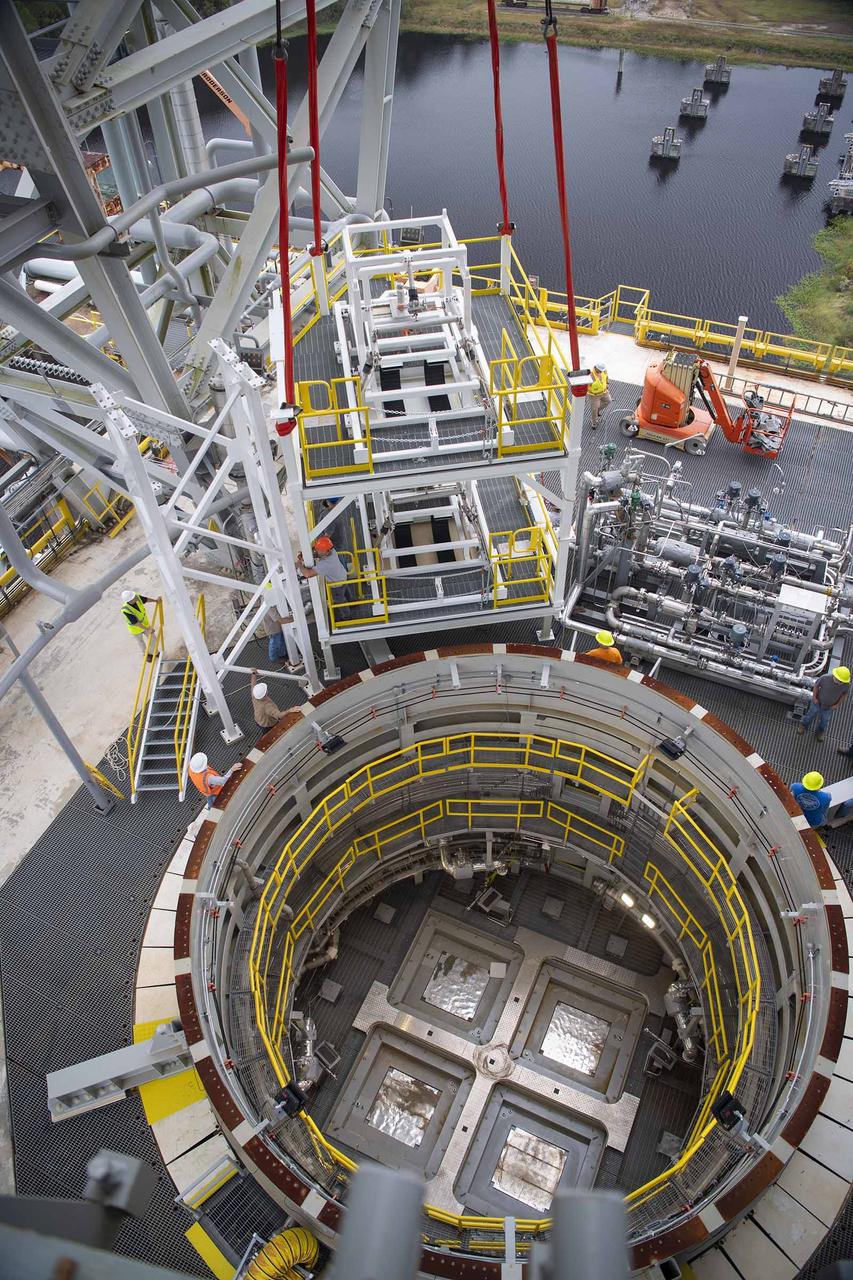
A pair of umbilical support structures needed for future testing of NASA’s exploration upper stage (EUS) were installed in the B-2 position of the Thad Cochran Test Stand on Oct. 30-31 at NASA’s Stennis Space Center. The support structures arrived from NASA’s Michoud Assembly Facility in New Orleans via the unique NASA Stennis seven-and-a-half-mile canal system in 2023. Since then, crews have prepared the structures that will align with the EUS unit for installation. In addition to helping secure the unit in place during hot fire testing, the umbilical support structures are where the command, control, and data electrical connections are mated to connect the ground systems to the vehicle systems, as well as most the commodity connections such as liquid hydrogen, liquid oxygen, hydrogen vent, helium bottle fill pressure, and purges. Prior to its initial flight, the EUS unit will undergo a series of so-called Green Run tests at NASA Stennis to ensure all systems are ready to go. The test series will culminate with a hot fire of the stage’s four RL10 engines, made by Aerojet Rocketdyne, an L3Harris Technologies company and lead SLS engines contractor. The new upper stage will enable NASA to carry larger payloads on Artemis missions to the Moon and beyond.
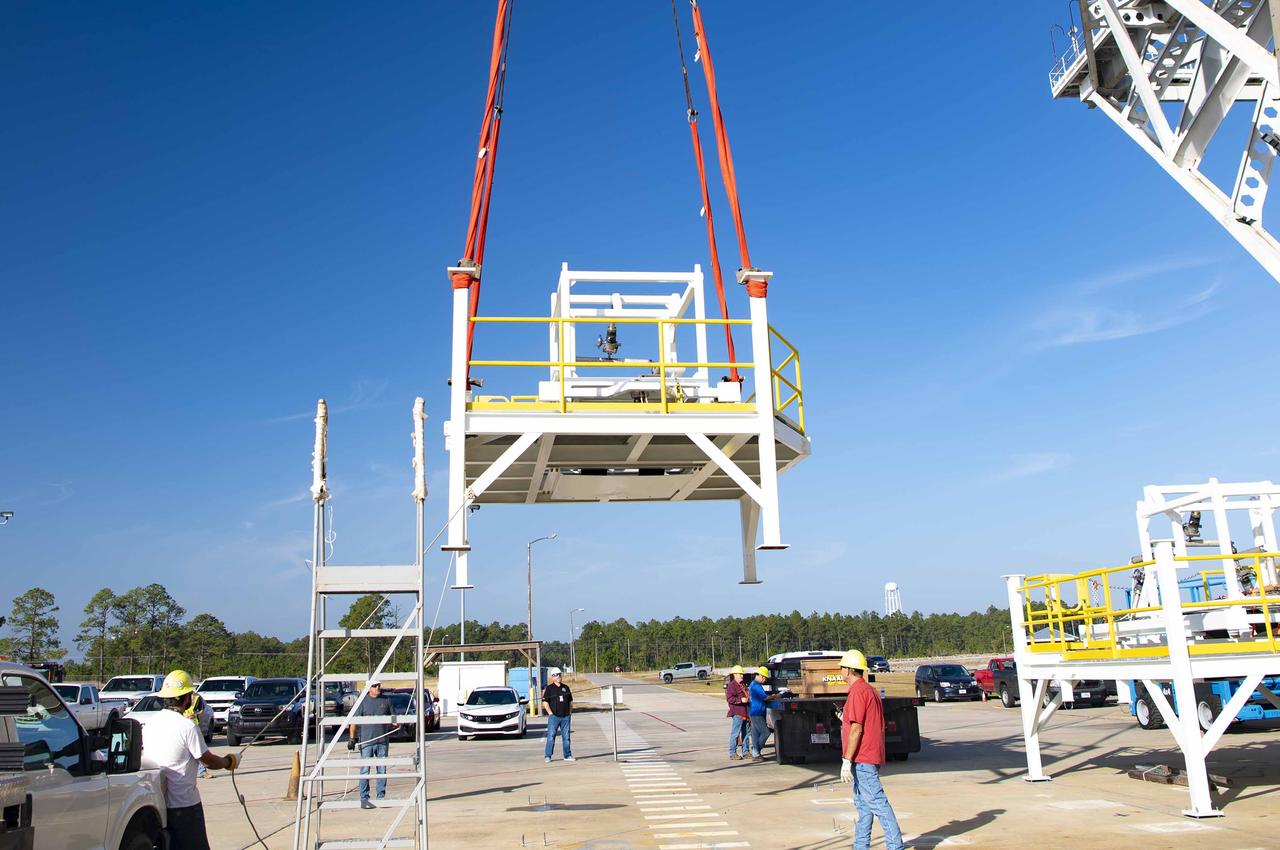
A pair of umbilical support structures needed for future testing of NASA’s exploration upper stage (EUS) were installed in the B-2 position of the Thad Cochran Test Stand on Oct. 30-31 at NASA’s Stennis Space Center. The support structures arrived from NASA’s Michoud Assembly Facility in New Orleans via the unique NASA Stennis seven-and-a-half-mile canal system in 2023. Since then, crews have prepared the structures that will align with the EUS unit for installation. In addition to helping secure the unit in place during hot fire testing, the umbilical support structures are where the command, control, and data electrical connections are mated to connect the ground systems to the vehicle systems, as well as most the commodity connections such as liquid hydrogen, liquid oxygen, hydrogen vent, helium bottle fill pressure, and purges. Prior to its initial flight, the EUS unit will undergo a series of so-called Green Run tests at NASA Stennis to ensure all systems are ready to go. The test series will culminate with a hot fire of the stage’s four RL10 engines, made by Aerojet Rocketdyne, an L3Harris Technologies company and lead SLS engines contractor. The new upper stage will enable NASA to carry larger payloads on Artemis missions to the Moon and beyond.
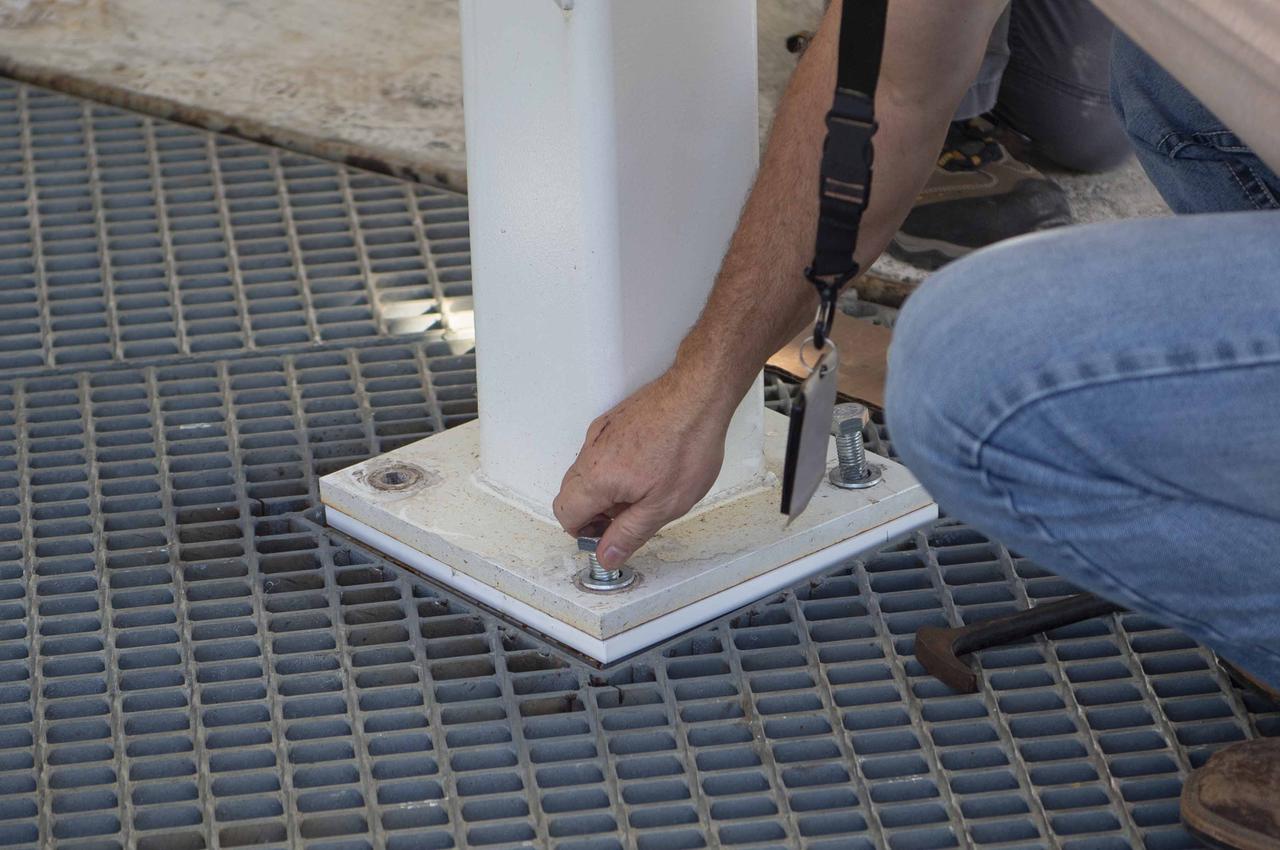
A pair of umbilical support structures needed for future testing of NASA’s exploration upper stage (EUS) were installed in the B-2 position of the Thad Cochran Test Stand on Oct. 30-31 at NASA’s Stennis Space Center. The support structures arrived from NASA’s Michoud Assembly Facility in New Orleans via the unique NASA Stennis seven-and-a-half-mile canal system in 2023. Since then, crews have prepared the structures that will align with the EUS unit for installation. In addition to helping secure the unit in place during hot fire testing, the umbilical support structures are where the command, control, and data electrical connections are mated to connect the ground systems to the vehicle systems, as well as most the commodity connections such as liquid hydrogen, liquid oxygen, hydrogen vent, helium bottle fill pressure, and purges. Prior to its initial flight, the EUS unit will undergo a series of so-called Green Run tests at NASA Stennis to ensure all systems are ready to go. The test series will culminate with a hot fire of the stage’s four RL10 engines, made by Aerojet Rocketdyne, an L3Harris Technologies company and lead SLS engines contractor. The new upper stage will enable NASA to carry larger payloads on Artemis missions to the Moon and beyond.
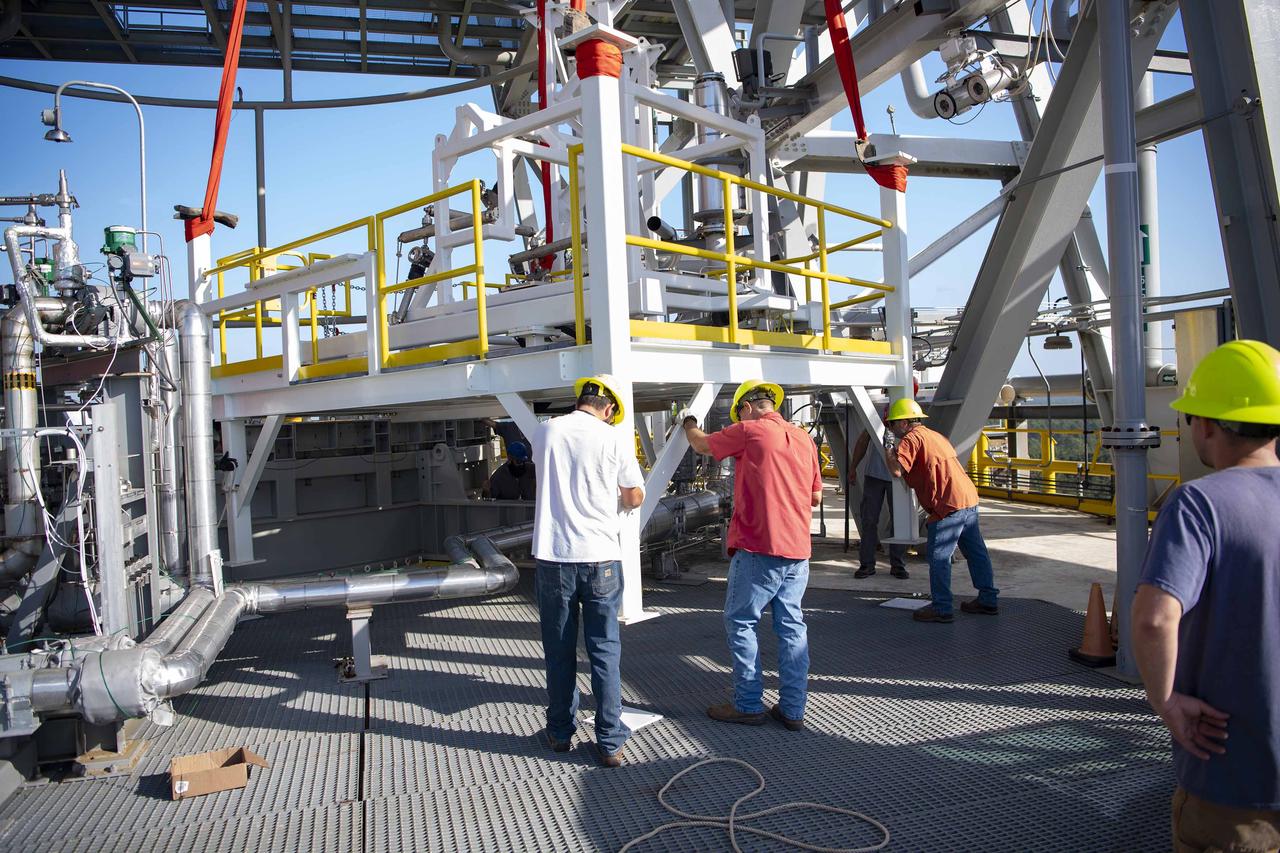
A pair of umbilical support structures needed for future testing of NASA’s exploration upper stage (EUS) were installed in the B-2 position of the Thad Cochran Test Stand on Oct. 30-31 at NASA’s Stennis Space Center. The support structures arrived from NASA’s Michoud Assembly Facility in New Orleans via the unique NASA Stennis seven-and-a-half-mile canal system in 2023. Since then, crews have prepared the structures that will align with the EUS unit for installation. In addition to helping secure the unit in place during hot fire testing, the umbilical support structures are where the command, control, and data electrical connections are mated to connect the ground systems to the vehicle systems, as well as most the commodity connections such as liquid hydrogen, liquid oxygen, hydrogen vent, helium bottle fill pressure, and purges. Prior to its initial flight, the EUS unit will undergo a series of so-called Green Run tests at NASA Stennis to ensure all systems are ready to go. The test series will culminate with a hot fire of the stage’s four RL10 engines, made by Aerojet Rocketdyne, an L3Harris Technologies company and lead SLS engines contractor. The new upper stage will enable NASA to carry larger payloads on Artemis missions to the Moon and beyond.