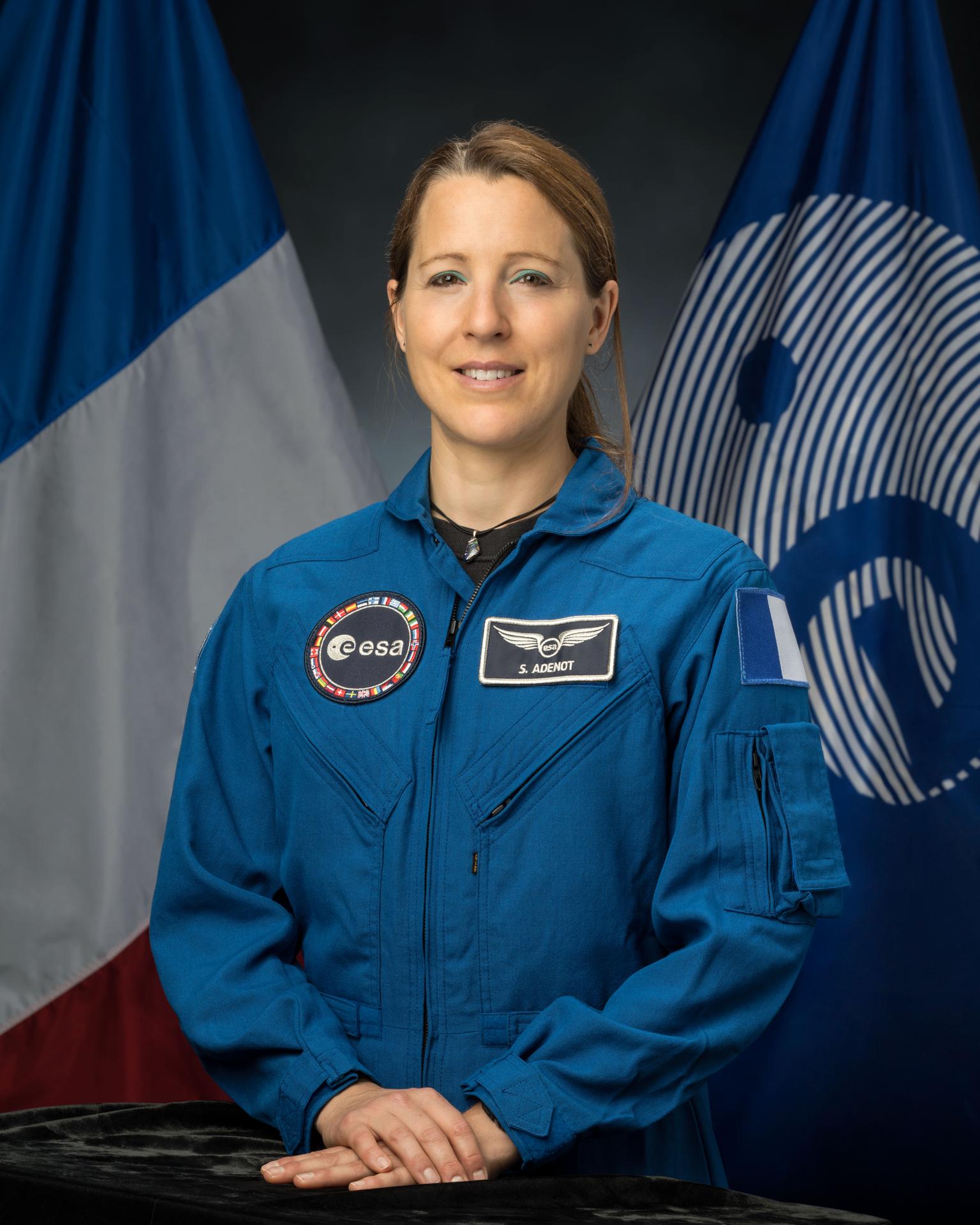
jsc2025e068846_alt (Sept. 19, 2025) --- Official portrait of ESA (European Space Agency) astronaut and SpaceX Crew-12 member Sophie Adenot at NASA's Johnson Space Center in Houston, Texas. Credit: NASA/Robert Markowitz
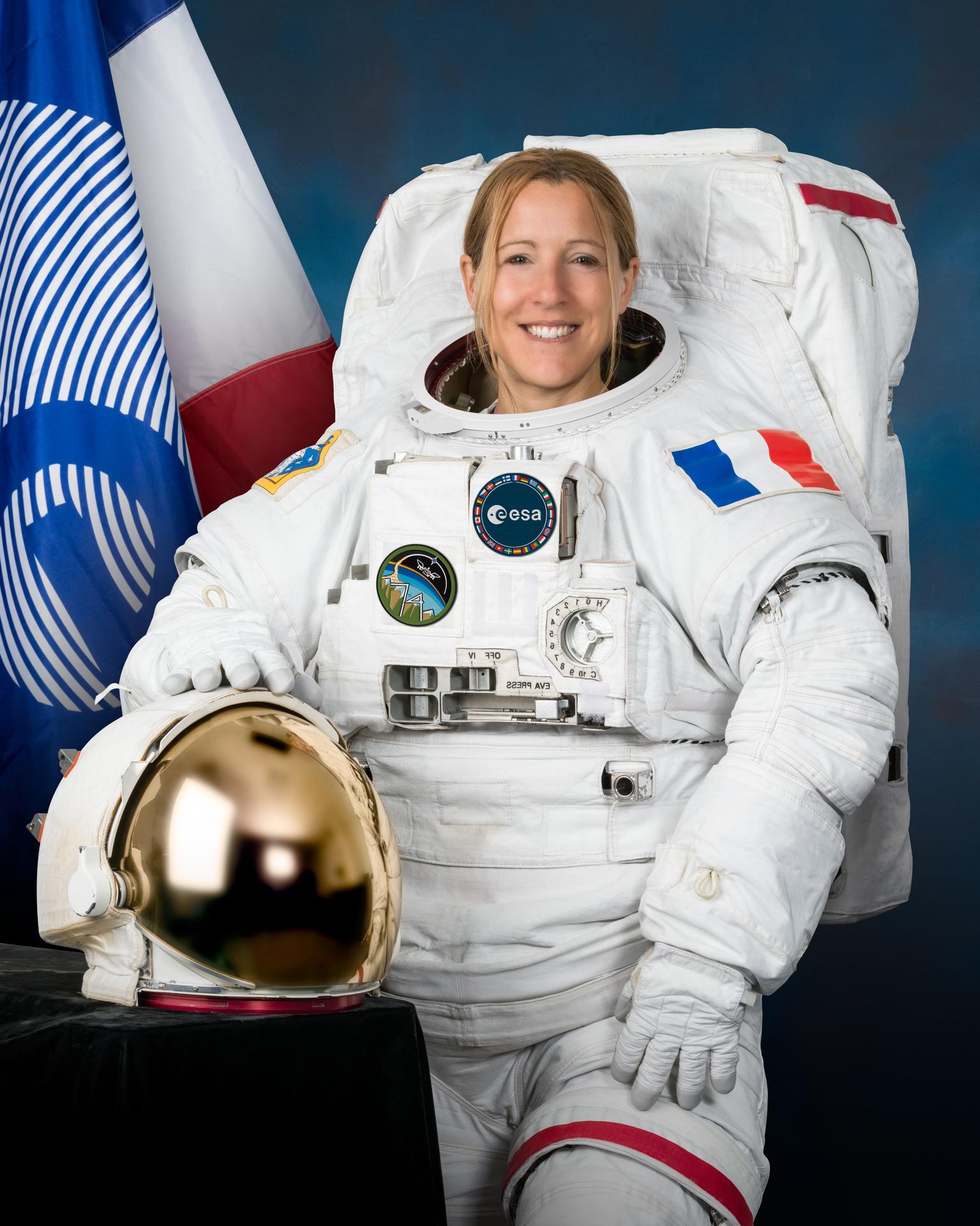
jsc2025e073892_alt (Sept. 11, 2025) --- Official portrait of ESA (European Space Agency) astronaut Sophie Adenot wearing a spacesuit, also called an Extravehicular Mobility Unit (EMU), at NASA's Johnson Space Center in Houston, Texas. Credit: NASA/Helen Arase Vargas and David DeHoyos
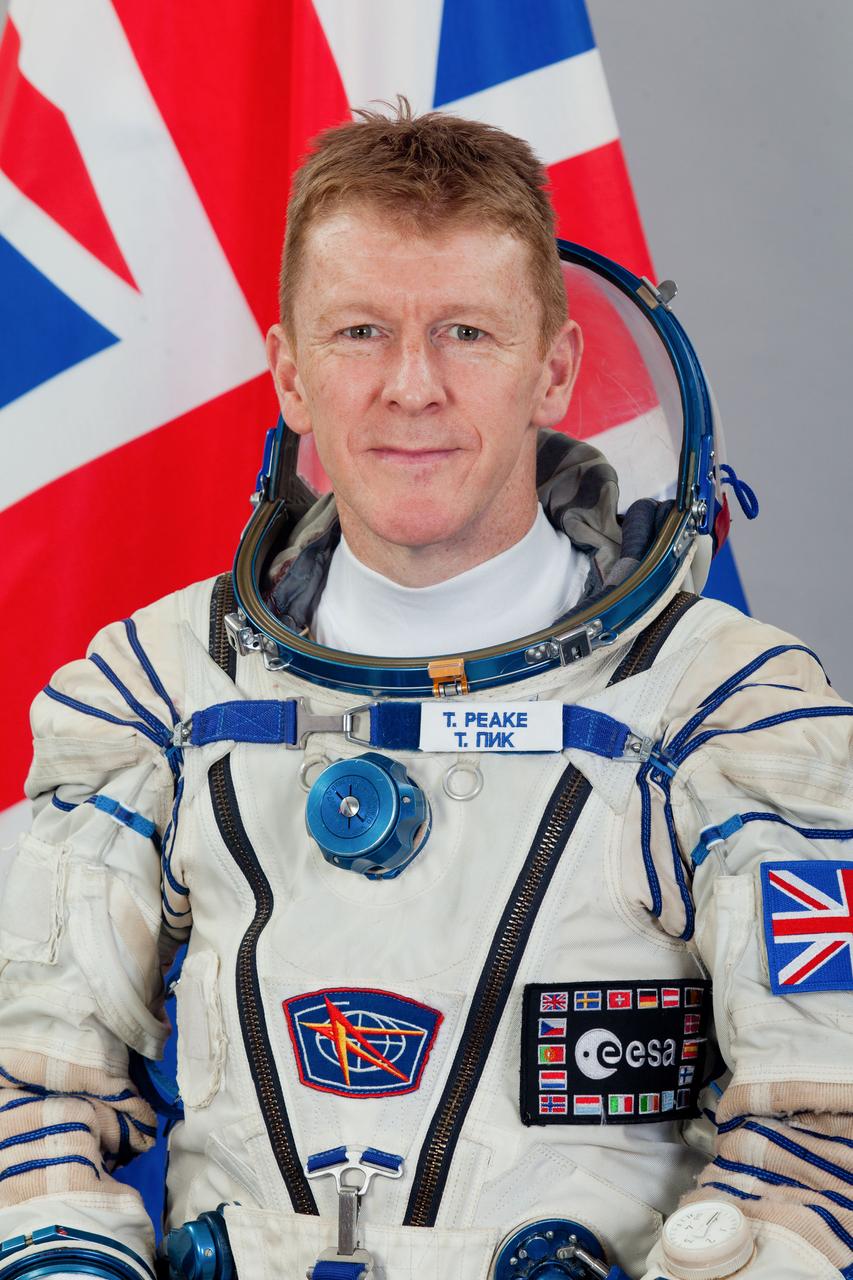
JSC2015E053685 (04/30/2015) ---Expedition 44 backup crewmember ESA (European Space Agency) astronaut Timothy Peake.
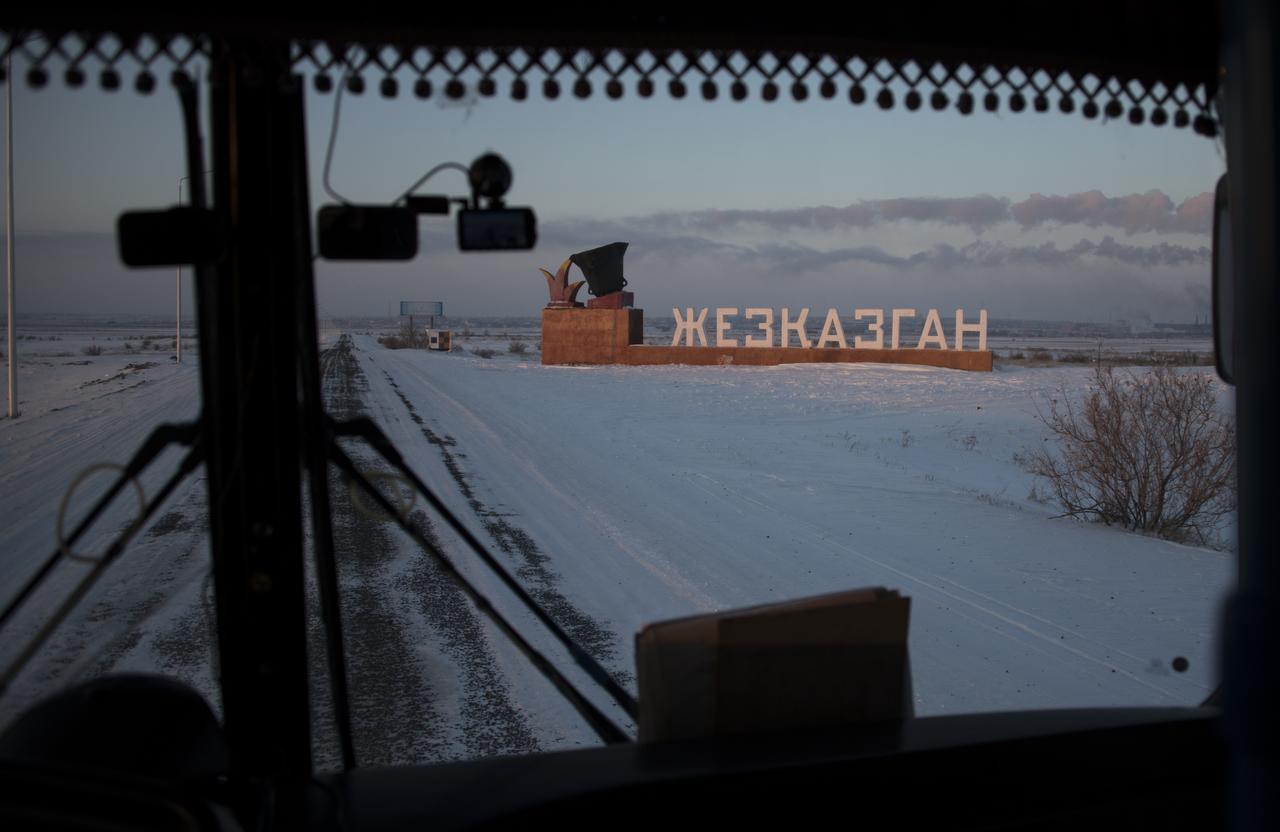
The bus carrying NASA, Roscosmos, ESA (European Space Agency), along with Russian Search and Rescue teams approaches the town of Zhezkazgan, Kazakhstan, Wednesday, Dec. 13, 2017. Teams are gathering to prepare for the Soyuz MS-05 landing with Expedition 53 Commander Randy Bresnik of NASA and Flight Engineers Paolo Nespoli of ESA (European Space Agency) and Sergey Ryazanskiy of the Russian space agency Roscosmos. Bresnik, Nespoli and Ryazanskiy are returning after 139 days in space where they served as members of the Expedition 52 and 53 crews onboard the International Space Station. Photo Credit: (NASA/Bill Ingalls)
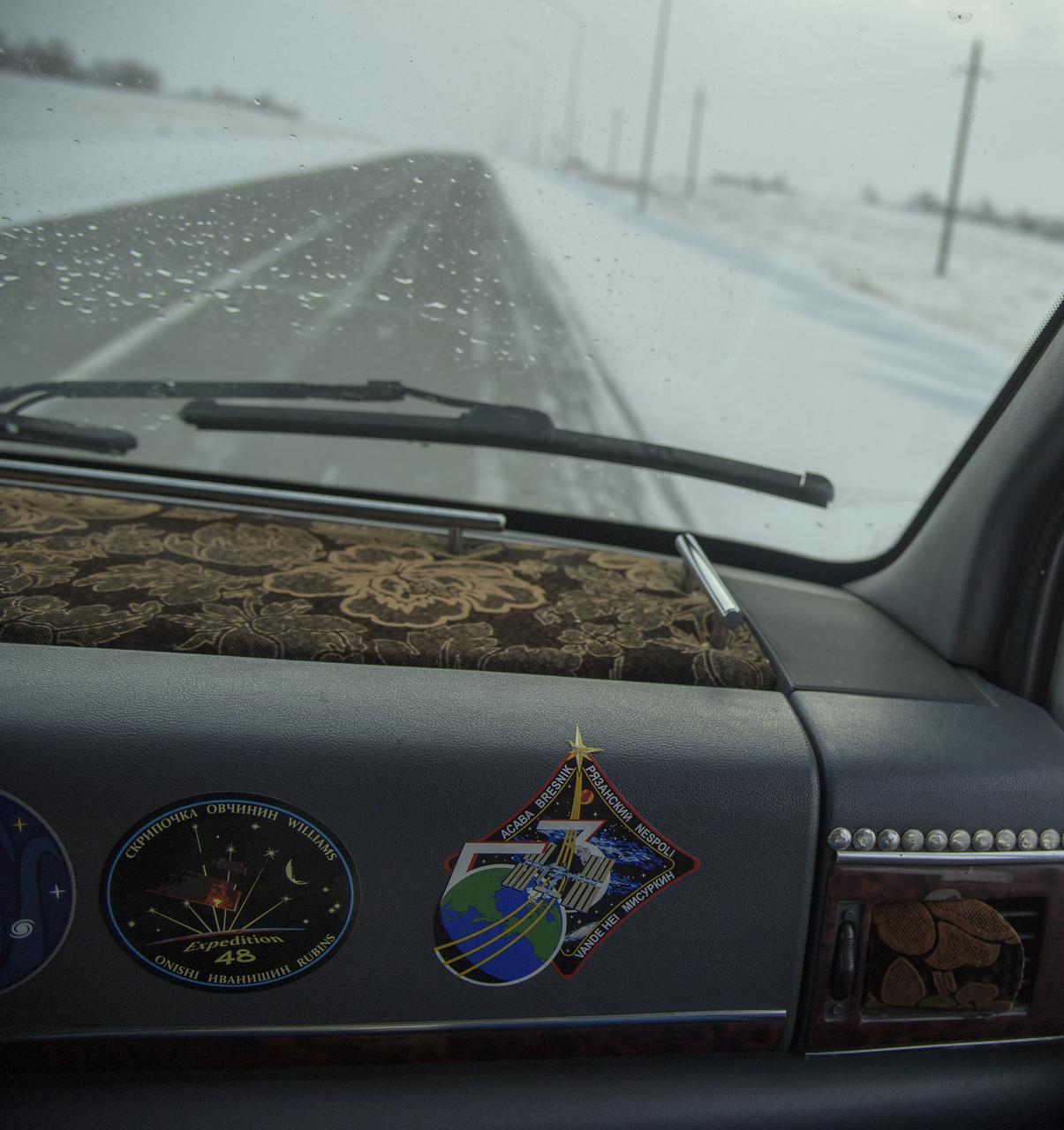
View from a van carrying team members from NASA and ESA to the Karaganda Airport in Kazakhstan in advance of the landing of Expedition 57 crew members Serena Auñón-Chancellor of NASA, Alexander Gerst of ESA (European Space Agency), and Sergey Prokopyev of Roscosmos. Wednesday, Dec. 19, 2018. Auñón-Chancellor, Gerst, and Prokopyev are returning after 197 days in space where they served as members of the Expedition 56 and 57 crews onboard the International Space Station. Photo Credit: (NASA/Bill Ingalls)
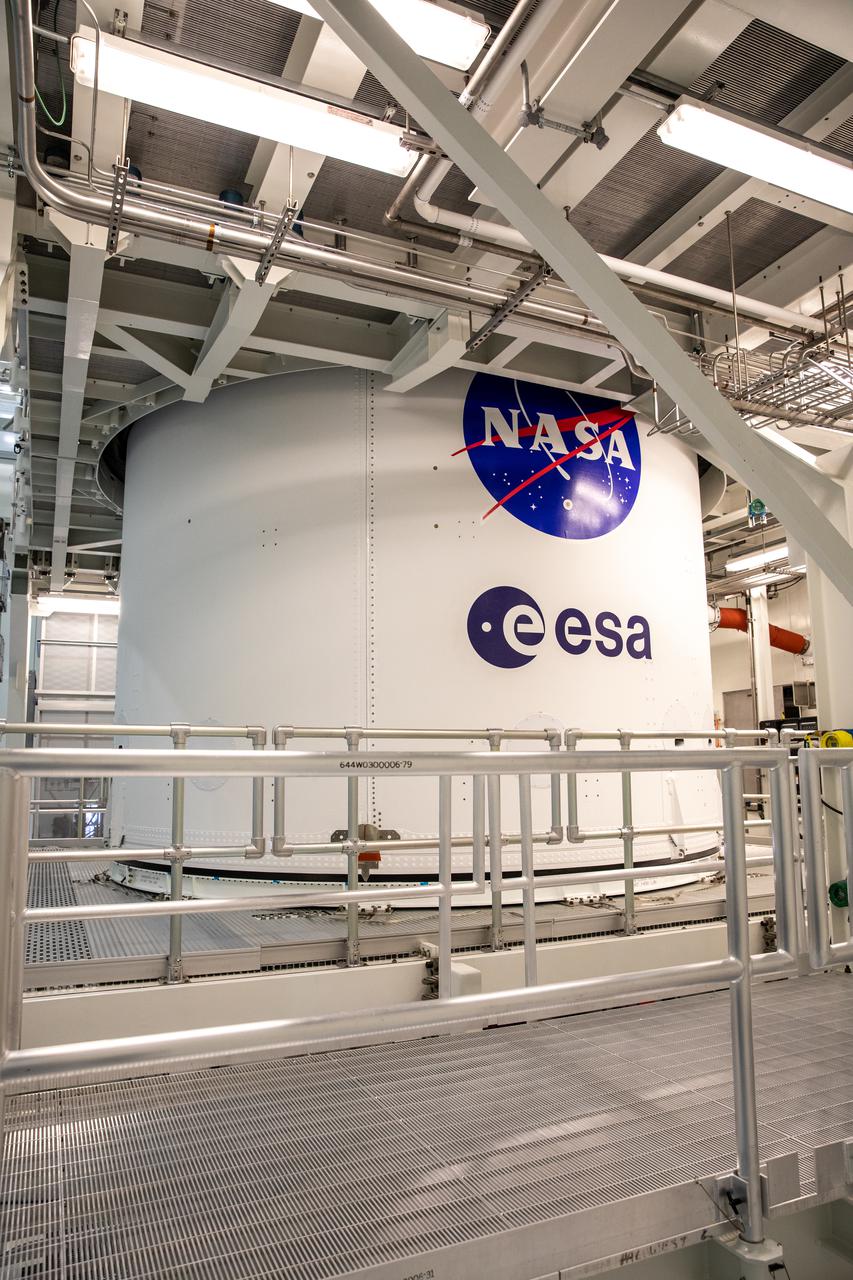
Artemis I extends NASA and ESA’s (European Space Agency) strong international partnership beyond low-Earth orbit to lunar exploration with Orion on Artemis missions, as the ESA logo joins the historic NASA “meatball” insignia on the Artemis I spacecraft adapter jettison fairing panels that protect the service module during launch. Orion is currently stationed at NASA’s Kennedy Space Center in the Multi-Payload Processing Facility, where it will undergo fueling and servicing by NASA’s Exploration Ground Systems and Jacobs Technology teams in preparation for the upcoming flight test with the Space Launch System rocket under the agency’s Artemis program.
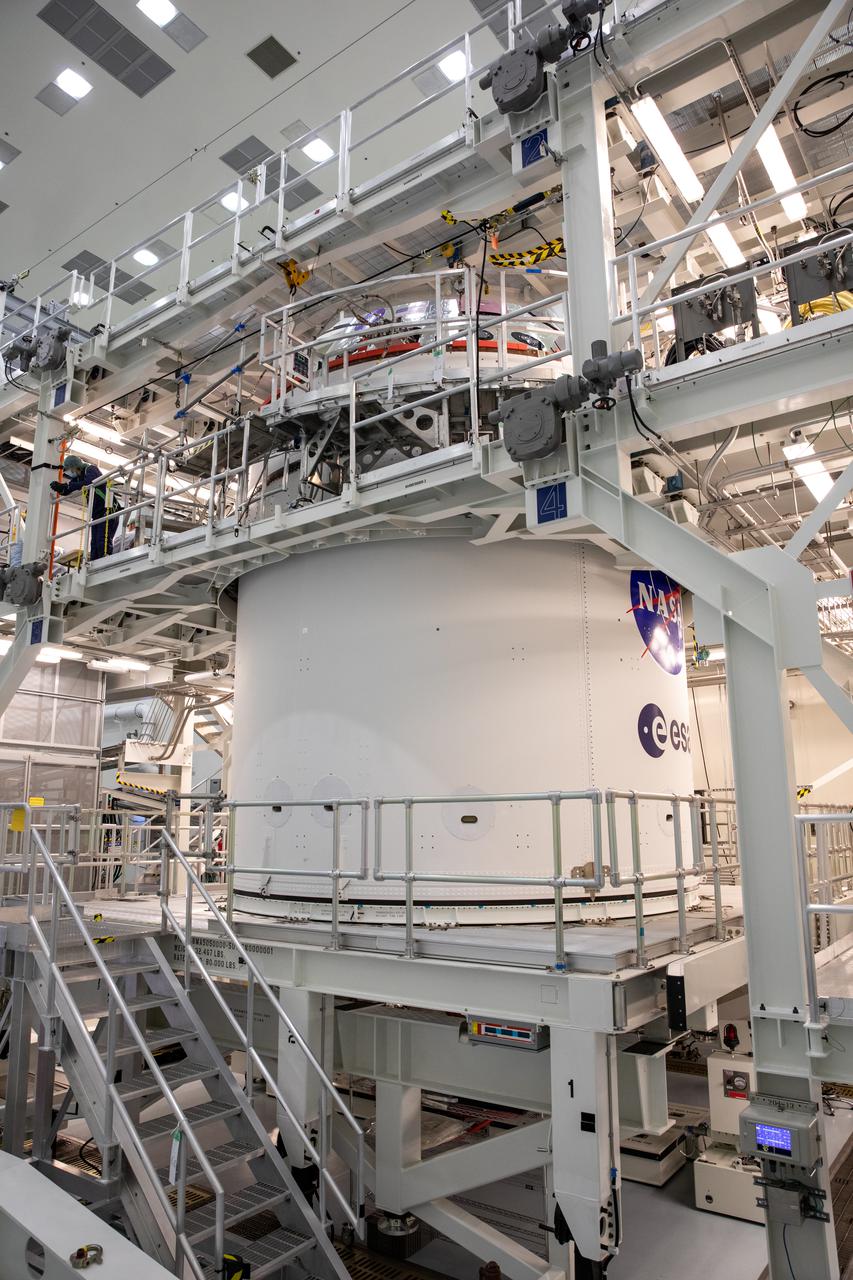
Artemis I extends NASA and ESA’s (European Space Agency) strong international partnership beyond low-Earth orbit to lunar exploration with Orion on Artemis issions, as the the ESA logo joins the historic NASA “meatball” insignia on the Artemis I spacecraft adapter jettison fairing panels that protect the service module during launch. Orion is currently stationed at NASA’s Kennedy Space Center in the Multi-Payload Processing Facility, where it will undergo fueling and servicing by NASA’s Exploration Ground Systems and Jacobs Technology teams in preparation for the upcoming flight test with the Space Launch System rocket under the agency’s Artemis program.
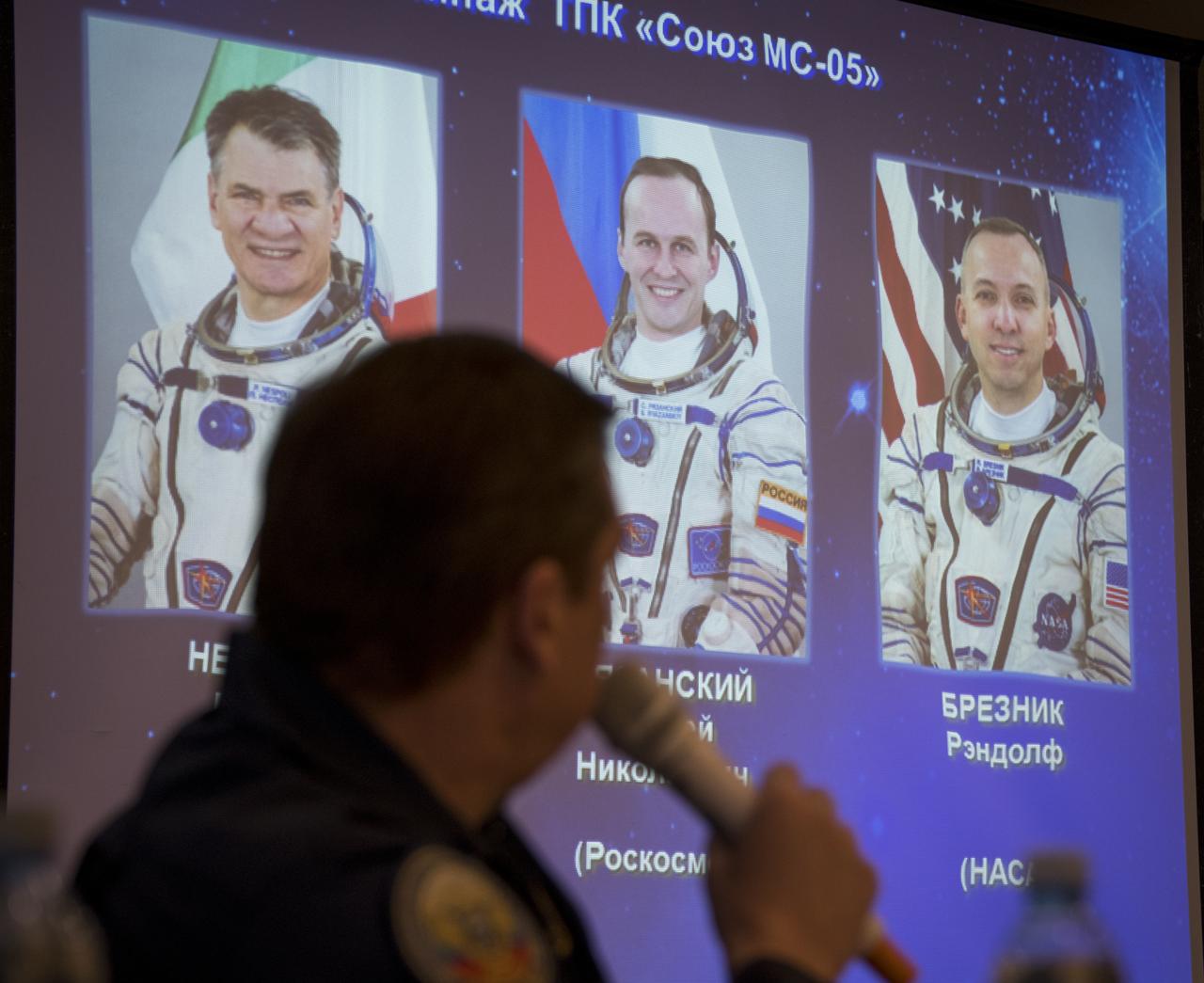
NASA, ESA (European Space Agency), Roscosmos, along with Russian Search and Recovery Forces, meet to discuss the readiness for the landing of Expedition 53 Commander Randy Bresnik of NASA and Flight Engineers Paolo Nespoli of ESA (European Space Agency) and Sergey Ryazanskiy of the Russian space agency Roscosmos Tuesday, Dec. 12, 2017. Bresnik, Nespoli and Ryazanskiy are returning after 139 days in space where they served as members of the Expedition 52 and 53 crews onboard the International Space Station. Photo Credit: (NASA/Bill Ingalls)
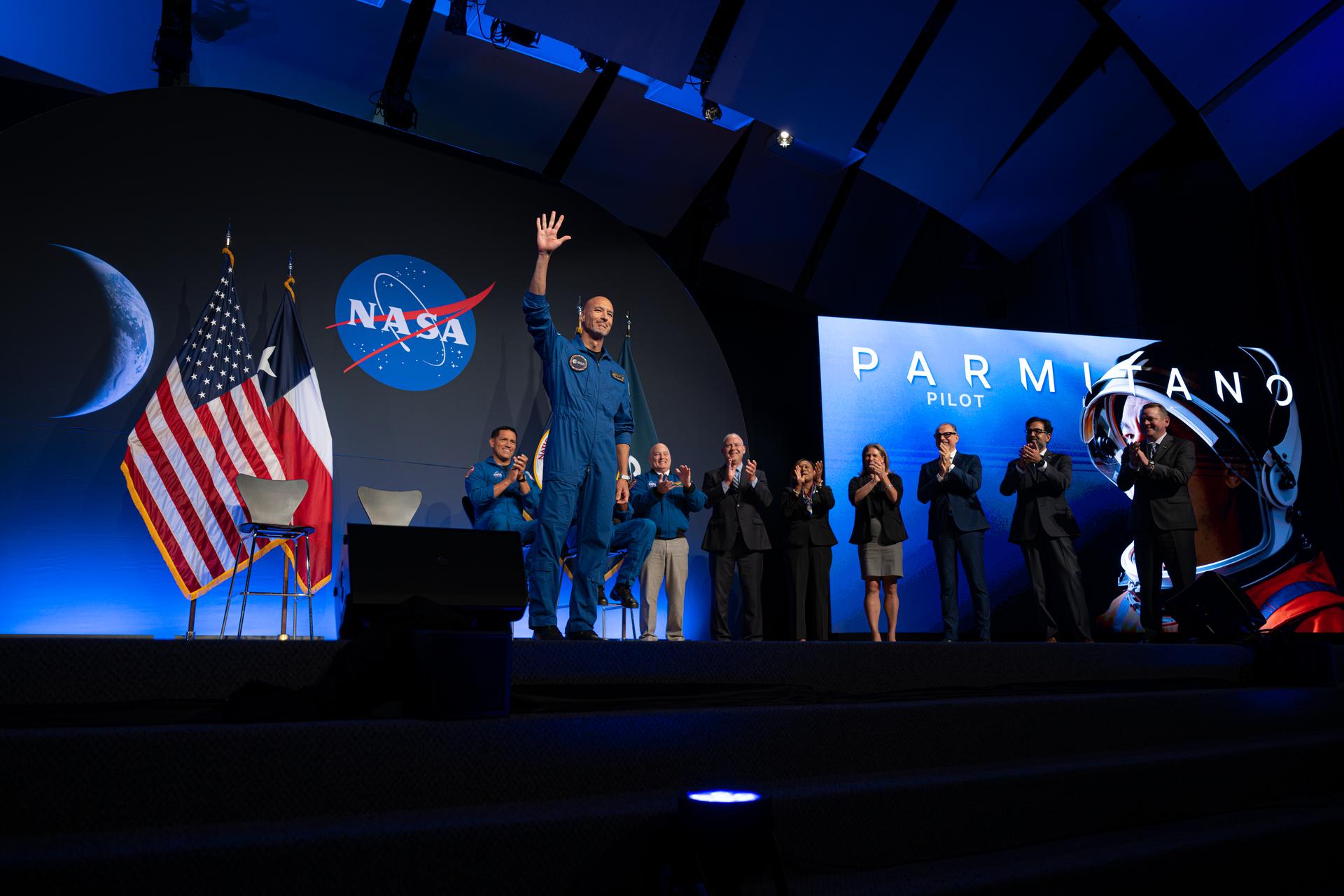
ESA (European Space Agency) astronaut Luca Parmitano, Artemis III pilot, is introduced during the Artemis III crew announcement event, Tuesday, June 9, 2026, at NASA’s Johnson Space Center in Houston, Texas. Photo Credit: (NASA/John Kraus)
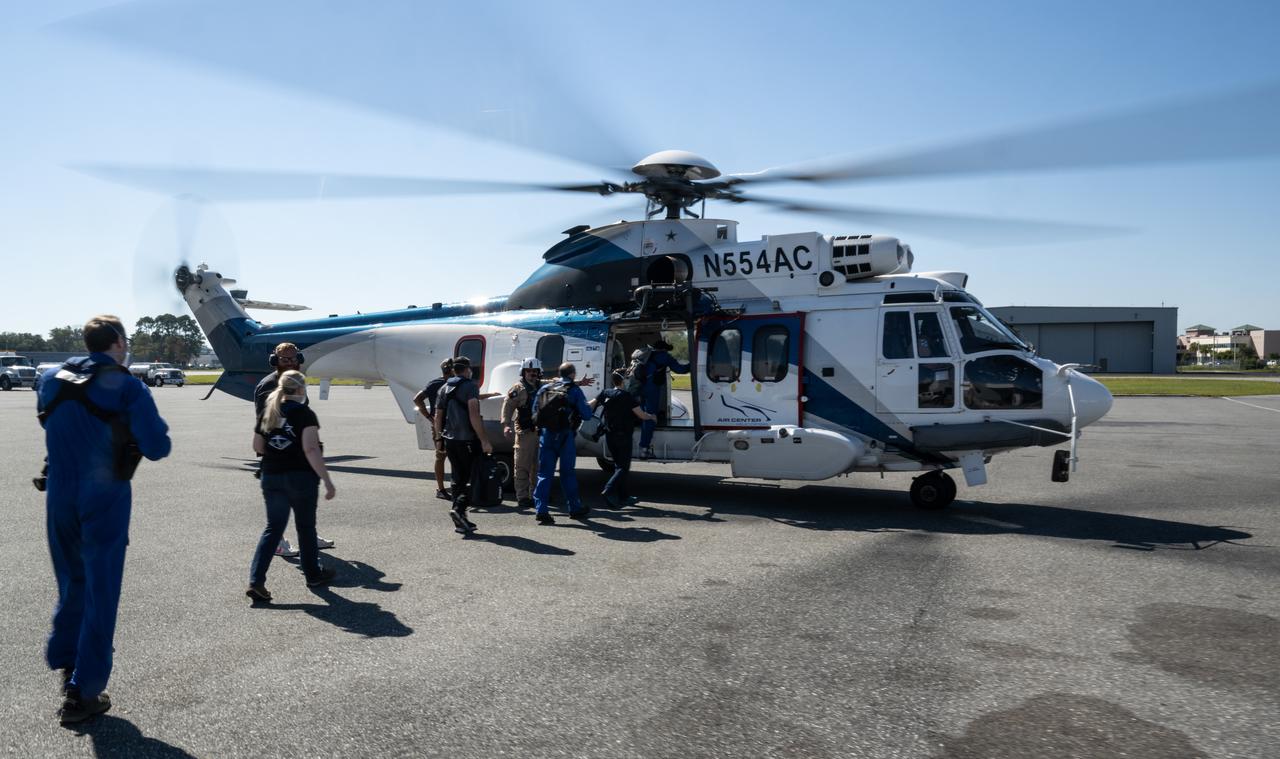
NASA, ESA (European Space Agency), and SpaceX support teams board a helicopter to stage for the landing of the SpaceX Crew Dragon Freedom spacecraft with NASA astronauts Kjell Lindgren, Robert Hines, Jessica Watkins, and ESA (European Space Agency) astronaut Samantha Cristoforetti aboard, Friday, Oct. 14, 2022, in Jacksonville, Florida. Lindgren, Hines, Watkins, and Cristoforetti are landing in the Atlantic Ocean after 170 days in space as part of Expeditions 67 and 68 aboard the International Space Station. Photo Credit: (NASA/Bill Ingalls)
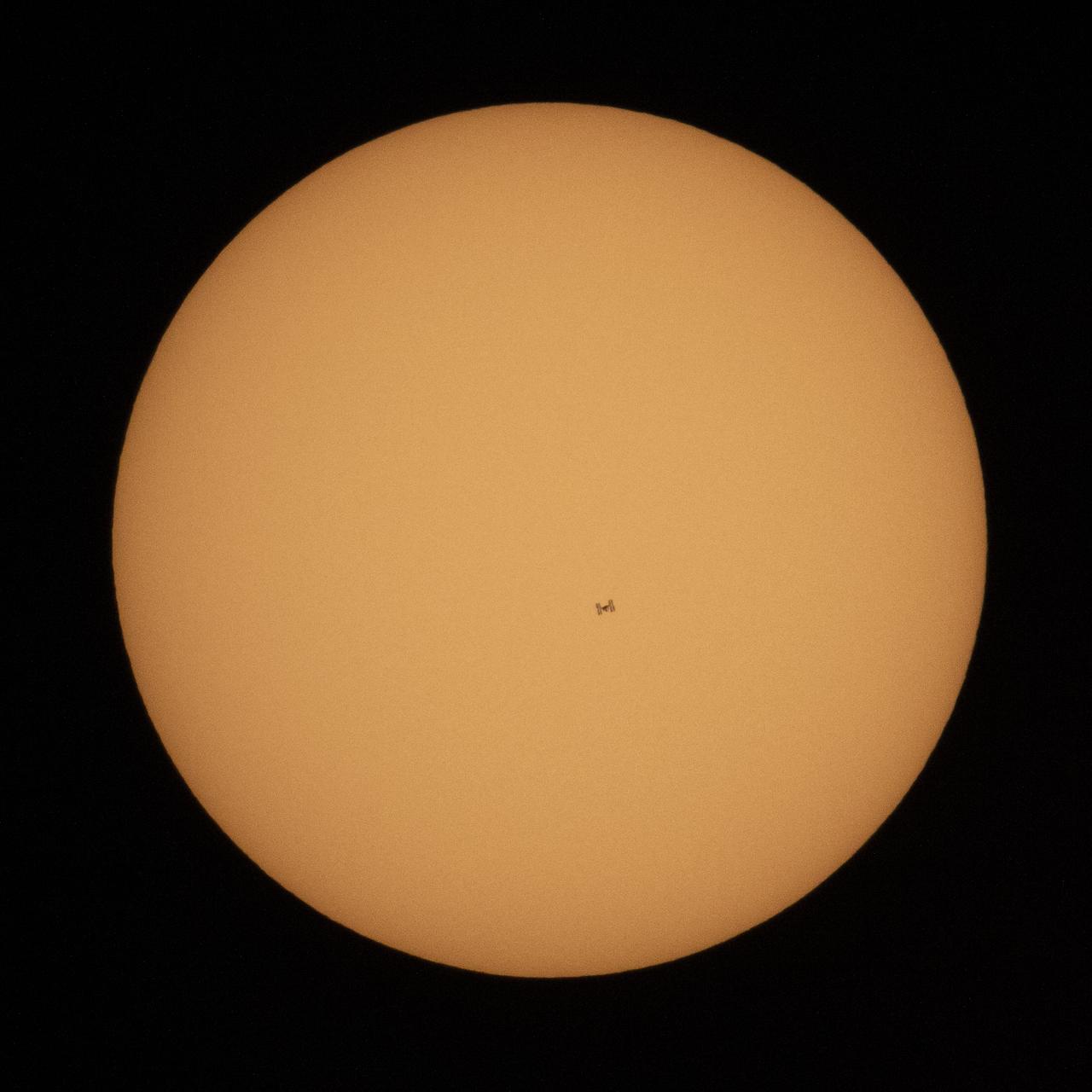
The International Space Station, with a crew of three onboard, is seen in silhouette as it transits the Sun at roughly five miles per second, Sunday, Oct. 7, 2018 from Suffolk, Va. Onboard are Expedition 57 Commander Alexander Gerst of ESA (European Space Agency), Serena Auñón-Chancellor of NASA, and Sergey Prokopyev of Roscosmos. The trio will soon be joined by Nick Hague of NASA and Alexey Ovchinin of Roscosmos, who are scheduled to launch on October 11 from the Baikonur Cosmodrome in Kazakhstan. Photo Credit: (NASA/Joel Kowsky)
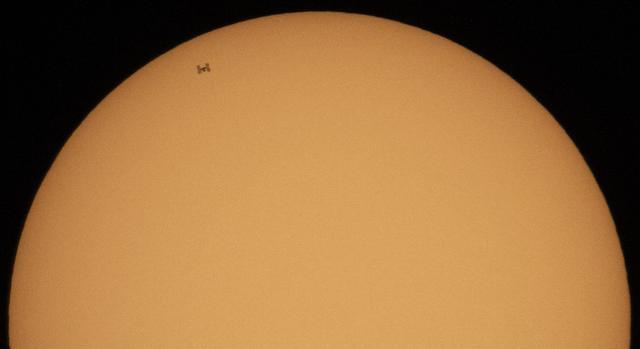
The International Space Station, with a crew of three onboard, is seen in silhouette as it transits the Sun at roughly five miles per second, Sunday, Oct. 7, 2018 from Suffolk, Va. Onboard are Expedition 57 Commander Alexander Gerst of ESA (European Space Agency), Serena Auñón-Chancellor of NASA, and Sergey Prokopyev of Roscosmos. The trio will soon be joined by Nick Hague of NASA and Alexey Ovchinin of Roscosmos, who are scheduled to launch on October 11 from the Baikonur Cosmodrome in Kazakhstan. Photo Credit: (NASA/Joel Kowsky)
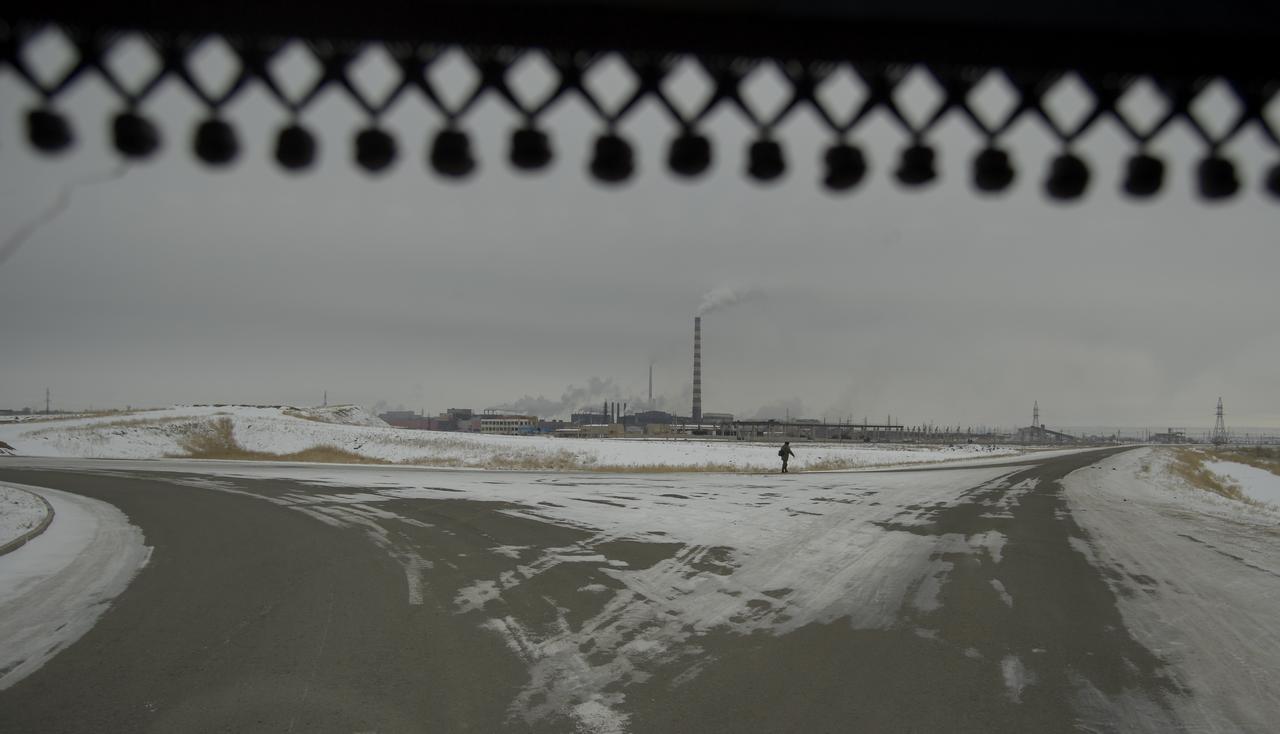
The town of Zhezkazgan, Kazakhstan is seen from the bus carrying team members from NASA, ESA, Roscosmos, and Russian Search and Recovery Forces as they arrive in advance of the landing of Expedition 57 crew members Serena Auñón-Chancellor of NASA, Alexander Gerst of ESA (European Space Agency), and Sergey Prokopyev of Roscosmos. Wednesday, Dec. 19, 2018. Auñón-Chancellor, Gerst, and Prokopyev are returning after 197 days in space where they served as members of the Expedition 56 and 57 crews onboard the International Space Station. Photo Credit: (NASA/Bill Ingalls)
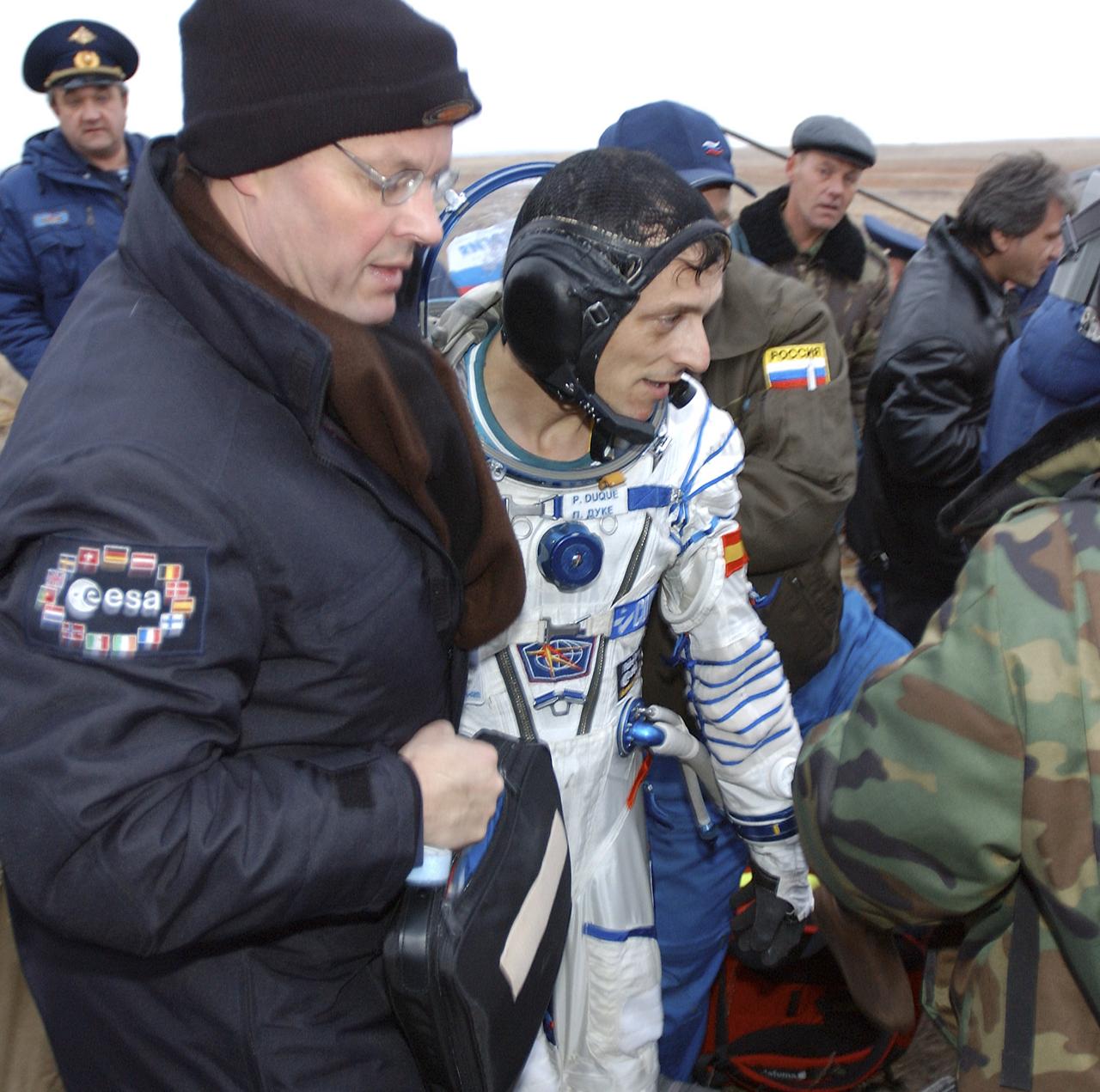
European Space Agency (ESA) astronaut Pedro Deque is assisted by an ESA doctor after landing in the Soyuz TMA-2 spacecraft in Kazakhstan on Monday, October 27, 2003, at 9:41 p.m. EST. Photo Credit: (NASA/Bill Ingalls)
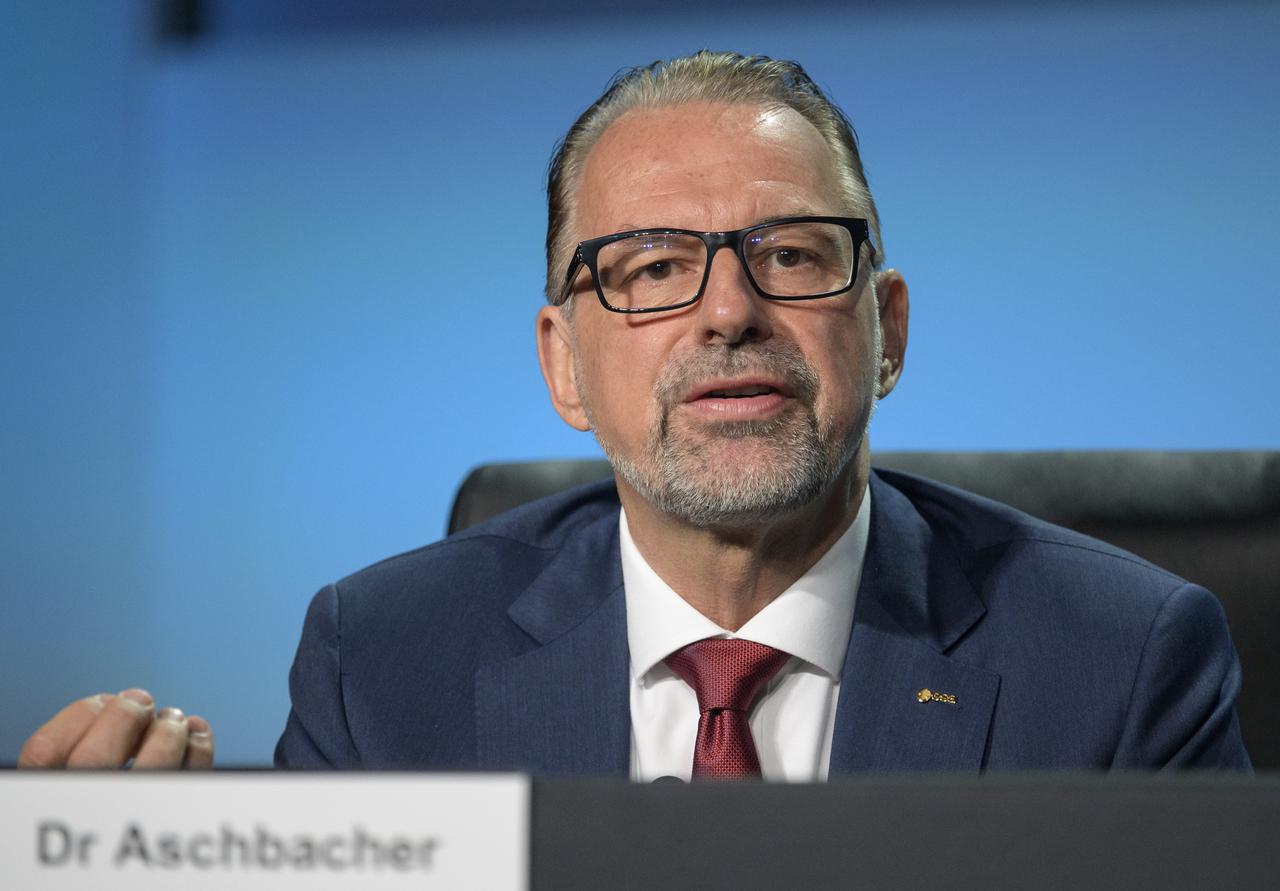
Dr. Josef Aschbacher, Director General, European Space Agency (ESA) gives remarks in a Heads of Agency panel discussion, during the 36th Space Symposium, Wednesday, Aug. 25, 2021, in Colorado Springs, Colorado. Photo Credit: (NASA/Bill Ingalls)
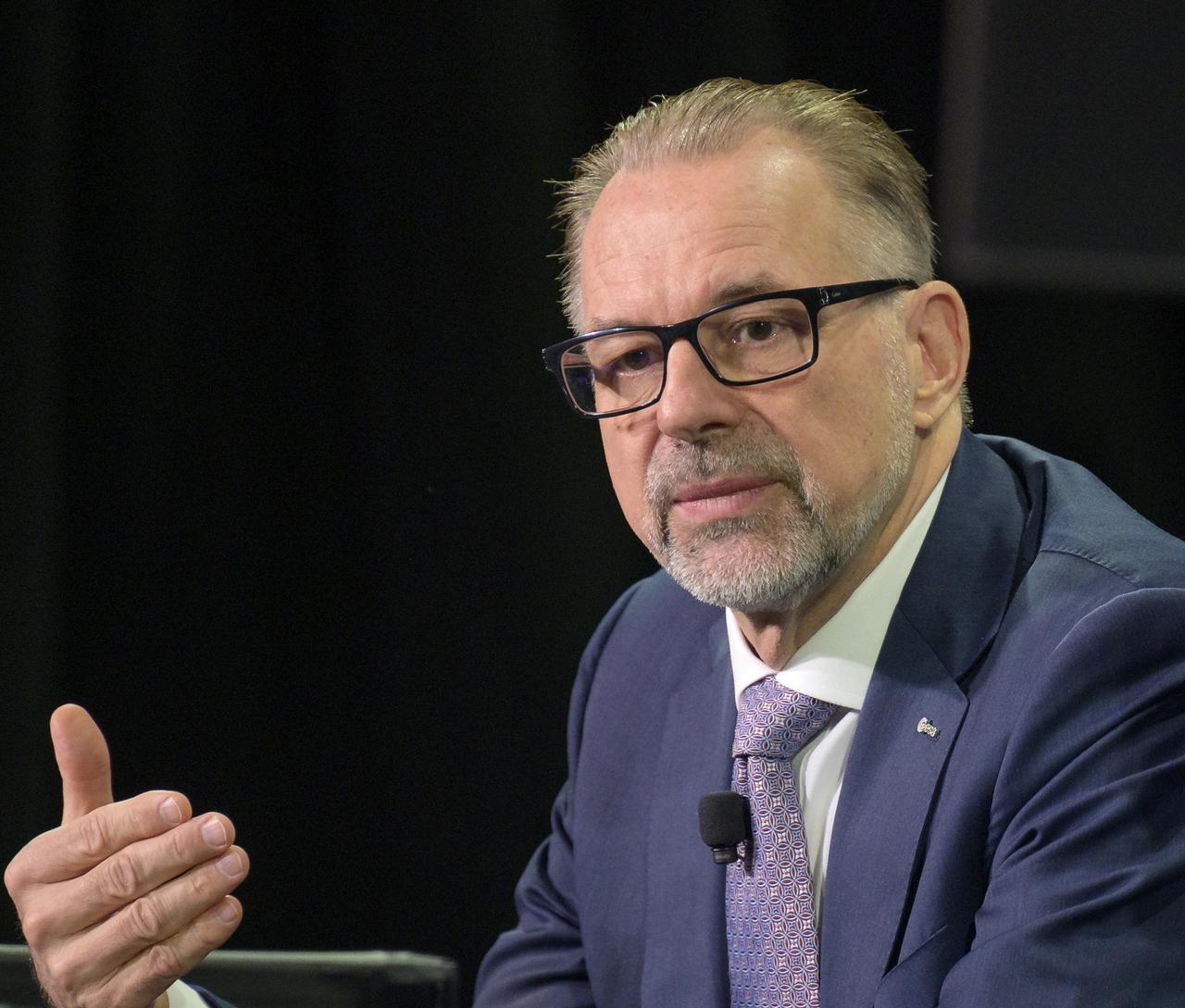
Dr. Josef Aschbacher, Director General, European Space Agency (ESA) speaks during a Heads of Agency panel at the 37th Space Symposium, Wednesday, April 6, 2022, in Colorado Springs, Colorado. Photo Credit: (NASA/Bill Ingalls)
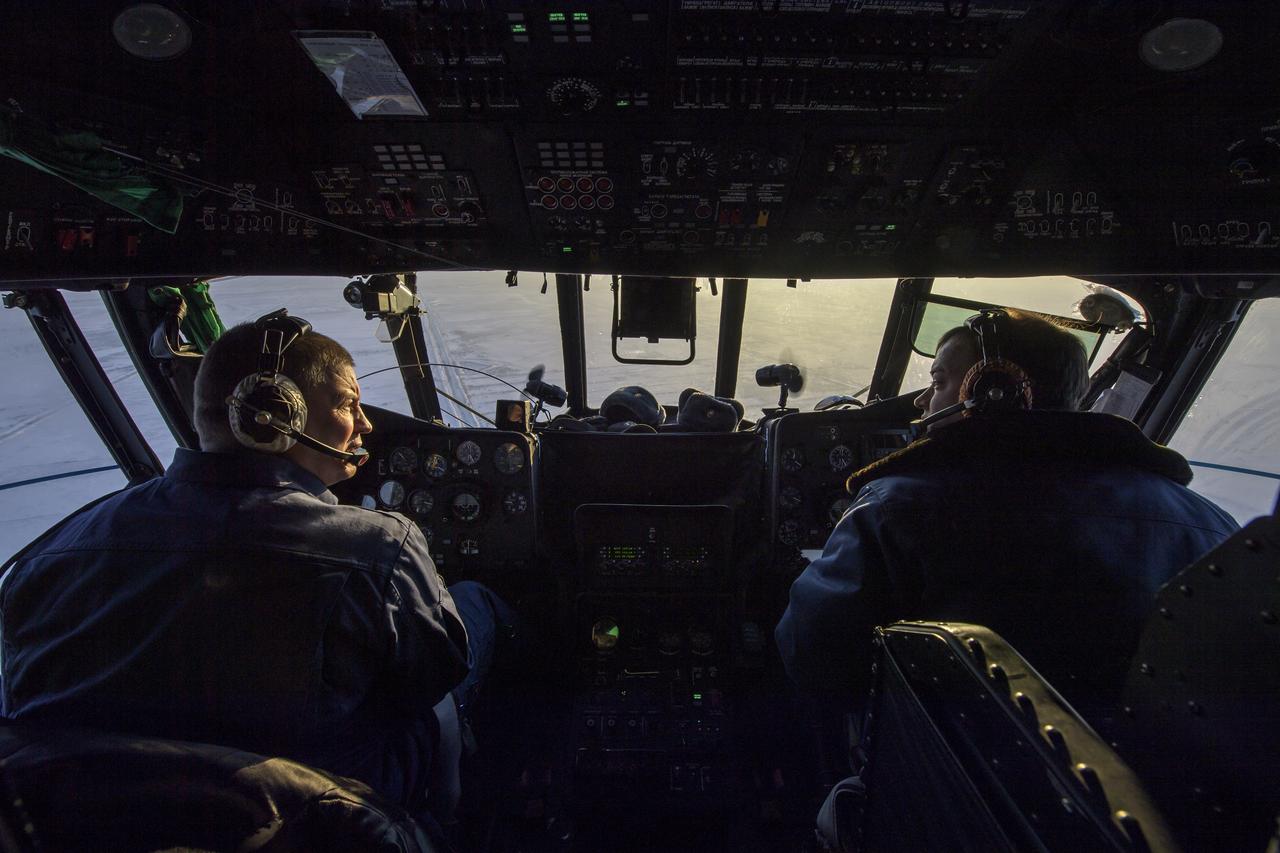
Russian Search and Recovery Force pilots scan the horizon for the Soyuz landing with Expedition 57 crew members Serena Auñón-Chancellor of NASA, Alexander Gerst of ESA (European Space Agency), and Sergey Prokopyev of Roscosmos. Thursday, Dec. 20, 2018. Auñón-Chancellor, Gerst, and Prokopyev are returning after 197 days in space where they served as members of the Expedition 56 and 57 crews onboard the International Space Station. Photo Credit: (NASA/Bill Ingalls)
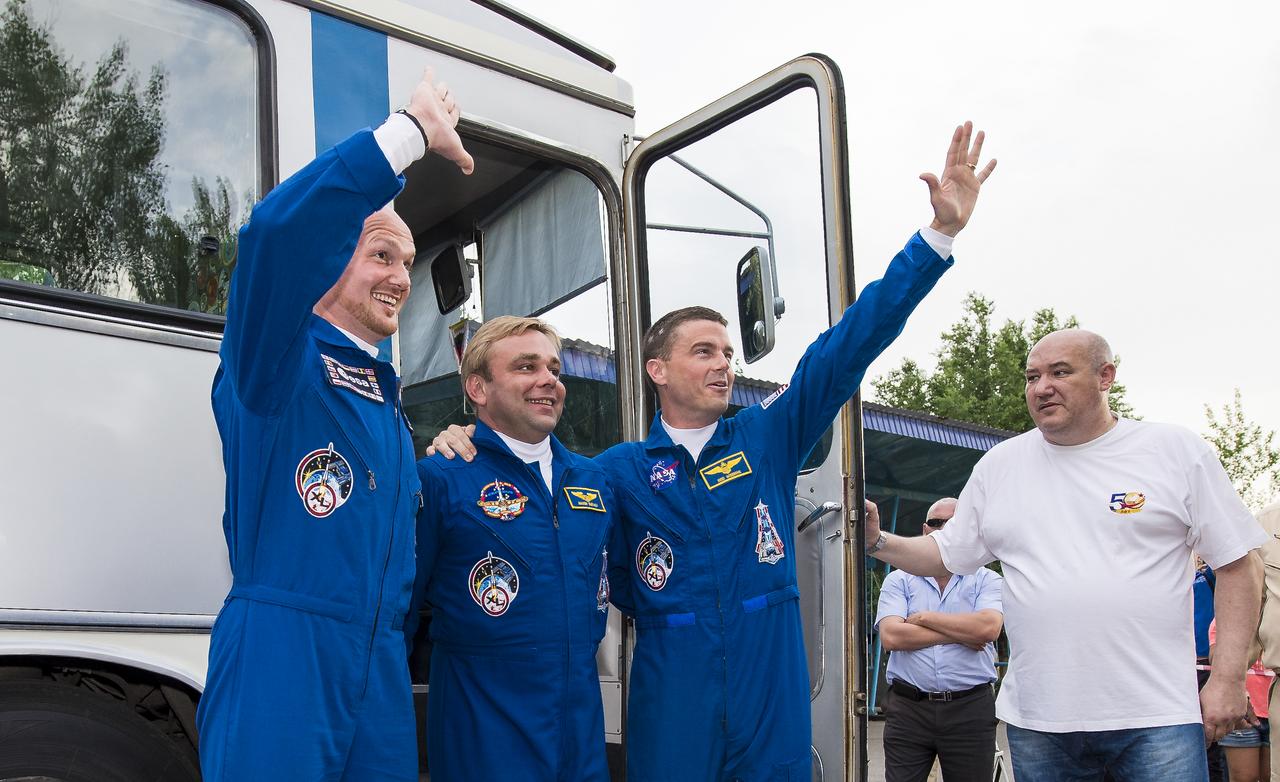
Expedition 40 Flight Engineer Alexander Gerst, of the European Space Agency, ESA, left, Soyuz Commander Maxim Suraev, of the Russian Federal Space Agency, Roscosmos, center, and Flight Engineer Reid Wiseman of NASA, right, are seen as they depart the Cosmonaut Hotel on Wednesday, May 28, 2014 in Baikonur, Kazakhstan. Suraev, Gerst, and Wiseman will launch in their Soyuz TMA-13M spacecraft to the International Space Station to begin a five and a half month mission. Photo Credit: (NASA/Joel Kowsky)
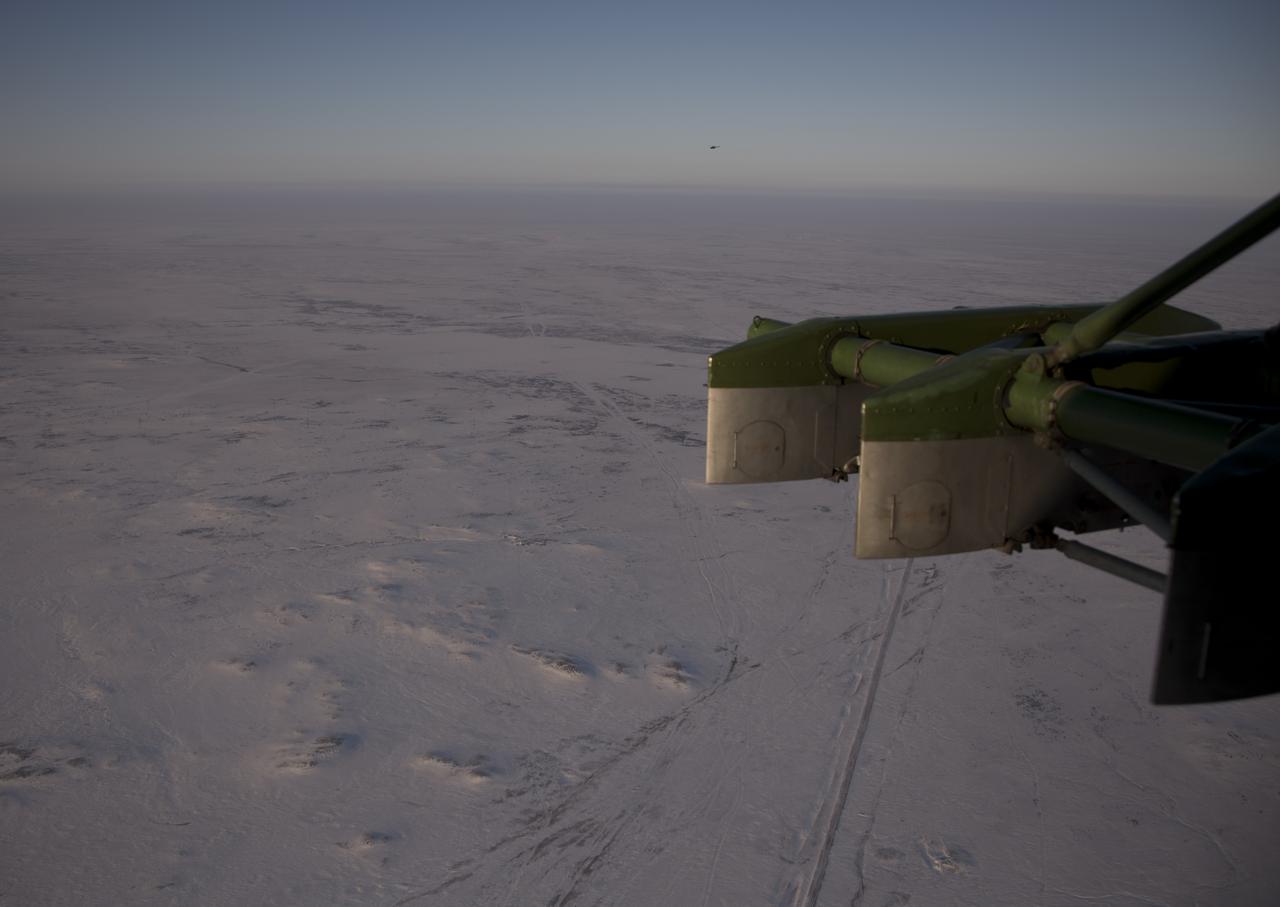
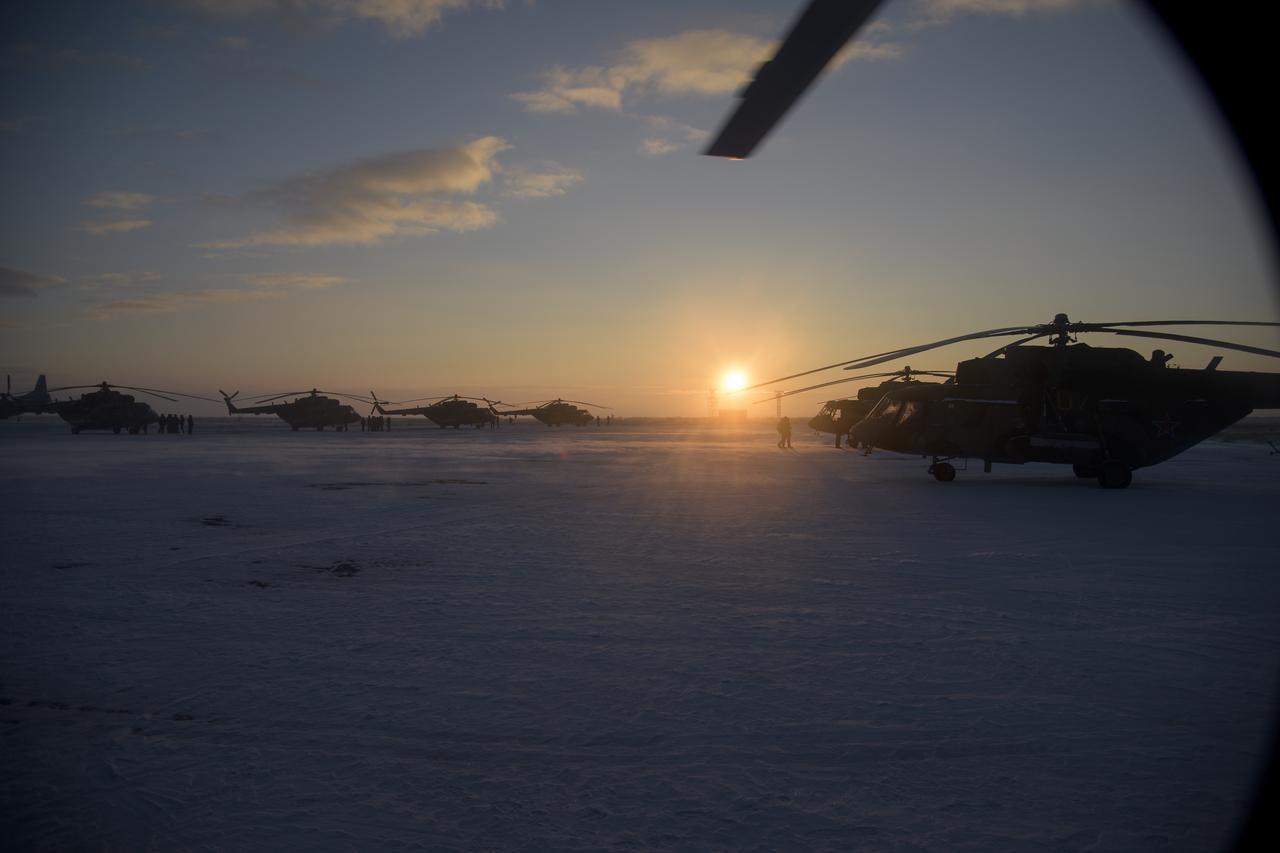
Russian Search and Rescue teams deploy by helicopter from Karaganda, Kazakhstan, Wednesday, Dec. 13, 2017 to prepare for the Soyuz MS-05 landing with Expedition 53 Commander Randy Bresnik of NASA and Flight Engineers Paolo Nespoli of ESA (European Space Agency) and Sergey Ryazanskiy of the Russian space agency Roscosmos near the town of Zhezkazgan, Kazakhstan. Bresnik, Nespoli and Ryazanskiy are returning after 139 days in space where they served as members of the Expedition 52 and 53 crews onboard the International Space Station. Photo Credit: (NASA/Bill Ingalls)
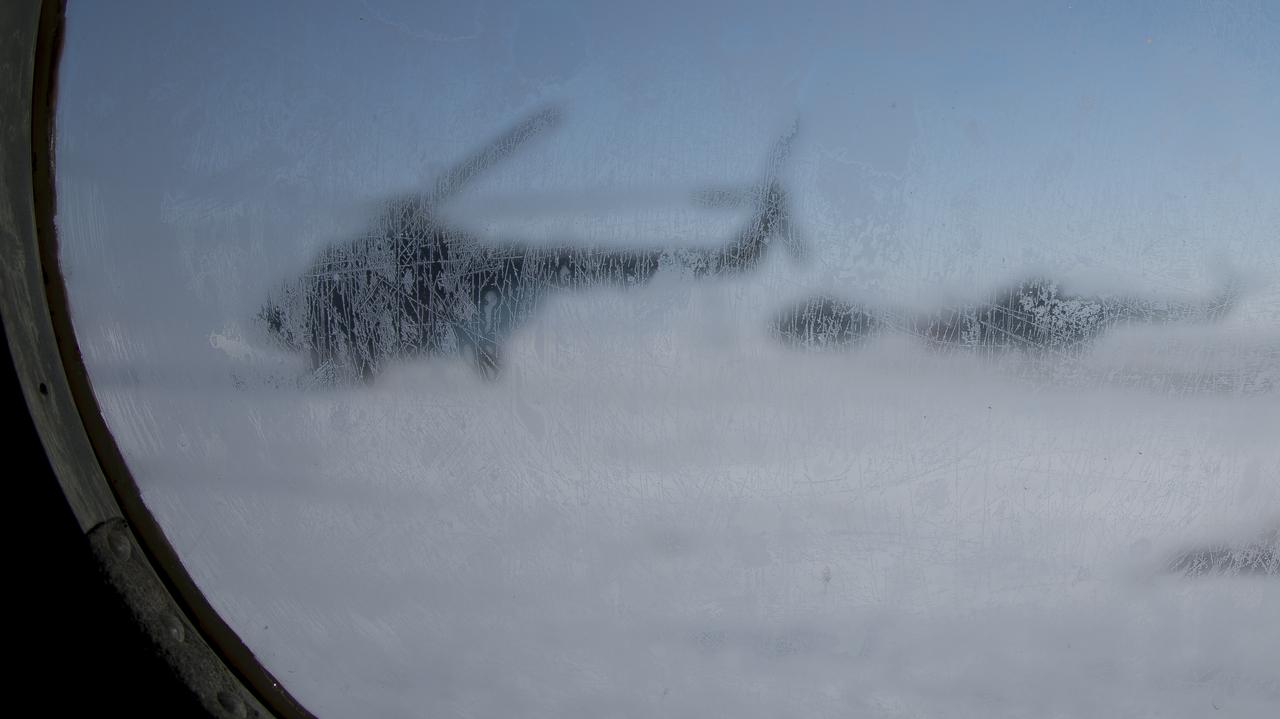
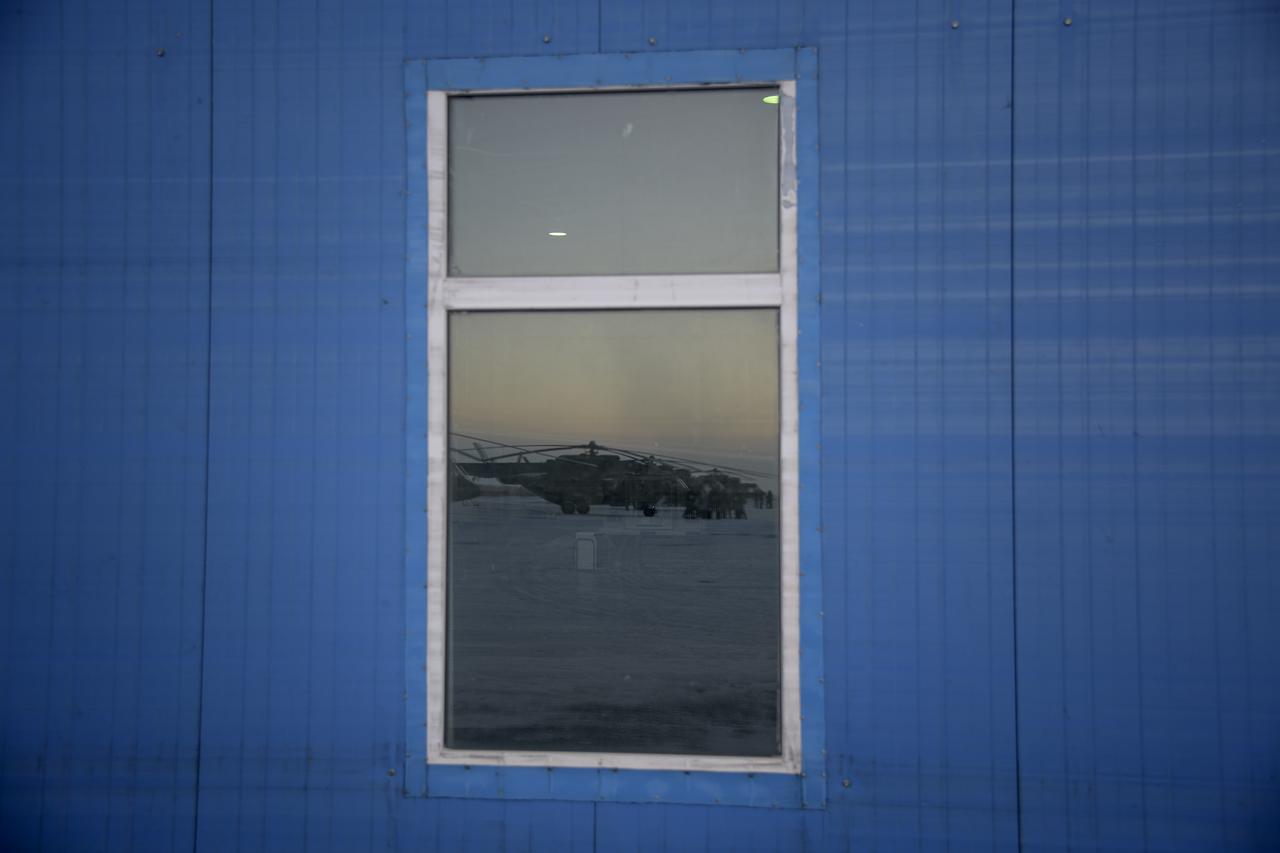
Russian helicopters are seen through the frozen window of another helicopter as teams prepare for the Soyuz MS-05 landing with Expedition 53 Commander Randy Bresnik of NASA and Flight Engineers Paolo Nespoli of ESA (European Space Agency) and Sergey Ryazanskiy of the Russian space agency Roscosmos near the town of Zhezkazgan, Kazakhstan on Thursday, Dec. 14, 2017. Bresnik, Nespoli and Ryazanskiy are returning after 139 days in space where they served as members of the Expedition 52 and 53 crews onboard the International Space Station. Photo Credit: (NASA/Bill Ingalls)
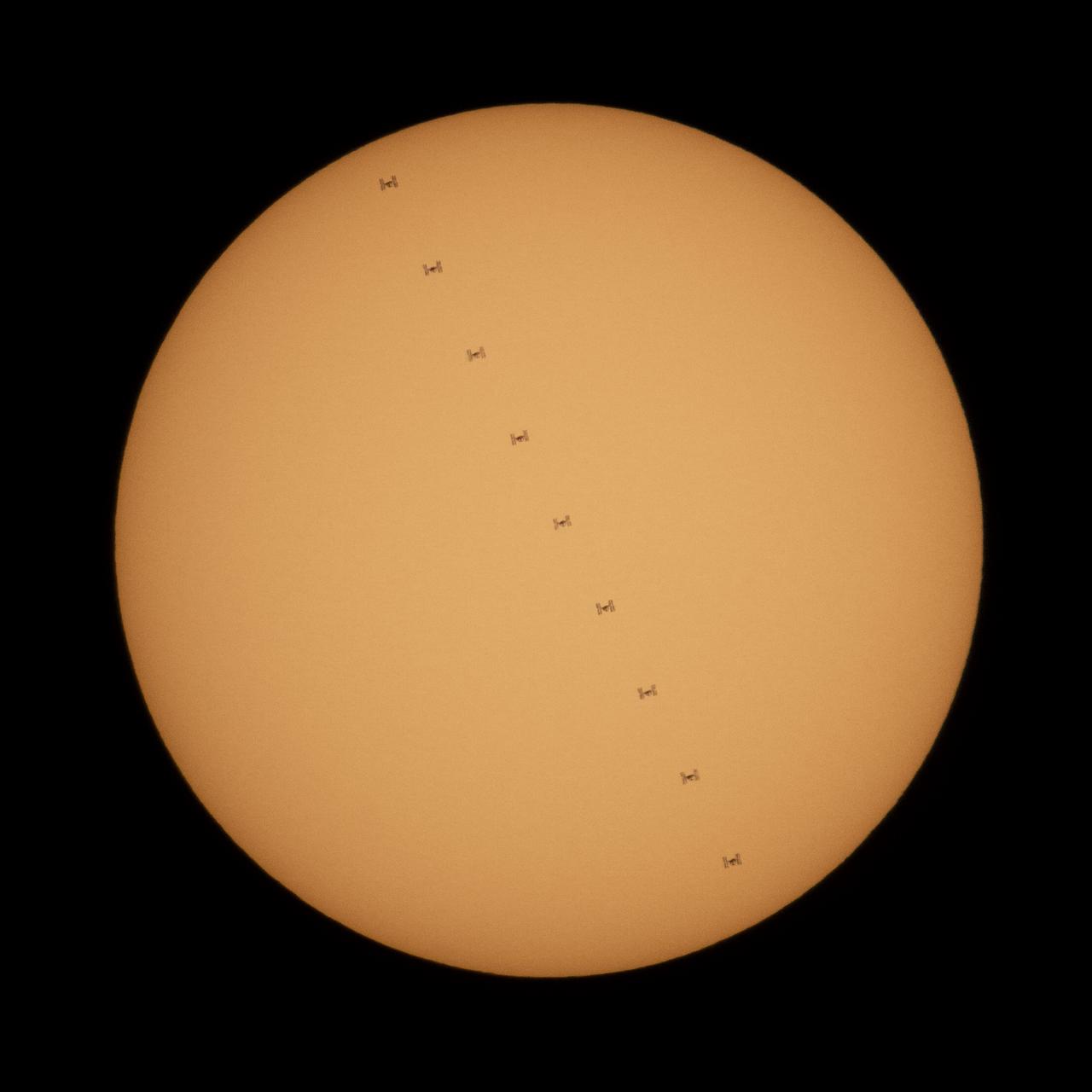
This composite image, made from nine frames, shows the International Space Station, with a crew of three onboard, in silhouette as it transits the Sun at roughly five miles per second, Sunday, Oct. 7, 2018 from Suffolk, Va. Onboard are Expedition 57 Commander Alexander Gerst of ESA (European Space Agency), Serena Auñón-Chancellor of NASA, and Sergey Prokopyev of Roscosmos. The trio will soon be joined by Nick Hague of NASA and Alexey Ovchinin of Roscosmos, who are scheduled to launch on October 11 from the Baikonur Cosmodrome in Kazakhstan. Photo Credit: (NASA/Joel Kowsky)
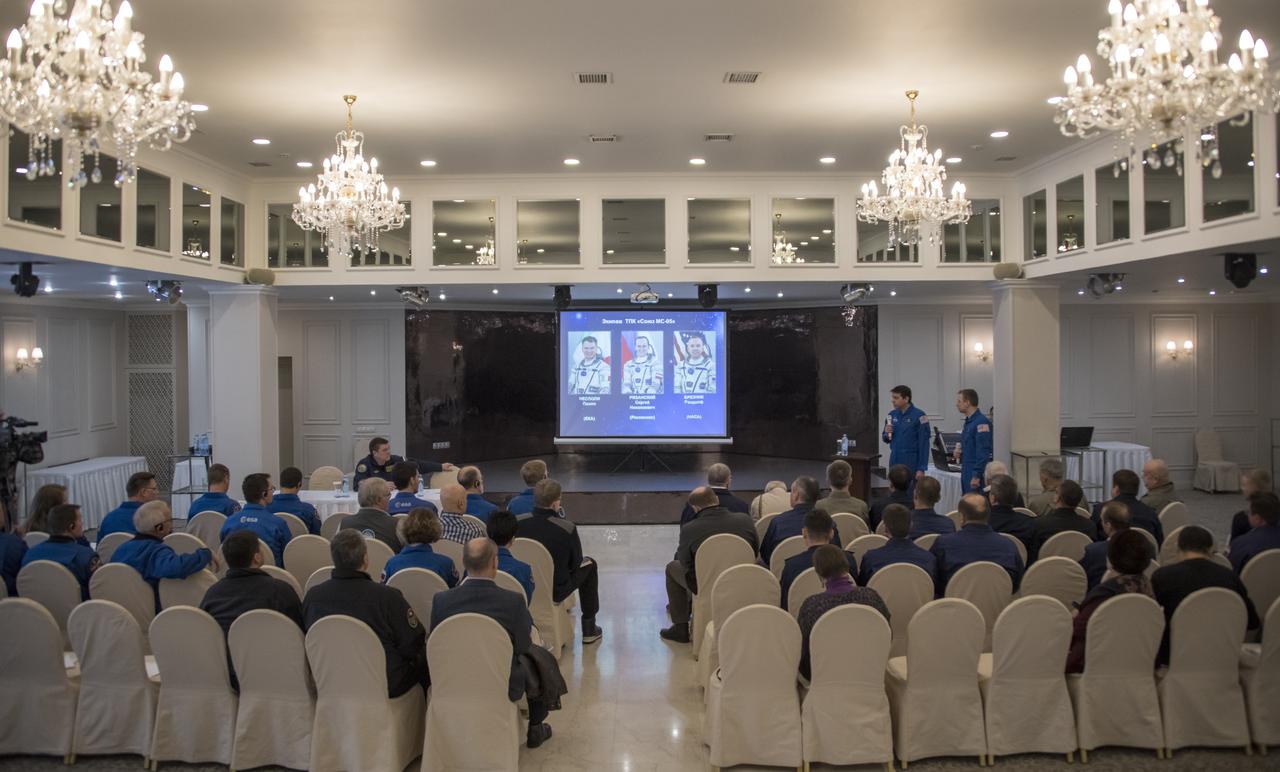
NASA, ESA (European Space Agency), Roscosmos, along with Russian Search and Recovery Forces, meet to discuss the readiness for the landing of Expedition 53 Commander Randy Bresnik of NASA and Flight Engineers Paolo Nespoli of ESA (European Space Agency) and Sergey Ryazanskiy of the Russian space agency Roscosmos Tuesday, Dec. 12, 2017. Bresnik, Nespoli and Ryazanskiy are returning after 139 days in space where they served as members of the Expedition 52 and 53 crews onboard the International Space Station. Photo Credit: (NASA/Bill Ingalls)
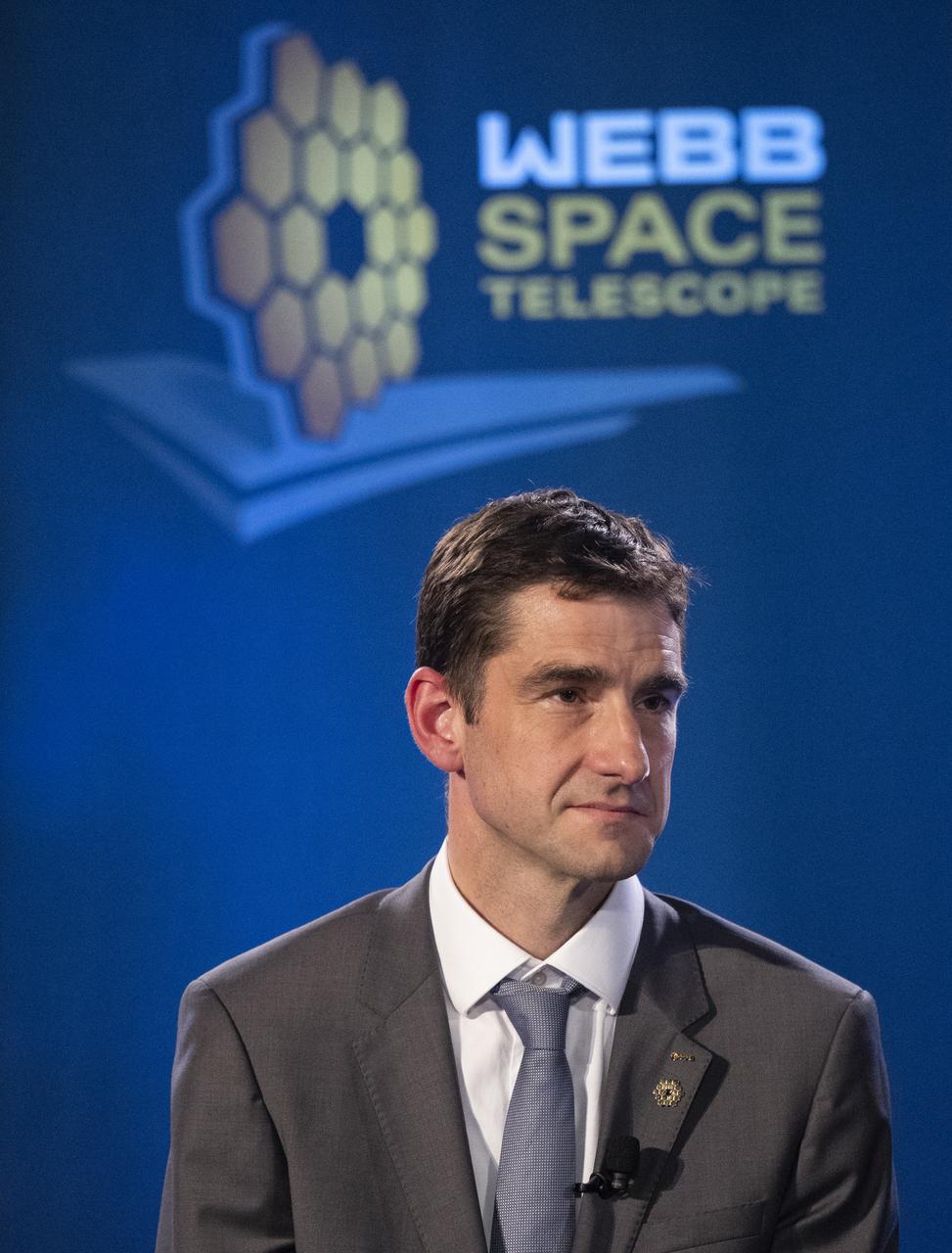
NASA James Webb Space Telescope Project Scientist at ESA (European Space Agency) Christopher Evans is seen during a briefing following the release of the first full-color images from NASA’s James Webb Space Telescope, Tuesday, July 12, 2022, at NASA’s Goddard Space Flight Center in Greenbelt, Md. The first full-color images and spectroscopic data from the James Webb Space Telescope, a partnership with ESA (European Space Agency) and the Canadian Space Agency (CSA), are a demonstration of the power of Webb as the telescope begins its science mission to unfold the infrared universe. Photo Credit: (NASA/Bill Ingalls)

Dr. Josef Aschbacher, Director General, European Space Agency (ESA) listens to NASA Administrator Bill Nelson in a bilateral meeting during the 36th Space Symposium, Monday, Aug. 23, 2021, in Colorado Springs, Colorado. Photo Credit: (NASA/Bill Ingalls)

Johann-Dietrich Woerner, Director General of ESA (European Space Agency), speaks during the Heads of Agency Plenary of the 70th International Astronautical Congress, Monday, Oct. 21, 2019 at the Walter E. Washington Convention Center in Washington. Photo Credit: (NASA/Joel Kowsky)
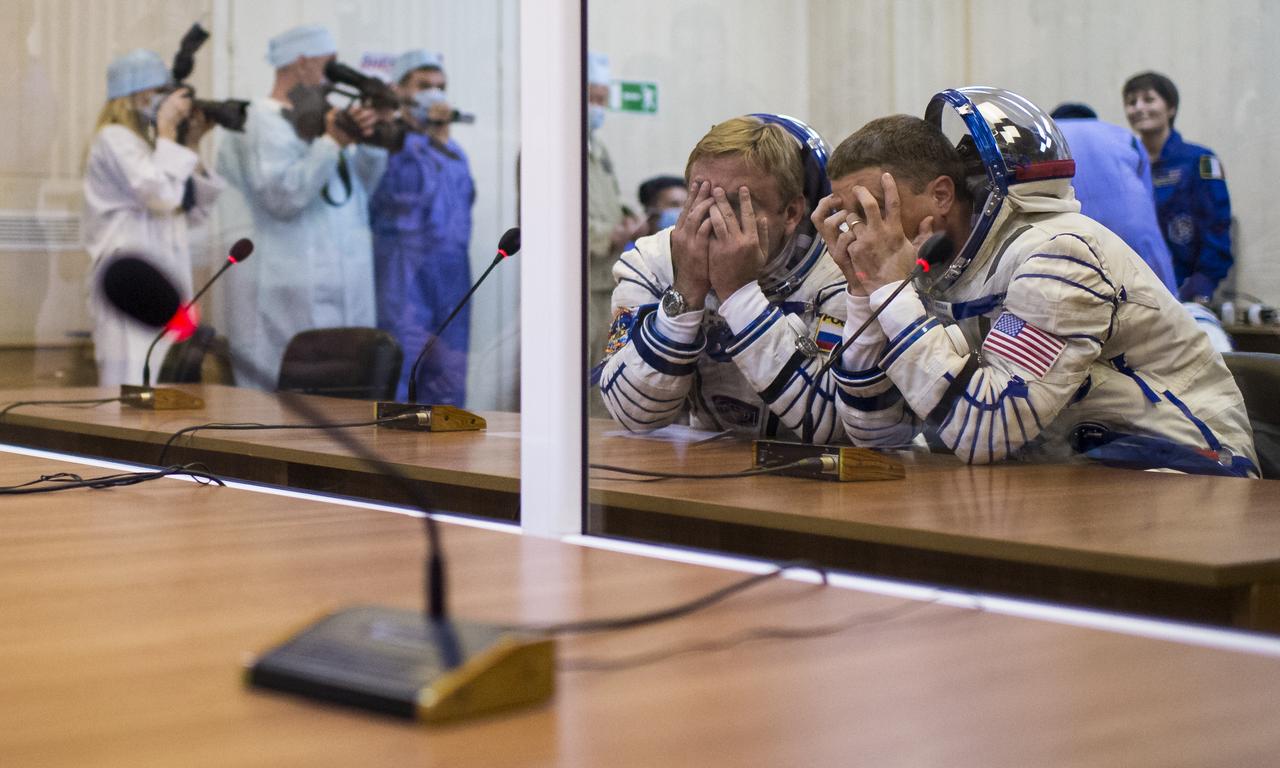
Expedition 40 Soyuz Commander Maxim Suraev of the Russian Federal Space Agency, Roscosmos, left, and Flight Engineer Reid Wiseman of NASA, right, are seen as they talk with family members after having their Russian Sokol suit pressure checked in preparation for his launch onboard the Soyuz TMA-13M spacecraft on Wednesday, May 28, 2014 at the Baikonur Cosmodrome in Kazakhstan. The Soyuz spacecraft with Wiseman, Expedition 40 Soyuz Commander Maxim Suraev of the Russian Federal Space Agency, Roscosmos, and Flight Engineer Alexander Gerst of the European Space Agency, ESA, is scheduled to launch at 1:57 a.m. Kazakhstan time on Thursday, May 29. Photo Credit: (NASA/Joel Kowsky)
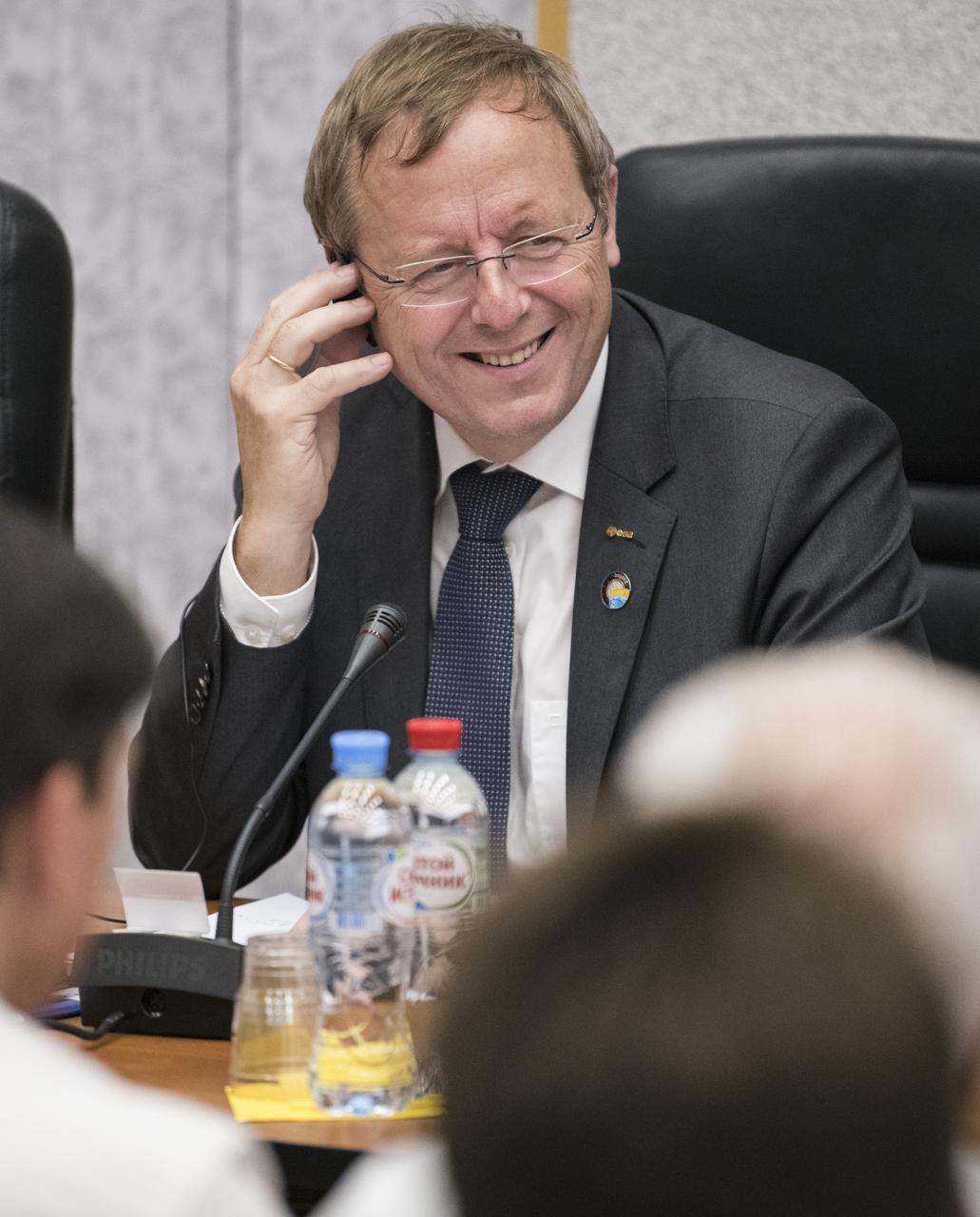
Johann-Dietrich Wörner, Director General of ESA (European Space Agency), is seen during the State Commission meeting to approve the Soyuz launch of Expedition 60 to the International Space Station, Friday, July 19, 2019 at the Cosmonaut Hotel in Baikonur, Kazakhstan. Expedition 60 Soyuz Commander Alexander Skvortsov of Roscosmos, Andrew Morgan of NASA, and Luca Parmitano of ESA (European Space Agency) are scheduled to launch to the International Space Station aboard the Soyuz MS-13 spacecraft on Saturday, July 20. Photo Credit: (NASA/Joel Kowsky)
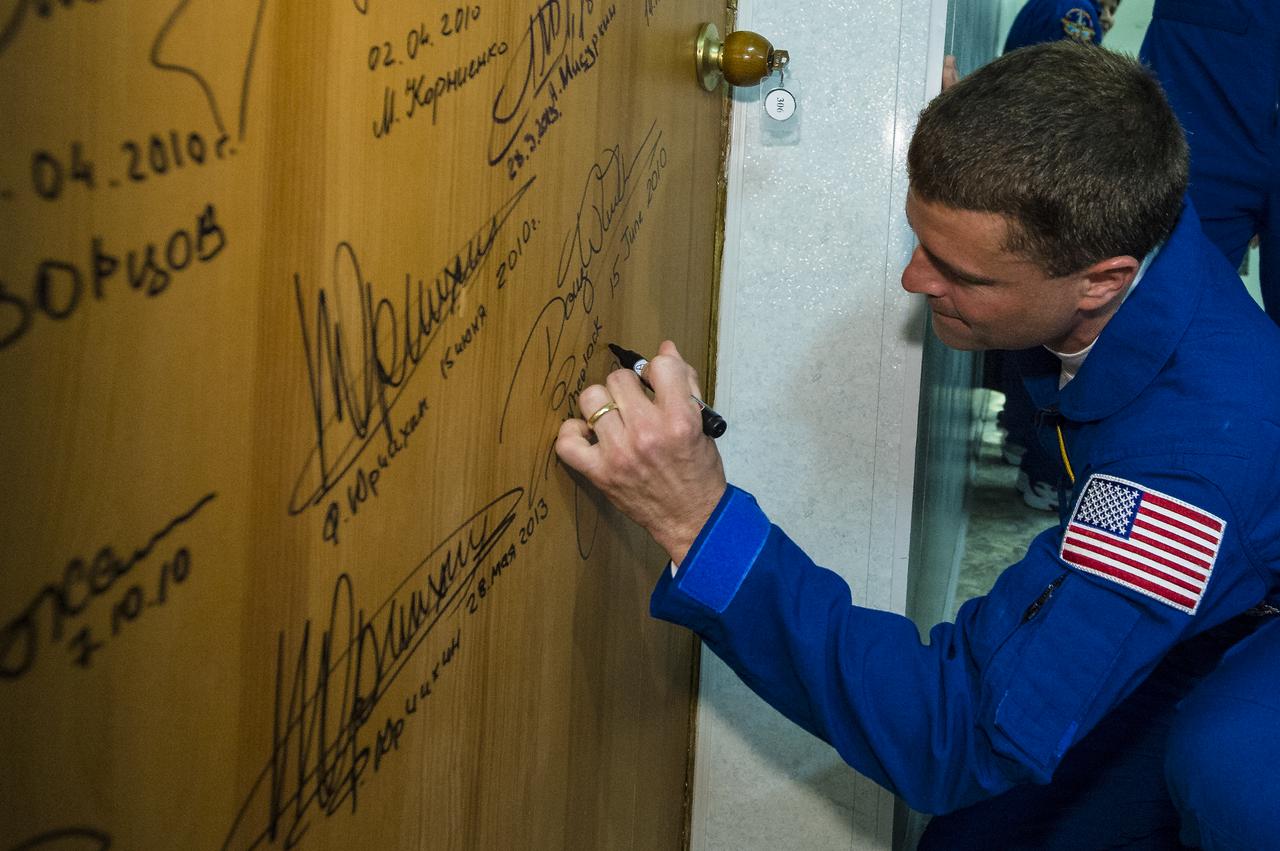
Expedition 40 Flight Engineer Reid Wiseman of NASA, performs the traditional door signing at the Cosmonaut Hotel prior to departing the hotel for launch in a Soyuz rocket with fellow crew mates, Soyuz Commander Maxim Suraev of the Russian Federal Space Agency, Roscosmos, and Flight Engineer Alexander Gerst of the European Space Agency, ESA, Wednesday, May 28, 2014, in Baikonur, Kazakhstan. Wiseman, Suraev, and Gerst will launch in their Soyuz TMA-13M spacecraft to the International Space Station to begin a five and a half month mission. Photo Credit (NASA/Joel Kowsky)
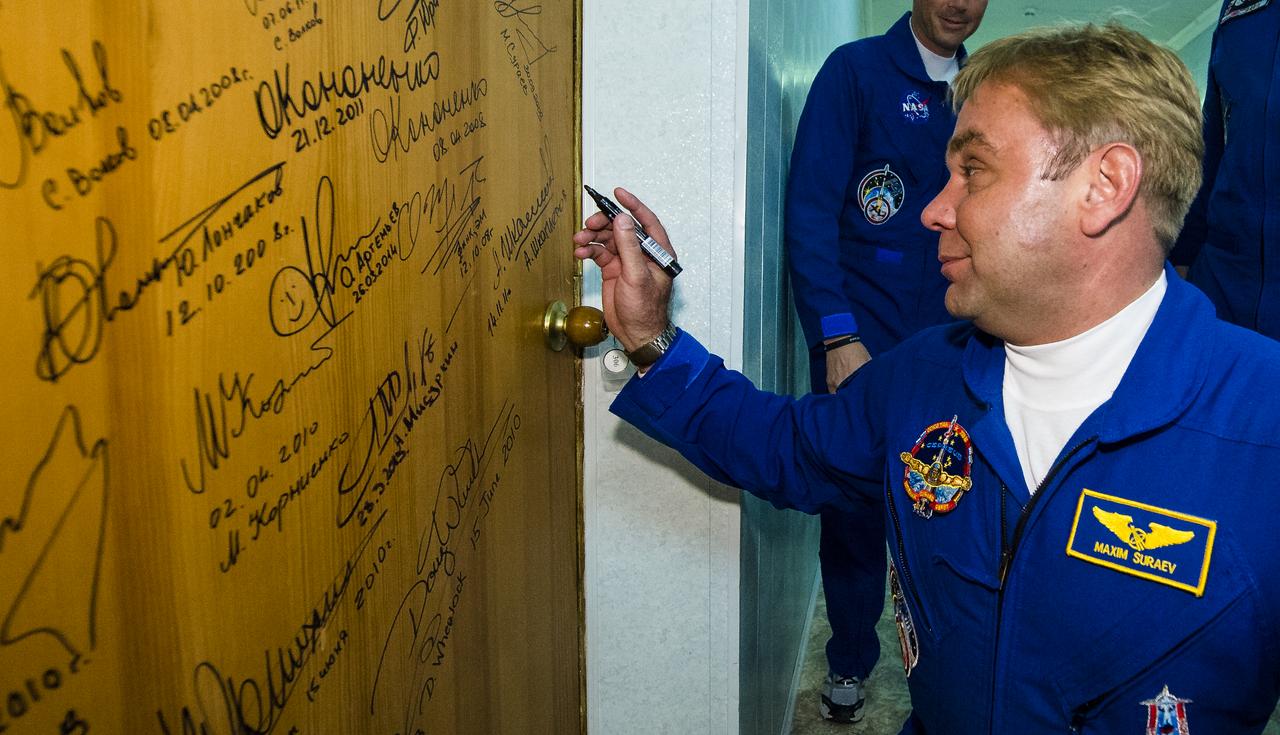
Expedition 40 Soyuz Commander Maxim Suraev of the Russian Federal Space Agency, Roscosmos, performs the traditional door signing at the Cosmonaut Hotel prior to departing the hotel for launch in a Soyuz rocket with fellow crew mates, Flight Engineer Alexander Gerst of the European Space Agency, ESA, and Flight Engineer Reid Wiseman of NASA, Wednesday, May 28, 2014 in Baikonur, Kazakhstan. Suraev, Gerst, and Wiseman will launch in their Soyuz TMA-13M spacecraft to the International Space Station to begin a five and a half month mission. Photo Credit (NASA/Joel Kowsky)
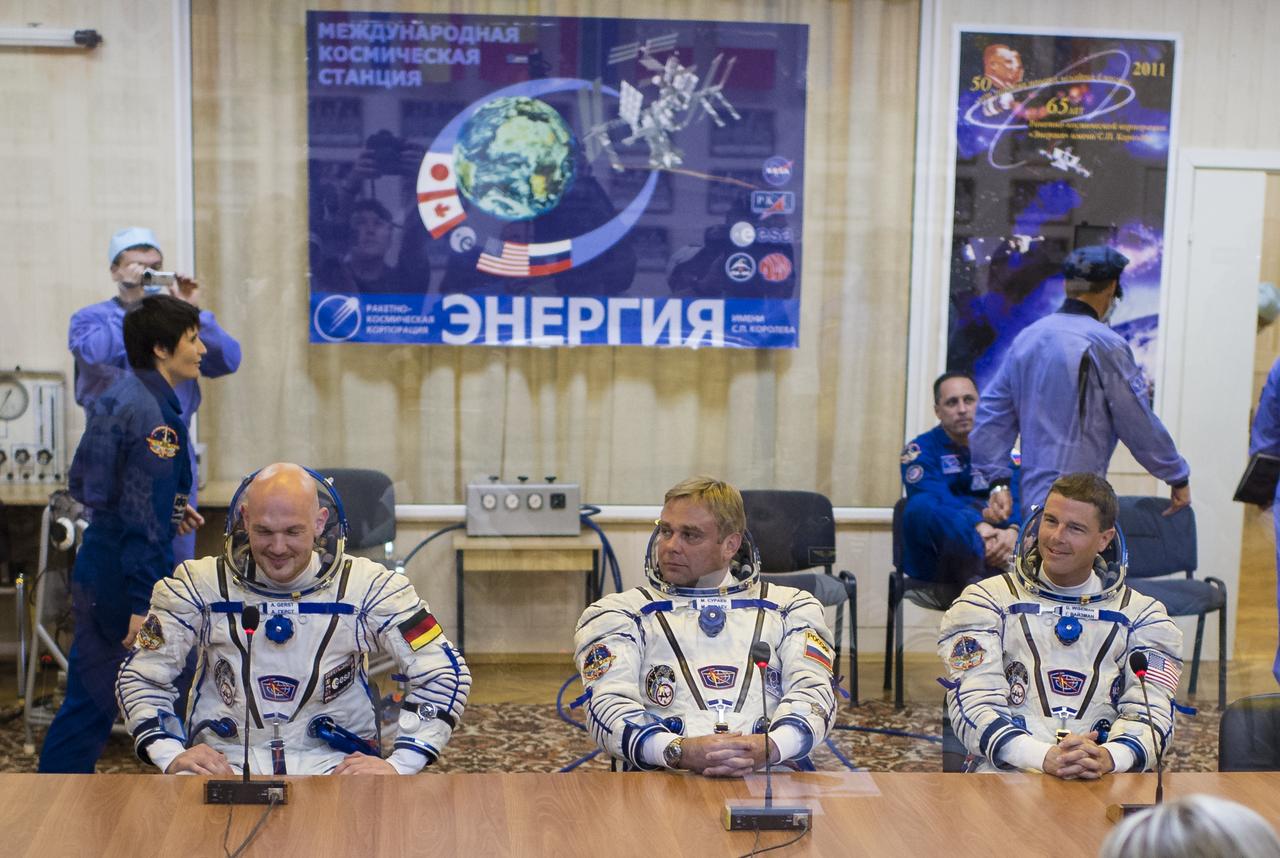
Expedition 40 Flight Engineer Alexander Gerst of the European Space Agency, ESA, left, Soyuz Commander Maxim Suraev of the Russian Federal Space Agency, Roscosmos, center, and Flight Engineer Reid Wiseman of NASA, left, are seen after having their Russian Sokol suits pressure checked in preparation for their launch onboard the Soyuz TMA-13M spacecraft on Wednesday, May 28, 2014 at the Baikonur Cosmodrome in Kazakhstan. The trio is set to launch on a six month mission to the International Space Station onboard the Soyuz TMA-13M spacecraft at 1:57 a.m. Kazakhstan time on Thursday, May 29. Photo Credit: (NASA/Joel Kowsky)
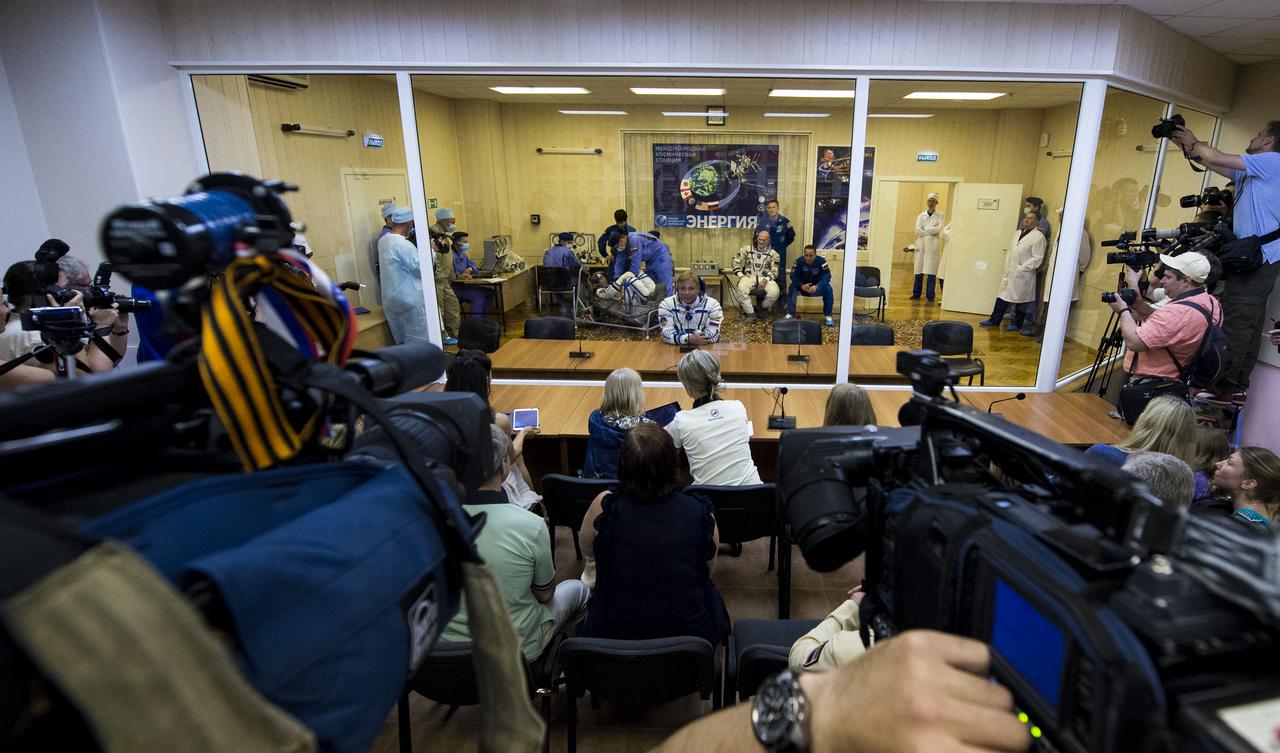
Expedition 40 Soyuz Commander Maxim Suraev of the Russian Federal Space Agency, Roscosmos, speaks with his family after having his Russian Sokol suit pressure checked in preparation for his launch onboard the Soyuz TMA-13M spacecraft on Wednesday, May 28, 2014 at the Baikonur Cosmodrome in Kazakhstan. The Soyuz spacecraft with Suraev, Expedition 40 Flight Engineer Alexander Gerst of the European Space Agency, ESA, and Flight Engineer Reid Wiseman of NASA is scheduled to launch at 1:57 a.m. Kazakhstan Time on Thursday, May 29. Photo Credit: (NASA/Joel Kowsky)
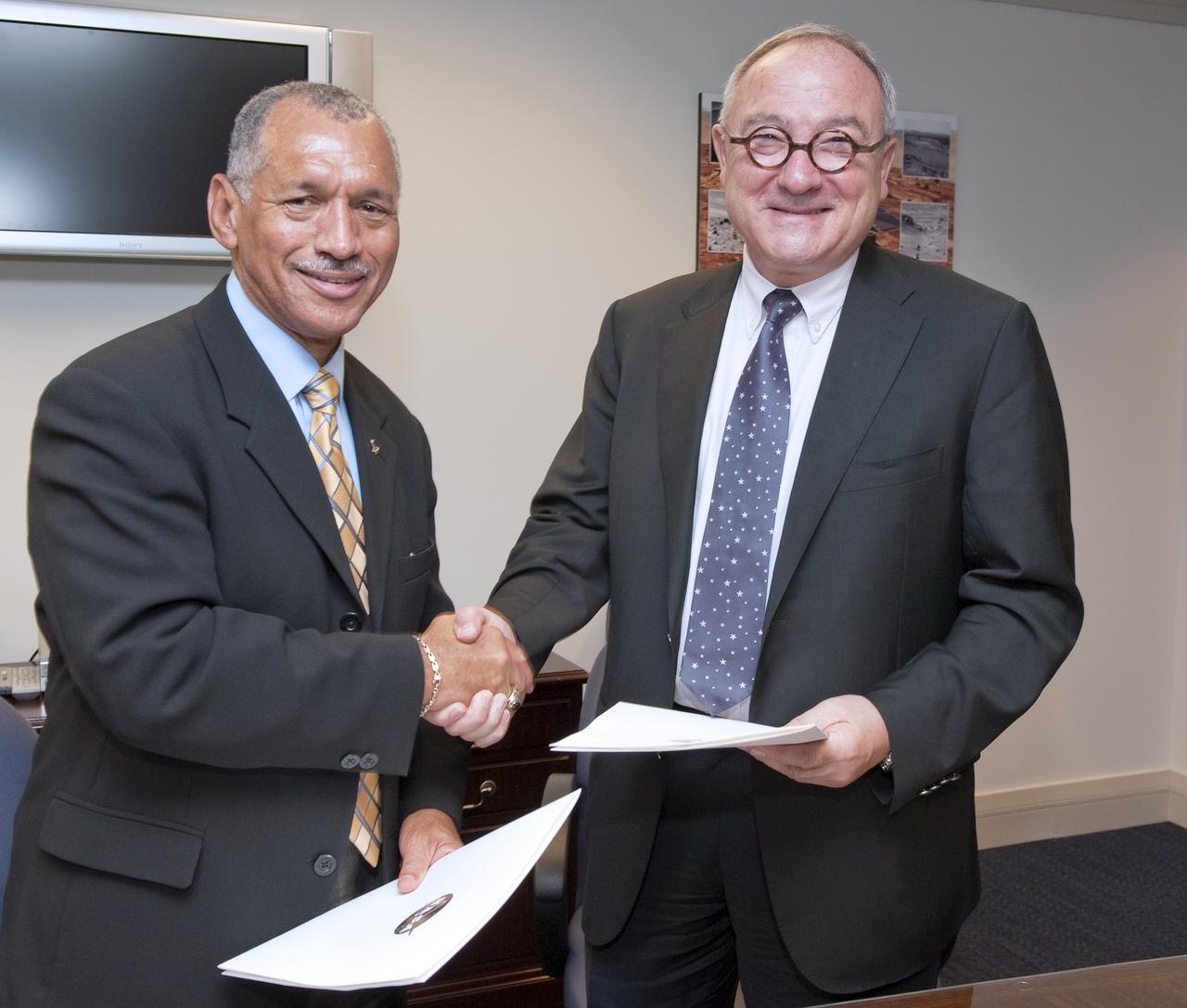
NASA Adminiistrator Charles F. Bolden, left, and Jean-Jacques Dordain, Director General of the European Space Agency (ESA), shake hands, Friday, Sept. 11, 2009, after signing a Space Transportation Memorandum of Understanding (MOU) at NASA Headquarters in Washington. Photo Credit: (NASA/Paul E. Alers)
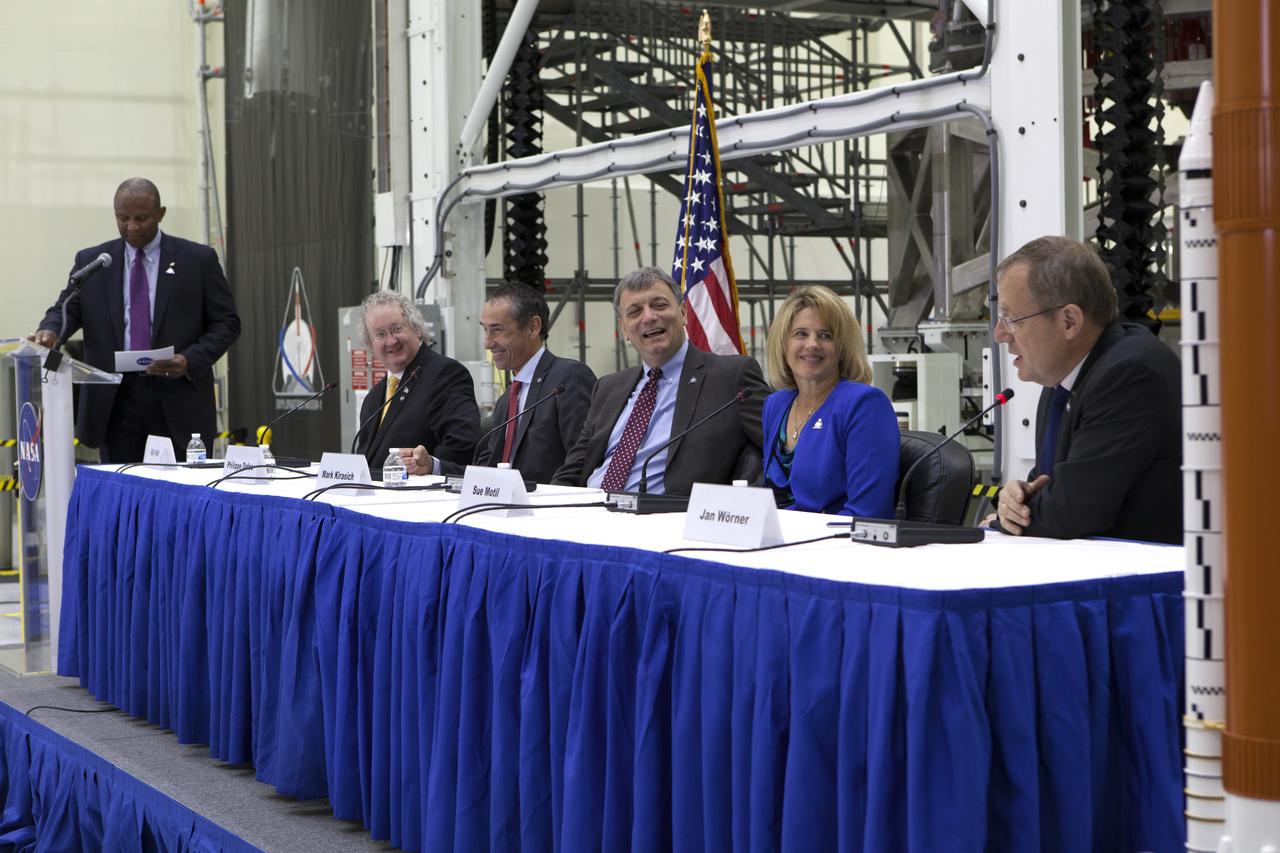
Kennedy Space Center Associate Director Kelvin Manning, far left, moderates questions to NASA and European Space Agency (ESA) senior managers during the "Powering Exploration Mission-1" ceremony in the high bay of the Neil Armstrong Operations and Checkout Building at the center on Nov. 16, 2016. From left, are Bill Hill, deputy associate administrator for Exploration Systems Development; Phillippe Deloo, European Service Module program manager at ESA; Mark Kirasich, Orion Program manager at the agency's Johnson Space Center in Houston; Sue Motil, Orion European Service Module integration manager at the agency's Glenn Research Center; and Jan Worner, ESA director general. The event was held to mark a major milestone, the arrival of the European Service Module (ESM) for Orion's Exploration Mission-1. The service module, built by the European Space Agency, will supply the main propulsion system and power to the Orion spacecraft during EM-1, a mission to the Moon. The ESM also will house air and water for astronauts on future missions. EM-1 will be an uncrewed flight test that will provide a foundation for human deep space exploration to destinations beyond Earth orbit. EM-1 will be the first integrated test of NASA's Space Launch System, Orion and the ground systems at Kennedy.
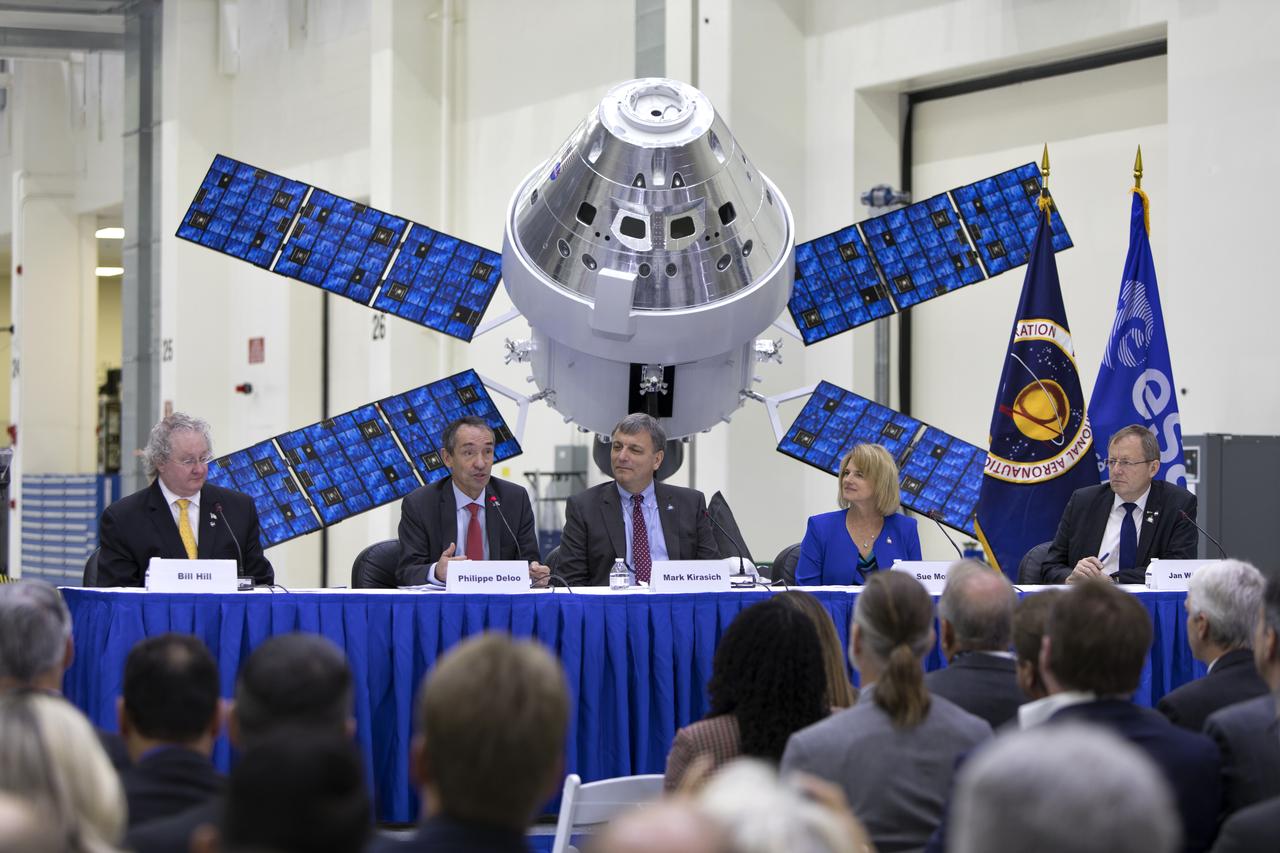
NASA and European Space Agency (ESA) senior managers answer questions during a "Powering Exploration Mission-1" ceremony in the Neil Armstrong Operations and Checkout Building high bay at NASA's Kennedy Space Center on Nov. 16, 2018. From left, are Bill Hill, deputy associate administrator for Exploration Systems Development; Phillippe Deloo, European Service Module program manager at ESA; Mark Kirasich, Orion Program manager at the agency's Johnson Space Center in Houston; Sue Motil, Orion European Service Module integration manager at the agency's Glenn Research Center; and Jan Worner, ESA director general. The event was held to mark a major milestone, the arrival of the European Service Module (ESM) for Orion's Exploration Mission-1. The service module, built by the European Space Agency, will supply the main propulsion system and power to the Orion spacecraft during EM-1, a mission to the Moon. The ESM also will house air and water for astronauts on future missions. EM-1 will be an uncrewed flight test that will provide a foundation for human deep space exploration to destinations beyond Earth orbit. EM-1 will be the first integrated test of NASA's Space Launch System, Orion and the ground systems at Kennedy.
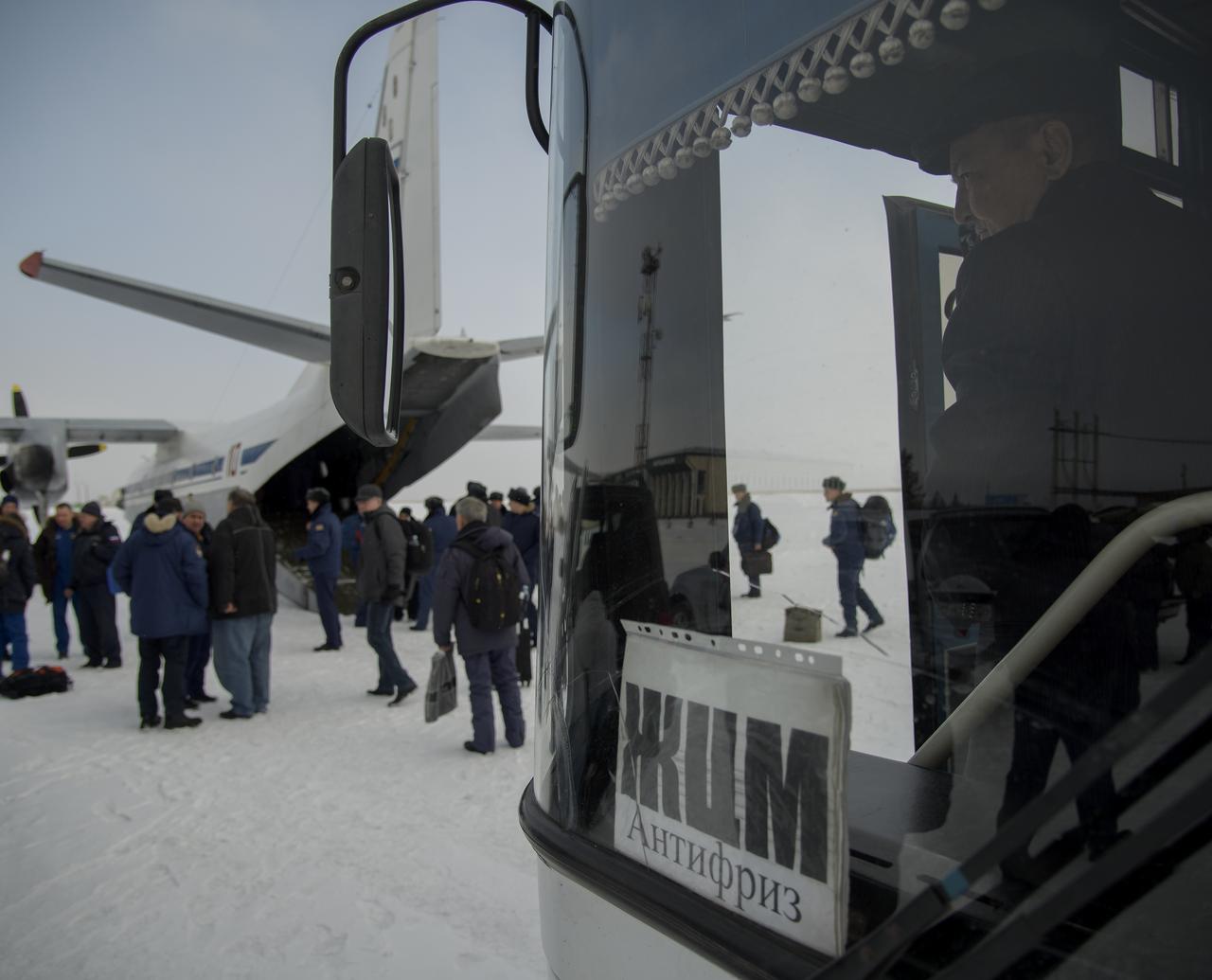
NASA, ESA, Roscosmos, and Russian Search and Recovery Forces arrive in Zhezkazgan, Kazakhstan in advance of the landing of Expedition 57 crew members Serena Auñón-Chancellor of NASA, Alexander Gerst of ESA (European Space Agency), and Sergey Prokopyev of Roscosmos. Wednesday, Dec. 19, 2018. Auñón-Chancellor, Gerst, and Prokopyev are returning after 197 days in space where they served as members of the Expedition 56 and 57 crews onboard the International Space Station. Photo Credit: (NASA/Bill Ingalls)
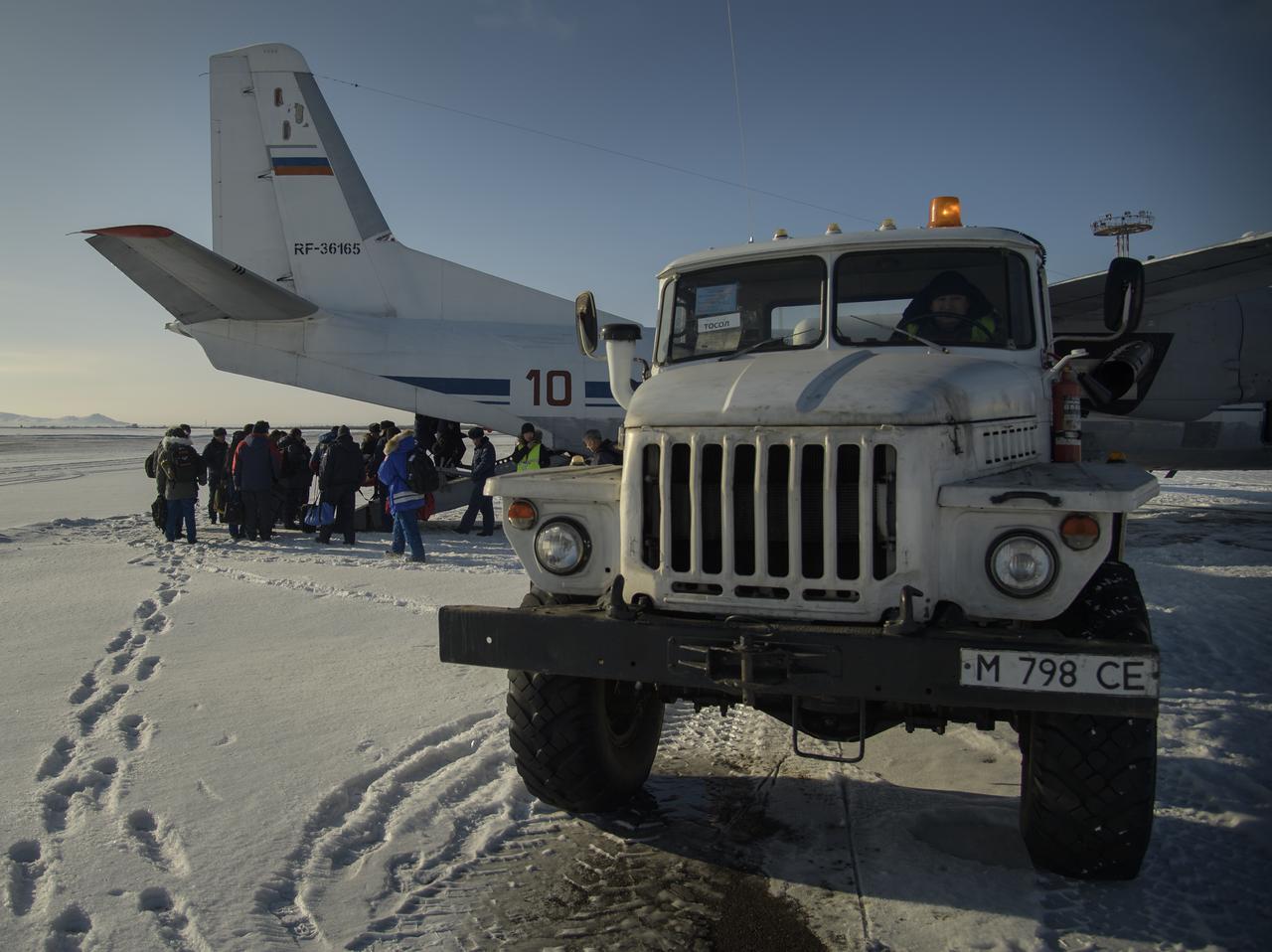
NASA, ESA, Roscosmos, and Russian Search and Recovery Forces deploy from Karaganda to Zhezkazgan, Kazakhstan in advance of the landing of Expedition 57 crew members Serena Auñón-Chancellor of NASA, Alexander Gerst of ESA (European Space Agency), and Sergey Prokopyev of Roscosmos. Wednesday, Dec. 19, 2018. Auñón-Chancellor, Gerst, and Prokopyev are returning after 197 days in space where they served as members of the Expedition 56 and 57 crews onboard the International Space Station. Photo Credit: (NASA/Bill Ingalls)
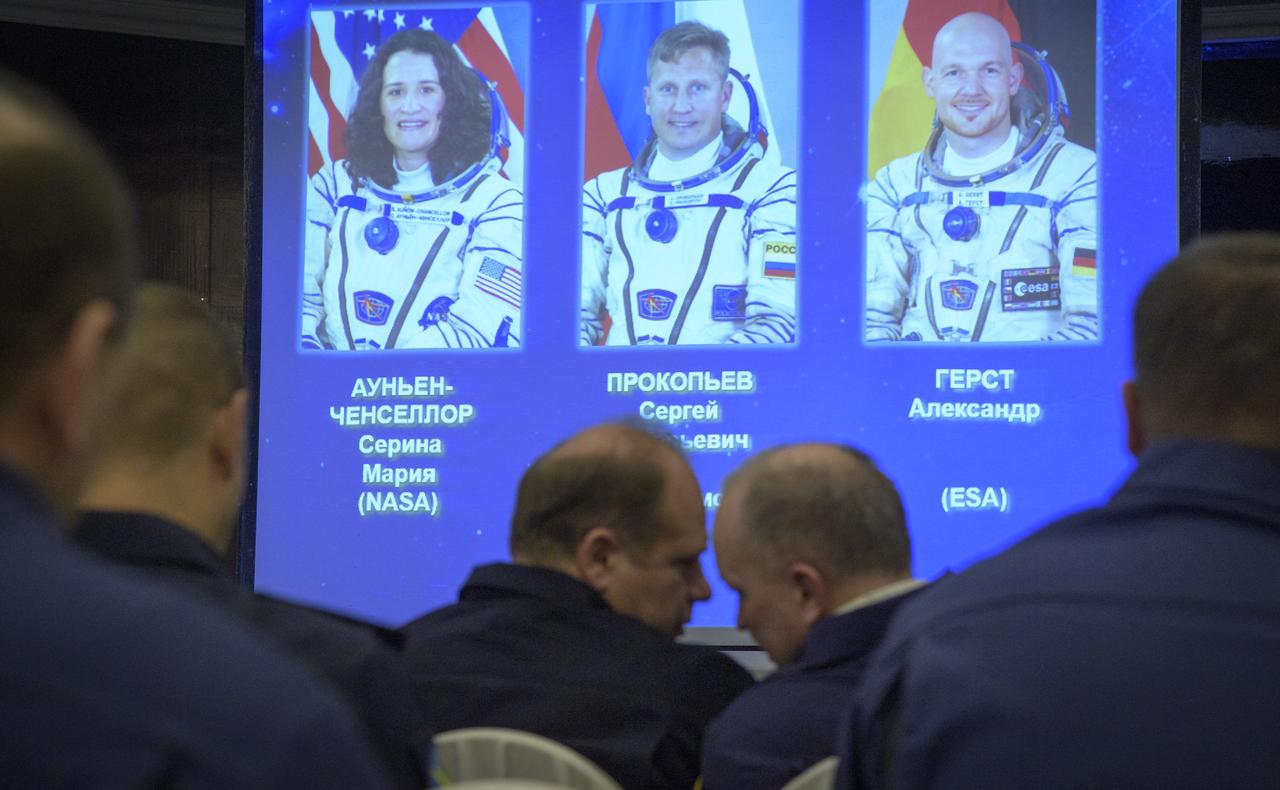
NASA, ESA, Roscosmos, and Russian Search and Recovery Forces meet at the Cosmonaut Hotel in Karaganda, Kazakhstan to discuss the readiness for the landing of Expedition 57 crew members Serena Auñón-Chancellor of NASA, Alexander Gerst of ESA (European Space Agency), and Sergey Prokopyev of Roscosmos, Tuesday, Dec. 18, 2018. Auñón-Chancellor, Gerst, and Prokopyev are returning after 197 days in space where they served as members of the Expedition 56 and 57 crews onboard the International Space Station. Photo Credit: (NASA/Bill Ingalls)
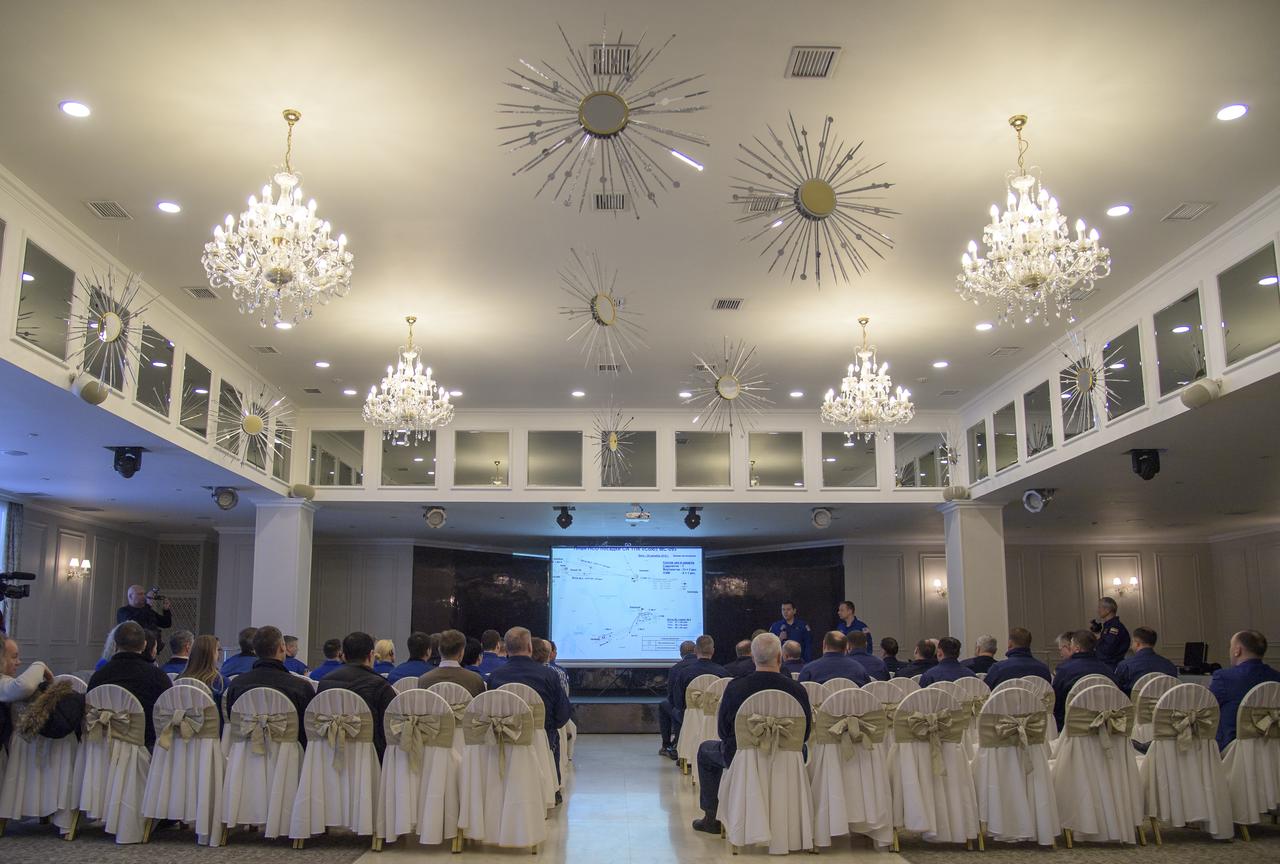
NASA, ESA, Roscosmos, and Russian Search and Recovery Forces meet at the Cosmonaut Hotel in Karaganda, Kazakhstan to discuss the readiness for the landing of Expedition 57 crew members Serena Auñón-Chancellor of NASA, Alexander Gerst of ESA (European Space Agency), and Sergey Prokopyev of Roscosmos, Tuesday, Dec. 18, 2018. Auñón-Chancellor, Gerst, and Prokopyev are returning after 197 days in space where they served as members of the Expedition 56 and 57 crews onboard the International Space Station. Photo Credit: (NASA/Bill Ingalls)
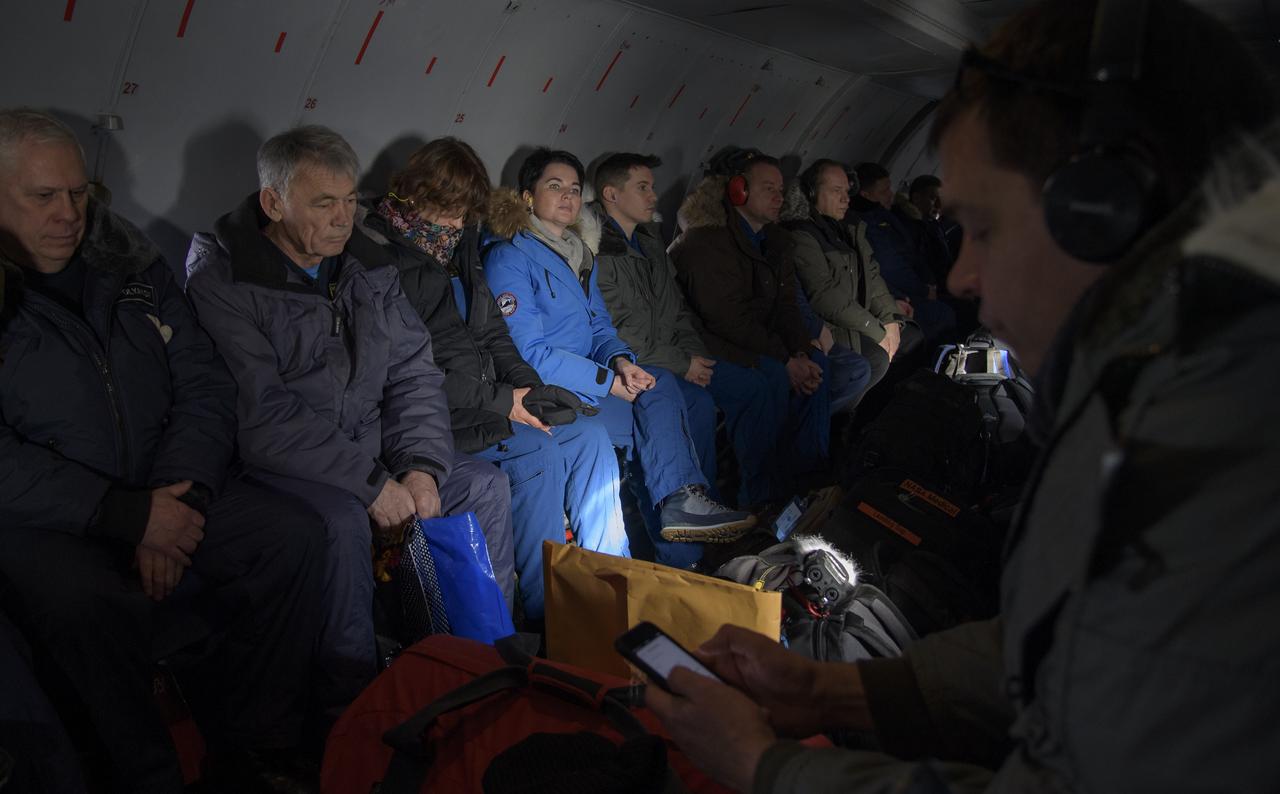
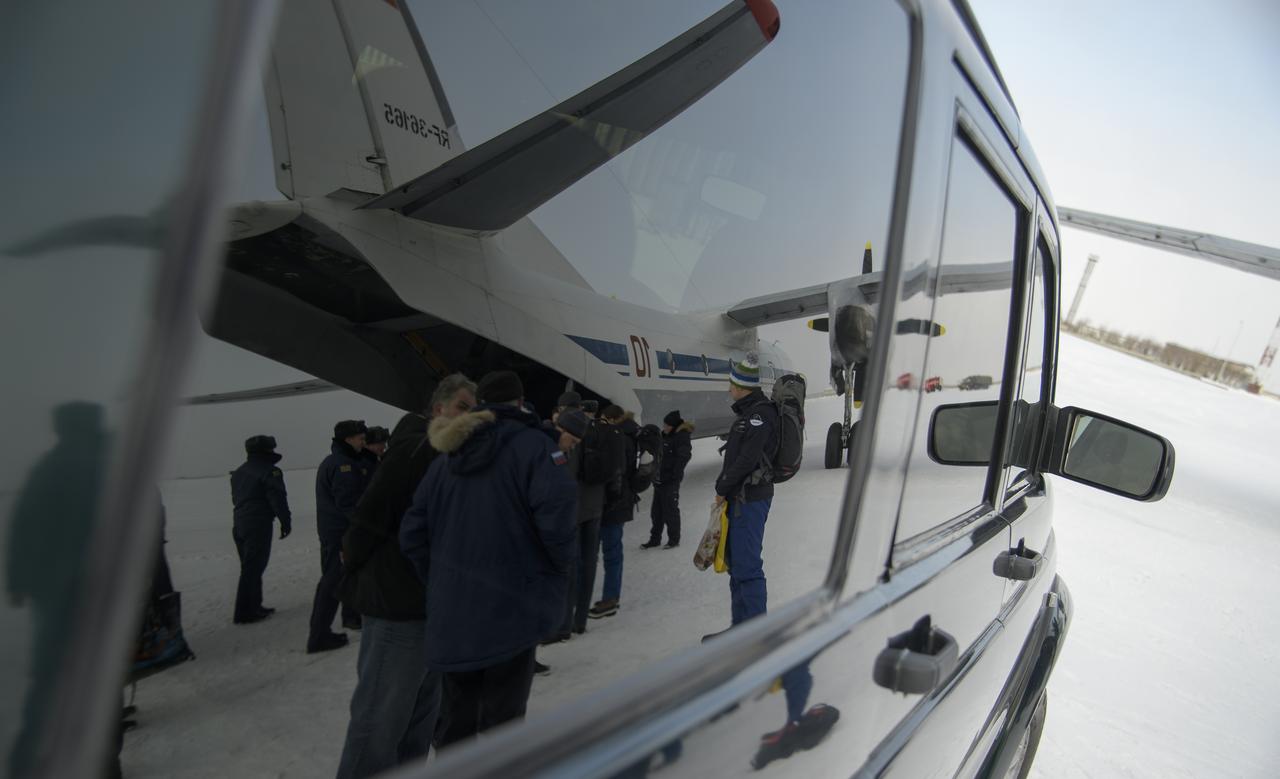
NASA, ESA, Roscosmos, and Russian Search and Recovery Forces are seen onboard a AN-26 aircraft as they deploy from Karaganda to Zhezkazgan, Kazakhstan in advance of the landing of Expedition 57 crew members Serena Auñón-Chancellor of NASA, Alexander Gerst of ESA (European Space Agency), and Sergey Prokopyev of Roscosmos. Wednesday, Dec. 19, 2018. Auñón-Chancellor, Gerst, and Prokopyev are returning after 197 days in space where they served as members of the Expedition 56 and 57 crews onboard the International Space Station. Photo Credit: (NASA/Bill Ingalls)
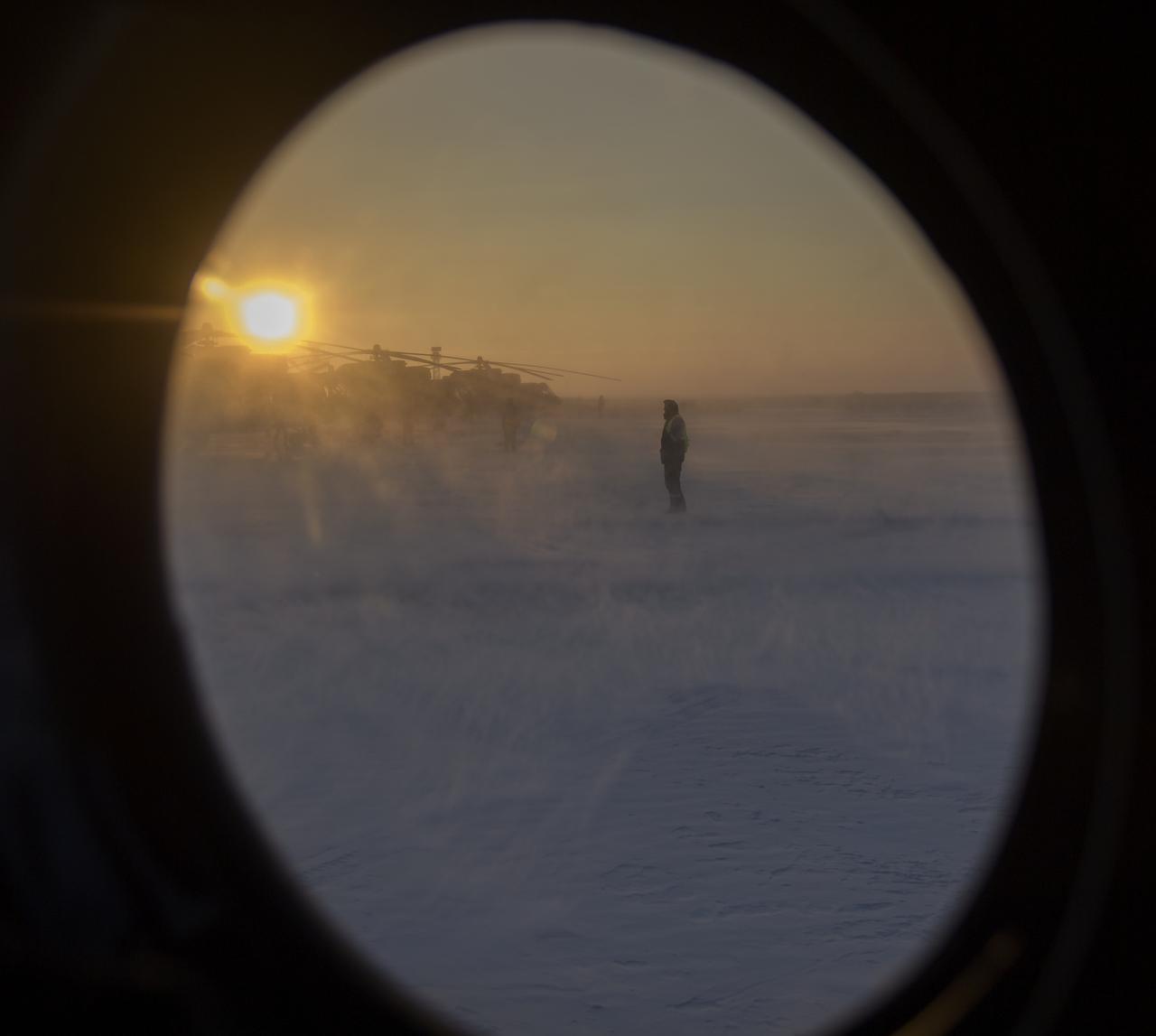
NASA, ESA, Roscosmos, and Russian Search and Recovery Forces deploy from Zhezkazgan, Kazakhstan for the landing of Expedition 57 crew members Serena Auñón-Chancellor of NASA, Alexander Gerst of ESA (European Space Agency), and Sergey Prokopyev of Roscosmos. Thursday, Dec. 20, 2018. Auñón-Chancellor, Gerst, and Prokopyev are returning after 197 days in space where they served as members of the Expedition 56 and 57 crews onboard the International Space Station. Photo Credit: (NASA/Bill Ingalls)

NASA, ESA, Roscosmos, and Russian Search and Recovery Forces meet at the Cosmonaut Hotel in Karaganda, Kazakhstan to discuss the readiness for the landing of Expedition 57 crew members Serena Auñón-Chancellor of NASA, Alexander Gerst of ESA (European Space Agency), and Sergey Prokopyev of Roscosmos, Tuesday, Dec. 18, 2018. Auñón-Chancellor, Gerst, and Prokopyev are returning after 197 days in space where they served as members of the Expedition 56 and 57 crews onboard the International Space Station. Photo Credit: (NASA/Bill Ingalls)
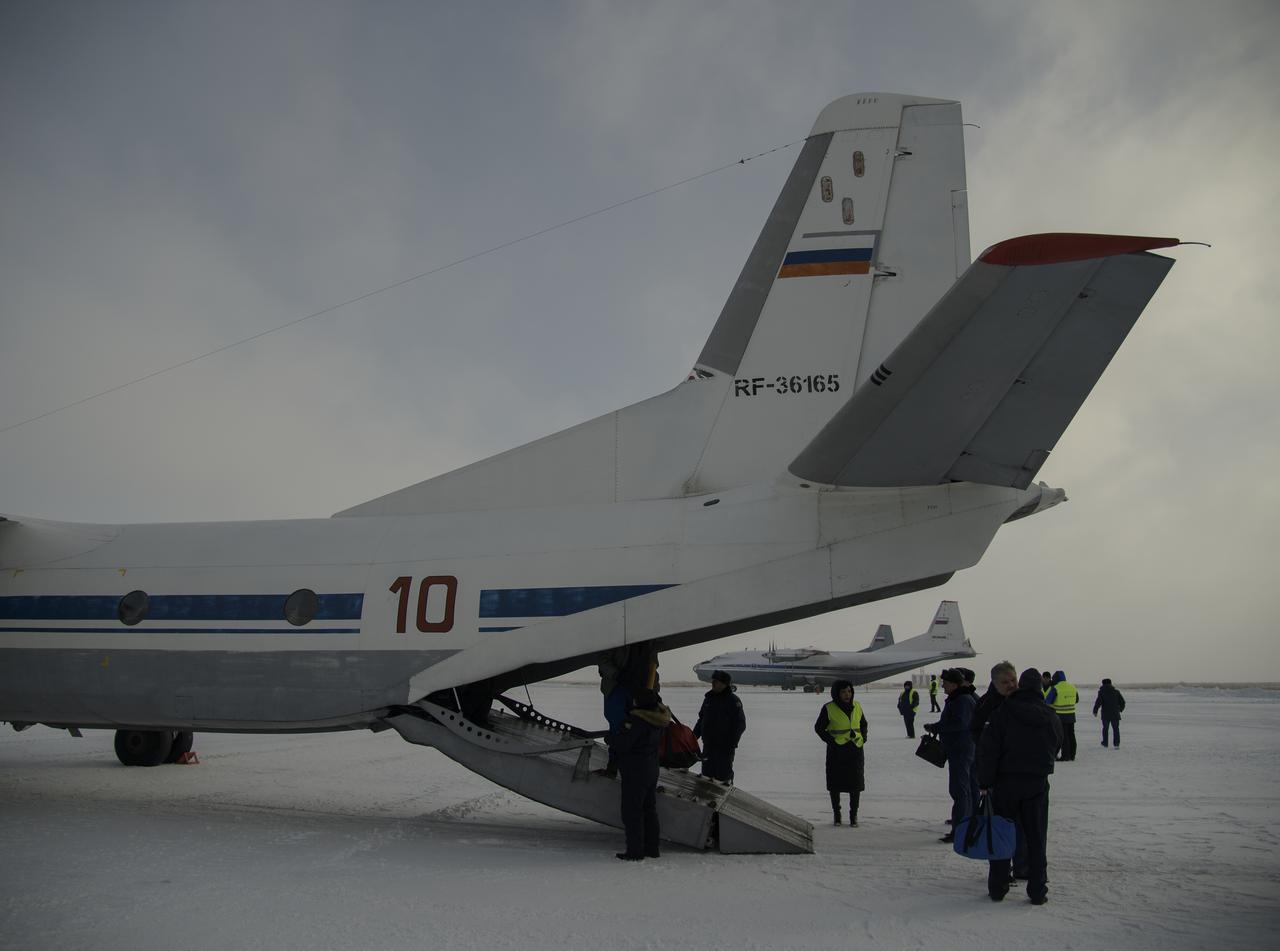
NASA, ESA, Roscosmos, and Russian Search and Recovery Forces arrive in Zhezkazgan, Kazakhstan in advance of the landing of Expedition 57 crew members Serena Auñón-Chancellor of NASA, Alexander Gerst of ESA (European Space Agency), and Sergey Prokopyev of Roscosmos. Wednesday, Dec. 19, 2018. Auñón-Chancellor, Gerst, and Prokopyev are returning after 197 days in space where they served as members of the Expedition 56 and 57 crews onboard the International Space Station. Photo Credit: (NASA/Bill Ingalls)
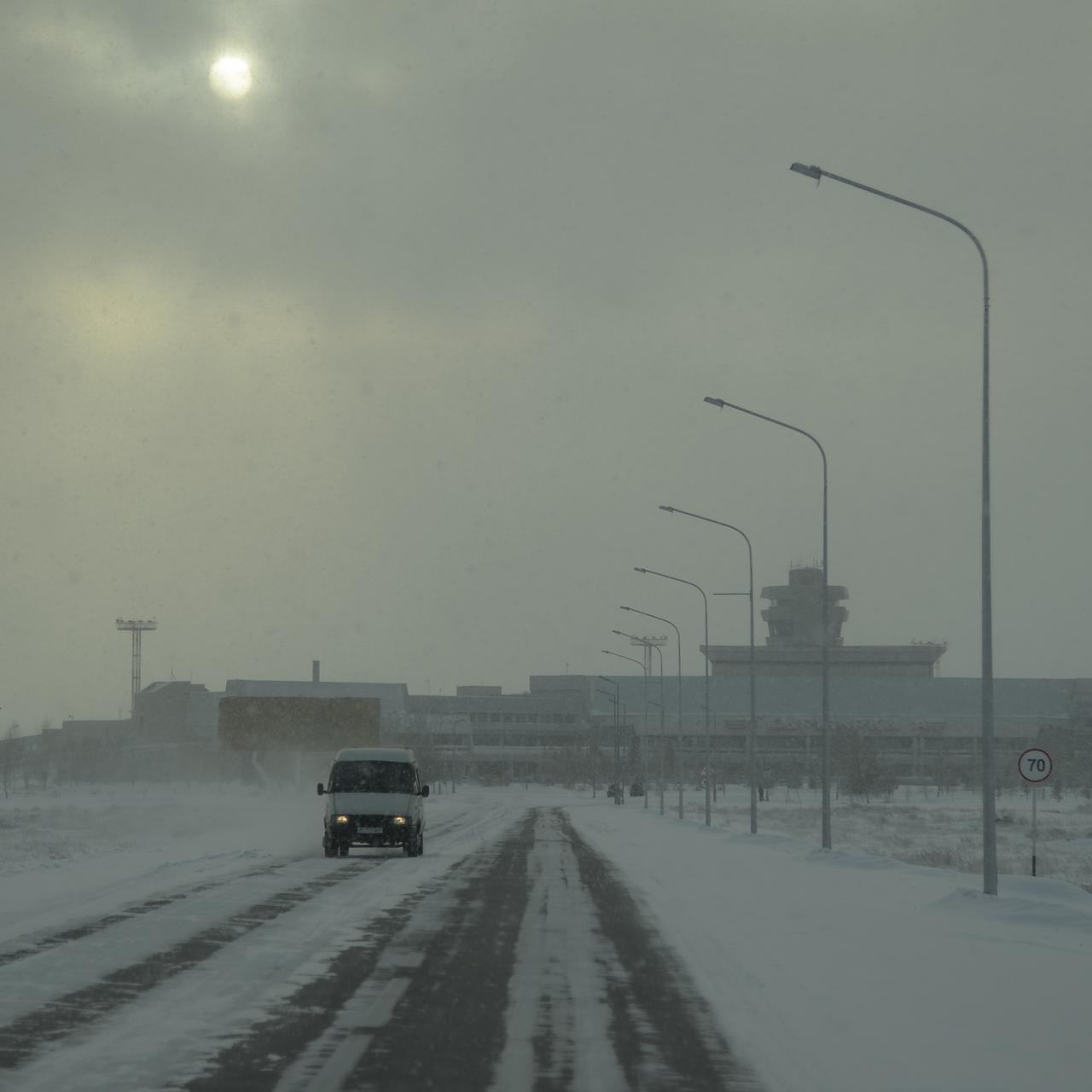
View from a van carrying team members from NASA and ESA to the Karaganda Airport in Kazakhstan in advance of the landing of Expedition 57 crew members Serena Auñón-Chancellor of NASA, Alexander Gerst of ESA (European Space Agency), and Sergey Prokopyev of Roscosmos. Wednesday, Dec. 19, 2018. Auñón-Chancellor, Gerst, and Prokopyev are returning after 197 days in space where they served as members of the Expedition 56 and 57 crews onboard the International Space Station. Photo Credit: (NASA/Bill Ingalls)
NASA, ESA, Roscosmos, and Russian Search and Recovery Forces deploy from Zhezkazgan, Kazakhstan for the landing of Expedition 57 crew members Serena Auñón-Chancellor of NASA, Alexander Gerst of ESA (European Space Agency), and Sergey Prokopyev of Roscosmos. Thursday, Dec. 20, 2018. Auñón-Chancellor, Gerst, and Prokopyev are returning after 197 days in space where they served as members of the Expedition 56 and 57 crews onboard the International Space Station. Photo Credit: (NASA/Bill Ingalls)
NASA, ESA, Roscosmos, and Russian Search and Recovery Forces deploy from Zhezkazgan, Kazakhstan for the landing of Expedition 57 crew members Serena Auñón-Chancellor of NASA, Alexander Gerst of ESA (European Space Agency), and Sergey Prokopyev of Roscosmos. Thursday, Dec. 20, 2018. Auñón-Chancellor, Gerst, and Prokopyev are returning after 197 days in space where they served as members of the Expedition 56 and 57 crews onboard the International Space Station. Photo Credit: (NASA/Bill Ingalls)
NASA, ESA, Roscosmos, and Russian Search and Recovery Forces deploy from Karaganda to Zhezkazgan, Kazakhstan in advance of the landing of Expedition 57 crew members Serena Auñón-Chancellor of NASA, Alexander Gerst of ESA (European Space Agency), and Sergey Prokopyev of Roscosmos. Wednesday, Dec. 19, 2018. Auñón-Chancellor, Gerst, and Prokopyev are returning after 197 days in space where they served as members of the Expedition 56 and 57 crews onboard the International Space Station. Photo Credit: (NASA/Bill Ingalls)
NASA, ESA, Roscosmos, and Russian Search and Recovery Forces arrive in Zhezkazgan, Kazakhstan in advance of the landing of Expedition 57 crew members Serena Auñón-Chancellor of NASA, Alexander Gerst of ESA (European Space Agency), and Sergey Prokopyev of Roscosmos. Wednesday, Dec. 19, 2018. Auñón-Chancellor, Gerst, and Prokopyev are returning after 197 days in space where they served as members of the Expedition 56 and 57 crews onboard the International Space Station. Photo Credit: (NASA/Bill Ingalls)
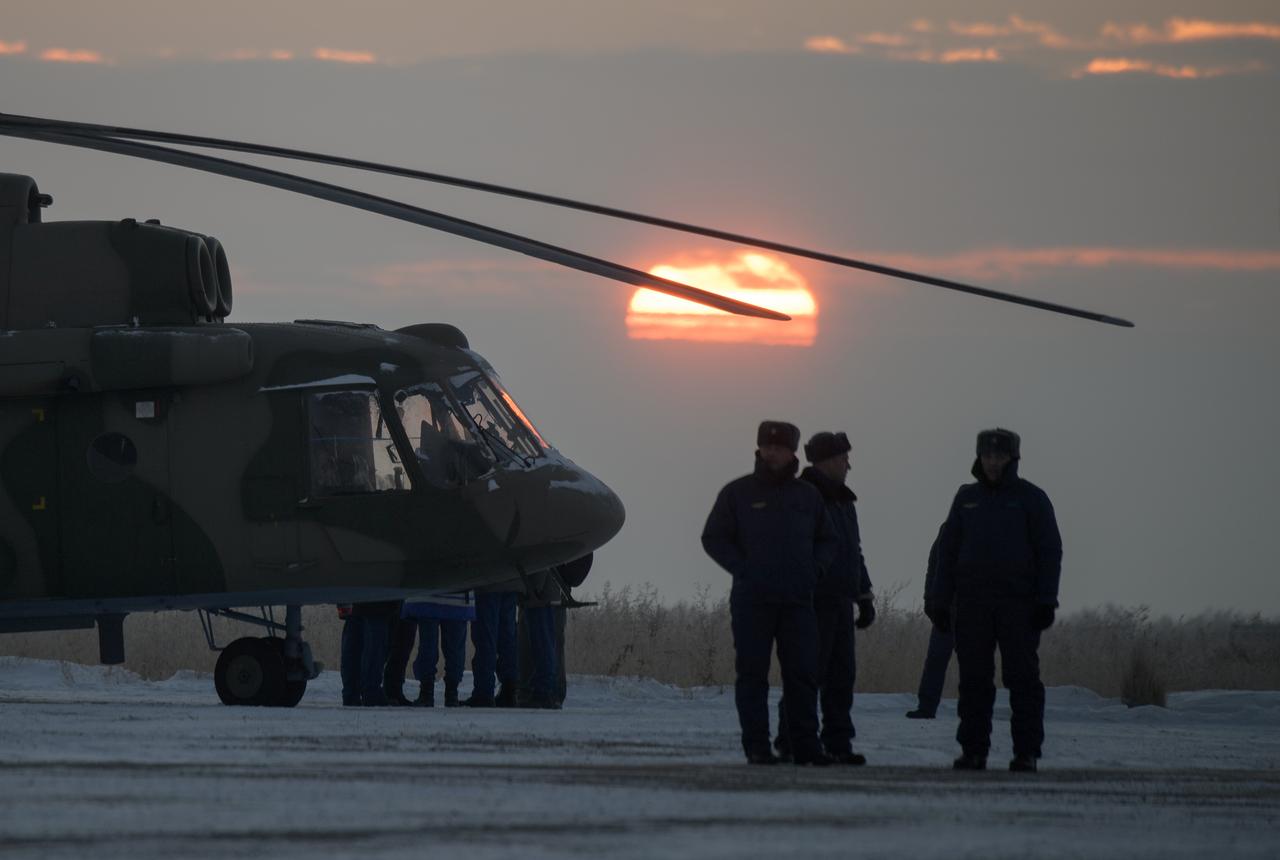
NASA, ESA, Roscosmos, and Russian Search and Recovery Forces deploy from Zhezkazgan, Kazakhstan for the landing of Expedition 57 crew members Serena Auñón-Chancellor of NASA, Alexander Gerst of ESA (European Space Agency), and Sergey Prokopyev of Roscosmos. Thursday, Dec. 20, 2018. Auñón-Chancellor, Gerst, and Prokopyev are returning after 197 days in space where they served as members of the Expedition 56 and 57 crews onboard the International Space Station. Photo Credit: (NASA/Bill Ingalls)
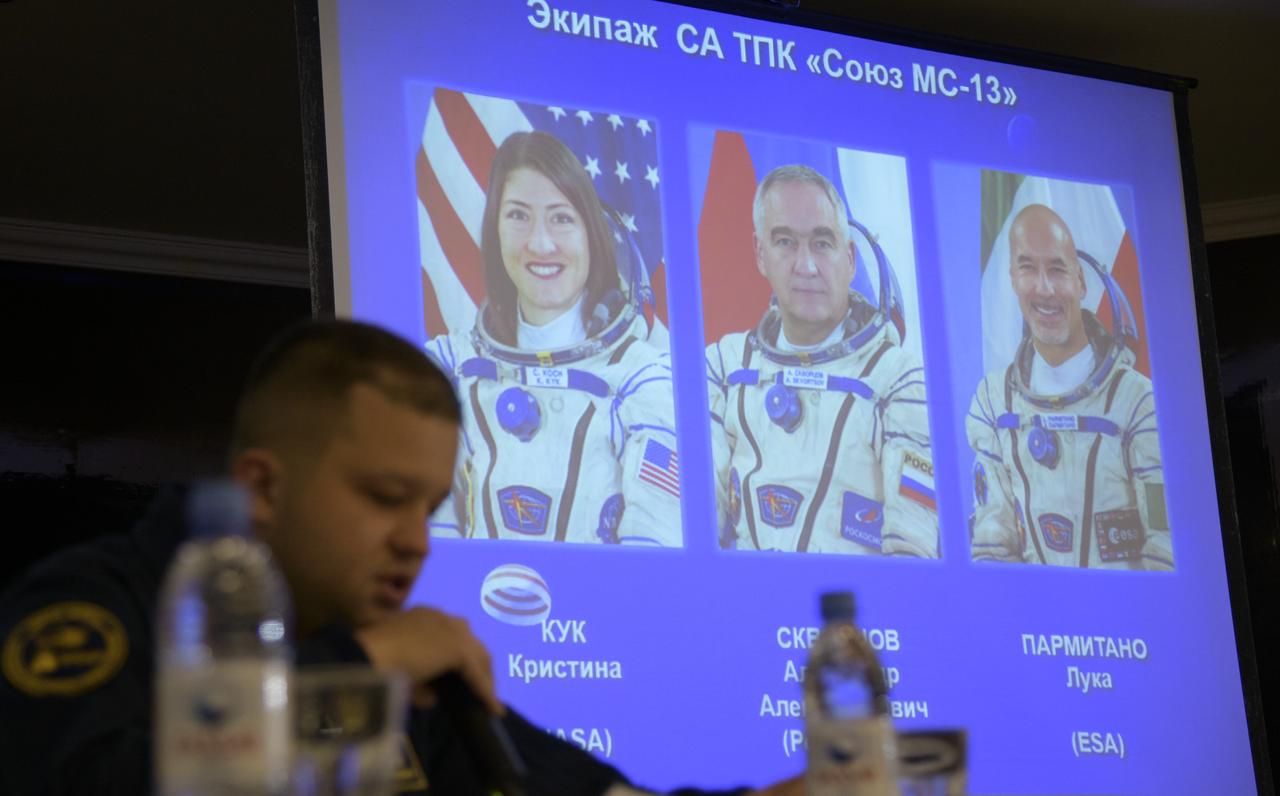
NASA, ESA, Roscosmos, and Russian Search and Recovery Forces meet at the Cosmonaut Hotel in Karaganda, Kazakhstan to discuss the readiness for the landing of Expedition 61 crew members Christina Koch of NASA, Alexander Skvortsov of the Russian space agency Roscosmos, and Luca Parmitano of ESA (European Space Agency) Tuesday, Feb. 4, 2020, at the Cosmonaut Hotel in Karaganda, Kazakhstan. Koch will be returning to Earth after logging 328 days in space --- the longest spaceflight in history by a woman --- as a member of Expeditions 59-60-61 on the International Space Station. Skvortsov and Parmitano will be returning after 201 days in space where they served as Expedition 60-61 crew members onboard the station. Photo Credit: (NASA/Bill Ingalls)
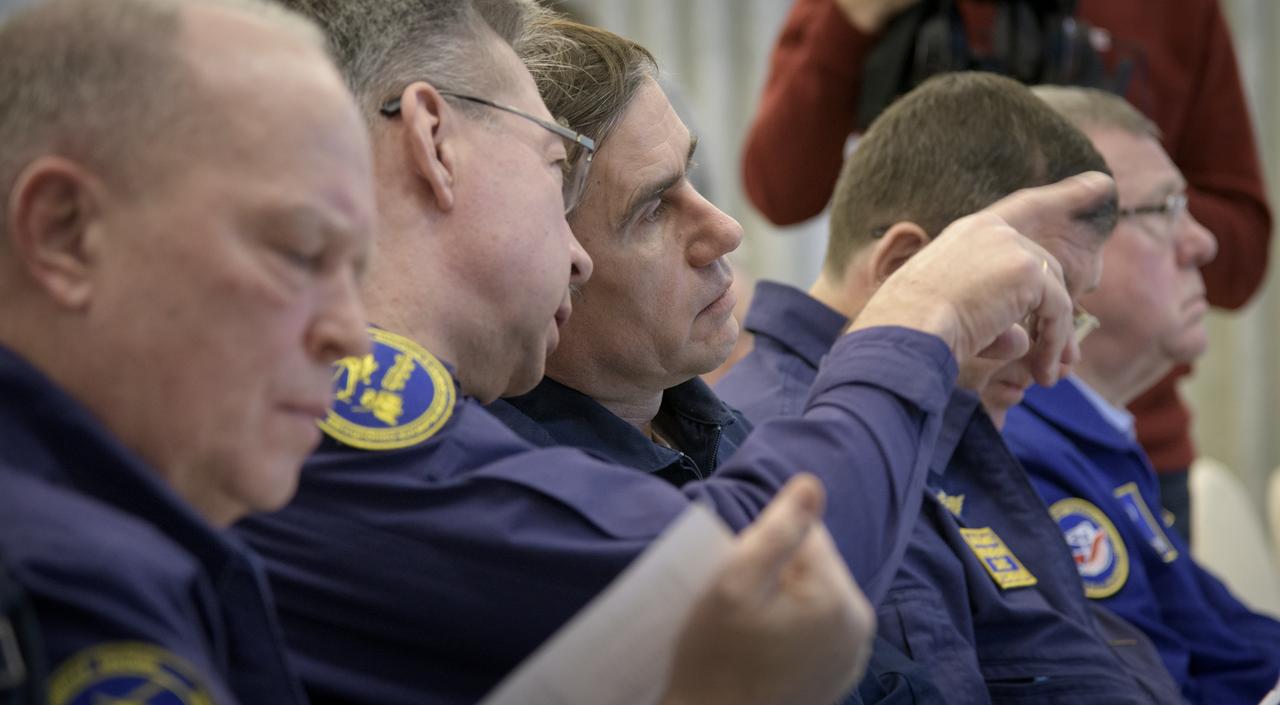
NASA, ESA, Roscosmos, and Russian Search and Recovery Forces meet at the Cosmonaut Hotel in Karaganda, Kazakhstan to discuss the readiness for the landing of Expedition 61 crew members Christina Koch of NASA, Alexander Skvortsov of the Russian space agency Roscosmos, and Luca Parmitano of ESA (European Space Agency) Tuesday, Feb. 4, 2020, at the Cosmonaut Hotel in Karaganda, Kazakhstan. Koch will be returning to Earth after logging 328 days in space --- the longest spaceflight in history by a woman --- as a member of Expeditions 59-60-61 on the International Space Station. Skvortsov and Parmitano will be returning after 201 days in space where they served as Expedition 60-61 crew members onboard the station. Photo Credit: (NASA/Bill Ingalls)
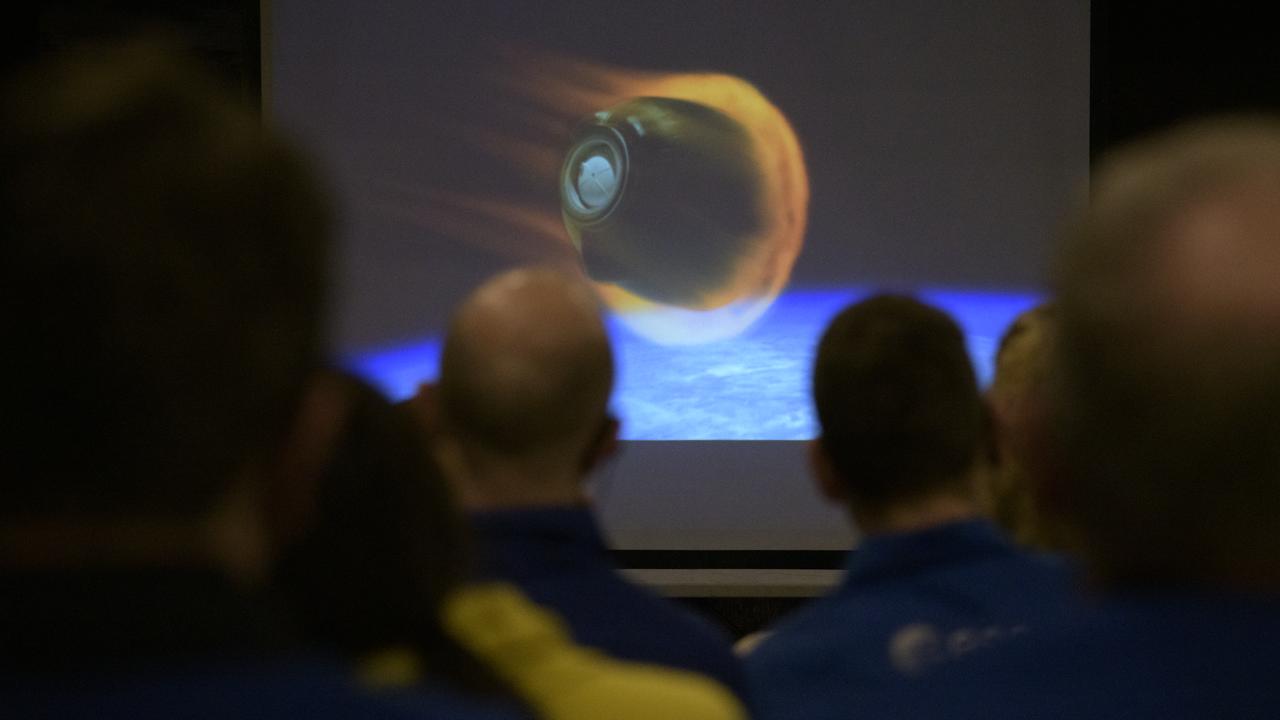
NASA, ESA, Roscosmos, and Russian Search and Recovery Forces meet at the Cosmonaut Hotel in Karaganda, Kazakhstan to discuss the readiness for the landing of Expedition 61 crew members Christina Koch of NASA, Alexander Skvortsov of the Russian space agency Roscosmos, and Luca Parmitano of ESA (European Space Agency) Tuesday, Feb. 4, 2020, at the Cosmonaut Hotel in Karaganda, Kazakhstan. Koch will be returning to Earth after logging 328 days in space --- the longest spaceflight in history by a woman --- as a member of Expeditions 59-60-61 on the International Space Station. Skvortsov and Parmitano will be returning after 201 days in space where they served as Expedition 60-61 crew members onboard the station. Photo Credit: (NASA/Bill Ingalls)

NASA, ESA, Roscosmos, and Russian Search and Recovery Forces meet at the Cosmonaut Hotel in Karaganda, Kazakhstan to discuss the readiness for the landing of Expedition 61 crew members Christina Koch of NASA, Alexander Skvortsov of the Russian space agency Roscosmos, and Luca Parmitano of ESA (European Space Agency) Tuesday, Feb. 4, 2020, at the Cosmonaut Hotel in Karaganda, Kazakhstan. Koch will be returning to Earth after logging 328 days in space --- the longest spaceflight in history by a woman --- as a member of Expeditions 59-60-61 on the International Space Station. Skvortsov and Parmitano will be returning after 201 days in space where they served as Expedition 60-61 crew members onboard the station. Photo Credit: (NASA/Bill Ingalls)
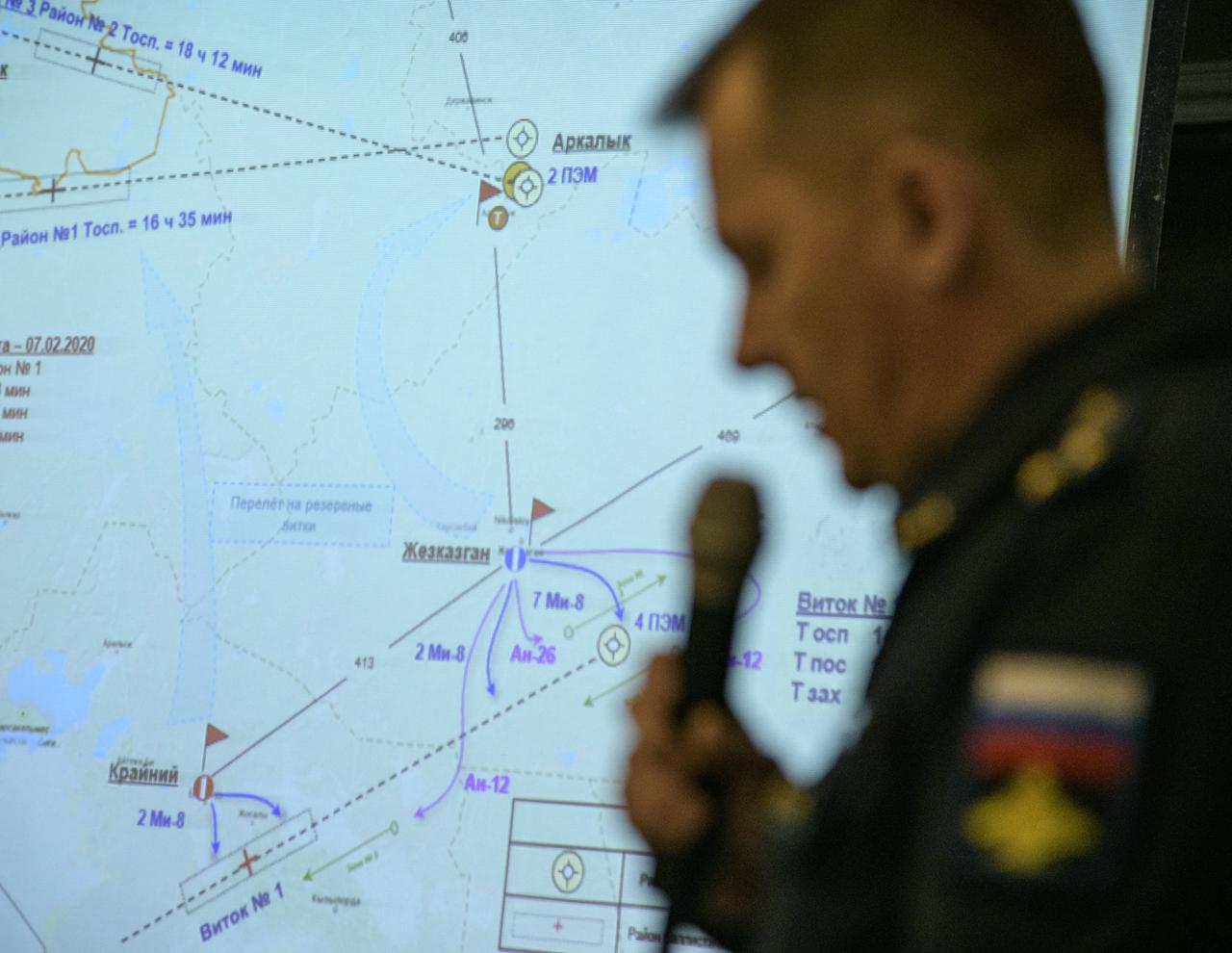
NASA, ESA, Roscosmos, and Russian Search and Recovery Forces meet at the Cosmonaut Hotel in Karaganda, Kazakhstan to discuss the readiness for the landing of Expedition 61 crew members Christina Koch of NASA, Alexander Skvortsov of the Russian space agency Roscosmos, and Luca Parmitano of ESA (European Space Agency) Tuesday, Feb. 4, 2020, at the Cosmonaut Hotel in Karaganda, Kazakhstan. Koch will be returning to Earth after logging 328 days in space --- the longest spaceflight in history by a woman --- as a member of Expeditions 59-60-61 on the International Space Station. Skvortsov and Parmitano will be returning after 201 days in space where they served as Expedition 60-61 crew members onboard the station. Photo Credit: (NASA/Bill Ingalls)
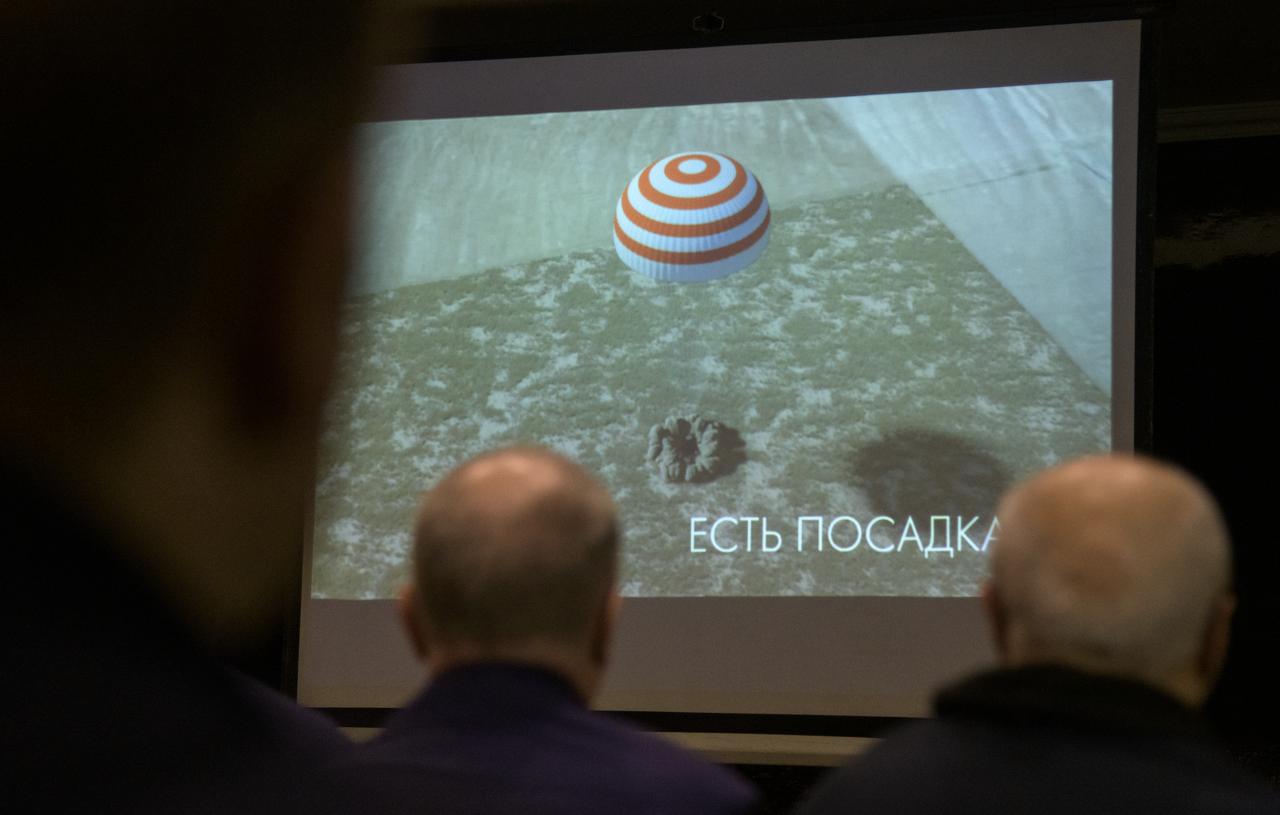
NASA, ESA, Roscosmos, and Russian Search and Recovery Forces meet at the Cosmonaut Hotel in Karaganda, Kazakhstan to discuss the readiness for the landing of Expedition 61 crew members Christina Koch of NASA, Alexander Skvortsov of the Russian space agency Roscosmos, and Luca Parmitano of ESA (European Space Agency) Tuesday, Feb. 4, 2020, at the Cosmonaut Hotel in Karaganda, Kazakhstan. Koch will be returning to Earth after logging 328 days in space --- the longest spaceflight in history by a woman --- as a member of Expeditions 59-60-61 on the International Space Station. Skvortsov and Parmitano will be returning after 201 days in space where they served as Expedition 60-61 crew members onboard the station. Photo Credit: (NASA/Bill Ingalls)
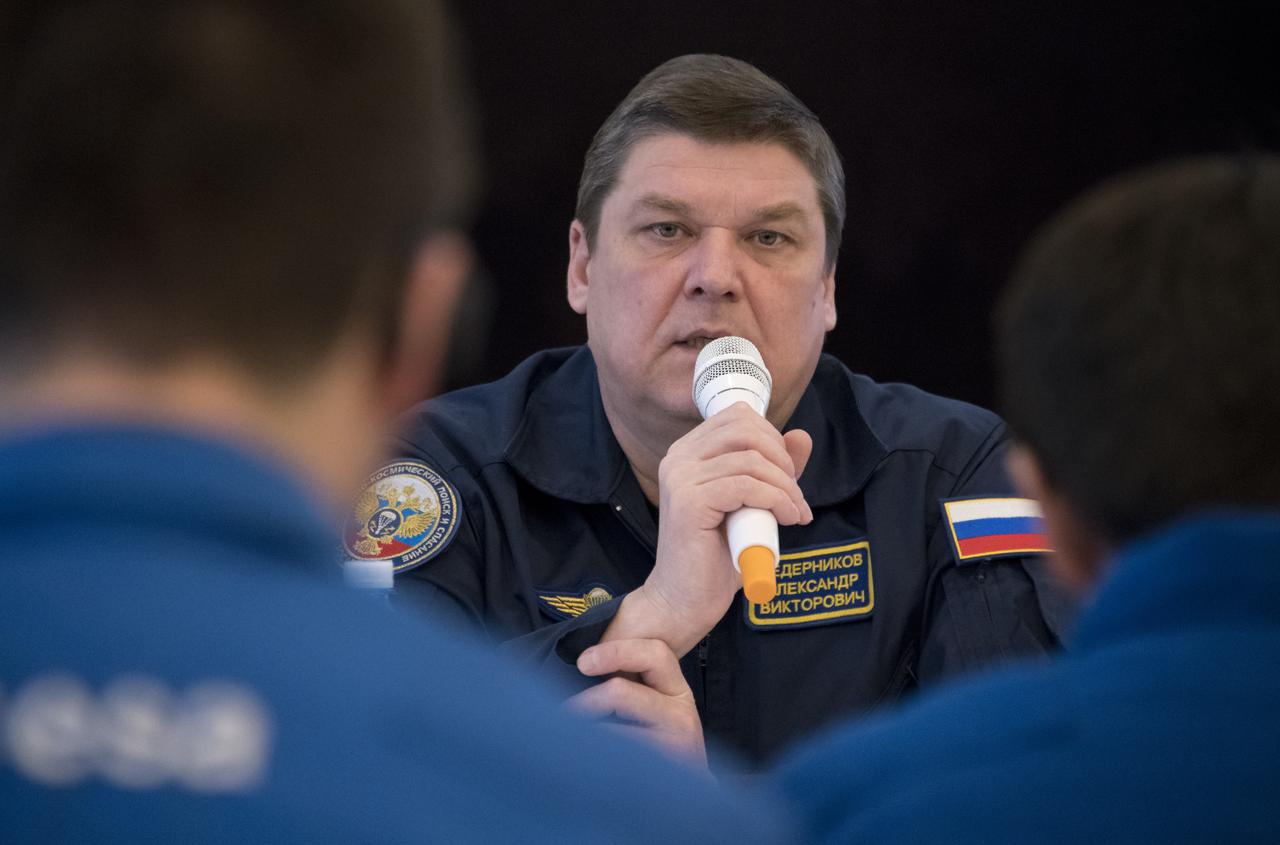
Deputy Director of Rosaviatsiya (Russian Federal Agency for Air Transport) Alexander Vedernikov conducts a readiness review for the landing of Expedition 53 Commander Randy Bresnik of NASA and Flight Engineers Paolo Nespoli of ESA (European Space Agency) and Sergey Ryazanskiy of the Russian space agency Roscosmos Tuesday, Dec. 12, 2017. Bresnik, Nespoli and Ryazanskiy are returning after 139 days in space where they served as members of the Expedition 52 and 53 crews onboard the International Space Station. Photo Credit: (NASA/Bill Ingalls)
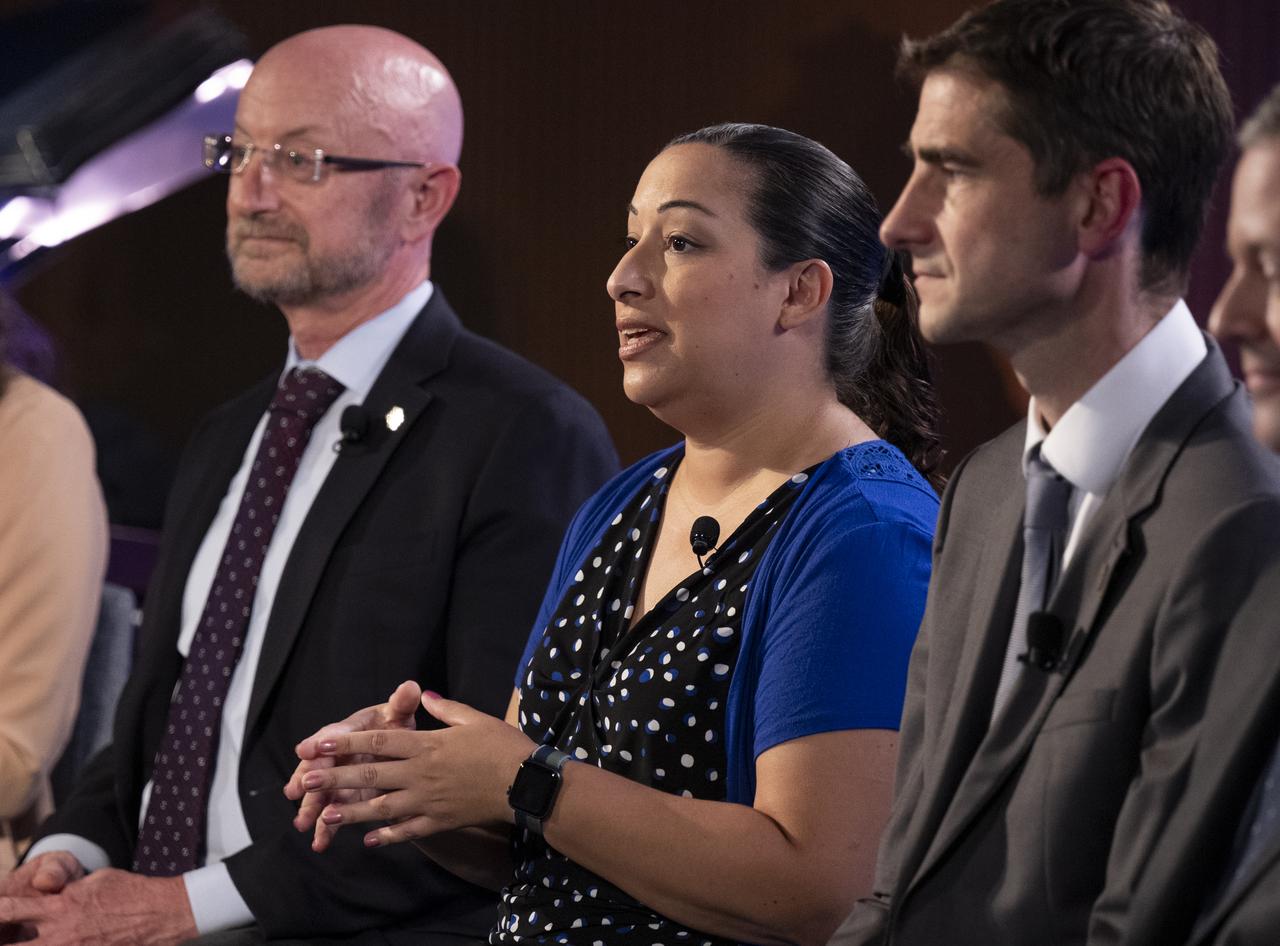
NASA James Webb Space Telescope Deputy Project Scientist for Exoplanet Science Knicole Colón, center, answers a question from a member of the media alongside NASA James Webb Space Telescope Program Scientist and Astrophysics Division Chief Scientist Eric Smith, left, and NASA James Webb Space Telescope Project Scientist at ESA (European Space Agency) Christopher Evans, during a briefing following the release of the first full-color images from NASA’s James Webb Space Telescope, Tuesday, July 12, 2022, at NASA’s Goddard Space Flight Center in Greenbelt, Md. The first full-color images and spectroscopic data from the James Webb Space Telescope, a partnership with ESA (European Space Agency) and the Canadian Space Agency (CSA), are a demonstration of the power of Webb as the telescope begins its science mission to unfold the infrared universe. Photo Credit: (NASA/Bill Ingalls)
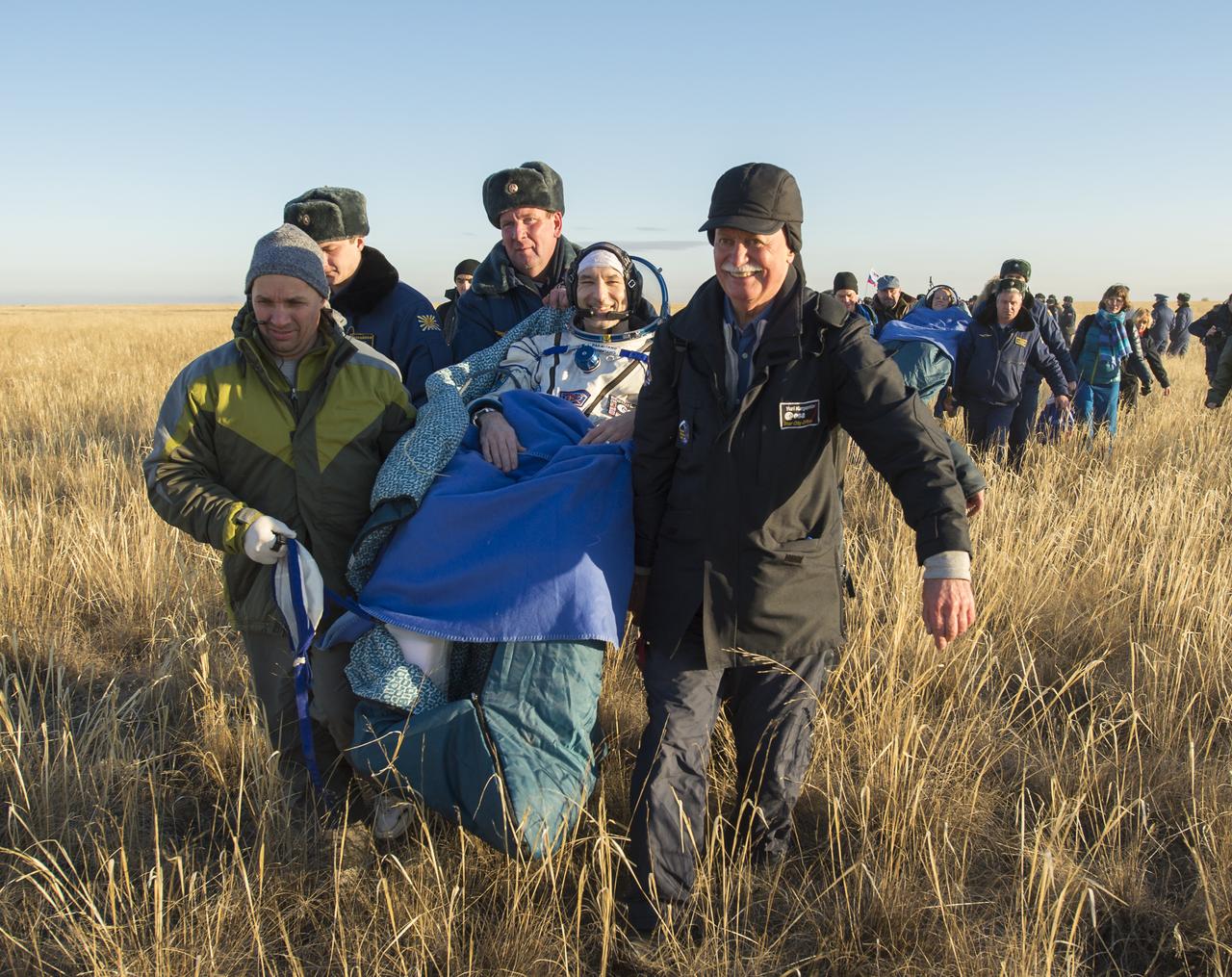
Expedition 37 Luca Parmitano of ESA (European Space Agency) is carried to the inflatable medical tent from minutes after he landed in the Soyuz TMA-09M spacecraft in a remote area outside the town of Zhezkazgan, Kazakhstan, on Monday, Nov. 11, 2013. Parmitano, Expedition 37 Commander Fyodor Yurchikhin of the Russian Federal Space Agency (Roscosmos) and NASA Flight Engineer Karen Nyberg returned to earth after five and a half months on the International Space Station. Photo Credit: (NASA/Carla Cioffi)
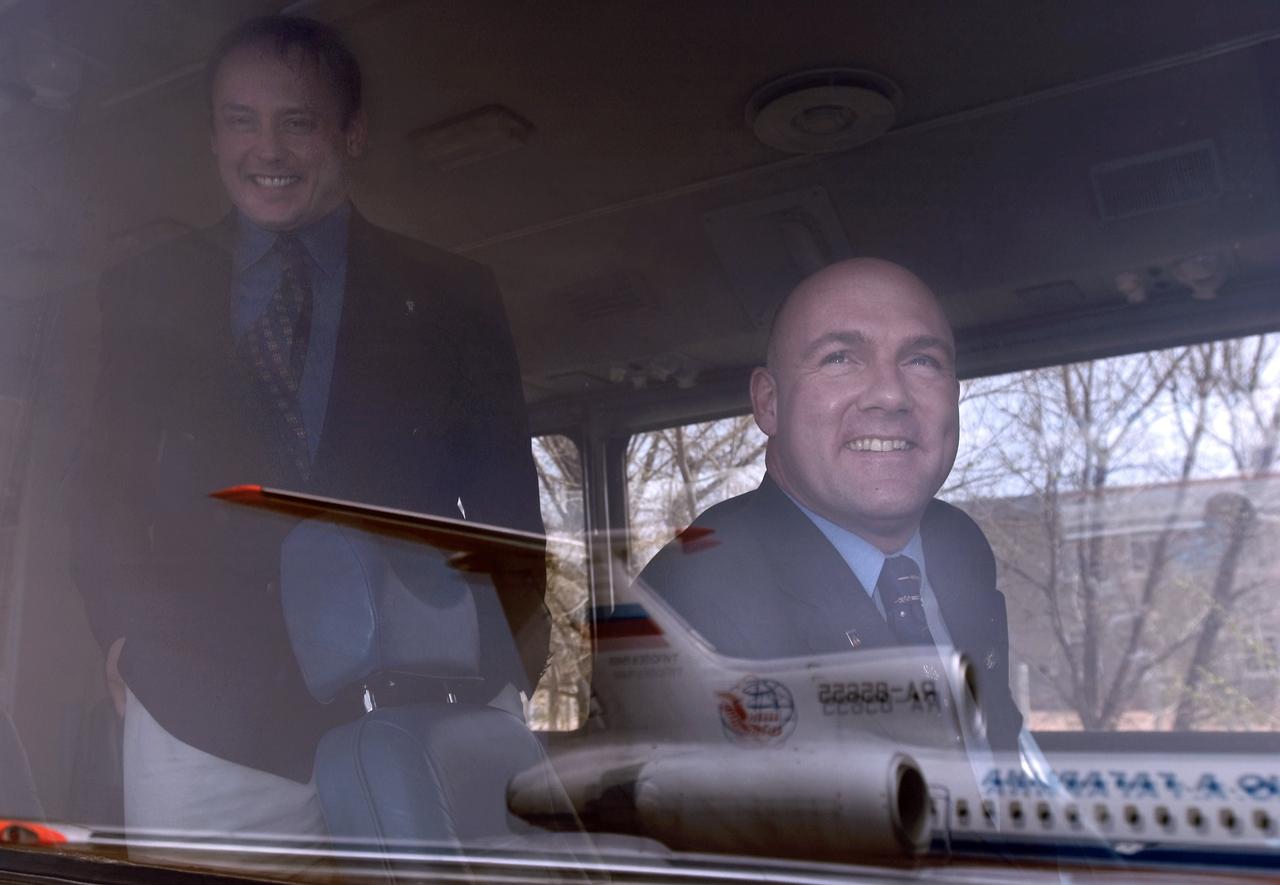
Flight Engineer and NASA International Space Station Science Officer Mike Fincke, left and European Space Agency astronaut Andre Kuipers of the Netherlands on board their bus after arrival at Baikonur, Kazakhstan, Tuesday, April 13, 2004, six days prior to their scheduled launch on board a Soyuz rocket. Kuipers, who is flying under a commercial contract between ESA and the Russian Federal Space Agency, will return to Earth with the Expedition 8 crew on April 30, 2004. Photo Credit: (NASA/Bill Ingalls)
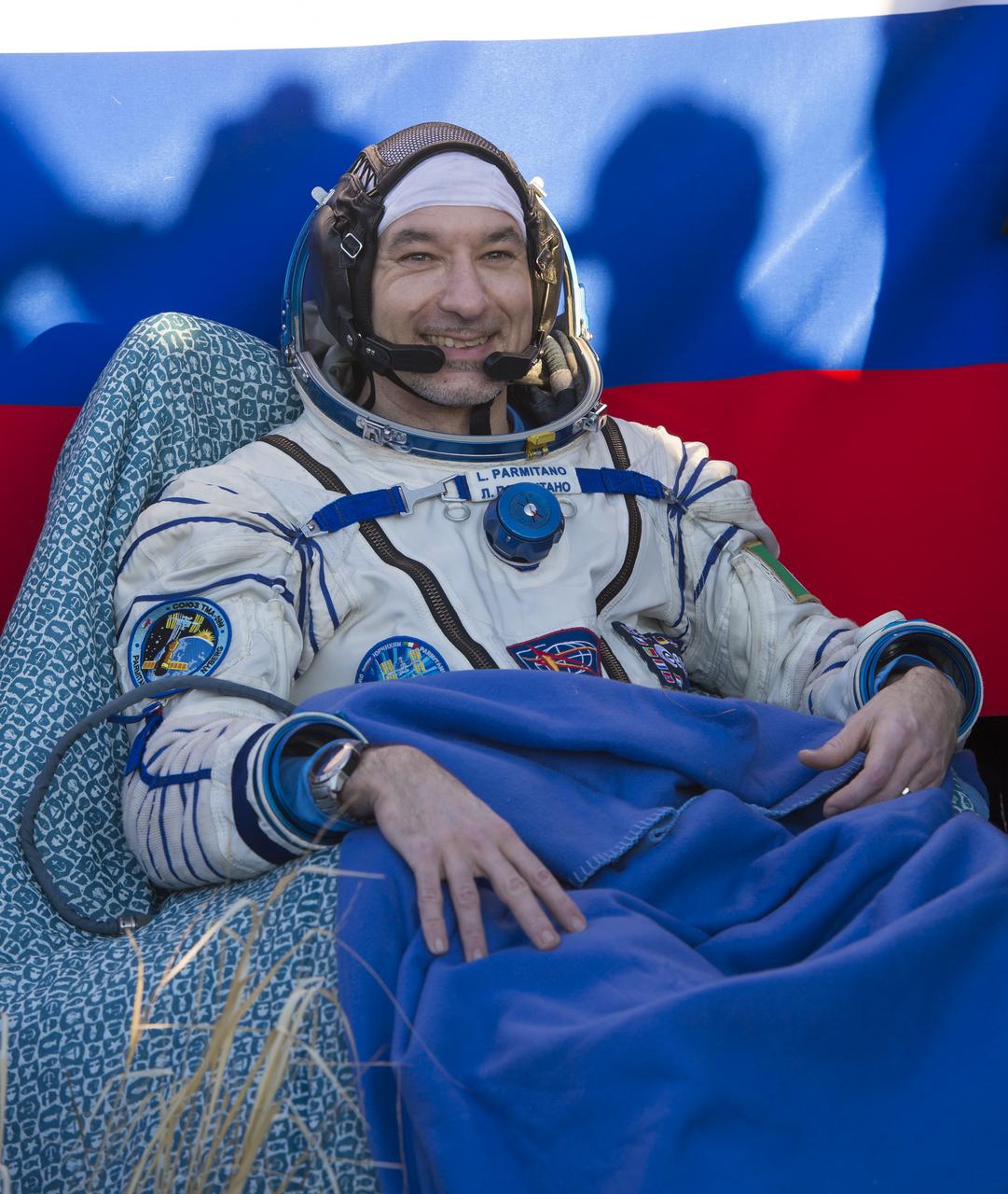
Expedition 37 Luca Parmitano of ESA (European Space Agency) smiles minutes after his landing in the Soyuz TMA-09M spacecraft in a remote area outside the town of Zhezkazgan, Kazakhstan, on Monday, Nov. 11, 2013. Parmitano, Expedition 37 Commander Fyodor Yurchikhin of the Russian Federal Space Agency (Roscosmos) and NASA Flight Engineer Karen Nyberg returned to earth after five and a half months on the International Space Station. Photo Credit: (NASA/Carla Cioffi)

Support and medical team members from NASA, ESA (European Space Agency), Japan Aerospace Exploration Agency (JAXA), and Roscosmos wait to board the helicopter with NASA astronaut Jasmin Moghbeli, ESA (European Space Agency) astronaut Andreas Mogensen, Japan Aerospace Exploration Agency (JAXA) astronaut Satoshi Furukawa, and Roscosmos cosmonaut Konstantin Borisov to return to Pensacola, Florida a few hours after landing in the Gulf of Mexico, Tuesday, March 12, 2024, onboard the SpaceX support ship MEGAN. Moghbeli, Mogensen, Furukawa, and Borisov are returning after nearly six-months in space as part of Expedition 70 aboard the International Space Station. Photo Credit: (NASA/Joel Kowsky)
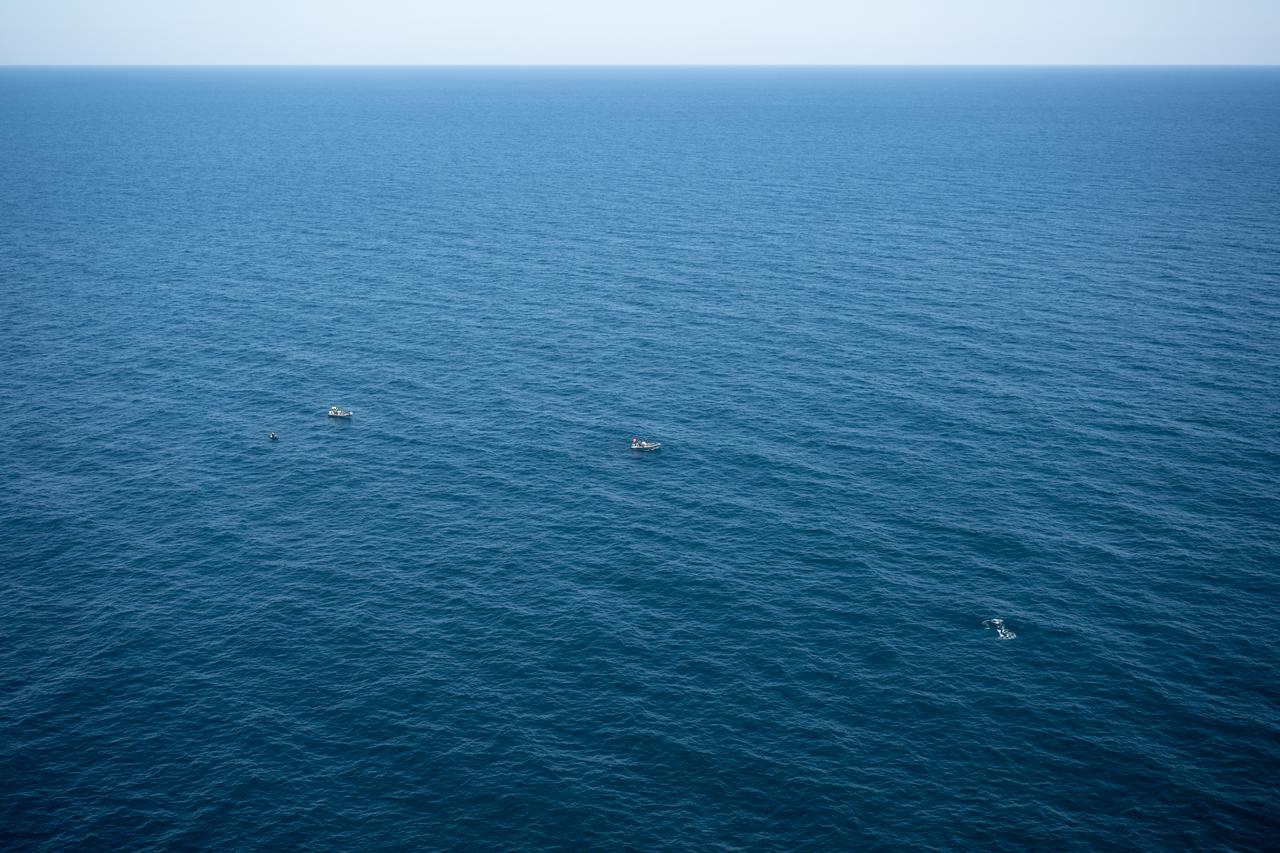
SpaceX fast boat teams are seen in the Atlantic Ocean as NASA, ESA (European Space Agency), and SpaceX teams prepare for the landing of the SpaceX Crew Dragon Freedom spacecraft with NASA astronauts Kjell Lindgren, Robert Hines, Jessica Watkins, and ESA (European Space Agency) astronaut Samantha Cristoforetti aboard, Friday, Oct. 14, 2022, off the coast of Jacksonville, Florida. Lindgren, Hines, Watkins, and Cristoforetti are returning after 170 days in space as part of Expeditions 67 and 68 aboard the International Space Station. Photo Credit: (NASA/Bill Ingalls)
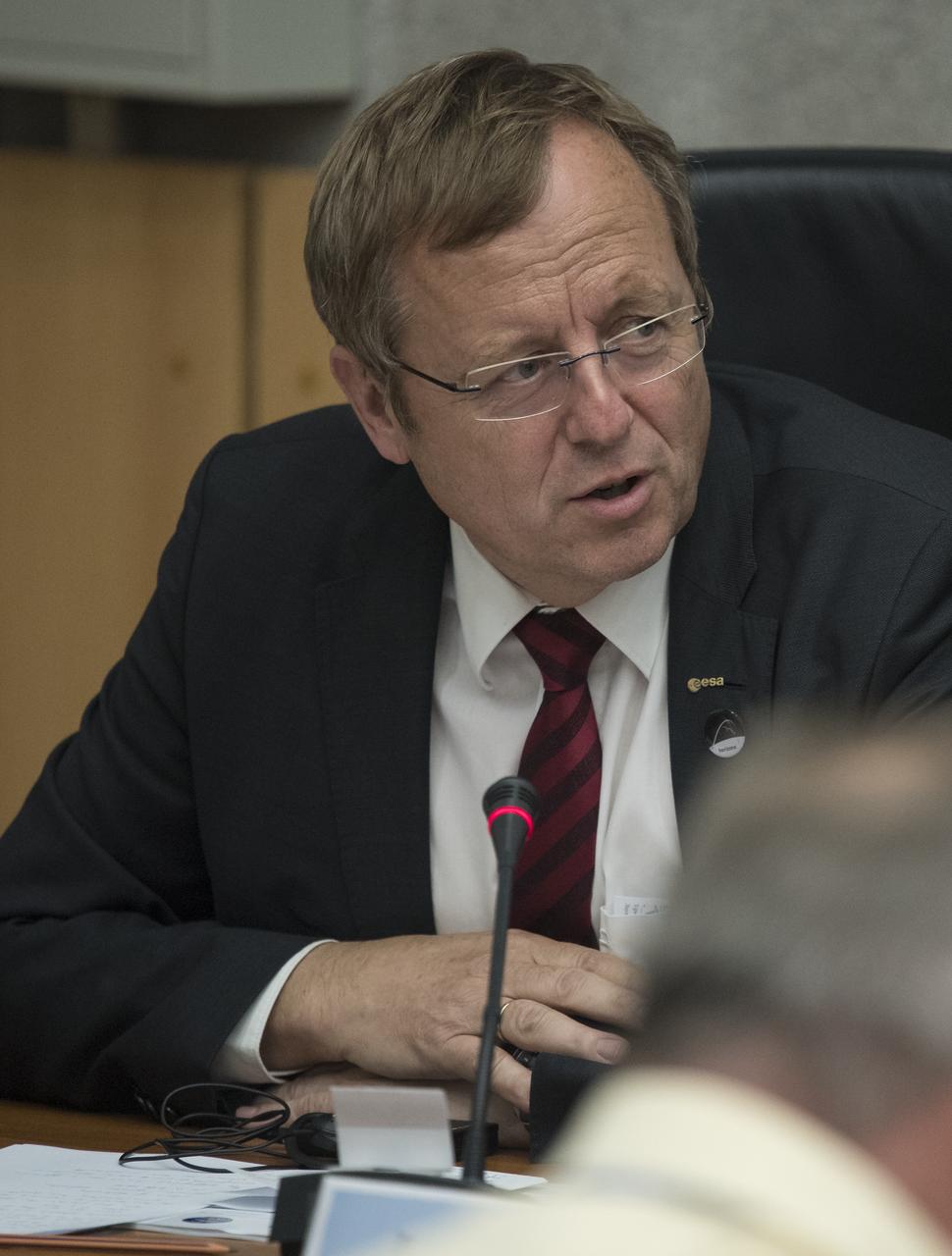
ESA (European Space Agency) Director General Johann-Dietrich Wörner is seen during the State Commission meeting to approve the Soyuz launch of Expedition 56 to the International Space Station, Tuesday, June 5, 2018 at the Cosmonaut Hotel in Baikonur, Kazakhstan. Expedition 56 Soyuz Commander Sergey Prokopyev of Roscosmos, Serena Auñón-Chancellor of NASA, and Alexander Gerst of ESA (European Space Agency) are scheduled to launch to the International Space Station aboard the Soyuz MS-09 spacecraft on Wednesday, June 6. Photo Credit: (NASA/Joel Kowsky)
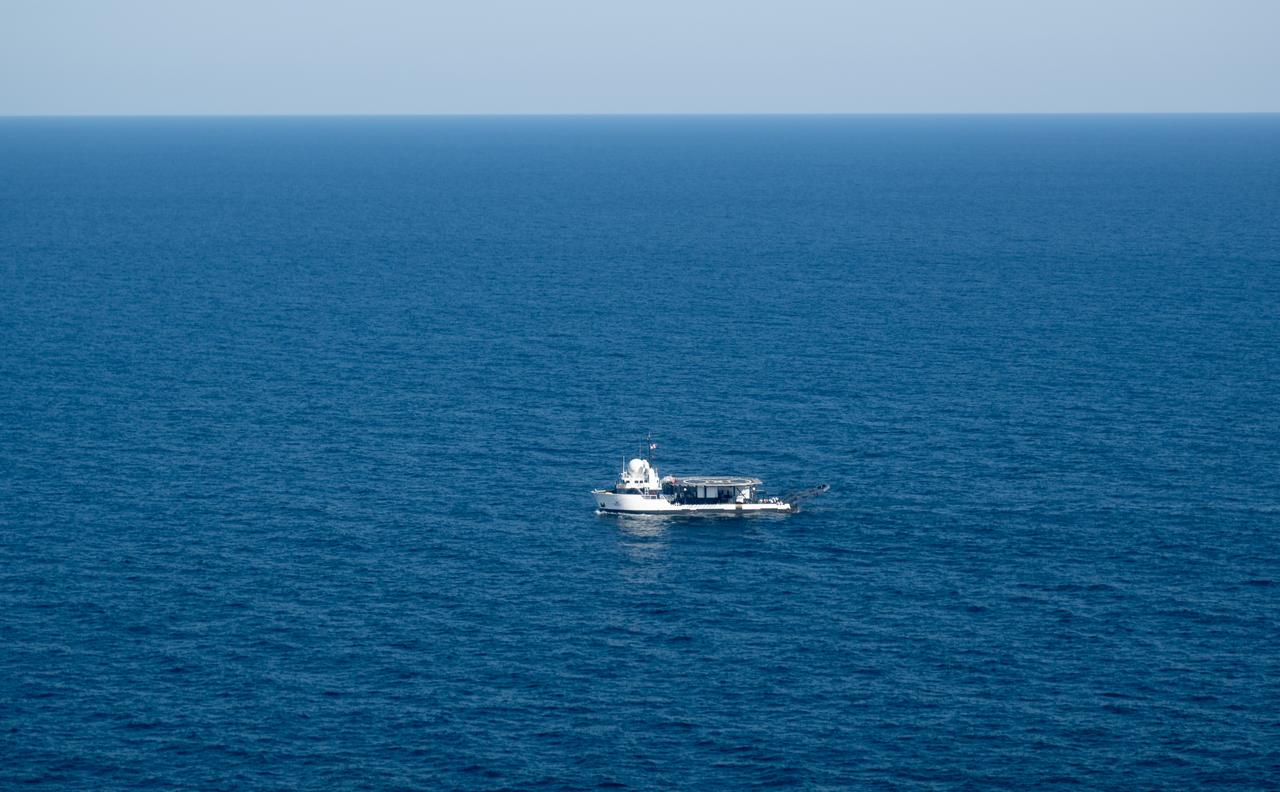
The SpaceX recovery ship Megan is seen in the Atlantic Ocean as NASA, ESA (European Space Agency), and SpaceX teams prepare for the landing of the SpaceX Crew Dragon Freedom spacecraft with NASA astronauts Kjell Lindgren, Robert Hines, Jessica Watkins, and ESA (European Space Agency) astronaut Samantha Cristoforetti aboard, Friday, Oct. 14, 2022, off the coast of Jacksonville, Florida. Lindgren, Hines, Watkins, and Cristoforetti are returning after 170 days in space as part of Expeditions 67 and 68 aboard the International Space Station. Photo Credit: (NASA/Bill Ingalls)

Expedition 60 flight engineer Luca Parmitano of ESA (European Space Agency) is introduced during a press conference, Friday, July 19, 2019 at the Cosmonaut Hotel in Baikonur, Kazakhstan. Expedition 60 Soyuz Commander Alexander Skvortsov of Roscosmos, flight engineer Andrew Morgan of NASA, and flight engineer Luca Parmitano of ESA (European Space Agency) are scheduled to launch to the International Space Station aboard the Soyuz MS-13 spacecraft at 12:28 p.m. Eastern time (9:28 p.m. Baikonur time) on Saturday, July 20. Photo Credit: (NASA/Joel Kowsky)
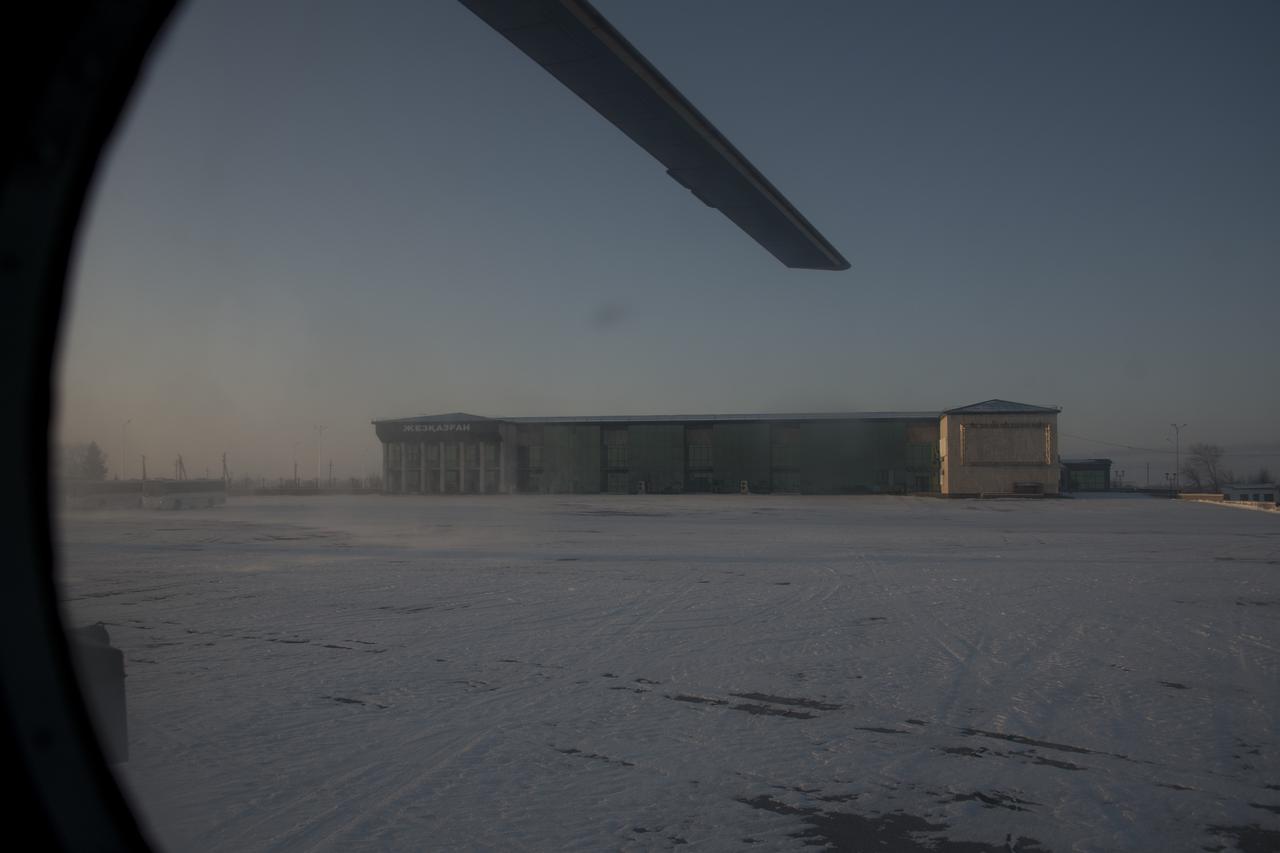
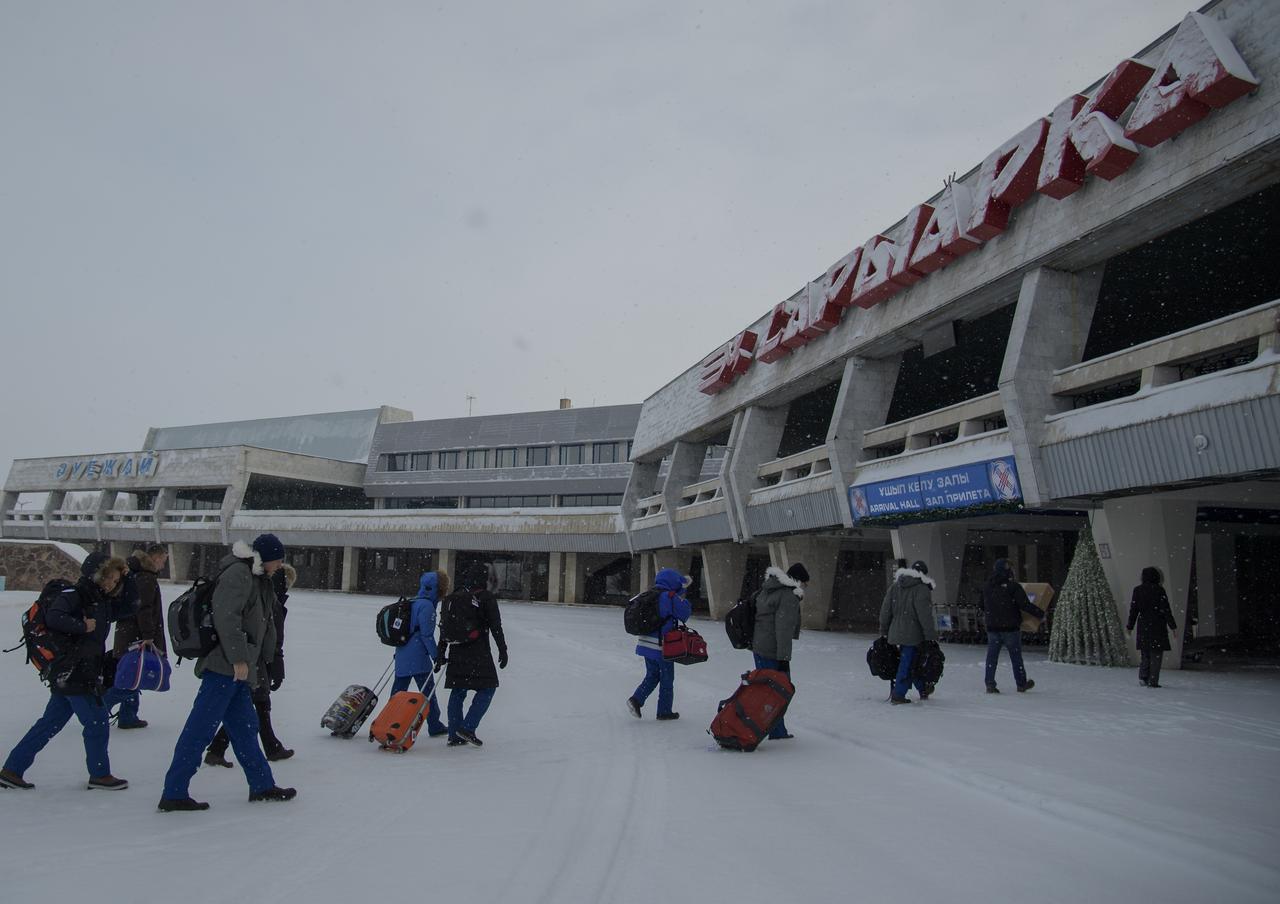
Russian Search and Rescue teams arrive at the Zhezkazgan Airport in Kazakhstan, Wednesday, Dec. 13, 2017 to prepare for the Soyuz MS-05 landing with Expedition 53 Commander Randy Bresnik of NASA and Flight Engineers Paolo Nespoli of ESA (European Space Agency) and Sergey Ryazanskiy of the Russian space agency Roscosmos. Bresnik, Nespoli and Ryazanskiy are returning after 139 days in space where they served as members of the Expedition 52 and 53 crews onboard the International Space Station. Photo Credit: (NASA/Bill Ingalls)
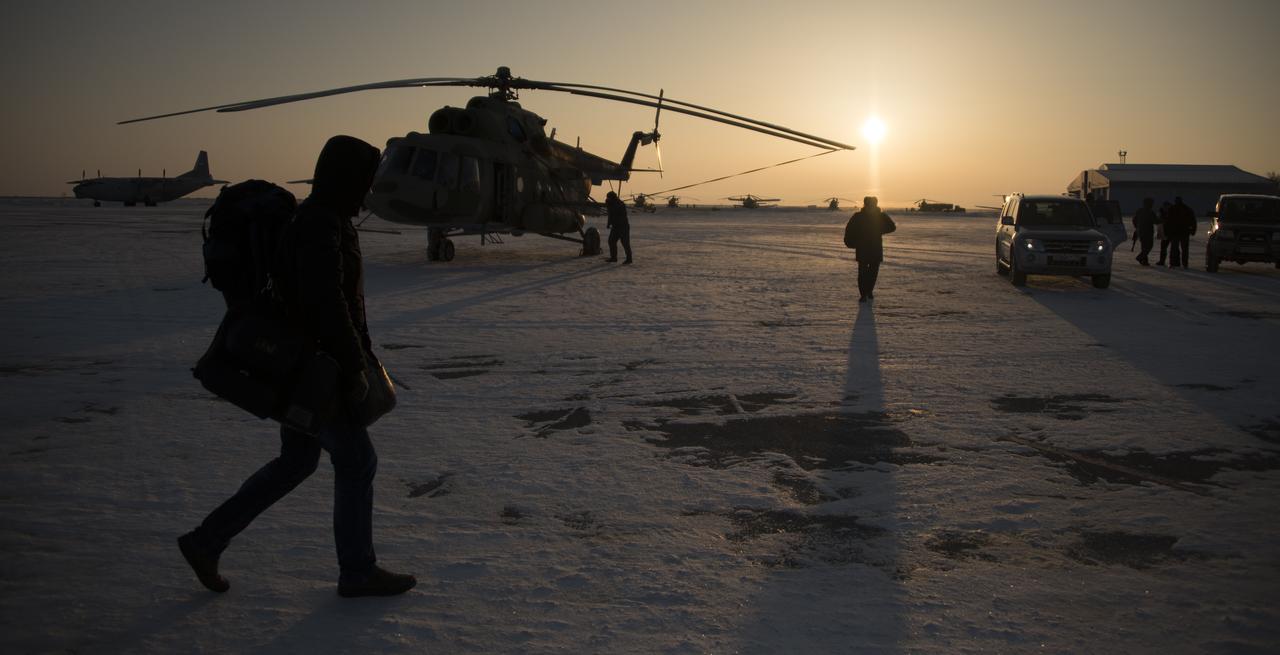
Russian Search and Rescue teams arrive at the Zhezkazgan Airport in Kazakhstan, Wednesday, Dec. 13, 2017 to prepare for the Soyuz MS-05 landing with Expedition 53 Commander Randy Bresnik of NASA and Flight Engineers Paolo Nespoli of ESA (European Space Agency) and Sergey Ryazanskiy of the Russian space agency Roscosmos. Bresnik, Nespoli and Ryazanskiy are returning after 139 days in space where they served as members of the Expedition 52 and 53 crews onboard the International Space Station. Photo Credit: (NASA/Bill Ingalls)

This image taken by the ultraviolet-light monitoring camera on the European Space Agency ESA XMM-Newton telescope shows the beautiful spiral arms of the galaxy NGC1365.
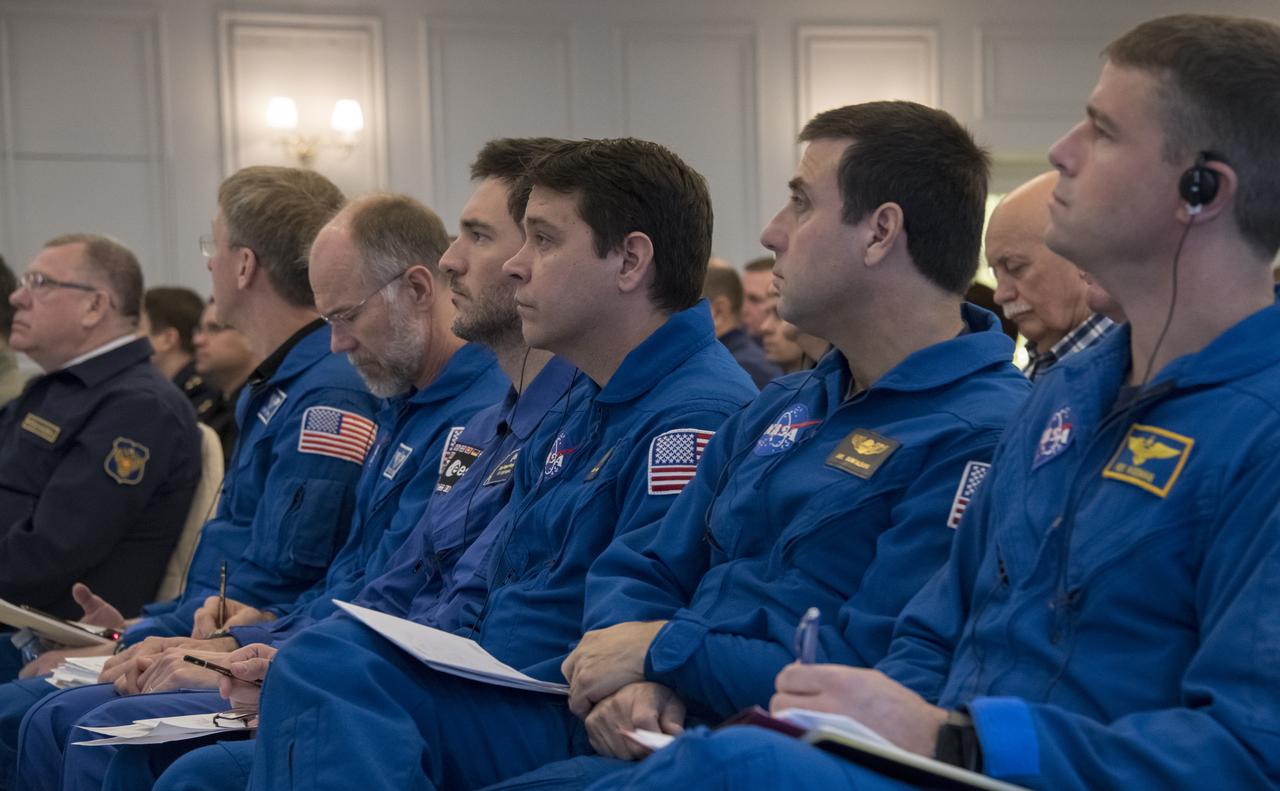
NASA, ESA (European Space Agency), Roscosmos, along with Russian Search and Recovery Forces, meet to discuss the readiness for the landing of Expedition 53 Commander Randy Bresnik of NASA and Flight Engineers Paolo Nespoli of ESA (European Space Agency) and Sergey Ryazanskiy of the Russian space agency Roscosmos Tuesday, Dec. 12, 2017. Bresnik, Nespoli and Ryazanskiy are returning after 139 days in space where they served as members of the Expedition 52 and 53 crews onboard the International Space Station. Photo Credit: (NASA/Bill Ingalls)
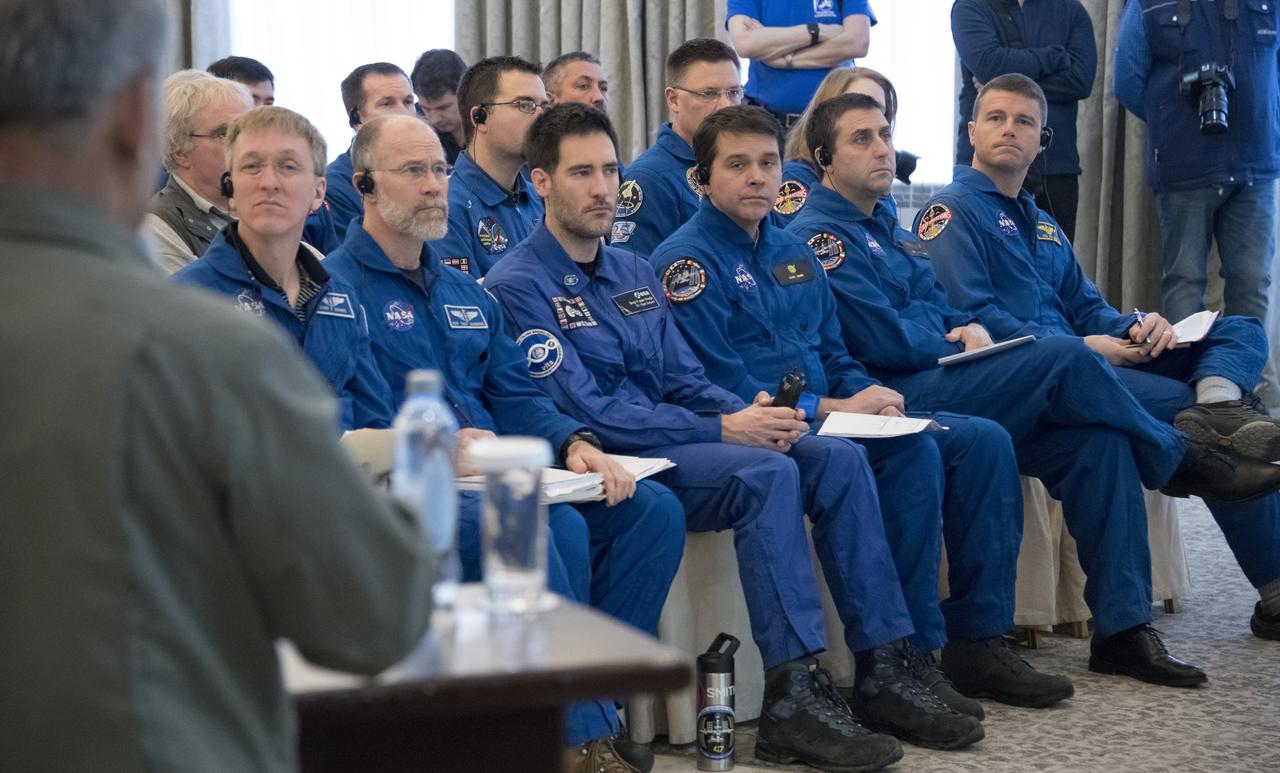
NASA, ESA (European Space Agency), Roscosmos, along with Russian Search and Recovery Forces, meet to discuss the readiness for the landing of Expedition 53 Commander Randy Bresnik of NASA and Flight Engineers Paolo Nespoli of ESA (European Space Agency) and Sergey Ryazanskiy of the Russian space agency Roscosmos Tuesday, Dec. 12, 2017. Bresnik, Nespoli and Ryazanskiy are returning after 139 days in space where they served as members of the Expedition 52 and 53 crews onboard the International Space Station. Photo Credit: (NASA/Bill Ingalls)
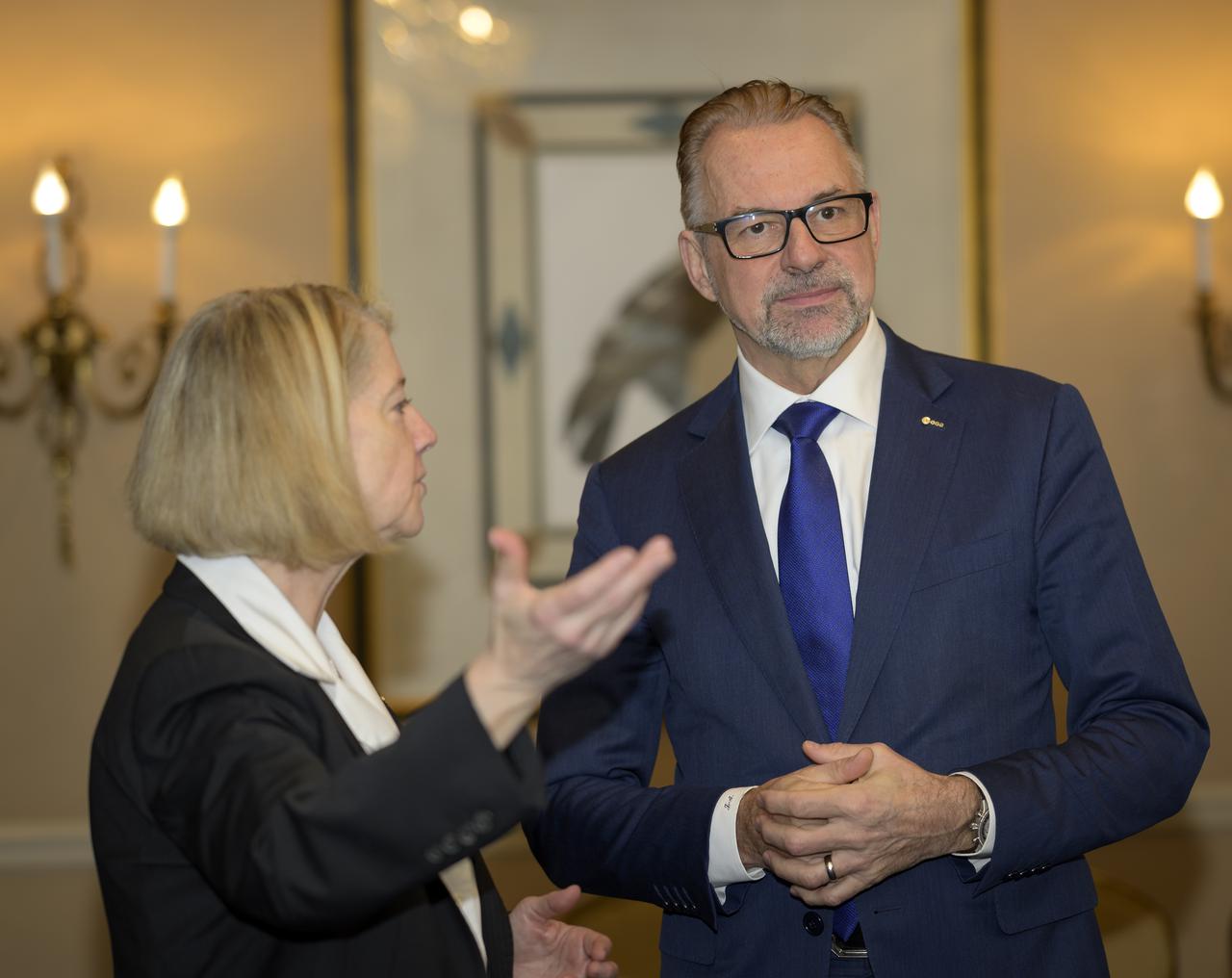
NASA Deputy Administrator Pam Melroy, left, and Dr. Josef Aschbacher, Director General, European Space Agency (ESA), talk during a meeting during the 37th Space Symposium, Tuesday, April 5, 2022, in Colorado Springs, Colorado. Photo Credit: (NASA/Bill Ingalls)
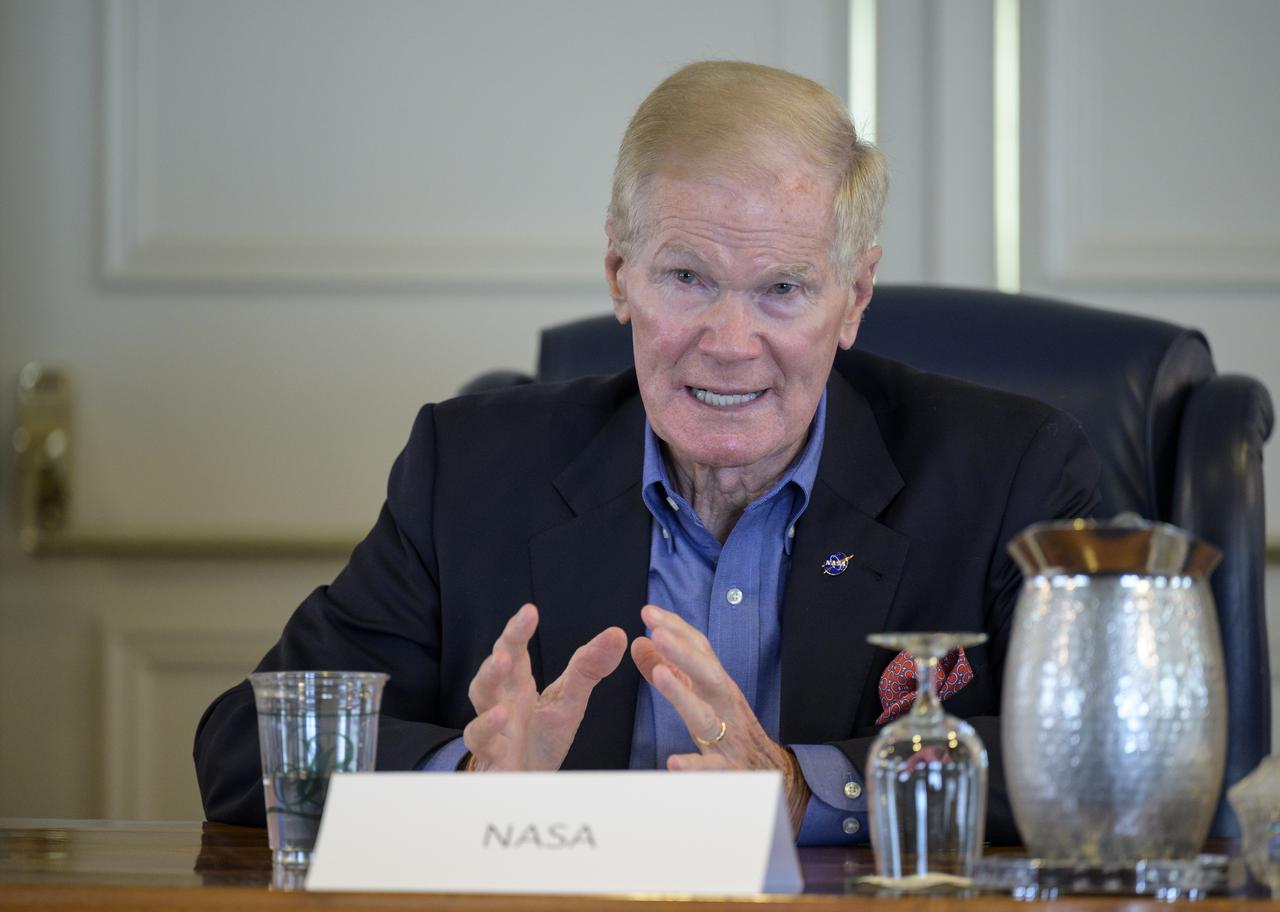
NASA Administrator Bill Nelson talks with Dr. Josef Aschbacher, Director General, European Space Agency (ESA) in a bilateral meeting during the 36th Space Symposium, Monday, Aug. 23, 2021, in Colorado Springs, Colorado. Photo Credit: (NASA/Bill Ingalls)

NASA Deputy Administrator Pam Melroy, left, and Dr. Josef Aschbacher, Director General, European Space Agency (ESA), pose for a photograph prior to starting at meeting during the 37th Space Symposium, Tuesday, April 5, 2022, in Colorado Springs, Colorado. Photo Credit: (NASA/Bill Ingalls)
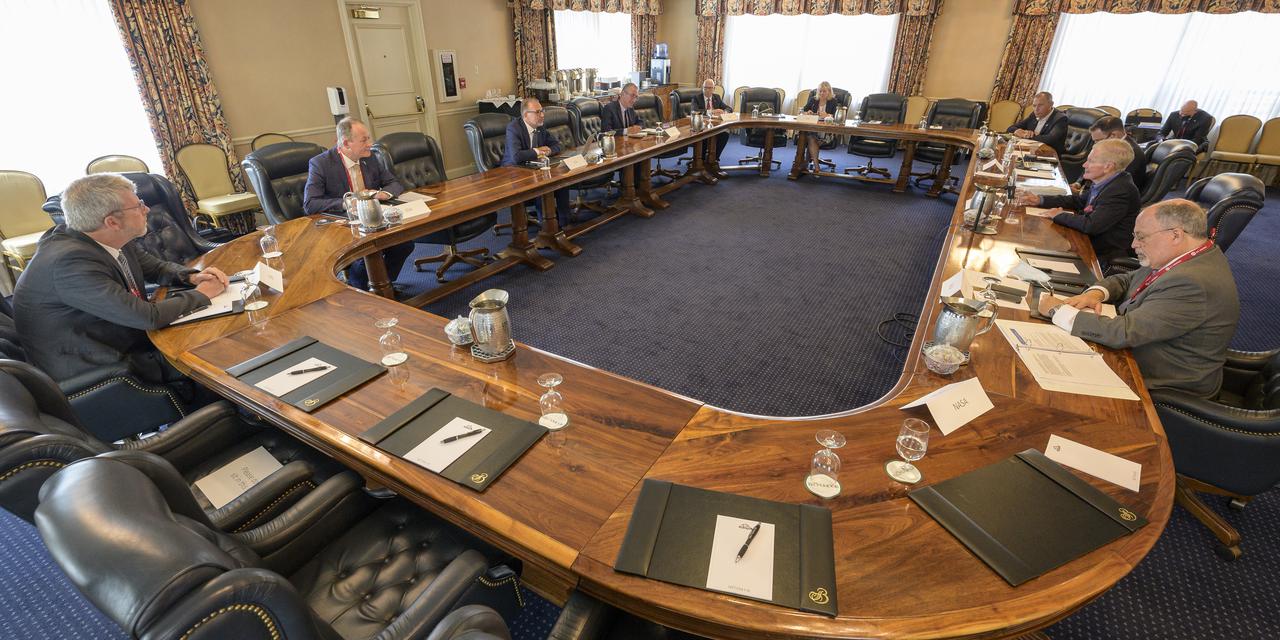
NASA Administrator Bill Nelson meets with Dr. Josef Aschbacher, Director General, European Space Agency (ESA) in a bilateral meeting during the 36th Space Symposium, Monday, Aug. 23, 2021, in Colorado Springs, Colorado. Photo Credit: (NASA/Bill Ingalls)
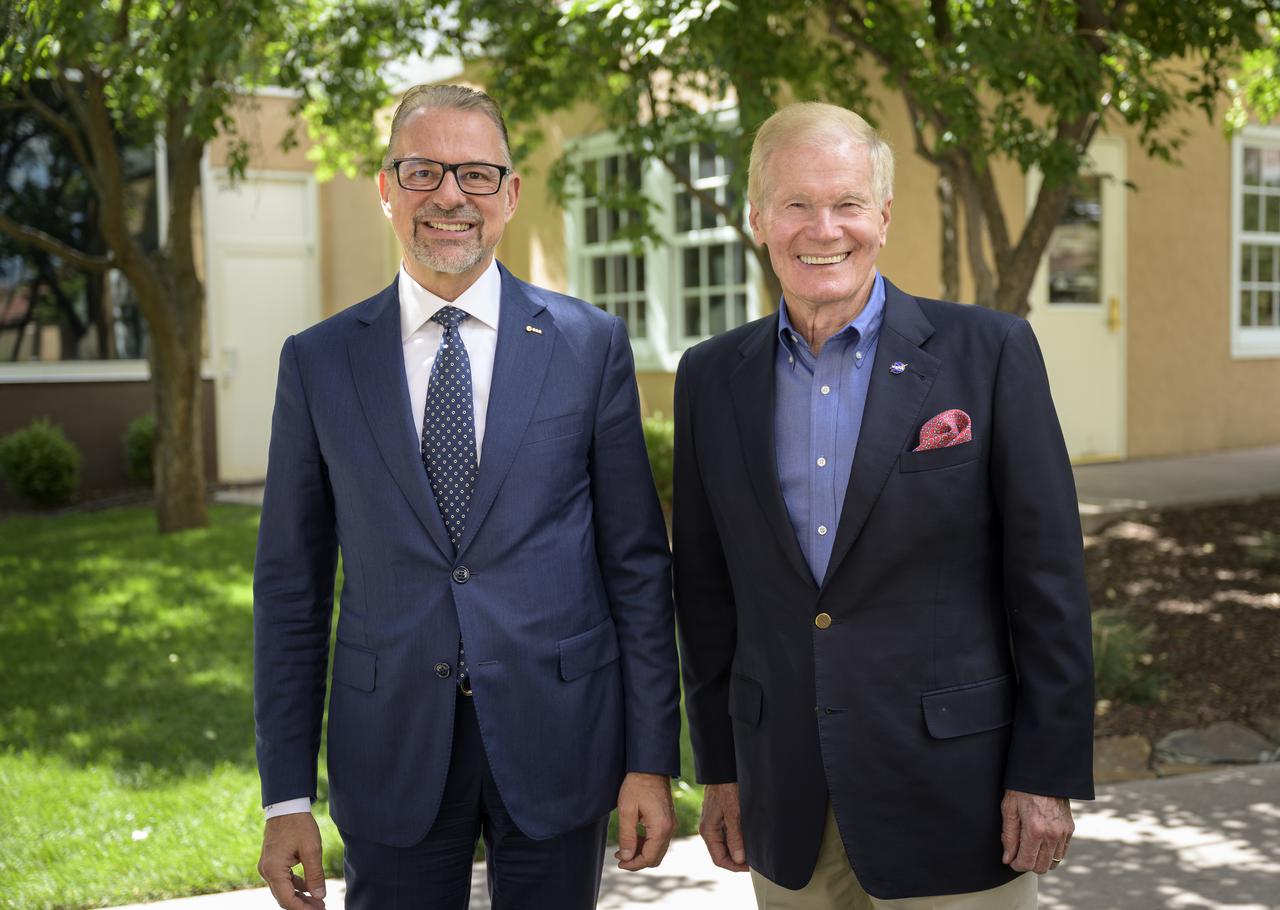
European Space Agency (ESA) Director General Josef Aschbacher, left, and NASA Administrator Bill Nelson meet in a bilateral meeting during the 36th Space Symposium, Monday, Aug. 23, 2021, in Colorado Springs, Colorado. Photo Credit: (NASA/Bill Ingalls)
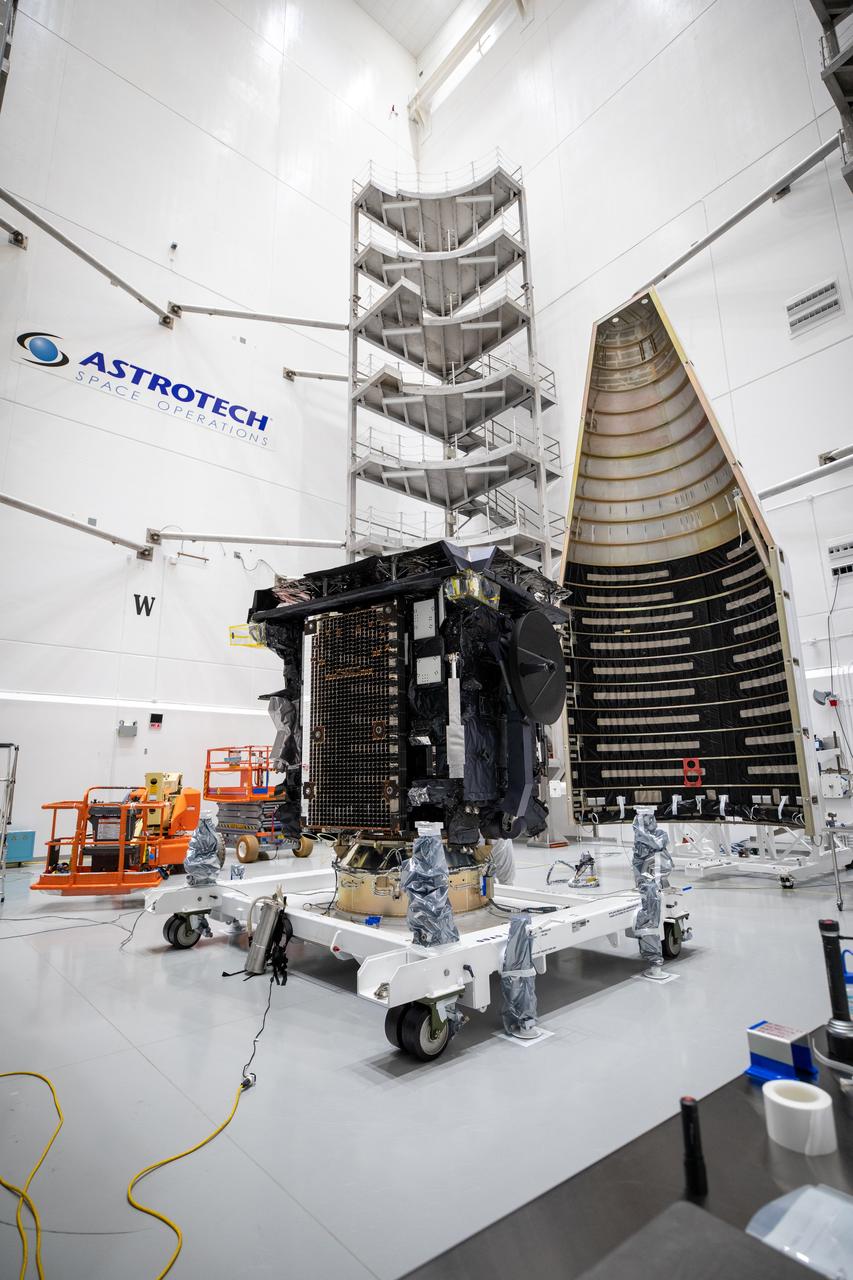
One half of a United Launch Alliance Atlas V payload fairing is positioned for installation around the Solar Orbiter spacecraft inside the Astrotech Space Operations facility in Titusville, Florida, on Jan. 20, 2020. The fairing provides a protective, aerodynamic covering to the payload inside during the early minutes of ascent. Solar Orbiter is an international cooperative mission between ESA (European Space Agency) and NASA. The mission aims to study the Sun, its outer atmosphere and solar wind. The spacecraft will provide the first images of the Sun’s poles. NASA’s Launch Services Program based at Kennedy Space Center in Florida is managing the launch. The spacecraft has been developed by Airbus Defence and Space. Solar Orbiter will launch aboard an Atlas V rocket from Space Launch Complex 41 at Cape Canaveral Air Force Station in Florida. Liftoff is scheduled for Feb. 5, 2020.
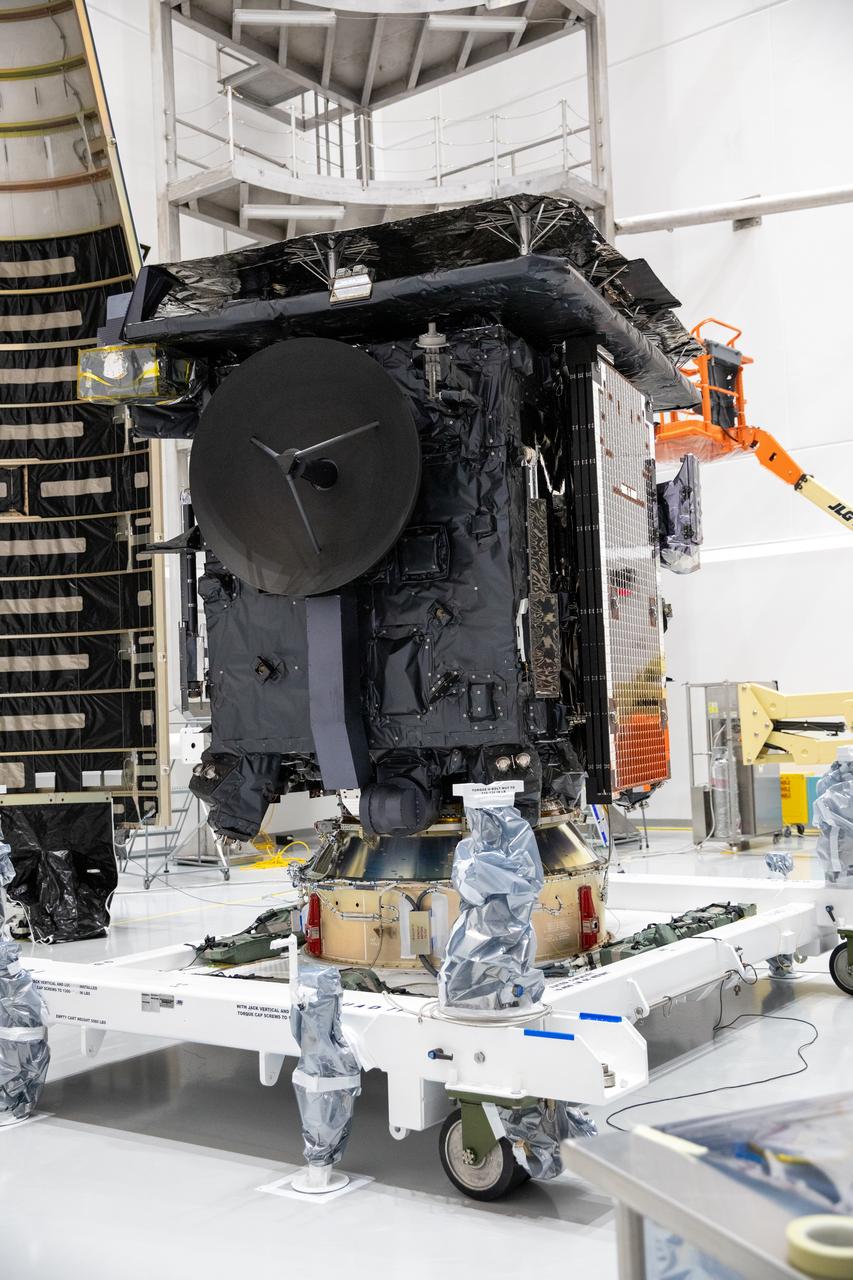
The Solar Orbiter spacecraft is prepared for encapsulation in the United Launch Alliance Atlas V payload fairing inside the Astrotech Space Operations facility in Titusville, Florida, on Jan. 20, 2020. The fairing provides a protective, aerodynamic cover to the payload inside during the early minutes of ascent. Solar Orbiter is an international cooperative mission between ESA (European Space Agency) and NASA. The mission aims to study the Sun, its outer atmosphere and solar wind. The spacecraft will provide the first images of the Sun’s poles. NASA’s Launch Services Program based at Kennedy Space Center in Florida is managing the launch. The spacecraft has been developed by Airbus Defence and Space. Solar Orbiter will launch aboard an Atlas V rocket from Space Launch Complex 41 at Cape Canaveral Air Force Station in Florida. Liftoff is scheduled for Feb. 5, 2020.
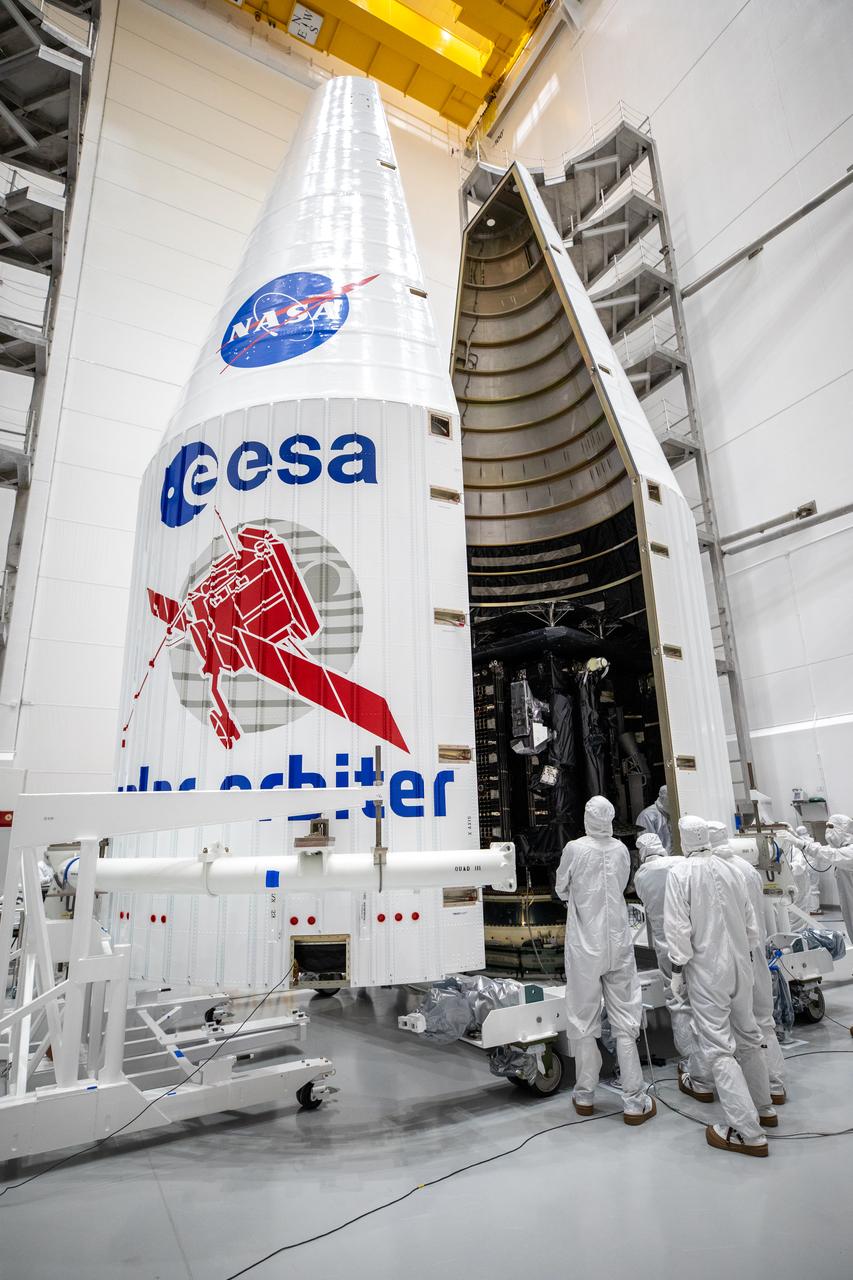
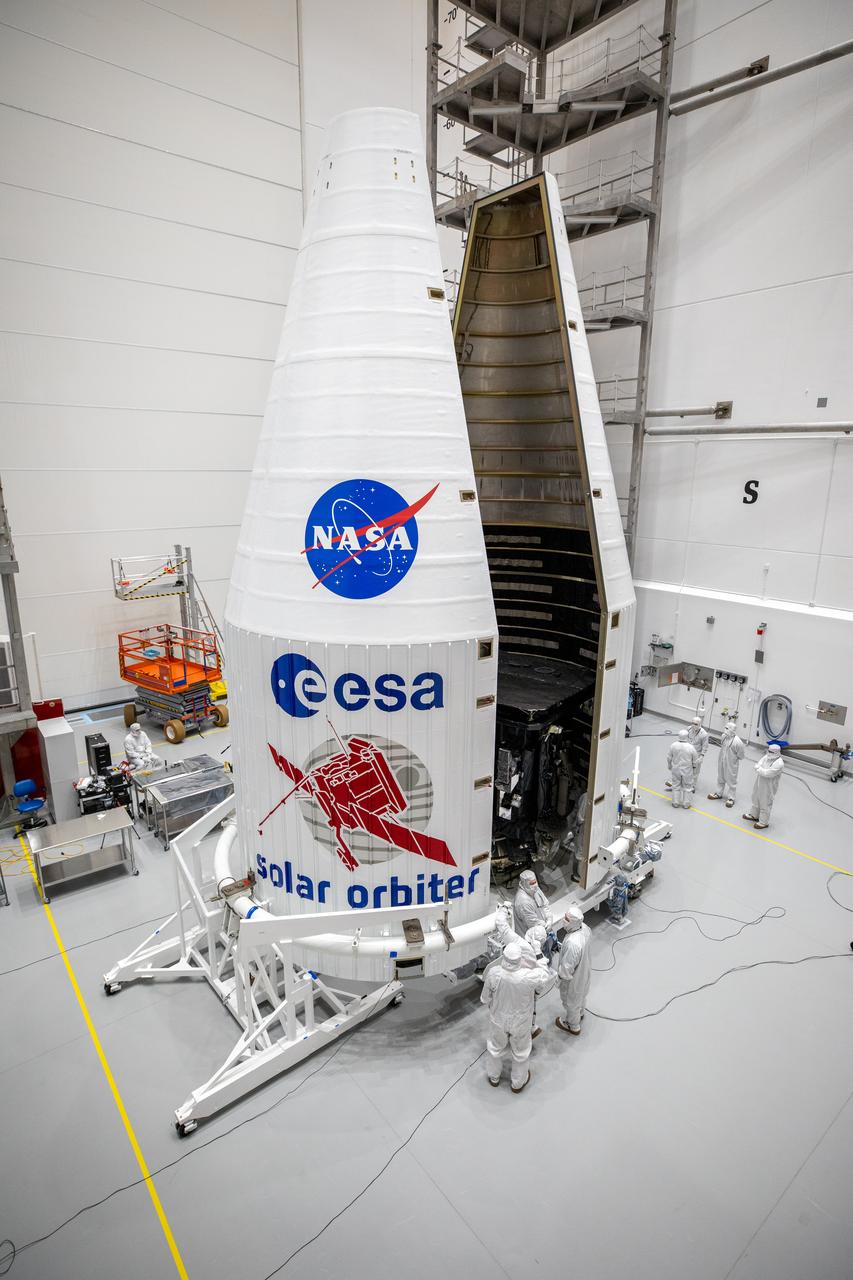
Both halves of a United Launch Alliance Atlas V payload fairing come together around the Solar Orbiter spacecraft inside the Astrotech Space Operations facility in Titusville, Florida, on Jan. 20, 2020. The fairing provides a protective, aerodynamic cover to the payload inside during the early minutes of ascent. Solar Orbiter is an international cooperative mission between ESA (European Space Agency) and NASA. The mission aims to study the Sun, its outer atmosphere and solar wind. The spacecraft will provide the first images of the Sun’s poles. NASA’s Launch Services Program based at Kennedy Space Center in Florida is managing the launch. The spacecraft has been developed by Airbus Defence and Space. Solar Orbiter will launch aboard an Atlas V rocket from Space Launch Complex 41 at Cape Canaveral Air Force Station in Florida. Liftoff is scheduled for Feb. 5, 2020.
Both halves of a United Launch Alliance Atlas V payload fairing come together around the Solar Orbiter spacecraft inside the Astrotech Space Operations facility in Titusville, Florida, on Jan. 20, 2020. The fairing provides a protective, aerodynamic cover to the payload inside during the early minutes of ascent. Solar Orbiter is an international cooperative mission between ESA (European Space Agency) and NASA. The mission aims to study the Sun, its outer atmosphere and solar wind. The spacecraft will provide the first images of the Sun’s poles. NASA’s Launch Services Program based at Kennedy Space Center in Florida is managing the launch. The spacecraft has been developed by Airbus Defence and Space. Solar Orbiter will launch aboard an Atlas V rocket from Space Launch Complex 41 at Cape Canaveral Air Force Station in Florida. Liftoff is scheduled for Feb. 5, 2020.
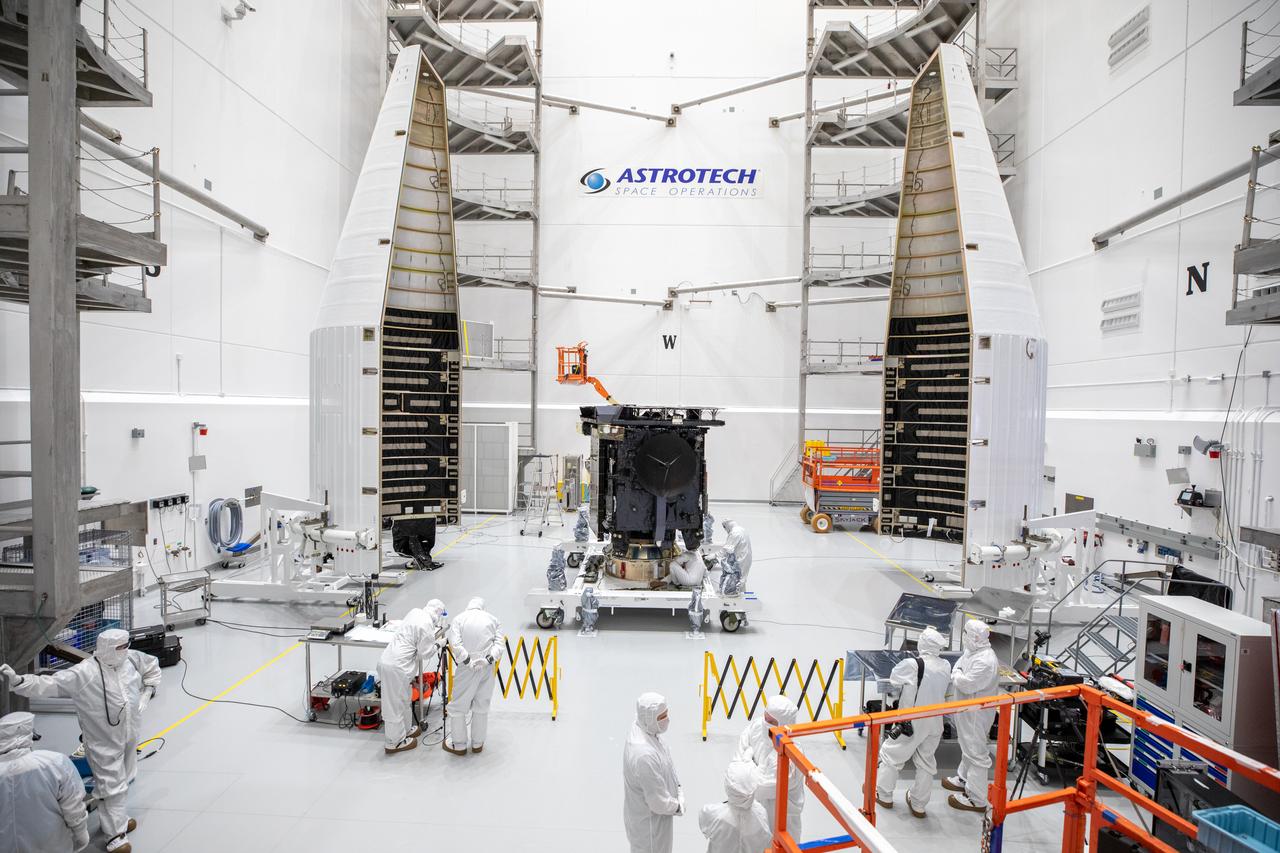
Both halves of a United Launch Alliance Atlas V payload fairing are positioned for installation around the Solar Orbiter spacecraft inside the Astrotech Space Operations facility in Titusville, Florida, on Jan. 20, 2020. The fairing provides a protective, aerodynamic covering to the payload inside during the early minutes of ascent. Solar Orbiter is an international cooperative mission between ESA (European Space Agency) and NASA. The mission aims to study the Sun, its outer atmosphere and solar wind. The spacecraft will provide the first images of the Sun’s poles. NASA’s Launch Services Program based at Kennedy Space Center in Florida is managing the launch. The spacecraft has been developed by Airbus Defence and Space. Solar Orbiter will launch aboard an Atlas V rocket from Space Launch Complex 41 at Cape Canaveral Air Force Station in Florida. Liftoff is scheduled for Feb. 5, 2020.
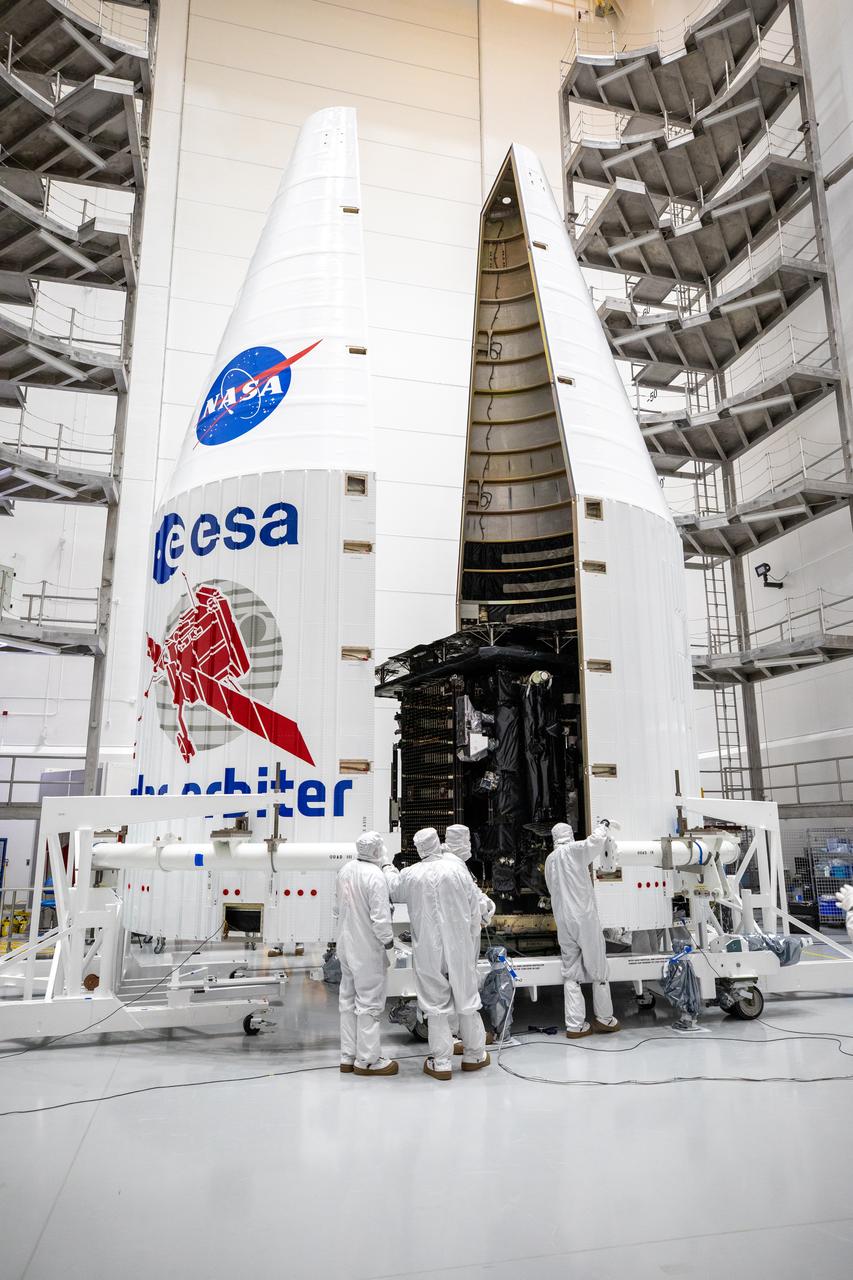
Both halves of a United Launch Alliance Atlas V payload fairing come together around the Solar Orbiter spacecraft inside the Astrotech Space Operations facility in Titusville, Florida, on Jan. 20, 2020. The fairing provides a protective, aerodynamic cover to the payload inside during the early minutes of ascent. Solar Orbiter is an international cooperative mission between ESA (European Space Agency) and NASA. The mission aims to study the Sun, its outer atmosphere and solar wind. The spacecraft will provide the first images of the Sun’s poles. NASA’s Launch Services Program based at Kennedy Space Center in Florida is managing the launch. The spacecraft has been developed by Airbus Defence and Space. Solar Orbiter will launch aboard an Atlas V rocket from Space Launch Complex 41 at Cape Canaveral Air Force Station in Florida. Liftoff is scheduled for Feb. 5, 2020.
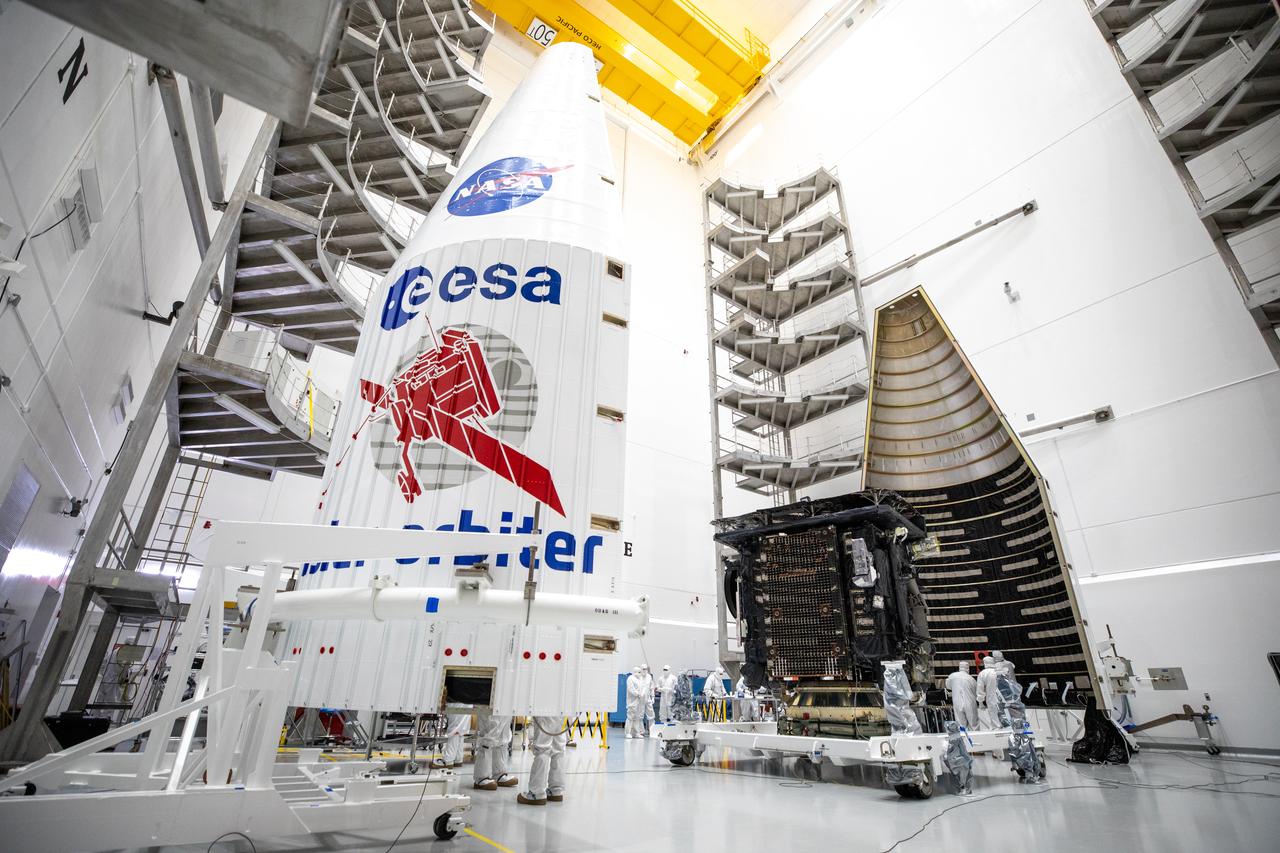
Both halves of a United Launch Alliance Atlas V payload fairing are positioned for installation around the Solar Orbiter spacecraft inside the Astrotech Space Operations facility in Titusville, Florida, on Jan. 20, 2020. The fairing provides a protective, aerodynamic covering to the payload inside during the early minutes of ascent. Solar Orbiter is an international cooperative mission between ESA (European Space Agency) and NASA. The mission aims to study the Sun, its outer atmosphere and solar wind. The spacecraft will provide the first images of the Sun’s poles. NASA’s Launch Services Program based at Kennedy Space Center in Florida is managing the launch. The spacecraft has been developed by Airbus Defence and Space. Solar Orbiter will launch aboard an Atlas V rocket from Space Launch Complex 41 at Cape Canaveral Air Force Station in Florida. Liftoff is scheduled for Feb. 5, 2020.
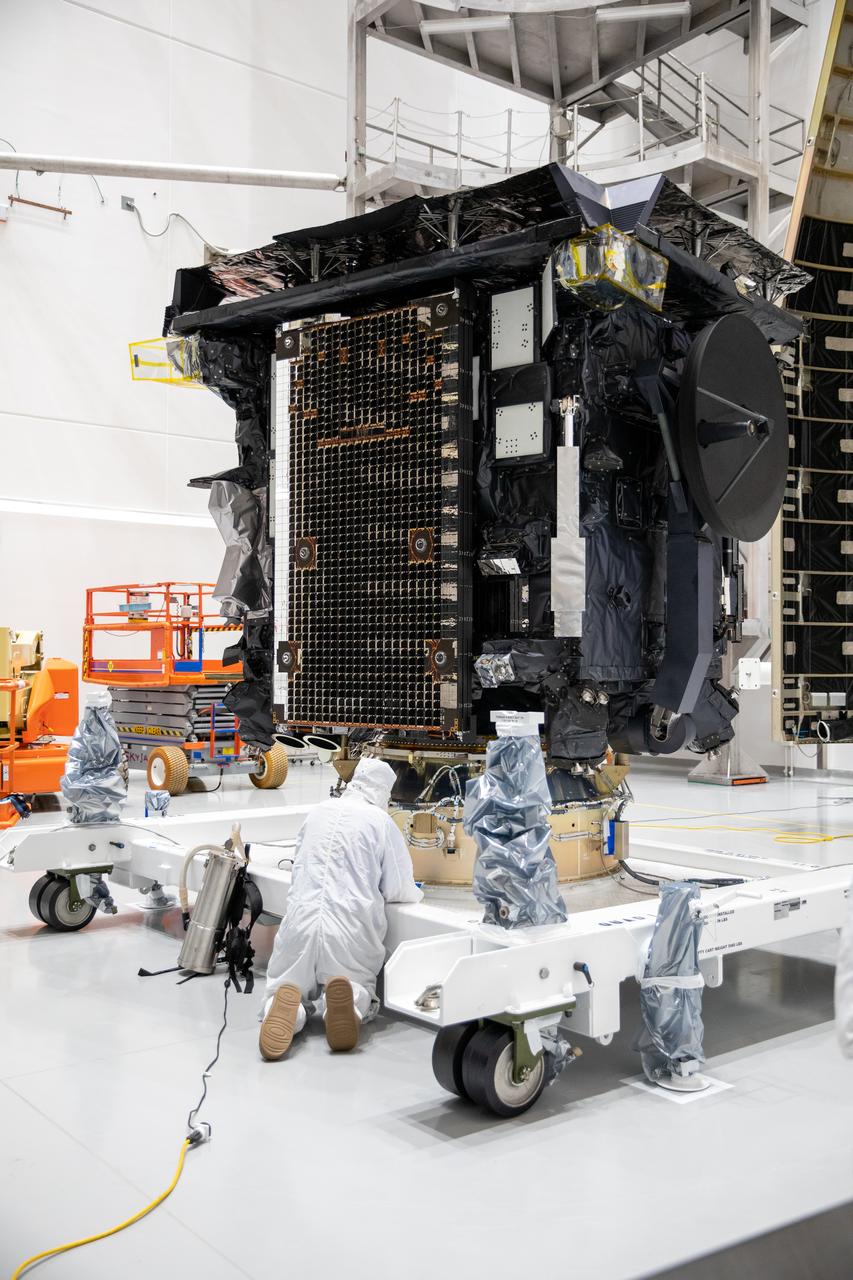
The Solar Orbiter spacecraft is prepared for encapsulation in the United Launch Alliance Atlas V payload fairing inside the Astrotech Space Operations facility in Titusville, Florida, on Jan. 20, 2020. The fairing provides a protective, aerodynamic cover to the payload inside during the early minutes of ascent. Solar Orbiter is an international cooperative mission between ESA (European Space Agency) and NASA. The mission aims to study the Sun, its outer atmosphere and solar wind. The spacecraft will provide the first images of the Sun’s poles. NASA’s Launch Services Program based at Kennedy Space Center in Florida is managing the launch. The spacecraft has been developed by Airbus Defence and Space. Solar Orbiter will launch aboard an Atlas V rocket from Space Launch Complex 41 at Cape Canaveral Air Force Station in Florida. Liftoff is scheduled for Feb. 5, 2020.
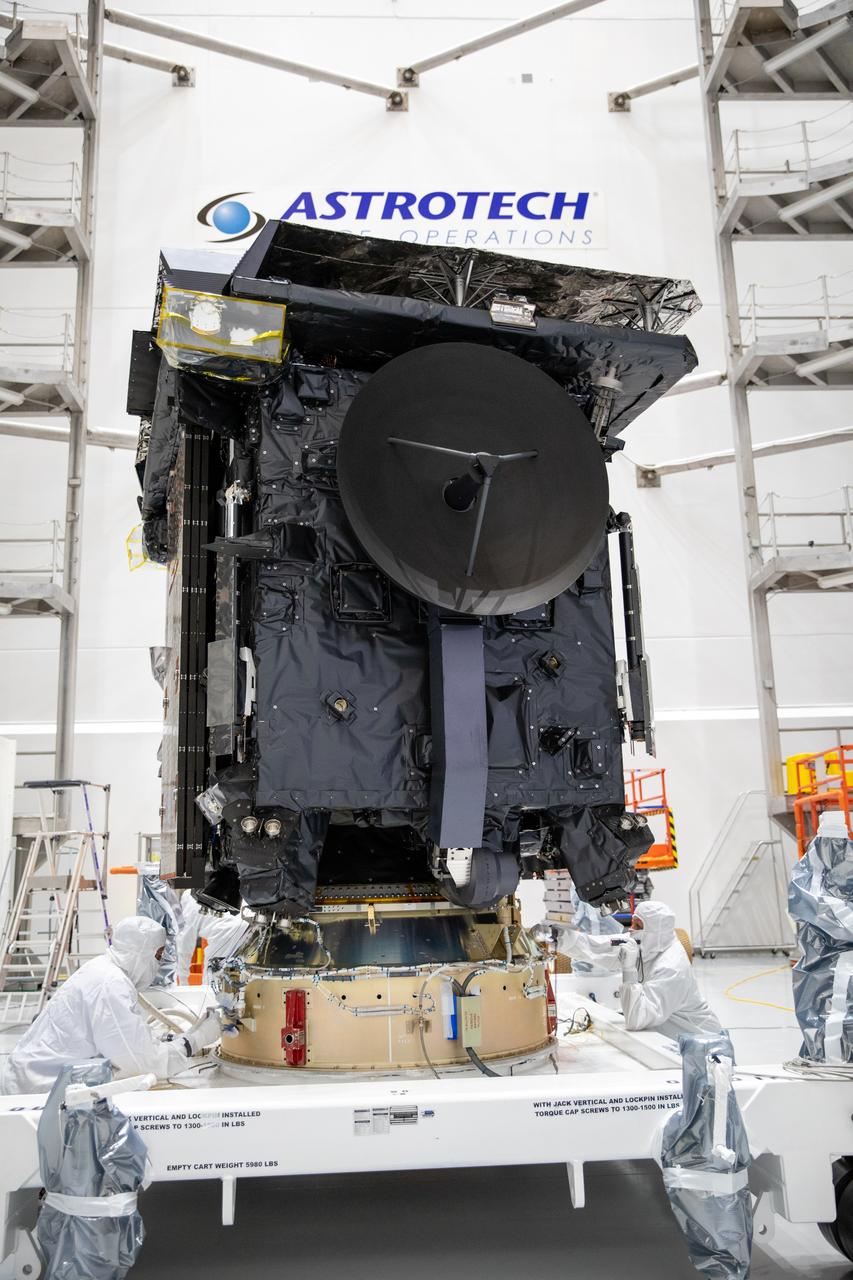
The Solar Orbiter spacecraft is prepared for encapsulation in the United Launch Alliance Atlas V payload fairing inside the Astrotech Space Operations facility in Titusville, Florida, on Jan. 20, 2020. The fairing provides a protective, aerodynamic cover to the payload inside during the early minutes of ascent. Solar Orbiter is an international cooperative mission between ESA (European Space Agency) and NASA. The mission aims to study the Sun, its outer atmosphere and solar wind. The spacecraft will provide the first images of the Sun’s poles. NASA’s Launch Services Program based at Kennedy Space Center in Florida is managing the launch. The spacecraft has been developed by Airbus Defence and Space. Solar Orbiter will launch aboard an Atlas V rocket from Space Launch Complex 41 at Cape Canaveral Air Force Station in Florida. Liftoff is scheduled for Feb. 5, 2020.
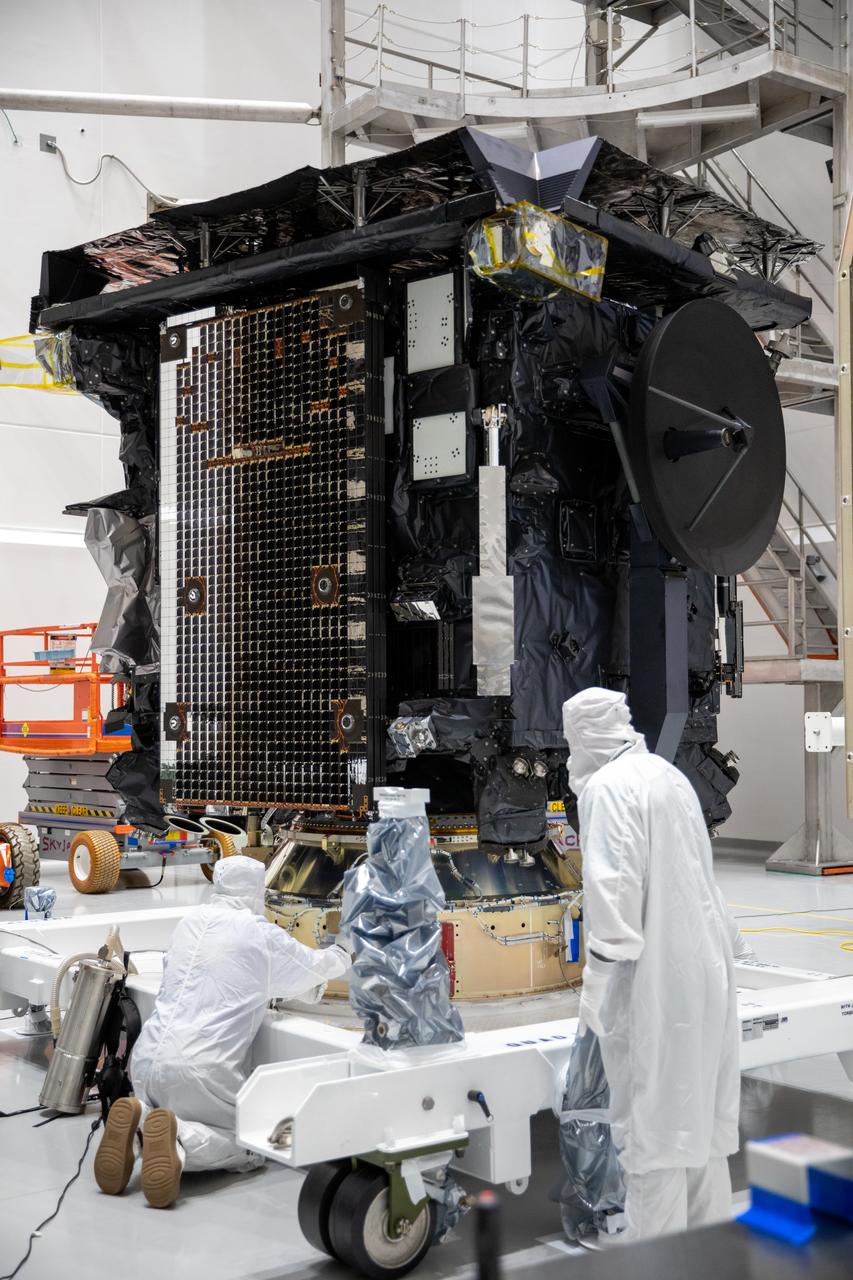
The Solar Orbiter spacecraft is prepared for encapsulation in the United Launch Alliance Atlas V payload fairing inside the Astrotech Space Operations facility in Titusville, Florida, on Jan. 20, 2020. The fairing provides a protective, aerodynamic cover to the payload inside during the early minutes of ascent. Solar Orbiter is an international cooperative mission between ESA (European Space Agency) and NASA. The mission aims to study the Sun, its outer atmosphere and solar wind. The spacecraft will provide the first images of the Sun’s poles. NASA’s Launch Services Program based at Kennedy Space Center in Florida is managing the launch. The spacecraft has been developed by Airbus Defence and Space. Solar Orbiter will launch aboard an Atlas V rocket from Space Launch Complex 41 at Cape Canaveral Air Force Station in Florida. Liftoff is scheduled for Feb. 5, 2020.
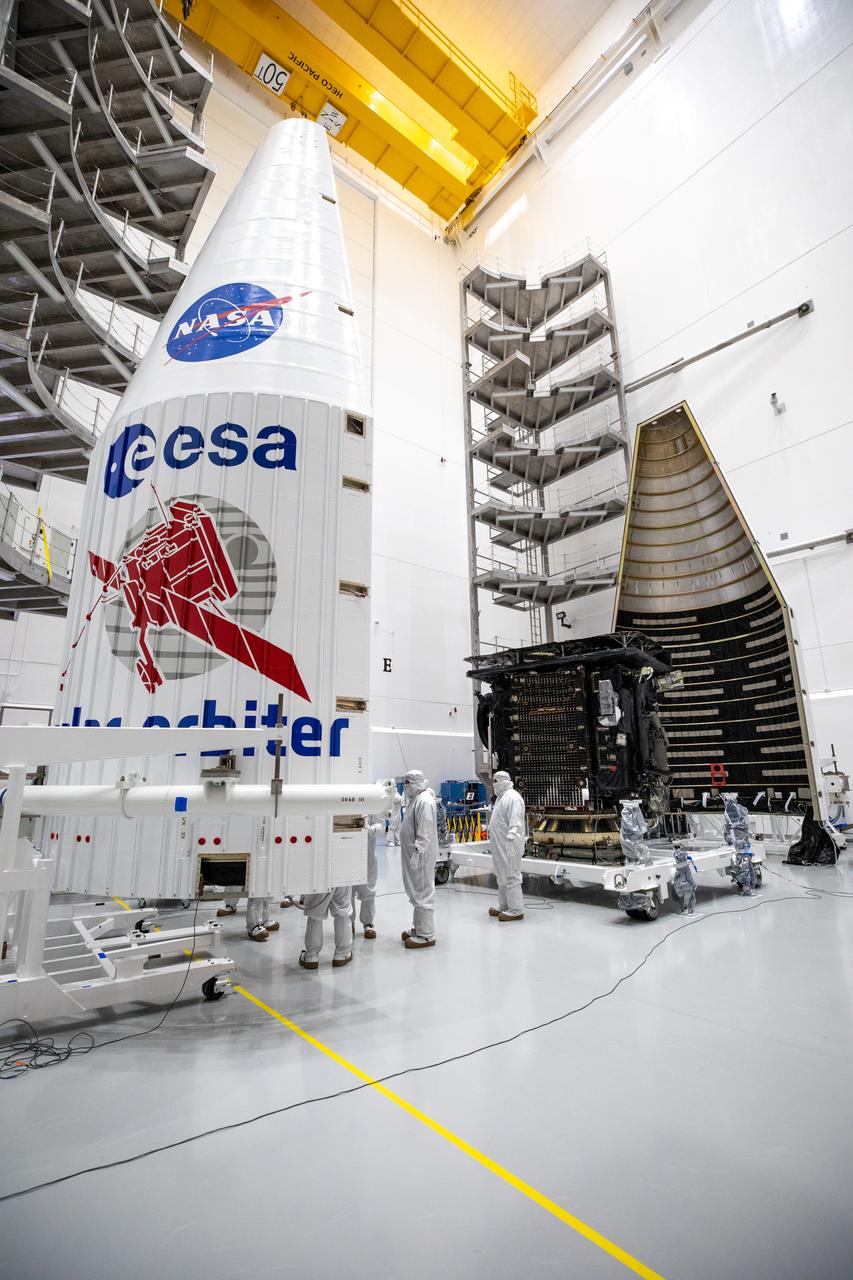
Both halves of a United Launch Alliance Atlas V payload fairing are positioned for installation around the Solar Orbiter spacecraft inside the Astrotech Space Operations facility in Titusville, Florida, on Jan. 20, 2020. The fairing provides a protective, aerodynamic covering to the payload inside during the early minutes of ascent. Solar Orbiter is an international cooperative mission between ESA (European Space Agency) and NASA. The mission aims to study the Sun, its outer atmosphere and solar wind. The spacecraft will provide the first images of the Sun’s poles. NASA’s Launch Services Program based at Kennedy Space Center in Florida is managing the launch. The spacecraft has been developed by Airbus Defence and Space. Solar Orbiter will launch aboard an Atlas V rocket from Space Launch Complex 41 at Cape Canaveral Air Force Station in Florida. Liftoff is scheduled for Feb. 5, 2020.
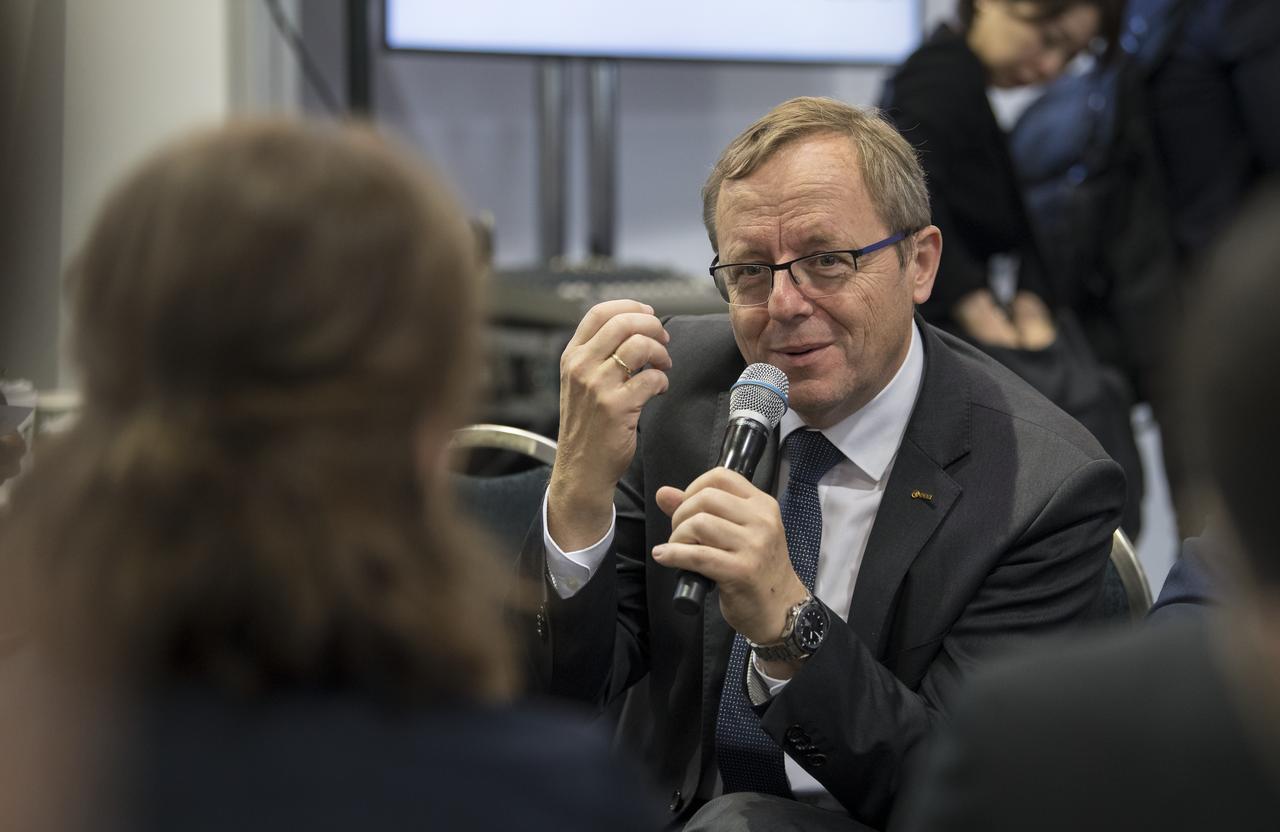
Dr Johann-Dietrich Worner, Director General, European Space Agency (ESA), answers questions during a Heads of Agency interactive session with students at the 70th International Astronautical Congress, Monday, Oct. 21, 2019 at the Walter E. Washington Convention Center in Washington. Photo credit: (NASA/Aubrey Gemignani)
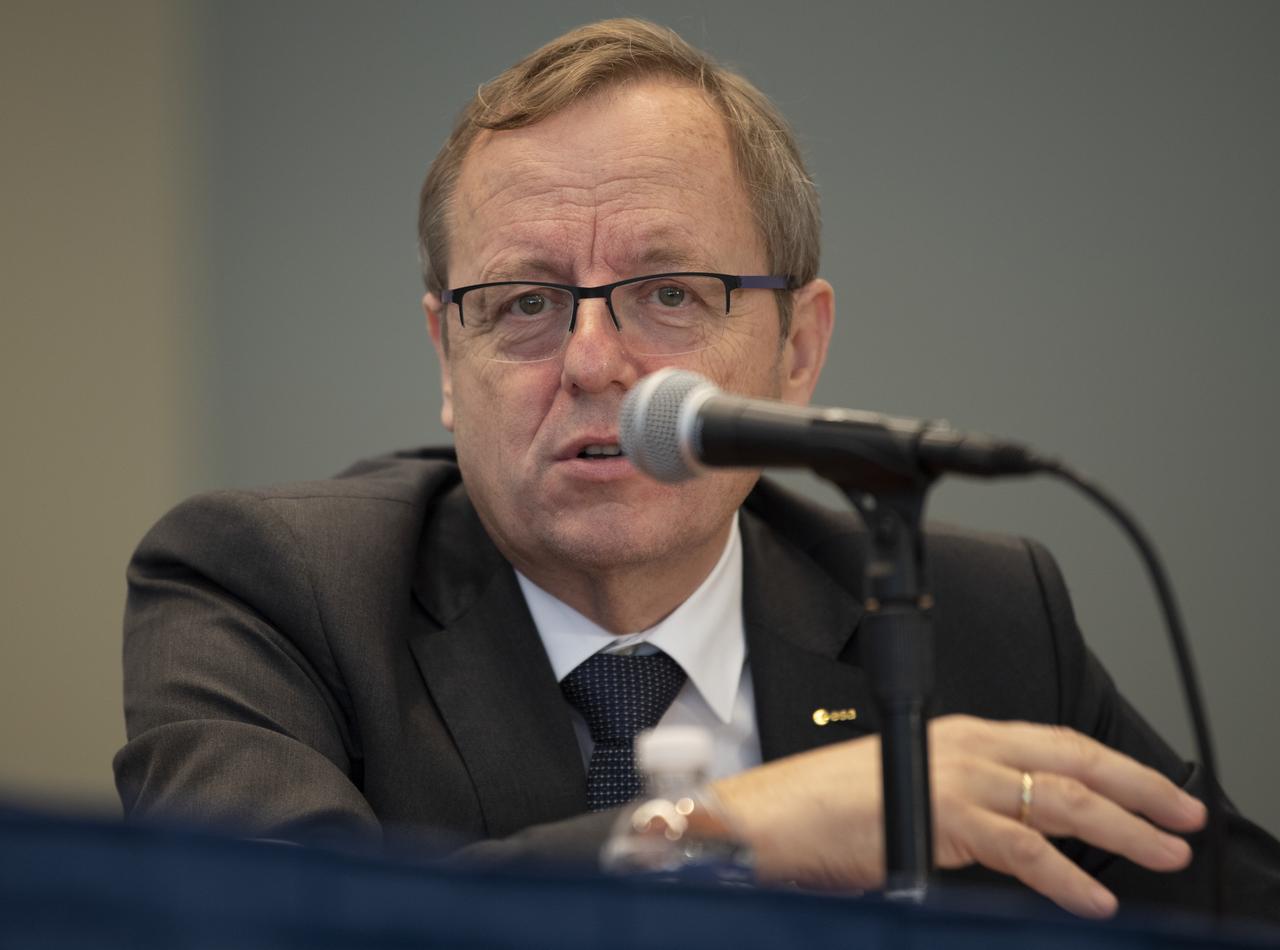
Johann-Dietrich Woerner, Director General of the ESA (European Space Agency), during the Heads of Agency press conference at the 70th International Astronautical Congress, Monday, Oct. 21, 2019 at the Walter E. Washington Convention Center in Washington. Photo Credit: (NASA/Bill Ingalls)
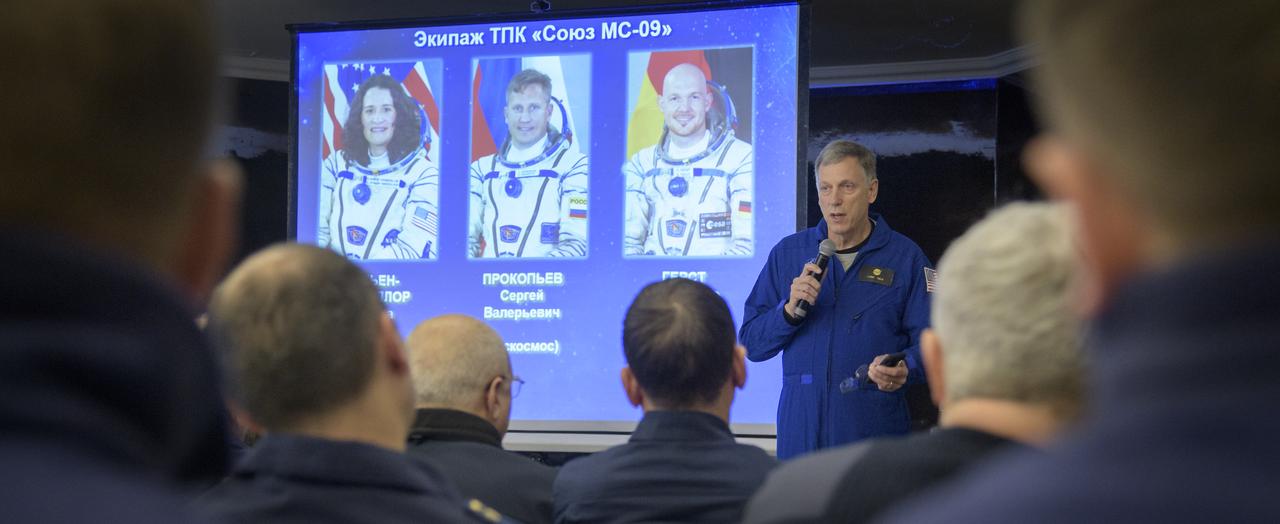
NASA International Space Station Operations Integration Manager Kenny Todd thanks Russian Search and Rescue teams for their amazing support during the October 11, 2018 aborted Expedition 57 launch, Tuesday, Dec. 18, 2018 at the Cosmonaut Hotel in Karaganda, Kazakhstan. NASA, ESA, and Roscosmos teams were gathered to discuss the readiness for the landing of Expedition 57 crew members Serena Auñón-Chancellor of NASA, Alexander Gerst of ESA (European Space Agency), and Sergey Prokopyev of Roscosmos, Auñón-Chancellor, Gerst, and Prokopyev are returning after 197 days in space where they served as members of the Expedition 56 and 57 crews onboard the International Space Station. Photo Credit: (NASA/Bill Ingalls)
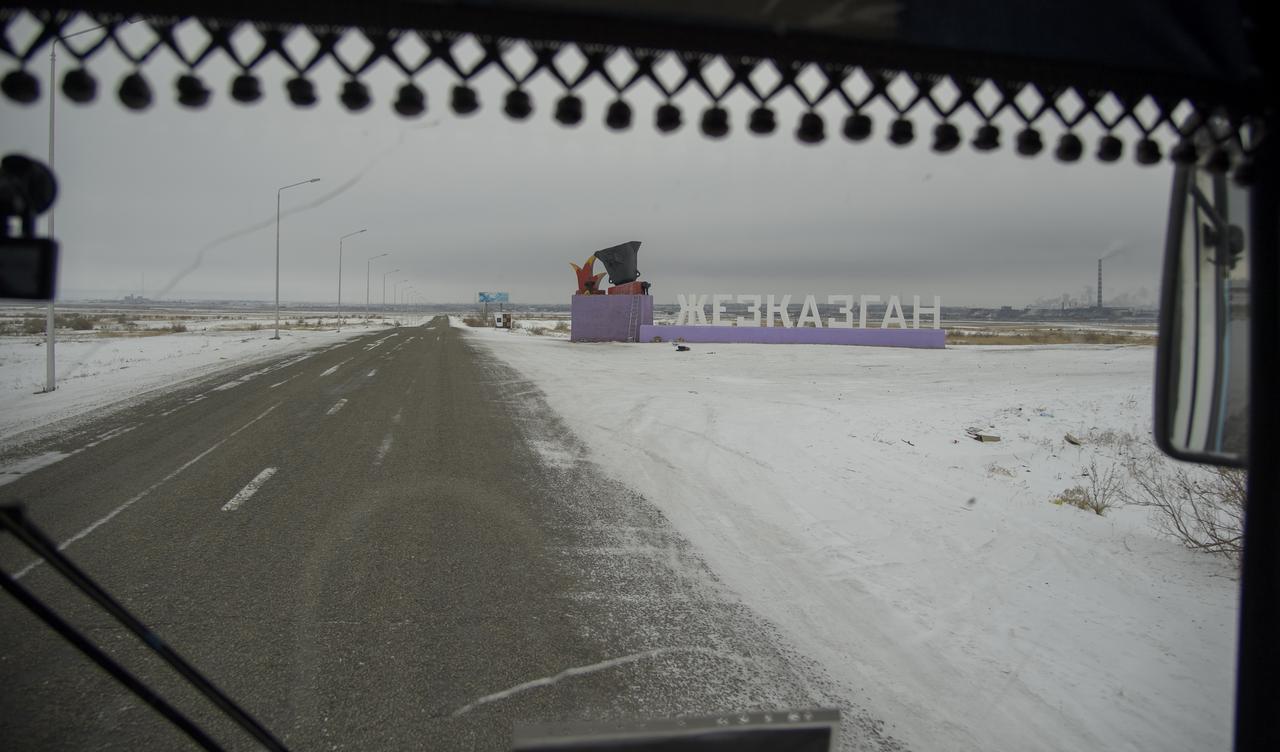
View from the bus carrying team members from NASA, ESA, Roscosmos, and Russian Search and Recovery Forces drive as they drive into Zhezkazgan, Kazakhstan in advance of the landing of Expedition 57 crew members Serena Auñón-Chancellor of NASA, Alexander Gerst of ESA (European Space Agency), and Sergey Prokopyev of Roscosmos. Wednesday, Dec. 19, 2018. Auñón-Chancellor, Gerst, and Prokopyev are returning after 197 days in space where they served as members of the Expedition 56 and 57 crews onboard the International Space Station. Photo Credit: (NASA/Bill Ingalls)
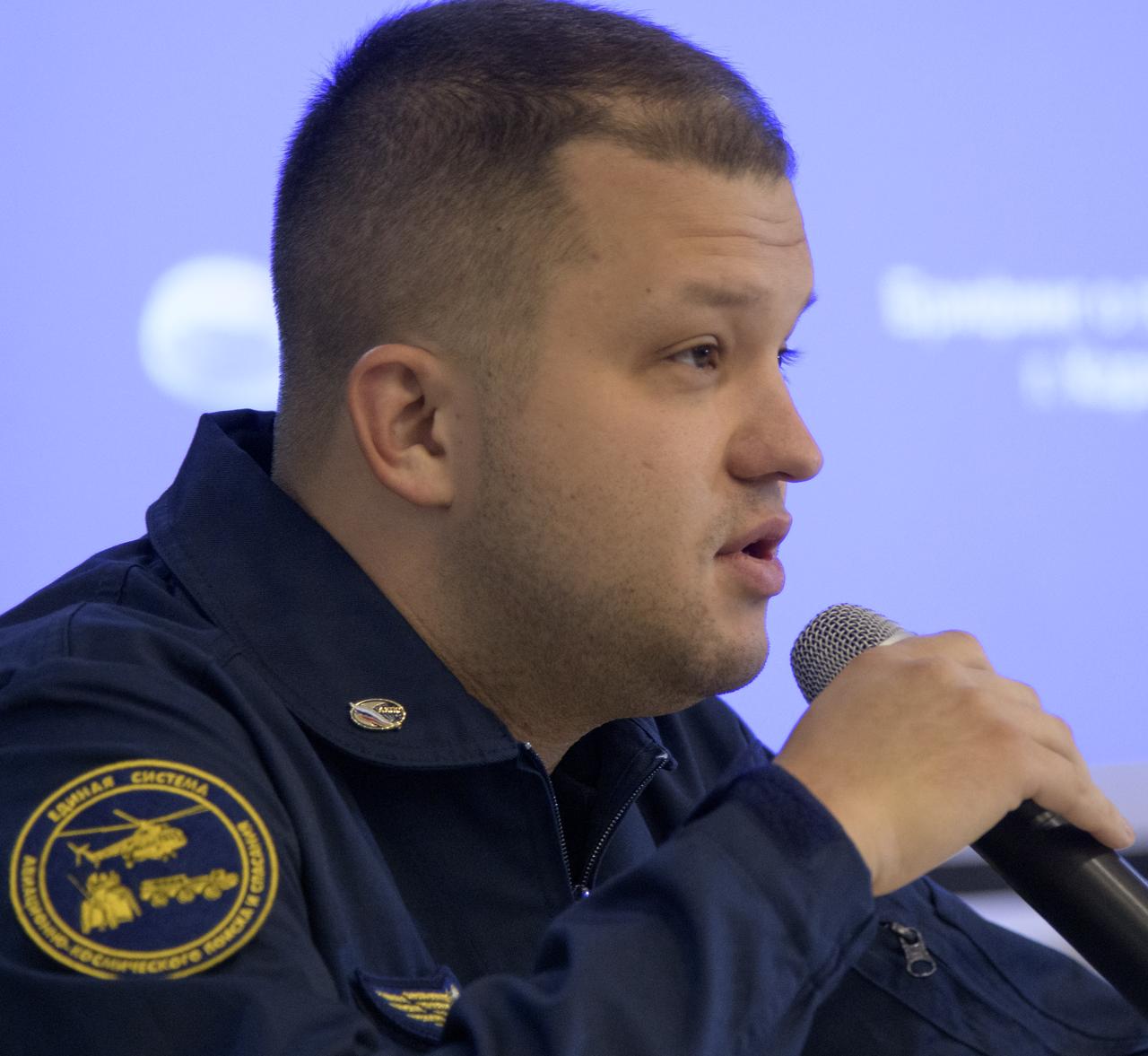
Deputy Head of Rosaviatsiya (Russian Federal Agency for Air Transport) Yadrov Victor Dmitrievich holds a Soyuz landing readiness meeting with teams from NASA, ESA, and Roscosmos Tuesday, Feb. 4, 2020, at the Cosmonaut Hotel in Karaganda, Kazakhstan. The teams are preparing for the Thursday, February 6th landing of Expedition 61 crew members Christina Koch of NASA, Alexander Skvortsov of the Russian space agency Roscosmos, and Luca Parmitano of ESA (European Space Agency). Koch will be returning to Earth after logging 328 days in space --- the longest spaceflight in history by a woman --- as a member of Expeditions 59-60-61 on the International Space Station. Skvortsov and Parmitano will be returning after 201 days in space where they served as Expedition 60-61 crew members onboard the station. Photo Credit: (NASA/Bill Ingalls)
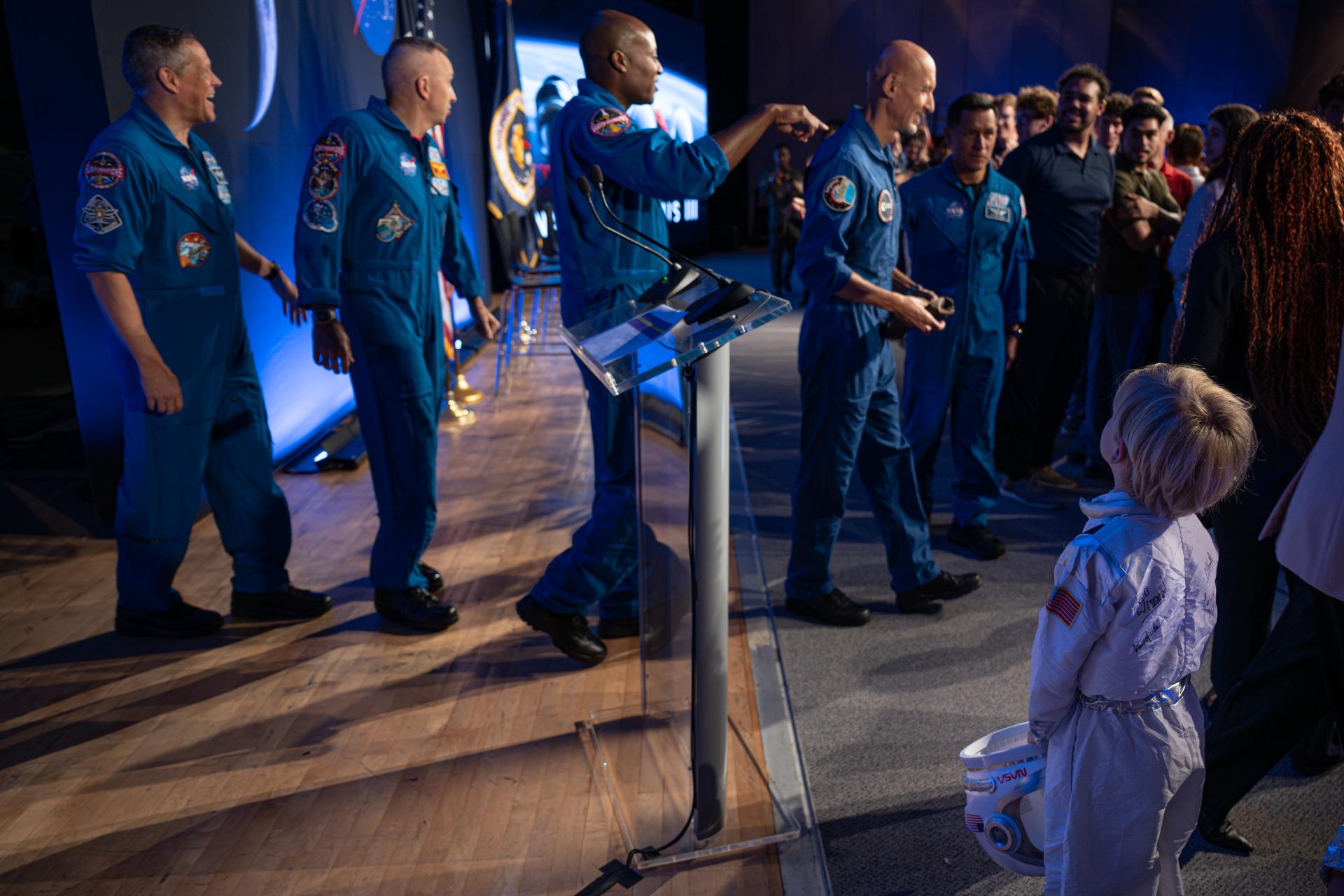
A young space enthusiast dressed as an astronaut watches as Artemis III crew members NASA astronauts Bob Hines, backup crew member; Randy Bresnik, commander; Andre Douglas, mission specialist; ESA (European Space Agency) astronaut Luca Parmitano, pilot; and NASA astronaut Frank Rubio, mission specialist, appear on stage following the Artemis III crew announcement event, Tuesday, June 9, 2026, at NASA’s Johnson Space Center in Houston, Texas. Photo Credit: (NASA/John Kraus)
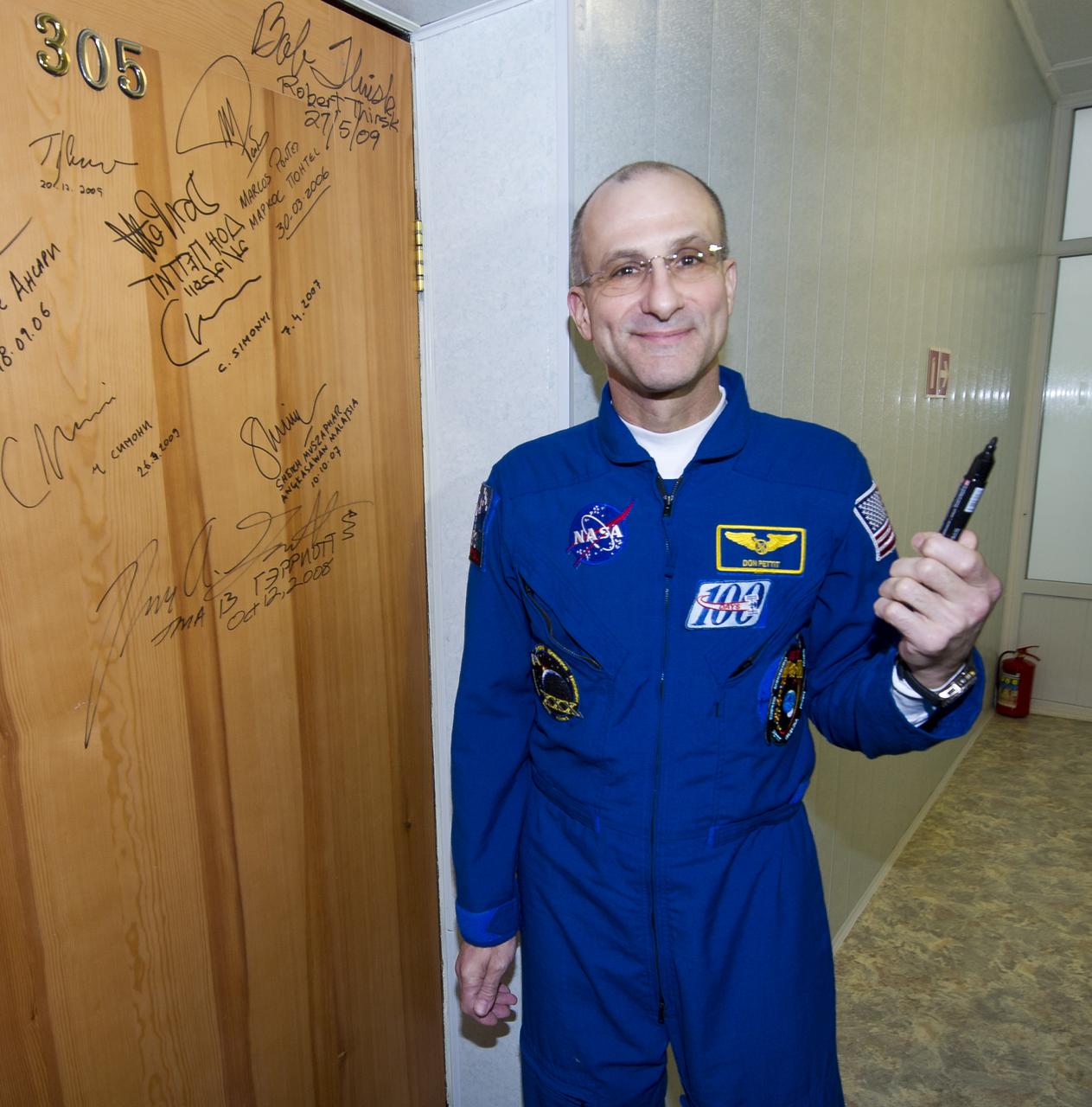
Expedition 30 NASA astronaut and Flight Engineer Don Pettit performs the traditional door signing Wednesday, Dec. 21, 2011 at the Cosmonaut Hotel in Baikonur, Kazakhstan. Pettit was launched onboard the Soyuz rocket the same evening with Expedition 30 Soyuz Commander Oleg Kononenko and ESA (European Space Agency) astronaut Andre Kuiperson a mission to the International Space Station (ISS). Photo Credit: (NASA/Carla Cioffi)
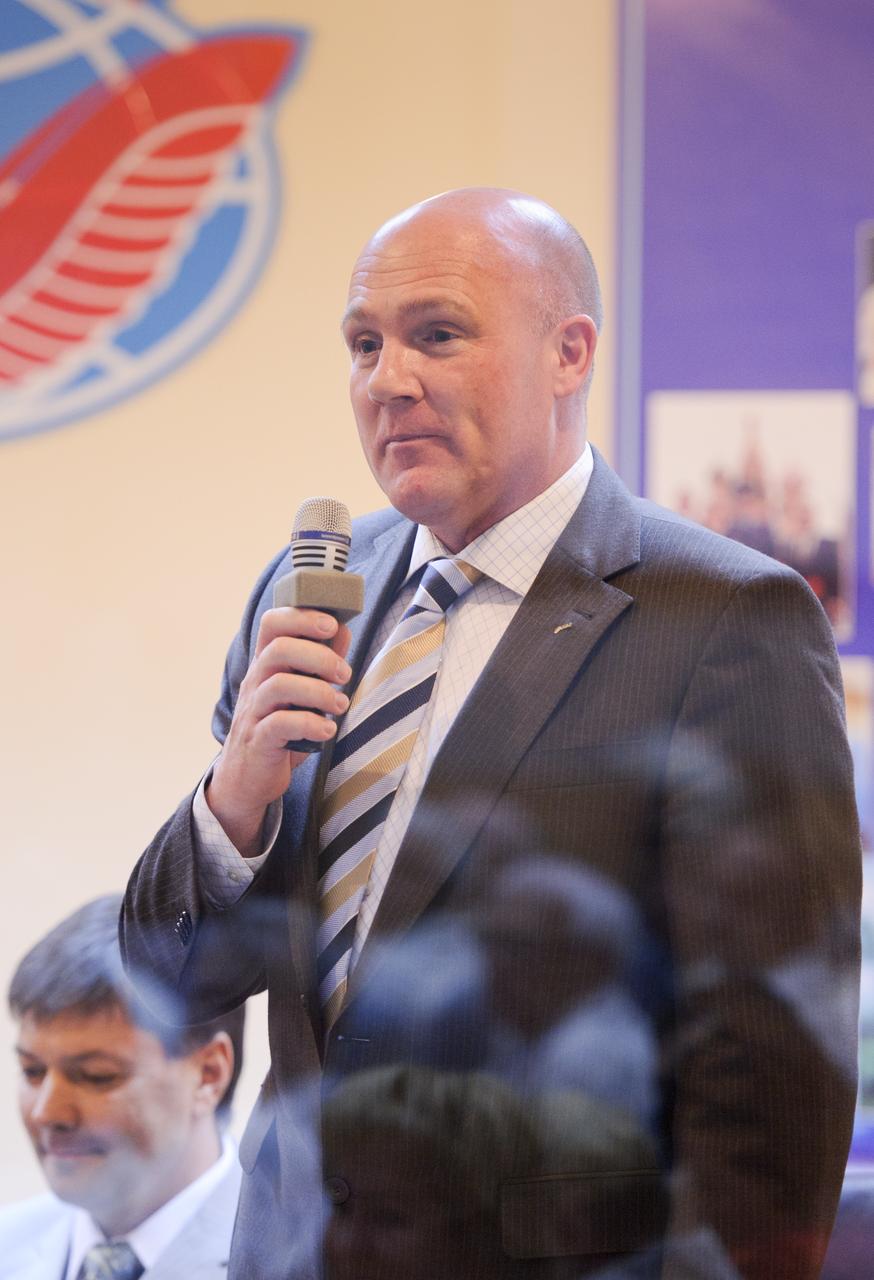
European Space Agency (ESA) backup Flight Engineer Andre Kuipers speaks during the State Commission meeting to approve the Soyuz launch of Expedition 28 to the International Space Station, Monday, June 6, 2011, at the Cosmonaut Hotel in Baikonur, Kazakhstan. The mission is set to launch on Tuesday, June 8, from the Baikonur Cosmodrome. Photo Credit: (NASA/Carla Cioffi)
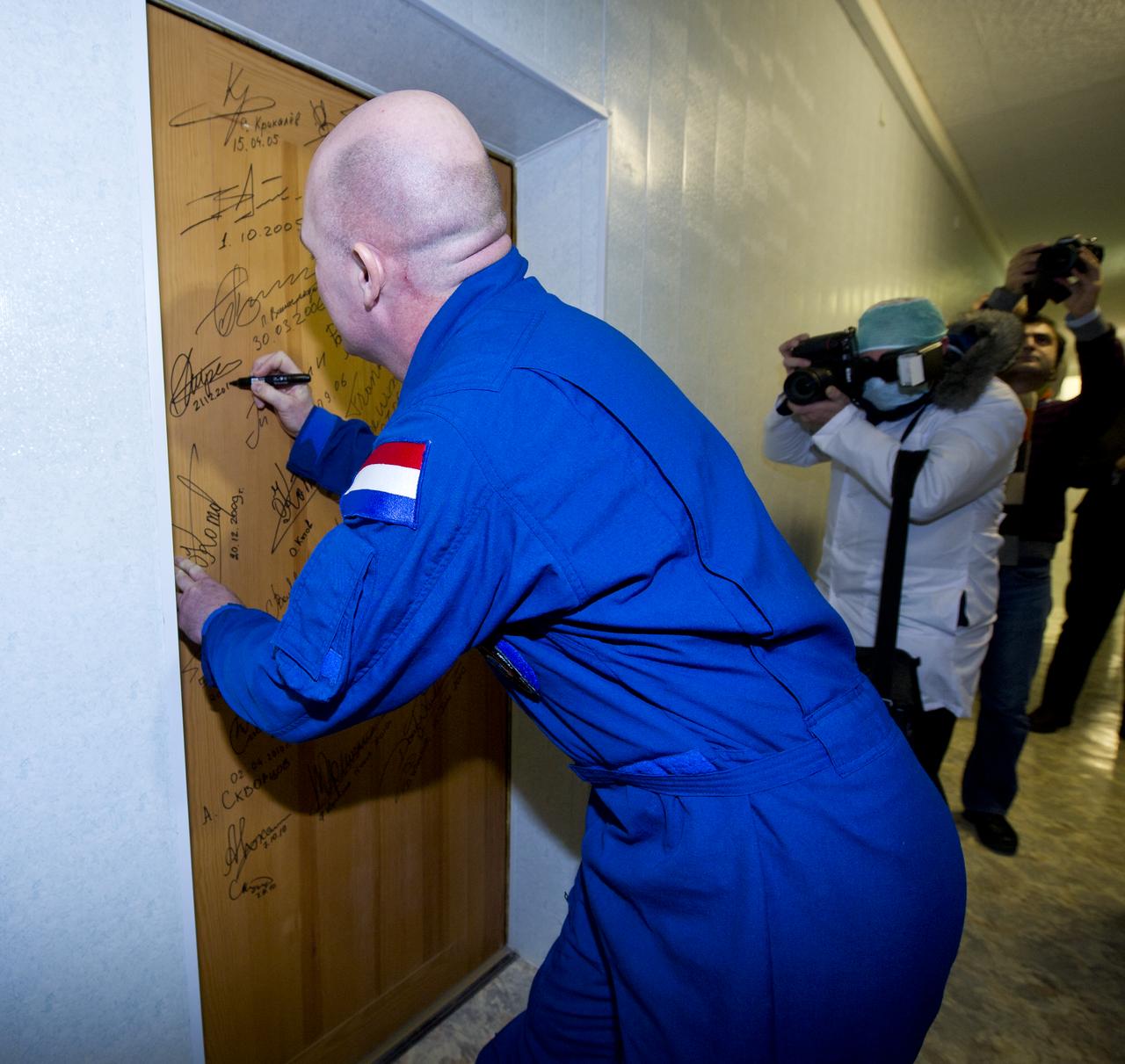
Expedition 30 ESA (European Space Agency) astronaut Andre Kuipers performs the traditional door signing Wednesday, Dec. 21, 2011 at the Cosmonaut Hotel in Baikonur, Kazakhstan. Kuipers was launched onboard the Soyuz rocket the same evening with Expedition 30 NASA Flight Engineer Don Pettit and Soyuz Commander and Russian cosmonaut Oleg Kononenko on a mission to the International Space Station (ISS). Photo Credit: (NASA/Carla Cioffi)
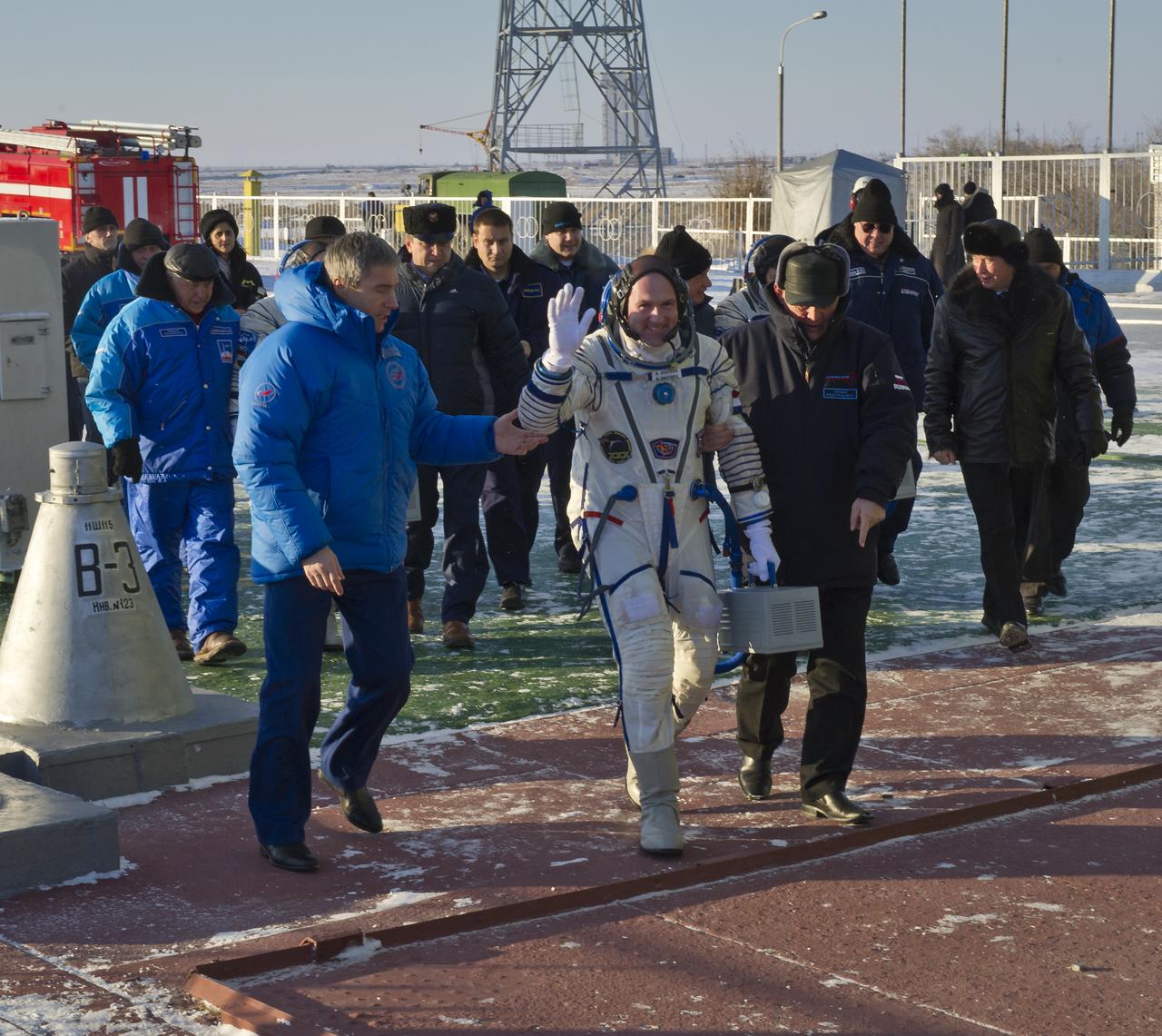
Expedition 30 ESA (European Space Agency) astronaut Andre Kuipers, center, is seen as he is escorted to the Soyuz launch pad just hours prior to his launch aboard the Soyuz TMA-03M spacecraft to the International Space Station at the Baikonur Cosmodrome in Kazakhstan, Wednesday, Dec. 21 2011. Photo Credit: (NASA/Carla Cioffi)
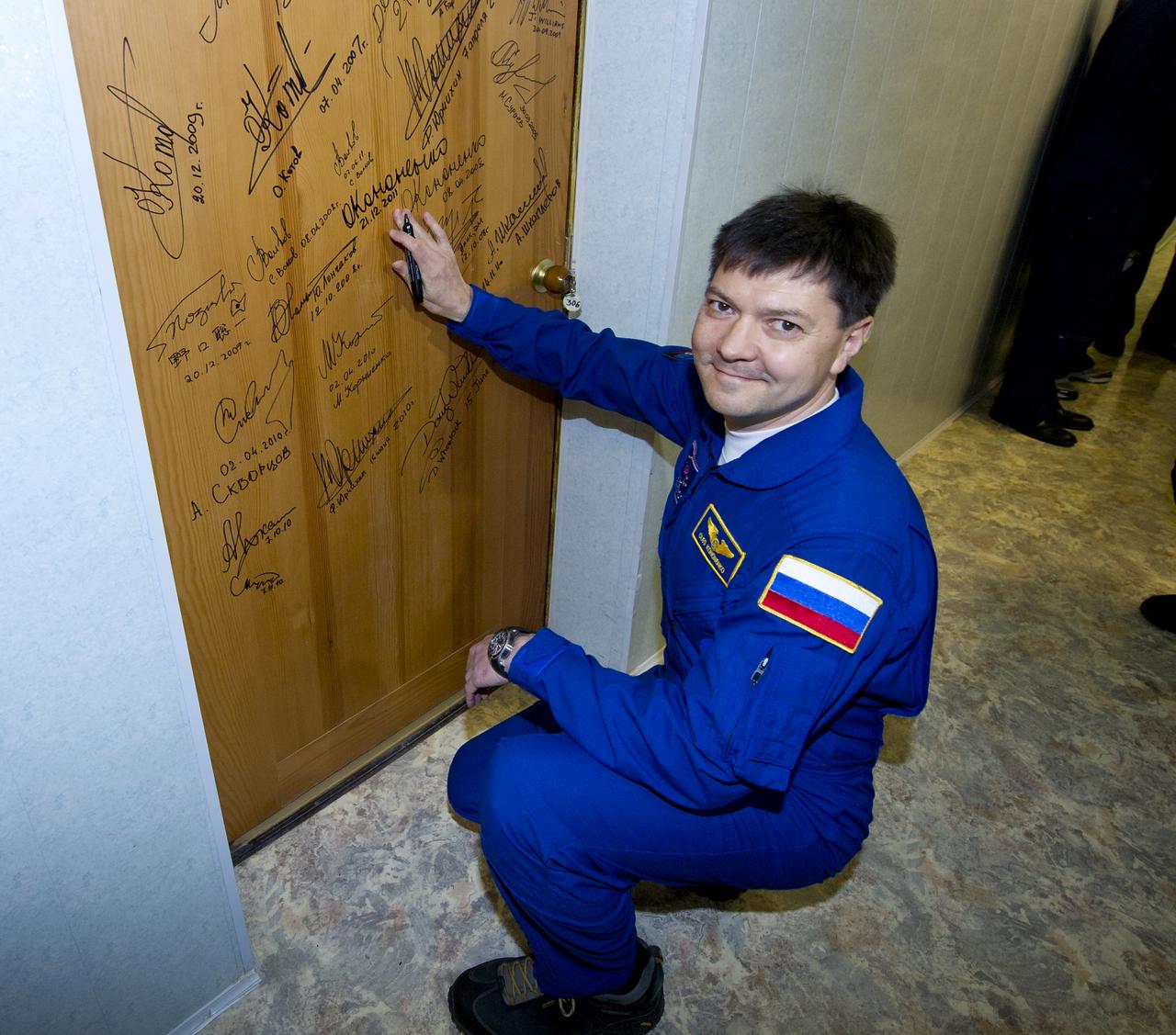
Expedition 30 Soyuz Commander Oleg Kononenko is seen after performing the traditional door signing Wednesday, Dec. 21, 2011 at the Cosmonaut Hotel in Baikonur, Kazakhstan. Kononenko was launched onboard the Soyuz rocket the same evening with Expedition 30 NASA Flight Engineer Don Pettit and ESA (European Space Agency) astronaut Andre Kuipers on a mission to the International Space Station (ISS). Photo Credit: (NASA/Carla Cioffi)
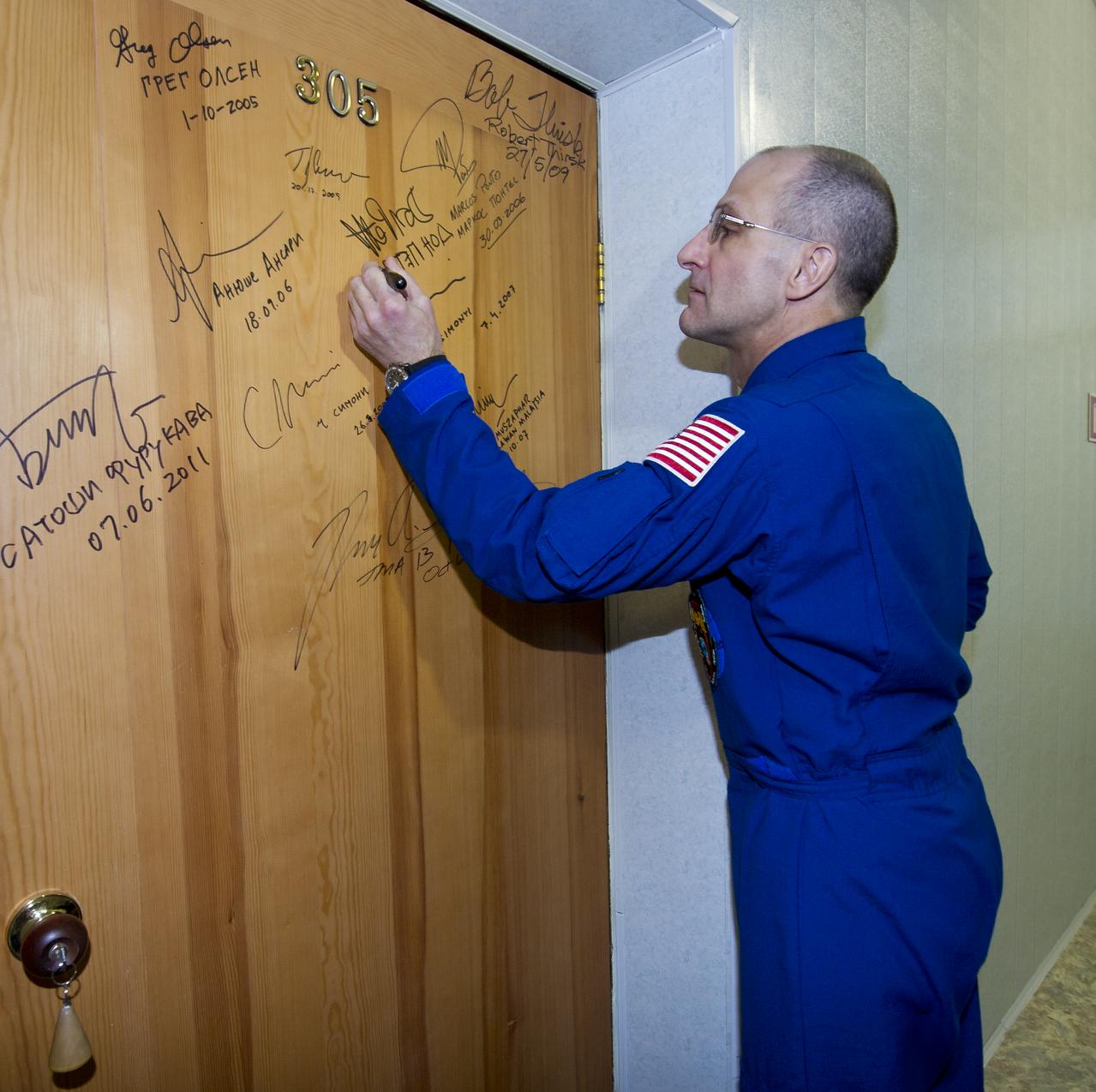
Expedition 30 NASA astronaut and Flight Engineer Don Pettit performs the traditional door signing Wednesday, Dec. 21, 2011 at the Cosmonaut Hotel in Baikonur, Kazakhstan. Pettit was launched onboard the Soyuz rocket the same evening with Expedition 30 Soyuz Commander Oleg Kononenko and ESA (European Space Agency) astronaut Andre Kuiperson a mission to the International Space Station (ISS). Photo Credit: (NASA/Carla Cioffi)
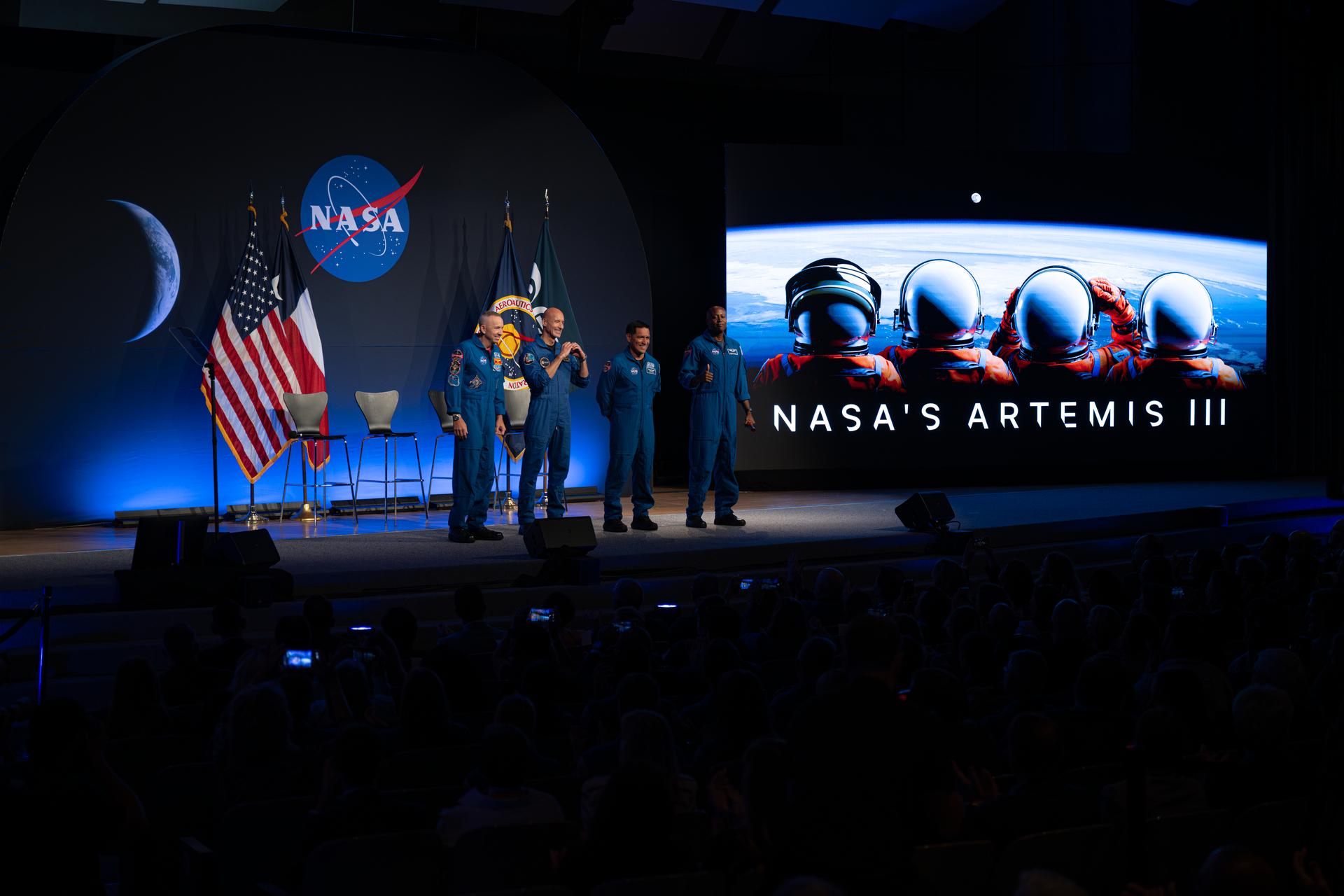
Artemis III crew members NASA astronaut Randy Bresnik, commander; ESA (European Space Agency) astronaut Luca Parmitano, pilot; and NASA astronauts Frank Rubio, mission specialist, and Andre Douglas, mission specialist, are seen during the Artemis III crew announcement event, Tuesday, June 9, 2026, at NASA’s Johnson Space Center in Houston, Texas. Photo Credit: (NASA/John Kraus)
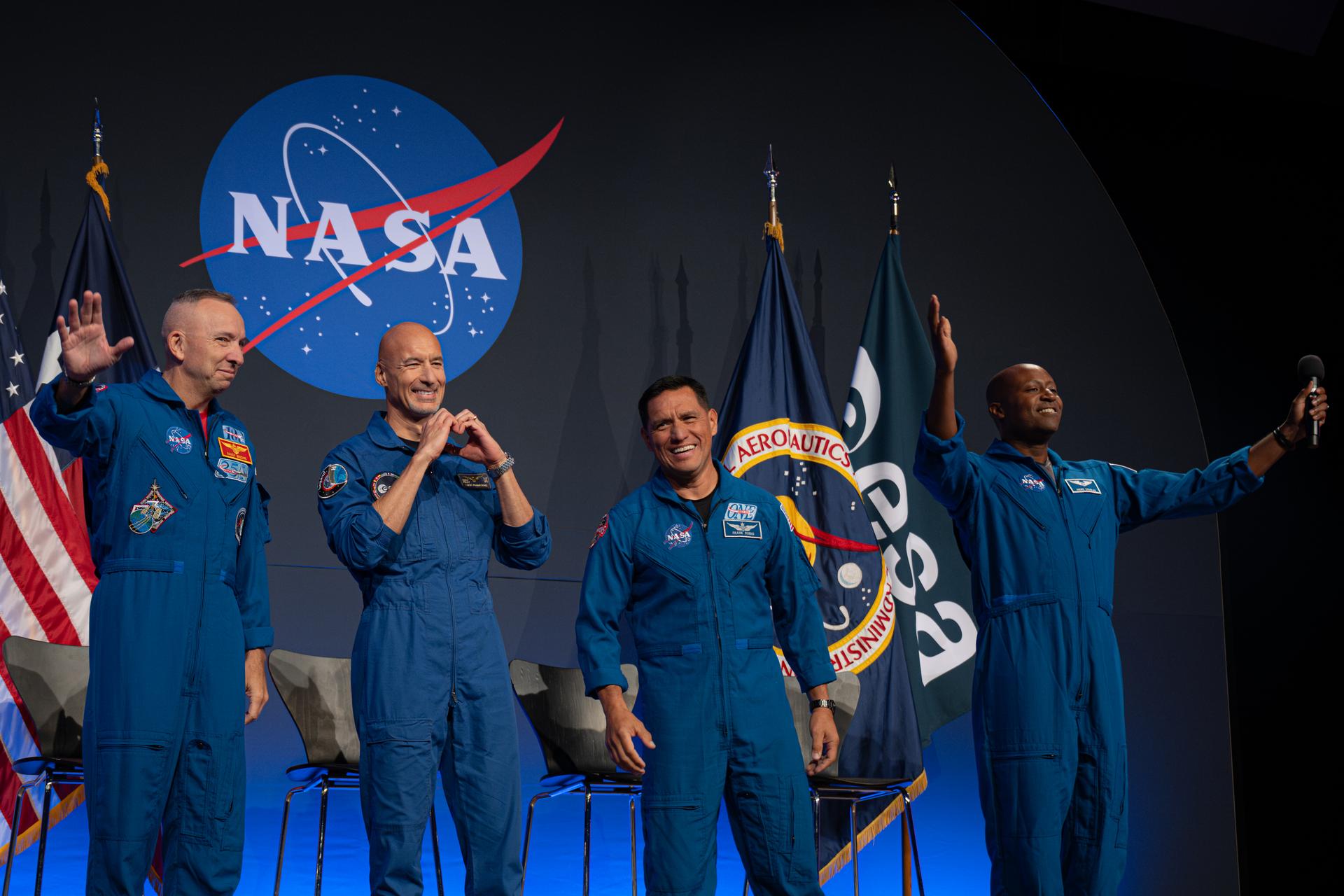
Artemis III crew members NASA astronaut Randy Bresnik, commander; ESA (European Space Agency) astronaut Luca Parmitano, pilot; and NASA astronauts Frank Rubio, mission specialist, and Andre Douglas, mission specialist, are seen during the Artemis III crew announcement event, Tuesday, June 9, 2026, at NASA’s Johnson Space Center in Houston, Texas. Photo Credit: (NASA/John Kraus)
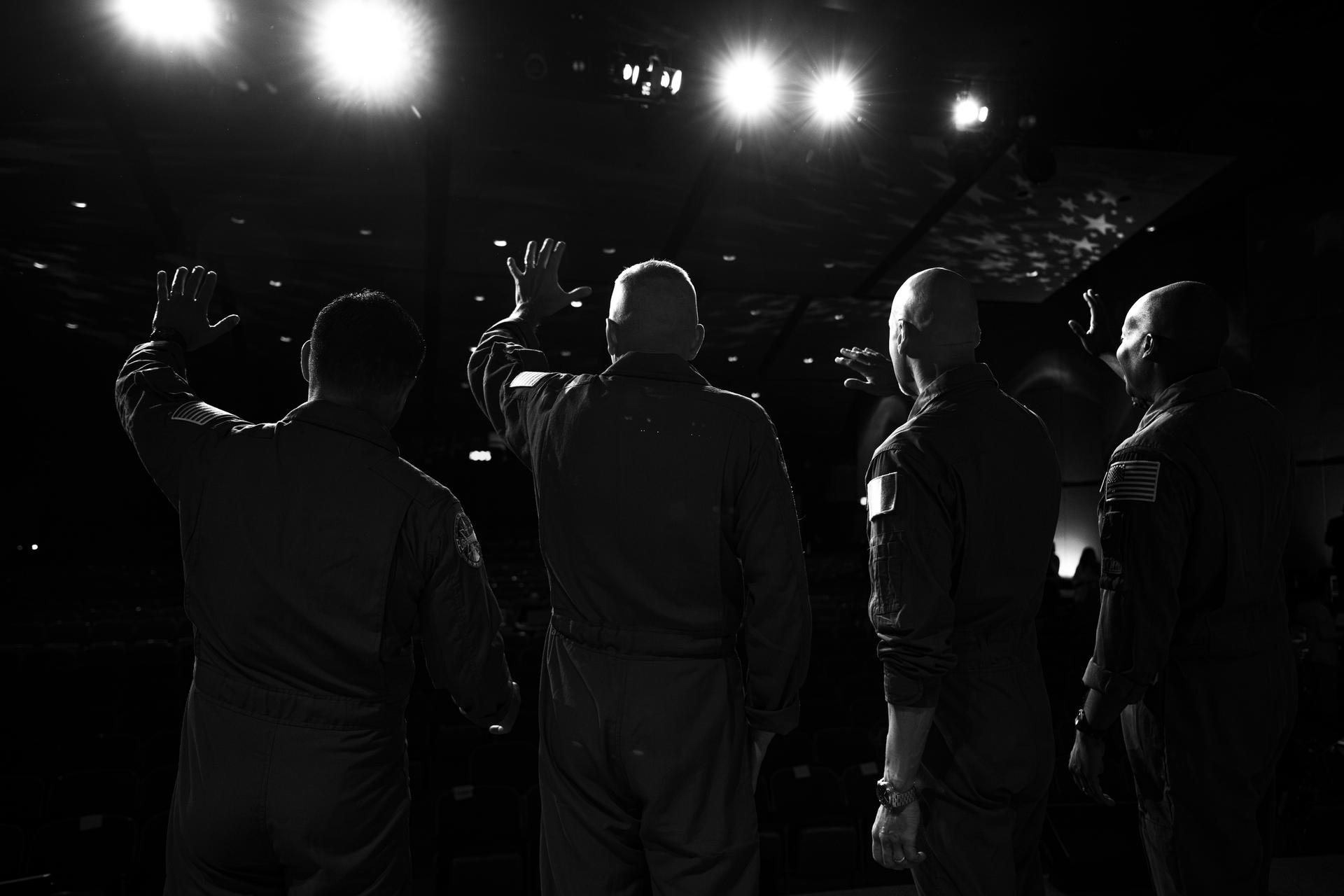
Artemis III crew members NASA astronauts Frank Rubio, mission specialist, and Randy Bresnik, commander; ESA (European Space Agency) astronaut Luca Parmitano, pilot; and NASA astronaut Andre Douglas, mission specialist, are seen on stage before their crew announcement event, Tuesday, June 9, 2026, at NASA’s Johnson Space Center in Houston, Texas. Photo Credit: (NASA/John Kraus)