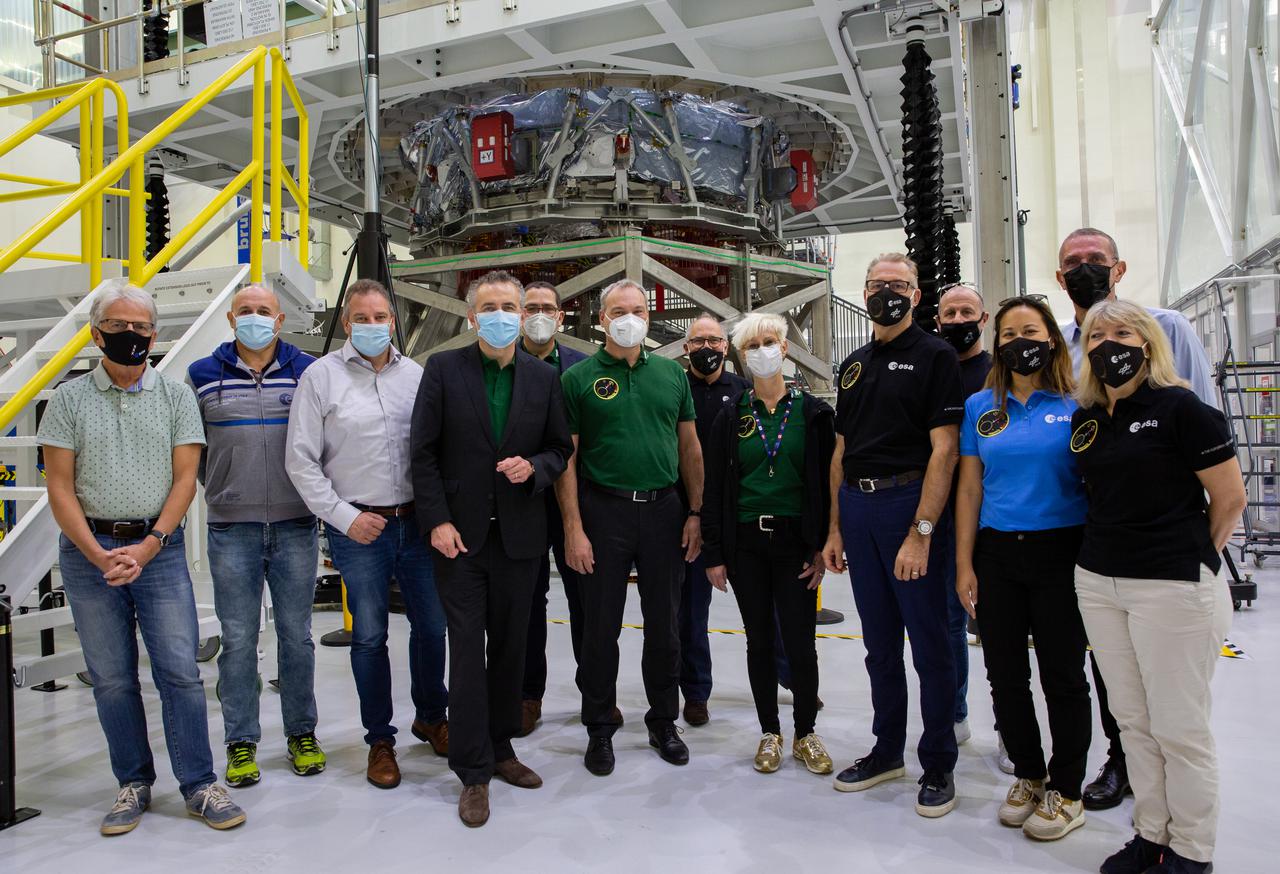
Delegates from the European Space Agency and German Space Agency visited NASA’s Kennedy Space Center in Florida on Oct. 29, 2021. Inside the spaceport’s Neil Armstrong Operations and Checkout building, the international partners viewed the European-built service module, its crew module adapter as well as the heat shield and crew module for Artemis II. Additionally, they were able to view the pressure vessel – the shell for the crew module – for Artemis III. Together with NASA’s Orion program and contractor Lockheed Martin, teams have begun checkouts and assembly for these future Artemis missions.
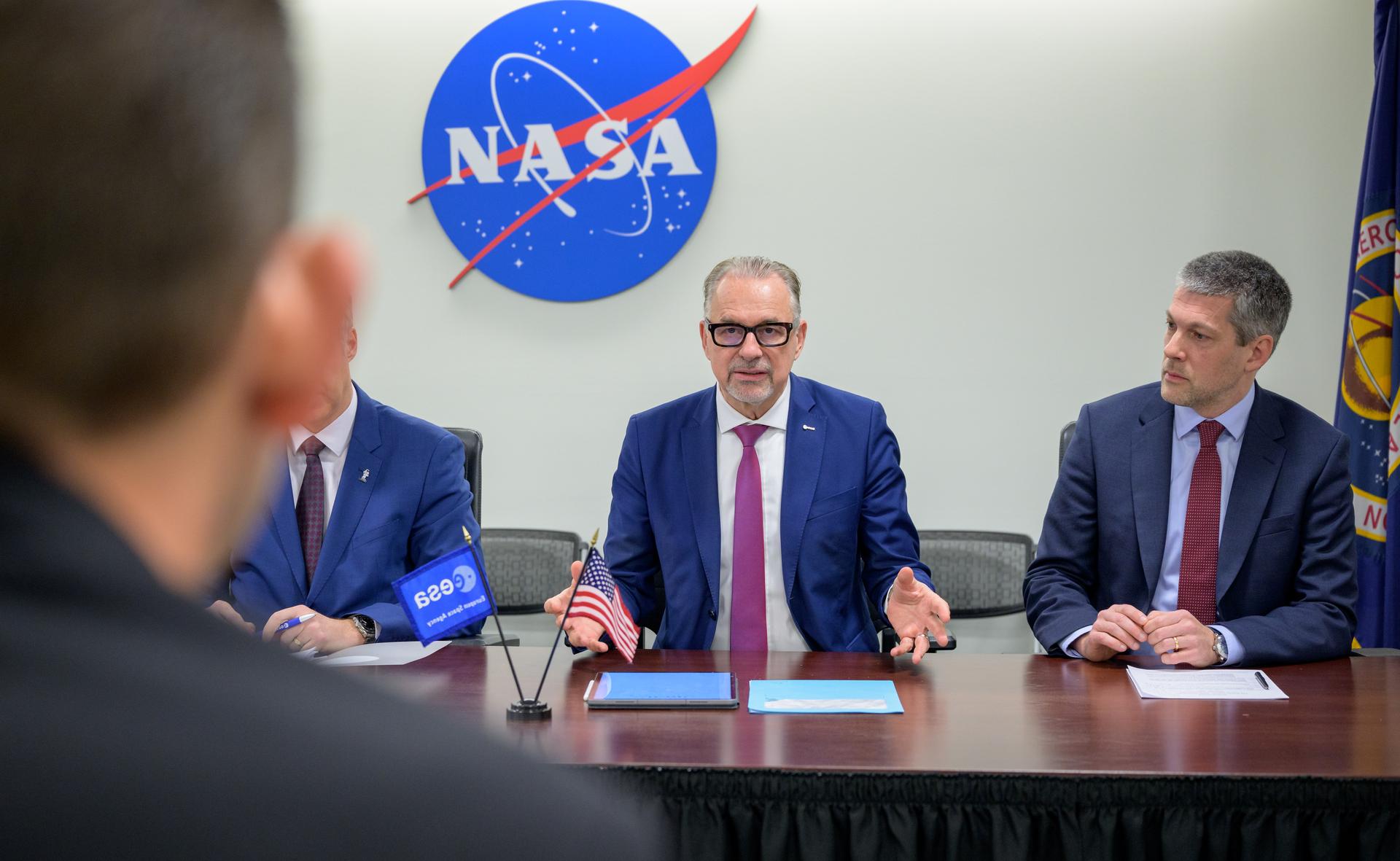
ESA Director General Josef Aschbacher, center, meets with NASA Administrator Jared Isaacman, Wednesday, Feb. 11, 2026, at the Mary W. Jackson NASA Headquarters Building in Washington. Photo Credit: (NASA/Bill Ingalls)
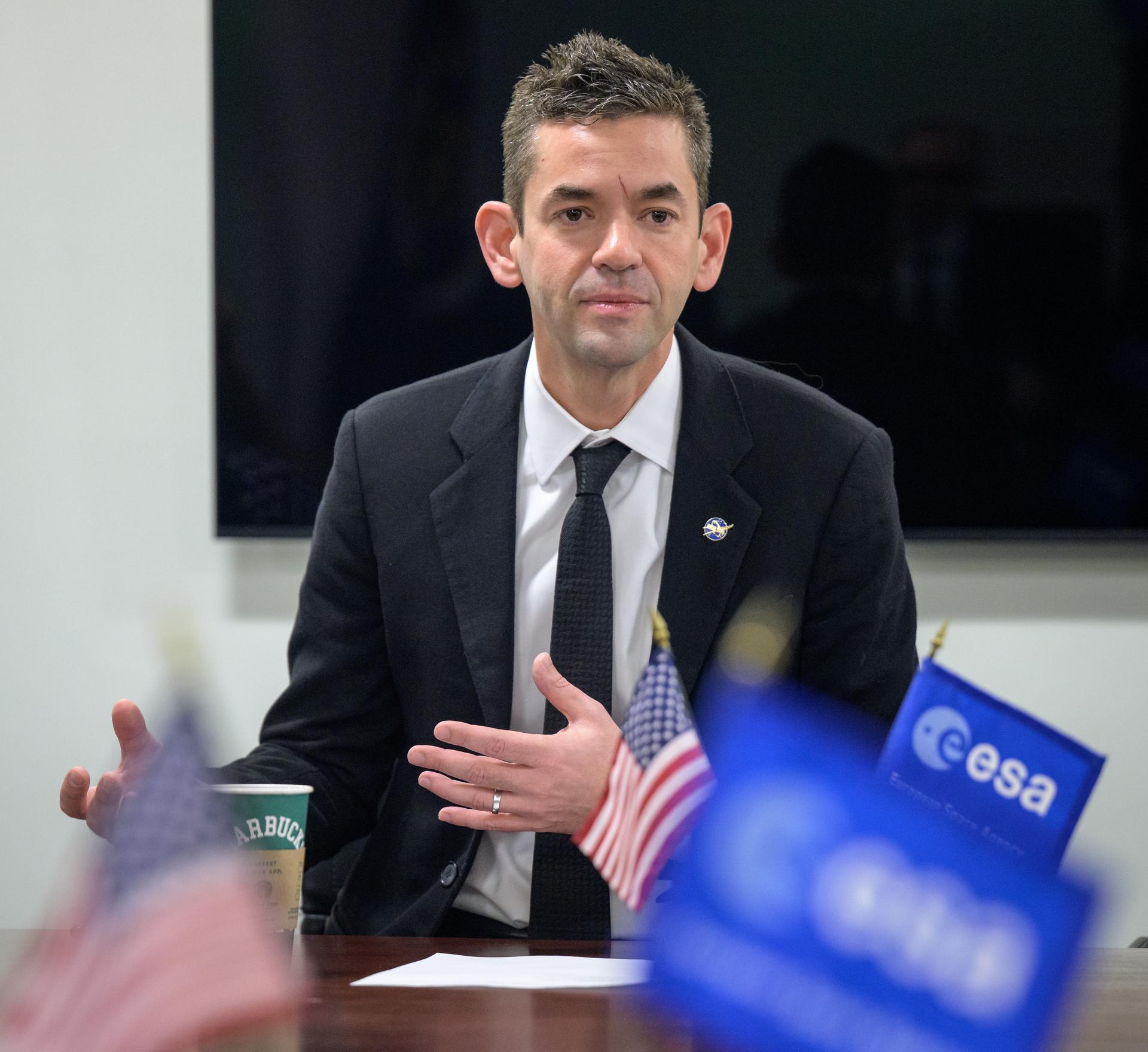
NASA Administrator Jared Isaacman meets with ESA Director General Josef Aschbacher, Wednesday, Feb. 11, 2026, at the Mary W. Jackson NASA Headquarters Building in Washington. Photo Credit: (NASA/Bill Ingalls)
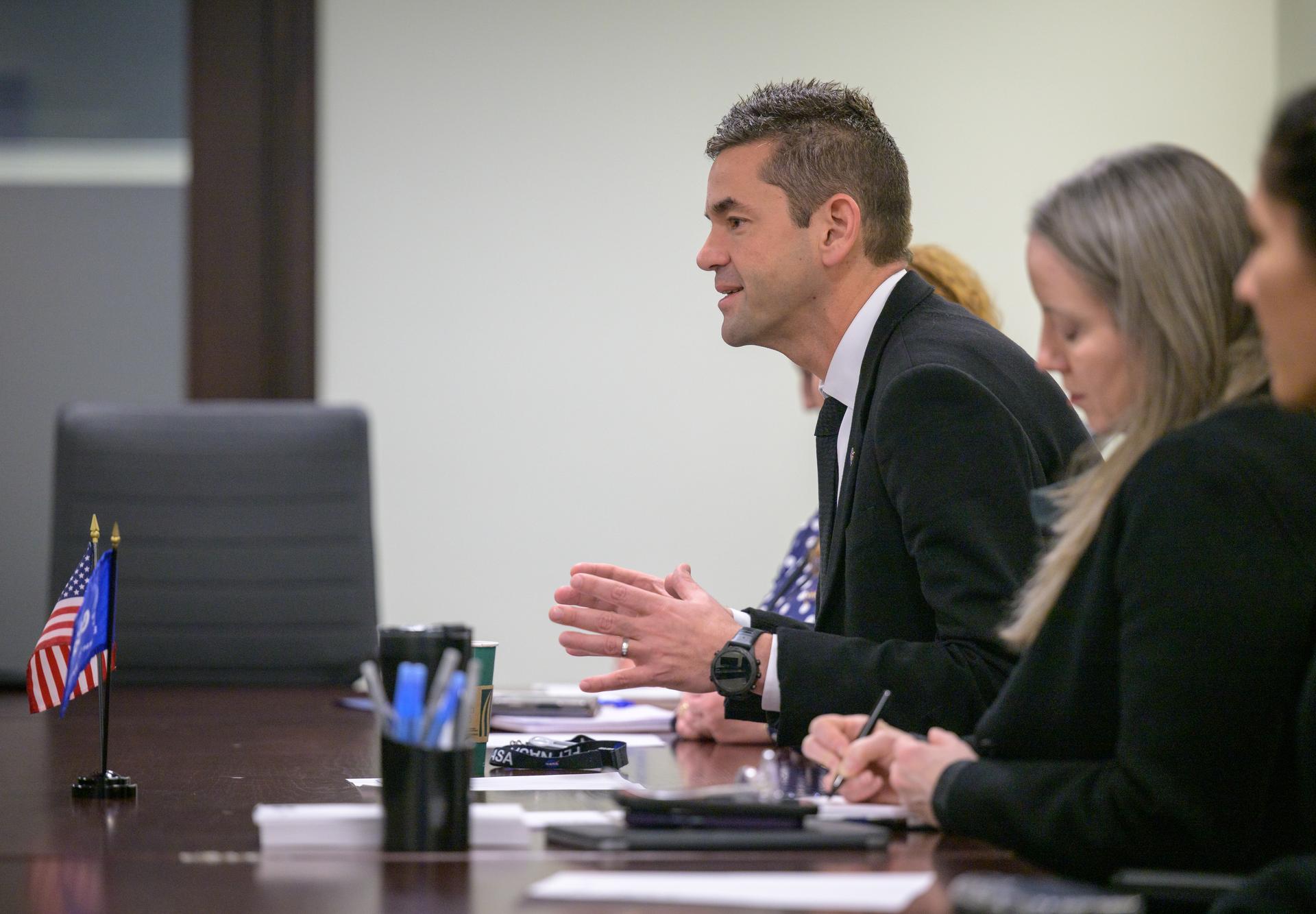
NASA Administrator Jared Isaacman meets with ESA Director General Josef Aschbacher, Wednesday, Feb. 11, 2026, at the Mary W. Jackson NASA Headquarters Building in Washington. Photo Credit: (NASA/Bill Ingalls)
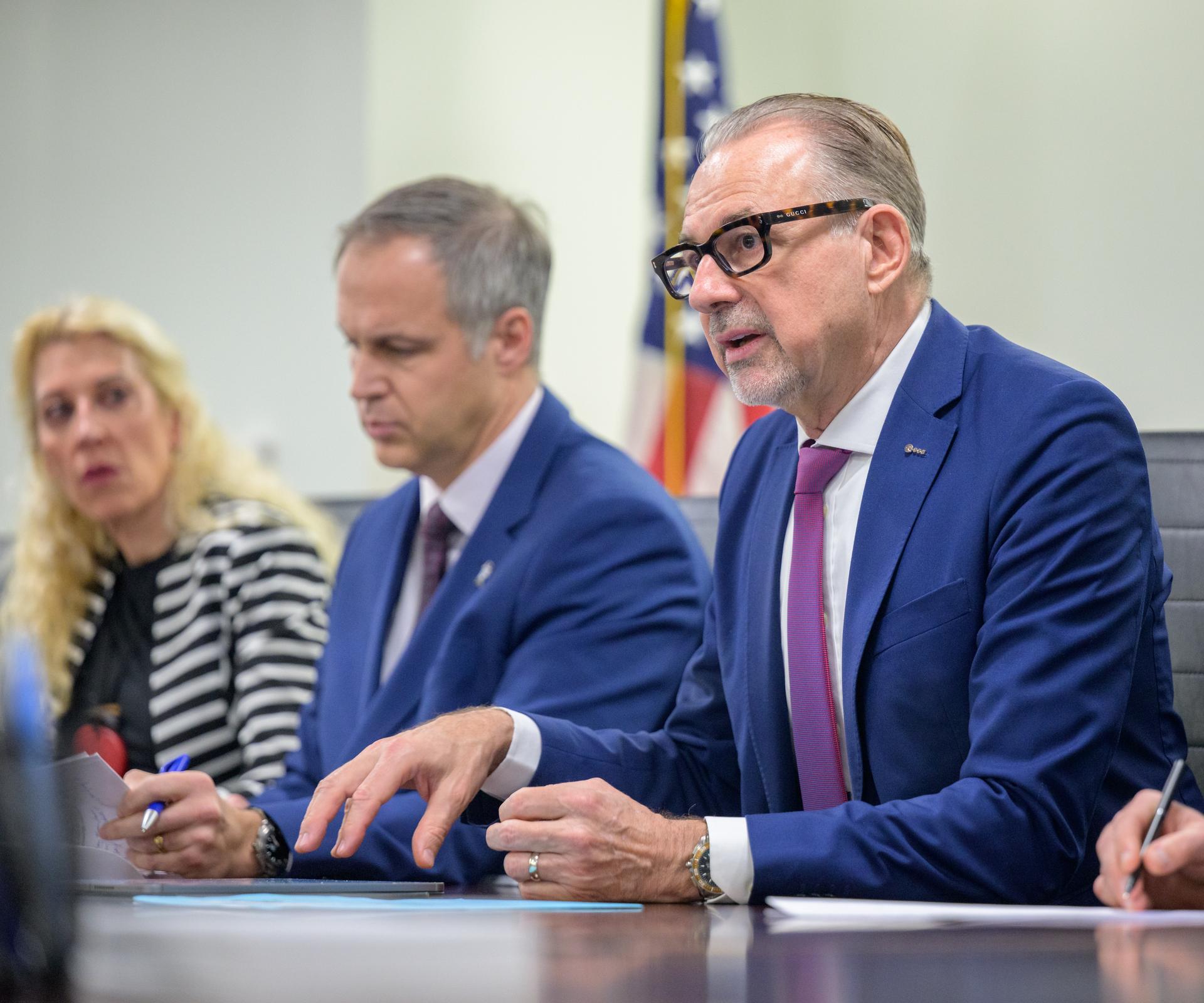
ESA Director General Josef Aschbacher, right, meets with NASA Administrator Jared Isaacman, Wednesday, Feb. 11, 2026, at the Mary W. Jackson NASA Headquarters Building in Washington. Photo Credit: (NASA/Bill Ingalls)
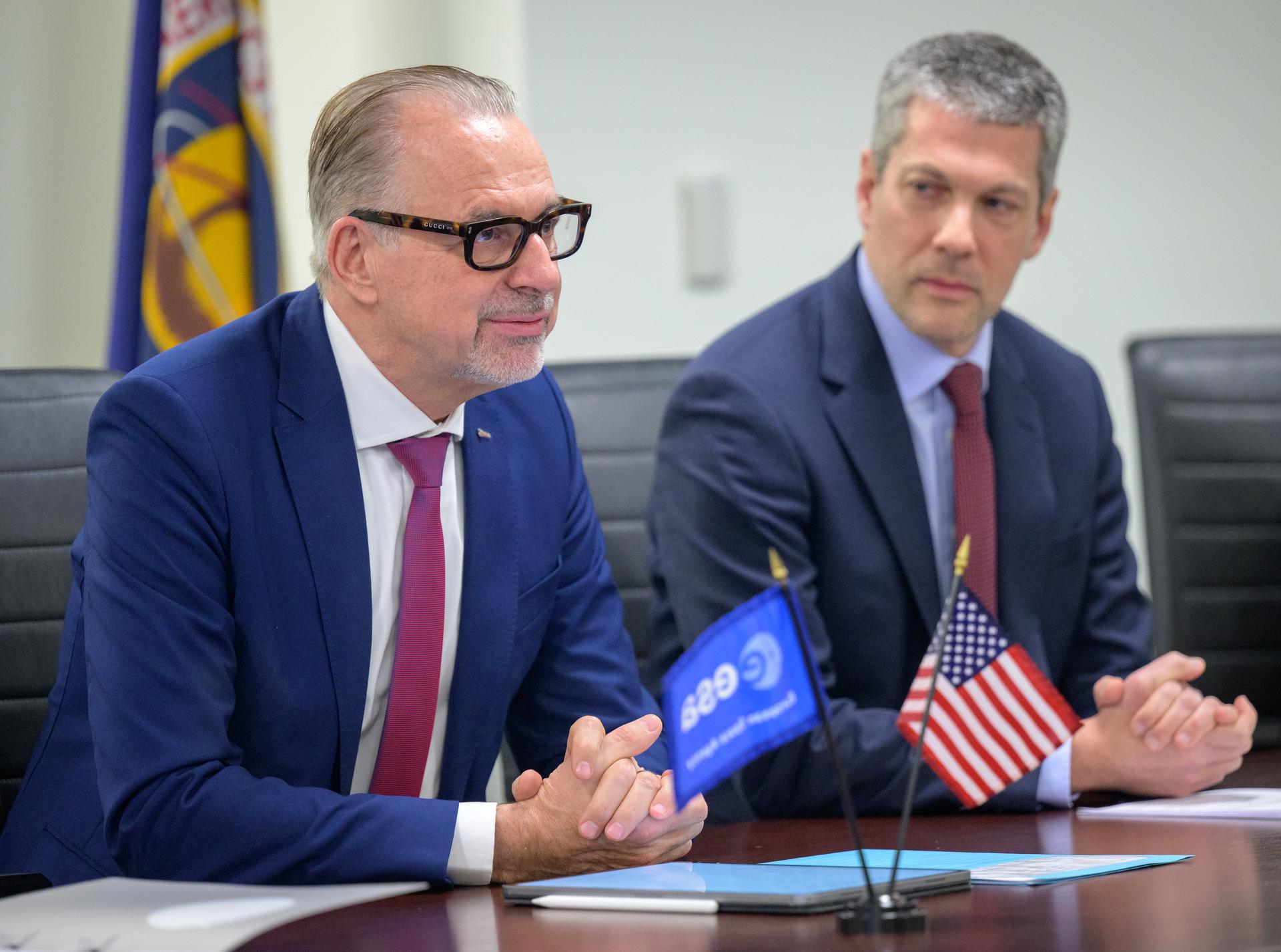
ESA Director General Josef Aschbacher, left, meets with NASA Administrator Jared Isaacman, Wednesday, Feb. 11, 2026, at the Mary W. Jackson NASA Headquarters Building in Washington. Photo Credit: (NASA/Bill Ingalls)
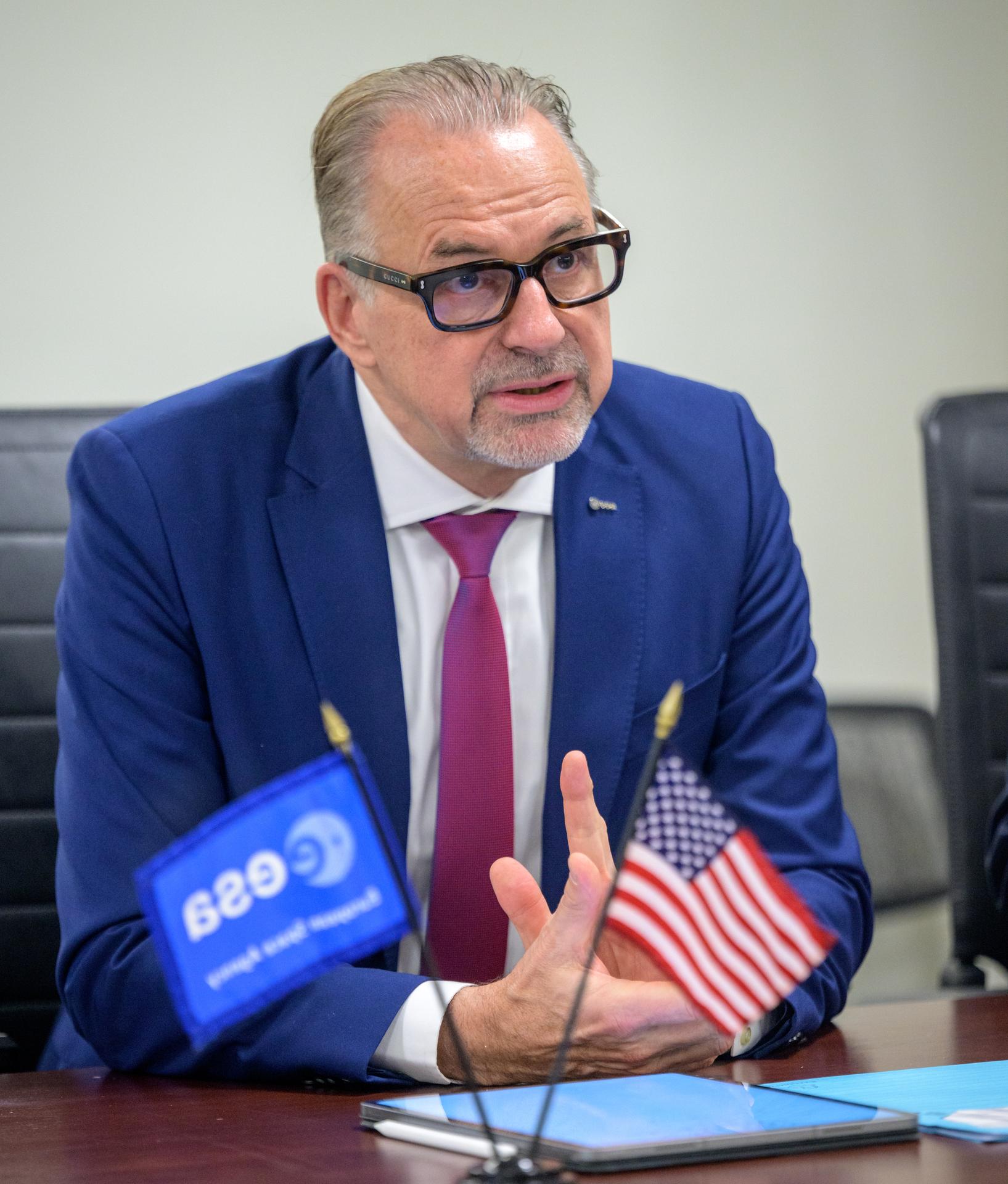
ESA Director General Josef Aschbacher meets with NASA Administrator Jared Isaacman, Wednesday, Feb. 11, 2026, at the Mary W. Jackson NASA Headquarters Building in Washington. Photo Credit: (NASA/Bill Ingalls)
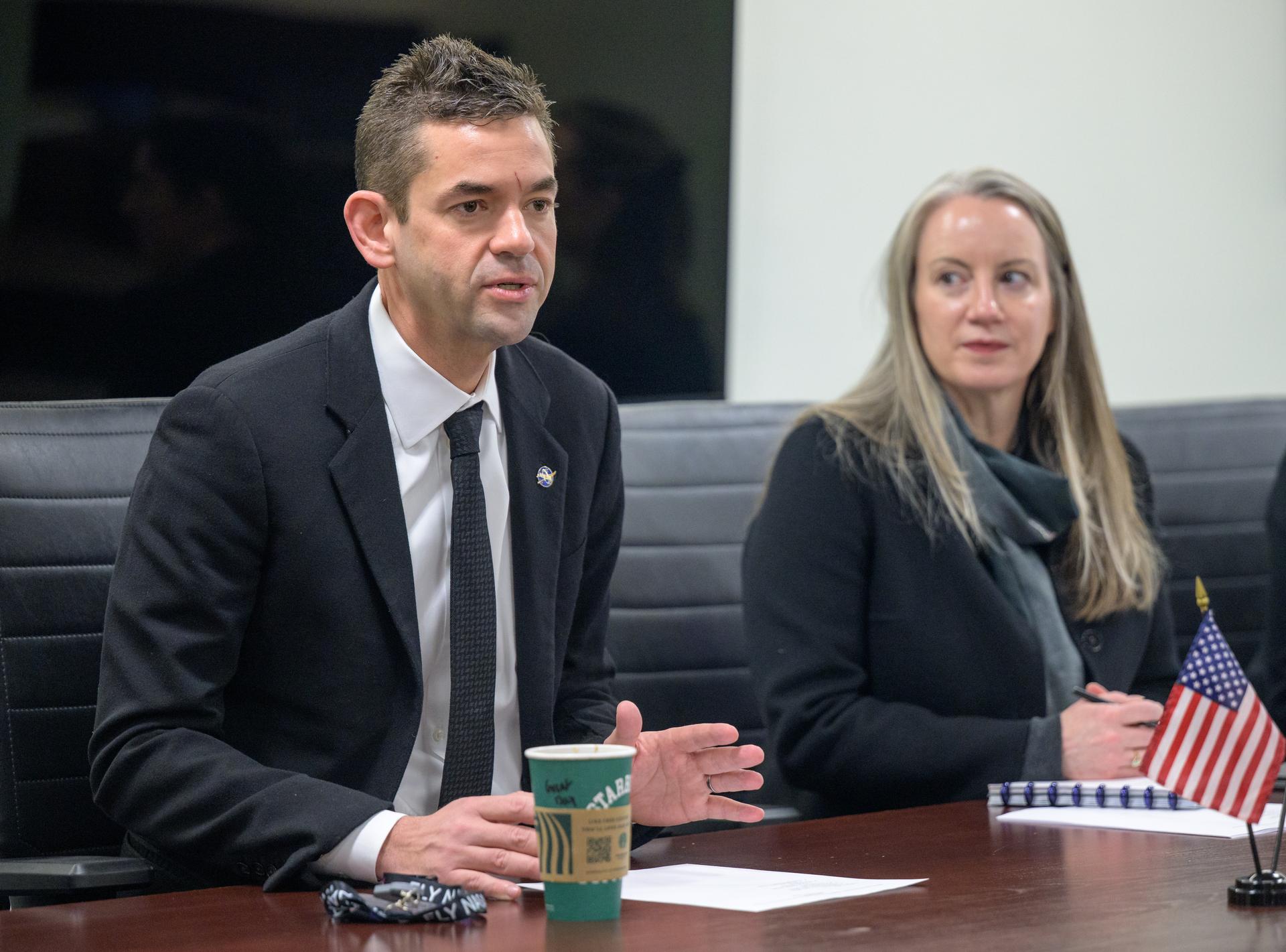
NASA Administrator Jared Isaacman meets with ESA Director General Josef Aschbacher, Wednesday, Feb. 11, 2026, at the Mary W. Jackson NASA Headquarters Building in Washington. Photo Credit: (NASA/Bill Ingalls)
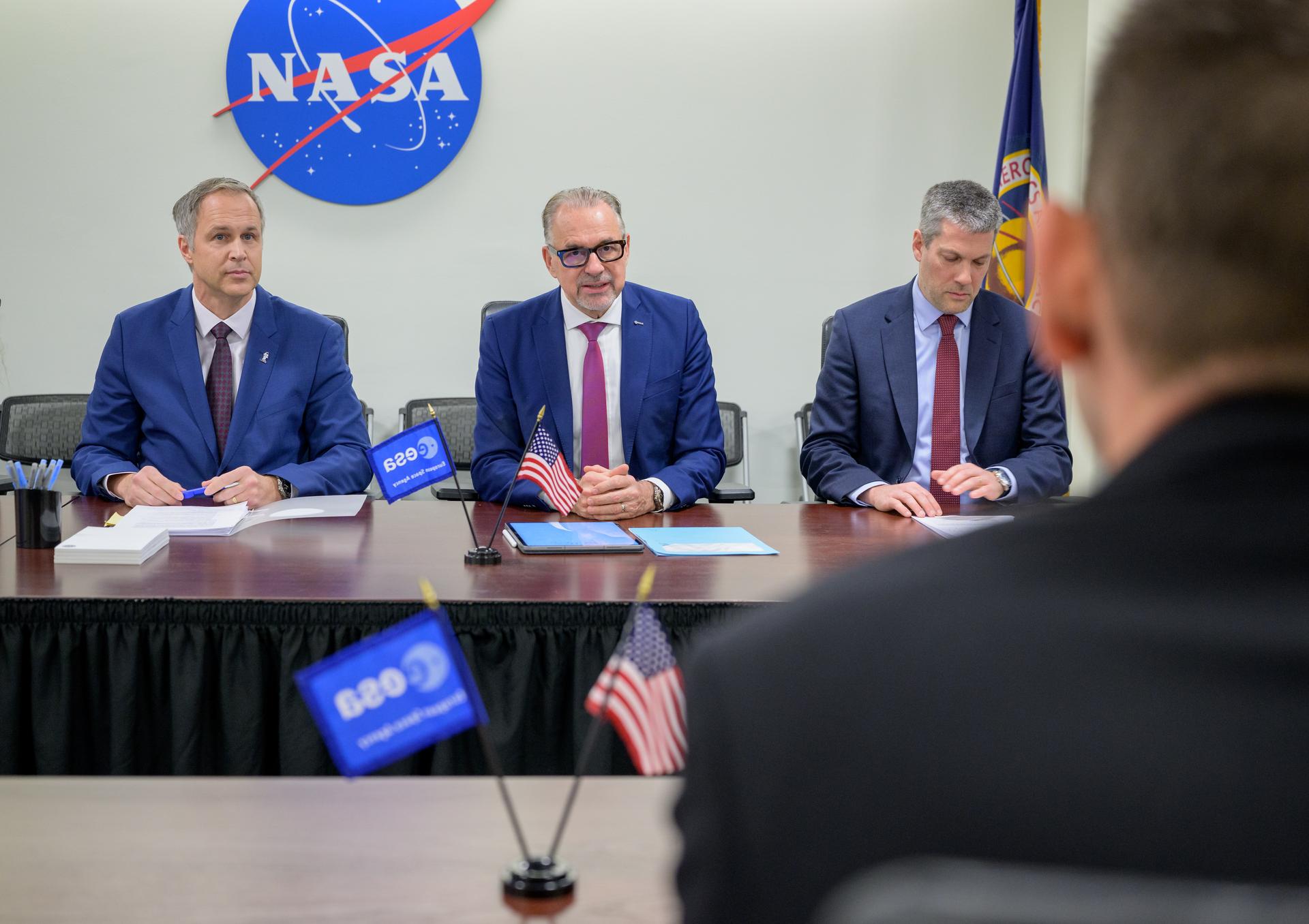
ESA Director General Josef Aschbacher, center, meets with NASA Administrator Jared Isaacman, Wednesday, Feb. 11, 2026, at the Mary W. Jackson NASA Headquarters Building in Washington. Photo Credit: (NASA/Bill Ingalls)
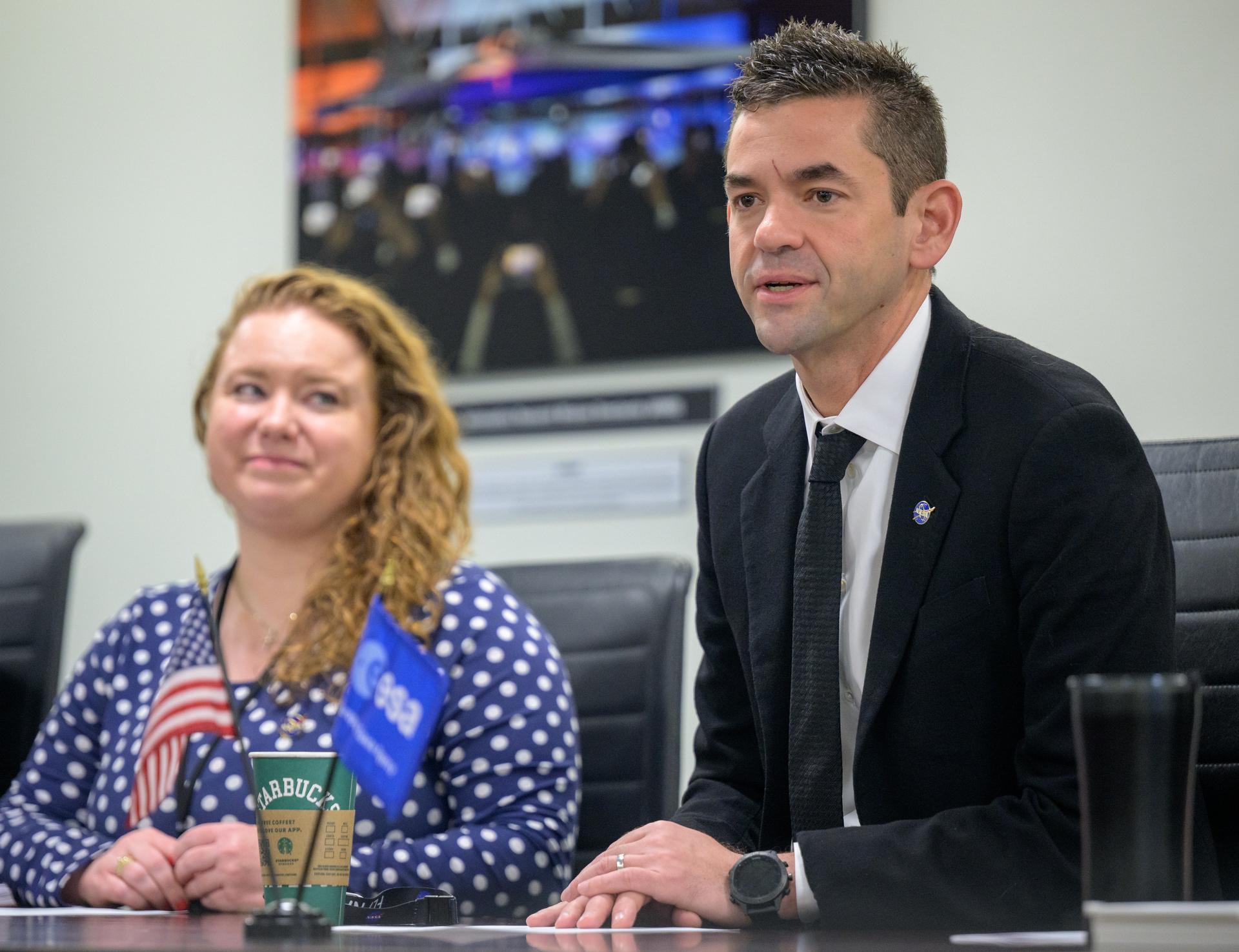
NASA Administrator Jared Isaacman meets with ESA Director General Josef Aschbacher, Wednesday, Feb. 11, 2026, at the Mary W. Jackson NASA Headquarters Building in Washington. Photo Credit: (NASA/Bill Ingalls)
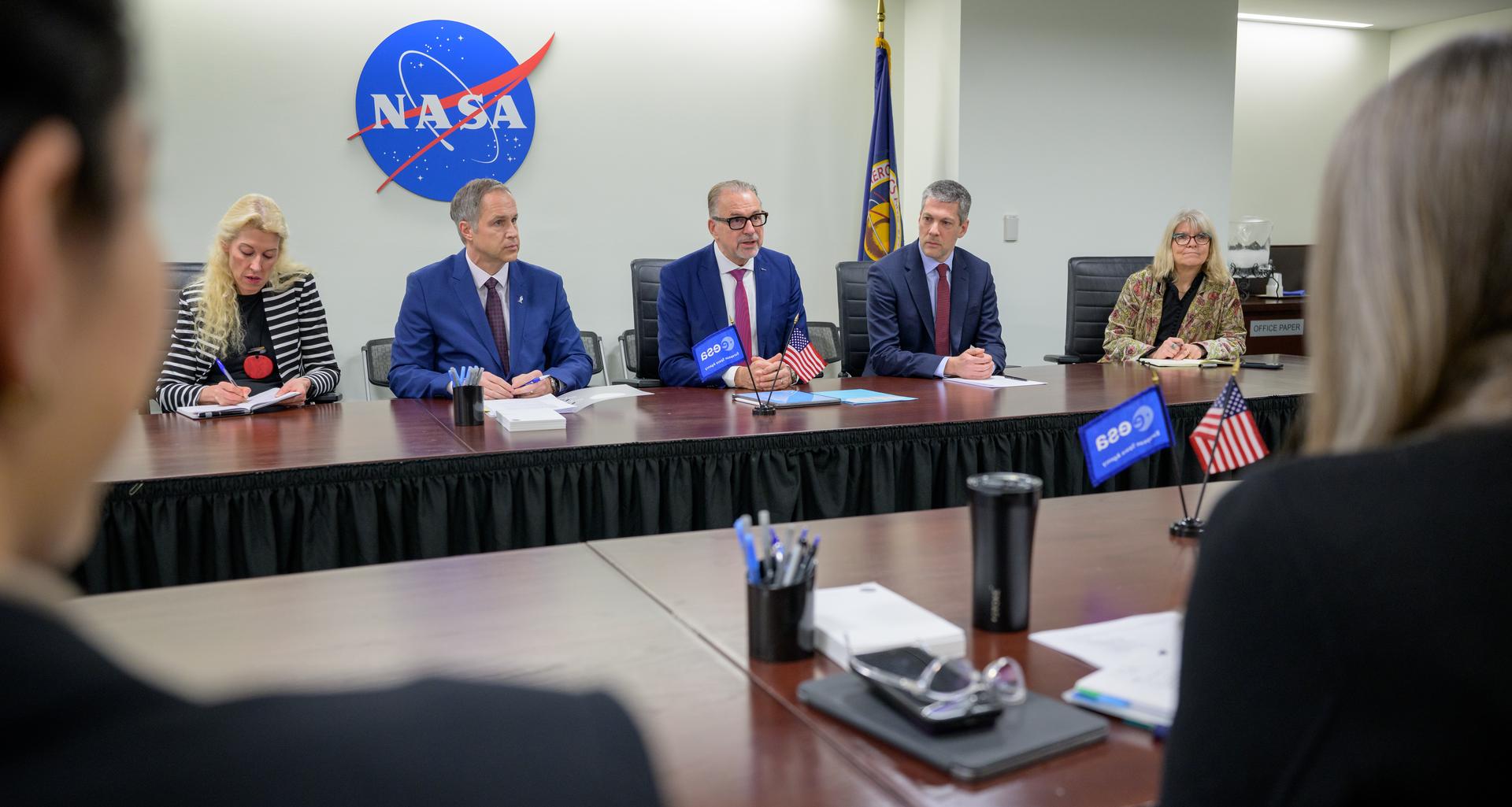
ESA Director General Josef Aschbacher, 3rd from left, meets with NASA Administrator Jared Isaacman, Wednesday, Feb. 11, 2026, at the Mary W. Jackson NASA Headquarters Building in Washington. Photo Credit: (NASA/Bill Ingalls)
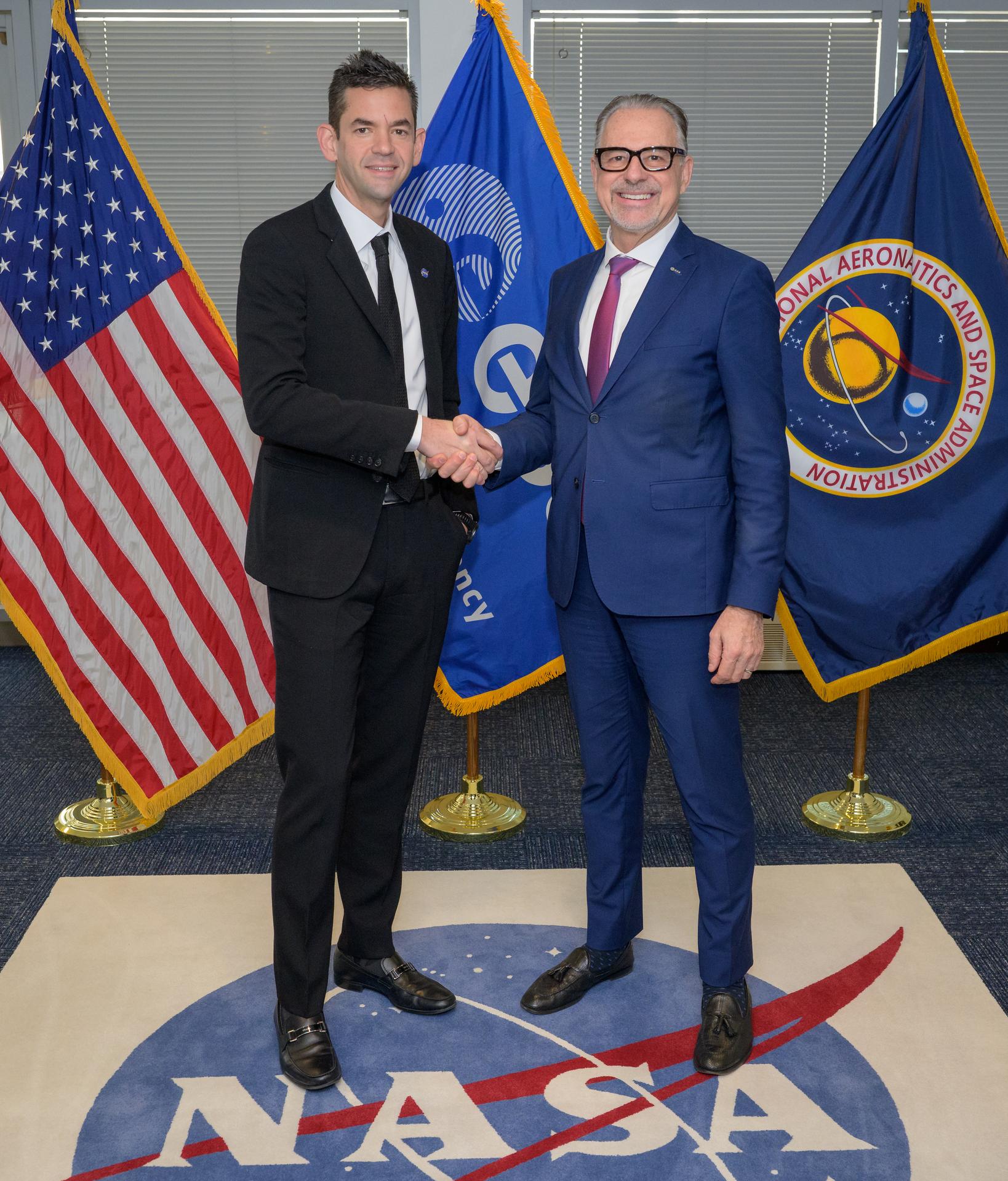
NASA Administrator Jared Isaacman, left, poses for a photo with ESA Director General Josef Aschbacher: before a meeting, Wednesday, Feb. 11, 2026, at the Mary W. Jackson NASA Headquarters Building in Washington. Photo Credit: (NASA/Bill Ingalls)
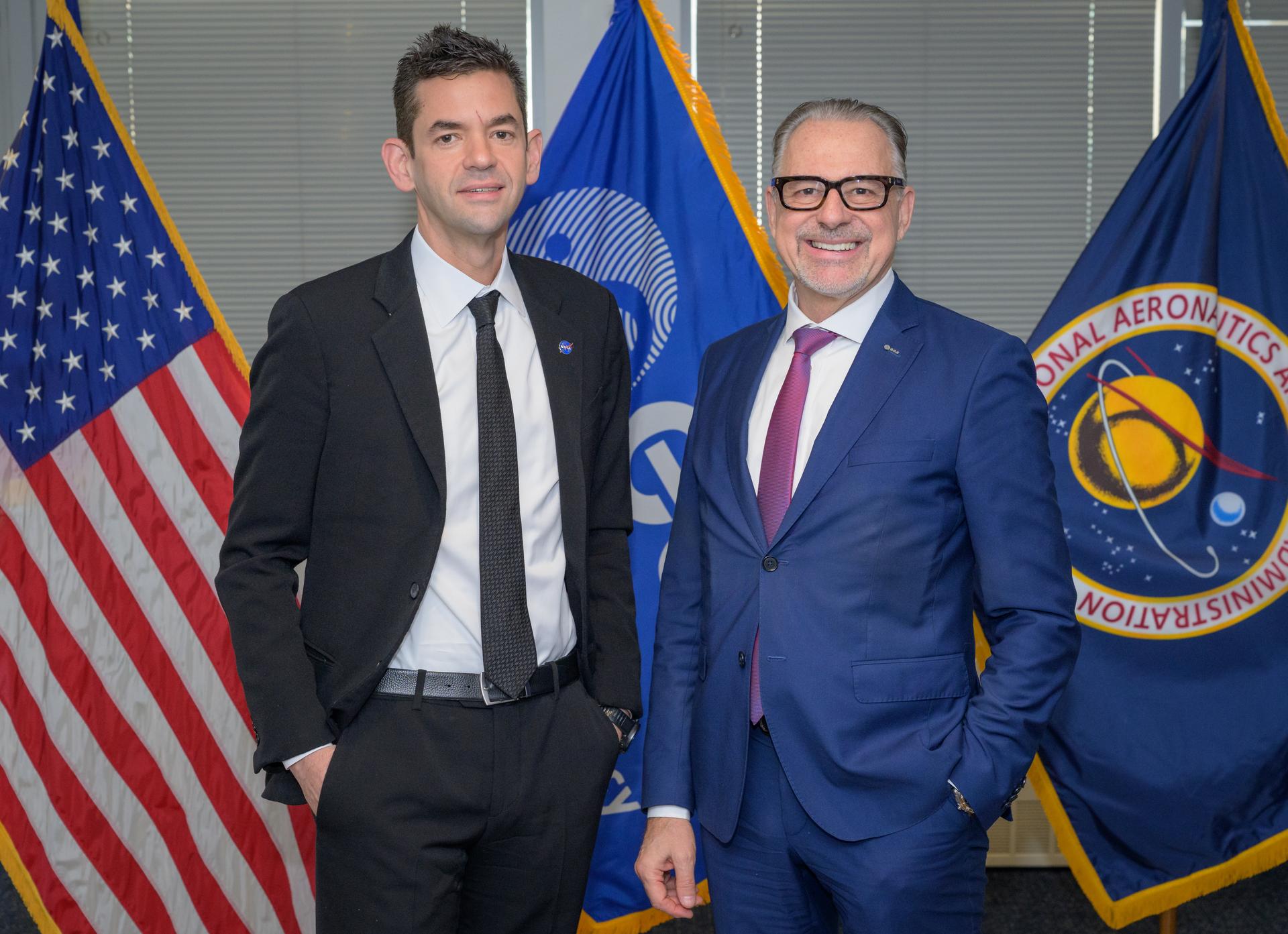
NASA Administrator Jared Isaacman, left, poses for a photo with ESA Director General Josef Aschbacher: before a meeting, Wednesday, Feb. 11, 2026, at the Mary W. Jackson NASA Headquarters Building in Washington. Photo Credit: (NASA/Bill Ingalls)

Vice President Kamala Harris shakes hands with Josef Aschbacher, Director General of ESA (European Space Agency), and views the Artemis II Service Module during a visit, Monday, Aug. 29, 2022, at the Neil A. Armstrong Operations and Checkout Building at NASA’s Kennedy Space Center in Florida. Photo Credit: (NASA/Bill Ingalls)
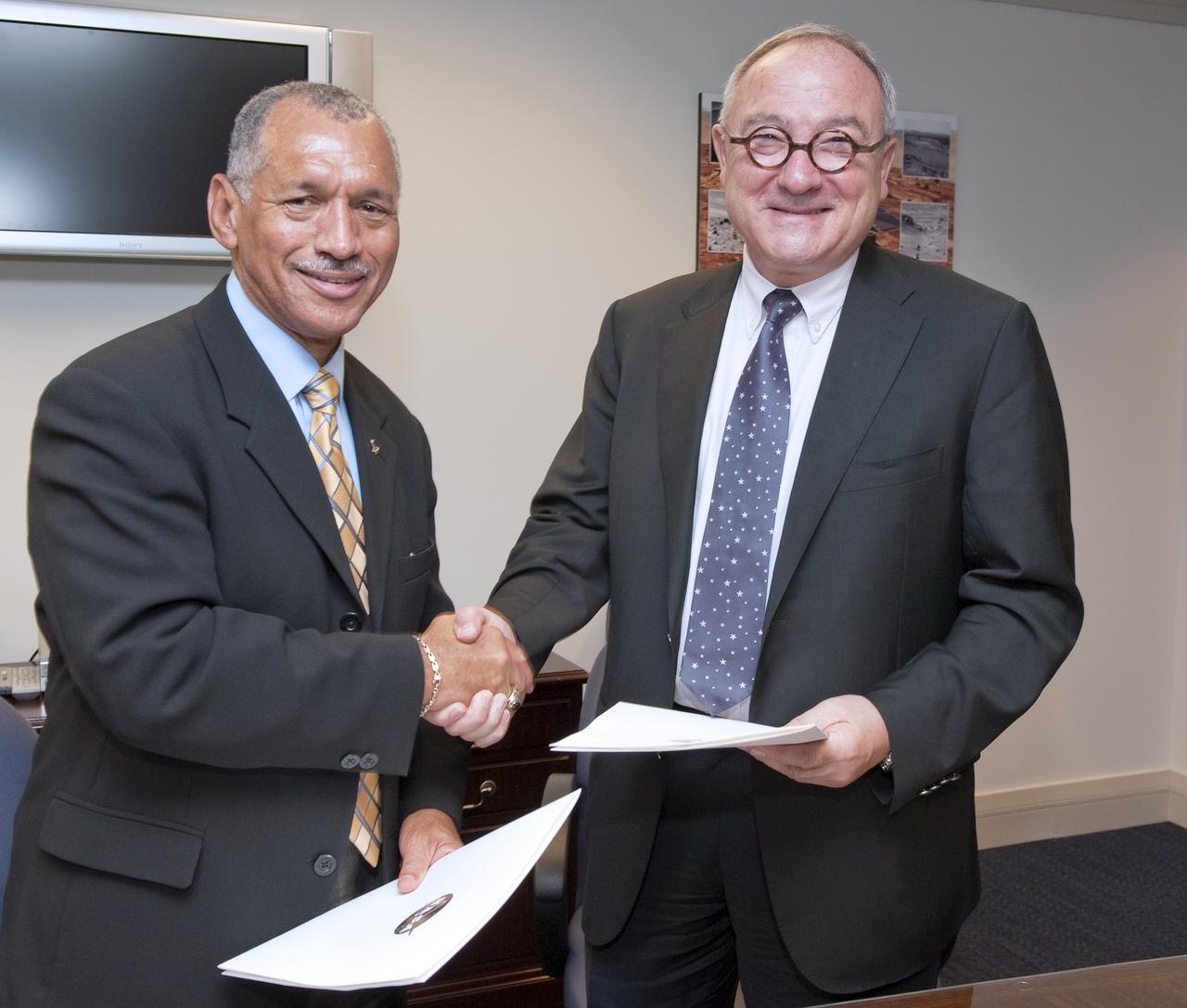
NASA Adminiistrator Charles F. Bolden, left, and Jean-Jacques Dordain, Director General of the European Space Agency (ESA), shake hands, Friday, Sept. 11, 2009, after signing a Space Transportation Memorandum of Understanding (MOU) at NASA Headquarters in Washington. Photo Credit: (NASA/Paul E. Alers)
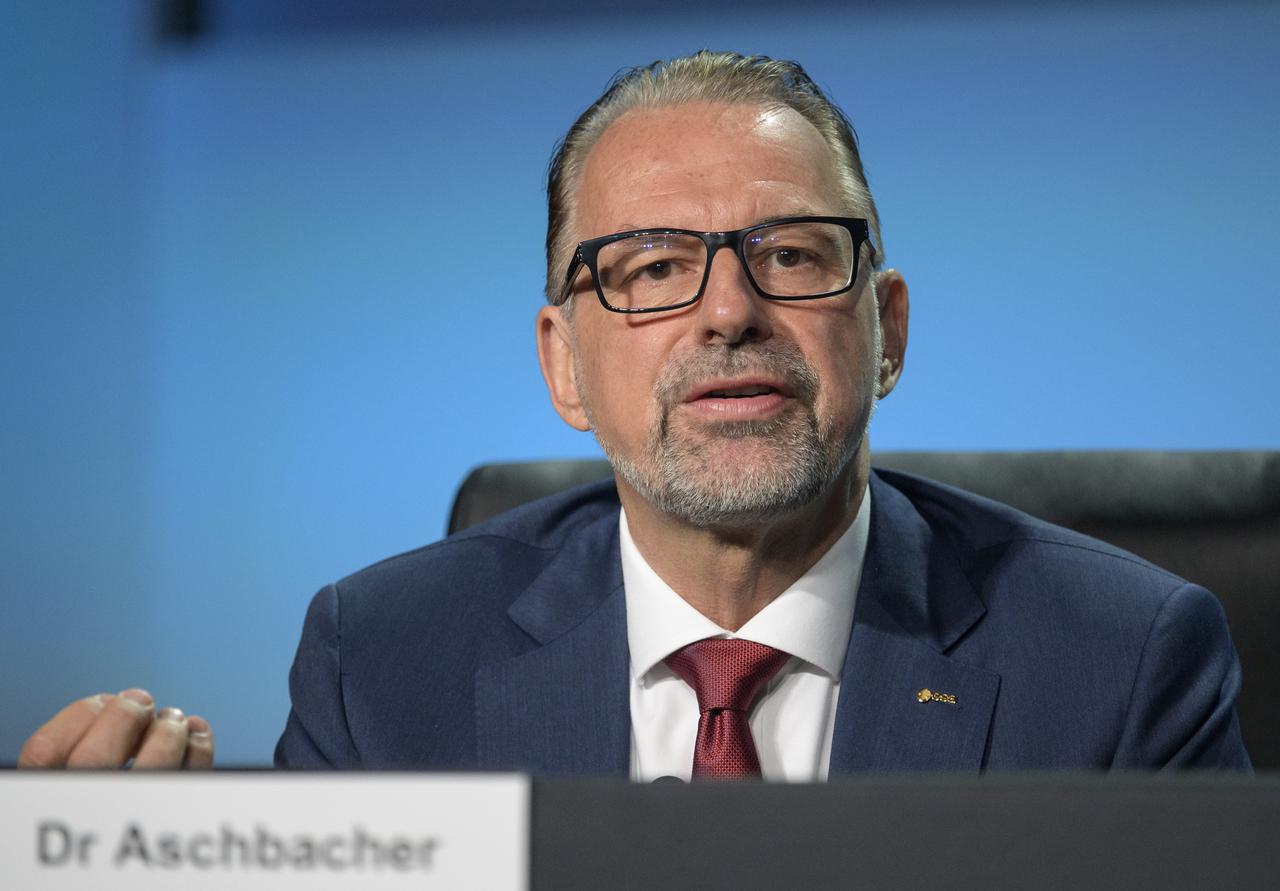
Dr. Josef Aschbacher, Director General, European Space Agency (ESA) gives remarks in a Heads of Agency panel discussion, during the 36th Space Symposium, Wednesday, Aug. 25, 2021, in Colorado Springs, Colorado. Photo Credit: (NASA/Bill Ingalls)
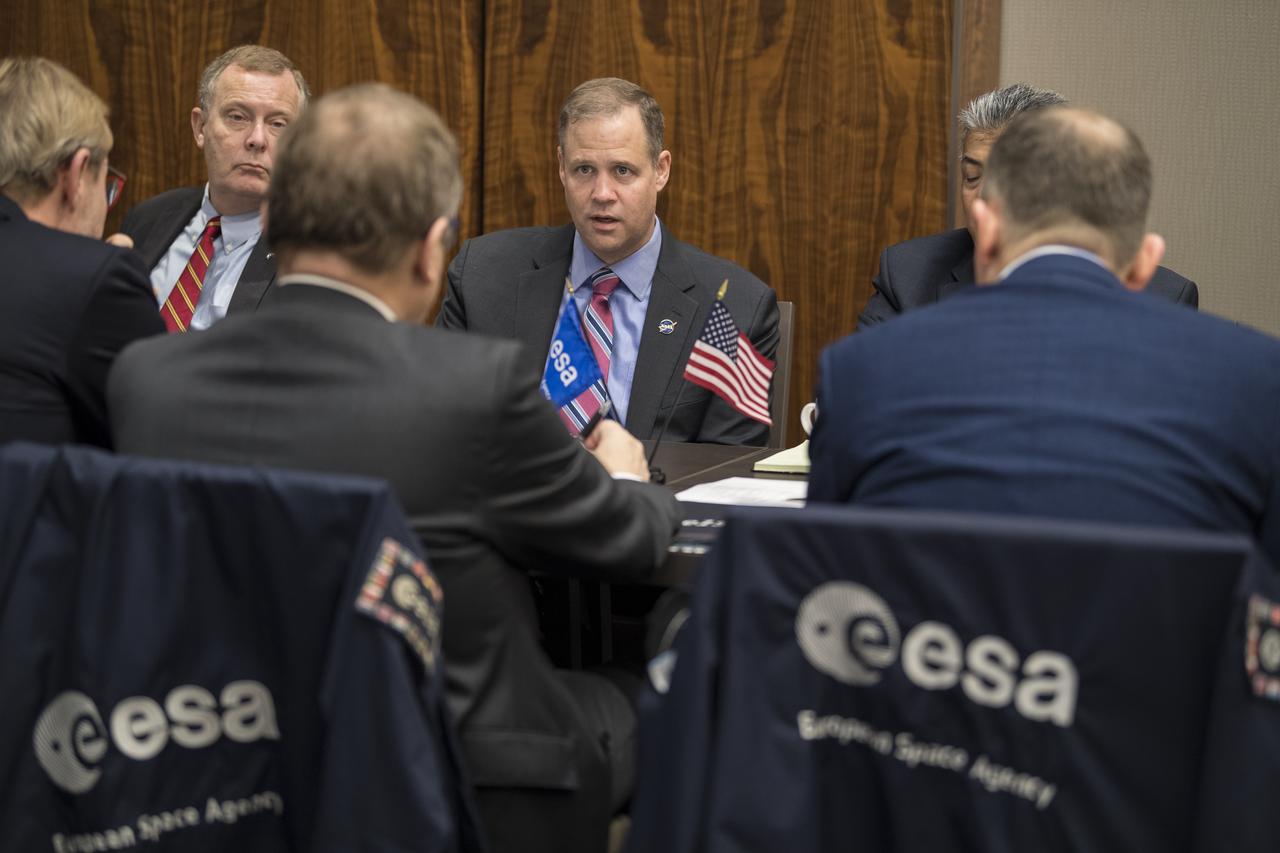
NASA Administrator Jim Bridenstine, center, and Deputy Administrator Jim Morhard, left, speak with Professor Johann-Dietrich Worner, Director General of ESA (European Space Agency), during the 70th International Astronautical Congress, Tuesday, Oct. 22, 2019 in Washington. Photo Credit: (NASA/Aubrey Gemignani)
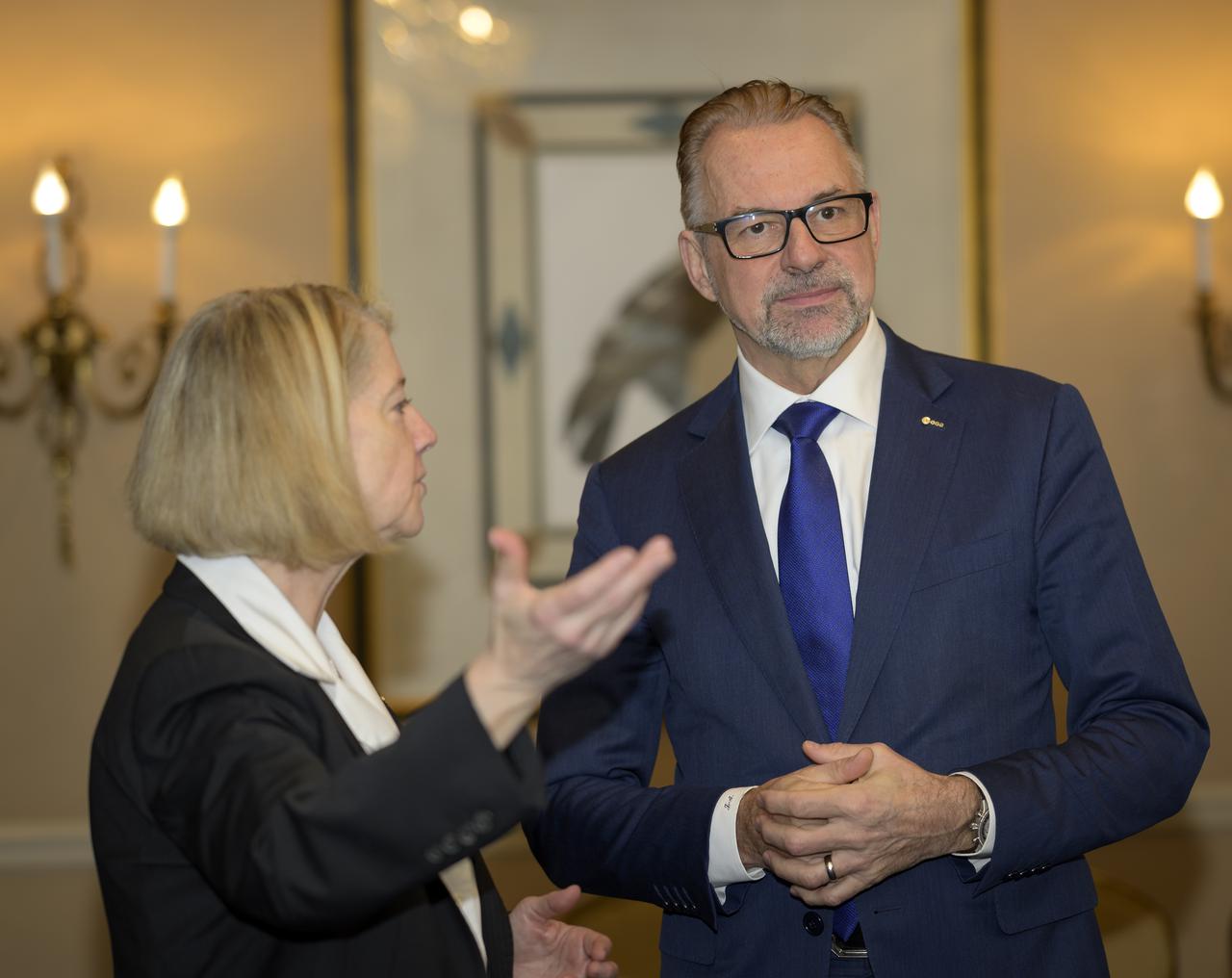
NASA Deputy Administrator Pam Melroy, left, and Dr. Josef Aschbacher, Director General, European Space Agency (ESA), talk during a meeting during the 37th Space Symposium, Tuesday, April 5, 2022, in Colorado Springs, Colorado. Photo Credit: (NASA/Bill Ingalls)
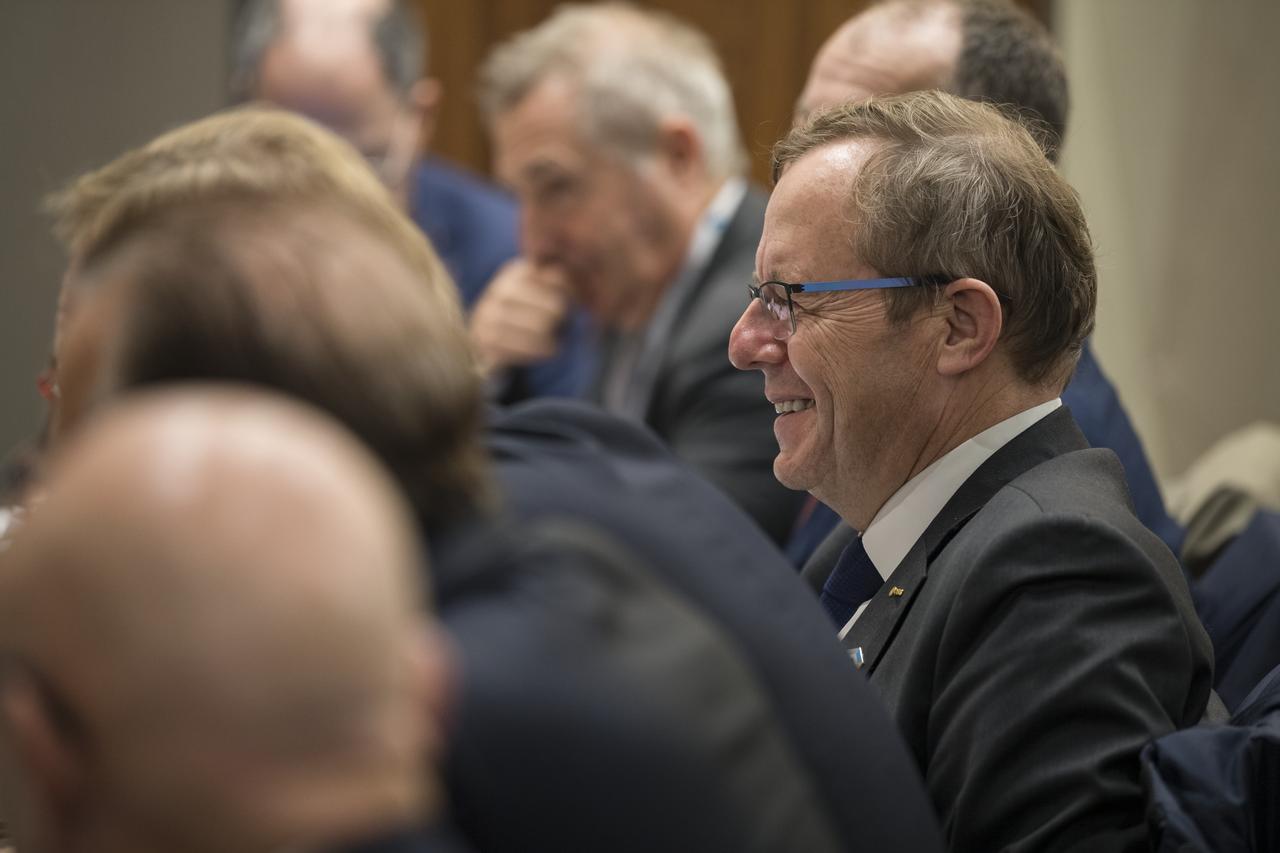
Professor Johann-Dietrich Worner, Director General of ESA (European Space Agency), reacts to something NASA Administrator Jim Bridenstine said during the 70th International Astronautical Congress, Tuesday, Oct. 22, 2019 in Washington. Photo Credit: (NASA/Aubrey Gemignani)
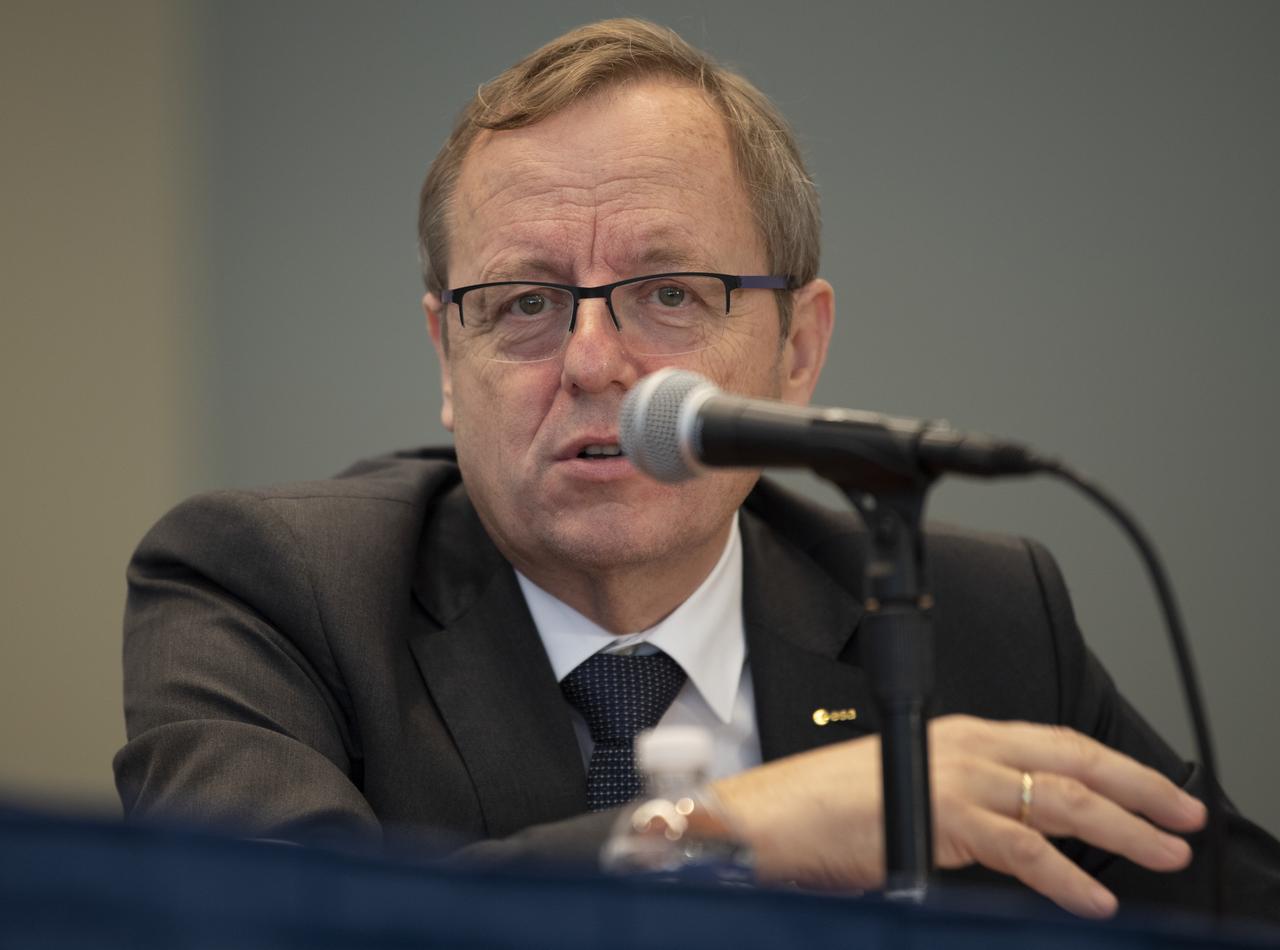
Johann-Dietrich Woerner, Director General of the ESA (European Space Agency), during the Heads of Agency press conference at the 70th International Astronautical Congress, Monday, Oct. 21, 2019 at the Walter E. Washington Convention Center in Washington. Photo Credit: (NASA/Bill Ingalls)

NASA Deputy Administrator Pam Melroy, left, and Dr. Josef Aschbacher, Director General, European Space Agency (ESA), pose for a photograph prior to starting at meeting during the 37th Space Symposium, Tuesday, April 5, 2022, in Colorado Springs, Colorado. Photo Credit: (NASA/Bill Ingalls)
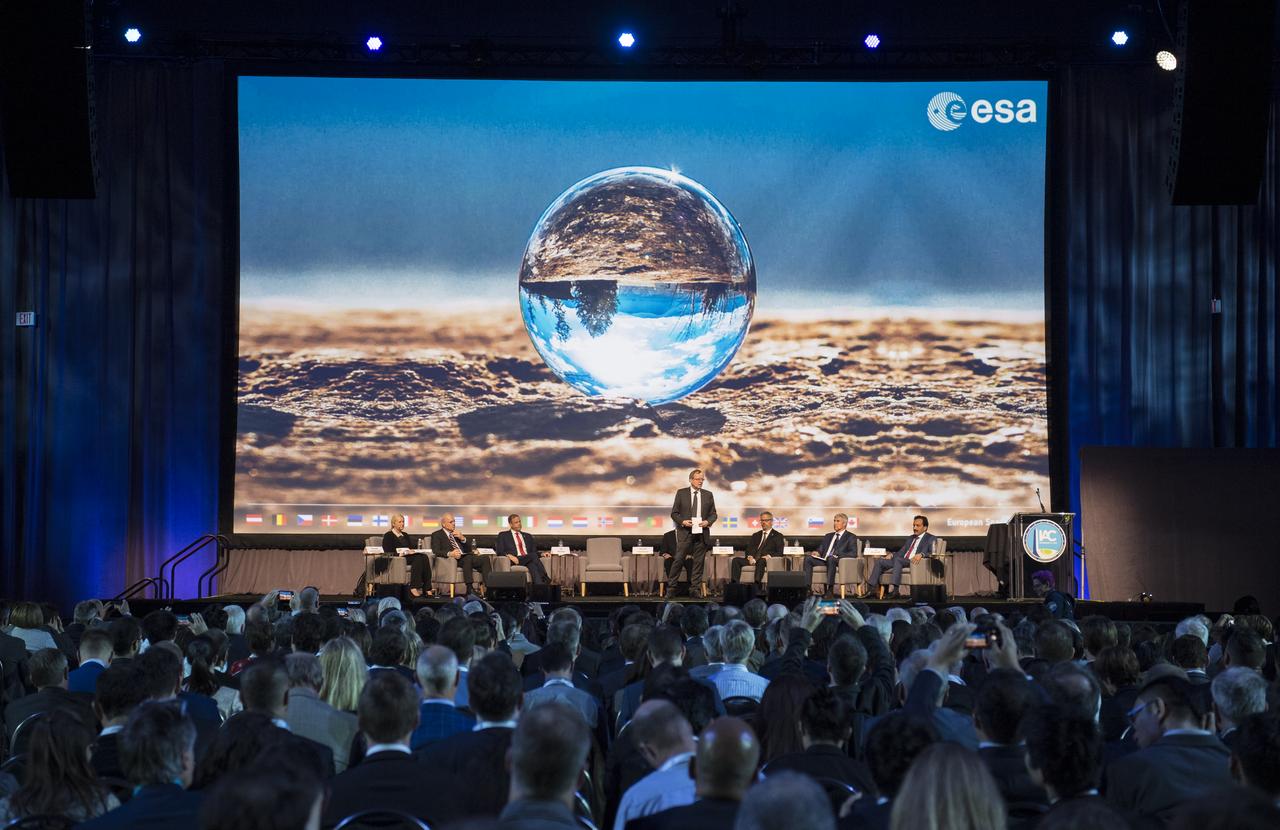
Johann-Dietrich Woerner, Director General of ESA (European Space Agency), speaks during the Heads of Agency Plenary of the 70th International Astronautical Congress, Monday, Oct. 21, 2019 at the Walter E. Washington Convention Center in Washington. Photo Credit: (NASA/Joel Kowsky)
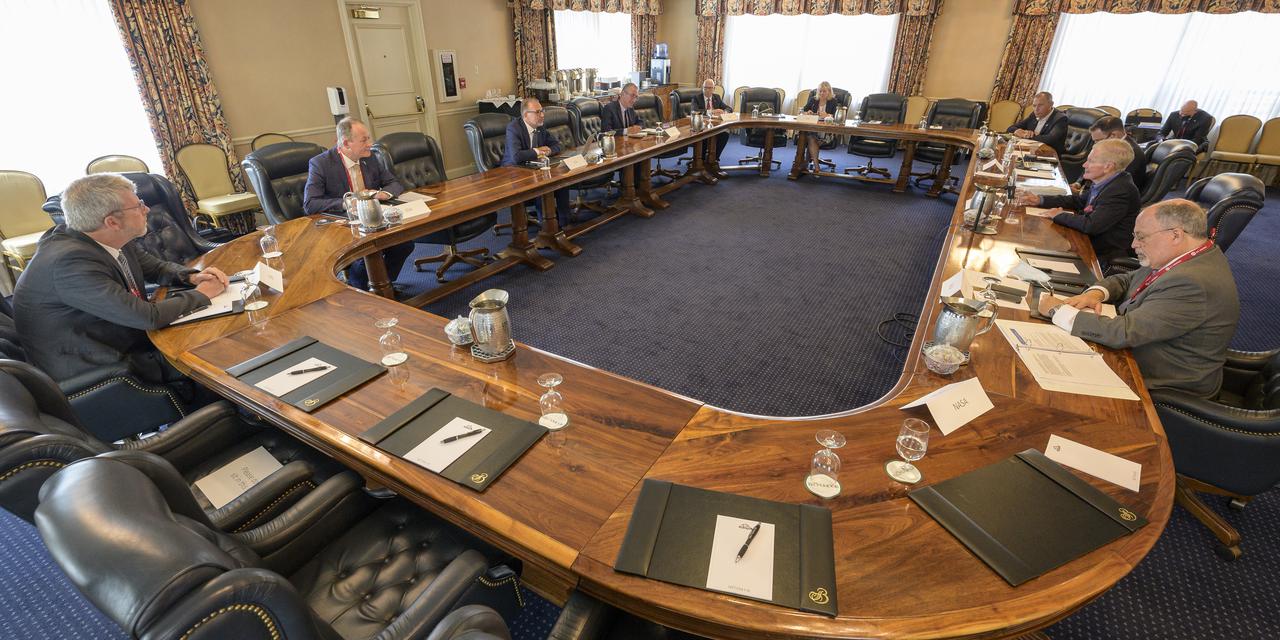
NASA Administrator Bill Nelson meets with Dr. Josef Aschbacher, Director General, European Space Agency (ESA) in a bilateral meeting during the 36th Space Symposium, Monday, Aug. 23, 2021, in Colorado Springs, Colorado. Photo Credit: (NASA/Bill Ingalls)
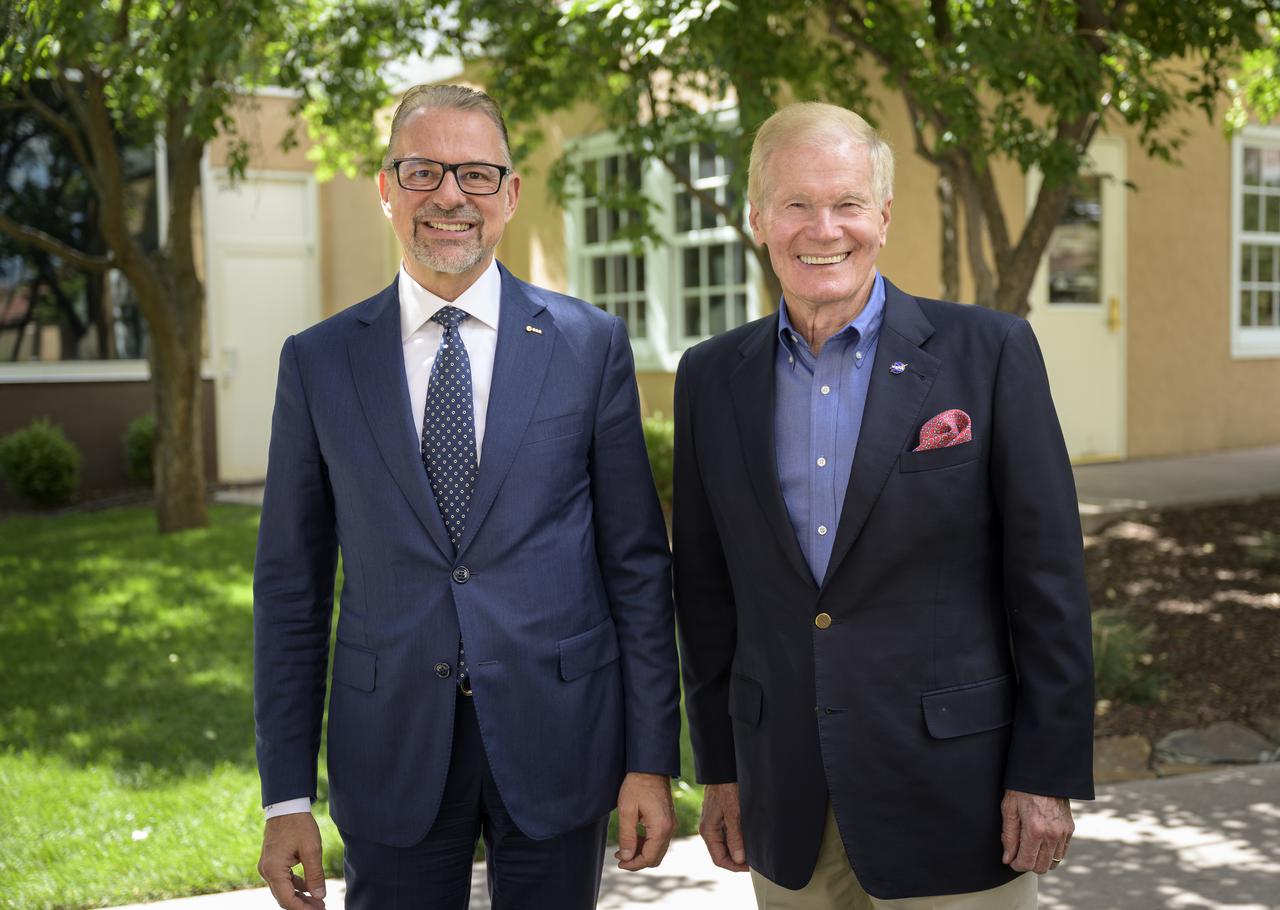
European Space Agency (ESA) Director General Josef Aschbacher, left, and NASA Administrator Bill Nelson meet in a bilateral meeting during the 36th Space Symposium, Monday, Aug. 23, 2021, in Colorado Springs, Colorado. Photo Credit: (NASA/Bill Ingalls)
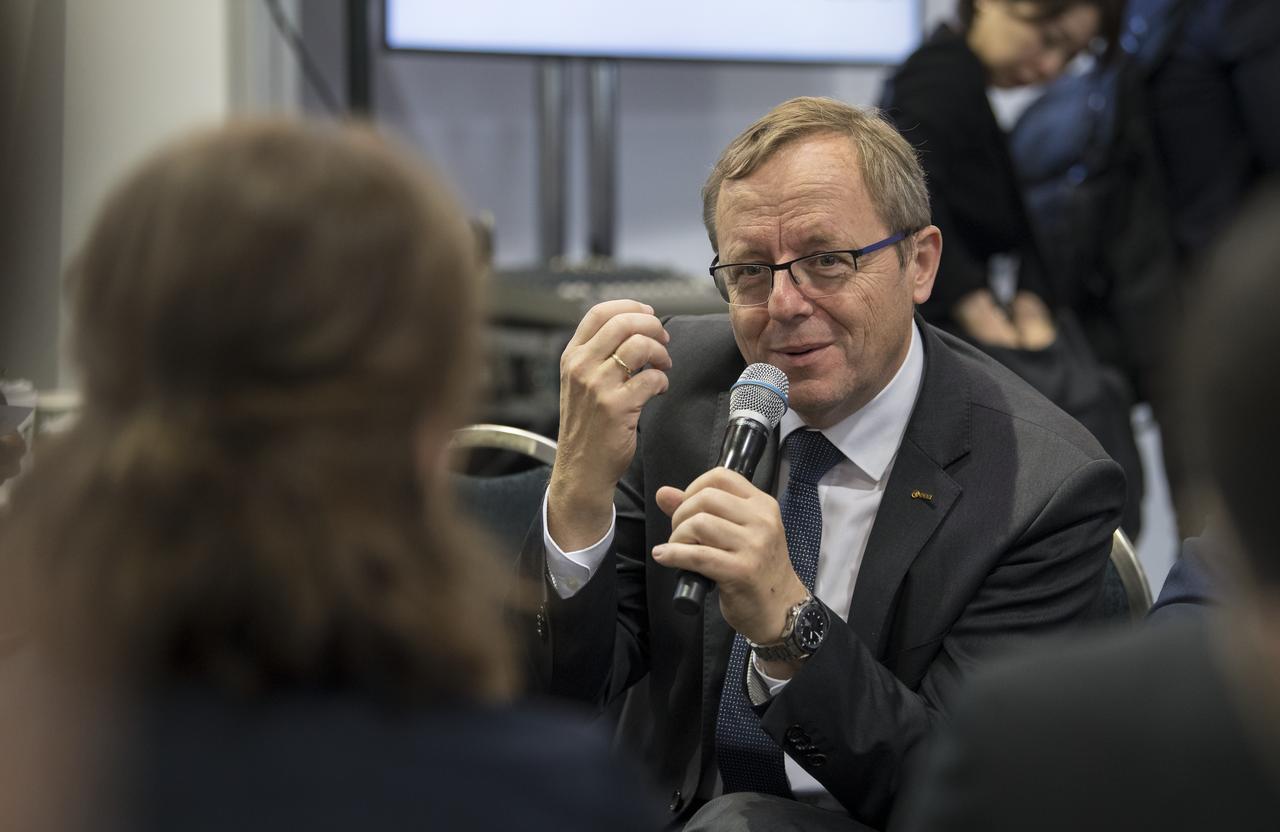
Dr Johann-Dietrich Worner, Director General, European Space Agency (ESA), answers questions during a Heads of Agency interactive session with students at the 70th International Astronautical Congress, Monday, Oct. 21, 2019 at the Walter E. Washington Convention Center in Washington. Photo credit: (NASA/Aubrey Gemignani)
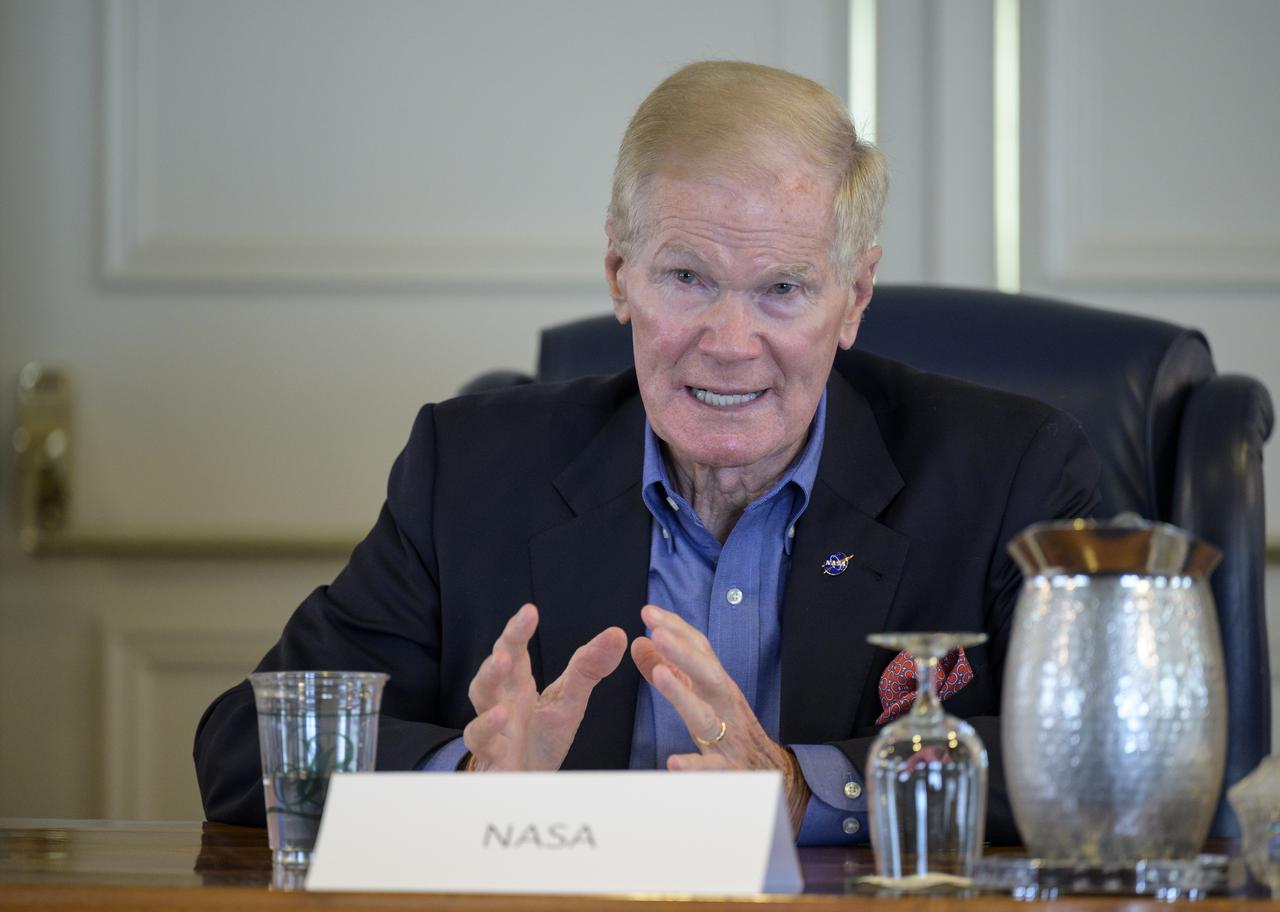
NASA Administrator Bill Nelson talks with Dr. Josef Aschbacher, Director General, European Space Agency (ESA) in a bilateral meeting during the 36th Space Symposium, Monday, Aug. 23, 2021, in Colorado Springs, Colorado. Photo Credit: (NASA/Bill Ingalls)
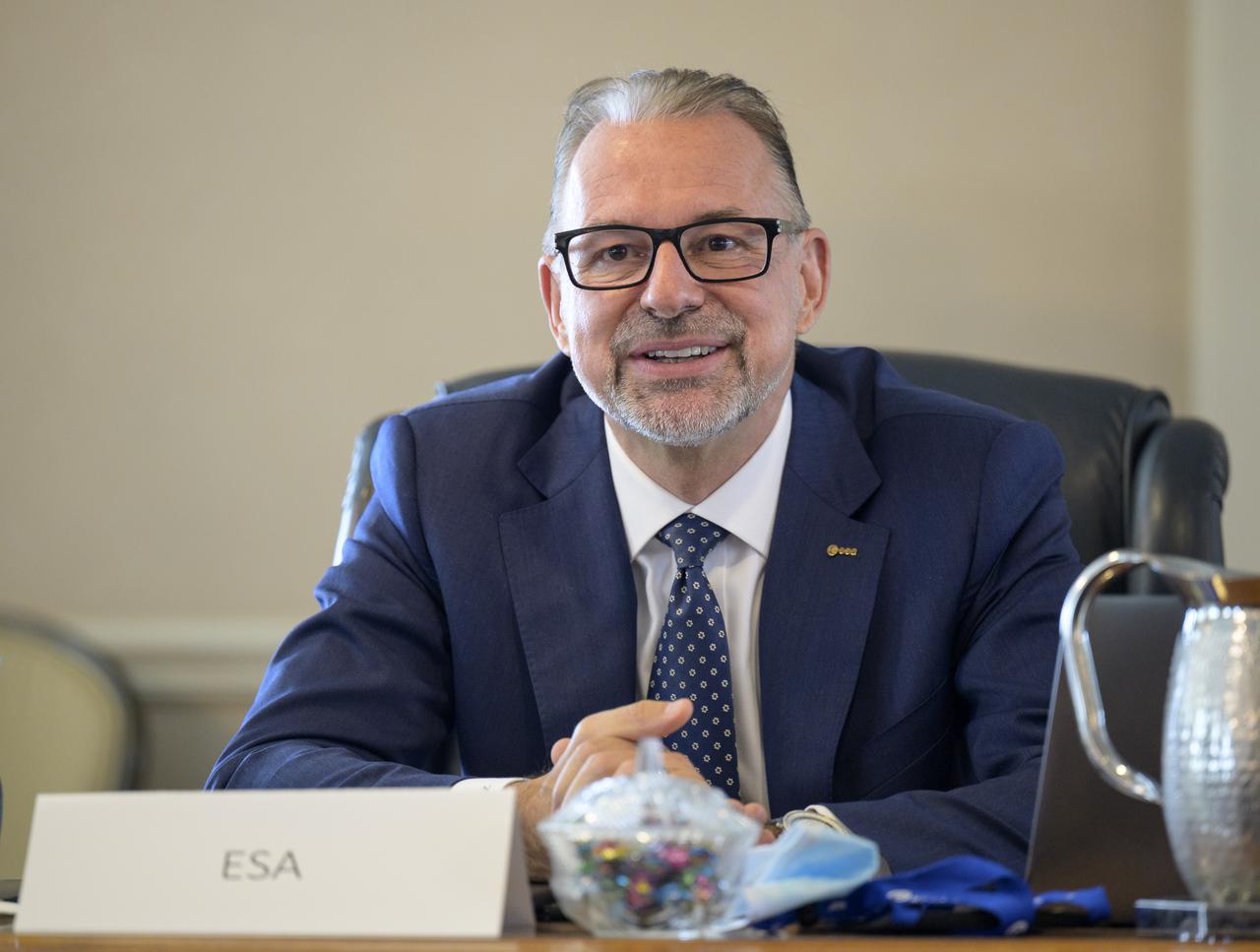
Dr. Josef Aschbacher, Director General, European Space Agency (ESA) listens to NASA Administrator Bill Nelson in a bilateral meeting during the 36th Space Symposium, Monday, Aug. 23, 2021, in Colorado Springs, Colorado. Photo Credit: (NASA/Bill Ingalls)
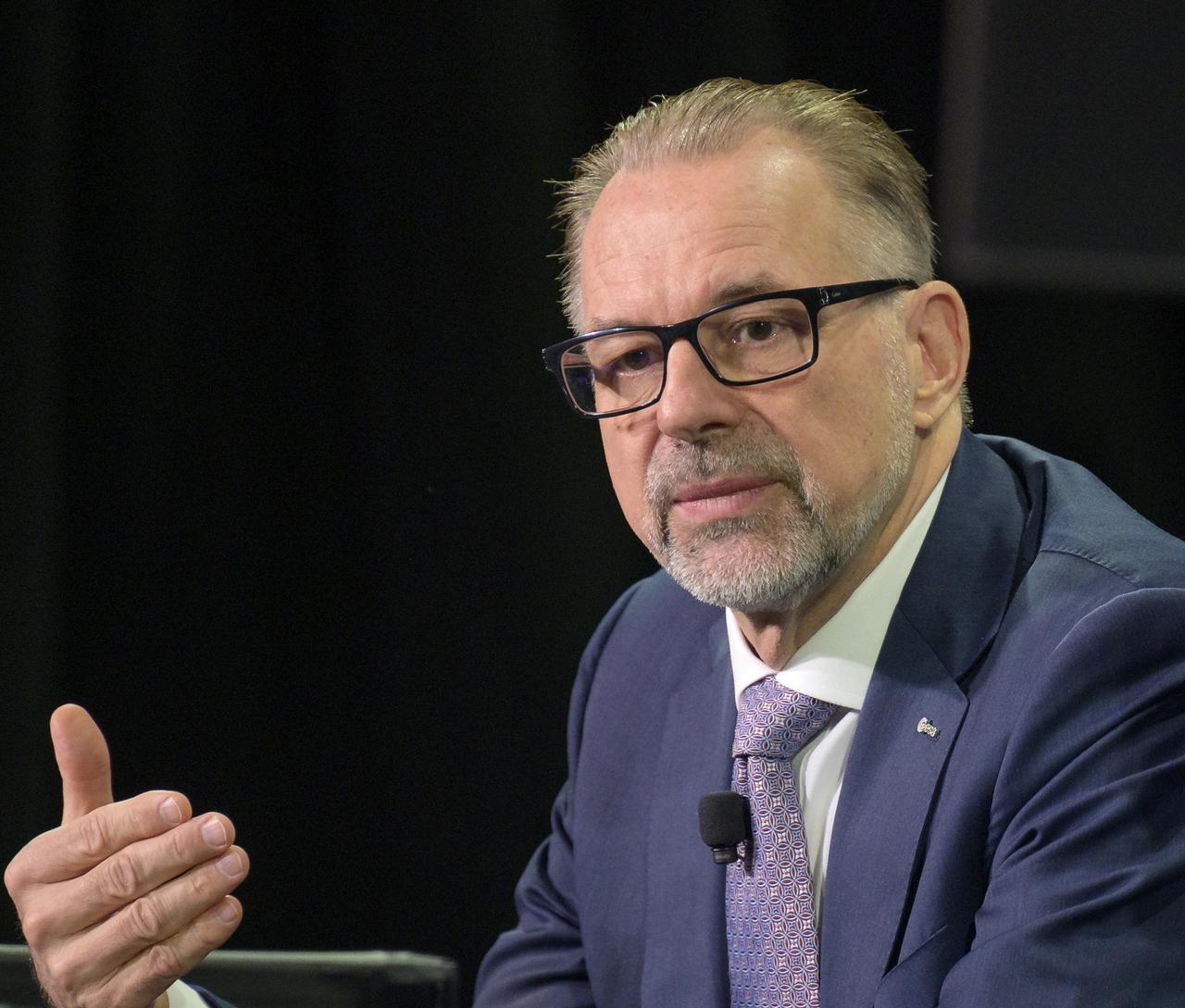
Dr. Josef Aschbacher, Director General, European Space Agency (ESA) speaks during a Heads of Agency panel at the 37th Space Symposium, Wednesday, April 6, 2022, in Colorado Springs, Colorado. Photo Credit: (NASA/Bill Ingalls)
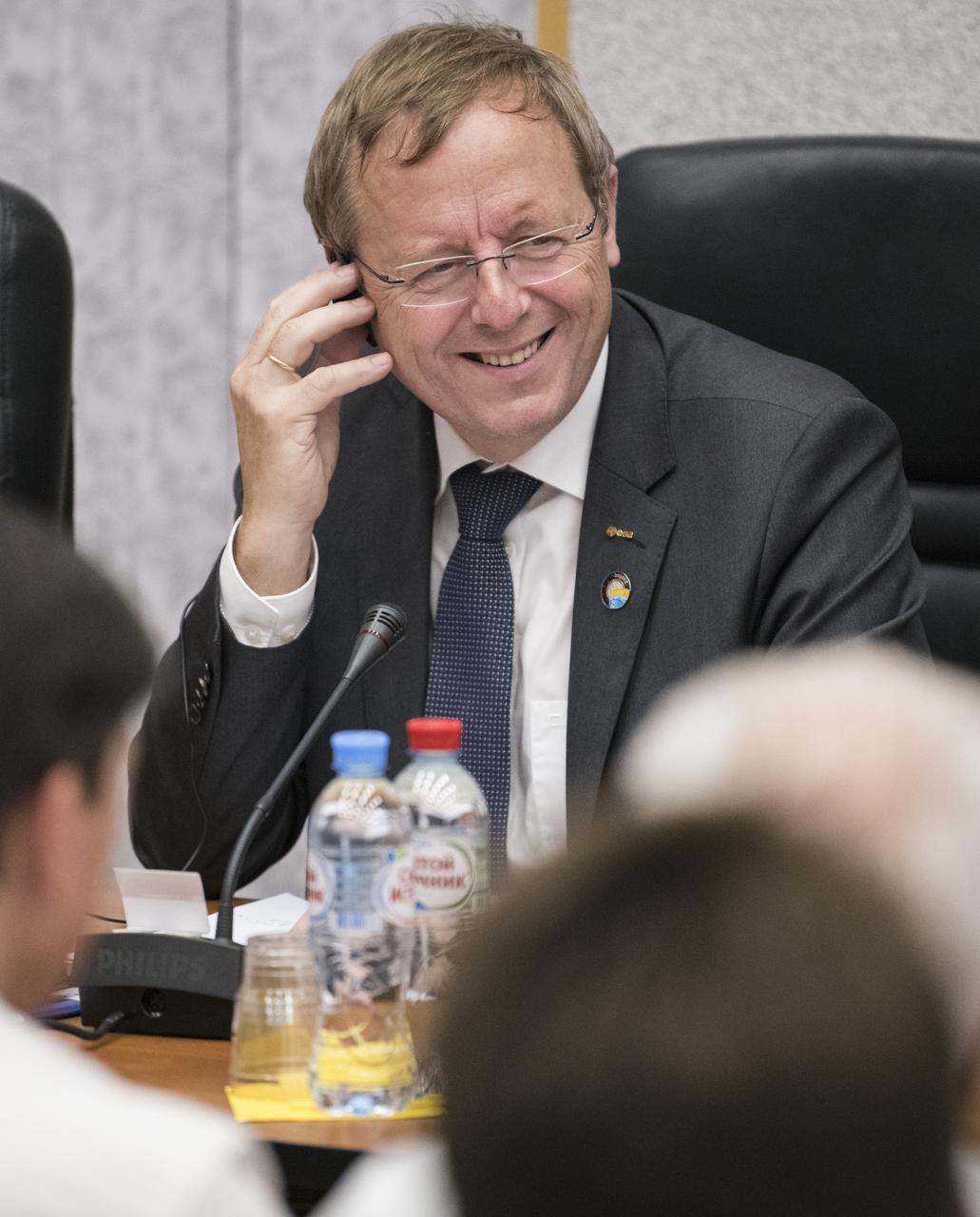
Johann-Dietrich Wörner, Director General of ESA (European Space Agency), is seen during the State Commission meeting to approve the Soyuz launch of Expedition 60 to the International Space Station, Friday, July 19, 2019 at the Cosmonaut Hotel in Baikonur, Kazakhstan. Expedition 60 Soyuz Commander Alexander Skvortsov of Roscosmos, Andrew Morgan of NASA, and Luca Parmitano of ESA (European Space Agency) are scheduled to launch to the International Space Station aboard the Soyuz MS-13 spacecraft on Saturday, July 20. Photo Credit: (NASA/Joel Kowsky)
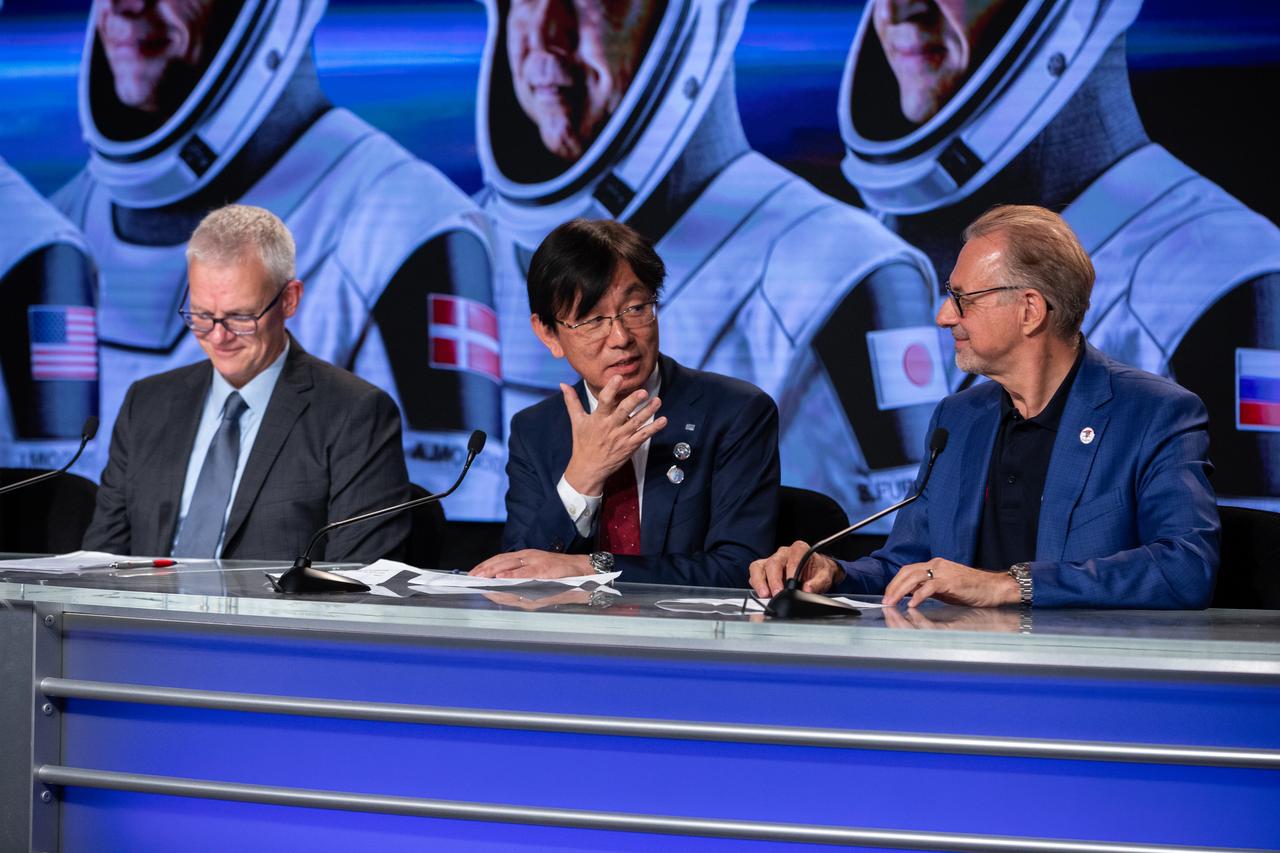
NASA hosts a Crew-7 postlaunch news conference at the agency’s Kennedy Space Center in Florida on Saturday, Aug. 26, 2023. Participants, from left, are: Benji Reed, senior director, Human Spaceflight Programs, SpaceX; Hiroshi Sasaki, vice president, JAXA (Japan Aerospace Exploration Agency); and Josef Aschbacher, director general, ESA (European Space Agency).
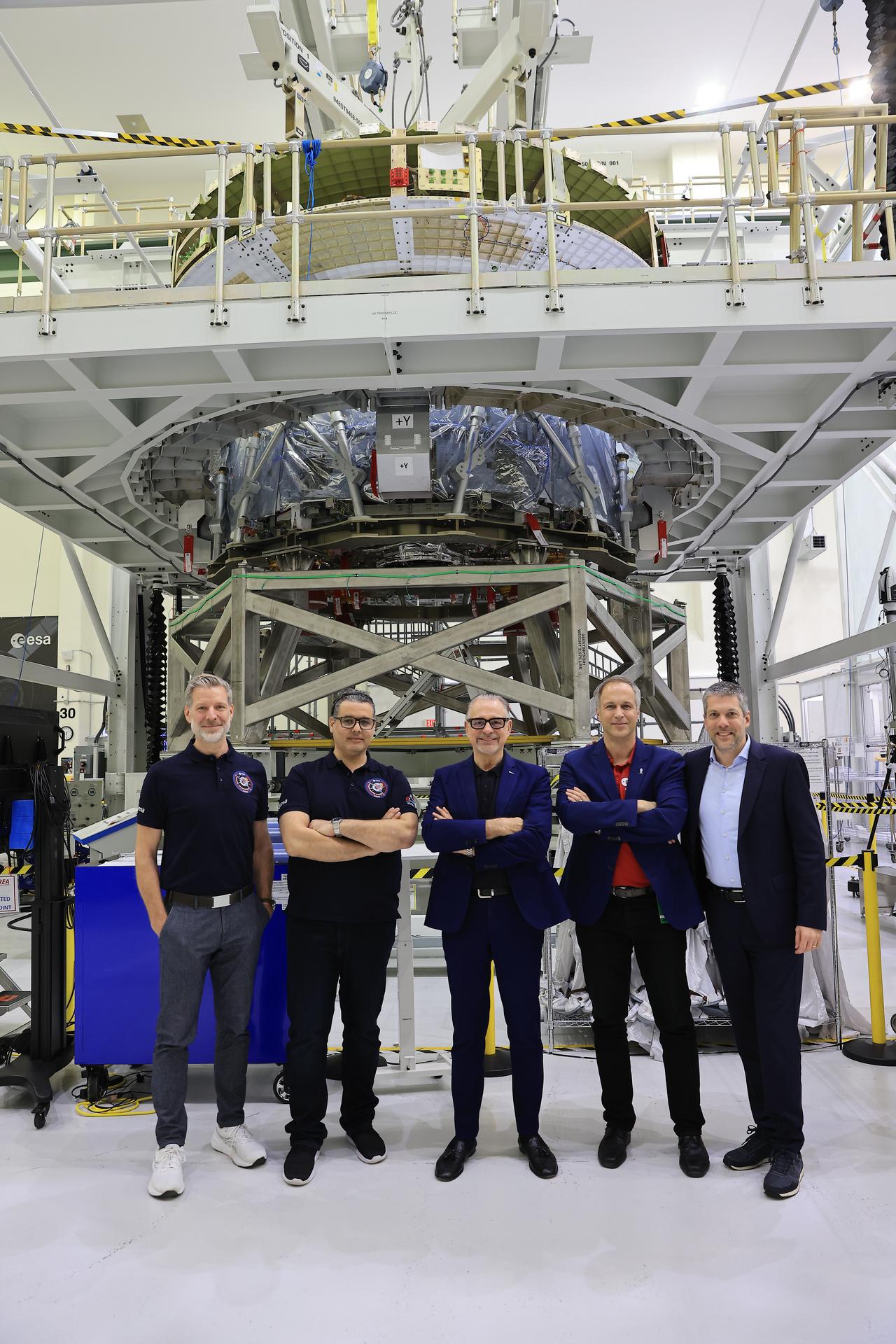
ESA (European Space Agency) Director General Josef Aschbacher (center), ESA Director of Human and Robotic Exploration Daniel Neuenschwander (second from right), and other members of ESA leadership tour on Tuesday, Feb. 10, 2026, the high bay of the Neil A. Armstrong Operations and Checkout Building at NASA’s Kennedy Space Center in Florida. Teams will soon attach the European Service Module to the crew module adapter for NASA’s Artemis IV mission. The European Service Module, which is assembled by Airbus in Bremen, Germany, from parts made in 10 European countries and the United States, acts as the driving force behind Orion for deep space exploration, providing essential propulsion, thermal control, and electrical power.
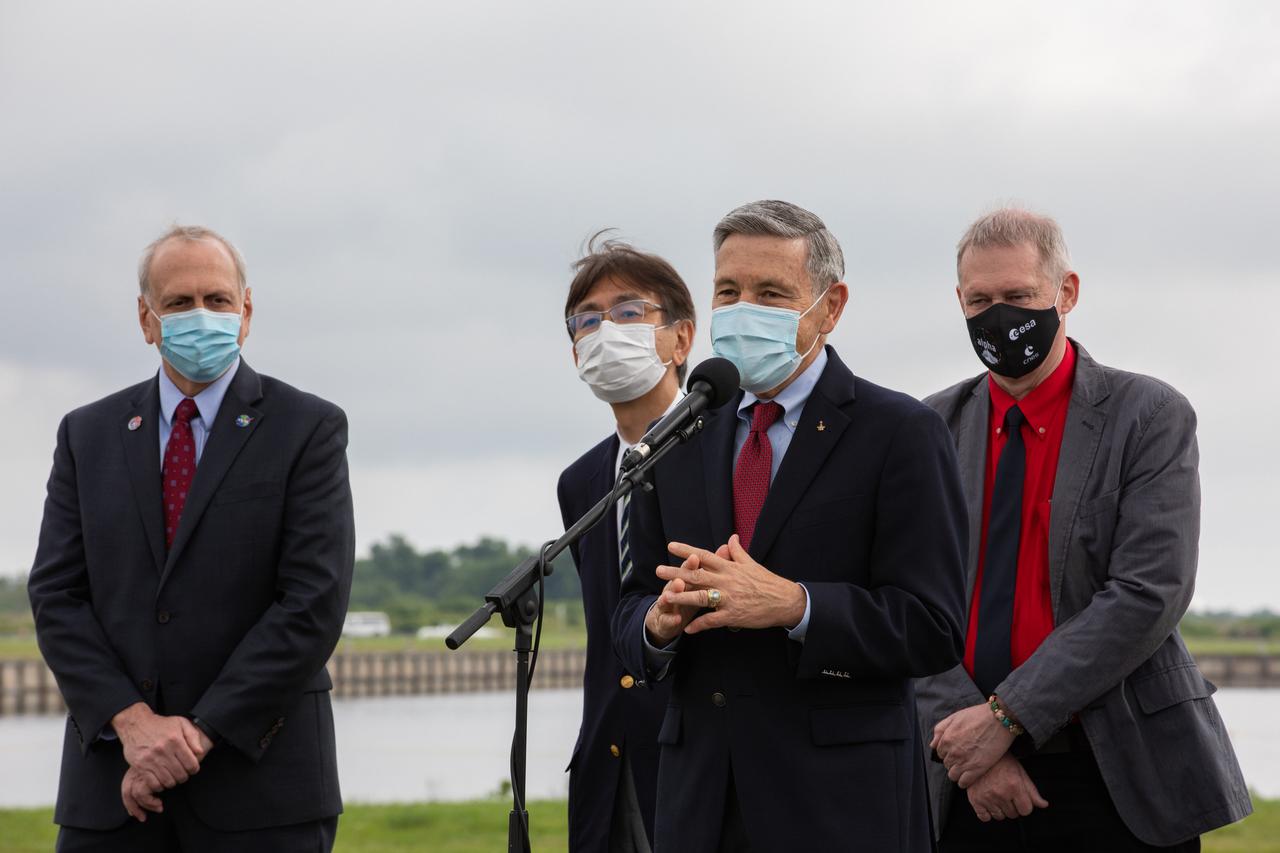
Kennedy Space Center Director Bob Cabana speaks during a NASA Social Facebook Live event April 21, 2021, near the Press Site countdown clock at the Florida Spaceport, ahead of the agency’s SpaceX Crew-2 launch. Also pictured, from left to right, are: Steve Jurczyk, acting NASA administrator; Hiroshi Sasaki, vice president and director general, JAXA’s Human Spaceflight Technology Directorate; and Frank de Winne, manager, International Space Station Program, ESA. NASA astronauts Shane Kimbrough and Megan McArthur, JAXA astronaut Akihiko Hoshide, and ESA astronaut Thomas Pesquet will fly on Crew-2, the second crew rotation mission to the International Space Station as part of NASA’s Commercial Crew Program. They will launch aboard SpaceX’s Crew Dragon spacecraft, named Endeavour, powered by the company’s Falcon 9 rocket. Liftoff is set for Friday, April 23, at 5:49 a.m. EDT.
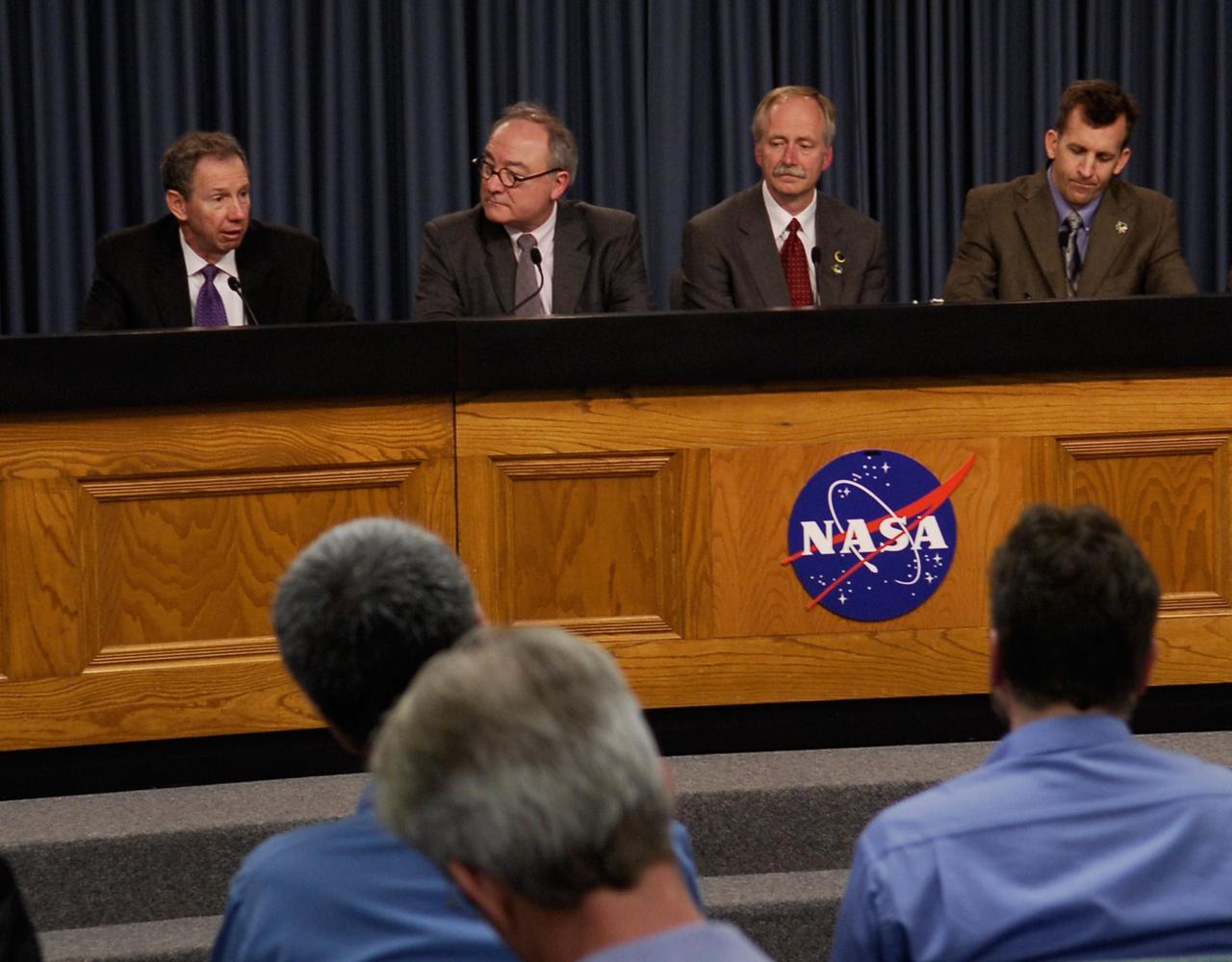
KENNEDY SPACE CENTER, FLA. -- Following the successful launch of space shuttle Atlantis on mission STS-122, NASA Administrator Michael Griffin tells the media at a news conference that the European Space Agency's (ESA) Columbus laboratory will bring a truly international capability to the International Space Station. Also seen on the dais are ESA's Director General Jean-Jacques Dordain, Associate Administrator for Space Operations Bill Gerstenmaier and Director of Mission Launch Integration LeRoy Cain. Not pictured but present at the conference is STS-122 Launch Director Doug Lyons. During the 11-day mission, the crew's prime objective is to attach the Columbus laboratory to the Harmony module, adding to the station's size and capabilities. Photo credit: NASA/Kim Shiflett
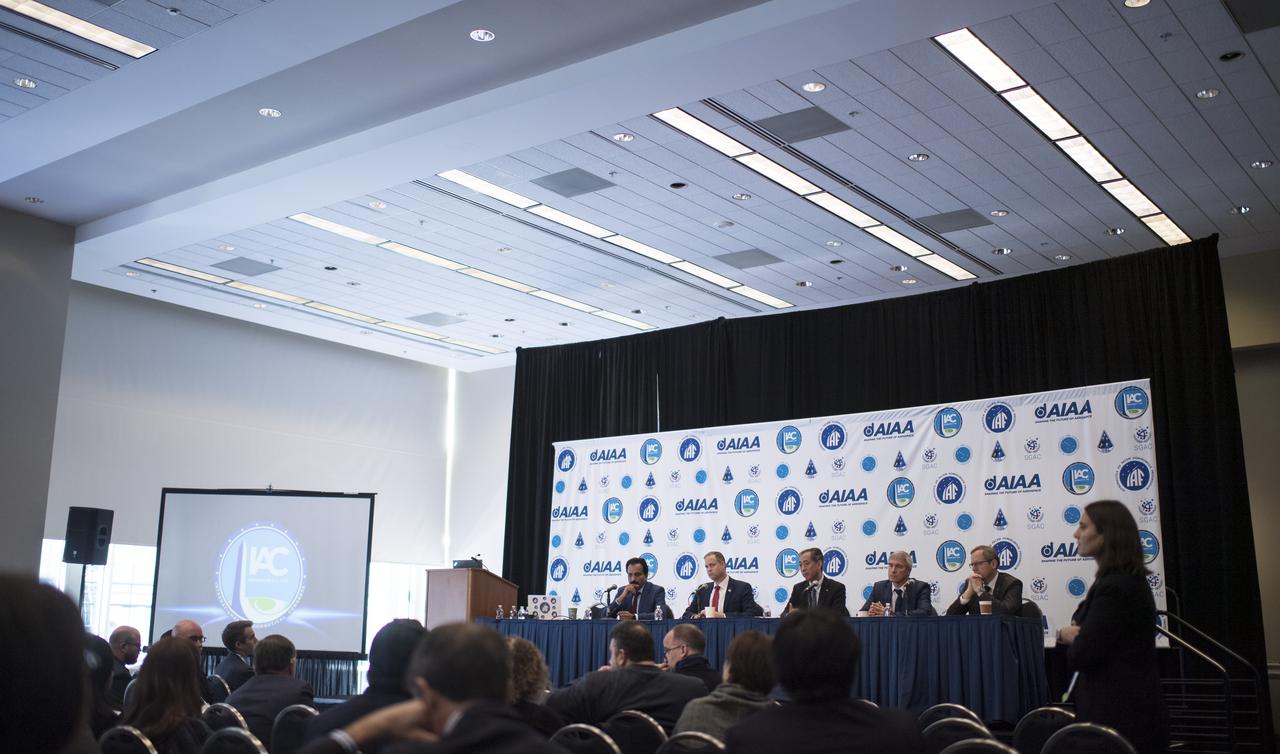
S. Somanath, Director of Vikram Sarabhai Space Centre, Indian Space Research Organization (ISRO), left, NASA Administrator Jim Bridenstine, Hiroshi Yamakawa, President of the Japan Aerospace Exploration Agency (JAXA), Sergey Krikalev, Executive Director for Piloted Spaceflights for Roscosmos, and Johann-Dietrich Woerner, Director General of ESA (European Space Agency), right, are seen during the Heads of Agency press conference at the 70th International Astronautical Congress, Monday, Oct. 21, 2019 at the Walter E. Washington Convention Center in Washington. Photo Credit: (NASA/Joel Kowsky)
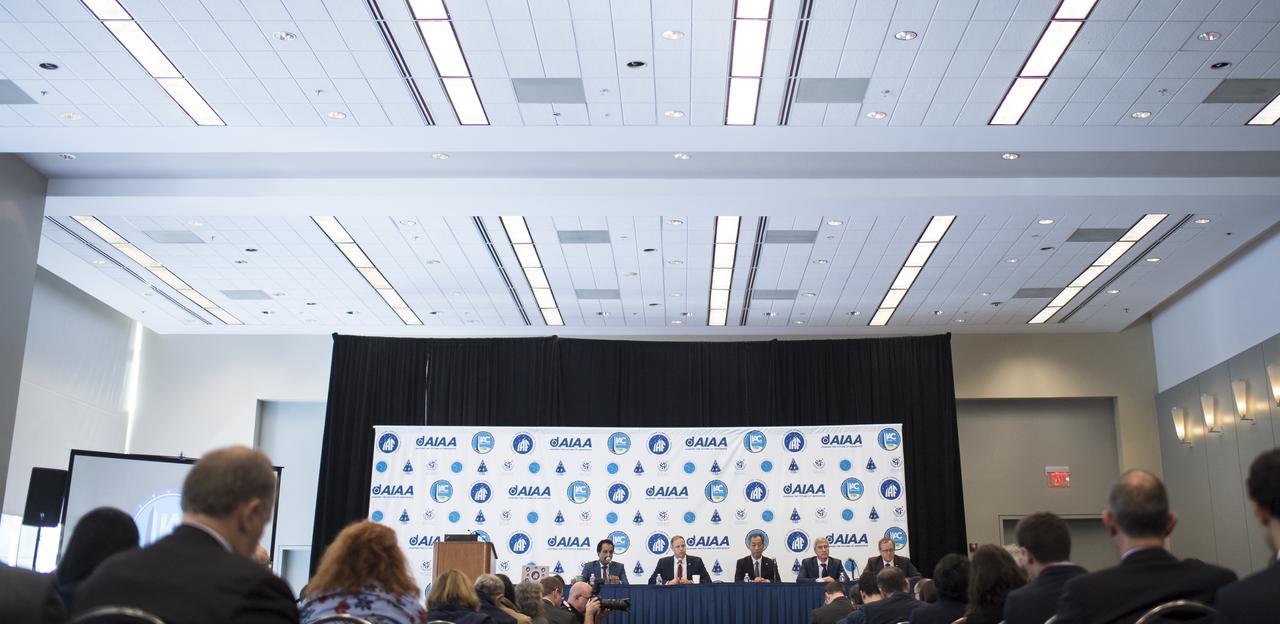
S. Somanath, Director of Vikram Sarabhai Space Centre, Indian Space Research Organization (ISRO), left, NASA Administrator Jim Bridenstine, Hiroshi Yamakawa, President of the Japan Aerospace Exploration Agency (JAXA), Sergey Krikalev, Executive Director for Piloted Spaceflights for Roscosmos, and Johann-Dietrich Woerner, Director General of ESA (European Space Agency), right, are seen during the Heads of Agency press conference at the 70th International Astronautical Congress, Monday, Oct. 21, 2019 at the Walter E. Washington Convention Center in Washington. Photo Credit: (NASA/Joel Kowsky)
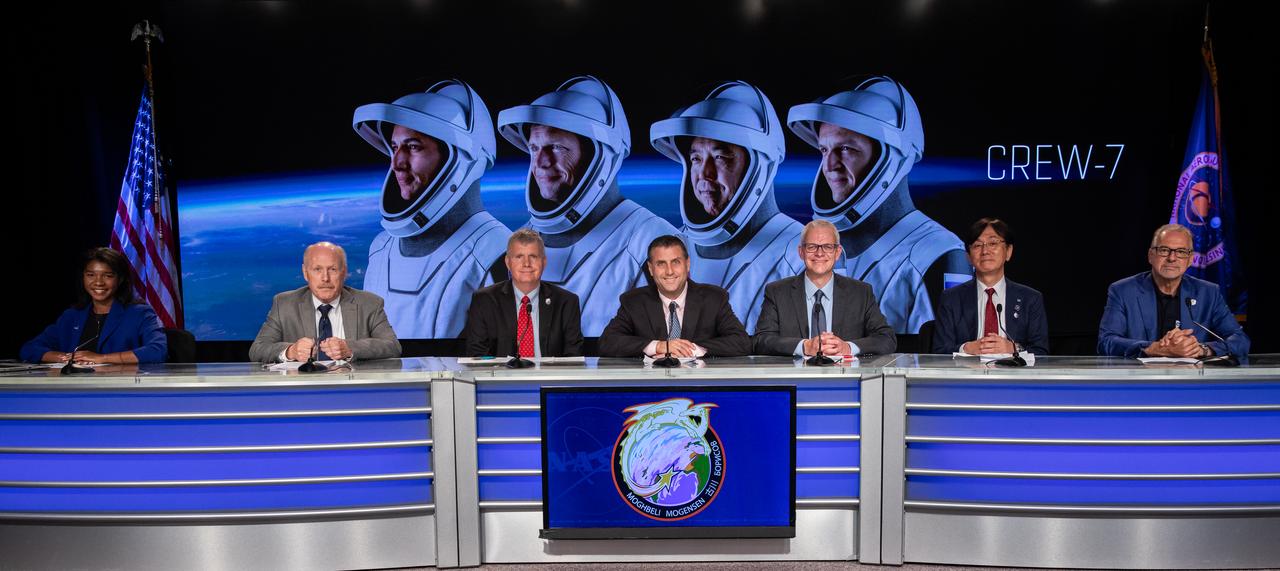
NASA hosts a Crew-7 postlaunch news conference at the agency’s Kennedy Space Center in Florida on Saturday, Aug. 26, 2023. Participants, from left, are: Jasmine Hopkins, NASA Communications, Ken Bowersox, associate administrator, Space Operations Mission Directorate, NASA Headquarters; Steve Stich, manager, Commercial Crew Program, Kennedy; Joel Montalbano, manager, International Space Station Program, Johnson; Benji Reed, senior director, Human Spaceflight Programs, SpaceX; Hiroshi Sasaki, vice president, JAXA; and Josef Aschbacher, director general, ESA.
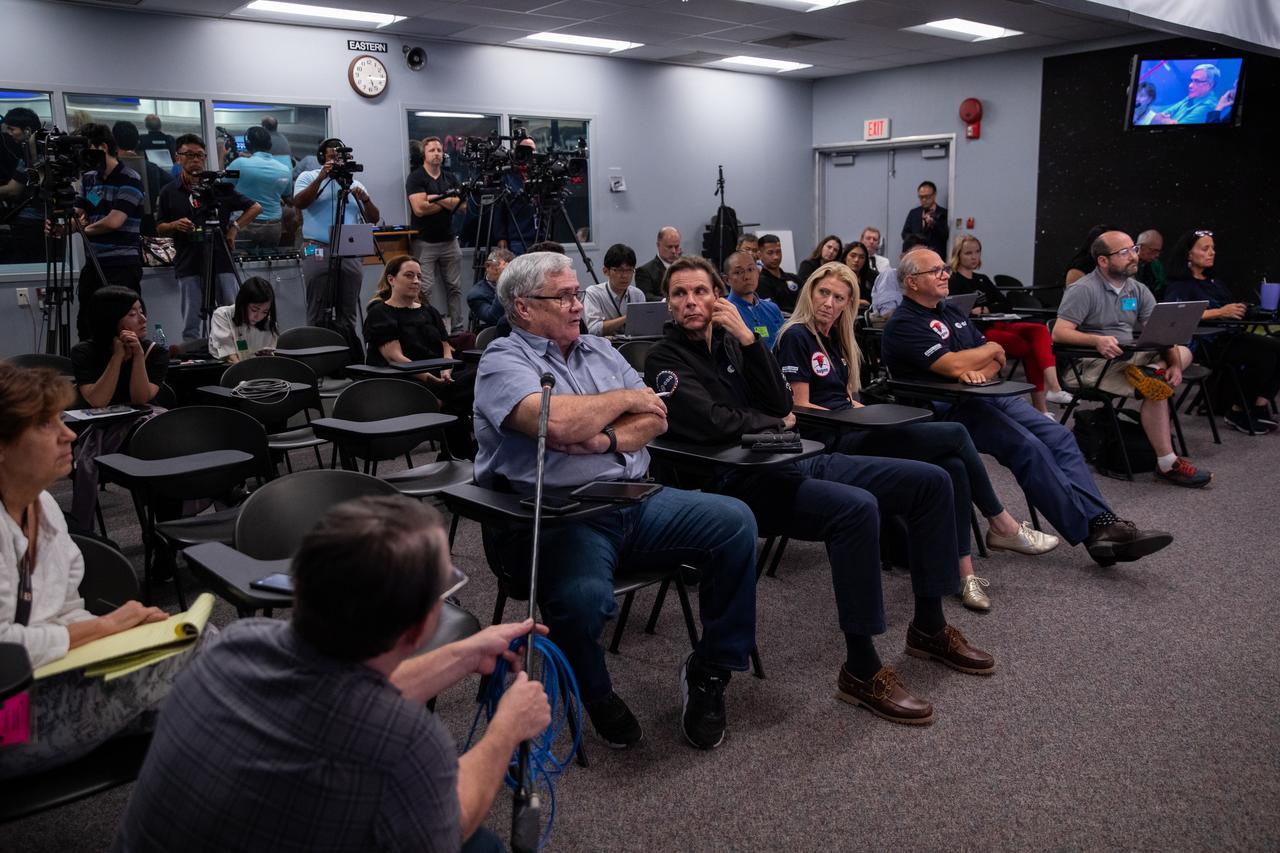
NASA hosts a Crew-7 postlaunch news conference at the agency’s Kennedy Space Center in Florida on Saturday, Aug. 26, 2023. Participants included Jasmine Hopkins, NASA Communications, Ken Bowersox, associate administrator, Space Operations Mission Directorate, NASA Headquarters; Steve Stich, manager, Commercial Crew Program, Kennedy; Joel Montalbano, manager, International Space Station Program, Johnson; Benji Reed, senior director, Human Spaceflight Programs, SpaceX; Hiroshi Sasaki, vice president, JAXA; and Josef Aschbacher, director general, ESA.
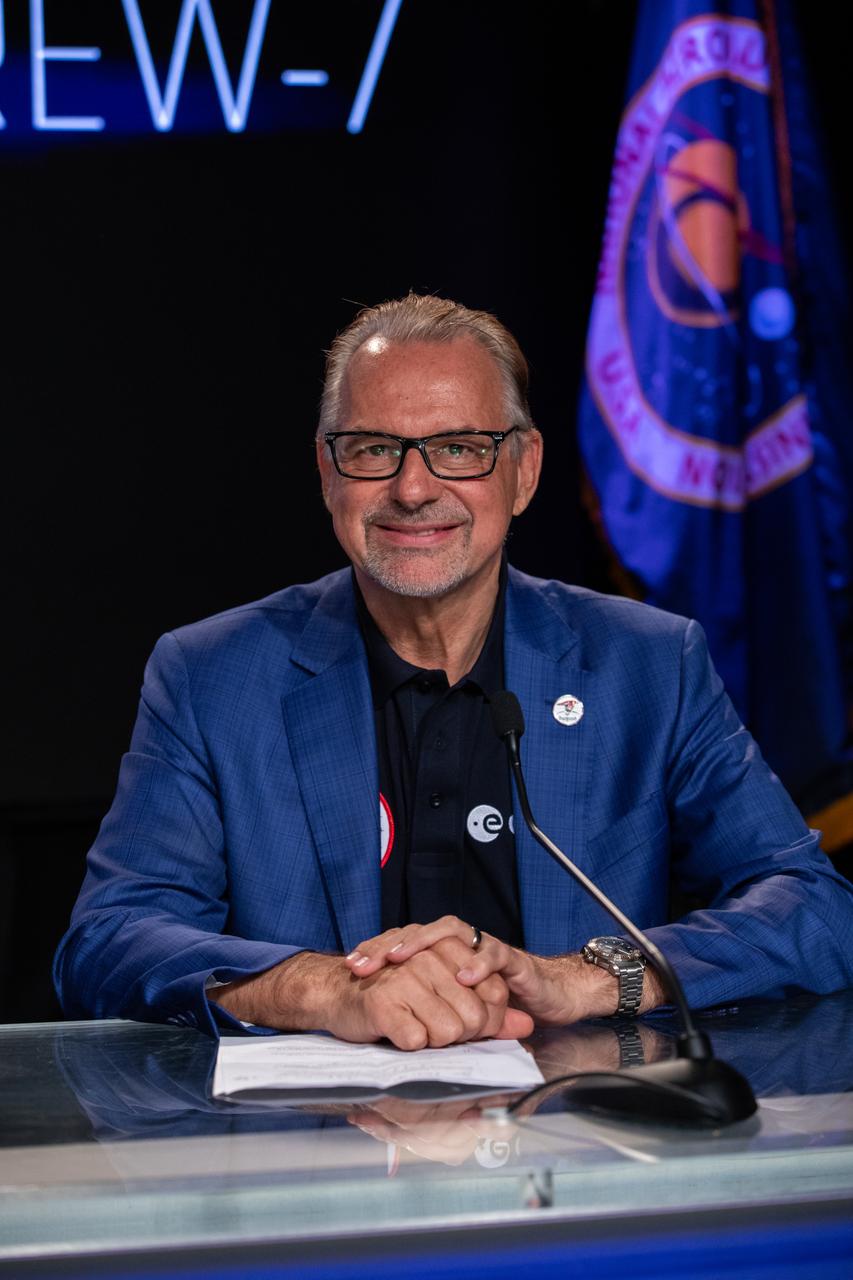
Josef Aschbacher, director general of ESA (European Space Agency), participates in a Crew-7 postlaunch news conference at the agency’s Kennedy Space Center in Florida on Saturday, Aug. 26, 2023. Crew-7 crew members NASA astronaut Jasmin Moghbeli, ESA astronaut Andreas Mogensen, JAXA (Japan Aerospace Exploration Agency) astronaut Satoshi Furukawa, and Roscosmos cosmonaut Konstantin Borisov launched aboard SpaceX’s Dragon spacecraft from Kennedy at 3:27 a.m. EDT. They will dock to the orbiting laboratory at about 8:40 a.m. EDT Sunday, Aug. 27.
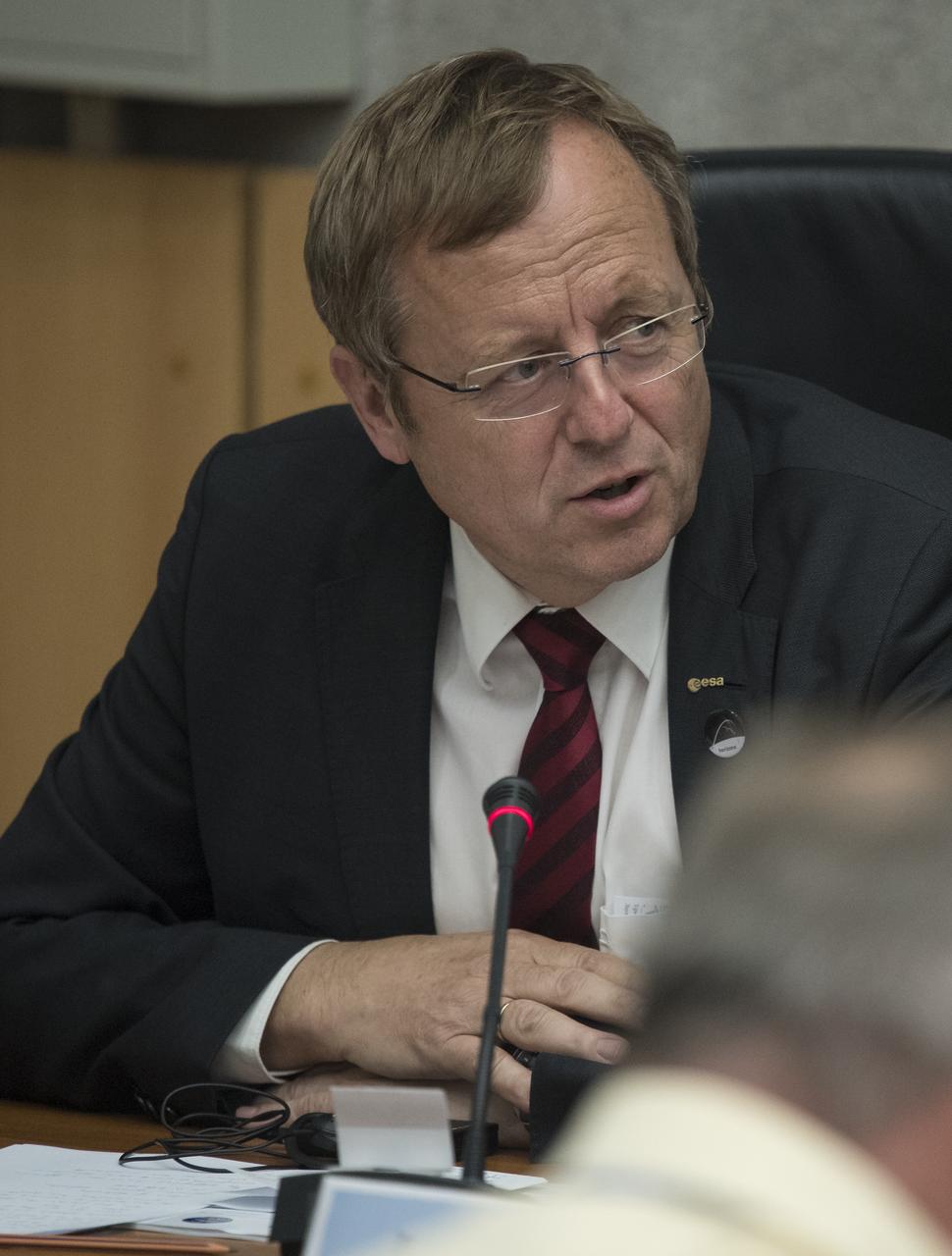
ESA (European Space Agency) Director General Johann-Dietrich Wörner is seen during the State Commission meeting to approve the Soyuz launch of Expedition 56 to the International Space Station, Tuesday, June 5, 2018 at the Cosmonaut Hotel in Baikonur, Kazakhstan. Expedition 56 Soyuz Commander Sergey Prokopyev of Roscosmos, Serena Auñón-Chancellor of NASA, and Alexander Gerst of ESA (European Space Agency) are scheduled to launch to the International Space Station aboard the Soyuz MS-09 spacecraft on Wednesday, June 6. Photo Credit: (NASA/Joel Kowsky)
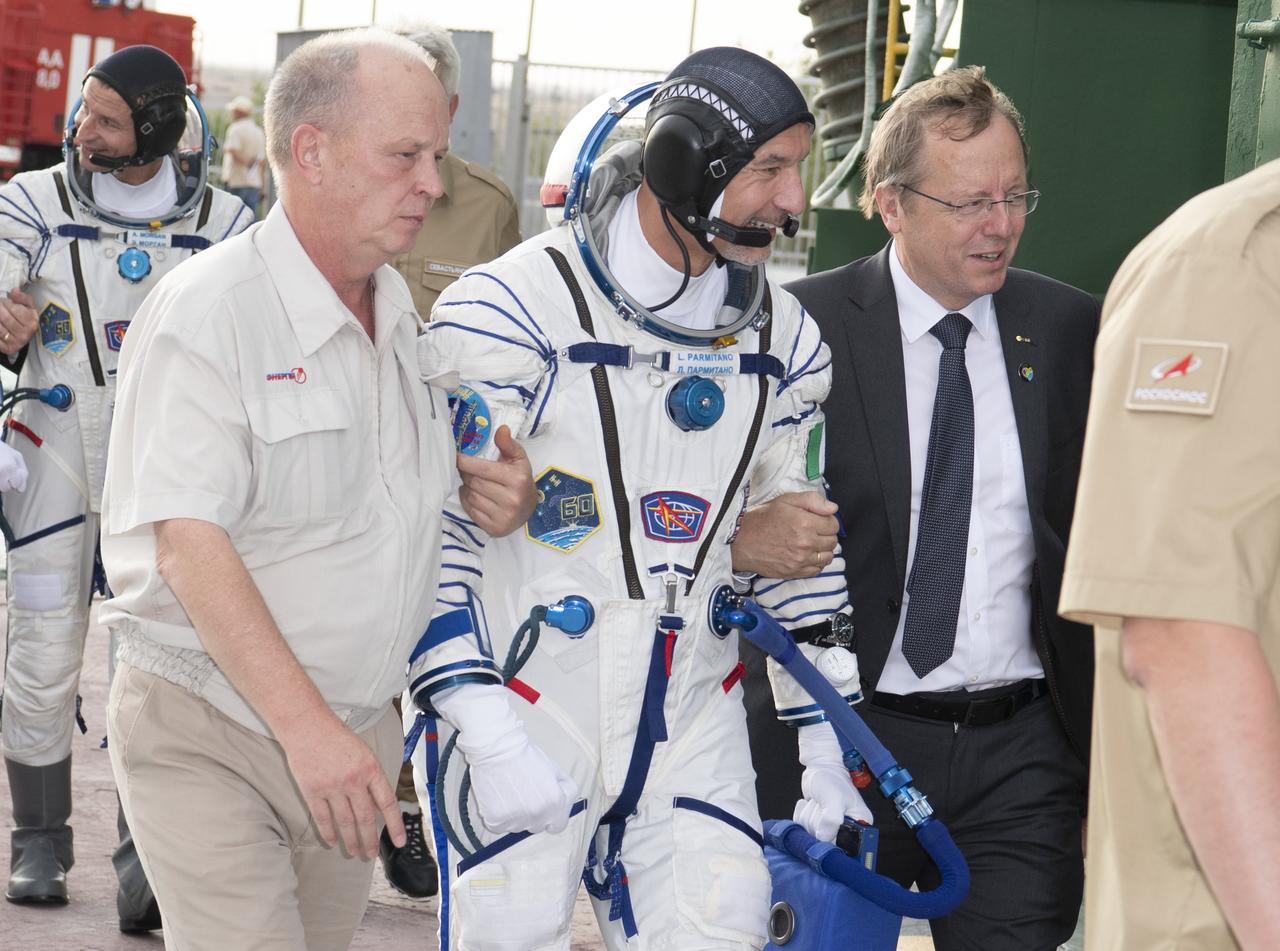
Expedition 60 flight engineer Luca Parmitano of ESA (European Space Agency) is escorted by Johann-Dietrich Wörner, Director General of ESA (European Space Agency) as he prepares to board the Soyuz MS-13 spacecraft for launch, Saturday, July 20, 2019 at the Baikonur Cosmodrome in Kazakhstan. Parmitano, Alexander Skvortsov of Roscosmos, and Andrew Morgan of NASA launched aboard the Soyuz MS-13 spacecraft at 12:28 p.m. Eastern time (9:28 p.m. Baikonur time) on July 20 to begin their journey to the International Space Station. Photo Credit: (NASA/Joel Kowsky)
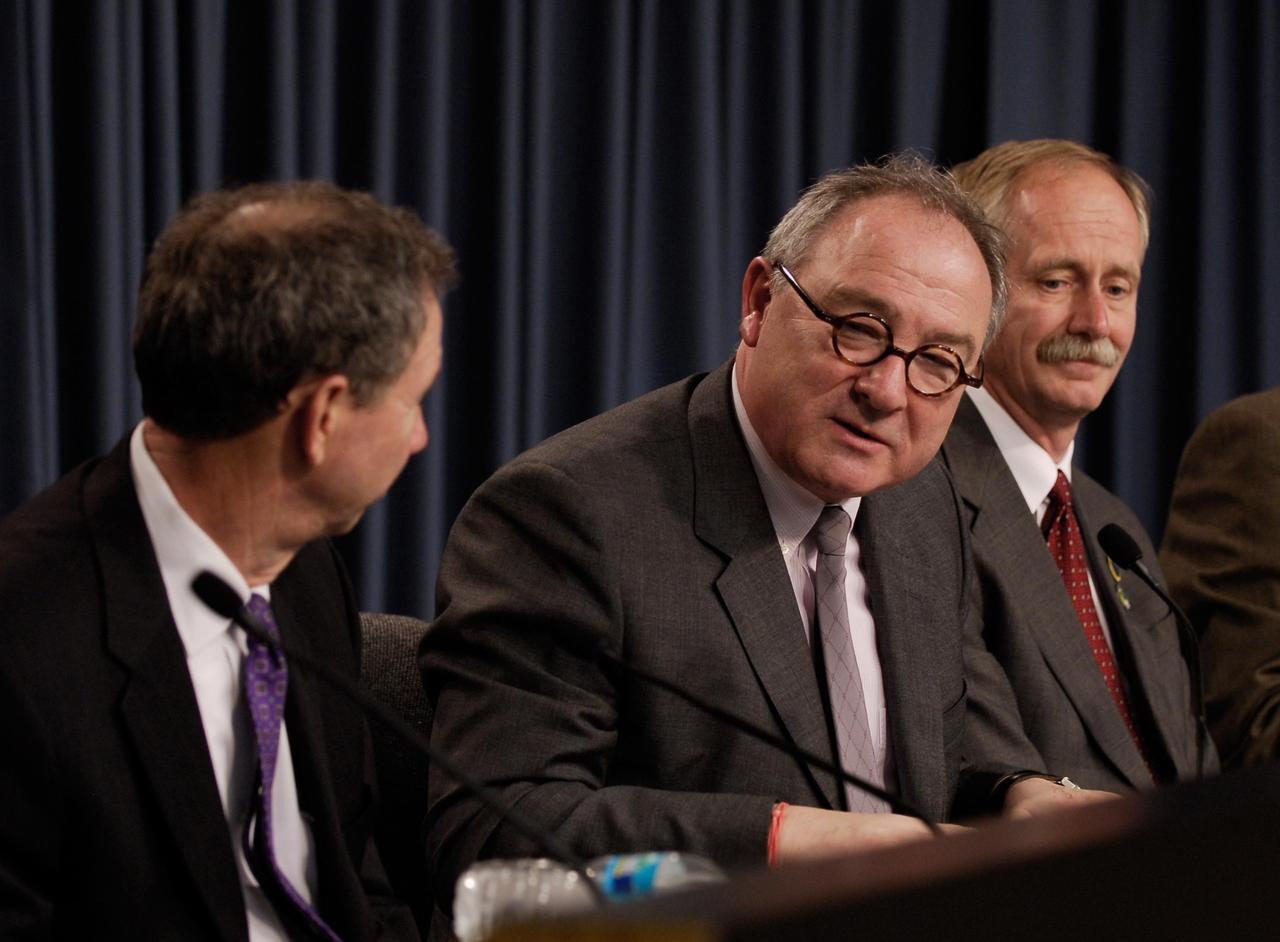
KENNEDY SPACE CENTER, FLA. -- Following the successful launch of space shuttle Atlantis on mission STS-122, European Space Agency Director General Jean-Jacques Dordain (center) thanks NASA and Administrator Michael Griffin (left) for the launch of the ESA Columbus laboratory that ensures ESA is a capable partner in the International Space Station. At right is Associate Administrator for Space Operations Bill Gerstenmaier. During the 11-day mission, the crew's prime objective is to attach the Columbus laboratory to the Harmony module, adding to the station's size and capabilities. Photo credit: NASA/Kim Shiflett
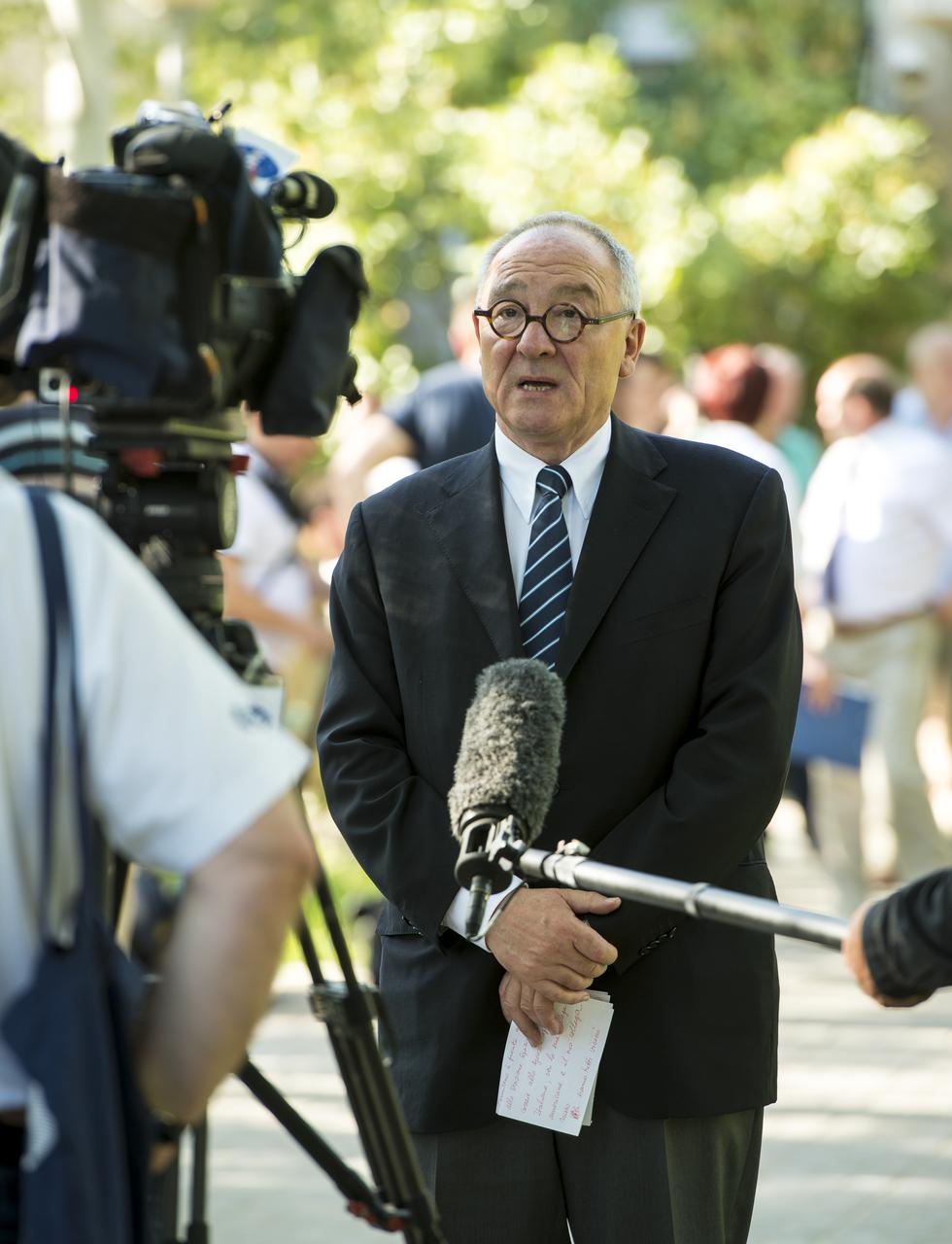
Jean-Jacques Dordain, ESA Director-General, is seen giving a television interview shortly after the State Commission meeting to approve the Soyuz launch of Expedition 36 Soyuz Commander Fyodor Yurchikhin of the Russian Federal Space Agency (Roscosmos), Flight Engineers; Karen Nyberg of NASA, and Luca Parmitano of the European Space Agency at the Cosmonaut Hotel, Monday, May 27, 2013, in Kazakhstan. Photo credit: (NASA/Bill Ingalls)

NASA Administrator Jim Bridenstine, third from right, and Deputy Administrator Jim Morhard, fourth from right, speak with Professor Johann-Dietrich Worner, Director General of ESA (European Space Agency), fourth from left, during the 70th International Astronautical Congress, Tuesday, Oct. 22, 2019 in Washington. Photo Credit: (NASA/Aubrey Gemignani)
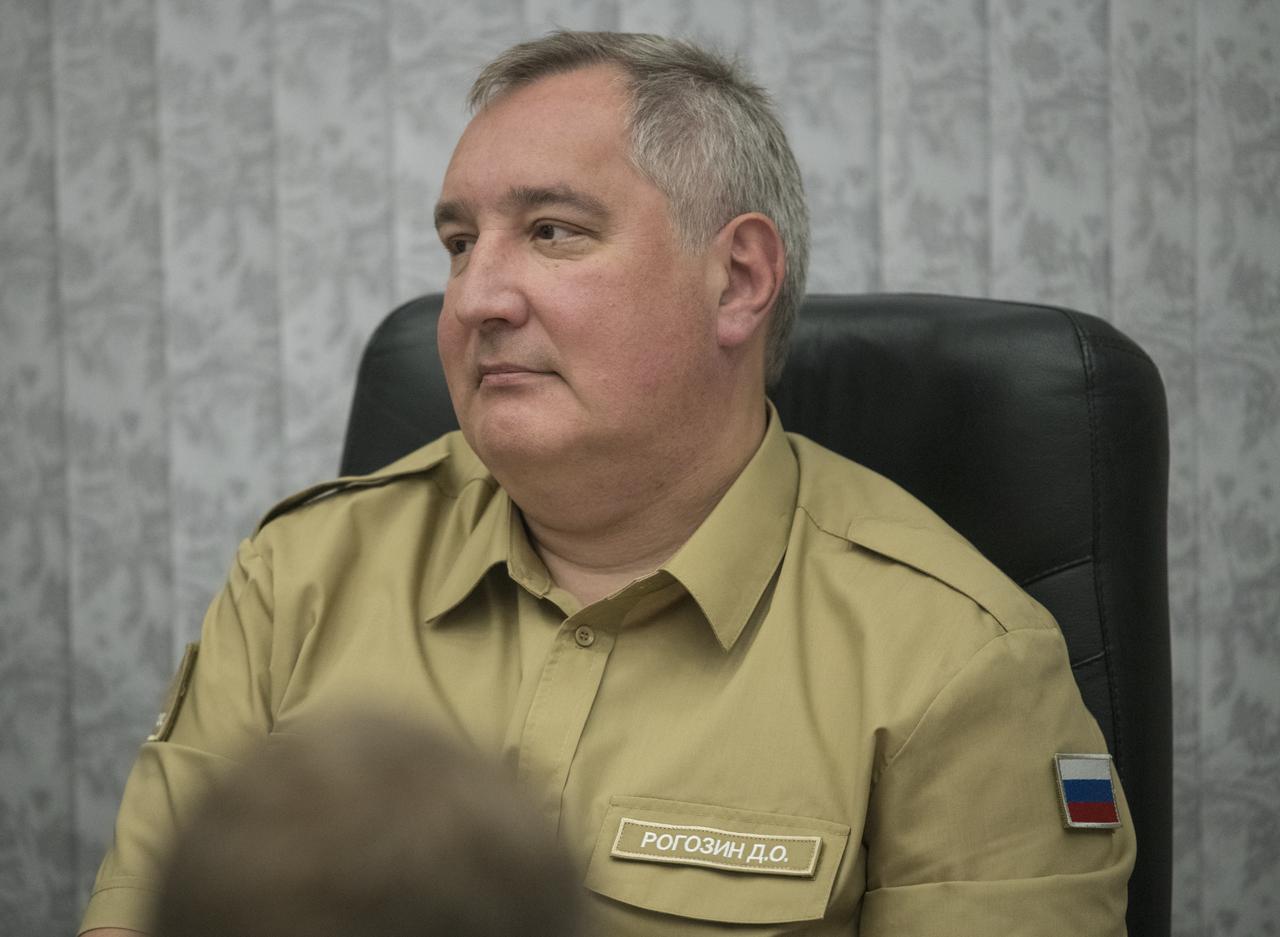
Dmitry Rogozin, Director General of Roscosmos, is seen during the State Commission meeting to approve the Soyuz launch of Expedition 60 to the International Space Station, Friday, July 19, 2019 at the Cosmonaut Hotel in Baikonur, Kazakhstan. Expedition 60 Soyuz Commander Alexander Skvortsov of Roscosmos, Andrew Morgan of NASA, and Luca Parmitano of ESA (European Space Agency) are scheduled to launch to the International Space Station aboard the Soyuz MS-13 spacecraft on Saturday, July 20. Photo Credit: (NASA/Joel Kowsky)

Jean-Jacques Dordain, ESA Director-General, speaks during the State Commission meeting to approve the Soyuz launch of Expedition 36 Soyuz Commander Fyodor Yurchikhin of the Russian Federal Space Agency (Roscosmos), Flight Engineers; Karen Nyberg of NASA, and Luca Parmitano at the Cosmonaut Hotel, Monday, May 27, 2013, in Kazakhstan. Photo credit: (NASA/Bill Ingalls)
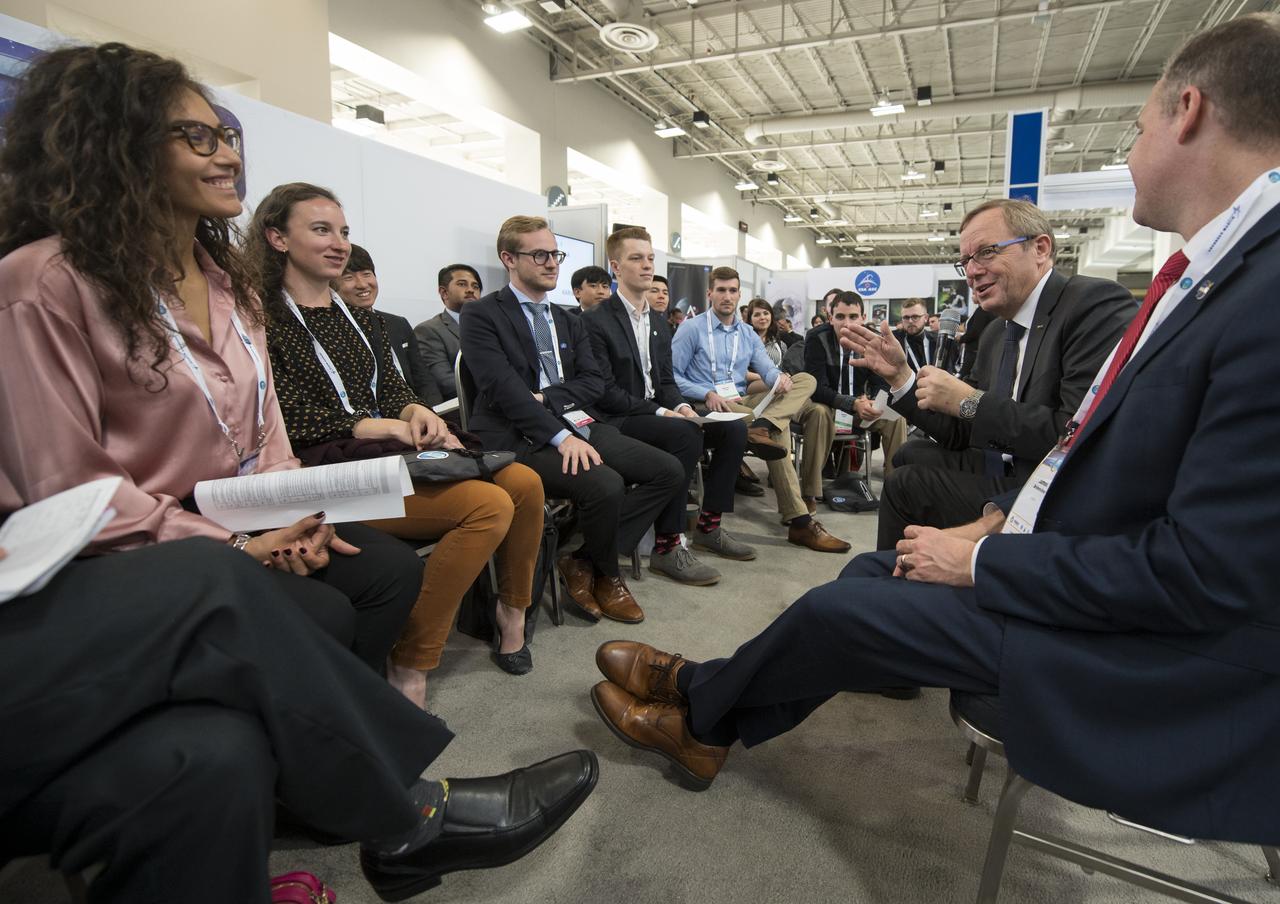
Dr. Johann-Dietrich Worner, Director General, European Space Agency (ESA), second from right, and NASA Administrator Jim Bridenstine, right, answer questions during a Heads of Agency interactive session with students during the 70th International Astronautical Congress, Monday, Oct. 21, 2019 at the Walter E. Washington Convention Center in Washington. Photo credit: (NASA/Aubrey Gemignani)

Dmitry Rogozin, Director General of Roscosmos, is seen during the State Commission meeting to approve the Soyuz launch of Expedition 56 to the International Space Station, Tuesday, June 5, 2018 at the Cosmonaut Hotel in Baikonur, Kazakhstan. Expedition 56 Soyuz Commander Sergey Prokopyev of Roscosmos, Serena Auñón-Chancellor of NASA, and Alexander Gerst of ESA (European Space Agency) are scheduled to launch to the International Space Station aboard the Soyuz MS-09 spacecraft on Wednesday, June 6. Photo Credit: (NASA/Joel Kowsky)
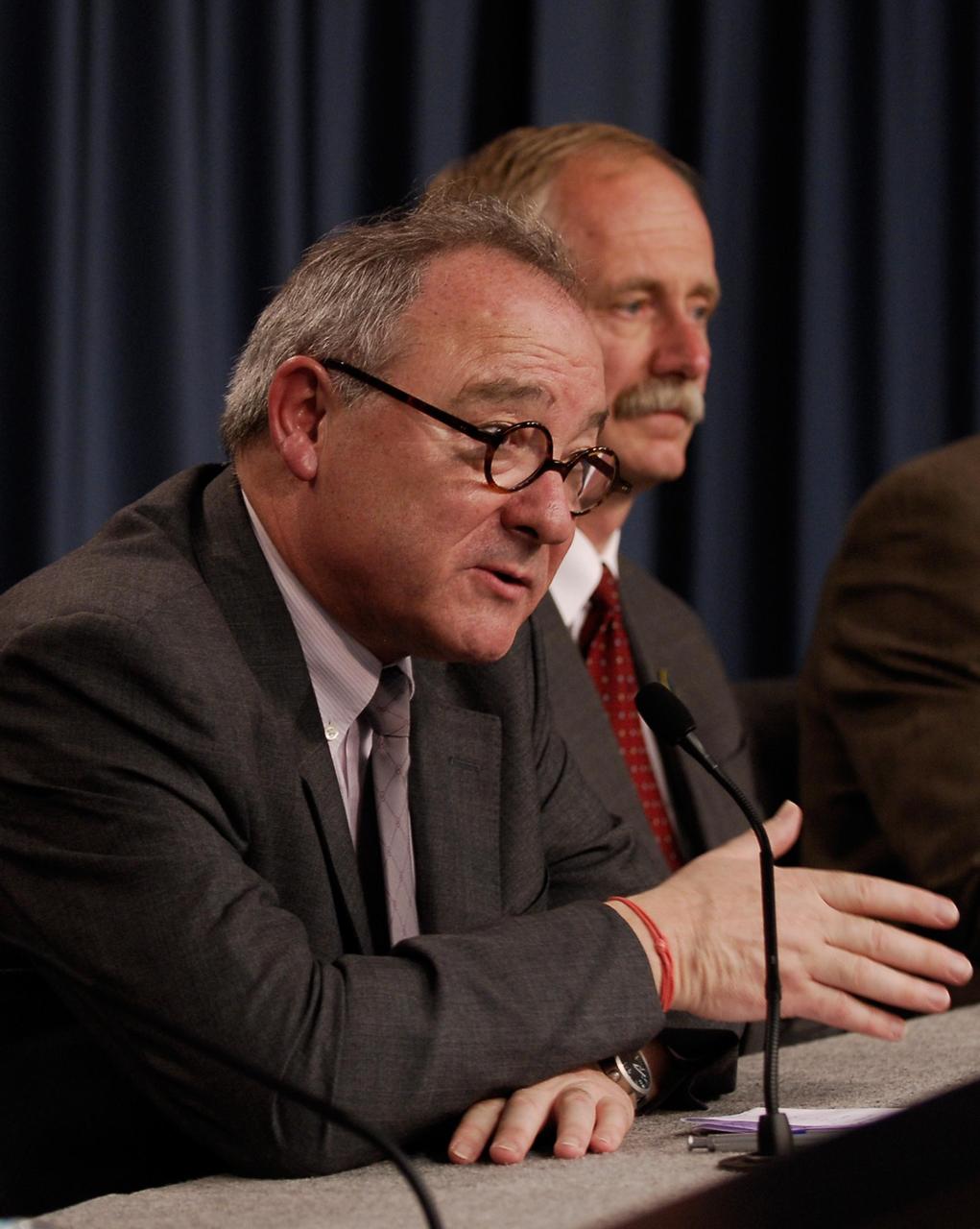
KENNEDY SPACE CENTER, FLA. -- Following the successful launch of space shuttle Atlantis on mission STS-122, European Space Agency Director General Jean-Jacques Dordain states that the launch ensures ESA is a capable partner in the International Space Station. Behind Dordain is Associate Administrator for Space Operations Bill Gerstenmaier. During the 11-day mission, the crew's prime objective is to attach the Columbus laboratory to the Harmony module, adding to the station's size and capabilities. Photo credit: NASA/Kim Shiflett
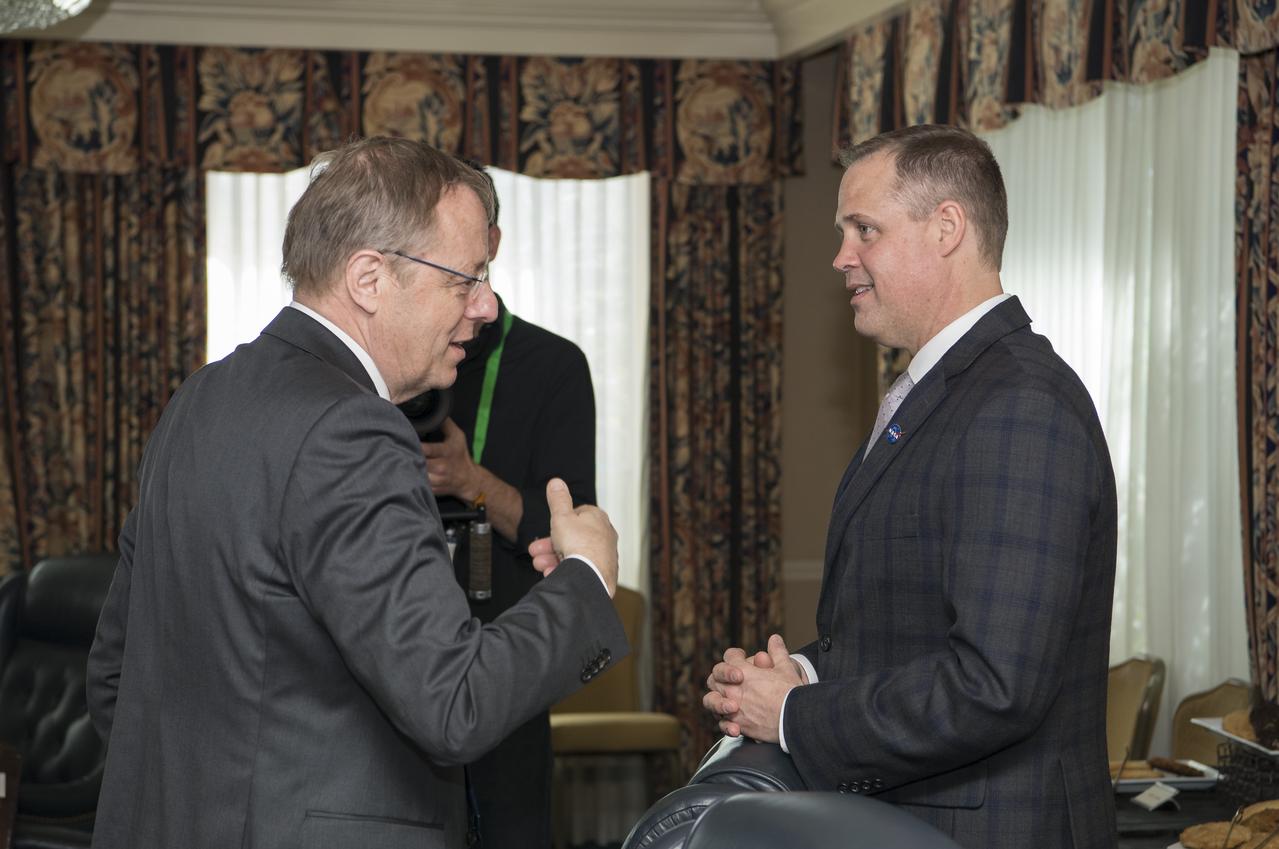
NASA Administrator Jim Bridenstine, right, speaks with Johann-Dietrich Wörner, director general of ESA (European Space Agency), about NASA’s plans to land humans on the Moon by 2024 and prospective collaboration in human and robotic lunar and Mars exploration activities, at the Space Symposium, Monday, April 8, 2019 in Colorado Springs, Colorado, They also discussed their continued successful cooperation on the International Space Station and the service module for the Orion spacecraft that will take us to the Moon and beyond. Photo Credit: (NASA/Aubrey Gemignani)
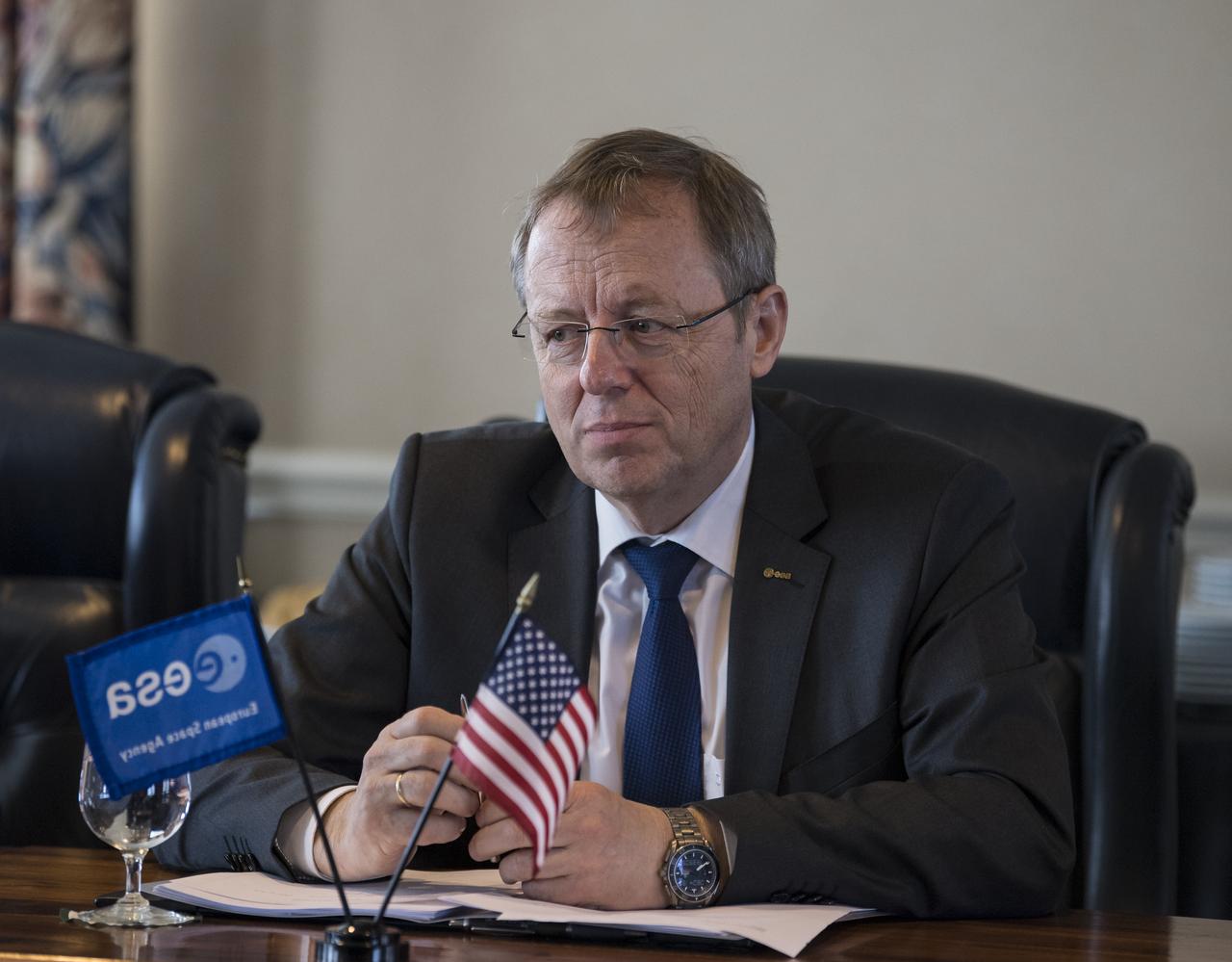
Johann-Dietrich Wörner, director general of ESA (European Space Agency), speaks at a bi-lateral meeting about NASA’s plans to land humans on the Moon by 2024 and prospective collaboration in human and robotic lunar and Mars exploration activities, at the Space Symposium, Monday, April 8, 2019 in Colorado Springs, Colorado. They also discussed their continued successful cooperation on the International Space Station and the service module for the Orion spacecraft that will take us to the Moon and beyond. Photo Credit: (NASA/Aubrey Gemignani)
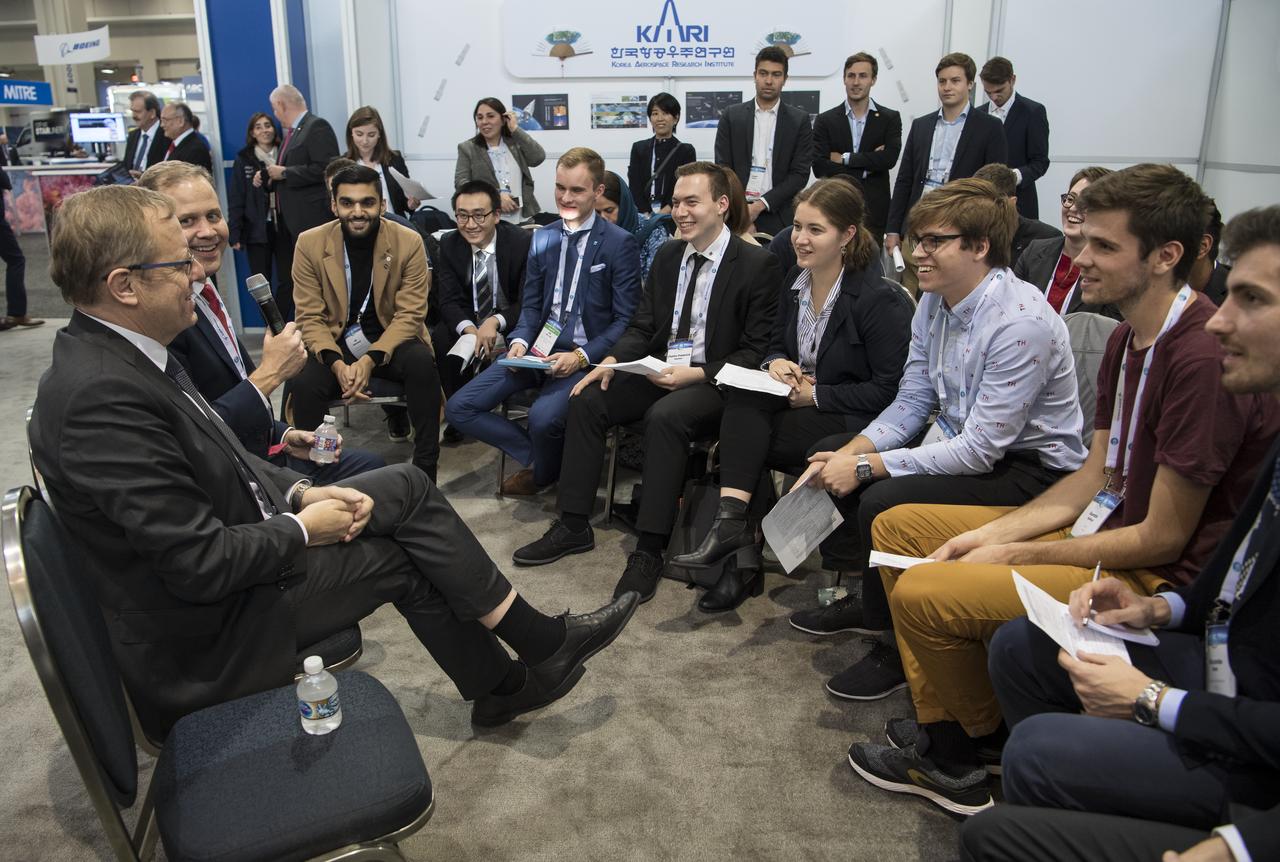
NASA Administrator Jim Bridenstine and Dr. Johann-Dietrich Worner, Director General, European Space Agency (ESA), answer questions during a Heads of Agency interactive session with students during the 70th International Astronautical Congress, Monday, Oct. 21, 2019 at the Walter E. Washington Convention Center in Washington. Photo credit: (NASA/Aubrey Gemignani)
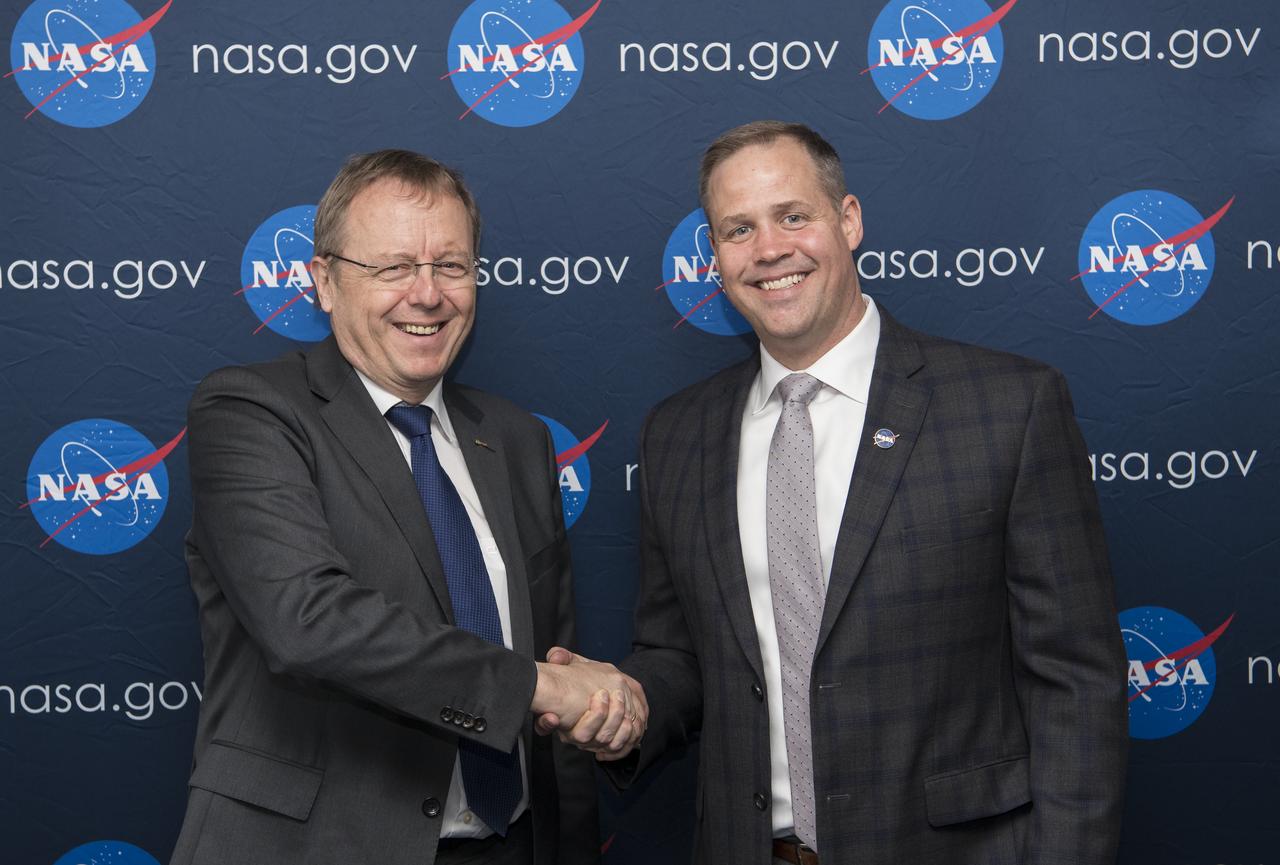
NASA Administrator Jim Bridenstine, right, poses with Johann-Dietrich Wörner, director general of ESA (European Space Agency), just before meeting to discuss NASA’s plans to land humans on the Moon by 2024 and prospective collaboration in human and robotic lunar and Mars exploration activities, at the Space Symposium, Monday, April 8, 2019 in Colorado Springs, Colorado, They also discussed their continued successful cooperation on the International Space Station and the service module for the Orion spacecraft that will take us to the Moon and beyond. Photo Credit: (NASA/Aubrey Gemignani)
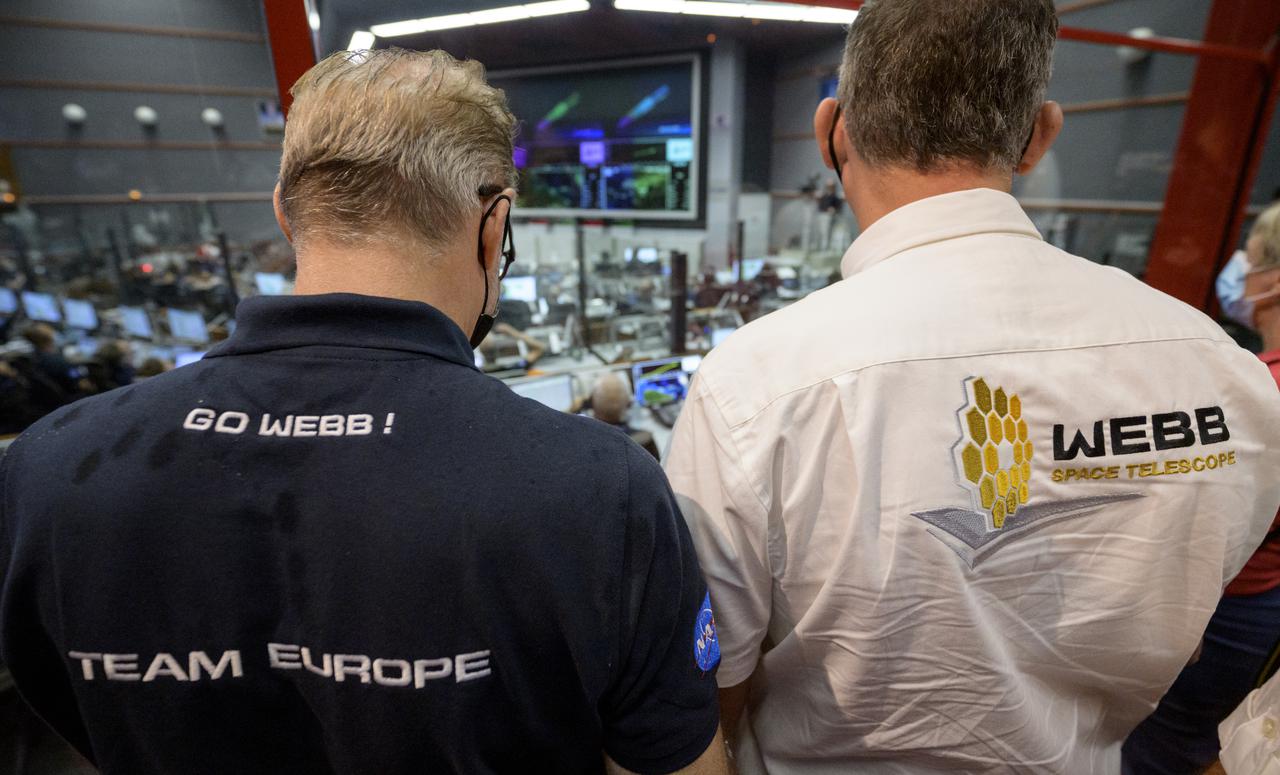
ESA (European Space Agency) Director-General Dr. Josef Aschbacher, left, and NASA Associate Administrator for the Science Mission Directorate Thomas Zurbuchen, monitor the progress of the Ariane 5 rocket delivering the James Webb Space Telescope into space, Saturday, Dec. 25, 2021, in the Jupiter Hall of the Guiana Space Centre in Kourou, French Guiana. The James Webb Space Telescope (sometimes called JWST or Webb) is a large infrared telescope with a 21.3 foot (6.5 meter) primary mirror. The observatory will study every phase of cosmic history—from within our solar system to the most distant observable galaxies in the early universe. Photo Credit: (NASA/Bill Ingalls)
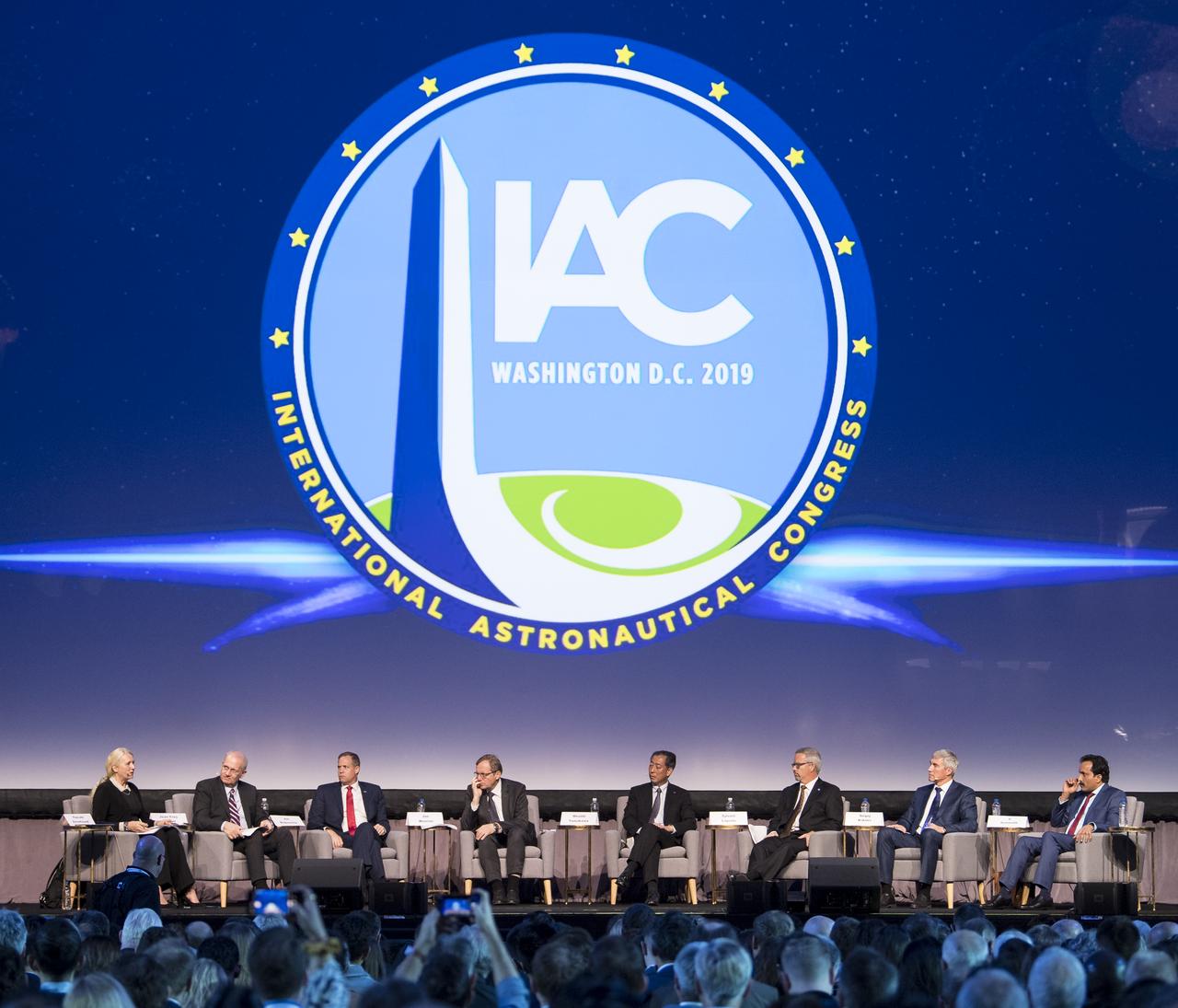
Pascale Ehrenfreund, Incoming President of the International Astronautical Federation (IAF), left, and Jean-Yves Le Gall, President of International Astronautical Federation (IAF), second from left, facilitate a panel with NASA Administrator Jim Bridenstine, Johann-Dietrich Woerner, Director General of ESA (European Space Agency), Hiroshi Yamakawa, President of the Japan Aerospace Exploration Agency (JAXA), Sylvain Laporte, President of the Canadian Space Agency, Sergey Krikalev, Executive Director for Piloted Spaceflights for Roscosmos, and S. Somanath, Director of Vikram Sarabhai Space Centre, Indian Space Research Organization (ISRO), for the Heads of Agency Plenary of the 70th International Astronautical Congress, Monday, Oct. 21, 2019 at the Walter E. Washington Convention Center in Washington. Photo Credit: (NASA/Joel Kowsky)
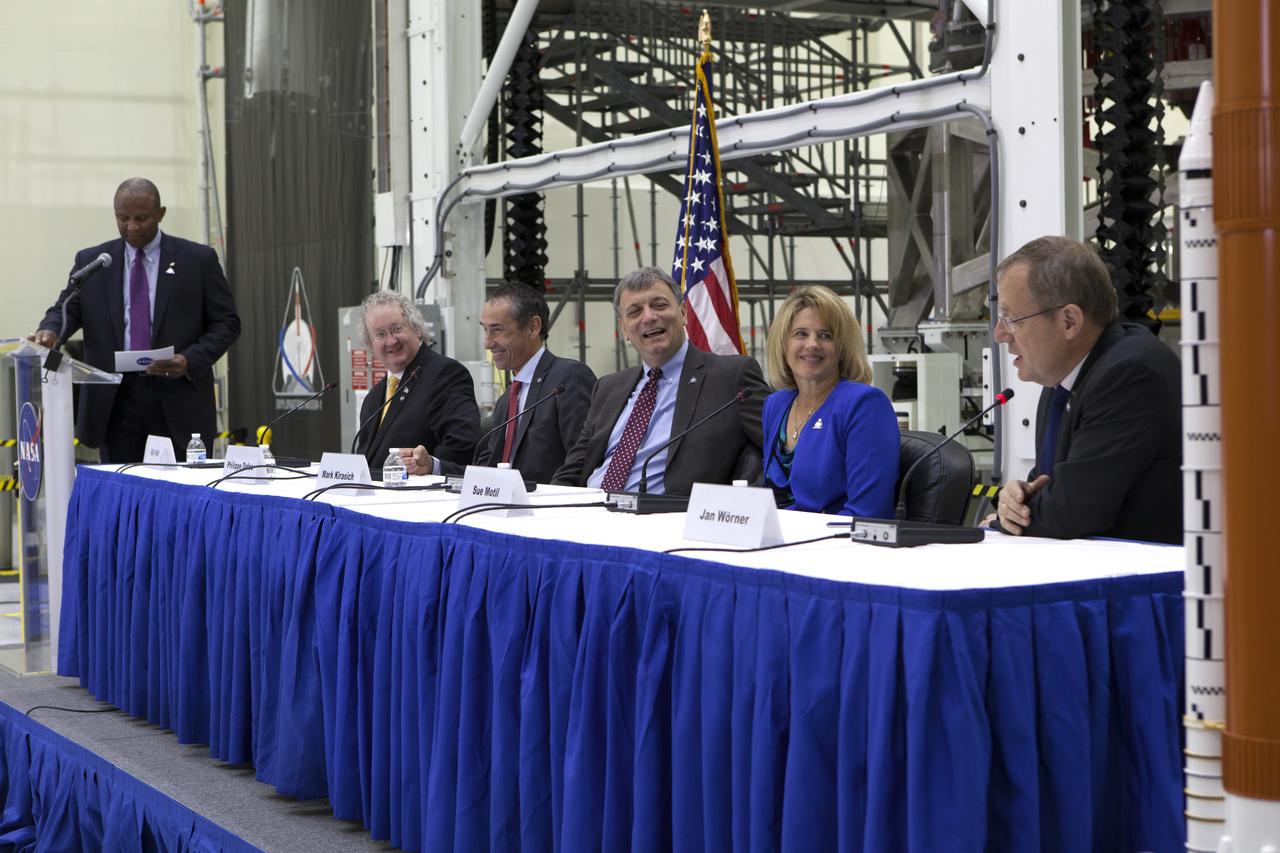
Kennedy Space Center Associate Director Kelvin Manning, far left, moderates questions to NASA and European Space Agency (ESA) senior managers during the "Powering Exploration Mission-1" ceremony in the high bay of the Neil Armstrong Operations and Checkout Building at the center on Nov. 16, 2016. From left, are Bill Hill, deputy associate administrator for Exploration Systems Development; Phillippe Deloo, European Service Module program manager at ESA; Mark Kirasich, Orion Program manager at the agency's Johnson Space Center in Houston; Sue Motil, Orion European Service Module integration manager at the agency's Glenn Research Center; and Jan Worner, ESA director general. The event was held to mark a major milestone, the arrival of the European Service Module (ESM) for Orion's Exploration Mission-1. The service module, built by the European Space Agency, will supply the main propulsion system and power to the Orion spacecraft during EM-1, a mission to the Moon. The ESM also will house air and water for astronauts on future missions. EM-1 will be an uncrewed flight test that will provide a foundation for human deep space exploration to destinations beyond Earth orbit. EM-1 will be the first integrated test of NASA's Space Launch System, Orion and the ground systems at Kennedy.
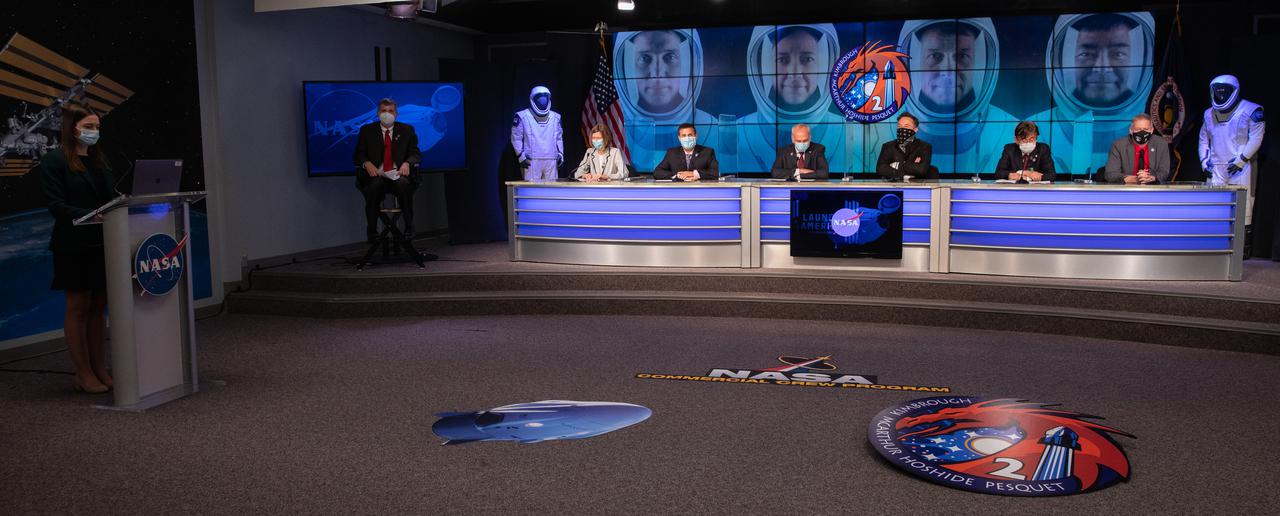
A postlaunch news conference for NASA’s SpaceX Crew-2 mission is held at Kennedy Space Center in Florida on April 23, 2021. From left, participants are: moderator Jackie McGuinness, NASA press secretary; Steve Stich, manager, Commercial Crew Program, NASA’s Kennedy Space Center; Kathy Lueders, associate administrator, Human Exploration and Operations Mission Directorate, NASA Headquarters; Joel Montalbano, manager, International Space Station Program; Steve Jurczyk, acting administrator, NASA; Elon Musk, CEO and lead designer, SpaceX; Hiroshi Sasaki, vice president and director general, JAXA’s Human Spaceflight Technology Directorate; and Frank de Winne, manager, International Space Station Program, ESA. Liftoff time on a SpaceX Falcon 9 rocket was at 5:49 a.m. EDT. Crew Dragon Endeavour is carrying NASA astronaut Shane Kimbrough, spacecraft commander; NASA astronaut Megan McArthur, pilot; ESA astronaut Thomas Pesquet, mission specialist; and JAXA astronaut Akihiko Hoshide, mission specialist, to the international Space Station.
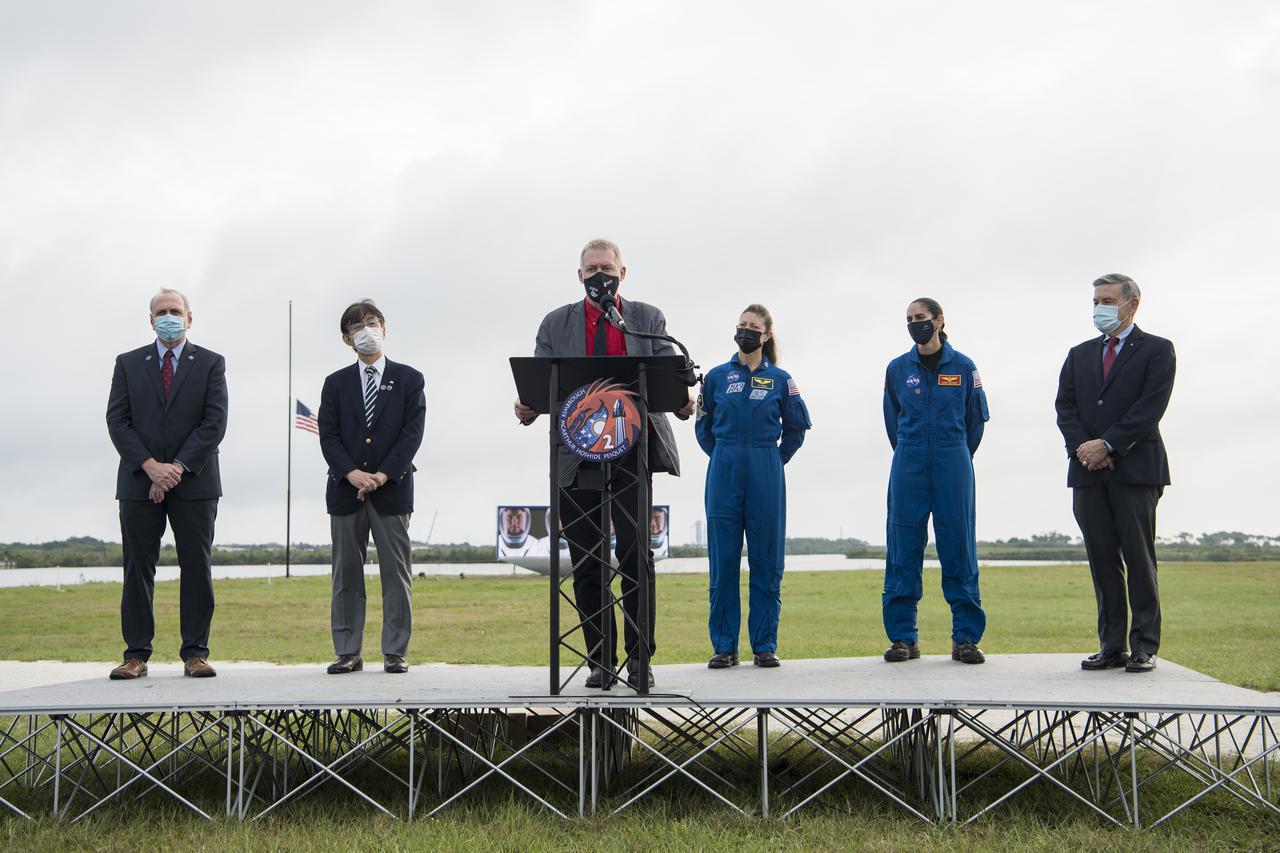
Frank De Winne, manager, International Space Station Program, ESA (European Space Agency) speaks to members of the media during a press conference with, from left, acting NASA Administrator Steve Jurczyk, Hiroshi Sasaki, vice president and director general of the Japan Aerospace Exploration Agency’s (JAXA) Human Spaceflight Technology Directorate, NASA astronauts Tracy Caldwell Dyson, and Jasmin Moghbeli, and Kennedy Space Center Director Bob Cabana, ahead of the Crew-2 launch, Wednesday, April 21, 2021, at NASA’s Kennedy Space Center in Florida. NASA’s SpaceX Crew-2 mission is the second crew rotation mission of the SpaceX Crew Dragon spacecraft and Falcon 9 rocket to the International Space Station as part of the agency’s Commercial Crew Program. NASA astronauts Shane Kimbrough and Megan McArthur, ESA astronaut Thomas Pesquet, and JAXA astronaut Akihiko Hoshide are scheduled to launch at 5:49 a.m. EDT on Friday, April 23, from Launch Complex 39A at the Kennedy Space Center. Photo Credit: (NASA/Aubrey Gemignani)

Kennedy Space Center Director Bob Cabana speaks to members of the media during a press conference with from left, acting NASA Administrator Steve Jurczyk, Hiroshi Sasaki, vice president and director general of the Japan Aerospace Exploration Agency’s (JAXA) Human Spaceflight Technology Directorate, Frank De Winne, manager, International Space Station Program, ESA (European Space Agency), and NASA astronauts Tracy Caldwell Dyson, and Jasmin Moghbeli, ahead of the Crew-2 launch, Wednesday, April 21, 2021, at NASA’s Kennedy Space Center in Florida. NASA’s SpaceX Crew-2 mission is the second crew rotation mission of the SpaceX Crew Dragon spacecraft and Falcon 9 rocket to the International Space Station as part of the agency’s Commercial Crew Program. NASA astronauts Shane Kimbrough and Megan McArthur, ESA astronaut Thomas Pesquet, and JAXA astronaut Akihiko Hoshide are scheduled to launch at 5:49 a.m. EDT on Friday, April 23, from Launch Complex 39A at the Kennedy Space Center. Photo Credit: (NASA/Aubrey Gemignani)
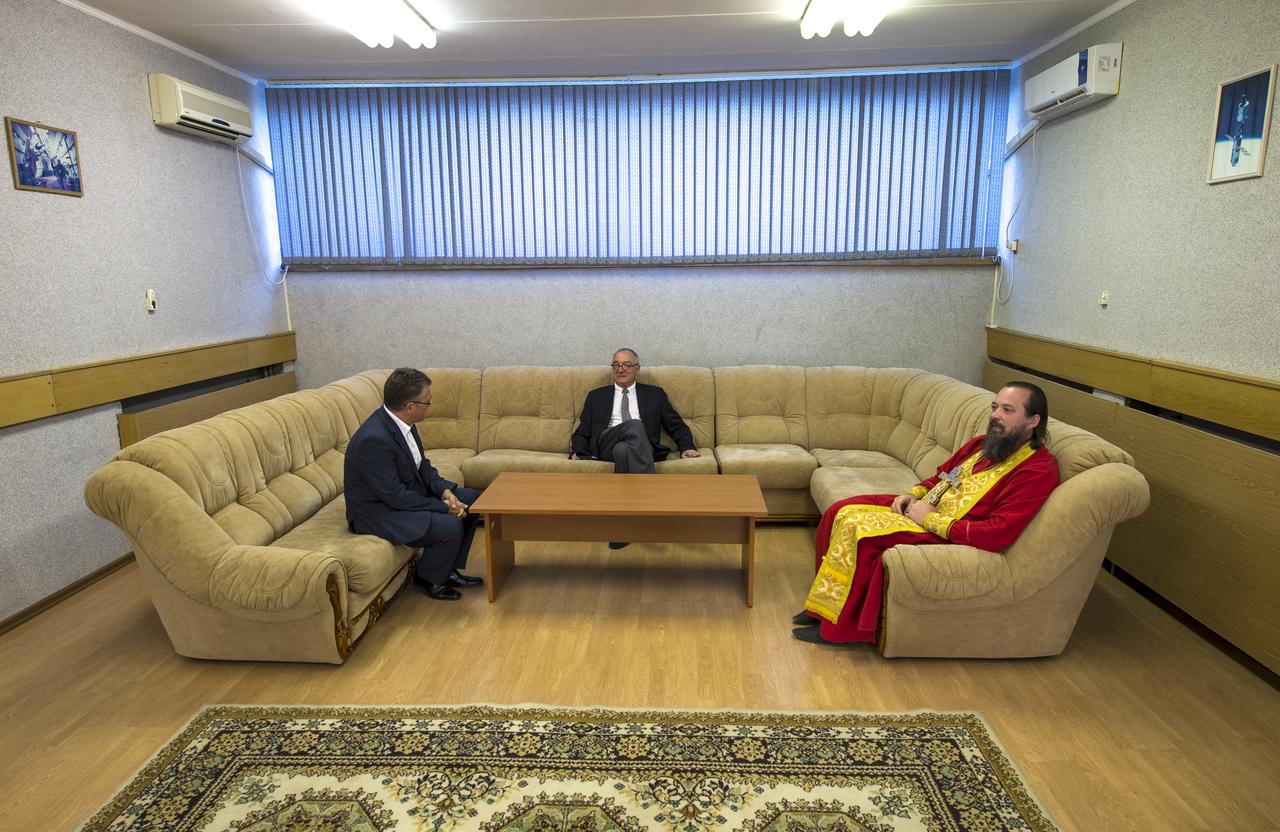
Jean-Jacques Dordain, ESA Director-General, center, talks with unidentified ESA manager as an Orthodox Priest waits for Expedition 36/37 Soyuz Commander Fyodor Yurchikhin of the Russian Federal Space Agency (Roscosmos), Flight Engineers: Flight Engineer Karen Nyberg of NASA, and, Luca Parmitano of the European Space Agency, so that he may preform the traditional blessing prior to the three crew members departing the Cosmonaut Hotel for launch onboard a Soyuz to the International Space Station, Tuesday, May 28, 2013, Baikonur Kazakhstan. The crew's Soyuz rocket is scheduled to launch at 2:31a.m., Wednesday May 29, Kazakh time. Yurchikhin, Nyberg, and, Parmitano, will remain aboard the station until mid-November. Photo credit: (NASA/Bill Ingalls)
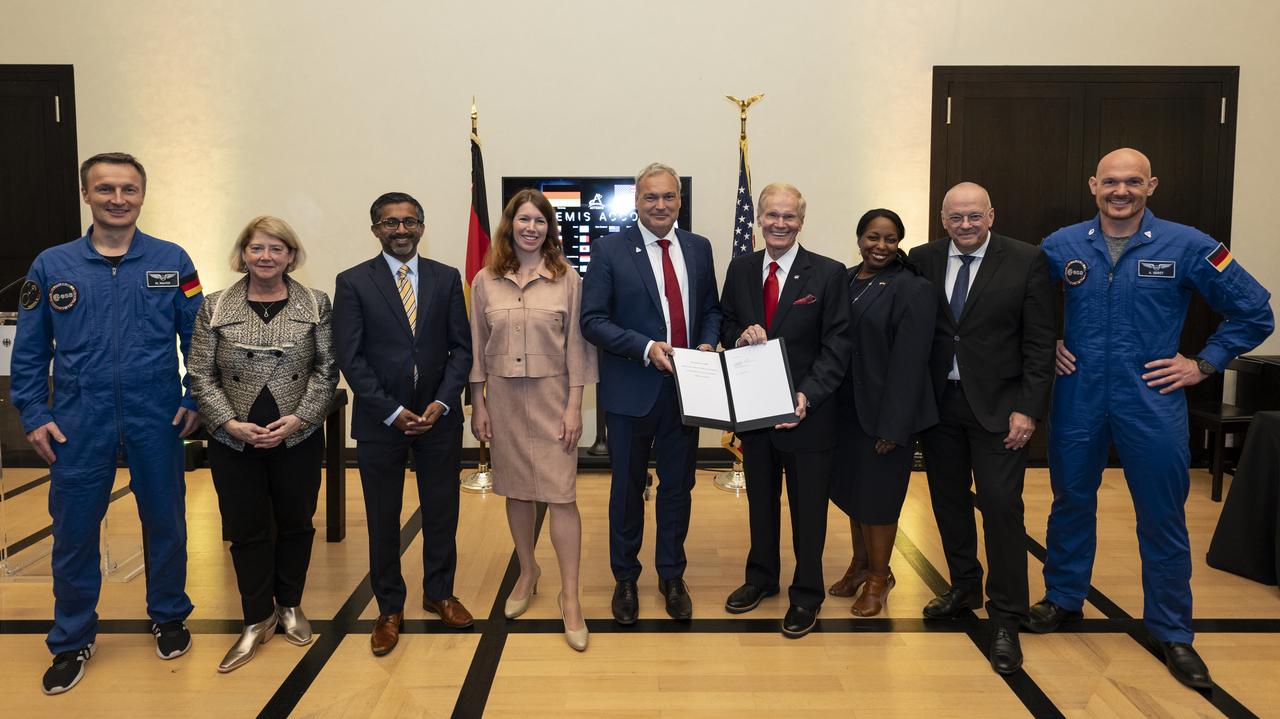
From left to right, ESA (European Space Agency) astronaut Matthias Maurer, NASA Deputy Administrator Pam Melroy, National Space Council (NSpC) Executive Secretary Chirag Parikh, Federal Government Coordinator of German Aerospace Policy Anna Christmann, NASA Administrator Bill Nelson, Director General of the German Space Agency at the German Aerospace Center (DLR) Walther Pelzer, Acting Assistant Secretary of State for Oceans and International Environmental and Scientific Affairs Jennifer R. Littlejohn, German Ambassador to the United States Andreas Michaelis, and ESA astronaut Alexander Gerst pose for a group photo during an Artemis Accords signing ceremony, Thursday, September 14, 2023, at the German Ambassador’s Residence in Washington. Germany is the 29th country to sign the Artemis Accords, which establish a practical set of principles to guide space exploration cooperation among nations participating in NASA’s Artemis program. Photo Credit: (NASA/Keegan Barber)
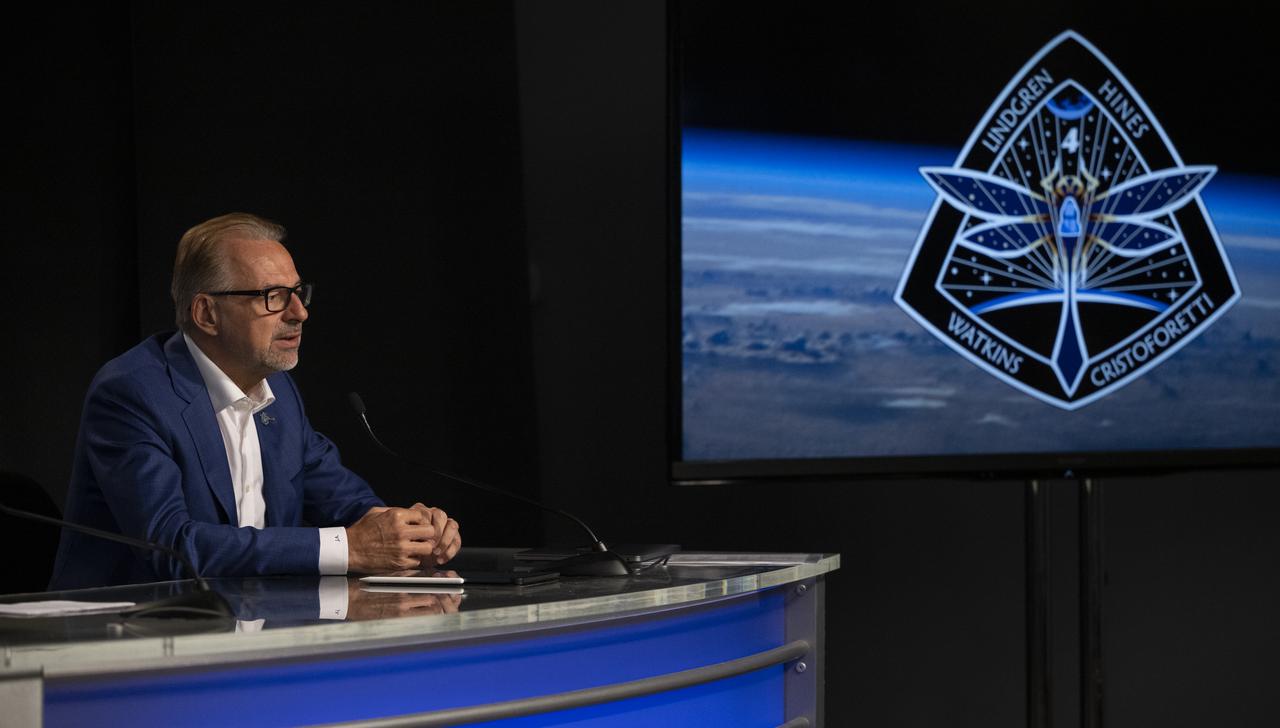
Josef Aschbacher, Director General of ESA (European Space Agency), speaks to members of the media during a press conference ahead of the Crew-4 launch, Tuesday, April 26, 2022, at NASA’s Kennedy Space Center in Florida. NASA’s SpaceX Crew-4 mission is the fourth crew rotation mission of the SpaceX Crew Dragon spacecraft and Falcon 9 rocket to the International Space Station as part of the agency’s Commercial Crew Program. NASA astronauts Kjell Lindgren, Robert Hines, Jessica Watkins, and ESA (European Space Agency) astronaut Samantha Cristoforetti are scheduled to launch at 3:52 a.m. ET on April 27 from Launch Complex 39A at the Kennedy Space Center. Photo Credit: (NASA/Joel Kowsky)
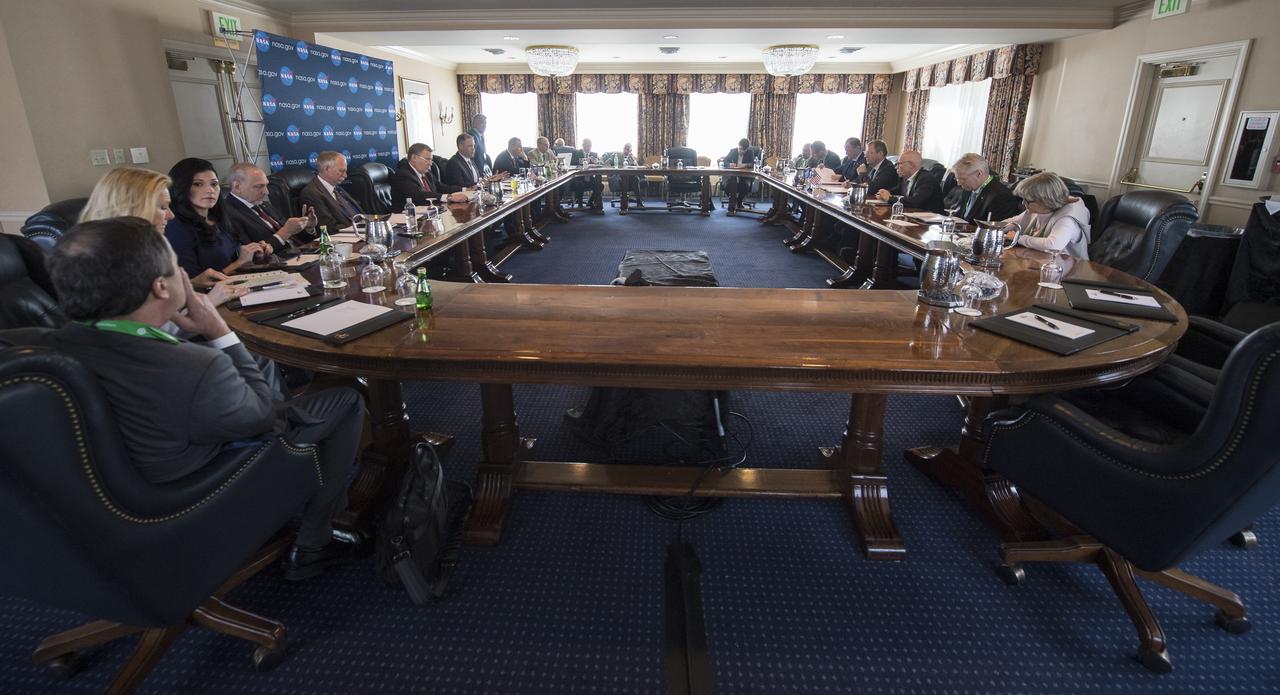
NASA Administrator Jim Bridenstine, seventh from left, speaks with Johann-Dietrich Wörner, director general of ESA (European Space Agency), fourth from right, about NASA’s plans to land humans on the Moon by 2024 and prospective collaboration in human and robotic lunar and Mars exploration activities, at the Space Symposium, Monday, April 8, 2019 in Colorado Springs, Colorado, They also discussed their continued successful cooperation on the International Space Station and the service module for the Orion spacecraft that will take us to the Moon and beyond. Photo Credit: (NASA/Aubrey Gemignani)
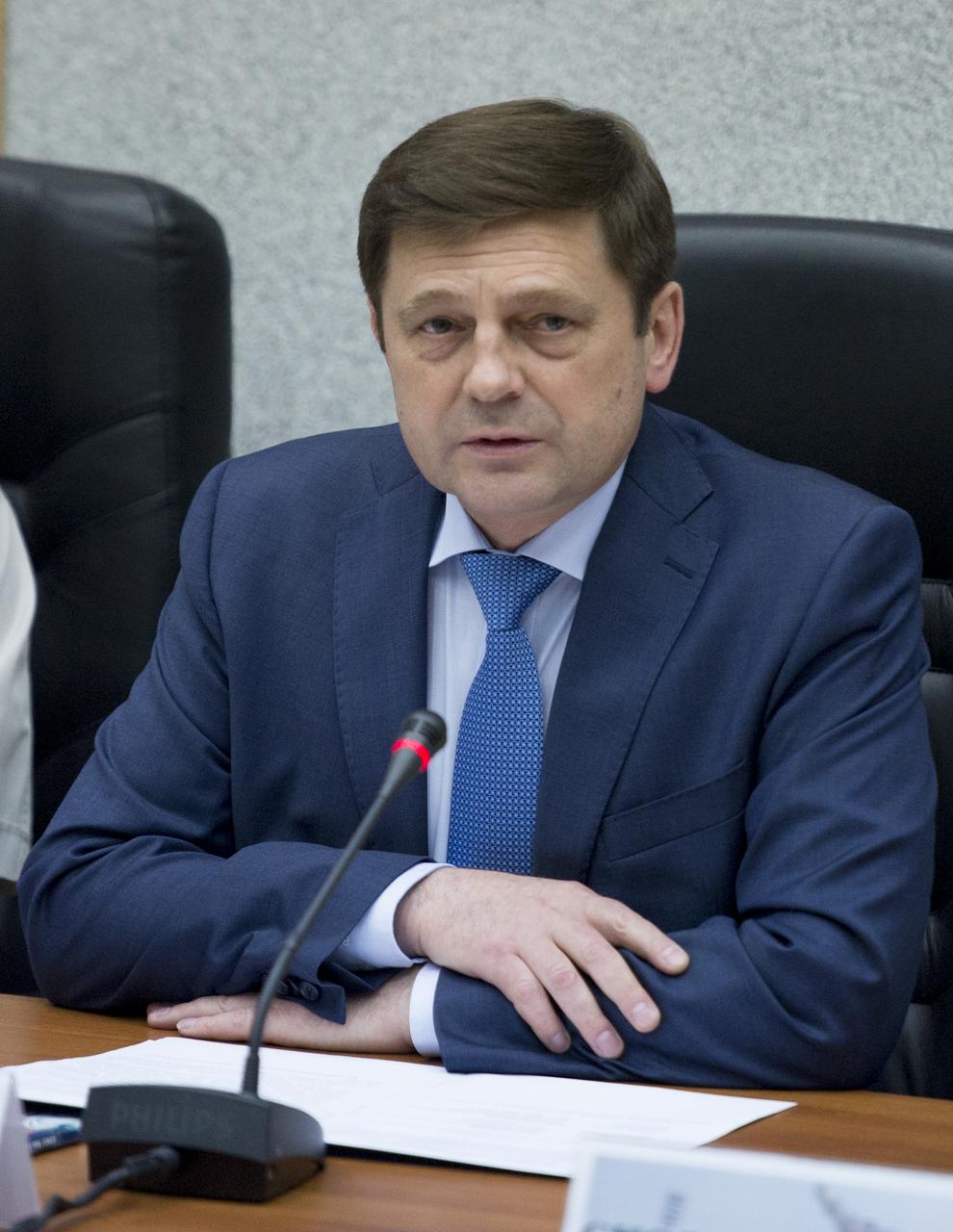
Oleg Ostapenko, General Director of the Russian Federal Space Agency, Roscosmos, makes remarks during the State Commission meeting held to approve the Soyuz launch of the crew for a five and a half month mission aboard the International Space Station, Tuesday, May 27, 2014 at the Cosmonaut Hotel in Baikonur, Kazakhstan. Expedition 40 Soyuz Commander Maxim Suraev of the Russian Federal Space Agency, Roscosmos, Flight Engineer Alexander Gerst of the European Space Agency, ESA, and Flight Engineer Reid Wiseman of NASA will launch about their Soyuz TMA-13M spacecraft in the early hours of May 29. Photo Credit: (NASA/Joel Kowsky)
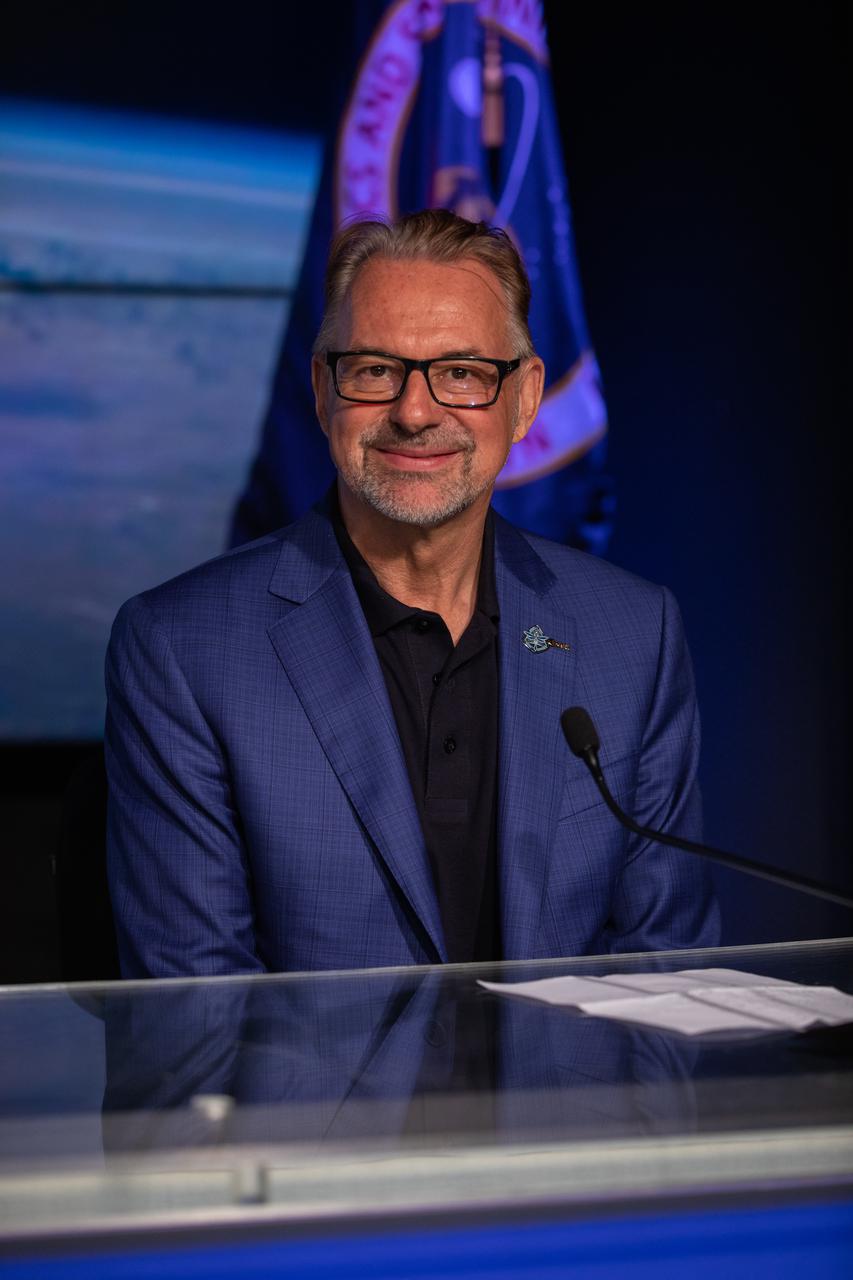
Josef Aschbacher, director general, ESA (European Space Agency), participates in a Crew-4 postlaunch news conference April 27, 2022, at NASA’s Kennedy Space Center in Florida. The SpaceX Crew Dragon spacecraft, powered by the company’s Falcon 9 rocket, lifted off from Kennedy’s Launch Complex 39A at 3:52 a.m. EDT on April 27. Named Freedom by mission astronauts Kjell Lindgren, Bob Hines, Jessica Watson, and Samantha Cristoforetti, Dragon is scheduled to dock to the space station today at 8:15 p.m. EDT.
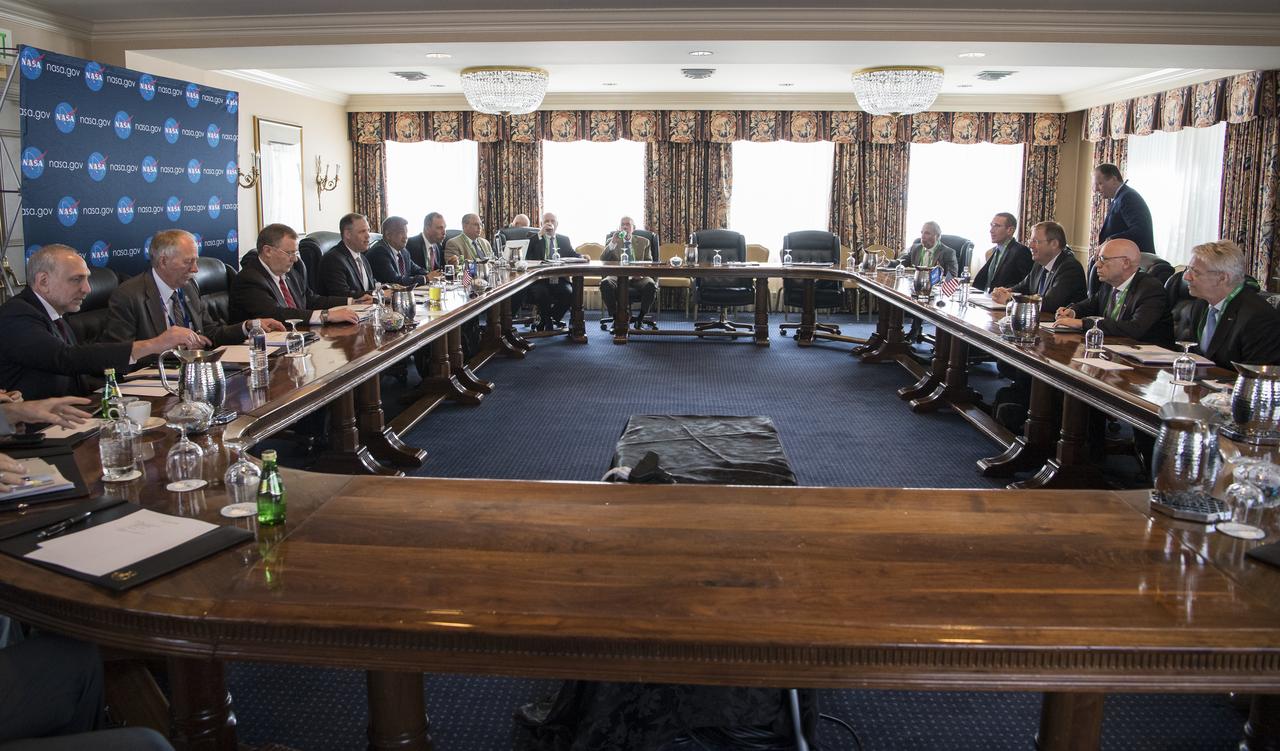
NASA Administrator Jim Bridenstine, fourth from left, speaks with Johann-Dietrich Wörner, director general of ESA (European Space Agency), third from right, about NASA’s plans to land humans on the Moon by 2024 and prospective collaboration in human and robotic lunar and Mars exploration activities, at the Space Symposium, Monday, April 8, 2019 in Colorado Springs, Colorado, They also discussed their continued successful cooperation on the International Space Station and the service module for the Orion spacecraft that will take us to the Moon and beyond. Photo Credit: (NASA/Aubrey Gemignani)
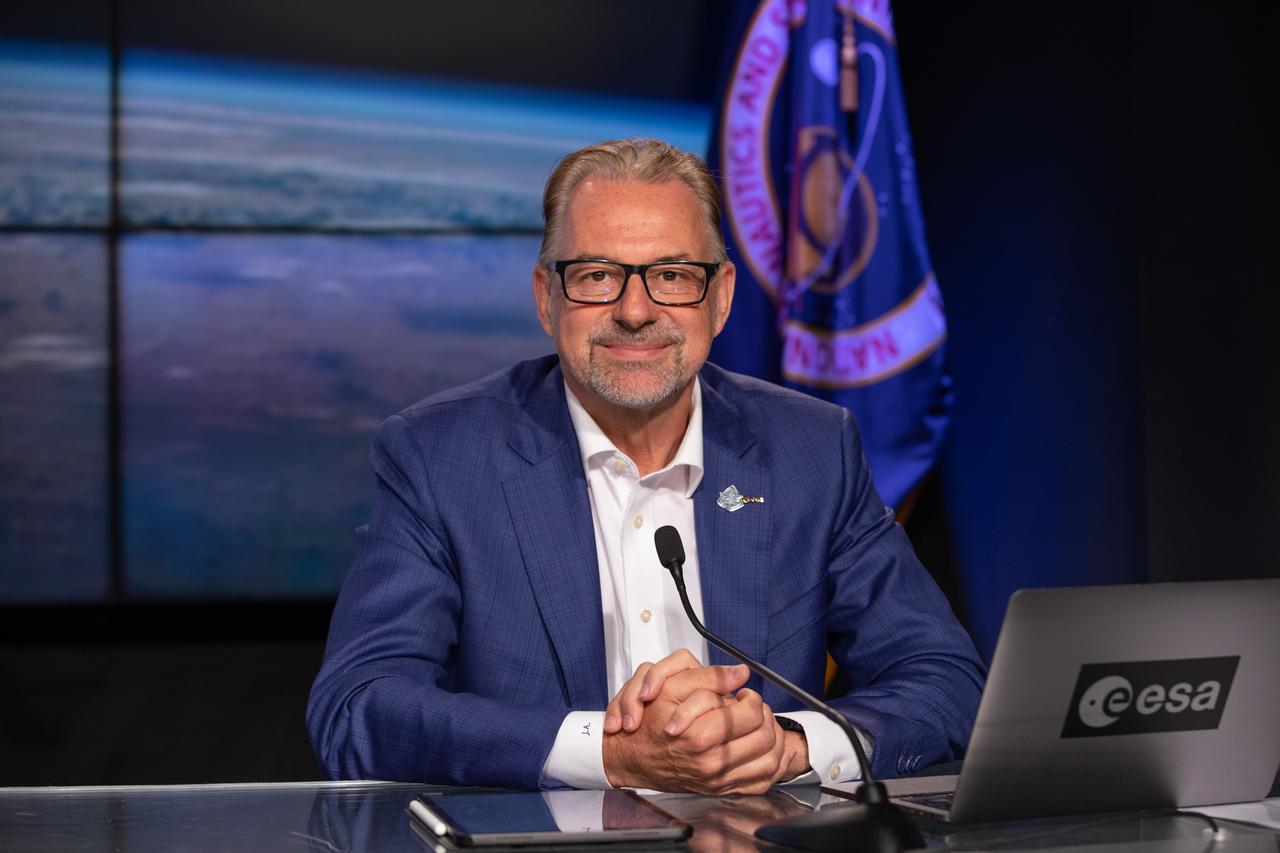
Josef Aschbacher, director general, ESA (European Space Agency), is introduced during a Crew-4 press briefing April 26, 2022, at NASA’s Kennedy Space Center in Florida ahead of the agency’s SpaceX Crew-4 launch. Crew-4 is the fourth crew rotation flight to the International Space Station as part of NASA’s Commercial Crew Program. The SpaceX Crew Dragon capsule will launch atop the company’s Falcon 9 rocket from Launch Complex 39A to the space station on Wednesday, April 27, at 3:52 a.m. EDT.
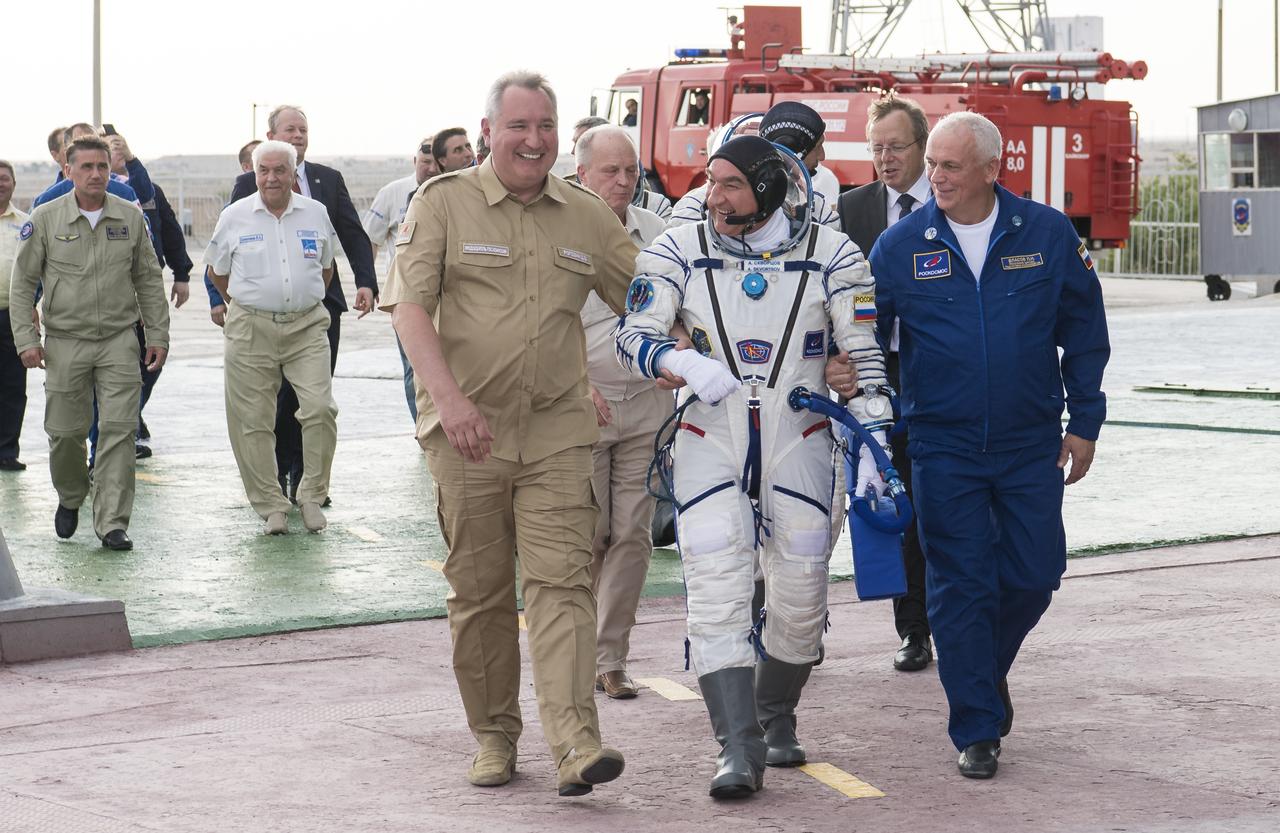
Expedition 60 Soyuz Commander Alexander Skvortsov of Roscosmos is escorted by Dmitry Rogozin, Director General of Roscosmos as he prepares to board the Soyuz MS-13 spacecraft for launch, Saturday, July 20, 2019 at the Baikonur Cosmodrome in Kazakhstan. Skvortsov, Andrew Morgan of NASA, and Luca Parmitano of ESA (European Space Agency) launched aboard the Soyuz MS-13 spacecraft at 12:28 p.m. Eastern time (9:28 p.m. Baikonur time) on July 20 to begin their journey to the International Space Station. Photo Credit: (NASA/Joel Kowsky)
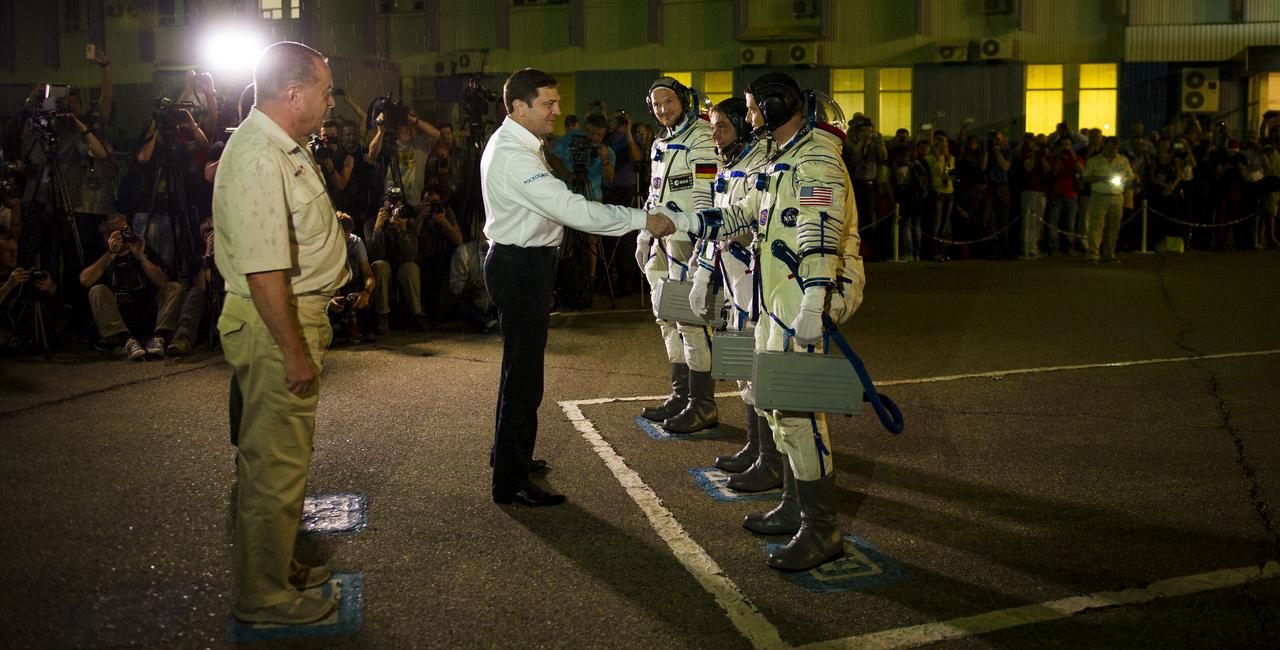
Oleg Ostapenko, General Director of the Russian Federal Space Agency, Roscosmos, center, shakes hands with Expedition 40 Flight Engineer Reid Wiseman of NASA, right, as he and crewmates Soyuz Commander Maxim Suraev of Roscosmos, and Flight Engineer Alexander Gerst of the European Space Agency, ESA, prepare to depart for the launch pad on Wednesday, May 28, 2014, in Baikonur, Kazakhstan. Launch of the Soyuz rocket will send Gerst, Suraev, and Wiseman on a five and a half month mission aboard the International Space Station. Photo Credit: (NASA/GCTC/Irina Peshkova)
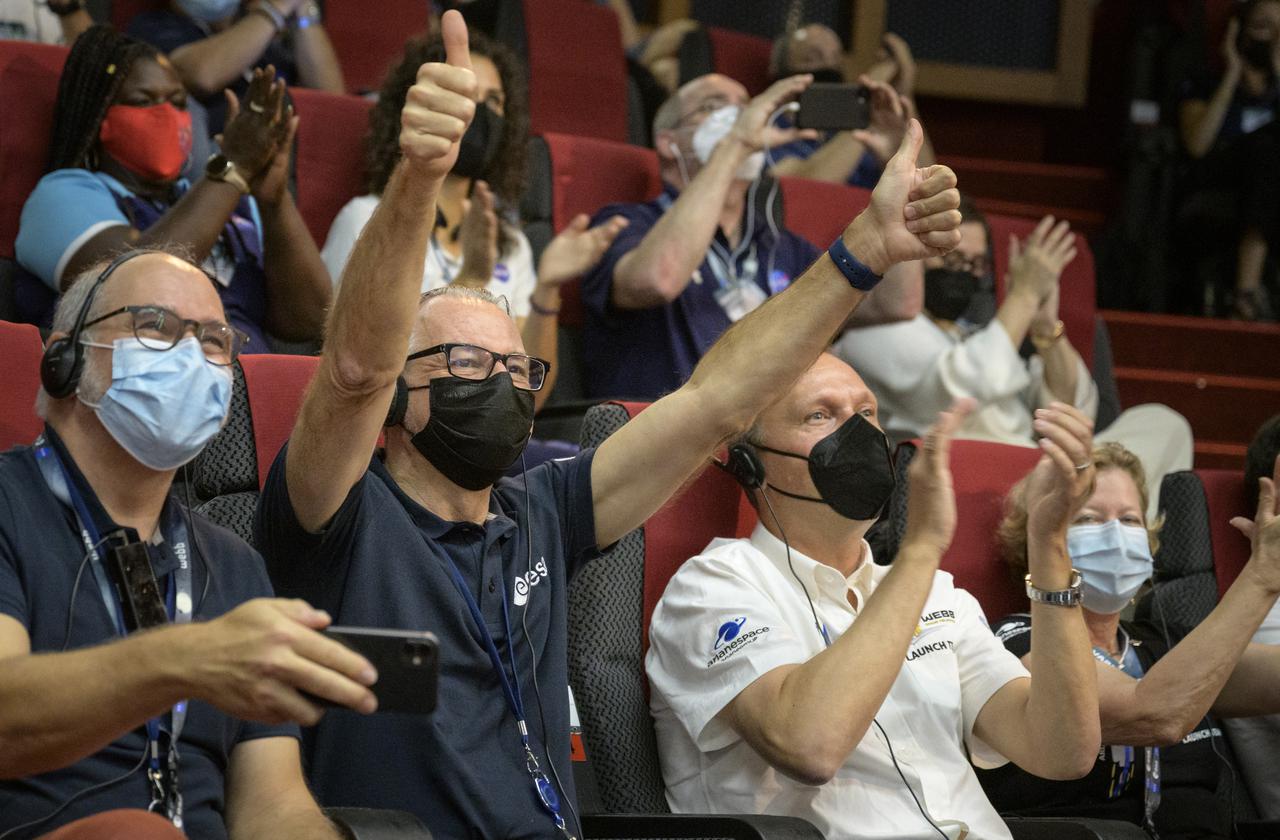
ESA (European Space Agency) Director-General Dr. Josef Aschbacher, 2nd from left, and NASA Associate Administrator for the Science Mission Directorate Thomas Zurbuchen, 3rd from left, celebrate after hearing confirmation that the James Webb Space Telescope successfully separated from the Ariane 5 rocket, Saturday, Dec. 25, 2021, in the Jupiter Hall of the Guiana Space Centre in Kourou, French Guiana. The James Webb Space Telescope (sometimes called JWST or Webb) is a large infrared telescope with a 21.3 foot (6.5 meter) primary mirror. The observatory will study every phase of cosmic history—from within our solar system to the most distant observable galaxies in the early universe. Photo Credit: (NASA/Bill Ingalls)
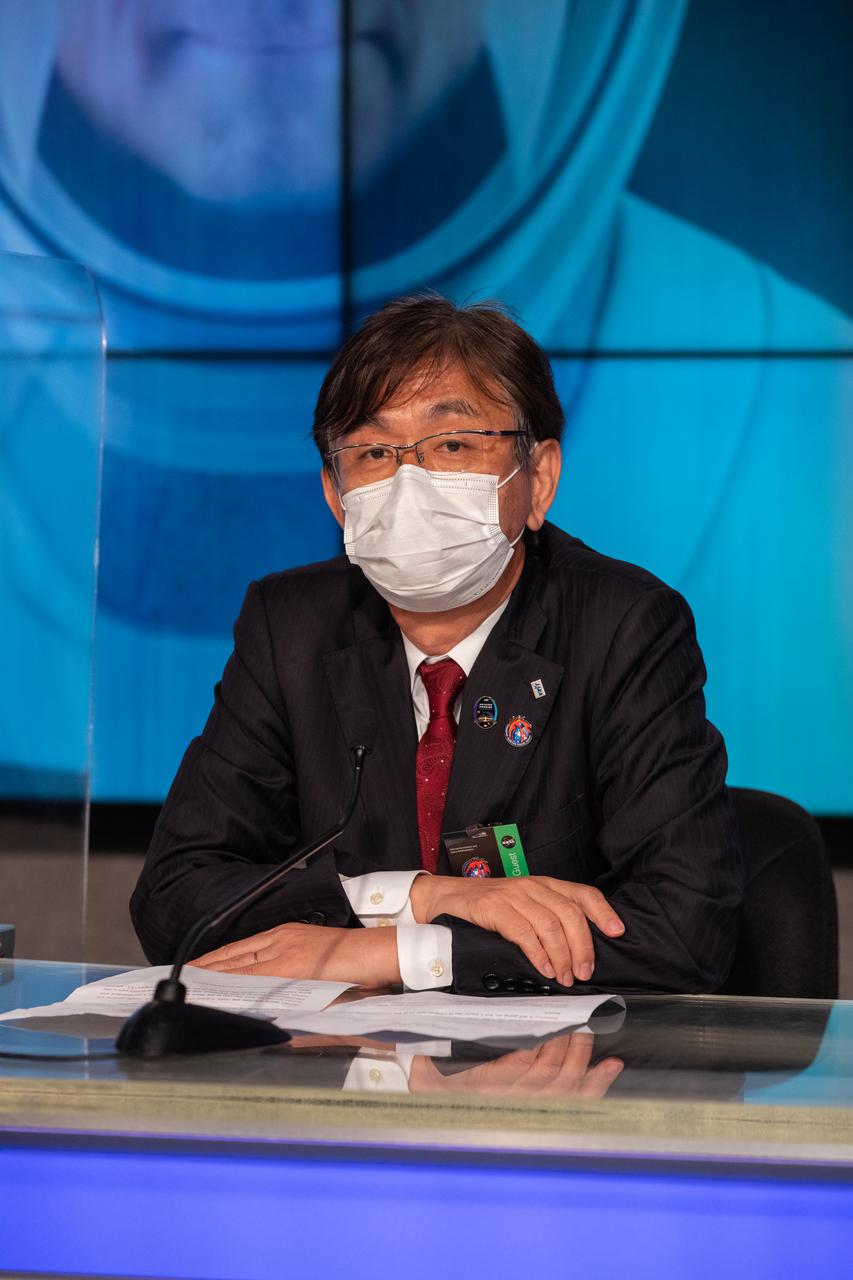
Hiroshi Sasaki, vice president and director general, JAXA’s Human Spaceflight Technology Directorate, participates in a postlaunch news conference for NASA’s SpaceX Crew-2 mission on April 23, 2021, at Kennedy Space Center in Florida. Liftoff time on a Falcon 9 rocket was at 5:49 p.m. EDT. Crew Dragon Endeavour is carrying NASA astronaut Shane Kimbrough, spacecraft commander; NASA astronaut Megan McArthur, pilot; ESA astronaut Thomas Pesquet, mission specialist; and JAXA astronaut Akihiko Hoshide, mission specialist, to the International Space Station. Crew-2 is the second regular crew mission of a U.S. commercial spacecraft with astronauts to the space station as part of NASA’s Commercial Crew Program. Endeavour will dock with the station and the crew will remain on the orbiting laboratory for a six-month science mission.
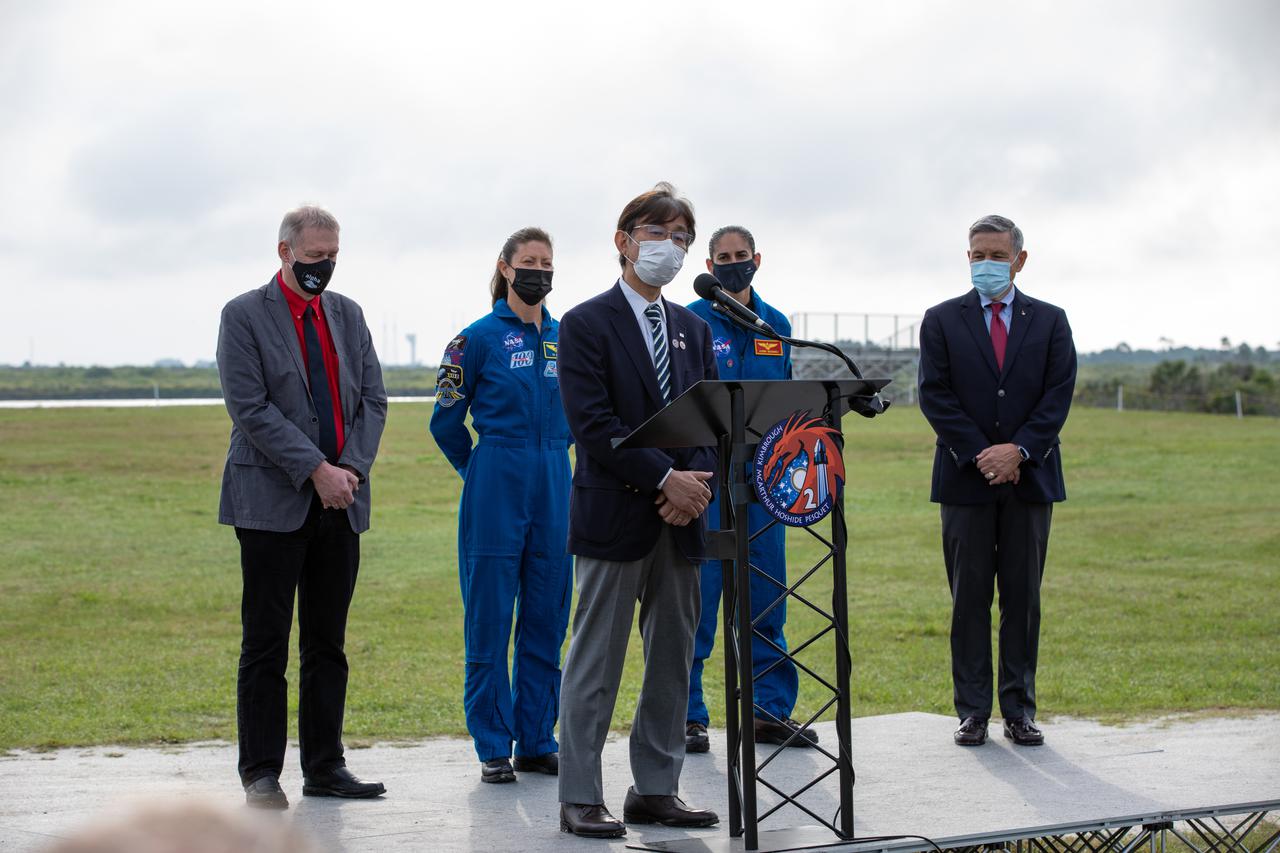
Hiroshi Sasaki, vice president and director general, JAXA’s Human Spaceflight Technology Directorate, addresses members of the news media during a press briefing April 21, 2021, near the Press Site countdown clock at NASA’s Kennedy Space Center in Florida ahead of the agency’s SpaceX Crew-2 launch. NASA astronauts Shane Kimbrough and Megan McArthur, JAXA astronaut Akihiko Hoshide, and ESA astronaut Thomas Pesquet will fly on Crew-2, the second crew rotation mission to the International Space Station as part of NASA’s Commercial Crew Program. They will launch aboard SpaceX’s Crew Dragon spacecraft, named Endeavour, powered by the company’s Falcon 9 rocket. Liftoff is set for Friday, April 23, at 5:49 a.m. EDT.
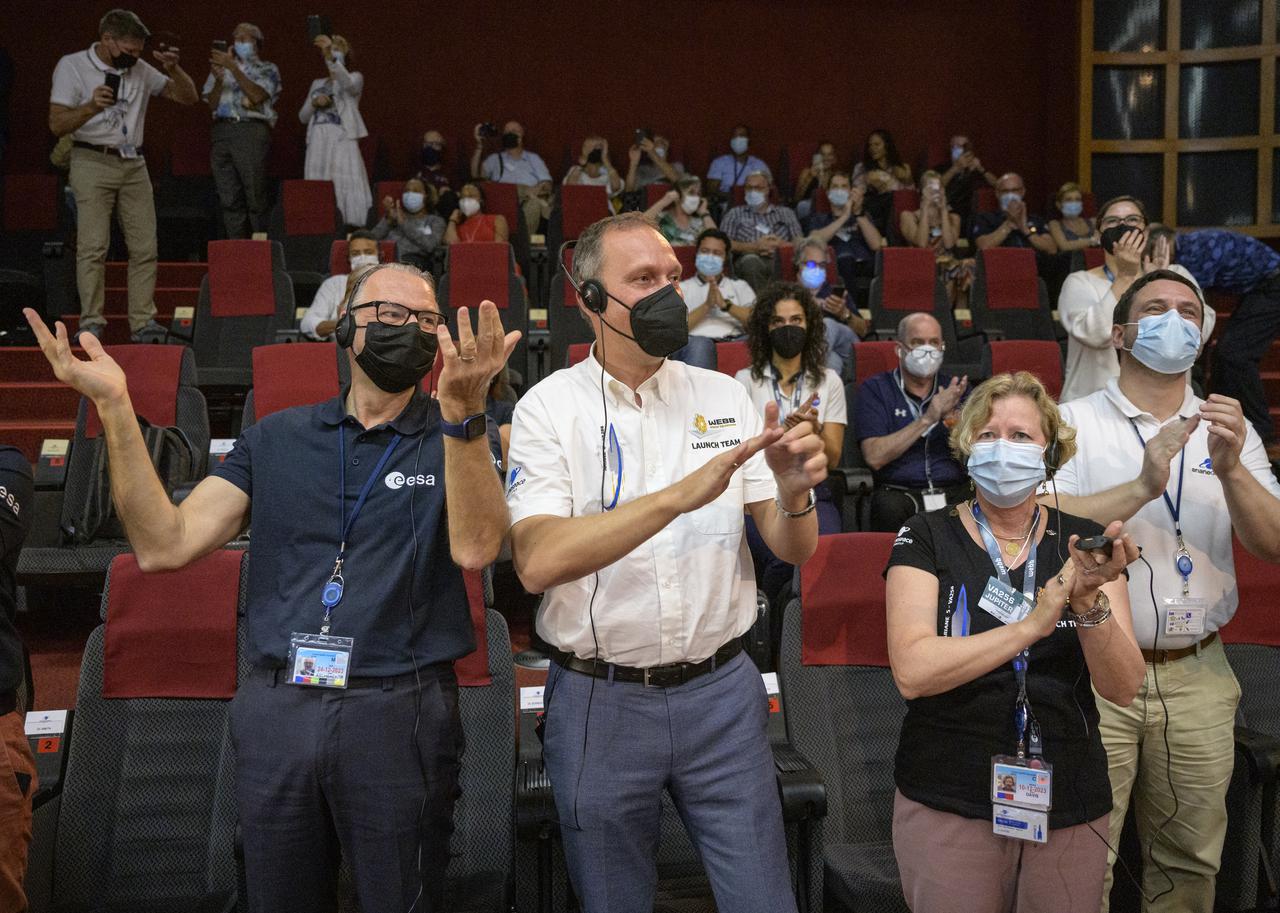
ESA (European Space Agency) Director-General Dr. Josef Aschbacher, left, NASA Associate Administrator for the Science Mission Directorate Thomas Zurbuchen, and NASA James Webb Space Telescope Program Manager Jeanne Davis, celebrate after hearing confirmation that the James Webb Space Telescope successfully deployed it’s solar arrays and the telescope had positive power, Saturday, Dec. 25, 2021, in the Jupiter Hall of the Guiana Space Centre in Kourou, French Guiana. The James Webb Space Telescope (sometimes called JWST or Webb) is a large infrared telescope with a 21.3 foot (6.5 meter) primary mirror. The observatory will study every phase of cosmic history—from within our solar system to the most distant observable galaxies in the early universe. Photo Credit: (NASA/Bill Ingalls)
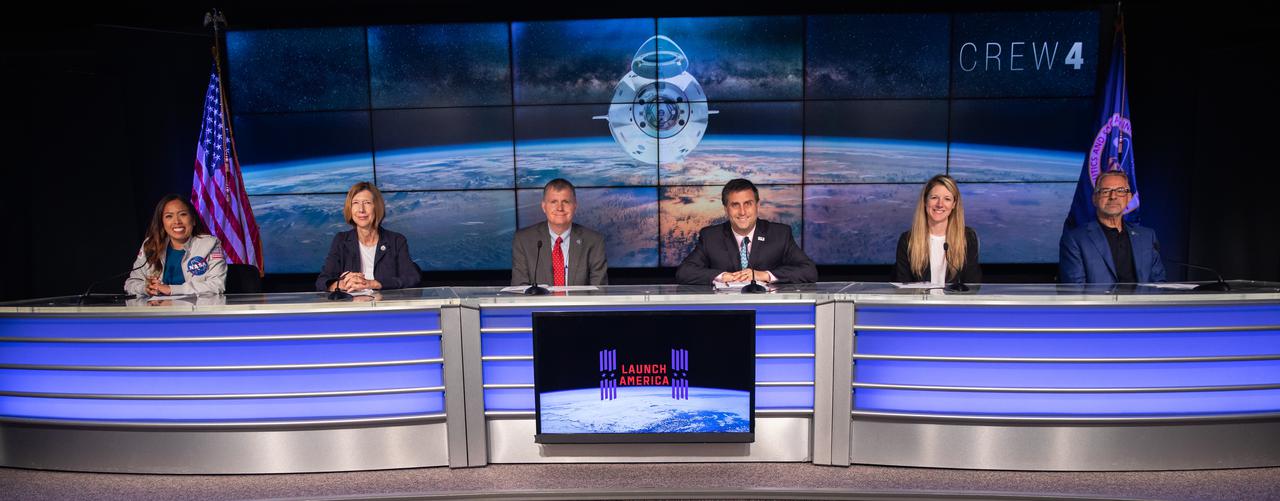
From left, moderator Megan Cruz, NASA Communications; Kathryn Lueders, associate administrator, NASA’s Space Operations Mission Directorate; Steve Stich, manager, NASA’s Commercial Crew Program; Joel Montalbano, manager, NASA’s International Space Station Program; Jessica Jensen, vice president of customer operations and Integration, SpaceX; and Josef Aschbacher, director general, ESA (European Space Agency) participate in a Crew-4 postlaunch news conference April 27, 2022, at NASA’s Kennedy Space Center in Florida. The SpaceX Crew Dragon spacecraft, powered by the company’s Falcon 9 rocket, lifted off from Kennedy’s Launch Complex 39A at 3:52 a.m. EDT on April 27. Named Freedom by mission astronauts Kjell Lindgren, Bob Hines, Jessica Watkins, and Samantha Cristoforetti, Dragon is scheduled to dock to the space station today at 8:15 p.m. EDT.
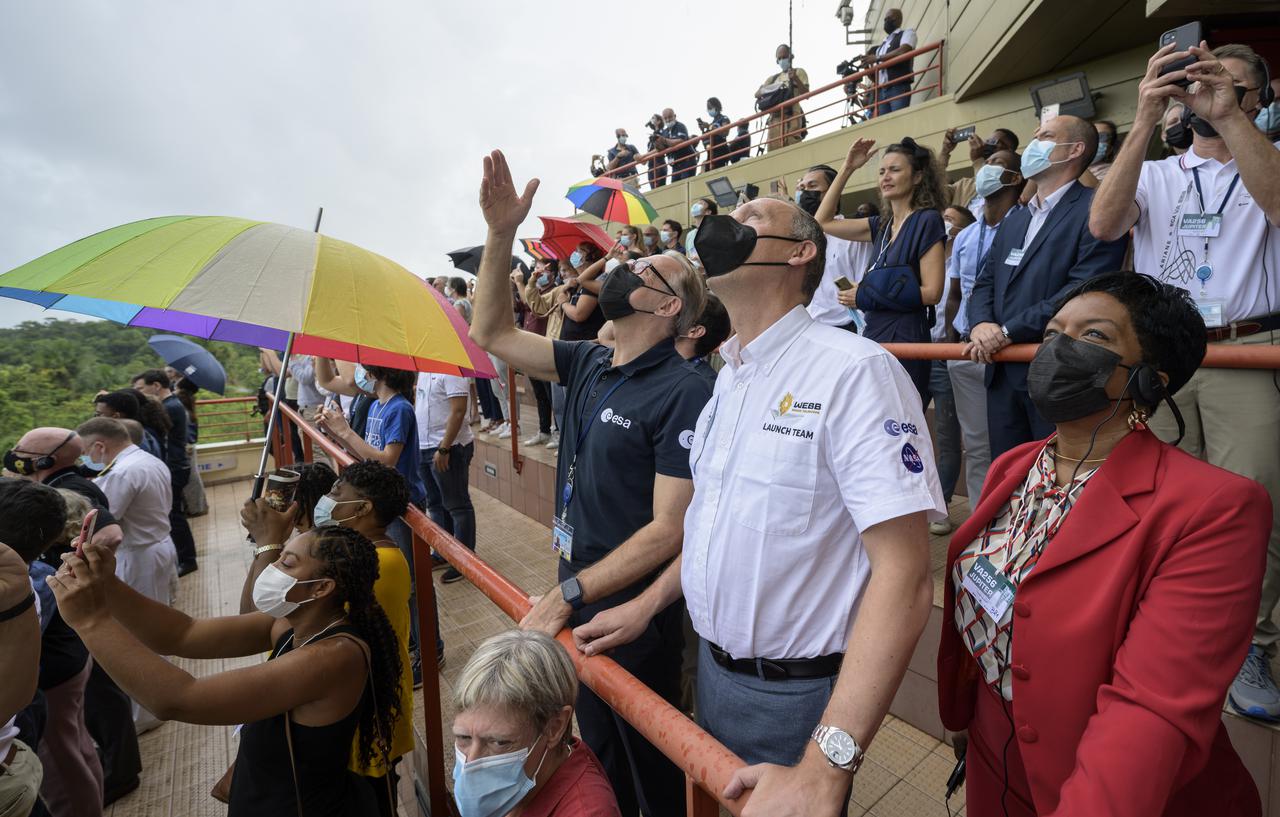
ESA (European Space Agency) Director-General Dr. Josef Aschbacher, left, and NASA Associate Administrator for the Science Mission Directorate Thomas Zurbuchen, right, watch as Arianespace's Ariane 5 rocket launches with NASA’s James Webb Space Telescope onboard, Saturday, Dec. 25, 2021, from the ELA-3 Launch Zone of Europe’s Spaceport at the Guiana Space Centre in Kourou, French Guiana. The James Webb Space Telescope (sometimes called JWST or Webb) is a large infrared telescope with a 21.3 foot (6.5 meter) primary mirror. The observatory will study every phase of cosmic history—from within our solar system to the most distant observable galaxies in the early universe. Photo Credit: (NASA/Bill Ingalls)
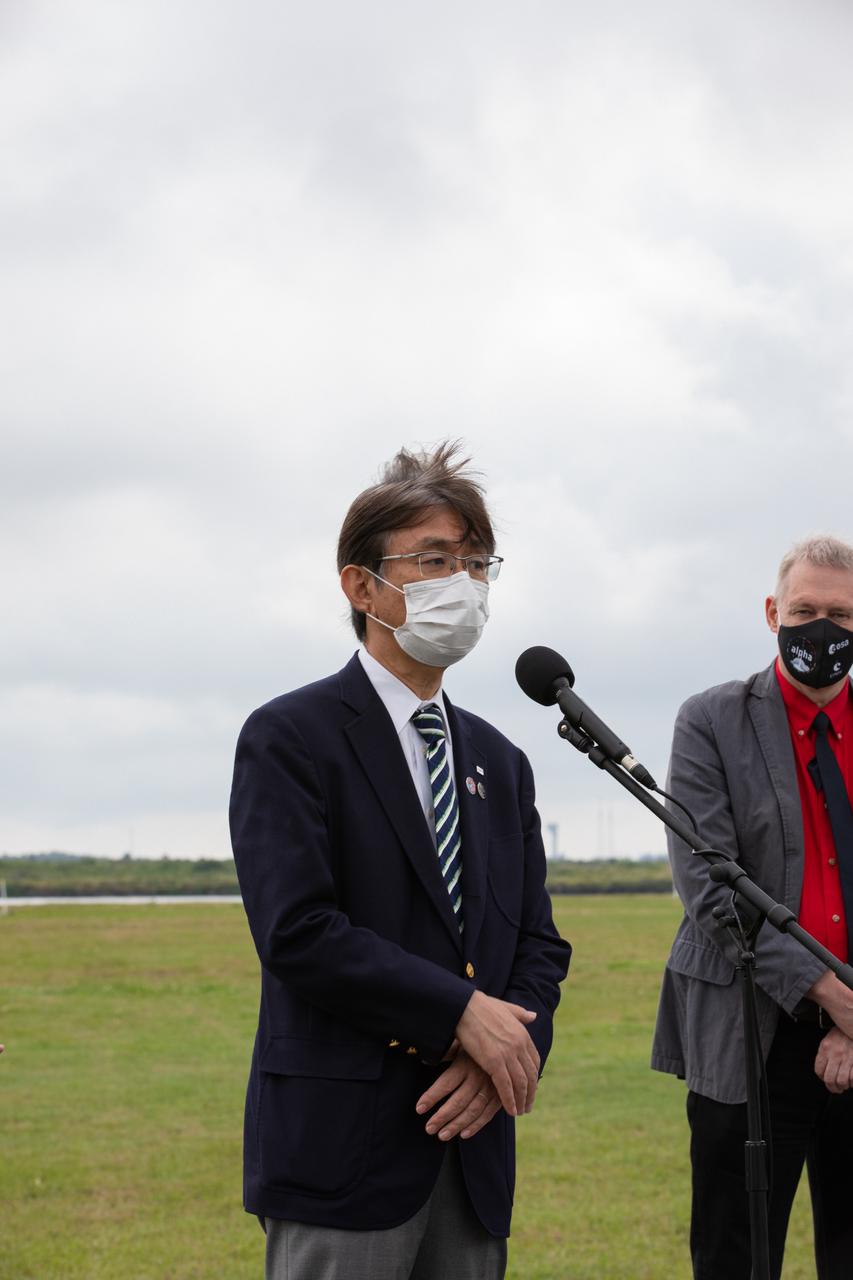
Hiroshi Sasaki, vice president and director general, JAXA’s Human Spaceflight Technology Directorate, speaks during a NASA Social Facebook Live event April 21, 2021, near the Press Site countdown clock at Kennedy Space Center in Florida, ahead of the agency’s SpaceX Crew-2 launch. NASA astronauts Shane Kimbrough and Megan McArthur, JAXA astronaut Akihiko Hoshide, and ESA astronaut Thomas Pesquet will fly on Crew-2, the second crew rotation mission to the International Space Station as part of NASA’s Commercial Crew Program. They will launch aboard SpaceX’s Crew Dragon spacecraft, named Endeavour, powered by the company’s Falcon 9 rocket. Liftoff is set for Friday, April 23, at 5:49 a.m. EDT.
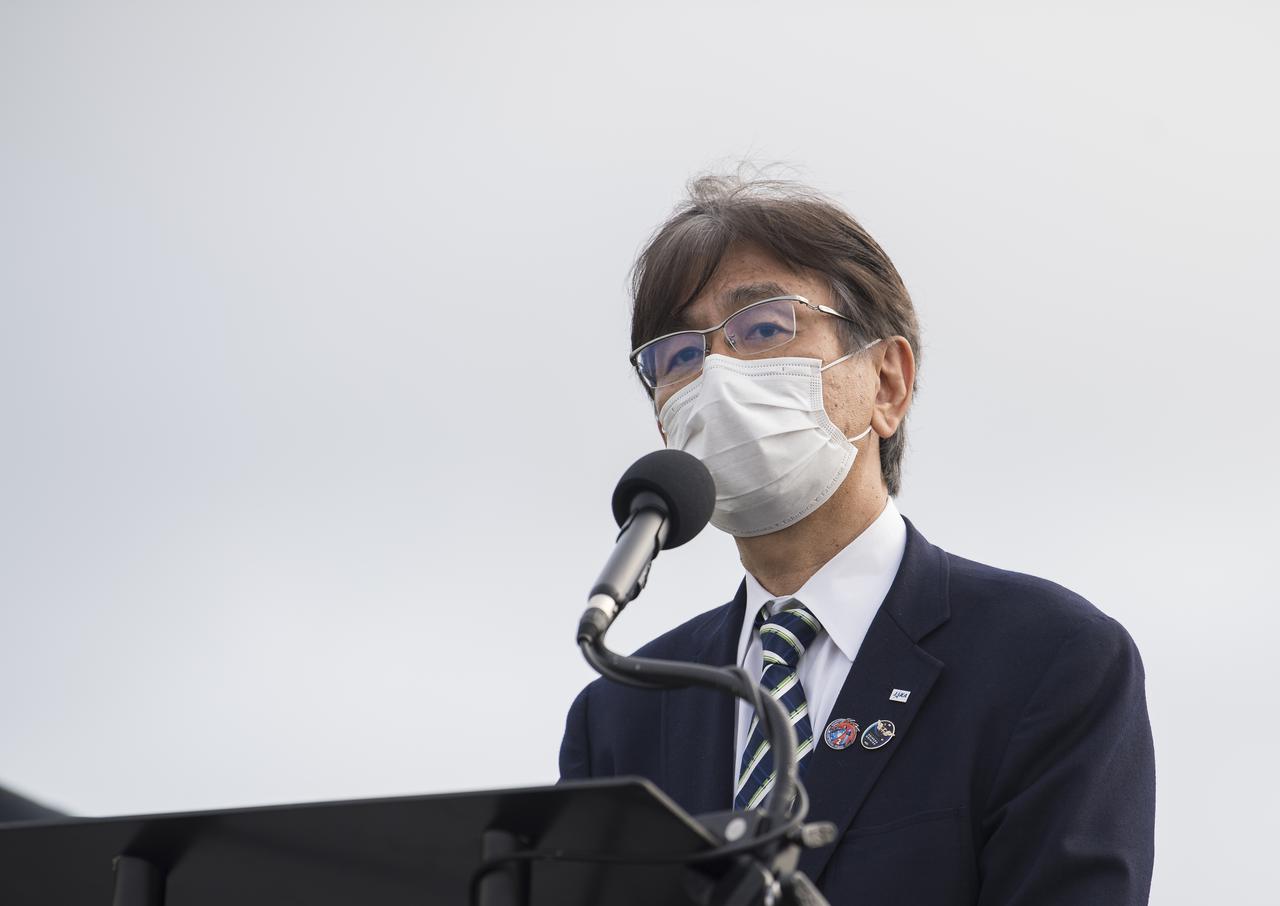
Hiroshi Sasaki, vice president and director general of the Japan Aerospace Exploration Agency’s (JAXA) Human Spaceflight Technology Directorate, speaks to members of the media during a press conference ahead of the Crew-2 launch, Wednesday, April 21, 2021, at NASA’s Kennedy Space Center in Florida. NASA’s SpaceX Crew-2 mission is the second crew rotation mission of the SpaceX Crew Dragon spacecraft and Falcon 9 rocket to the International Space Station as part of the agency’s Commercial Crew Program. NASA astronauts Shane Kimbrough and Megan McArthur, ESA (European Space Agency) astronaut Thomas Pesquet, and Japan Aerospace Exploration Agency (JAXA) astronaut Akihiko Hoshide are scheduled to launch at 5:49 a.m. EDT on Friday, April 23, from Launch Complex 39A at the Kennedy Space Center. Photo Credit: (NASA/Aubrey Gemignani)
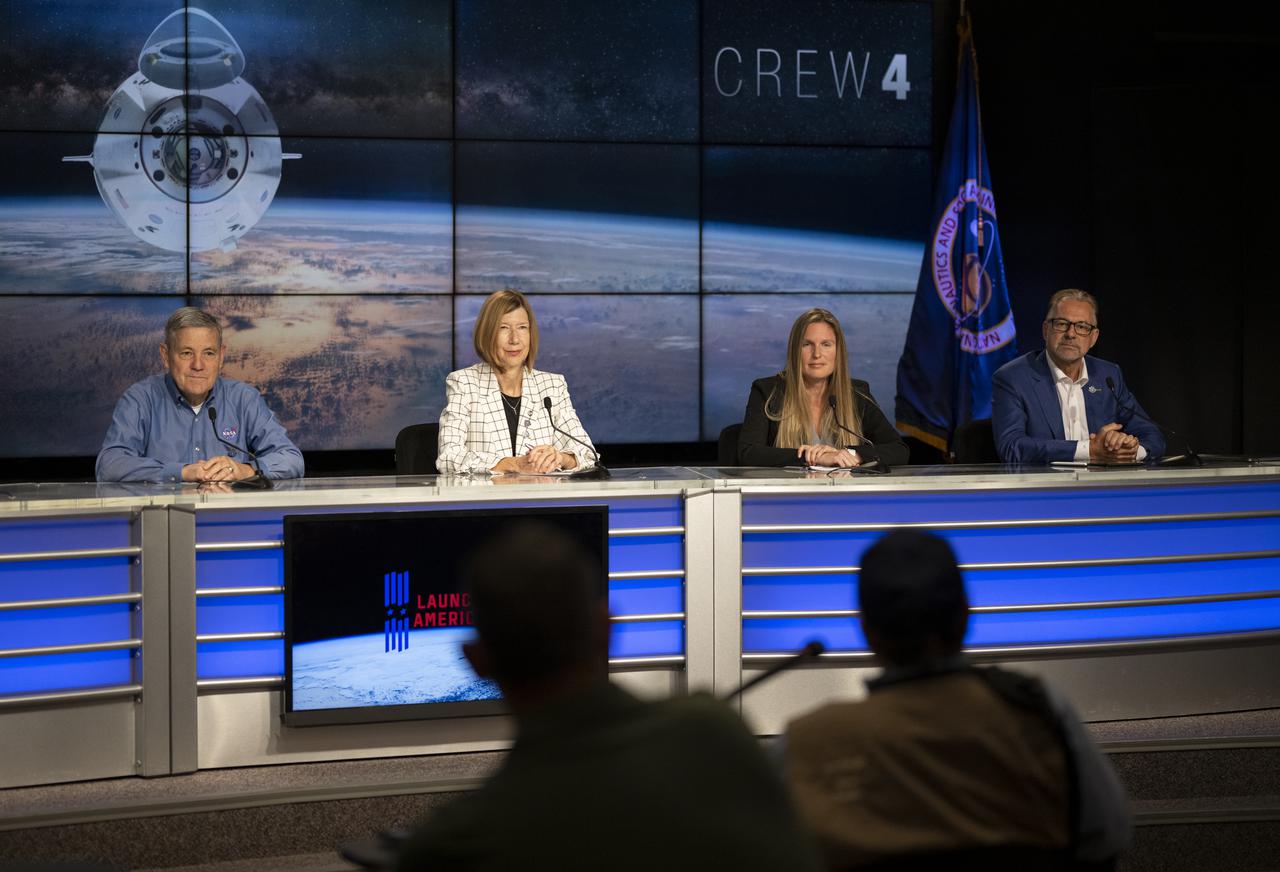
Bob Cabana, NASA associate administrator, left, Kathy Lueders, associate administrator for NASA's Space Operations Mission Directorate, second from left, Heidi Parris, associate program scientist for the International Space Station Program at NASA’s Johnson Space Center, second from right, and Josef Aschbacher, Director General of ESA (European Space Agency), right, listen to a questions from a member of the media during a press conference ahead of the Crew-4 launch, Tuesday, April 26, 2022, at NASA’s Kennedy Space Center in Florida. NASA’s SpaceX Crew-4 mission is the fourth crew rotation mission of the SpaceX Crew Dragon spacecraft and Falcon 9 rocket to the International Space Station as part of the agency’s Commercial Crew Program. NASA astronauts Kjell Lindgren, Robert Hines, Jessica Watkins, and ESA (European Space Agency) astronaut Samantha Cristoforetti are scheduled to launch at 3:52 a.m. ET on April 27 from Launch Complex 39A at the Kennedy Space Center. Photo Credit: (NASA/Joel Kowsky)
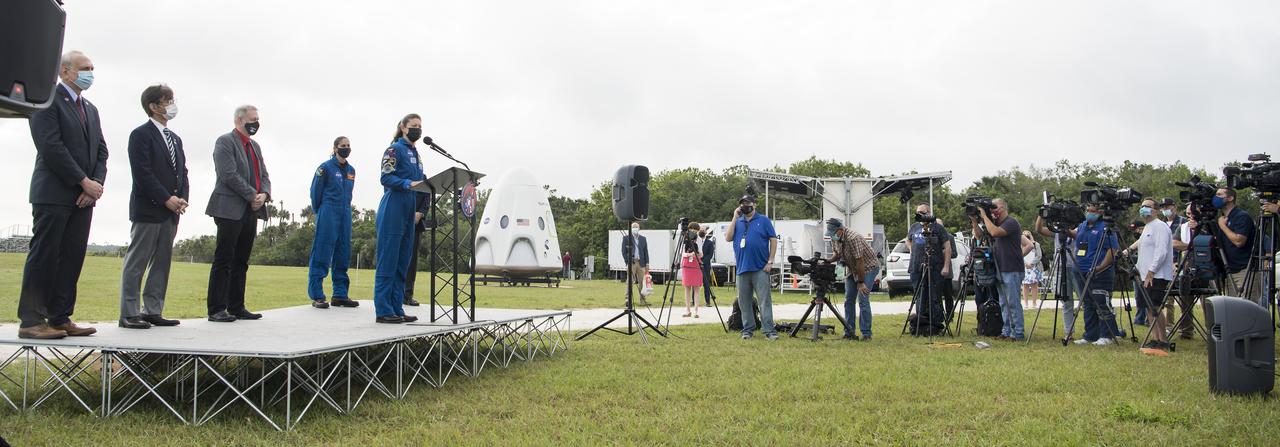
NASA astronaut Tracy Caldwell Dyson speaks to members of the media during a press conference with, from left, acting NASA Administrator Steve Jurczyk, Hiroshi Sasaki, vice president and director general of the Japan Aerospace Exploration Agency’s (JAXA) Human Spaceflight Technology Directorate, Frank De Winne, manager, International Space Station Program, ESA (European Space Agency), and NASA astronaut Jasmin Moghbeli, ahead of the Crew-2 launch, Wednesday, April 21, 2021, at NASA’s Kennedy Space Center in Florida. NASA’s SpaceX Crew-2 mission is the second crew rotation mission of the SpaceX Crew Dragon spacecraft and Falcon 9 rocket to the International Space Station as part of the agency’s Commercial Crew Program. NASA astronauts Shane Kimbrough and Megan McArthur, ESA astronaut Thomas Pesquet, and JAXA astronaut Akihiko Hoshide are scheduled to launch at 5:49 a.m. EDT on Friday, April 23, from Launch Complex 39A at the Kennedy Space Center. Photo Credit: (NASA/Aubrey Gemignani)
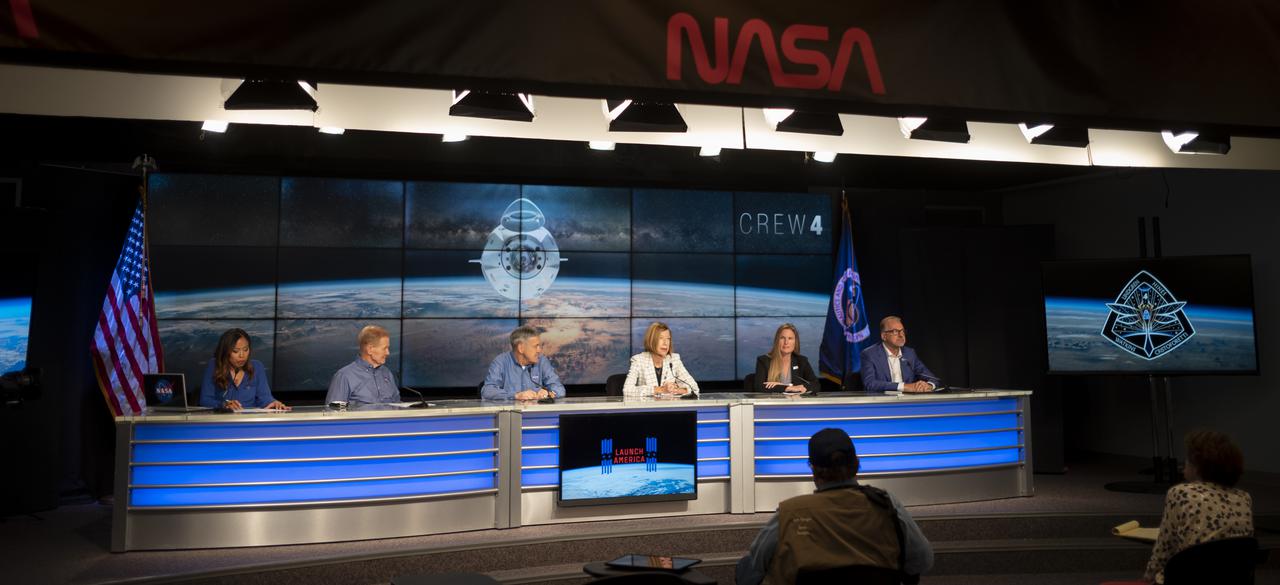
Megan Cruz, NASA Communications, left, NASA Administrator Bill Nelson, second from left, Bob Cabana, NASA associate administrator, third from left, Kathy Lueders, associate administrator for NASA's Space Operations Mission Directorate, third from right, Heidi Parris, associate program scientist for the International Space Station Program at NASA’s Johnson Space Center , second from right, and Josef Aschbacher, Director General of ESA (European Space Agency), right, are seen during a press conference ahead of the Crew-4 launch, Tuesday, April 26, 2022, at NASA’s Kennedy Space Center in Florida. NASA’s SpaceX Crew-4 mission is the fourth crew rotation mission of the SpaceX Crew Dragon spacecraft and Falcon 9 rocket to the International Space Station as part of the agency’s Commercial Crew Program. NASA astronauts Kjell Lindgren, Robert Hines, Jessica Watkins, and ESA (European Space Agency) astronaut Samantha Cristoforetti are scheduled to launch at 3:52 a.m. ET on April 27 from Launch Complex 39A at the Kennedy Space Center. Photo Credit: (NASA/Joel Kowsky)
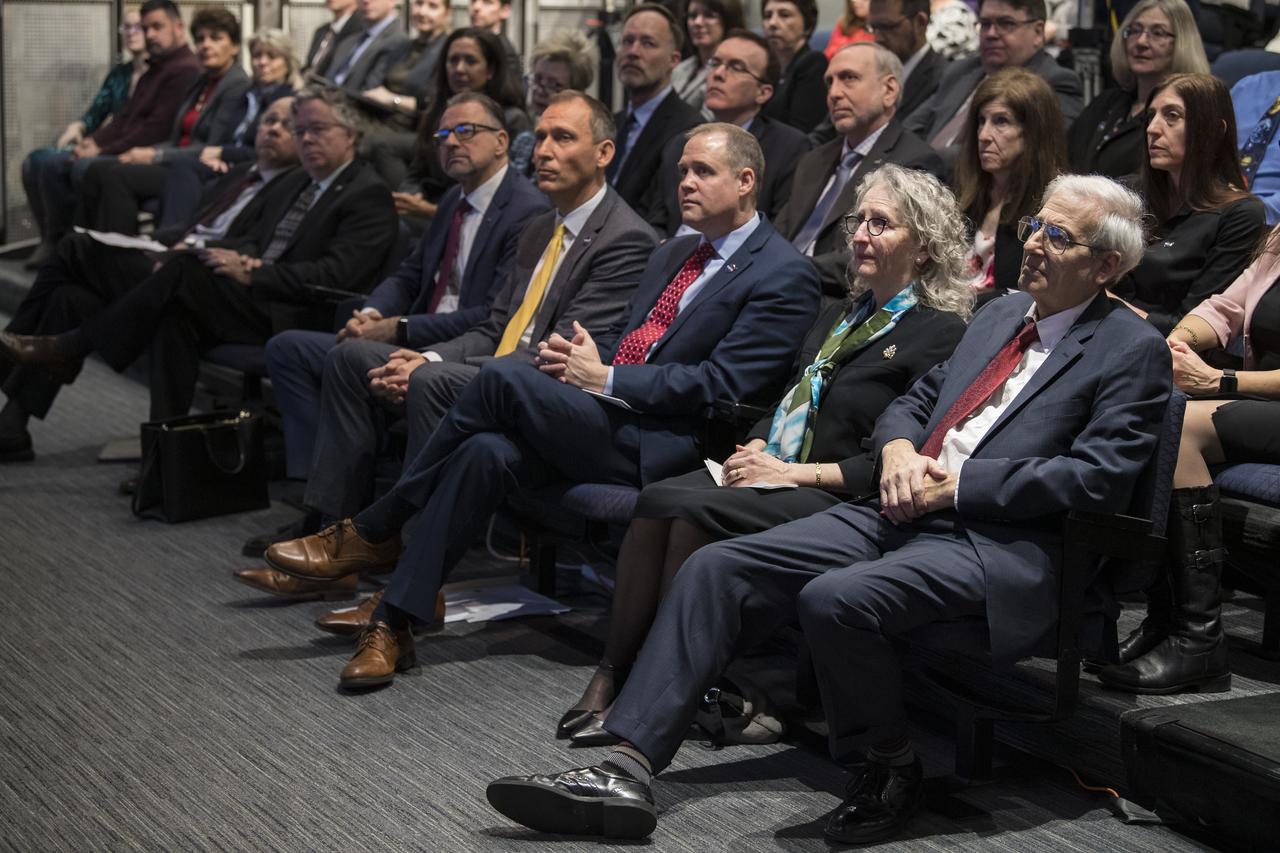
Front row, from left to right, EUMETSAT director-general, Alain Ratier; National Oceanic and Atmospheric Administration (NOAA) assistant administrator for Satellite and Information Services, Stephen Volz; ESA (European Space Agency) director of Earth Observation Programmes, Josef Aschbacher; NASA associate administrator for Science, Thomas Zurbuchen; NASA Administrator Jim Bridenstine; and Former director of NASA’s Earth Science Division, Mike Freilich and his wife are seen in the audience at a renaming ceremony for the international ocean science satellite previously known as Sentinel-6A/Jason-CS, Tuesday, January 28, 2020, at NASA Headquarters in Washington. NASA and its European partners renamed the satellite Sentinel-6 Michael Freilich after NASA’s former director of the Earth Science division, Dr. Michael Freilich. Sentinel-6A Michael Freilich will observe and record global sea level changes and will be joined by an identical satellite slated to launch in 2025 for a total of ten years of targeted observations. Photo Credit: (NASA/Aubrey Gemignani)
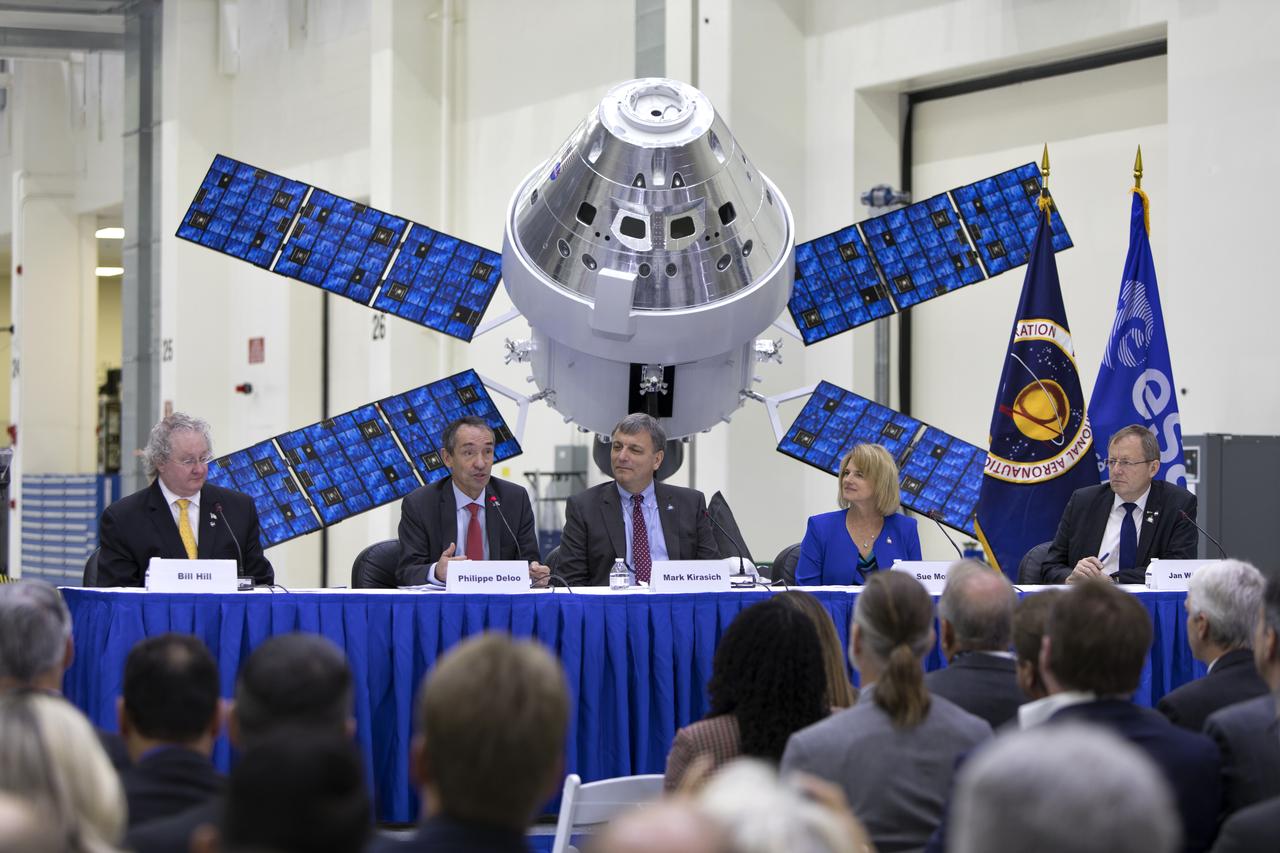
NASA and European Space Agency (ESA) senior managers answer questions during a "Powering Exploration Mission-1" ceremony in the Neil Armstrong Operations and Checkout Building high bay at NASA's Kennedy Space Center on Nov. 16, 2018. From left, are Bill Hill, deputy associate administrator for Exploration Systems Development; Phillippe Deloo, European Service Module program manager at ESA; Mark Kirasich, Orion Program manager at the agency's Johnson Space Center in Houston; Sue Motil, Orion European Service Module integration manager at the agency's Glenn Research Center; and Jan Worner, ESA director general. The event was held to mark a major milestone, the arrival of the European Service Module (ESM) for Orion's Exploration Mission-1. The service module, built by the European Space Agency, will supply the main propulsion system and power to the Orion spacecraft during EM-1, a mission to the Moon. The ESM also will house air and water for astronauts on future missions. EM-1 will be an uncrewed flight test that will provide a foundation for human deep space exploration to destinations beyond Earth orbit. EM-1 will be the first integrated test of NASA's Space Launch System, Orion and the ground systems at Kennedy.
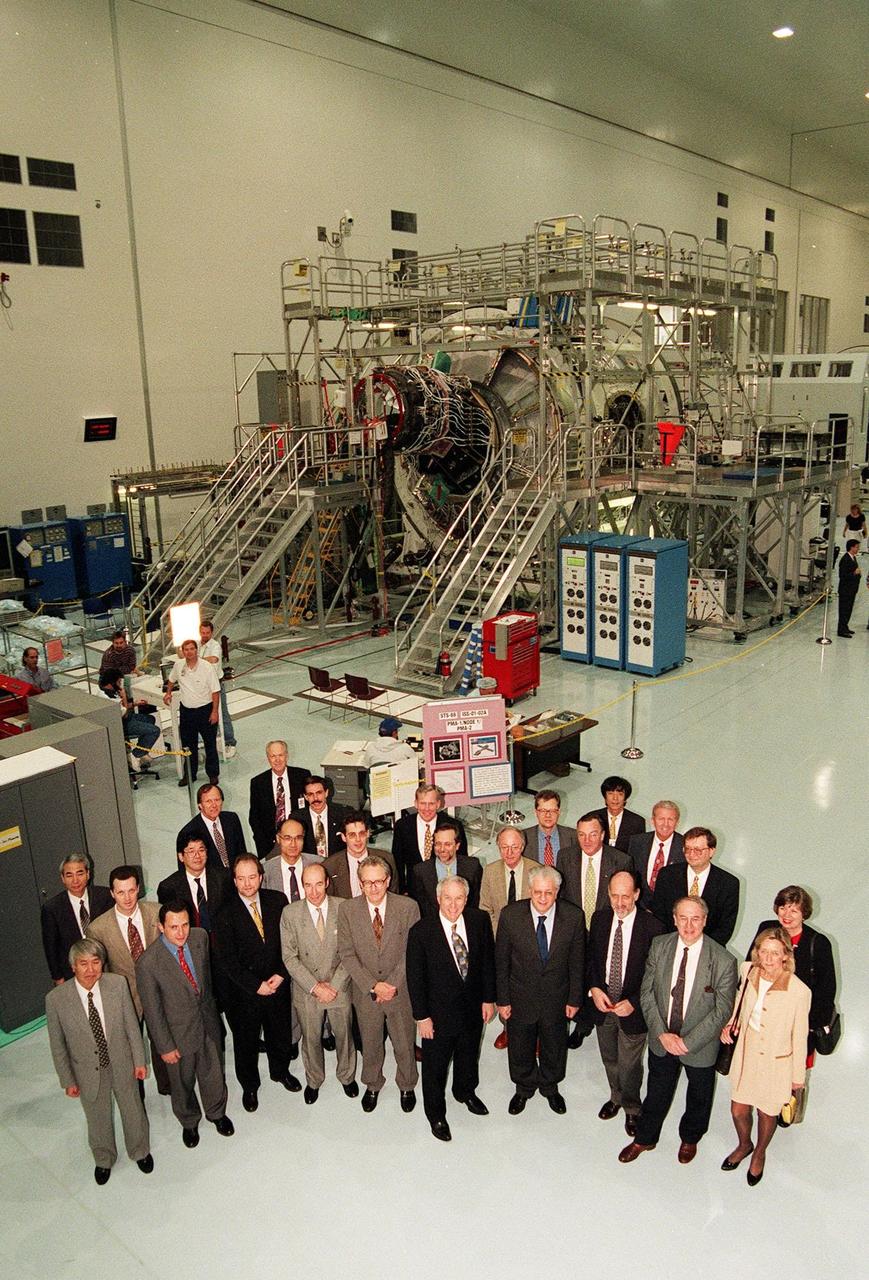
CAPE CANAVERAL, Fla. -- In the International Space Station Processing Facility at NASA's Kennedy Space Center in Florida, senior government officials from 15 countries participating in the space station program signed agreements in Washington D.C. on Jan. 29 to establish the framework of cooperation among the partners on the design, development, operation and utilization of the space station. Acting Secretary of State Strobe Talbott signed the 1998 Intergovernmental Agreement on Space Station Cooperation with representatives of Russia, Japan, Canada, and participating countries of the European Space Agency ESA -- Belgium, Denmark, France, Germany, Italy, the Netherlands, Norway, Spain, Sweden, Switzerland, and the United Kingdom. Some of these officials then toured Kennedy's Space Station Processing Facility SSPF with NASA Administrator Daniel Goldin, at front, sixth from the left. They are, left to right, front to back: Hidetoshi Murayama, National Space Development Agency of Japan NASDA Louis Laurent, Embassy of France Haakon Blankenborg, Norwegian Parliament Standing Committee on Foreign Affairs His Excellency Joris Vos, ambassador of the Netherlands His Excellency Tom Vraalsen, ambassador of Norway Goldin Luigi Berlinguer, Italian minister for education, scientific, and technological research Antonio Rodota, director general, ESA Yvan Ylieff, Belgian minister of science and chairman of the ESA Ministerial Council Jacqueline Ylieff Masaaki Komatsu, Kennedy local NASDA representative and interpreter Serge Ivanets, space attache, Embassy of Russia Hiroshi Fujita, Science and Technology Agency of Japan Akira Mizutani, Japanese Ministry of Foreign Affairs Peter Grognard, science attache', Royal Embassy of Belgium Michelangelo Pipan, Italian diplomatic counselor to the minister His Excellency Gerhard Fulda, German Federal Foreign Office Jorg Feustel-Buechl, ESA director of manned space flight and microgravity A. Yakovenko, Russian Ministry of Foreign Affairs JoAnn Morgan, Kennedy associate director for Advanced Development and Shuttle Upgrades Steve Francois, director, International Space Station and Shuttle Processing Roy Tharpe, Boeing launch site manager Jon Cowart, ISS elements manager John Schumacher, NASA associate administrator for external relations Didier Kechemair, space advistor to the French minister for education, research, and technology Yoshinori Yoshimura, NASDA and Loren Shriver, Kennedy deputy director for launch and payload processing. Node 1 of the ISS is in the background. Photo Credit: NASA
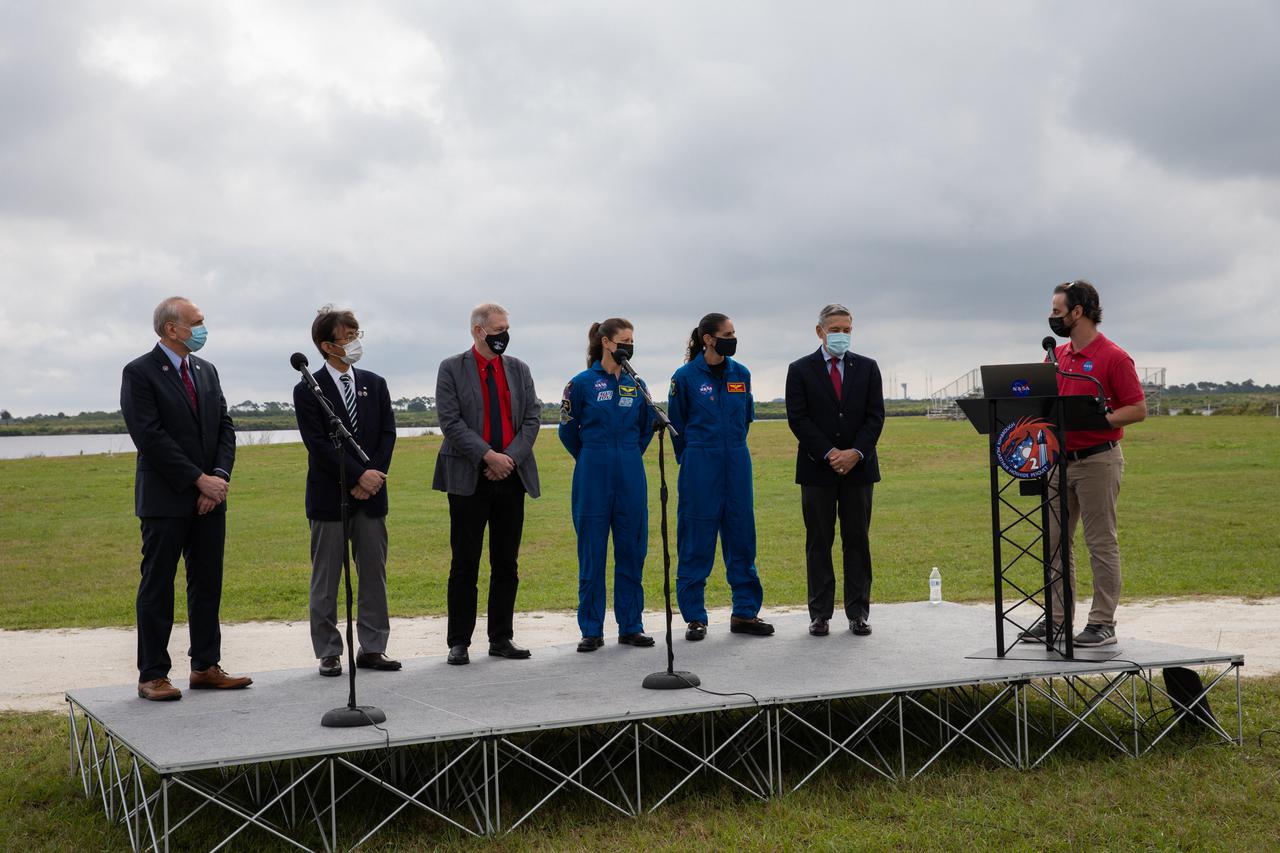
At right, moderator Joshua Santora, NASA Communications, addresses the participants in a NASA Social Facebook Live event held April 21, 2021, near the Press Site countdown clock at NASA’s Kennedy Space Center in Florida, ahead of the agency’s SpaceX Crew-2 launch. Participants, from left to right, are: Steve Jurczyk, acting NASA administrator; Hiroshi Sasaki, vice president and director general, JAXA’s Human Spaceflight Technology Directorate; Frank de Winne, manager, International Space Station Program, ESA; NASA astronauts Tracy Caldwell Dyson and Jasmin Moghbeli; and Kennedy Director Bob Cabana. Crew-2 is the second regular crew mission of a U.S. commercial spacecraft with astronauts to the International Space Station as part of NASA’s Commercial Crew Program. The SpaceX Crew Dragon Endeavour capsule will launch atop the company’s Falcon 9 rocket from Launch Complex 39A to the space station for a six-month science mission. Liftoff is targeted for Friday, April 23, at 5:49 a.m. EDT.
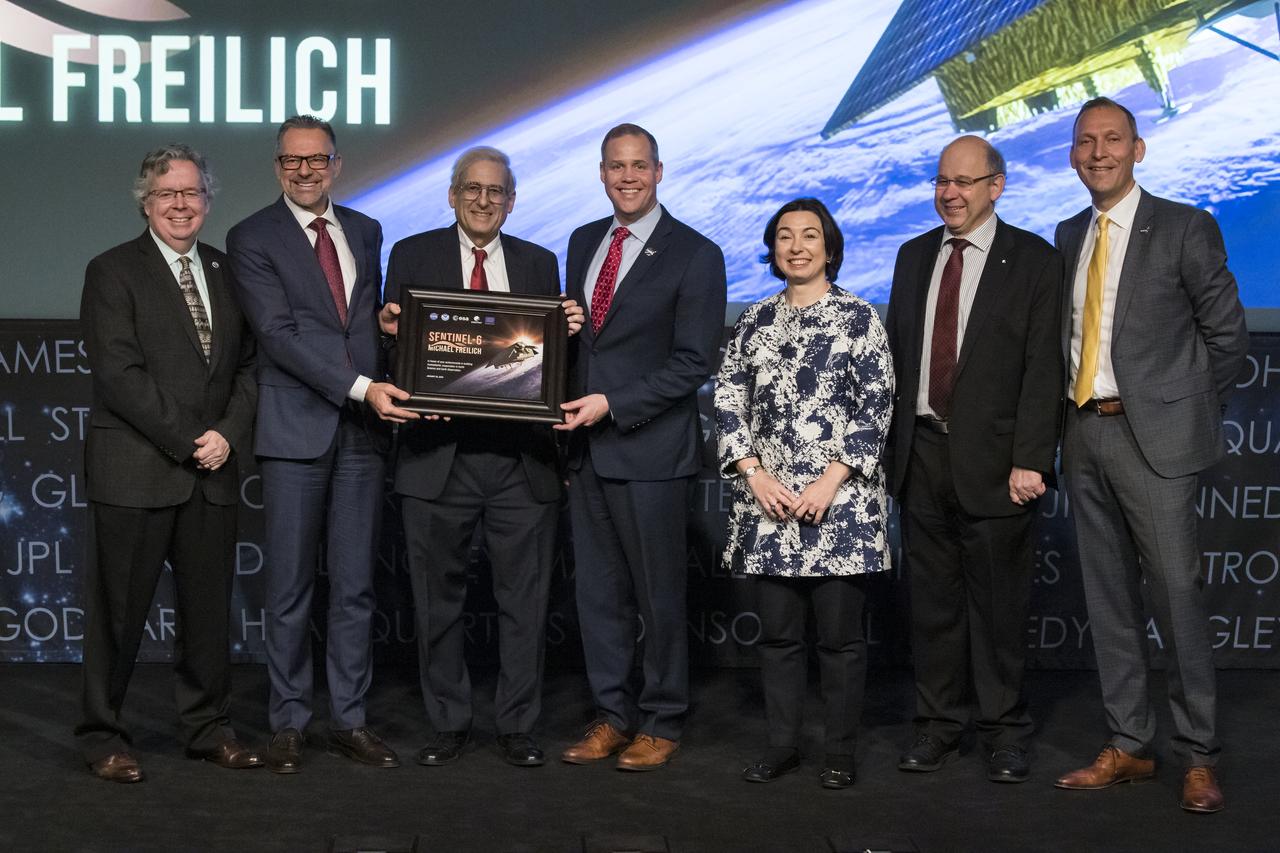
From left to right, National Oceanic and Atmospheric Administration (NOAA) assistant administrator for Satellite and Information Services, Stephen Volz; ESA (European Space Agency) director of Earth Observation Programmes, Josef Aschbacher; Former director of NASA’s Earth Science Division, Mike Freilich; NASA Administrator Jim Bridenstine; Head of Global Issues and Innovation of the European Union delegation to the United States, Mercedes Garcia Pérez; EUMETSAT director-general, Alain Ratier; and NASA associate administrator for Science, Thomas Zurbuchen pose for a group photo at the conclusion of a renaming ceremony for the international ocean science satellite previously known as Sentinel-6A/Jason-CS, Tuesday, January 28, 2020, at NASA Headquarters in Washington. NASA and its European partners renamed the satellite Sentinel-6 Michael Freilich after Dr. Freilich. Sentinel-6A Michael Freilich will observe and record global sea level changes and will be joined by an identical satellite slated to launch in 2025 for a total of ten years of targeted observations. Photo Credit: (NASA/Aubrey Gemignani)
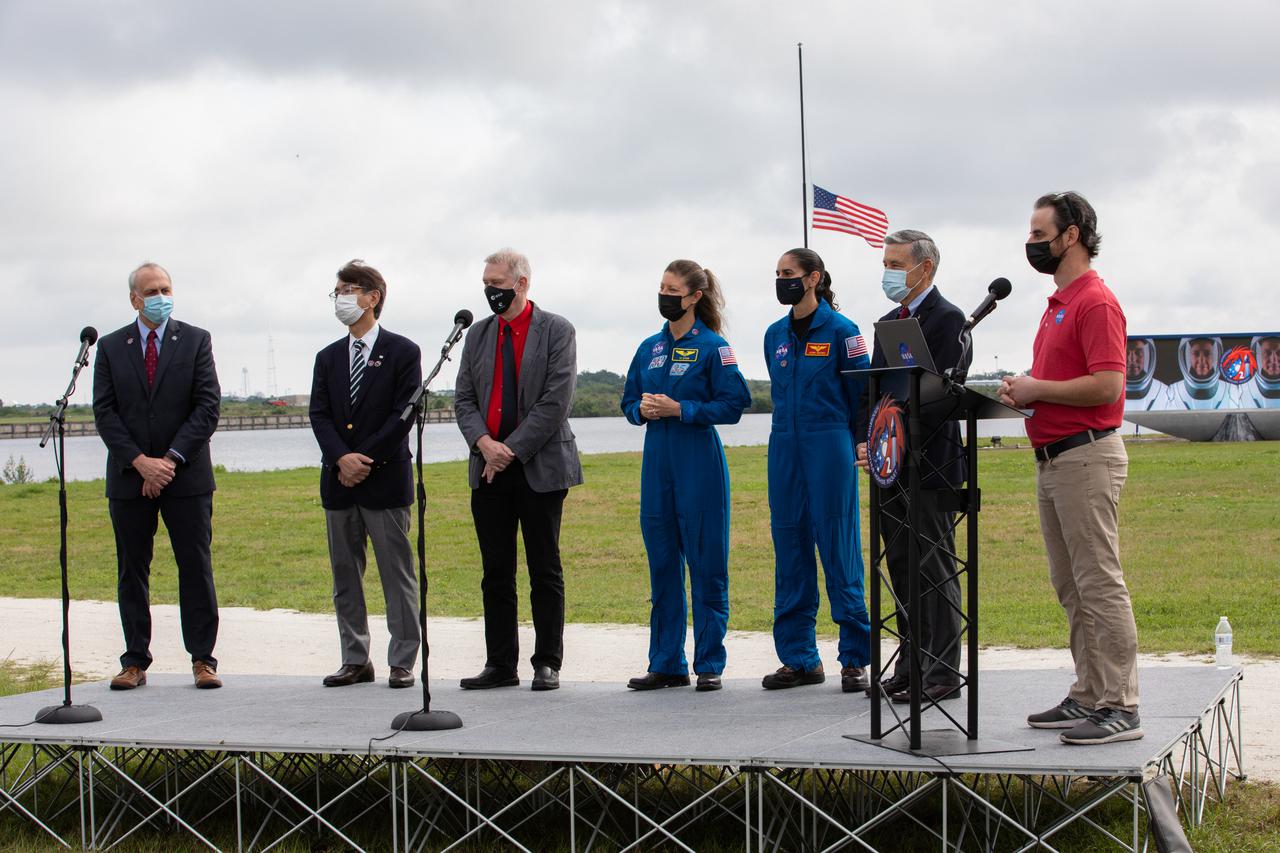
At right, moderator Joshua Santora, NASA Communications, addresses the audience during a NASA Social Facebook Live event held April 21, 2021, near the Press Site countdown clock at NASA’s Kennedy Space Center in Florida, ahead of the agency’s SpaceX Crew-2 launch. Participants, from left to right, are: Steve Jurczyk, acting NASA administrator; Hiroshi Sasaki, vice president and director general, JAXA’s Human Spaceflight Technology Directorate; Frank de Winne, manager, International Space Station Program, ESA; NASA astronauts Tracy Caldwell Dyson and Jasmin Moghbeli; and Kennedy Director Bob Cabana. Crew-2 is the second regular crew mission of a U.S. commercial spacecraft with astronauts to the International Space Station as part of NASA’s Commercial Crew Program. The SpaceX Crew Dragon Endeavour capsule will launch atop the company’s Falcon 9 rocket from Launch Complex 39A to the space station for a six-month science mission. Liftoff is targeted for Friday, April 23, at 5:49 a.m. EDT.
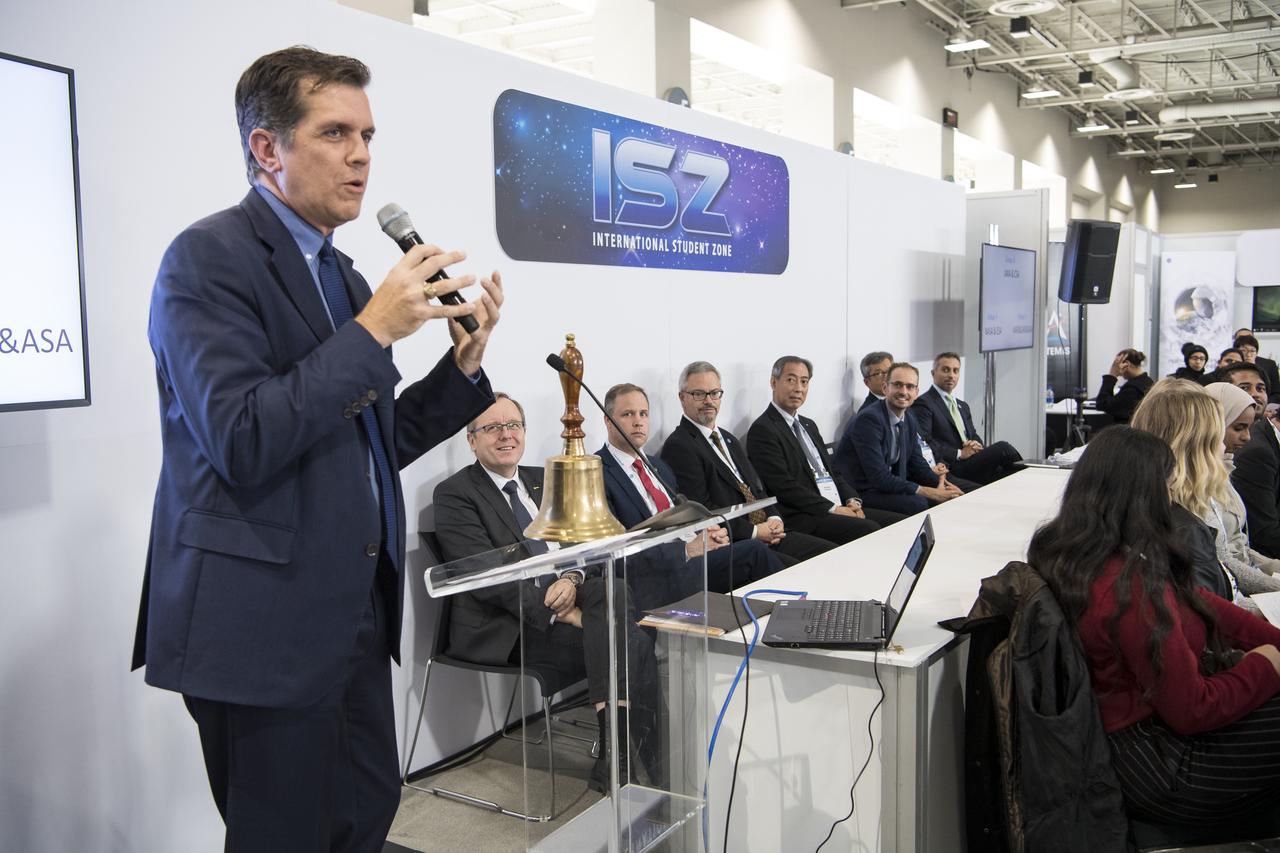
NASA Associate Administrator for STEM Engagement, Mike Kincaid, introduces the heads of agencies that will be participating in an interactive session with students, from left to right, Dr. Johann-Dietrich Worner, director general of the European Space Agency (ESA); NASA Administrator Jim Bridenstine; Sylvain Laporte, president of the Canadian Space Agency (CSA); Dr. Hiroshi Yamakawa, president of the Japan Aerospace Exploration Agency (JAXA); Anthony Murfett, deputy head fo the Australian Space Agency (ASA); Jeong Joo Park, Vice President fo the Korean Aerospace Research Institute (KARI); and H.E. Dr. Ahmad bin Abdulla Humaid Belhoul Al Falasi, Minister of State for Higher Education and Advanced Skills and Chairman of the UAE Space Agency (UAESA), during the 70th International Astronautical Congress, Monday, Oct. 21, 2019 at the Walter E. Washington Convention Center in Washington. Photo credit: (NASA/Aubrey Gemignani)
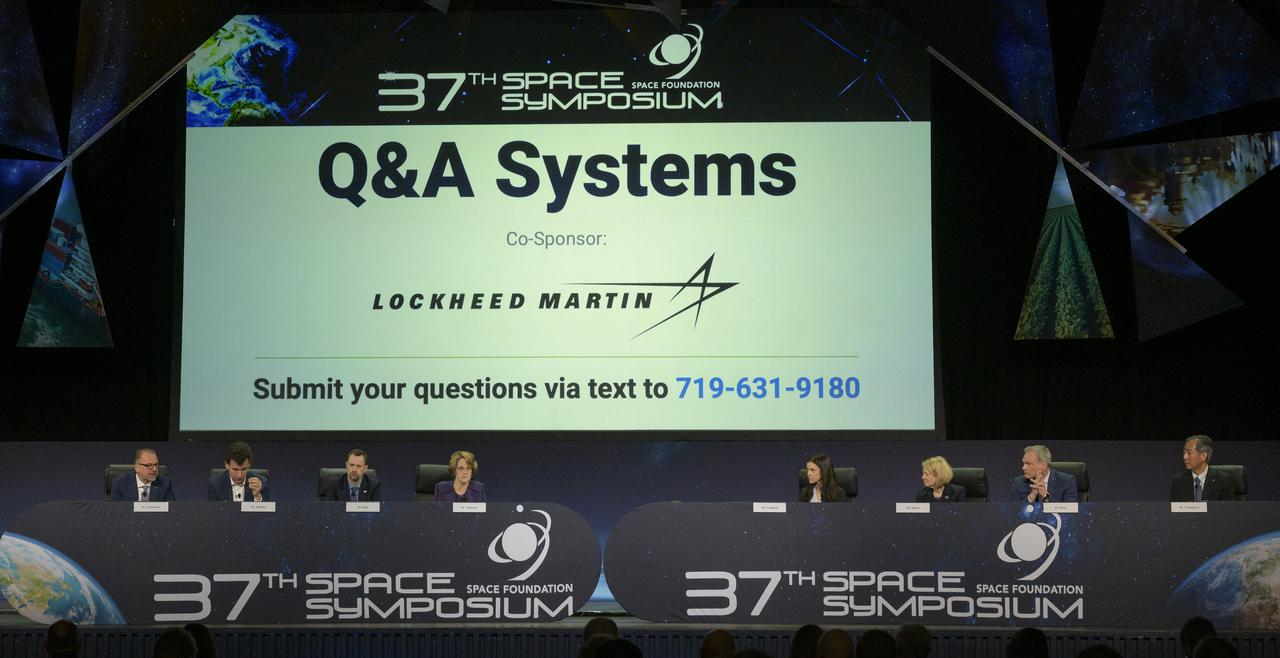
Heads of Agency participate in a panel discussion, from left, Dr. Josef Aschbacher, Director General, European Space Agency (ESA); Dr. Philippe Baptiste, President, French Space Agency (CNES); Dr. Paul Bate, Chief Executive Officer UK Space Agency (UKSA); moderator Dr. Kathryn C. Thornton, Chairwoman, Space Foundation; Lisa Campbell, President, Canadian Space Agency (CSA); NASA Deputy Administrator Pam Melroy; Dr. Walther Pelzer, Executive Board Member and Head of the German Space Agency at the German Aerospace Center (DLR); and Dr. Hiroshi Yamakawa, President, Japan Aerospace Exploration Agency (JAXA), right, during the 37th Space Symposium, Wednesday, April 6, 2022, in Colorado Springs, Colorado. Photo Credit: (NASA/Bill Ingalls)
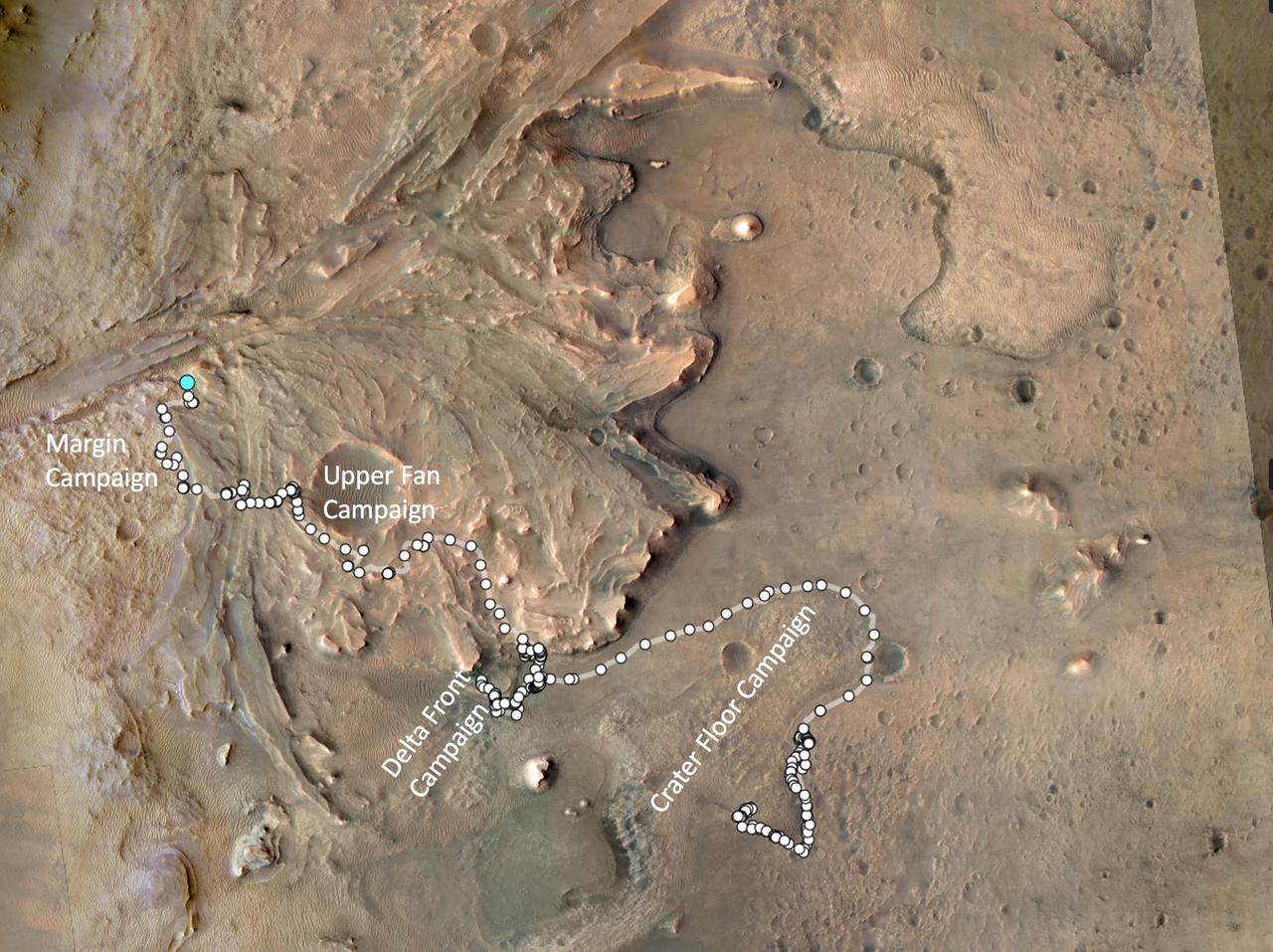
The path taken by NASA's Perseverance Mars rover during the first 1,000 sols (Martian days) of its mission at Jezero Crater is annotated on this overhead view taken by the HiRISE camera aboard the agency's Mars Reconnaissance Orbiter. White circles signify locations on the surface where the rover stopped after completing a traverse. The pale blue circle at upper left indicates the rover's position as of Dec. 12, 2023. The white text indicates the areas of the four rover science campaigns, from initial campaign to current: Crater Floor, Delta Front, Upper Fan, and Margin. Figure A, showing the same general area, is annotated to indicate the route and the two locations where the rover used its PIXL instrument to analyze abrasion patches "Ouzel Falls" and "Bills Bay" and its drill to core corresponding rock samples, "Otis Peak" and "Lefroy Bay." The University of Arizona, in Tucson, operates HiRISE, which was built by Ball Aerospace & Technologies Corp., in Boulder, Colorado. JPL manages the Mars Reconnaissance Orbiter Project for NASA's Science Mission Directorate, Washington. A key objective for Perseverance's mission on Mars is astrobiology, including the search for signs of ancient microbial life. The rover will characterize the planet's geology and past climate, pave the way for human exploration of the Red Planet, and be the first mission to collect and cache Martian rock and regolith (broken rock and dust). Subsequent NASA missions, in cooperation with ESA (European Space Agency), would send spacecraft to Mars to collect these sealed samples from the surface and return them to Earth for in-depth analysis. The Mars 2020 Perseverance mission is part of NASA's Moon to Mars exploration approach, which includes Artemis missions to the Moon that will help prepare for human exploration of the Red Planet. https://photojournal.jpl.nasa.gov/catalog/PIA26231

Just in time for the release of the movie “Star Wars Episode VII: The Force Awakens,” NASA’s Hubble Space Telescope has photographed what looks like a cosmic, double-bladed lightsaber. In the center of the image, partially obscured by a dark, Jedi-like cloak of dust, a newborn star shoots twin jets out into space as a sort of birth announcement to the universe. “Science fiction has been an inspiration to generations of scientists and engineers, and the film series Star Wars is no exception,” said John Grunsfeld, astronaut and associate administrator for the NASA Science Mission directorate. “There is no stronger case for the motivational power of real science than the discoveries that come from the Hubble Space Telescope as it unravels the mysteries of the universe." This celestial lightsaber does not lie in a galaxy far, far away, but rather inside our home galaxy, the Milky Way. It’s inside a turbulent birthing ground for new stars known as the Orion B molecular cloud complex, located 1,350 light-years away. When stars form within giant clouds of cool molecular hydrogen, some of the surrounding material collapses under gravity to form a rotating, flattened disk encircling the newborn star. Though planets will later congeal in the disk, at this early stage the protostar is feeding on the disk with a Jabba-like appetite. Gas from the disk rains down onto the protostar and engorges it. Superheated material spills away and is shot outward from the star in opposite directions along an uncluttered escape route — the star’s rotation axis. Shock fronts develop along the jets and heat the surrounding gas to thousands of degrees Fahrenheit. The jets collide with the surrounding gas and dust and clear vast spaces, like a stream of water plowing into a hill of sand. The shock fronts form tangled, knotted clumps of nebulosity and are collectively known as Herbig-Haro (HH) objects. The prominent HH object shown in this image is HH 24. Just to the right of the cloaked star, a couple of bright points are young stars peeking through and showing off their own faint lightsabers — including one that has bored a tunnel through the cloud towards the upper-right side of the picture. Overall, just a handful of HH jets have been spotted in this region in visible light, and about the same number in the infrared. Hubble’s observations for this image were performed in infrared light, which enabled the telescope to peer through the gas and dust cocooning the newly forming stars and capture a clear view of the HH objects. These young stellar jets are ideal targets for NASA’s upcoming James Webb Space Telescope, which will have even greater infrared wavelength vision to see deeper into the dust surrounding newly forming stars. The Hubble Space Telescope is a project of international cooperation between NASA and the European Space Agency. NASA’s Goddard Space Flight Center in Greenbelt, Maryland, manages the telescope. The Space Telescope Science Institute (STScI) in Baltimore, Maryland, conducts Hubble science operations. STScI is operated for NASA by the Association of Universities for Research in Astronomy, in Washington, D.C. Credits: NASA/ESA <b><a href="http://www.nasa.gov/audience/formedia/features/MP_Photo_Guidelines.html" rel="nofollow">NASA image use policy.</a></b> <b><a href="http://www.nasa.gov/centers/goddard/home/index.html" rel="nofollow">NASA Goddard Space Flight Center</a></b> enables NASA’s mission through four scientific endeavors: Earth Science, Heliophysics, Solar System Exploration, and Astrophysics. Goddard plays a leading role in NASA’s accomplishments by contributing compelling scientific knowledge to advance the Agency’s mission. <b>Follow us on <a href="http://twitter.com/NASAGoddardPix" rel="nofollow">Twitter</a></b> <b>Like us on <a href="http://www.facebook.com/pages/Greenbelt-MD/NASA-Goddard/395013845897?ref=tsd" rel="nofollow">Facebook</a></b> <b>Find us on <a href="http://instagrid.me/nasagoddard/?vm=grid" rel="nofollow">Instagram</a></b>