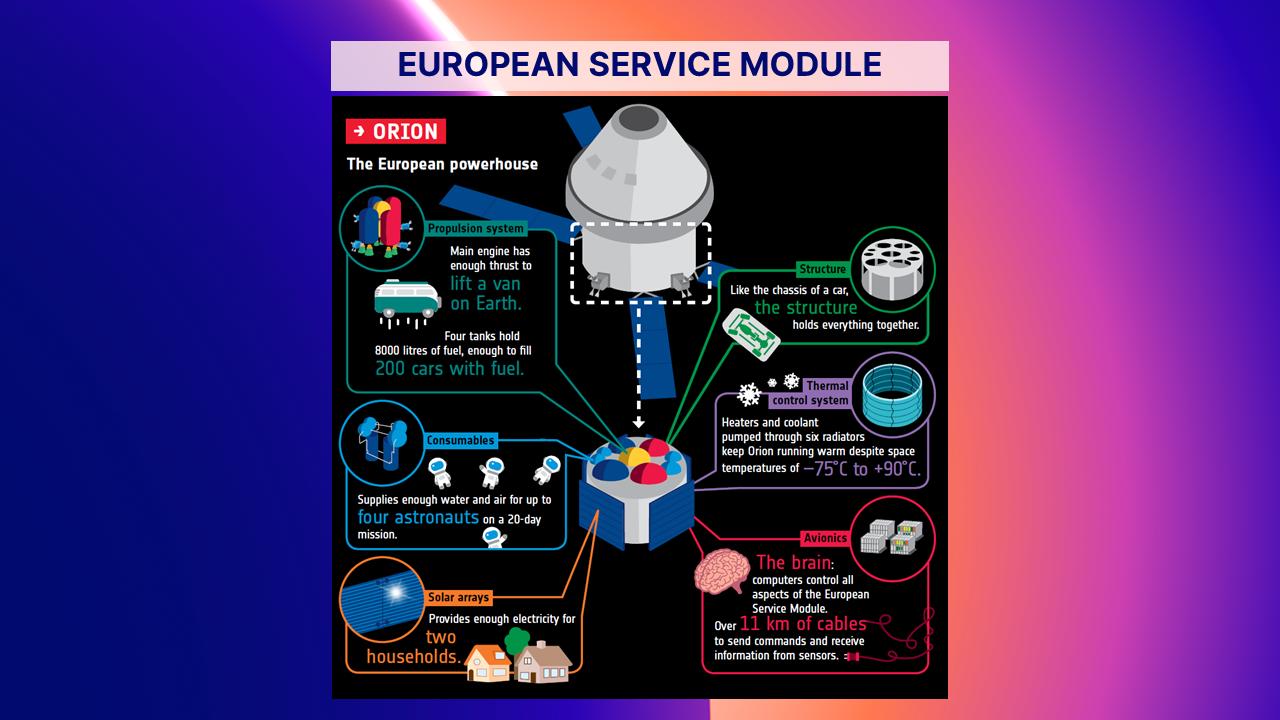
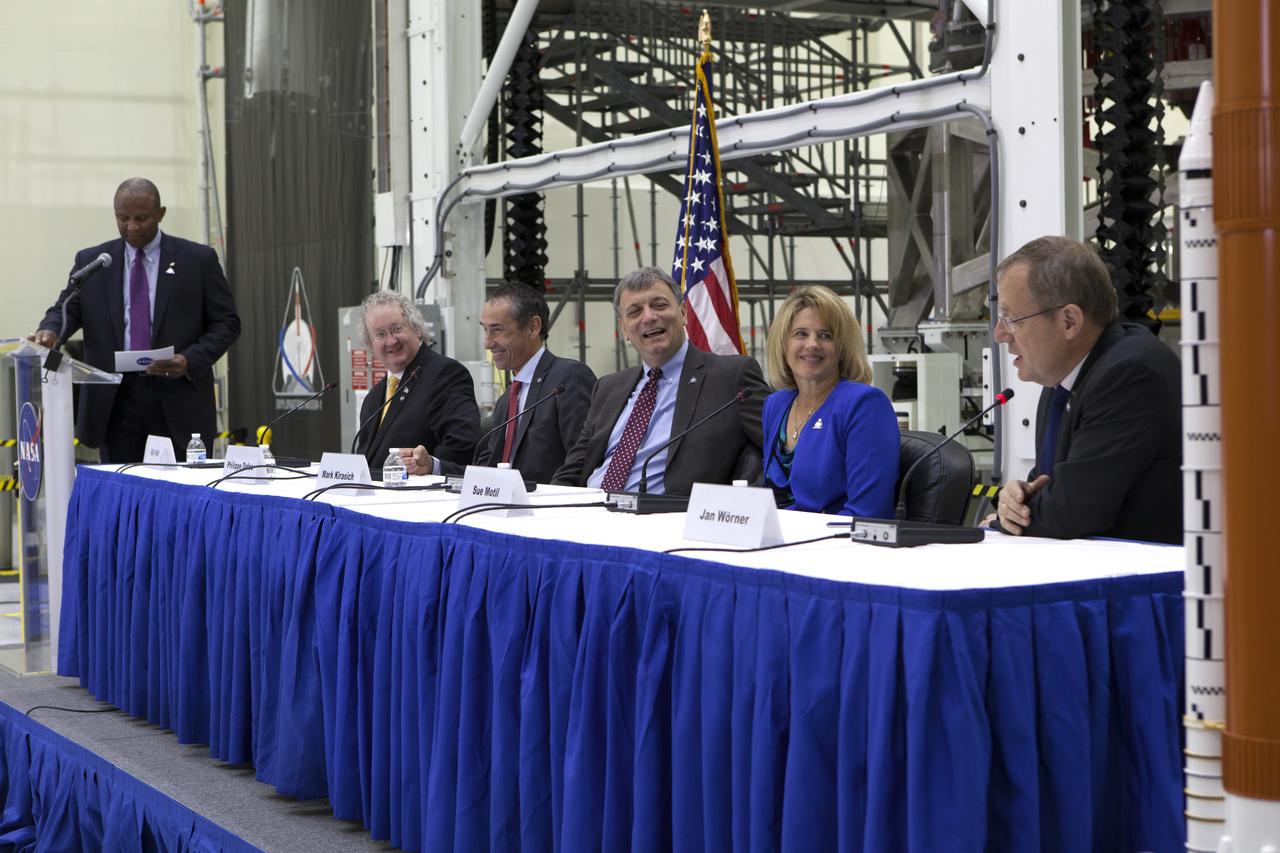
Kennedy Space Center Associate Director Kelvin Manning, far left, moderates questions to NASA and European Space Agency (ESA) senior managers during the "Powering Exploration Mission-1" ceremony in the high bay of the Neil Armstrong Operations and Checkout Building at the center on Nov. 16, 2016. From left, are Bill Hill, deputy associate administrator for Exploration Systems Development; Phillippe Deloo, European Service Module program manager at ESA; Mark Kirasich, Orion Program manager at the agency's Johnson Space Center in Houston; Sue Motil, Orion European Service Module integration manager at the agency's Glenn Research Center; and Jan Worner, ESA director general. The event was held to mark a major milestone, the arrival of the European Service Module (ESM) for Orion's Exploration Mission-1. The service module, built by the European Space Agency, will supply the main propulsion system and power to the Orion spacecraft during EM-1, a mission to the Moon. The ESM also will house air and water for astronauts on future missions. EM-1 will be an uncrewed flight test that will provide a foundation for human deep space exploration to destinations beyond Earth orbit. EM-1 will be the first integrated test of NASA's Space Launch System, Orion and the ground systems at Kennedy.
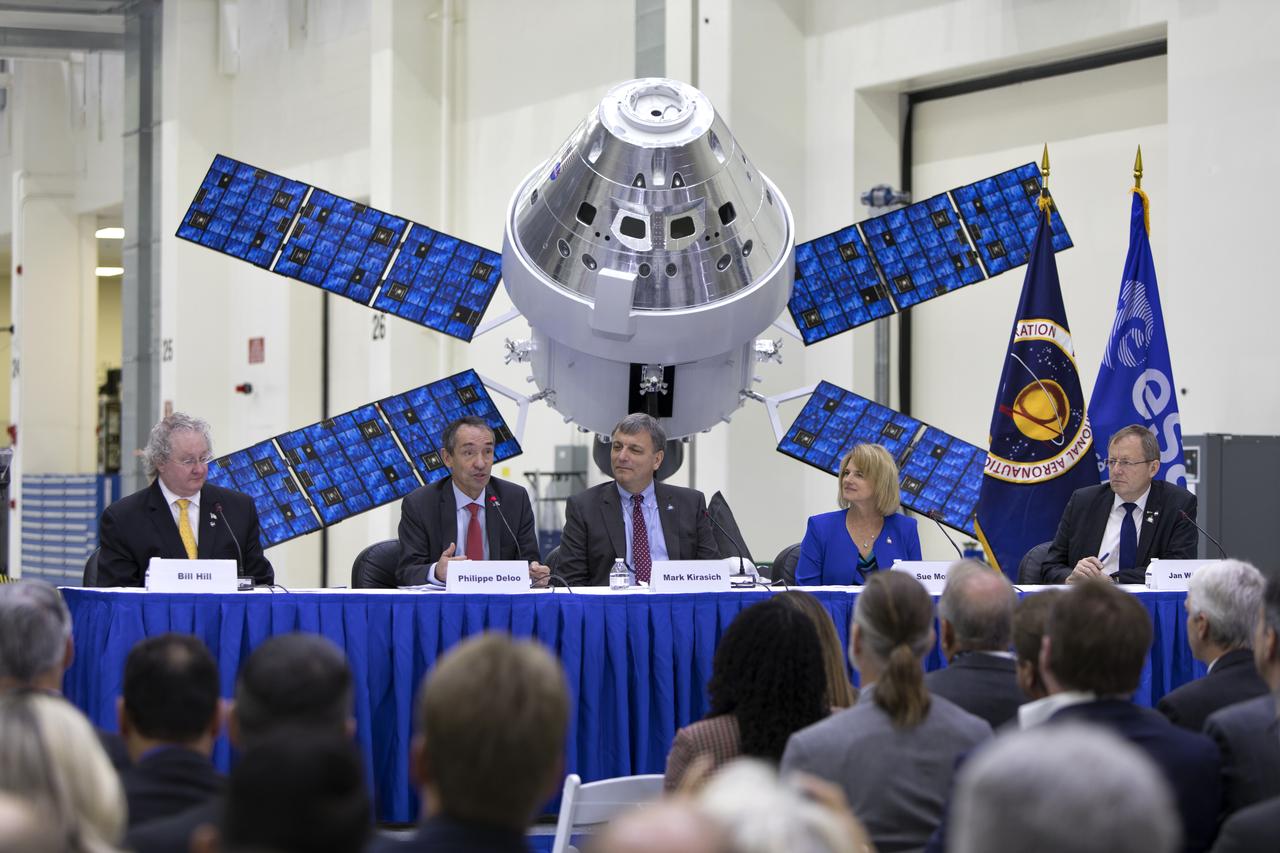
NASA and European Space Agency (ESA) senior managers answer questions during a "Powering Exploration Mission-1" ceremony in the Neil Armstrong Operations and Checkout Building high bay at NASA's Kennedy Space Center on Nov. 16, 2018. From left, are Bill Hill, deputy associate administrator for Exploration Systems Development; Phillippe Deloo, European Service Module program manager at ESA; Mark Kirasich, Orion Program manager at the agency's Johnson Space Center in Houston; Sue Motil, Orion European Service Module integration manager at the agency's Glenn Research Center; and Jan Worner, ESA director general. The event was held to mark a major milestone, the arrival of the European Service Module (ESM) for Orion's Exploration Mission-1. The service module, built by the European Space Agency, will supply the main propulsion system and power to the Orion spacecraft during EM-1, a mission to the Moon. The ESM also will house air and water for astronauts on future missions. EM-1 will be an uncrewed flight test that will provide a foundation for human deep space exploration to destinations beyond Earth orbit. EM-1 will be the first integrated test of NASA's Space Launch System, Orion and the ground systems at Kennedy.
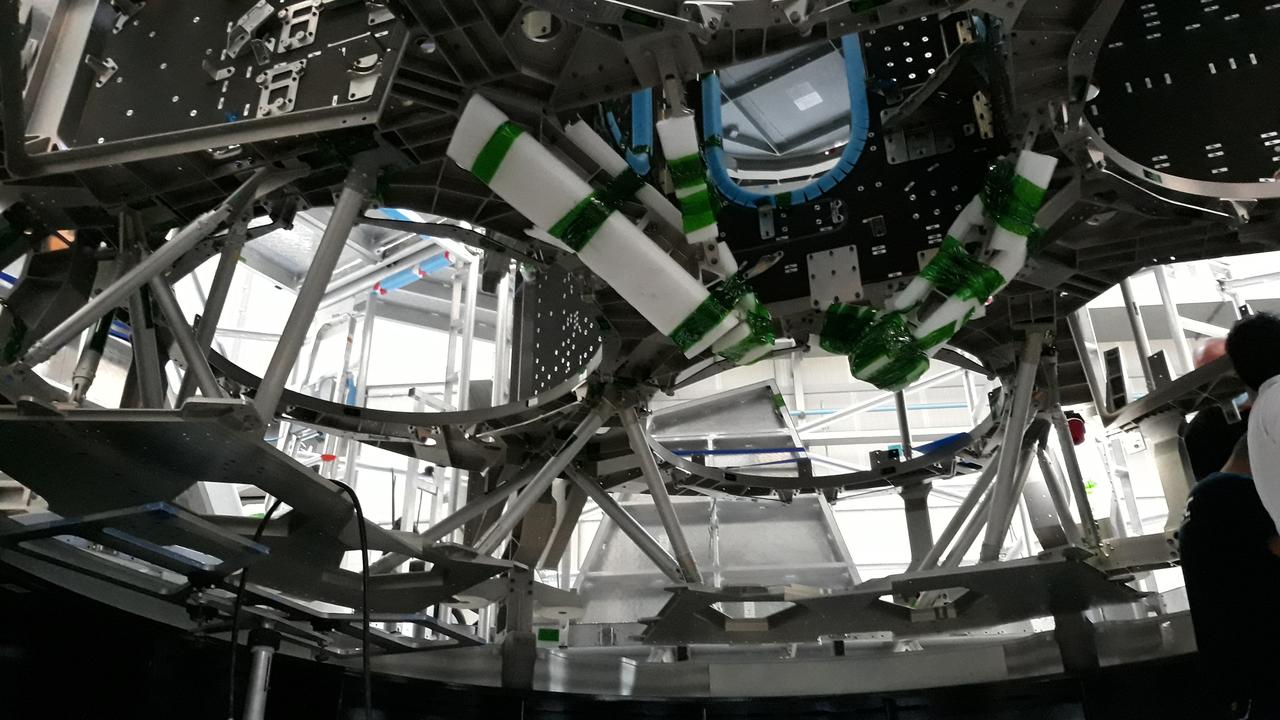
This structure, shown on Aug. 27, 2020, is the frame and base for the European Service Module, part of NASA’s Orion spacecraft that will return humans to the Moon...Built in Turin, Italy, at Thales Alenia Space, this is the third such structure to roll out of production. However, this one is extra special, as it will fly the first woman and next man to land on the Moon and return on the Artemis III mission.
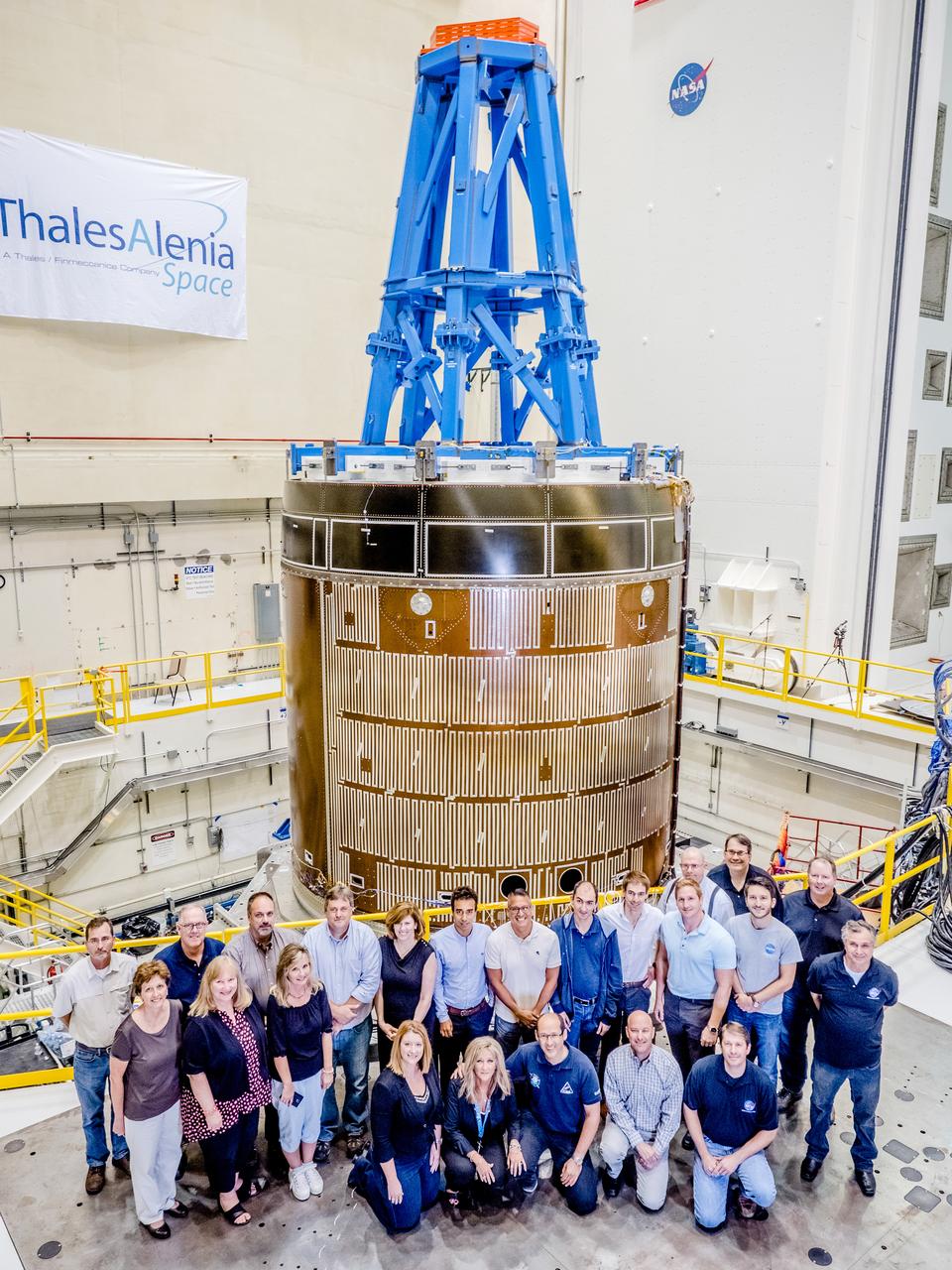
A successful test is completed of the European Structural Test Article (E-STA) partial tank vibration test (Y- axis at 80% power) performed on the Mechanical Vibration Facility (MVF) table at NASA Glenn’s Space Power Facility at Plum Brook Station, Sandusky, Ohio on Sept. 7, 2016 .Part of Batch images transfer from Flickr.
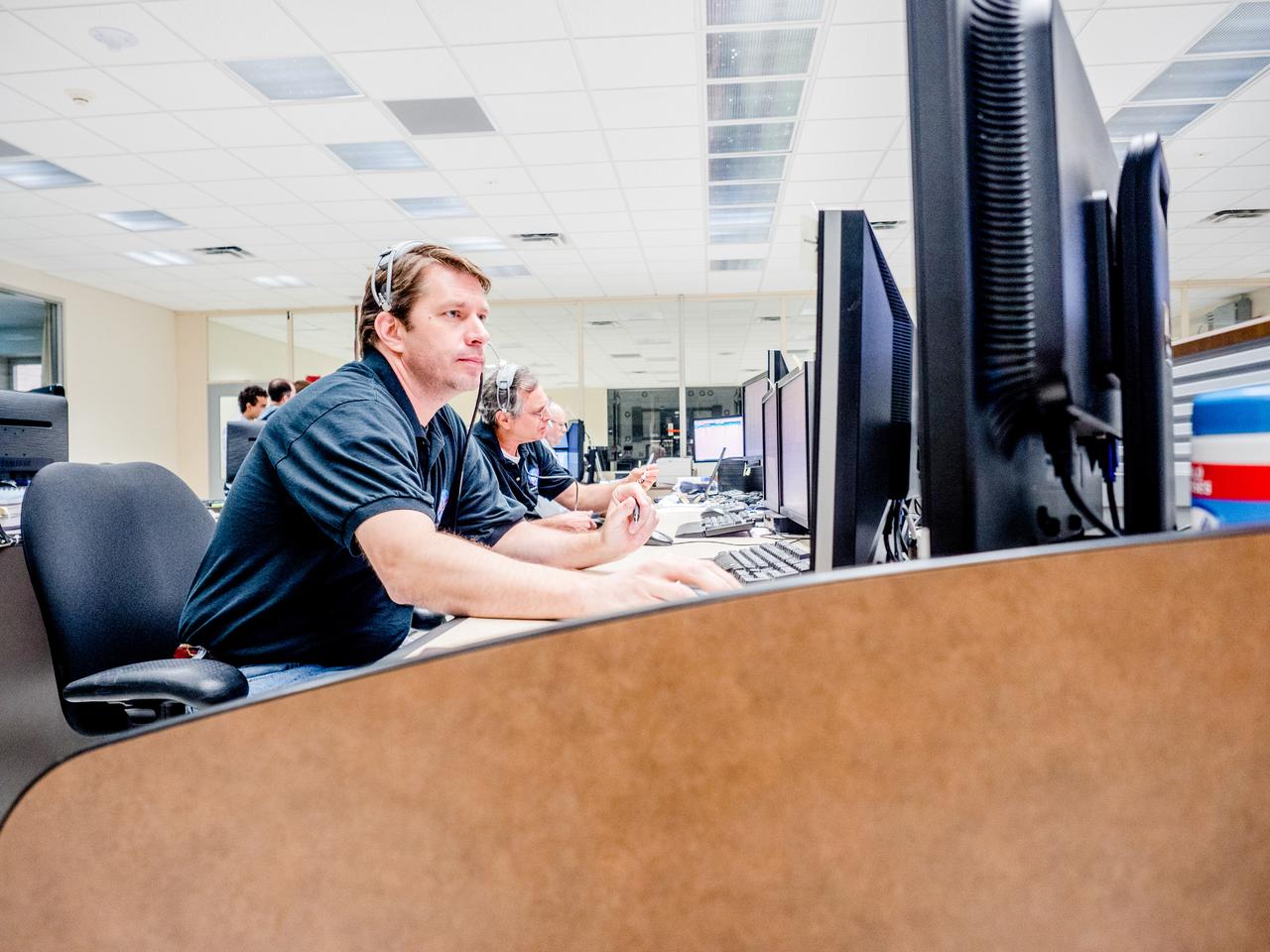
A successful test is completed of the European Structural Test Article (E-STA) partial tank vibration test (Y- axis at 80% power) performed on the Mechanical Vibration Facility (MVF) table at NASA Glenn’s Space Power Facility at Plum Brook Station, Sandusky, Ohio on Sept. 7, 2016 .Part of Batch images transfer from Flickr.
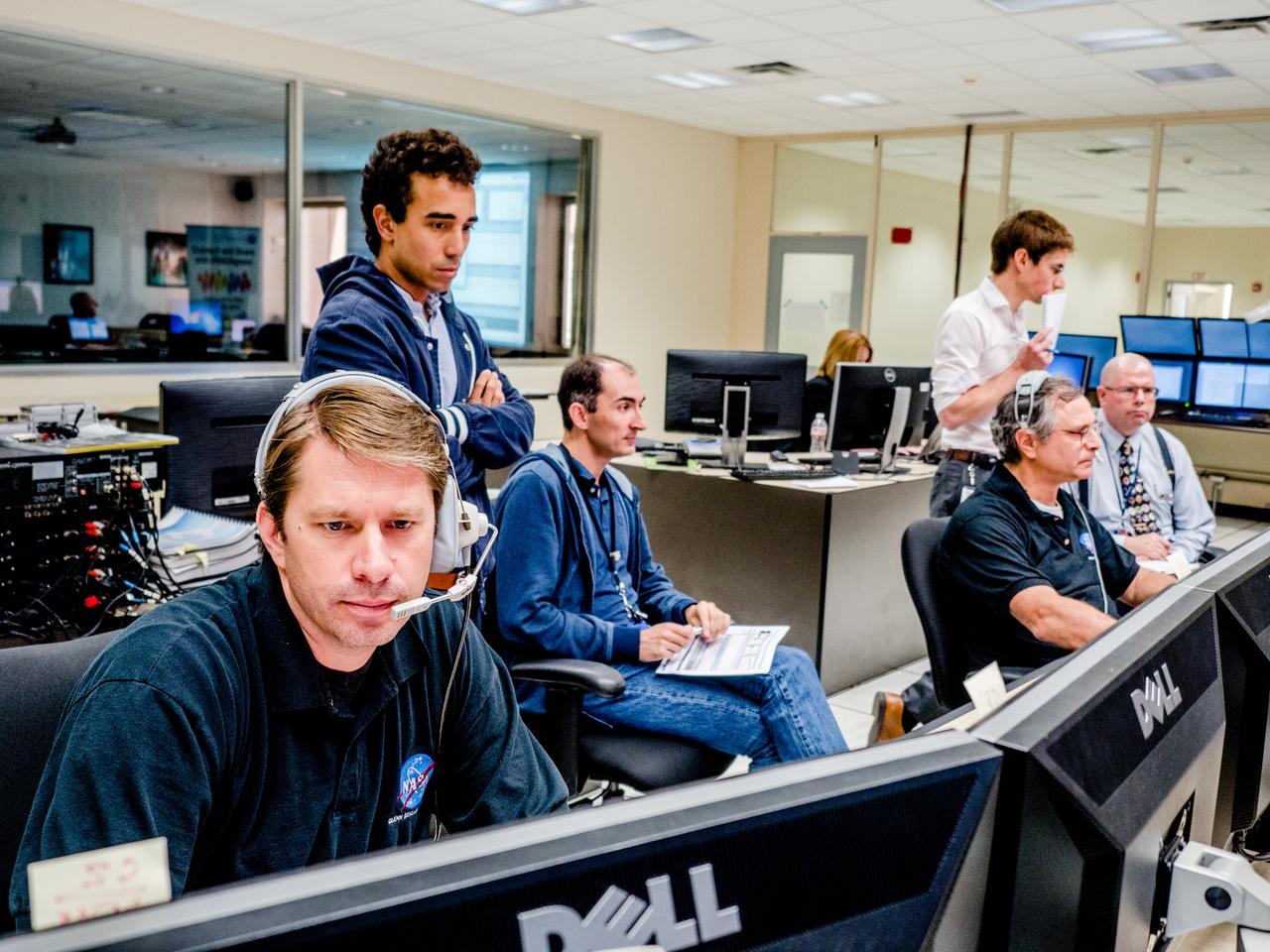
A successful test is completed of the European Structural Test Article (E-STA) partial tank vibration test (Y- axis at 80% power) performed on the Mechanical Vibration Facility (MVF) table at NASA Glenn’s Space Power Facility at Plum Brook Station, Sandusky, Ohio on Sept. 7, 2016 .Part of Batch images transfer from Flickr.
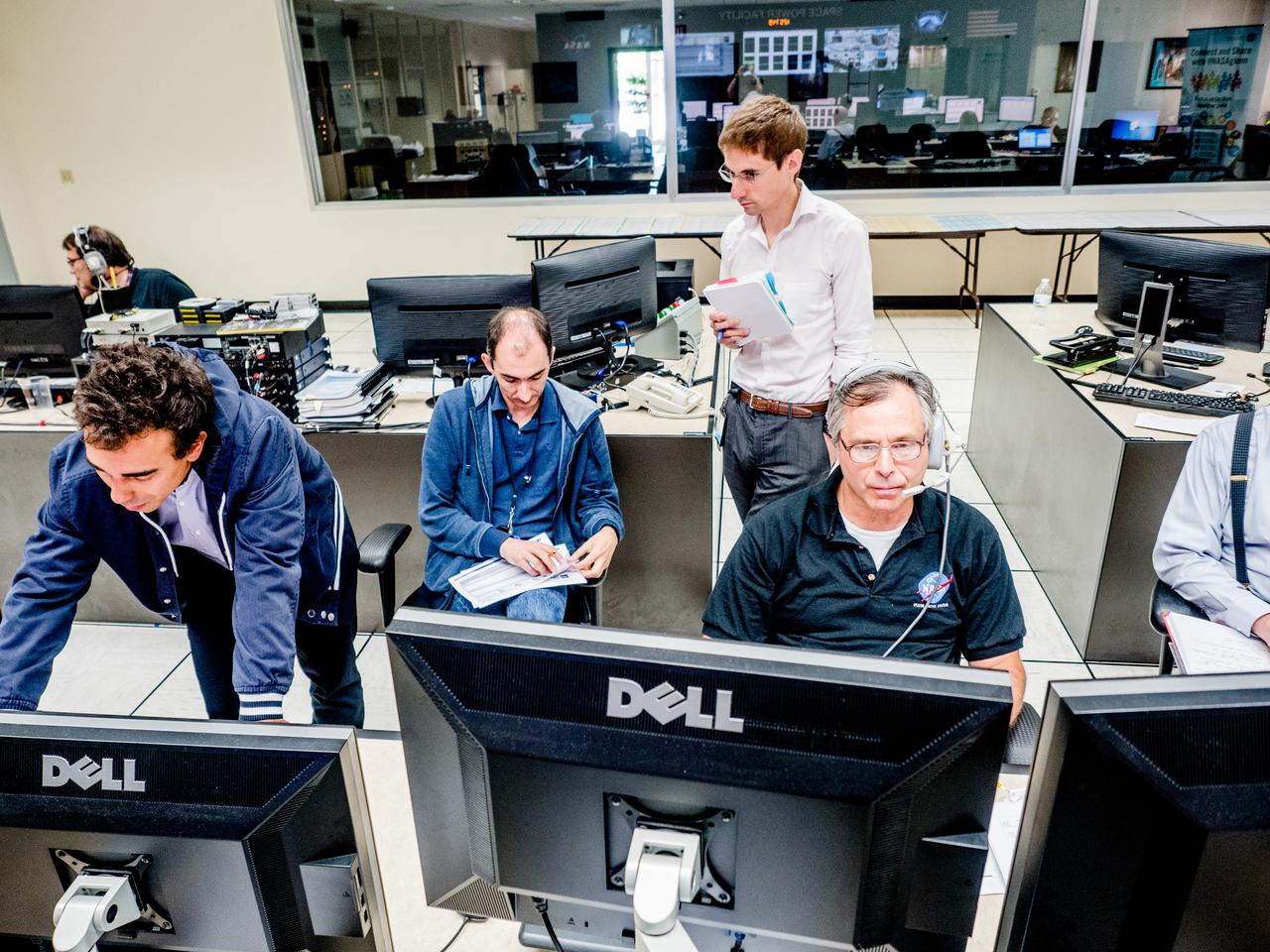
A successful test is completed of the European Structural Test Article (E-STA) partial tank vibration test (Y- axis at 80% power) performed on the Mechanical Vibration Facility (MVF) table at NASA Glenn’s Space Power Facility at Plum Brook Station, Sandusky, Ohio on Sept. 7, 2016 .Part of Batch images transfer from Flickr.
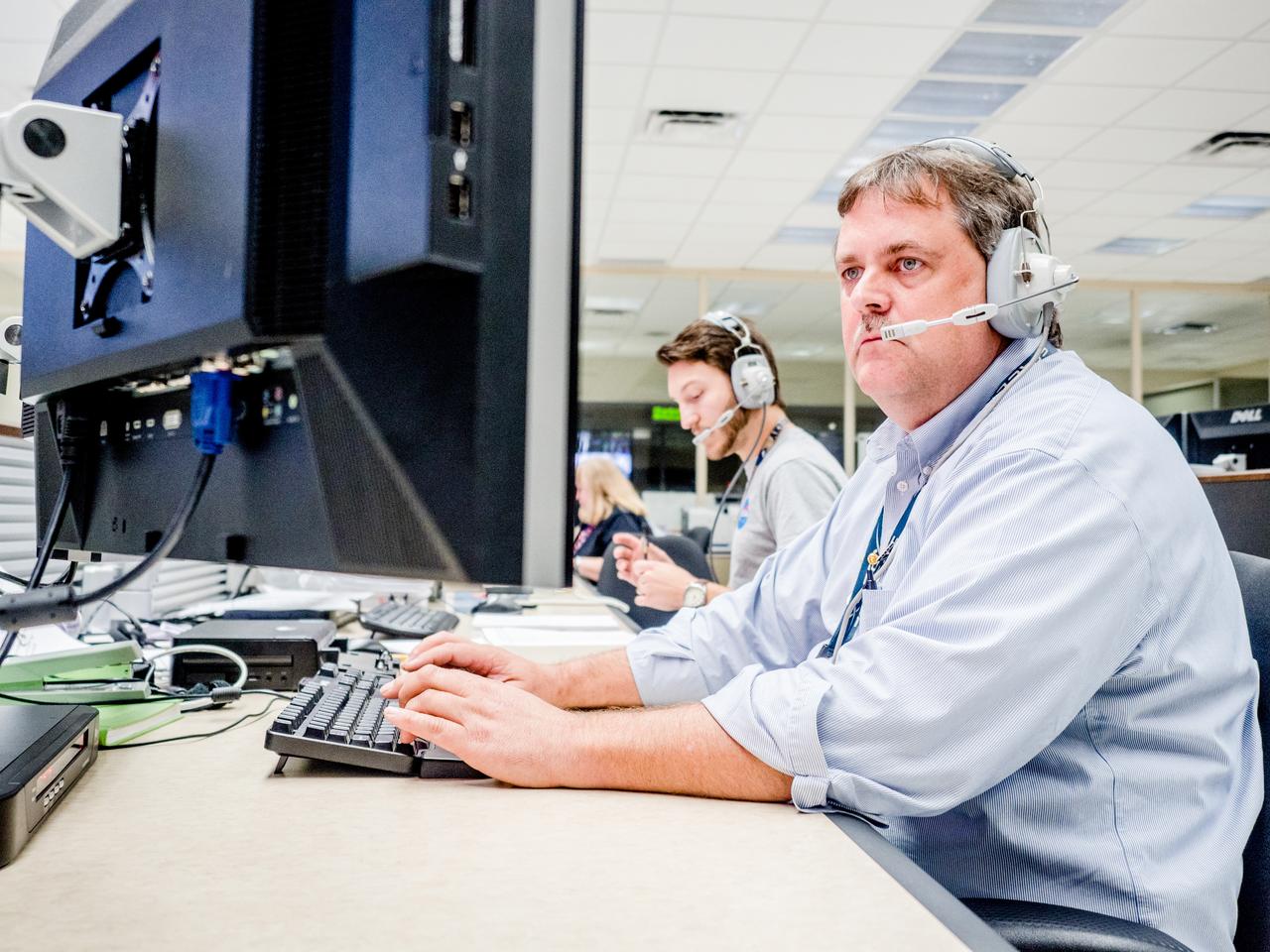
A successful test is completed of the European Structural Test Article (E-STA) partial tank vibration test (Y- axis at 80% power) performed on the Mechanical Vibration Facility (MVF) table at NASA Glenn’s Space Power Facility at Plum Brook Station, Sandusky, Ohio on Sept. 7, 2016 . Part of Batch images transfer from Flickr.

This structure. shown on Sept. 3, 2020, is the frame and base for the European Service Module, part of NASA’s Orion spacecraft that will return humans to the Moon...Built in Turin, Italy, at Thales Alenia Space, this is the third such structure to roll out of production. However, this one is extra special, as it will fly the first woman and next man to land on the Moon and return on the Artemis III mission.
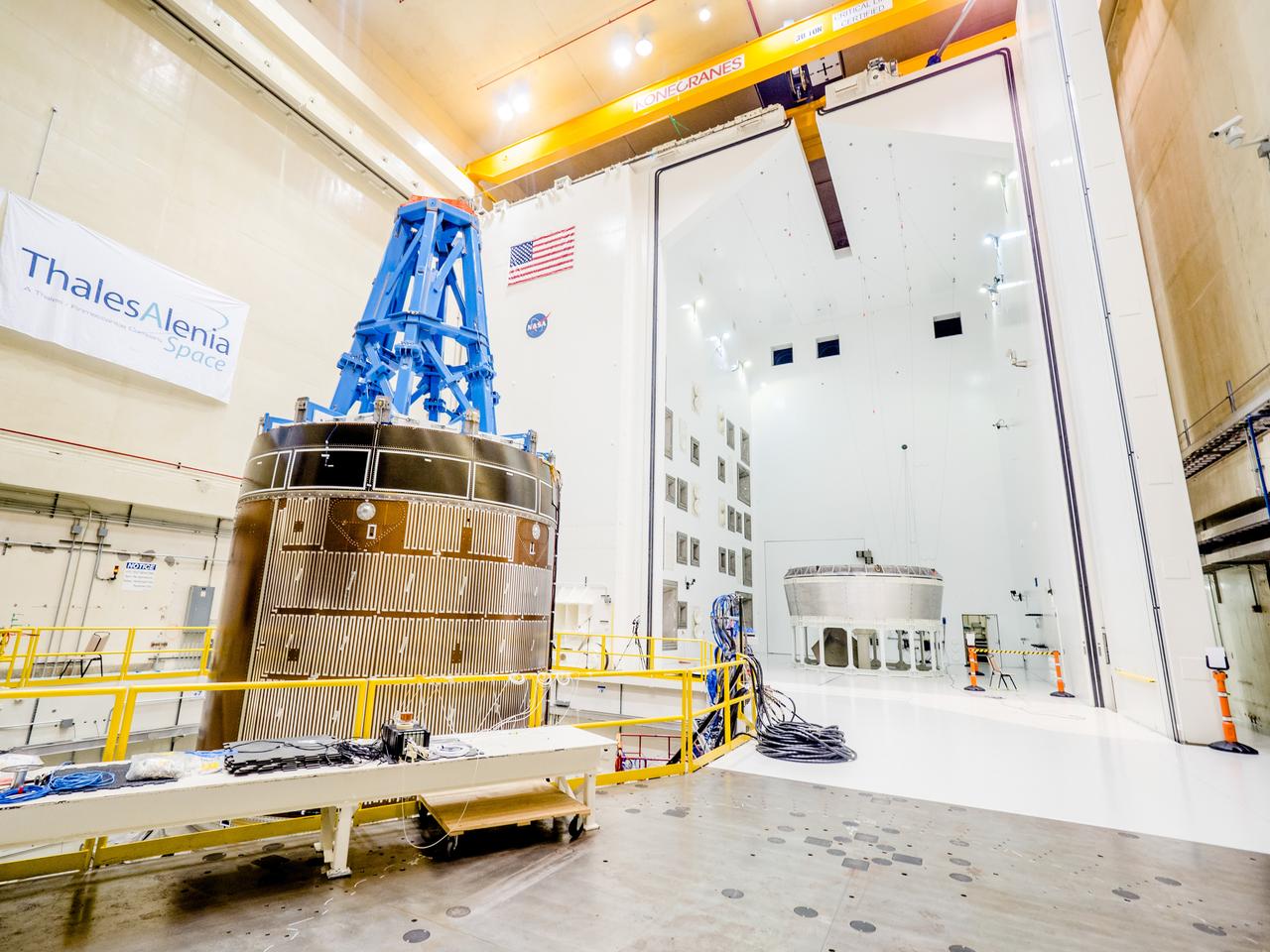
A successful test is completed of the European Structural Test Article (E-STA) partial tank vibration test (Y- axis at 80% power) performed on the Mechanical Vibration Facility (MVF) table at NASA Glenn’s Space Power Facility at Plum Brook Station, Sandusky, Ohio on Sept. 7, 2016 . Part of Batch images transfer from Flickr.
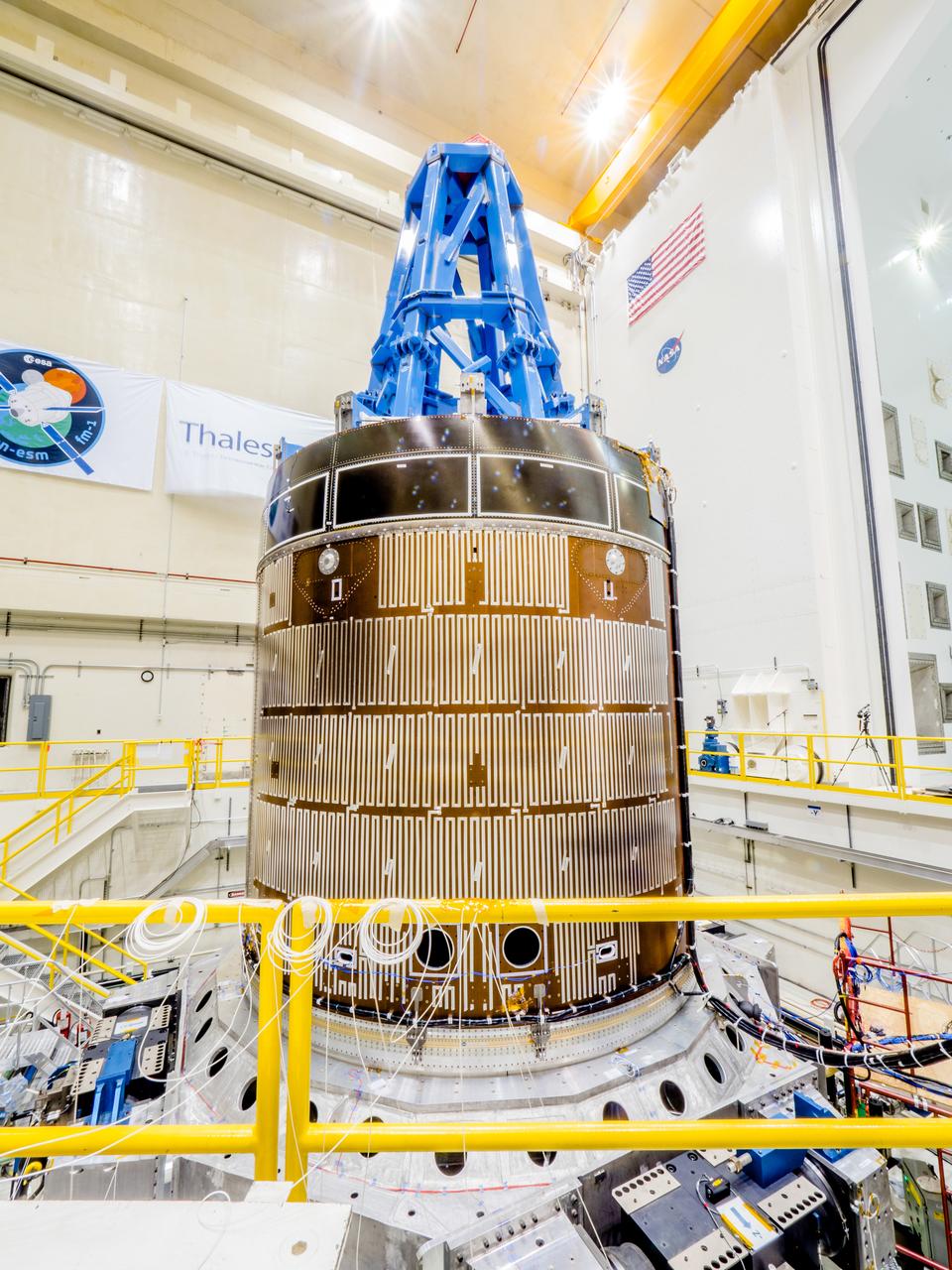
A successful test is completed of the European Structural Test Article (E-STA) partial tank vibration test (Y- axis at 80% power) performed on the Mechanical Vibration Facility (MVF) table at NASA Glenn’s Space Power Facility at Plum Brook Station, Sandusky, Ohio on Sept. 7, 2016 . Part of Batch images transfer from Flickr.

A successful test is completed of the European Structural Test Article (E-STA) partial tank vibration test (Y- axis at 80% power) performed on the Mechanical Vibration Facility (MVF) table at NASA Glenn’s Space Power Facility at Plum Brook Station, Sandusky, Ohio on Sept. 7, 2016 . Part of Batch images transfer from Flickr.
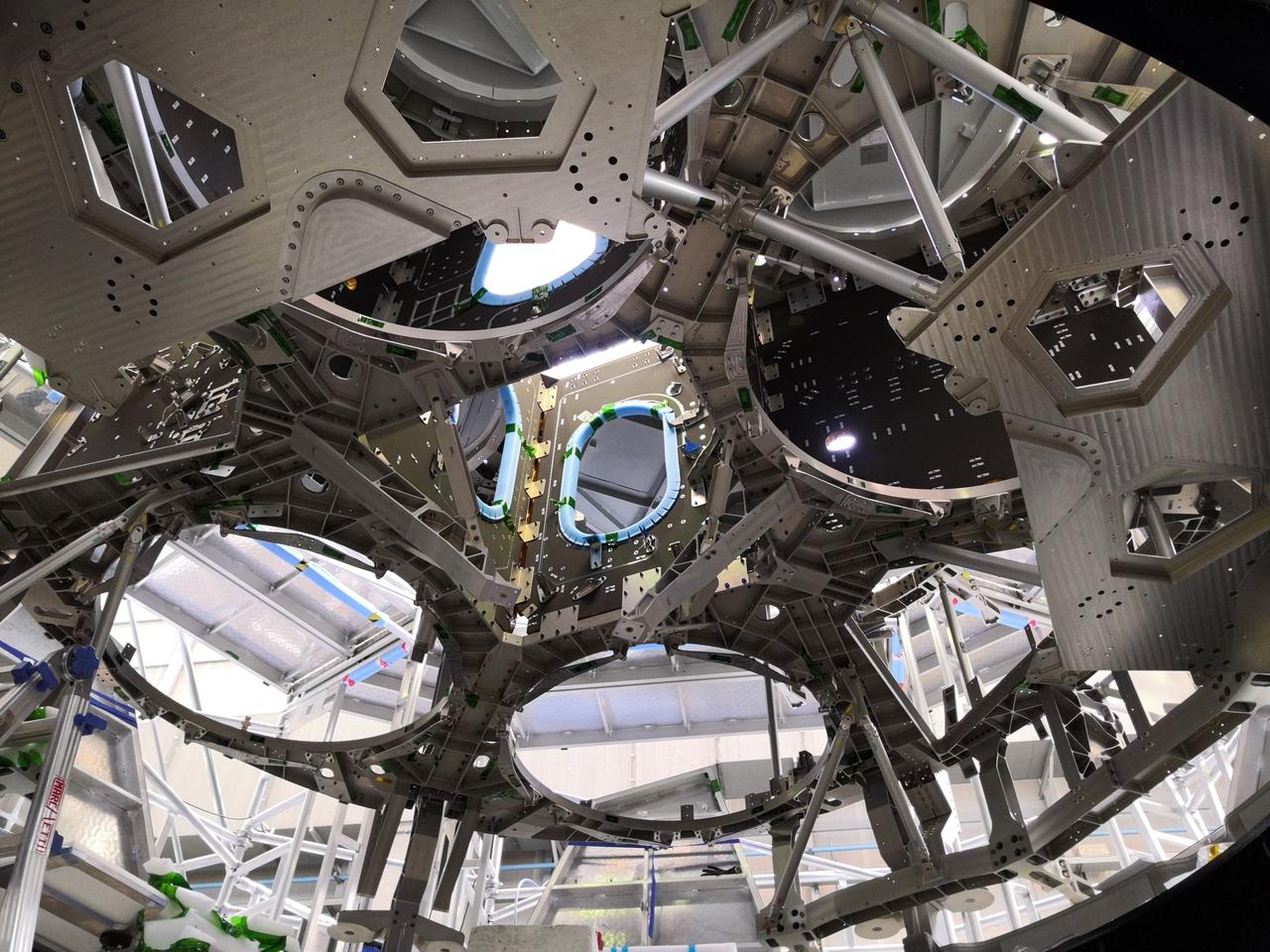
This structure. shown on Sept. 3, 2020, is the frame and base for the European Service Module, part of NASA’s Orion spacecraft that will return humans to the Moon...Built in Turin, Italy, at Thales Alenia Space, this is the third such structure to roll out of production. However, this one is extra special, as it will fly the first woman and next man to land on the Moon and return on the Artemis III mission.
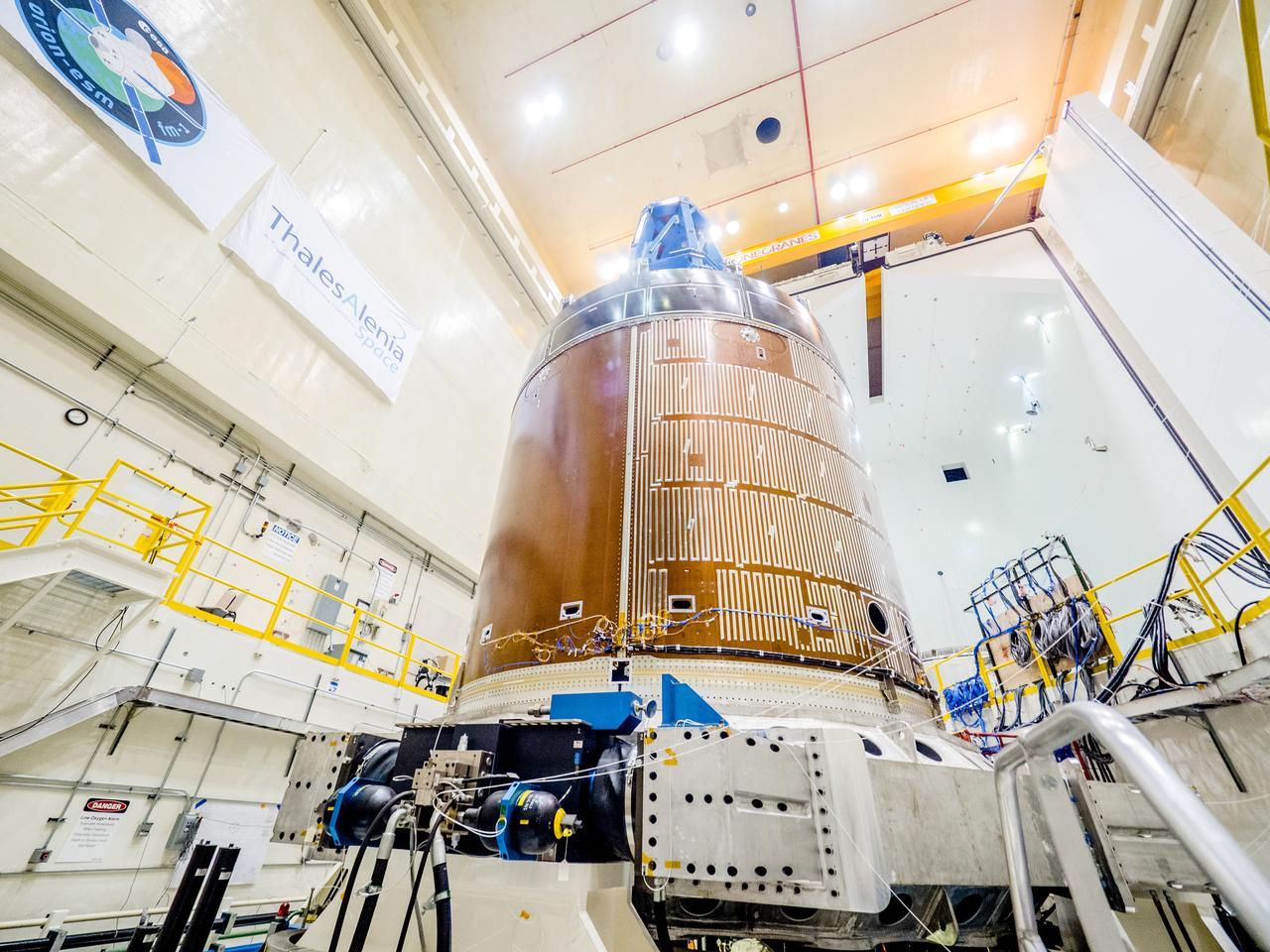
A successful test is completed of the European Structural Test Article (E-STA) partial tank vibration test (Y- axis at 80% power) performed on the Mechanical Vibration Facility (MVF) table at NASA Glenn’s Space Power Facility at Plum Brook Station, Sandusky, Ohio on Sept. 7, 2016 .Part of Batch images transfer from Flickr.
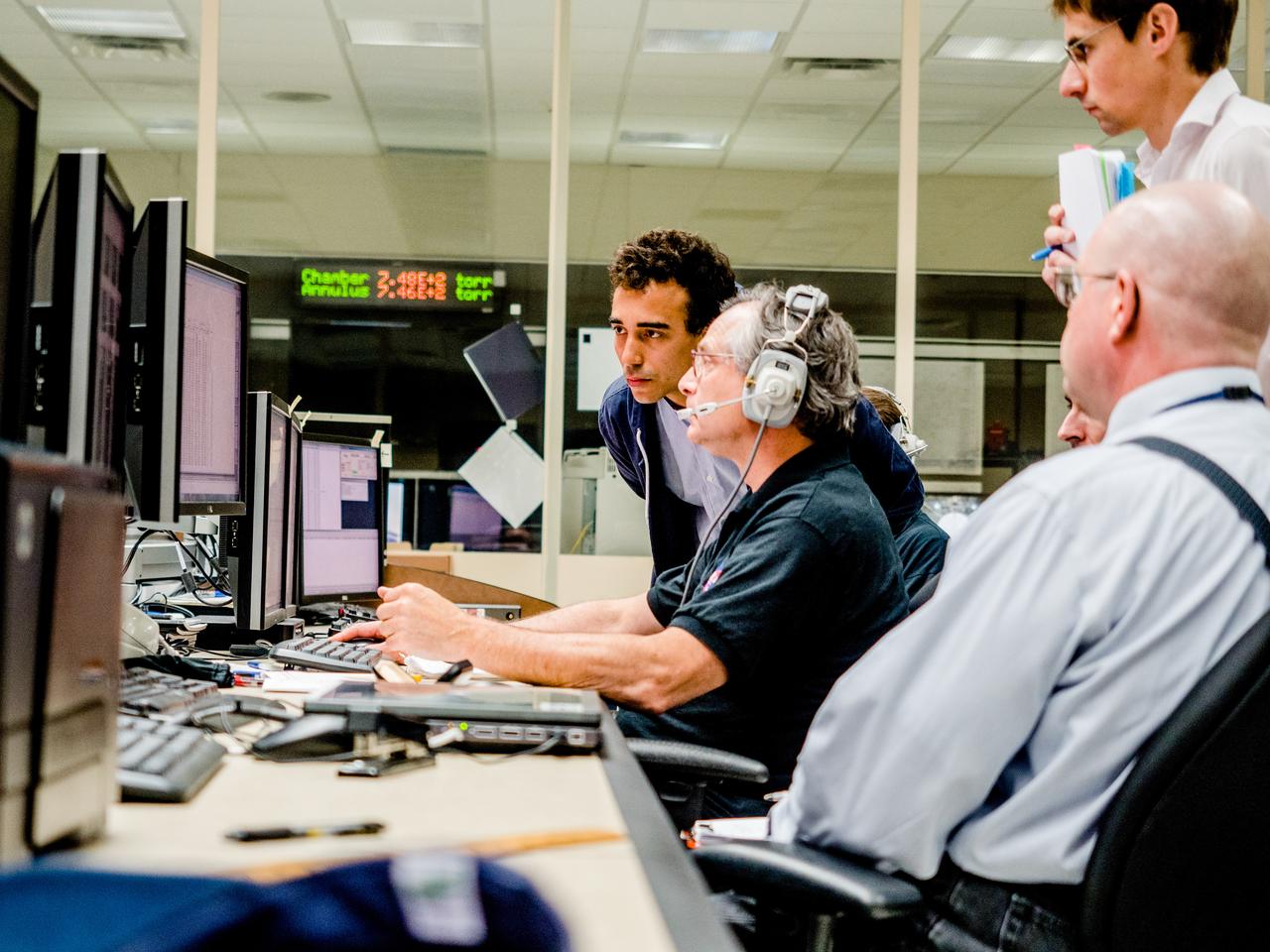
A successful test is completed of the European Structural Test Article (E-STA) partial tank vibration test (Y- axis at 80% power) performed on the Mechanical Vibration Facility (MVF) table at NASA Glenn’s Space Power Facility at Plum Brook Station, Sandusky, Ohio on Sept. 7, 2016 . Part of Batch images transfer from Flickr.
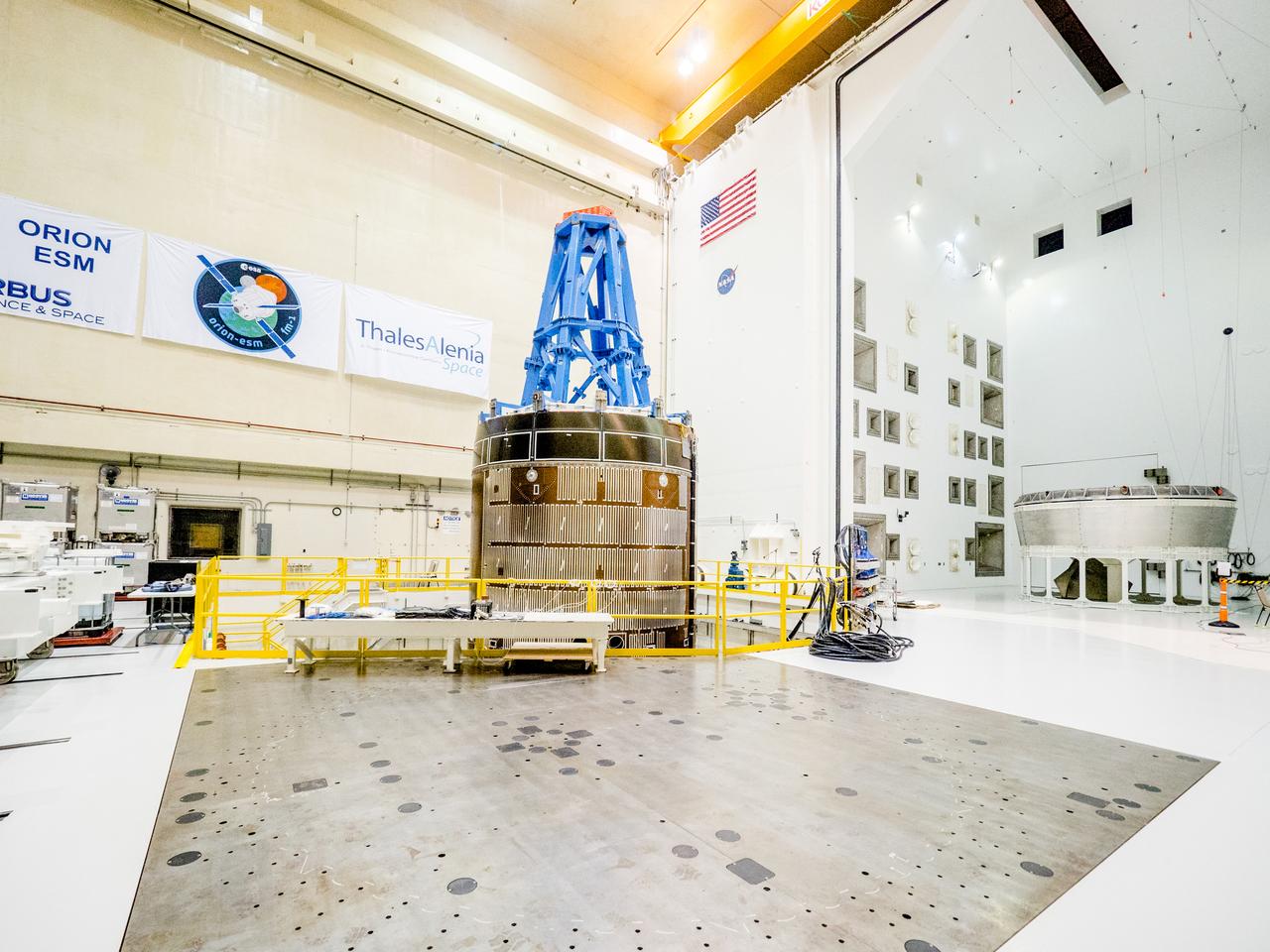
A successful test is completed of the European Structural Test Article (E-STA) partial tank vibration test (Y- axis at 80% power) performed on the Mechanical Vibration Facility (MVF) table at NASA Glenn’s Space Power Facility at Plum Brook Station, Sandusky, Ohio on Sept. 7, 2016 . Part of Batch images transfer from Flickr.
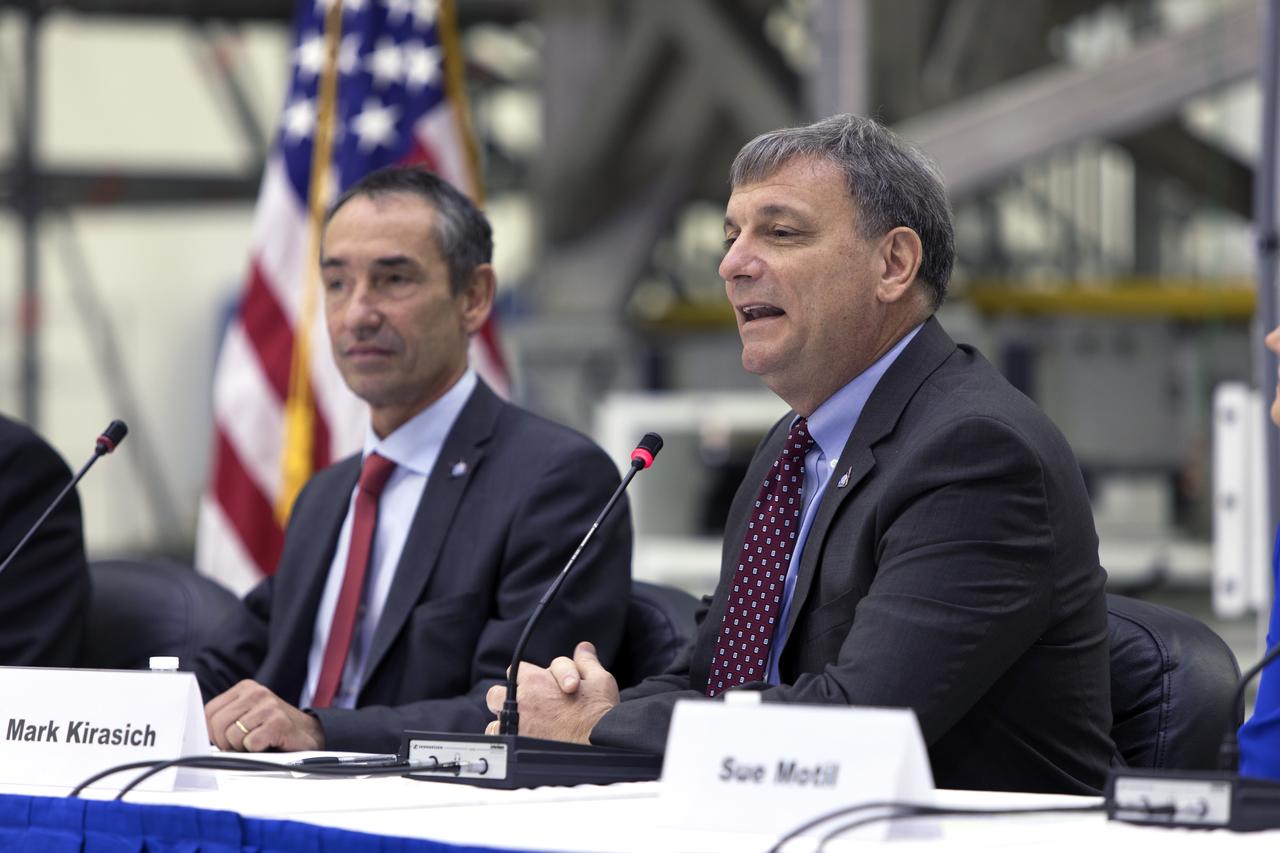
During a "Powering Exploration Mission-1" ceremony in the Neil Armstrong Operations and Checkout Building high bay at NASA's Kennedy Space Center on Nov. 16, 2018, Phillippe Deloo, left, European Service Module program manager at the European Space Agency (ESA); and Mark Kirasich, Orion Program manager at the agency's Johnson Space Center in Houston, answer questions. The event was held to mark a major milestone, the arrival of the European Service Module (ESM) for Orion's Exploration Mission-1. The service module, built by the European Space Agency, will supply the main propulsion system and power to the Orion spacecraft during EM-1, a mission to the Moon. The ESM also will house air and water for astronauts on future missions. EM-1 will be an uncrewed flight test that will provide a foundation for human deep space exploration to destinations beyond Earth orbit. EM-1 will be the first integrated test of NASA's Space Launch System, Orion and the ground systems at Kennedy.
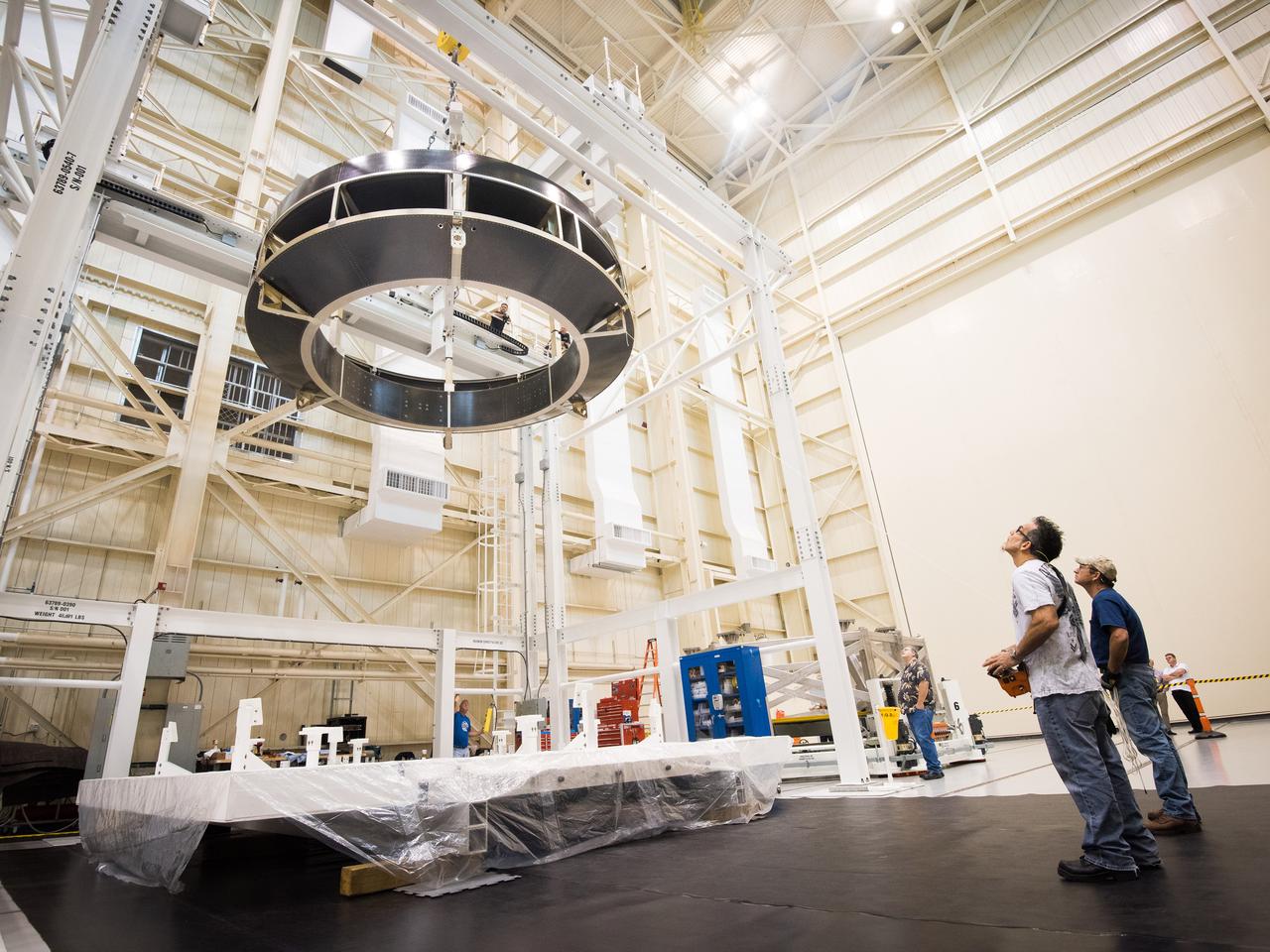
Offloading of the Orion Crew Module Adapter, CMA, at Plum Brook Station. The adapter will connect Orion’s crew module to a service module provided by ESA (European Space Agency). NASA is preparing for a series of tests that will check out the Orion European Service Module, a critical part of the spacecraft that will be launched on future missions to an asteroid and on toward Mars.
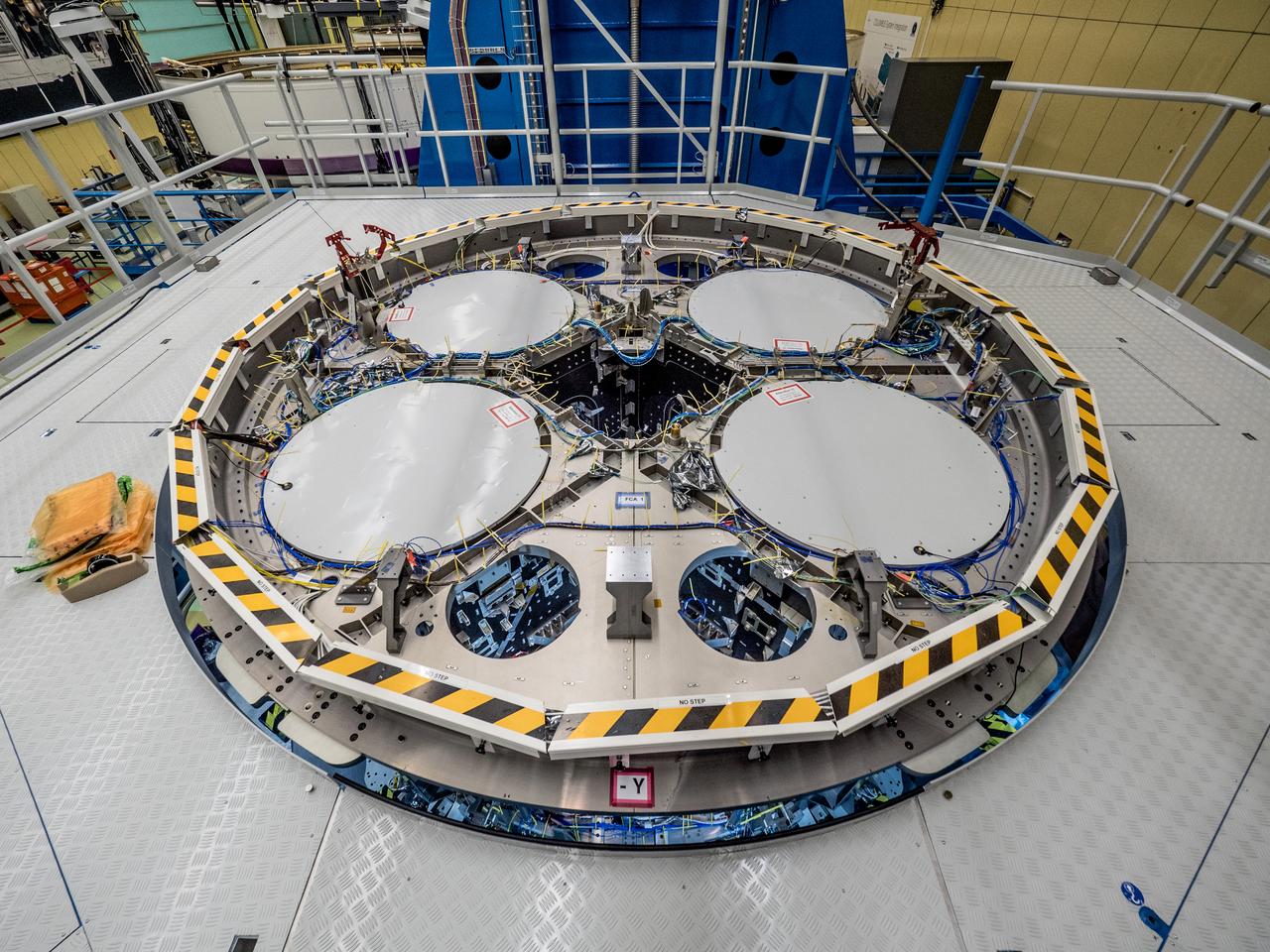
The ESA service module assembly continues at Airbus Defence and Space in Bremen, Germany on June 7, 2017.
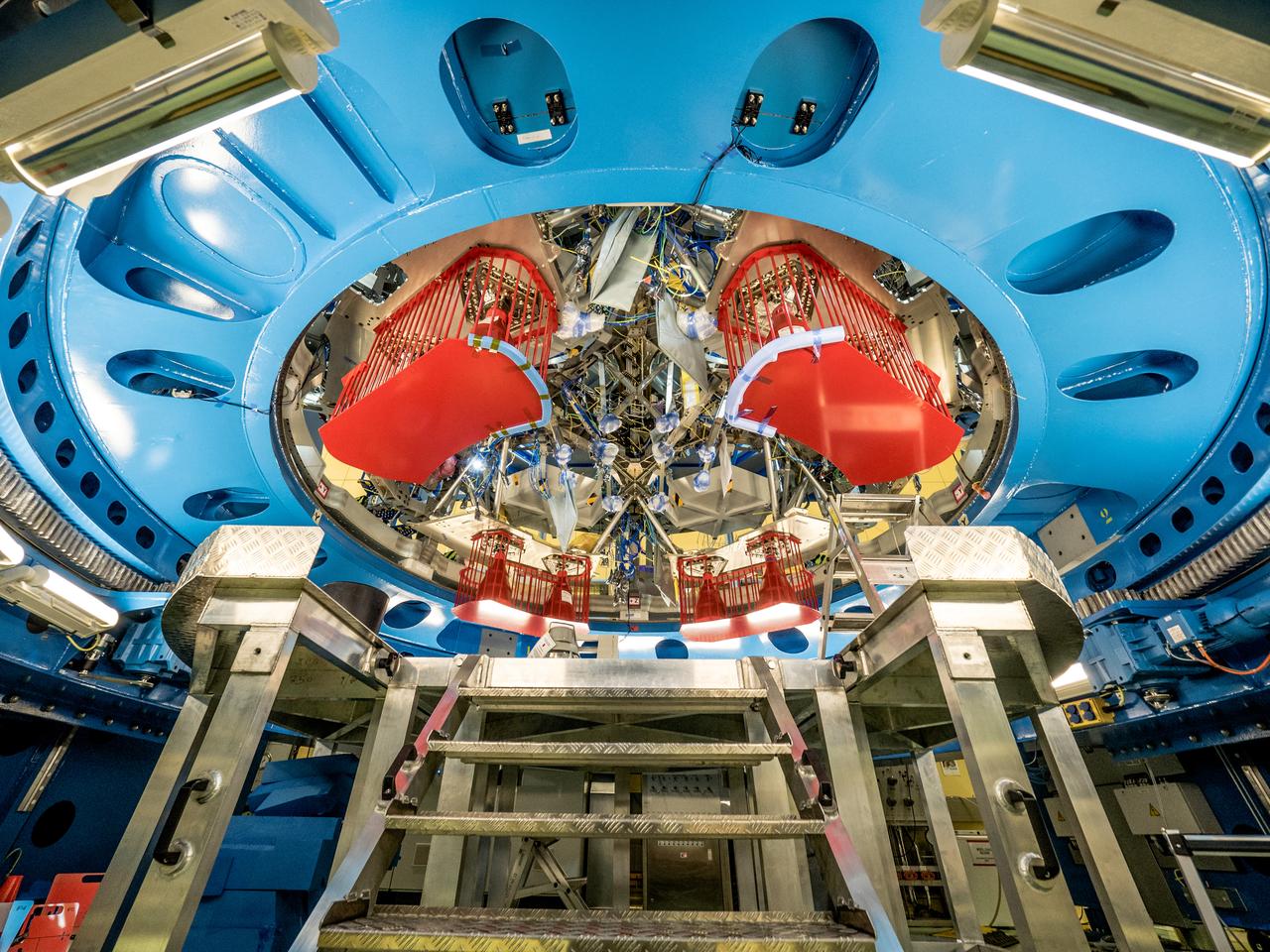
The ESA service module assembly continues at Airbus Defence and Space in Bremen, Germany on June 7, 2017.
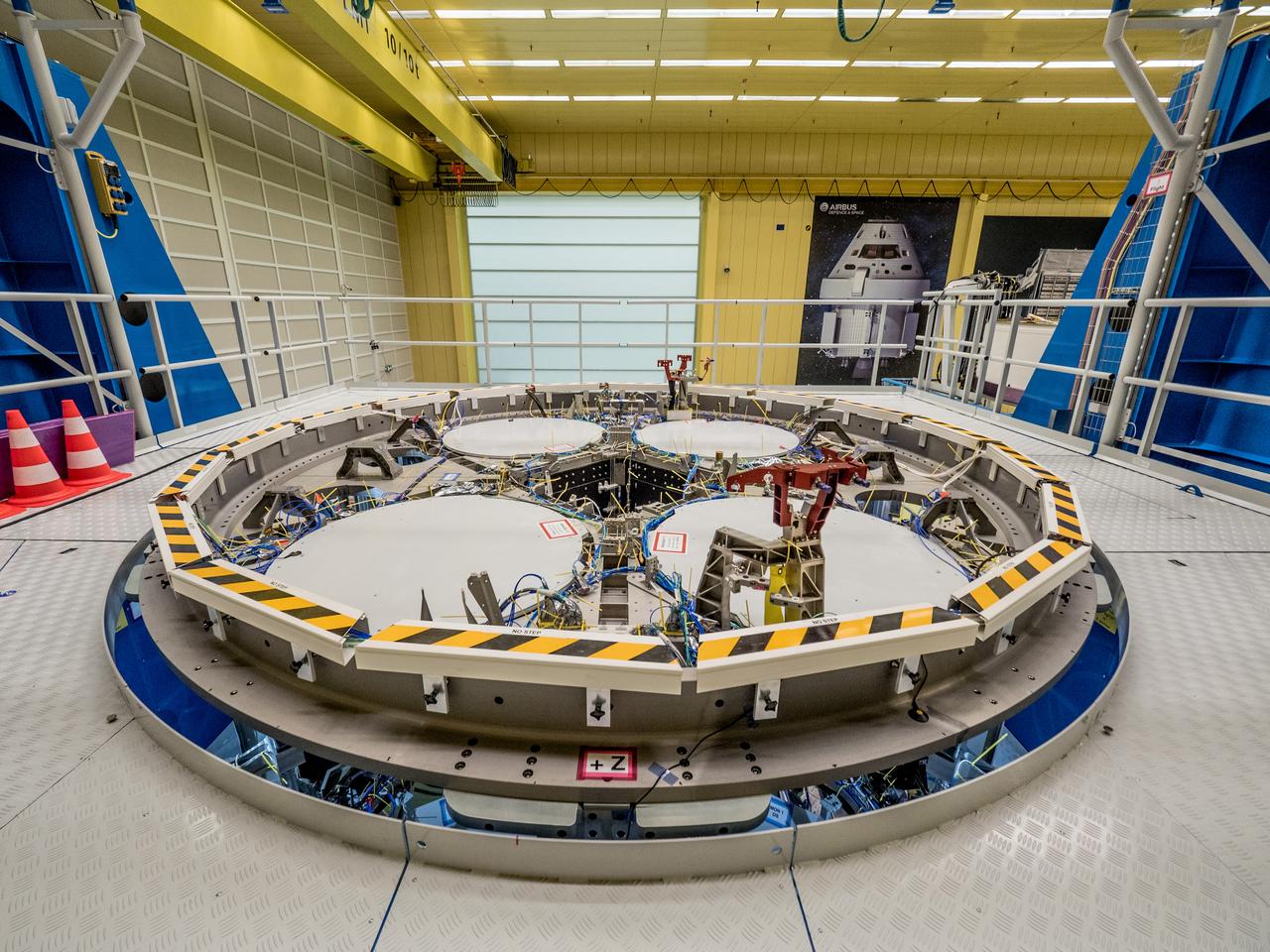
The ESA service module assembly continues at Airbus Defence and Space in Bremen, Germany on June 7, 2017.
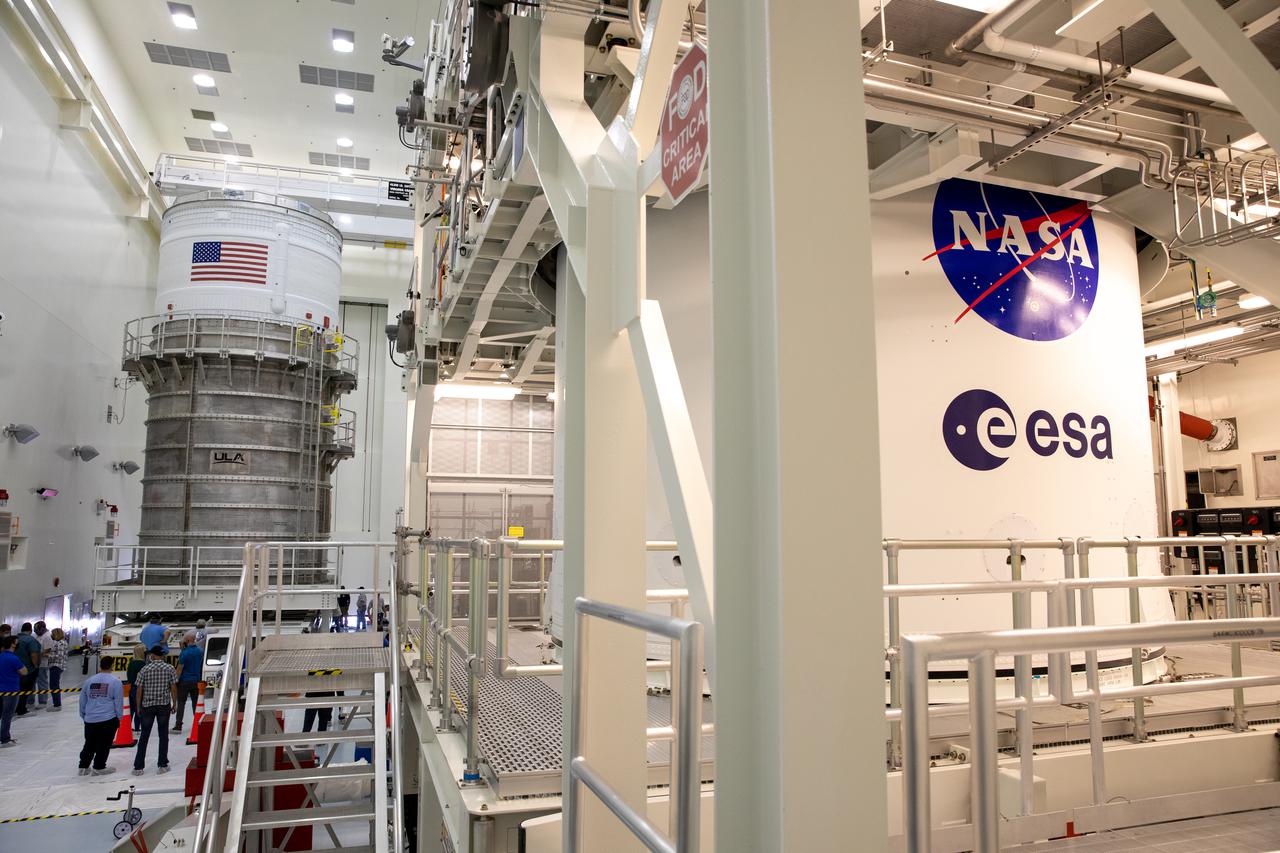
The Space Launch System (SLS) rocket’s interim cryogenic propulsion stage (ICPS) moved into the Multi-Payload Processing Facility February 18, 2021, at NASA’s Kennedy Space Center in Florida alongside one of its flight partners for the Artemis I mission, the Orion spacecraft. Both pieces of hardware will undergo fueling and servicing in the facility ahead of launch by teams from NASA’s Exploration Ground Systems and their primary contractor, Jacobs Technology. In view, at right, are the NASA insignia and ESA (European Space Agency) logos on the European-built service module. Artemis I will be an integrated flight test of the SLS rocket and Orion spacecraft ahead of the crewed flights to the Moon. Under the Artemis program, NASA will land the first woman and the next man on the lunar surface and establish a sustainable presence at the Moon to prepare for human missions to Mars.
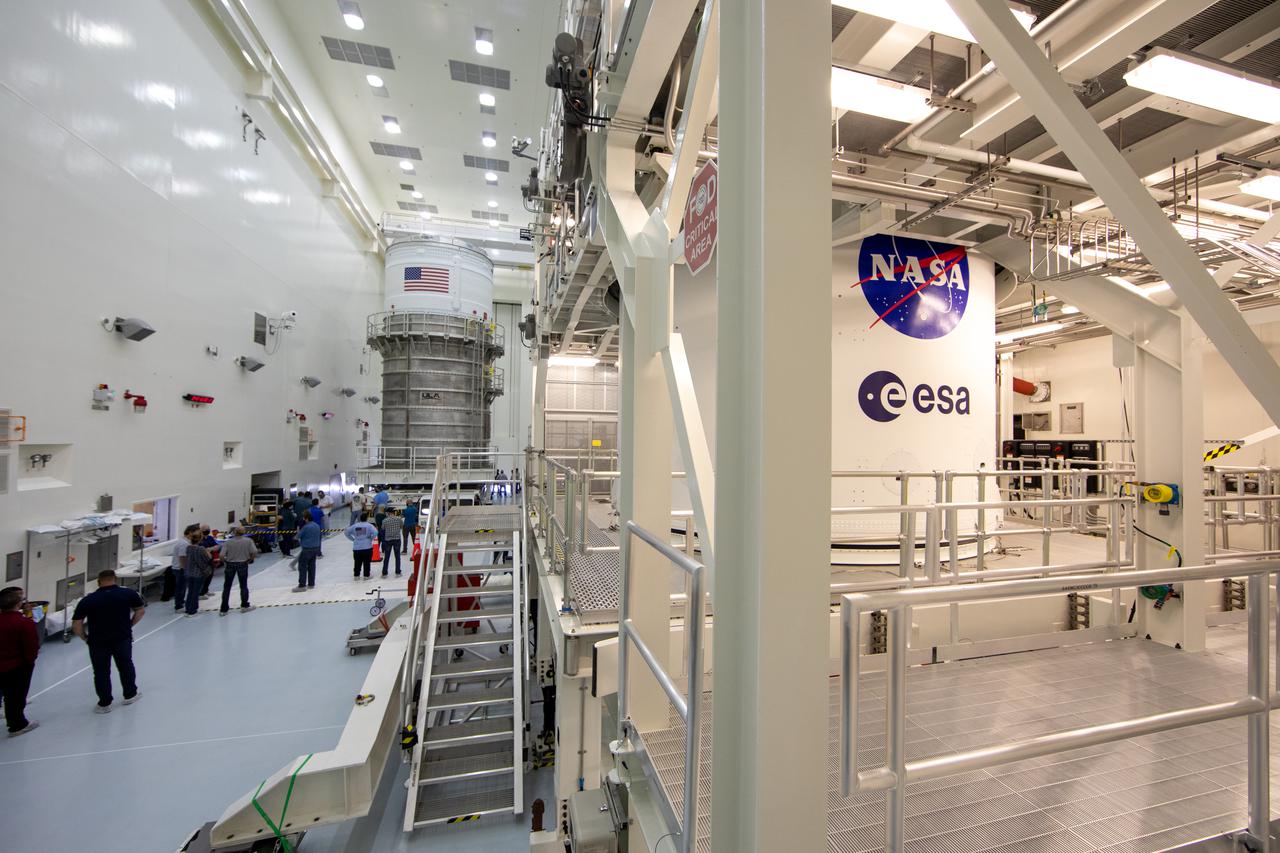
The Space Launch System (SLS) rocket’s interim cryogenic propulsion stage (ICPS) moved into the Multi-Payload Processing Facility February 18, 2021, at NASA’s Kennedy Space Center in Florida alongside one of its flight partners for the Artemis I mission, the Orion spacecraft. Both pieces of hardware will undergo fueling and servicing in the facility ahead of launch by teams from NASA’s Exploration Ground Systems and their primary contractor, Jacobs Technology. In view, at right, are the NASA insignia and ESA (European Space Agency) logos on the European-built service module. Artemis I will be an integrated flight test of the SLS rocket and Orion spacecraft ahead of the crewed flights to the Moon. Under the Artemis program, NASA will land the first woman and the next man on the lunar surface and establish a sustainable presence at the Moon to prepare for human missions to Mars.
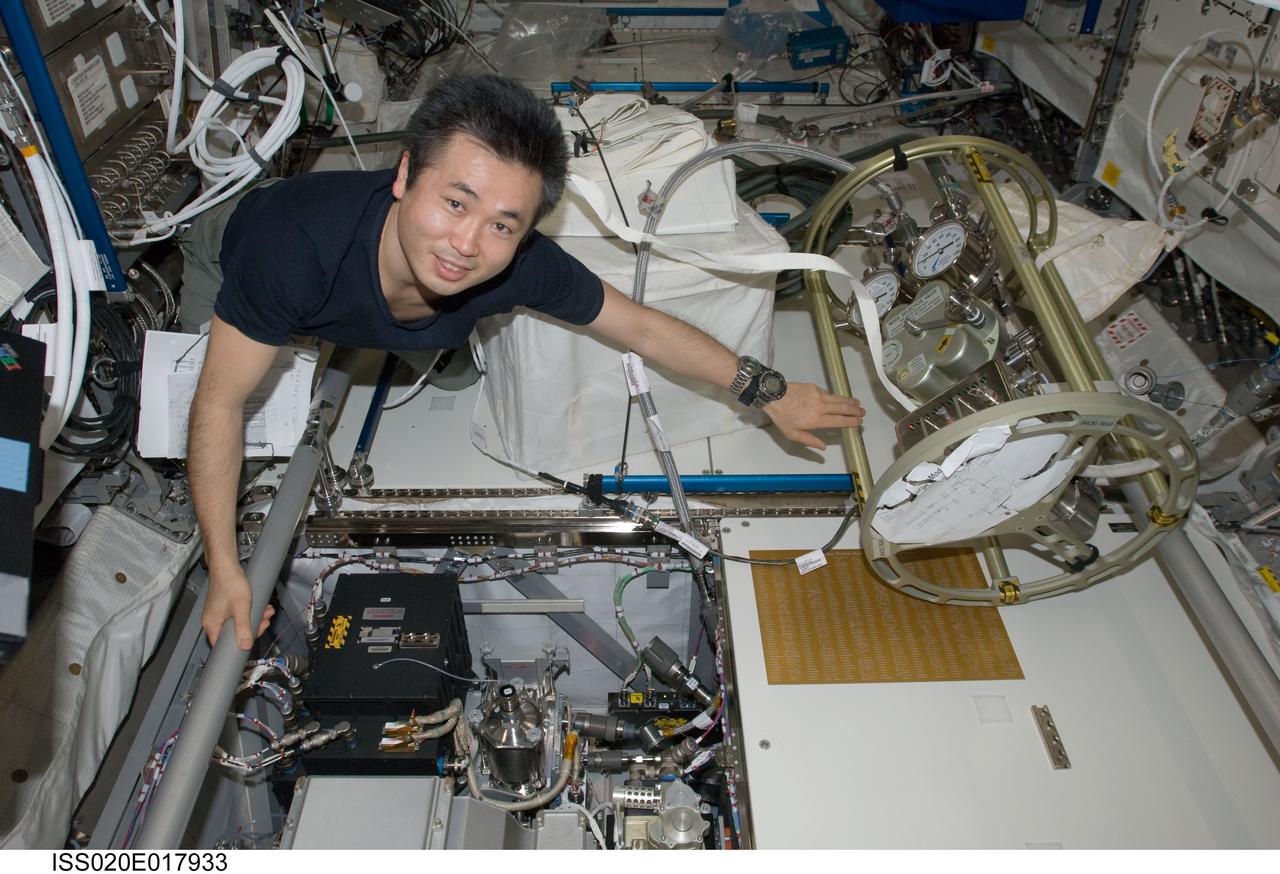
ISS020-E-017933 (8 July 2009) --- Japan Aerospace Exploration Agency (JAXA) astronaut Koichi Wakata, Expedition 20 flight engineer, works with the Fluid Servicing System (FSS) and the Fluid Control Pump Assembly (FCPA) in the Columbus laboratory of the International Space Station.
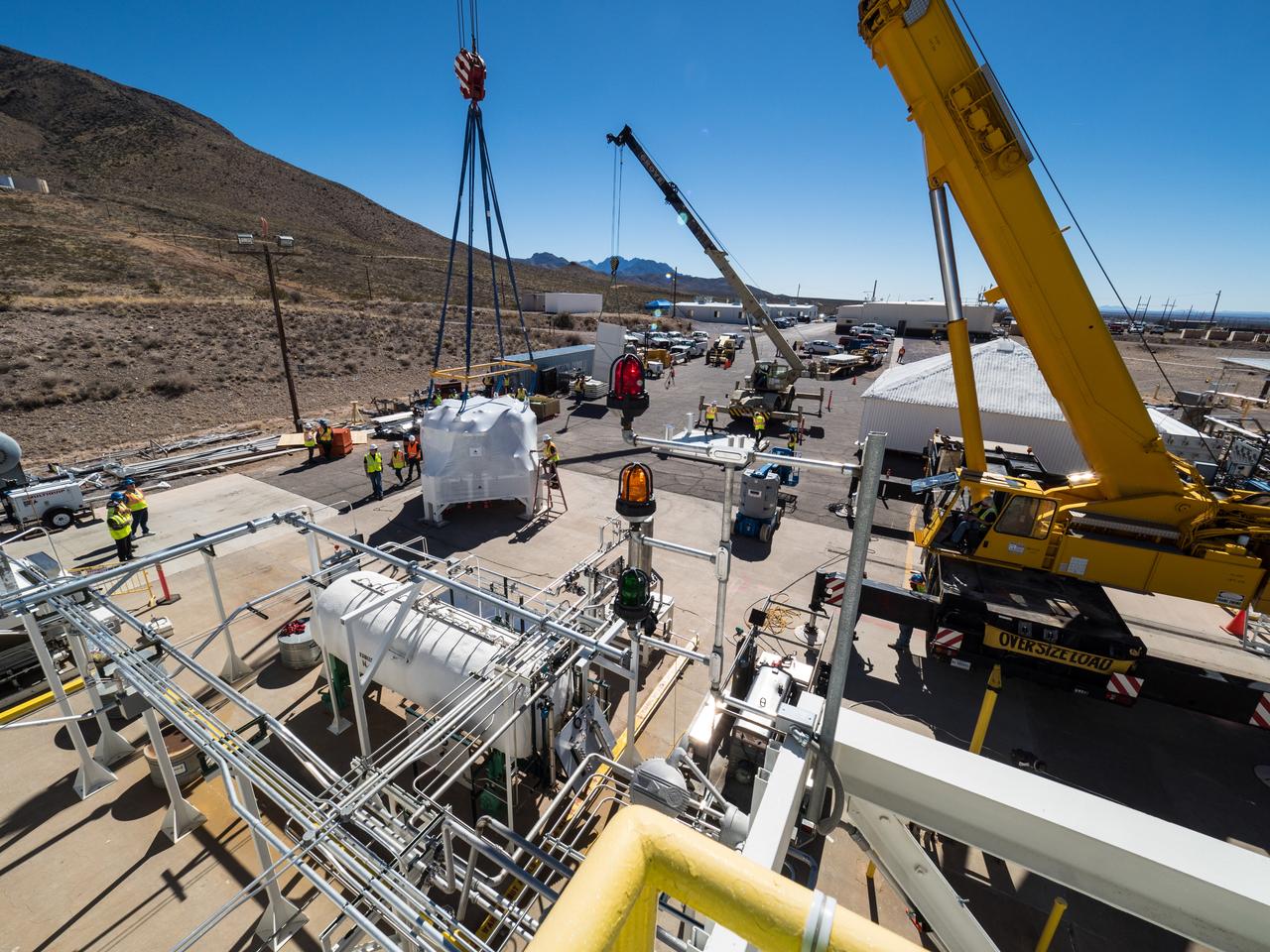
On Feb. 21, 2017 engineers successfully install ESA’s European Service Module Propulsion Qualification Module (PQM) at NASA’s White Sands Test Facility in New Mexico that was delivered by Airbus – ESA’s prime contractor for the Service Module. The module will be equipped with a total of 21 engines to support NASA’s Orion spacecraft: one U.S. Space Shuttle Orbital Maneuvering System (OMS) engine, eight auxiliary thrusters and 12 smaller thrusters produced by Airbus Safran Launchers in Germany. The all-steel PQM structure is used to test the propulsion systems on Orion, including “hot firing” of the OMS engine and thrusters.
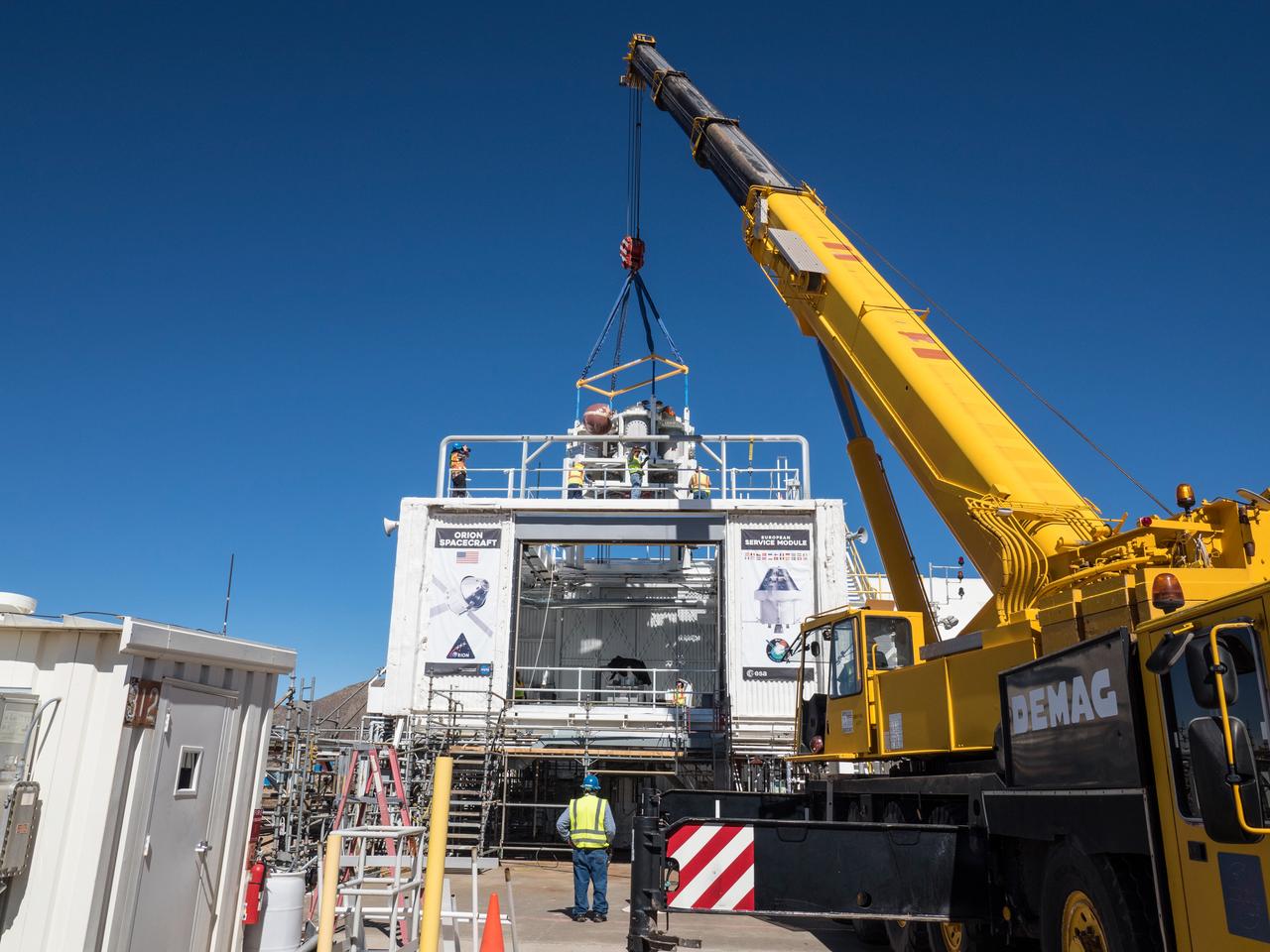
On Feb. 22, engineers successfully install ESA’s European Service Module Propulsion Qualification Module (PQM) at NASA’s White Sands Test Facility in New Mexico that was delivered by Airbus – ESA’s prime contractor for the Service Module. The module will be equipped with a total of 21 engines to support NASA’s Orion spacecraft: one U.S. Space Shuttle Orbital Maneuvering System (OMS) engine, eight auxiliary thrusters and 12 smaller thrusters produced by Airbus Safran Launchers in Germany. The all-steel PQM structure is used to test the propulsion systems on Orion, including “hot firing” of the OMS engine and thrusters.
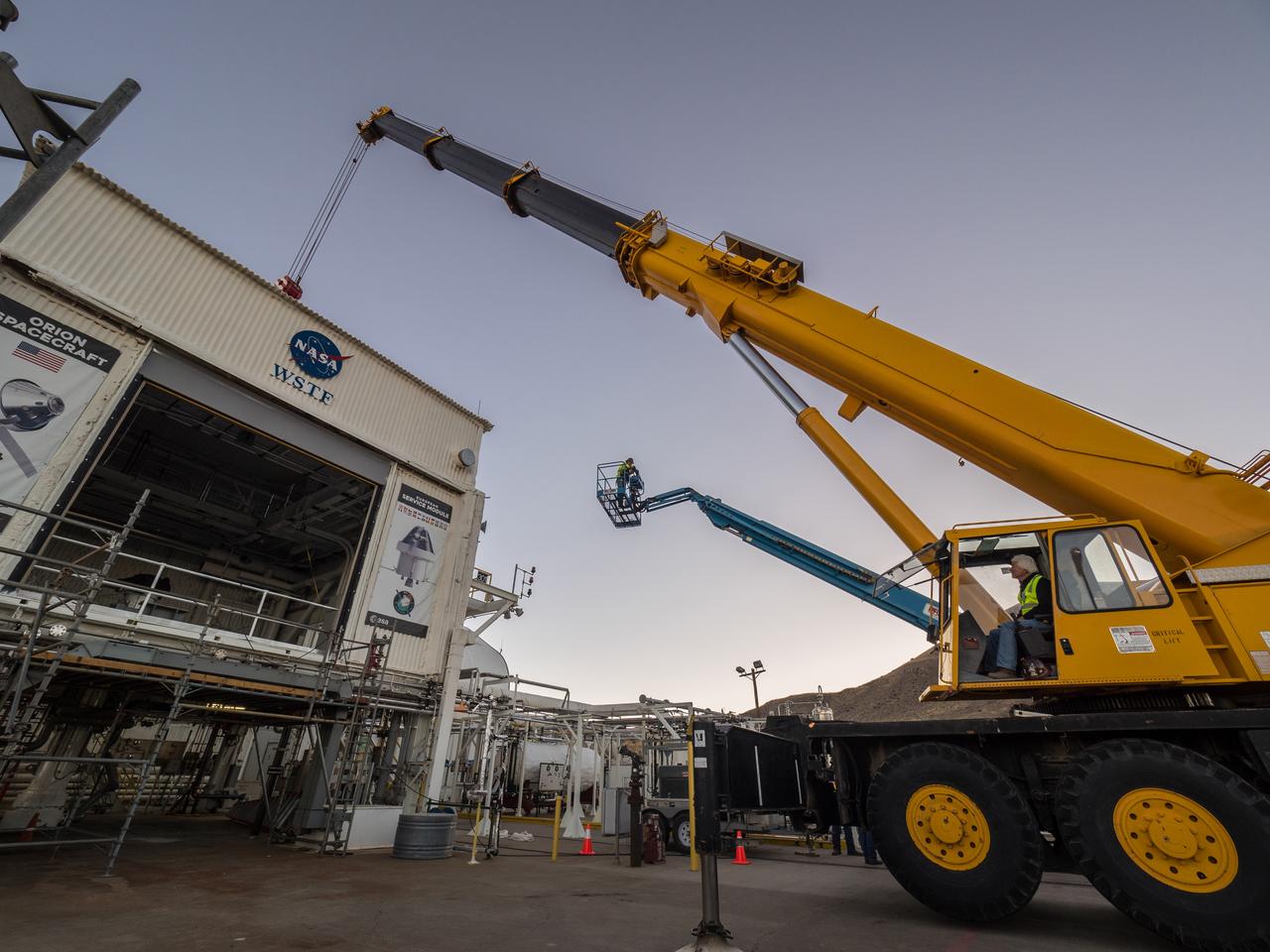
On Feb. 21, 2017 engineers successfully install ESA’s European Service Module Propulsion Qualification Module (PQM) at NASA’s White Sands Test Facility in New Mexico that was delivered by Airbus – ESA’s prime contractor for the Service Module. The module will be equipped with a total of 21 engines to support NASA’s Orion spacecraft: one U.S. Space Shuttle Orbital Maneuvering System (OMS) engine, eight auxiliary thrusters and 12 smaller thrusters produced by Airbus Safran Launchers in Germany. The all-steel PQM structure is used to test the propulsion systems on Orion, including “hot firing” of the OMS engine and thrusters.

On Feb. 21, 2017 engineers successfully install ESA’s European Service Module Propulsion Qualification Module (PQM) at NASA’s White Sands Test Facility in New Mexico that was delivered by Airbus – ESA’s prime contractor for the Service Module. The module will be equipped with a total of 21 engines to support NASA’s Orion spacecraft: one U.S. Space Shuttle Orbital Maneuvering System (OMS) engine, eight auxiliary thrusters and 12 smaller thrusters produced by Airbus Safran Launchers in Germany. The all-steel PQM structure is used to test the propulsion systems on Orion, including “hot firing” of the OMS engine and thrusters.
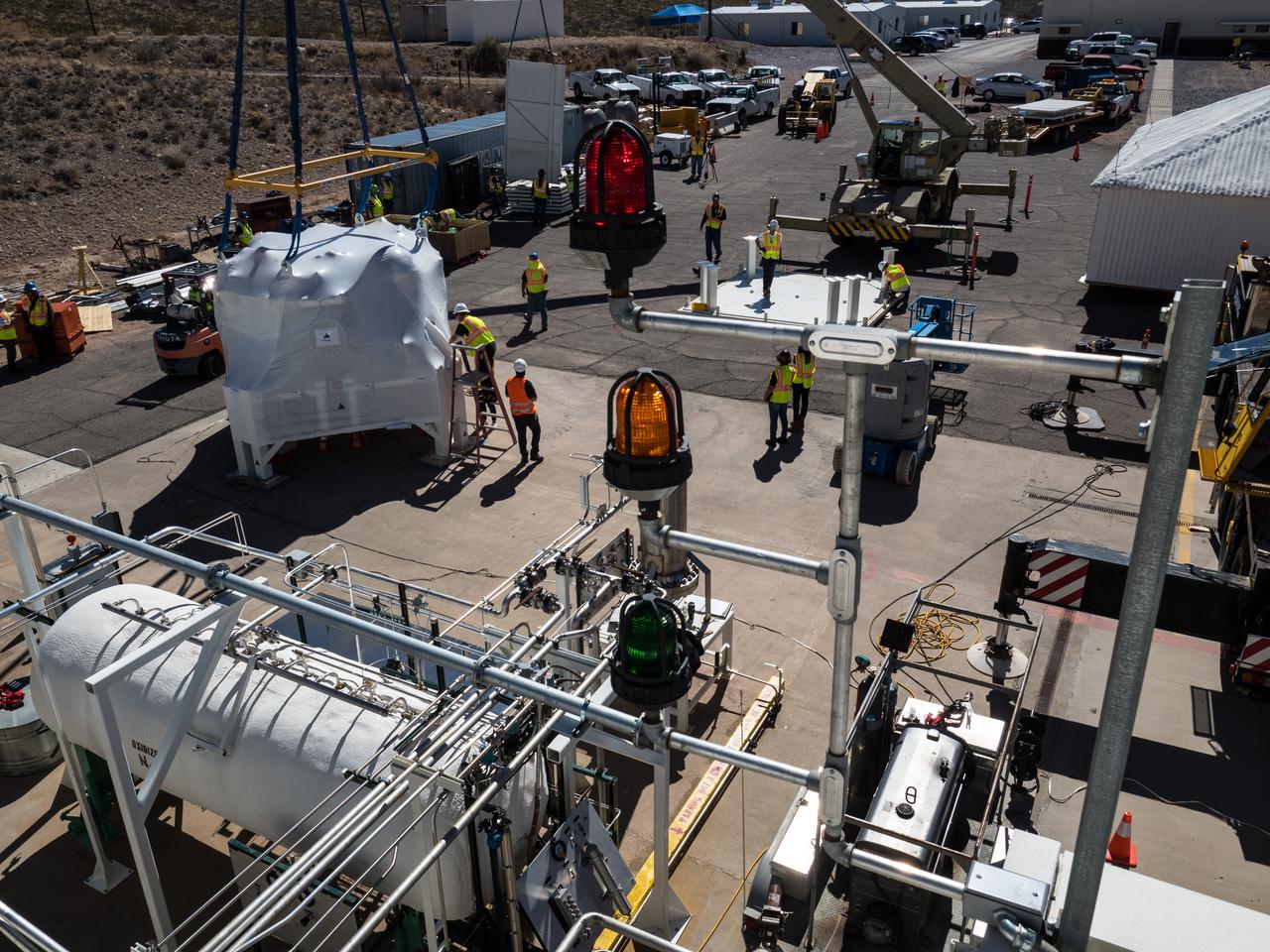
On Feb. 21, 2017 engineers successfully install ESA’s European Service Module Propulsion Qualification Module (PQM) at NASA’s White Sands Test Facility in New Mexico that was delivered by Airbus – ESA’s prime contractor for the Service Module. The module will be equipped with a total of 21 engines to support NASA’s Orion spacecraft: one U.S. Space Shuttle Orbital Maneuvering System (OMS) engine, eight auxiliary thrusters and 12 smaller thrusters produced by Airbus Safran Launchers in Germany. The all-steel PQM structure is used to test the propulsion systems on Orion, including “hot firing” of the OMS engine and thrusters.

On Feb. 22, engineers successfully install ESA’s European Service Module Propulsion Qualification Module (PQM) at NASA’s White Sands Test Facility in New Mexico that was delivered by Airbus – ESA’s prime contractor for the Service Module. The module will be equipped with a total of 21 engines to support NASA’s Orion spacecraft: one U.S. Space Shuttle Orbital Maneuvering System (OMS) engine, eight auxiliary thrusters and 12 smaller thrusters produced by Airbus Safran Launchers in Germany. The all-steel PQM structure is used to test the propulsion systems on Orion, including “hot firing” of the OMS engine and thrusters.
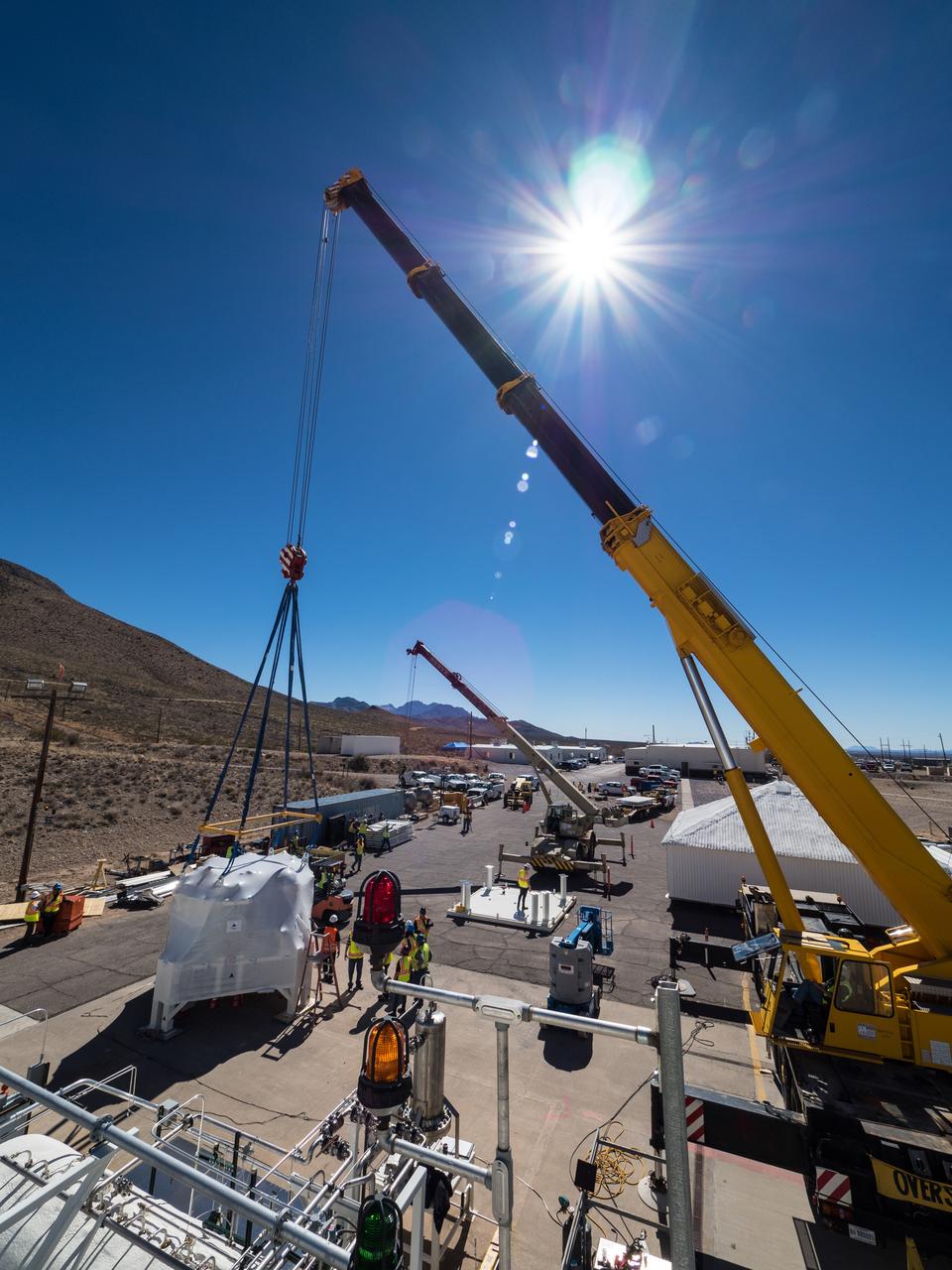
On Feb. 21, 2017 engineers successfully install ESA’s European Service Module Propulsion Qualification Module (PQM) at NASA’s White Sands Test Facility in New Mexico that was delivered by Airbus – ESA’s prime contractor for the Service Module. The module will be equipped with a total of 21 engines to support NASA’s Orion spacecraft: one U.S. Space Shuttle Orbital Maneuvering System (OMS) engine, eight auxiliary thrusters and 12 smaller thrusters produced by Airbus Safran Launchers in Germany. The all-steel PQM structure is used to test the propulsion systems on Orion, including “hot firing” of the OMS engine and thrusters.

On Feb. 21, 2017 engineers successfully install ESA’s European Service Module Propulsion Qualification Module (PQM) at NASA’s White Sands Test Facility in New Mexico that was delivered by Airbus – ESA’s prime contractor for the Service Module. The module will be equipped with a total of 21 engines to support NASA’s Orion spacecraft: one U.S. Space Shuttle Orbital Maneuvering System (OMS) engine, eight auxiliary thrusters and 12 smaller thrusters produced by Airbus Safran Launchers in Germany. The all-steel PQM structure is used to test the propulsion systems on Orion, including “hot firing” of the OMS engine and thrusters.
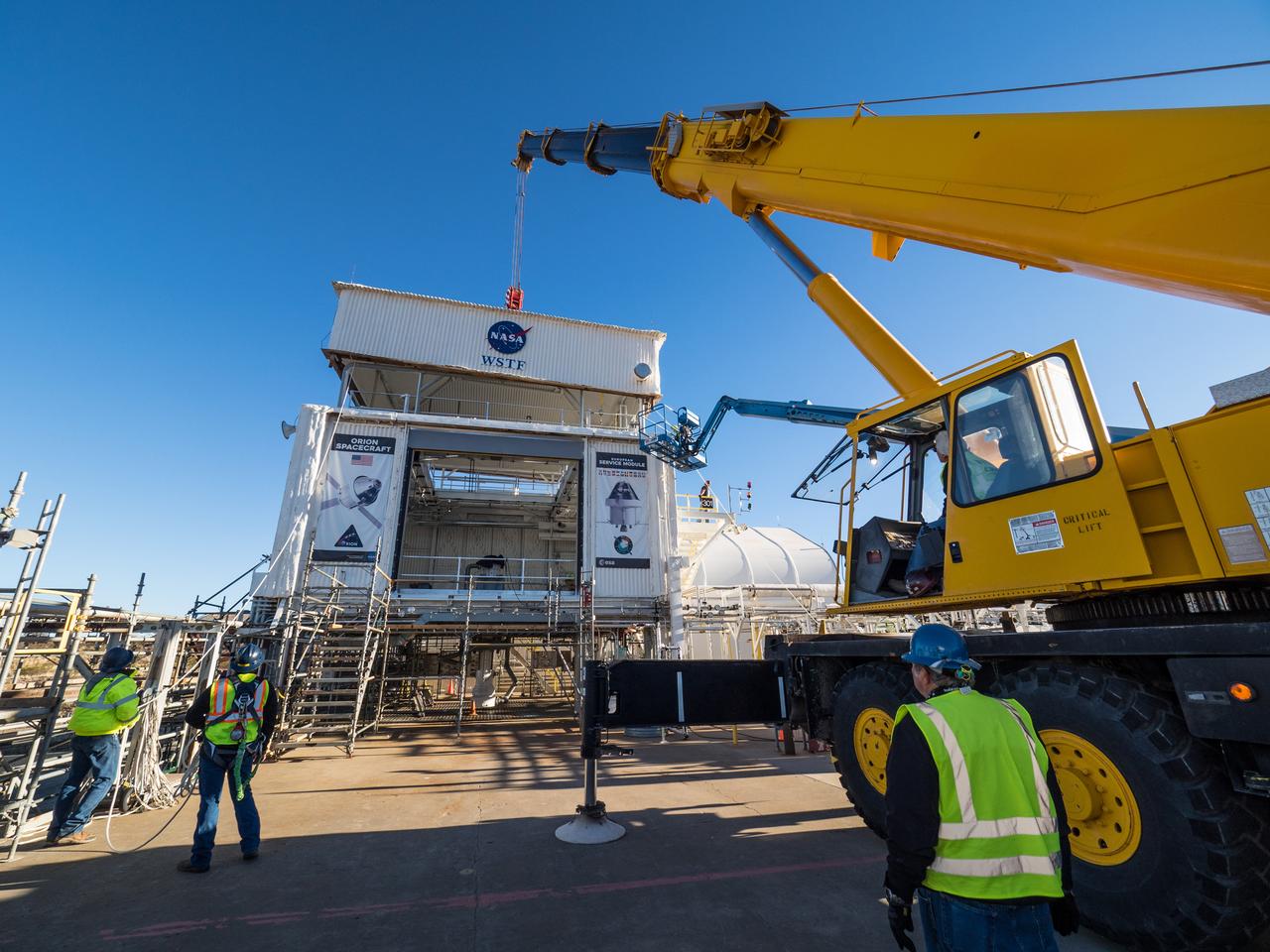
On Feb. 21, 2017 engineers successfully install ESA’s European Service Module Propulsion Qualification Module (PQM) at NASA’s White Sands Test Facility in New Mexico that was delivered by Airbus – ESA’s prime contractor for the Service Module. The module will be equipped with a total of 21 engines to support NASA’s Orion spacecraft: one U.S. Space Shuttle Orbital Maneuvering System (OMS) engine, eight auxiliary thrusters and 12 smaller thrusters produced by Airbus Safran Launchers in Germany. The all-steel PQM structure is used to test the propulsion systems on Orion, including “hot firing” of the OMS engine and thrusters.
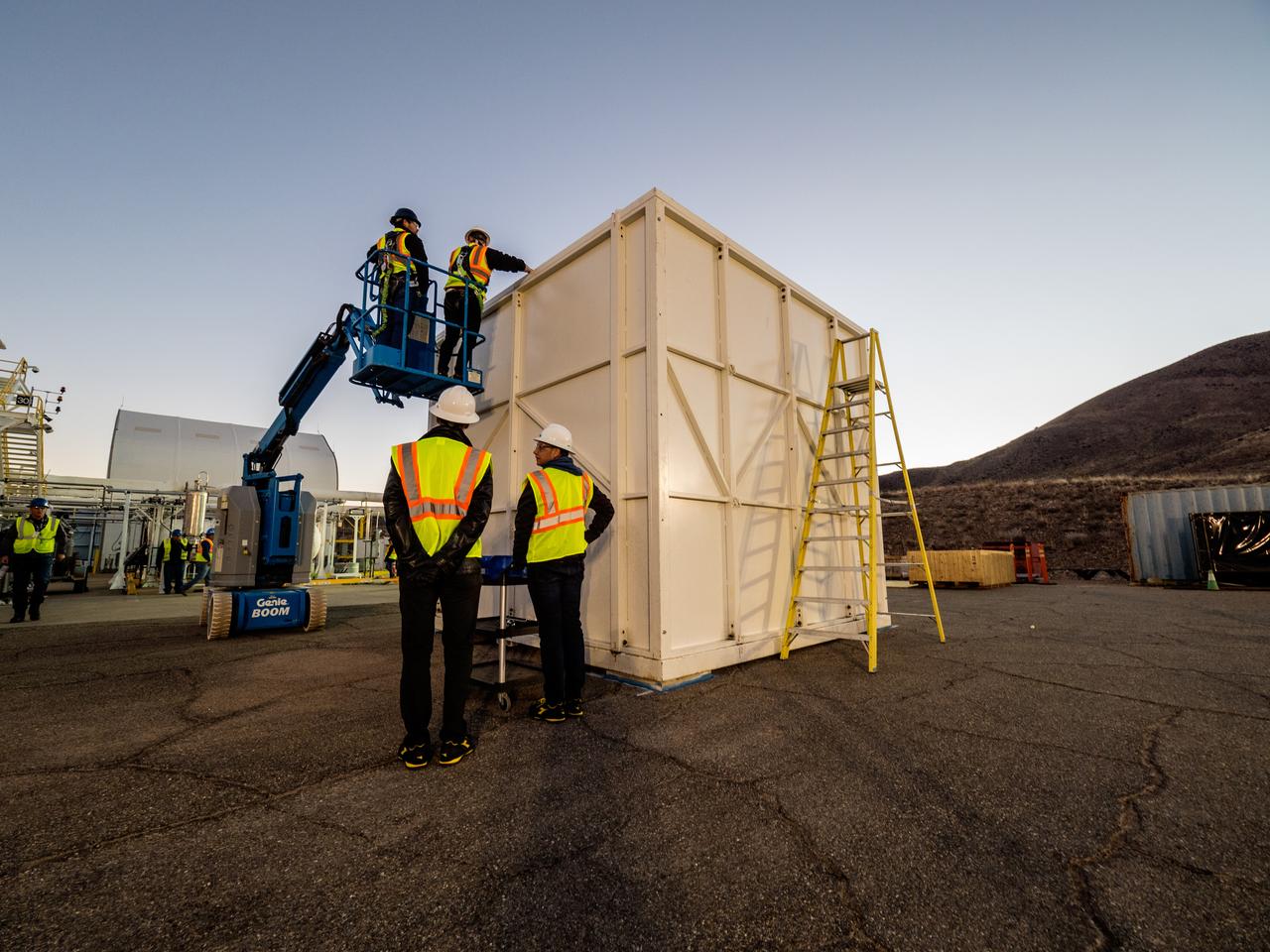
On Feb. 21, 2017 engineers successfully install ESA’s European Service Module Propulsion Qualification Module (PQM) at NASA’s White Sands Test Facility in New Mexico that was delivered by Airbus – ESA’s prime contractor for the Service Module. The module will be equipped with a total of 21 engines to support NASA’s Orion spacecraft: one U.S. Space Shuttle Orbital Maneuvering System (OMS) engine, eight auxiliary thrusters and 12 smaller thrusters produced by Airbus Safran Launchers in Germany. The all-steel PQM structure is used to test the propulsion systems on Orion, including “hot firing” of the OMS engine and thrusters.
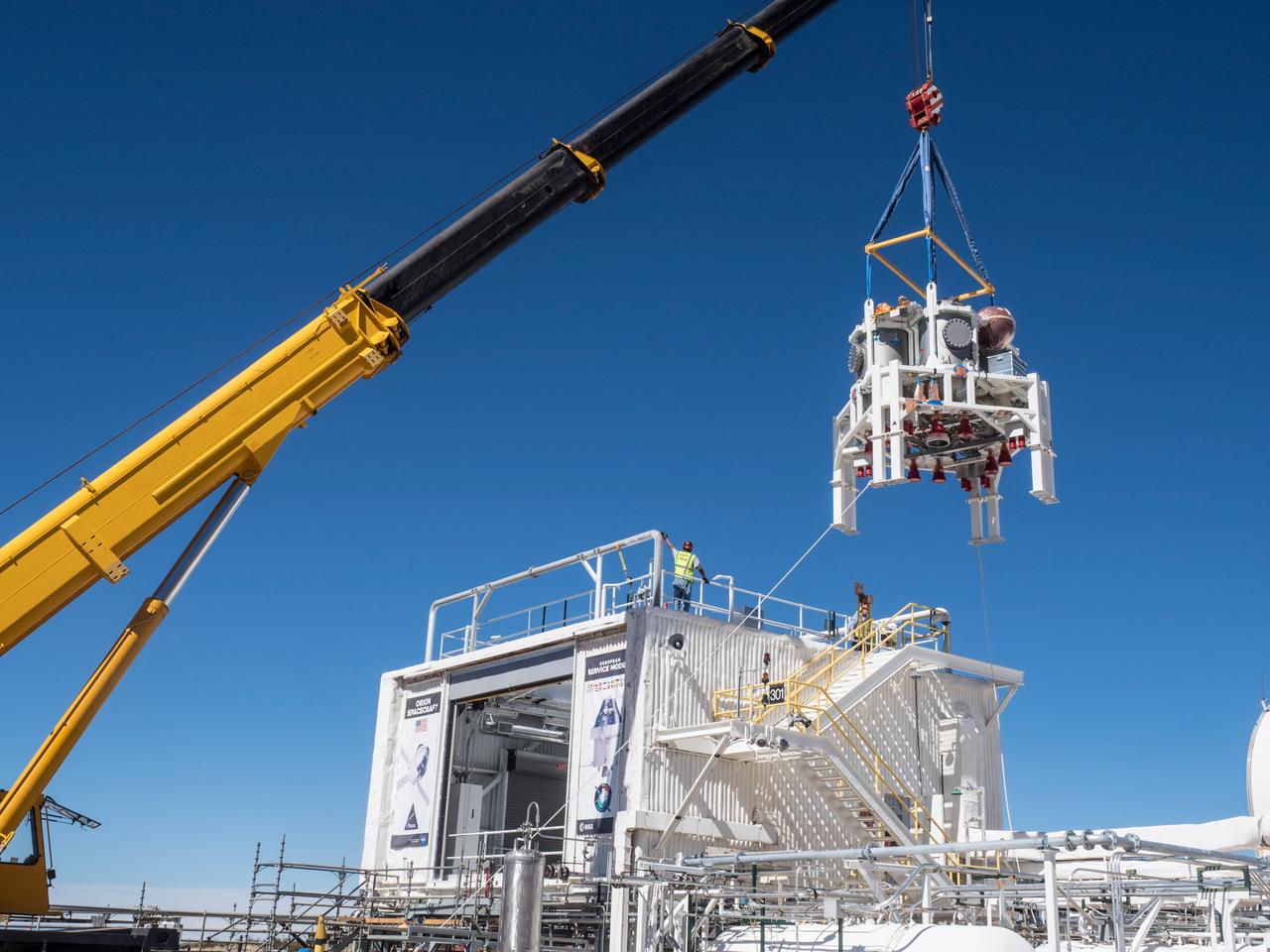
On Feb. 22, engineers successfully install ESA’s European Service Module Propulsion Qualification Module (PQM) at NASA’s White Sands Test Facility in New Mexico that was delivered by Airbus – ESA’s prime contractor for the Service Module. The module will be equipped with a total of 21 engines to support NASA’s Orion spacecraft: one U.S. Space Shuttle Orbital Maneuvering System (OMS) engine, eight auxiliary thrusters and 12 smaller thrusters produced by Airbus Safran Launchers in Germany. The all-steel PQM structure is used to test the propulsion systems on Orion, including “hot firing” of the OMS engine and thrusters.
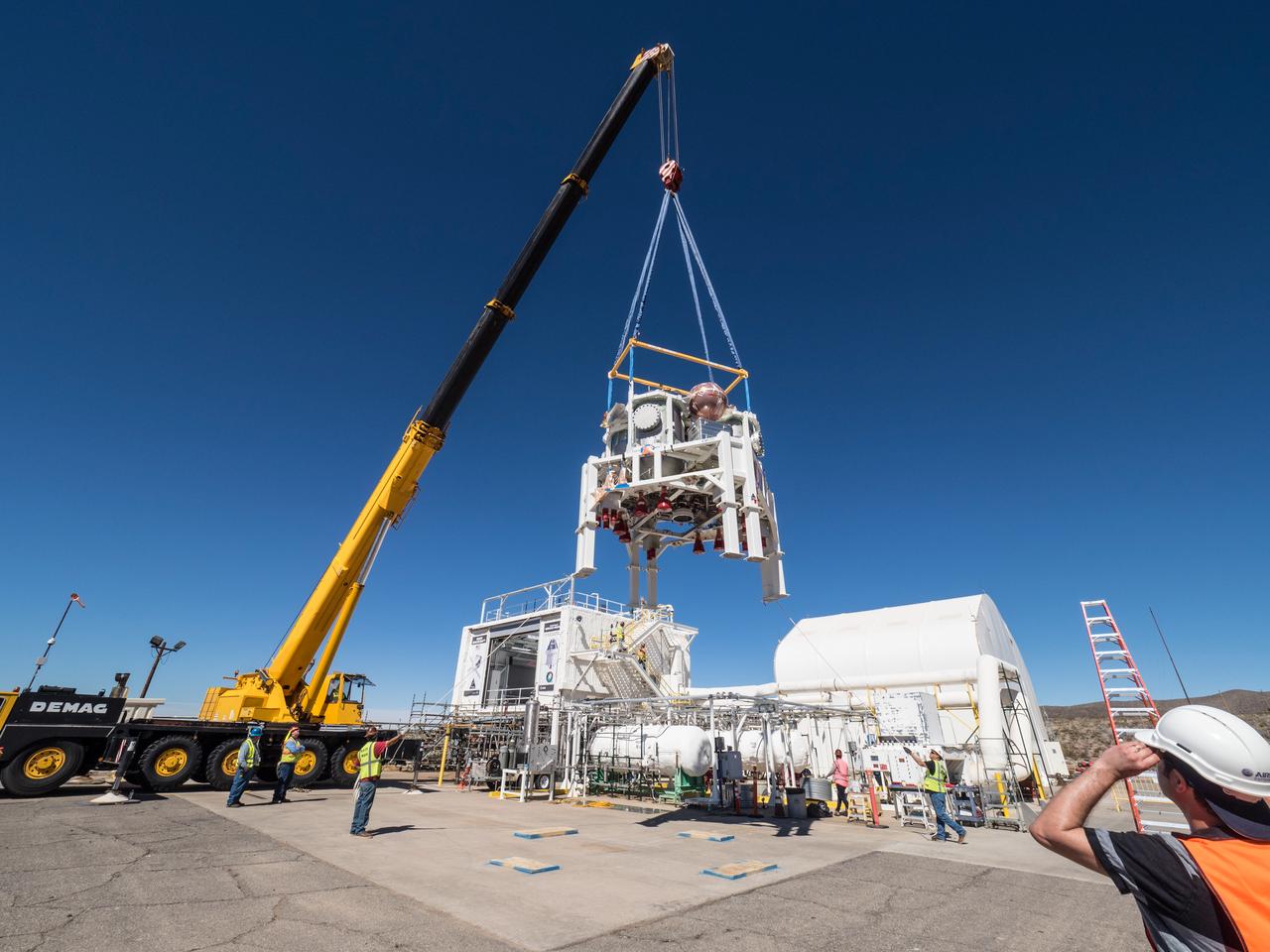
On Feb. 22, engineers successfully install ESA’s European Service Module Propulsion Qualification Module (PQM) at NASA’s White Sands Test Facility in New Mexico that was delivered by Airbus – ESA’s prime contractor for the Service Module. The module will be equipped with a total of 21 engines to support NASA’s Orion spacecraft: one U.S. Space Shuttle Orbital Maneuvering System (OMS) engine, eight auxiliary thrusters and 12 smaller thrusters produced by Airbus Safran Launchers in Germany. The all-steel PQM structure is used to test the propulsion systems on Orion, including “hot firing” of the OMS engine and thrusters.
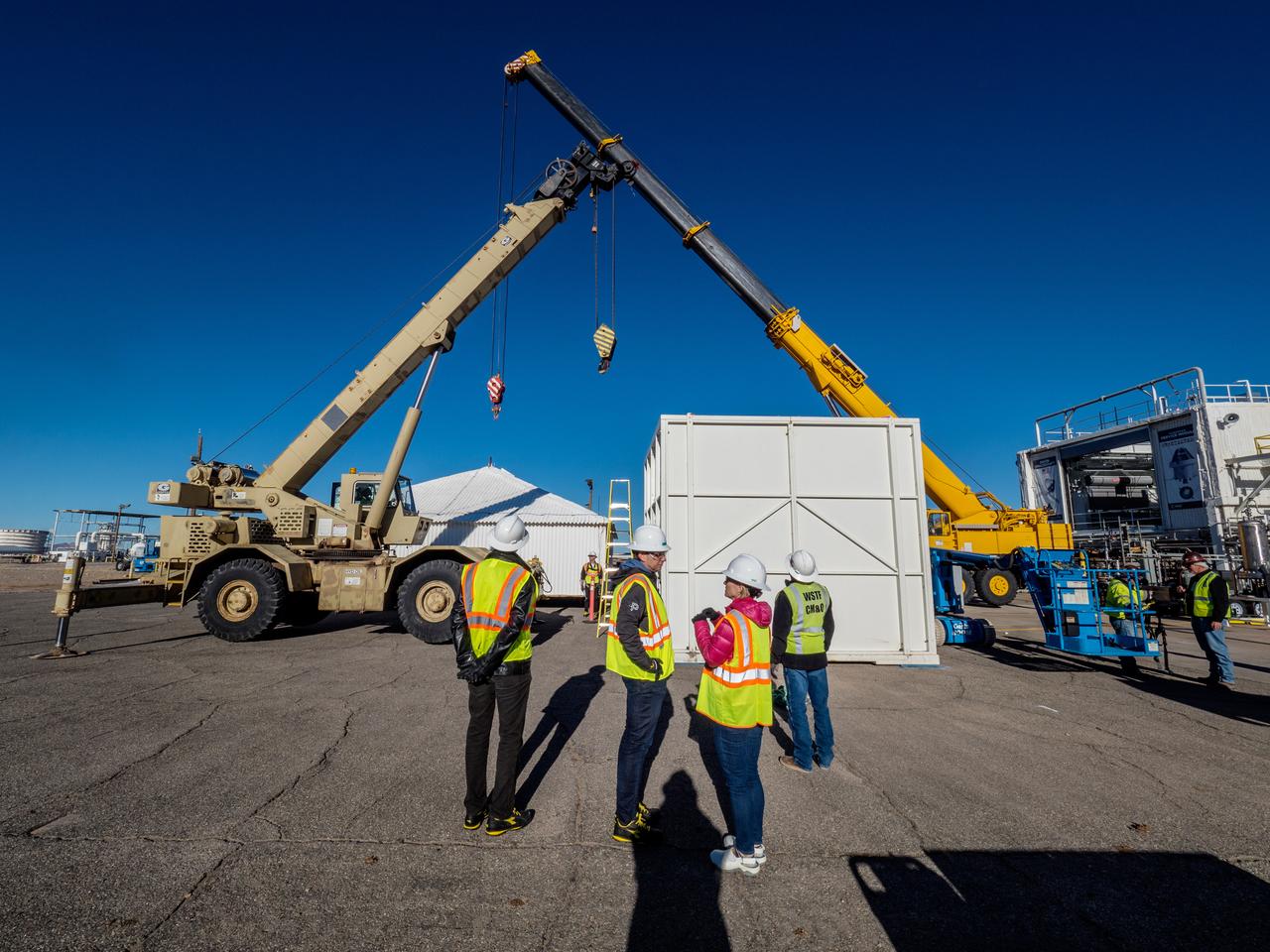
On Feb. 21, 2017 engineers successfully install ESA’s European Service Module Propulsion Qualification Module (PQM) at NASA’s White Sands Test Facility in New Mexico that was delivered by Airbus – ESA’s prime contractor for the Service Module. The module will be equipped with a total of 21 engines to support NASA’s Orion spacecraft: one U.S. Space Shuttle Orbital Maneuvering System (OMS) engine, eight auxiliary thrusters and 12 smaller thrusters produced by Airbus Safran Launchers in Germany. The all-steel PQM structure is used to test the propulsion systems on Orion, including “hot firing” of the OMS engine and thrusters.
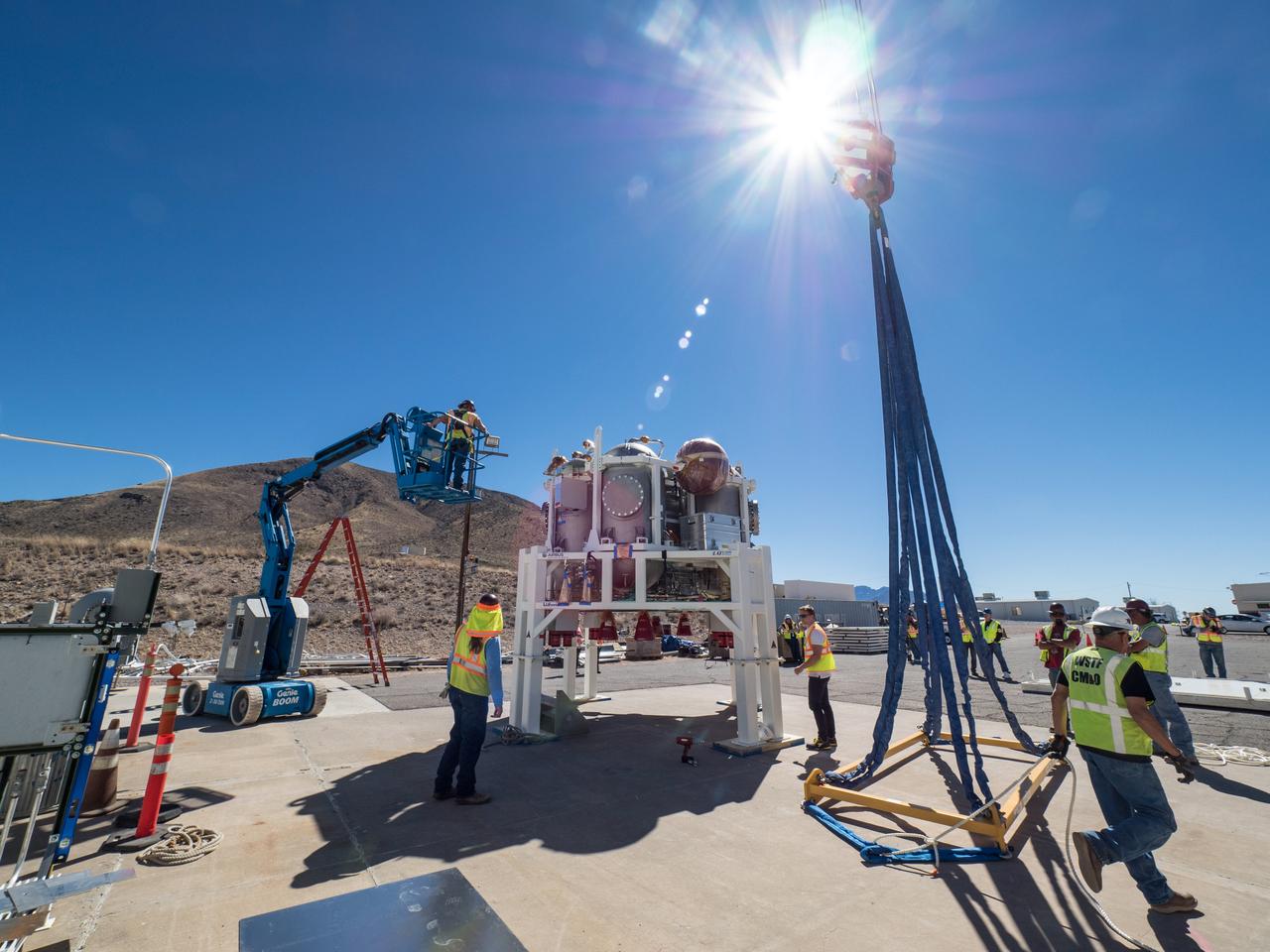
On Feb. 22, engineers successfully install ESA’s European Service Module Propulsion Qualification Module (PQM) at NASA’s White Sands Test Facility in New Mexico that was delivered by Airbus – ESA’s prime contractor for the Service Module. The module will be equipped with a total of 21 engines to support NASA’s Orion spacecraft: one U.S. Space Shuttle Orbital Maneuvering System (OMS) engine, eight auxiliary thrusters and 12 smaller thrusters produced by Airbus Safran Launchers in Germany. The all-steel PQM structure is used to test the propulsion systems on Orion, including “hot firing” of the OMS engine and thrusters.
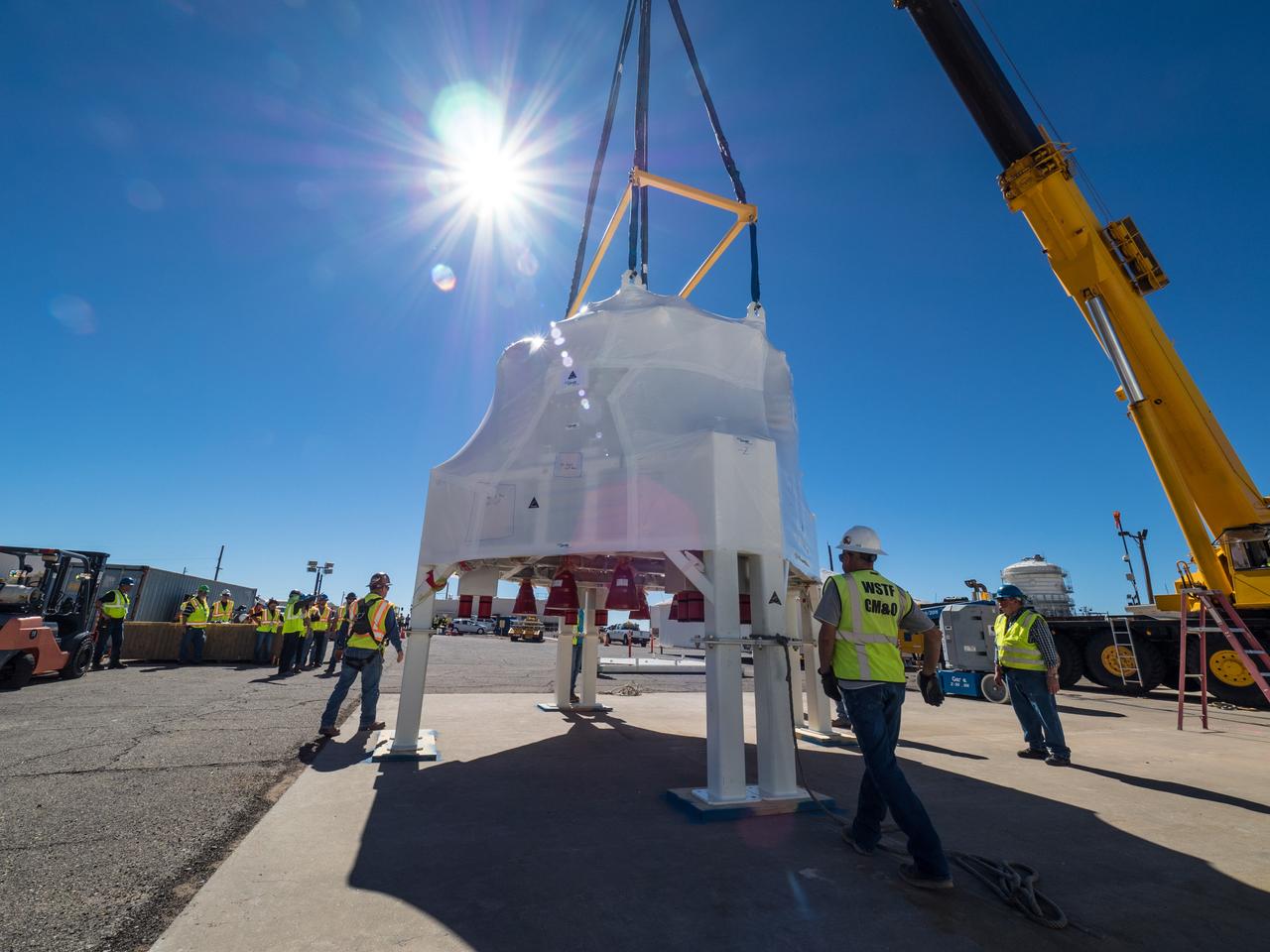
On Feb. 21, 2017 engineers successfully install ESA’s European Service Module Propulsion Qualification Module (PQM) at NASA’s White Sands Test Facility in New Mexico that was delivered by Airbus – ESA’s prime contractor for the Service Module. The module will be equipped with a total of 21 engines to support NASA’s Orion spacecraft: one U.S. Space Shuttle Orbital Maneuvering System (OMS) engine, eight auxiliary thrusters and 12 smaller thrusters produced by Airbus Safran Launchers in Germany. The all-steel PQM structure is used to test the propulsion systems on Orion, including “hot firing” of the OMS engine and thrusters.
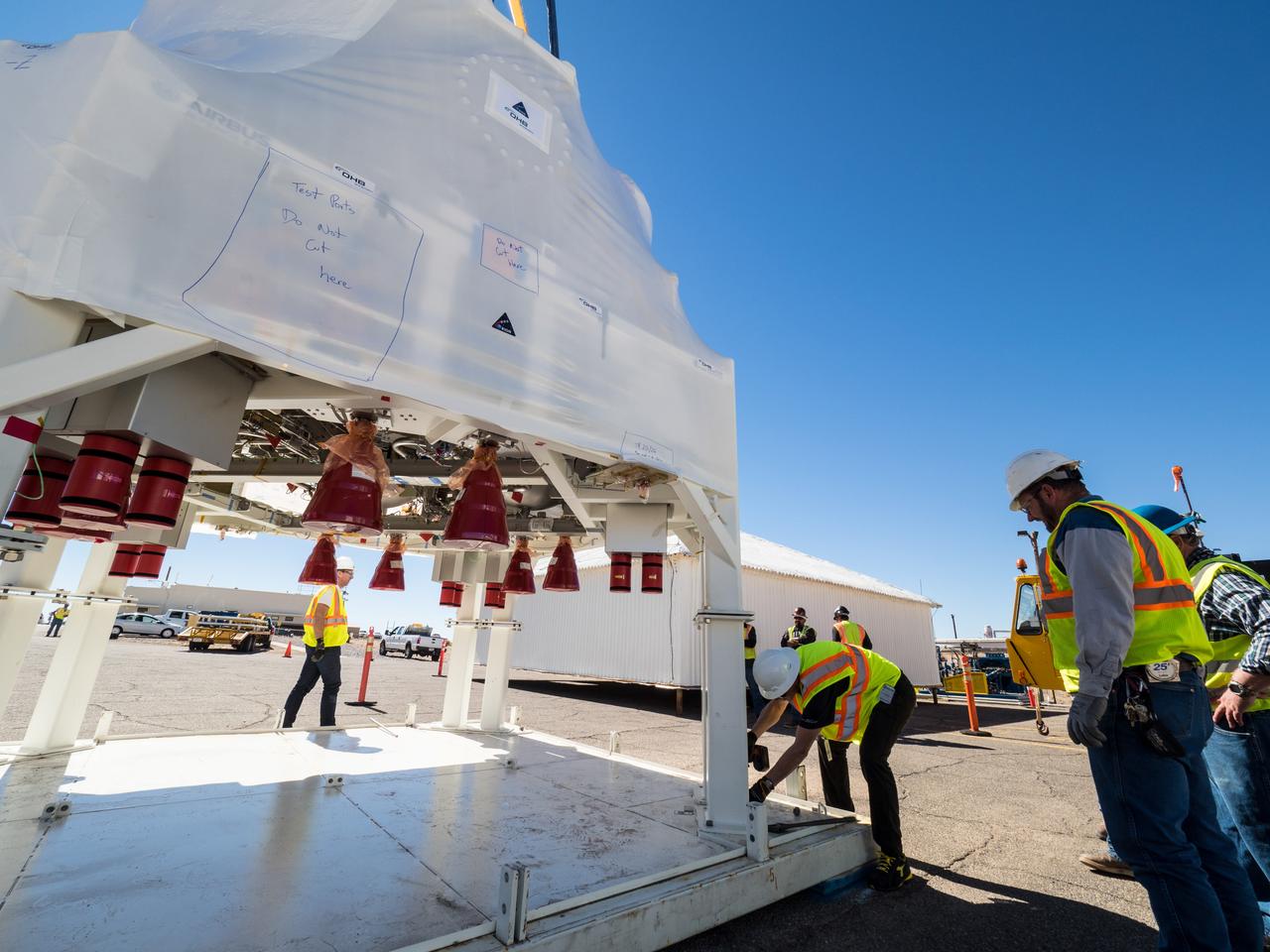
On Feb. 21, 2017 engineers successfully install ESA’s European Service Module Propulsion Qualification Module (PQM) at NASA’s White Sands Test Facility in New Mexico that was delivered by Airbus – ESA’s prime contractor for the Service Module. The module will be equipped with a total of 21 engines to support NASA’s Orion spacecraft: one U.S. Space Shuttle Orbital Maneuvering System (OMS) engine, eight auxiliary thrusters and 12 smaller thrusters produced by Airbus Safran Launchers in Germany. The all-steel PQM structure is used to test the propulsion systems on Orion, including “hot firing” of the OMS engine and thrusters.
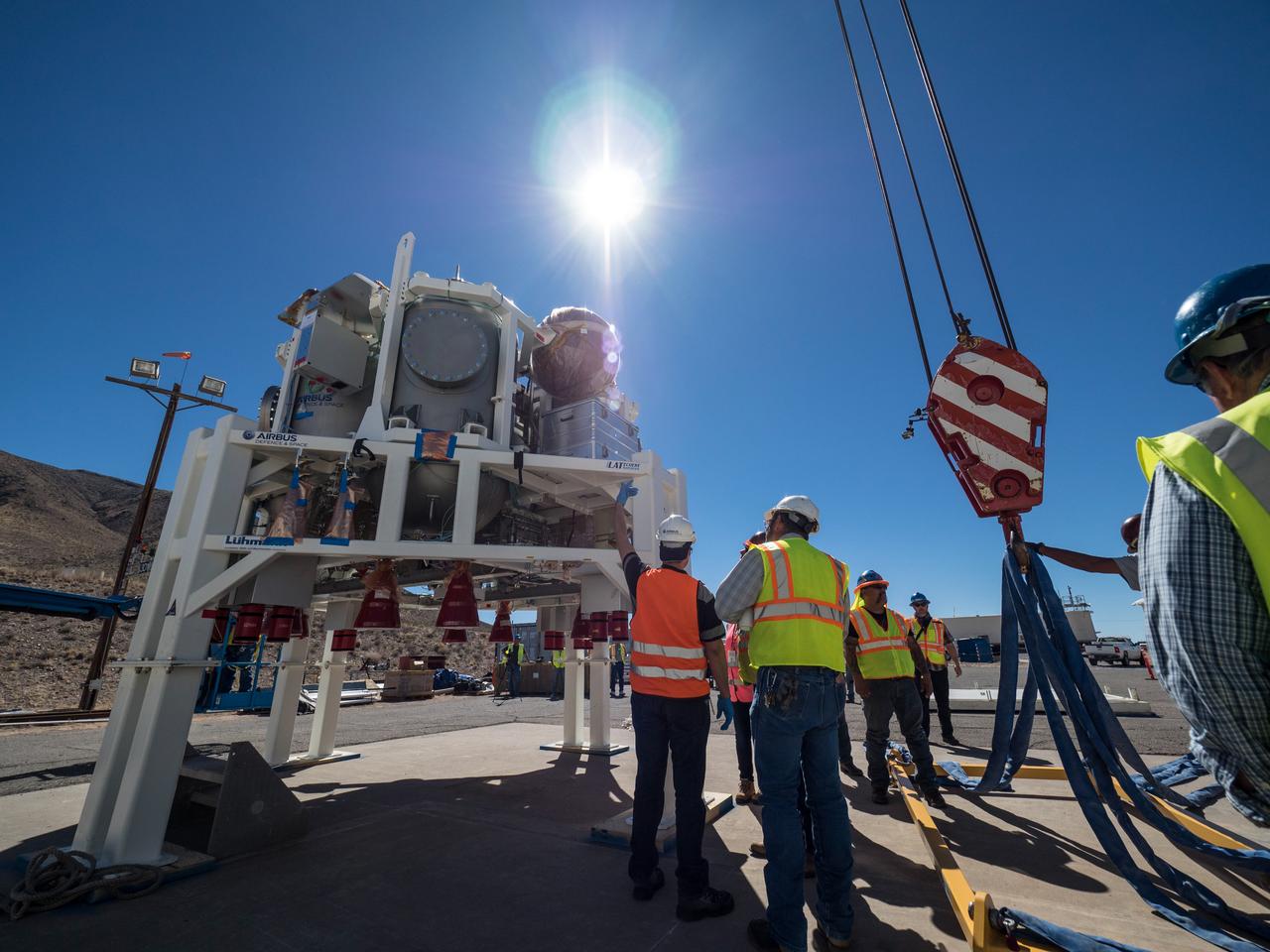
On Feb. 22, engineers successfully install ESA’s European Service Module Propulsion Qualification Module (PQM) at NASA’s White Sands Test Facility in New Mexico that was delivered by Airbus – ESA’s prime contractor for the Service Module. The module will be equipped with a total of 21 engines to support NASA’s Orion spacecraft: one U.S. Space Shuttle Orbital Maneuvering System (OMS) engine, eight auxiliary thrusters and 12 smaller thrusters produced by Airbus Safran Launchers in Germany. The all-steel PQM structure is used to test the propulsion systems on Orion, including “hot firing” of the OMS engine and thrusters.
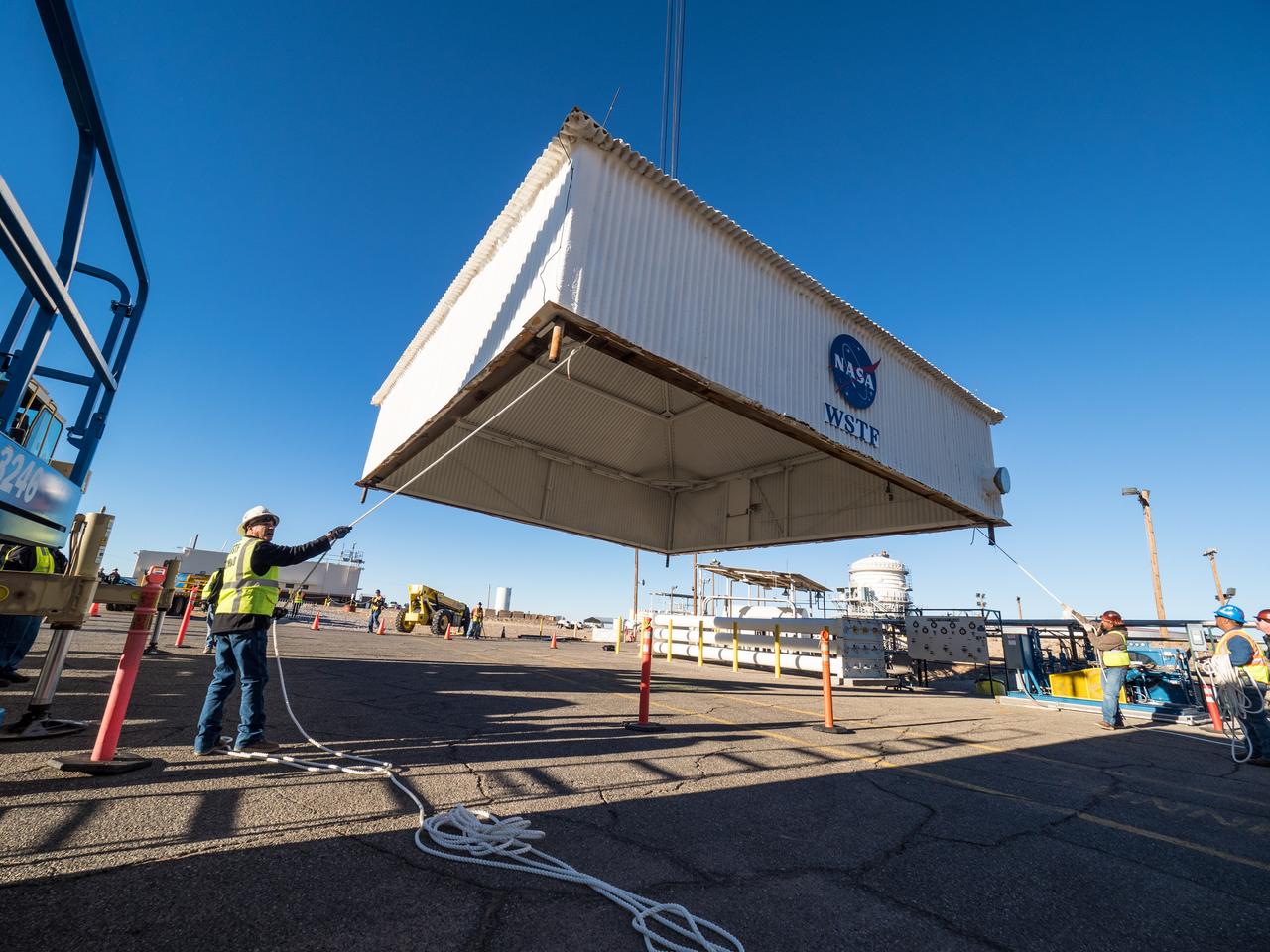
On Feb. 21, 2017 engineers successfully install ESA’s European Service Module Propulsion Qualification Module (PQM) at NASA’s White Sands Test Facility in New Mexico that was delivered by Airbus – ESA’s prime contractor for the Service Module. The module will be equipped with a total of 21 engines to support NASA’s Orion spacecraft: one U.S. Space Shuttle Orbital Maneuvering System (OMS) engine, eight auxiliary thrusters and 12 smaller thrusters produced by Airbus Safran Launchers in Germany. The all-steel PQM structure is used to test the propulsion systems on Orion, including “hot firing” of the OMS engine and thrusters.

On Feb. 21, 2017 engineers successfully install ESA’s European Service Module Propulsion Qualification Module (PQM) at NASA’s White Sands Test Facility in New Mexico that was delivered by Airbus – ESA’s prime contractor for the Service Module. The module will be equipped with a total of 21 engines to support NASA’s Orion spacecraft: one U.S. Space Shuttle Orbital Maneuvering System (OMS) engine, eight auxiliary thrusters and 12 smaller thrusters produced by Airbus Safran Launchers in Germany. The all-steel PQM structure is used to test the propulsion systems on Orion, including “hot firing” of the OMS engine and thrusters.
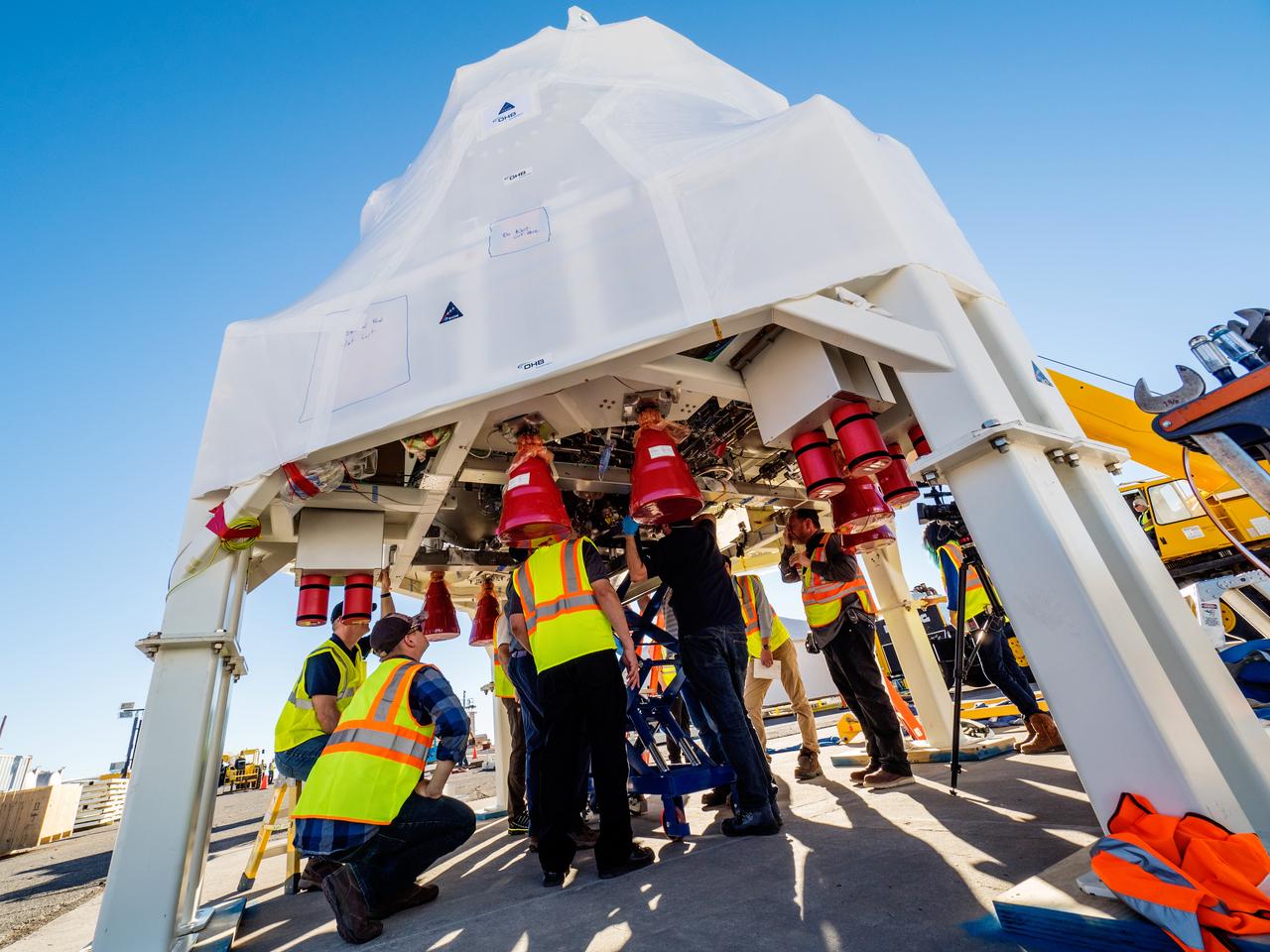
On Feb. 21, 2017 engineers successfully install ESA’s European Service Module Propulsion Qualification Module (PQM) at NASA’s White Sands Test Facility in New Mexico that was delivered by Airbus – ESA’s prime contractor for the Service Module. The module will be equipped with a total of 21 engines to support NASA’s Orion spacecraft: one U.S. Space Shuttle Orbital Maneuvering System (OMS) engine, eight auxiliary thrusters and 12 smaller thrusters produced by Airbus Safran Launchers in Germany. The all-steel PQM structure is used to test the propulsion systems on Orion, including “hot firing” of the OMS engine and thrusters.
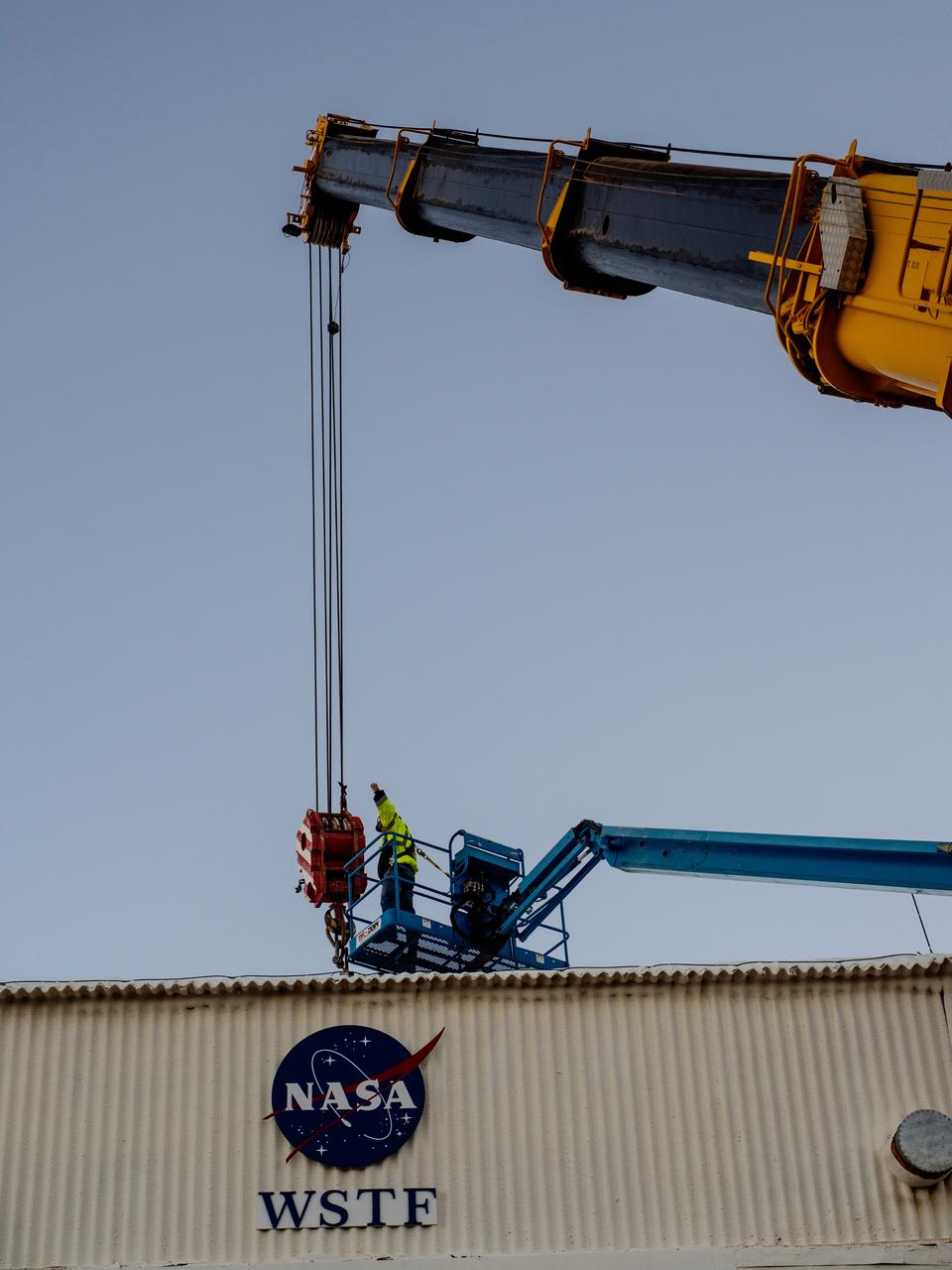
On Feb. 21, 2017 engineers successfully install ESA’s European Service Module Propulsion Qualification Module (PQM) at NASA’s White Sands Test Facility in New Mexico that was delivered by Airbus – ESA’s prime contractor for the Service Module. The module will be equipped with a total of 21 engines to support NASA’s Orion spacecraft: one U.S. Space Shuttle Orbital Maneuvering System (OMS) engine, eight auxiliary thrusters and 12 smaller thrusters produced by Airbus Safran Launchers in Germany. The all-steel PQM structure is used to test the propulsion systems on Orion, including “hot firing” of the OMS engine and thrusters.

On Feb. 21, 2017 engineers successfully install ESA’s European Service Module Propulsion Qualification Module (PQM) at NASA’s White Sands Test Facility in New Mexico that was delivered by Airbus – ESA’s prime contractor for the Service Module. The module will be equipped with a total of 21 engines to support NASA’s Orion spacecraft: one U.S. Space Shuttle Orbital Maneuvering System (OMS) engine, eight auxiliary thrusters and 12 smaller thrusters produced by Airbus Safran Launchers in Germany. The all-steel PQM structure is used to test the propulsion systems on Orion, including “hot firing” of the OMS engine and thrusters.
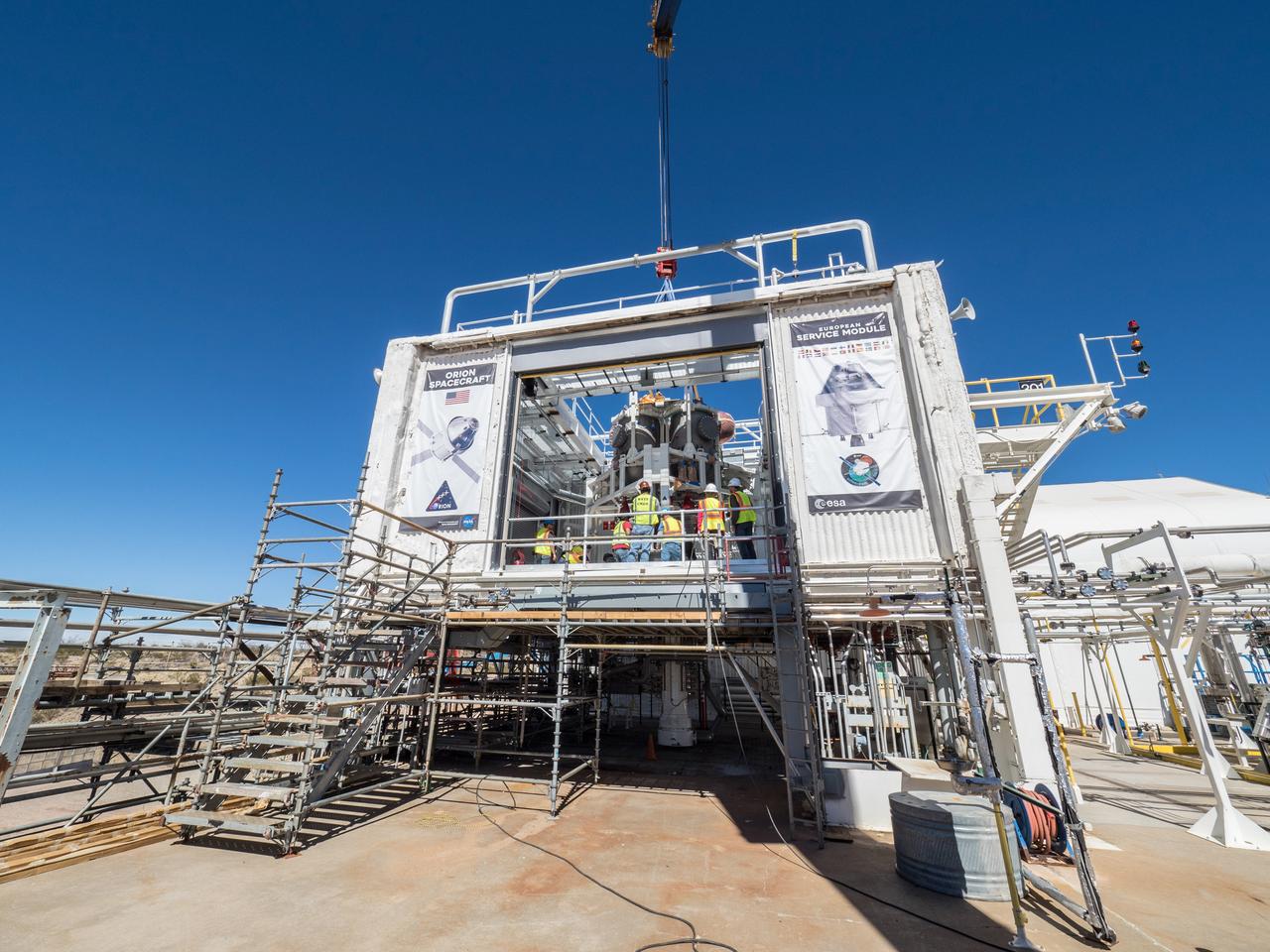
On Feb. 22, engineers successfully install ESA’s European Service Module Propulsion Qualification Module (PQM) at NASA’s White Sands Test Facility in New Mexico that was delivered by Airbus – ESA’s prime contractor for the Service Module. The module will be equipped with a total of 21 engines to support NASA’s Orion spacecraft: one U.S. Space Shuttle Orbital Maneuvering System (OMS) engine, eight auxiliary thrusters and 12 smaller thrusters produced by Airbus Safran Launchers in Germany. The all-steel PQM structure is used to test the propulsion systems on Orion, including “hot firing” of the OMS engine and thrusters.
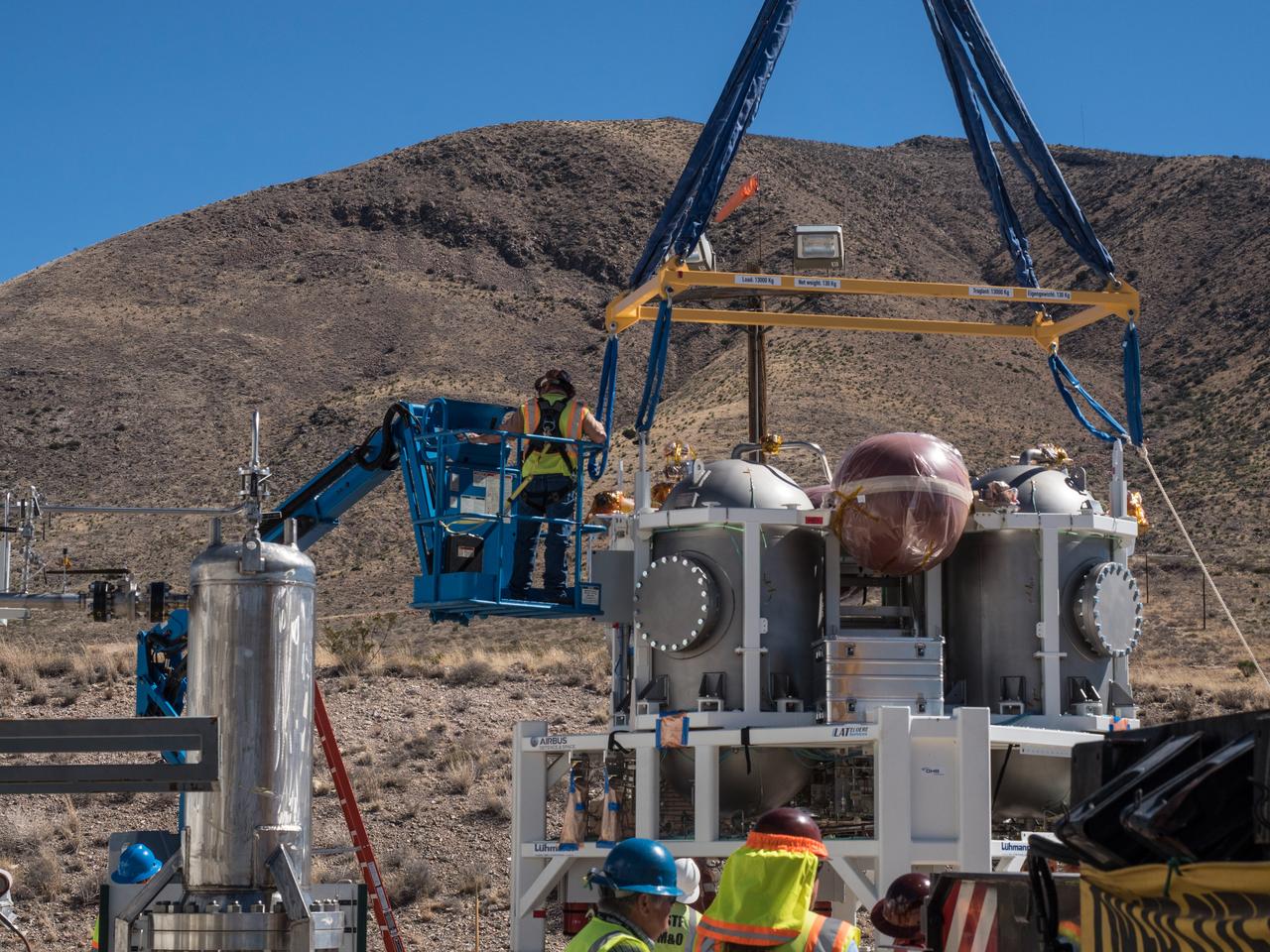
On Feb. 22, engineers successfully install ESA’s European Service Module Propulsion Qualification Module (PQM) at NASA’s White Sands Test Facility in New Mexico that was delivered by Airbus – ESA’s prime contractor for the Service Module. The module will be equipped with a total of 21 engines to support NASA’s Orion spacecraft: one U.S. Space Shuttle Orbital Maneuvering System (OMS) engine, eight auxiliary thrusters and 12 smaller thrusters produced by Airbus Safran Launchers in Germany. The all-steel PQM structure is used to test the propulsion systems on Orion, including “hot firing” of the OMS engine and thrusters.
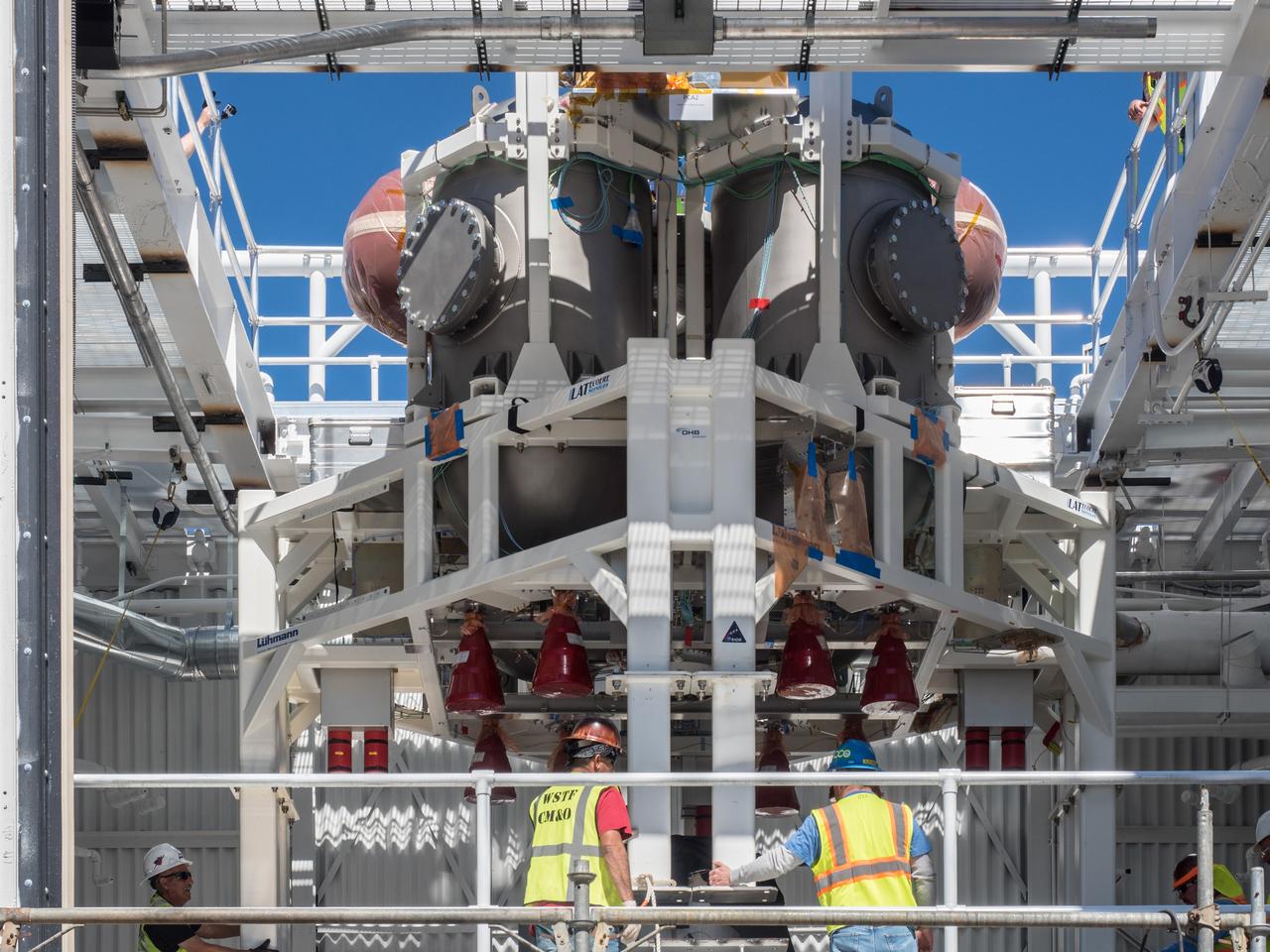
On Feb. 22, engineers successfully install ESA’s European Service Module Propulsion Qualification Module (PQM) at NASA’s White Sands Test Facility in New Mexico that was delivered by Airbus – ESA’s prime contractor for the Service Module. The module will be equipped with a total of 21 engines to support NASA’s Orion spacecraft: one U.S. Space Shuttle Orbital Maneuvering System (OMS) engine, eight auxiliary thrusters and 12 smaller thrusters produced by Airbus Safran Launchers in Germany. The all-steel PQM structure is used to test the propulsion systems on Orion, including “hot firing” of the OMS engine and thrusters.
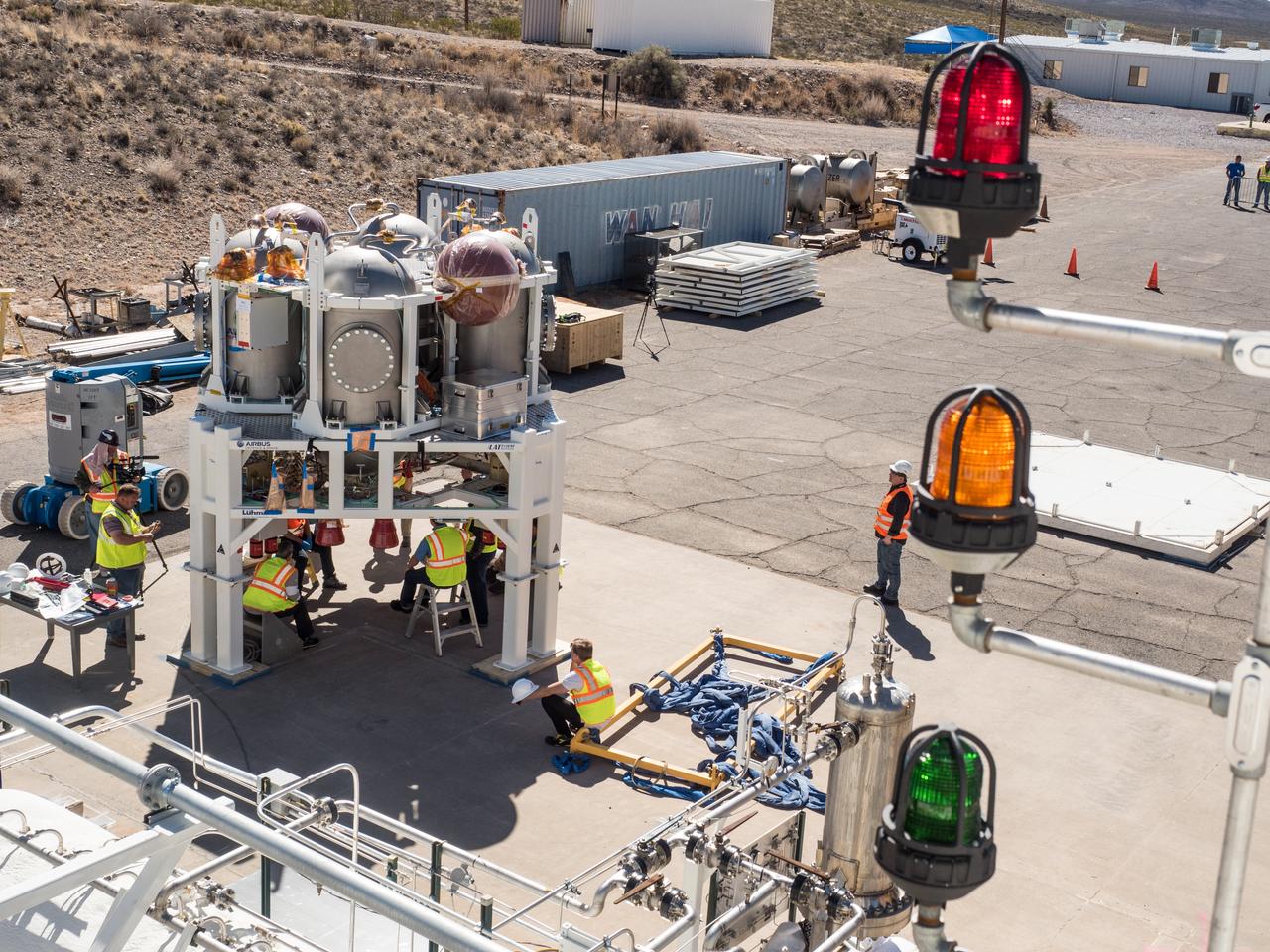
On Feb. 22, engineers successfully install ESA’s European Service Module Propulsion Qualification Module (PQM) at NASA’s White Sands Test Facility in New Mexico that was delivered by Airbus – ESA’s prime contractor for the Service Module. The module will be equipped with a total of 21 engines to support NASA’s Orion spacecraft: one U.S. Space Shuttle Orbital Maneuvering System (OMS) engine, eight auxiliary thrusters and 12 smaller thrusters produced by Airbus Safran Launchers in Germany. The all-steel PQM structure is used to test the propulsion systems on Orion, including “hot firing” of the OMS engine and thrusters.
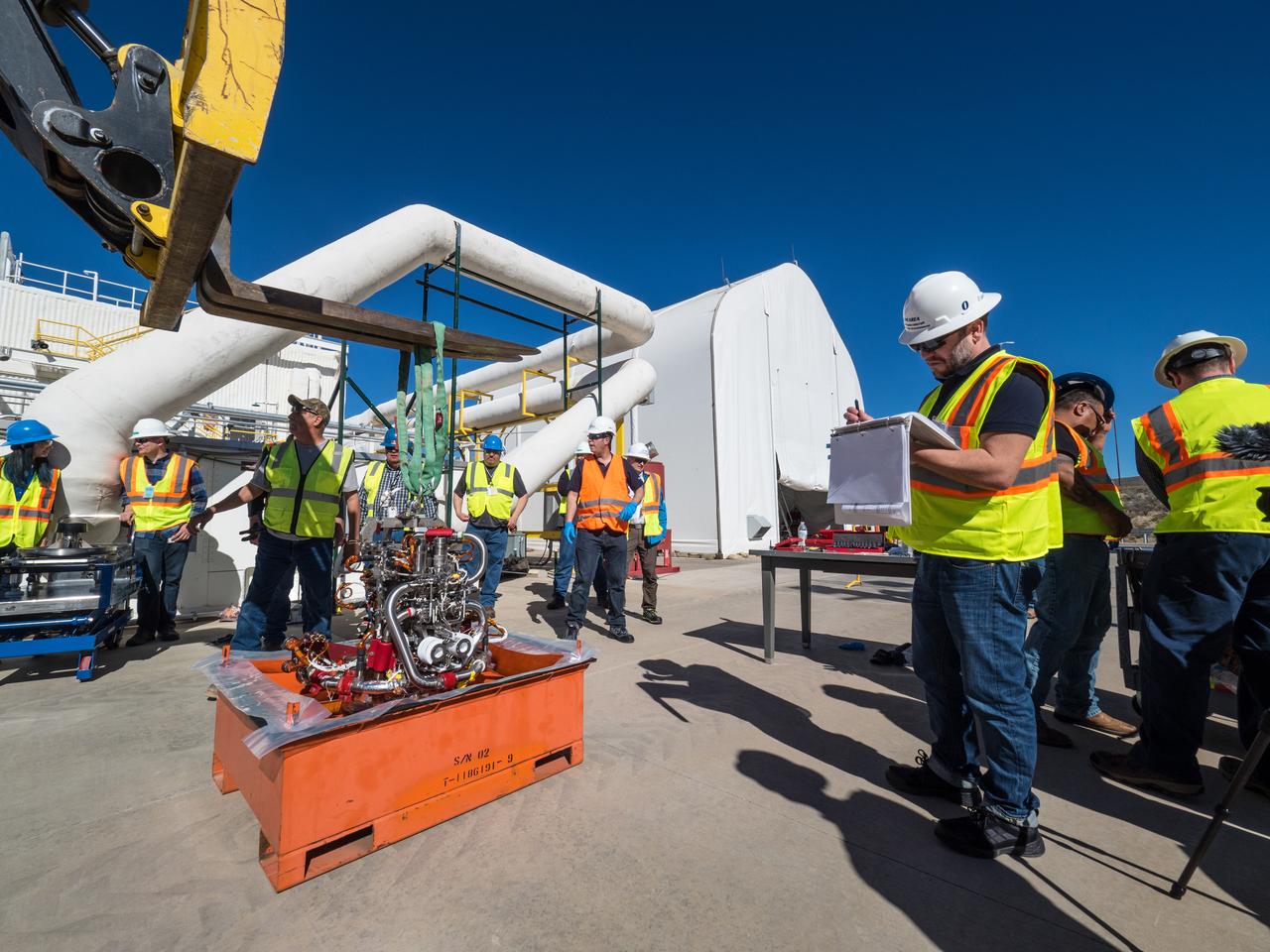
On Feb. 21, 2017 engineers successfully install ESA’s European Service Module Propulsion Qualification Module (PQM) at NASA’s White Sands Test Facility in New Mexico that was delivered by Airbus – ESA’s prime contractor for the Service Module. The module will be equipped with a total of 21 engines to support NASA’s Orion spacecraft: one U.S. Space Shuttle Orbital Maneuvering System (OMS) engine, eight auxiliary thrusters and 12 smaller thrusters produced by Airbus Safran Launchers in Germany. The all-steel PQM structure is used to test the propulsion systems on Orion, including “hot firing” of the OMS engine and thrusters.
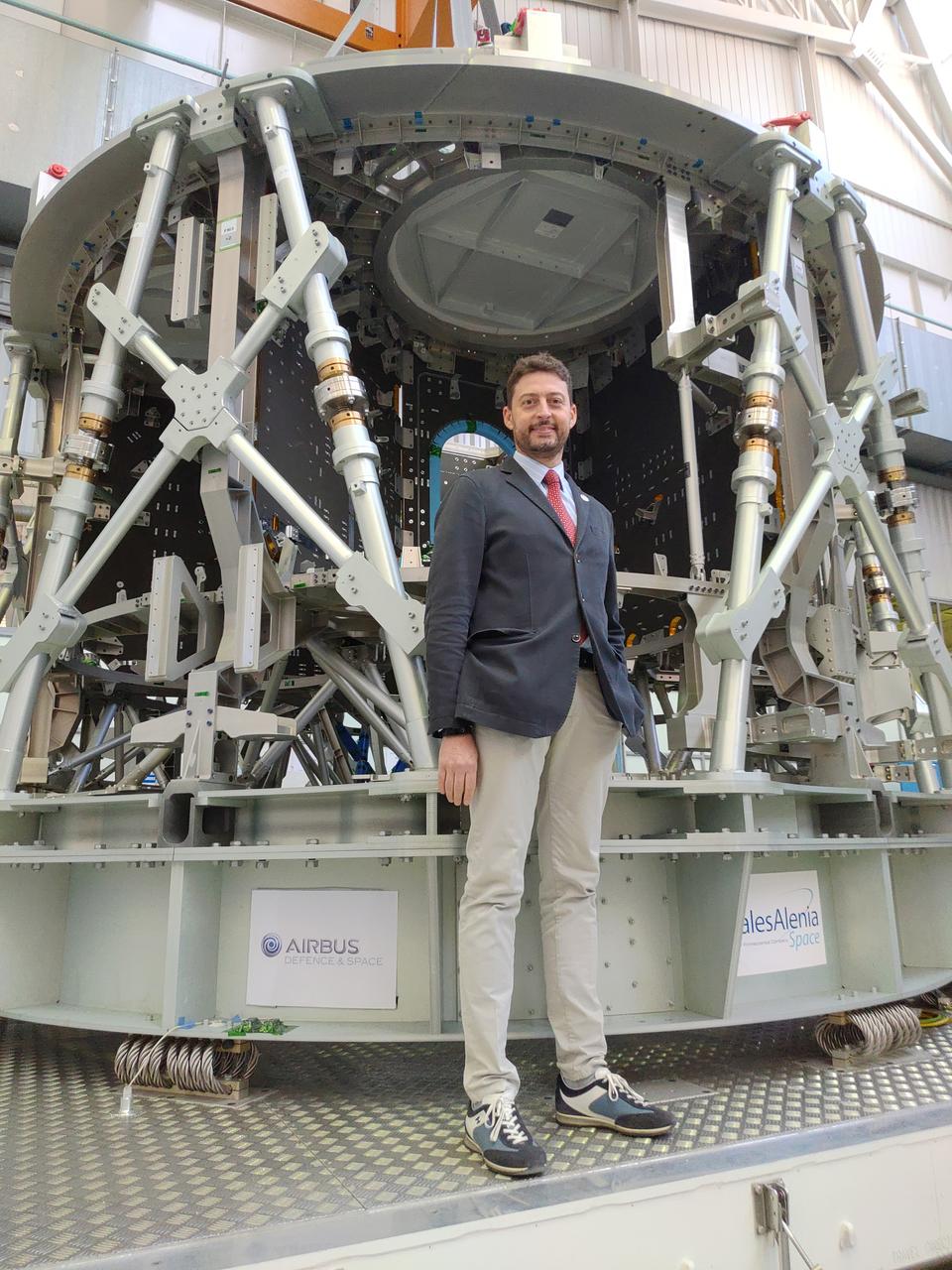
The ESA service module primary structure, which will propel Orion on the Artemis III flight carrying astronauts to land on the surface of the Moon, is ready to ship from Thales Alenia Space in Turin, Italy to Airbus in Bremen, Germany. Stefano Rossi, Thales Alenia Space Manufacturing Manager, leads the operation of the transfer of the service module structure to the transportation container on Sept. 30, 2020. Airbus will perform final assembly on the service module ahead of shipment to Kennedy Space Center where it will be integrated with the rest of the Orion spacecraft.
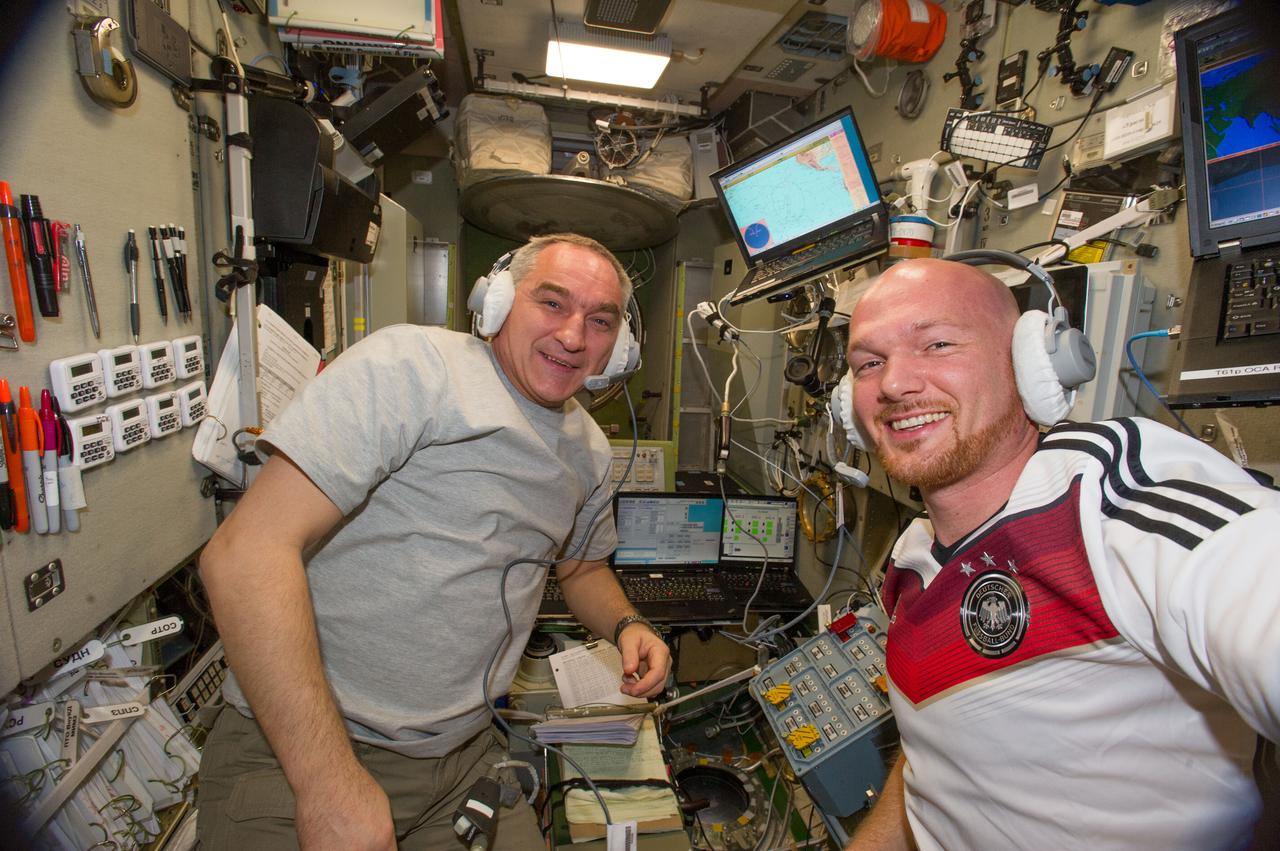
Cosmonaut Alexander Skvortsov and ESA Astronaut Alexander Gerst, Expedition 40 flight engineers, are photographed during ATV equipment preparation in the Service Module (SM) prior to ATV launch.
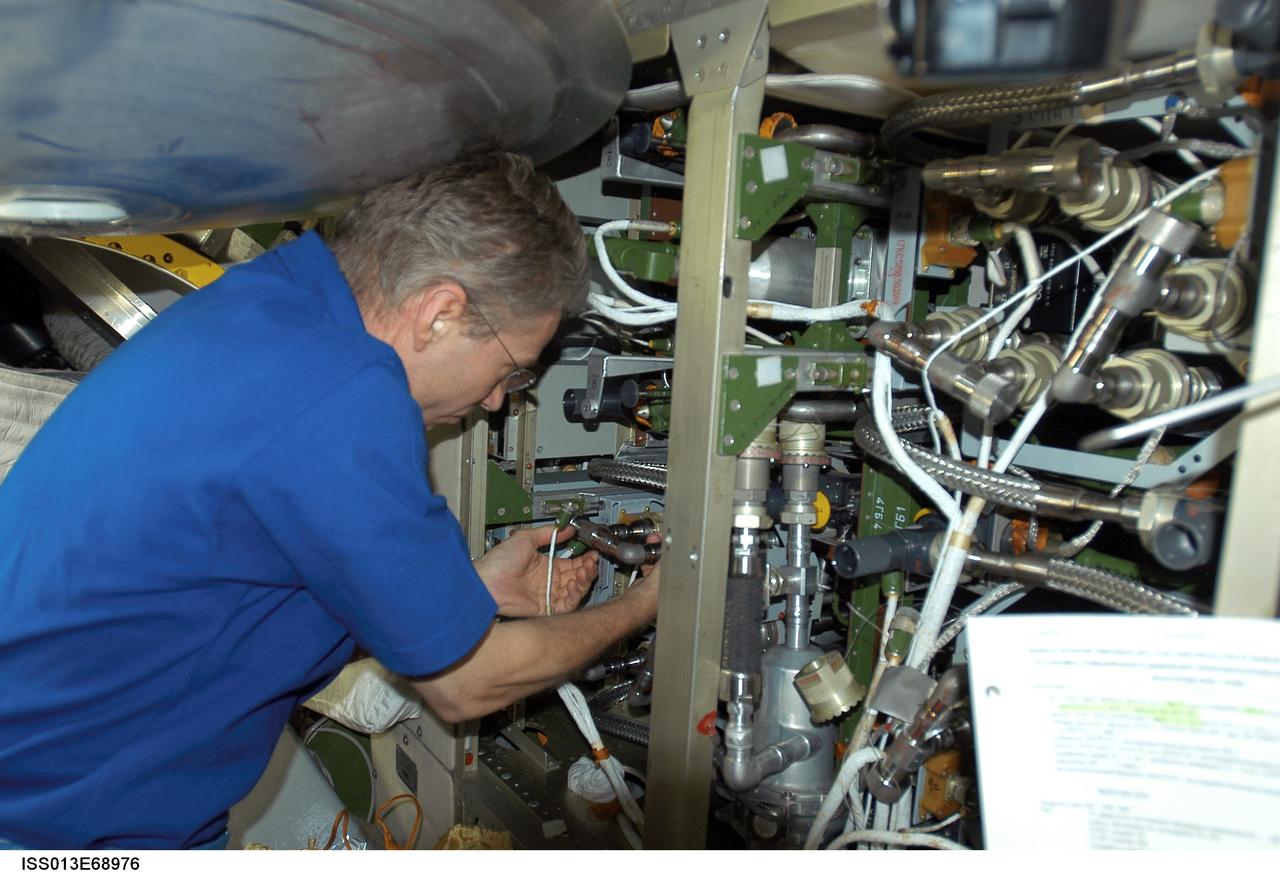
ISS013-E-68976 (August 2006) --- European Space Agency (ESA) astronaut Thomas Reiter, Expedition 13 flight engineer, works on the internal thermal cooling loop pump in the Zvezda Service Module of the International Space Station.
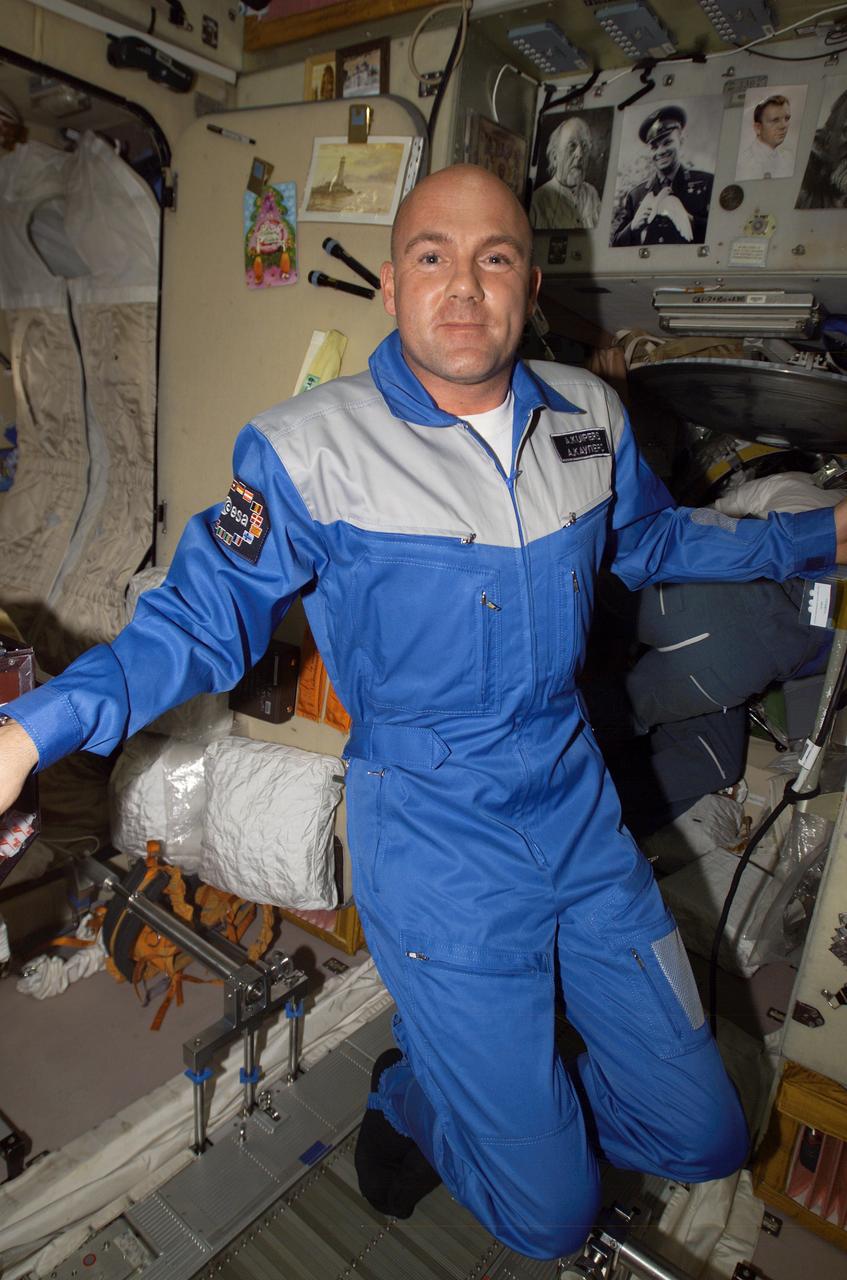
ISS008-E-21951 (21 April 2004) --- European Space Agency (ESA) astronaut Andre Kuipers of the Netherlands floats in the Zvezda Service Module on the International Space Station (ISS).
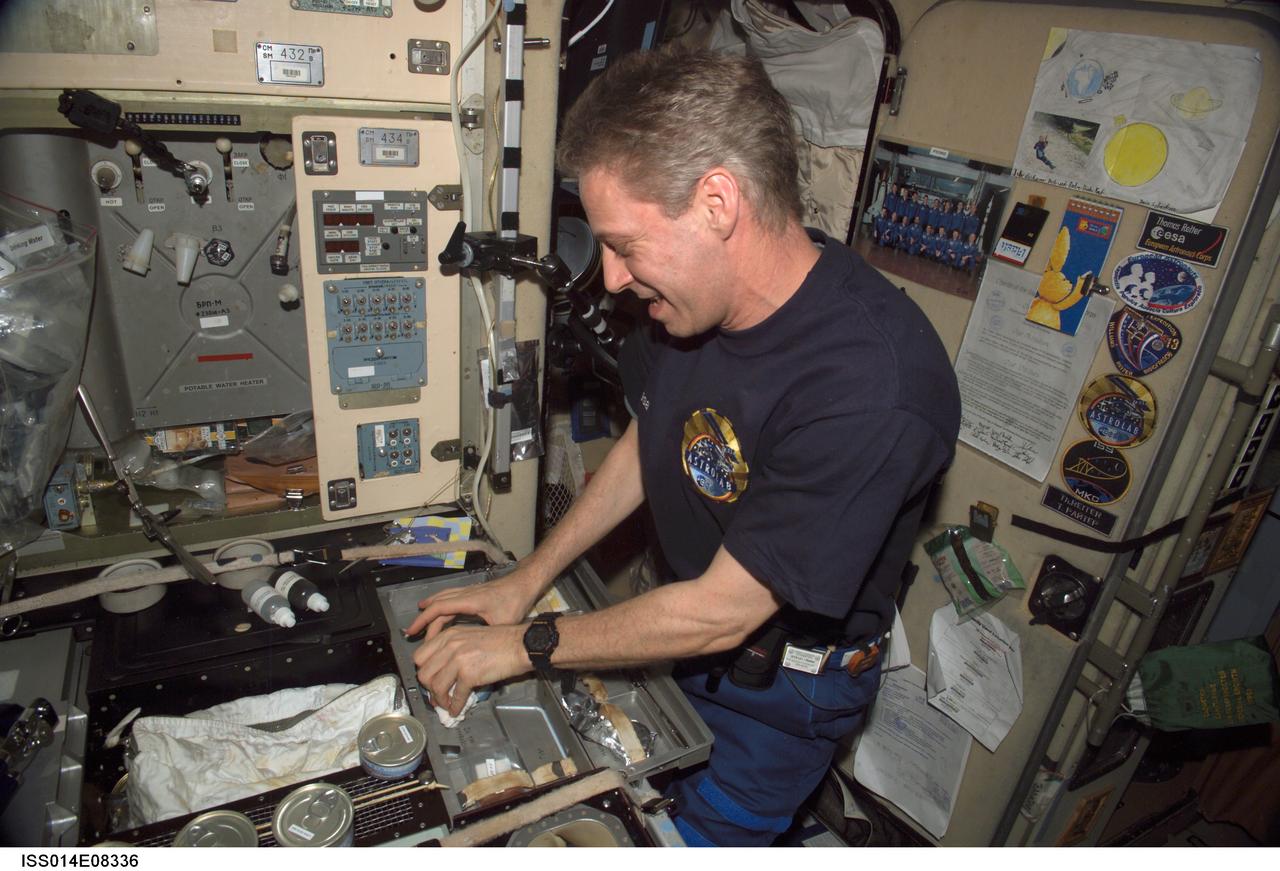
ISS014-E-08336 (27 Nov. 2006) --- European Space Agency (ESA) astronaut Thomas Reiter, Expedition 14 flight engineer, prepares to eat a meal at the galley in the Zvezda Service Module of the International Space Station.
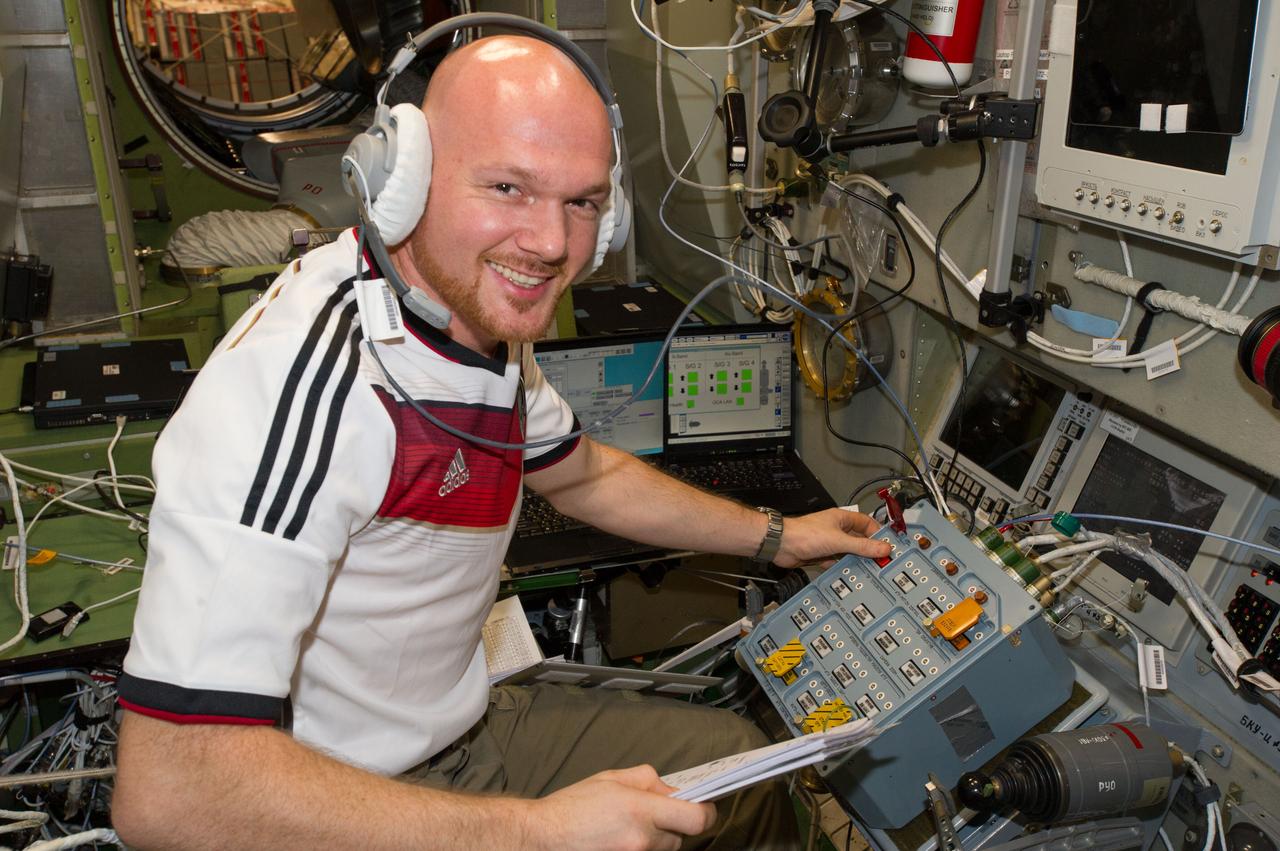
ESA astronaut Alexander Gerst, Expedition 40 flight engineer (wearing soccer shirt), is photographed during ATV equipment preparation in the Service Module (SM) prior to ATV launch.
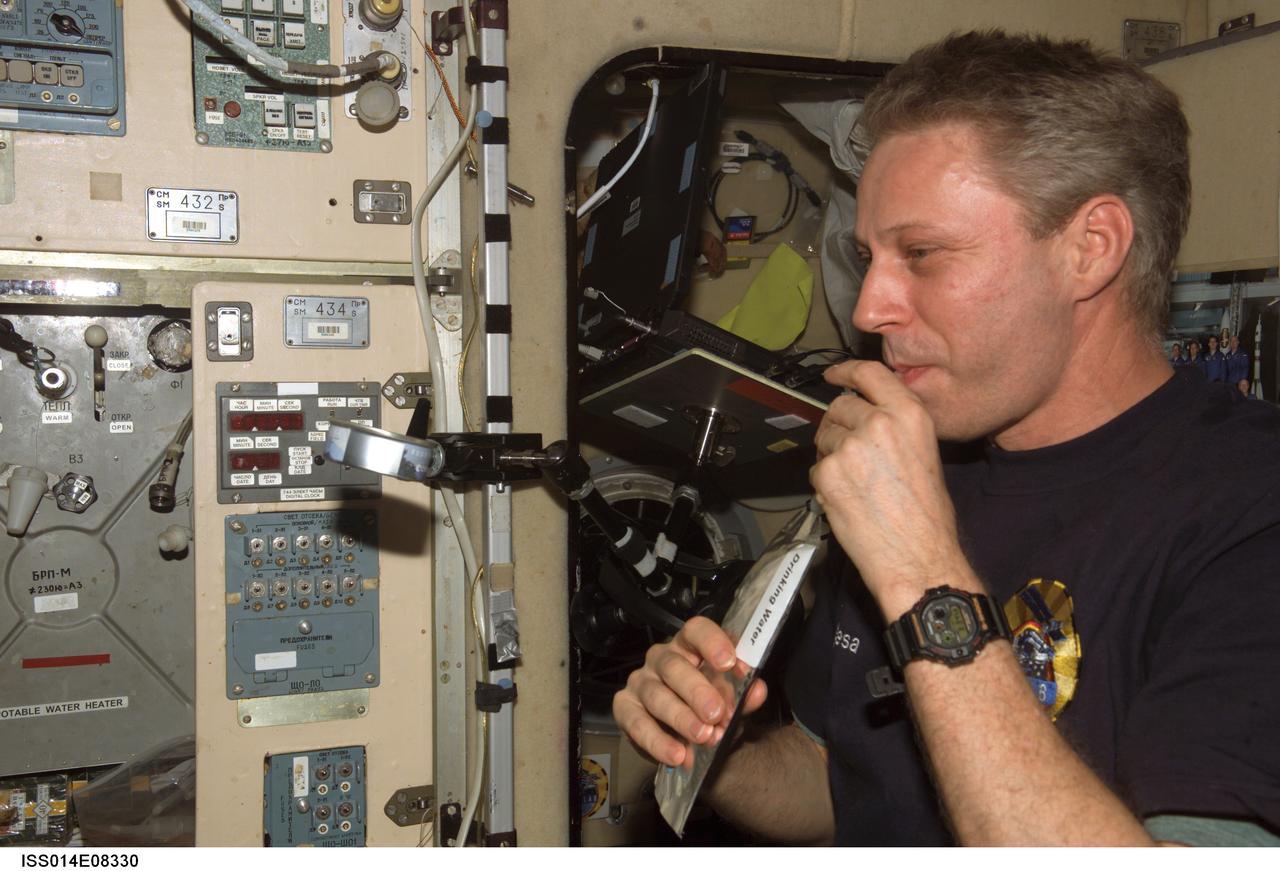
ISS014-E-08330 (27 Nov. 2006) --- European Space Agency (ESA) astronaut Thomas Reiter, Expedition 14 flight engineer, drinks a beverage in the Zvezda Service Module of the International Space Station.
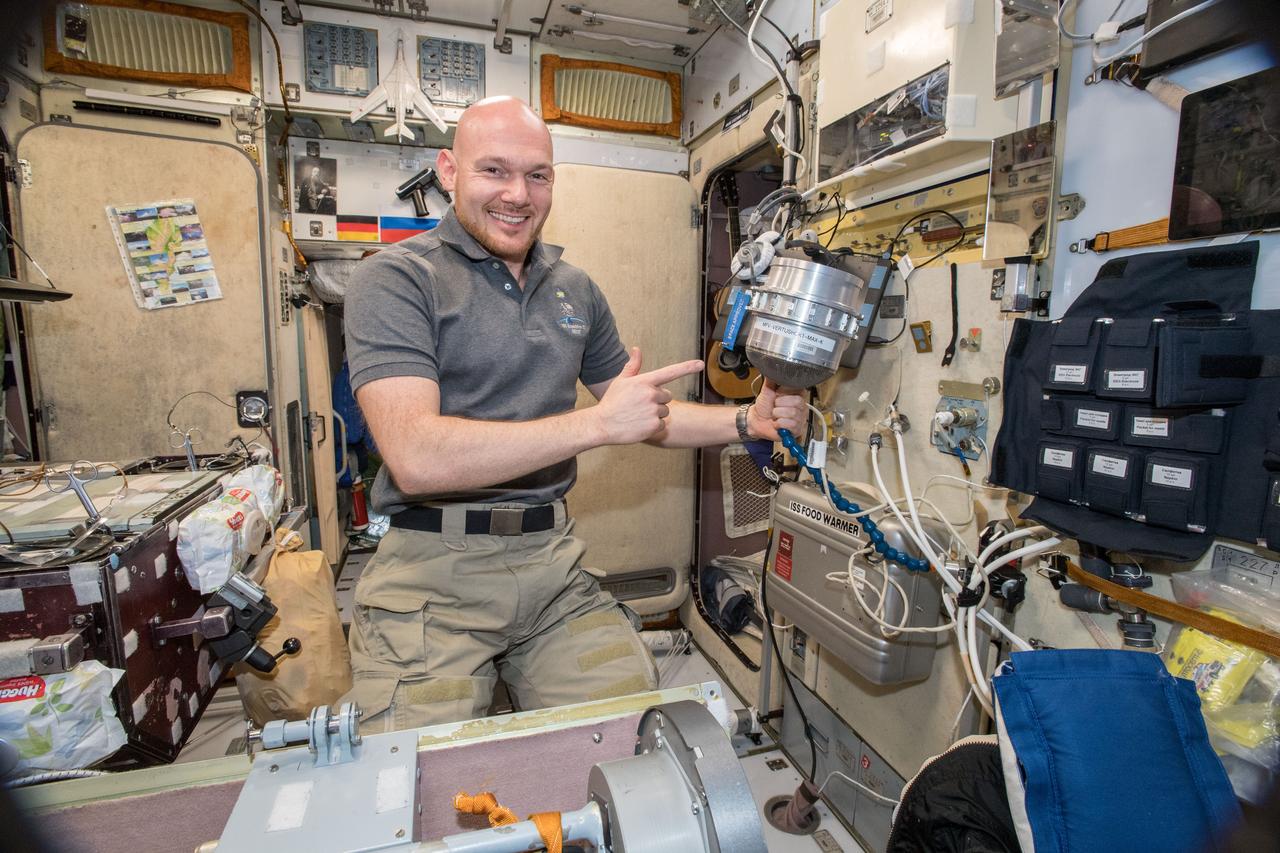
iss057e074550 (Nov. 9, 2018) --- Expedition 57 Commander Alexander Gerst of ESA (European Space Agency) is pictured in the galley inside the Zvezda Service Module which is part of the International Space Station's Russian segment.
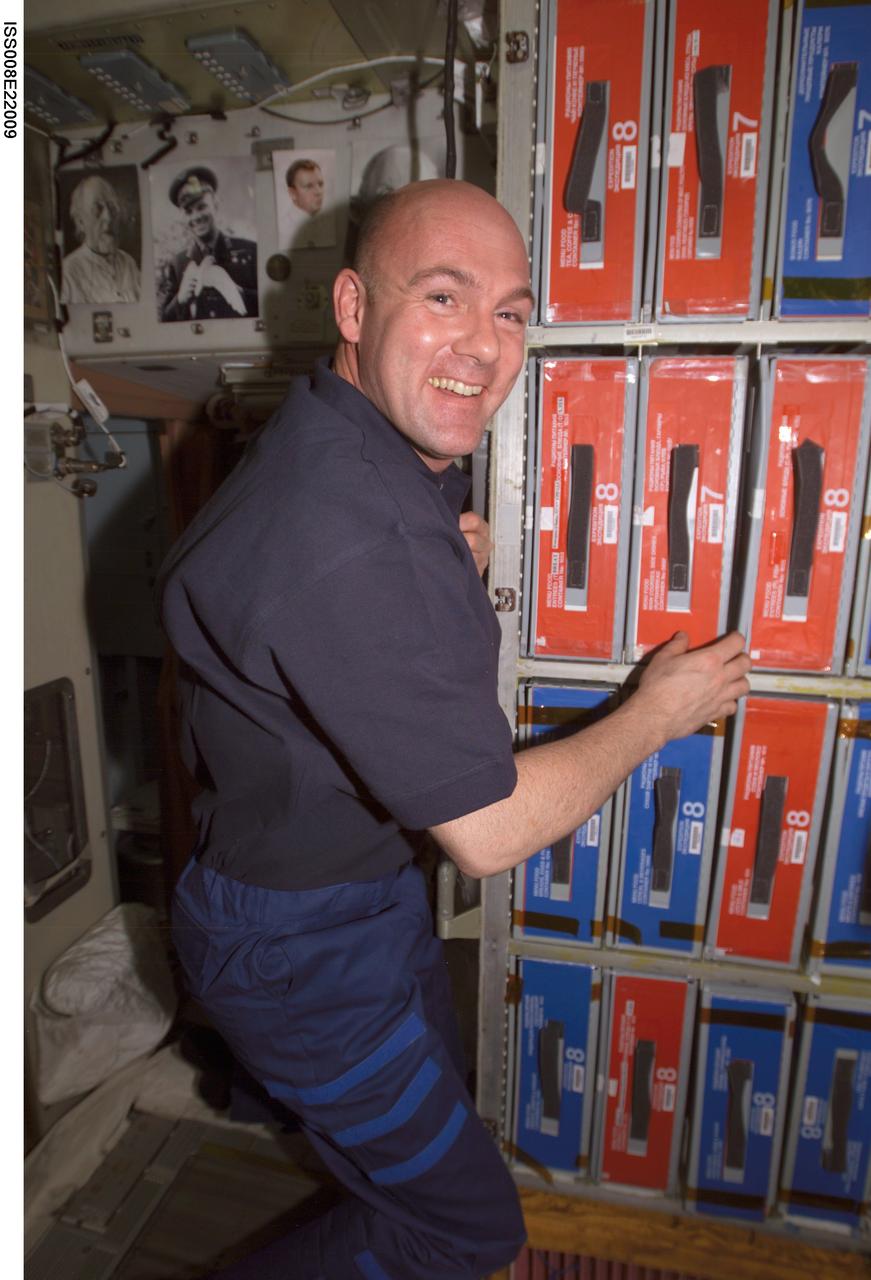
ISS008-E-22009 (22 April 2004) --- European Space Agency (ESA) astronaut Andre Kuipers of the Netherlands is pictured near food storage containers in the Zvezda Service Module of the International Space Station (ISS).
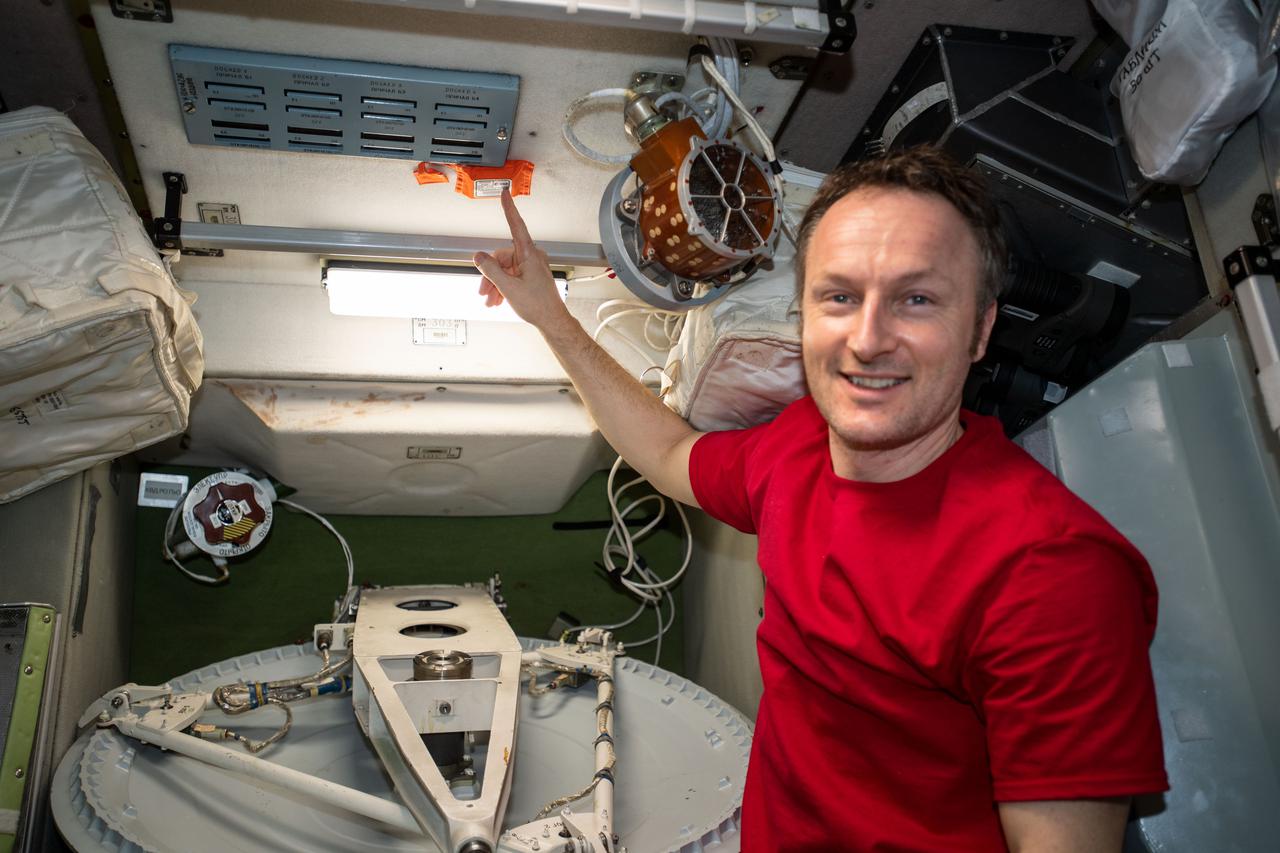
iss067e000624 (April 1, 2022) --- ESA (European Space Agency) astronaut and Expedition 67 Flight Engineer Matthias Maurer relocates a passive radiation monitor inside the International Space Station's Zvezda service module.
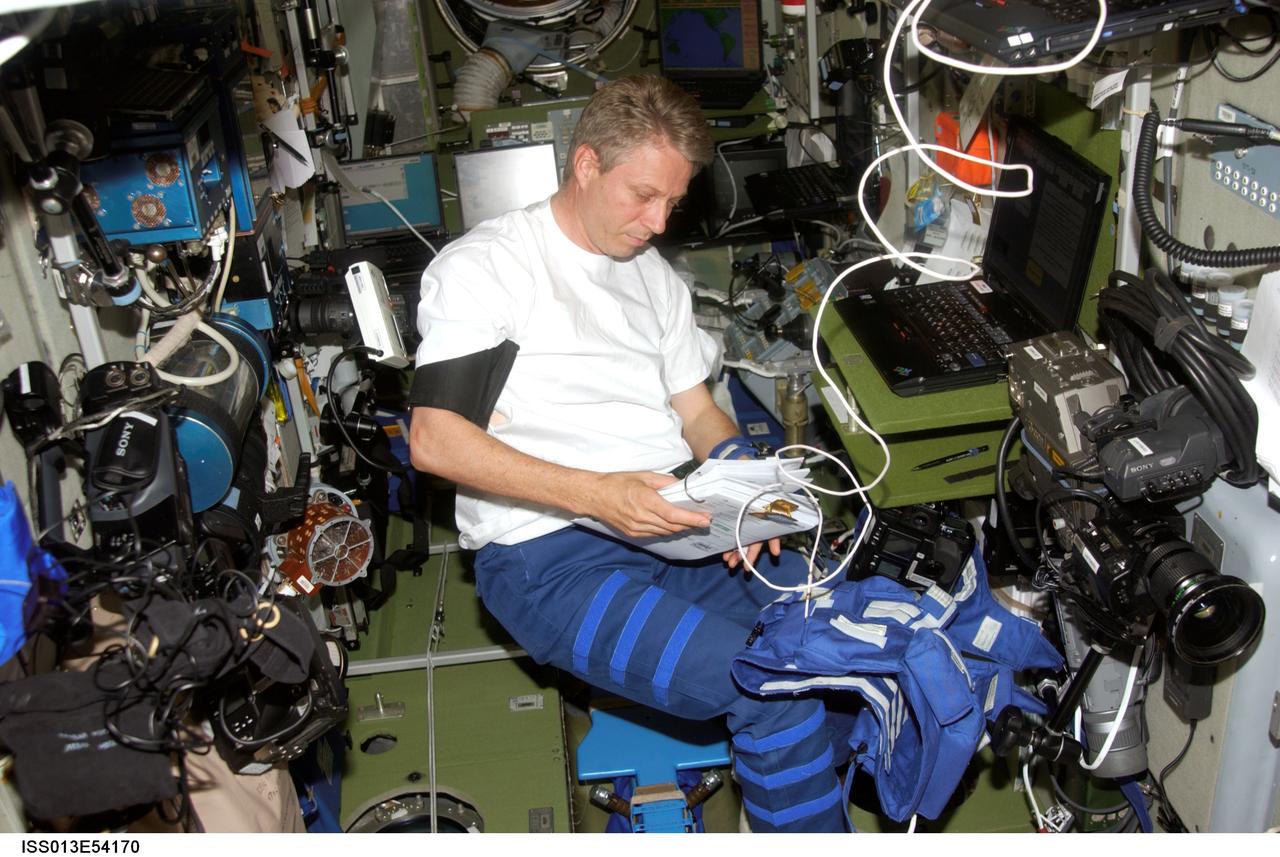
ISS013-E-54170 (July 2006) --- European Space Agency (ESA) astronaut Thomas Reiter, Expedition 13 flight engineer, looks over a procedures checklist in the Zvezda Service Module of the International Space Station.
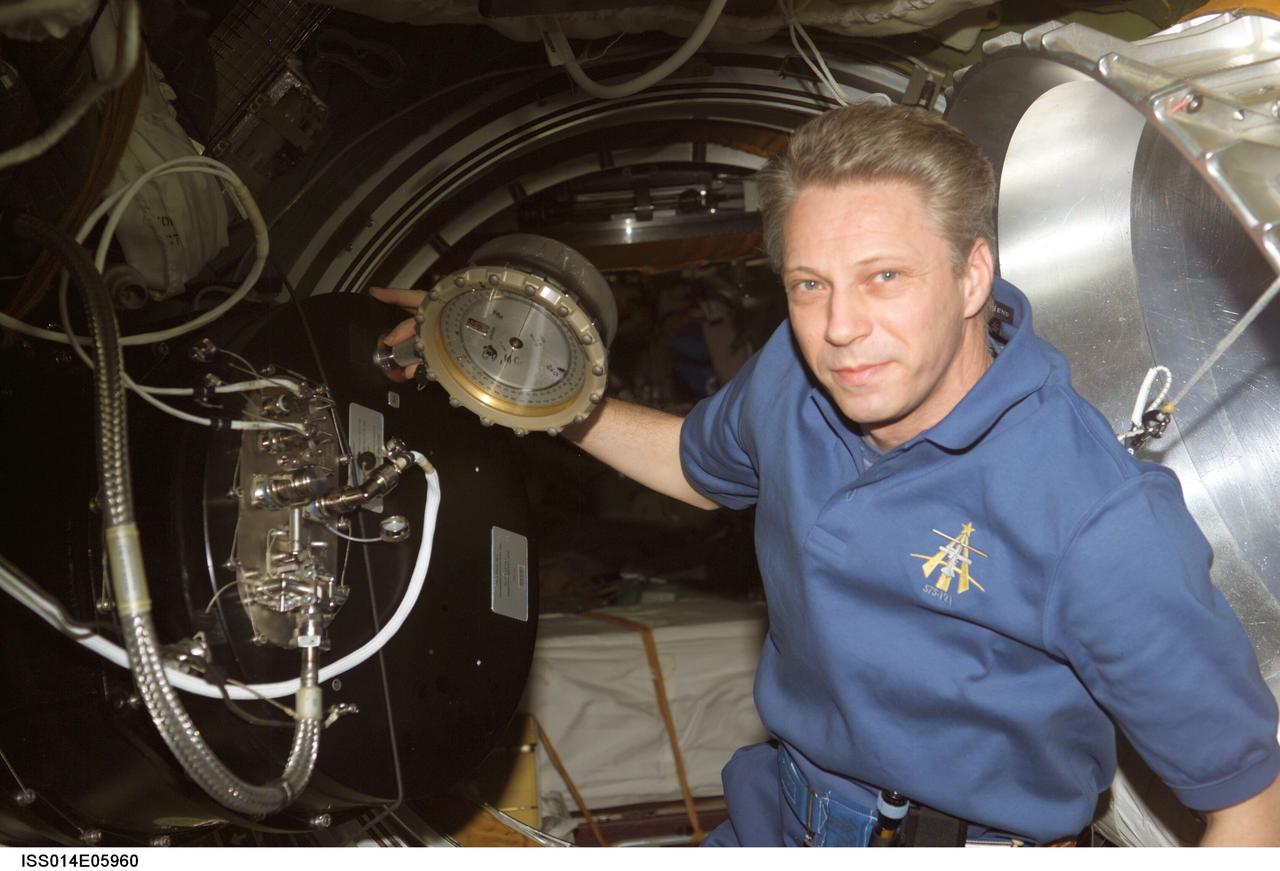
ISS014-E-05960 (October 2006) --- European Space Agency (ESA) astronaut Thomas Reiter, Expedition 14 flight engineer, works with the Plasmakristall Telescience Apparatus in the Zvezda Service Module of the International Space Station.
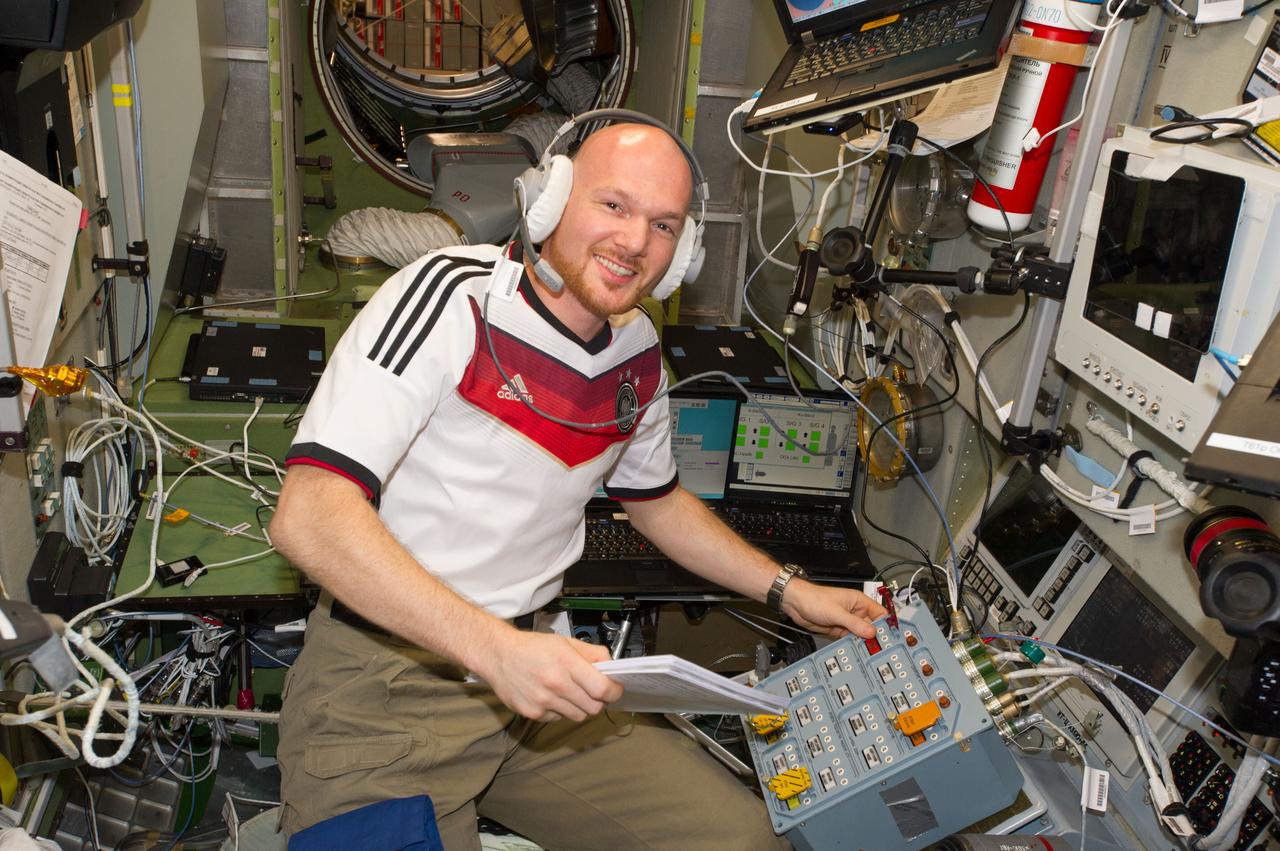
ESA astronaut Alexander Gerst, Expedition 40 flight engineer (wearing soccer shirt), is photographed during ATV equipment preparation in the Service Module (SM) prior to ATV launch.
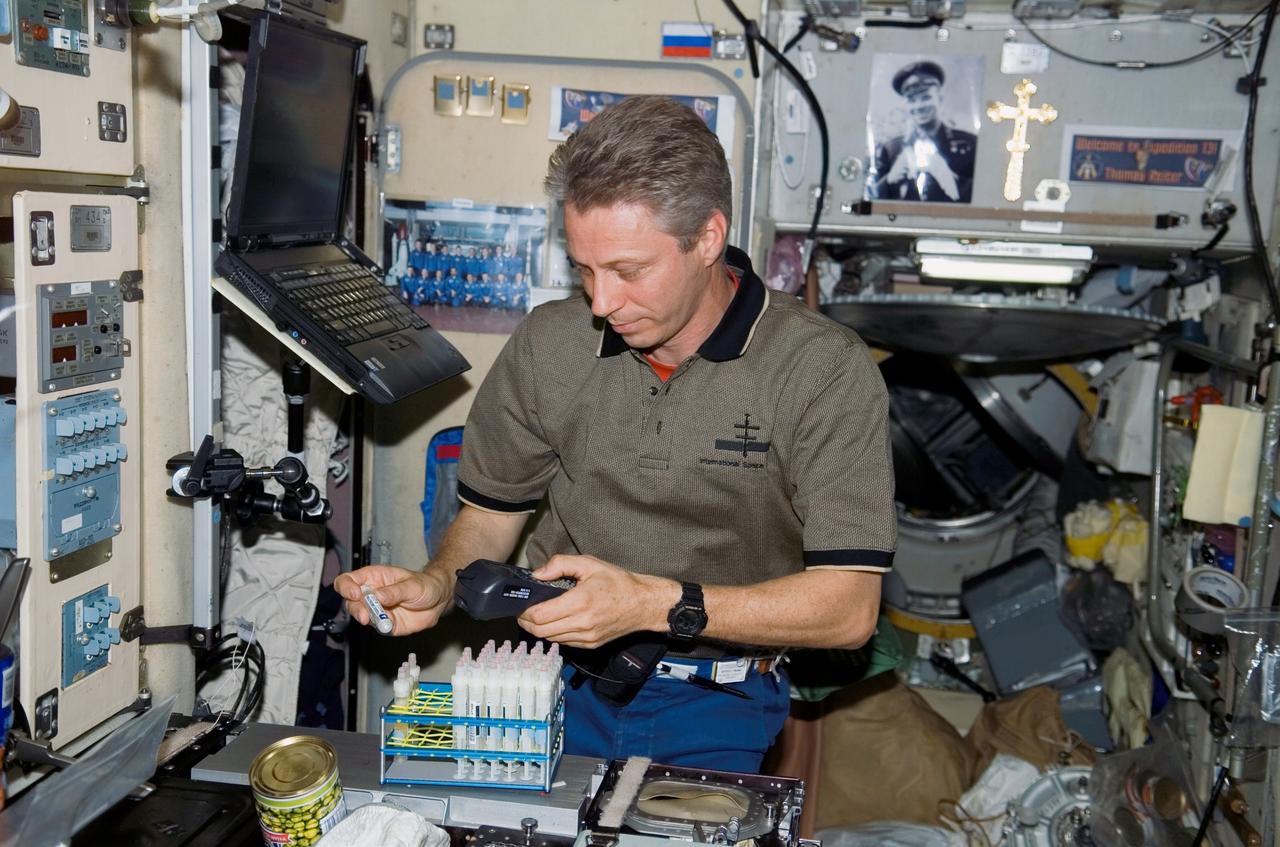
ISS013-E-56052 (23 July 2006) --- European Space Agency (ESA) astronaut Thomas Reiter, Expedition 13 flight engineer, works with sample tubes in the Zvezda Service Module of the International Space Station.
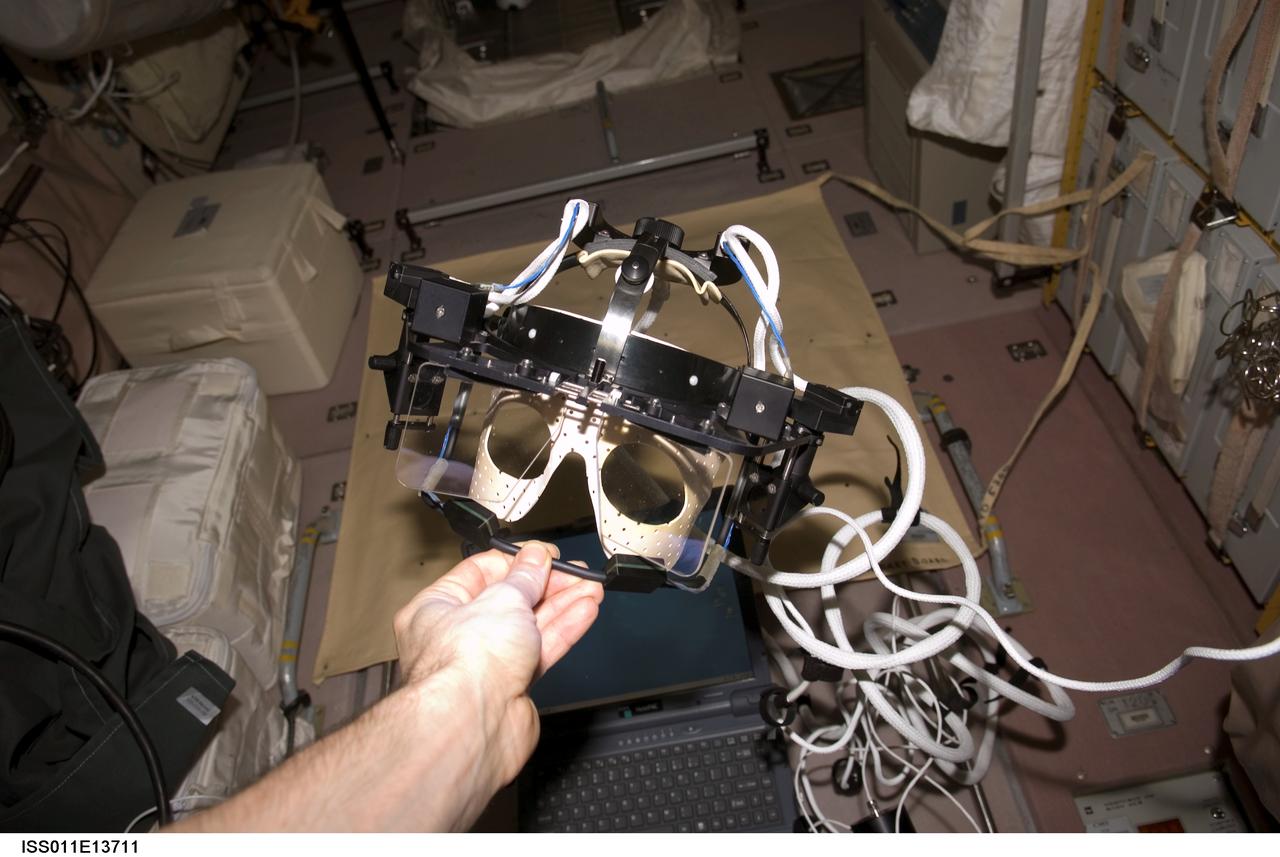
ISS011-E-13711 (25 September 2005) --- The European Space Agency (ESA) Eye Tracking Device (ETD) payload held by an Expedition 11 crewmember in the Zvezda Service Module of the international space station.
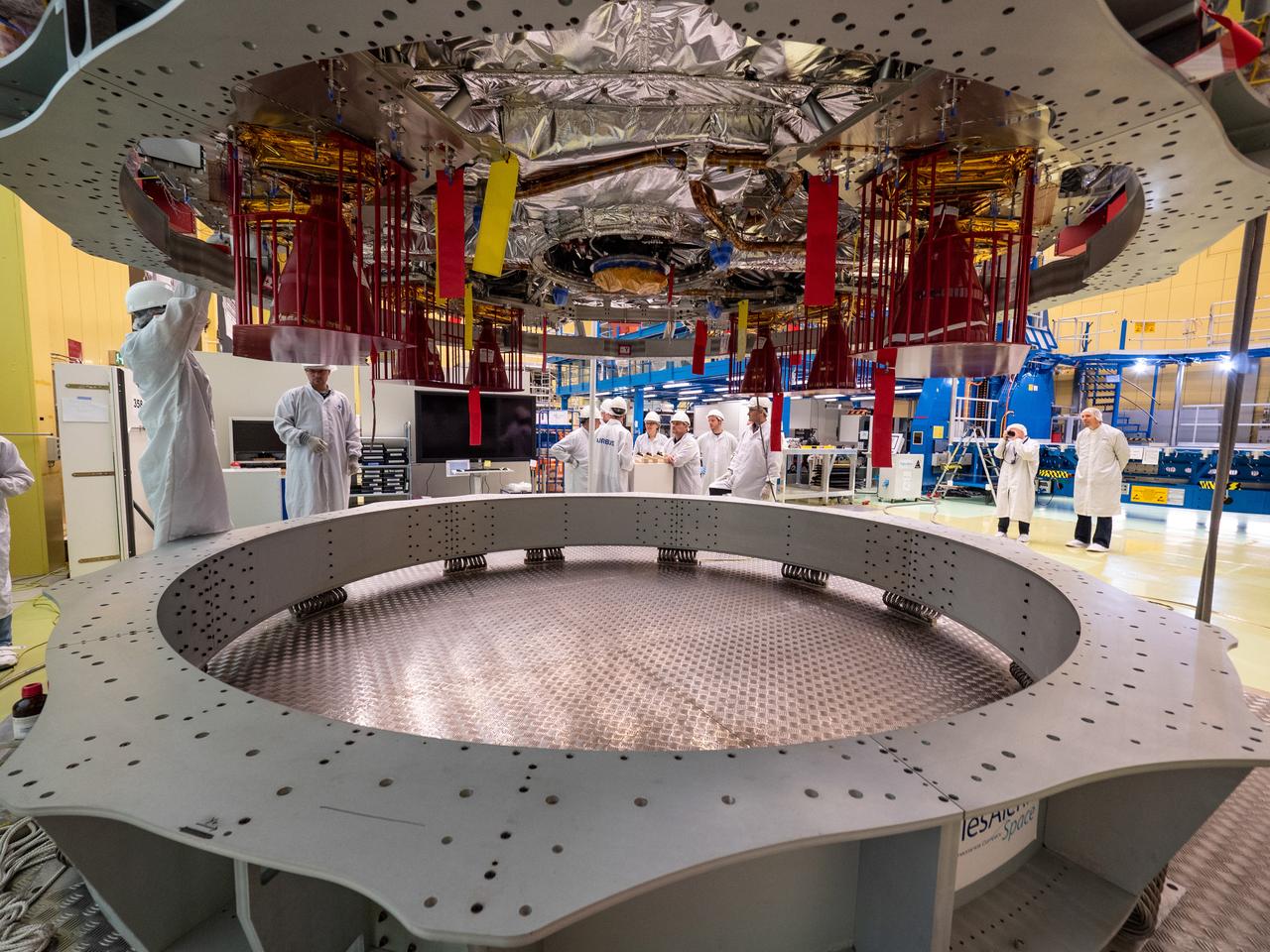
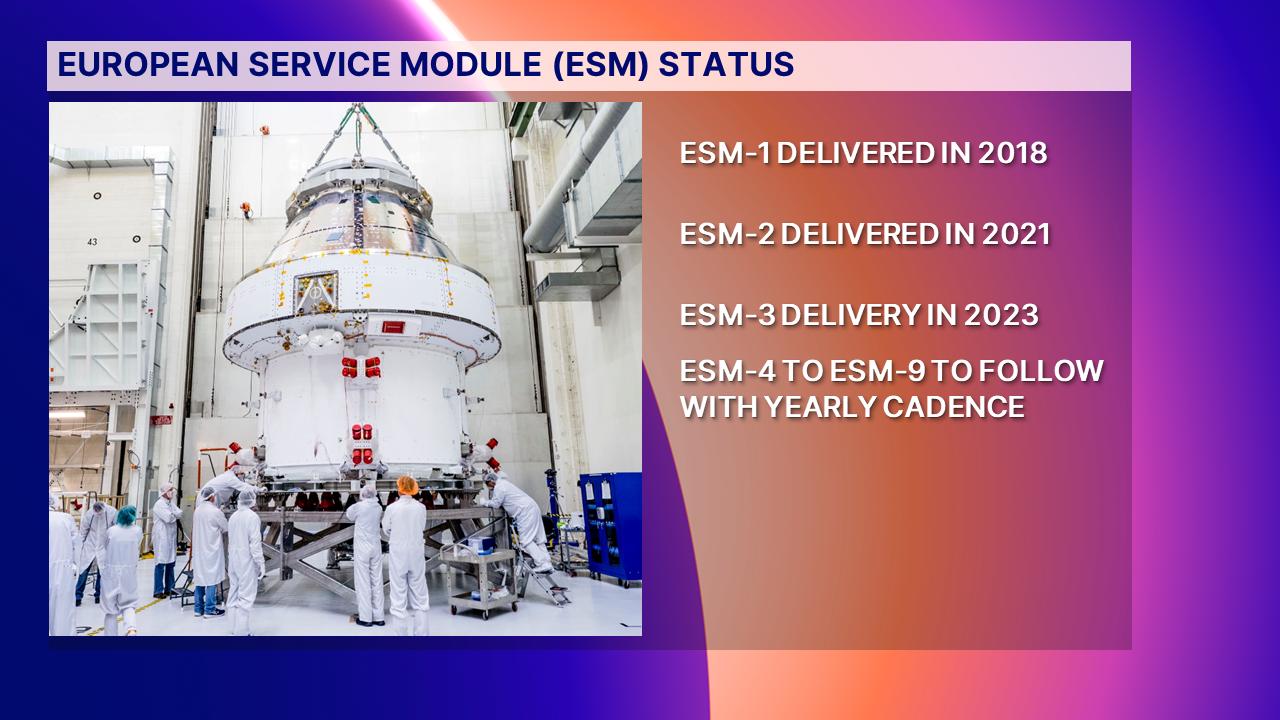
Technicians at the Airbus facility in Bremen, Germany prepare the European Service Module for shipment to Kennedy Space Center on Nov. 1, 2018. The service module will depart Germany on November 5, 2018 and will arrive in the U.S. on November 6...For the first time, NASA will use a European-built system as a critical element to power an American spacecraft, extending the international cooperation of the International Space Station into deep space. The European Service Module is a unique collaboration across space agencies and industry including ESA’s prime contractor, Airbus, and 10 European countries. The completion of service module work in Europe and shipment to Kennedy signifies a major milestone toward NASA’s human deep space exploration missions to the Moon and beyond.
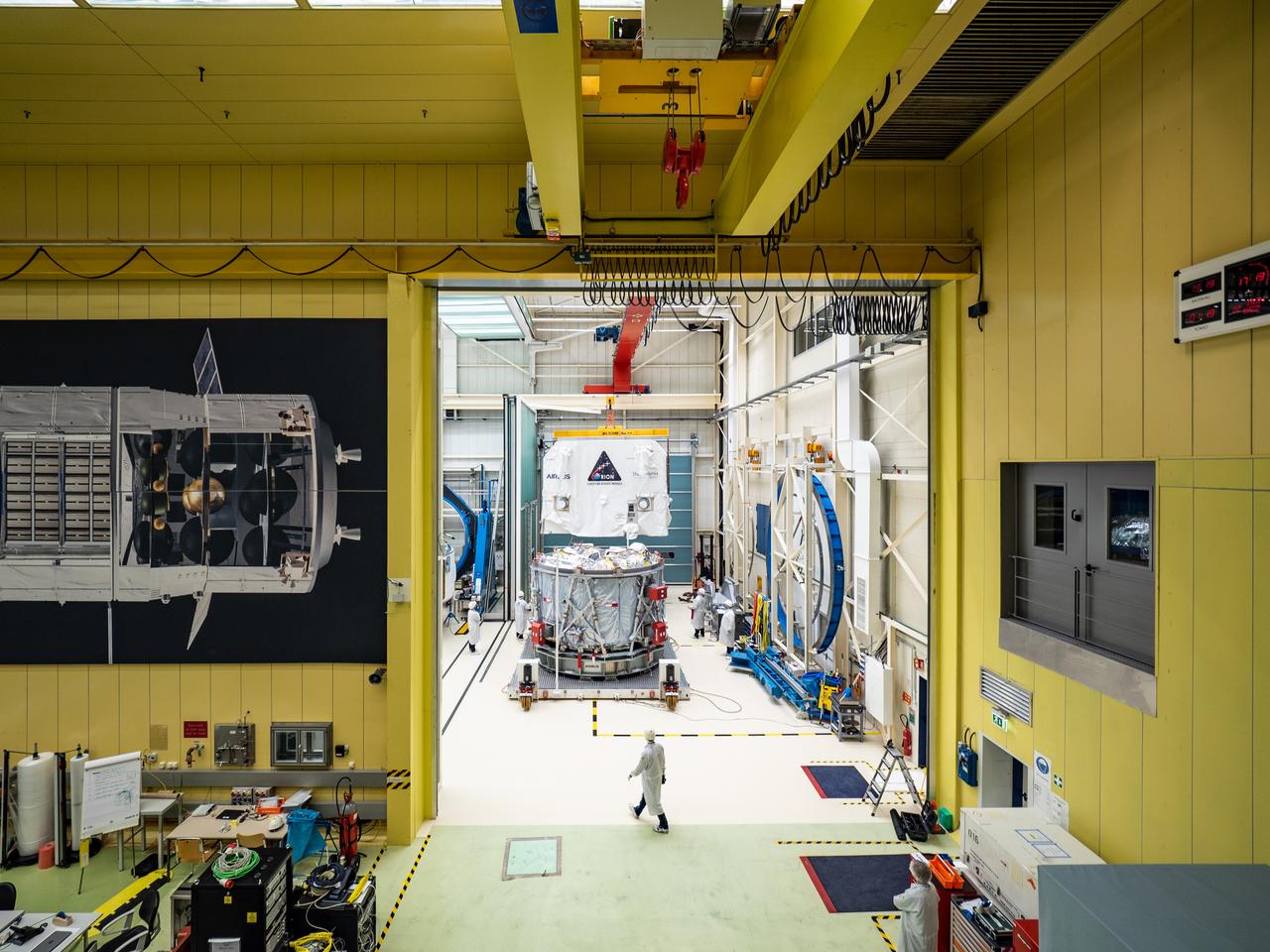
Technicians at the Airbus facility in Bremen, Germany prepare the European Service Module for shipment to Kennedy Space Center on Nov. 1, 2018. The service module will depart Germany on November 5, 2018 and will arrive in the U.S. on November 6...For the first time, NASA will use a European-built system as a critical element to power an American spacecraft, extending the international cooperation of the International Space Station into deep space. The European Service Module is a unique collaboration across space agencies and industry including ESA’s prime contractor, Airbus, and 10 European countries. The completion of service module work in Europe and shipment to Kennedy signifies a major milestone toward NASA’s human deep space exploration missions to the Moon and beyond.
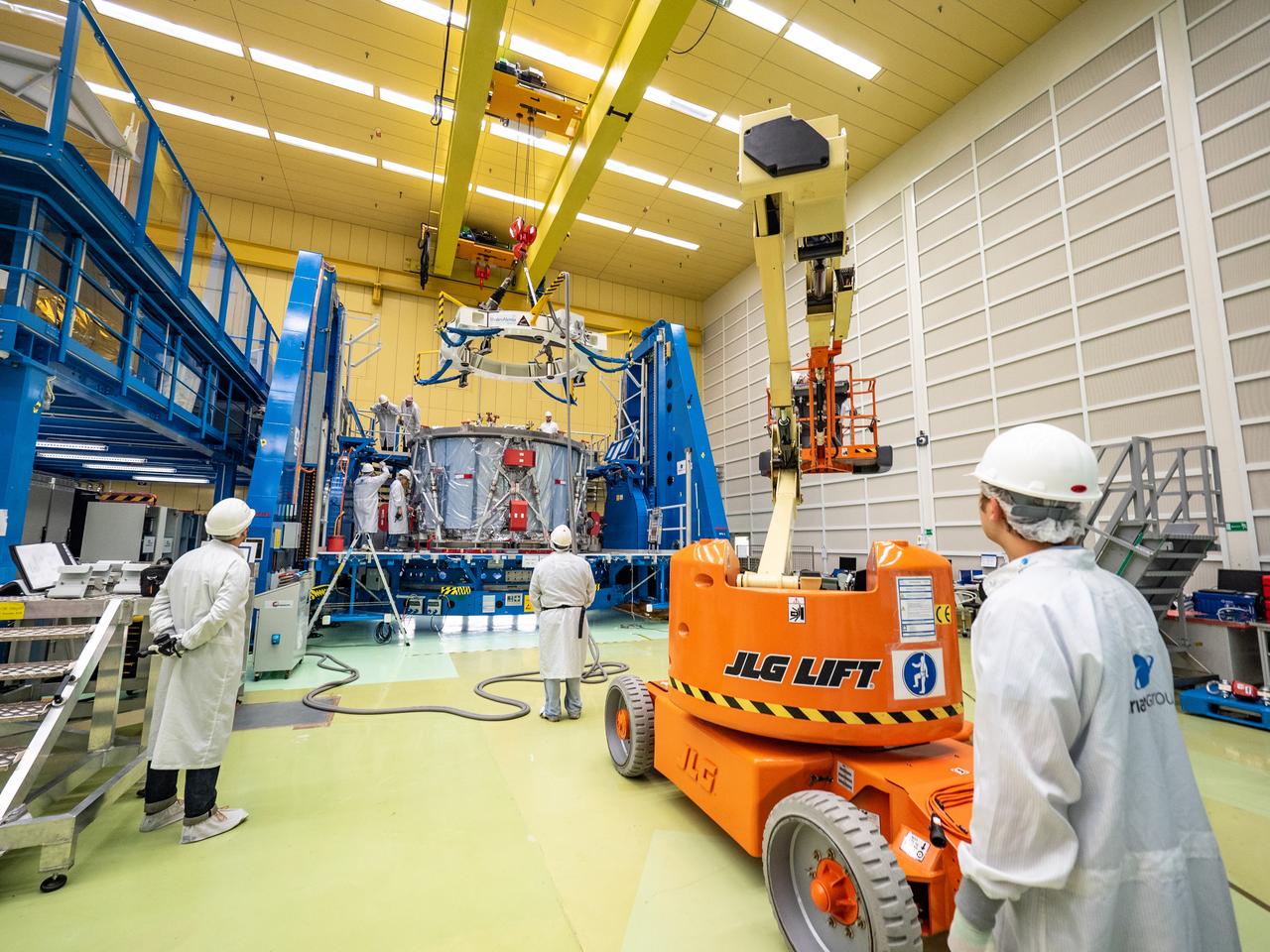
Technicians at the Airbus facility in Bremen, Germany prepare the European Service Module for shipment to Kennedy Space Center on Nov. 1, 2018. The service module will depart Germany on November 5, 2018 and will arrive in the U.S. on November 6...For the first time, NASA will use a European-built system as a critical element to power an American spacecraft, extending the international cooperation of the International Space Station into deep space. The European Service Module is a unique collaboration across space agencies and industry including ESA’s prime contractor, Airbus, and 10 European countries. The completion of service module work in Europe and shipment to Kennedy signifies a major milestone toward NASA’s human deep space exploration missions to the Moon and beyond.
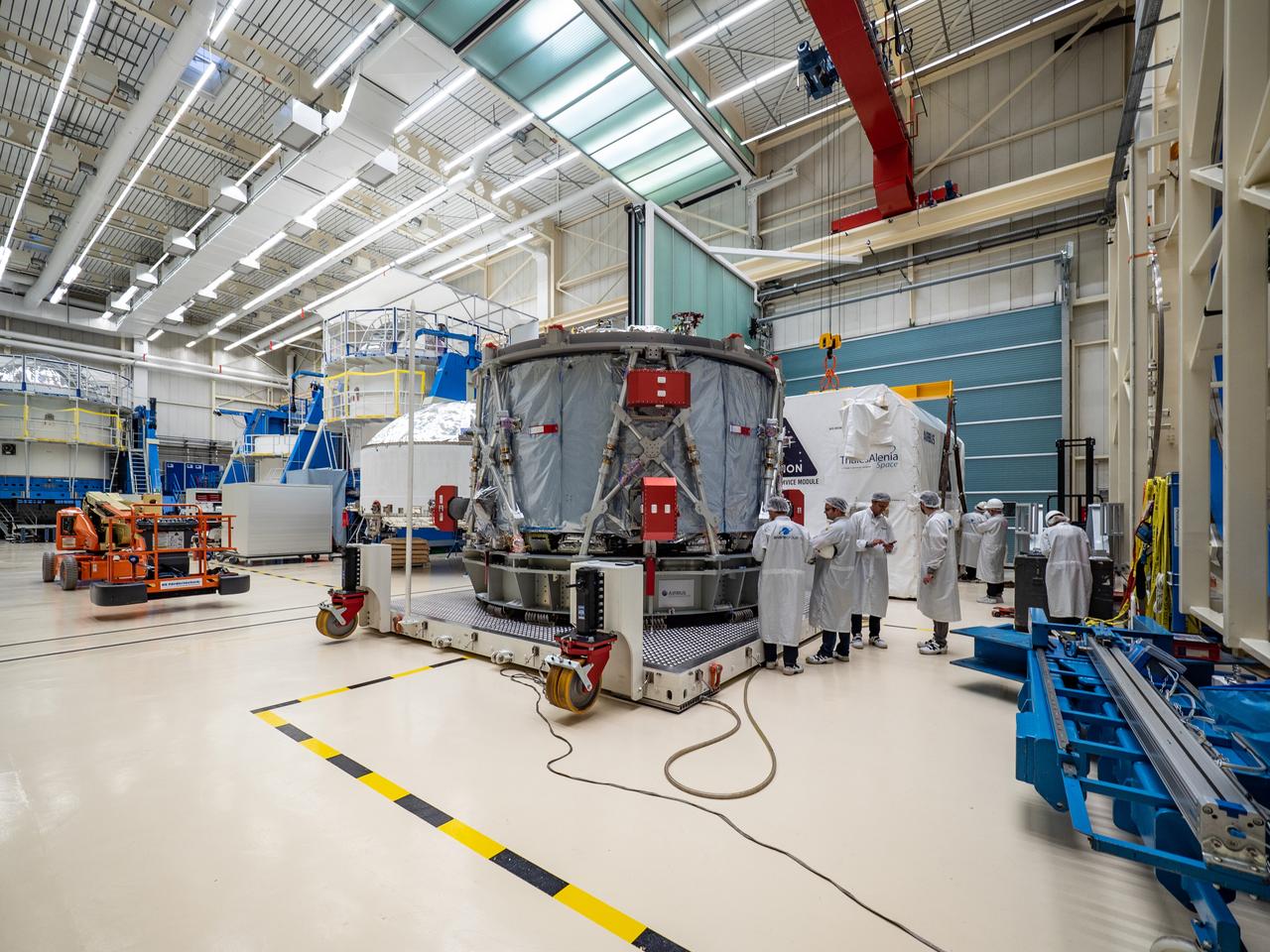
Technicians at the Airbus facility in Bremen, Germany prepare the European Service Module for shipment to Kennedy Space Center on Nov. 1, 2018. The service module will depart Germany on November 5, 2018 and will arrive in the U.S. on November 6...For the first time, NASA will use a European-built system as a critical element to power an American spacecraft, extending the international cooperation of the International Space Station into deep space. The European Service Module is a unique collaboration across space agencies and industry including ESA’s prime contractor, Airbus, and 10 European countries. The completion of service module work in Europe and shipment to Kennedy signifies a major milestone toward NASA’s human deep space exploration missions to the Moon and beyond.
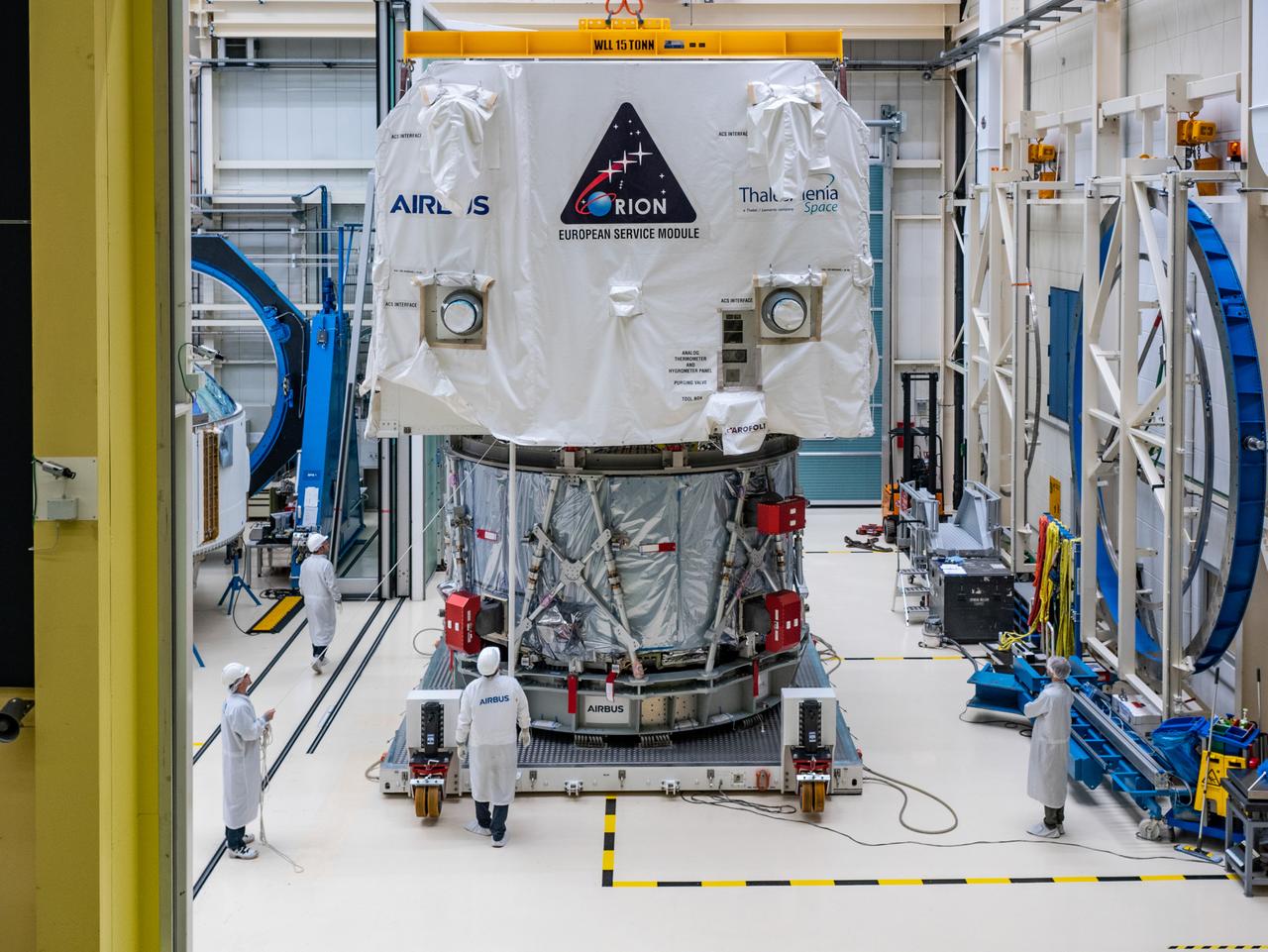
Technicians at the Airbus facility in Bremen, Germany prepare the European Service Module for shipment to Kennedy Space Center on Nov. 1, 2018. The service module will depart Germany on November 5, 2018 and will arrive in the U.S. on November 6...For the first time, NASA will use a European-built system as a critical element to power an American spacecraft, extending the international cooperation of the International Space Station into deep space. The European Service Module is a unique collaboration across space agencies and industry including ESA’s prime contractor, Airbus, and 10 European countries. The completion of service module work in Europe and shipment to Kennedy signifies a major milestone toward NASA’s human deep space exploration missions to the Moon and beyond.
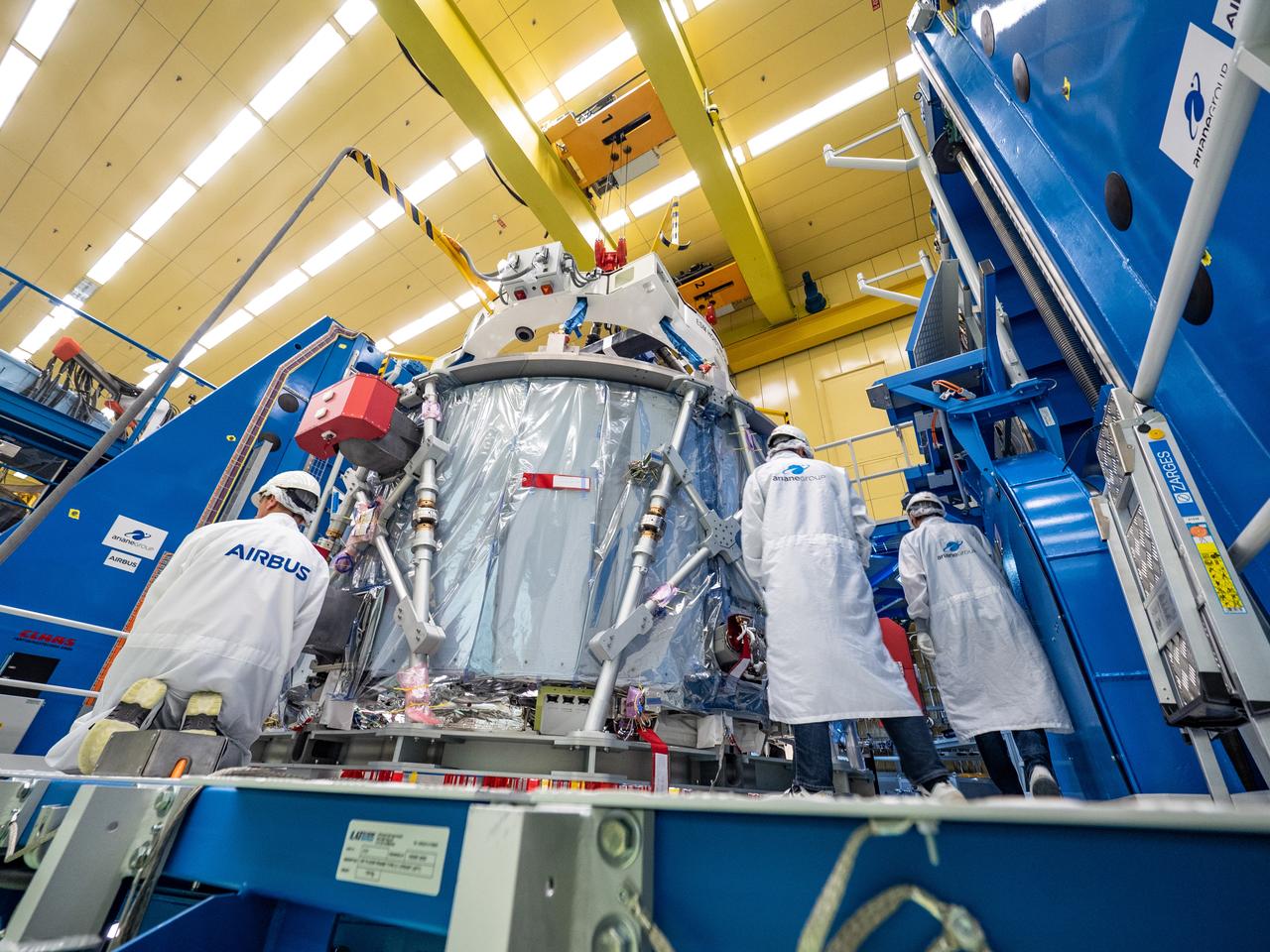
Technicians at the Airbus facility in Bremen, Germany prepare the European Service Module for shipment to Kennedy Space Center on Nov. 1, 2018. The service module will depart Germany on November 5, 2018 and will arrive in the U.S. on November 6...For the first time, NASA will use a European-built system as a critical element to power an American spacecraft, extending the international cooperation of the International Space Station into deep space. The European Service Module is a unique collaboration across space agencies and industry including ESA’s prime contractor, Airbus, and 10 European countries. The completion of service module work in Europe and shipment to Kennedy signifies a major milestone toward NASA’s human deep space exploration missions to the Moon and beyond.
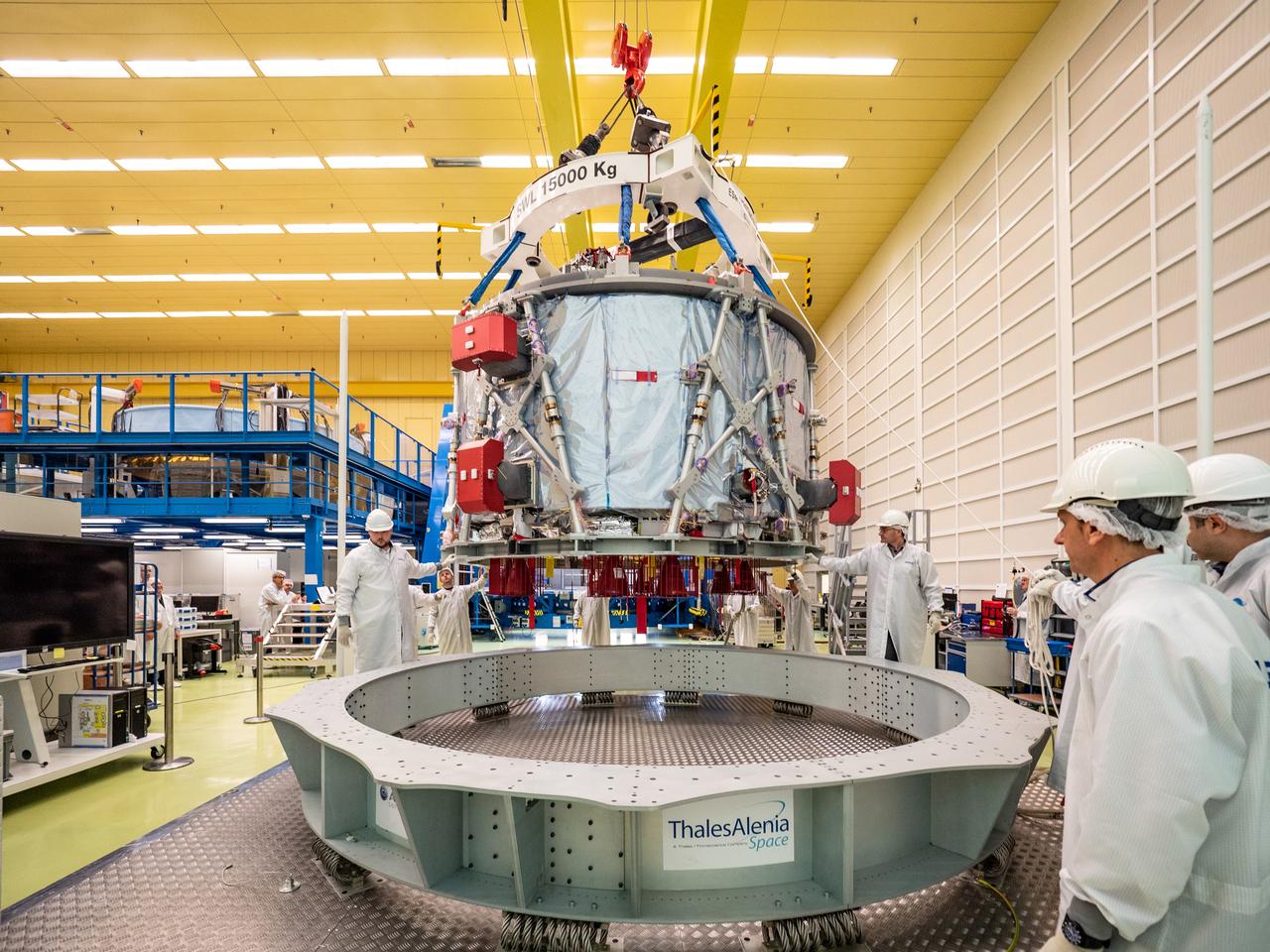
Technicians at the Airbus facility in Bremen, Germany prepare the European Service Module for shipment to Kennedy Space Center on Nov. 1, 2018. The service module will depart Germany on November 5, 2018 and will arrive in the U.S. on November 6...For the first time, NASA will use a European-built system as a critical element to power an American spacecraft, extending the international cooperation of the International Space Station into deep space. The European Service Module is a unique collaboration across space agencies and industry including ESA’s prime contractor, Airbus, and 10 European countries. The completion of service module work in Europe and shipment to Kennedy signifies a major milestone toward NASA’s human deep space exploration missions to the Moon and beyond.
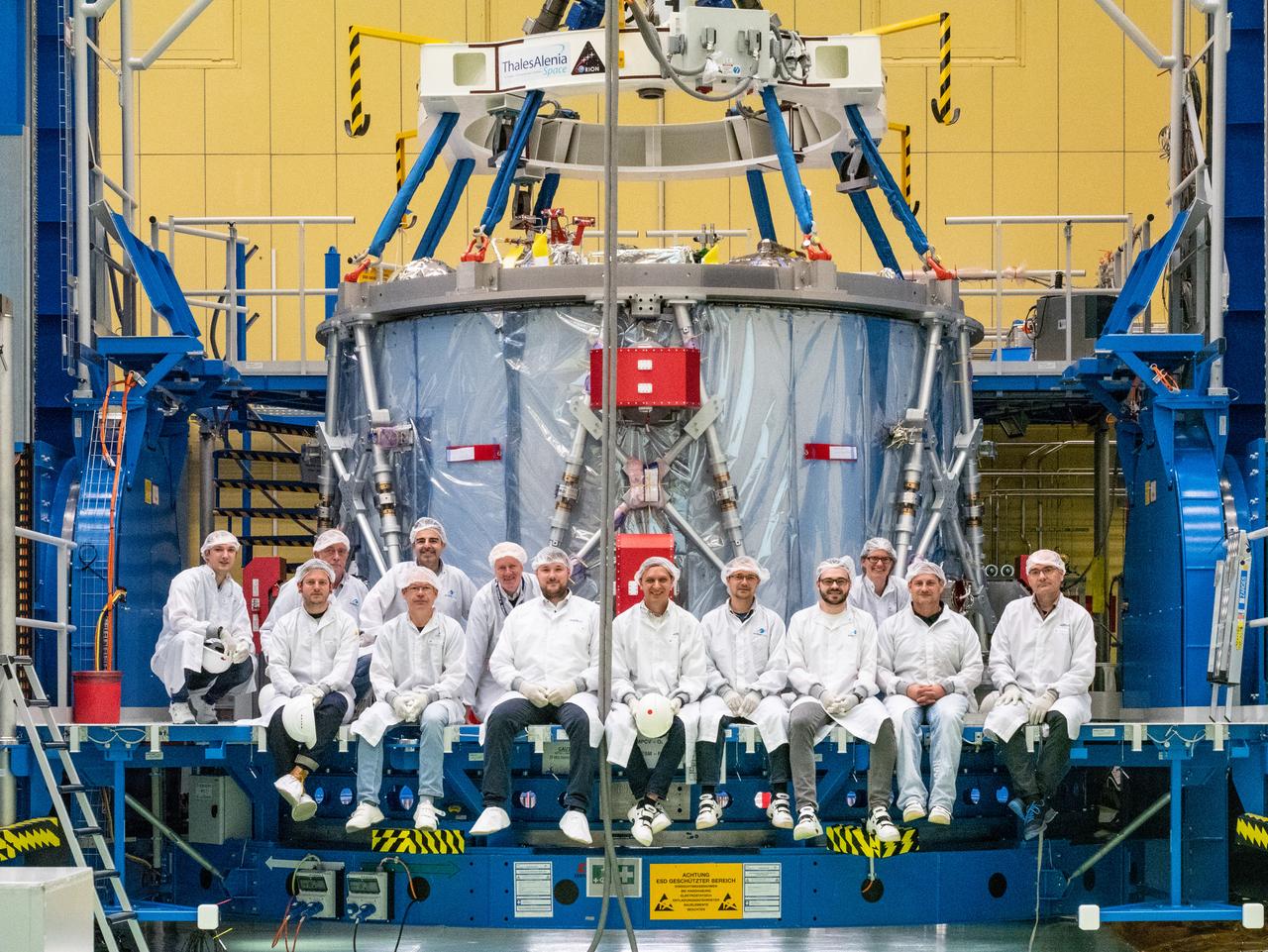
Technicians at the Airbus facility in Bremen, Germany prepare the European Service Module for shipment to Kennedy Space Center on Nov. 1, 2018. The service module will depart Germany on November 5, 2018 and will arrive in the U.S. on November 6...For the first time, NASA will use a European-built system as a critical element to power an American spacecraft, extending the international cooperation of the International Space Station into deep space. The European Service Module is a unique collaboration across space agencies and industry including ESA’s prime contractor, Airbus, and 10 European countries. The completion of service module work in Europe and shipment to Kennedy signifies a major milestone toward NASA’s human deep space exploration missions to the Moon and beyond.
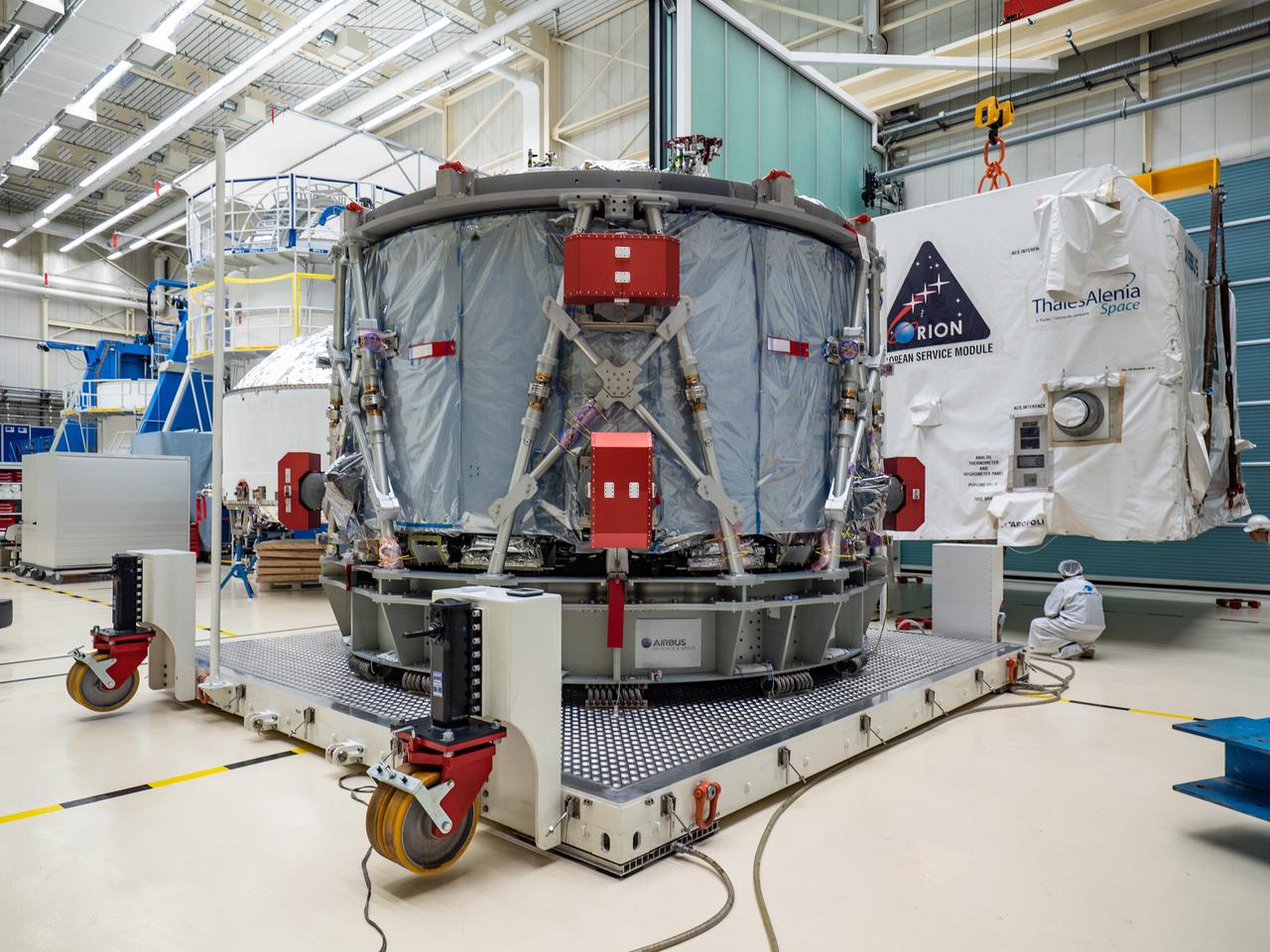
Technicians at the Airbus facility in Bremen, Germany prepare the European Service Module for shipment to Kennedy Space Center on Nov. 1, 2018. The service module will depart Germany on November 5, 2018 and will arrive in the U.S. on November 6...For the first time, NASA will use a European-built system as a critical element to power an American spacecraft, extending the international cooperation of the International Space Station into deep space. The European Service Module is a unique collaboration across space agencies and industry including ESA’s prime contractor, Airbus, and 10 European countries. The completion of service module work in Europe and shipment to Kennedy signifies a major milestone toward NASA’s human deep space exploration missions to the Moon and beyond.
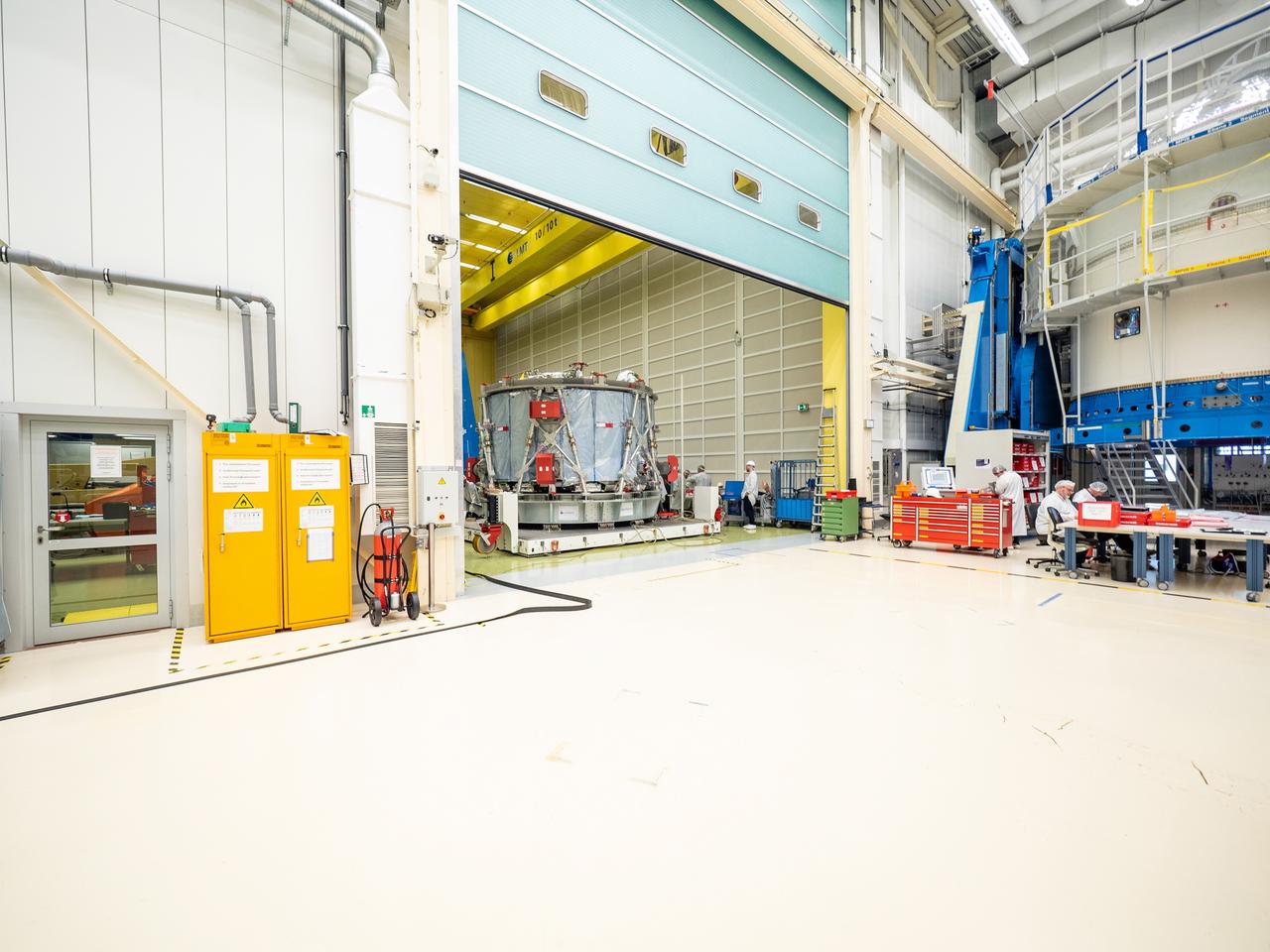
Technicians at the Airbus facility in Bremen, Germany prepare the European Service Module for shipment to Kennedy Space Center on Nov. 1, 2018. The service module will depart Germany on November 5, 2018 and will arrive in the U.S. on November 6...For the first time, NASA will use a European-built system as a critical element to power an American spacecraft, extending the international cooperation of the International Space Station into deep space. The European Service Module is a unique collaboration across space agencies and industry including ESA’s prime contractor, Airbus, and 10 European countries. The completion of service module work in Europe and shipment to Kennedy signifies a major milestone toward NASA’s human deep space exploration missions to the Moon and beyond.
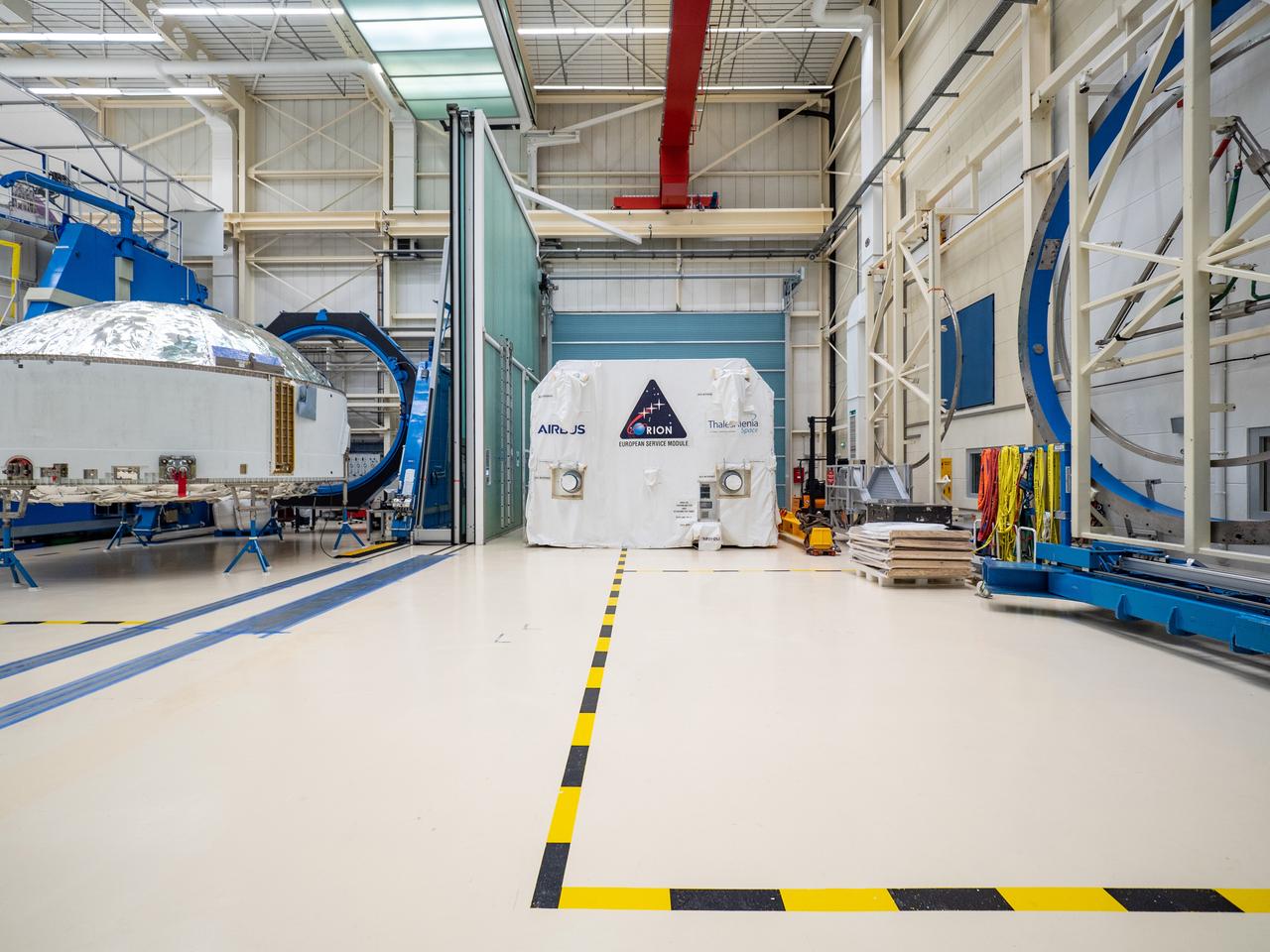
Technicians at the Airbus facility in Bremen, Germany prepare the European Service Module for shipment to Kennedy Space Center on Nov. 1, 2018. The service module will depart Germany on November 5, 2018 and will arrive in the U.S. on November 6...For the first time, NASA will use a European-built system as a critical element to power an American spacecraft, extending the international cooperation of the International Space Station into deep space. The European Service Module is a unique collaboration across space agencies and industry including ESA’s prime contractor, Airbus, and 10 European countries. The completion of service module work in Europe and shipment to Kennedy signifies a major milestone toward NASA’s human deep space exploration missions to the Moon and beyond.
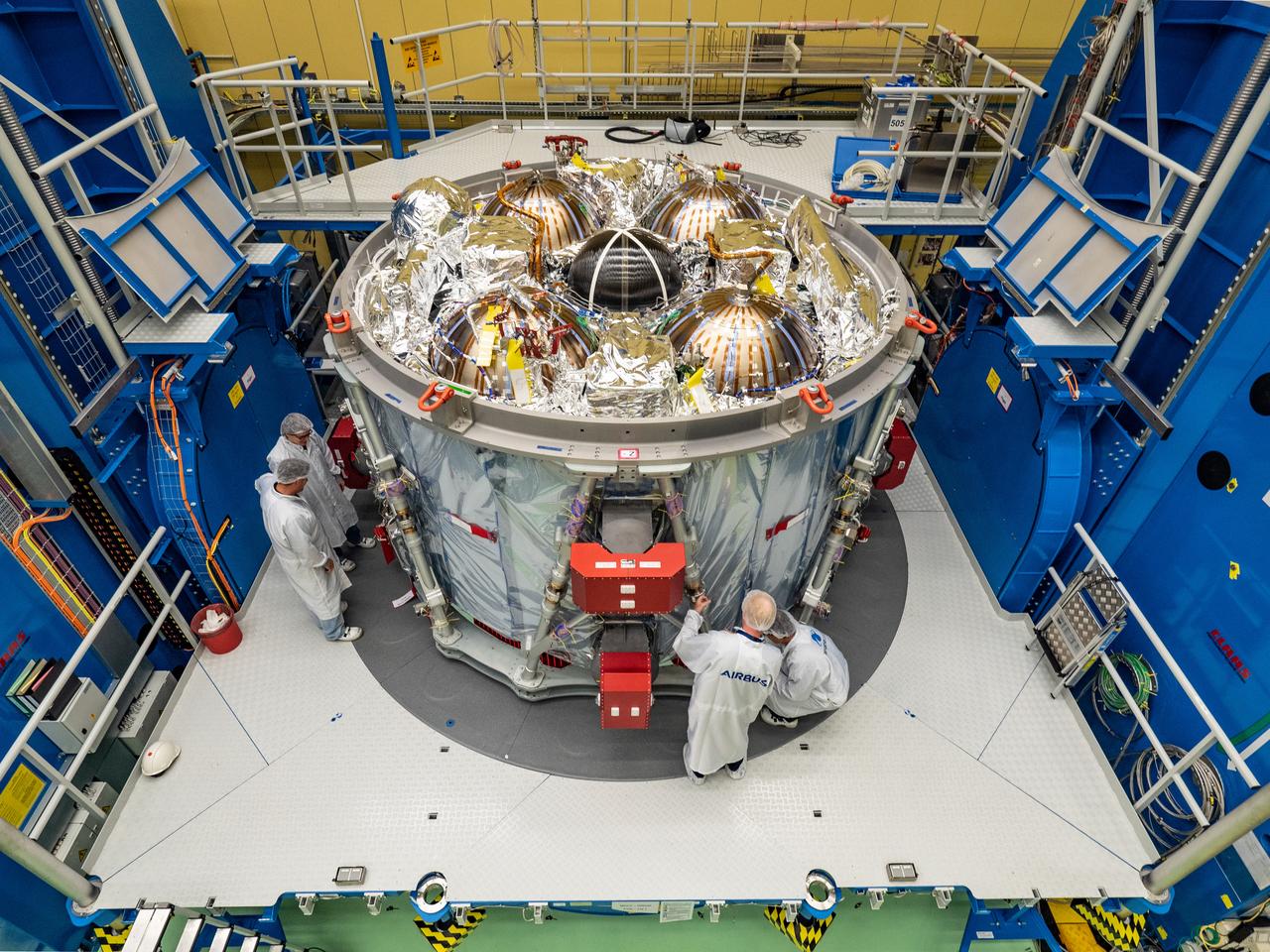
Technicians at the Airbus facility in Bremen, Germany prepare the European Service Module for shipment to Kennedy Space Center on Nov. 1, 2018. The service module will depart Germany on November 5, 2018 and will arrive in the U.S. on November 6...For the first time, NASA will use a European-built system as a critical element to power an American spacecraft, extending the international cooperation of the International Space Station into deep space. The European Service Module is a unique collaboration across space agencies and industry including ESA’s prime contractor, Airbus, and 10 European countries. The completion of service module work in Europe and shipment to Kennedy signifies a major milestone toward NASA’s human deep space exploration missions to the Moon and beyond.
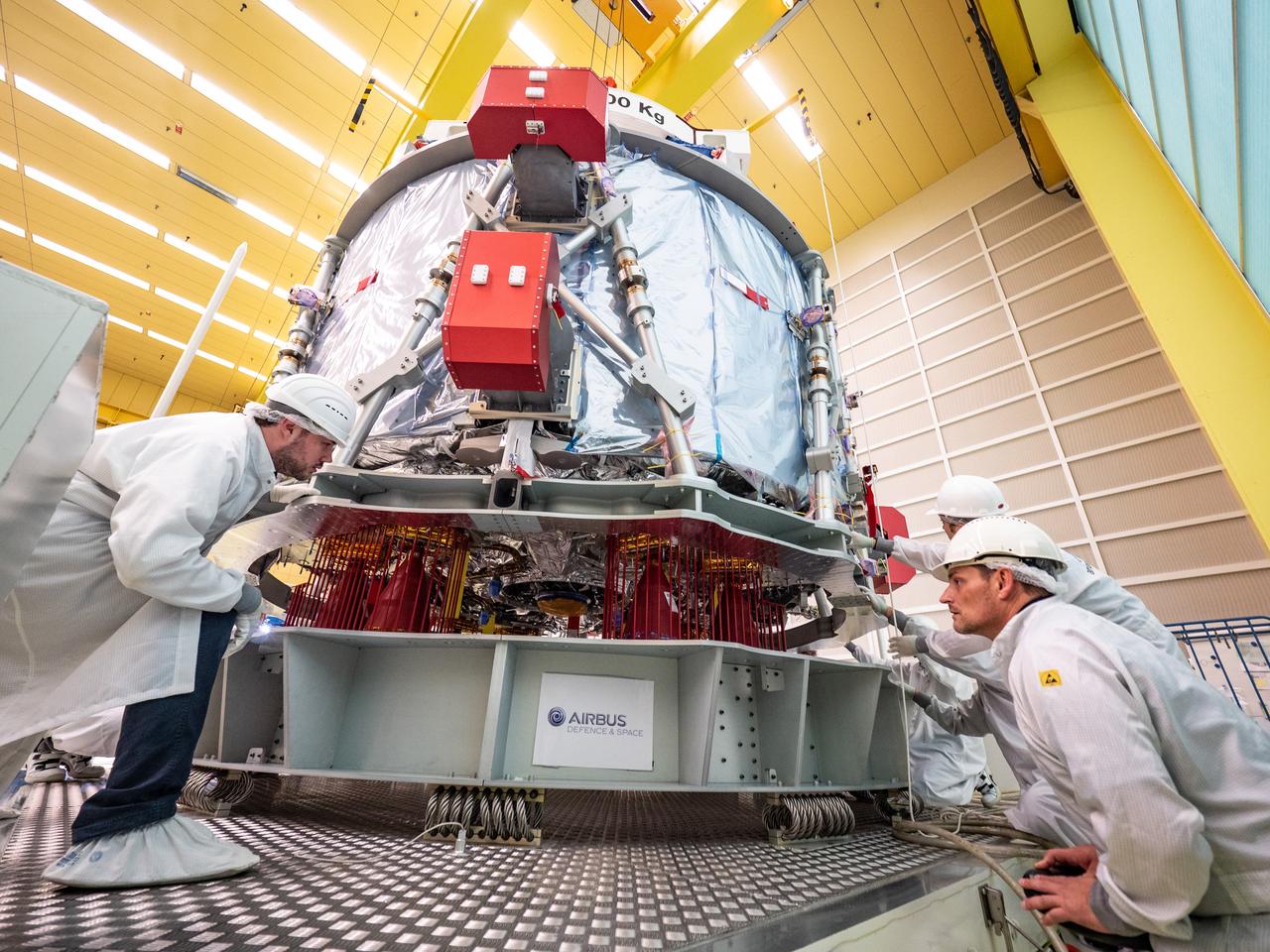
Technicians at the Airbus facility in Bremen, Germany prepare the European Service Module for shipment to Kennedy Space Center on Nov. 1, 2018. The service module will depart Germany on November 5, 2018 and will arrive in the U.S. on November 6...For the first time, NASA will use a European-built system as a critical element to power an American spacecraft, extending the international cooperation of the International Space Station into deep space. The European Service Module is a unique collaboration across space agencies and industry including ESA’s prime contractor, Airbus, and 10 European countries. The completion of service module work in Europe and shipment to Kennedy signifies a major milestone toward NASA’s human deep space exploration missions to the Moon and beyond.
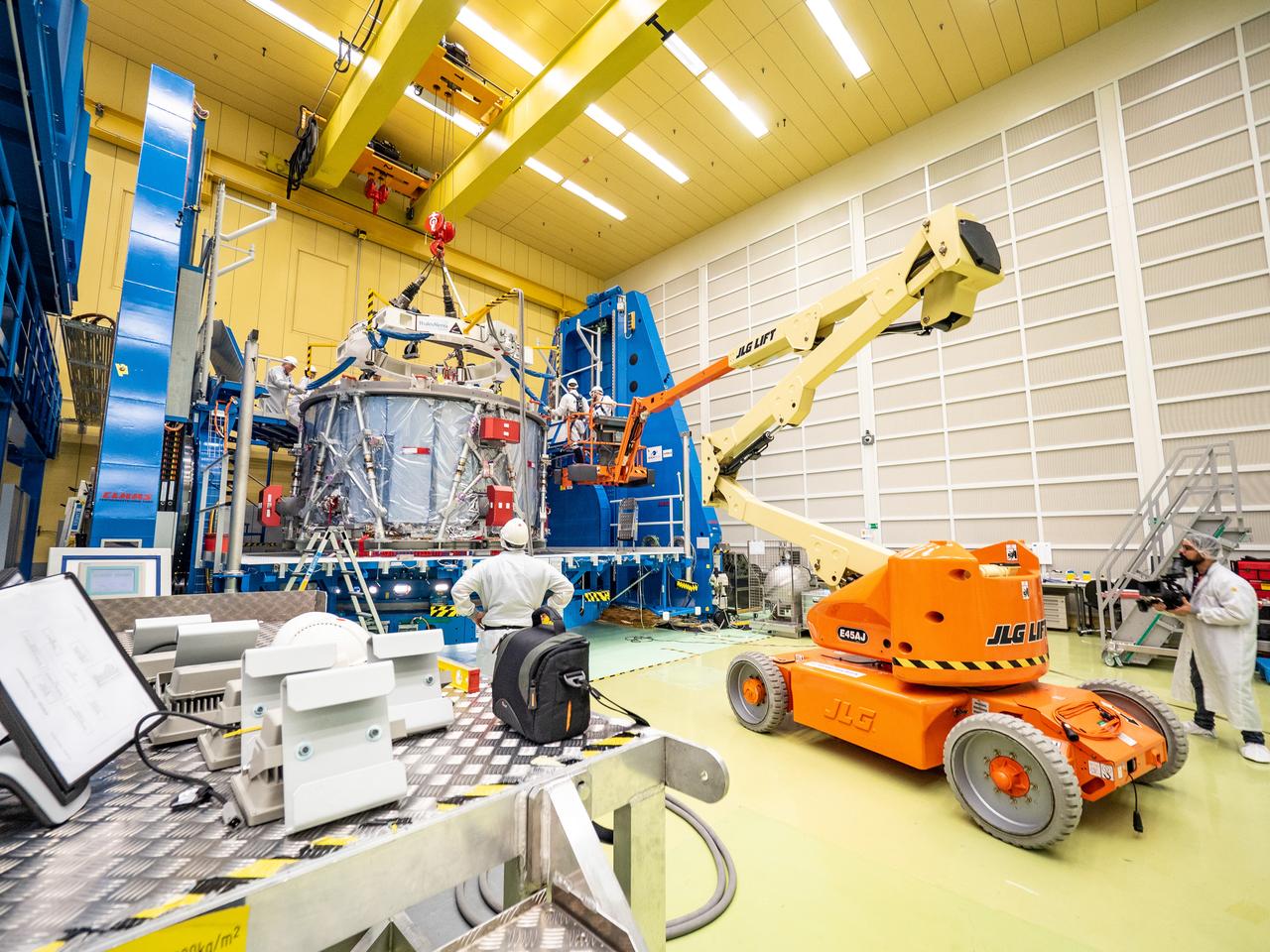
Technicians at the Airbus facility in Bremen, Germany prepare the European Service Module for shipment to Kennedy Space Center on Nov. 1, 2018. The service module will depart Germany on November 5, 2018 and will arrive in the U.S. on November 6...For the first time, NASA will use a European-built system as a critical element to power an American spacecraft, extending the international cooperation of the International Space Station into deep space. The European Service Module is a unique collaboration across space agencies and industry including ESA’s prime contractor, Airbus, and 10 European countries. The completion of service module work in Europe and shipment to Kennedy signifies a major milestone toward NASA’s human deep space exploration missions to the Moon and beyond.
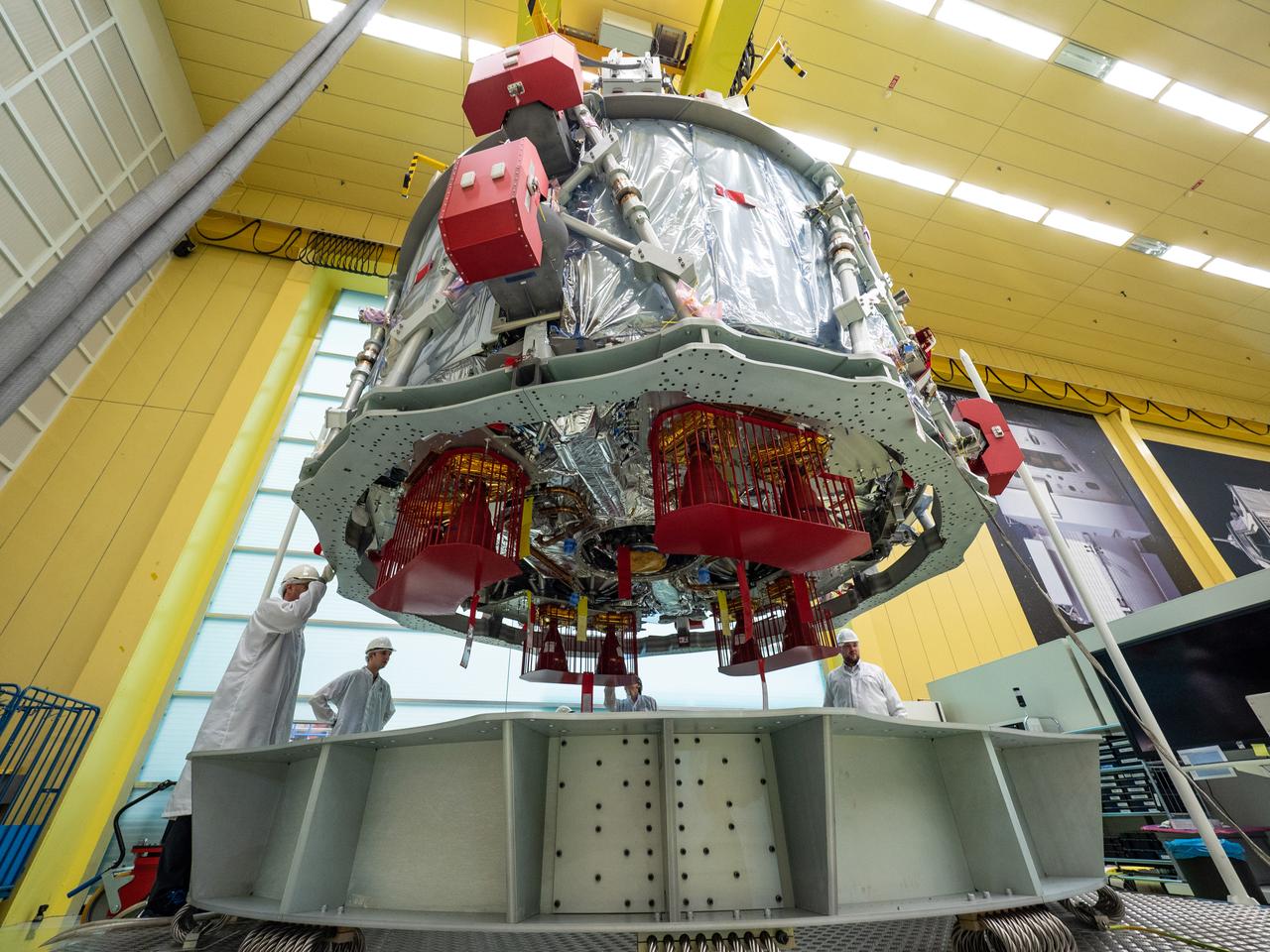
Technicians at the Airbus facility in Bremen, Germany prepare the European Service Module for shipment to Kennedy Space Center on Nov. 1, 2018. The service module will depart Germany on November 5, 2018 and will arrive in the U.S. on November 6...For the first time, NASA will use a European-built system as a critical element to power an American spacecraft, extending the international cooperation of the International Space Station into deep space. The European Service Module is a unique collaboration across space agencies and industry including ESA’s prime contractor, Airbus, and 10 European countries. The completion of service module work in Europe and shipment to Kennedy signifies a major milestone toward NASA’s human deep space exploration missions to the Moon and beyond.
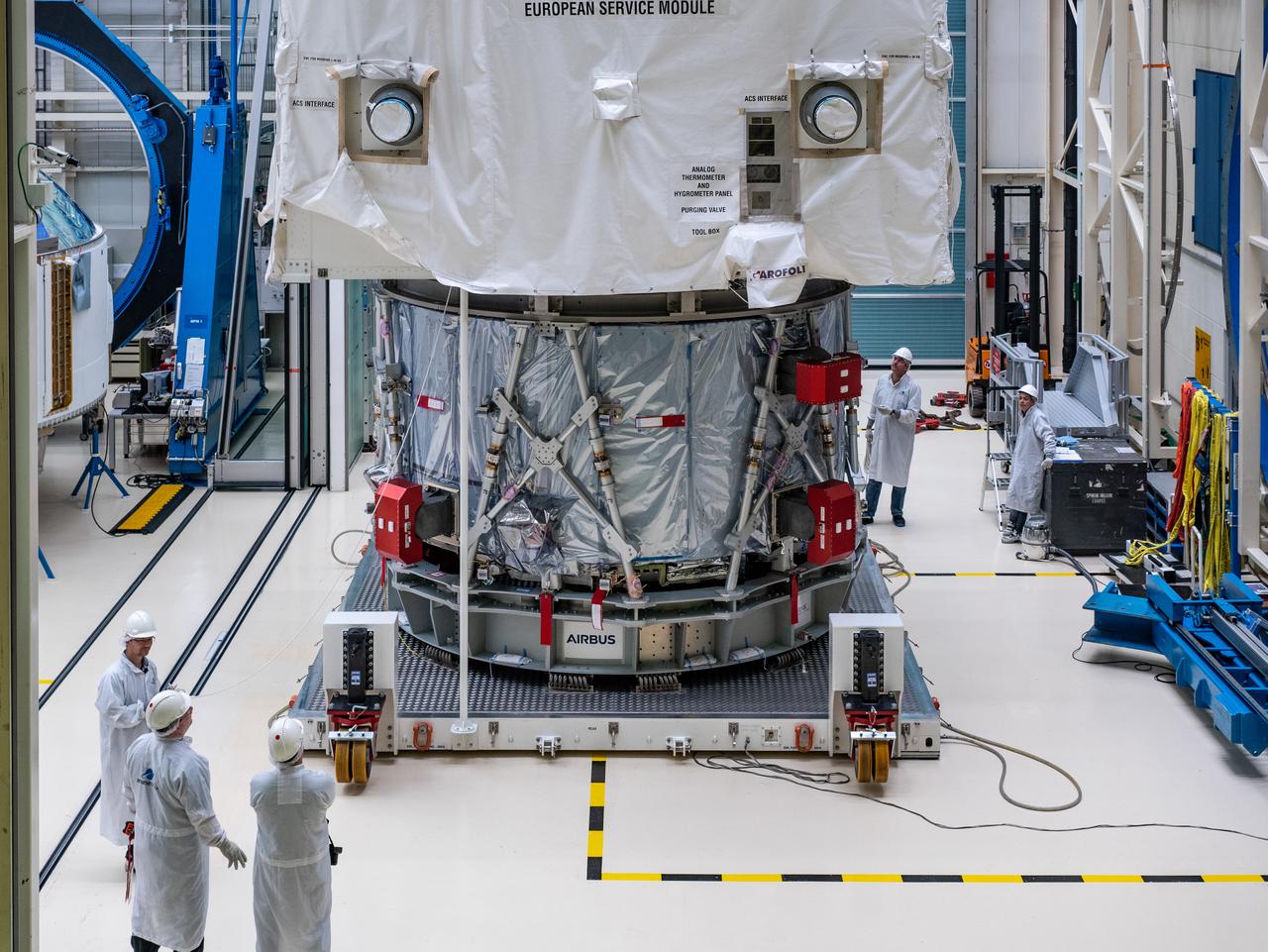
Technicians at the Airbus facility in Bremen, Germany prepare the European Service Module for shipment to Kennedy Space Center on Nov. 1, 2018. The service module will depart Germany on November 5, 2018 and will arrive in the U.S. on November 6...For the first time, NASA will use a European-built system as a critical element to power an American spacecraft, extending the international cooperation of the International Space Station into deep space. The European Service Module is a unique collaboration across space agencies and industry including ESA’s prime contractor, Airbus, and 10 European countries. The completion of service module work in Europe and shipment to Kennedy signifies a major milestone toward NASA’s human deep space exploration missions to the Moon and beyond.
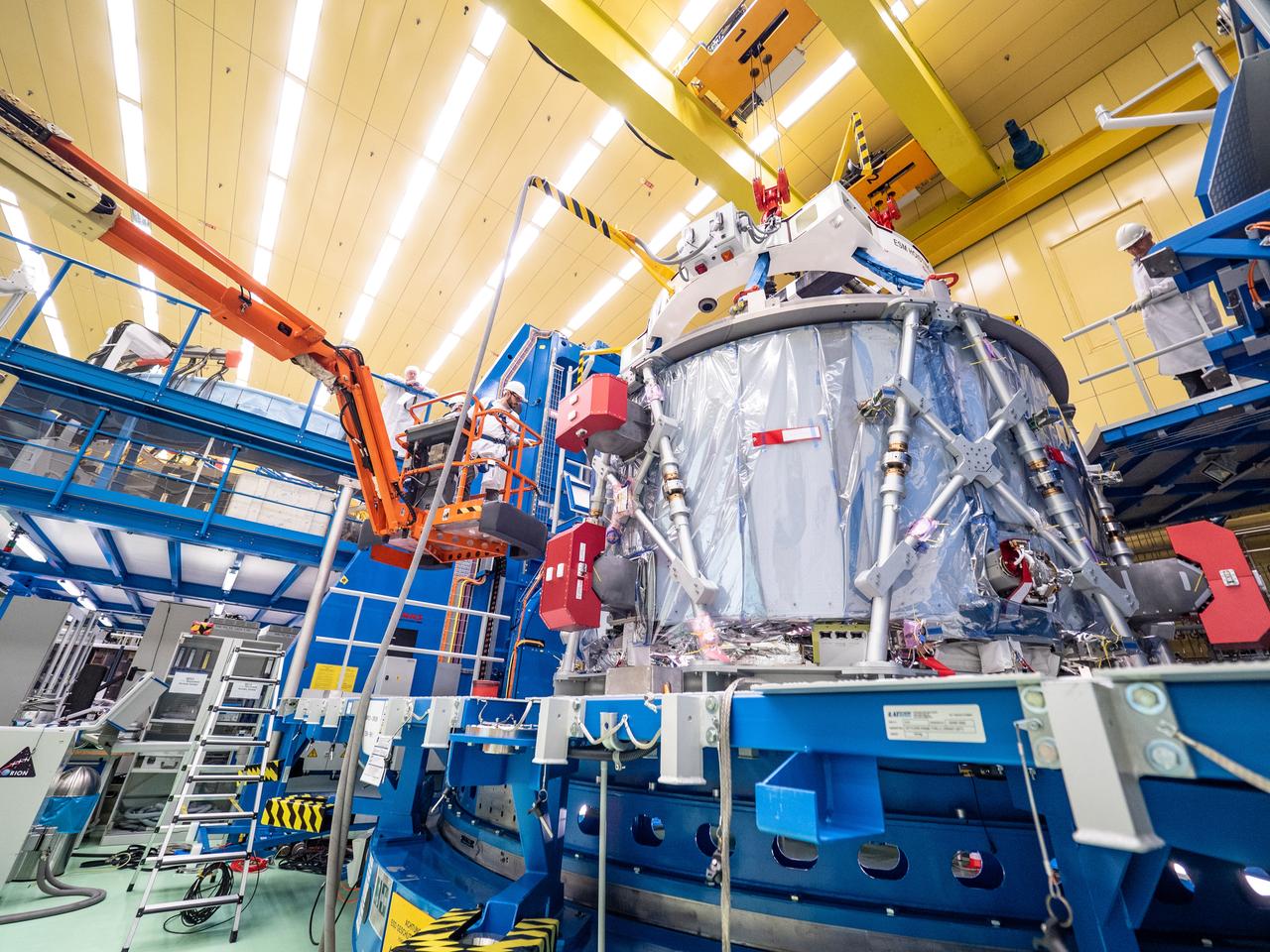
Technicians at the Airbus facility in Bremen, Germany prepare the European Service Module for shipment to Kennedy Space Center on Nov. 1, 2018. The service module will depart Germany on November 5, 2018 and will arrive in the U.S. on November 6...For the first time, NASA will use a European-built system as a critical element to power an American spacecraft, extending the international cooperation of the International Space Station into deep space. The European Service Module is a unique collaboration across space agencies and industry including ESA’s prime contractor, Airbus, and 10 European countries. The completion of service module work in Europe and shipment to Kennedy signifies a major milestone toward NASA’s human deep space exploration missions to the Moon and beyond.
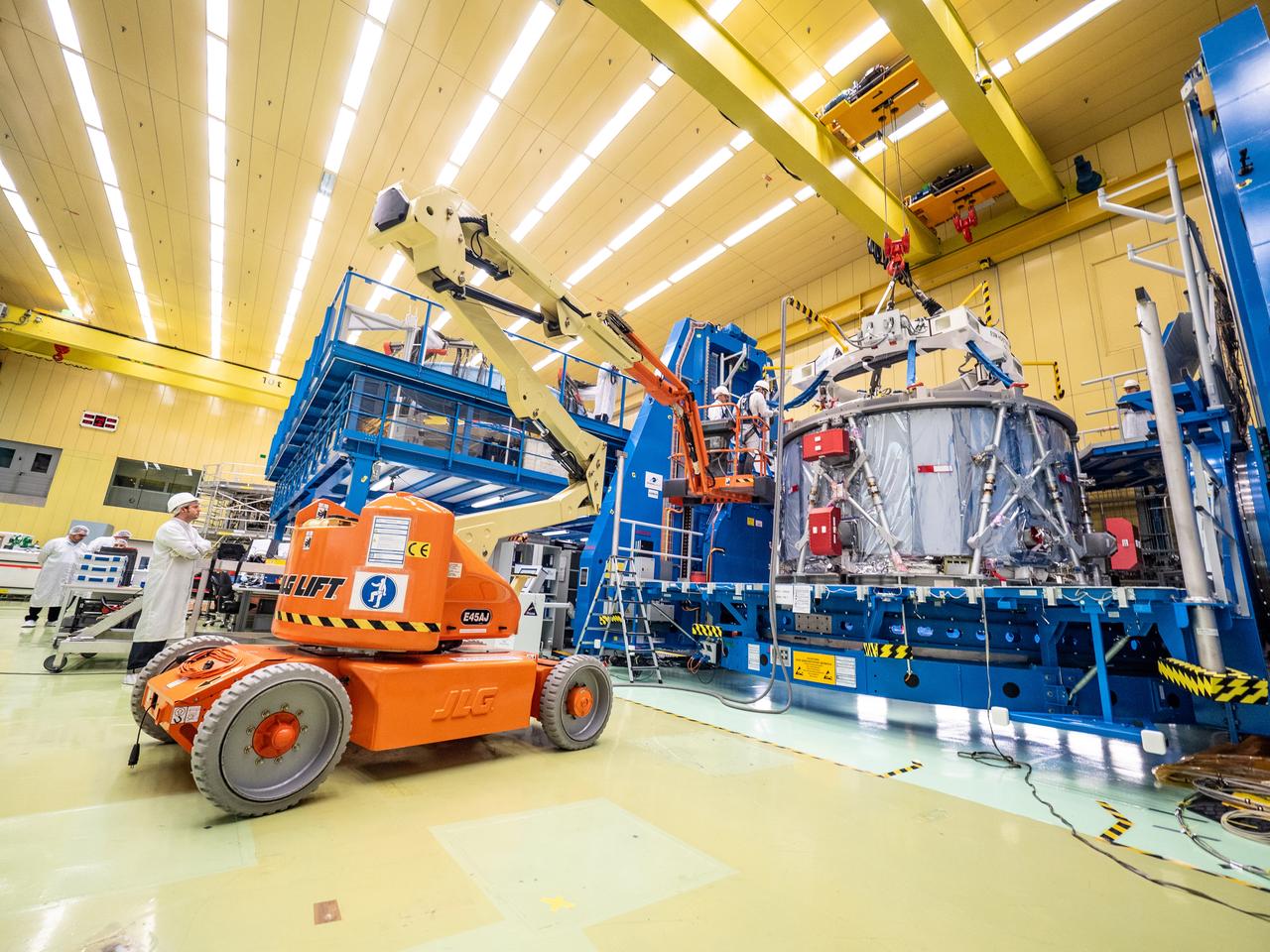
Technicians at the Airbus facility in Bremen, Germany prepare the European Service Module for shipment to Kennedy Space Center on Nov. 1, 2018. The service module will depart Germany on November 5, 2018 and will arrive in the U.S. on November 6...For the first time, NASA will use a European-built system as a critical element to power an American spacecraft, extending the international cooperation of the International Space Station into deep space. The European Service Module is a unique collaboration across space agencies and industry including ESA’s prime contractor, Airbus, and 10 European countries. The completion of service module work in Europe and shipment to Kennedy signifies a major milestone toward NASA’s human deep space exploration missions to the Moon and beyond.

Technicians at the Airbus facility in Bremen, Germany prepare the European Service Module for shipment to Kennedy Space Center on Nov. 1, 2018. The service module will depart Germany on November 5, 2018 and will arrive in the U.S. on November 6...For the first time, NASA will use a European-built system as a critical element to power an American spacecraft, extending the international cooperation of the International Space Station into deep space. The European Service Module is a unique collaboration across space agencies and industry including ESA’s prime contractor, Airbus, and 10 European countries. The completion of service module work in Europe and shipment to Kennedy signifies a major milestone toward NASA’s human deep space exploration missions to the Moon and beyond.
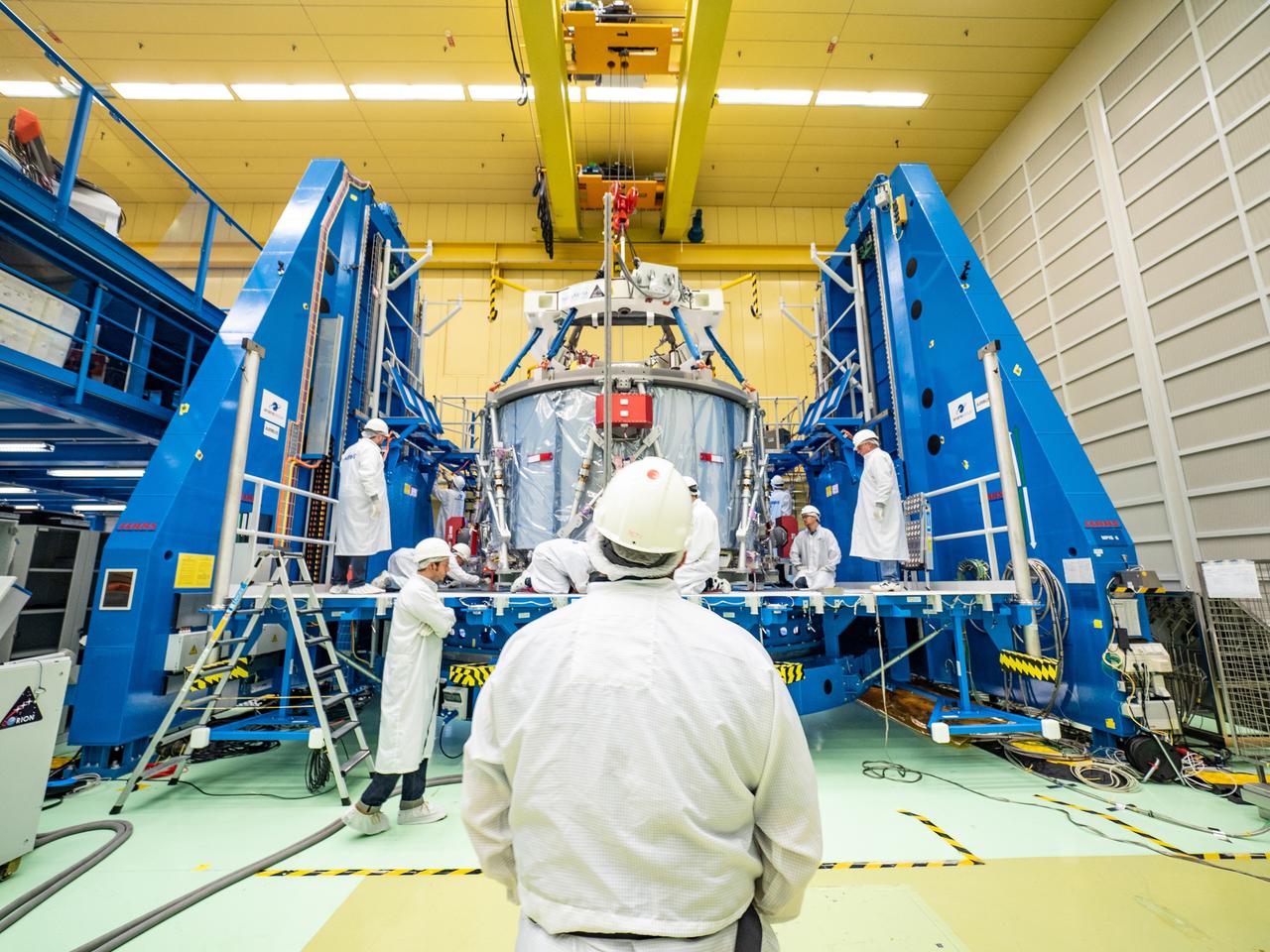
Technicians at the Airbus facility in Bremen, Germany prepare the European Service Module for shipment to Kennedy Space Center on Nov. 1, 2018. The service module will depart Germany on November 5, 2018 and will arrive in the U.S. on November 6...For the first time, NASA will use a European-built system as a critical element to power an American spacecraft, extending the international cooperation of the International Space Station into deep space. The European Service Module is a unique collaboration across space agencies and industry including ESA’s prime contractor, Airbus, and 10 European countries. The completion of service module work in Europe and shipment to Kennedy signifies a major milestone toward NASA’s human deep space exploration missions to the Moon and beyond.
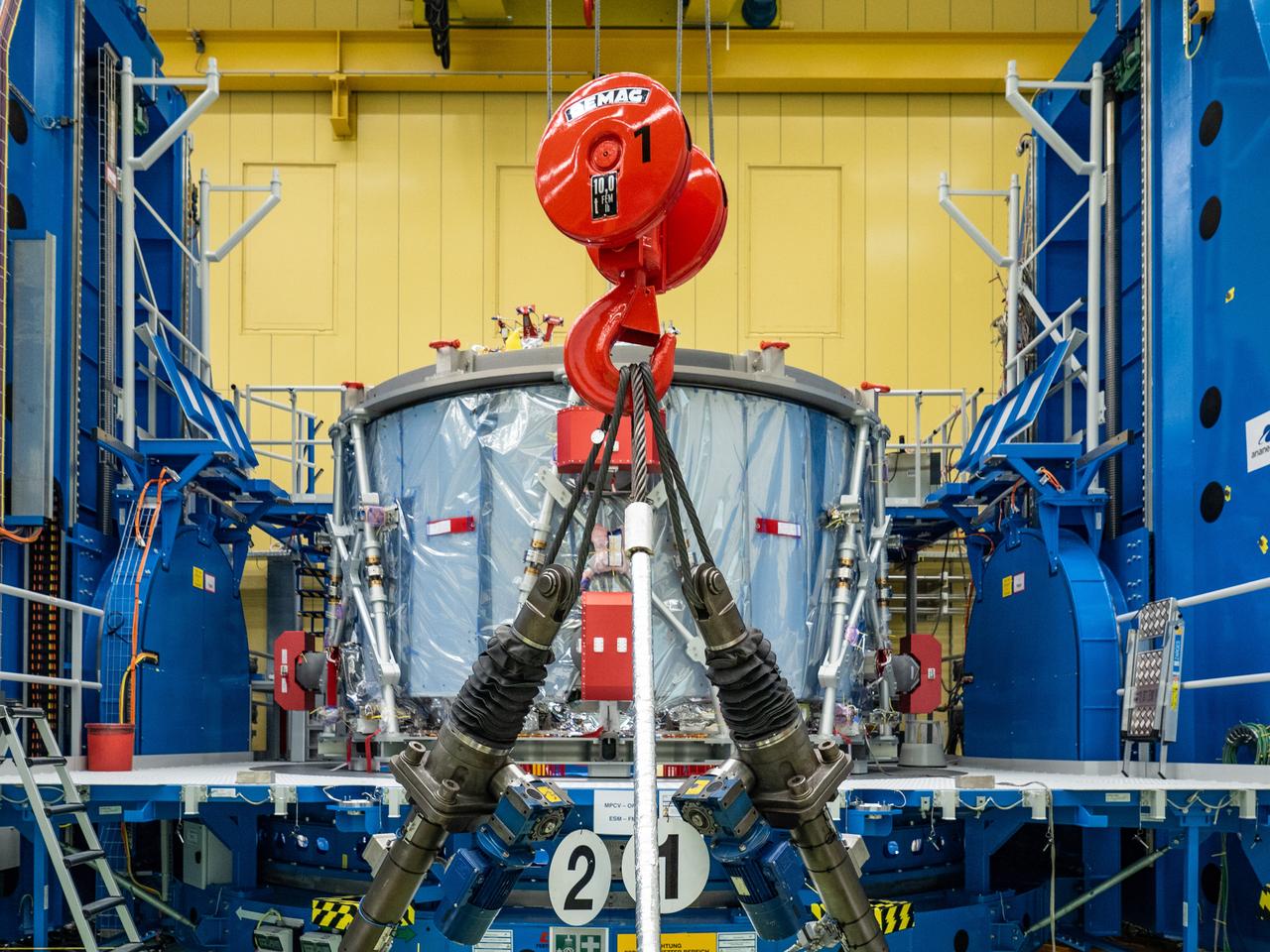
Technicians at the Airbus facility in Bremen, Germany prepare the European Service Module for shipment to Kennedy Space Center on Nov. 1, 2018. The service module will depart Germany on November 5, 2018 and will arrive in the U.S. on November 6...For the first time, NASA will use a European-built system as a critical element to power an American spacecraft, extending the international cooperation of the International Space Station into deep space. The European Service Module is a unique collaboration across space agencies and industry including ESA’s prime contractor, Airbus, and 10 European countries. The completion of service module work in Europe and shipment to Kennedy signifies a major milestone toward NASA’s human deep space exploration missions to the Moon and beyond.
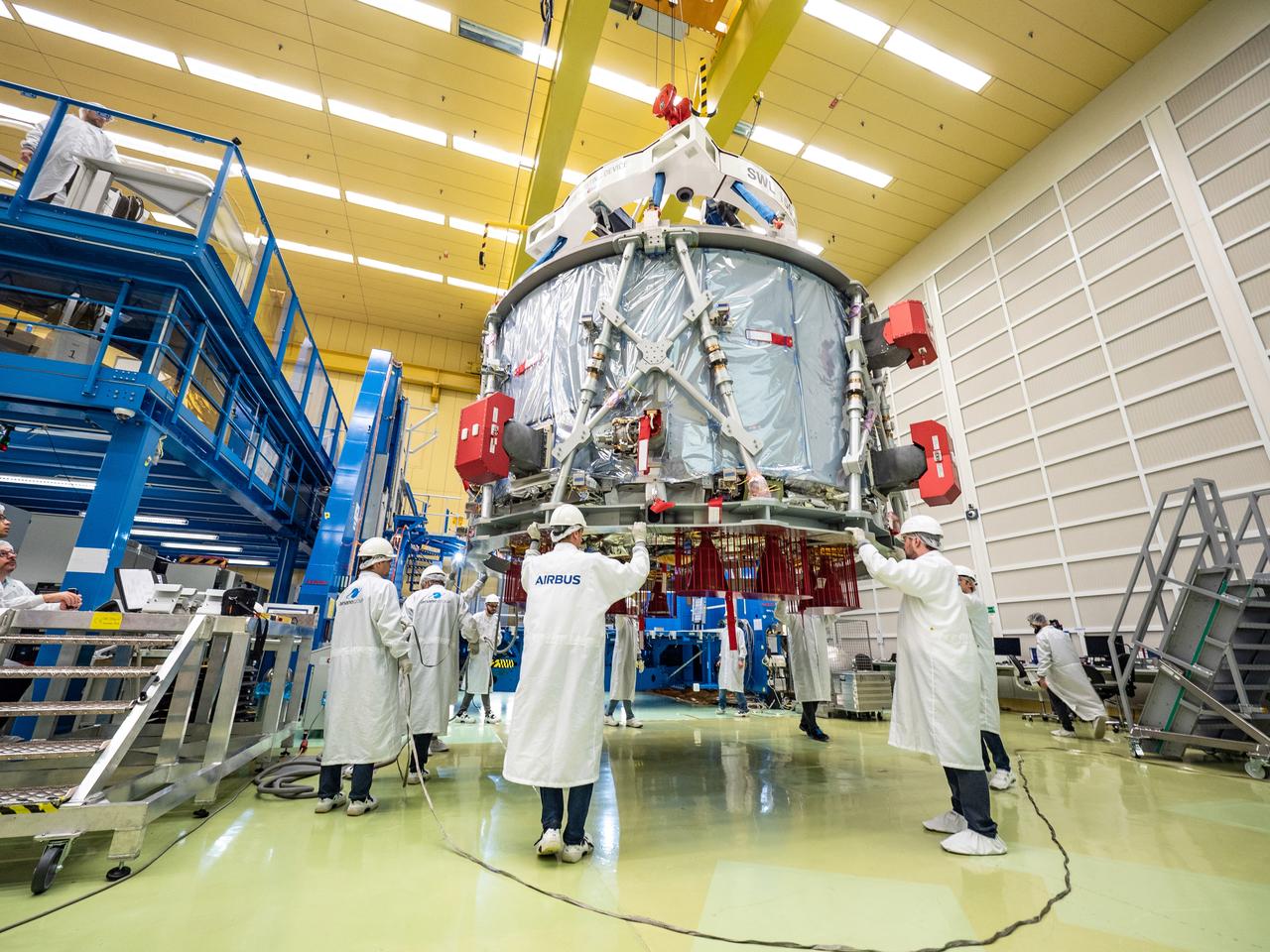
Technicians at the Airbus facility in Bremen, Germany prepare the European Service Module for shipment to Kennedy Space Center on Nov. 1, 2018. The service module will depart Germany on November 5, 2018 and will arrive in the U.S. on November 6...For the first time, NASA will use a European-built system as a critical element to power an American spacecraft, extending the international cooperation of the International Space Station into deep space. The European Service Module is a unique collaboration across space agencies and industry including ESA’s prime contractor, Airbus, and 10 European countries. The completion of service module work in Europe and shipment to Kennedy signifies a major milestone toward NASA’s human deep space exploration missions to the Moon and beyond.
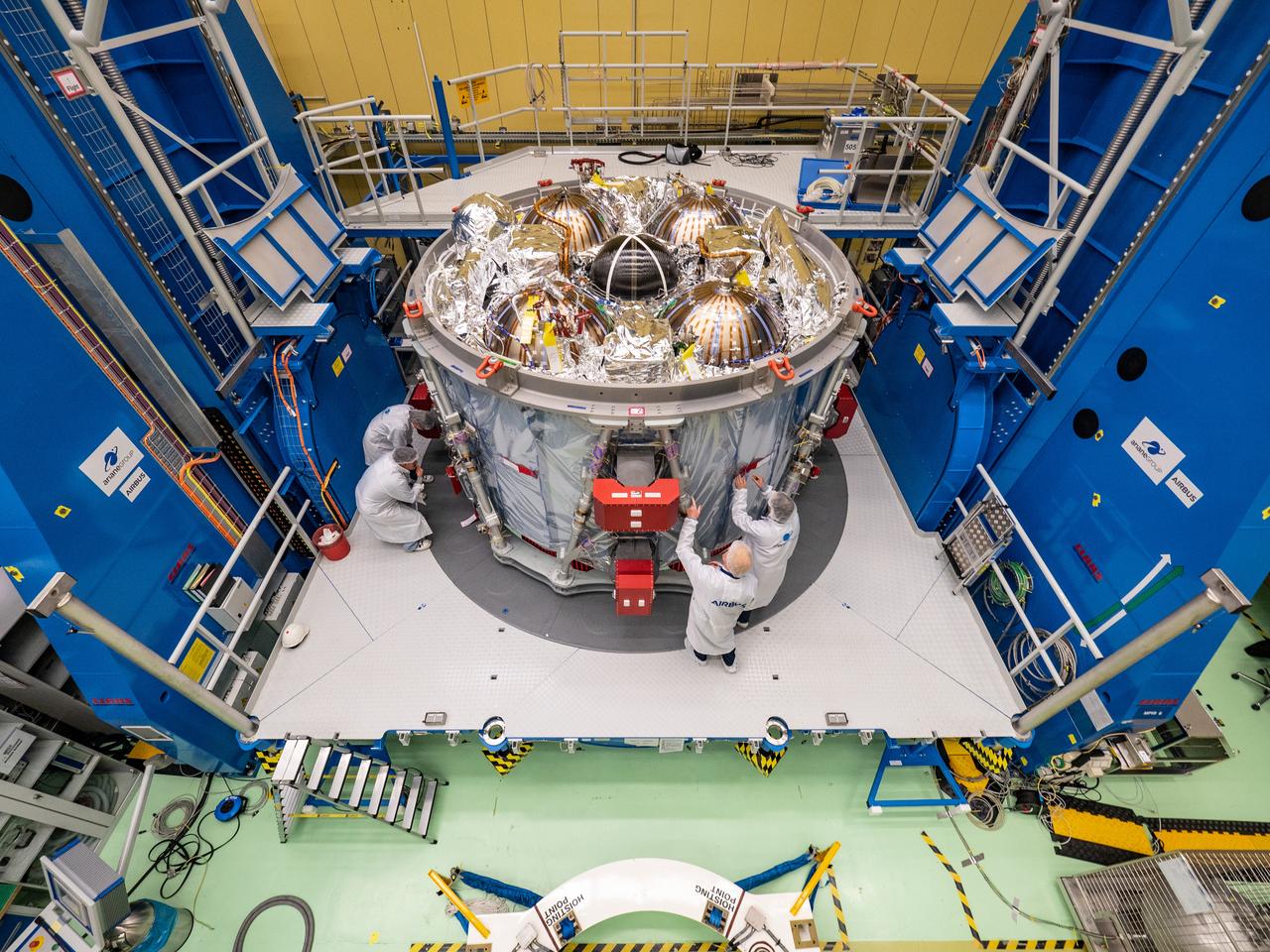
Technicians at the Airbus facility in Bremen, Germany prepare the European Service Module for shipment to Kennedy Space Center on Nov. 1, 2018. The service module will depart Germany on November 5, 2018 and will arrive in the U.S. on November 6...For the first time, NASA will use a European-built system as a critical element to power an American spacecraft, extending the international cooperation of the International Space Station into deep space. The European Service Module is a unique collaboration across space agencies and industry including ESA’s prime contractor, Airbus, and 10 European countries. The completion of service module work in Europe and shipment to Kennedy signifies a major milestone toward NASA’s human deep space exploration missions to the Moon and beyond.
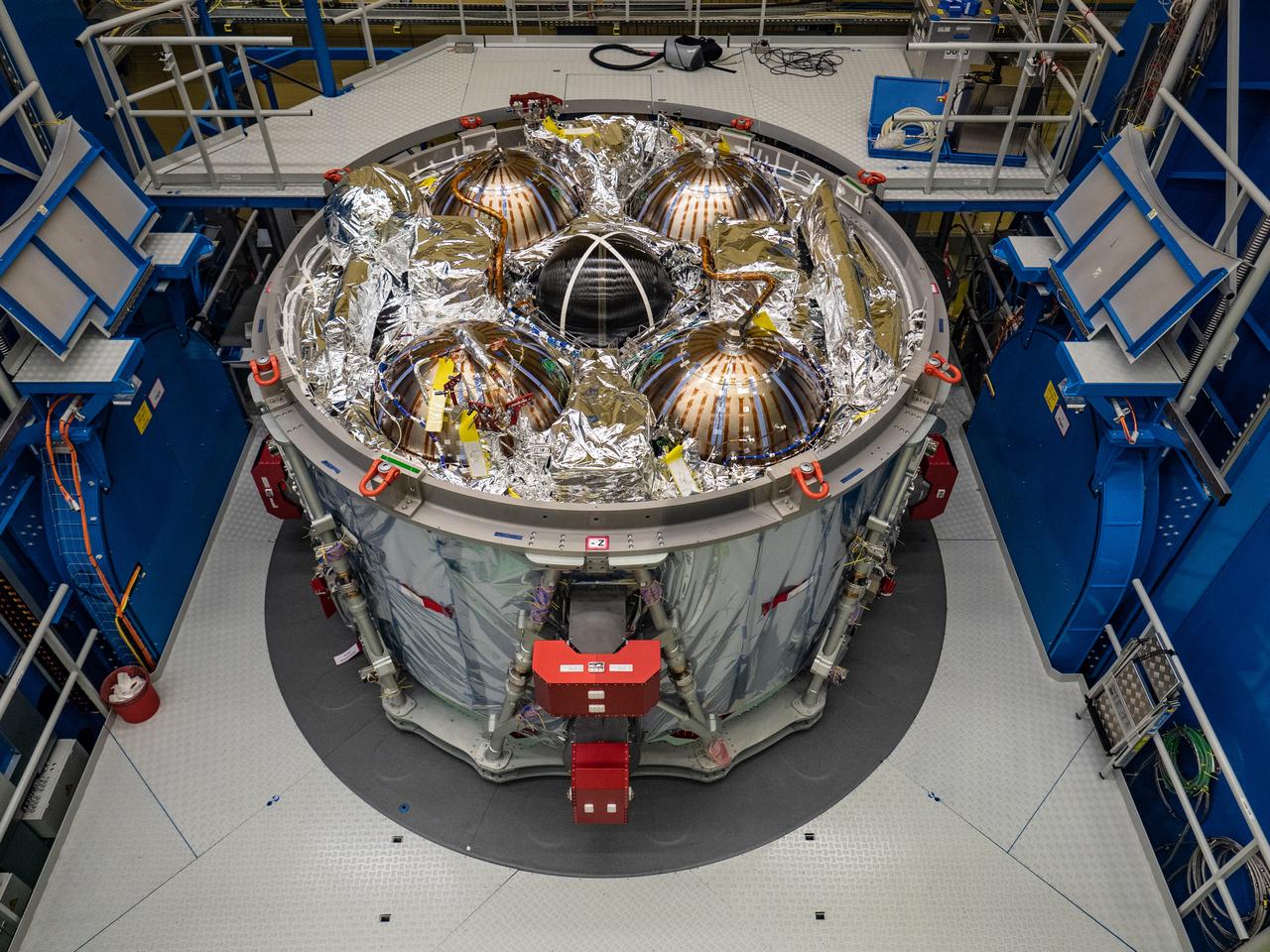
Technicians at the Airbus facility in Bremen, Germany prepare the European Service Module for shipment to Kennedy Space Center on Nov. 1, 2018. The service module will depart Germany on November 5, 2018 and will arrive in the U.S. on November 6...For the first time, NASA will use a European-built system as a critical element to power an American spacecraft, extending the international cooperation of the International Space Station into deep space. The European Service Module is a unique collaboration across space agencies and industry including ESA’s prime contractor, Airbus, and 10 European countries. The completion of service module work in Europe and shipment to Kennedy signifies a major milestone toward NASA’s human deep space exploration missions to the Moon and beyond.
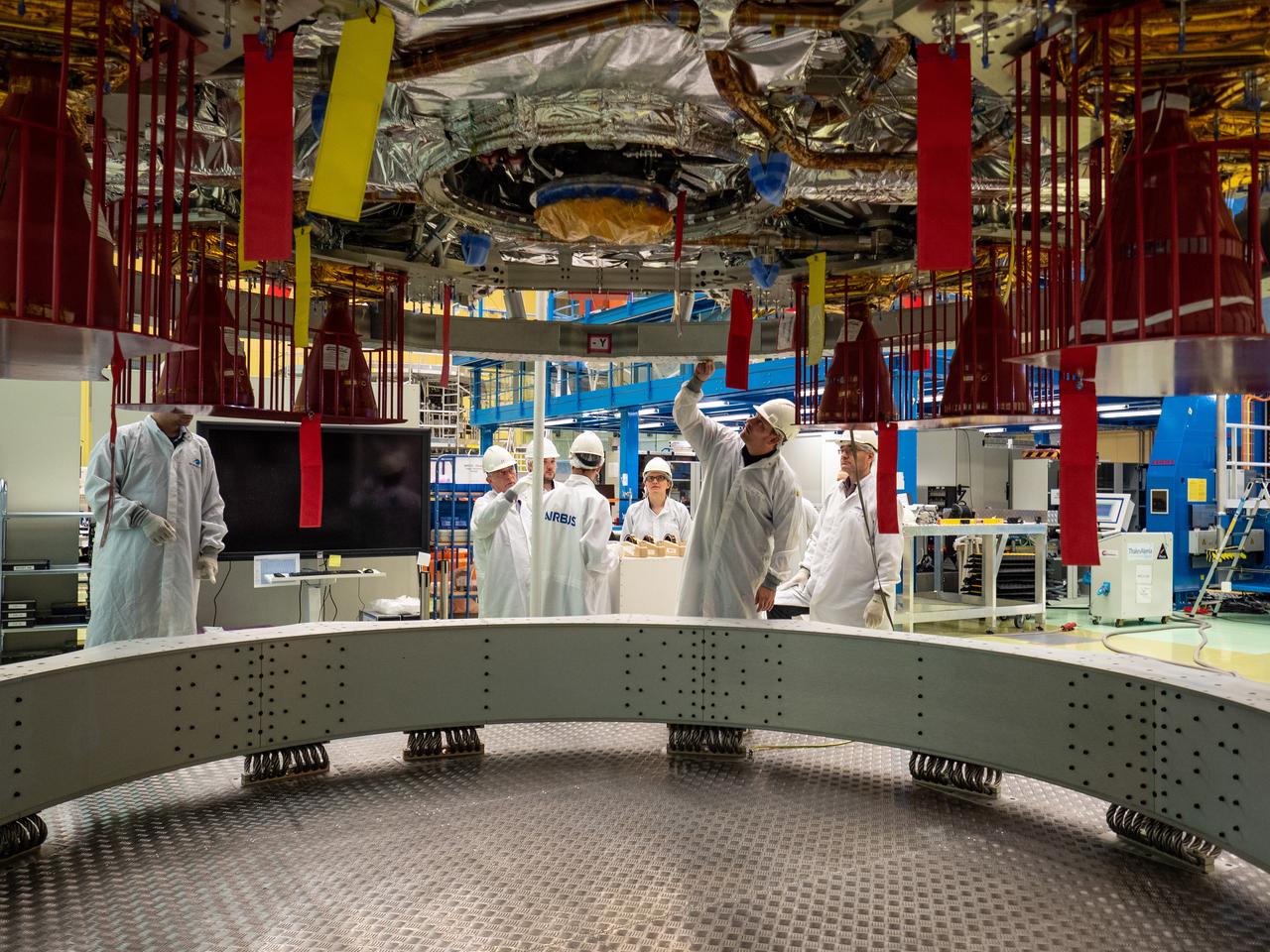
Technicians at the Airbus facility in Bremen, Germany prepare the European Service Module for shipment to Kennedy Space Center on Nov. 1, 2018. The service module will depart Germany on November 5, 2018 and will arrive in the U.S. on November 6...For the first time, NASA will use a European-built system as a critical element to power an American spacecraft, extending the international cooperation of the International Space Station into deep space. The European Service Module is a unique collaboration across space agencies and industry including ESA’s prime contractor, Airbus, and 10 European countries. The completion of service module work in Europe and shipment to Kennedy signifies a major milestone toward NASA’s human deep space exploration missions to the Moon and beyond.
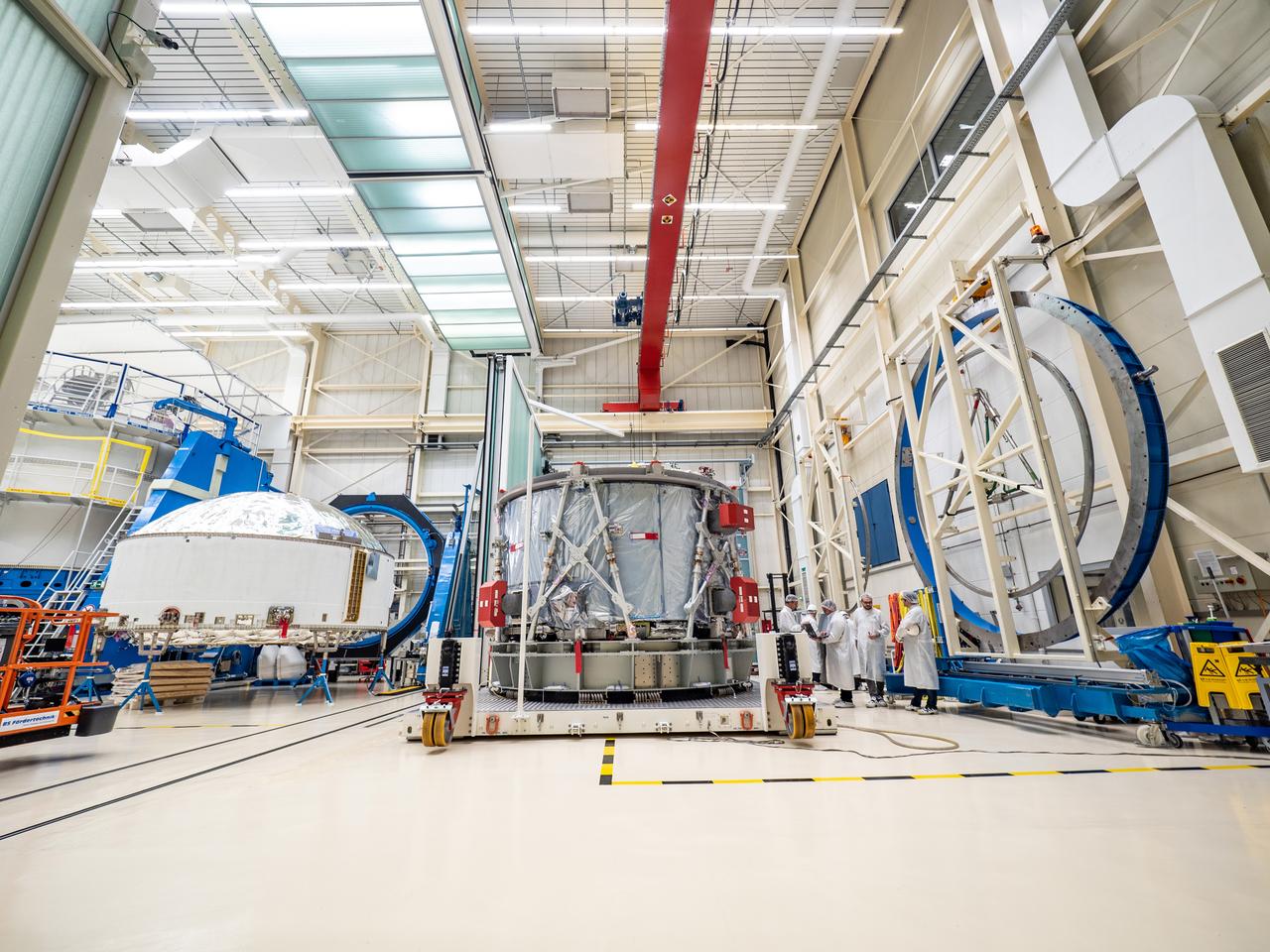
Technicians at the Airbus facility in Bremen, Germany prepare the European Service Module for shipment to Kennedy Space Center on Nov. 1, 2018. The service module will depart Germany on November 5, 2018 and will arrive in the U.S. on November 6...For the first time, NASA will use a European-built system as a critical element to power an American spacecraft, extending the international cooperation of the International Space Station into deep space. The European Service Module is a unique collaboration across space agencies and industry including ESA’s prime contractor, Airbus, and 10 European countries. The completion of service module work in Europe and shipment to Kennedy signifies a major milestone toward NASA’s human deep space exploration missions to the Moon and beyond.
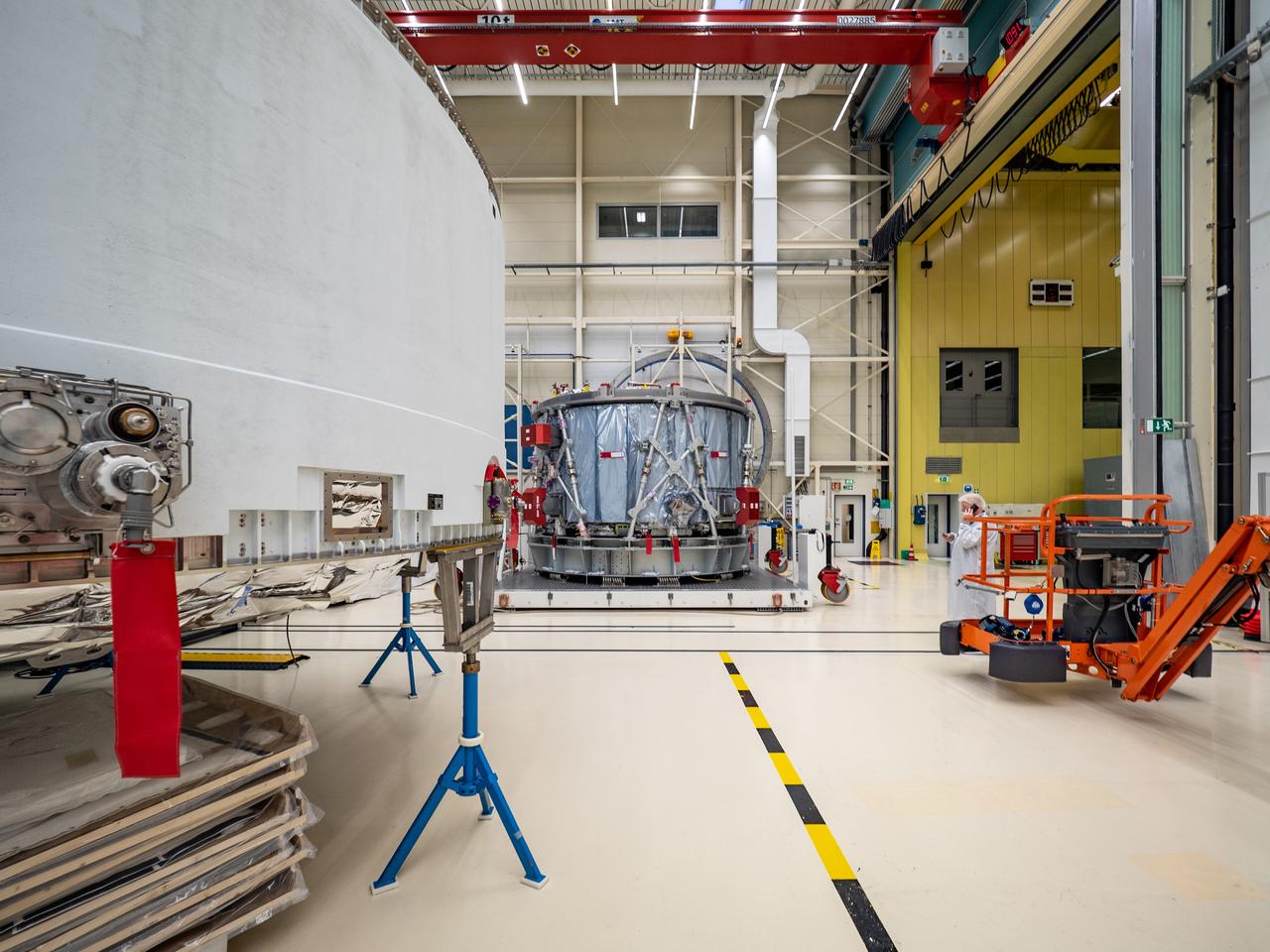
Technicians at the Airbus facility in Bremen, Germany prepare the European Service Module for shipment to Kennedy Space Center on Nov. 1, 2018. The service module will depart Germany on November 5, 2018 and will arrive in the U.S. on November 6...For the first time, NASA will use a European-built system as a critical element to power an American spacecraft, extending the international cooperation of the International Space Station into deep space. The European Service Module is a unique collaboration across space agencies and industry including ESA’s prime contractor, Airbus, and 10 European countries. The completion of service module work in Europe and shipment to Kennedy signifies a major milestone toward NASA’s human deep space exploration missions to the Moon and beyond.
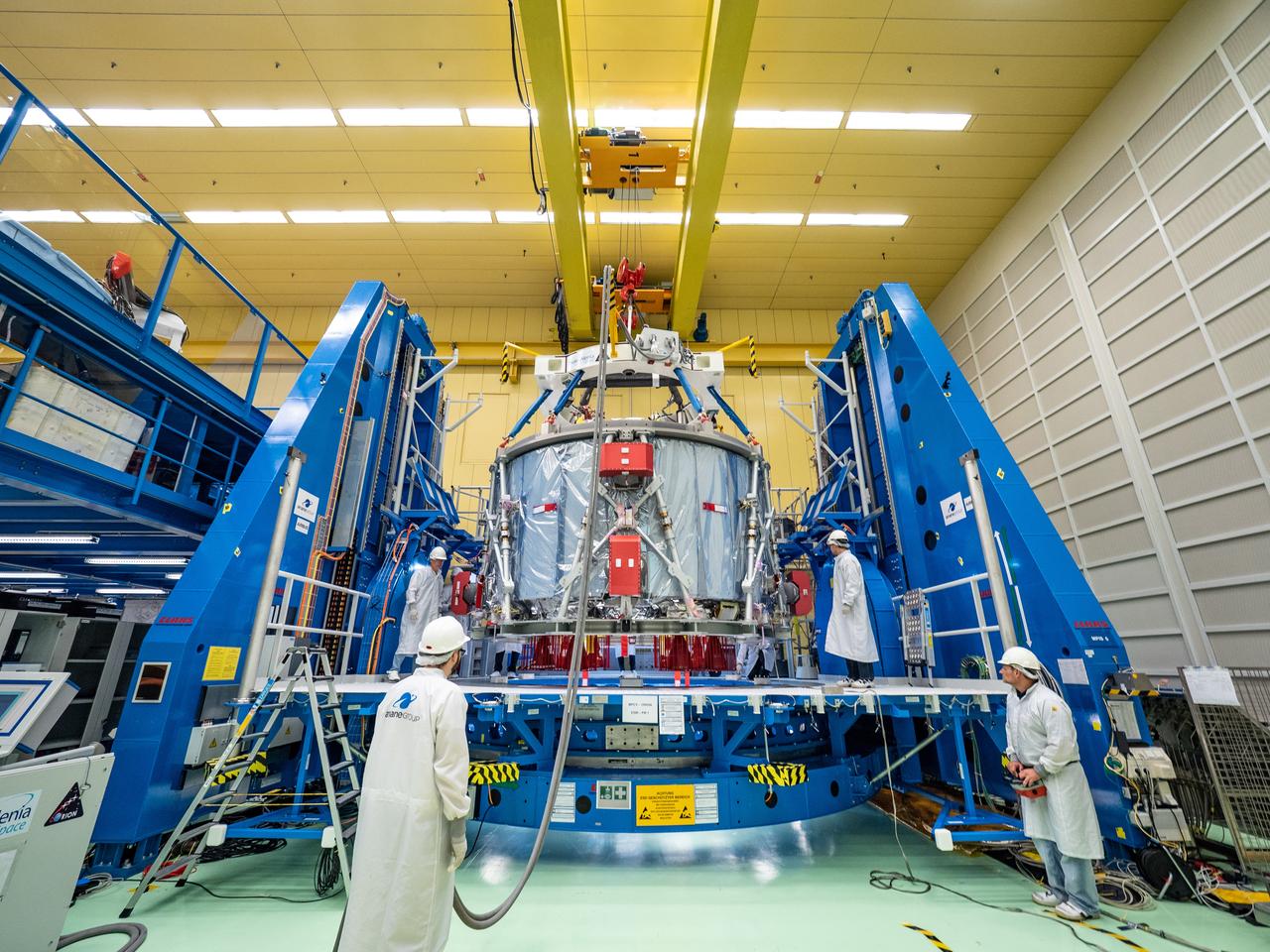
Technicians at the Airbus facility in Bremen, Germany prepare the European Service Module for shipment to Kennedy Space Center on Nov. 1, 2018. The service module will depart Germany on November 5, 2018 and will arrive in the U.S. on November 6...For the first time, NASA will use a European-built system as a critical element to power an American spacecraft, extending the international cooperation of the International Space Station into deep space. The European Service Module is a unique collaboration across space agencies and industry including ESA’s prime contractor, Airbus, and 10 European countries. The completion of service module work in Europe and shipment to Kennedy signifies a major milestone toward NASA’s human deep space exploration missions to the Moon and beyond.
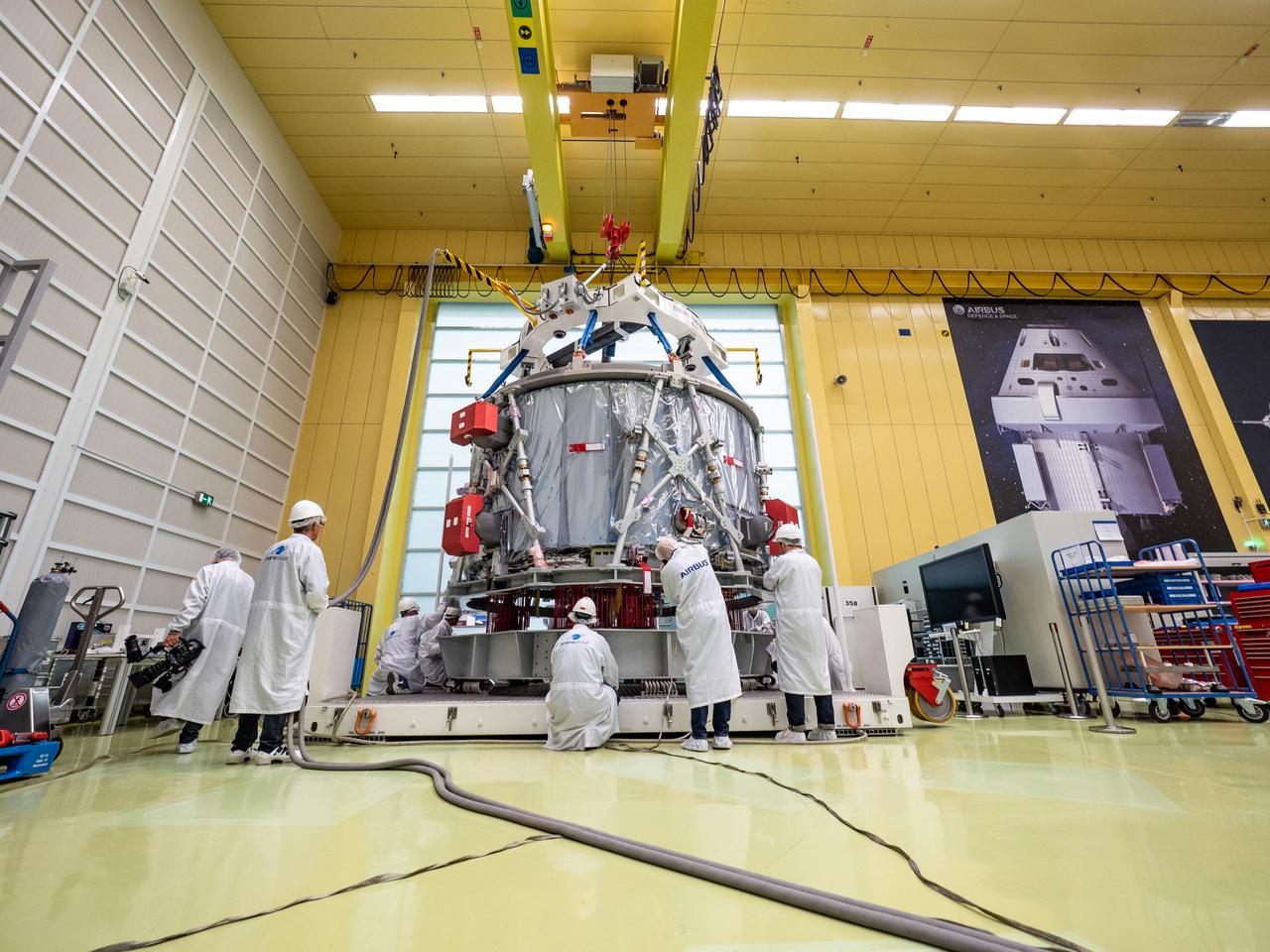
Technicians at the Airbus facility in Bremen, Germany prepare the European Service Module for shipment to Kennedy Space Center on Nov. 1, 2018. The service module will depart Germany on November 5, 2018 and will arrive in the U.S. on November 6...For the first time, NASA will use a European-built system as a critical element to power an American spacecraft, extending the international cooperation of the International Space Station into deep space. The European Service Module is a unique collaboration across space agencies and industry including ESA’s prime contractor, Airbus, and 10 European countries. The completion of service module work in Europe and shipment to Kennedy signifies a major milestone toward NASA’s human deep space exploration missions to the Moon and beyond.
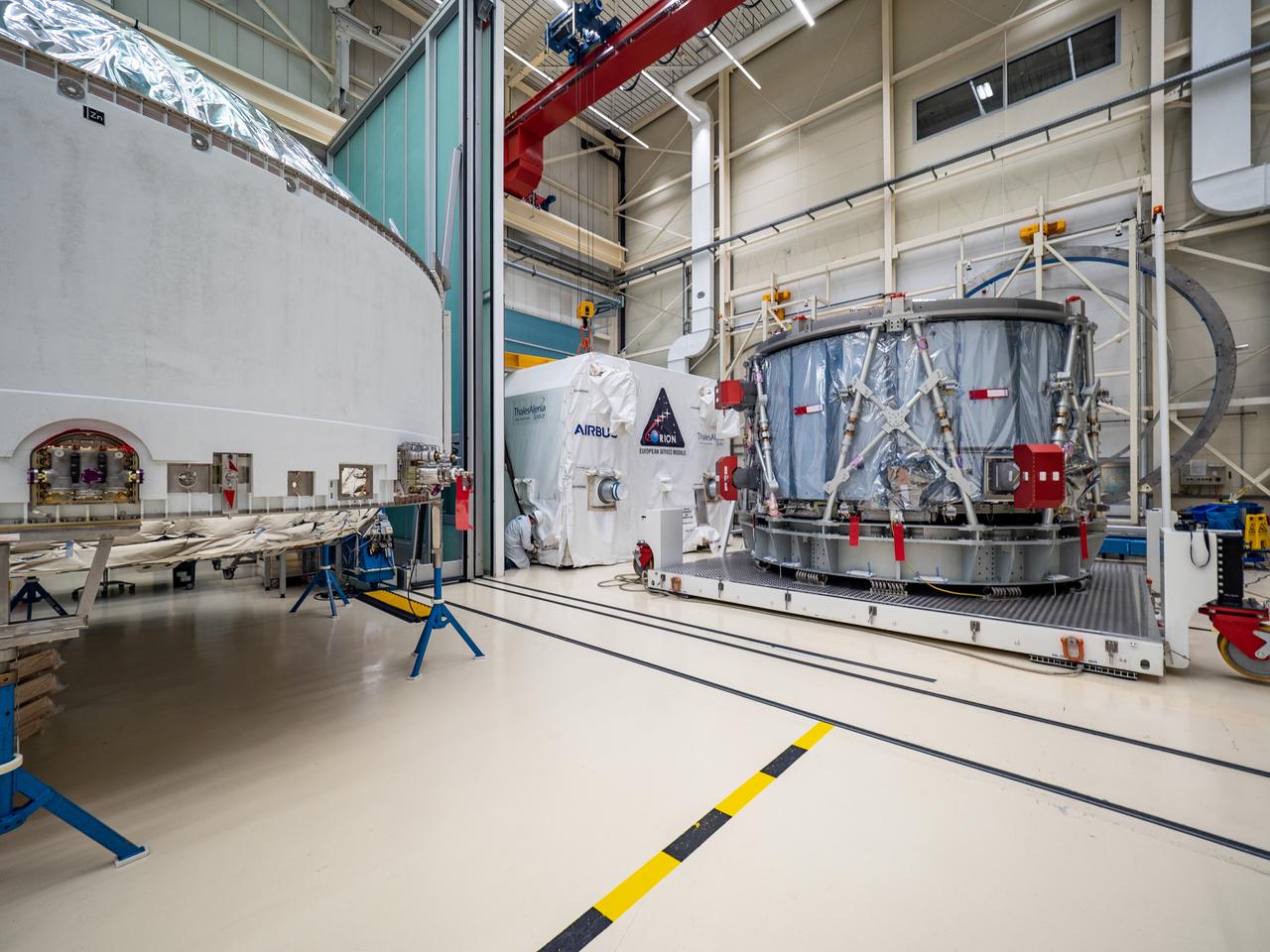
Technicians at the Airbus facility in Bremen, Germany prepare the European Service Module for shipment to Kennedy Space Center on Nov. 1, 2018. The service module will depart Germany on November 5, 2018 and will arrive in the U.S. on November 6...For the first time, NASA will use a European-built system as a critical element to power an American spacecraft, extending the international cooperation of the International Space Station into deep space. The European Service Module is a unique collaboration across space agencies and industry including ESA’s prime contractor, Airbus, and 10 European countries. The completion of service module work in Europe and shipment to Kennedy signifies a major milestone toward NASA’s human deep space exploration missions to the Moon and beyond.
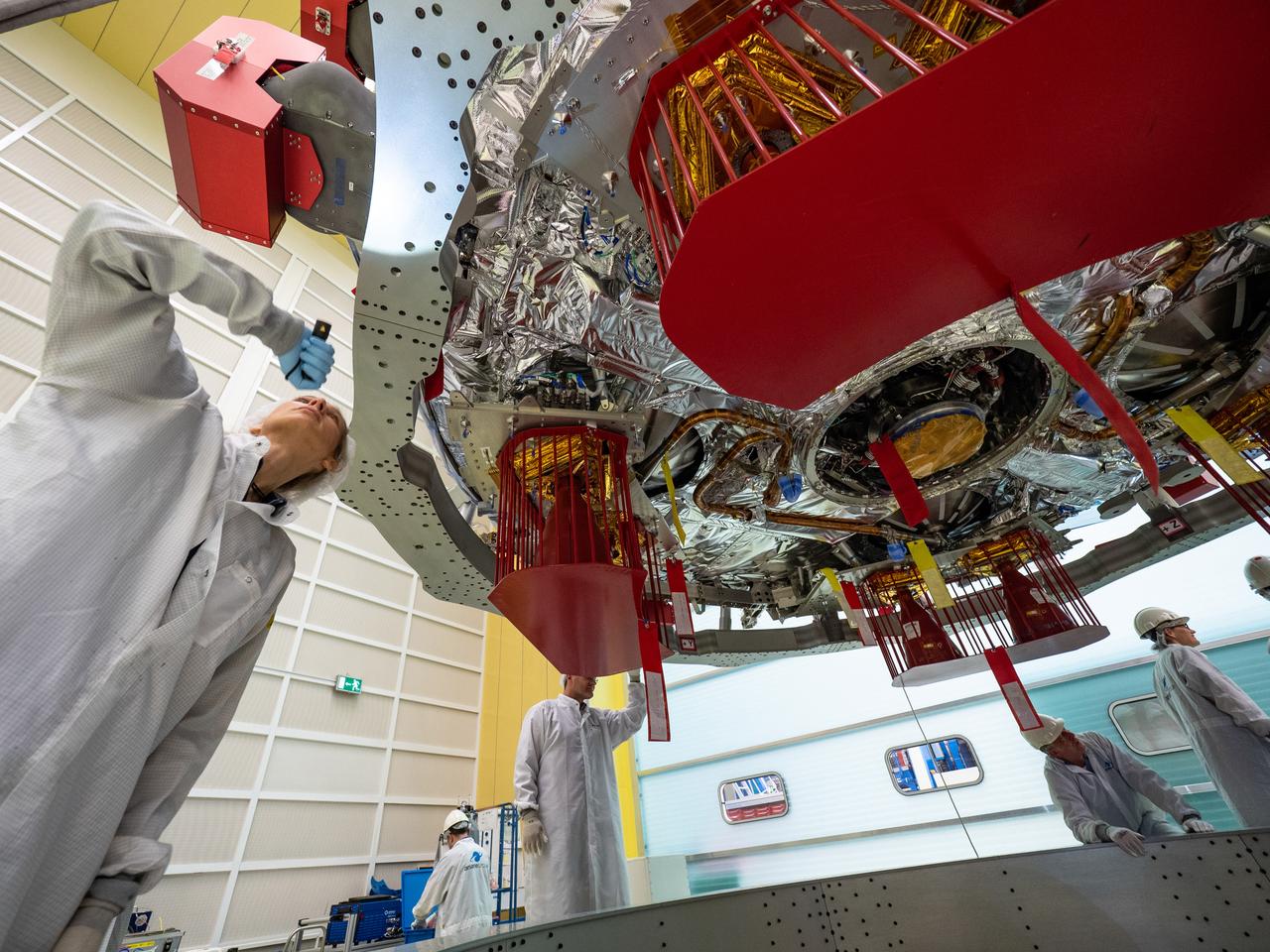
Technicians at the Airbus facility in Bremen, Germany prepare the European Service Module for shipment to Kennedy Space Center on Nov. 1, 2018. The service module will depart Germany on November 5, 2018 and will arrive in the U.S. on November 6...For the first time, NASA will use a European-built system as a critical element to power an American spacecraft, extending the international cooperation of the International Space Station into deep space. The European Service Module is a unique collaboration across space agencies and industry including ESA’s prime contractor, Airbus, and 10 European countries. The completion of service module work in Europe and shipment to Kennedy signifies a major milestone toward NASA’s human deep space exploration missions to the Moon and beyond.
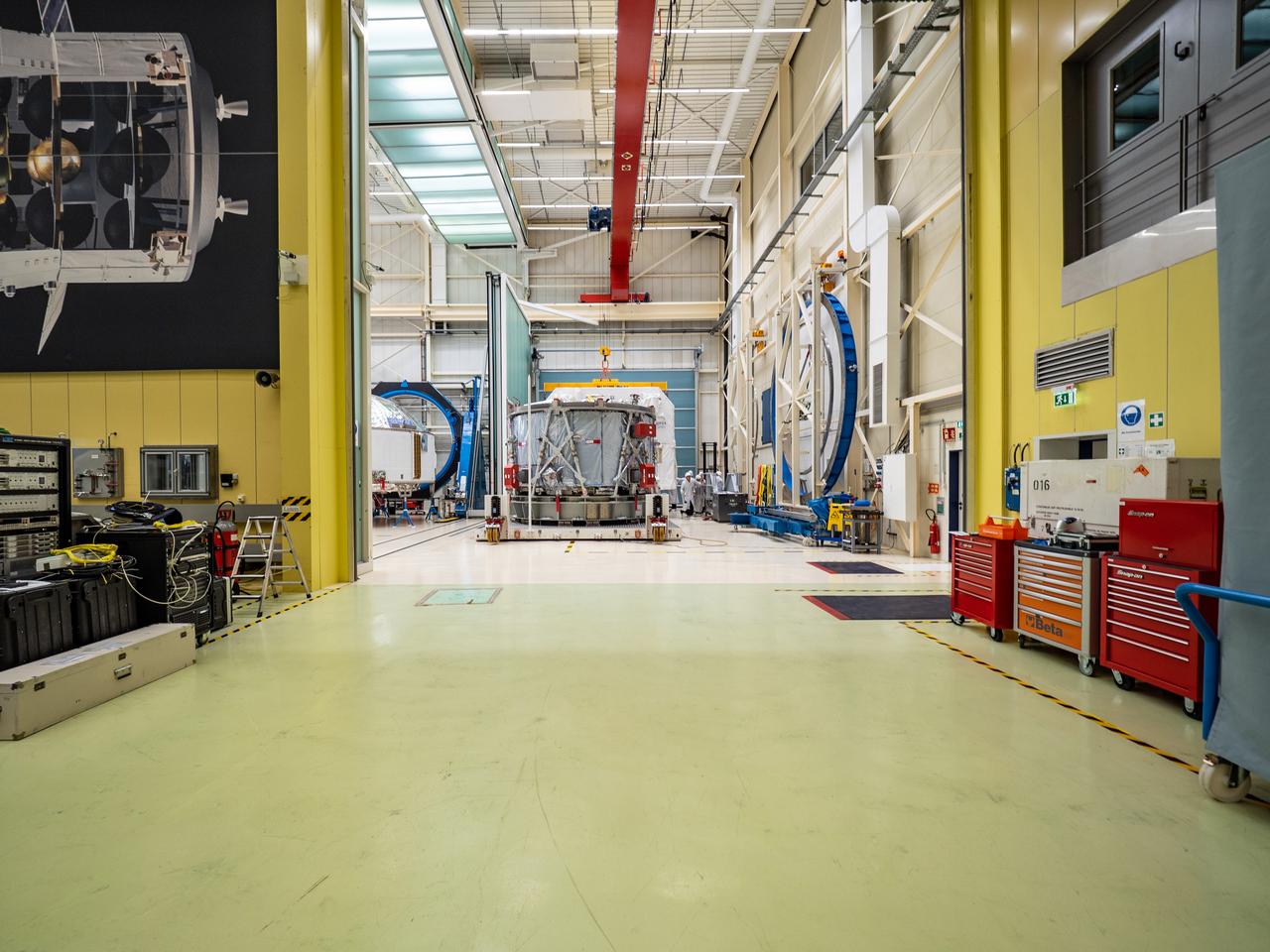
Technicians at the Airbus facility in Bremen, Germany prepare the European Service Module for shipment to Kennedy Space Center on Nov. 1, 2018. The service module will depart Germany on November 5, 2018 and will arrive in the U.S. on November 6...For the first time, NASA will use a European-built system as a critical element to power an American spacecraft, extending the international cooperation of the International Space Station into deep space. The European Service Module is a unique collaboration across space agencies and industry including ESA’s prime contractor, Airbus, and 10 European countries. The completion of service module work in Europe and shipment to Kennedy signifies a major milestone toward NASA’s human deep space exploration missions to the Moon and beyond.