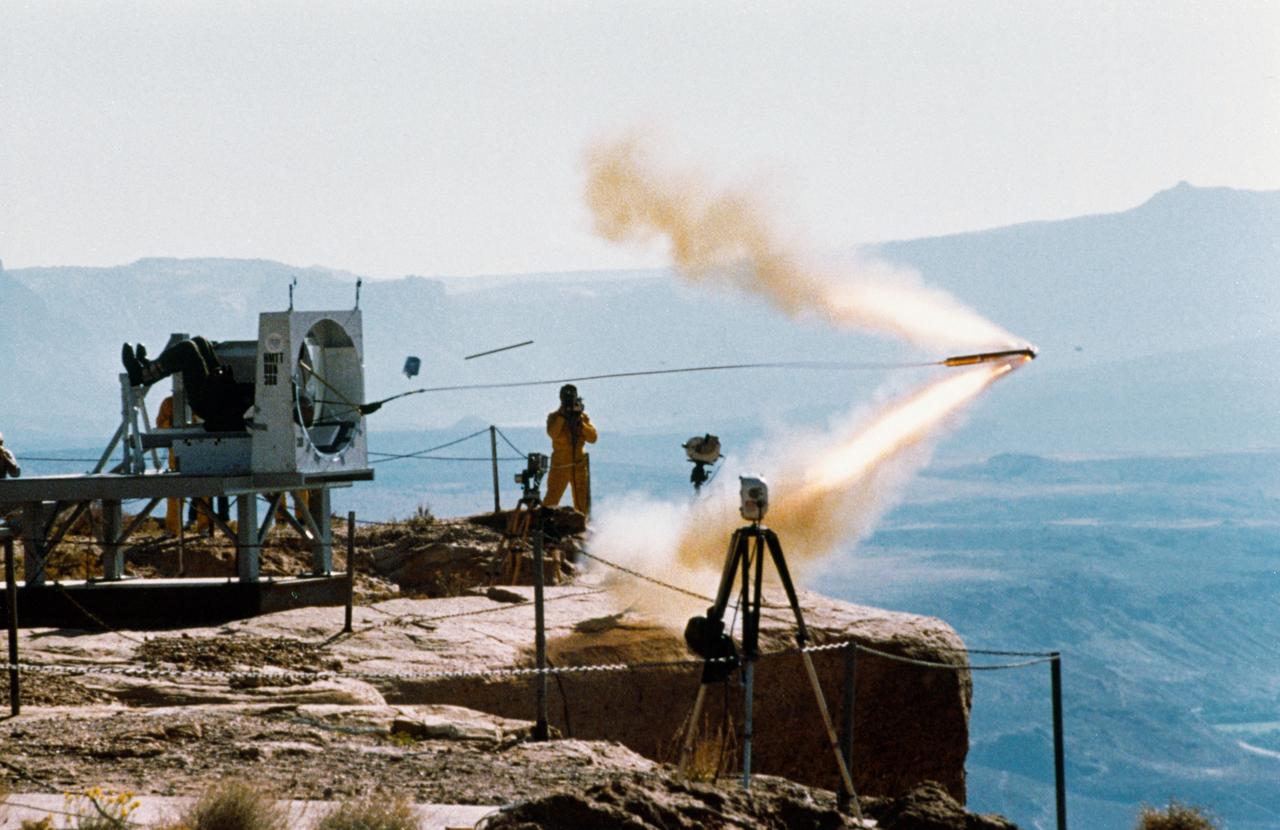
Shuttle crew escape systems (CES) tractor rocket tests conducted at Hurricane Mesa, Utah. This preliminary ground test of the tractor rocket will lead up to in-air evaluations. View shows tractor rocket as it is fired from side hatch mockup. The tractor rocket concept is one of two escape methods being studied to provide crew egress capability during Space Shuttle controlled gliding flight. In-air tests of the system, utilizing a Convair-240 aircraft, will begin 11-19-87 at the Naval Weapons Center in China Lake, California.

A Mercury capsule is mounted inside the Altitude Wind Tunnel for a test of its escape tower rockets at the National Aeronautics and Space Administration (NASA) Lewis Research Center. In October 1959 NASA’s Space Task Group allocated several Project Mercury assignments to Lewis. The Altitude Wind Tunnel was quickly modified so that its 51-foot diameter western leg could be used as a test chamber. The final round of tests in the Altitude Wind Tunnel sought to determine if the smoke plume from the capsule’s escape tower rockets would shroud or compromise the spacecraft. The escape tower, a 10-foot steel rig with three small rockets, was attached to the nose of the Mercury capsule. It could be used to jettison the astronaut and capsule to safety in the event of a launch vehicle malfunction on the pad or at any point prior to separation from the booster. Once actuated, the escape rockets would fire, and the capsule would be ejected away from the booster. After the capsule reached its apex of about 2,500 feet, the tower, heatshield, retropackage, and antenna would be ejected and a drogue parachute would be released. Flight tests of the escape system were performed at Wallops Island as part of the series of Little Joe launches. Although the escape rockets fired prematurely on Little Joe’s first attempt in August 1959, the January 1960 follow-up was successful.
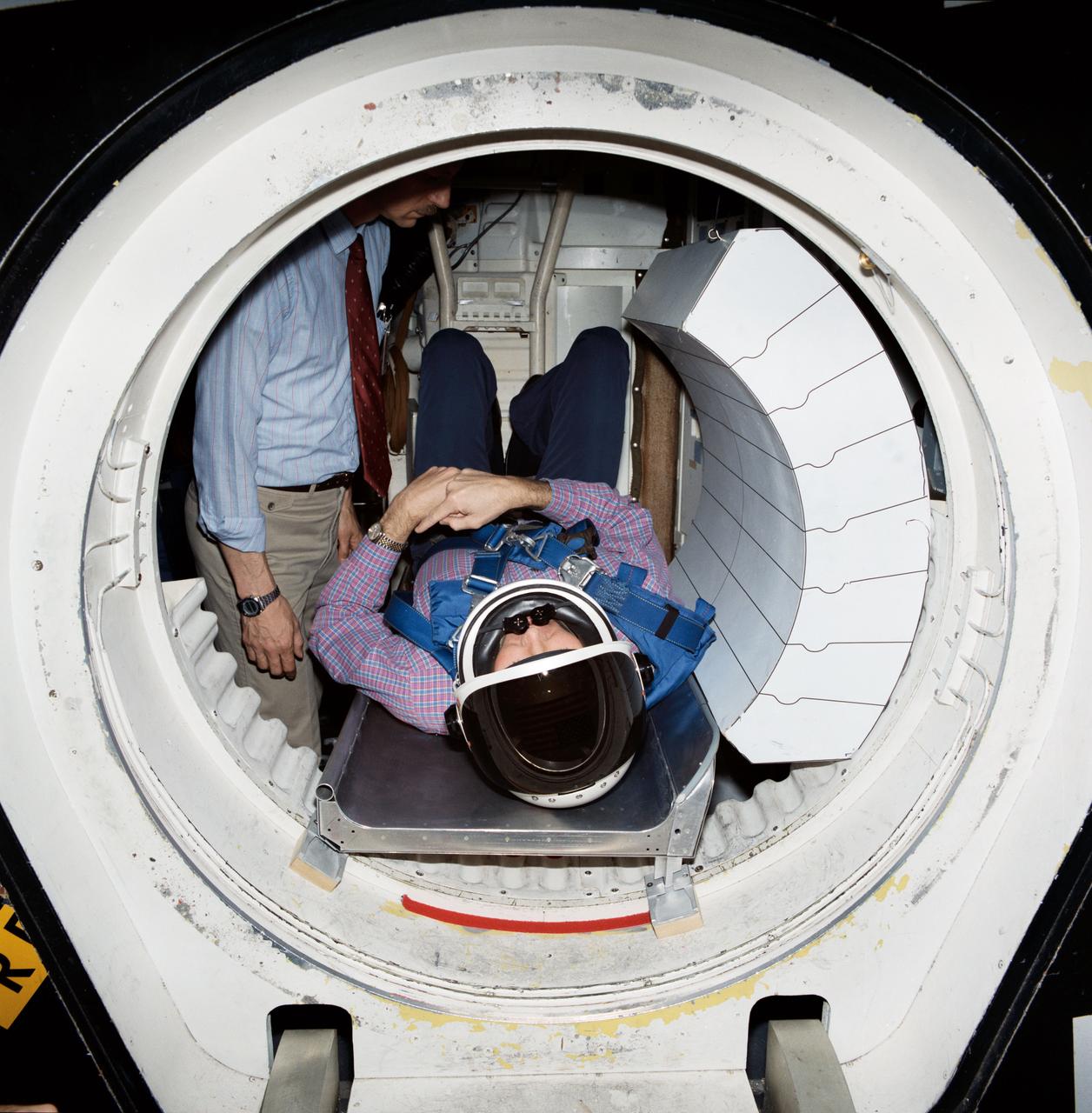
Shuttle crew escape systems test is conducted by astronauts Steven R. Nagel (left) and Manley L. (Sonny) Carter in JSC One Gravity Mockup and Training Facilities Bldg 9A crew compartment trainer (CCT). Nagel and Carter are evaluating methods for crew escape during Space Shuttle controlled gliding flight. JSC test was done in advance of tests scheduled for facilities in California and Utah. Here, Carter serves as test subject evaluating egress positioning for the tractor rocket escape method - one of the two systems currently being closely studied by NASA.
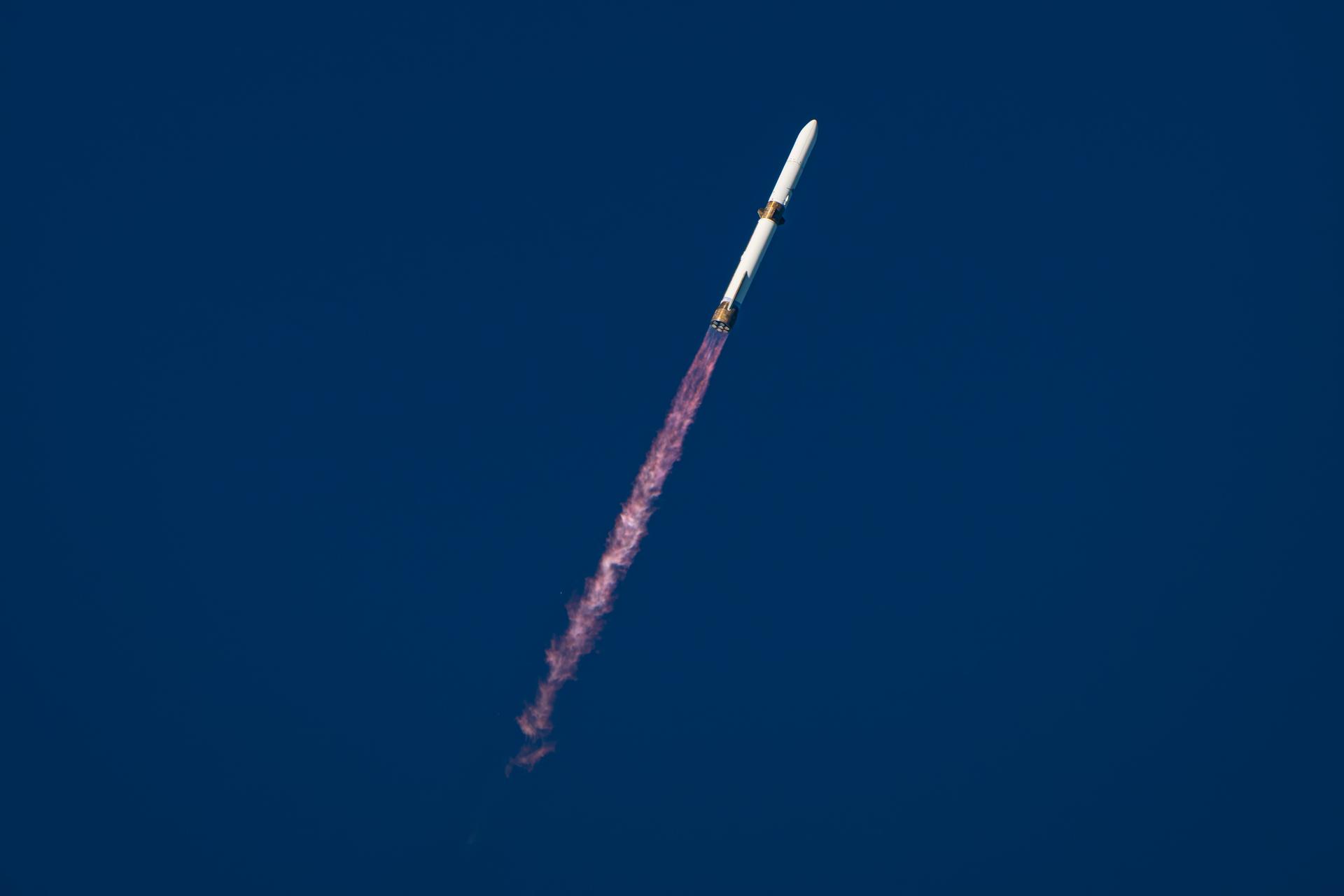
Blue Origin’s New Glenn rocket carrying NASA’s twin ESCAPADE (Escape and Plasma Acceleration and Dynamics Explorers) spacecraft launches at 3:55 p.m. EST, Thursday, Nov. 13, 2025, from Launch Complex 36 at Cape Canaveral Space Force Station in Florida. The ESCAPADE mission, built by Rocket Lab, will study how solar wind and plasma interact with Mars’ magnetosphere and how this interaction drives the planet’s atmospheric escape to prepare for future human missions on Mars.
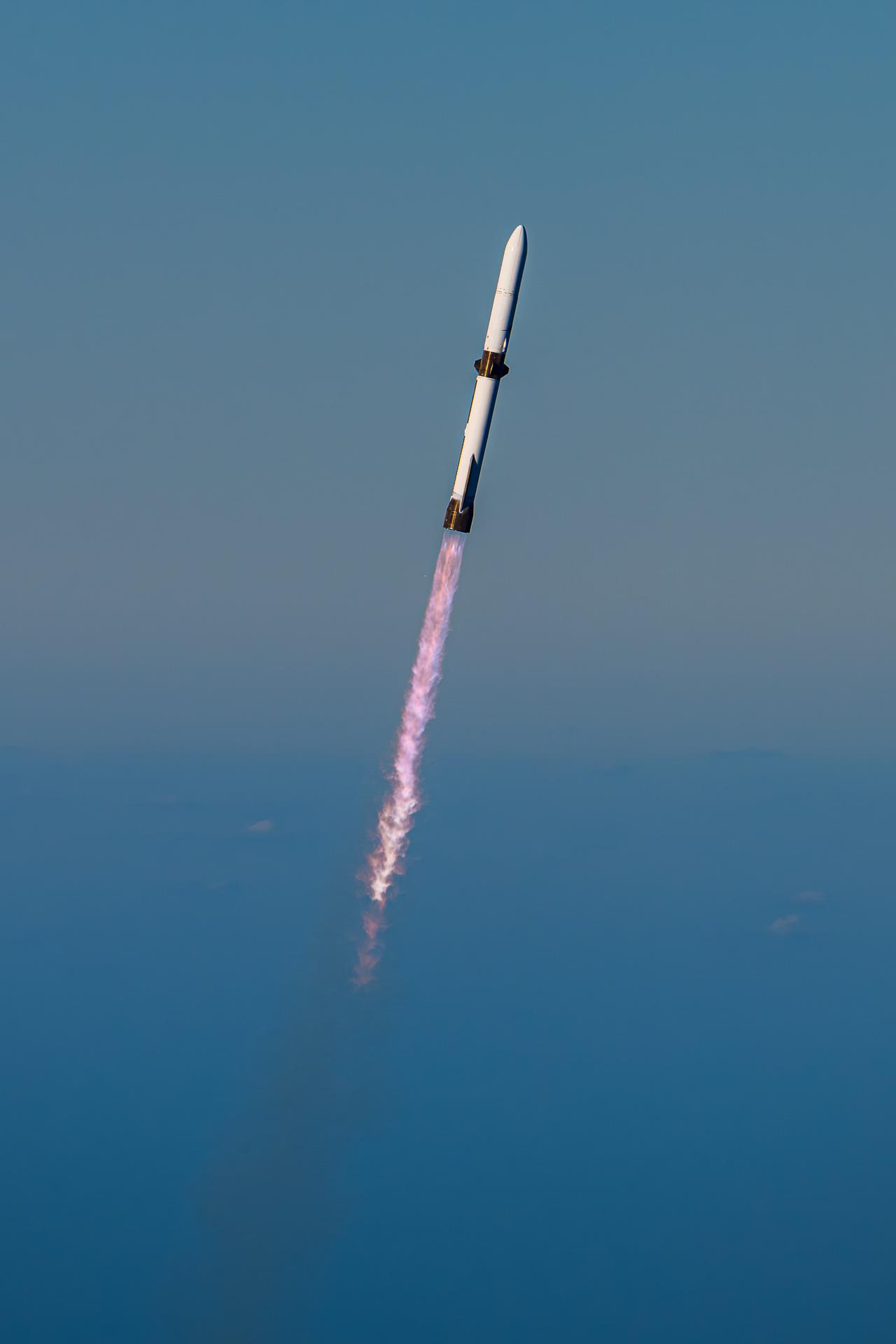
Blue Origin’s New Glenn rocket carrying NASA’s twin ESCAPADE (Escape and Plasma Acceleration and Dynamics Explorers) spacecraft launches at 3:55 p.m. EST, Thursday, Nov. 13, 2025, from Launch Complex 36 at Cape Canaveral Space Force Station in Florida. The ESCAPADE mission, built by Rocket Lab, will study how solar wind and plasma interact with Mars’ magnetosphere and how this interaction drives the planet’s atmospheric escape to prepare for future human missions on Mars.
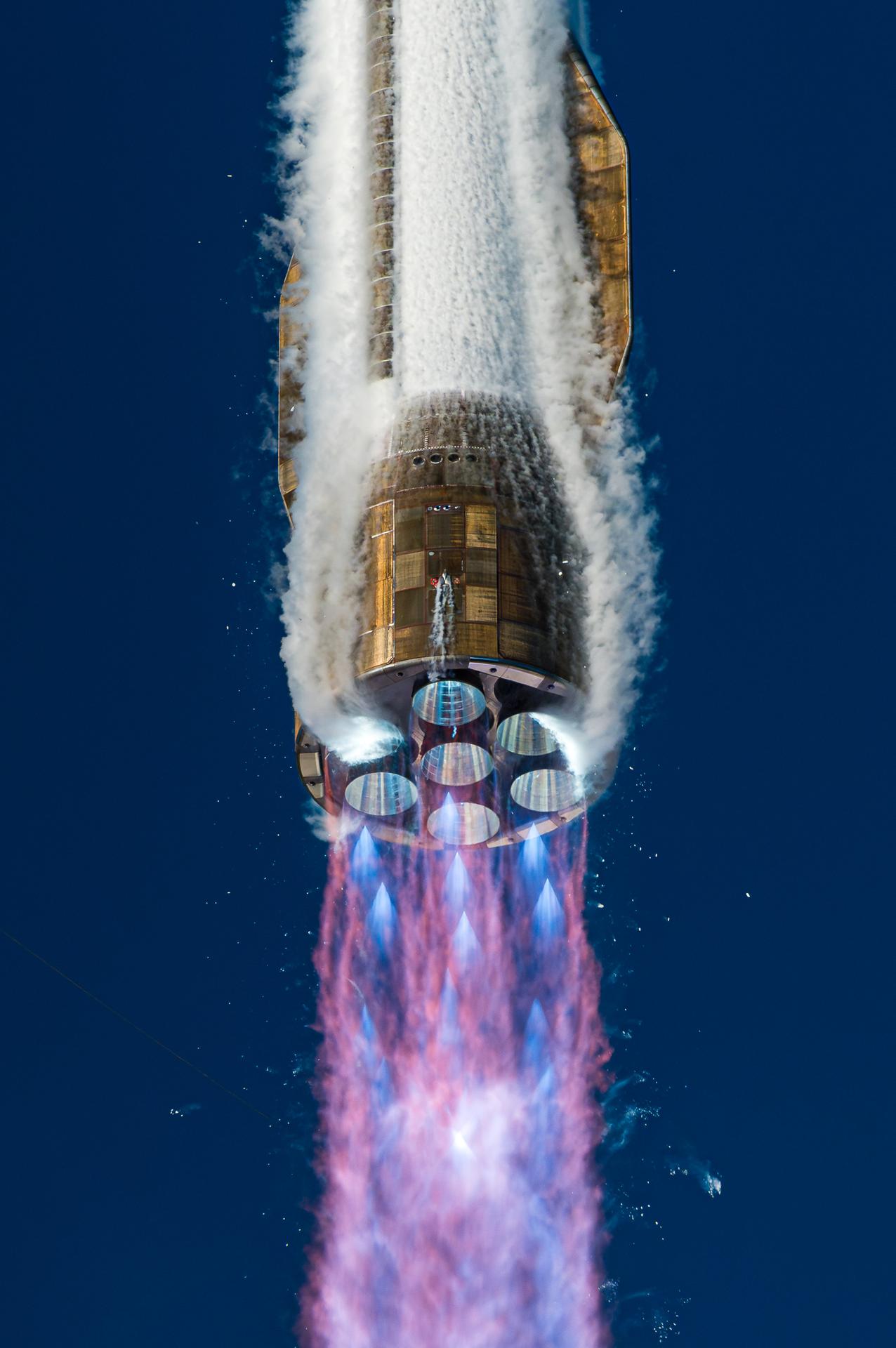
Blue Origin’s New Glenn rocket carrying NASA’s twin ESCAPADE (Escape and Plasma Acceleration and Dynamics Explorers) spacecraft launches at 3:55 p.m. EST, Thursday, Nov. 13, 2025, from Launch Complex 36 at Cape Canaveral Space Force Station in Florida. The ESCAPADE mission, built by Rocket Lab, will study how solar wind and plasma interact with Mars’ magnetosphere and how this interaction drives the planet’s atmospheric escape to prepare for future human missions on Mars.
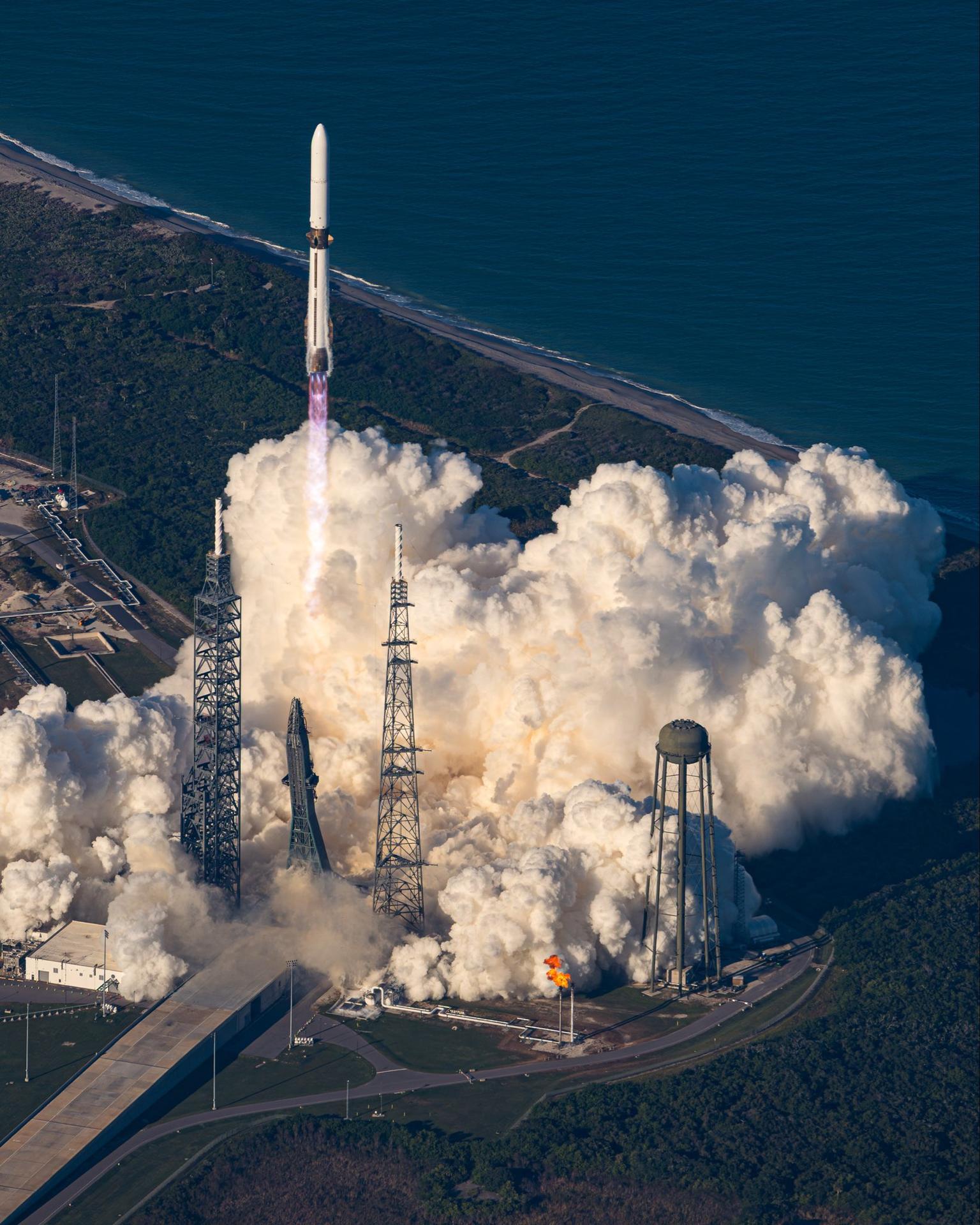
Blue Origin’s New Glenn rocket carrying NASA’s twin ESCAPADE (Escape and Plasma Acceleration and Dynamics Explorers) spacecraft launches at 3:55 p.m. EST, Thursday, Nov. 13, 2025, from Launch Complex 36 at Cape Canaveral Space Force Station in Florida. The ESCAPADE mission, built by Rocket Lab, will study how solar wind and plasma interact with Mars’ magnetosphere and how this interaction drives the planet’s atmospheric escape to prepare for future human missions on Mars.

Blue Origin’s New Glenn rocket carrying NASA’s twin ESCAPADE (Escape and Plasma Acceleration and Dynamics Explorers) spacecraft launches at 3:55 p.m. EST, Thursday, Nov. 13, 2025, from Launch Complex 36 at Cape Canaveral Space Force Station in Florida. The ESCAPADE mission, built by Rocket Lab, will study how solar wind and plasma interact with Mars’ magnetosphere and how this interaction drives the planet’s atmospheric escape to prepare for future human missions on Mars.
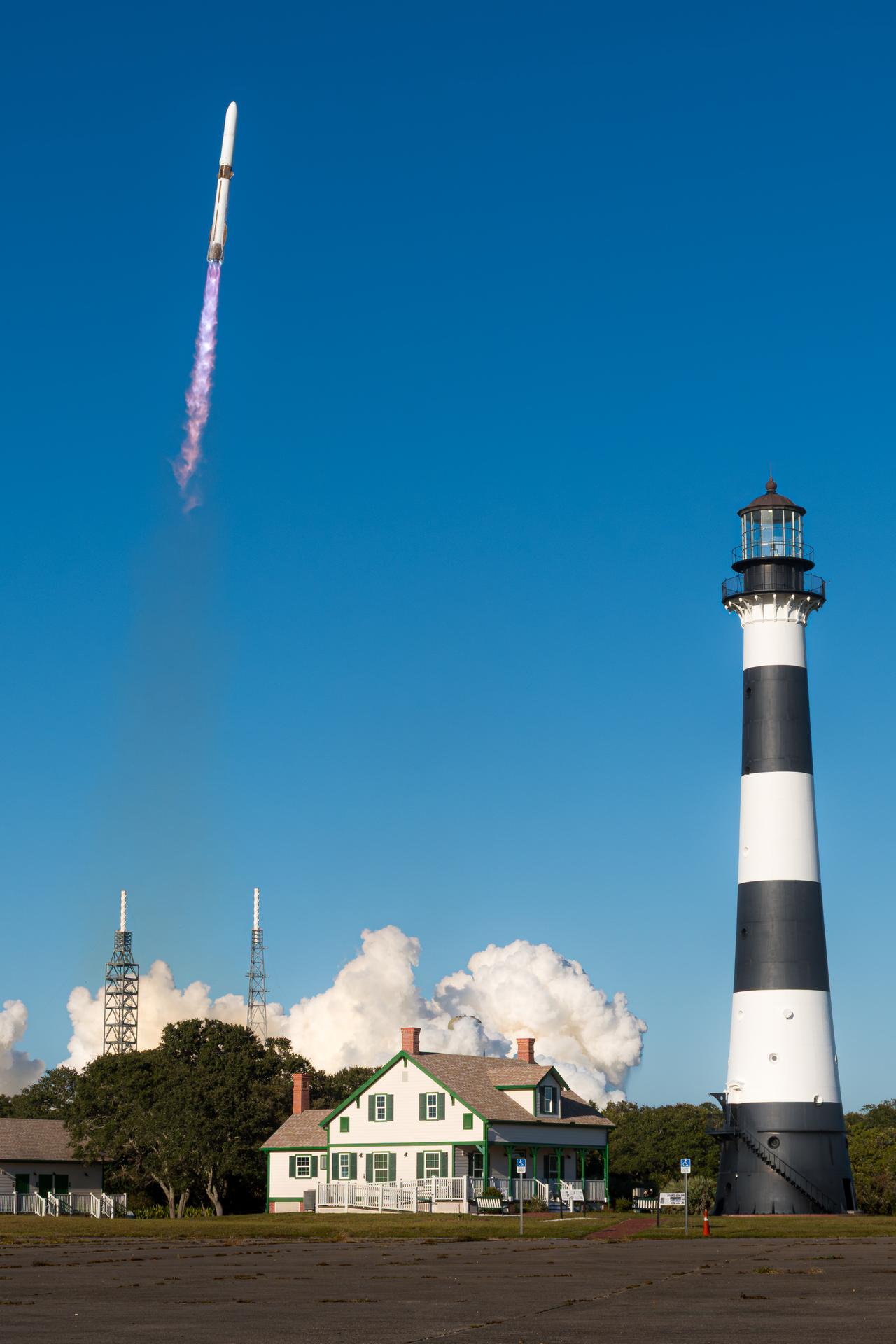
Near Cape Canaveral Lighthouse, Blue Origin’s New Glenn rocket carrying NASA’s twin ESCAPADE (Escape and Plasma Acceleration and Dynamics Explorers) spacecraft launches at 3:55 p.m. EST, Thursday, Nov. 13, 2025, from Launch Complex 36 at Cape Canaveral Space Force Station in Florida. The ESCAPADE mission, built by Rocket Lab, will study how solar wind and plasma interact with Mars’ magnetosphere and how this interaction drives the planet’s atmospheric escape to prepare for future human missions on Mars.
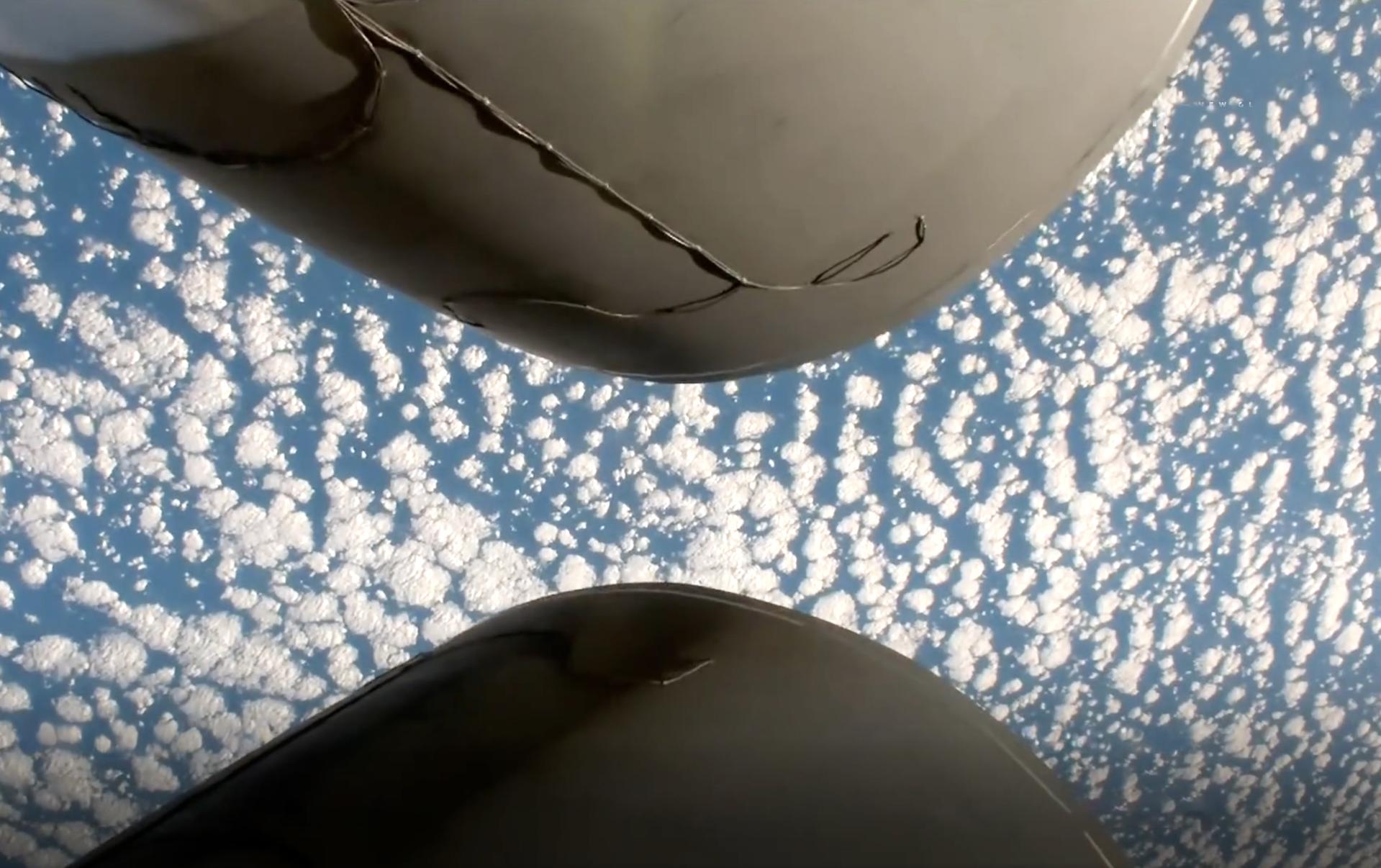
Blue Origin’s New Glenn rocket carrying NASA’s twin ESCAPADE (Escape and Plasma Acceleration and Dynamics Explorers) spacecraft launches at 3:55 p.m. EST, Thursday, Nov. 13, 2025, from Launch Complex 36 at Cape Canaveral Space Force Station in Florida. The ESCAPADE mission, built by Rocket Lab, will study how solar wind and plasma interact with Mars’ magnetosphere and how this interaction drives the planet’s atmospheric escape to prepare for future human missions on Mars.
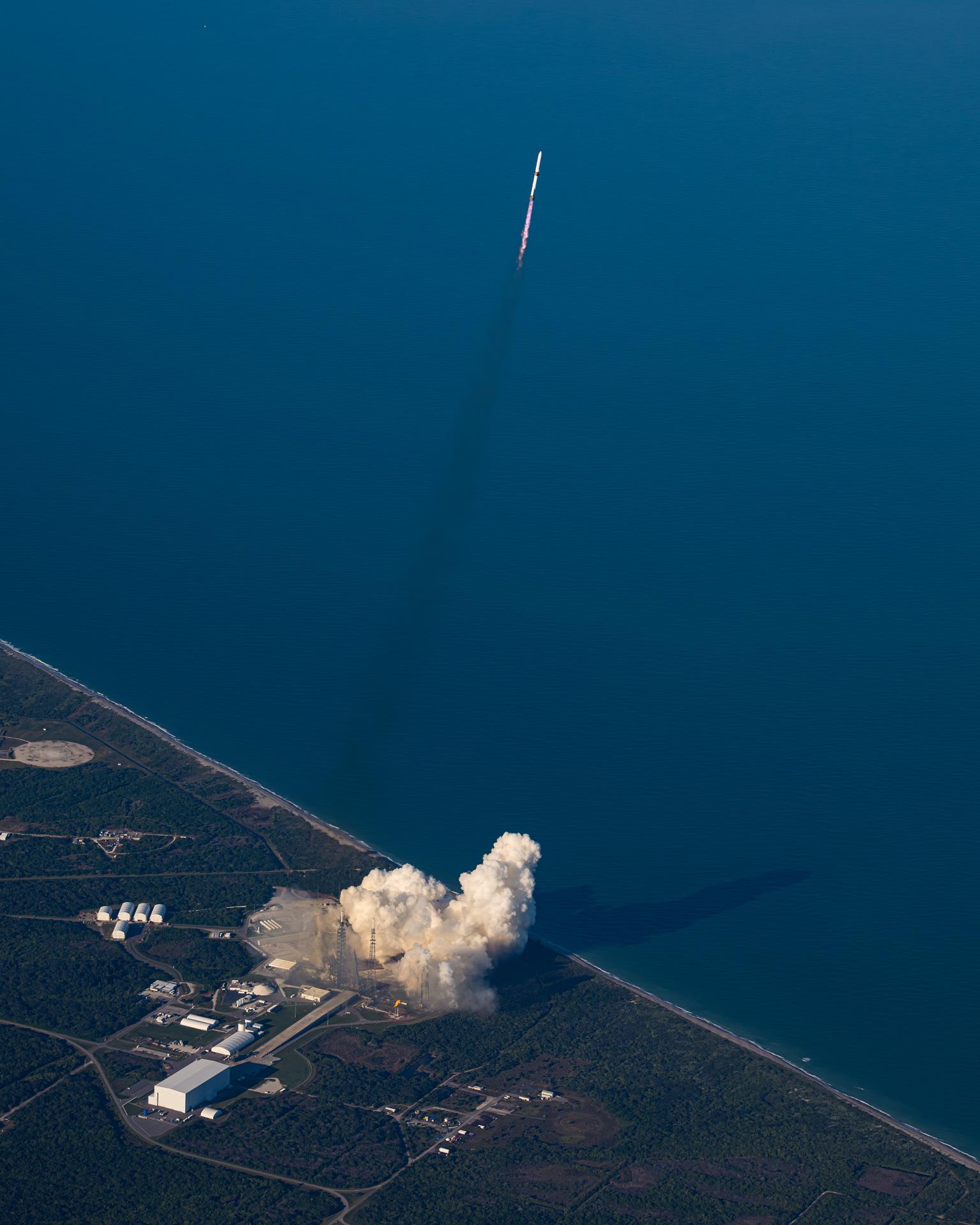
Blue Origin’s New Glenn rocket carrying NASA’s twin ESCAPADE (Escape and Plasma Acceleration and Dynamics Explorers) spacecraft launches at 3:55 p.m. EST, Thursday, Nov. 13, 2025, from Launch Complex 36 at Cape Canaveral Space Force Station in Florida. The ESCAPADE mission, built by Rocket Lab, will study how solar wind and plasma interact with Mars’ magnetosphere and how this interaction drives the planet’s atmospheric escape to prepare for future human missions on Mars.
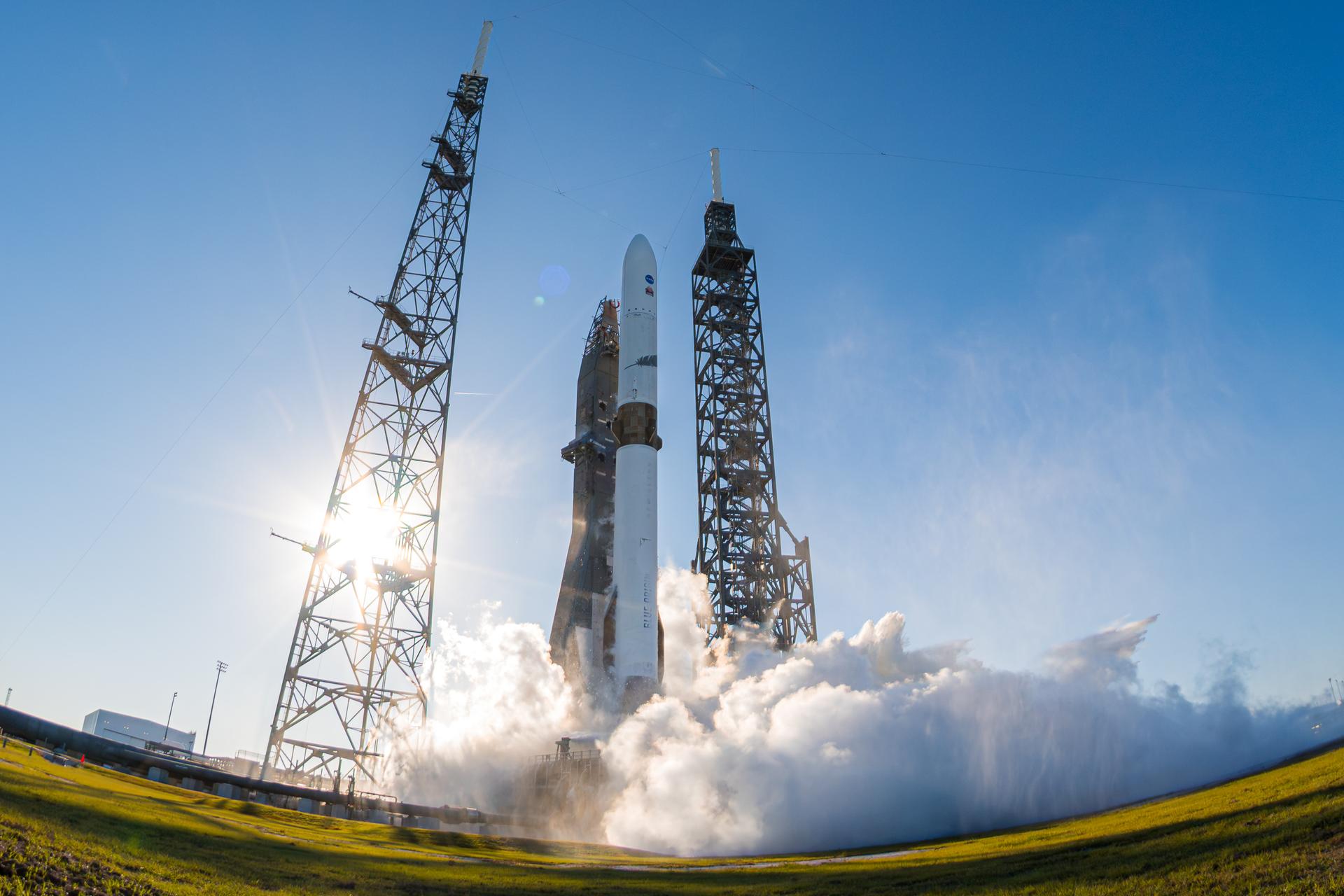
Blue Origin’s New Glenn rocket carrying NASA’s twin ESCAPADE (Escape and Plasma Acceleration and Dynamics Explorers) spacecraft launches at 3:55 p.m. EST, Thursday, Nov. 13, 2025, from Launch Complex 36 at Cape Canaveral Space Force Station in Florida. The ESCAPADE mission, built by Rocket Lab, will study how solar wind and plasma interact with Mars’ magnetosphere and how this interaction drives the planet’s atmospheric escape to prepare for future human missions on Mars.

Blue Origin’s New Glenn first stage rocket successfully lands for the first time on a drone ship in the Atlantic Ocean following the launching of NASA’s twin ESCAPADE (Escape and Plasma Acceleration and Dynamics Explorers) spacecraft at 3:55 p.m. EST, Thursday, Nov. 13, 2025, from Launch Complex 36 at Cape Canaveral Space Force Station in Florida. The ESCAPADE mission, built by Rocket Lab, will study how solar wind and plasma interact with Mars’ magnetosphere and how this interaction drives the planet’s atmospheric escape to prepare for future human missions on Mars.

Two small spacecrafts satellites that make up NASA’s ESCAPADE (Escape and Plasma Acceleration and Dynamics Explorers) mission to Mars arrived at Astrotech Space Operations in Titusville, near NASA’s Kennedy Space Center in Florida on Sunday, Aug. 19, 2024. Set to launch from Blue Origin’s New Glenn rocket, the Rocket Lab spacecraft will study the solar wind and how the solar wind interacts with Mars’ magnetic environment and how this interaction drives the planet’s atmospheric escape.

Two small spacecrafts satellites that make up NASA’s ESCAPADE (Escape and Plasma Acceleration and Dynamics Explorers) mission to Mars arrived at Astrotech Space Operations in Titusville, near NASA’s Kennedy Space Center in Florida on Sunday, Aug. 19, 2024. Set to launch from Blue Origin’s New Glenn rocket, the Rocket Lab spacecraft will study the solar wind and how the solar wind interacts with Mars’ magnetic environment and how this interaction drives the planet’s atmospheric escape.

Two small spacecrafts satellites that make up NASA’s ESCAPADE (Escape and Plasma Acceleration and Dynamics Explorers) mission to Mars arrived at Astrotech Space Operations in Titusville, near NASA’s Kennedy Space Center in Florida on Sunday, Aug. 19, 2024. Set to launch from Blue Origin’s New Glenn rocket, the Rocket Lab spacecraft will study the solar wind and how the solar wind interacts with Mars’ magnetic environment and how this interaction drives the planet’s atmospheric escape.
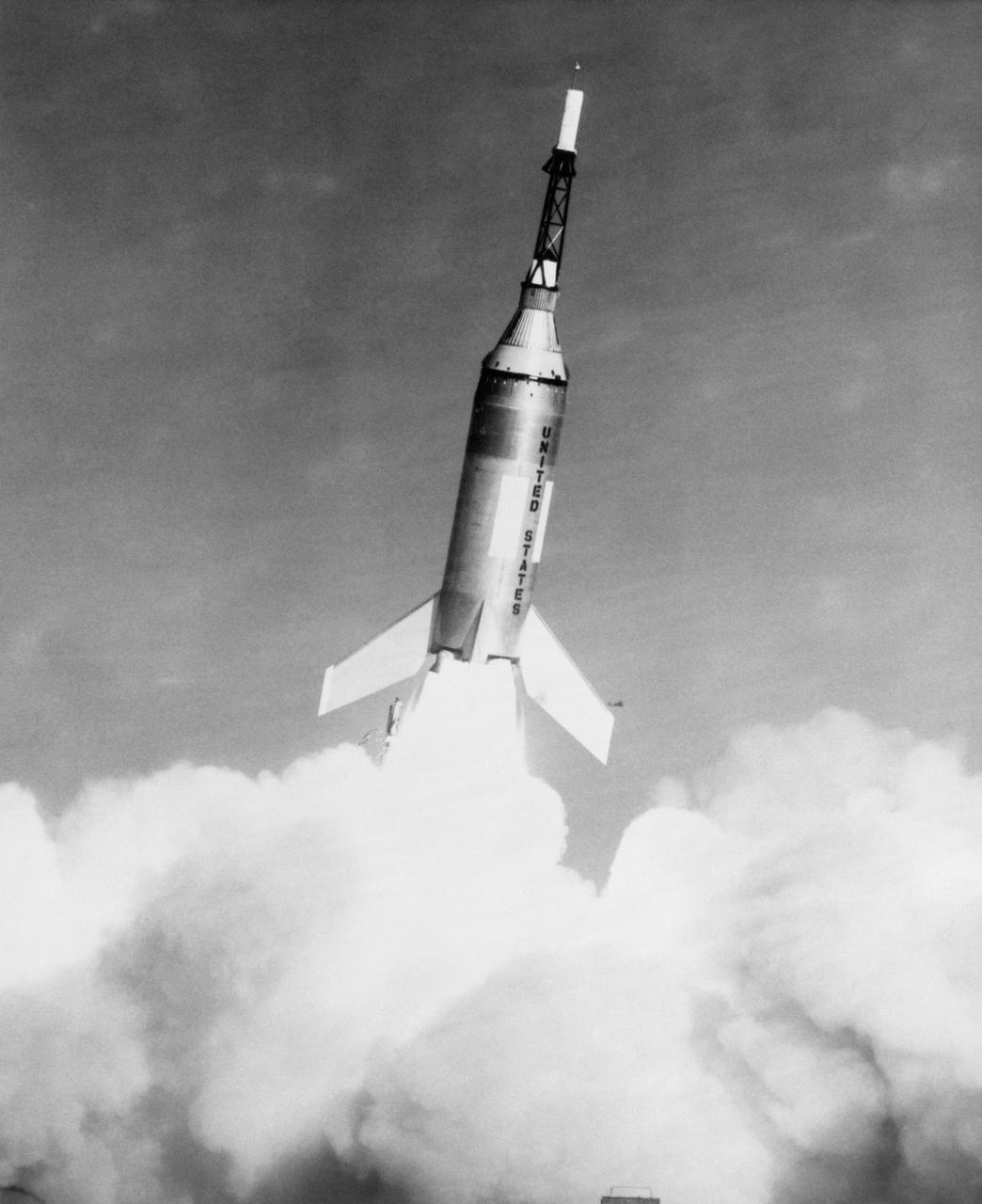
G61-00030 (4 Nov. 1959) --- Launch of Little Joe-2 from Wallops Island carrying Mercury spacecraft test article. The suborbital test flight of the Mercury capsule was to test the escape system. Vehicle functioned perfectly, but escape rocket ignited several seconds too late. Photo credit: NASA

B60-00364 (4 Nov. 1959) --- Launch of Little Joe-2 from Wallops Island carrying Mercury spacecraft test article. The suborbital test flight of the Mercury capsule was to test the escape system. Vehicle functioned perfectly, but escape rocket ignited several seconds too late. Photo credit: NASA
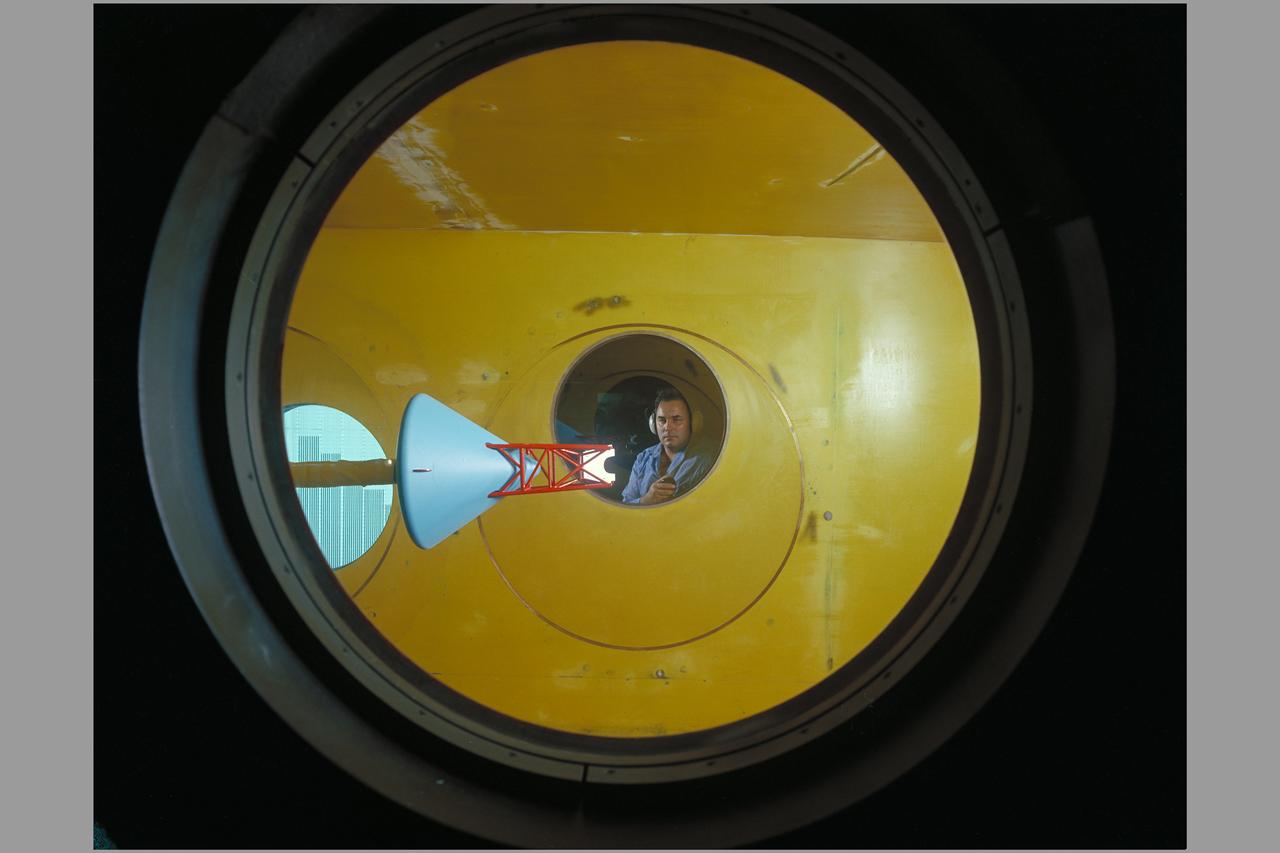
Side view of assembled command module, tower with flap & launch-escape rocket. Apollo FS-2 in 9 x 7 ft. SupersonicWind Tunnel.
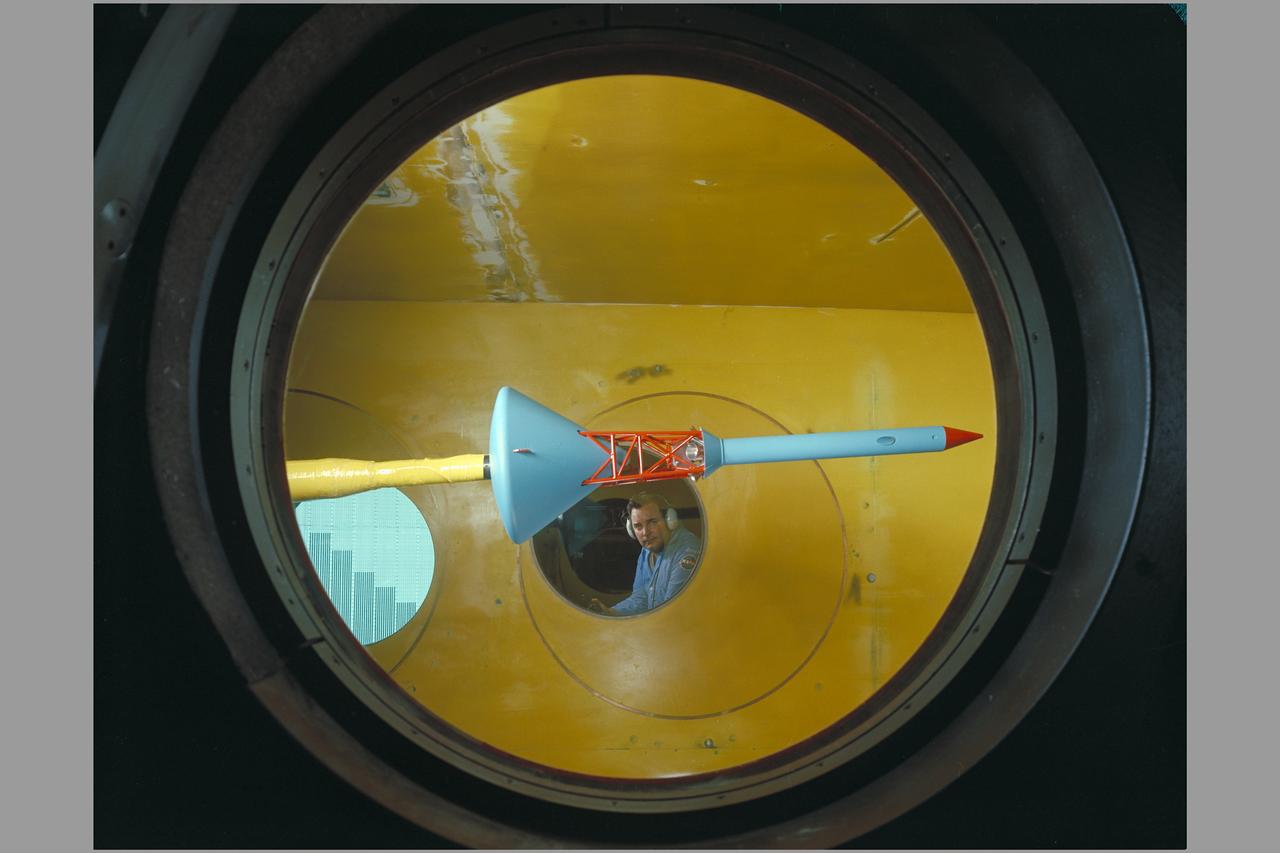
Side view of assembled command module, tower with flap & launch-escape rocket. Apollo FS-2 in 9 x 7 ft. SupersonicWind Tunnel.
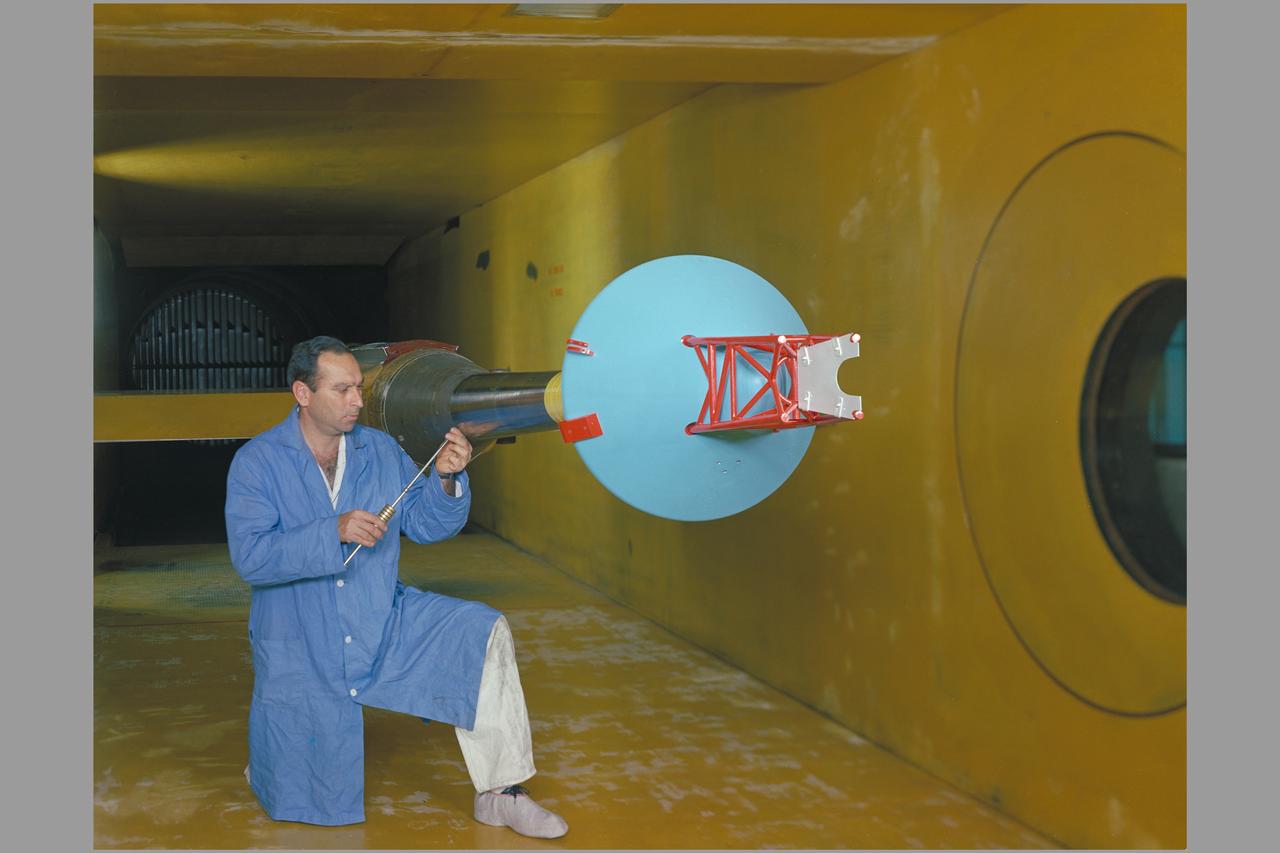
Side view of assembled command module, tower with flap & launch-escape rocket. Apollo FS-2 in 9 x 7 ft. SupersonicWind Tunnel.
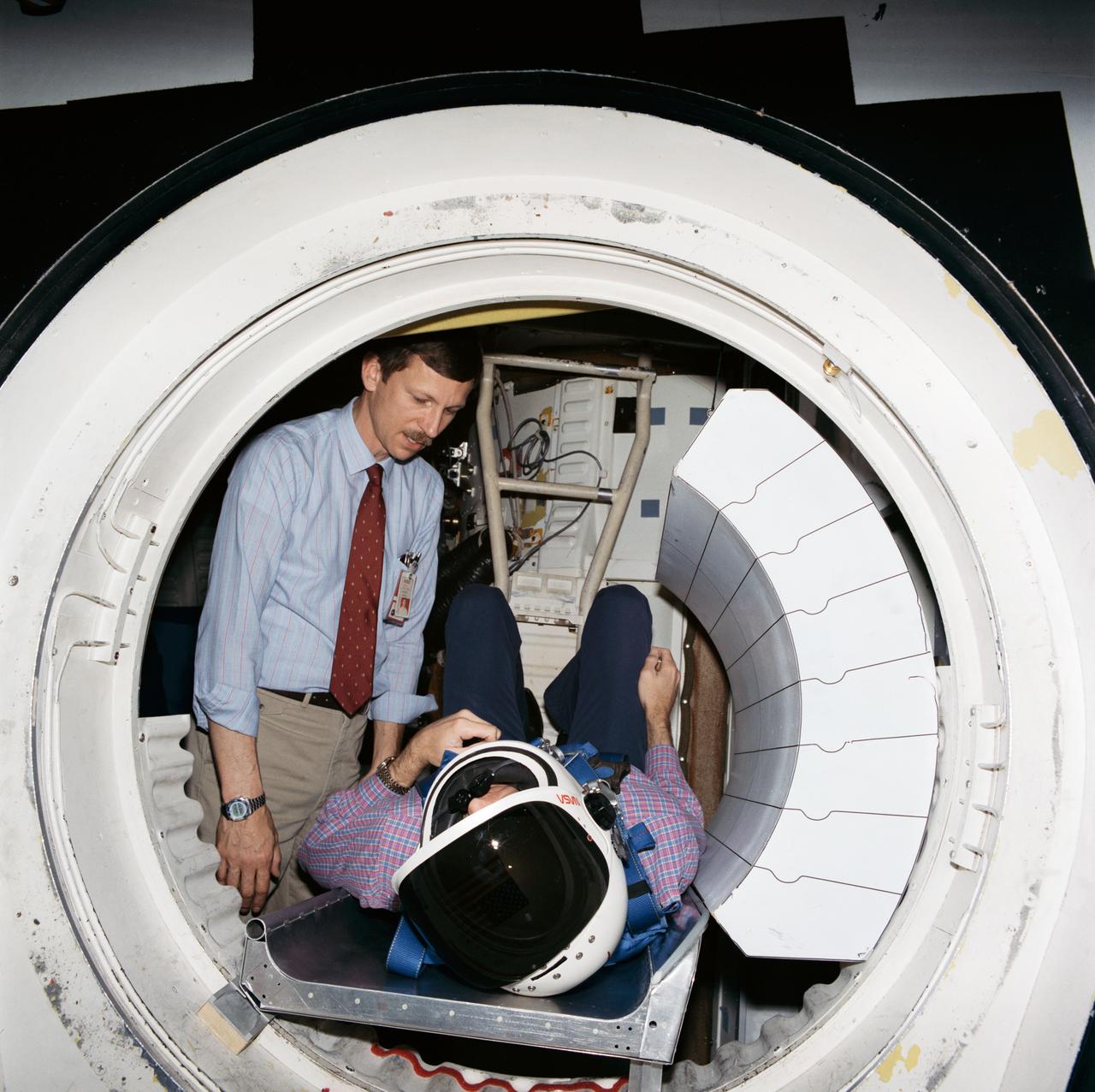
Shuttle crew escape systems test is conducted by astronauts Steven R. Nagel (left) and Manley L. (Sonny) Carter in JSC One Gravity Mockup and Training Facilities Bldg 9A crew compartment trainer (CCT). Nagel and Carter are evaluating methods for crew escape during Space Shuttle controlled gliding flight. JSC test was done in advance of tests scheduled for facilities in California and Utah. Here, Carter serves as test subject evaluating egress positioning for the tractor rocket escape method - one of the two systems currently being closely studied by NASA.

Shuttle crew escape systems test is conducted by astronauts Steven R. Nagel (left) and Manley L. (Sonny) Carter in JSC One Gravity Mockup and Training Facilities Bldg 9A crew compartment trainer (CCT). Nagel and Carter are evaluating methods for crew escape during Space Shuttle controlled gliding flight. JSC test was done in advance of tests scheduled for facilities in California and Utah. Here, Carter serves as test subject evaluating egress positioning for the tractor rocket escape method - one of the two systems currently being closely studied by NASA.
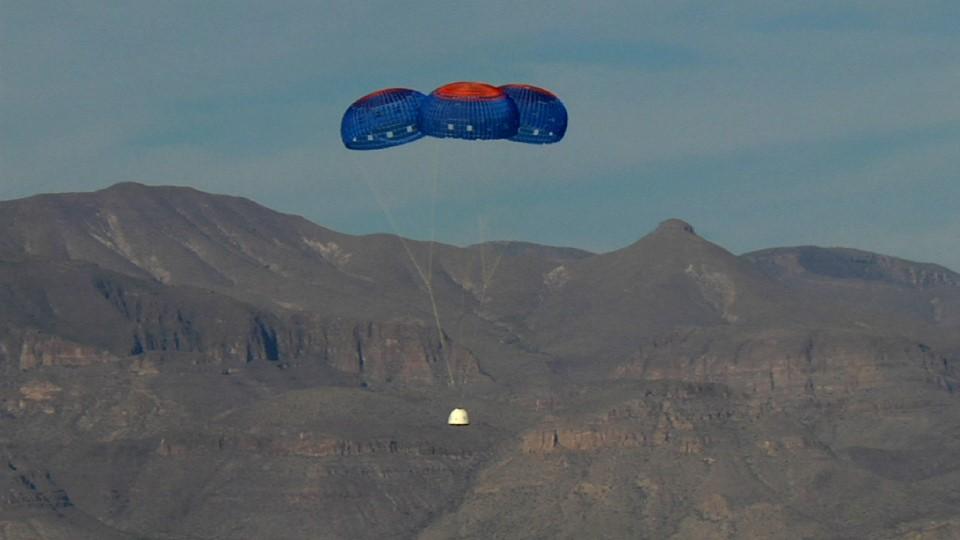
VAN HORN, Texas – Blue Origin’s New Shepard crew capsule escaped to an altitude of 2,307 feet before deploying parachutes for a safe return for a pad escape test at the company's West Texas launch site. The pusher escape system was designed and developed by Blue Origin to allow crew escape in the event of an emergency during any phase of ascent for its suborbital New Shepard system. As part of an incremental development program, the results of this test will shape the design of the escape system for the company's orbital biconic-shaped Space Vehicle. The system is expected to enable full reusability of the launch vehicle, which is different from NASA's previous launch escape systems that would pull a spacecraft away from its rocket before reaching orbit. The test was part of Blue Origin's work supporting its funded Space Act Agreement with NASA during Commercial Crew Development Round 2 CCDev2). Through initiatives like CCDev2, NASA is fostering the development of a U.S. commercial crew space transportation capability with the goal of achieving safe, reliable and cost-effective access to and from the International Space Station and low-Earth orbit. After the capability is matured and available to the government and other customers, NASA could contract to purchase commercial services to meet its station crew transportation needs. For more information, visit www.nasa.gov/commercialcrew. Image credit: Blue Origin
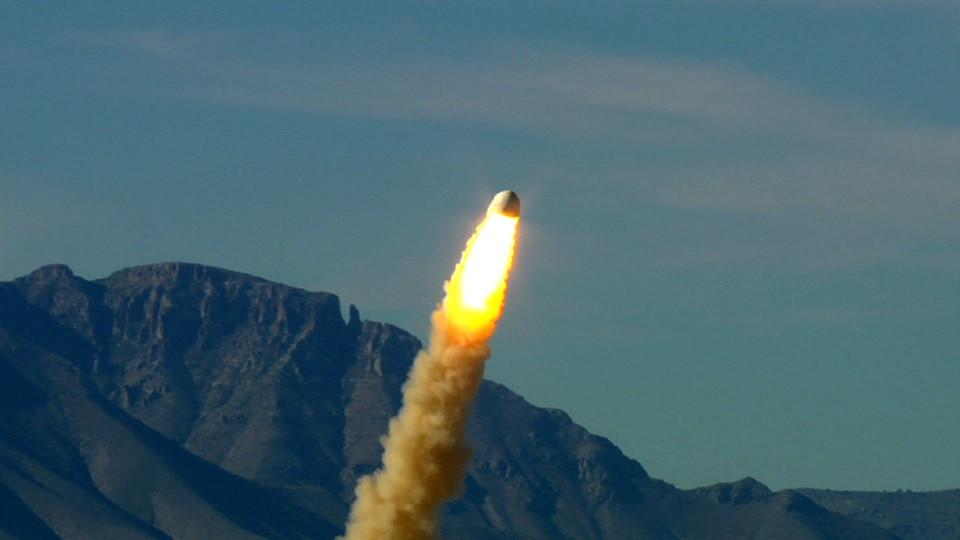
VAN HORN, Texas – Blue Origin’s pusher escape system rockets its New Shepard crew capsule away from a simulated propulsion module launch pad at the company's West Texas launch site, demonstrating a key safety system for both suborbital and orbital flights. The pad escape test took the company's suborbital crew capsule to an altitude of 2,307 feet during the flight test before descending safely by parachute to a soft landing 1,630 feet away. The pusher escape system was designed and developed by Blue Origin to allow crew escape in the event of an emergency during any phase of ascent for its suborbital New Shepard system. As part of an incremental development program, the results of this test will shape the design of the escape system for the company's orbital biconic-shaped Space Vehicle. The system is expected to enable full reusability of the launch vehicle, which is different from NASA's previous launch escape systems that would pull a spacecraft away from its rocket before reaching orbit. The test was part of Blue Origin's work supporting its funded Space Act Agreement with NASA during Commercial Crew Development Round 2 CCDev2). Through initiatives like CCDev2, NASA is fostering the development of a U.S. commercial crew space transportation capability with the goal of achieving safe, reliable and cost-effective access to and from the International Space Station and low-Earth orbit. After the capability is matured and available to the government and other customers, NASA could contract to purchase commercial services to meet its station crew transportation needs. For more information, visit www.nasa.gov/commercialcrew. Image credit: Blue Origin
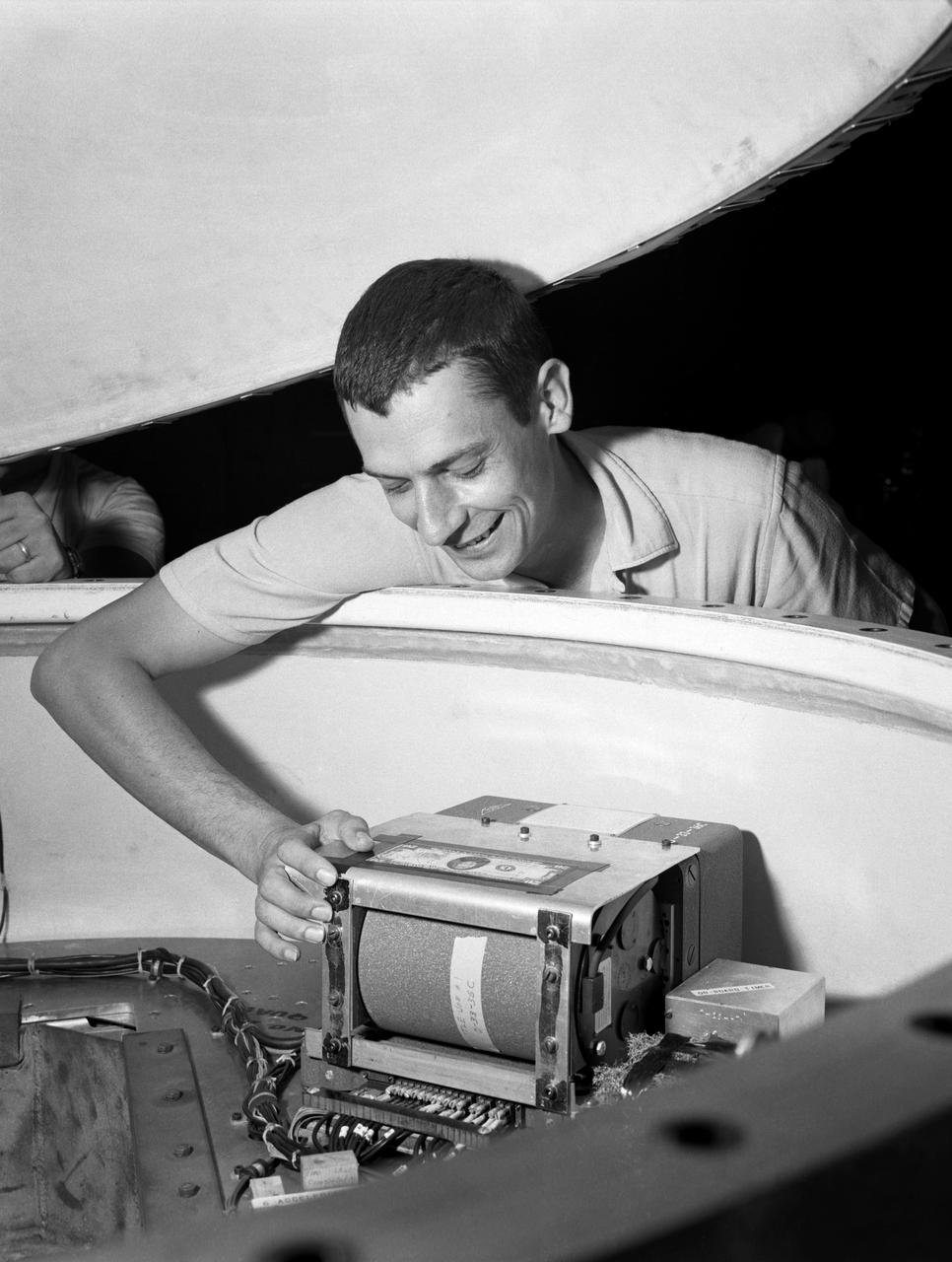
Technicians adjust the rocket motor during the attachment of the escape tower to the Mercury capsule prior to assembly with Little Joe launcher, August 20, 1959. Joseph Shortal wrote (vol. 3., p. 33): The escape tower and rocket motors were taken from the Mercury capsule production. The tower is shown being attached to the capsule.... The escape rocket was a Grand Central 1-KS-52000 motor with three canted nozzles. The tower-jettison motor was an Atlantic Research Corp. 1.4-KS-785 motor. This was the same design tested in a beach abort test...and had the offset thrust line as used in the beach abort test to insure that the capsule would get away from the booster in an emergency. The escape system weighed 1,015 pounds, including 236 pounds of ballast for stability. The Little Joe booster was assembled at Wallops on its special launcher in a vertical attitude. It is shown in the on the left with the work platform in place. The launcher was located on a special concrete slab in Launching Area 1. The capsule was lowered onto the booster by crane.... After the assembly was completed, the scaffolding was disassembled and the launcher pitched over to its normal launch angle of 80 degrees.... Little Joe had a diameter of 80 inches and an overall length, including the capsule and escape tower of 48 feet. The total weight at launch was about 43,000 pounds. The overall span of the stabilizing fins was 21.3 feet. Although in comparison with the overall Mercury Project, Little Joe was a simple undertaking, the fact that an attempt was made to condense a normal two-year project into a 6-month one with in house labor turned it into a major undertaking for Langley. -- Published in Joseph A. Shortal, History of Wallops Station: Origins and Activities Through 1949, (Wallops Island, VA: National Aeronautics and Space Administration, Wallops Station, nd), Comment Edition.

Technicians adjust the rocket motor during the attachment of the escape tower to the Mercury capsule prior to assembly with Little Joe launcher, August 20, 1959. Joseph Shortal wrote (vol. 3., p. 33): The escape tower and rocket motors were taken from the Mercury capsule production. The tower is shown being attached to the capsule.... The escape rocket was a Grand Central 1-KS-52000 motor with three canted nozzles. The tower-jettison motor was an Atlantic Research Corp. 1.4-KS-785 motor. This was the same design tested in a beach abort test...and had the offset thrust line as used in the beach abort test to insure that the capsule would get away from the booster in an emergency. The escape system weighed 1,015 pounds, including 236 pounds of ballast for stability. The Little Joe booster was assembled at Wallops on its special launcher in a vertical attitude. It is shown in the on the left with the work platform in place. The launcher was located on a special concrete slab in Launching Area 1. The capsule was lowered onto the booster by crane.... After the assembly was completed, the scaffolding was disassembled and the launcher pitched over to its normal launch angle of 80 degrees.... Little Joe had a diameter of 80 inches and an overall length, including the capsule and escape tower of 48 feet. The total weight at launch was about 43,000 pounds. The overall span of the stabilizing fins was 21.3 feet. Although in comparison with the overall Mercury Project, Little Joe was a simple undertaking, the fact that an attempt was made to condense a normal two-year project into a 6-month one with in house labor turned it into a major undertaking for Langley. -- Published in Joseph A. Shortal, History of Wallops Station: Origins and Activities Through 1949, (Wallops Island, VA: National Aeronautics and Space Administration, Wallops Station, nd), Comment Edition.
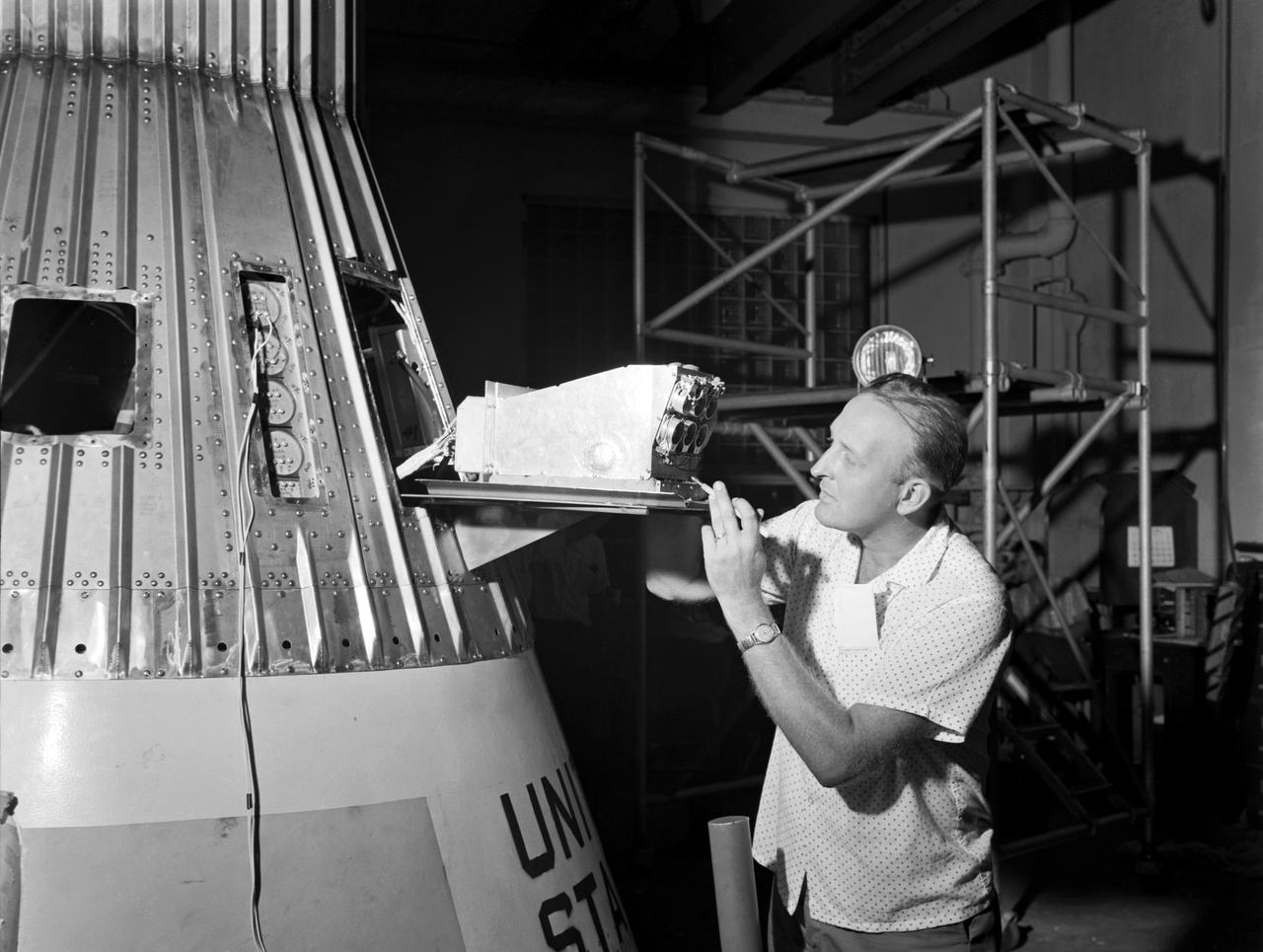
Technicians adjust the rocket motor during the attachment of the escape tower to the Mercury capsule prior to assembly with Little Joe launcher, August 20, 1959. Joseph Shortal wrote (vol. 3., p. 33): The escape tower and rocket motors were taken from the Mercury capsule production. The tower is shown being attached to the capsule.... The escape rocket was a Grand Central 1-KS-52000 motor with three canted nozzles. The tower-jettison motor was an Atlantic Research Corp. 1.4-KS-785 motor. This was the same design tested in a beach abort test...and had the offset thrust line as used in the beach abort test to insure that the capsule would get away from the booster in an emergency. The escape system weighed 1,015 pounds, including 236 pounds of ballast for stability. The Little Joe booster was assembled at Wallops on its special launcher in a vertical attitude. It is shown in the on the left with the work platform in place. The launcher was located on a special concrete slab in Launching Area 1. The capsule was lowered onto the booster by crane.... After the assembly was completed, the scaffolding was disassembled and the launcher pitched over to its normal launch angle of 80 degrees.... Little Joe had a diameter of 80 inches and an overall length, including the capsule and escape tower of 48 feet. The total weight at launch was about 43,000 pounds. The overall span of the stabilizing fins was 21.3 feet. Although in comparison with the overall Mercury Project, Little Joe was a simple undertaking, the fact that an attempt was made to condense a normal two-year project into a 6-month one with in house labor turned it into a major undertaking for Langley. -- Published in Joseph A. Shortal, History of Wallops Station: Origins and Activities Through 1949, (Wallops Island, VA: National Aeronautics and Space Administration, Wallops Station, nd), Comment Edition.
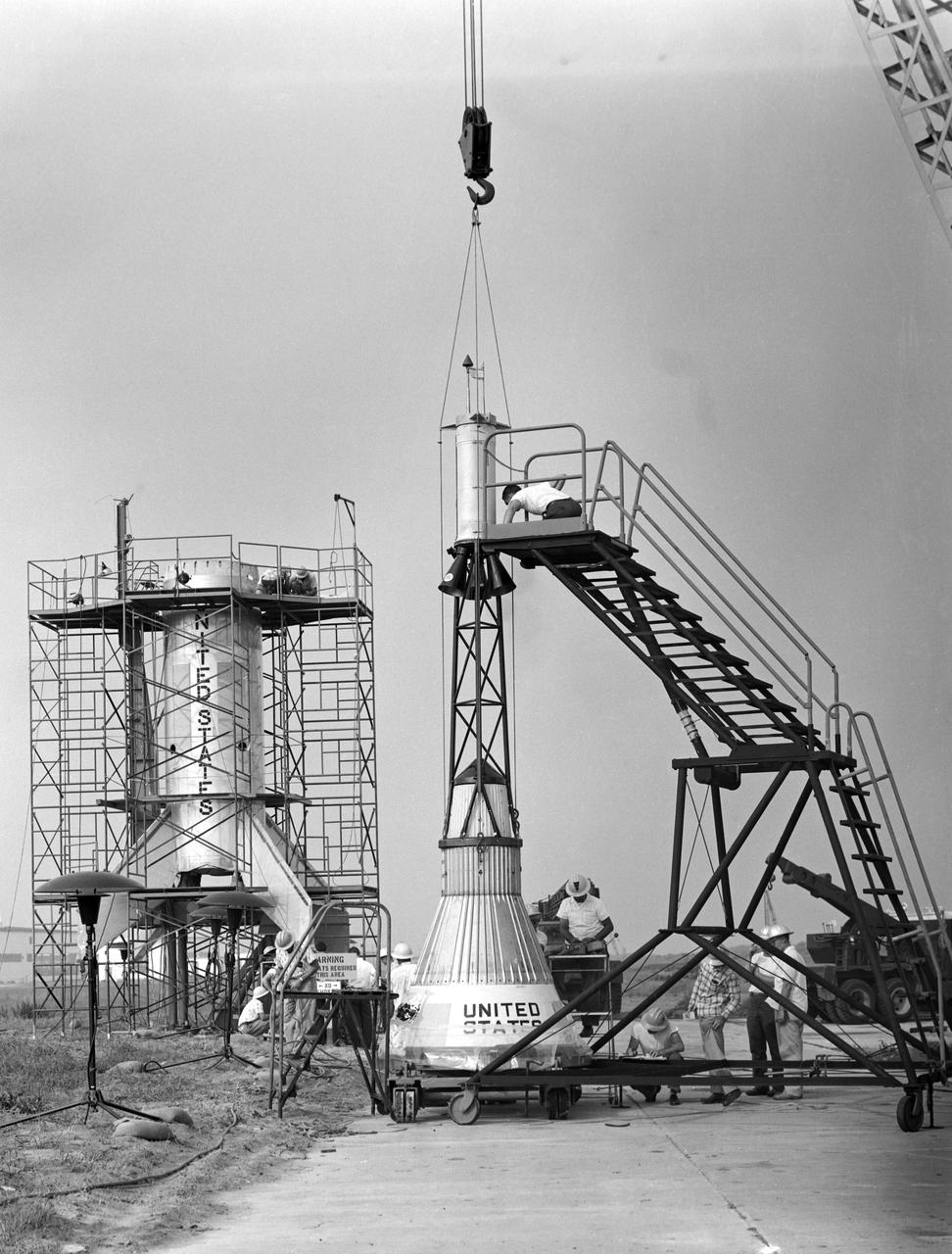
Technicians adjust the rocket motor during the attachment of the escape tower to the Mercury capsule prior to assembly with Little Joe launcher, August 20, 1959. Joseph Shortal wrote (vol. 3., p. 33): The escape tower and rocket motors were taken from the Mercury capsule production. The tower is shown being attached to the capsule.... The escape rocket was a Grand Central 1-KS-52000 motor with three canted nozzles. The tower-jettison motor was an Atlantic Research Corp. 1.4-KS-785 motor. This was the same design tested in a beach abort test...and had the offset thrust line as used in the beach abort test to insure that the capsule would get away from the booster in an emergency. The escape system weighed 1,015 pounds, including 236 pounds of ballast for stability. The Little Joe booster was assembled at Wallops on its special launcher in a vertical attitude. It is shown in the on the left with the work platform in place. The launcher was located on a special concrete slab in Launching Area 1. The capsule was lowered onto the booster by crane.... After the assembly was completed, the scaffolding was disassembled and the launcher pitched over to its normal launch angle of 80 degrees.... Little Joe had a diameter of 80 inches and an overall length, including the capsule and escape tower of 48 feet. The total weight at launch was about 43,000 pounds. The overall span of the stabilizing fins was 21.3 feet. Although in comparison with the overall Mercury Project, Little Joe was a simple undertaking, the fact that an attempt was made to condense a normal two-year project into a 6-month one with in house labor turned it into a major undertaking for Langley. -- Published in Joseph A. Shortal, History of Wallops Station: Origins and Activities Through 1949, (Wallops Island, VA: National Aeronautics and Space Administration, Wallops Station, nd), Comment Edition.
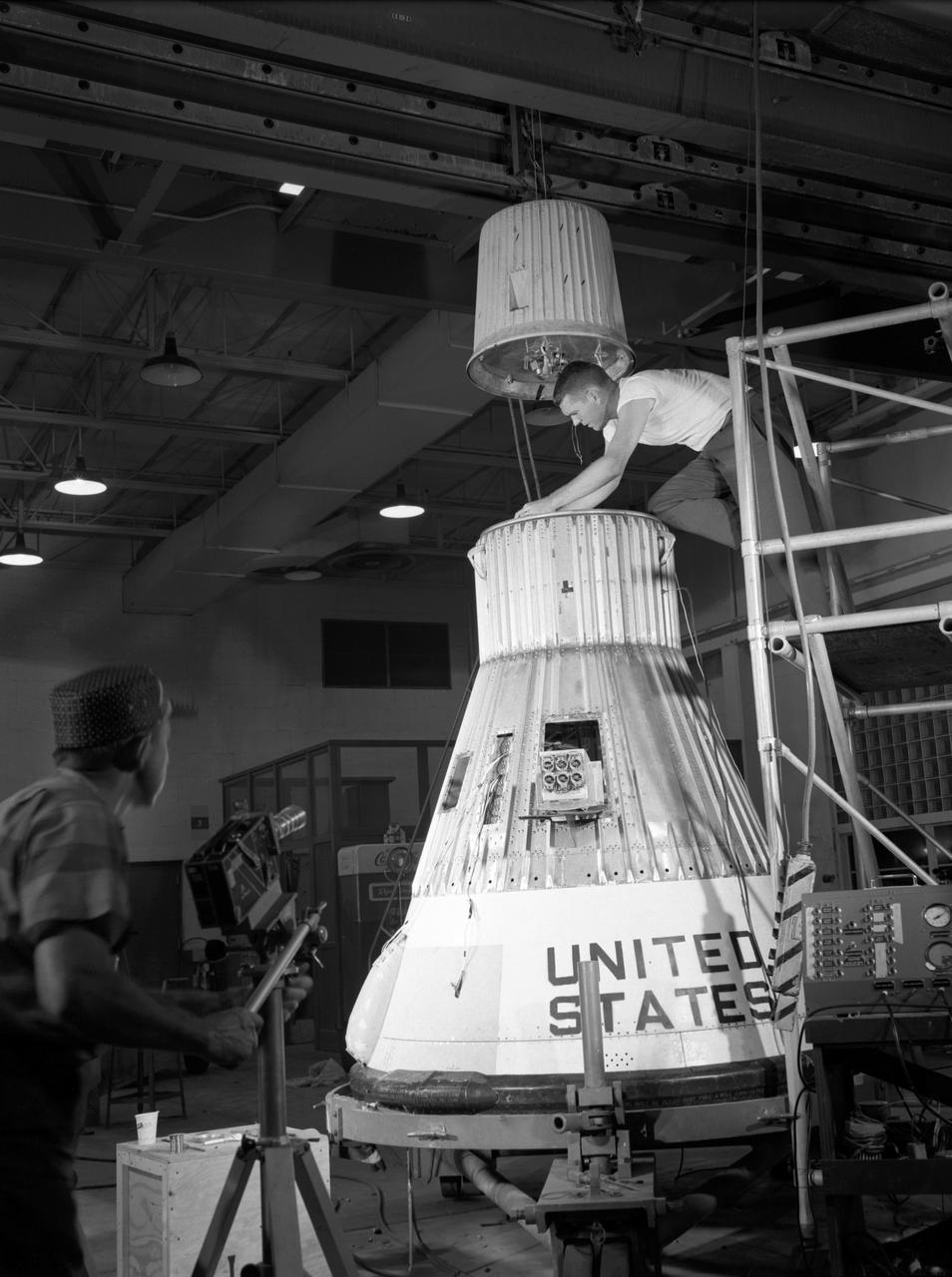
Technicians adjust the rocket motor during the attachment of the escape tower to the Mercury capsule prior to assembly with Little Joe launcher, August 20, 1959. Joseph Shortal wrote (vol. 3., p. 33): The escape tower and rocket motors were taken from the Mercury capsule production. The tower is shown being attached to the capsule.... The escape rocket was a Grand Central 1-KS-52000 motor with three canted nozzles. The tower-jettison motor was an Atlantic Research Corp. 1.4-KS-785 motor. This was the same design tested in a beach abort test...and had the offset thrust line as used in the beach abort test to insure that the capsule would get away from the booster in an emergency. The escape system weighed 1,015 pounds, including 236 pounds of ballast for stability. The Little Joe booster was assembled at Wallops on its special launcher in a vertical attitude. It is shown in the on the left with the work platform in place. The launcher was located on a special concrete slab in Launching Area 1. The capsule was lowered onto the booster by crane.... After the assembly was completed, the scaffolding was disassembled and the launcher pitched over to its normal launch angle of 80 degrees.... Little Joe had a diameter of 80 inches and an overall length, including the capsule and escape tower of 48 feet. The total weight at launch was about 43,000 pounds. The overall span of the stabilizing fins was 21.3 feet. Although in comparison with the overall Mercury Project, Little Joe was a simple undertaking, the fact that an attempt was made to condense a normal two-year project into a 6-month one with in house labor turned it into a major undertaking for Langley. -- Published in Joseph A. Shortal, History of Wallops Station: Origins and Activities Through 1949, (Wallops Island, VA: National Aeronautics and Space Administration, Wallops Station, nd), Comment Edition.
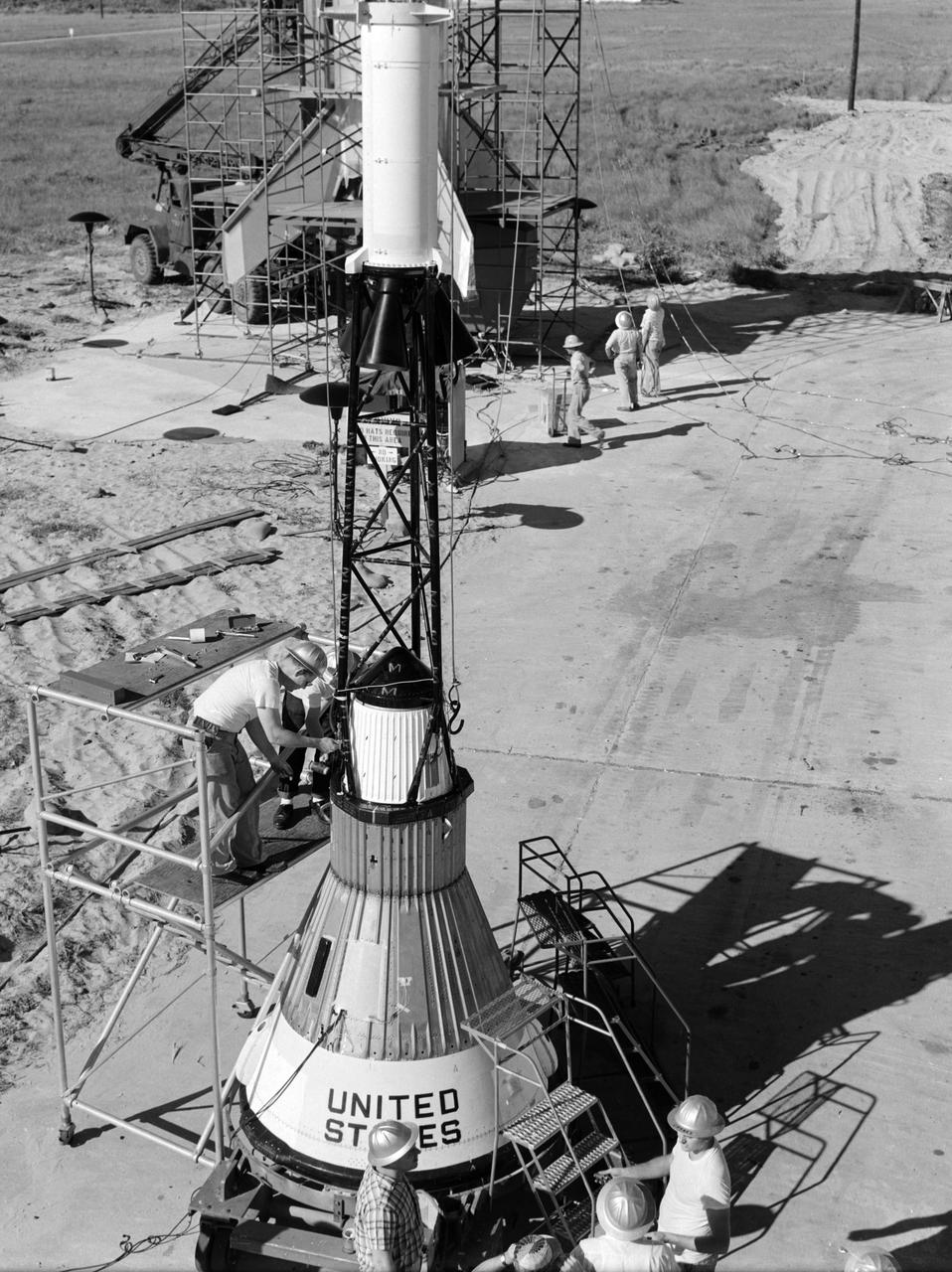
Technicians attach the escape tower to the Mercury capsule prior to assembly with Little Joe launcher, August 20, 1959. Joseph Shortal describe this as follows (vol. 3., p. 33): The escape tower and rocket motors were taken from the Mercury capsule production. The tower is shown being attached to the capsule.... The escape rocket was a Grand Central 1-KS-52000 motor with three canted nozzles. The tower-jettison motor was an Atlantic Research Corp. 1.4-KS-785 motor. This was the same design tested in a beach abort test...and had the offset thrust line as used in the beach abort test to insure that the capsule would get away from the booster in an emergency. The escape system weighed 1,015 pounds, including 236 pounds of ballast for stability. The Little Joe booster was assembled at Wallops on its special launcher in a vertical attitude. It is shown in the on the left with the work platform in place. The launcher was located on a special concrete slab in Launching Area 1. The capsule was lowered onto the booster by crane.... After the assembly was completed, the scaffolding was disassembled and the launcher pitched over to its normal launch angle of 80 degrees.... Little Joe had a diameter of 80 inches and an overall length, including the capsule and escape tower of 48 feet. The total weight at launch was about 43,000 pounds. The overall span of the stabilizing fins was 21.3 feet. Although in comparison with the overall Mercury Project, Little Joe was a simple undertaking, the fact that an attempt was made to condense a normal two-year project into a 6-month one with in house labor turned it into a major undertaking for Langley. -- Published in Joseph A. Shortal, History of Wallops Station: Origins and Activities Through 1949, (Wallops Island, VA: National Aeronautics and Space Administration, Wallops Station, nd), Comment Edition.
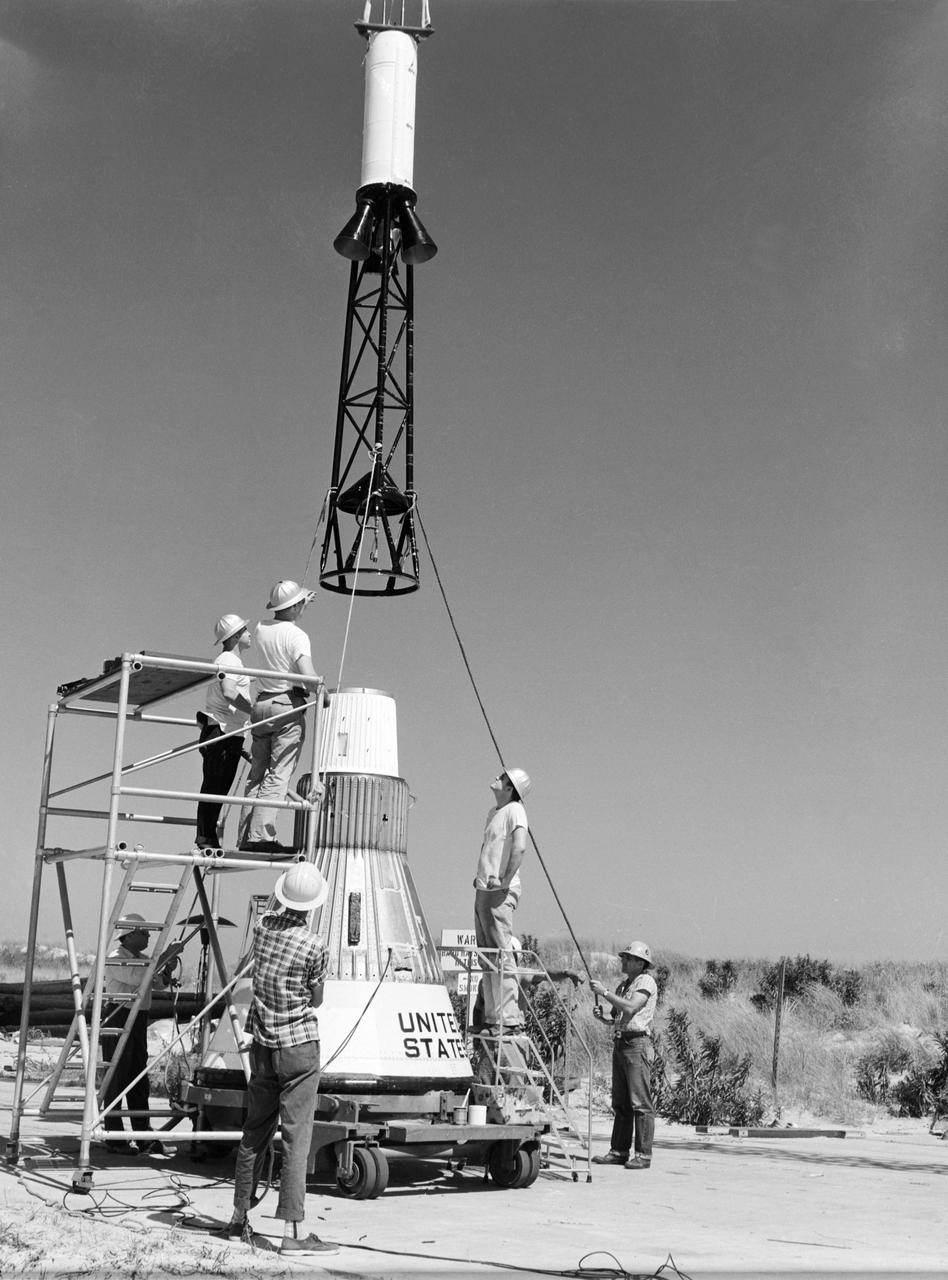
Technicians attach the escape tower to the Mercury capsule prior to assembly with Little Joe launcher, August 20, 1959. Joseph Shortal describe this as follows (vol. 3., p. 33): The escape tower and rocket motors were taken from the Mercury capsule production. The tower is shown being attached to the capsule.... The escape rocket was a Grand Central 1-KS-52000 motor with three canted nozzles. The tower-jettison motor was an Atlantic Research Corp. 1.4-KS-785 motor. This was the same design tested in a beach abort test...and had the offset thrust line as used in the beach abort test to insure that the capsule would get away from the booster in an emergency. The escape system weighed 1,015 pounds, including 236 pounds of ballast for stability. The Little Joe booster was assembled at Wallops on its special launcher in a vertical attitude. It is shown in the on the left with the work platform in place. The launcher was located on a special concrete slab in Launching Area 1. The capsule was lowered onto the booster by crane.... After the assembly was completed, the scaffolding was disassembled and the launcher pitched over to its normal launch angle of 80 degrees.... Little Joe had a diameter of 80 inches and an overall length, including the capsule and escape tower of 48 feet. The total weight at launch was about 43,000 pounds. The overall span of the stabilizing fins was 21.3 feet. Although in comparison with the overall Mercury Project, Little Joe was a simple undertaking, the fact that an attempt was made to condense a normal two-year project into a 6-month one with in house labor turned it into a major undertaking for Langley. -- Published in Joseph A. Shortal, History of Wallops Station: Origins and Activities Through 1949, (Wallops Island, VA: National Aeronautics and Space Administration, Wallops Station, nd), Comment Edition.
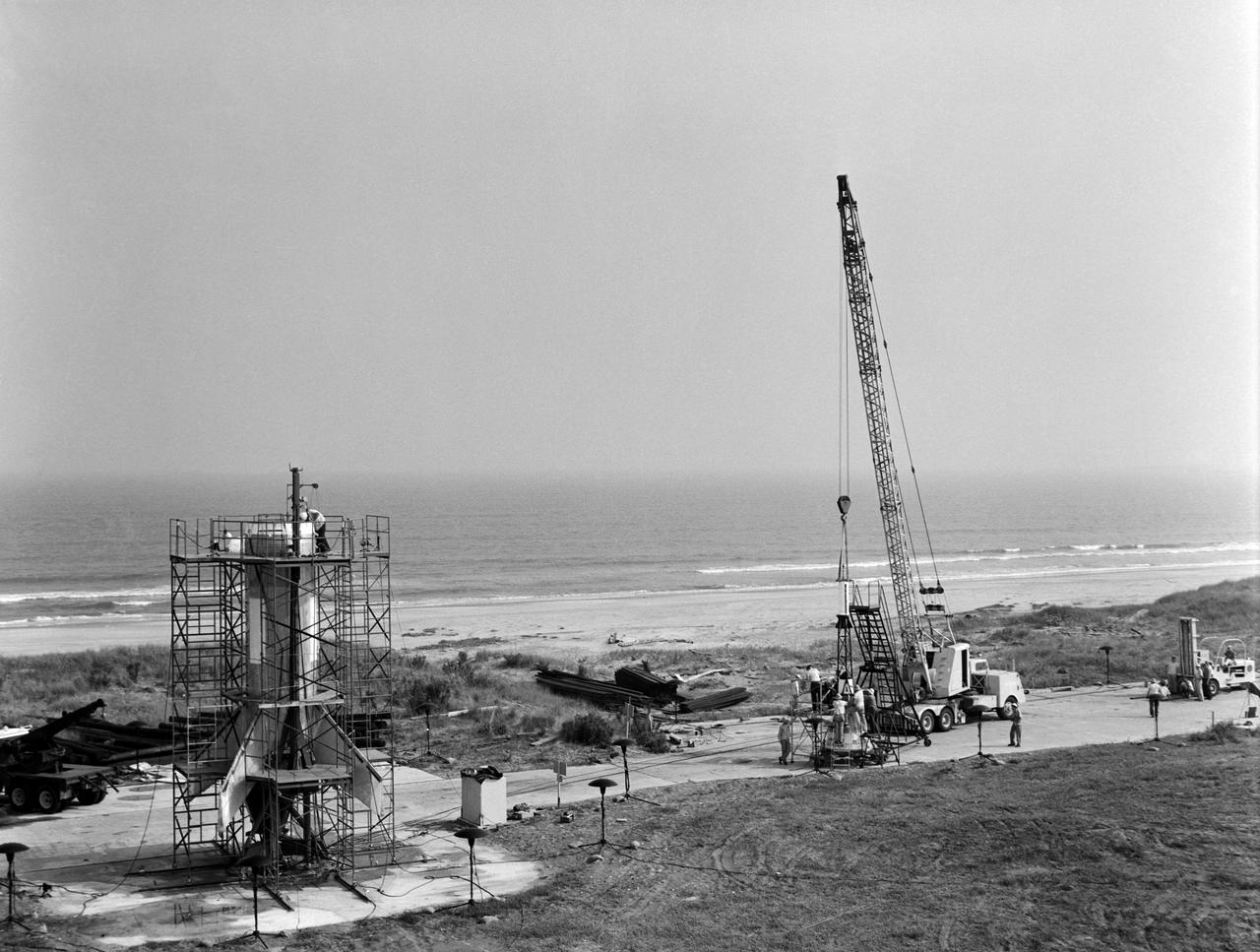
Technicians attach the escape tower to the Mercury capsule prior to assembly with Little Joe launcher, August 20, 1959. Joseph Shortal describe this as follows (vol. 3., p. 33): The escape tower and rocket motors were taken from the Mercury capsule production. The tower is shown being attached to the capsule.... The escape rocket was a Grand Central 1-KS-52000 motor with three canted nozzles. The tower-jettison motor was an Atlantic Research Corp. 1.4-KS-785 motor. This was the same design tested in a beach abort test...and had the offset thrust line as used in the beach abort test to insure that the capsule would get away from the booster in an emergency. The escape system weighed 1,015 pounds, including 236 pounds of ballast for stability. The Little Joe booster was assembled at Wallops on its special launcher in a vertical attitude. It is shown in the on the left with the work platform in place. The launcher was located on a special concrete slab in Launching Area 1. The capsule was lowered onto the booster by crane.... After the assembly was completed, the scaffolding was disassembled and the launcher pitched over to its normal launch angle of 80 degrees.... Little Joe had a diameter of 80 inches and an overall length, including the capsule and escape tower of 48 feet. The total weight at launch was about 43,000 pounds. The overall span of the stabilizing fins was 21.3 feet. Although in comparison with the overall Mercury Project, Little Joe was a simple undertaking, the fact that an attempt was made to condense a normal two-year project into a 6-month one with in house labor turned it into a major undertaking for Langley. -- Published in Joseph A. Shortal, History of Wallops Station: Origins and Activities Through 1949, (Wallops Island, VA: National Aeronautics and Space Administration, Wallops Station, nd), Comment Edition.
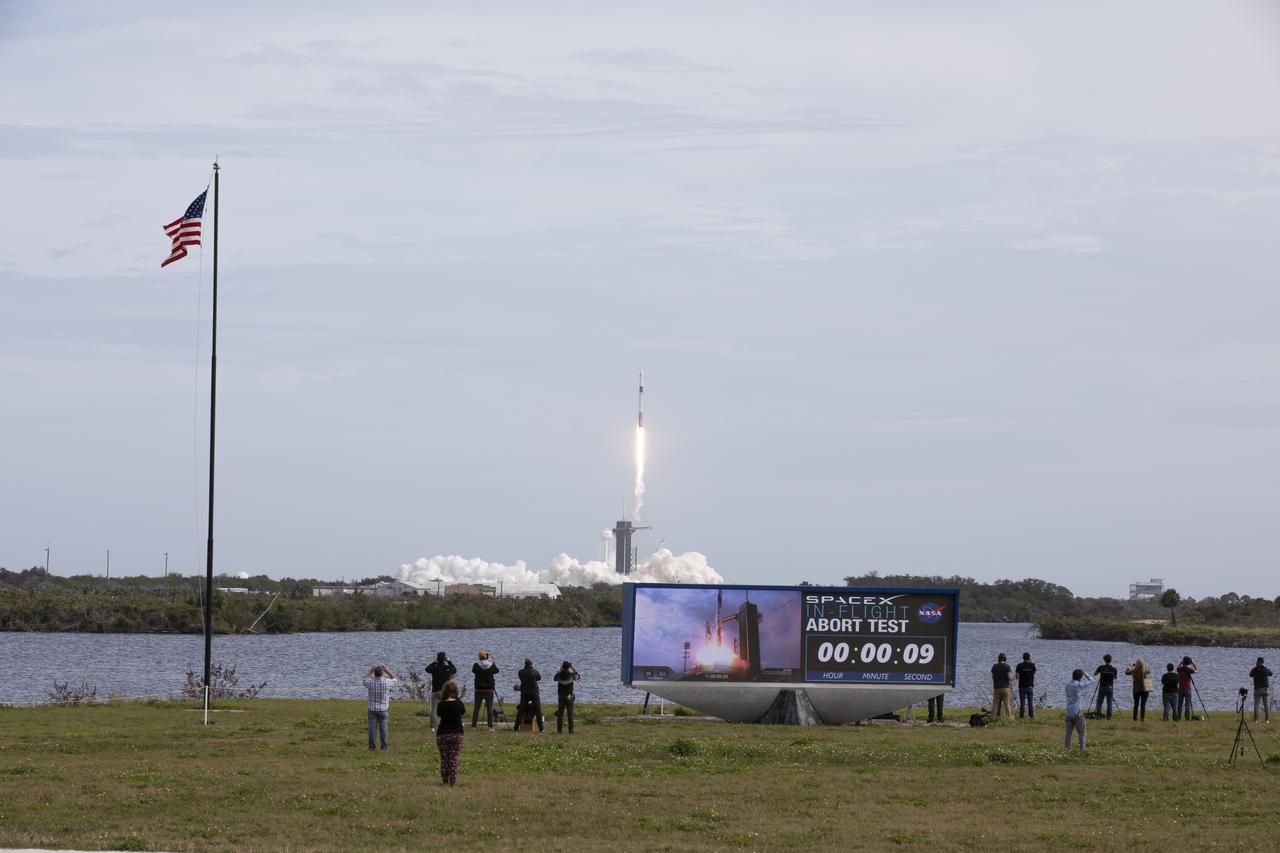
The countdown clock at NASA’s Kennedy Space Center in Florida shows an elapsed time of nine seconds as the SpaceX Falcon 9 rocket lifts off from Launch Complex 39A on the uncrewed In-Flight Abort Test, Jan. 19, 2020. The rocket carried the company’s Crew Dragon on a flight test that demonstrated the spacecraft’s escape capabilities in preparation for crewed flights to the International Space Station as part of the agency’s Commercial Crew Program.
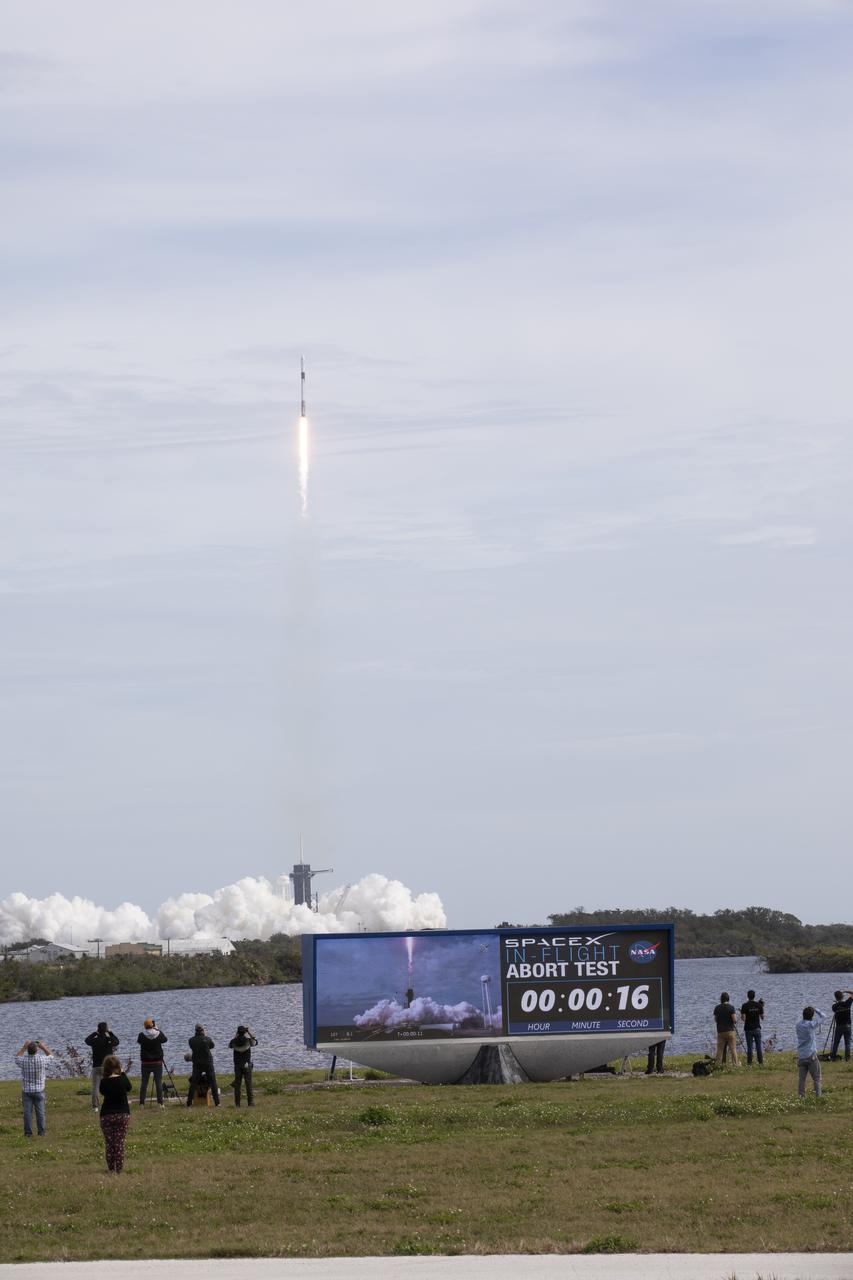
The countdown clock at NASA’s Kennedy Space Center in Florida shows an elapsed time of 16 seconds as the SpaceX Falcon 9 rocket lifts off from Launch Complex 39A on the uncrewed In-Flight Abort Test, Jan. 19, 2020. The rocket carried the company’s Crew Dragon on a flight test that demonstrated the spacecraft’s escape capabilities in preparation for crewed flights to the International Space Station as part of the agency’s Commercial Crew Program.
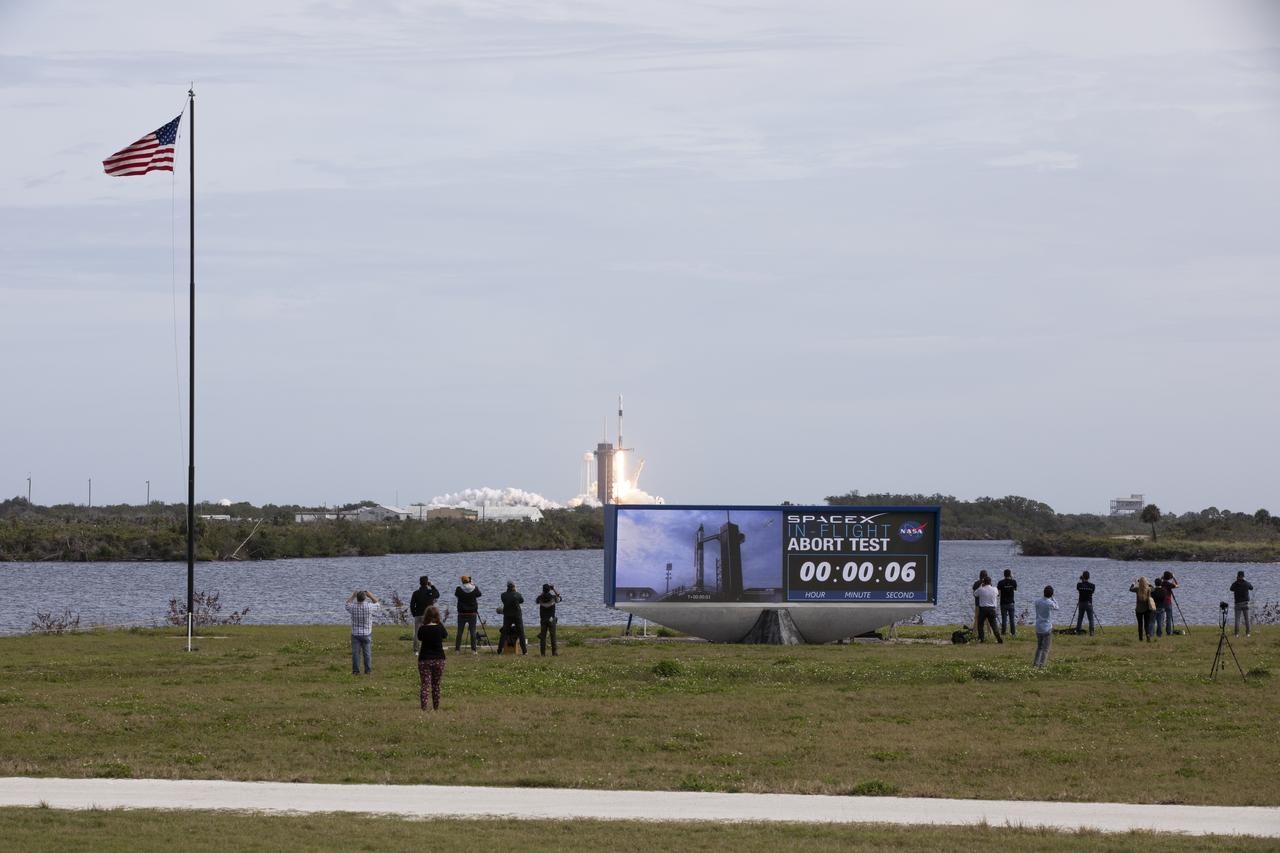
The countdown clock at NASA’s Kennedy Space Center in Florida shows an elapsed time of six seconds as the SpaceX Falcon 9 rocket lifts off from Launch Complex 39A on the uncrewed In-Flight Abort Test, Jan. 19, 2020. The rocket carried the company’s Crew Dragon on a flight test that demonstrated the spacecraft’s escape capabilities in preparation for crewed flights to the International Space Station as part of the agency’s Commercial Crew Program.
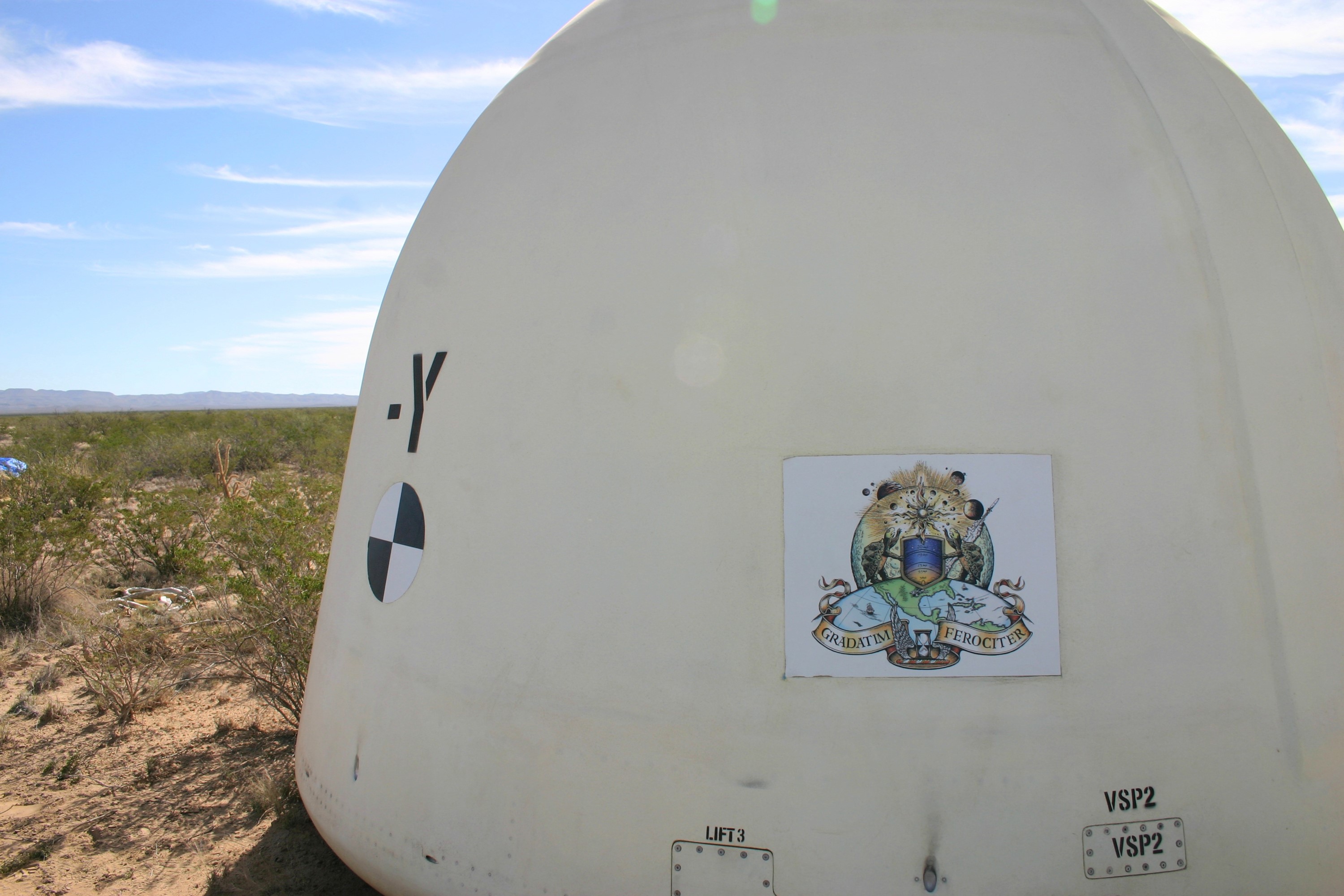
VAN HORN, Texas – Blue Origin’s New Shepard crew capsule touched down 1,630 feet from the its simulated propulsion module launch pad at the company's West Texas launch site, completing a successful test of its New Shepard crew capsule escape system. The pusher escape system was designed and developed by Blue Origin to allow crew escape in the event of an emergency during any phase of ascent for its suborbital New Shepard system. As part of an incremental development program, the results of this test will shape the design of the escape system for the company's orbital biconic-shaped Space Vehicle. The system is expected to enable full reusability of the launch vehicle, which is different from NASA's previous launch escape systems that would pull a spacecraft away from its rocket before reaching orbit. The test was part of Blue Origin's work supporting its funded Space Act Agreement with NASA during Commercial Crew Development Round 2 CCDev2). Through initiatives like CCDev2, NASA is fostering the development of a U.S. commercial crew space transportation capability with the goal of achieving safe, reliable and cost-effective access to and from the International Space Station and low-Earth orbit. After the capability is matured and available to the government and other customers, NASA could contract to purchase commercial services to meet its station crew transportation needs. For more information, visit www.nasa.gov/commercialcrew. Image credit: Blue Origin
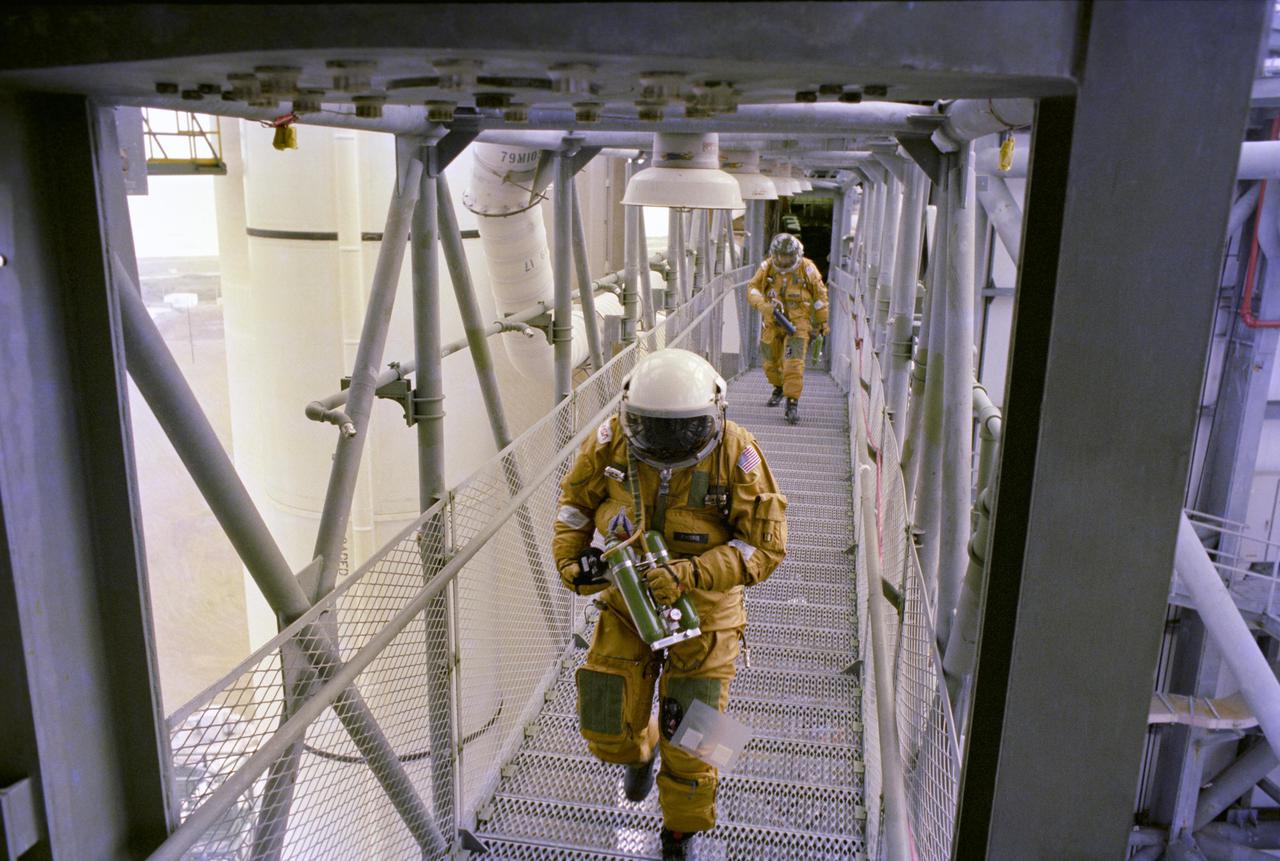
KENNEDY SPACE CENTER, FLA. - On the Fixed Service Structure on Launch Complex 39A, space shuttle prime and backup astronaut crews plus other astronauts and ground personnel are given training on the use of the emergency pad escape system known as the “slidewire”. The slidewire system provides a quick escape from upper launch pad platforms in case of a serious emergency. The flight crews wear the spacesuits and other equipment to be worn during a mission, but sandbags are used to duplicate the weight of riders in the slidewire baskets during the training. The STS-1 mission, known as a shuttle systems test flight, will seek to demonstrate safe launch into orbit and safe return of the orbiter and crew and verify the combined performance of the entire shuttle vehicle -- orbiter, solid rocket boosters and external tank. STS-1 will be launched from Pad A at the Kennedy Space Center's Launch Complex 39 no earlier than March 1981.

Kathy Lueders, manager of NASA’s Commercial Crew Program, participates in a briefing at the agency’s Kennedy Space Center in Florida on Jan. 17, 2020, prior to launch of SpaceX’s uncrewed In-Flight Abort Test. A SpaceX Falcon 9 rocket topped by the company’s Crew Dragon spacecraft will lift off from Kennedy’s Launch Complex 39A, then begin the launch-abort sequence. The spacecraft will demonstrate its escape capabilities in preparation for crewed flights to the International Space Station as part of the agency’s Commercial Crew Program.
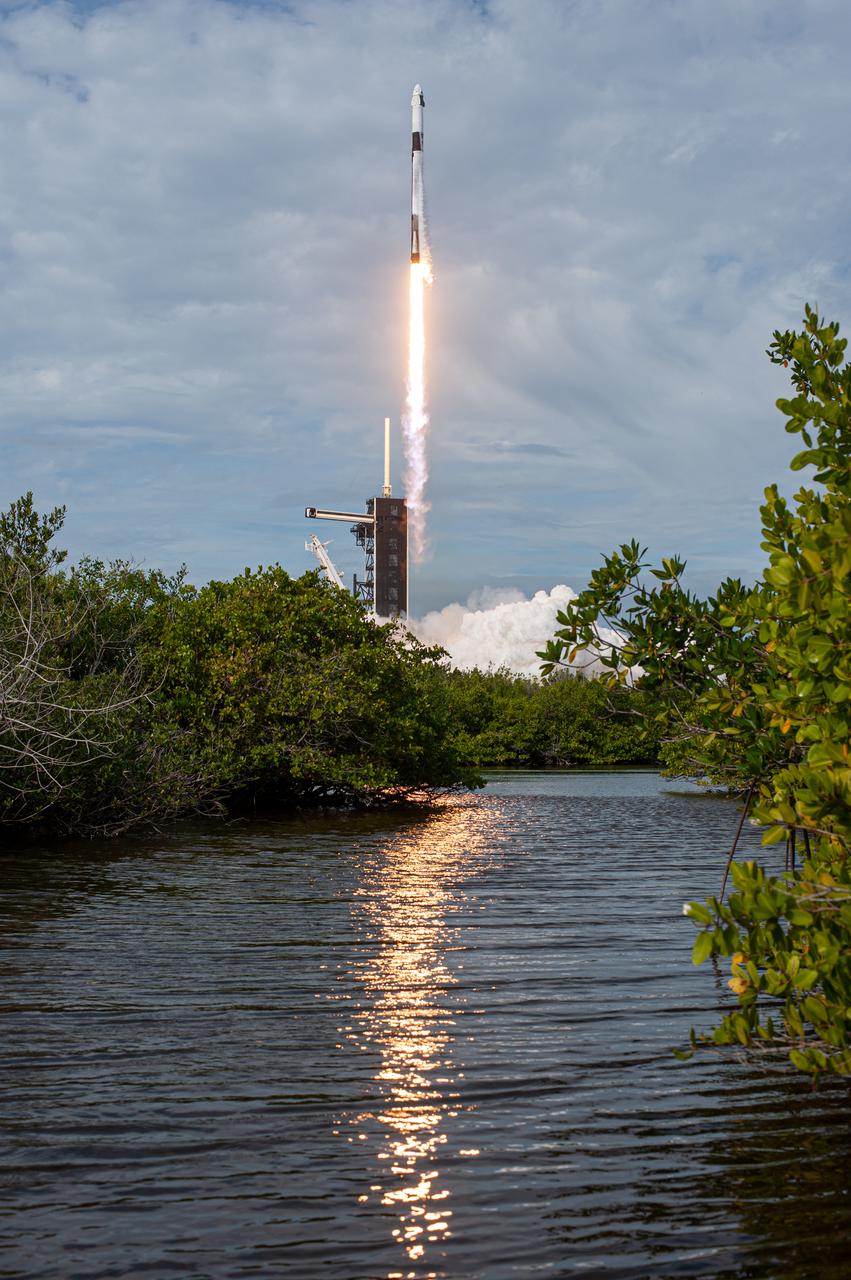
A SpaceX Falcon 9 rocket lifts off from Launch Complex 39A at NASA’s Kennedy Space Center in Florida at 10:30 a.m. EST on Jan. 19, 2020, carrying the Crew Dragon spacecraft on the company’s uncrewed In-Flight Abort Test. The flight test demonstrated the spacecraft’s escape capabilities in preparation for crewed flights to the International Space Station as part of the agency’s Commercial Crew Program.
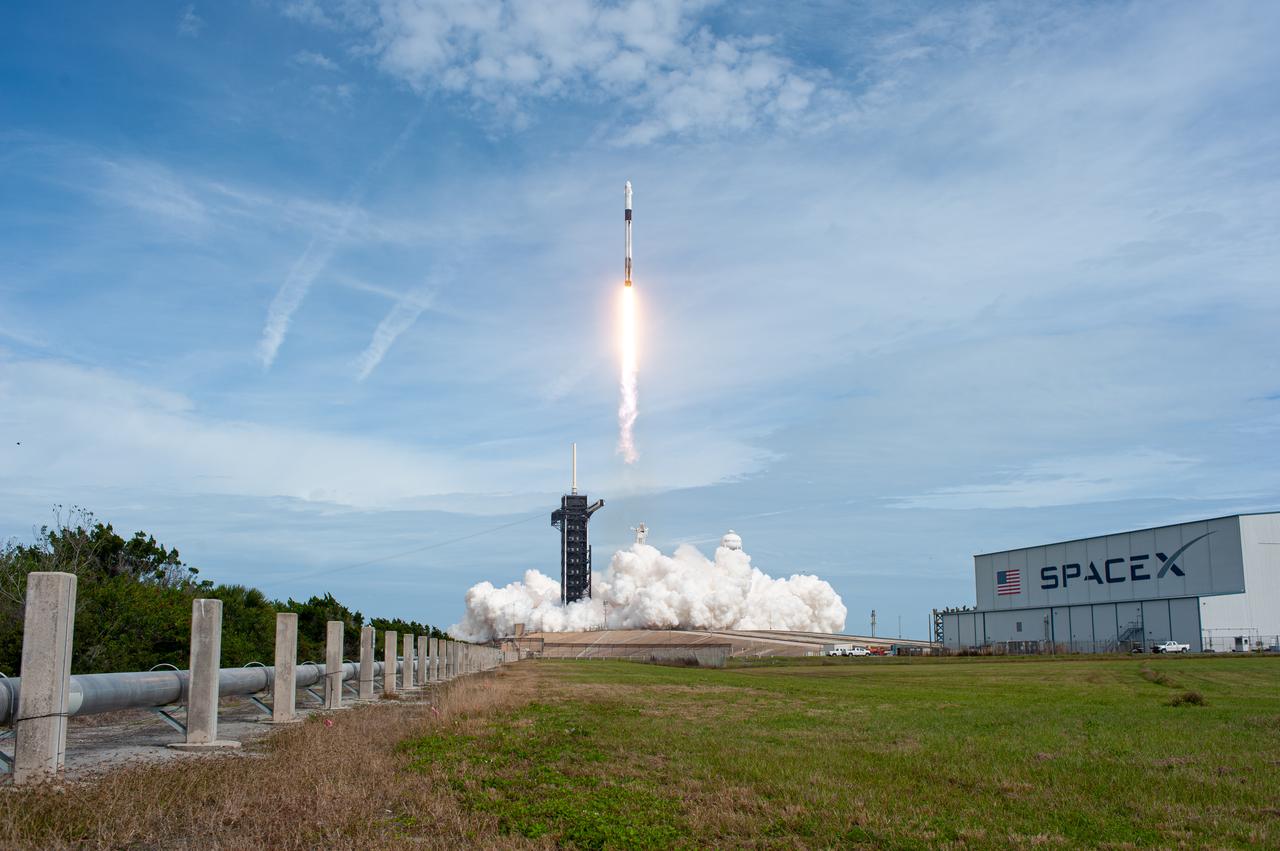
A SpaceX Falcon 9 rocket lifts off from Launch Complex 39A at NASA’s Kennedy Space Center in Florida at 10:30 a.m. EST on Jan. 19, 2020, carrying the Crew Dragon spacecraft on the company’s uncrewed In-Flight Abort Test. The flight test demonstrated the spacecraft’s escape capabilities in preparation for crewed flights to the International Space Station as part of the agency’s Commercial Crew Program.
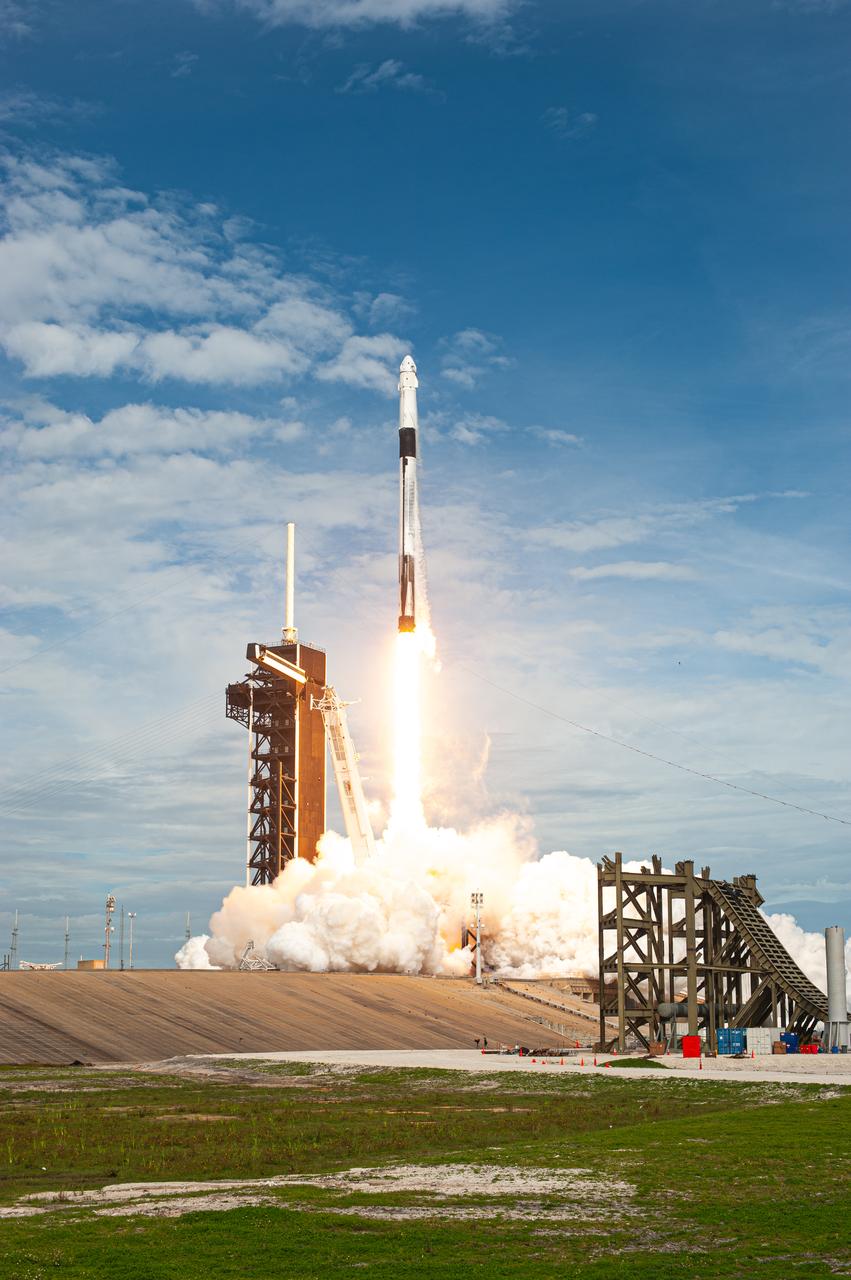
A SpaceX Falcon 9 rocket lifts off from Launch Complex 39A at NASA’s Kennedy Space Center in Florida at 10:30 a.m. EST on Jan. 19, 2020, carrying the Crew Dragon spacecraft on the company’s uncrewed In-Flight Abort Test. The flight test demonstrated the spacecraft’s escape capabilities in preparation for crewed flights to the International Space Station as part of the agency’s Commercial Crew Program.
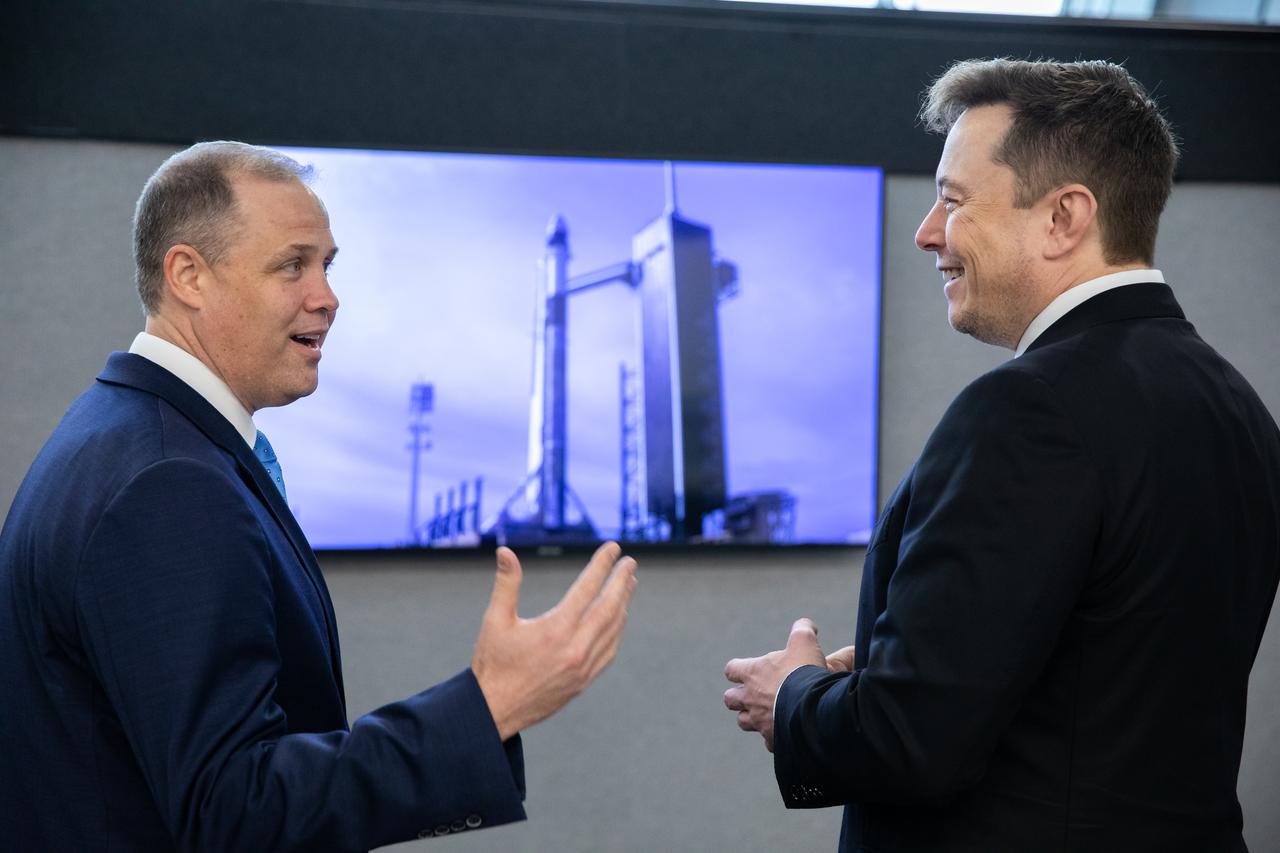
NASA Administrator Jim Bridenstine, left, and SpaceX Chief Engineer Elon Musk converse inside Firing Room 4 in Kennedy Space Center’s Launch Control Center while awaiting the liftoff of a SpaceX Falcon 9 rocket and Crew Dragon spacecraft on the uncrewed In-Flight Abort Test, Jan. 19, 2020. The test demonstrated the spacecraft’s escape capabilities in preparation for crewed flights to the International Space Station as part of the agency’s Commercial Crew Program.
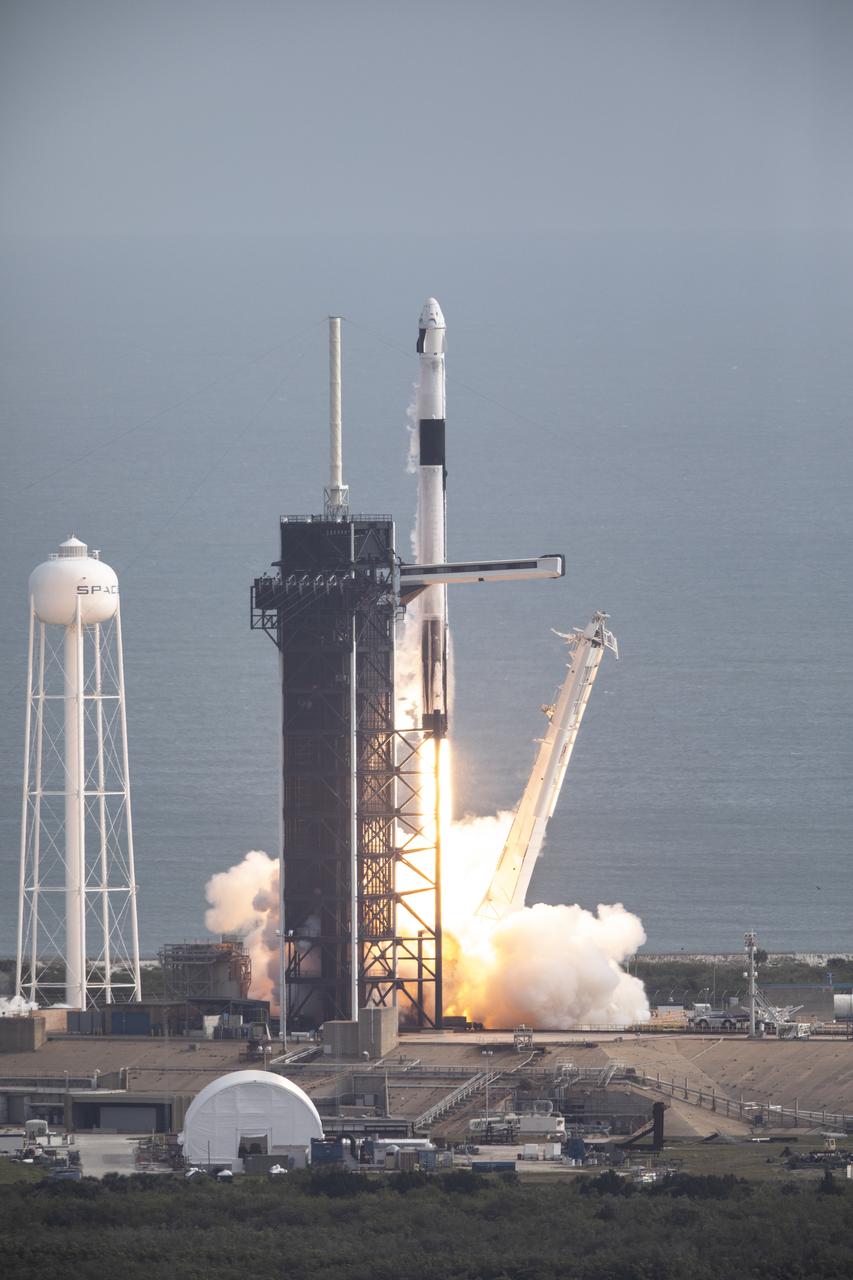
A SpaceX Falcon 9 rocket lifts off from Launch Complex 39A at NASA’s Kennedy Space Center in Florida at 10:30 a.m. EST on Jan. 19, 2020, carrying the Crew Dragon spacecraft on the company’s uncrewed In-Flight Abort Test. The flight test demonstrated the spacecraft’s escape capabilities in preparation for crewed flights to the International Space Station as part of the agency’s Commercial Crew Program.
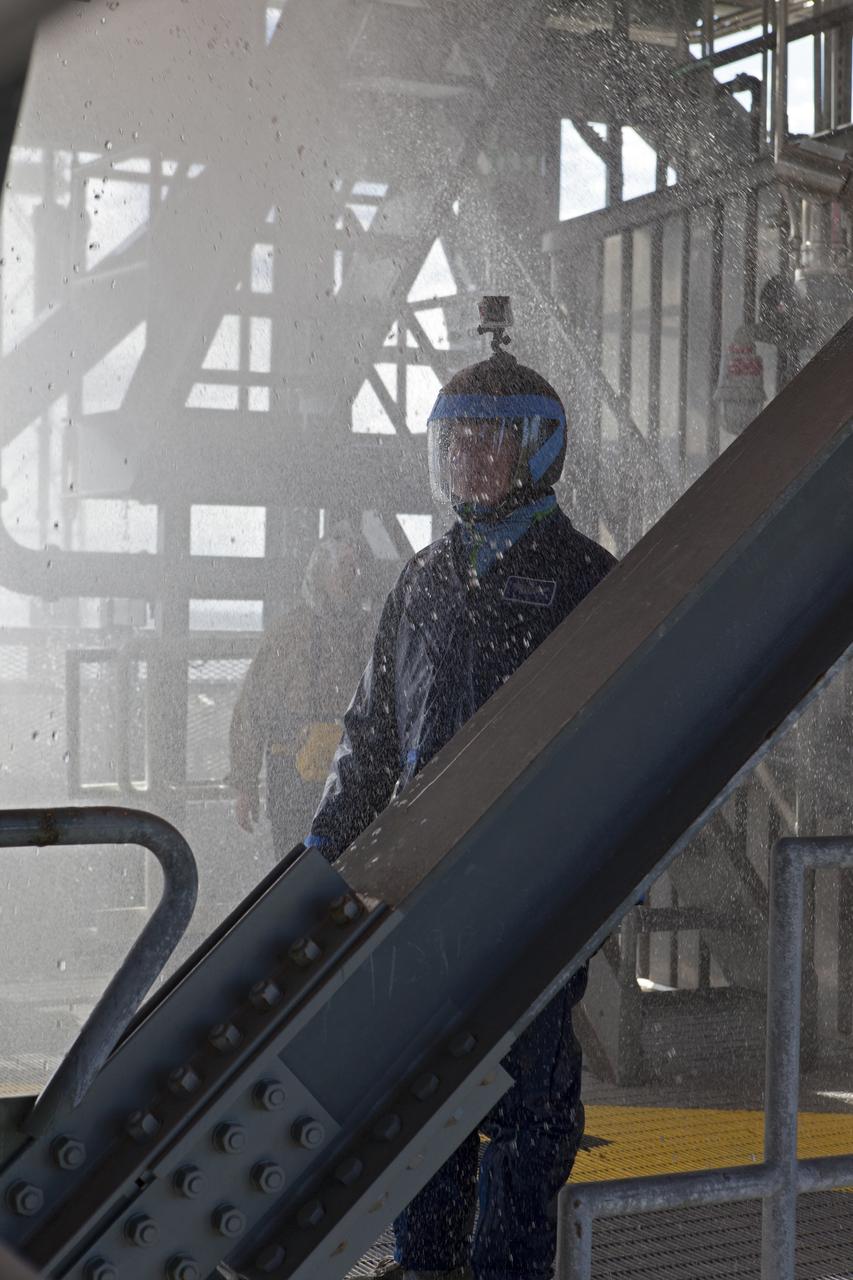
NASA and Boeing personnel experience conditions during a water deluge test on the Crew Access Tower at Space Launch Complex 41 on Cape Canaveral Air Force Station in Florida. The test gathered data on how launch site and astronaut crews would exit in the event of an emergency from the white room at the end of the crew access arm to the emergency escape system on the pad. Boeing’s Starliner will launch on a United Launch Alliance Atlas V rocket to the International Space Station as part of NASA’s Commercial Crew Program.
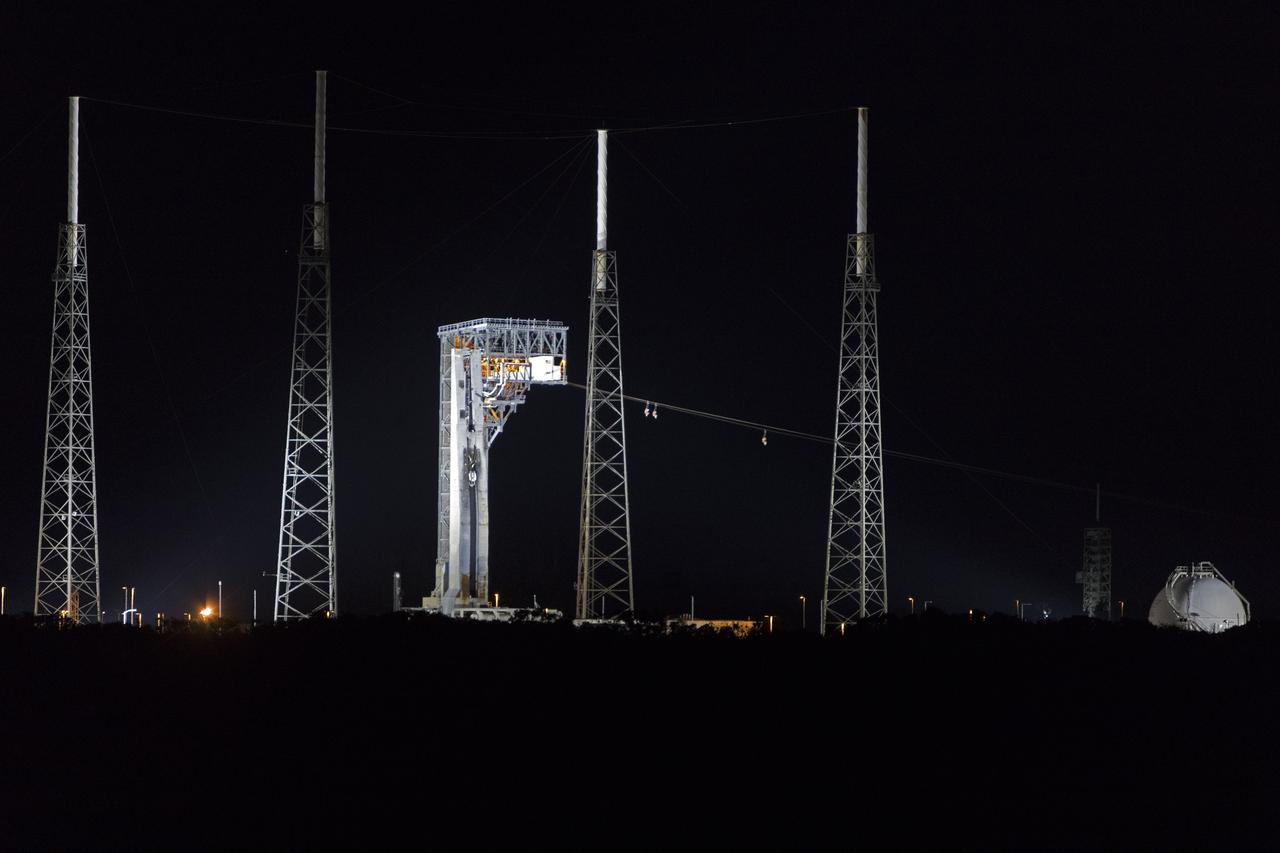
Commercial Crew astronauts test out the Boeing/United Launch Alliance (ULA) emergency egress system on June 19, 2018, at Cape Canaveral Air Force Station’s Launch Complex 41 in Florida. The emergency egress system provides an escape route in the unlikely event of an emergency prior to liftoff on launch day. It will be in place when Boeing’s CST-100 Starliner, launched aboard a ULA Atlas V rocket, carries astronauts to the International Space Station.
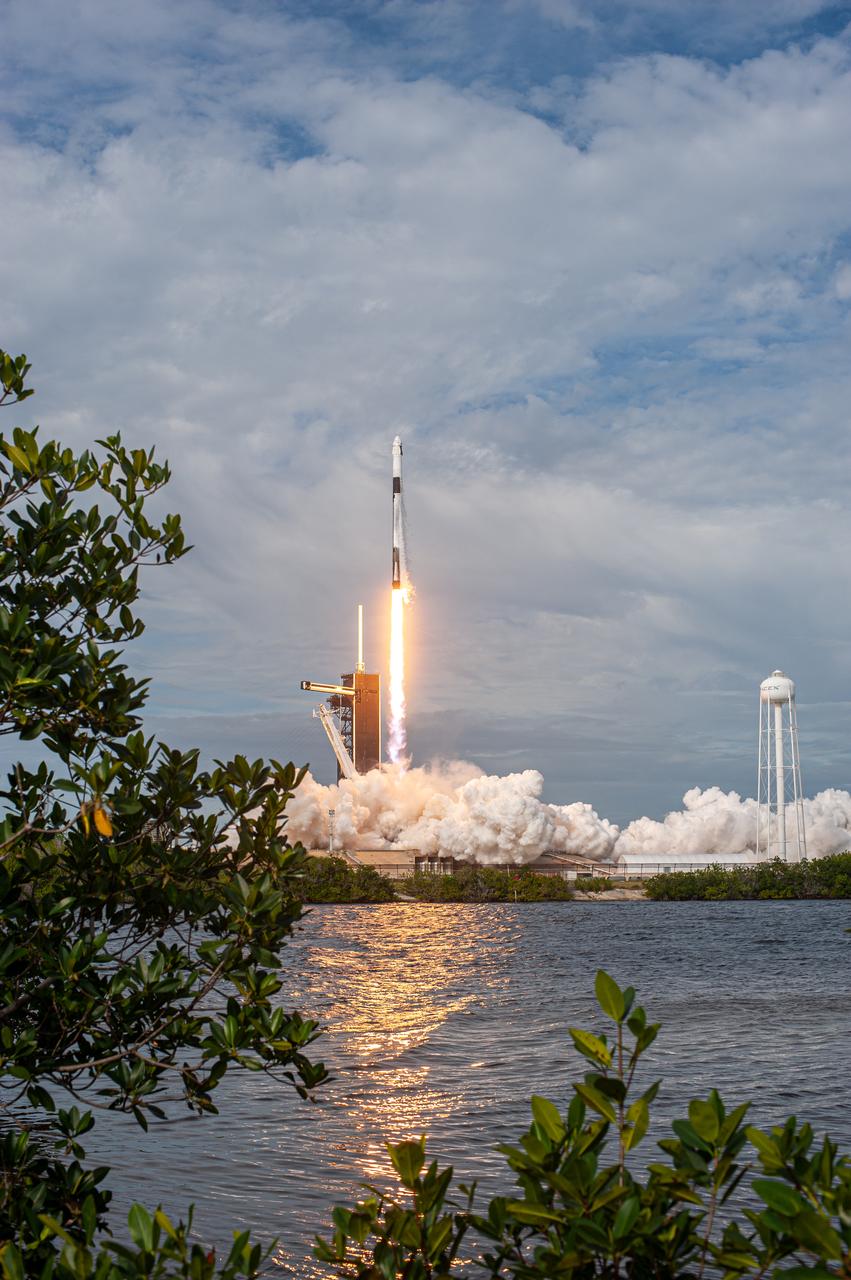
A SpaceX Falcon 9 rocket lifts off from Launch Complex 39A at NASA’s Kennedy Space Center in Florida at 10:30 a.m. EST on Jan. 19, 2020, carrying the Crew Dragon spacecraft on the company’s uncrewed In-Flight Abort Test. The flight test demonstrated the spacecraft’s escape capabilities in preparation for crewed flights to the International Space Station as part of the agency’s Commercial Crew Program.
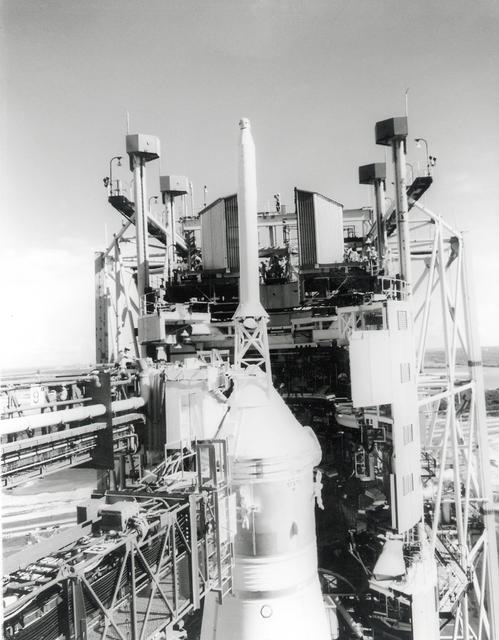
A technician can be seen working atop the white room across from the escape tower of the Apollo 11 spacecraft a few days prior to the launch of the Saturn V moon rocket. The towering 363-foot Saturn V was a multi-stage, multi-engine launch vehicle standing taller than the Statue of Liberty. Altogether, the Saturn V engines produced as much power as 85 Hoover Dams
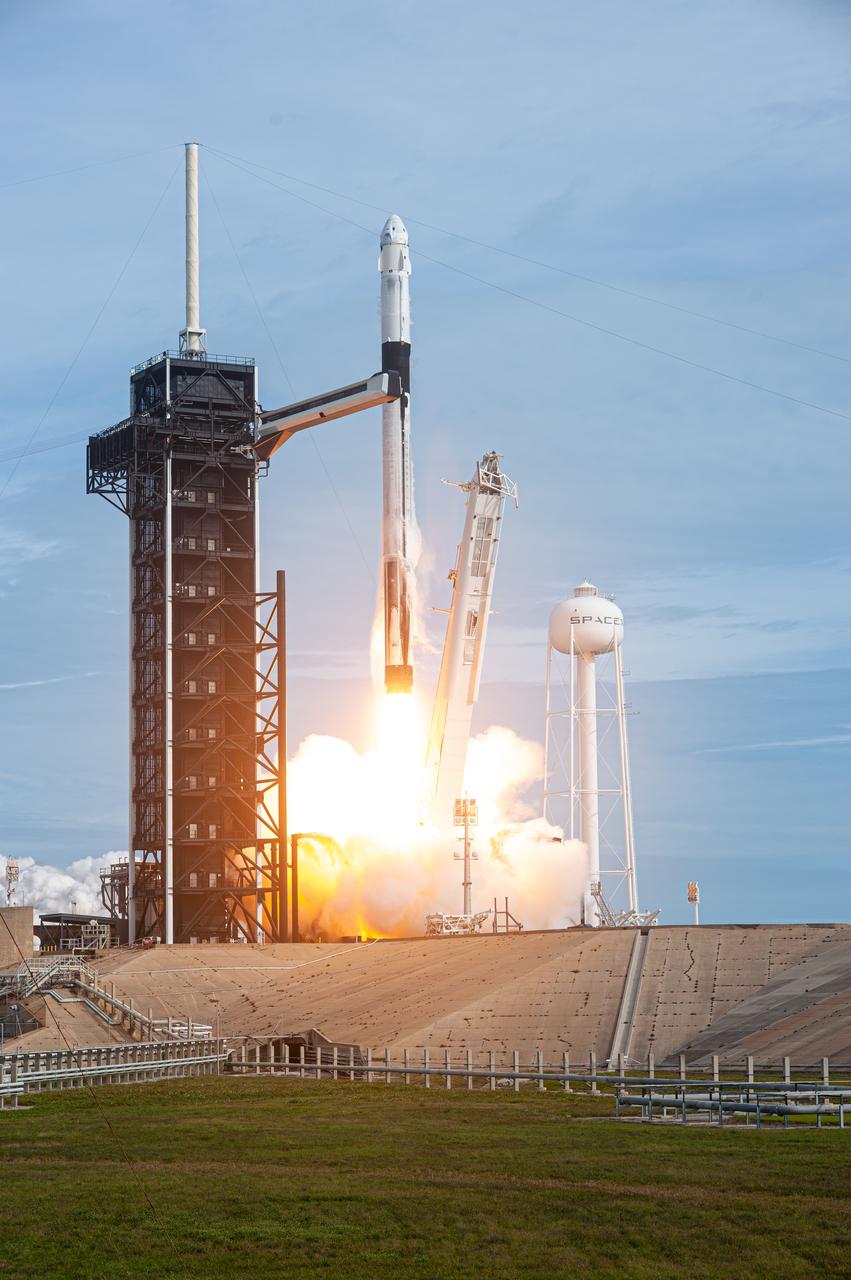
A SpaceX Falcon 9 rocket lifts off from Launch Complex 39A at NASA’s Kennedy Space Center in Florida at 10:30 a.m. EST on Jan. 19, 2020, carrying the Crew Dragon spacecraft on the company’s uncrewed In-Flight Abort Test. The flight test demonstrated the spacecraft’s escape capabilities in preparation for crewed flights to the International Space Station as part of the agency’s Commercial Crew Program.
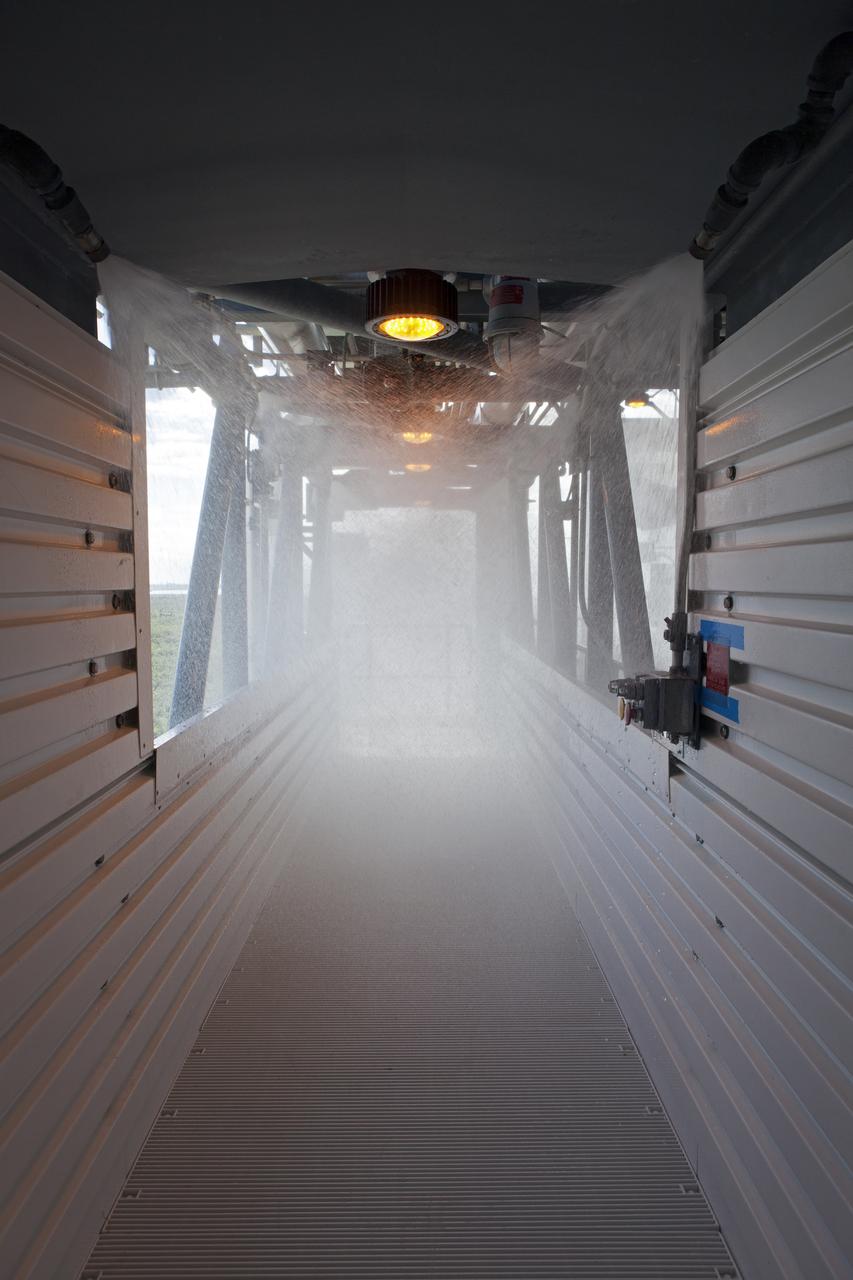
NASA, Boeing and United Launch Alliance personnel run a water deluge test on the Crew Access Tower at Space Launch Complex 41 on Cape Canaveral Air Force Station in Florida. The test gathered data on how launch site and astronaut crews would exit in the event of an emergency from the white room at the end of the crew access arm to the emergency escape system on the pad. Boeing’s Starliner will launch on a United Launch Alliance Atlas V rocket to the International Space Station as part of NASA’s Commercial Crew Program.
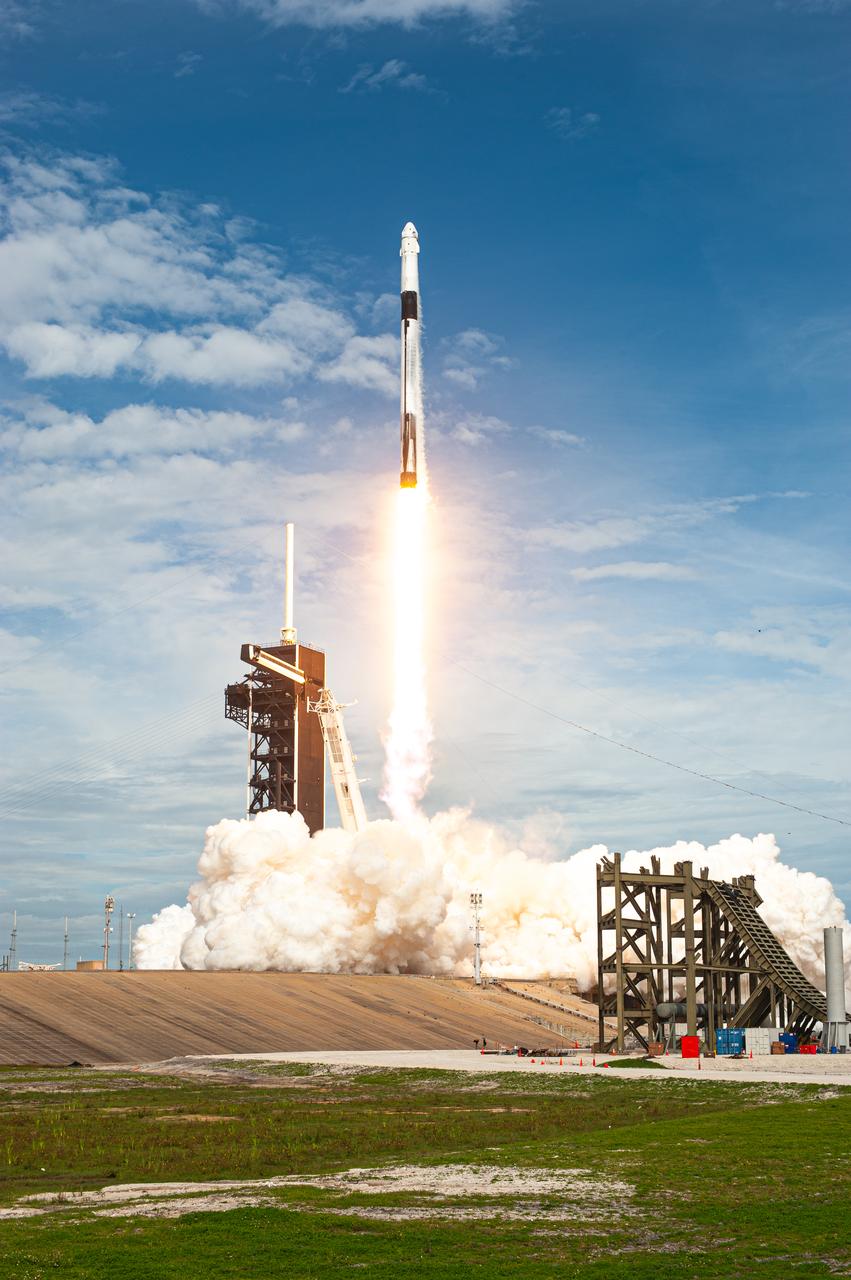
A SpaceX Falcon 9 rocket lifts off from Launch Complex 39A at NASA’s Kennedy Space Center in Florida at 10:30 a.m. EST on Jan. 19, 2020, carrying the Crew Dragon spacecraft on the company’s uncrewed In-Flight Abort Test. The flight test demonstrated the spacecraft’s escape capabilities in preparation for crewed flights to the International Space Station as part of the agency’s Commercial Crew Program.
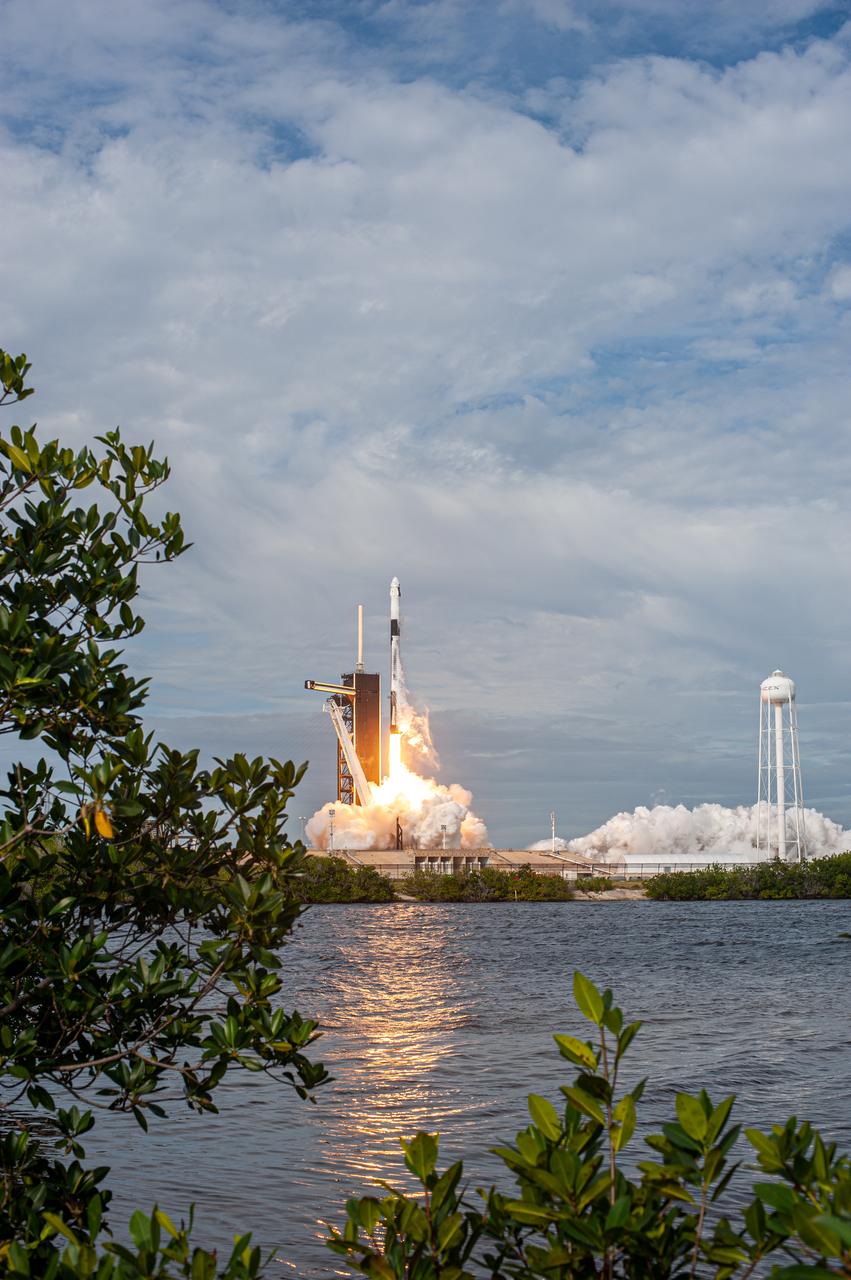
A SpaceX Falcon 9 rocket lifts off from Launch Complex 39A at NASA’s Kennedy Space Center in Florida at 10:30 a.m. EST on Jan. 19, 2020, carrying the Crew Dragon spacecraft on the company’s uncrewed In-Flight Abort Test. The flight test demonstrated the spacecraft’s escape capabilities in preparation for crewed flights to the International Space Station as part of the agency’s Commercial Crew Program.
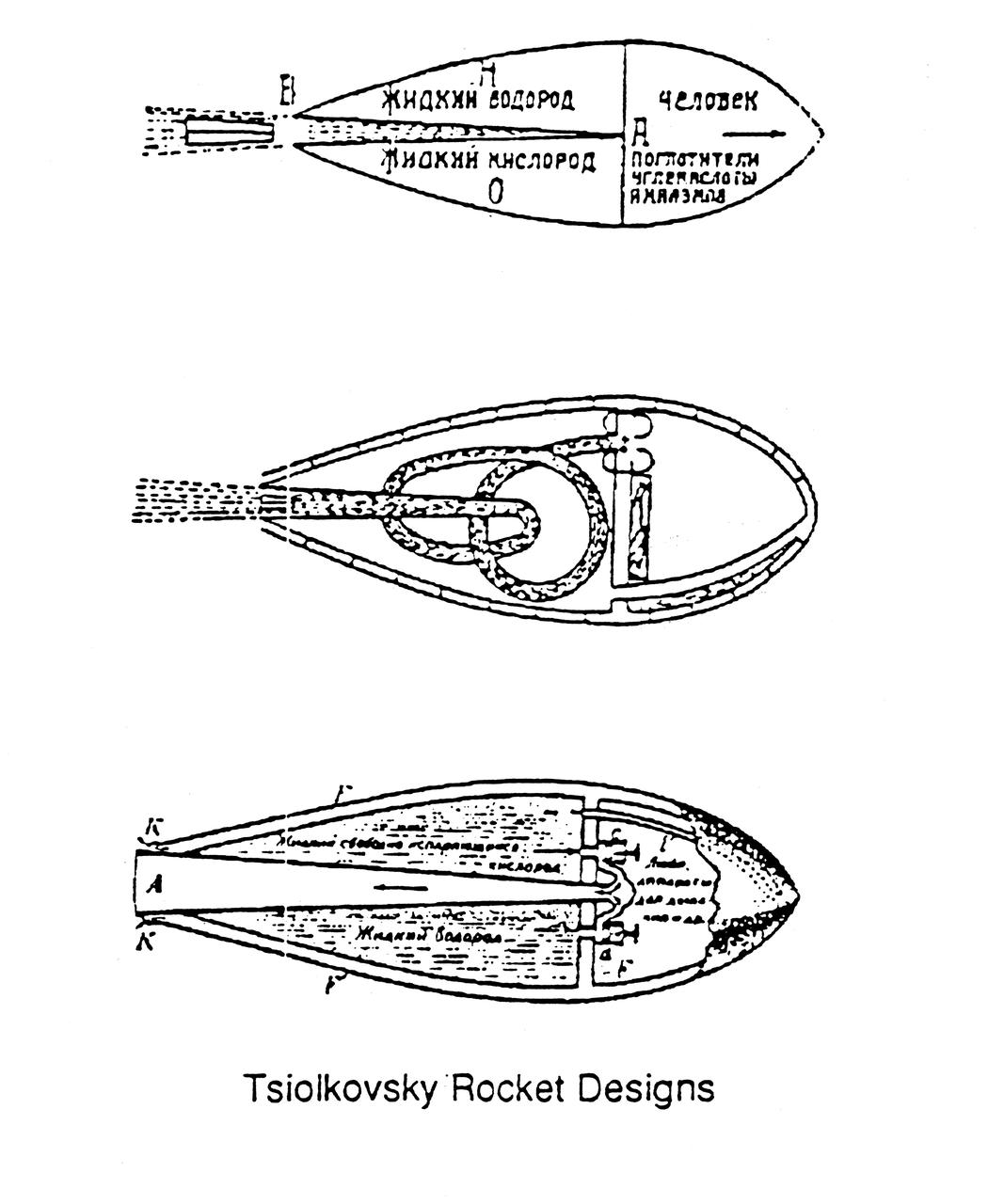
By the end of the 19th Century, a Russian theorist, Konstantian Tsiolkovsky, was examining the fundamental scientific theories behind rocketry. He made some pioneering studies in liquid chemical rocket concepts and recommended liquid oxygen and liquid hydrogen as the optimum propellants. In the 1920's, Tsiolkovsky analyzed and mathematically formulated the technique for staged vehicles to reach escape velocities from Earth.
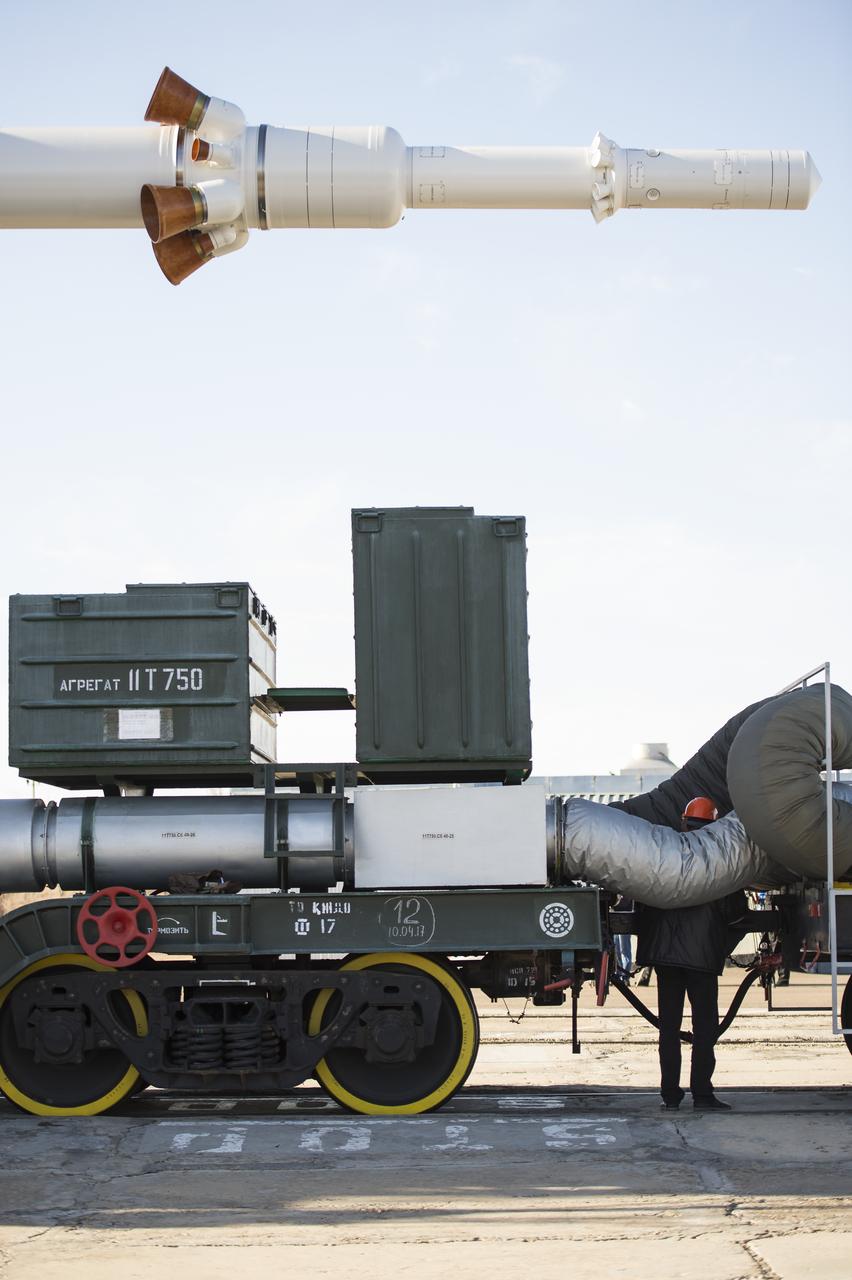
The escape tower is seen as workers prepare to raise the Soyuz MS-04 spacecraft into the vertical position on Monday, April 17, 2017 at the Baikonur Cosmodrome in Kazakhstan. Launch of the Soyuz rocket is scheduled for April 20 Baikonur time and will carry Expedition 51 Soyuz Commander Fyodor Yurchikhin of Roscosmos and Flight Engineer Jack Fischer of NASA into orbit to begin their four and a half month mission on the International Space Station. Photo Credit: (NASA/Aubrey Gemignani)
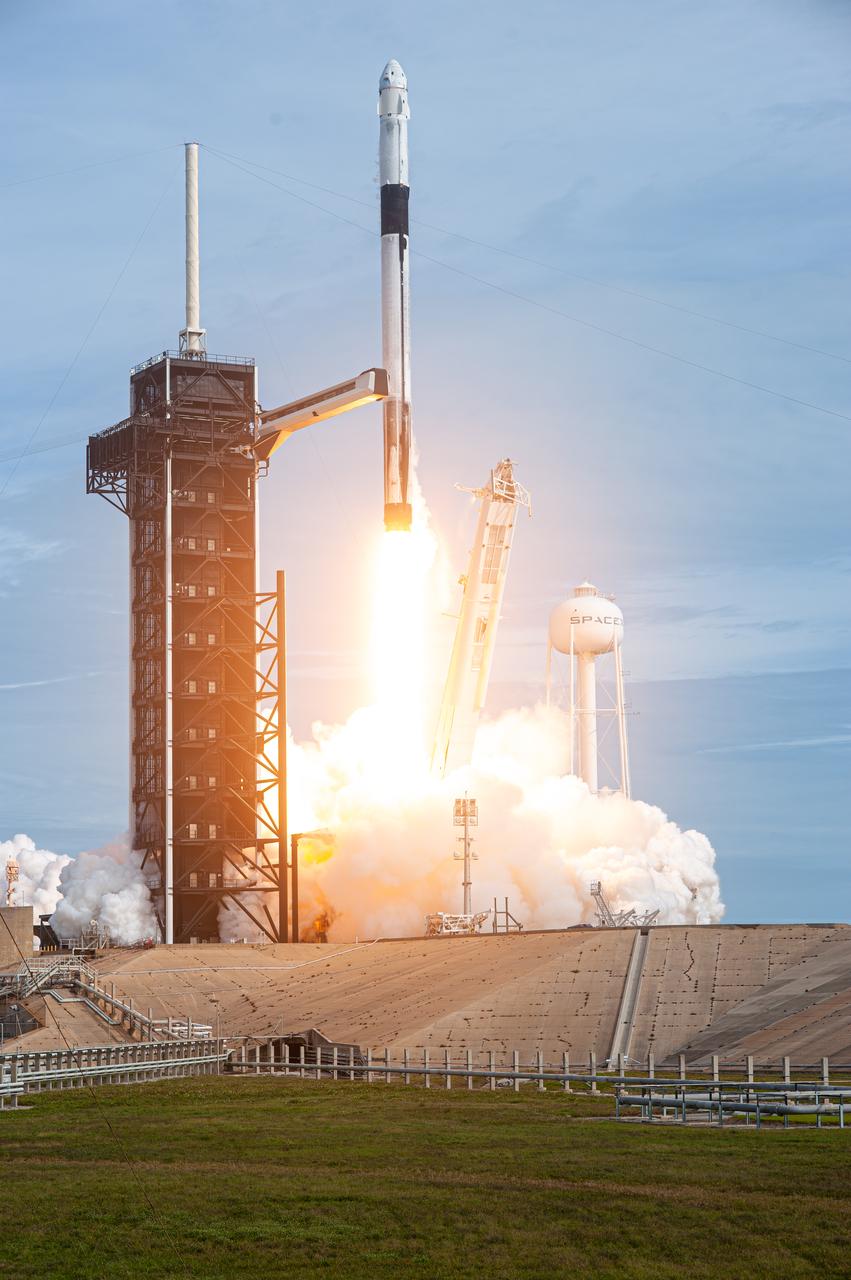
A SpaceX Falcon 9 rocket lifts off from Launch Complex 39A at NASA’s Kennedy Space Center in Florida at 10:30 a.m. EST on Jan. 19, 2020, carrying the Crew Dragon spacecraft on the company’s uncrewed In-Flight Abort Test. The flight test demonstrated the spacecraft’s escape capabilities in preparation for crewed flights to the International Space Station as part of the agency’s Commercial Crew Program.

A SpaceX Falcon 9 rocket lifts off from Launch Complex 39A at NASA’s Kennedy Space Center in Florida at 10:30 a.m. EST on Jan. 19, 2020, carrying the Crew Dragon spacecraft on the company’s uncrewed In-Flight Abort Test. The flight test demonstrated the spacecraft’s escape capabilities in preparation for crewed flights to the International Space Station as part of the agency’s Commercial Crew Program.
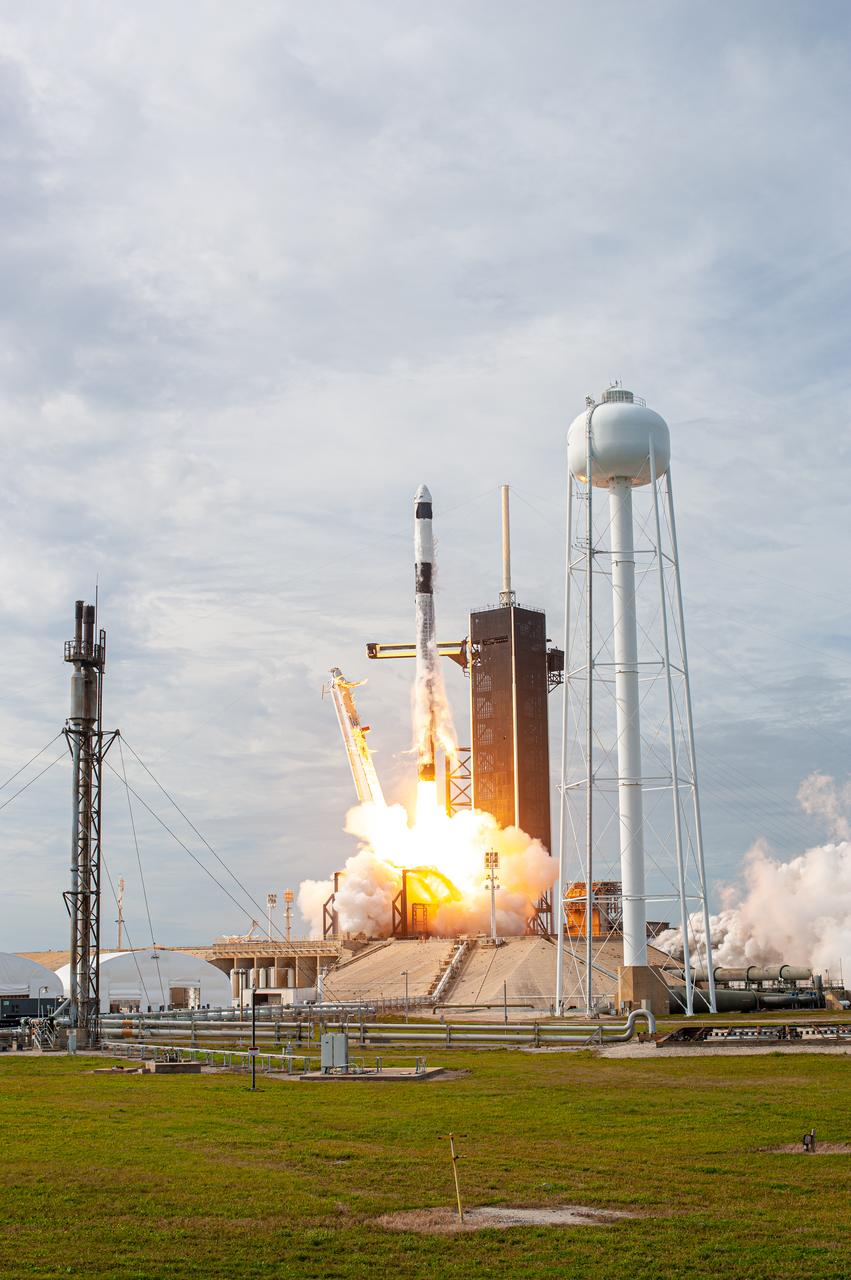
A SpaceX Falcon 9 rocket lifts off from Launch Complex 39A at NASA’s Kennedy Space Center in Florida at 10:30 a.m. EST on Jan. 19, 2020, carrying the Crew Dragon spacecraft on the company’s uncrewed In-Flight Abort Test. The flight test demonstrated the spacecraft’s escape capabilities in preparation for crewed flights to the International Space Station as part of the agency’s Commercial Crew Program.

The escape tower is seen waiting to be attached as the Soyuz rocket and Soyuz MS-02 spacecraft are assembled on Friday, Oct. 14, 2016 at the Baikonur Cosmodrome in Kazakhstan. Expedition 49 flight engineer Shane Kimbrough of NASA, Soyuz commander Sergey Ryzhikov of Roscosmos, and flight engineer Andrey Borisenko of Roscosmos are scheduled to launch from the Baikonur Cosmodrome in Kazakhstan on Oct. 19. Photo Credit: (NASA/Victor Zelentsov)
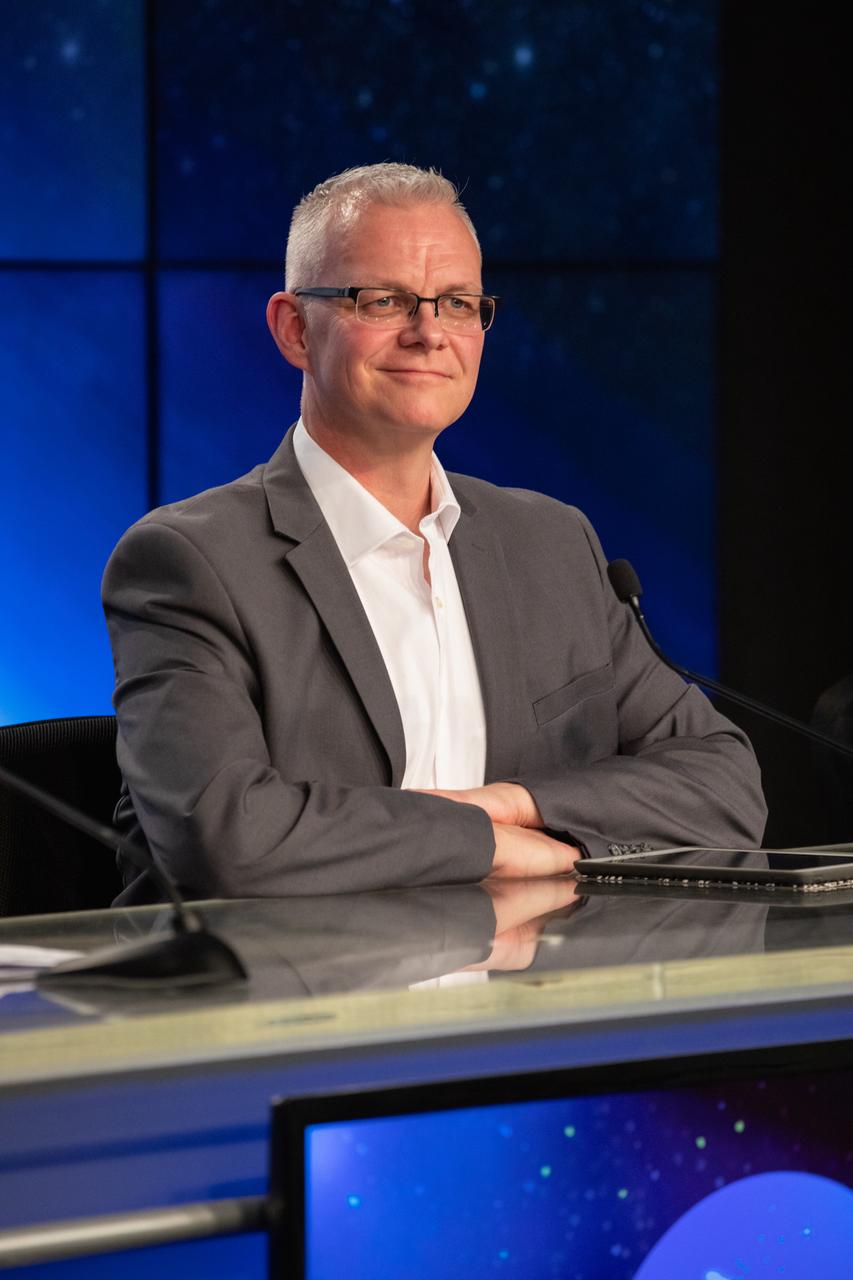
Benji Reed, director of Crew Mission Management for SpaceX, participates in a briefing at NASA’s Kennedy Space Center in Florida on Jan. 17, 2020, prior to launch of SpaceX’s uncrewed In-Flight Abort Test. A SpaceX Falcon 9 rocket topped by the company’s Crew Dragon spacecraft will lift off from Kennedy’s Launch Complex 39A, then begin the launch-abort sequence. The spacecraft will demonstrate its escape capabilities in preparation for crewed flights to the International Space Station as part of the agency’s Commercial Crew Program.
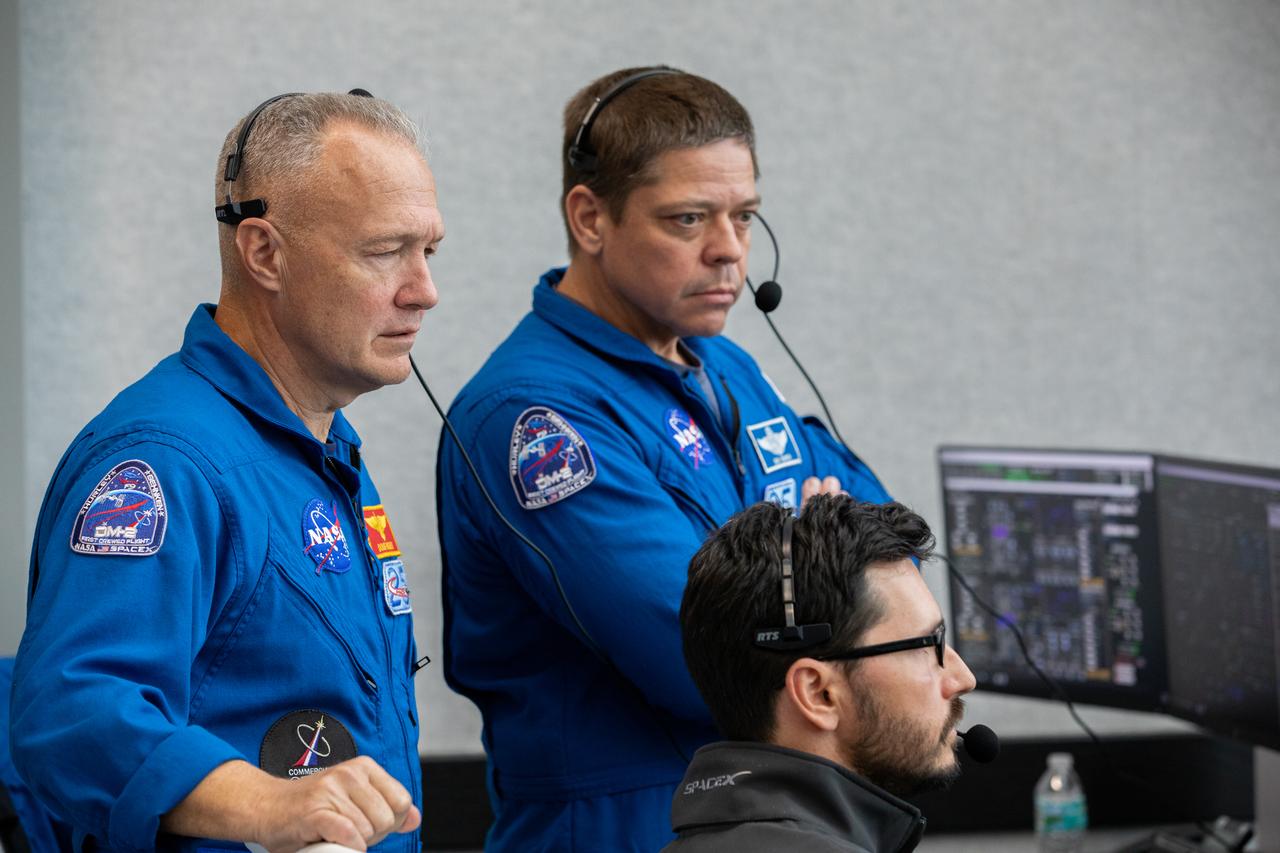
NASA astronauts Doug Hurley, left, and Bob Behnken watch the liftoff of a SpaceX Falcon 9 rocket and Crew Dragon spacecraft on the uncrewed In-Flight Abort Test, Jan. 19, 2020, inside Firing Room 4 in Kennedy Space Center’s Launch Control Center. The test demonstrated the spacecraft’s escape capabilities in preparation for crewed flights to the International Space Station as part of the agency’s Commercial Crew Program.
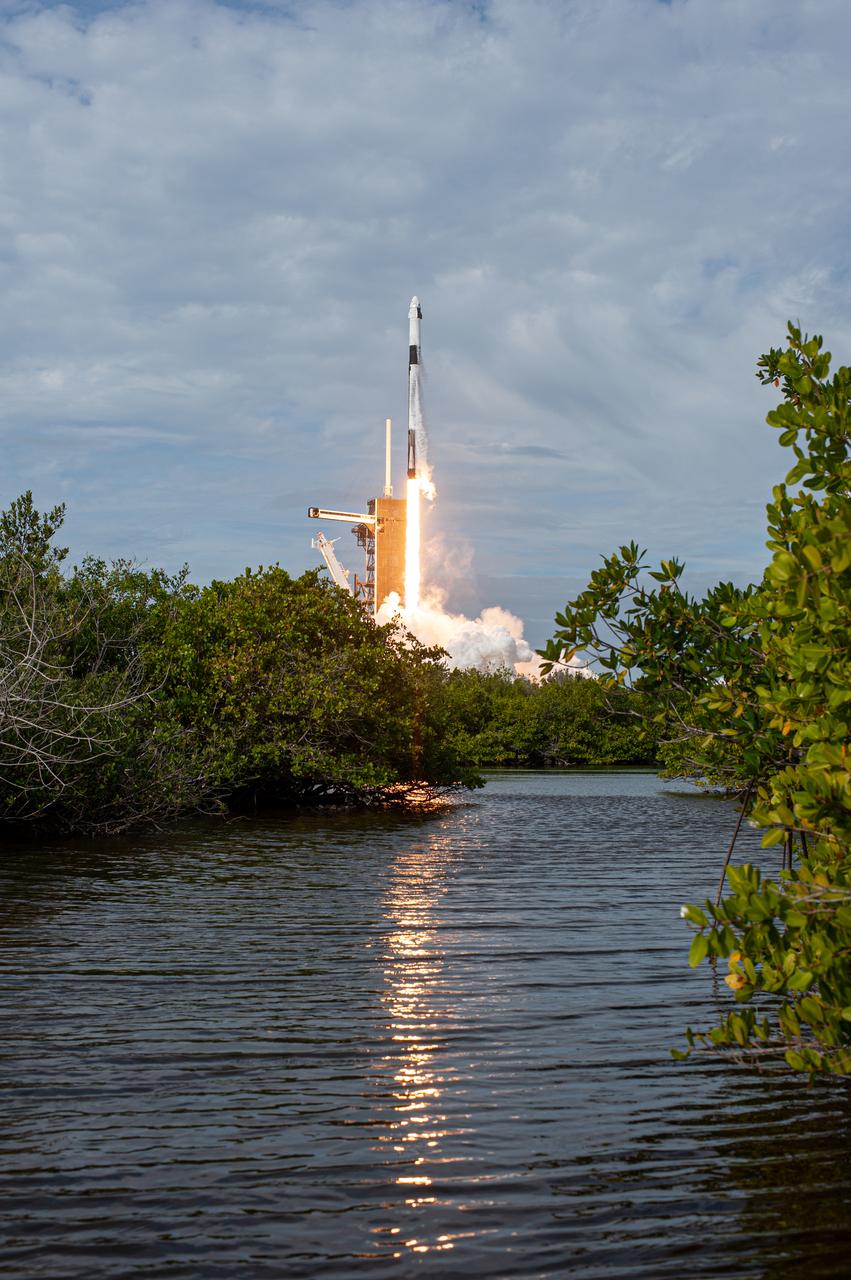
A SpaceX Falcon 9 rocket lifts off from Launch Complex 39A at NASA’s Kennedy Space Center in Florida at 10:30 a.m. EST on Jan. 19, 2020, carrying the Crew Dragon spacecraft on the company’s uncrewed In-Flight Abort Test. The flight test demonstrated the spacecraft’s escape capabilities in preparation for crewed flights to the International Space Station as part of the agency’s Commercial Crew Program.
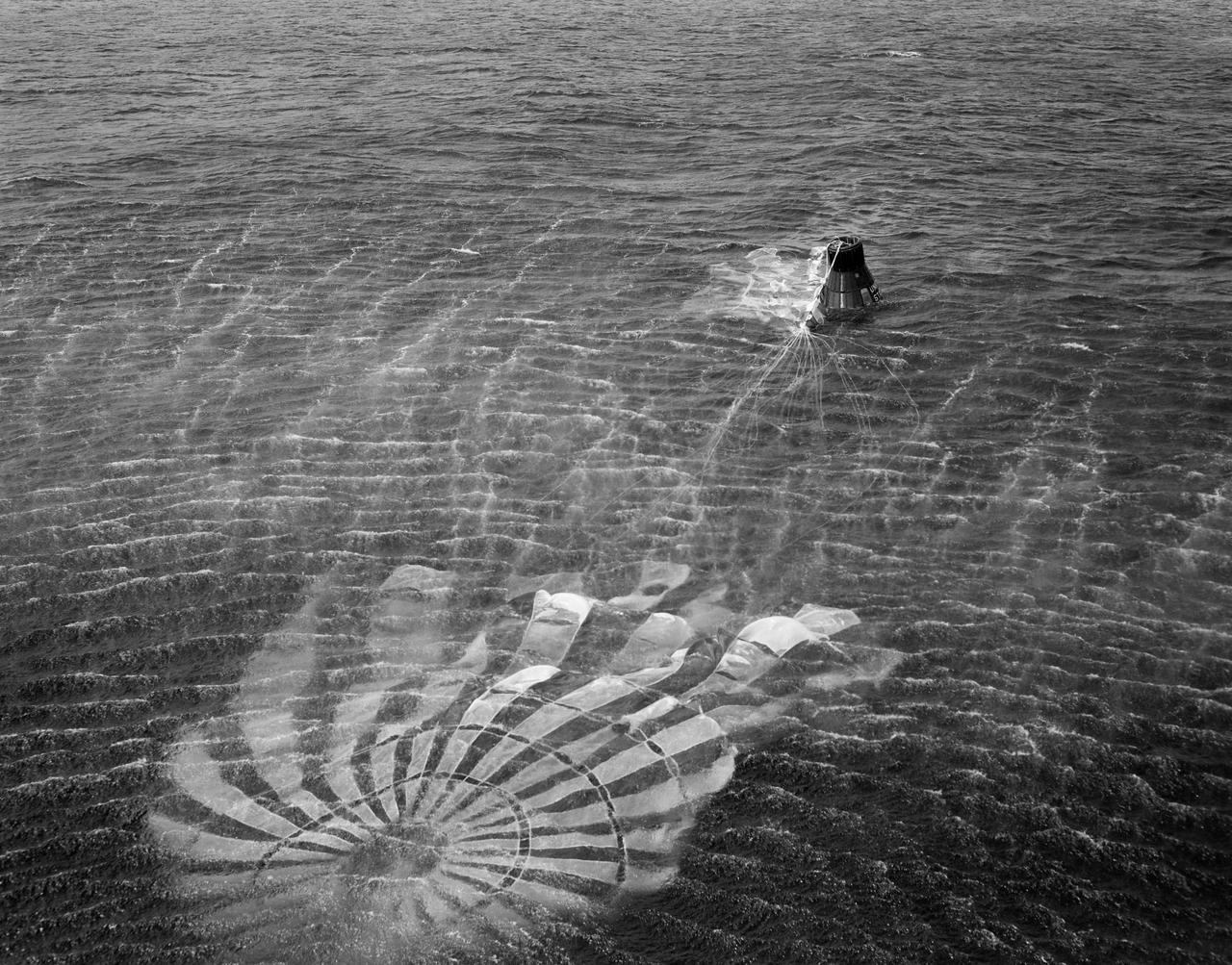
S61-01398 (18 March 1961) --- View of the recovery of the Little Joe-5A spacecraft which lifted off on March 18, 1961 from Wallops Island. The photo was taken from the recovery helicopter and shows the craft's parachute still attached and floating in the water next to the capsule. Little Joe-5A was a suborbital flight to test the Mercury capsule. The escape rocket motor fired prematurely and prior to capsule release. Photo credit: NASA
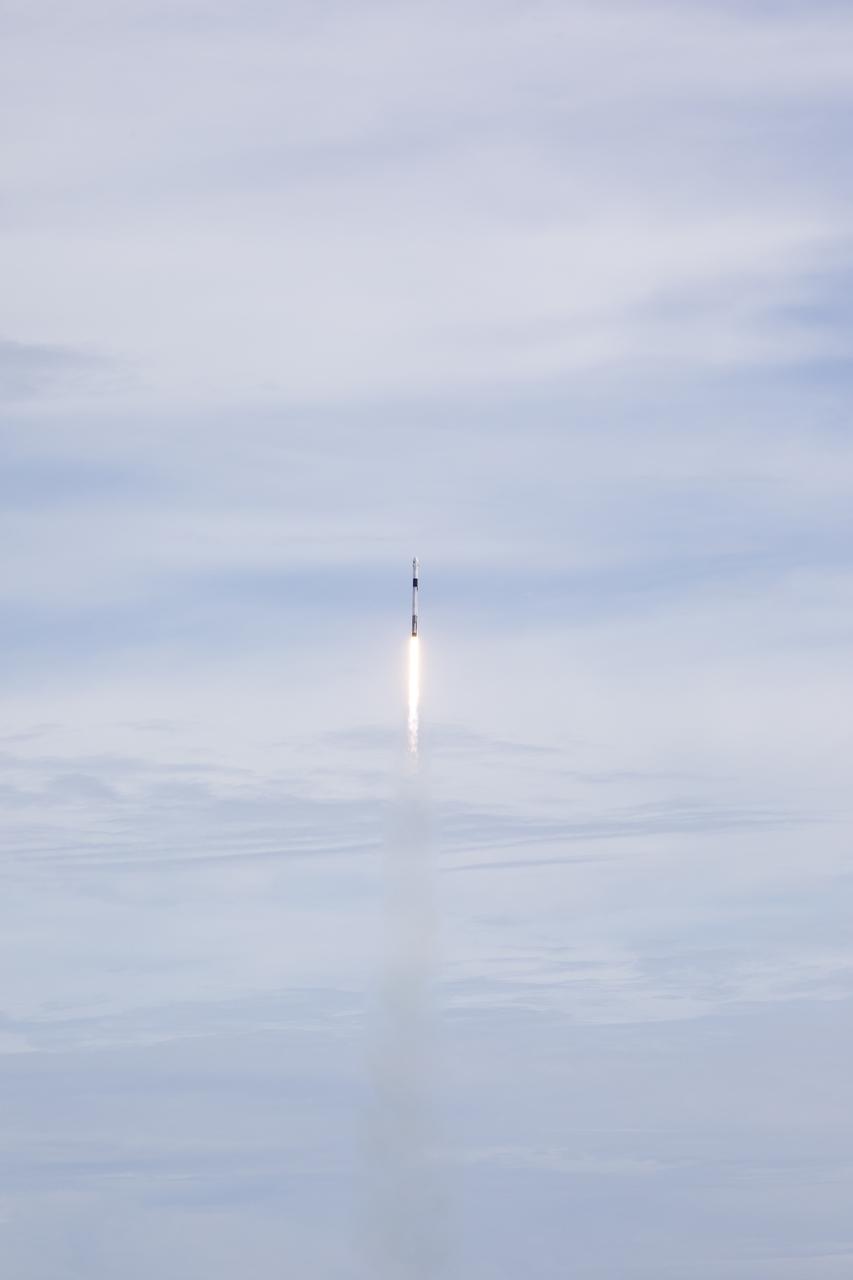
A SpaceX Falcon 9 rocket lifts off from Launch Complex 39A at NASA’s Kennedy Space Center in Florida on Jan. 19, 2020, carrying the Crew Dragon spacecraft on the company’s uncrewed In-Flight Abort Test. The flight test demonstrated the spacecraft’s escape capabilities in preparation for crewed flights to the International Space Station as part of the agency’s Commercial Crew Program.
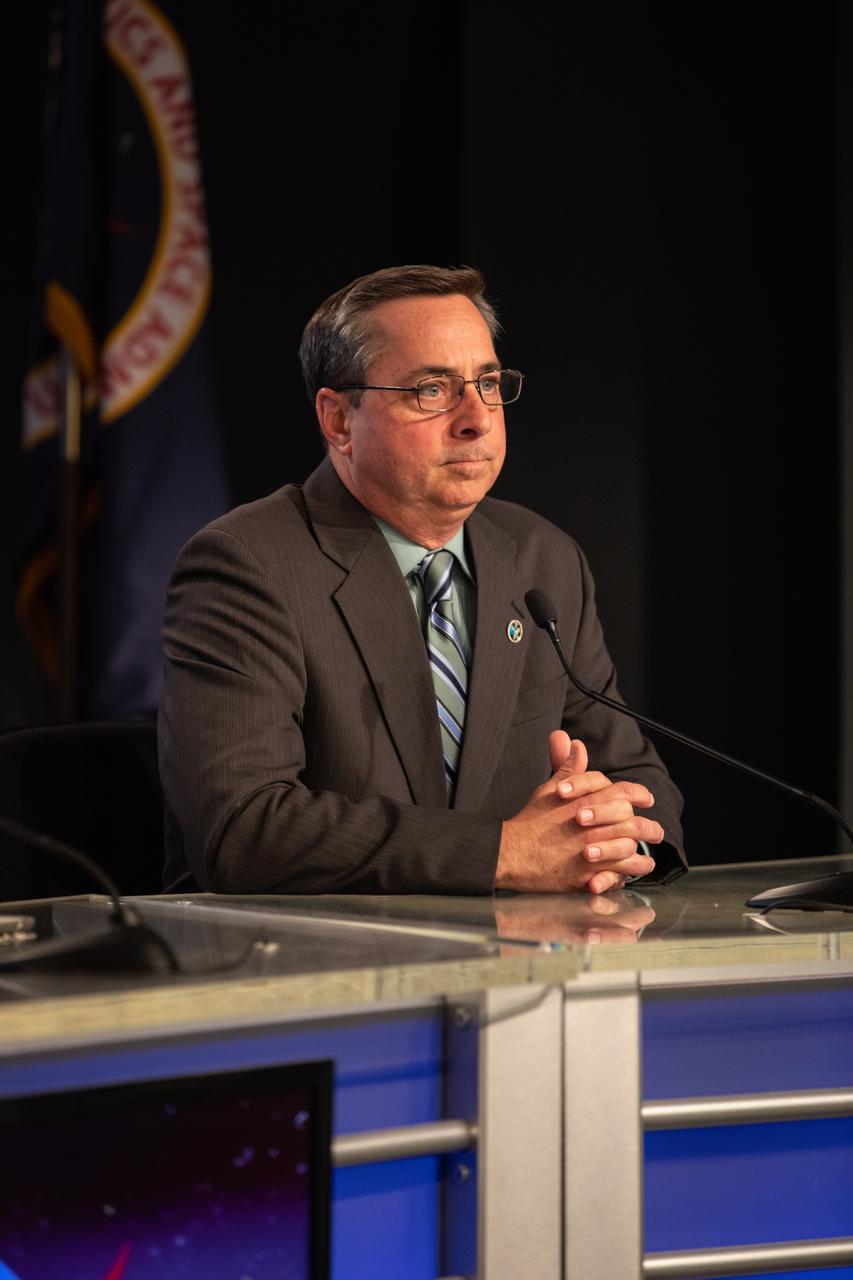
Mike McAleenan, launch weather officer with the U.S. Air Force 45th Weather Squadron, participates in a briefing at NASA’s Kennedy Space Center in Florida on Jan. 17, 2020, prior to launch of SpaceX’s uncrewed In-Flight Abort Test. A SpaceX Falcon 9 rocket topped by the company’s Crew Dragon spacecraft will lift off from Kennedy’s Launch Complex 39A, then begin the launch-abort sequence. The spacecraft will demonstrate its escape capabilities in preparation for crewed flights to the International Space Station as part of the agency’s Commercial Crew Program.

A SpaceX Falcon 9 rocket lifts off from Launch Complex 39A at NASA’s Kennedy Space Center in Florida at 10:30 a.m. EST on Jan. 19, 2020, carrying the Crew Dragon spacecraft on the company’s uncrewed In-Flight Abort Test. The flight test demonstrated the spacecraft’s escape capabilities in preparation for crewed flights to the International Space Station as part of the agency’s Commercial Crew Program.
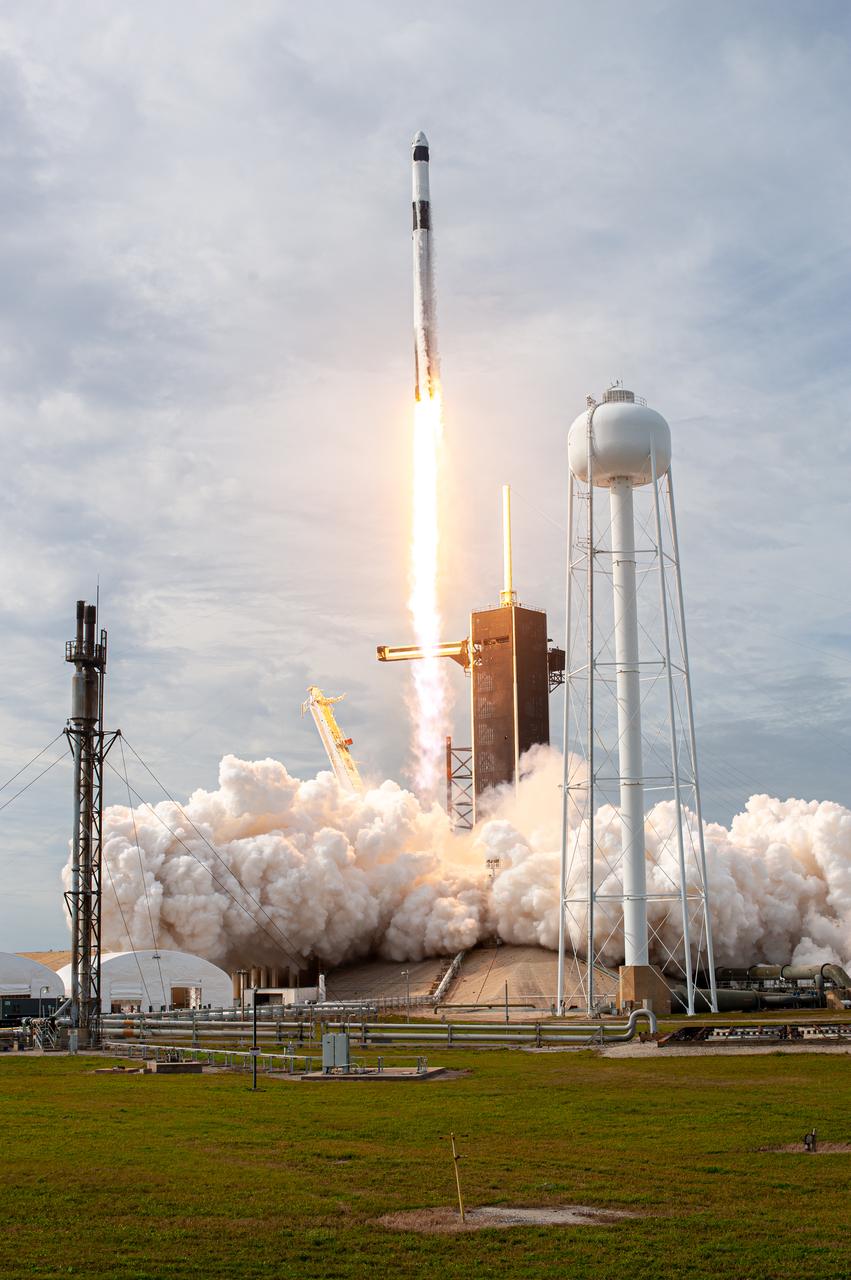
A SpaceX Falcon 9 rocket lifts off from Launch Complex 39A at NASA’s Kennedy Space Center in Florida at 10:30 a.m. EST on Jan. 19, 2020, carrying the Crew Dragon spacecraft on the company’s uncrewed In-Flight Abort Test. The flight test demonstrated the spacecraft’s escape capabilities in preparation for crewed flights to the International Space Station as part of the agency’s Commercial Crew Program.
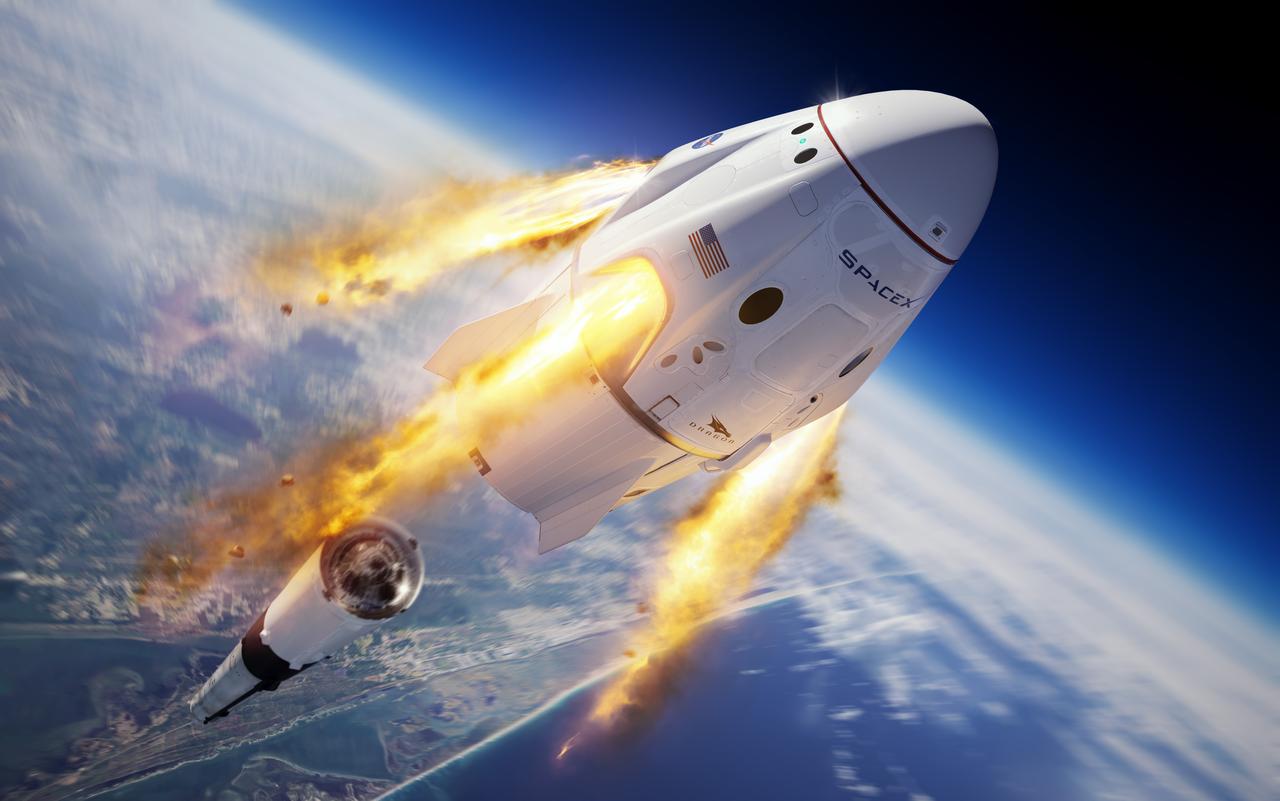
Illustration of the SpaceX Crew Dragon and Falcon 9 rocket during the company’s uncrewed In-Flight Abort Test for NASA’s Commercial Crew Program. This demonstration test of Crew Dragon’s launch escape capabilities is designed to provide valuable data toward NASA certifying SpaceX’s crew transportation system for carrying astronauts to and from the International Space Station.

A SpaceX Falcon 9 rocket lifts off from Launch Complex 39A at NASA’s Kennedy Space Center in Florida at 10:30 a.m. EST on Jan. 19, 2020, carrying the Crew Dragon spacecraft on the company’s uncrewed In-Flight Abort Test. The flight test demonstrated the spacecraft’s escape capabilities in preparation for crewed flights to the International Space Station as part of the agency’s Commercial Crew Program.
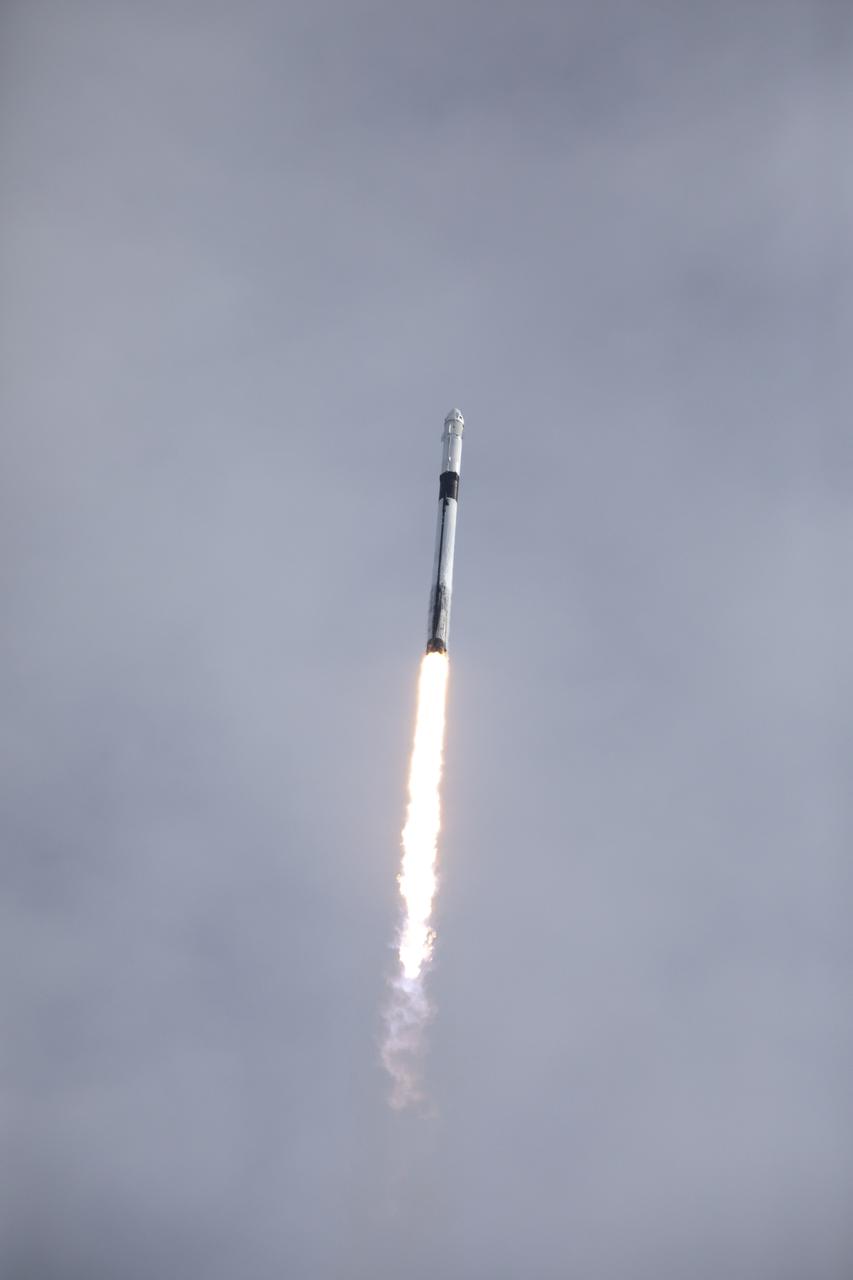
A SpaceX Falcon 9 rocket lifts off from Launch Complex 39A at NASA’s Kennedy Space Center in Florida at 10:30 a.m. EST on Jan. 19, 2020, carrying the Crew Dragon spacecraft on the company’s uncrewed In-Flight Abort Test. The flight test demonstrated the spacecraft’s escape capabilities in preparation for crewed flights to the International Space Station as part of the agency’s Commercial Crew Program.
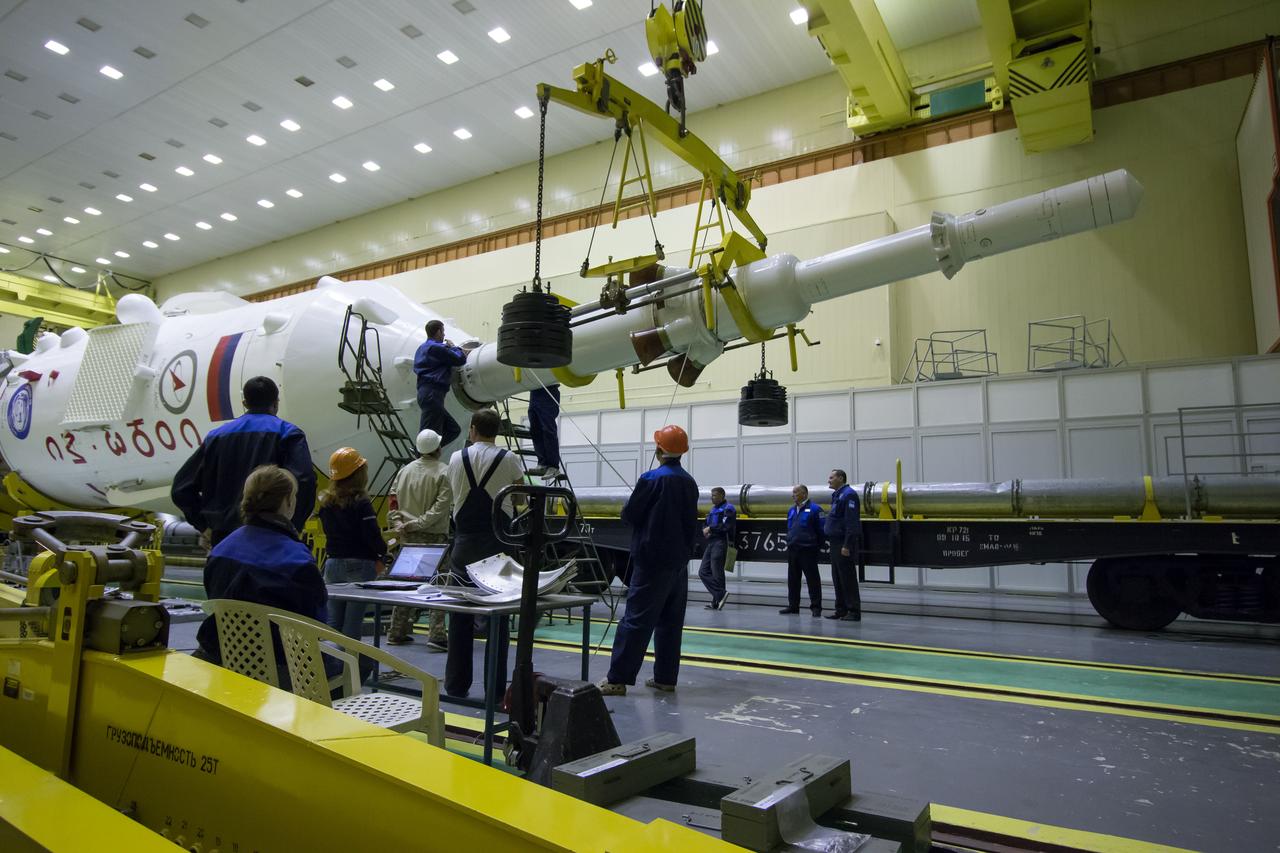
Workers prepare to attach the escape tower to the Soyuz MS-02 spacecraft during assembly of the Soyuz rocket on Friday, Oct. 14, 2016 at the Baikonur Cosmodrome in Kazakhstan. Expedition 49 flight engineer Shane Kimbrough of NASA, Soyuz commander Sergey Ryzhikov of Roscosmos, and flight engineer Andrey Borisenko of Roscosmos are scheduled to launch from the Baikonur Cosmodrome in Kazakhstan on Oct. 19. Photo Credit: (NASA/Victor Zelentsov)
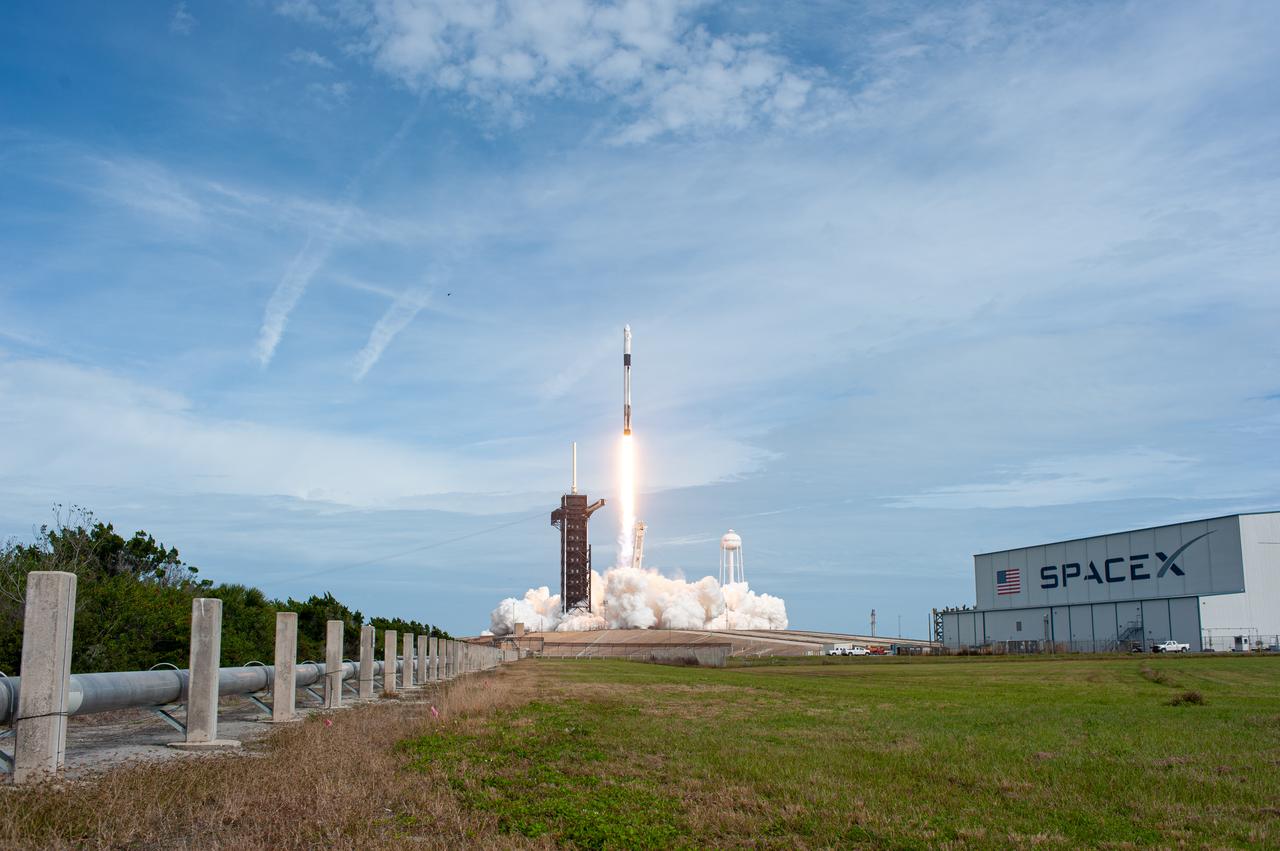
A SpaceX Falcon 9 rocket lifts off from Launch Complex 39A at NASA’s Kennedy Space Center in Florida at 10:30 a.m. EST on Jan. 19, 2020, carrying the Crew Dragon spacecraft on the company’s uncrewed In-Flight Abort Test. The flight test demonstrated the spacecraft’s escape capabilities in preparation for crewed flights to the International Space Station as part of the agency’s Commercial Crew Program.
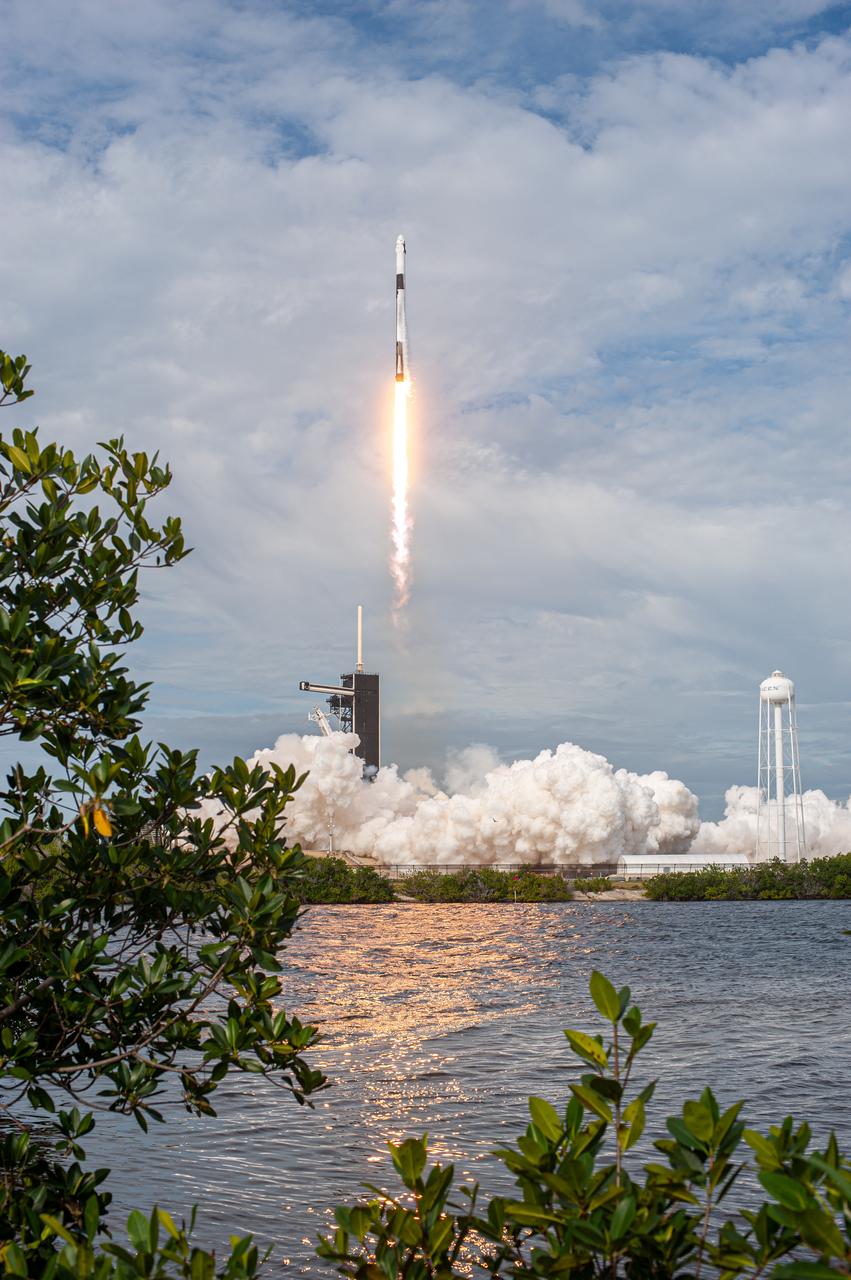
A SpaceX Falcon 9 rocket lifts off from Launch Complex 39A at NASA’s Kennedy Space Center in Florida at 10:30 a.m. EST on Jan. 19, 2020, carrying the Crew Dragon spacecraft on the company’s uncrewed In-Flight Abort Test. The flight test demonstrated the spacecraft’s escape capabilities in preparation for crewed flights to the International Space Station as part of the agency’s Commercial Crew Program.
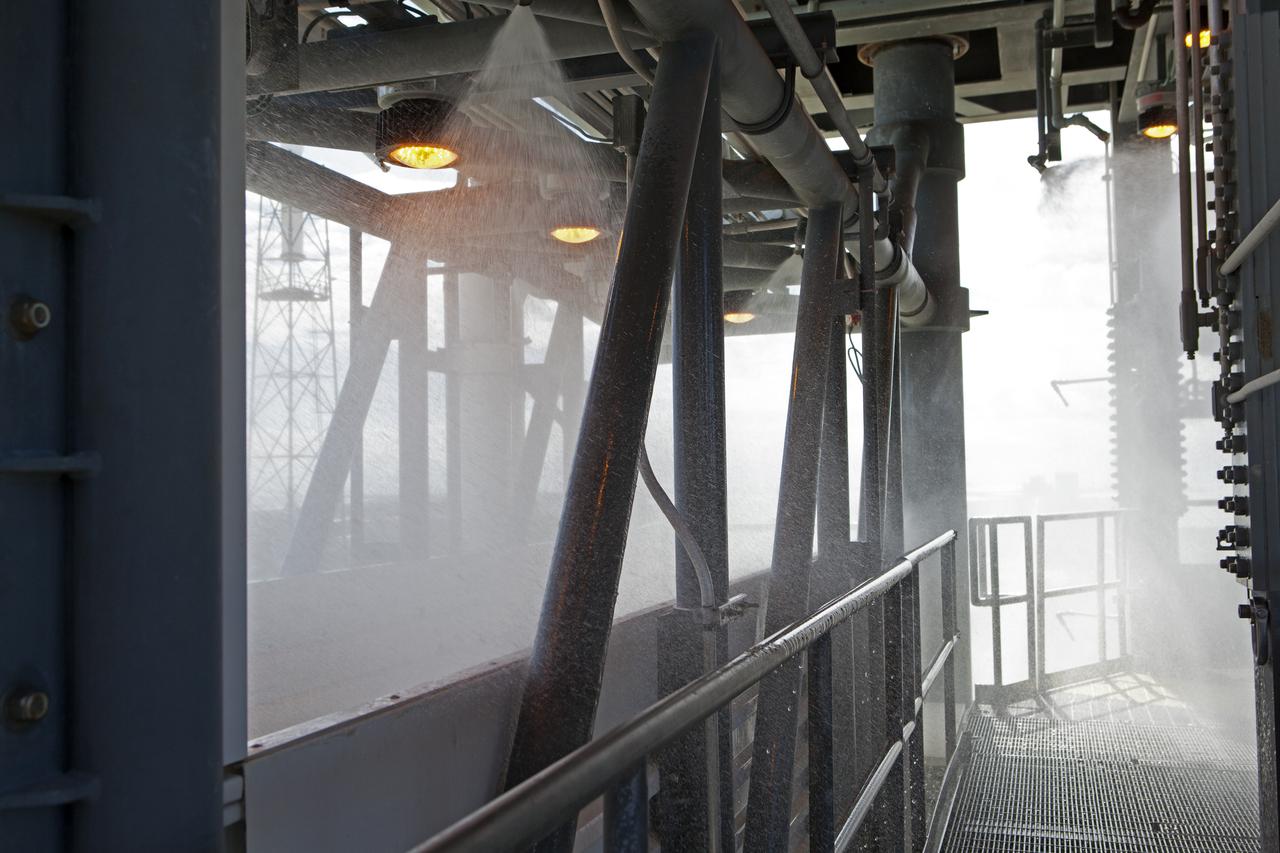
NASA, Boeing and United Launch Alliance personnel begin a water deluge test on the Crew Access Tower at Space Launch Complex 41 on Cape Canaveral Air Force Station in Florida. The test gathered data on how launch site and astronaut crews would exit in the event of an emergency from the white room at the end of the crew access arm to the emergency escape system on the pad. Boeing’s Starliner will launch on a United Launch Alliance Atlas V rocket to the International Space Station as part of NASA’s Commercial Crew Program.

Josh Finch of NASA Communications moderates a briefing at the agency's Kennedy Space Center in Florida on Jan. 17, 2020, prior to launch of SpaceX’s uncrewed In-Flight Abort Test. A SpaceX Falcon 9 rocket topped by the company’s Crew Dragon spacecraft will lift off from Kennedy’s Launch Complex 39A, then begin the launch-abort sequence. The spacecraft will demonstrate its escape capabilities in preparation for crewed flights to the International Space Station as part of the agency’s Commercial Crew Program.
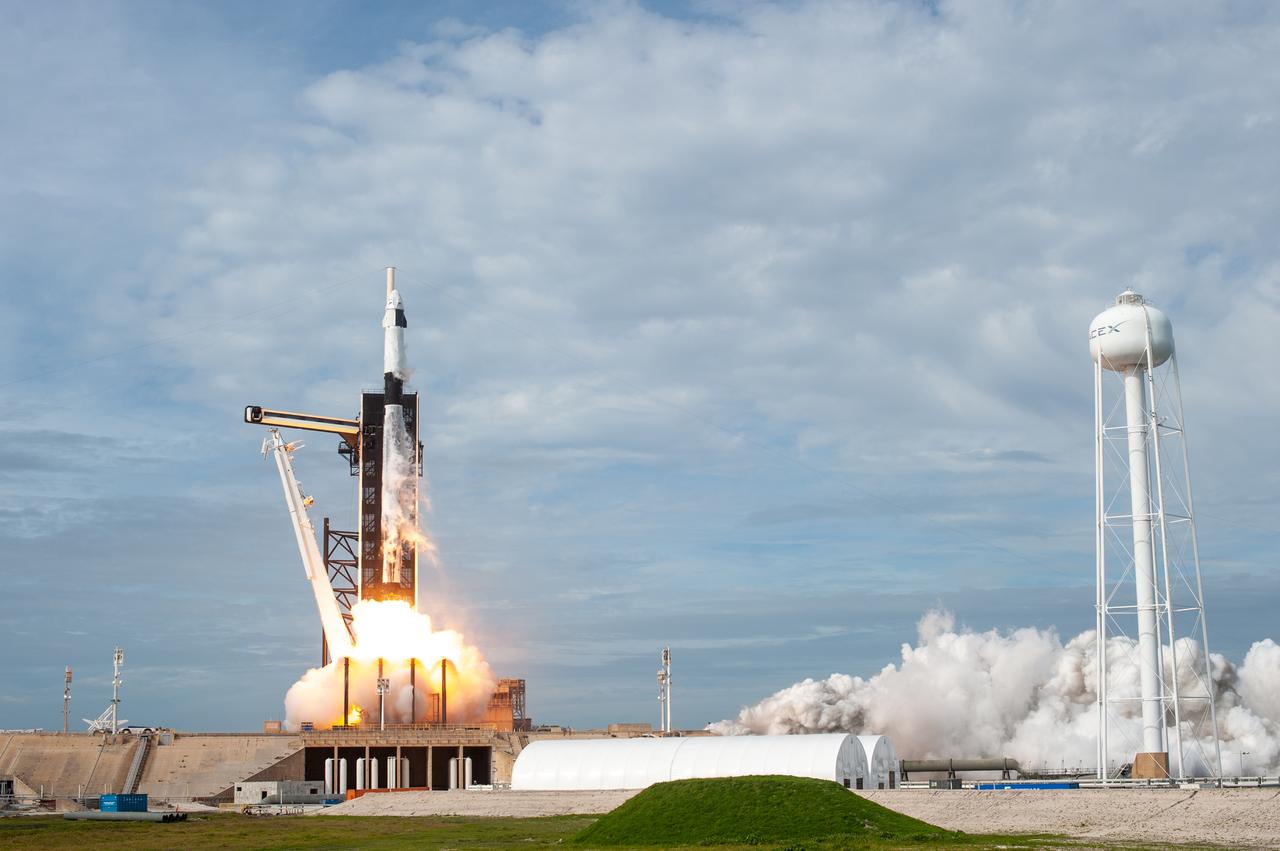
A SpaceX Falcon 9 rocket lifts off from Launch Complex 39A at NASA’s Kennedy Space Center in Florida at 10:30 a.m. EST on Jan. 19, 2020, carrying the Crew Dragon spacecraft on the company’s uncrewed In-Flight Abort Test. The flight test demonstrated the spacecraft’s escape capabilities in preparation for crewed flights to the International Space Station as part of the agency’s Commercial Crew Program.
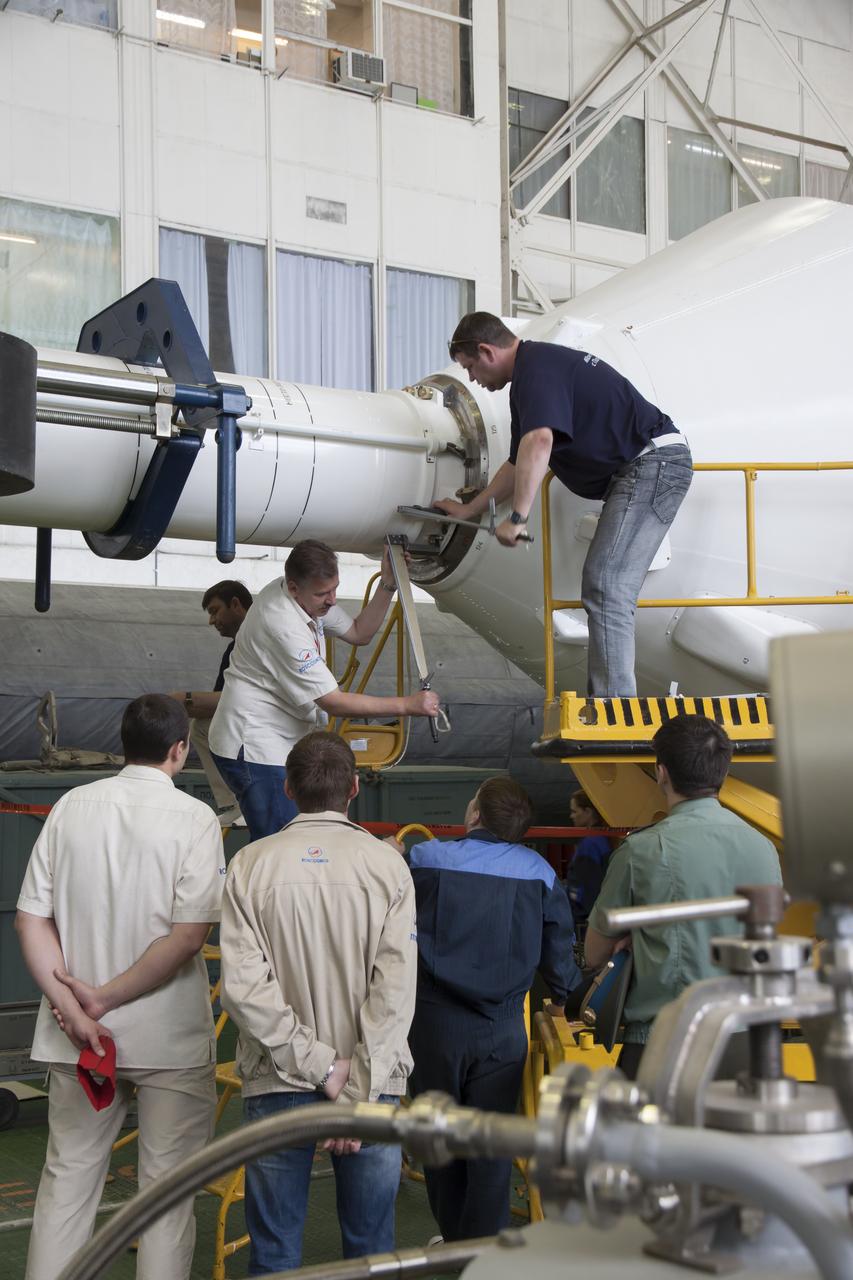
Engineers attach the escape tower to the Soyuz TMA-09M spacecraft during assembly of the Soyuz rocket at the Baikonur Cosmodrome, Saturday, May 25, 2013, in Kazakhstan. The launch of the Soyuz rocket to the International Space Station (ISS) with Expedition 36/37 Soyuz Commander Fyodor Yurchikhin of the Russian Federal Space Agency (Roscosmos), Flight Engineers; Luca Parmitano of the European Space Agency, and Karen Nyberg of NASA, is scheduled for Wednesday May 29, Kazakh time. Yurchikhin, Nyberg, and, Parmitano, will remain aboard the station until mid-November. Photo credit: (NASA/Victor Zelentsov)
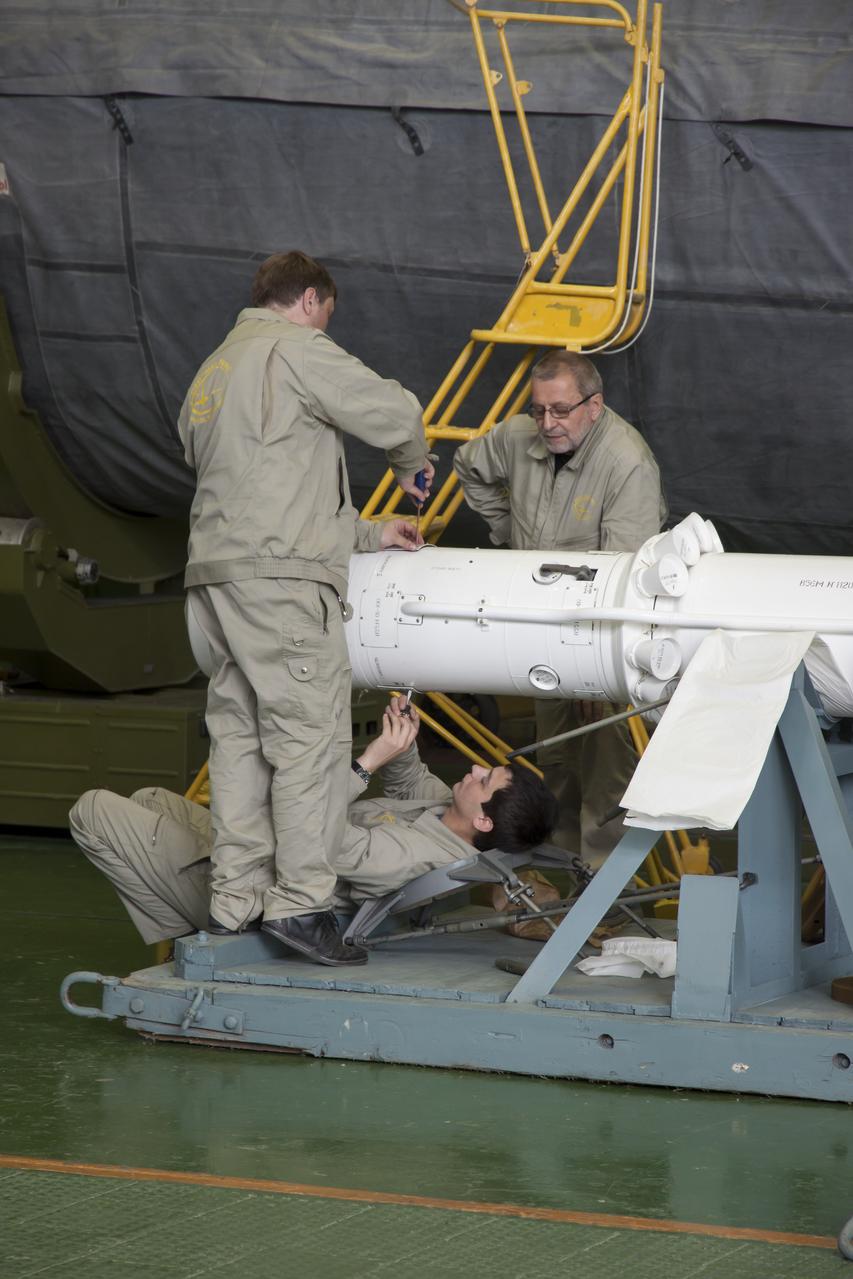
Engineers work on the emergency escape tower of the Soyuz TMA-09M spacecraft prior to it being mated to the Soyuz rocket at the Baikonur Cosmodrome, Saturday, May 25, 2013, in Kazakhstan. The launch of the Soyuz rocket to the International Space Station (ISS) with Expedition 36/37 Soyuz Commander Fyodor Yurchikhin of the Russian Federal Space Agency (Roscosmos), Flight Engineers; Luca Parmitano of the European Space Agency, and Karen Nyberg of NASA, is scheduled for Wednesday May 29, Kazakh time. Yurchikhin, Nyberg, and, Parmitano, will remain aboard the station until mid-November. Photo credit: (NASA/Victor Zelentsov)
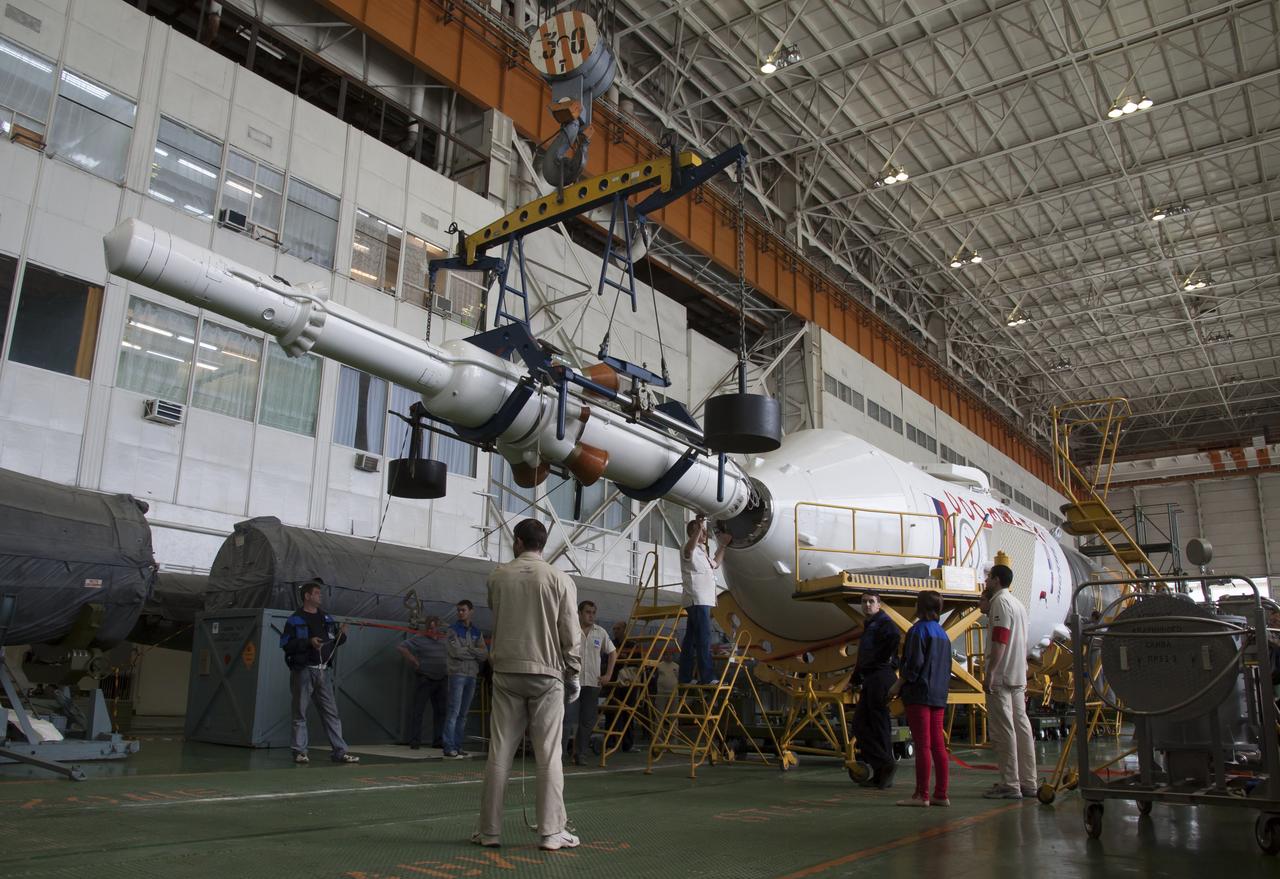
Engineers attach the escape tower to the Soyuz TMA-09M spacecraft during assembly of the Soyuz rocket at the Baikonur Cosmodrome, Saturday, May 25, 2013, in Kazakhstan. The launch of the Soyuz rocket to the International Space Station (ISS) with Expedition 36/37 Soyuz Commander Fyodor Yurchikhin of the Russian Federal Space Agency (Roscosmos), Flight Engineers; Luca Parmitano of the European Space Agency, and Karen Nyberg of NASA, is scheduled for Wednesday May 29, Kazakh time. Yurchikhin, Nyberg, and, Parmitano, will remain aboard the station until mid-November. Photo credit: (NASA/Victor Zelentsov)

Kathy Lueders, manager of NASA’s Commercial Crew Program, participates in a briefing at the agency’s Kennedy Space Center in Florida following the company’s uncrewed In-Flight Abort Test on Jan. 19, 2020. During the flight test, a SpaceX Falcon 9 rocket and Crew Dragon spacecraft lifted off from Kennedy’s Launch Complex 39A and began a planned launch-abort sequence demonstrating the spacecraft’s escape capabilities. The Crew Dragon splashed down in the Atlantic Ocean as expected. The In-Flight Abort Test is a critical milestone in preparation for crewed flights to the International Space Station as part of the agency’s Commercial Crew Program.
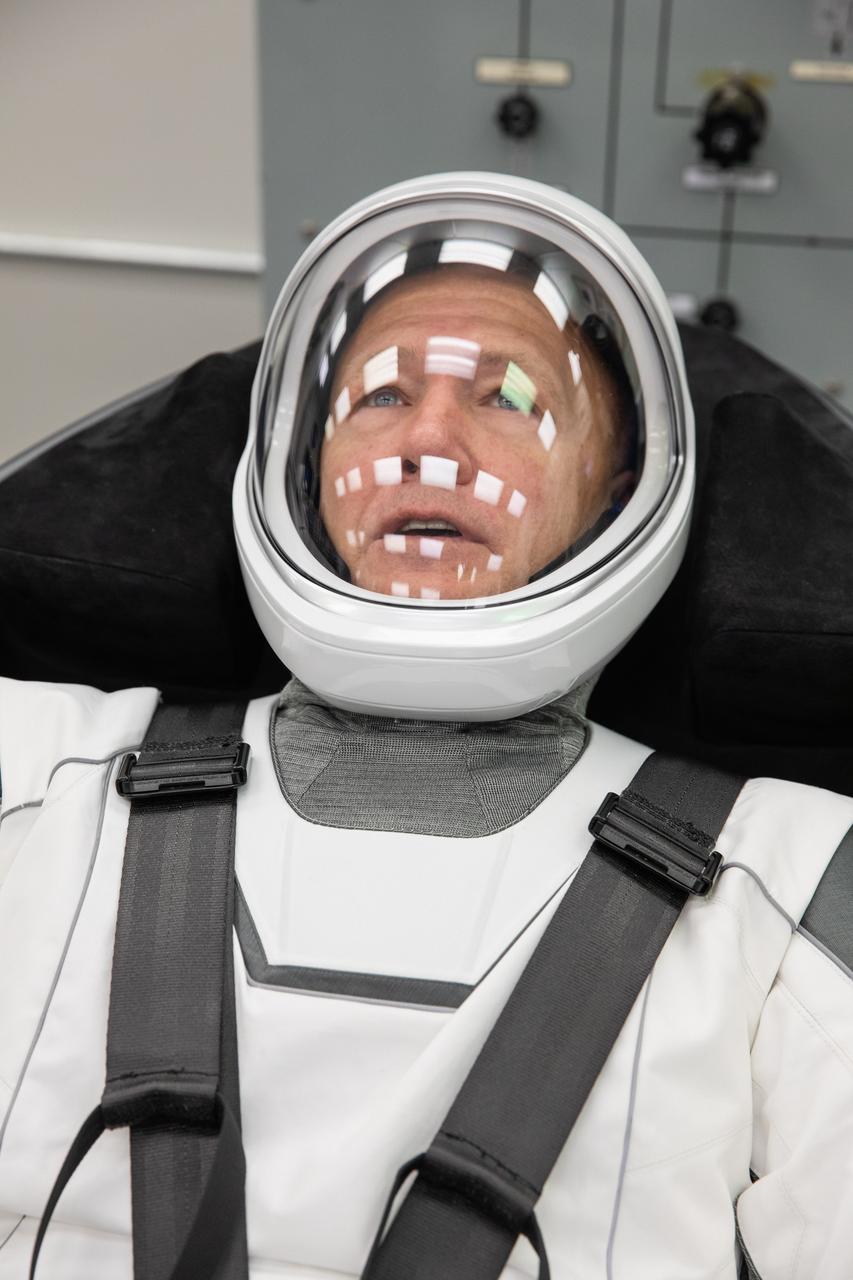
NASA astronaut Doug Hurley, wearing a SpaceX spacesuit, looks through his helmet’s closed visor in the Astronaut Crew Quarters at Kennedy Space Center in Florida on Jan. 17, 2020, during a dress rehearsal ahead of the company’s uncrewed In-Flight Abort Test. A SpaceX Falcon 9 rocket and Crew Dragon spacecraft will lift off from Launch Complex 39A on the flight test, which will demonstrate the spacecraft’s escape capabilities in preparation for crewed flights to the International Space Station as part of the agency’s Commercial Crew Program. Hurley and NASA astronaut Bob Behnken are slated to fly on the company’s first crewed mission, Demo-2.
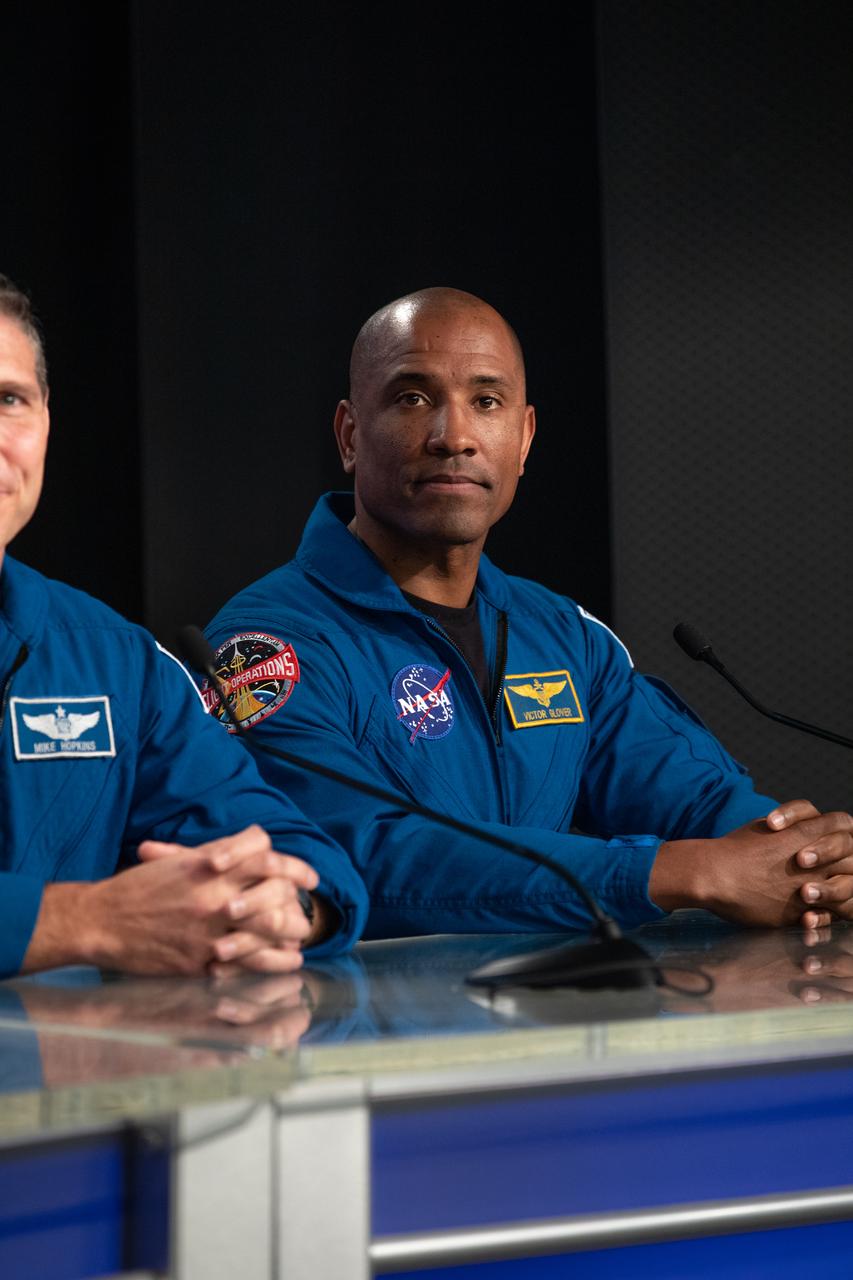
NASA astronaut Victor Glover participates in a briefing at the agency’s Kennedy Space Center in Florida following the company’s uncrewed In-Flight Abort Test on Jan. 19, 2020. During the flight test, a SpaceX Falcon 9 rocket and Crew Dragon spacecraft lifted off from Kennedy’s Launch Complex 39A and began a planned launch-abort sequence demonstrating the spacecraft’s escape capabilities. The Crew Dragon splashed down in the Atlantic Ocean as expected. The In-Flight Abort Test is a critical milestone in preparation for crewed flights to the International Space Station as part of the agency’s Commercial Crew Program.
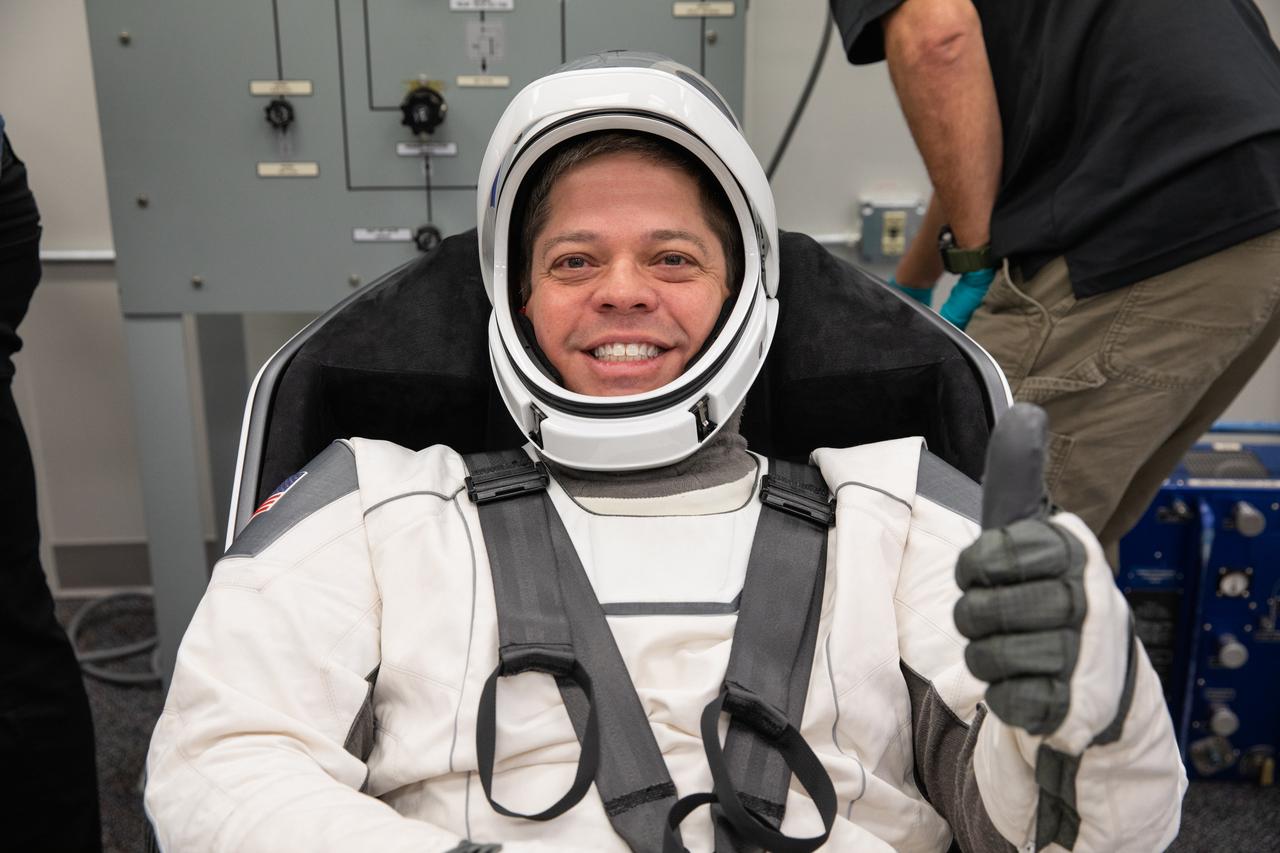
NASA astronaut Bob Behnken gives a thumbs-up as he dons a SpaceX spacesuit in the Astronaut Crew Quarters at Kennedy Space Center in Florida on Jan. 17, 2020, during a dress rehearsal ahead of the company’s uncrewed In-Flight Abort Test. A SpaceX Falcon 9 rocket and Crew Dragon spacecraft will lift off from Launch Complex 39A on the flight test, which will demonstrate the spacecraft’s escape capabilities in preparation for crewed flights to the International Space Station as part of the agency’s Commercial Crew Program. Behnken and NASA astronaut Doug Hurley are slated to fly on the company’s first crewed mission, Demo-2.
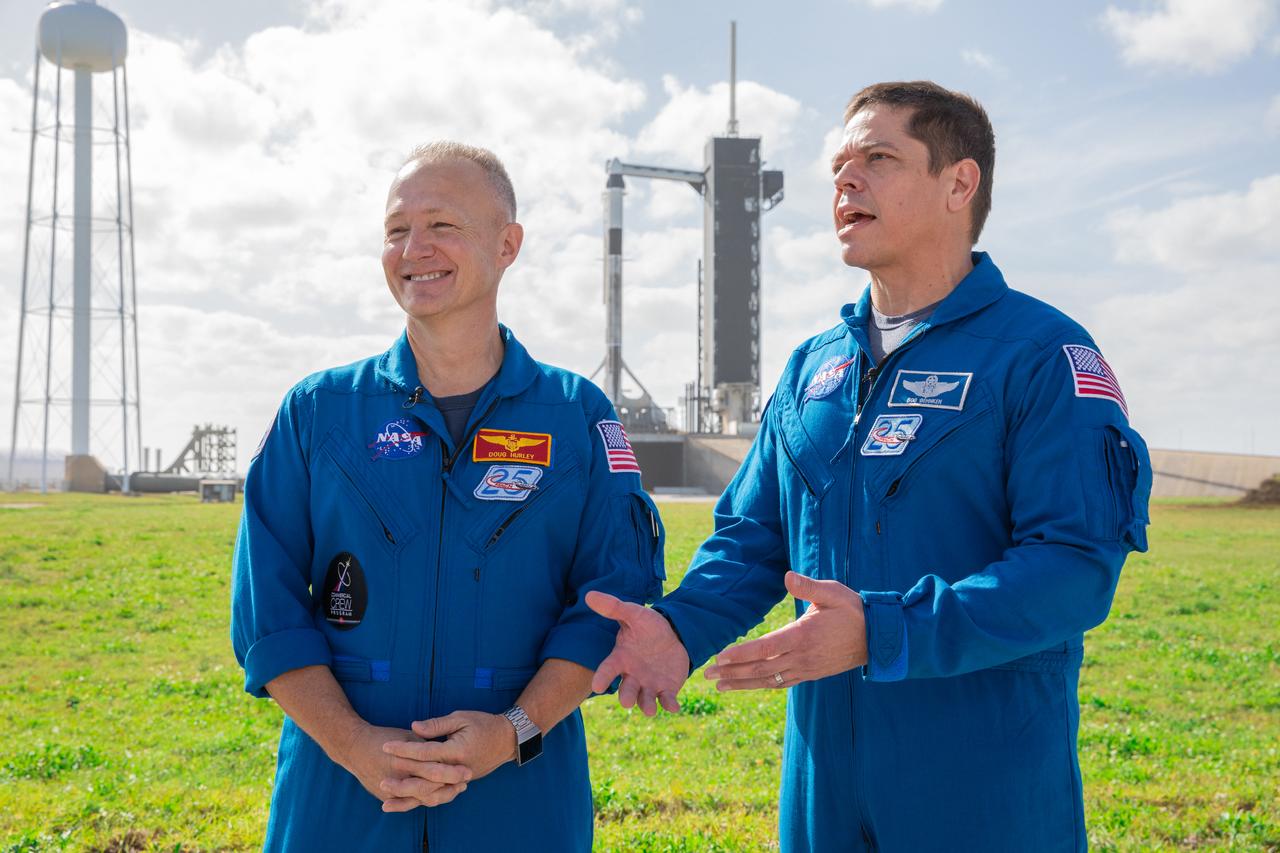
NASA astronauts Doug Hurley, left, and Bob Behnken stand near Launch Pad 39A at the agency’s Kennedy Space Center in Florida on Jan. 17, 2020, during a dress rehearsal ahead of the SpaceX uncrewed In-Flight Abort Test. In the background, the company’s Falcon 9 rocket is topped by the Crew Dragon spacecraft. The flight test will demonstrate the spacecraft’s escape capabilities in preparation for crewed flights to the International Space Station as part of the agency’s Commercial Crew Program. Hurley and Behnken are slated to fly on the company’s first crewed mission, Demo-2.
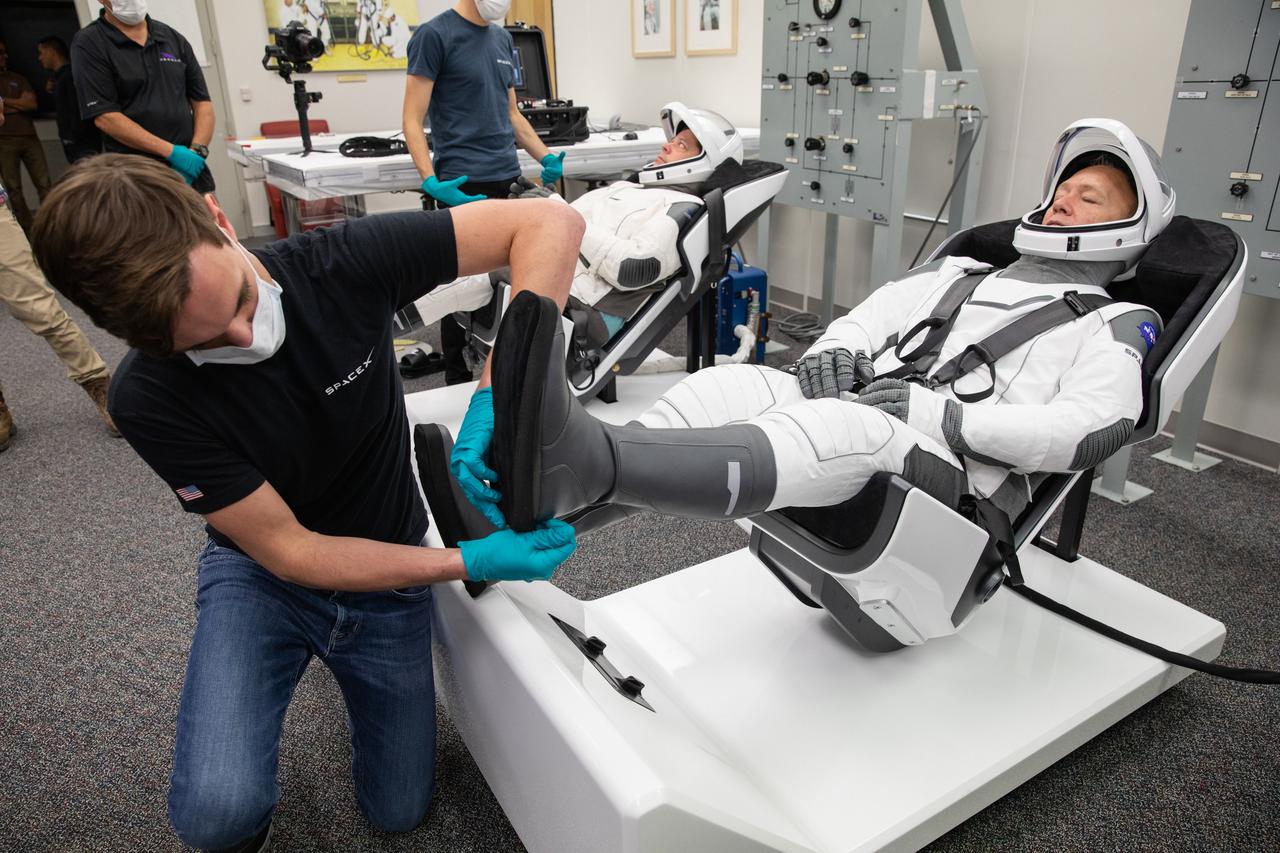
NASA astronauts Doug Hurley, foreground, and Bob Behnken don SpaceX spacesuits in the Astronaut Crew Quarters at Kennedy Space Center in Florida on Jan. 17, 2020, during a dress rehearsal ahead of the company’s uncrewed In-Flight Abort Test. A SpaceX Falcon 9 rocket and Crew Dragon spacecraft will lift off from Launch Complex 39A on the flight test, which will demonstrate the spacecraft’s escape capabilities in preparation for crewed flights to the International Space Station as part of the agency’s Commercial Crew Program. Hurley and Behnken are slated to fly on the company’s first crewed mission, Demo-2.
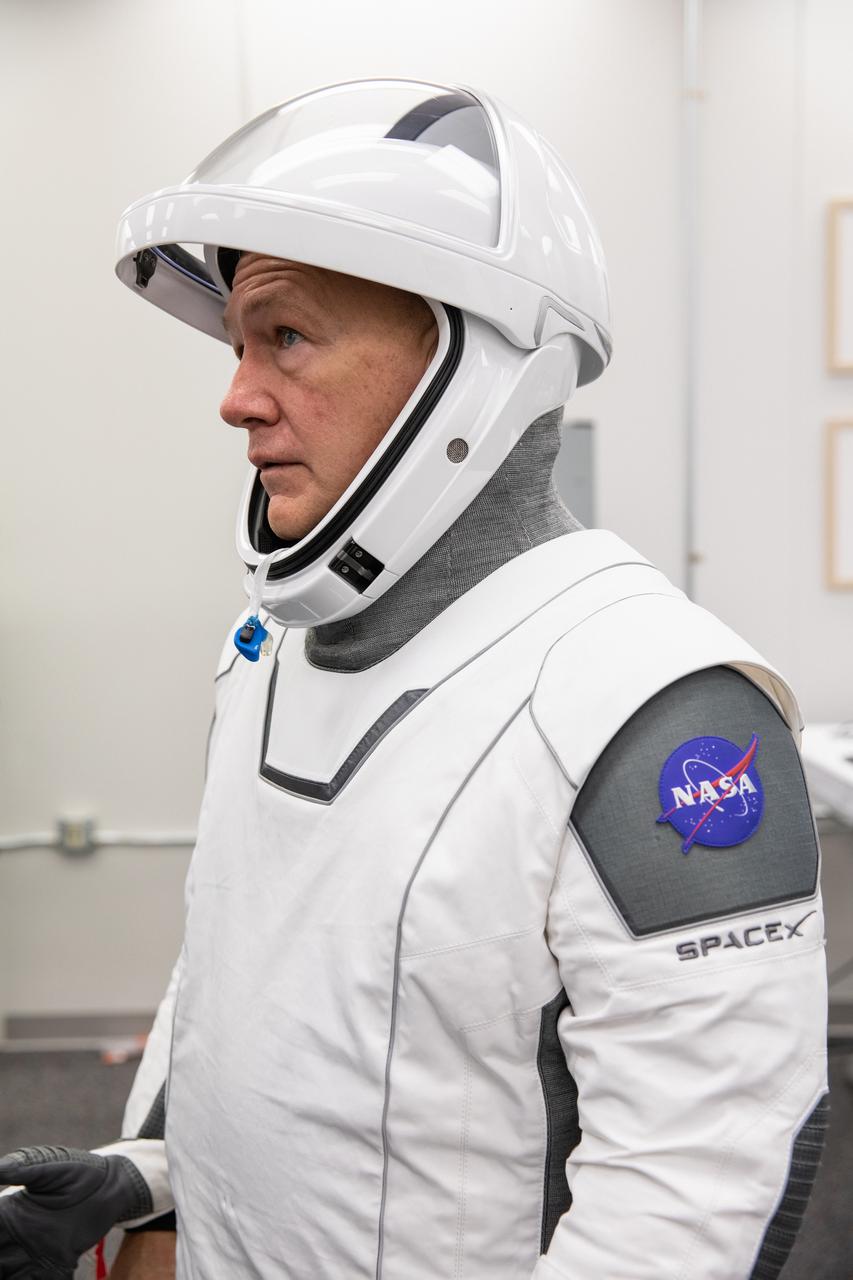
NASA astronaut Doug Hurley wears a SpaceX spacesuit in the Astronaut Crew Quarters at Kennedy Space Center in Florida on Jan. 17, 2020, during a dress rehearsal ahead of the company’s uncrewed In-Flight Abort Test. A SpaceX Falcon 9 rocket and Crew Dragon spacecraft will lift off from Launch Complex 39A on the flight test, which will demonstrate the spacecraft’s escape capabilities in preparation for crewed flights to the International Space Station as part of the agency’s Commercial Crew Program. Hurley and NASA astronaut Bob Behnken are slated to fly on the company’s first crewed mission, Demo-2.
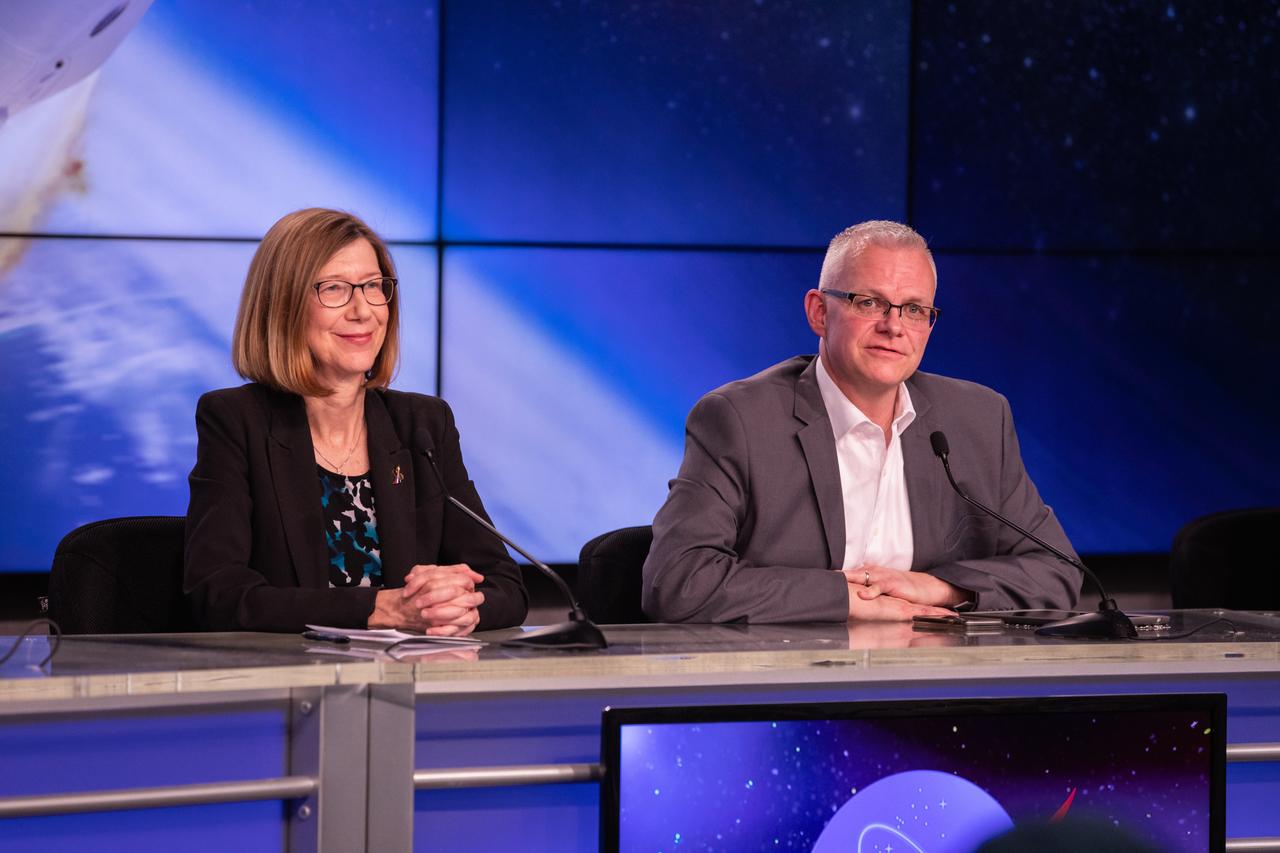
Kathy Lueders, manager of NASA’s Commercial Crew Program, left, and Benji Reed, director of Crew Mission Management for SpaceX, participate in a briefing at the agency’s Kennedy Space Center in Florida on Jan. 17, 2020, prior to launch of SpaceX’s uncrewed In-Flight Abort Test. A SpaceX Falcon 9 rocket topped by the company’s Crew Dragon spacecraft will lift off from Kennedy’s Launch Complex 39A, then begin the launch-abort sequence. The spacecraft will demonstrate its escape capabilities in preparation for crewed flights to the International Space Station as part of the agency’s Commercial Crew Program.
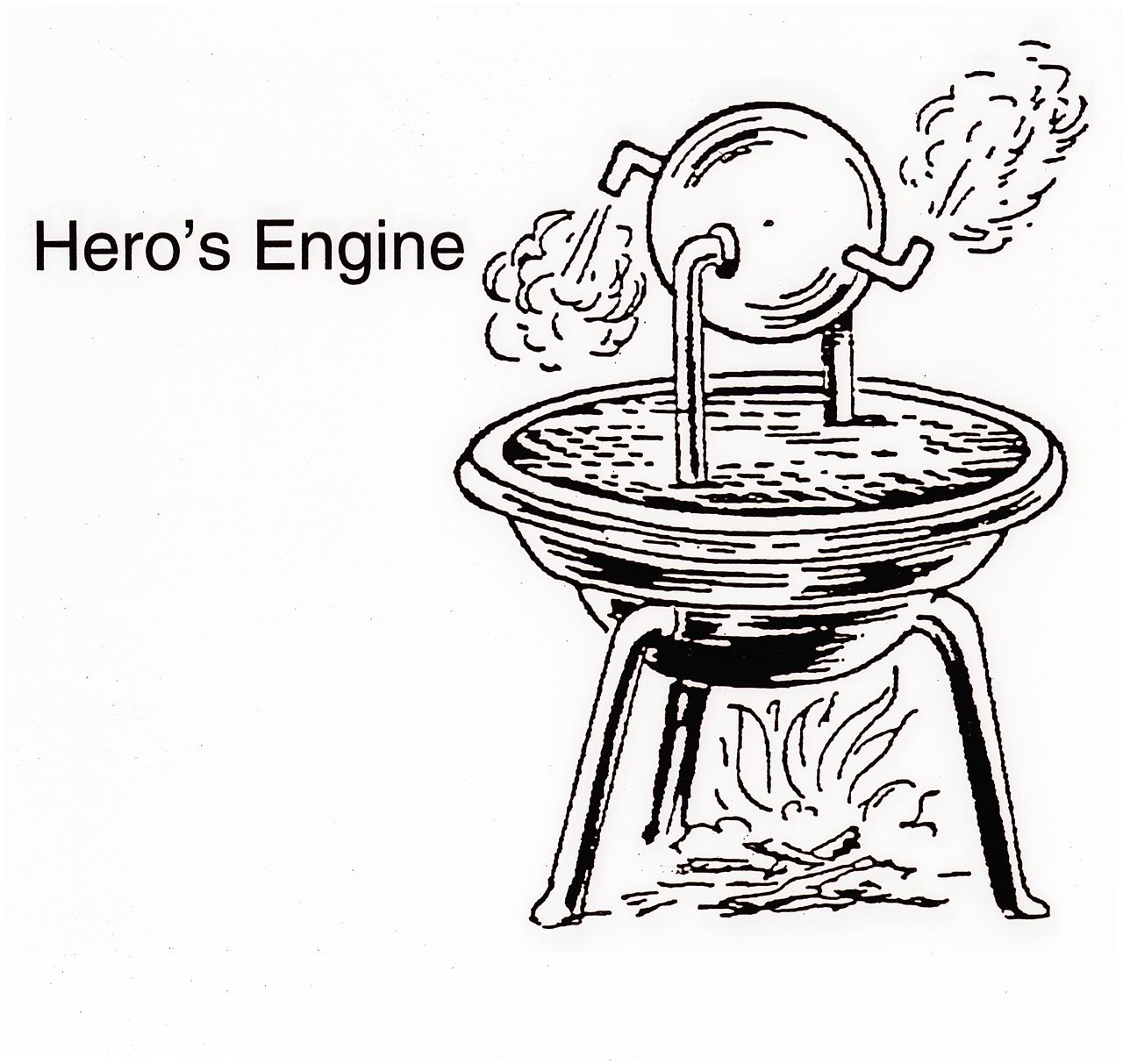
Legendary characters used the power of mythology to fly through the heavens. About 200 BC, a Greek inventor known as Hero of Alexandria came up with a new invention that depended on the mechanical interaction of heat and water. He invented a rocket-like device called an aeolipile. It used steam for propulsion. Hero mounted a sphere on top of a water kettle. A fire below the kettle turned the water into steam, and the gas traveled through the pipes to the sphere. Two L-shaped tubes on opposite sides of the sphere allowed the gas to escape, and in doing so gave a thrust to the sphere that caused it to rotate.
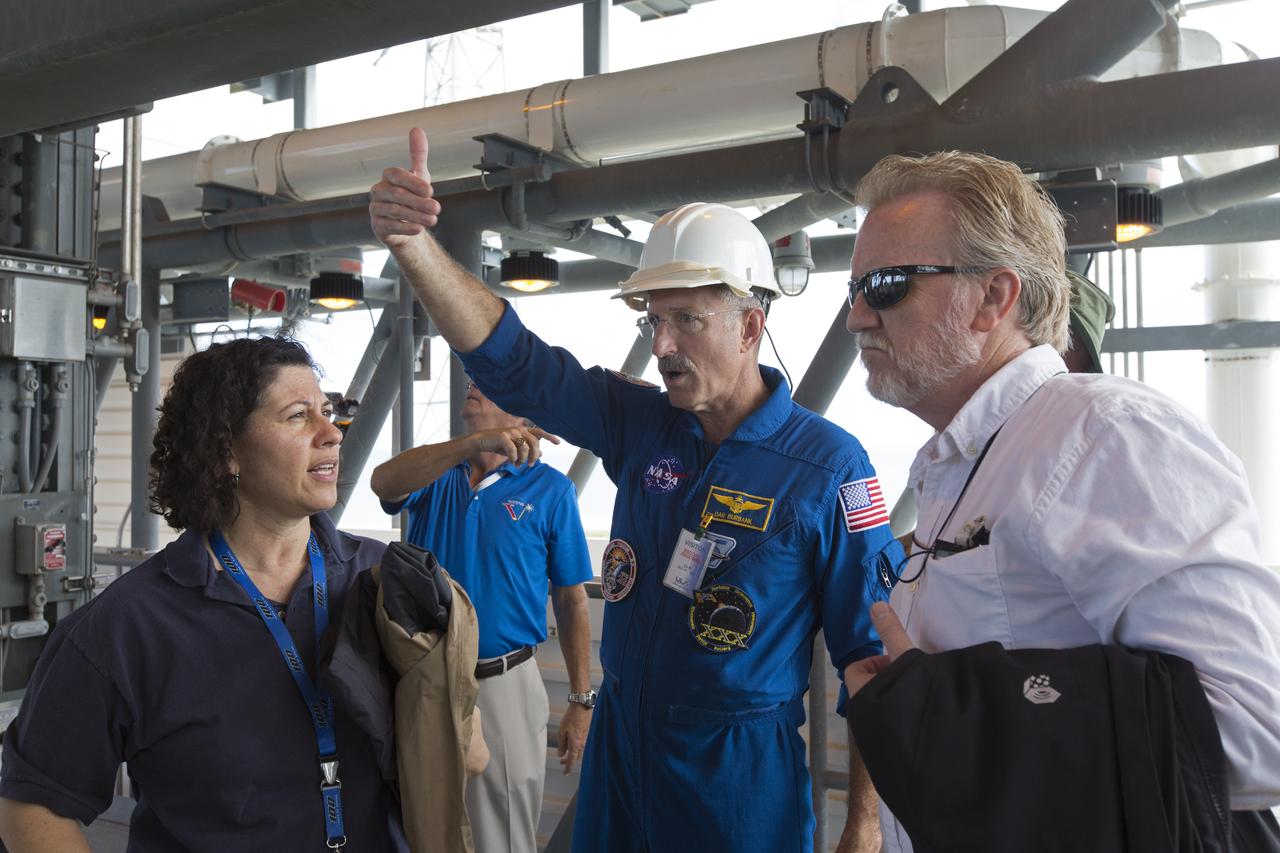
NASA, Boeing and United Launch Alliance personnel discuss procedures for an upcoming water deluge test on the Crew Access Tower at Space Launch Complex 41 on Cape Canaveral Air Force Station in Florida. The test gathered data on how launch site and astronaut crews would exit in the event of an emergency from the white room at the end of the crew access arm to the emergency escape system on the pad. Boeing’s Starliner will launch on a United Launch Alliance Atlas V rocket to the International Space Station as part of NASA’s Commercial Crew Program.
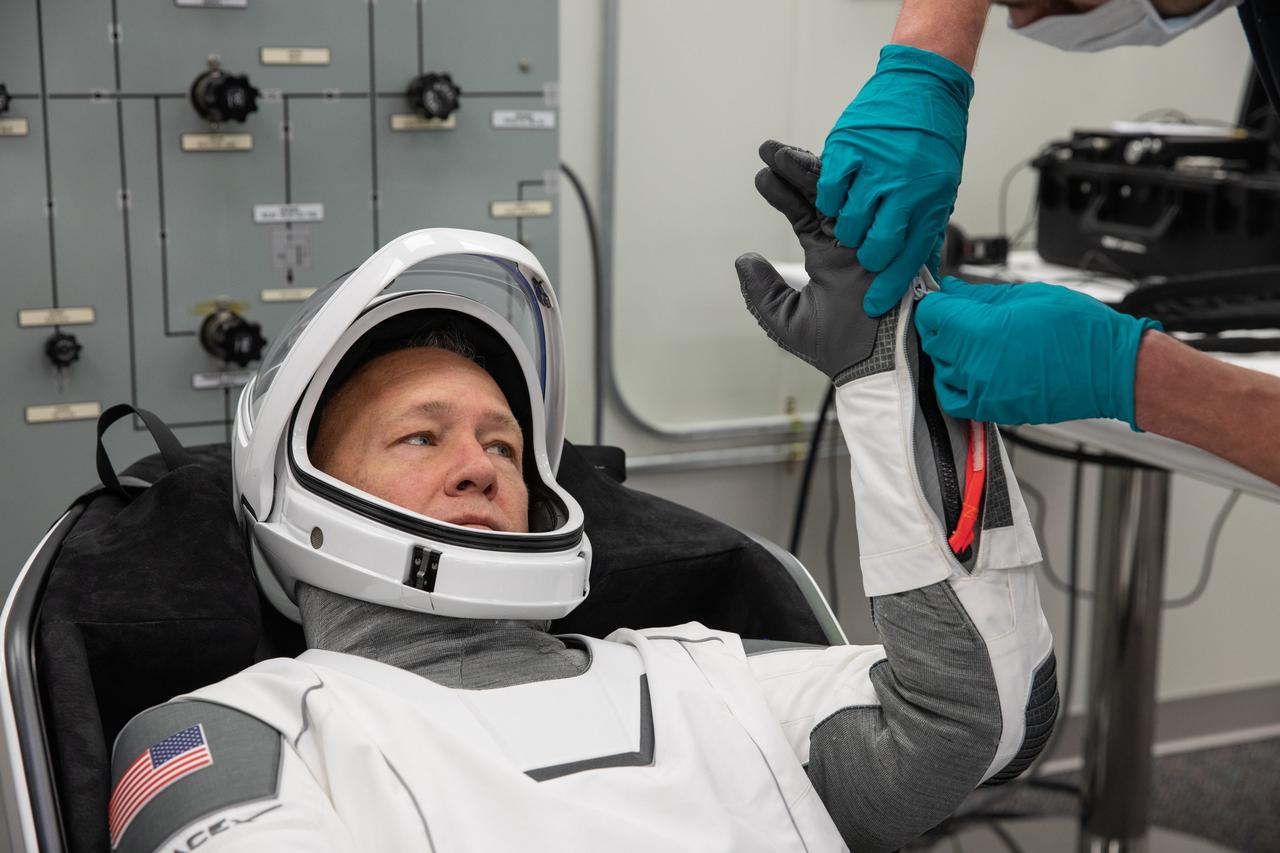
NASA astronaut Doug Hurley dons a SpaceX spacesuit in the Astronaut Crew Quarters at Kennedy Space Center in Florida on Jan. 17, 2020, during a dress rehearsal ahead of the company’s uncrewed In-Flight Abort Test. A SpaceX Falcon 9 rocket and Crew Dragon spacecraft will lift off from Launch Complex 39A on the flight test, which will demonstrate the spacecraft’s escape capabilities in preparation for crewed flights to the International Space Station as part of the agency’s Commercial Crew Program. Hurley and NASA astronaut Bob Behnken are slated to fly on the company’s first crewed mission, Demo-2.
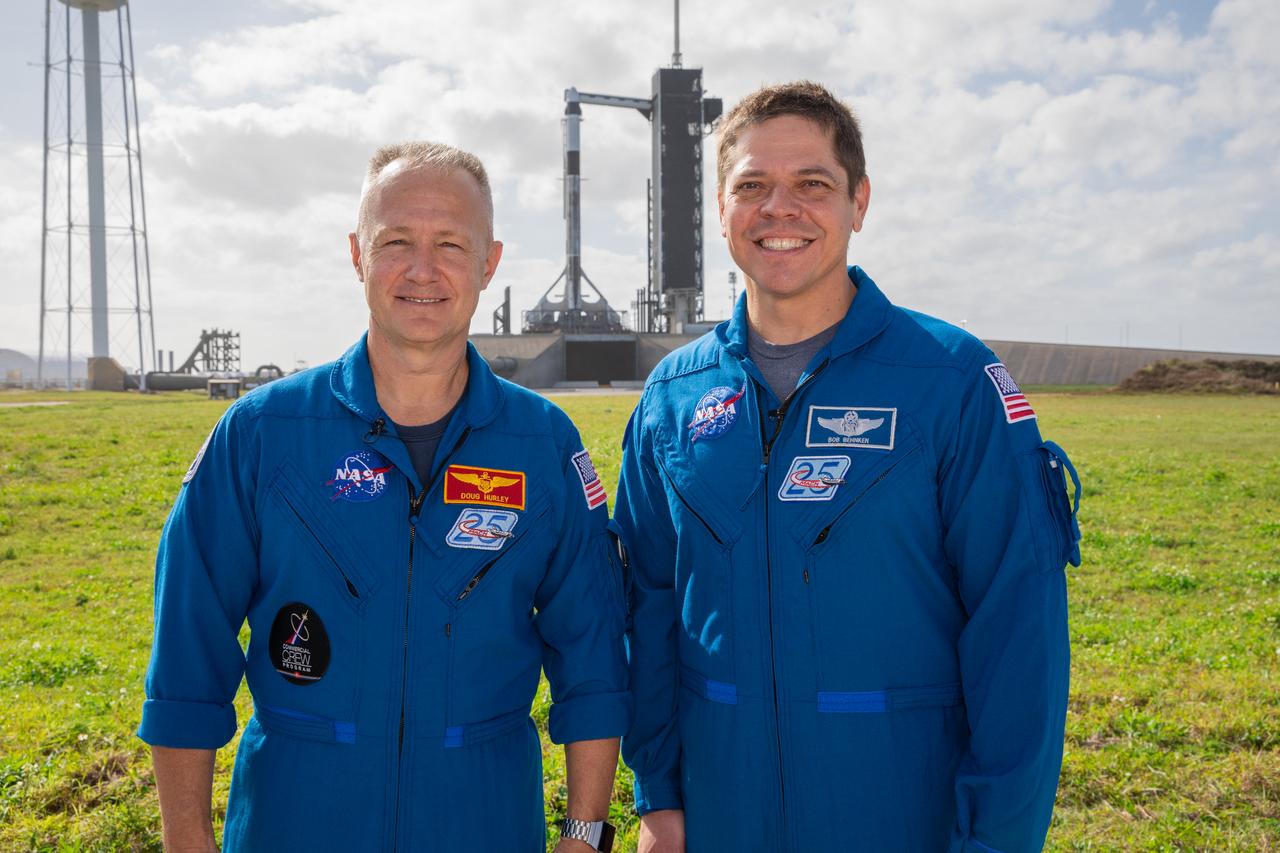
NASA astronauts Doug Hurley, left, and Bob Behnken stand near Launch Pad 39A at the agency’s Kennedy Space Center in Florida on Jan. 17, 2020, during a dress rehearsal ahead of the SpaceX uncrewed In-Flight Abort Test. In the background, the company’s Falcon 9 rocket is topped by the Crew Dragon spacecraft. The flight test will demonstrate the spacecraft’s escape capabilities in preparation for crewed flights to the International Space Station as part of the agency’s Commercial Crew Program. Hurley and Behnken are slated to fly on the company’s first crewed mission, Demo-2.

Technicians prepare a full-scale capsule which would be used for the first rocket-launching on March 11, 1959. The purpose of the test would be to simulate a ground-level or beach abort. Joseph Shortal wrote (vol. 3, p. 27): It was a test of the ability of the escape system to rescue the astronaut in case of a malfunction of the launch vehicle prior to flight. This test was carried out by PARD under the direction of W.S. Blanchard, Jr., and was part of the program designated F57 at PARD. For these tests capsule shape C was used. -- Published in Joseph A. Shortal, History of Wallops Station: Origins and Activities Through 1949, (Wallops Island, VA: National Aeronautics and Space Administration, Wallops Station, nd), Comment Edition.
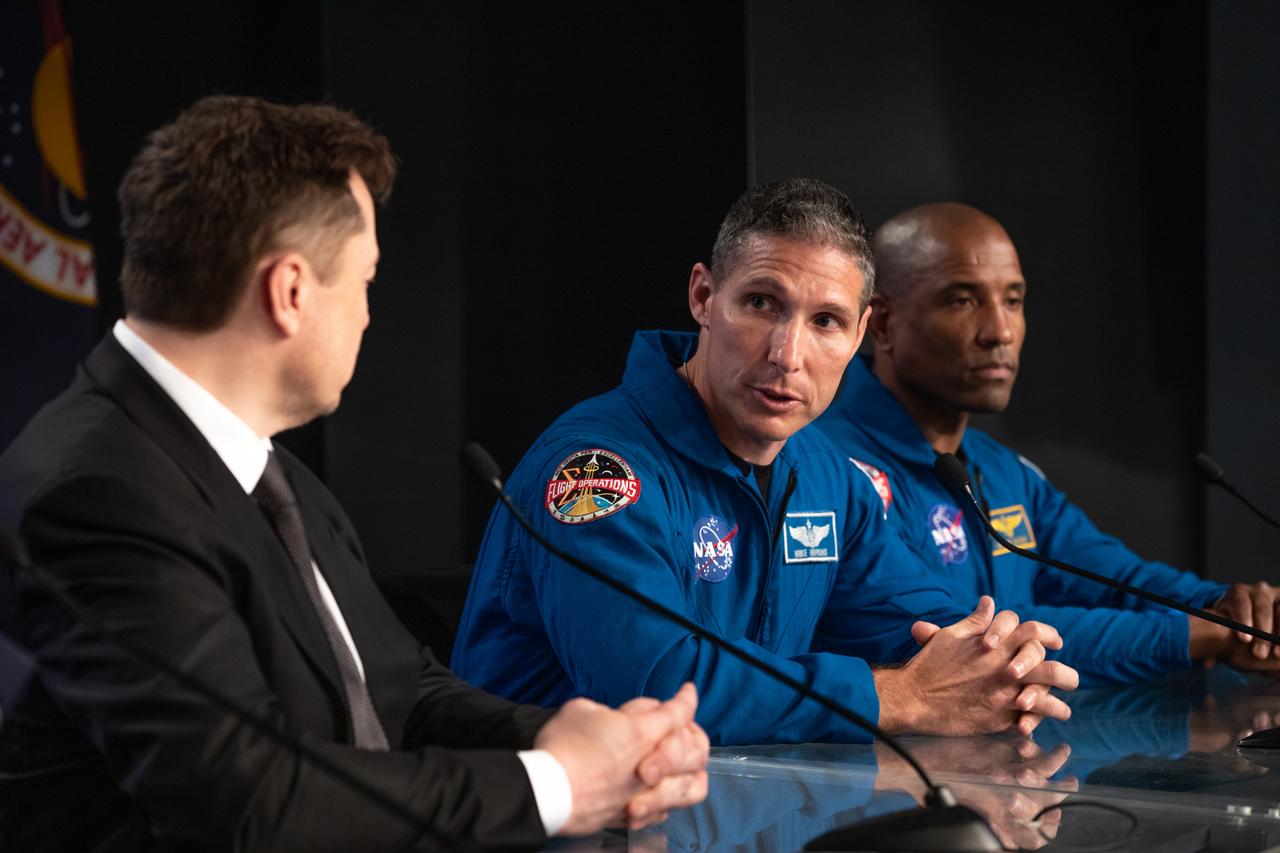
NASA astronaut Mike Hopkins, center, speaks during a briefing at the agency’s Kennedy Space Center in Florida following the uncrewed In-Flight Abort Test on Jan. 19, 2020. From left to right are SpaceX Chief Engineer Elon Musk, Hopkins, and NASA astronaut Victor Glover. During the flight test, a SpaceX Falcon 9 rocket and Crew Dragon spacecraft lifted off from Kennedy’s Launch Complex 39A and began a planned launch-abort sequence demonstrating the spacecraft’s escape capabilities. The Crew Dragon splashed down in the Atlantic Ocean as expected. The In-Flight Abort Test is a critical milestone in preparation for crewed flights to the International Space Station as part of the agency’s Commercial Crew Program.
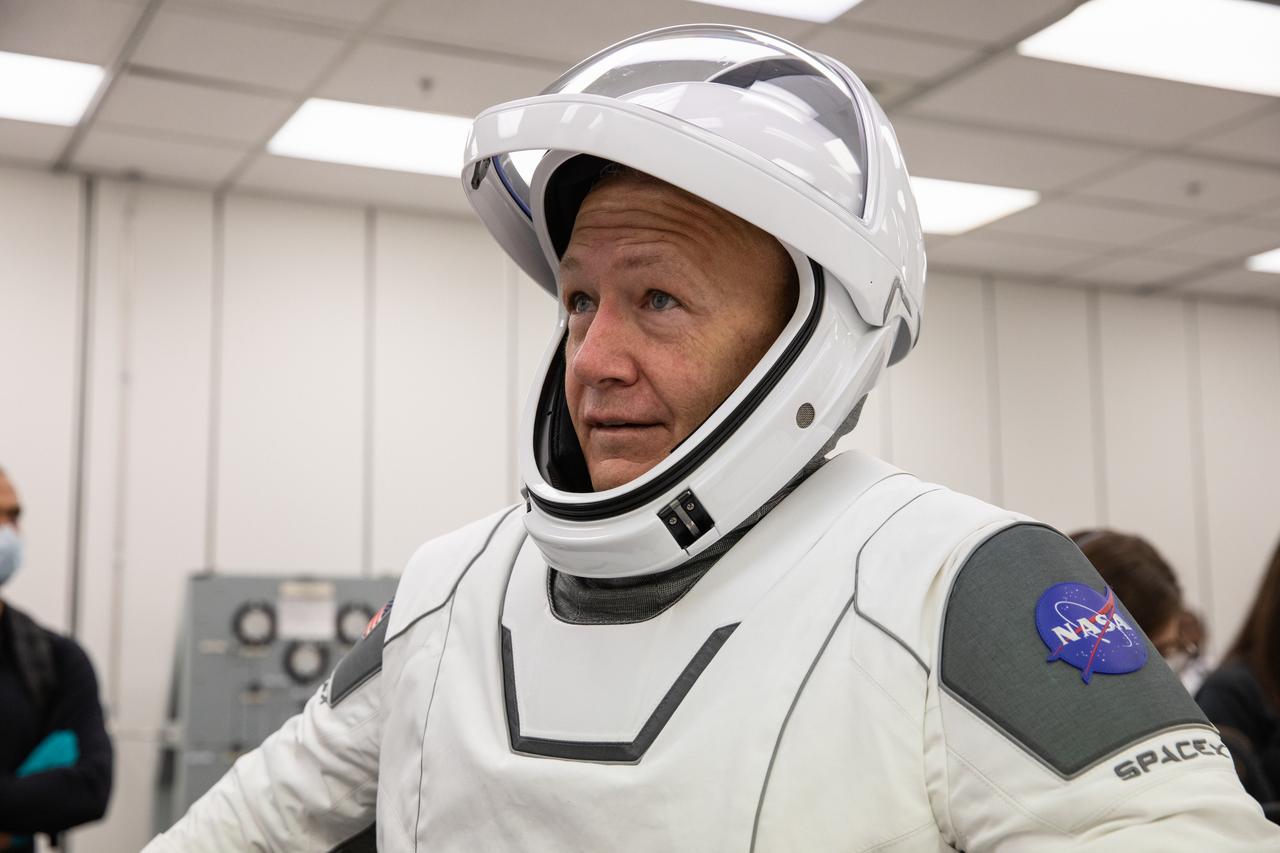
NASA astronaut Doug Hurley dons a SpaceX spacesuit in the Astronaut Crew Quarters at Kennedy Space Center in Florida on Jan. 17, 2020, during a dress rehearsal ahead of the company’s uncrewed In-Flight Abort Test. A SpaceX Falcon 9 rocket and Crew Dragon spacecraft will lift off from Launch Complex 39A on the flight test, which will demonstrate the spacecraft’s escape capabilities in preparation for crewed flights to the International Space Station as part of the agency’s Commercial Crew Program. Hurley and NASA astronaut Bob Behnken are slated to fly on the company’s first crewed mission, Demo-2.
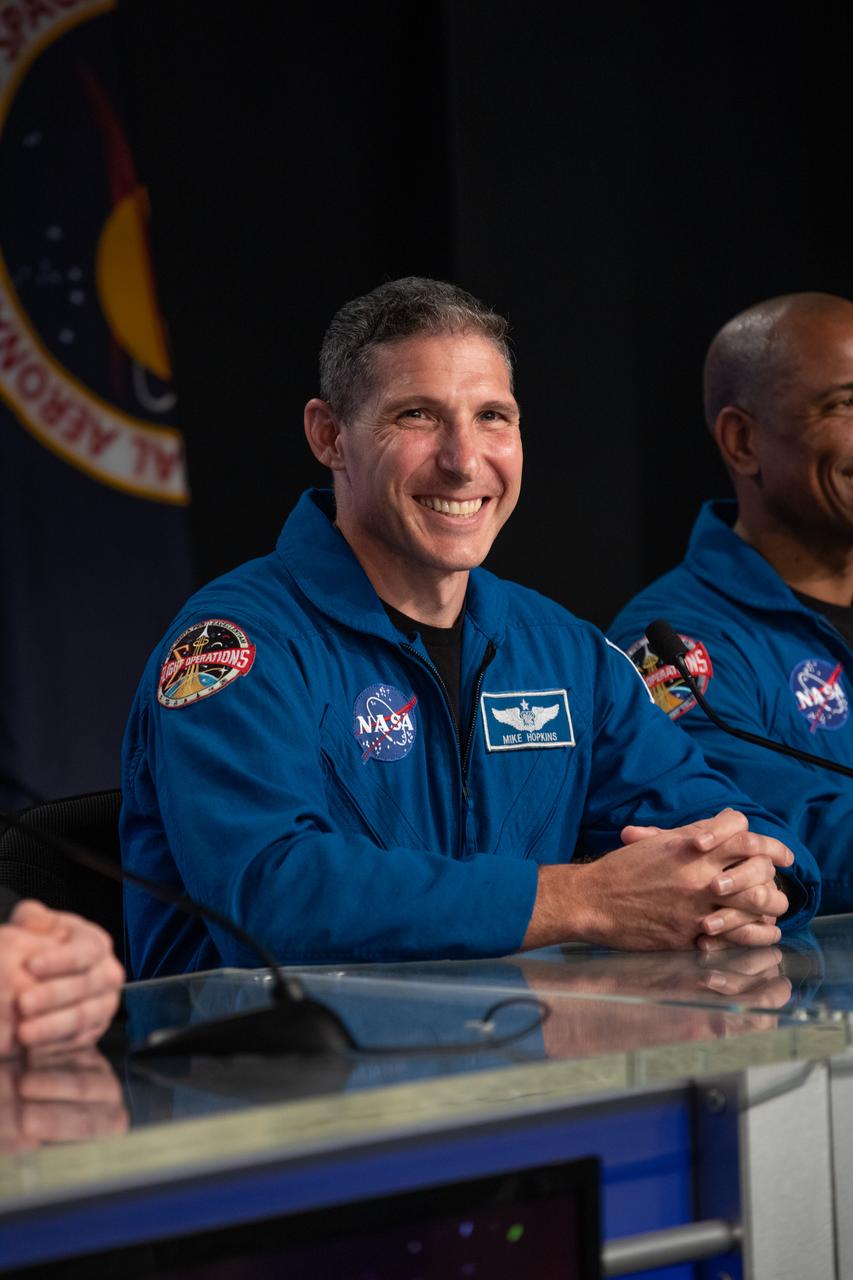
NASA astronaut Mike Hopkins participates in a briefing at the agency’s Kennedy Space Center in Florida following the company’s uncrewed In-Flight Abort Test on Jan. 19, 2020. During the flight test, a SpaceX Falcon 9 rocket and Crew Dragon spacecraft lifted off from Kennedy’s Launch Complex 39A and began a planned launch-abort sequence demonstrating the spacecraft’s escape capabilities. The Crew Dragon splashed down in the Atlantic Ocean as expected. The In-Flight Abort Test is a critical milestone in preparation for crewed flights to the International Space Station as part of the agency’s Commercial Crew Program.
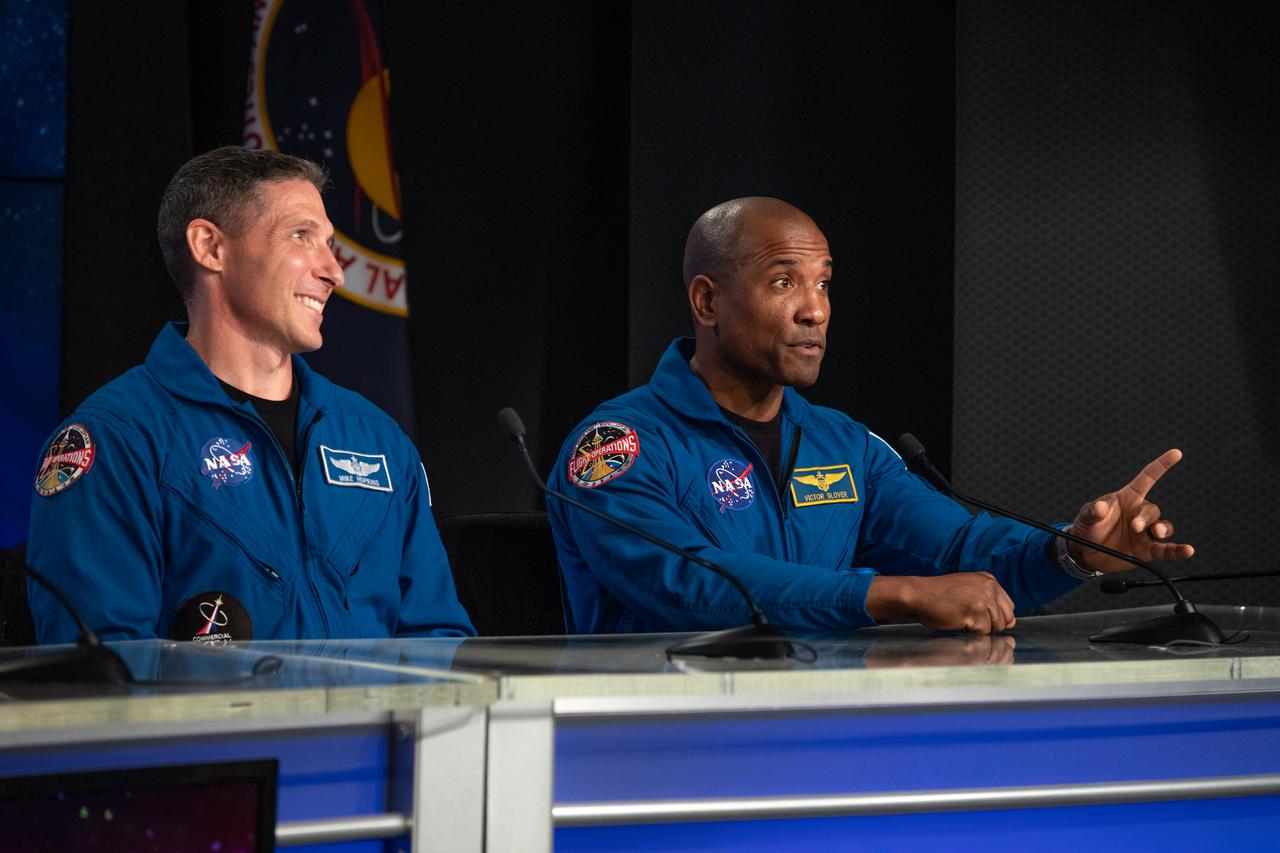
NASA astronaut Victor Glover, right, speaks during a briefing at the agency’s Kennedy Space Center in Florida following the uncrewed In-Flight Abort Test on Jan. 19, 2020. Beside Glover is NASA astronaut Mike Hopkins. During the flight test, a SpaceX Falcon 9 rocket and Crew Dragon spacecraft lifted off from Kennedy’s Launch Complex 39A and began a planned launch-abort sequence demonstrating the spacecraft’s escape capabilities. The Crew Dragon splashed down in the Atlantic Ocean as expected. The In-Flight Abort Test is a critical milestone in preparation for crewed flights to the International Space Station as part of the agency’s Commercial Crew Program.
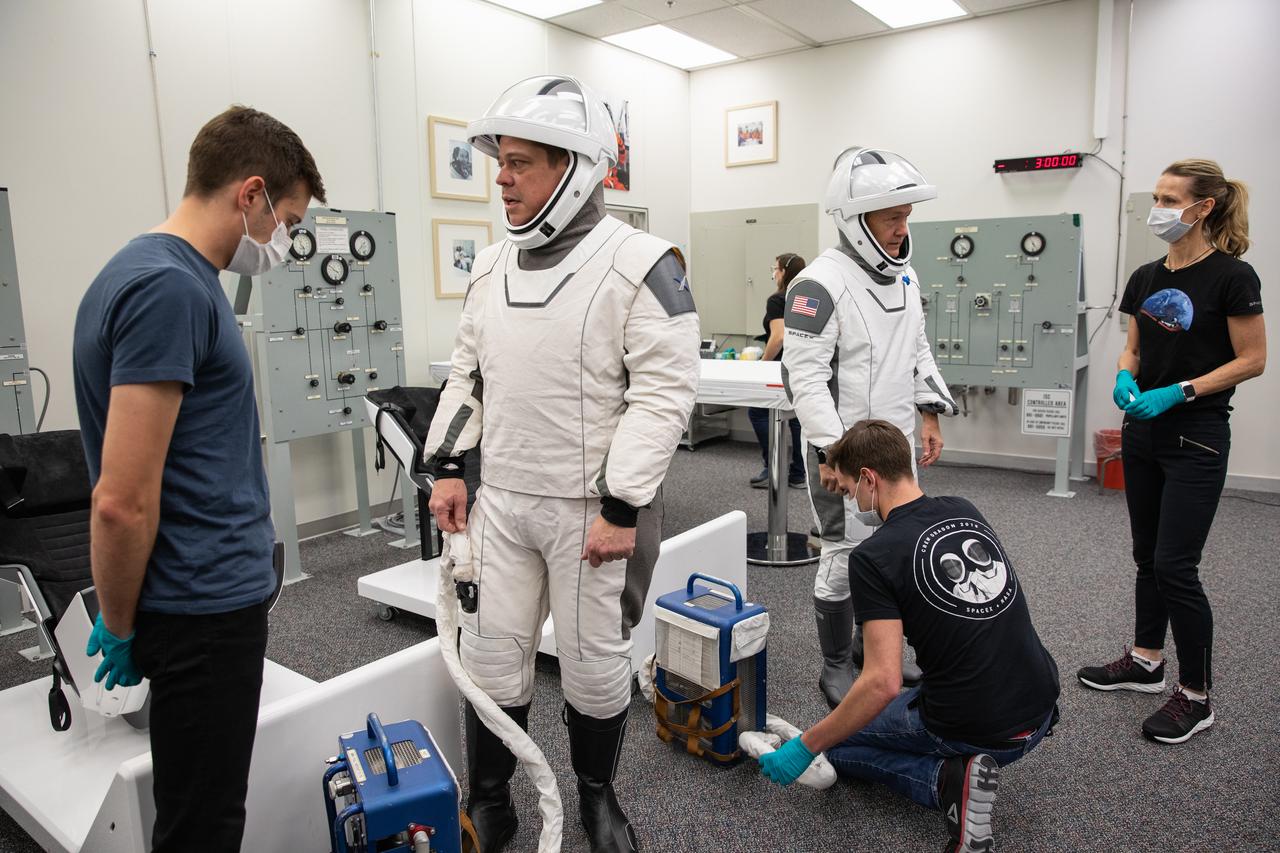
NASA astronauts Bob Behnken, foreground, and Doug Hurley don SpaceX spacesuits in the Astronaut Crew Quarters at Kennedy Space Center in Florida on Jan. 17, 2020, during a dress rehearsal ahead of the company’s uncrewed In-Flight Abort Test. A SpaceX Falcon 9 rocket and Crew Dragon spacecraft will lift off from Launch Complex 39A on the flight test, which will demonstrate the spacecraft’s escape capabilities in preparation for crewed flights to the International Space Station as part of the agency’s Commercial Crew Program. Behnken and Hurley are slated to fly on the company’s first crewed mission, Demo-2.
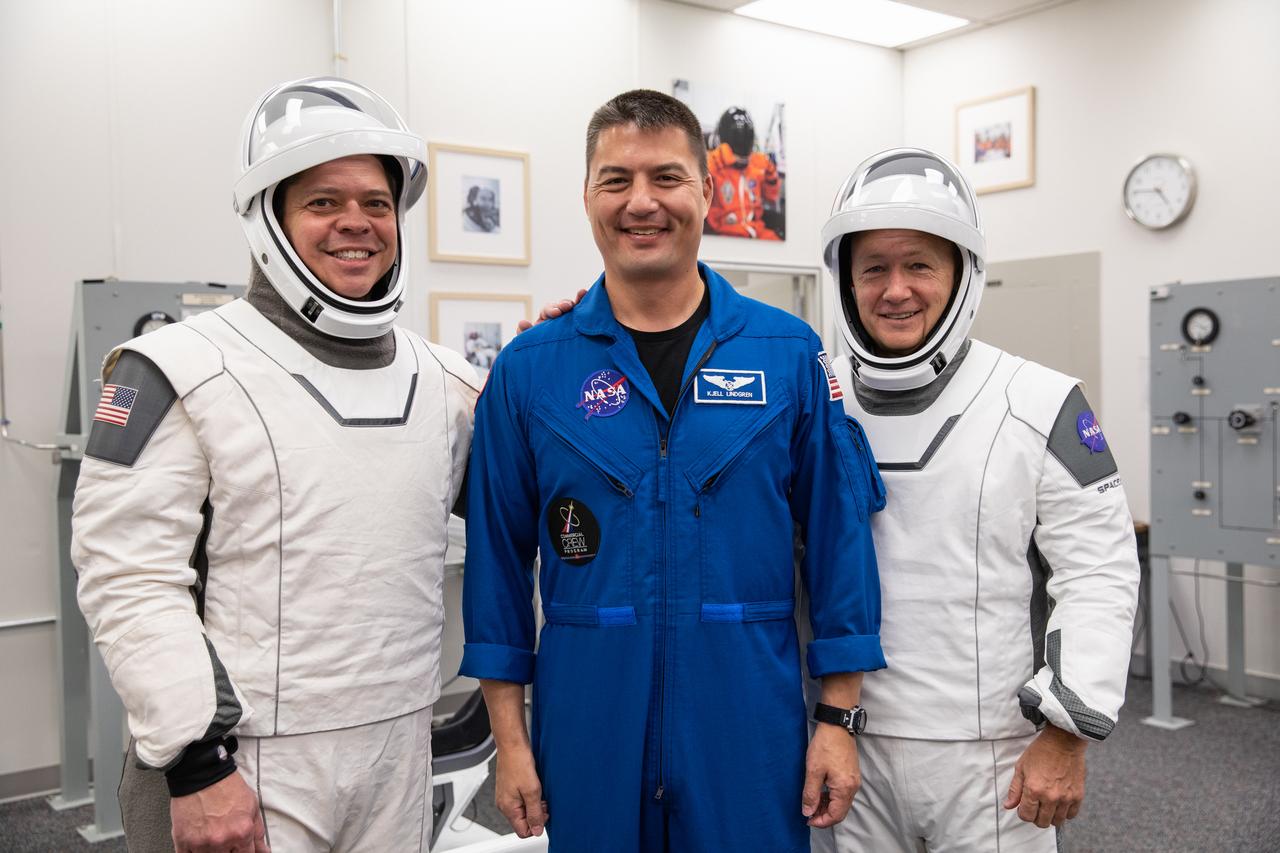
From left to right, NASA astronauts Bob Behnken, Kjell Lindgren and Doug Hurley pause for a photo in the Astronaut Crew Quarters at Kennedy Space Center in Florida on Jan. 17, 2020, during a dress rehearsal ahead of the SpaceX uncrewed In-Flight Abort Test. Behken and Hurley are wearing SpaceX spacesuits. A SpaceX Falcon 9 rocket and Crew Dragon spacecraft will lift off from Launch Complex 39A on the flight test, which will demonstrate the spacecraft’s escape capabilities in preparation for crewed flights to the International Space Station as part of the agency’s Commercial Crew Program. Behnken and Hurley are slated to fly on the company’s first crewed mission, Demo-2.
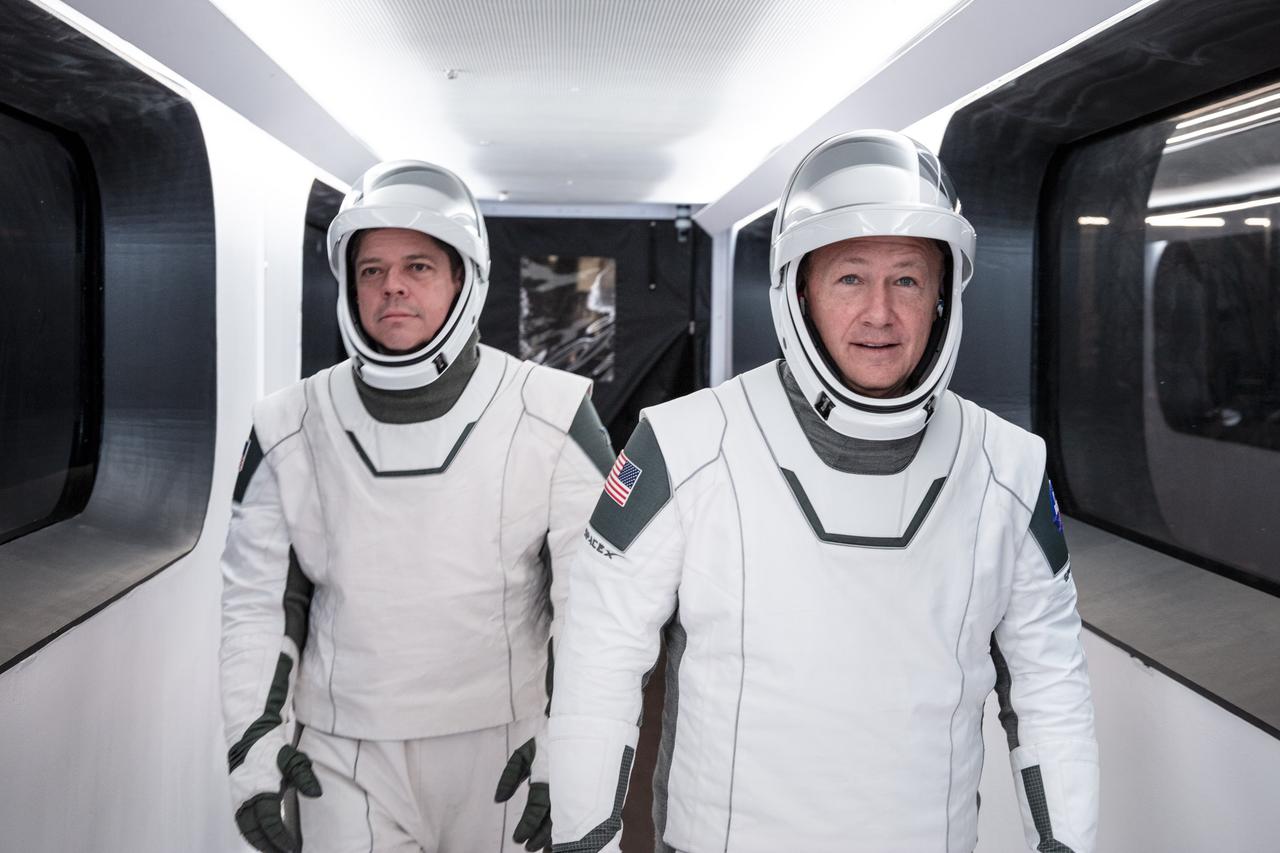
NASA astronauts Bob Behnken, left, and Doug Hurley, wearing SpaceX spacesuits, walk through the Crew Access Arm connecting the launch tower to the SpaceX Crew Dragon spacecraft during a dress rehearsal at NASA’s Kennedy Space Center in Florida on Jan. 17, 2020. A SpaceX Falcon 9 rocket and Crew Dragon spacecraft stand on the launch pad at Launch Complex 39A ahead of the company’s uncrewed In-Flight Abort Test. The flight test will demonstrate the spacecraft’s escape capabilities in preparation for crewed flights to the International Space Station as part of the agency’s Commercial Crew Program. Behnken and Hurley are slated to fly on the company’s first crewed mission, Demo-2.
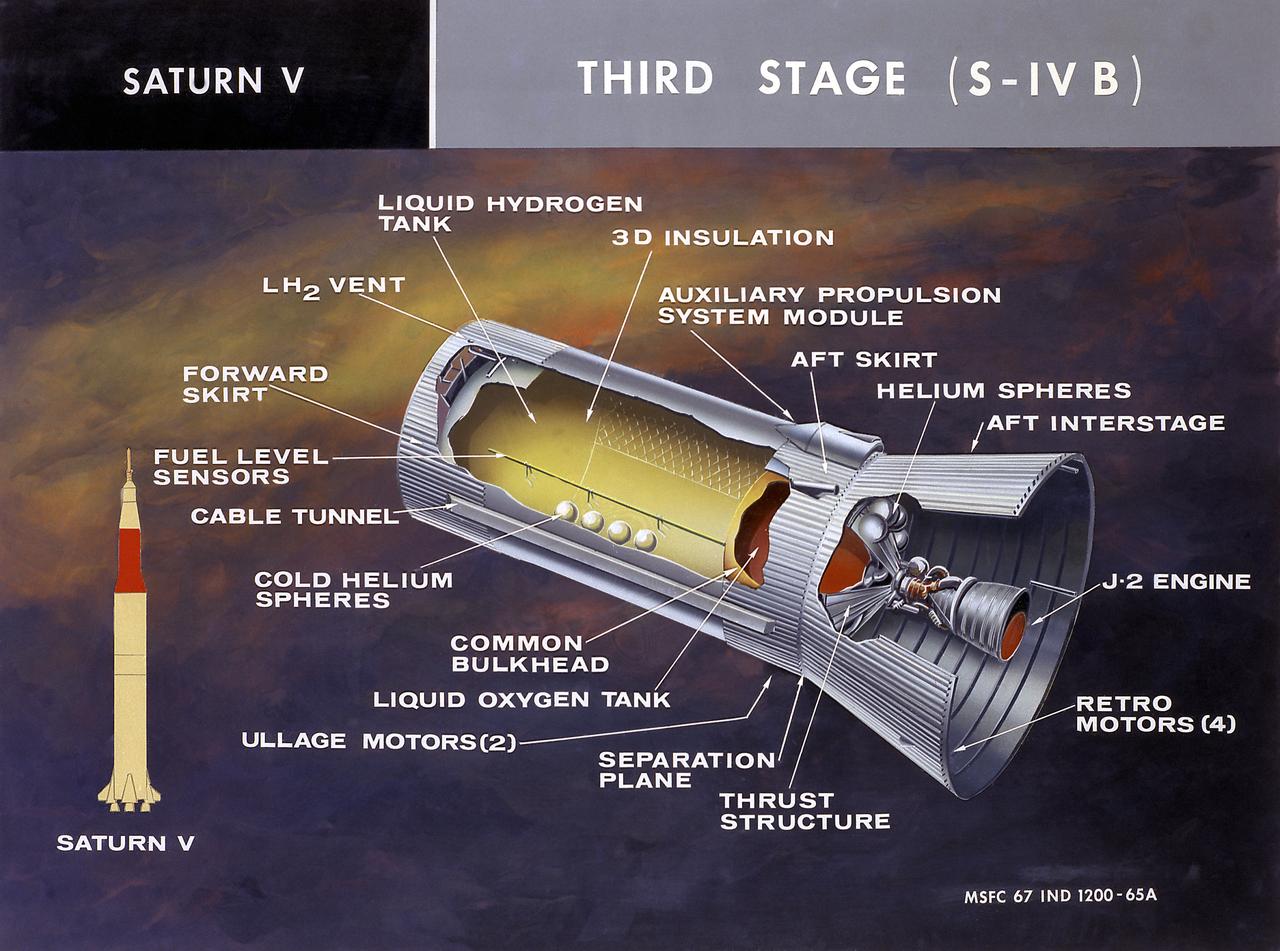
This cutaway illustration shows the Saturn V S-IVB (third) stage with the callouts of its major components. When the S-II (second) stage of the powerful Saturn V rocket burnt out and was separated the remaining units approached orbit around the Earth. Injection into the desired orbit was attaineded as the S-IVB (third stage) was ignited and burnt. The S-IVB stage was powered by a single 200,000-pound thrust J-2 engine and had a re-start capability built in for its J-2 engine. The S-IVB restarted to speed the Apollo spacecraft to escape velocity injecting it and the astronauts into a moon trajectory.
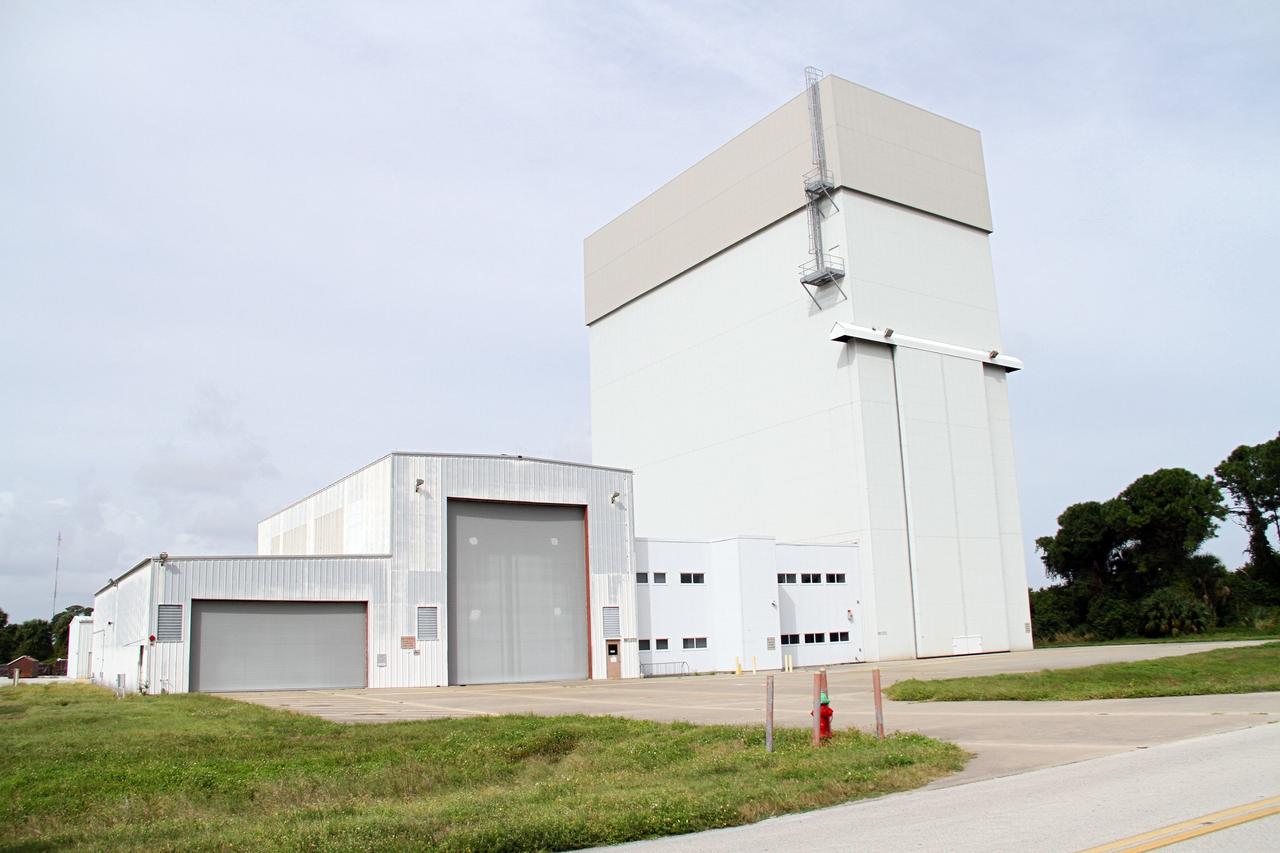
CAPE CANAVERAL, Fla. –The Launch Abort System Facility, or LASF, formerly known as the Canister Rotation Facility, is being outfitted and prepared for use by NASA's Orion Program to process the Launch Abort System, a multi-story rocket that will be positioned atop an Orion capsule to provide an escape system for astronauts during countdown and launch into orbit. The structure, the industrial area of NASA's Kennedy Space Center in Florida, served the Space Shuttle Program by standing the payload canister up so it could be taken to the launch pad and its contents transferred into the shuttle's cargo bay. Photo credit: NASA/Cory Huston