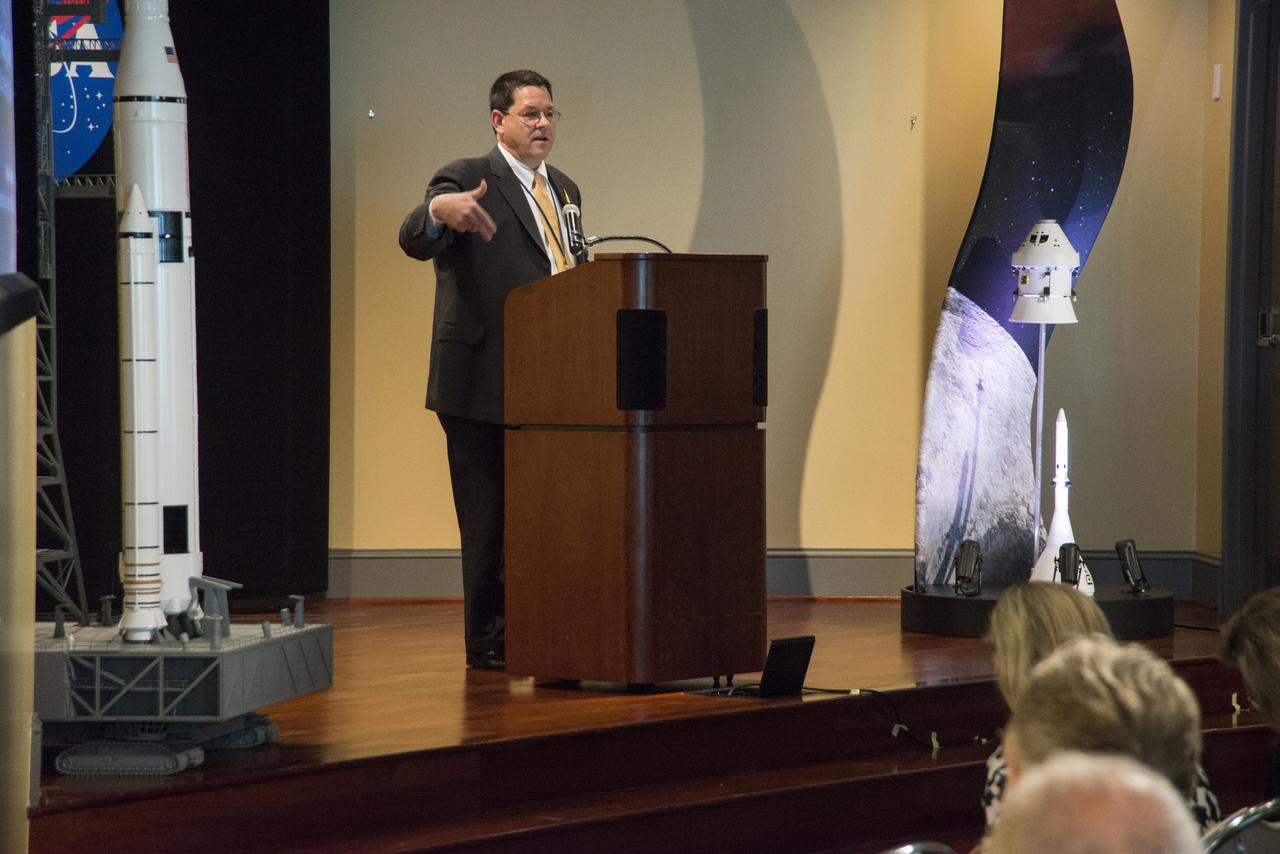
ROY MALONE, DIRECTOR, NASA MICHOUD ASSEMBLY FACILITY, ADDRESSES THE SMBA ESD-HUB ZONE EVENT AT THE HUNTSVILLE MUSEUM OF ART
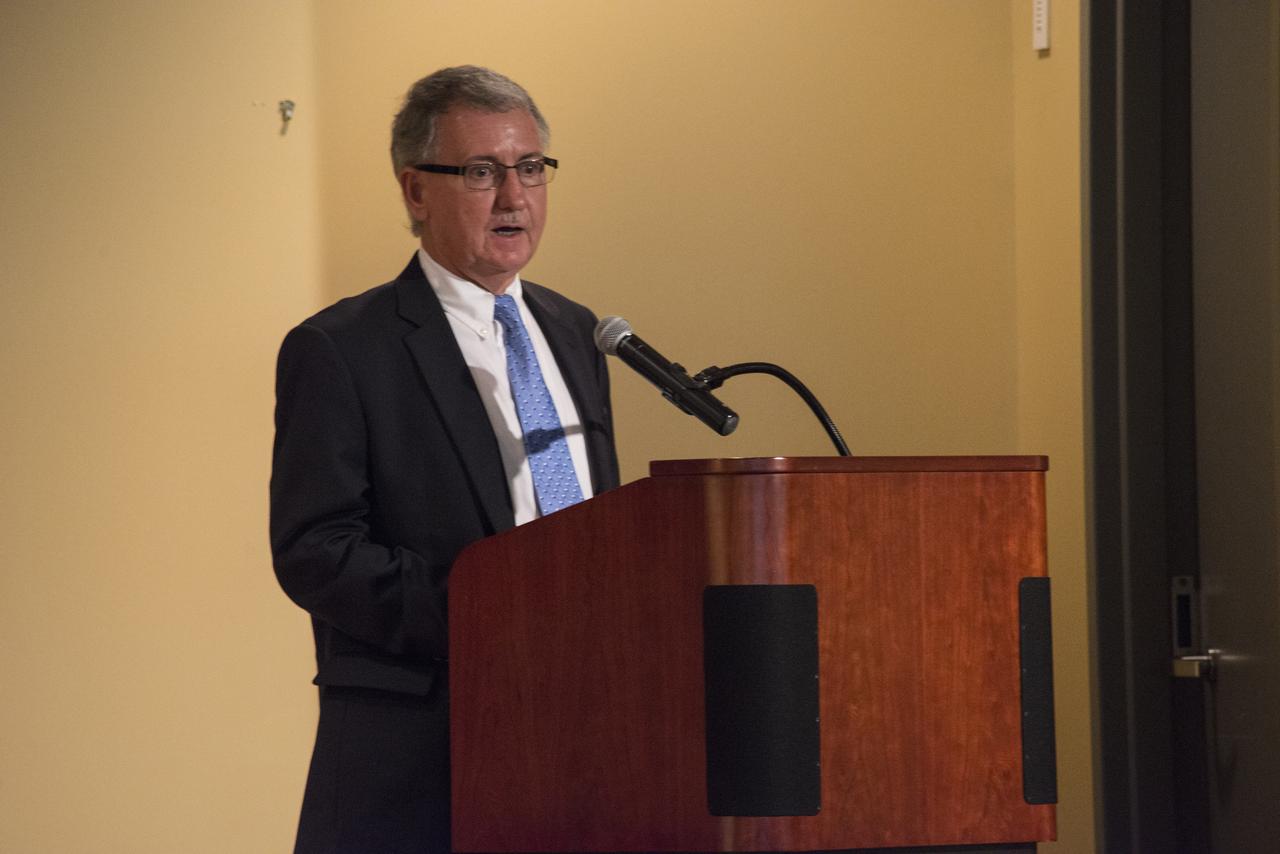
DAVID BROCK, SMALL BUSINESS SPECIALIST AT MSFC, ADDRESSES THE ATTENDEES AT THE SMBA ESD-HUB ZONE EVENT AT THE HUNTSVILLE MUSEUM OF ART.
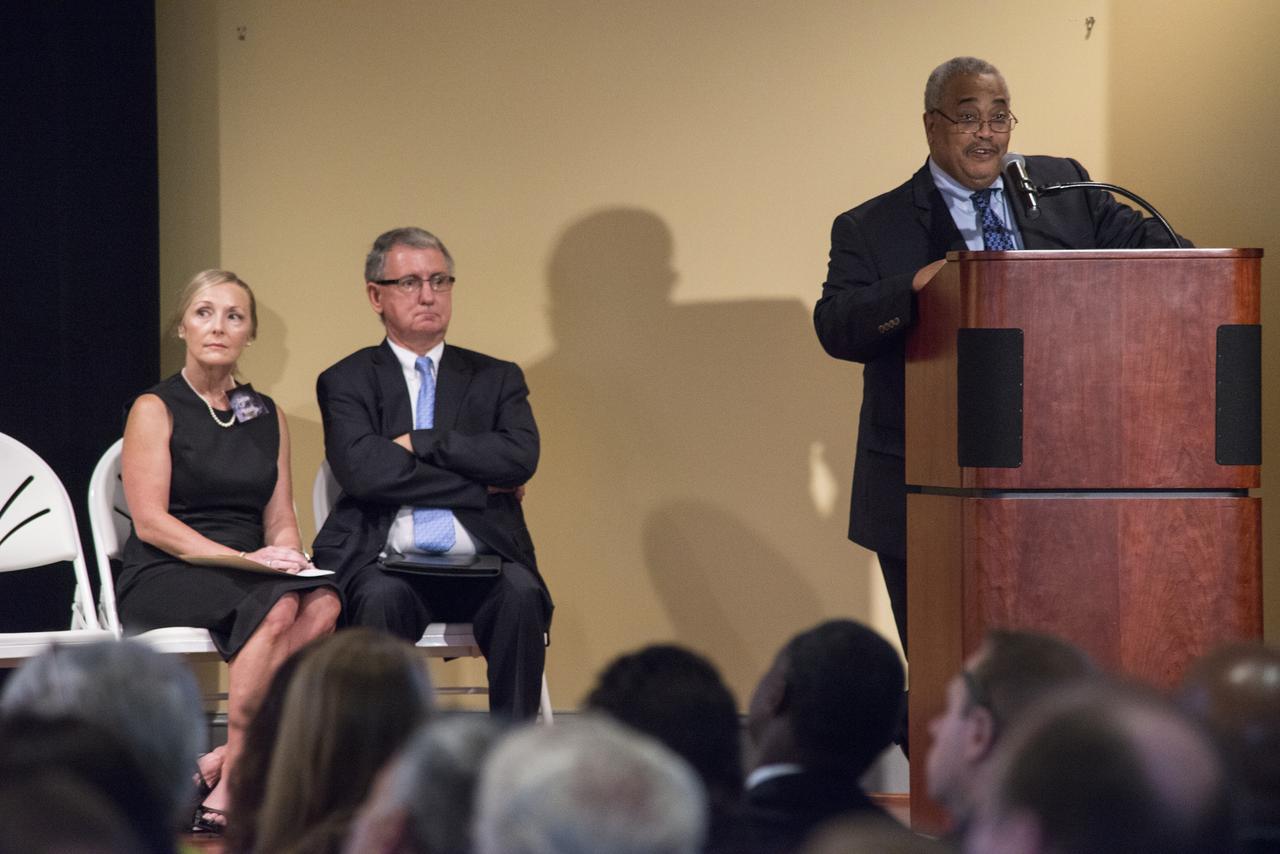
GLENN DELGADO, ASSOCIATE ADMINISTRATOR OFFICE OF SMALL BUSINESS PROGRAMS, NASA HQ, ADDRESSES THE ATTENDEES AT THE SMBA ESD-HUB ZONE EVENT AT THE HUNTSVILLE MUSEUM OF ART.
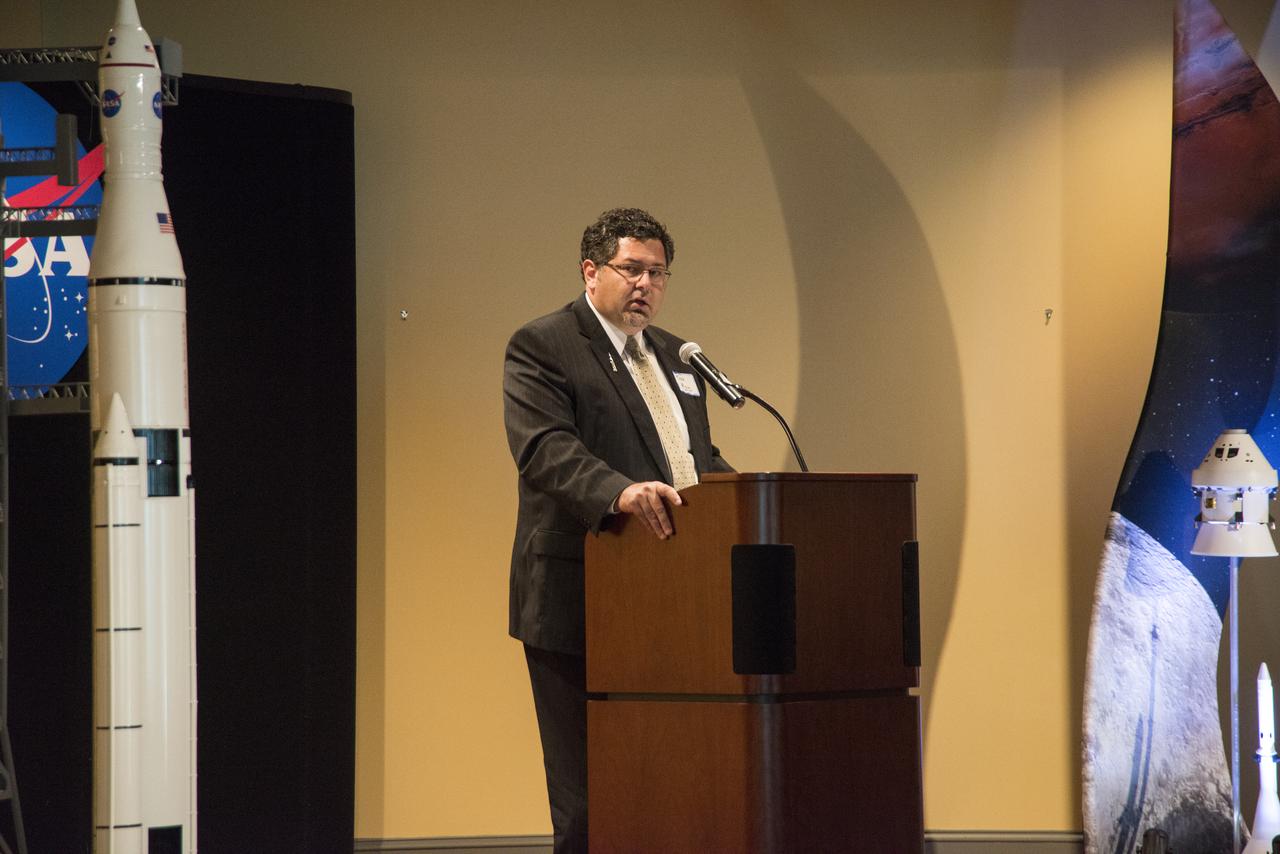
TODD MAY, PROGRAM MANAGER, SPACE LAUNCH SYSTEMS AT NASA, ADDRESSES THE SMBA ESD-HUB ZONE EVENT AT THE HUNTSVILLE MUSEUM OF ART.
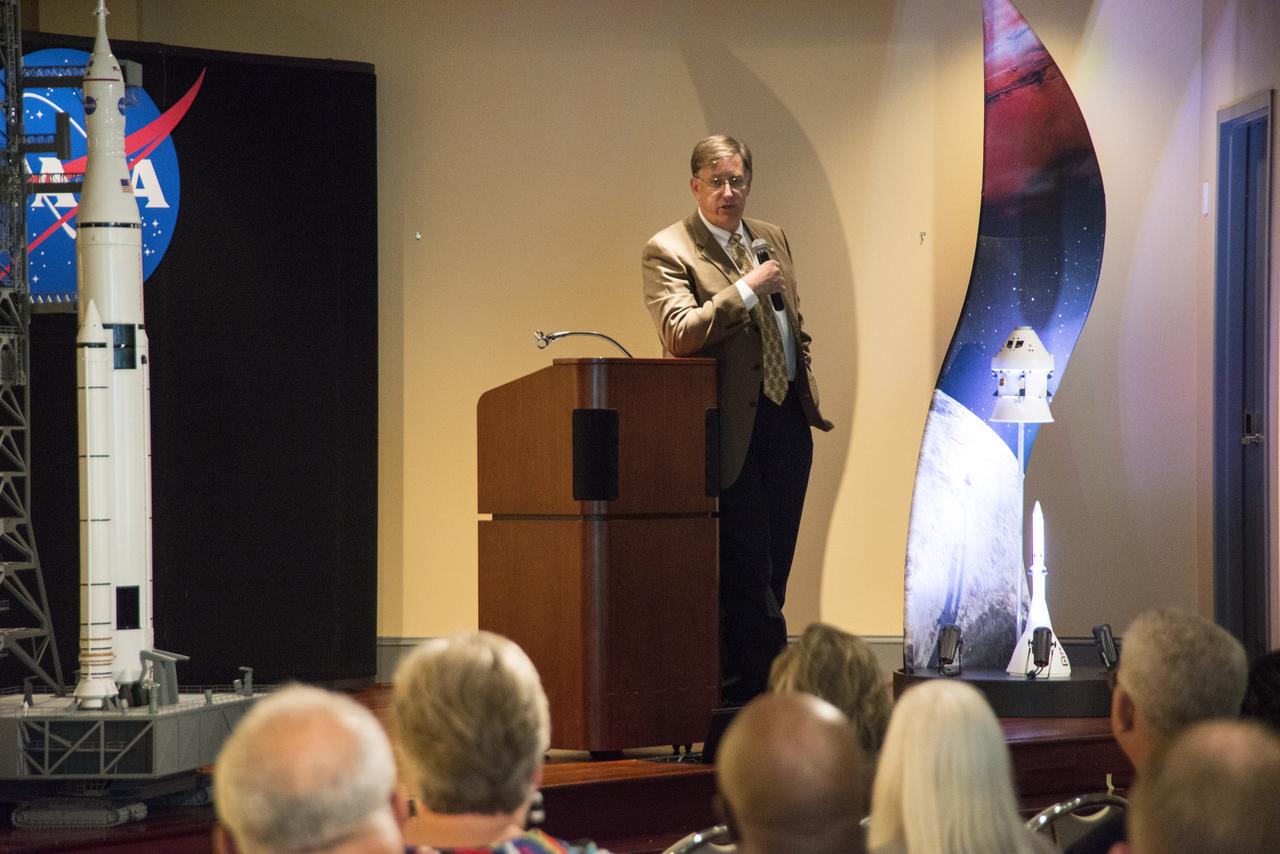
DAN DUMBACHER, DEPUTY ASSOCIATE ADMINISTRATOR FOR EXPLORATION SYSTEMS DEVELOPMENT, ADDRESSES THE SMBA ESD-HUB ZONE EVENT AT THE HUNTSVILLE MUSEUM OF ART.
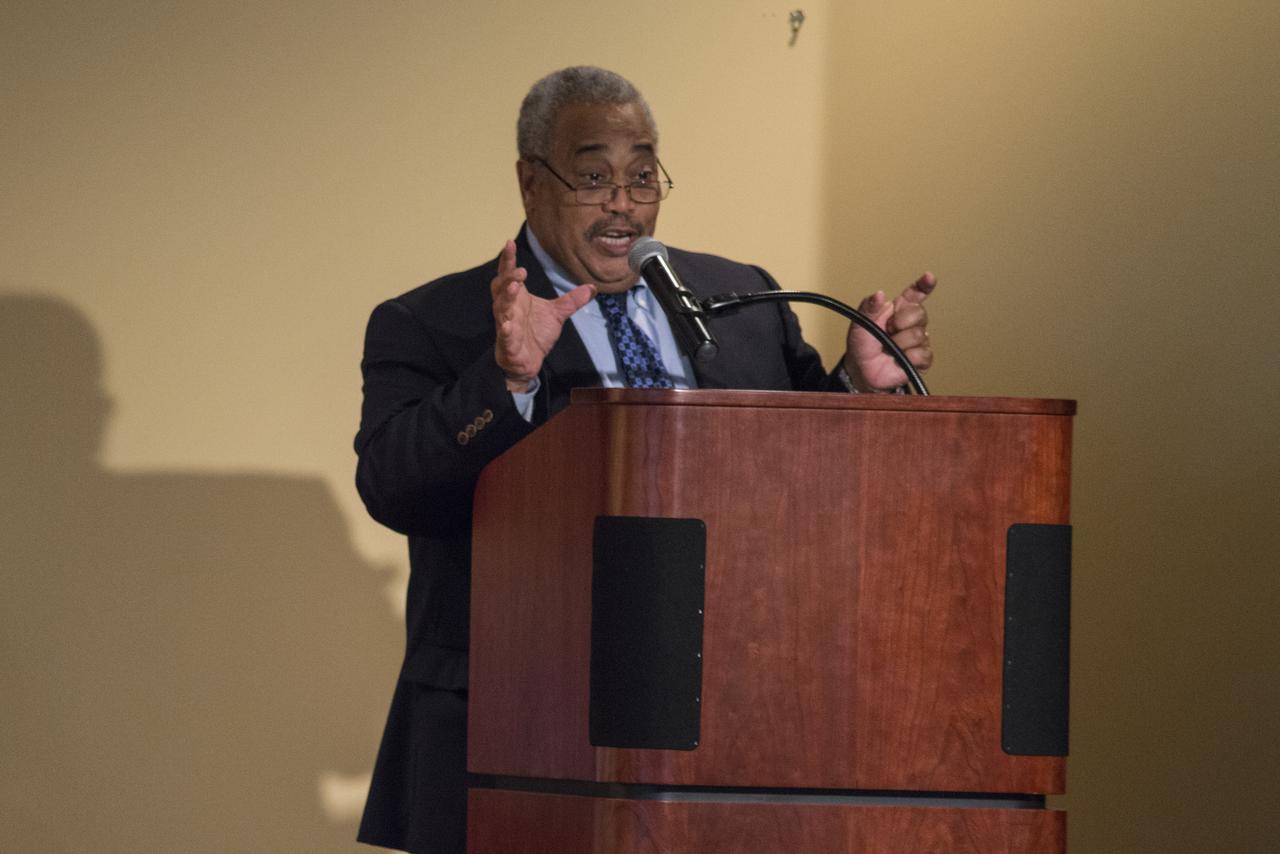
GLENN DELGADO, ASSOCIATE ADMINISTRATOR OFFICE OF SMALL BUSINESS PROGRAMS, NASA HQ, ADDRESSES THE ATTENDEES AT THE SMBA ESD-HUB ZONE EVENT AT THE HUNTSVILLE MUSEUM OF ART.
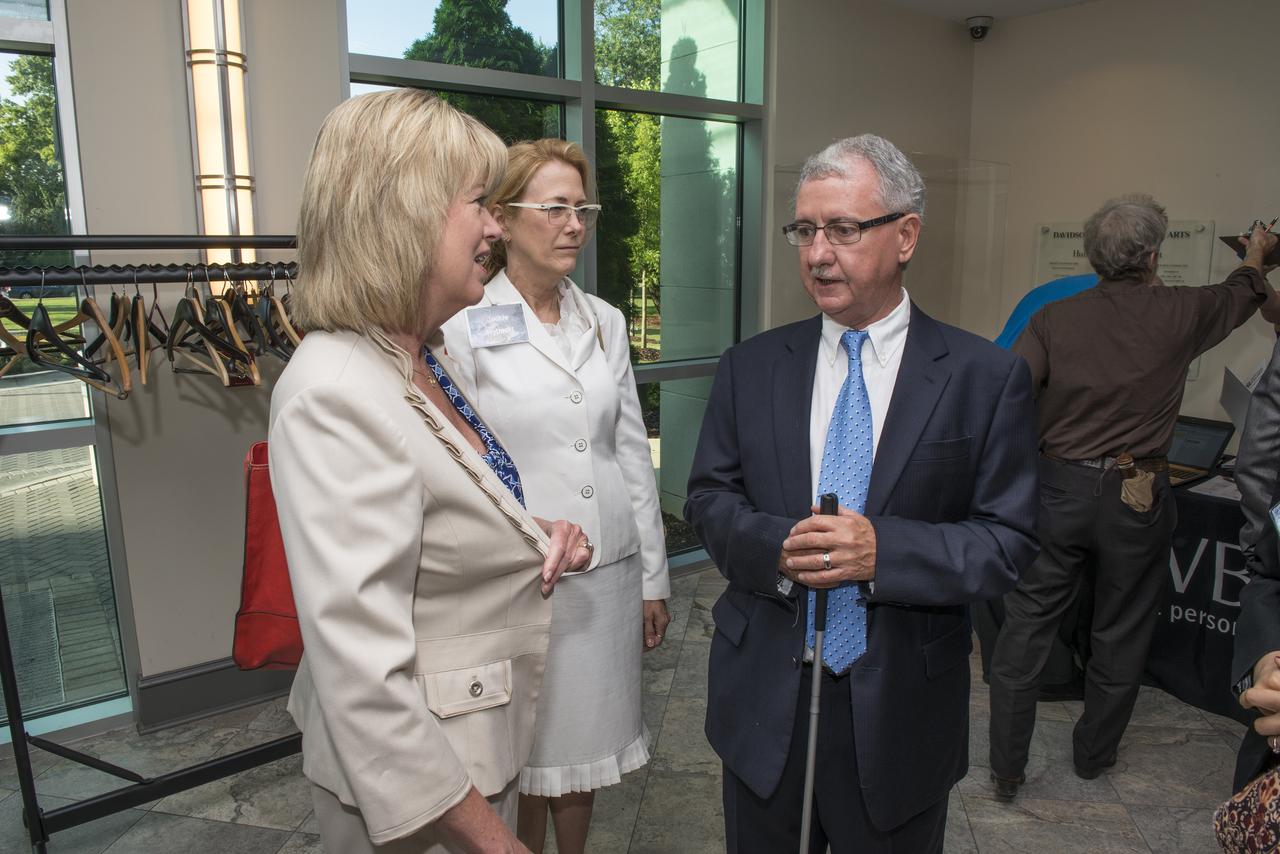
DAVID BROCK, SMALL BUSINESS SPECIALIST AT MSFC, TALKS WITH TERESA VANHOOSER AND JACKIE RYBACKI, AT THE SMBA ESD-HUB ZONE EVENT AT THE HUNTSVILLE MUSEUM OF ART.
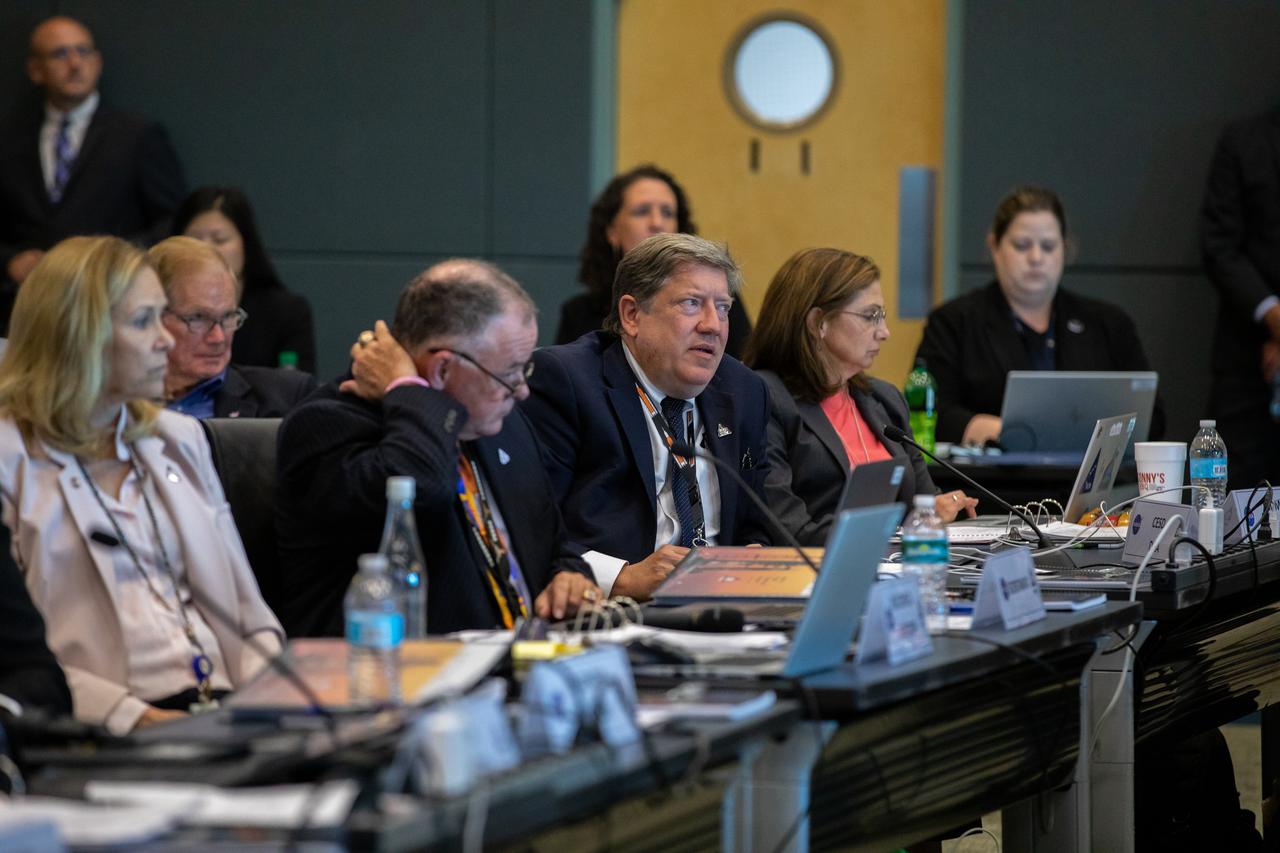
Artemis I managers conduct a Flight Readiness Review (FRR) on Aug. 22, 2022, at NASA’s Kennedy Space Center in Florida. The FRR is an in-depth assessment of the readiness of the agency’s Space Launch System and Orion spacecraft to support the uncrewed flight of Artemis I on its mission beyond the Moon and return to Earth. The meeting will conclude later in the day with a poll of all managers. Artemis I is scheduled to launch at 8:33 a.m. EDT on Aug. 29, 2022, from Kennedy’s Launch Complex 39B. The first in a series of increasingly complex missions, Artemis I will provide a foundation for human deep space exploration and demonstrate our commitment and capability to extend human presence to the Moon and beyond. The primary goal of Artemis I is to thoroughly test the integrated systems before crewed missions by operating the spacecraft in a deep space environment, testing Orion’s heat shield, and recovering the crew module after reentry, descent, and splashdown.
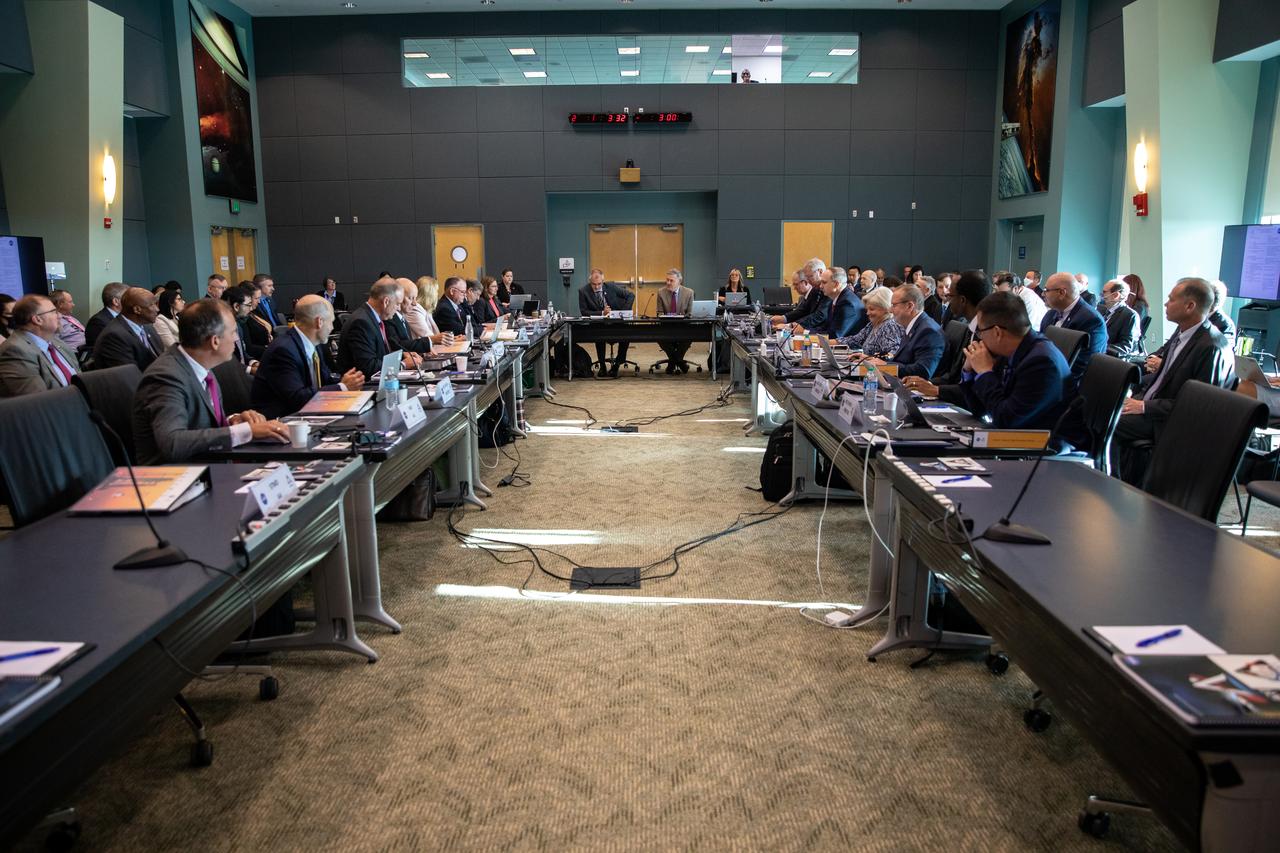
Artemis I managers conduct a Flight Readiness Review (FRR) on Aug. 22, 2022, at NASA’s Kennedy Space Center in Florida. The FRR is an in-depth assessment of the readiness of the agency’s Space Launch System and Orion spacecraft to support the uncrewed flight of Artemis I on its mission beyond the Moon and return to Earth. The meeting will conclude later in the day with a poll of all managers. Artemis I is scheduled to launch at 8:33 a.m. EDT on Aug. 29, 2022, from Kennedy’s Launch Complex 39B. The first in a series of increasingly complex missions, Artemis I will provide a foundation for human deep space exploration and demonstrate our commitment and capability to extend human presence to the Moon and beyond. The primary goal of Artemis I is to thoroughly test the integrated systems before crewed missions by operating the spacecraft in a deep space environment, testing Orion’s heat shield, and recovering the crew module after reentry, descent, and splashdown.
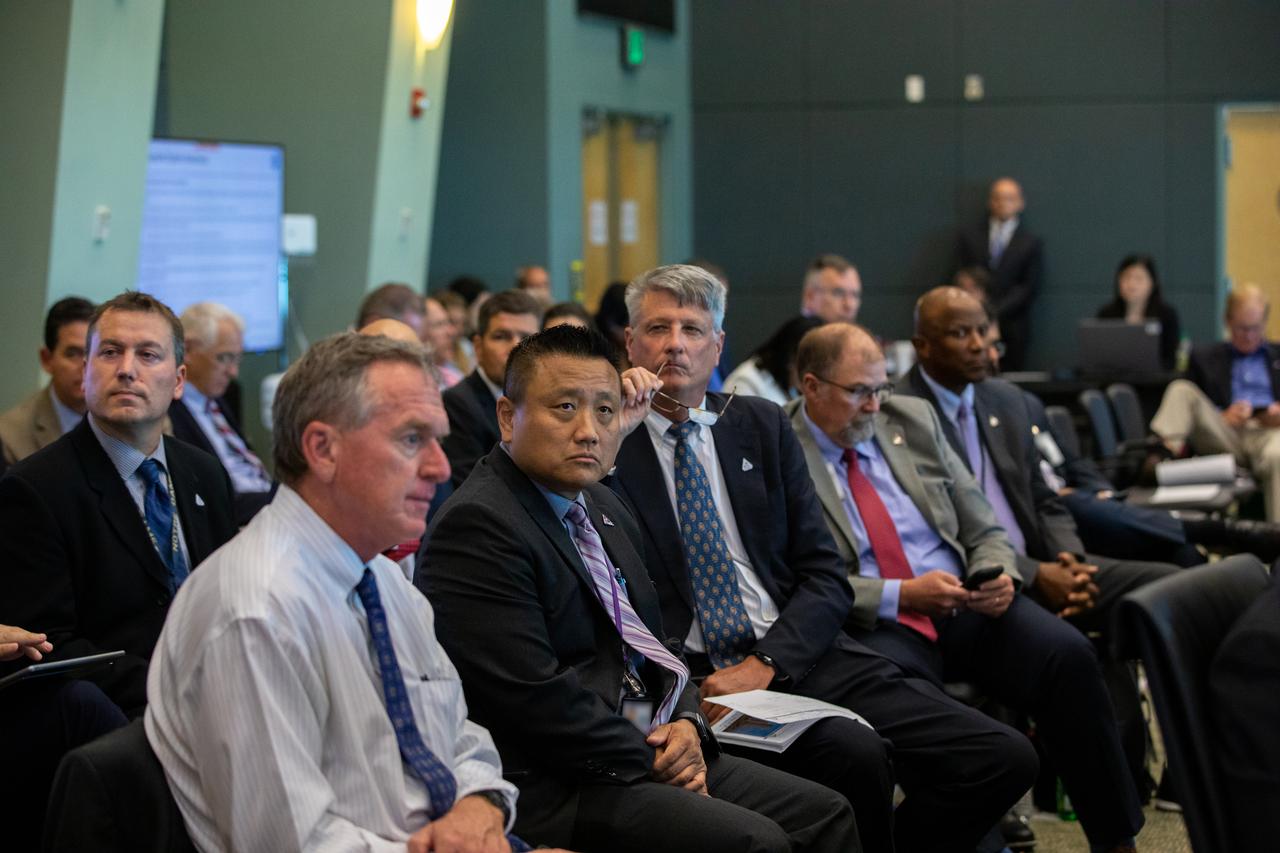
Artemis I managers conduct a Flight Readiness Review (FRR) on Aug. 22, 2022, at NASA’s Kennedy Space Center in Florida. The FRR is an in-depth assessment of the readiness of the agency’s Space Launch System and Orion spacecraft to support the uncrewed flight of Artemis I on its mission beyond the Moon and return to Earth. The meeting will conclude later in the day with a poll of all managers. Artemis I is scheduled to launch at 8:33 a.m. EDT on Aug. 29, 2022, from Kennedy’s Launch Complex 39B. The first in a series of increasingly complex missions, Artemis I will provide a foundation for human deep space exploration and demonstrate our commitment and capability to extend human presence to the Moon and beyond. The primary goal of Artemis I is to thoroughly test the integrated systems before crewed missions by operating the spacecraft in a deep space environment, testing Orion’s heat shield, and recovering the crew module after reentry, descent, and splashdown.
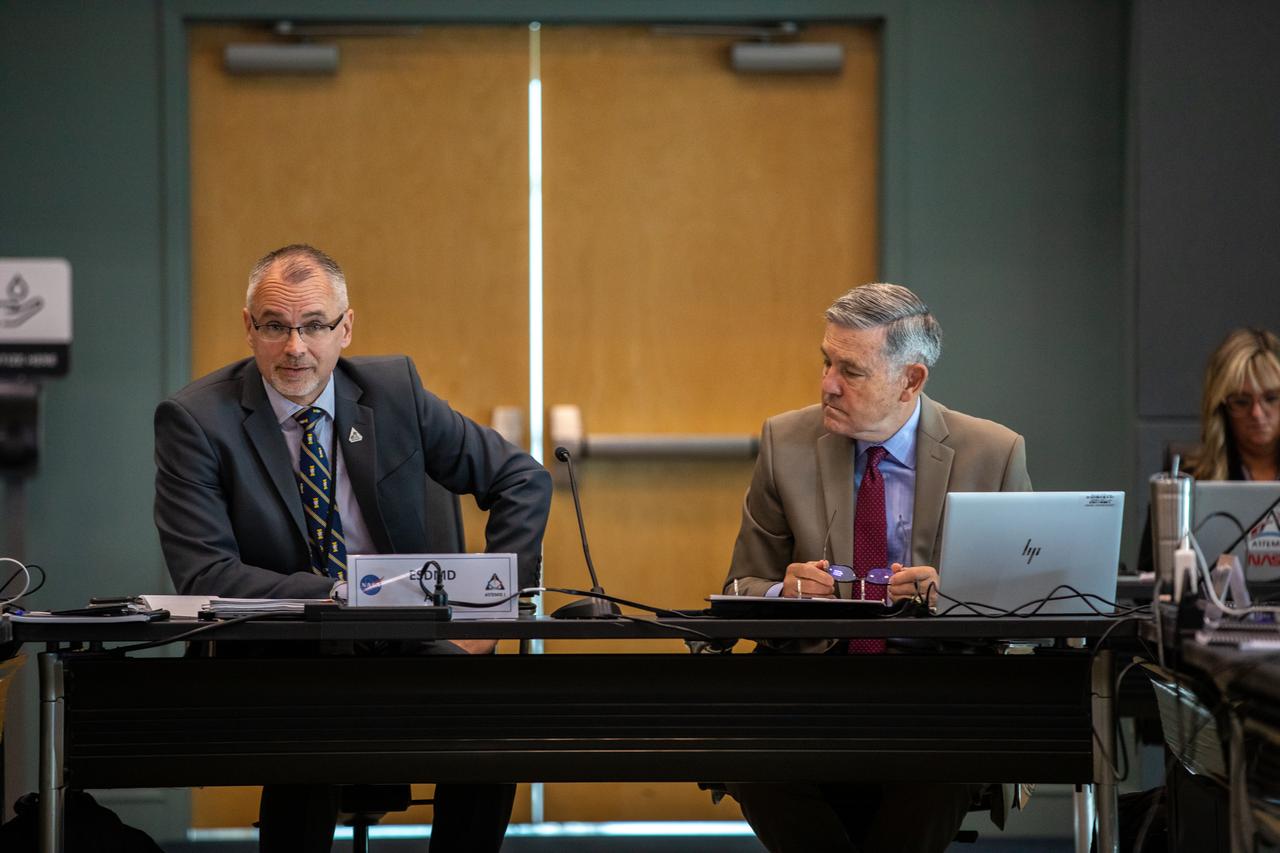
Artemis I managers conduct a Flight Readiness Review (FRR) on Aug. 22, 2022, at NASA’s Kennedy Space Center in Florida. From left are Jim Free, associate administrator for Exploration Systems Development Mission Directorate, NASA Headquarters; and Bob Cabana, NASA associate administrator. The FRR is an in-depth assessment of the readiness of the agency’s Space Launch System and Orion spacecraft to support the uncrewed flight of Artemis I on its mission beyond the Moon and return to Earth. The meeting will conclude later in the day with a poll of all managers. Artemis I is scheduled to launch at 8:33 a.m. EDT on Aug. 29, 2022, from Kennedy’s Launch Complex 39B. The first in a series of increasingly complex missions, Artemis I will provide a foundation for human deep space exploration and demonstrate our commitment and capability to extend human presence to the Moon and beyond. The primary goal of Artemis I is to thoroughly test the integrated systems before crewed missions by operating the spacecraft in a deep space environment, testing Orion’s heat shield, and recovering the crew module after reentry, descent, and splashdown.

Artemis I managers conduct a Flight Readiness Review (FRR) on Aug. 22, 2022, at NASA’s Kennedy Space Center in Florida. The FRR is an in-depth assessment of the readiness of the agency’s Space Launch System and Orion spacecraft to support the uncrewed flight of Artemis I on its mission beyond the Moon and return to Earth. The meeting will conclude later in the day with a poll of all managers. Artemis I is scheduled to launch at 8:33 a.m. EDT on Aug. 29, 2022, from Kennedy’s Launch Complex 39B. The first in a series of increasingly complex missions, Artemis I will provide a foundation for human deep space exploration and demonstrate our commitment and capability to extend human presence to the Moon and beyond. The primary goal of Artemis I is to thoroughly test the integrated systems before crewed missions by operating the spacecraft in a deep space environment, testing Orion’s heat shield, and recovering the crew module after reentry, descent, and splashdown.
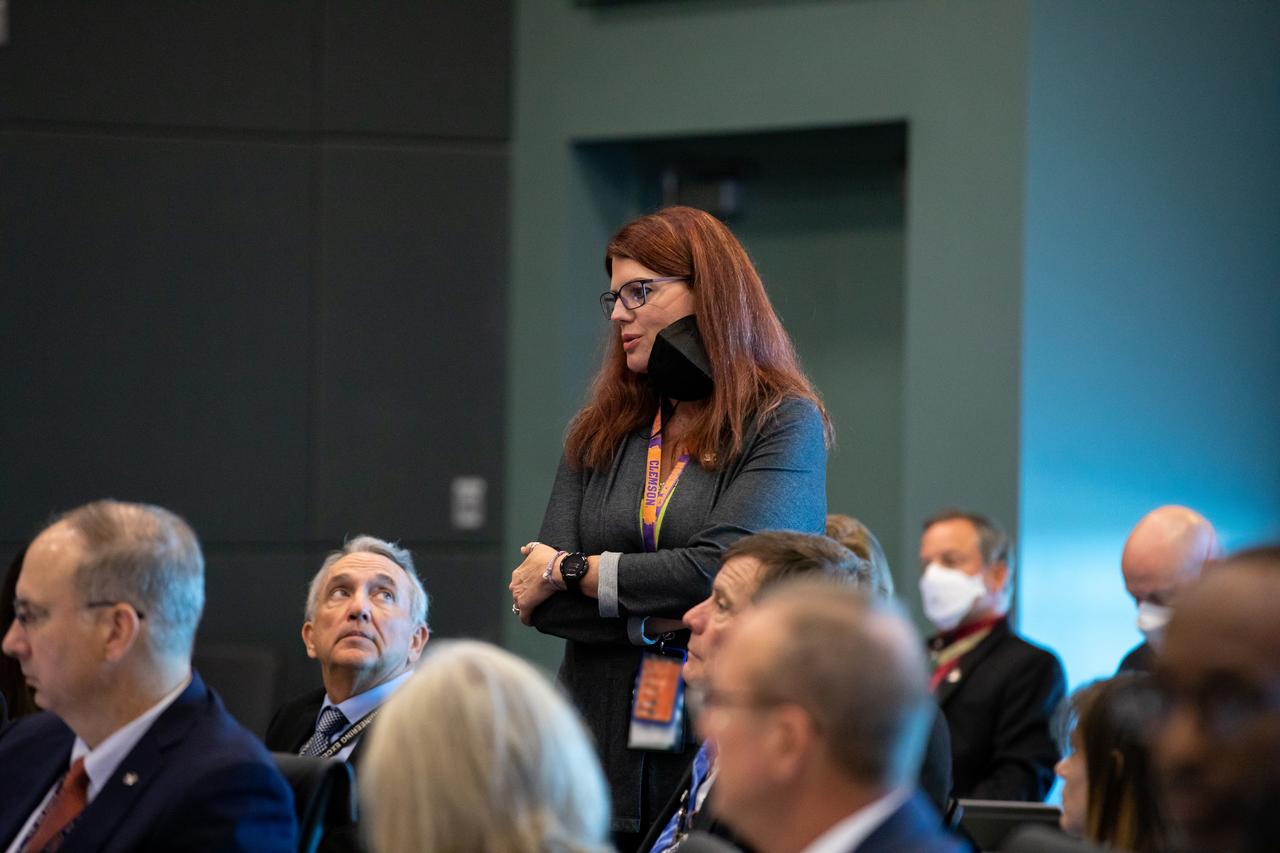
Artemis I managers conduct a Flight Readiness Review (FRR) on Aug. 22, 2022, at NASA’s Kennedy Space Center in Florida. In view, standing, is Artemis I Launch Director Charlie Blackwell-Thompson. The FRR is an in-depth assessment of the readiness of the agency’s Space Launch System and Orion spacecraft to support the uncrewed flight of Artemis I on its mission beyond the Moon and return to Earth. The meeting will conclude later in the day with a poll of all managers. Artemis I is scheduled to launch at 8:33 a.m. EDT on Aug. 29, 2022, from Kennedy’s Launch Complex 39B. The first in a series of increasingly complex missions, Artemis I will provide a foundation for human deep space exploration and demonstrate our commitment and capability to extend human presence to the Moon and beyond. The primary goal of Artemis I is to thoroughly test the integrated systems before crewed missions by operating the spacecraft in a deep space environment, testing Orion’s heat shield, and recovering the crew module after reentry, descent, and splashdown.
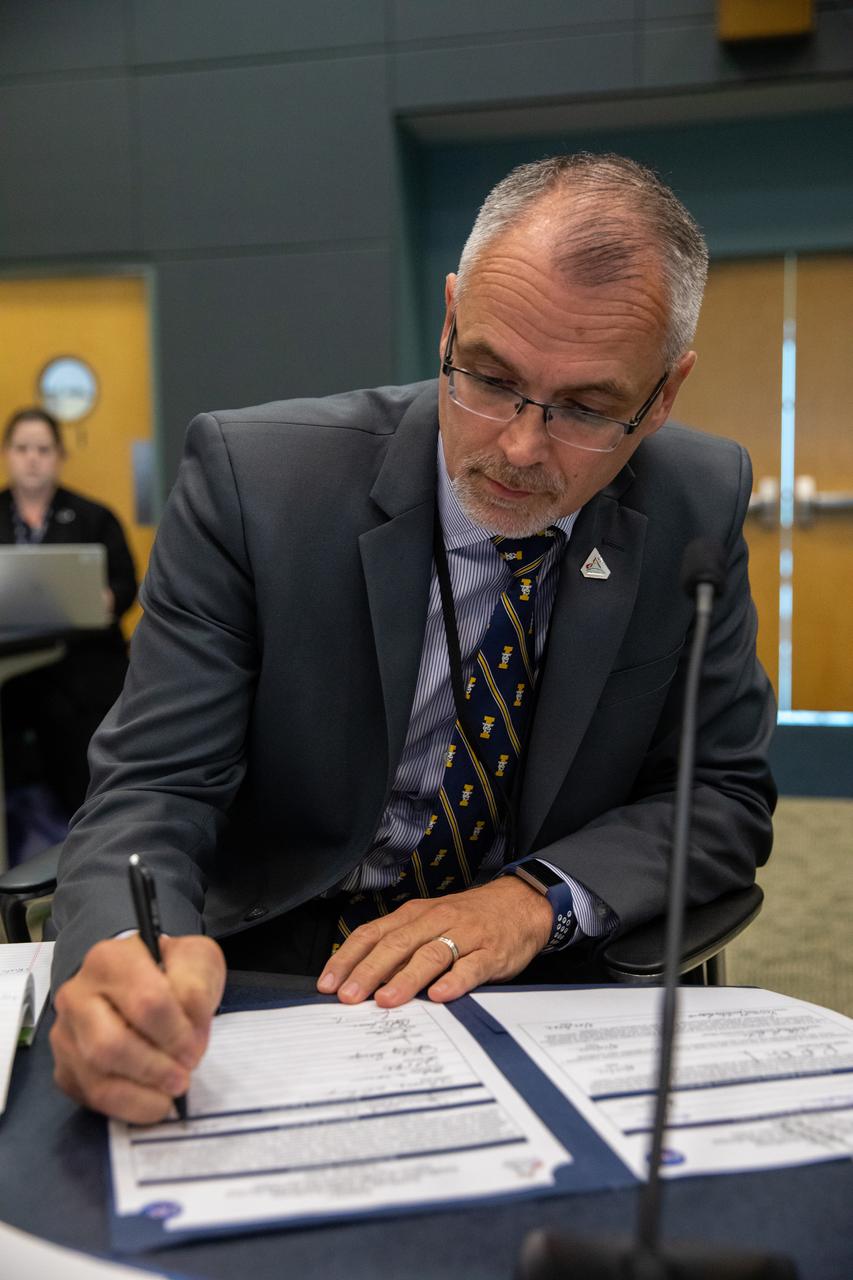
Jim Free, associate administrator for Exploration Systems Development Mission Directorate, NASA Headquarters has signed the certification for flight readiness following the completion of Flight Readiness Review (FRR) on Aug. 22, 2022, at NASA’s Kennedy Space Center in Florida. The FRR is an in-depth assessment of the readiness of the agency’s Space Launch System and Orion spacecraft to support the uncrewed flight of Artemis I on its mission beyond the Moon and return to Earth. The meeting concluded with a poll of all managers. Artemis I is scheduled to launch at 8:33 a.m. EDT on Aug. 29, 2022, from Kennedy’s Launch Complex 39B. The first in a series of increasingly complex missions, Artemis I will provide a foundation for human deep space exploration and demonstrate our commitment and capability to extend human presence to the Moon and beyond. The primary goal of Artemis I is to thoroughly test the integrated systems before crewed missions by operating the spacecraft in a deep space environment, testing Orion’s heat shield, and recovering the crew module after reentry, descent, and splashdown.
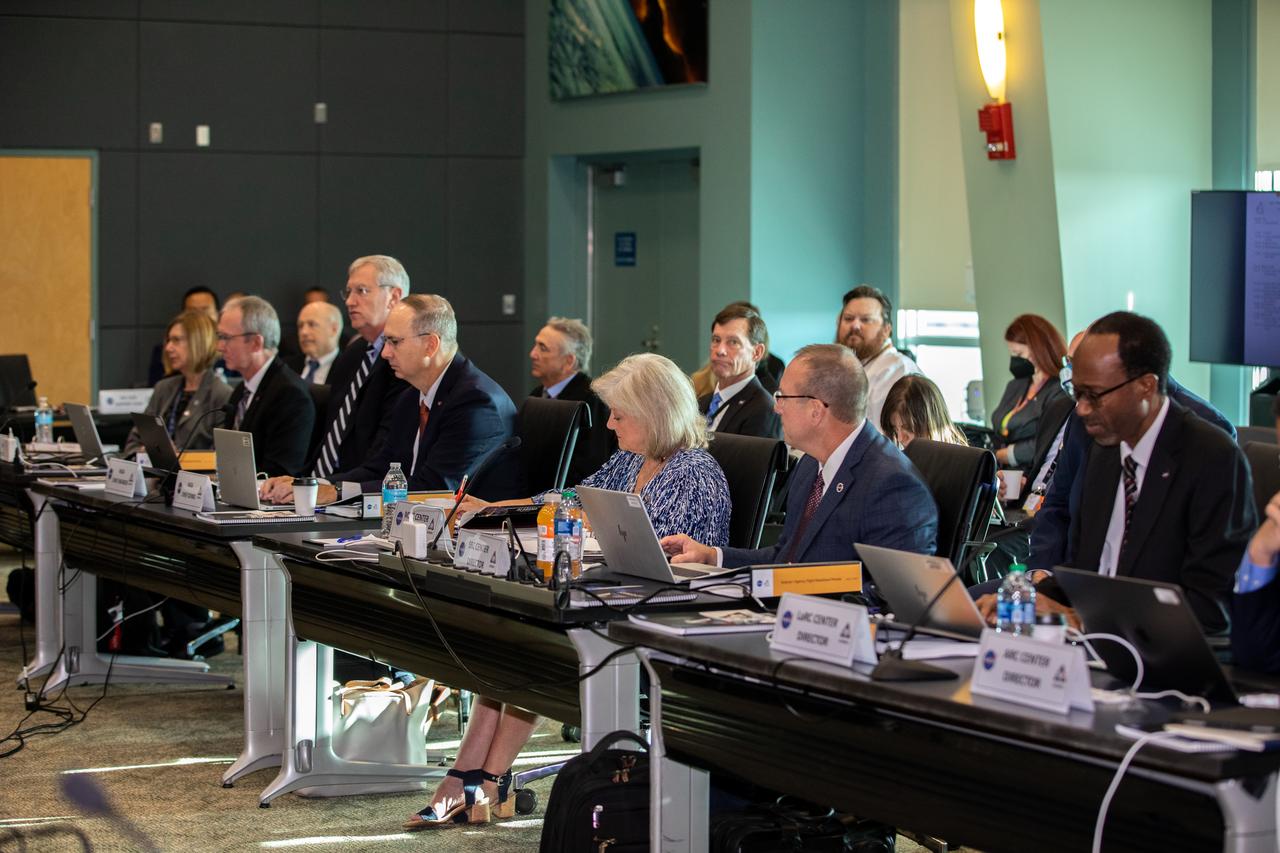
Artemis I managers conduct a Flight Readiness Review (FRR) on Aug. 22, 2022, at NASA’s Kennedy Space Center in Florida. The FRR is an in-depth assessment of the readiness of the agency’s Space Launch System and Orion spacecraft to support the uncrewed flight of Artemis I on its mission beyond the Moon and return to Earth. The meeting will conclude later in the day with a poll of all managers. Artemis I is scheduled to launch at 8:33 a.m. EDT on Aug. 29, 2022, from Kennedy’s Launch Complex 39B. The first in a series of increasingly complex missions, Artemis I will provide a foundation for human deep space exploration and demonstrate our commitment and capability to extend human presence to the Moon and beyond. The primary goal of Artemis I is to thoroughly test the integrated systems before crewed missions by operating the spacecraft in a deep space environment, testing Orion’s heat shield, and recovering the crew module after reentry, descent, and splashdown.
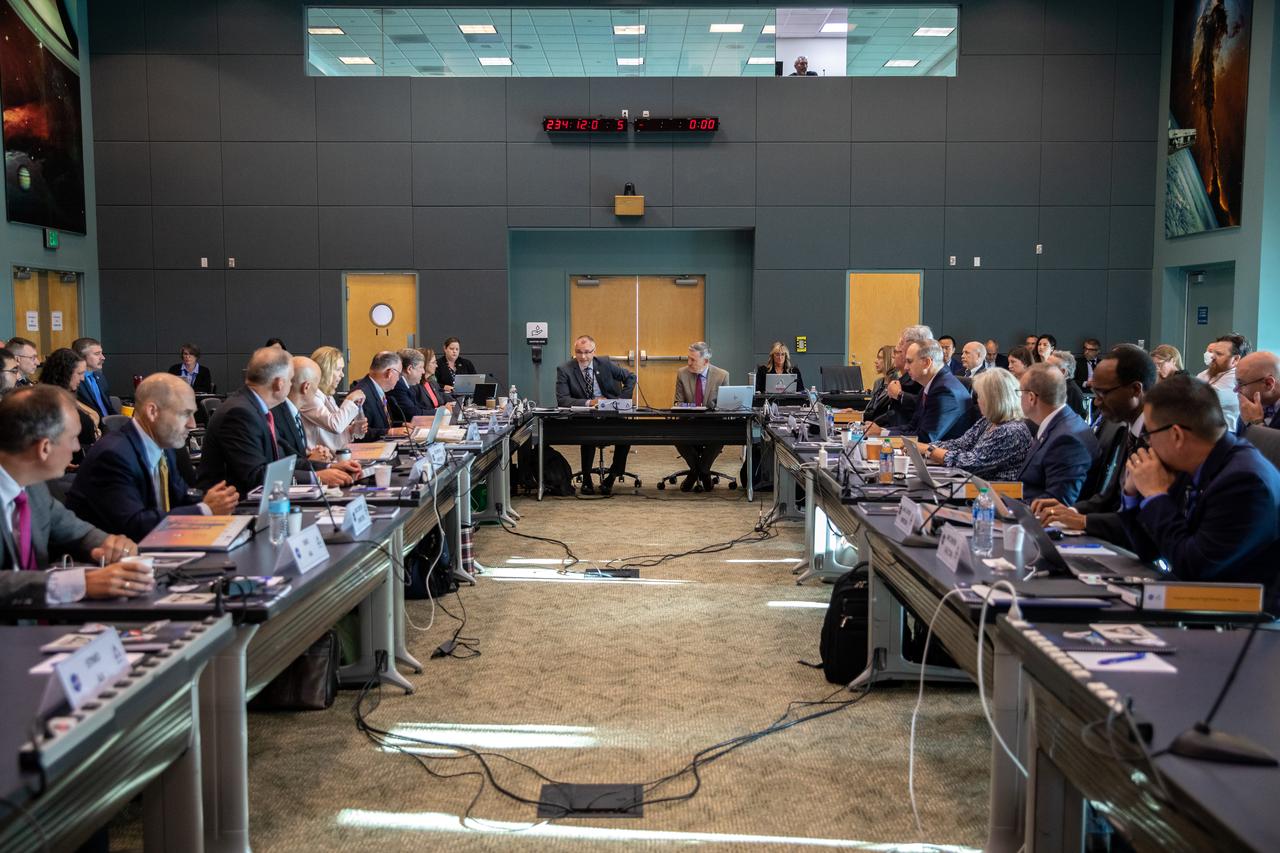
Artemis I managers conduct a Flight Readiness Review (FRR) on Aug. 22, 2022, at NASA’s Kennedy Space Center in Florida. The FRR is an in-depth assessment of the readiness of the agency’s Space Launch System and Orion spacecraft to support the uncrewed flight of Artemis I on its mission beyond the Moon and return to Earth. The meeting will conclude later in the day with a poll of all managers. Artemis I is scheduled to launch at 8:33 a.m. EDT on Aug. 29, 2022, from Kennedy’s Launch Complex 39B. The first in a series of increasingly complex missions, Artemis I will provide a foundation for human deep space exploration and demonstrate our commitment and capability to extend human presence to the Moon and beyond. The primary goal of Artemis I is to thoroughly test the integrated systems before crewed missions by operating the spacecraft in a deep space environment, testing Orion’s heat shield, and recovering the crew module after reentry, descent, and splashdown.
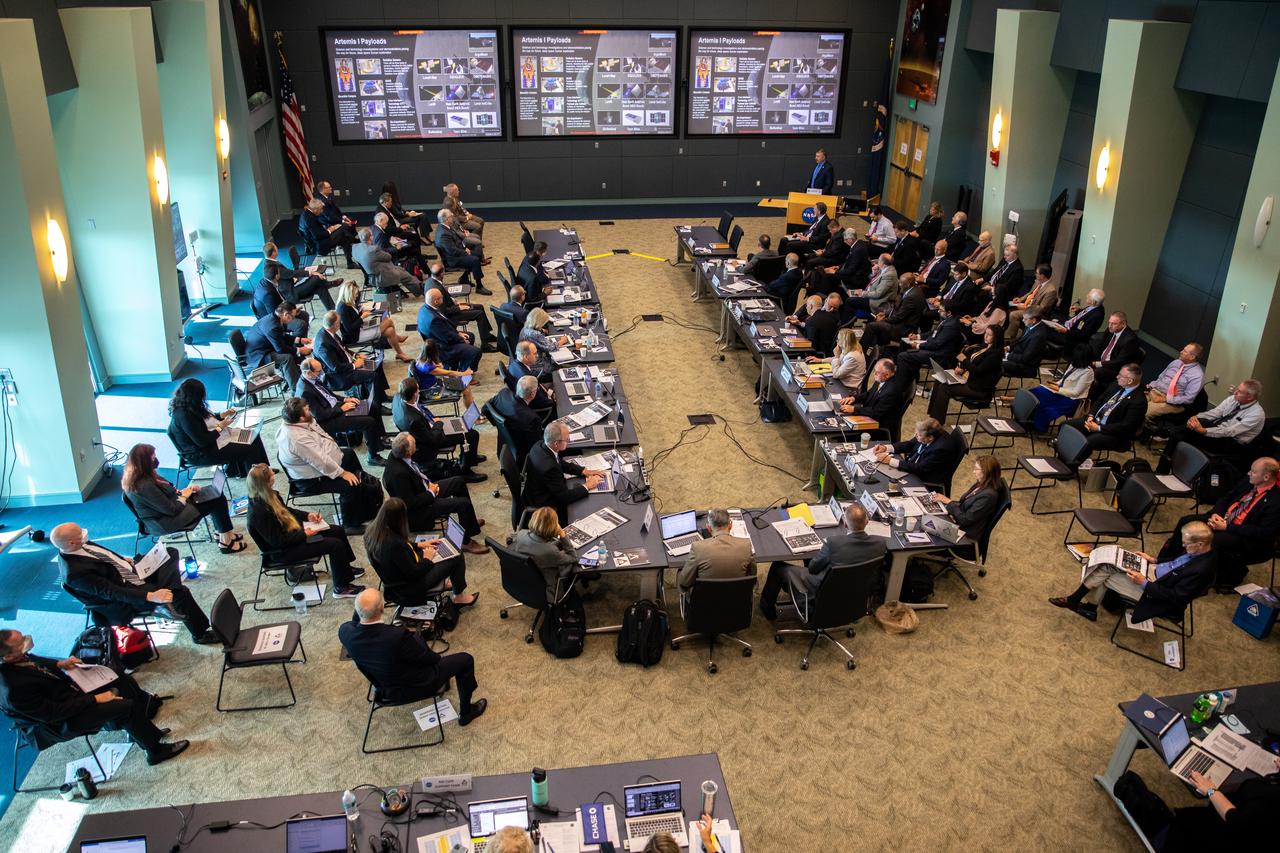
Artemis I managers conduct a Flight Readiness Review (FRR) on Aug. 22, 2022, at NASA’s Kennedy Space Center in Florida. The FRR is an in-depth assessment of the readiness of the agency’s Space Launch System and Orion spacecraft to support the uncrewed flight of Artemis I on its mission beyond the Moon and return to Earth. The meeting will conclude later in the day with a poll of all managers. Artemis I is scheduled to launch at 8:33 a.m. EDT on Aug. 29, 2022, from Kennedy’s Launch Complex 39B. The first in a series of increasingly complex missions, Artemis I will provide a foundation for human deep space exploration and demonstrate our commitment and capability to extend human presence to the Moon and beyond. The primary goal of Artemis I is to thoroughly test the integrated systems before crewed missions by operating the spacecraft in a deep space environment, testing Orion’s heat shield, and recovering the crew module after reentry, descent, and splashdown.
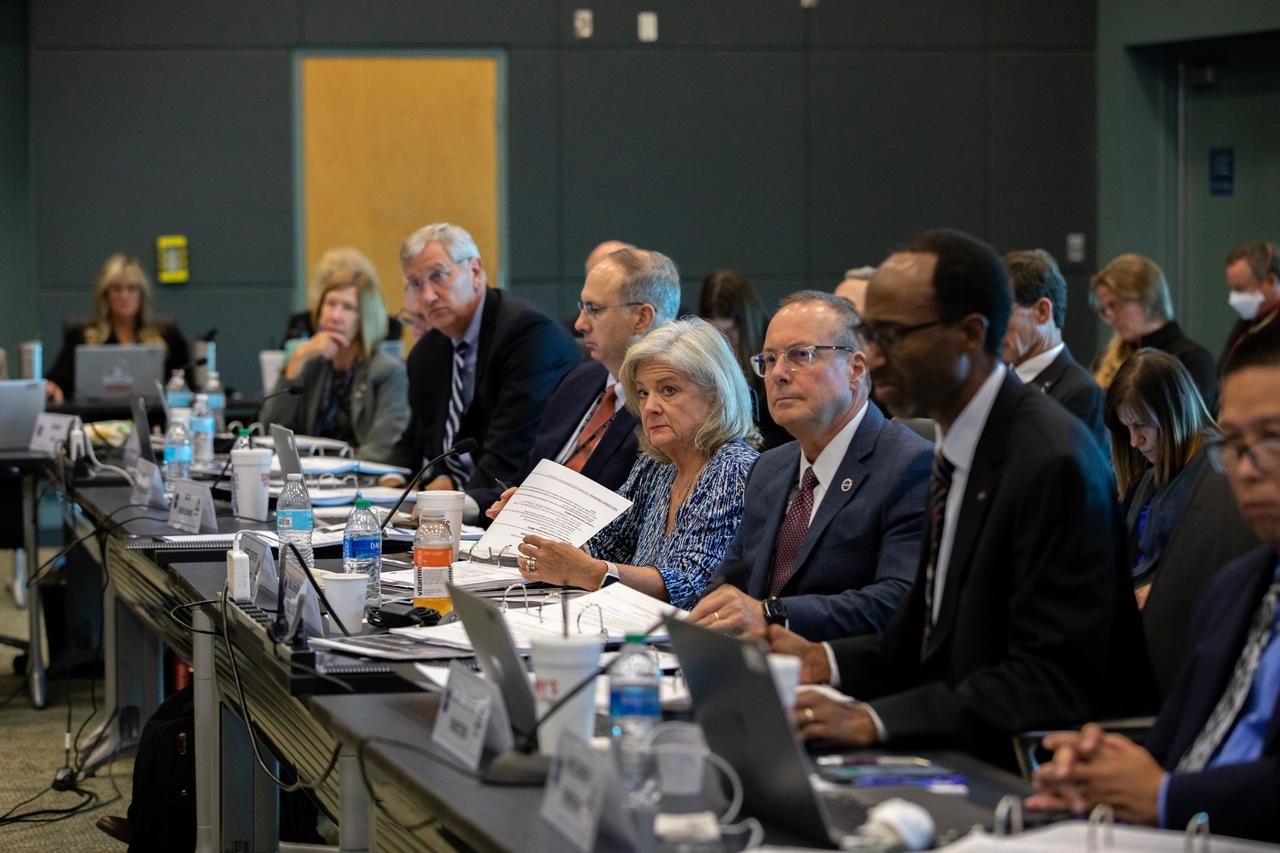
Artemis I managers conduct a Flight Readiness Review (FRR) on Aug. 22, 2022, at NASA’s Kennedy Space Center in Florida. The FRR is an in-depth assessment of the readiness of the agency’s Space Launch System and Orion spacecraft to support the uncrewed flight of Artemis I on its mission beyond the Moon and return to Earth. The meeting will conclude later in the day with a poll of all managers. Artemis I is scheduled to launch at 8:33 a.m. EDT on Aug. 29, 2022, from Kennedy’s Launch Complex 39B. The first in a series of increasingly complex missions, Artemis I will provide a foundation for human deep space exploration and demonstrate our commitment and capability to extend human presence to the Moon and beyond. The primary goal of Artemis I is to thoroughly test the integrated systems before crewed missions by operating the spacecraft in a deep space environment, testing Orion’s heat shield, and recovering the crew module after reentry, descent, and splashdown.
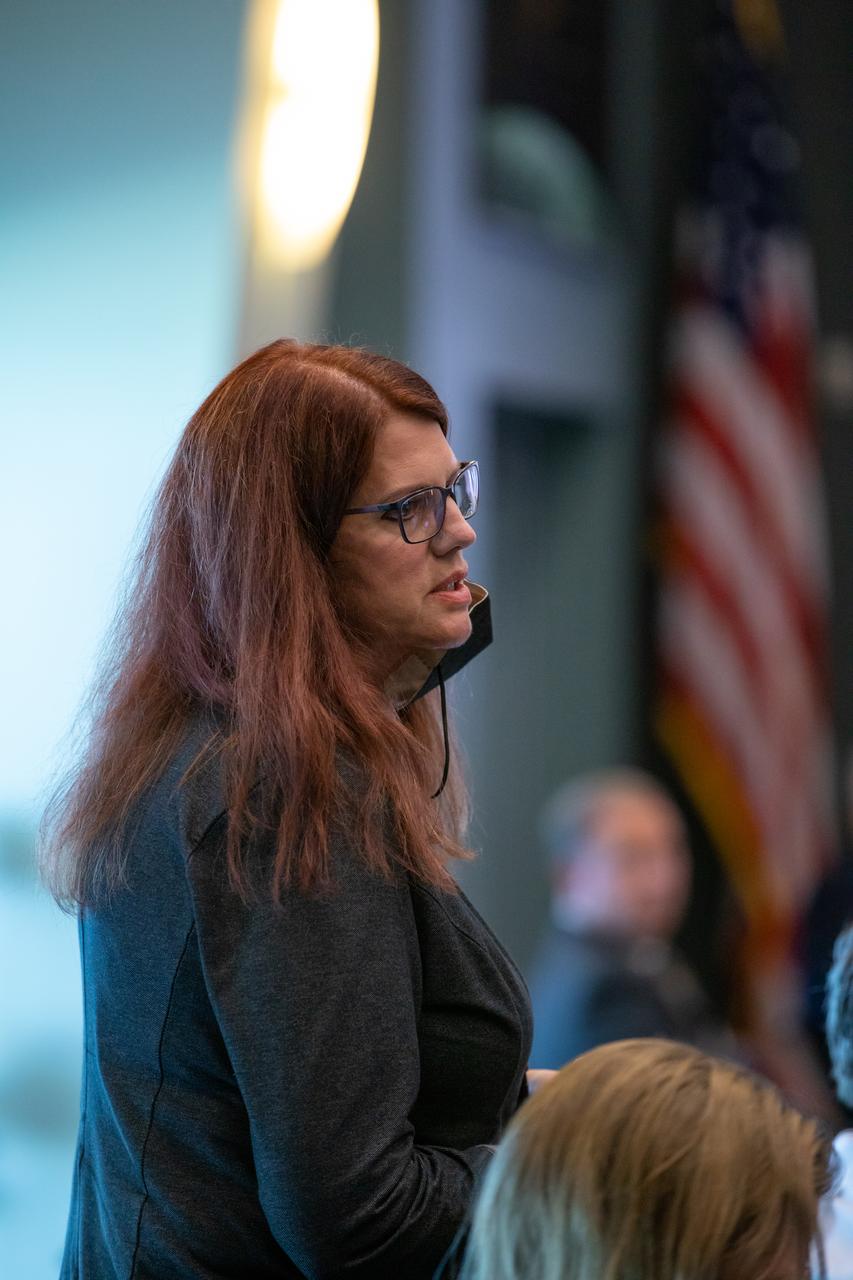
Artemis I managers conduct a Flight Readiness Review (FRR) on Aug. 22, 2022, at NASA’s Kennedy Space Center in Florida. In view is Artemis I Launch Director Charlie Blackwell-Thompson. The FRR is an in-depth assessment of the readiness of the agency’s Space Launch System and Orion spacecraft to support the uncrewed flight of Artemis I on its mission beyond the Moon and return to Earth. The meeting will conclude later in the day with a poll of all managers. Artemis I is scheduled to launch at 8:33 a.m. EDT on Aug. 29, 2022, from Kennedy’s Launch Complex 39B. The first in a series of increasingly complex missions, Artemis I will provide a foundation for human deep space exploration and demonstrate our commitment and capability to extend human presence to the Moon and beyond. The primary goal of Artemis I is to thoroughly test the integrated systems before crewed missions by operating the spacecraft in a deep space environment, testing Orion’s heat shield, and recovering the crew module after reentry, descent, and splashdown.