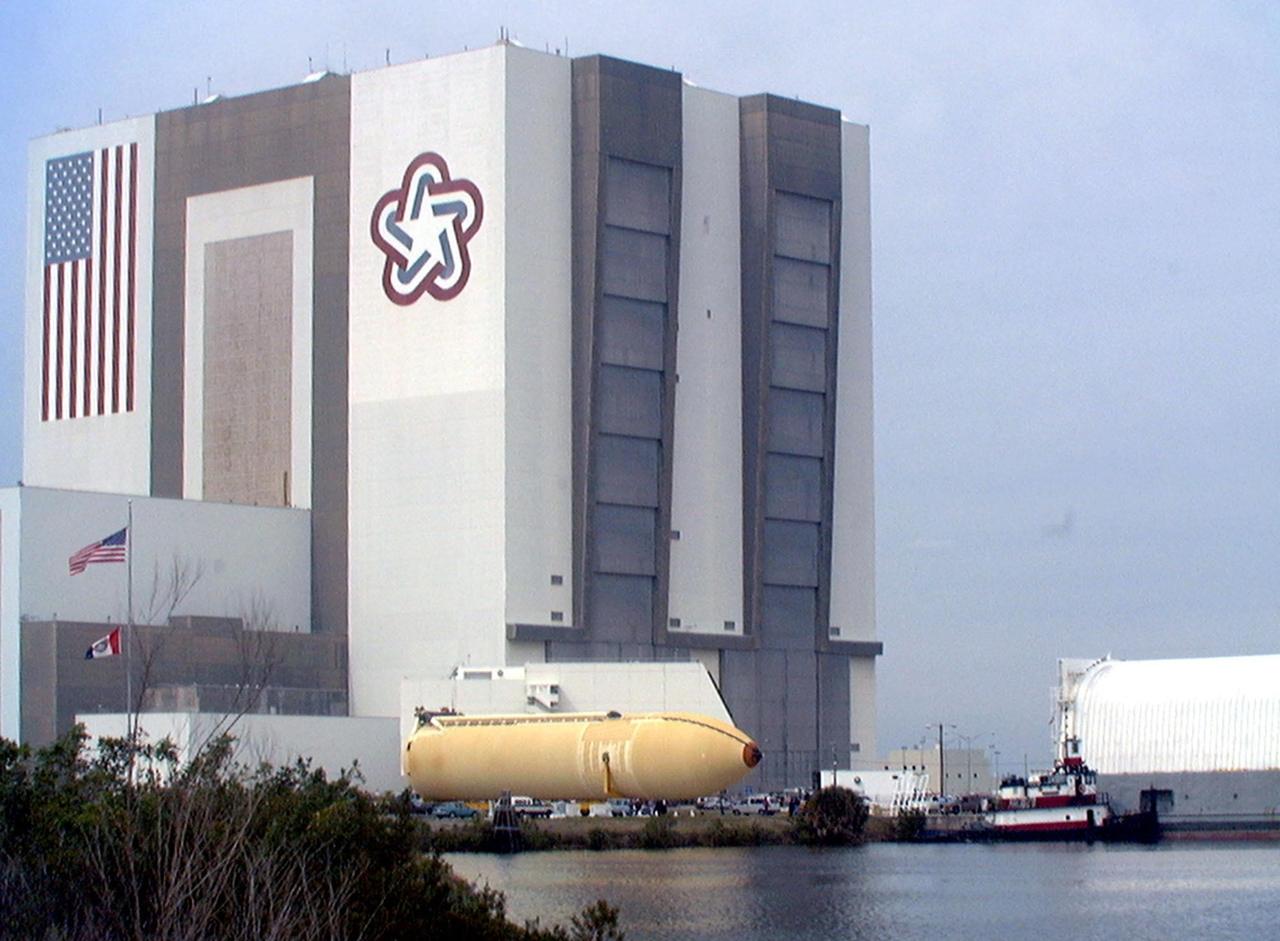
The Space Shuttle's first super lightweight external tank is on its way to Kennedy Space Center's Vehicle Assembly Building for processing. The tank, which is scheduled for flight on STS-91 in late May, arrived Feb. 3 in Port Canaveral, where it remained until Feb. 6 due to high winds. The improved tank is 7,500 pounds lighter than its predecessors and was developed to increase the Shuttle payload capacity on International Space Station assembly flights. Major changes to the lighter tank include the use of new materials and a revised internal design. The new liquid oxygen and liquid hydrogen tanks are constructed of aluminum lithium a lighter, stronger material than the metal alloy currently used. The redesigned walls of the liquid hydrogen tank were machined to provide additional strength and stability as well
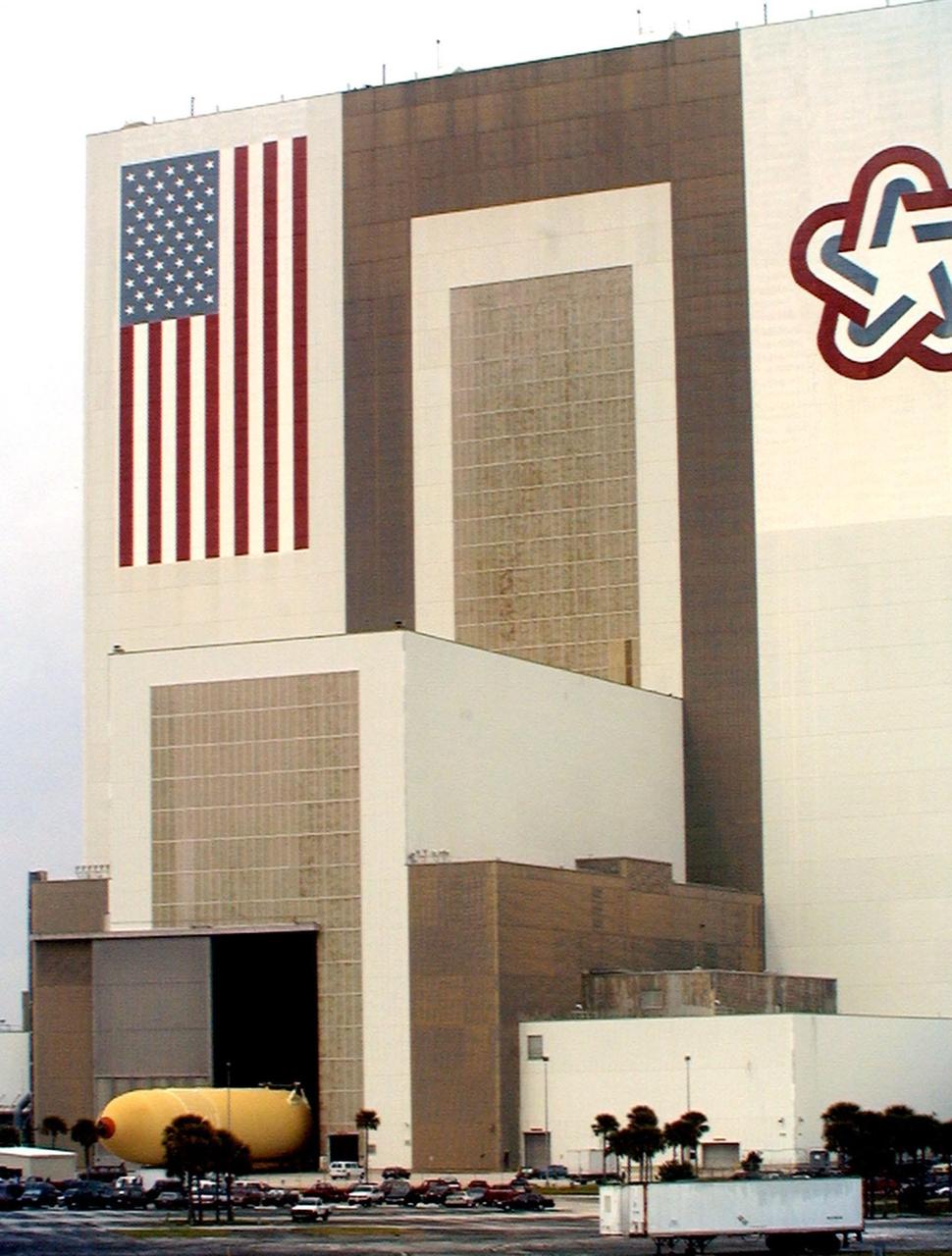
The Space Shuttle's first super lightweight external tank is on its way to Kennedy Space Center's Vehicle Assembly Building for processing. The tank, which is scheduled for flight on STS-91 in late May, arrived Feb. 3 in Port Canaveral, where it remained until Feb. 6 due to high winds. The improved tank is 7,500 pounds lighter than its predecessors and was developed to increase the Shuttle payload capacity on International Space Station assembly flights. Major changes to the lighter tank include the use of new materials and a revised internal design. The new liquid oxygen and liquid hydrogen tanks are constructed of aluminum lithium a lighter, stronger material than the metal alloy currently used. The redesigned walls of the liquid hydrogen tank were machined to provide additional strength and stability as well

The Space Shuttle's first super lightweight external tank is on its way to Kennedy Space Center's Vehicle Assembly Building for processing. The tank, which is scheduled for flight on STS-91 in late May, arrived Feb. 3 in Port Canaveral, where it remained until Feb. 6 due to high winds. The improved tank is 7,500 pounds lighter than its predecessors and was developed to increase the Shuttle payload capacity on International Space Station assembly flights. Major changes to the lighter tank include the use of new materials and a revised internal design. The new liquid oxygen and liquid hydrogen tanks are constructed of aluminum lithium a lighter, stronger material than the metal alloy currently used. The redesigned walls of the liquid hydrogen tank were machined to provide additional strength and stability as well
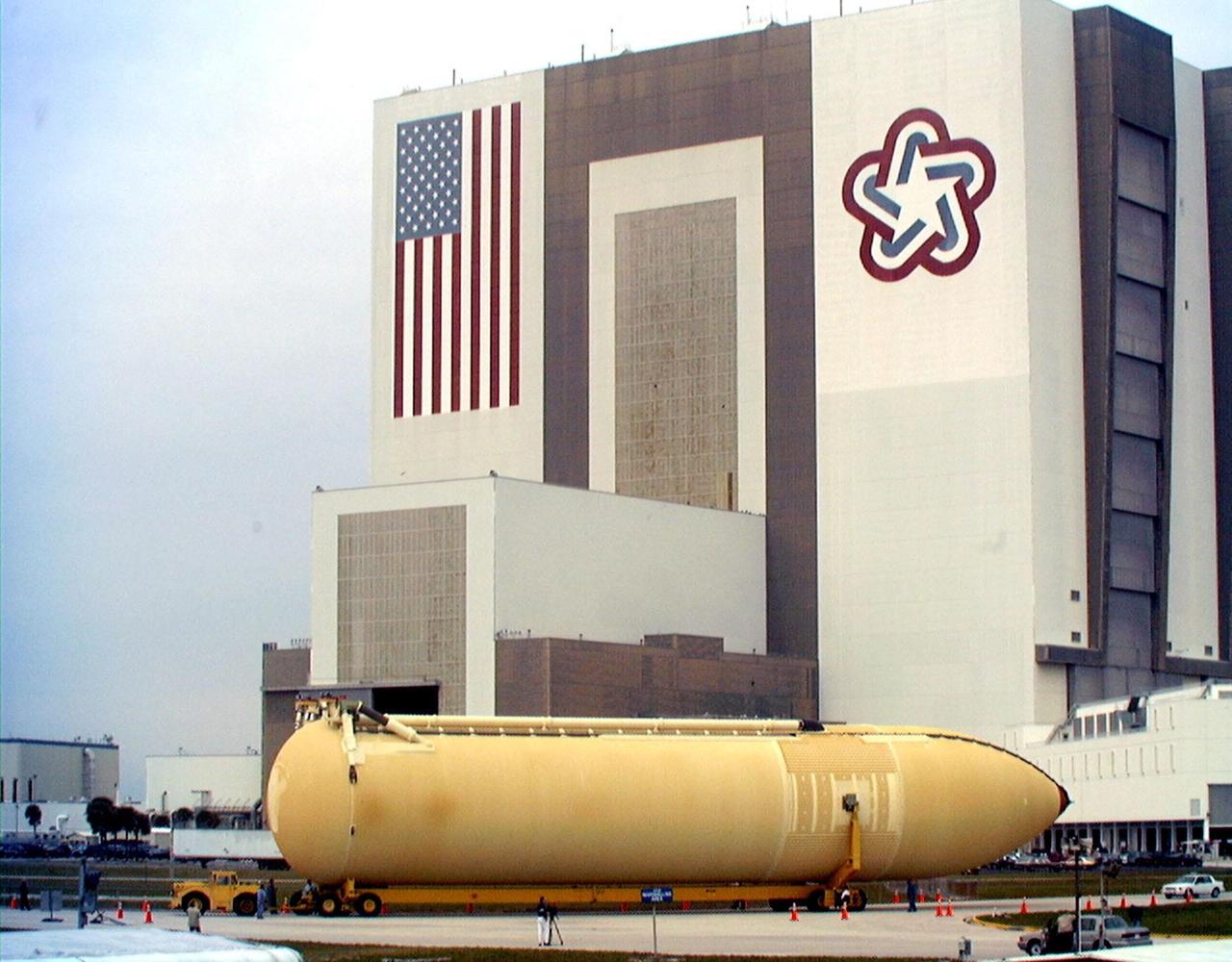
The Space Shuttle's first super lightweight external tank is on its way to Kennedy Space Center's Vehicle Assembly Building for processing. The tank, which is scheduled for flight on STS-91 in late May, arrived Feb. 3 in Port Canaveral, where it remained until Feb. 6 due to high winds. The improved tank is 7,500 pounds lighter than its predecessors and was developed to increase the Shuttle payload capacity on International Space Station assembly flights. Major changes to the lighter tank include the use of new materials and a revised internal design. The new liquid oxygen and liquid hydrogen tanks are constructed of aluminum lithium a lighter, stronger material than the metal alloy currently used. The redesigned walls of the liquid hydrogen tank were machined to provide additional strength and stability as well
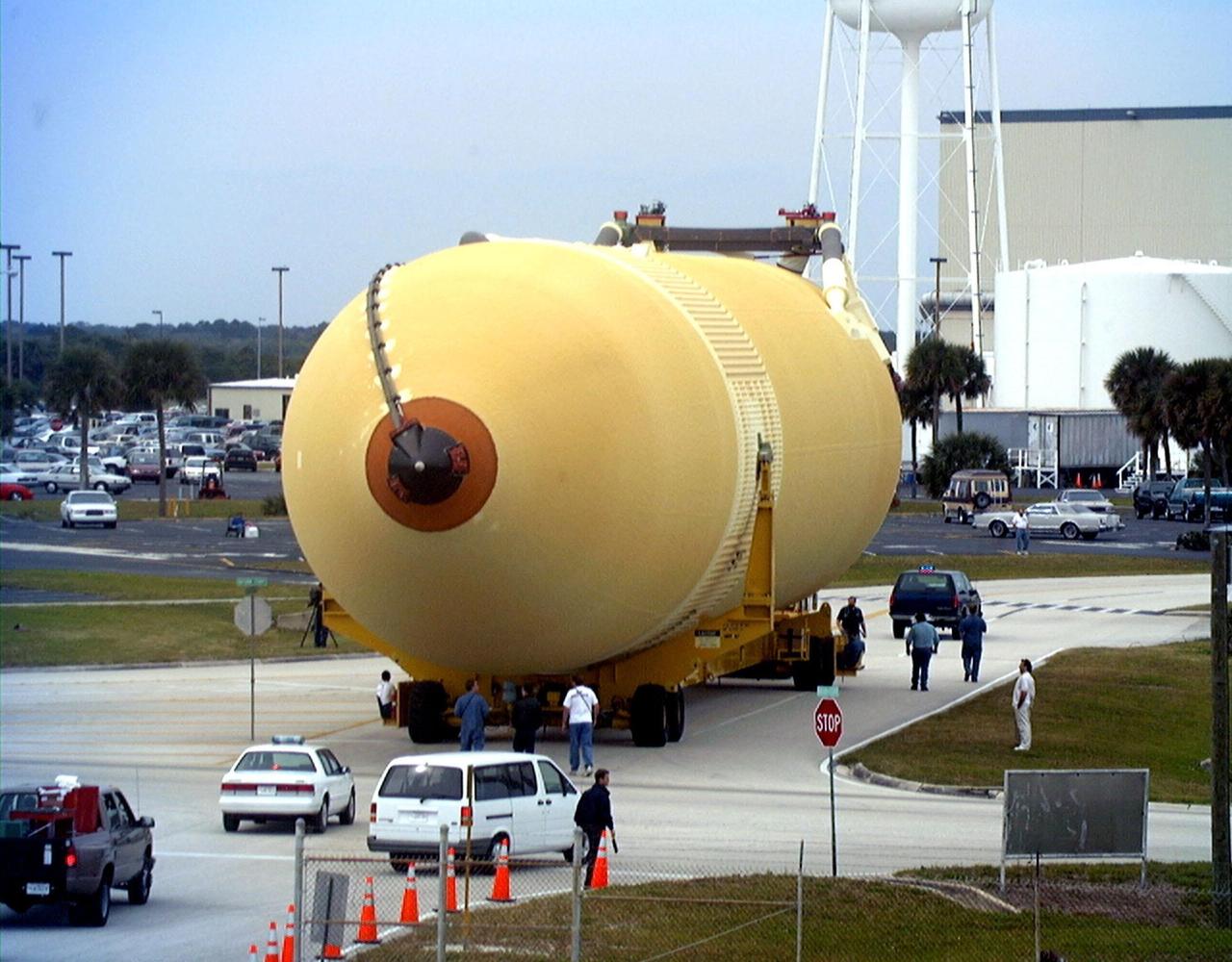
The Space Shuttle's first super lightweight external tank is on its way to Kennedy Space Center's Vehicle Assembly Building for processing. The tank, which is scheduled for flight on STS-91 in late May, arrived Feb. 3 in Port Canaveral, where it remained until Feb. 6 due to high winds. The improved tank is 7,500 pounds lighter than its predecessors and was developed to increase the Shuttle payload capacity on International Space Station assembly flights. Major changes to the lighter tank include the use of new materials and a revised internal design. The new liquid oxygen and liquid hydrogen tanks are constructed of aluminum lithium a lighter, stronger material than the metal alloy currently used. The redesigned walls of the liquid hydrogen tank were machined to provide additional strength and stability as well
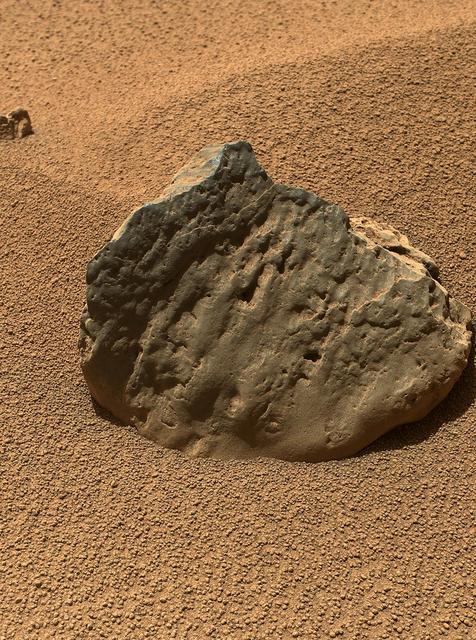
Et-Then is located near the rover front left wheel, where the rover has been stationed while scooping soil at the site called Rocknest in this image from NASA Curiosity spacecraft.
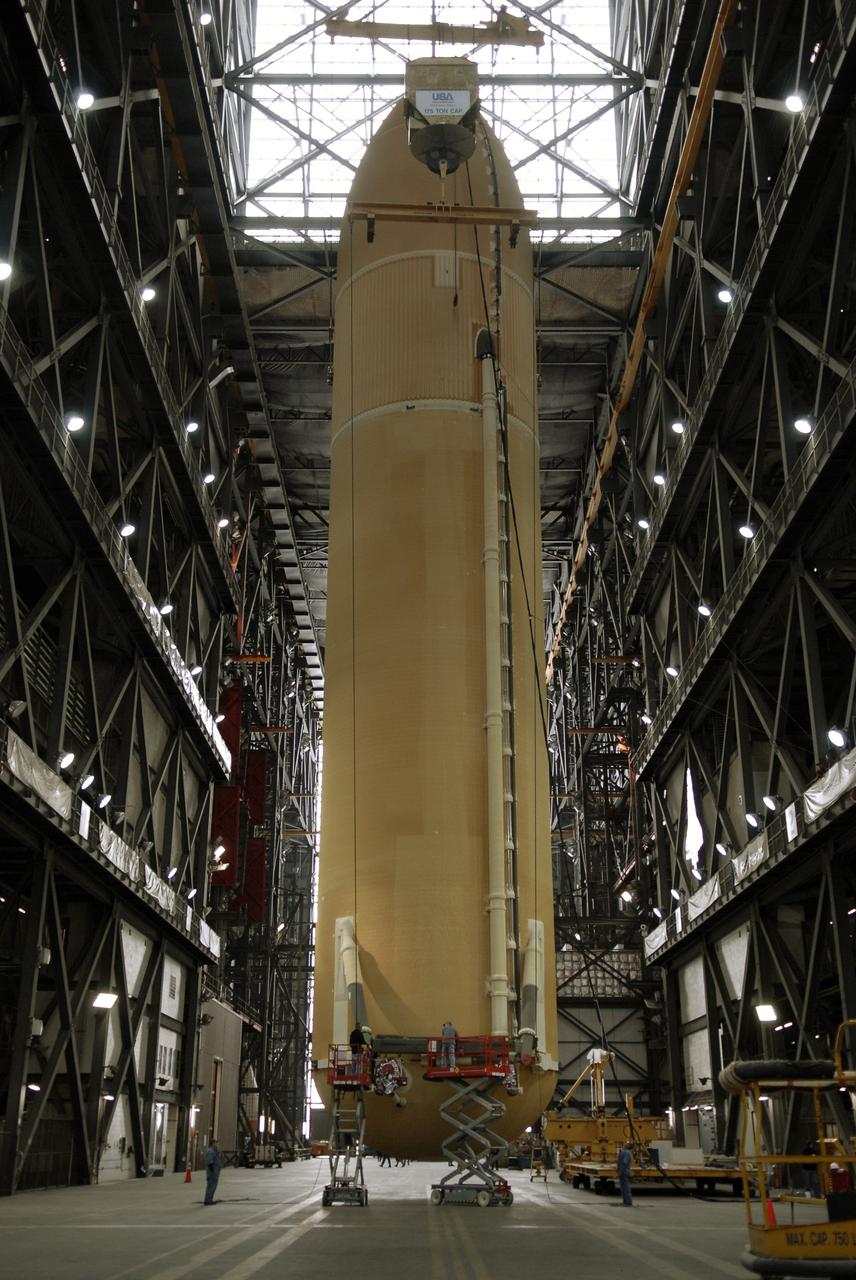
CAPE CANAVERAL, Fla. – In the Vehicle Assembly Building at NASA's Kennedy Space Center in Florida, external fuel tank ET-131 is suspended by a crane over the transfer aisle. It will be lifted into the upper levels and lowered into a checkout bay. ET-131 will be used on space shuttle Endeavour's STS-127 mission. Payload for the mission is the Japanese Experiment Module's Experiment Logistics Module-Exposed Section, or ELM-ES. Launch is targeted for June. Photo credit: NASA/Kim Shiflett
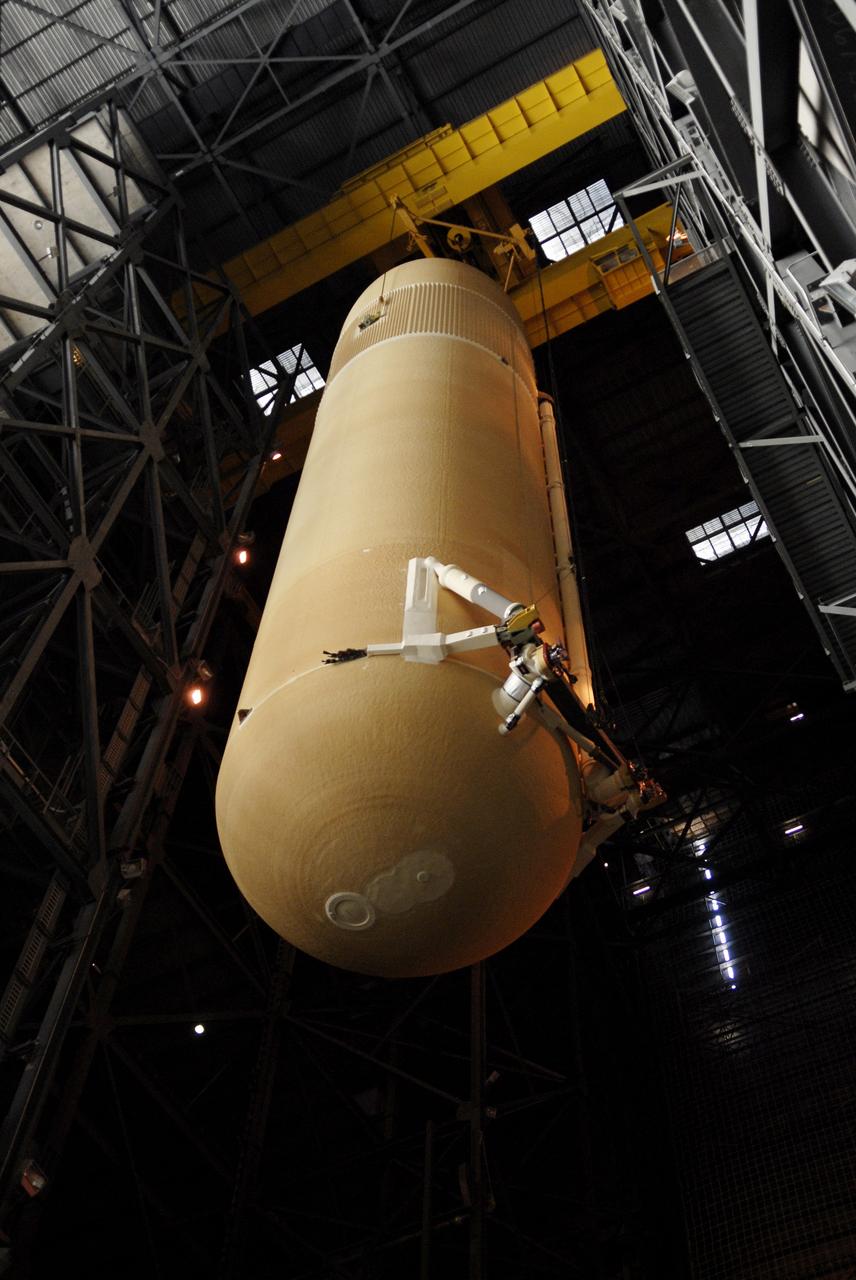
CAPE CANAVERAL, Fla. – In the Vehicle Assembly Building at NASA's Kennedy Space Center in Florida, external fuel tank ET-131 has been lifted into the upper levels and is moving above a high bay. The fuel tank will be lowered onto a stand for checkout. ET-131 will be used on space shuttle Endeavour's STS-127 mission. Payload for the mission is the Japanese Experiment Module's Experiment Logistics Module-Exposed Section, or ELM-ES. Launch is targeted for June. Photo credit: NASA/Kim Shiflett
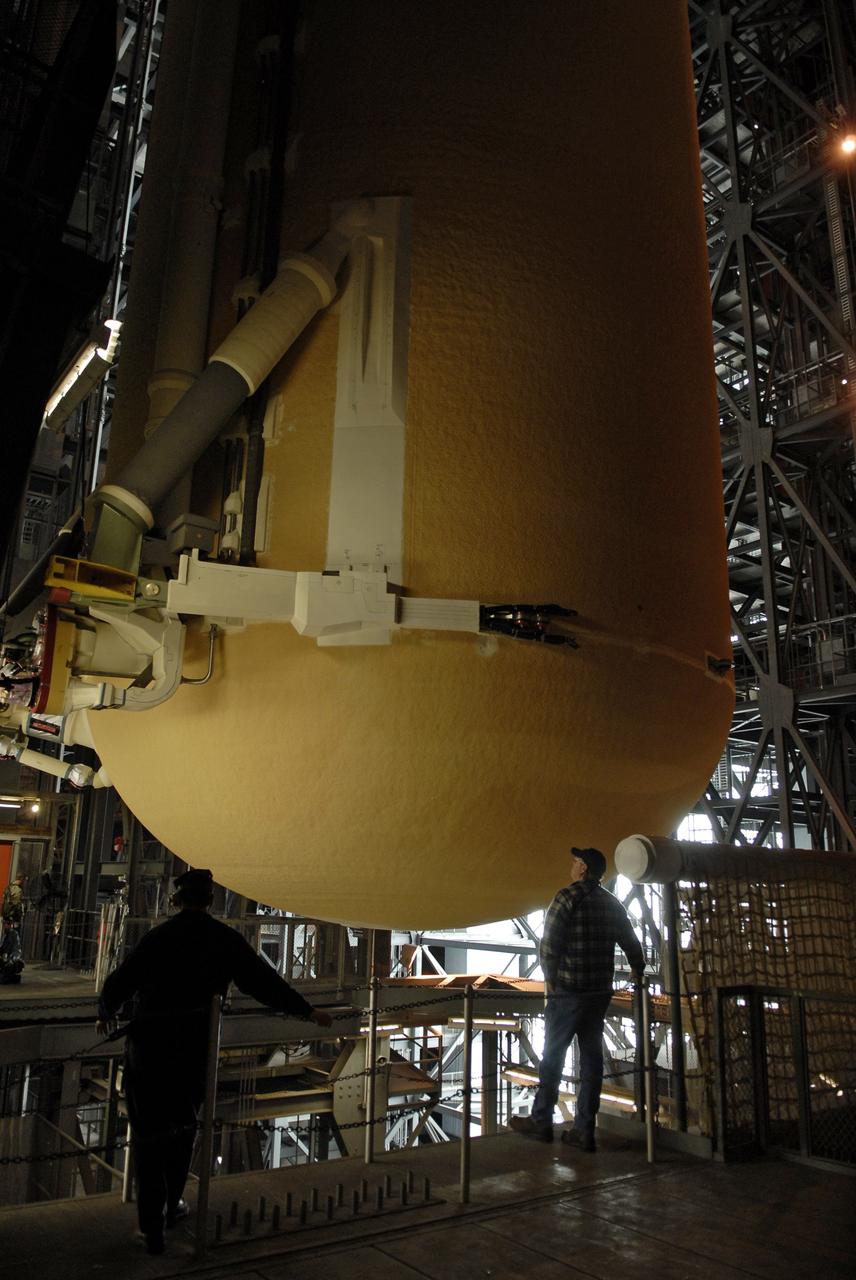
CAPE CANAVERAL, Fla. – In the Vehicle Assembly Building at NASA's Kennedy Space Center in Florida, workers check the progress of external fuel tank ET-131 as it is lowered into a high bay for checkout. ET-131 will be used on space shuttle Endeavour's STS-127 mission. Payload for the mission is the Japanese Experiment Module's Experiment Logistics Module-Exposed Section, or ELM-ES. Launch is targeted for June. Photo credit: NASA/Kim Shiflett
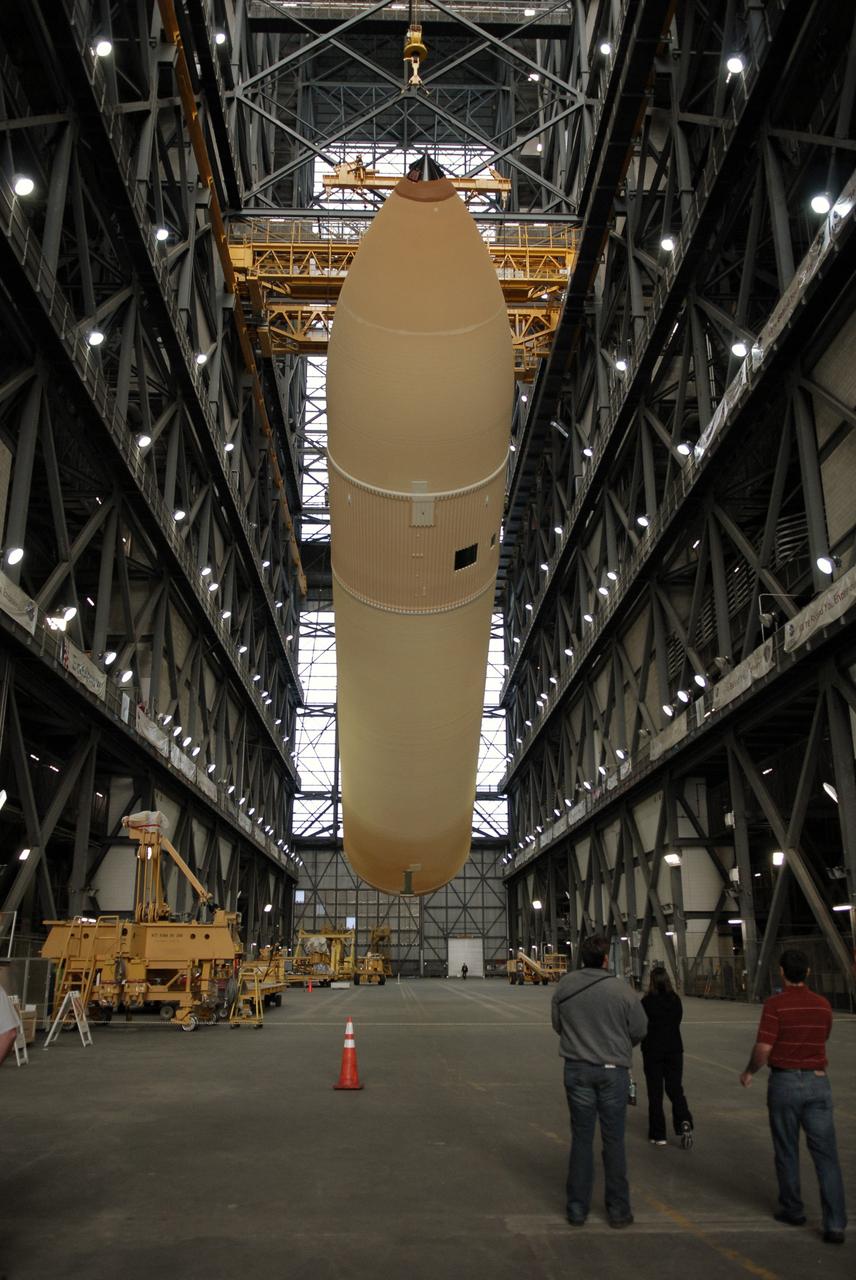
CAPE CANAVERAL, Fla. – In the transfer aisle of the Vehicle Assembly Building at NASA's Kennedy Space Center in Florida, external fuel tank ET-131 is being raised to a vertical position. It will be lifted into the upper levels and lowered into a checkout bay. ET-131 will be used on space shuttle Endeavour's STS-127 mission. Payload for the mission is the Japanese Experiment Module's Experiment Logistics Module-Exposed Section, or ELM-ES. Launch is targeted for June. Photo credit: NASA/Kim Shiflett

CAPE CANAVERAL, Fla. – In the Vehicle Assembly Building at NASA's Kennedy Space Center in Florida, external fuel tank ET-131 is being lowered into a high bay for checkout. ET-131 will be used on space shuttle Endeavour's STS-127 mission. Payload for the mission is the Japanese Experiment Module's Experiment Logistics Module-Exposed Section, or ELM-ES. Launch is targeted for June. Photo credit: NASA/Kim Shiflett
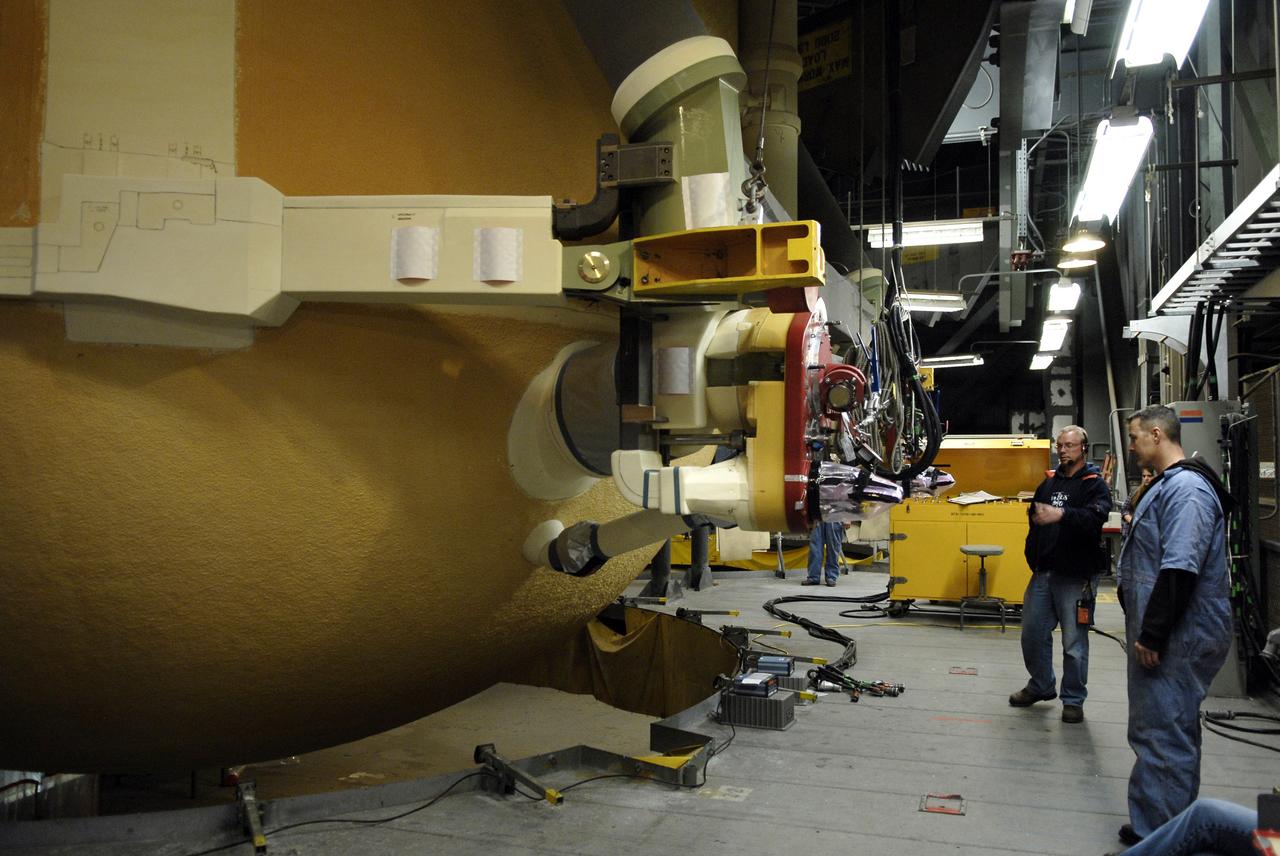
CAPE CANAVERAL, Fla. – In the Vehicle Assembly Building at NASA's Kennedy Space Center in Florida, workers check the progress of external fuel tank ET-131 as it is lowered into a high bay for checkout. ET-131 will be used on space shuttle Endeavour's STS-127 mission. Payload for the mission is the Japanese Experiment Module's Experiment Logistics Module-Exposed Section, or ELM-ES. Launch is targeted for June. Photo credit: NASA/Kim Shiflett
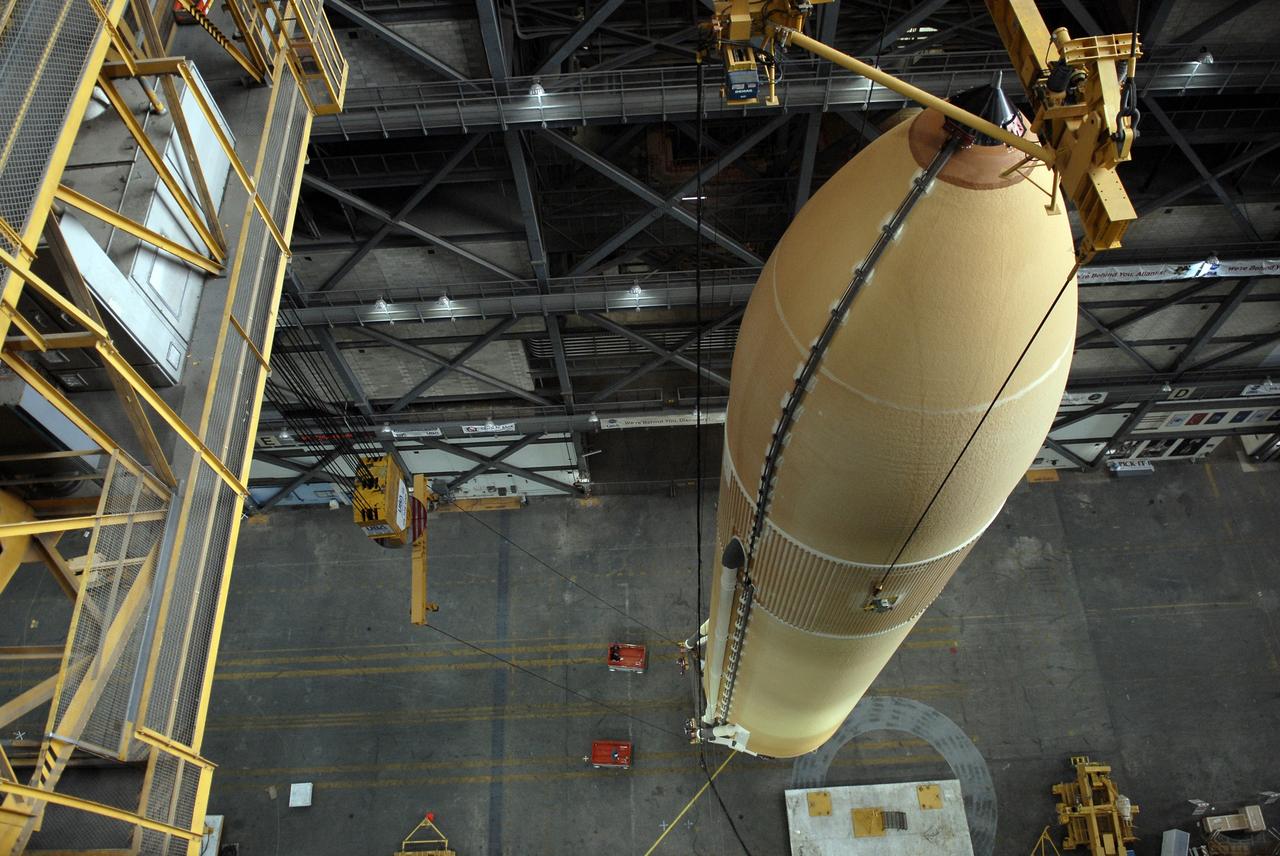
CAPE CANAVERAL, Fla. – The suspension of external fuel tank ET-131 over the transfer aisle of the Vehicle Assembly Building at NASA's Kennedy Space Center in Florida is viewed from an upper level. The fuel tank will be lifted into the upper levels and lowered into a high bay for checkout. ET-131 will be used on space shuttle Endeavour's STS-127 mission. Payload for the mission is the Japanese Experiment Module's Experiment Logistics Module-Exposed Section, or ELM-ES. Launch is targeted for June. Photo credit: NASA/Kim Shiflett
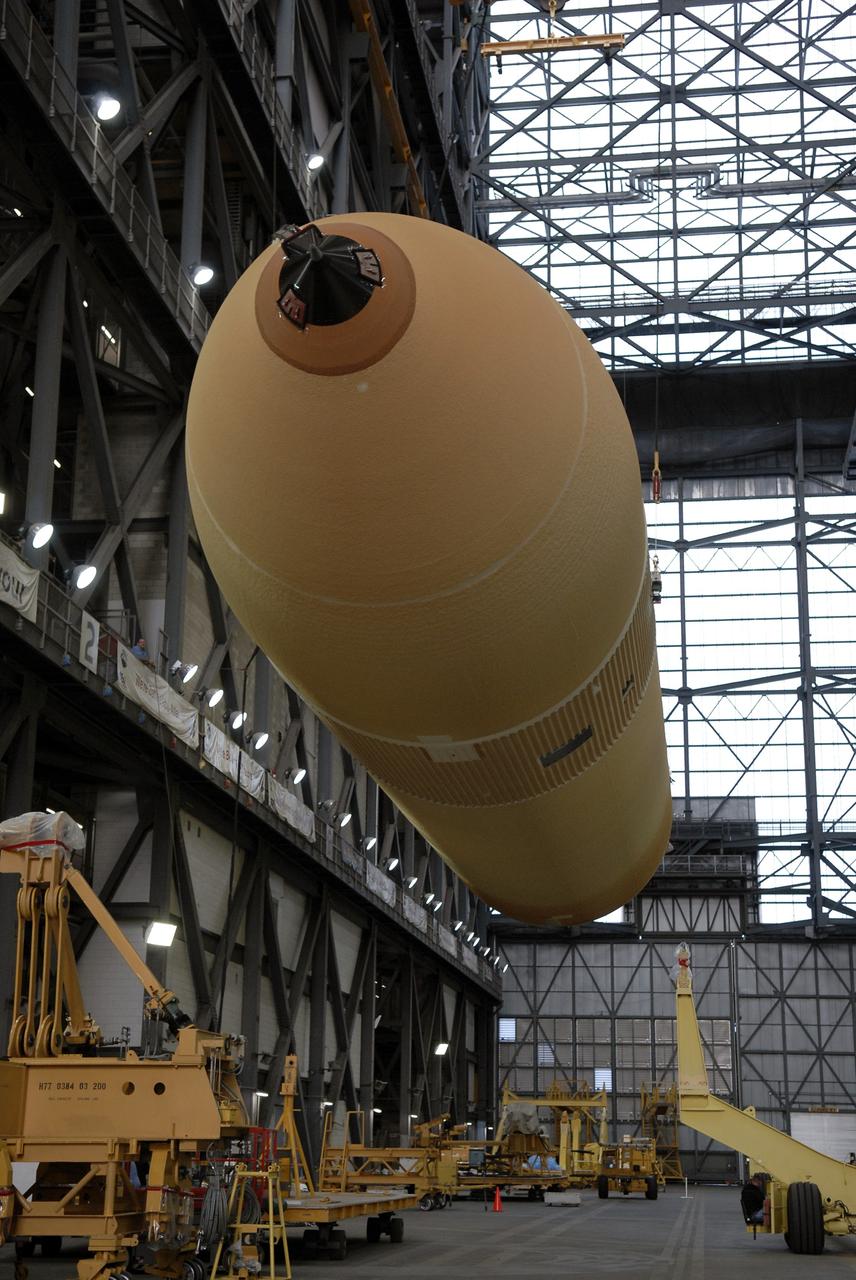
CAPE CANAVERAL, Fla. – In the transfer aisle of the Vehicle Assembly Building at NASA's Kennedy Space Center in Florida, external fuel tank ET-131 is lifted from its transporter. It will be raised to vertical and then lifted into the upper levels and lowered into a checkout bay. ET-131 will be used on space shuttle Endeavour's STS-127 mission. Payload for the mission is the Japanese Experiment Module's Experiment Logistics Module-Exposed Section, or ELM-ES. Launch is targeted for June. Photo credit: NASA/Kim Shiflett
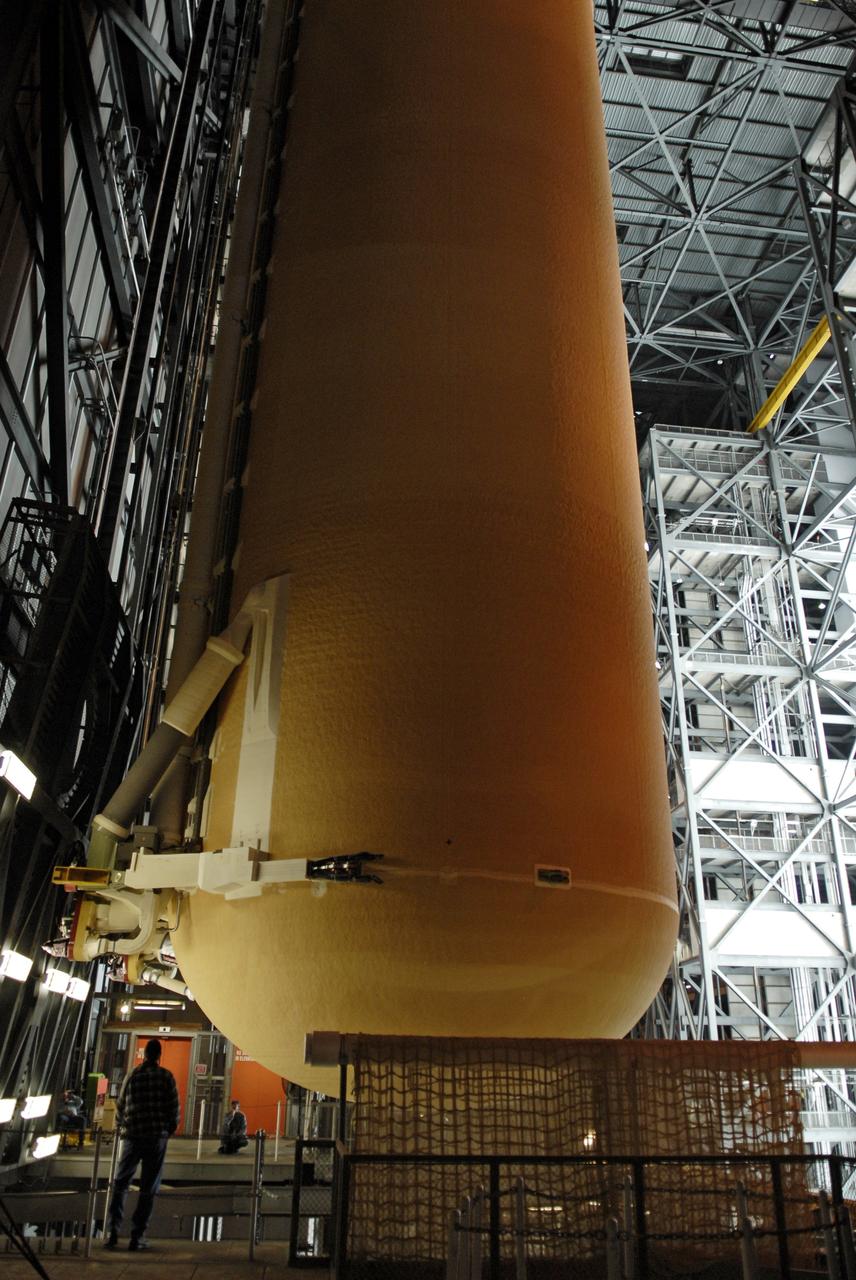
CAPE CANAVERAL, Fla. – In the Vehicle Assembly Building at NASA's Kennedy Space Center in Florida, workers check the progress of external fuel tank ET-131 as it is lowered into a high bay for checkout. ET-131 will be used on space shuttle Endeavour's STS-127 mission. Payload for the mission is the Japanese Experiment Module's Experiment Logistics Module-Exposed Section, or ELM-ES. Launch is targeted for June. Photo credit: NASA/Kim Shiflett
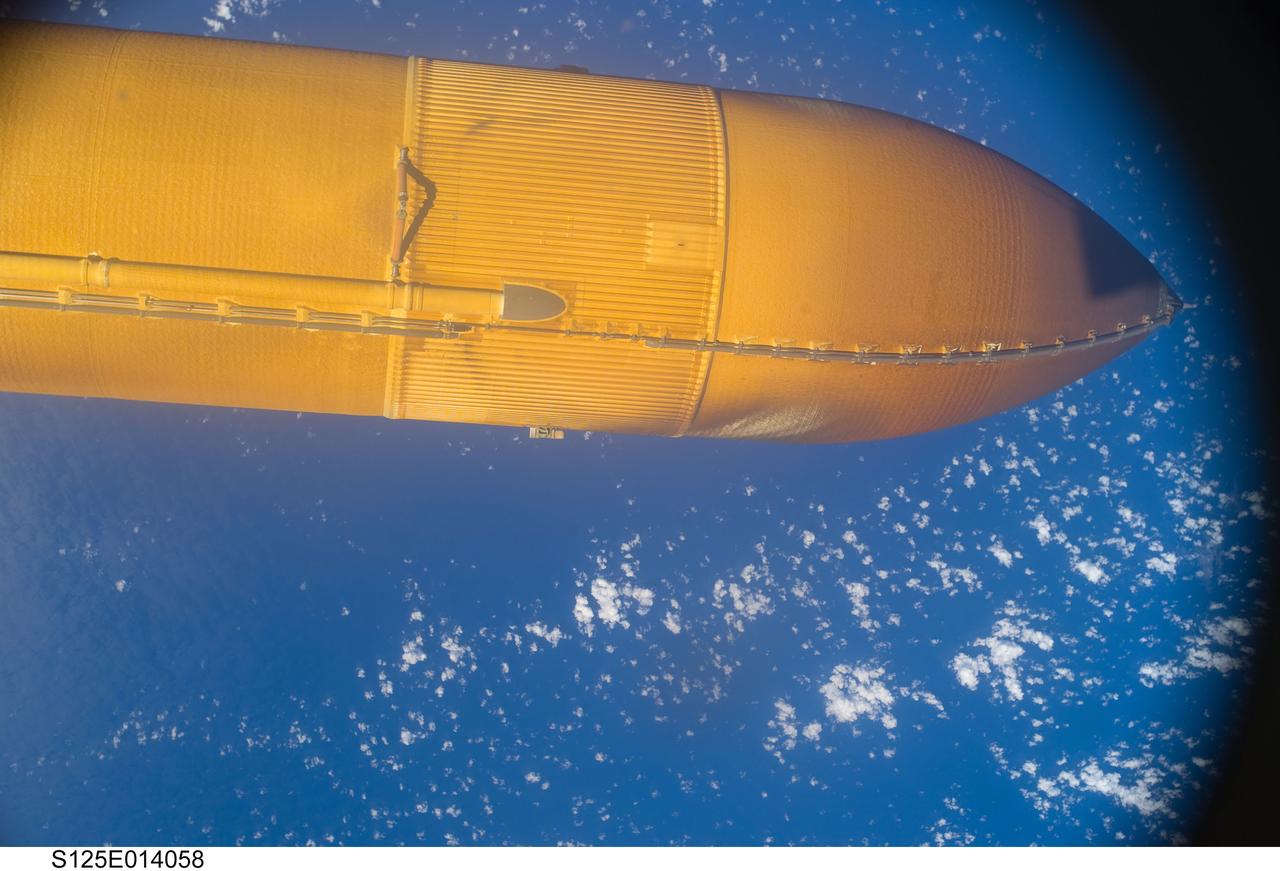
S125-E-014058 (11 May 2009) --- One of a series of photos taken by the umbilical well camera aboard the Space Shuttle Atlantis shortly after the shuttle's external fuel tank (ET) separated from Atlantis following launch.
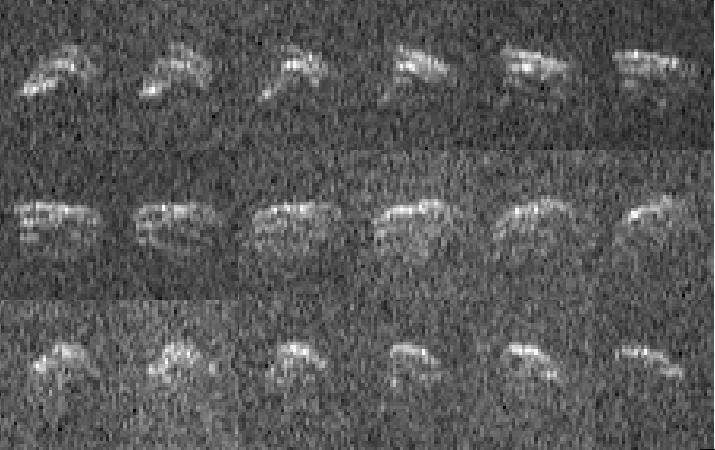
This sequence of radar images of asteroid 2013 ET was obtained on Mar. 10, 2013, by NASA scientists using the 230-foot 70-meter DSN antenna at Goldstone, CA, when the asteroid was about 693,000 mi 1.1 million km from Earth.
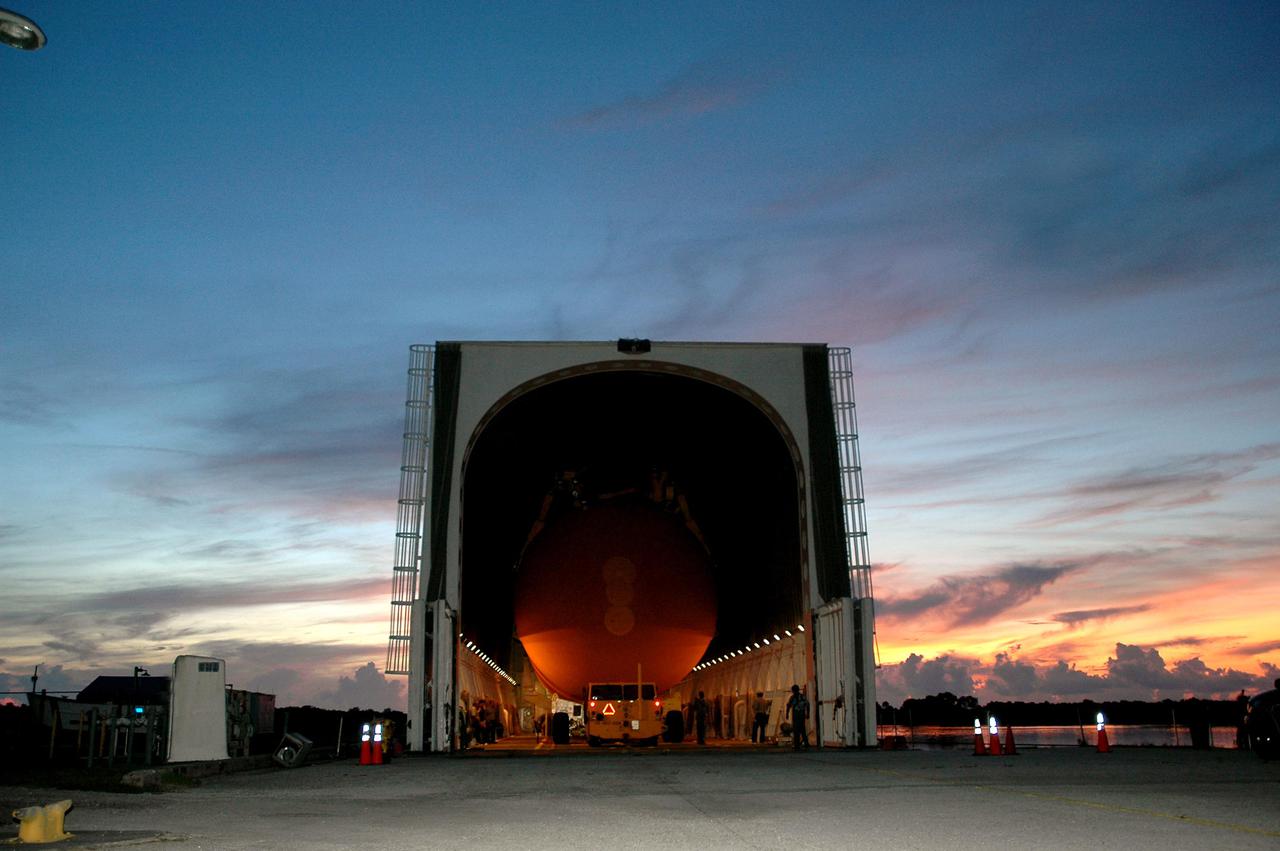
KENNEDY SPACE CENTER, FLA. - Under pre-dawn skies of blue and red, External Tank 119 is loaded onto the barge at the Turn Basin. The tank will embark on a voyage around the Florida peninsula to the Michoud Assembly Facility in New Orleans. Delivered to KSC in June, ET-119 is the third newly redesigned tank.

The Space Shuttle main propulsion system includes three major elements. One of those elements is the External Tank (ET). The ET holds over one-half million gallons of liquid oxygen and liquid hydrogen that fuel the main engines.
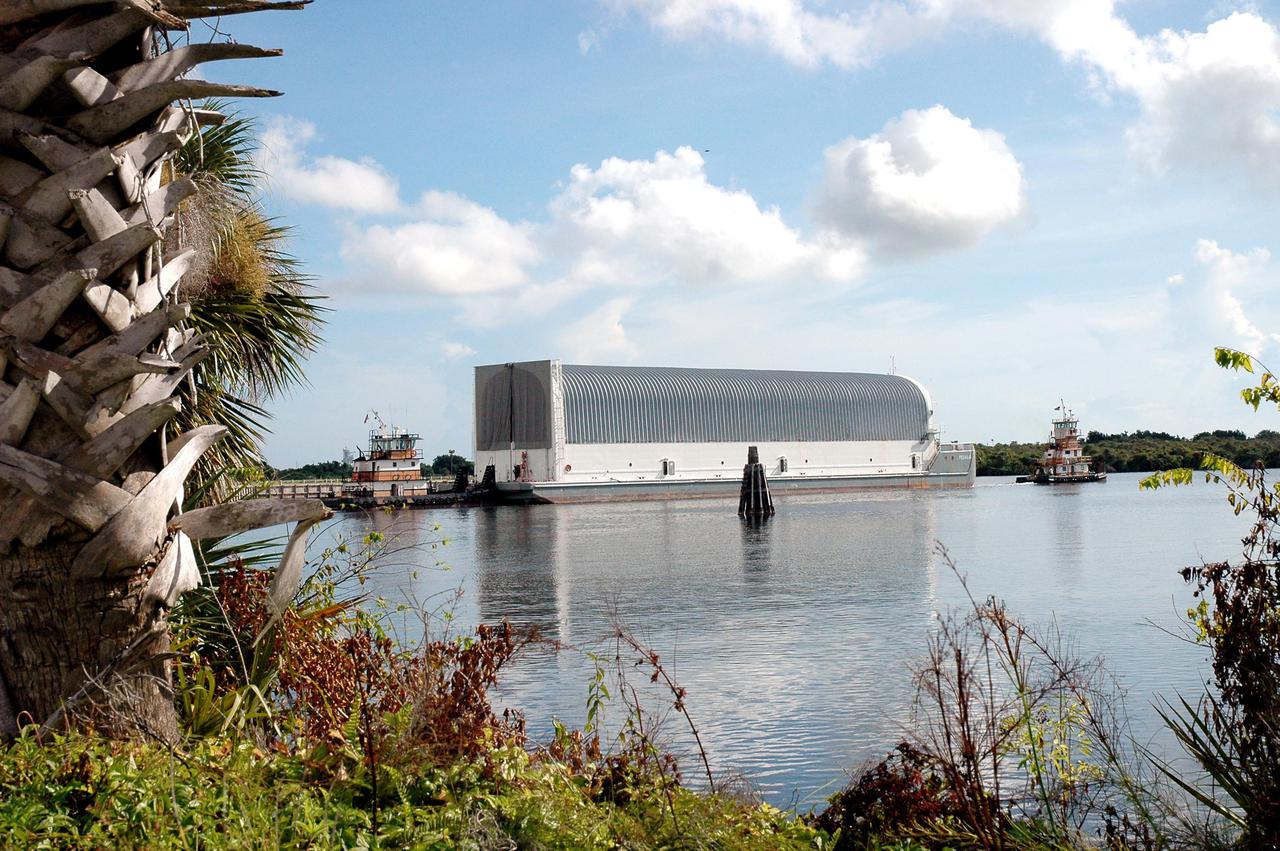
KENNEDY SPACE CENTER, FLA. - Viewed across the Turn Basin at NASA Kennedy Space Center, the barge Pegasus is towed away from the dock on the other side. It is being towed to Port Canaveral where it will join one of the Solid Rocket Booster Recovery Ships and begin its journey around the Florida peninsula to Michoud Assembly Facility in New Orleans. The barge’s cargo is External Tank 119. Delivered to KSC in June, ET-119 is the third newly redesigned tank.
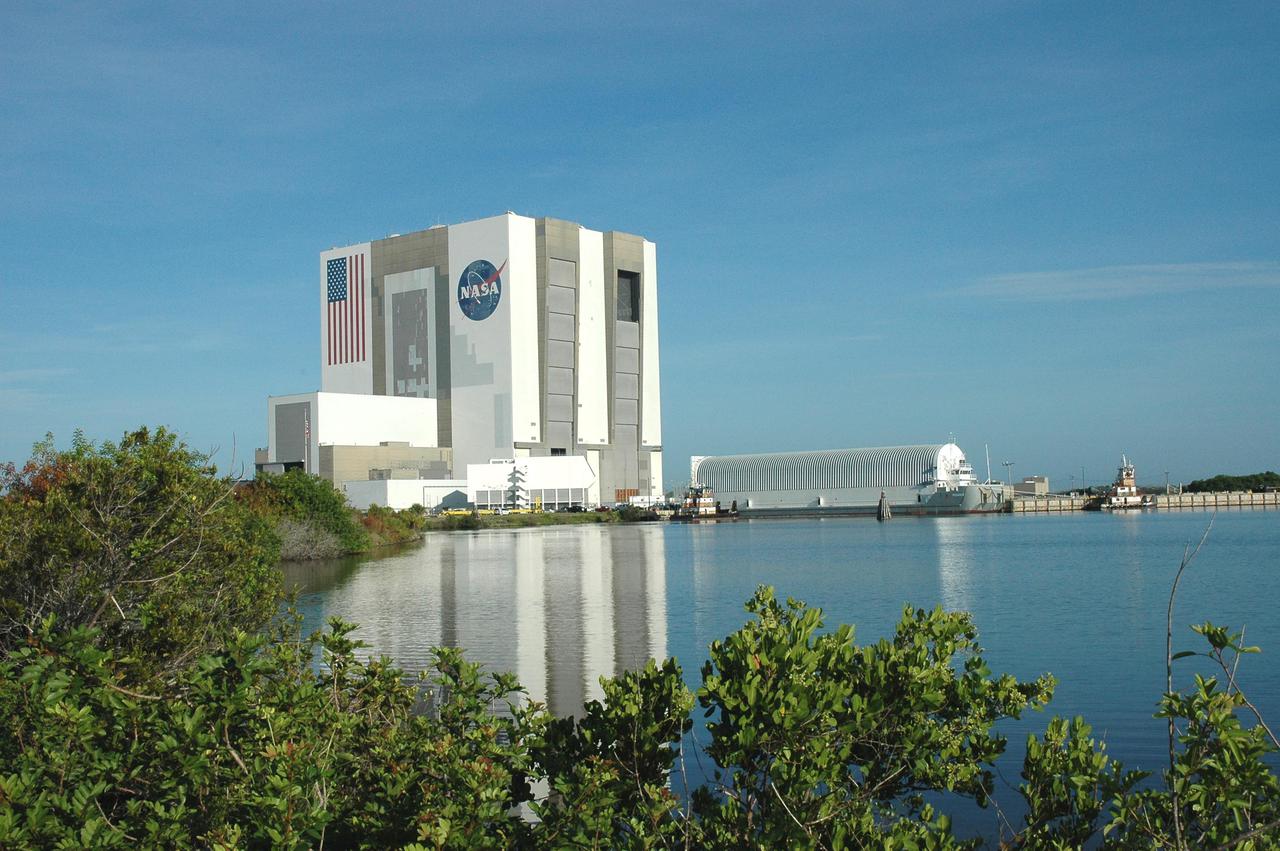
KENNEDY SPACE CENTER, FLA. - Viewed across the Turn Basin at NASA Kennedy Space Center, the barge Pegasus is ready for towing to Port Canaveral where it will join one of the Solid Rocket Booster Recovery Ships and begin its journey around the Florida peninsula to Michoud Assembly Facility in New Orleans. The barge’s cargo is External Tank 119. Delivered to KSC in June, ET-119 is the third newly redesigned tank.
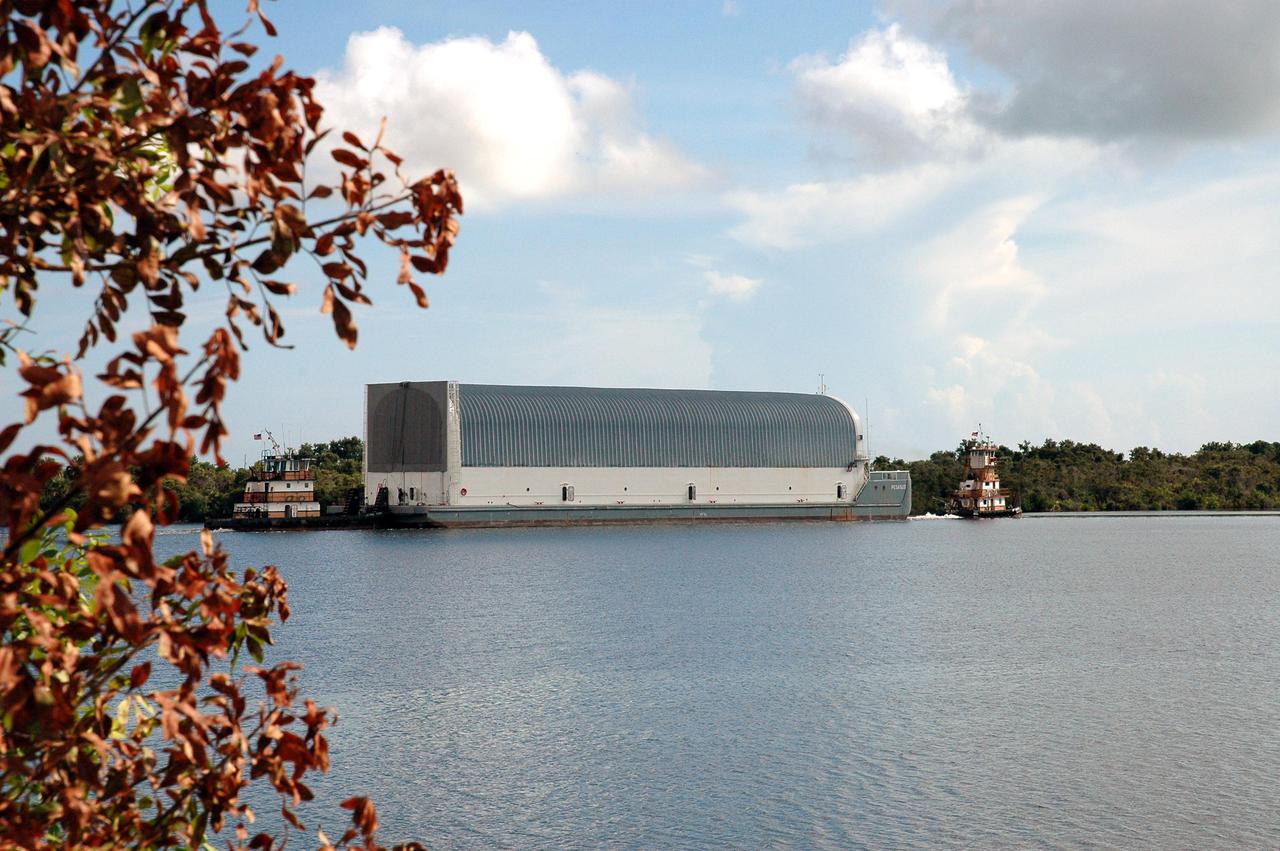
KENNEDY SPACE CENTER, FLA. - Viewed across the Turn Basin at NASA Kennedy Space Center, the barge Pegasus is towed away from the dock on the other side. It is being towed to Port Canaveral where it will join one of the Solid Rocket Booster Recovery Ships and begin its journey around the Florida peninsula to Michoud Assembly Facility in New Orleans. The barge’s cargo is External Tank 119. Delivered to KSC in June, ET-119 is the third newly redesigned tank.
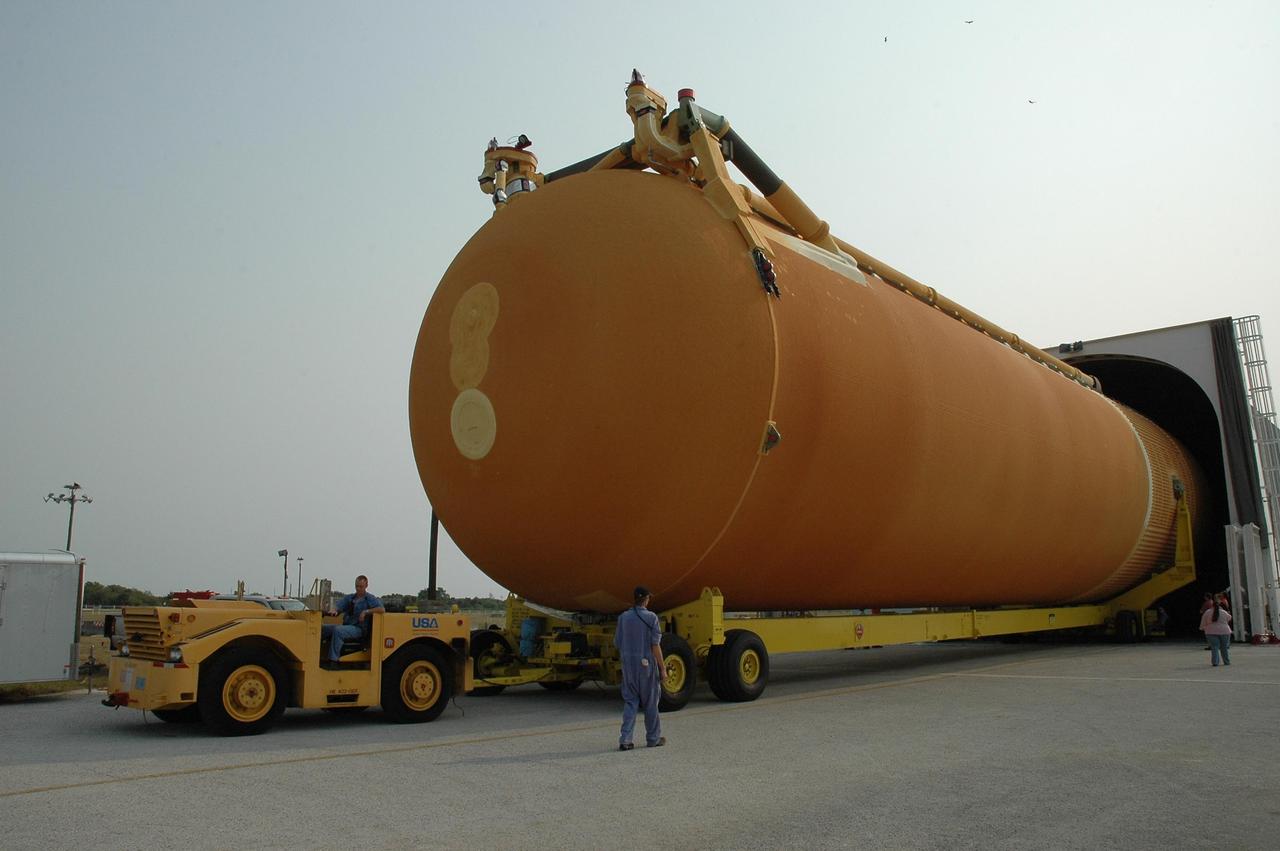
KENNEDY SPACE CENTER, FLA. -- External tank No. 117 is towed out of the Pegasus barge in the turn basin near Kennedy Space Center's Vehicle Assembly Building. ET-117 arrived aboard the barge after its voyage around the Florida Peninsula from the Michoud Assembly Facility near New Orleans. The tank is slated for mission STS-118, which is targeted for launch in early August. ET-117 will be moved into a checkout cell in high bay 2 of the VAB for processing. Photo credit: NASA/Jack Pfaller
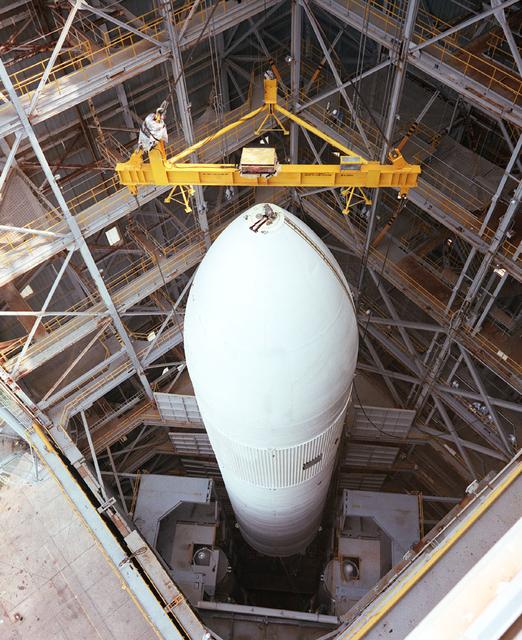
This photo depicts the installation of an External Tank (ET) into the Marshall Space Flight Center Dynamic Test Stand, building 4550. It is being mated to the Solid Rocket Boosters (SRB's) for a Mated Vertical Ground Vibration Test (MVGVT). At 154-feet long and more than 27-feet in diameter, the ET is the largest component of the Space Shuttle, the structural backbone of the entire Shuttle system, and is the only part of the vehicle that is not reusable.
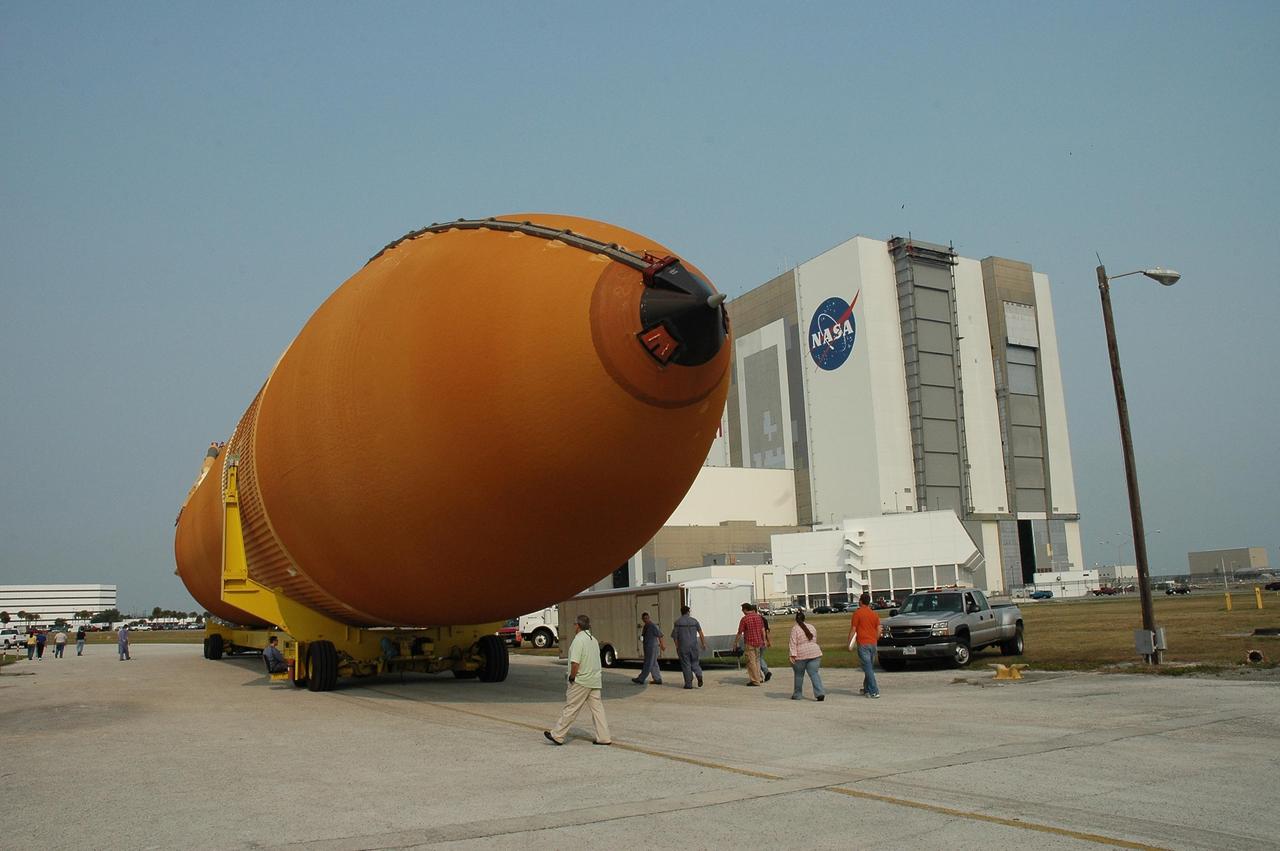
KENNEDY SPACE CENTER, FLA. -- Aboard its transporter, external tank No. 117 moves toward the Vehicle Assembly Building, at right. ET-117 arrived aboard the barge after its voyage around the Florida Peninsula from the Michoud Assembly Facility near New Orleans. The tank is slated for mission STS-118, which is targeted for launch in early August. ET-117 will be moved into a checkout cell in high bay 2 of the VAB for processing. Photo credit: NASA/Jack Pfaller
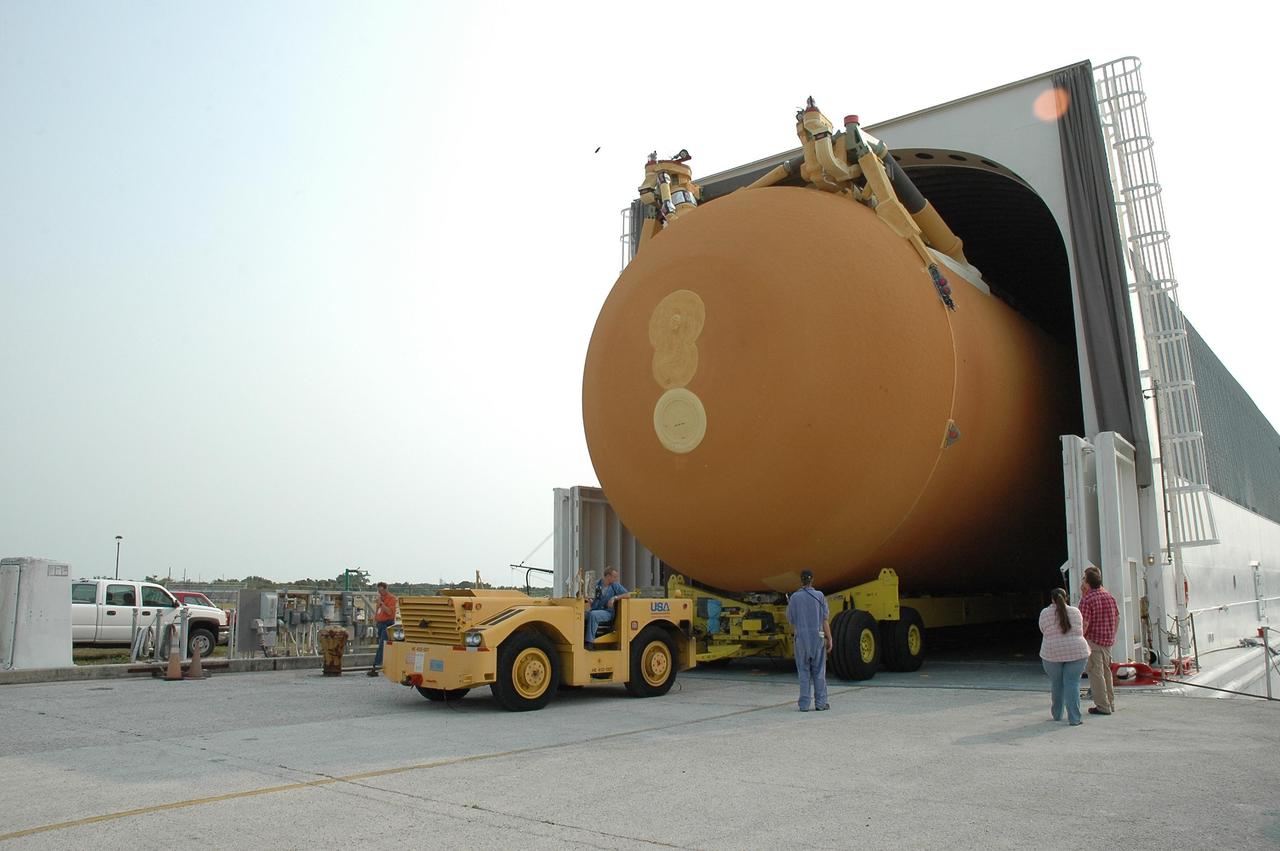
KENNEDY SPACE CENTER, FLA. -- External tank No. 117 begins to move out of the Pegasus barge in the turn basin near Kennedy Space Center's Vehicle Assembly Building. ET-117 arrived aboard the barge after its voyage around the Florida Peninsula from the Michoud Assembly Facility near New Orleans. The tank is slated for mission STS-118, which is targeted for launch in early August. ET-117 will be moved into a checkout cell in high bay 2 of the VAB for processing. Photo credit: NASA/Jack Pfaller
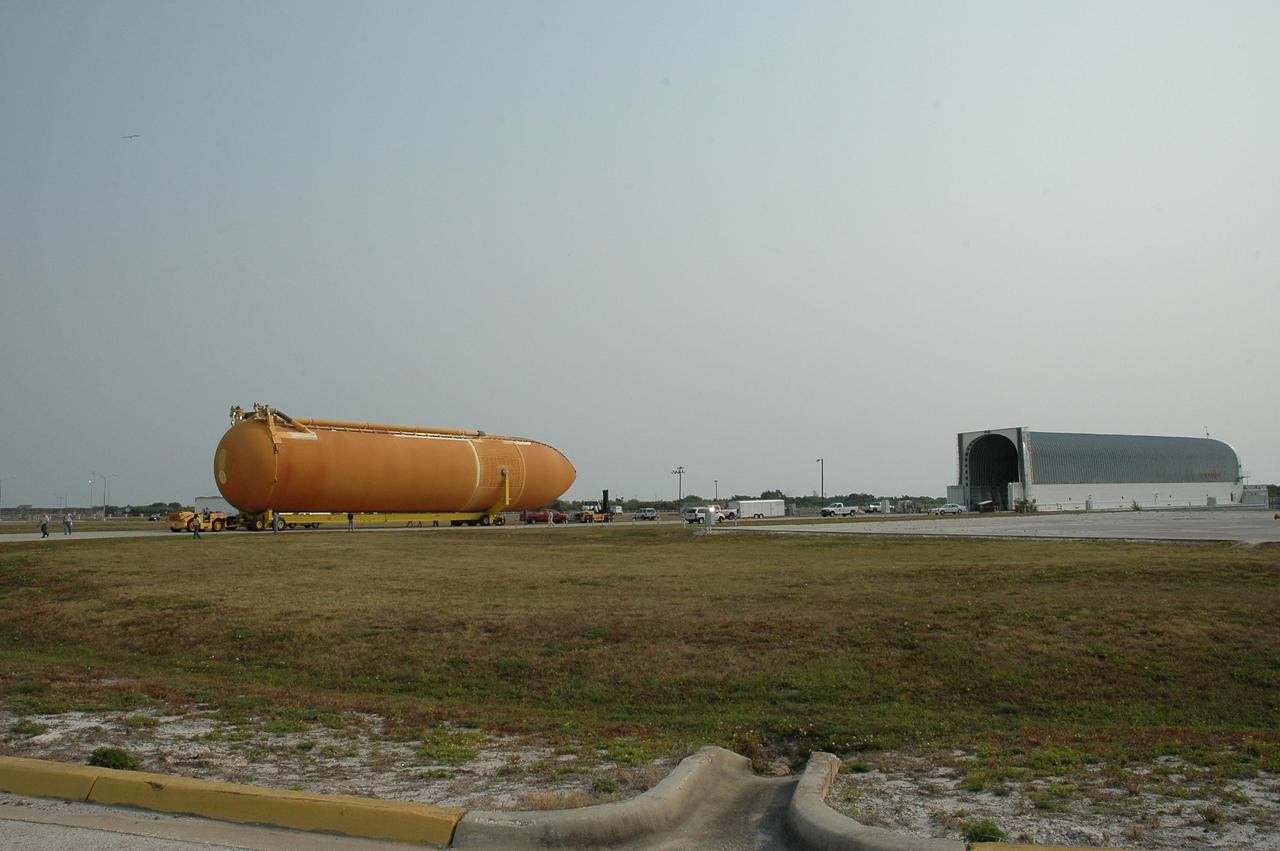
KENNEDY SPACE CENTER, FLA. -- Aboard its transporter, external tank No. 117 moves away from the Pegasus barge, at right, heading for the Vehicle Assembly Building. ET-117 arrived aboard the barge after its voyage around the Florida Peninsula from the Michoud Assembly Facility near New Orleans. The tank is slated for mission STS-118, which is targeted for launch in early August. ET-117 will be moved into a checkout cell in high bay 2 of the VAB for processing. Photo credit: NASA/Jack Pfaller

KENNEDY SPACE CENTER, FLA. -- External tank No. 117 is ready for offloading from the Pegasus barge in the turn basin near Kennedy Space Center's Vehicle Assembly Building. ET-117 arrived aboard the barge after its voyage around the Florida Peninsula from the Michoud Assembly Facility near New Orleans. The tank is slated for mission STS-118, which is targeted for launch in early August. ET-117 will be moved into a checkout cell in high bay 2 of the VAB for processing. Photo credit: NASA/Jack Pfaller
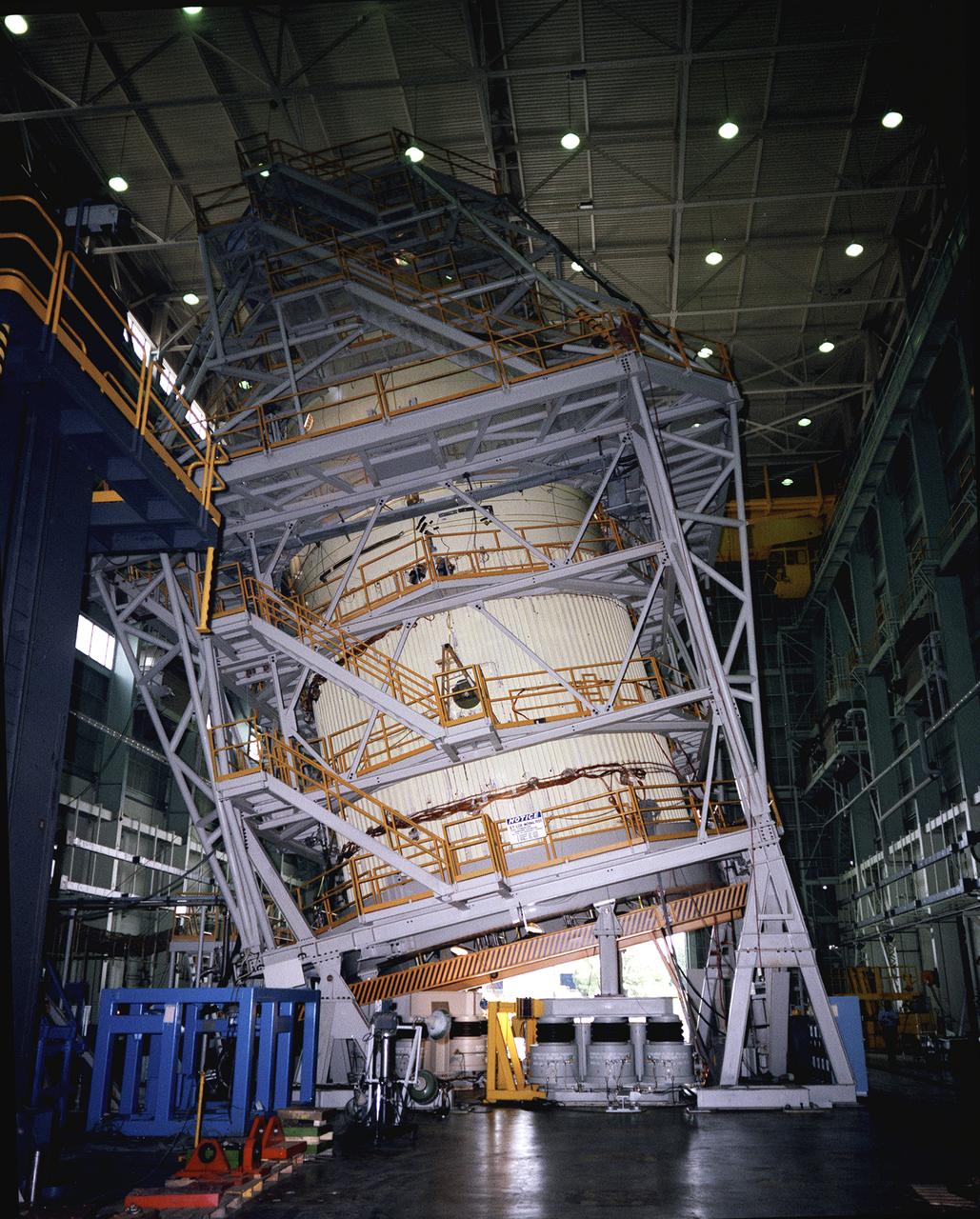
This photograph shows a liquid oxygen tank for the Shuttle External Tank (ET) during a hydroelastic modal survey test at the Marshall Space Flight Center. The ET provides liquid hydrogen and liquid oxygen to the Shuttle's three main engines during the first 8.5 minutes of flight. At 154-feet long and more than 27-feet in diameter, the ET is the largest component of the Space Shuttle, the structural backbone of the entire Shuttle system, and is the only part of the vehicle that is not reusable. The ET is manufactured at the Michoud Assembly Facility near New Orleans, Louisiana, by the Martin Marietta Corporation under management of the Marshall Space Flight Center.
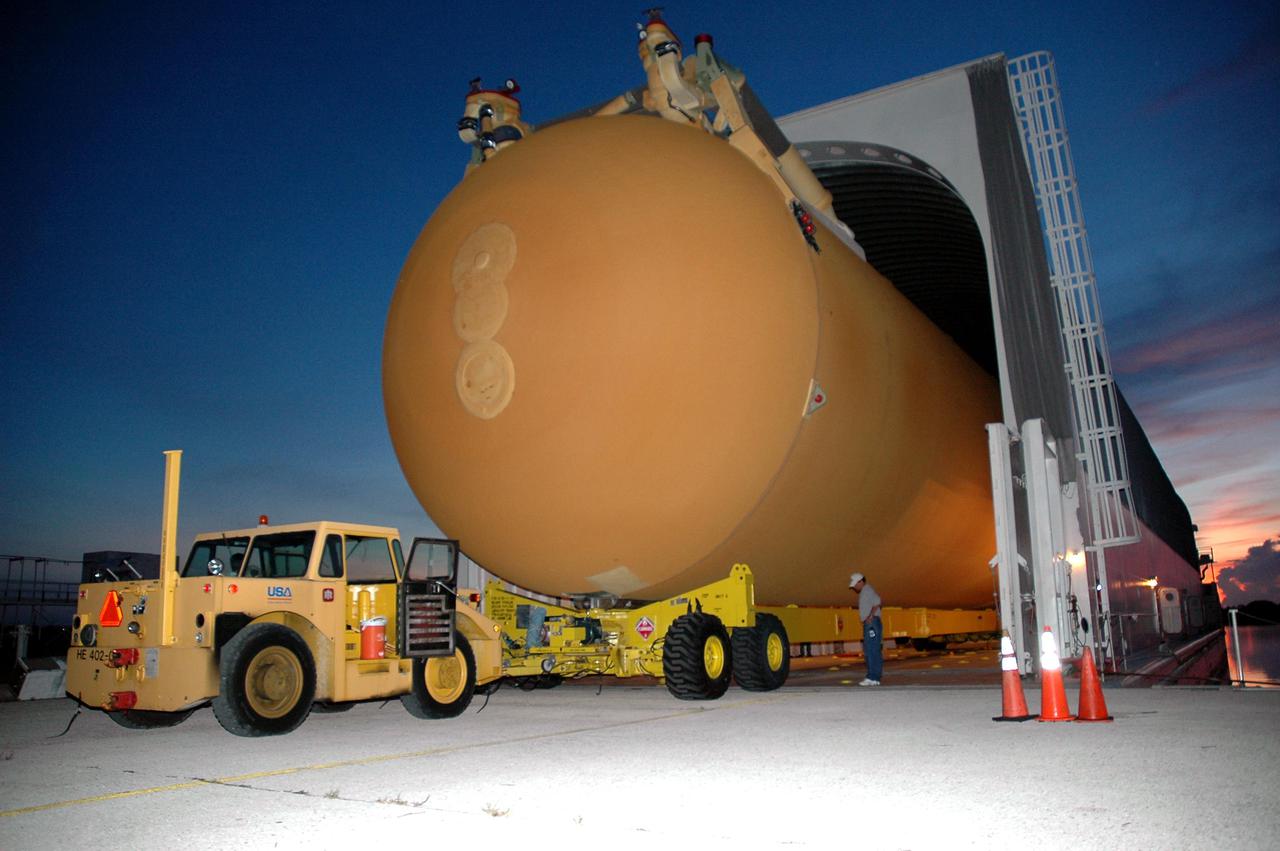
KENNEDY SPACE CENTER, FLA. - Under pre-dawn skies of blue and red, External Tank 119 is loaded onto the barge at the Turn Basin. The tank will embark on a voyage around the Florida peninsula to the Michoud Assembly Facility in New Orleans. Delivered to KSC in June, ET-119 is the third newly redesigned tank.
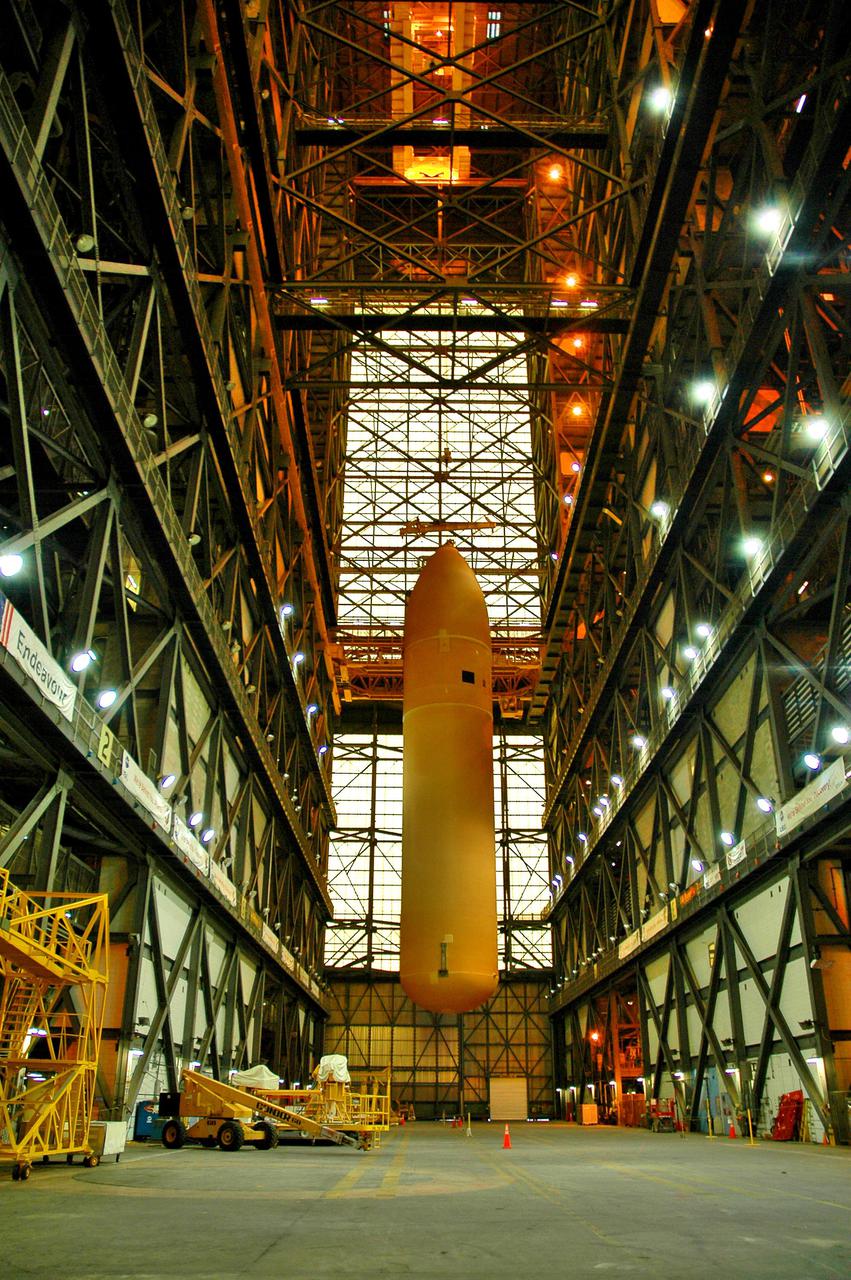
KENNEDY SPACE CENTER, FLA. - External Tank 119 is lowered to the transfer aisle in the Vehicle Assembly Building. There it will be lowered and placed on the transporter to be moved to the barge at the Turn Basin. The tank will embark on a voyage around the Florida peninsula to the Michoud Assembly Facility in New Orleans. Delivered to KSC in June, ET-119 is the third newly redesigned tank.
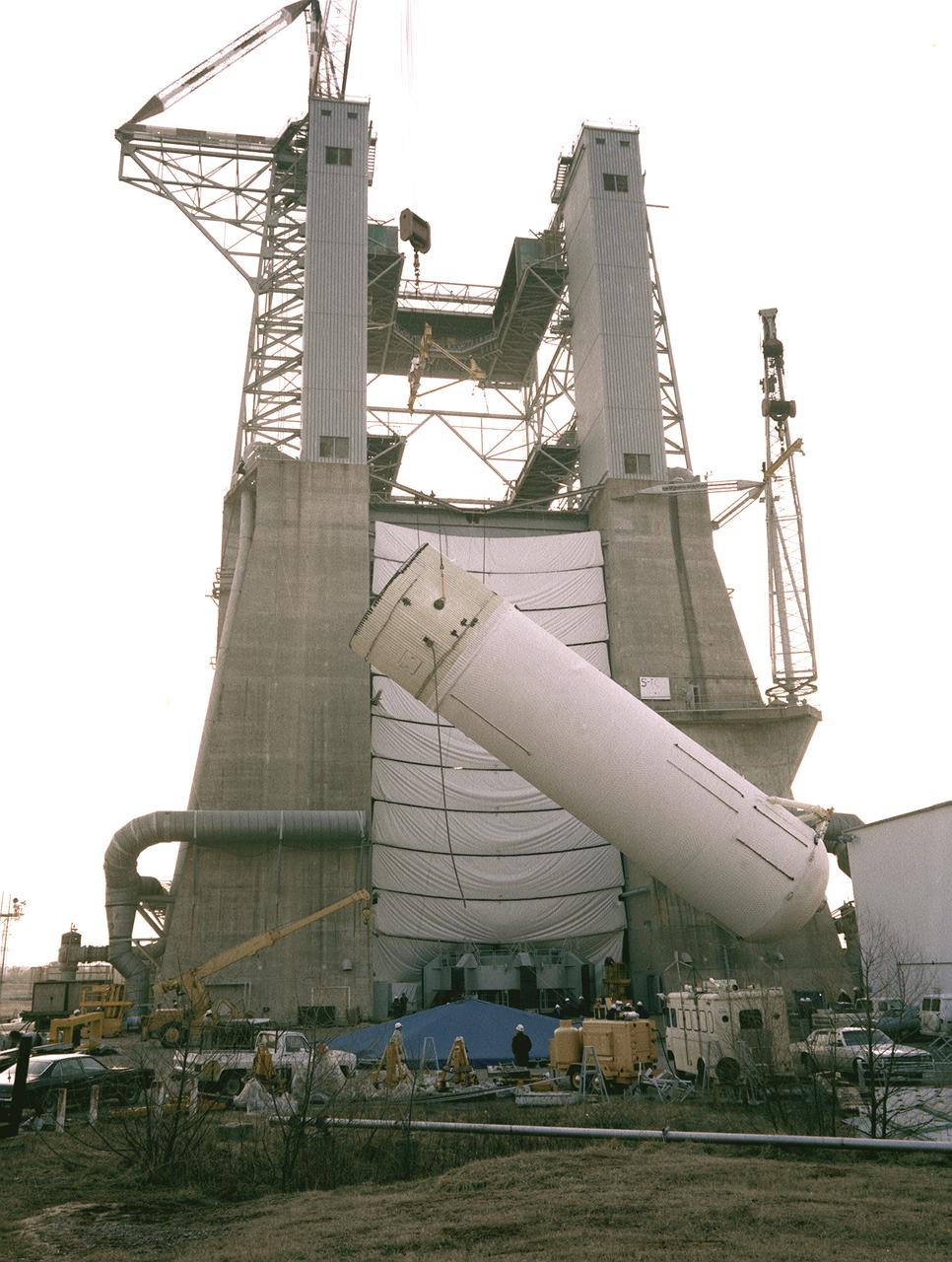
A liquid hydrogen tank of the Shuttle's external tank (ET) is installed into the S-1C Test Stand for a structural test at the Marshall Space Flight Center. At 154-feet long and more than 27-feet in diameter, the ET is the largest component of the Space Shuttle, the structural backbone of the entire Shuttle system, and is the only part of the vehicle that is not reusable. The ET is manufactured at the Michoud Assembly Facility near New Orleans, Louisiana, by the Martin Marietta Corporation under management of the Marshall Space Flight Center.
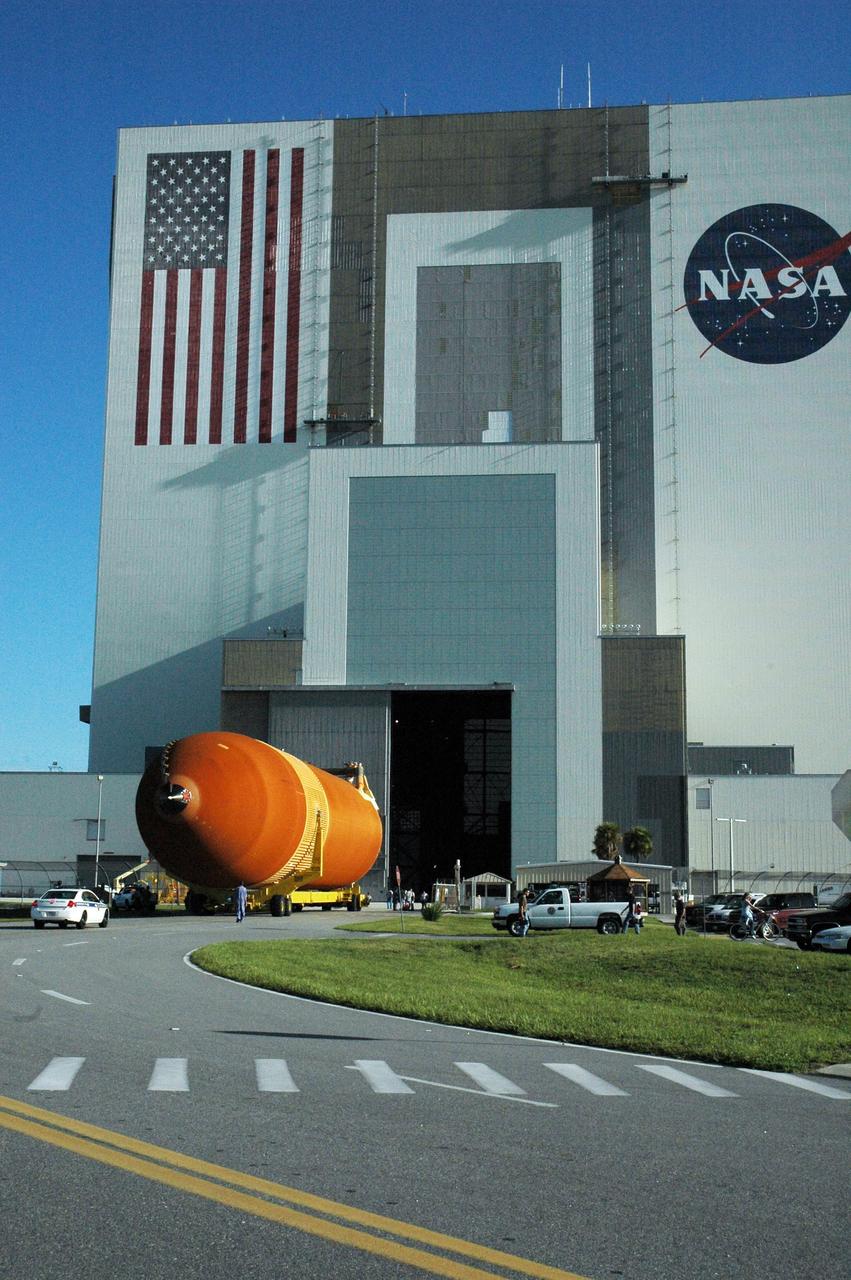
KENNEDY SPACE CENTER, FLA. -- Aboard a transporter, external tank No. 120 moves toward the open door of the Vehicle Assembly Building. There it will be lifted into a checkout cell. ET-120 will be used for launching Space Shuttle Discovery on mission STS-120 in October. NASA/Amanda Diller
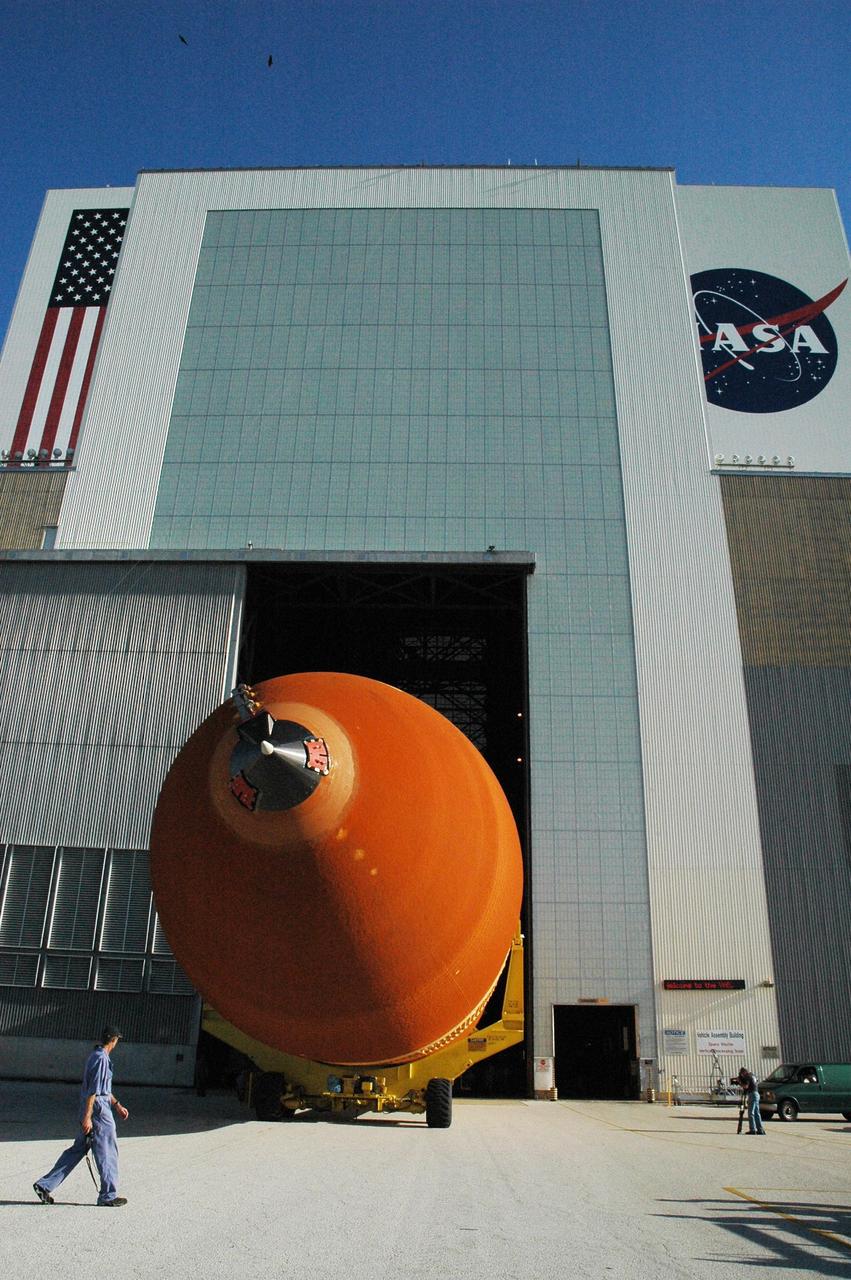
KENNEDY SPACE CENTER, FLA. -- Aboard a transporter, external tank No. 120 moves into the open door of the Vehicle Assembly Building. There it will be lifted into a checkout cell. ET-120 will be used for launching Space Shuttle Discovery on mission STS-120 in October. NASA/Amanda Diller
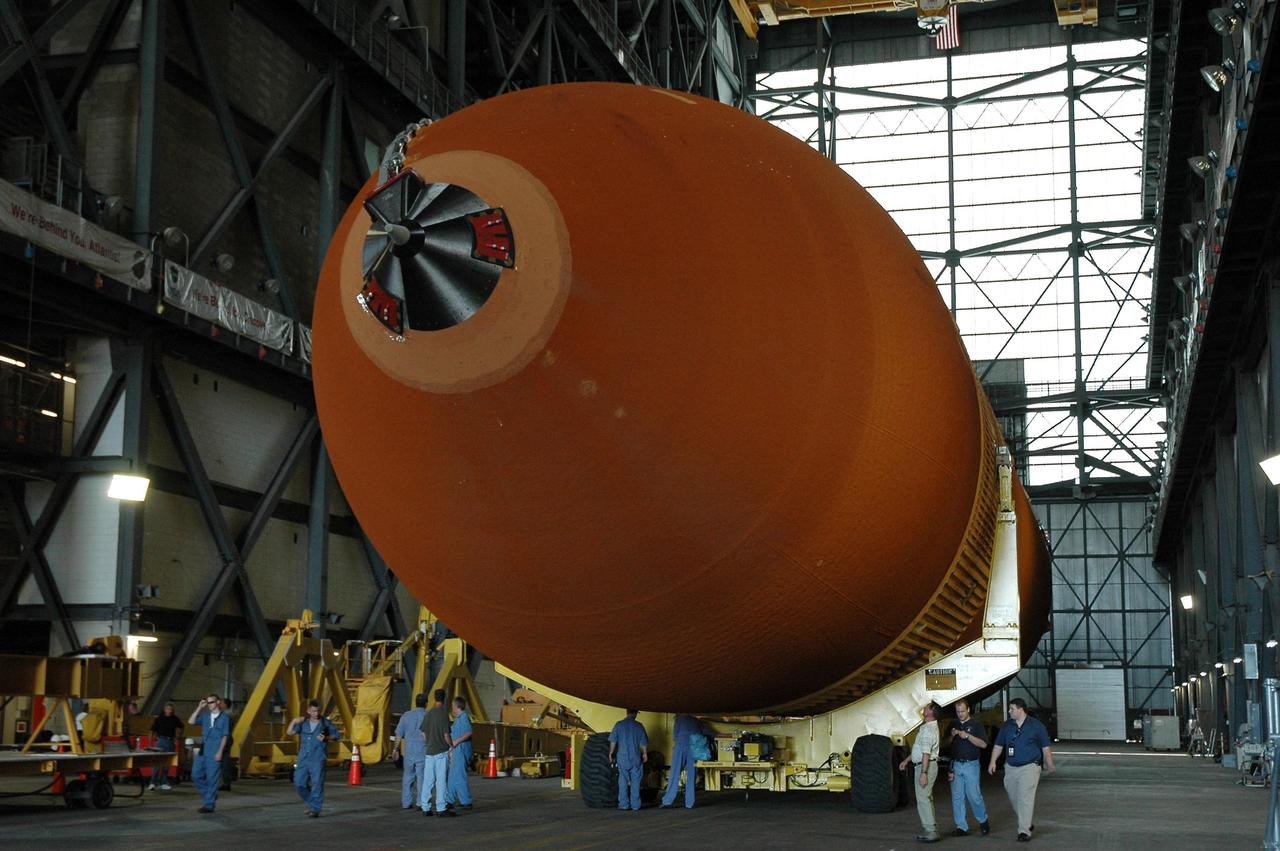
KENNEDY SPACE CENTER, FLA. -- In the transfer aisle of the Vehicle Assembly Building, external tank No. 120 waits to be fitted with overhead crane. The tank will be lifted into a checkout cell. ET-120 will be used for launching Space Shuttle Discovery on mission STS-120 in October. NASA/Amanda Diller
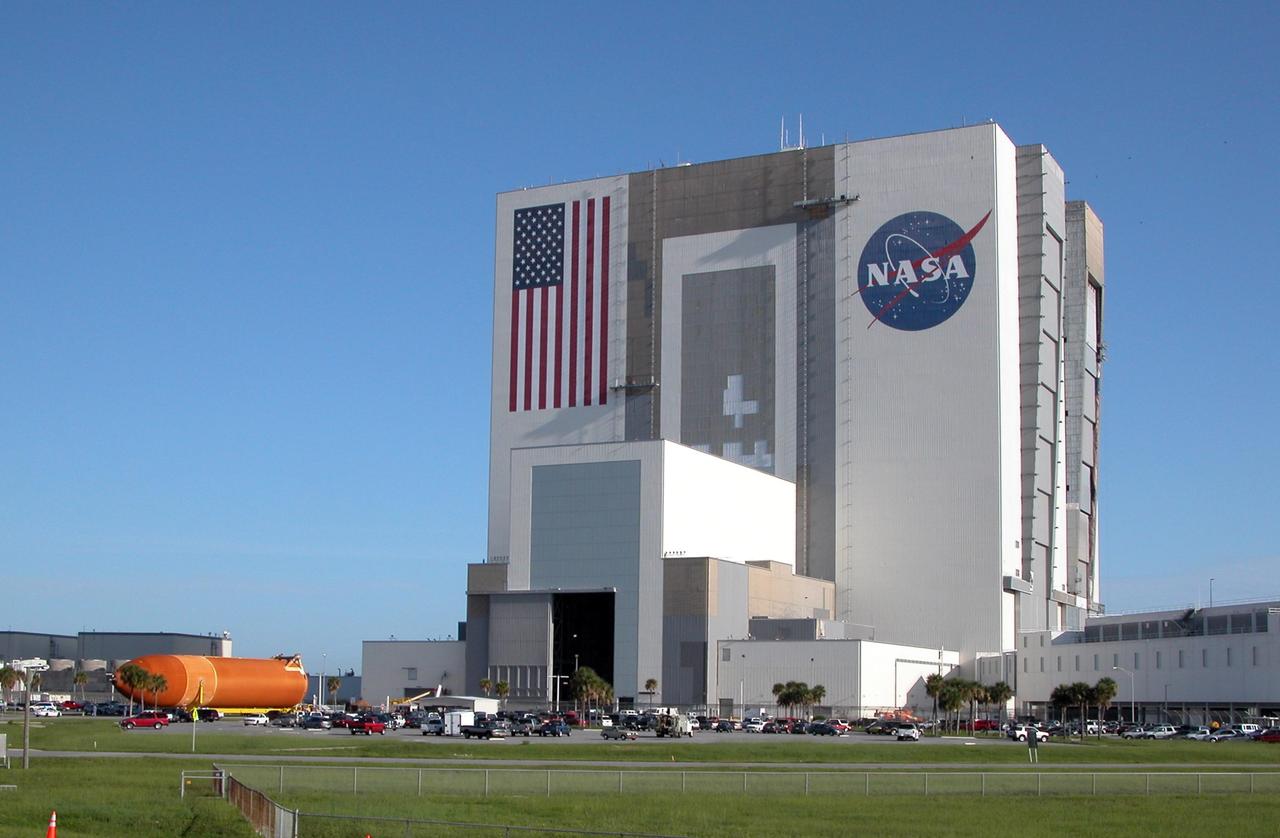
KENNEDY SPACE CENTER, FLA. -- Aboard a transporter, external tank No. 120 heads for the open door of the Vehicle Assembly Building. There it will be lifted into a checkout cell. ET-120 will be used for launching Space Shuttle Discovery on mission STS-120 in October. NASA/Debbie Odom
Aboard a transporter, external tank No. 120 heads for the open door of the Vehicle Assembly Building. There it will be lifted into a checkout cell. ET-120 will be used for launching Space Shuttle Discovery on mission STS-120 in October.
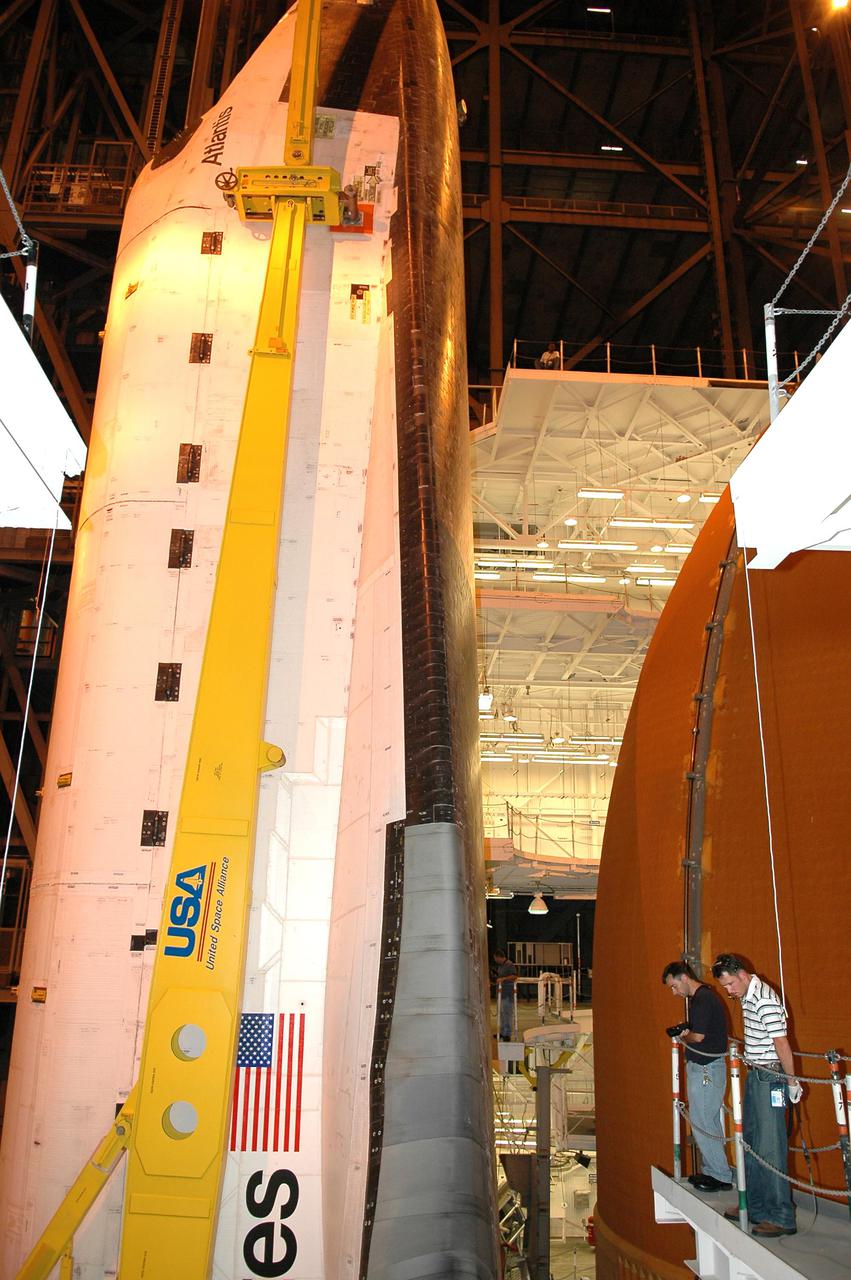
KENNEDY SPACE CENTER, FLA. - In the Vehicle Assembly Building, technicians spot for Space Shuttle Atlantis as it is demated from its External Tank_Solid Rocket Booster stack. The orbiter will be lowered into the transfer aisle and rolled back to Orbiter Processing Facility (OPF) bay 1. Once in the OPF, processing will begin for mission STS-115, the 19th flight to the International Space Station. The tank, ET-120, is the first redesigned ET to arrive at KSC and will undergo further testing before Return to Flight mission STS-121 next year.
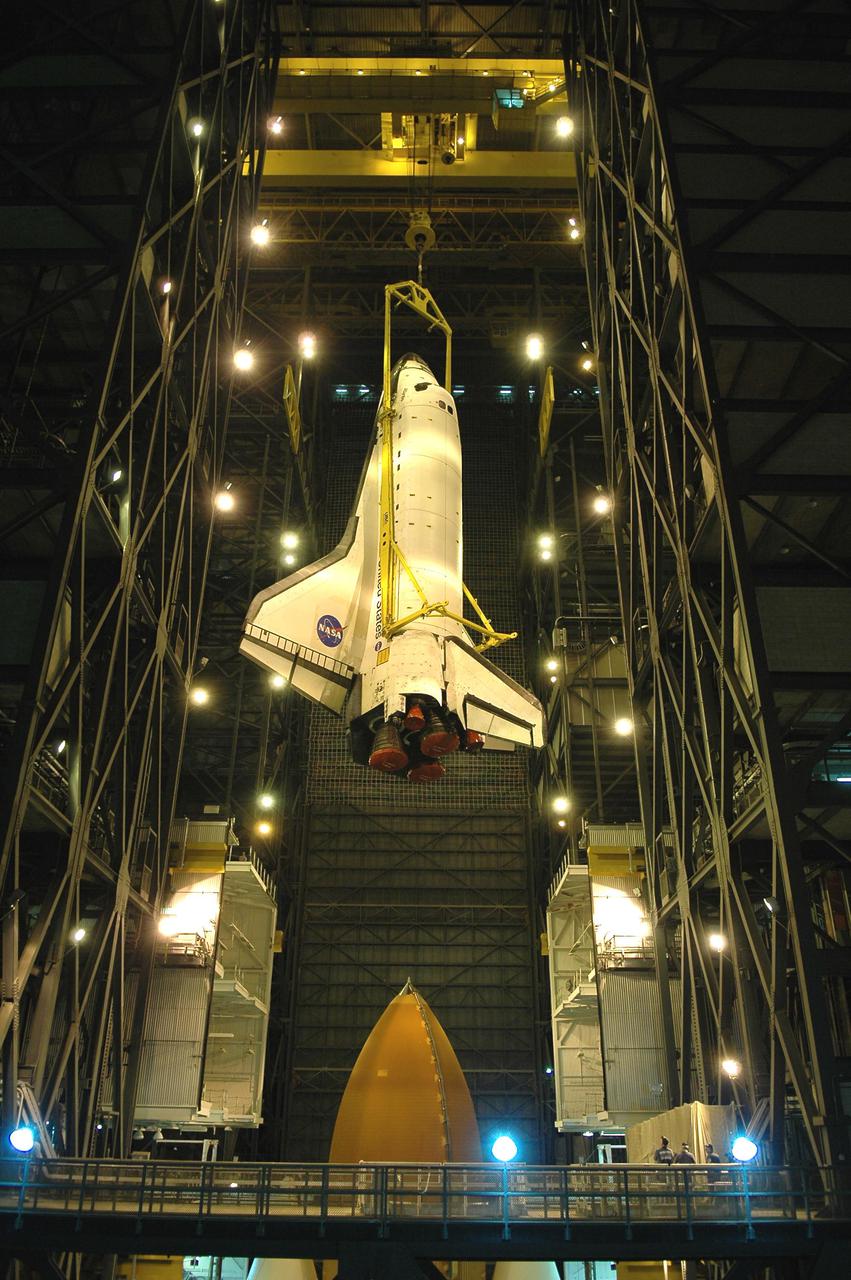
KENNEDY SPACE CENTER, FLA. - In the Vehicle Assembly Building, Space Shuttle Atlantis is lifted above its External Tank_Solid Rocket Booster stack. The orbiter will be lowered into the transfer aisle and rolled back to Orbiter Processing Facility (OPF) bay 1. Once in the OPF, processing will begin for mission STS-115, the 19th flight to the International Space Station. The tank, ET-120, is the first redesigned ET to arrive at KSC and will undergo further testing before Return to Flight mission STS-121 next year.
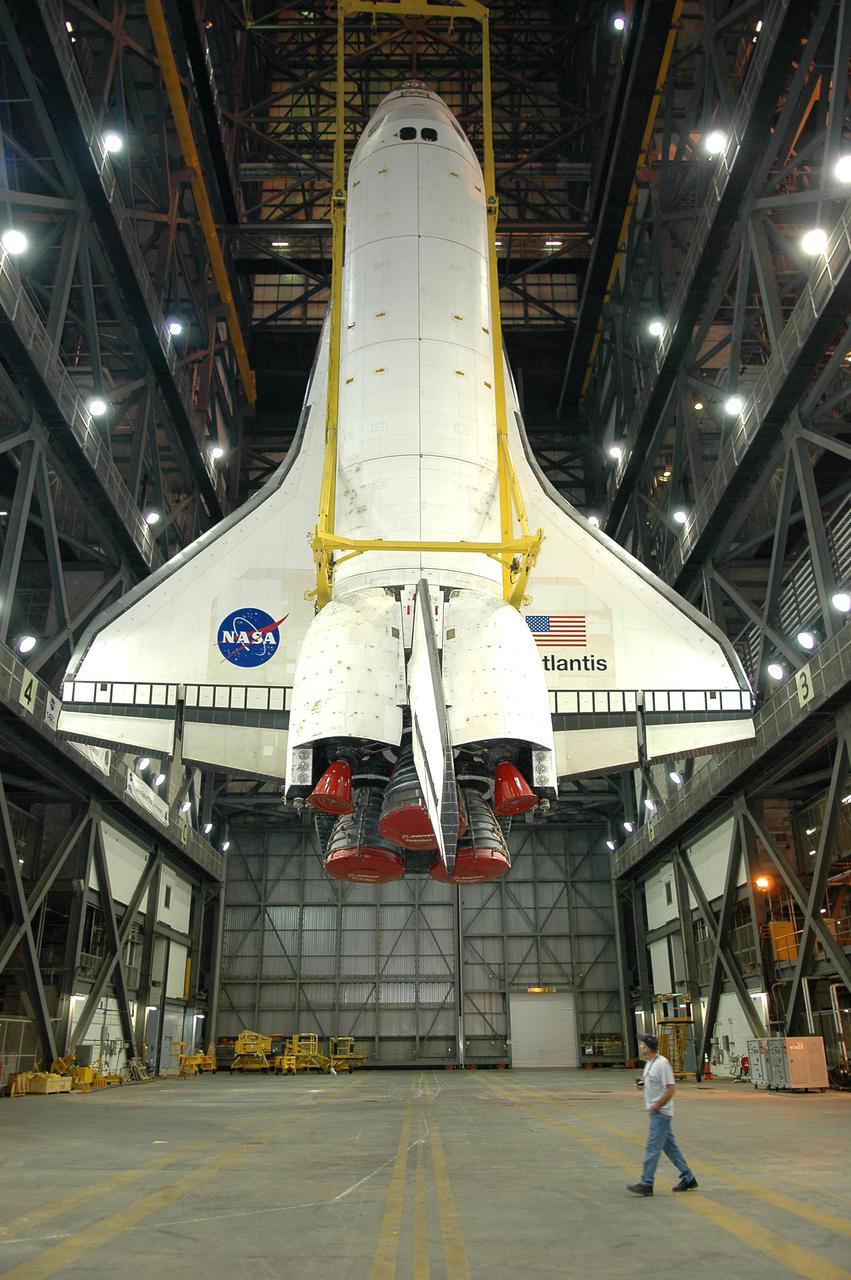
KENNEDY SPACE CENTER, FLA. - In the Vehicle Assembly Building, a technician monitors Space Shuttle Atlantis as it is lowered into the transfer aisle after being demated from its External Tank_Solid Rocket Booster stack. The orbiter will be rolled back to Orbiter Processing Facility bay 1 where processing will begin for mission STS-115, the 19th flight to the International Space Station. The tank, ET-120, is the first redesigned ET to arrive at KSC and will undergo further testing before Return to Flight mission STS-121 next year.
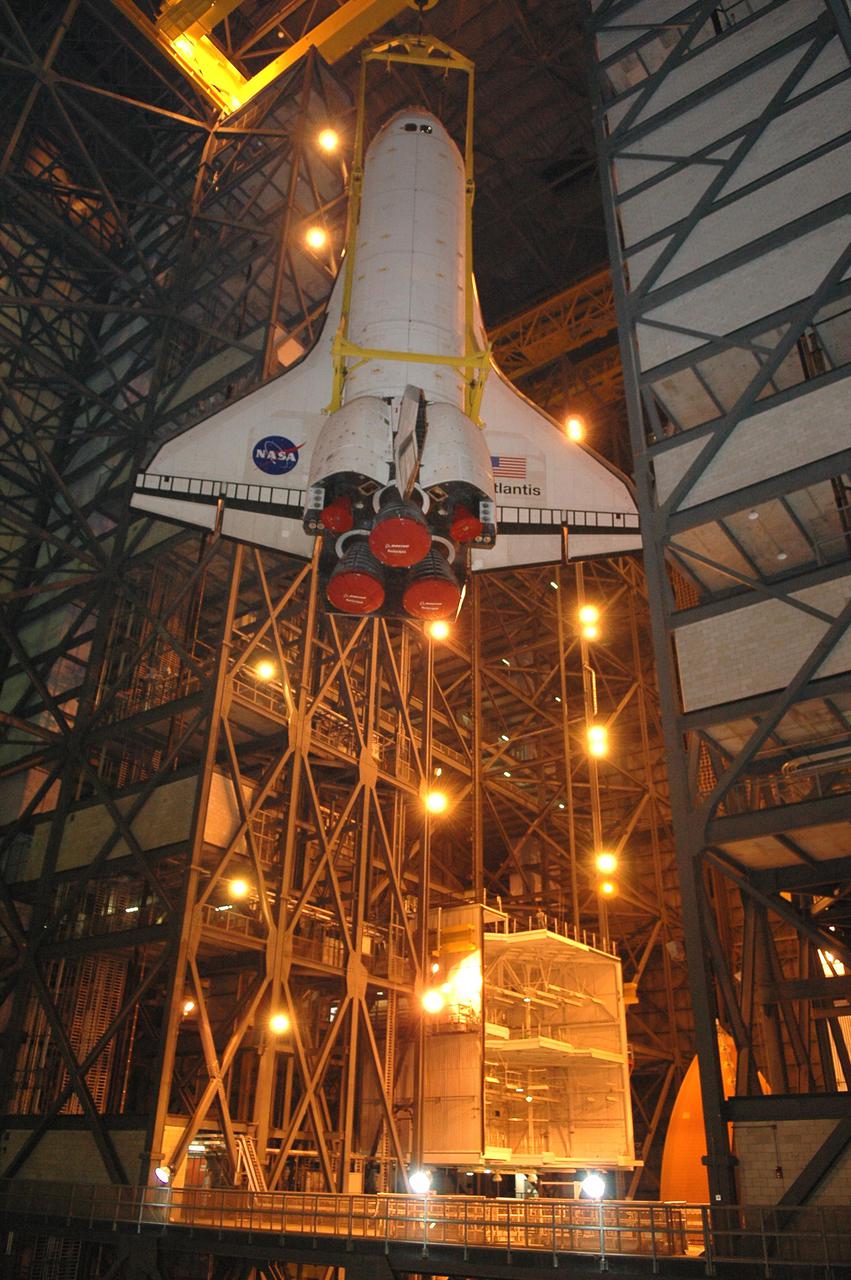
KENNEDY SPACE CENTER, FLA. - In the Vehicle Assembly Building, Space Shuttle Atlantis is lowered into the transfer aisle after being demated from its External Tank_Solid Rocket Booster stack. The orbiter will be rolled back to Orbiter Processing Facility (OPF) bay 1 where processing will begin for mission STS-115, the 19th flight to the International Space Station. The tank, ET-120, is the first redesigned ET to arrive at KSC and will undergo further testing before Return to Flight mission STS-121 next year.
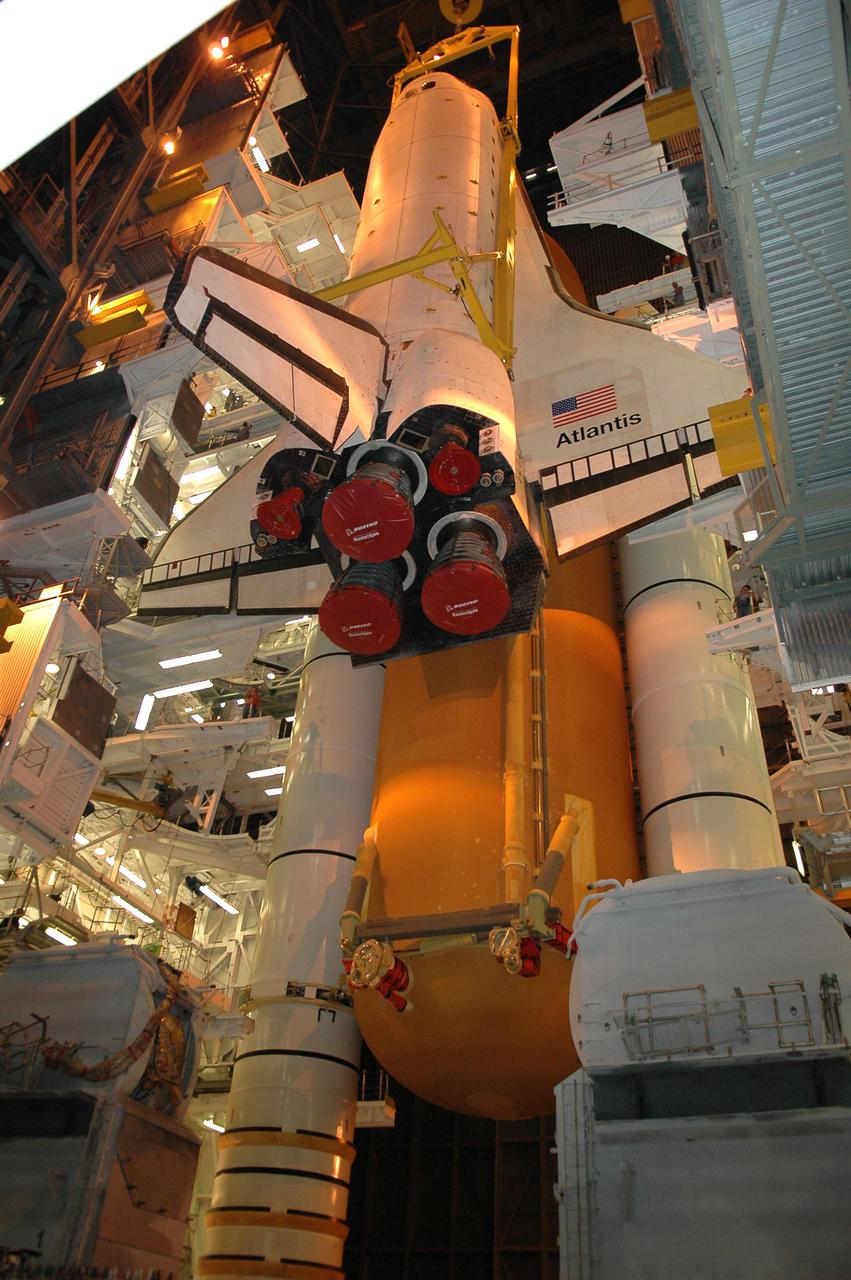
KENNEDY SPACE CENTER, FLA. - In the Vehicle Assembly Building, Space Shuttle Atlantis is lifted from its External Tank_Solid Rocket Booster stack. The orbiter will be lowered into the transfer aisle and rolled back to Orbiter Processing Facility (OPF) bay 1. Once in the OPF, processing will begin for mission STS-115, the 19th flight to the International Space Station. The tank, ET-120, is the first redesigned ET to arrive at KSC and will undergo further testing before Return to Flight mission STS-121 next year.
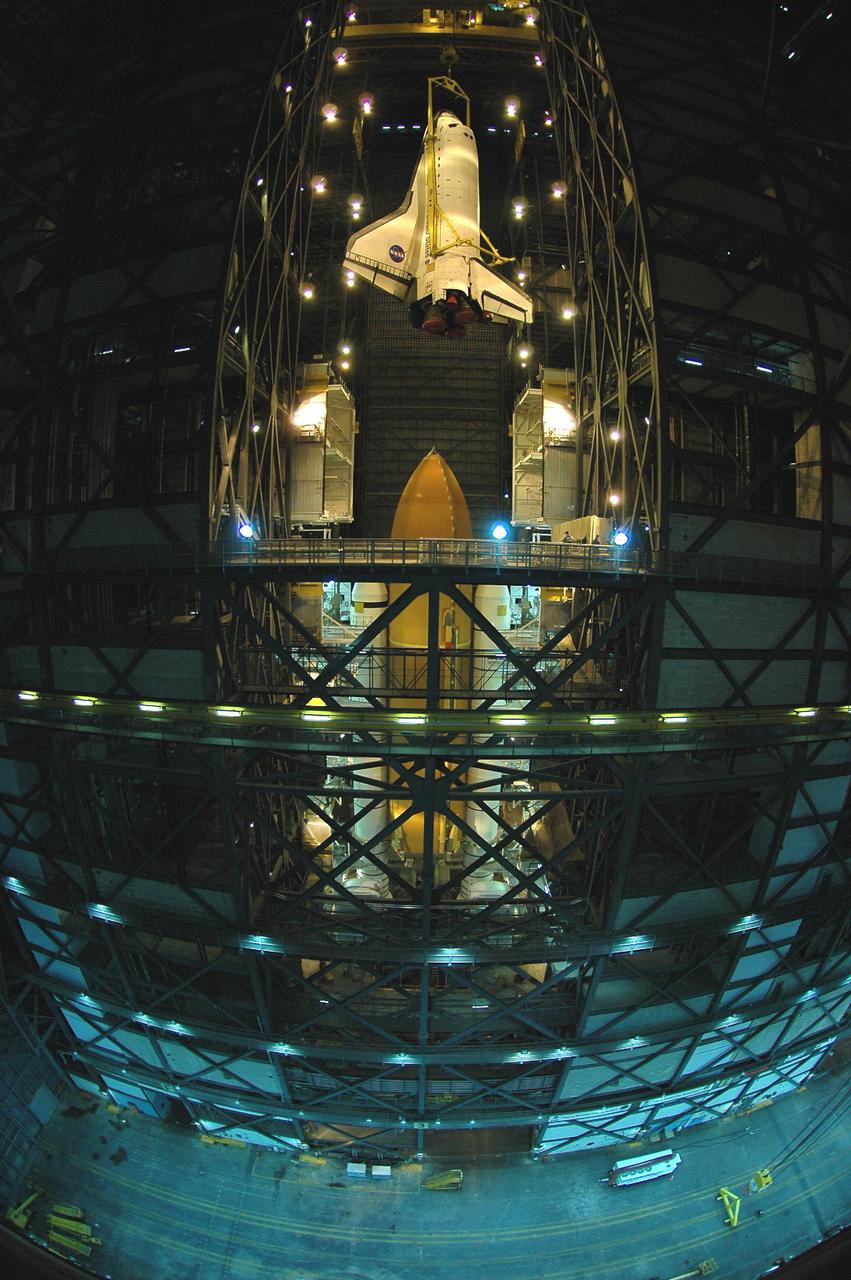
KENNEDY SPACE CENTER, FLA. - In the Vehicle Assembly Building, a fisheye lens captures Space Shuttle Atlantis as it is lifted above its External Tank_Solid Rocket Booster stack. The orbiter will be lowered into the transfer aisle and rolled back to Orbiter Processing Facility (OPF) bay 1. Once in the OPF, processing will begin for mission STS-115, the 19th flight to the International Space Station. The tank, ET-120, is the first redesigned ET to arrive at KSC and will undergo further testing before Return to Flight mission STS-121 next year.
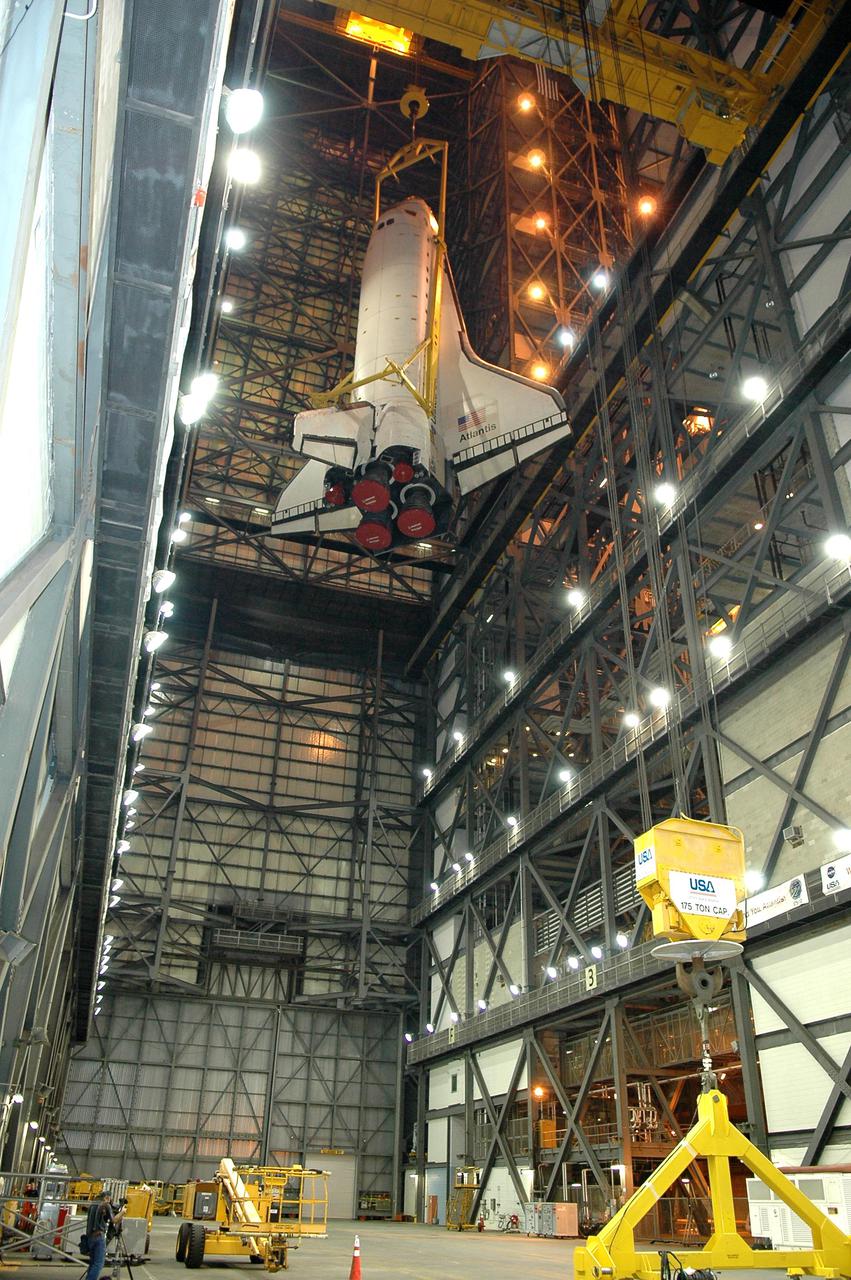
KENNEDY SPACE CENTER, FLA. - In the Vehicle Assembly Building, Space Shuttle Atlantis is lowered into the transfer aisle after being demated from its External Tank_Solid Rocket Booster stack. The orbiter will be rolled back to Orbiter Processing Facility bay 1 where processing will begin for mission STS-115, the 19th flight to the International Space Station. The tank, ET-120, is the first redesigned ET to arrive at KSC and will undergo further testing before Return to Flight mission STS-121 next year.
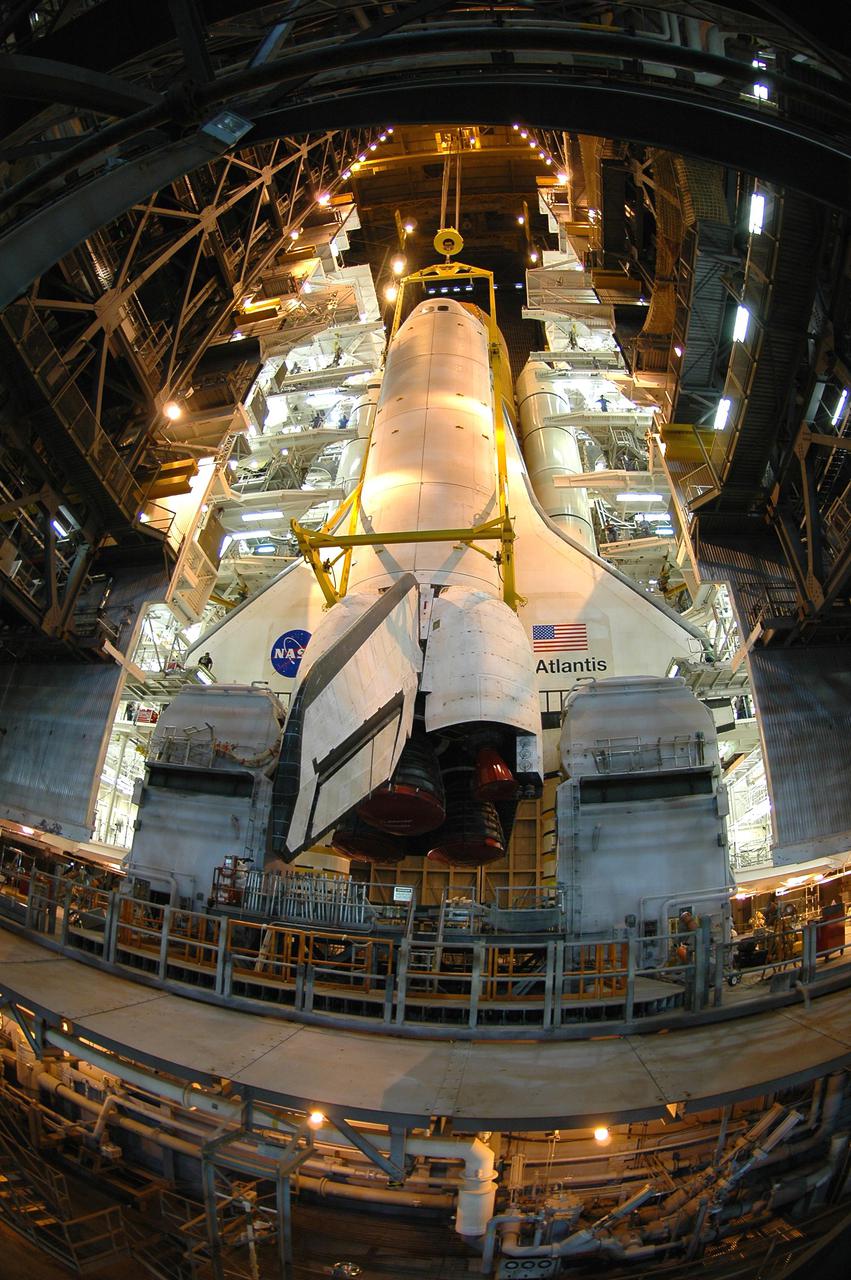
KENNEDY SPACE CENTER, FLA. - In the Vehicle Assembly Building, a fisheye lens captures Space Shuttle Atlantis as it is lifted from its External Tank_Solid Rocket Booster stack. The orbiter will be lowered into the transfer aisle and rolled back to Orbiter Processing Facility (OPF) bay 1. Once in the OPF, processing will begin for mission STS-115, the 19th flight to the International Space Station. The tank, ET-120, is the first redesigned ET to arrive at KSC and will undergo further testing before Return to Flight mission STS-121 next year.
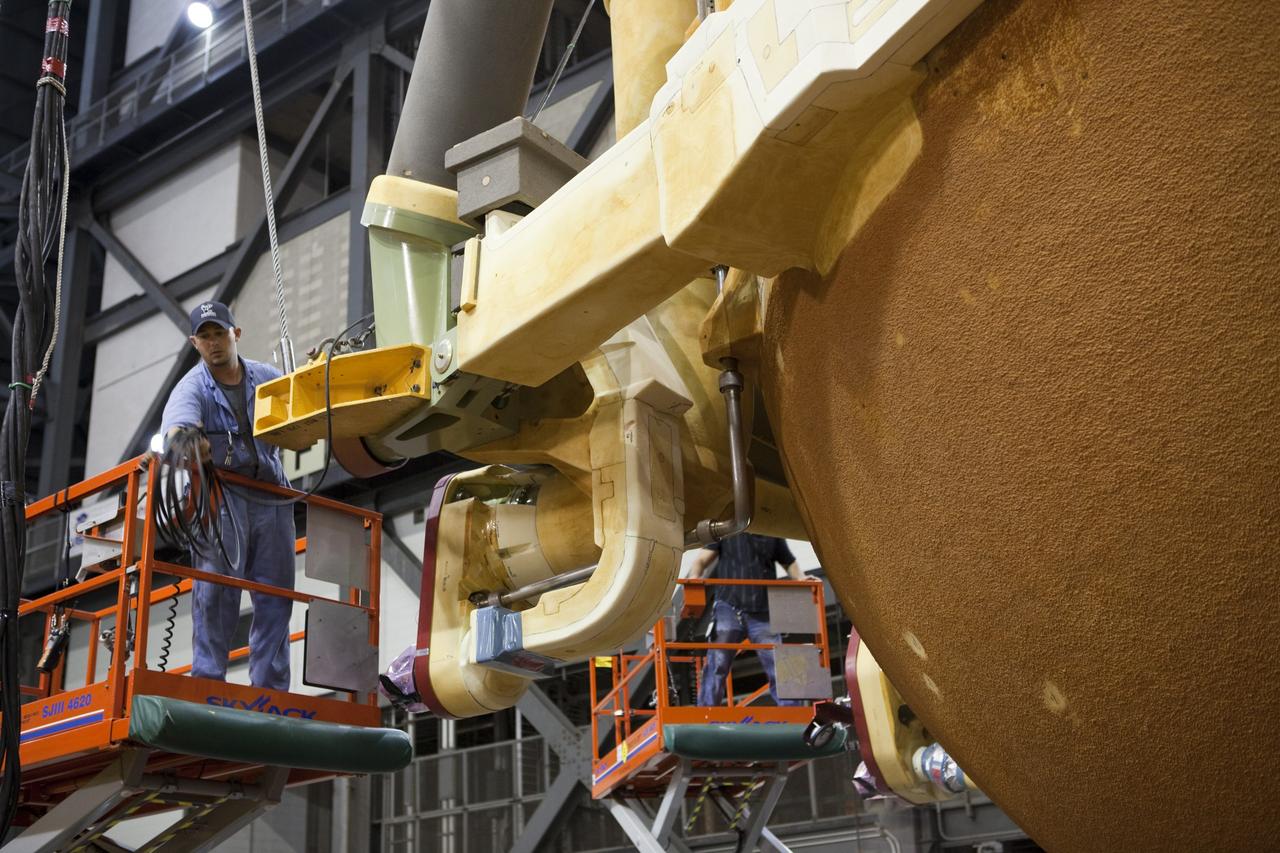
CAPE CANAVERAL, Fla. -- In the Vehicle Assembly Building at NASA's Kennedy Space Center in Florida, workers check the hoist connections on External Fuel Tank-122 as it is lifted toward a test cell. ET-122, the Space Shuttle Program's last external fuel tank was delivered to Kennedy's Turn Basin from NASA’s Michoud Assembly Facility in New Orleans aboard the Pegasus Barge. After testing, ET-122 eventually will be attached to space shuttle Endeavour for the STS-134 mission to the International Space Station targeted to launch February, 2011. For more information visit: http://www.nasa.gov/mission_pages/shuttle/shuttlemissions/sts134/index.html. Photo credit: NASA/Dimitri Gerondidakis
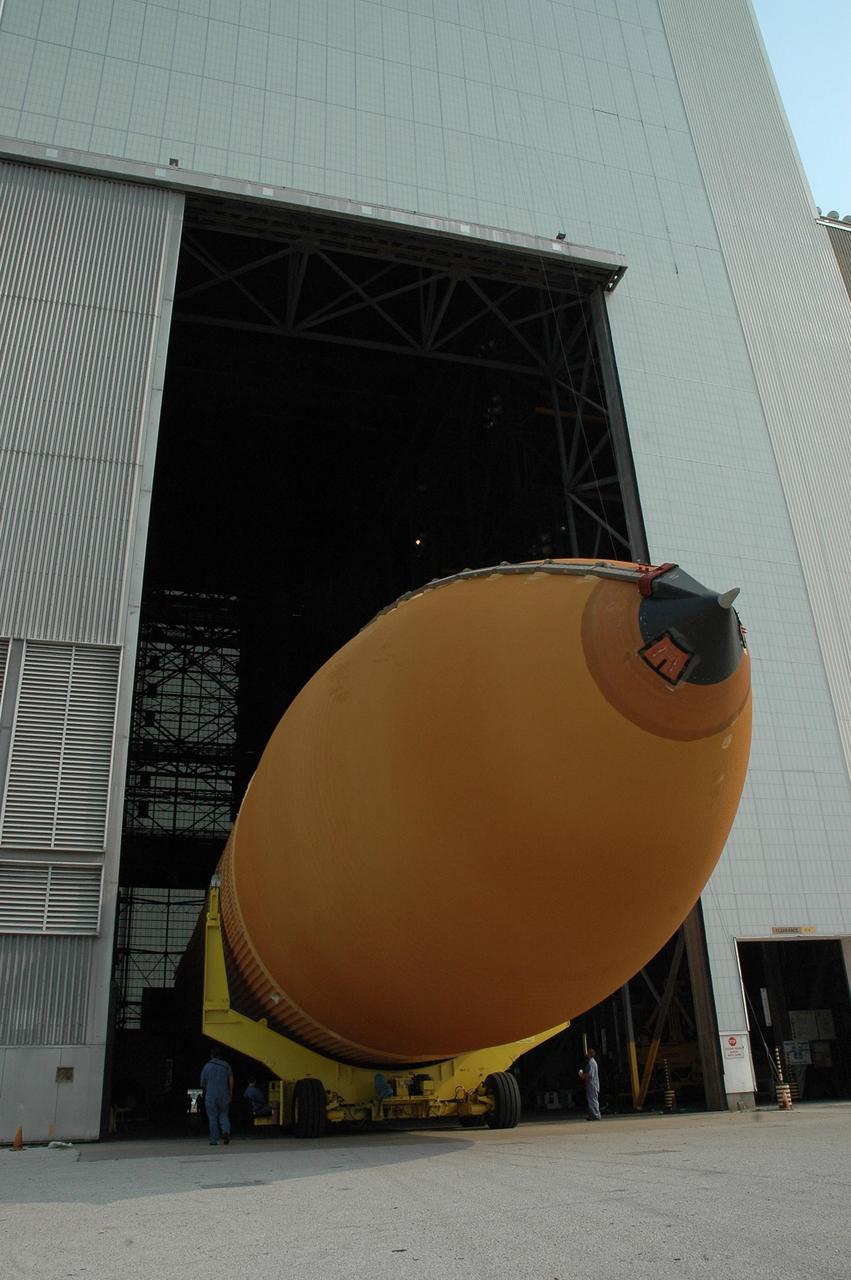
KENNEDY SPACE CENTER, FLA. -- Aboard its transporter, external tank No. 117 moves into the transfer aisle of the Vehicle Assembly Building. The tank was offloaded from the Pegasus barge in the nearby turn basin. ET-117 arrived aboard the barge after its voyage around the Florida Peninsula from the Michoud Assembly Facility near New Orleans. The tank is slated for mission STS-118, which is targeted for launch in early August. ET-117 will be moved into a checkout cell in high bay 2 of the VAB for processing. Photo credit: NASA/Jack Pfaller
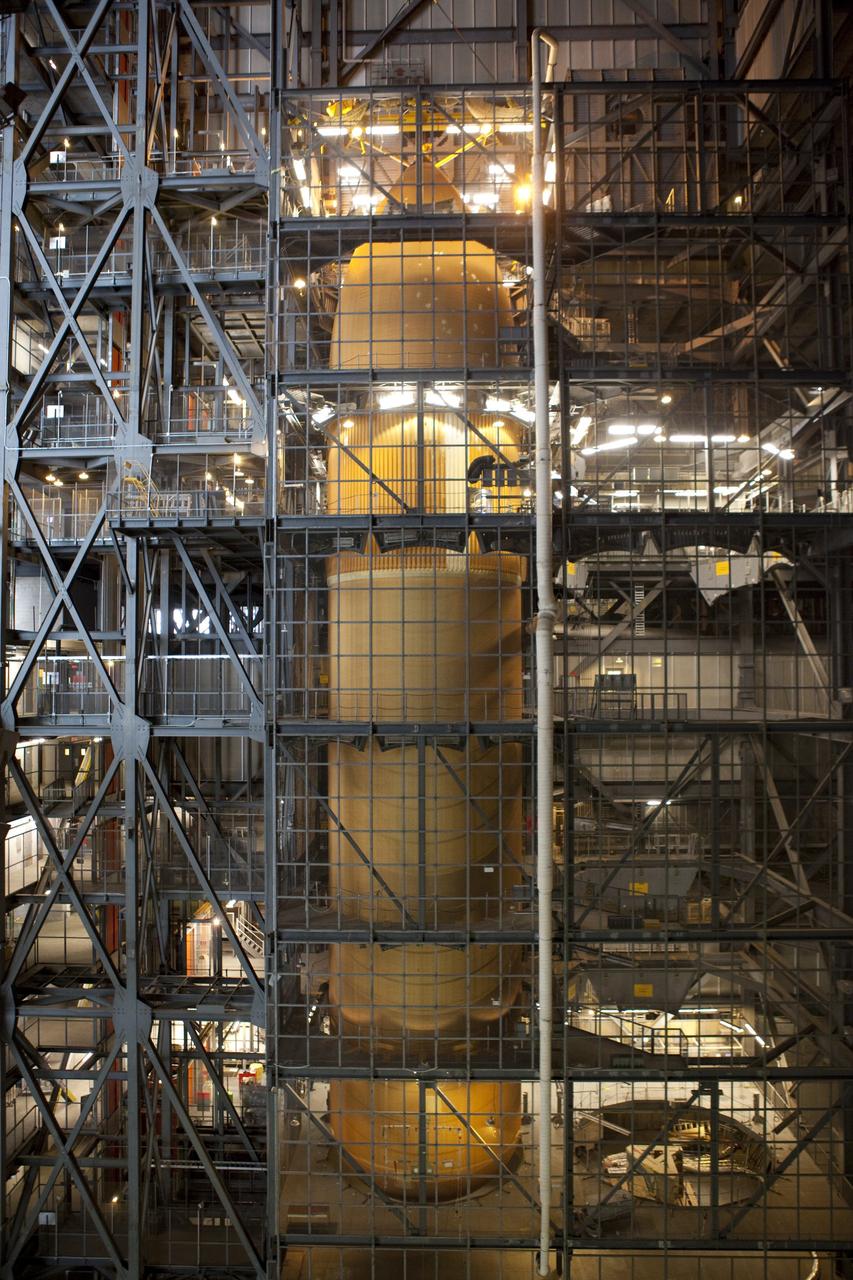
CAPE CANAVERAL, Fla. -- In the Vehicle Assembly Building at NASA's Kennedy Space Center in Florida, External Fuel Tank-122 is being lowered onto a test stand where it will be checked out before launch. ET-122, the Space Shuttle Program's last external fuel tank was delivered to Kennedy's Turn Basin from NASA’s Michoud Assembly Facility in New Orleans aboard the Pegasus Barge. After testing ET-122 eventually will be attached to space shuttle Endeavour for the STS-134 mission to the International Space Station targeted to launch February, 2011. For more information visit: http://www.nasa.gov/mission_pages/shuttle/shuttlemissions/sts134/index.html. Photo credit: NASA/Dimitri Gerondidakis
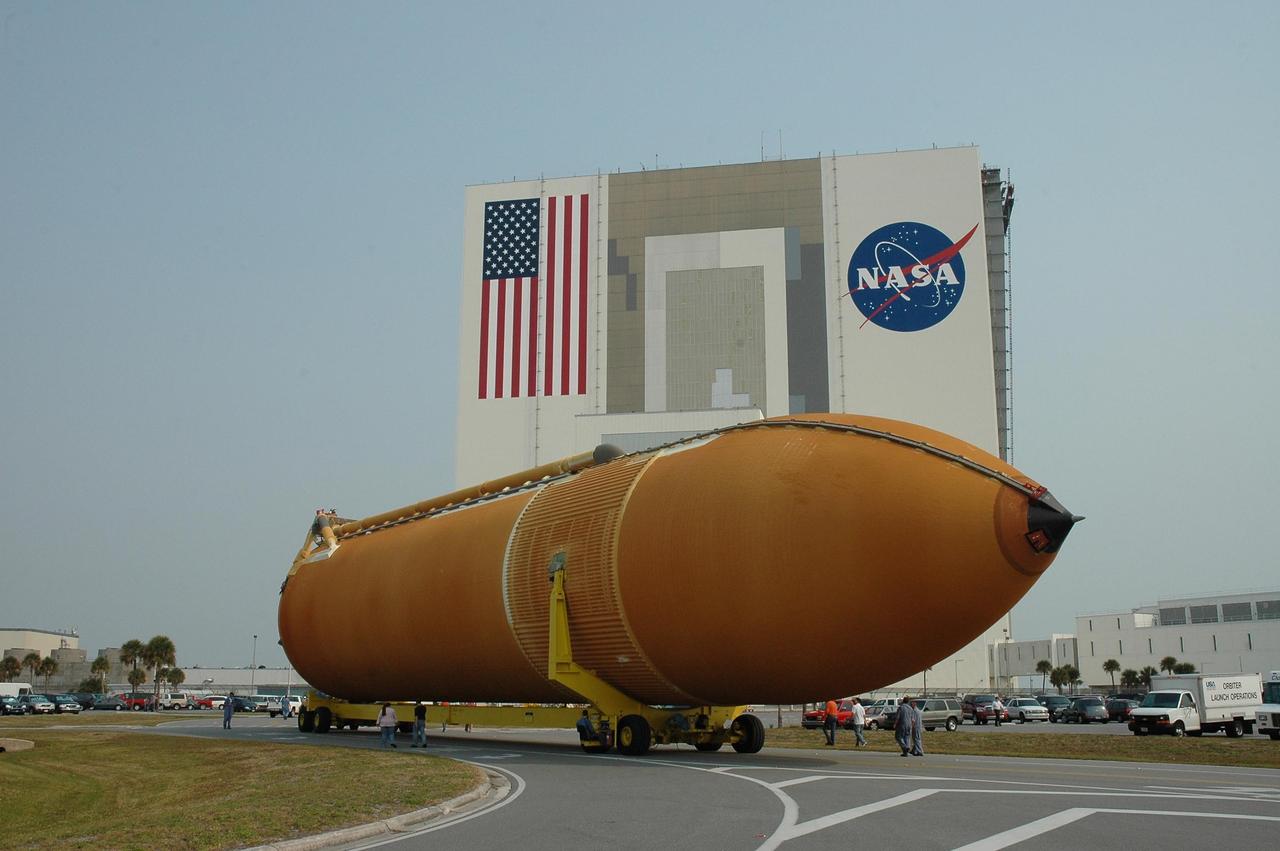
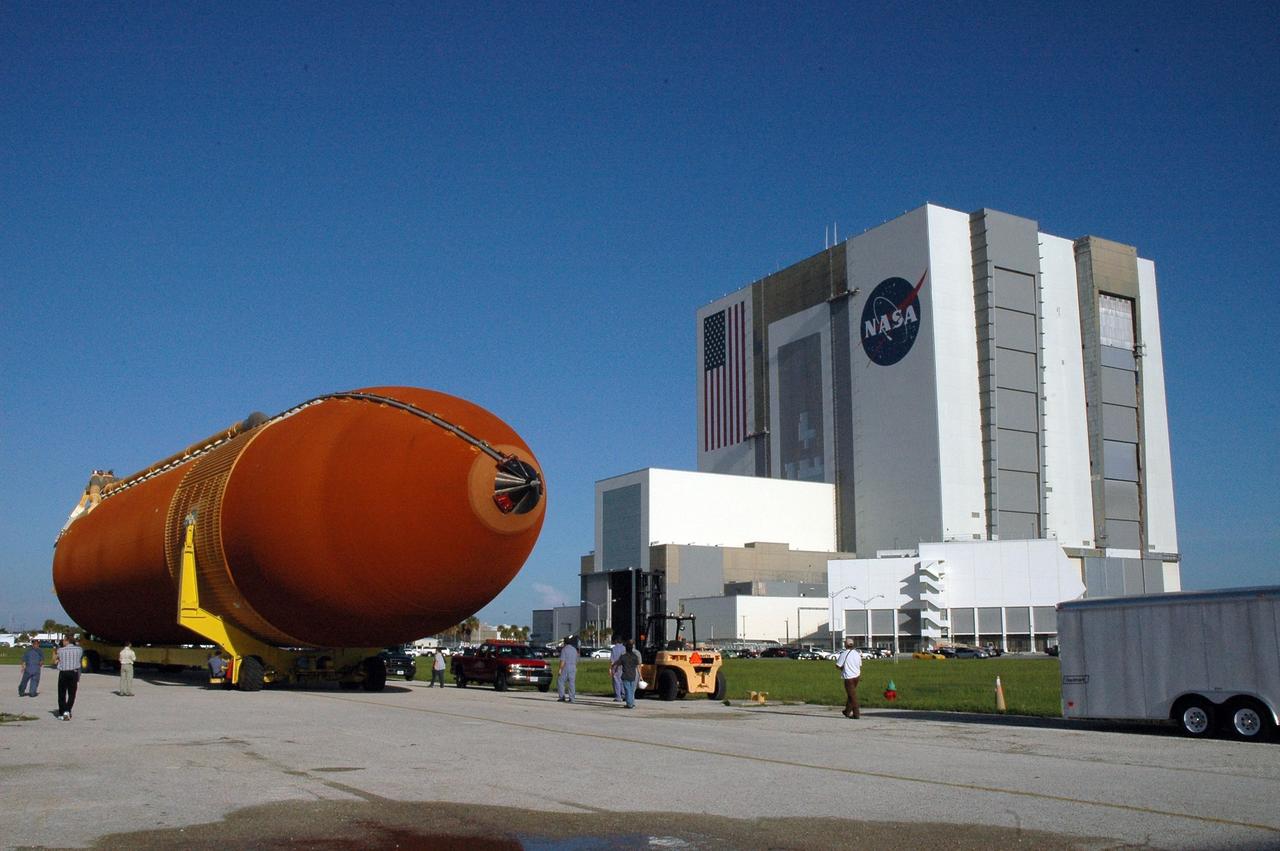
KENNEDY SPACE CENTER, FLA. -- Aboard its transporter, external tank No. 117 maneuvers around the corner as it heads for the Vehicle Assembly Building, seen behind it. The tank was offloaded from the Pegasus barge in the nearby turn basin. ET-117 arrived aboard the barge after its voyage around the Florida Peninsula from the Michoud Assembly Facility near New Orleans. The tank is slated for mission STS-118, which is targeted for launch in early August. ET-117 will be moved into a checkout cell in high bay 2 of the VAB for processing. Photo credit: NASA/Jack Pfaller
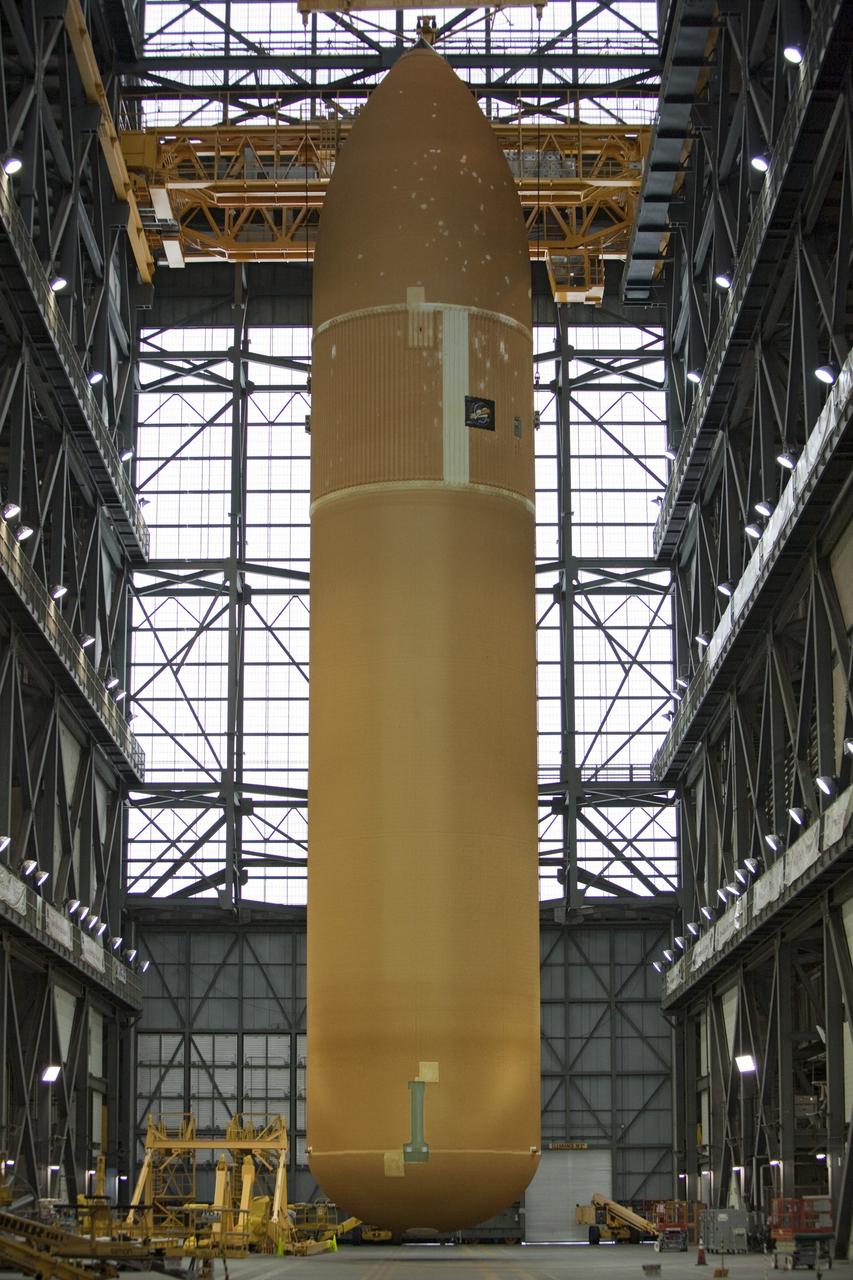
CAPE CANAVERAL, Fla. -- At NASA’s Kennedy Space Center in Florida, External Fuel Tank-122 is suspended vertically over the transfer aisle of the Vehicle Assembly Building as it is lifted toward a test cell. ET-122, the Space Shuttle Program's last external fuel tank was delivered to Kennedy's Turn Basin from NASA’s Michoud Assembly Facility in New Orleans aboard the Pegasus Barge. After testing, ET-122 eventually will be attached to space shuttle Endeavour for the STS-134 mission to the International Space Station targeted to launch February, 2011. For more information visit: http://www.nasa.gov/mission_pages/shuttle/shuttlemissions/sts134/index.html. Photo credit: NASA/Dimitri Gerondidakis
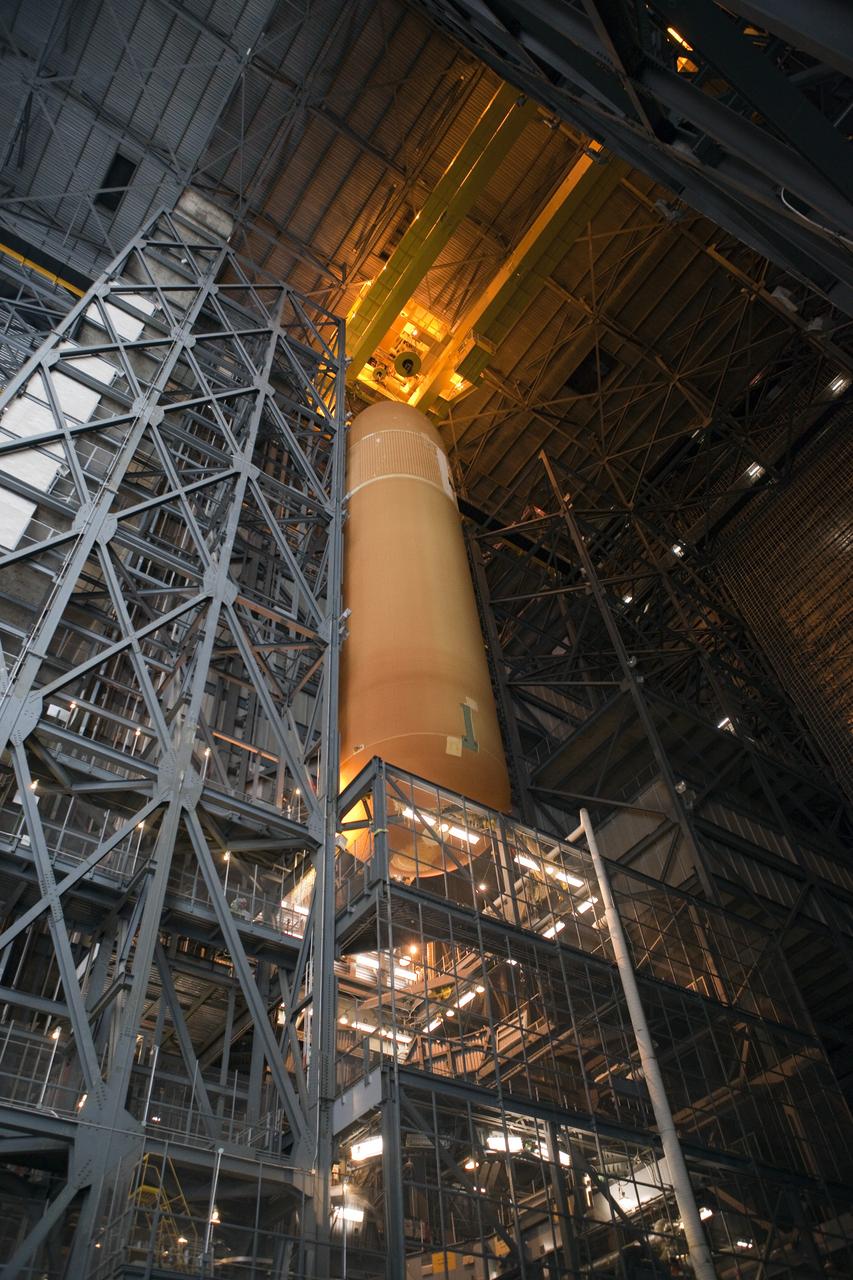
CAPE CANAVERAL, Fla. -- In the Vehicle Assembly Building at NASA's Kennedy Space Center in Florida, External Fuel Tank-122 is being lowered toward a test stand where it will be checked out before launch. ET-122, the Space Shuttle Program's last external fuel tank was delivered to Kennedy's Turn Basin from NASA’s Michoud Assembly Facility in New Orleans aboard the Pegasus Barge. After testing, ET-122 eventually will be attached to space shuttle Endeavour for the STS-134 mission to the International Space Station targeted to launch February, 2011. For more information visit: http://www.nasa.gov/mission_pages/shuttle/shuttlemissions/sts134/index.html. Photo credit: NASA/Dimitri Gerondidakis
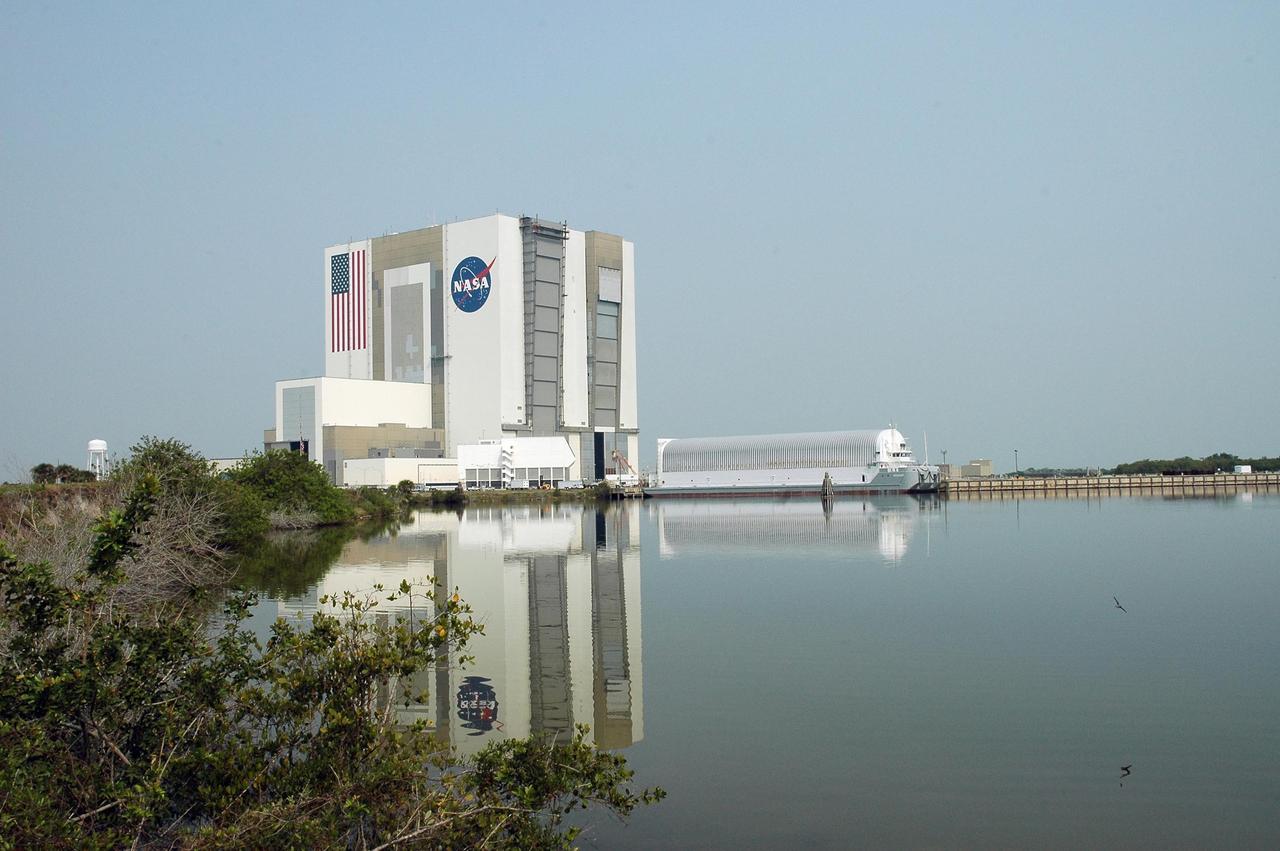
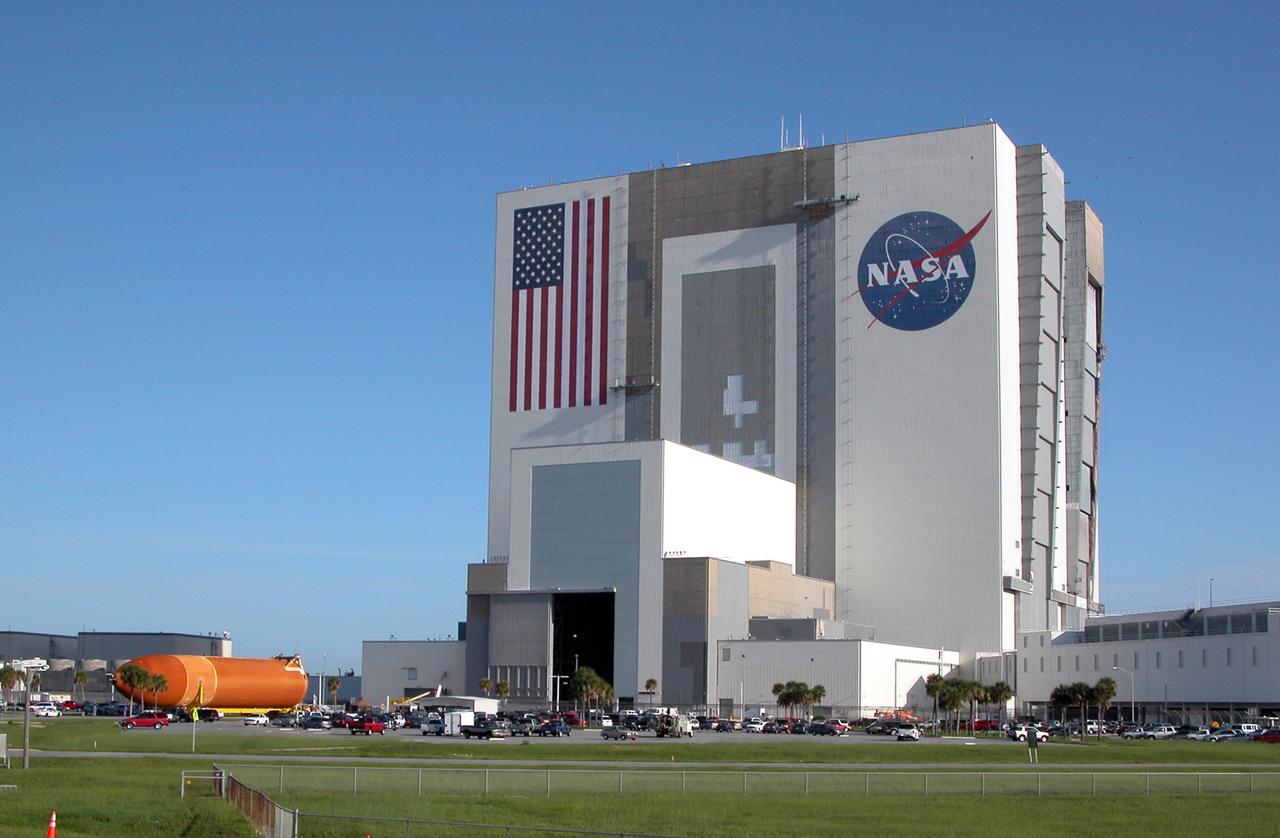
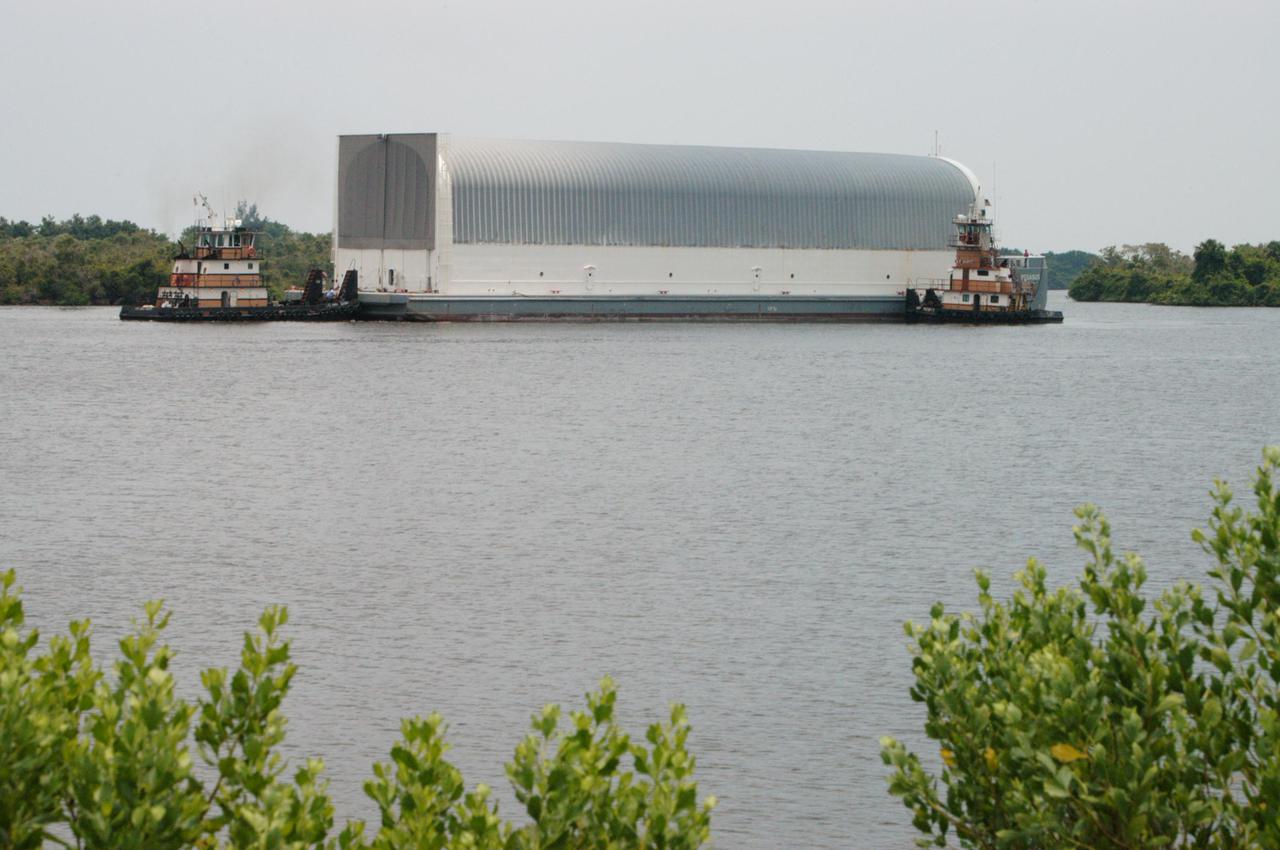
KENNEDY SPACE CENTER, FLA. -- Viewed across the turn basin are the 525-foot-tall Vehicle Assembly Building and the Pegasus barge that brought external tank No. 117. The tank has been transported to the Vehicle Assembly Building. ET-117 arrived aboard the barge after its voyage around the Florida Peninsula from the Michoud Assembly Facility near New Orleans. The tank is slated for mission STS-118, which is targeted for launch in early August. ET-117 will be moved into a checkout cell in high bay 2 of the VAB for processing. Photo credit: NASA/Jack Pfaller

CAPE CANAVERAL, Fla. -- In the Vehicle Assembly Building at NASA's Kennedy Space Center in Florida, External Fuel Tank-122 sits on its transporter in the transfer aisle waiting to be lifted into a test cell. ET-122, the Space Shuttle Program's last external fuel tank was delivered to Kennedy's Turn Basin from NASA’s Michoud Assembly Facility in New Orleans aboard the Pegasus Barge. After testing, ET-122 eventually will be attached to space shuttle Endeavour for the STS-134 mission to the International Space Station targeted to launch February, 2011. For more information visit: http://www.nasa.gov/mission_pages/shuttle/shuttlemissions/sts134/index.html. Photo credit: NASA/Dimitri Gerondidakis
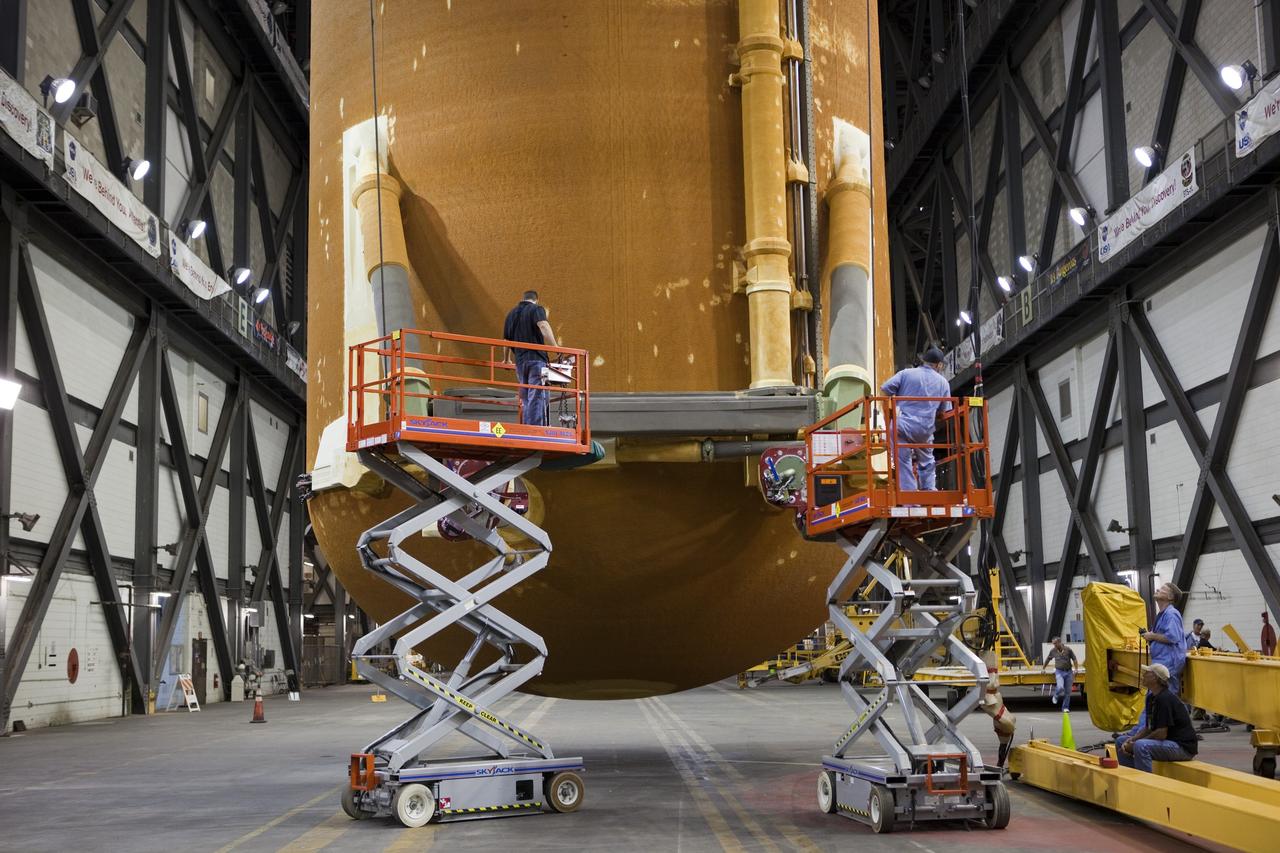
CAPE CANAVERAL, Fla. -- In the Vehicle Assembly Building at NASA's Kennedy Space Center in Florida, workers check the hoist connections on External Fuel Tank-122 as it is lifted toward a test cell. ET-122, the Space Shuttle Program's last external fuel tank was delivered to Kennedy's Turn Basin from NASA’s Michoud Assembly Facility in New Orleans aboard the Pegasus Barge. After testing, ET-122 eventually will be attached to space shuttle Endeavour for the STS-134 mission to the International Space Station targeted to launch February, 2011. For more information visit: http://www.nasa.gov/mission_pages/shuttle/shuttlemissions/sts134/index.html. Photo credit: NASA/Dimitri Gerondidakis

CAPE CANAVERAL, Fla. -- In the Vehicle Assembly Building at NASA's Kennedy Space Center in Florida, External Fuel Tank-122 is being lowered toward a test stand where it will be checked out before launch. ET-122, the Space Shuttle Program's last external fuel tank was delivered to Kennedy's Turn Basin from NASA’s Michoud Assembly Facility in New Orleans aboard the Pegasus Barge. After testing, ET-122 eventually will be attached to space shuttle Endeavour for the STS-134 mission to the International Space Station targeted to launch February, 2011. For more information visit: http://www.nasa.gov/mission_pages/shuttle/shuttlemissions/sts134/index.html. Photo credit: NASA/Dimitri Gerondidakis
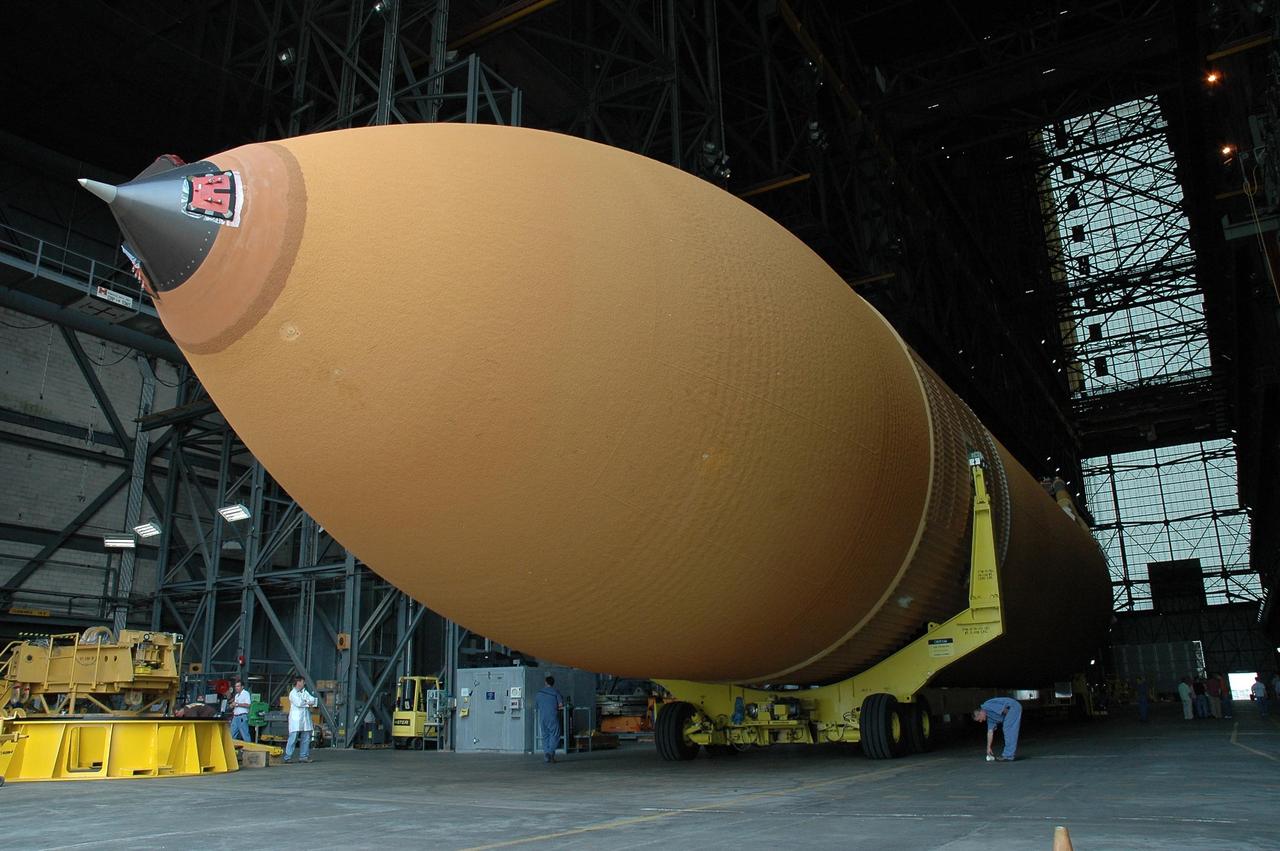
KENNEDY SPACE CENTER, FLA. -- Still aboard its transporter, external tank No. 117 sits in the transfer aisle of the Vehicle Assembly Building. The tank was offloaded from the Pegasus barge in the nearby turn basin. ET-117 arrived aboard the barge after its voyage around the Florida Peninsula from the Michoud Assembly Facility near New Orleans. The tank is slated for mission STS-118, which is targeted for launch in early August. ET-117 will be moved into a checkout cell in high bay 2 of the VAB for processing. Photo credit: NASA/Jack Pfaller
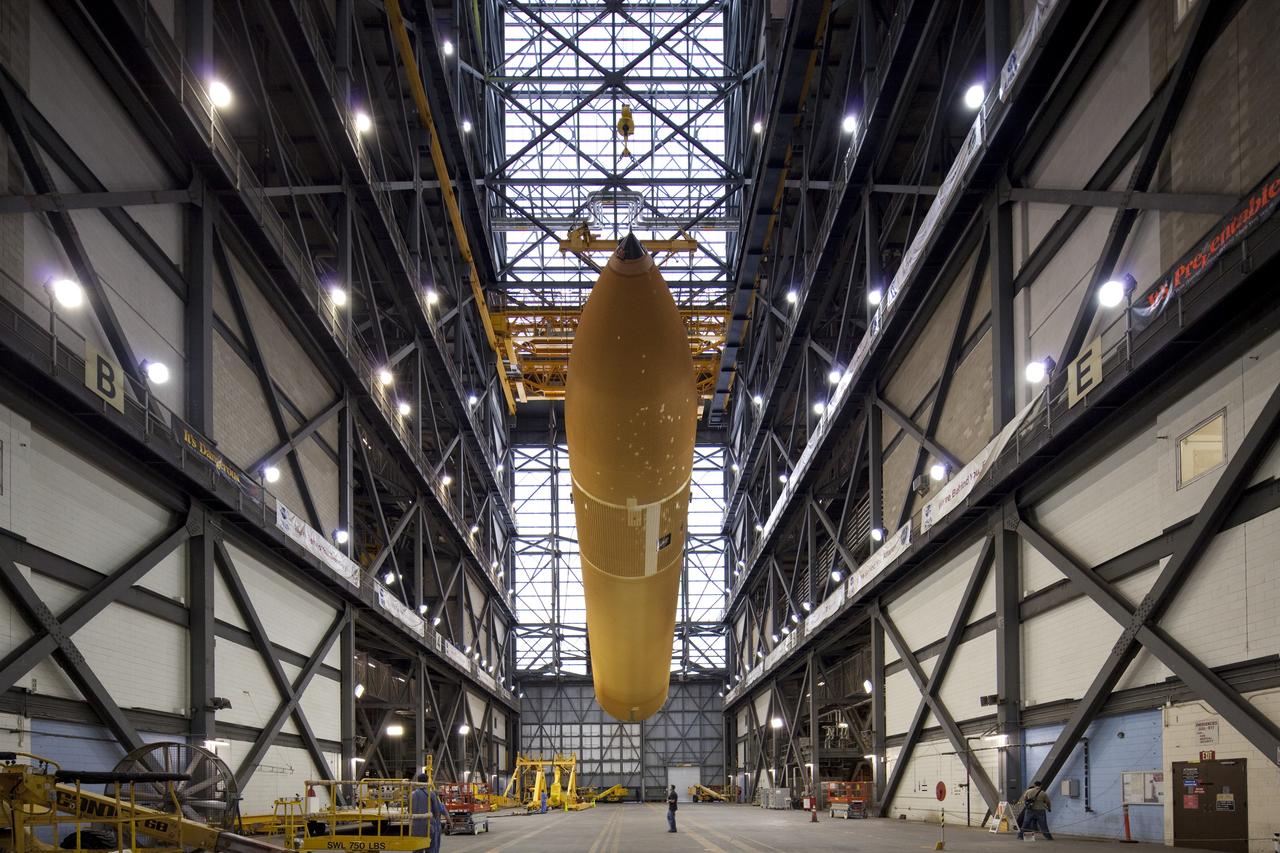
CAPE CANAVERAL, Fla. -- In the Vehicle Assembly Building at NASA's Kennedy Space Center in Florida, workers monitor the progress of External Fuel Tank-122 as it is lifted toward a test cell. ET-122, the Space Shuttle Program's last external fuel tank was delivered to Kennedy's Turn Basin from NASA’s Michoud Assembly Facility in New Orleans aboard the Pegasus Barge. After testing, ET-122 eventually will be attached to space shuttle Endeavour for the STS-134 mission to the International Space Station targeted to launch February, 2011. For more information visit: http://www.nasa.gov/mission_pages/shuttle/shuttlemissions/sts134/index.html. Photo credit: NASA/Dimitri Gerondidakis
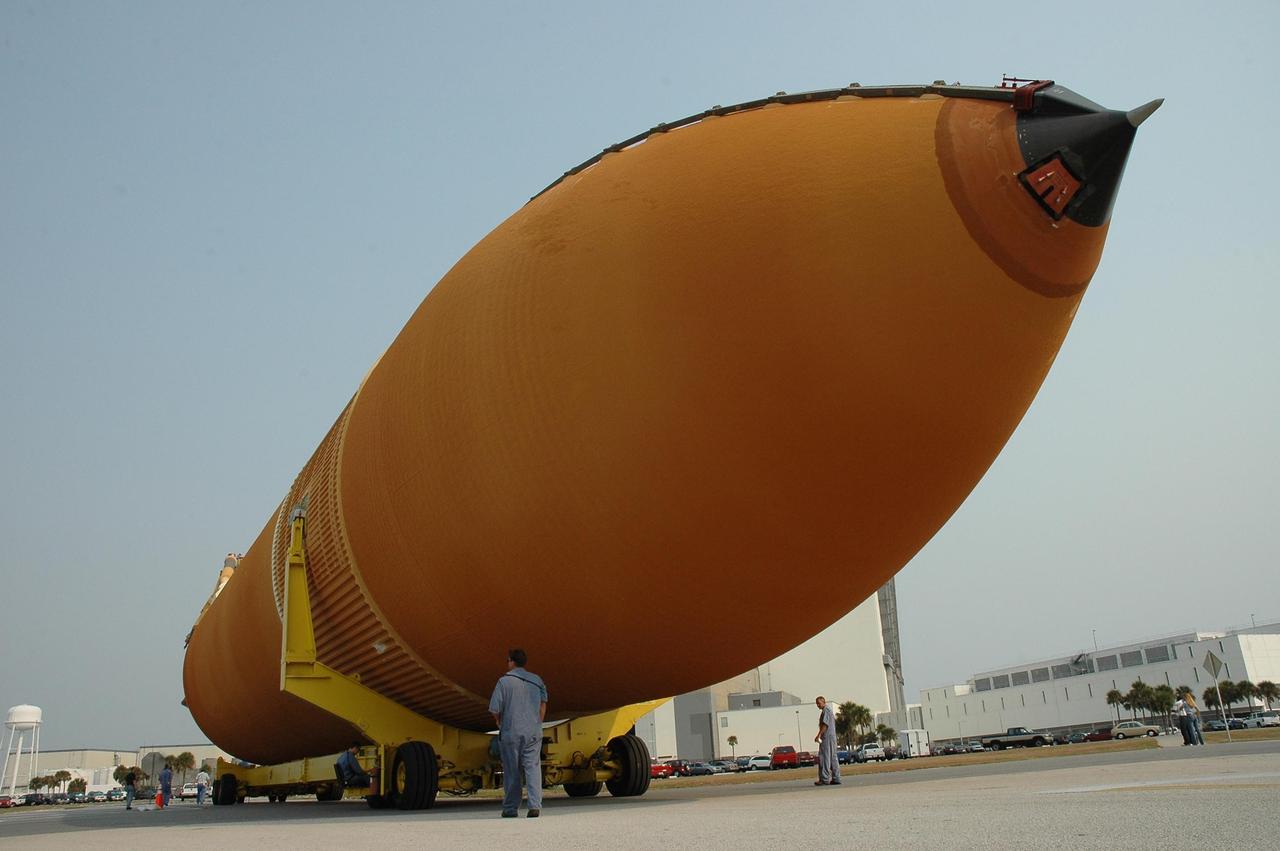
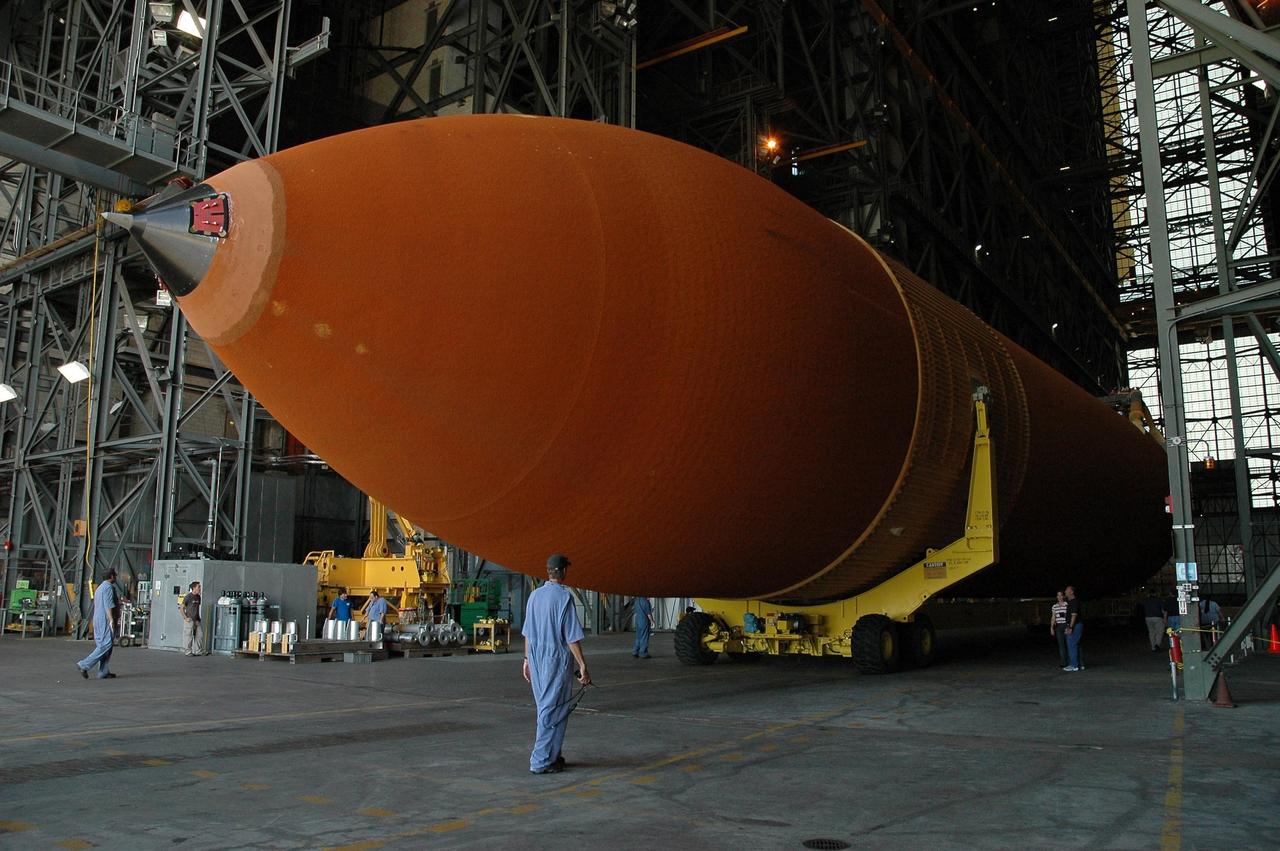
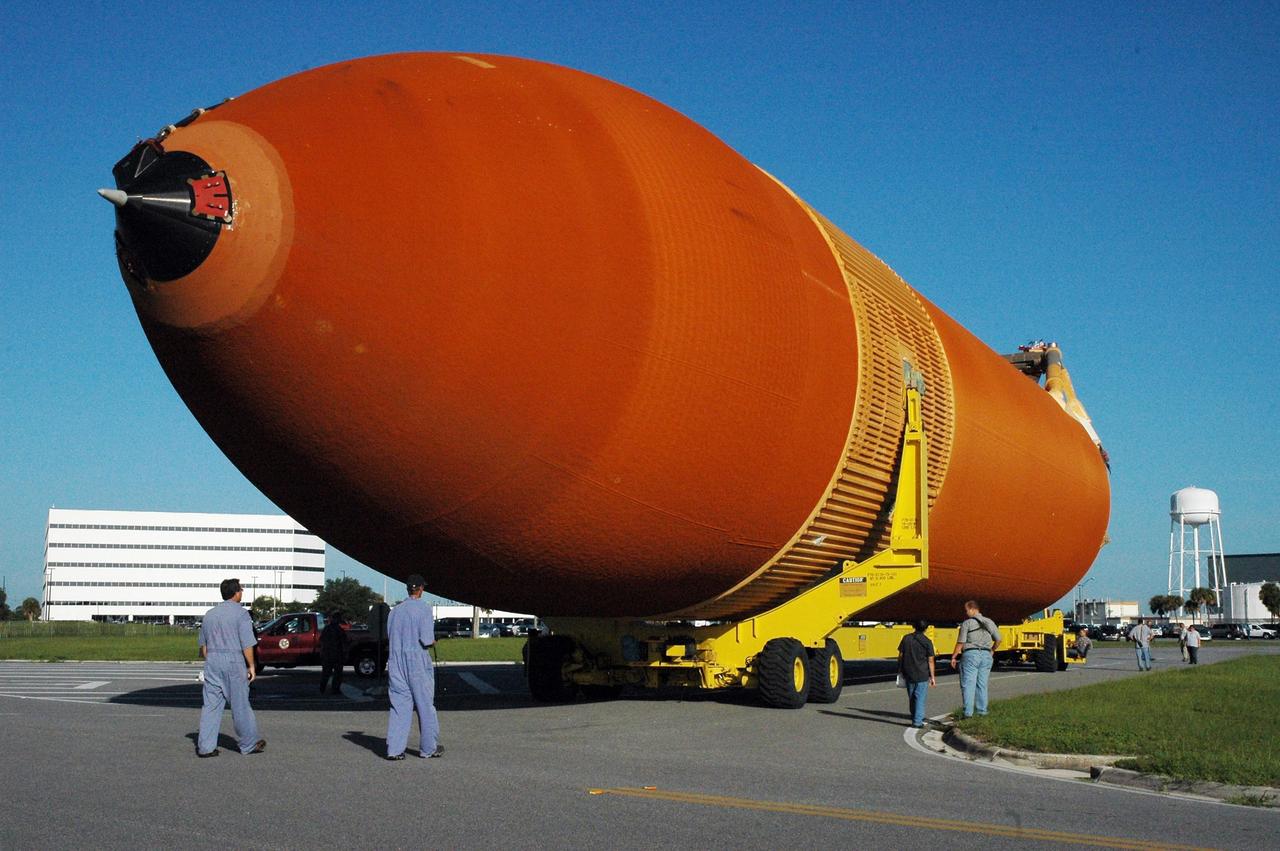
KENNEDY SPACE CENTER, FLA. -- This closeup of external tank No. 117 reveals the enormity of the tank -- 154 feet long, 27.5 feet around and weighing 58,500 pounds -- as it dwarfs the workers behind it. Offloaded from the Pegasus barge in the nearby turn basin, the tank is heading for the Vehicle Assembly Building. ET-117 arrived aboard the barge after its voyage around the Florida Peninsula from the Michoud Assembly Facility near New Orleans. The tank is slated for mission STS-118, which is targeted for launch in early August. ET-117 will be moved into a checkout cell in high bay 2 of the VAB for processing. Photo credit: NASA/Jack Pfaller

This is a cutaway illustration of the Space Shuttle external tank (ET) with callouts. The giant cylinder, higher than a 15-story building, with a length of 154-feet (47-meters) and a diameter of 27.5-feet (8.4-meters), is the largest single piece of the Space Shuttle. During launch, the ET also acts as a backbone for the orbiter and solid rocket boosters. Separate pressurized tank sections within the external tank hold the liquid hydrogen fuel and liquid oxygen oxidizer for the Shuttle's three main engines. During launch, the ET feeds the fuel under pressure through 17-inch (43.2-centimeter) ducts that branch off into smaller lines that feed directly into the main engines. The main engines consume 64,000 gallons (242,260 liters) of fuel each minute. Machined from aluminum alloys, the Space Shuttle's external tank is currently the only part of the launch vehicle that is not reused. After its 526,000-gallons (1,991,071 liters) of propellants are consumed during the first 8.5-minutes of flight, it is jettisoned from the orbiter and breaks up in the upper atmosphere, its pieces falling into remote ocean waters. The Marshall Space Flight Center was responsible for developing the ET.
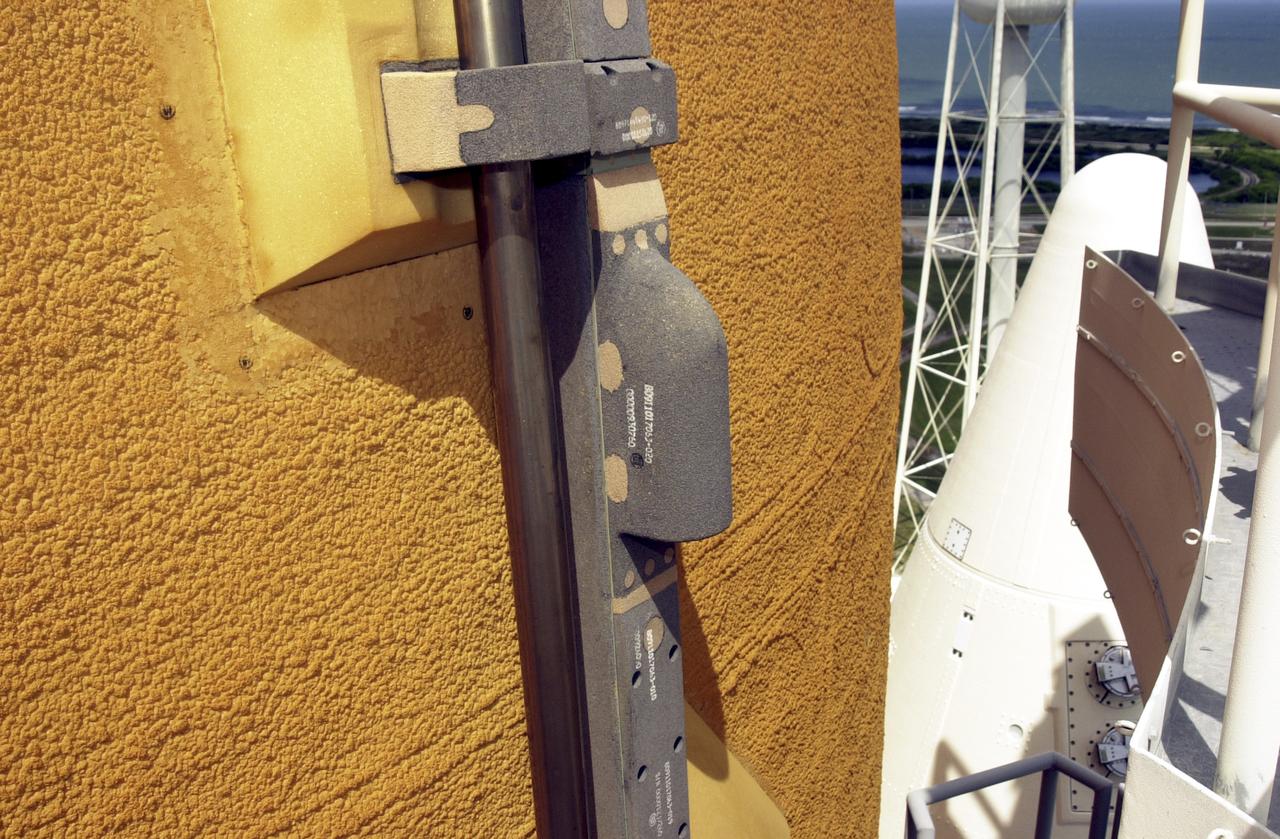
This is a view of the video camera mounted on the External Tank (ET) of the Space Shuttle Orbiter Atlantis (STS-112). The camera provided a view of the front and belly of the orbiter, a portion of the Solid Rocket Boosters (SRBs), and ET during the launch. Located high on the ET liquid oxygen tank cable tray, the camera, 6 inches long and resembling a short thin flashlight, is inside an aluminum fairing covered in protective insulating foam. The battery pack and transmitter are contained in an electronics box and mounted in the intertank crossbeam inside the ET. The camera turned on 15 minutes prior to launch and operated for about 15 minutes following liftoff. At liftoff, viewers saw the Shuttle clearing the launch tower and, at 2 minutes after liftoff, saw the right SRB separate from the ET, and ET separation about 8 minutes into the flight. The video was downlinked from the ET during flight to several NASA data-receiving sites and then relayed to the live television broadcast. It provided the STS-112 team an opportunity to monitor the Shuttle's performance from a new angle. Launched on October 7, 2002, Atlantis carried its primary payload, the S1 Truss for the International Space Station.
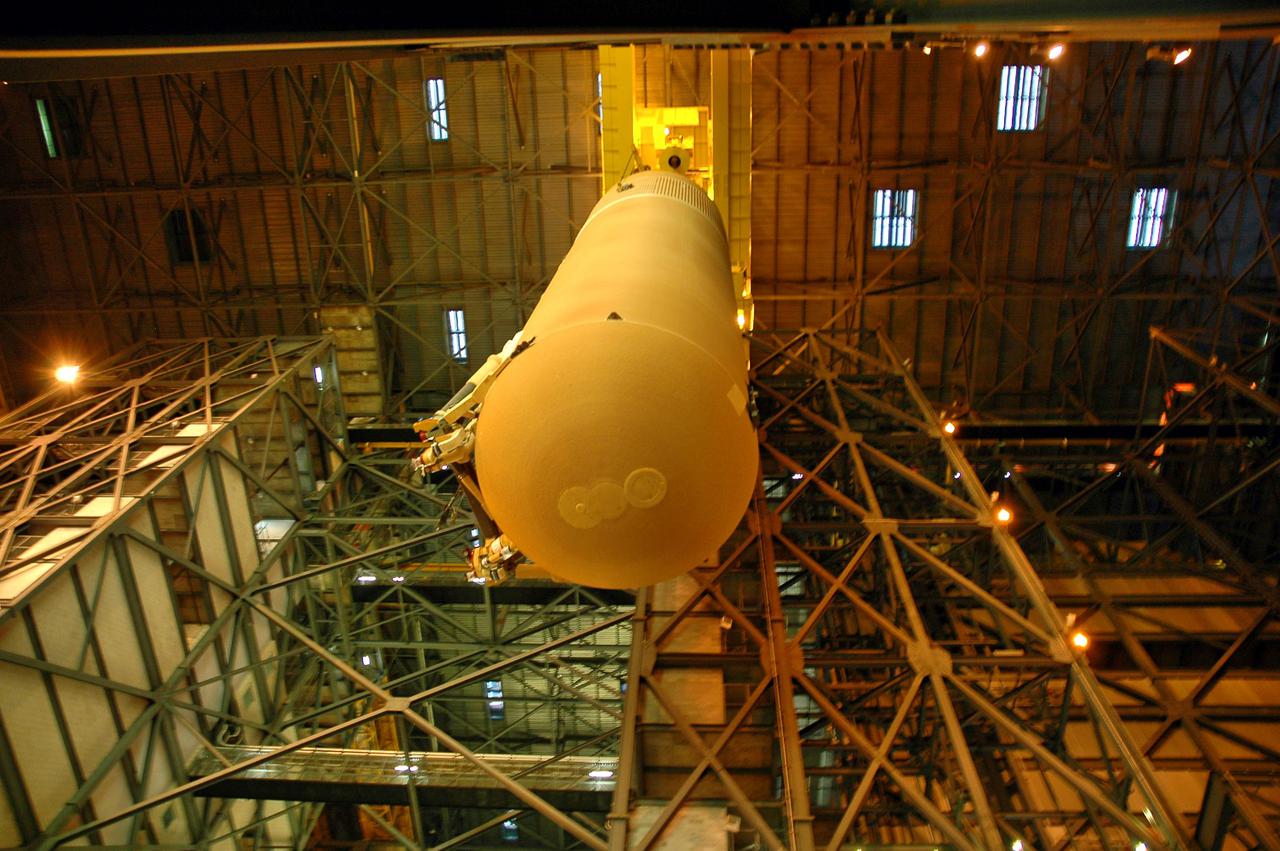
KENNEDY SPACE CENTER, FLA. - External Tank 119 is being lowered to the transfer aisle in the Vehicle Assembly Building. There it will be lowered and placed on the transporter to be moved to the barge at the Turn Basin. The tank will embark on a voyage around the Florida peninsula to the Michoud Assembly Facility in New Orleans. Delivered to KSC in June, ET-119 is the third newly redesigned tank.
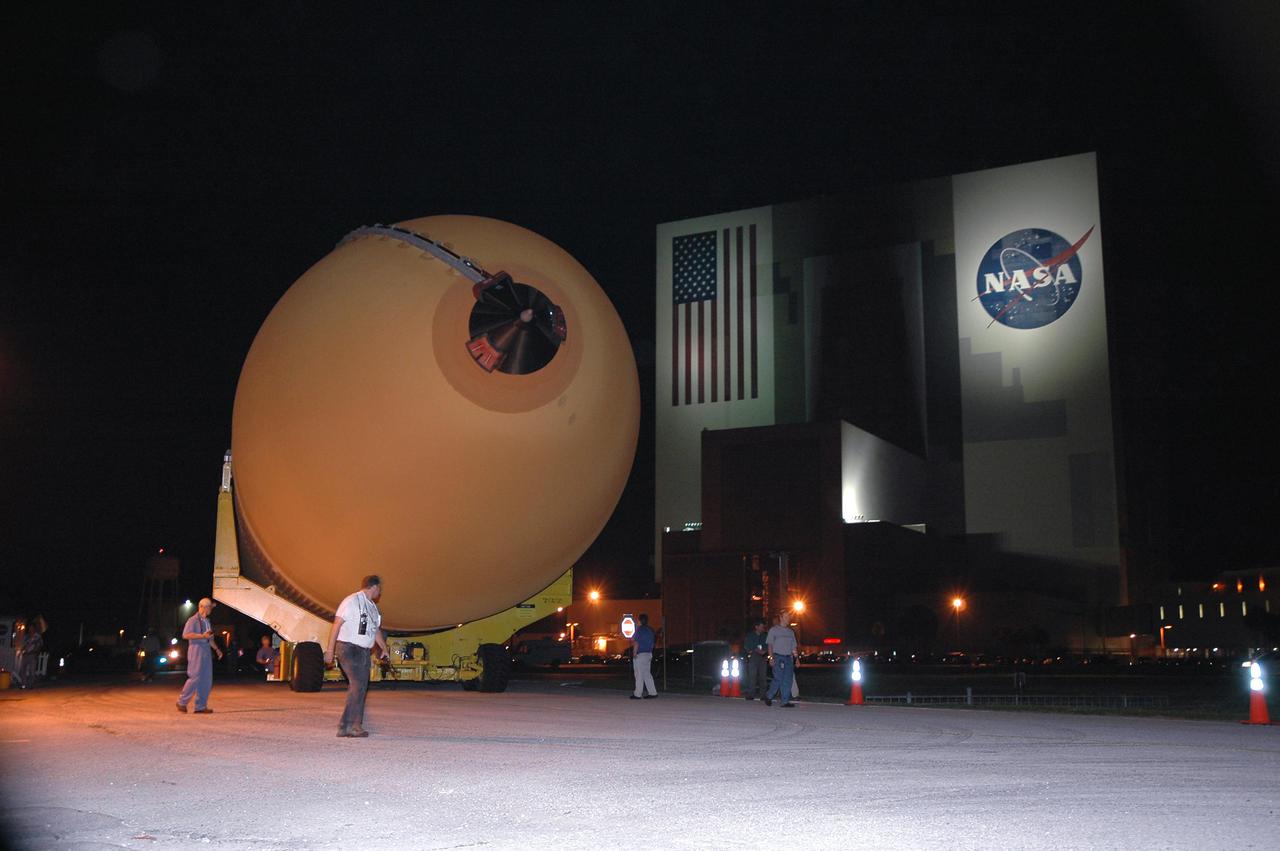
KENNEDY SPACE CENTER, FLA. - Just before dawn, External Tank 119 rolls away from NASA Kennedy Space Center’s Vehicle Assembly Building. It is being moved to the barge at the Turn Basin. The tank will embark on a voyage around the Florida peninsula to the Michoud Assembly Facility in New Orleans. Delivered to KSC in June, ET-119 is the third newly redesigned tank.
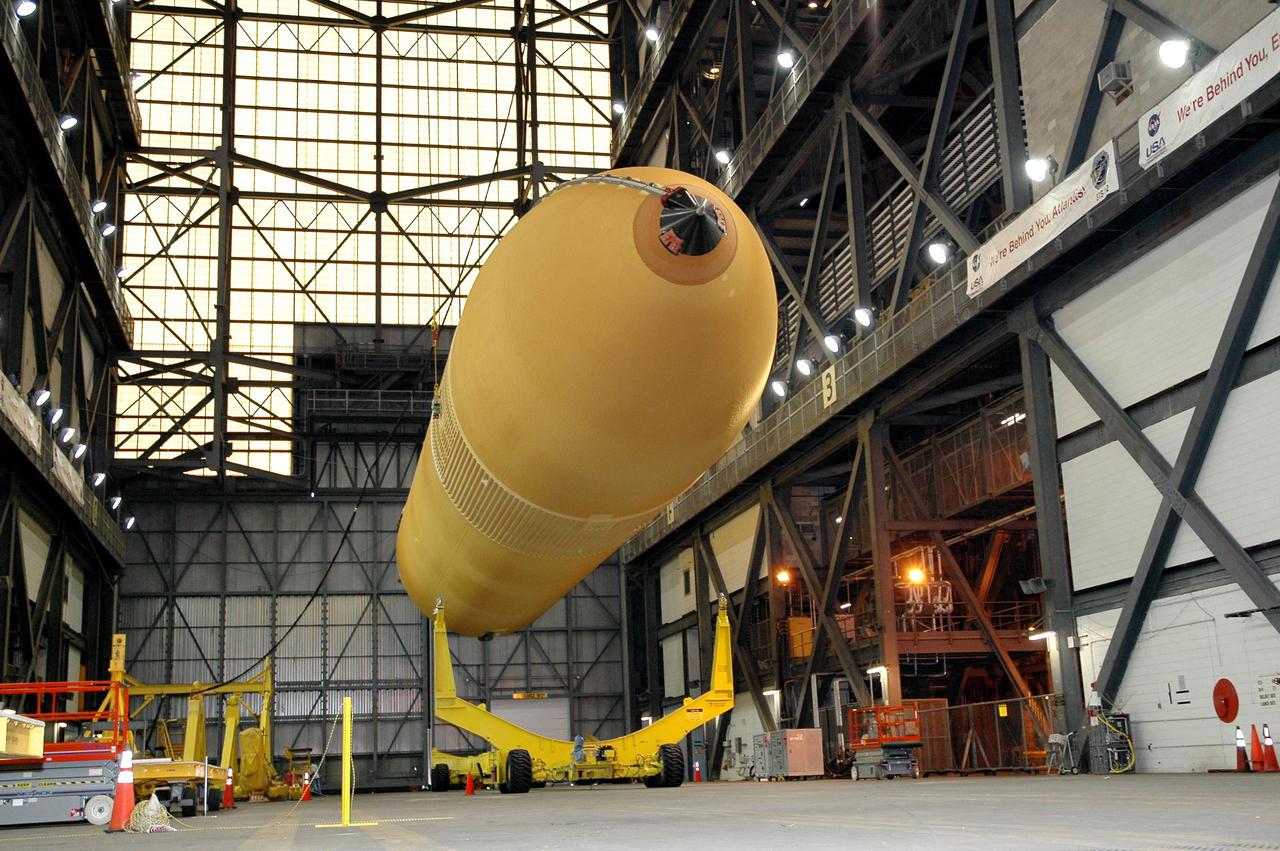
KENNEDY SPACE CENTER, FLA. - Inside NASA Kennedy Space Center’s Vehicle Assembly Building, External Tank 119 is lowered onto a transporter in the transfer aisle to be moved to the barge at the Turn Basin. The tank will embark on a voyage around the Florida peninsula to the Michoud Assembly Facility in New Orleans. Delivered to KSC in June, ET-119 is the third newly redesigned tank.

KENNEDY SPACE CENTER, FLA. - Just before dawn, External Tank 119 rolls out of NASA Kennedy Space Center’s Vehicle Assembly Building. It is being moved to the barge at the Turn Basin. The tank will embark on a voyage around the Florida peninsula to the Michoud Assembly Facility in New Orleans. Delivered to KSC in June, ET-119 is the third newly redesigned tank.
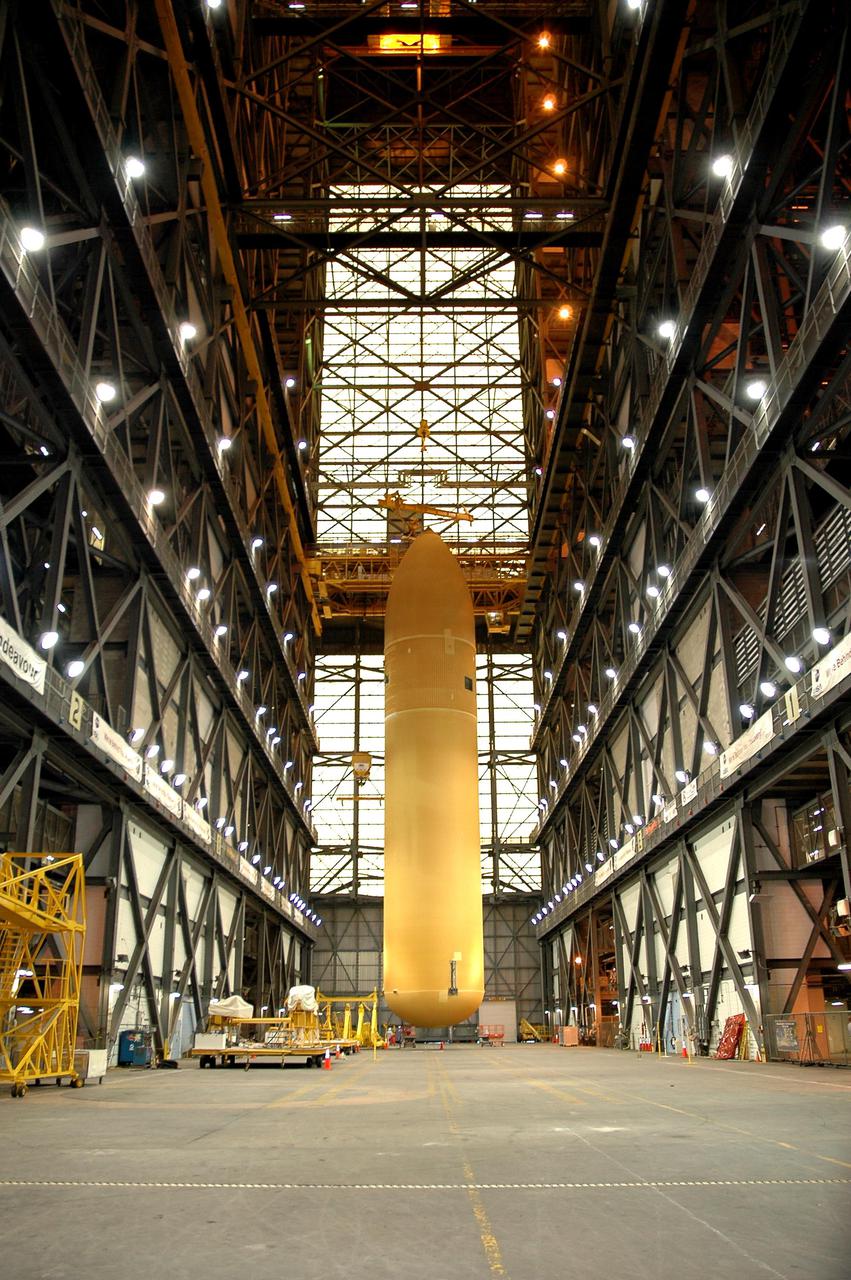
KENNEDY SPACE CENTER, FLA. - Inside NASA Kennedy Space Center’s Vehicle Assembly Building, External Tank 119 is lowered onto a transporter in the transfer aisle to be moved to the barge at the Turn Basin. The tank will embark on a voyage around the Florida peninsula to the Michoud Assembly Facility in New Orleans. Delivered to KSC in June, ET-119 is the third newly redesigned tank.
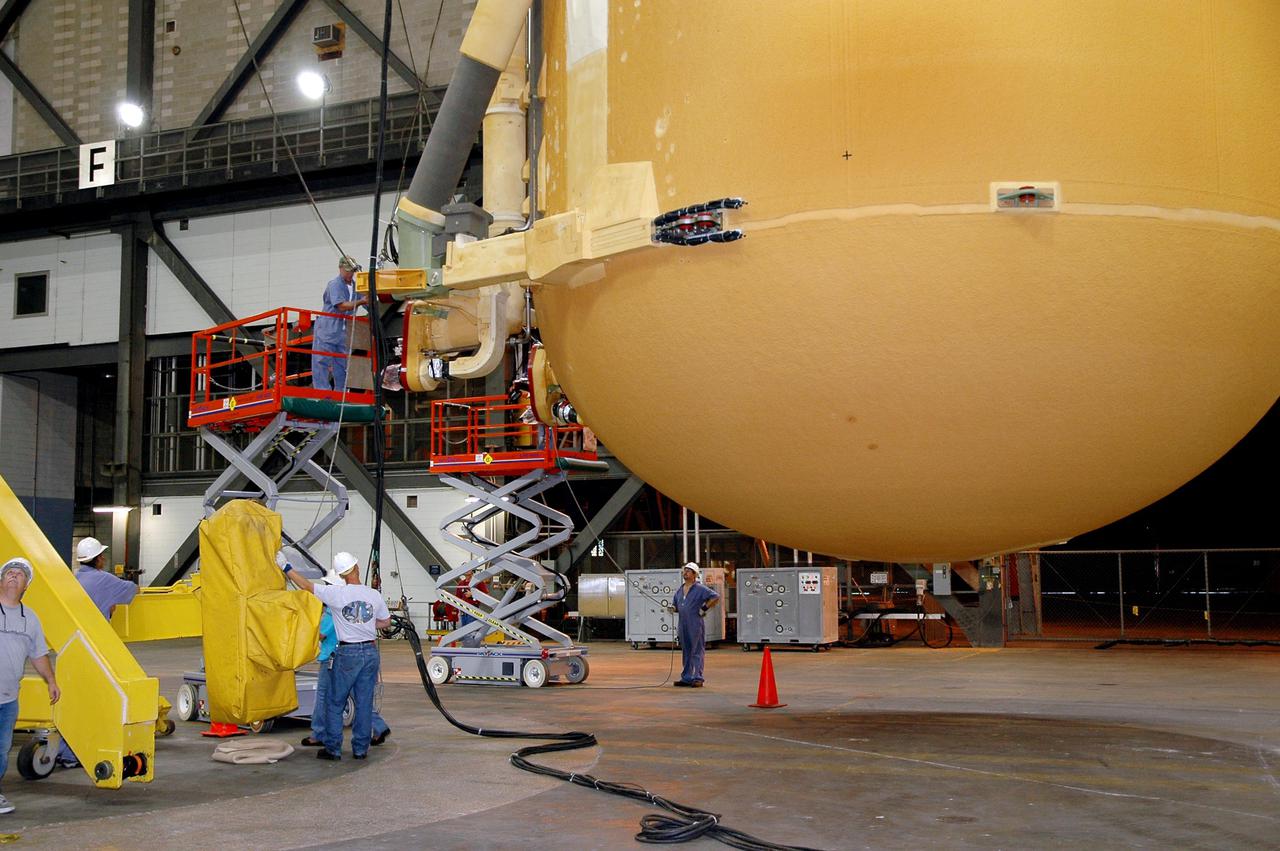
KENNEDY SPACE CENTER, FLA. - Inside NASA Kennedy Space Center’s Vehicle Assembly Building, workers secure the cranes onto External Tank 119 that enable the tank to be lowered to a horizontal position. Then it will be placed on a transporter in the transfer aisle to be moved to the barge at the Turn Basin. The tank will embark on a voyage around the Florida peninsula to the Michoud Assembly Facility in New Orleans. Delivered to KSC in June, ET-119 is the third newly redesigned tank.
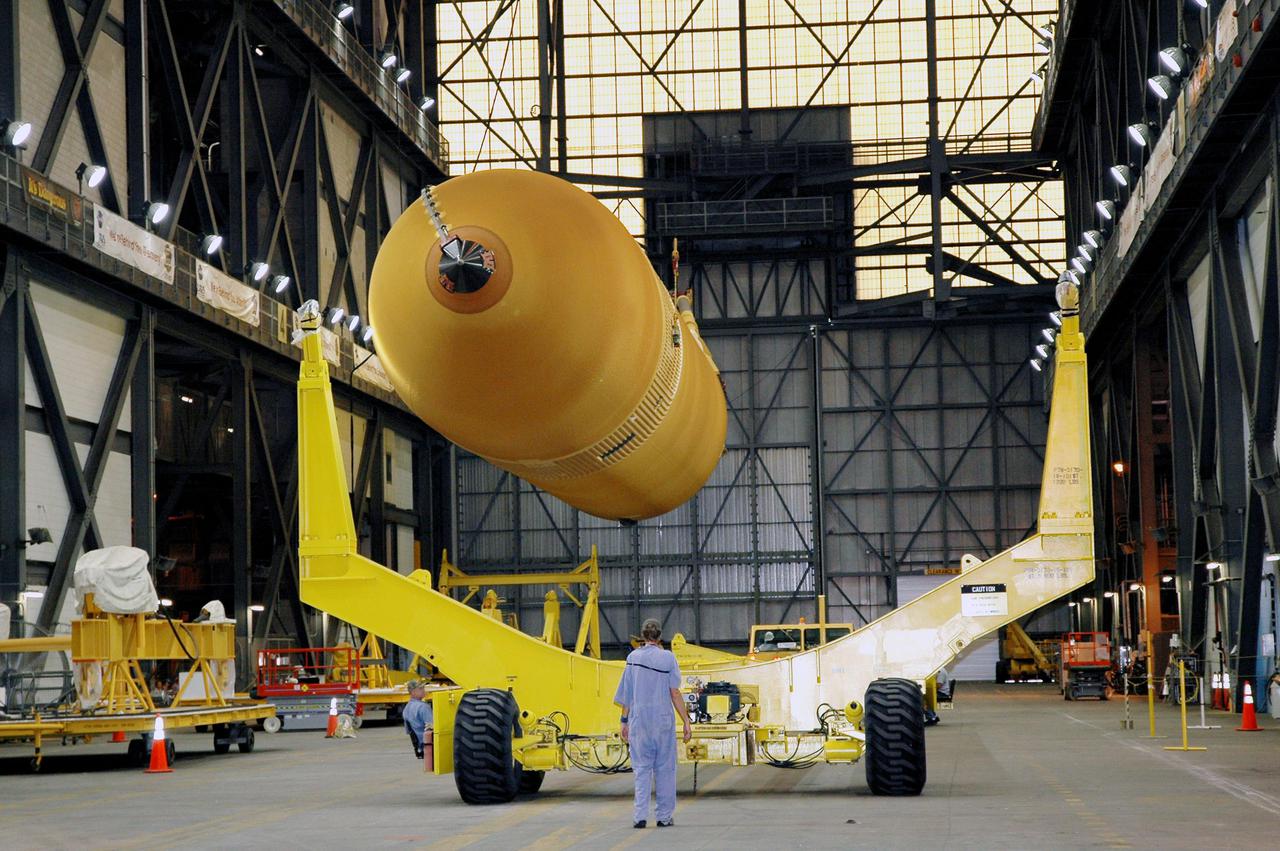
KENNEDY SPACE CENTER, FLA. - Inside NASA Kennedy Space Center’s Vehicle Assembly Building, External Tank 119 is lowered to a point just above the transfer aisle. There it will be lowered horizontally and placed on a transporter in the transfer aisle to be moved to the barge at the Turn Basin. The tank will embark on a voyage around the Florida peninsula to the Michoud Assembly Facility in New Orleans. Delivered to KSC in June, ET-119 is the third newly redesigned tank.
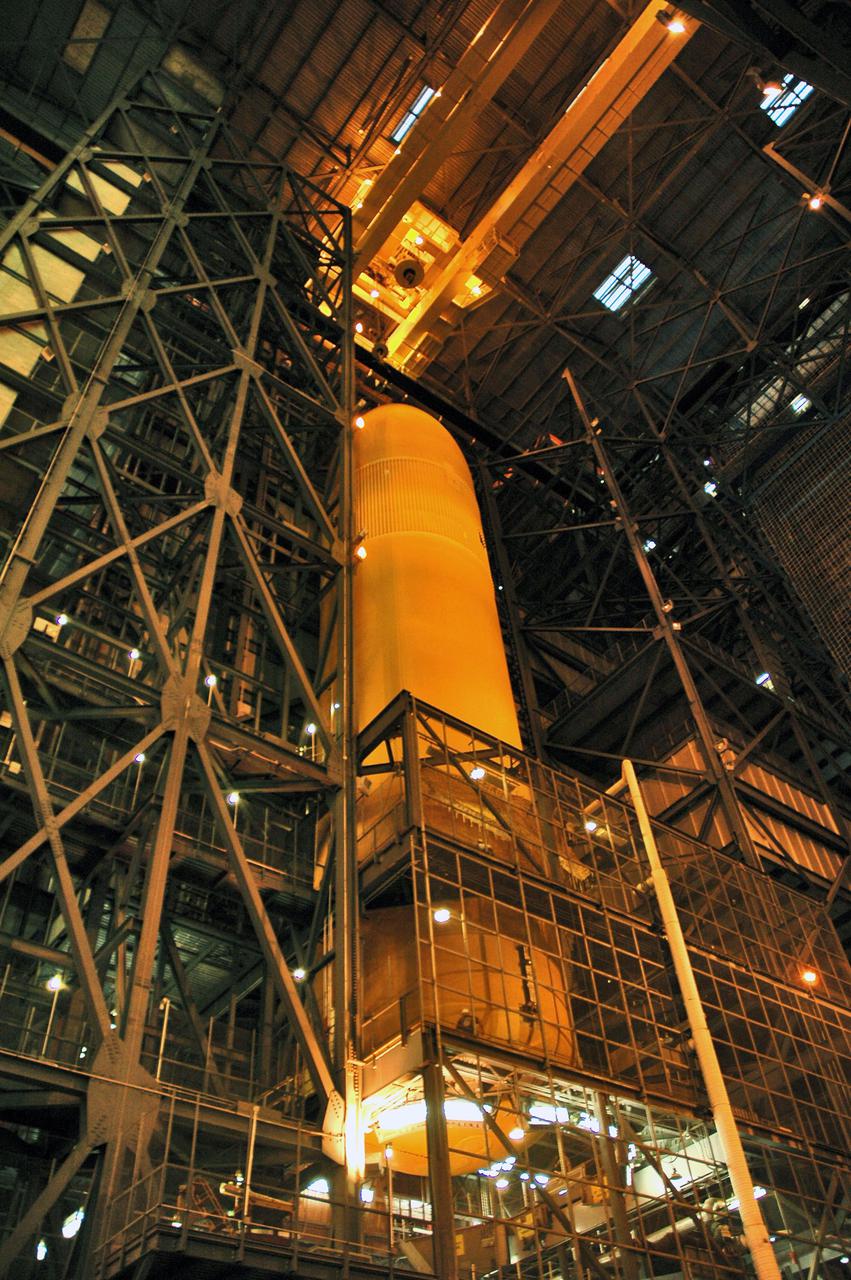
KENNEDY SPACE CENTER, FLA. - External Tank 119 is being lifted and moved to the transfer aisle in the Vehicle Assembly Building. There it will be lowered and placed on the transporter to be moved to the barge at the Turn Basin. The tank will embark on a voyage around the Florida peninsula to the Michoud Assembly Facility in New Orleans. Delivered to KSC in June, ET-119 is the third newly redesigned tank.

KENNEDY SPACE CENTER, FLA. - Inside NASA Kennedy Space Center’s Vehicle Assembly Building, External Tank 119 is placed on a transporter in the transfer aisle to be moved to the barge at the Turn Basin. The tank will embark on a voyage around the Florida peninsula to the Michoud Assembly Facility in New Orleans. Delivered to KSC in June, ET-119 is the third newly redesigned tank.
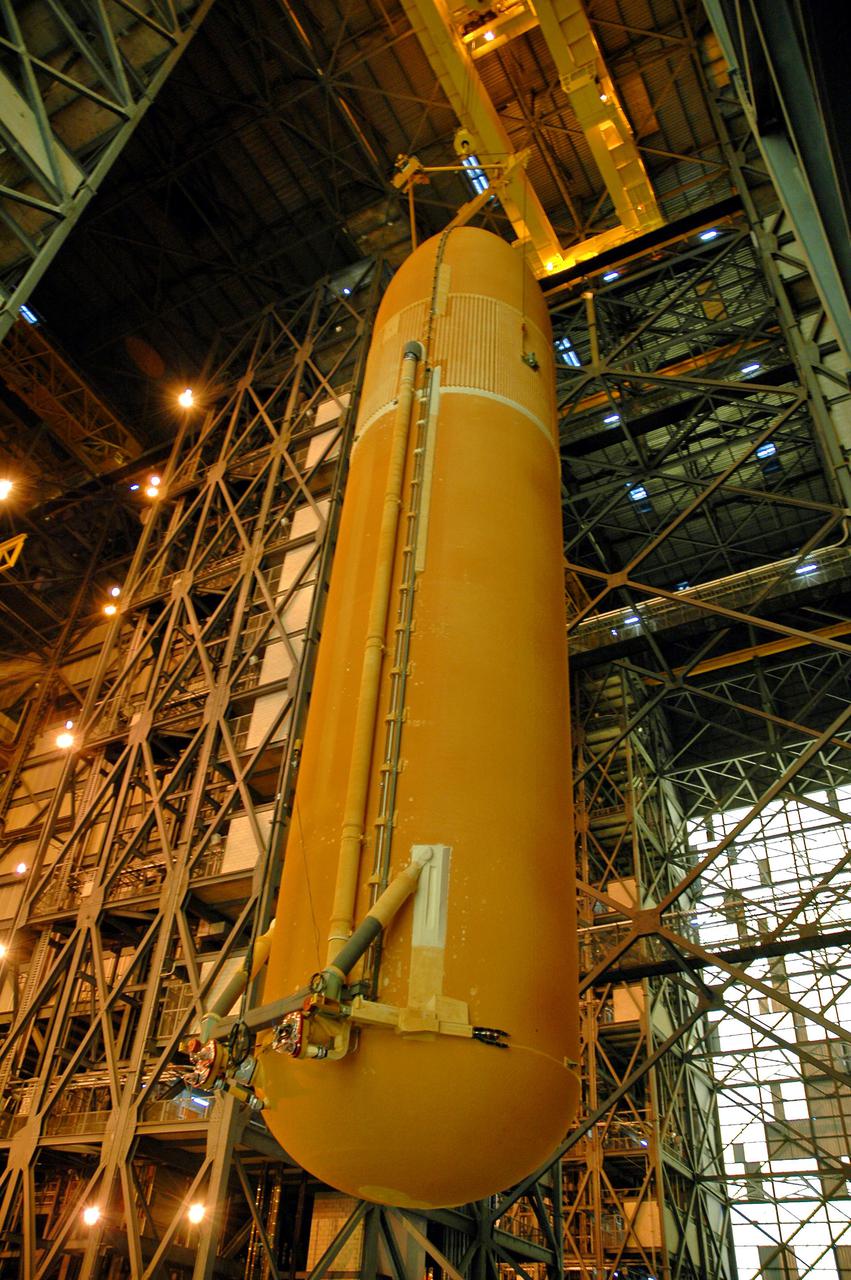
KENNEDY SPACE CENTER, FLA. - External Tank 119 is being lowered to the transfer aisle in the Vehicle Assembly Building. There it will be lowered and placed on the transporter to be moved to the barge at the Turn Basin. The tank will embark on a voyage around the Florida peninsula to the Michoud Assembly Facility in New Orleans. Delivered to KSC in June, ET-119 is the third newly redesigned tank.
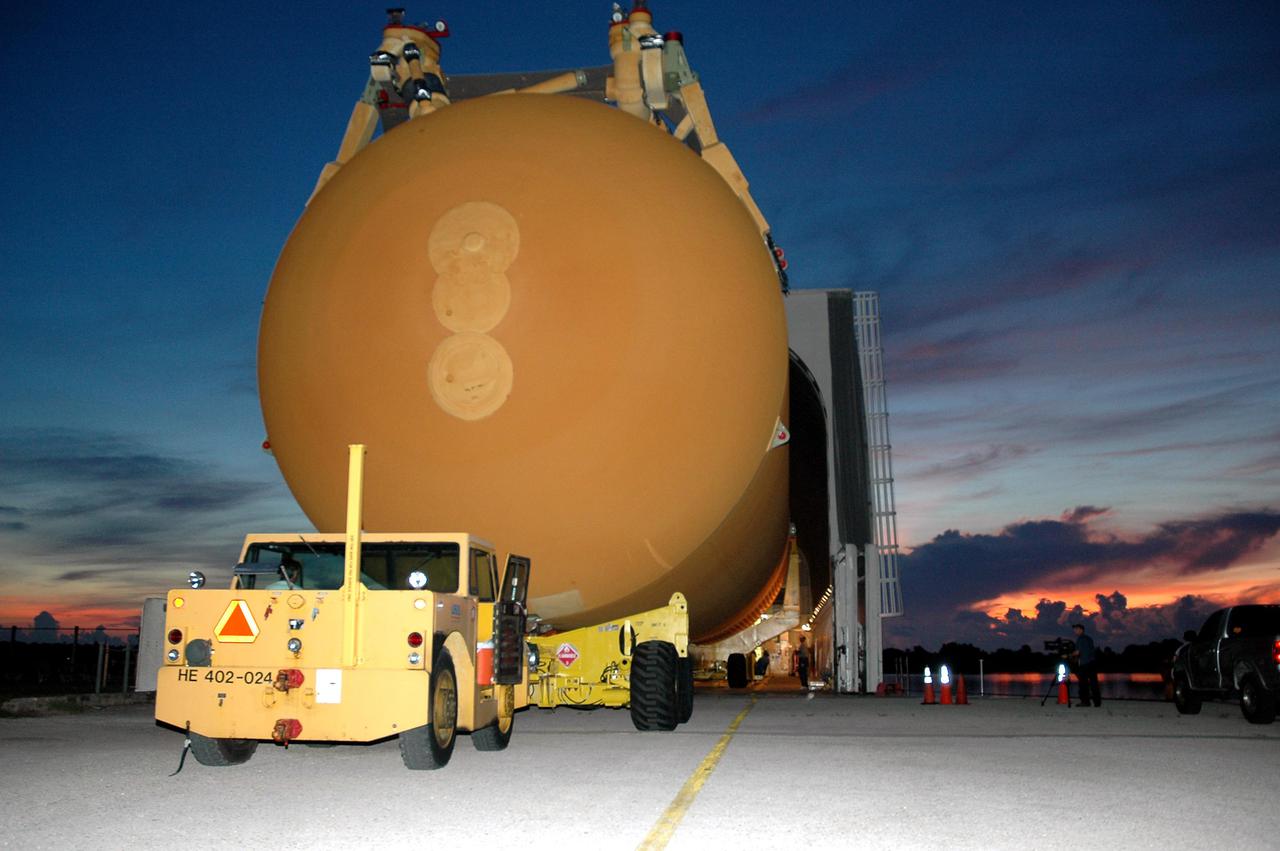
KENNEDY SPACE CENTER, FLA. - Under pre-dawn skies of blue and red, External Tank 119 is towed away from NASA Kennedy Space Center’s Vehicle Assembly Building. It is being moved to the barge at the Turn Basin. The tank will embark on a voyage around the Florida peninsula to the Michoud Assembly Facility in New Orleans. Delivered to KSC in June, ET-119 is the third newly redesigned tank.
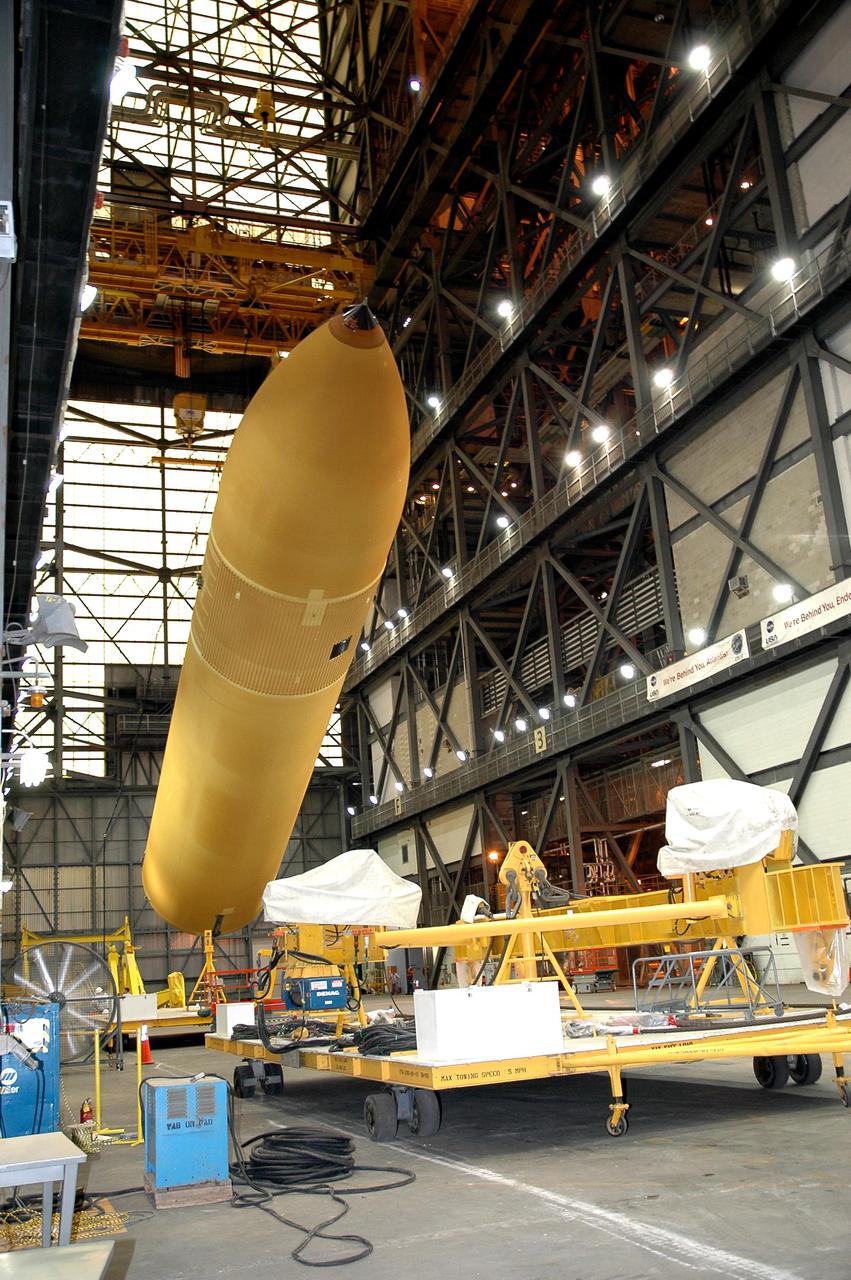
KENNEDY SPACE CENTER, FLA. - Inside NASA Kennedy Space Center’s Vehicle Assembly Building, External Tank 119 is lowered to a horizontal position. Then it will be placed on a transporter in the transfer aisle to be moved to the barge at the Turn Basin. The tank will embark on a voyage around the Florida peninsula to the Michoud Assembly Facility in New Orleans. Delivered to KSC in June, ET-119 is the third newly redesigned tank.
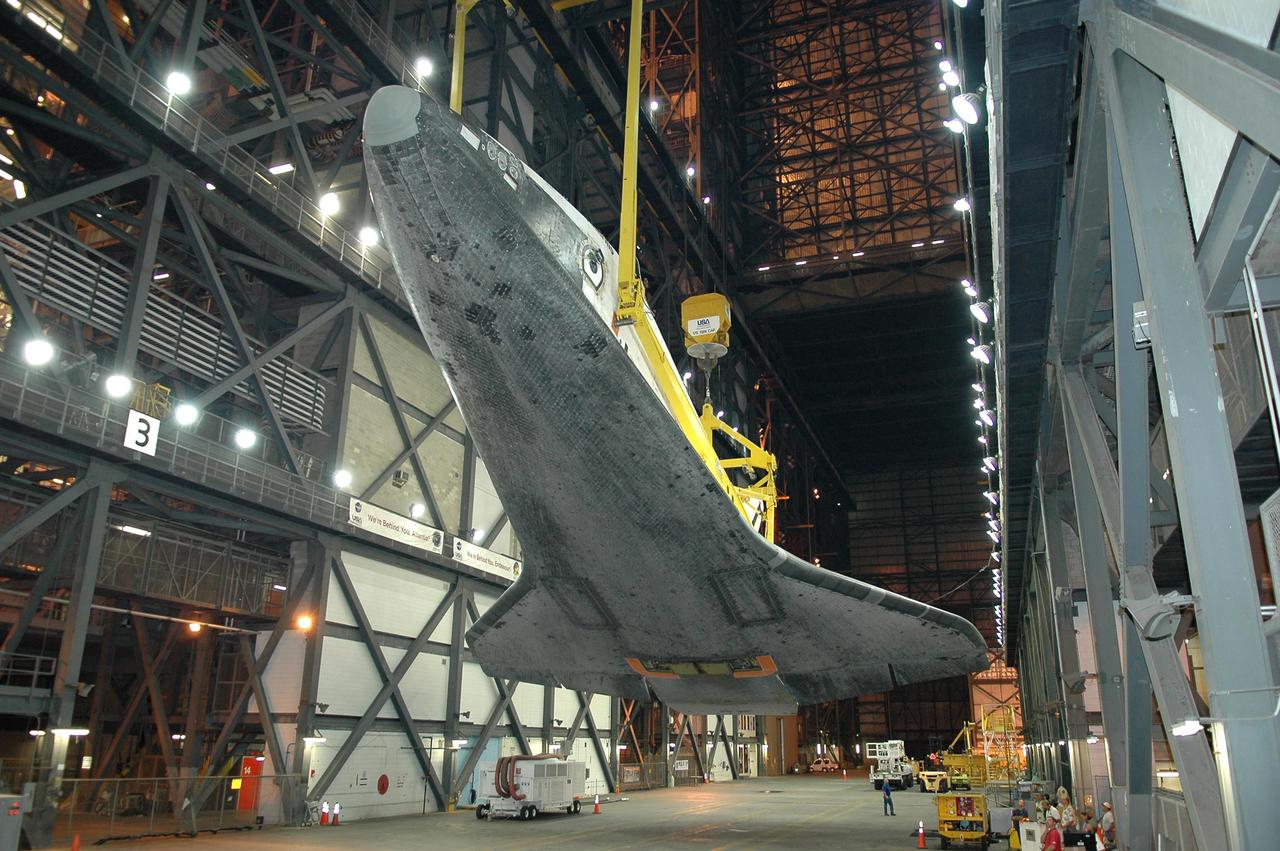
KENNEDY SPACE CENTER, FLA. - In the Vehicle Assembly Building (VAB), Space Shuttle Atlantis is positioned horizontally as it is lowered into the transfer aisle. The vehicle was just demated from its External Tank_Solid Rocket Booster stack in one of the VAB's high bays. The orbiter will be rolled back to Orbiter Processing Facility bay 1 where processing will begin for mission STS-115, the 19th flight to the International Space Station. The tank, ET-120, is the first redesigned ET to arrive at KSC and will undergo further testing before Return to Flight mission STS-121 next year.
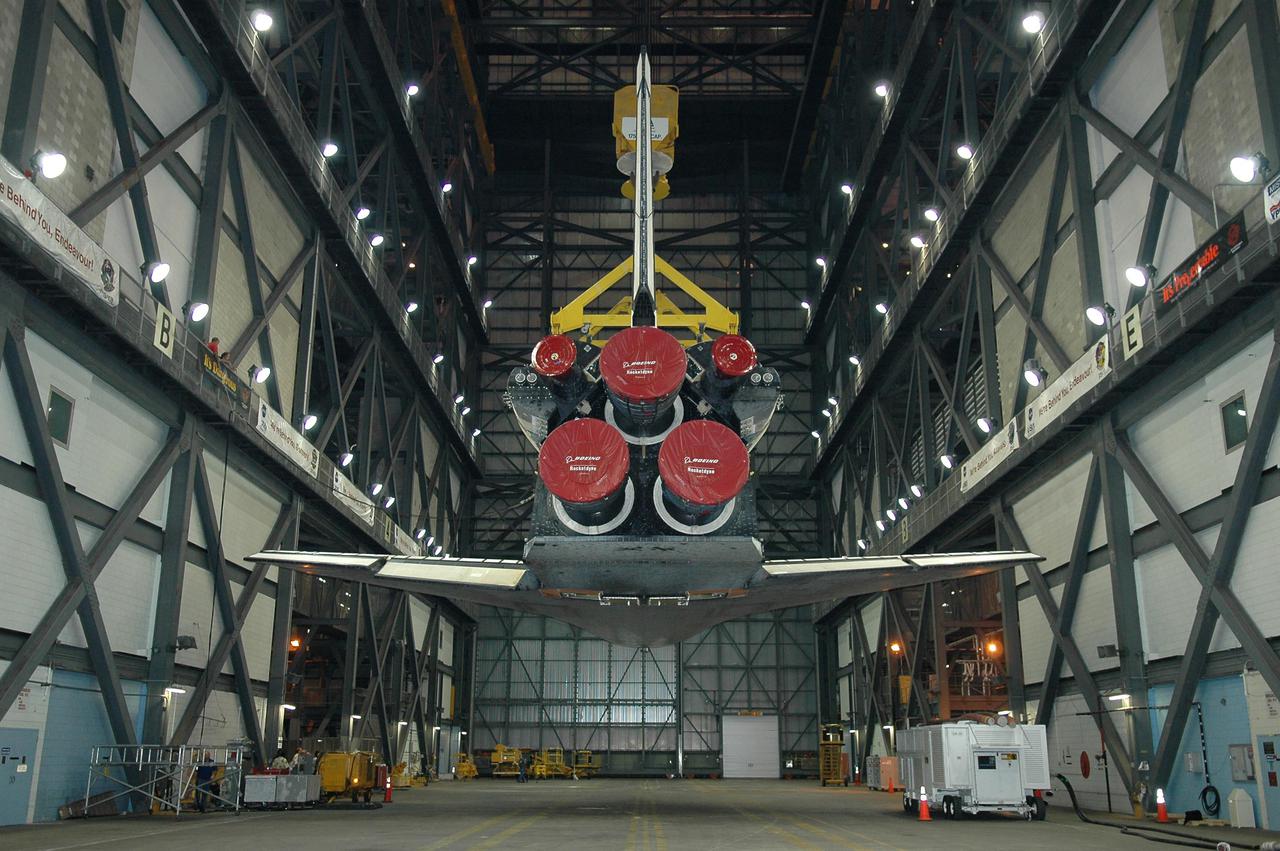
KENNEDY SPACE CENTER, FLA. - In the Vehicle Assembly Building (VAB), Space Shuttle Atlantis is positioned horizontally as it is lowered into the transfer aisle. The vehicle was just demated from its External Tank_Solid Rocket Booster stack in one of the VAB's high bays. The orbiter will be rolled back to Orbiter Processing Facility bay 1 where processing will begin for mission STS-115, the 19th flight to the International Space Station. The tank, ET-120, is the first redesigned ET to arrive at KSC and will undergo further testing before Return to Flight mission STS-121 next year.
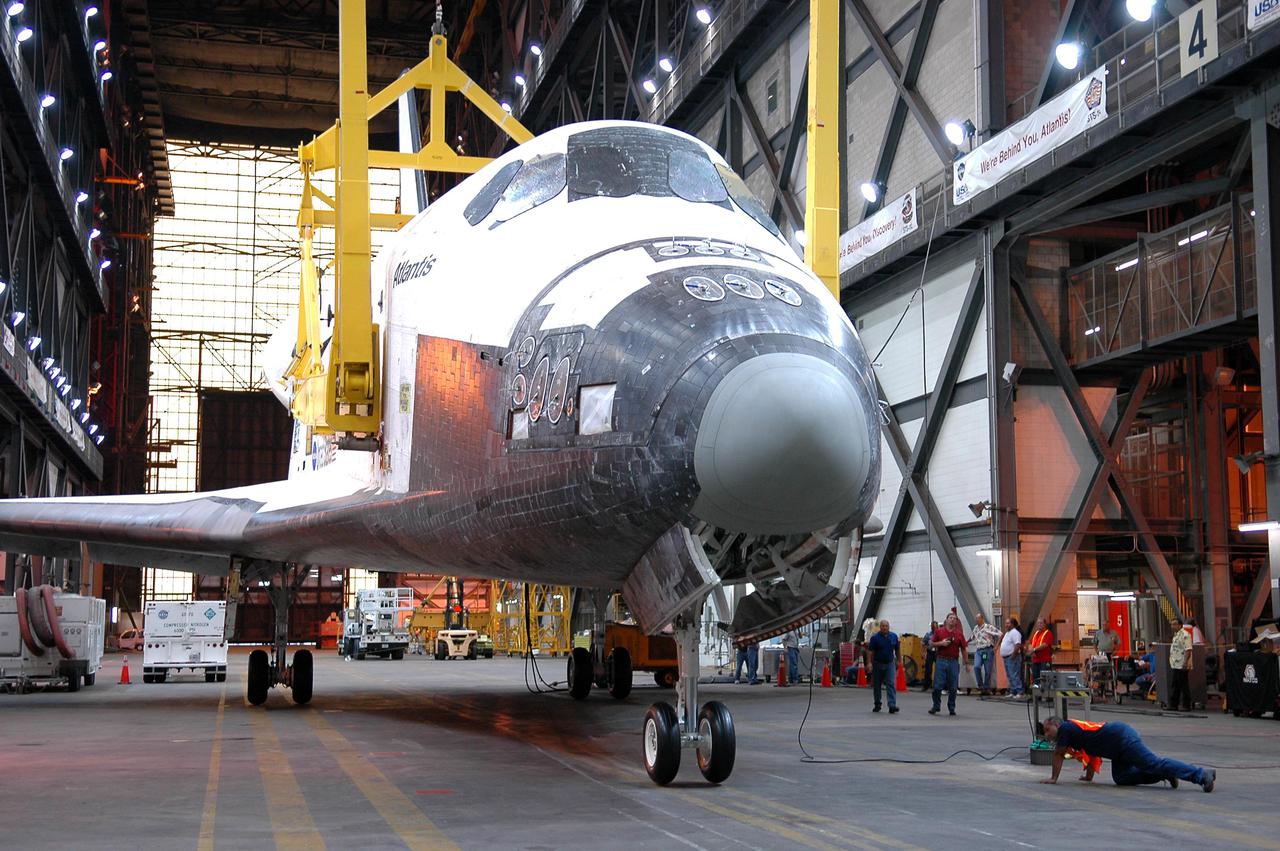
KENNEDY SPACE CENTER, FLA. - In the Vehicle Assembly Building (VAB), Space Shuttle Atlantis rests on its landing gear on the floor of the transfer aisle. The vehicle was just demated from its External Tank_Solid Rocket Booster stack in one of the VAB's high bays. The orbiter will be rolled back to Orbiter Processing Facility bay 1 where processing will begin for mission STS-115, the 19th flight to the International Space Station. The tank, ET-120, is the first redesigned ET to arrive at KSC and will undergo further testing before Return to Flight mission STS-121 next year.
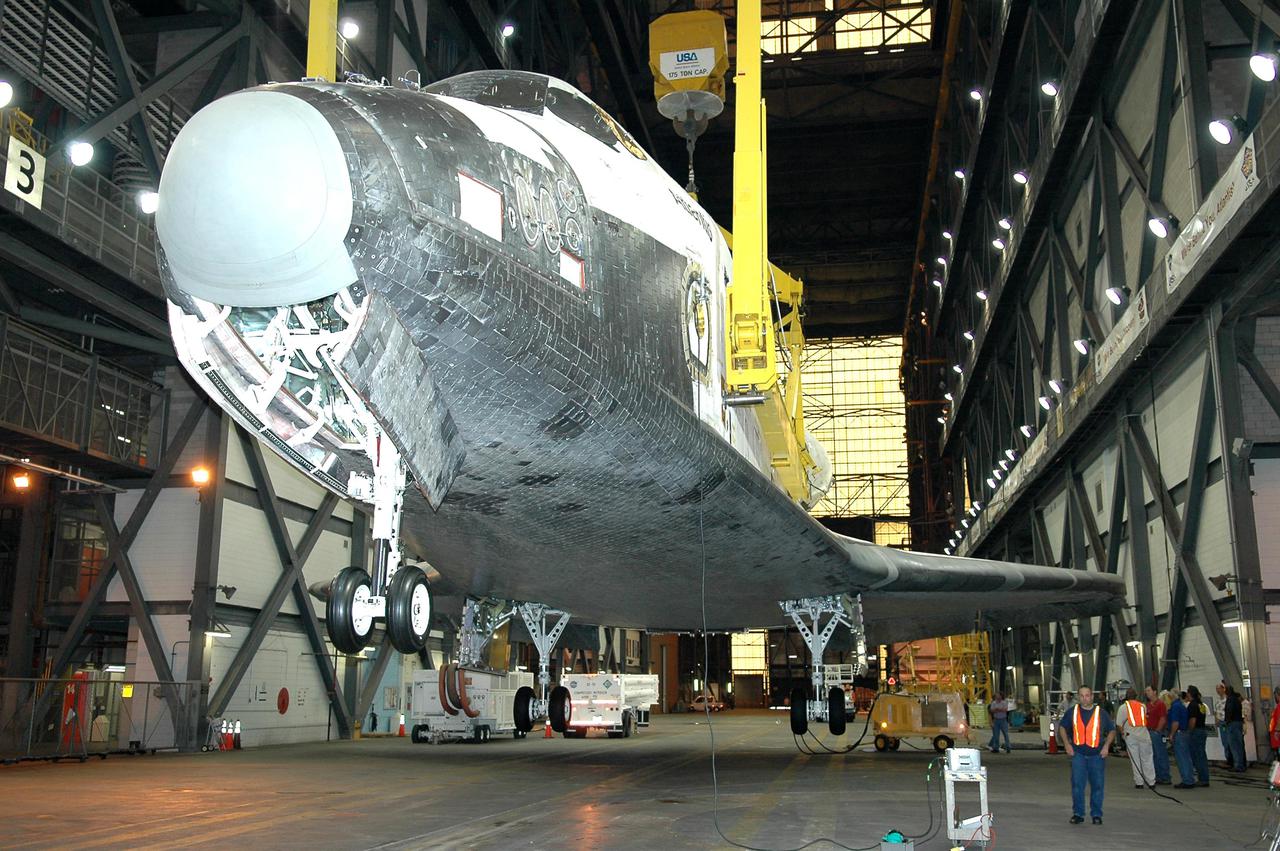
KENNEDY SPACE CENTER, FLA. - In the Vehicle Assembly Building (VAB), the landing gear of Space Shuttle Atlantis is lowered before the orbiter comes to rest on the floor of the transfer aisle. The vehicle was just demated from its External Tank_Solid Rocket Booster stack in one of the VAB's high bays. The orbiter will be rolled back to Orbiter Processing Facility bay 1 where processing will begin for mission STS-115, the 19th flight to the International Space Station. The tank, ET-120, is the first redesigned ET to arrive at KSC and will undergo further testing before Return to Flight mission STS-121 next year.
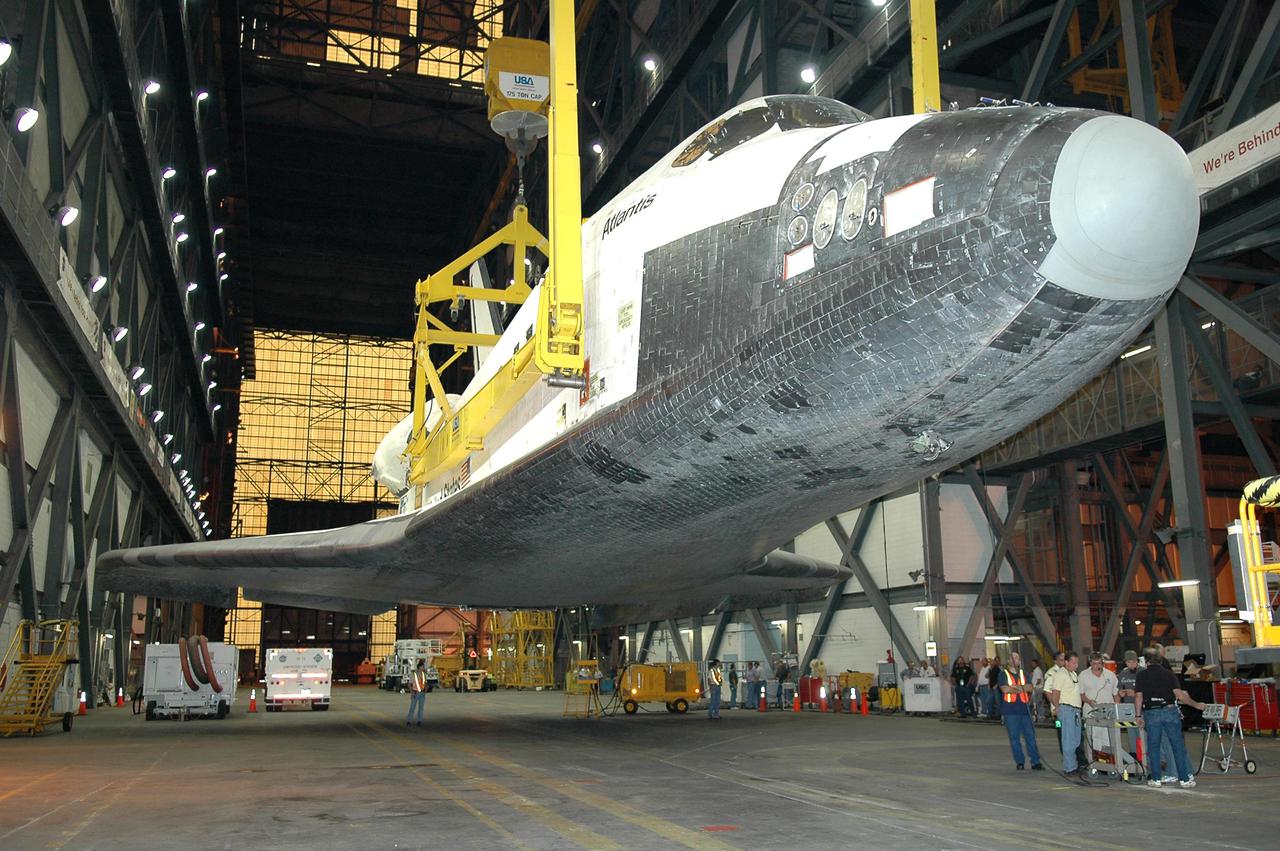
KENNEDY SPACE CENTER, FLA. - In the Vehicle Assembly Building (VAB), Space Shuttle Atlantis is positioned horizontally as it is lowered into the transfer aisle. The vehicle was just demated from its External Tank_Solid Rocket Booster stack in one of the VAB's high bays. The orbiter will be rolled back to Orbiter Processing Facility bay 1 where processing will begin for mission STS-115, the 19th flight to the International Space Station. The tank, ET-120, is the first redesigned ET to arrive at KSC and will undergo further testing before Return to Flight mission STS-121 next year.
KENNEDY SPACE CENTER, FLA. -- External tank No. 120 comes to a stop in the transfer aisle of the Vehicle Assembly Building after its move from the Pegasus barge at the turn basin. Next, the tank will be lifted into a checkout cell. ET-120 will be used for launching Space Shuttle Discovery on mission STS-120 in October. NASA/Amanda Diller
KENNEDY SPACE CENTER, FLA. -- Aboard a transporter, external tank No. 120 moves past the NASA News Center parking lot in the Launch Complex 39 Area to the Vehicle Assembly Building, at right. There it will be lifted into a checkout cell. The tank arrived from the Michoud Assembly Facility near New Orleans, making the journey around the Florida peninsula in tow by the JA Bisso II tugboat. ET-120 will be used for launching Space Shuttle Discovery on mission STS-120 in October. NASA/Amanda Diller
KENNEDY SPACE CENTER, FLA. - At the Turn Basin in the Launch Complex 39 Area, tug boats maneuver the barge carrying a new External Tank (ET) toward the dock. After being offloaded, the tank will be transported to the Vehicle Assembly Building. The barge was towed on a 900-mile journey at sea from the Michoud Assembly Facility in New Orleans by one of NASA’s Solid Rocket Booster Retrieval Ships.
KENNEDY SPACE CENTER, FLA. -- Aboard a transporter, external tank No. 120 makes the turn from near the NASA News Center parking lot in the Launch Complex 39 Area to the Vehicle Assembly Building. There it will be lifted into a checkout cell. The tank arrived from the Michoud Assembly Facility near New Orleans, making the journey around the Florida peninsula in tow by the JA Bisso II tugboat. ET-120 will be used for launching Space Shuttle Discovery on mission STS-120 in October. NASA/Amanda Diller
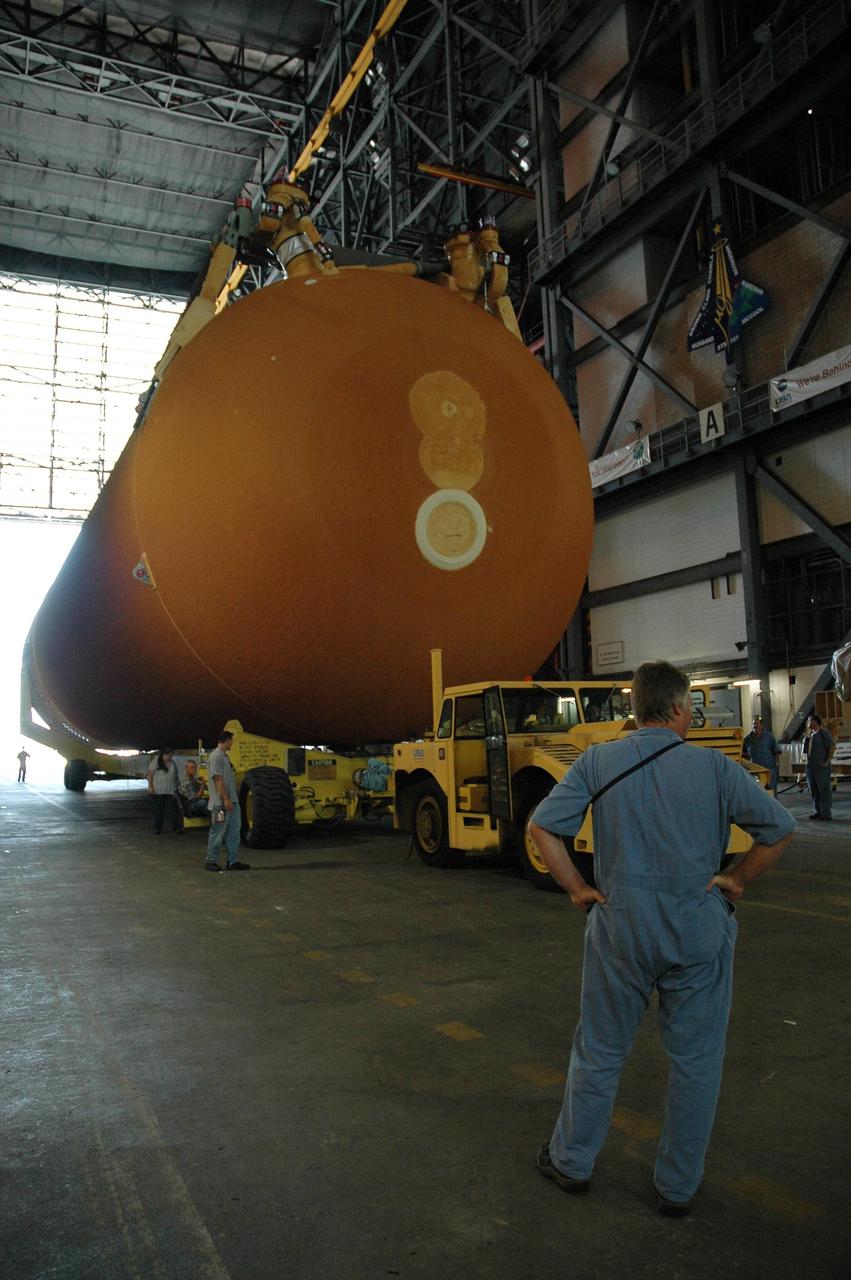
KENNEDY SPACE CENTER, FLA. -- External tank No. 120 is moved into position in the transfer aisle of the Vehicle Assembly Building after its travel from the Pegasus barge at the turn basin. Next, the tank will be lifted into a checkout cell. ET-120 will be used for launching Space Shuttle Discovery on mission STS-120 in October. NASA/Amanda Diller
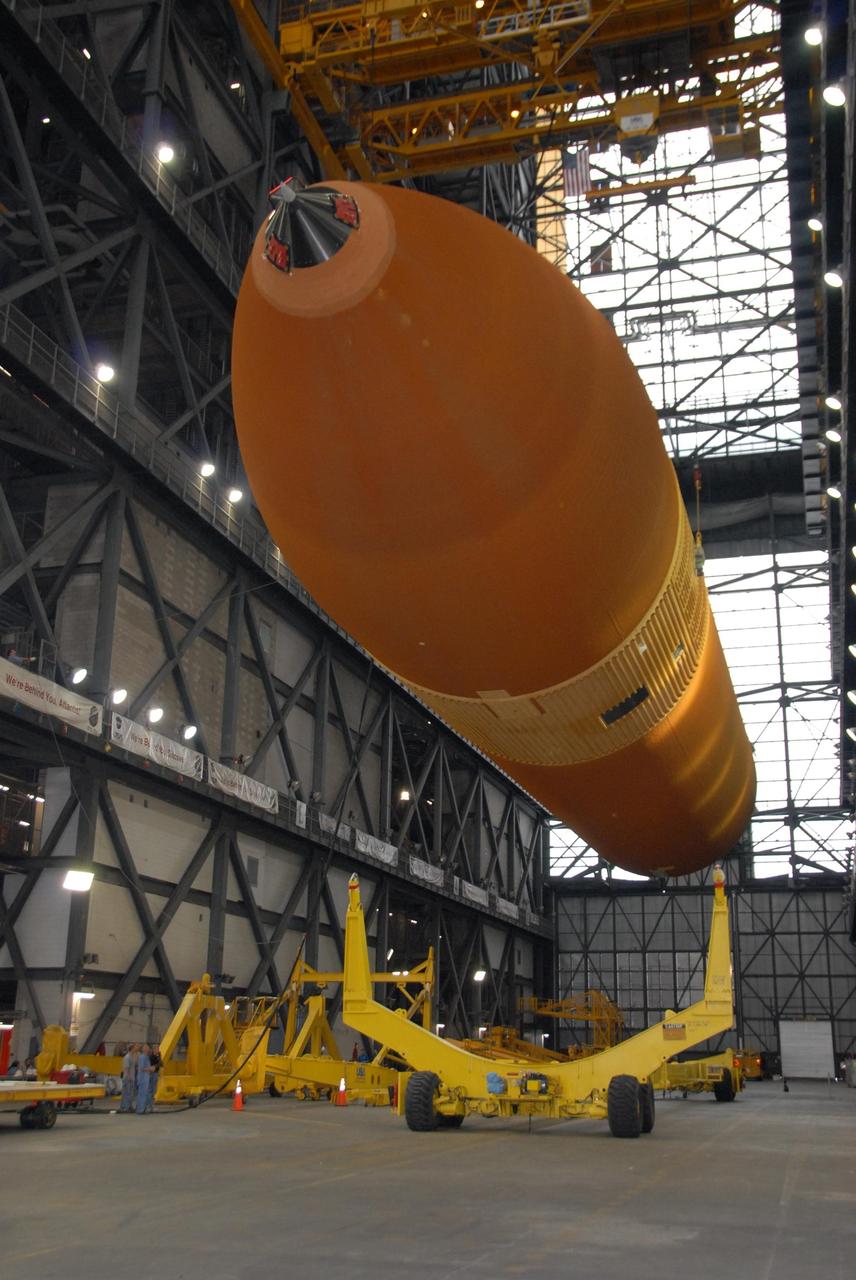
KENNEDY SPACE CENTER, FLA. -- In the transfer aisle of the Vehicle Assembly Building at KSC, an overhead crane raises external tank No. 120 from its transporter. The tank will be lifted into a checkout cell. ET-120 will be used to launch Space Shuttle Discovery on mission STS-120 in October. The mission is the 23rd to the International Space Station and will launch an Italian-built, U.S. multi-port module known as Harmony for the station. Christened after a school contest, Harmony will provide attachment points for European and Japanese laboratory modules. NASA/George Shelton
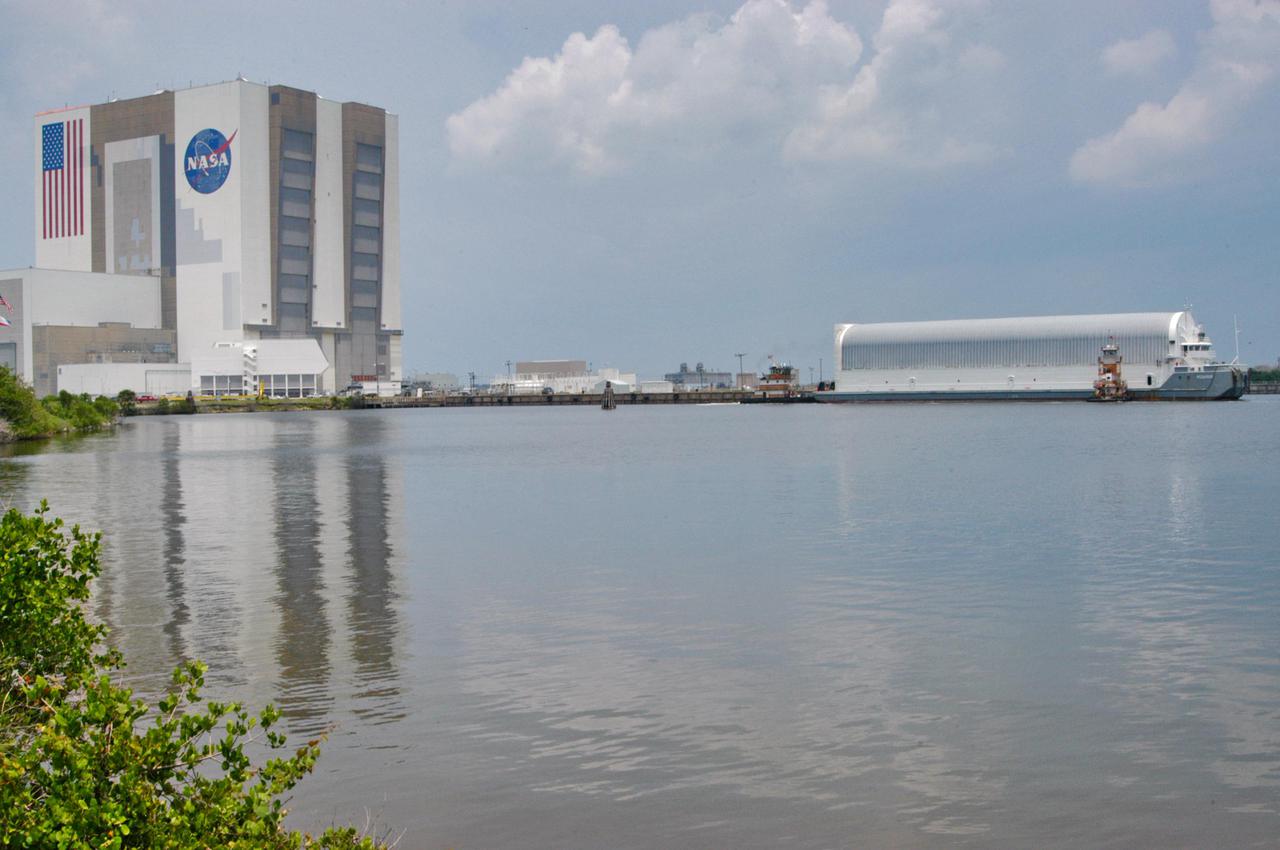
KENNEDY SPACE CENTER, FLA. - At the Turn Basin in the Launch Complex 39 Area, tug boats maneuver the barge carrying a new External Tank (ET) toward the dock. At left is the Vehicle Assembly Building, which will receive the tank after it is offloaded. The barge was towed on a 900-mile journey at sea from the Michoud Assembly Facility in New Orleans by one of NASA’s Solid Rocket Booster Retrieval Ships.
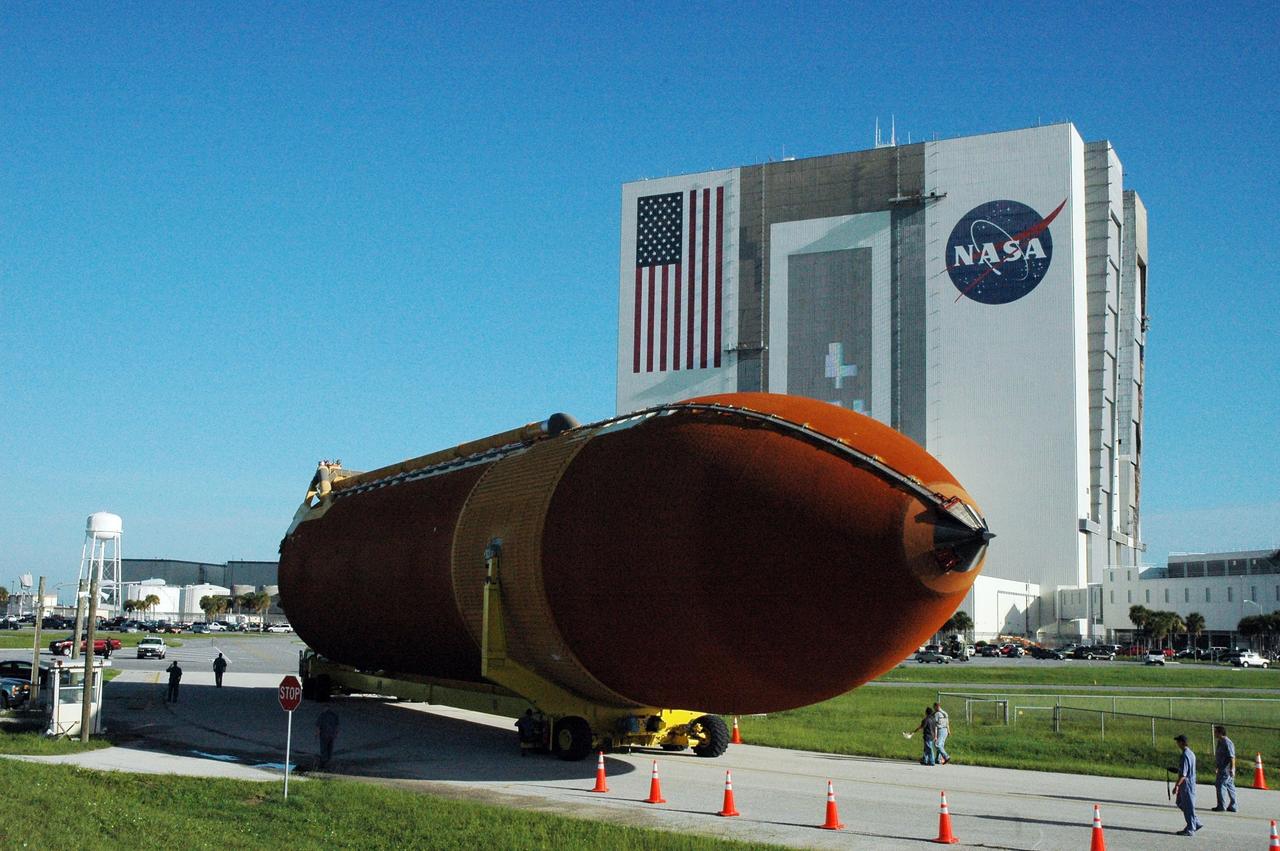
KENNEDY SPACE CENTER, FLA. -- Aboard a transporter, external tank No. 120 moves past the NASA News Center parking lot entrance in the Launch Complex 39 Area to the Vehicle Assembly Building, seen behind it. There it will be lifted into a checkout cell. The tank arrived from the Michoud Assembly Facility near New Orleans, making the journey around the Florida peninsula in tow by the JA Bisso II tugboat. ET-120 will be used for launching Space Shuttle Discovery on mission STS-120 in October. NASA/Amanda Diller
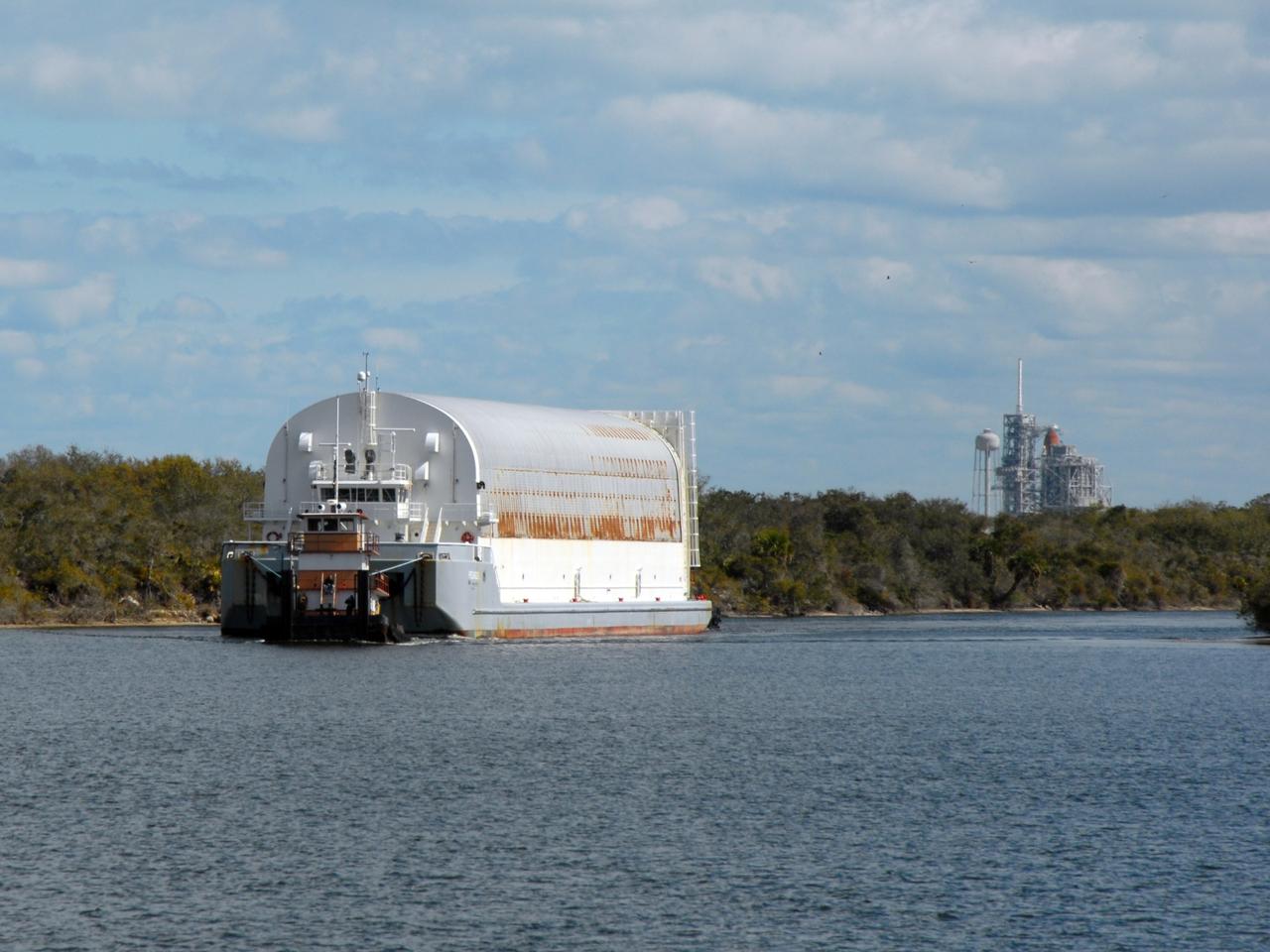
CAPE CANAVERAL, Fla. – At NASA's Kennedy Space Center in Florida, the Pegasus barge arrives in the turn basin to deliver its cargo of the external fuel tank ET-131. The tank will be taken off and moved to the Vehicle Assembly Building. ET-131 will be used on space shuttle Endeavour's STS-127 mission. The Japanese Experiment Module's Experiment Logistics Module-Exposed Section, or ELM-ES, is part of the payload on the STS-127 mission, targeted for launch in June. Photo credit: NASA/Tim Jacobs
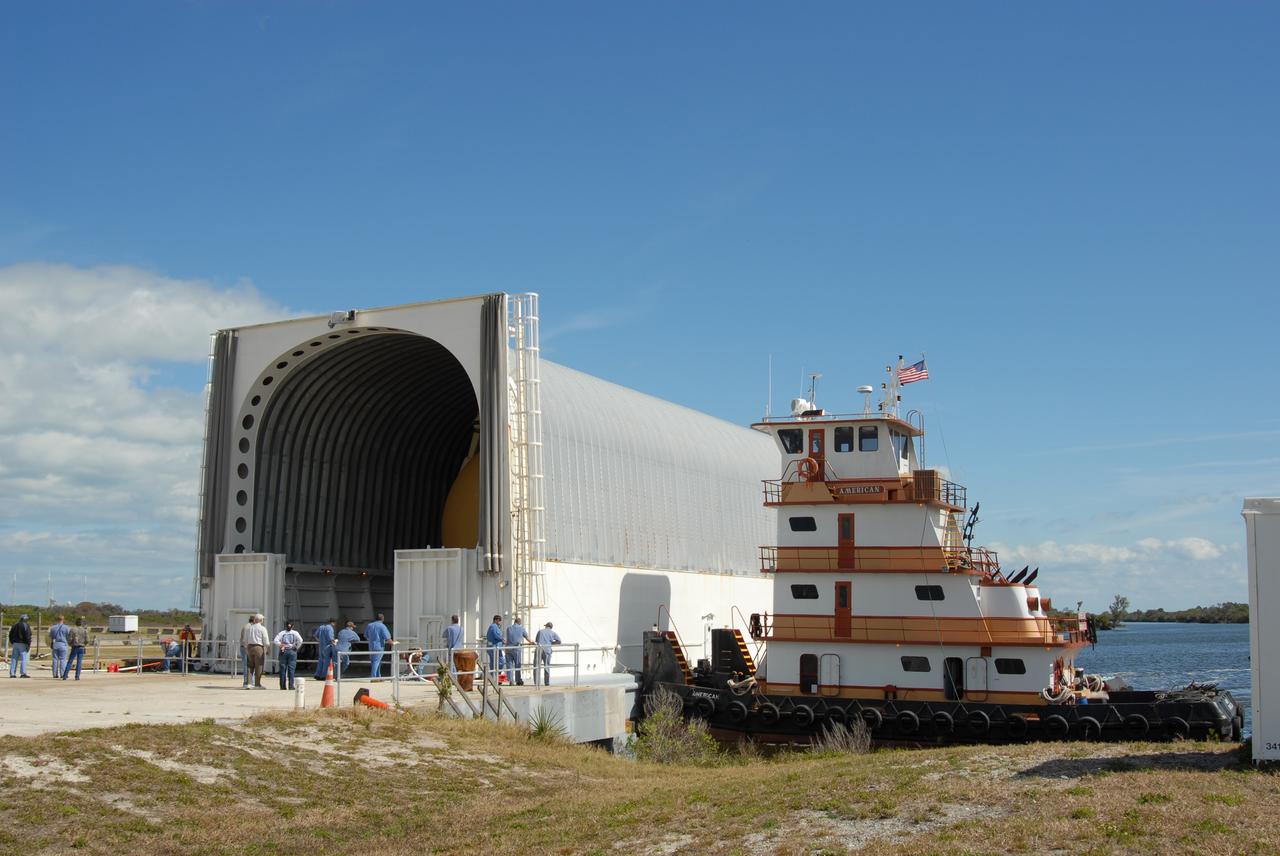
CAPE CANAVERAL, Fla. – At NASA's Kennedy Space Center in Florida, the Pegasus barge has docked at the turn basin. Pegasus holds the external fuel tank ET-131. The tank will be taken off and moved to the Vehicle Assembly Building. ET-131 will be used on space shuttle Endeavour's STS-127 mission.The Japanese Experiment Module's Experiment Logistics Module-Exposed Section, or ELM-ES, is part of the payload on the STS-127 mission, targeted for launch in June. Photo credit: NASA/Tim Jacobs
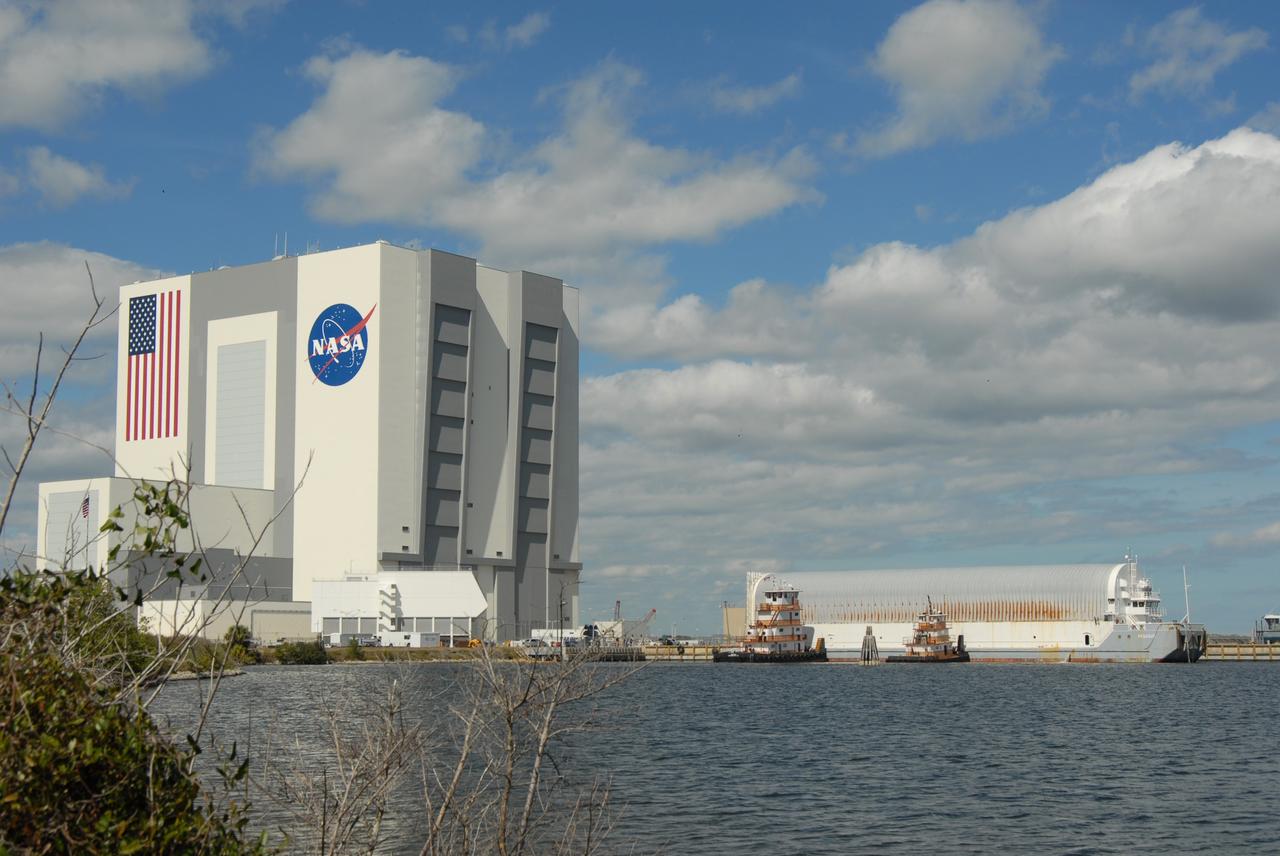
CAPE CANAVERAL, Fla. – At NASA's Kennedy Space Center in Florida, tugboats maneuver the Pegasus barge toward the dock. Pegasus holds the external fuel tank ET-131. The tank will be taken off and moved to the Vehicle Assembly Building. ET-131 will be used on space shuttle Endeavour's STS-127 mission. The Japanese Experiment Module's Experiment Logistics Module-Exposed Section, or ELM-ES, is part of the payload on the STS-127 mission, targeted for launch in June. Photo credit: NASA/Tim Jacobs
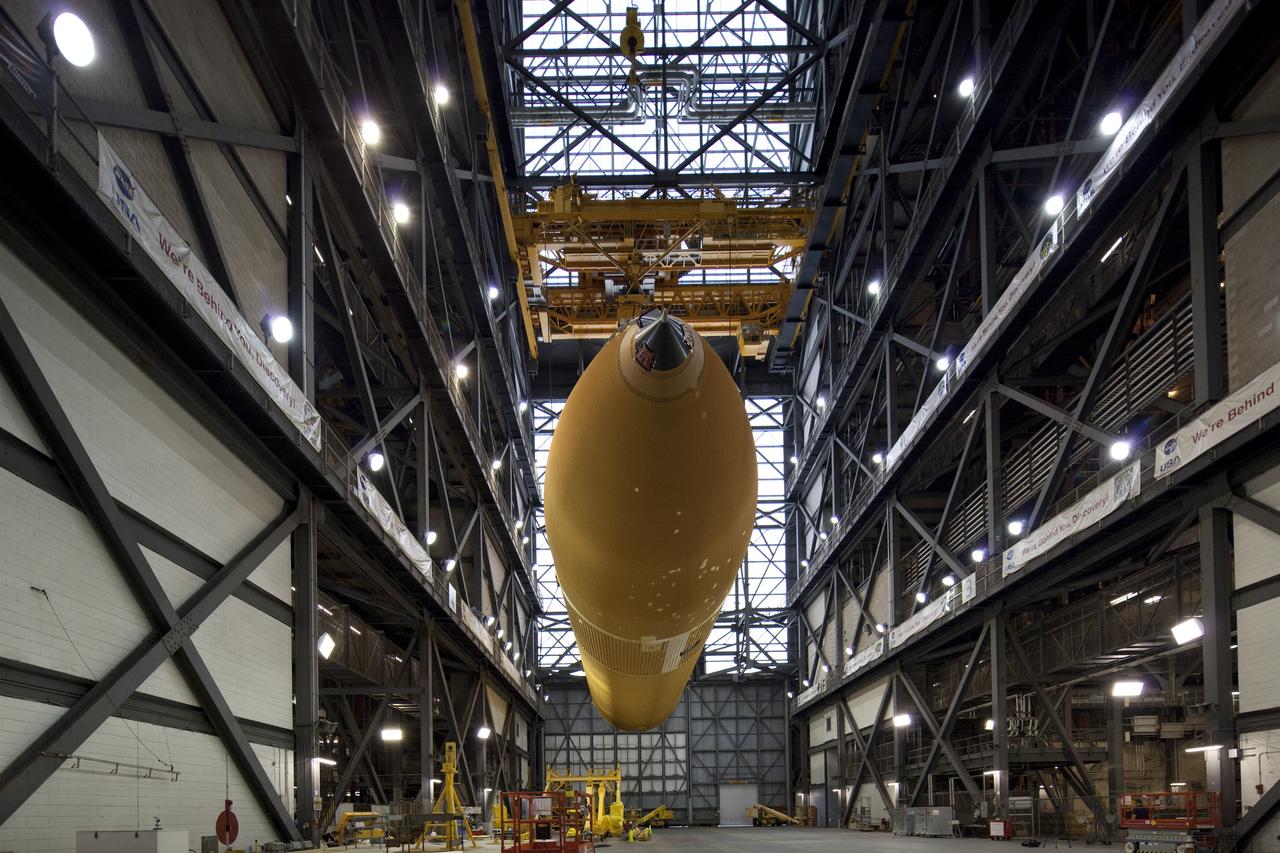
CAPE CANAVERAL, Fla. -- In the Vehicle Assembly Building at NASA's Kennedy Space Center in Florida, External Fuel Tank-122 is lifted above the transfer aisle. The external tank is being moved into a test cell where it will be checked out before launch. ET-122, the Space Shuttle Program's last external fuel tank was delivered to Kennedy's Turn Basin from NASA’s Michoud Assembly Facility in New Orleans aboard the Pegasus Barge. After testing ET-122 eventually will be attached to space shuttle Endeavour for the STS-134 mission to the International Space Station targeted to launch February, 2011. For more information visit: http://www.nasa.gov/mission_pages/shuttle/shuttlemissions/sts134/index.html. Photo credit: NASA/Dimitri Gerondidakis
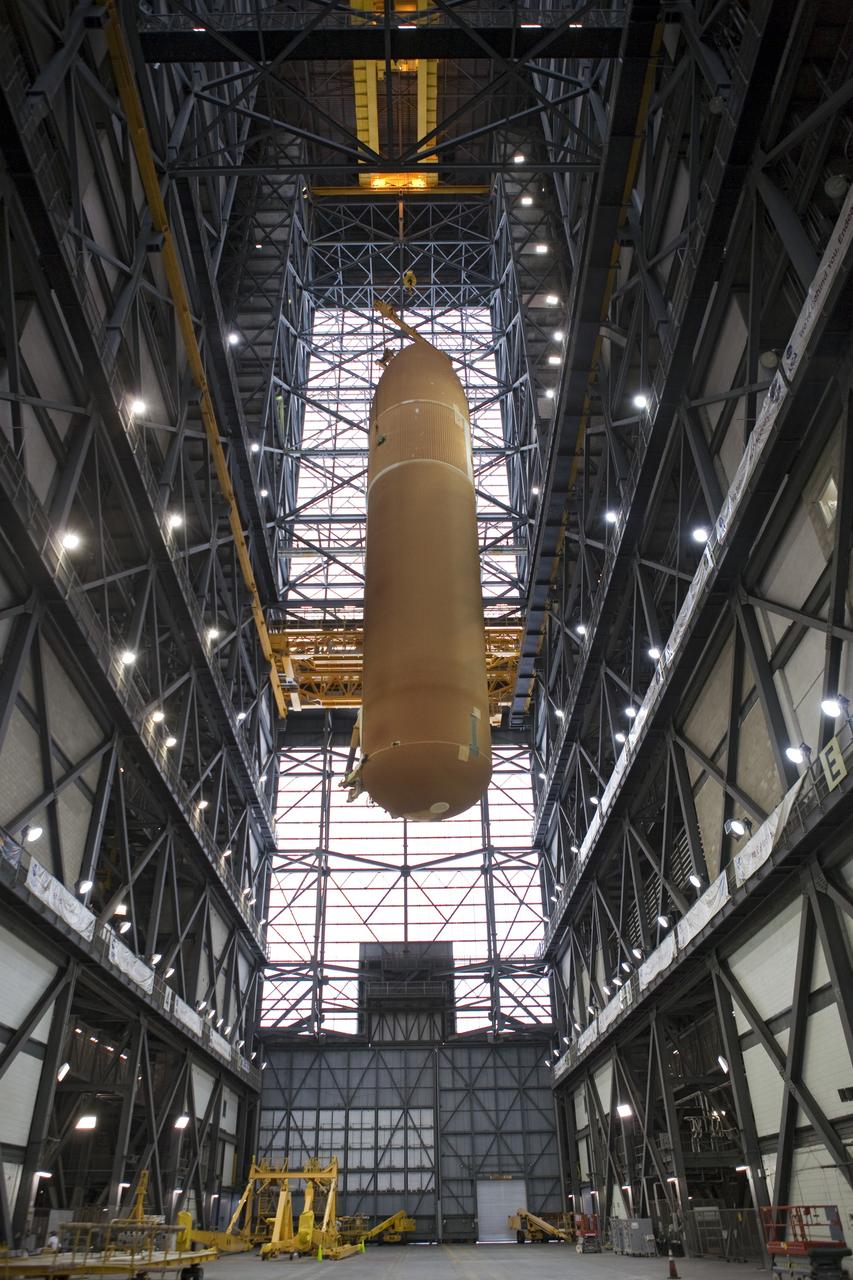
CAPE CANAVERAL, Fla. -- In the Vehicle Assembly Building at NASA's Kennedy Space Center in Florida, External Fuel Tank-122 is lifted into a vertical position above the transfer aisle. The external tank is being moved to a test cell where it will be checked out before launch. ET-122, the Space Shuttle Program's last external fuel tank was delivered to Kennedy's Turn Basin from NASA’s Michoud Assembly Facility in New Orleans aboard the Pegasus Barge. After testing ET-122 eventually will be attached to space shuttle Endeavour for the STS-134 mission to the International Space Station targeted to launch February, 2011. For more information visit: http://www.nasa.gov/mission_pages/shuttle/shuttlemissions/sts134/index.html. Photo credit: NASA/Dimitri Gerondidakis
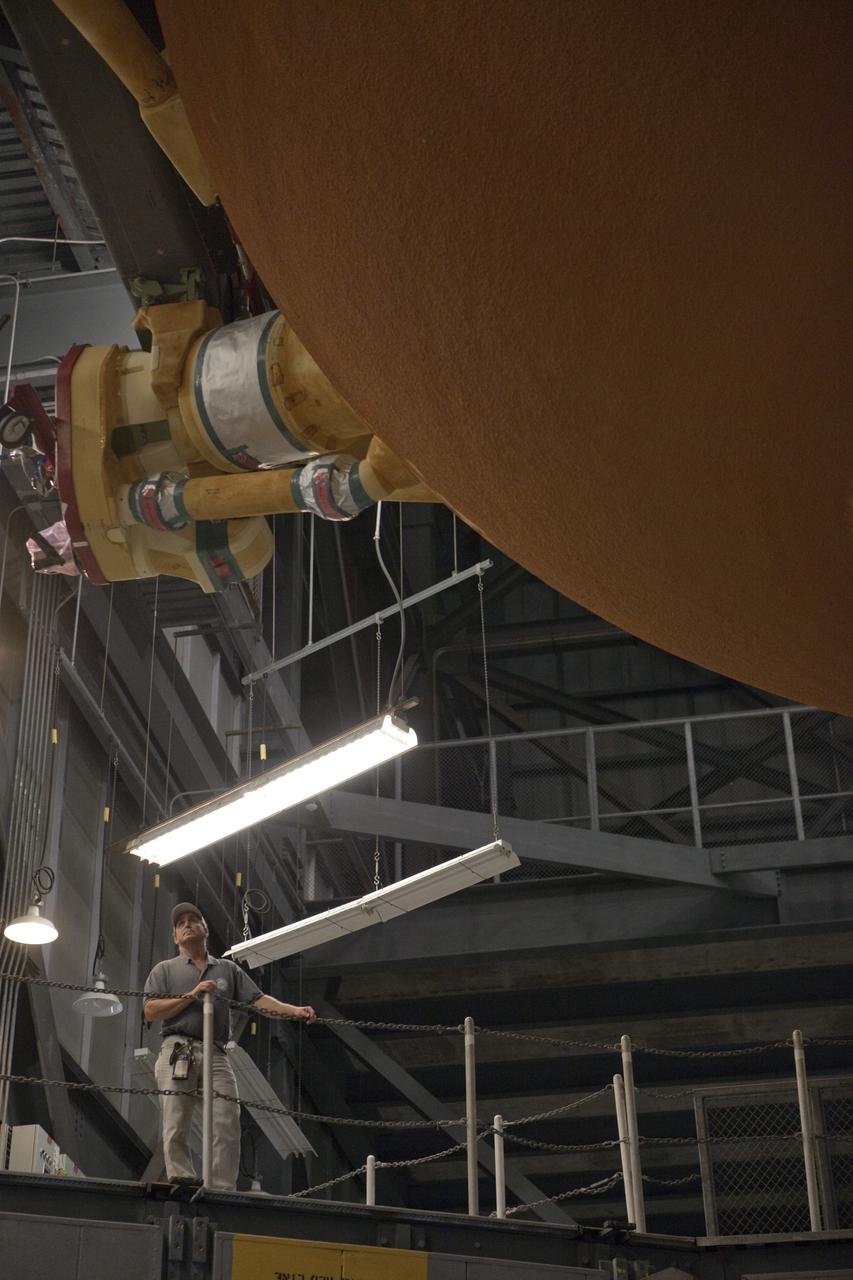
CAPE CANAVERAL, Fla. -- In the Vehicle Assembly Building at NASA's Kennedy Space Center in Florida, a worker checks the progress of External Fuel Tank-122 as it is being lowered into a test stand where it will be checked out before launch. ET-122, the Space Shuttle Program's last external fuel tank was delivered to Kennedy's Turn Basin from NASA’s Michoud Assembly Facility in New Orleans aboard the Pegasus Barge. After testing, ET-122 eventually will be attached to space shuttle Endeavour for the STS-134 mission to the International Space Station targeted to launch February, 2011. For more information visit: http://www.nasa.gov/mission_pages/shuttle/shuttlemissions/sts134/index.html. Photo credit: NASA/Dimitri Gerondidakis
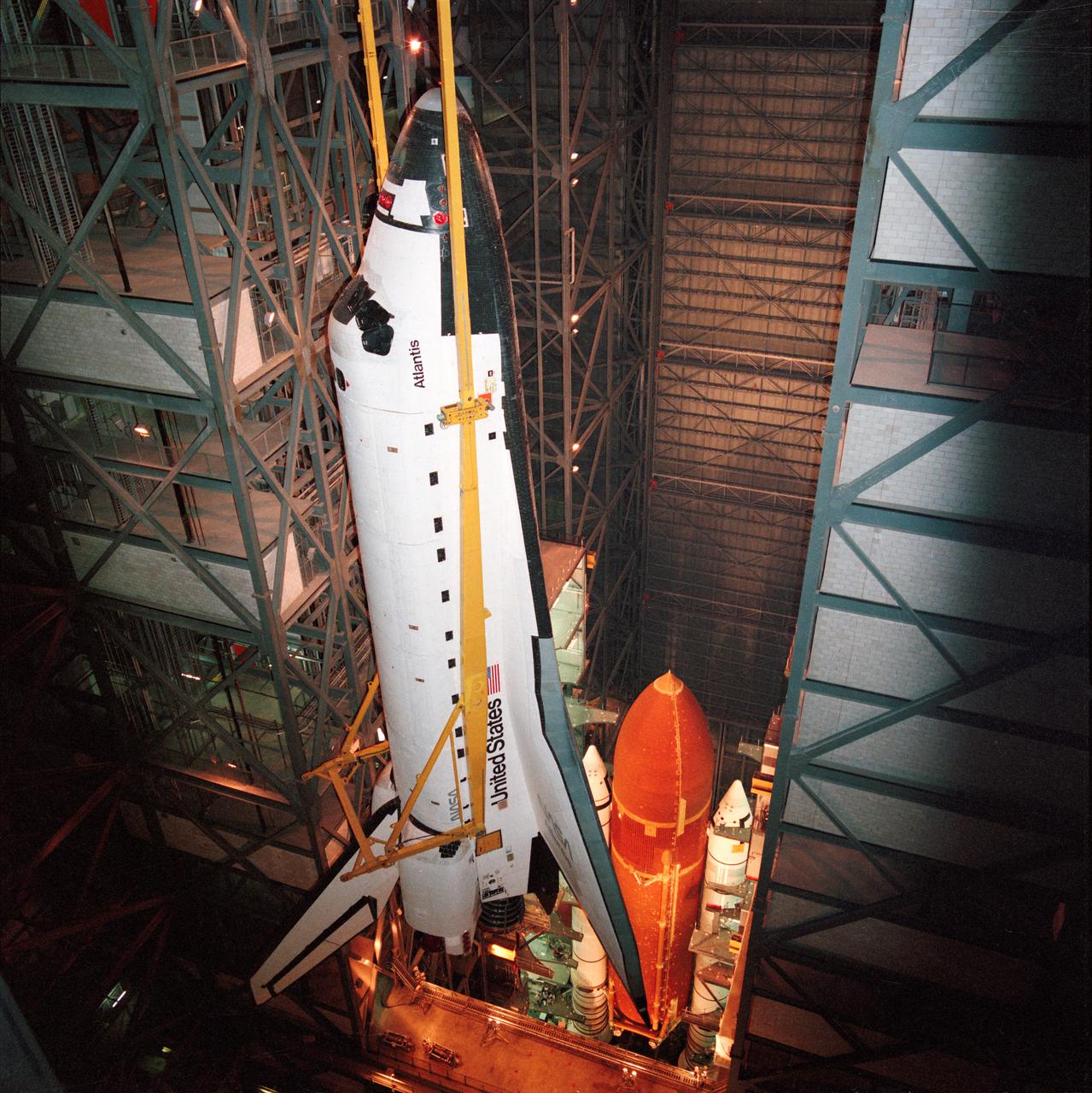
STS-27 Atlantis, Orbiter Vehicle (OV) 104, is suspended via overhead crane, attached at four points, in the Kennedy Space Center (KSC) Vehicle Assembly Building (VAB). Below OV-104 on the mobile launcher platform are the external tank (ET) and solid rocket boosters (SRBs). During ET/SRB mating operations, OV-104 will be mounted atop the ET.
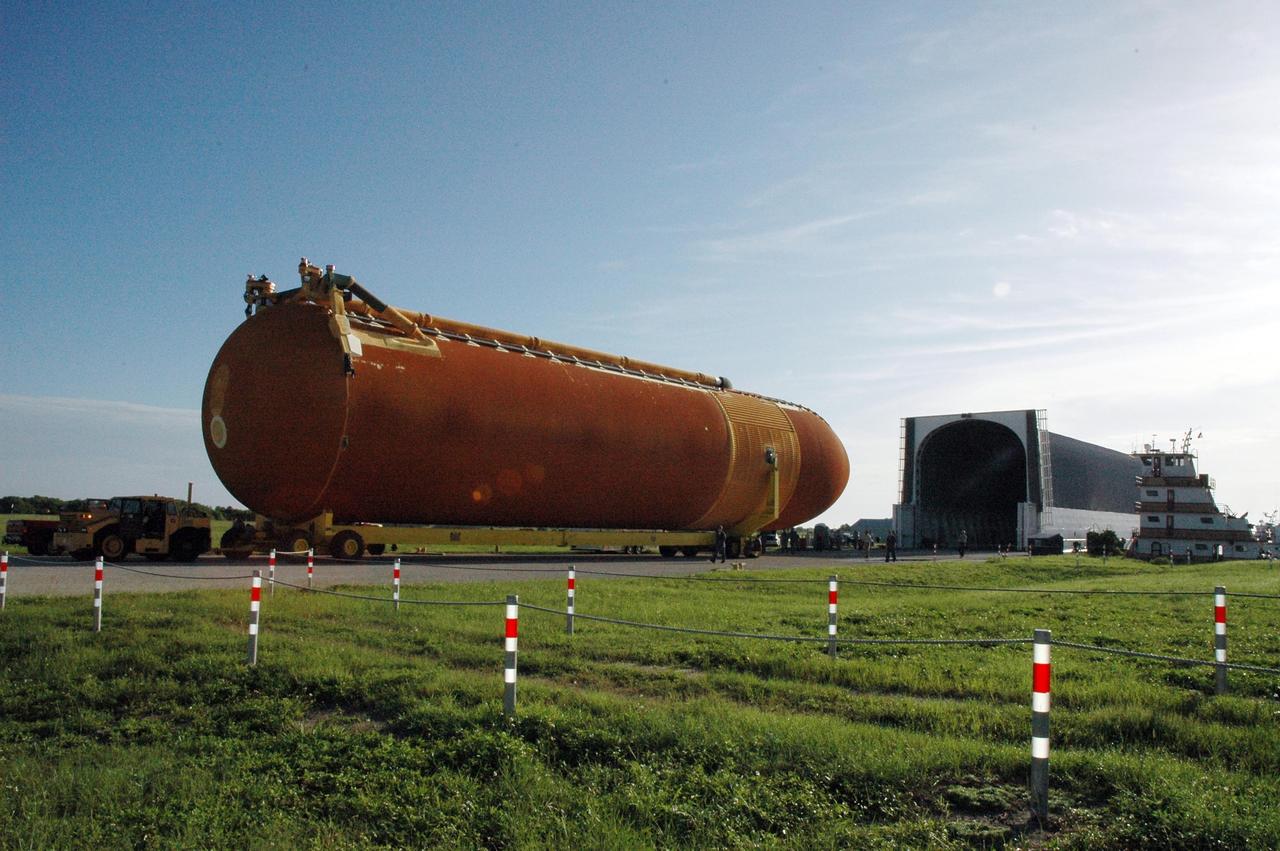
KENNEDY SPACE CENTER, FLA. -- A transporter moves external tank No. 120 away from the Pegasus barge, which is docked at the Launch Complex 39 Area turn basin. The tank is being moved to the Vehicle Assembly Building and will be lifted into a checkout cell. The barge carried the tank from the Michoud Assembly Facility near New Orleans, making the journey around the Florida peninsula in tow by the JA Bisso II tugboat, to Port Canaveral and Kennedy Space Center. ET-120 will be used for launching Space Shuttle Discovery on mission STS-120 in October. NASA/Amanda Diller
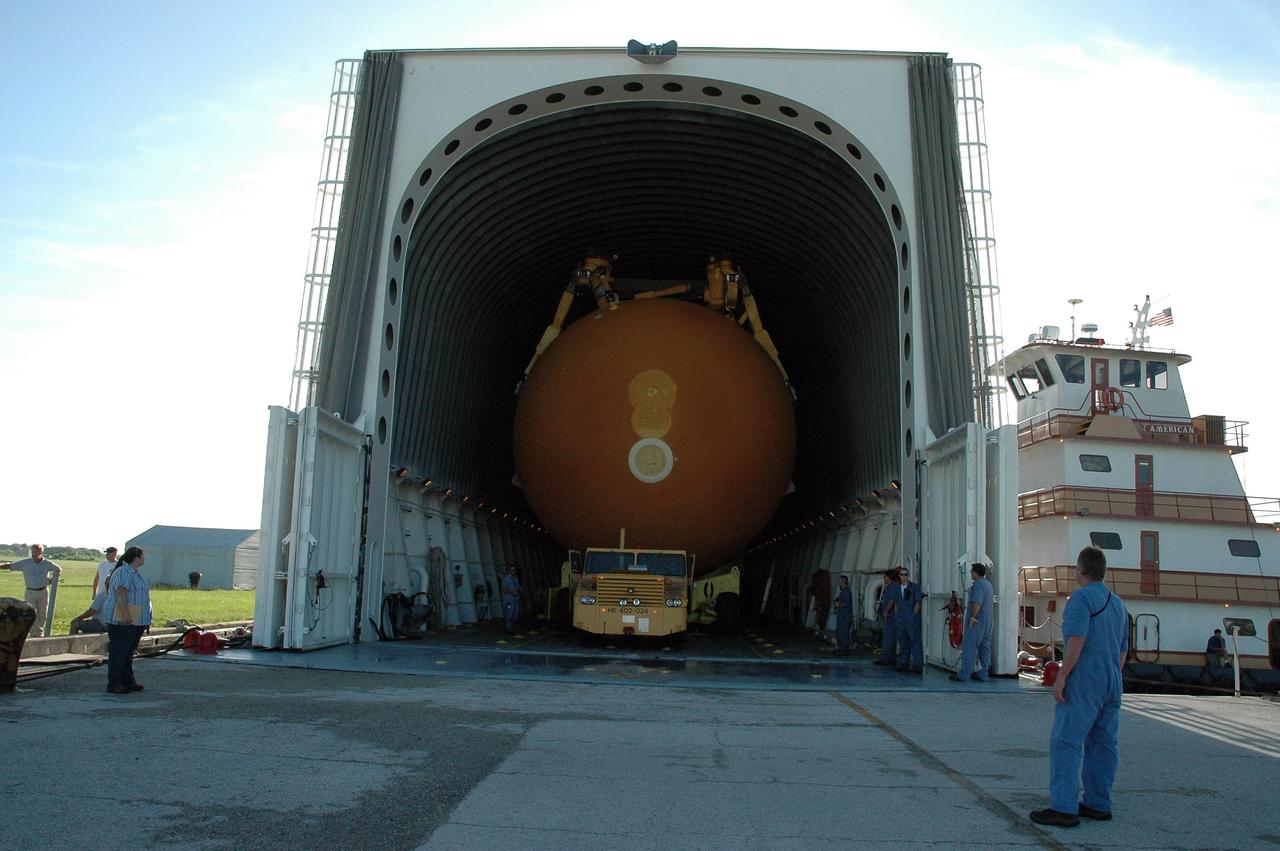
KENNEDY SPACE CENTER, FLA. -- External tank No. 120 is ready to be offloaded from the Pegasus barge, which is docked at the Launch Complex 39 Area turn basin. The tank will be moved to the Vehicle Assembly Building and lifted into a checkout cell. The barge carried the tank from the Michoud Assembly Facility near New Orleans, making the journey around the Florida peninsula in tow by the JA Bisso II tugboat, to Port Canaveral and Kennedy Space Center. After the tank is offloaded, it will be towed to the Vehicle Assembly Building for lifting into a checkout cell. ET-120 will be used for launching Space Shuttle Discovery on mission STS-120 in October. NASA/Amanda Diller
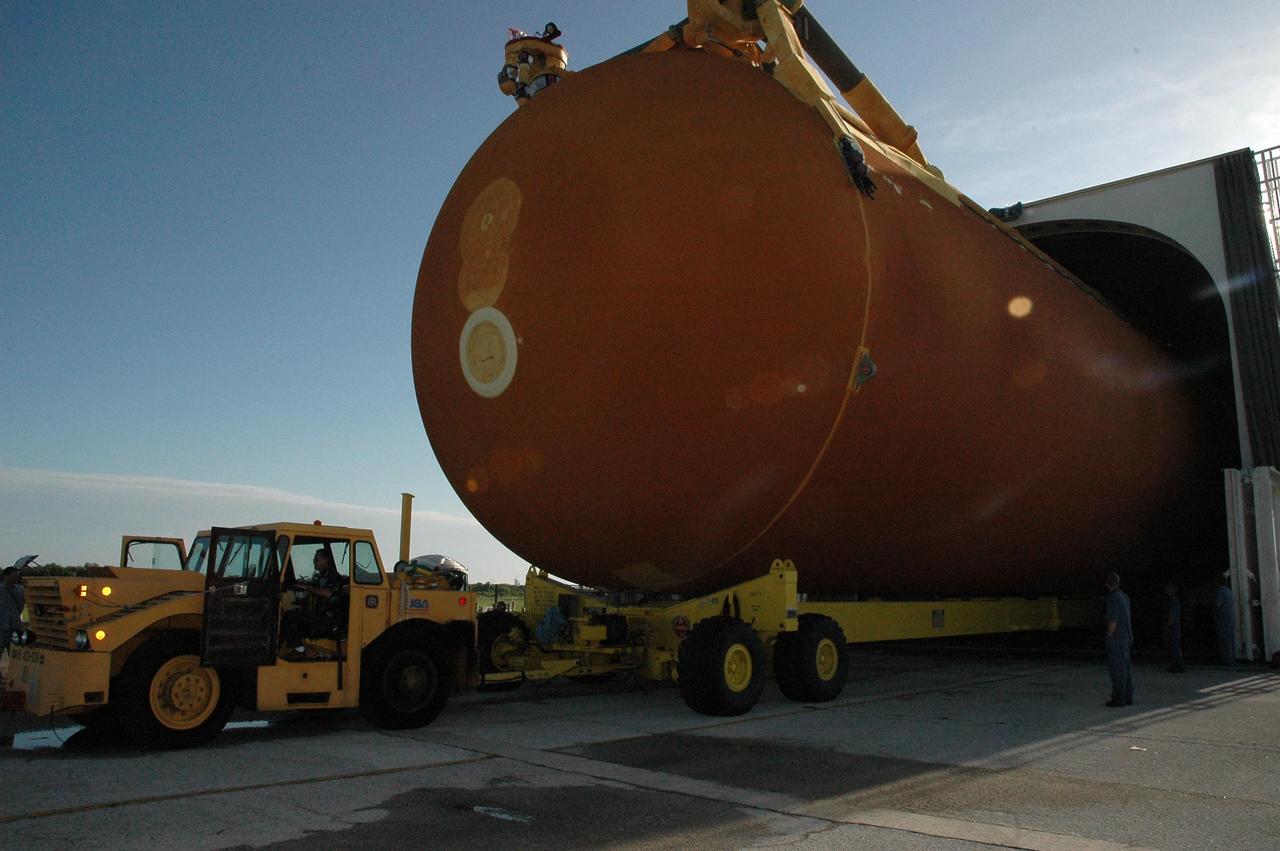
KENNEDY SPACE CENTER, FLA. -- External tank No. 120 is offloaded from the Pegasus barge, which is docked at the Launch Complex 39 Area turn basin. The tank will be moved to the Vehicle Assembly Building and lifted into a checkout cell. The barge carried the tank from the Michoud Assembly Facility near New Orleans, making the journey around the Florida peninsula in tow by the JA Bisso II tugboat, to Port Canaveral and Kennedy Space Center. ET-120 will be used for launching Space Shuttle Discovery on mission STS-120 in October. NASA/Amanda Diller

KENNEDY SPACE CENTER, FLA. -- External tank No. 120 is suspended vertically above the transfer aisle of the Vehicle Assembly Building at KSC. The tank will next be lifted into a checkout cell. ET-120 will be prepared for stacking with solid rocket boosters to launch Space Shuttle Discovery on mission STS-120 in October. The mission is the 23rd to the International Space Station and will launch an Italian-built, U.S. multi-port module known as Harmony for the station. Christened after a school contest, Harmony will provide attachment points for European and Japanese laboratory modules. NASA/George Shelton
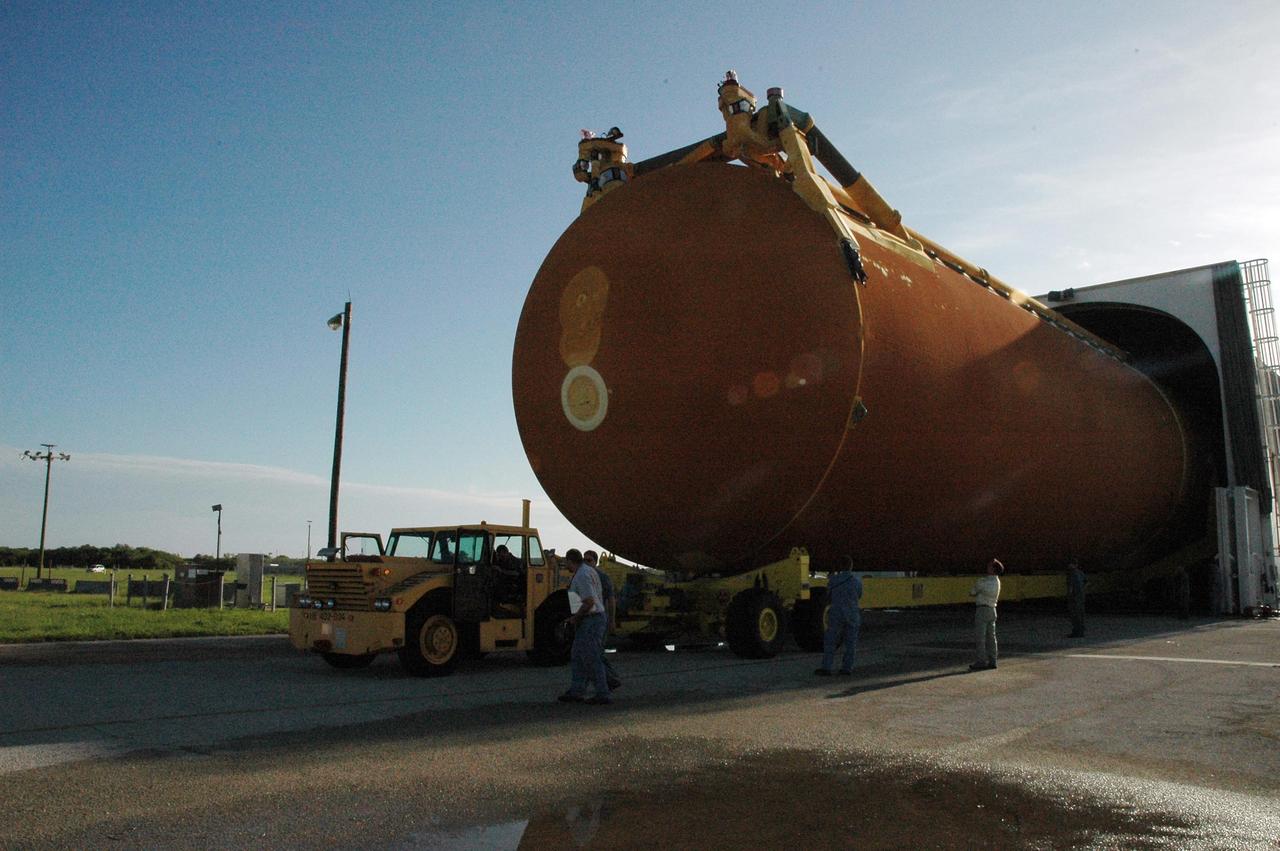
KENNEDY SPACE CENTER, FLA. -- External tank No. 120 is offloaded from the Pegasus barge, which is docked at the Launch Complex 39 Area turn basin. The tank will be moved to the Vehicle Assembly Building and lifted into a checkout cell. The barge carried the tank from the Michoud Assembly Facility near New Orleans, making the journey around the Florida peninsula in tow by the JA Bisso II tugboat, to Port Canaveral and Kennedy Space Center. ET-120 will be used for launching Space Shuttle Discovery on mission STS-120 in October. NASA/Amanda Diller
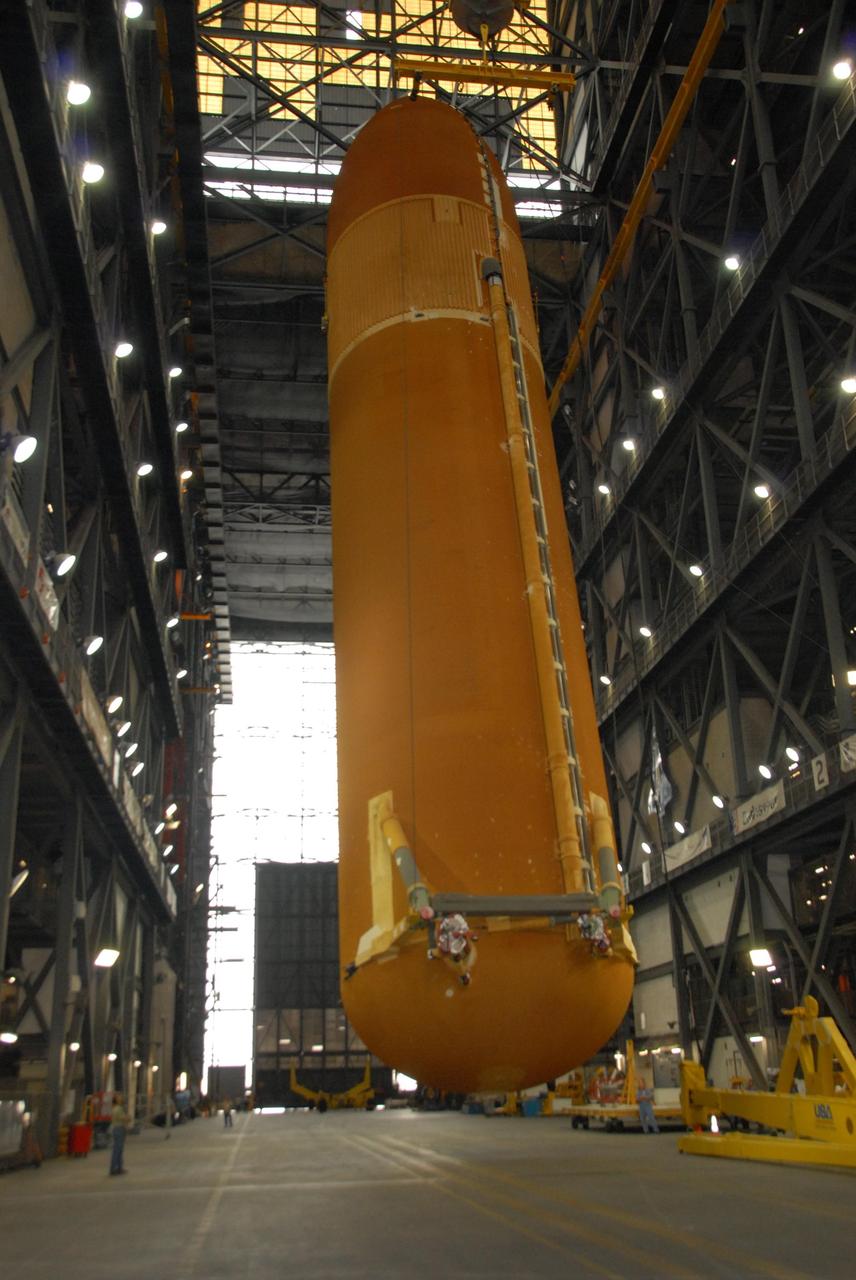
KENNEDY SPACE CENTER, FLA. -- In the transfer aisle of the Vehicle Assembly Building at KSC, an overhead crane raises external tank No. 120 to a vertical position. The tank will next be lifted into a checkout cell. ET-120 will be prepared for stacking with solid rocket boosters to launch Space Shuttle Discovery on mission STS-120 in October. The mission is the 23rd to the International Space Station and will launch an Italian-built, U.S. multi-port module known as Harmony for the station. Christened after a school contest, Harmony will provide attachment points for European and Japanese laboratory modules. NASA/George Shelton
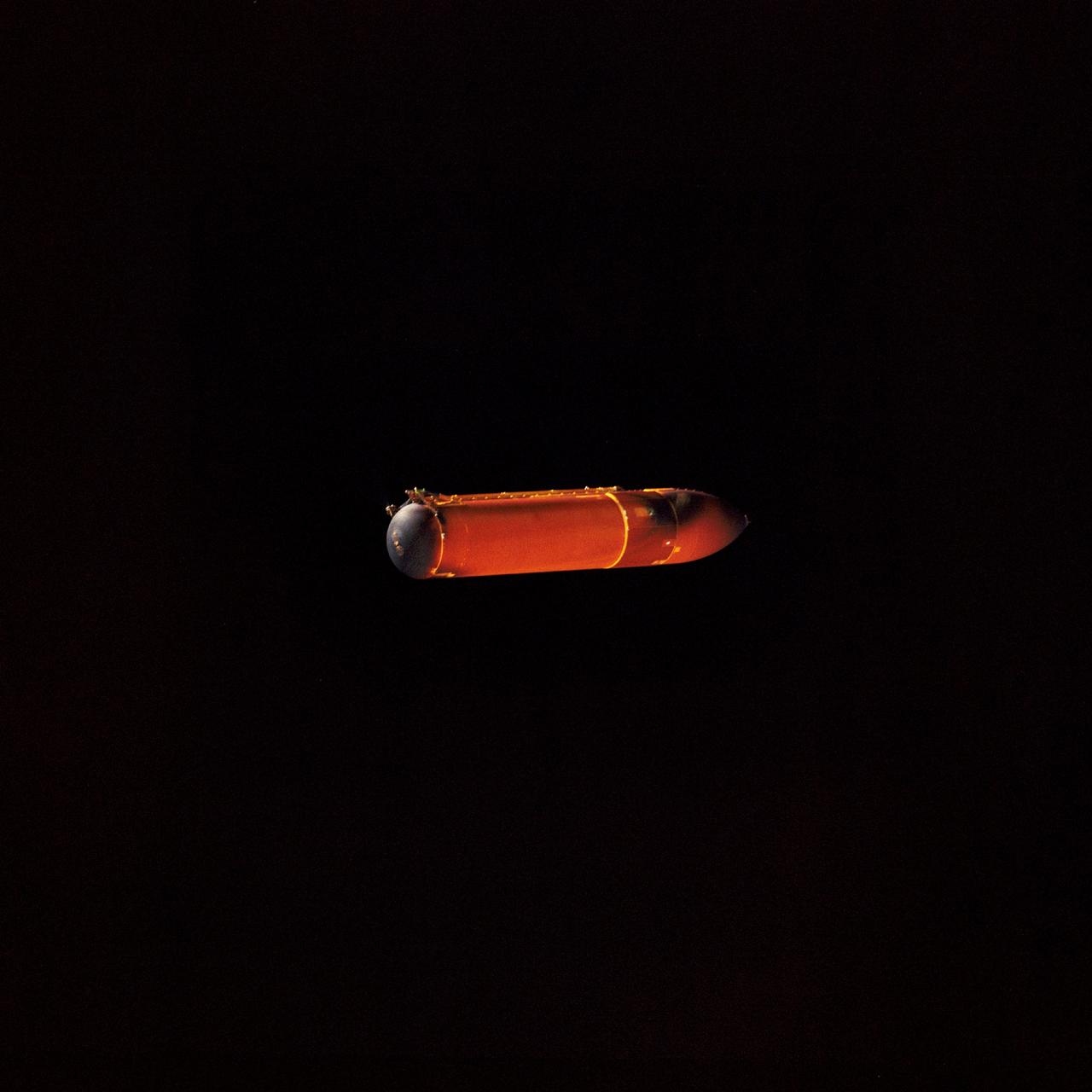
STS045-71-001 (24 March 1992) --- This 70mm photograph of the external fuel tank (ET) for STS-45 was photographed 4 1/2 minutes after having been jettisoned from Space Shuttle Atlantis. The excellent view of the starboard side of the ET shows both top and bottom attach points to the two solid rocket boosters (SRB). NASA engineers studying the STS-45 onboard photography deem the visible burn scars, caused by the SRBs, to be normal. The long thin pipe visible is the liquid oxygen line. At the bottom end of the large tank, both the liquid oxygen (nearest camera) and liquid hydrogen orbiter-to-ET attach hardware can be seen.
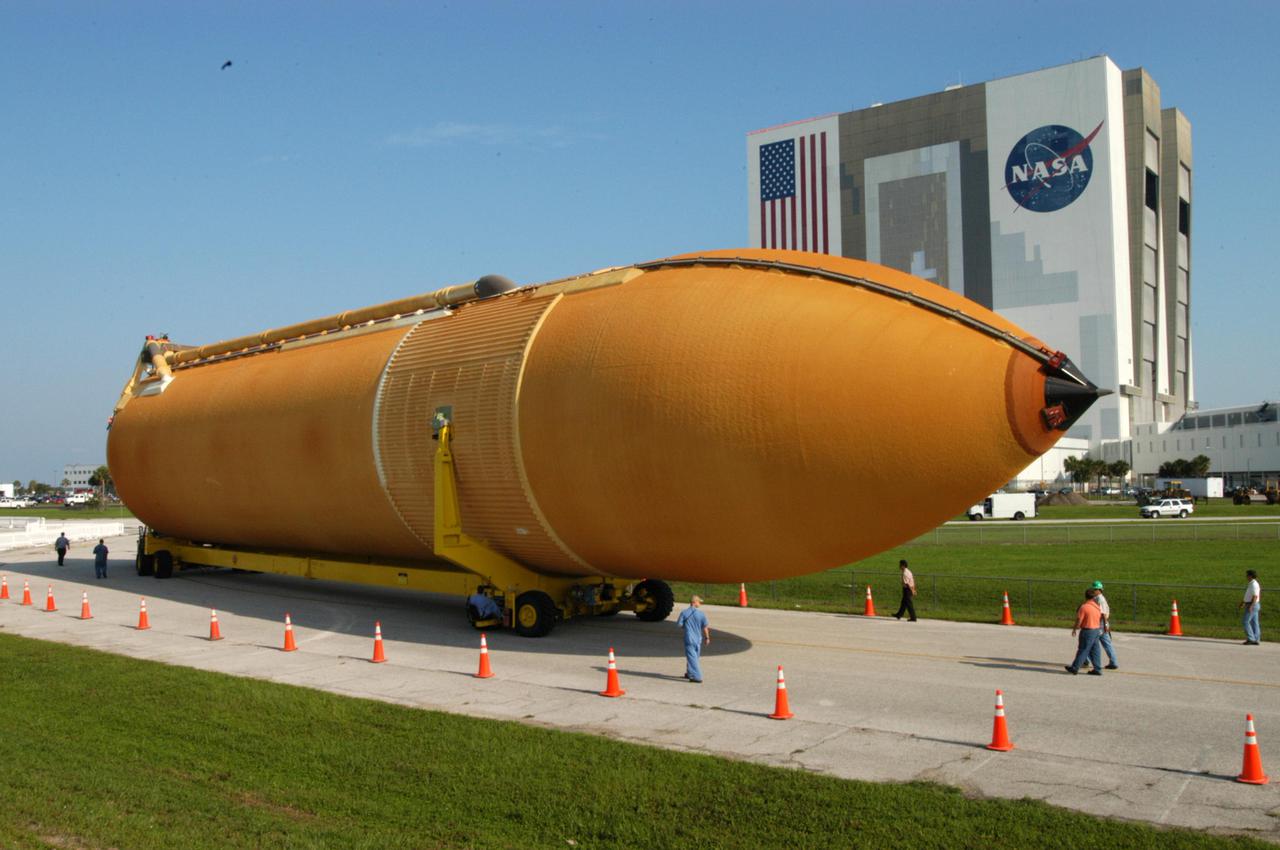
KENNEDY SPACE CENTER, FLA. - A newly redesigned External Tank (ET-119) moves slowly on the road leading from the Turn Basin in Launch Complex 39 Area at Kennedy Space Center, Florida. The tank, which will be used on a future Space Shuttle launch, is being transported to the Vehicle Assembly Building. The barge was towed on a 900-mile journey at sea from the Michoud Assembly Facility in New Orleans by one of NASA’s Solid Rocket Booster Retrieval Ships.