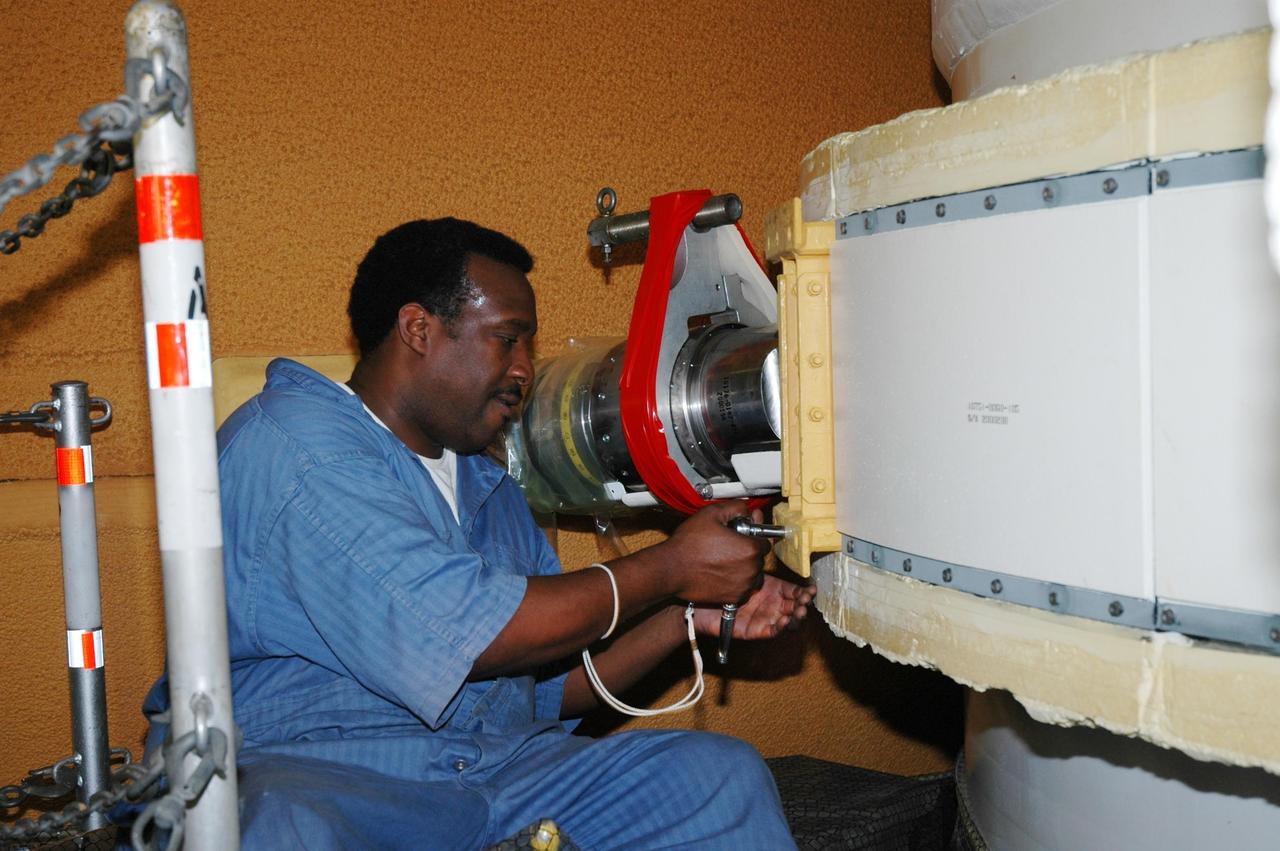
KENNEDY SPACE CENTER, FLA. - In high bay 3 of the Vehicle Assembly Building, a United Space Alliance worker attaches external tank No. 118 to one of the solid rocket boosters on the mobile launcher platform. The stack is designated to fly on mission STS-115 with Atlantis. ET-118 will fly with many major safety changes, including the removal of the protuberance air load ramps. The mission will deliver the second port truss segment, the P3/P4 Truss, to attach to the first port truss segment, the P1 Truss, as well as deploy solar array set 2A and 4A. Launch of Space Shuttle Atlantis is scheduled for late August. Photo credit: NASA/Jim Grossmann

KENNEDY SPACE CENTER, FLA. - In high bay 3 of the Vehicle Assembly Building, external tank No. 118 has been lowered between the twin solid rocket boosters on the mobile launcher platform. The stack is designated to fly on mission STS-115 with Atlantis. ET-118 will fly with many major safety changes, including the removal of the protuberance air load ramps. The mission will deliver the second port truss segment, the P3/P4 Truss, to attach to the first port truss segment, the P1 Truss, as well as deploy solar array set 2A and 4A. Launch of Space Shuttle Atlantis is scheduled for late August. Photo credit: NASA/Jim Grossmann
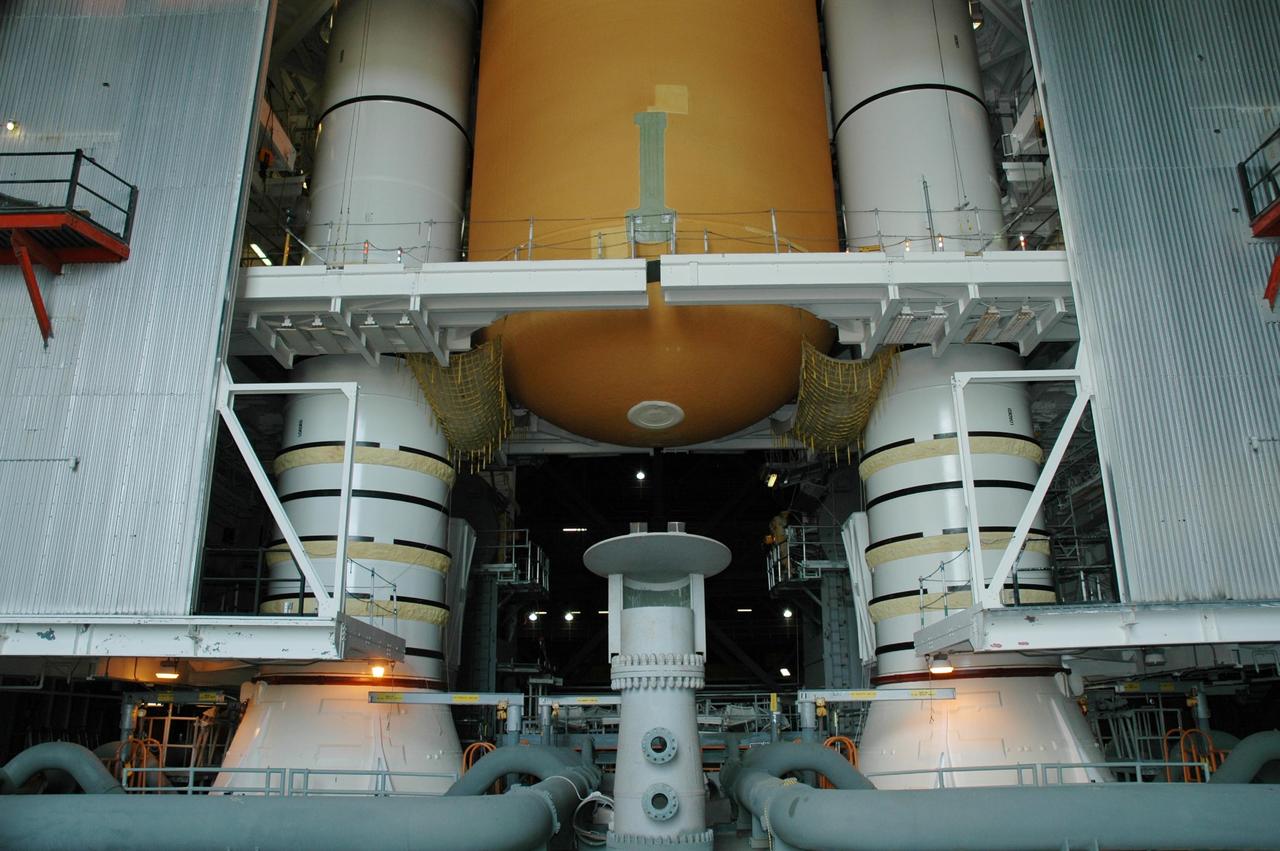
KENNEDY SPACE CENTER, FLA. - In high bay 3 of the Vehicle Assembly Building, external tank No. 118 is lowered between the twin solid rocket boosters on the mobile launcher platform. The stack is designated to fly on mission STS-115 with Atlantis. ET-118 will fly with many major safety changes, including the removal of the protuberance air load ramps. The mission will deliver the second port truss segment, the P3/P4 Truss, to attach to the first port truss segment, the P1 Truss, as well as deploy solar array set 2A and 4A. Launch of Space Shuttle Atlantis is scheduled for late August. Photo credit: NASA/Jim Grossmann
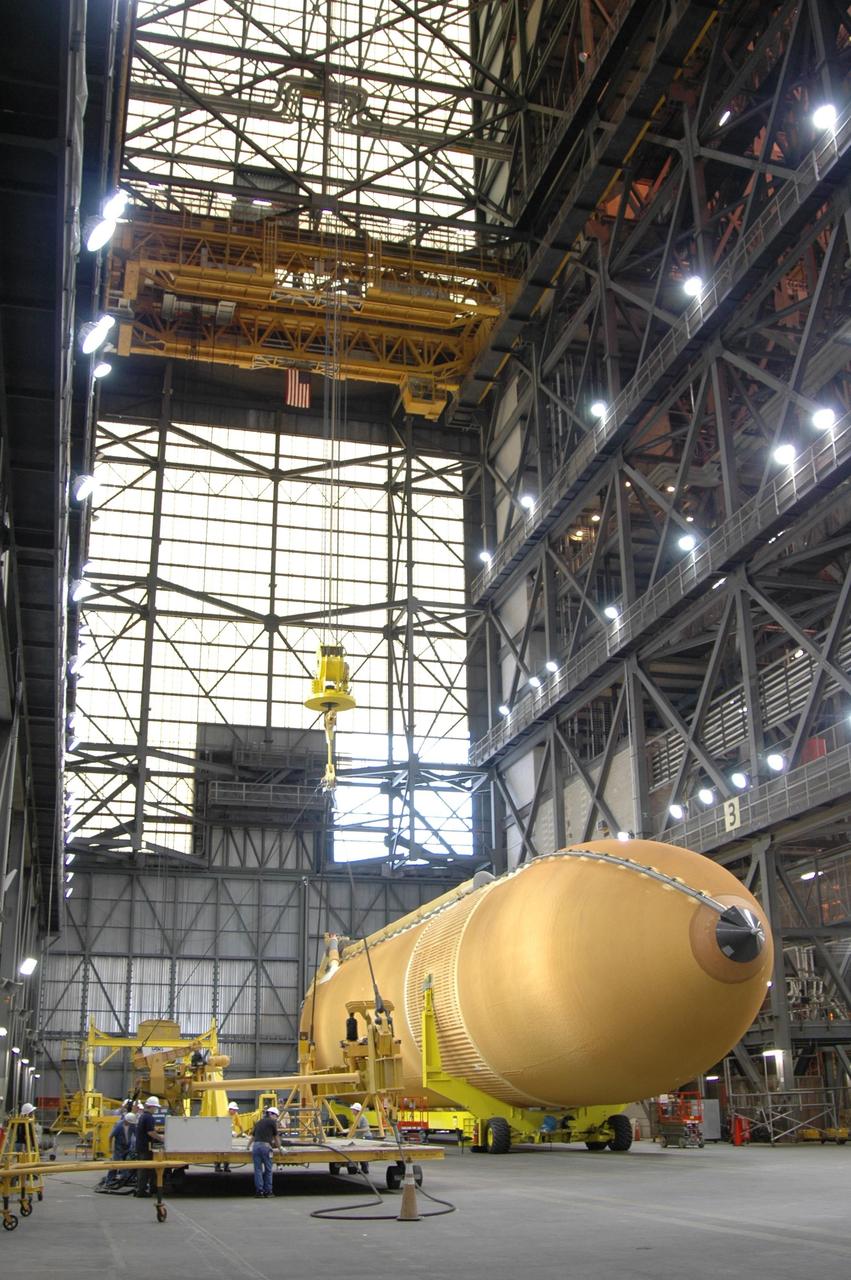
KENNEDY SPACE CENTER, FLA. - External tank No. 118 waits in the Vehicle Assembly Building for a crane to be attached that will raise it to vertical and lifted into high bay 3 for mating with solid rocket boosters stacked there. The tank is designated to fly on mission STS-115 with Atlantis. It will fly with many major safety changes, including the removal of the protuberance air load ramps. The mission will deliver the second port truss segment, the P3/P4 Truss, to attach to the first port truss segment, the P1 Truss, as well as deploy solar array set 2A and 4A. Launch of Space Shuttle Atlantis is scheduled for late August. Photo credit: NASA/Jim Grossmann
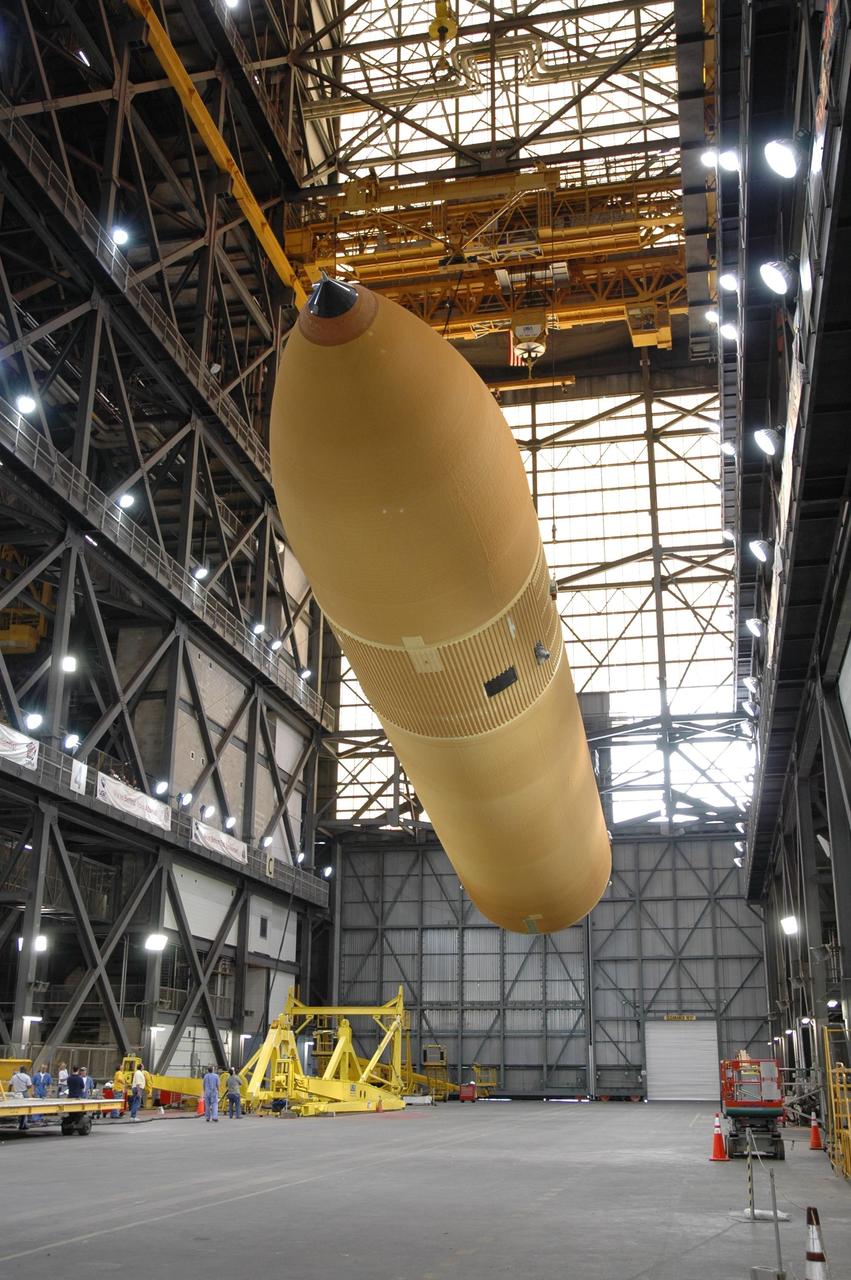
KENNEDY SPACE CENTER, FLA. - In the Vehicle Assembly Building, a crane begins raising the head of external tank No. 118 so that the tank is suspended vertically. The tank will be lifted into high bay 3 for mating with solid rocket boosters stacked there. The tank is designated to fly on mission STS-115 with Atlantis. It will fly with many major safety changes, including the removal of the protuberance air load ramps. The mission will deliver the second port truss segment, the P3/P4 Truss, to attach to the first port truss segment, the P1 Truss, as well as deploy solar array set 2A and 4A. Launch of Space Shuttle Atlantis is scheduled for late August. Photo credit: NASA/Jim Grossmann
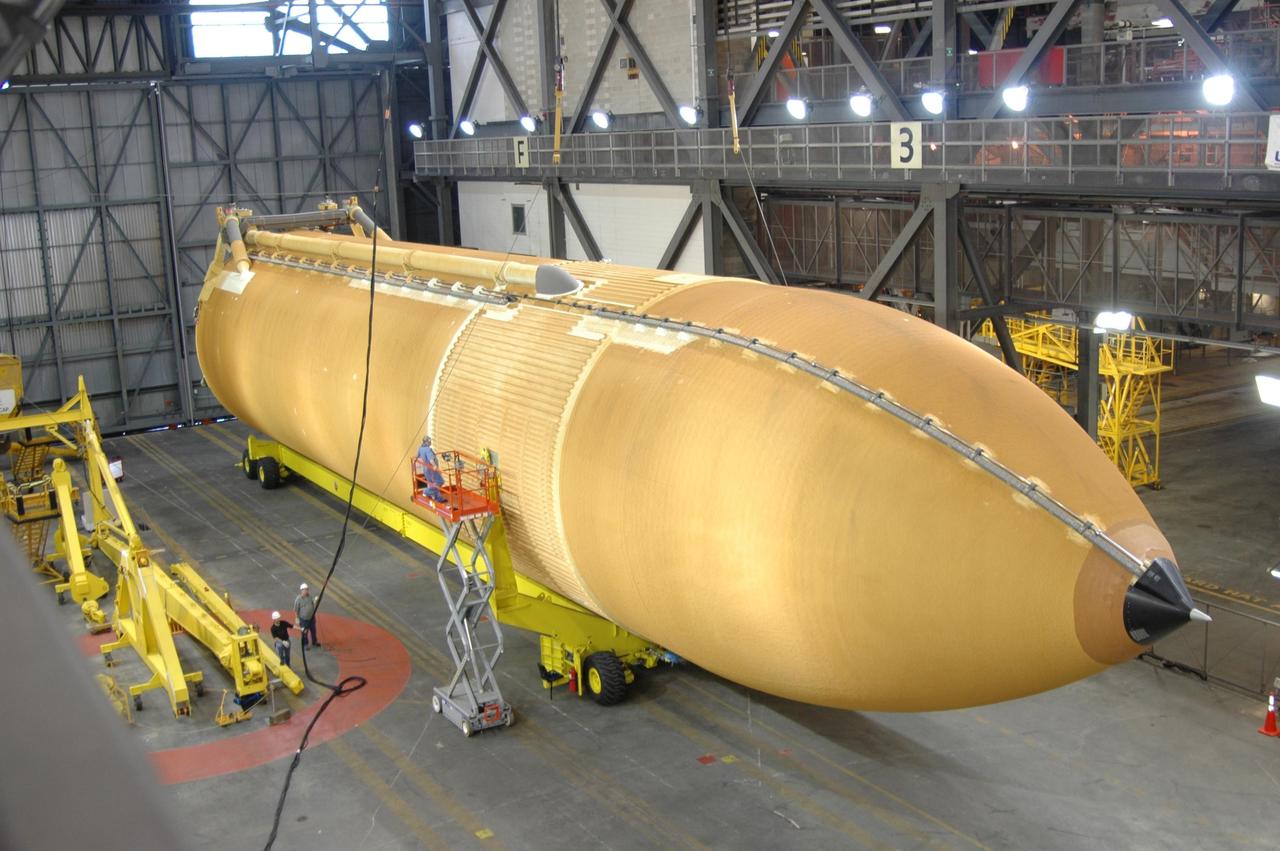
KENNEDY SPACE CENTER, FLA. - Workers in the Vehicle Assembly Building attach a crane to external tank No. 118 in order to raise it vertical and lift it into high bay 3 for mating with solid rocket boosters stacked there. The tank is designated to fly on mission STS-115 with Atlantis. It will fly with many major safety changes, including the removal of the protuberance air load ramps. The mission will deliver the second port truss segment, the P3/P4 Truss, to attach to the first port truss segment, the P1 Truss, as well as deploy solar array set 2A and 4A. Launch of Space Shuttle Atlantis is scheduled for late August. Photo credit: NASA/Jim Grossmann
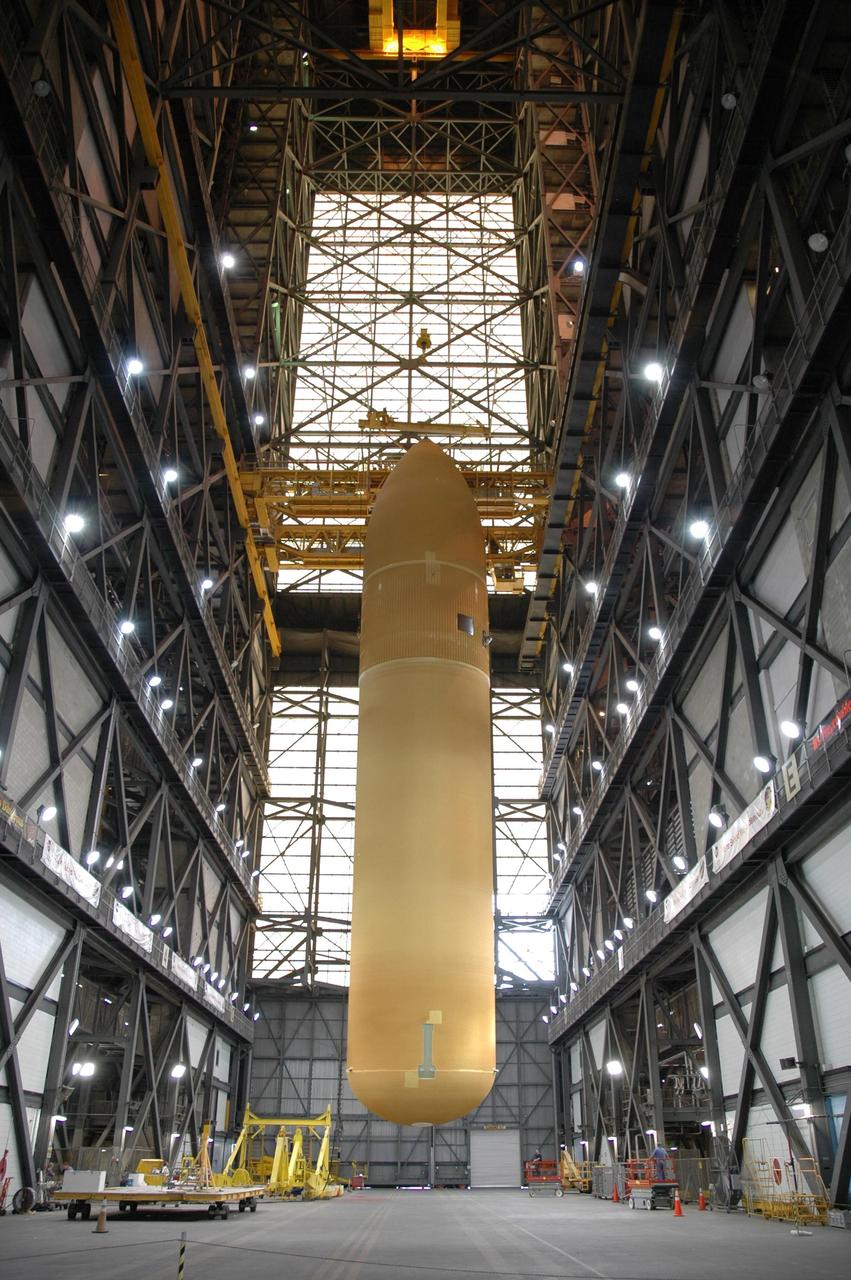
KENNEDY SPACE CENTER, FLA. - In the Vehicle Assembly Building, external tank No. 118 is suspended vertically above the transfer aisle. The tank will be lifted into high bay 3for mating with solid rocket boosters stacked there. The tank is designated to fly on mission STS-115 with Atlantis. It will fly with many major safety changes, including the removal of the protuberance air load ramps. The mission will deliver the second port truss segment, the P3/P4 Truss, to attach to the first port truss segment, the P1 Truss, as well as deploy solar array set 2A and 4A. Launch of Space Shuttle Atlantis is scheduled for late August. Photo credit: NASA/Jim Grossmann
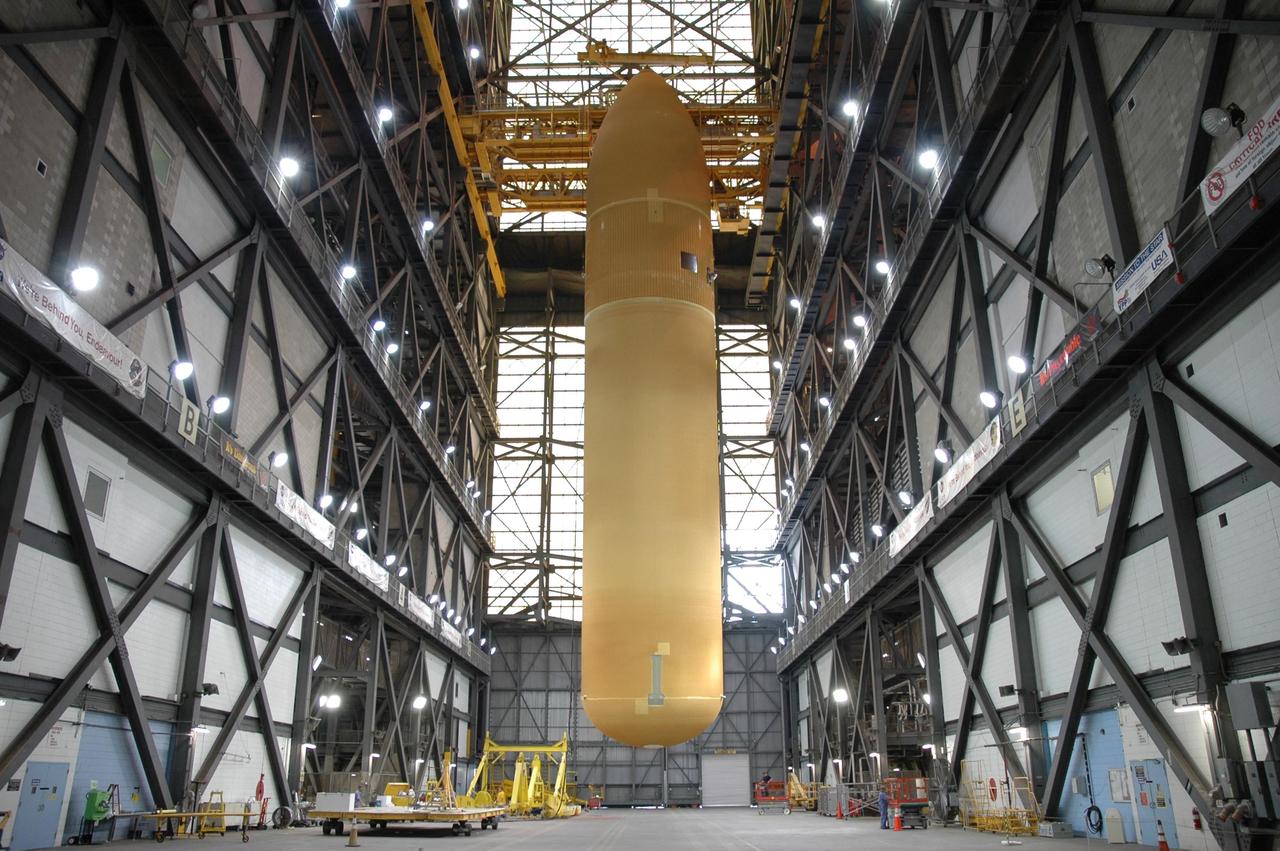
KENNEDY SPACE CENTER, FLA. - In the Vehicle Assembly Building, external tank No. 118 is suspended vertically above the transfer aisle. The tank will be lifted into high bay 3 for mating with solid rocket boosters stacked there. The tank is designated to fly on mission STS-115 with Atlantis. It will fly with many major safety changes, including the removal of the protuberance air load ramps. The mission will deliver the second port truss segment, the P3/P4 Truss, to attach to the first port truss segment, the P1 Truss, as well as deploy solar array set 2A and 4A. Launch of Space Shuttle Atlantis is scheduled for late August. Photo credit: NASA/Jim Grossmann
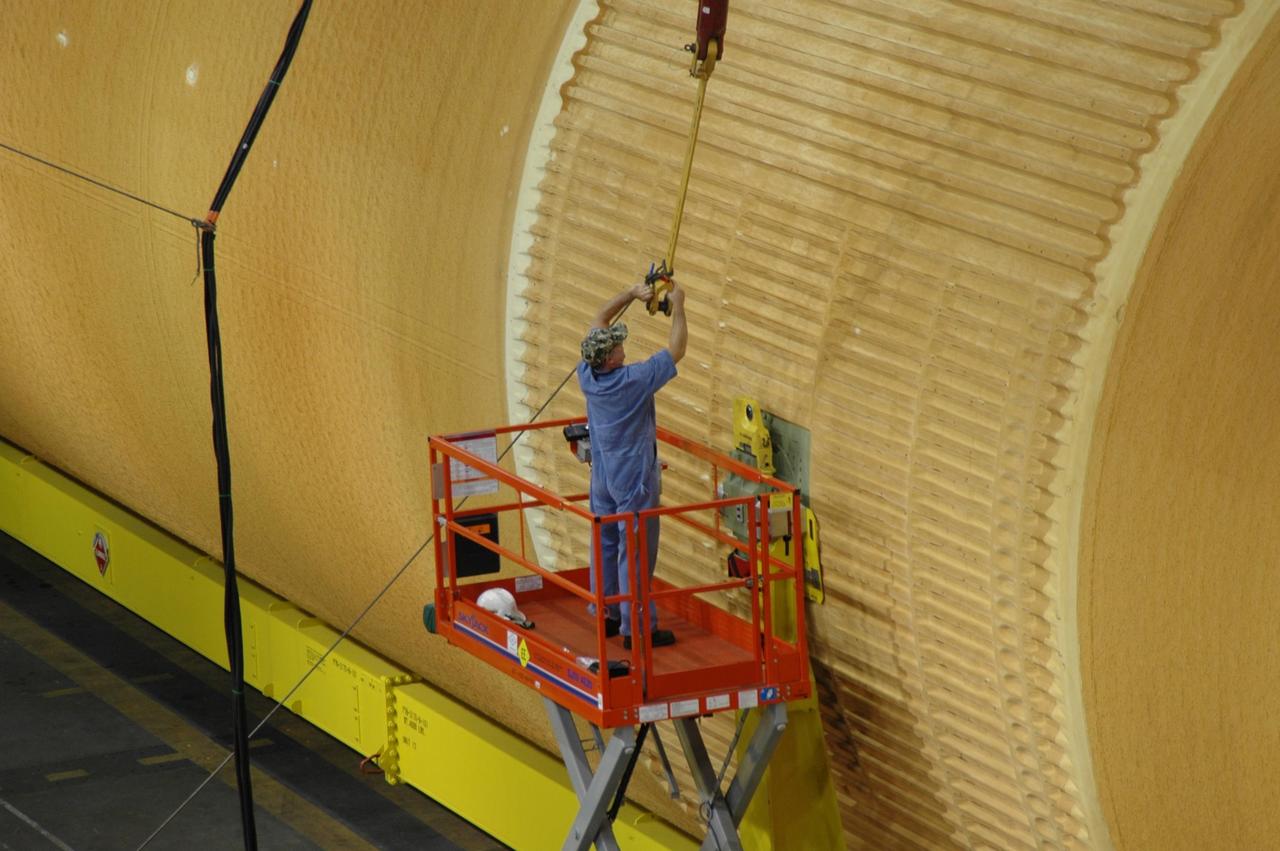
KENNEDY SPACE CENTER, FLA. - A worker in the Vehicle Assembly Building attaches a crane to external tank No. 118 in order to raise it vertical and lift it into high bay 3 for mating with solid rocket boosters stacked there. The tank is designated to fly on mission STS-115 with Atlantis. It will fly with many major safety changes, including the removal of the protuberance air load ramps. The mission will deliver the second port truss segment, the P3/P4 Truss, to attach to the first port truss segment, the P1 Truss, as well as deploy solar array set 2A and 4A. Launch of Space Shuttle Atlantis is scheduled for late August. Photo credit: NASA/Jim Grossmann
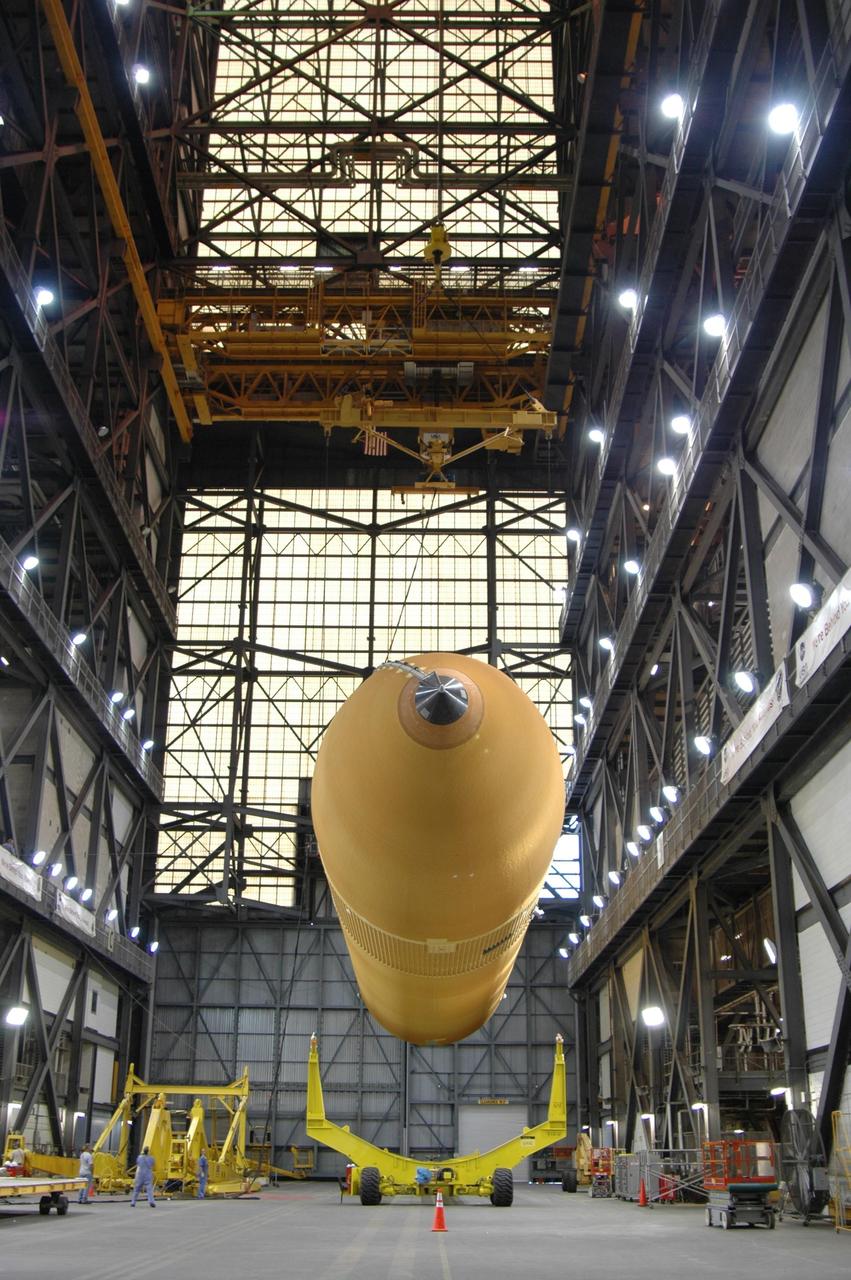
KENNEDY SPACE CENTER, FLA. - In the Vehicle Assembly Building, external tank No. 118 is lifted off its transporter before being raised to vertical and into high bay 3 for mating with solid rocket boosters stacked there. The tank is designated to fly on mission STS-115 with Atlantis. It will fly with many major safety changes, including the removal of the protuberance air load ramps. The mission will deliver the second port truss segment, the P3/P4 Truss, to attach to the first port truss segment, the P1 Truss, as well as deploy solar array set 2A and 4A. Launch of Space Shuttle Atlantis is scheduled for late August. Photo credit: NASA/Jim Grossmann
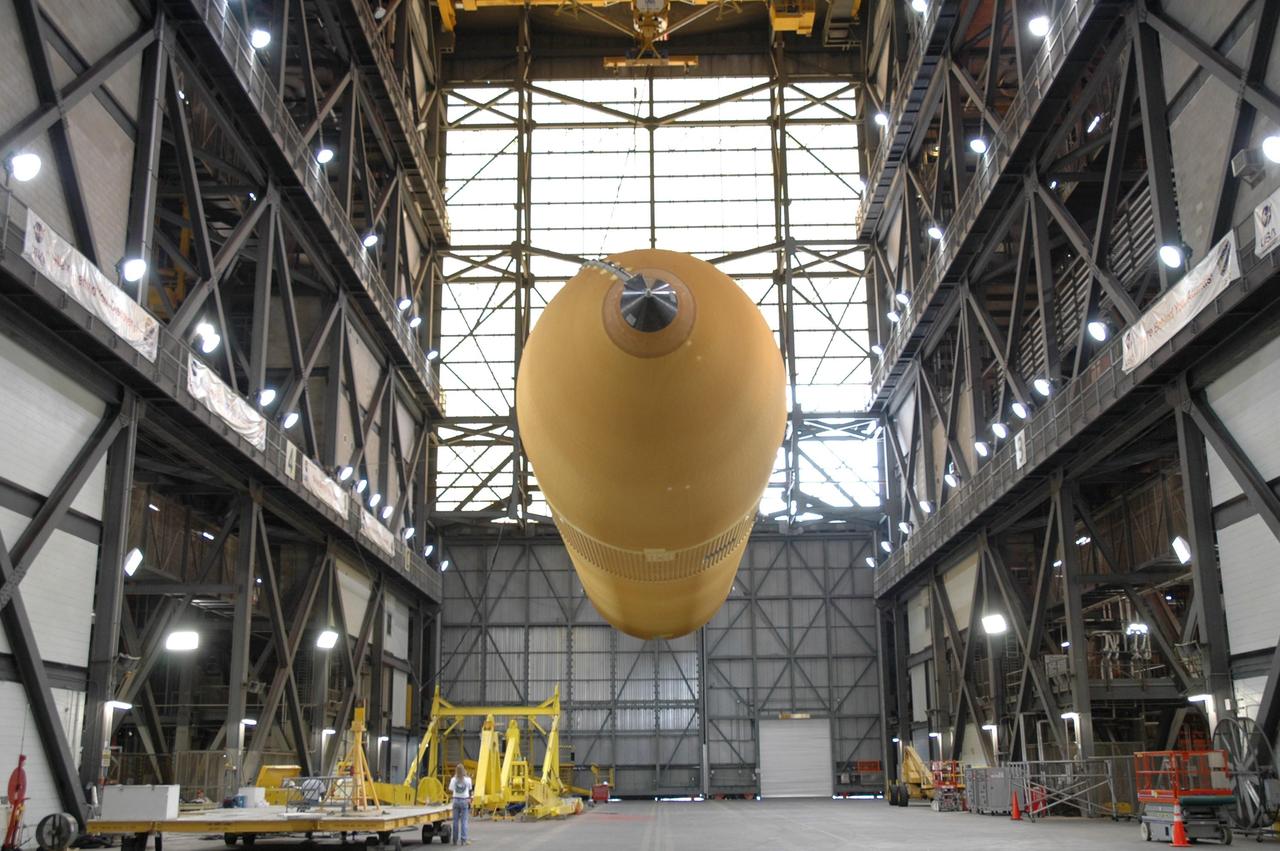
KENNEDY SPACE CENTER, FLA. - External tank No. 118 is suspended over the transfer aisle of the Vehicle Assembly Building before being raised to vertical and into high bay 3 for mating with solid rocket boosters stacked there. The tank is designated to fly on mission STS-115 with Atlantis. It will fly with many major safety changes, including the removal of the protuberance air load ramps. The mission will deliver the second port truss segment, the P3/P4 Truss, to attach to the first port truss segment, the P1 Truss, as well as deploy solar array set 2A and 4A. Launch of Space Shuttle Atlantis is scheduled for late August. Photo credit: NASA/Jim Grossmann
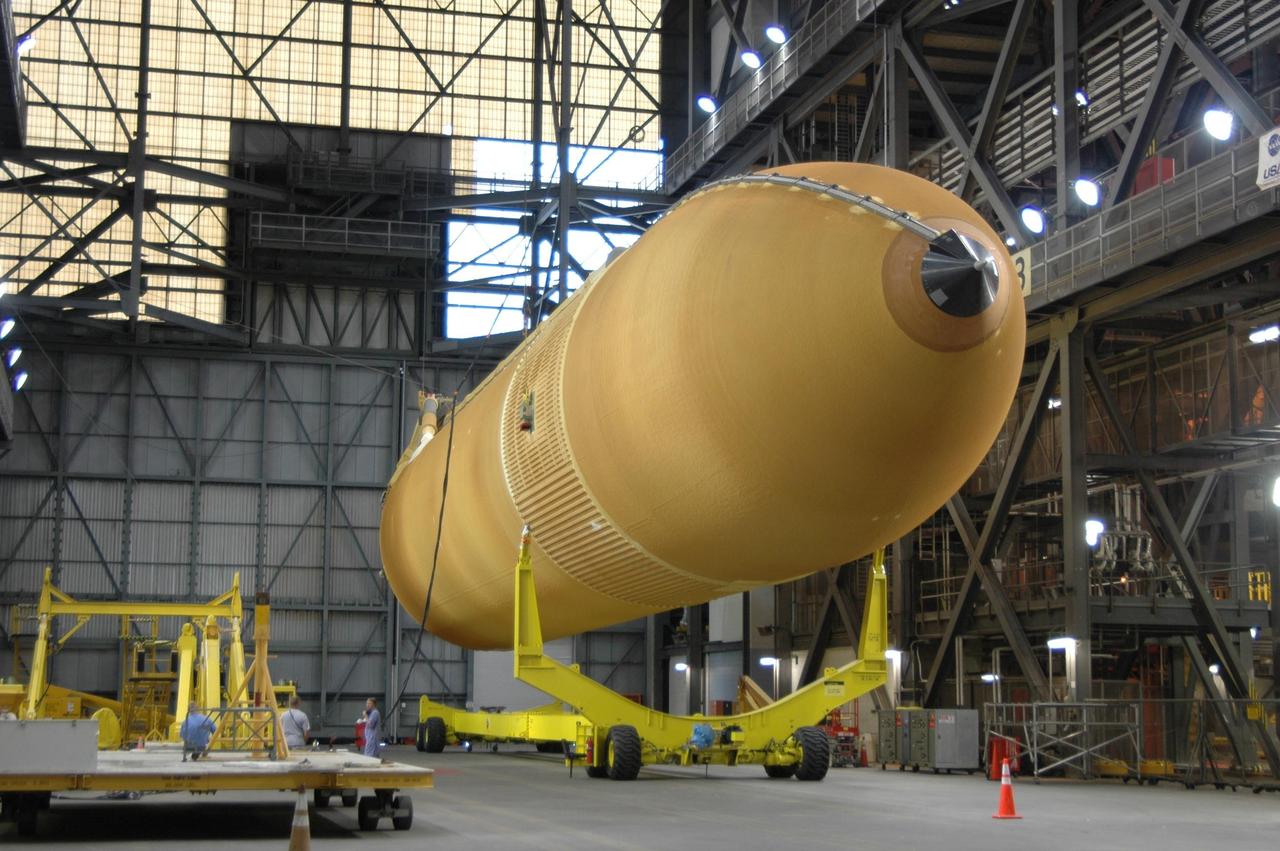
KENNEDY SPACE CENTER, FLA. - In the Vehicle Assembly Building, external tank No. 118 is lifted off its transporter before being raised to vertical and into high bay 3 for mating with solid rocket boosters stacked there. The tank is designated to fly on mission STS-115 with Atlantis. It will fly with many major safety changes, including the removal of the protuberance air load ramps. The mission will deliver the second port truss segment, the P3/P4 Truss, to attach to the first port truss segment, the P1 Truss, as well as deploy solar array set 2A and 4A. Launch of Space Shuttle Atlantis is scheduled for late August. Photo credit: NASA/Jim Grossmann
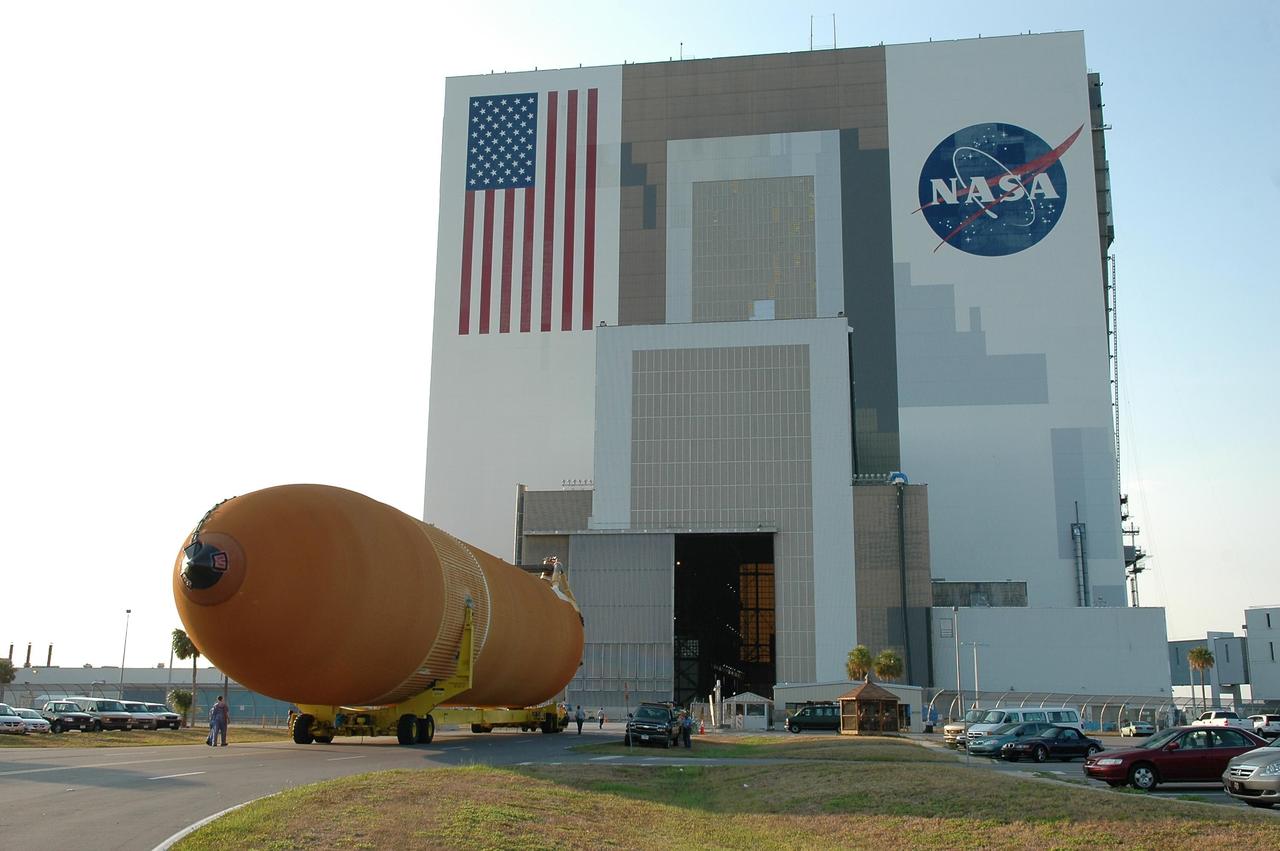
KENNEDY SPACE CENTER, FLA. - The redesigned external fuel tank, designated ET-118, rolls toward the open door of the Vehicle Assembly Building. Inside, it will be lifted into a checkout cell for further work . The tank arrived at KSC aboard the Pegasus barge after a journey from the Michoud Assembly Facility in New Orleans. ET-118, which will fly with many major safety changes, including the removal of the protuberance air load ramps, will launch Space Shuttle Atlantis on the next space shuttle mission, STS-115. Photo credit: NASA/Kim Shiflett
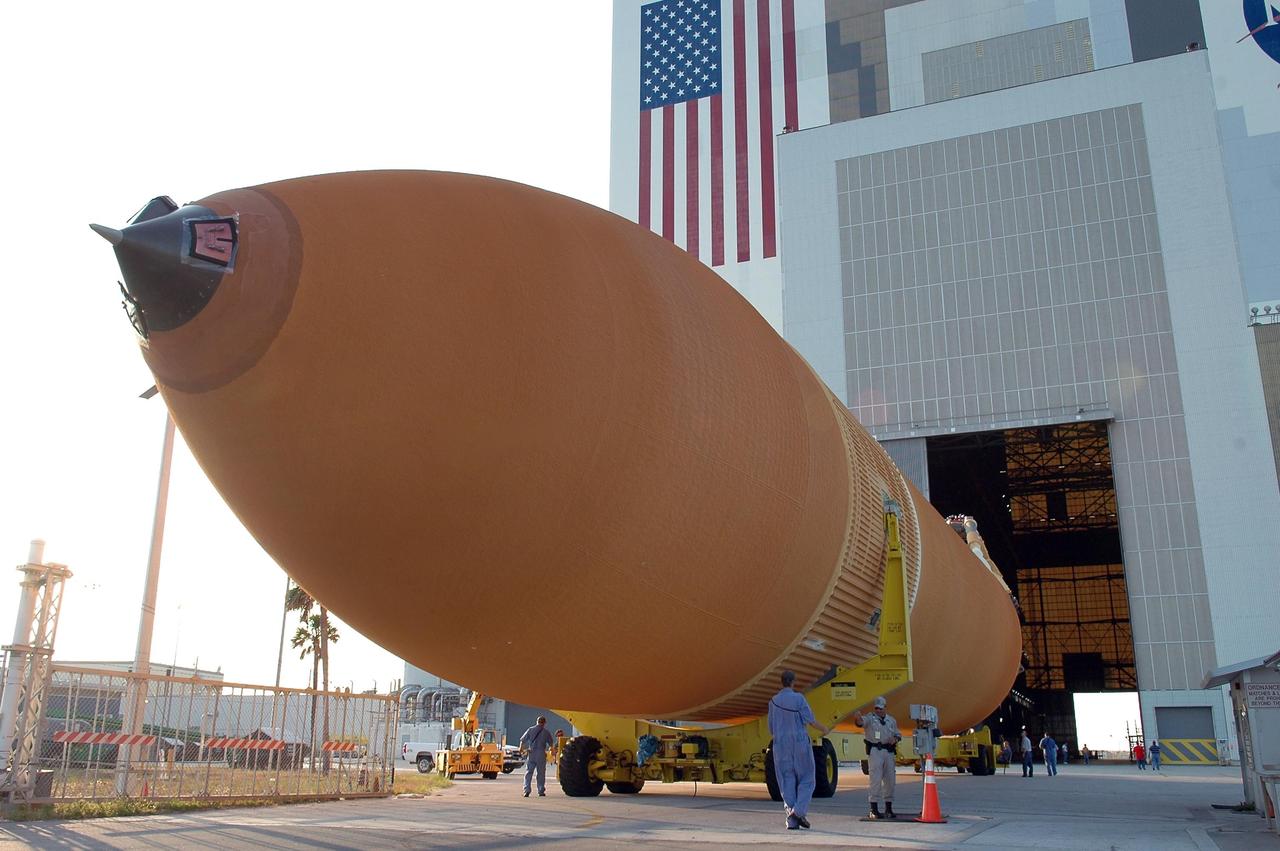
KENNEDY SPACE CENTER, FLA. - The redesigned external fuel tank, designated ET-118, rolls into the open door of the Vehicle Assembly Building. Inside, it will be lifted into a checkout cell for further work . The tank arrived at KSC aboard the Pegasus barge after a journey from the Michoud Assembly Facility in New Orleans. ET-118, which will fly with many major safety changes, including the removal of the protuberance air load ramps, will launch Space Shuttle Atlantis on the next space shuttle mission, STS-115. Photo credit: NASA/Kim Shiflett
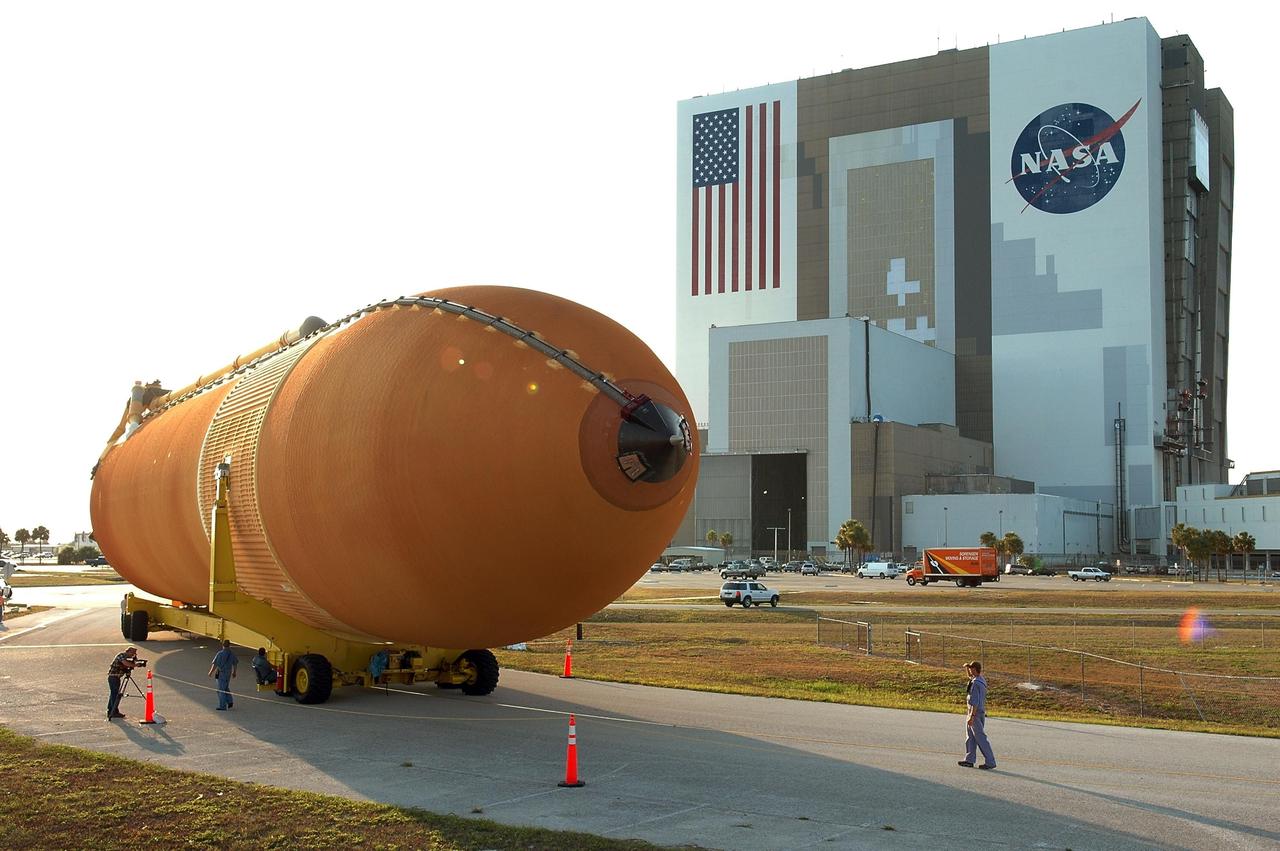
KENNEDY SPACE CENTER, FLA. - The redesigned external fuel tank, designated ET-118, turns the corner toward the Vehicle Assembly Building, seen at right. The tank, which arrived at KSC aboard the Pegasus barge after a journey from the Michoud Assembly Facility in New Orleans, will be moved into the VAB and lifted into a checkout cell for further work. ET-118, which will fly with many major safety changes, including the removal of the protuberance air load ramps, will launch Space Shuttle Atlantis on the next space shuttle mission, STS-115. Photo credit: NASA/Kim Shiflett
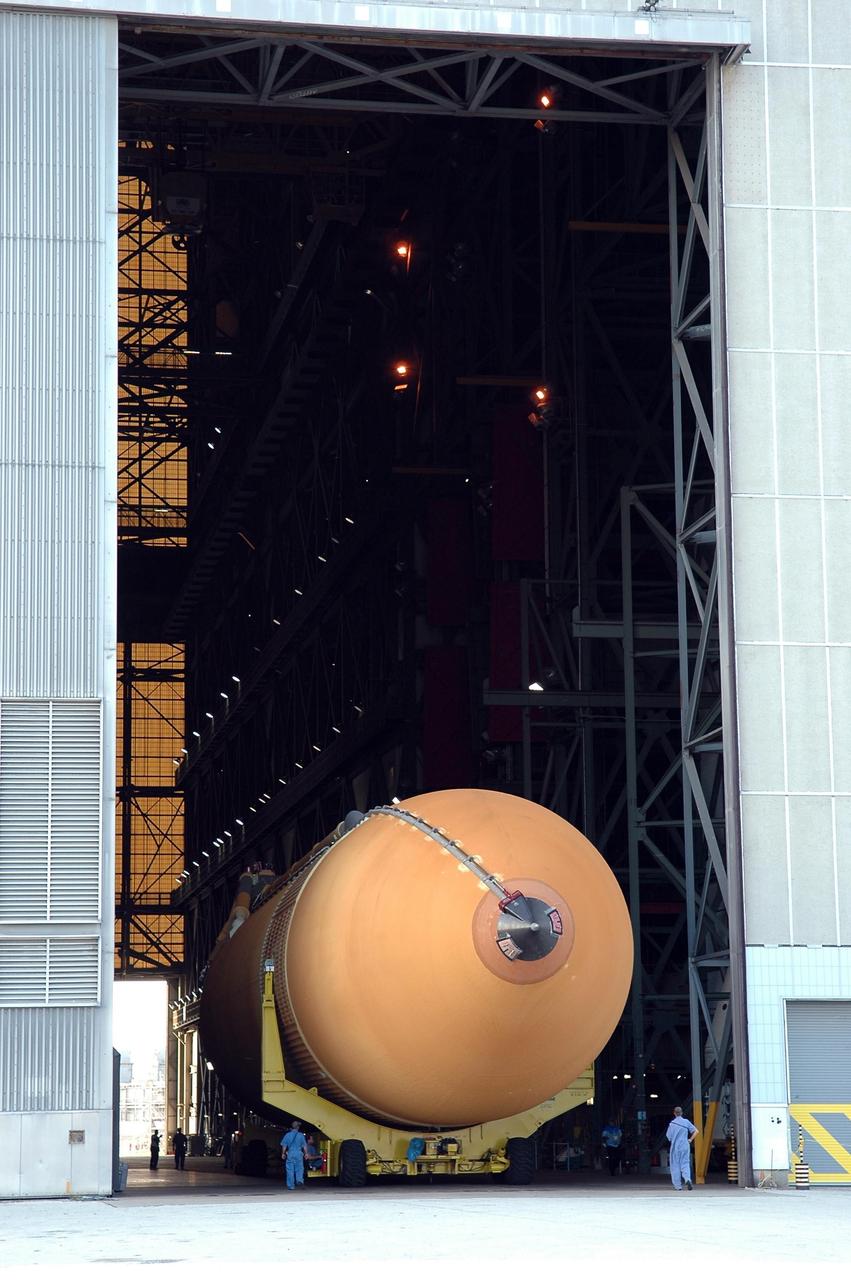
KENNEDY SPACE CENTER, FLA. - The redesigned external fuel tank, designated ET-118, rolls into the transfer aisle of the Vehicle Assembly Building where will be lifted into a checkout cell for further work . The tank arrived at KSC aboard the Pegasus barge after a journey from the Michoud Assembly Facility in New Orleans. ET-118, which will fly with many major safety changes, including the removal of the protuberance air load ramps, will launch Space Shuttle Atlantis on the next space shuttle mission, STS-115. Photo credit: NASA/Kim Shiflett
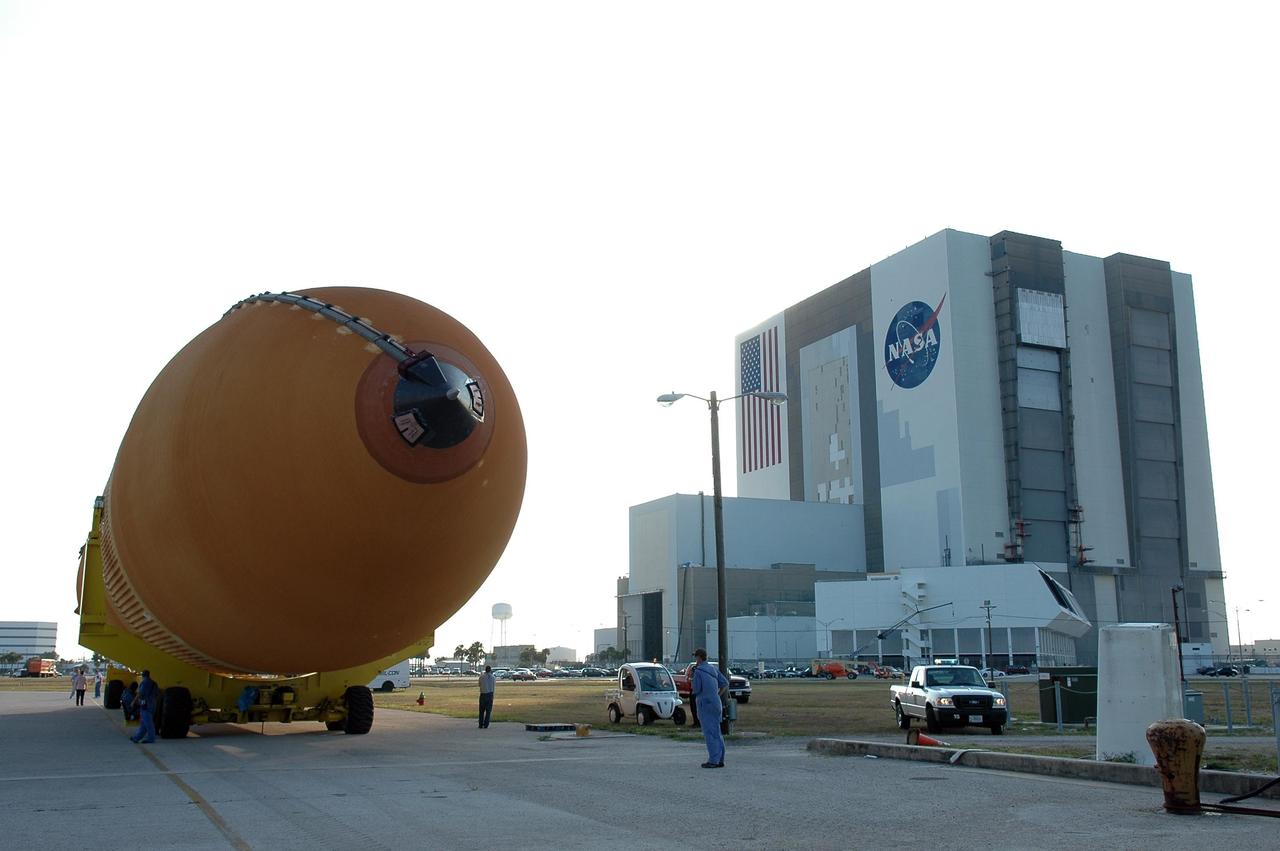
KENNEDY SPACE CENTER, FLA. - The redesigned external fuel tank, designated ET-118, is transported on the road toward the Vehicle Assembly Building, seen at right. The tank, which arrived at KSC aboard the Pegasus barge after a journey from the Michoud Assembly Facility in New Orleans, will be moved into the VAB and lifted into a checkout cell for further work. ET-118, which will fly with many major safety changes, including the removal of the protuberance air load ramps, will launch Space Shuttle Atlantis on the next space shuttle mission, STS-115. Photo credit: NASA/Kim Shiflett
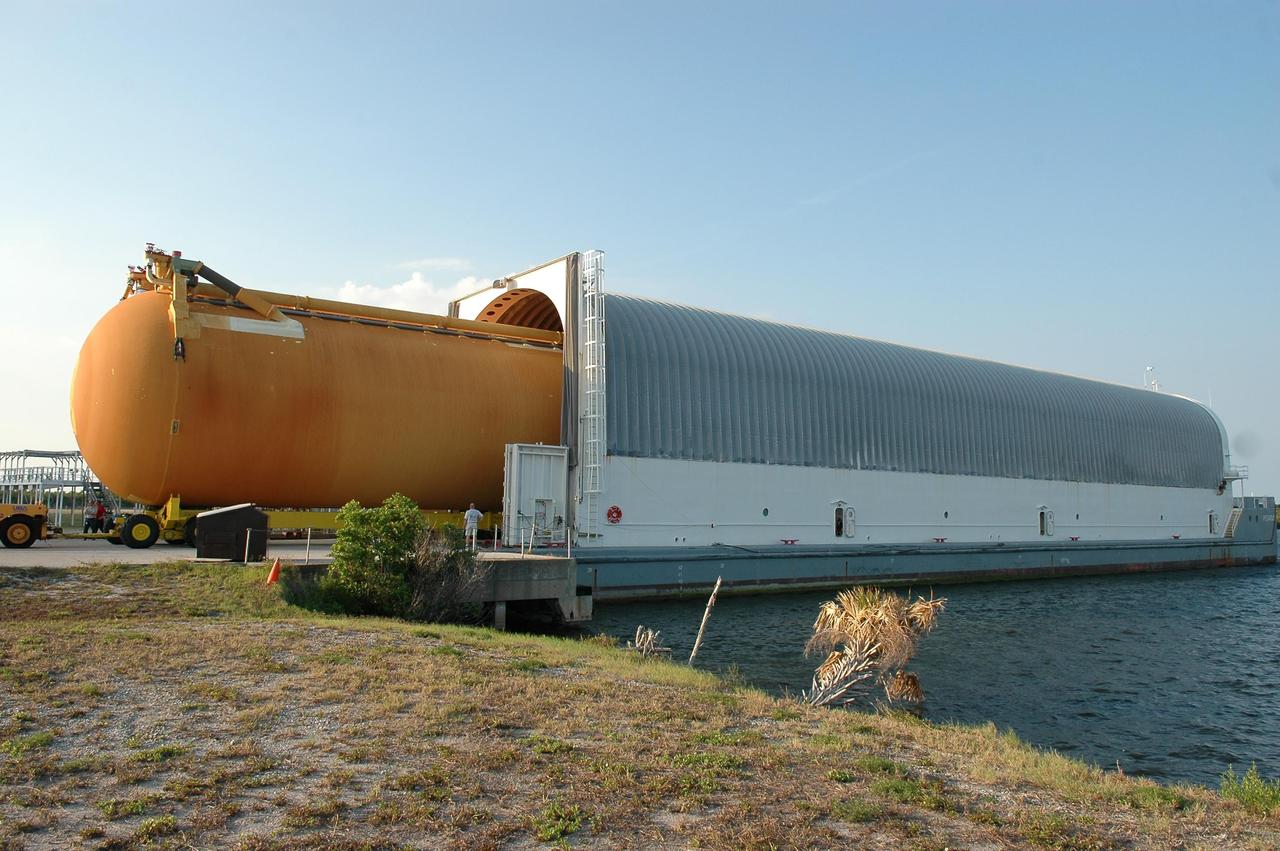
KENNEDY SPACE CENTER, FLA. - The redesigned external fuel tank, designated ET-118, that will launch Space Shuttle Atlantis on mission STS-115 is offloaded from the Pegasus barge that carried it from the Michoud Assembly Facility in New Orleans. The tank will be moved into the Vehicle Assembly Building and lifted into a checkout cell for further work. It will fly with many major safety changes, including the removal of the protuberance air load ramps. Photo credit: NASA/Kim Shiflett
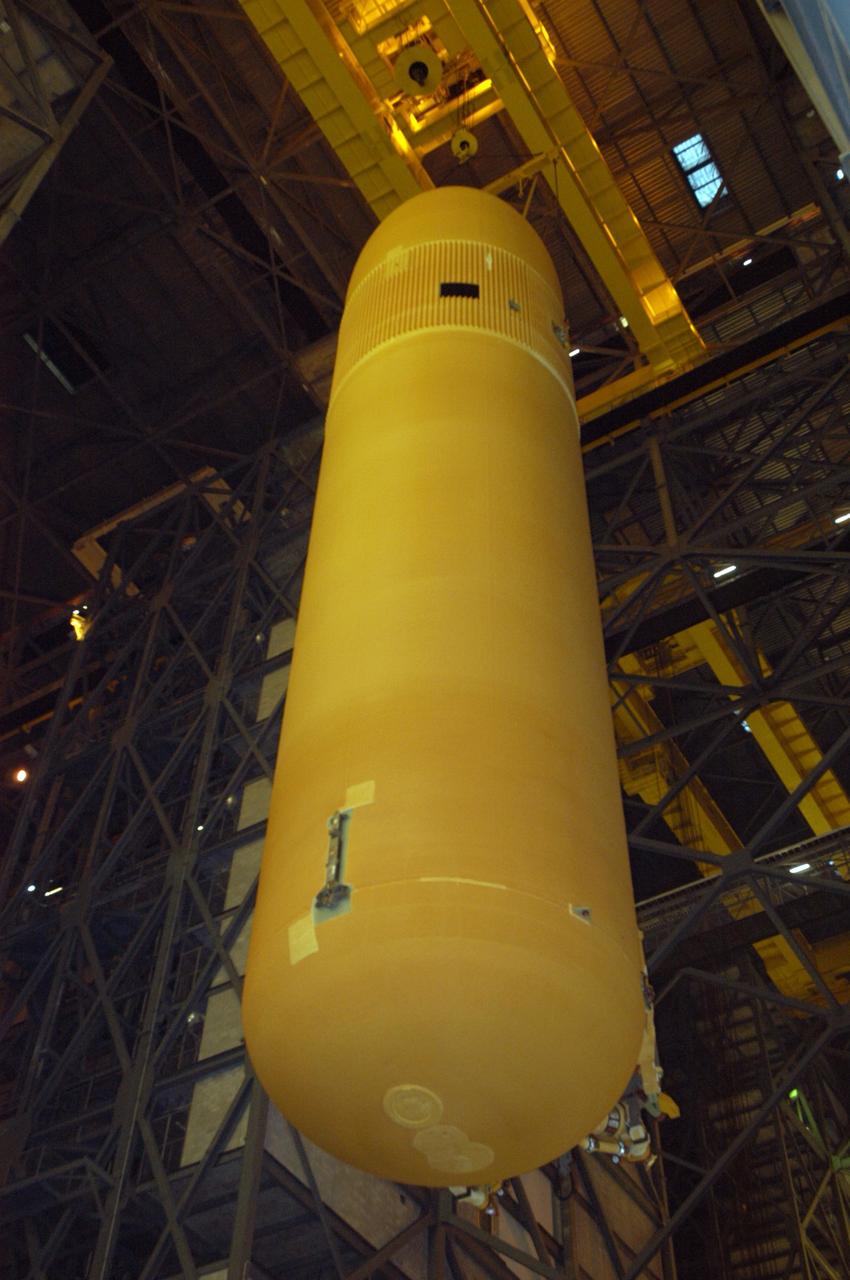
KENNEDY SPACE CENTER, FLA. - In NASA's Vehicle Assembly Building, the redesigned external fuel tank that will launch Space Shuttle Atlantis on the next shuttle mission, STS-115, is lifted toward the upper levels for transfer into a checkout cell for further work. Designated ET-118, the tank will fly with many major safety changes, including the removal of the protuberance air load ramps. Photo credit: NASA/George Shelton
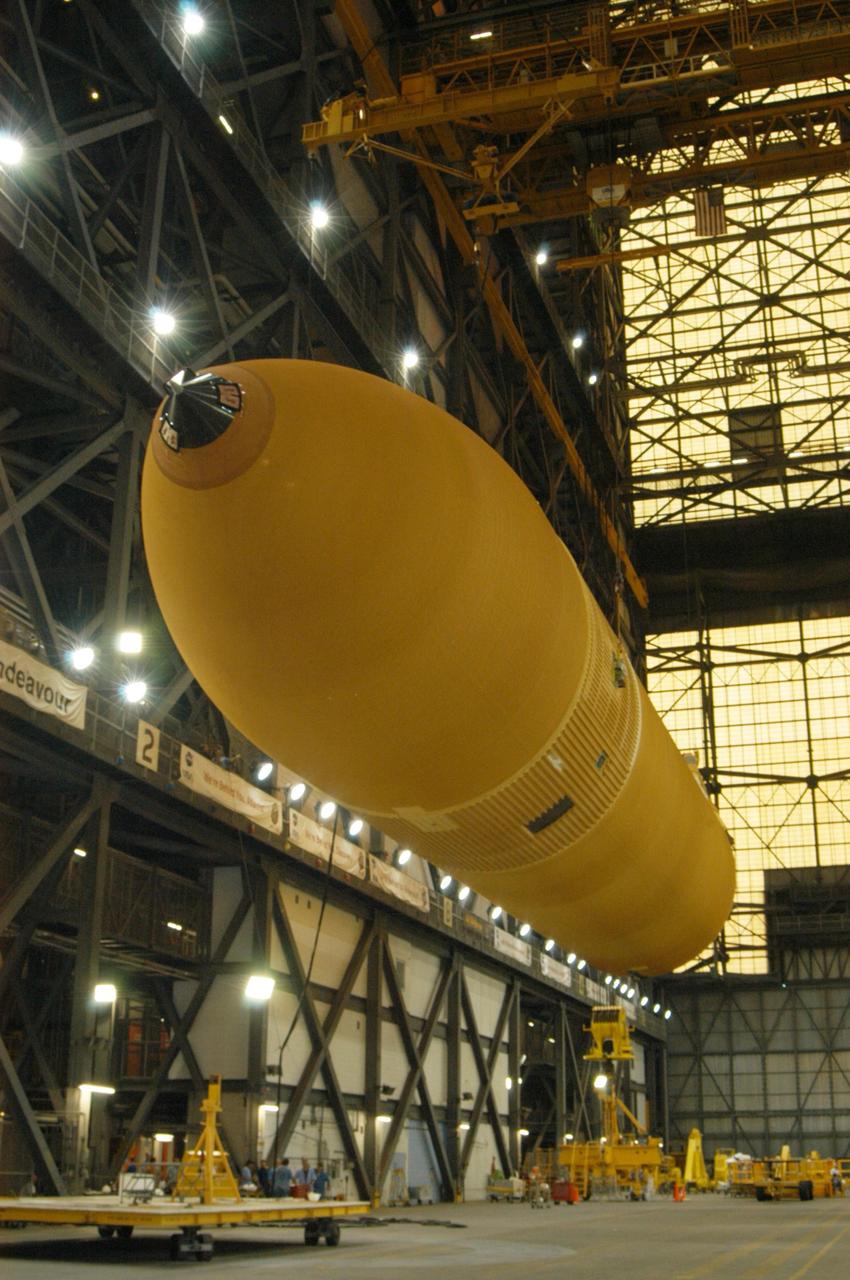
KENNEDY SPACE CENTER, FLA. - In NASA's Vehicle Assembly Building, the redesigned external fuel tank that will launch Space Shuttle Atlantis on the next shuttle mission, STS-115, is suspended above the transfer aisle where it will be raised to a vertical position. Once it is raised, the tank will be moved into a checkout cell for further work. The tank, designated ET-118, will fly with many major safety changes, including the removal of the protuberance air load ramps. Photo credit: NASA/George Shelton
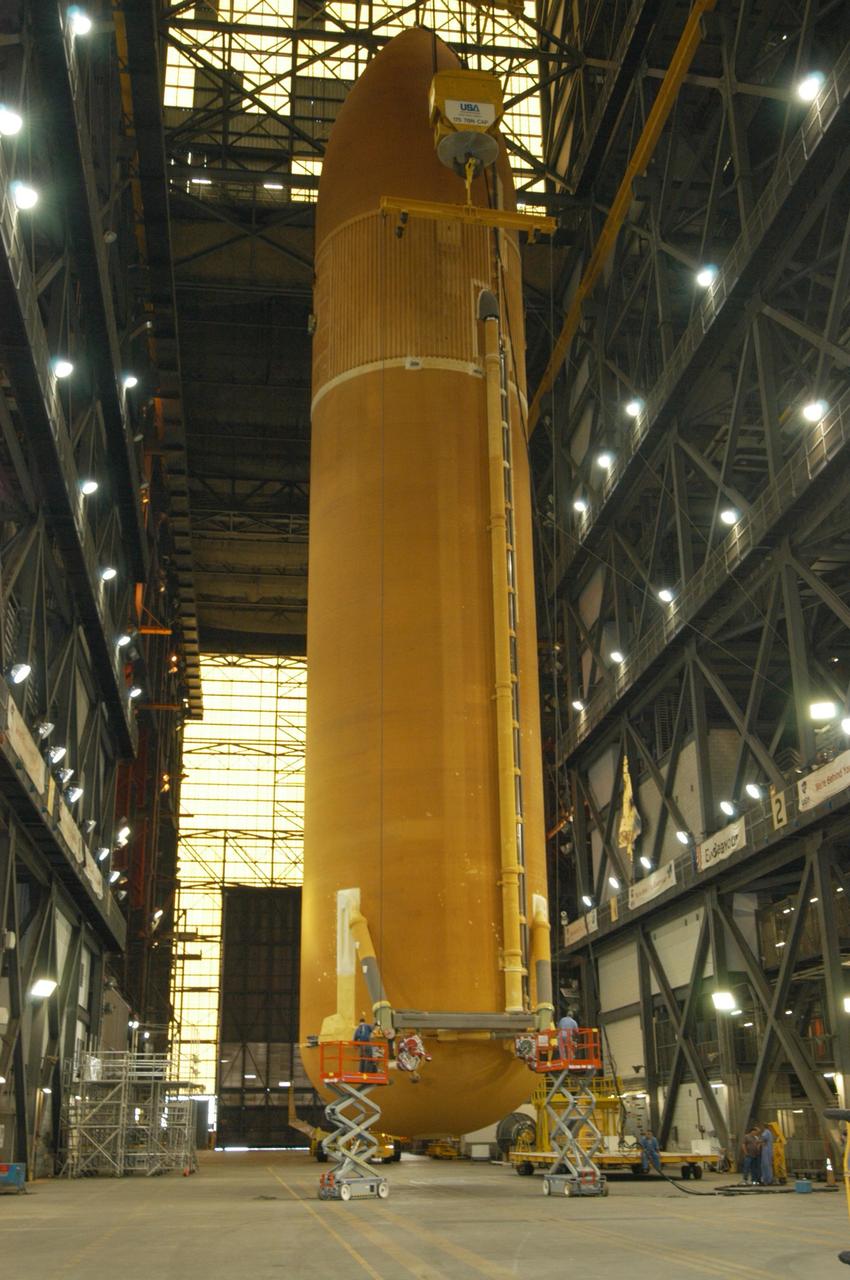
KENNEDY SPACE CENTER, FLA. - In the transfer aisle of NASA's Vehicle Assembly Building, the redesigned external fuel tank that will launch Space Shuttle Atlantis on the next shuttle mission, STS-115, is ready to be lifted into the upper levels for transfer into a checkout cell for further work. Designated ET-118, the tank will fly with many major safety changes, including the removal of the protuberance air load ramps. Photo credit: NASA/George Shelton

KENNEDY SPACE CENTER, FLA. - In NASA's Vehicle Assembly Building, the suspended external fuel tank that will launch Space Shuttle Atlantis on the next shuttle mission, STS-115, is moved into a checkout cell where it will undergo further work. Designated ET-118, the tank will fly with many major safety changes, including the removal of the protuberance air load ramps. Photo credit: NASA/George Shelton

KENNEDY SPACE CENTER, FLA. - In the transfer aisle of NASA's Vehicle Assembly Building, the redesigned external fuel tank that will launch Space Shuttle Atlantis on the next shuttle mission, STS-115, is raised to a vertical position. The tank will next be moved into a checkout cell for further work. Designated ET-118, the tank will fly with many major safety changes, including the removal of the protuberance air load ramps. Photo credit: NASA/George Shelton
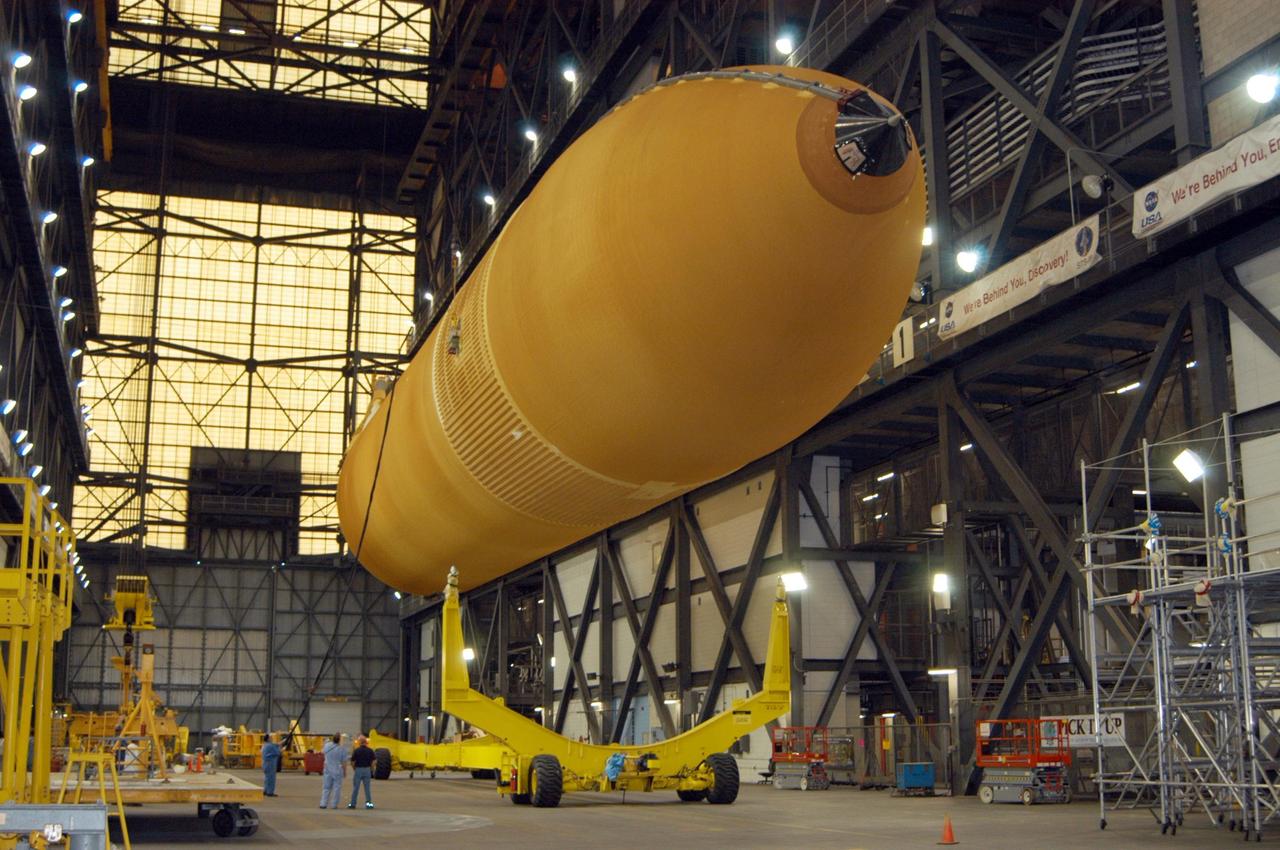
KENNEDY SPACE CENTER, FLA. - In the transfer aisle of NASA's Vehicle Assembly Building, the redesigned external fuel tank that will launch Space Shuttle Atlantis on the next shuttle mission, STS-115, is lifted off its transporter and will be raised to a vertical position. Once it is raised, the tank will be moved into a checkout cell for further work. The tank, designated ET-118, will fly with many major safety changes, including the removal of the protuberance air load ramps. Photo credit: NASA/George Shelton
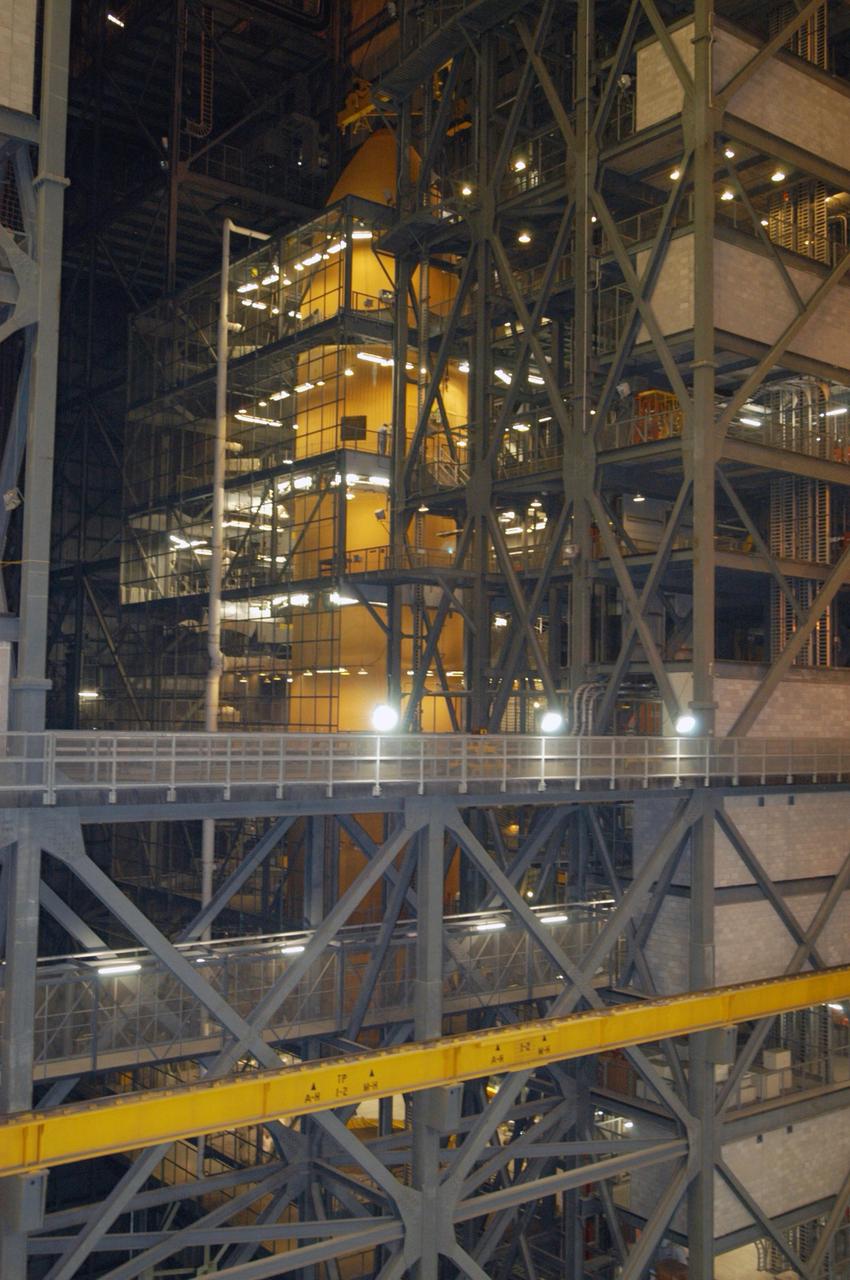
KENNEDY SPACE CENTER, FLA. - In NASA's Vehicle Assembly Building, the redesigned external fuel tank that will launch Space Shuttle Atlantis on the next shuttle mission, STS-115, is lowered into the checkout cell where it will undergo further work. Designated ET-118, the tank will fly with many major safety changes, including the removal of the protuberance air load ramps. Photo credit: NASA/George Shelton
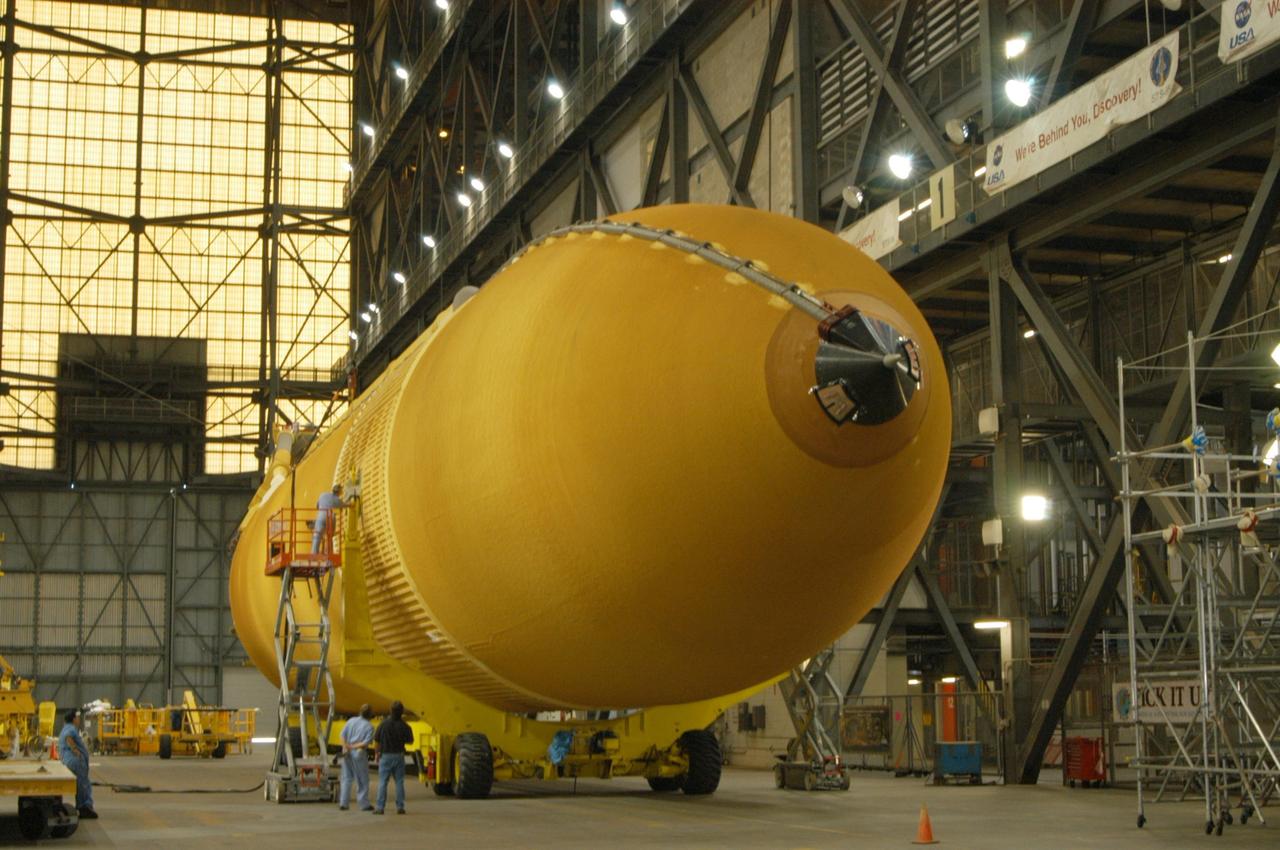
KENNEDY SPACE CENTER, FLA. - In the transfer aisle of NASA's Vehicle Assembly Building, the redesigned external fuel tank that will launch Space Shuttle Atlantis on the next shuttle mission, STS-115, is prepared to be raised to a vertical position. Once it is raised, the tank will be moved into a checkout cell for further work. The tank, designated ET-118, will fly with many major safety changes, including the removal of the protuberance air load ramps. Photo credit: NASA/George Shelton
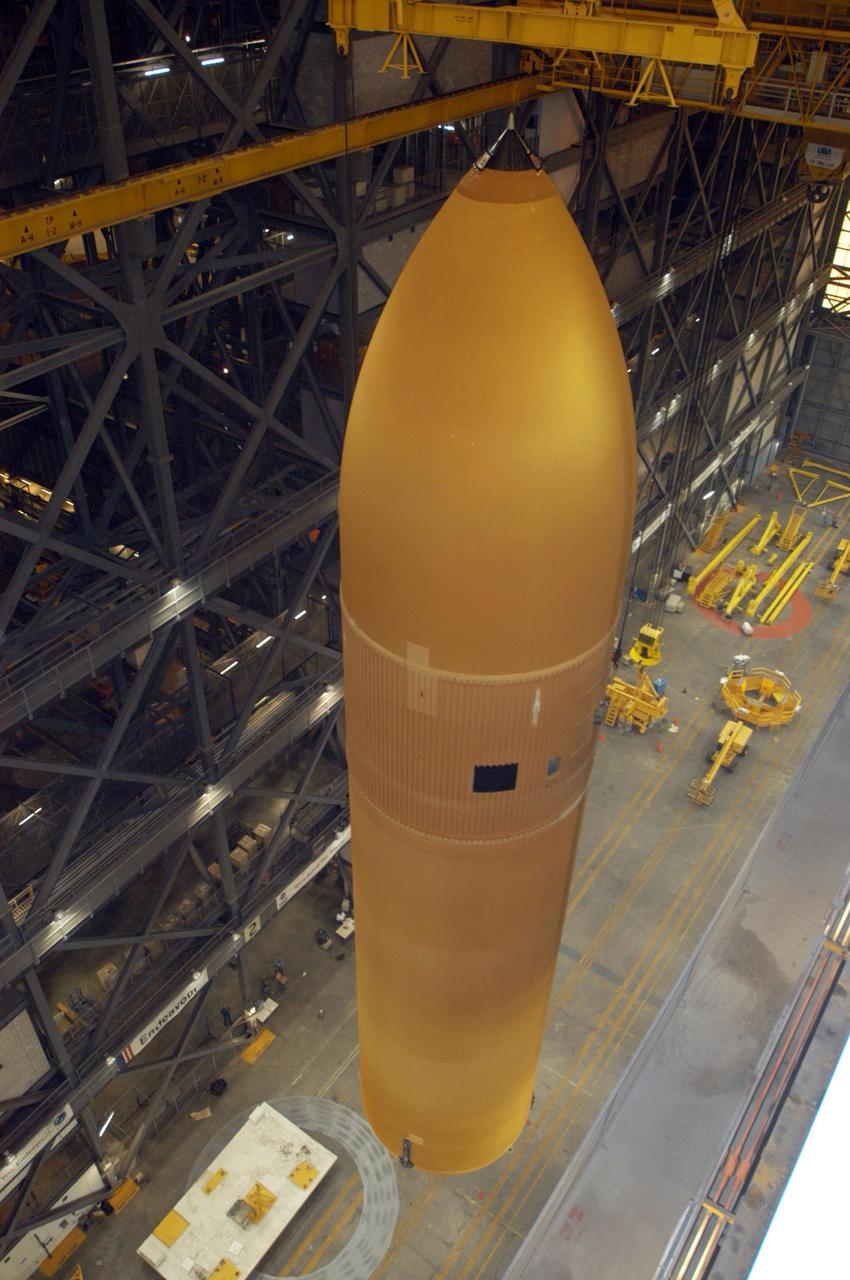
KENNEDY SPACE CENTER, FLA. - Seen from an upper level of NASA's Vehicle Assembly Building, the redesigned external fuel tank that will launch Space Shuttle Atlantis on the next shuttle mission, STS-115, is lifted for transfer into a checkout cell for further work. Designated ET-118, the tank will fly with many major safety changes, including the removal of the protuberance air load ramps. Photo credit: NASA/George Shelton

KENNEDY SPACE CENTER, FLA. - The redesigned external fuel tank, designated ET-118, that will launch Space Shuttle Atlantis on mission, STS-115 begins moving out of the Pegasus barge that carried it from the Michoud Assembly Facility in New Orleans. The tank will be moved into the Vehicle Assembly Building and lifted into a checkout cell for further work. It will fly with many major safety changes, including the removal of the protuberance air load ramps. Photo credit: NASA/Kim Shiflett
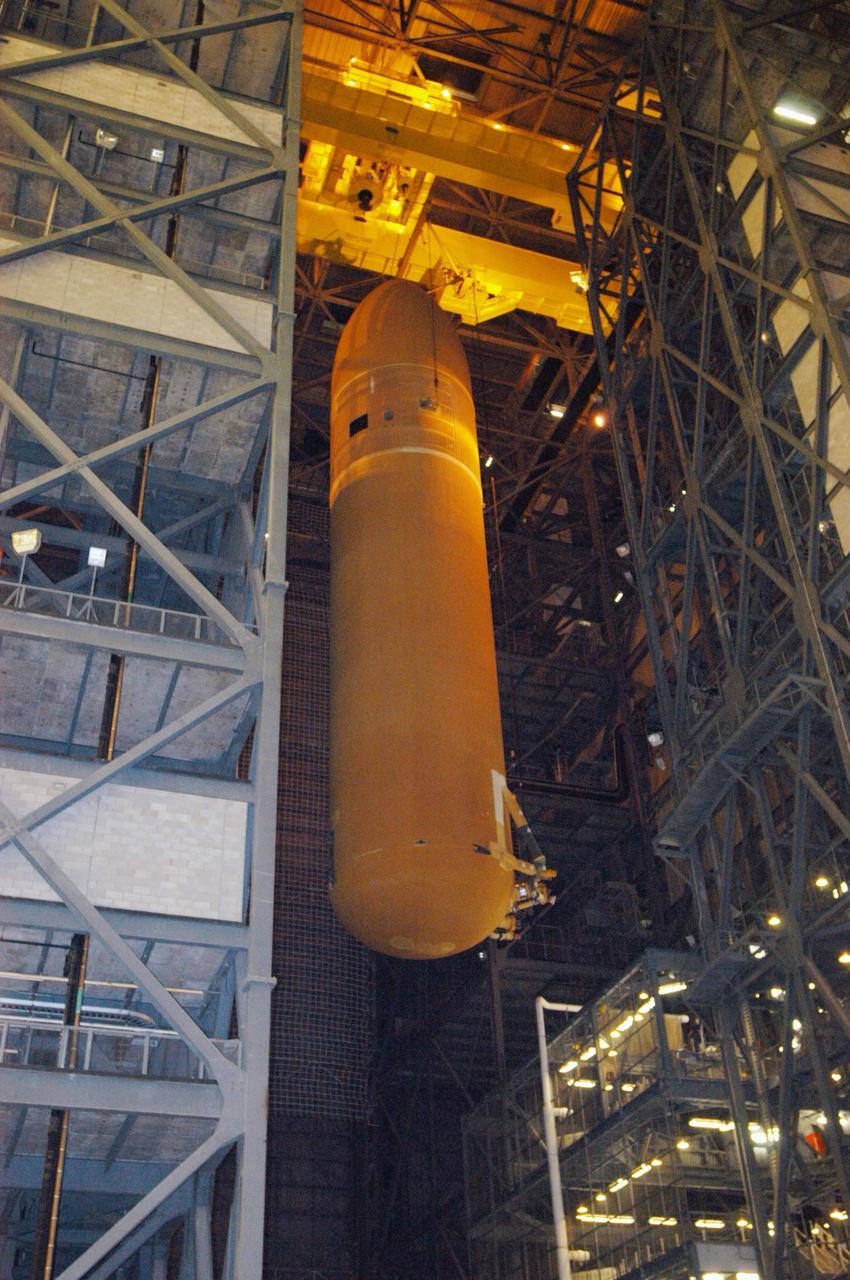
KENNEDY SPACE CENTER, FLA. - In NASA's Vehicle Assembly Building, the suspended external fuel tank that will launch Space Shuttle Atlantis on the next shuttle mission, STS-115, is moved toward the checkout cell where it will undergo further work. Designated ET-118, the tank will fly with many major safety changes, including the removal of the protuberance air load ramps. Photo credit: NASA/George Shelton
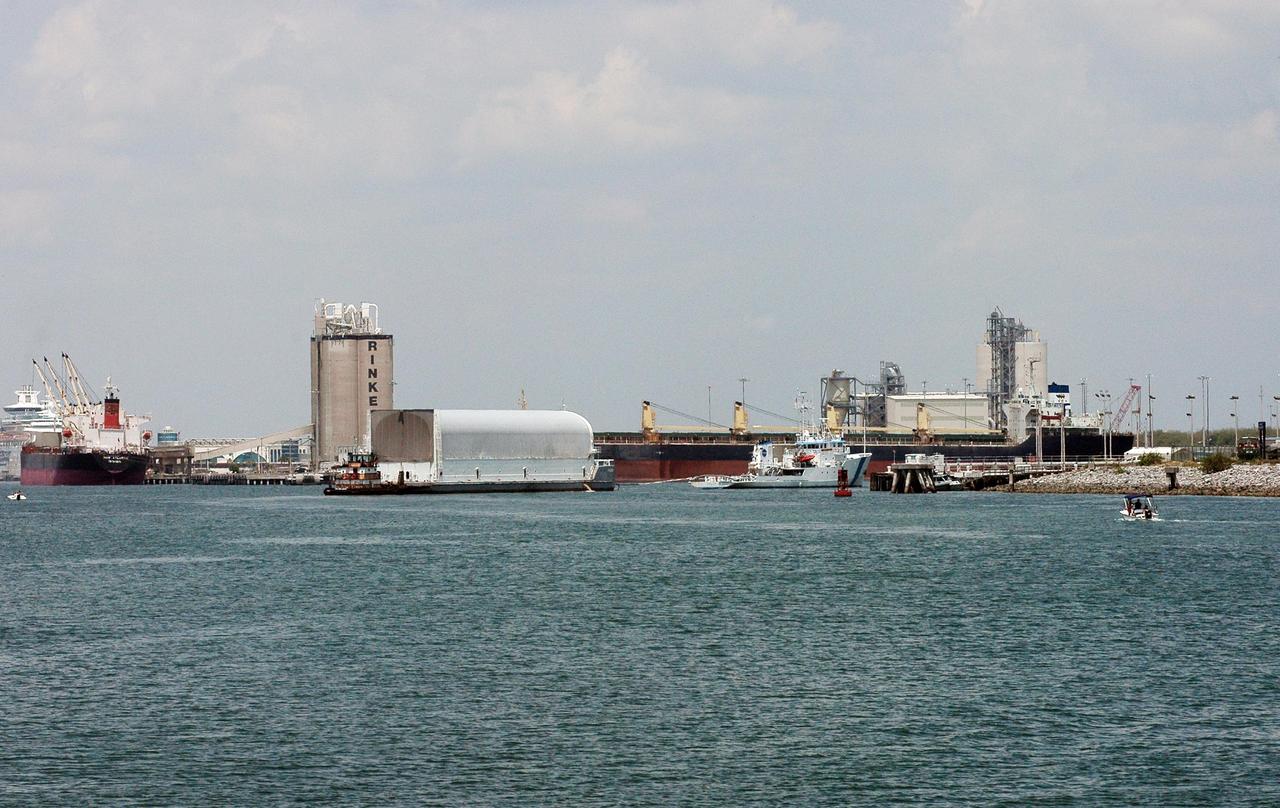
KENNEDY SPACE CENTER, FLA. - The Liberty Star tows the Pegasus barge to Port Canaveral, the last leg of its journey from the Michoud Assembly Facility in New Orleans to Kennedy Space Center. The barge carries the redesigned external fuel tank that will launch Space Shuttle Atlantis on the next shuttle mission, STS-115. A tugboat will continue the journey upriver to the Turn Basin where, after off-loading, the tank will be moved into the Vehicle Assembly Building and lifted into a checkout cell for further work. The tank, designated ET-118, will fly with many major safety changes, including the removal of the protuberance air load ramps. Photo credit: NASA/Jack Pfaller
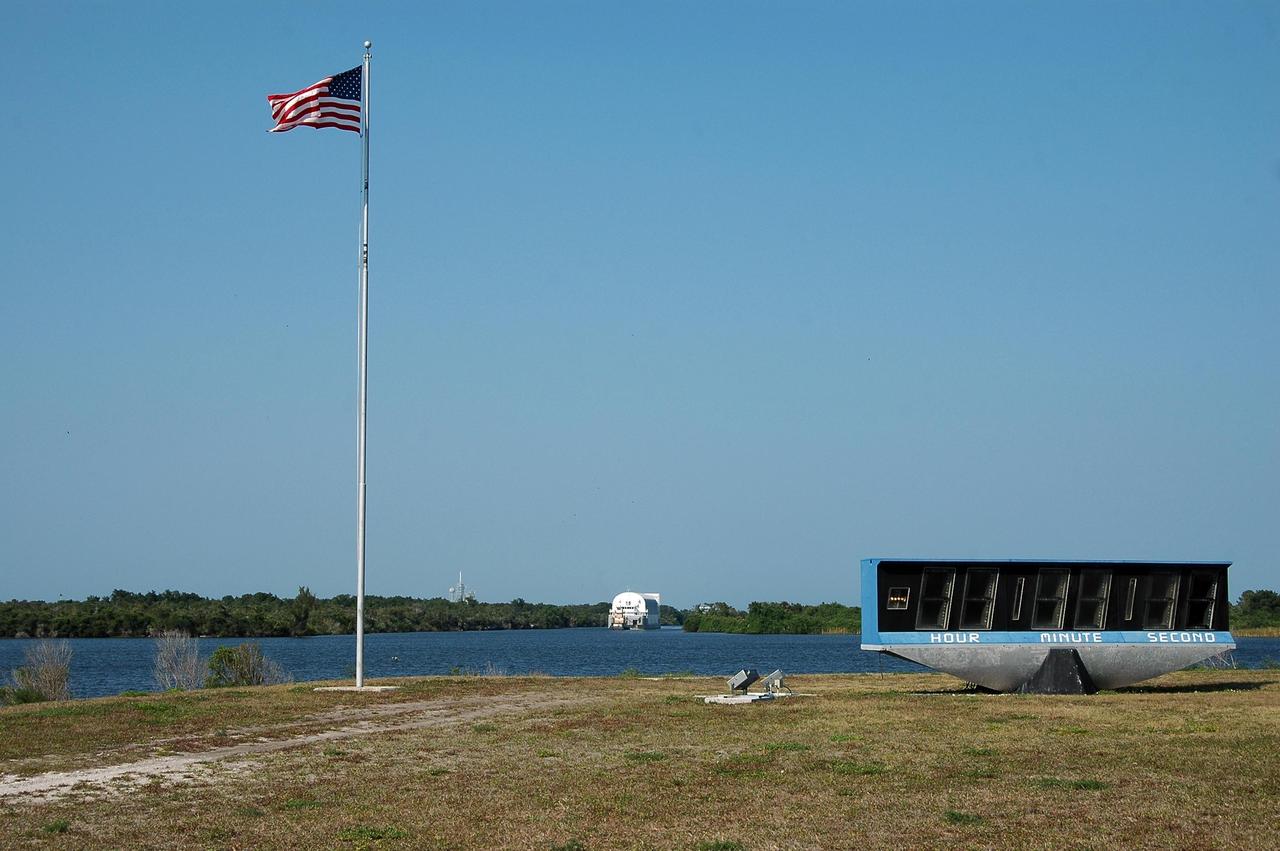
KENNEDY SPACE CENTER, FLA. - Viewed from the NASA News Center, a tug boat in the background maneuvers the Pegasus barge into the turn basin at the Launch Complex 39 Area. The barge holds the redesigned external fuel tank, designated ET-118, that will launch Space Shuttle Atlantis on the next shuttle mission, STS-115. The tank was shipped from the Michoud Assembly Facility in New Orleans. After off-loading, the tank will be moved into the Vehicle Assembly Building and lifted into a checkout cell for further work. The tank will fly with many major safety changes, including the removal of the protuberance air load ramps. Photo credit: NASA/Kim Shiflett
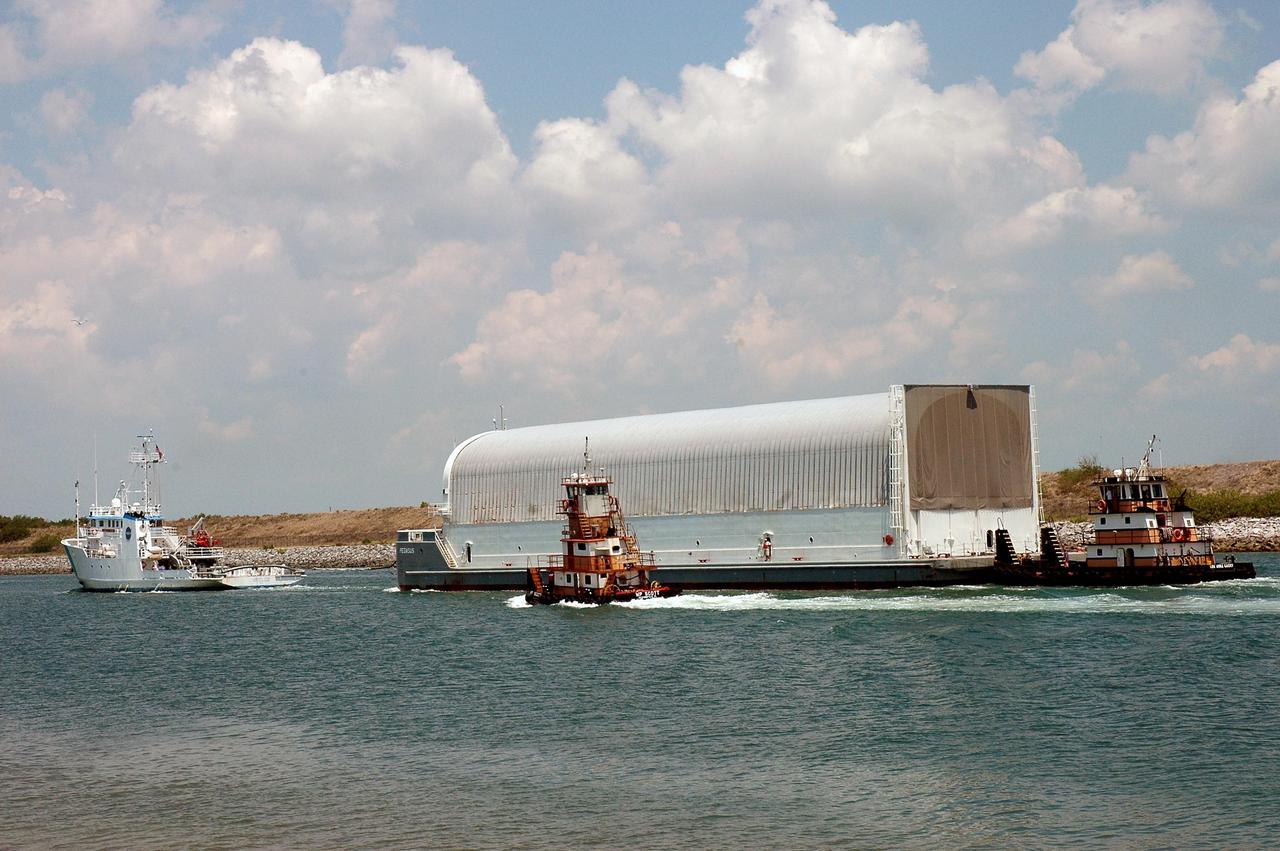
KENNEDY SPACE CENTER, FLA. - The Liberty Star (left) tows the Pegasus barge through Port Canaveral, the last leg of its journey from the Michoud Assembly Facility in New Orleans to Kennedy Space Center. The barge carries the redesigned external fuel tank that will launch Space Shuttle Atlantis on the next shuttle mission, STS-115. A tugboat will continue the journey upriver to the Turn Basin where, after off-loading, the tank will be moved into the Vehicle Assembly Building and lifted into a checkout cell for further work. The tank, designated ET-118, will fly with many major safety changes, including the removal of the protuberance air load ramps. Photo credit: NASA/Jack Pfaller
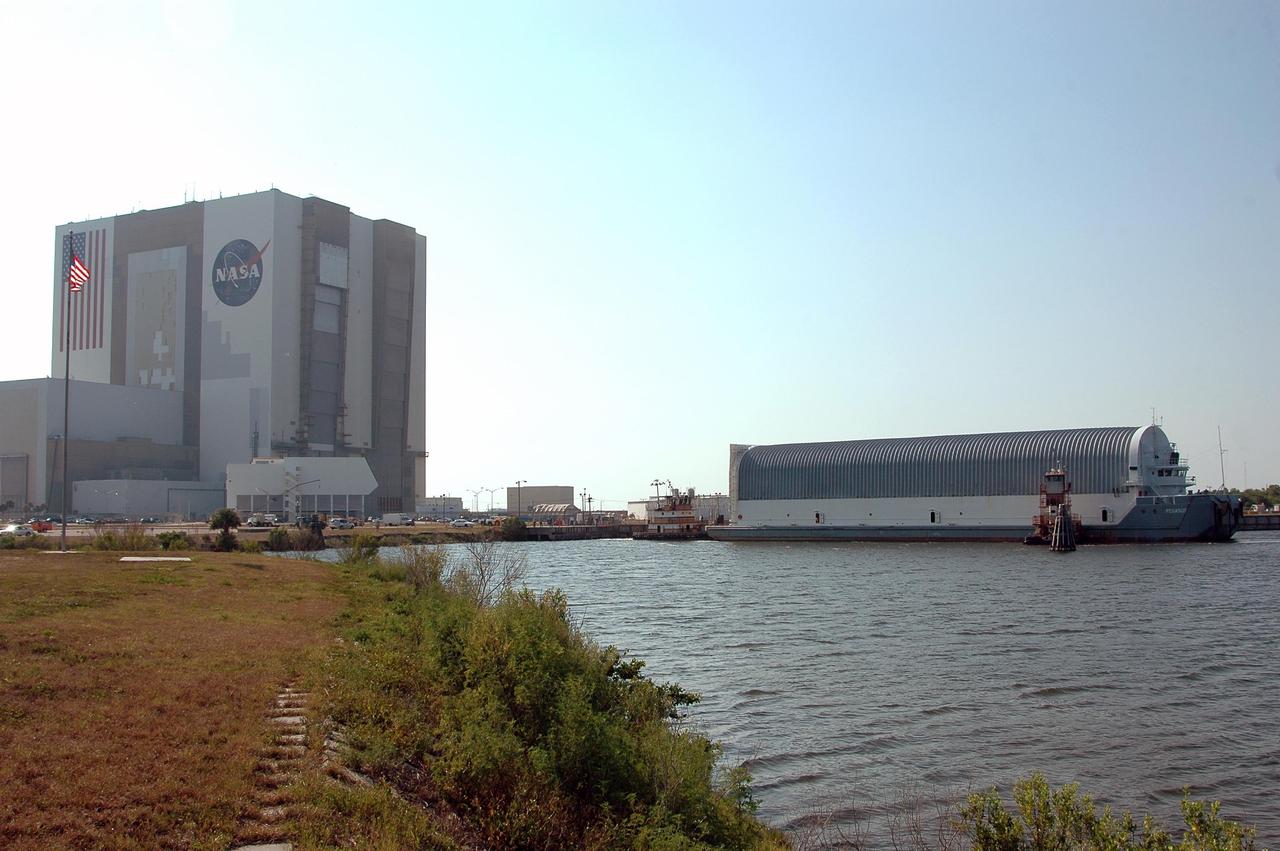
KENNEDY SPACE CENTER, FLA. - Tug boats maneuver the Pegasus barge next to the dock in the turn basin at the Launch Complex 39 Area. The barge holds the redesigned external fuel tank, designated ET-118, that will launch Space Shuttle Atlantis on the next shuttle mission, STS-115. The tank was shipped from the Michoud Assembly Facility in New Orleans. After off-loading, the tank will be moved into the Vehicle Assembly Building and lifted into a checkout cell for further work. The tank will fly with many major safety changes, including the removal of the protuberance air load ramps. Photo credit: NASA/Kim Shiflett
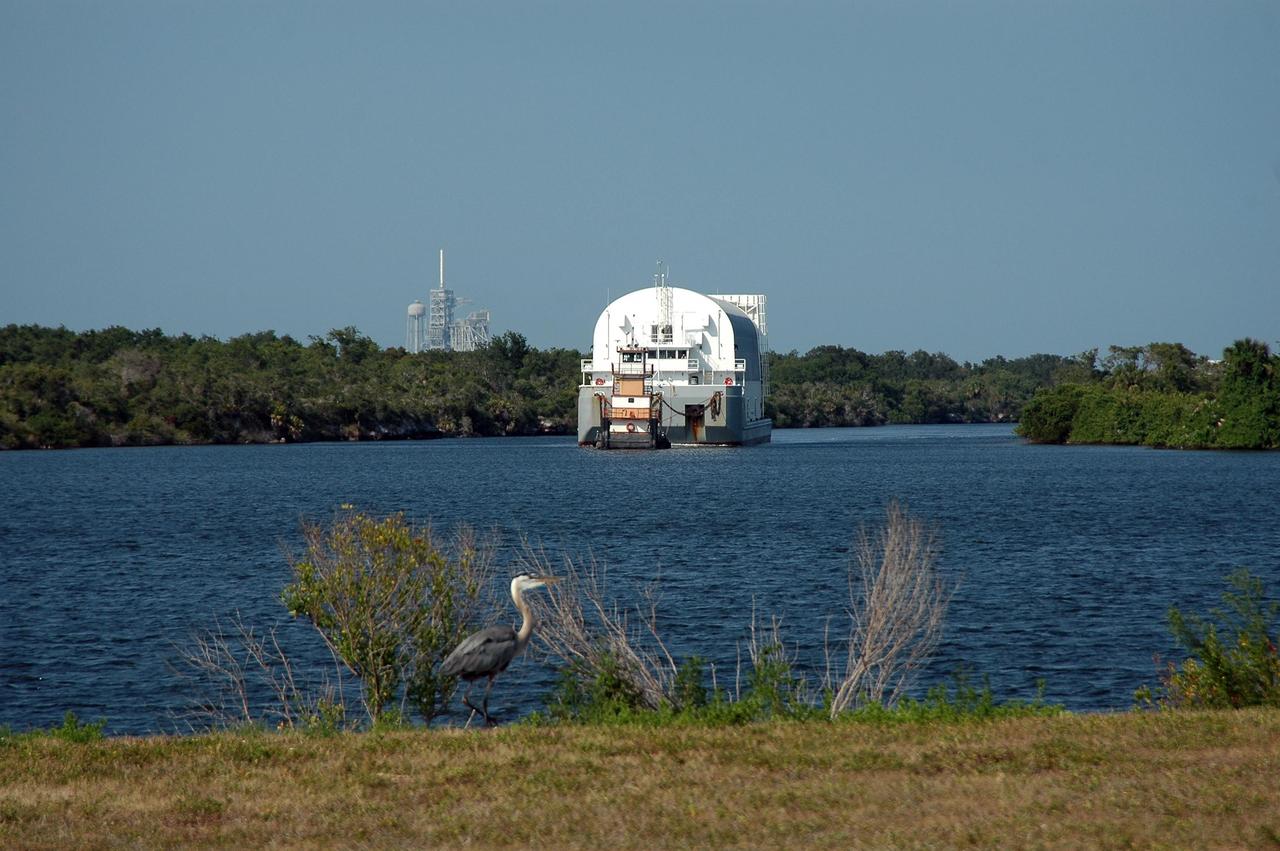
KENNEDY SPACE CENTER, FLA. - A Great Blue Heron on the near bank has a front row perch for the arrival of the Pegasus barge being towed into the turn basin at the Launch Complex 39 Area. The barge holds the redesigned external fuel tank, designated ET-118, that will launch Space Shuttle Atlantis on the next shuttle mission, STS-115. The tank was shipped from the Michoud Assembly Facility in New Orleans. After off-loading, the tank will be moved into the Vehicle Assembly Building and lifted into a checkout cell for further work. The tank will fly with many major safety changes, including the removal of the protuberance air load ramps. Photo credit: NASA/Kim Shiflett
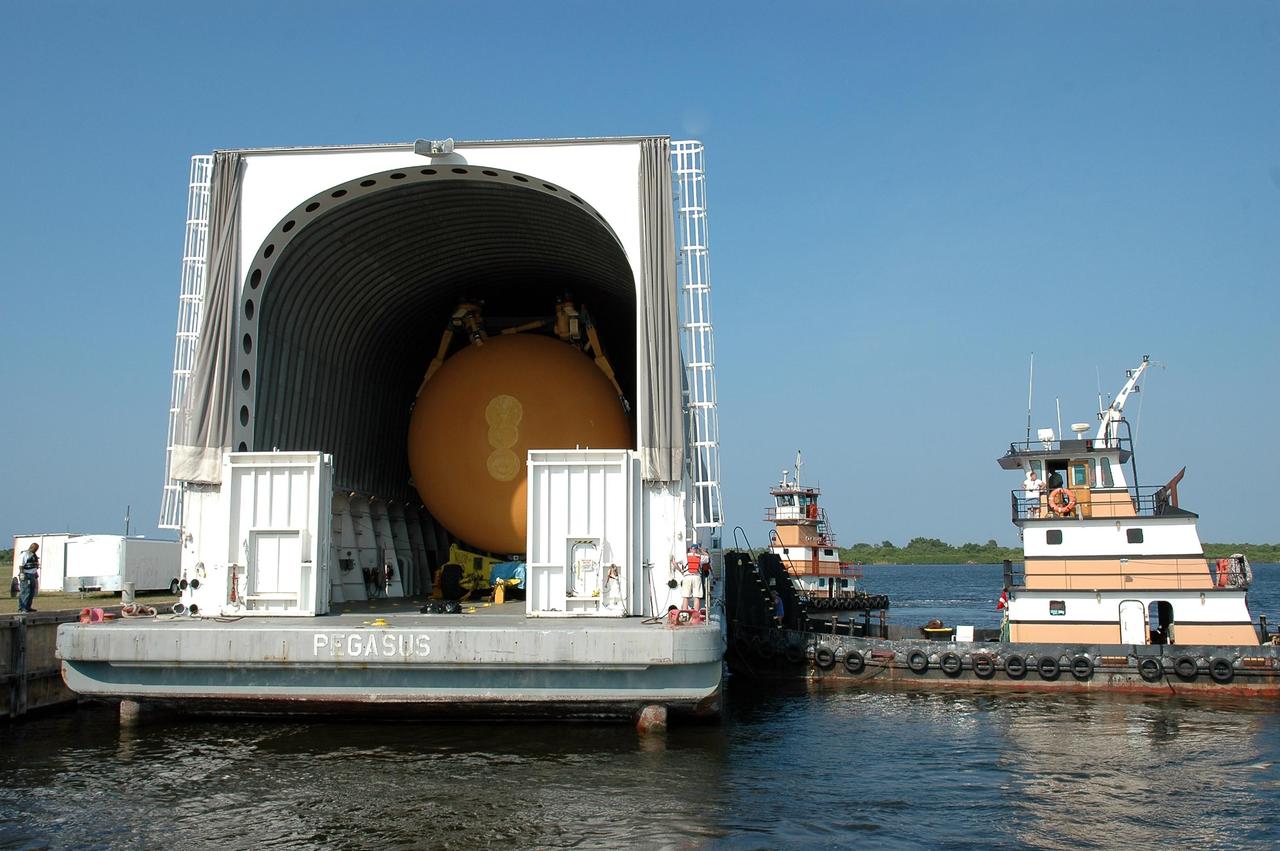
KENNEDY SPACE CENTER, FLA. - Tug boats maneuver the Pegasus barge next to the dock in the turn basin at the Launch Complex 39 Area. The barge holds the redesigned external fuel tank, seen inside, that will launch Space Shuttle Atlantis on the next shuttle mission, STS-115. The tank, designated ET-118, was shipped from the Michoud Assembly Facility in New Orleans. After off-loading, the tank will be moved into the Vehicle Assembly Building and lifted into a checkout cell for further work. The tank will fly with many major safety changes, including the removal of the protuberance air load ramps. Photo credit: NASA/Kim Shiflett
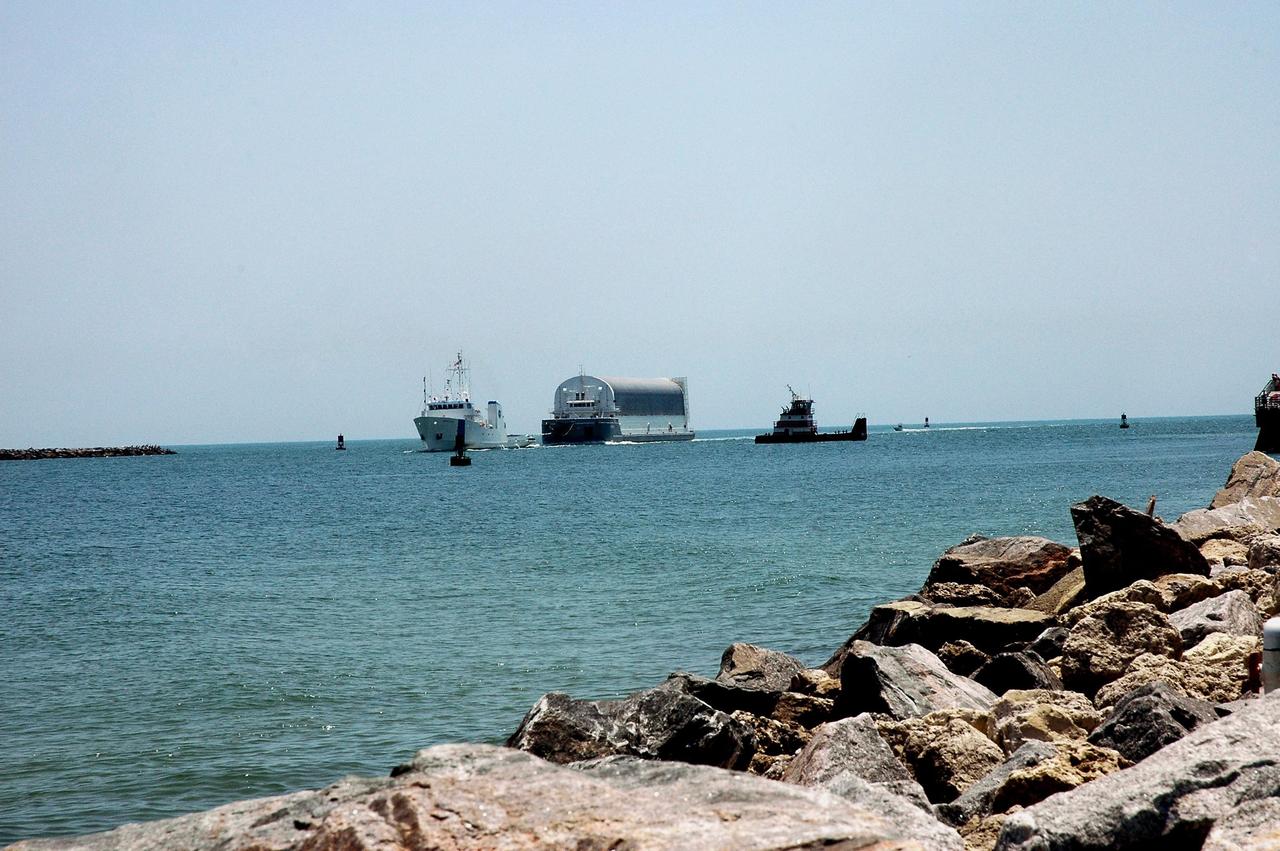
KENNEDY SPACE CENTER, FLA. - The Liberty Star (left) tows the Pegasus barge through Port Canaveral, the last leg of its journey from the Michoud Assembly Facility in New Orleans to Kennedy Space Center. The barge carries the redesigned external fuel tank that will launch Space Shuttle Atlantis on the next shuttle mission, STS-115. A tugboat will continue the journey upriver to the Turn Basin where, after off-loading, the tank will be moved into the Vehicle Assembly Building and lifted into a checkout cell for further work. The tank, designated ET-118, will fly with many major safety changes, including the removal of the protuberance air load ramps. Photo credit: NASA/Jack Pfaller
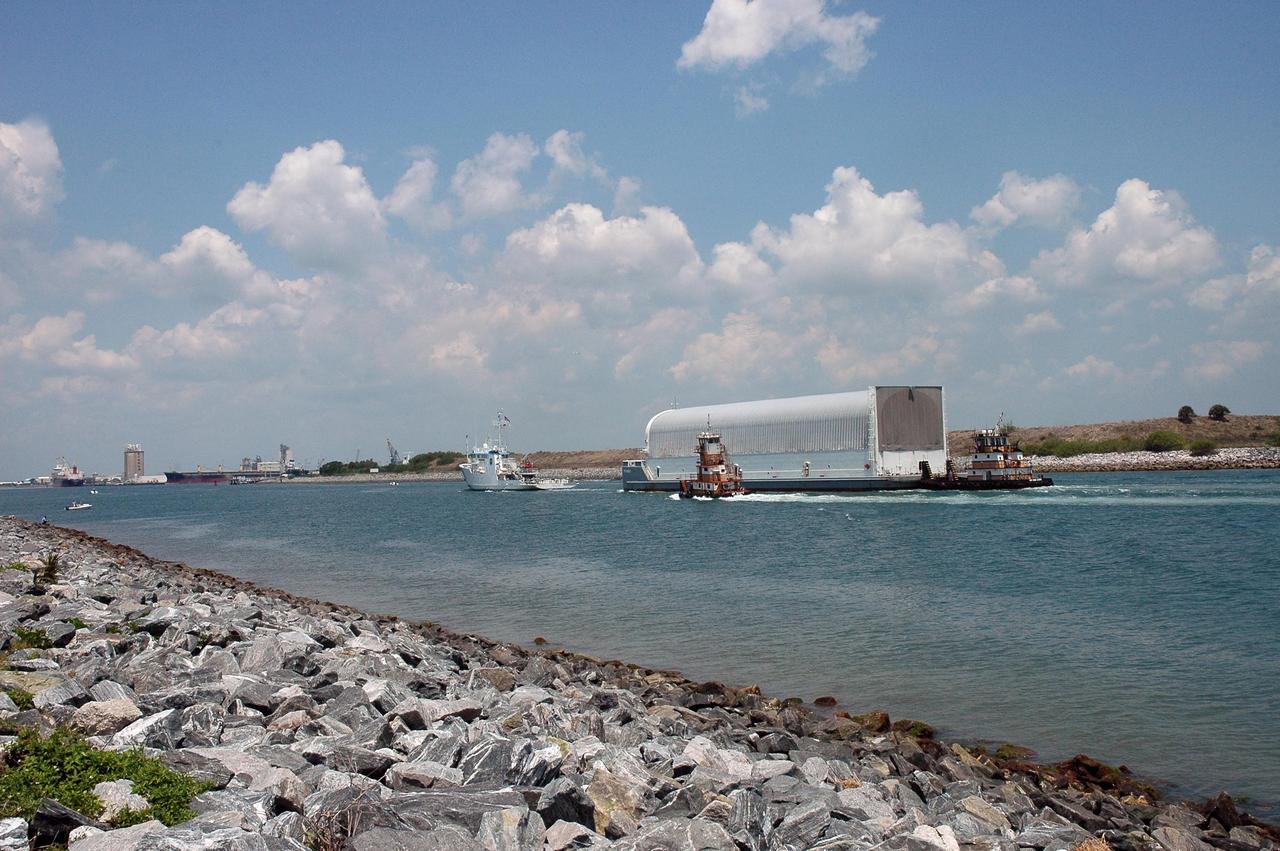
KENNEDY SPACE CENTER, FLA. - With the help of tug boats, the Liberty Star (left) tows the Pegasus barge toward Port Canaveral, the last leg of its journey from the Michoud Assembly Facility in New Orleans to Kennedy Space Center. The barge carries the redesigned external fuel tank that will launch Space Shuttle Atlantis on the next shuttle mission, STS-115. The tugboats will continue the journey upriver to the Turn Basin where, after off-loading, the tank will be moved into the Vehicle Assembly Building and lifted into a checkout cell for further work. The tank, designated ET-118, will fly with many major safety changes, including the removal of the protuberance air load ramps. Photo credit: NASA/Jack Pfaller
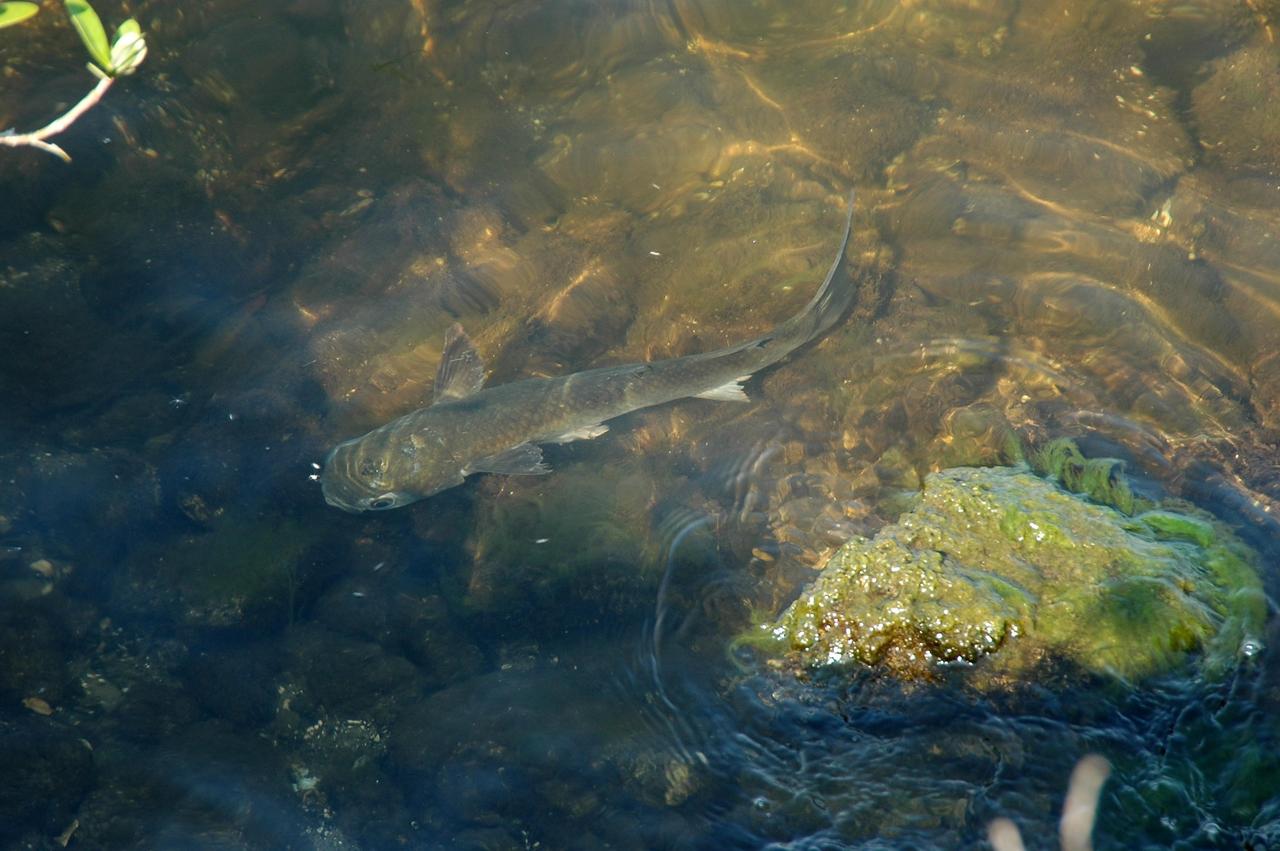
KENNEDY SPACE CENTER, FLA. - In the turn basin near the NASA News Center swims a large fish, perhaps witness to the arrival today of the external fuel tank that will launch Space Shuttle Atlantis on the next shuttle mission, STS-115. The tank, designated ET-118, was shipped from the Michoud Assembly Facility in New Orleans. The area is part of the Merritt Island National Wildlife Refuge, which shares a boundary with the center. The wildlife refuge is a habitat for more than 117 fishes, as well as 310 species of birds, 25 mammals and 65 amphibians and reptiles. In addition, the Refuge supports 19 endangered or threatened wildlife species on Federal or State lists, more than any other single refuge in the U.S. Photo credit: NASA/Kim Shiflett