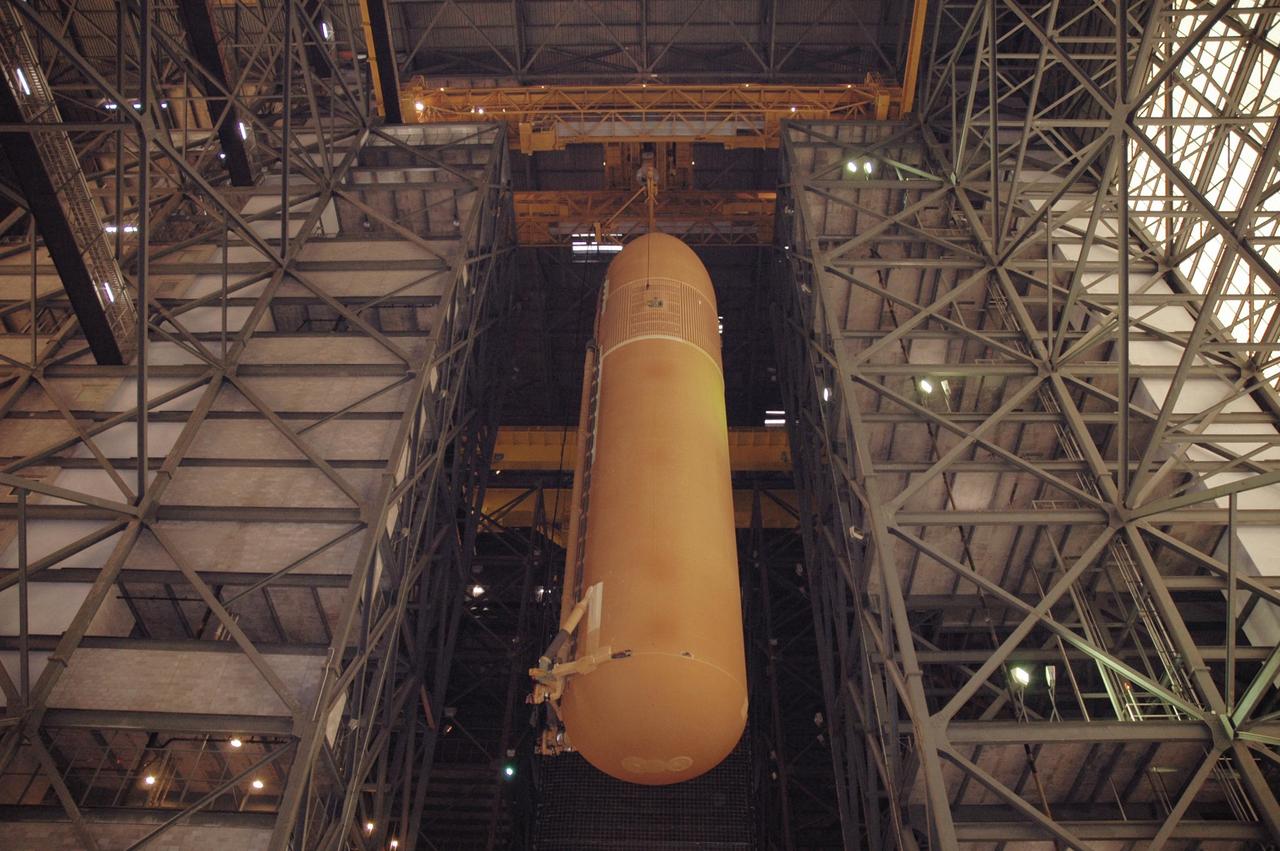
KENNEDY SPACE CENTER, FLA. - In the upper regions of NASA Kennedy Space Center's Vehicle Assembly Building, the newly delivered external tank is moved over a crossbeam toward a checkout cell for further work. Designated ET-119, the 154-foot tank will be lifted into a checkout cell for further work. The tank, which will launch space shuttle Discovery on mission STS-121, will fly with many major safety changes, including the removal of the protuberance air load ramps. A large piece of foam from a ramp came off during the last shuttle launch in July 2005. The ramps were removed to eliminate a potential source of damaging debris to the space shuttle. The next launch of Discovery is scheduled for May 2006. Photo credit: NASA/Jim Grossmann
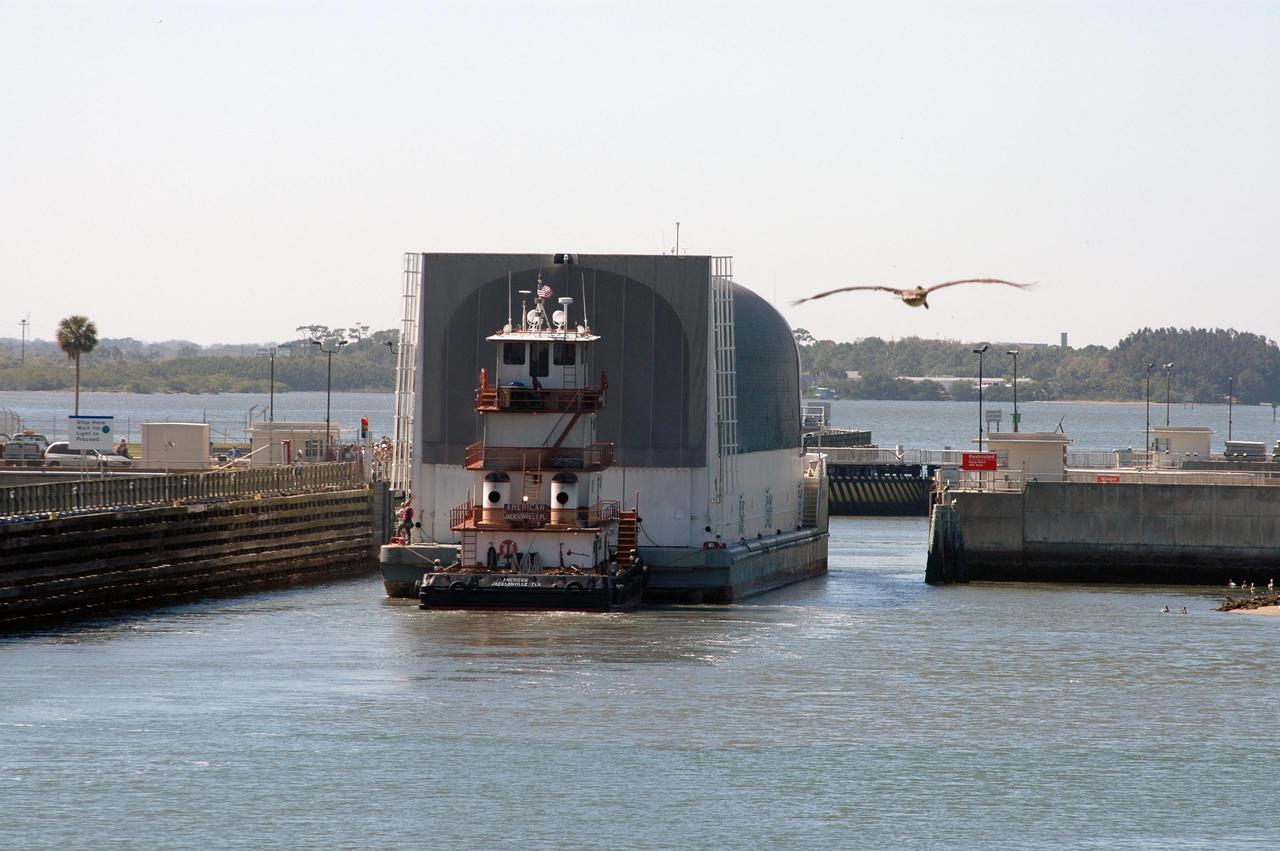
KENNEDY SPACE CENTER, FLA. - The Pegasus barge traverses the locks at Port Canaveral, as it nears the end of its journey from the Michoud Assembly Facility in New Orleans to Kennedy Space Center. The barge carries the redesigned external fuel tank that will launch Space Shuttle Discovery on the next shuttle mission, STS-121. After off-loading, the tank will be moved into the Vehicle Assembly Building and lifted into a checkout cell for further work. The tank, designated ET-119, will fly with many major safety changes, including the removal of the protuberance air load ramps. A large piece of foam from a ramp came off during the last shuttle launch in July 2005. The ramps were removed to eliminate a potential source of damaging debris to the space shuttle. The next launch of Discovery is scheduled for May 2006.
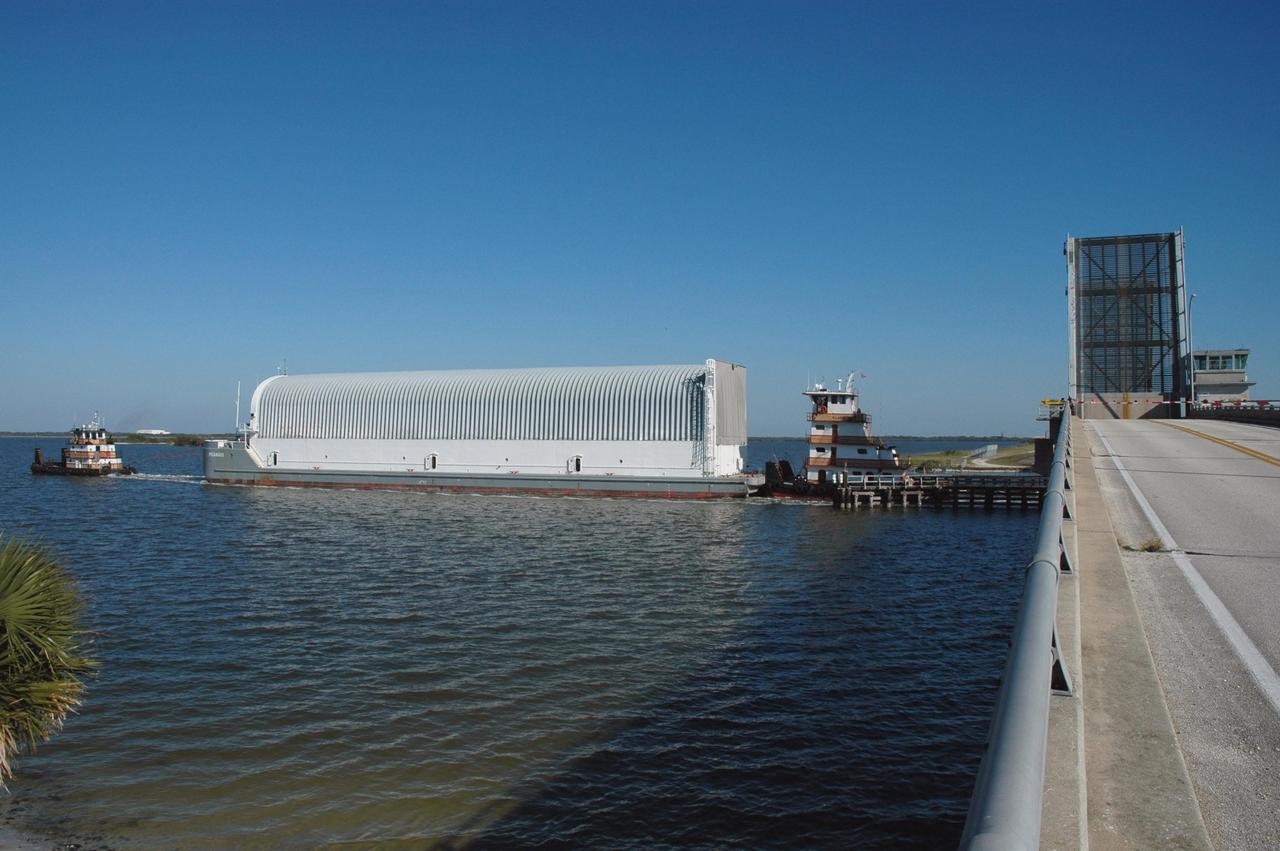
KENNEDY SPACE CENTER, FLA. - The Pegasus barge passes under the Roy D. Bridges Bridge in the Banana River, as it nears the end of its journey from the Michoud Assembly Facility in New Orleans to Kennedy Space Center. The barge carries the redesigned external fuel tank that will launch Space Shuttle Discovery on the next shuttle mission, STS-121. After off-loading, the tank will be moved into the Vehicle Assembly Building and lifted into a checkout cell for further work. The tank, designated ET-119, will fly with many major safety changes, including the removal of the protuberance air load ramps. A large piece of foam from a ramp came off during the last shuttle launch in July 2005. The ramps were removed to eliminate a potential source of damaging debris to the space shuttle. The next launch of Discovery is scheduled for May 2006.
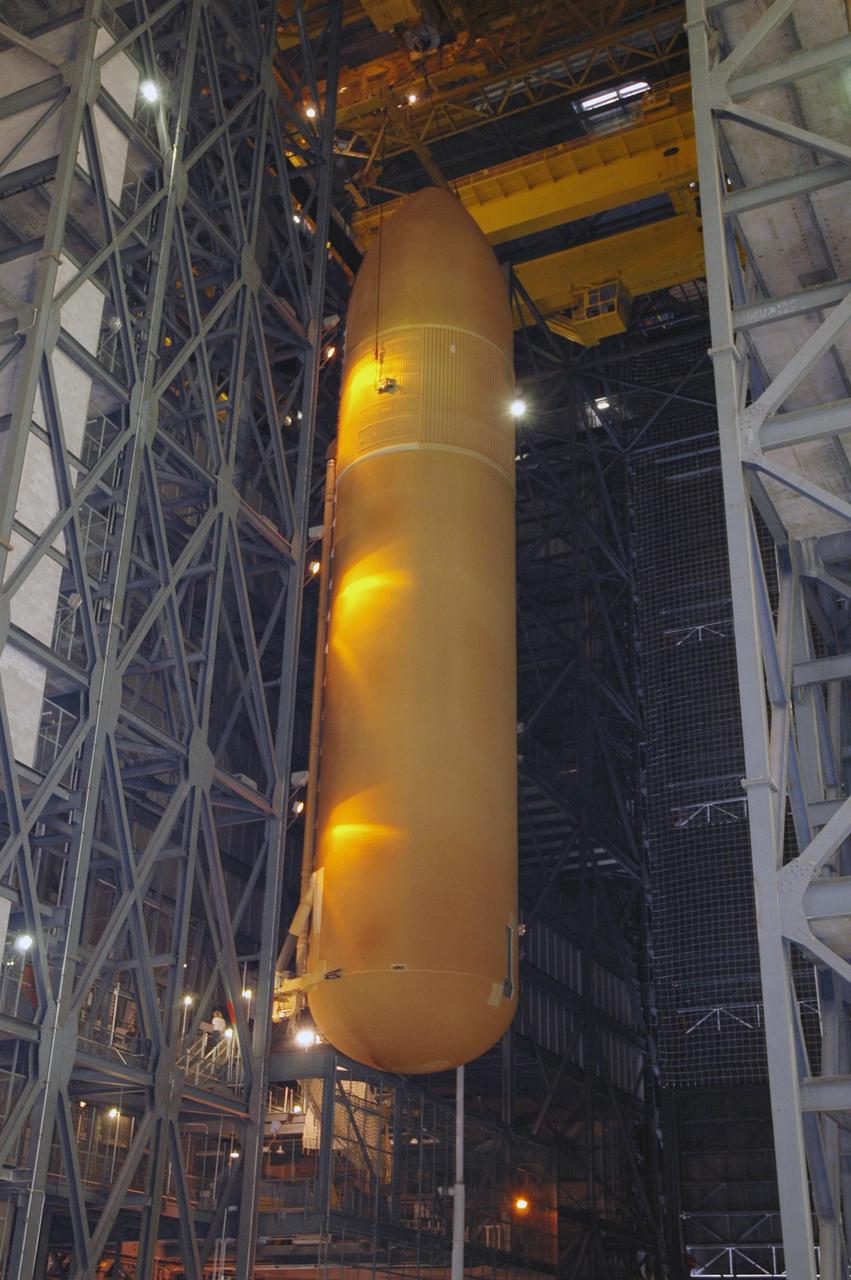
KENNEDY SPACE CENTER, FLA. - From the upper regions of NASA Kennedy Space Center's Vehicle Assembly Building, the newly delivered external tank is lowered toward a checkout cell for further work. Designated ET-119, the 154-foot tank will be lifted into a checkout cell for further work. The tank, which will launch space shuttle Discovery on mission STS-121, will fly with many major safety changes, including the removal of the protuberance air load ramps. A large piece of foam from a ramp came off during the last shuttle launch in July 2005. The ramps were removed to eliminate a potential source of damaging debris to the space shuttle. The next launch of Discovery is scheduled for May 2006. Photo credit: NASA/Jim Grossmann
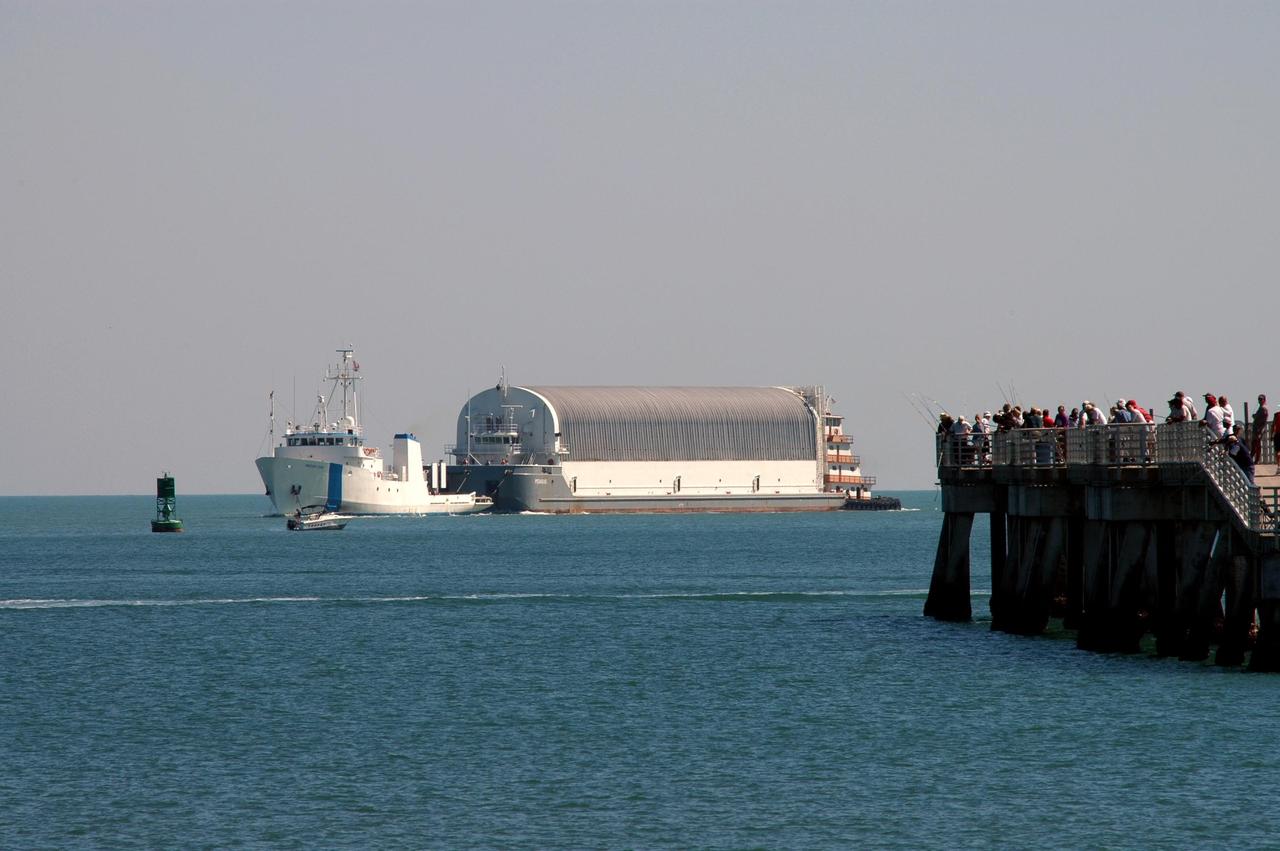
KENNEDY SPACE CENTER, FLA. - The Freedom Star tows the Pegasus barge to the entrance of Port Canaveral, the last leg of its journey from the Michoud Assembly Facility in New Orleans to Kennedy Space Center. The barge carries the redesigned external fuel tank that will launch Space Shuttle Discovery on the next shuttle mission, STS-121. After off-loading, the tank will be moved into the Vehicle Assembly Building and lifted into a checkout cell for further work. The tank, designated ET-119, will fly with many major safety changes, including the removal of the protuberance air load ramps. A large piece of foam from a ramp came off during the last shuttle launch in July 2005. The ramps were removed to eliminate a potential source of damaging debris to the space shuttle. The next launch of Discovery is scheduled for May 2006.
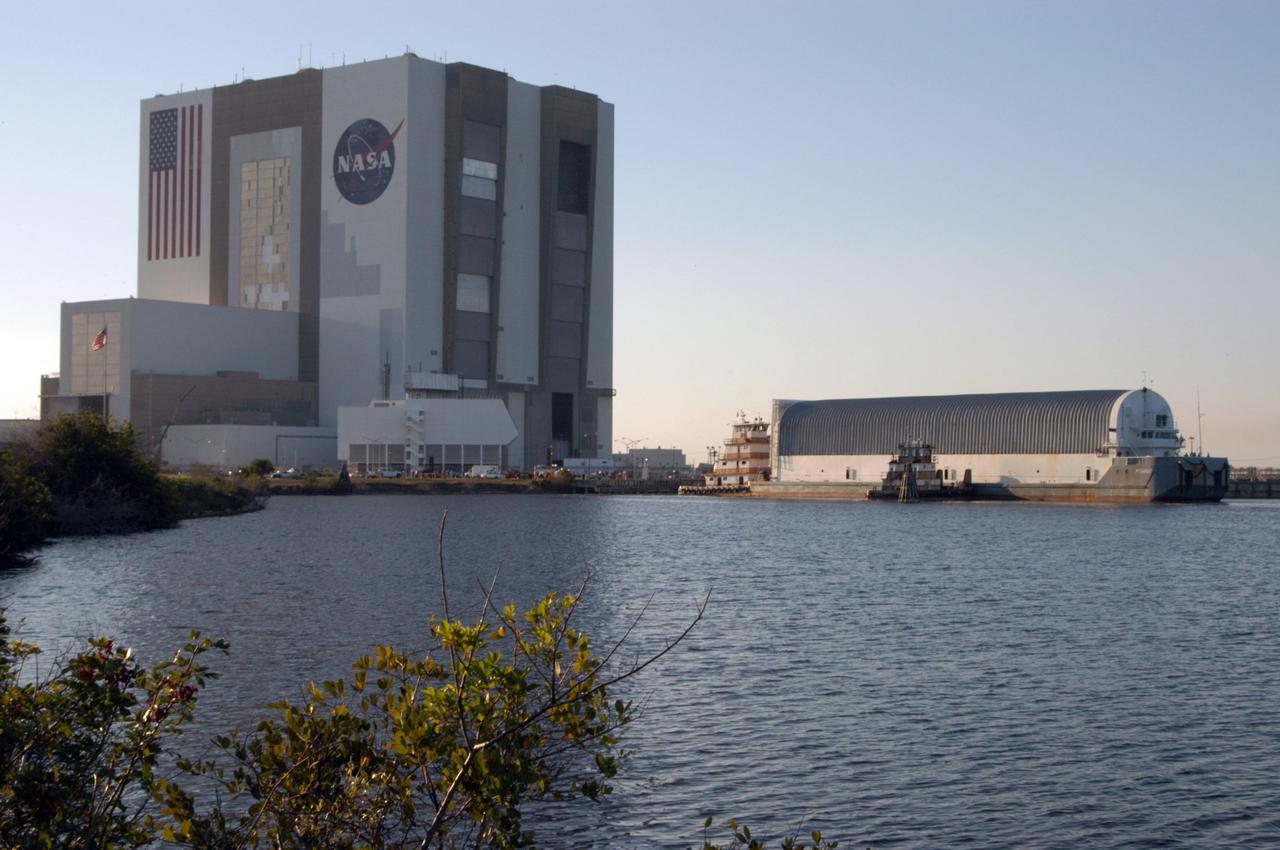
KENNEDY SPACE CENTER, FLA. - Towed by the solid rocket booster retrieval ship Freedom Star, the Pegasus barge approaches the dock in the turn basin near the Vehicle Assembly Building. The barge is on the last leg of its journey from the Michoud Assembly Facility in New Orleans to NASA's Kennedy Space Center. The barge carries the redesigned external fuel tank that will launch Space Shuttle Discovery on the next shuttle mission, STS-121. After off-loading, the tank will be moved into the Vehicle Assembly Building and lifted into a checkout cell for further work. The tank, designated ET-119, will fly with many major safety changes, including the removal of the protuberance air load ramps. A large piece of foam from a ramp came off during the last shuttle launch in July 2005. The ramps were removed to eliminate a potential source of damaging debris to the space shuttle. The next launch of Discovery is scheduled for May 2006.
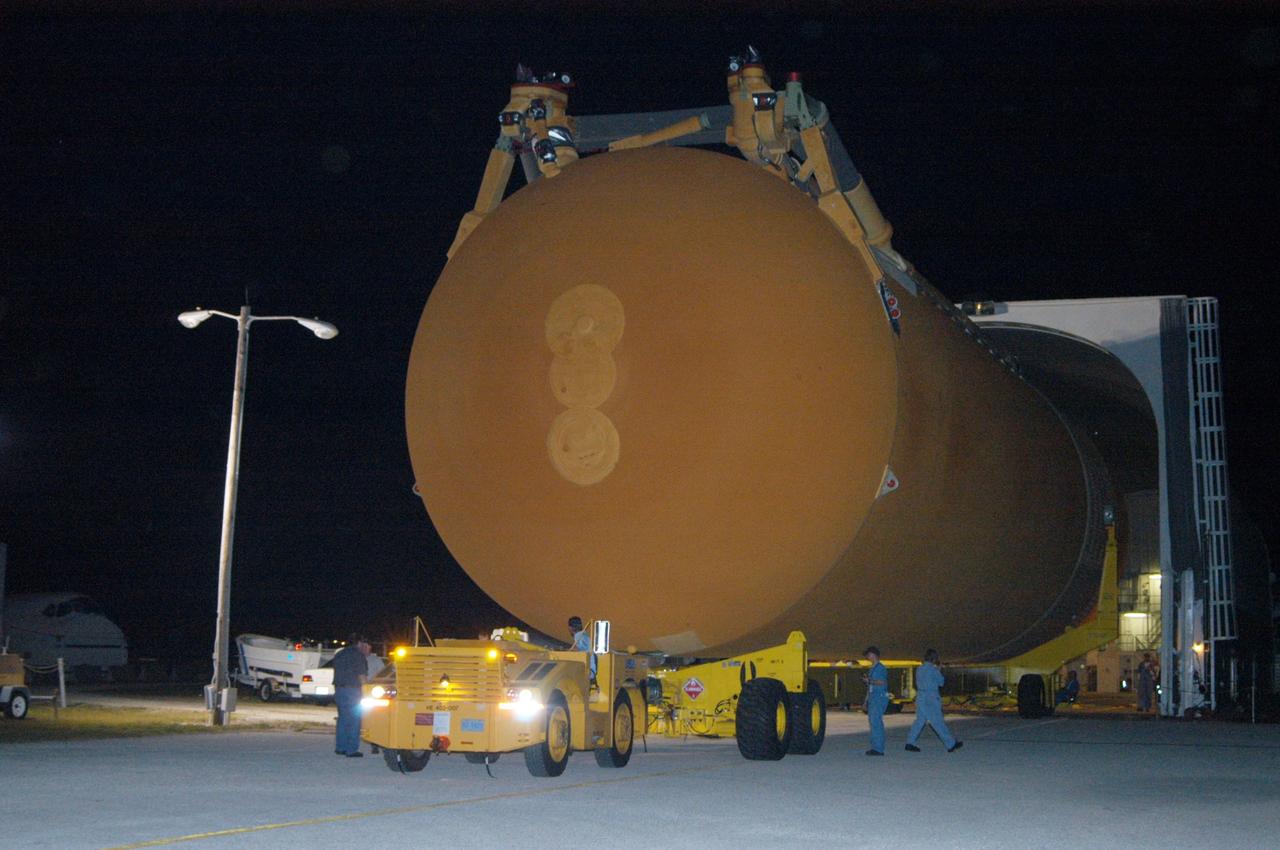
KENNEDY SPACE CENTER, FLA. - A tow vehicle is connected to the transporter supporting the redesigned external fuel tank that will launch Space Shuttle Discovery on the next shuttle mission, STS-121. The Pegasus barge delivered the tank from the Michoud Assembly Facility in New Orleans to NASA Kennedy Space Center's Launch Complex 39 turn basin. After off-loading, the tank will be moved to the Vehicle Assembly Building and lifted into a checkout cell for further work. The tank, designated ET-119, will fly with many major safety changes, including the removal of the protuberance air load ramps. A large piece of foam from a ramp came off during the last shuttle launch in July 2005. The ramps were removed to eliminate a potential source of damaging debris to the space shuttle. The next launch of Discovery is scheduled for May 2006.
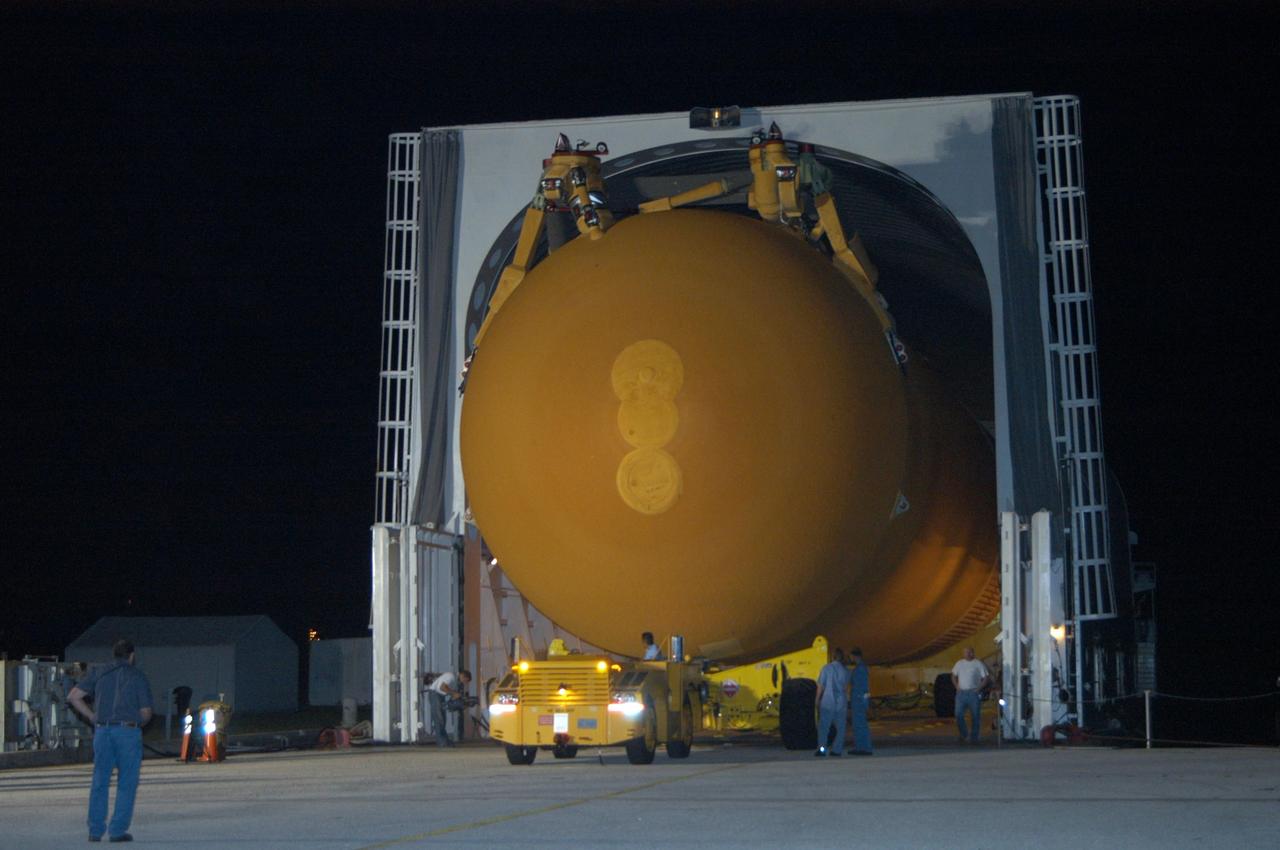
KENNEDY SPACE CENTER, FLA. - Off-loading of the redesigned external fuel tank that will launch Space Shuttle Discovery on the next shuttle mission, STS-121, begins in the Launch Complex 39 turn basin. The Pegasus barge delivered the tank from the Michoud Assembly Facility in New Orleans to NASA's Kennedy Space Center. After off-loading, the tank will be moved into the Vehicle Assembly Building and lifted into a checkout cell for further work. The tank, designated ET-119, will fly with many major safety changes, including the removal of the protuberance air load ramps. A large piece of foam from a ramp came off during the last shuttle launch in July 2005. The ramps were removed to eliminate a potential source of damaging debris to the space shuttle. The next launch of Discovery is scheduled for May 2006.

KENNEDY SPACE CENTER, FLA. - The Pegasus barge makes its way through Port Canaveral, the last leg of its journey from the Michoud Assembly Facility in New Orleans to Kennedy Space Center. The barge carries the redesigned external fuel tank that will launch Space Shuttle Discovery on the next shuttle mission, STS-121. After off-loading, the tank will be moved into the Vehicle Assembly Building and lifted into a checkout cell for further work. The tank, designated ET-119, will fly with many major safety changes, including the removal of the protuberance air load ramps. A large piece of foam from a ramp came off during the last shuttle launch in July 2005. The ramps were removed to eliminate a potential source of damaging debris to the space shuttle. The next launch of Discovery is scheduled for May 2006.
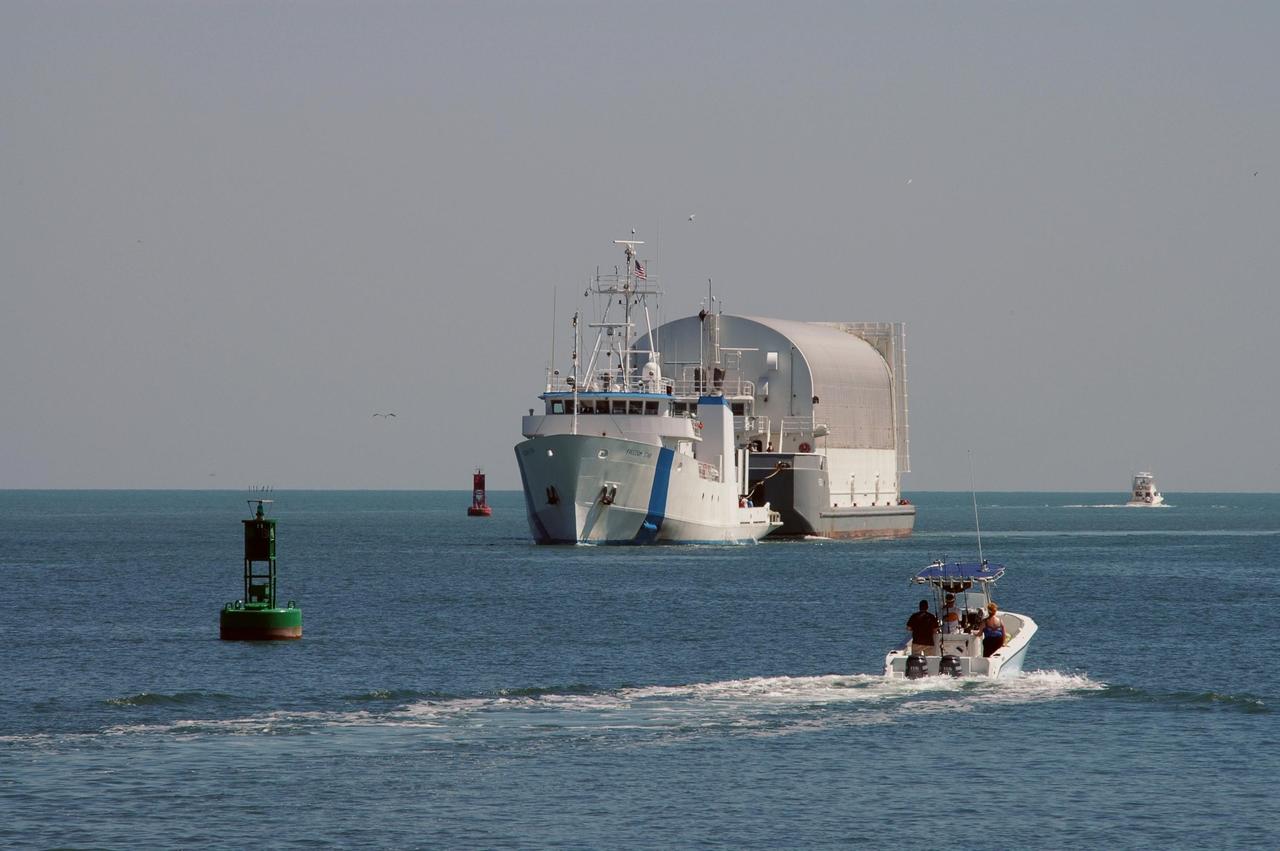
KENNEDY SPACE CENTER, FLA. - Towed by the Freedom Star, the Pegasus barge enters Port Canaveral, the last leg of its journey from the Michoud Assembly Facility in New Orleans to Kennedy Space Center. The barge carries the redesigned external fuel tank that will launch Space Shuttle Discovery on the next shuttle mission, STS-121. After off-loading, the tank will be moved into the Vehicle Assembly Building and lifted into a checkout cell for further work. The tank, designated ET-119, will fly with many major safety changes, including the removal of the protuberance air load ramps. A large piece of foam from a ramp came off during the last shuttle launch in July 2005. The ramps were removed to eliminate a potential source of damaging debris to the space shuttle. The next launch of Discovery is scheduled for May 2006.
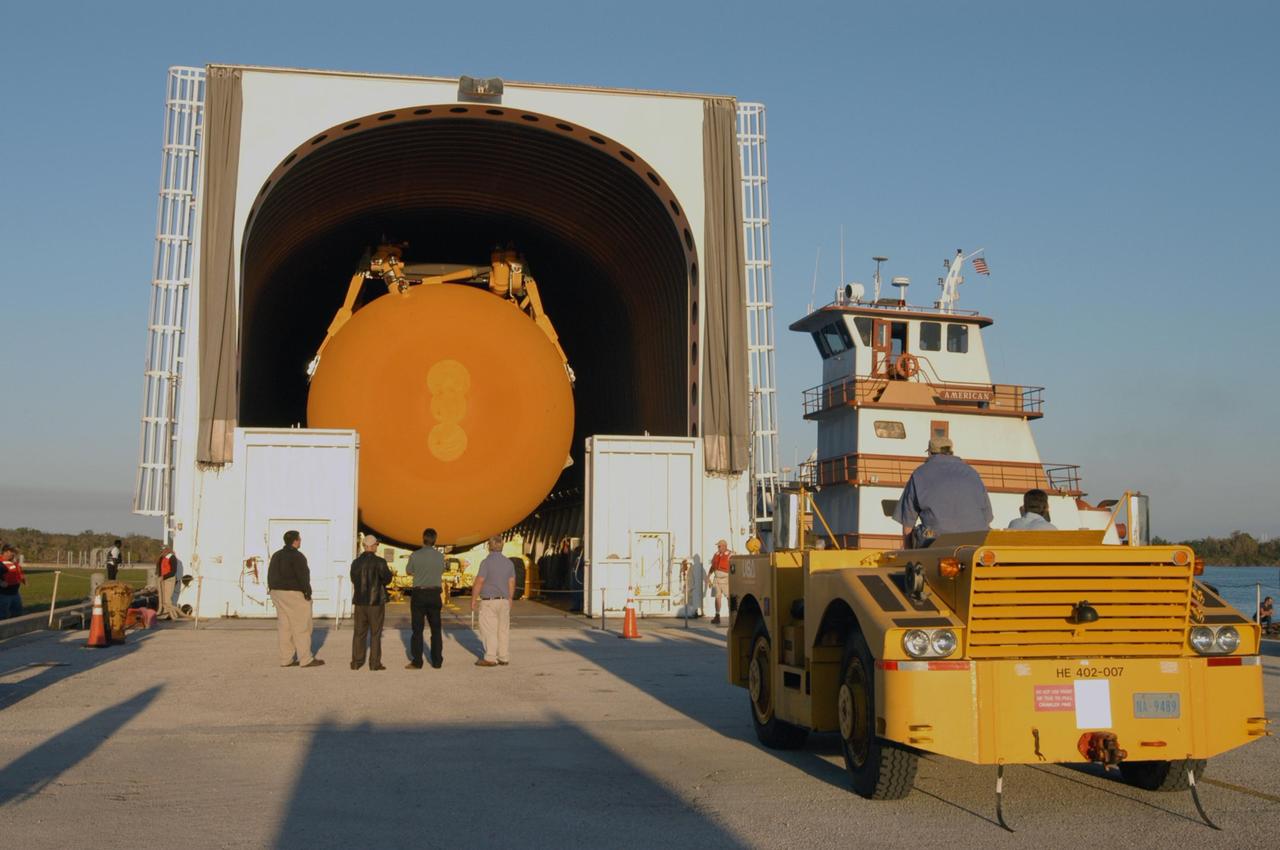
KENNEDY SPACE CENTER, FLA. - The Pegasus barge is docked in the turn basin close by the Vehicle Assembly Building. The barge delivered the redesigned external fuel tank that will launch Space Shuttle Discovery on the next shuttle mission, STS-121, from the Michoud Assembly Facility in New Orleans to NASA's Kennedy Space Center. After off-loading, the tank will be moved into the Vehicle Assembly Building and lifted into a checkout cell for further work. The tank, designated ET-119, will fly with many major safety changes, including the removal of the protuberance air load ramps. A large piece of foam from a ramp came off during the last shuttle launch in July 2005. The ramps were removed to eliminate a potential source of damaging debris to the space shuttle. The next launch of Discovery is scheduled for May 2006.
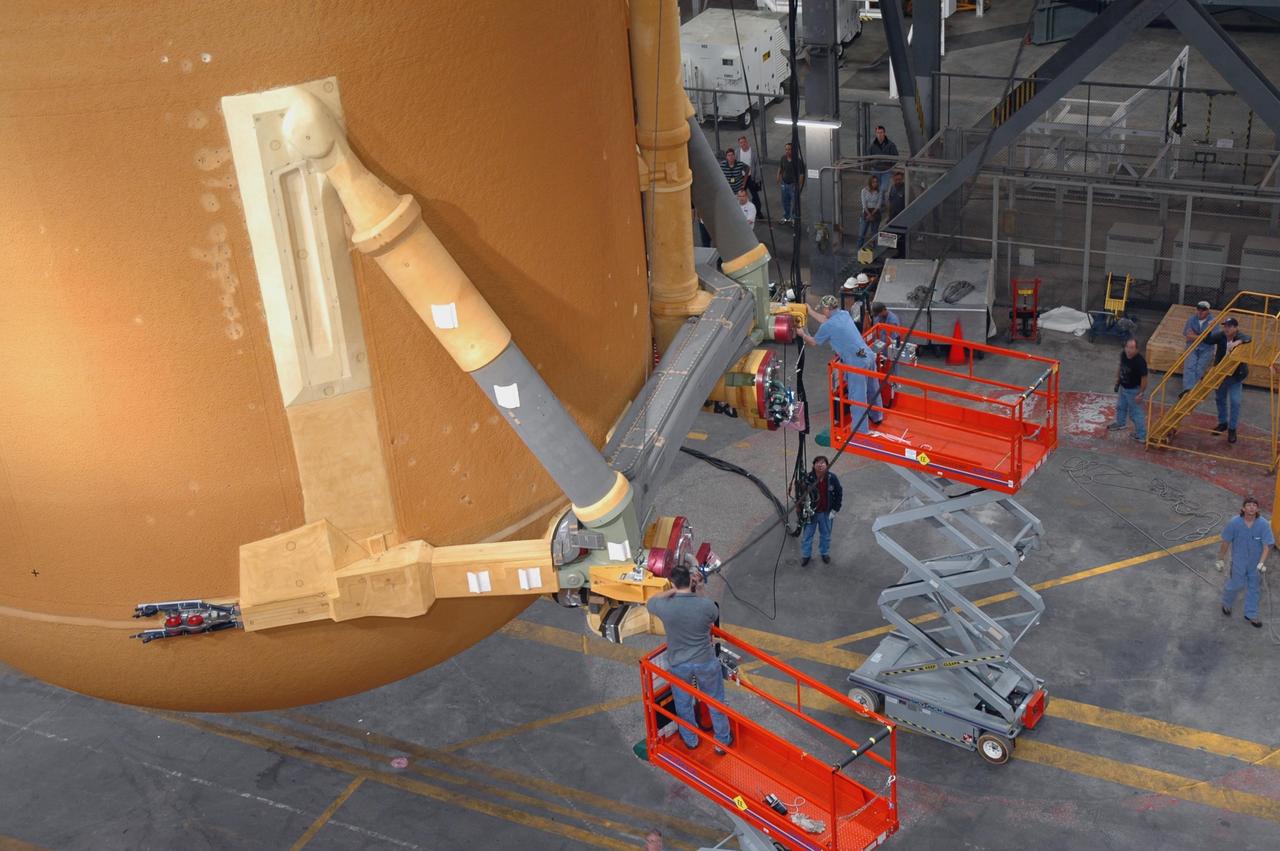
KENNEDY SPACE CENTER, FLA. - In NASA Kennedy Space Center's Vehicle Assembly Building, workers attach another crane to the newly delivered external tank in order to lift it up vertically and over a crossbeam into a checkout cell for further work. Designated ET-119, the 154-foot tank will be lifted into a checkout cell for further work. The tank, which will launch space shuttle Discovery on mission STS-121, will fly with many major safety changes, including the removal of the protuberance air load ramps. A large piece of foam from a ramp came off during the last shuttle launch in July 2005. The ramps were removed to eliminate a potential source of damaging debris to the space shuttle. The next launch of Discovery is scheduled for May 2006. Photo credit: NASA/Jim Grossmann
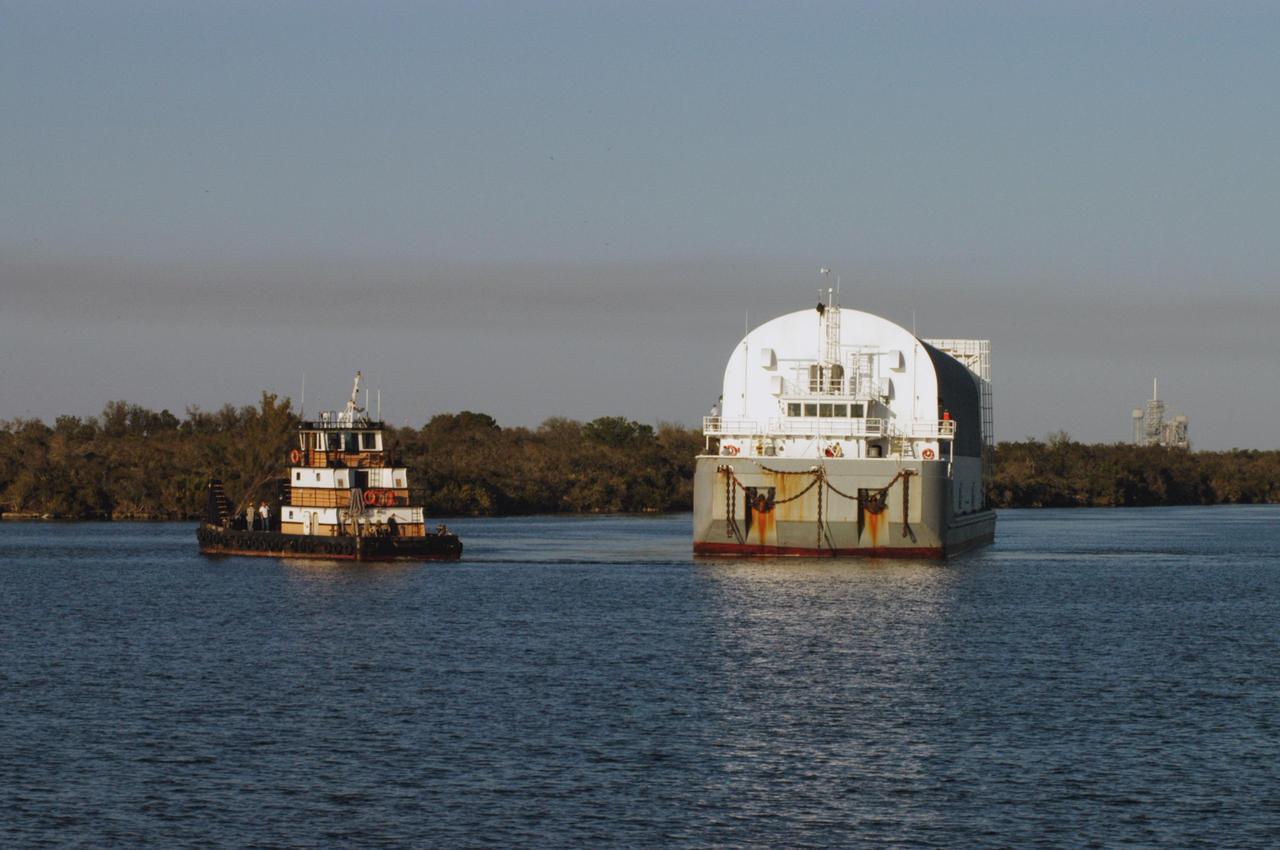
KENNEDY SPACE CENTER, FLA. - One of the two space shuttle launch pads in Launch Complex 39 is visible behind the Pegasus barge as it traverses the turn basin near the Vehicle Assembly Building. The barge is on the last leg of its journey from the Michoud Assembly Facility in New Orleans to NASA's Kennedy Space Center. The barge carries the redesigned external fuel tank that will launch Space Shuttle Discovery on the next shuttle mission, STS-121. After off-loading, the tank will be moved into the Vehicle Assembly Building and lifted into a checkout cell for further work. The tank, designated ET-119, will fly with many major safety changes, including the removal of the protuberance air load ramps. A large piece of foam from a ramp came off during the last shuttle launch in July 2005. The ramps were removed to eliminate a potential source of damaging debris to the space shuttle. The next launch of Discovery is scheduled for May 2006.

KENNEDY SPACE CENTER, FLA. - In NASA Kennedy Space Center's Vehicle Assembly Building, the newly delivered external tank is lifted high into the upper regions. It will be moved over a crossbeam into a checkout cell for further work. Designated ET-119, the 154-foot tank will be lifted into a checkout cell for further work. The tank, which will launch space shuttle Discovery on mission STS-121, will fly with many major safety changes, including the removal of the protuberance air load ramps. A large piece of foam from a ramp came off during the last shuttle launch in July 2005. The ramps were removed to eliminate a potential source of damaging debris to the space shuttle. The next launch of Discovery is scheduled for May 2006. Photo credit: NASA/Jim Grossmann
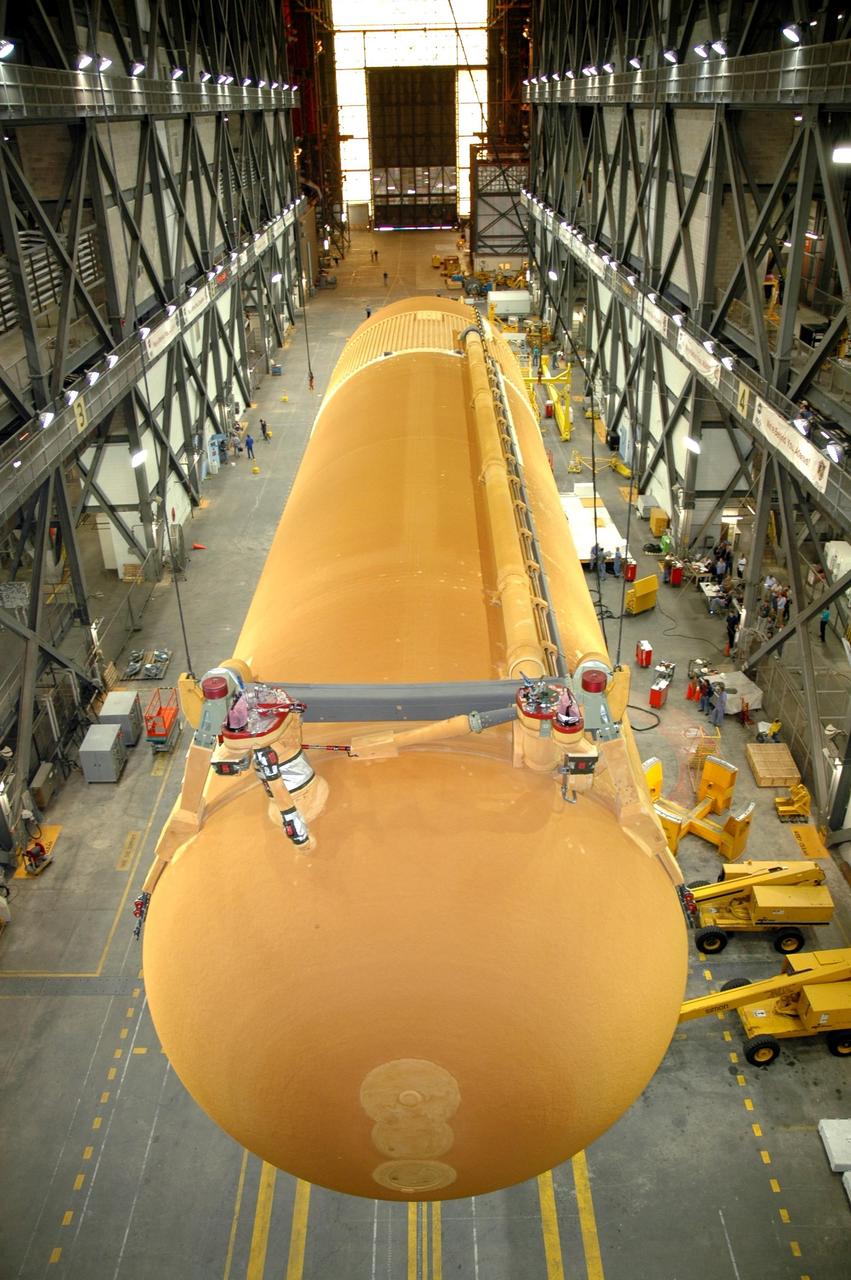
KENNEDY SPACE CENTER, FLA. - In NASA Kennedy Space Center's Vehicle Assembly Building, the newly delivered external tank is lifted off its transporter. Designated ET-119, the 154-foot tank is being raised to vertical and then will be lifted into a checkout cell for further work. The tank, which will launch space shuttle Discovery on mission STS-121, will fly with many major safety changes, including the removal of the protuberance air load ramps. A large piece of foam from a ramp came off during the last shuttle launch in July 2005. The ramps were removed to eliminate a potential source of damaging debris to the space shuttle. The next launch of Discovery is scheduled for May 2006. Photo credit: NASA/Jim Grossmann
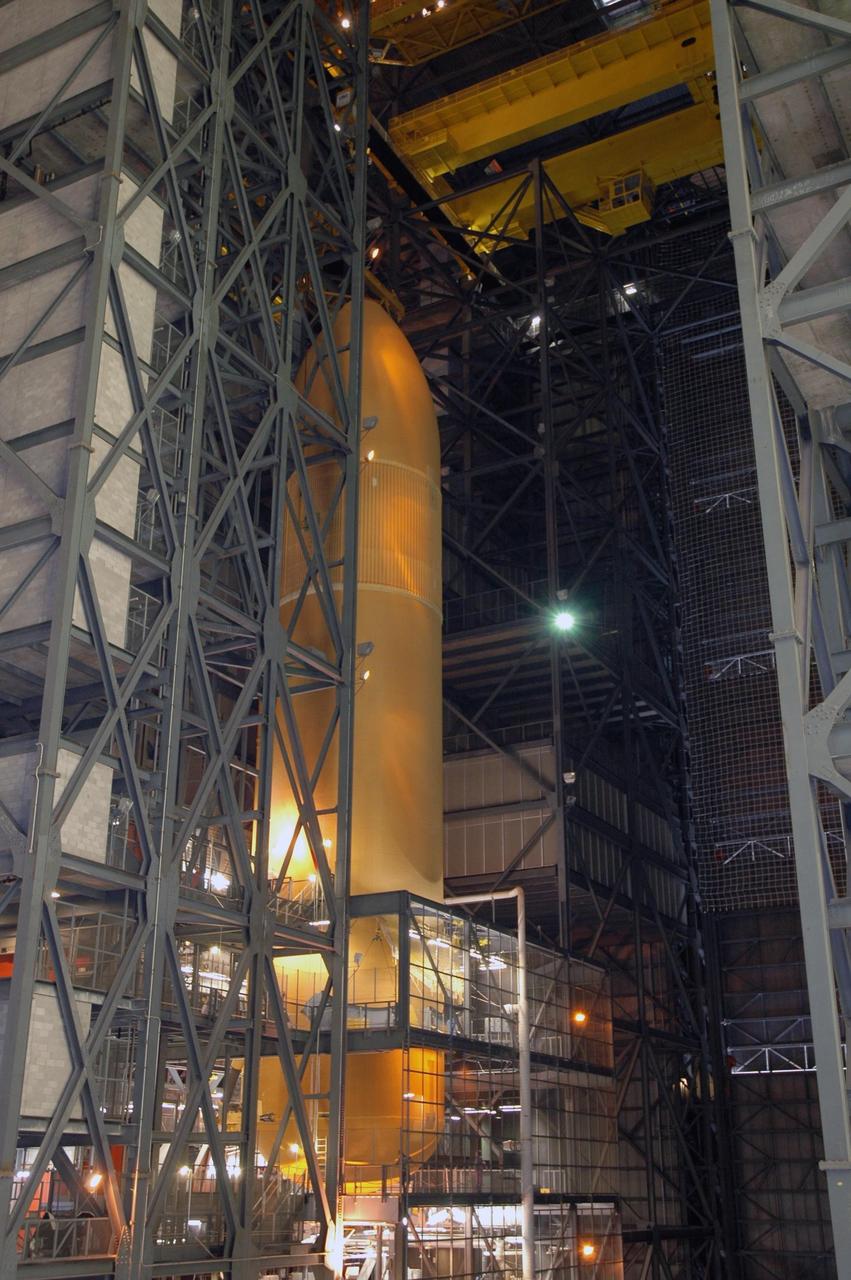
KENNEDY SPACE CENTER, FLA. - From the upper regions of NASA Kennedy Space Center's Vehicle Assembly Building, the newly delivered external tank is lowered into a checkout cell for further work. Designated ET-119, the 154-foot tank will be lifted into a checkout cell for further work. The tank, which will launch space shuttle Discovery on mission STS-121, will fly with many major safety changes, including the removal of the protuberance air load ramps. A large piece of foam from a ramp came off during the last shuttle launch in July 2005. The ramps were removed to eliminate a potential source of damaging debris to the space shuttle. The next launch of Discovery is scheduled for May 2006. Photo credit: NASA/Jim Grossmann
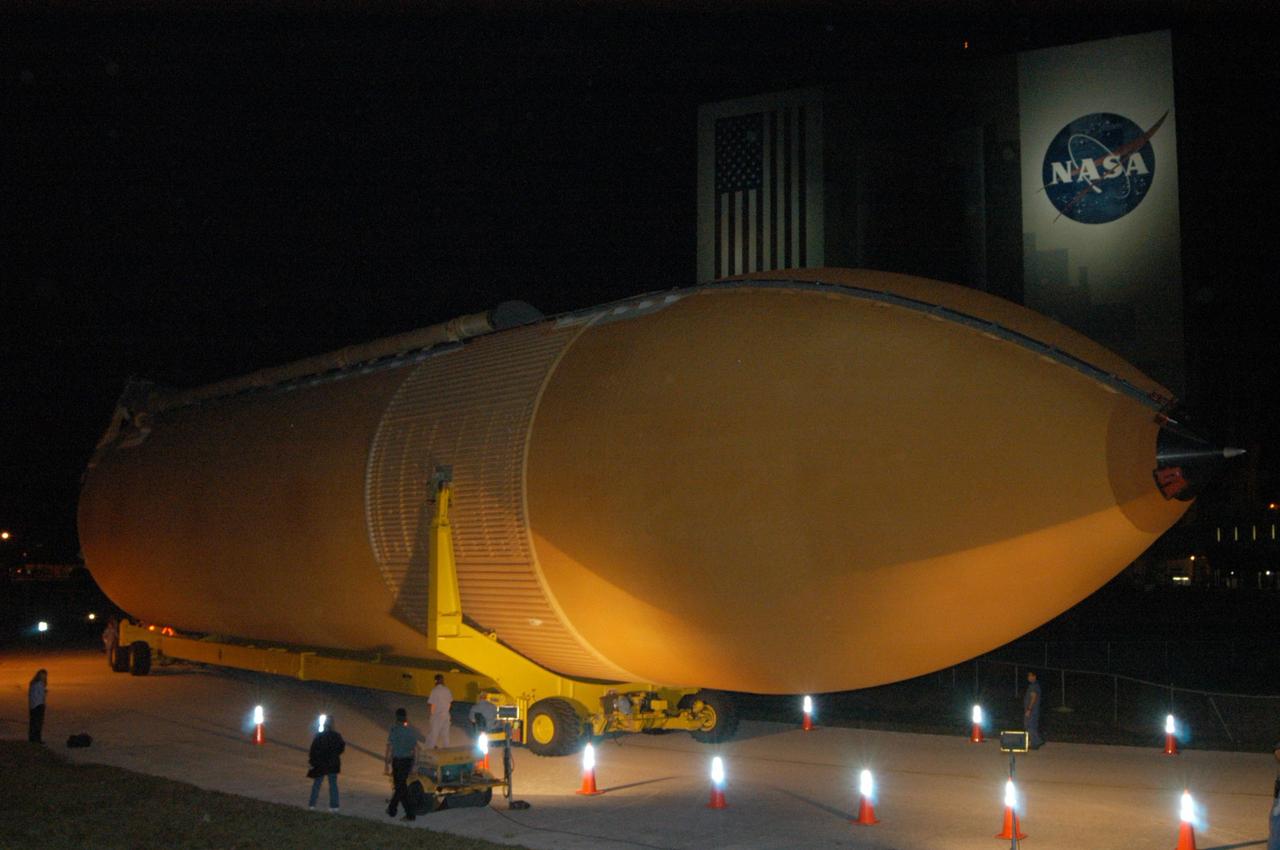
KENNEDY SPACE CENTER, FLA. - Technicians monitor the redesigned external fuel tank that will launch Space Shuttle Discovery on the next shuttle mission, STS-121, as it is moved to the Vehicle Assembly Building in the background. The Pegasus barge delivered the tank from the Michoud Assembly Facility in New Orleans to NASA's Kennedy Space Center. Once in the VAB, the tank will be lifted into a checkout cell for further work. The tank, designated ET-119, will fly with many major safety changes, including the removal of the protuberance air load ramps. A large piece of foam from a ramp came off during the last shuttle launch in July 2005. The ramps were removed to eliminate a potential source of damaging debris to the space shuttle. The next launch of Discovery is scheduled for May 2006.

KENNEDY SPACE CENTER, FLA. - The redesigned external fuel tank that will launch Space Shuttle Discovery on the next shuttle mission, STS-121, is towed from the Launch Complex 39 turn basin to the Vehicle Assembly Building. The Pegasus barge delivered the tank from the Michoud Assembly Facility in New Orleans to NASA's Kennedy Space Center. After the tank is moved into the VAB, it will be lifted into a checkout cell for further work. The tank, designated ET-119, will fly with many major safety changes, including the removal of the protuberance air load ramps. A large piece of foam from a ramp came off during the last shuttle launch in July 2005. The ramps were removed to eliminate a potential source of damaging debris to the space shuttle. The next launch of Discovery is scheduled for May 2006.
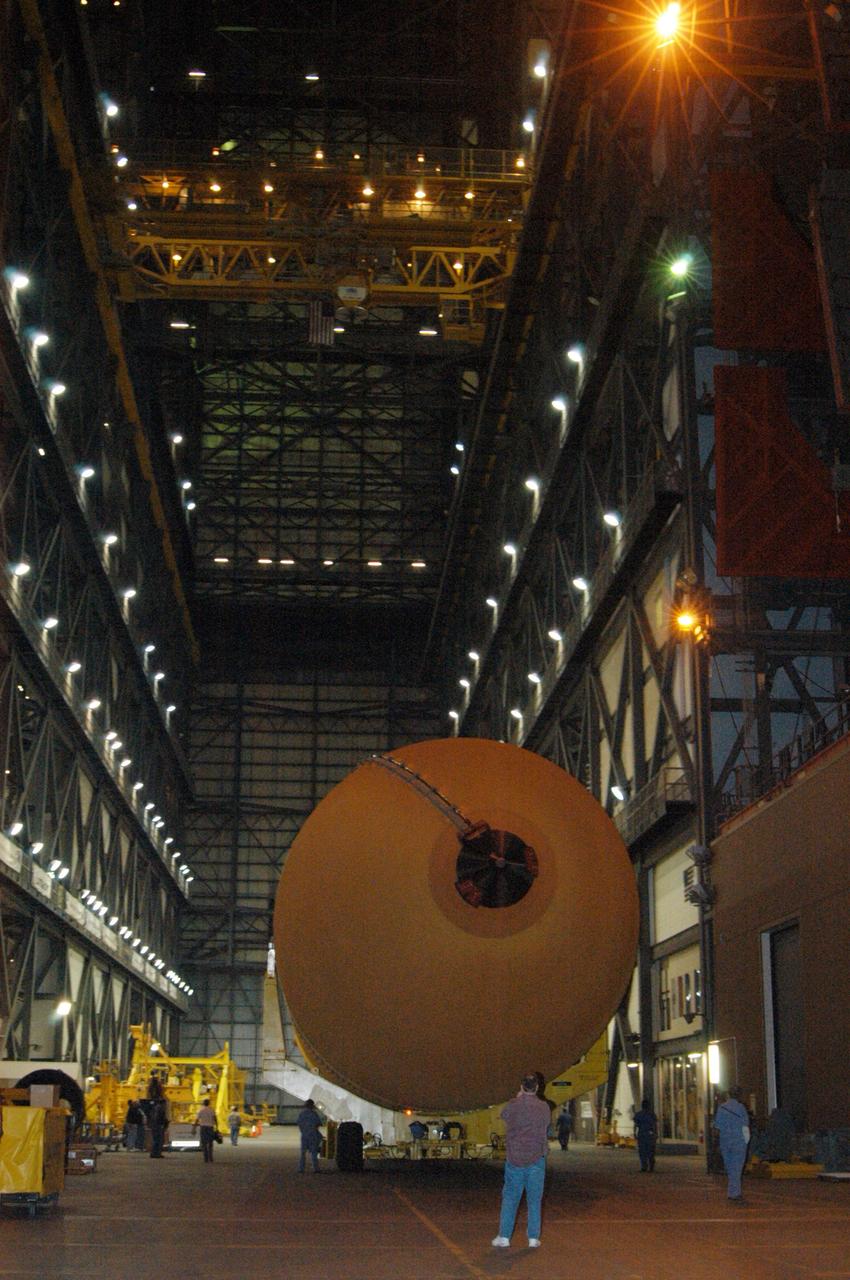
KENNEDY SPACE CENTER, FLA. - The redesigned external fuel tank that will launch Space Shuttle Discovery on the next shuttle mission, STS-121, arrives safely in the transfer aisle of the Vehicle Assembly Building. The Pegasus barge delivered the tank from the Michoud Assembly Facility in New Orleans to NASA's Kennedy Space Center. Next, the tank will be lifted into a checkout cell for further work. The tank, designated ET-119, will fly with many major safety changes, including the removal of the protuberance air load ramps. A large piece of foam from a ramp came off during the last shuttle launch in July 2005. The ramps were removed to eliminate a potential source of damaging debris to the space shuttle. The next launch of Discovery is scheduled for May 2006.
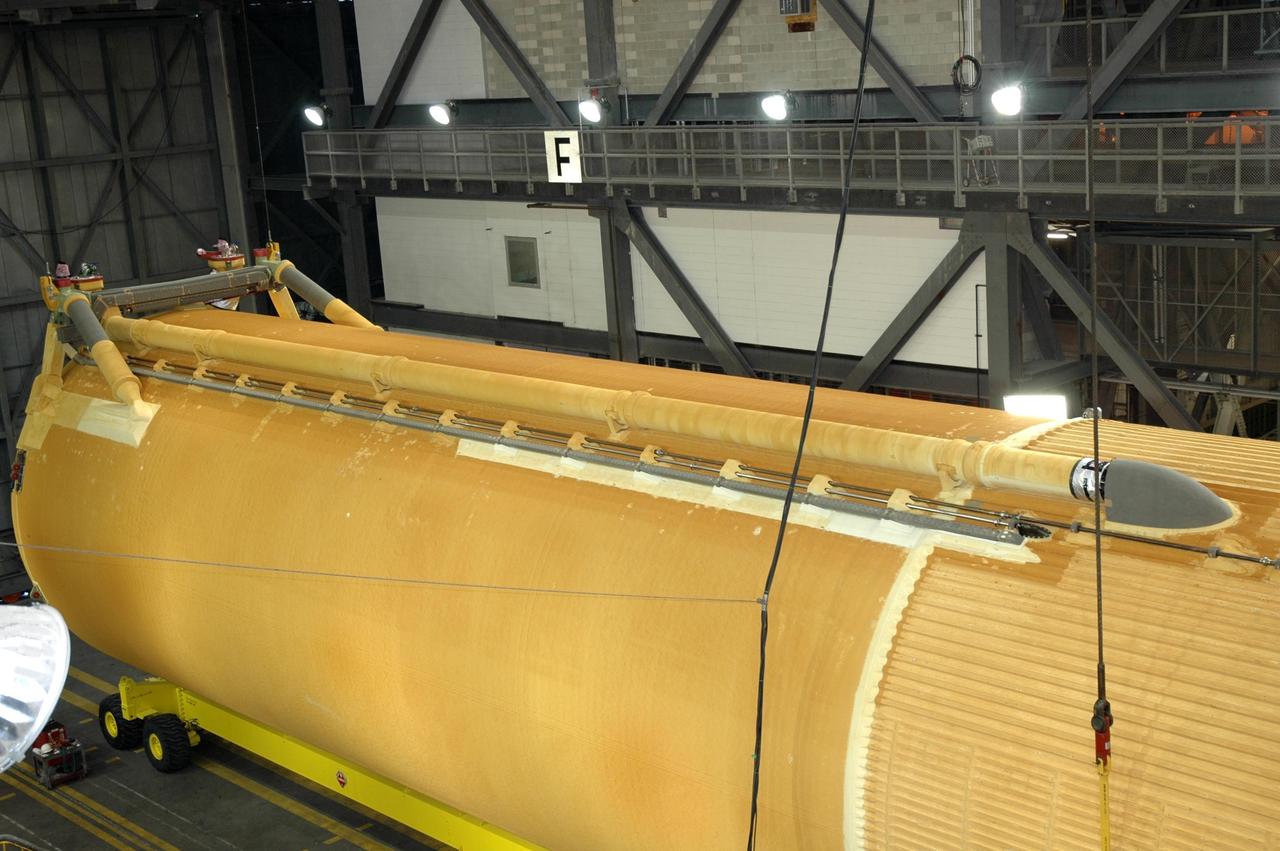
KENNEDY SPACE CENTER, FLA. - In NASA Kennedy Space Center's Vehicle Assembly Building, a crane has been attached to the newly delivered external tank, which is resting on a transporter in the transfer aisle. Designated ET-119, the 154-foot tank will be raised to vertical and lifted into a checkout cell for further work. The tank, which will launch space shuttle Discovery on mission STS-121, will fly with many major safety changes, including the removal of the protuberance air load ramps. A large piece of foam from a ramp came off during the last shuttle launch in July 2005. The ramps were removed to eliminate a potential source of damaging debris to the space shuttle. The next launch of Discovery is scheduled for May 2006. Photo credit: NASA/Jim Grossmann
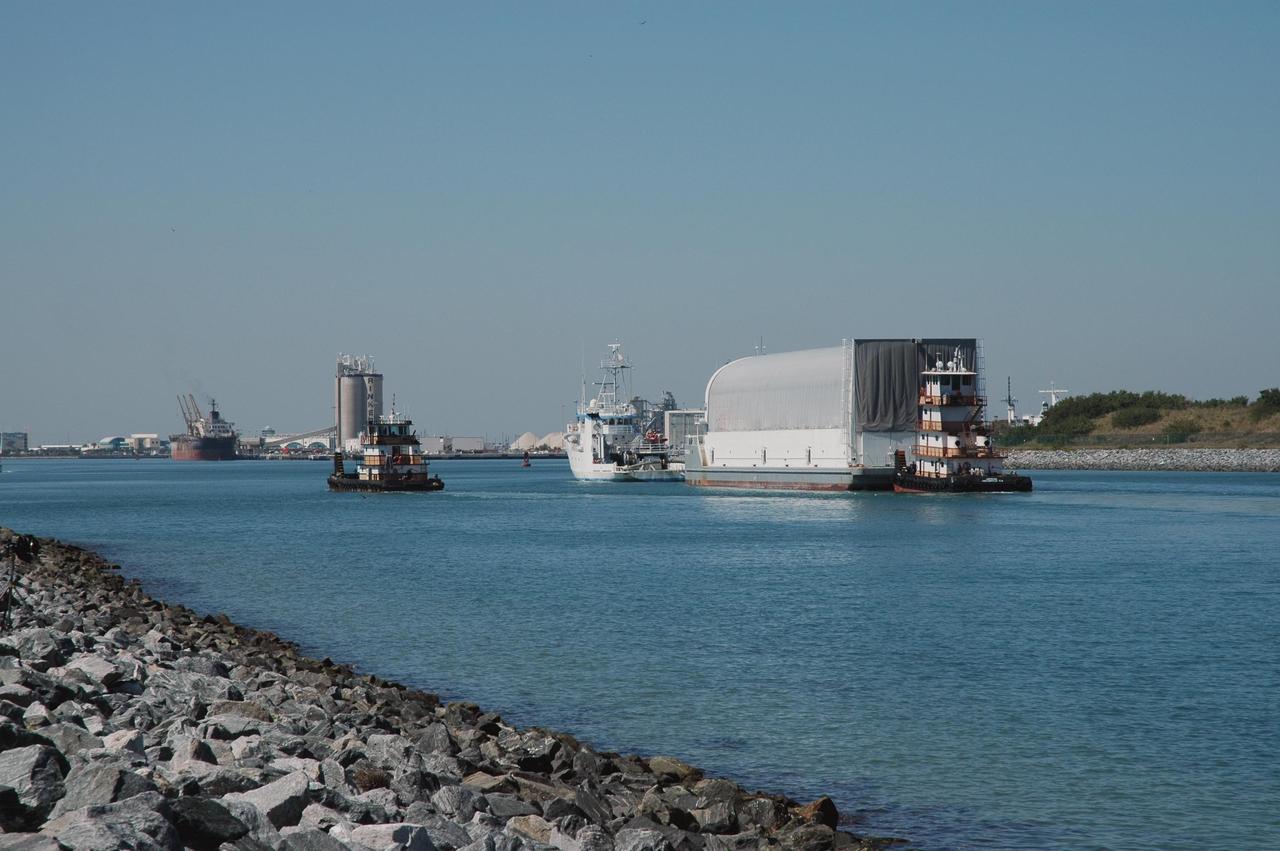
KENNEDY SPACE CENTER, FLA. - The Freedom Star tows the Pegasus barge through Port Canaveral, the last leg of its journey from the Michoud Assembly Facility in New Orleans to Kennedy Space Center. The barge carries the redesigned external fuel tank that will launch Space Shuttle Discovery on the next shuttle mission, STS-121. After off-loading, the tank will be moved into the Vehicle Assembly Building and lifted into a checkout cell for further work. The tank, designated ET-119, will fly with many major safety changes, including the removal of the protuberance air load ramps. A large piece of foam from a ramp came off during the last shuttle launch in July 2005. The ramps were removed to eliminate a potential source of damaging debris to the space shuttle. The next launch of Discovery is scheduled for May 2006.
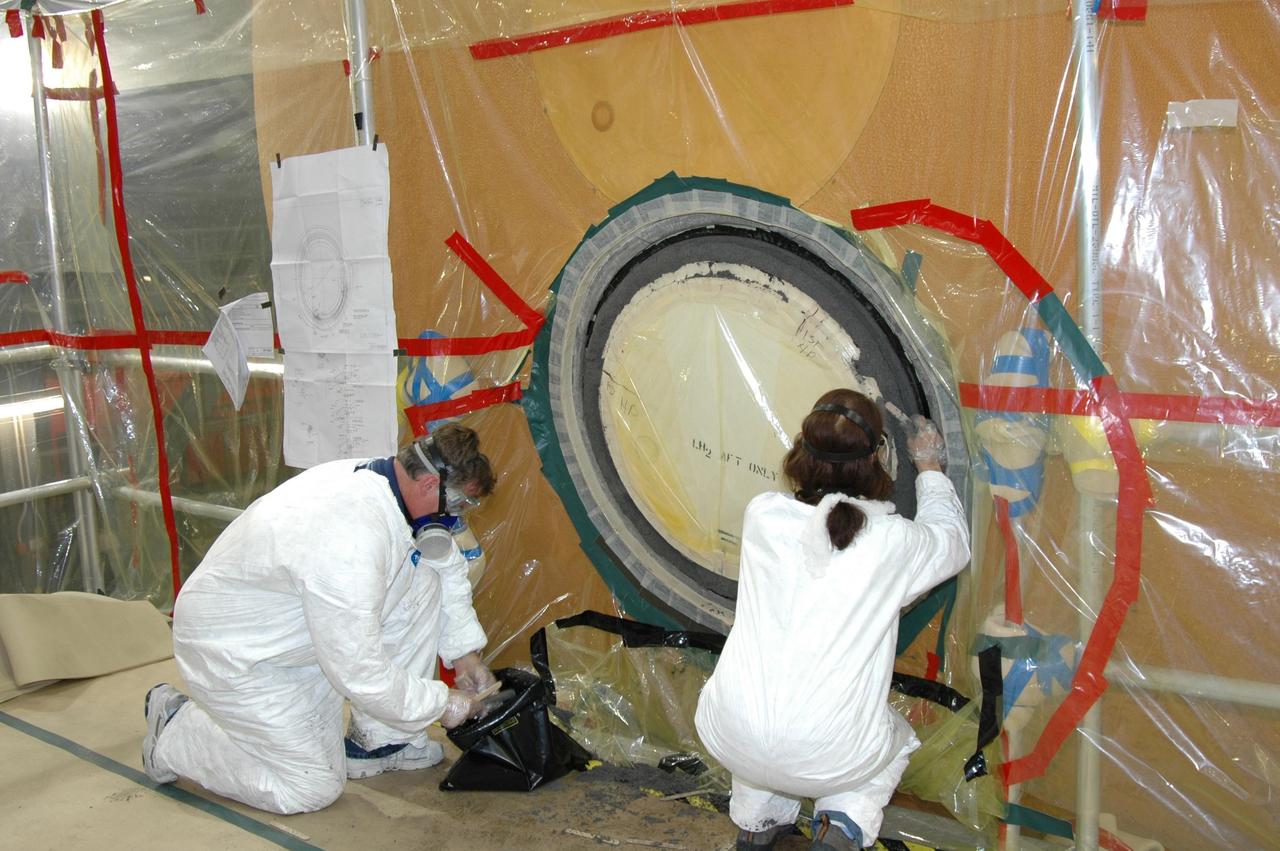
KENNEDY SPACE CENTER, FLA. -- In the transfer aisle of the Vehicle Assembly Building, workers pack type 2 ablator over the bolts around the "manhole" or cover on the bottom of external tank number 119. The manhole was removed to access the area where the tank's four liquid hydrogen engine cutoff sensors were replaced. The tank is being prepared to launch Space Shuttle Discovery on mission STS-121 in July. Photo credit: NASA/Jim Grossmann
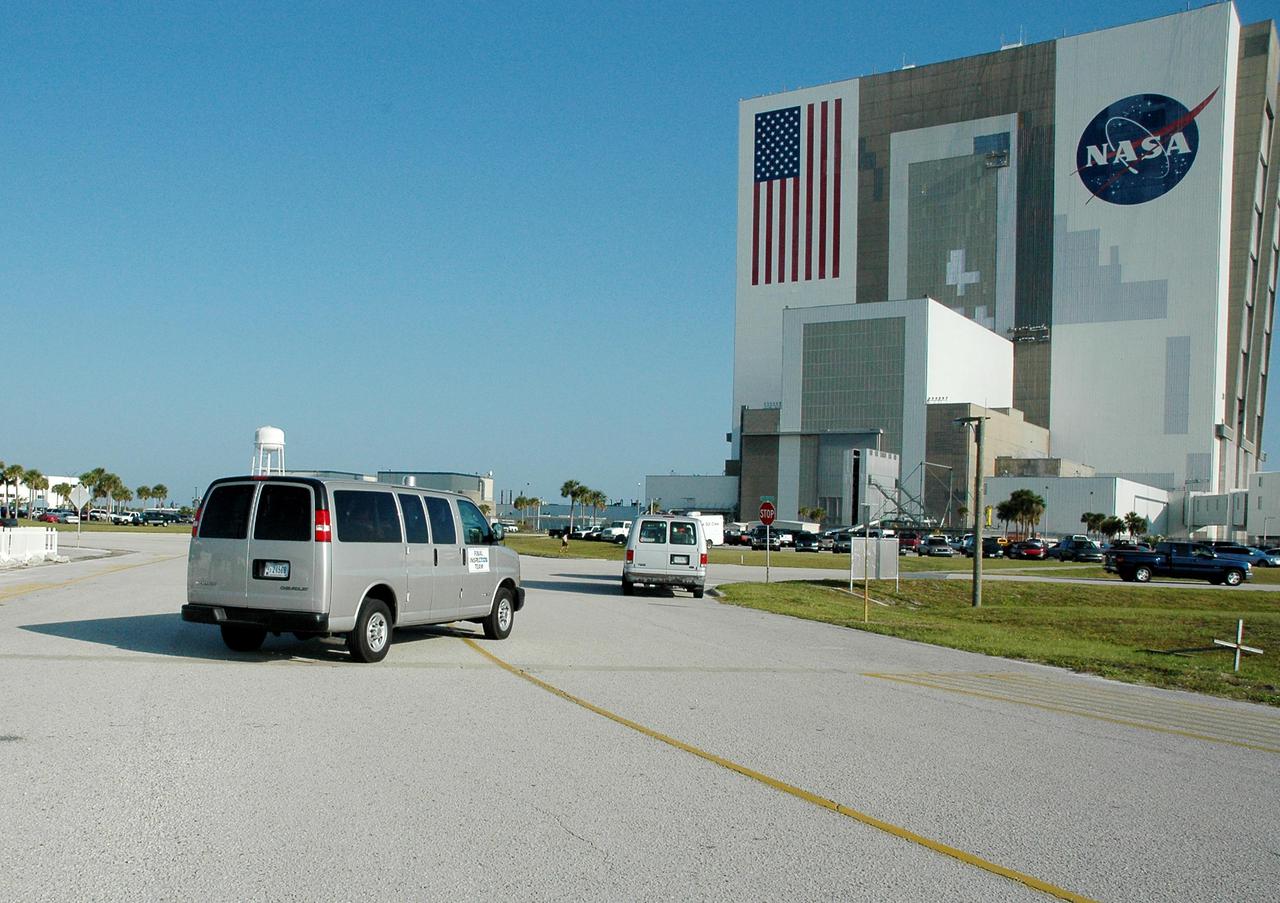
KENNEDY SPACE CENTER, FLA. - Members of the Final Inspection Team convoy to Launch Pad 39B to support an External Tank (ET) tanking test. This team conducts a preflight walkdown of the vehicle and pad during the hold at T-3 hours on launch day. The tanking test is designed to evaluate how the tank, orbiter, solid rocket boosters and ground systems perform under 'cryo-load,' when the tank is filled with the two ultra-low-temperature propellants. The tank filling and draining portion of the test takes about 11 hours. The test also includes a simulated countdown through the hold at T-31 seconds. The test is being conducted to troubleshoot two issues identified by a tanking test held on April 14. Data is being collected to analyze the liquid hydrogen sensors that gave intermittent readings and the liquid hydrogen pressurization relief valve that cycled more times than standard. The tanking tests are part of preparations for Space Shuttle Discovery's Return to Flight mission, STS-114, to the International Space Station. The launch window extends from July 13 through July 31.
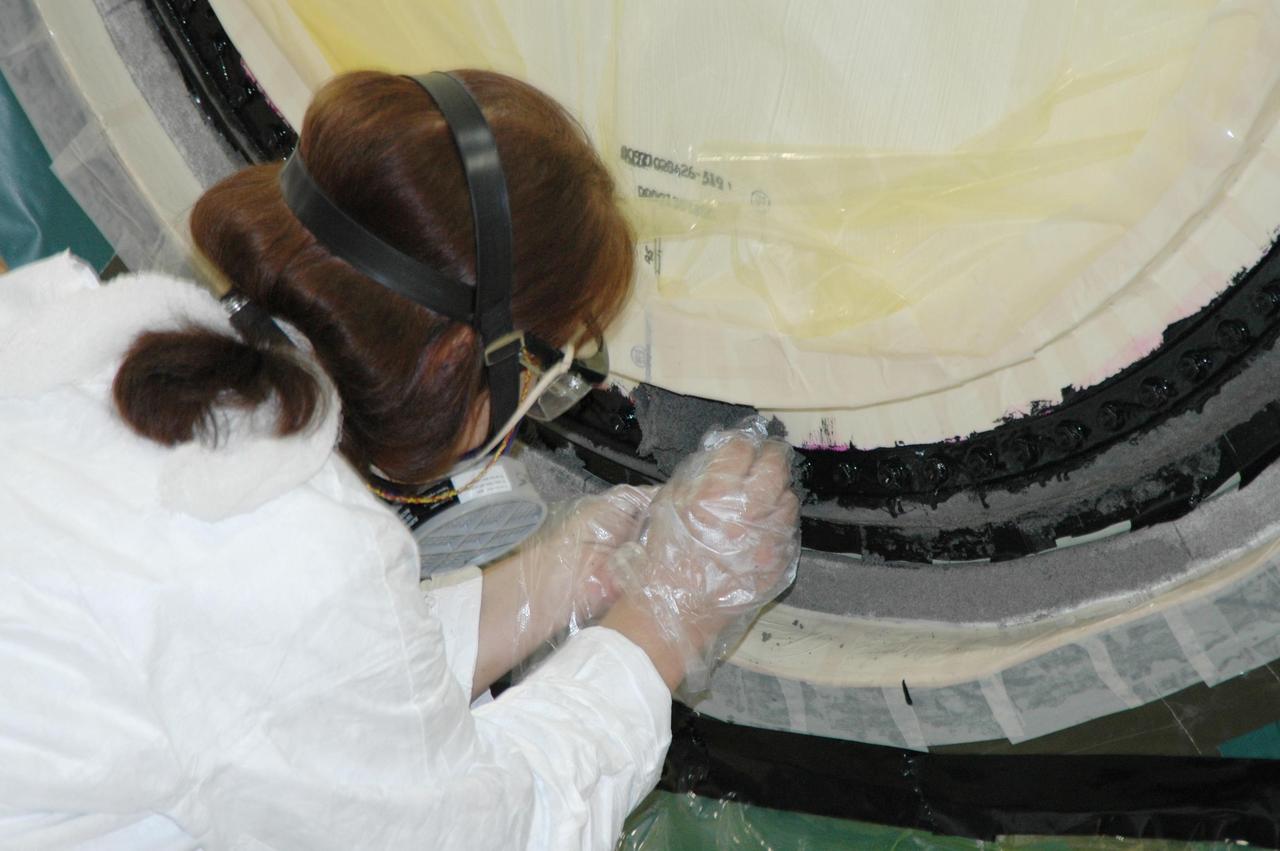
KENNEDY SPACE CENTER, FLA. -- In the transfer aisle of the Vehicle Assembly Building, a worker packs type 2 ablator over the bolts around the "manhole" or cover on the bottom of external tank number 119. The manhole was removed to access the area where the tank's four liquid hydrogen engine cutoff sensors were replaced. The tank is being prepared to launch Space Shuttle Discovery on mission STS-121 in July. Photo credit: NASA/Jim Grossmann
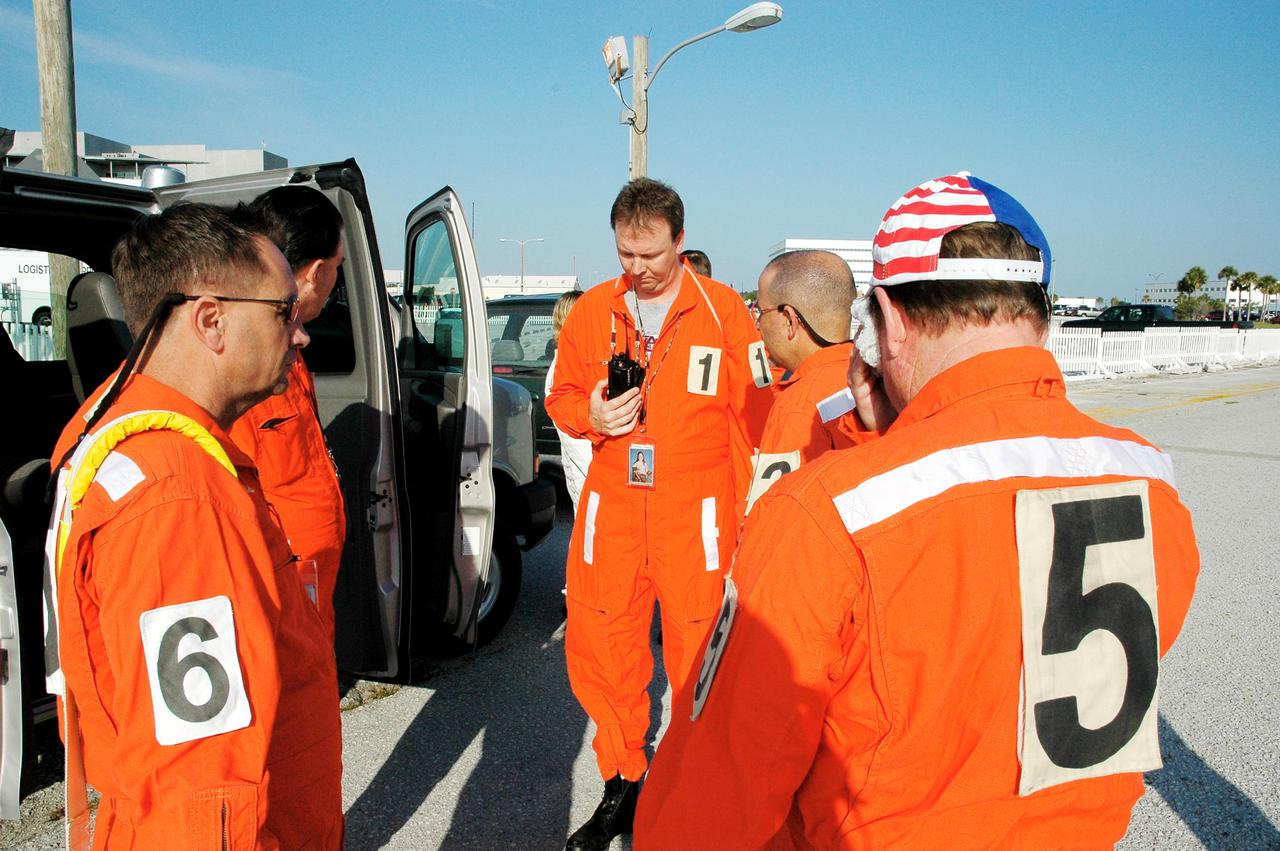
KENNEDY SPACE CENTER, FLA. - Members of the Final Inspection Team check their radios and Emergency Life Support Apparatus (ELSA) equipment before moving to Launch Pad 39B to support an External Tank (ET) tanking test. This team conducts a preflight walkdown of the vehicle and pad during the hold at T-3 hours on launch day. The tanking test is designed to evaluate how the tank, orbiter, solid rocket boosters and ground systems perform under 'cryo-load,' when the tank is filled with the two ultra-low-temperature propellants. The tank filling and draining portion of the test takes about 11 hours. The test also includes a simulated countdown through the hold at T-31 seconds. The test is being conducted to troubleshoot two issues identified by a tanking test held on April 14. Data is being collected to analyze the liquid hydrogen sensors that gave intermittent readings and the liquid hydrogen pressurization relief valve that cycled more times than standard. The tanking tests are part of preparations for Space Shuttle Discovery's Return to Flight mission, STS-114, to the International Space Station. The launch window extends from July 13 through July 31.
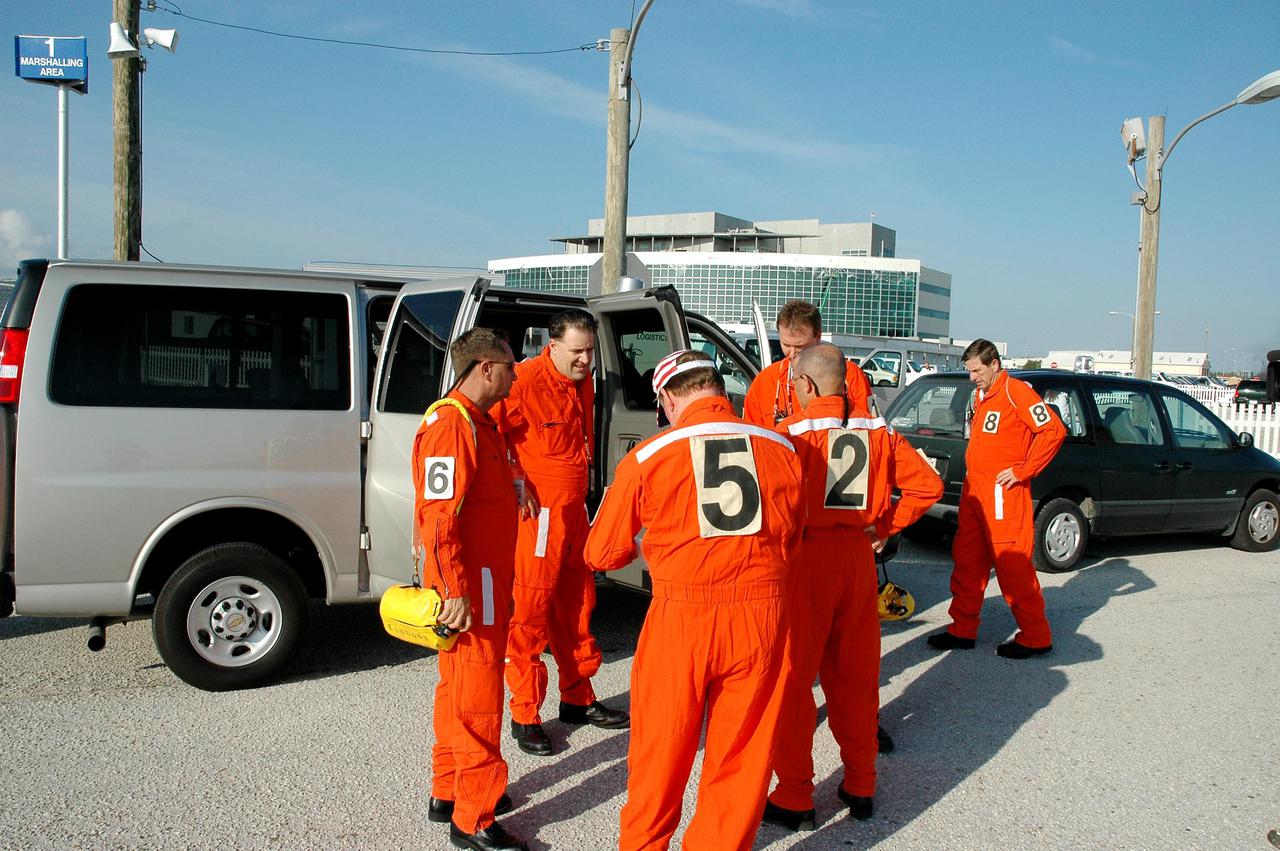
KENNEDY SPACE CENTER, FLA. - Members of the Final Inspection Team check their radios and Emergency Life Support Apparatus (ELSA) equipment before moving to Launch Pad 39B to support an External Tank (ET) tanking test. This team conducts a preflight walkdown of the vehicle and pad during the hold at T-3 hours on launch day. The tanking test is designed to evaluate how the tank, orbiter, solid rocket boosters and ground systems perform under 'cryo-load,' when the tank is filled with the two ultra-low-temperature propellants. The tank filling and draining portion of the test takes about 11 hours. The test also includes a simulated countdown through the hold at T-31 seconds. The test is being conducted to troubleshoot two issues identified by a tanking test held on April 14. Data is being collected to analyze the liquid hydrogen sensors that gave intermittent readings and the liquid hydrogen pressurization relief valve that cycled more times than standard. The tanking tests are part of preparations for Space Shuttle Discovery's Return to Flight mission, STS-114, to the International Space Station. The launch window extends from July 13 through July 31.
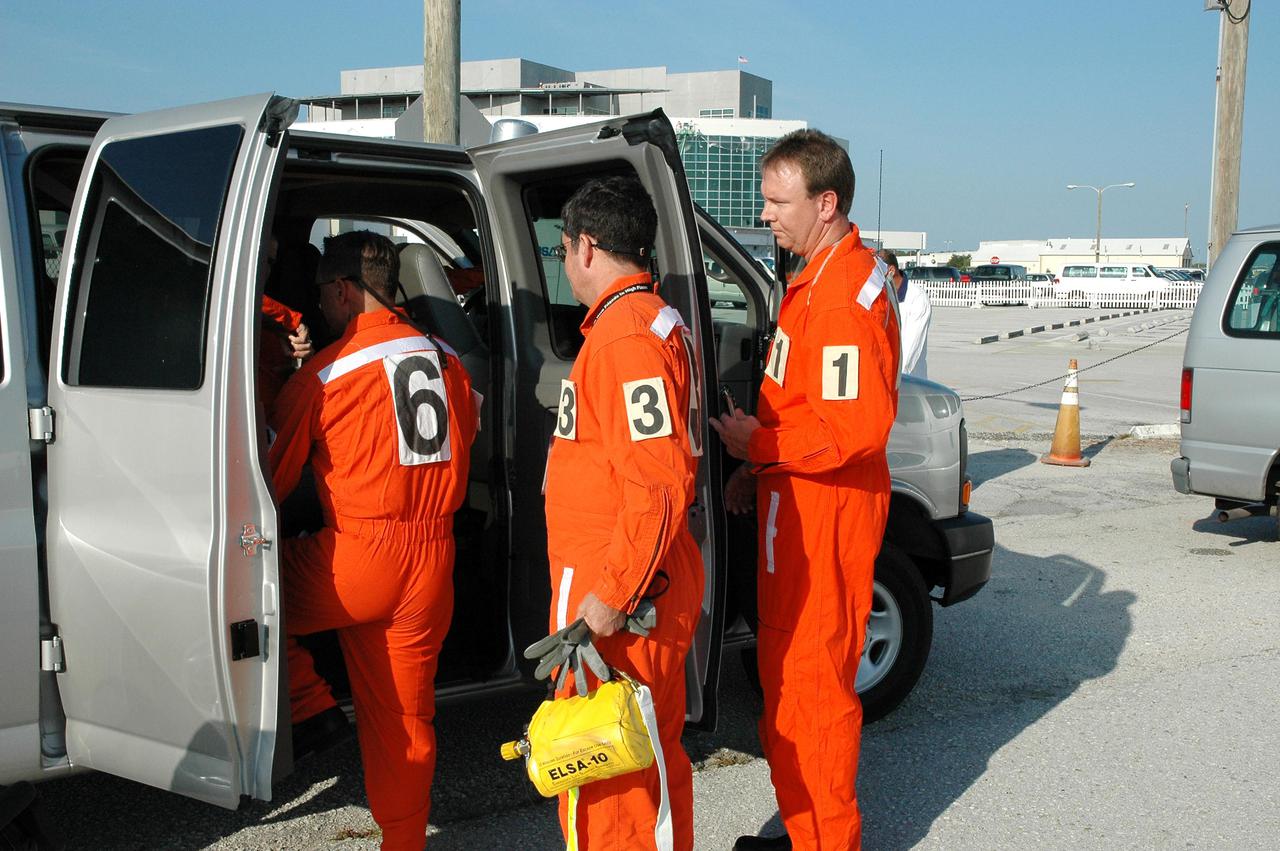
KENNEDY SPACE CENTER, FLA. - Members of the Final Inspection Team depart for Launch Pad 39B to support an External Tank (ET) tanking test. This team conducts a preflight walkdown of the vehicle and pad during the hold at T-3 hours on launch day. The tanking test is designed to evaluate how the tank, orbiter, solid rocket boosters and ground systems perform under 'cryo-load,' when the tank is filled with the two ultra-low-temperature propellants. The tank filling and draining portion of the test takes about 11 hours. The test also includes a simulated countdown through the hold at T-31 seconds. The test is being conducted to troubleshoot two issues identified by a tanking test held on April 14. Data is being collected to analyze the liquid hydrogen sensors that gave intermittent readings and the liquid hydrogen pressurization relief valve that cycled more times than standard. The tanking tests are part of preparations for Space Shuttle Discovery's Return to Flight mission, STS-114, to the International Space Station. The launch window extends from July 13 through July 31.
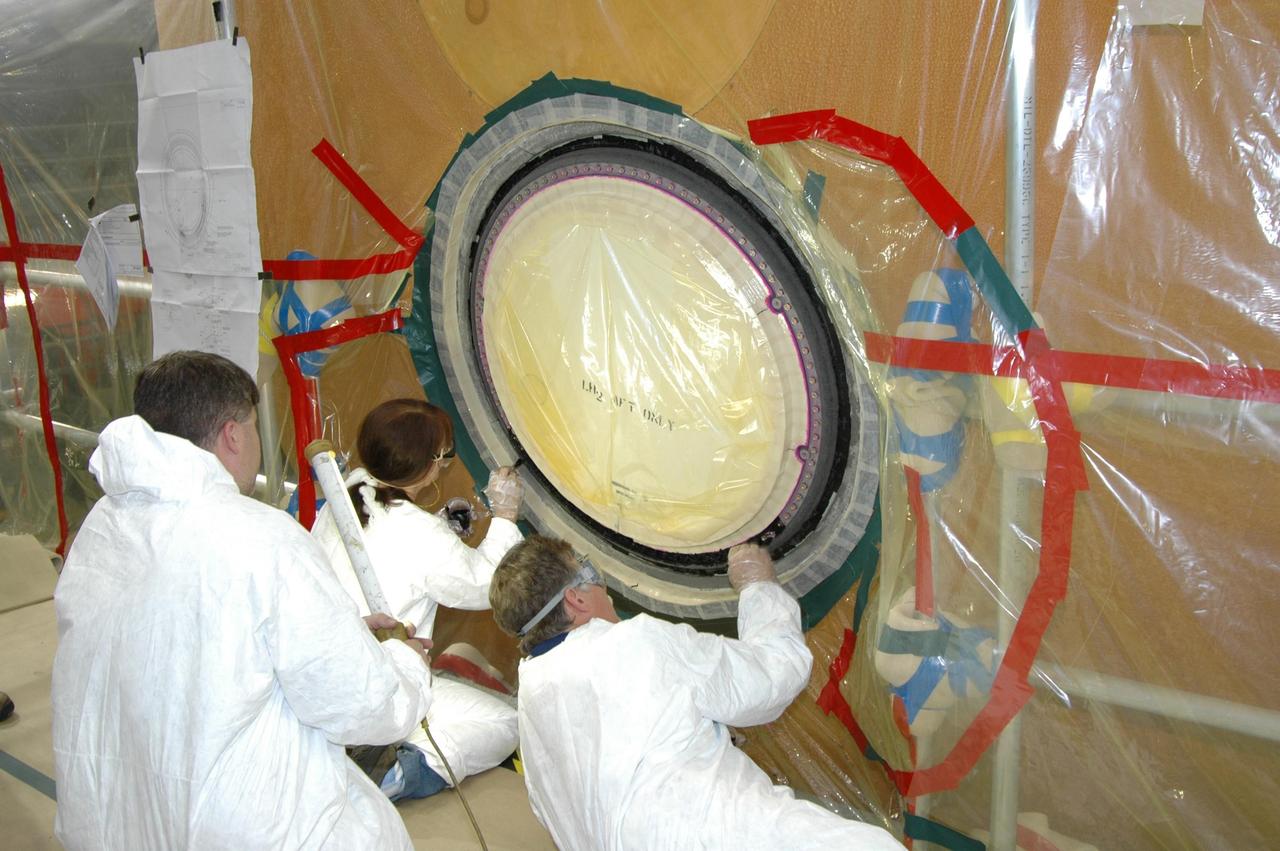
KENNEDY SPACE CENTER, FLA. -- In the transfer aisle of the Vehicle Assembly Building, workers pack type 2 ablator over the bolts around the "manhole" or cover on the bottom of external tank number 119. The manhole was removed to access the area where the tank's four liquid hydrogen engine cutoff sensors were replaced. The tank is being prepared to launch Space Shuttle Discovery on mission STS-121 in July. Photo credit: NASA/Jim Grossmann
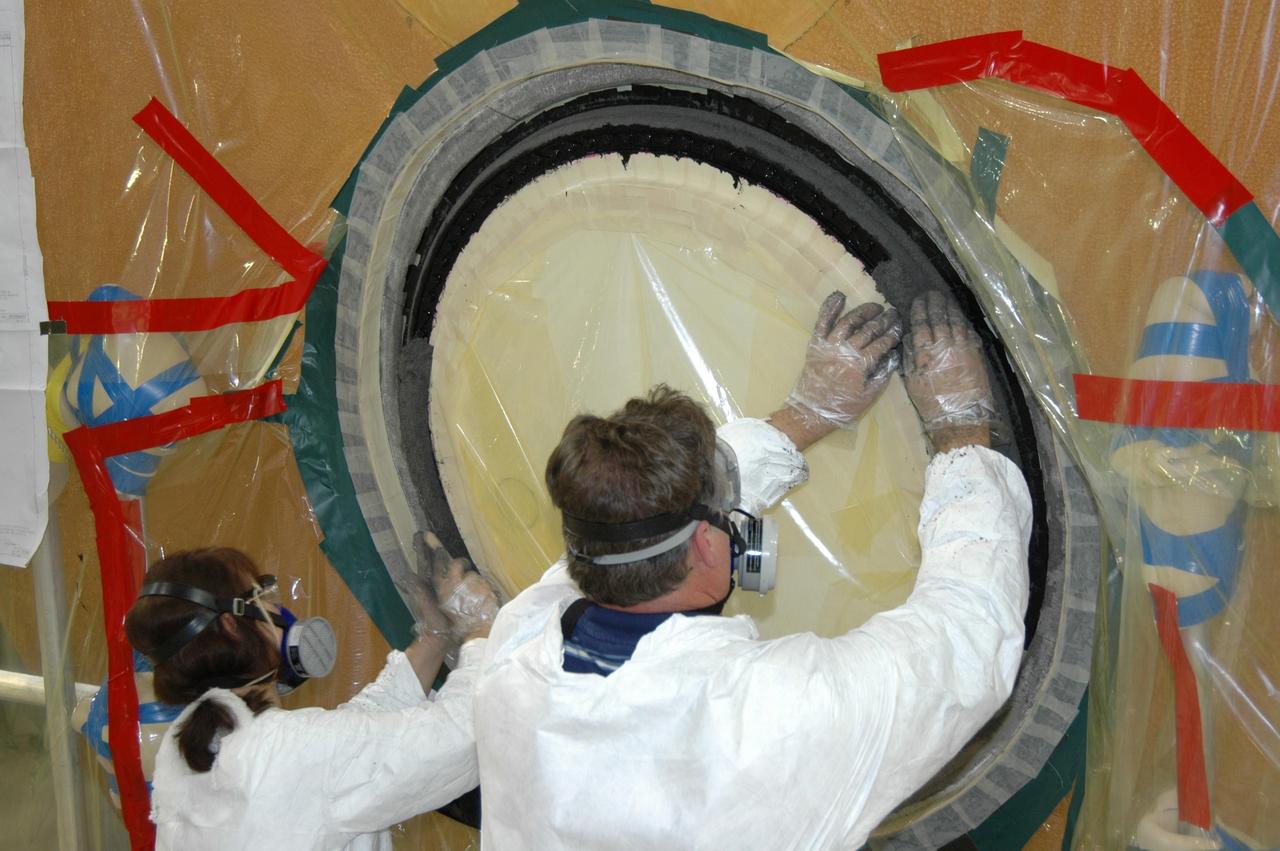
KENNEDY SPACE CENTER, FLA. -- In the transfer aisle of the Vehicle Assembly Building, workers pack type 2 ablator over the bolts around the "manhole" or cover on the bottom of external tank number 119. The manhole was removed to access the area where the tank's four liquid hydrogen engine cutoff sensors were replaced. The tank is being prepared to launch Space Shuttle Discovery on mission STS-121 in July. Photo credit: NASA/Jim Grossmann
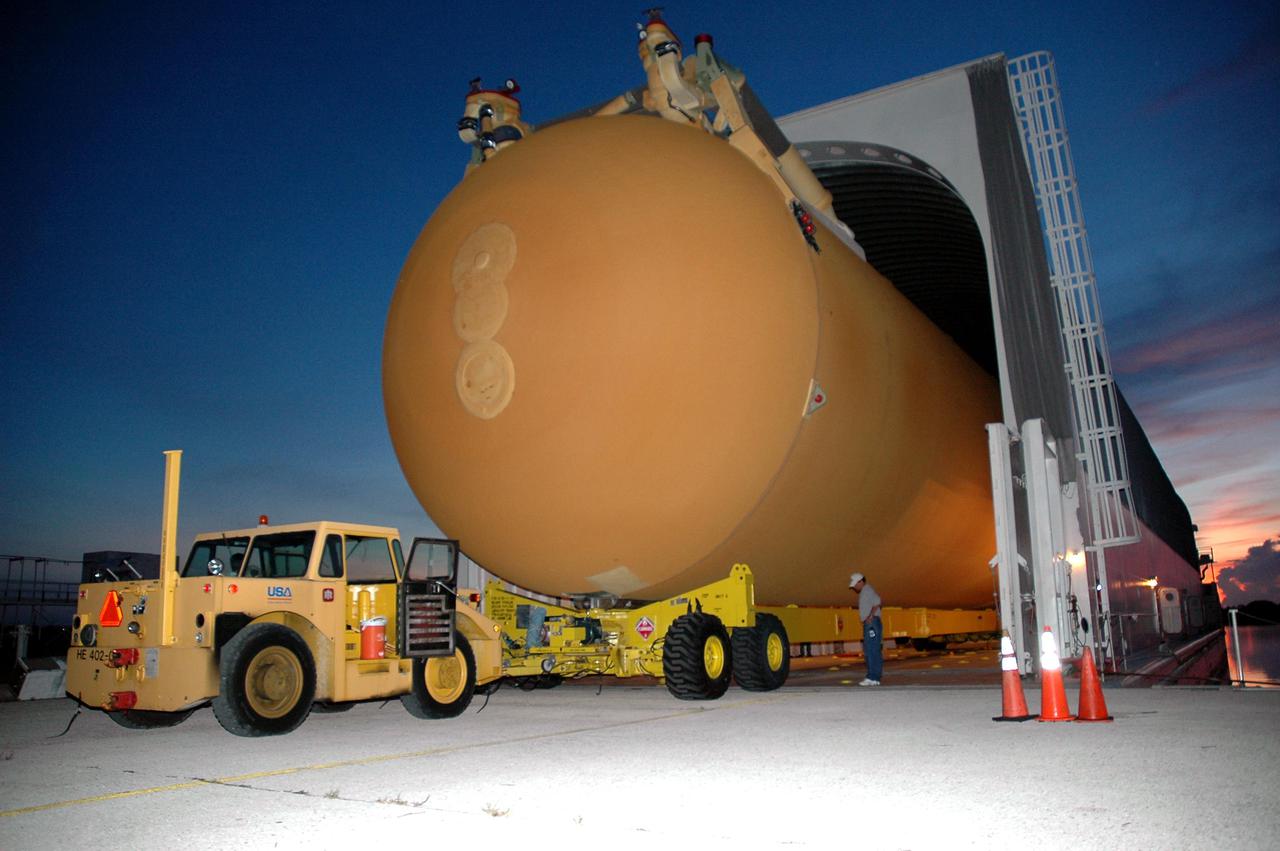
KENNEDY SPACE CENTER, FLA. - Under pre-dawn skies of blue and red, External Tank 119 is loaded onto the barge at the Turn Basin. The tank will embark on a voyage around the Florida peninsula to the Michoud Assembly Facility in New Orleans. Delivered to KSC in June, ET-119 is the third newly redesigned tank.
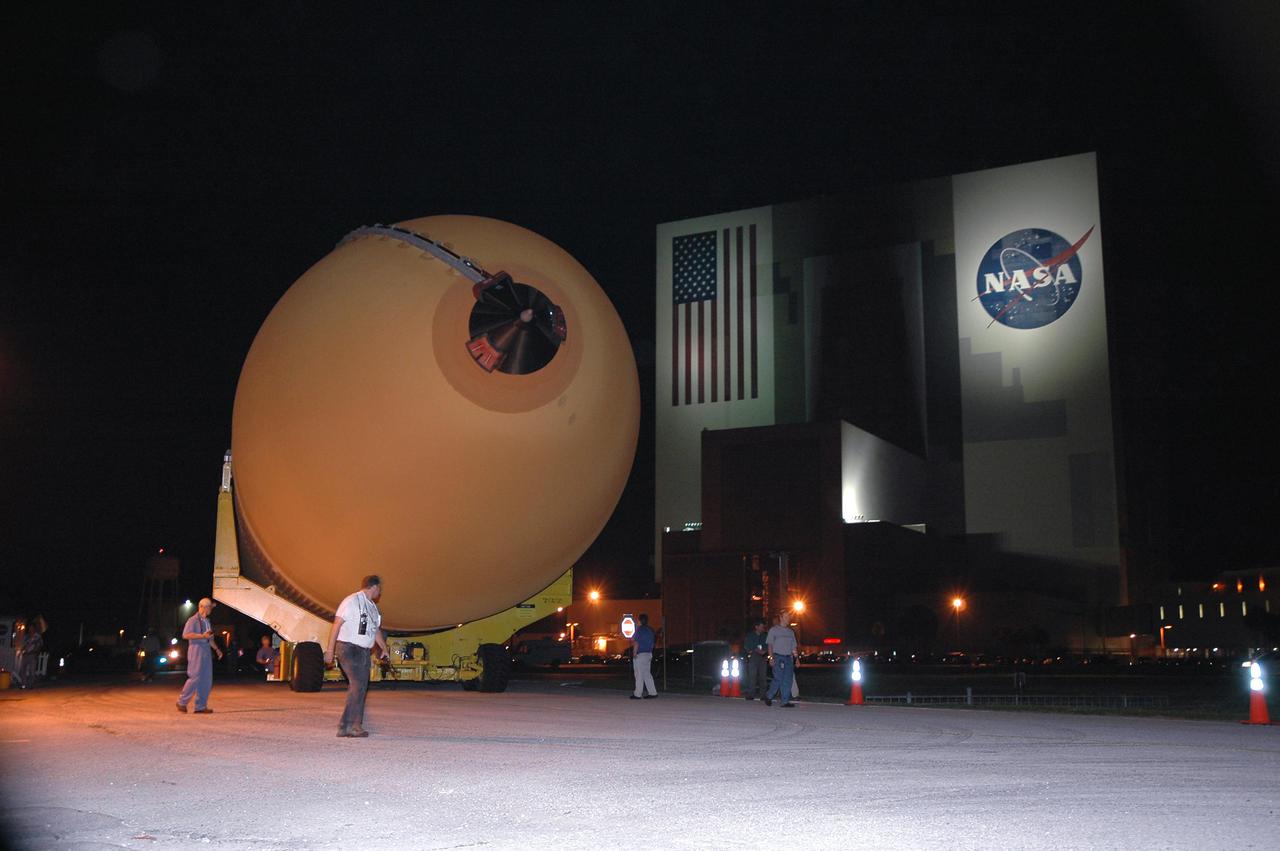
KENNEDY SPACE CENTER, FLA. - Just before dawn, External Tank 119 rolls away from NASA Kennedy Space Center’s Vehicle Assembly Building. It is being moved to the barge at the Turn Basin. The tank will embark on a voyage around the Florida peninsula to the Michoud Assembly Facility in New Orleans. Delivered to KSC in June, ET-119 is the third newly redesigned tank.
KENNEDY SPACE CENTER, FLA. - Inside NASA Kennedy Space Center’s Vehicle Assembly Building, External Tank 119 is lowered onto a transporter in the transfer aisle to be moved to the barge at the Turn Basin. The tank will embark on a voyage around the Florida peninsula to the Michoud Assembly Facility in New Orleans. Delivered to KSC in June, ET-119 is the third newly redesigned tank.

KENNEDY SPACE CENTER, FLA. - Just before dawn, External Tank 119 rolls out of NASA Kennedy Space Center’s Vehicle Assembly Building. It is being moved to the barge at the Turn Basin. The tank will embark on a voyage around the Florida peninsula to the Michoud Assembly Facility in New Orleans. Delivered to KSC in June, ET-119 is the third newly redesigned tank.
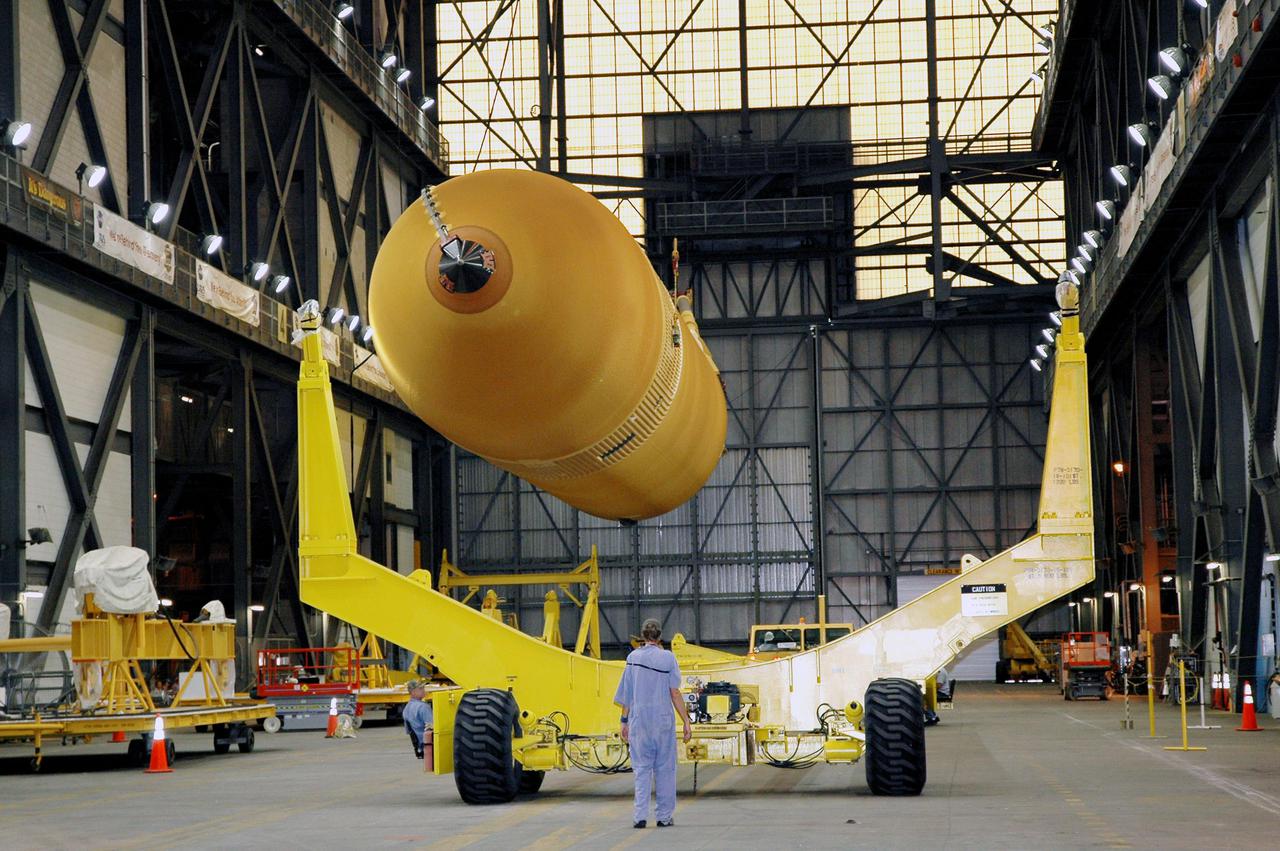
KENNEDY SPACE CENTER, FLA. - Inside NASA Kennedy Space Center’s Vehicle Assembly Building, External Tank 119 is lowered onto a transporter in the transfer aisle to be moved to the barge at the Turn Basin. The tank will embark on a voyage around the Florida peninsula to the Michoud Assembly Facility in New Orleans. Delivered to KSC in June, ET-119 is the third newly redesigned tank.
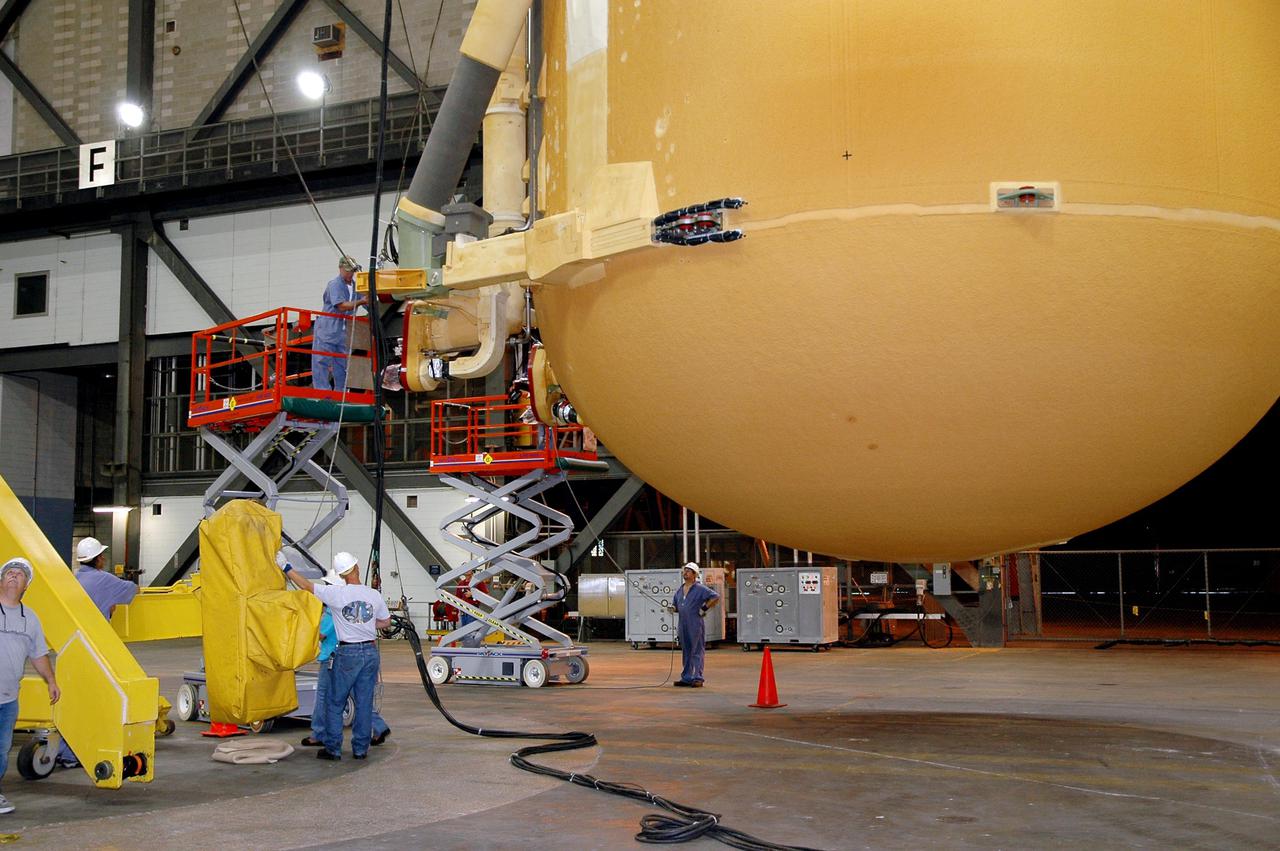
KENNEDY SPACE CENTER, FLA. - Inside NASA Kennedy Space Center’s Vehicle Assembly Building, workers secure the cranes onto External Tank 119 that enable the tank to be lowered to a horizontal position. Then it will be placed on a transporter in the transfer aisle to be moved to the barge at the Turn Basin. The tank will embark on a voyage around the Florida peninsula to the Michoud Assembly Facility in New Orleans. Delivered to KSC in June, ET-119 is the third newly redesigned tank.
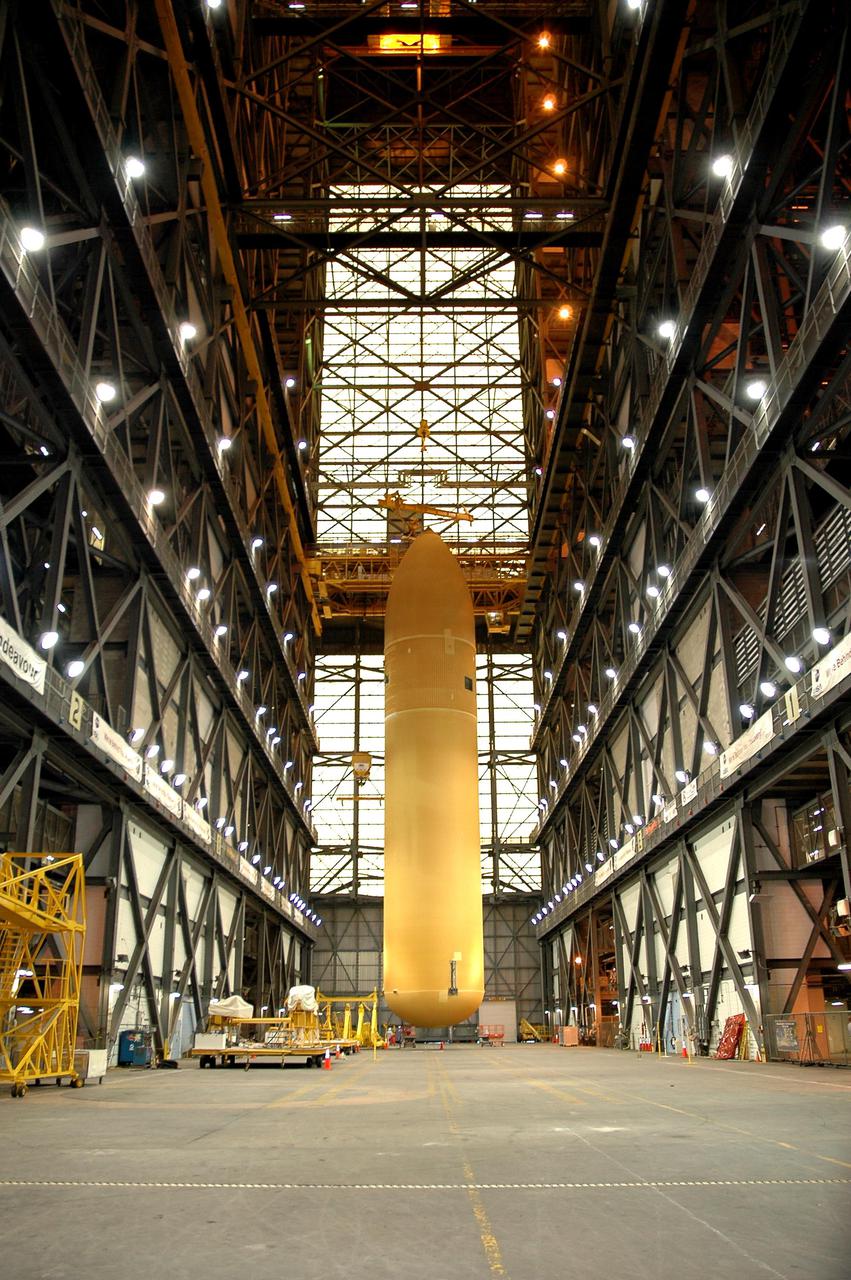
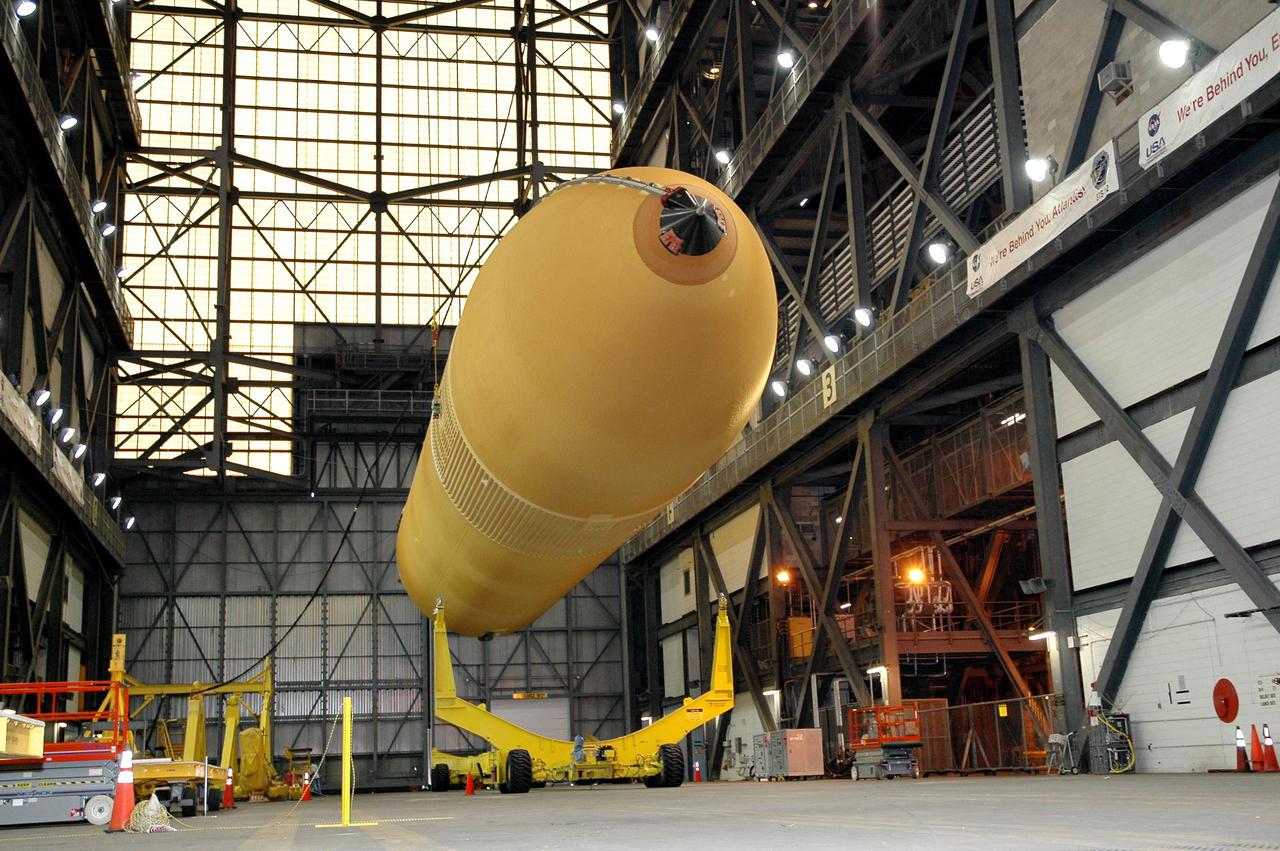
KENNEDY SPACE CENTER, FLA. - Inside NASA Kennedy Space Center’s Vehicle Assembly Building, External Tank 119 is lowered to a point just above the transfer aisle. There it will be lowered horizontally and placed on a transporter in the transfer aisle to be moved to the barge at the Turn Basin. The tank will embark on a voyage around the Florida peninsula to the Michoud Assembly Facility in New Orleans. Delivered to KSC in June, ET-119 is the third newly redesigned tank.

KENNEDY SPACE CENTER, FLA. - Inside NASA Kennedy Space Center’s Vehicle Assembly Building, External Tank 119 is placed on a transporter in the transfer aisle to be moved to the barge at the Turn Basin. The tank will embark on a voyage around the Florida peninsula to the Michoud Assembly Facility in New Orleans. Delivered to KSC in June, ET-119 is the third newly redesigned tank.
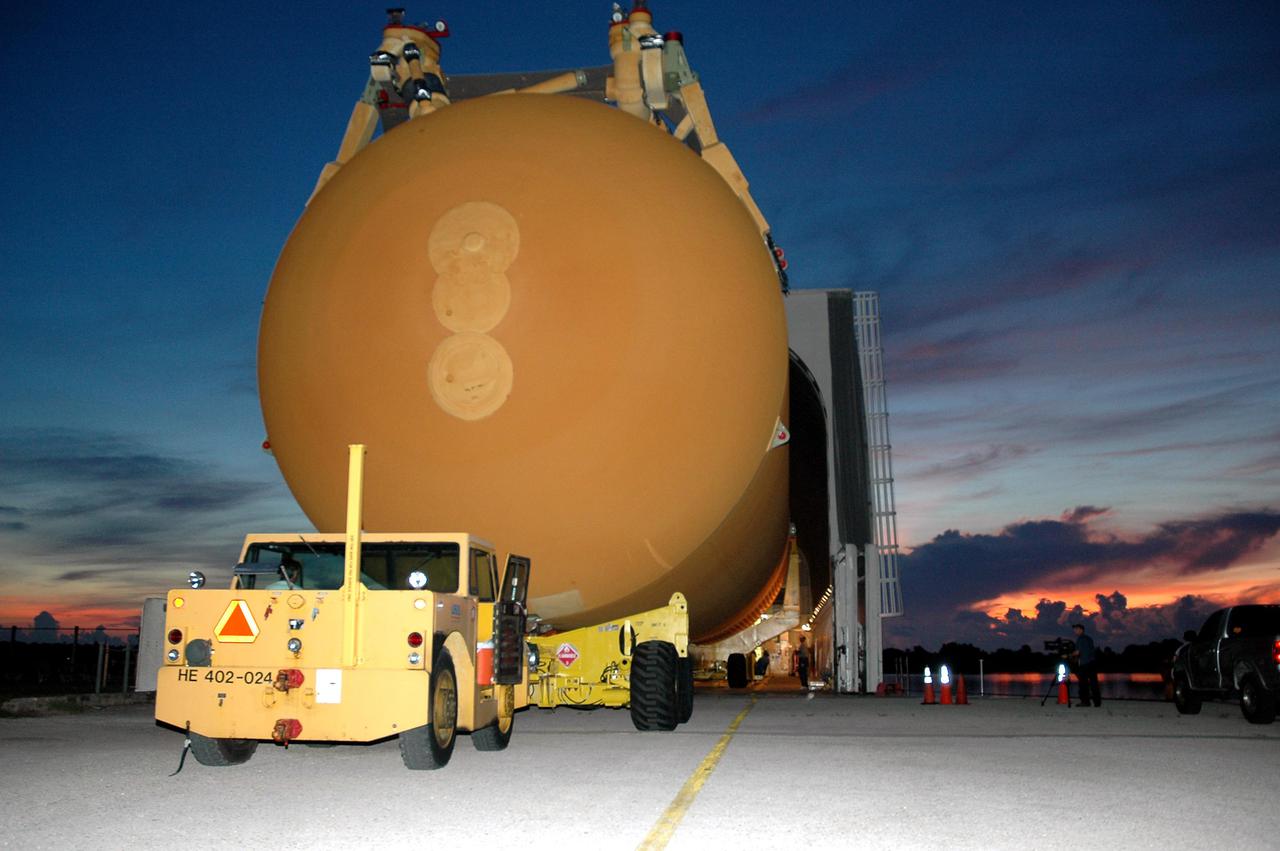
KENNEDY SPACE CENTER, FLA. - Under pre-dawn skies of blue and red, External Tank 119 is towed away from NASA Kennedy Space Center’s Vehicle Assembly Building. It is being moved to the barge at the Turn Basin. The tank will embark on a voyage around the Florida peninsula to the Michoud Assembly Facility in New Orleans. Delivered to KSC in June, ET-119 is the third newly redesigned tank.
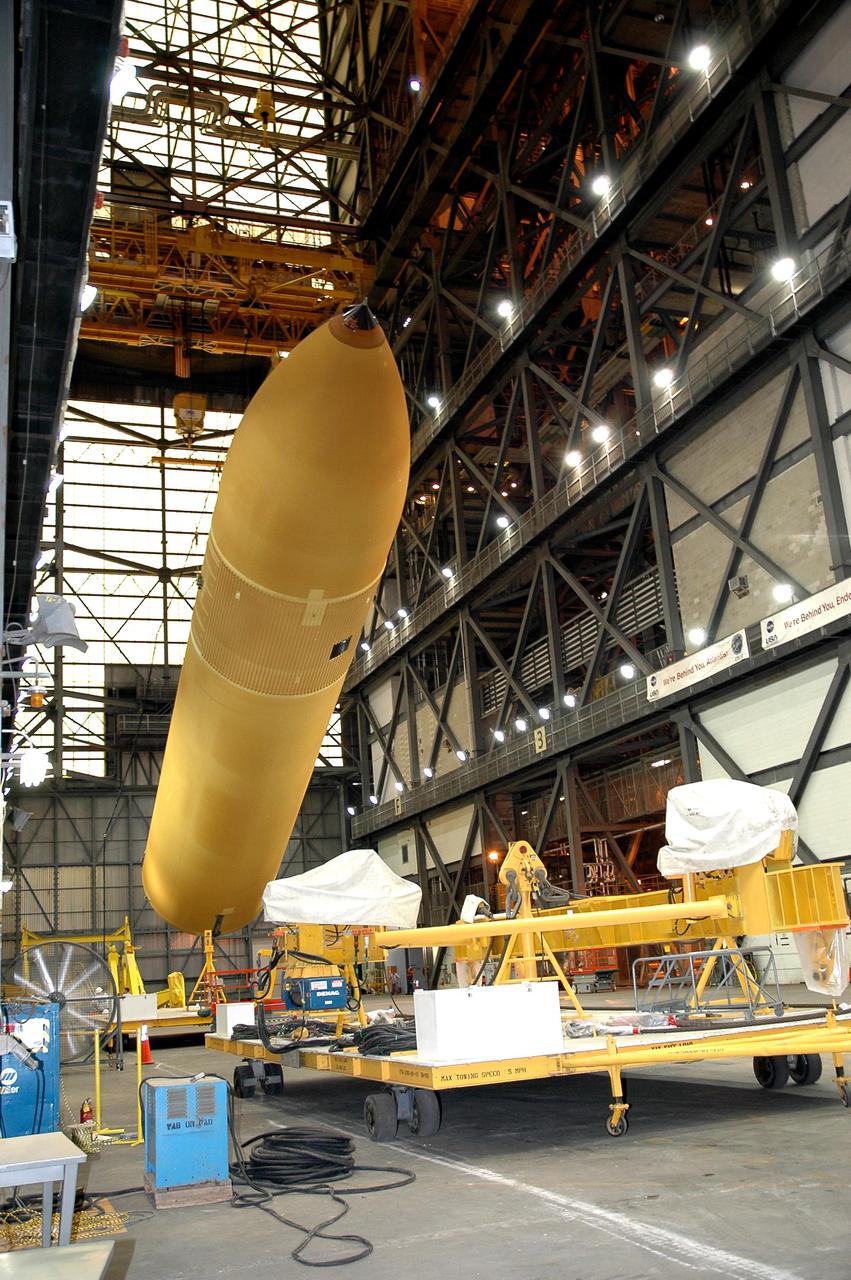
KENNEDY SPACE CENTER, FLA. - Inside NASA Kennedy Space Center’s Vehicle Assembly Building, External Tank 119 is lowered to a horizontal position. Then it will be placed on a transporter in the transfer aisle to be moved to the barge at the Turn Basin. The tank will embark on a voyage around the Florida peninsula to the Michoud Assembly Facility in New Orleans. Delivered to KSC in June, ET-119 is the third newly redesigned tank.
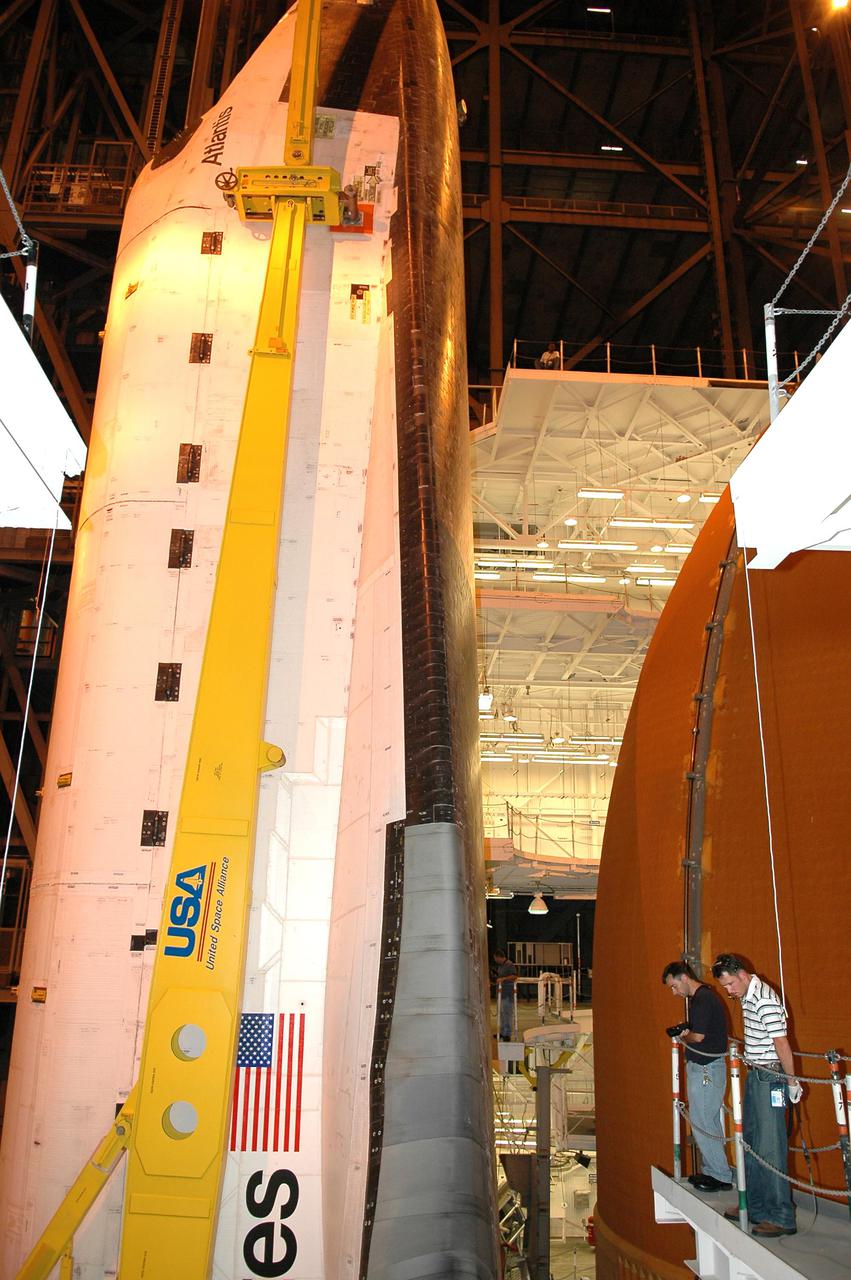
KENNEDY SPACE CENTER, FLA. - In the Vehicle Assembly Building, technicians spot for Space Shuttle Atlantis as it is demated from its External Tank_Solid Rocket Booster stack. The orbiter will be lowered into the transfer aisle and rolled back to Orbiter Processing Facility (OPF) bay 1. Once in the OPF, processing will begin for mission STS-115, the 19th flight to the International Space Station. The tank, ET-120, is the first redesigned ET to arrive at KSC and will undergo further testing before Return to Flight mission STS-121 next year.
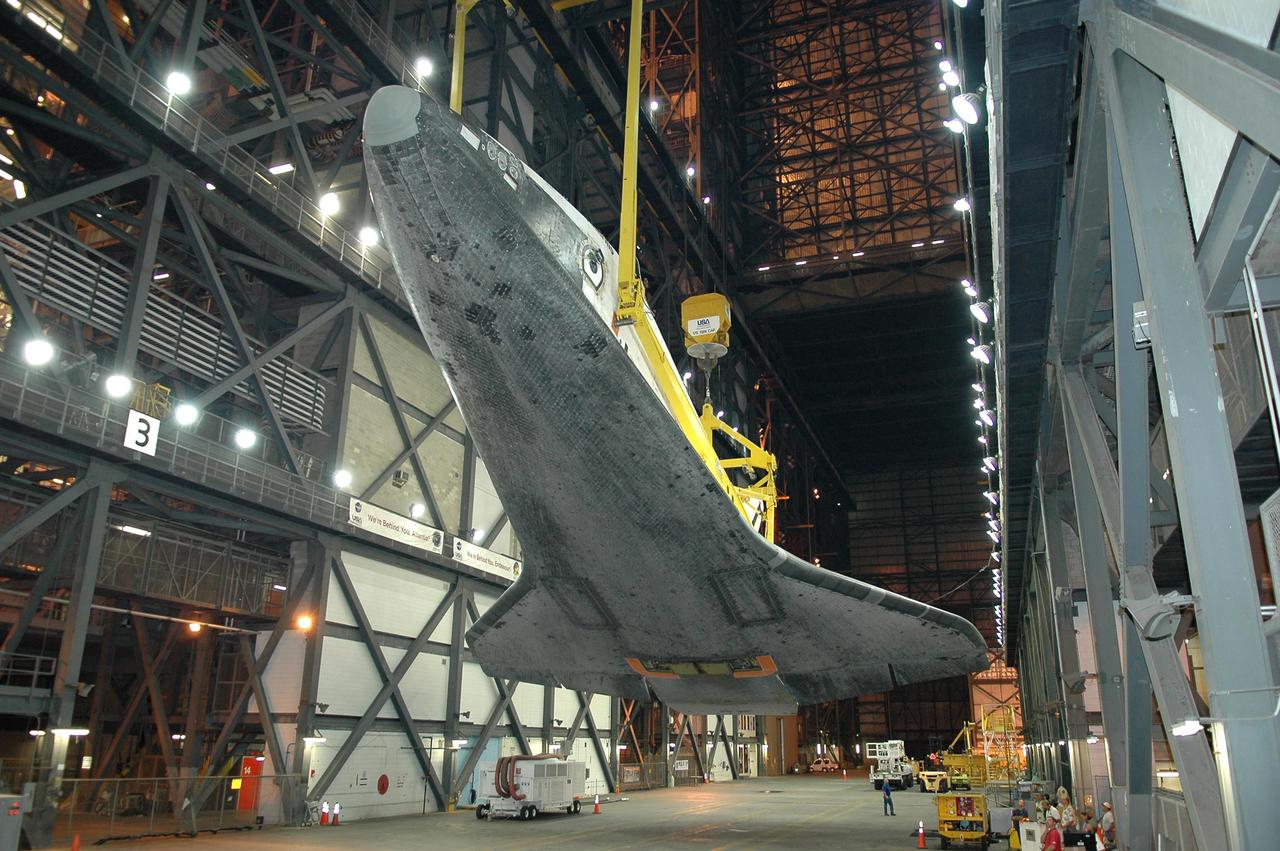
KENNEDY SPACE CENTER, FLA. - In the Vehicle Assembly Building (VAB), Space Shuttle Atlantis is positioned horizontally as it is lowered into the transfer aisle. The vehicle was just demated from its External Tank_Solid Rocket Booster stack in one of the VAB's high bays. The orbiter will be rolled back to Orbiter Processing Facility bay 1 where processing will begin for mission STS-115, the 19th flight to the International Space Station. The tank, ET-120, is the first redesigned ET to arrive at KSC and will undergo further testing before Return to Flight mission STS-121 next year.
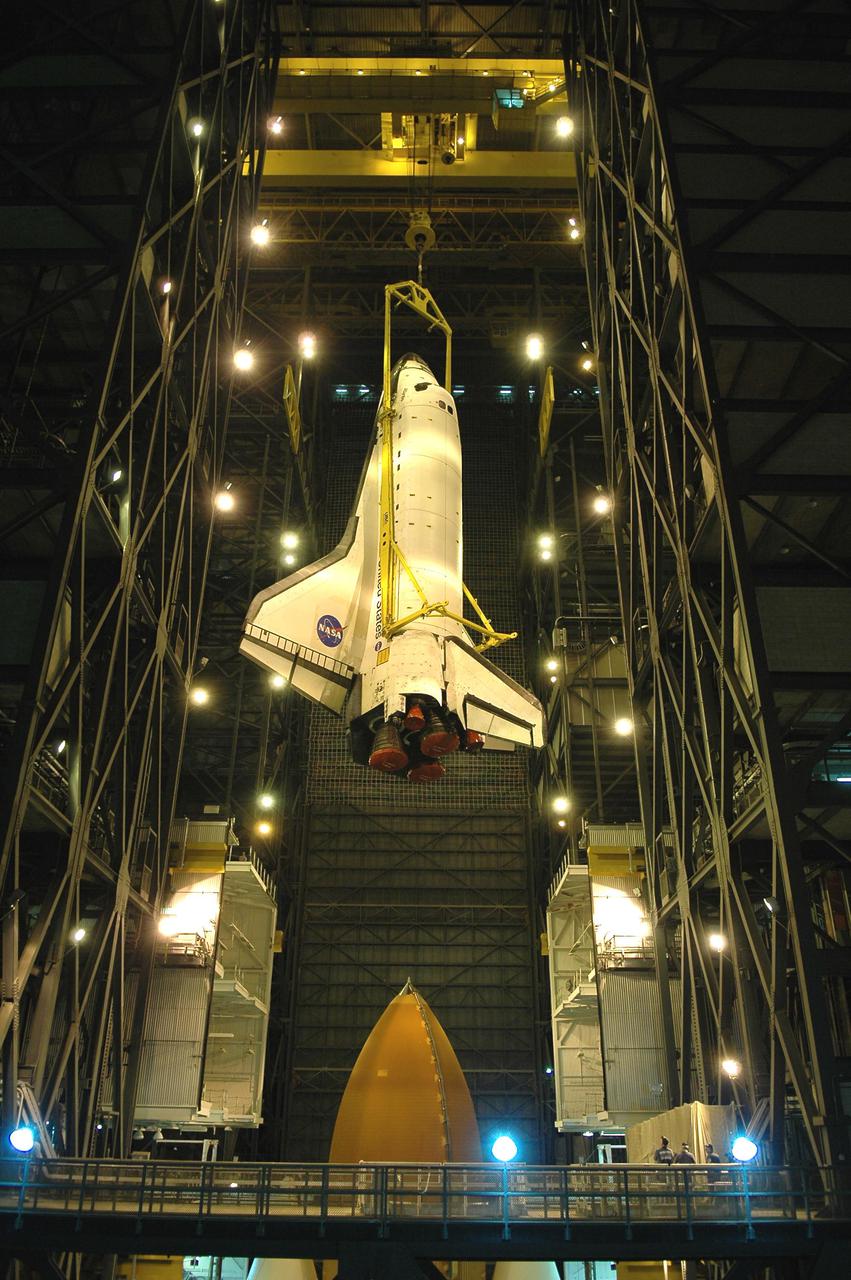
KENNEDY SPACE CENTER, FLA. - In the Vehicle Assembly Building, Space Shuttle Atlantis is lifted above its External Tank_Solid Rocket Booster stack. The orbiter will be lowered into the transfer aisle and rolled back to Orbiter Processing Facility (OPF) bay 1. Once in the OPF, processing will begin for mission STS-115, the 19th flight to the International Space Station. The tank, ET-120, is the first redesigned ET to arrive at KSC and will undergo further testing before Return to Flight mission STS-121 next year.
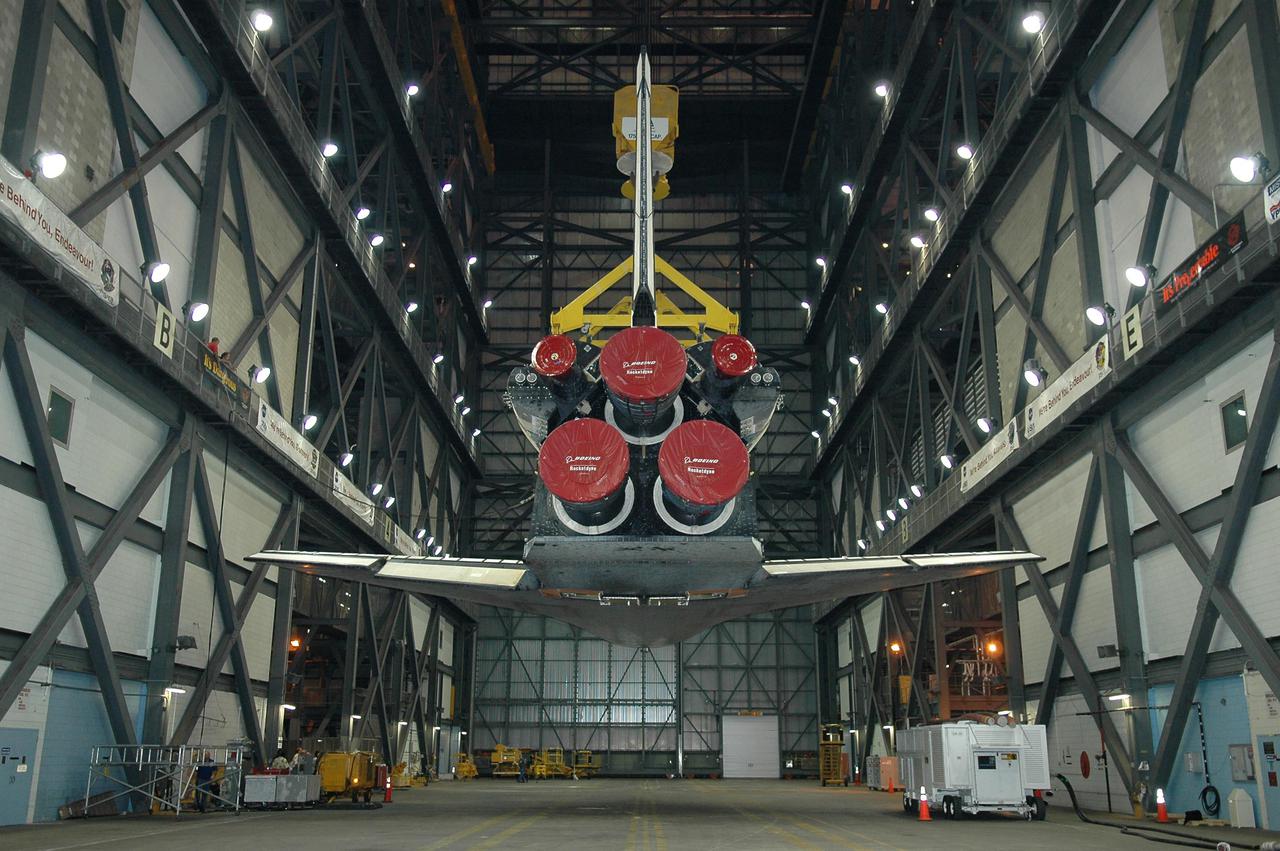
KENNEDY SPACE CENTER, FLA. - In the Vehicle Assembly Building (VAB), Space Shuttle Atlantis is positioned horizontally as it is lowered into the transfer aisle. The vehicle was just demated from its External Tank_Solid Rocket Booster stack in one of the VAB's high bays. The orbiter will be rolled back to Orbiter Processing Facility bay 1 where processing will begin for mission STS-115, the 19th flight to the International Space Station. The tank, ET-120, is the first redesigned ET to arrive at KSC and will undergo further testing before Return to Flight mission STS-121 next year.
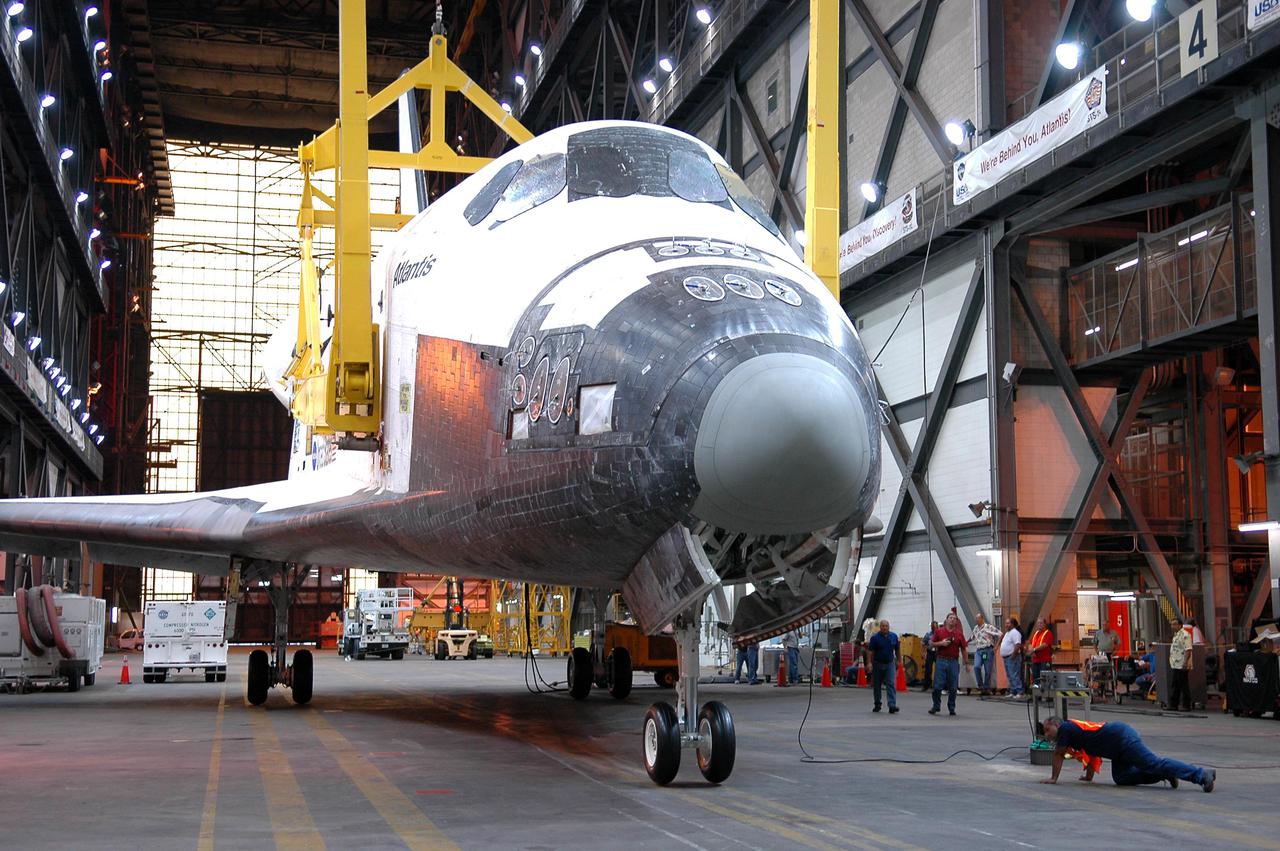
KENNEDY SPACE CENTER, FLA. - In the Vehicle Assembly Building (VAB), Space Shuttle Atlantis rests on its landing gear on the floor of the transfer aisle. The vehicle was just demated from its External Tank_Solid Rocket Booster stack in one of the VAB's high bays. The orbiter will be rolled back to Orbiter Processing Facility bay 1 where processing will begin for mission STS-115, the 19th flight to the International Space Station. The tank, ET-120, is the first redesigned ET to arrive at KSC and will undergo further testing before Return to Flight mission STS-121 next year.
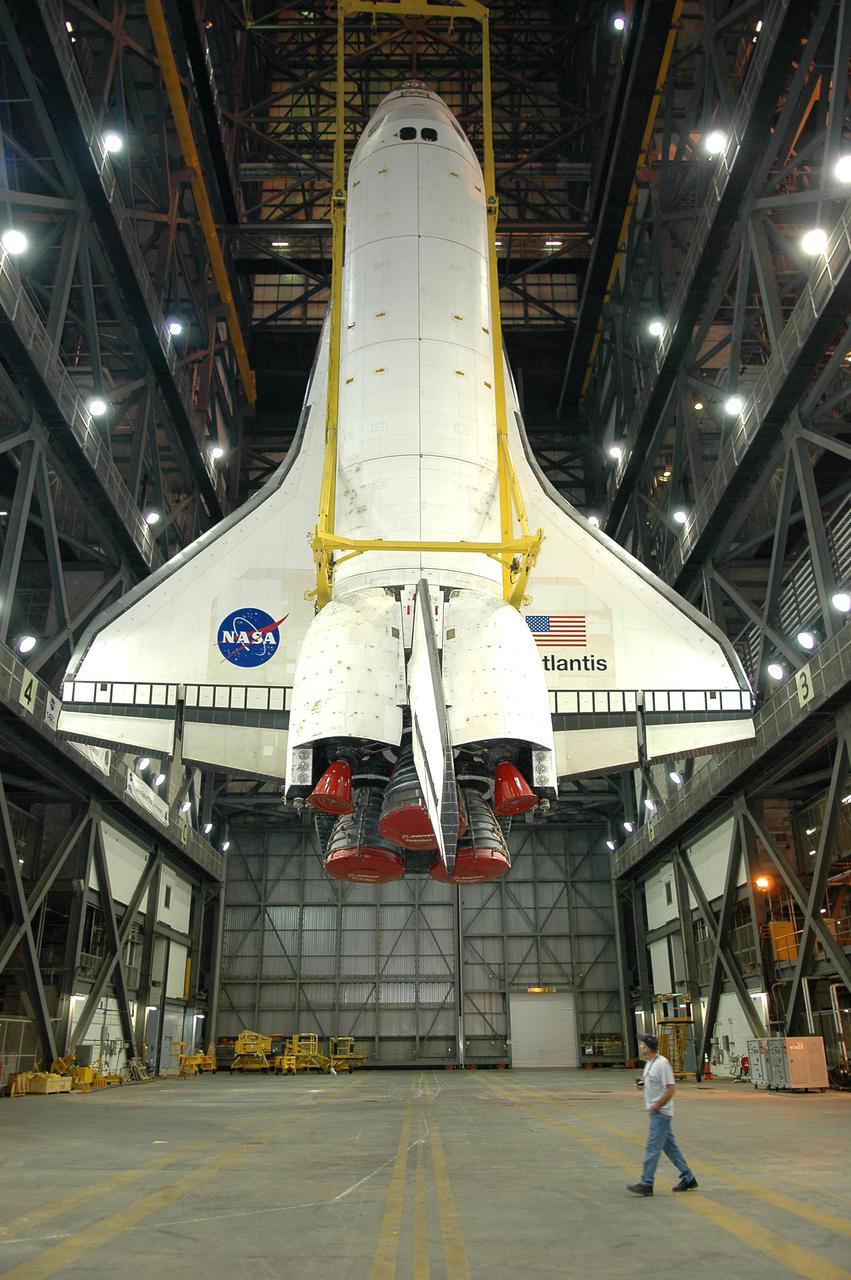
KENNEDY SPACE CENTER, FLA. - In the Vehicle Assembly Building, a technician monitors Space Shuttle Atlantis as it is lowered into the transfer aisle after being demated from its External Tank_Solid Rocket Booster stack. The orbiter will be rolled back to Orbiter Processing Facility bay 1 where processing will begin for mission STS-115, the 19th flight to the International Space Station. The tank, ET-120, is the first redesigned ET to arrive at KSC and will undergo further testing before Return to Flight mission STS-121 next year.
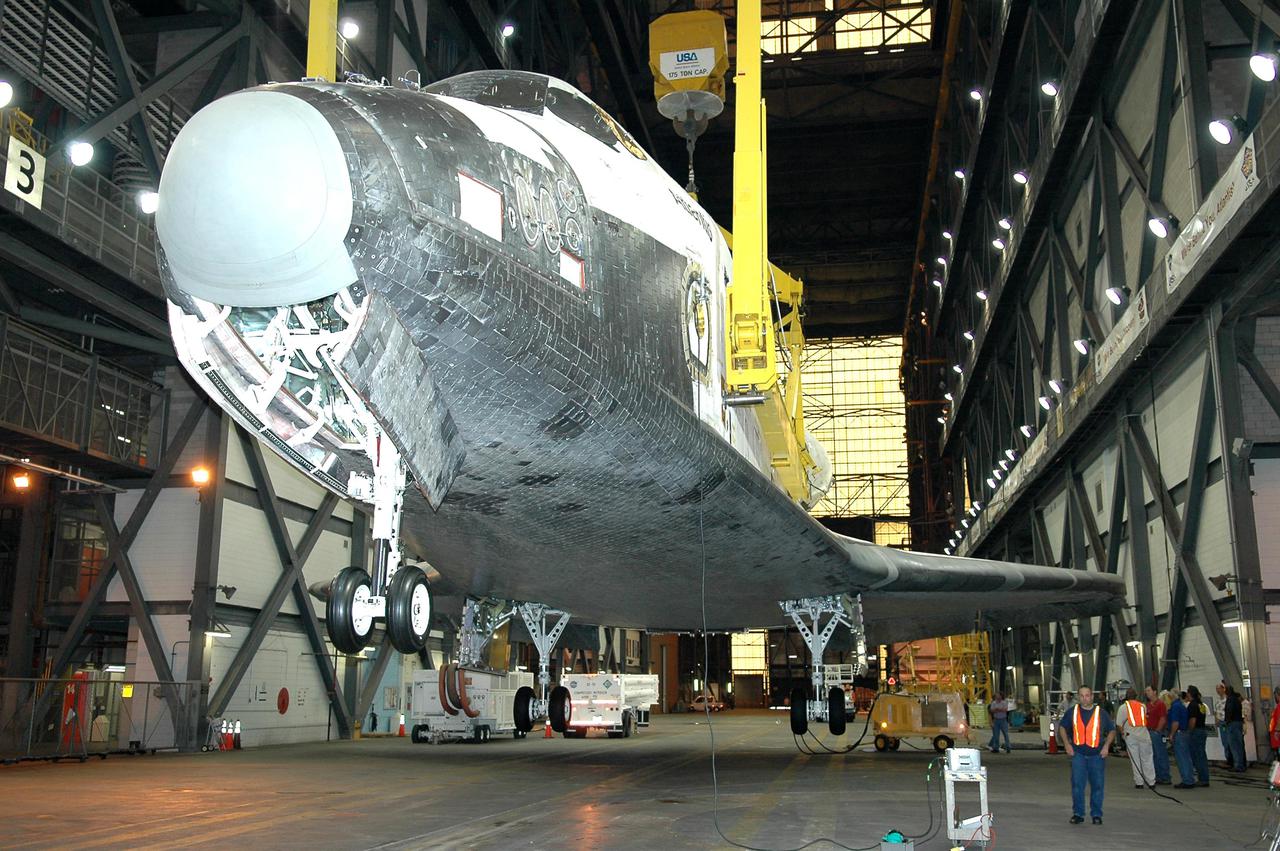
KENNEDY SPACE CENTER, FLA. - In the Vehicle Assembly Building (VAB), the landing gear of Space Shuttle Atlantis is lowered before the orbiter comes to rest on the floor of the transfer aisle. The vehicle was just demated from its External Tank_Solid Rocket Booster stack in one of the VAB's high bays. The orbiter will be rolled back to Orbiter Processing Facility bay 1 where processing will begin for mission STS-115, the 19th flight to the International Space Station. The tank, ET-120, is the first redesigned ET to arrive at KSC and will undergo further testing before Return to Flight mission STS-121 next year.
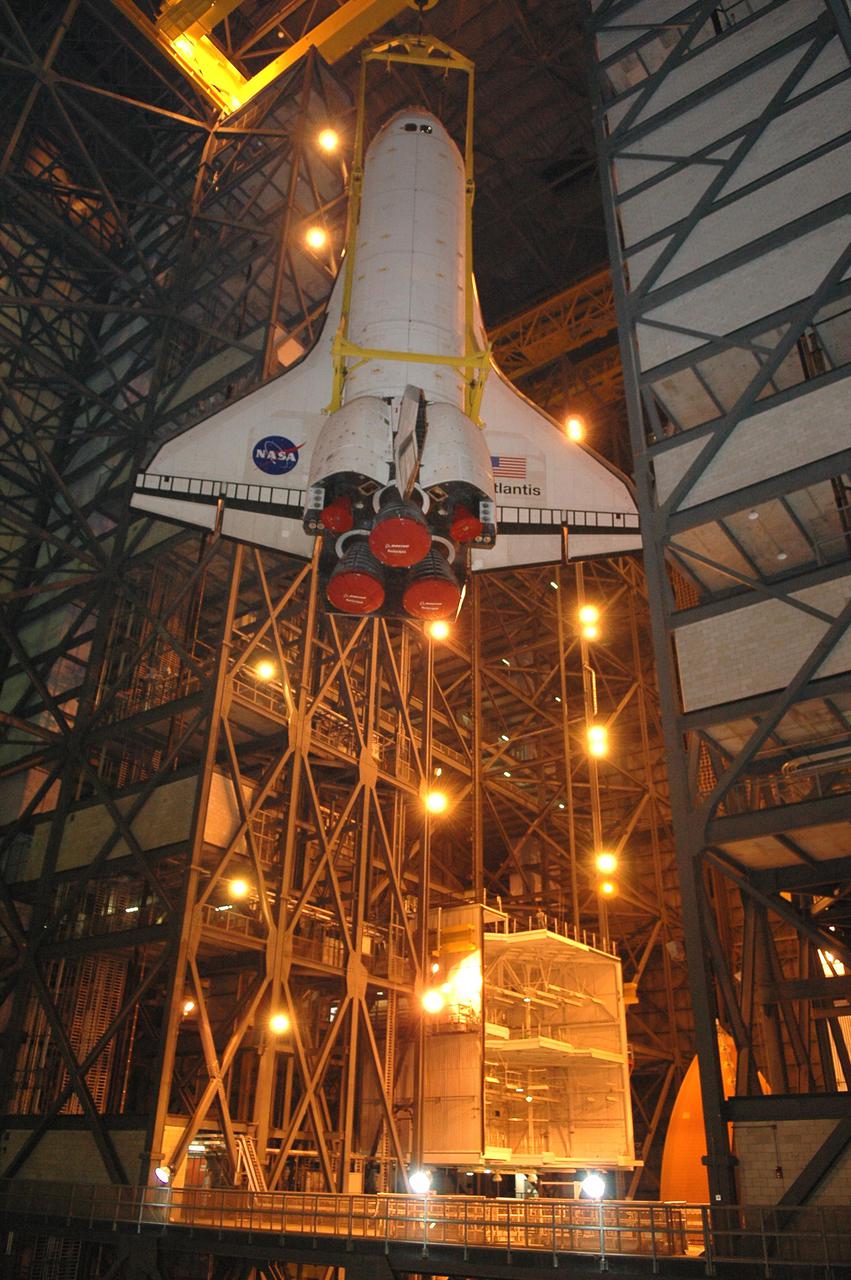
KENNEDY SPACE CENTER, FLA. - In the Vehicle Assembly Building, Space Shuttle Atlantis is lowered into the transfer aisle after being demated from its External Tank_Solid Rocket Booster stack. The orbiter will be rolled back to Orbiter Processing Facility (OPF) bay 1 where processing will begin for mission STS-115, the 19th flight to the International Space Station. The tank, ET-120, is the first redesigned ET to arrive at KSC and will undergo further testing before Return to Flight mission STS-121 next year.
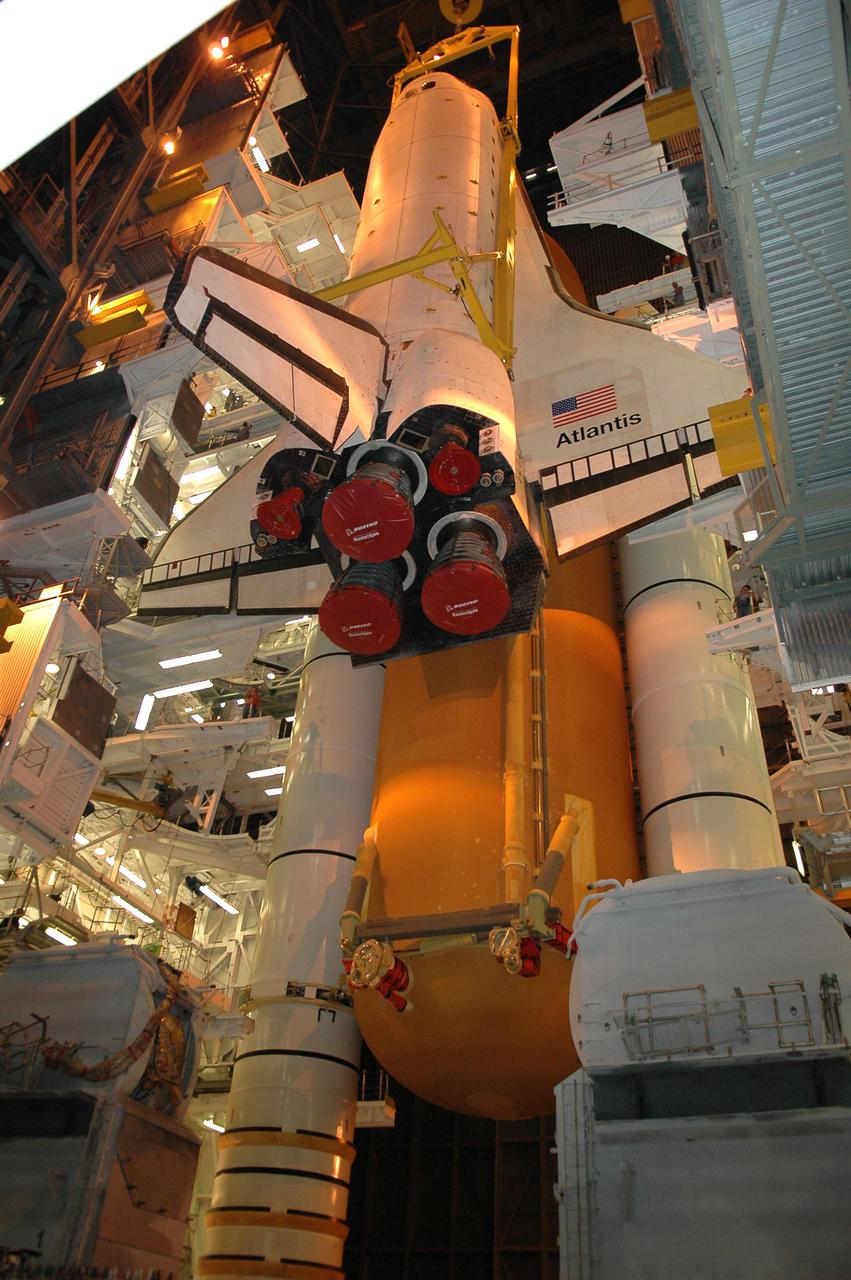
KENNEDY SPACE CENTER, FLA. - In the Vehicle Assembly Building, Space Shuttle Atlantis is lifted from its External Tank_Solid Rocket Booster stack. The orbiter will be lowered into the transfer aisle and rolled back to Orbiter Processing Facility (OPF) bay 1. Once in the OPF, processing will begin for mission STS-115, the 19th flight to the International Space Station. The tank, ET-120, is the first redesigned ET to arrive at KSC and will undergo further testing before Return to Flight mission STS-121 next year.
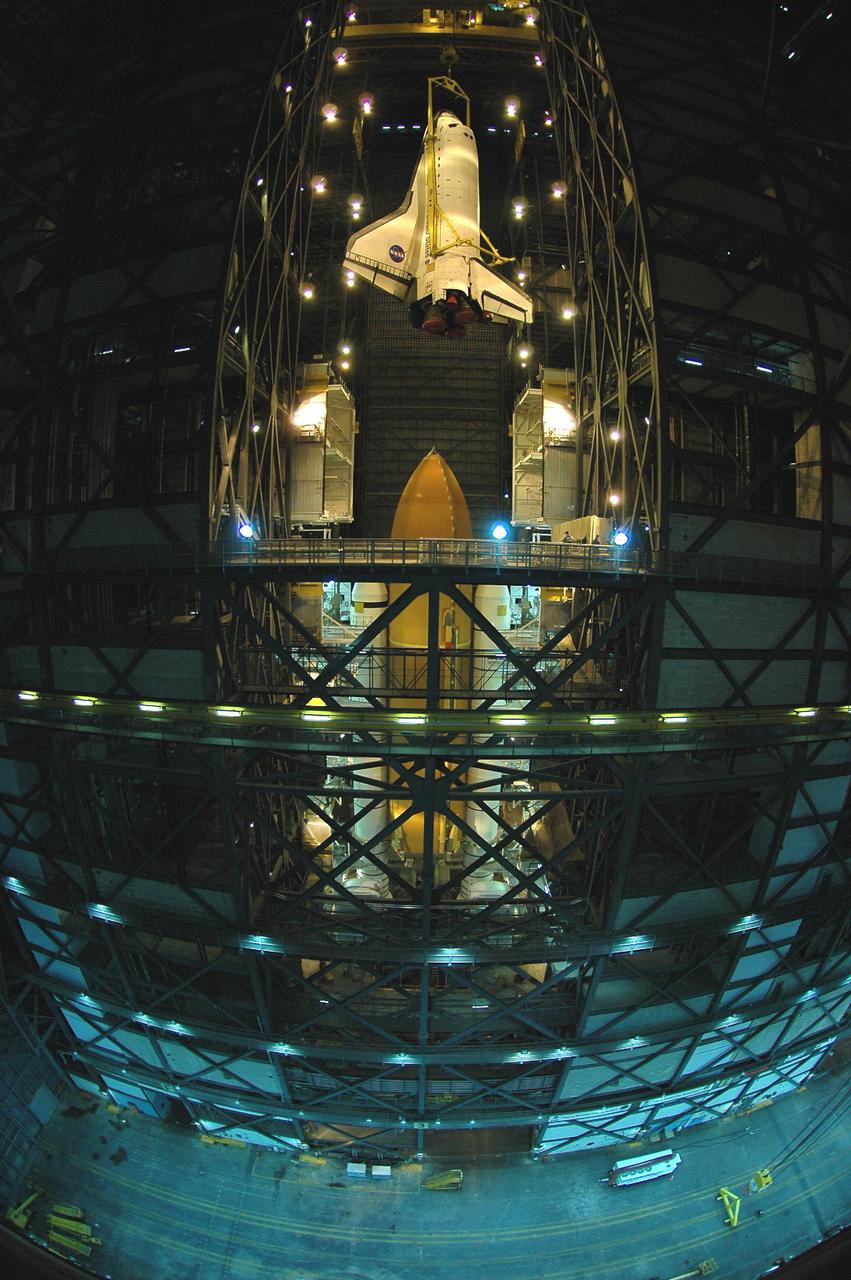
KENNEDY SPACE CENTER, FLA. - In the Vehicle Assembly Building, a fisheye lens captures Space Shuttle Atlantis as it is lifted above its External Tank_Solid Rocket Booster stack. The orbiter will be lowered into the transfer aisle and rolled back to Orbiter Processing Facility (OPF) bay 1. Once in the OPF, processing will begin for mission STS-115, the 19th flight to the International Space Station. The tank, ET-120, is the first redesigned ET to arrive at KSC and will undergo further testing before Return to Flight mission STS-121 next year.
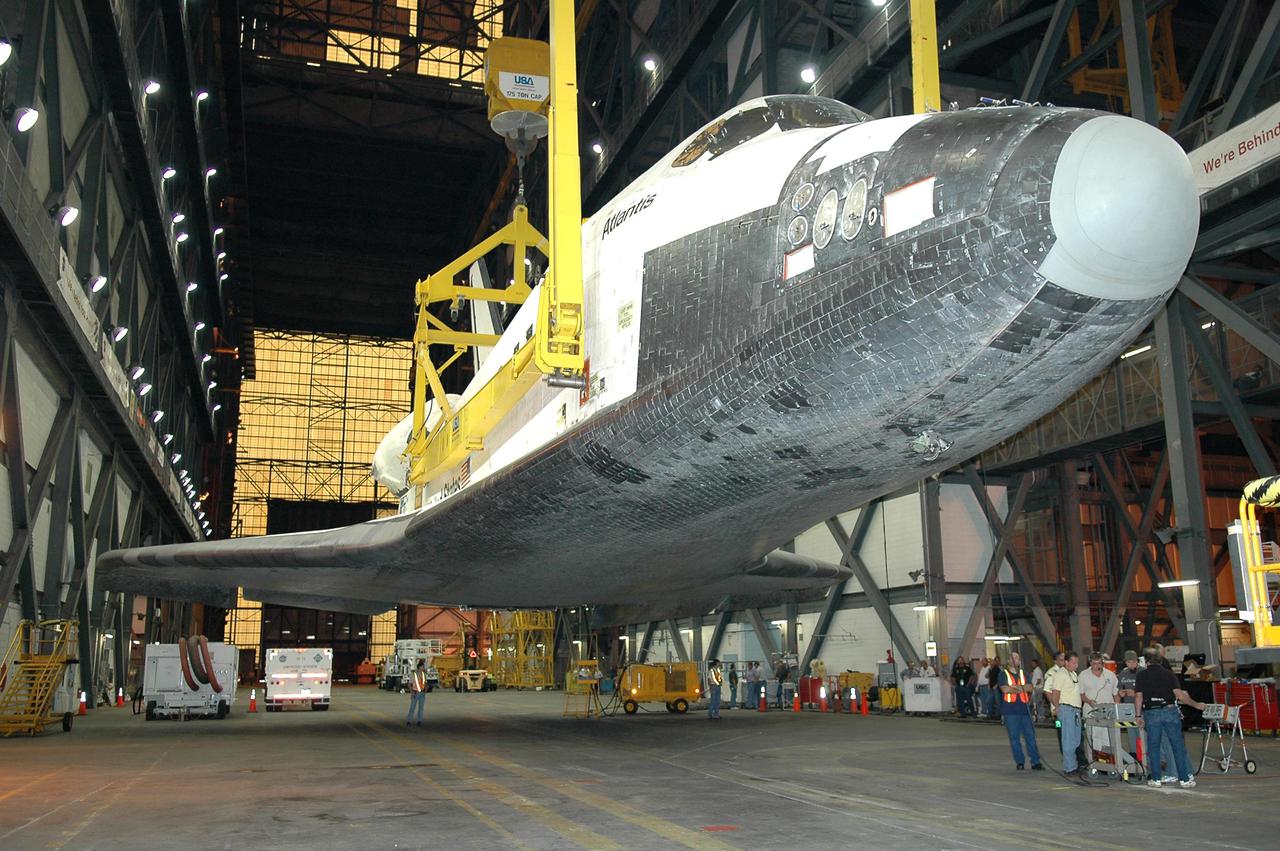
KENNEDY SPACE CENTER, FLA. - In the Vehicle Assembly Building (VAB), Space Shuttle Atlantis is positioned horizontally as it is lowered into the transfer aisle. The vehicle was just demated from its External Tank_Solid Rocket Booster stack in one of the VAB's high bays. The orbiter will be rolled back to Orbiter Processing Facility bay 1 where processing will begin for mission STS-115, the 19th flight to the International Space Station. The tank, ET-120, is the first redesigned ET to arrive at KSC and will undergo further testing before Return to Flight mission STS-121 next year.
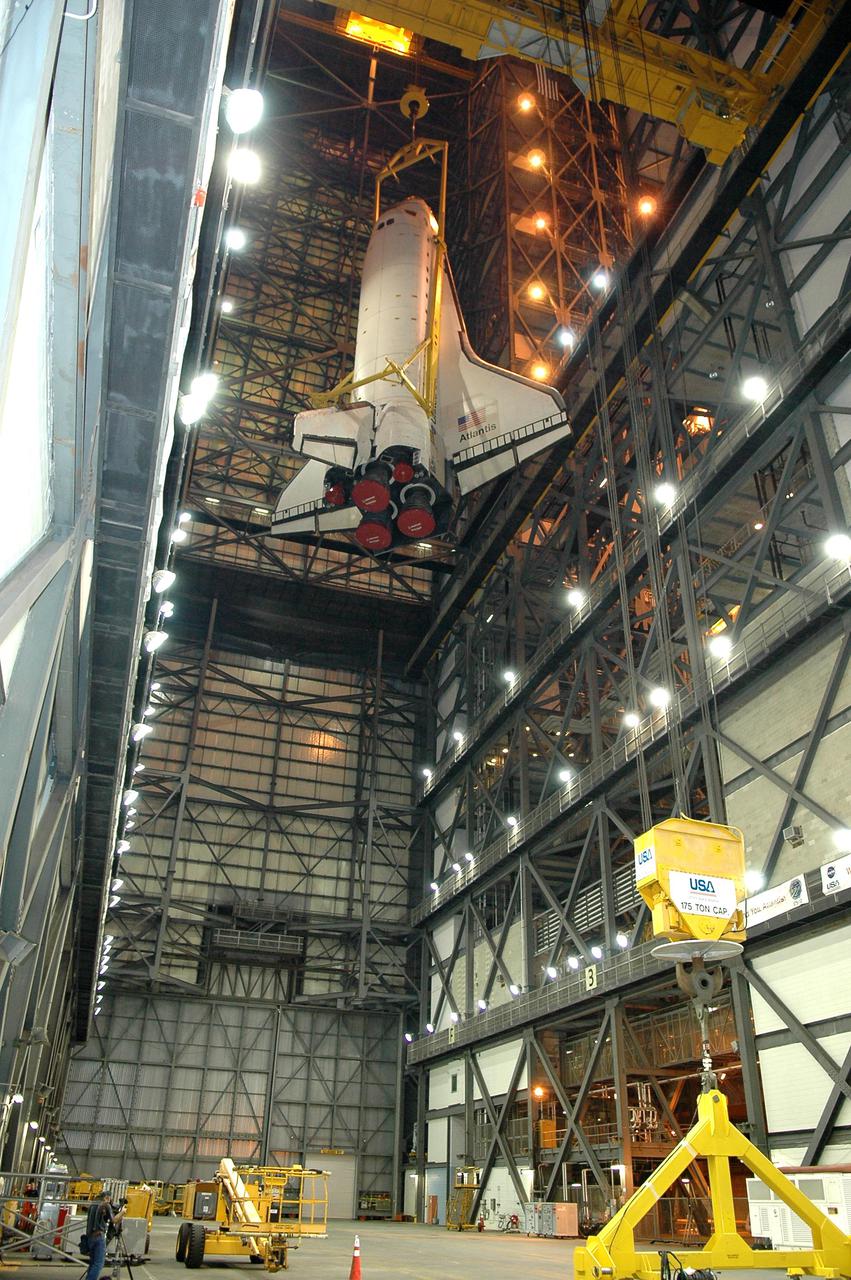
KENNEDY SPACE CENTER, FLA. - In the Vehicle Assembly Building, Space Shuttle Atlantis is lowered into the transfer aisle after being demated from its External Tank_Solid Rocket Booster stack. The orbiter will be rolled back to Orbiter Processing Facility bay 1 where processing will begin for mission STS-115, the 19th flight to the International Space Station. The tank, ET-120, is the first redesigned ET to arrive at KSC and will undergo further testing before Return to Flight mission STS-121 next year.
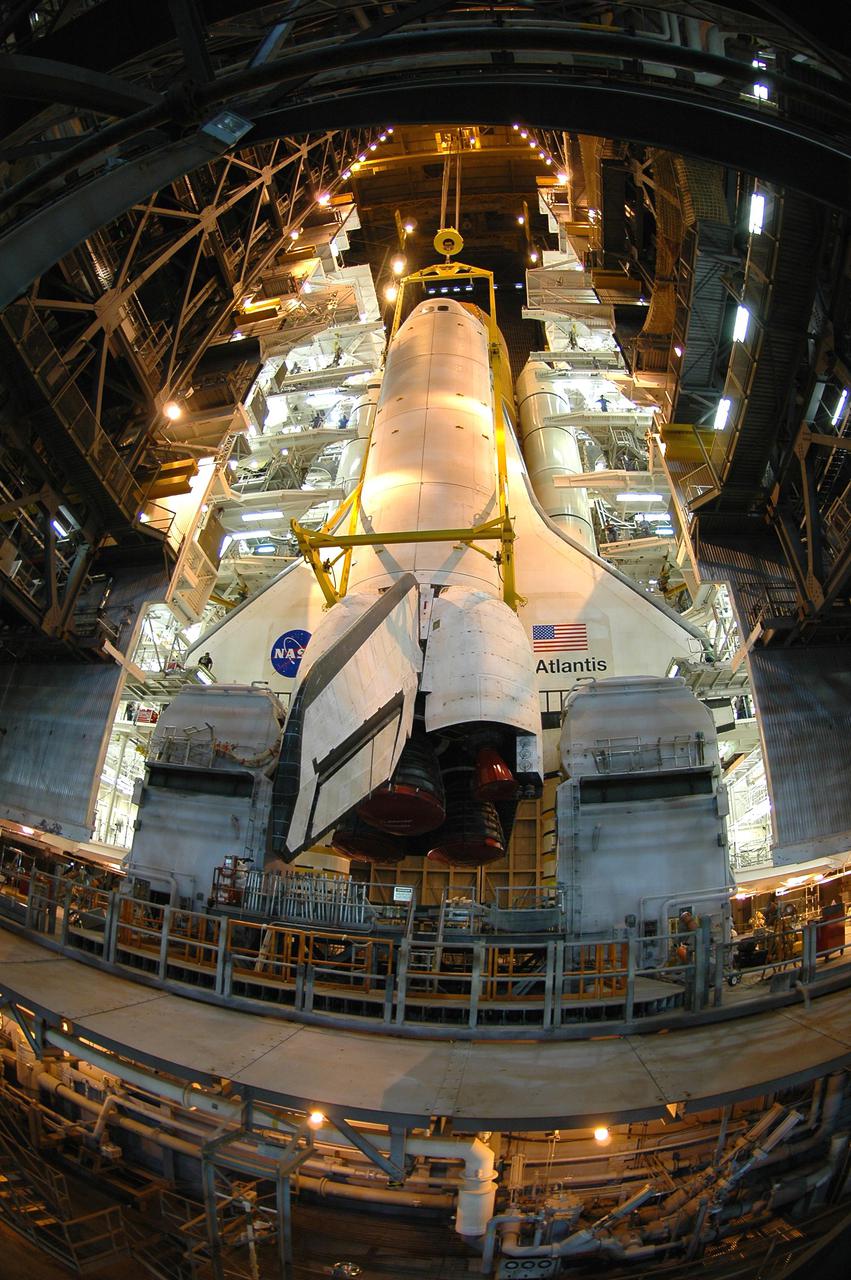
KENNEDY SPACE CENTER, FLA. - In the Vehicle Assembly Building, a fisheye lens captures Space Shuttle Atlantis as it is lifted from its External Tank_Solid Rocket Booster stack. The orbiter will be lowered into the transfer aisle and rolled back to Orbiter Processing Facility (OPF) bay 1. Once in the OPF, processing will begin for mission STS-115, the 19th flight to the International Space Station. The tank, ET-120, is the first redesigned ET to arrive at KSC and will undergo further testing before Return to Flight mission STS-121 next year.
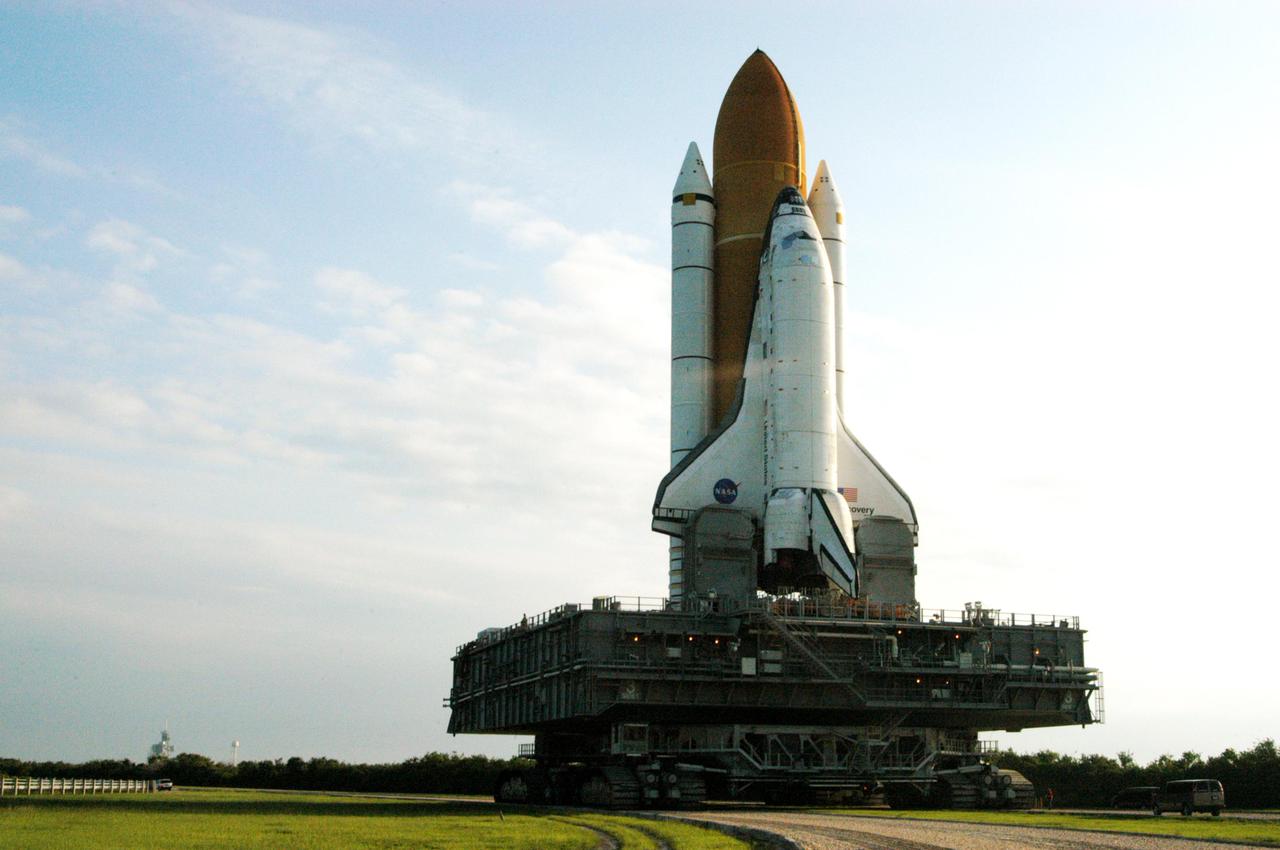
KENNEDY SPACE CENTER, FLA. - Space Shuttle Discovery makes its way along the crawlerway to Launch Pad 39B, seen at left. First motion for the 4.2-mile journey was at 1:58 a.m. EDT. The Space Shuttle rests on a Mobile Launcher Platform that sits atop a Crawler-Transporter. This is the second rollout of Discovery. The vehicle was returned to the Vehicle Assembly Building for connection to an improved External Tank. Launch of Discovery on its Return to Flight mission STS-114 is targeted for a launch window extending from July 13 to July 31.
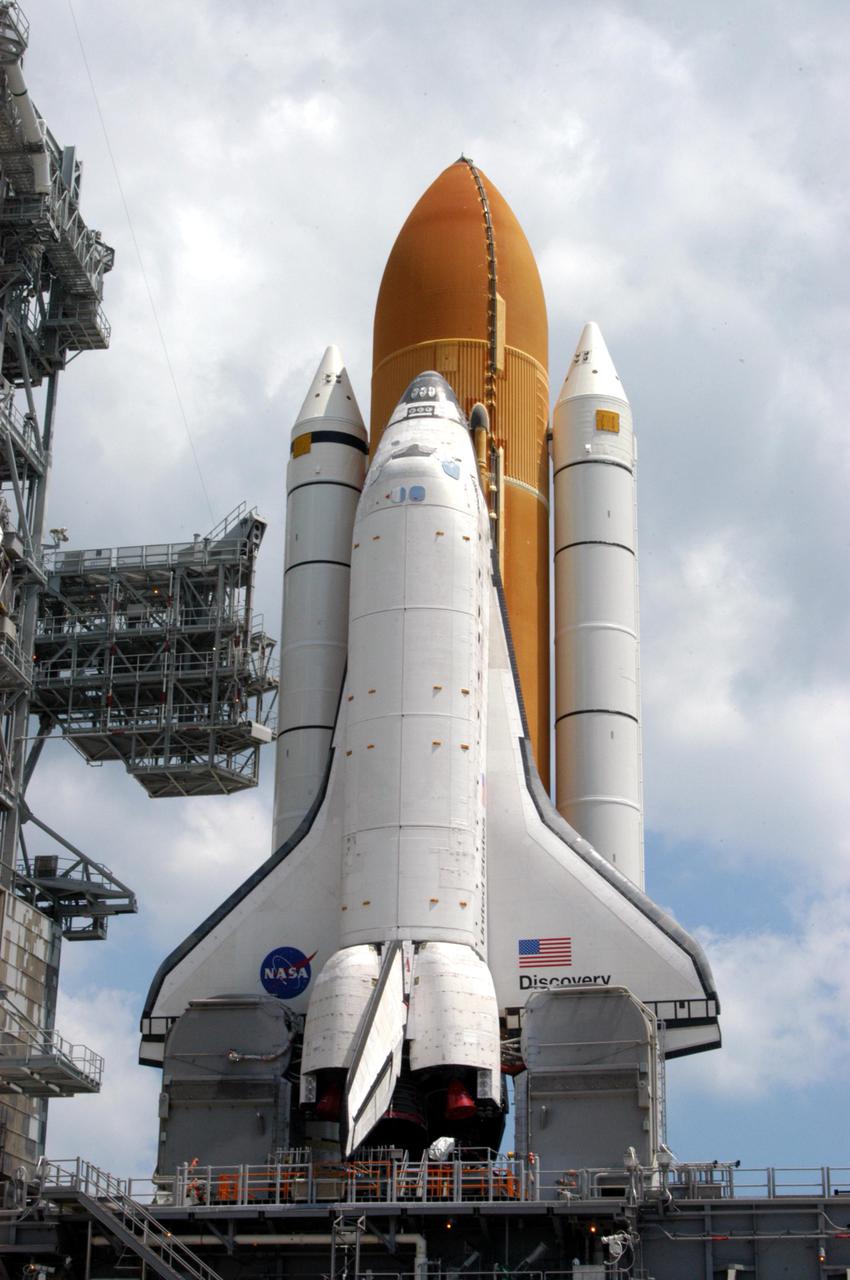
KENNEDY SPACE CENTER, FLA. - Space Shuttle Discovery moves into position on the hardstand of Launch Pad 39B. First motion for the 4.2-mile journey was at 1:58 a.m. EDT. The Space Shuttle rests on a Mobile Launcher Platform that sits atop a Crawler-Transporter. This is the second rollout of Discovery. The orbiter was returned to the Vehicle Assembly Building for connection to an improved External Tank. Launch of Discovery on its Return to Flight mission STS-114 is targeted for a launch window extending from July 13 to July 31.
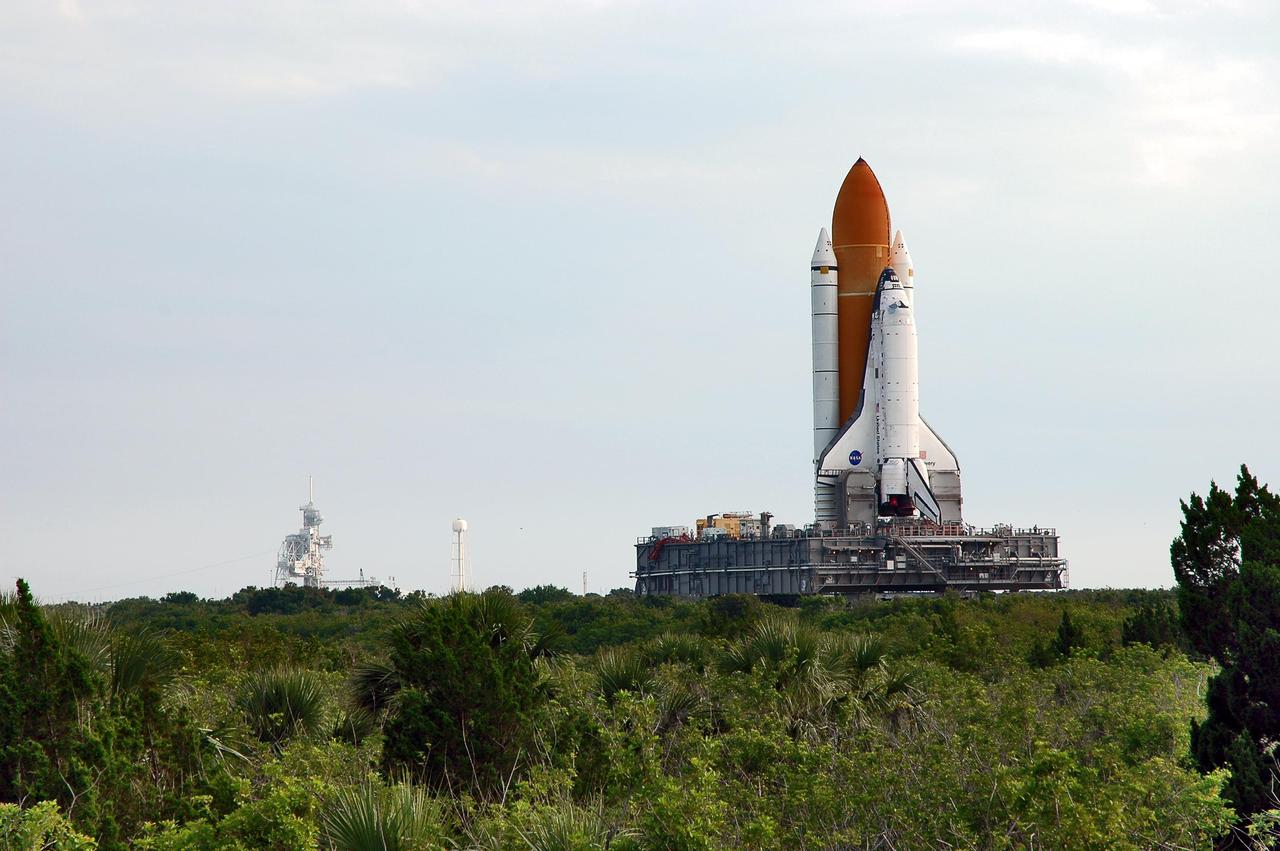
KENNEDY SPACE CENTER, FLA. - Space Shuttle Discovery makes its way along the crawlerway to Launch Pad 39B, seen at left. First motion for the 4-mile, 6-hour journey was at 1:58 a.m. EDT. The Space Shuttle rests on a Mobile Launcher Platform that sits atop a Crawler-Transporter. This is the second rollout of Discovery after being returned to the Vehicle Assembly Building for connection to an improved External Tank. Launch of Discovery on its Return to Flight mission STS-114 is targeted for a launch window extending from July 13 to July 31.
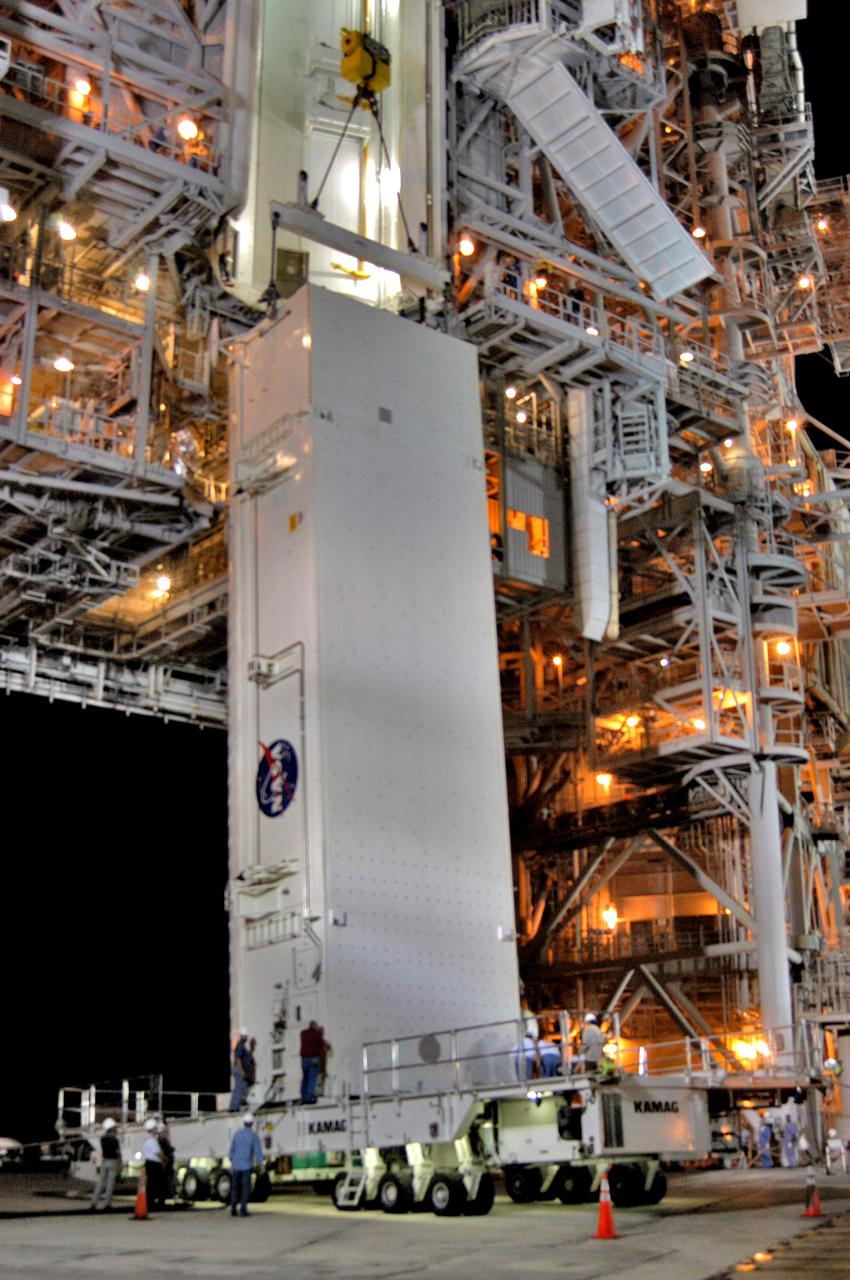
KENNEDY SPACE CENTER, FLA. - At Launch Pad 39B, the payload canister that delivered payloads launching aboard Space Shuttle Discovery's Return to Flight mission STS-114 is lowered from the Payload Changeout Room onto a transporter. The payloads will be installed into Discovery, scheduled to arrive at the pad later today. Discovery’s payloads include the Multi-Purpose Logistics Module Raffaello, the Lightweight Multi-Purpose Experiment Support Structure Carrier (LMC), and the External Stowage Platform-2 (ESP-2). Raffaello will deliver supplies to the International Space Station including food, clothing and research equipment. The LMC will carry a replacement Control Moment Gyroscope and a tile repair sample box. The ESP-2 is outfitted with replacement parts. Discovery’s launch window extends from July 13 through July 31.
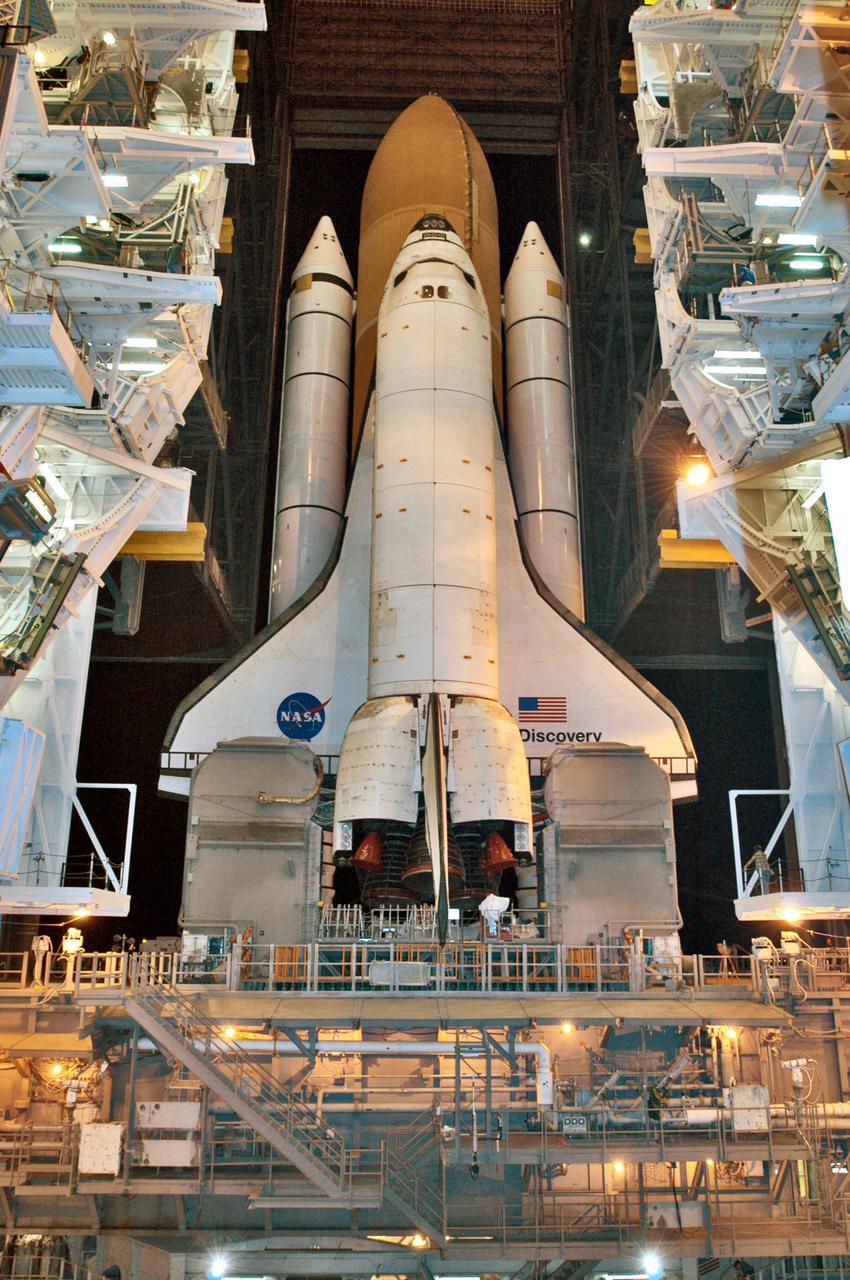
KENNEDY SPACE CENTER, FLA. - In the Vehicle Assembly Building (VAB) at NASA’s Kennedy Space Center, Space Shuttle Discovery exits high bay 3 to begin its trip to Launch Pad 39B, a 4-mile, 6-hour journey. First motion was at 1:58 a.m. EDT. The Space Shuttle rests on a Mobile Launcher Platform which sits atop a Crawler-Transporter. This is the second rollout of Discovery after being returned to the Vehicle Assembly Building for connection to an improved External Tank. Launch of Discovery on its Return to Flight mission STS-114 is targeted for a launch window extending from July 13 to July 31. During its 12-day mission, Discovery’s seven-person crew will test new hardware and techniques to improve Shuttle safety, as well as deliver supplies to the International Space Station.
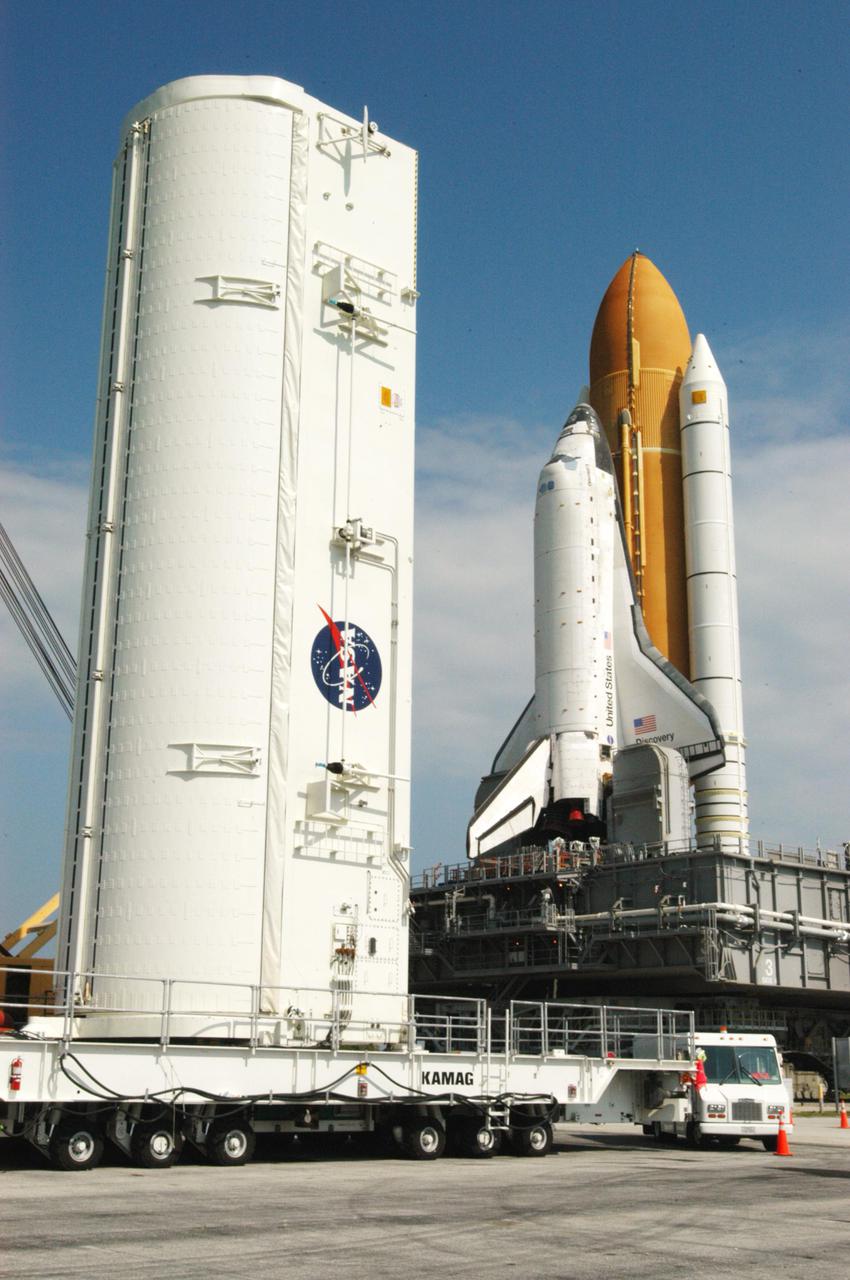
KENNEDY SPACE CENTER, FLA. - As Space Shuttle Discovery approaches Launch Pad 39B, the canister that delivered the mission STS-114 payloads to the pad departs. First motion for the 4.2-mile journey was at 1:58 a.m. EDT. The Space Shuttle rests on a Mobile Launcher Platform that sits atop a Crawler-Transporter. This is the second rollout of Discovery. The vehicle was returned to the Vehicle Assembly Building for connection to an improved External Tank. Launch of Discovery on its Return to Flight mission STS-114 is targeted for a launch window extending from July 13 to July 31.
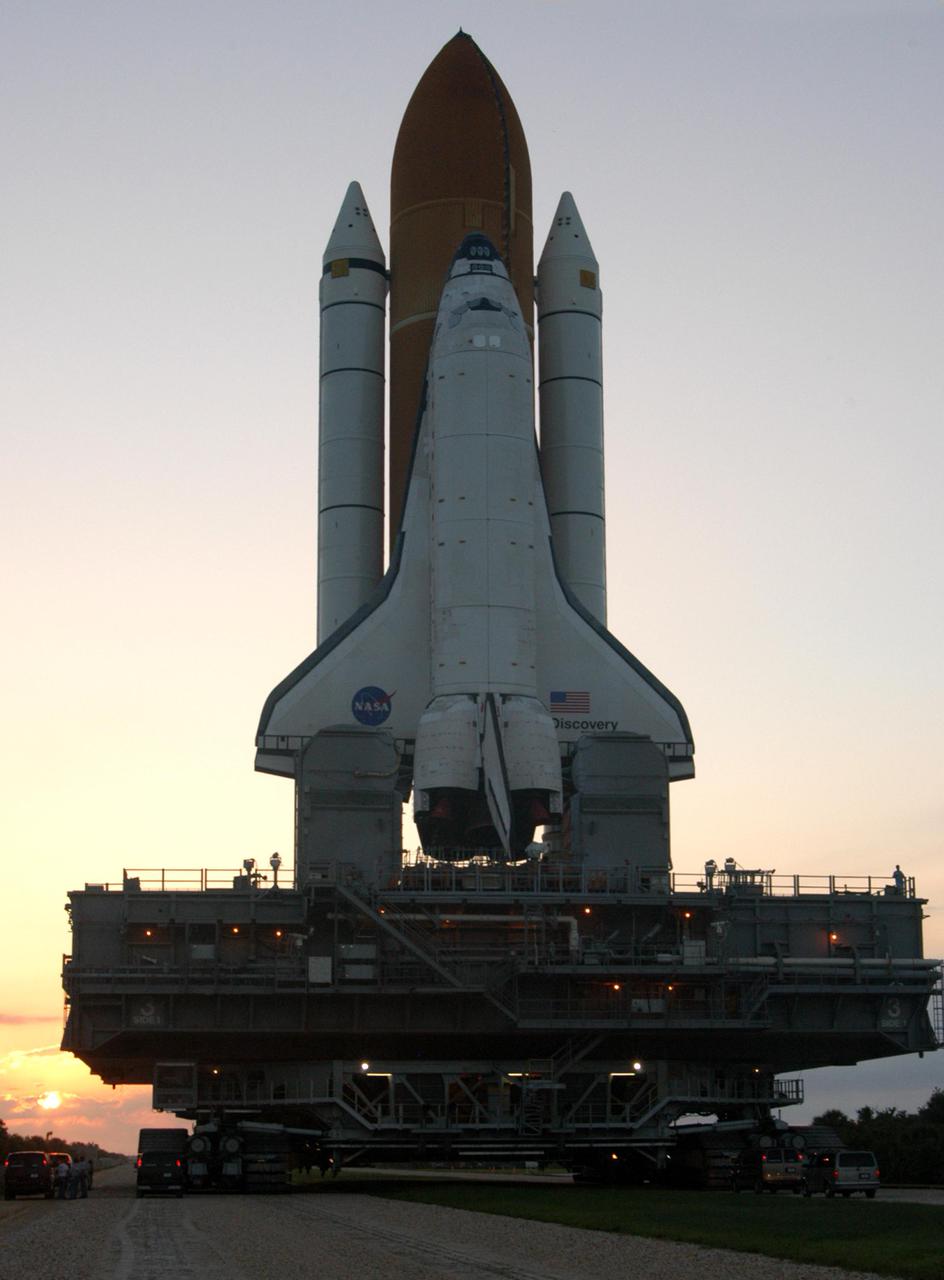
KENNEDY SPACE CENTER, FLA. - Space Shuttle Discovery makes its way along the crawlerway from high bay 3 to Launch Pad 39B as the sun rises. First motion for the 4-mile, 6-hour journey was at 1:58 a.m. EDT. The Space Shuttle rests on a Mobile Launcher Platform which sits atop a Crawler-Transporter. This is the second rollout of Discovery after being returned to the Vehicle Assembly Building for connection to an improved External Tank. Launch of Discovery on its Return to Flight mission STS-114 is targeted for a launch window extending from July 13 to July 31. During its 12-day mission, Discovery’s seven-person crew will test new hardware and techniques to improve Shuttle safety, as well as deliver supplies to the International Space Station.
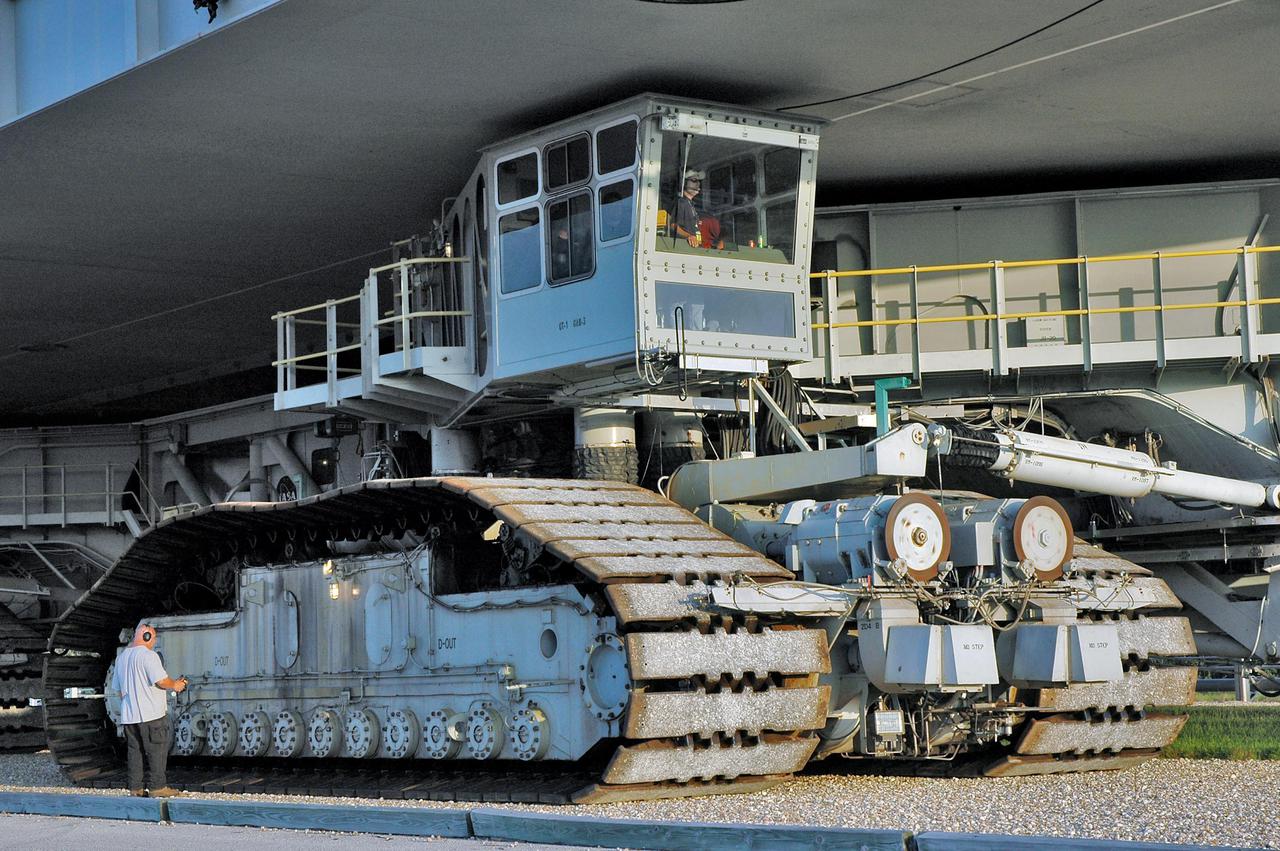
KENNEDY SPACE CENTER, FLA. - The Crawler-Transporter carries Space Shuttle Discovery and the Mobile Launcher Platform to Launch Pad 39B. The crawler is operated by a United Space Alliance driver, seen in the cab above the crawler tracks. The transporter uses a laser guidance system and a leveling system for the journey that keeps the top of the Space Shuttle vertical. This is the second rollout of Discovery after being returned to the Vehicle Assembly Building for connection to an improved External Tank. Launch of Discovery on its Return to Flight mission STS-114 is targeted for a launch window extending from July 13 to July 31.
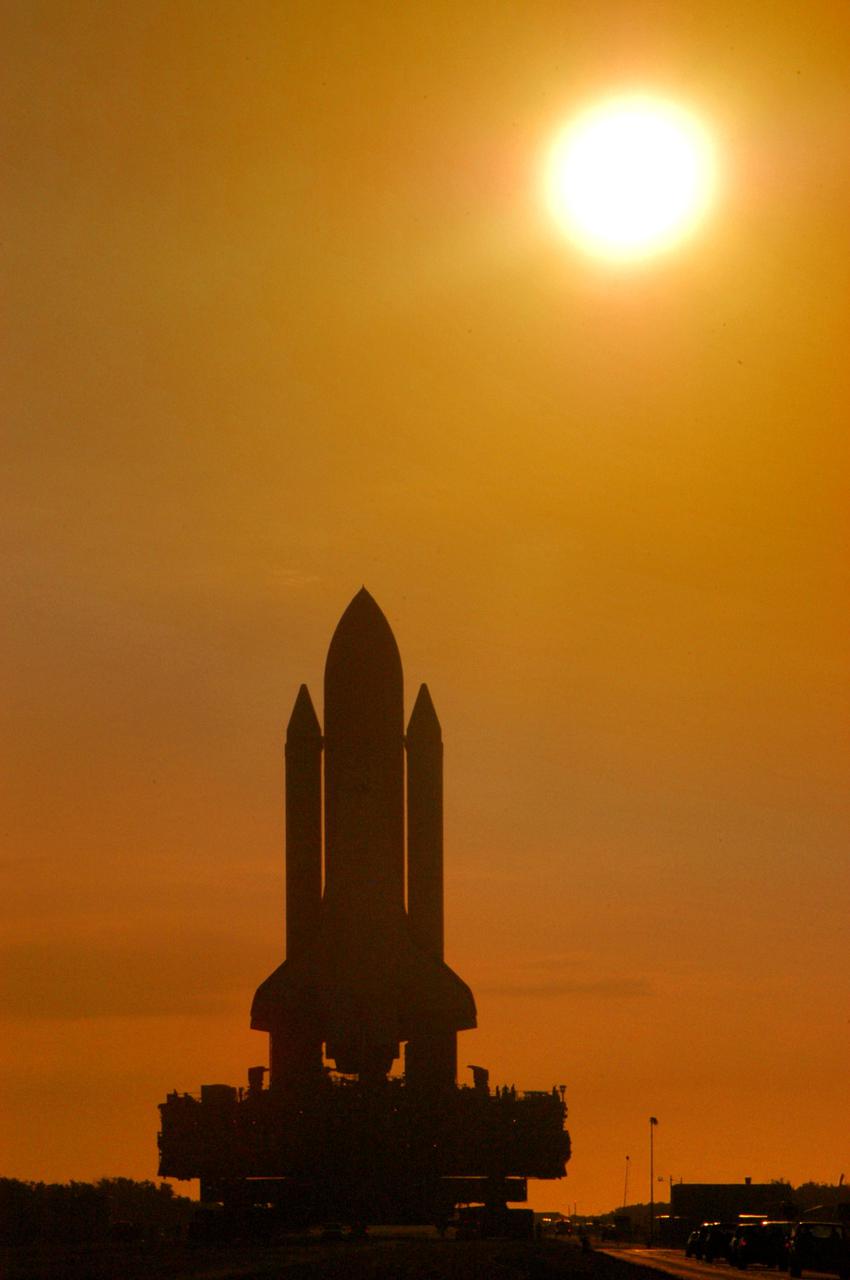
KENNEDY SPACE CENTER, FLA. - Space Shuttle Discovery makes its way along the crawlerway from high bay 3 to Launch Pad 39B as the sun rises. First motion for the 4-mile, 6-hour journey was at 1:58 a.m. EDT. The Space Shuttle rests on a Mobile Launcher Platform which sits atop a Crawler-Transporter. This is the second rollout of Discovery after being returned to the Vehicle Assembly Building for connection to an improved External Tank. Launch of Discovery on its Return to Flight mission STS-114 is targeted for a launch window extending from July 13 to July 31. During its 12-day mission, Discovery’s seven-person crew will test new hardware and techniques to improve Shuttle safety, as well as deliver supplies to the International Space Station.
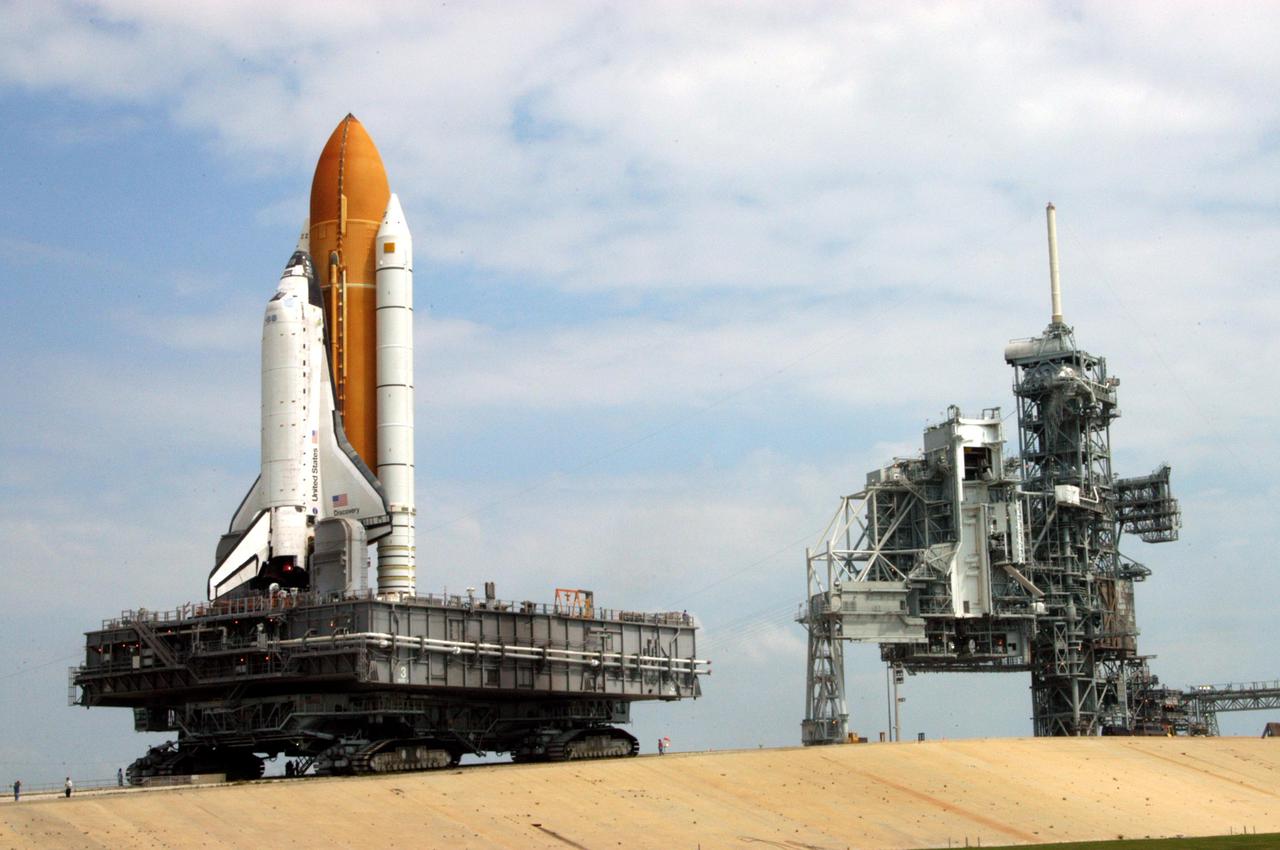
KENNEDY SPACE CENTER, FLA. - Space Shuttle Discovery makes its way up the 5 percent grade to the hardstand of Launch Pad 39B. First motion for the 4.2-mile journey was at 1:58 a.m. EDT. The Space Shuttle rests on a Mobile Launcher Platform that sits atop a Crawler-Transporter. This is the second rollout of Discovery. The orbiter was returned to the Vehicle Assembly Building for connection to an improved External Tank. Launch of Discovery on its Return to Flight mission STS-114 is targeted for a launch window extending from July 13 to July 31.
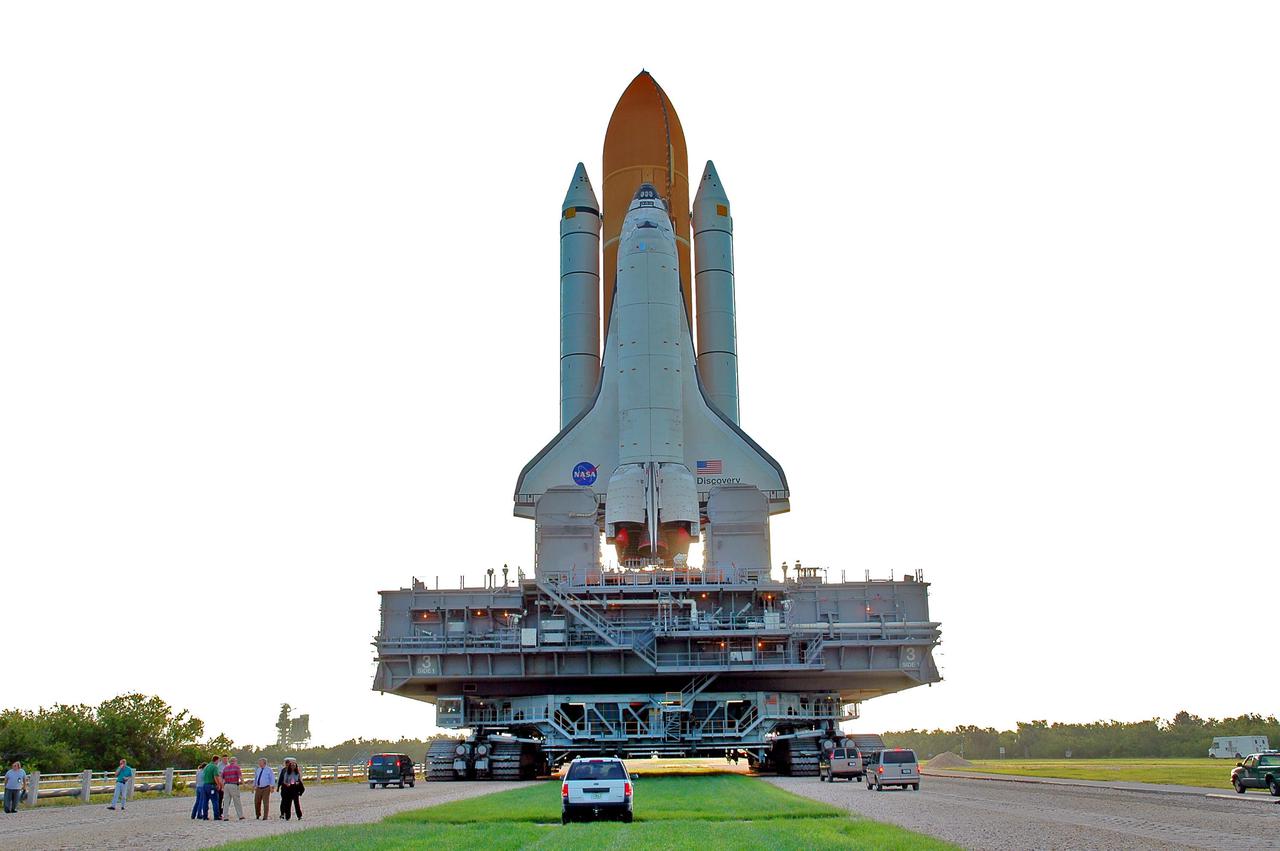
KENNEDY SPACE CENTER, FLA. - Space Shuttle Discovery makes its way along the crawlerway to Launch Pad 39B. First motion for the 4-mile, 6-hour journey was at 1:58 a.m. EDT. The Space Shuttle rests on a Mobile Launcher Platform that sits atop a Crawler-Transporter. This is the second rollout of Discovery after being returned to the Vehicle Assembly Building for connection to an improved External Tank. Launch of Discovery on its Return to Flight mission STS-114 is targeted for a launch window extending from July 13 to July 31.
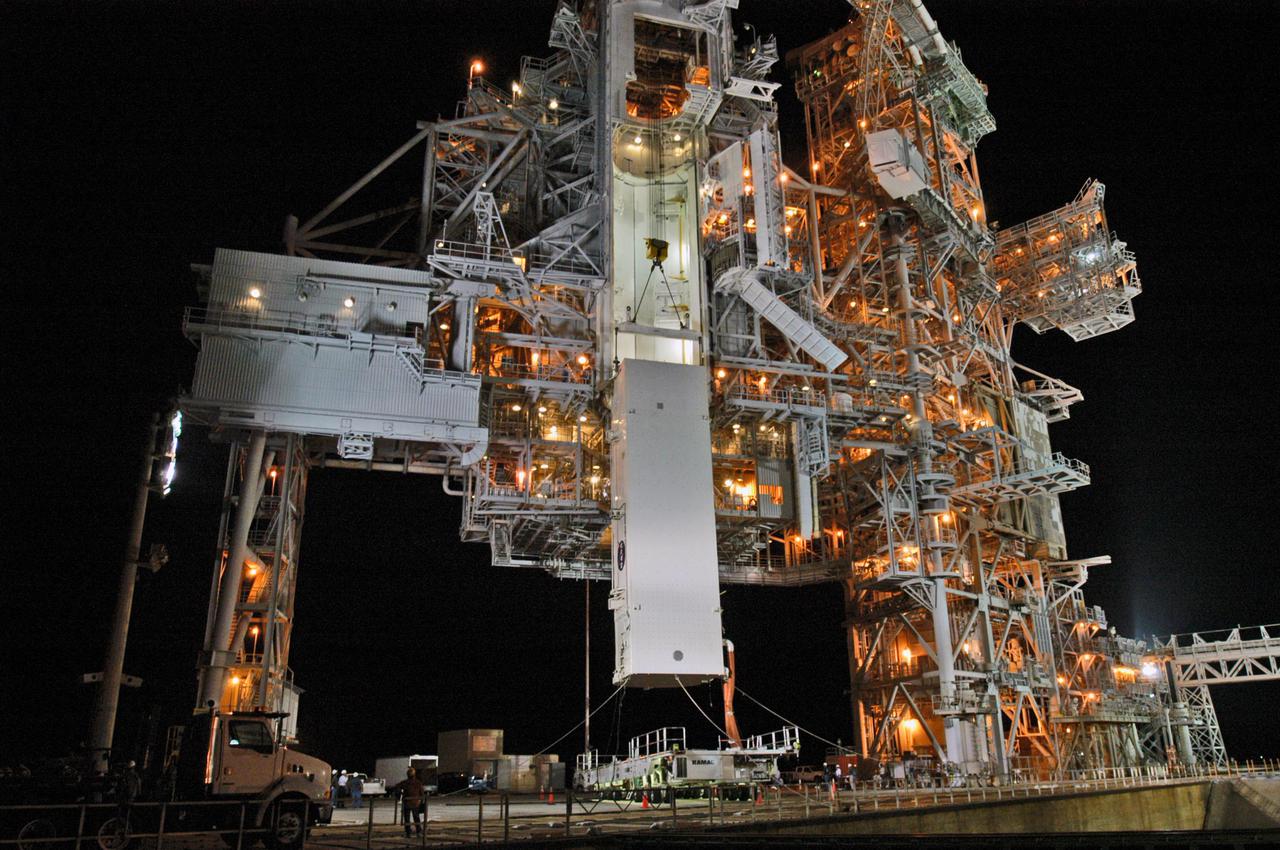
KENNEDY SPACE CENTER, FLA. - At Launch Pad 39B, the payload canister that delivered payloads launching aboard Space Shuttle Discovery's Return to Flight mission STS-114 is lowered from the Payload Changeout Room. The payloads will be installed into Discovery, scheduled to arrive at the pad later today. Discovery’s payloads include the Multi-Purpose Logistics Module Raffaello, the Lightweight Multi-Purpose Experiment Support Structure Carrier (LMC), and the External Stowage Platform-2 (ESP-2). Raffaello will deliver supplies to the International Space Station including food, clothing and research equipment. The LMC will carry a replacement Control Moment Gyroscope and a tile repair sample box. The ESP-2 is outfitted with replacement parts. Discovery’s launch window extends from July 13 through July 31.

KENNEDY SPACE CENTER, FLA. - In the Vehicle Assembly Building (VAB) at NASA’s Kennedy Space Center, a technician monitors the progress of a Crawler-Transporter as it moves Space Shuttle Discovery out of high bay 3 to Launch Pad 39B, a 4-mile, 6-hour journey. First motion was at 1:58 a.m. EDT. The Space Shuttle rests on a Mobile Launcher Platform which sits atop the Crawler-Transporter. This is the second rollout of Discovery after being returned to the Vehicle Assembly Building for connection to an improved External Tank. Launch of Discovery on its Return to Flight mission STS-114 is targeted for a launch window extending from July 13 to July 31. During its 12-day mission, Discovery’s seven-person crew will test new hardware and techniques to improve Shuttle safety, as well as deliver supplies to the International Space Station.
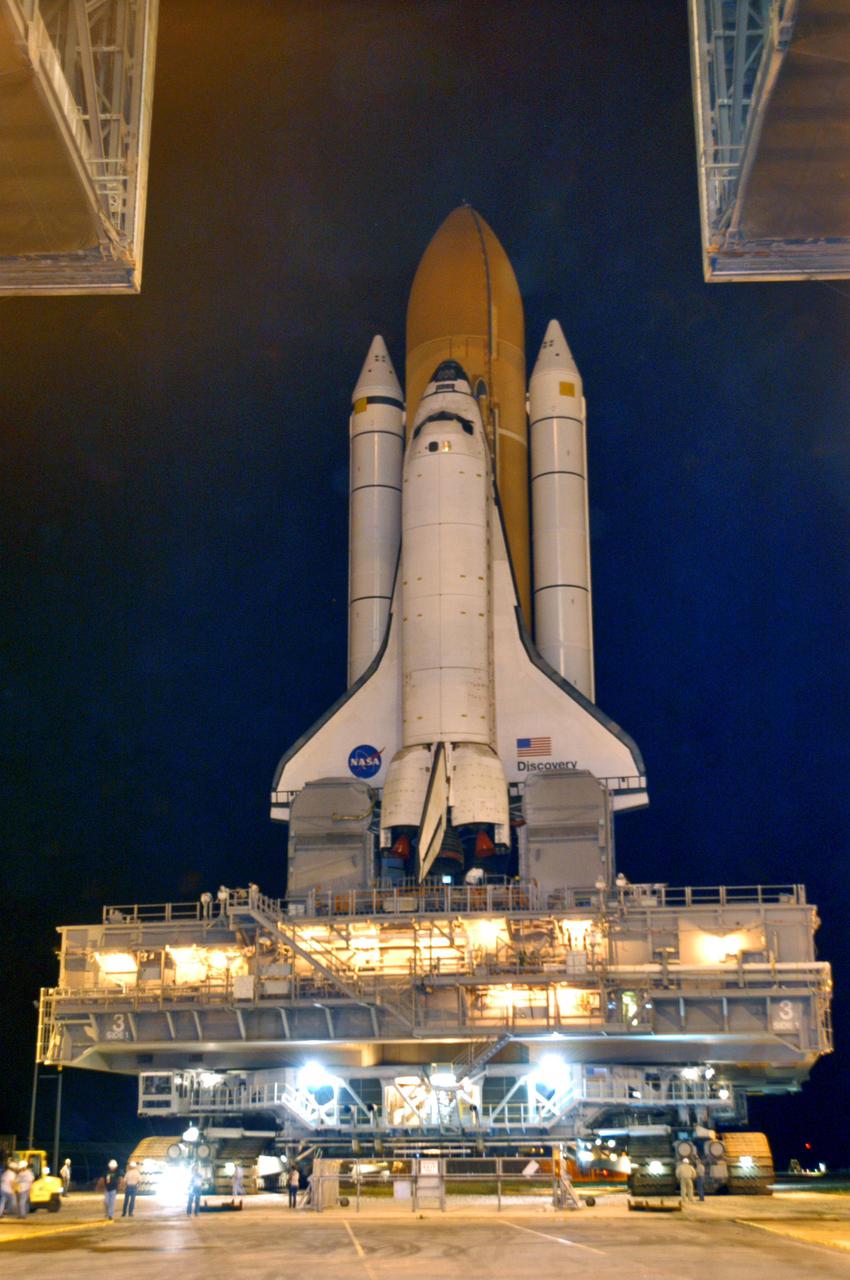
KENNEDY SPACE CENTER, FLA. - In the Vehicle Assembly Building (VAB) at NASA’s Kennedy Space Center, Space Shuttle Discovery rolls outside high bay 3 to begin its trip to Launch Pad 39B, a 4-mile, 6-hour journey. First motion was at 1:58 a.m. EDT. The Space Shuttle rests on a Mobile Launcher Platform which sits atop a Crawler-Transporter. This is the second rollout of Discovery after being returned to the Vehicle Assembly Building for connection to an improved External Tank. Launch of Discovery on its Return to Flight mission STS-114 is targeted for a launch window extending from July 13 to July 31. During its 12-day mission, Discovery’s seven-person crew will test new hardware and techniques to improve Shuttle safety, as well as deliver supplies to the International Space Station.
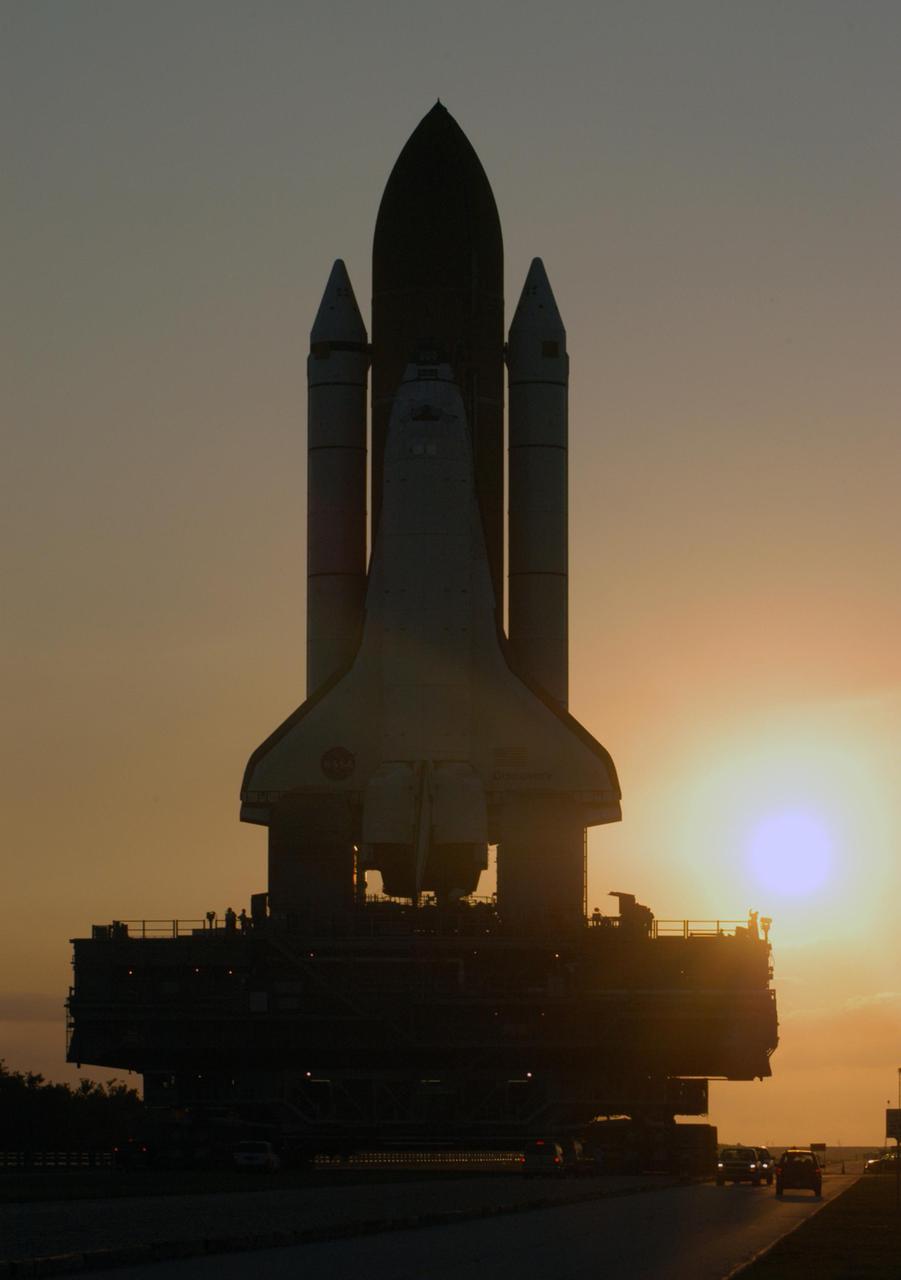
KENNEDY SPACE CENTER, FLA. - Space Shuttle Discovery makes its way along the crawlerway from high bay 3 to Launch Pad 39B as the sun rises. First motion for the 4-mile, 6-hour journey was at 1:58 a.m. EDT. The Space Shuttle rests on a Mobile Launcher Platform which sits atop a Crawler-Transporter. This is the second rollout of Discovery after being returned to the Vehicle Assembly Building for connection to an improved External Tank. Launch of Discovery on its Return to Flight mission STS-114 is targeted for a launch window extending from July 13 to July 31. During its 12-day mission, Discovery’s seven-person crew will test new hardware and techniques to improve Shuttle safety, as well as deliver supplies to the International Space Station.
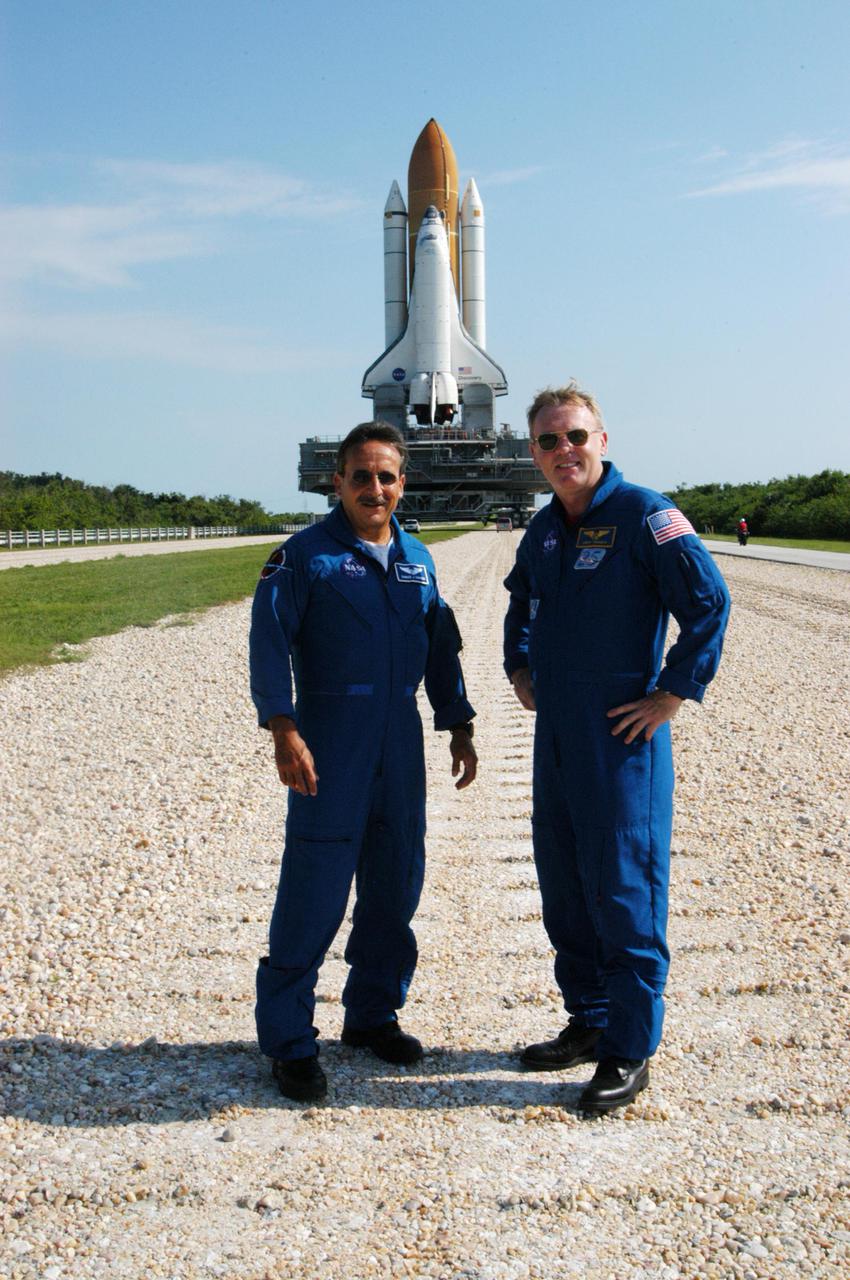
KENNEDY SPACE CENTER, FLA. - STS-114 Mission Specialists Charles Camarda (left) and Andrew Thomas monitor the progress of Space Shuttle Discovery as it makes its way along the crawlerway to Launch Pad 39B. First motion for the 4.2-mile journey was at 1:58 a.m. EDT. The Space Shuttle rests on a Mobile Launcher Platform that sits atop a Crawler-Transporter. This is the second rollout of Discovery. The vehicle was returned to the Vehicle Assembly Building for connection to an improved External Tank. Launch of Discovery on its Return to Flight mission STS-114 is targeted for a launch window extending from July 13 to July 31.
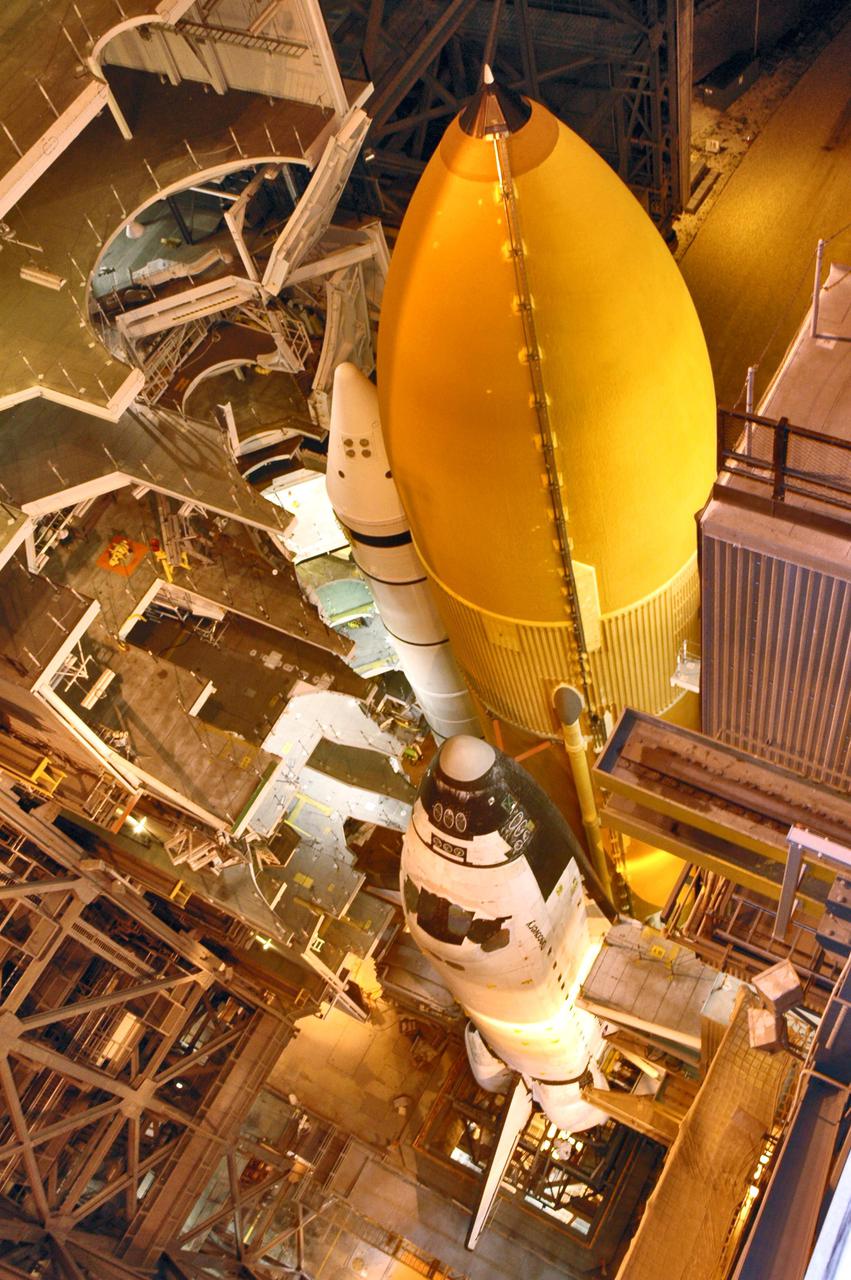
KENNEDY SPACE CENTER, FLA. - In the Vehicle Assembly Building (VAB) at NASA’s Kennedy Space Center, Space Shuttle Discovery is viewed from above as it departs high bay 3 for its trip to Launch Pad 39B, a 4-mile, 6-hour journey. First motion was at 1:58 a.m. EDT. The Space Shuttle rests on a Mobile Launcher Platform which sits atop a Crawler-Transporter. This is the second rollout of Discovery after being returned to the Vehicle Assembly Building for connection to an improved External Tank. Launch of Discovery on its Return to Flight mission STS-114 is targeted for a launch window extending from July 13 to July 31. During its 12-day mission, Discovery’s seven-person crew will test new hardware and techniques to improve Shuttle safety, as well as deliver supplies to the International Space Station.
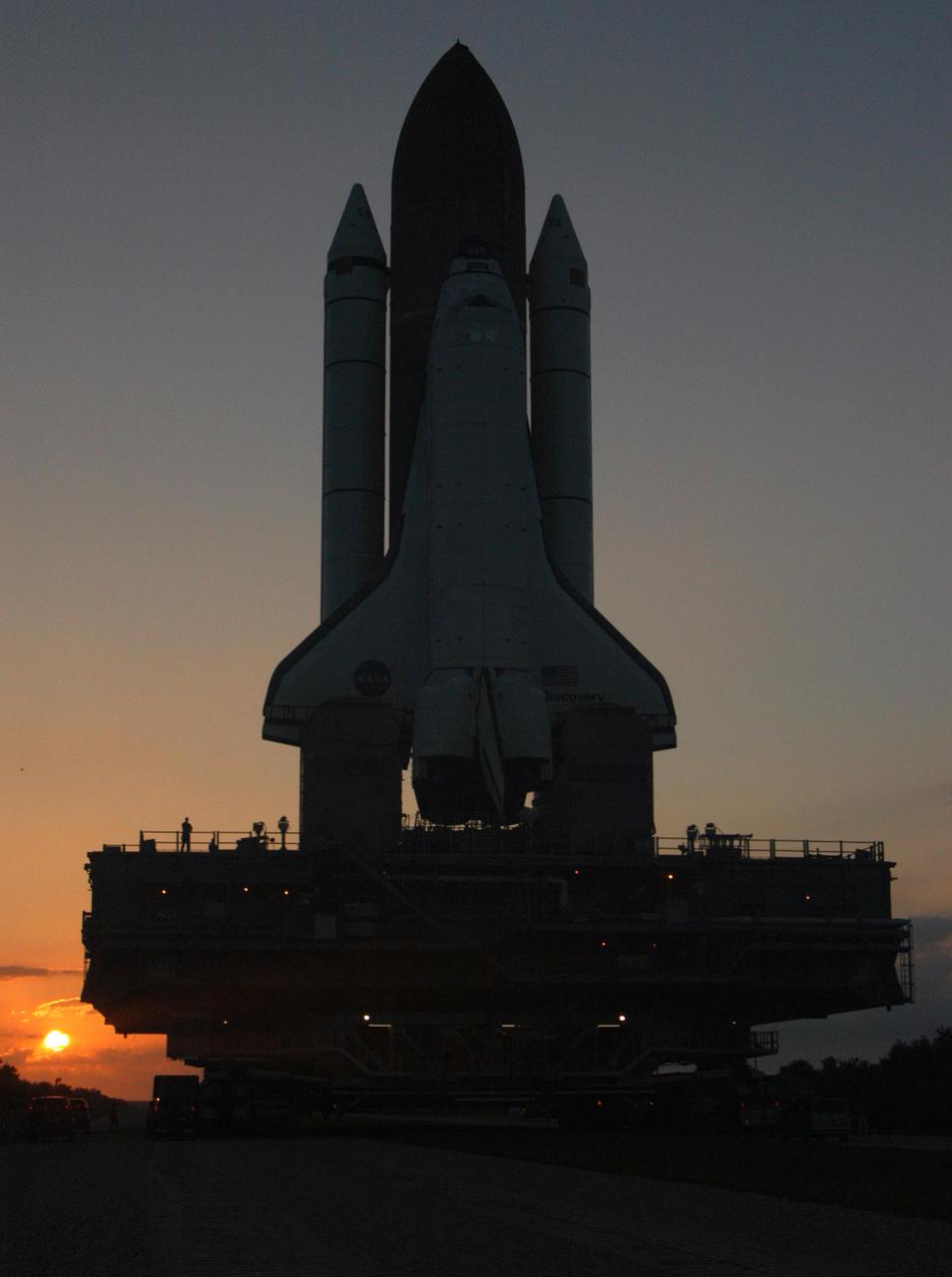
KENNEDY SPACE CENTER, FLA. - Space Shuttle Discovery makes its way along the crawlerway from high bay 3 to Launch Pad 39B as the sun rises. First motion for the 4-mile, 6-hour journey was at 1:58 a.m. EDT. The Space Shuttle rests on a Mobile Launcher Platform which sits atop a Crawler-Transporter. This is the second rollout of Discovery after being returned to the Vehicle Assembly Building for connection to an improved External Tank. Launch of Discovery on its Return to Flight mission STS-114 is targeted for a launch window extending from July 13 to July 31. During its 12-day mission, Discovery’s seven-person crew will test new hardware and techniques to improve Shuttle safety, as well as deliver supplies to the International Space Station.
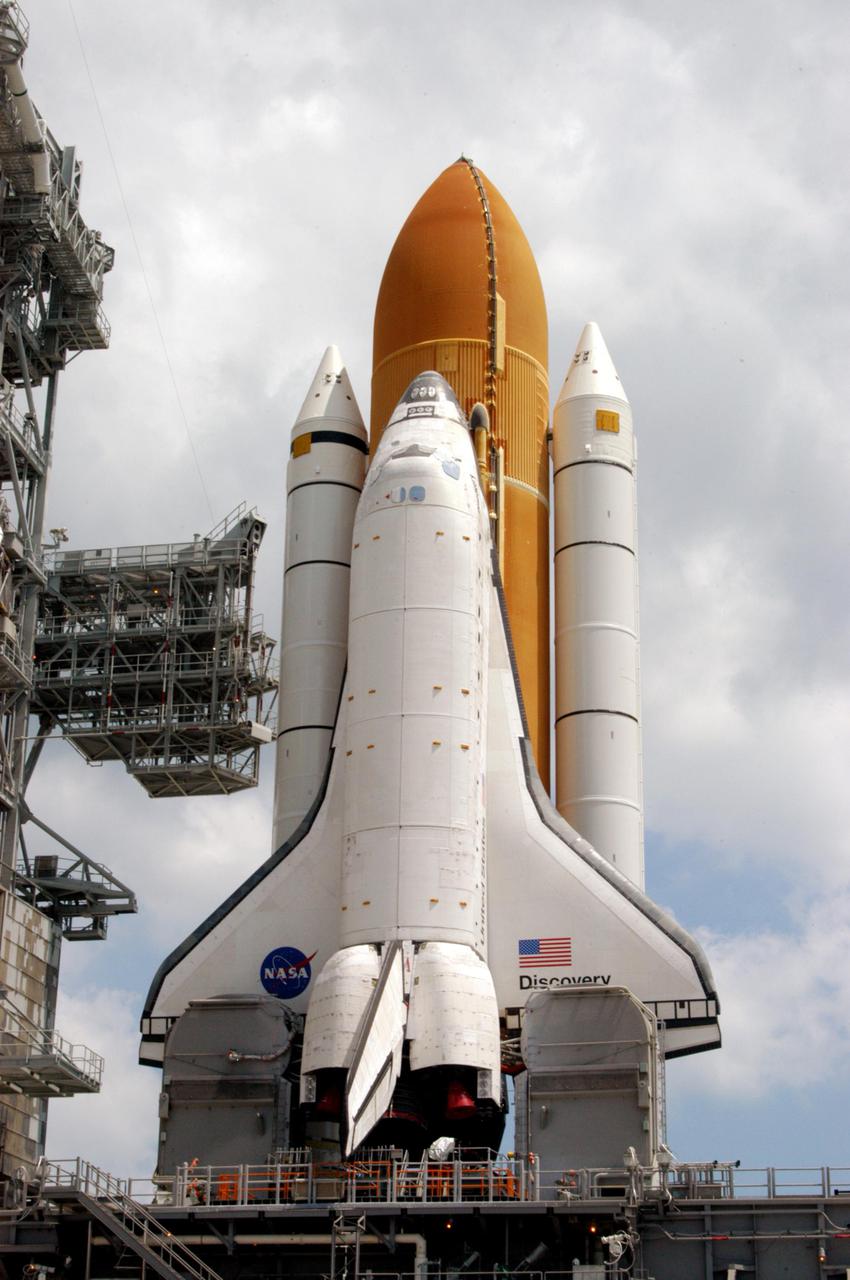
KENNEDY SPACE CENTER, FLA. - The work to secure Space Shuttle Discovery is under way at Launch Pad 39B following its move from the Vehicle Assembly Building. First motion for the 4.2-mile journey was at 1:58 a.m. EDT. The Space Shuttle rests on a Mobile Launcher Platform that sits atop a Crawler-Transporter. This is the second rollout of Discovery. The orbiter was returned to the Vehicle Assembly Building for connection to an improved External Tank. Launch of Discovery on its Return to Flight mission STS-114 is targeted for a launch window extending from July 13 to July 31.
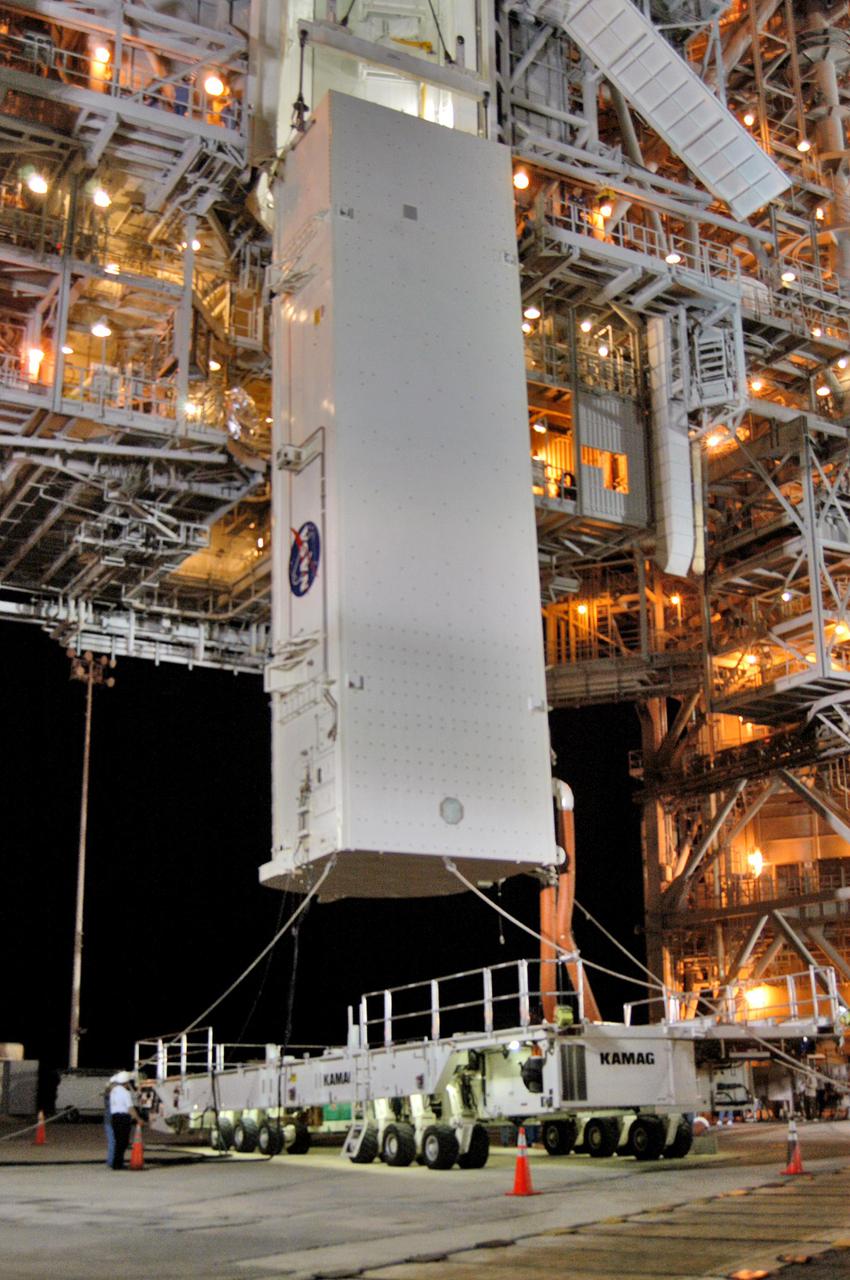
KENNEDY SPACE CENTER, FLA. - At Launch Pad 39B, the payload canister that delivered payloads launching aboard Space Shuttle Discovery's Return to Flight mission STS-114 is lowered from the Payload Changeout Room. The payloads will be installed into Discovery, scheduled to arrive at the pad later today. Discovery’s payloads include the Multi-Purpose Logistics Module Raffaello, the Lightweight Multi-Purpose Experiment Support Structure Carrier (LMC), and the External Stowage Platform-2 (ESP-2). Raffaello will deliver supplies to the International Space Station including food, clothing and research equipment. The LMC will carry a replacement Control Moment Gyroscope and a tile repair sample box. The ESP-2 is outfitted with replacement parts. Discovery’s launch window extends from July 13 through July 31.
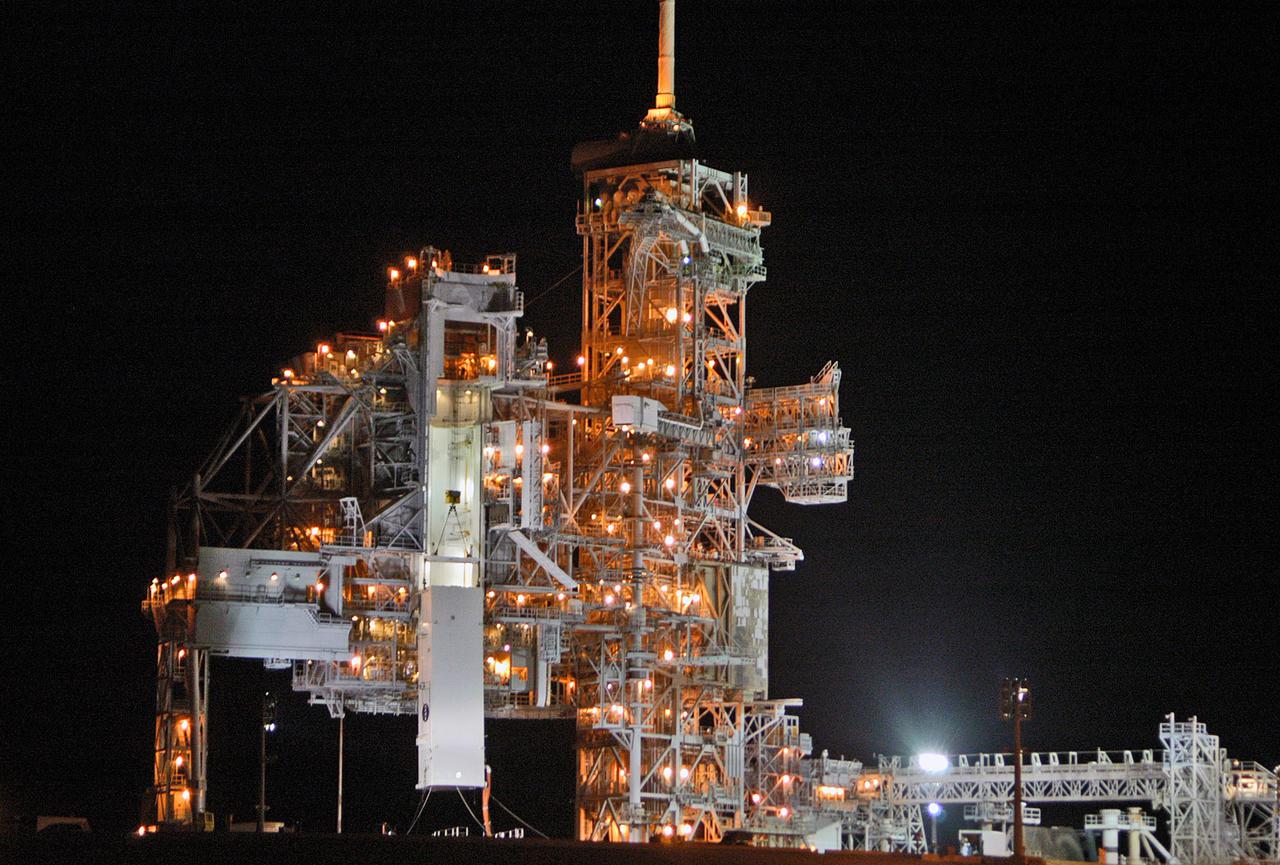
KENNEDY SPACE CENTER, FLA. - At Launch Pad 39B, the payload canister that delivered payloads launching aboard Space Shuttle Discovery's Return to Flight mission STS-114 is lowered from the Payload Changeout Room. The payloads will be installed into Discovery, scheduled to arrive at the pad later today. Discovery’s payloads include the Multi-Purpose Logistics Module Raffaello, the Lightweight Multi-Purpose Experiment Support Structure Carrier (LMC), and the External Stowage Platform-2 (ESP-2). Raffaello will deliver supplies to the International Space Station including food, clothing and research equipment. The LMC will carry a replacement Control Moment Gyroscope and a tile repair sample box. The ESP-2 is outfitted with replacement parts. Discovery’s launch window extends from July 13 through July 31.
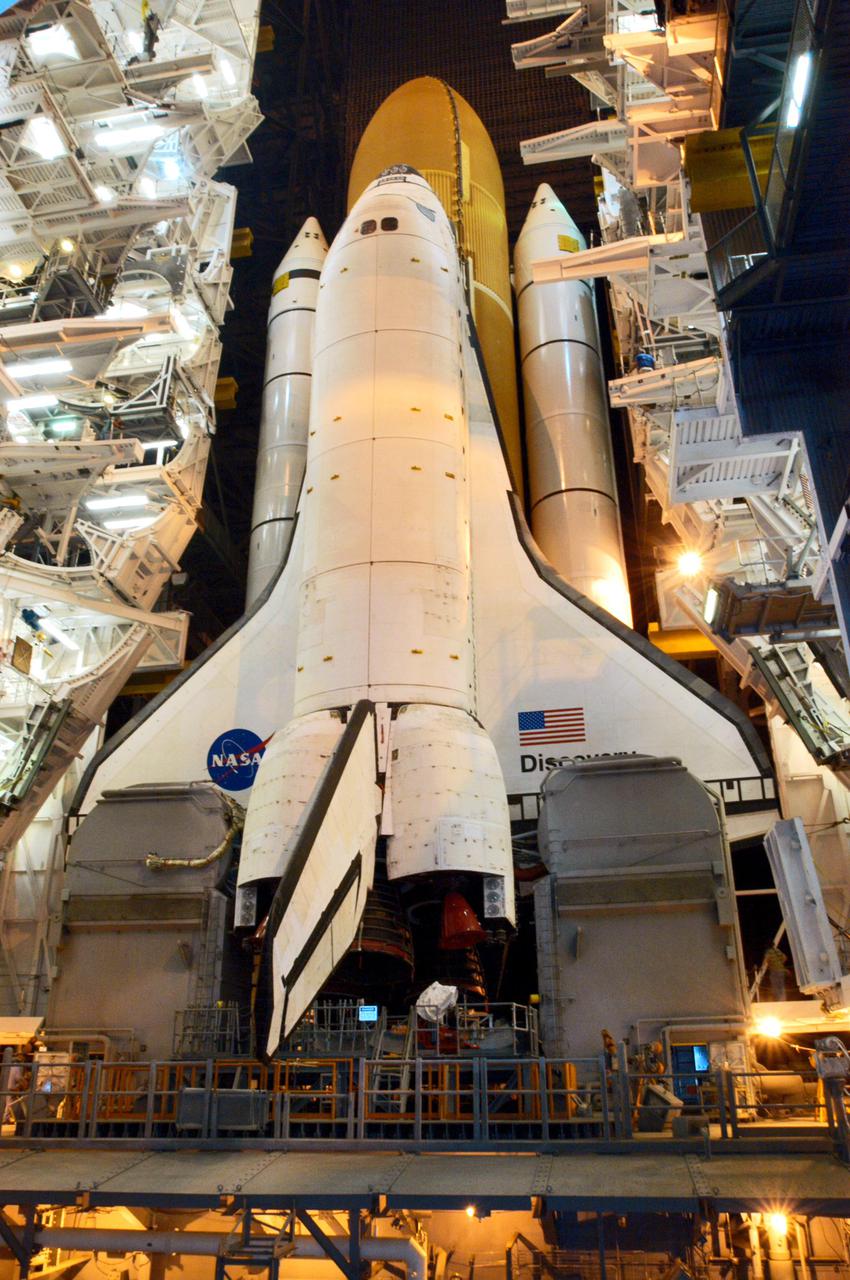
KENNEDY SPACE CENTER, FLA. - In the Vehicle Assembly Building (VAB) at NASA’s Kennedy Space Center, Space Shuttle Discovery exits high bay 3 to begin its trip to Launch Pad 39B, a 4-mile, 6-hour journey. First motion was at 1:58 a.m. EDT. The Space Shuttle rests on a Mobile Launcher Platform which sits atop a Crawler-Transporter. This is the second rollout of Discovery after being returned to the Vehicle Assembly Building for connection to an improved External Tank. Launch of Discovery on its Return to Flight mission STS-114 is targeted for a launch window extending from July 13 to July 31. During its 12-day mission, Discovery’s seven-person crew will test new hardware and techniques to improve Shuttle safety, as well as deliver supplies to the International Space Station.
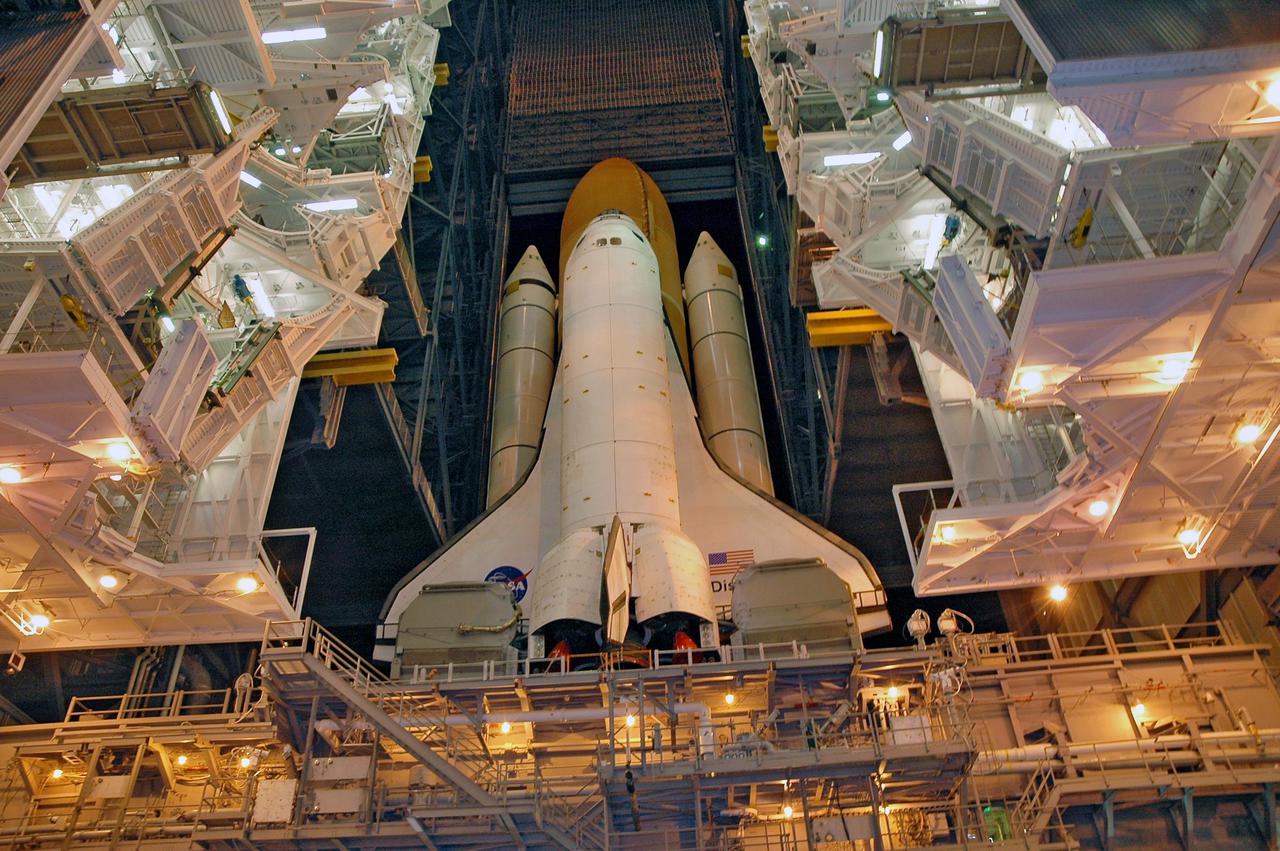
KENNEDY SPACE CENTER, FLA. - In the Vehicle Assembly Building (VAB) at NASA’s Kennedy Space Center, Space Shuttle Discovery begins its trip from high bay 3 to Launch Pad 39B, a 4-mile, 6-hour journey. First motion was at 1:58 a.m. EDT. The Space Shuttle rests on a Mobile Launcher Platform which sits atop a Crawler-Transporter. This is the second rollout of Discovery after being returned to the Vehicle Assembly Building for connection to an improved External Tank. Launch of Discovery on its Return to Flight mission STS-114 is targeted for a launch window extending from July 13 to July 31. During its 12-day mission, Discovery’s seven-person crew will test new hardware and techniques to improve Shuttle safety, as well as deliver supplies to the International Space Station.
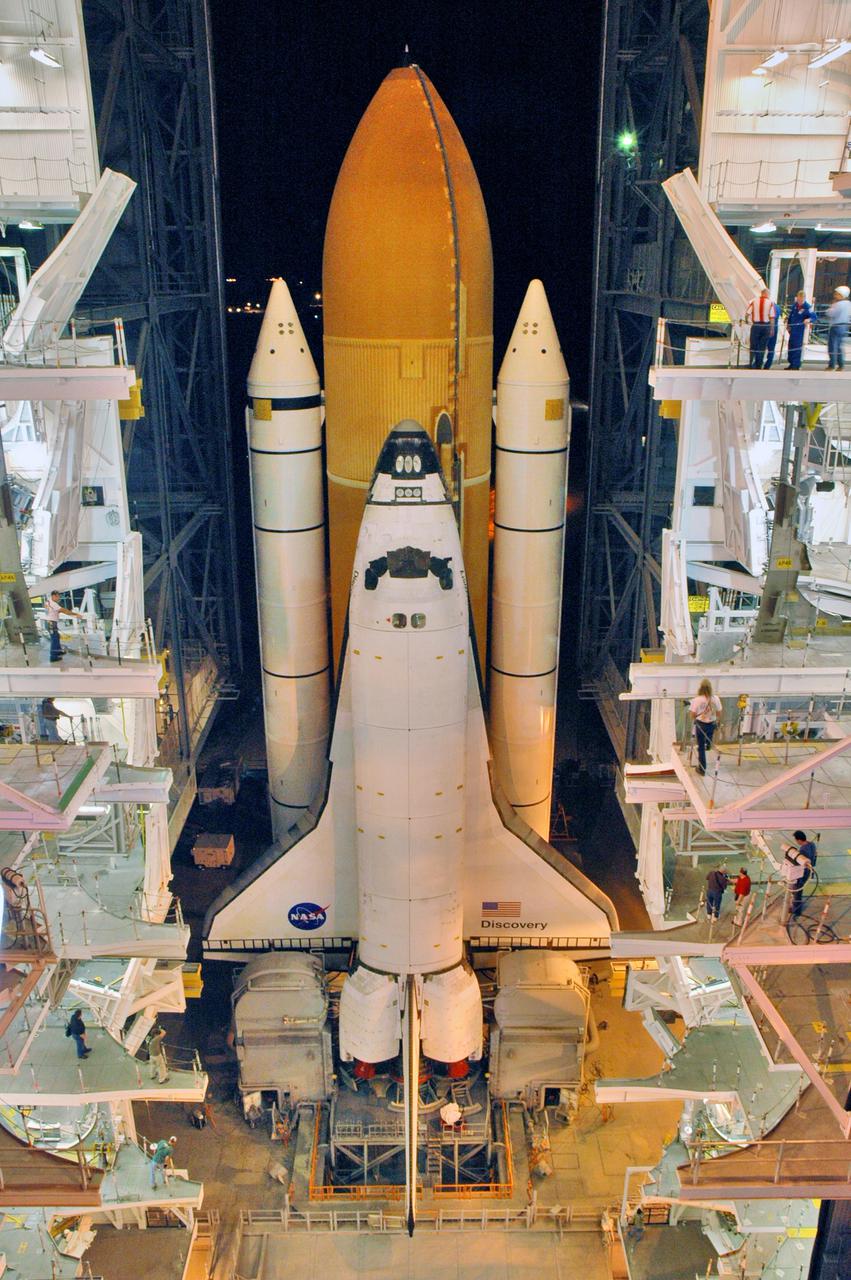
KENNEDY SPACE CENTER, FLA. - In the Vehicle Assembly Building (VAB) at NASA’s Kennedy Space Center, Space Shuttle Discovery begins its trip from high bay 3 to Launch Pad 39B, a 4-mile, 6-hour journey. First motion was at 1:58 a.m. EDT. The Space Shuttle rests on a Mobile Launcher Platform which sits atop a Crawler-Transporter. This is the second rollout of Discovery after being returned to the Vehicle Assembly Building for connection to an improved External Tank. Launch of Discovery on its Return to Flight mission STS-114 is targeted for a launch window extending from July 13 to July 31. During its 12-day mission, Discovery’s seven-person crew will test new hardware and techniques to improve Shuttle safety, as well as deliver supplies to the International Space Station.

KENNEDY SPACE CENTER, FLA. - Space Shuttle Discovery makes its way along the crawlerway from high bay 3 to Launch Pad 39B as the sun rises. First motion for the 4-mile, 6-hour journey was at 1:58 a.m. EDT. The Space Shuttle rests on a Mobile Launcher Platform which sits atop a Crawler-Transporter. This is the second rollout of Discovery after being returned to the Vehicle Assembly Building for connection to an improved External Tank. Launch of Discovery on its Return to Flight mission STS-114 is targeted for a launch window extending from July 13 to July 31. During its 12-day mission, Discovery’s seven-person crew will test new hardware and techniques to improve Shuttle safety, as well as deliver supplies to the International Space Station.
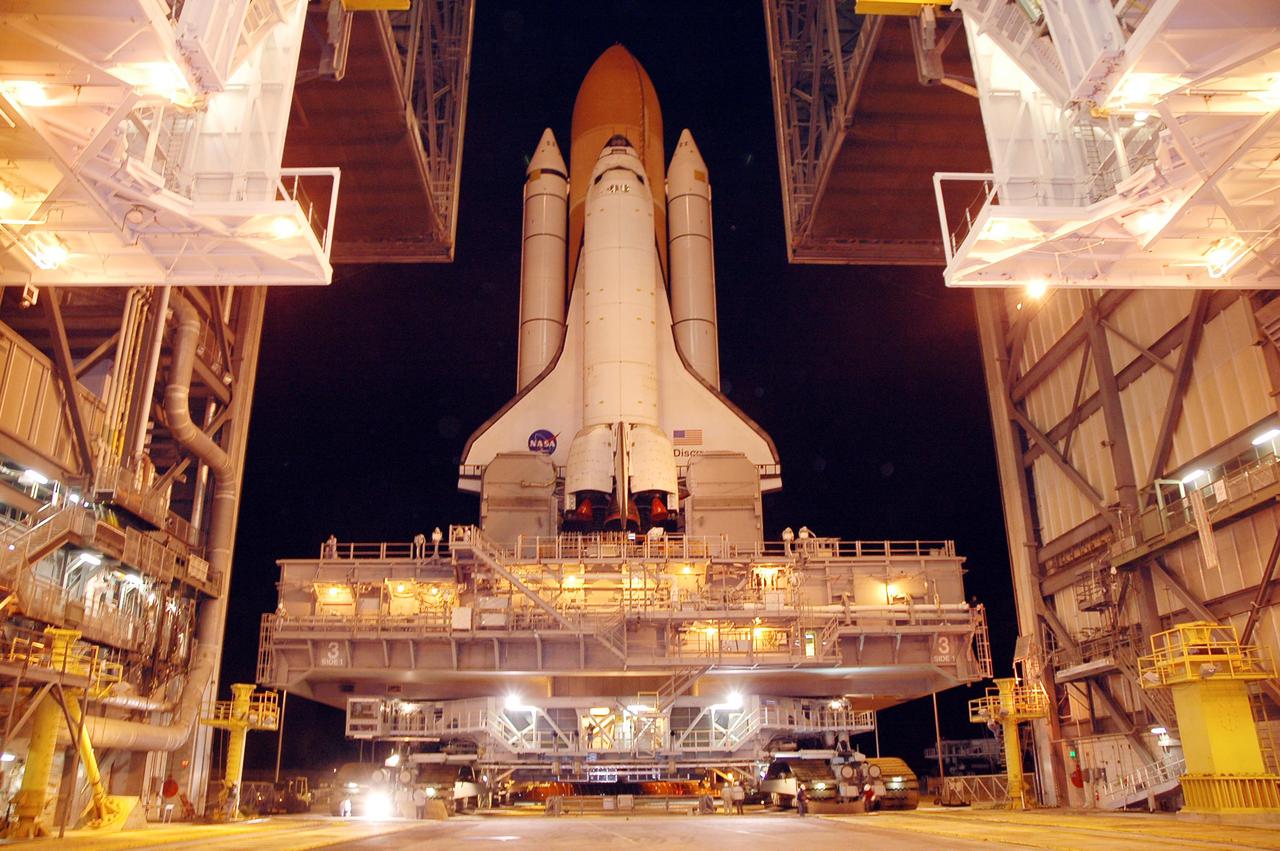
KENNEDY SPACE CENTER, FLA. - In the Vehicle Assembly Building (VAB) at NASA’s Kennedy Space Center, Space Shuttle Discovery rolls outside high bay 3 to begin its trip to Launch Pad 39B, a 4-mile, 6-hour journey. First motion was at 1:58 a.m. EDT. The Space Shuttle rests on a Mobile Launcher Platform which sits atop a Crawler-Transporter. This is the second rollout of Discovery after being returned to the Vehicle Assembly Building for connection to an improved External Tank. Launch of Discovery on its Return to Flight mission STS-114 is targeted for a launch window extending from July 13 to July 31. During its 12-day mission, Discovery’s seven-person crew will test new hardware and techniques to improve Shuttle safety, as well as deliver supplies to the International Space Station.
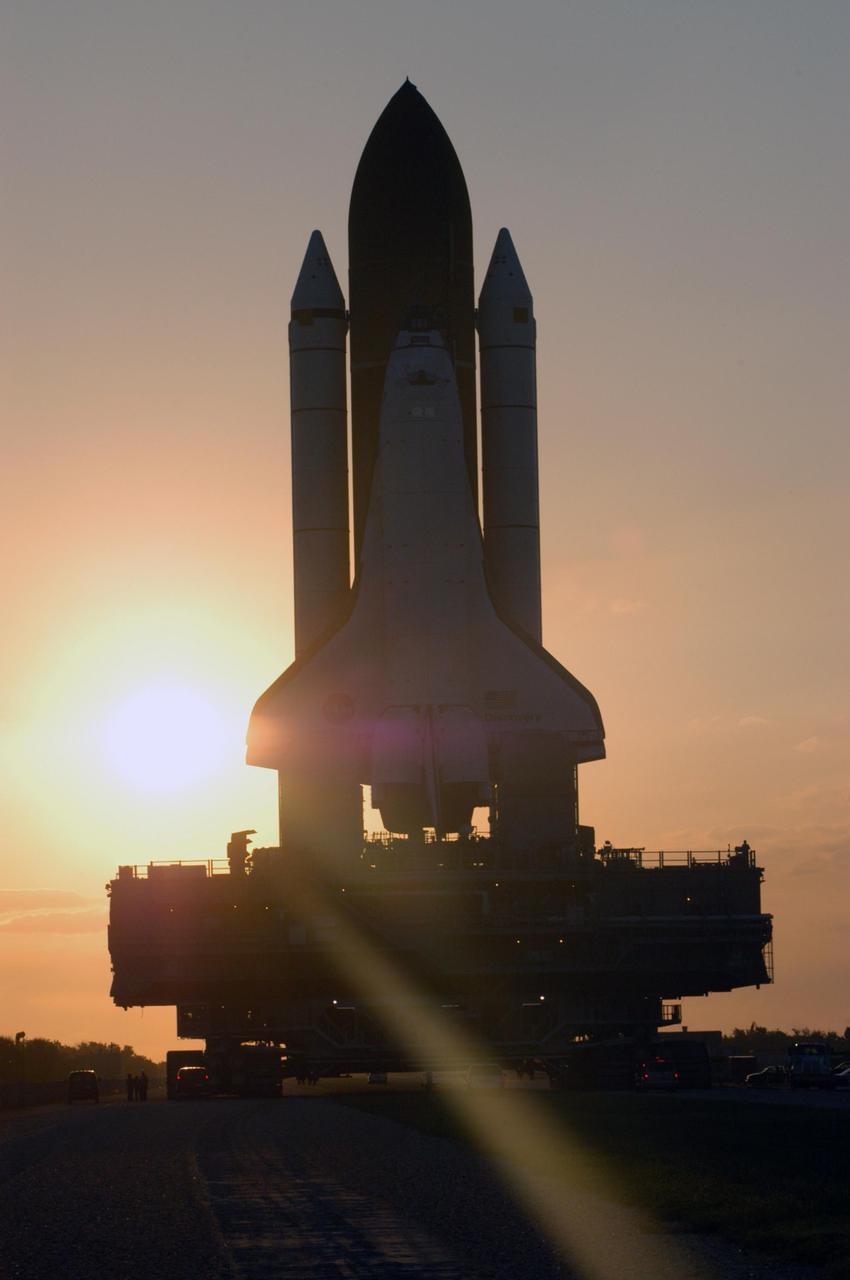
KENNEDY SPACE CENTER, FLA. - Space Shuttle Discovery makes its way along the crawlerway from high bay 3 to Launch Pad 39B as the sun rises. First motion for the 4-mile, 6-hour journey was at 1:58 a.m. EDT. The Space Shuttle rests on a Mobile Launcher Platform which sits atop a Crawler-Transporter. This is the second rollout of Discovery after being returned to the Vehicle Assembly Building for connection to an improved External Tank. Launch of Discovery on its Return to Flight mission STS-114 is targeted for a launch window extending from July 13 to July 31. During its 12-day mission, Discovery’s seven-person crew will test new hardware and techniques to improve Shuttle safety, as well as deliver supplies to the International Space Station.
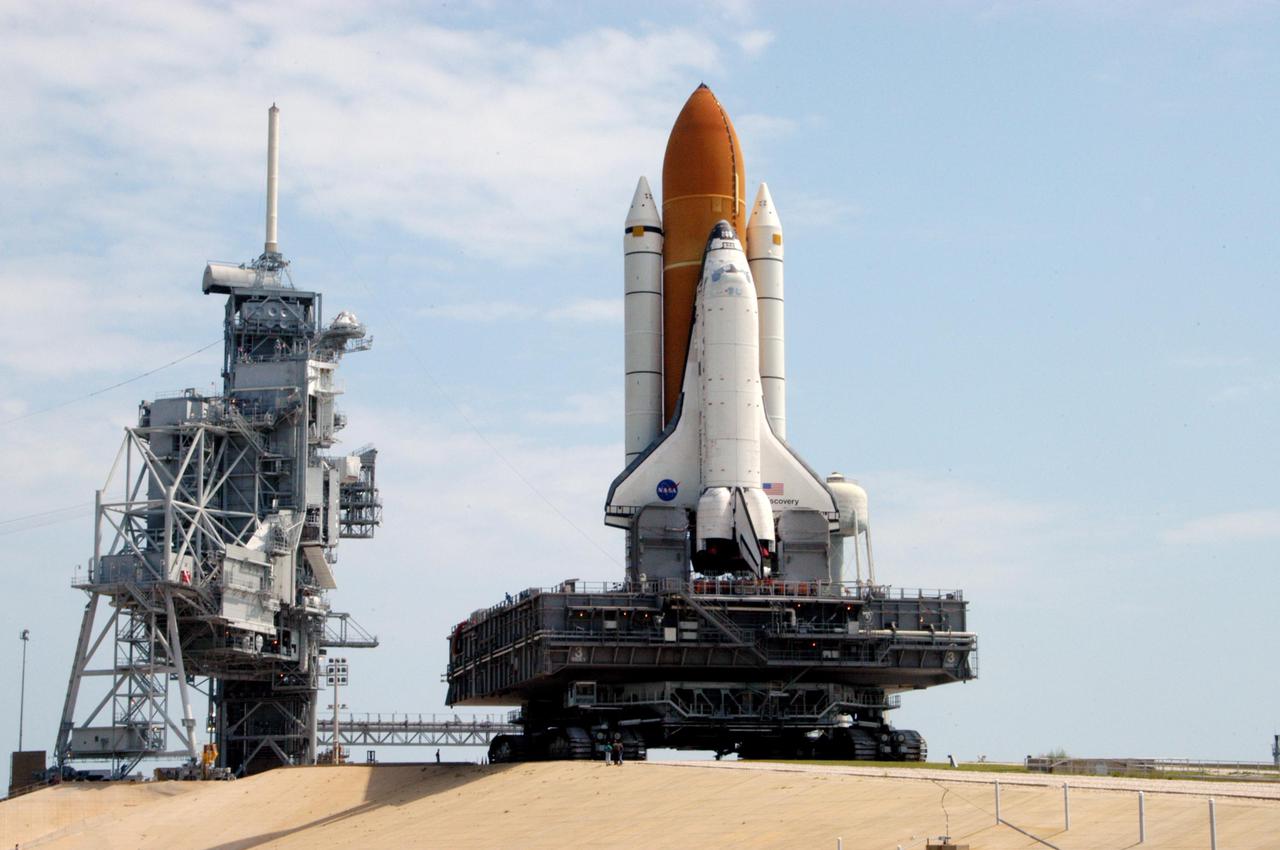
KENNEDY SPACE CENTER, FLA. - Space Shuttle Discovery makes its way up the 5 percent grade to the hardstand of Launch Pad 39B. First motion for the 4.2-mile journey was at 1:58 a.m. EDT. The Space Shuttle rests on a Mobile Launcher Platform that sits atop a Crawler-Transporter. This is the second rollout of Discovery. The orbiter was returned to the Vehicle Assembly Building for connection to an improved External Tank. Launch of Discovery on its Return to Flight mission STS-114 is targeted for a launch window extending from July 13 to July 31.

KENNEDY SPACE CENTER, FLA. - The Rotating Service Structure at Launch Pad 39B is ready to enfold Space Shuttle Discovery upon its arrival. First motion for the 4.2-mile journey was at 1:58 a.m. EDT. The Space Shuttle rests on a Mobile Launcher Platform that sits atop a Crawler-Transporter. This is the second rollout of Discovery. The orbiter was returned to the Vehicle Assembly Building for connection to an improved External Tank. Launch of Discovery on its Return to Flight mission STS-114 is targeted for a launch window extending from July 13 to July 31.
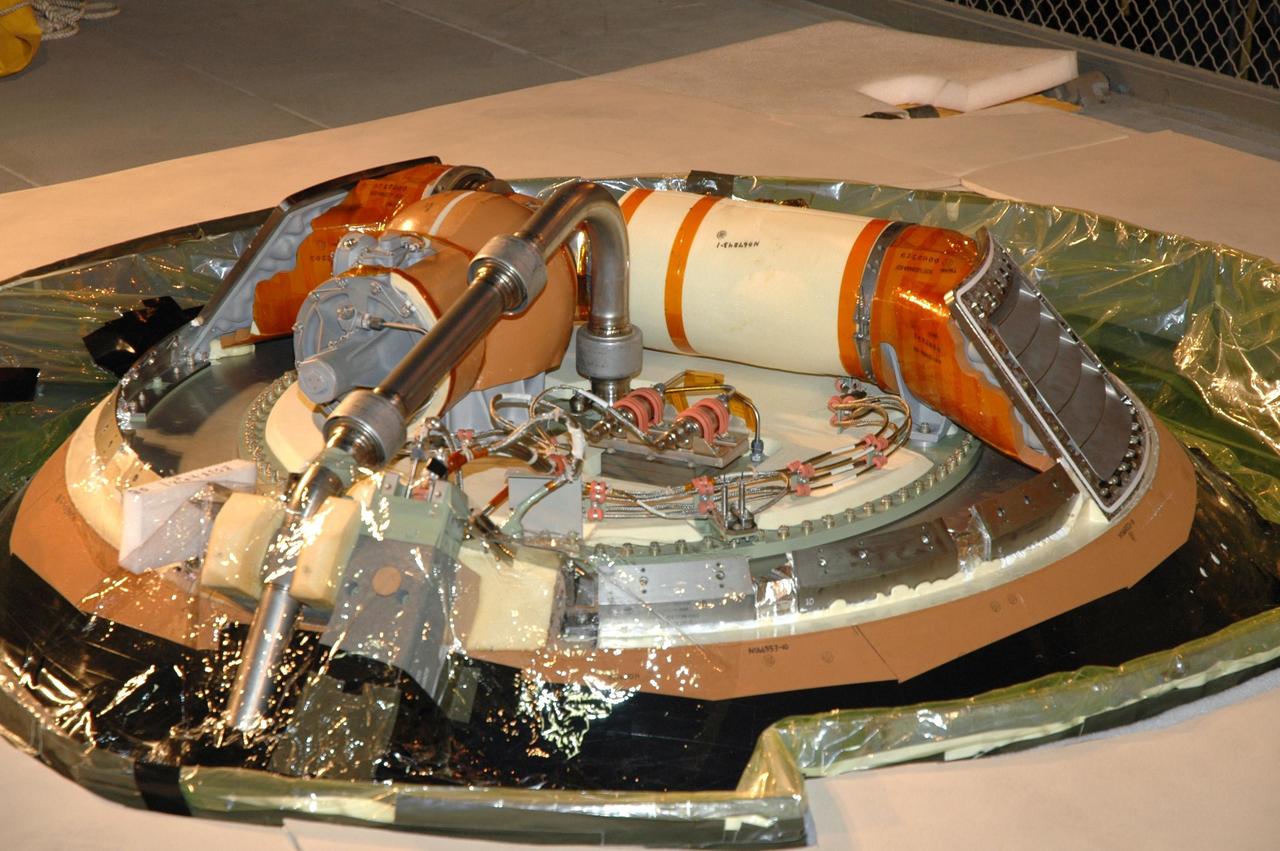
KENNEDY SPACE CENTER, FLA. - In the Vehicle Assembly Building at NASA's Kennedy Space Center, the nose cap on top of external tank number 119 has been removed. A new gaseous oxygen vent valve will be installed. Tank 119 is designated for mission STS-121. Vapors are created prior to launch as the liquid oxygen in the external tank boils off. At the forward end of each external tank propellant tank is a vent and relief valve that can be opened before launch for venting or by excessive tank pressure for relief. The vent function is available only before launch. Mission STS-121 to the International Space Station is scheduled for launch in July. Photo credit: NASA/Jim Grossmann
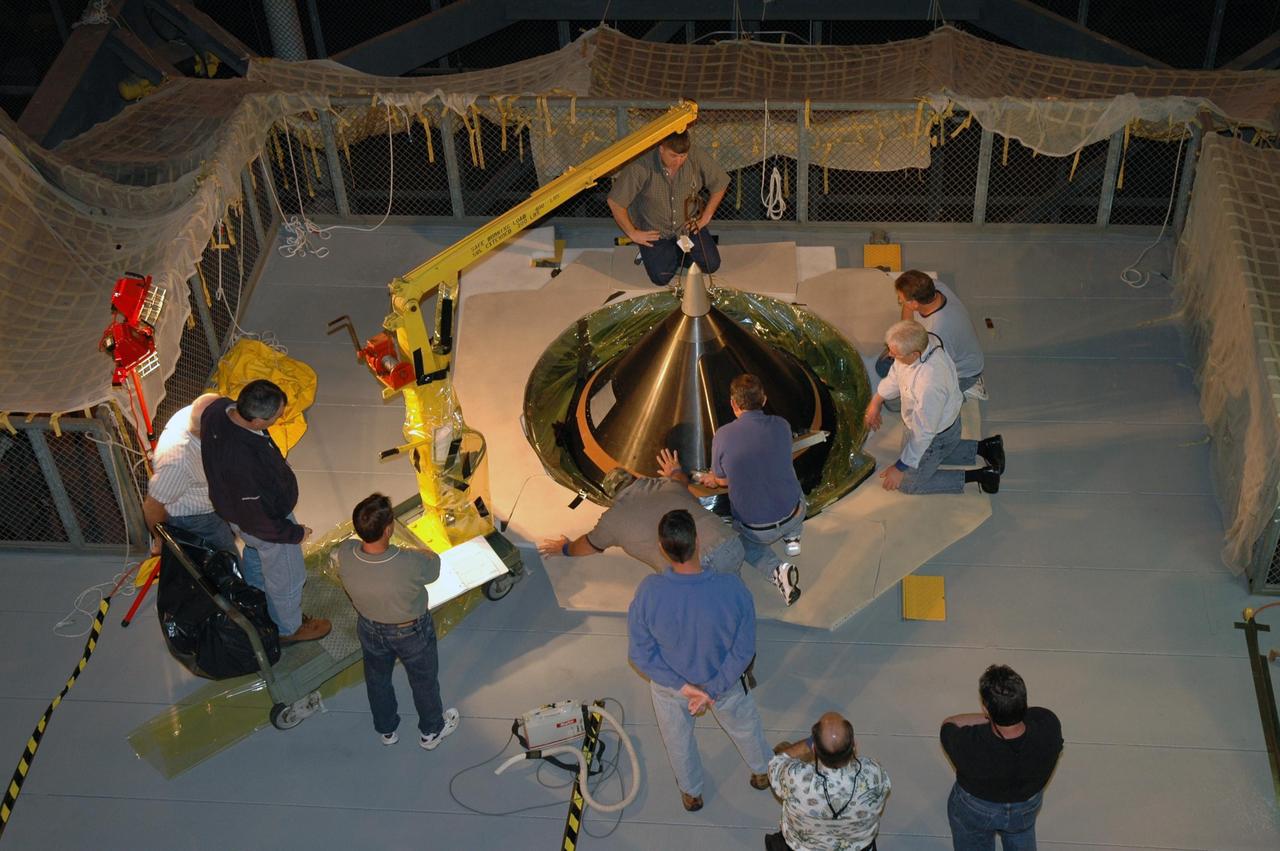
KENNEDY SPACE CENTER, FLA. - In the Vehicle Assembly Building at NASA's Kennedy Space Center, workers begin removal of the nose cap on top of external tank number 119, the tank designated for mission STS-121. The cap is being removed in order to install a new gaseous oxygen vent valve under the nose cap. Vapors are created prior to launch as the liquid oxygen in the external tank boils off. At the forward end of each external tank propellant tank is a vent and relief valve that can be opened before launch for venting or by excessive tank pressure for relief. The vent function is available only before launch. Mission STS-121 to the International Space Station is scheduled for launch in July. Photo credit: NASA/Jim Grossmann
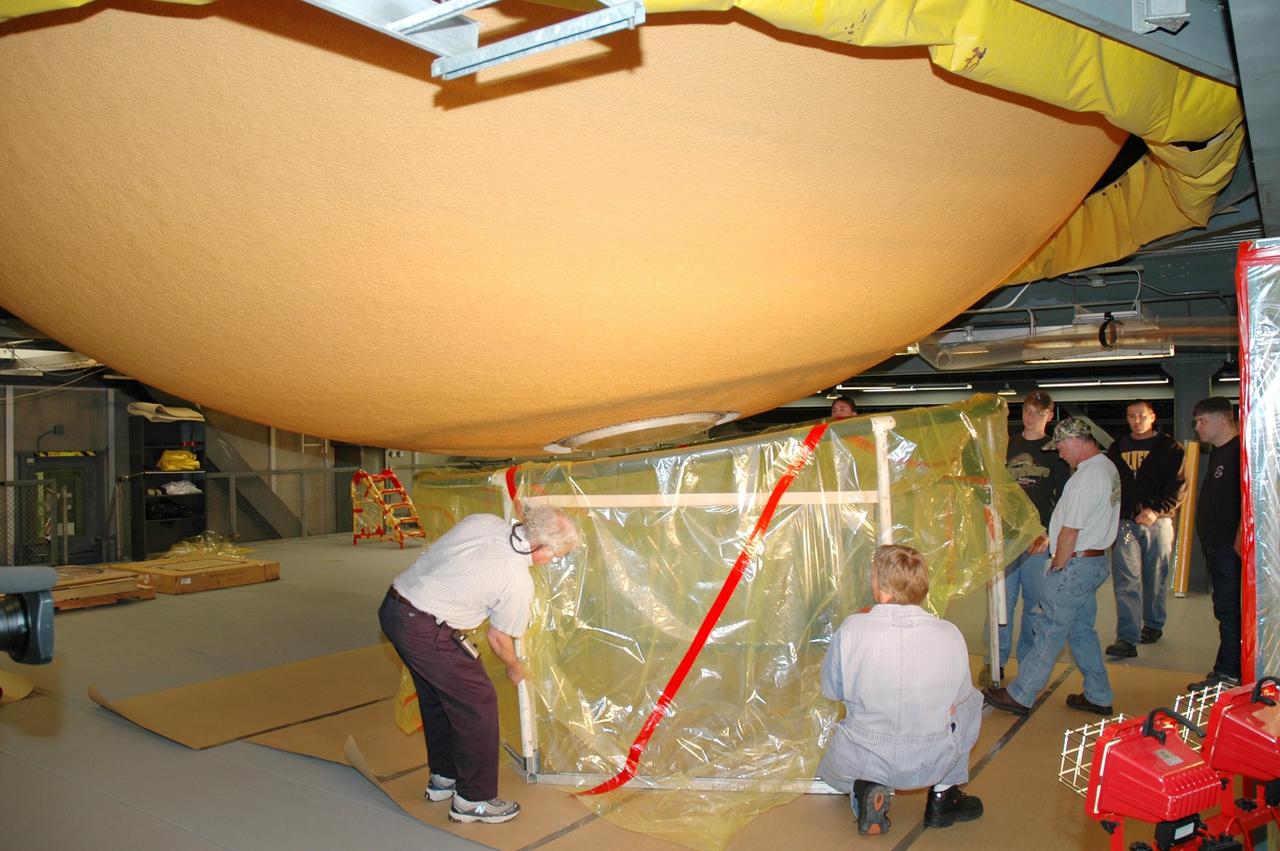
KENNEDY SPACE CENTER, FLA. - Lockheed Martin technicians from NASA's Michoud Assembly Facility in Louisiana create a clean-room working area around the "manhole" on the external tank designated for mission STS-121. The work is part of the process in removing and replacing the external tank's four liquid hydrogen main engine cutoff sensors, which indicate whether the tank still has fuel during its climb to orbit. After the cleaning, the manhole will be removed to provide access to the area of the sensors for their removal. Photo credit: NASA/Jim Grossmann

KENNEDY SPACE CENTER, FLA. - In the Vehicle Assembly Building at NASA's Kennedy Space Center, workers remove the nose cap on top of external tank number 119, the tank designated for mission STS-121. The cap is being removed in order to install a new gaseous oxygen vent valve under the nose cap. Vapors are created prior to launch as the liquid oxygen in the external tank boils off. At the forward end of each external tank propellant tank is a vent and relief valve that can be opened before launch for venting or by excessive tank pressure for relief. The vent function is available only before launch. Mission STS-121 to the International Space Station is scheduled for launch in July. Photo credit: NASA/Jim Grossmann

KENNEDY SPACE CENTER, FLA. - Lockheed Martin technicians from NASA's Michoud Assembly Facility in Louisiana clean the area around the "manhole" on the external tank designated for mission STS-121. The work is part of the process in removing and replacing the external tank's four liquid hydrogen main engine cutoff sensors, which indicate whether the tank still has fuel during its climb to orbit. After the cleaning, the manhole will be removed to provide access to the area of the sensors for their removal. Photo credit: NASA/Jim Grossmann
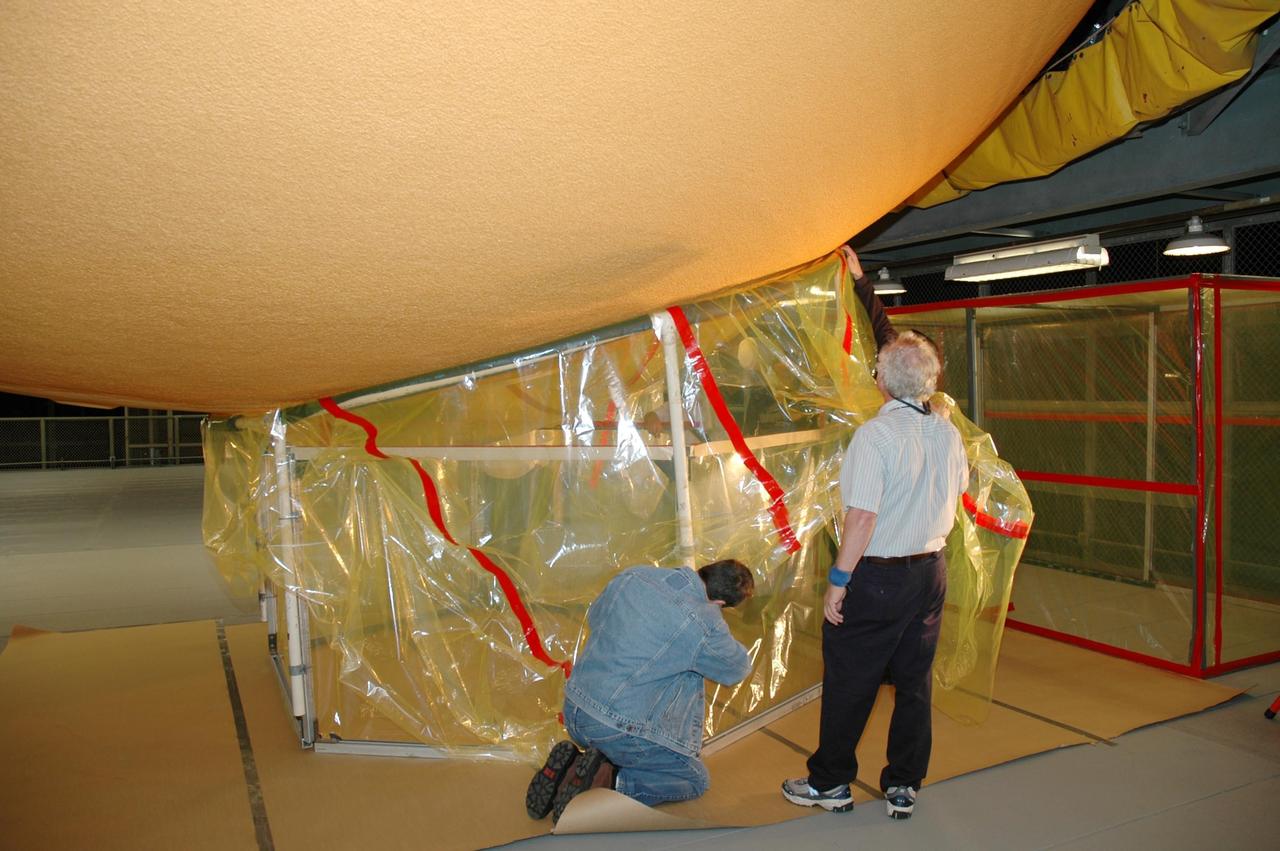
KENNEDY SPACE CENTER, FLA. - KENNEDY SPACE CENTER, FLA. - Lockheed Martin technicians from NASA's Michoud Assembly Facility in Louisiana install a clean-room working area around the "manhole" on the external tank designated for mission STS-121. The work is part of the process in removing and replacing the external tank's four liquid hydrogen main engine cutoff sensors, which indicate whether the tank still has fuel during its climb to orbit. After the cleaning, the manhole will be removed to provide access to the area of the sensors for their removal. Photo credit: NASA/Jim Grossmann
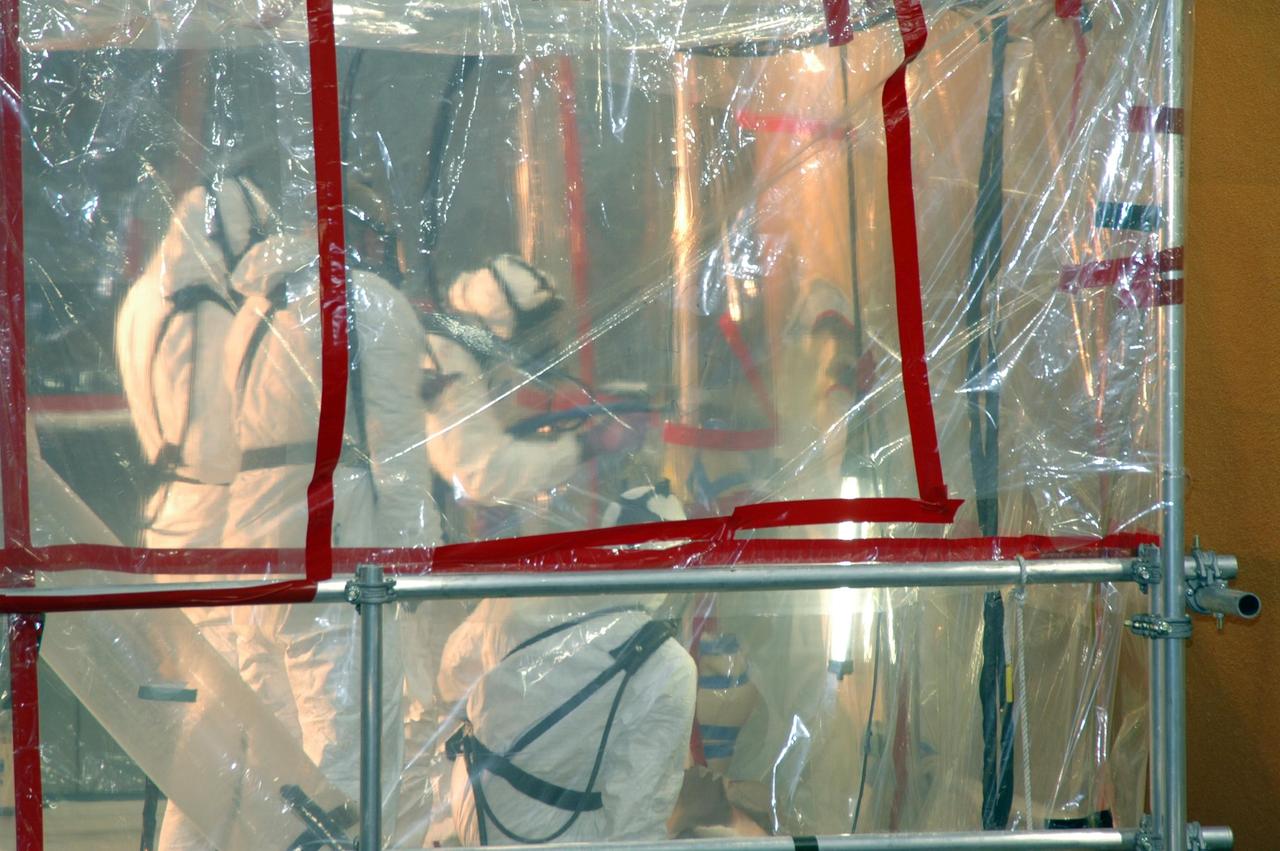
KENNEDY SPACE CENTER, FLA. -- Lockheed Martin technicians in the Vehicle Assembly Building at NASA's Kennedy Space Center apply new foam over the manhole cover on the lower end of external tank No. 119. The manhole was removed to access the area where the tank's four liquid hydrogen engine cutoff sensors were replaced. Once reinstalled, the manhole required new foam to be applied. The tank is being prepared to launch Space Shuttle Discovery on mission STS-121 in July. Photo credit: NASA/Jim Grossmann

KENNEDY SPACE CENTER, FLA. -- Lockheed Martin technicians in the Vehicle Assembly Building at NASA's Kennedy Space Center begin to apply new foam over the manhole cover on the lower end of external tank No. 119. The manhole was removed to access the area where the tank's four liquid hydrogen engine cutoff sensors were replaced. Once reinstalled, the manhole required new foam to be applied. The tank is being prepared to launch Space Shuttle Discovery on mission STS-121 in July. Photo credit: NASA/Jim Grossmann
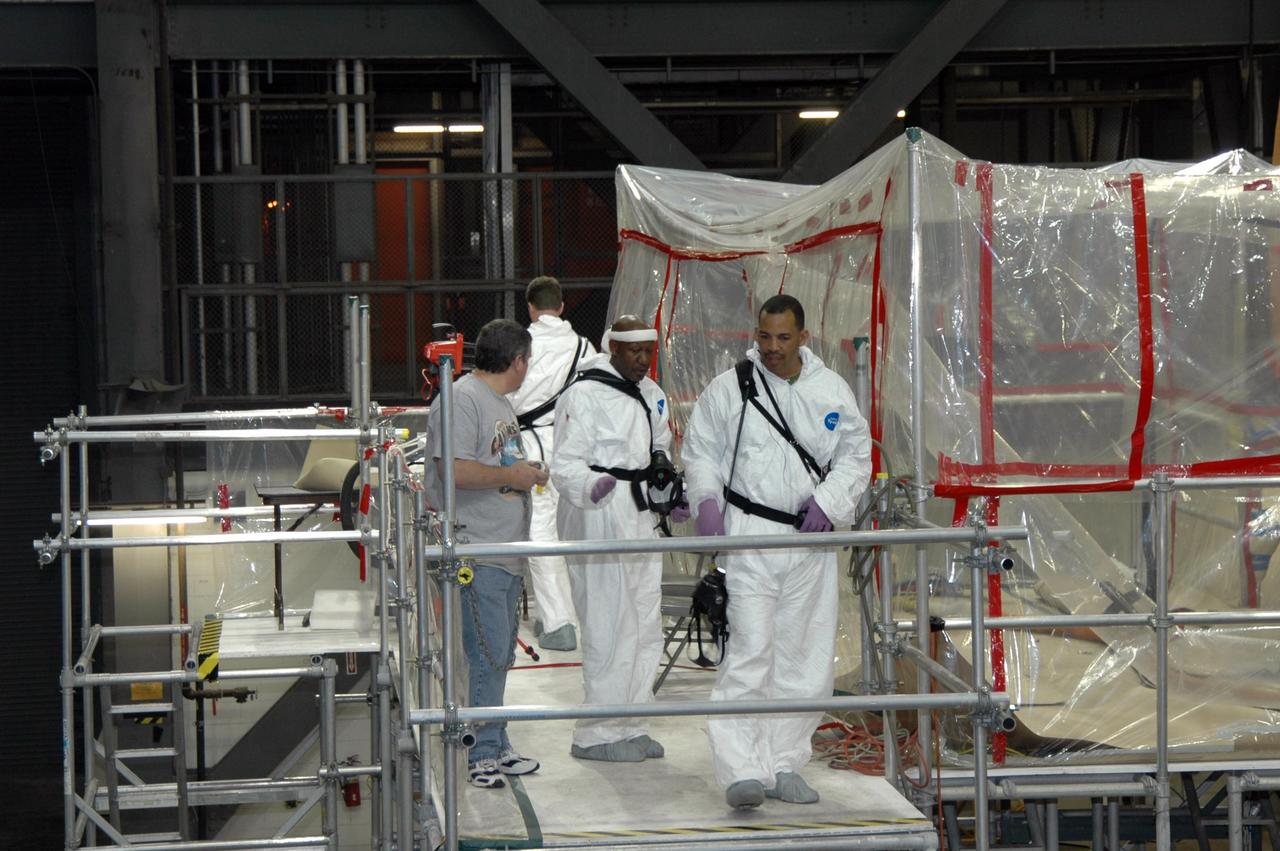
KENNEDY SPACE CENTER, FLA. -- Lockheed Martin technicians in the Vehicle Assembly Building at NASA's Kennedy Space Center prepare for the application of new foam over the manhole cover on the lower end of external tank No. 119. The manhole was removed to access the area where the tank's four liquid hydrogen engine cutoff sensors were replaced. Once reinstalled, the manhole required new foam to be applied. The tank is being prepared to launch Space Shuttle Discovery on mission STS-121 in July. Photo credit: NASA/Jim Grossmann
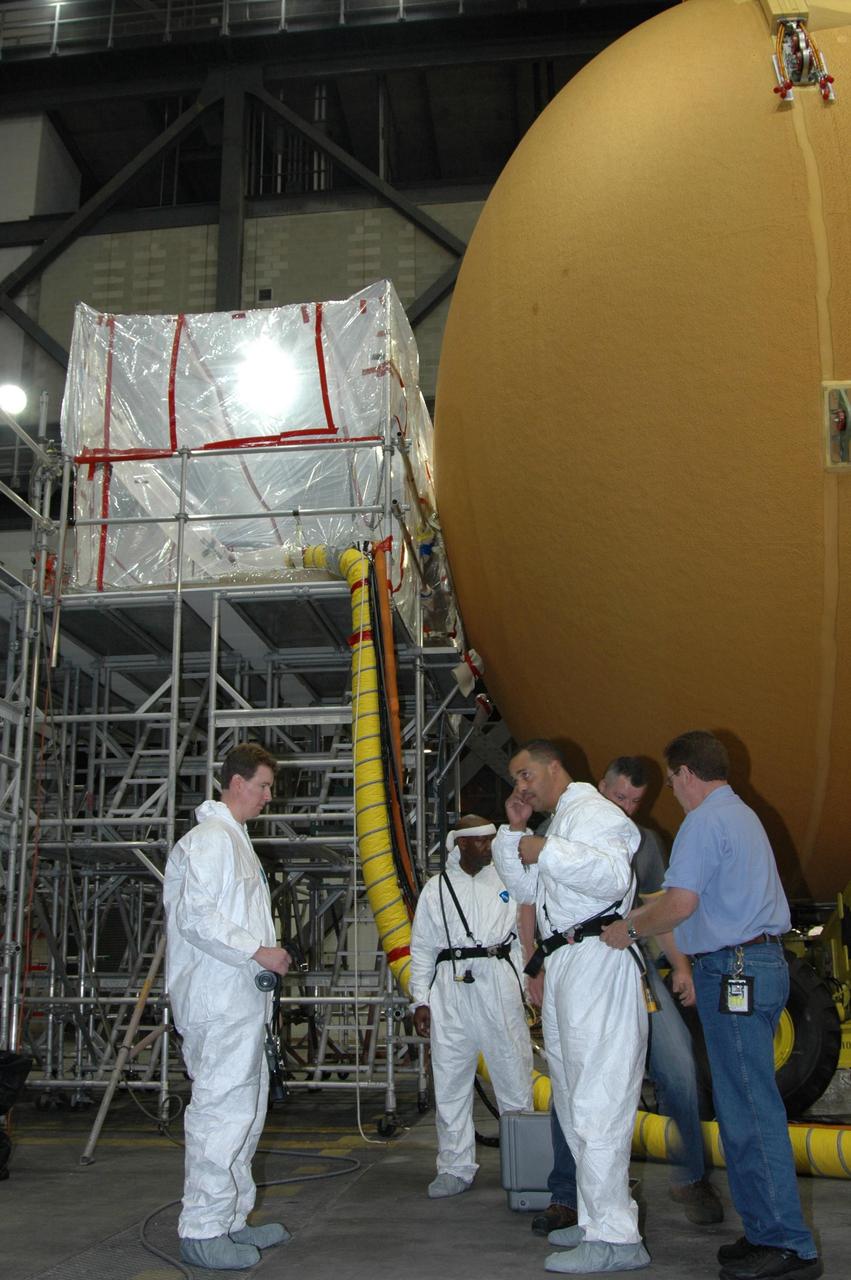
KENNEDY SPACE CENTER, FLA. -- Lockheed Martin technicians in the Vehicle Assembly Building at NASA's Kennedy Space Center prepare for the application of new foam over the manhole cover on the lower end of external tank No. 119. The manhole was removed to access the area where the tank's four liquid hydrogen engine cutoff sensors were replaced. Once reinstalled, the manhole required new foam to be applied. The tank is being prepared to launch Space Shuttle Discovery on mission STS-121 in July. Photo credit: NASA/Jim Grossmann