
KENNEDY SPACE CENTER, FLA. - In the Vehicle Assembly Building at NASA's Kennedy Space Center, workers remove the nose cap on top of external tank number 119, the tank designated for mission STS-121. The cap is being removed in order to install a new gaseous oxygen vent valve under the nose cap. Vapors are created prior to launch as the liquid oxygen in the external tank boils off. At the forward end of each external tank propellant tank is a vent and relief valve that can be opened before launch for venting or by excessive tank pressure for relief. The vent function is available only before launch. Mission STS-121 to the International Space Station is scheduled for launch in July. Photo credit: NASA/Jim Grossmann

KENNEDY SPACE CENTER, FLA. - Lockheed Martin technicians from NASA's Michoud Assembly Facility in Louisiana clean the area around the "manhole" on the external tank designated for mission STS-121. The work is part of the process in removing and replacing the external tank's four liquid hydrogen main engine cutoff sensors, which indicate whether the tank still has fuel during its climb to orbit. After the cleaning, the manhole will be removed to provide access to the area of the sensors for their removal. Photo credit: NASA/Jim Grossmann
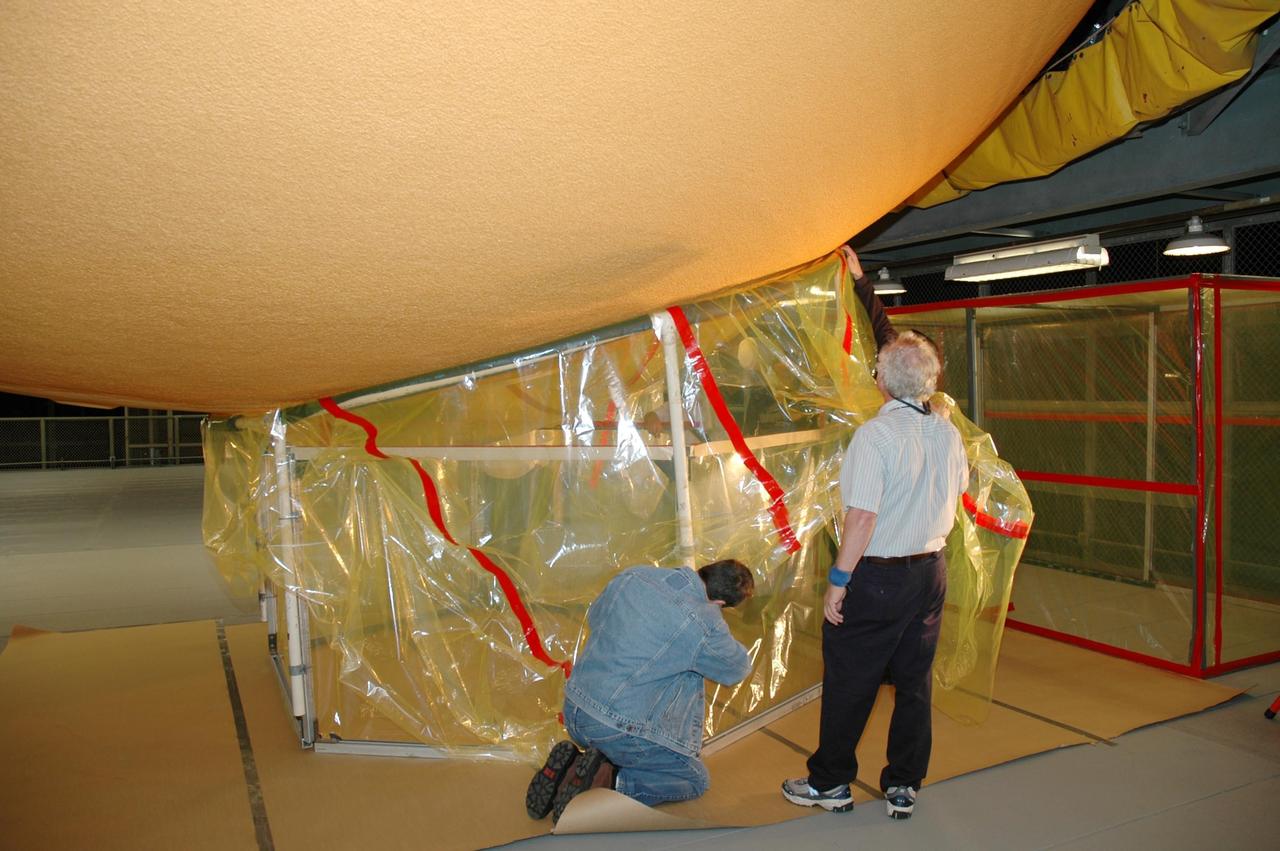
KENNEDY SPACE CENTER, FLA. - KENNEDY SPACE CENTER, FLA. - Lockheed Martin technicians from NASA's Michoud Assembly Facility in Louisiana install a clean-room working area around the "manhole" on the external tank designated for mission STS-121. The work is part of the process in removing and replacing the external tank's four liquid hydrogen main engine cutoff sensors, which indicate whether the tank still has fuel during its climb to orbit. After the cleaning, the manhole will be removed to provide access to the area of the sensors for their removal. Photo credit: NASA/Jim Grossmann
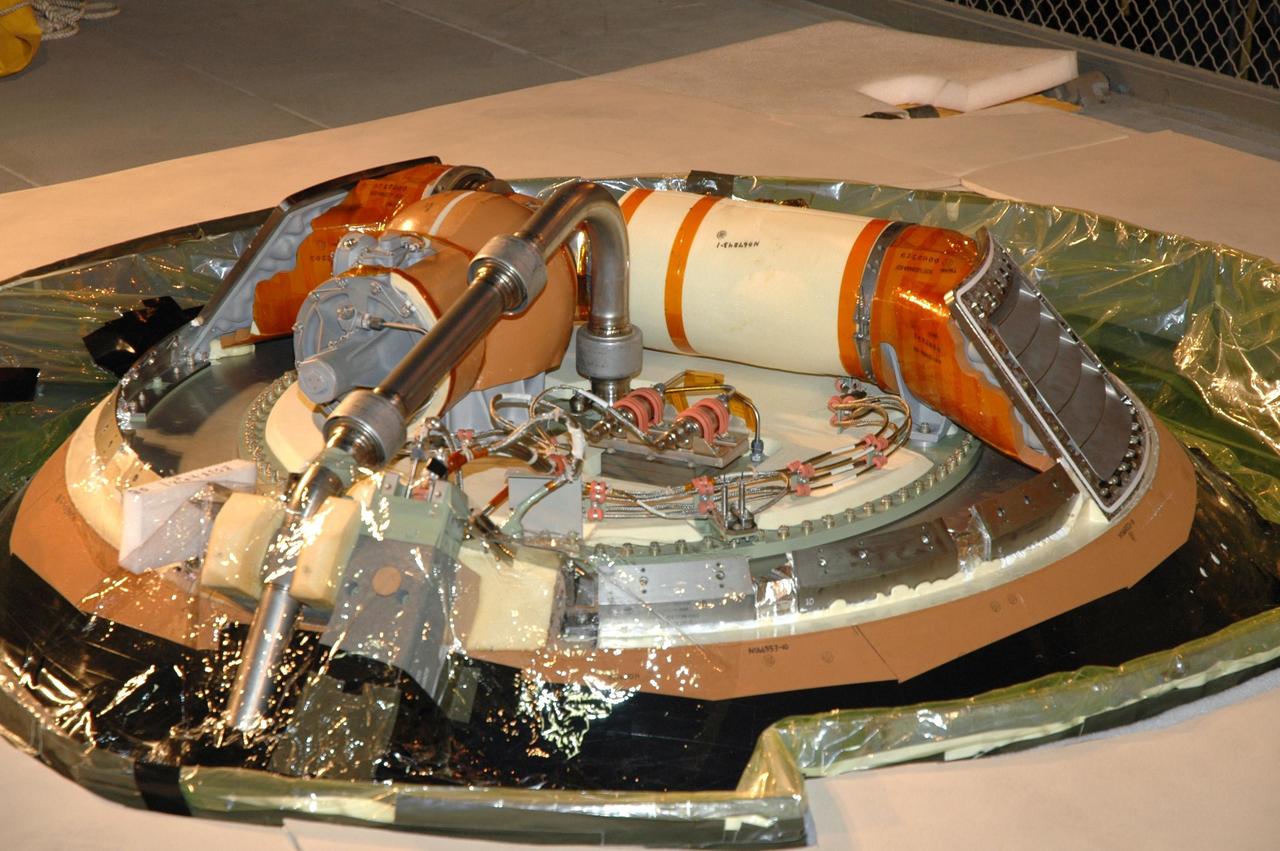
KENNEDY SPACE CENTER, FLA. - In the Vehicle Assembly Building at NASA's Kennedy Space Center, the nose cap on top of external tank number 119 has been removed. A new gaseous oxygen vent valve will be installed. Tank 119 is designated for mission STS-121. Vapors are created prior to launch as the liquid oxygen in the external tank boils off. At the forward end of each external tank propellant tank is a vent and relief valve that can be opened before launch for venting or by excessive tank pressure for relief. The vent function is available only before launch. Mission STS-121 to the International Space Station is scheduled for launch in July. Photo credit: NASA/Jim Grossmann
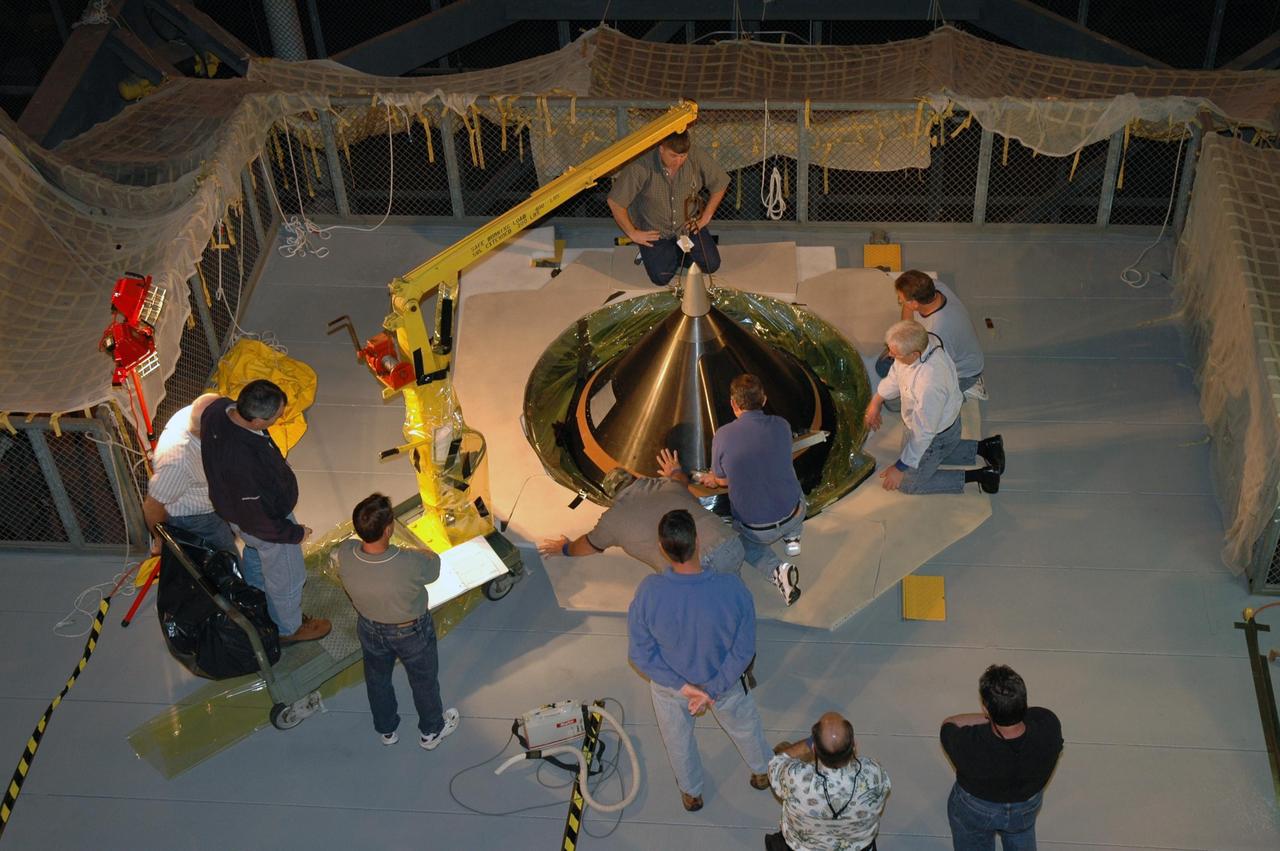
KENNEDY SPACE CENTER, FLA. - In the Vehicle Assembly Building at NASA's Kennedy Space Center, workers begin removal of the nose cap on top of external tank number 119, the tank designated for mission STS-121. The cap is being removed in order to install a new gaseous oxygen vent valve under the nose cap. Vapors are created prior to launch as the liquid oxygen in the external tank boils off. At the forward end of each external tank propellant tank is a vent and relief valve that can be opened before launch for venting or by excessive tank pressure for relief. The vent function is available only before launch. Mission STS-121 to the International Space Station is scheduled for launch in July. Photo credit: NASA/Jim Grossmann
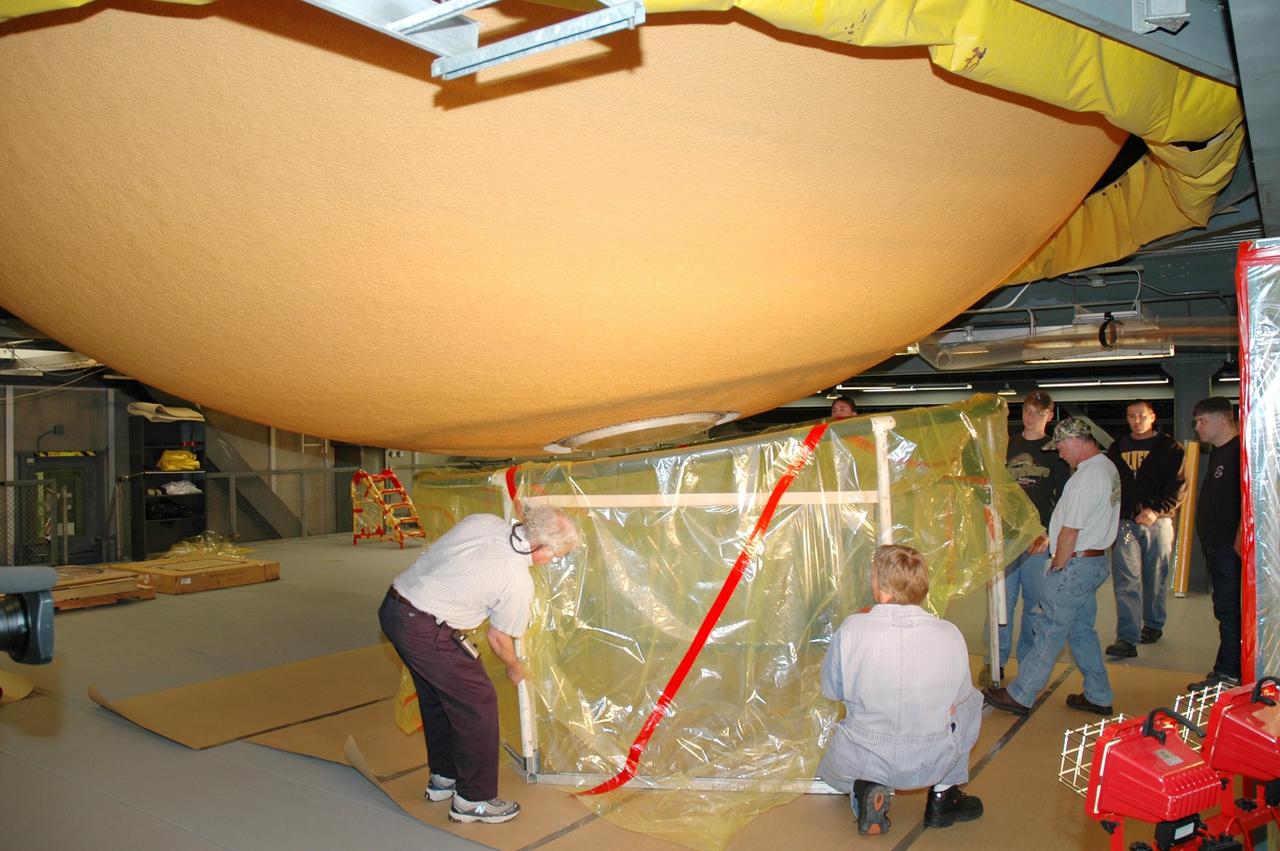
KENNEDY SPACE CENTER, FLA. - Lockheed Martin technicians from NASA's Michoud Assembly Facility in Louisiana create a clean-room working area around the "manhole" on the external tank designated for mission STS-121. The work is part of the process in removing and replacing the external tank's four liquid hydrogen main engine cutoff sensors, which indicate whether the tank still has fuel during its climb to orbit. After the cleaning, the manhole will be removed to provide access to the area of the sensors for their removal. Photo credit: NASA/Jim Grossmann