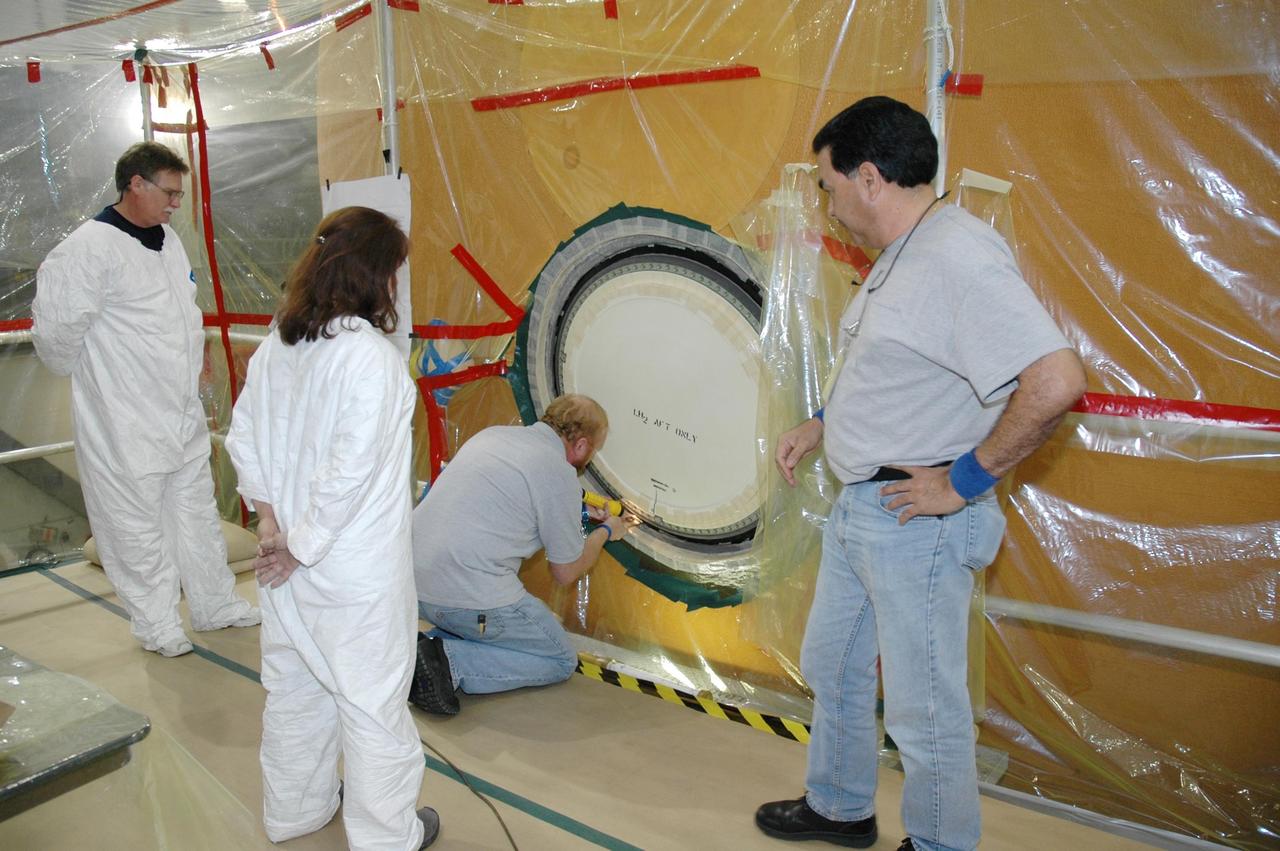
KENNEDY SPACE CENTER, FLA. - In the transfer aisle of the Vehicle Assembly Building, workers prepare the cover, called the "manhole," on the bottom of external tank number 119 that will be refoamed. The manhole was removed to access the area where the tank's four liquid hydrogen engine cutoff sensors were replaced. The tank is being prepared to launch Space Shuttle Discovery on mission STS-121 in July. Photo credit: NASA/Jim Grossmann
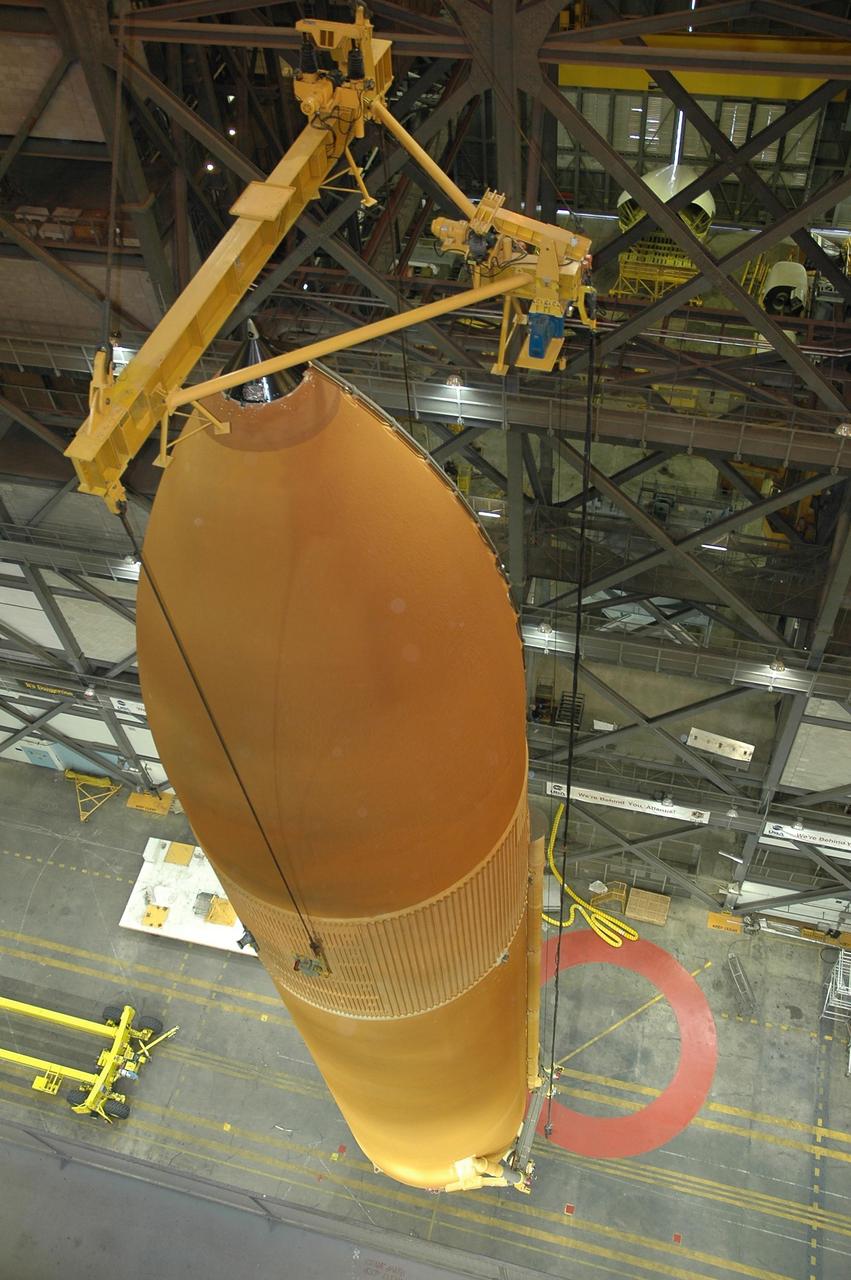
KENNEDY SPACE CENTER, FLA. - Inside the Vehicle Assembly Building at NASA's Kennedy Space Center, external tank number 119 is being lowered toward the floor of the transfer aisle. It will be placed horizontally on a transporter where technicians will reapply the thermal protection system foam that was removed in order to replace the tank's four liquid hydrogen engine cutoff sensors. The tank is being prepared to launch Space Shuttle Discovery on mission STS-121 in July. Photo credit: NASA/Cory Huston
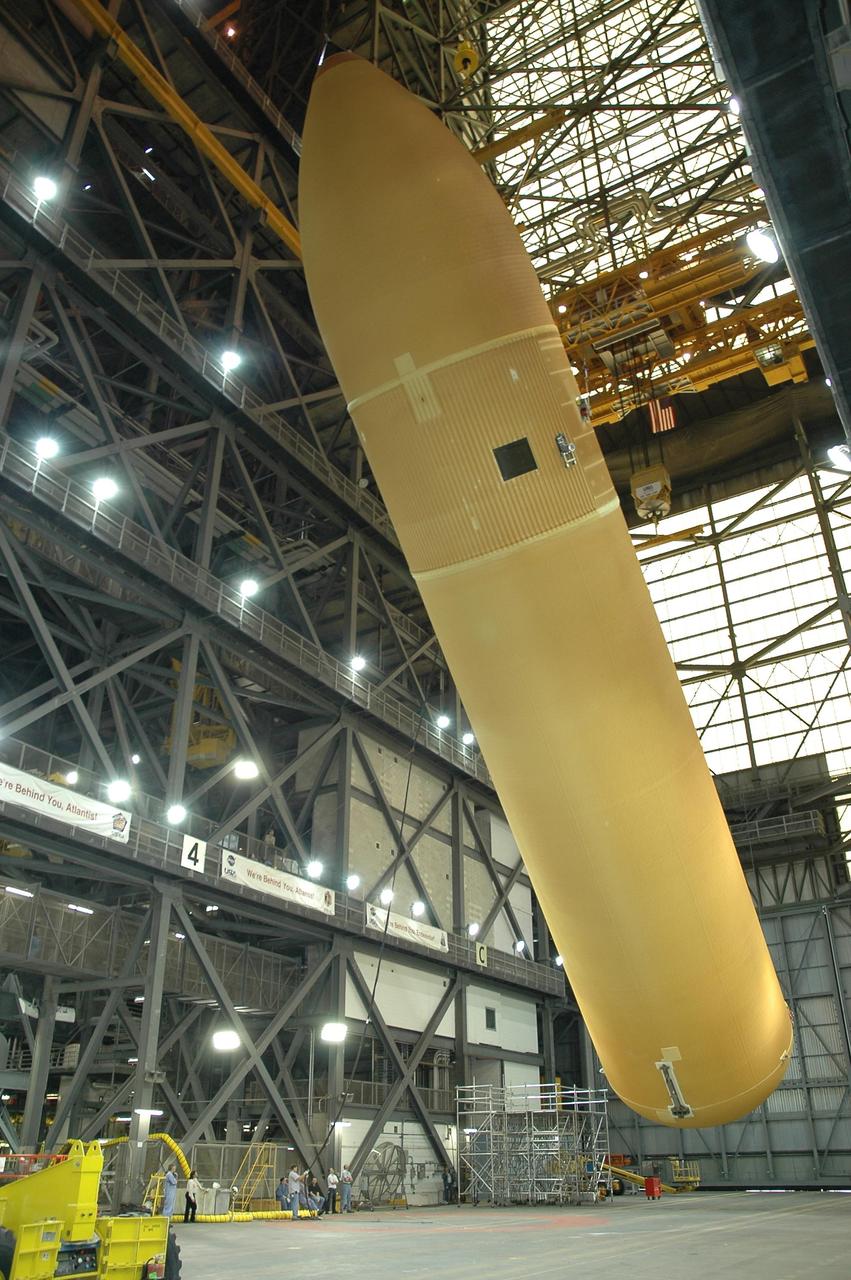
KENNEDY SPACE CENTER, FLA. - Inside the Vehicle Assembly Building at NASA's Kennedy Space Center, external tank number 119 is shifted to a horizontal position for placement on a transporter where technicians will reapply the thermal protection system foam that was removed in order to replace the tank's four liquid hydrogen engine cutoff sensors. The tank is being prepared to launch Space Shuttle Discovery on mission STS-121 in July. Photo credit: NASA/Cory Huston
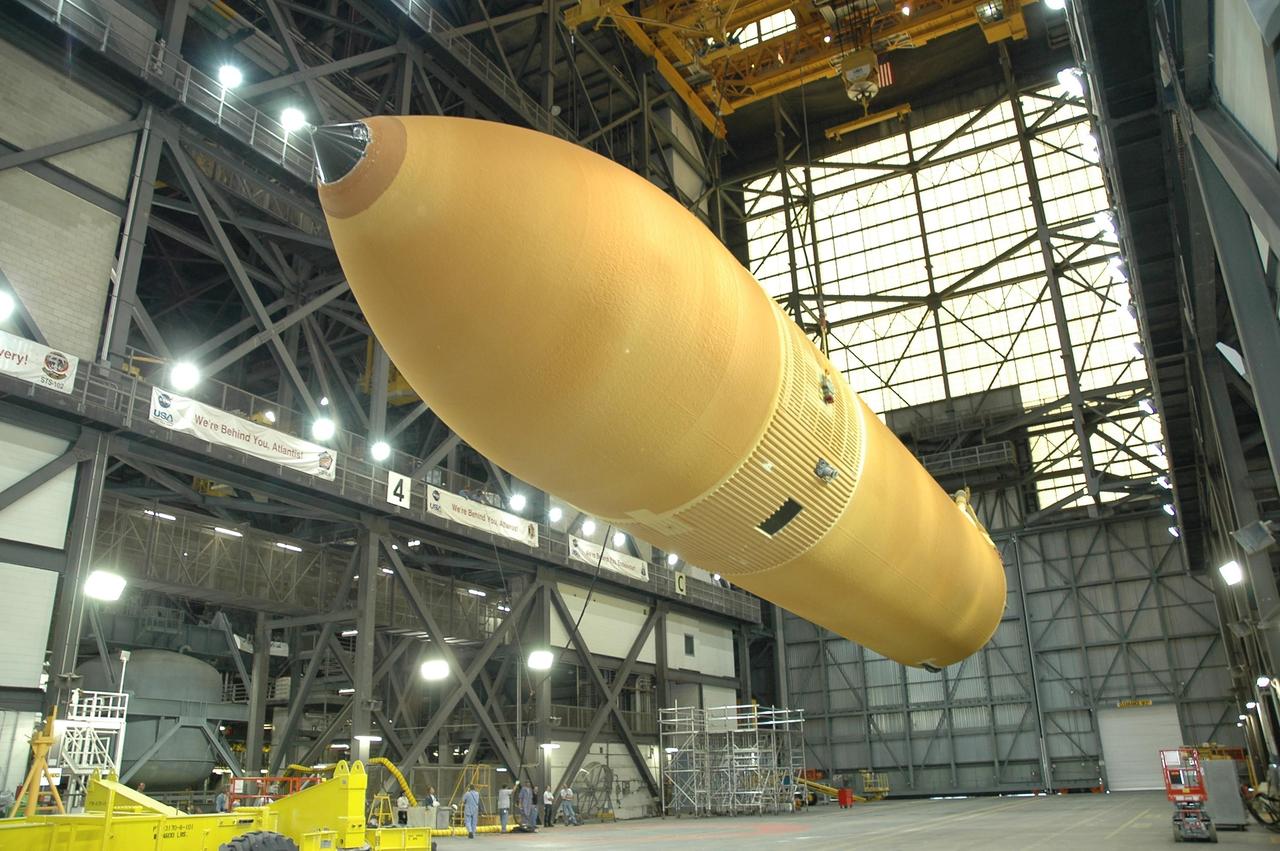
KENNEDY SPACE CENTER, FLA. - Inside the Vehicle Assembly Building at NASA's Kennedy Space Center, external tank number 119 hangs suspended horizontally. It will be lowered onto the transporter at lower left where technicians will reapply the thermal protection system foam that was removed in order to replace the tank's four liquid hydrogen engine cutoff sensors. The tank is being prepared to launch Space Shuttle Discovery on mission STS-121 in July. Photo credit: NASA/Cory Huston
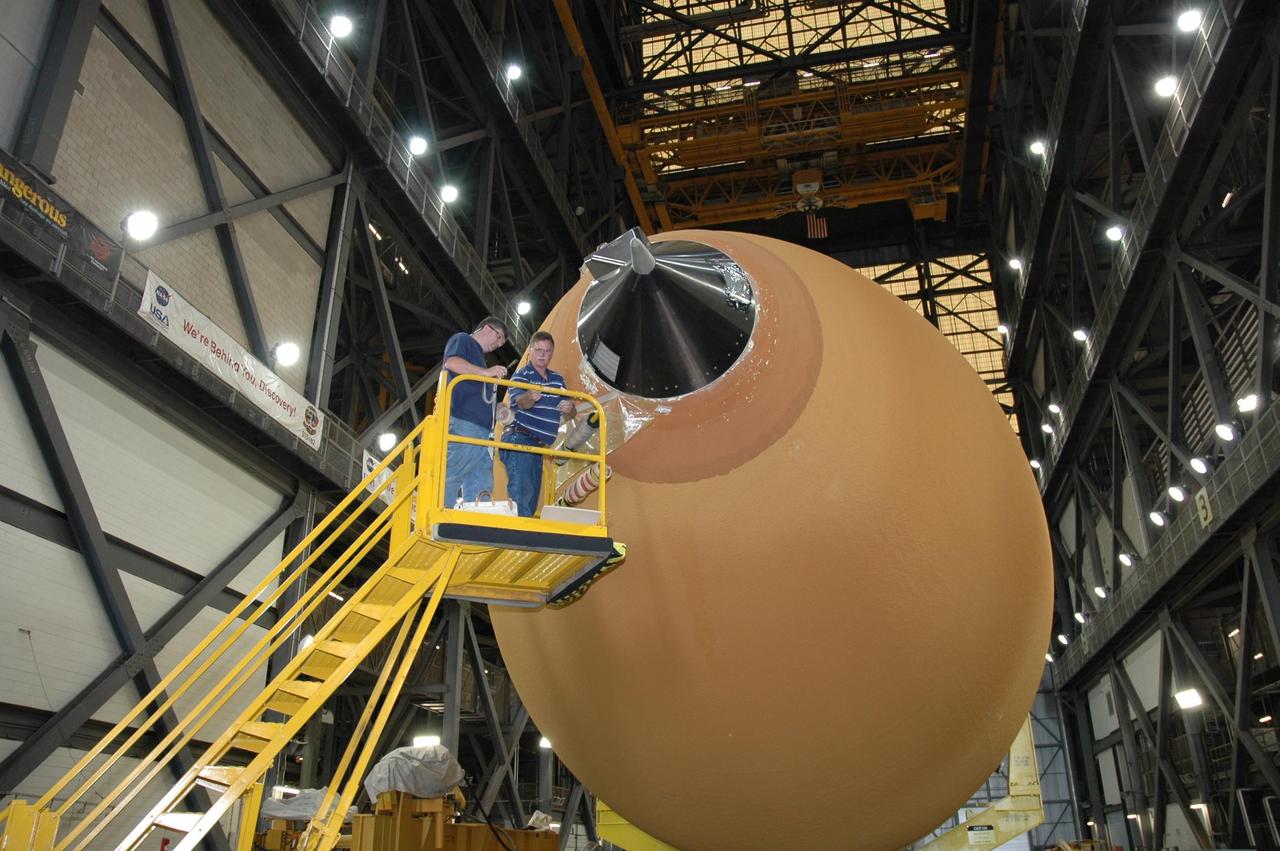
KENNEDY SPACE CENTER, FLA. - In the transfer aisle of the Vehicle Assembly Building, workers get ready to ablate the rim around the nose cap of external tank number 119, the tank designated for mission STS-121. The cap was removed in order to install a new gaseous oxygen vent valve underneath. Vapors are created prior to launch as the liquid oxygen in the external tank boils off. At the forward end of each external tank propellant tank is a vent and relief valve that can be opened before launch for venting or by excessive tank pressure for relief. The vent function is available only before launch. Mission STS-121 to the International Space Station is scheduled for launch in July. Photo credit: NASA/Jim Grossmann
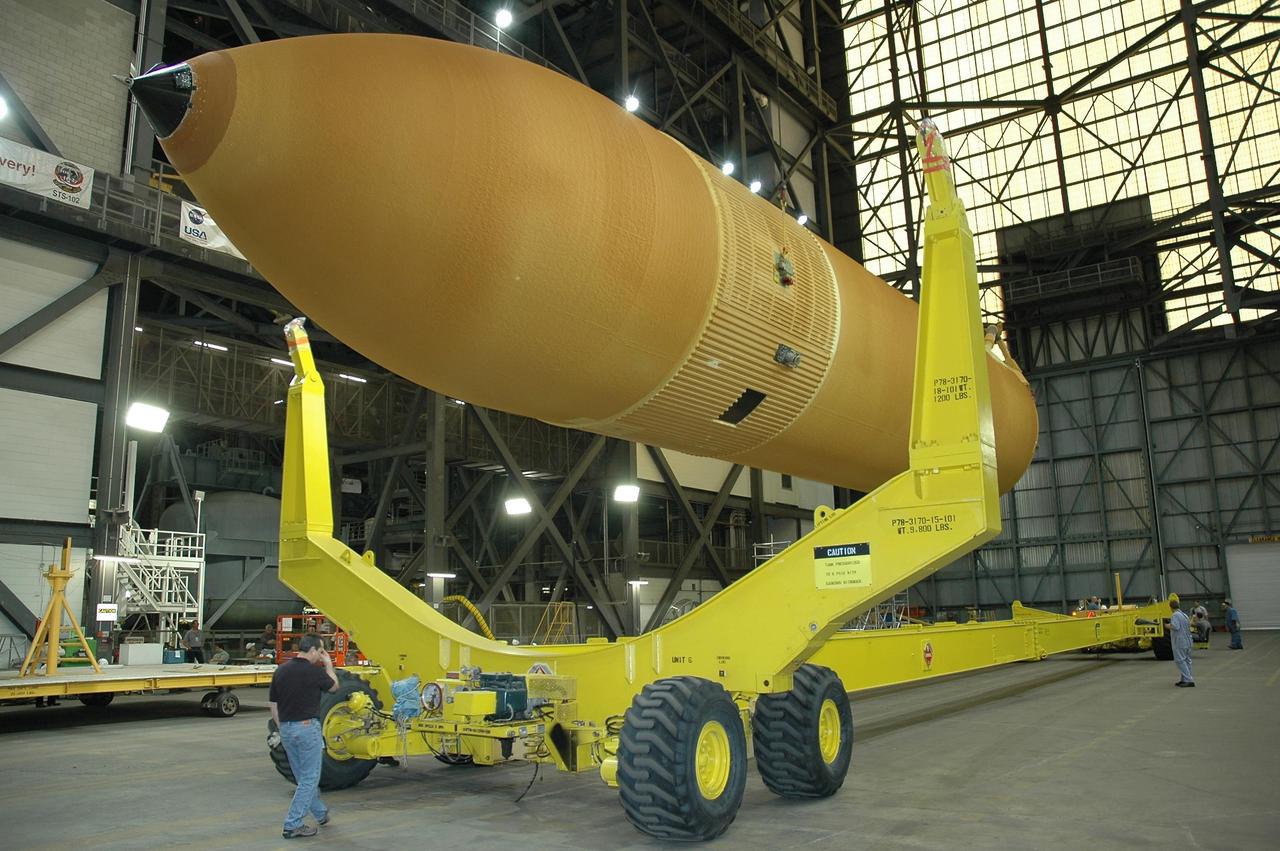
KENNEDY SPACE CENTER, FLA. - Inside the Vehicle Assembly Building at NASA's Kennedy Space Center, external tank number 119 is lowered onto a transporter where technicians will reapply the thermal protection system foam that was removed in order to replace the tank's four liquid hydrogen engine cutoff sensors. The tank is being prepared to launch Space Shuttle Discovery on mission STS-121 in July. Photo credit: NASA/Cory Huston
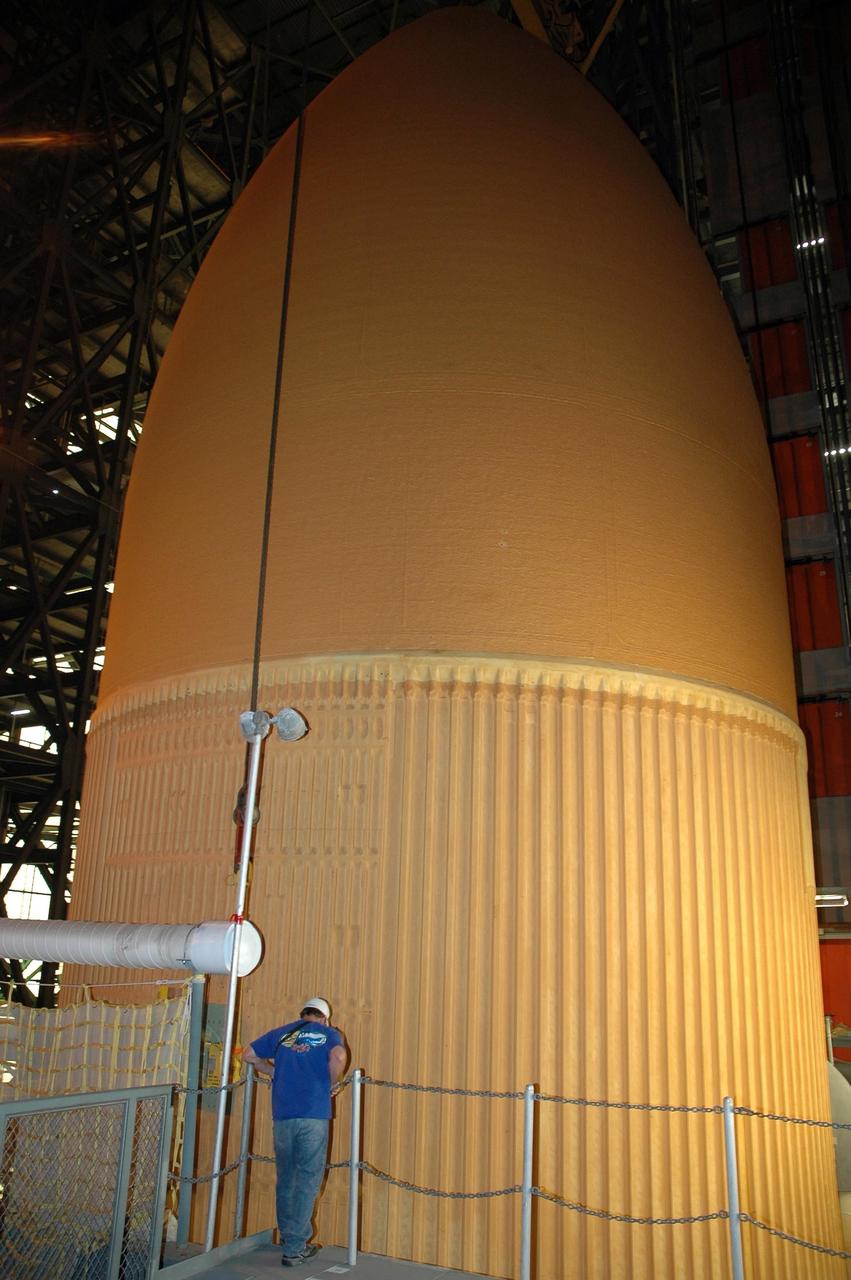
KENNEDY SPACE CENTER, FLA. - Inside the Vehicle Assembly Building at NASA's Kennedy Space Center, a worker watches external tank number 119 as it is being lifted from the checkout cell. The tank will be placed horizontally on the transporter in the transfer aisle. Once in the transfer aisle, technicians will reapply the thermal protection system foam that was removed in order to replace the tank's four liquid hydrogen engine cutoff sensors. The tank is being prepared to launch Space Shuttle Discovery on mission STS-121 in July. Photo credit: NASA/Cory Huston
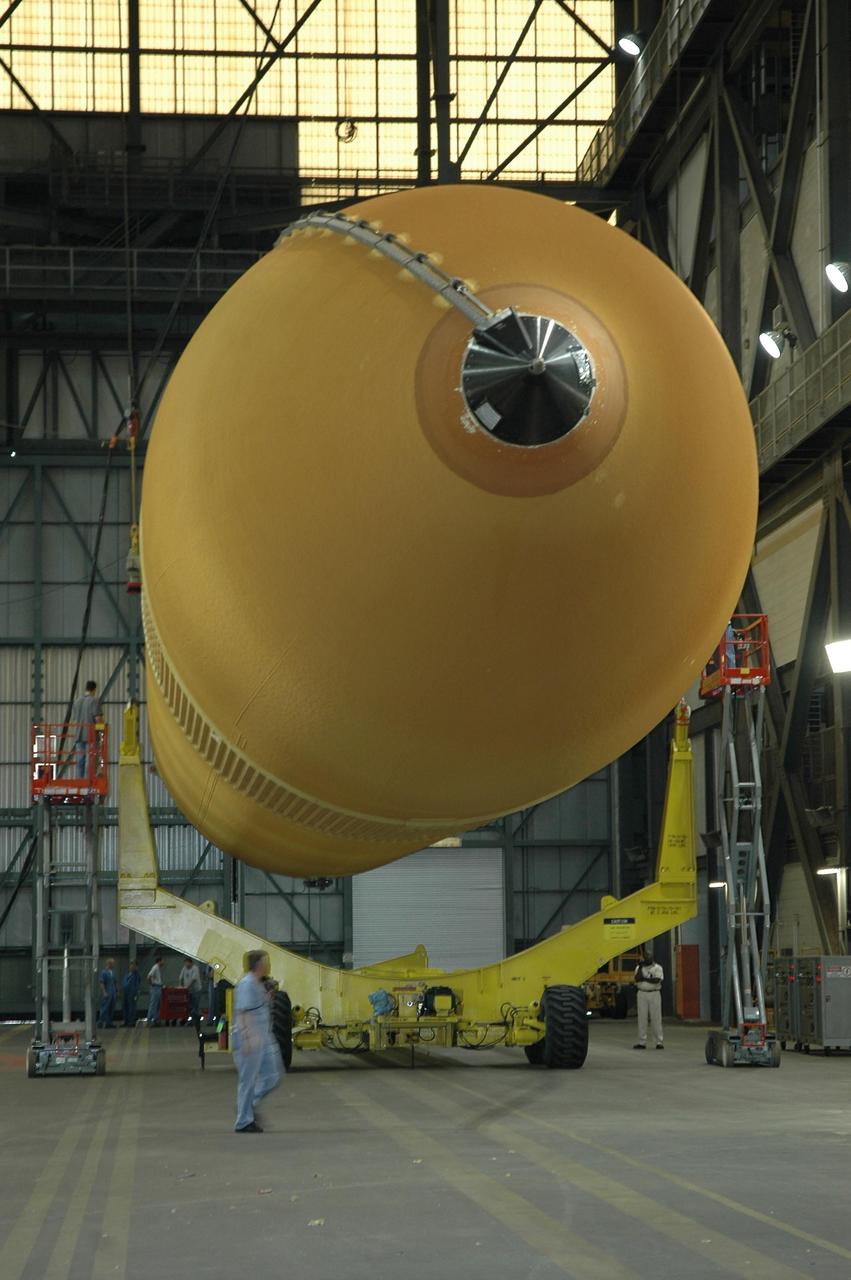
KENNEDY SPACE CENTER, FLA. - Inside the Vehicle Assembly Building at NASA's Kennedy Space Center, external tank number 119 is lowered onto a transporter where technicians will reapply the thermal protection system foam that was removed in order to replace the tank's four liquid hydrogen engine cutoff sensors. The tank is being prepared to launch Space Shuttle Discovery on mission STS-121 in July. Photo credit: NASA/Cory Huston
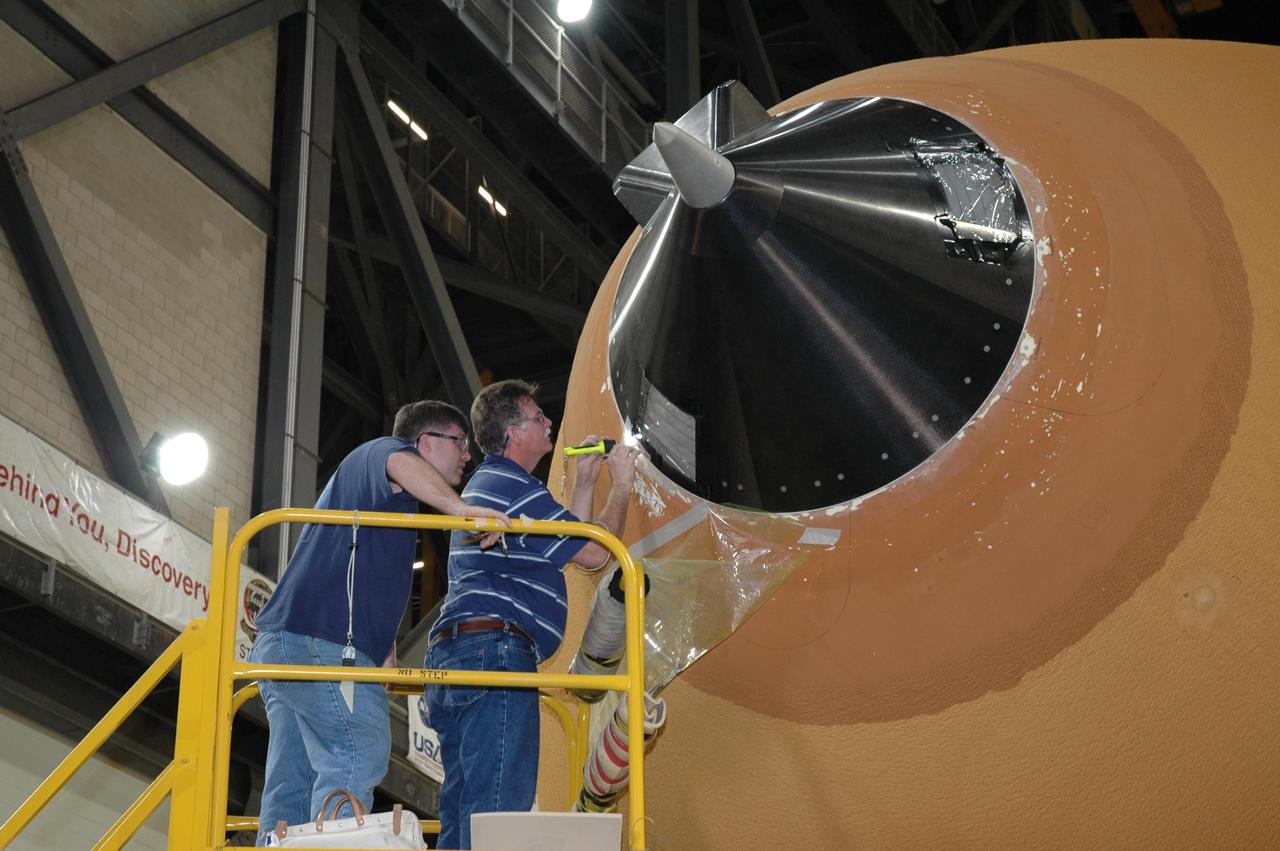
KENNEDY SPACE CENTER, FLA. - In the transfer aisle of the Vehicle Assembly Building, workers work on the rim around the nose cap of external tank number 119, the tank designated for mission STS-121. The cap was removed in order to install a new gaseous oxygen vent valve underneath. Vapors are created prior to launch as the liquid oxygen in the external tank boils off. At the forward end of each external tank propellant tank is a vent and relief valve that can be opened before launch for venting or by excessive tank pressure for relief. The vent function is available only before launch. Mission STS-121 to the International Space Station is scheduled for launch in July. Photo credit: NASA/Jim Grossmann
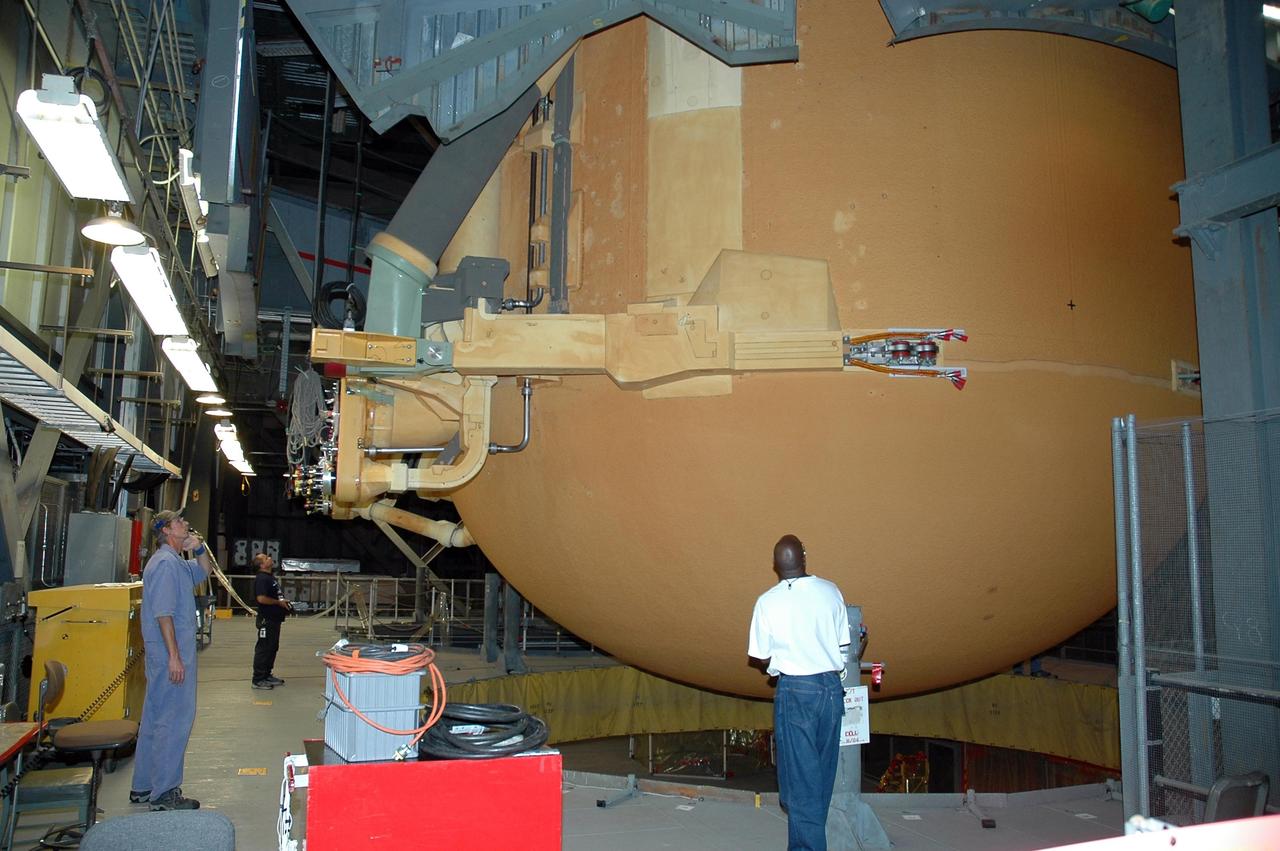
KENNEDY SPACE CENTER, FLA. - Inside the Vehicle Assembly Building at NASA's Kennedy Space Center, external tank number 119 is being lifted from the checkout cell and will be placed horizontally on the transporter in the transfer aisle. Once in the transfer aisle, technicians will reapply the thermal protection system foam that was removed in order to replace the tank's four liquid hydrogen engine cutoff sensors. The tank is being prepared to launch Space Shuttle Discovery on mission STS-121 in July.
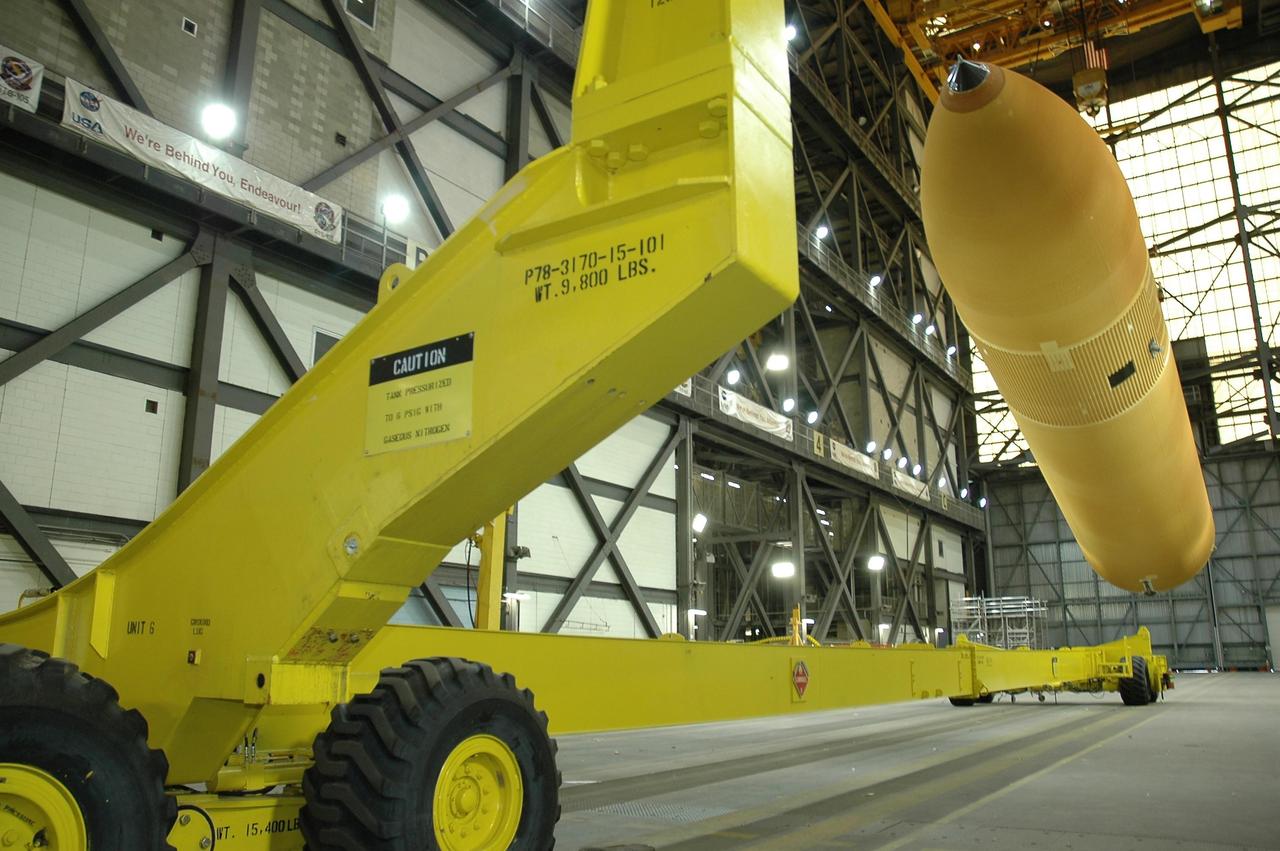
KENNEDY SPACE CENTER, FLA. - Inside the Vehicle Assembly Building at NASA's Kennedy Space Center, external tank number 119 is shifted to a horizontal position for placement on the transporter at left where technicians will reapply the thermal protection system foam that was removed in order to replace the tank's four liquid hydrogen engine cutoff sensors. The tank is being prepared to launch Space Shuttle Discovery on mission STS-121 in July. Photo credit: NASA/Cory Huston
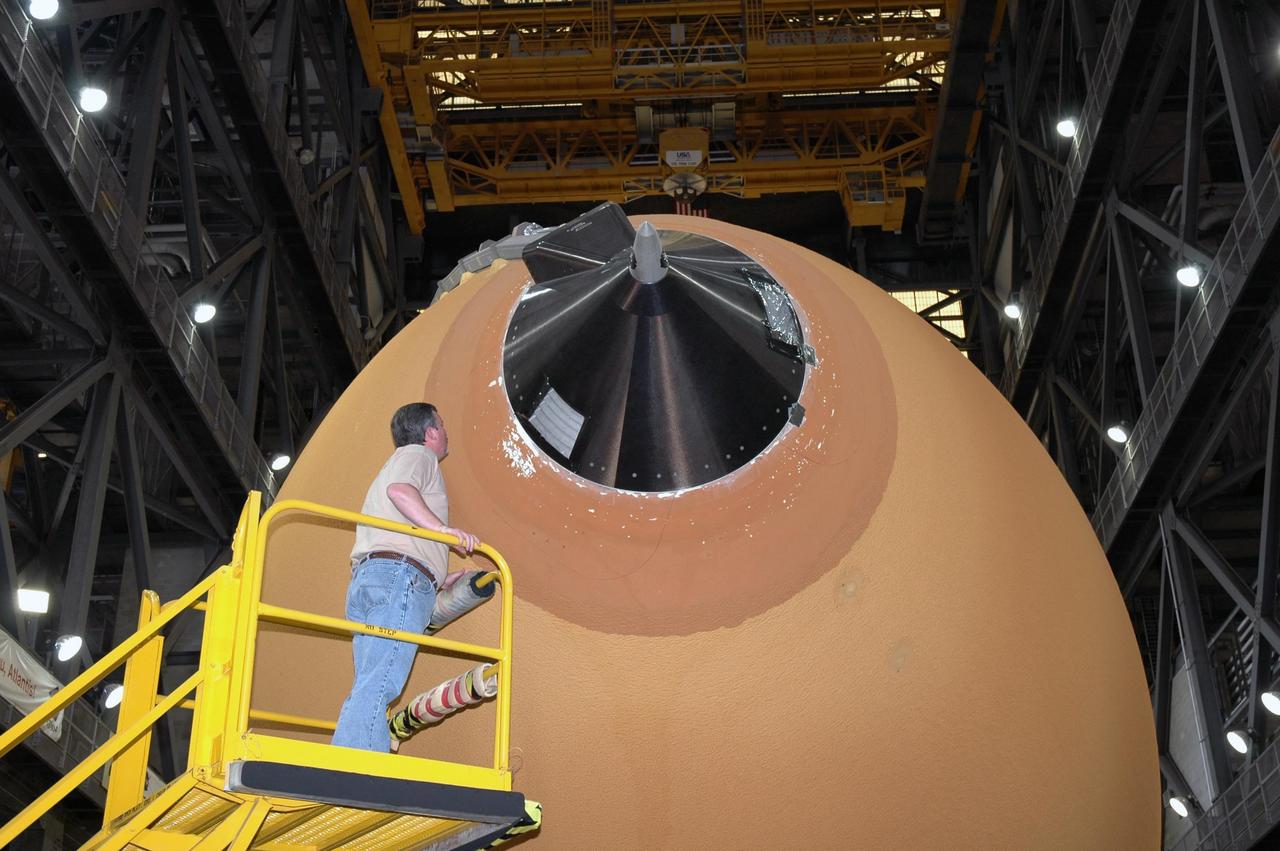
KENNEDY SPACE CENTER, FLA. - In the transfer aisle of the Vehicle Assembly Building, a worker checks the top of the external tank where a new gaseous oxygen vent valve was installed under the nose cap of the tank. The tank is being prepared to launch Space Shuttle Discovery on mission STS-121 in July. Photo credit: NASA/Jim Grossmann
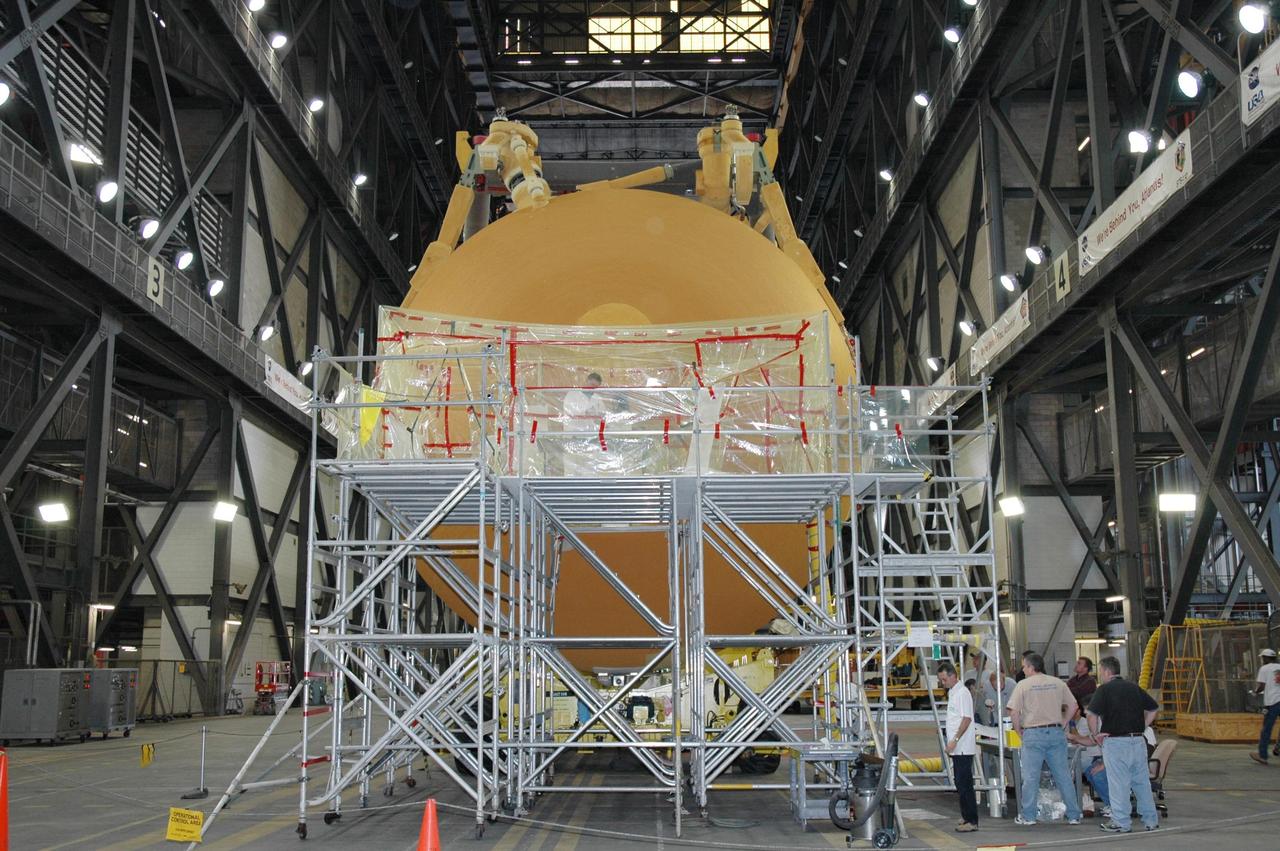
KENNEDY SPACE CENTER, FLA. - In the transfer aisle of the Vehicle Assembly Building, a stand is ready for workers to refoam the cover, called the "manhole," on the bottom of external tank number 119. The manhole was removed to access the area where the tank's four liquid hydrogen engine cutoff sensors were replaced. The tank is being prepared to launch Space Shuttle Discovery on mission STS-121 in July. Photo credit: NASA/Jim Grossmann The tank is being prepared to launch Space Shuttle Discovery on mission STS-121 in July. Photo credit: NASA/Jim Grossmann
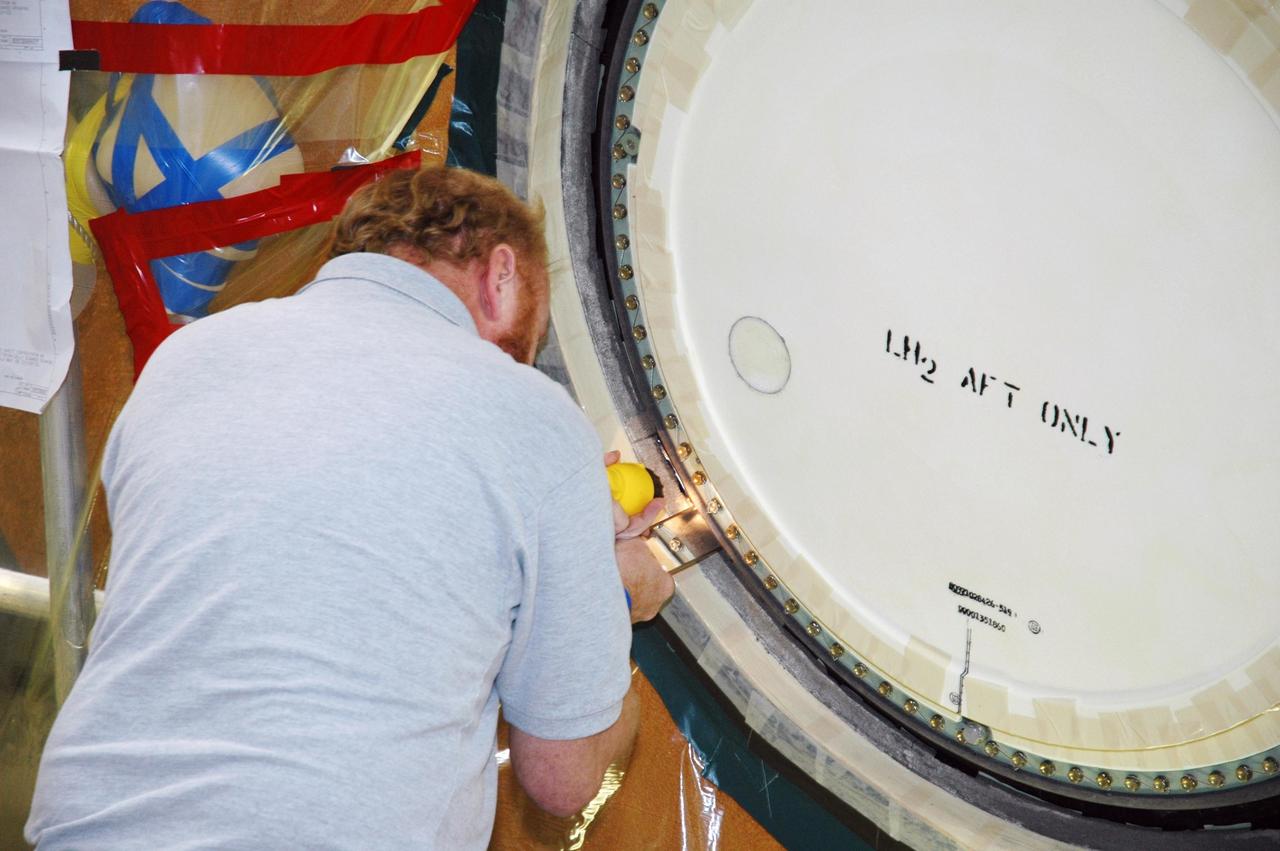
KENNEDY SPACE CENTER, FLA. - In the transfer aisle of the Vehicle Assembly Building, a worker prepares the cover, called the "manhole," on the bottom of external tank number 119, for refoaming. The manhole was removed to access the area where the tank's four liquid hydrogen engine cutoff sensors were replaced. The tank is being prepared to launch Space Shuttle Discovery on mission STS-121 in July. Photo credit: NASA/Jim Grossmann
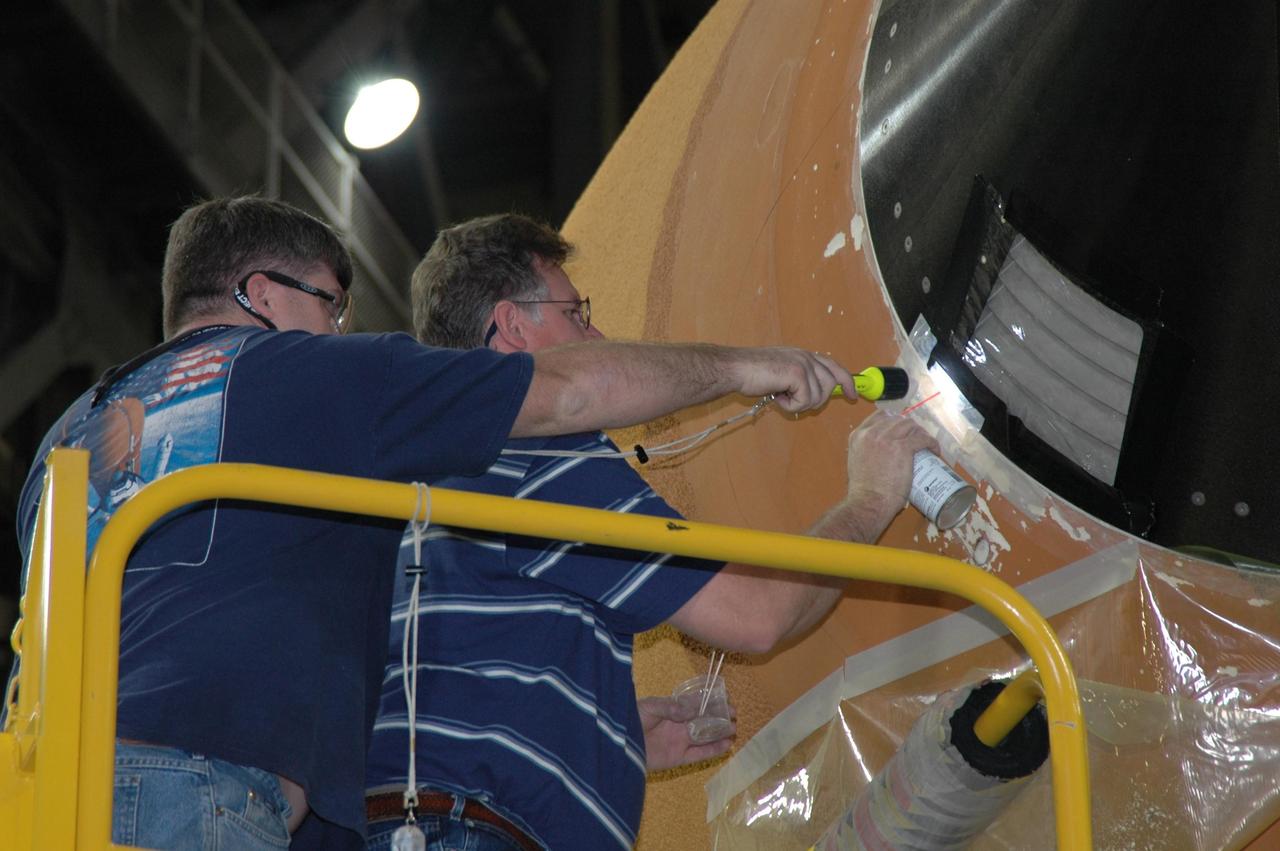
KENNEDY SPACE CENTER, FLA. - In the transfer aisle of the Vehicle Assembly Building, workers check the rim around the nose cap of external tank number 119, the tank designated for mission STS-121. The cap was removed in order to install a new gaseous oxygen vent valve underneath. Vapors are created prior to launch as the liquid oxygen in the external tank boils off. At the forward end of each external tank propellant tank is a vent and relief valve that can be opened before launch for venting or by excessive tank pressure for relief. The vent function is available only before launch. Mission STS-121 to the International Space Station is scheduled for launch in July. Photo credit: NASA/Jim Grossmann
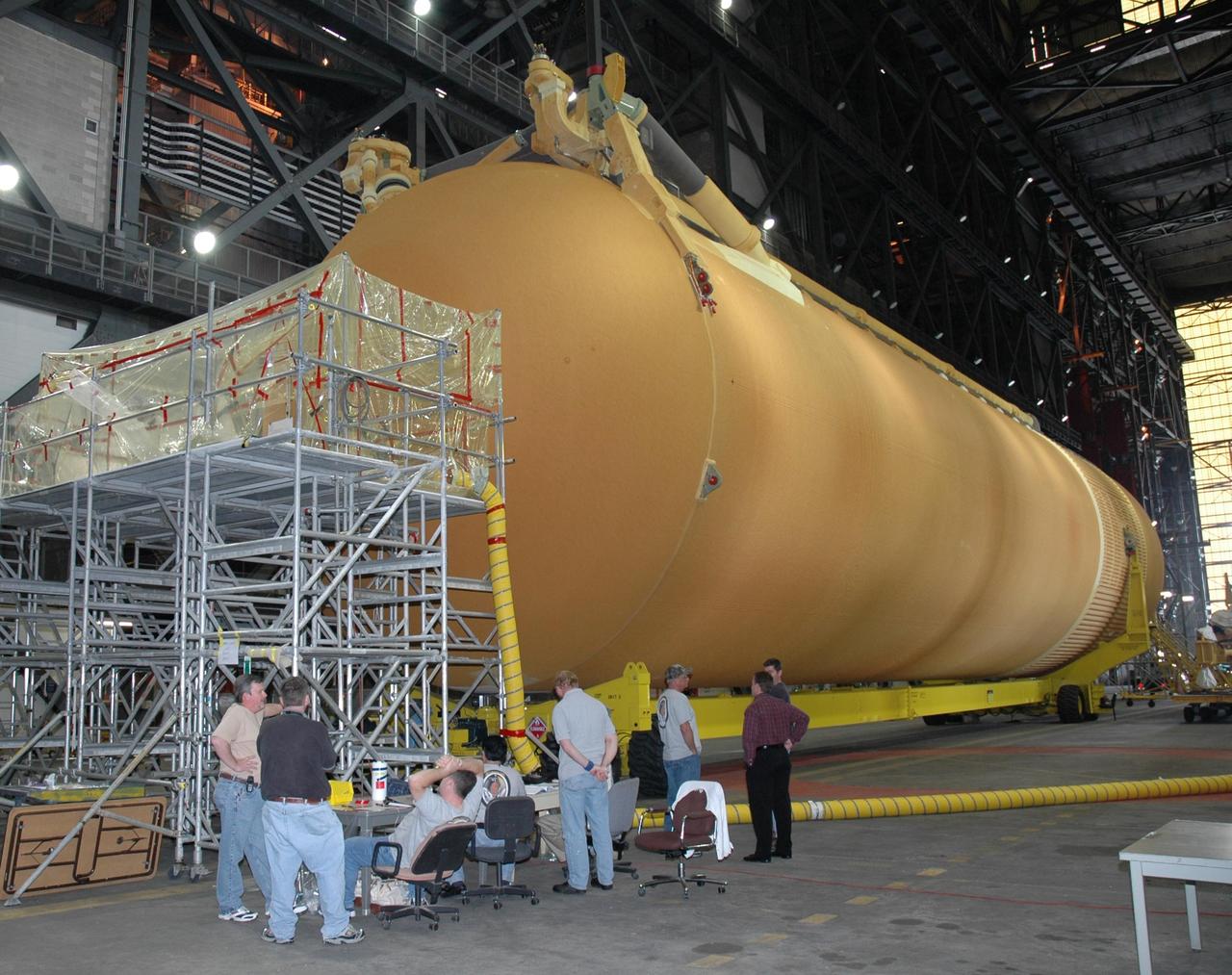
KENNEDY SPACE CENTER, FLA. - In the transfer aisle of the Vehicle Assembly Building, a stand is prepared from which workers will refoam the cover, called the "manhole," on the bottom of external tank number 119. The manhole was removed to access the area where the tank's four liquid hydrogen engine cutoff sensors were replaced. The tank is being prepared to launch Space Shuttle Discovery on mission STS-121 in July. Photo credit: NASA/Jim Grossmann
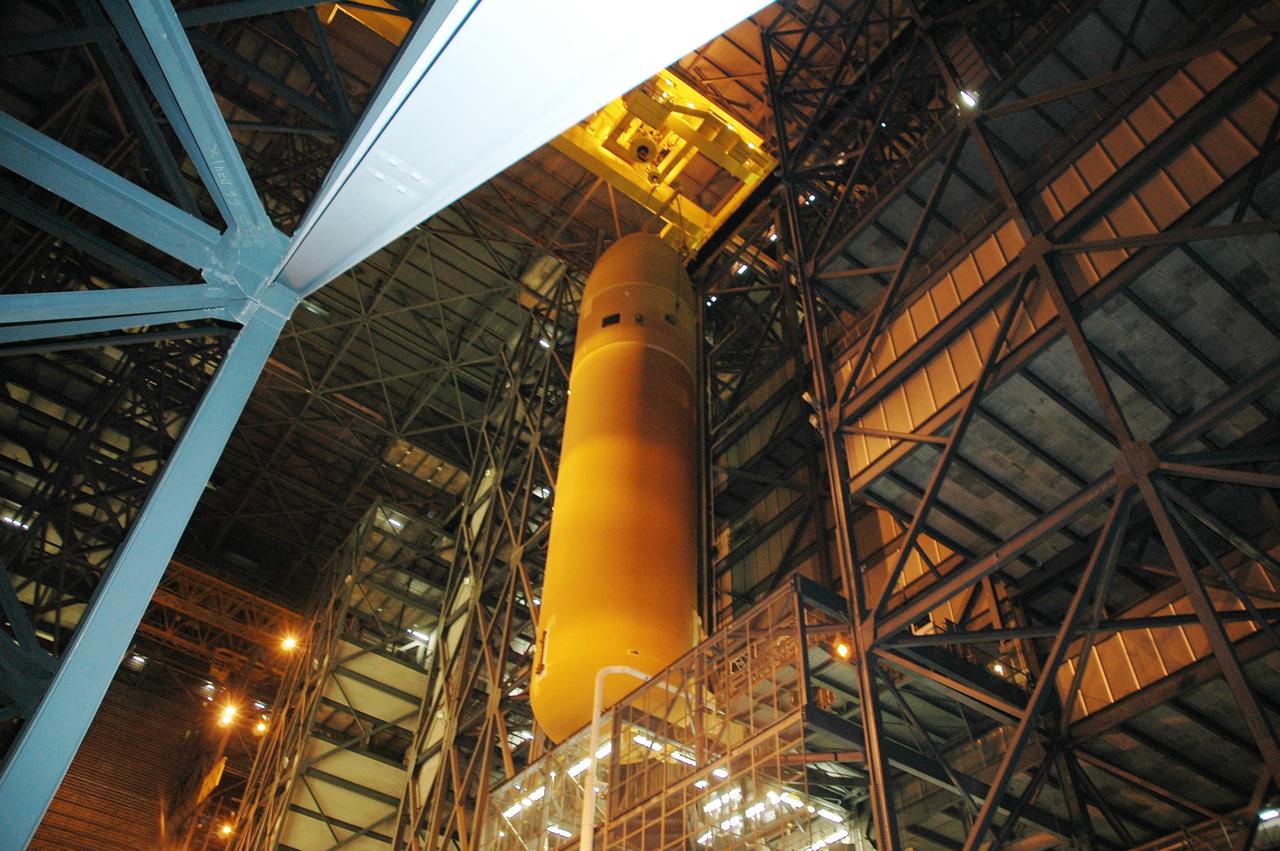
KENNEDY SPACE CENTER, FLA. - Inside the Vehicle Assembly Building at NASA's Kennedy Space Center, external tank number 119 is being moved from the checkout cell and will be placed horizontally on the transporter in the transfer aisle. Once in the transfer aisle, technicians will reapply the thermal protection system foam that was removed in order to replace the tank's four liquid hydrogen engine cutoff sensors. The tank is being prepared to launch Space Shuttle Discovery on mission STS-121 in July. Photo credit: NASA/Cory Huston
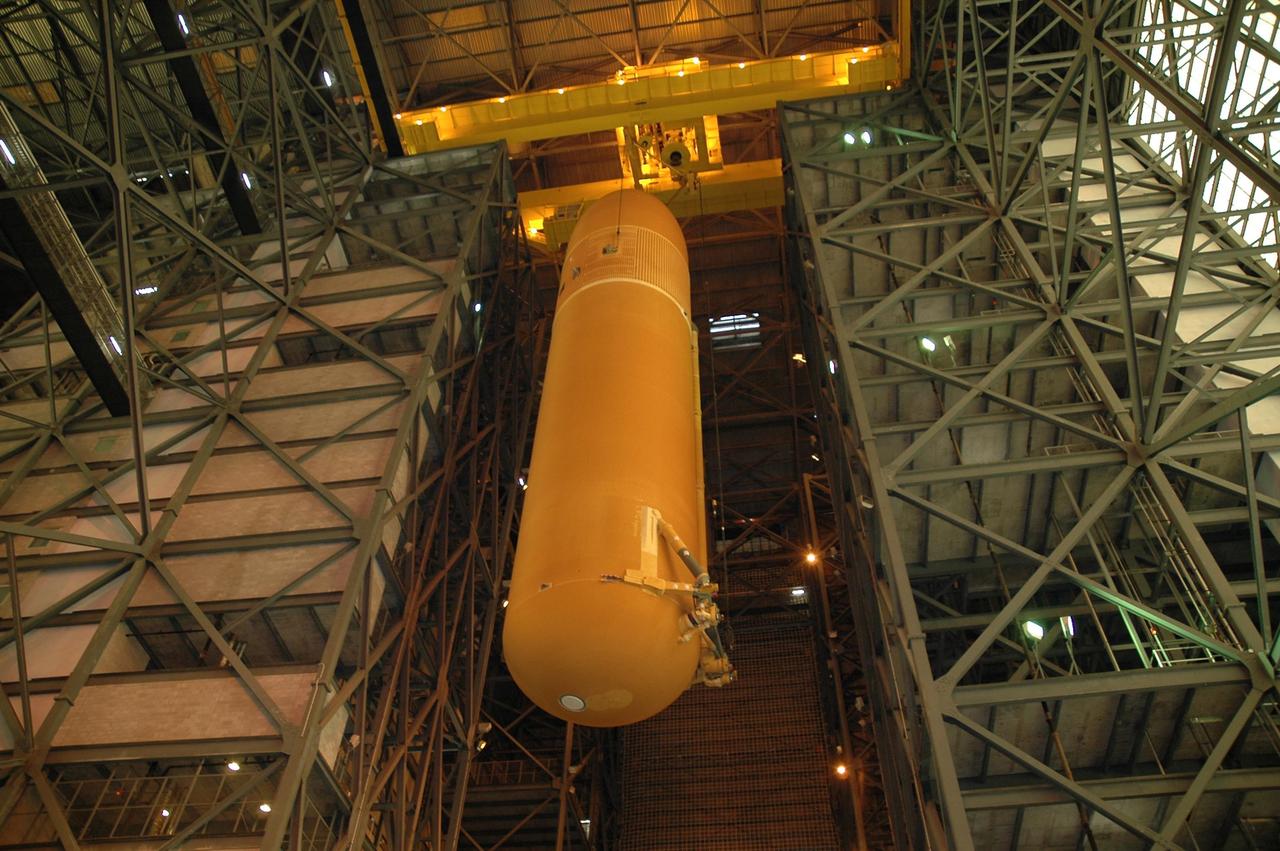
KENNEDY SPACE CENTER, FLA. - Inside the Vehicle Assembly Building at NASA's Kennedy Space Center, external tank number 119 is being lowered toward the floor of the transfer aisle. It will be placed horizontally on a transporter where technicians will reapply the thermal protection system foam that was removed in order to replace the tank's four liquid hydrogen engine cutoff sensors. The tank is being prepared to launch Space Shuttle Discovery on mission STS-121 in July. Photo credit: NASA/Cory Huston
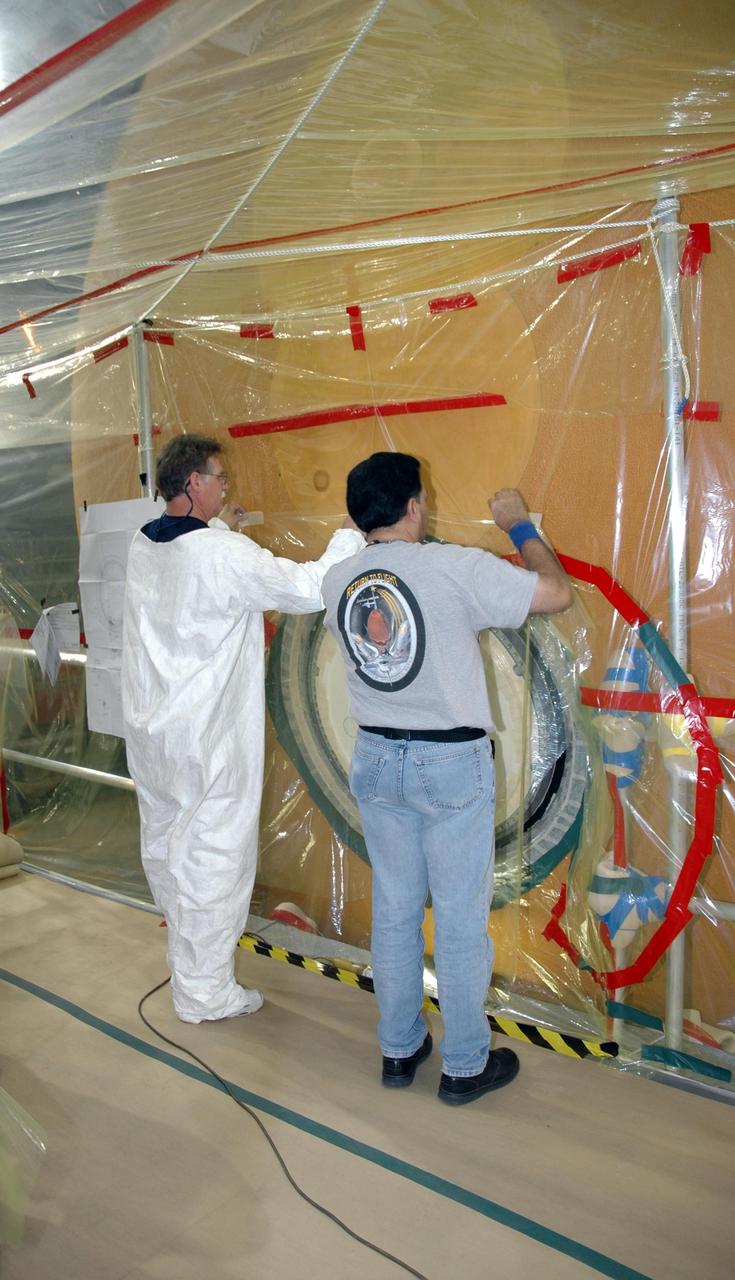
KENNEDY SPACE CENTER, FLA. - In the transfer aisle of the Vehicle Assembly Building, workers prepare to refoam the cover, called the "manhole," on the bottom of external tank number 119. The manhole was removed to access the area where the tank's four liquid hydrogen engine cutoff sensors were replaced. The tank is being prepared to launch Space Shuttle Discovery on mission STS-121 in July. Photo credit: NASA/Jim Grossmann