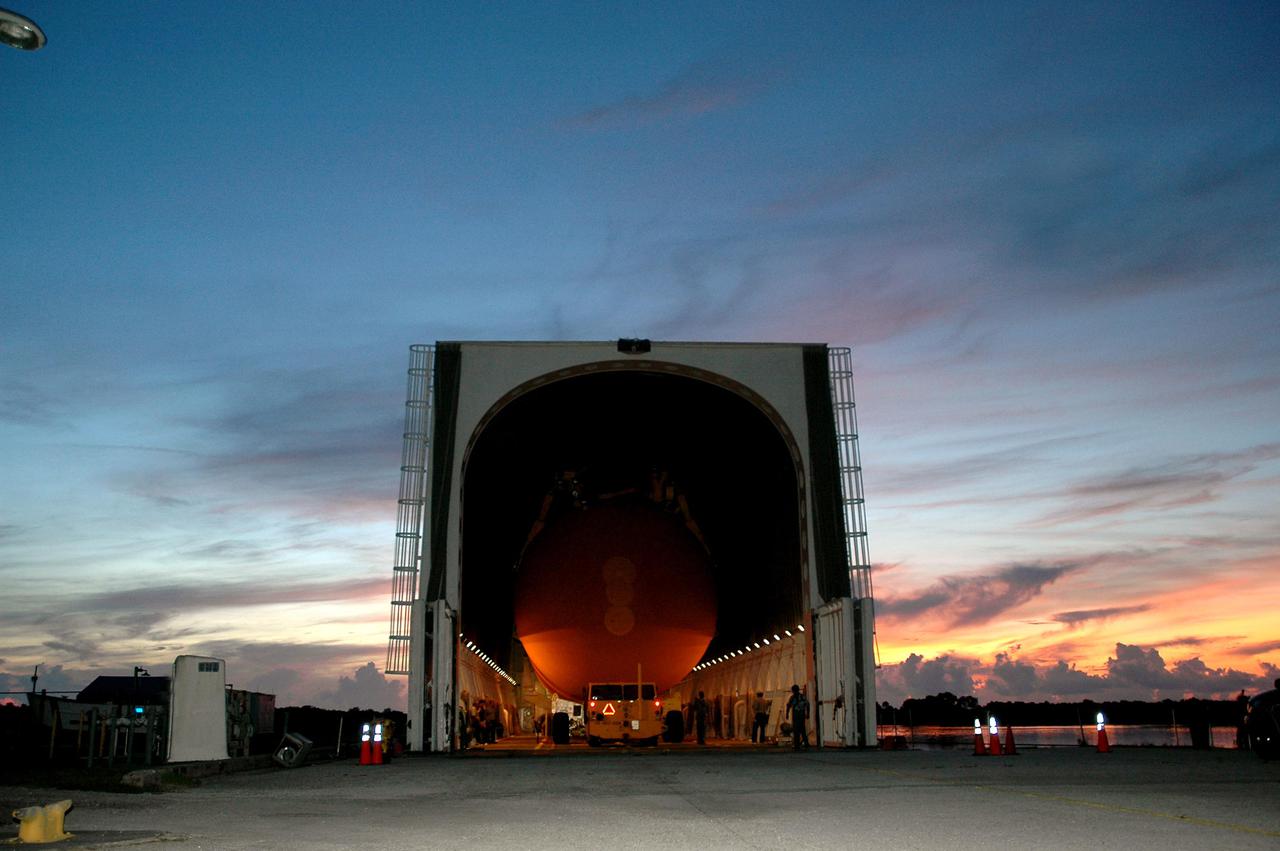
KENNEDY SPACE CENTER, FLA. - Under pre-dawn skies of blue and red, External Tank 119 is loaded onto the barge at the Turn Basin. The tank will embark on a voyage around the Florida peninsula to the Michoud Assembly Facility in New Orleans. Delivered to KSC in June, ET-119 is the third newly redesigned tank.
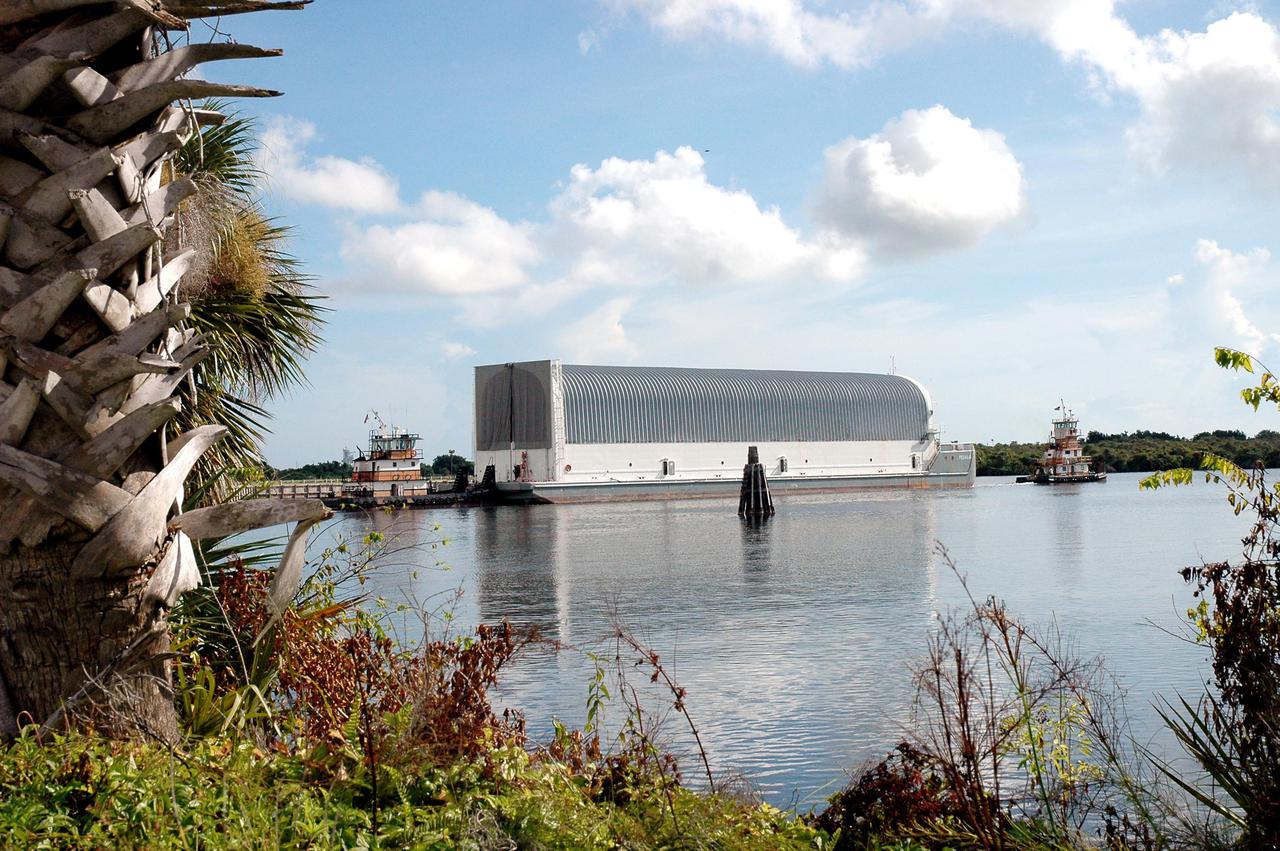
KENNEDY SPACE CENTER, FLA. - Viewed across the Turn Basin at NASA Kennedy Space Center, the barge Pegasus is towed away from the dock on the other side. It is being towed to Port Canaveral where it will join one of the Solid Rocket Booster Recovery Ships and begin its journey around the Florida peninsula to Michoud Assembly Facility in New Orleans. The barge’s cargo is External Tank 119. Delivered to KSC in June, ET-119 is the third newly redesigned tank.
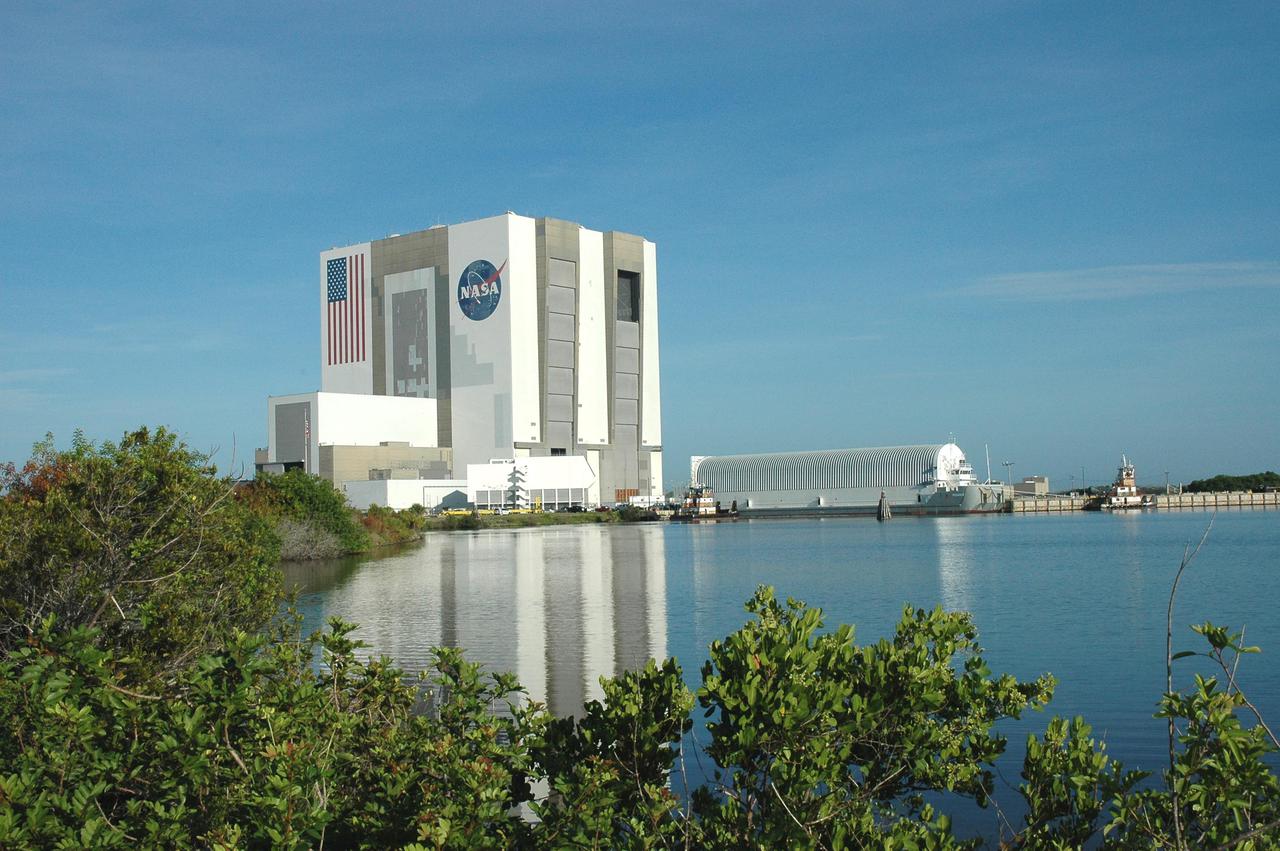
KENNEDY SPACE CENTER, FLA. - Viewed across the Turn Basin at NASA Kennedy Space Center, the barge Pegasus is ready for towing to Port Canaveral where it will join one of the Solid Rocket Booster Recovery Ships and begin its journey around the Florida peninsula to Michoud Assembly Facility in New Orleans. The barge’s cargo is External Tank 119. Delivered to KSC in June, ET-119 is the third newly redesigned tank.
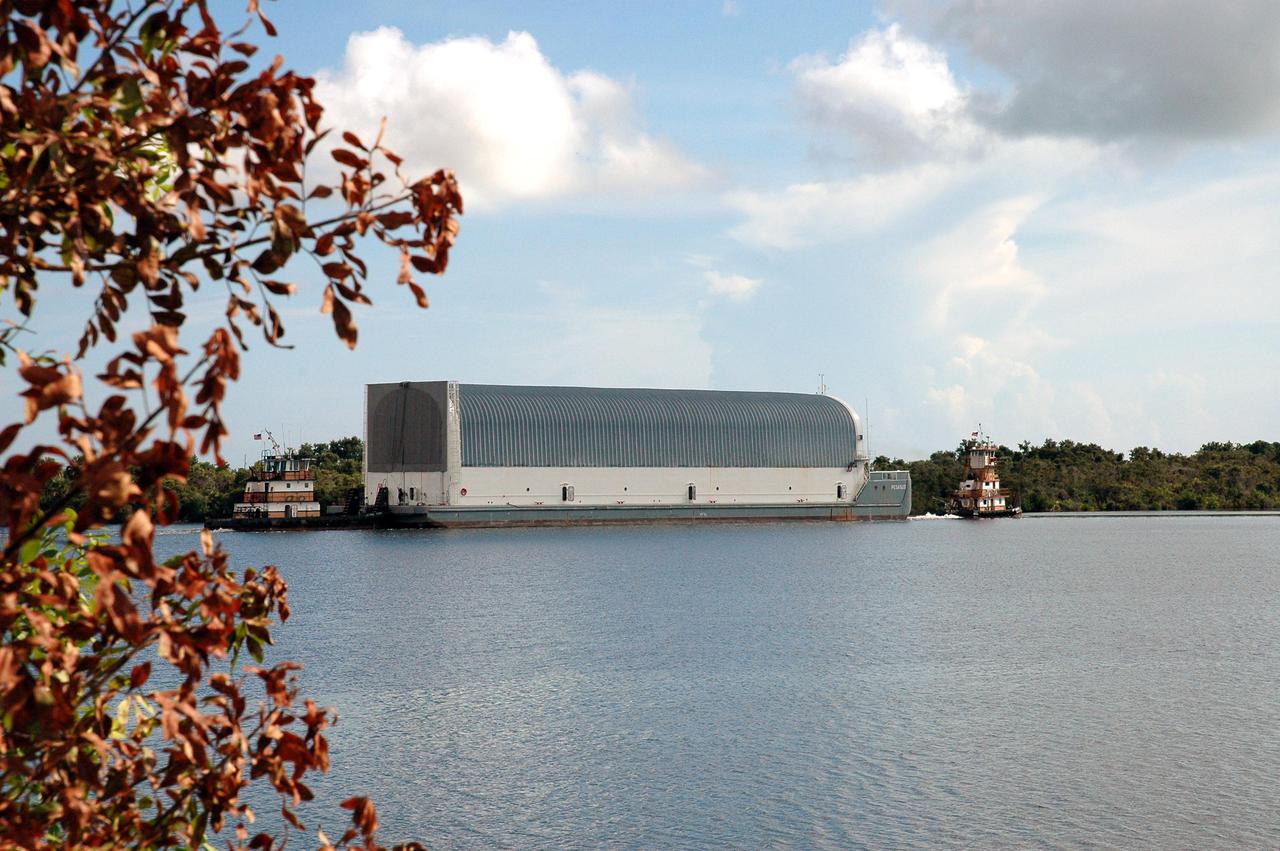
KENNEDY SPACE CENTER, FLA. - Viewed across the Turn Basin at NASA Kennedy Space Center, the barge Pegasus is towed away from the dock on the other side. It is being towed to Port Canaveral where it will join one of the Solid Rocket Booster Recovery Ships and begin its journey around the Florida peninsula to Michoud Assembly Facility in New Orleans. The barge’s cargo is External Tank 119. Delivered to KSC in June, ET-119 is the third newly redesigned tank.
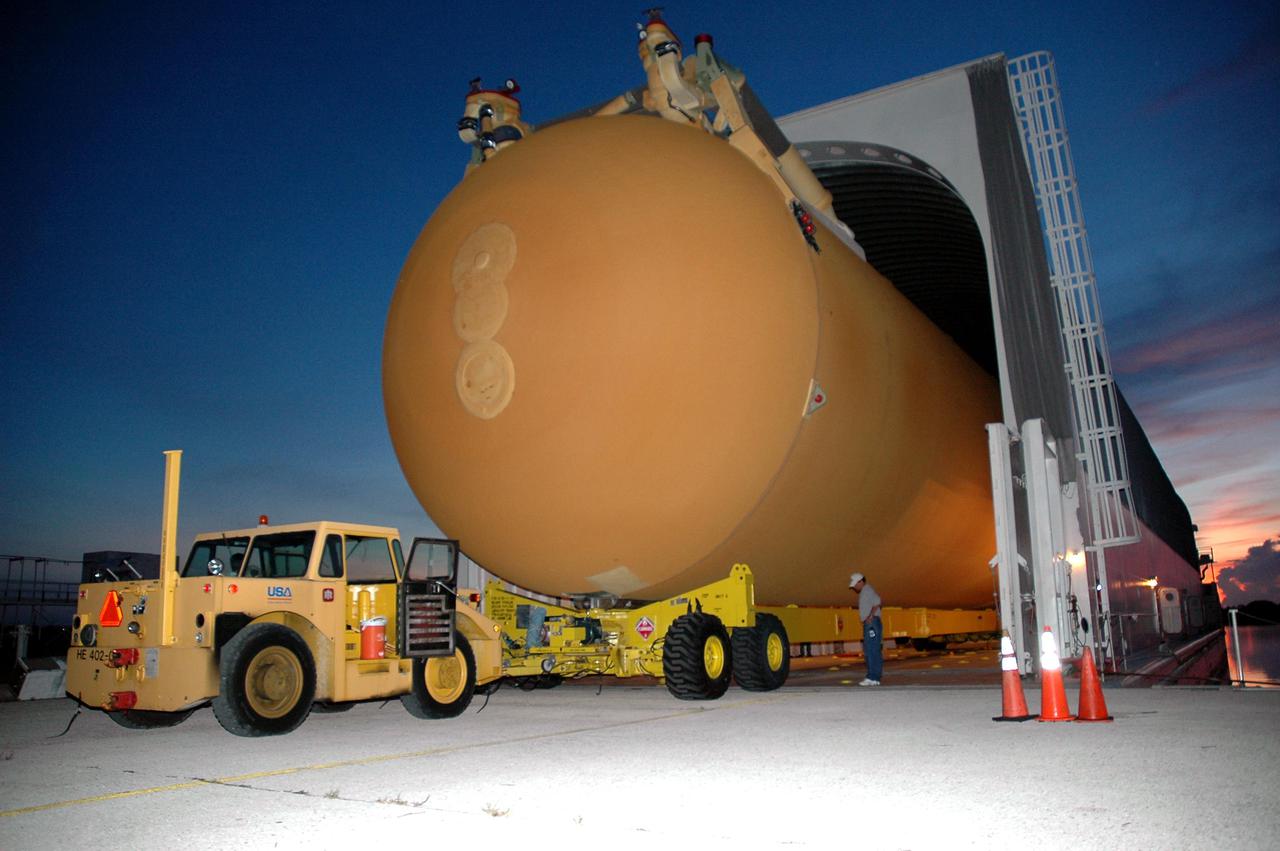
KENNEDY SPACE CENTER, FLA. - Under pre-dawn skies of blue and red, External Tank 119 is loaded onto the barge at the Turn Basin. The tank will embark on a voyage around the Florida peninsula to the Michoud Assembly Facility in New Orleans. Delivered to KSC in June, ET-119 is the third newly redesigned tank.
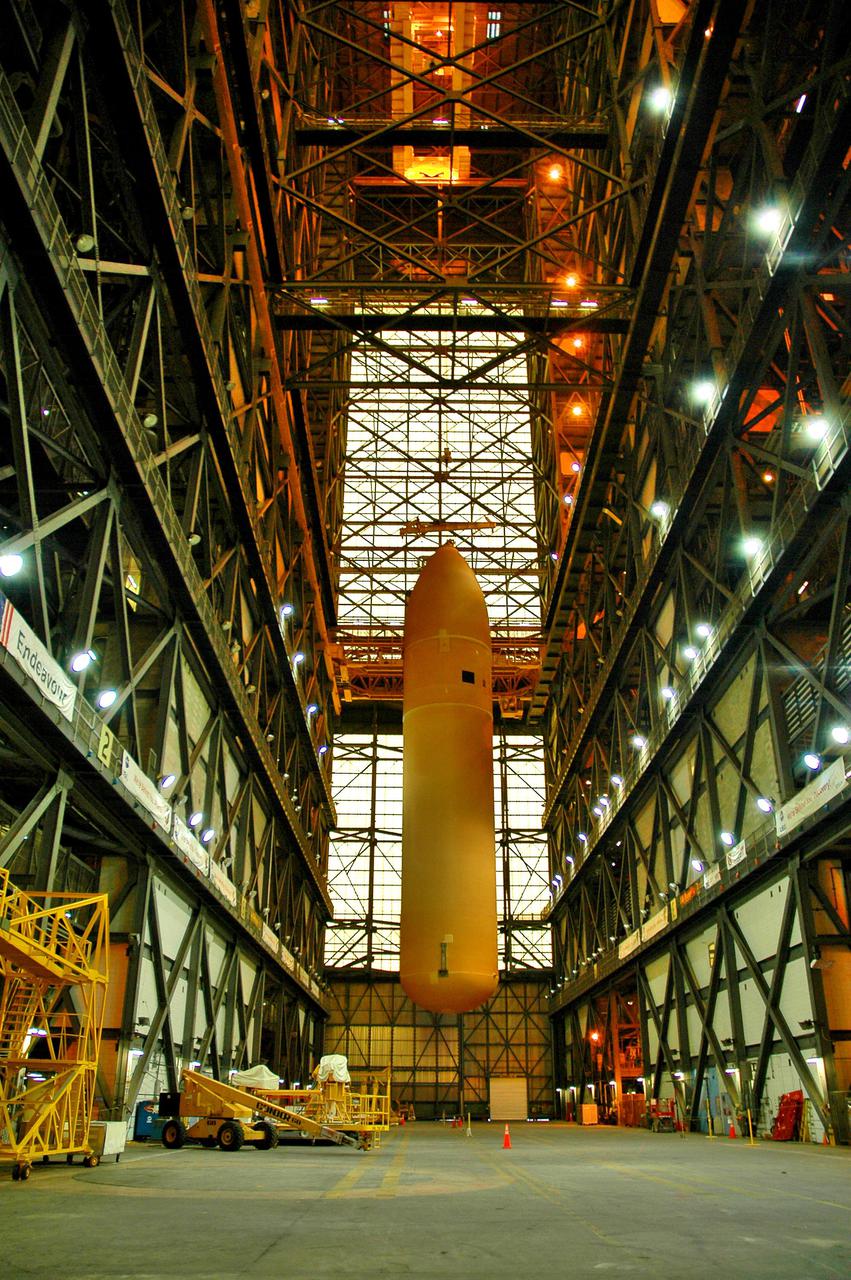
KENNEDY SPACE CENTER, FLA. - External Tank 119 is lowered to the transfer aisle in the Vehicle Assembly Building. There it will be lowered and placed on the transporter to be moved to the barge at the Turn Basin. The tank will embark on a voyage around the Florida peninsula to the Michoud Assembly Facility in New Orleans. Delivered to KSC in June, ET-119 is the third newly redesigned tank.
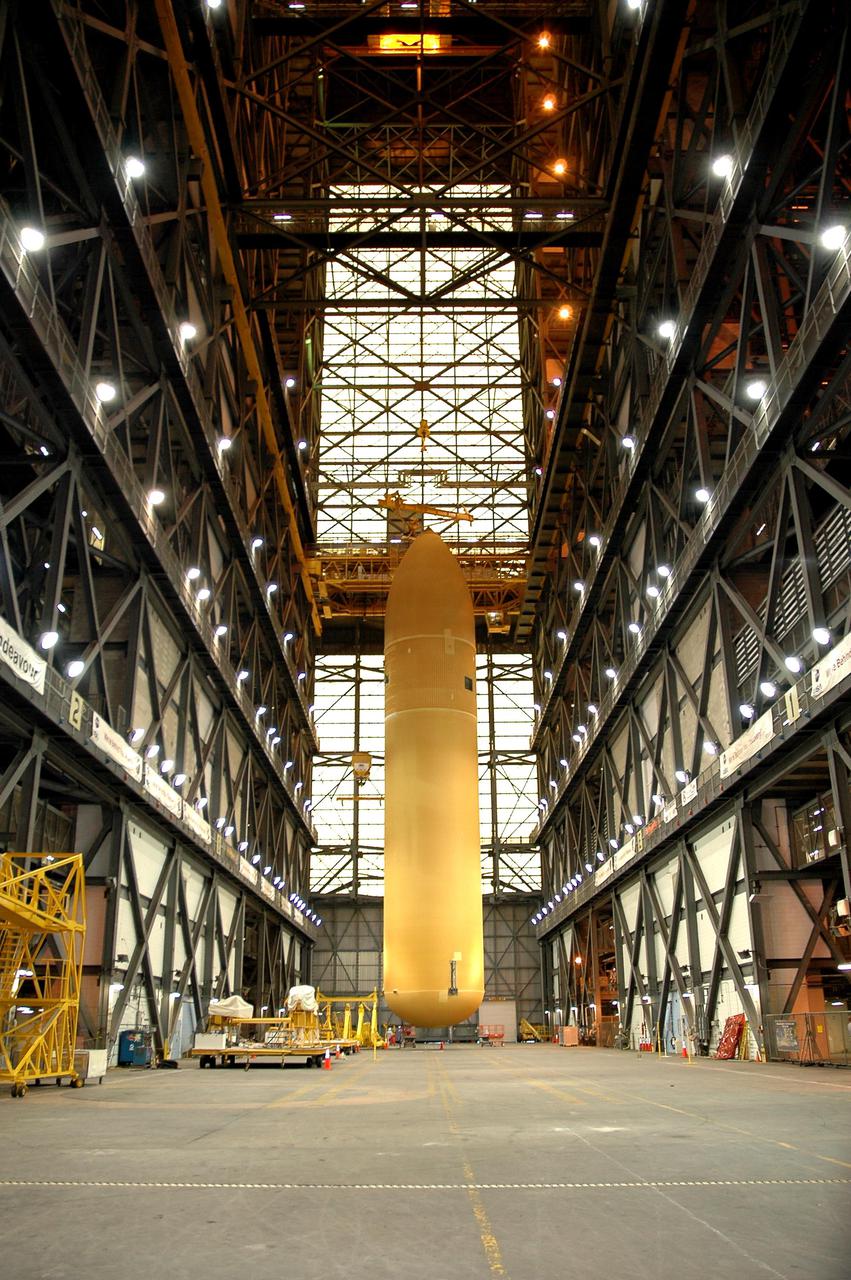
KENNEDY SPACE CENTER, FLA. - Inside NASA Kennedy Space Center’s Vehicle Assembly Building, External Tank 119 is lowered to a point just above the transfer aisle. There it will be lowered horizontally and placed on a transporter in the transfer aisle to be moved to the barge at the Turn Basin. The tank will embark on a voyage around the Florida peninsula to the Michoud Assembly Facility in New Orleans. Delivered to KSC in June, ET-119 is the third newly redesigned tank.
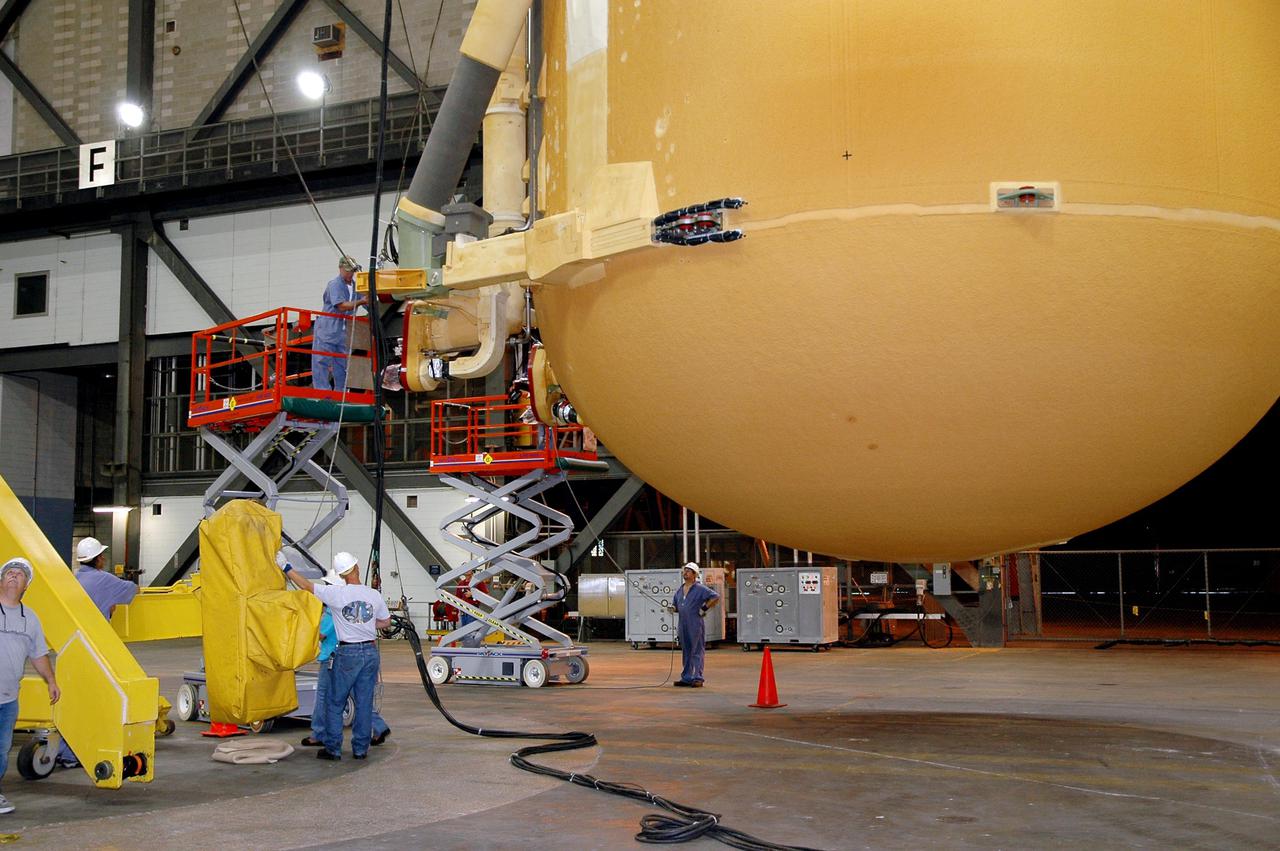
KENNEDY SPACE CENTER, FLA. - Inside NASA Kennedy Space Center’s Vehicle Assembly Building, workers secure the cranes onto External Tank 119 that enable the tank to be lowered to a horizontal position. Then it will be placed on a transporter in the transfer aisle to be moved to the barge at the Turn Basin. The tank will embark on a voyage around the Florida peninsula to the Michoud Assembly Facility in New Orleans. Delivered to KSC in June, ET-119 is the third newly redesigned tank.

KENNEDY SPACE CENTER, FLA. - Just before dawn, External Tank 119 rolls out of NASA Kennedy Space Center’s Vehicle Assembly Building. It is being moved to the barge at the Turn Basin. The tank will embark on a voyage around the Florida peninsula to the Michoud Assembly Facility in New Orleans. Delivered to KSC in June, ET-119 is the third newly redesigned tank.
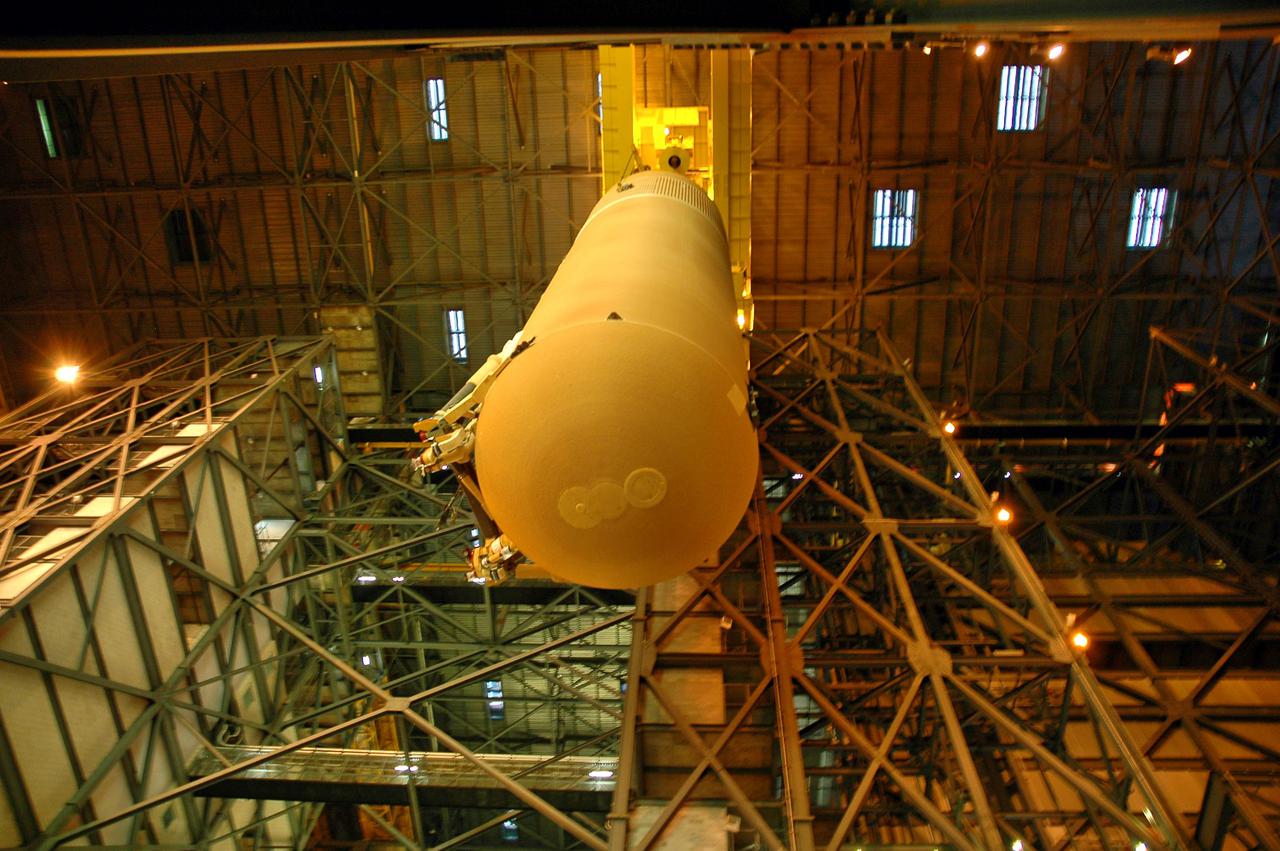
KENNEDY SPACE CENTER, FLA. - External Tank 119 is being lowered to the transfer aisle in the Vehicle Assembly Building. There it will be lowered and placed on the transporter to be moved to the barge at the Turn Basin. The tank will embark on a voyage around the Florida peninsula to the Michoud Assembly Facility in New Orleans. Delivered to KSC in June, ET-119 is the third newly redesigned tank.
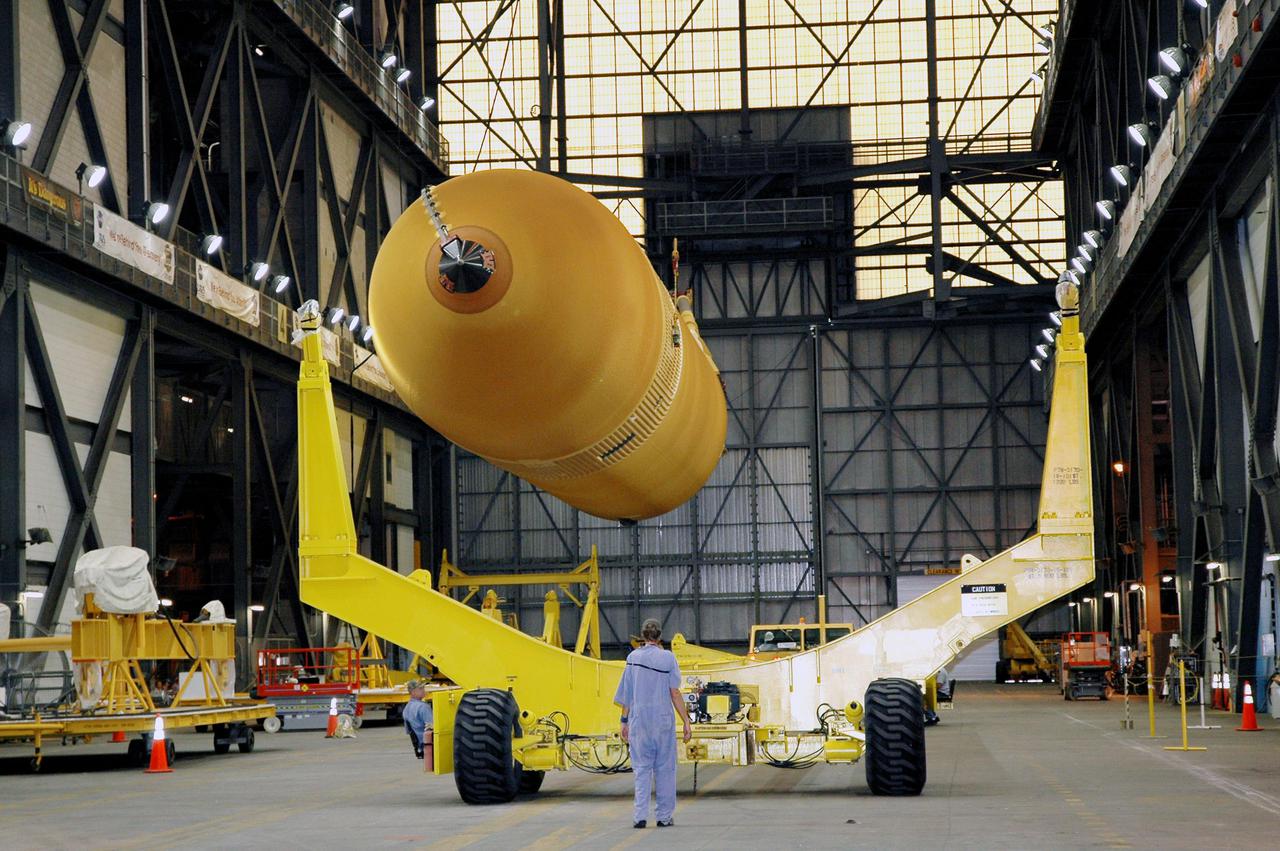
KENNEDY SPACE CENTER, FLA. - Inside NASA Kennedy Space Center’s Vehicle Assembly Building, External Tank 119 is lowered onto a transporter in the transfer aisle to be moved to the barge at the Turn Basin. The tank will embark on a voyage around the Florida peninsula to the Michoud Assembly Facility in New Orleans. Delivered to KSC in June, ET-119 is the third newly redesigned tank.
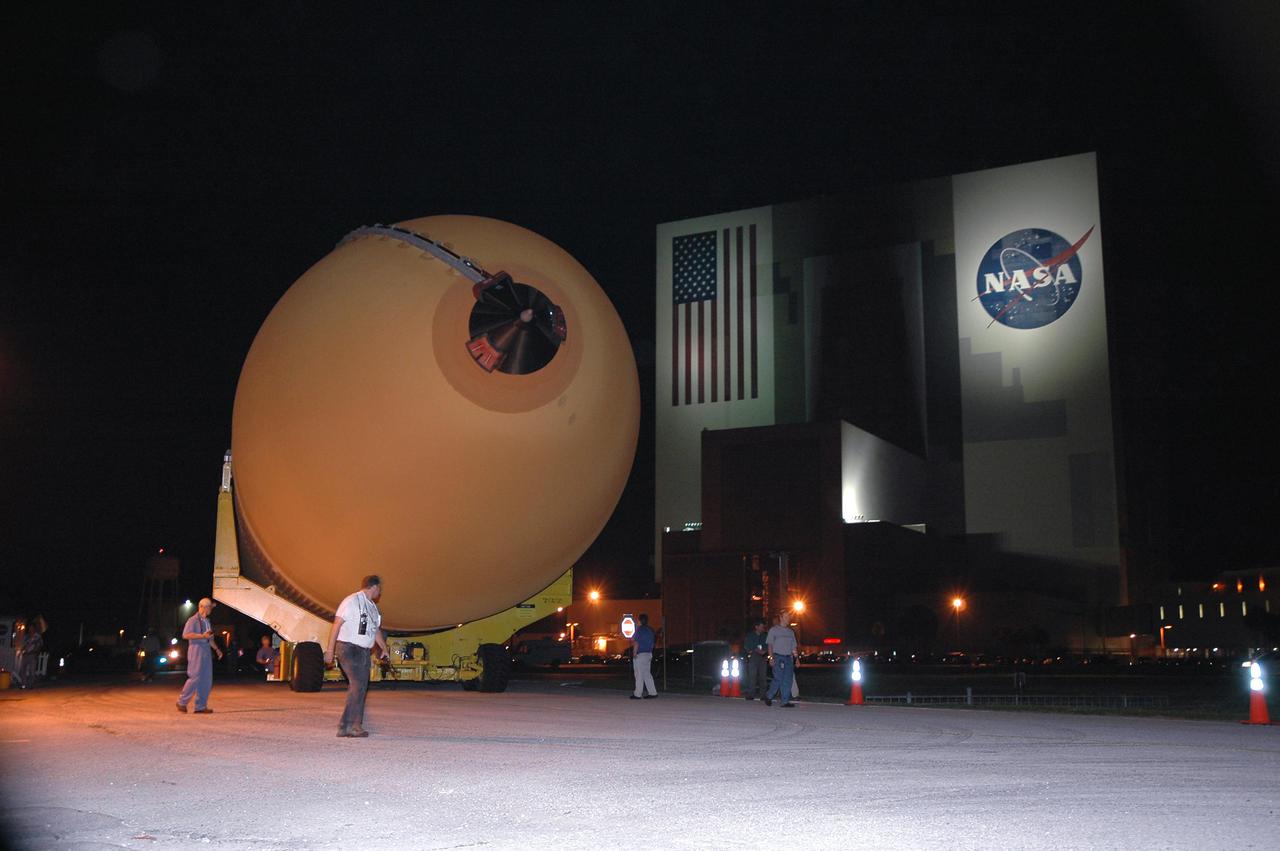
KENNEDY SPACE CENTER, FLA. - Just before dawn, External Tank 119 rolls away from NASA Kennedy Space Center’s Vehicle Assembly Building. It is being moved to the barge at the Turn Basin. The tank will embark on a voyage around the Florida peninsula to the Michoud Assembly Facility in New Orleans. Delivered to KSC in June, ET-119 is the third newly redesigned tank.
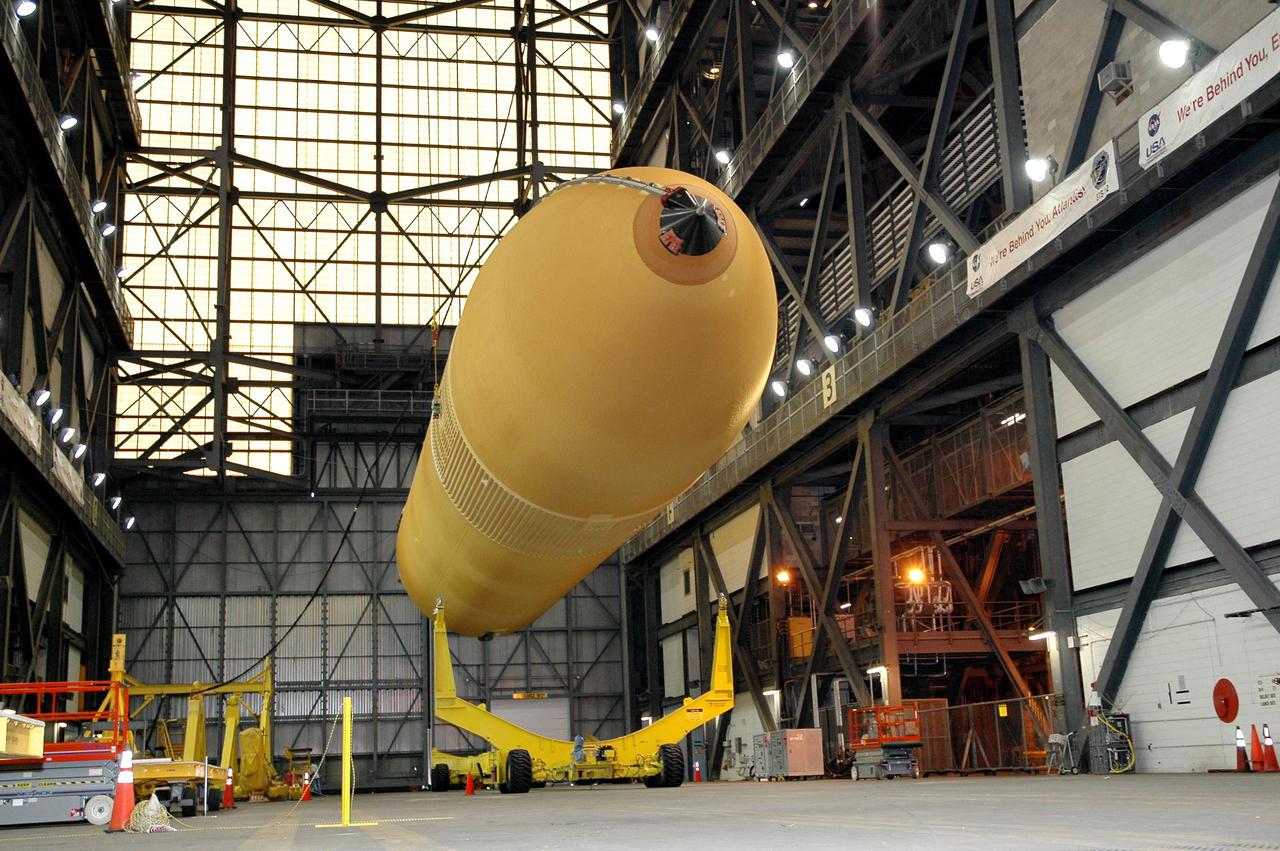
KENNEDY SPACE CENTER, FLA. - Inside NASA Kennedy Space Center’s Vehicle Assembly Building, External Tank 119 is lowered onto a transporter in the transfer aisle to be moved to the barge at the Turn Basin. The tank will embark on a voyage around the Florida peninsula to the Michoud Assembly Facility in New Orleans. Delivered to KSC in June, ET-119 is the third newly redesigned tank.
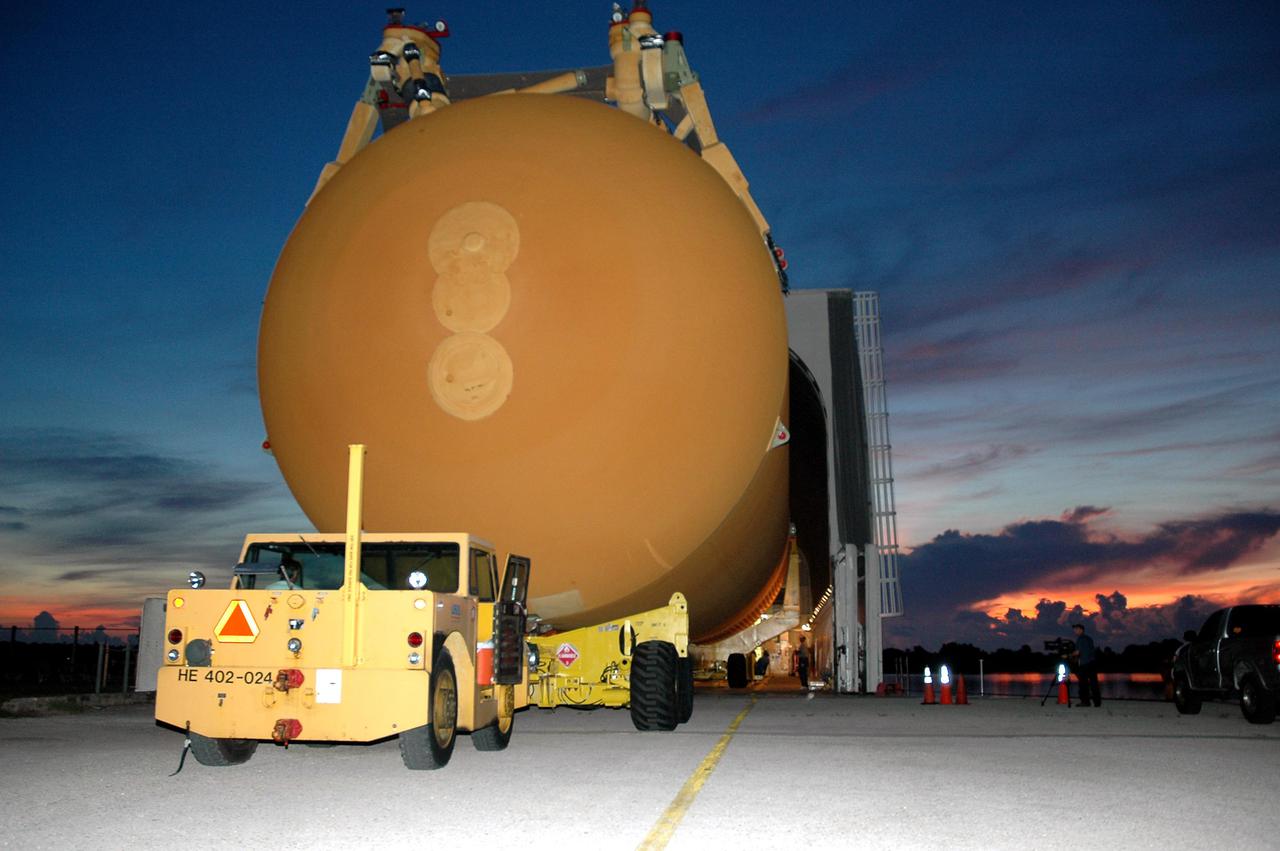
KENNEDY SPACE CENTER, FLA. - Under pre-dawn skies of blue and red, External Tank 119 is towed away from NASA Kennedy Space Center’s Vehicle Assembly Building. It is being moved to the barge at the Turn Basin. The tank will embark on a voyage around the Florida peninsula to the Michoud Assembly Facility in New Orleans. Delivered to KSC in June, ET-119 is the third newly redesigned tank.
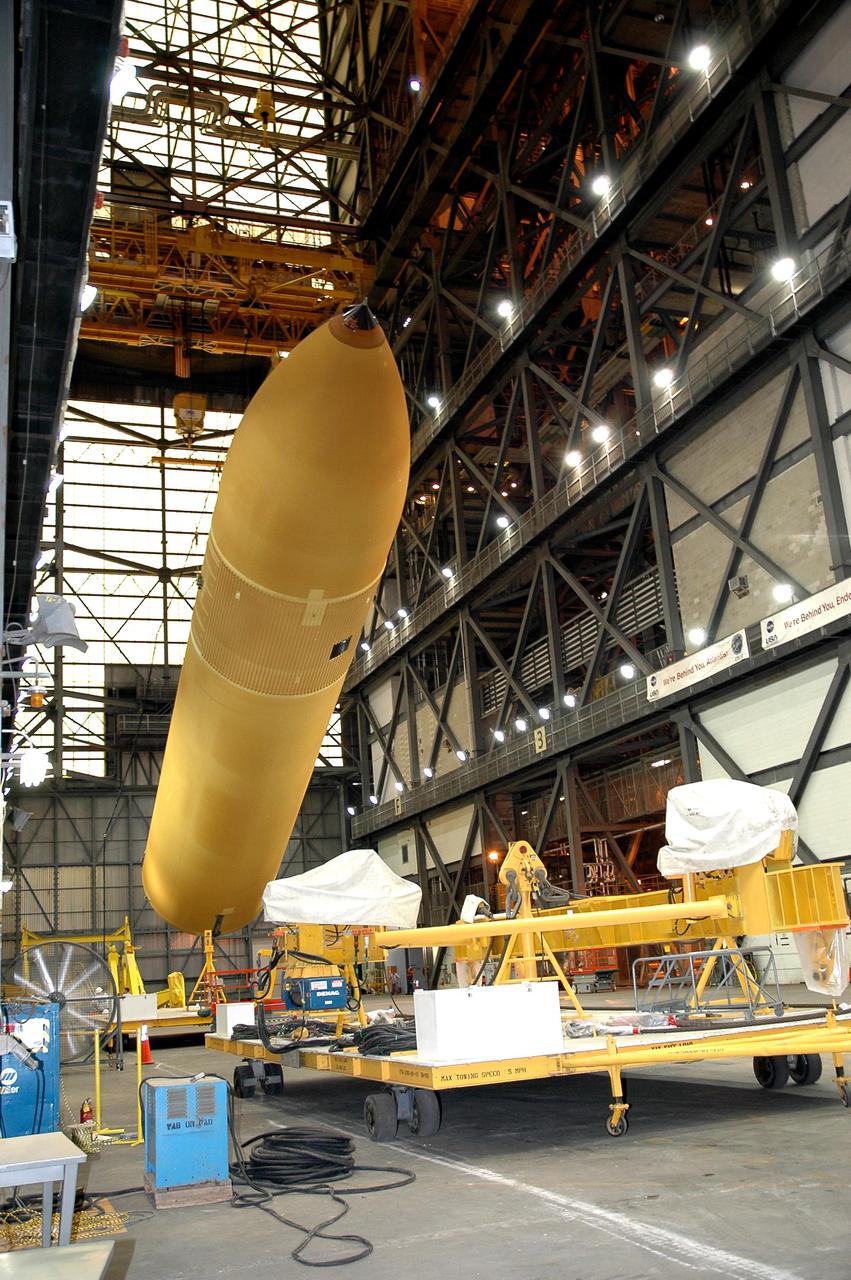
KENNEDY SPACE CENTER, FLA. - Inside NASA Kennedy Space Center’s Vehicle Assembly Building, External Tank 119 is lowered to a horizontal position. Then it will be placed on a transporter in the transfer aisle to be moved to the barge at the Turn Basin. The tank will embark on a voyage around the Florida peninsula to the Michoud Assembly Facility in New Orleans. Delivered to KSC in June, ET-119 is the third newly redesigned tank.
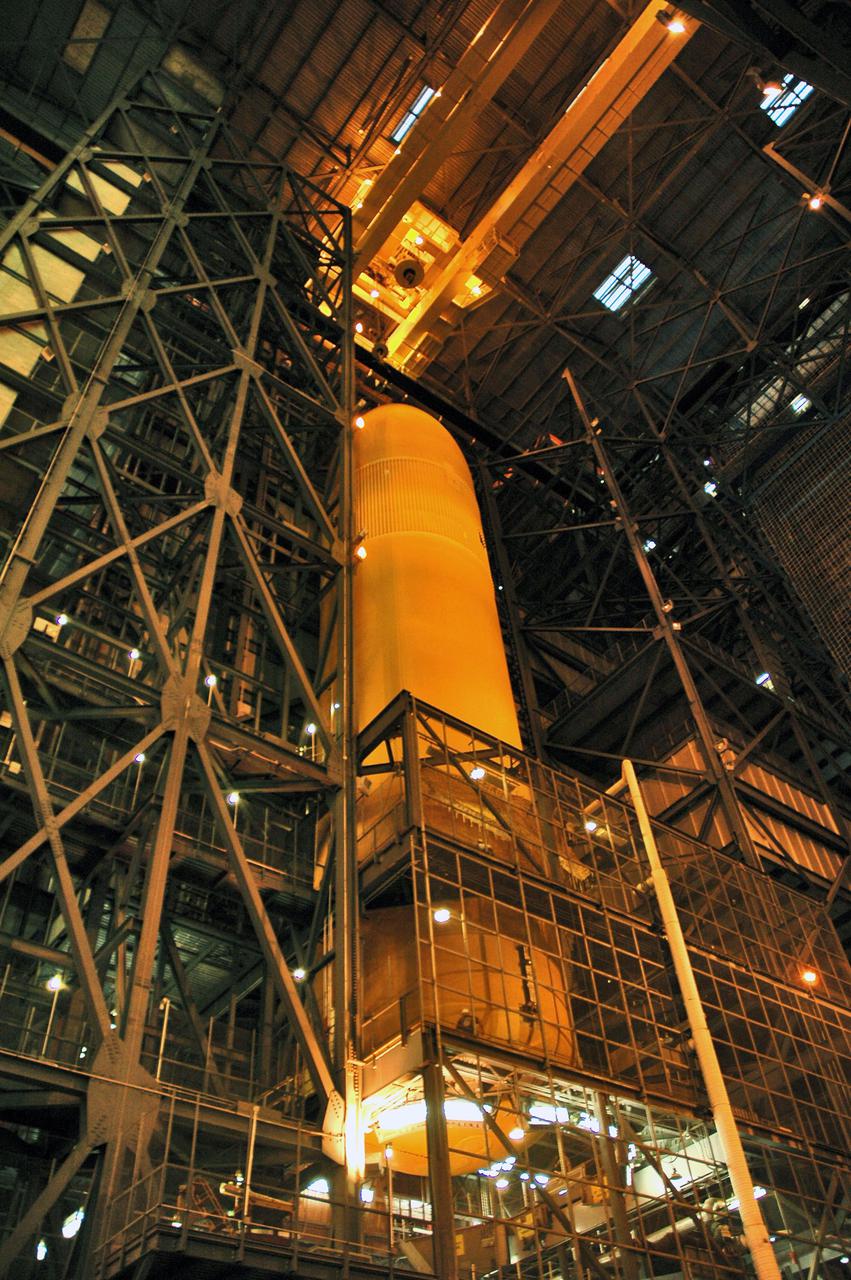
KENNEDY SPACE CENTER, FLA. - External Tank 119 is being lifted and moved to the transfer aisle in the Vehicle Assembly Building. There it will be lowered and placed on the transporter to be moved to the barge at the Turn Basin. The tank will embark on a voyage around the Florida peninsula to the Michoud Assembly Facility in New Orleans. Delivered to KSC in June, ET-119 is the third newly redesigned tank.

KENNEDY SPACE CENTER, FLA. - Inside NASA Kennedy Space Center’s Vehicle Assembly Building, External Tank 119 is placed on a transporter in the transfer aisle to be moved to the barge at the Turn Basin. The tank will embark on a voyage around the Florida peninsula to the Michoud Assembly Facility in New Orleans. Delivered to KSC in June, ET-119 is the third newly redesigned tank.
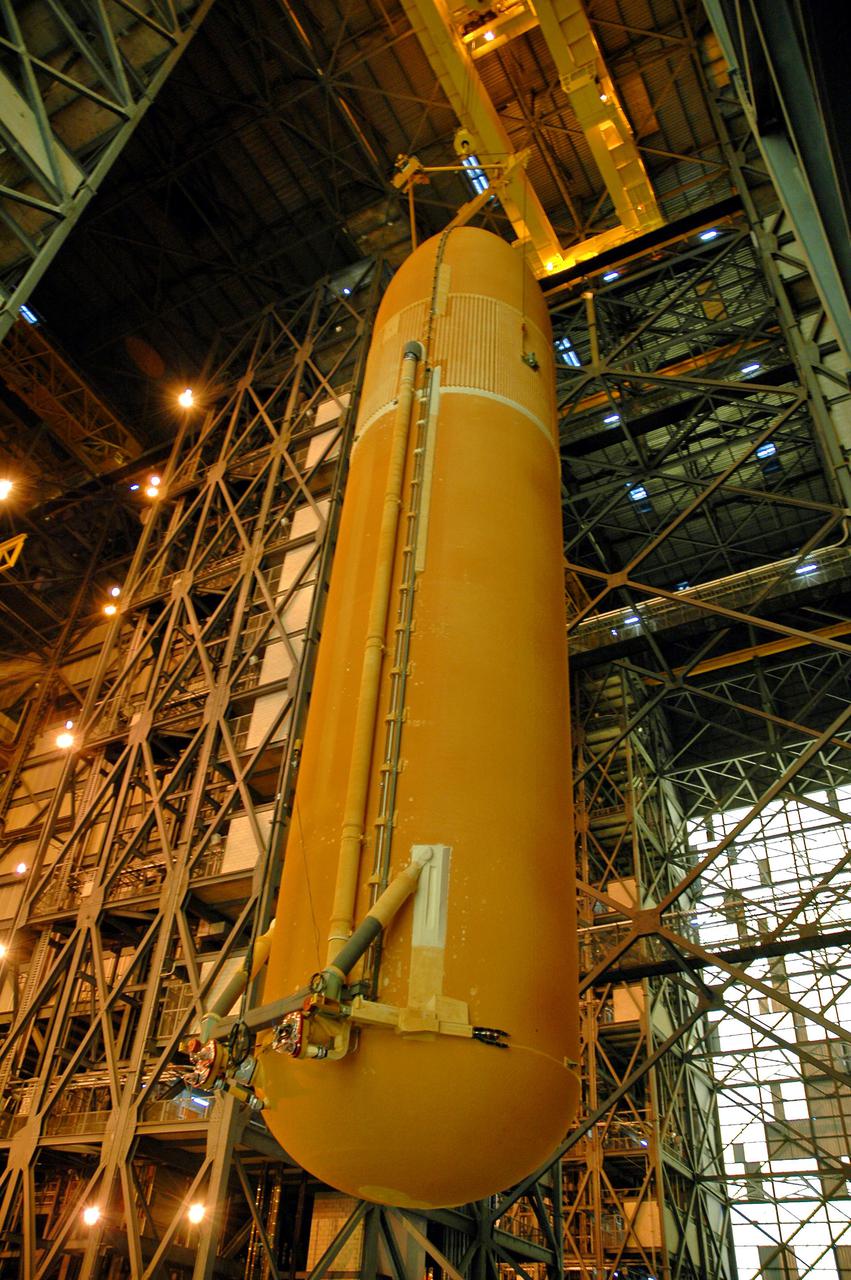
KENNEDY SPACE CENTER, FLA. - External Tank 119 is being lowered to the transfer aisle in the Vehicle Assembly Building. There it will be lowered and placed on the transporter to be moved to the barge at the Turn Basin. The tank will embark on a voyage around the Florida peninsula to the Michoud Assembly Facility in New Orleans. Delivered to KSC in June, ET-119 is the third newly redesigned tank.
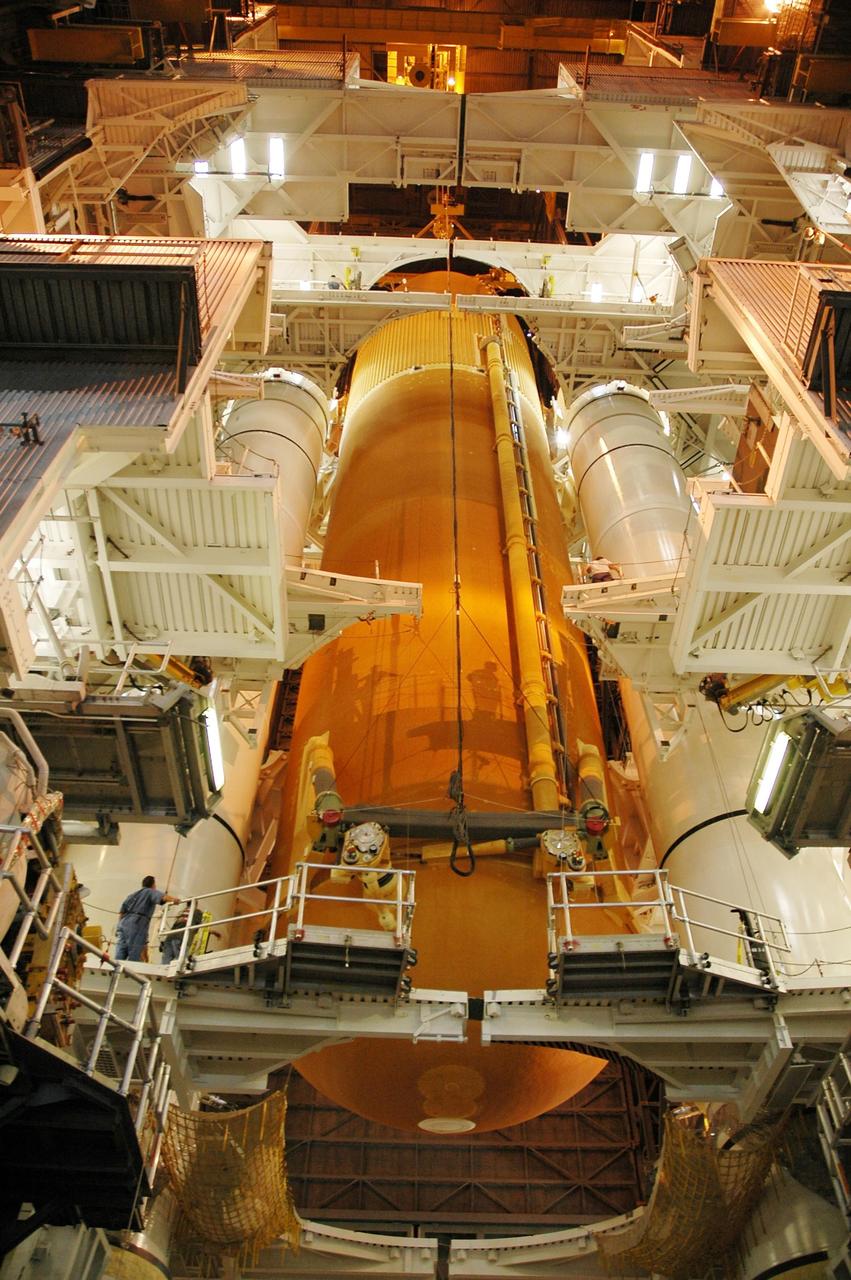
KENNEDY SPACE CENTER, FLA. - In high bay 3 of the Vehicle Assembly Building, the external tank designated for Space Shuttle Discovery is lowered into position between the solid rocket boosters on the mobile launcher platform. Discovery is scheduled to launch on mission STS-121 in July. Photo credit: NASA/Amanda Diller
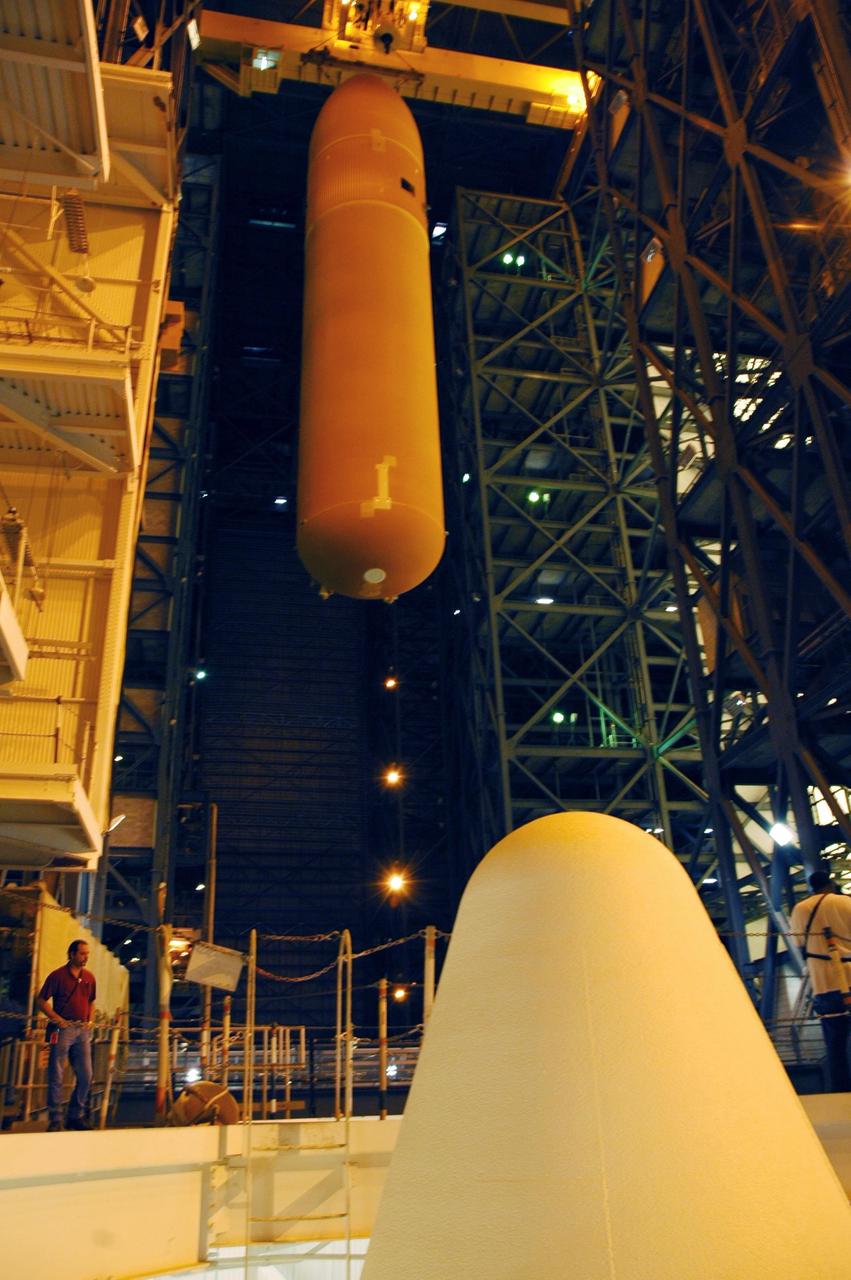
KENNEDY SPACE CENTER, FLA. - In the Vehicle Assembly Building, the overhead crane moves the external tank designated for Space Shuttle Discovery toward high bay 3. In the foreground is the tip of one of the solid rocket boosters. There it will be stacked with the solid rocket boosters already in place on the mobile launcher platform. Discovery is scheduled to launch on mission STS-121 in July. Photo credit: NASA/Amanda Diller
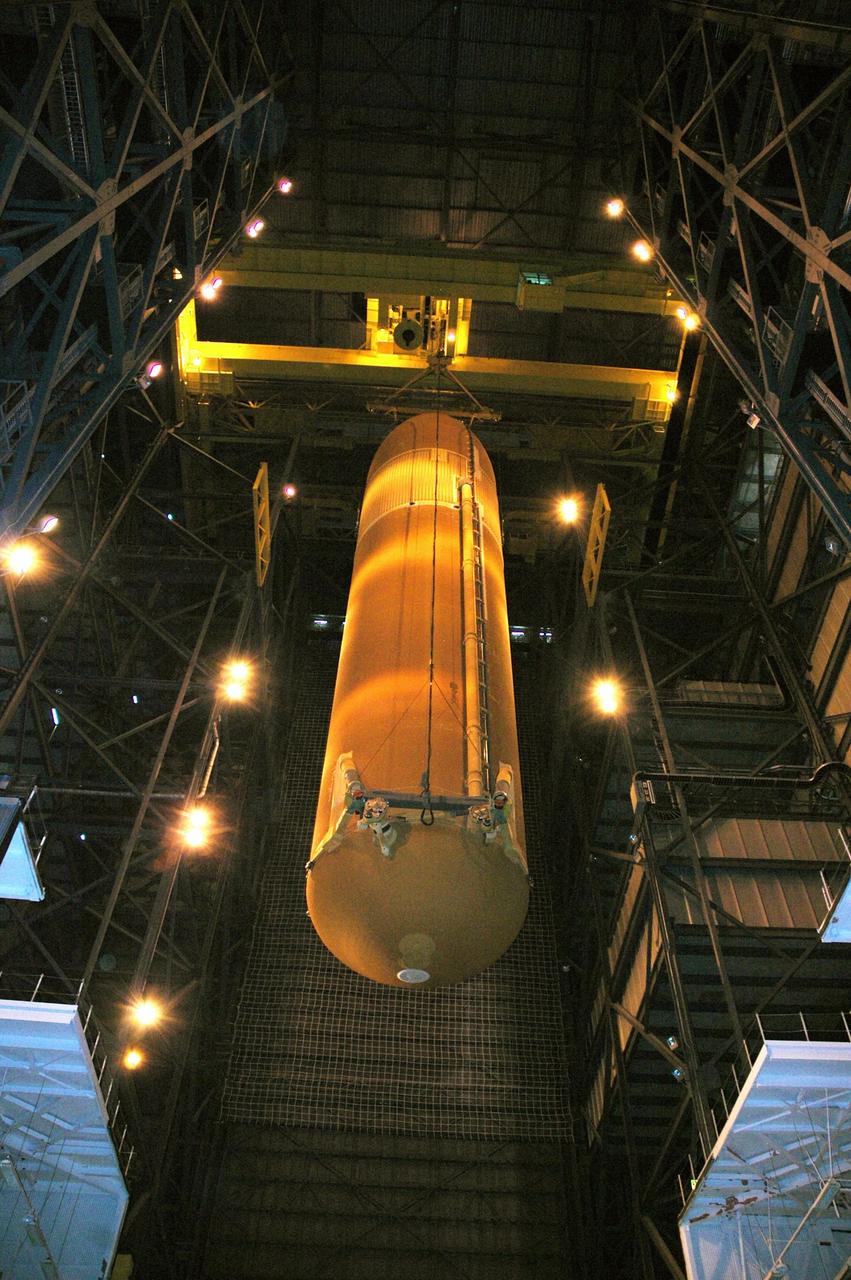
KENNEDY SPACE CENTER, FLA. - In the Vehicle Assembly Building, the external tank designated for Space Shuttle Discovery is lowered into high bay 3. There it will be stacked with the solid rocket boosters already in place on the mobile launcher platform. Discovery is scheduled to launch on mission STS-121 in July. Photo credit: NASA/Amanda Diller
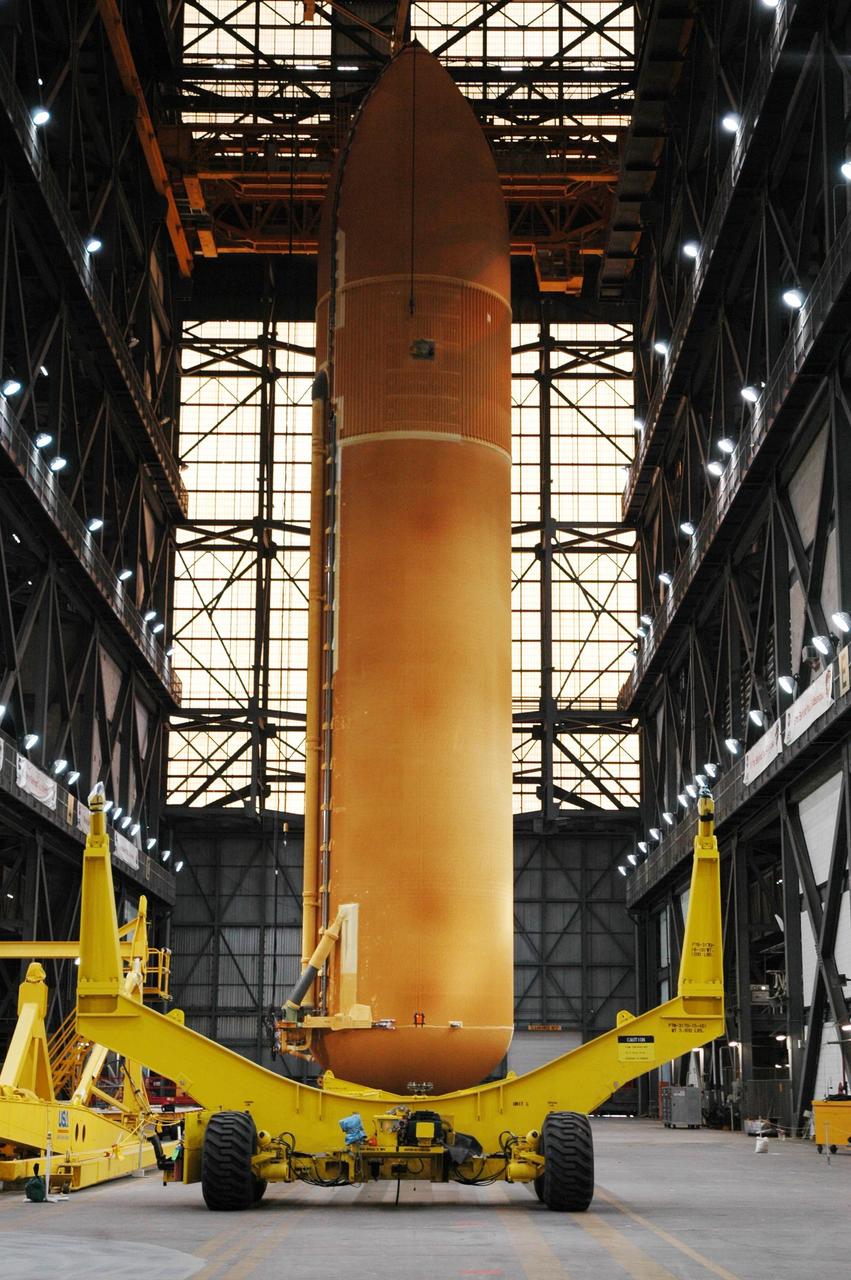
KENNEDY SPACE CENTER, FLA. - In the transfer aisle of the Vehicle Assembly Building, the external tank designated for Space Shuttle Discovery is ready to be lifted and moved to high bay 3. There it will be stacked with the solid rocket boosters already in place on the mobile launcher platform. Discovery is scheduled to launch on mission STS-121 in July. Photo credit: NASA/Amanda Diller
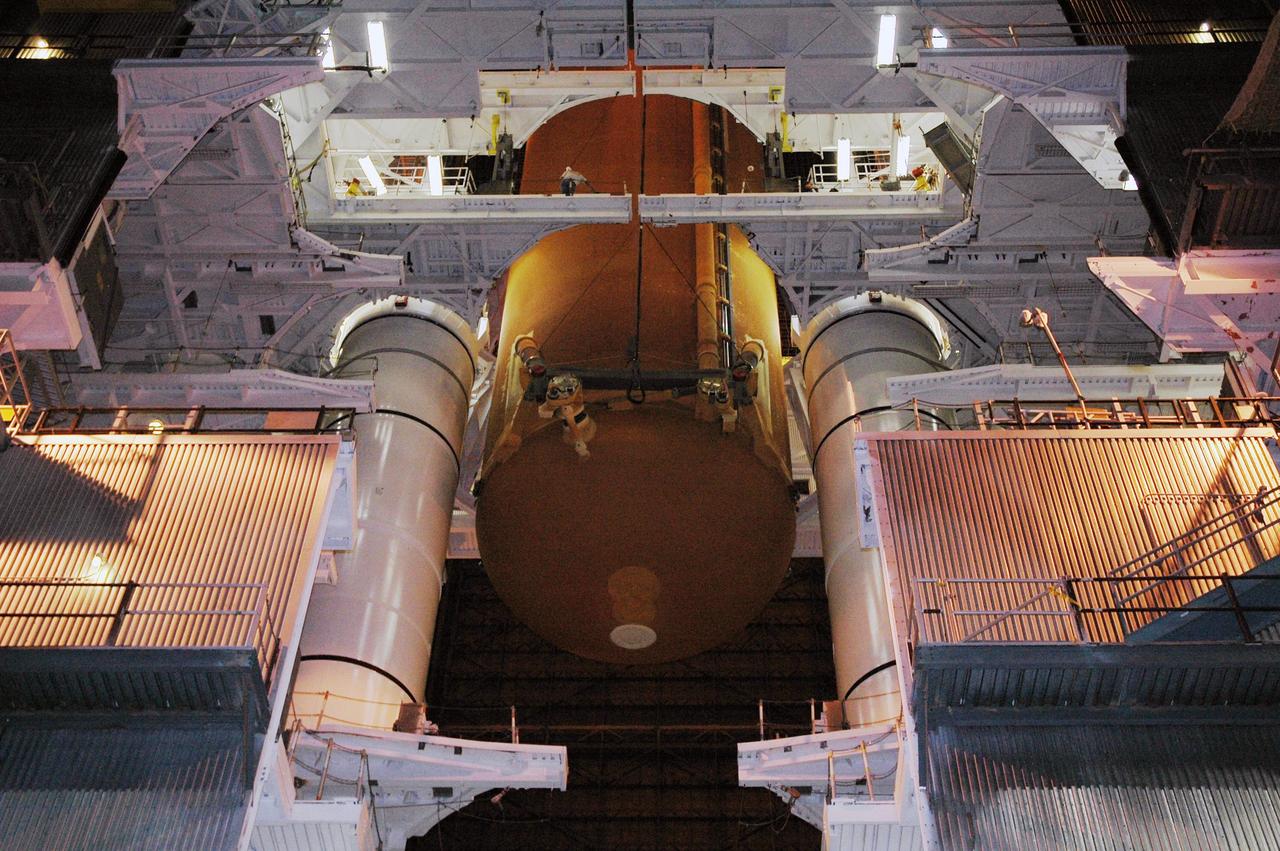
KENNEDY SPACE CENTER, FLA. - In high bay 3 of the Vehicle Assembly Building, the external tank designated for Space Shuttle Discovery is lowered into position between the solid rocket boosters on the mobile launcher platform. Discovery is scheduled to launch on mission STS-121 in July. Photo credit: NASA/Amanda Diller
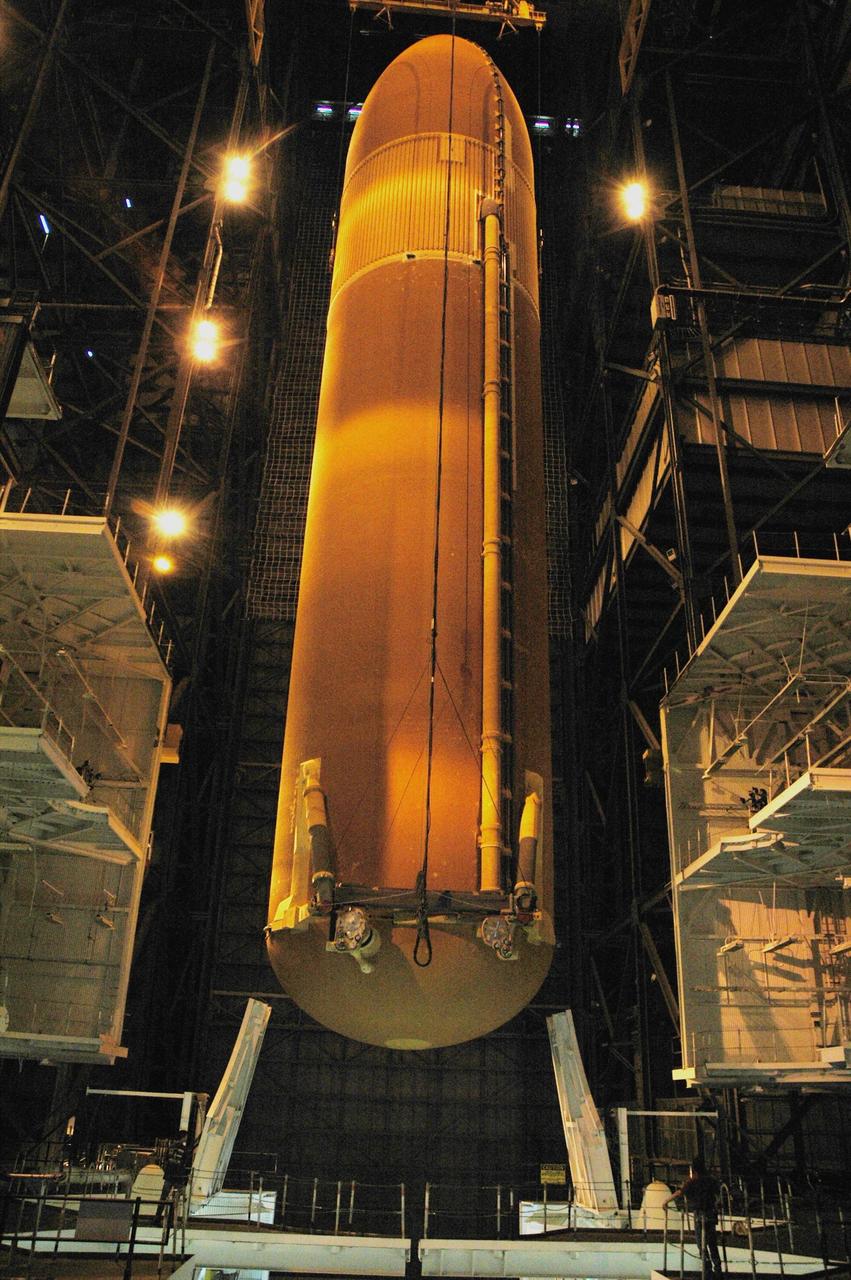
KENNEDY SPACE CENTER, FLA. - In high bay 3 of the Vehicle Assembly Building, the external tank designated for Space Shuttle Discovery is lowered into position between the solid rocket boosters on the mobile launcher platform. Discovery is scheduled to launch on mission STS-121 in July. Photo credit: NASA/Amanda Diller

KENNEDY SPACE CENTER, FLA. - In high bay 3 of the Vehicle Assembly Building, the external tank designated for Space Shuttle Discovery is lowered into position between the solid rocket boosters on the mobile launcher platform. Discovery is scheduled to launch on mission STS-121 in July. Photo credit: NASA/Amanda Diller
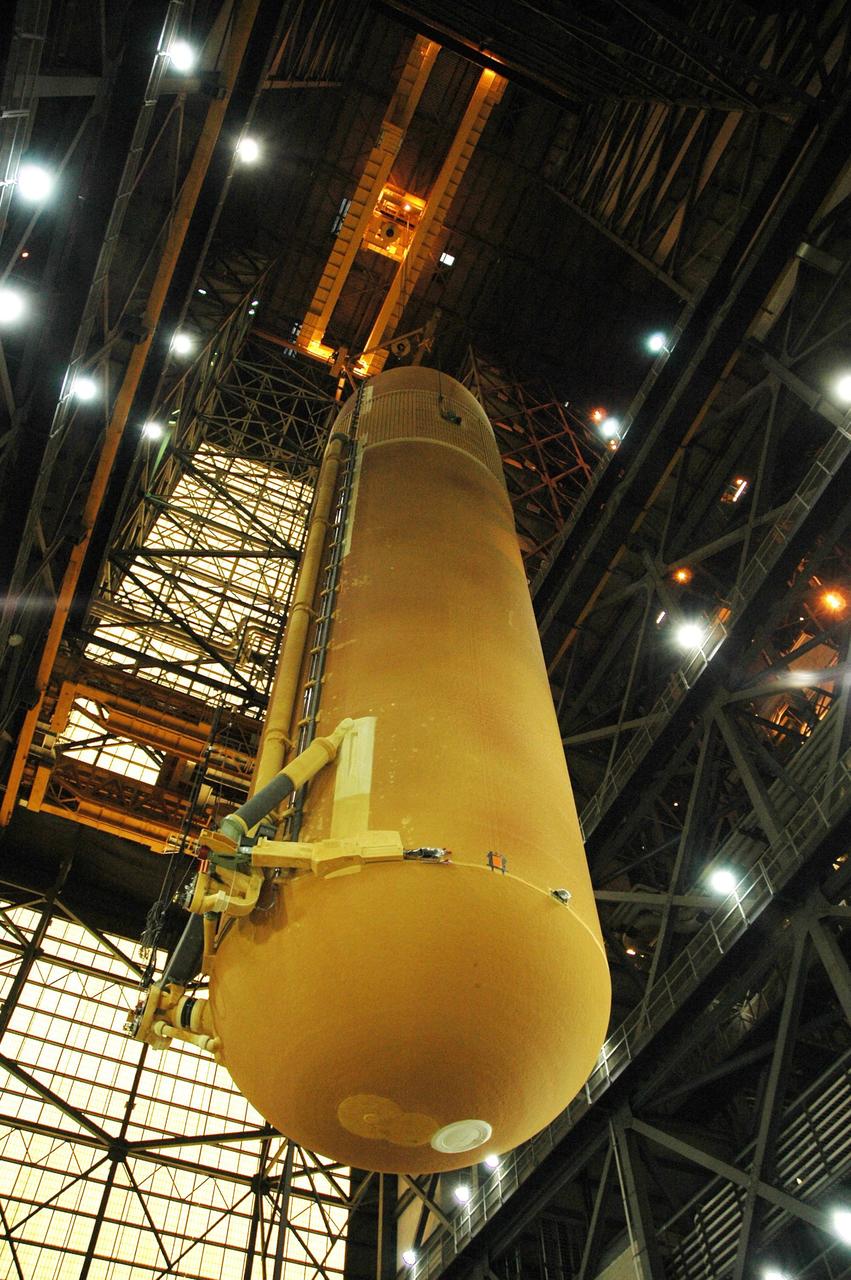
KENNEDY SPACE CENTER, FLA. - In the transfer aisle of the Vehicle Assembly Building, the external tank designated for Space Shuttle Discovery is lifted by crane off its transporter for the move to high bay 3. There it will be stacked with the solid rocket boosters already in place on the mobile launcher platform. Discovery is scheduled to launch on mission STS-121 in July. Photo credit: NASA/Amanda Diller
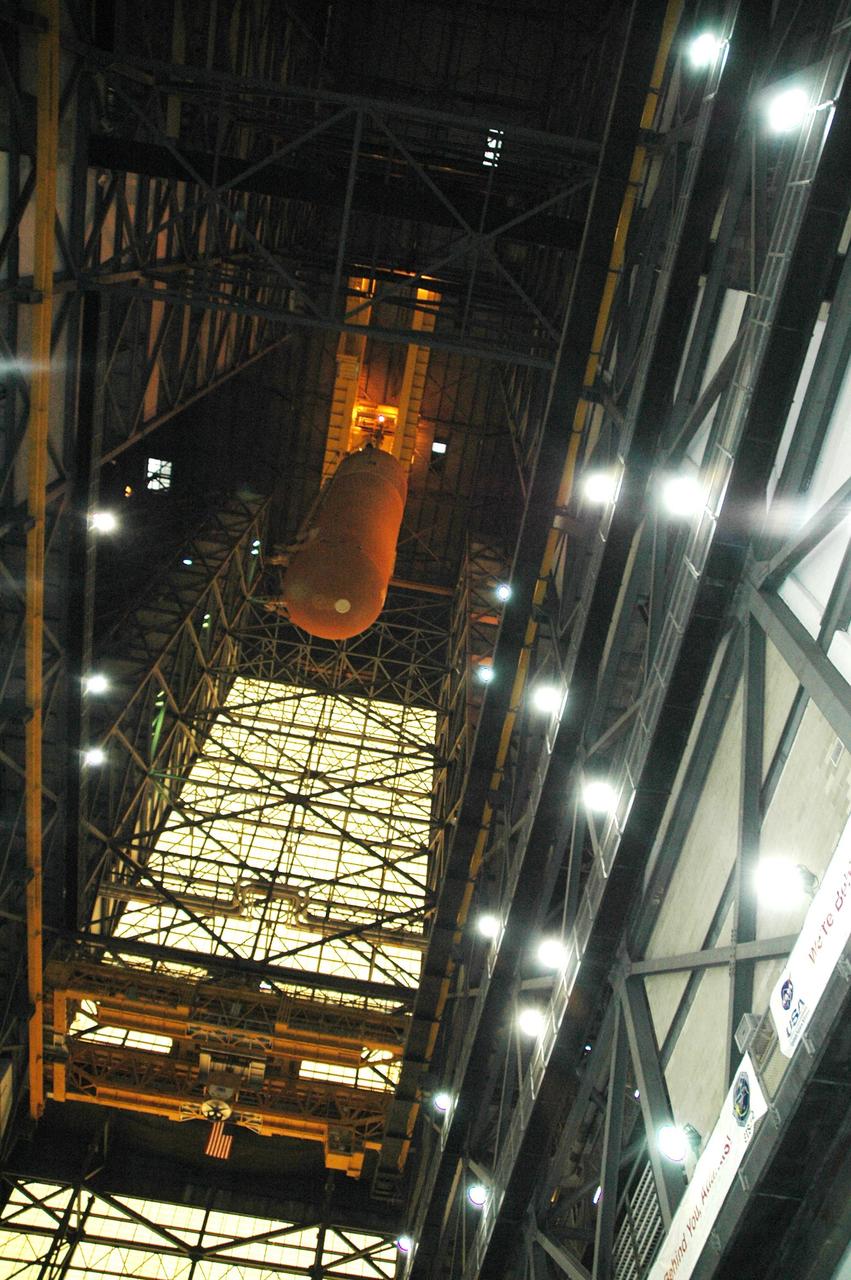
KENNEDY SPACE CENTER, FLA. - In the transfer aisle of the Vehicle Assembly Building, the external tank designated for Space Shuttle Discovery is lifted by crane up to the 16th level for the move to high bay 3. There it will be stacked with the solid rocket boosters already in place on the mobile launcher platform. Discovery is scheduled to launch on mission STS-121 in July. Photo credit: NASA/Amanda Diller
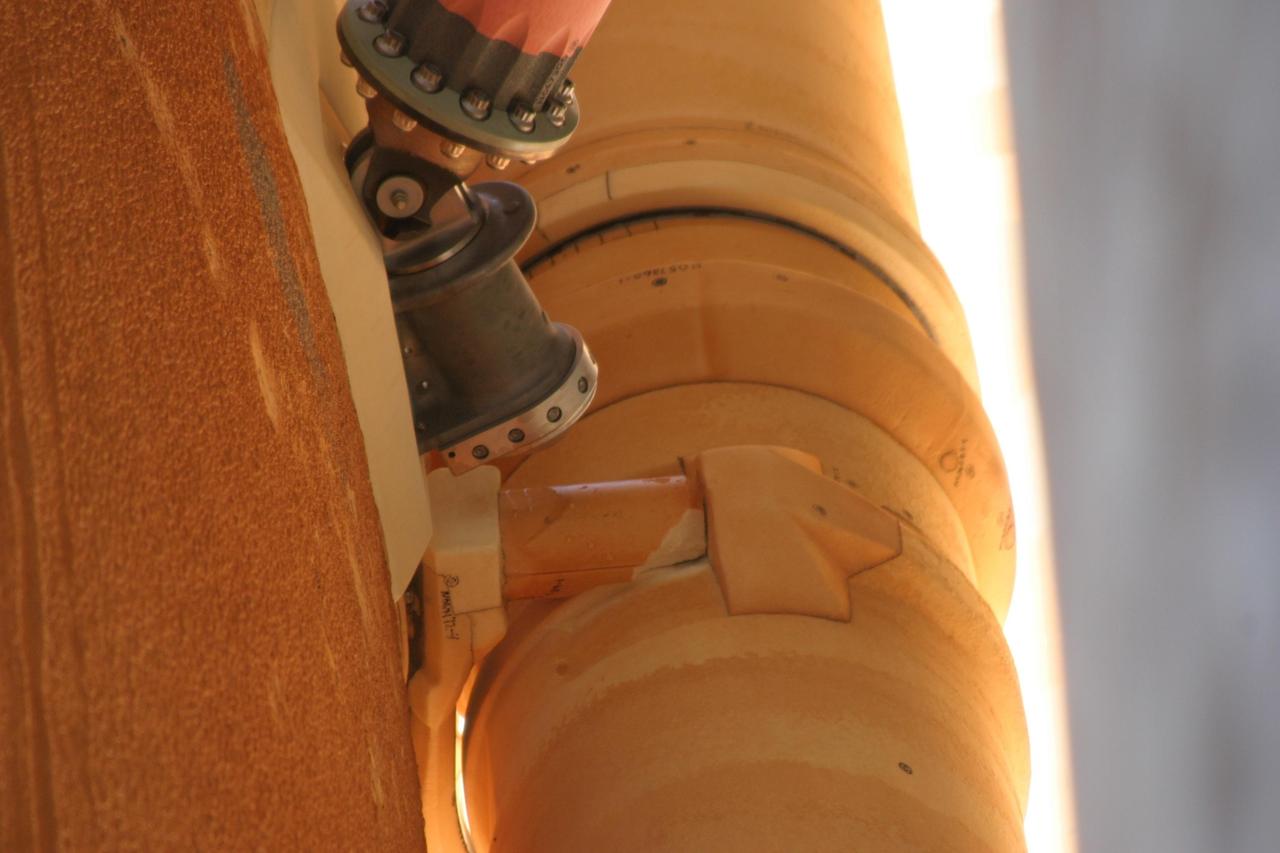
KENNEDY SPACE CENTER, FLA. - A piece of insulation was liberated from a strut that attaches the liquid oxygen feedline to External Tank-119, being used to launch space shuttle mission STS-121. This piece of foam, weighing approximately 0.0057 pounds, is three inches long and one-eighth to one-quarter inch wide and was recovered by the Ice Team from the mobile launch platform at Pad 39B. It is believed that the rain experienced during yesterday’s launch attempt of Discovery caused water to run down the feedline and form ice near the strut next to the feedline bracket. As the tank warmed and expanded, the ice that formed most likely pinched the foam on the top of the strut, causing a crack and eventual loss of the small piece of foam. Photo credit: NASA
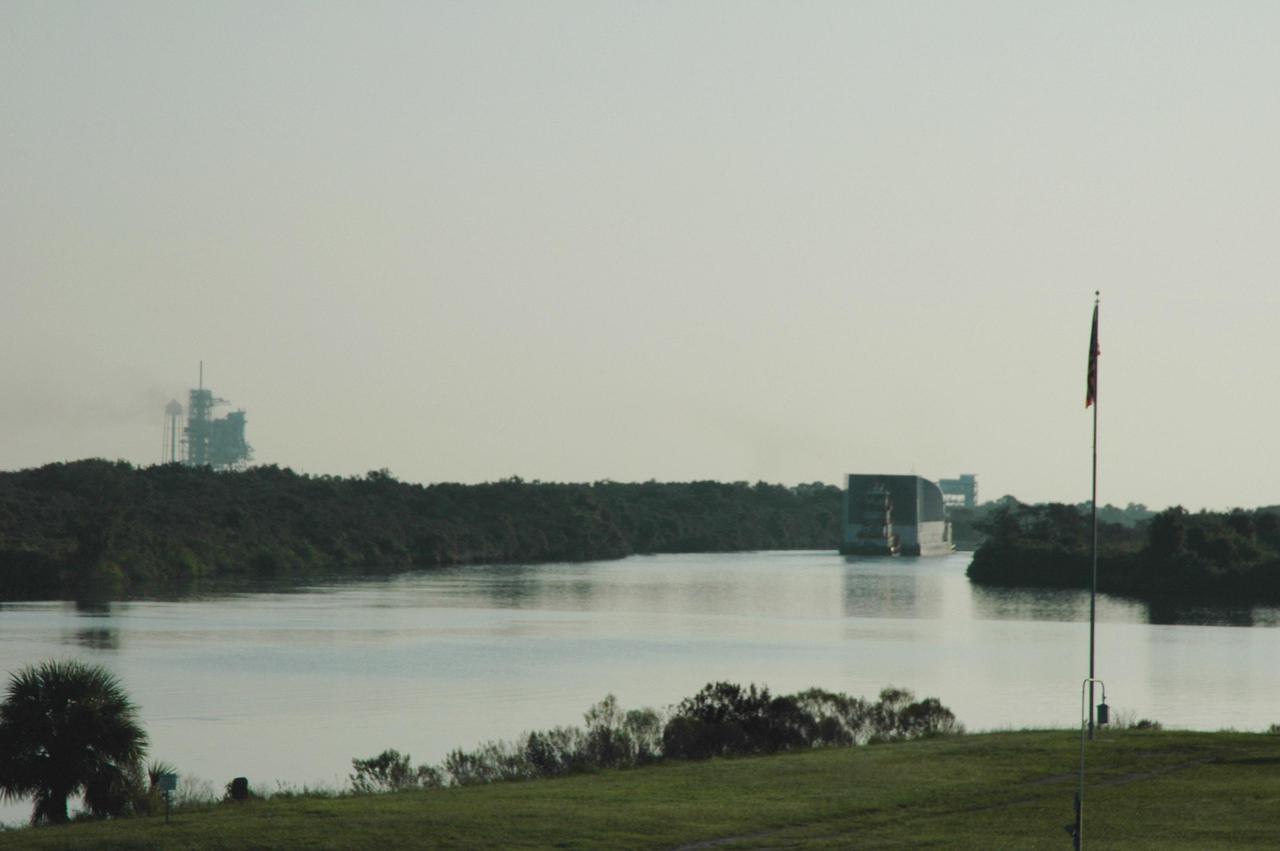
KENNEDY SPACE CENTER, FLA. - Just after dawn, the Pegasus barge is towed away from the Turn Basin in the Launch Complex 39 area. The barge is carrying external tank 119 (ET-119) and will be towed by the solid rocket booster retrieval ship Freedom Star to NASA’s Michoud Assembly Facility near New Orleans. Delivered to Kennedy in June, ET-119 is the third newly redesigned tank and is the only tank that contains the liquid oxygen heater. The tank is being returned to Michoud for testing and further modifications. ET-119 will be the tank used on return to flight mission STS-121.
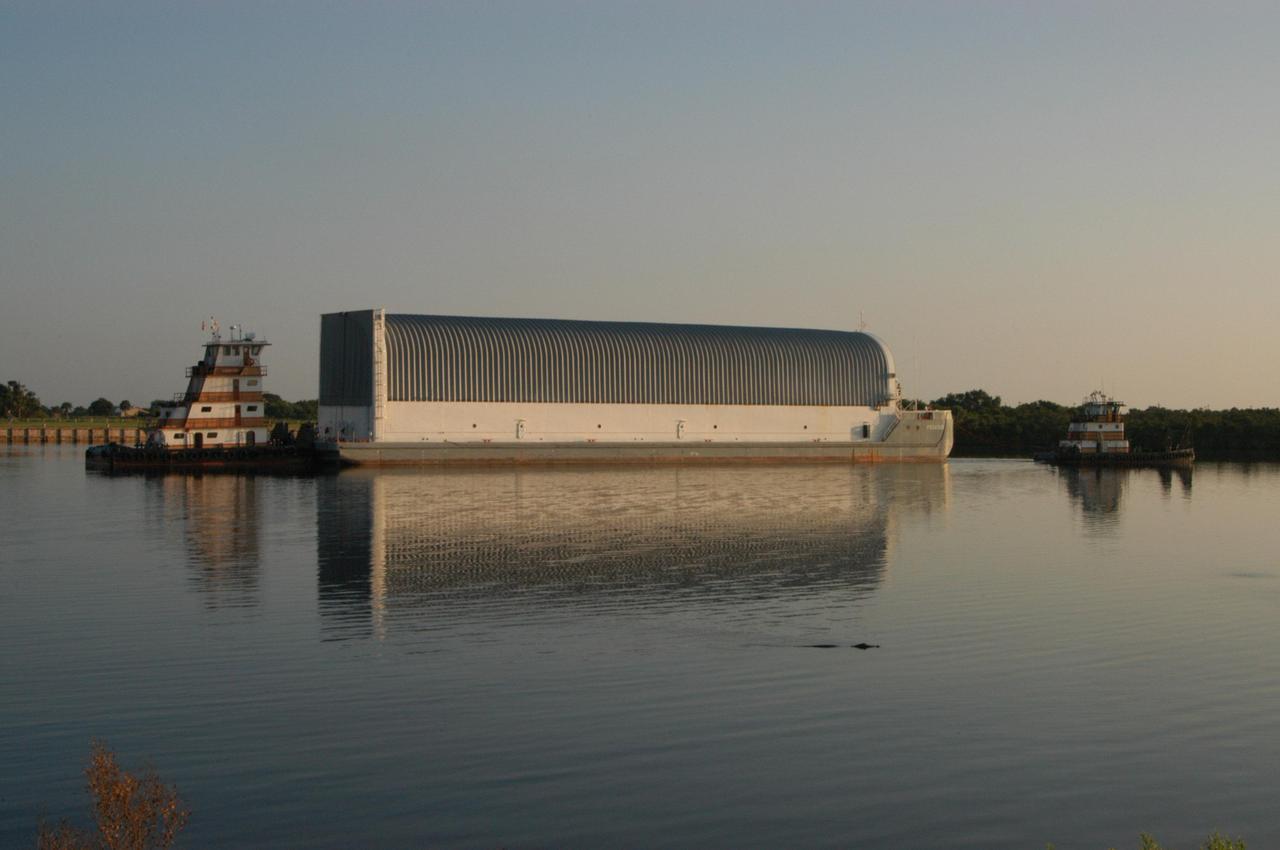
KENNEDY SPACE CENTER, FLA. - Just after dawn, an alligator (in the foreground) watches as a tugboat pushes the Pegasus barge away from the dock at the Turn Basin in the Launch Complex 39 area. The barge is carrying external tank 119 (ET-119) and will be towed by the solid rocket booster retrieval ship Freedom Star to NASA’s Michoud Assembly Facility near New Orleans. Delivered to Kennedy in June, ET-119 is the third newly redesigned tank and is the only tank that contains the liquid oxygen heater. The tank is being returned to Michoud for testing and further modifications. ET-119 will be the tank used on return to flight mission STS-121.
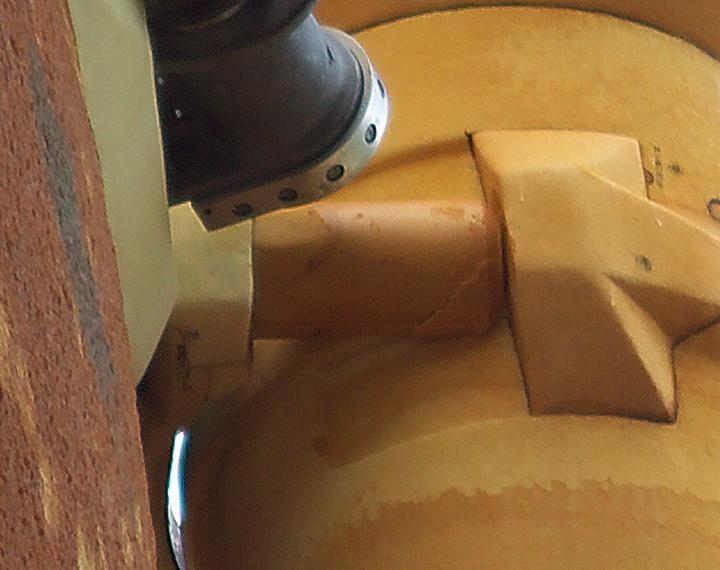
KENNEDY SPACE CENTER, FLA. - A crack formed on a piece of insulation on a strut that attaches the liquid oxygen feedline to External Tank-119, being used to launch space shuttle mission STS-121. This piece of foam, weighing approximately 0.0057 pounds, is three inches long and one-eighth to one-quarter inch wide. It fell from the tank and was recovered by the Ice Team from the mobile launch platform at Pad 39B. It is believed that the rain experienced during yesterday’s launch attempt of Discovery caused water to run down the feedline and form ice near the strut next to the feedline bracket. As the tank warmed and expanded, the ice that formed most likely pinched the foam on the top of the strut, causing a crack and eventual loss of the small piece of foam. Photo credit: NASA
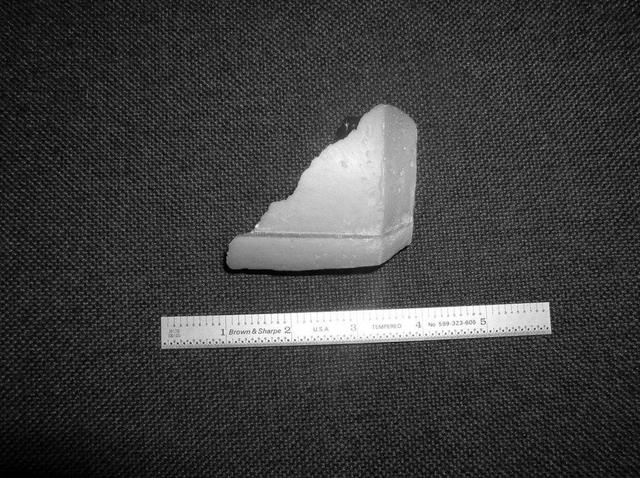
KENNEDY SPACE CENTER, FLA. - A piece of insulation - three inches long, one-eighth to one-quarter inch wide and weighing approximately 0.0057 pounds - was liberated from a strut that attaches the liquid oxygen feedline to External Tank-119. The tank is being used to launch space shuttle mission STS-121. It was recovered by the Ice Team from the mobile launch platform at Pad 39B. It is believed that the rain experienced during yesterday’s launch attempt of Discovery caused water to run down the feedline and form ice near the strut next to the feedline bracket. As the tank warmed and expanded, the ice that formed most likely pinched the foam on the top of the strut, causing a crack and eventual loss of the small piece of foam. Photo credit: NASA
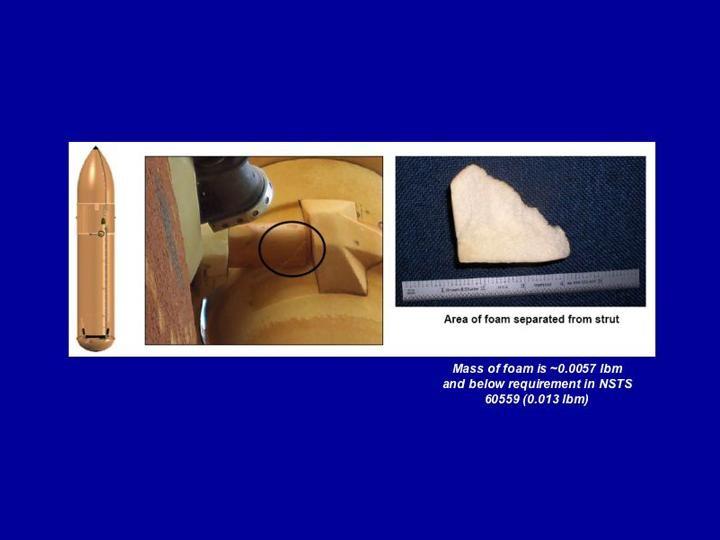
KENNEDY SPACE CENTER, FLA. - A composite image illustrates the size and location of a piece of insulation that was liberated from a strut that attaches the liquid oxygen feedline to External Tank-119. The tank is being used to launch space shuttle mission STS-121. This piece of foam, weighing approximately 0.0057 pounds, is three inches long and one-eighth to one-quarter inch wide and was recovered by the Ice Team from the mobile launch platform at Pad 39B. It is believed that the rain experienced during yesterday’s launch attempt of Discovery caused water to run down the feedline and form ice near the strut next to the feedline bracket. As the tank warmed and expanded, the ice that formed most likely pinched the foam on the top of the strut, causing a crack and eventual loss of the small piece of foam. Photo credit: NASA
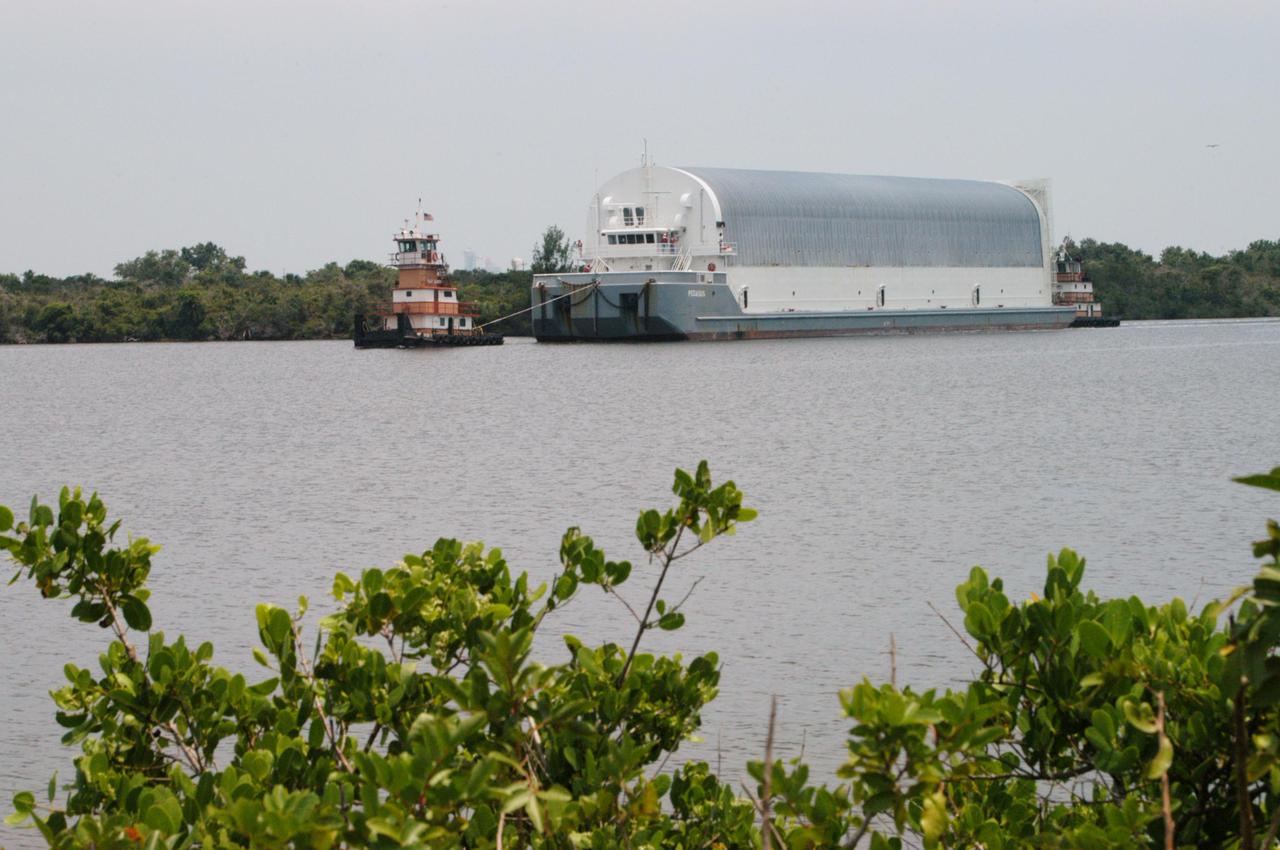
KENNEDY SPACE CENTER, FLA. - A barge carrying a new External Tank (ET) arrives at the Turn Basin in the Launch Complex 39 Area. Designated ET-119, the tank will be used on a future Space Shuttle launch. After being offloaded, the tank will be transported to the Vehicle Assembly Building. The barge was towed on a 900-mile journey at sea from the Michoud Assembly Facility in New Orleans by one of NASA’s Solid Rocket Booster Retrieval Ships.
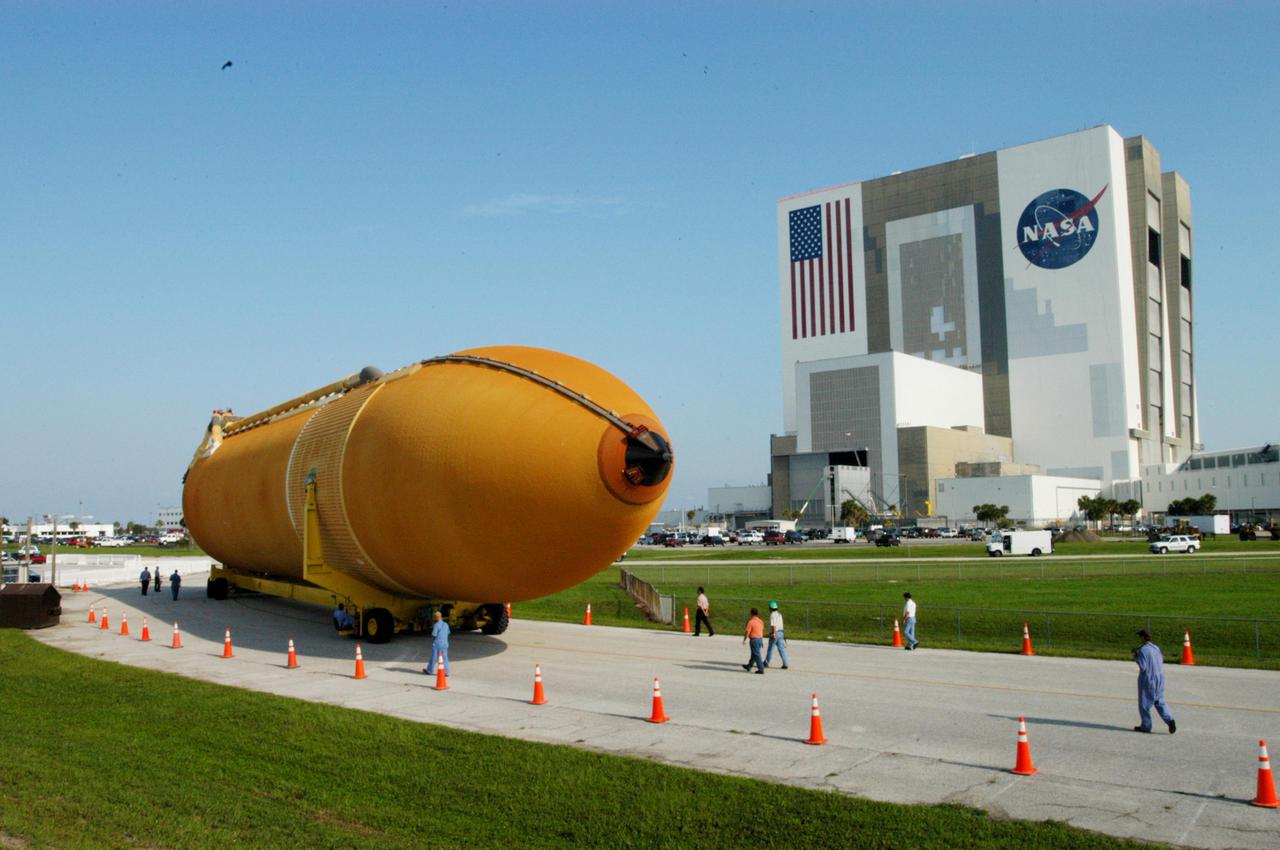
KENNEDY SPACE CENTER, FLA. - A newly redesigned External Tank (ET-119) approaches a turn on the road leading from the Turn Basin in Launch Complex 39 Area at Kennedy Space Center, Florida. The tank, which will be used on a future Space Shuttle launch, is being transported to the Vehicle Assembly Building, seen at right. The barge was towed on a 900-mile journey at sea from the Michoud Assembly Facility in New Orleans by one of NASA’s Solid Rocket Booster Retrieval Ships.
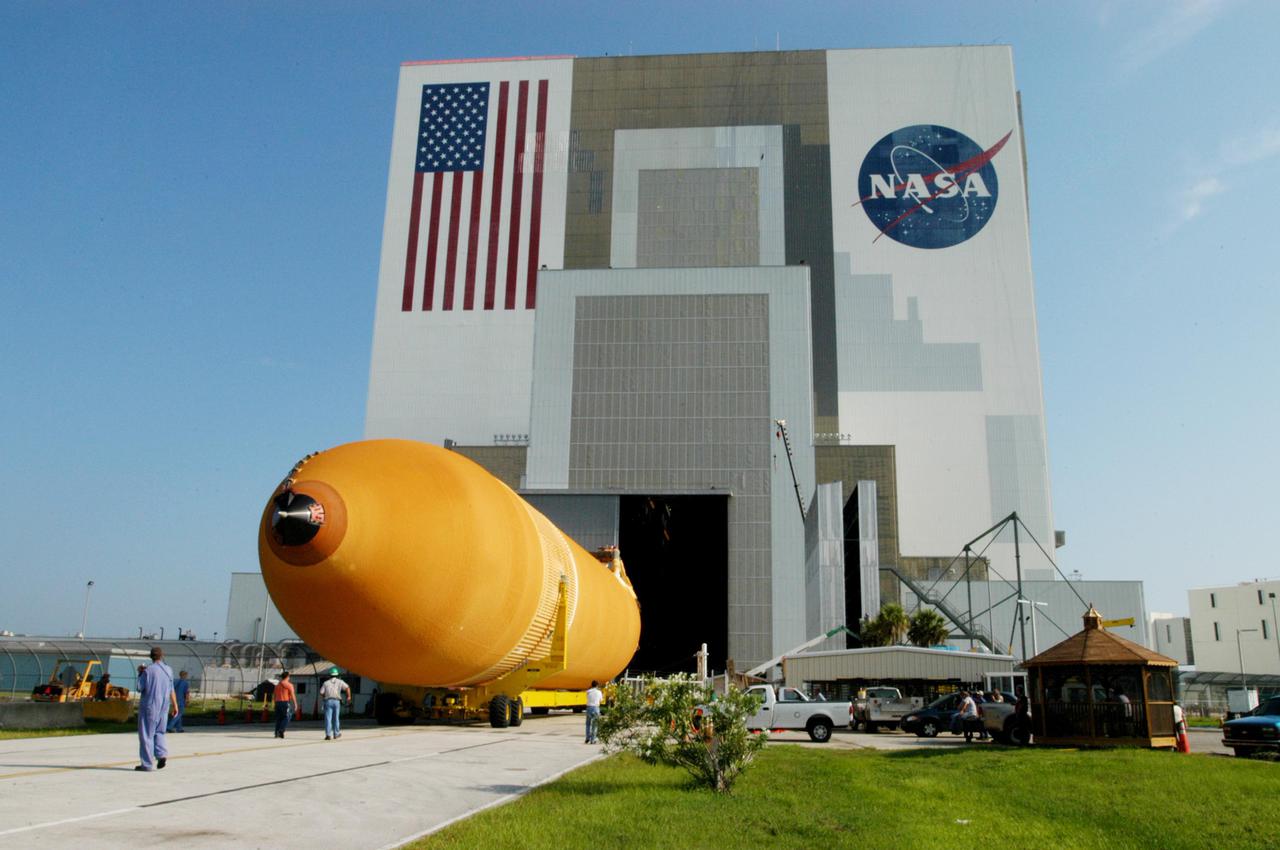
KENNEDY SPACE CENTER, FLA. - A newly redesigned External Tank (ET-119) rolls toward the Vehicle Assembly Building after arrival aboard a barge at the Turn Basin in Launch Complex 39 Area at Kennedy Space Center, Florida. The tank will be used on a future Space Shuttle launch. The barge was towed on a 900-mile journey at sea from the Michoud Assembly Facility in New Orleans by one of NASA’s Solid Rocket Booster Retrieval Ships.
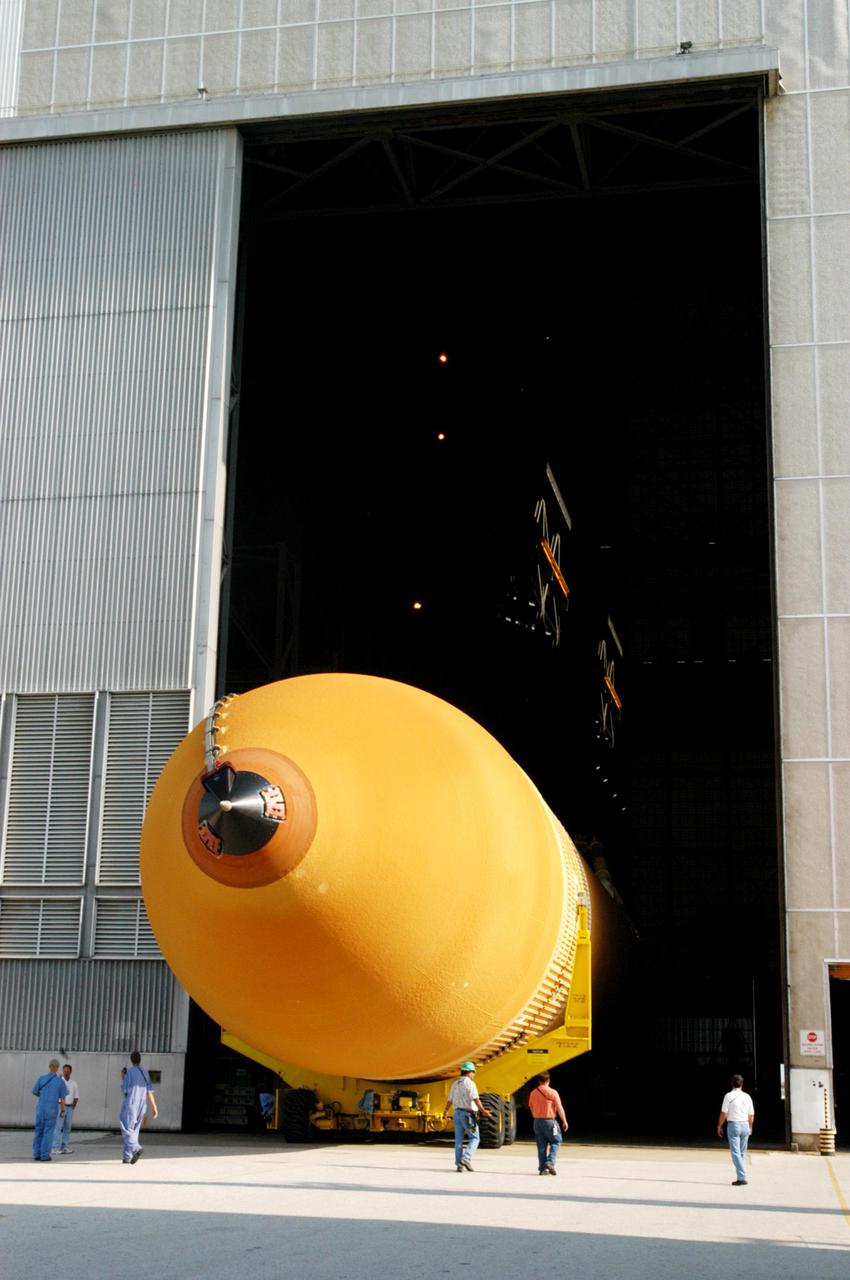
KENNEDY SPACE CENTER, FLA. -A newly redesigned External Tank (ET-119) rolls into the transfer aisle of the Vehicle Assembly Building. The tank, which will be used on a future Space Shuttle launch, arrived aboard a barge at the Turn Basin in Launch Complex 39 Area at Kennedy Space Center, Florida. The barge was towed on a 900-mile journey at sea from the Michoud Assembly Facility in New Orleans by one of NASA’s Solid Rocket Booster Retrieval Ships.
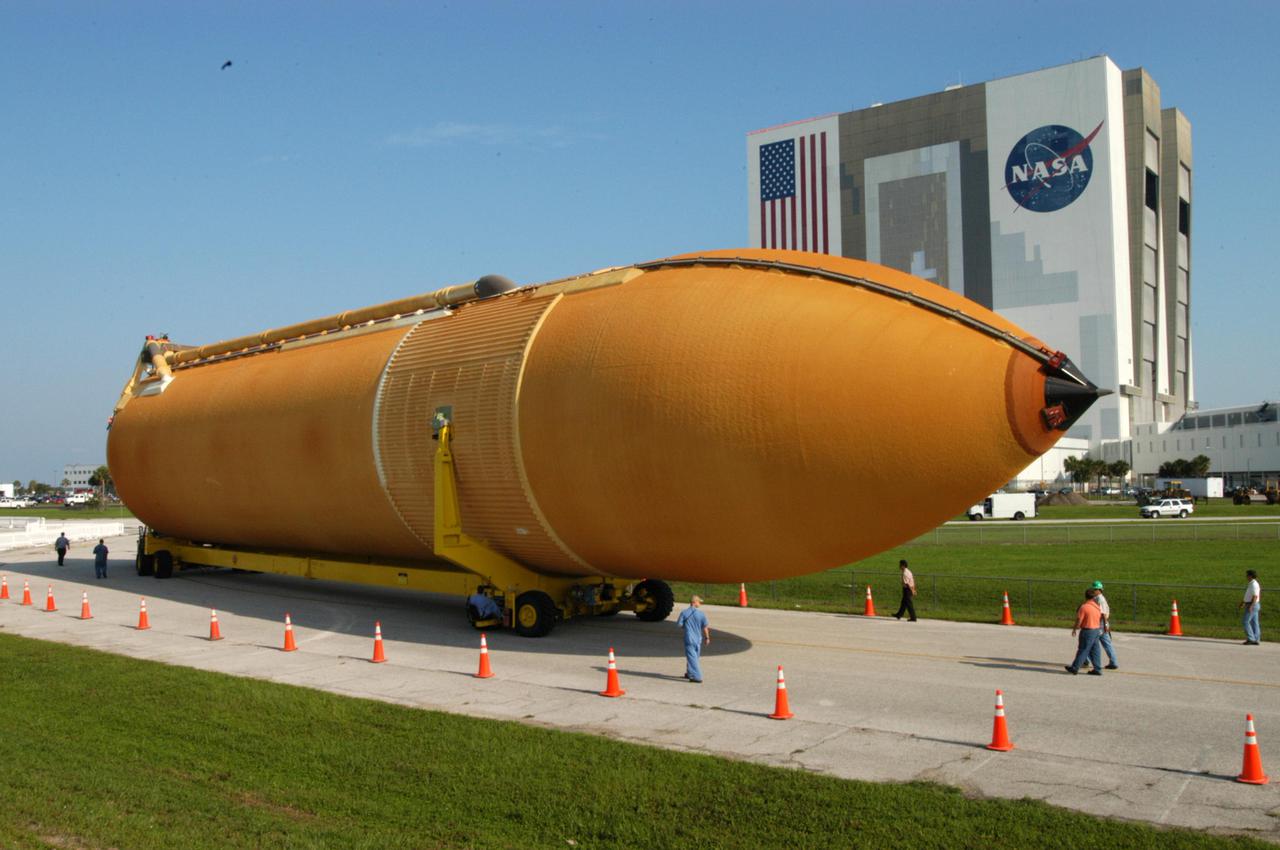
KENNEDY SPACE CENTER, FLA. - A newly redesigned External Tank (ET-119) moves slowly on the road leading from the Turn Basin in Launch Complex 39 Area at Kennedy Space Center, Florida. The tank, which will be used on a future Space Shuttle launch, is being transported to the Vehicle Assembly Building. The barge was towed on a 900-mile journey at sea from the Michoud Assembly Facility in New Orleans by one of NASA’s Solid Rocket Booster Retrieval Ships.
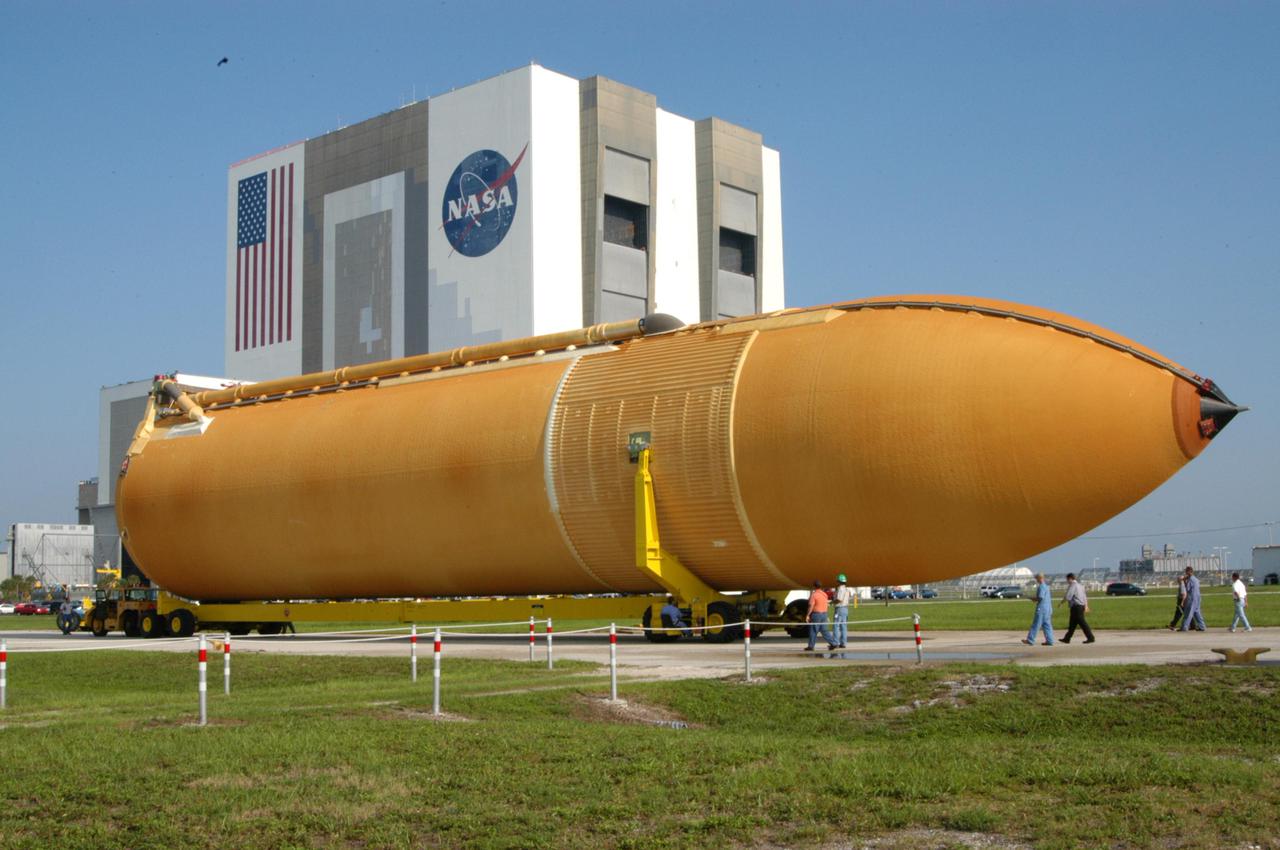
KENNEDY SPACE CENTER, FLA. - A newly redesigned External Tank (ET-119) moves slowly on the road leading from the Turn Basin in Launch Complex 39 Area at Kennedy Space Center, Florida. The tank, which will be used on a future Space Shuttle launch, is being transported to the Vehicle Assembly Building, seen behind it. The barge was towed on a 900-mile journey at sea from the Michoud Assembly Facility in New Orleans by one of NASA’s Solid Rocket Booster Retrieval Ships.

KENNEDY SPACE CENTER, FLA. - A new redesigned External Tank (ET-119) slowly exits the barge docked at the Turn Basin in Launch Complex 39 Area at Kennedy Space Center, Florida. The tank, which will be used on a future Space Shuttle launch, is being transported to the Vehicle Assembly Building. The barge was towed on a 900-mile journey at sea from the Michoud Assembly Facility in New Orleans by one of NASA’s Solid Rocket Booster Retrieval Ships.
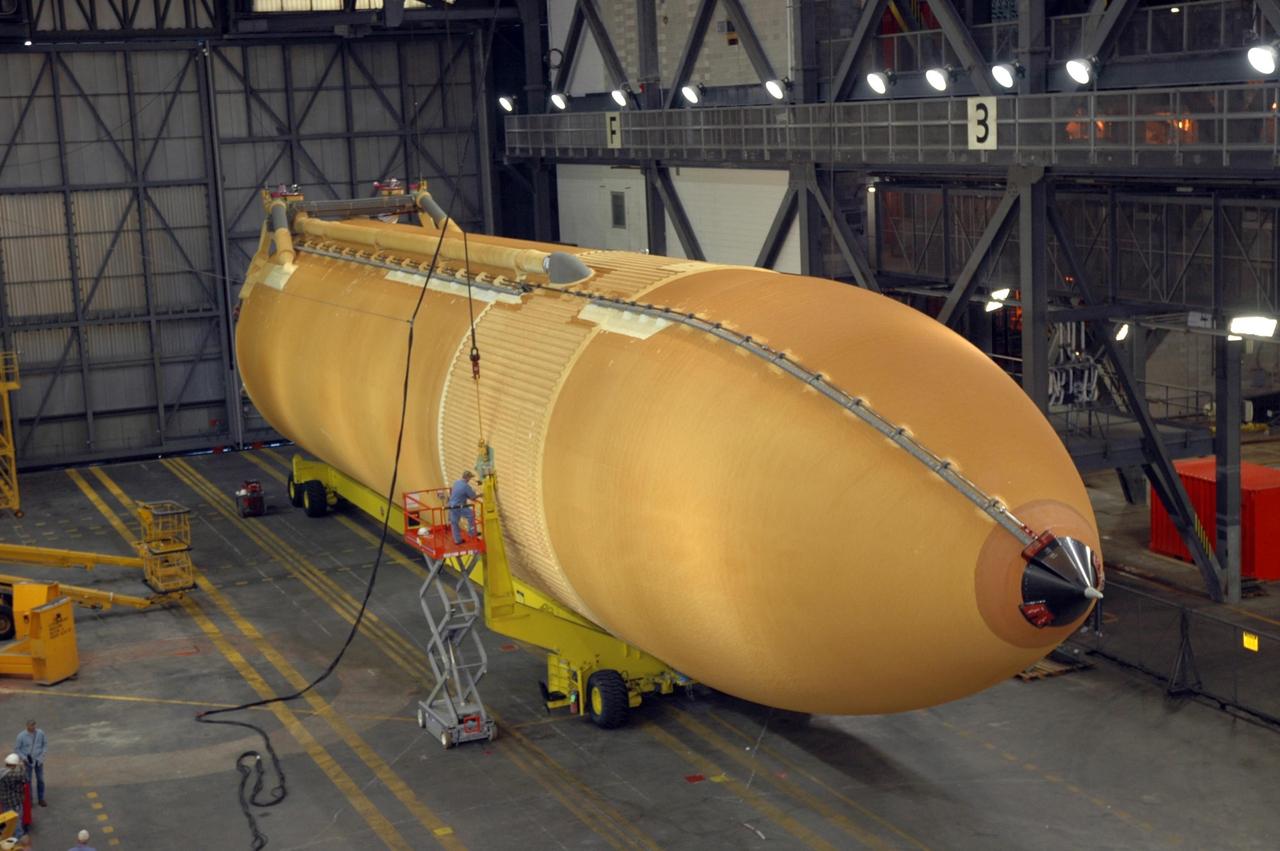
KENNEDY SPACE CENTER, FLA. - In NASA Kennedy Space Center's Vehicle Assembly Building, workers are attaching a crane to the newly delivered external tank, which is resting on a transporter in the transfer aisle. Designated ET-119, the 154-foot tank will be raised to vertical and lifted into a checkout cell for further work. The tank, which will launch space shuttle Discovery on mission STS-121, will fly with many major safety changes, including the removal of the protuberance air load ramps. A large piece of foam from a ramp came off during the last shuttle launch in July 2005. The ramps were removed to eliminate a potential source of damaging debris to the space shuttle. The next launch of Discovery is scheduled for May 2006. Photo credit: NASA/Jim Grossmann
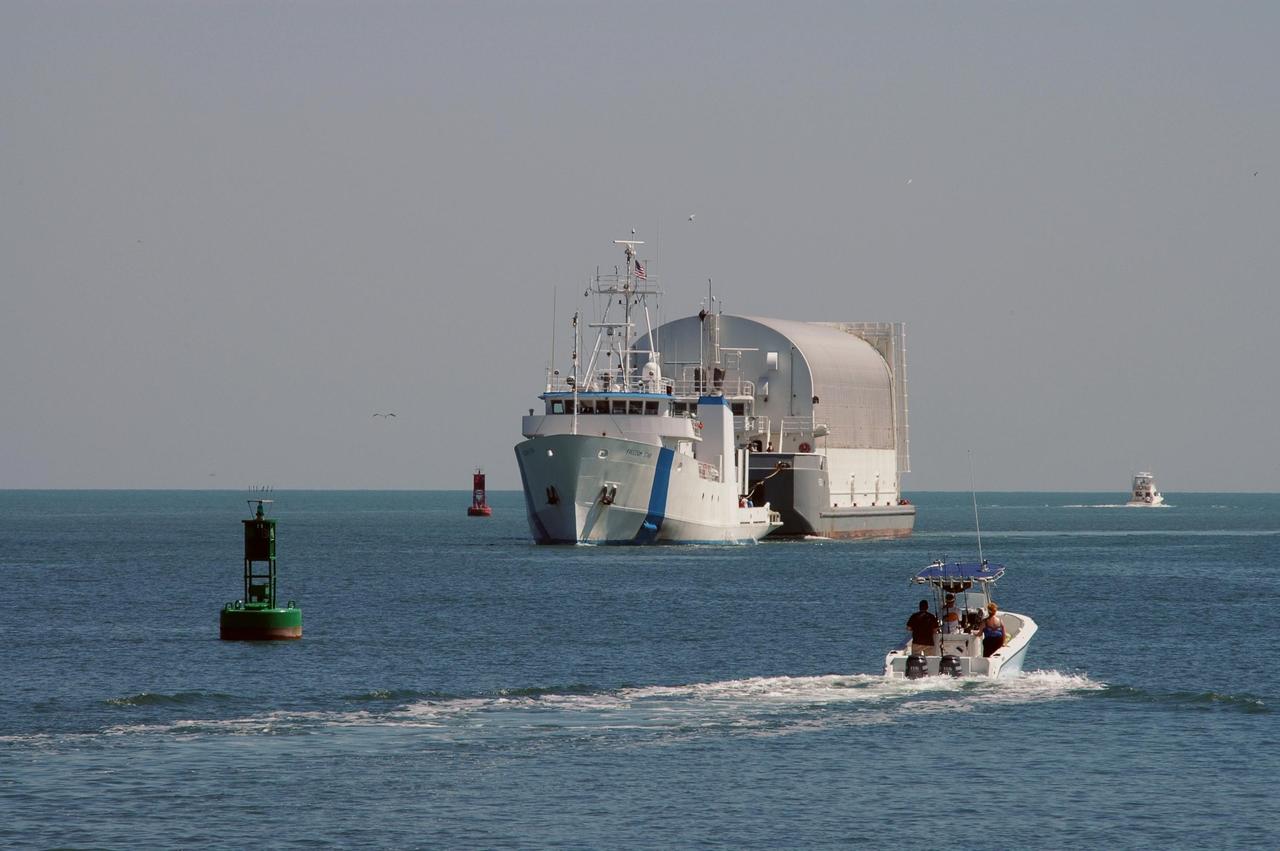
KENNEDY SPACE CENTER, FLA. - Towed by the Freedom Star, the Pegasus barge enters Port Canaveral, the last leg of its journey from the Michoud Assembly Facility in New Orleans to Kennedy Space Center. The barge carries the redesigned external fuel tank that will launch Space Shuttle Discovery on the next shuttle mission, STS-121. After off-loading, the tank will be moved into the Vehicle Assembly Building and lifted into a checkout cell for further work. The tank, designated ET-119, will fly with many major safety changes, including the removal of the protuberance air load ramps. A large piece of foam from a ramp came off during the last shuttle launch in July 2005. The ramps were removed to eliminate a potential source of damaging debris to the space shuttle. The next launch of Discovery is scheduled for May 2006.

KENNEDY SPACE CENTER, FLA. - The Pegasus barge makes its way through Port Canaveral, the last leg of its journey from the Michoud Assembly Facility in New Orleans to Kennedy Space Center. The barge carries the redesigned external fuel tank that will launch Space Shuttle Discovery on the next shuttle mission, STS-121. After off-loading, the tank will be moved into the Vehicle Assembly Building and lifted into a checkout cell for further work. The tank, designated ET-119, will fly with many major safety changes, including the removal of the protuberance air load ramps. A large piece of foam from a ramp came off during the last shuttle launch in July 2005. The ramps were removed to eliminate a potential source of damaging debris to the space shuttle. The next launch of Discovery is scheduled for May 2006.
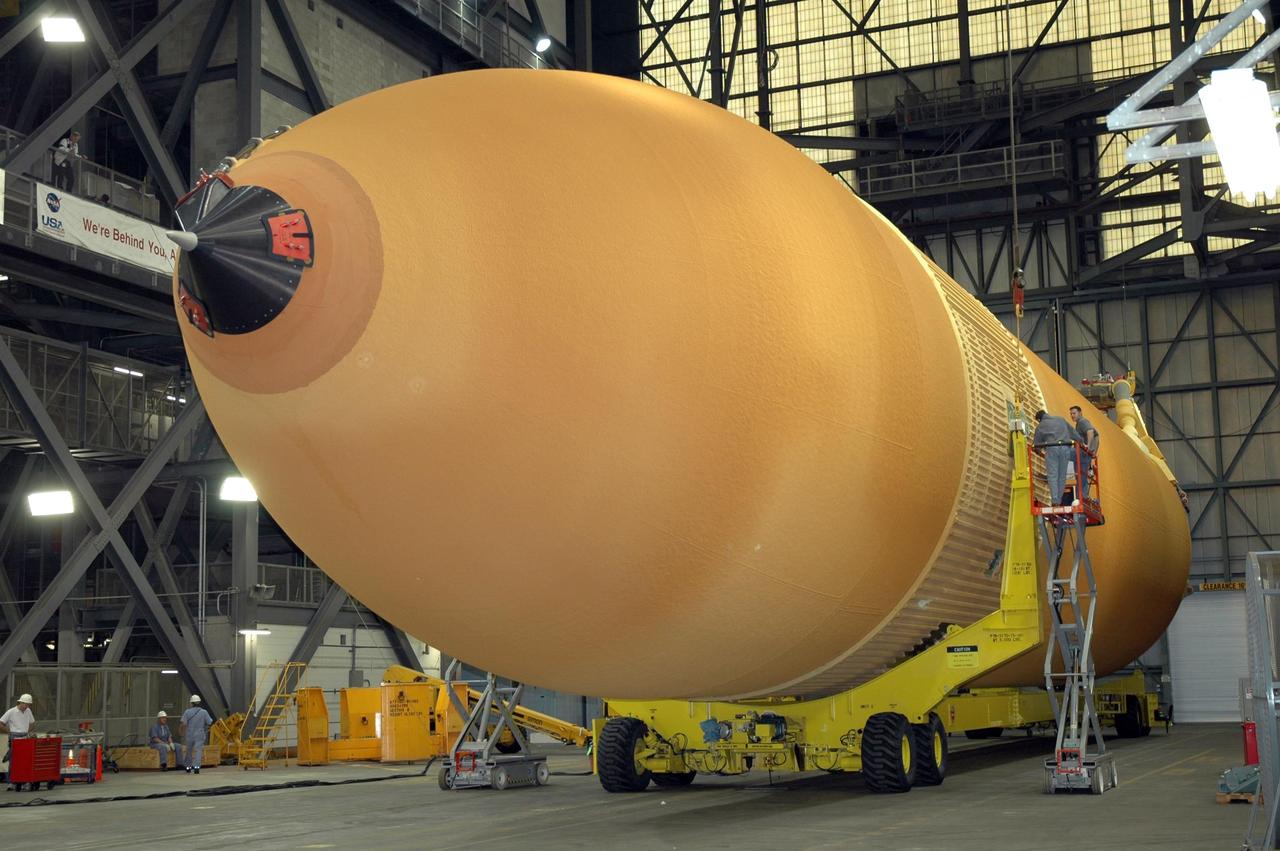
KENNEDY SPACE CENTER, FLA. - In NASA Kennedy Space Center's Vehicle Assembly Building, workers are attaching a crane to the newly delivered external tank, which is resting on a transporter in the transfer aisle. Designated ET-119, the 154-foot tank will be raised to vertical and lifted into a checkout cell for further work. The tank, which will launch space shuttle Discovery on mission STS-121, will fly with many major safety changes, including the removal of the protuberance air load ramps. A large piece of foam from a ramp came off during the last shuttle launch in July 2005. The ramps were removed to eliminate a potential source of damaging debris to the space shuttle. The next launch of Discovery is scheduled for May 2006. Photo credit: NASA/Jim Grossmann
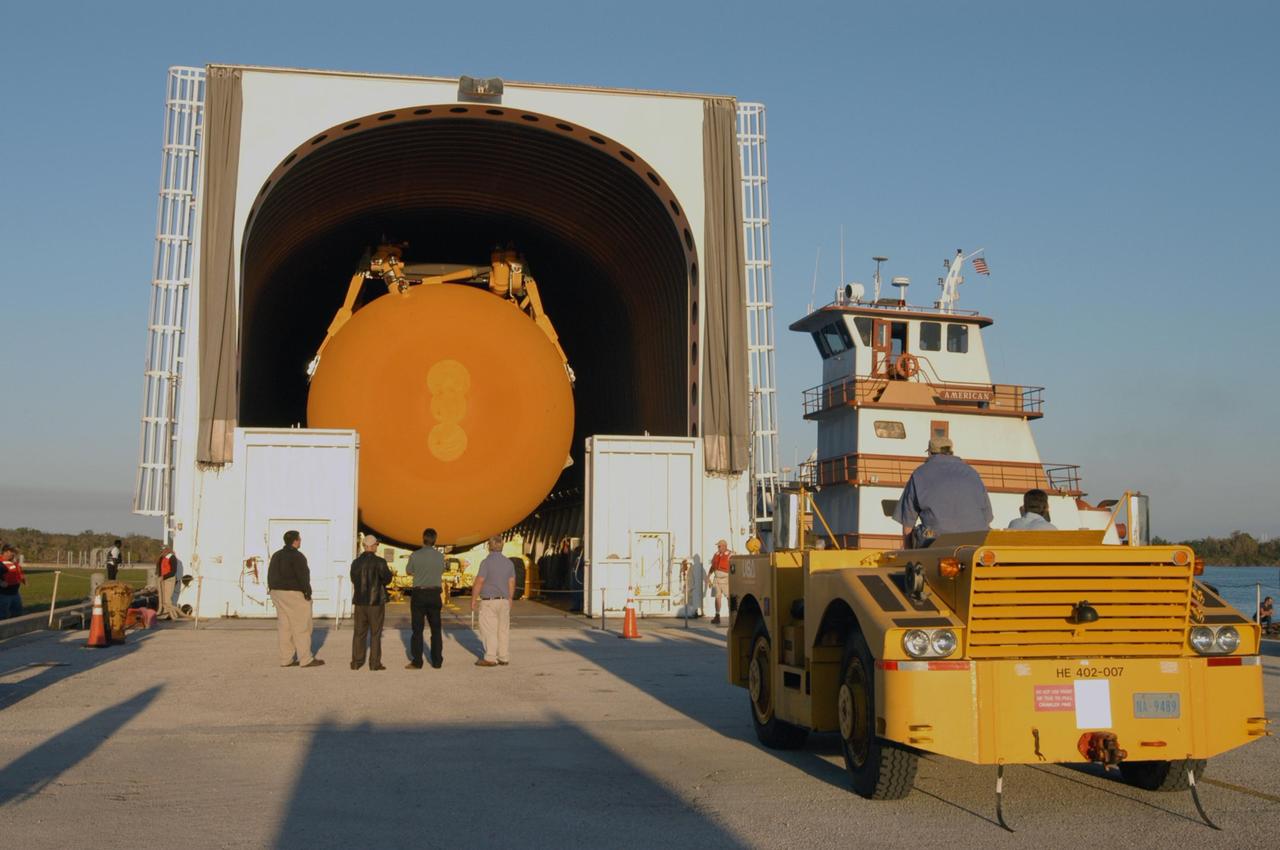
KENNEDY SPACE CENTER, FLA. - The Pegasus barge is docked in the turn basin close by the Vehicle Assembly Building. The barge delivered the redesigned external fuel tank that will launch Space Shuttle Discovery on the next shuttle mission, STS-121, from the Michoud Assembly Facility in New Orleans to NASA's Kennedy Space Center. After off-loading, the tank will be moved into the Vehicle Assembly Building and lifted into a checkout cell for further work. The tank, designated ET-119, will fly with many major safety changes, including the removal of the protuberance air load ramps. A large piece of foam from a ramp came off during the last shuttle launch in July 2005. The ramps were removed to eliminate a potential source of damaging debris to the space shuttle. The next launch of Discovery is scheduled for May 2006.
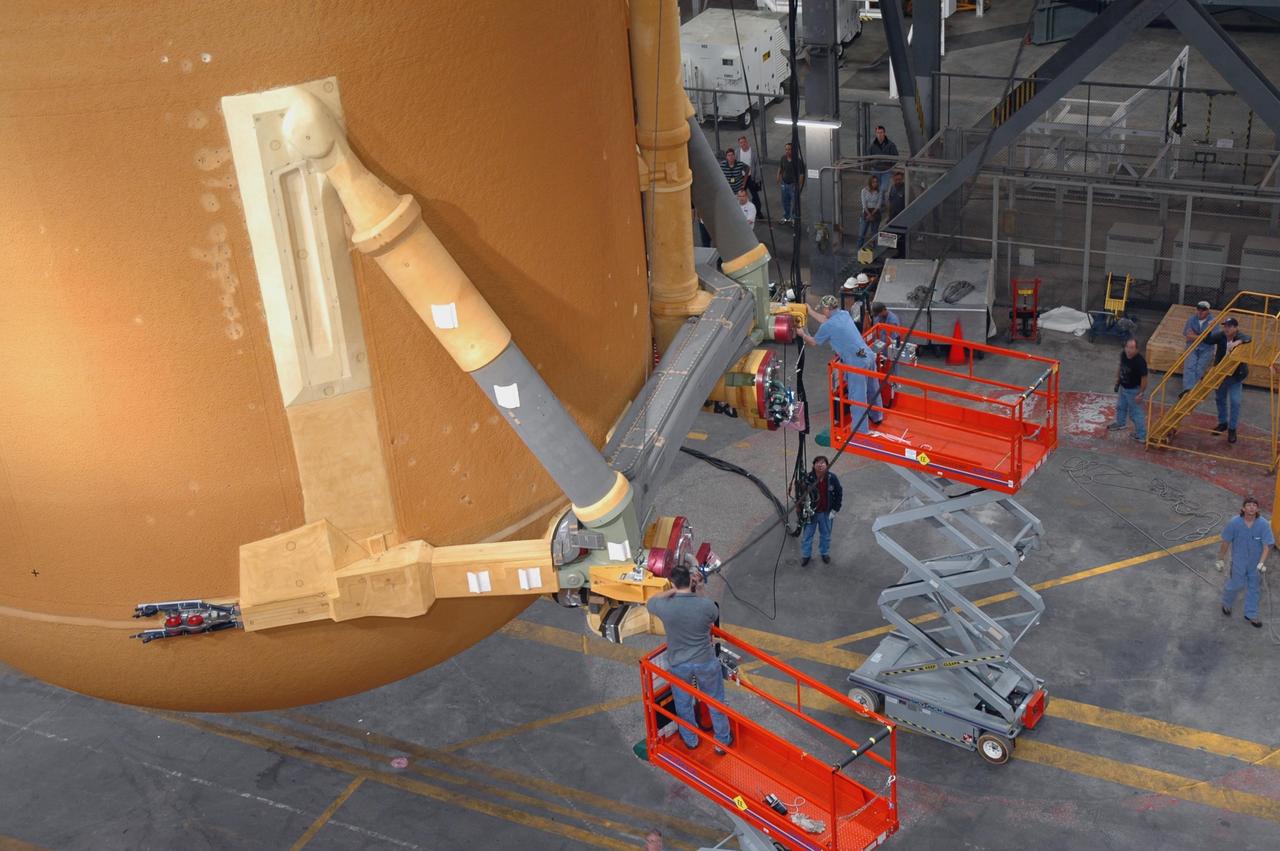
KENNEDY SPACE CENTER, FLA. - In NASA Kennedy Space Center's Vehicle Assembly Building, workers attach another crane to the newly delivered external tank in order to lift it up vertically and over a crossbeam into a checkout cell for further work. Designated ET-119, the 154-foot tank will be lifted into a checkout cell for further work. The tank, which will launch space shuttle Discovery on mission STS-121, will fly with many major safety changes, including the removal of the protuberance air load ramps. A large piece of foam from a ramp came off during the last shuttle launch in July 2005. The ramps were removed to eliminate a potential source of damaging debris to the space shuttle. The next launch of Discovery is scheduled for May 2006. Photo credit: NASA/Jim Grossmann
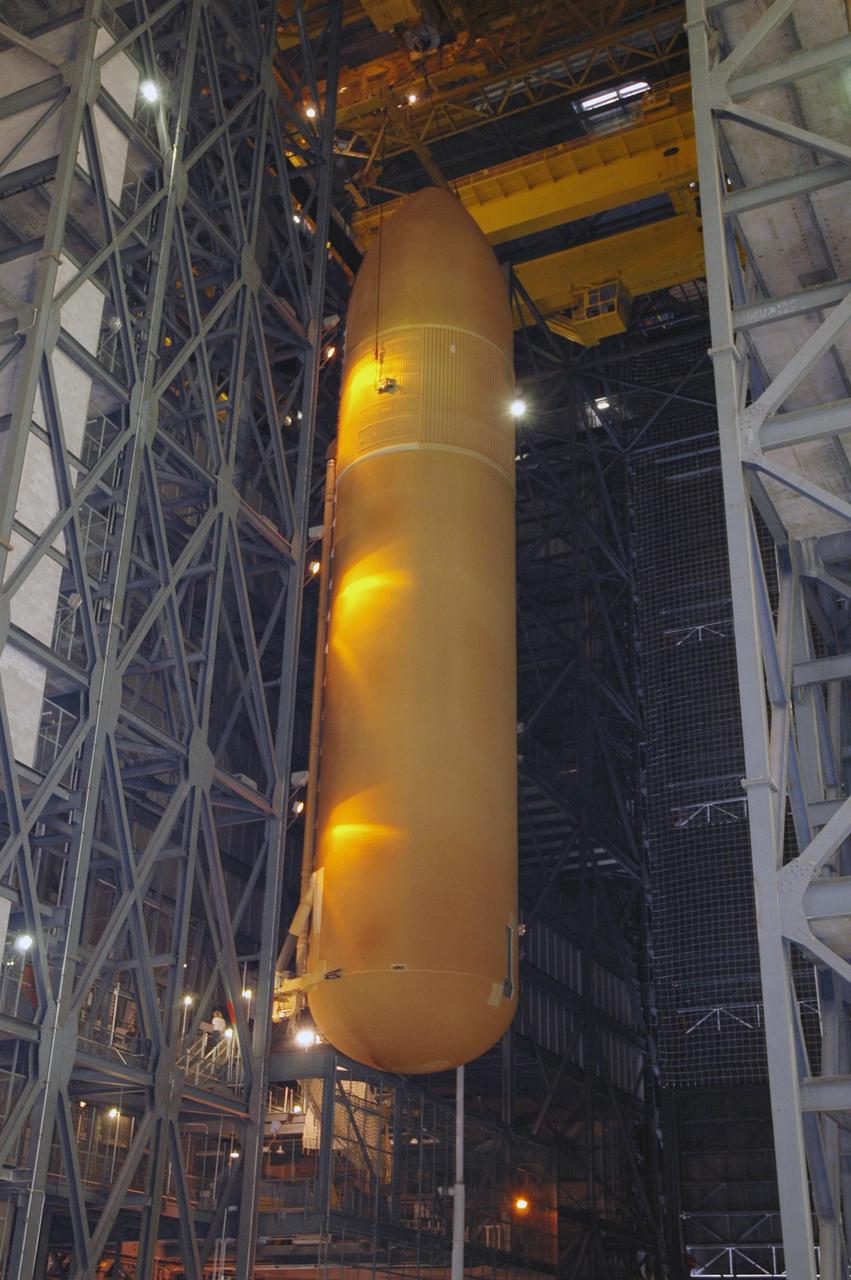
KENNEDY SPACE CENTER, FLA. - From the upper regions of NASA Kennedy Space Center's Vehicle Assembly Building, the newly delivered external tank is lowered toward a checkout cell for further work. Designated ET-119, the 154-foot tank will be lifted into a checkout cell for further work. The tank, which will launch space shuttle Discovery on mission STS-121, will fly with many major safety changes, including the removal of the protuberance air load ramps. A large piece of foam from a ramp came off during the last shuttle launch in July 2005. The ramps were removed to eliminate a potential source of damaging debris to the space shuttle. The next launch of Discovery is scheduled for May 2006. Photo credit: NASA/Jim Grossmann
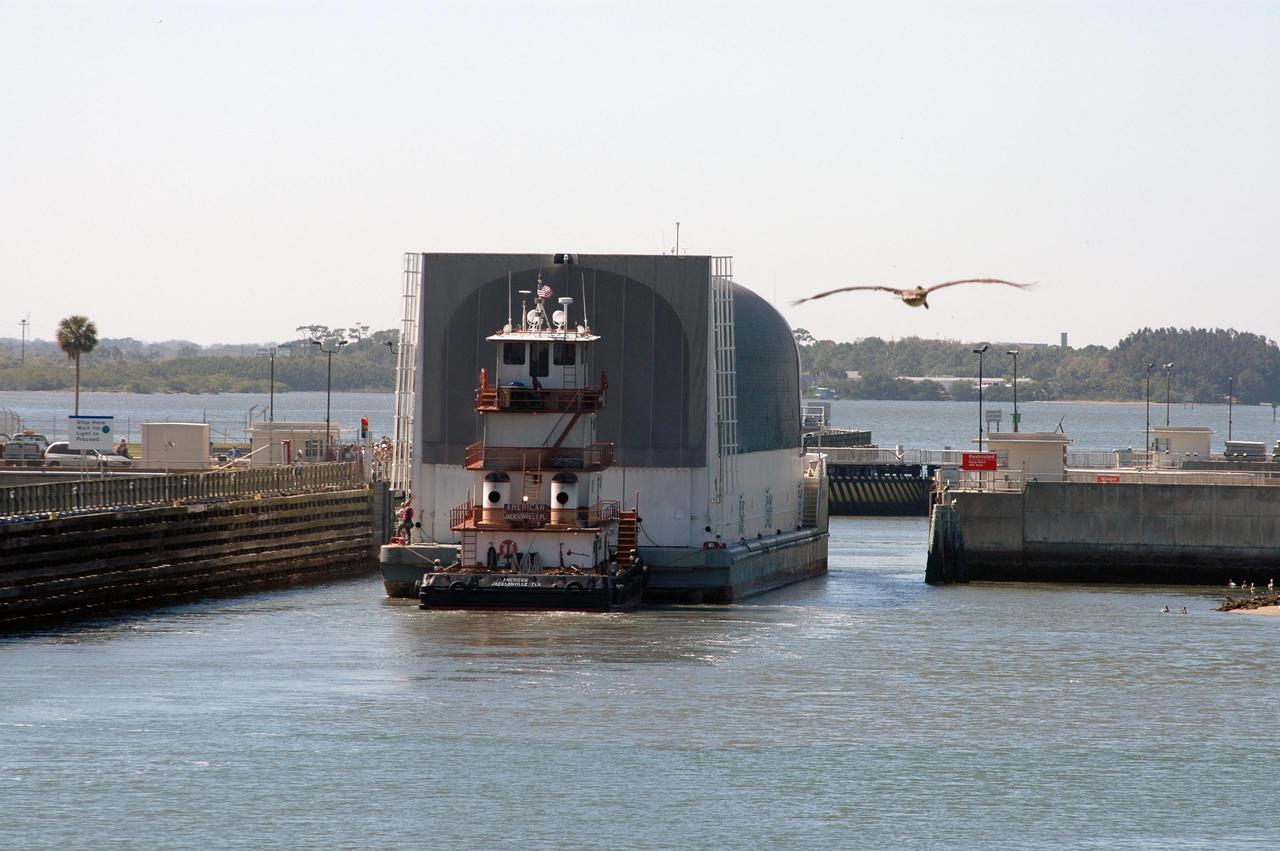
KENNEDY SPACE CENTER, FLA. - The Pegasus barge traverses the locks at Port Canaveral, as it nears the end of its journey from the Michoud Assembly Facility in New Orleans to Kennedy Space Center. The barge carries the redesigned external fuel tank that will launch Space Shuttle Discovery on the next shuttle mission, STS-121. After off-loading, the tank will be moved into the Vehicle Assembly Building and lifted into a checkout cell for further work. The tank, designated ET-119, will fly with many major safety changes, including the removal of the protuberance air load ramps. A large piece of foam from a ramp came off during the last shuttle launch in July 2005. The ramps were removed to eliminate a potential source of damaging debris to the space shuttle. The next launch of Discovery is scheduled for May 2006.
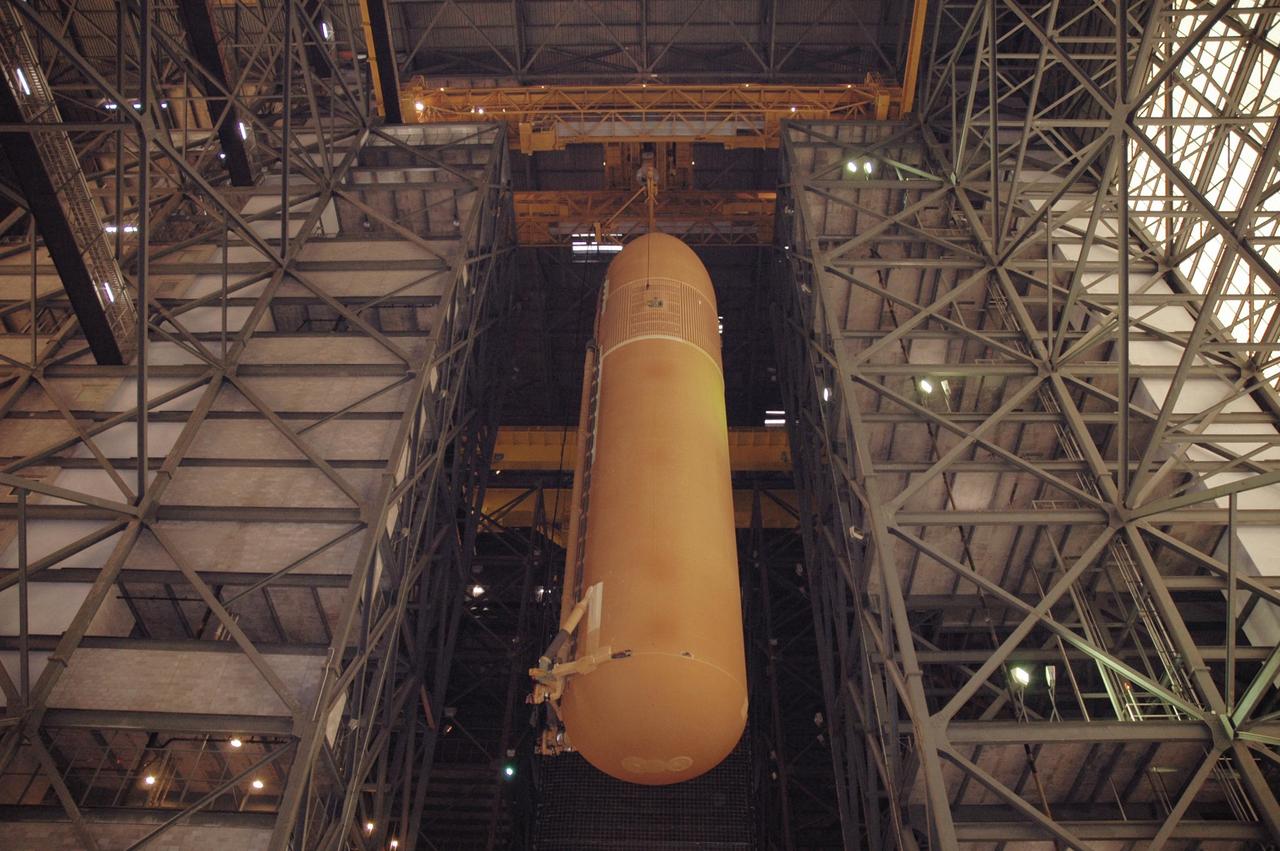
KENNEDY SPACE CENTER, FLA. - In the upper regions of NASA Kennedy Space Center's Vehicle Assembly Building, the newly delivered external tank is moved over a crossbeam toward a checkout cell for further work. Designated ET-119, the 154-foot tank will be lifted into a checkout cell for further work. The tank, which will launch space shuttle Discovery on mission STS-121, will fly with many major safety changes, including the removal of the protuberance air load ramps. A large piece of foam from a ramp came off during the last shuttle launch in July 2005. The ramps were removed to eliminate a potential source of damaging debris to the space shuttle. The next launch of Discovery is scheduled for May 2006. Photo credit: NASA/Jim Grossmann
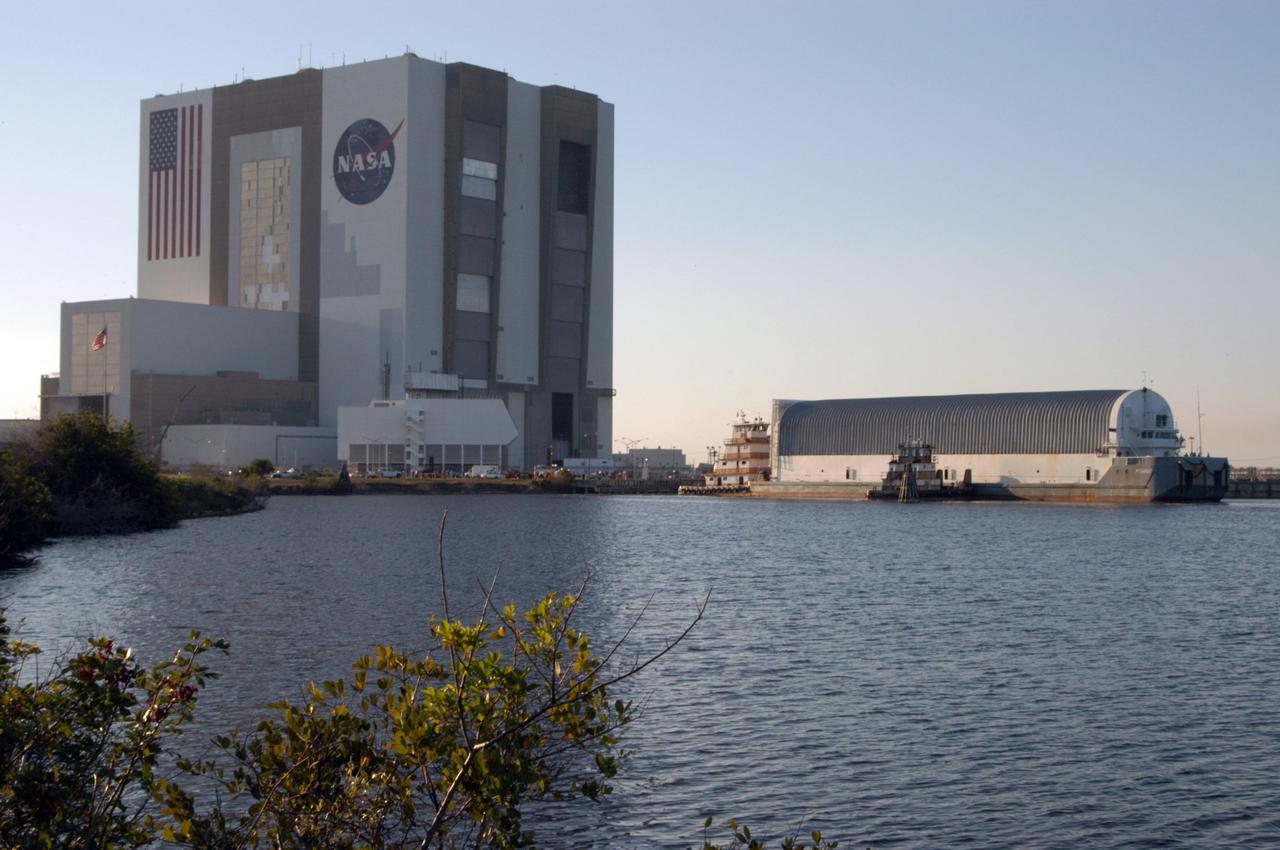
KENNEDY SPACE CENTER, FLA. - Towed by the solid rocket booster retrieval ship Freedom Star, the Pegasus barge approaches the dock in the turn basin near the Vehicle Assembly Building. The barge is on the last leg of its journey from the Michoud Assembly Facility in New Orleans to NASA's Kennedy Space Center. The barge carries the redesigned external fuel tank that will launch Space Shuttle Discovery on the next shuttle mission, STS-121. After off-loading, the tank will be moved into the Vehicle Assembly Building and lifted into a checkout cell for further work. The tank, designated ET-119, will fly with many major safety changes, including the removal of the protuberance air load ramps. A large piece of foam from a ramp came off during the last shuttle launch in July 2005. The ramps were removed to eliminate a potential source of damaging debris to the space shuttle. The next launch of Discovery is scheduled for May 2006.
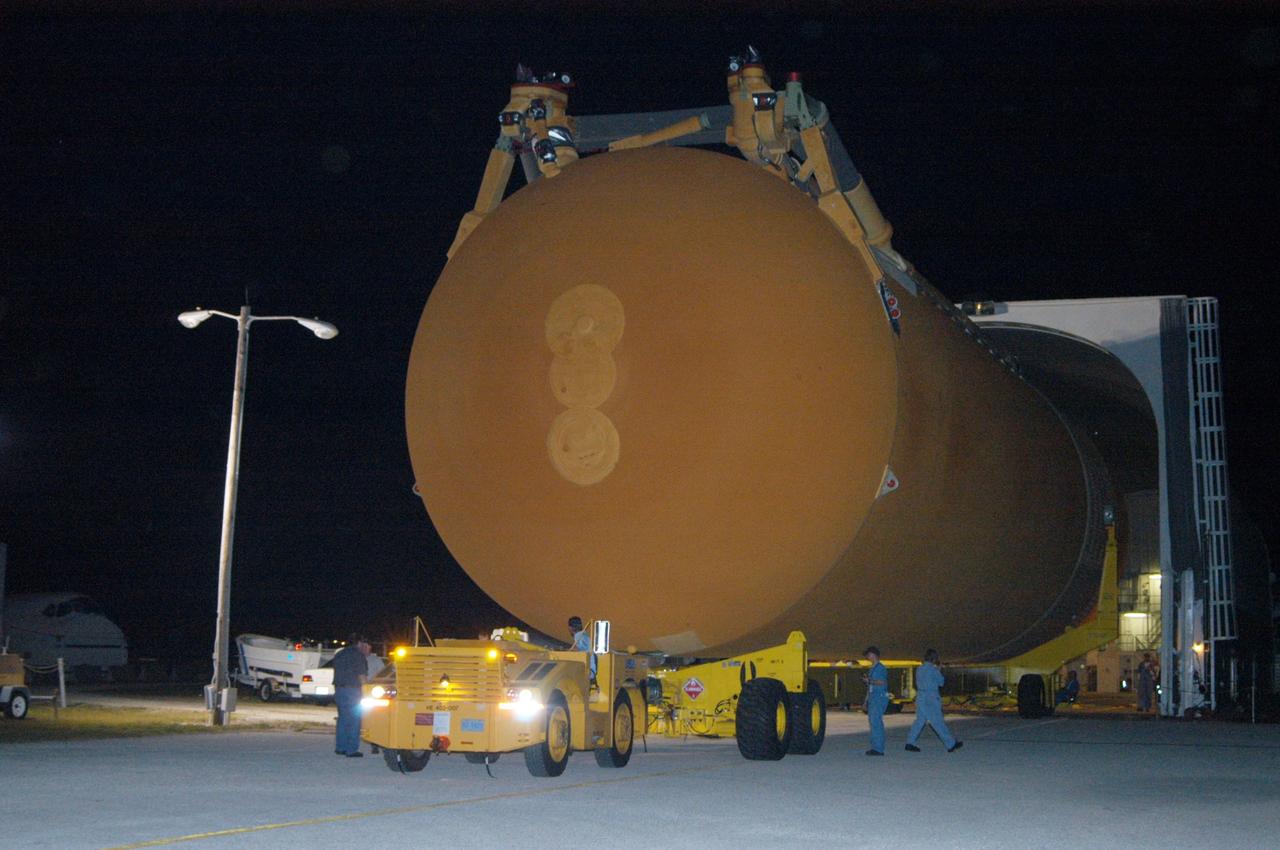
KENNEDY SPACE CENTER, FLA. - A tow vehicle is connected to the transporter supporting the redesigned external fuel tank that will launch Space Shuttle Discovery on the next shuttle mission, STS-121. The Pegasus barge delivered the tank from the Michoud Assembly Facility in New Orleans to NASA Kennedy Space Center's Launch Complex 39 turn basin. After off-loading, the tank will be moved to the Vehicle Assembly Building and lifted into a checkout cell for further work. The tank, designated ET-119, will fly with many major safety changes, including the removal of the protuberance air load ramps. A large piece of foam from a ramp came off during the last shuttle launch in July 2005. The ramps were removed to eliminate a potential source of damaging debris to the space shuttle. The next launch of Discovery is scheduled for May 2006.
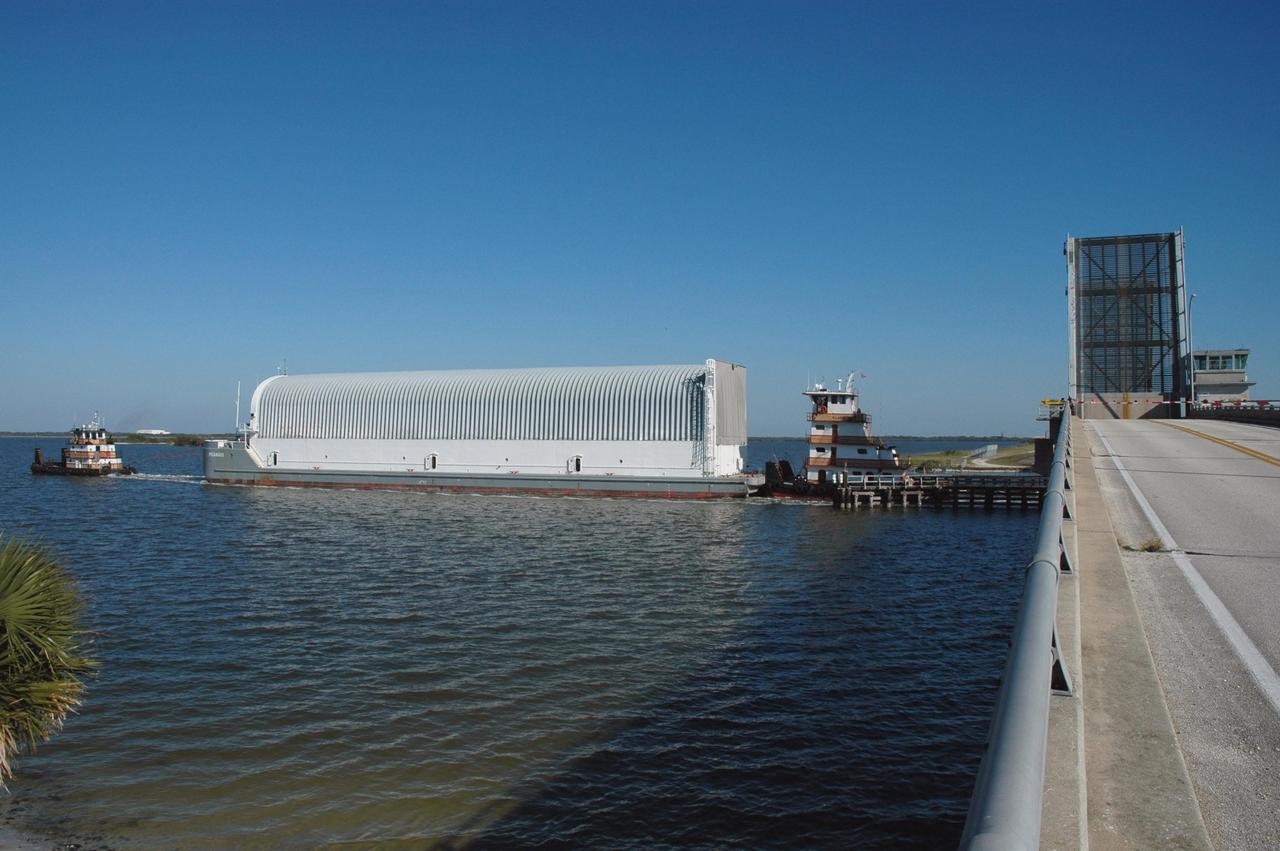
KENNEDY SPACE CENTER, FLA. - The Pegasus barge passes under the Roy D. Bridges Bridge in the Banana River, as it nears the end of its journey from the Michoud Assembly Facility in New Orleans to Kennedy Space Center. The barge carries the redesigned external fuel tank that will launch Space Shuttle Discovery on the next shuttle mission, STS-121. After off-loading, the tank will be moved into the Vehicle Assembly Building and lifted into a checkout cell for further work. The tank, designated ET-119, will fly with many major safety changes, including the removal of the protuberance air load ramps. A large piece of foam from a ramp came off during the last shuttle launch in July 2005. The ramps were removed to eliminate a potential source of damaging debris to the space shuttle. The next launch of Discovery is scheduled for May 2006.
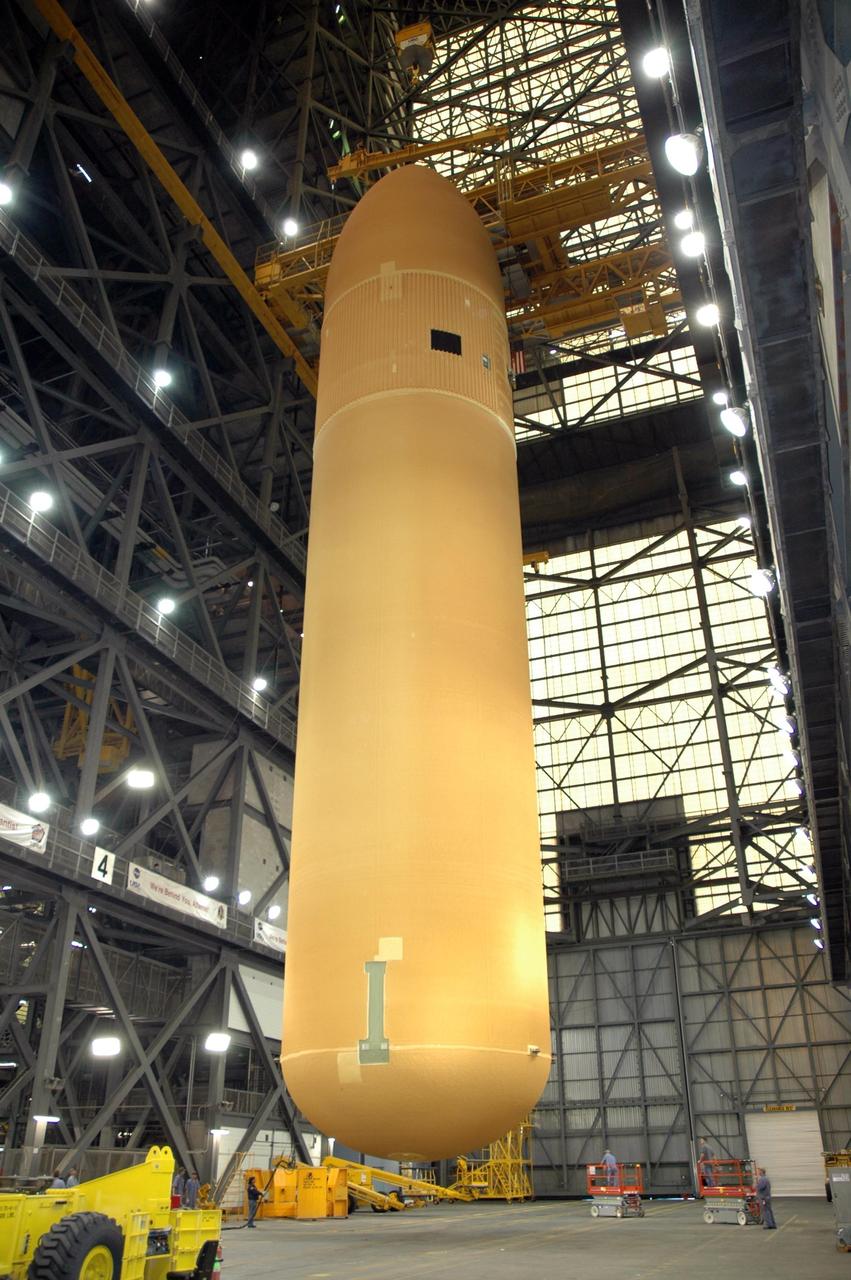
KENNEDY SPACE CENTER, FLA. - In the transfer aisle of NASA Kennedy Space Center's Vehicle Assembly Building, the newly delivered external tank is suspended vertically just above the floor. Designated ET-119, the 154-foot tank will be lifted into a checkout cell for further work. The tank, which will launch space shuttle Discovery on mission STS-121, will fly with many major safety changes, including the removal of the protuberance air load ramps. A large piece of foam from a ramp came off during the last shuttle launch in July 2005. The ramps were removed to eliminate a potential source of damaging debris to the space shuttle. The next launch of Discovery is scheduled for May 2006. Photo credit: NASA/Jim Grossmann
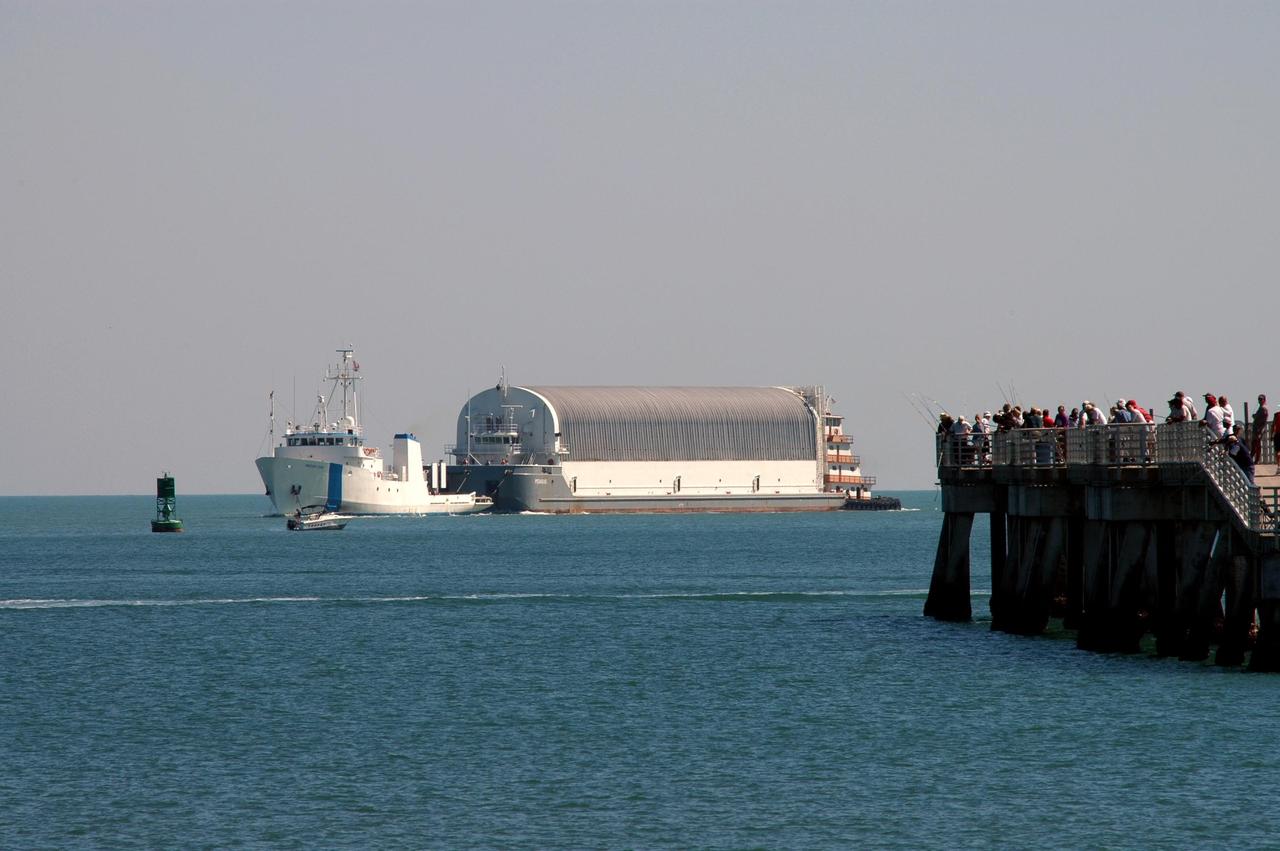
KENNEDY SPACE CENTER, FLA. - The Freedom Star tows the Pegasus barge to the entrance of Port Canaveral, the last leg of its journey from the Michoud Assembly Facility in New Orleans to Kennedy Space Center. The barge carries the redesigned external fuel tank that will launch Space Shuttle Discovery on the next shuttle mission, STS-121. After off-loading, the tank will be moved into the Vehicle Assembly Building and lifted into a checkout cell for further work. The tank, designated ET-119, will fly with many major safety changes, including the removal of the protuberance air load ramps. A large piece of foam from a ramp came off during the last shuttle launch in July 2005. The ramps were removed to eliminate a potential source of damaging debris to the space shuttle. The next launch of Discovery is scheduled for May 2006.
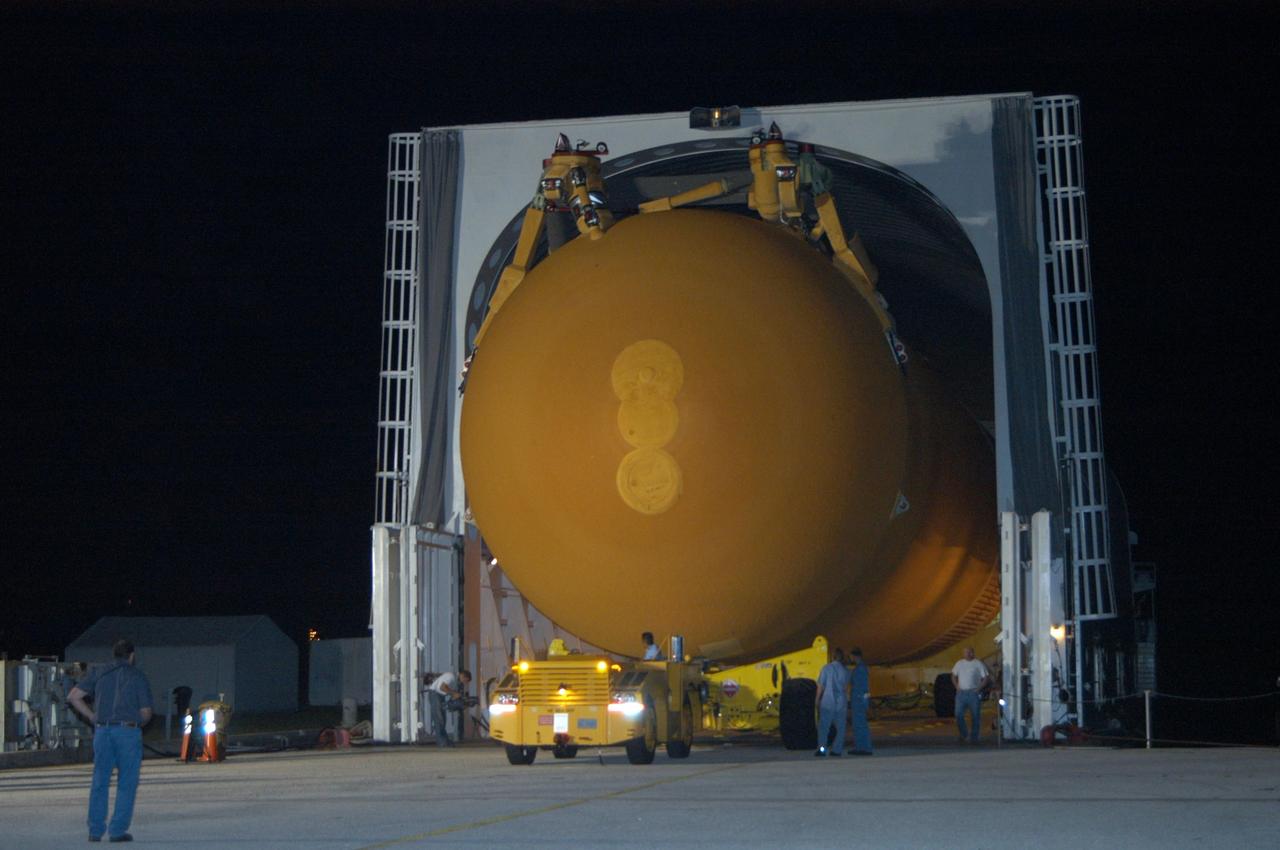
KENNEDY SPACE CENTER, FLA. - Off-loading of the redesigned external fuel tank that will launch Space Shuttle Discovery on the next shuttle mission, STS-121, begins in the Launch Complex 39 turn basin. The Pegasus barge delivered the tank from the Michoud Assembly Facility in New Orleans to NASA's Kennedy Space Center. After off-loading, the tank will be moved into the Vehicle Assembly Building and lifted into a checkout cell for further work. The tank, designated ET-119, will fly with many major safety changes, including the removal of the protuberance air load ramps. A large piece of foam from a ramp came off during the last shuttle launch in July 2005. The ramps were removed to eliminate a potential source of damaging debris to the space shuttle. The next launch of Discovery is scheduled for May 2006.
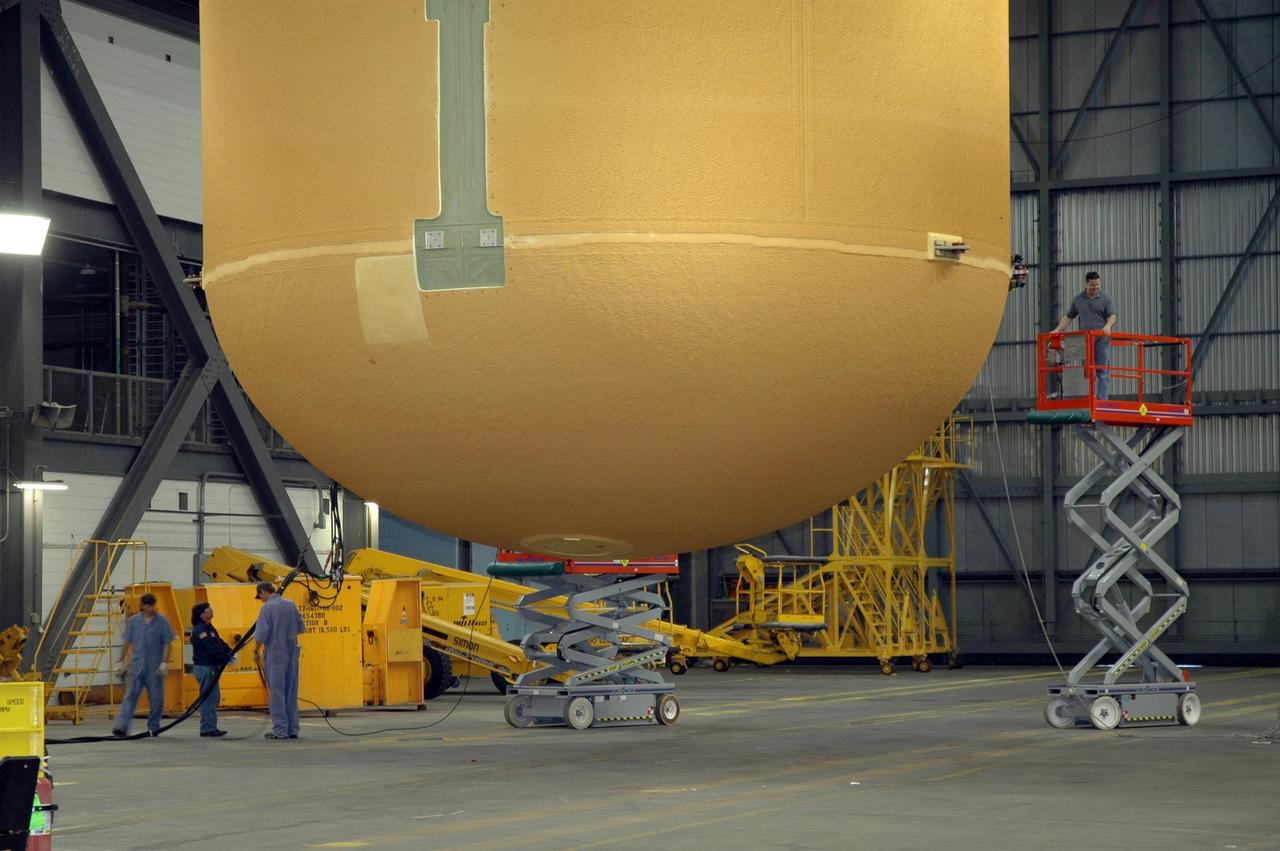
KENNEDY SPACE CENTER, FLA. - In In the transfer aisle of NASA Kennedy Space Center's Vehicle Assembly Building, the newly delivered external tank is suspended vertically just above the floor. Designated ET-119, the 154-foot tank will be lifted into a checkout cell for further work. The tank, which will launch space shuttle Discovery on mission STS-121, will fly with many major safety changes, including the removal of the protuberance air load ramps. A large piece of foam from a ramp came off during the last shuttle launch in July 2005. The ramps were removed to eliminate a potential source of damaging debris to the space shuttle. The next launch of Discovery is scheduled for May 2006. Photo credit: NASA/Jim Grossmann
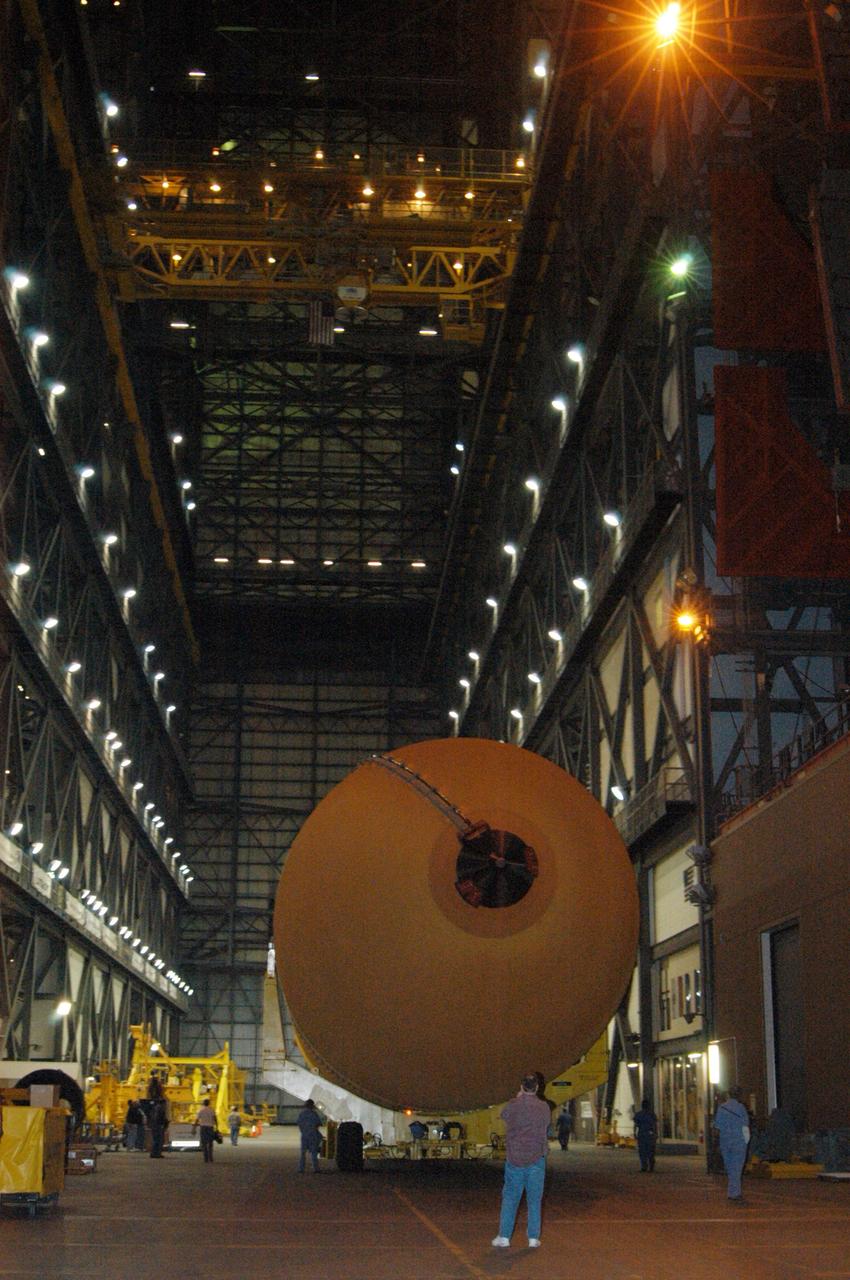
KENNEDY SPACE CENTER, FLA. - The redesigned external fuel tank that will launch Space Shuttle Discovery on the next shuttle mission, STS-121, arrives safely in the transfer aisle of the Vehicle Assembly Building. The Pegasus barge delivered the tank from the Michoud Assembly Facility in New Orleans to NASA's Kennedy Space Center. Next, the tank will be lifted into a checkout cell for further work. The tank, designated ET-119, will fly with many major safety changes, including the removal of the protuberance air load ramps. A large piece of foam from a ramp came off during the last shuttle launch in July 2005. The ramps were removed to eliminate a potential source of damaging debris to the space shuttle. The next launch of Discovery is scheduled for May 2006.
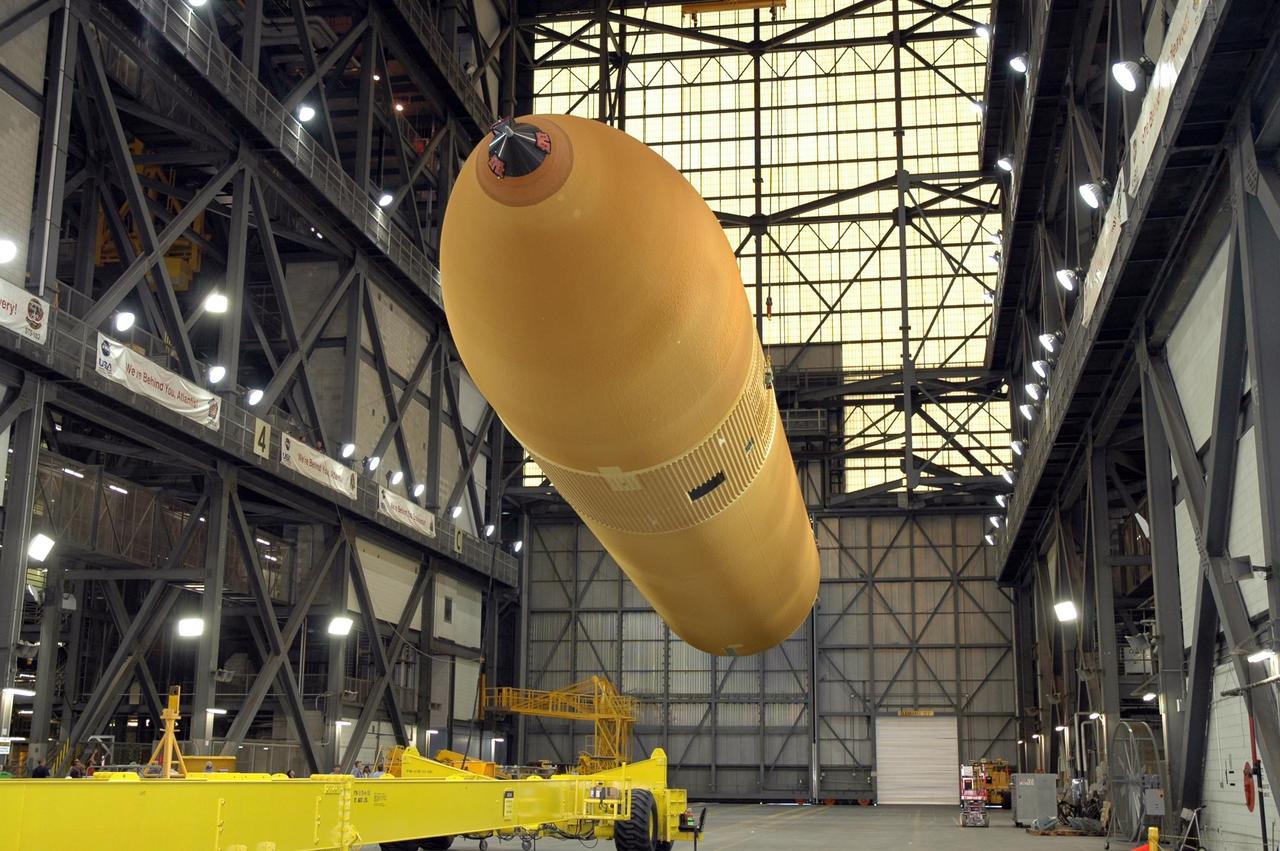
KENNEDY SPACE CENTER, FLA. - In NASA Kennedy Space Center's Vehicle Assembly Building, the newly delivered external tank is lifted off its transporter. Designated ET-119, the 154-foot tank is being raised to vertical and then will be lifted into a checkout cell for further work. The tank, which will launch space shuttle Discovery on mission STS-121, will fly with many major safety changes, including the removal of the protuberance air load ramps. A large piece of foam from a ramp came off during the last shuttle launch in July 2005. The ramps were removed to eliminate a potential source of damaging debris to the space shuttle. The next launch of Discovery is scheduled for May 2006. Photo credit: NASA/Jim Grossmann
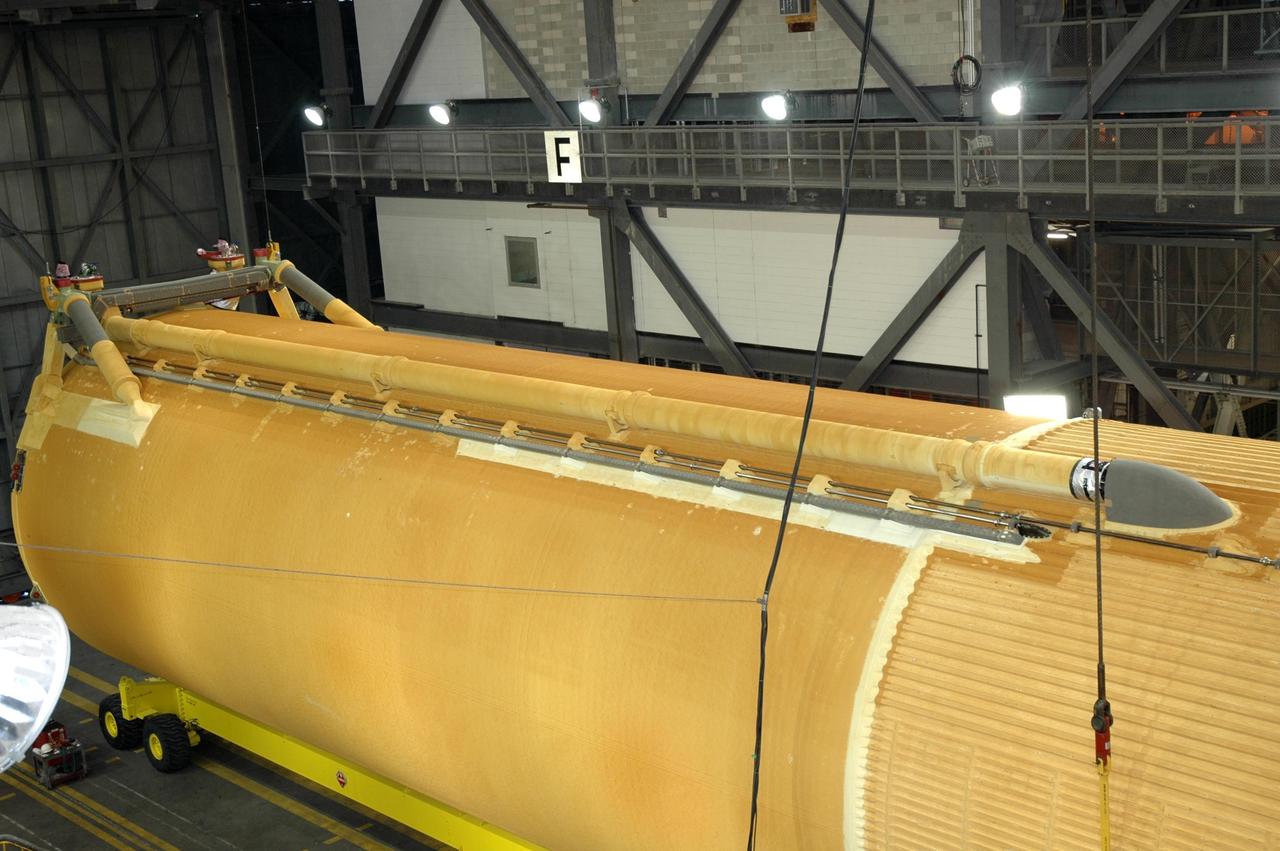
KENNEDY SPACE CENTER, FLA. - In NASA Kennedy Space Center's Vehicle Assembly Building, a crane has been attached to the newly delivered external tank, which is resting on a transporter in the transfer aisle. Designated ET-119, the 154-foot tank will be raised to vertical and lifted into a checkout cell for further work. The tank, which will launch space shuttle Discovery on mission STS-121, will fly with many major safety changes, including the removal of the protuberance air load ramps. A large piece of foam from a ramp came off during the last shuttle launch in July 2005. The ramps were removed to eliminate a potential source of damaging debris to the space shuttle. The next launch of Discovery is scheduled for May 2006. Photo credit: NASA/Jim Grossmann
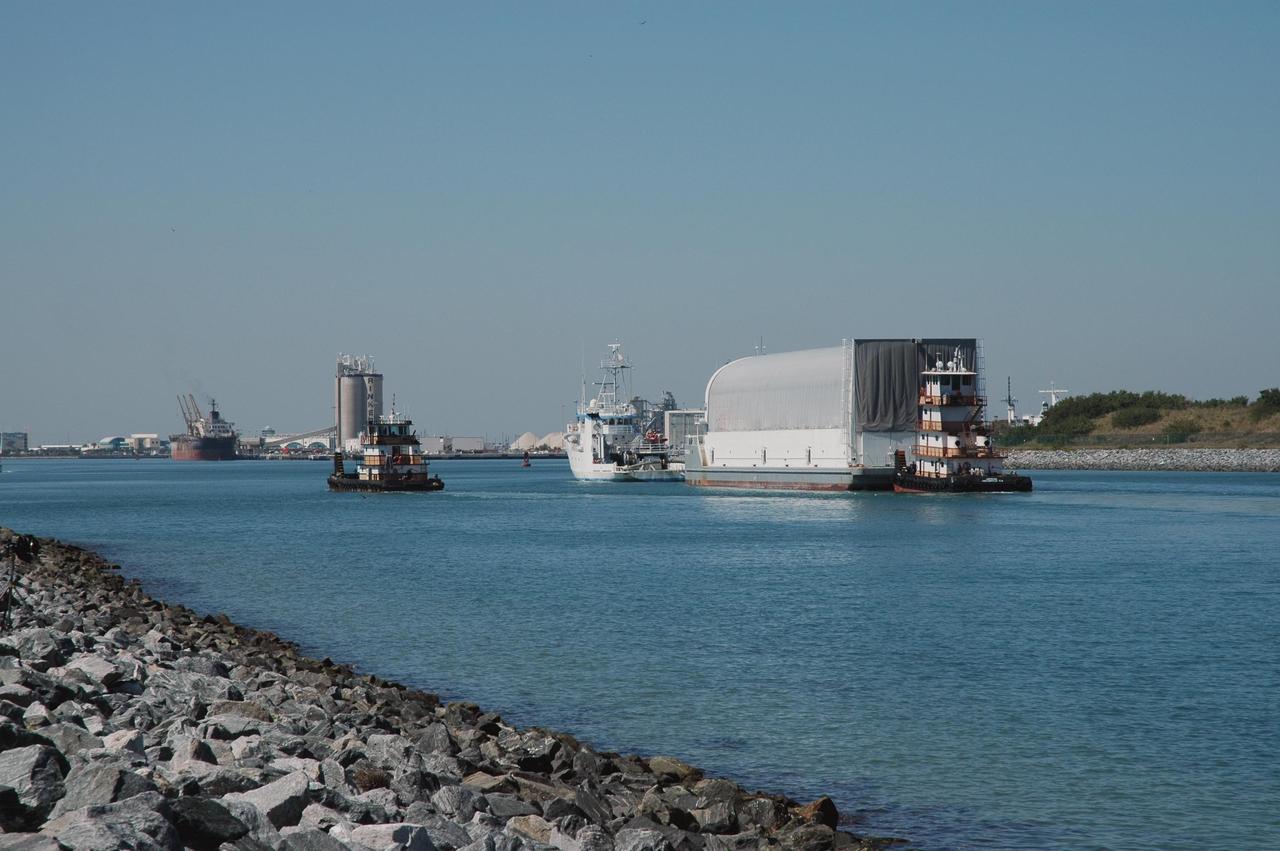
KENNEDY SPACE CENTER, FLA. - The Freedom Star tows the Pegasus barge through Port Canaveral, the last leg of its journey from the Michoud Assembly Facility in New Orleans to Kennedy Space Center. The barge carries the redesigned external fuel tank that will launch Space Shuttle Discovery on the next shuttle mission, STS-121. After off-loading, the tank will be moved into the Vehicle Assembly Building and lifted into a checkout cell for further work. The tank, designated ET-119, will fly with many major safety changes, including the removal of the protuberance air load ramps. A large piece of foam from a ramp came off during the last shuttle launch in July 2005. The ramps were removed to eliminate a potential source of damaging debris to the space shuttle. The next launch of Discovery is scheduled for May 2006.
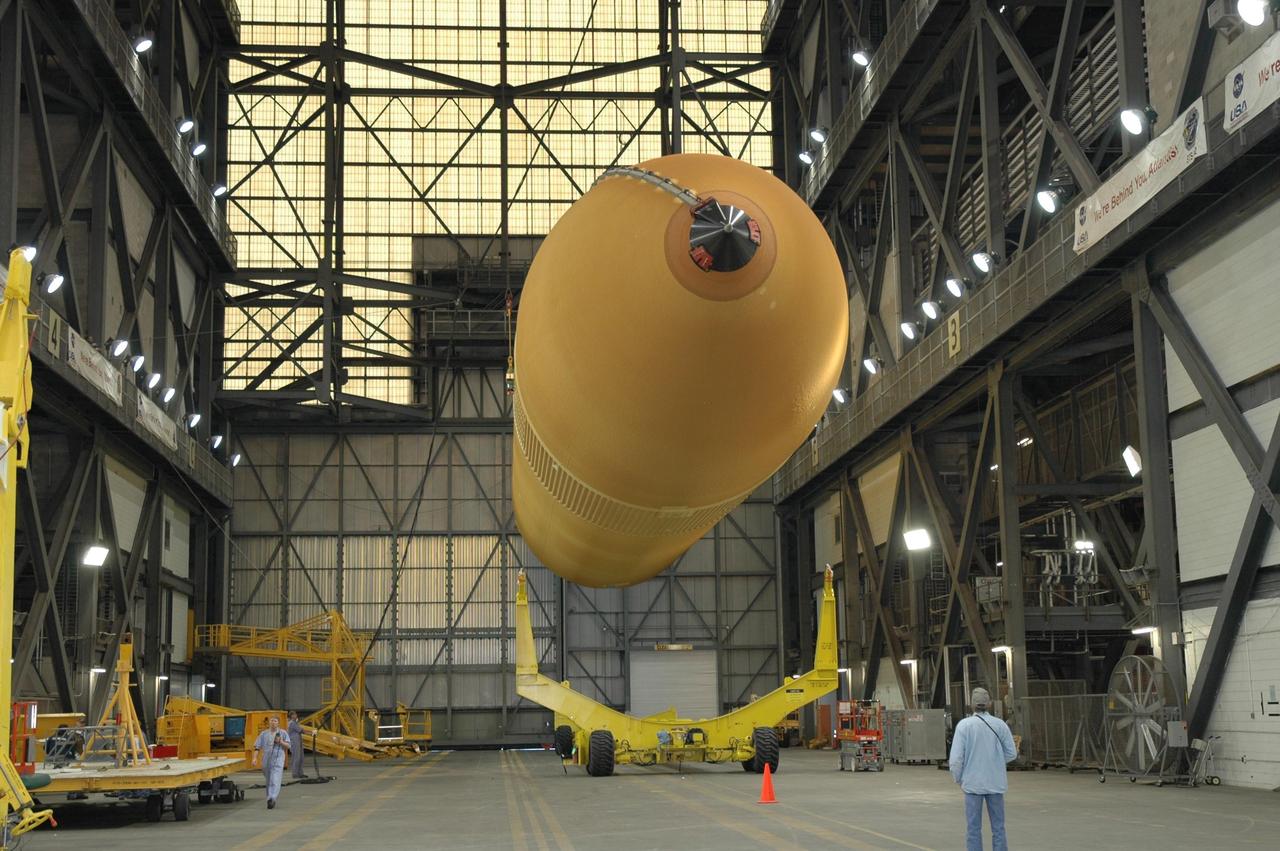
KENNEDY SPACE CENTER, FLA. - In NASA Kennedy Space Center's Vehicle Assembly Building, the newly delivered external tank is lifted off its transporter. Designated ET-119, the 154-foot tank is being raised to vertical and then will be lifted into a checkout cell for further work. The tank, which will launch space shuttle Discovery on mission STS-121, will fly with many major safety changes, including the removal of the protuberance air load ramps. A large piece of foam from a ramp came off during the last shuttle launch in July 2005. The ramps were removed to eliminate a potential source of damaging debris to the space shuttle. The next launch of Discovery is scheduled for May 2006. Photo credit: NASA/Jim Grossmann

KENNEDY SPACE CENTER, FLA. - In NASA Kennedy Space Center's Vehicle Assembly Building, the newly delivered external tank is lifted high into the upper regions. It will be moved over a crossbeam into a checkout cell for further work. Designated ET-119, the 154-foot tank will be lifted into a checkout cell for further work. The tank, which will launch space shuttle Discovery on mission STS-121, will fly with many major safety changes, including the removal of the protuberance air load ramps. A large piece of foam from a ramp came off during the last shuttle launch in July 2005. The ramps were removed to eliminate a potential source of damaging debris to the space shuttle. The next launch of Discovery is scheduled for May 2006. Photo credit: NASA/Jim Grossmann
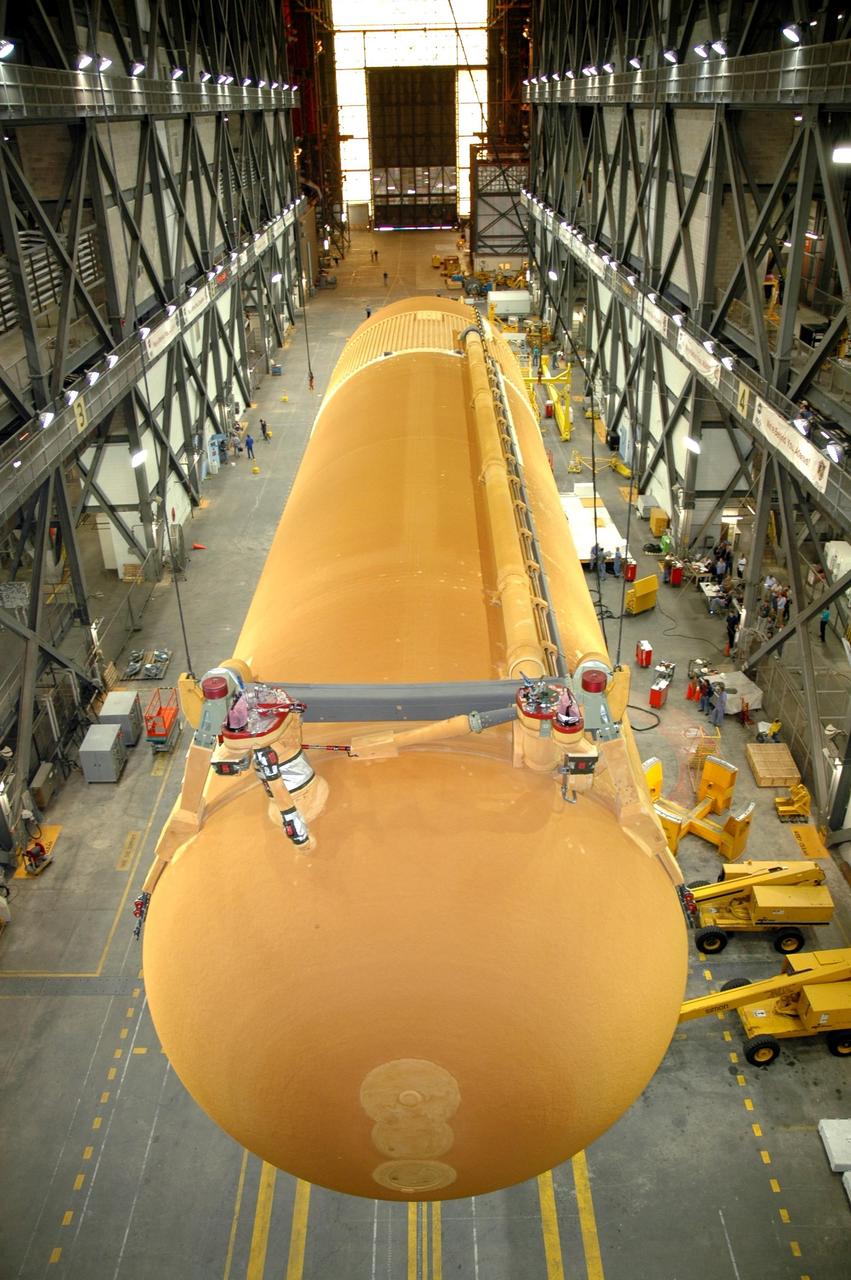
KENNEDY SPACE CENTER, FLA. - In NASA Kennedy Space Center's Vehicle Assembly Building, the newly delivered external tank is lifted off its transporter. Designated ET-119, the 154-foot tank is being raised to vertical and then will be lifted into a checkout cell for further work. The tank, which will launch space shuttle Discovery on mission STS-121, will fly with many major safety changes, including the removal of the protuberance air load ramps. A large piece of foam from a ramp came off during the last shuttle launch in July 2005. The ramps were removed to eliminate a potential source of damaging debris to the space shuttle. The next launch of Discovery is scheduled for May 2006. Photo credit: NASA/Jim Grossmann
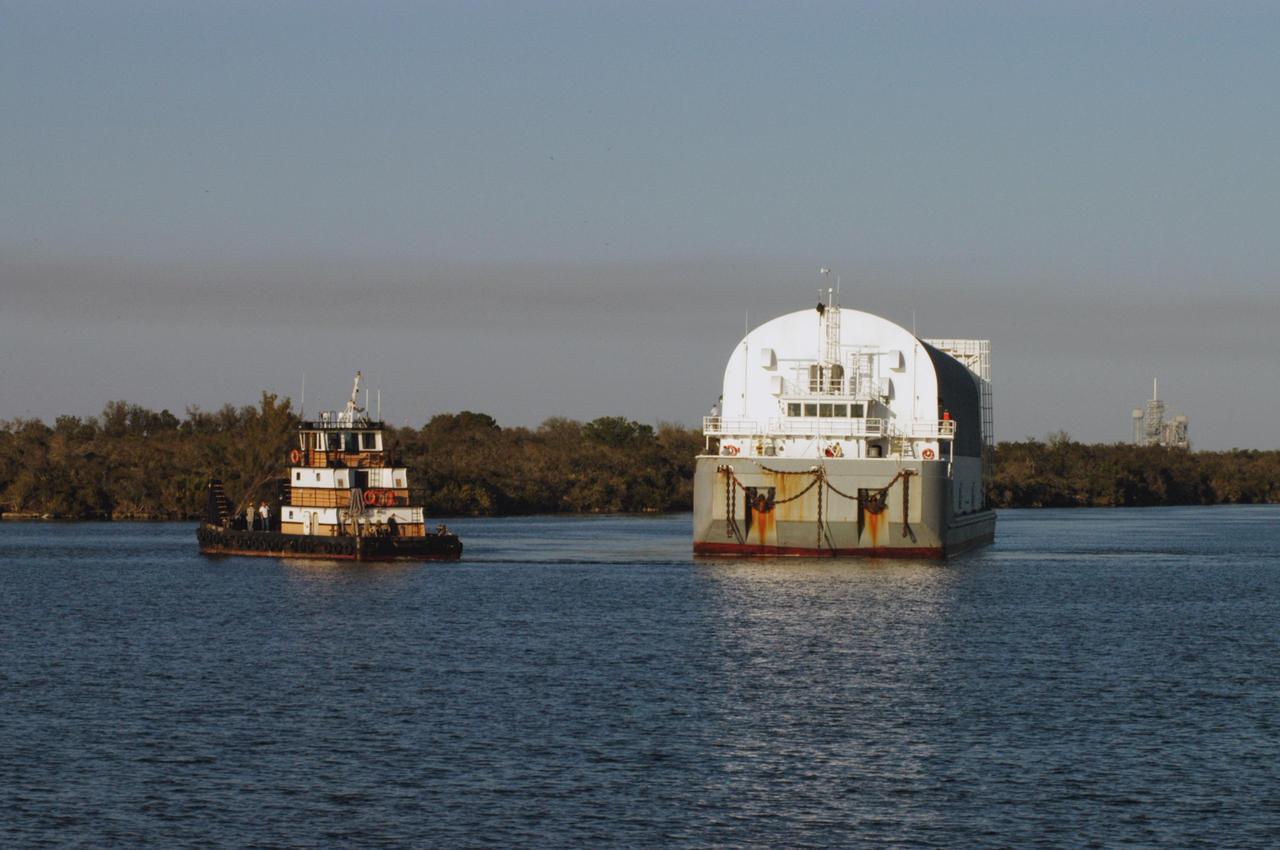
KENNEDY SPACE CENTER, FLA. - One of the two space shuttle launch pads in Launch Complex 39 is visible behind the Pegasus barge as it traverses the turn basin near the Vehicle Assembly Building. The barge is on the last leg of its journey from the Michoud Assembly Facility in New Orleans to NASA's Kennedy Space Center. The barge carries the redesigned external fuel tank that will launch Space Shuttle Discovery on the next shuttle mission, STS-121. After off-loading, the tank will be moved into the Vehicle Assembly Building and lifted into a checkout cell for further work. The tank, designated ET-119, will fly with many major safety changes, including the removal of the protuberance air load ramps. A large piece of foam from a ramp came off during the last shuttle launch in July 2005. The ramps were removed to eliminate a potential source of damaging debris to the space shuttle. The next launch of Discovery is scheduled for May 2006.
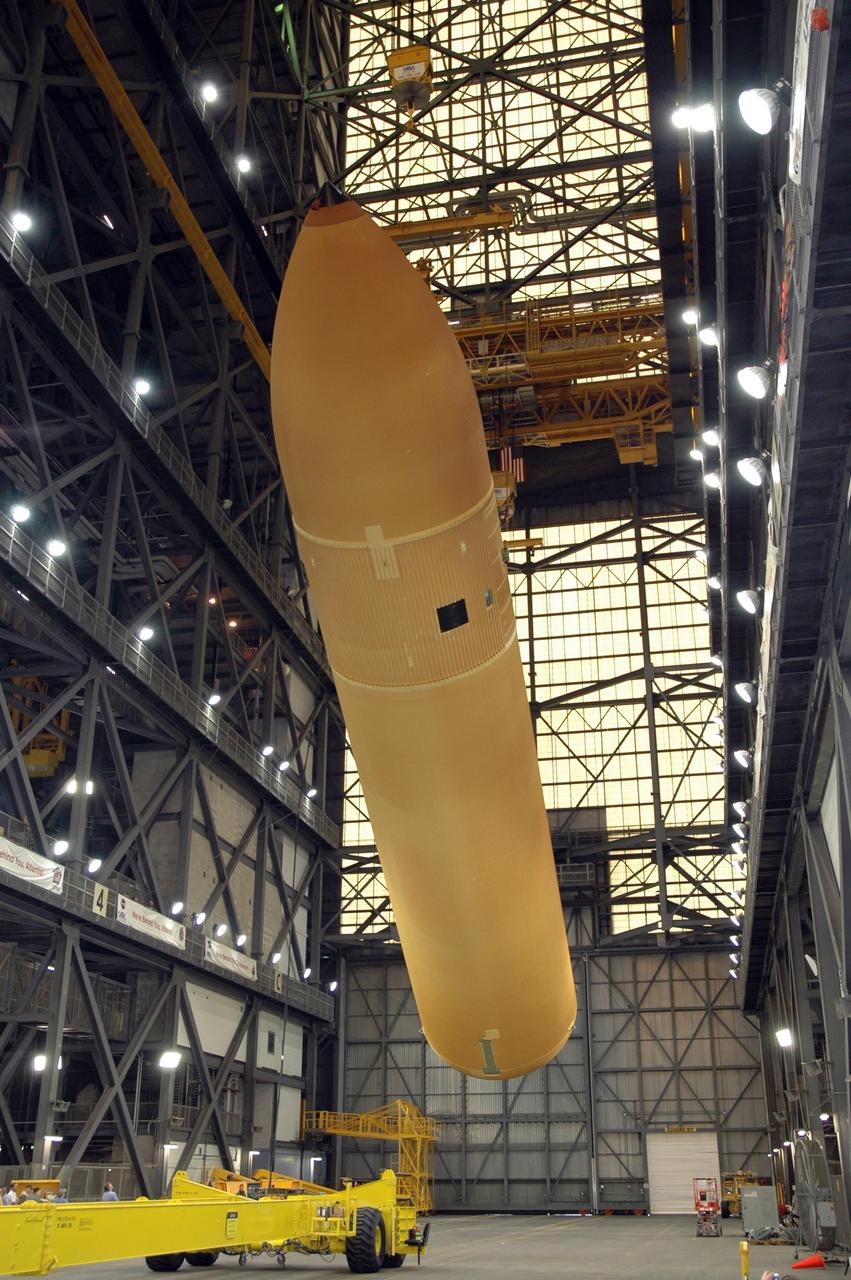
KENNEDY SPACE CENTER, FLA. - In NASA Kennedy Space Center's Vehicle Assembly Building, the newly delivered external tank has been raised nearly to vertical. Designated ET-119, the 154-foot tank will be lifted into a checkout cell for further work. The tank, which will launch space shuttle Discovery on mission STS-121, will fly with many major safety changes, including the removal of the protuberance air load ramps. A large piece of foam from a ramp came off during the last shuttle launch in July 2005. The ramps were removed to eliminate a potential source of damaging debris to the space shuttle. The next launch of Discovery is scheduled for May 2006. Photo credit: NASA/Jim Grossmann
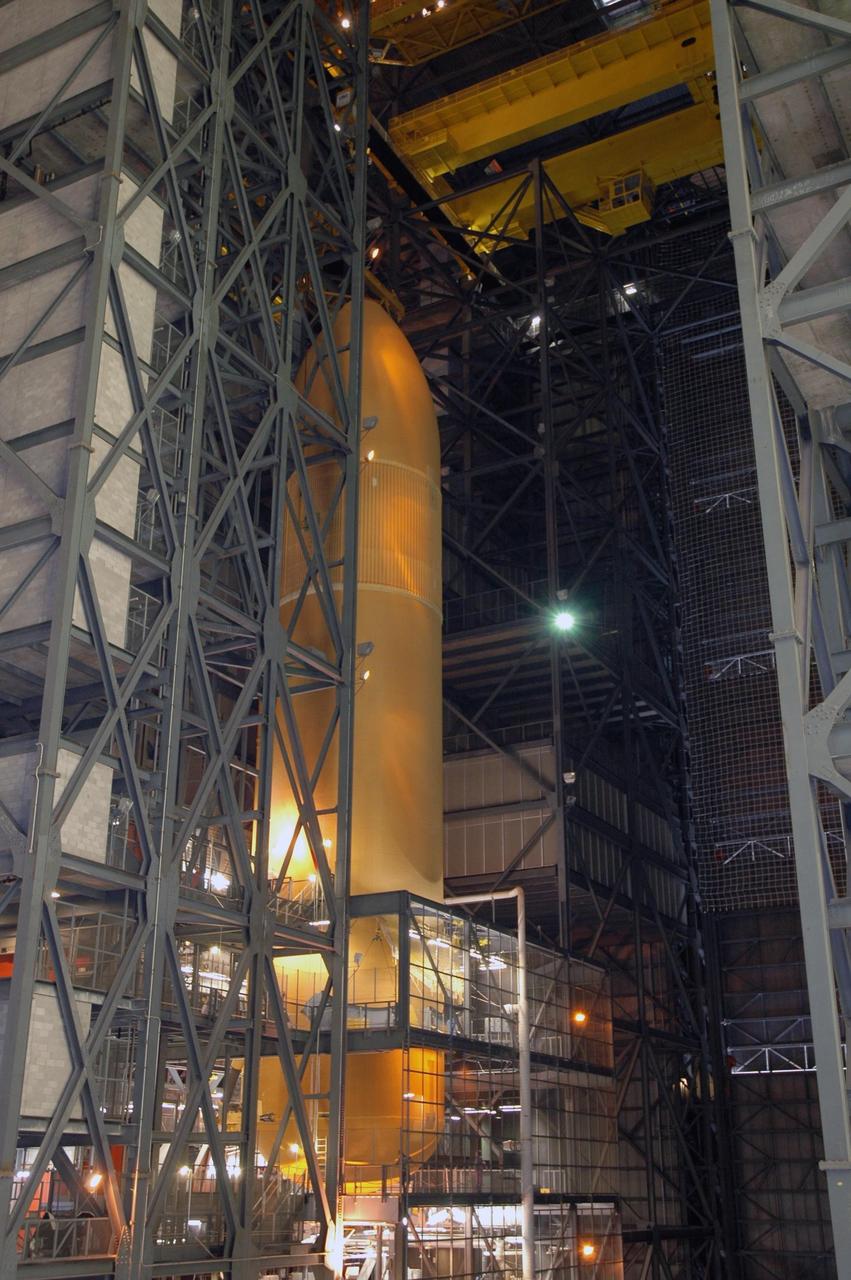
KENNEDY SPACE CENTER, FLA. - From the upper regions of NASA Kennedy Space Center's Vehicle Assembly Building, the newly delivered external tank is lowered into a checkout cell for further work. Designated ET-119, the 154-foot tank will be lifted into a checkout cell for further work. The tank, which will launch space shuttle Discovery on mission STS-121, will fly with many major safety changes, including the removal of the protuberance air load ramps. A large piece of foam from a ramp came off during the last shuttle launch in July 2005. The ramps were removed to eliminate a potential source of damaging debris to the space shuttle. The next launch of Discovery is scheduled for May 2006. Photo credit: NASA/Jim Grossmann
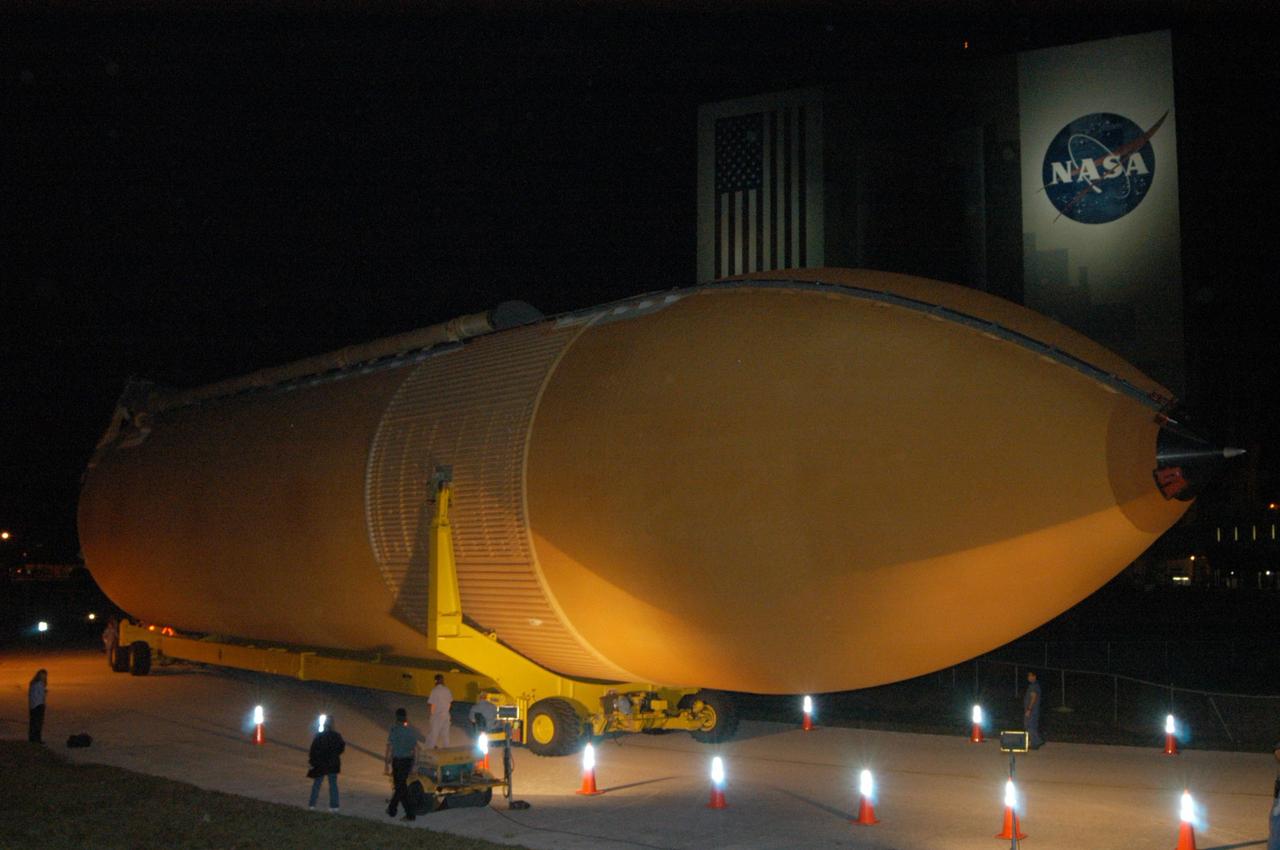
KENNEDY SPACE CENTER, FLA. - Technicians monitor the redesigned external fuel tank that will launch Space Shuttle Discovery on the next shuttle mission, STS-121, as it is moved to the Vehicle Assembly Building in the background. The Pegasus barge delivered the tank from the Michoud Assembly Facility in New Orleans to NASA's Kennedy Space Center. Once in the VAB, the tank will be lifted into a checkout cell for further work. The tank, designated ET-119, will fly with many major safety changes, including the removal of the protuberance air load ramps. A large piece of foam from a ramp came off during the last shuttle launch in July 2005. The ramps were removed to eliminate a potential source of damaging debris to the space shuttle. The next launch of Discovery is scheduled for May 2006.

KENNEDY SPACE CENTER, FLA. - The redesigned external fuel tank that will launch Space Shuttle Discovery on the next shuttle mission, STS-121, is towed from the Launch Complex 39 turn basin to the Vehicle Assembly Building. The Pegasus barge delivered the tank from the Michoud Assembly Facility in New Orleans to NASA's Kennedy Space Center. After the tank is moved into the VAB, it will be lifted into a checkout cell for further work. The tank, designated ET-119, will fly with many major safety changes, including the removal of the protuberance air load ramps. A large piece of foam from a ramp came off during the last shuttle launch in July 2005. The ramps were removed to eliminate a potential source of damaging debris to the space shuttle. The next launch of Discovery is scheduled for May 2006.
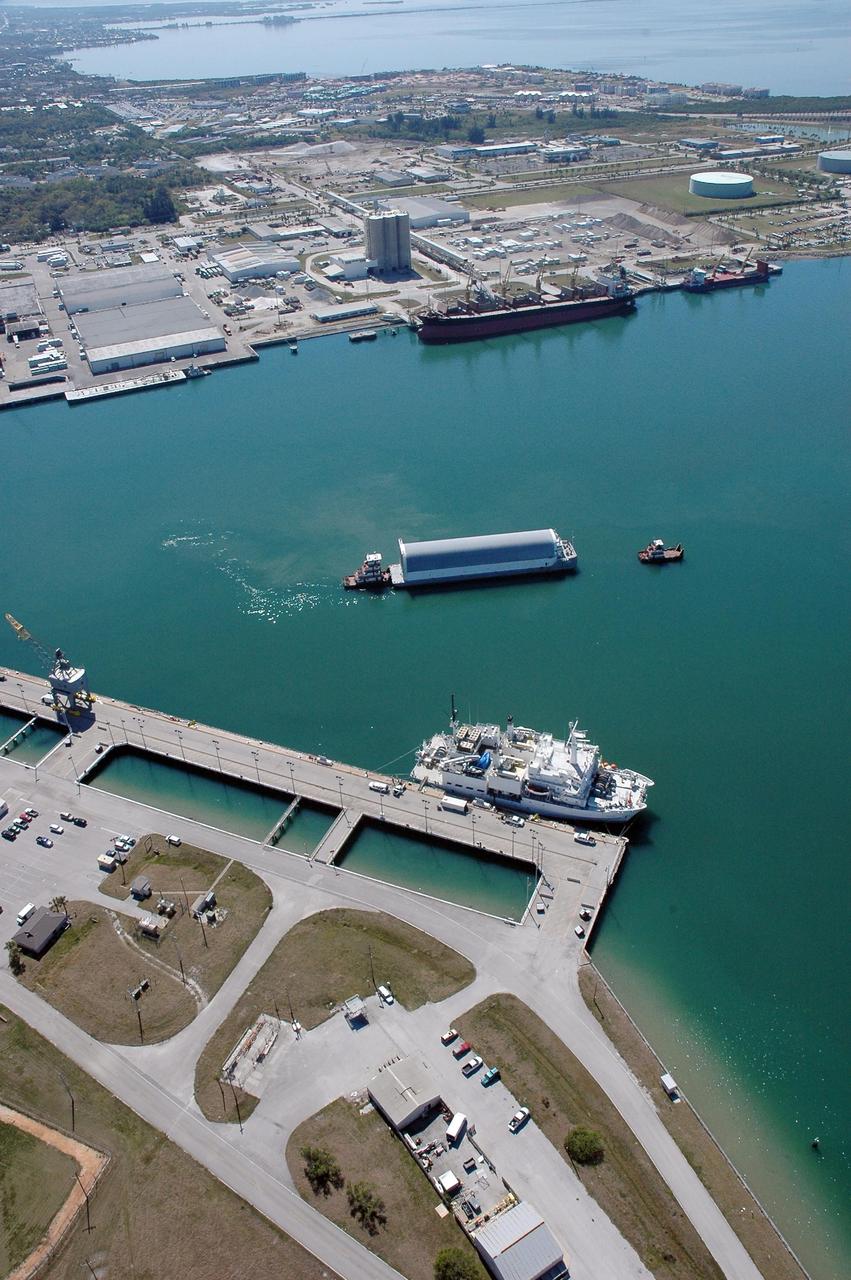
KENNEDY SPACE CENTER, FLA. - The Pegasus barge, towed by the solid rocket booster retrieval ship Freedom Star to Port Canaveral from the Michoud Assembly Facility in New Orleans, waits for a tug boat to finish the trip to the turn basin near NASA Kennedy Space Center's Vehicle Assembly Building. The barge carries the redesigned external fuel tank that will launch the Space Shuttle Discovery on the next shuttle mission, STS-121. After off-loading, the tank will be moved into the Vehicle Assembly Building and lifted into a checkout cell for further work. The tank, designated ET-119, will fly with many major safety changes, including the removal of the protuberance air load ramps. A large piece of foam from one of the ramps came off during the July 2005 launch of the last shuttle mission. The ramps were removed to help eliminate a potential source of damaging debris to the space shuttle. Launch of Discovery is scheduled for May 2006. Photo credit: NASA/Cory Huston
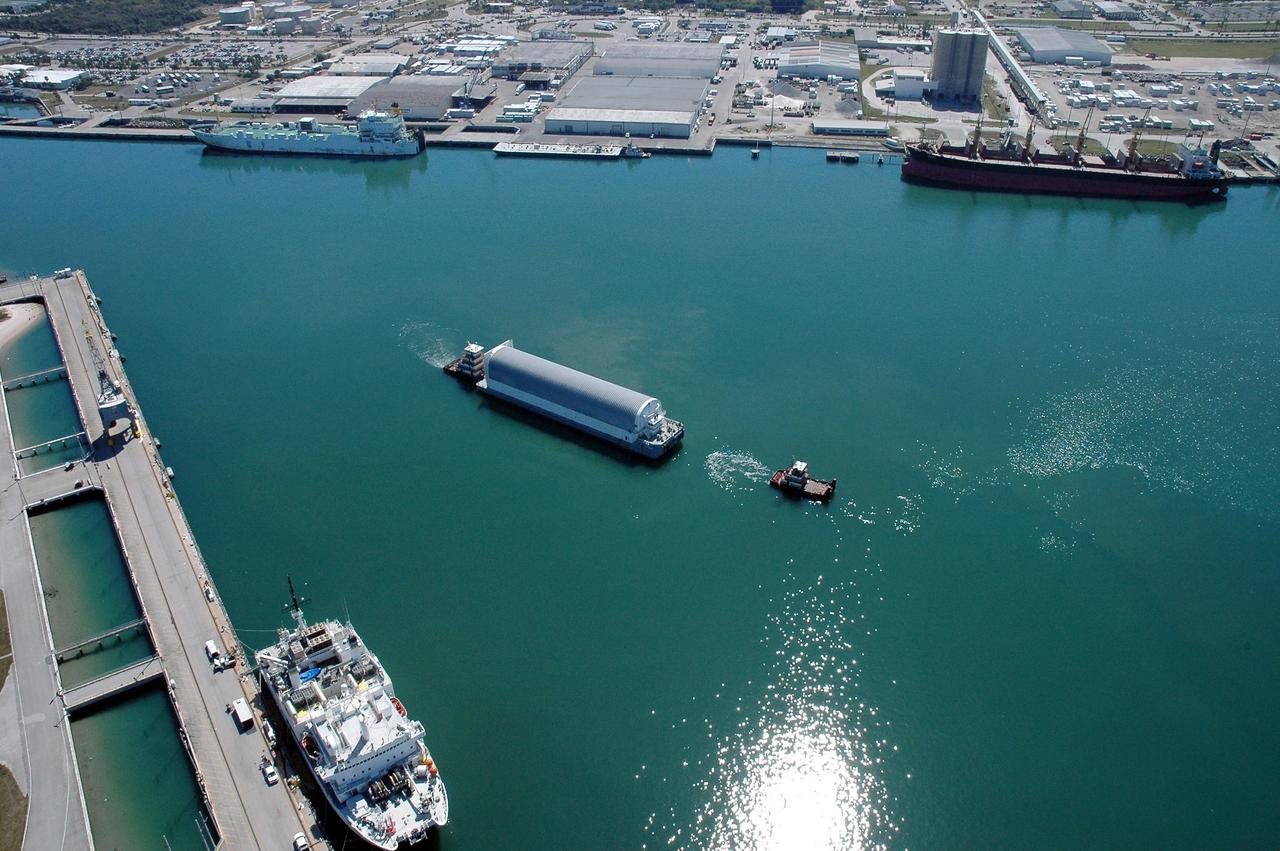
KENNEDY SPACE CENTER, FLA. - The Pegasus barge, towed by the solid rocket booster retrieval ship Freedom Star to Port Canaveral from the Michoud Assembly Facility in New Orleans, waits for a tug boat to finish the trip to the turn basin near NASA Kennedy Space Center's Vehicle Assembly Building. The barge carries the redesigned external fuel tank that will launch the Space Shuttle Discovery on the next shuttle mission, STS-121. After off-loading, the tank will be moved into the Vehicle Assembly Building and lifted into a checkout cell for further work. The tank, designated ET-119, will fly with many major safety changes, including the removal of the protuberance air load ramps. A large piece of foam from one of the ramps came off during the July 2005 launch of the last shuttle mission. The ramps were removed to help eliminate a potential source of damaging debris to the space shuttle. Launch of Discovery is scheduled for May 2006. Photo credit: NASA/Cory Huston
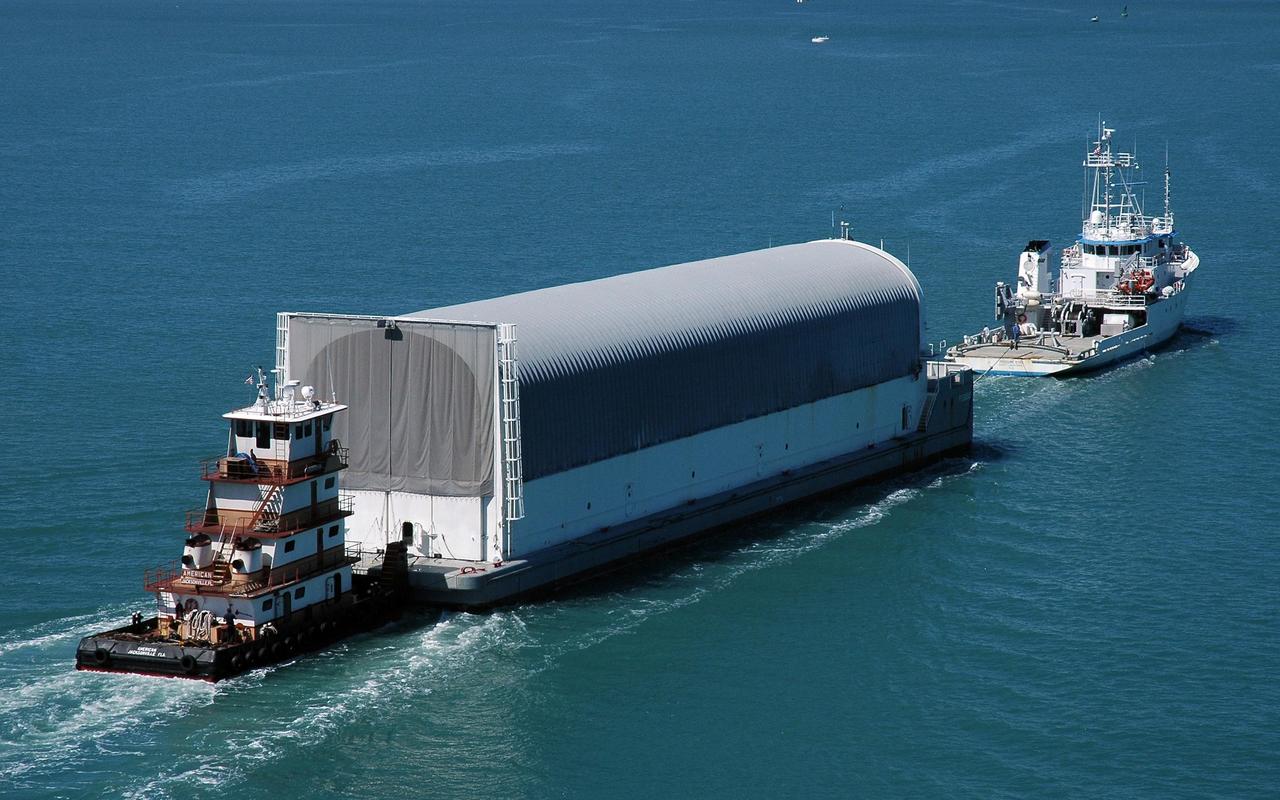
KENNEDY SPACE CENTER, FLA. - The Pegasus barge, towed by the solid rocket booster retrieval ship Freedom Star, approaches Port Canaveral. The barge carries the redesigned external fuel tank that will launch the Space Shuttle Discovery on the next shuttle mission, STS-121. It left the Michoud Assembly Facility in New Orleans Feb. 25, making the voyage around the Florida Peninsula in five days. Next stop for the barge is the turn basin near NASA Kennedy Space Center's Vehicle Assembly Building. After off-loading, the tank will be moved into the Vehicle Assembly Building and lifted into a checkout cell for further work. The tank, designated ET-119, will fly with many major safety changes, including the removal of the protuberance air load ramps. A large piece of foam from one of the ramps came off during the July 2005 launch of the last shuttle mission. The ramps were removed to help eliminate a potential source of damaging debris to the space shuttle. Launch of Discovery is scheduled for May 2006. Photo credit: NASA/Cory Huston
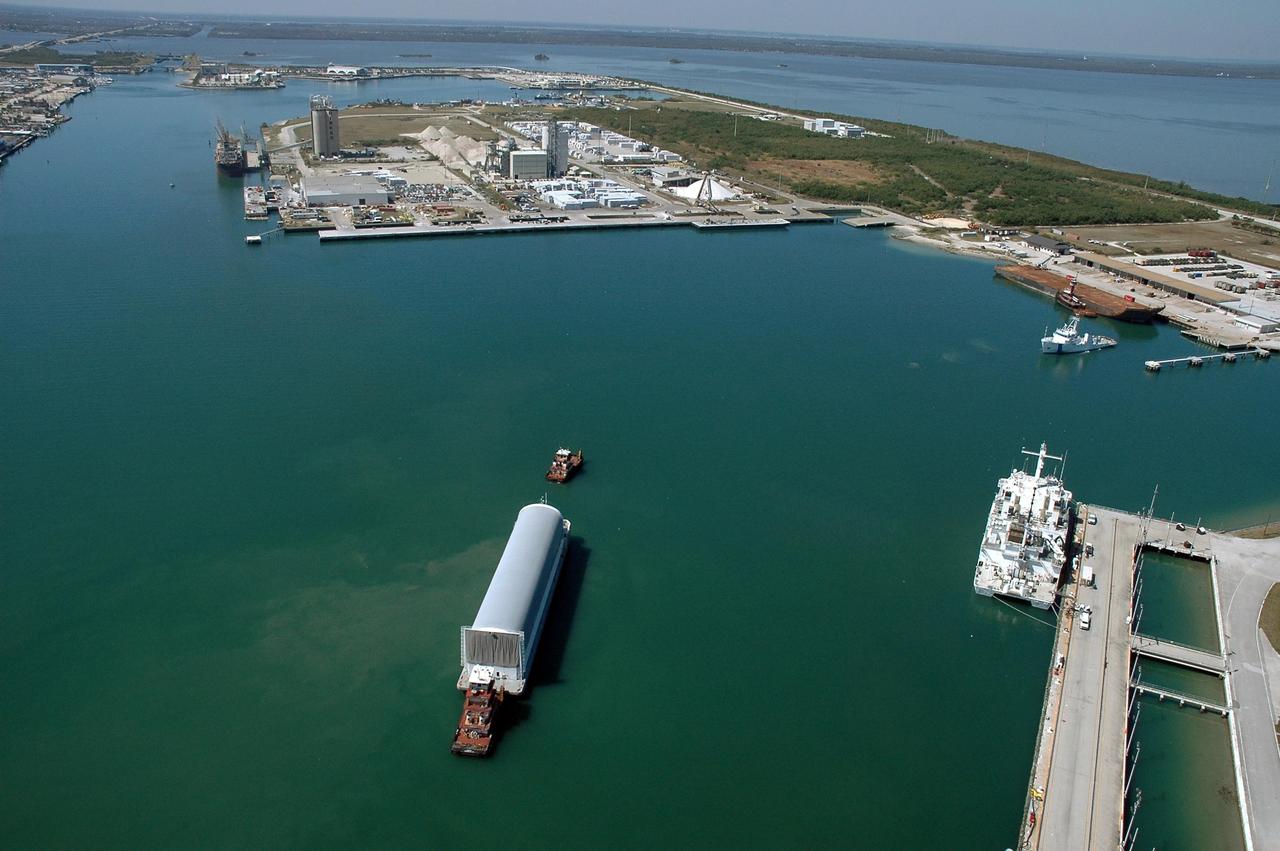
KENNEDY SPACE CENTER, FLA. - The Pegasus barge, towed by the solid rocket booster retrieval ship Freedom Star to Port Canaveral from the Michoud Assembly Facility in New Orleans, waits for a tug boat to finish the trip to the turn basin near NASA Kennedy Space Center's Vehicle Assembly Building. The barge carries the redesigned external fuel tank that will launch the Space Shuttle Discovery on the next shuttle mission, STS-121. After off-loading, the tank will be moved into the Vehicle Assembly Building and lifted into a checkout cell for further work. The tank, designated ET-119, will fly with many major safety changes, including the removal of the protuberance air load ramps. A large piece of foam from one of the ramps came off during the July 2005 launch of the last shuttle mission. The ramps were removed to help eliminate a potential source of damaging debris to the space shuttle. Launch of Discovery is scheduled for May 2006. Photo credit: NASA/Cory Huston
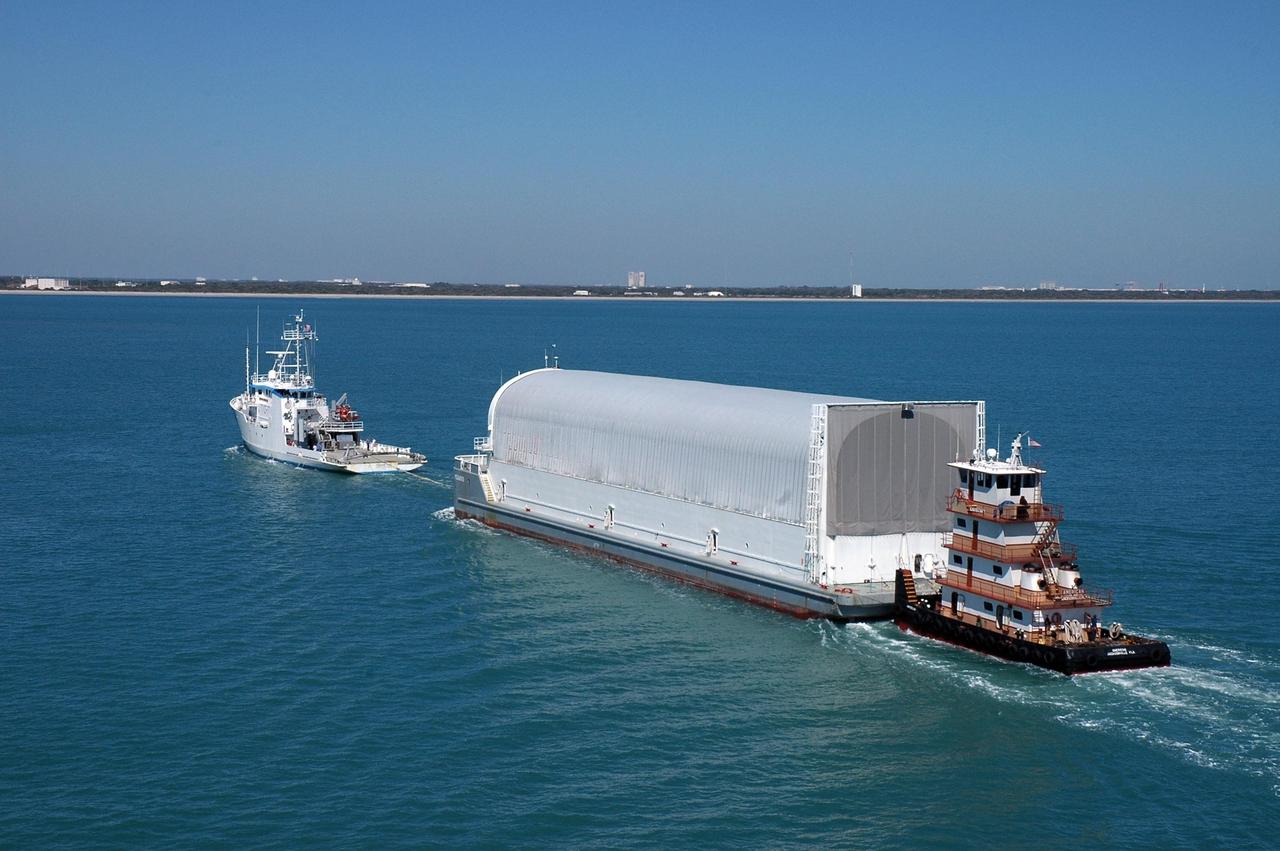
KENNEDY SPACE CENTER, FLA. - The Pegasus barge, towed by the solid rocket booster retrieval ship Freedom Star, approaches Port Canaveral. The barge carries the redesigned external fuel tank that will launch the Space Shuttle Discovery on the next shuttle mission, STS-121. It left the Michoud Assembly Facility in New Orleans Feb. 25, making the voyage around the Florida Peninsula in five days. Next stop for the barge is the turn basin near NASA Kennedy Space Center's Vehicle Assembly Building. After off-loading, the tank will be moved into the Vehicle Assembly Building and lifted into a checkout cell for further work. The tank, designated ET-119, will fly with many major safety changes, including the removal of the protuberance air load ramps. A large piece of foam from one of the ramps came off during the July 2005 launch of the last shuttle mission. The ramps were removed to help eliminate a potential source of damaging debris to the space shuttle. Launch of Discovery is scheduled for May 2006. Photo credit: NASA/Cory Huston