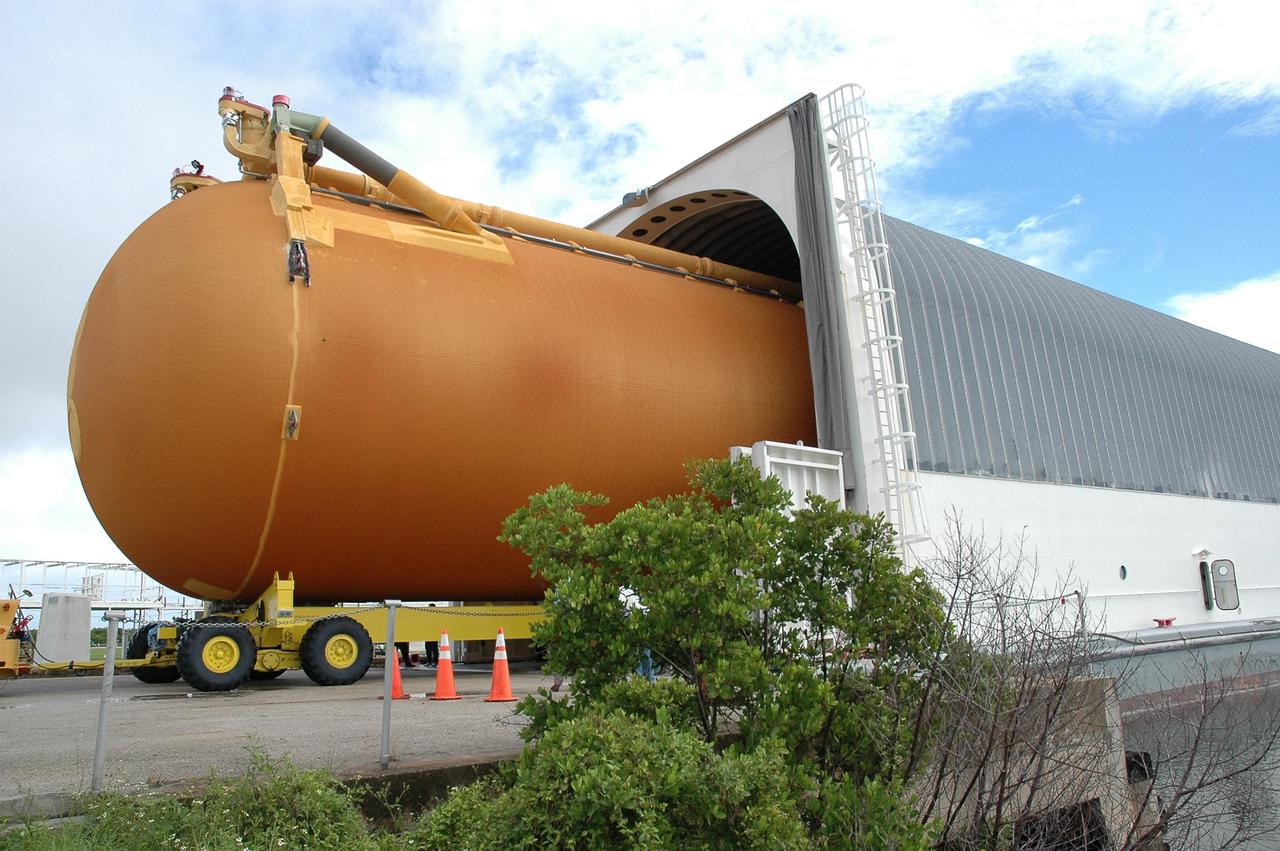
KENNEDY SPACE CENTER, FLA. -- Aboard a transporter, external tank No. 120 moves toward the open door of the Vehicle Assembly Building. There it will be lifted into a checkout cell. ET-120 will be used for launching Space Shuttle Discovery on mission STS-120 in October. NASA/Amanda Diller
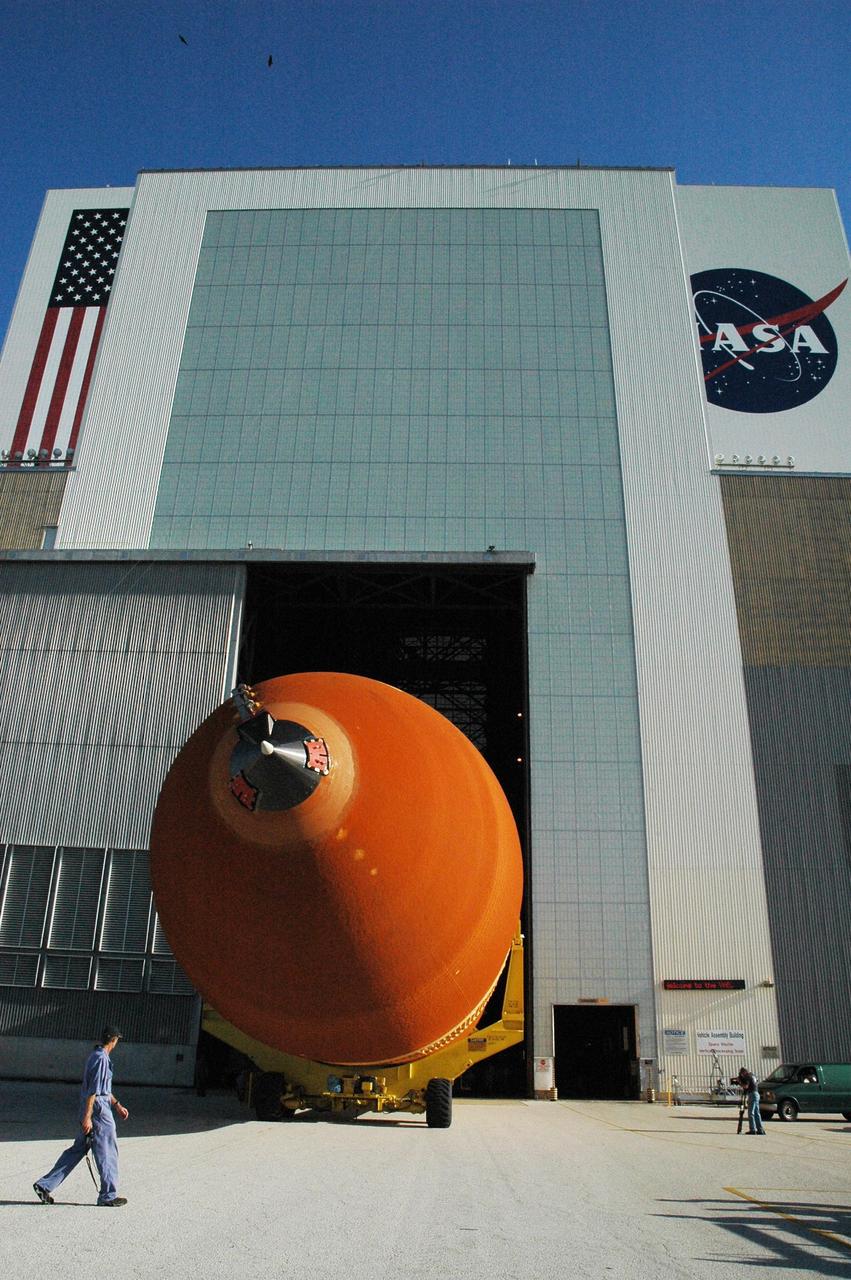
KENNEDY SPACE CENTER, FLA. -- Aboard a transporter, external tank No. 120 moves into the open door of the Vehicle Assembly Building. There it will be lifted into a checkout cell. ET-120 will be used for launching Space Shuttle Discovery on mission STS-120 in October. NASA/Amanda Diller
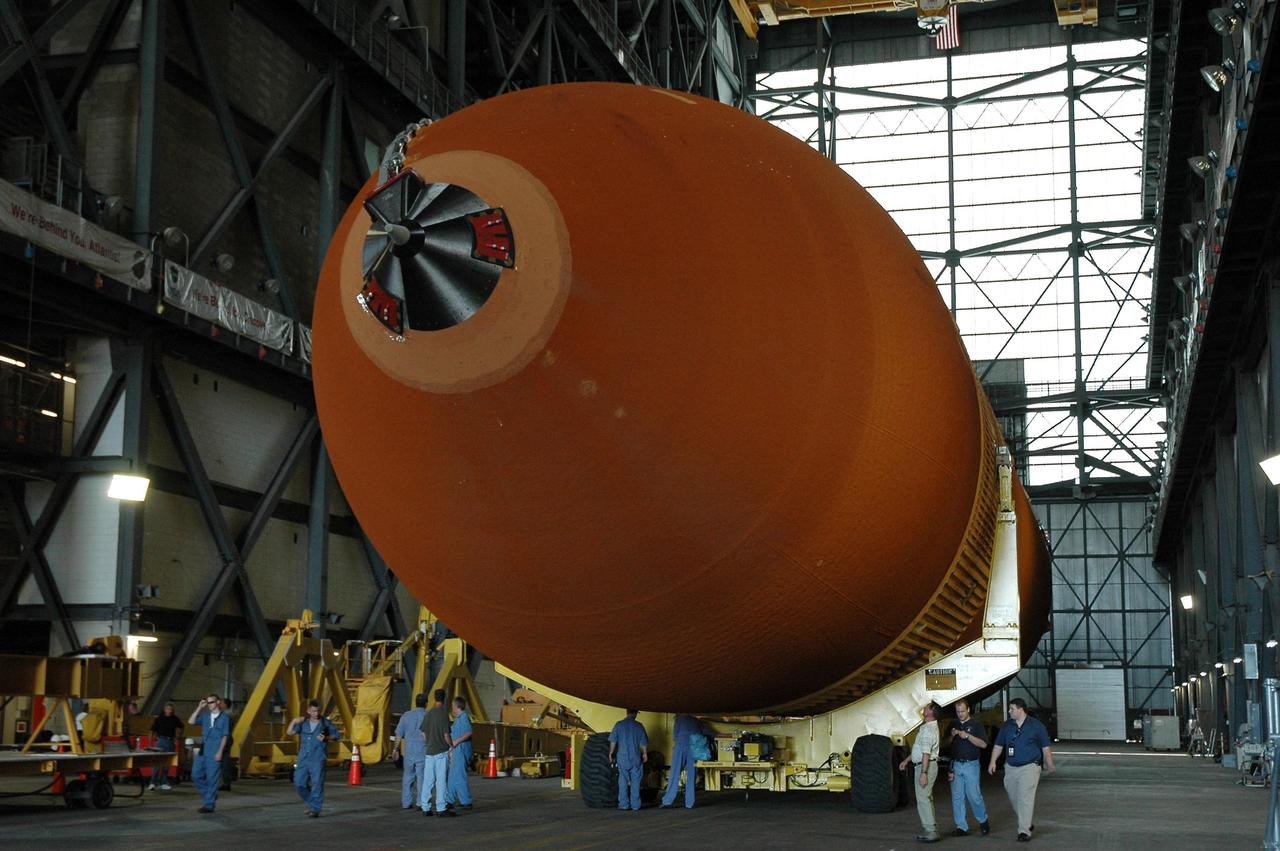
KENNEDY SPACE CENTER, FLA. -- In the transfer aisle of the Vehicle Assembly Building, external tank No. 120 waits to be fitted with overhead crane. The tank will be lifted into a checkout cell. ET-120 will be used for launching Space Shuttle Discovery on mission STS-120 in October. NASA/Amanda Diller
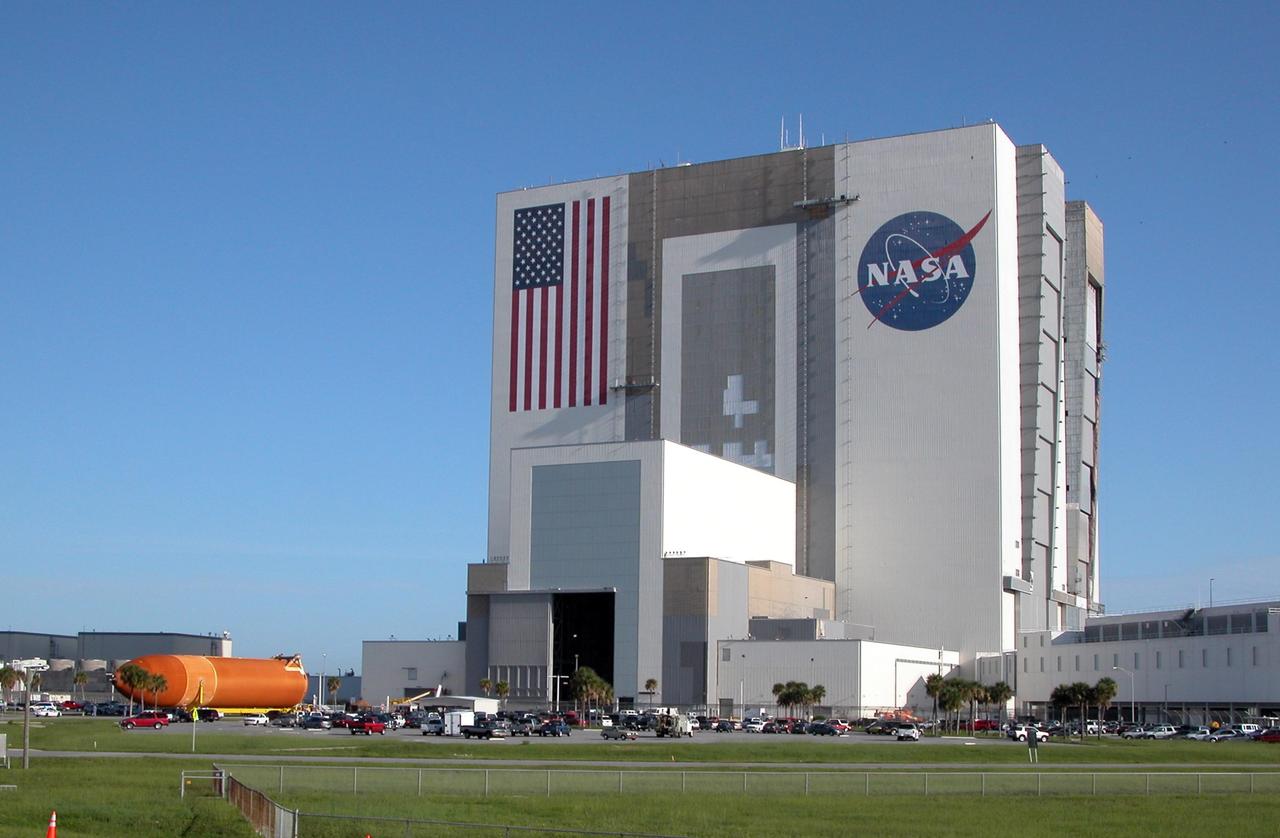
KENNEDY SPACE CENTER, FLA. -- Aboard a transporter, external tank No. 120 heads for the open door of the Vehicle Assembly Building. There it will be lifted into a checkout cell. ET-120 will be used for launching Space Shuttle Discovery on mission STS-120 in October. NASA/Debbie Odom
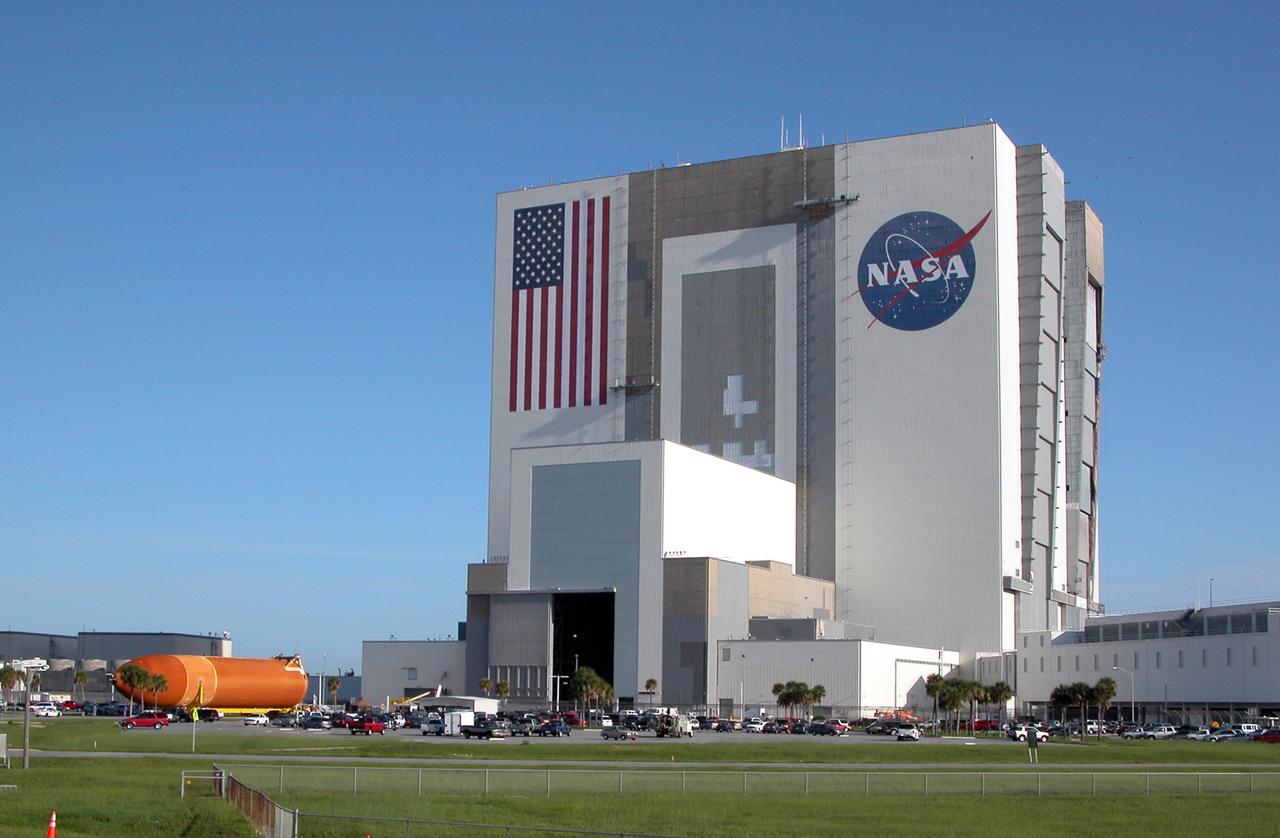
Aboard a transporter, external tank No. 120 heads for the open door of the Vehicle Assembly Building. There it will be lifted into a checkout cell. ET-120 will be used for launching Space Shuttle Discovery on mission STS-120 in October.
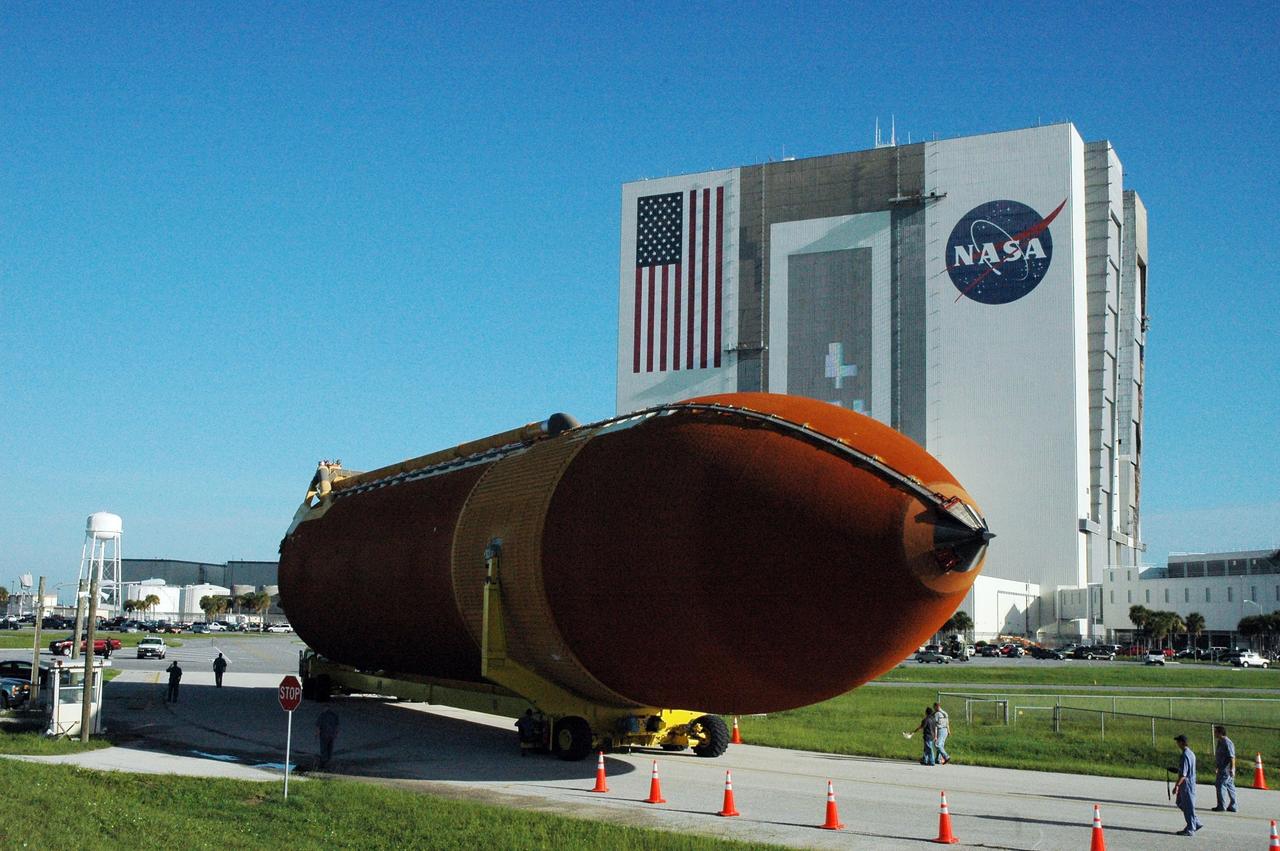
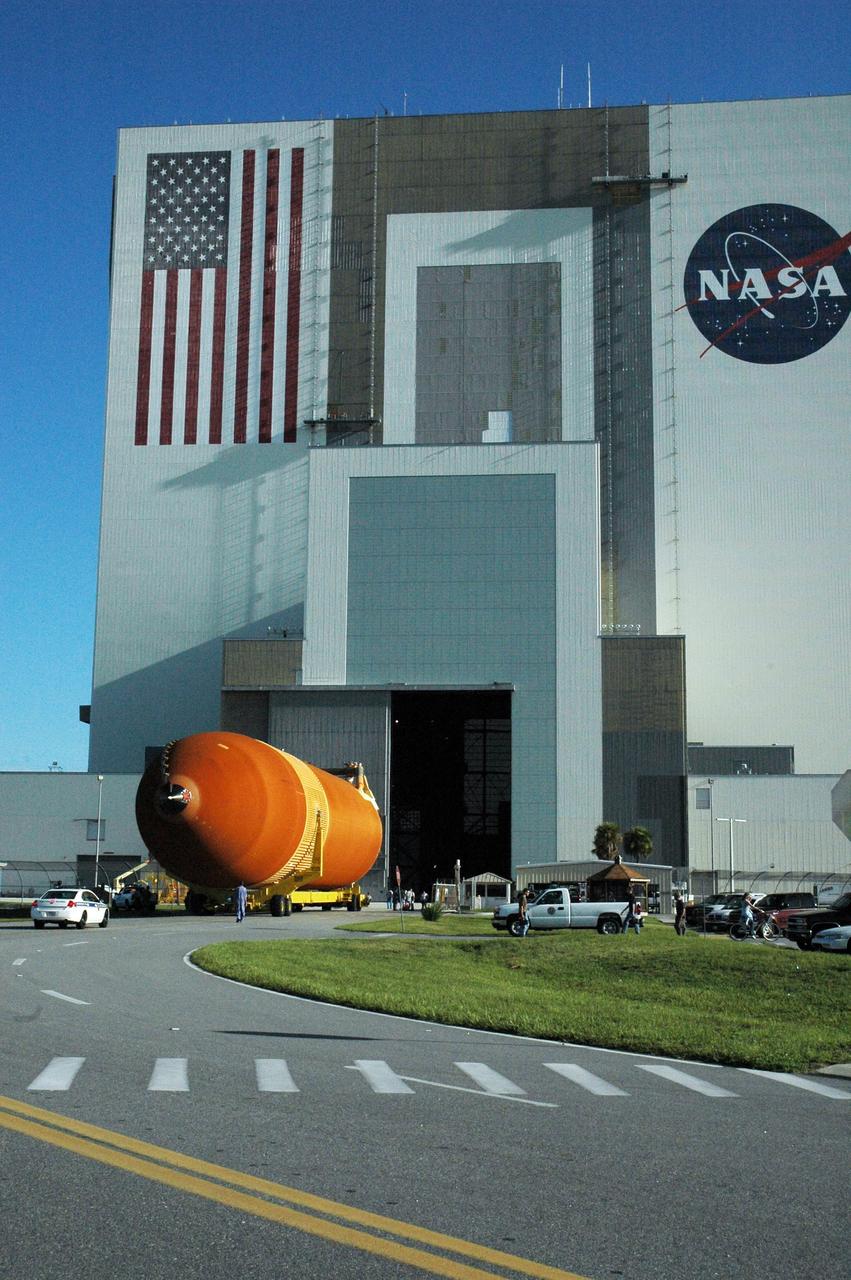
KENNEDY SPACE CENTER, FLA. -- Aboard a transporter, external tank No. 120 moves past the NASA News Center parking lot entrance in the Launch Complex 39 Area to the Vehicle Assembly Building, seen behind it. There it will be lifted into a checkout cell. The tank arrived from the Michoud Assembly Facility near New Orleans, making the journey around the Florida peninsula in tow by the JA Bisso II tugboat. ET-120 will be used for launching Space Shuttle Discovery on mission STS-120 in October. NASA/Amanda Diller
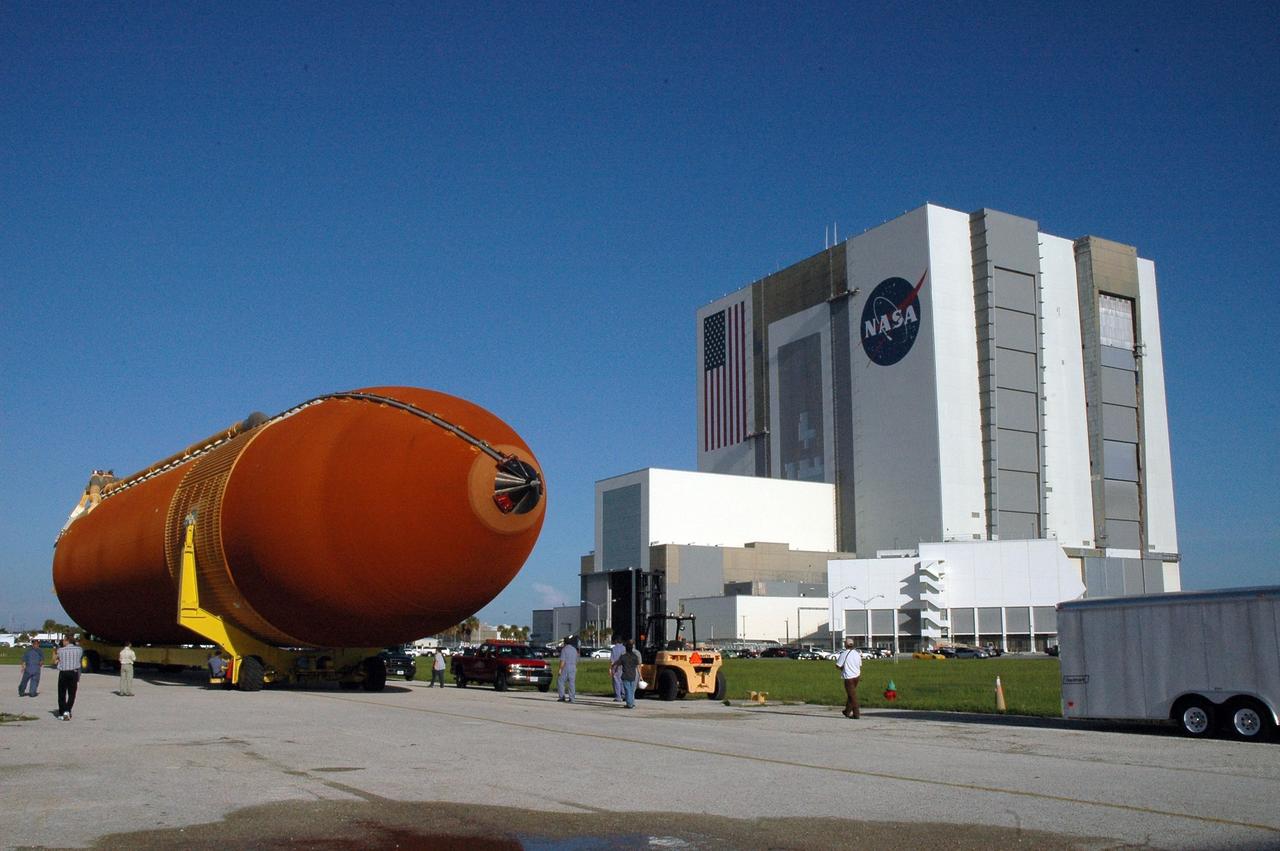
KENNEDY SPACE CENTER, FLA. -- Aboard a transporter, external tank No. 120 moves past the NASA News Center parking lot in the Launch Complex 39 Area to the Vehicle Assembly Building, at right. There it will be lifted into a checkout cell. The tank arrived from the Michoud Assembly Facility near New Orleans, making the journey around the Florida peninsula in tow by the JA Bisso II tugboat. ET-120 will be used for launching Space Shuttle Discovery on mission STS-120 in October. NASA/Amanda Diller
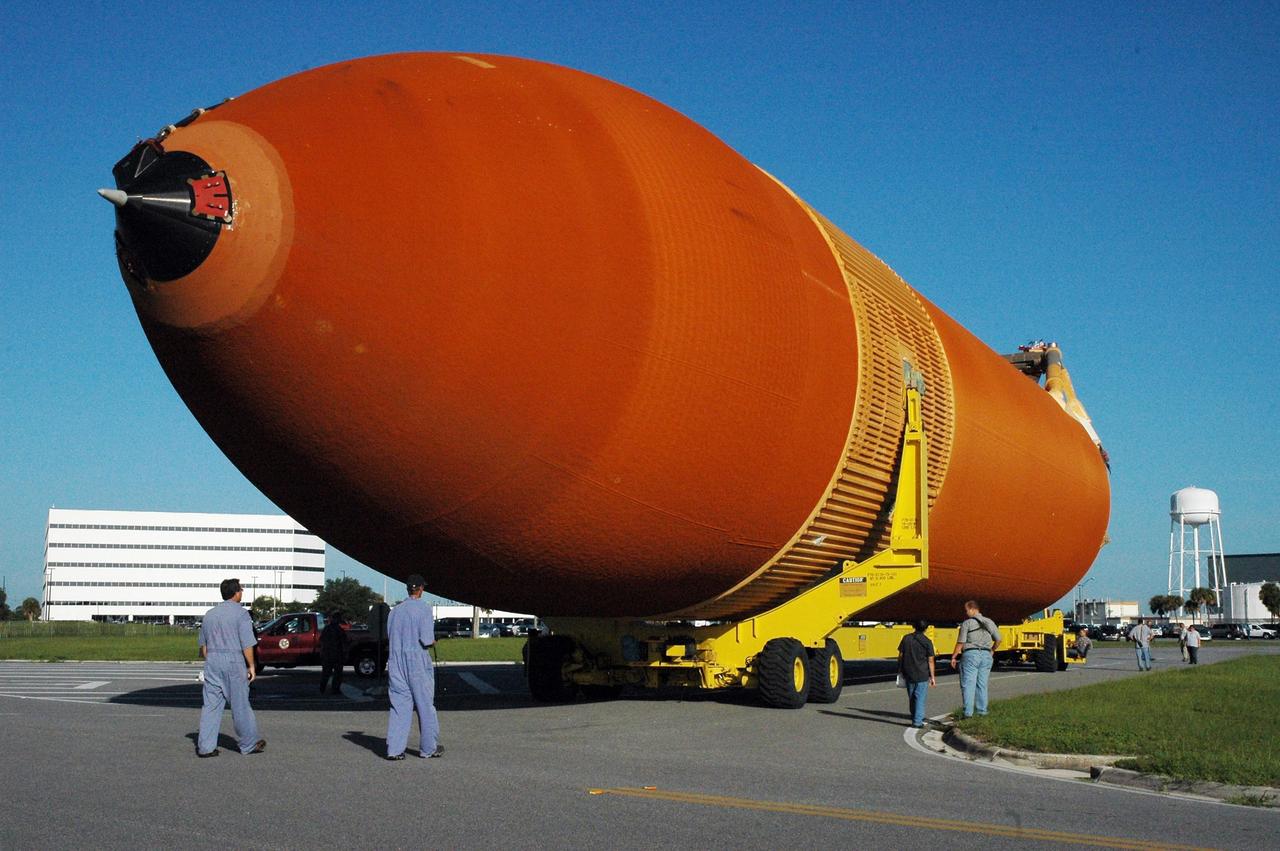
KENNEDY SPACE CENTER, FLA. -- Aboard a transporter, external tank No. 120 makes the turn from near the NASA News Center parking lot in the Launch Complex 39 Area to the Vehicle Assembly Building. There it will be lifted into a checkout cell. The tank arrived from the Michoud Assembly Facility near New Orleans, making the journey around the Florida peninsula in tow by the JA Bisso II tugboat. ET-120 will be used for launching Space Shuttle Discovery on mission STS-120 in October. NASA/Amanda Diller
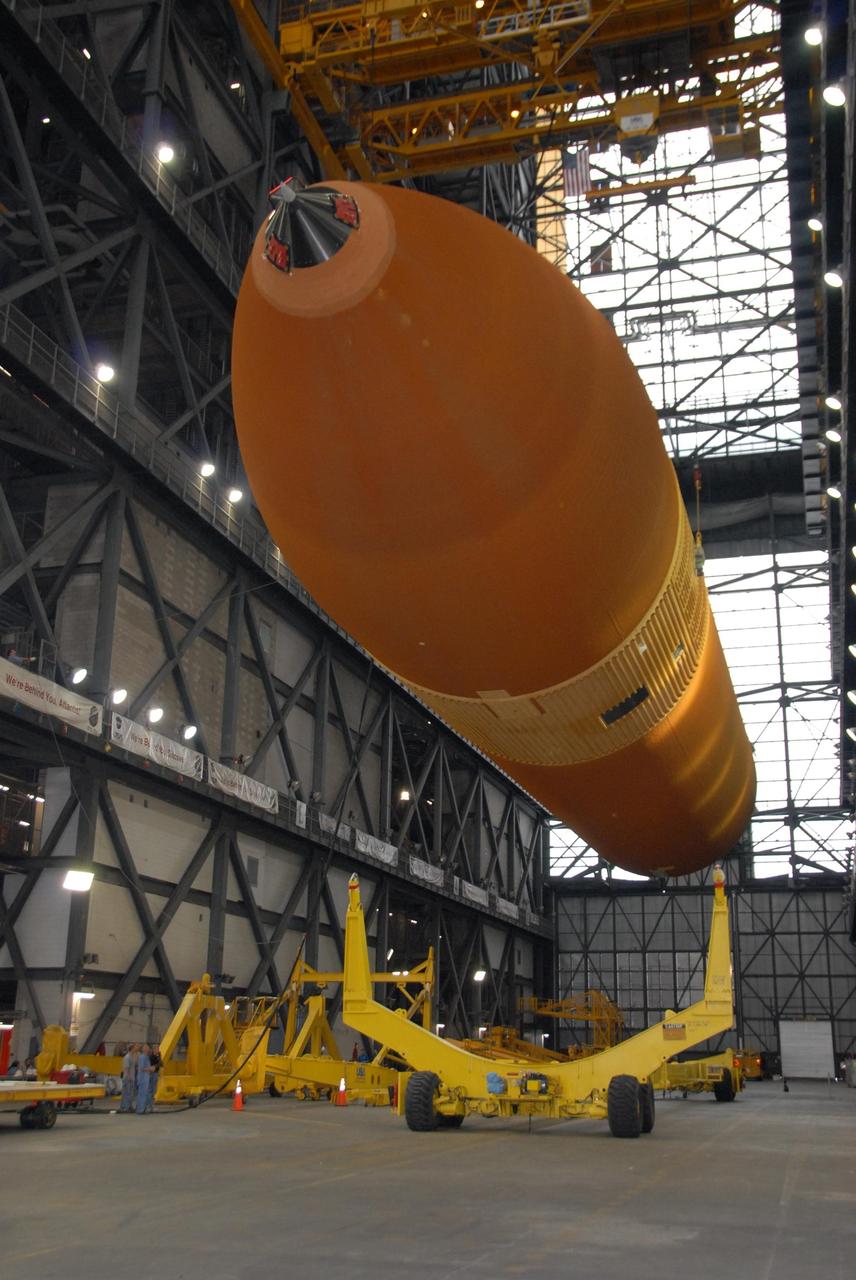
KENNEDY SPACE CENTER, FLA. -- In the transfer aisle of the Vehicle Assembly Building at KSC, an overhead crane raises external tank No. 120 from its transporter. The tank will be lifted into a checkout cell. ET-120 will be used to launch Space Shuttle Discovery on mission STS-120 in October. The mission is the 23rd to the International Space Station and will launch an Italian-built, U.S. multi-port module known as Harmony for the station. Christened after a school contest, Harmony will provide attachment points for European and Japanese laboratory modules. NASA/George Shelton
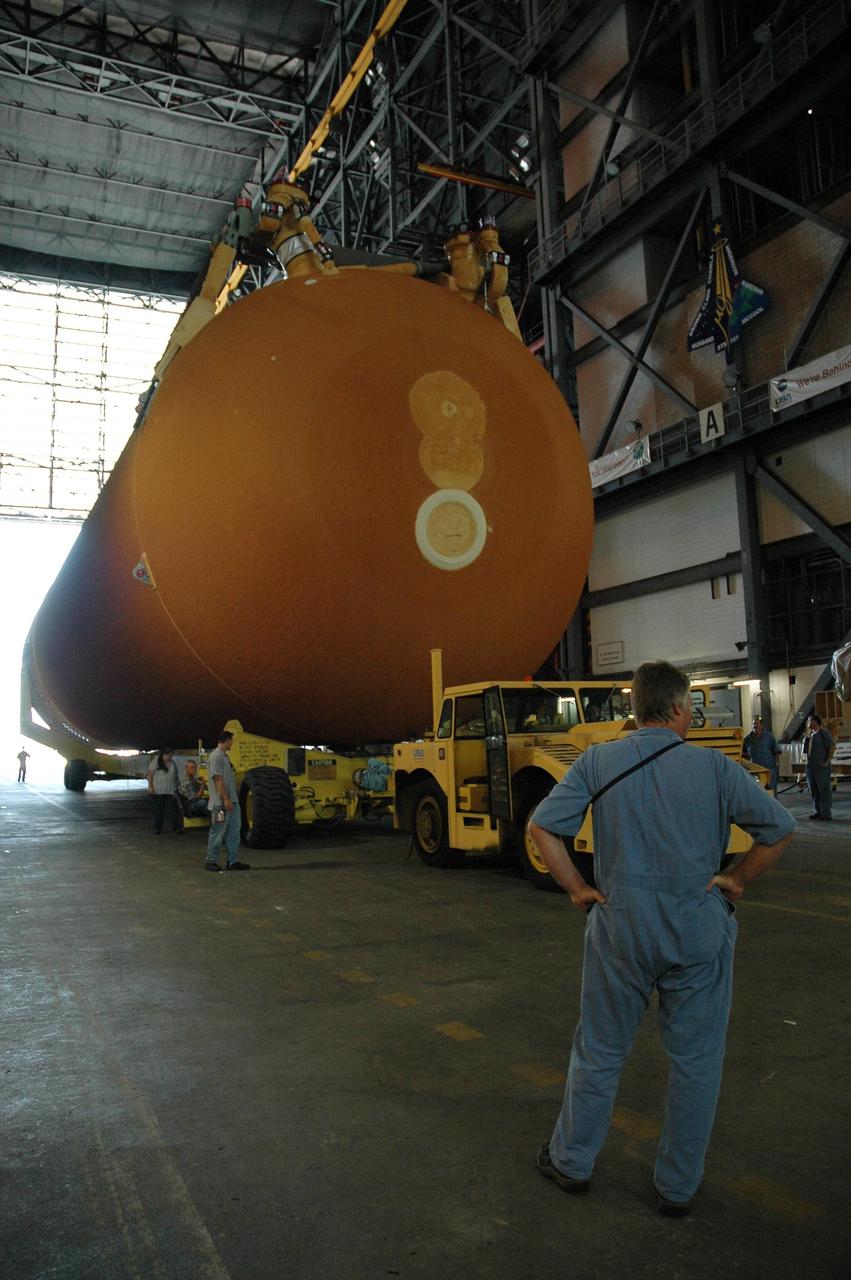
KENNEDY SPACE CENTER, FLA. -- External tank No. 120 is moved into position in the transfer aisle of the Vehicle Assembly Building after its travel from the Pegasus barge at the turn basin. Next, the tank will be lifted into a checkout cell. ET-120 will be used for launching Space Shuttle Discovery on mission STS-120 in October. NASA/Amanda Diller
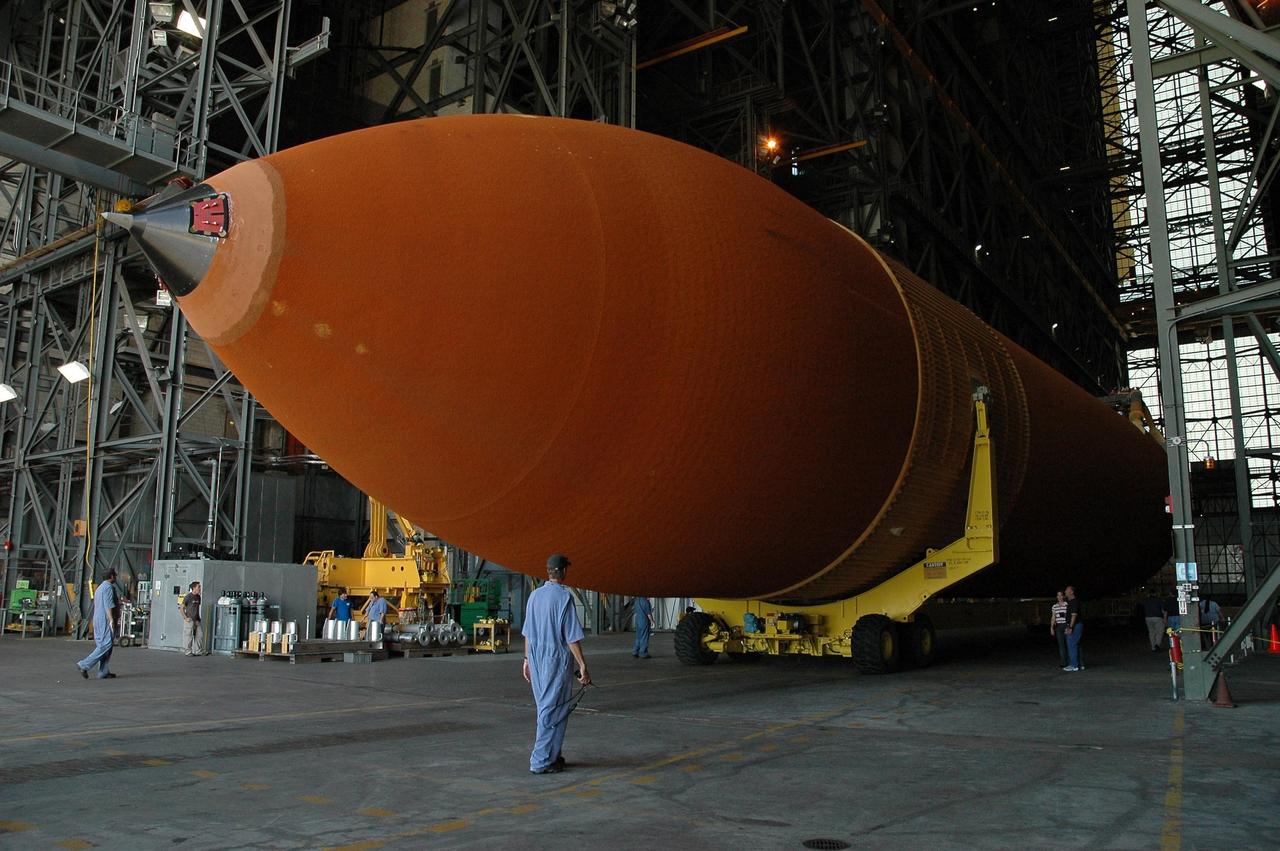
KENNEDY SPACE CENTER, FLA. -- External tank No. 120 comes to a stop in the transfer aisle of the Vehicle Assembly Building after its move from the Pegasus barge at the turn basin. Next, the tank will be lifted into a checkout cell. ET-120 will be used for launching Space Shuttle Discovery on mission STS-120 in October. NASA/Amanda Diller
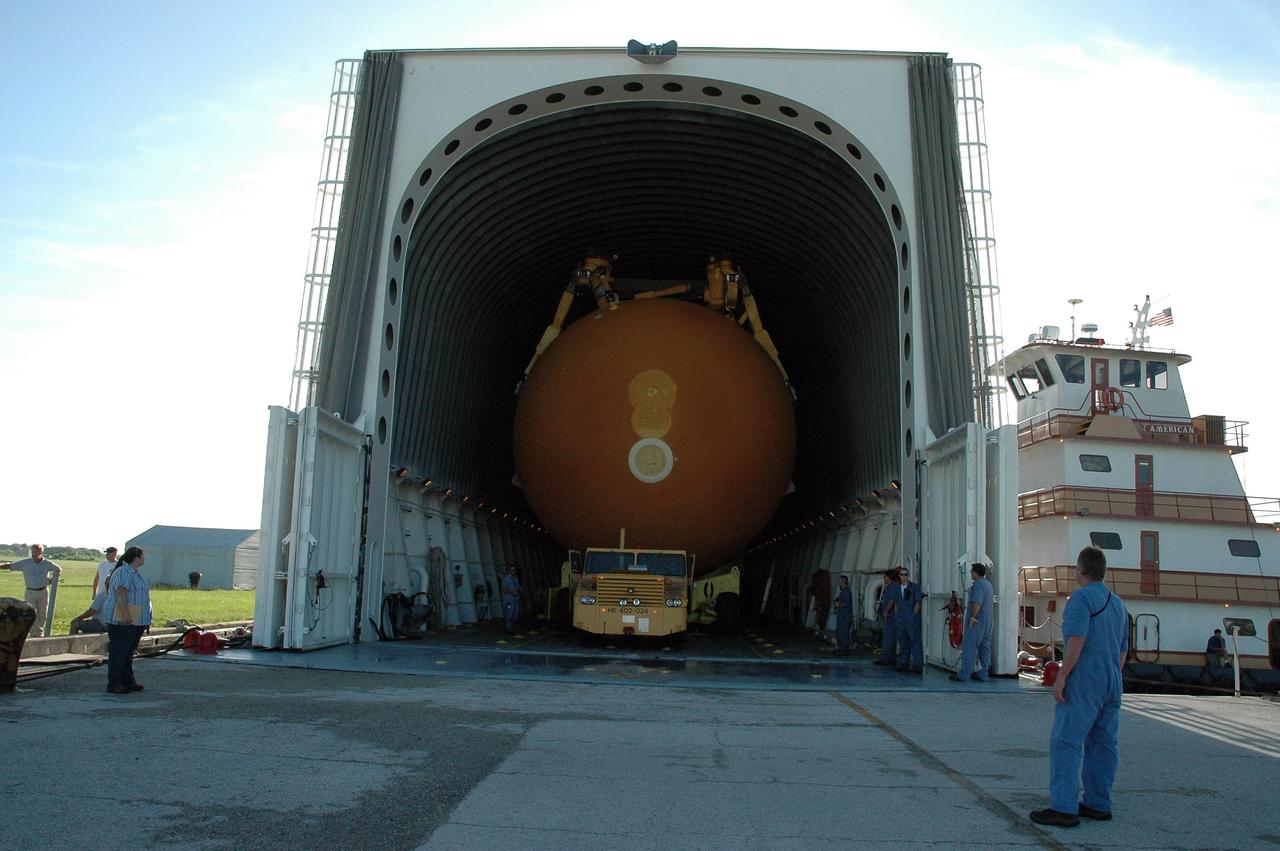
KENNEDY SPACE CENTER, FLA. -- External tank No. 120 is ready to be offloaded from the Pegasus barge, which is docked at the Launch Complex 39 Area turn basin. The tank will be moved to the Vehicle Assembly Building and lifted into a checkout cell. The barge carried the tank from the Michoud Assembly Facility near New Orleans, making the journey around the Florida peninsula in tow by the JA Bisso II tugboat, to Port Canaveral and Kennedy Space Center. After the tank is offloaded, it will be towed to the Vehicle Assembly Building for lifting into a checkout cell. ET-120 will be used for launching Space Shuttle Discovery on mission STS-120 in October. NASA/Amanda Diller
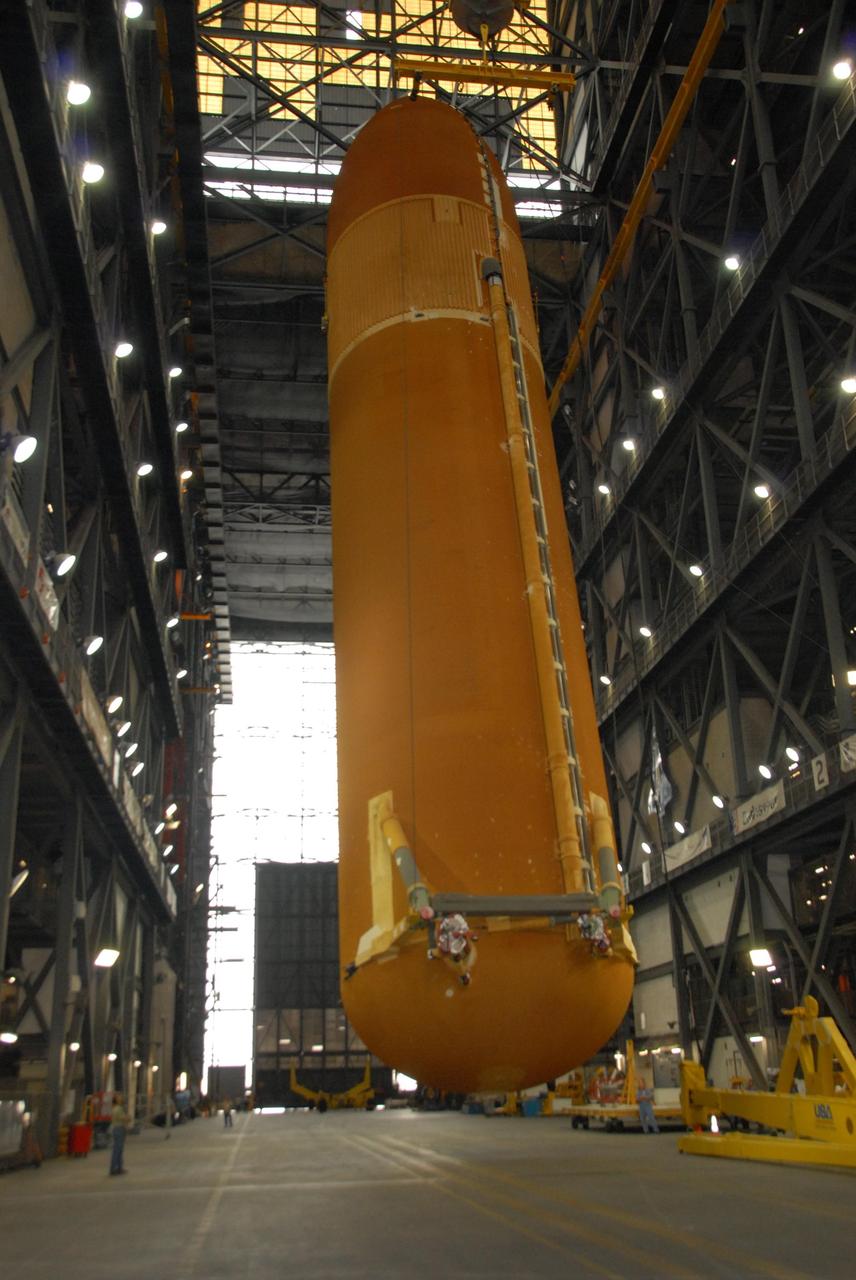
KENNEDY SPACE CENTER, FLA. -- In the transfer aisle of the Vehicle Assembly Building at KSC, an overhead crane raises external tank No. 120 to a vertical position. The tank will next be lifted into a checkout cell. ET-120 will be prepared for stacking with solid rocket boosters to launch Space Shuttle Discovery on mission STS-120 in October. The mission is the 23rd to the International Space Station and will launch an Italian-built, U.S. multi-port module known as Harmony for the station. Christened after a school contest, Harmony will provide attachment points for European and Japanese laboratory modules. NASA/George Shelton
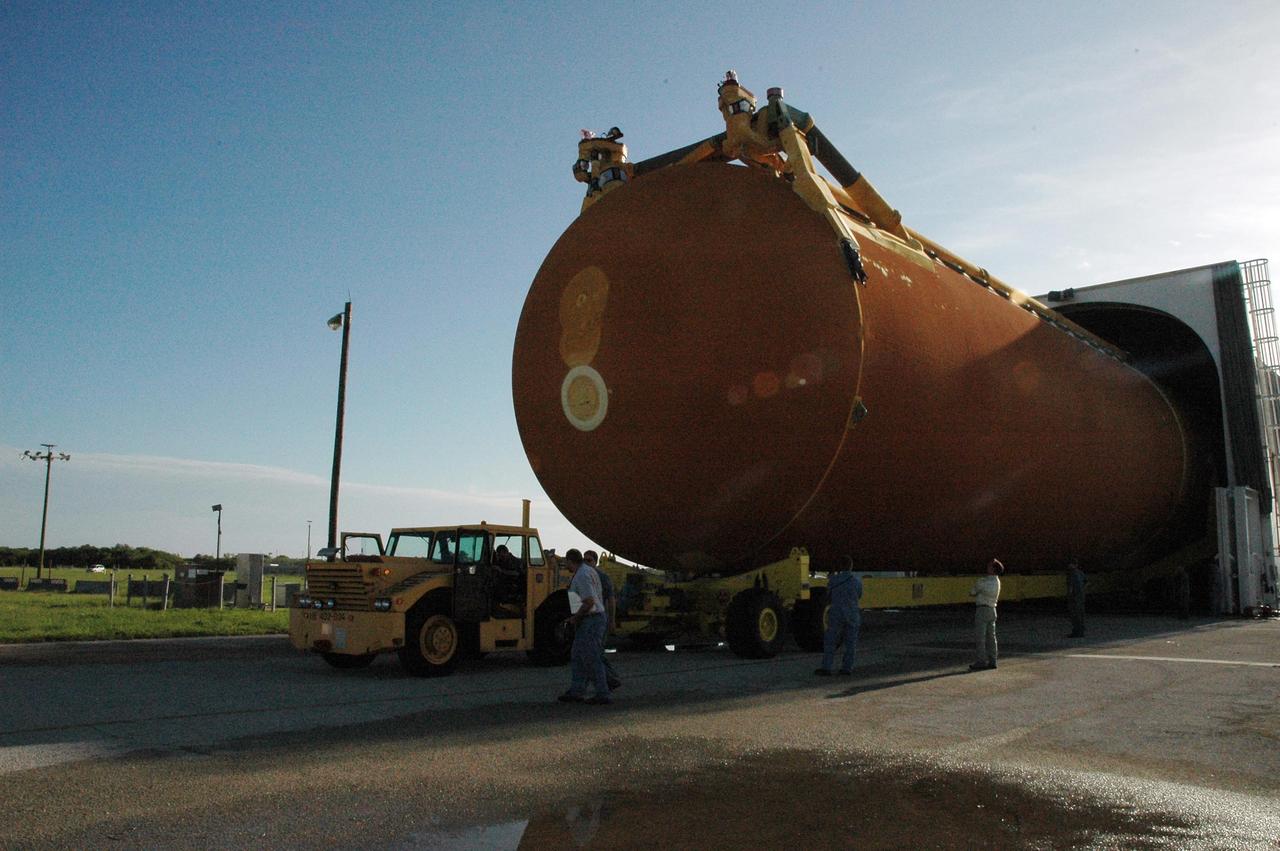
KENNEDY SPACE CENTER, FLA. -- External tank No. 120 is offloaded from the Pegasus barge, which is docked at the Launch Complex 39 Area turn basin. The tank will be moved to the Vehicle Assembly Building and lifted into a checkout cell. The barge carried the tank from the Michoud Assembly Facility near New Orleans, making the journey around the Florida peninsula in tow by the JA Bisso II tugboat, to Port Canaveral and Kennedy Space Center. ET-120 will be used for launching Space Shuttle Discovery on mission STS-120 in October. NASA/Amanda Diller

KENNEDY SPACE CENTER, FLA. -- External tank No. 120 is suspended vertically above the transfer aisle of the Vehicle Assembly Building at KSC. The tank will next be lifted into a checkout cell. ET-120 will be prepared for stacking with solid rocket boosters to launch Space Shuttle Discovery on mission STS-120 in October. The mission is the 23rd to the International Space Station and will launch an Italian-built, U.S. multi-port module known as Harmony for the station. Christened after a school contest, Harmony will provide attachment points for European and Japanese laboratory modules. NASA/George Shelton
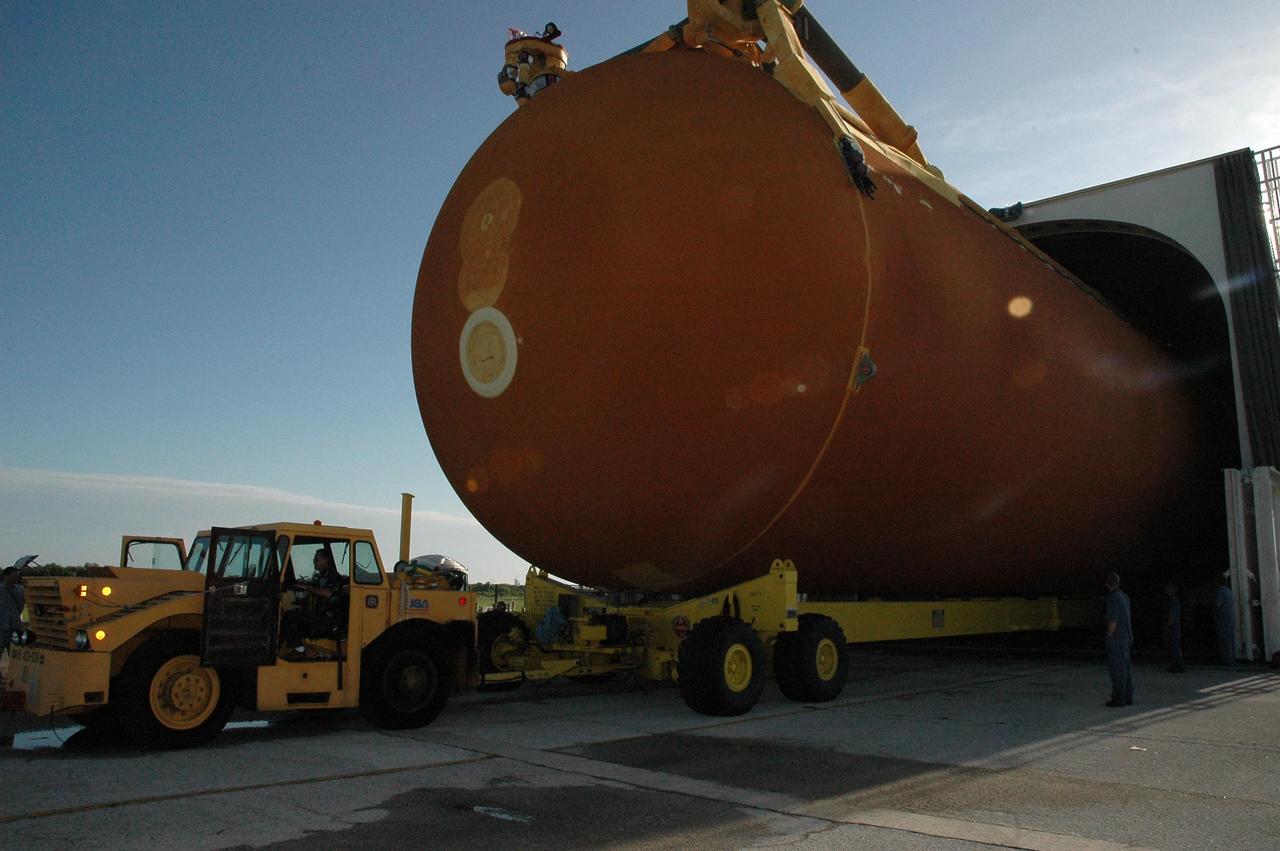
KENNEDY SPACE CENTER, FLA. -- External tank No. 120 is offloaded from the Pegasus barge, which is docked at the Launch Complex 39 Area turn basin. The tank will be moved to the Vehicle Assembly Building and lifted into a checkout cell. The barge carried the tank from the Michoud Assembly Facility near New Orleans, making the journey around the Florida peninsula in tow by the JA Bisso II tugboat, to Port Canaveral and Kennedy Space Center. ET-120 will be used for launching Space Shuttle Discovery on mission STS-120 in October. NASA/Amanda Diller
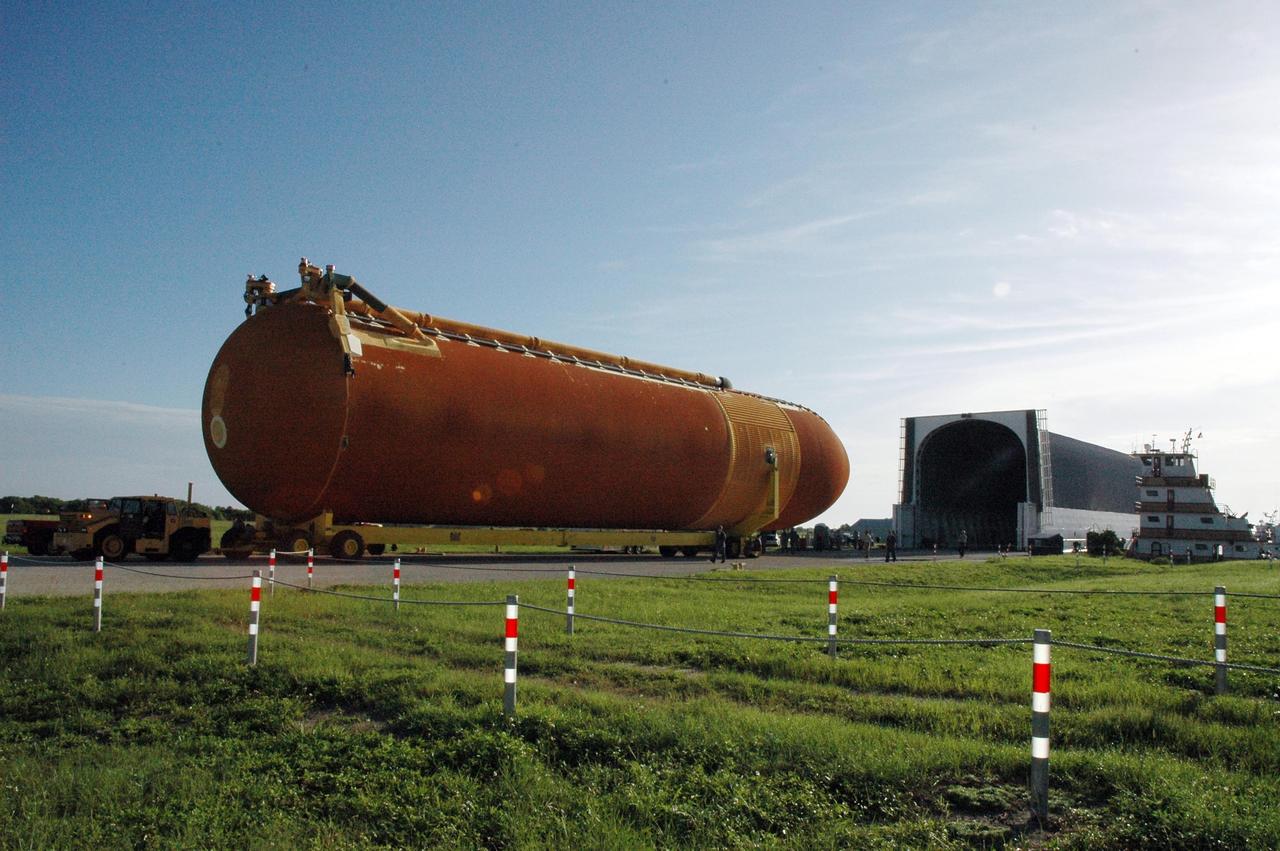
KENNEDY SPACE CENTER, FLA. -- A transporter moves external tank No. 120 away from the Pegasus barge, which is docked at the Launch Complex 39 Area turn basin. The tank is being moved to the Vehicle Assembly Building and will be lifted into a checkout cell. The barge carried the tank from the Michoud Assembly Facility near New Orleans, making the journey around the Florida peninsula in tow by the JA Bisso II tugboat, to Port Canaveral and Kennedy Space Center. ET-120 will be used for launching Space Shuttle Discovery on mission STS-120 in October. NASA/Amanda Diller
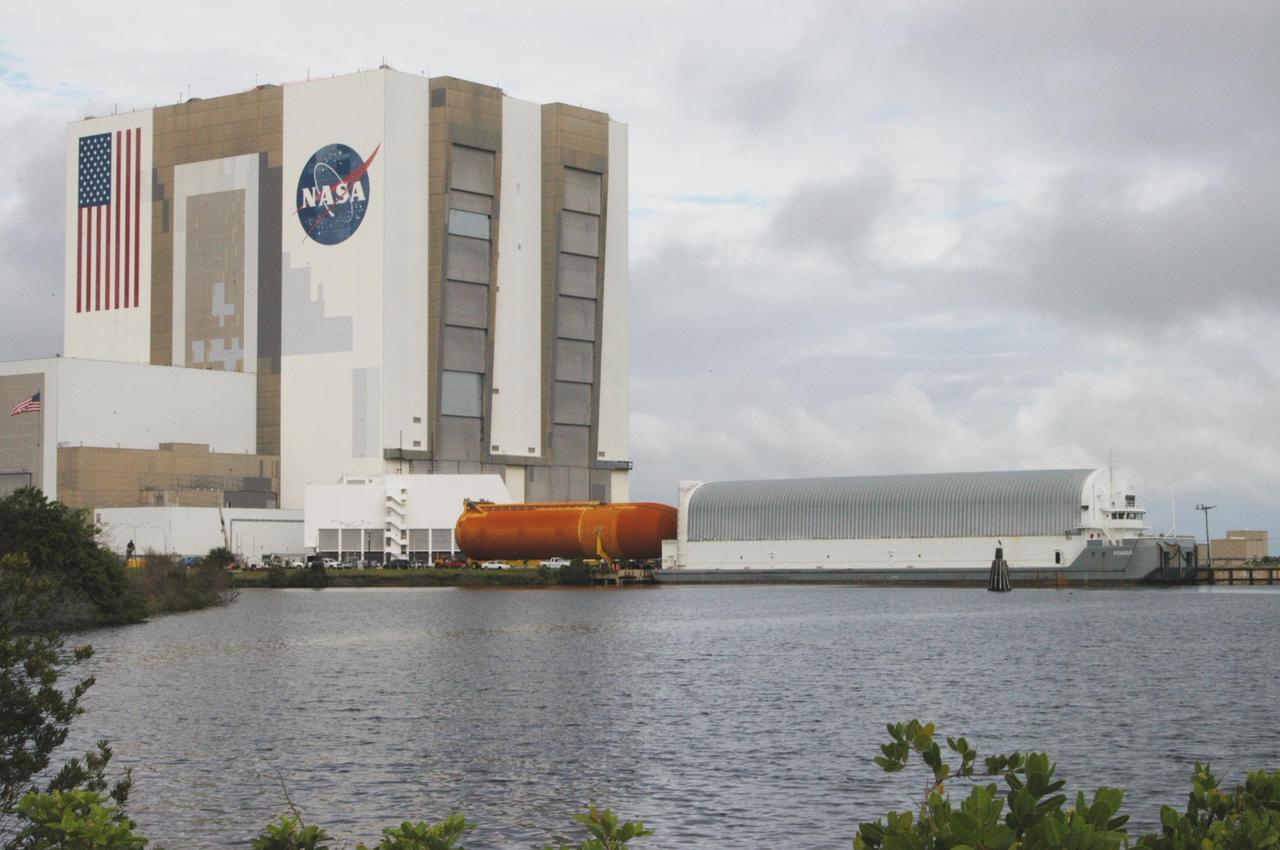
KENNEDY SPACE CENTER, FLA. - After leaving NASA Kennedy Space Center’s Vehicle Assembly Building (in the background), external tank 120 approaches the Turn Basin and the waiting barge Pegasus (at right). The tank will be loaded onto the barge for transport to NASA’s Michoud Assembly Facility in Louisiana for additional modifications. This tank is the first of the newly designed tanks that were delivered to Kennedy. Previously, the tank was stacked with Discovery and, more recently, Atlantis. The tank has already gone through two tanking cycles during tanking tests but was replaced with tank #121 for Discovery’s return to flight mission STS-114.
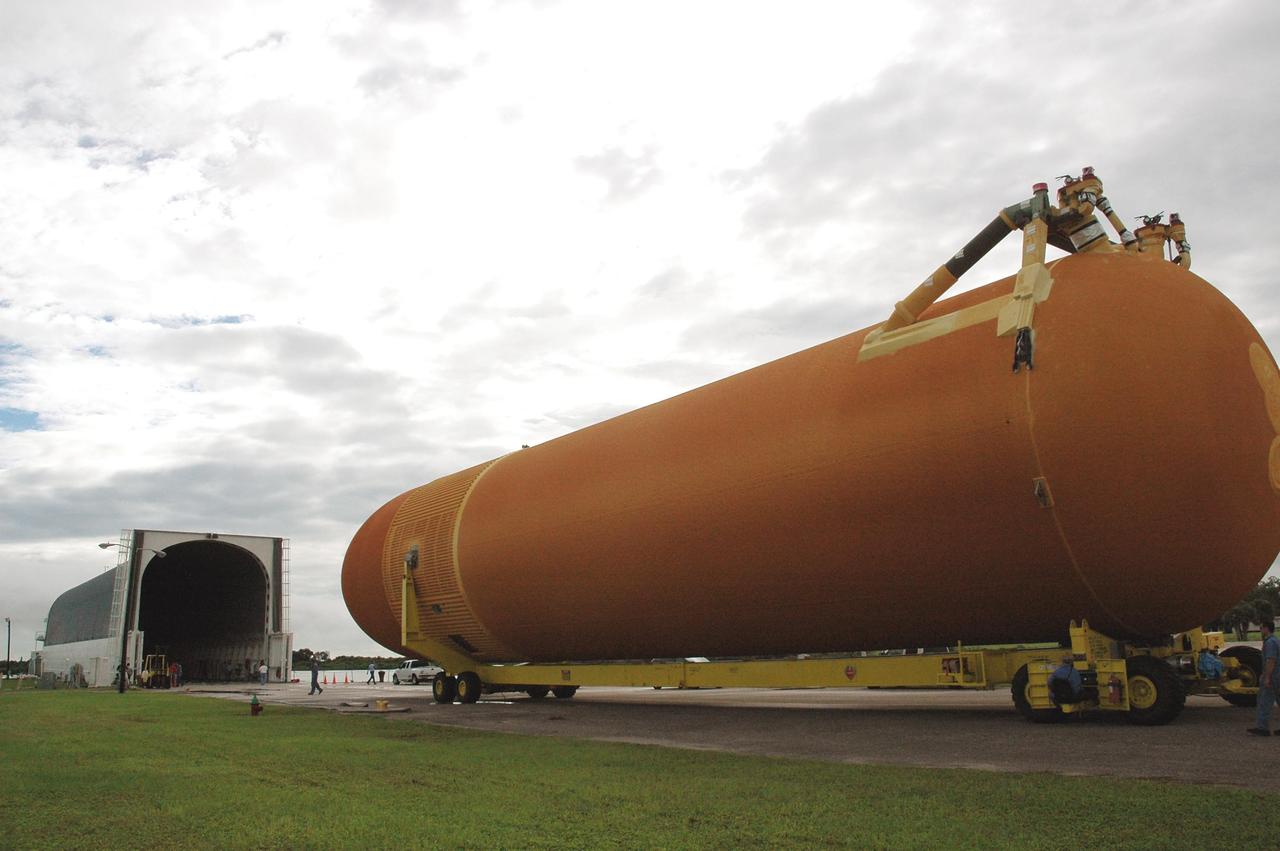
KENNEDY SPACE CENTER, FLA. - External tank #120 approaches the barge Pegasus, docked at the Turn Basin on NASA’s Kennedy Space Center. When the tank is loaded onto the barge, it will be towed to NASA’s Michoud Assembly Facility in Louisiana for additional modifications. This tank is the first of the newly designed tanks that were delivered to Kennedy. Previously, the tank was stacked with Discovery and, more recently, Atlantis. The tank has already gone through two tanking cycles during tanking tests but was replaced with tank #121 for Discovery’s return to flight mission STS-114.
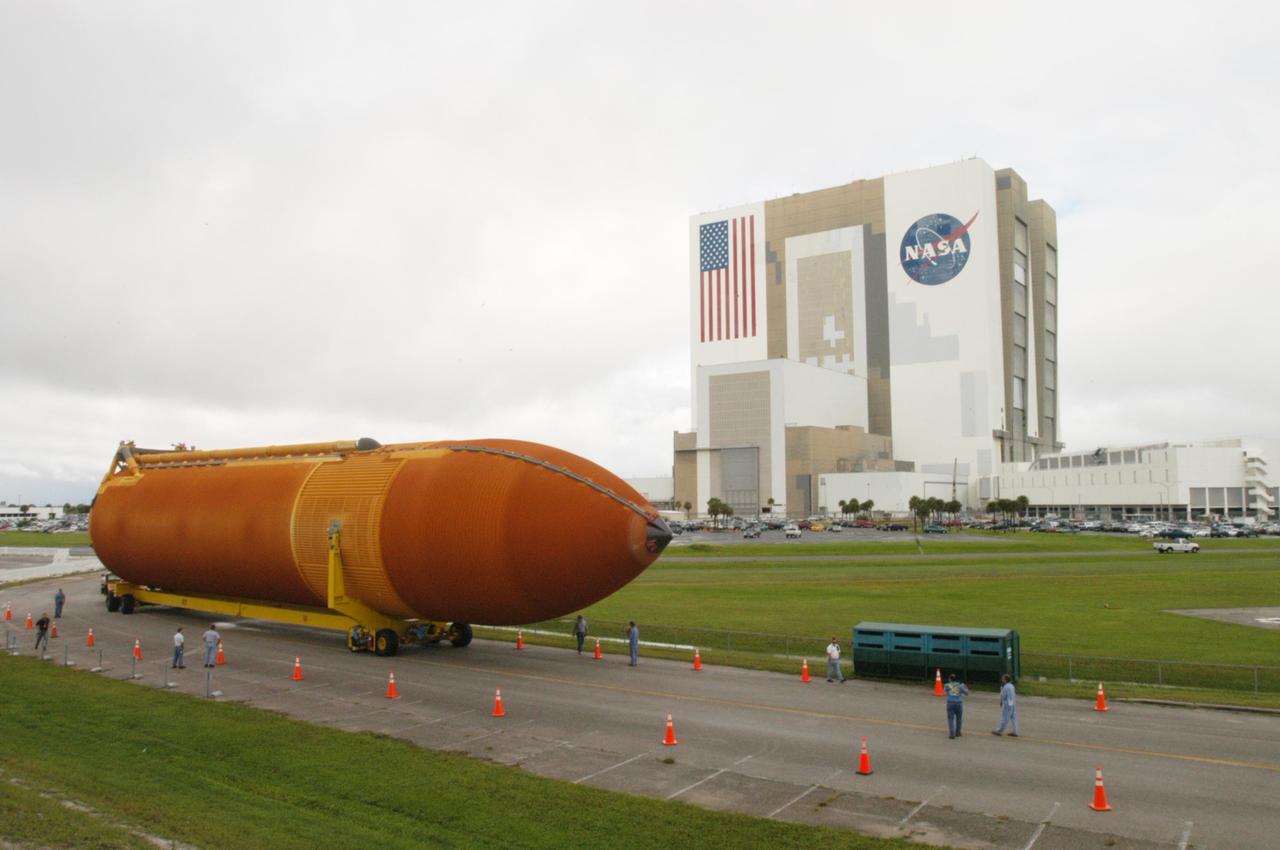
KENNEDY SPACE CENTER, FLA. - External tank 120 is moved from NASA Kennedy Space Center’s Vehicle Assembly Building (in the background) to the Turn Basin and the waiting barge Pegasus. The tank will be loaded onto the barge for transport to NASA’s Michoud Assembly Facility in Louisiana for additional modifications. This tank is the first of the newly designed tanks that were delivered to Kennedy. Previously, the tank was stacked with Discovery and, more recently, Atlantis. The tank has already gone through two tanking cycles during tanking tests but was replaced with tank #121 for Discovery’s return to flight mission STS-114.
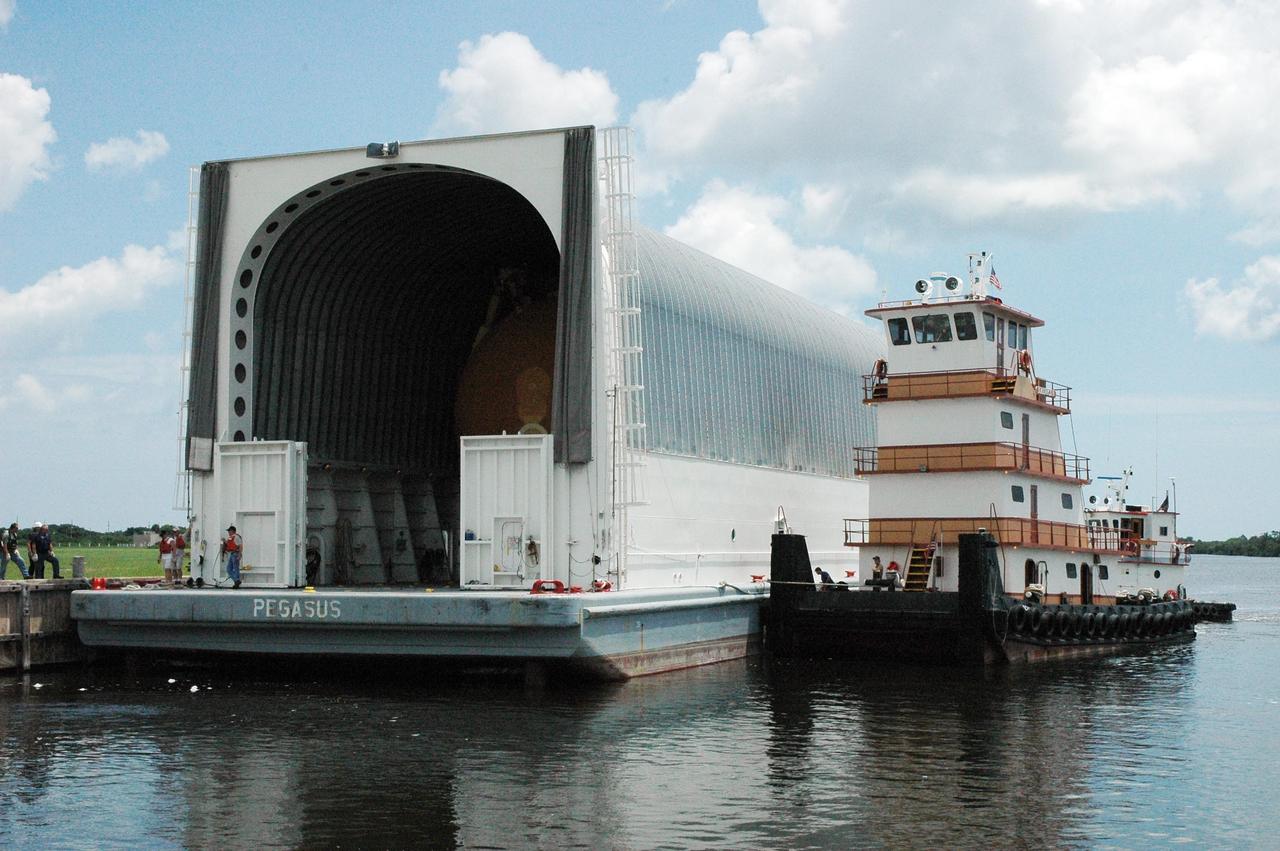
KENNEDY SPACE CENTER, FLA. -- In the Launch Complex 39 Area turn basin, the lead tugboat helps move the Pegasus barge closer to the dock so its cargo can be offloaded. The barge carries external tank No. 120, to be used for launching Space Shuttle Discovery on mission STS-120 in October. The barge has carried the tank from the Michoud Assembly Facility near New Orleans, making the journey around the Florida peninsula in tow by the JA Bisso II tugboat, to Port Canaveral and Kennedy Space Center. After the tank is offloaded, it will be towed to the Vehicle Assembly Building for lifting into a checkout cell. NASA/Amanda Diller
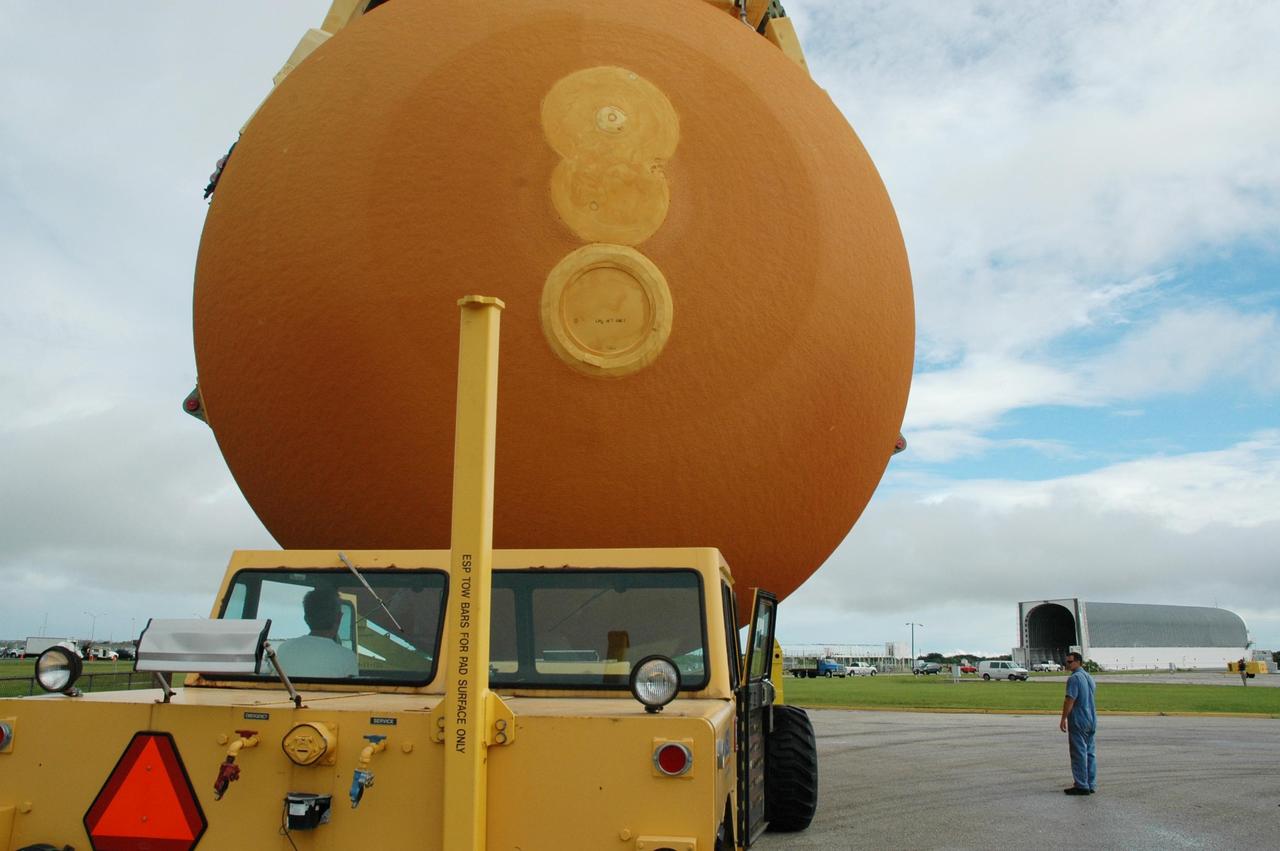
KENNEDY SPACE CENTER, FLA. - The driver of the external tank transporter maneuvers external tank #120 toward the nearby Turn Basin on NASA’s Kennedy Space Center where the barge Pegasus is waiting (right). The barge will be towed to NASA’s Michoud Assembly Facility in Louisiana for additional modifications. This tank is the first of the newly designed tanks that were delivered to Kennedy. Previously, the tank was stacked with Discovery and, more recently, Atlantis. The tank has already gone through two tanking cycles during tanking tests but was replaced with tank #121 for Discovery’s return to flight mission STS-114.
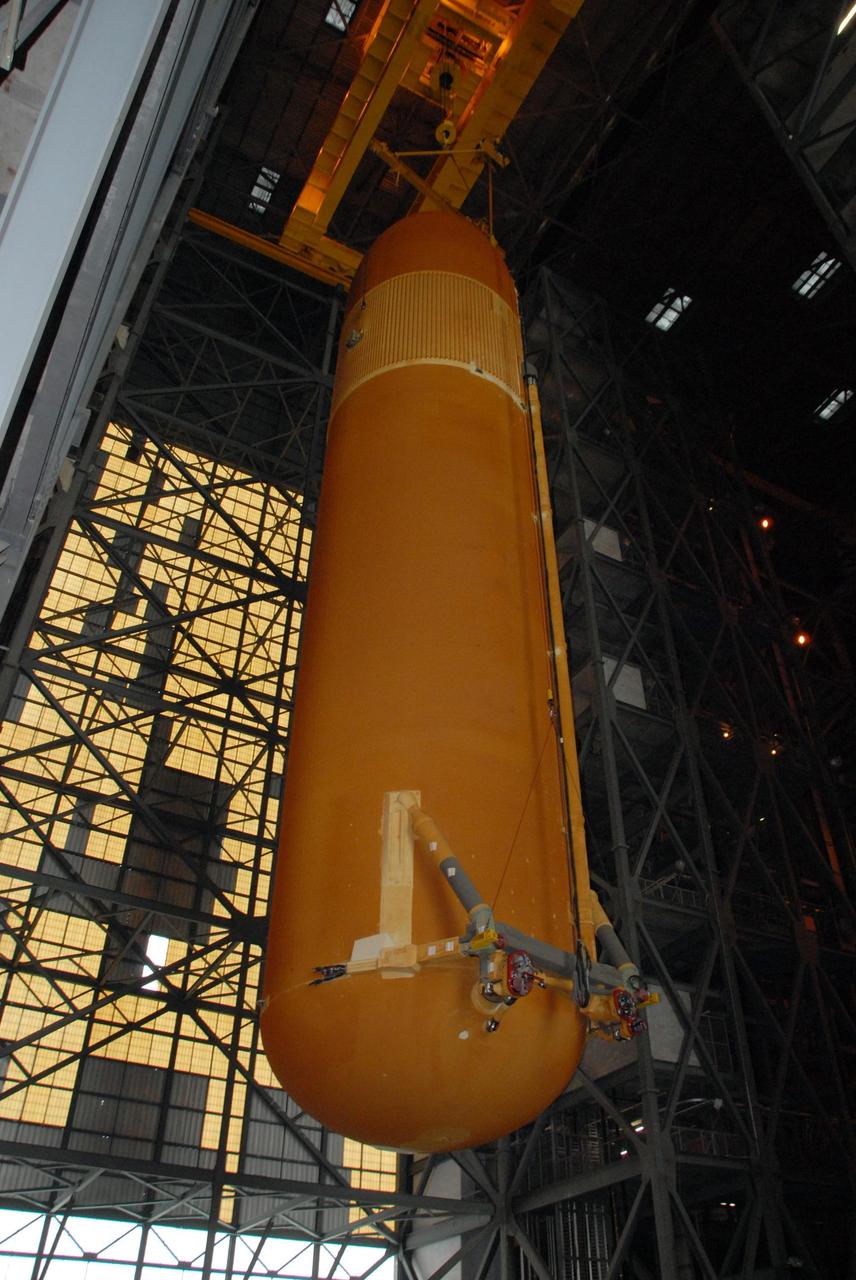
KENNEDY SPACE CENTER, FLA. -- In the Vehicle Assembly Building at KSC, a crane lifts external tank No. 120 into the upper regions. The tank is being lifted for a move into a checkout cell. The tank will be prepared for stacking with solid rocket boosters to launch Space Shuttle Discovery on mission STS-120 in October. The mission is the 23rd to the International Space Station and will launch an Italian-built, U.S. multi-port module known as Harmony for the station. Christened after a school contest, Harmony will provide attachment points for European and Japanese laboratory modules. NASA/George Shelton
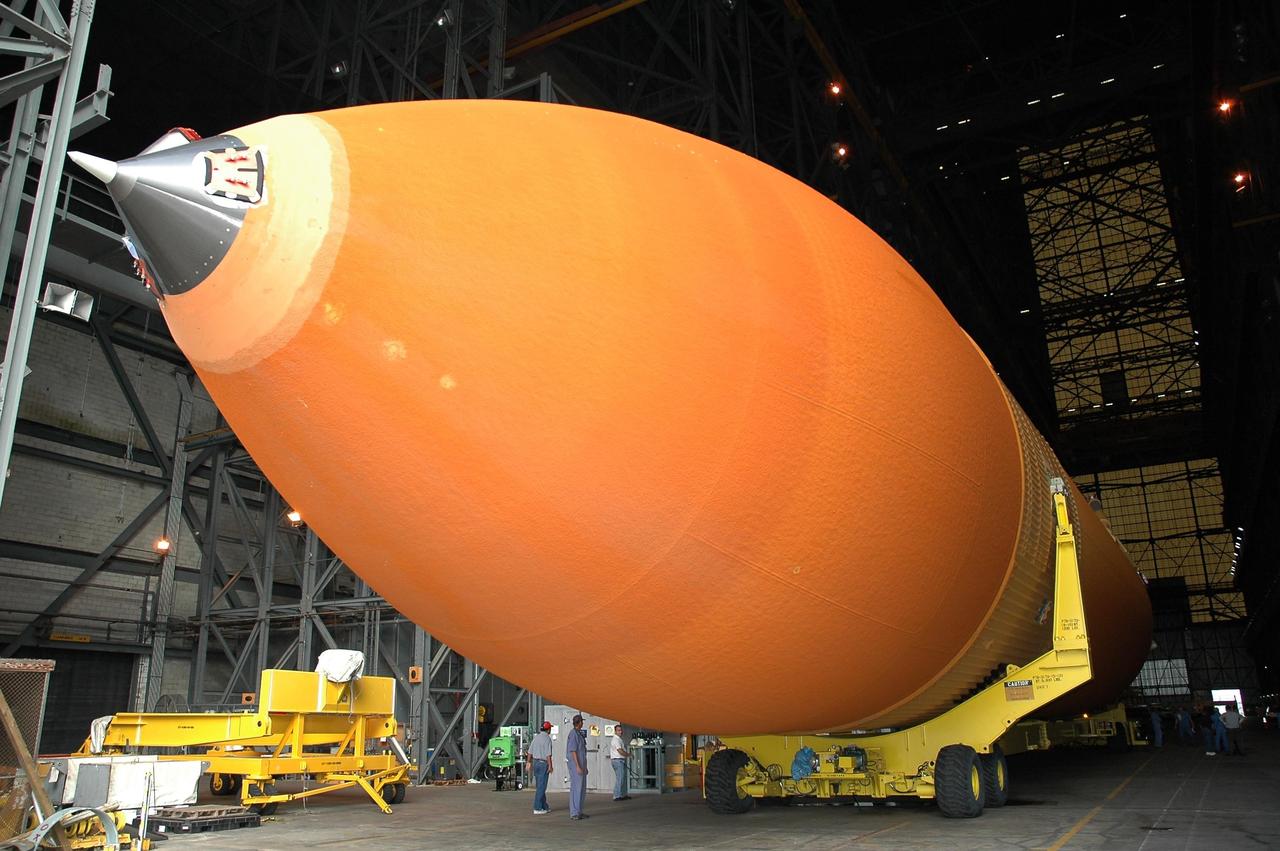
KENNEDY SPACE CENTER, FLA. - External tank #120 rests on a transporter in NASA Kennedy Space Center’s Vehicle Assembly Building. The tank will be moved to the nearby Turn Basin and loaded onto the barge Pegasus for towing to NASA’s Michoud Assembly Facility in Louisiana for additional modifications. This tank is the first of the newly designed tanks that were delivered to Kennedy. Previously, the tank was stacked with Discovery and, more recently, Atlantis. The tank has already gone through two tanking cycles during tanking tests but was replaced with tank #121 for Discovery’s return to flight mission STS-114.
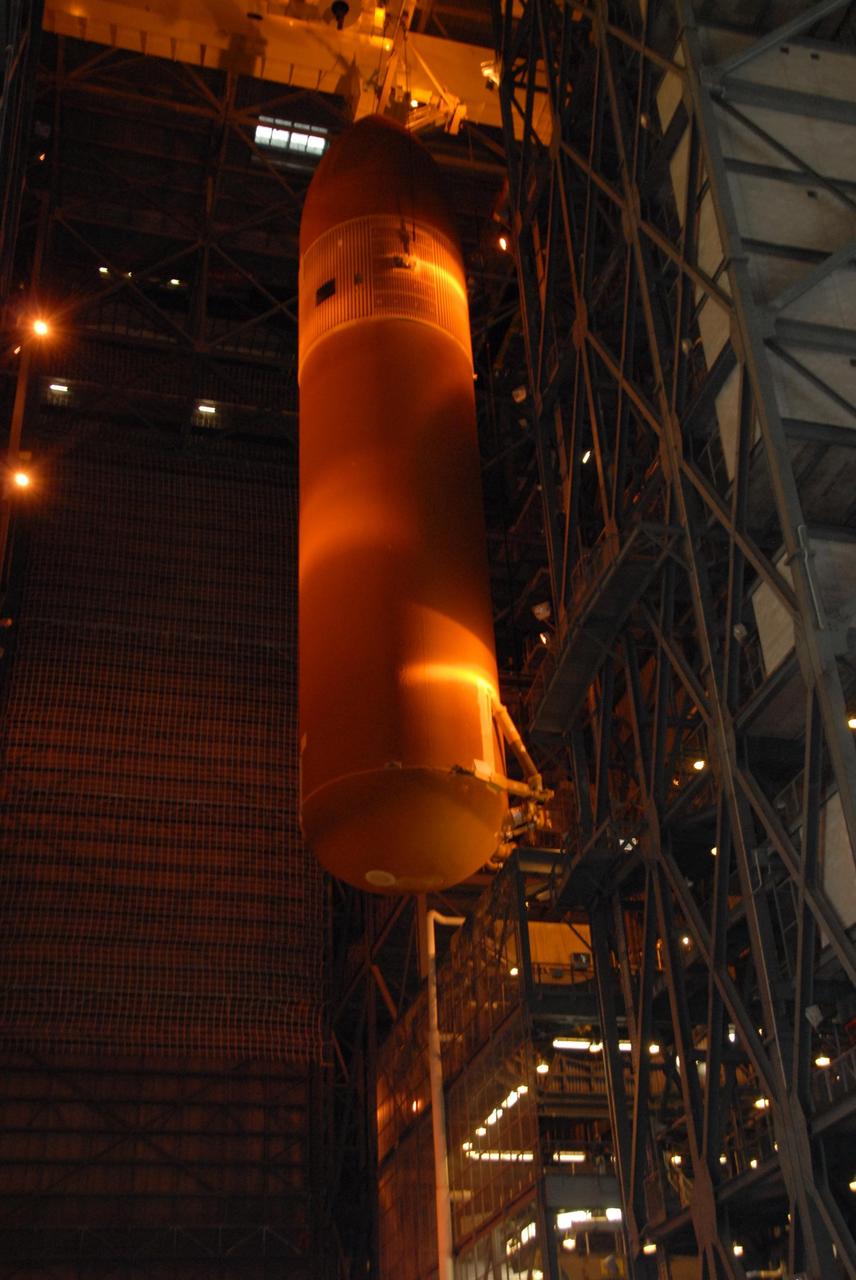
KENNEDY SPACE CENTER, FLA. -- In the Vehicle Assembly Building at KSC, a crane moves laterally to carry external tank No. 120 into a checkout cell. The tank will be prepared for stacking with solid rocket boosters to launch Space Shuttle Discovery on mission STS-120 in October. The mission is the 23rd to the International Space Station and will launch an Italian-built, U.S. multi-port module known as Harmony for the station. Christened after a school contest, Harmony will provide attachment points for European and Japanese laboratory modules. NASA/George Shelton

KENNEDY SPACE CENTER, FLA. - In the distance, a tug boat maneuvers the Pegasus barge out of the Turn Basin at NASA’s Kennedy Space Center. The barge is carrying external tank #120, which is being returned to NASA’s Michoud Assembly Facility in Louisiana for additional modifications. The barge is being moved to Port Canaveral where one of NASA’s solid rocket booster retrieval ships will take it and tow it around the Florida peninsula to Michoud. This tank is the first of the newly designed tanks that were delivered to Kennedy. Previously, the tank was stacked with Discovery and, more recently, Atlantis. The tank has already gone through two tanking cycles during tanking tests but was replaced with tank #121 for Discovery’s return to flight mission STS-114.

KENNEDY SPACE CENTER, FLA. - After leaving NASA Kennedy Space Center’s Vehicle Assembly Building (in the background), external tank 120 nears the Turn Basin and the waiting barge Pegasus (at right). The tank will be loaded onto the barge for transport to NASA’s Michoud Assembly Facility in Louisiana for additional modifications. This tank is the first of the newly designed tanks that were delivered to Kennedy. Previously, the tank was stacked with Discovery and, more recently, Atlantis. The tank has already gone through two tanking cycles during tanking tests but was replaced with tank #121 for Discovery’s return to flight mission STS-114.

KENNEDY SPACE CENTER, FLA. -- Calm waters in the Launch Complex 39 Area turn basin provide smooth transit for the Pegasus barge, carrying external tank No. 120. The tank will be used for launching Space Shuttle Discovery on mission STS-120 in October. The barge has carried the tank from the Michoud Assembly Facility near New Orleans, making the journey around the Florida peninsula in tow by the JA Bisso II tugboat, to Port Canaveral and Kennedy Space Center. After the tank is offloaded, it will be towed to the Vehicle Assembly Building for lifting into a checkout cell. NASA/Amanda Diller
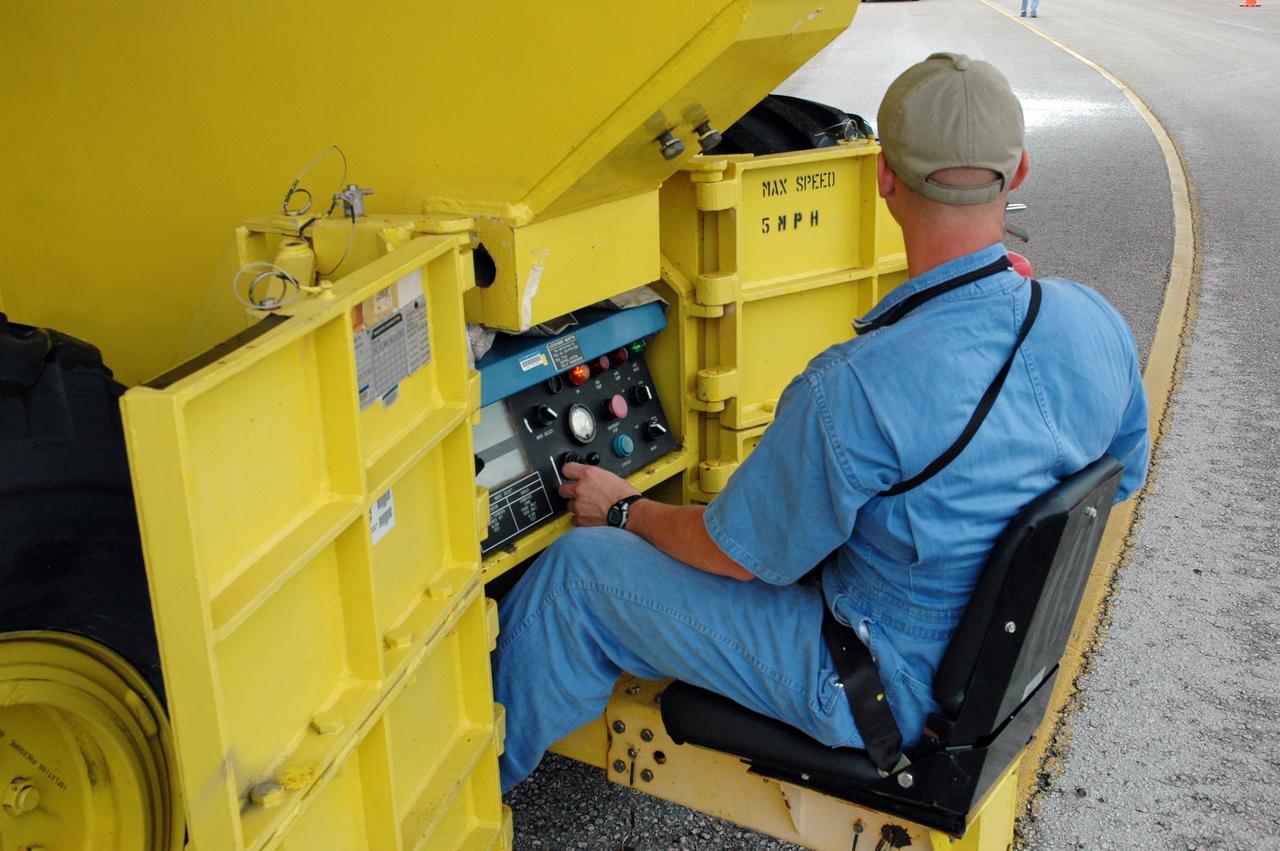
KENNEDY SPACE CENTER, FLA. - One of the operators of the external tank transporter sits on the side of the vehicle. Carrying external tank #120, the transporter is making the turn toward the nearby Turn Basin. The tank will be loaded onto the barge Pegasus for towing to NASA’s Michoud Assembly Facility in Louisiana for additional modifications. This tank is the first of the newly designed tanks that were delivered to Kennedy. Previously, the tank was stacked with Discovery and, more recently, Atlantis. The tank has already gone through two tanking cycles during tanking tests but was replaced with tank #121 for Discovery’s return to flight mission STS-114.
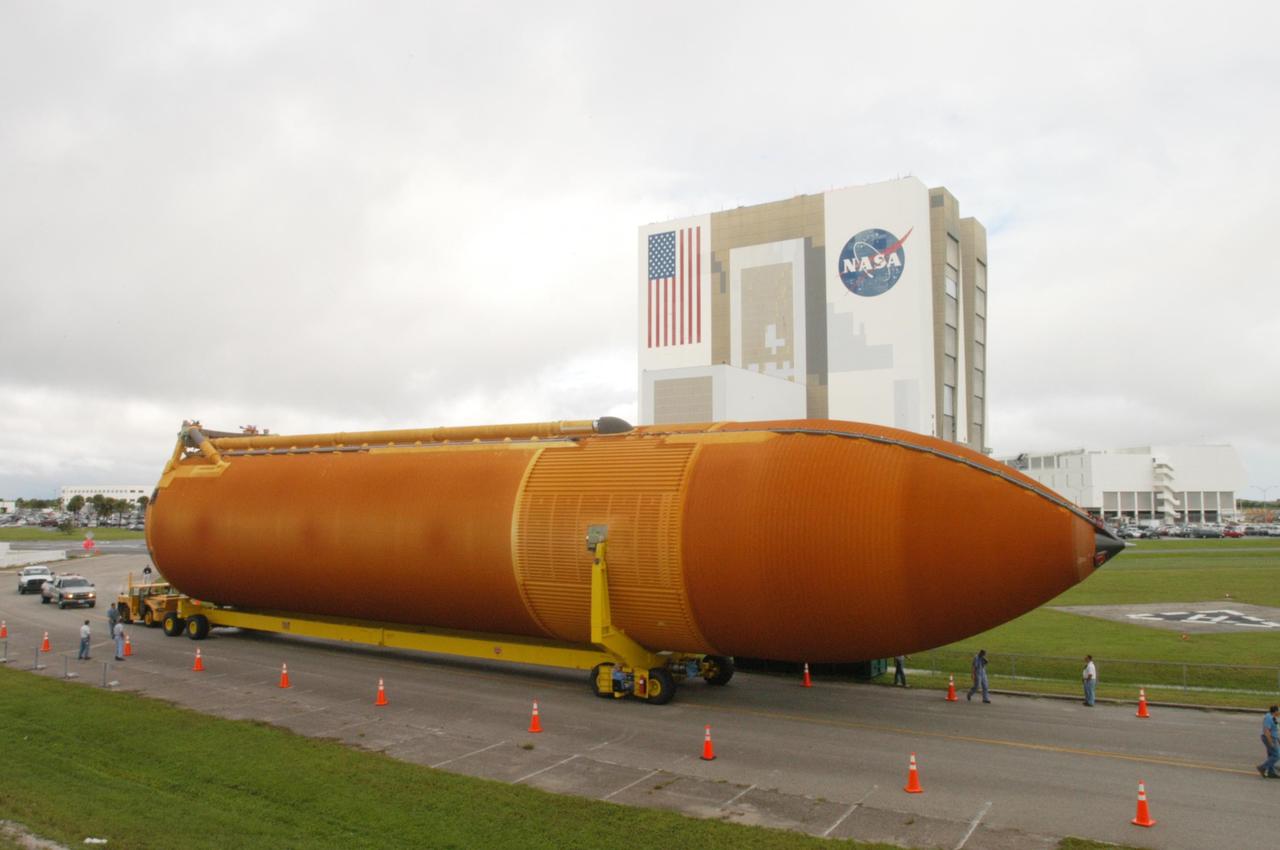
KENNEDY SPACE CENTER, FLA. - External tank 120 is moved from NASA Kennedy Space Center’s Vehicle Assembly Building (in the background) to the Turn Basin and the waiting barge Pegasus. The tank will be loaded onto the barge for transport to NASA’s Michoud Assembly Facility in Louisiana for additional modifications. This tank is the first of the newly designed tanks that were delivered to Kennedy. Previously, the tank was stacked with Discovery and, more recently, Atlantis. The tank has already gone through two tanking cycles during tanking tests but was replaced with tank #121 for Discovery’s return to flight mission STS-114.
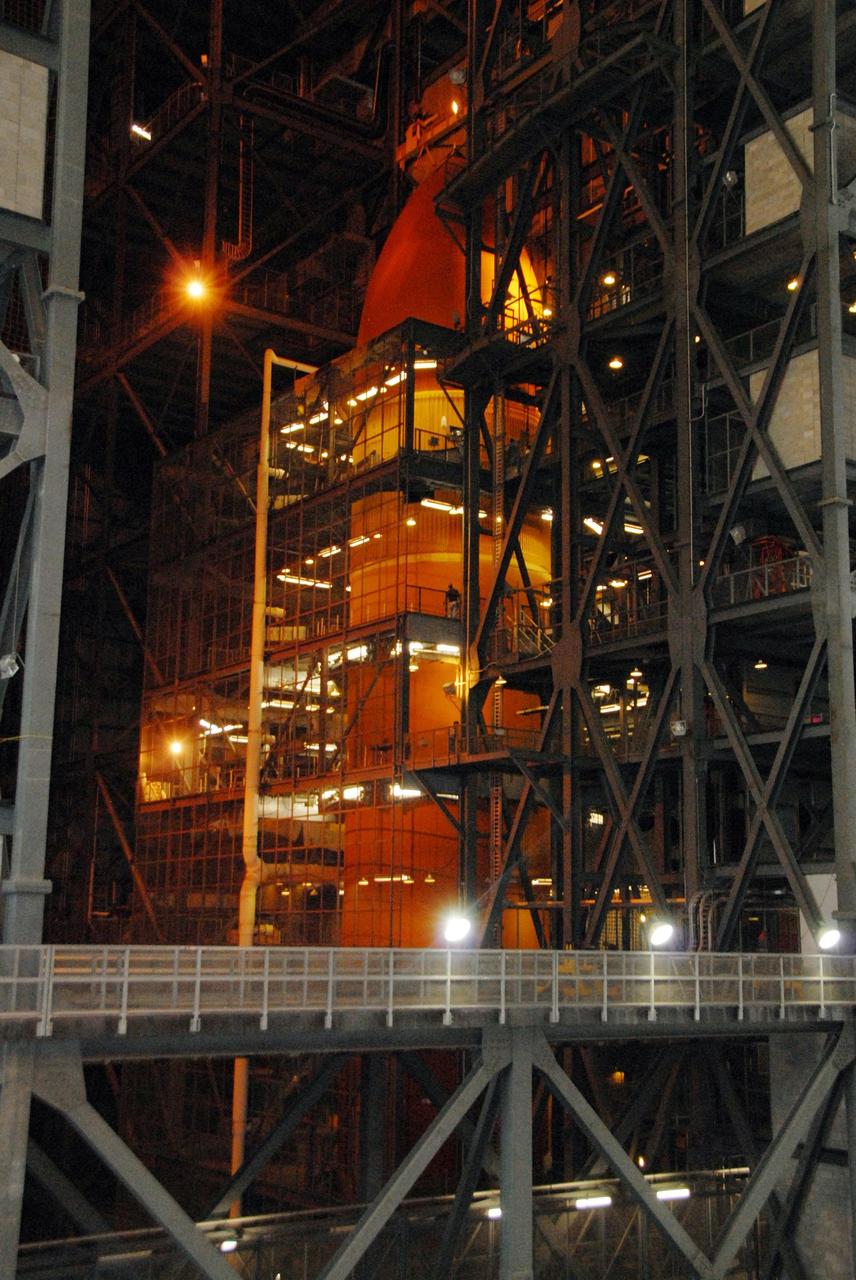
KENNEDY SPACE CENTER, FLA. -- In the Vehicle Assembly Building at KSC, external tank No. 120 is in place in a checkout cell. The tank will be prepared for stacking with solid rocket boosters to launch Space Shuttle Discovery on mission STS-120 in October. The mission is the 23rd to the International Space Station and will launch an Italian-built, U.S. multi-port module known as Harmony for the station. Christened after a school contest, Harmony will provide attachment points for European and Japanese laboratory modules. NASA/George Shelton

KENNEDY SPACE CENTER, FLA. -- Tugboats tow the Pegasus barge to the landing dock in the Launch Complex 39 Area. The barge carries external tank No. 120, to be used for launching Space Shuttle Discovery on mission STS-120 in October. The barge has carried the tank from the Michoud Assembly Facility near New Orleans, making the journey around the Florida peninsula in tow by the JA Bisso II tugboat, to Port Canaveral and Kennedy Space Center. After the tank is offloaded, it will be towed to the Vehicle Assembly Building for lifting into a checkout cell. NASA/Amanda Diller
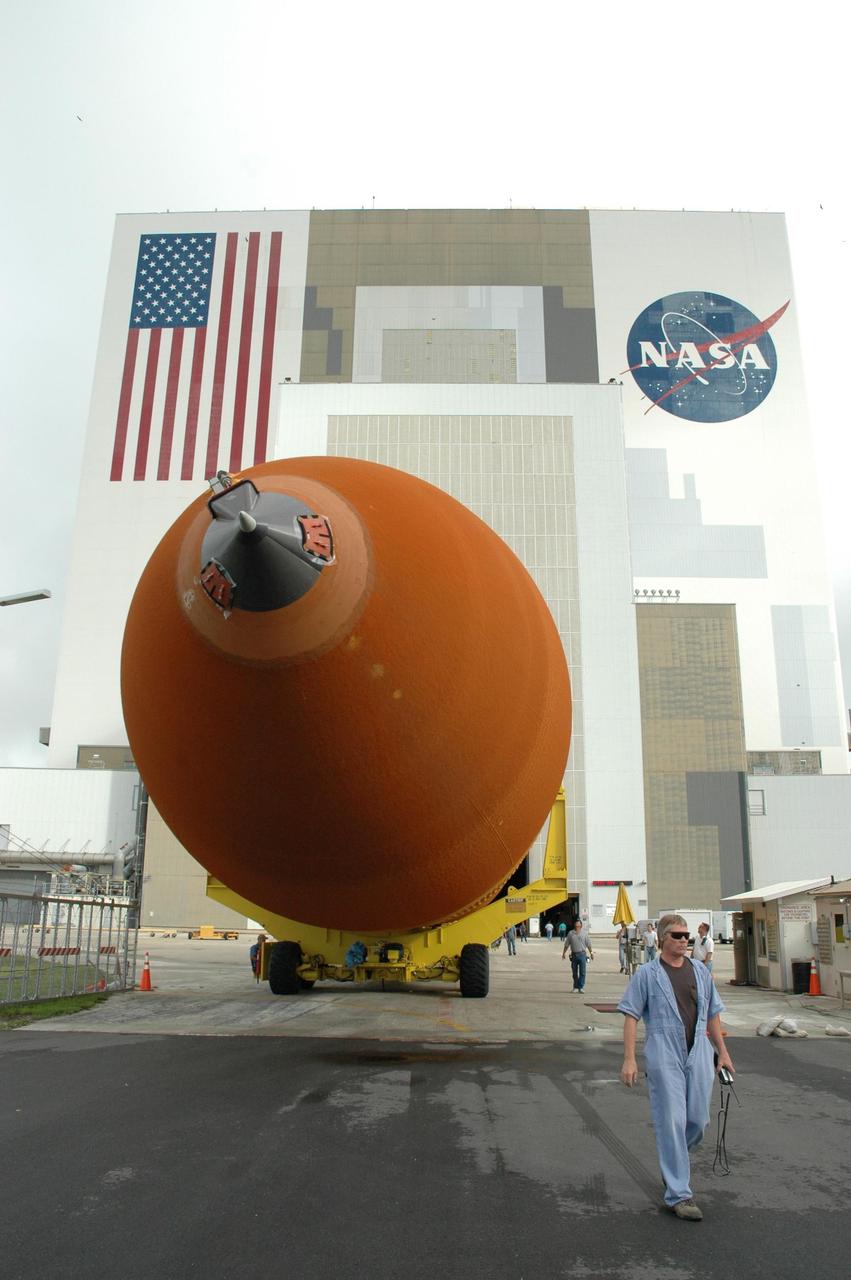
KENNEDY SPACE CENTER, FLA. - External tank #120 moves out of NASA Kennedy Space Center’s Vehicle Assembly Building (behind it). The tank is being moved to the nearby Turn Basin and will be loaded onto the barge Pegasus for towing to NASA’s Michoud Assembly Facility in Louisiana for additional modifications. This tank is the first of the newly designed tanks that were delivered to Kennedy. Previously, the tank was stacked with Discovery and, more recently, Atlantis. The tank has already gone through two tanking cycles during tanking tests but was replaced with tank #121 for Discovery’s return to flight mission STS-114.
KENNEDY SPACE CENTER, FLA. - External tank #120 rolls into the barge Pegasus, docked at the Turn Basin on NASA’s Kennedy Space Center. After the tank is fully loaded onto the barge, it will be towed to NASA’s Michoud Assembly Facility in Louisiana for additional modifications. This tank is the first of the newly designed tanks that were delivered to Kennedy. Previously, the tank was stacked with Discovery and, more recently, Atlantis. The tank has already gone through two tanking cycles during tanking tests but was replaced with tank #121 for Discovery’s return to flight mission STS-114.
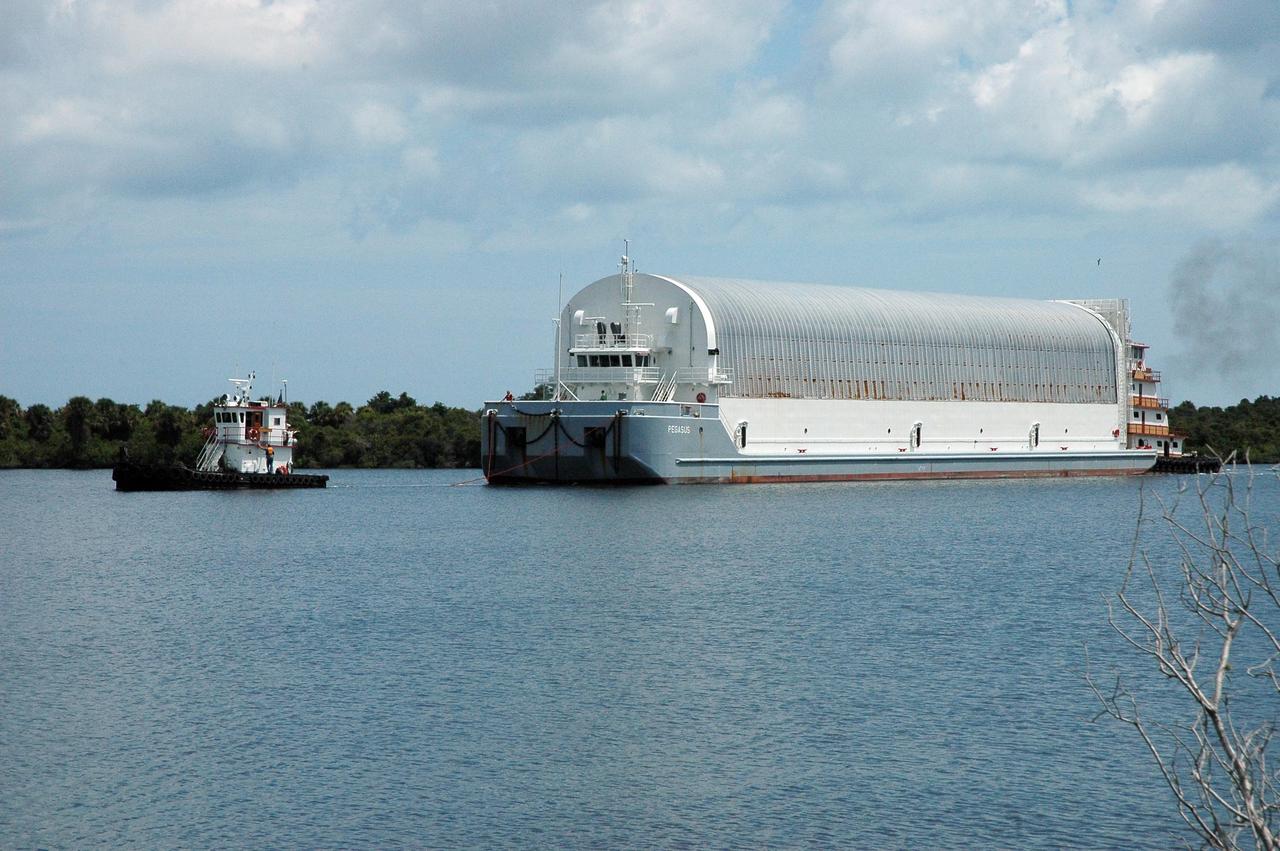
KENNEDY SPACE CENTER, FLA. -- The Pegasus barge is towed into the Launch Complex 39 Area turn basin. The cargo onboard is external tank No. 120, to be used for launching Space Shuttle Discovery on mission STS-120 in October. The barge has carried the tank from the Michoud Assembly Facility near New Orleans, making the journey around the Florida peninsula in tow by the JA Bisso II tugboat to Port Canaveral and Kennedy Space Center. After the tank is offloaded, it will be towed to the Vehicle Assembly Building for lifting into a checkout cell. NASA/Amanda Diller
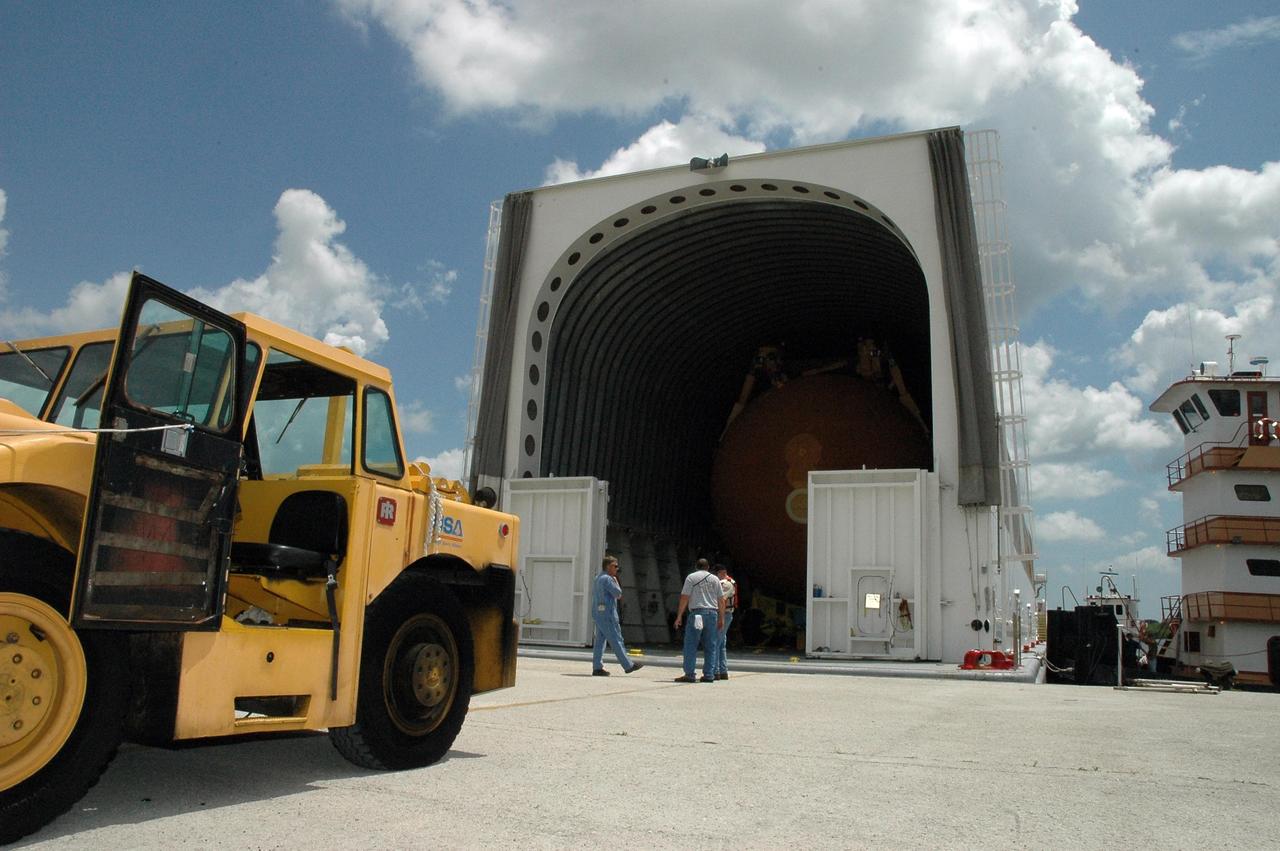
KENNEDY SPACE CENTER, FLA. -- The Pegasus barge is secure at the dock in the Launch Complex 39 Area turn basin after the last leg of its journey from Port Canaveral. Inside Pegasus can be seen its cargo: external tank No. 120, to be used for launching Space Shuttle Discovery on mission STS-120 in October. The barge has carried the tank from the Michoud Assembly Facility near New Orleans, making the journey around the Florida peninsula in tow by the JA Bisso II tugboat, to Port Canaveral and Kennedy Space Center. After the tank is offloaded, it will be towed to the Vehicle Assembly Building for lifting into a checkout cell. NASA/Amanda Diller
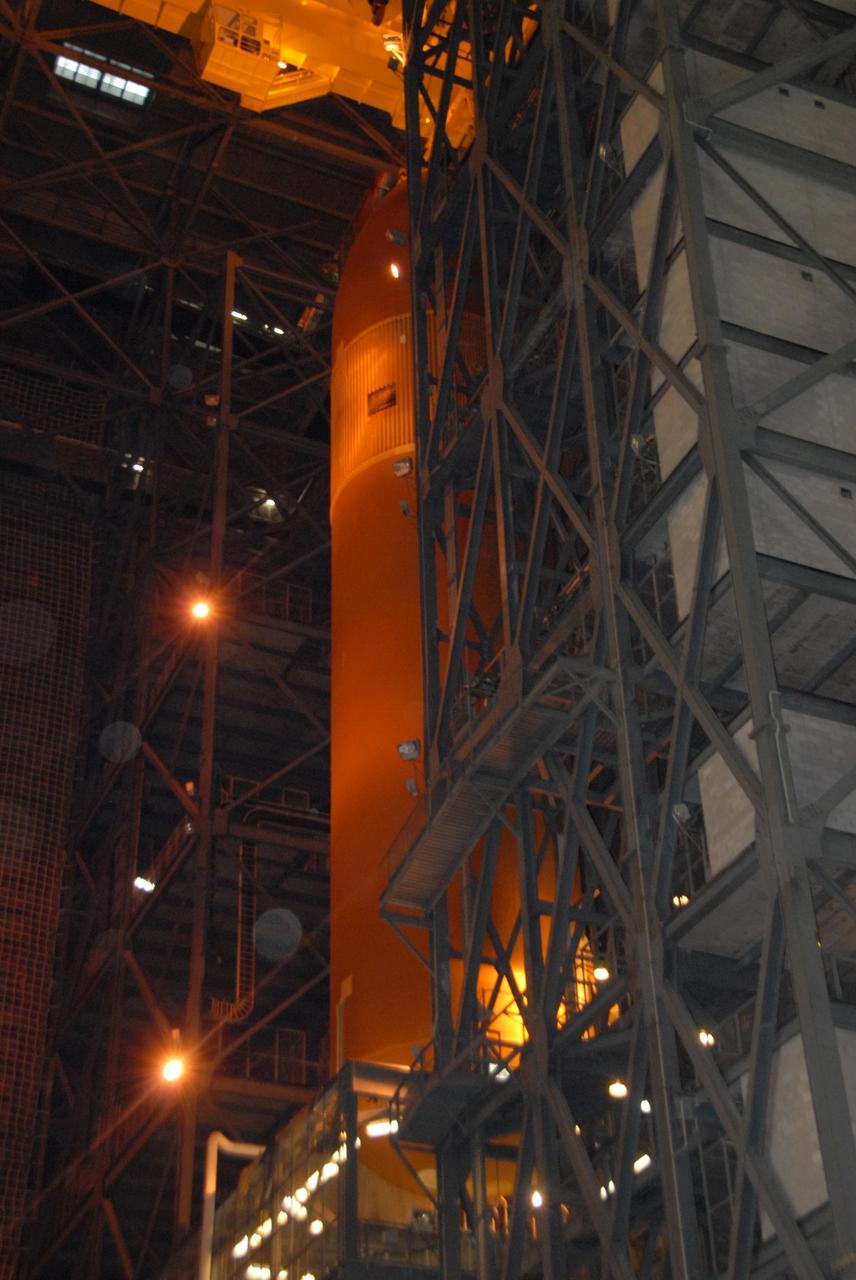
KENNEDY SPACE CENTER, FLA. -- In the Vehicle Assembly Building at KSC, a crane moves external tank No. 120 into a checkout cell. The tank will be prepared for stacking with solid rocket boosters to launch Space Shuttle Discovery on mission STS-120 in October. The mission is the 23rd to the International Space Station and will launch an Italian-built, U.S. multi-port module known as Harmony for the station. Christened after a school contest, Harmony will provide attachment points for European and Japanese laboratory modules. NASA/George Shelton
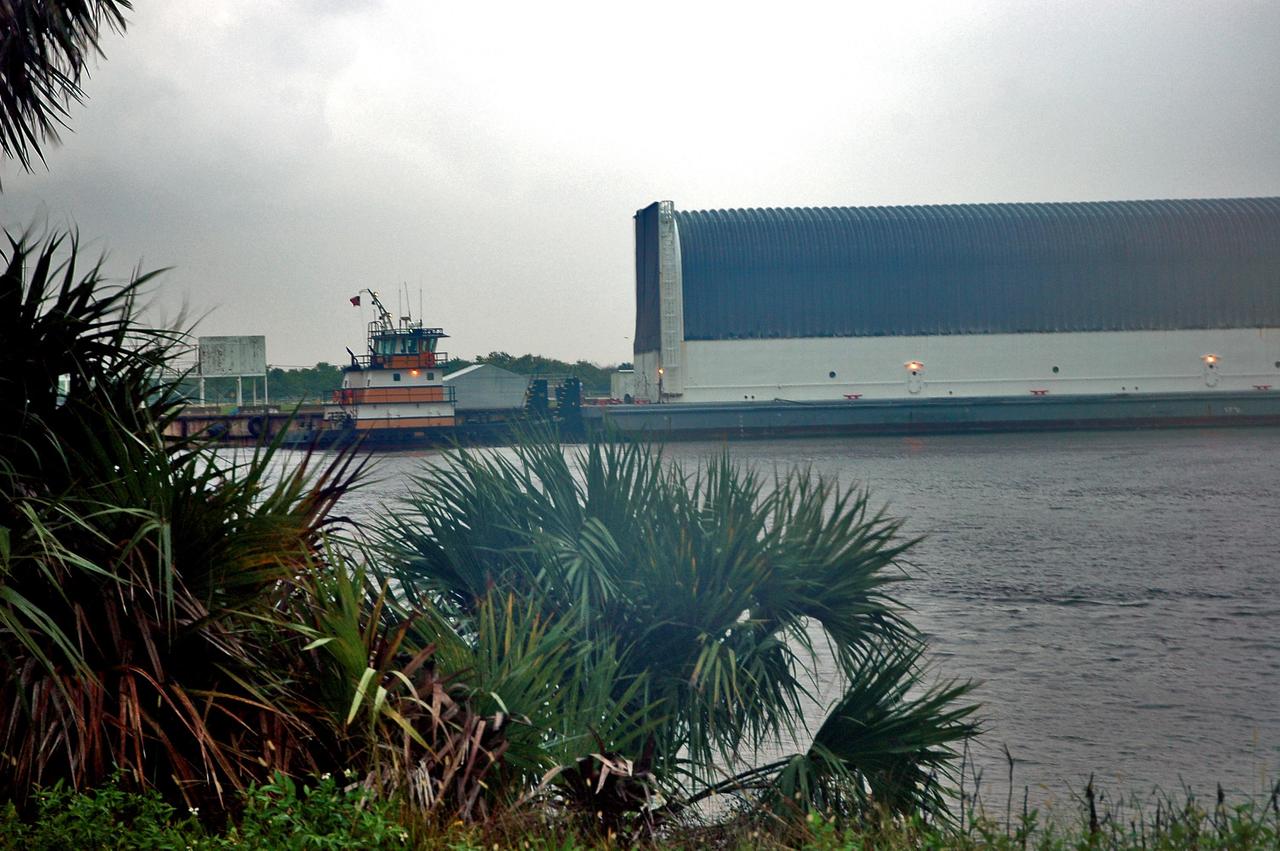
KENNEDY SPACE CENTER, FLA. - The Pegasus barge (right) is pushed away from the dock in the Turn Basin at NASA’s Kennedy Space Center. The barge is carrying external tank #120, which is being returned to NASA’s Michoud Assembly Facility in Louisiana for additional modifications. The barge is being moved to Port Canaveral where one of NASA’s solid rocket booster retrieval ships will take it and tow it around the Florida peninsula to Michoud. This tank is the first of the newly designed tanks that were delivered to Kennedy. Previously, the tank was stacked with Discovery and, more recently, Atlantis. The tank has already gone through two tanking cycles during tanking tests but was replaced with tank #121 for Discovery’s return to flight mission STS-114.
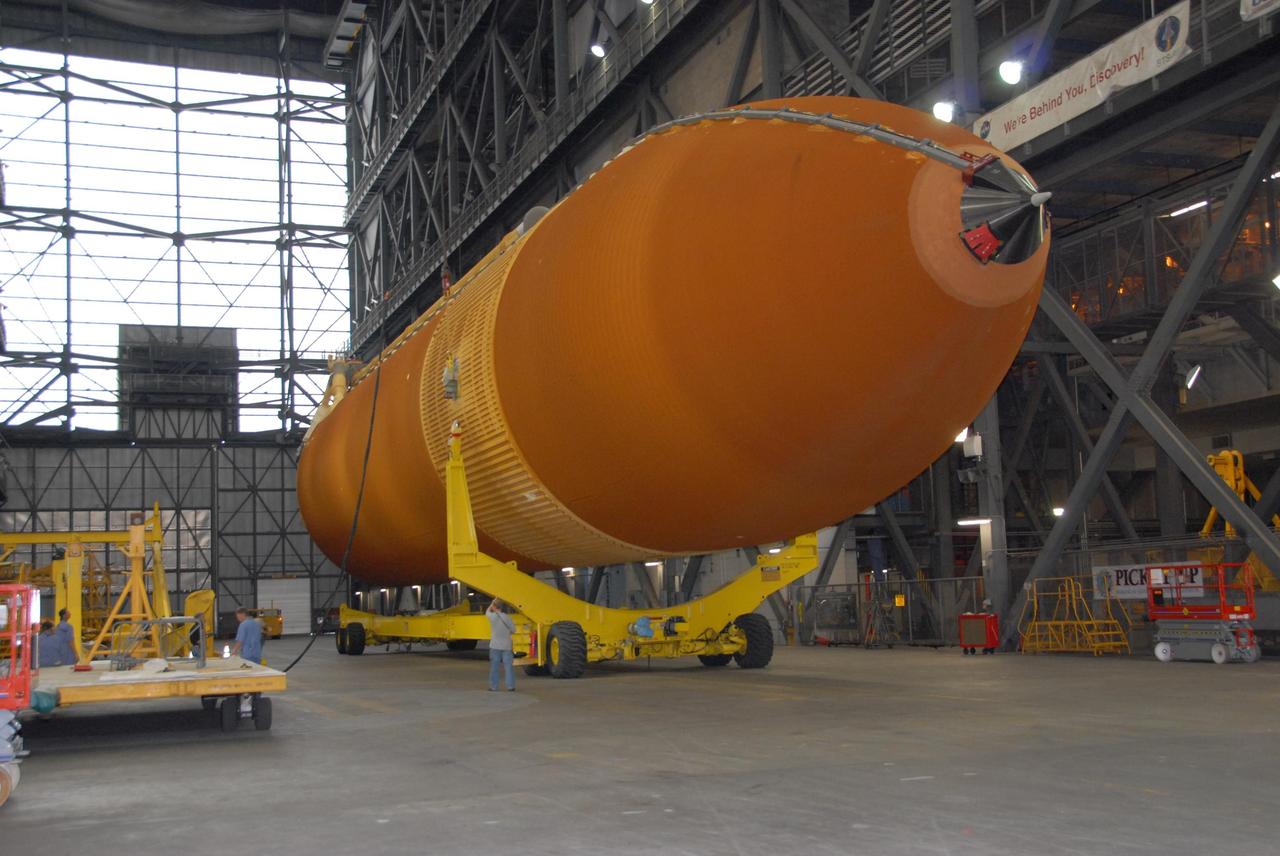
KENNEDY SPACE CENTER, FLA. -- In the transfer aisle of the Vehicle Assembly Building at KSC, external tank No. 120 is being fitted with a crane to raise and lift it into a checkout cell. The tank will be used to launch Space Shuttle Discovery on mission STS-120 in October. The mission is the 23rd to the International Space Station and will launch an Italian-built, U.S. multi-port module known as Harmony for the station. Christened after a school contest, Harmony will provide attachment points for European and Japanese laboratory modules. NASA/George Shelton
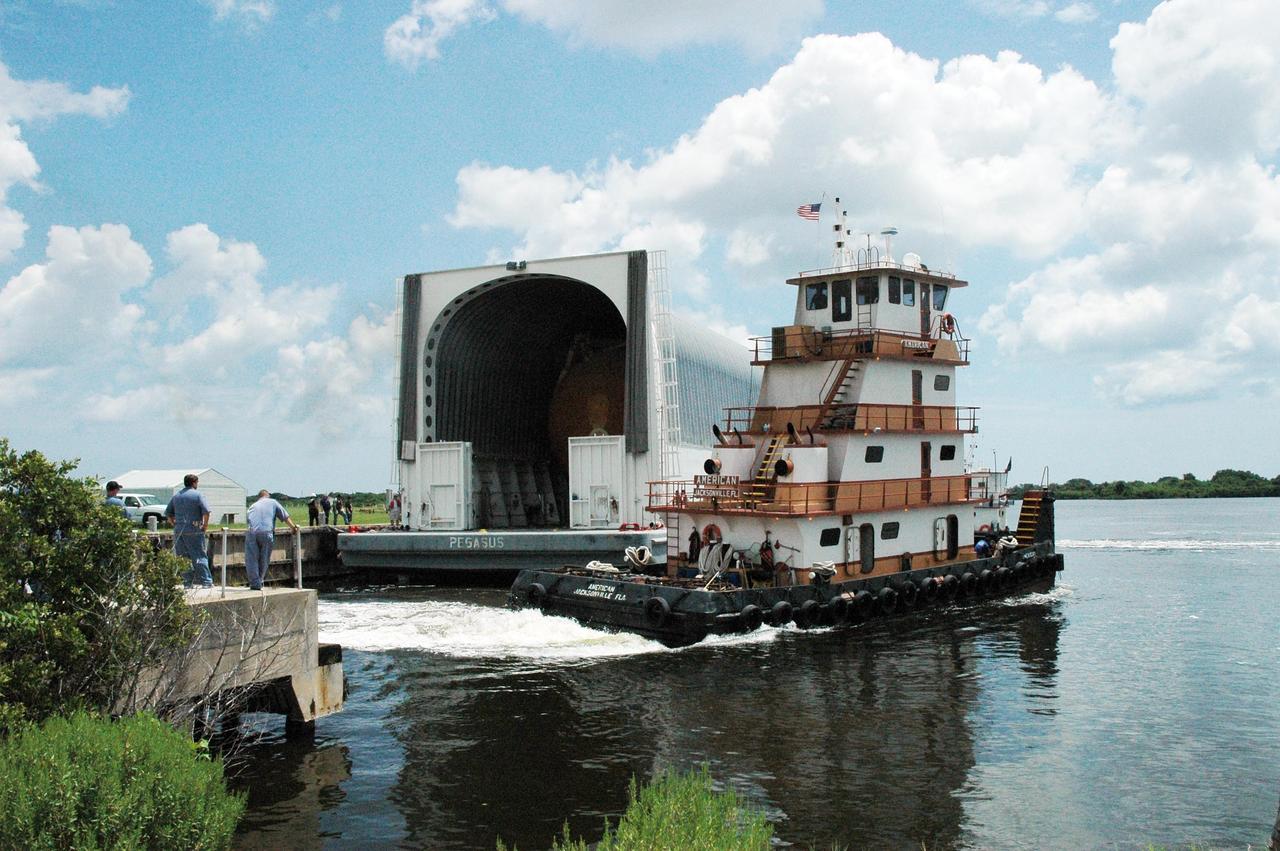
KENNEDY SPACE CENTER, FLA. -- In the Launch Complex 39 Area turn basin, the lead tugboat moves out of the way of the Pegasus barge so the barge can dock and offload its cargo. The barge carries external tank No. 120, to be used for launching Space Shuttle Discovery on mission STS-120 in October. The barge has carried the tank from the Michoud Assembly Facility near New Orleans, making the journey around the Florida peninsula in tow by the JA Bisso II tugboat, to Port Canaveral and Kennedy Space Center. After the tank is offloaded, it will be towed to the Vehicle Assembly Building for lifting into a checkout cell. NASA/Amanda Diller
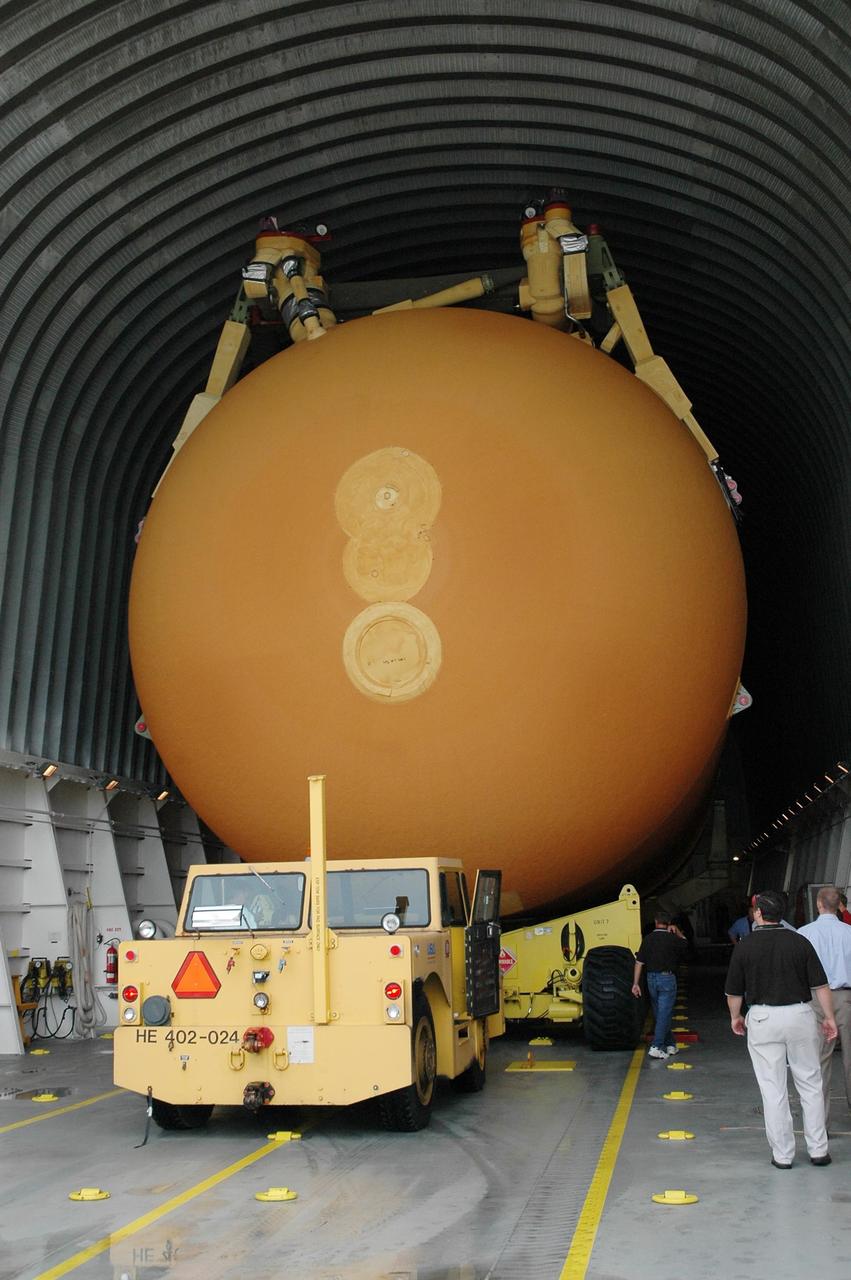
KENNEDY SPACE CENTER, FLA. - External tank #120, still resting on its transporter, is secured inside the barge Pegasus, docked at the Turn Basin on NASA’s Kennedy Space Center. The tank and barge will be towed to NASA’s Michoud Assembly Facility in Louisiana for additional modifications. This tank is the first of the newly designed tanks that were delivered to Kennedy. Previously, the tank was stacked with Discovery and, more recently, Atlantis. The tank has already gone through two tanking cycles during tanking tests but was replaced with tank #121 for Discovery’s return to flight mission STS-114.
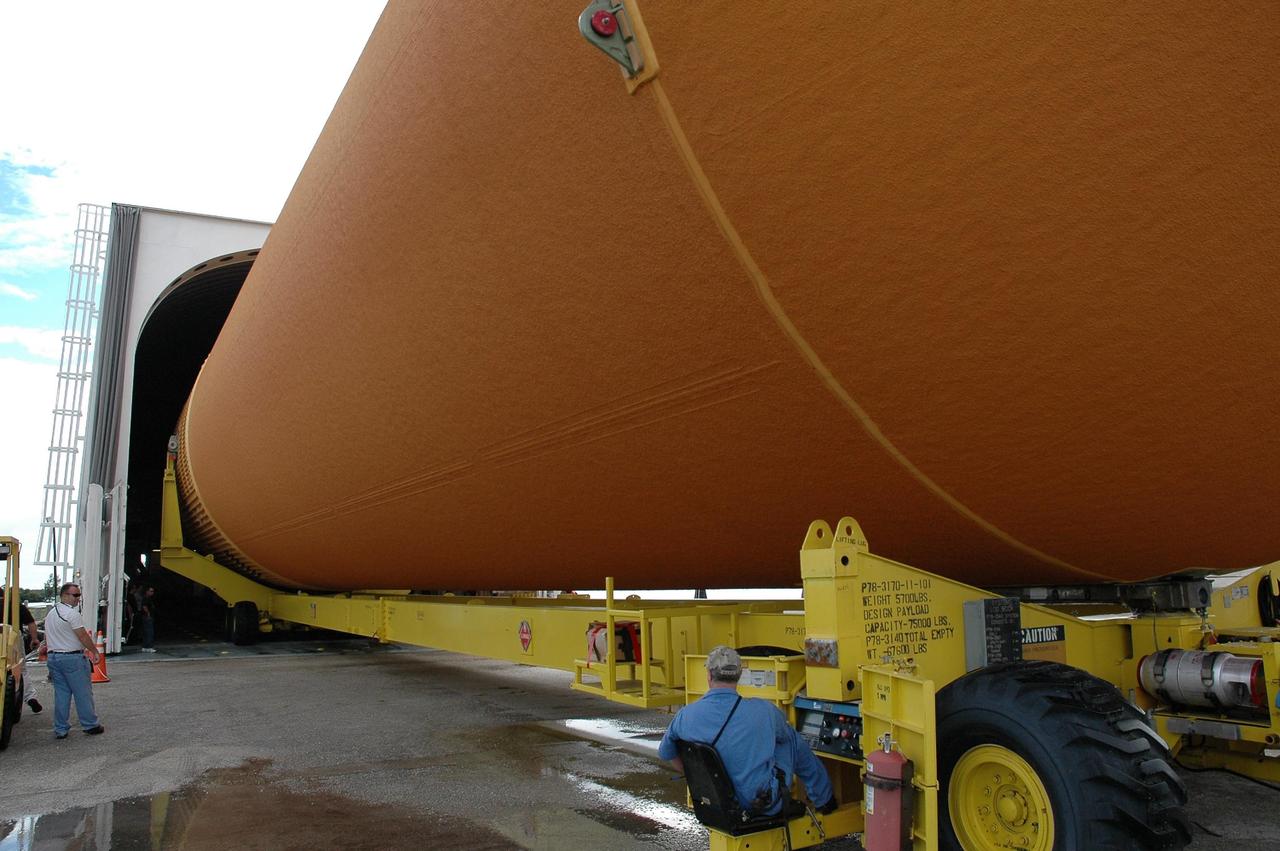
KENNEDY SPACE CENTER, FLA. - External tank #120 is carefully maneuvered onto the barge Pegasus, docked at the Turn Basin on NASA’s Kennedy Space Center. After the tank is loaded onto the barge, it will be transported to NASA’s Michoud Assembly Facility in Louisiana for additional modifications. This tank is the first of the newly designed tanks that were delivered to Kennedy. Previously, the tank was stacked with Discovery and, more recently, Atlantis. The tank has already gone through two tanking cycles during tanking tests but was replaced with tank #121 for Discovery’s return to flight mission STS-114.
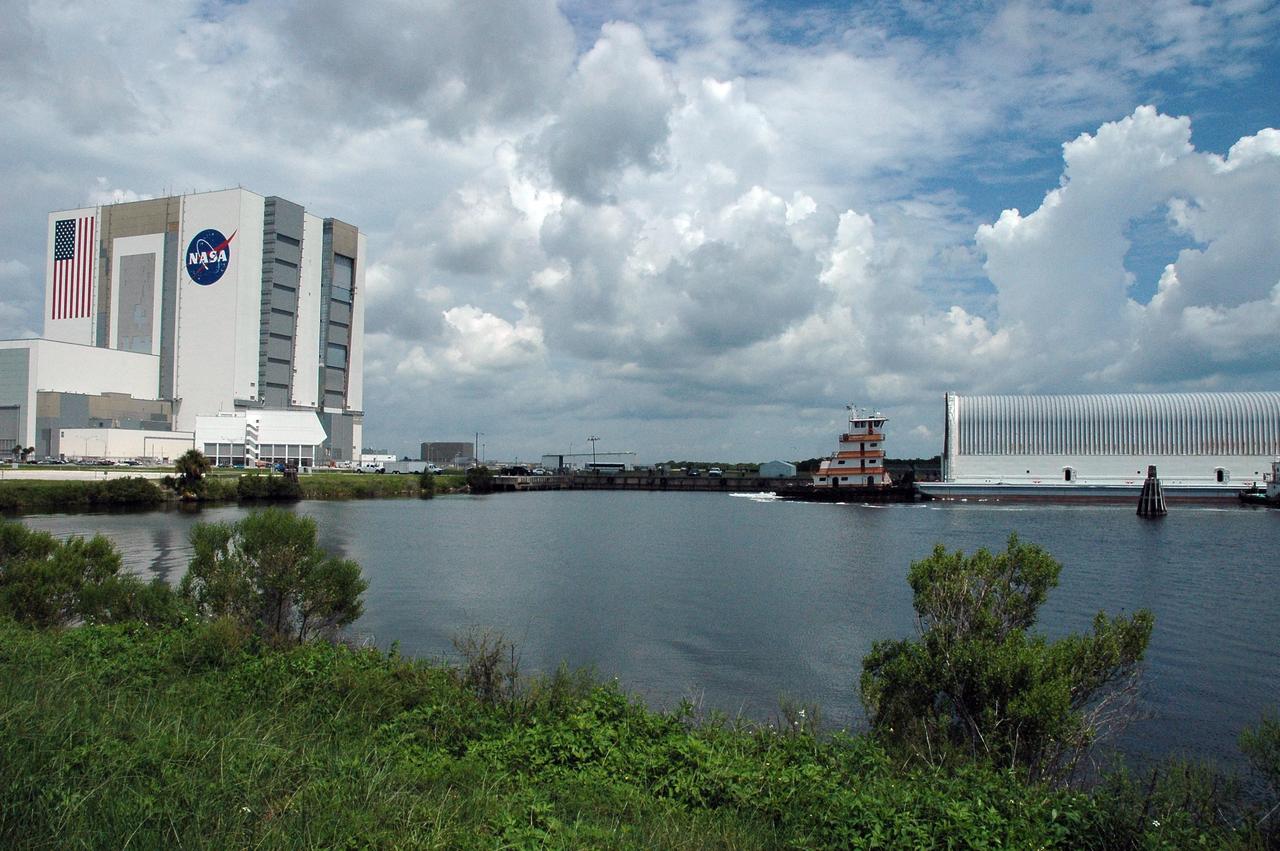
KENNEDY SPACE CENTER, FLA. -- The Pegasus barge, at right, is towed toward the landing dock in the Launch Complex 39 Area. The barge carries external tank No. 120, to be used for launching Space Shuttle Discovery on mission STS-120 in October. At left is the Vehicle Assembly Building. The barge has carried the tank from the Michoud Assembly Facility near New Orleans, making the journey around the Florida peninsula in tow by the JA Bisso II tugboat, to Port Canaveral and Kennedy Space Center. After the tank is offloaded, it will be towed to the Vehicle Assembly Building for lifting into a checkout cell. NASA/Amanda Diller
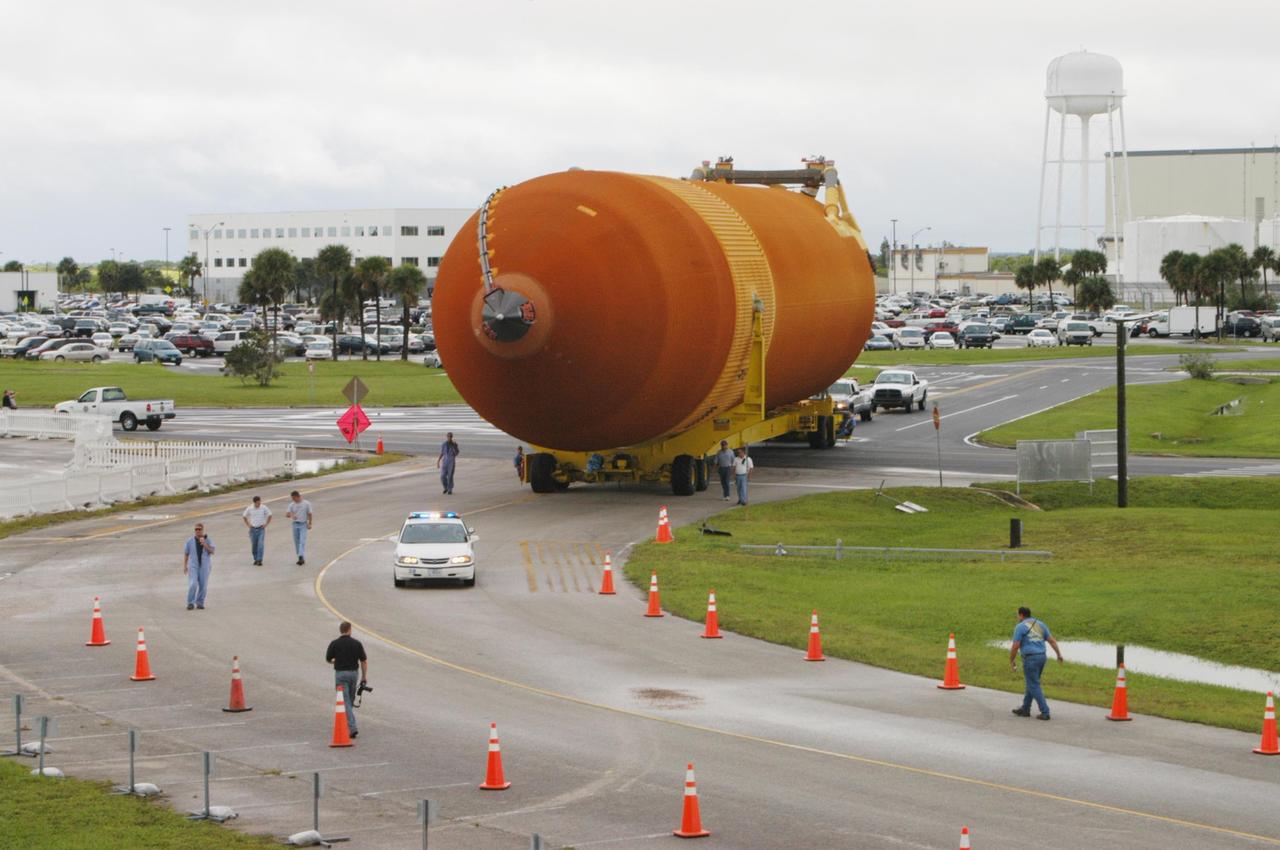
KENNEDY SPACE CENTER, FLA. - External tank 120 is moved from NASA Kennedy Space Center’s Vehicle Assembly Building to the Turn Basin and the waiting barge Pegasus. The tank will be loaded onto the barge for transport to NASA’s Michoud Assembly Facility in Louisiana for additional modifications. Previously, the tank was stacked with Discovery and, more recently, Atlantis. The tank has already gone through two tanking cycles during tanking tests but was replaced with tank #121 for Discovery’s return to flight mission STS-114.
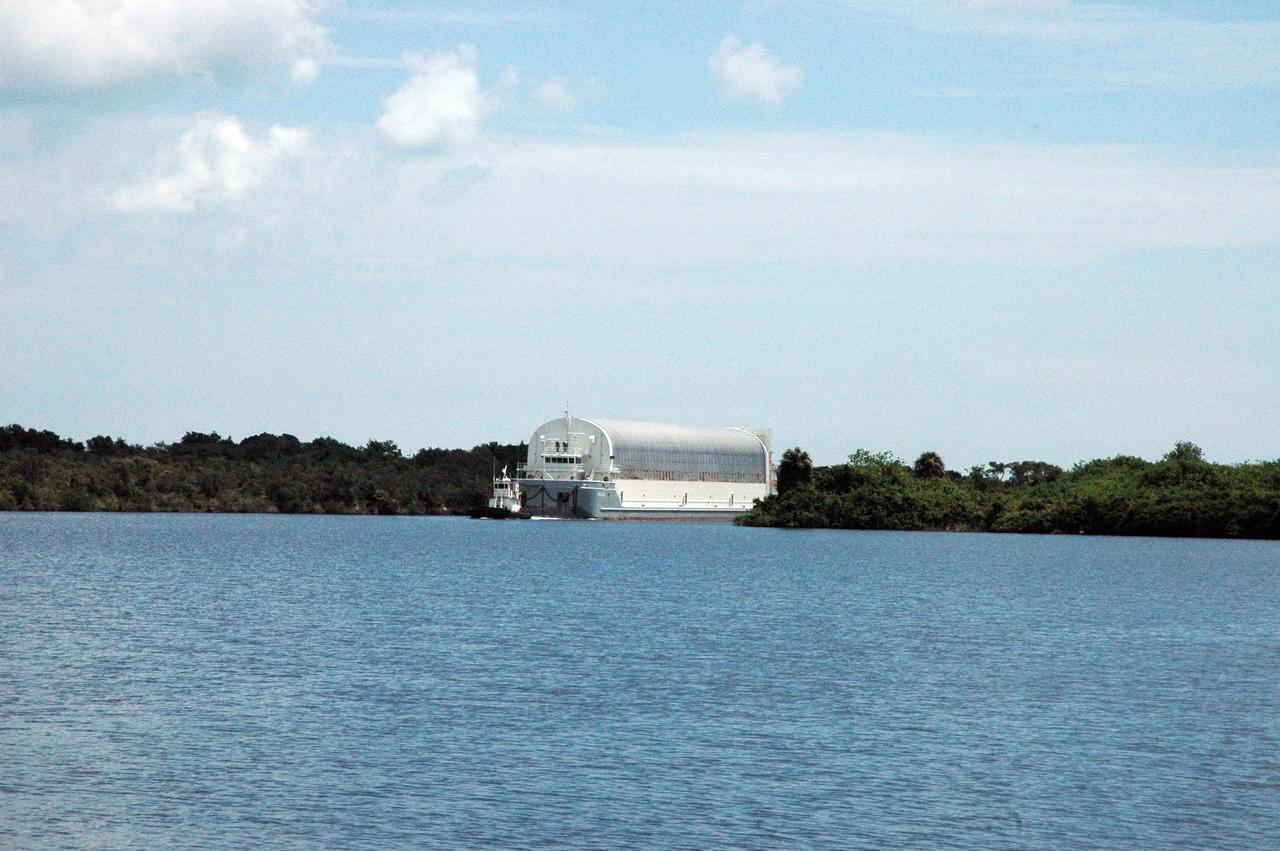
KENNEDY SPACE CENTER, FLA. -- The Pegasus barge is towed into the Launch Complex 39 Area turn basin. The cargo onboard is external tank No. 120, to be used for launching Space Shuttle Discovery on mission STS-120 in October. The barge has carried the tank from the Michoud Assembly Facility near New Orleans, making the journey around the Florida peninsula in tow by the JA Bisso II tugboat to Port Canaveral and Kennedy Space Center. After the tank is offloaded, it will be towed to the Vehicle Assembly Building for lifting into a checkout cell. NASA/Amanda Diller
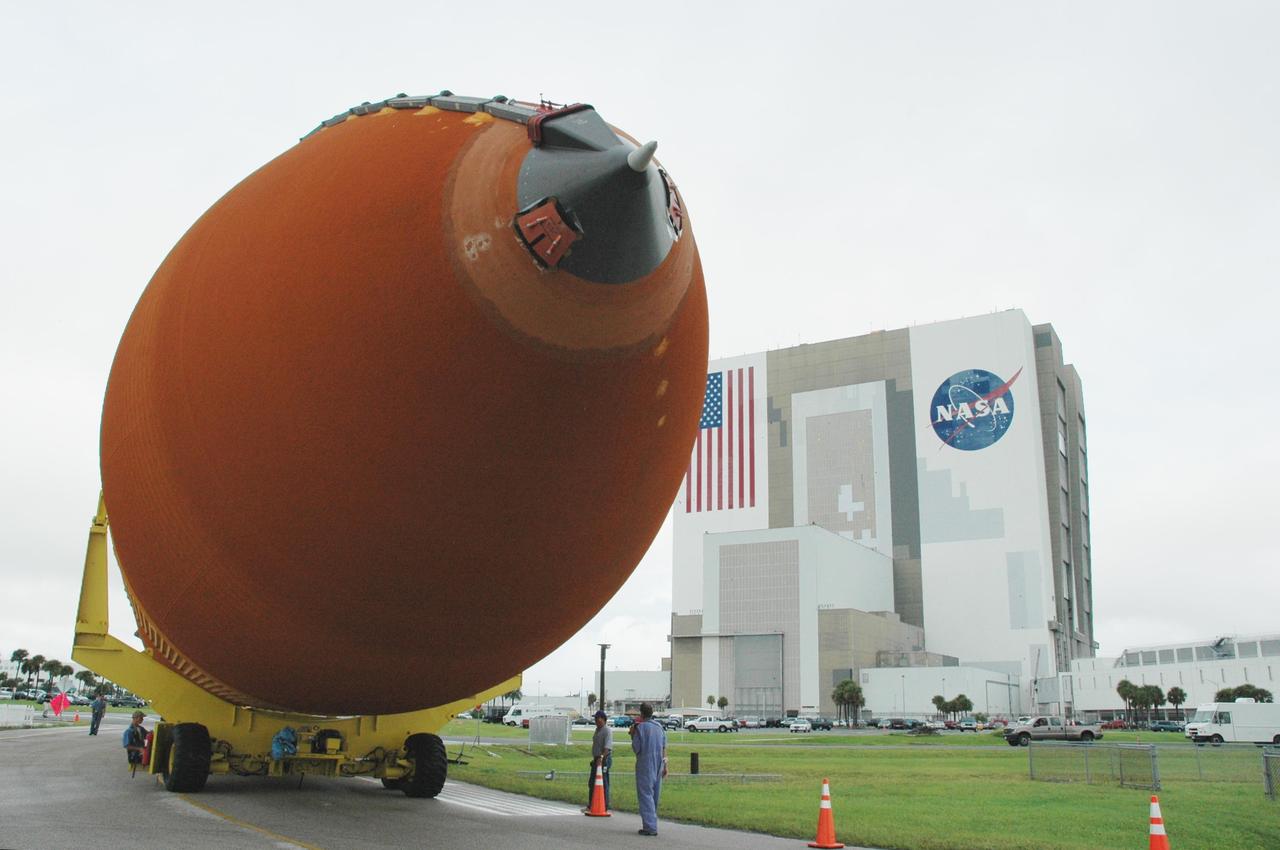
KENNEDY SPACE CENTER, FLA. - External tank #120 makes the turn toward the nearby Turn Basin. It is being moved from NASA Kennedy Space Center’s Vehicle Assembly Building (behind it). The tank will be loaded onto the barge Pegasus for towing to NASA’s Michoud Assembly Facility in Louisiana for additional modifications. This tank is the first of the newly designed tanks that were delivered to Kennedy. Previously, the tank was stacked with Discovery and, more recently, Atlantis. The tank has already gone through two tanking cycles during tanking tests but was replaced with tank #121 for Discovery’s return to flight mission STS-114.
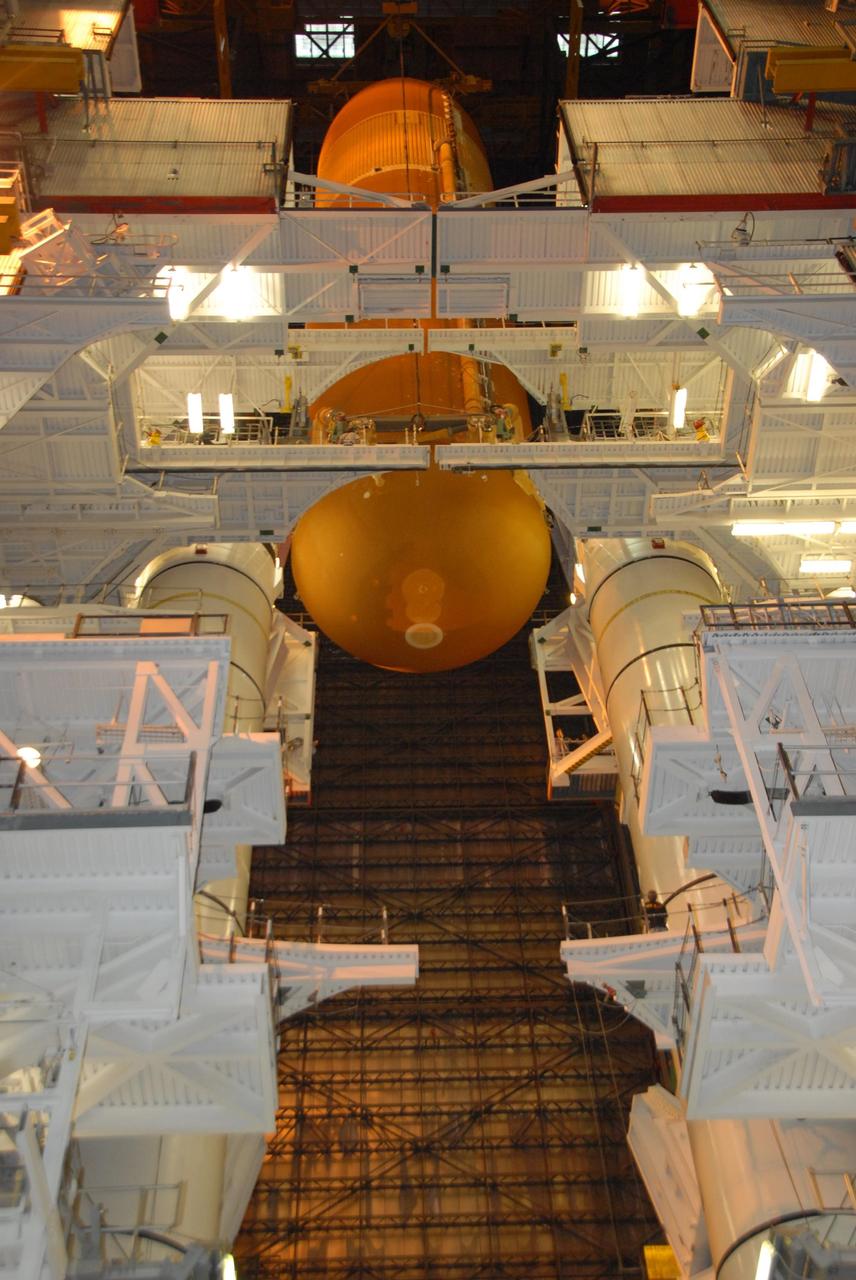
KENNEDY SPACE CENTER, FLA. -- In the Vehicle Assembly Building at NASA's Kennedy Space Center, external tank No. 120 is lowered toward the mobile launcher platform in high bay 1 where it will be mated with the solid rocket boosters already there. The external tank-SRB stack is being prepared for the orbiter Discovery, which will be mated to the stack in the VAB in two weeks. Space Shuttle Discovery is targeted to launch Oct. 23 on mission STS-120 to the International Space Station. Photo credit: NASA/George Shelton
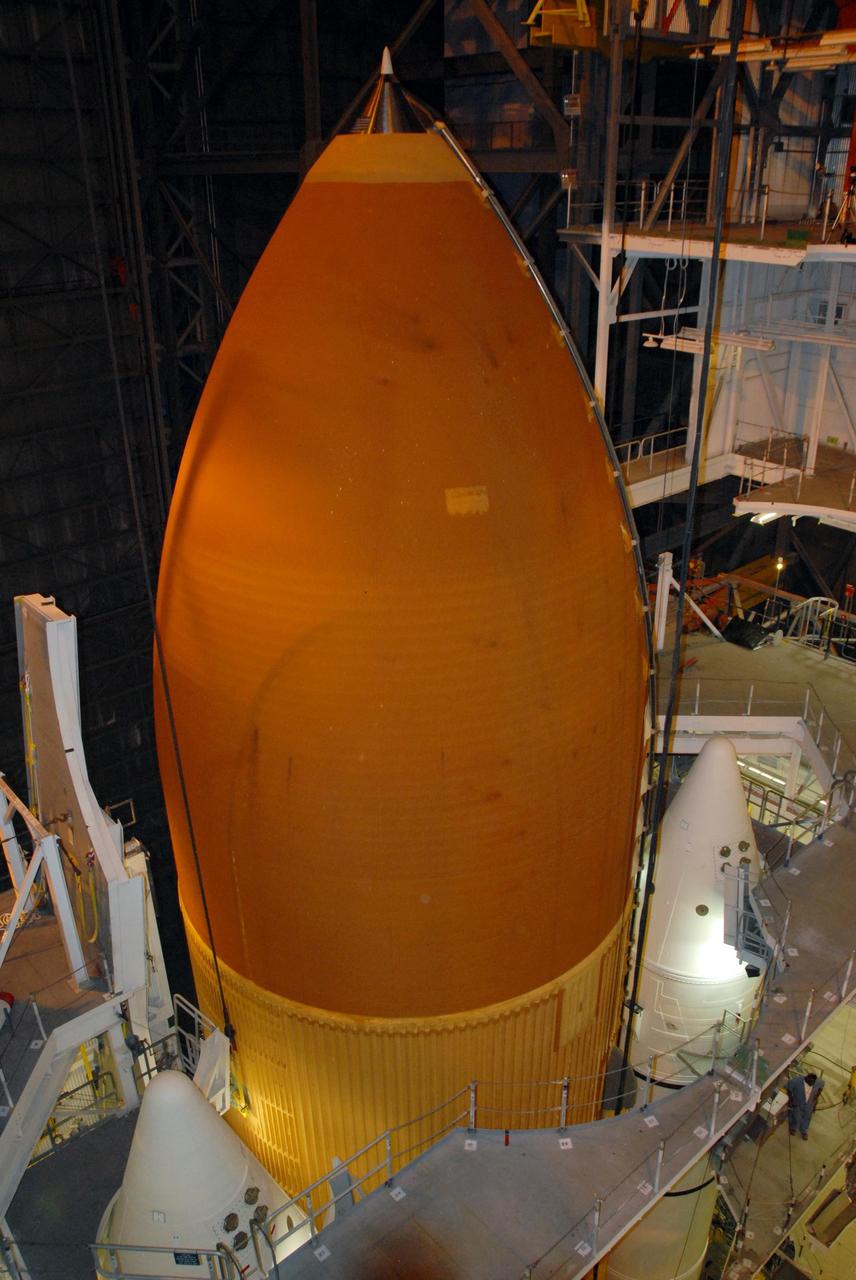
KENNEDY SPACE CENTER, FLA. -- In the Vehicle Assembly Building at NASA's Kennedy Space Center, the top of external tank No. 120 is seen as the tank is lowered between the solid rocket boosters for mating on the mobile launcher platform. The external tank-SRB stack is being prepared for the orbiter Discovery, which will be mated to the stack in the VAB in two weeks. Space Shuttle Discovery is targeted to launch Oct. 23 on mission STS-120 to the International Space Station. Photo credit: NASA/George Shelton
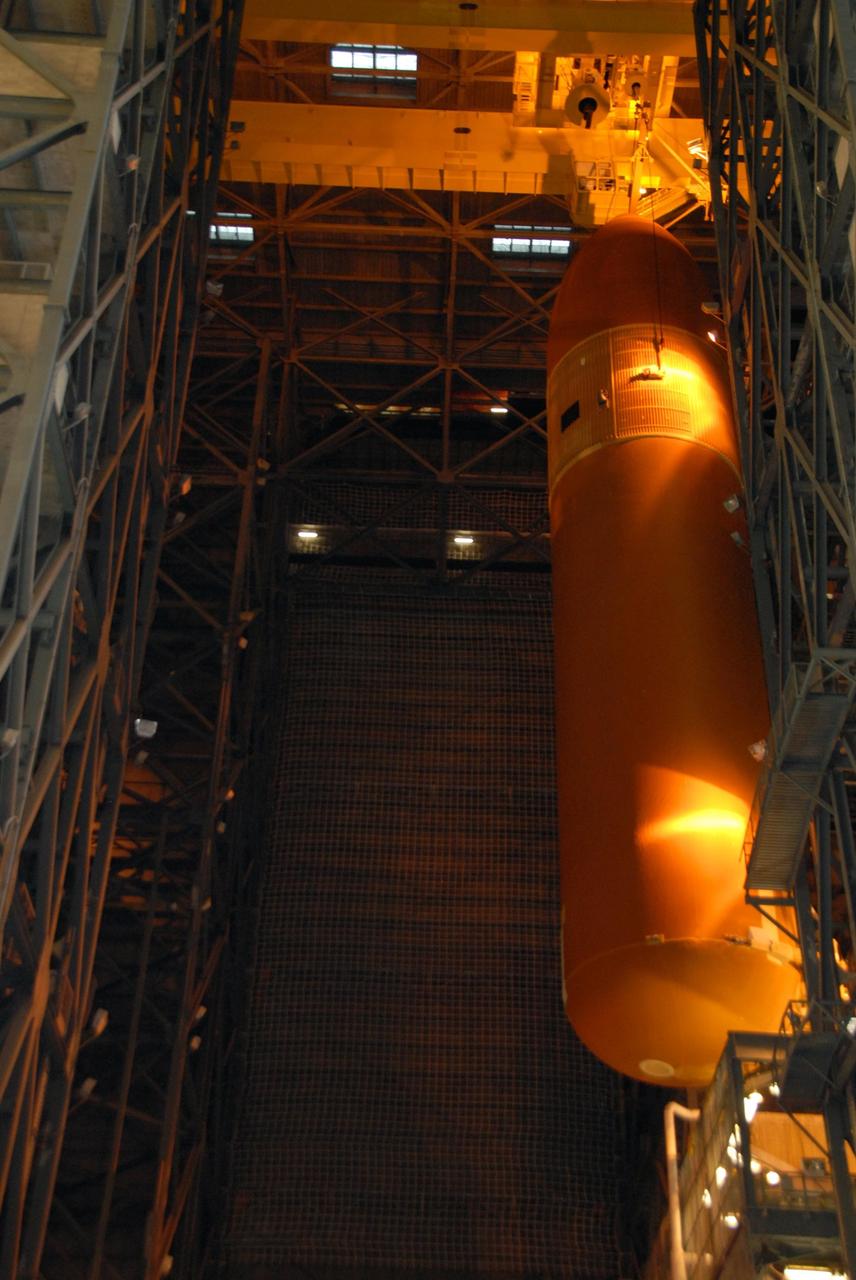
KENNEDY SPACE CENTER, FLA. -- In the Vehicle Assembly Building at NASA's Kennedy Space Center, external tank No. 120 is being lifted out of the checkout cell to high bay 1 where it will be mated with the solid rocket boosters. The external tank-SRB stack is being prepared for the orbiter Discovery, which will be mated to the stack in the VAB in two weeks. Space Shuttle Discovery is targeted to launch Oct. 23 on mission STS-120 to the International Space Station. Photo credit: NASA/George Shelton
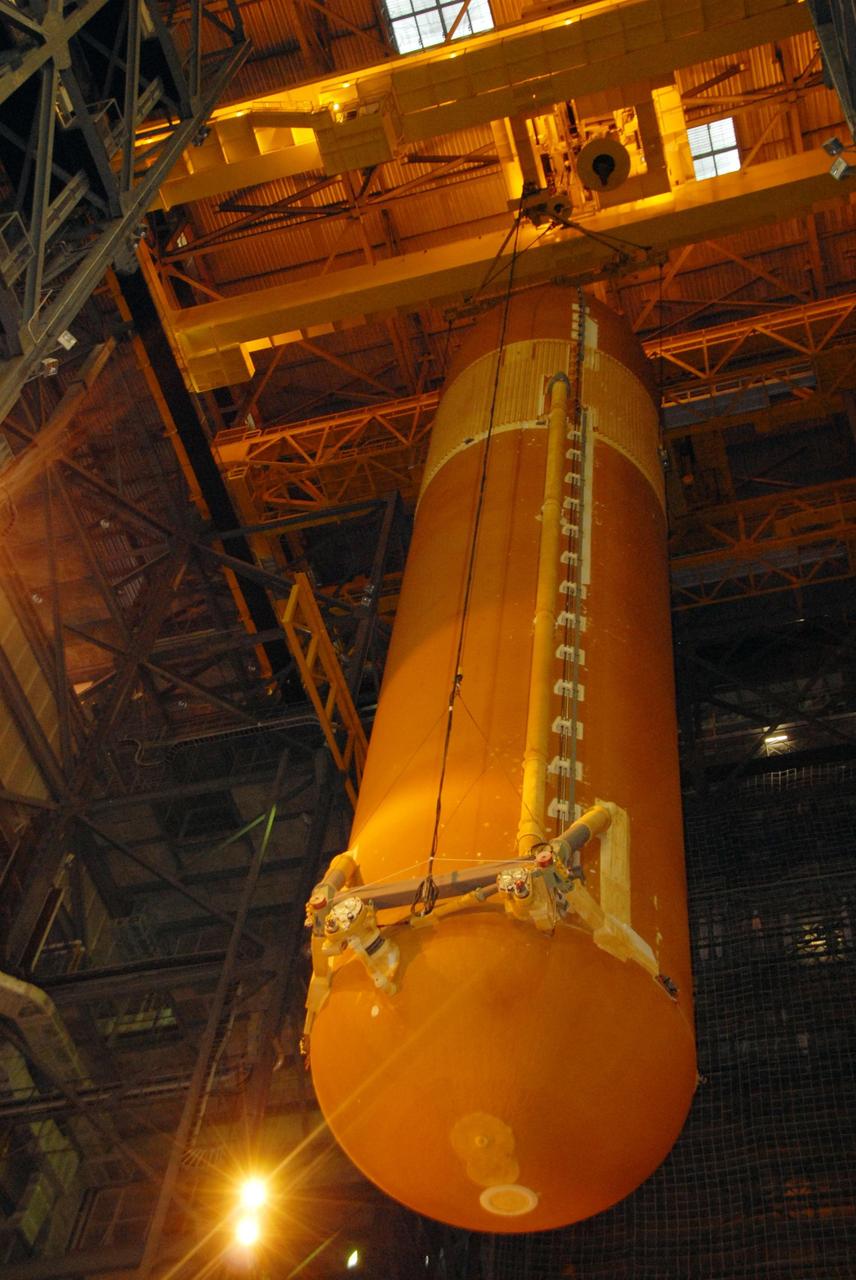
KENNEDY SPACE CENTER, FLA. -- In the Vehicle Assembly Building at NASA's Kennedy Space Center, external tank No. 120 is lowered into high bay 1 where it will be mated with the solid rocket boosters. Seen on the tank are the sites of modification to the foam where BX265 foam insulation and super lightweight ablator, cork insulation was removed and the BX265 foam insulation alone reapplied. The external tank-SRB stack is being prepared for the orbiter Discovery, which will be mated to the stack in the VAB in two weeks. Space Shuttle Discovery is targeted to launch Oct. 23 on mission STS-120 to the International Space Station. Photo credit: NASA/George Shelton

KENNEDY SPACE CENTER, FLA. -- In the Vehicle Assembly Building at NASA's Kennedy Space Center, external tank No. 120 is lowered between the solid rocket boosters for mating on the mobile launcher platform. The external tank-SRB stack is being prepared for the orbiter Discovery, which will be mated to the stack in the VAB in two weeks. Space Shuttle Discovery is targeted to launch Oct. 23 on mission STS-120 to the International Space Station. Photo credit: NASA/George Shelton
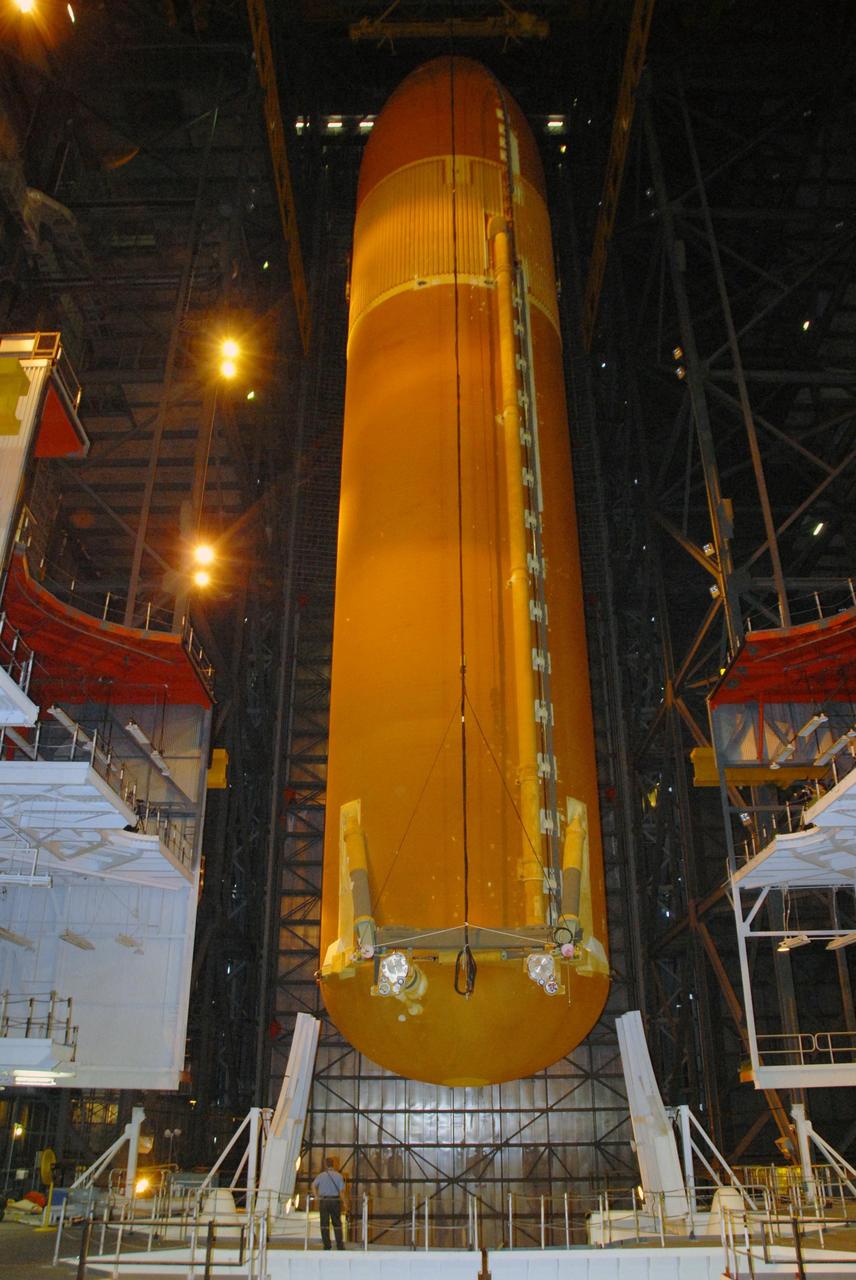
KENNEDY SPACE CENTER, FLA. -- In the Vehicle Assembly Building at NASA's Kennedy Space Center, external tank No. 120 is lowered toward the mobile launcher platform in high bay 1 where it will be mated with the solid rocket boosters already there. The external tank-SRB stack is being prepared for the orbiter Discovery, which will be mated to the stack in the VAB in two weeks. Space Shuttle Discovery is targeted to launch Oct. 23 on mission STS-120 to the International Space Station. Photo credit: NASA/George Shelton
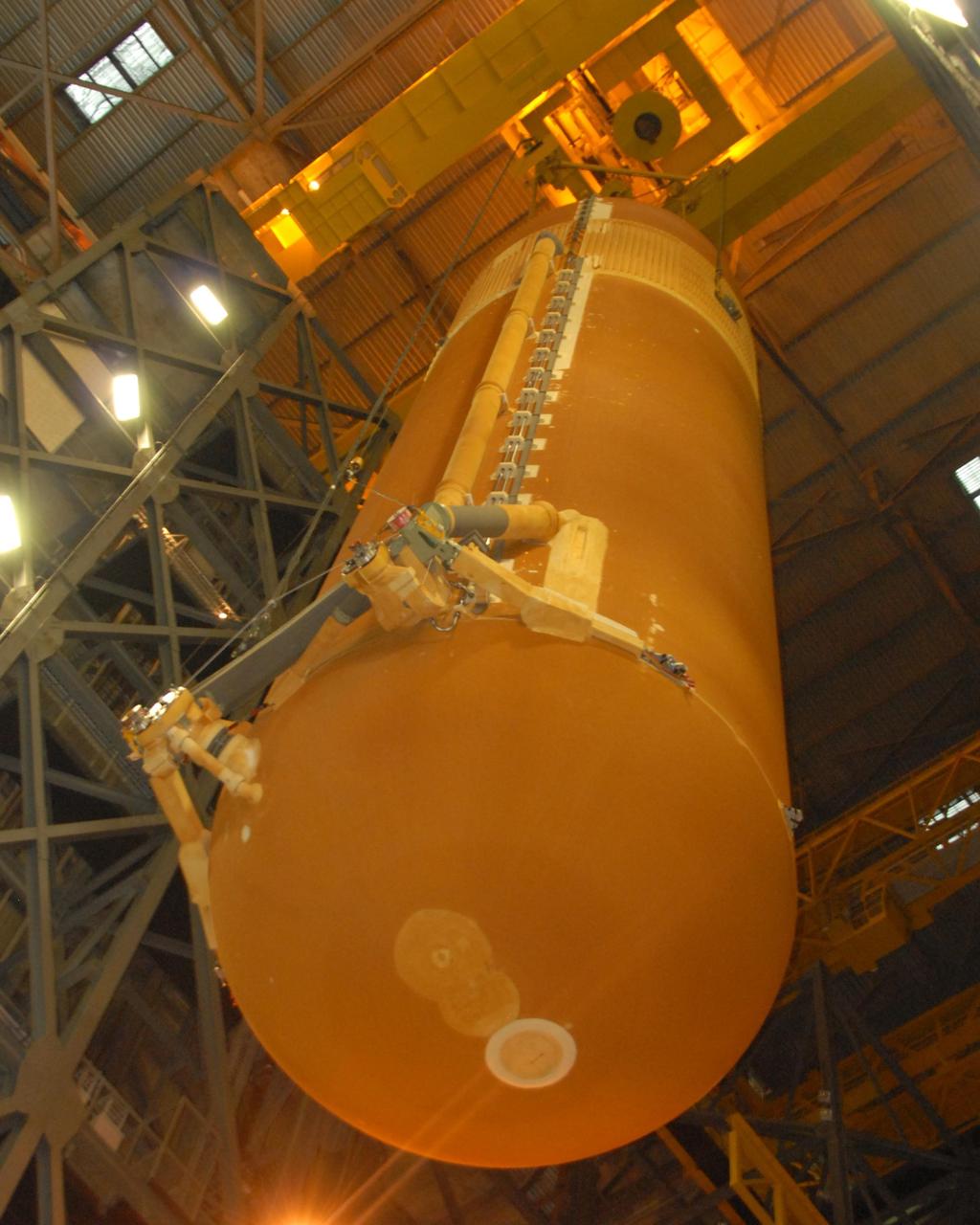
KENNEDY SPACE CENTER, FLA. -- In the Vehicle Assembly Building at NASA's Kennedy Space Center, external tank No. 120 is lowered into high bay 1 where it will be mated with the solid rocket boosters. Seen on the tank are the sites of modification to the foam where BX265 foam insulation and super lightweight ablator, cork insulation was removed and the BX265 foam insulation alone reapplied. The external tank-SRB stack is being prepared for the orbiter Discovery, which will be mated to the stack in the VAB in two weeks. Space Shuttle Discovery is targeted to launch Oct. 23 on mission STS-120 to the International Space Station. Photo credit: NASA/George Shelton
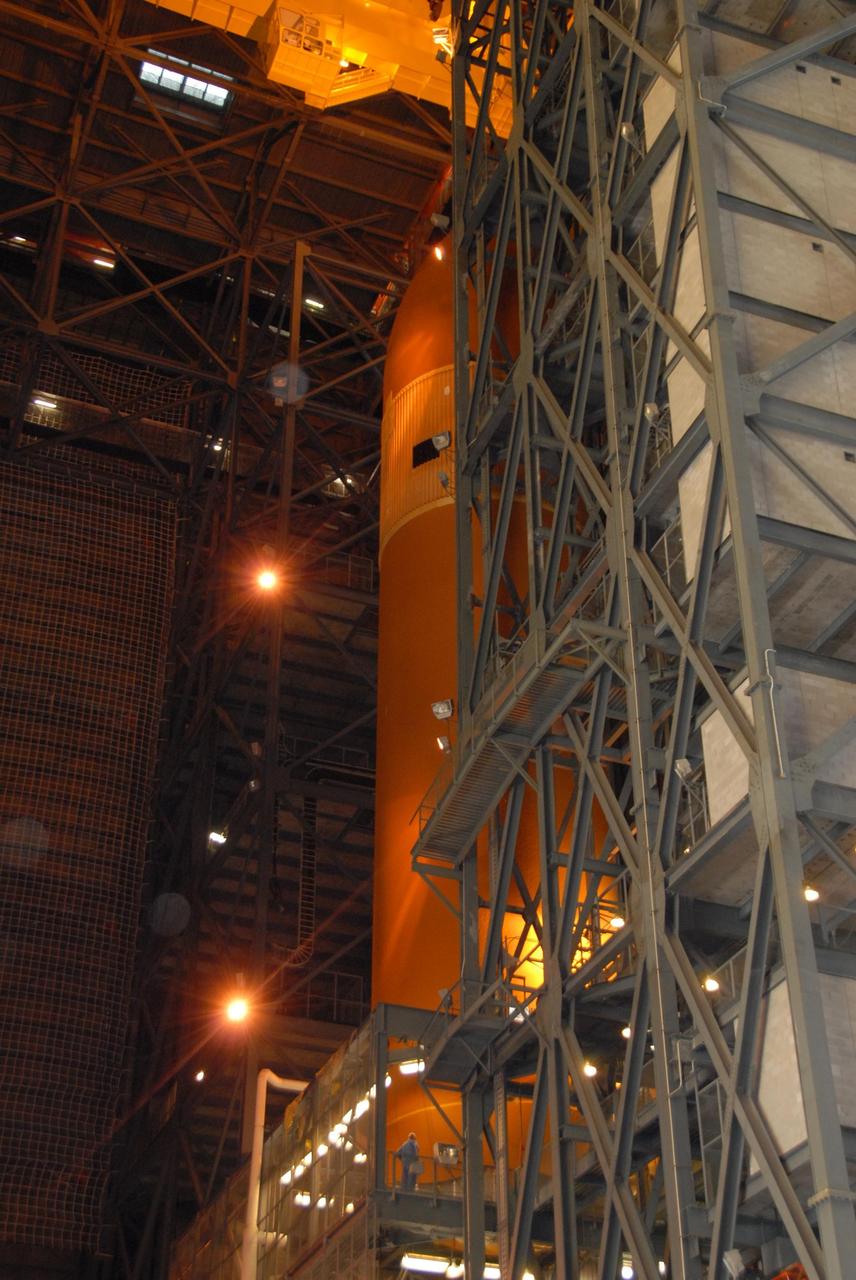
KENNEDY SPACE CENTER, FLA. -- In the Vehicle Assembly Building at NASA's Kennedy Space Center, external tank No. 120 is being lifted out of the checkout cell to high bay 1 where it will be mated with the solid rocket boosters. The external tank-SRB stack is being prepared for the orbiter Discovery, which will be mated to the stack in the VAB in two weeks. Space Shuttle Discovery is targeted to launch Oct. 23 on mission STS-120 to the International Space Station. Photo credit: NASA/George Shelton
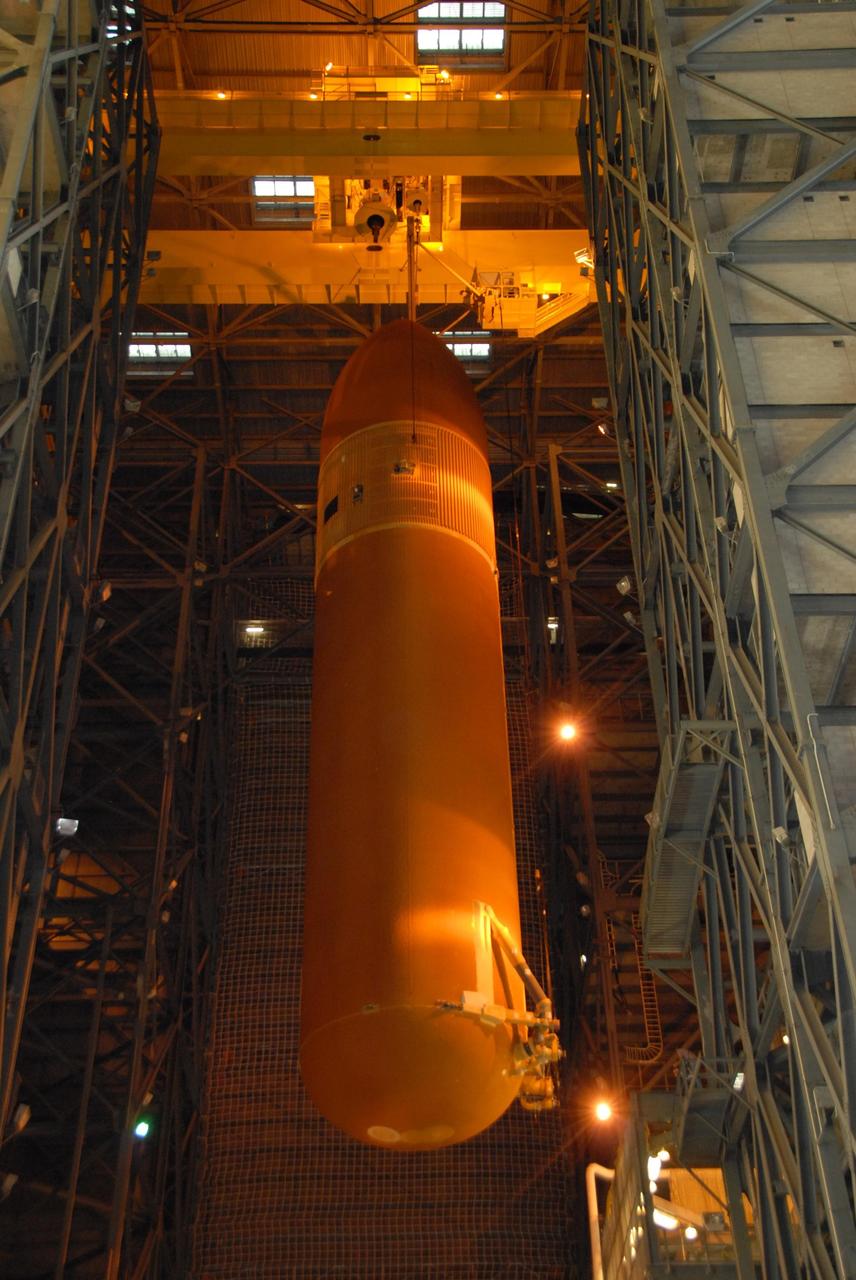
KENNEDY SPACE CENTER, FLA. -- In the Vehicle Assembly Building at NASA's Kennedy Space Center, external tank No. 120 is lowered into high bay 1 where it will be mated with the solid rocket boosters. The external tank-SRB stack is being prepared for the orbiter Discovery, which will be mated to the stack in the VAB in two weeks. Space Shuttle Discovery is targeted to launch Oct. 23 on mission STS-120 to the International Space Station. Photo credit: NASA/George Shelton
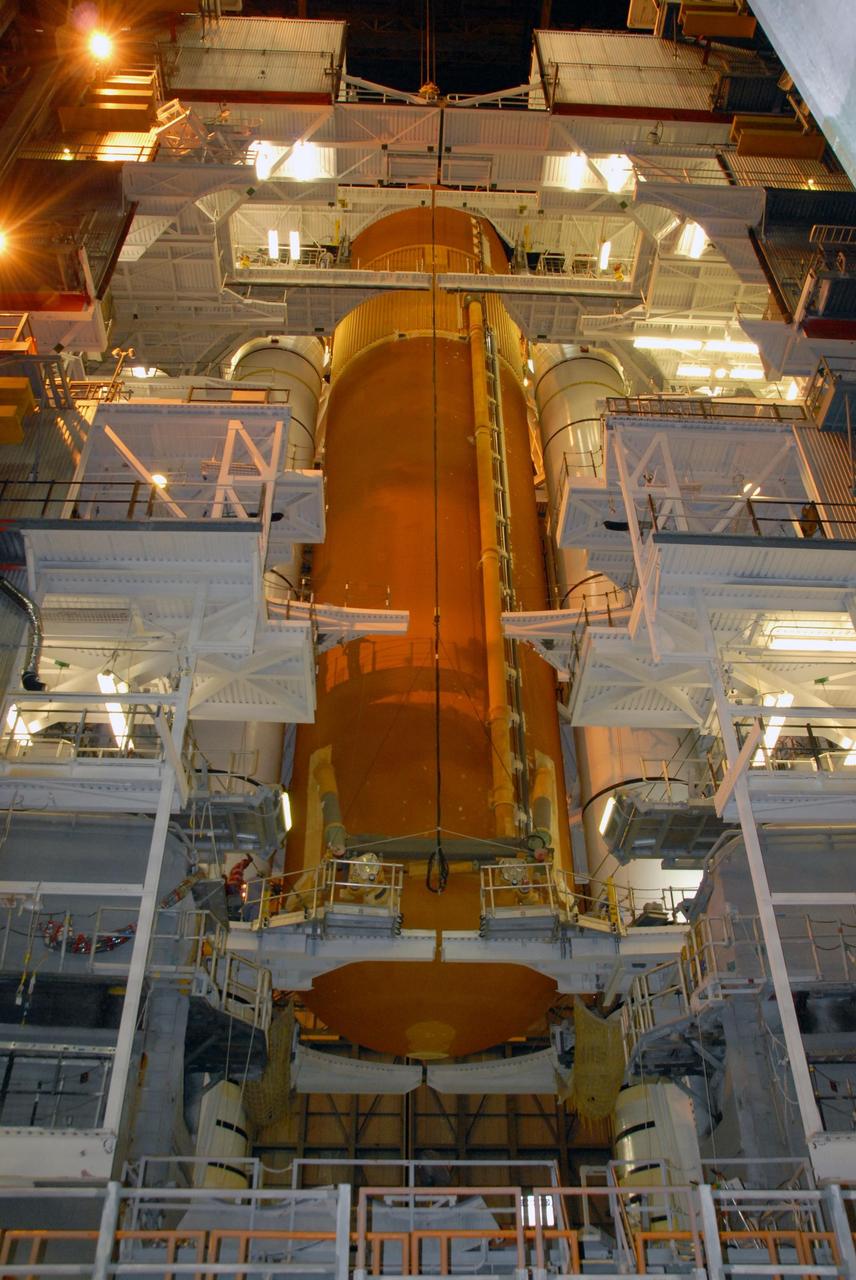
KENNEDY SPACE CENTER, FLA. -- In the Vehicle Assembly Building at NASA's Kennedy Space Center, external tank No. 120 has been lowered between the solid rocket boosters for mating on the mobile launcher platform. The external tank-SRB stack is being prepared for the orbiter Discovery, which will be mated to the stack in the VAB in two weeks. Space Shuttle Discovery is targeted to launch Oct. 23 on mission STS-120 to the International Space Station. Photo credit: NASA/George Shelton
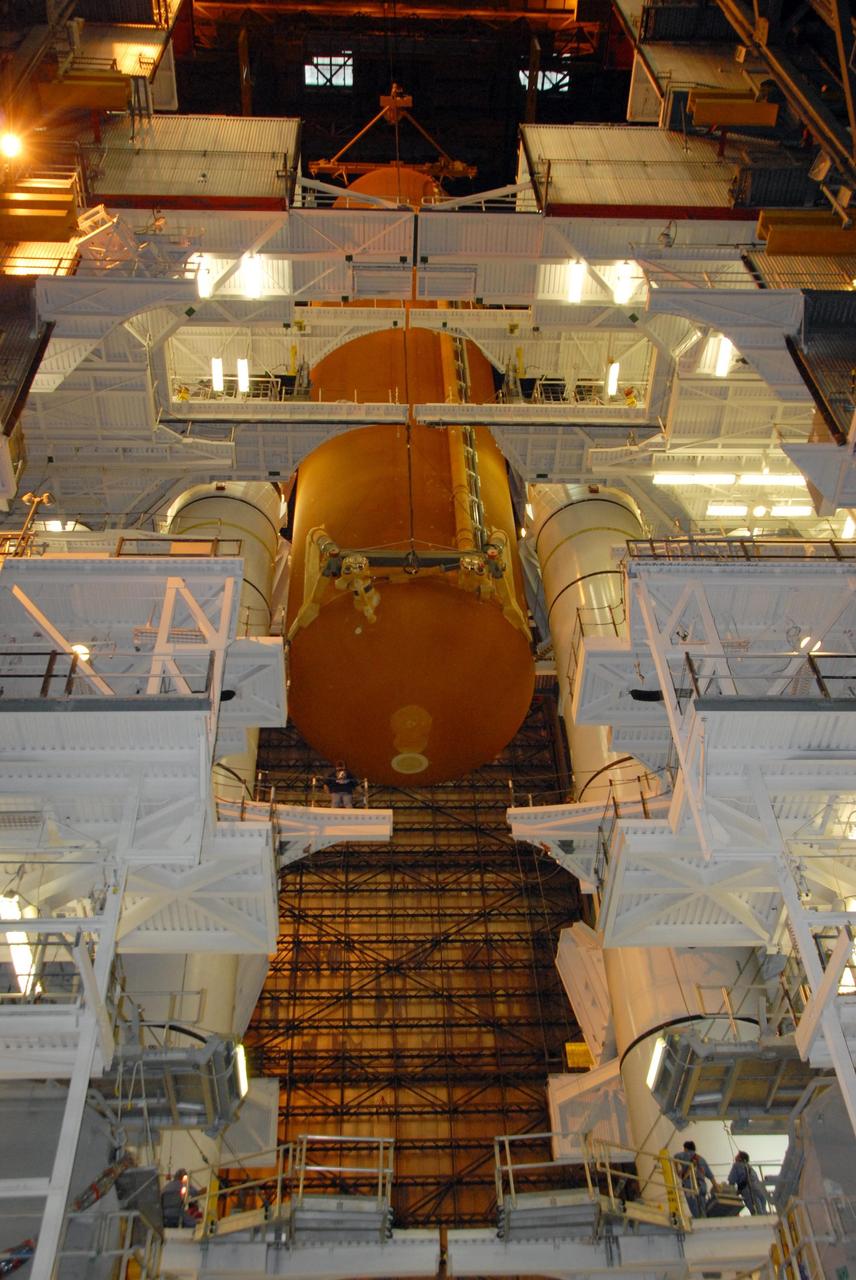
KENNEDY SPACE CENTER, FLA. -- In the Vehicle Assembly Building at NASA's Kennedy Space Center, external tank No. 120 is lowered between the solid rocket boosters for mating on the mobile launcher platform. The external tank-SRB stack is being prepared for the orbiter Discovery, which will be mated to the stack in the VAB in two weeks. Space Shuttle Discovery is targeted to launch Oct. 23 on mission STS-120 to the International Space Station. Photo credit: NASA/George Shelton
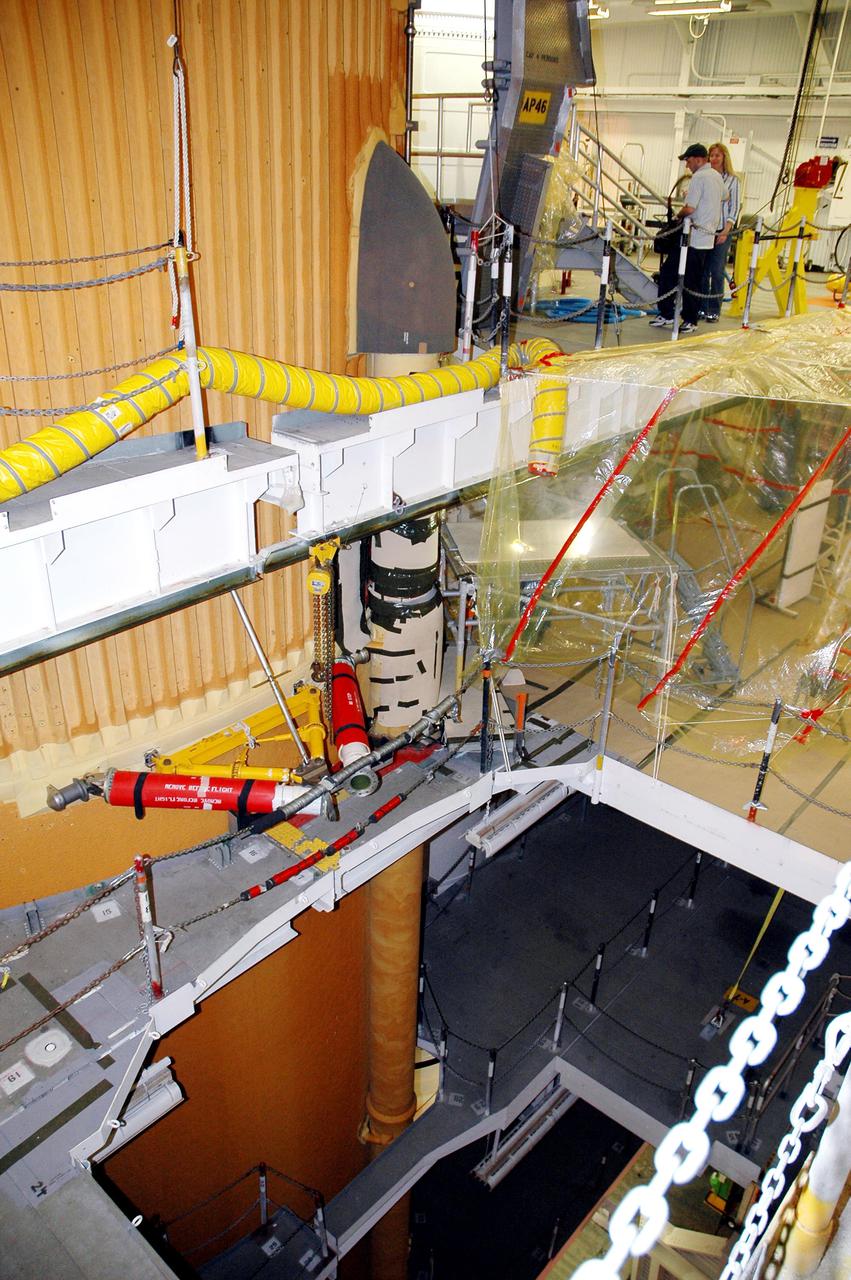
KENNEDY SPACE CENTER, FLA. -In the Vehicle Assembly Building at NASA’s Kennedy Space Center, the newly installed liquid oxygen bellows heater is seen on External Tank 120 (at left, behind it), recently removed from the orbiter Discovery. The new heater has been added to the feedline bellows to minimize the potential for ice and frost buildup. ET-120 will fly with Atlantis on the second Return to Flight mission STS-121. The launch window for STS-121 extends from Sept. 9 - 24.
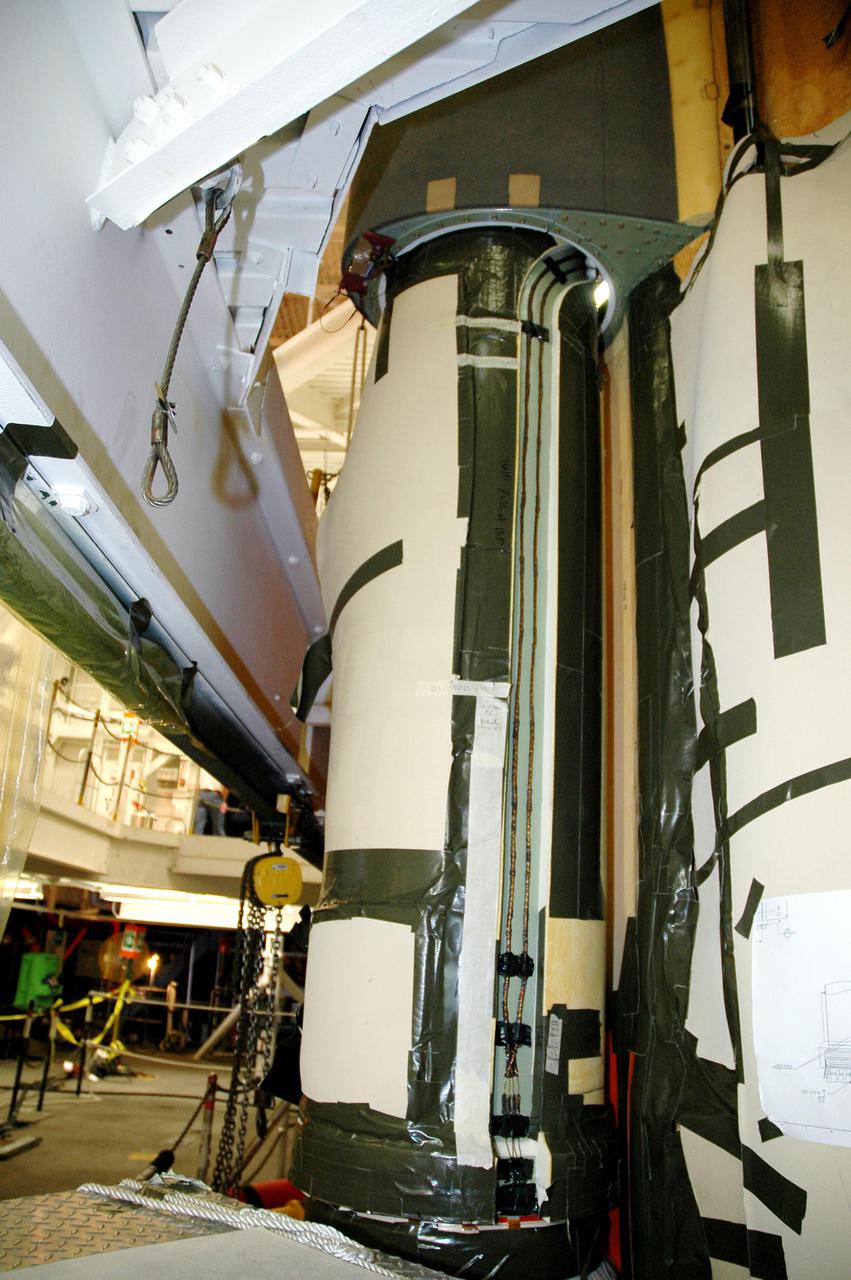
KENNEDY SPACE CENTER, FLA. - In the Vehicle Assembly Building at NASA’s Kennedy Space Center, the newly installed liquid oxygen bellows heater is seen on External Tank 120, recently removed from the orbiter Discovery. The new heater has been added to the feedline bellows to minimize the potential for ice and frost buildup. ET-120 will fly with Atlantis on the second Return to Flight mission STS-121. The launch window for STS-121 extends from Sept. 9 - 24.
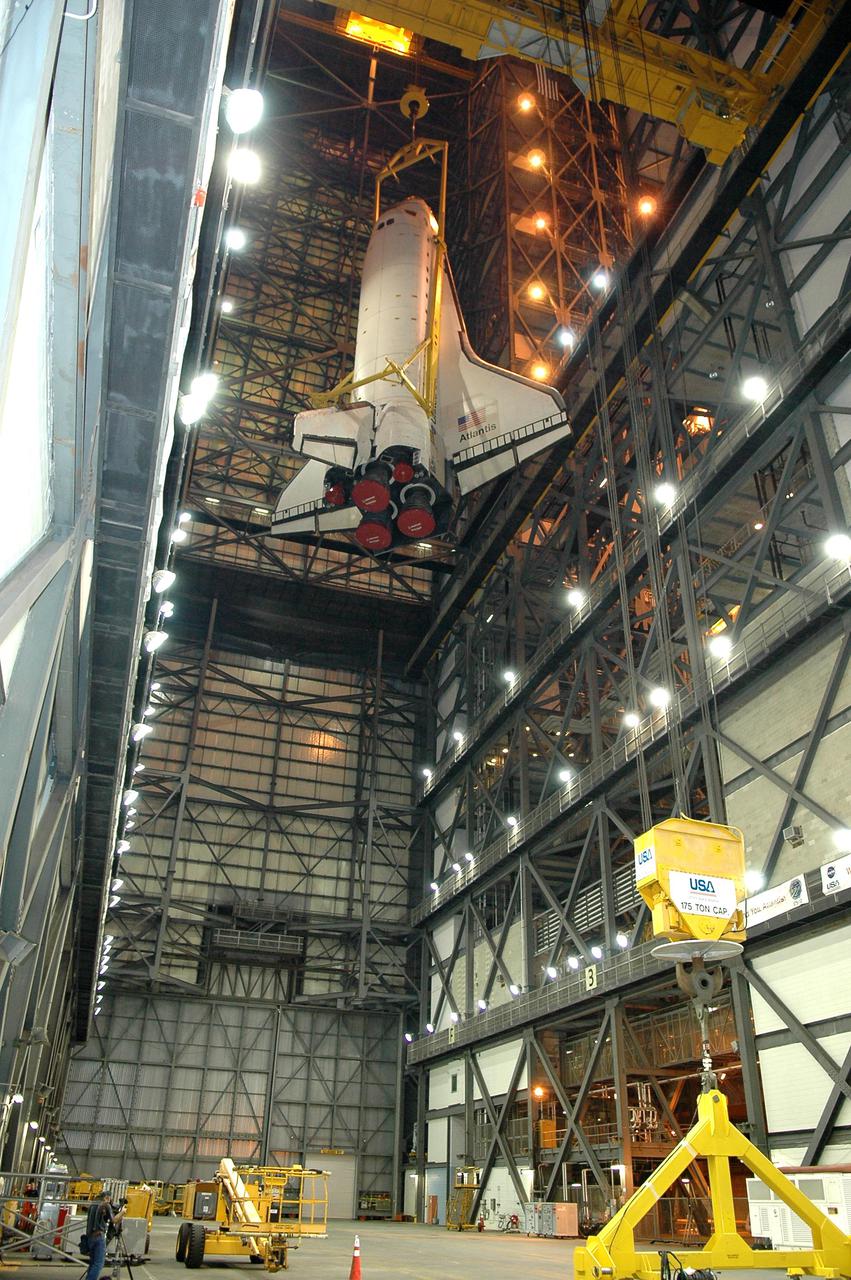
KENNEDY SPACE CENTER, FLA. - In the Vehicle Assembly Building, Space Shuttle Atlantis is lowered into the transfer aisle after being demated from its External Tank_Solid Rocket Booster stack. The orbiter will be rolled back to Orbiter Processing Facility bay 1 where processing will begin for mission STS-115, the 19th flight to the International Space Station. The tank, ET-120, is the first redesigned ET to arrive at KSC and will undergo further testing before Return to Flight mission STS-121 next year.
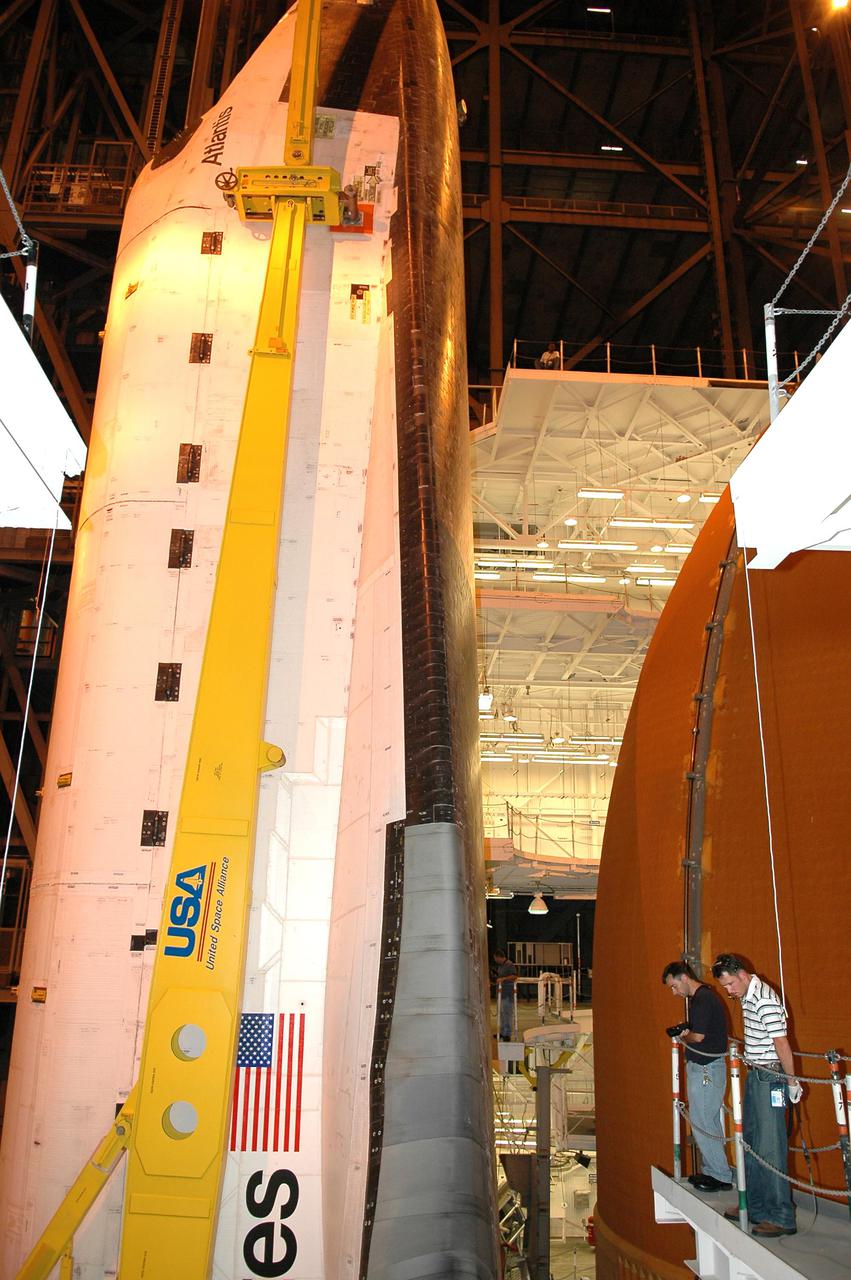
KENNEDY SPACE CENTER, FLA. - In the Vehicle Assembly Building, technicians spot for Space Shuttle Atlantis as it is demated from its External Tank_Solid Rocket Booster stack. The orbiter will be lowered into the transfer aisle and rolled back to Orbiter Processing Facility (OPF) bay 1. Once in the OPF, processing will begin for mission STS-115, the 19th flight to the International Space Station. The tank, ET-120, is the first redesigned ET to arrive at KSC and will undergo further testing before Return to Flight mission STS-121 next year.
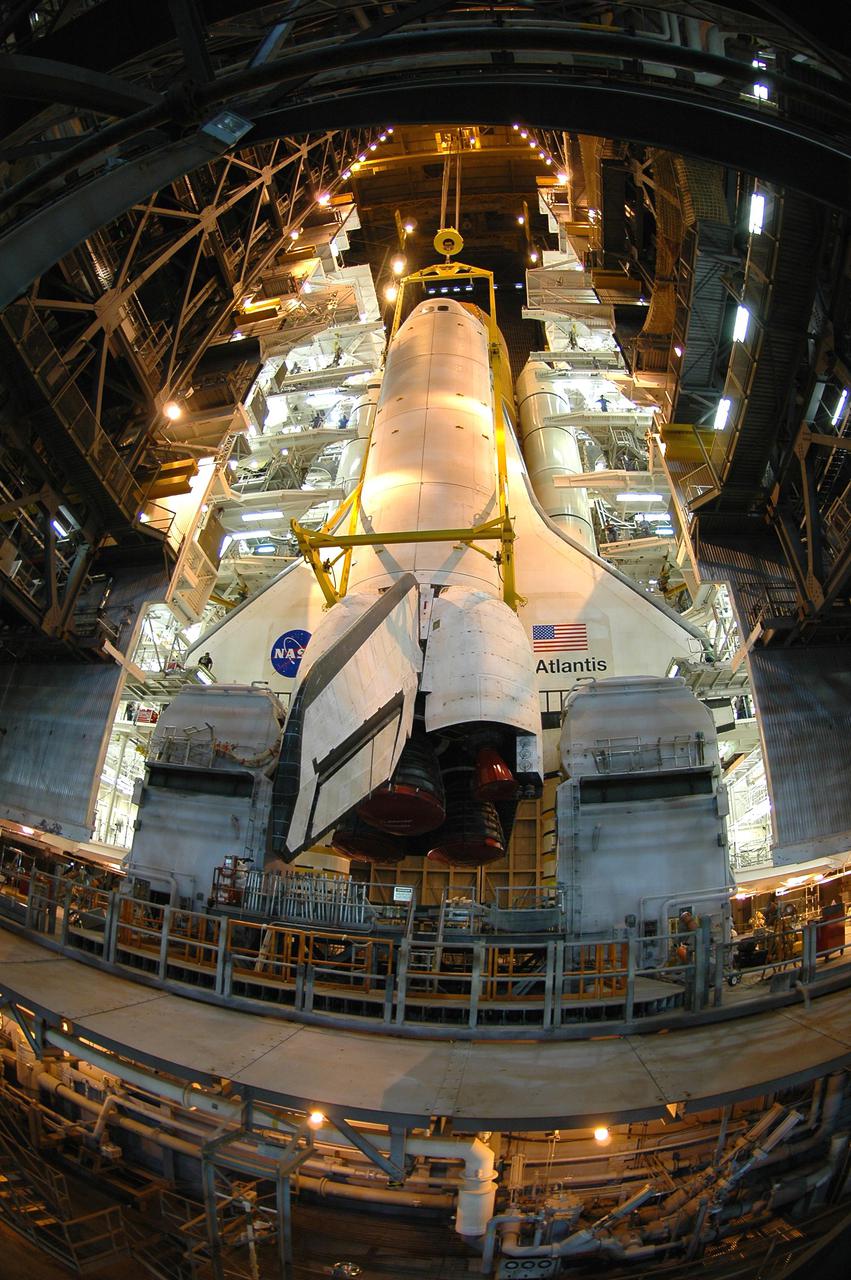
KENNEDY SPACE CENTER, FLA. - In the Vehicle Assembly Building, a fisheye lens captures Space Shuttle Atlantis as it is lifted from its External Tank_Solid Rocket Booster stack. The orbiter will be lowered into the transfer aisle and rolled back to Orbiter Processing Facility (OPF) bay 1. Once in the OPF, processing will begin for mission STS-115, the 19th flight to the International Space Station. The tank, ET-120, is the first redesigned ET to arrive at KSC and will undergo further testing before Return to Flight mission STS-121 next year.
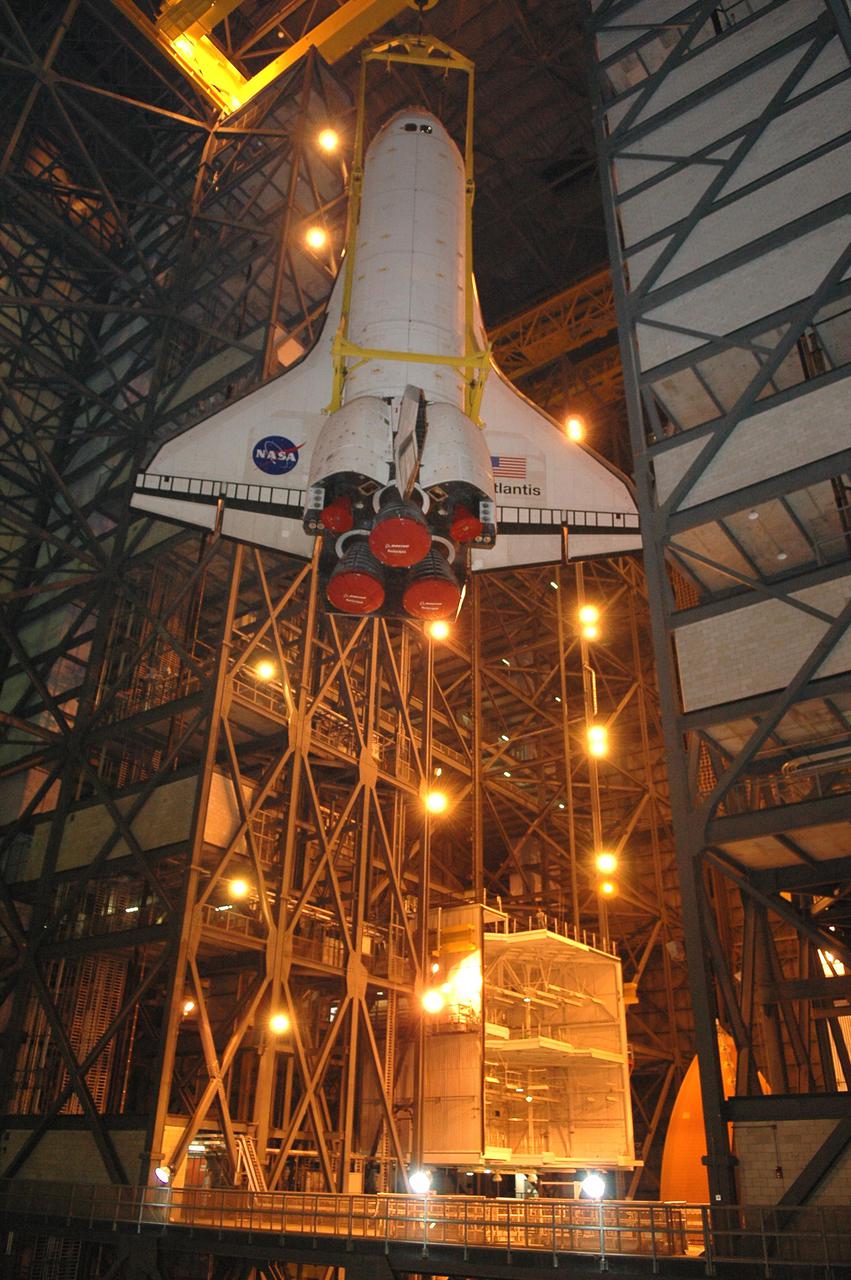
KENNEDY SPACE CENTER, FLA. - In the Vehicle Assembly Building, Space Shuttle Atlantis is lowered into the transfer aisle after being demated from its External Tank_Solid Rocket Booster stack. The orbiter will be rolled back to Orbiter Processing Facility (OPF) bay 1 where processing will begin for mission STS-115, the 19th flight to the International Space Station. The tank, ET-120, is the first redesigned ET to arrive at KSC and will undergo further testing before Return to Flight mission STS-121 next year.
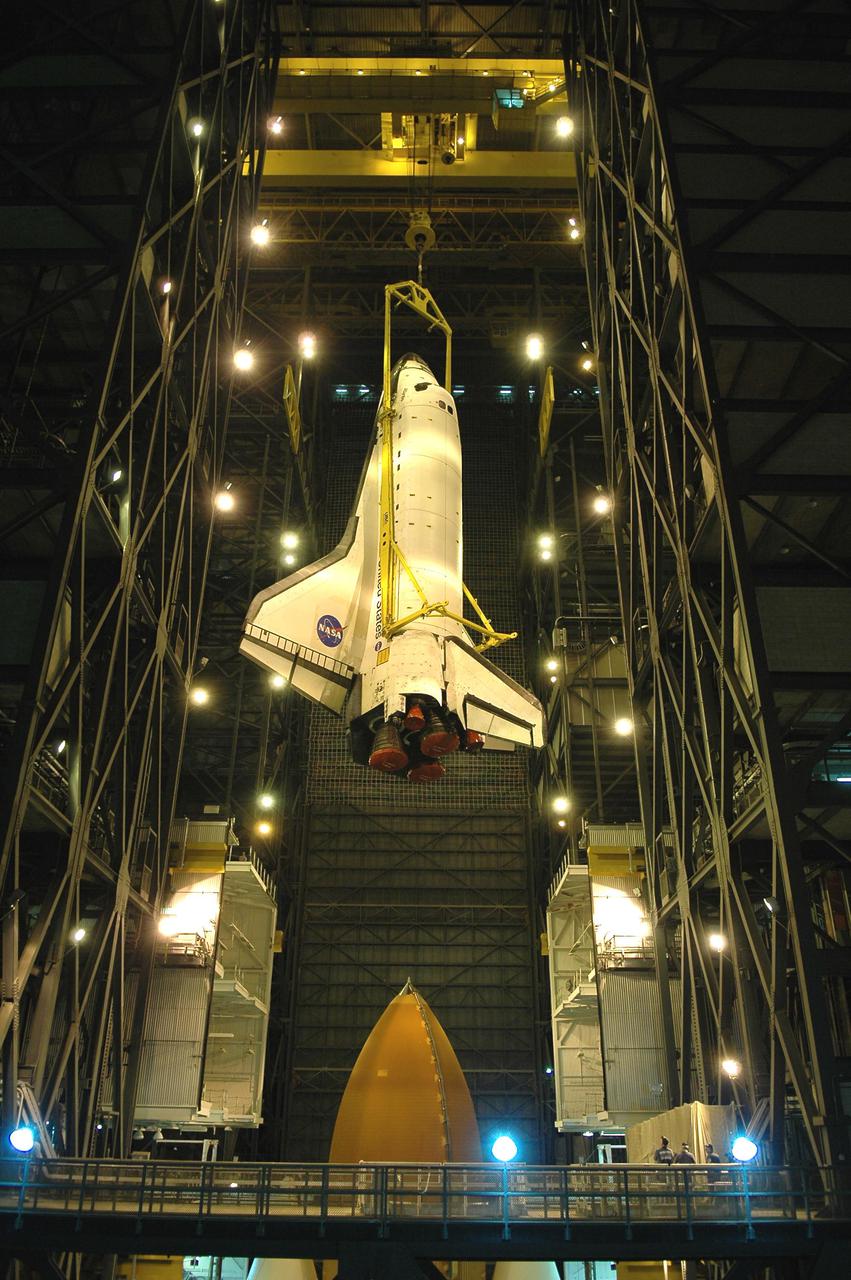
KENNEDY SPACE CENTER, FLA. - In the Vehicle Assembly Building, Space Shuttle Atlantis is lifted above its External Tank_Solid Rocket Booster stack. The orbiter will be lowered into the transfer aisle and rolled back to Orbiter Processing Facility (OPF) bay 1. Once in the OPF, processing will begin for mission STS-115, the 19th flight to the International Space Station. The tank, ET-120, is the first redesigned ET to arrive at KSC and will undergo further testing before Return to Flight mission STS-121 next year.
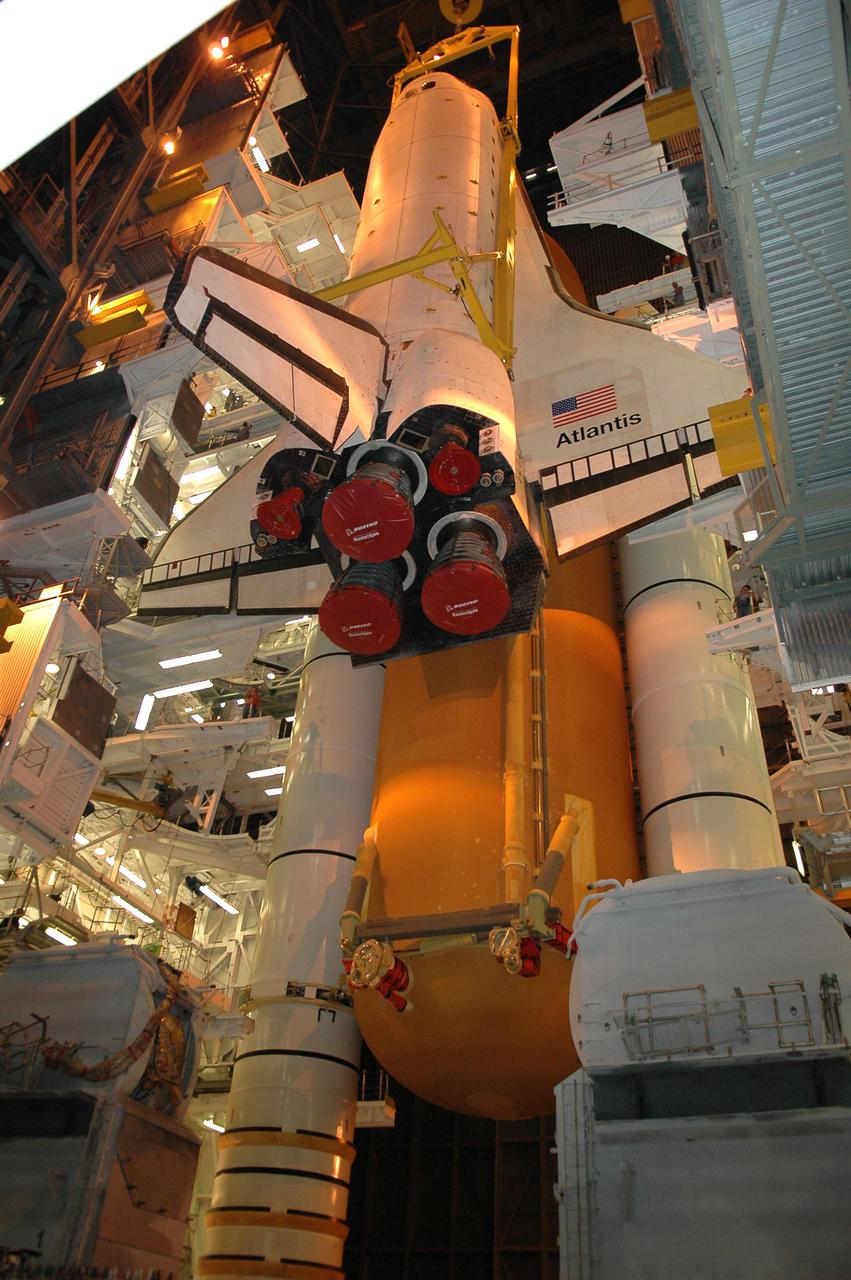
KENNEDY SPACE CENTER, FLA. - In the Vehicle Assembly Building, Space Shuttle Atlantis is lifted from its External Tank_Solid Rocket Booster stack. The orbiter will be lowered into the transfer aisle and rolled back to Orbiter Processing Facility (OPF) bay 1. Once in the OPF, processing will begin for mission STS-115, the 19th flight to the International Space Station. The tank, ET-120, is the first redesigned ET to arrive at KSC and will undergo further testing before Return to Flight mission STS-121 next year.
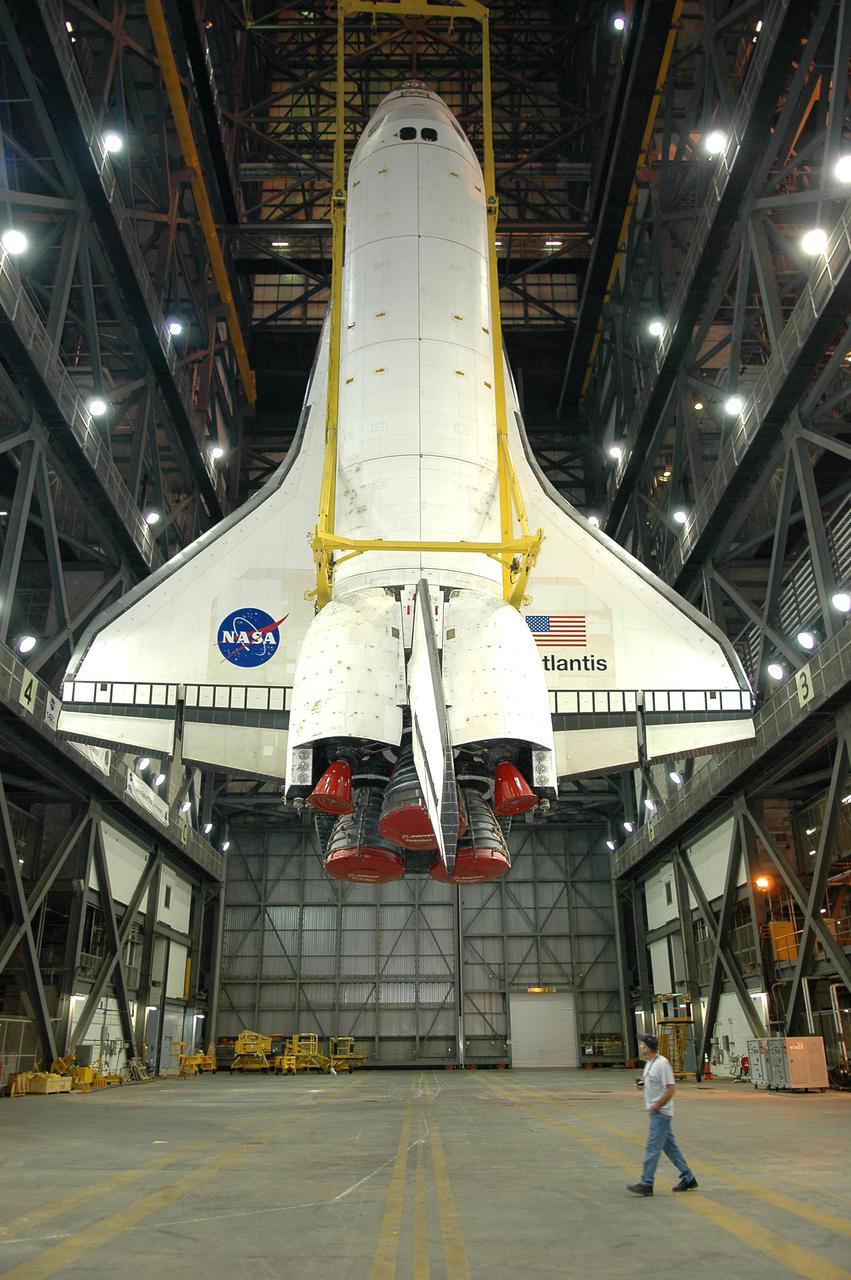
KENNEDY SPACE CENTER, FLA. - In the Vehicle Assembly Building, a technician monitors Space Shuttle Atlantis as it is lowered into the transfer aisle after being demated from its External Tank_Solid Rocket Booster stack. The orbiter will be rolled back to Orbiter Processing Facility bay 1 where processing will begin for mission STS-115, the 19th flight to the International Space Station. The tank, ET-120, is the first redesigned ET to arrive at KSC and will undergo further testing before Return to Flight mission STS-121 next year.
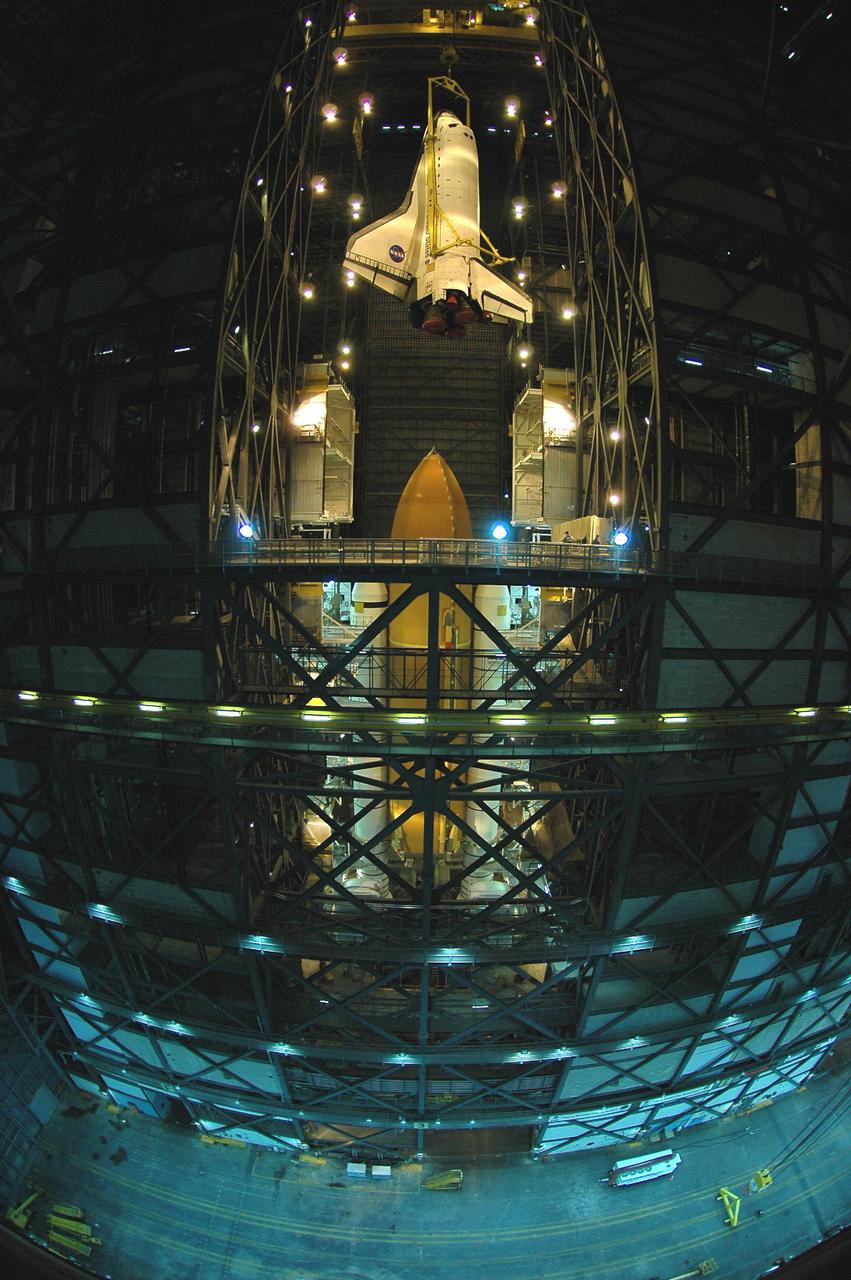
KENNEDY SPACE CENTER, FLA. - In the Vehicle Assembly Building, a fisheye lens captures Space Shuttle Atlantis as it is lifted above its External Tank_Solid Rocket Booster stack. The orbiter will be lowered into the transfer aisle and rolled back to Orbiter Processing Facility (OPF) bay 1. Once in the OPF, processing will begin for mission STS-115, the 19th flight to the International Space Station. The tank, ET-120, is the first redesigned ET to arrive at KSC and will undergo further testing before Return to Flight mission STS-121 next year.
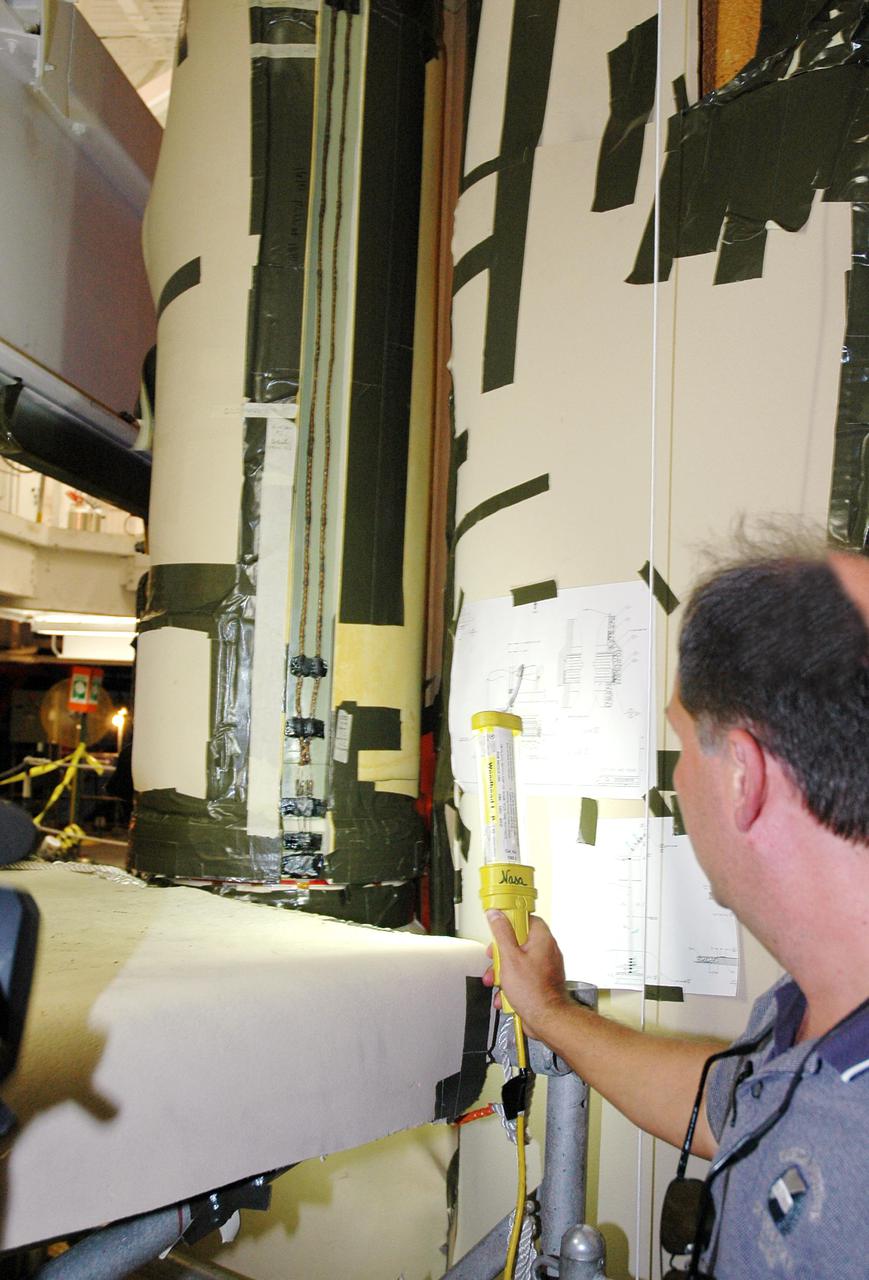
KENNEDY SPACE CENTER, FLA. - In the Vehicle Assembly Building at NASA’s Kennedy Space Center, Ken Revay, the ET_SRB processing manager with United Space Alliance, inspects the newly installed liquid oxygen bellows heater on External Tank 120, recently removed from the orbiter Discovery. The new heater has been added to the feedline bellows to minimize the potential for ice and frost buildup. ET-120 will fly with Atlantis on the second Return to Flight mission STS-121. The launch window for STS-121 extends from Sept. 9 - 24.
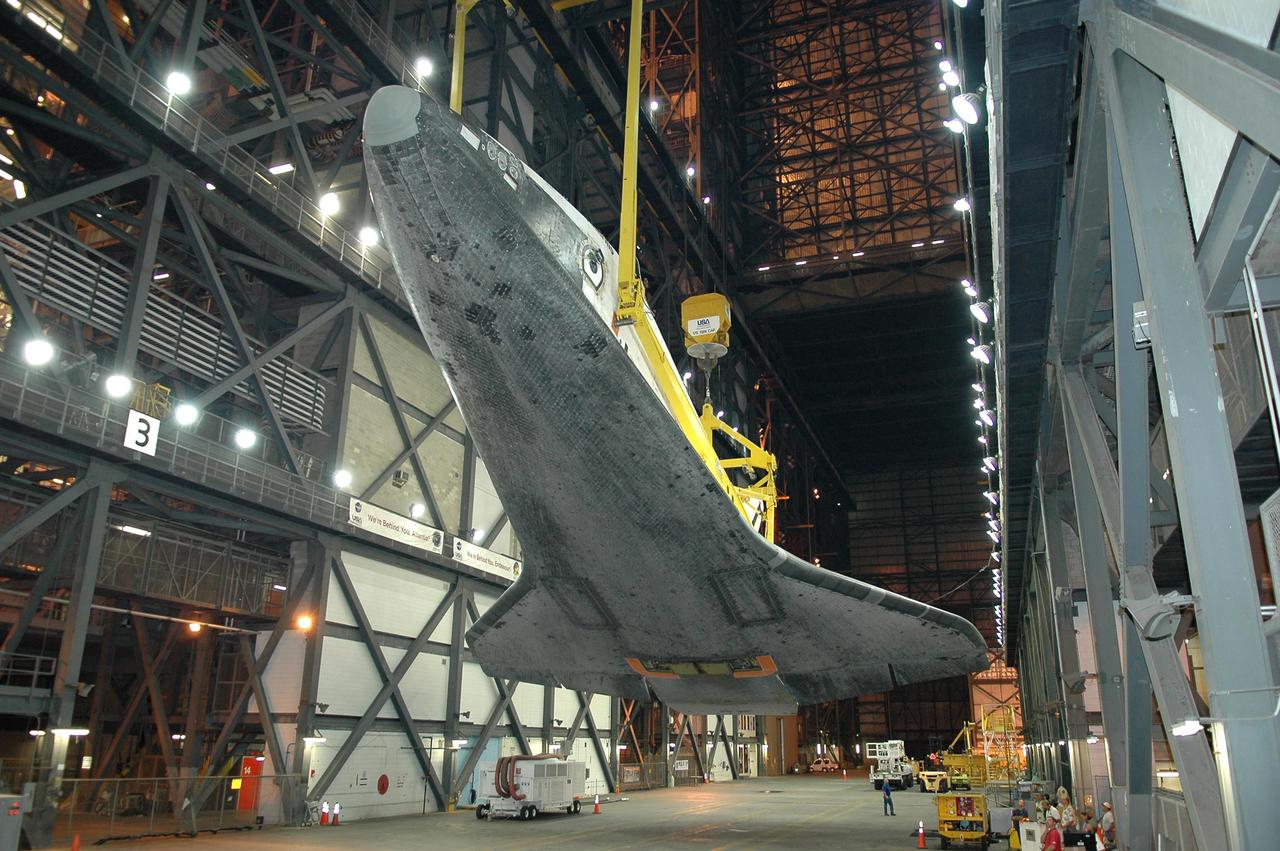
KENNEDY SPACE CENTER, FLA. - In the Vehicle Assembly Building (VAB), Space Shuttle Atlantis is positioned horizontally as it is lowered into the transfer aisle. The vehicle was just demated from its External Tank_Solid Rocket Booster stack in one of the VAB's high bays. The orbiter will be rolled back to Orbiter Processing Facility bay 1 where processing will begin for mission STS-115, the 19th flight to the International Space Station. The tank, ET-120, is the first redesigned ET to arrive at KSC and will undergo further testing before Return to Flight mission STS-121 next year.
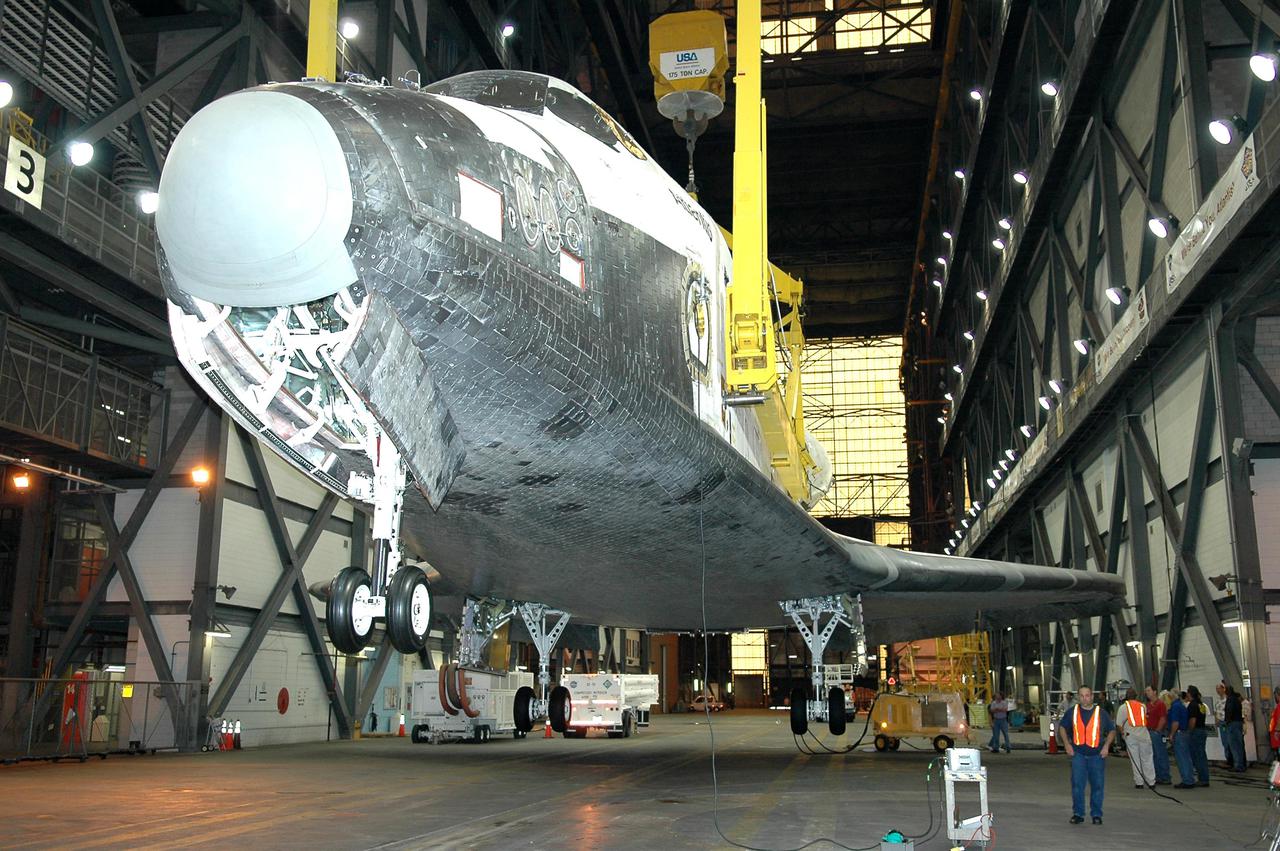
KENNEDY SPACE CENTER, FLA. - In the Vehicle Assembly Building (VAB), the landing gear of Space Shuttle Atlantis is lowered before the orbiter comes to rest on the floor of the transfer aisle. The vehicle was just demated from its External Tank_Solid Rocket Booster stack in one of the VAB's high bays. The orbiter will be rolled back to Orbiter Processing Facility bay 1 where processing will begin for mission STS-115, the 19th flight to the International Space Station. The tank, ET-120, is the first redesigned ET to arrive at KSC and will undergo further testing before Return to Flight mission STS-121 next year.
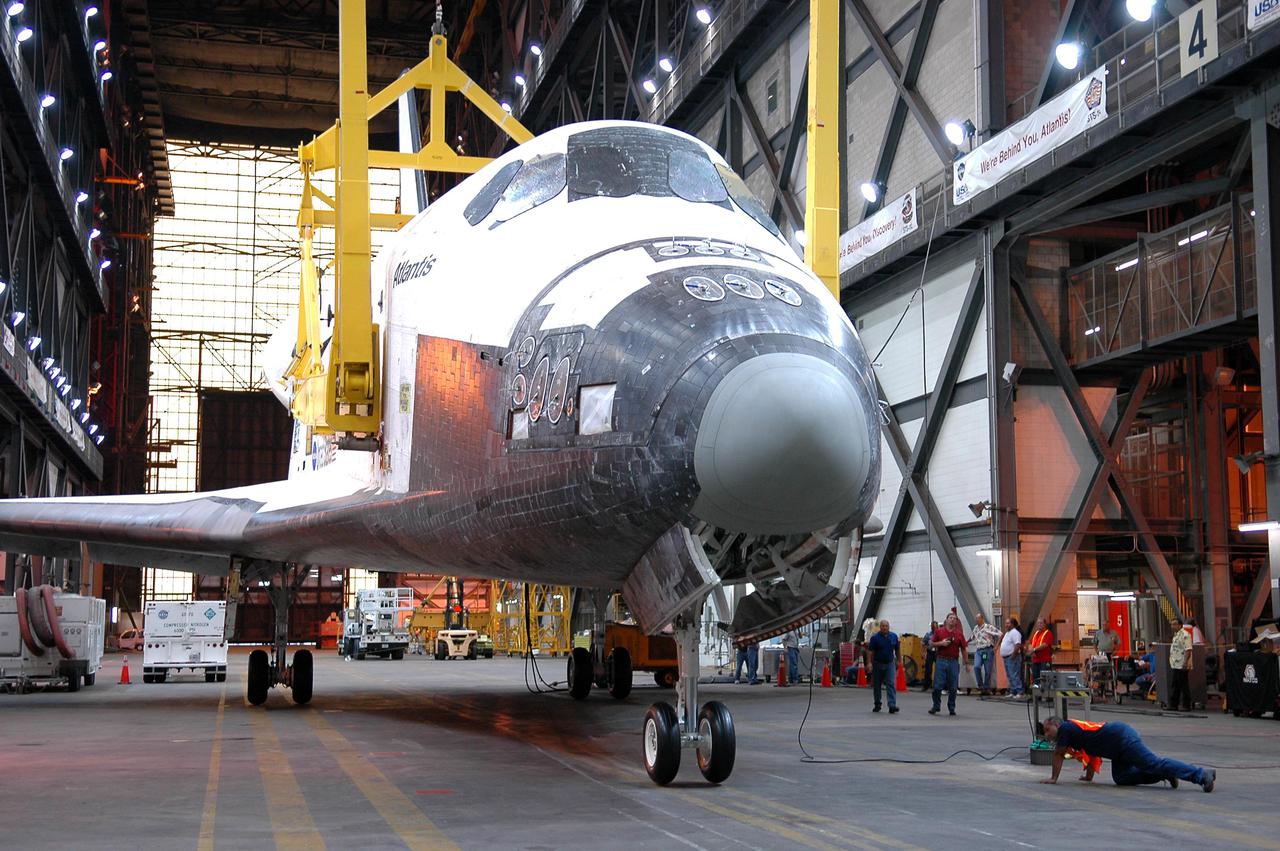
KENNEDY SPACE CENTER, FLA. - In the Vehicle Assembly Building (VAB), Space Shuttle Atlantis rests on its landing gear on the floor of the transfer aisle. The vehicle was just demated from its External Tank_Solid Rocket Booster stack in one of the VAB's high bays. The orbiter will be rolled back to Orbiter Processing Facility bay 1 where processing will begin for mission STS-115, the 19th flight to the International Space Station. The tank, ET-120, is the first redesigned ET to arrive at KSC and will undergo further testing before Return to Flight mission STS-121 next year.
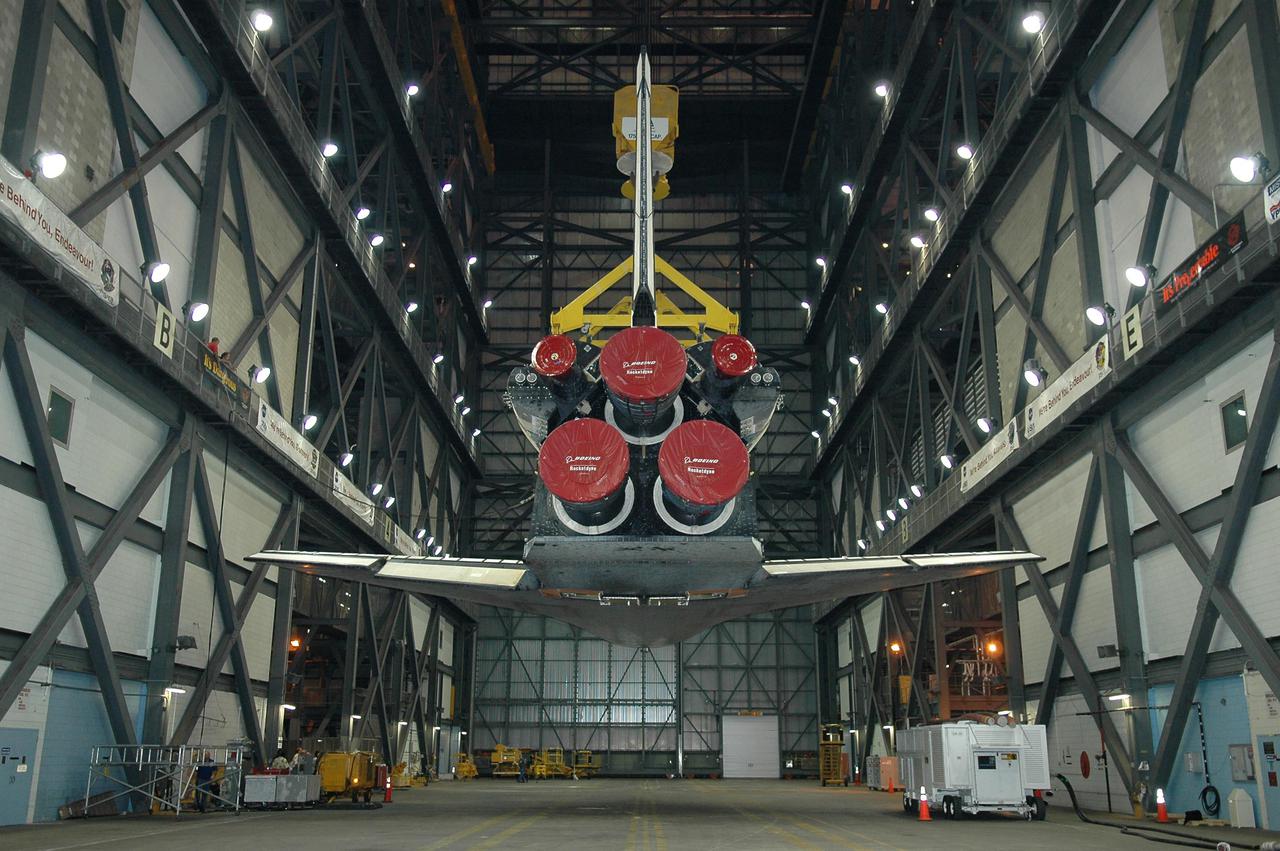
KENNEDY SPACE CENTER, FLA. - In the Vehicle Assembly Building (VAB), Space Shuttle Atlantis is positioned horizontally as it is lowered into the transfer aisle. The vehicle was just demated from its External Tank_Solid Rocket Booster stack in one of the VAB's high bays. The orbiter will be rolled back to Orbiter Processing Facility bay 1 where processing will begin for mission STS-115, the 19th flight to the International Space Station. The tank, ET-120, is the first redesigned ET to arrive at KSC and will undergo further testing before Return to Flight mission STS-121 next year.
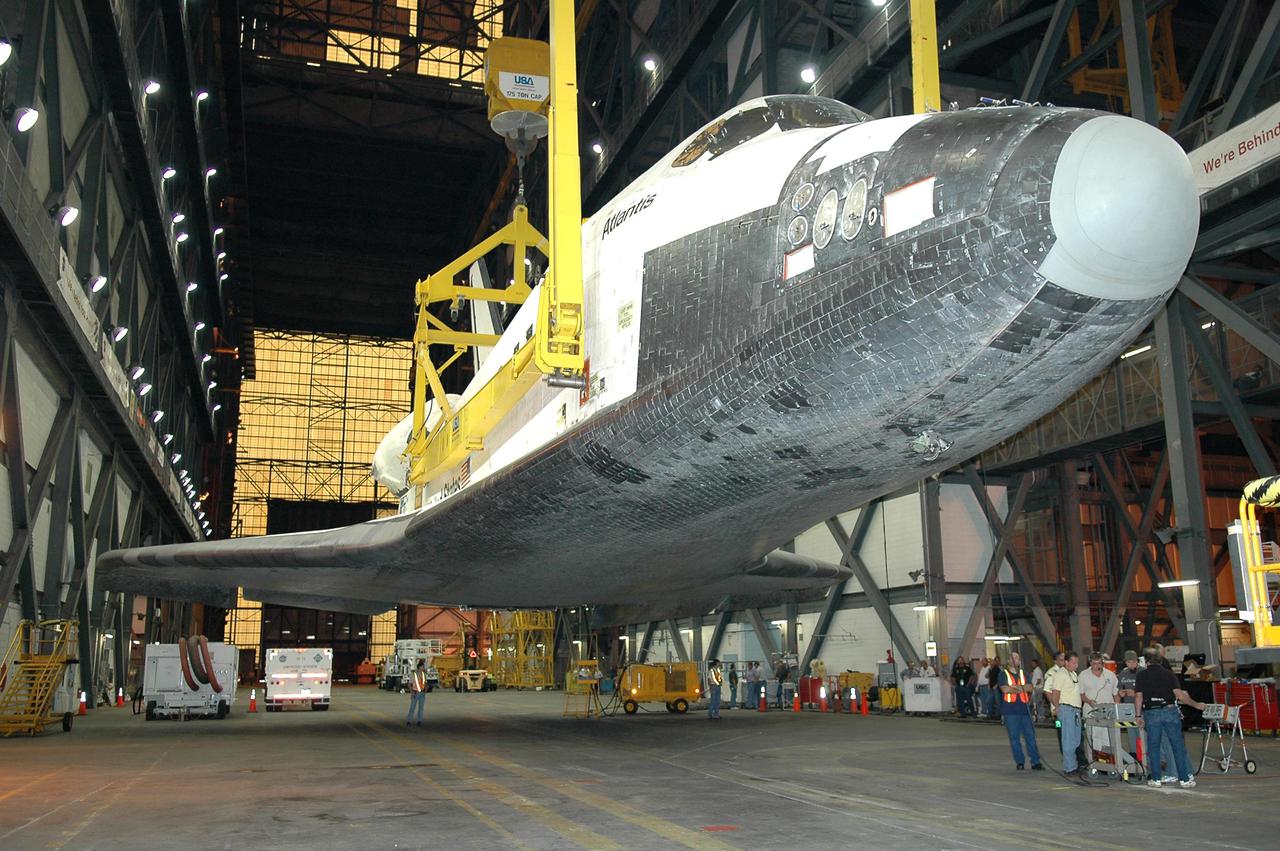
KENNEDY SPACE CENTER, FLA. - In the Vehicle Assembly Building (VAB), Space Shuttle Atlantis is positioned horizontally as it is lowered into the transfer aisle. The vehicle was just demated from its External Tank_Solid Rocket Booster stack in one of the VAB's high bays. The orbiter will be rolled back to Orbiter Processing Facility bay 1 where processing will begin for mission STS-115, the 19th flight to the International Space Station. The tank, ET-120, is the first redesigned ET to arrive at KSC and will undergo further testing before Return to Flight mission STS-121 next year.
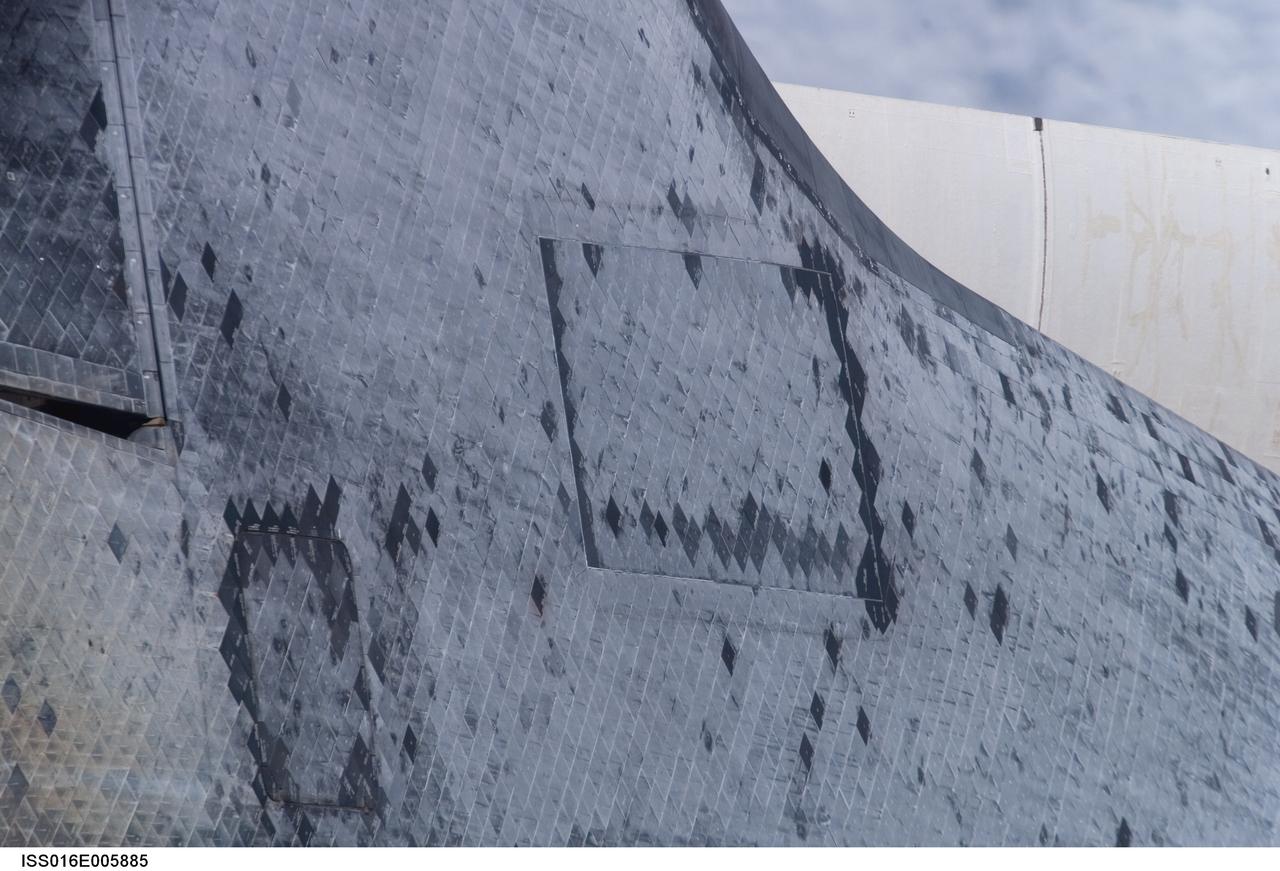
ISS016-E-005885 (25 Oct. 2007) --- The underside of the Space Shuttle Discovery is featured in this image photographed by an Expedition 16 crewmember during a backflip maneuver performed by the approaching visitors (STS-120) to the International Space Station. Visible are a landing gear door (large square at center) and an external tank (ET) umbilical door (lower left).
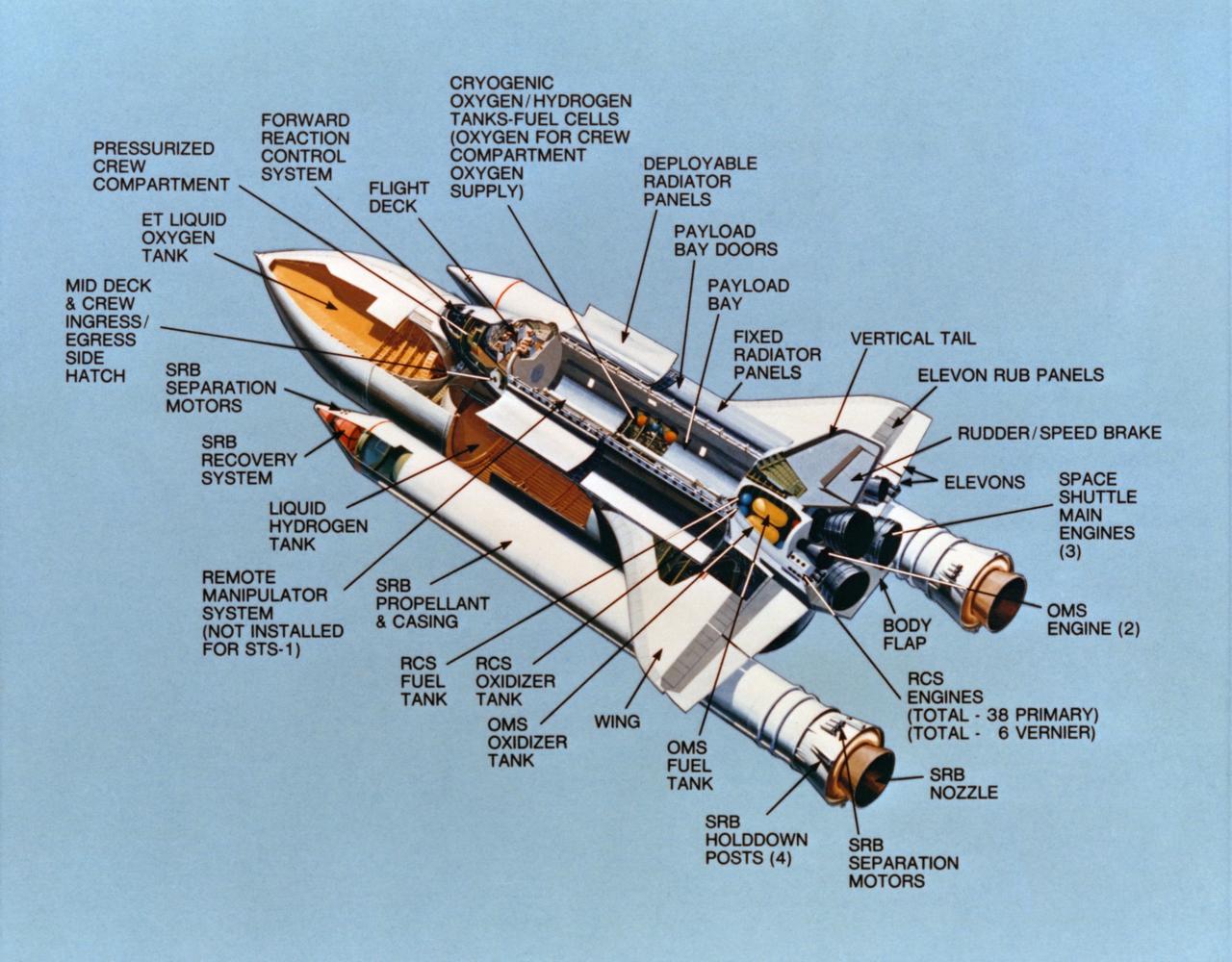
S81-30630 (February 1981) --- This "cutaway" artist's concept exercises some artistic license to reveal systems of the major components of a space shuttle vehicle. With its payload bay doors open here, the shuttle's cryogenic supply station (note cutaway) and the deployable radiator panels (visible) can be seen. In reality, the cargo bay panels would never be open while the orbiter is attached to the solid rocket boosters (SRB) and external fuel tank (ET). The thick-bodied, delta-winged aerospace craft is 37 meters long, has a span of 24 meters (120 feet by 80 feet), and weighs about 75,000 kilograms empty (165,000 lbs). Its payload bay, 18.3 meters long and 4.6 meters in diameter (60 feet by 15 feet) can deliver single or conglomerate payloads of up to 370 kilometers altitude or smaller loads up to 1110 kilometers (230 miles to 690 miles). It can bring payloads of 14,515 kilograms (32,000 lbs) back to Earth and it can carry out a variety of missions lasting seven to 30 days. Photo credit: NASA