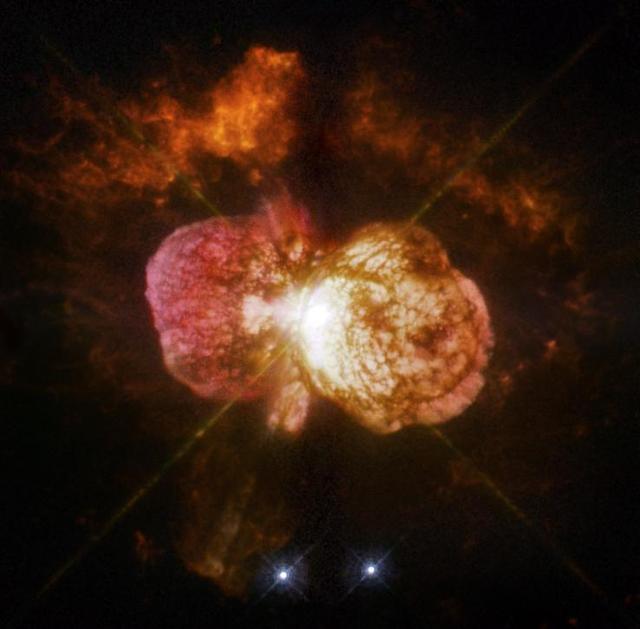
The discovery of likely Eta Carinae twins in other galaxies will help scientists better understand this brief phase in the life of a massive star with images such as this from NASA Hubble Space Telescope. Astronomers cannot yet explain what caused the titanic eruption of star Eta Carinae in the 1840s. The discovery of likely Eta Carinae "twins" in other galaxies will help scientists better understand this brief phase in the life of a massive star. http://photojournal.jpl.nasa.gov/catalog/PIA20294

Evening photo of the Space Experiments Complex in the evening of the arrival of the Orion ETA (Environmental Test Article) having been shipped from Florida by truck. The Orion ETA flew on Artemis I and will undergo testing of the docking module jettison and the forward by cover jettison in preparation of the Artemis II launch.
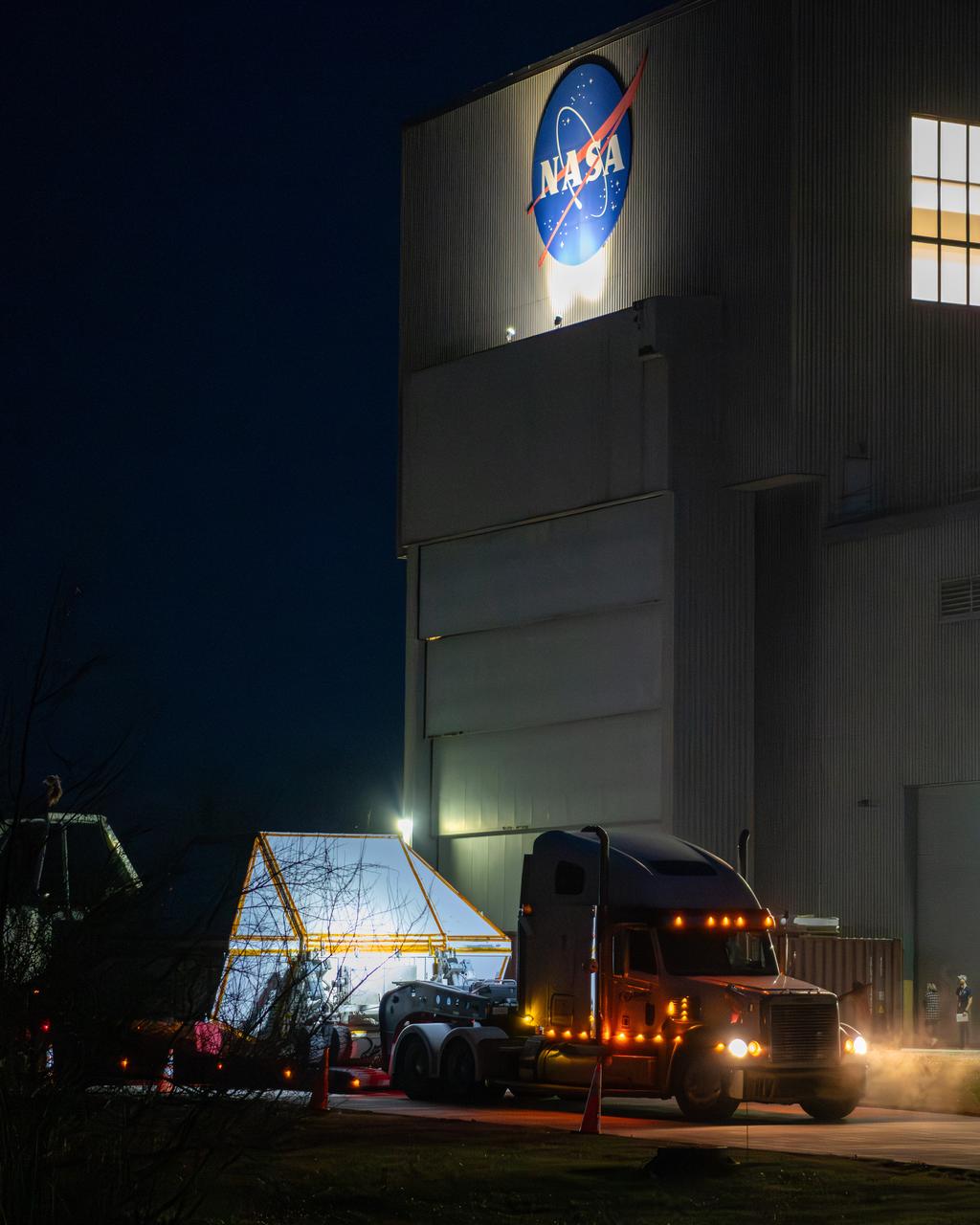
Evening photo of the Space Experiments Complex in the evening of the arrival of the Orion ETA (Environmental Test Article) having been shipped from Florida by truck. The Orion ETA flew on Artemis I and will undergo testing of the docking module jettison and the forward by cover jettison in preparation of the Artemis II launch.
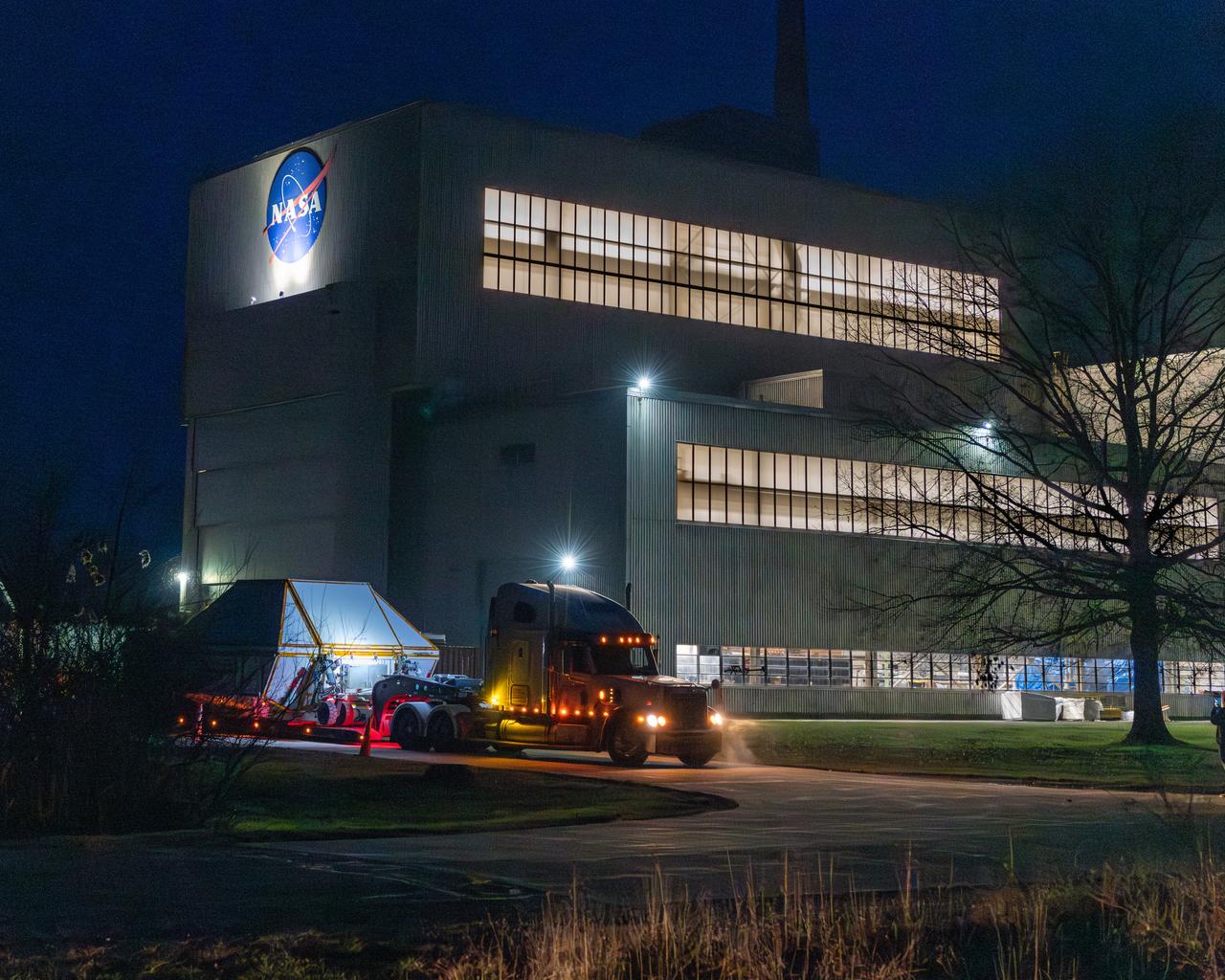
Evening photo of the Space Experiments Complex in the evening of the arrival of the Orion ETA (Environmental Test Article) having been shipped from Florida by truck. The Orion ETA flew on Artemis I and will undergo testing of the docking module jettison and the forward by cover jettison in preparation of the Artemis II launch.
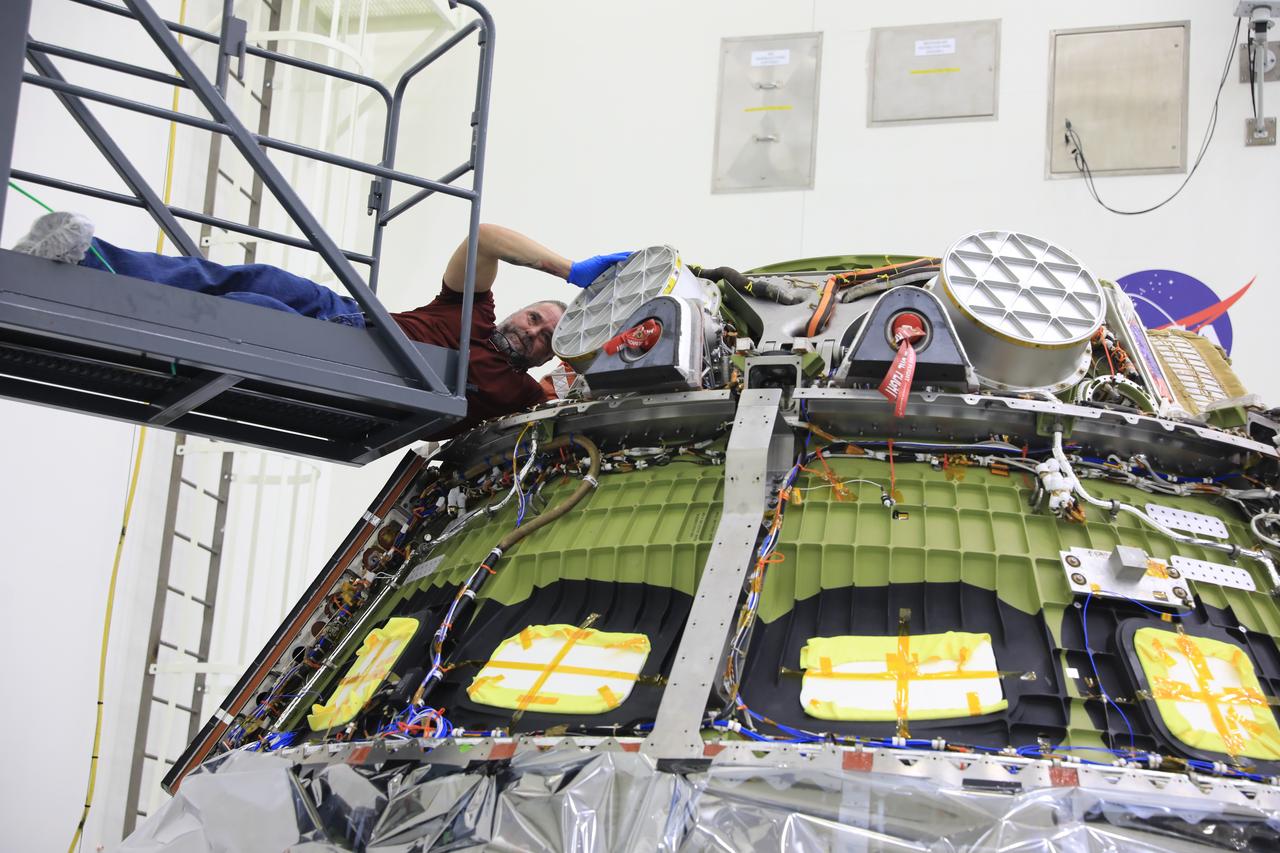
The Artemis I Orion crew module, now known as the Orion Environmental Test Article (ETA), arrives to NASA’s Kennedy Space Center in Florida on Saturday, Dec. 21, 2024, following an 11-month test campaign at NASA’s Neil Armstrong Test Facility in Sandusky, Ohio. The ETA will undergo propulsion functional testing at Kennedy’s Multi Payload Processing Facility. The ETA splashed down in the Pacific Ocean on Sunday, Dec. 11, 2022, following its journey around the Moon during the Artemis I mission.
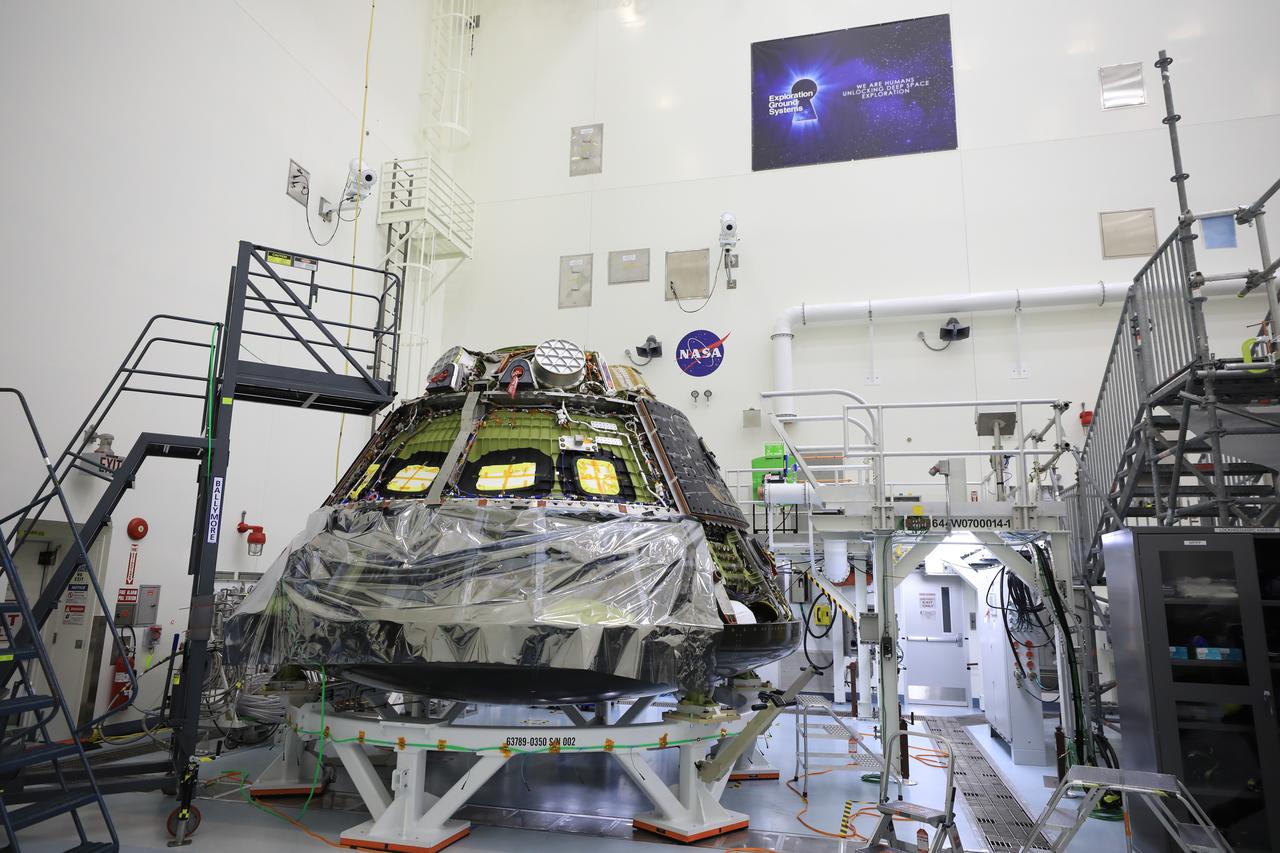
The Artemis I Orion crew module, now known as the Orion Environmental Test Article (ETA), arrives to NASA’s Kennedy Space Center in Florida on Saturday, Dec. 21, 2024, following an 11-month test campaign at NASA’s Neil Armstrong Test Facility in Sandusky, Ohio. The ETA will undergo propulsion functional testing at Kennedy’s Multi Payload Processing Facility. The ETA splashed down in the Pacific Ocean on Sunday, Dec. 11, 2022, following its journey around the Moon during the Artemis I mission.
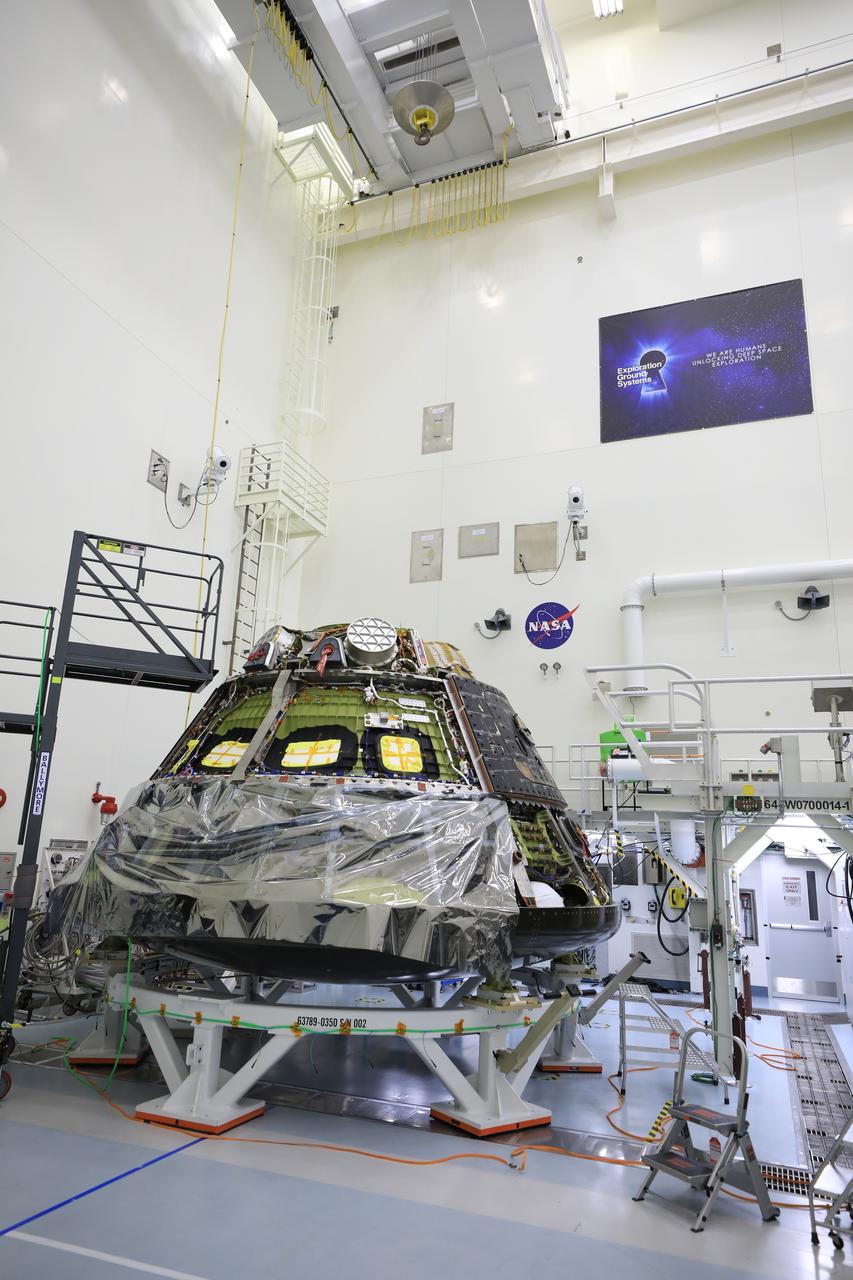
The Artemis I Orion crew module, now known as the Orion Environmental Test Article (ETA), arrives to NASA’s Kennedy Space Center in Florida on Saturday, Dec. 21, 2024, following an 11-month test campaign at NASA’s Neil Armstrong Test Facility in Sandusky, Ohio. The ETA will undergo propulsion functional testing at Kennedy’s Multi Payload Processing Facility. The ETA splashed down in the Pacific Ocean on Sunday, Dec. 11, 2022, following its journey around the Moon during the Artemis I mission.
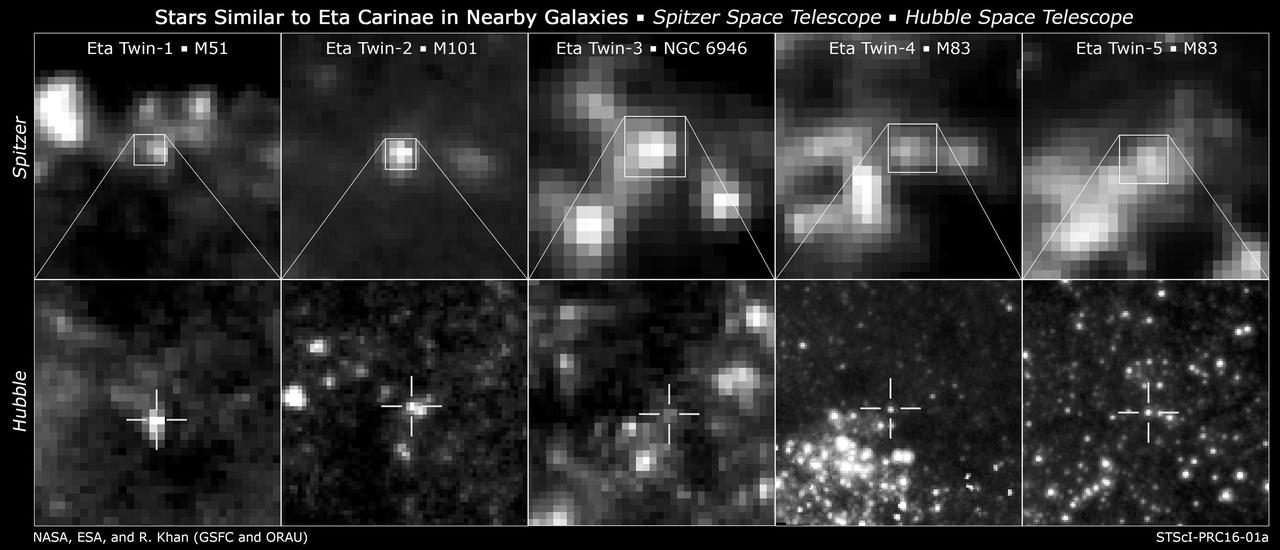
Researchers found likely twins of the giant, erupting star Eta Carinae by comparing infrared images from NASA Spitzer Space Telescope (top) and NASA Hubble Space Telescope (bottom). Astronomers cannot yet explain what caused the titanic eruption of star Eta Carinae in the 1840s. The discovery of likely Eta Carinae "twins" in other galaxies will help scientists better understand this brief phase in the life of a massive star. http://photojournal.jpl.nasa.gov/catalog/PIA20018
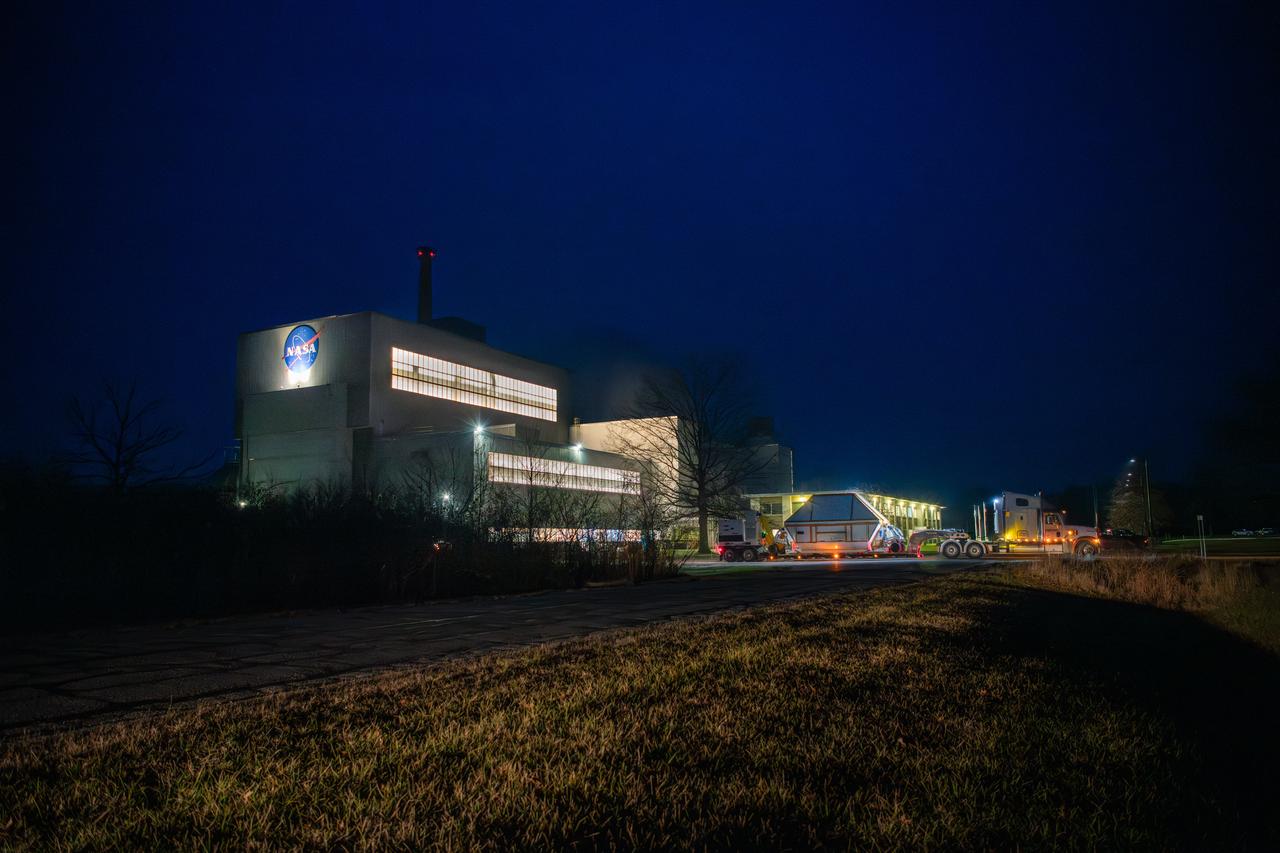
Orion ETA Hardware, Launch Abort System and Crew Module Documentation Photographs - Crew Module Arrival
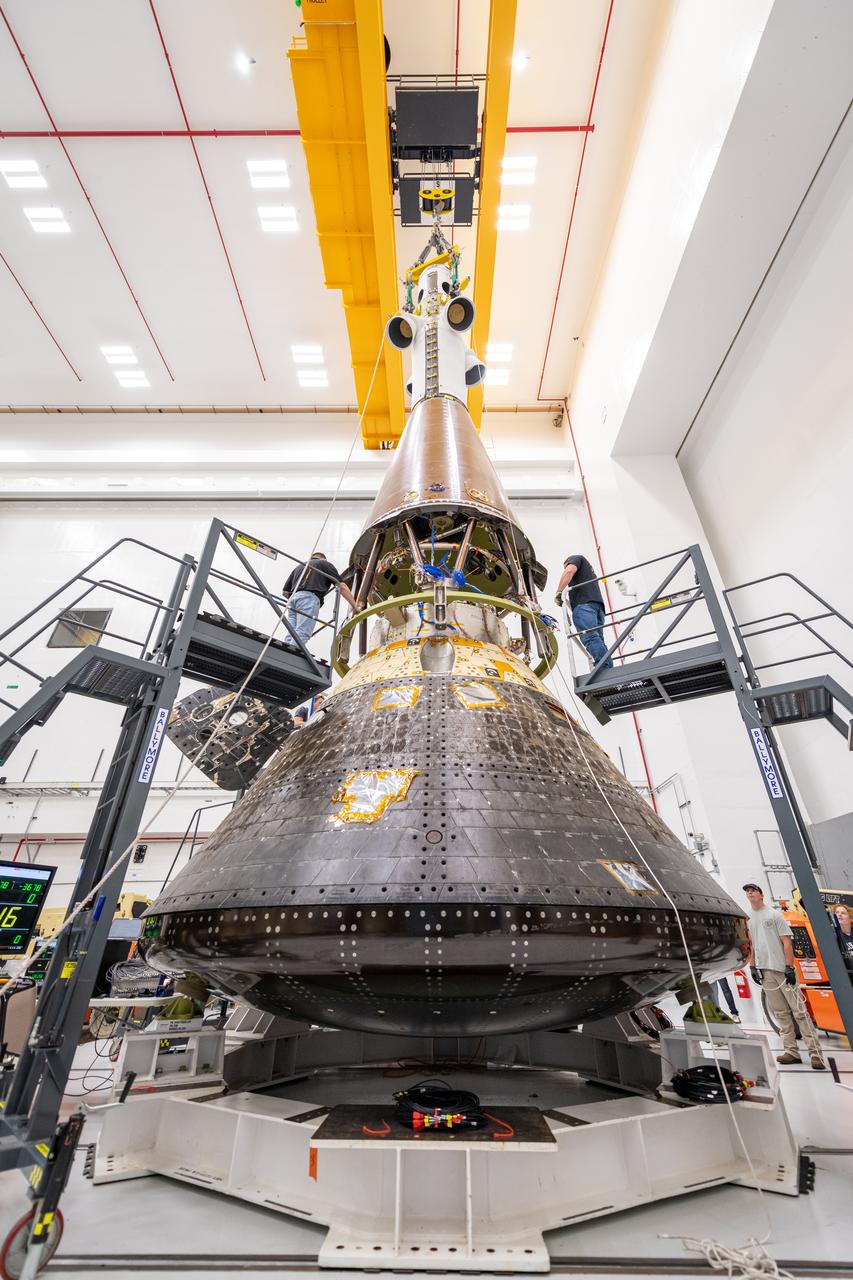
The Launch Abort Systems gets installed on to the Orion Crew Module, also known as the Orion Environmental Test Article (ETA), in preparation for testing at the Space Environments Complex at NASA’s Neil Armstrong Test Facility in Sandusky, Ohio. The ETA completed an 11-month test campaign in 2024 necessary for the safety and success of Artemis II. Photo Credit: (NASA/Jordan Salkin)
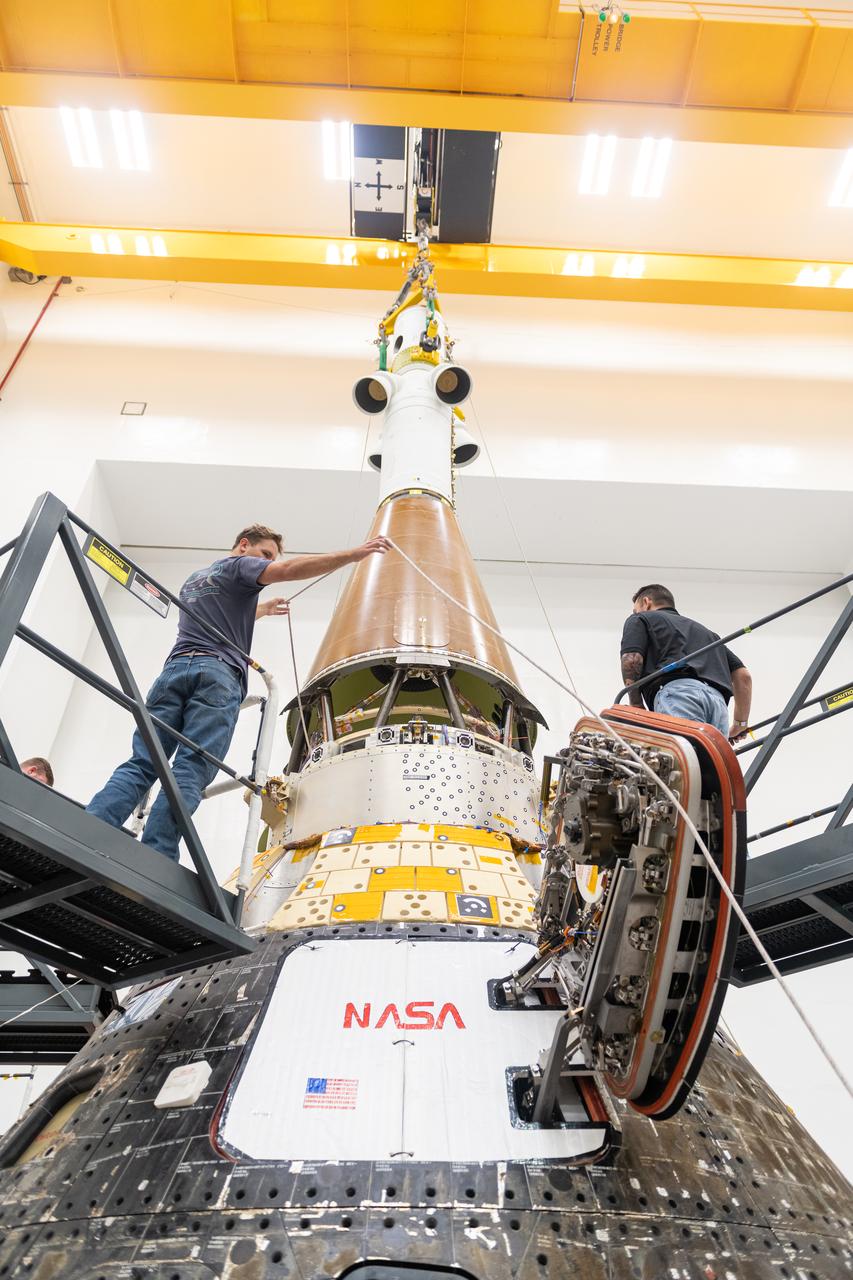
The Launch Abort Systems gets installed on to the Orion Crew Module, also known as the Orion Environmental Test Article (ETA), in preparation for testing at the Space Environments Complex at NASA’s Neil Armstrong Test Facility in Sandusky, Ohio. The ETA completed an 11-month test campaign in 2024 necessary for the safety and success of Artemis II. Photo Credit: (NASA/Jordan Salkin)
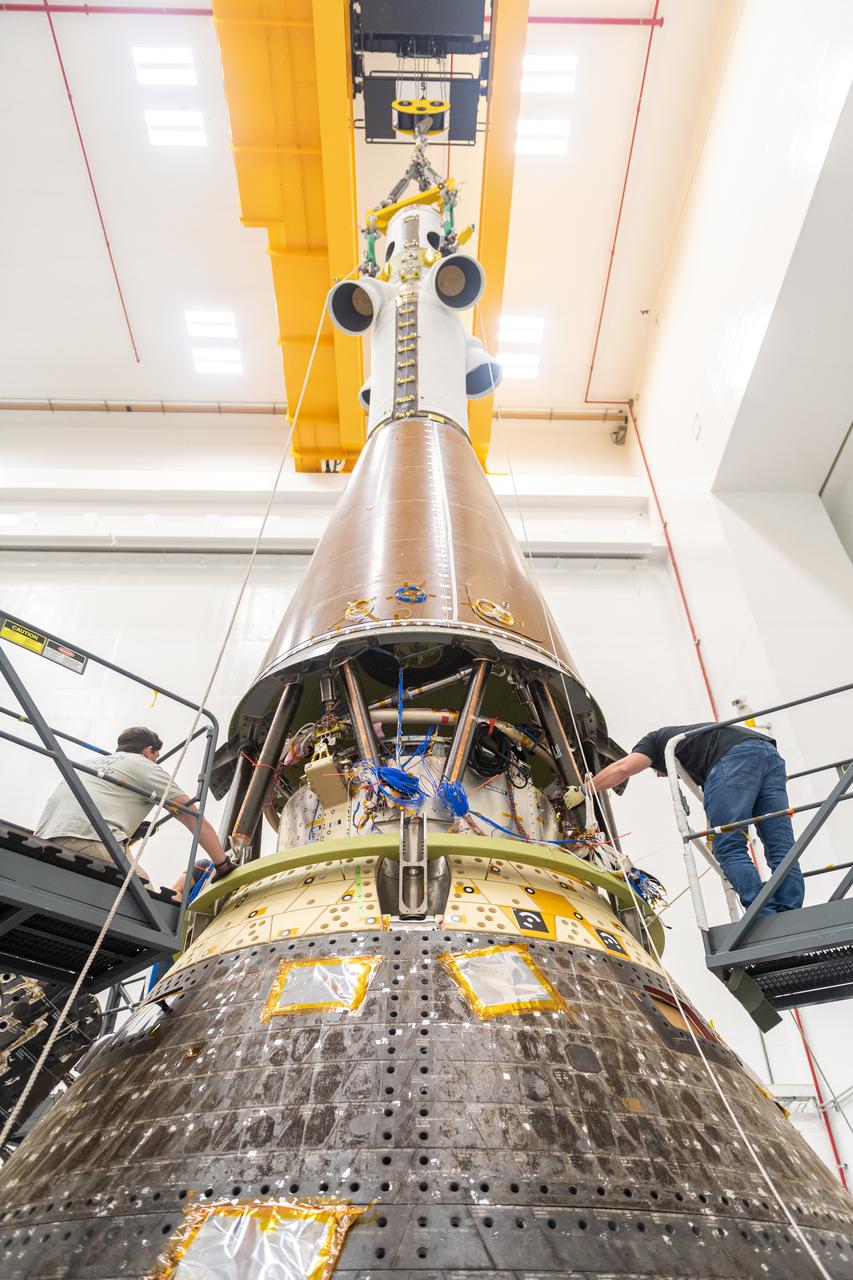
The Launch Abort Systems gets installed on to the Orion Crew Module, also known as the Orion Environmental Test Article (ETA), in preparation for testing at the Space Environments Complex at NASA’s Neil Armstrong Test Facility in Sandusky, Ohio. The ETA completed an 11-month test campaign in 2024 necessary for the safety and success of Artemis II. Photo Credit: (NASA/Jordan Salkin)
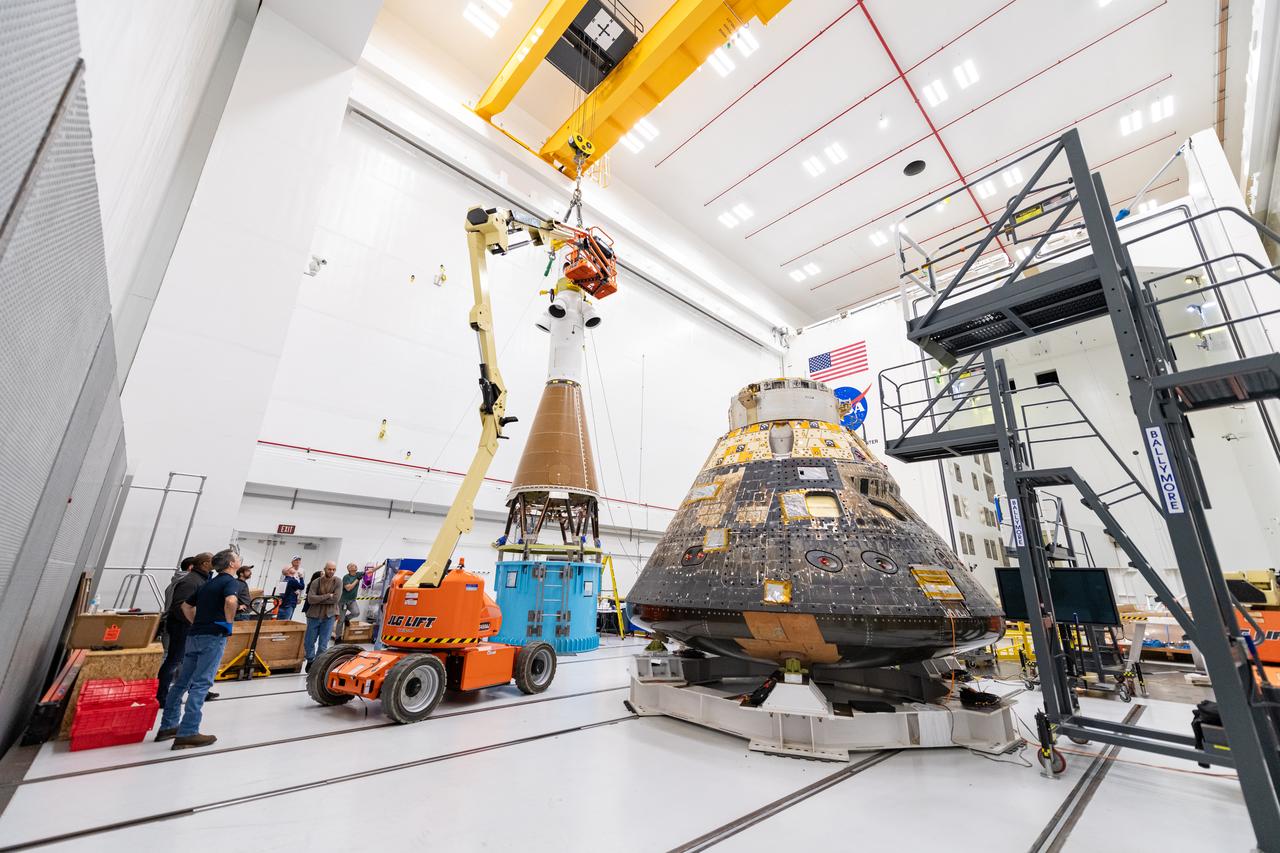
The Launch Abort Systems gets installed on to the Orion Crew Module, also known as the Orion Environmental Test Article (ETA), in preparation for testing at the Space Environments Complex at NASA’s Neil Armstrong Test Facility in Saundusky, Ohio. The ETA completed an 11-month test campaign in 2024 necessary for the safety and success of Artemis II. Photo Credit: (NASA/Jordan Salkin)
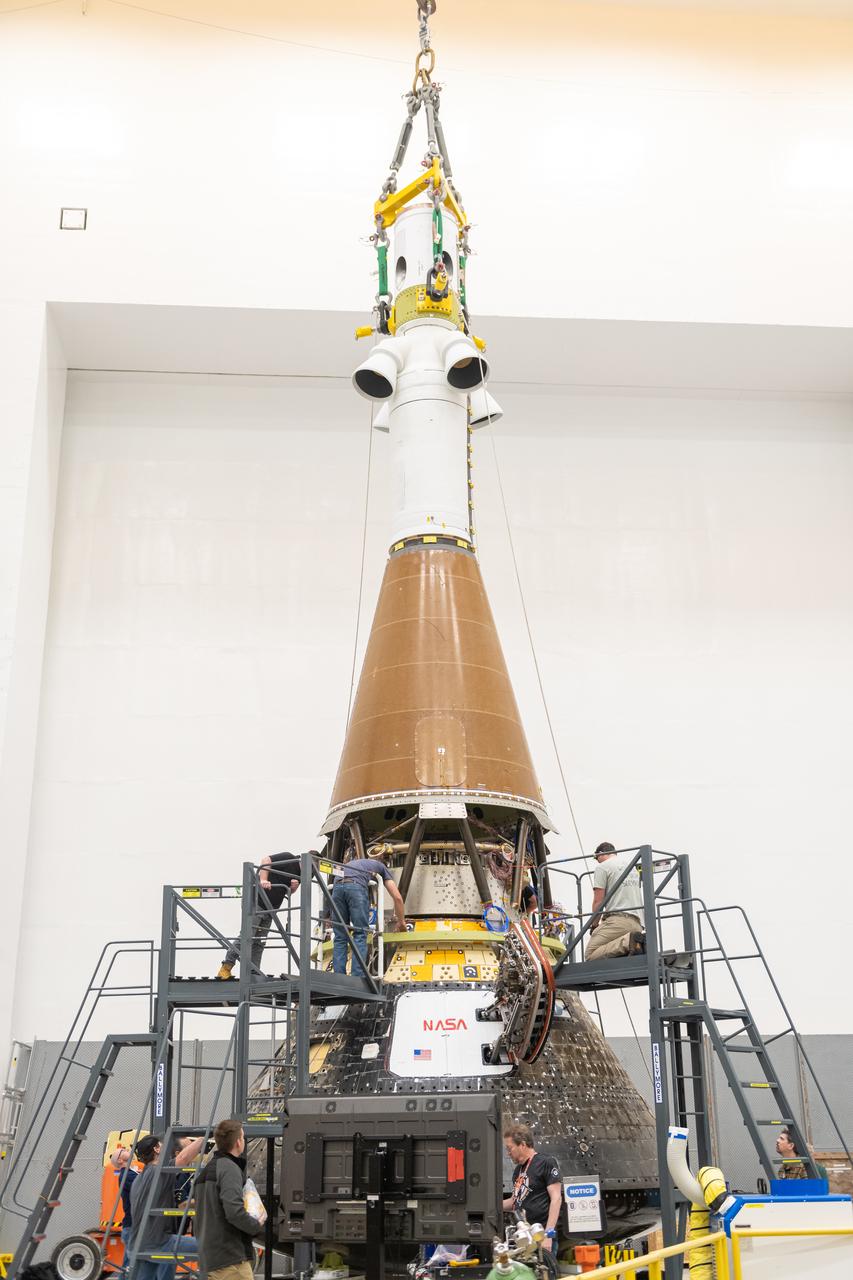
The Launch Abort Systems gets installed on to the Orion Crew Module, also known as the Orion Environmental Test Article (ETA), in preparation for testing at the Space Environments Complex at NASA’s Neil Armstrong Test Facility in Sandusky, Ohio. The ETA completed an 11-month test campaign in 2024 necessary for the safety and success of Artemis II. Photo Credit: (NASA/Jordan Salkin)
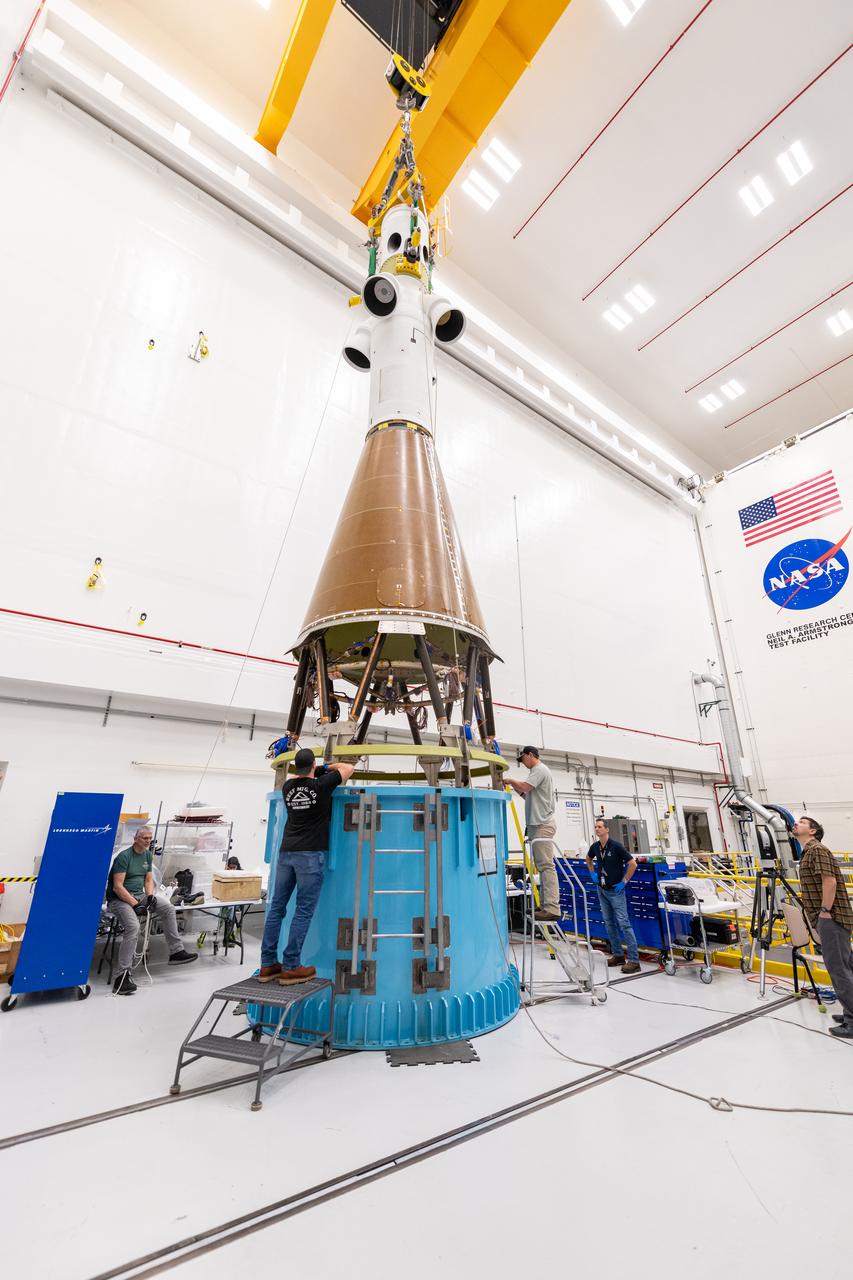
The Launch Abort Systems gets installed on to the Orion Crew Module, also known as the Orion Environmental Test Article (ETA), in preparation for testing at the Space Environments Complex at NASA’s Neil Armstrong Test Facility in Sandusky, Ohio. The ETA completed an 11-month test campaign in 2024 necessary for the safety and success of Artemis II. Photo Credit: (NASA/Jordan Salkin)
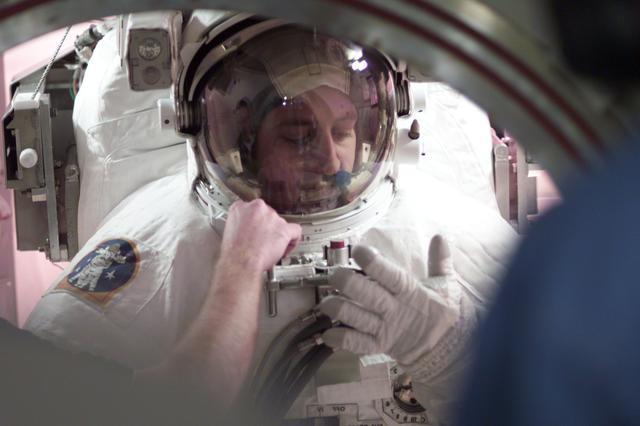
JSC2001-E-44742 (December 2001) --- Astronaut Michael J. Massimino, STS-109 mission specialist, dons a training version of the Extravehicular Mobility Unit (EMU) space suit prior to a mission training session in the Environmental Test Article (ETA) Chamber in the Crew Systems Laboratory at Johnson Space Center (JSC).
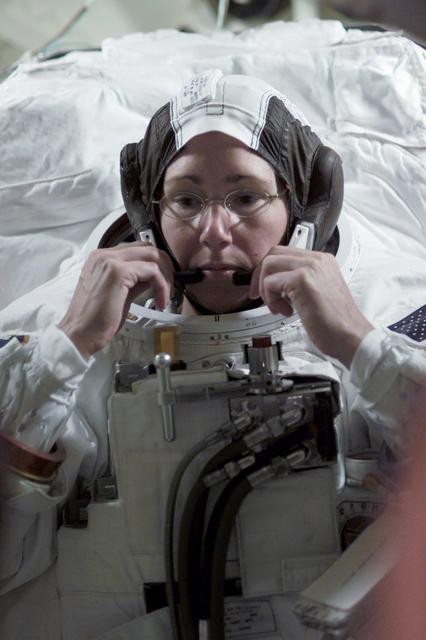
JSC2002-E-23122 (5 June 2002) --- Astronaut Sandra H. Magnus, STS-112 mission specialist, dons a training version of the Extravehicular Mobility Unit (EMU) space suit prior to a mission training session in the Environmental Test Article (ETA) Chamber in the Crew Systems Laboratory at Johnson Space Center (JSC).
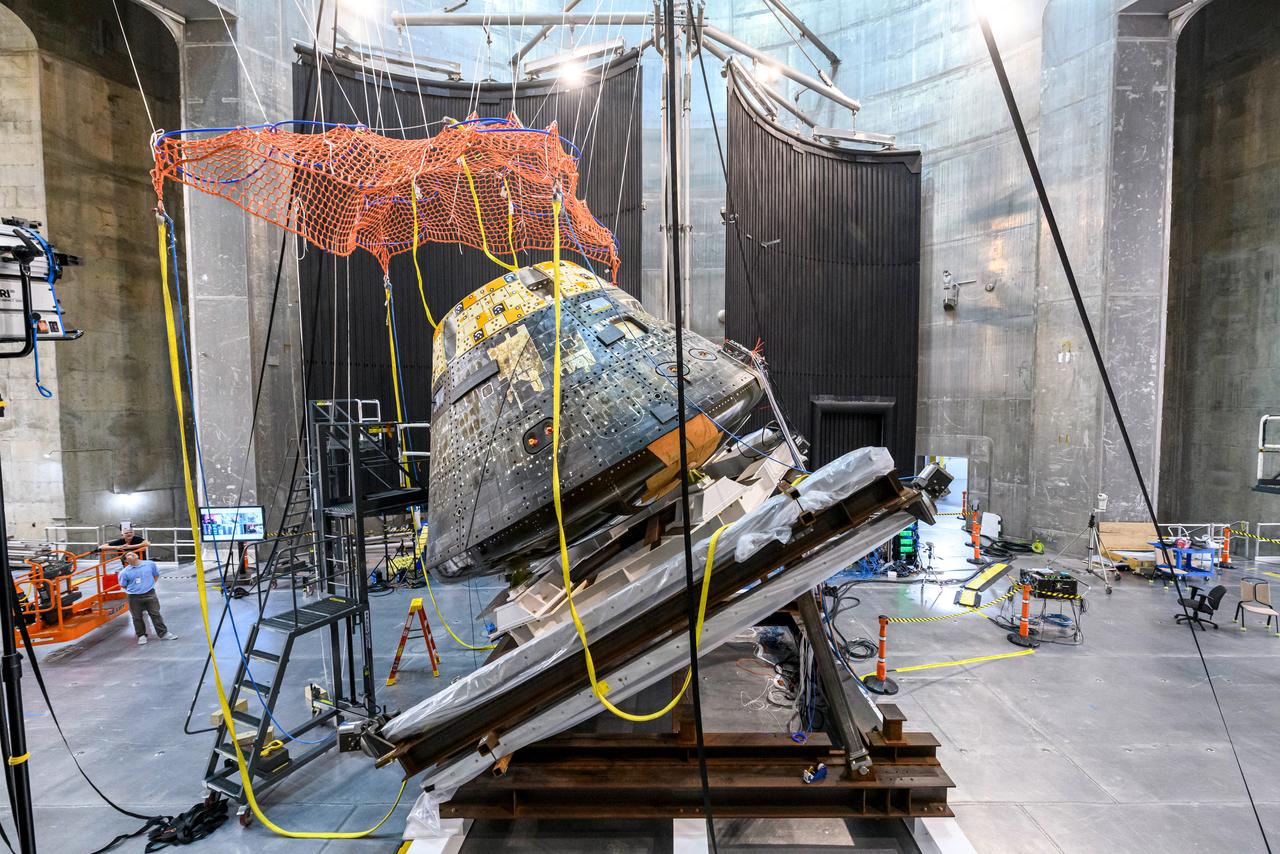
The Orion Crew Module, also known as the Orion Environmental Test Article (ETA), returned to NASA’s Neil Armstrong Test Facility in Sandusky, Ohio, in January 2024 and completed an 11-month test campaign necessary for the safety and success of Artemis II. In November 2024, experts completed the Forward Bay Cover jettison test, which is the last piece that must eject right before parachutes deploy. This image shows the setup right before the FBC deployment test. Photo Credit: (NASA/Jordan Salkin)
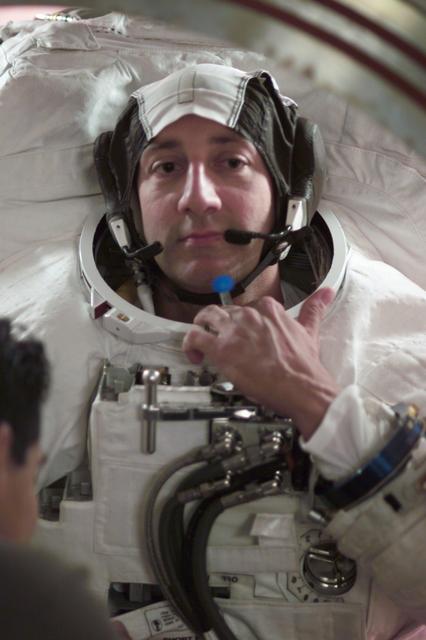
JSC2001-E-44739 (December 2001) --- Astronaut Michael J. Massimino, STS-109 mission specialist, dons a training version of the Extravehicular Mobility Unit (EMU) space suit prior to a mission training session in the Environmental Test Article (ETA) Chamber in the Crew Systems Laboratory at Johnson Space Center (JSC).
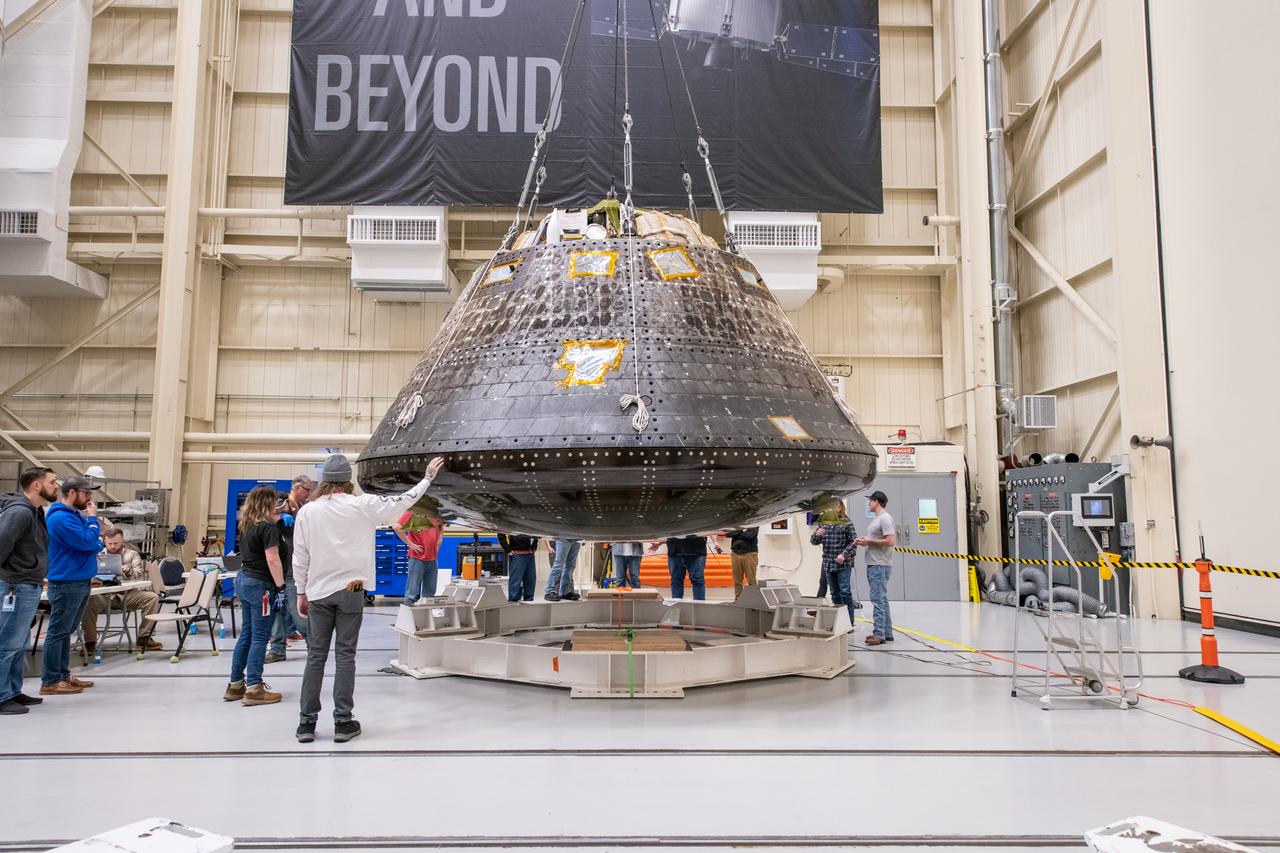
The Launch Abort System and the Orion Crew Module, also known as the Orion Environmental Test Article (ETA), returned to NASA’s Neil Armstrong Test Facility in Sandusky, Ohio, in October 2023 through January 2024 and completed an 11-month test campaign necessary for the safety and success of Artemis II. Photo Credit: (NASA/Jordan Salkin)
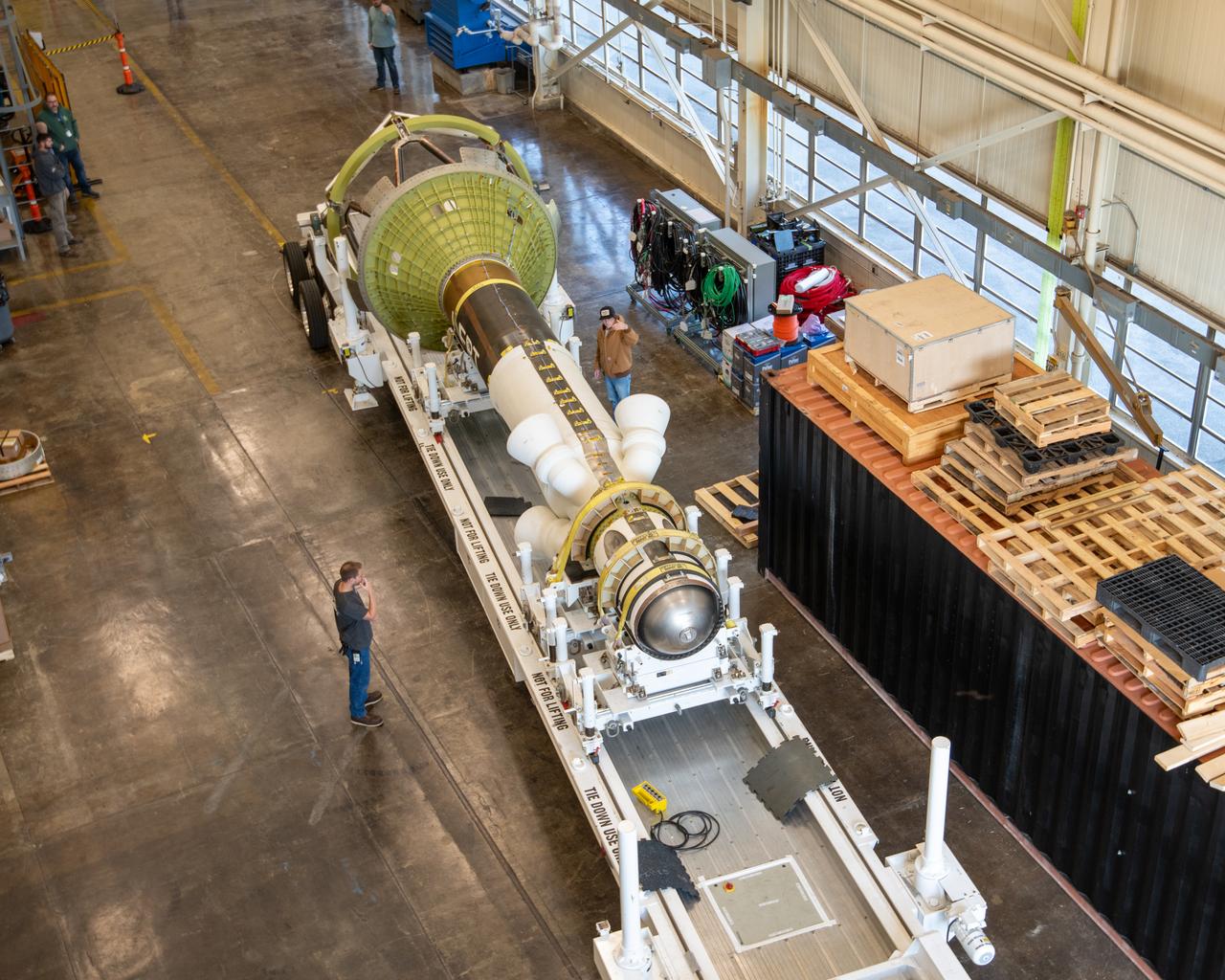
The Launch Abort System and the Orion Crew Module, also known as the Orion Environmental Test Article (ETA), returned to NASA’s Neil Armstrong Test Facility in Sandusky, Ohio, in October 2023 through January 2024 and completed an 11-month test campaign necessary for the safety and success of Artemis II. Photo Credit: (NASA/Quentin Schwinn)
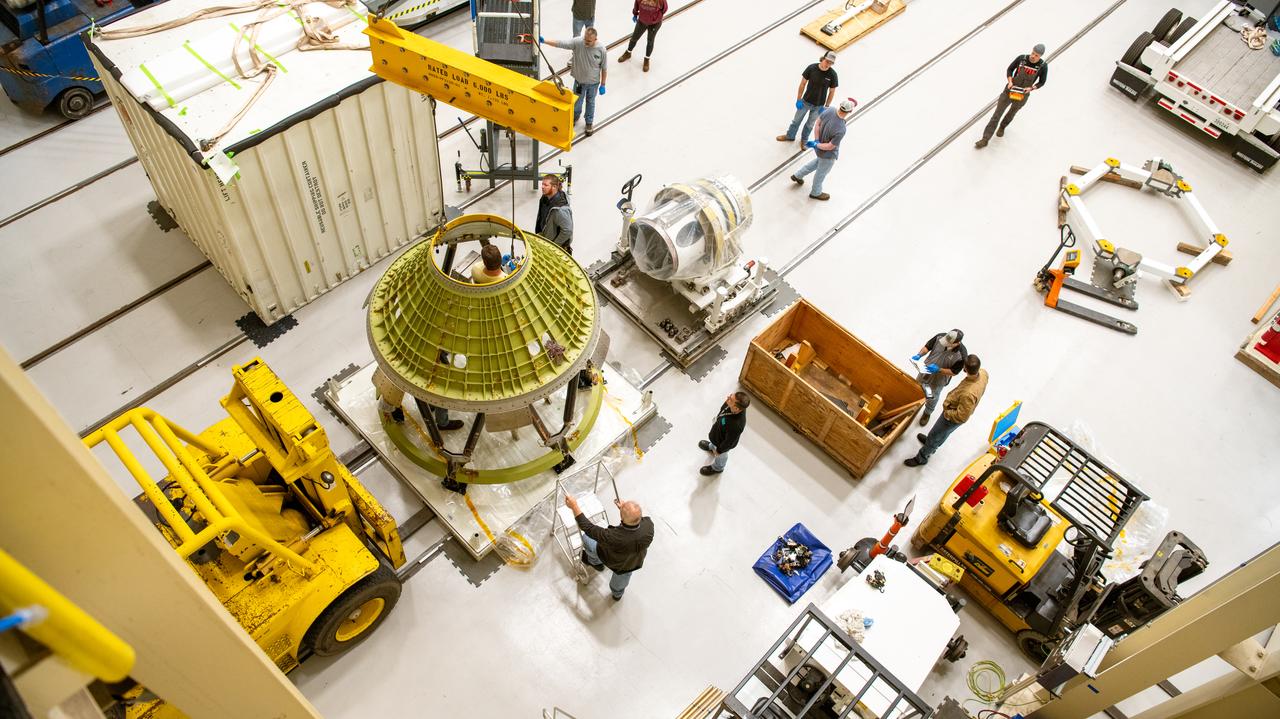
The Launch Abort System and the Orion Crew Module, also known as the Orion Environmental Test Article (ETA), returned to NASA’s Neil Armstrong Test Facility in Sandusky, Ohio, in October 2023 through January 2024 and completed an 11-month test campaign necessary for the safety and success of Artemis II. Photo Credit: (NASA/Quentin Schwinn)

The Launch Abort System and the Orion Crew Module, also known as the Orion Environmental Test Article (ETA), returned to NASA’s Neil Armstrong Test Facility in Sandusky, Ohio, in October 2023 through January 2024 and completed an 11-month test campaign necessary for the safety and success of Artemis II. Photo Credit: (NASA/Jordan Salkin)
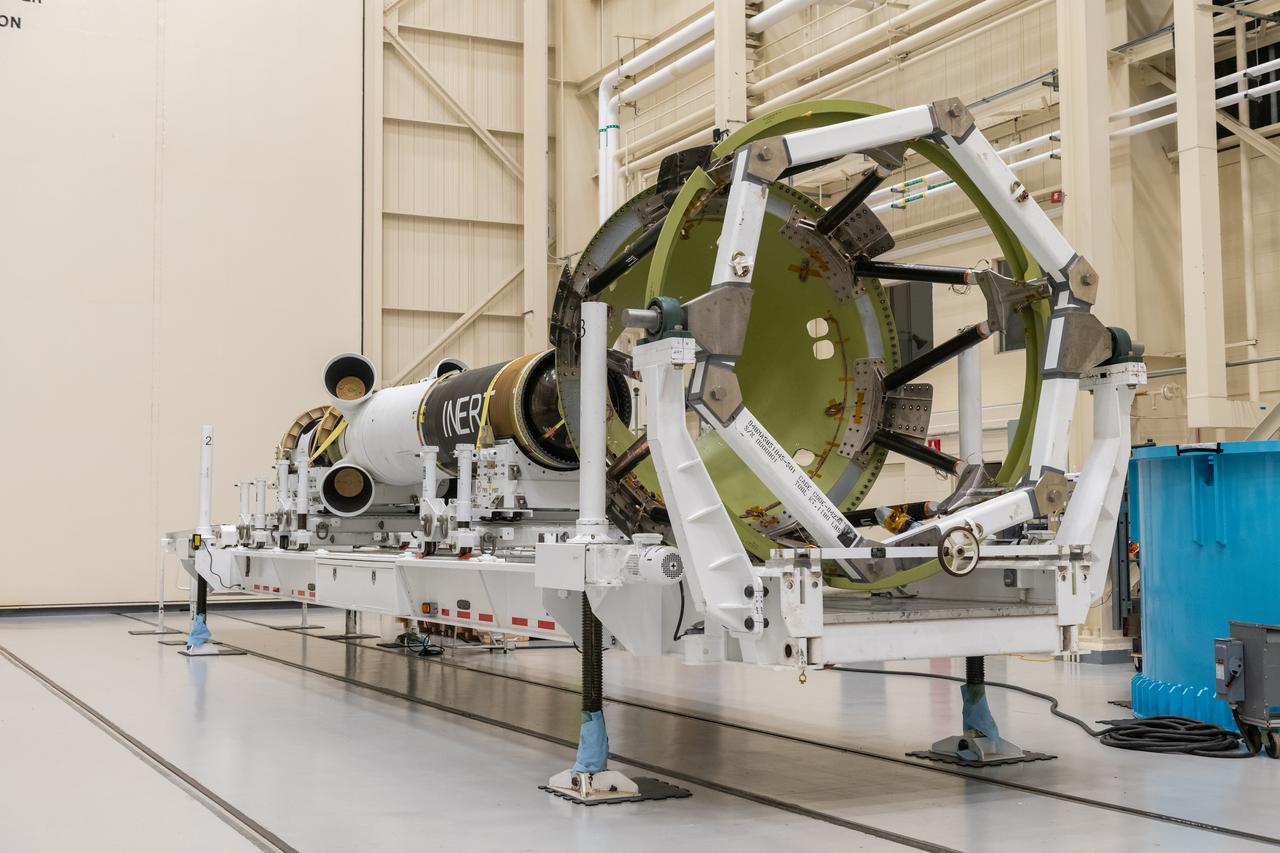
The Launch Abort System and the Orion Crew Module, also known as the Orion Environmental Test Article (ETA), returned to NASA’s Neil Armstrong Test Facility in Sandusky, Ohio, in October 2023 through January 2024 and completed an 11-month test campaign necessary for the safety and success of Artemis II. Photo Credit: (NASA/Jordan Salkin)
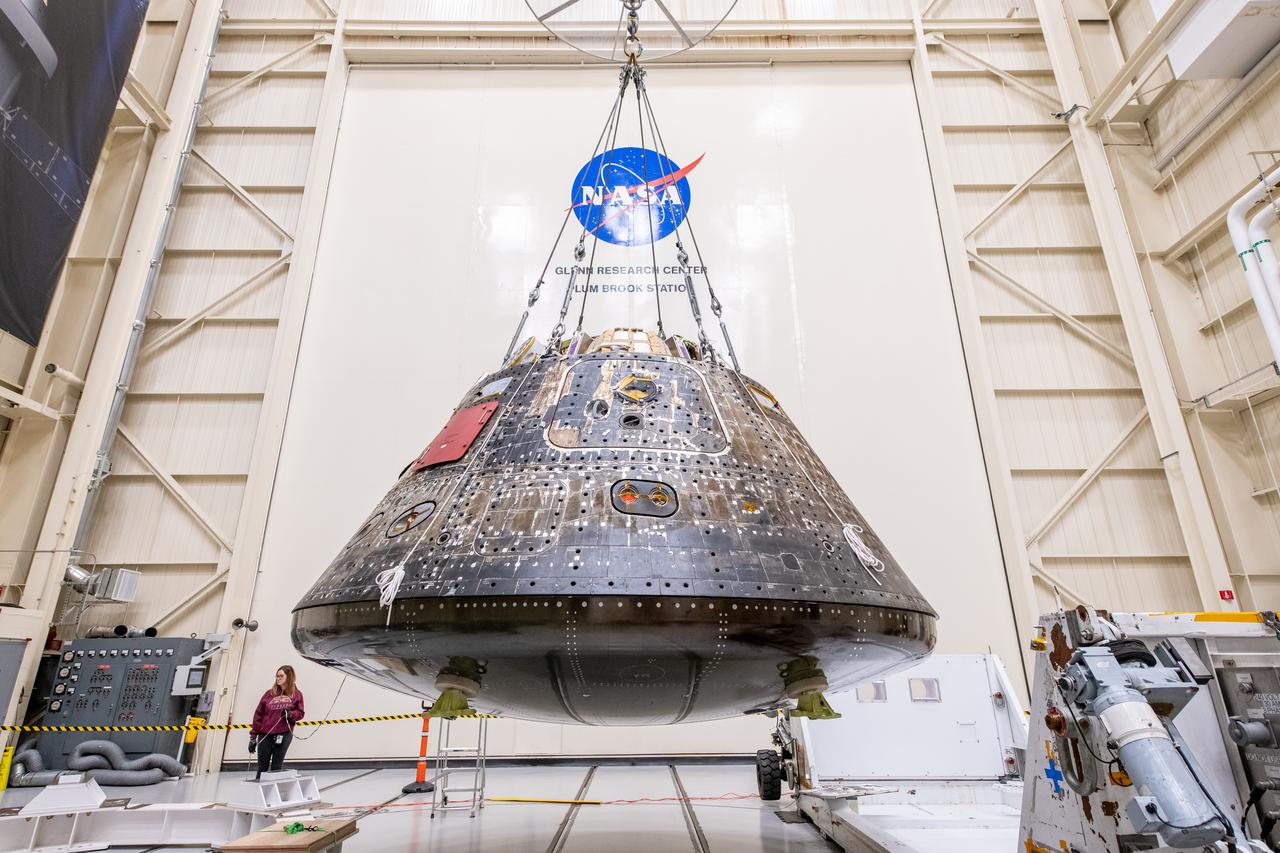
The Launch Abort System and the Orion Crew Module, also known as the Orion Environmental Test Article (ETA), returned to NASA’s Neil Armstrong Test Facility in Sandusky, Ohio, in October 2023 through January 2024 and completed an 11-month test campaign necessary for the safety and success of Artemis II. Photo Credit: (NASA/Jordan Salkin)
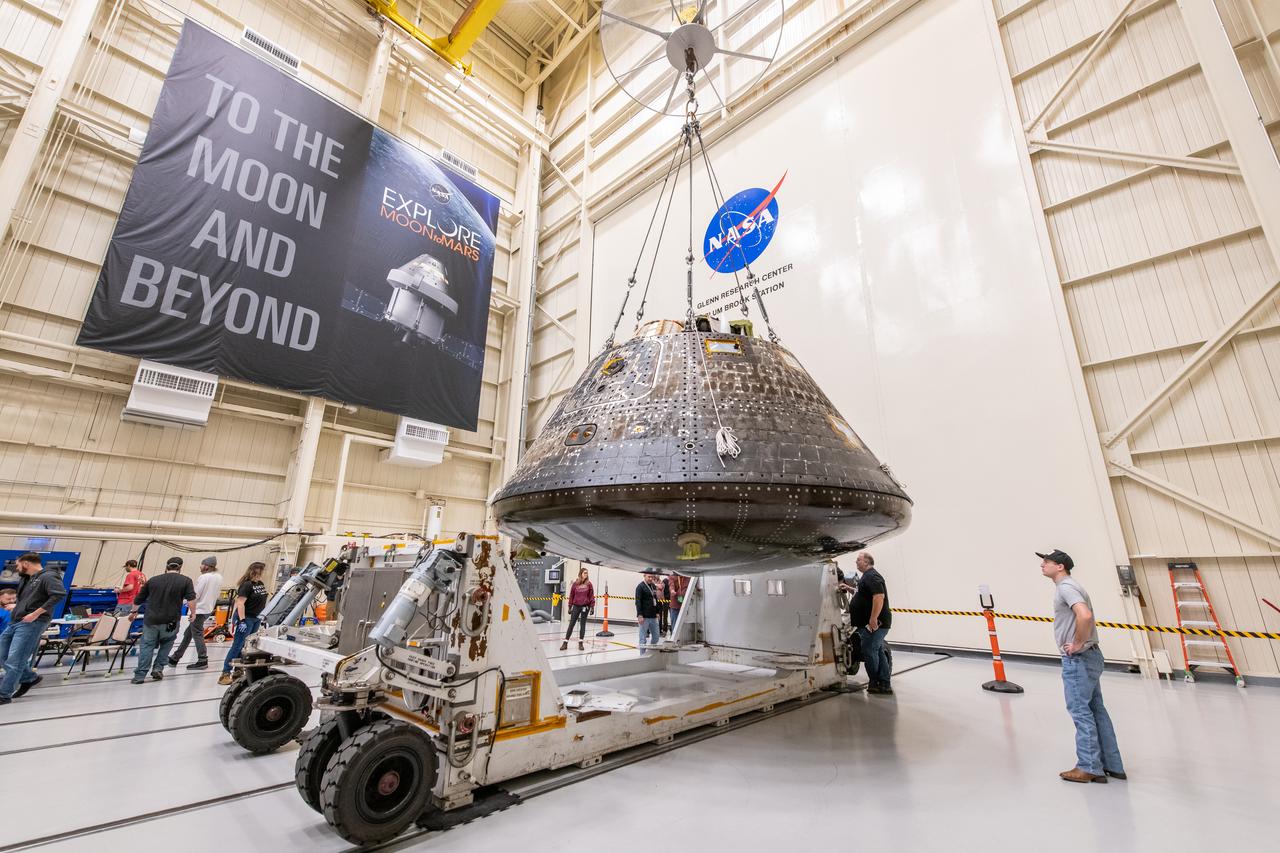
The Launch Abort System and the Orion Crew Module, also known as the Orion Environmental Test Article (ETA), returned to NASA’s Neil Armstrong Test Facility in Sandusky, Ohio, in October 2023 through January 2024 and completed an 11-month test campaign necessary for the safety and success of Artemis II. Photo Credit: (NASA/Jordan Salkin)
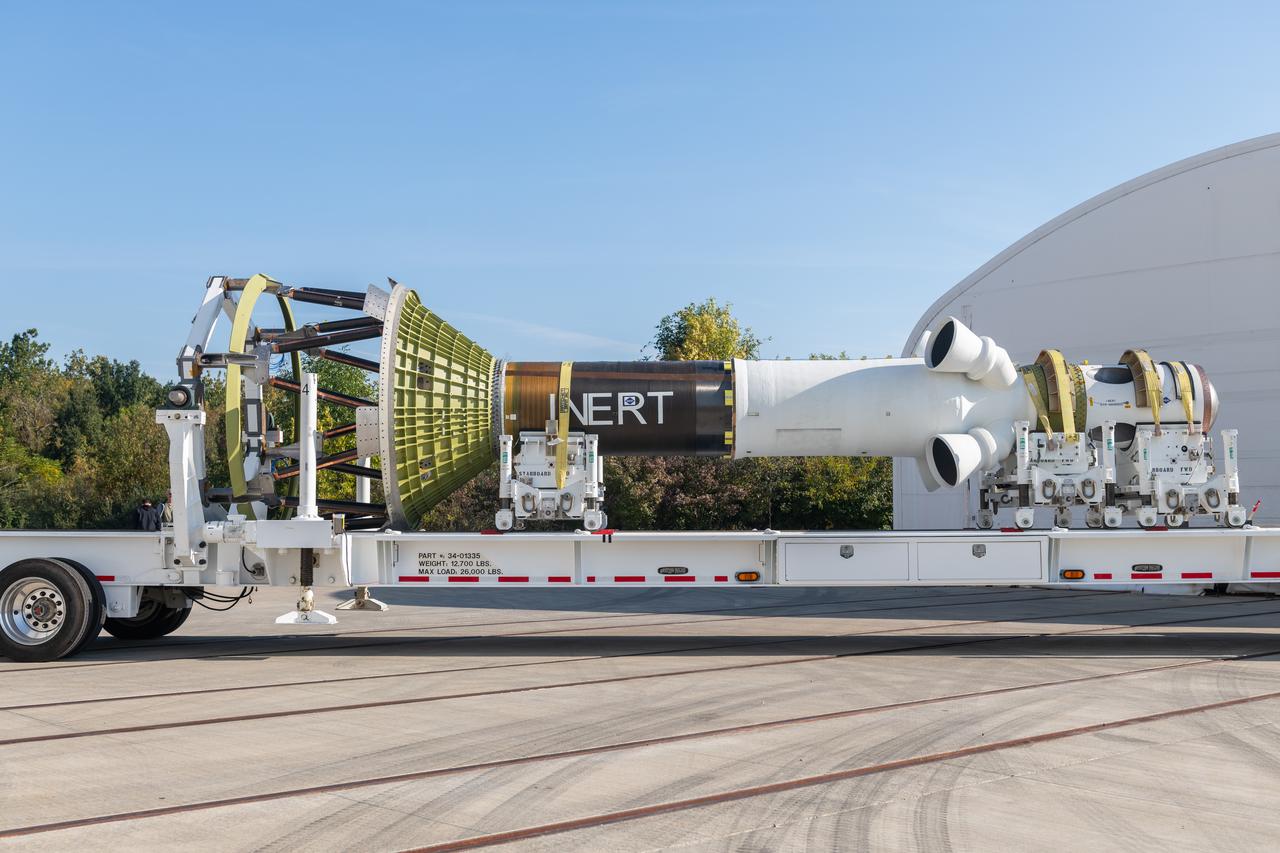
The Launch Abort System and the Orion Crew Module, also known as the Orion Environmental Test Article (ETA), returned to NASA’s Neil Armstrong Test Facility in Sandusky, Ohio, in October 2023 through January 2024 and completed an 11-month test campaign necessary for the safety and success of Artemis II. Photo Credit: (NASA/Jordan Salkin)
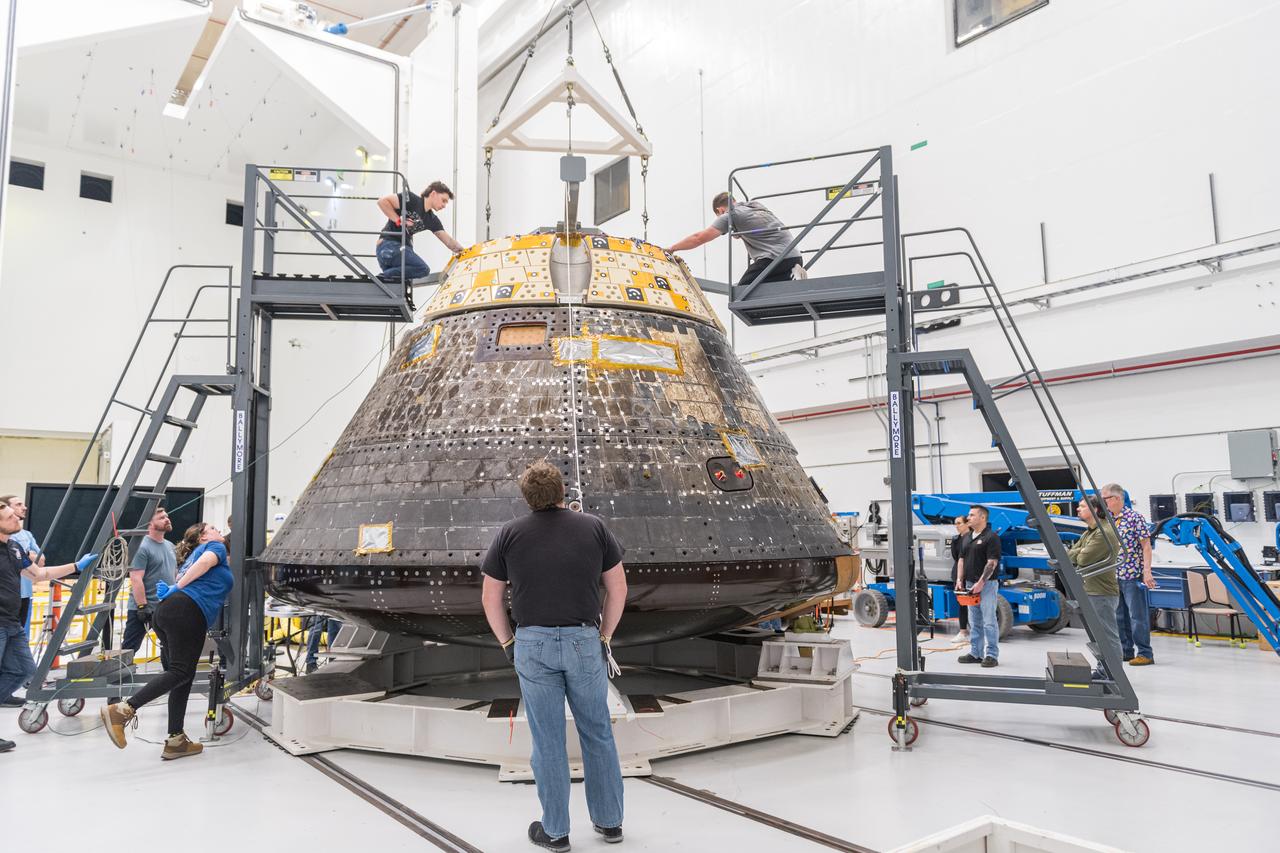
The Orion Crew Module, also known as the Orion Environmental Test Article (ETA), prepares for testing by installing the Forward Bay Cover. The Crew Module returned to NASA’s Neil Armstrong Test Facility in Sandusky, Ohio, in January 2024 and completed an 11-month test campaign necessary for the safety and success of Artemis II. Photo Credit: (NASA/Jordan Salkin)
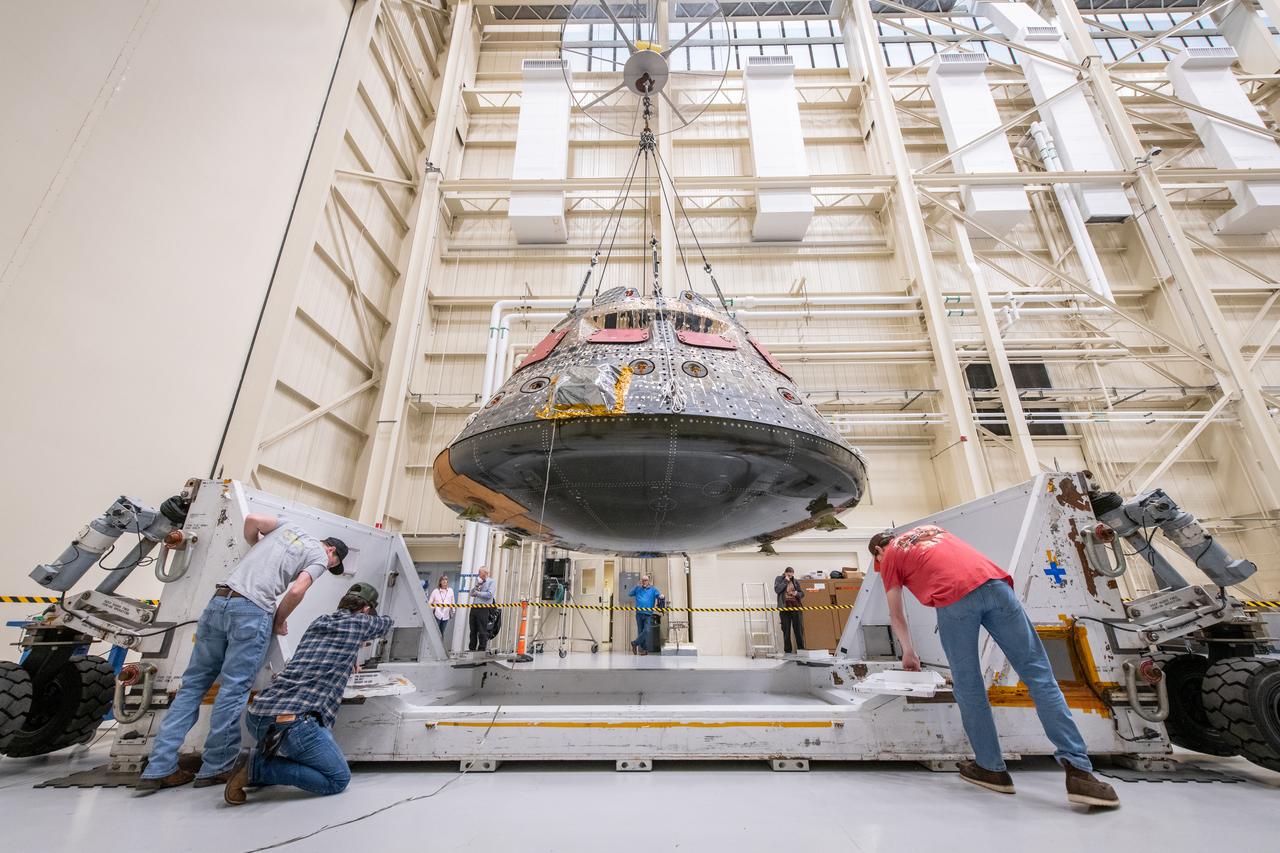
The Launch Abort System and the Orion Crew Module, also known as the Orion Environmental Test Article (ETA), returned to NASA’s Neil Armstrong Test Facility in Sandusky, Ohio, in October 2023 through January 2024 and completed an 11-month test campaign necessary for the safety and success of Artemis II. Photo Credit: (NASA/Jordan Salkin)

The Launch Abort System and the Orion Crew Module, also known as the Orion Environmental Test Article (ETA), returned to NASA’s Neil Armstrong Test Facility in Sandusky, Ohio, in October 2023 through January 2024 and completed an 11-month test campaign necessary for the safety and success of Artemis II. Photo Credit: (NASA/Jordan Salkin)
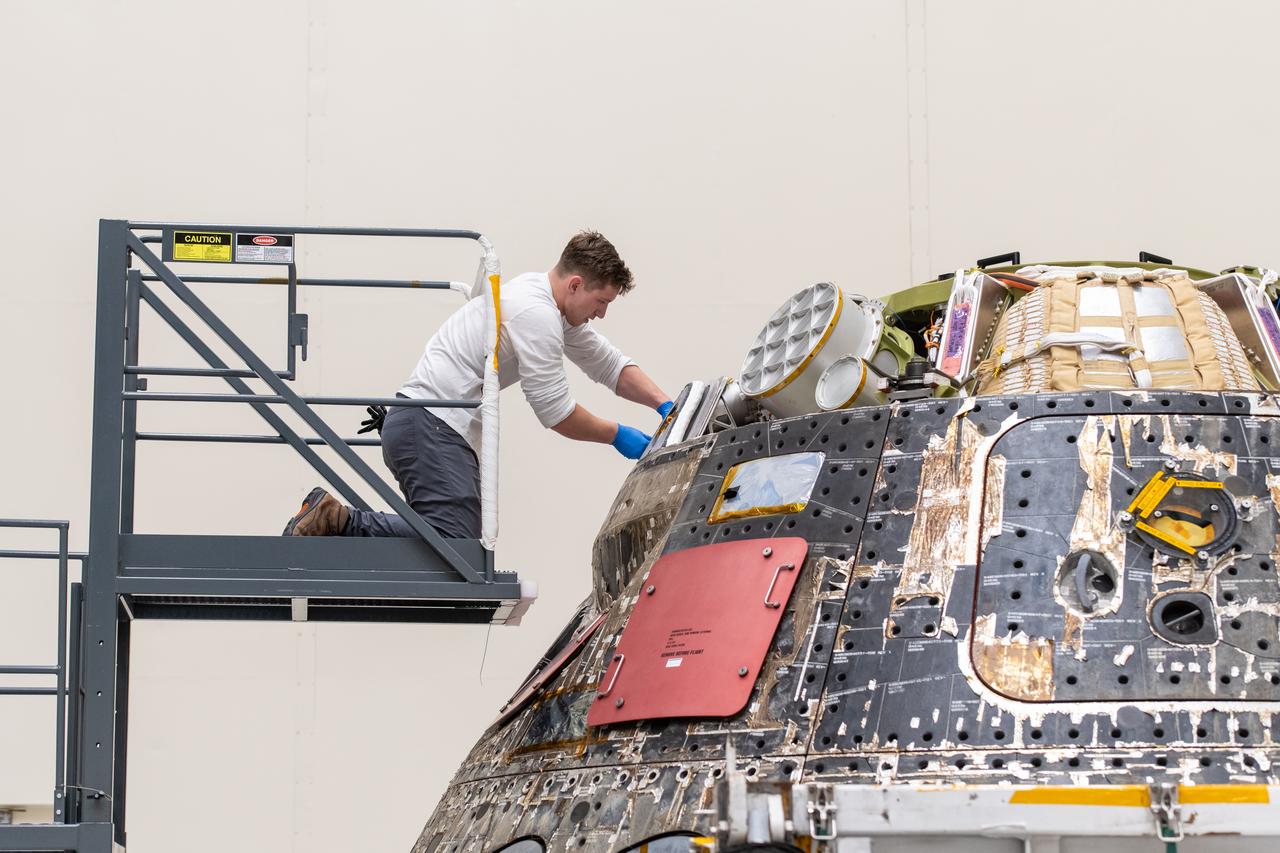
The Launch Abort System and the Orion Crew Module, also known as the Orion Environmental Test Article (ETA), returned to NASA’s Neil Armstrong Test Facility in Sandusky, Ohio, in October 2023 through January 2024 and completed an 11-month test campaign necessary for the safety and success of Artemis II. Photo Credit: (NASA/Jordan Salkin)
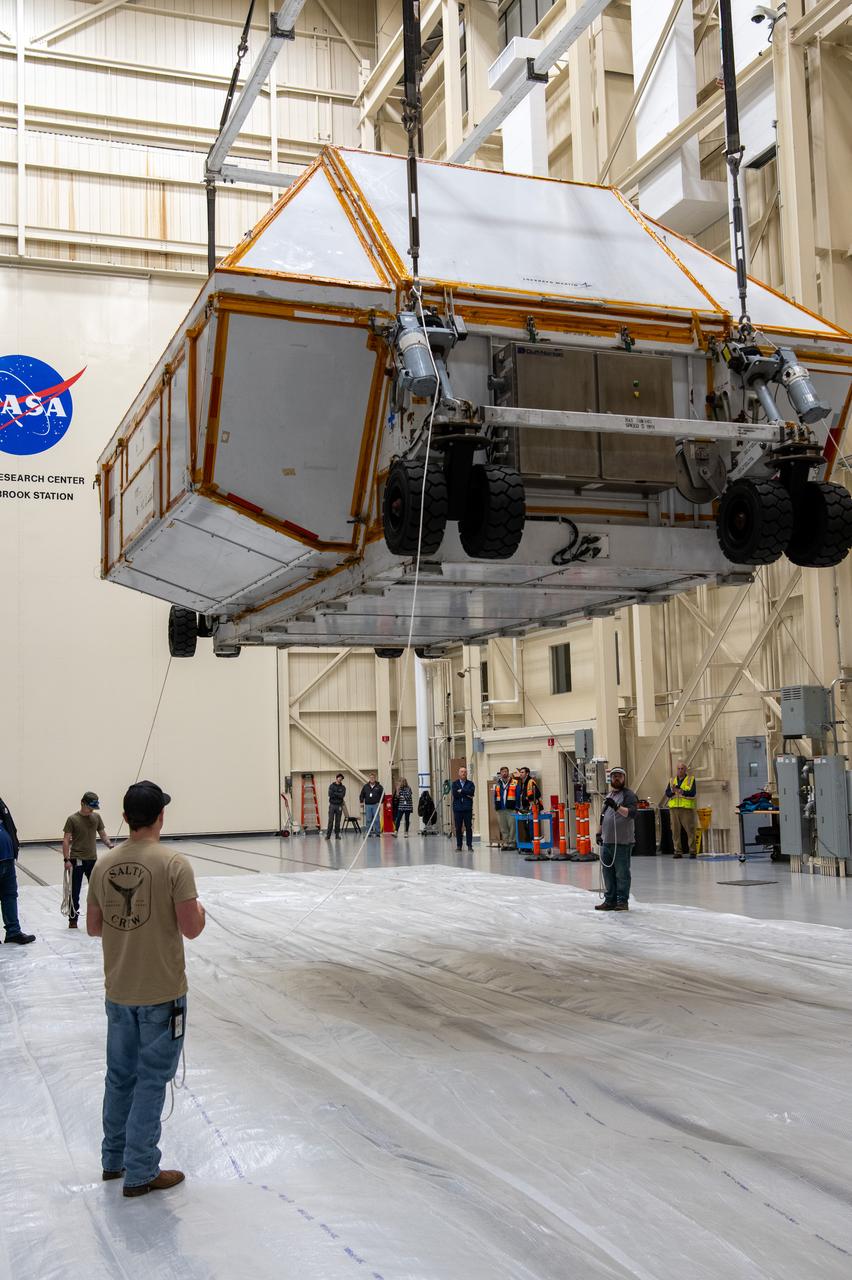
The Launch Abort System and the Orion Crew Module, also known as the Orion Environmental Test Article (ETA), returned to NASA’s Neil Armstrong Test Facility in Sandusky, Ohio, in October 2023 through January 2024 and completed an 11-month test campaign necessary for the safety and success of Artemis II. Photo Credit: (NASA/Quentin Schwinn)
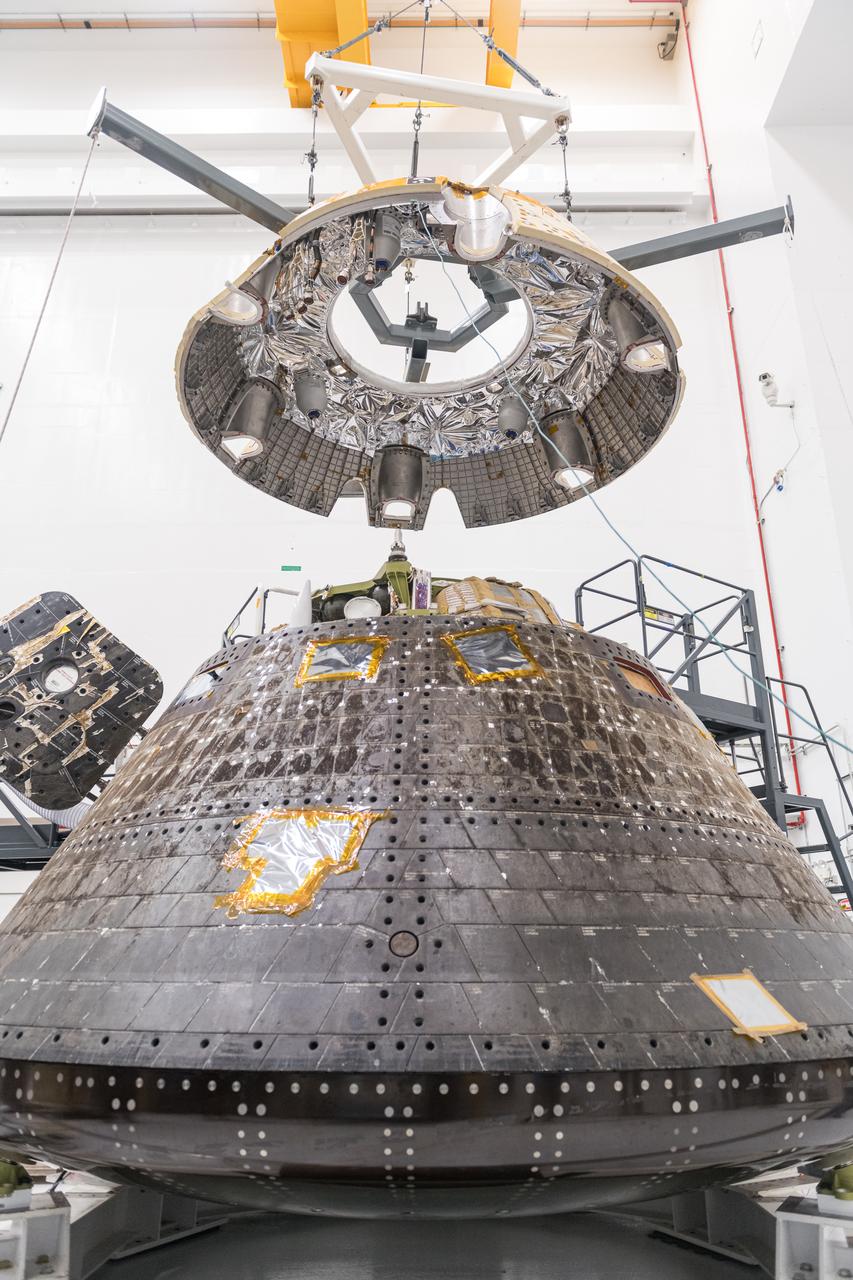
The Orion Crew Module, also known as the Orion Environmental Test Article (ETA), prepares for testing by installing the Forward Bay Cover. The Crew Module returned to NASA’s Neil Armstrong Test Facility in Sandusky, Ohio, in January 2024 and completed an 11-month test campaign necessary for the safety and success of Artemis II. Photo Credit: (NASA/Jordan Salkin)
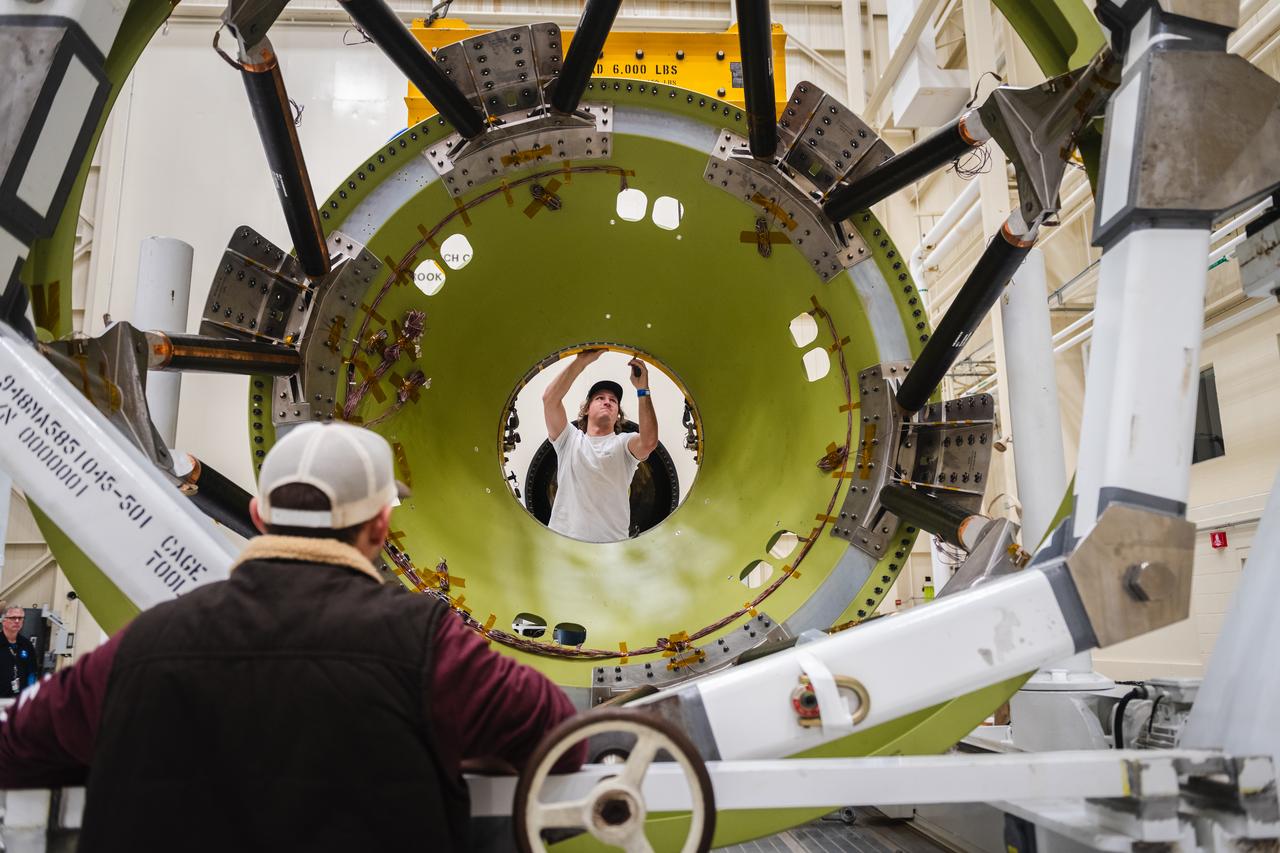
The Launch Abort System and the Orion Crew Module, also known as the Orion Environmental Test Article (ETA), returned to NASA’s Neil Armstrong Test Facility in Sandusky, Ohio, in October 2023 through January 2024 and completed an 11-month test campaign necessary for the safety and success of Artemis II. Photo Credit: (NASA/Jordan Salkin)
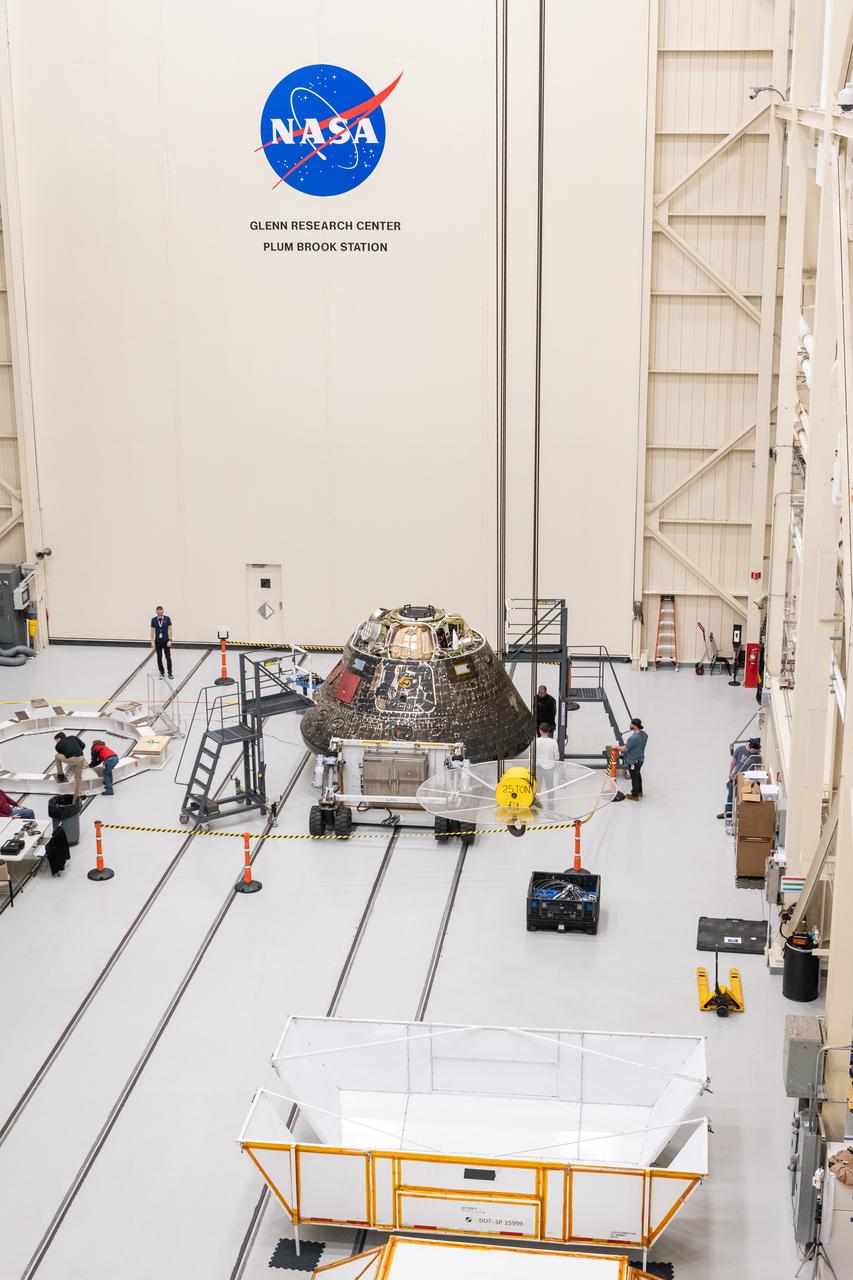
The Launch Abort System and the Orion Crew Module, also known as the Orion Environmental Test Article (ETA), returned to NASA’s Neil Armstrong Test Facility in Sandusky, Ohio, in October 2023 through January 2024 and completed an 11-month test campaign necessary for the safety and success of Artemis II. Photo Credit: (NASA/Jordan Salkin)
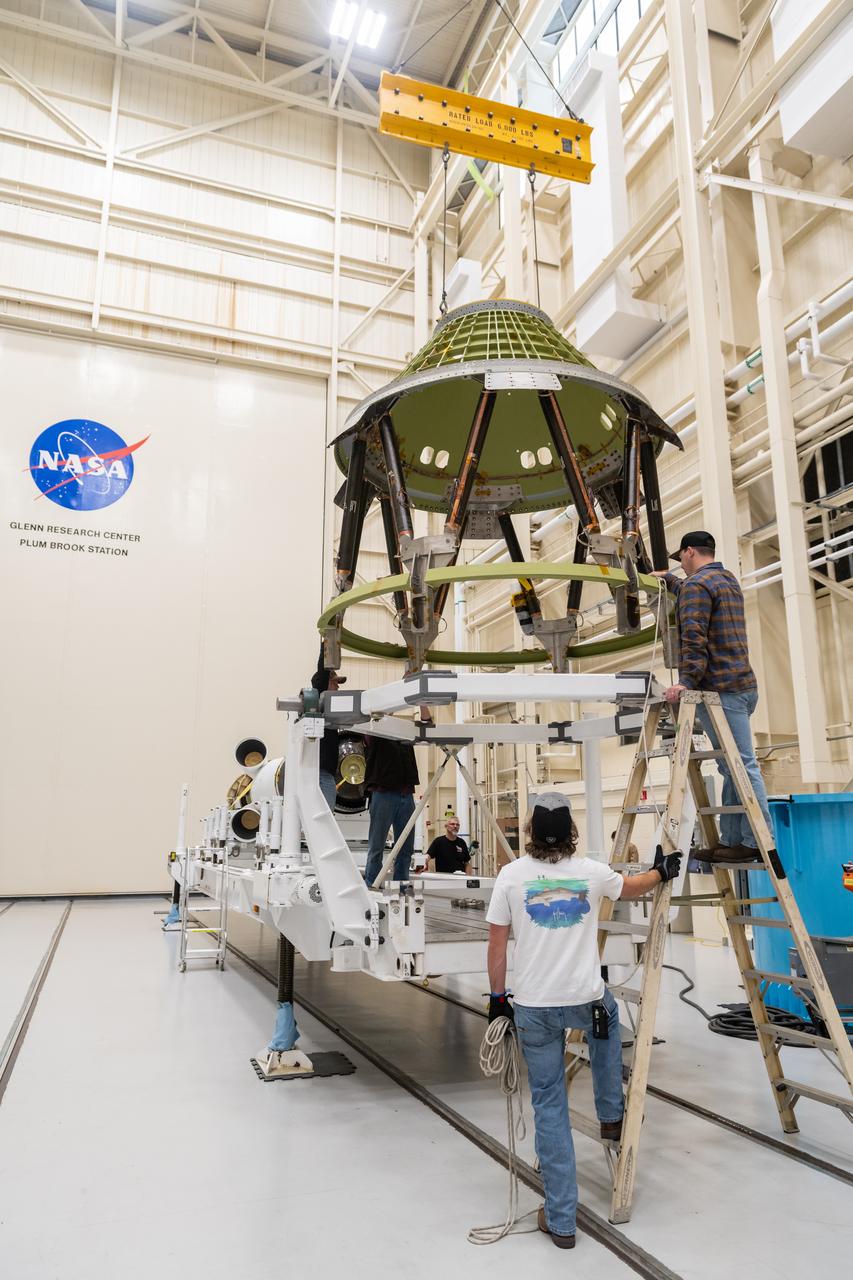
The Launch Abort System and the Orion Crew Module, also known as the Orion Environmental Test Article (ETA), returned to NASA’s Neil Armstrong Test Facility in Sandusky, Ohio, in October 2023 through January 2024 and completed an 11-month test campaign necessary for the safety and success of Artemis II. Photo Credit: (NASA/Jordan Salkin)
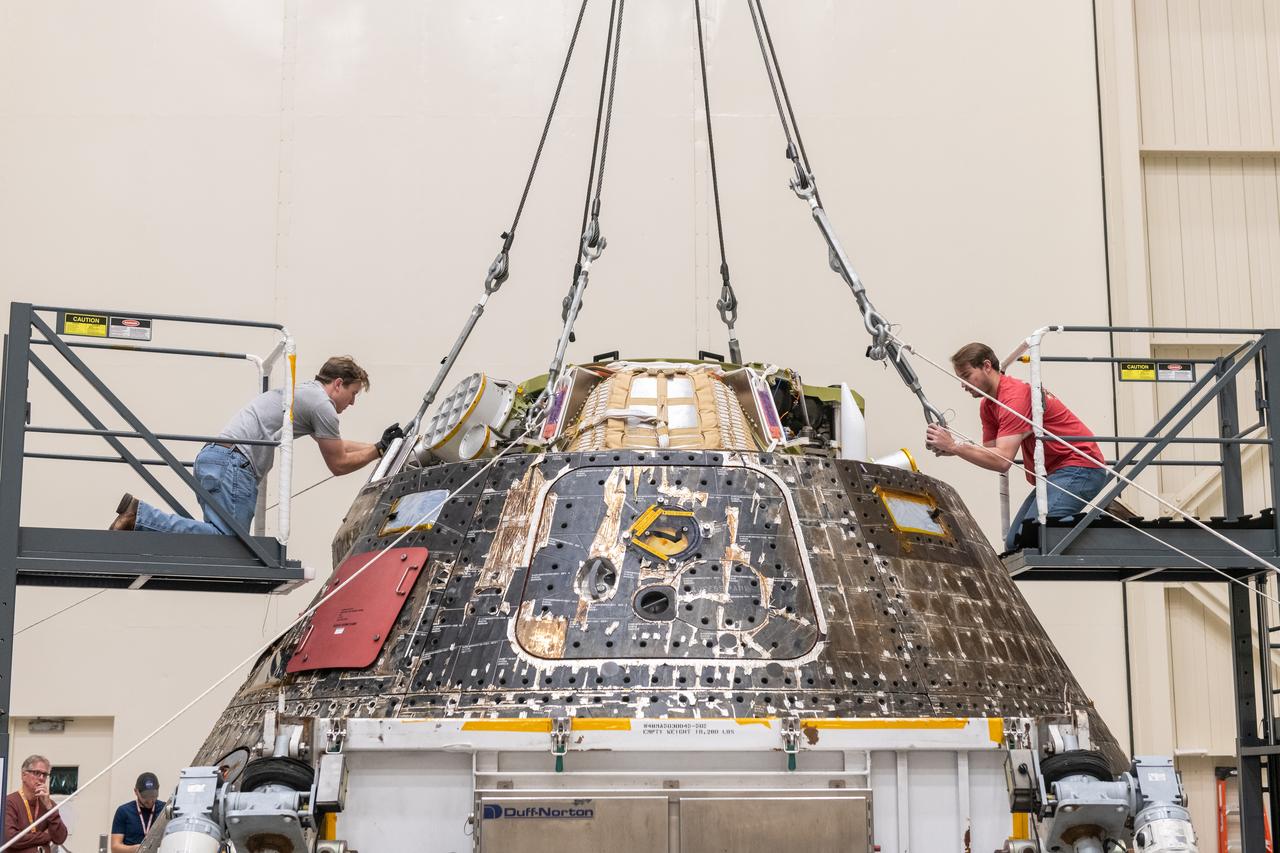
The Launch Abort System and the Orion Crew Module, also known as the Orion Environmental Test Article (ETA), returned to NASA’s Neil Armstrong Test Facility in Sandusky, Ohio, in October 2023 through January 2024 and completed an 11-month test campaign necessary for the safety and success of Artemis II. Photo Credit: (NASA/Jordan Salkin)

The Launch Abort System and the Orion Crew Module, also known as the Orion Environmental Test Article (ETA), returned to NASA’s Neil Armstrong Test Facility in Sandusky, Ohio, in October 2023 through January 2024 and completed an 11-month test campaign necessary for the safety and success of Artemis II. Photo Credit: (NASA/Jordan Salkin)
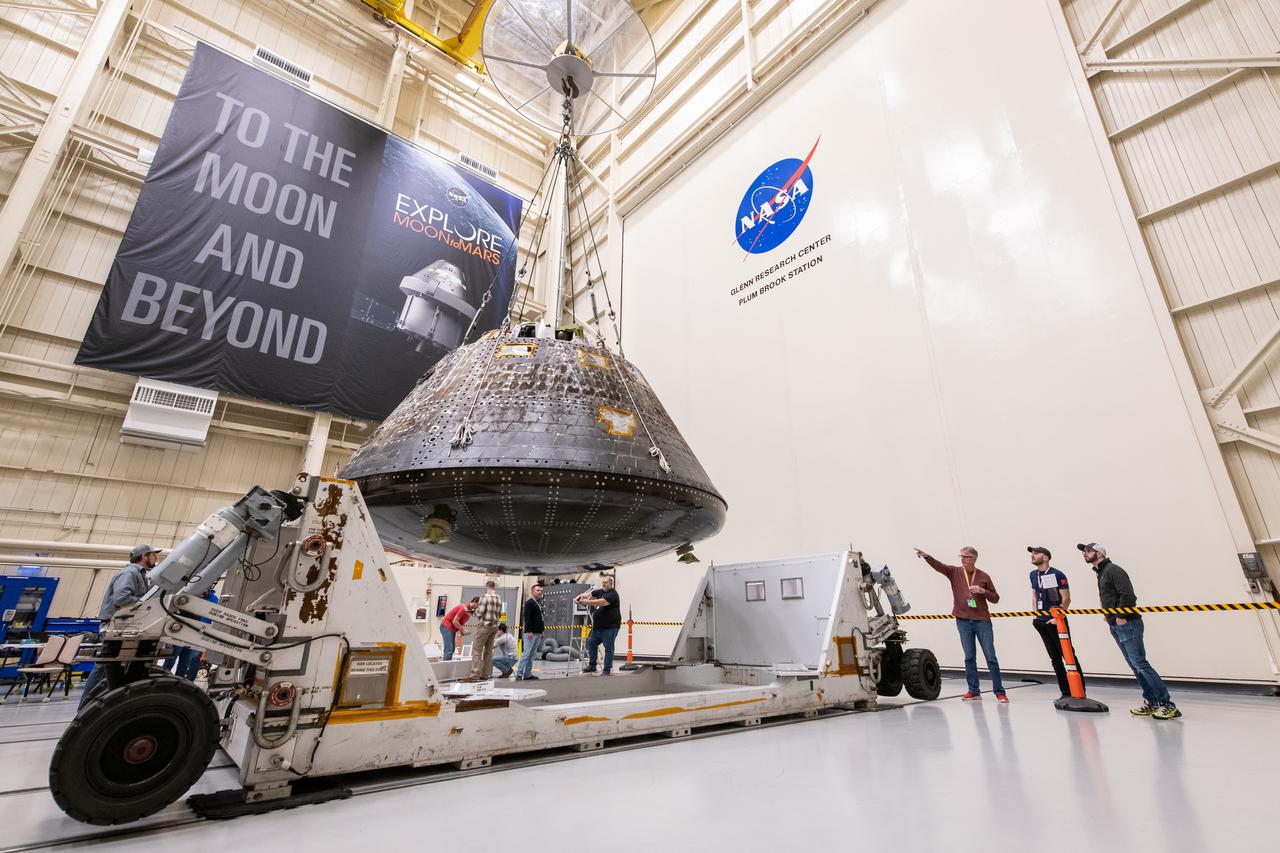
The Launch Abort System and the Orion Crew Module, also known as the Orion Environmental Test Article (ETA), returned to NASA’s Neil Armstrong Test Facility in Sandusky, Ohio, in October 2023 through January 2024 and completed an 11-month test campaign necessary for the safety and success of Artemis II. Photo Credit: (NASA/Jordan Salkin)
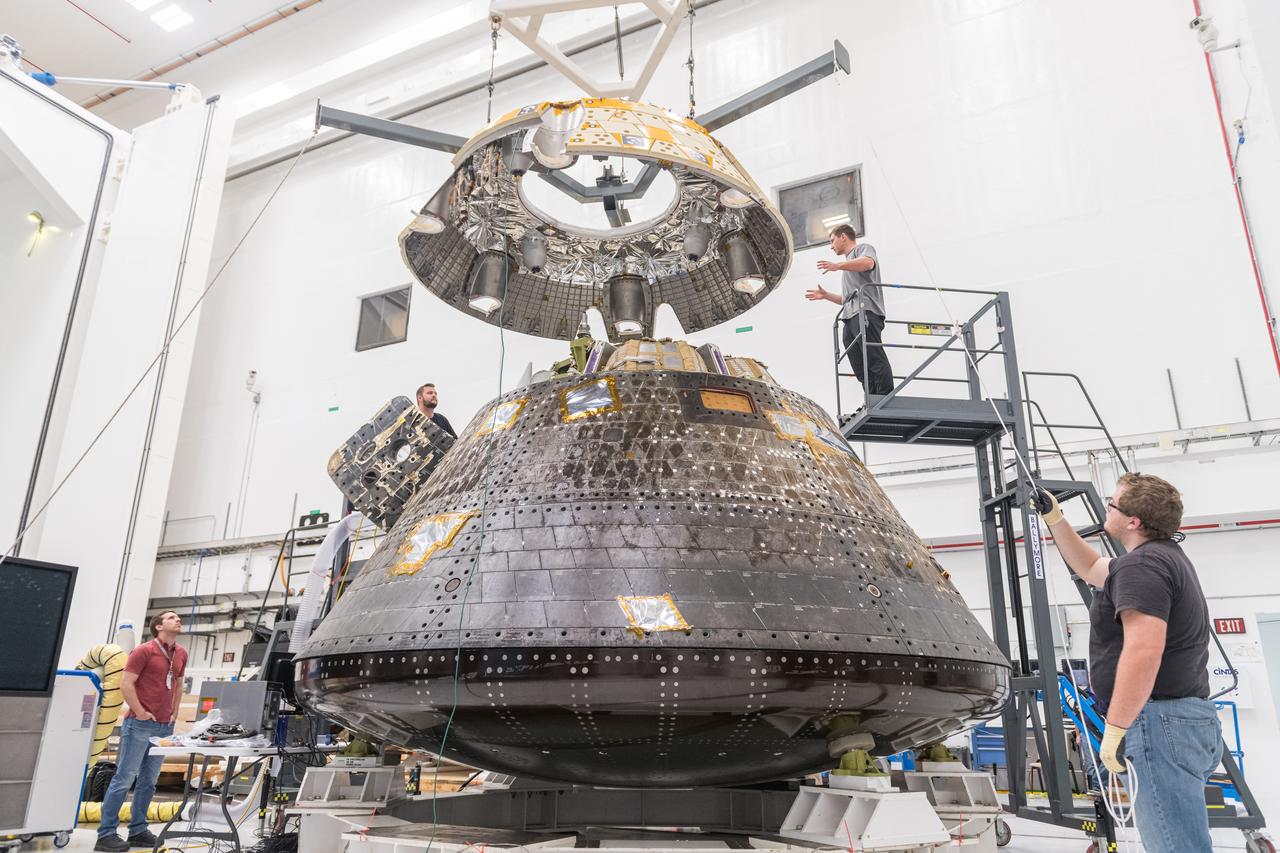
The Orion Crew Module, also known as the Orion Environmental Test Article (ETA), prepares for testing by installing the Forward Bay Cover. The Crew Module returned to NASA’s Neil Armstrong Test Facility in Sandusky, Ohio, in January 2024 and completed an 11-month test campaign necessary for the safety and success of Artemis II. Photo Credit: (NASA/Jordan Salkin)

This Chandra X-Ray Observatory image of the mysterious superstar Eta Carinae reveals a surprising hot irner core, creating more questions than answers for astronomers. The image shows three distinct structures: An outer, horseshoe shaped ring about 2 light-years in diameter, a hot inner core about 3 light-months in diameter, and a hot central source less than a light-month in diameter which may contain the superstar. In 1 month, light travels a distance of approximately 489 billion miles (about 788 billion kilometers). All three structures are thought to represent shock waves produced by matter rushing away from the superstar at supersonic speeds. The temperature of the shock-heated gas ranges from 60 million degrees Kelvin in the central regions to 7 million degrees Kelvin on the outer structure. Eta Carinae is one of the most enigmatic and intriguing objects in our galaxy. Between 1837 and 1856, it increased dramatically in brightness to become the most prominent star in the sky except for Sirius, even through it is 7,500 light-years away, more than 80 times the distance to Sirius. This "Great Eruption," as it is called, had an energy comparable to a supernova, yet did not destroy the star, which faded to become a dim star, invisible to the naked eye. Since 1940, Eta Carinae has begun to brighten again, becoming visible to the naked eye. Photo credit: NASA/CXC/SAO
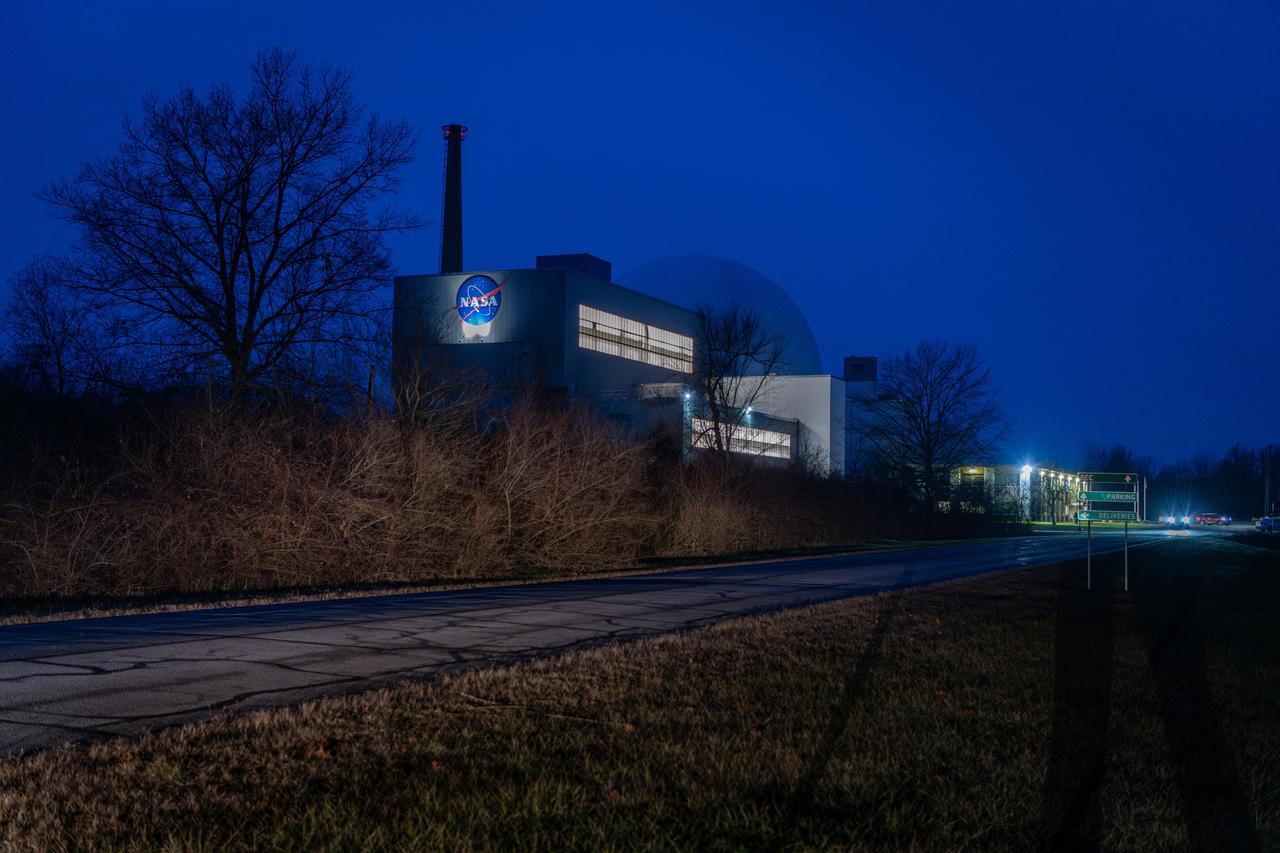
Evening photo of the Space Experiments Complex in the evening of the arrival of the Orion ETA (Environmental Test Article) having been shipped from Florida by truck. The Orion ETA flew on Artemis I and will undergo testing of the docking module jettison and the forward by cover jettison in preparation of the Artemis II launch.
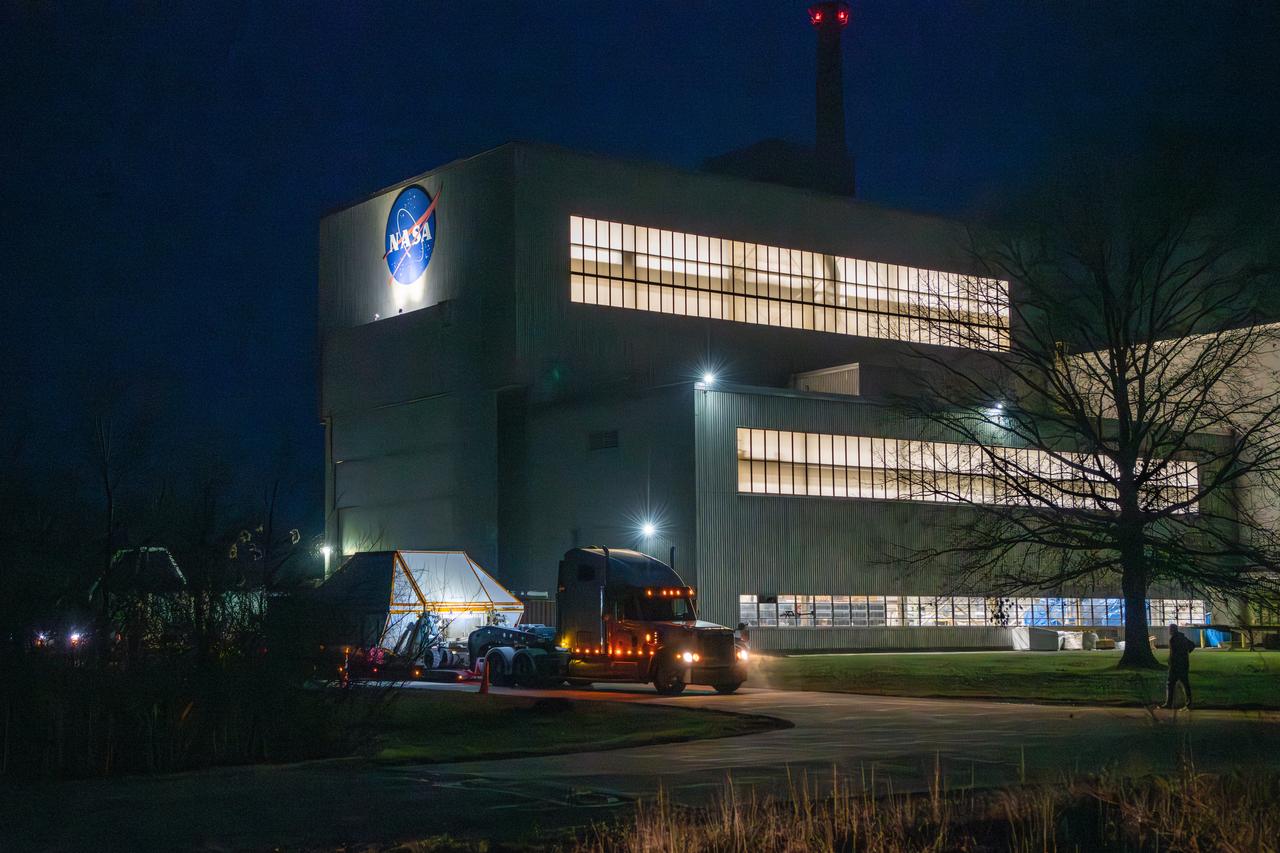
Evening photo of the Space Experiments Complex in the evening of the arrival of the Orion ETA (Environmental Test Article) having been shipped from Florida by truck. The Orion ETA flew on Artemis I and will undergo testing of the docking module jettison and the forward by cover jettison in preparation of the Artemis II launch.
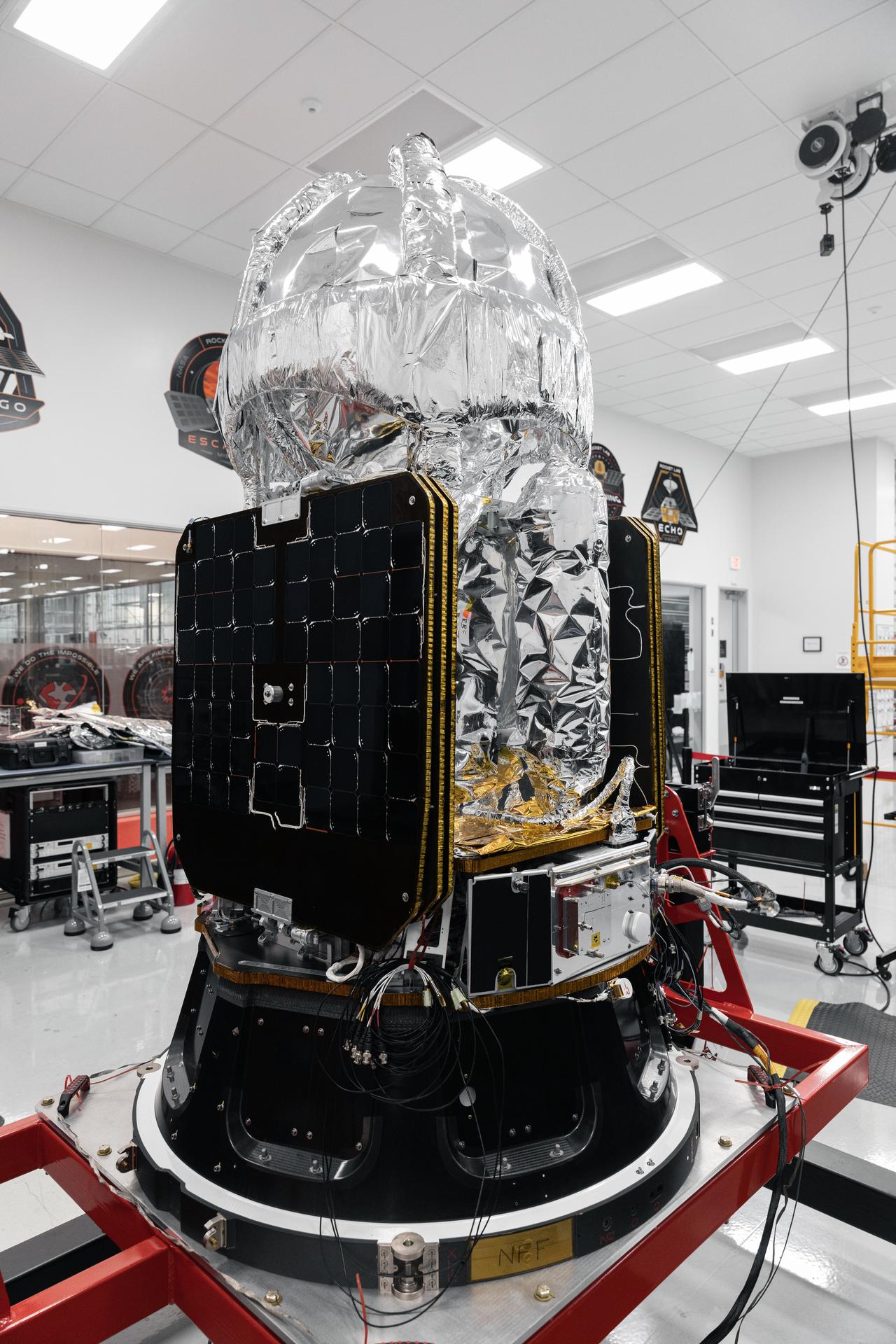
The LOXSAT payload is displayed inside Rocket Lab’s Spacecraft Production Complex on March 6, 2026, in Long Beach, California. Eta Space built LOXSAT as part of a NASA Tipping Point opportunity, and Rocket Lab is providing spacecraft and launch services to deliver it to low Earth orbit.
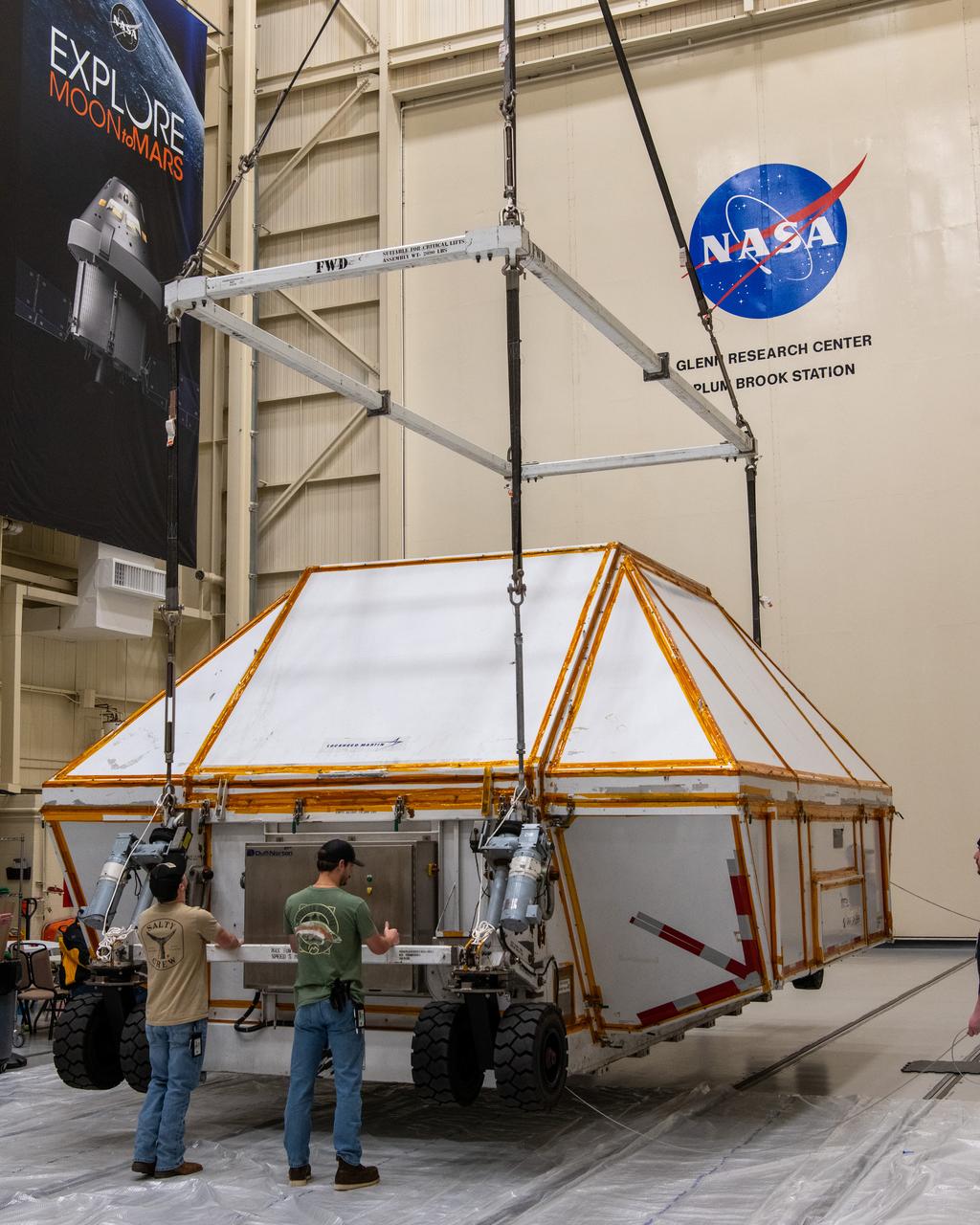
After the evening arrival of the Orion ETA (Environmental Test Article) having been shipped from Florida by truck, is shown being lowered to the floor of the Space Experiments Complex (SEC), Glenn Research Center, Armstrong Test Facility. The Orion ETA will undergo testing of the docking module jettison and the forward by cover jettison in preparation of the Artemis II launch.
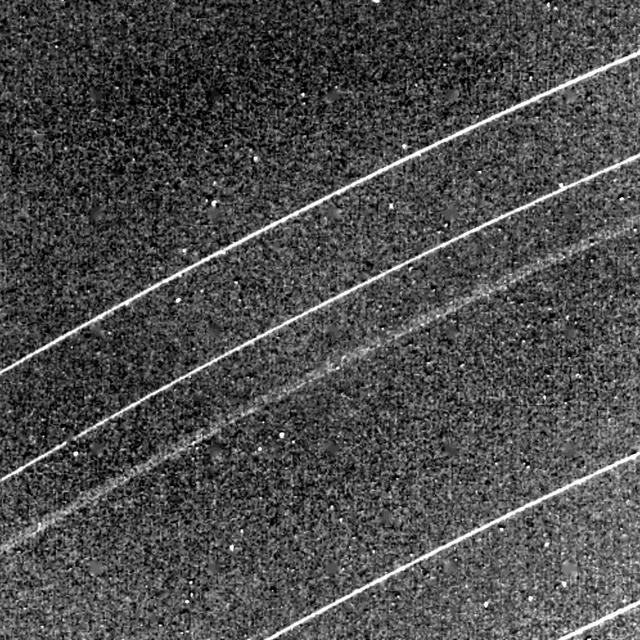
This NASA Voyager 2 image of the Uranian rings delta, gamma, eta, beta and alpha from top was taken Jan. 23, 1986.

This image is an x-ray view of Eta Carinae Nebula showing bright stars taken with the High Energy Astronomy Observatory (HEAO)-2/Einstein Observatory. The Eta Carinae Nebula is a large and complex cloud of gas, crisscrossed with dark lanes of dust, some 6,500 light years from Earth. Buried deep in this cloud are many bright young stars and a very peculiar variable star. The HEAO-2, the first imaging and largest x-ray telescope built to date, was capable of producing actual photographs of x-ray objects. Shortly after launch, the HEAO-2 was nicknamed the Einstein Observatory by its scientific experimenters in honor of the centernial of the birth of Albert Einstein, whose concepts of relativity and gravitation have influenced much of modern astrophysics, particularly x-ray astronomy. The HEAO-2, designed and developed by TRW, Inc. under the project management of the Marshall Space Flight Center, was launched aboard an Atlas/Centaur launch vehicle on November 13, 1978.
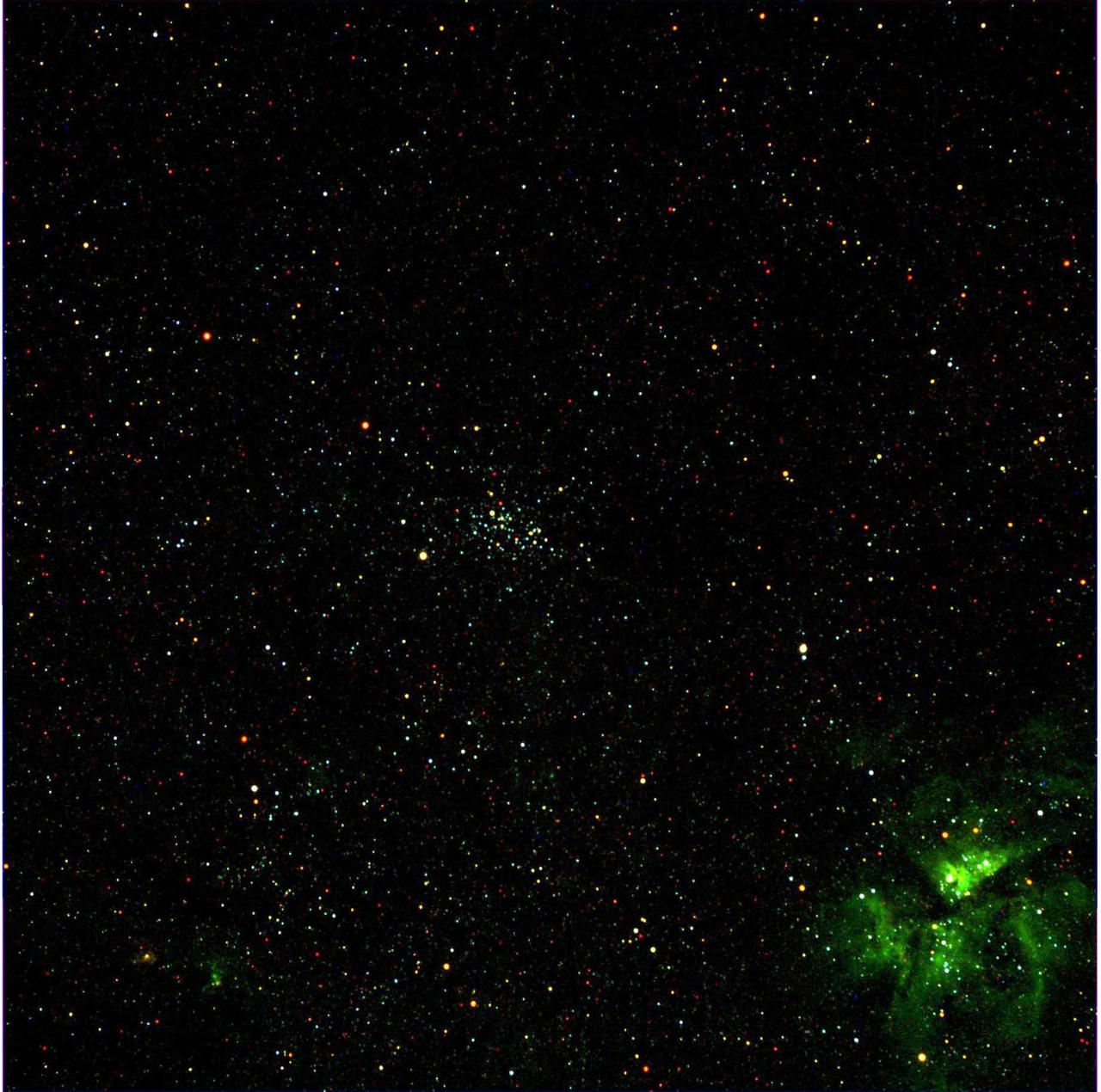
This view in the southern constellation Carina was acquired on December 13, 2007 as part of the characterization tests of the Framing Camera. The cluster of stars in the center is NGC 3532, and the nebula in the lower right is the Eta Carina Nebula.
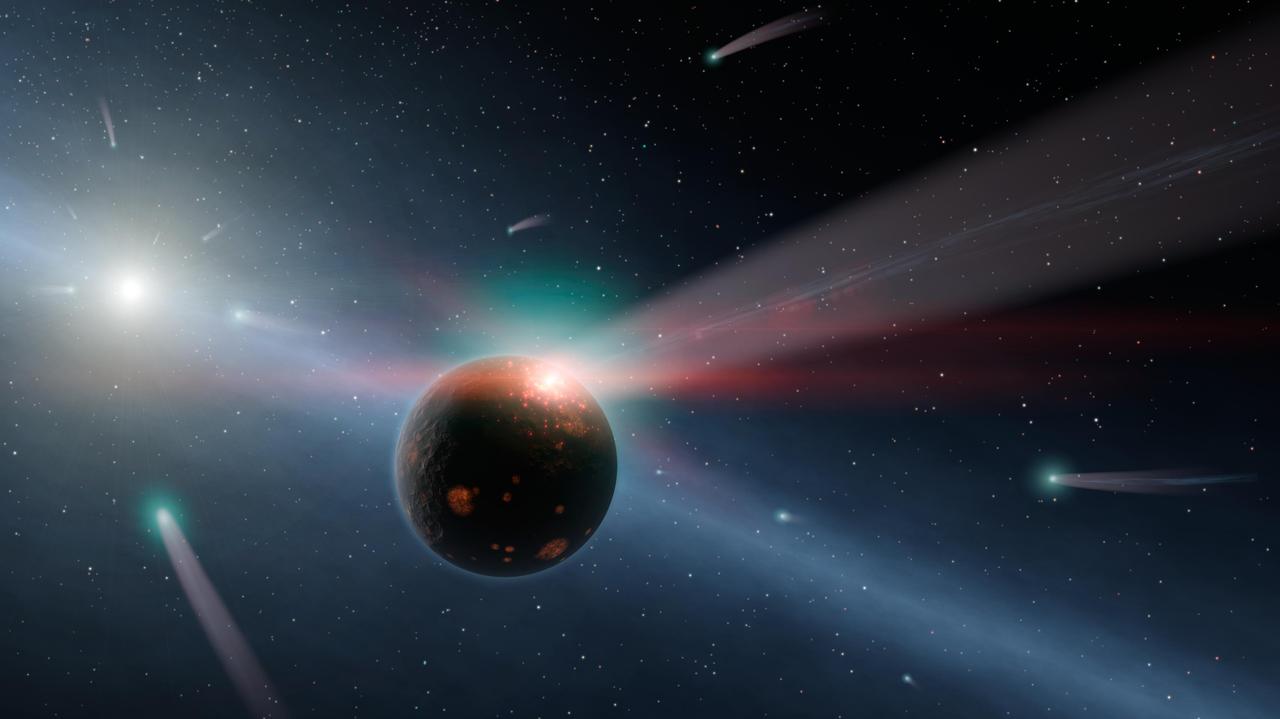
This artist conception illustrates a storm of comets around a star near our own, called Eta Corvi. Evidence for this barrage comes from NASA Spitzer Space Telescope infrared detectors.
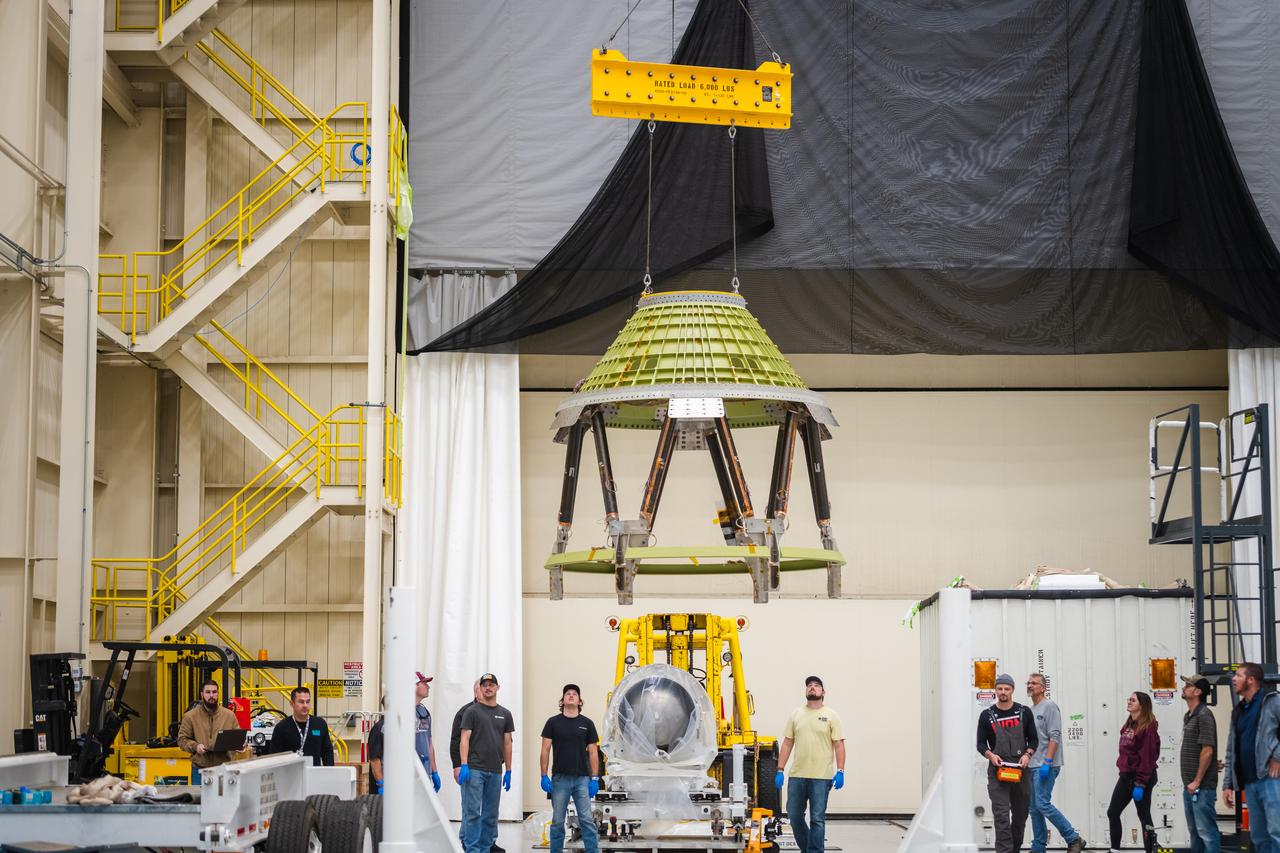
The Launch Abort System and the Orion Crew Module, also known as the Orion Environmental Test Article (ETA), returned to NASA’s Neil Armstrong Test Facility in Sandusky, Ohio, in October 2023 through January 2024 and completed an 11-month test campaign necessary for the safety and success of Artemis II. Photo Credit: (NASA/Jordan Salkin)
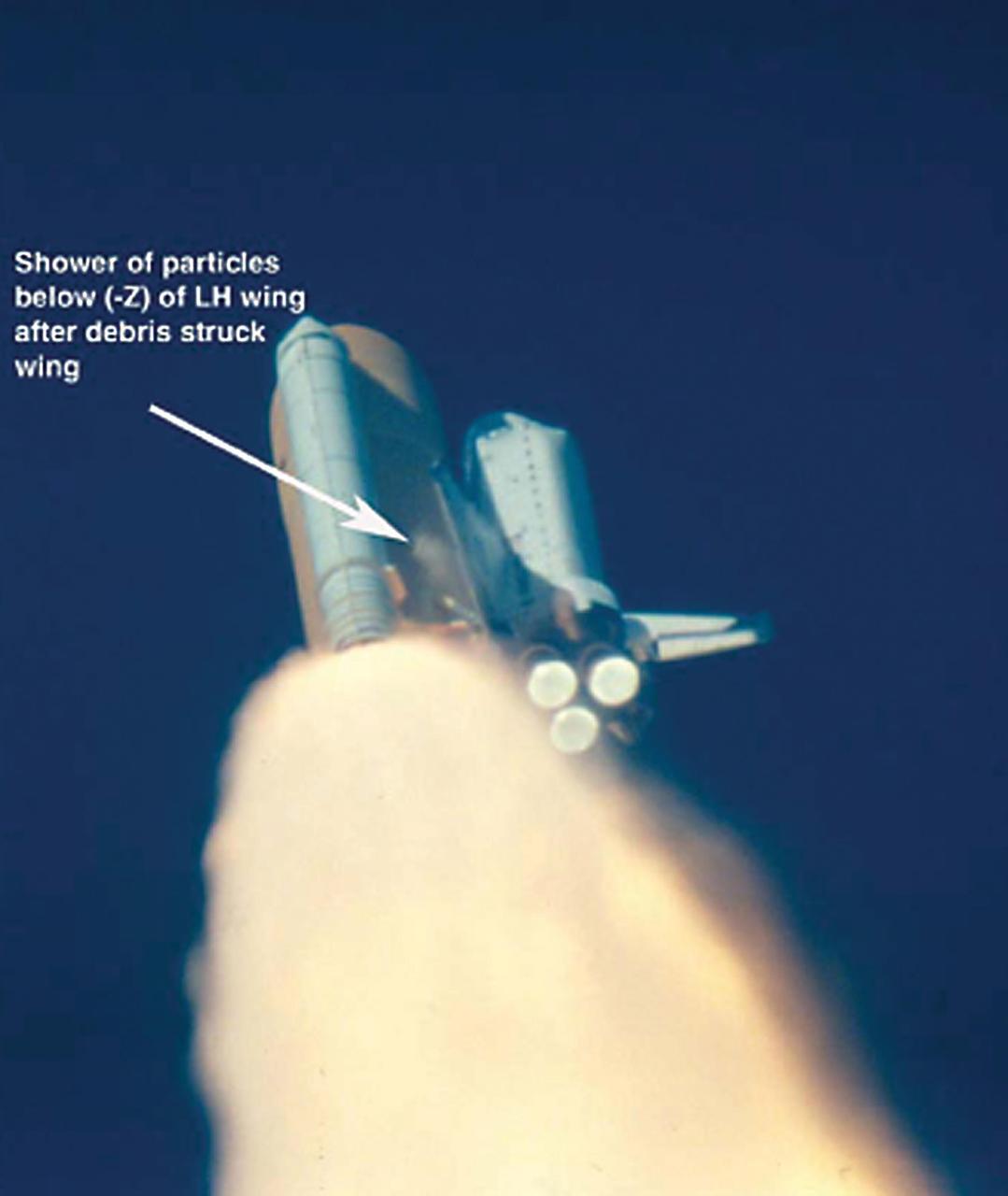
KENNEDY SPACE CENTER, FLA. -- Approximately 33 seconds after T-0 and liftoff of Space Shuttle Columbia, several particles are observed falling away from the -Z portion of the LH solid rocket booster ETA ring. Particles were identified later as probably pieces of the instafoam closeout on the ETA ring.
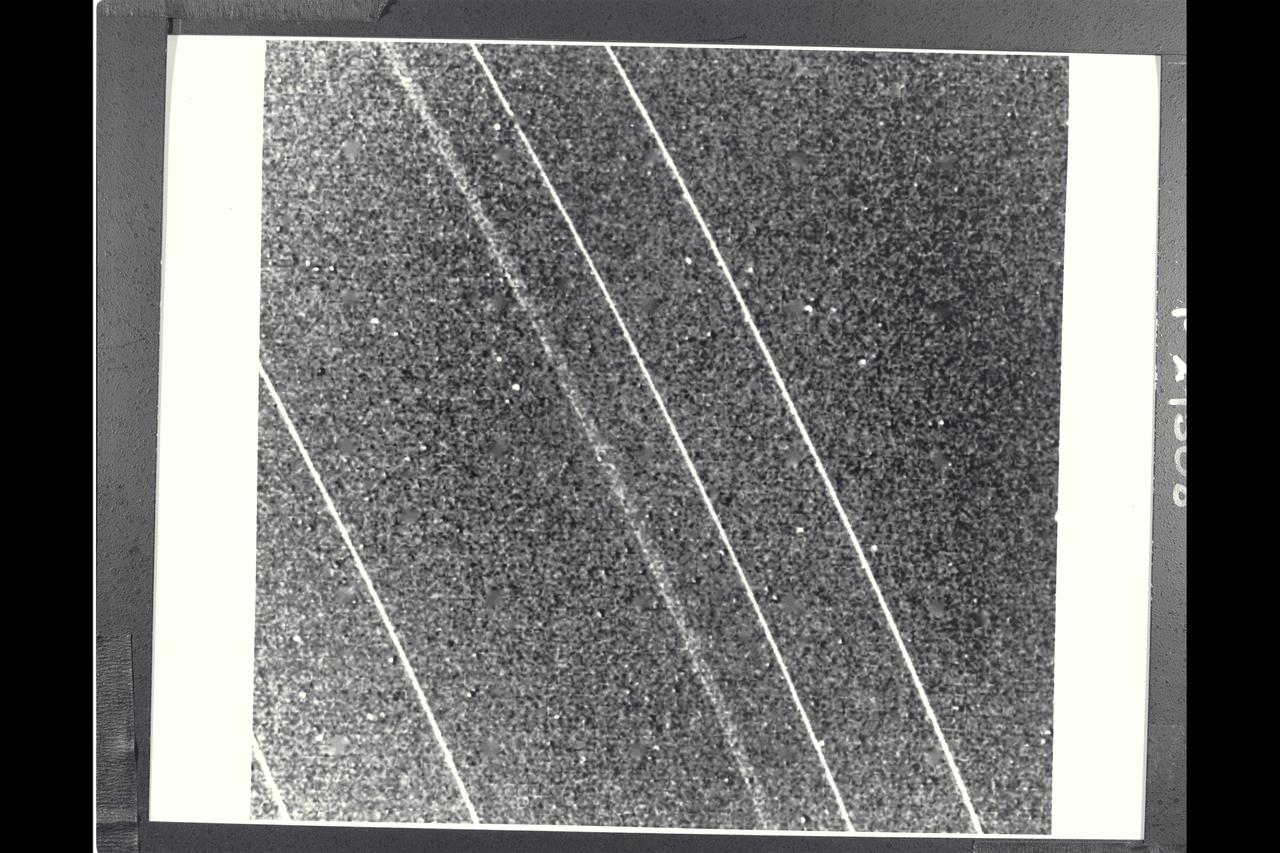
P-29508BW Range: 1.12 million kilometers (690,000 miles) This clear-filter view of the Uranian rings delta, gamma, eta, beta and alpha (from top) was taken with Voyager 2's narrow-angle camera and clearly illustrates the broad outer component and narrow inner component of the eta ring, which orbits Uranus at a radius of some 47,000 km (29,000 mi). The broad component is considerably more transparent than the dense, narrow inner eta component, as well as the other narrow rings shown. Resolution here is about 10 km (6 mi).
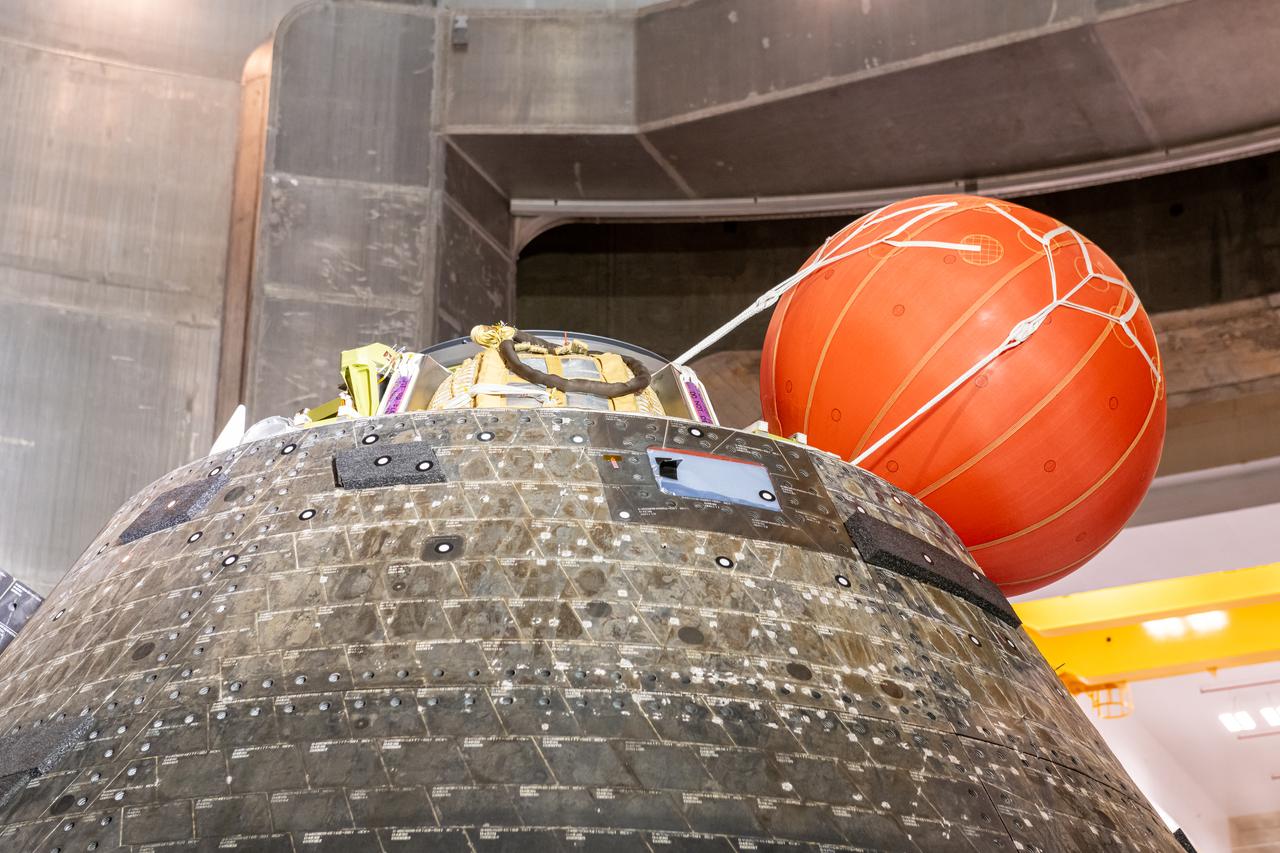
The Orion Crew Module, also known as the Orion Environmental Test Article (ETA), returned to NASA’s Neil Armstrong Test Facility in Sandusky, Ohio, in January 2024 and completed an 11-month test campaign necessary for the safety and success of Artemis II. In November 2024, experts completed the Crew Module Uprighting System Test, which is the system of five airbags on top of the capsule that inflate upon splashdown. Photo Credit: (NASA/Jordan Salkin)
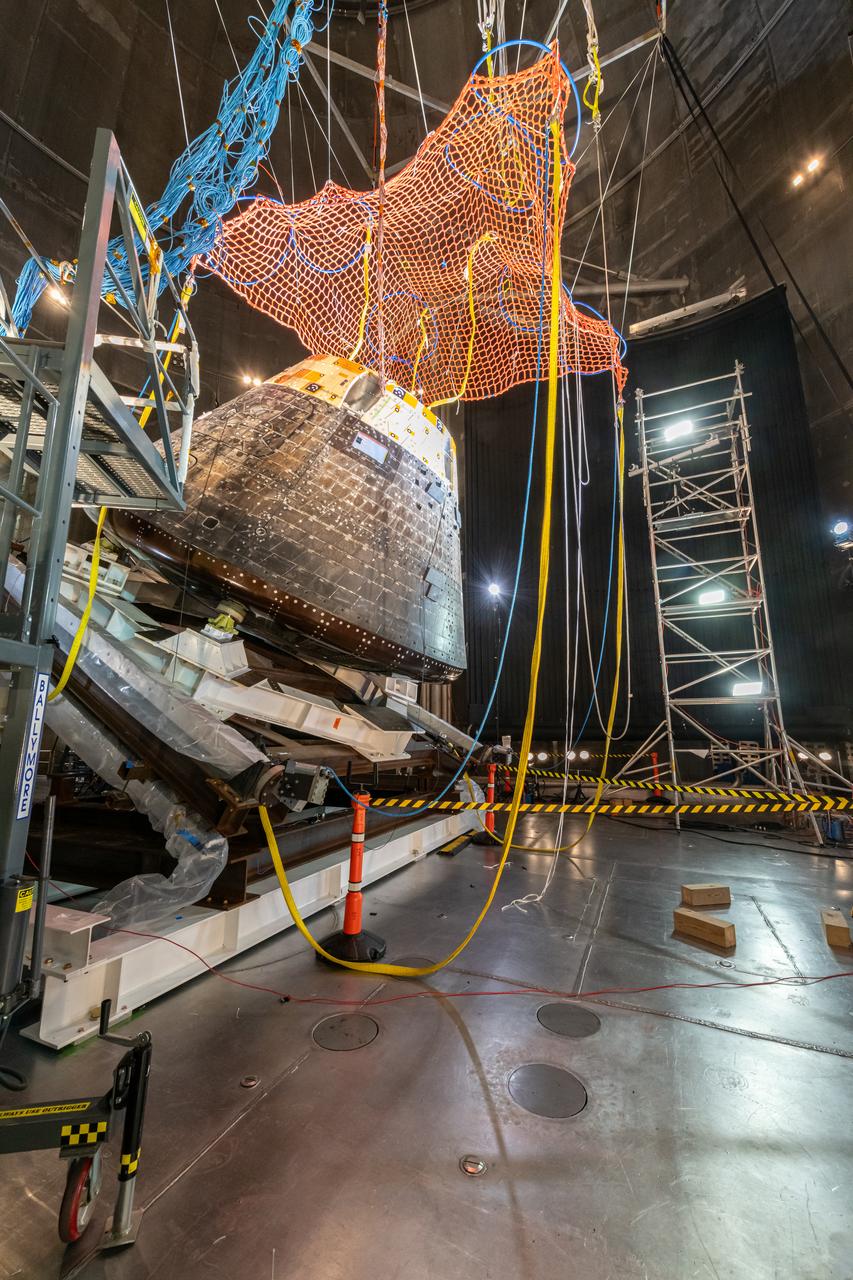
The Orion Crew Module, also known as the Orion Environmental Test Article (ETA), returned to NASA’s Neil Armstrong Test Facility in Sandusky, Ohio, in January 2024 and completed an 11-month test campaign necessary for the safety and success of Artemis II. In November 2024, experts completed the Forward Bay Cover jettison test, which is the last piece that must eject right before parachutes deploy. This image shows the setup right before the FBC deployment test. Photo Credit: (NASA/Jordan Salkin)
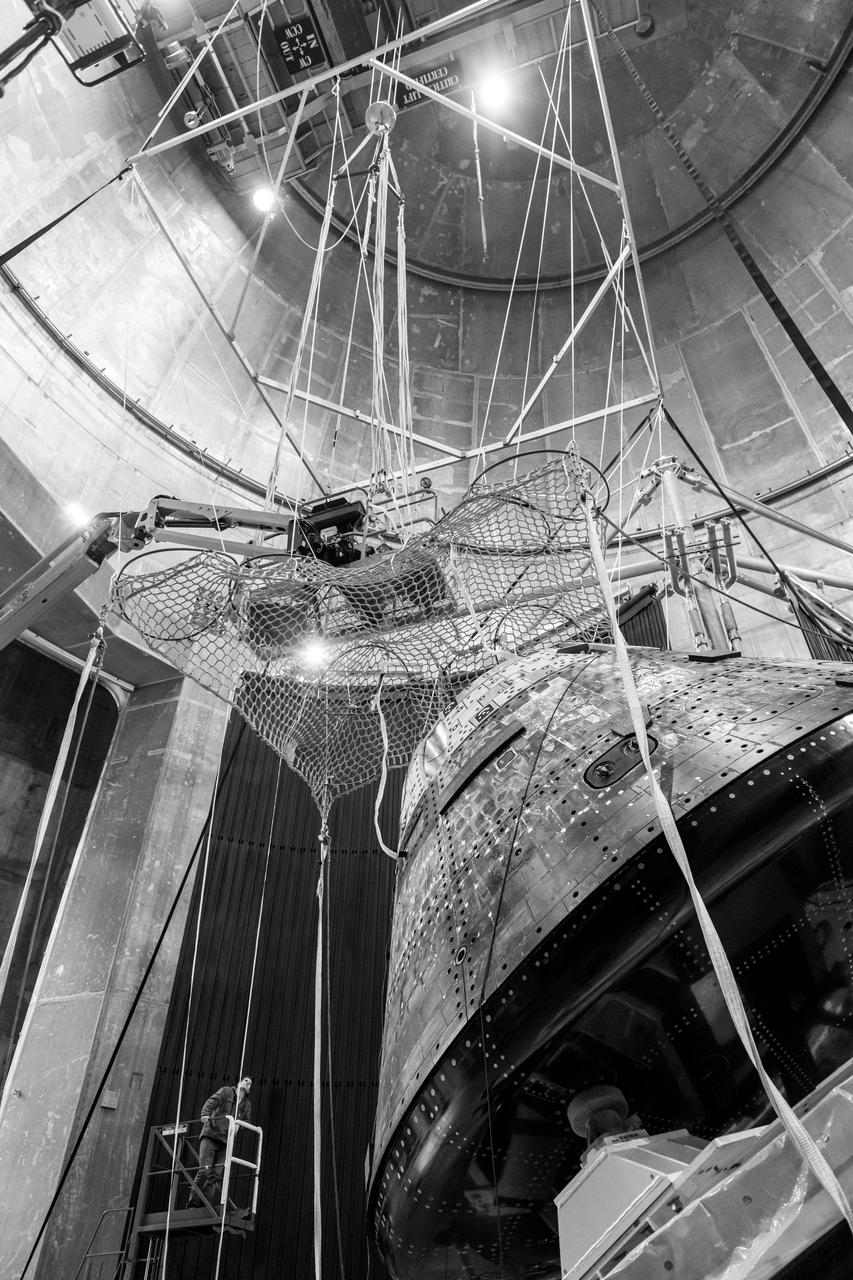
The Orion Crew Module, also known as the Orion Environmental Test Article (ETA), returned to NASA’s Neil Armstrong Test Facility in Sandusky, Ohio, in January 2024 and completed an 11-month test campaign necessary for the safety and success of Artemis II. In November 2024, experts completed the Forward Bay Cover jettison test, which is the last piece that must eject right before parachutes deploy. This image shows the setup right before the FBC deployment test. Photo Credit: (NASA/Jordan Salkin)
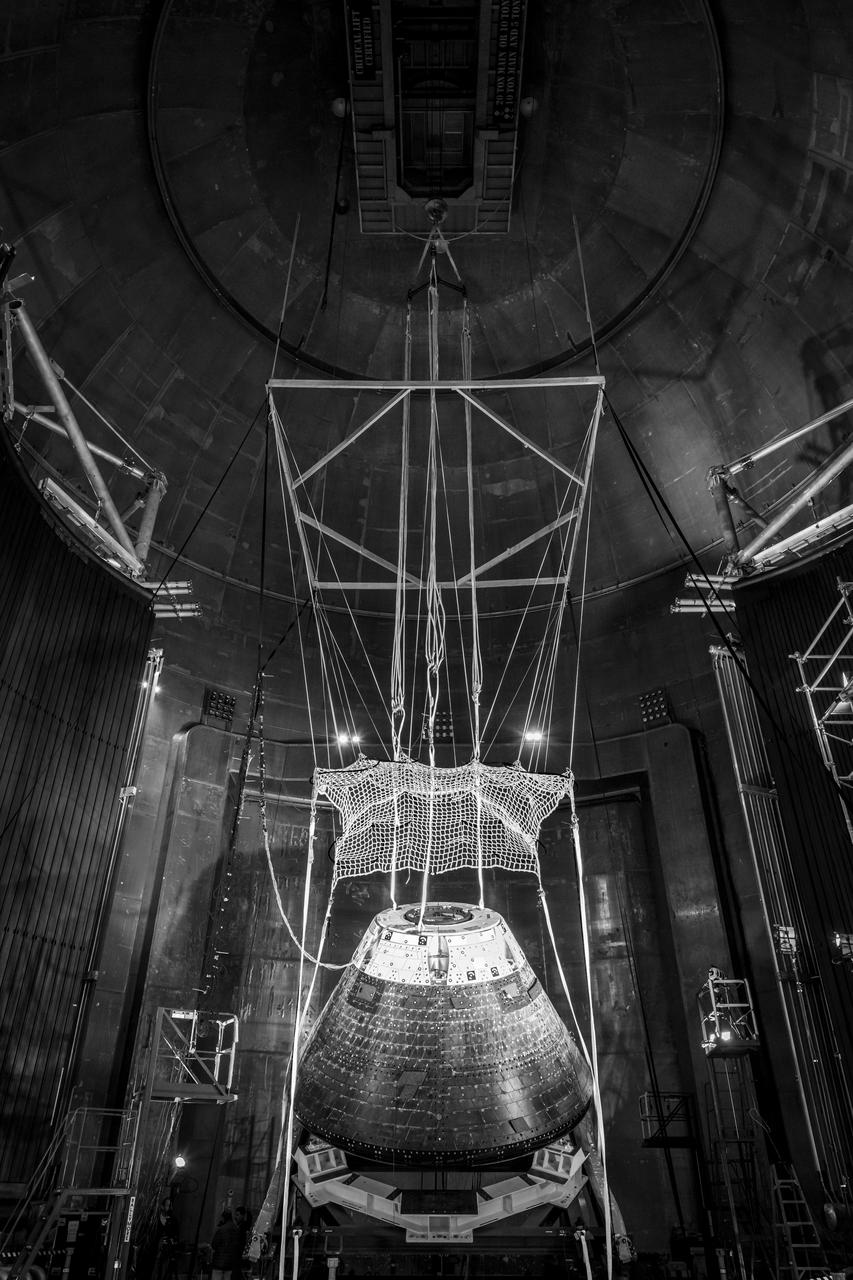
The Orion Crew Module, also known as the Orion Environmental Test Article (ETA), returned to NASA’s Neil Armstrong Test Facility in Sandusky, Ohio, in January 2024 and completed an 11-month test campaign necessary for the safety and success of Artemis II. In November 2024, experts completed the Forward Bay Cover jettison test, which is the last piece that must eject right before parachutes deploy. This image shows the setup right before the FBC deployment test. Photo Credit: (NASA/Jordan Salkin)
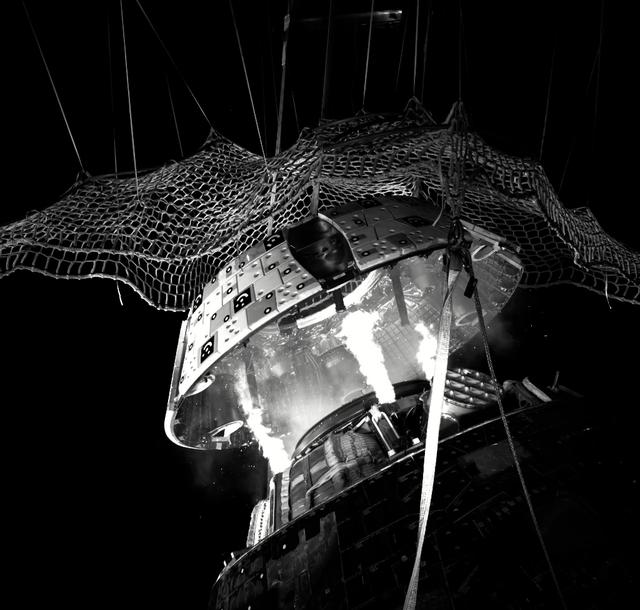
The Orion Crew Module, also known as the Orion Environmental Test Article (ETA), returned to NASA’s Neil Armstrong Test Facility in Sandusky, Ohio, in January 2024 and completed an 11-month test campaign necessary for the safety and success of Artemis II. In November 2024, experts completed the Forward Bay Cover jettison test, which is the last piece that must eject right before parachutes deploy. Photo Credit: (NASA/Quentin Schwinn and Jordan Salkin)
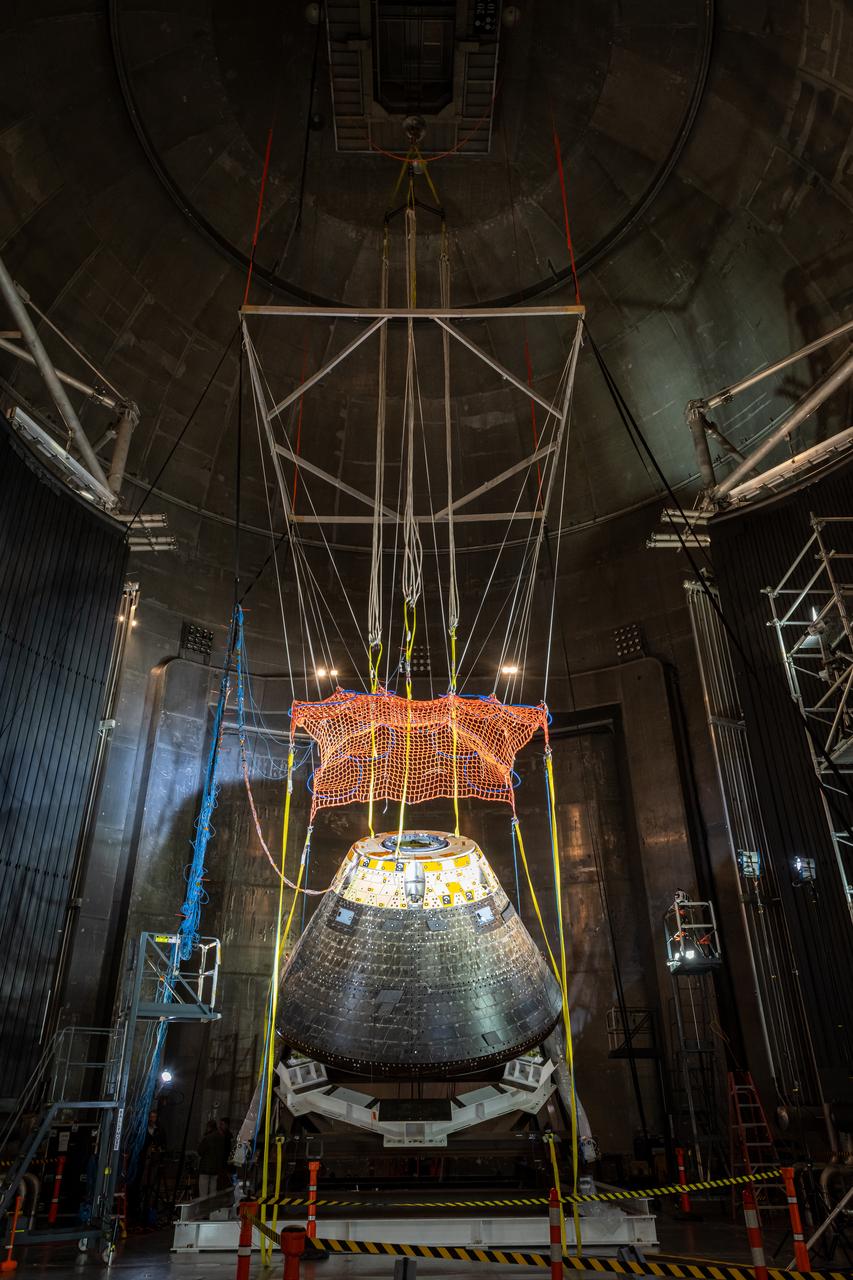
The Orion Crew Module, also known as the Orion Environmental Test Article (ETA), returned to NASA’s Neil Armstrong Test Facility in Sandusky, Ohio, in January 2024 and completed an 11-month test campaign necessary for the safety and success of Artemis II. In November 2024, experts completed the Forward Bay Cover jettison test, which is the last piece that must eject right before parachutes deploy. This image shows the setup right before the FBC deployment test. Photo Credit: (NASA/Jordan Salkin)
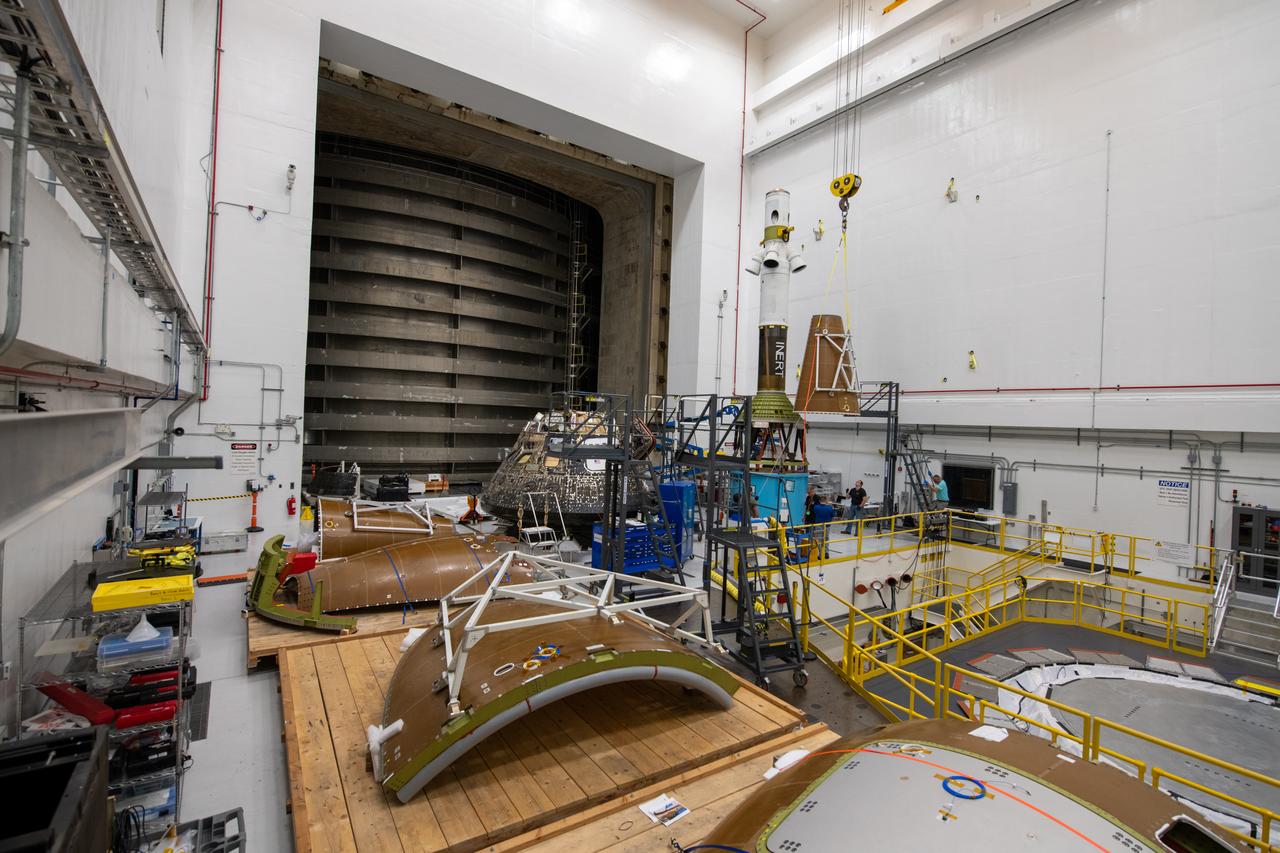
The Launch Abort System and the Orion Crew Module, also known as the Orion Environmental Test Article (ETA), returned to NASA’s Neil Armstrong Test Facility in Sandusky, Ohio, in October 2023 through January 2024 and completed an 11-month test campaign necessary for the safety and success of Artemis II. Photo Credit: (NASA/Quentin Schwinn)
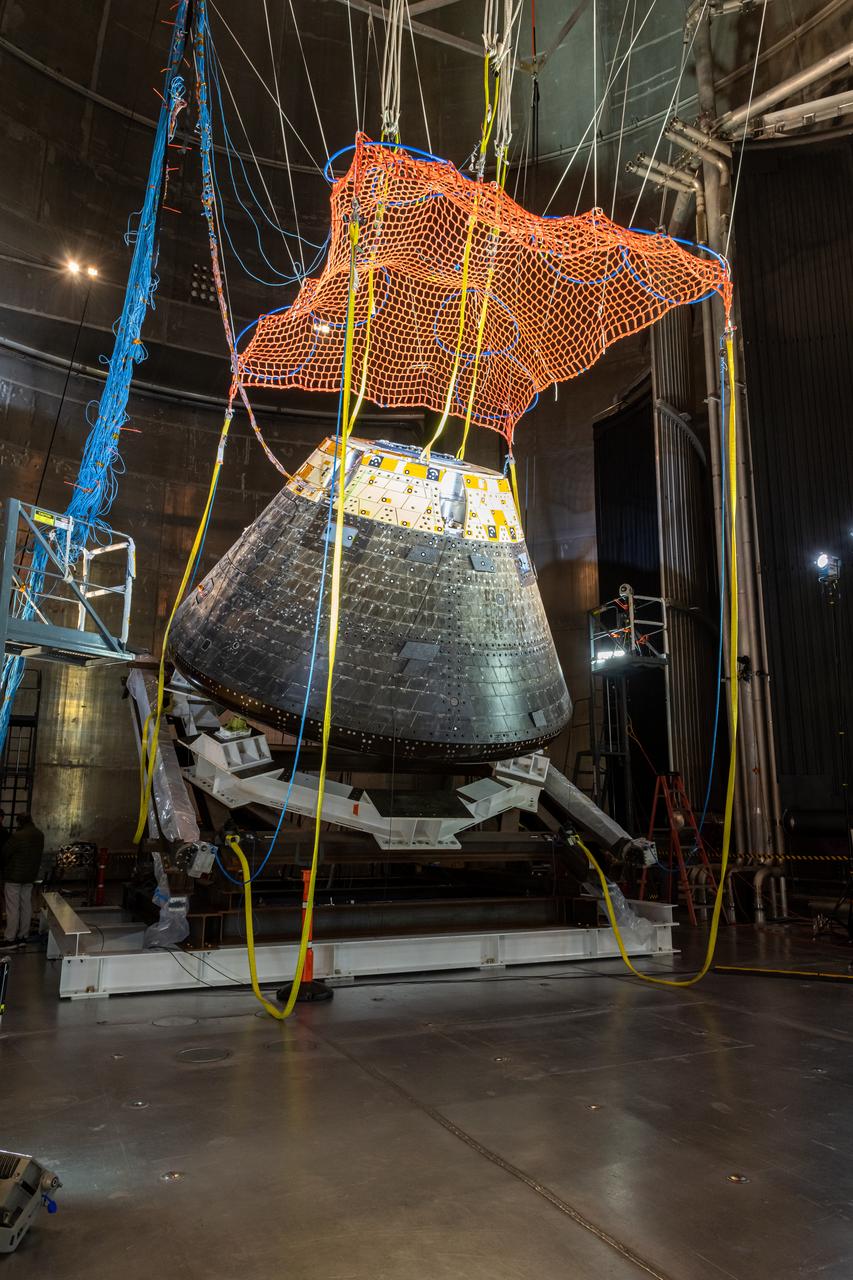
The Orion Crew Module, also known as the Orion Environmental Test Article (ETA), returned to NASA’s Neil Armstrong Test Facility in Sandusky, Ohio, in January 2024 and completed an 11-month test campaign necessary for the safety and success of Artemis II. In November 2024, experts completed the Forward Bay Cover jettison test, which is the last piece that must eject right before parachutes deploy. This image shows the setup right before the FBC deployment test. Photo Credit: (NASA/Jordan Salkin)
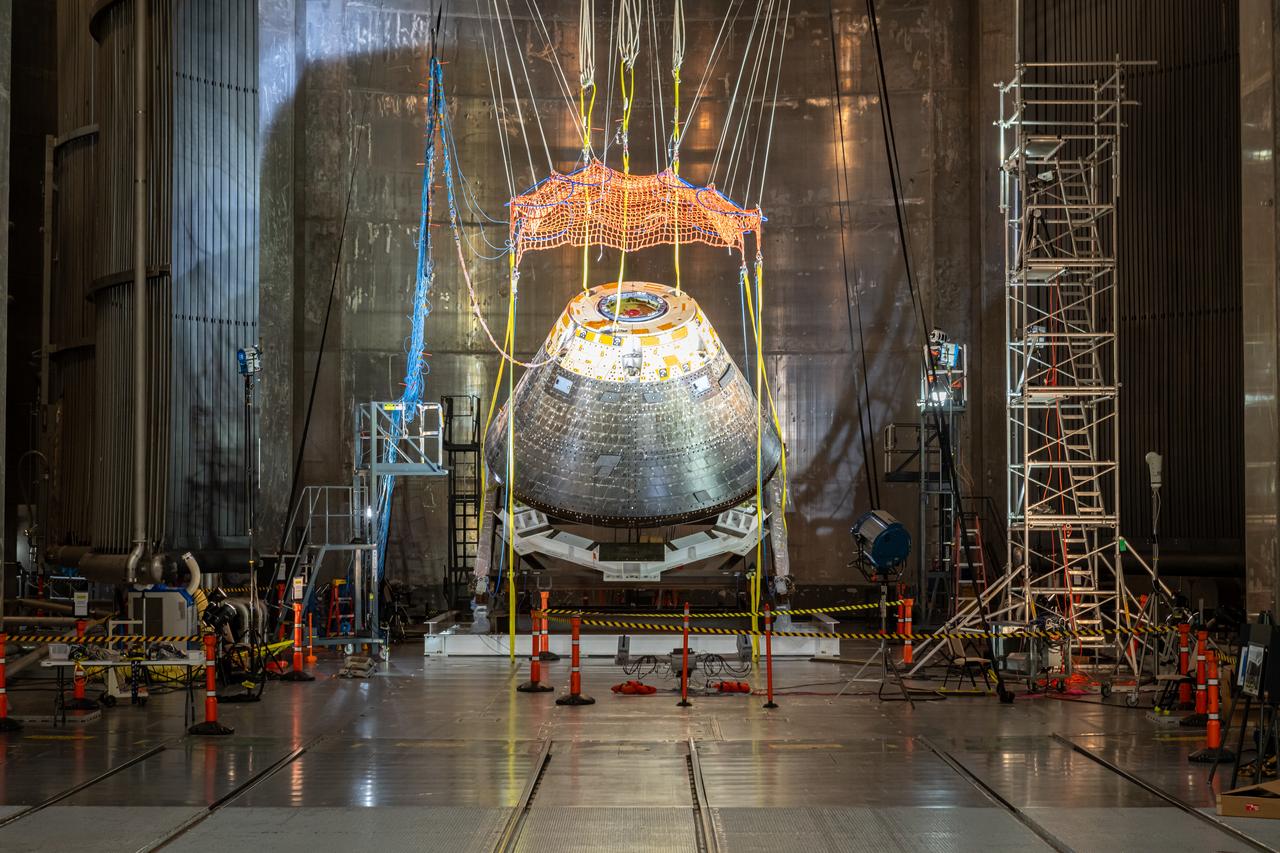
The Orion Crew Module, also known as the Orion Environmental Test Article (ETA), returned to NASA’s Neil Armstrong Test Facility in Sandusky, Ohio, in January 2024 and completed an 11-month test campaign necessary for the safety and success of Artemis II. In November 2024, experts completed the Forward Bay Cover jettison test, which is the last piece that must eject right before parachutes deploy. This image shows the setup right before the FBC deployment test. Photo Credit: (NASA/Jordan Salkin)
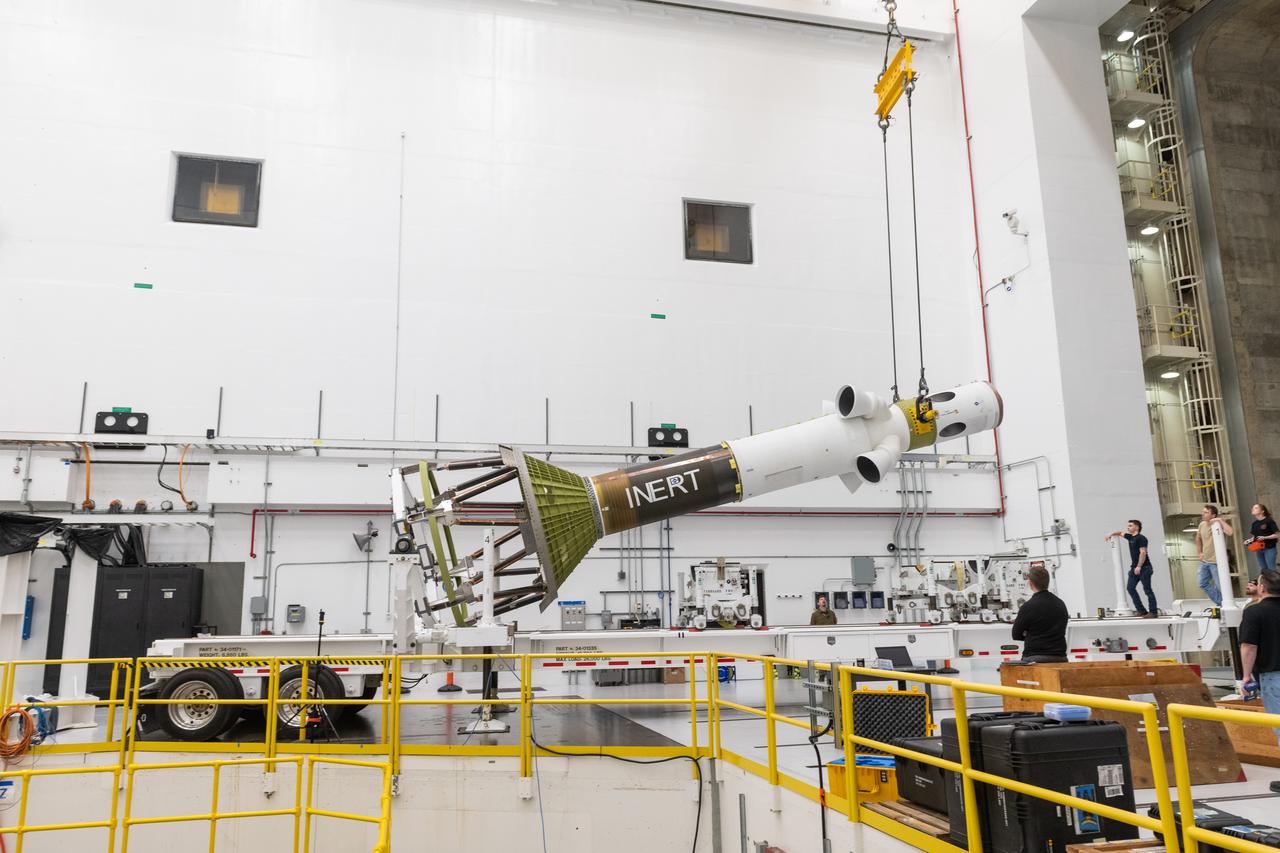
The Launch Abort System and the Orion Crew Module, also known as the Orion Environmental Test Article (ETA), returned to NASA’s Neil Armstrong Test Facility in Sandusky, Ohio, in October 2023 through January 2024 and completed an 11-month test campaign necessary for the safety and success of Artemis II. Photo Credit: (NASA/Jordan Salkin)
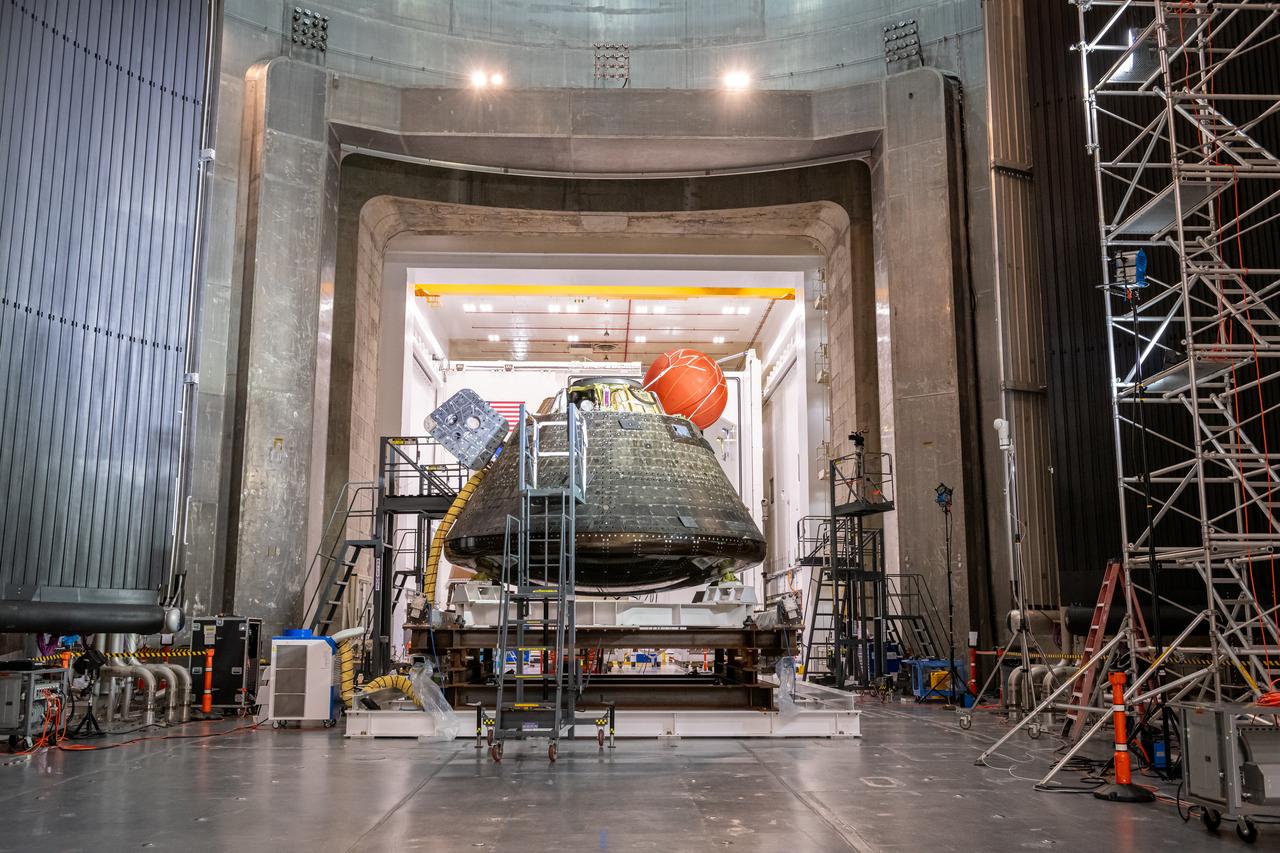
The Orion Crew Module, also known as the Orion Environmental Test Article (ETA), returned to NASA’s Neil Armstrong Test Facility in Sandusky, Ohio, in January 2024 and completed an 11-month test campaign necessary for the safety and success of Artemis II. In November 2024, experts completed the Crew Module Uprighting System Test, which is the system of five airbags on top of the capsule that inflate upon splashdown. Photo Credit: (NASA/Jordan Salkin)
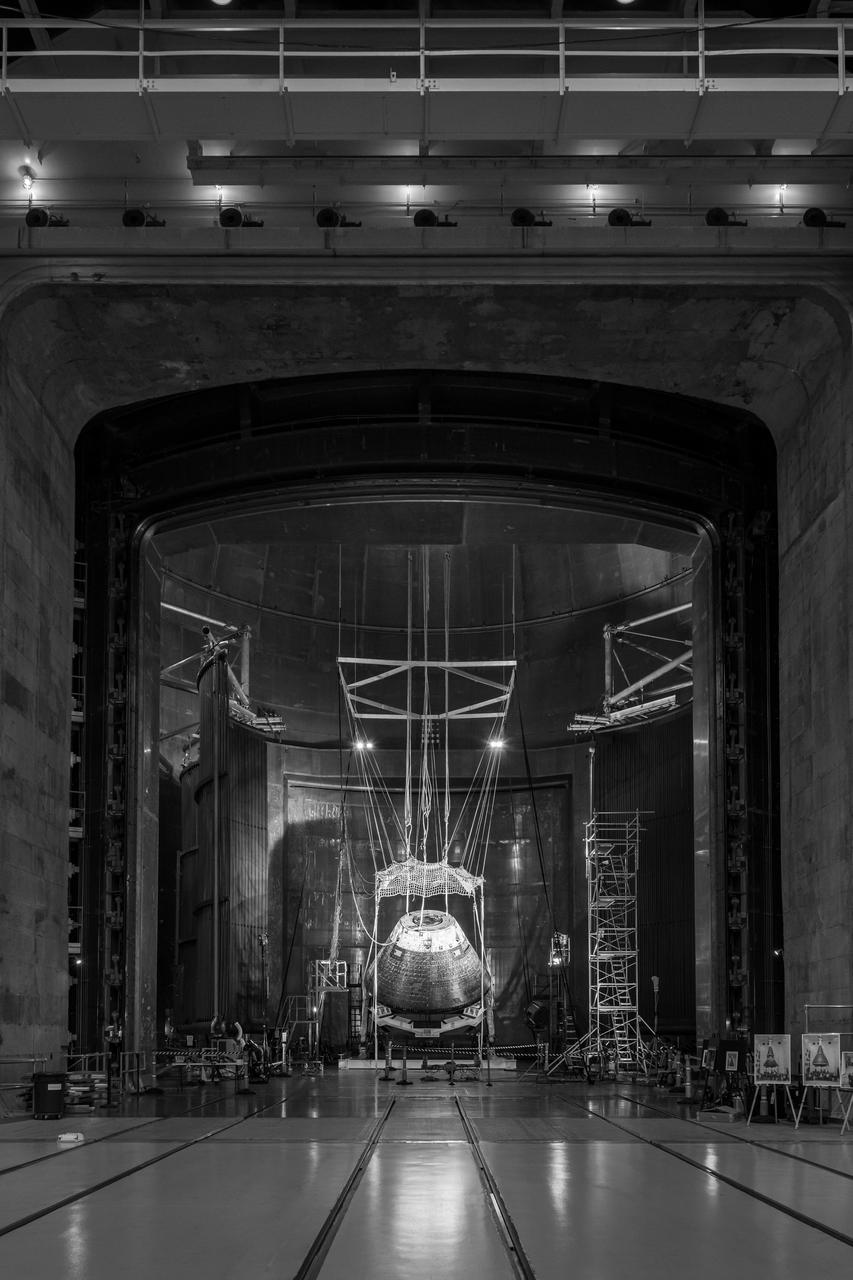
The Orion Crew Module, also known as the Orion Environmental Test Article (ETA), returned to NASA’s Neil Armstrong Test Facility in Sandusky, Ohio, in January 2024 and completed an 11-month test campaign necessary for the safety and success of Artemis II. In November 2024, experts completed the Forward Bay Cover jettison test, which is the last piece that must eject right before parachutes deploy. This image shows the setup right before the FBC deployment test. Photo Credit: (NASA/Jordan Salkin)
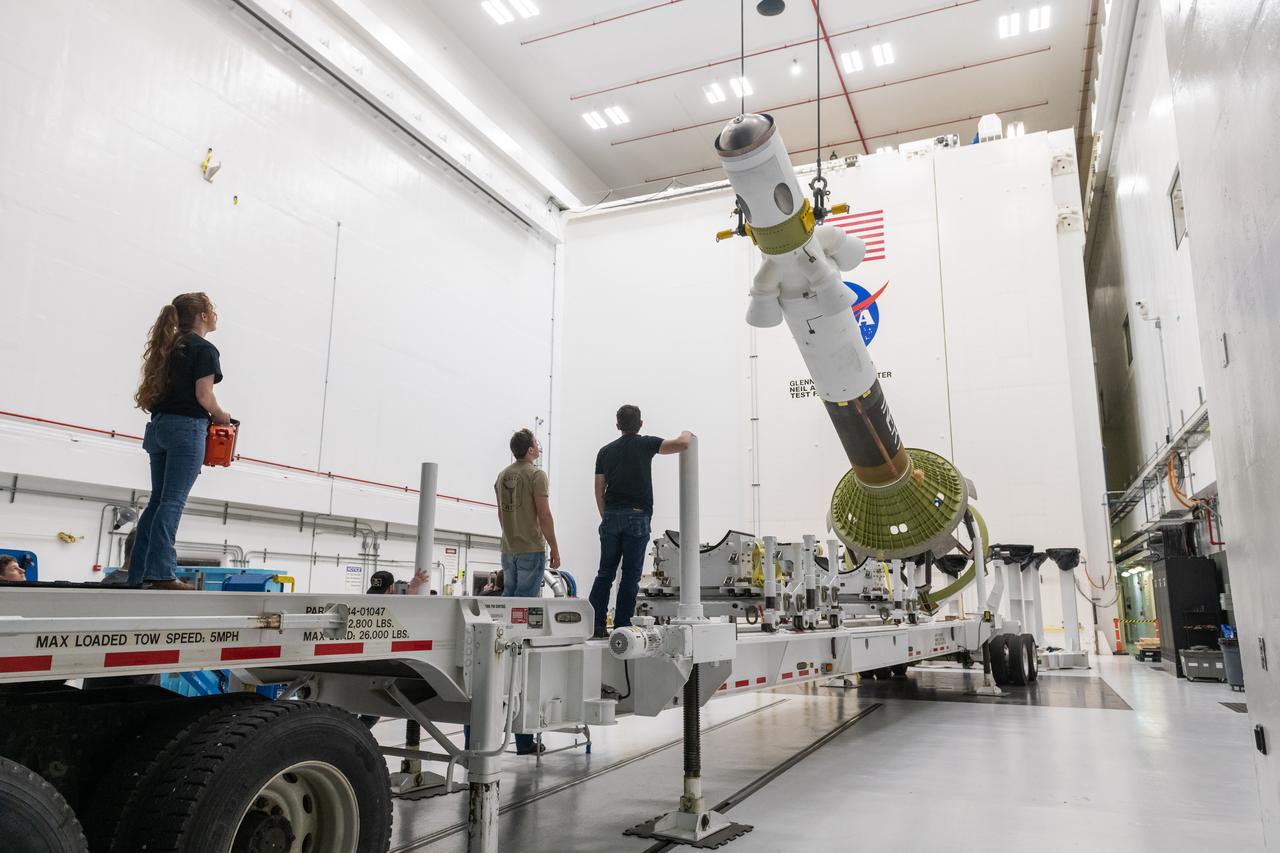
The Launch Abort System and the Orion Crew Module, also known as the Orion Environmental Test Article (ETA), returned to NASA’s Neil Armstrong Test Facility in Sandusky, Ohio, in October 2023 through January 2024 and completed an 11-month test campaign necessary for the safety and success of Artemis II. Photo Credit: (NASA/Jordan Salkin)

The Orion Crew Module, also known as the Orion Environmental Test Article (ETA), returned to NASA’s Neil Armstrong Test Facility in Sandusky, Ohio, in January 2024 and completed an 11-month test campaign necessary for the safety and success of Artemis II. In November 2024, experts completed the Forward Bay Cover jettison test, which is the last piece that must eject right before parachutes deploy. This image shows the setup right before the FBC deployment test. Photo Credit: (NASA/Jordan Salkin)
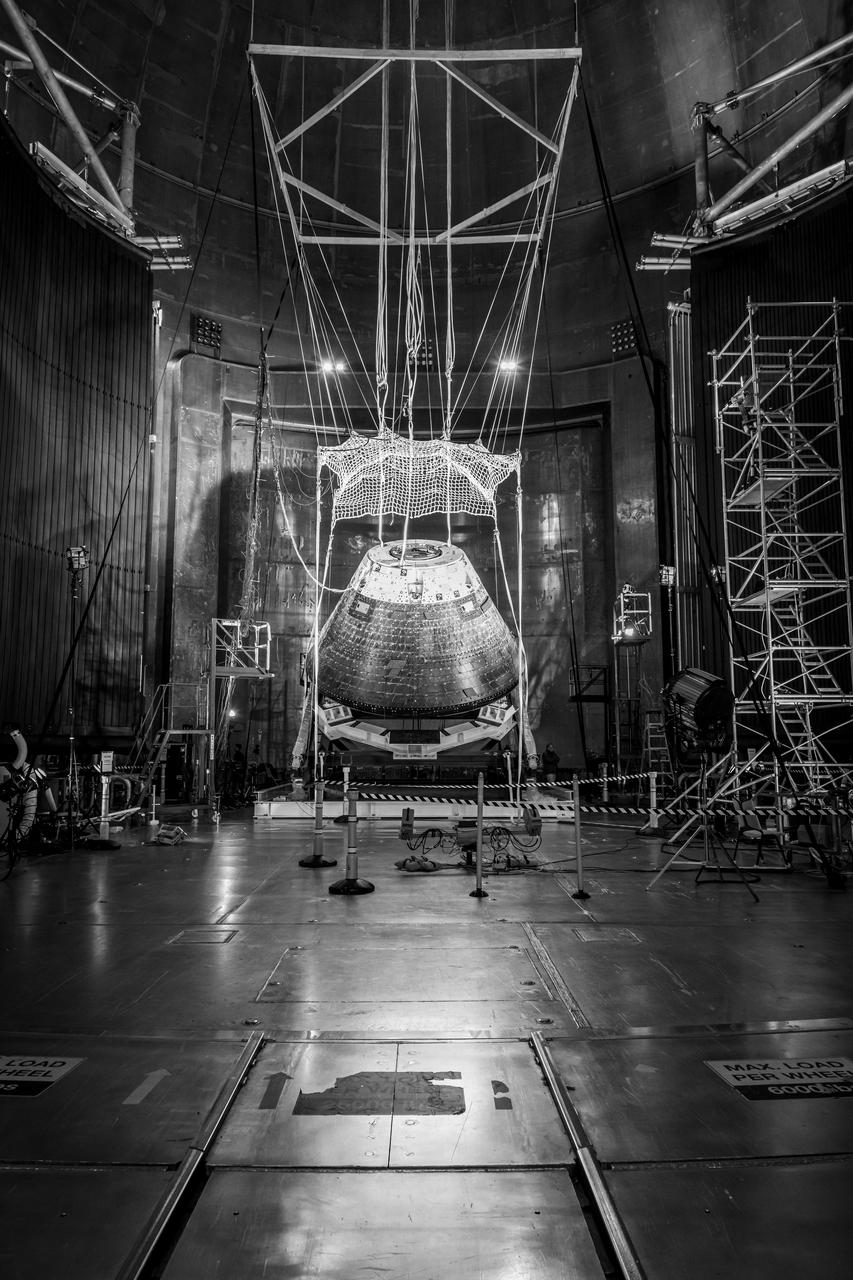
The Orion Crew Module, also known as the Orion Environmental Test Article (ETA), returned to NASA’s Neil Armstrong Test Facility in Sandusky, Ohio, in January 2024 and completed an 11-month test campaign necessary for the safety and success of Artemis II. In November 2024, experts completed the Forward Bay Cover jettison test, which is the last piece that must eject right before parachutes deploy. This image shows the setup right before the FBC deployment test. Photo Credit: (NASA/Jordan Salkin)
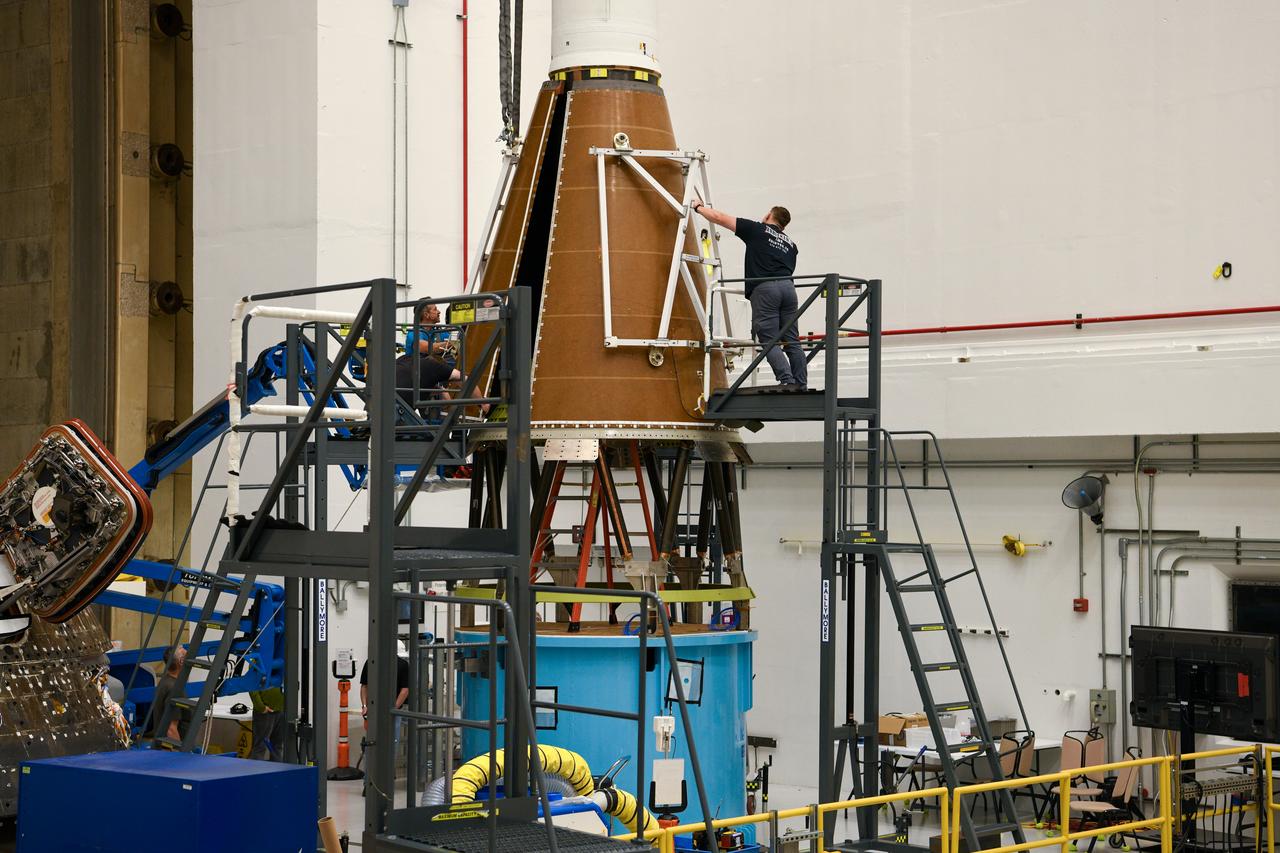
The Launch Abort System and the Orion Crew Module, also known as the Orion Environmental Test Article (ETA), returned to NASA’s Neil Armstrong Test Facility in Sandusky, Ohio, in October 2023 through January 2024 and completed an 11-month test campaign necessary for the safety and success of Artemis II. Photo Credit: (NASA/Quentin Schwinn)
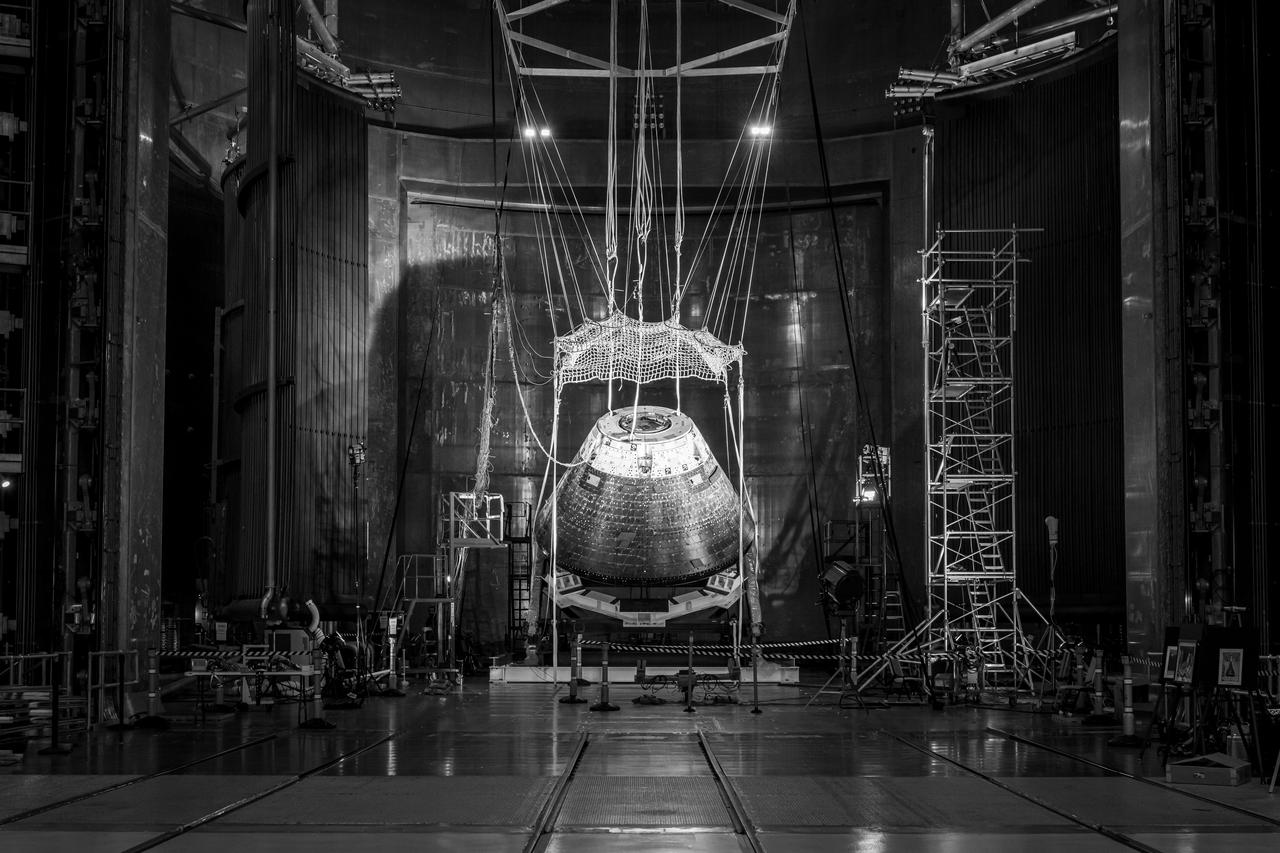
The Orion Crew Module, also known as the Orion Environmental Test Article (ETA), returned to NASA’s Neil Armstrong Test Facility in Sandusky, Ohio, in January 2024 and completed an 11-month test campaign necessary for the safety and success of Artemis II. In November 2024, experts completed the Forward Bay Cover jettison test, which is the last piece that must eject right before parachutes deploy. This image shows the setup right before the FBC deployment test. Photo Credit: (NASA/Jordan Salkin)
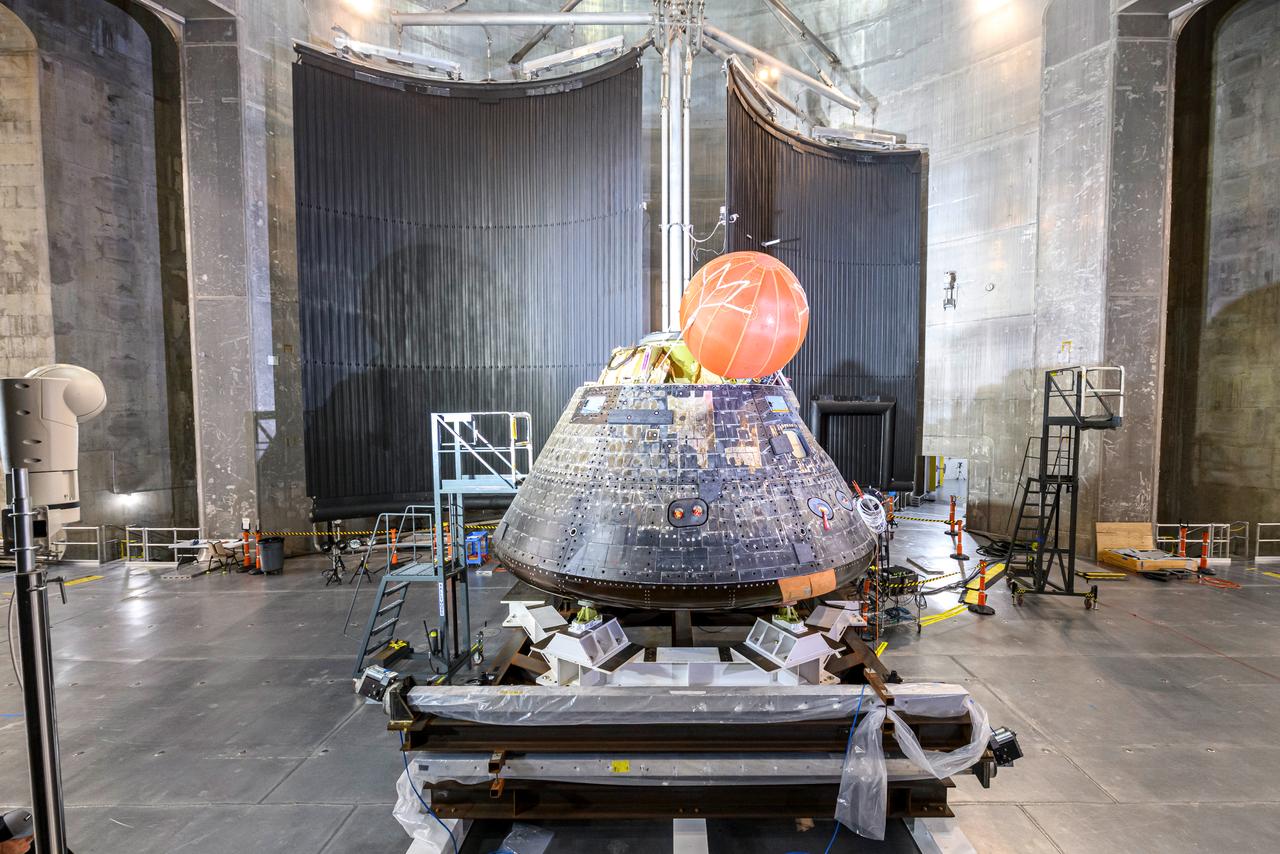
The Orion Crew Module, also known as the Orion Environmental Test Article (ETA), returned to NASA’s Neil Armstrong Test Facility in Sandusky, Ohio, in January 2024 and completed an 11-month test campaign necessary for the safety and success of Artemis II. In November 2024, experts completed the Crew Module Uprighting System Test, which is the system of five airbags on top of the capsule that inflate upon splashdown. Photo Credit: (NASA/Jordan Salkin and Quentin Schwinn)
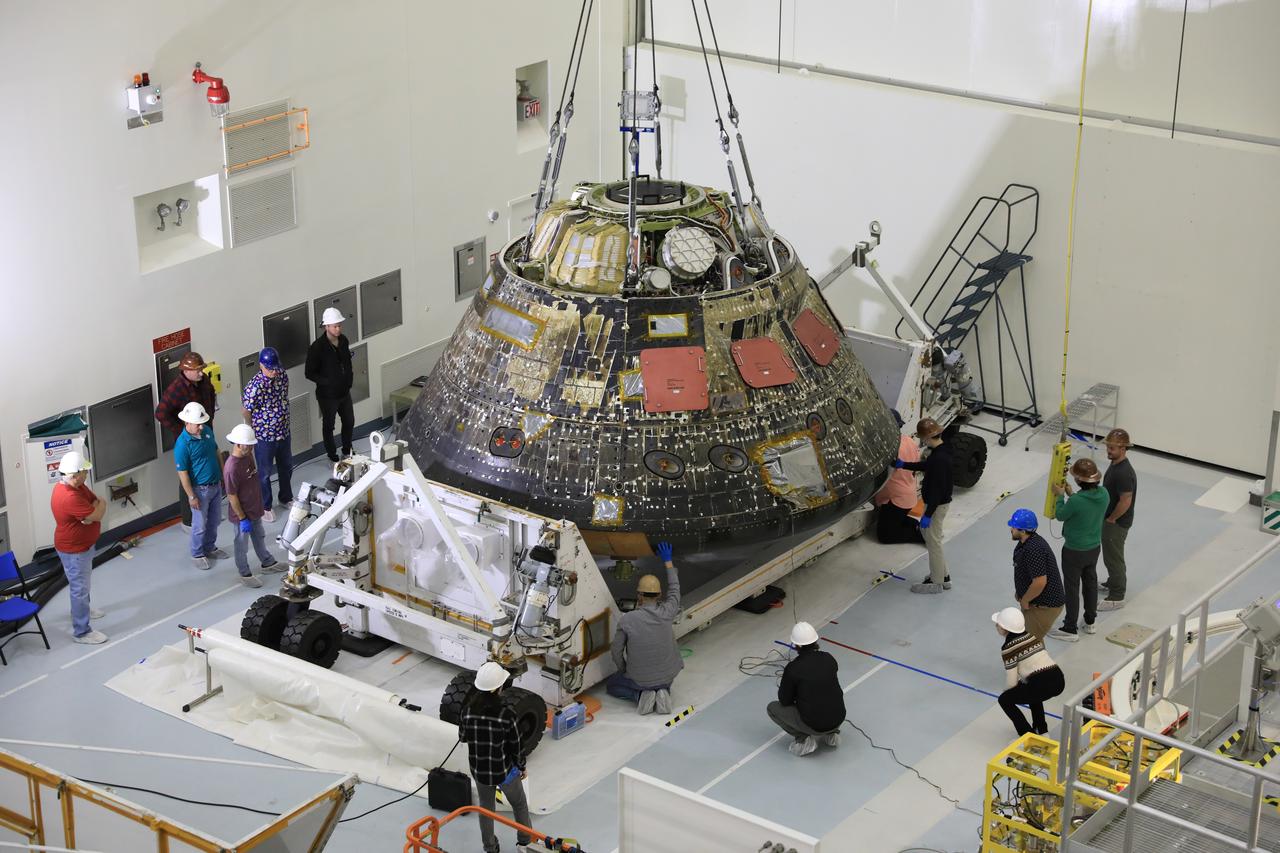
Technicians inside NASA’s Kennedy Space Centers Multi-Payload Processing Facility (MPPF) in Florida use a crane to load the Artemis I spacecraft - now called an environmental test article – into the crew module transportation fixture in preparation for its departure to NASA’s Neil Armstrong Test Facility in Sandusky, Ohio
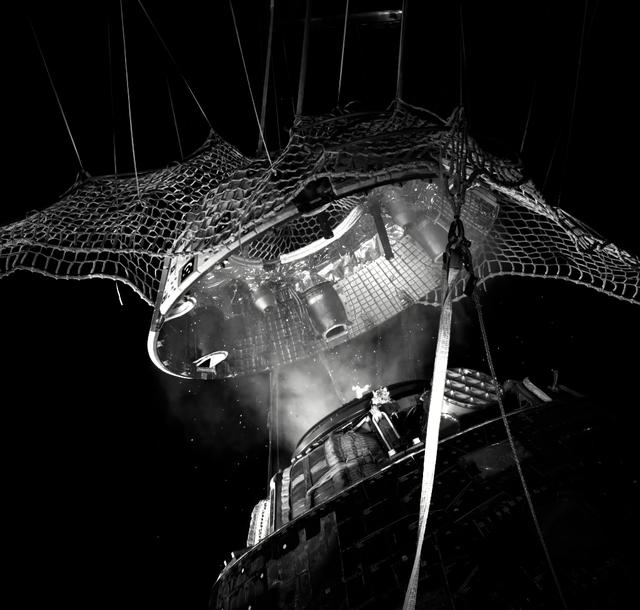
The Orion Crew Module, also known as the Orion Environmental Test Article (ETA), returned to NASA’s Neil Armstrong Test Facility in Sandusky, Ohio, in January 2024 and completed an 11-month test campaign necessary for the safety and success of Artemis II. In November 2024, experts completed the Forward Bay Cover jettison test, which is the last piece that must eject right before parachutes deploy.
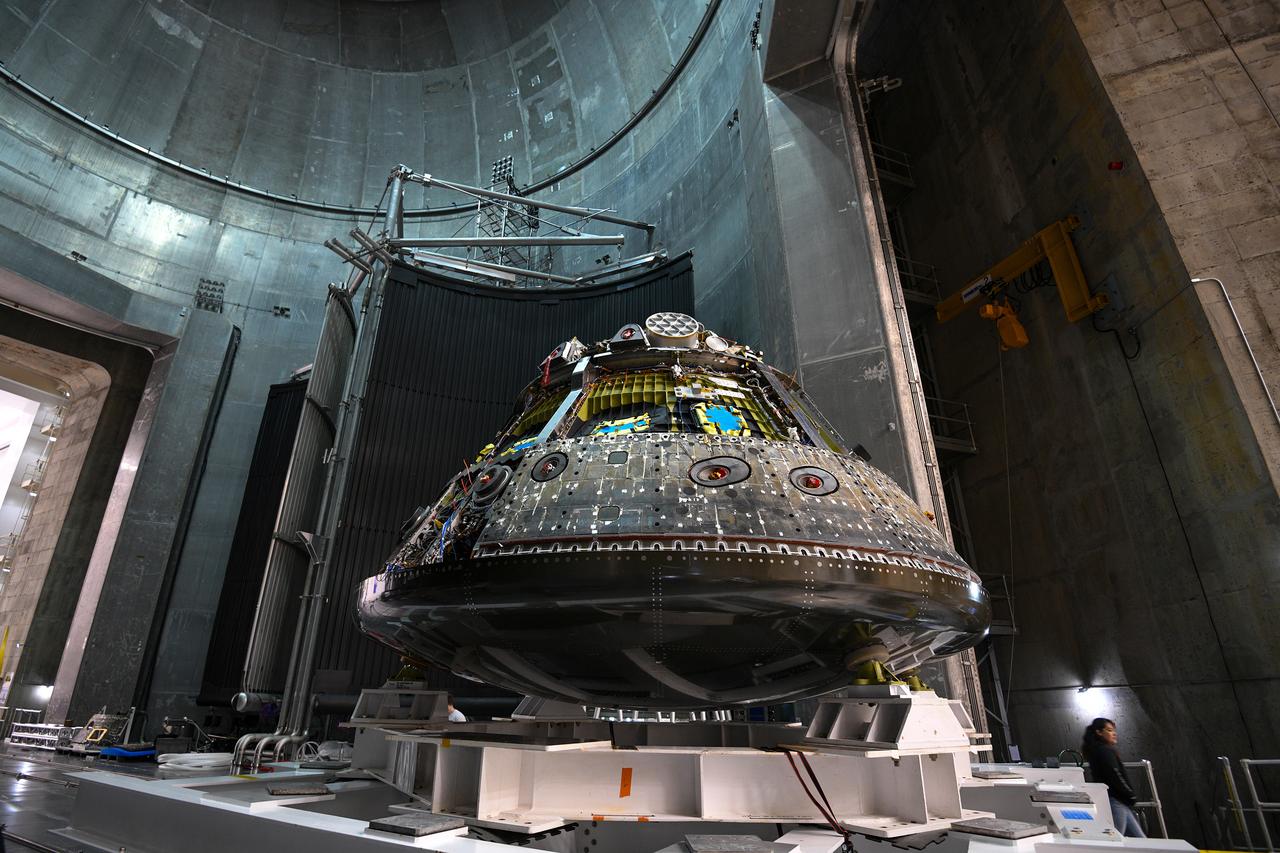
The Orion CM (Crew Module) or Orion ETA (Environmental Test Article) is passed through the vacuum chamber on its way to get ready for two critical tests in preparation for the Artemis II flight. There will be a jettison test of the Docking Module and a jettison test of the Forward Bay Cover.

These false-color image taken by NASA Spitzer Space Telescope shows the South Pillar region of the star-forming region called the Carina Nebula.
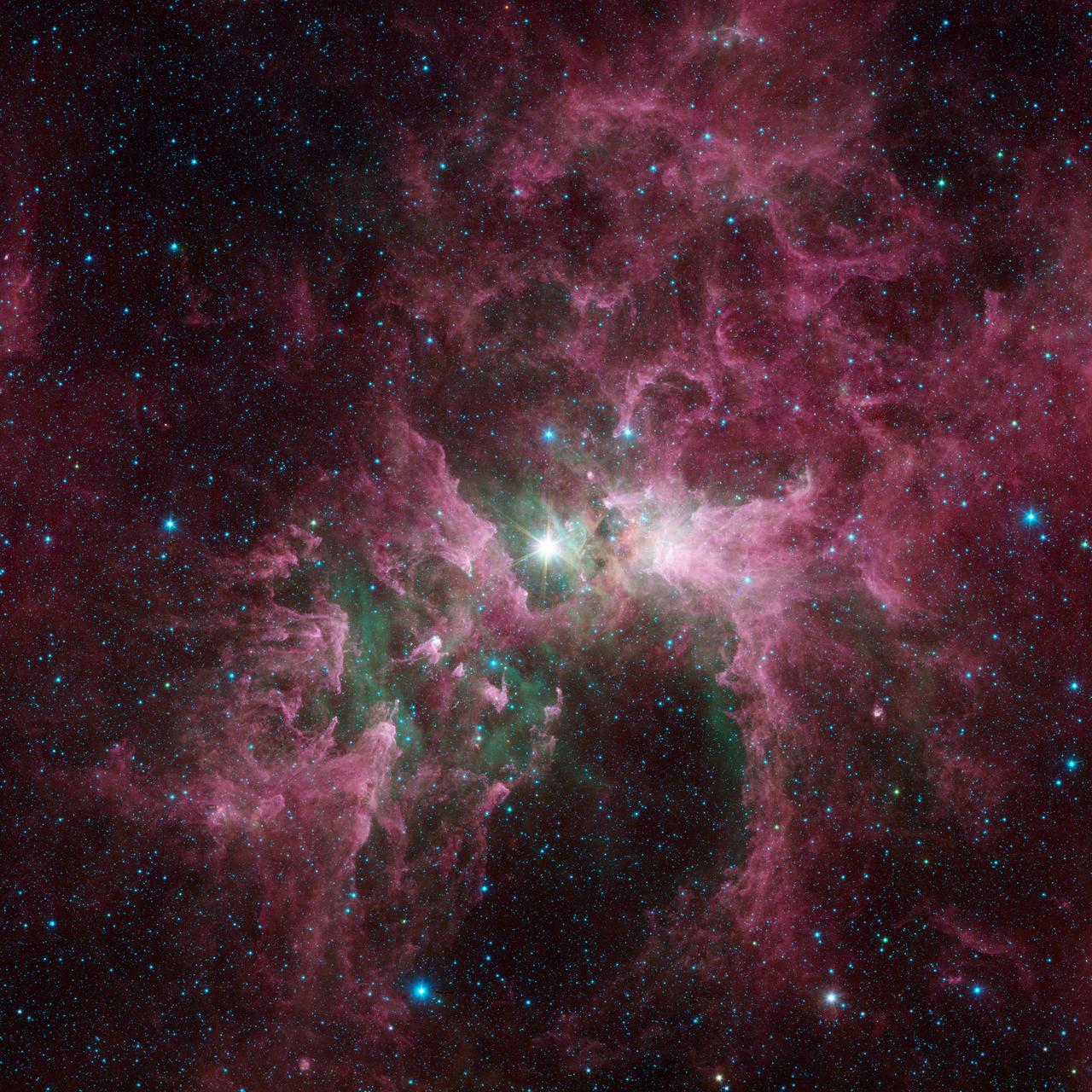
Massive stars can wreak havoc on their surroundings, as can be seen in this new view of the Carina nebula from NASAs Spitzer Space Telescope.
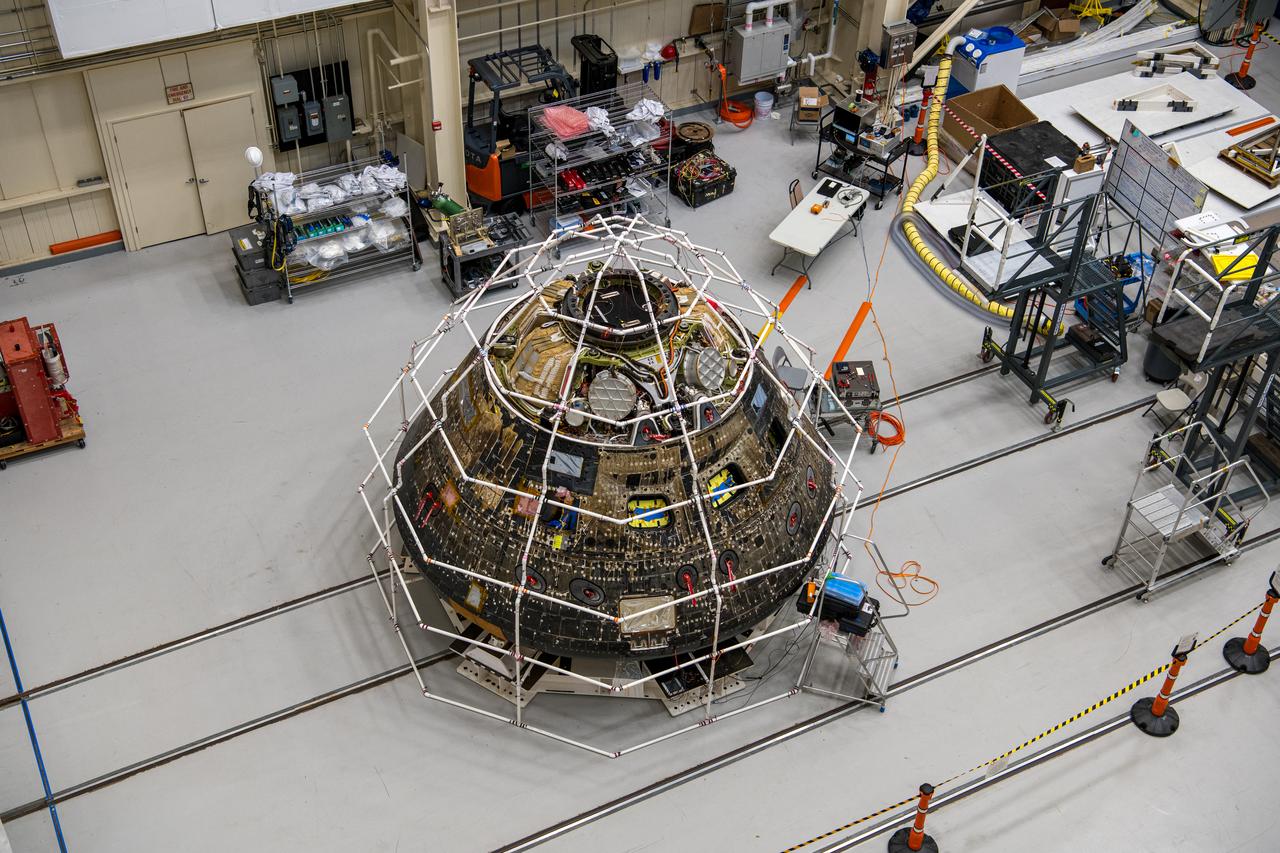
Experts at NASA’s Neil Armstrong Test Facility in Sandusky, Ohio, conducted a lightning test, which simulates the electromagnetic effects of a lightning strike to the vehicle on the launch pad awaiting liftoff. The February 20, 2024, test proved the grounding path of the vehicle is operating as designed and protecting the vehicle from damage to any of its equipment or systems. Photo Credit: (NASA/Quentin Schwinn)
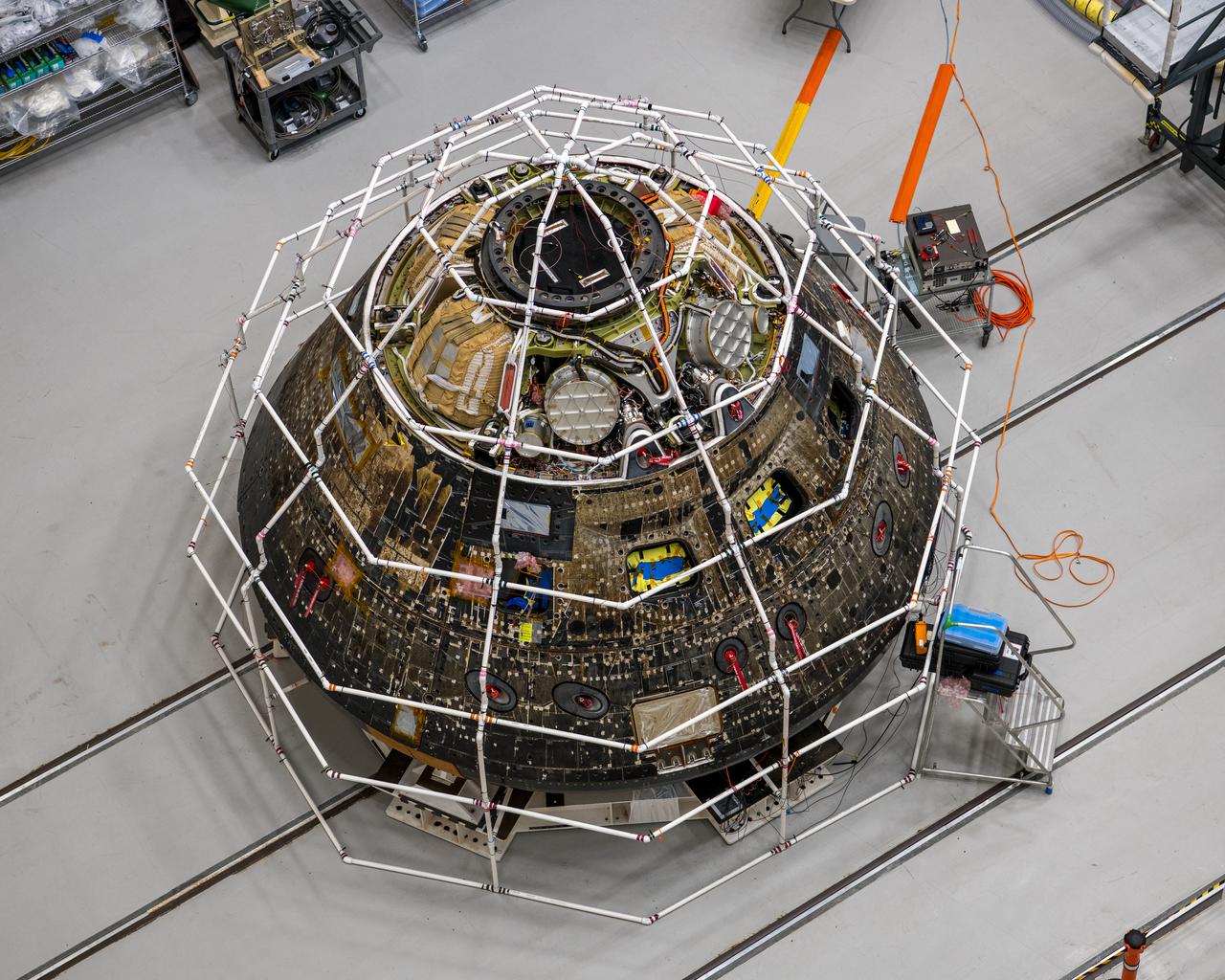
Experts at NASA’s Neil Armstrong Test Facility in Sandusky, Ohio, conducted a lightning test, which simulates the electromagnetic effects of a lightning strike to the vehicle on the launch pad awaiting liftoff. The February 20, 2024, test proved the grounding path of the vehicle is operating as designed and protecting the vehicle from damage to any of its equipment or systems. Photo Credit: (NASA/Quentin Schwinn)
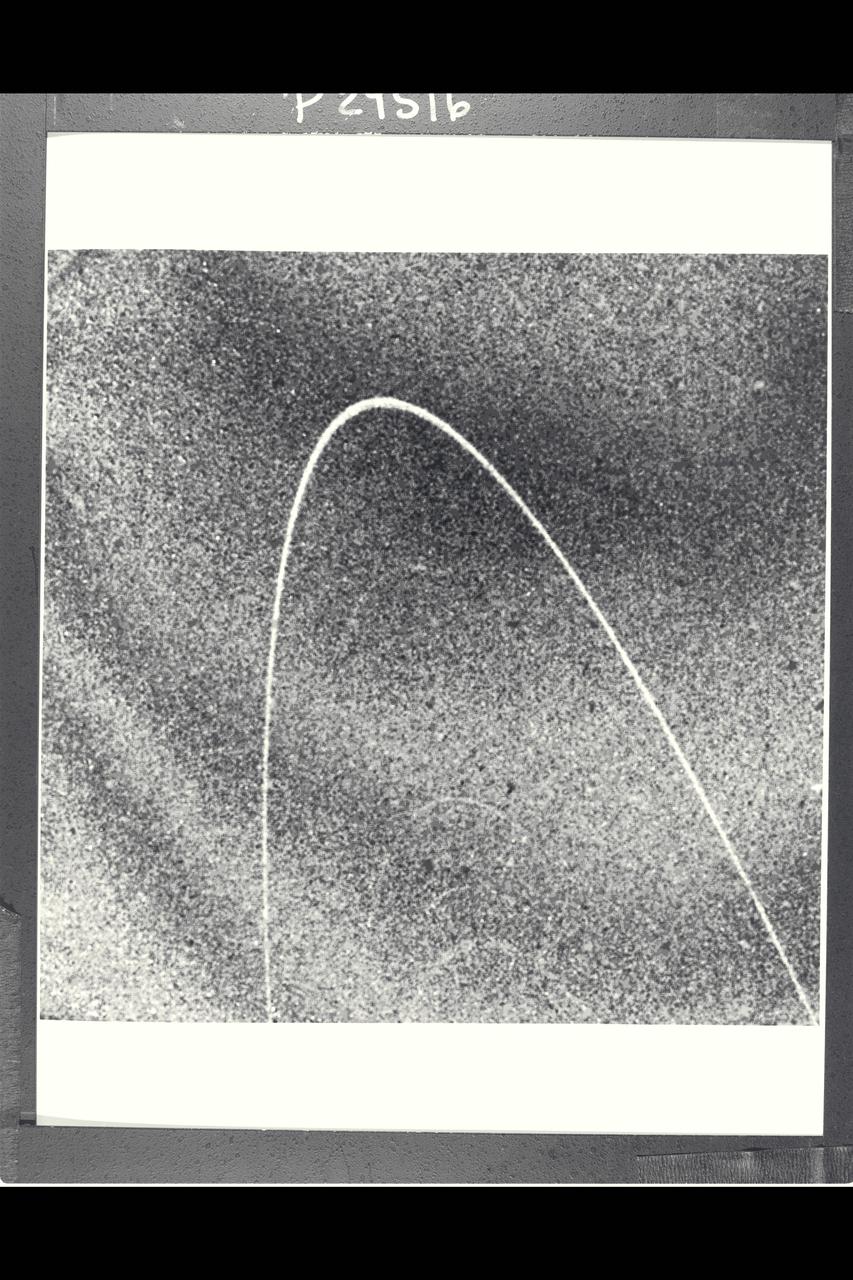
P-29516 BW Range: 125, 000 kilometers (78,000 miles) Voyager 2's wide-angle camera captured this view of the outer part of the Uranian ring system just 11 minutes before passing though the ring plane. The resolution in this clear-filter view is slightly better than 9 km (6 mi). The brightest, outermost ring is known as epsilon. Interior to epsilon lie (from top) the newly discovered 10th ring of Uranus--designated 1986UR1 and barely visible here--and then the delta, gamma and eta rings.
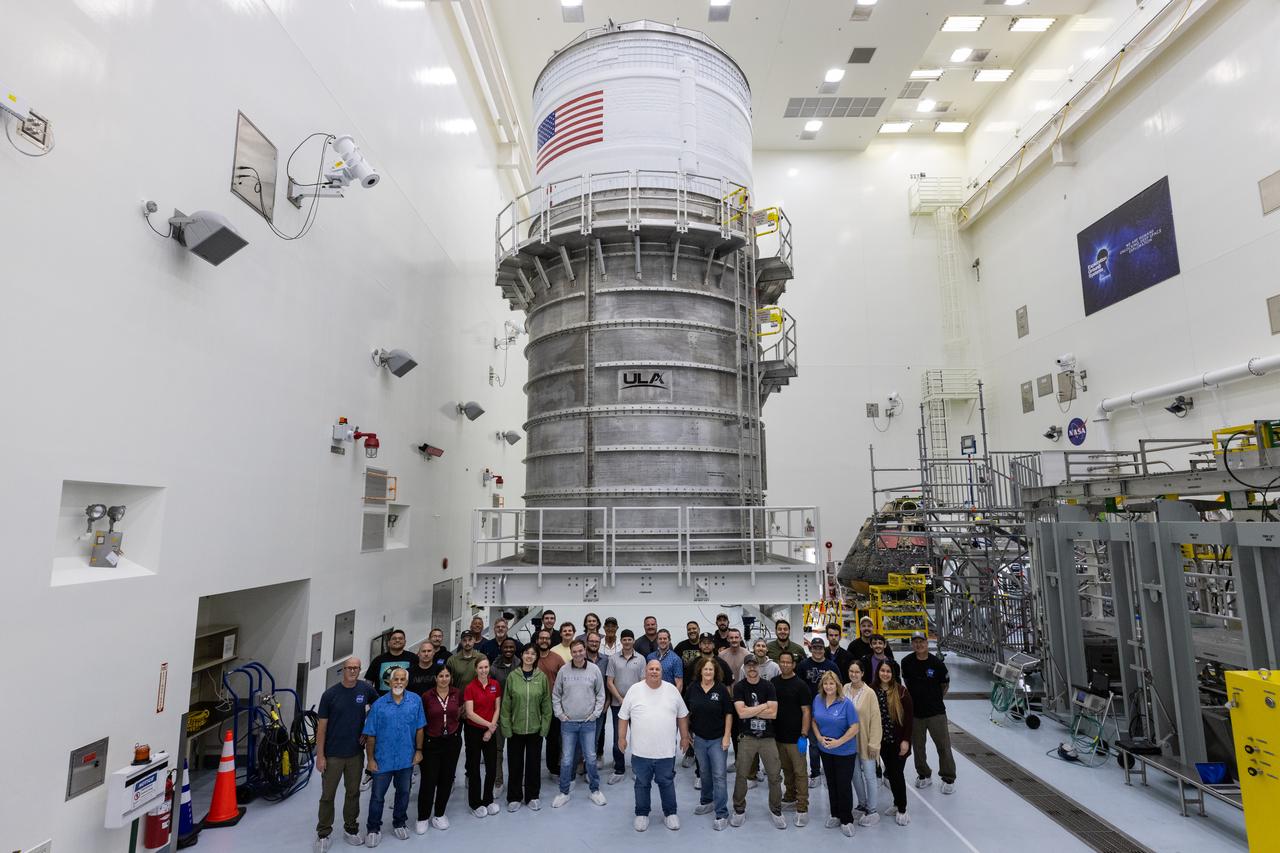
Teams with NASA’s Exploration Ground Systems Program pose for a photo in front of the upper stage for the agency’s Artemis II SLS (Space Launch System) rocket inside the Multi-Payload Processing Facility (MPPF) at NASA’s Kennedy Space Center in Florida on Wednesday, April 16, 2025. Visible in the background is also the Artemis I Orion crew module, now known as the Orion Environmental Test Article (ETA). Technicians fueled the SLS upper stage, known as the interim cryogenic propulsion stage, with hydrazine for its reaction control system at the MPPF before its transportation to the spaceport’s Vehicle Assembly Building and will now integrate the four-story propulsion system with SLS rocket elements atop mobile launcher 1.
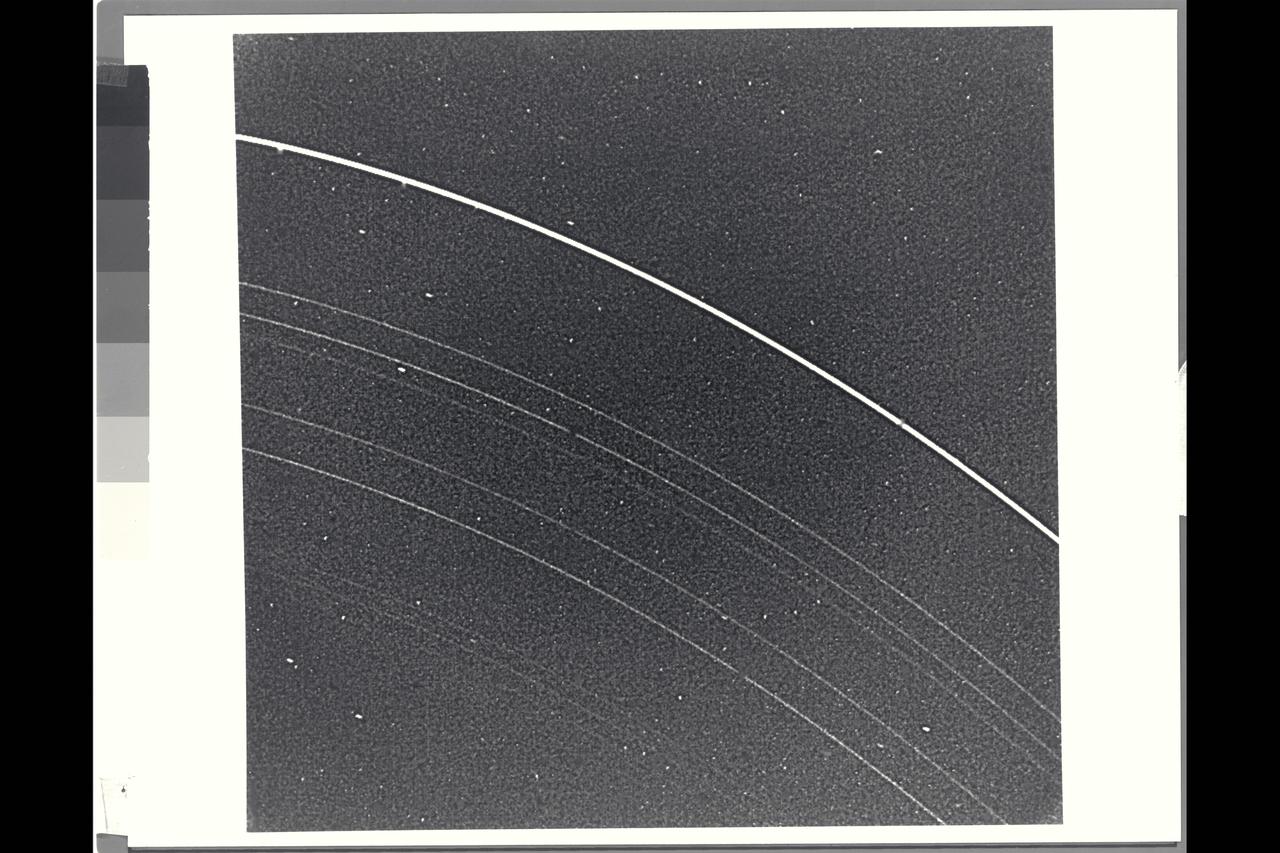
Range : 2.52 million miles (1.56 million miles) P-29481B/W Voyager 2 returned this photograph with all nine known Uranus rings visible from a 15 sec. exposure through the narrow angle camera. The rings are quite dark and very narrow. The most prominent and outermost of the nine, Epsilon, is seen at top. The next three in toward Uranus, called Delta, Gamma, and Eta, are much fainter and more narrow than Epsilon ring. Then come Beta and Alpha rings, and finally, the innermost grouping, known simply as the 4,5, & 6 rings. The last three are very faint and are at the limit of detection for the Voyager camera. Uranus' rings range in width from about 100 km. (60 mi.) at the widest part of the Epsilon ring, to only a few kilometers for most of the others. this iamge was processed to enhance narrow features; the bright dots are imperfections on the camera detector. The resolution scale is about 50 km. (30 mi.)
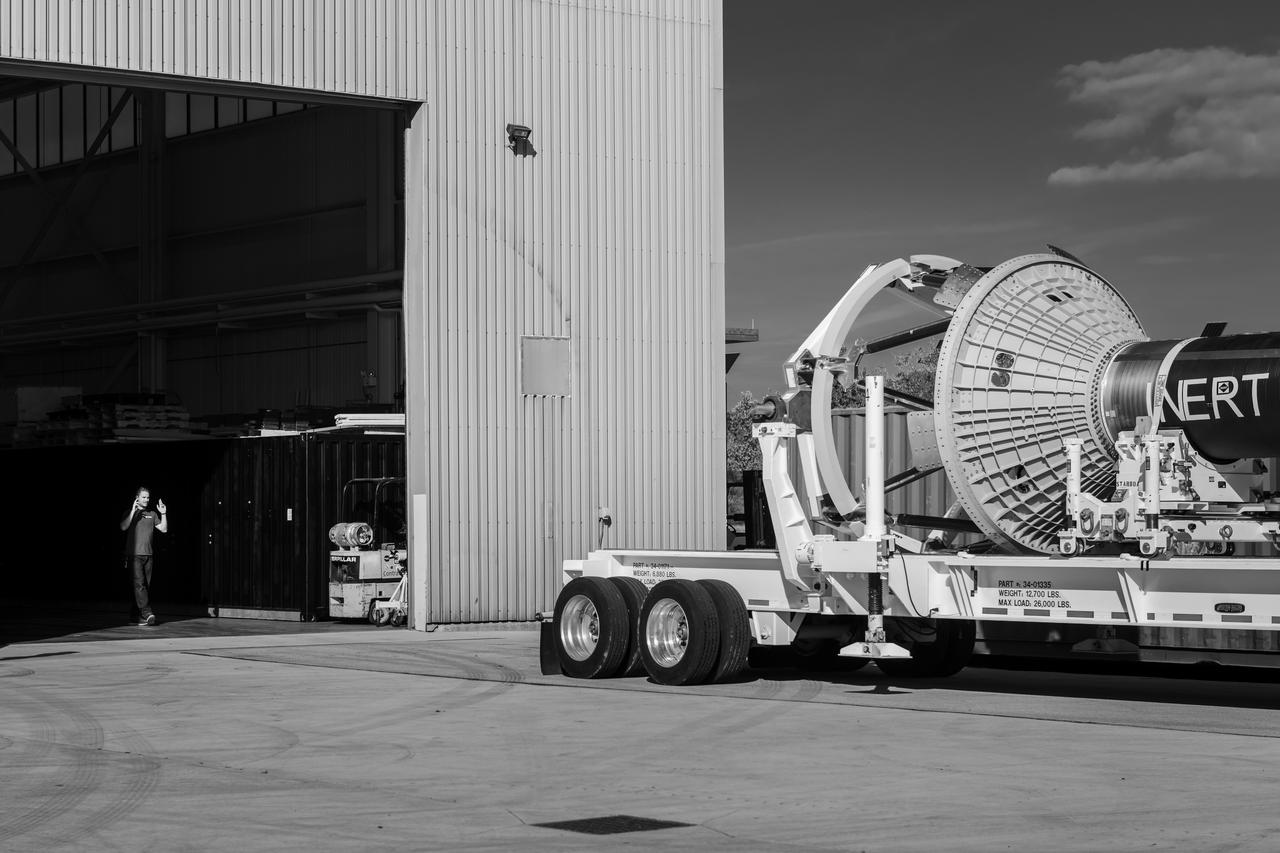
An engineer signals the truck driver carrying Orion’s Launch Abort System (LAS) at the Space Environments Complex. The LAS was awaiting Orion’s Crew Capsule to be tested on for mission critical support for Artemis II. Photo Credit: (NASA/Jordan Salkin)
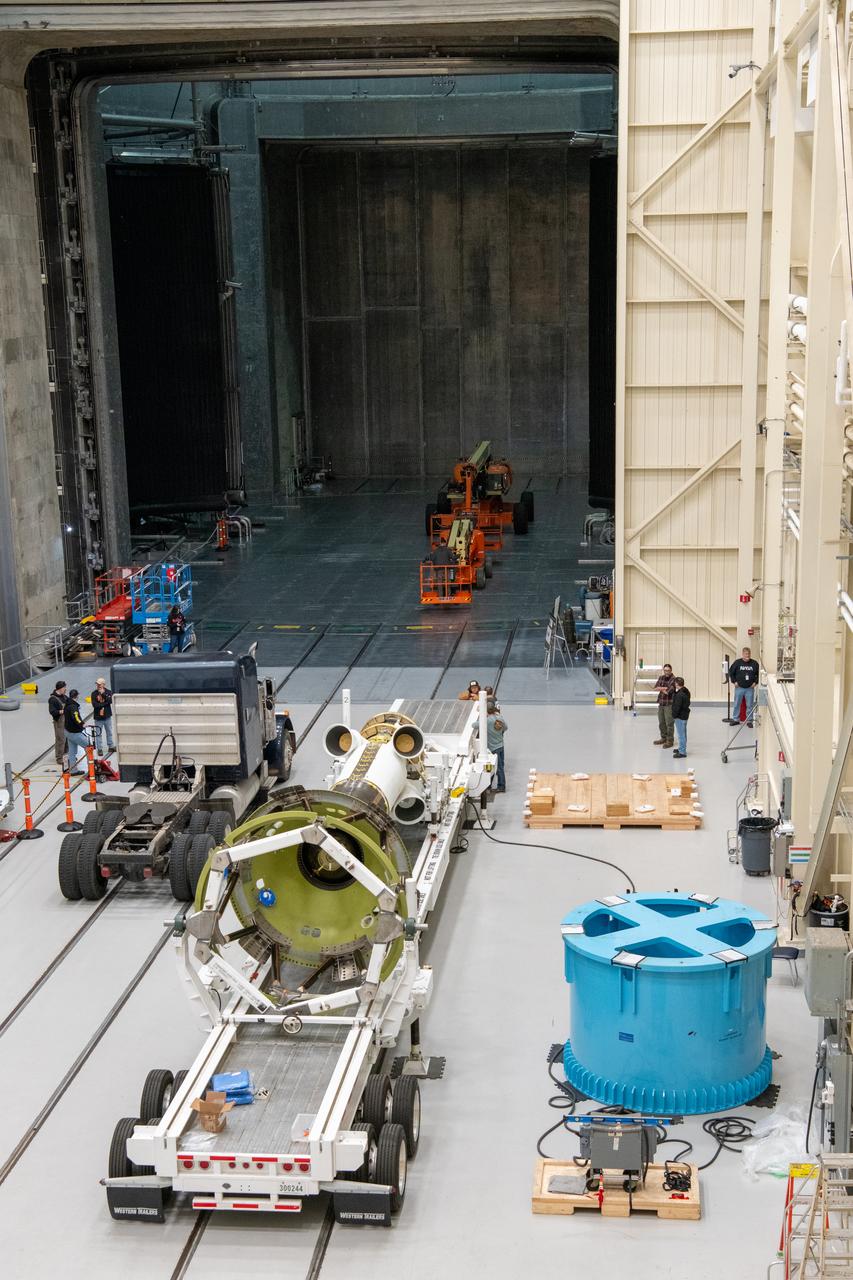
Test hardware for Orion crew capsule from the Artemis 1 flight arrives in the SEC (Space Experiments Complex) at ATF (Armstrong Test Facility), The LAS (Launch Abort System) arrived in four separate shipments from locations in Florida and Colorado. It is now being integrated with the Orion CM (crew module) for critical testing before the flight of Artemis II.

The Space Environments Complex (SEC) at the Armstrong Testing Facility stores Orion’s Launch Abort System, which will later be tested for support of Artemis II. Photo Credit: (NASA/Jordan Salkin)

Supernova Supernovae can occur one of two ways. The first occurs when a white dwarf—the vestigial ember of a dead star—passes so close to a living star that its matter leaks into the white dwarf. This causes a catastrophic explosion. However most people understand supernovae as the death of a massive star. When the star runs out of fuel toward the end of its life, the gravity at its heart sucks the surrounding mass into its center. At temperatures rocketing above 100 billion degrees Fahrenheit, all the layers of the star abruptly explode outward. The explosions produced by supernovae are so brilliant that astronomers use their luminosity to measure the distance between galaxies, the scale of the universe and the effects of dark energy. For a short period of time, one dying star can appear to shine as brightly as an entire galaxy. Supernovae are relatively common events, one occurring in our own galaxy once every 100 years. In 2014, a person could see the supernova M82 with a pair of binoculars. The cosmologist Tycho Brahe’s observation of a supernova in 1572 allowed him to disprove Aristotle’s theory that the heavens never changed. After a supernova, material expelled in the explosion can form a nebula—an interstellar pile of gas and dust. Over millions of years, gravity pulls the nebula’s materials into a dense orb called a protostar, which will become a new star. Within a few million years, this new star could go supernova as well. ------------------------------ Original Caption: NASA image release Feb. 24, 2012 At the turn of the 19th century, the binary star system Eta Carinae was faint and undistinguished. In the first decades of the century, it became brighter and brighter, until, by April 1843, it was the second brightest star in the sky, outshone only by Sirius (which is almost a thousand times closer to Earth). In the years that followed, it gradually dimmed again and by the 20th century was totally invisible to the naked eye. The star has continued to vary in brightness ever since, and while it is once again visible to the naked eye on a dark night, it has never again come close to its peak of 1843. NASA's Hubble Telescope captured an image of Eta Carinae. This image consists of ultraviolet and visible light images from the High Resolution Channel of Hubble's Advanced Camera for Surveys. The field of view is approximately 30 arcseconds across. The larger of the two stars in the Eta Carinae system is a huge and unstable star that is nearing the end of its life, and the event that the 19th century astronomers observed was a stellar near-death experience. Scientists call these outbursts supernova impostor events, because they appear similar to supernovae but stop just short of destroying their star. Although 19th century astronomers did not have telescopes powerful enough to see the 1843 outburst in detail, its effects can be studied today. The huge clouds of matter thrown out a century and a half ago, known as the Homunculus Nebula, have been a regular target for Hubble since its launch in 1990. This image, taken with the Advanced Camera for Surveys High Resolution Channel, is the most detailed yet, and shows how the material from the star was not thrown out in a uniform manner, but forms a huge dumbbell shape. Eta Carinae is not only interesting because of its past, but also because of its future. It is one of the closest stars to Earth that is likely to explode in a supernova in the relatively near future (though in astronomical timescales the "near future" could still be a million years away). When it does, expect an impressive view from Earth, far brighter still than its last outburst: SN 2006gy, the brightest supernova ever observed, came from a star of the same type, though from a galaxy over 200 million light-years away. Credit: ESA/NASA More information: <a href="http://www.spacetelescope.org/images/potw1208a/" rel="nofollow">www.spacetelescope.org/images/potw1208a/</a> <b><a href="http://www.nasa.gov/audience/formedia/features/MP_Photo_Guidelines.html" rel="nofollow">NASA image use policy.</a></b> <b><a href="http://www.nasa.gov/centers/goddard/home/index.html" rel="nofollow">NASA Goddard Space Flight Center</a></b> enables NASA’s mission through four scientific endeavors: Earth Science, Heliophysics, Solar System Exploration, and Astrophysics. Goddard plays a leading role in NASA’s accomplishments by contributing compelling scientific knowledge to advance the Agency’s mission. <b>Follow us on <a href="http://twitter.com/NASAGoddardPix" rel="nofollow">Twitter</a></b> <b>Like us on <a href="http://www.facebook.com/pages/Greenbelt-MD/NASA-Goddard/395013845897?ref=tsd" rel="nofollow">Facebook</a></b> <b>Find us on <a href="http://instagrid.me/nasagoddard/?vm=grid" rel="nofollow">Instagram</a></b>
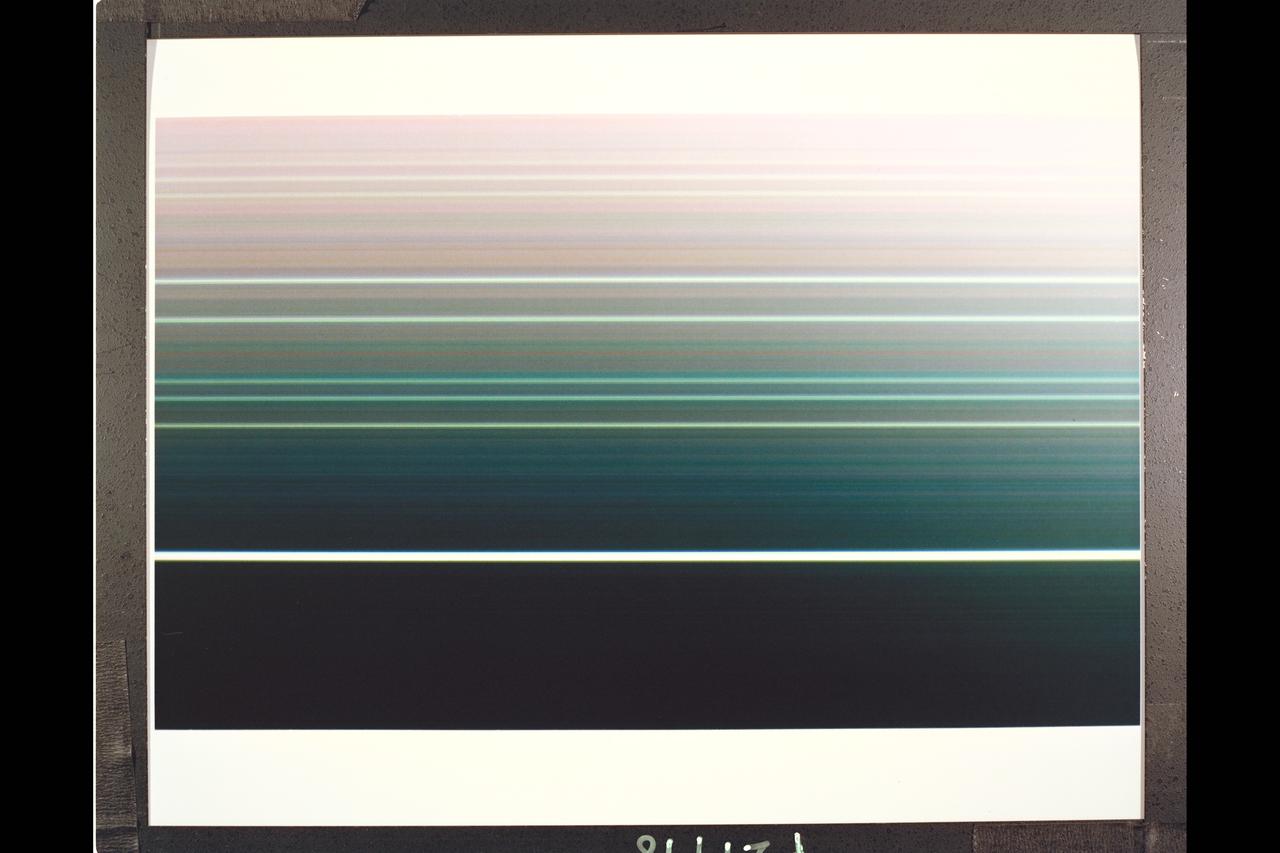
4.17 million miles (2.59 million miles) Resolution : 40 km. (25mi.) P-29498C This false color, Voyager 2 composite view of all nine of Uranian rings was made from six 15 second exposures through the narrow angle camera. The special computer processing used to extract color information from the extremely dark and faint rings, causing the even fainter, pastel lines seen between the rings. Two images, each in the green, clear, & violet filters, were added together and averaged to find the proper color difference between the rings. the final image was made from these three color averages and represents an enhanced, false color view. The image shows that the brightest, or Epsilon ring, at top ,is neutral in color, with the fainter eight other rings showing color differences between them. moving down, toward, Uranus, we see the Delta, Gamma, & Eta rings in shades of blue and green; the Beta & Alpha rings in somewhat lighter tones; and then finally, a set of three, known simply as 4, 5, & 6 rings, in faint off-white tones. Scientists will use this color information to try to understand the nature and origin of the ring material.
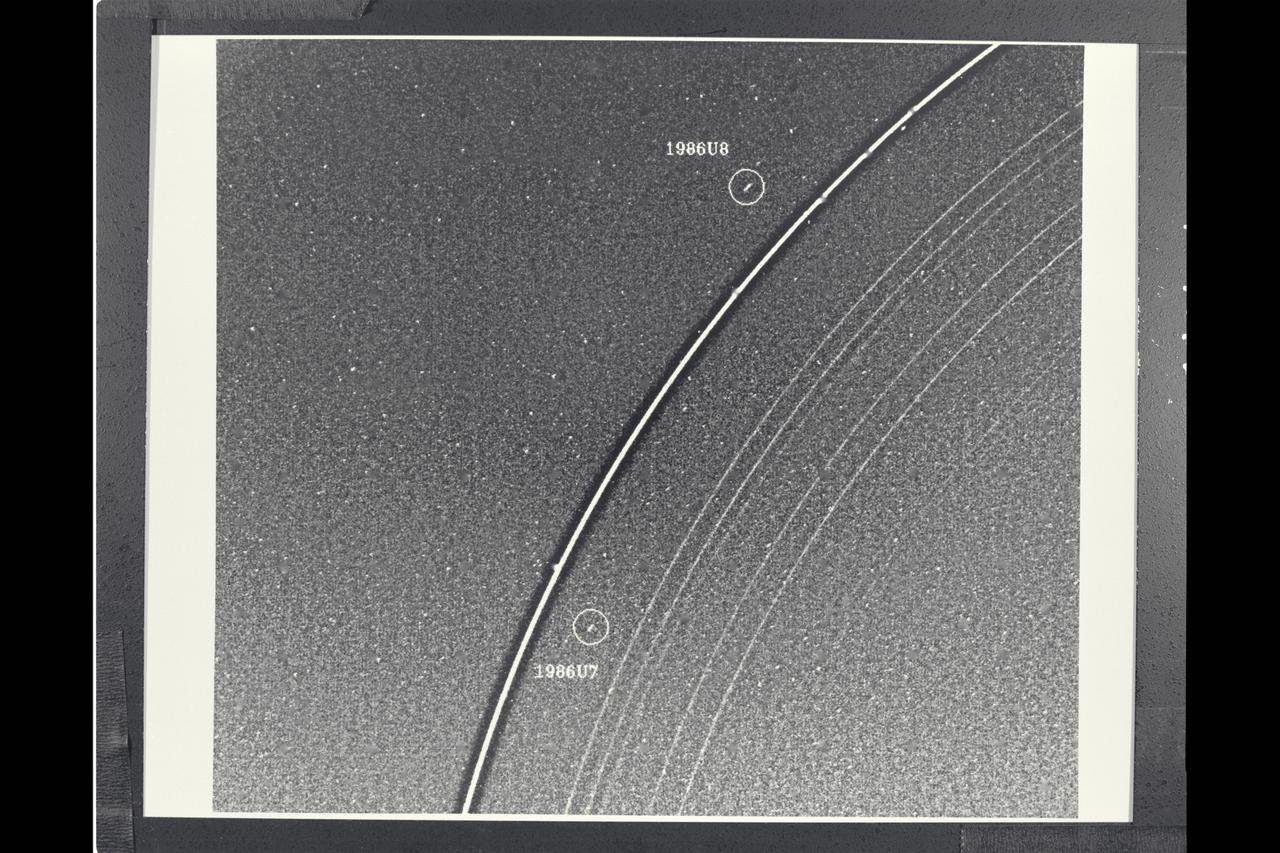
Range : 4.1 million km. ( 2.5 million miles ) P-29466B/W Voyager 2 has discovered two 'shepard' satellites associated with the rings of Uranus. The two moons, designated 1986U7 and 1986U8, are seen here on either side of the bright Epsilon Ring. All nine of the known Uranian rings are visible here. The image was proccessed to enhance narrow features. The Epsilon Ring appears surrounded by a dark halo as a result of this proccessing. Occasional blips seen on the ring are also artifacts. Lying inward from the Epsilon Ring are the Delta, Gamma, and Eta Rings; then the Beta abd Alpha Rings; and finally, the barely visible 4, 5, and 6 Rings. The rings have been studied since their discovery in 1977, through observations of how they diminish the light of stars they pass in front of. This image is the first direct observationn of all nine rings in reflected sunlight. They range in width from about 100 km. (60 mi.) at the widest part of the Epsilon Ring to only a few kilometers for most of the others. The discovery of the two ring moons 1986U7 and 1986U8 is a major advance in our understanding of the structure of the Uranian rings and is in good agreement with theoretical predictions of how these narrow rings are kept from spreading out. Based on likely surface brightness properties, the moons are of roughly 20 and 30 km. diameter, respectively.

The Space Environments Complex (SEC) at the Armstrong Testing Facility stores Orion’s Launch Abort System, which will later be tested for support of Artemis II. Photo Credit: (NASA/Jordan Salkin)
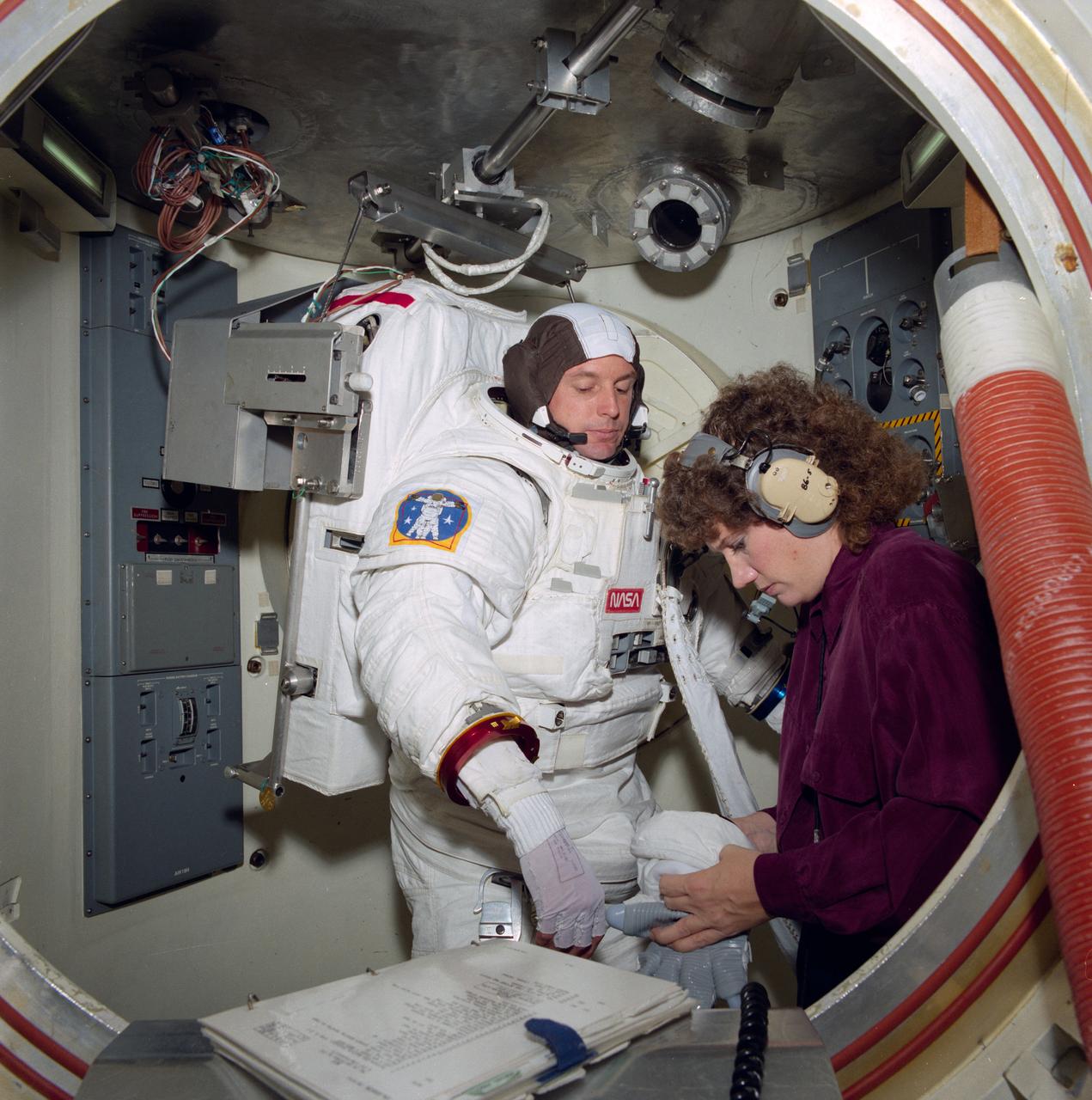
S92-49812 (11 Nov 1992) --- Astronauts Gregory J. Harbaugh and Susan J. Helms, mission specialists assigned to fly aboard the Space Shuttle Endeavour for the STS-54 mission, rehearse for the upcoming flight. The two are in the airlock of a trainer at the Johnson Space Center's crew systems laboratory. Harbaugh and Mario Runco Jr., also a mission specialist, have been assigned to perform a four-hour-plus extravehicular activity (EVA). Helms is to assist the pair of spacewalkers during the mission as well as in this training exercise.

Astronomers using NASA’s Hubble Space Telescope have uncovered surprising new clues about a hefty, rapidly aging star whose behavior has never been seen before in our Milky Way galaxy. In fact, the star is so weird that astronomers have nicknamed it “Nasty 1,” a play on its catalog name of NaSt1. The star may represent a brief transitory stage in the evolution of extremely massive stars. First discovered several decades ago, Nasty 1 was identified as a Wolf-Rayet star, a rapidly evolving star that is much more massive than our sun. The star loses its hydrogen-filled outer layers quickly, exposing its super-hot and extremely bright helium-burning core. But Nasty 1 doesn’t look like a typical Wolf-Rayet star. The astronomers using Hubble had expected to see twin lobes of gas flowing from opposite sides of the star, perhaps similar to those emanating from the massive star Eta Carinae, which is a Wolf-Rayet candidate. Instead, Hubble revealed a pancake-shaped disk of gas encircling the star. The vast disk is nearly 2 trillion miles wide, and may have formed from an unseen companion star that snacked on the outer envelope of the newly formed Wolf-Rayet. Based on current estimates, the nebula surrounding the stars is just a few thousand years old, and as close as 3,000 light-years from Earth. Credits: NASA/Hubble
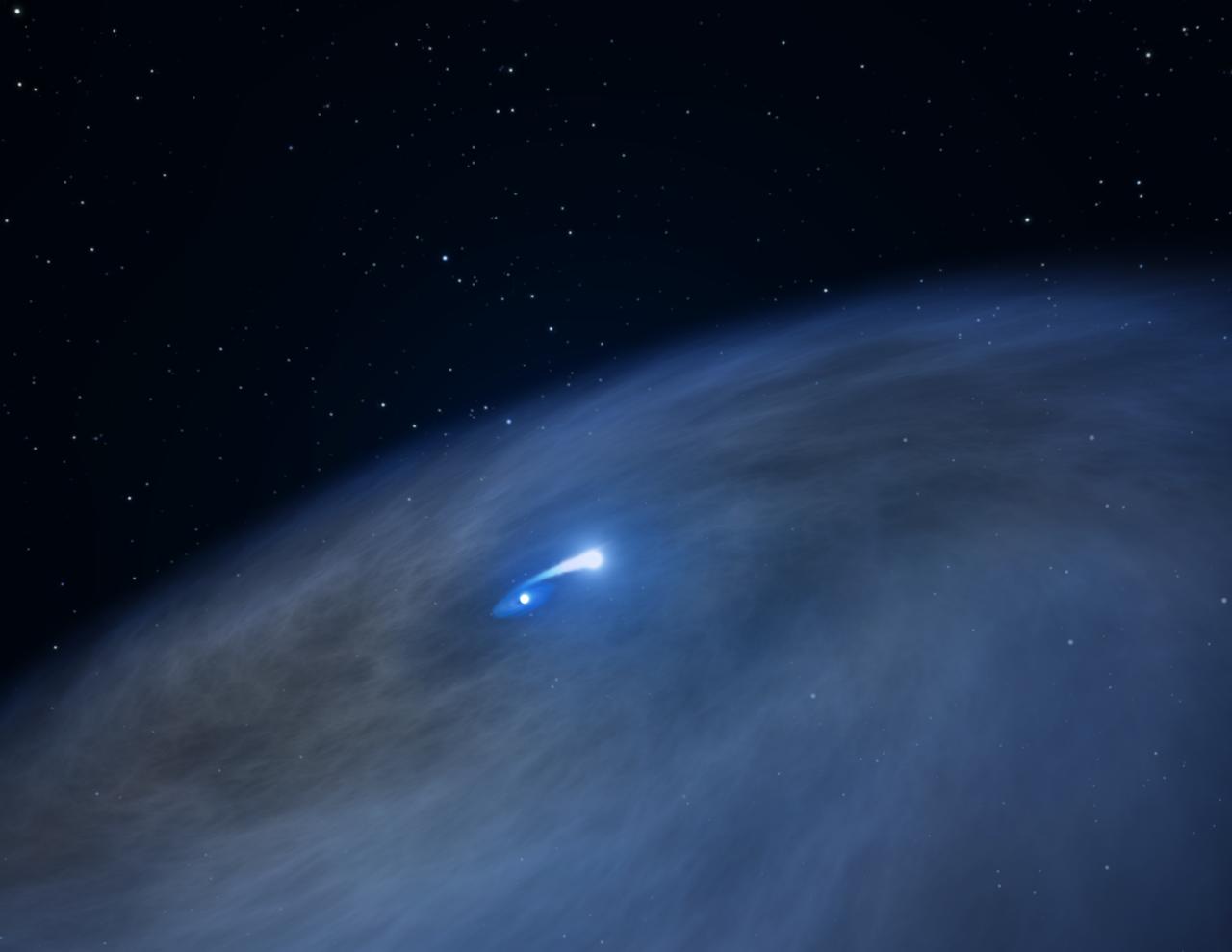
Astronomers using NASA’s Hubble Space Telescope have uncovered surprising new clues about a hefty, rapidly aging star whose behavior has never been seen before in our Milky Way galaxy. In fact, the star is so weird that astronomers have nicknamed it “Nasty 1,” a play on its catalog name of NaSt1. The star may represent a brief transitory stage in the evolution of extremely massive stars. First discovered several decades ago, Nasty 1 was identified as a Wolf-Rayet star, a rapidly evolving star that is much more massive than our sun. The star loses its hydrogen-filled outer layers quickly, exposing its super-hot and extremely bright helium-burning core. But Nasty 1 doesn’t look like a typical Wolf-Rayet star. The astronomers using Hubble had expected to see twin lobes of gas flowing from opposite sides of the star, perhaps similar to those emanating from the massive star Eta Carinae, which is a Wolf-Rayet candidate. Instead, Hubble revealed a pancake-shaped disk of gas encircling the star. The vast disk is nearly 2 trillion miles wide, and may have formed from an unseen companion star that snacked on the outer envelope of the newly formed Wolf-Rayet. Based on current estimates, the nebula surrounding the stars is just a few thousand years old, and as close as 3,000 light-years from Earth. Read more: <a href="http://www.nasa.gov/feature/hubble-observes-one-of-a-kind-star-nicknamed-nasty" rel="nofollow">www.nasa.gov/feature/hubble-observes-one-of-a-kind-star-n...</a> Credits: NASA/Hubble <b><a href="http://www.nasa.gov/audience/formedia/features/MP_Photo_Guidelines.html" rel="nofollow">NASA image use policy.</a></b> <b><a href="http://www.nasa.gov/centers/goddard/home/index.html" rel="nofollow">NASA Goddard Space Flight Center</a></b> enables NASA’s mission through four scientific endeavors: Earth Science, Heliophysics, Solar System Exploration, and Astrophysics. Goddard plays a leading role in NASA’s accomplishments by contributing compelling scientific knowledge to advance the Agency’s mission. <b>Follow us on <a href="http://twitter.com/NASAGoddardPix" rel="nofollow">Twitter</a></b> <b>Like us on <a href="http://www.facebook.com/pages/Greenbelt-MD/NASA-Goddard/395013845897?ref=tsd" rel="nofollow">Facebook</a></b> <b>Find us on <a href="http://instagrid.me/nasagoddard/?vm=grid" rel="nofollow">Instagram</a></b>

What looks much like craggy mountains on a moonlit evening is actually the edge of a nearby, young, star-forming region NGC 3324 in the Carina Nebula. Captured in infrared light by the Near-Infrared Camera (NIRCam) on NASA’s James Webb Space Telescope, this image reveals previously obscured areas of star birth. Called the Cosmic Cliffs, the region is actually the edge of a gigantic, gaseous cavity within NGC 3324, roughly 7,600 light-years away. The cavernous area has been carved from the nebula by the intense ultraviolet radiation and stellar winds from extremely massive, hot, young stars located in the center of the bubble, above the area shown in this image. The high-energy radiation from these stars is sculpting the nebula’s wall by slowly eroding it away. NIRCam – with its crisp resolution and unparalleled sensitivity – unveils hundreds of previously hidden stars, and even numerous background galaxies. Several prominent features in this image are described below. • The “steam” that appears to rise from the celestial “mountains” is actually hot, ionized gas and hot dust streaming away from the nebula due to intense, ultraviolet radiation. • Dramatic pillars rise above the glowing wall of gas, resisting the blistering ultraviolet radiation from the young stars. • Bubbles and cavities are being blown by the intense radiation and stellar winds of newborn stars. • Protostellar jets and outflows, which appear in gold, shoot from dust-enshrouded, nascent stars. • A “blow-out” erupts at the top-center of the ridge, spewing gas and dust into the interstellar medium. • An unusual “arch” appears, looking like a bent-over cylinder. This period of very early star formation is difficult to capture because, for an individual star, it lasts only about 50,000 to 100,000 years – but Webb’s extreme sensitivity and exquisite spatial resolution have chronicled this rare event. Located roughly 7,600 light-years away, NGC 3324 was first catalogued by James Dunlop in 1826. Visible from the Southern Hemisphere, it is located at the northwest corner of the Carina Nebula (NGC 3372), which resides in the constellation Carina. The Carina Nebula is home to the Keyhole Nebula and the active, unstable supergiant star called Eta Carinae. NIRCam was built by a team at the University of Arizona and Lockheed Martin’s Advanced Technology Center.