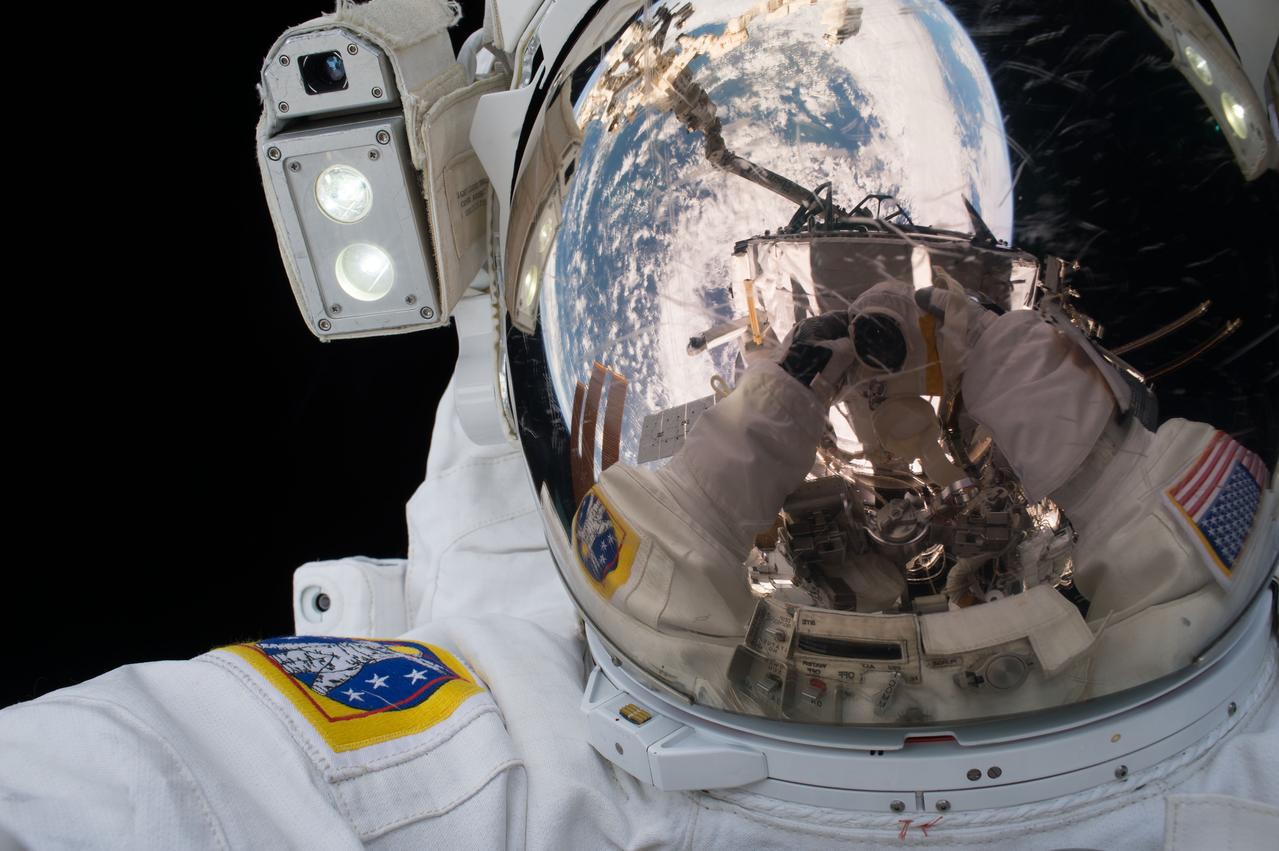
The camera is reflected in his helmet visor as Extravehicular crewmember 1 (EV1) Jeff Williams takes a self-portrait during Extravehicular Activity 36 (EVA 36).

Extravehicular Activity (EVA) suits packed inside containers arrive at the Space Station Processing Facility from Johnson Space Center in Texas. The suits will be used by STS-117 crew members to perform several spacewalks during the mission. The mission payload aboard Space Shuttle Atlantis is the S3/S4 integrated truss structure, along with a third set of solar arrays and batteries. The crew of six astronauts will install the truss to continue assembly of the International Space Station.
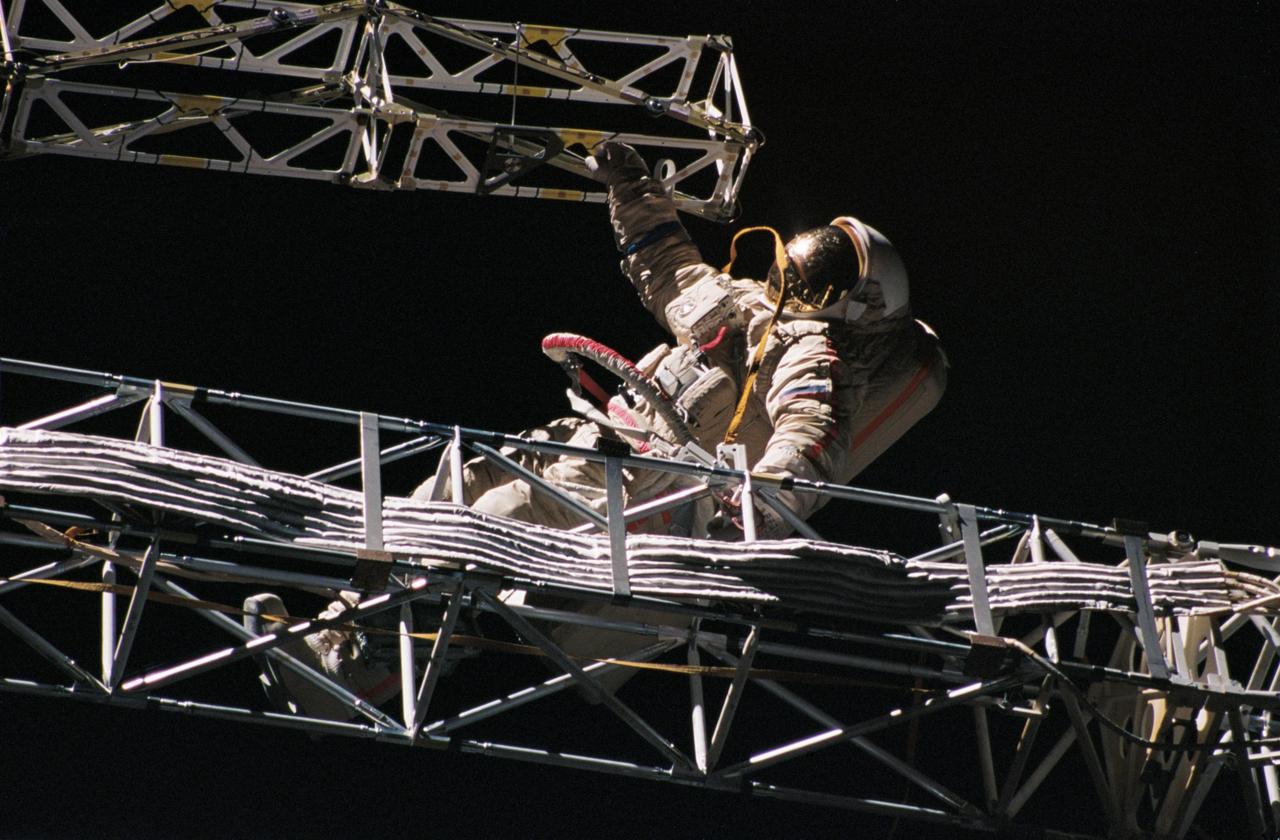
NM21-382-024 (For Release October 1996) --- Cosmonaut Yuriy I. Onufriyenko was photographed by astronaut and cosmonaut guest researcher Shannon W. Lucid as the Mir-21 commander performed a scheduled Extravehicular Activity (EVA) at a truss assembly in the early days of Lucid’s extended stay aboard Russia’s Mir Space Station.
NM23-48-009 (29 April 1997) --- United States astronaut Jerry M. Linenger, cosmonaut guest researcher, works outside the Russian Mir Space Station during a joint United States-Russian space walk on April 29, 1997. He was joined by Mir-23 commander Vasili V. Tsibliyev (out of frame) for the five-hour Extravehicular Activity (EVA) designed to deploy scientific instruments and retrieve other science hardware. At the top of the frame is a Russian Progress re-supply capsule docked to the Mir’s Kvant-1 module.
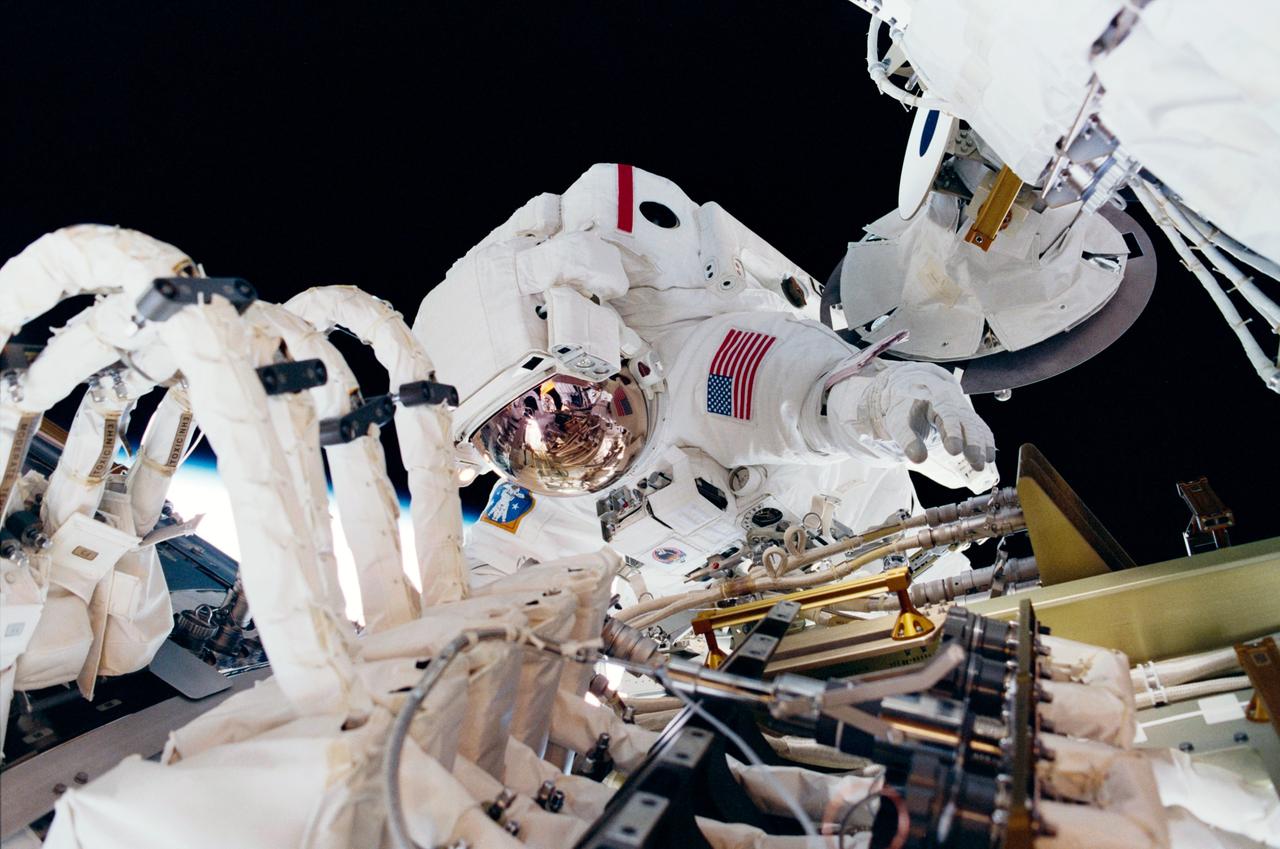
STS098-330-007 (7-20 February 2001) --- Astronaut Thomas D. Jones, mission specialist, works near the International Space Station (ISS) during one of the three STS-98 sessions of extravehicular activity (EVA).
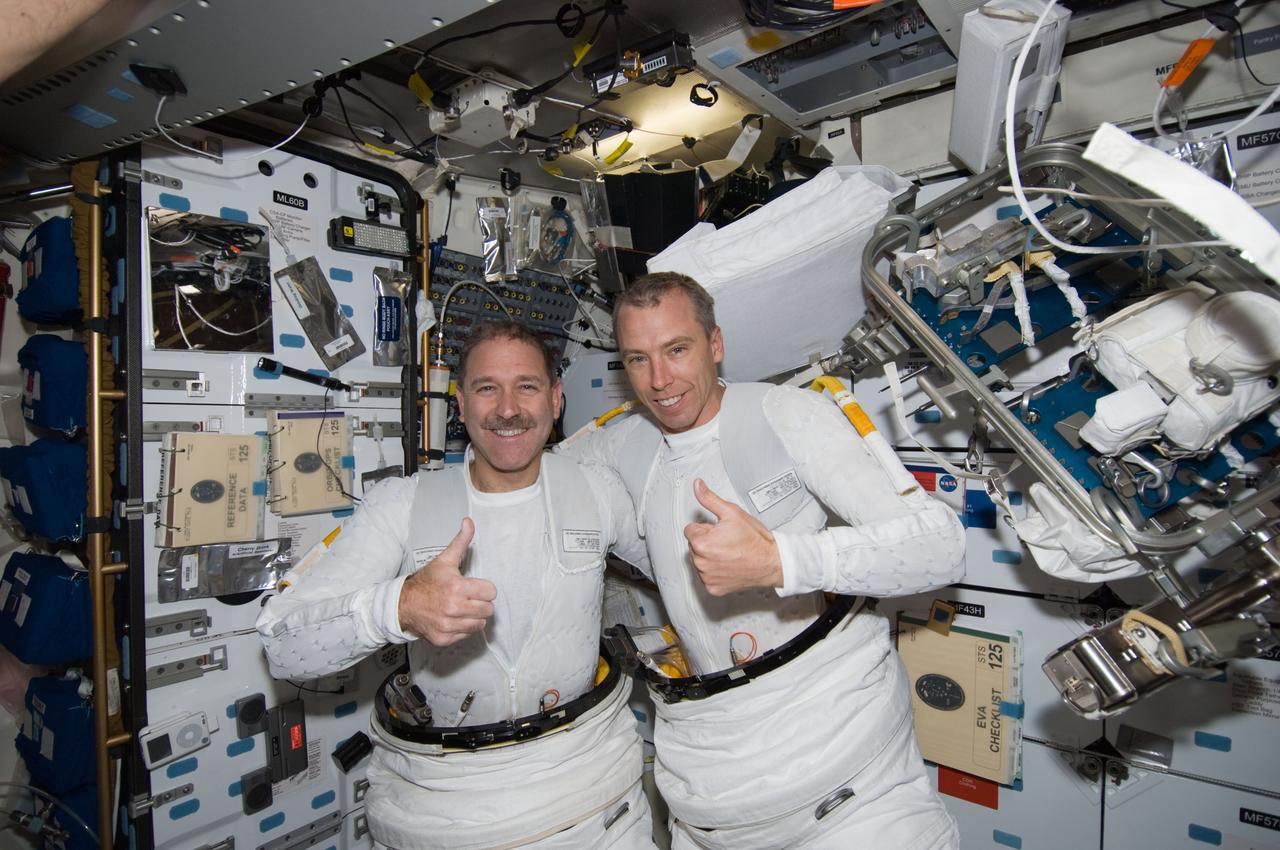
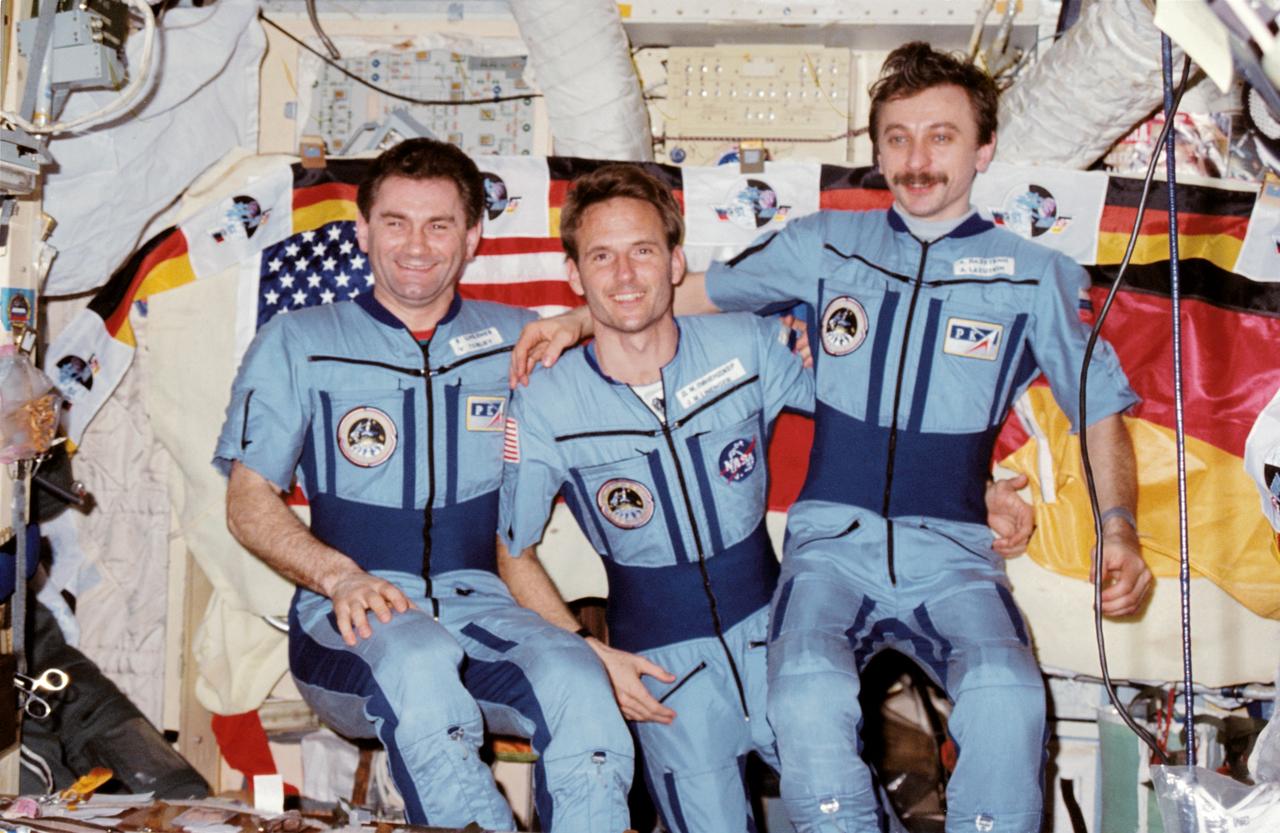
S125-E-008027 (16 May 2009) --- Astronauts John Grunsfeld (left) and Andrew Feustel, both STS-125 mission specialists, give a `thumbs-up? sign on the middeck of Space Shuttle Atlantis following the mission?s third session of extravehicular activity (EVA).
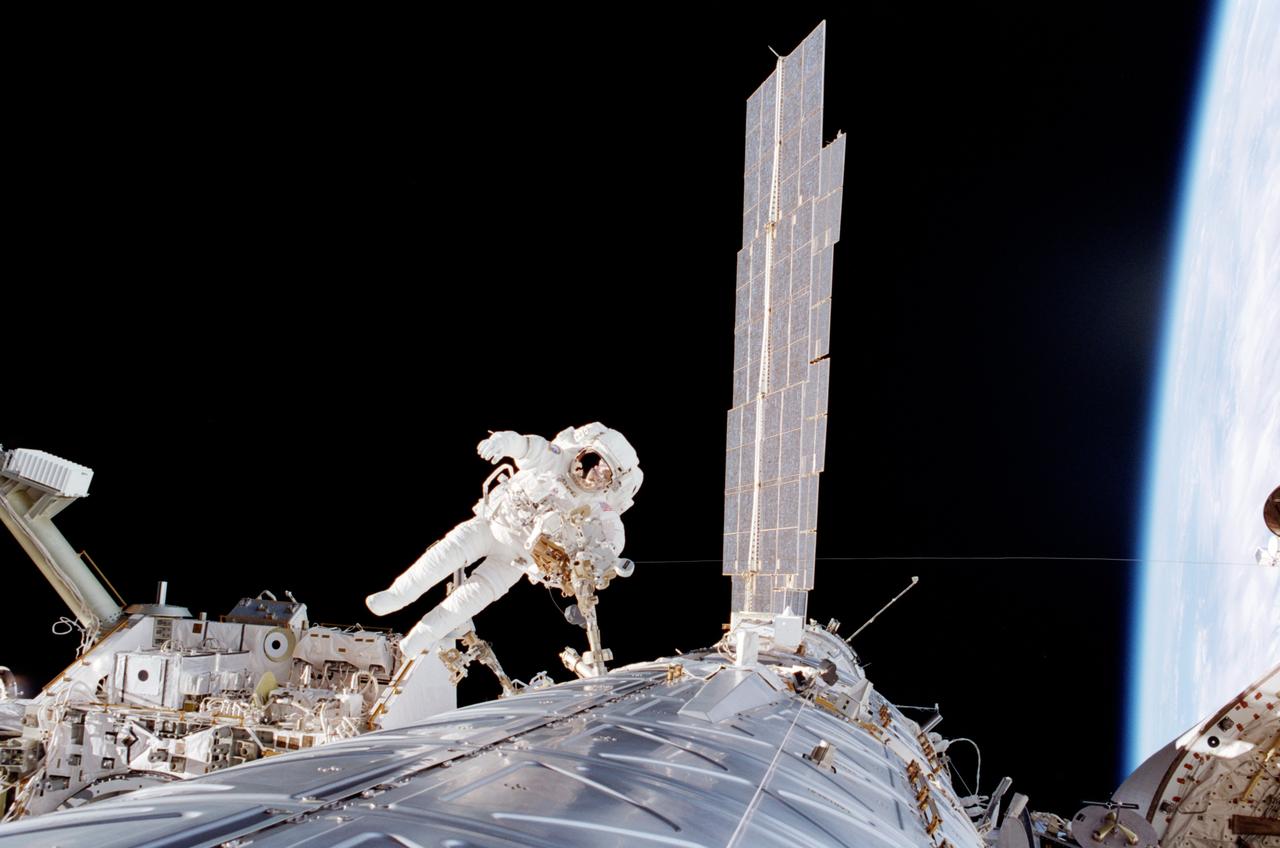
STS098-336-0026 (12 February 2001) --- Astronaut Robert L. Curbeam, mission specialist, participates in the second of three STS-98 sessions of extravehicular activity (EVA). He was joined on all three space walks by astronaut Thomas D. Jones.
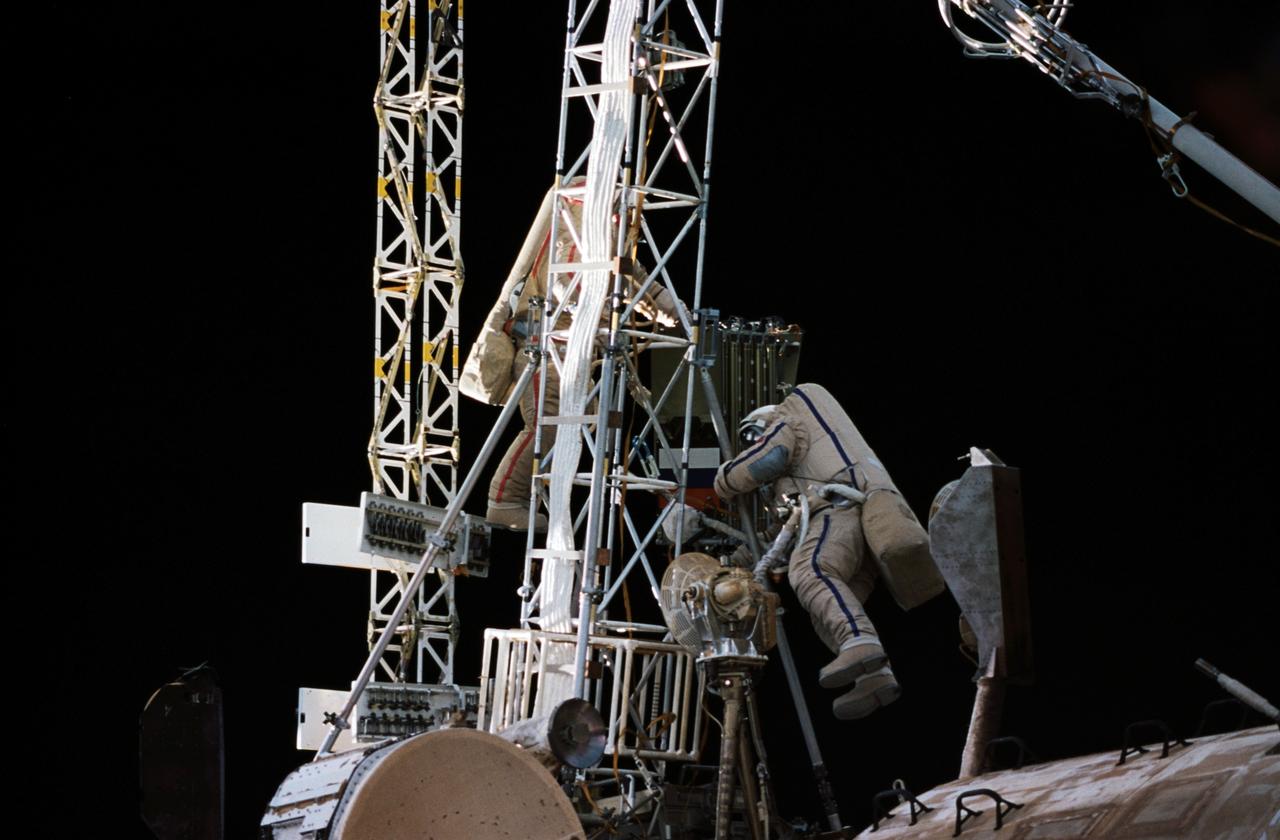
NM21-382-010 (For Release October 1996) --- Mir 21 commander Yury I. Onufrienko (left), wearing a red stripe on his Russian Orlan spacesuit, and Mir 21 flight engineer Yury V. Usachev (blue stripe on Orlan)traverse an existing truss on the Kvant module with a folded truss in tow.
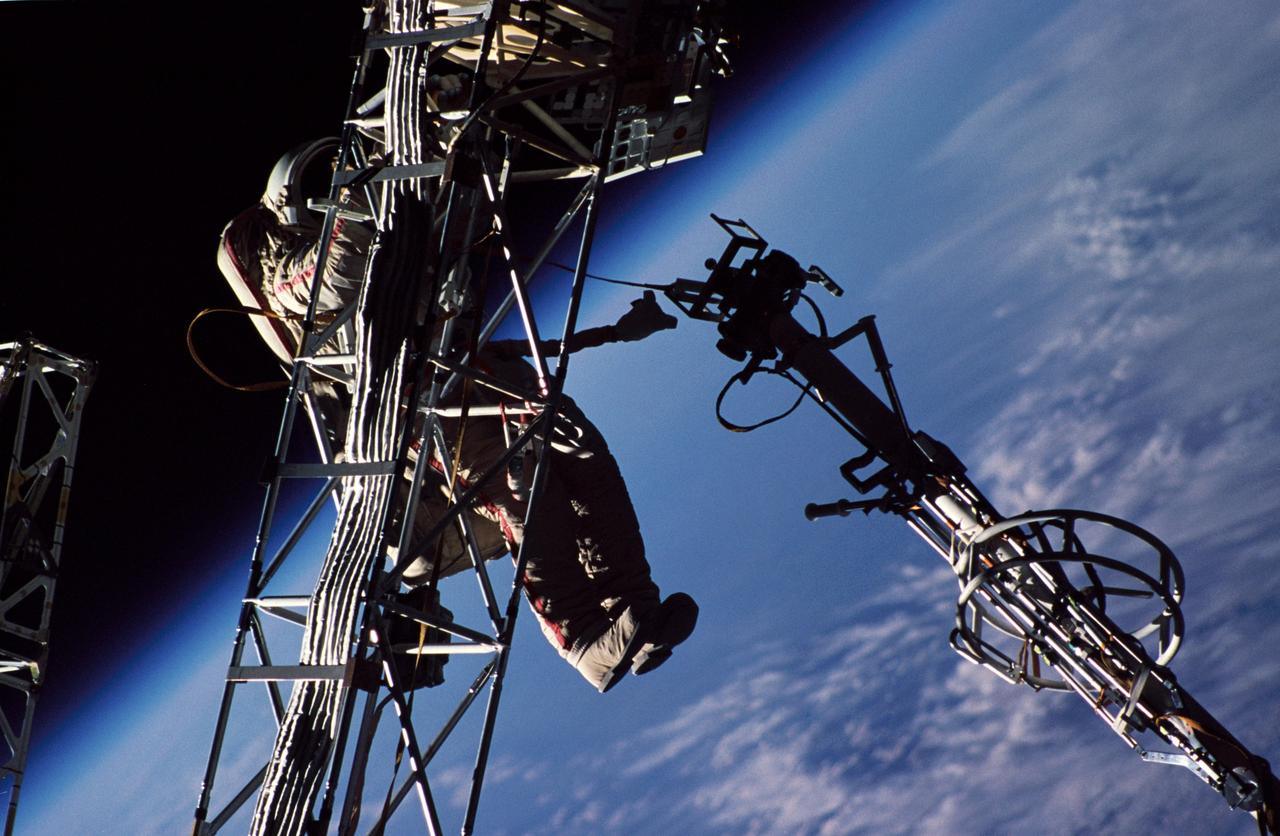
NM21-382-019 (For Release October 1996) --- Darkened view of cosmonaut Yury I. Onufrienko, Mir 21 commander, wearing a red stripe on his Russian Orlan spacesuit, traversing the the Sofora Truss, with the Strehla transfer aid beside it.
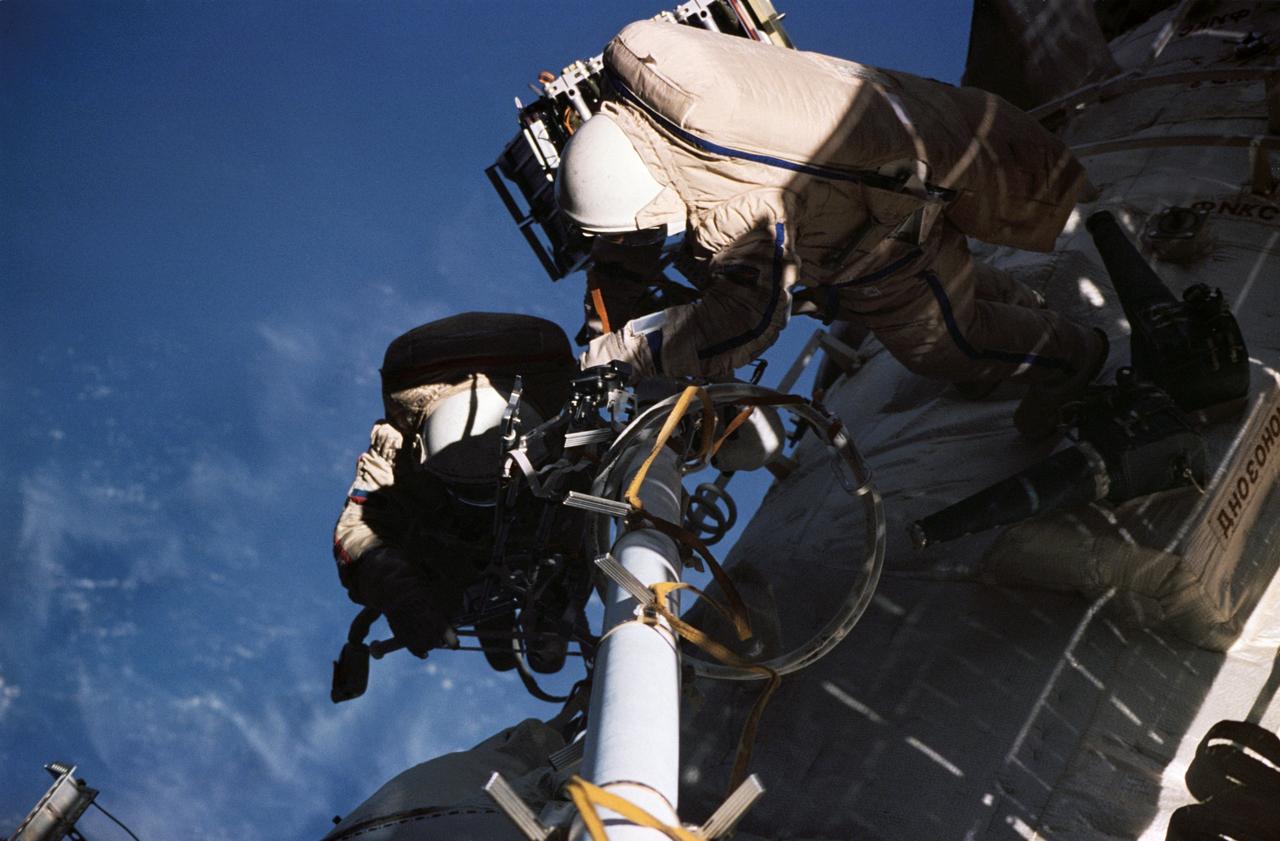
NM21-382-008 (For Release October 1996) --- Cosmonaut Yury I. Onufrienko, Mir 21 commander, wearing a red stripe on his Russian Orlan spacesuit, and Mir 21 flight engineer Yuri V. Usachev (blue stripe on Orlan) work to install the truss on the module.
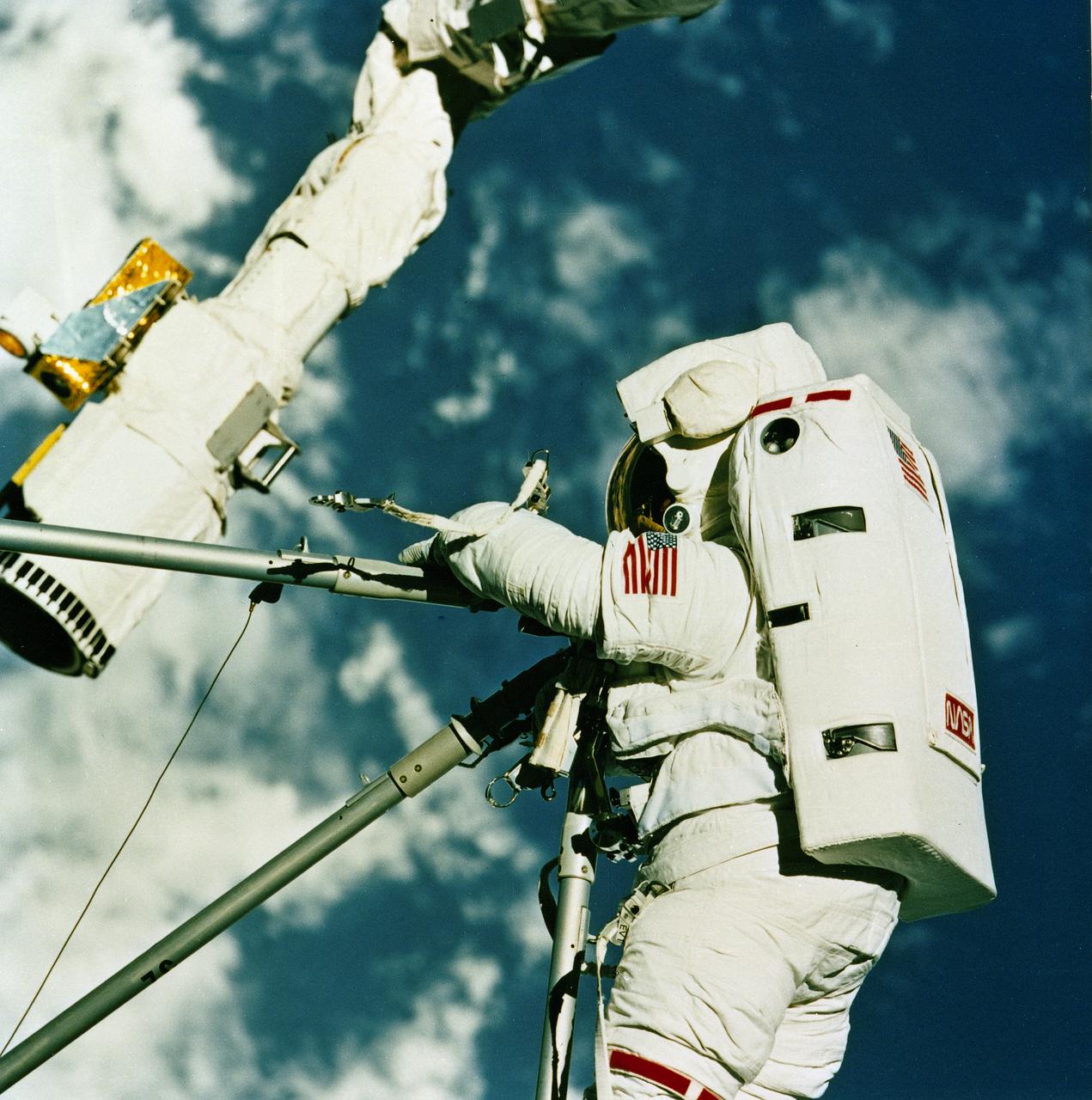
STS-49, the first flight of the Space Shuttle Orbiter Endeavour, lifted off from launch pad 39B on May 7, 1992 at 6:40 pm CDT. The STS-49 mission was the first U.S. orbital flight to feature 4 extravehicular activities (EVAs), and the first flight to involve 3 crew members working simultaneously outside of the spacecraft. The primary objective was the capture and redeployment of the INTELSAT VI (F-3) which was stranded in an unusable orbit since its launch aboard the Titan rocket in March 1990. In this STS-49 onboard photo, Astronaut Kathryn Thornton joins three struts together during her Extra Vehicular Activity (EVA).
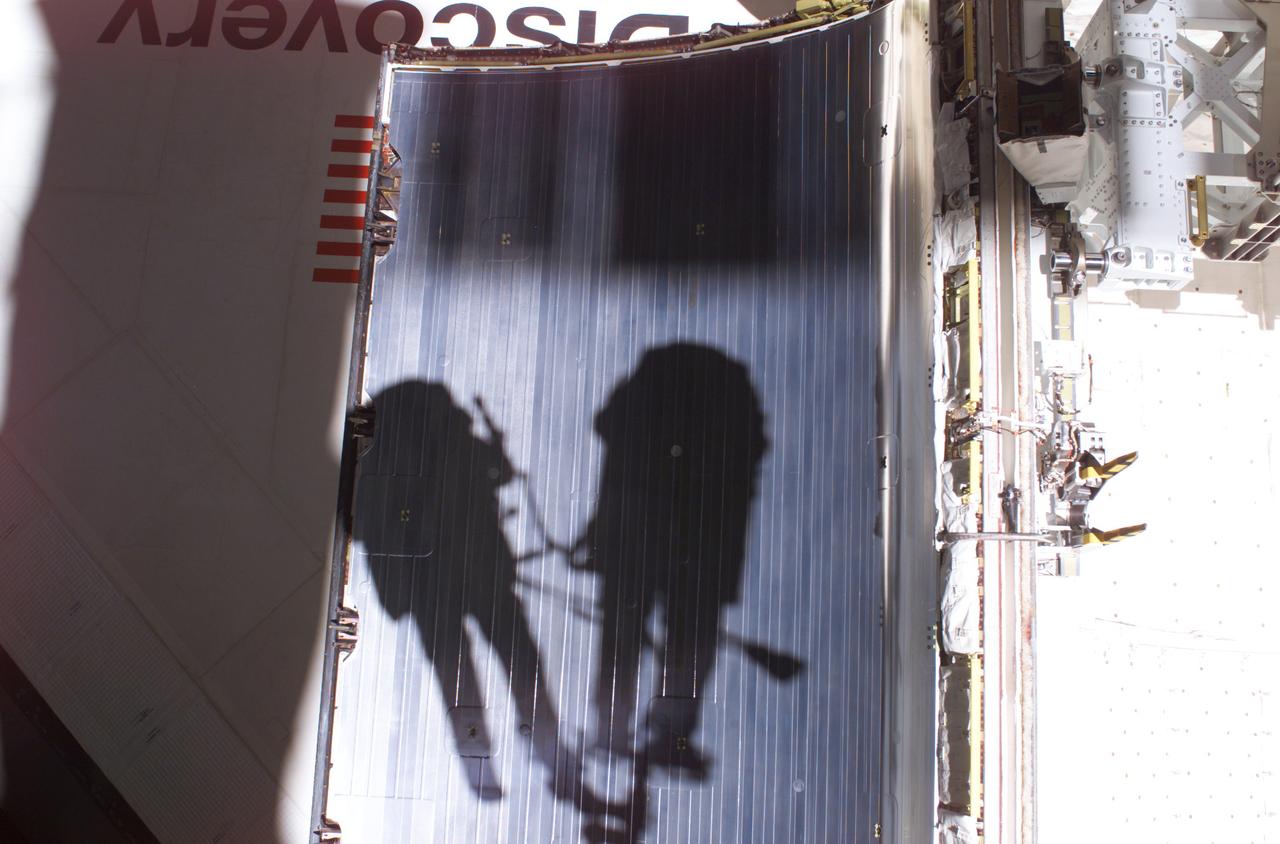
The shadows of astronauts Piers J. Sellers and Michael E. Fossum, STS-121 mission specialists, who are anchored to the Space Shuttle Discovery's Remote Manipulator System/Orbiter Boom Sensor System (RMS/OBSS) foot restraint, are visible against a shuttle's payload bay door during a session of extravehicular activity (EVA).
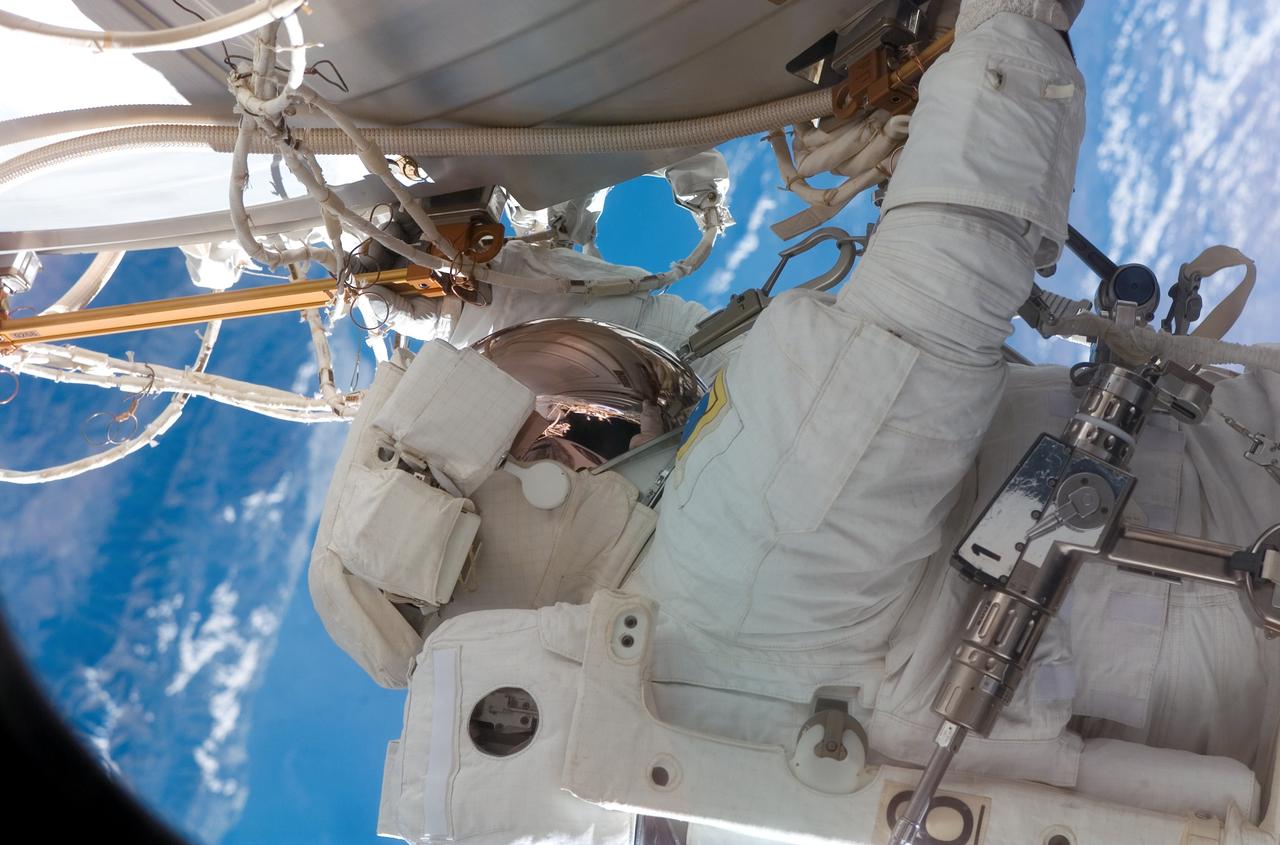
Astronaut Doug Wheelock, STS-120 mission specialist, participated in the third scheduled session of extravehicular activity (EVA) as construction continued on the International Space Station (ISS). During a 7-hour and 8-minute space walk, Wheelock and mission specialist Scott Parazynski (out of frame), installed the P6 truss segment with its set of solar arrays to its permanent home, installed a spare main bus switching unit on a stowage platform, and performed a few get-ahead tasks.
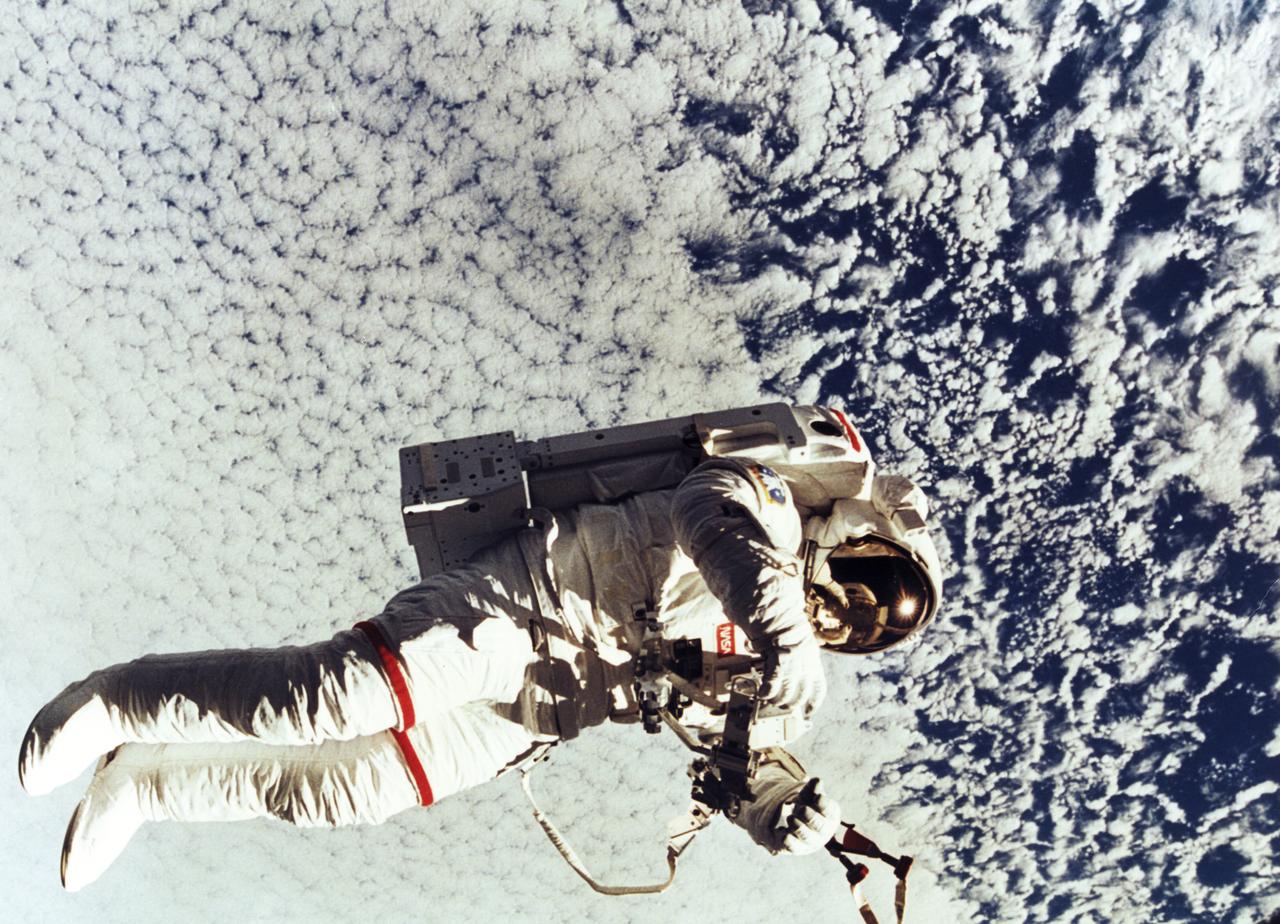
Astronaut Mark Lee floats freely as he tests the new backpack called the Simplified Aid for EVA Rescue (SAFER) system. SAFER is designed for use in the event a crew member becomes untethered while conducting an EVA. The STS-64 mission marked the first untethered U.S. EVA in 10 years, and was launched on September 9, 1994, aboard the Space Shuttle Orbiter Discovery.
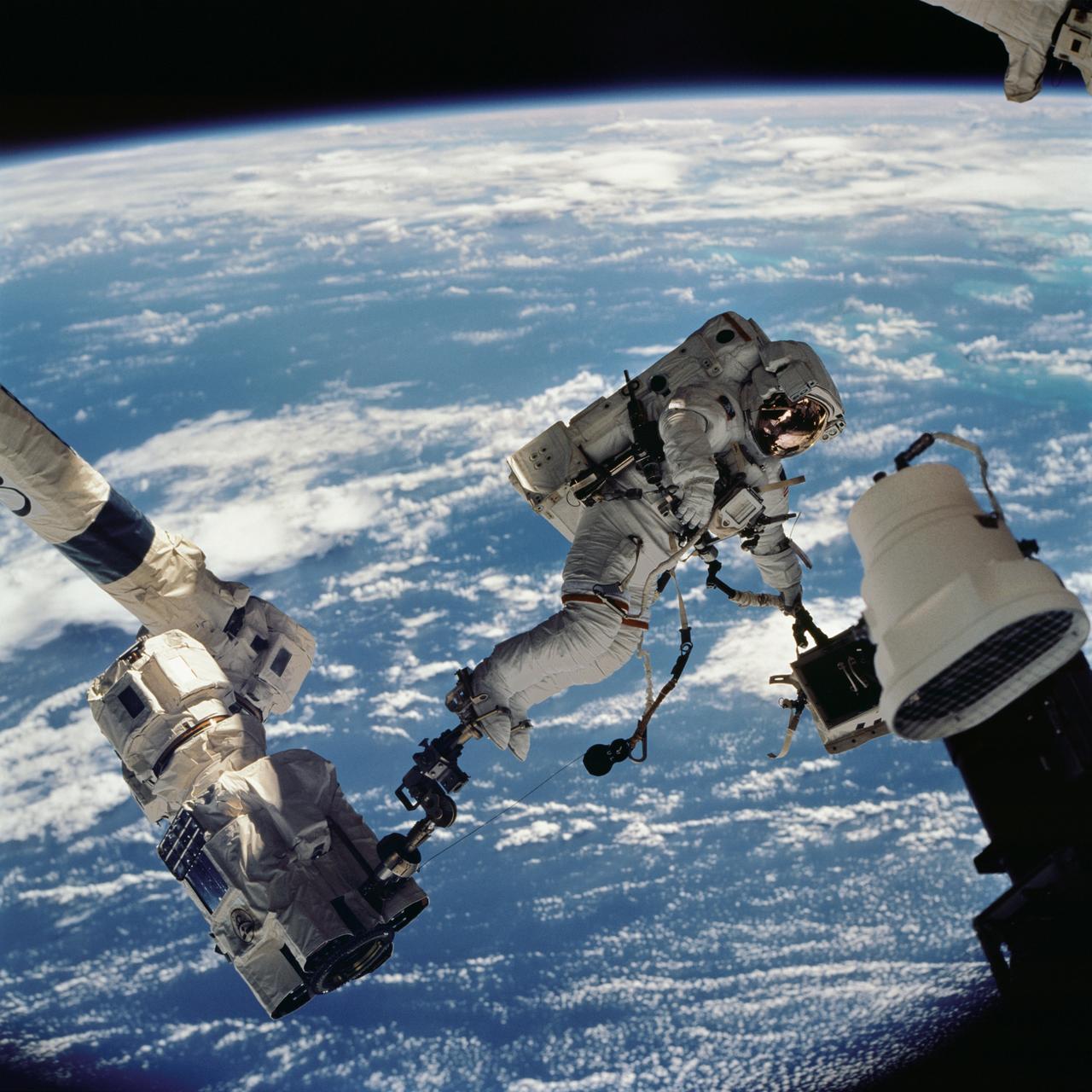
Anchored to a foot restraint on the Space Station Remote Manipulator System (SSRMS) or Canadarm2, astronaut David A. Wolf, STS-112 mission specialist, participates in the mission's first session of extravehicular activity (EVA). Wolf is carrying the Starboard One (S1) outboard nadir external camera which was installed on the end of the S1 Truss on the International Space Station (ISS). Launched October 7, 2002 aboard the Space Shuttle Orbiter Atlantis, the STS-112 mission lasted 11 days and performed three EVAs. Its primary mission was to install the S1 Integrated Truss Structure and Equipment Translation Aid (CETA) Cart to the ISS. The S1 truss provides structural support for the orbiting research facility's radiator panels, which use ammonia to cool the Station's complex power system. The S1 truss, attached to the S0 (S Zero) truss installed by the previous STS-110 mission, flows 637 pounds of anhydrous ammonia through three heat rejection radiators. The truss is 45-feet long, 15-feet wide, 10-feet tall, and weighs approximately 32,000 pounds. The CETA is the first of two human-powered carts that will ride along the International Space Station's railway providing a mobile work platform for future extravehicular activities by astronauts.
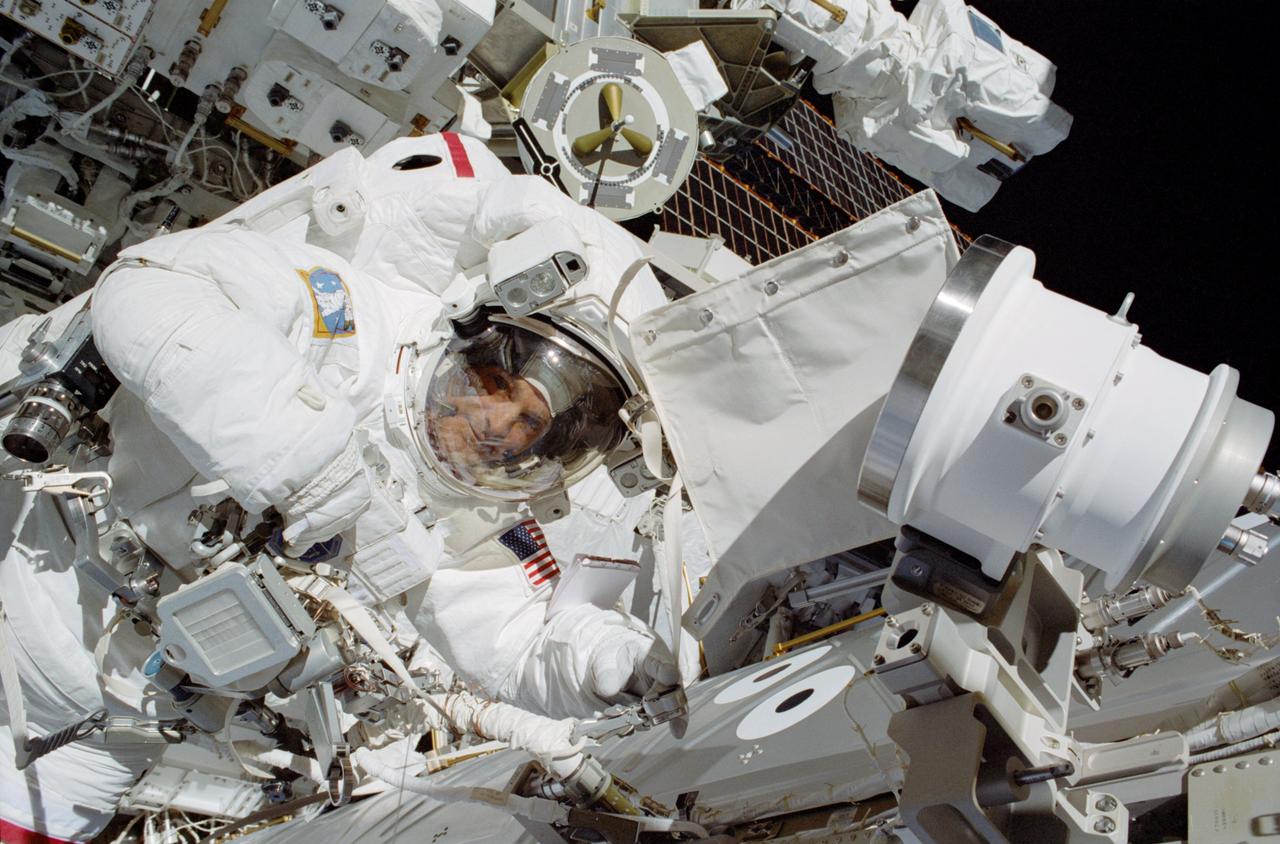
Astronaut David A. Wolf, STS-112 mission specialist, participates in the mission's second session of extravehicular activity (EVA), a six hour, four minute space walk, in which an exterior station television camera was installed outside of the Destiny Laboratory. Launched October 7, 2002 aboard the Space Shuttle Orbiter Atlantis, the STS-112 mission lasted 11 days and performed three EVA sessions. Its primary mission was to install the Starboard (S1) Integrated Truss Structure and Equipment Translation Aid (CETA) Cart to the International Space Station (ISS). The S1 truss provides structural support for the orbiting research facility's radiator panels, which use ammonia to cool the Station's complex power system. The S1 truss, attached to the S0 (S Zero) truss installed by the previous STS-110 mission, flows 637 pounds of anhydrous ammonia through three heat rejection radiators. The truss is 45-feet long, 15-feet wide, 10-feet tall, and weighs approximately 32,000 pounds. The CETA is the first of two human-powered carts that will ride along the International Space Station's railway providing a mobile work platform for future extravehicular activities by astronauts.
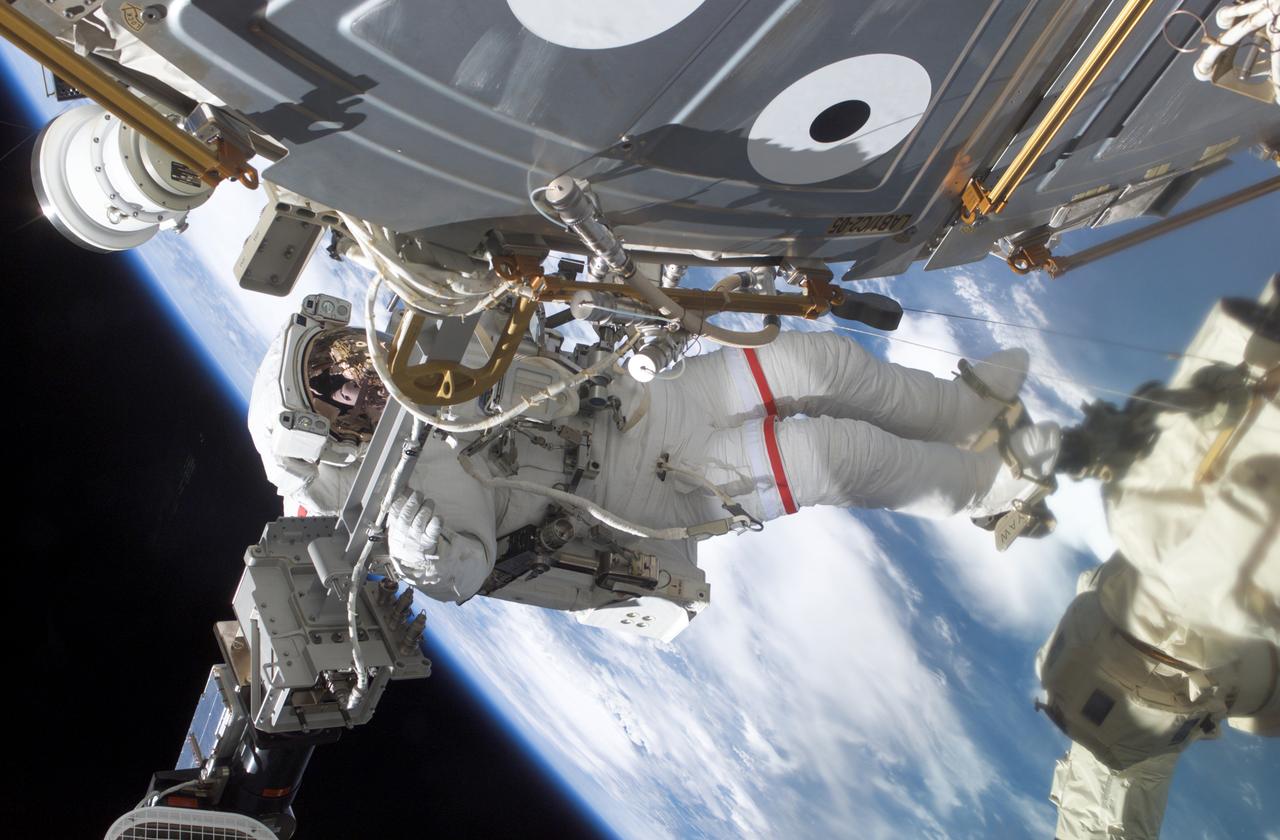
Astronaut David A. Wolf, STS-112 mission specialist, participates in the mission's second session of extravehicular activity (EVA), a six hour, four minute space walk, in which an exterior station television camera was installed outside of the Destiny Laboratory. Launched October 7, 2002 aboard the Space Shuttle Orbiter Atlantis, the STS-112 mission lasted 11 days and performed three EVA sessions. Its primary mission was to install the Starboard (S1) Integrated Truss Structure and Equipment Translation Aid (CETA) Cart to the International Space Station (ISS). The S1 truss provides structural support for the orbiting research facility's radiator panels, which use ammonia to cool the Station's complex power system. The S1 truss, attached to the S0 (S Zero) truss installed by the previous STS-110 mission, flows 637 pounds of anhydrous ammonia through three heat rejection radiators. The truss is 45-feet long, 15-feet wide, 10-feet tall, and weighs approximately 32,000 pounds. The CETA is the first of two human-powered carts that will ride along the International Space Station's railway providing a mobile work platform for future extravehicular activities by astronauts.
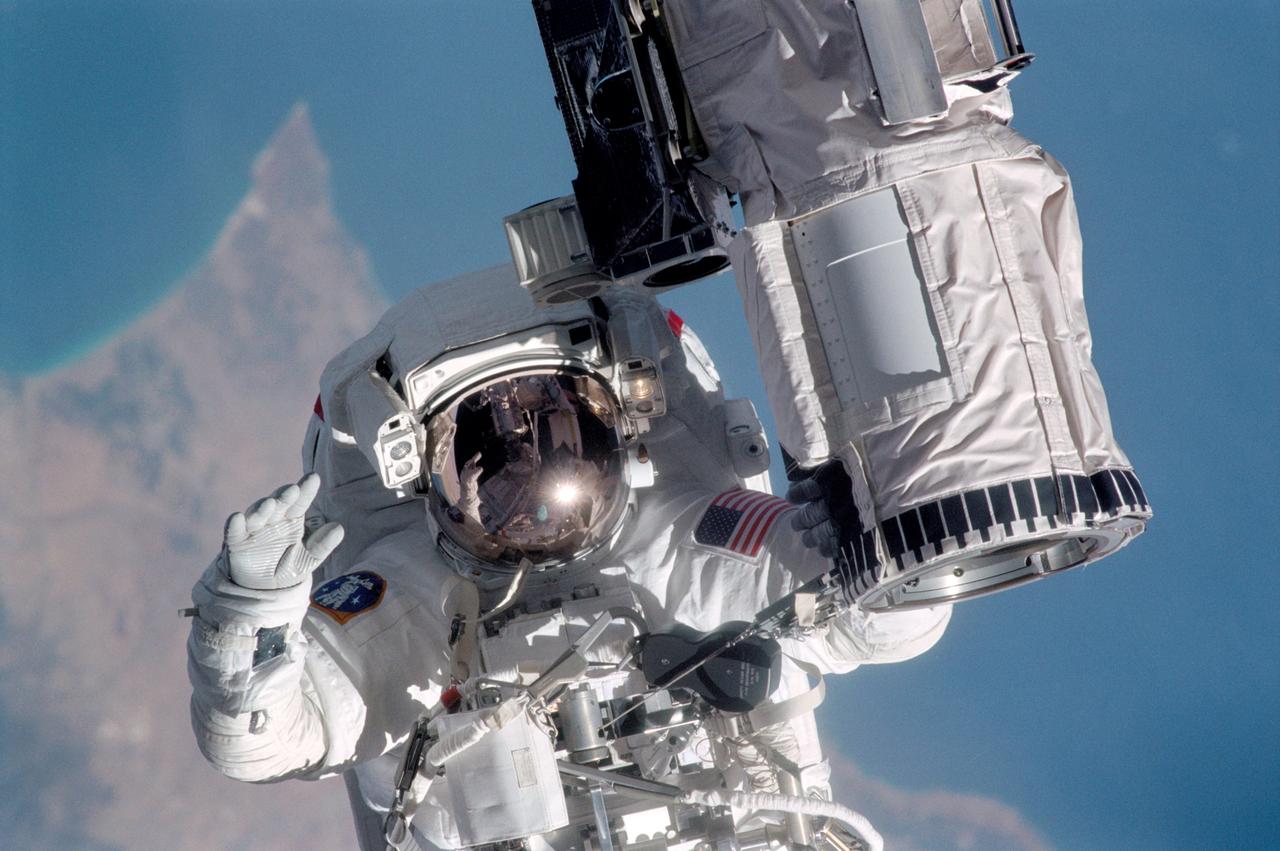
Astronaut Michael L. Gernhardt, STS-104 mission specialist, participates in one of three STS-104 space walks while holding on to the end effector of the Canadarm on the Space Shuttle Atlantis. Gernhardt was joined on the extravehicular activity (EVA) by astronaut James F. Reilly (out of frame). The major objective of the mission was to install and activate the Joint Airlock, which completed the second phase of construction on the International Space Station (ISS). The airlock accommodates both United States and Russian space suits and was designed and built at the Marshall Space Flight Center by the Boeing Company.
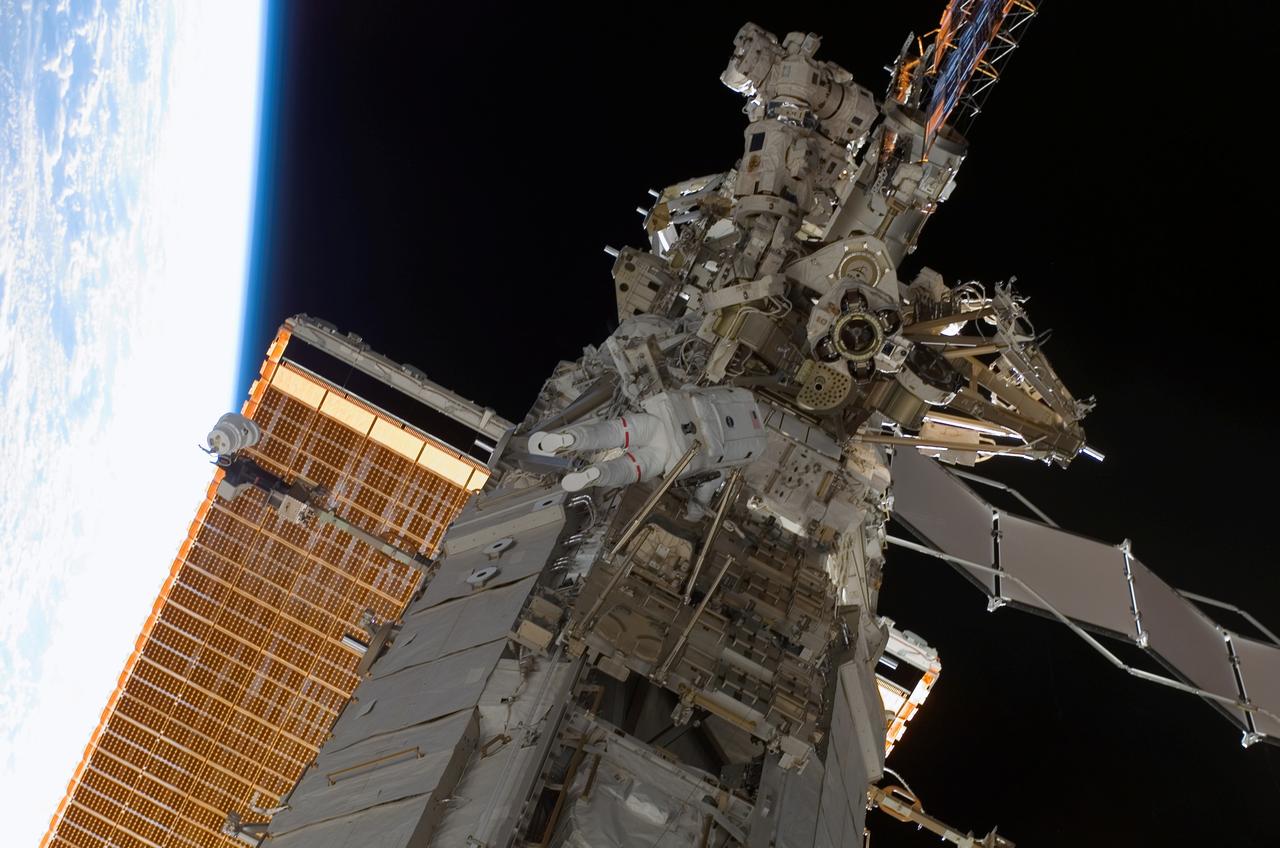
As the construction continued on the International Space Station (ISS), STS-118 Astronaut Rick Mastracchio and Canada Space Agency representative Dave Williams (out of frame), participated in the first session of Extra Vehicular Activity (EVA) for the mission. During the 6 hour, 17 minute space walk, the two attached the Starboard 5 (S5) segment of truss, retracted the forward heat rejecting radiator from the Port 6 (P6) truss, and performed several get ahead tasks.
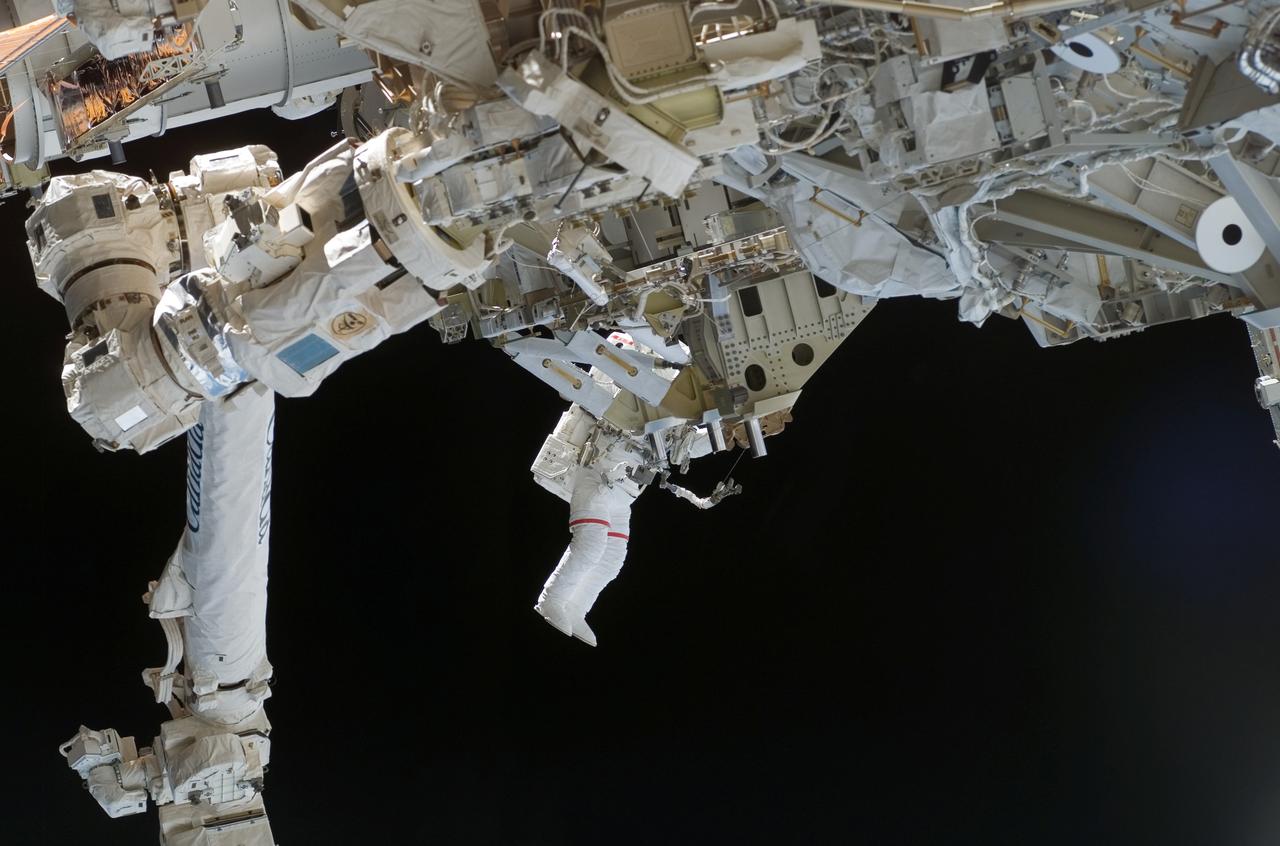
As the construction continued on the International Space Station (ISS), STS-118 Astronaut Rick Mastracchio and Canada Space Agency's Dave Williams (out of frame), participated in the first session of Extra Vehicular Activity (EVA) for the mission. During the 6 hour, 17 minute space walk, the two attached the Starboard 5 (S5) segment of truss, retracted the forward heat rejecting radiator from the Port 6 (P6) truss, and performed several get ahead tasks.
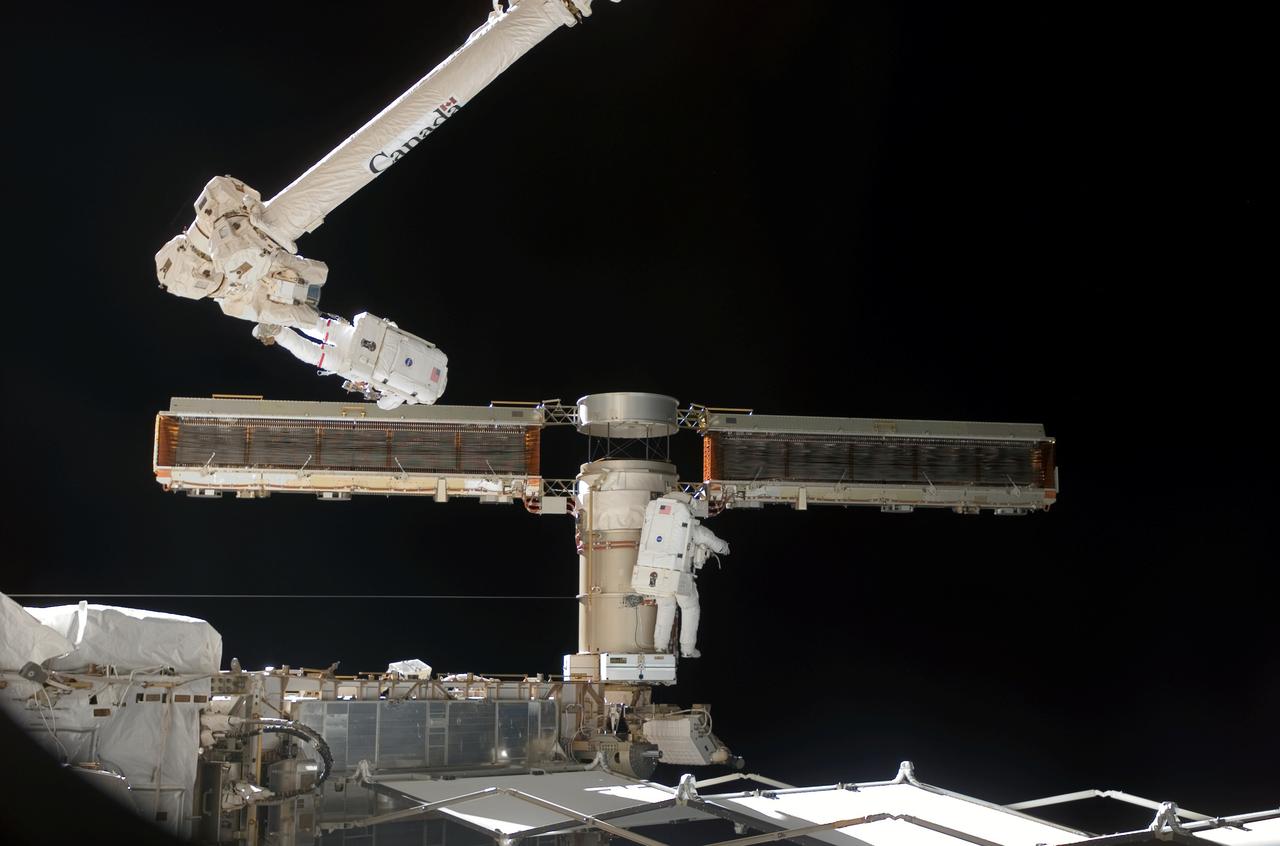
Construction resumed on the International Space Station (ISS), as STS-117 astronauts and mission specialists Jim Reilly (on robotic arm), and John “Danny” Olivas joined forces with their colleagues inside the Shuttle and station, and controllers in Houston, to complete the delicate process of folding an older solar array, Port 6 (P6), so that it can be moved from its temporary location to its permanent home during an upcoming Fall scheduled Shuttle mission. The EVA lasted nearly 8 hours.

STS-117 astronauts and mission specialists Patrick Forrester and Steven Swanson (out of frame), participated in the second Extra Vehicular Activity (EVA) as construction resumed on the International Space Station (ISS). Among other tasks, the two removed all of the launch locks holding the 10 foot wide solar alpha rotary joint in place and began the solar array retraction. The primary mission objective was the installment of the second and third starboard truss segments (S3 and S4).
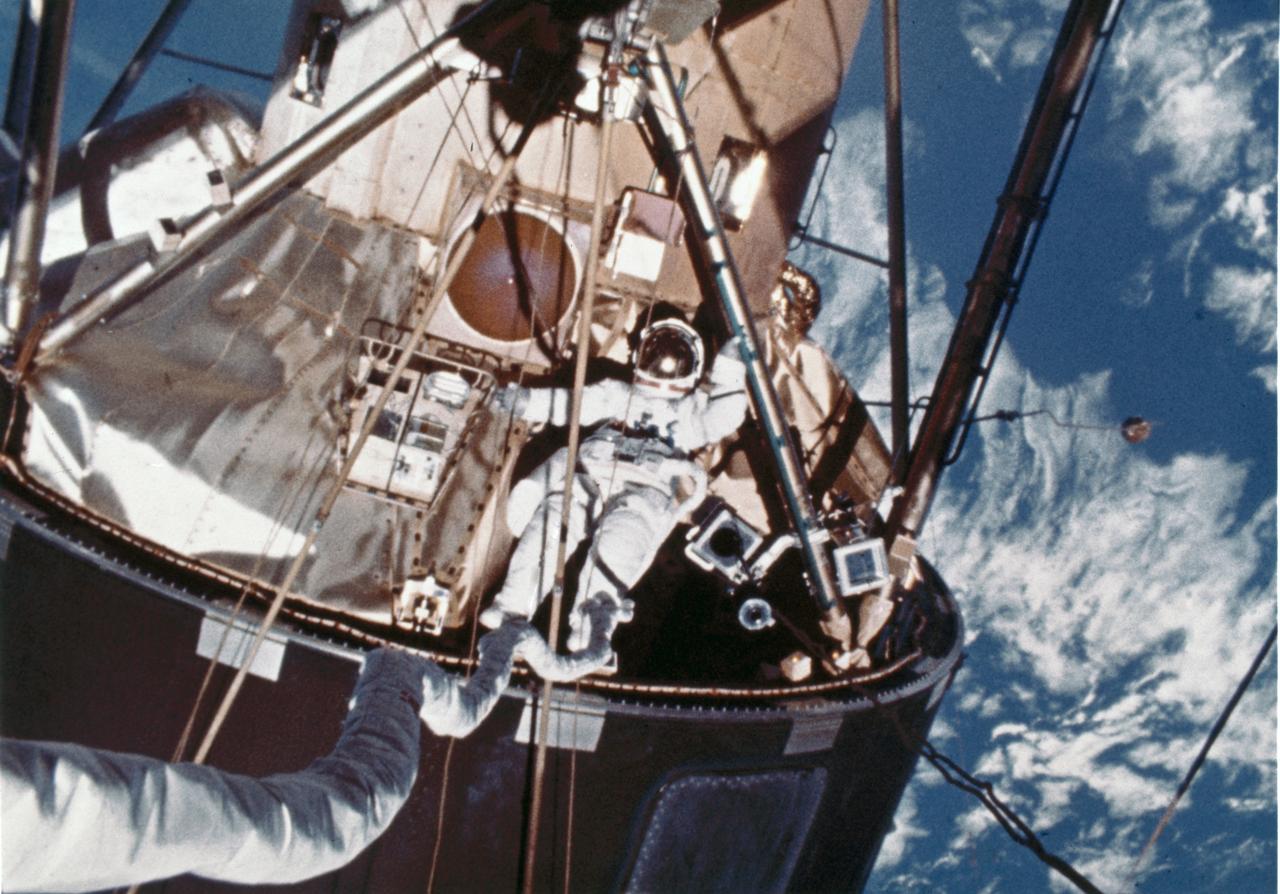
In this photograph, a skylab-4 astronaut performs Extra Vehicular Activities (EVA) outside of the lab. The third crew (Skylab-4) spent 84 days in the orbiting laboratory. The solar observatory was designed for full exposure to the Sun throughout most of the Skylab mission. Solar energy was transformed into electrical power for operation of all spacecraft systems. The proper operation of these solar arrays was vital to the mission.
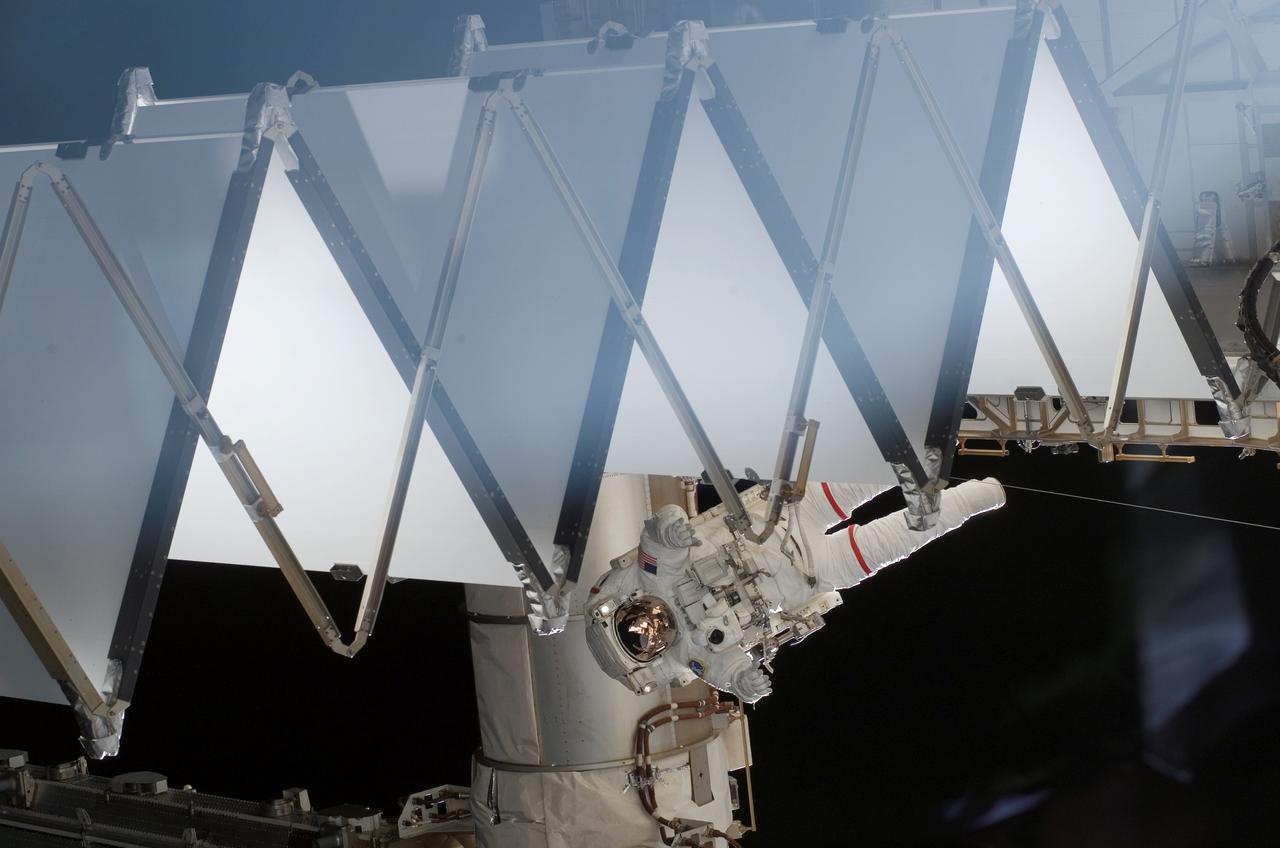
As the construction continued on the International Space Station (ISS), STS-118 Astronaut Rick Mastracchio and Canada Space Agency's Dave Williams (out of frame), participated in the first session of Extra Vehicular Activity (EVA) for the mission. During the 6 hour, 17 minute space walk, the two attached the Starboard 5 (S5) segment of truss, retracted the forward heat rejecting radiator from the Port 6 (P6) truss, and performed several get ahead tasks.
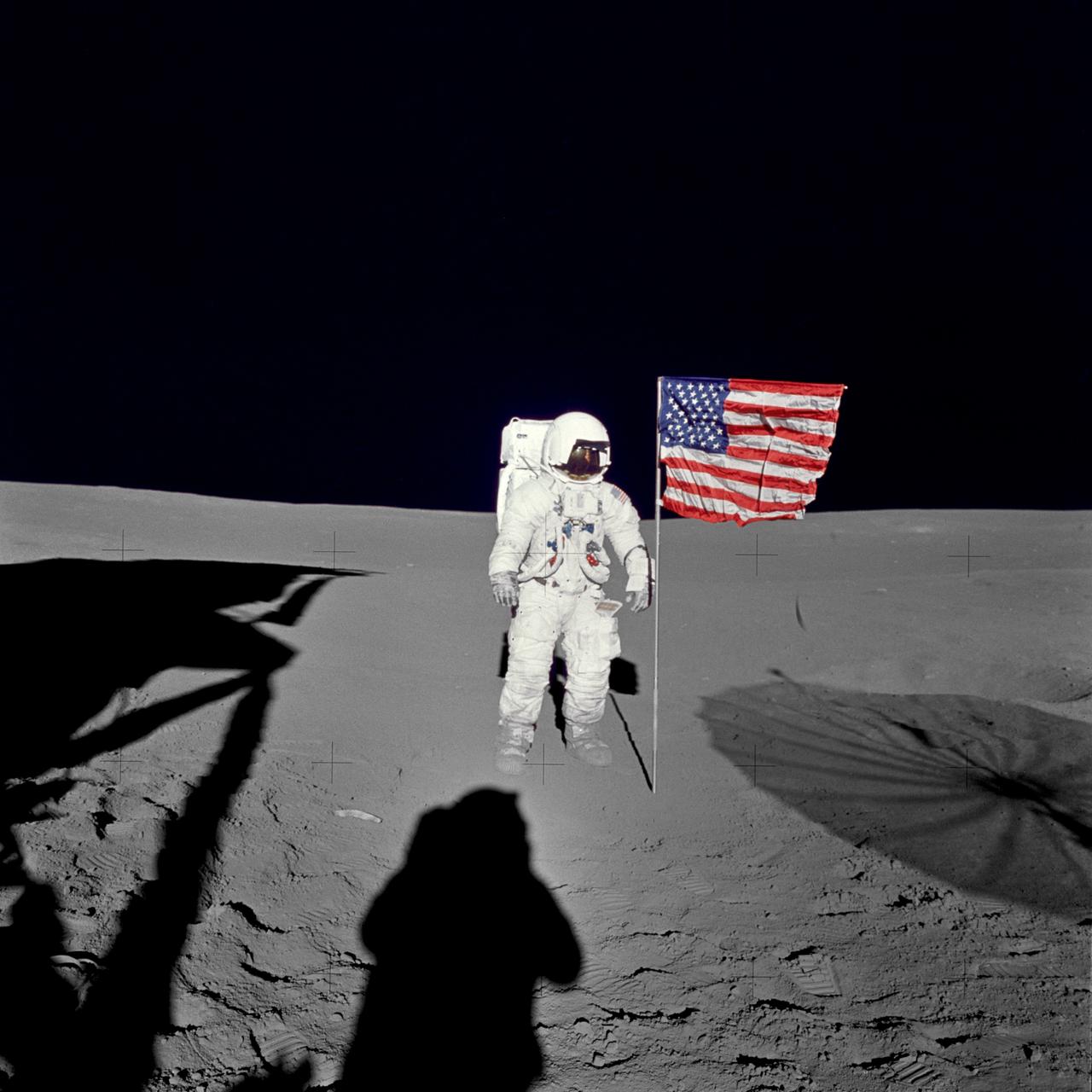
AS14-66-9233 (5 Feb. 1971) --- Astronaut Edgar D. Mitchell, lunar module pilot for the Apollo 14 lunar landing mission, stands by the deployed U.S. flag on the lunar surface during the early moments of the first extravehicular activity (EVA) of the mission. He was photographed by astronaut Alan B. Shepard Jr., mission commander, using a 70mm modified lunar surface Hasselblad camera. While astronauts Shepard and Mitchell descended in the Lunar Module (LM) "Antares" to explore the Fra Mauro region of the moon, astronaut Stuart A. Roosa, command module pilot, remained with the Command and Service Modules (CSM) "Kitty Hawk" in lunar orbit.
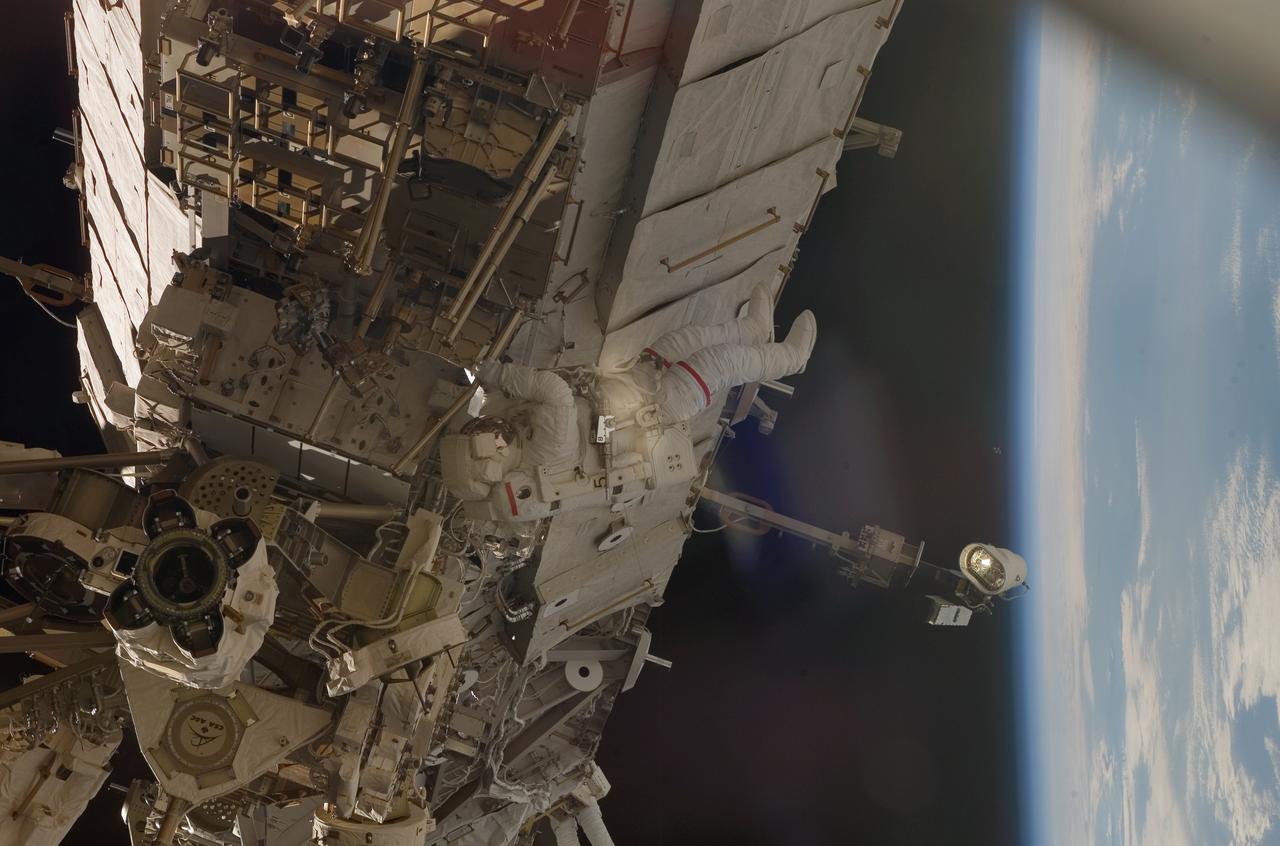
STS-117 astronauts and mission specialists Jim Reilly (center frame), and John “Danny” Olivas (bottom center), participated in the first Extra Vehicular Activity (EVA) as construction resumed on the International Space Station (ISS). Among other tasks, the two connected power, data, and cooling cables between trusses 1 (S1) and 3 (S3), released the launch restraints from and deployed the four solar array blanket boxes on S4, and released the cinches and winches holding the photovoltaic radiator on S4. The primary mission objective was the installment of the second and third starboard truss segments (S3 and S4).
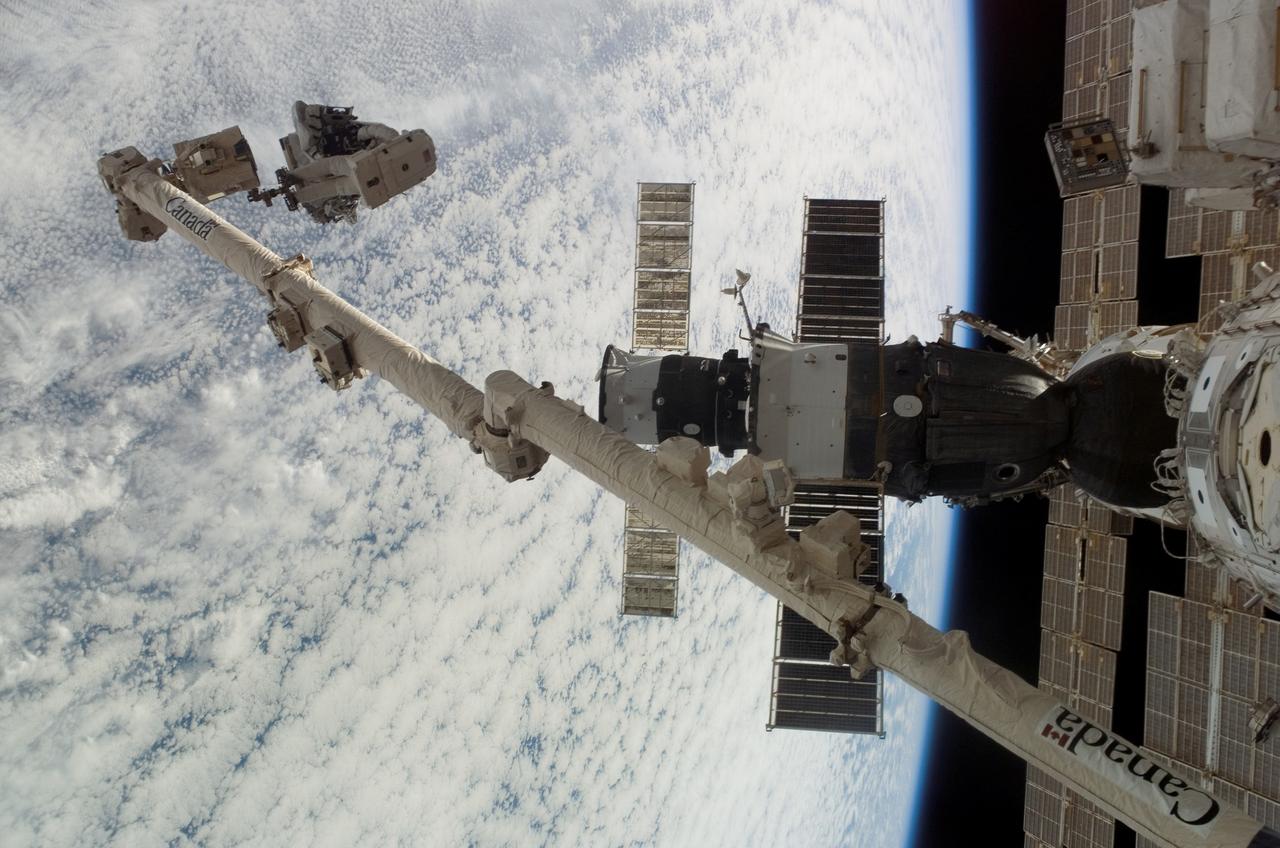
As the construction continued on the International Space Station (ISS), STS-118 astronaut and mission specialist, Dave Williams, representing the Canadian Space Agency, was anchored on the foot restraint of the Canadarm2 as he participated in the second session of Extra Vehicular Activity (EVA) for the mission. Assisting Williams was Rick Mastracchio (out of frame). During the 6 hour, 28 minute space walk, the two removed a faulty control moment gyroscope (CMG-3) and installed a new CMG into the Z1 truss. The failed CMG will remain in its temporary stowage location on the exterior of the station until it is returned to Earth on a later Shuttle mission. The new gyroscope is one of four CMGs that are used to control the orbital attitude of the station.
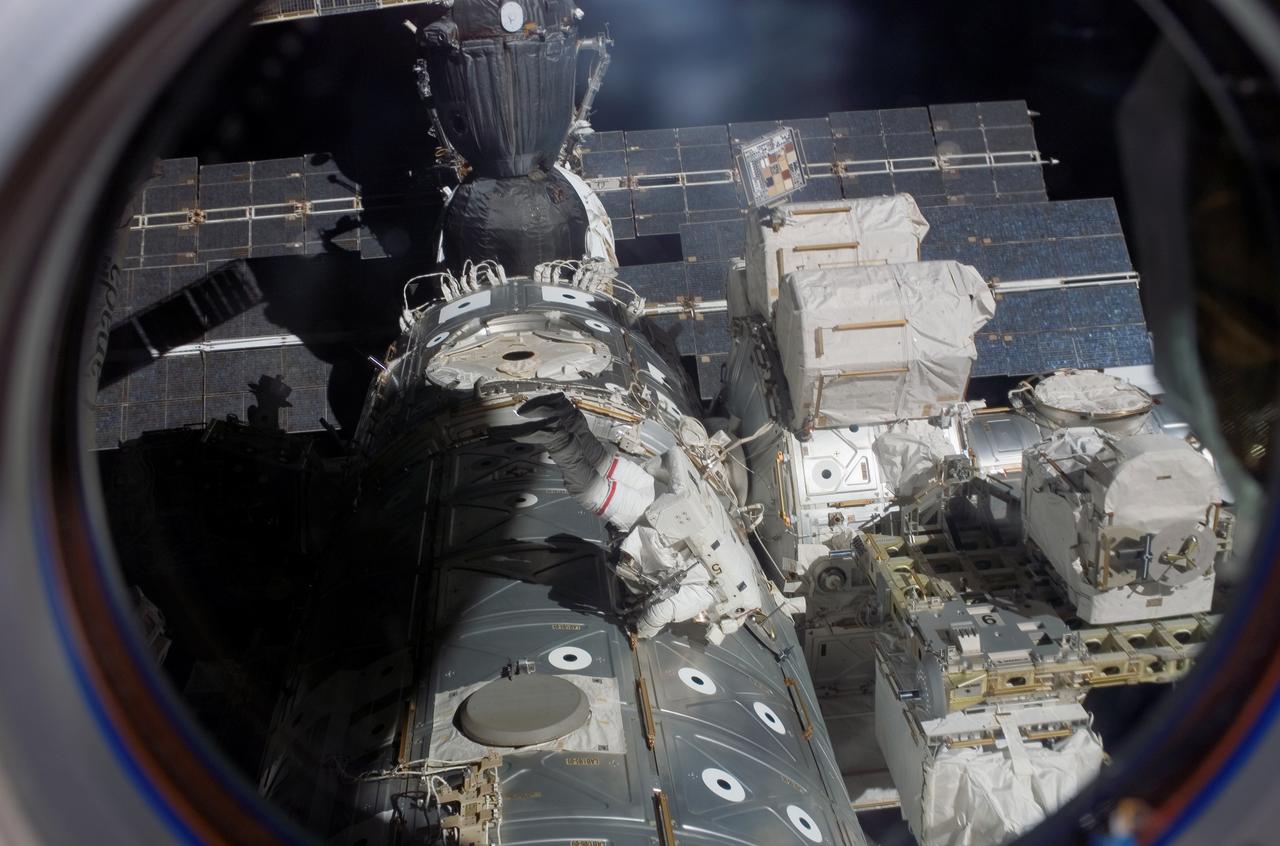
As the construction continued on the International Space Station (ISS), STS-118 astronaut and mission specialist Rick Mastracchio participated in the second session of Extra Vehicular Activity (EVA) for the mission. Assisting Mastracchio was Canadian Space Agency representative Dave Williams (out of frame). During the 6 hour, 28 minute space walk, the two removed a faulty control moment gyroscope (CMG-3) and installed a new CMG into the Z1 truss. The failed CMG will remain in its temporary stowage location on the exterior of the station until it is returned to Earth on a later Shuttle mission. The new gyroscope is one of four CMGs that are used to control the orbital attitude of the station.
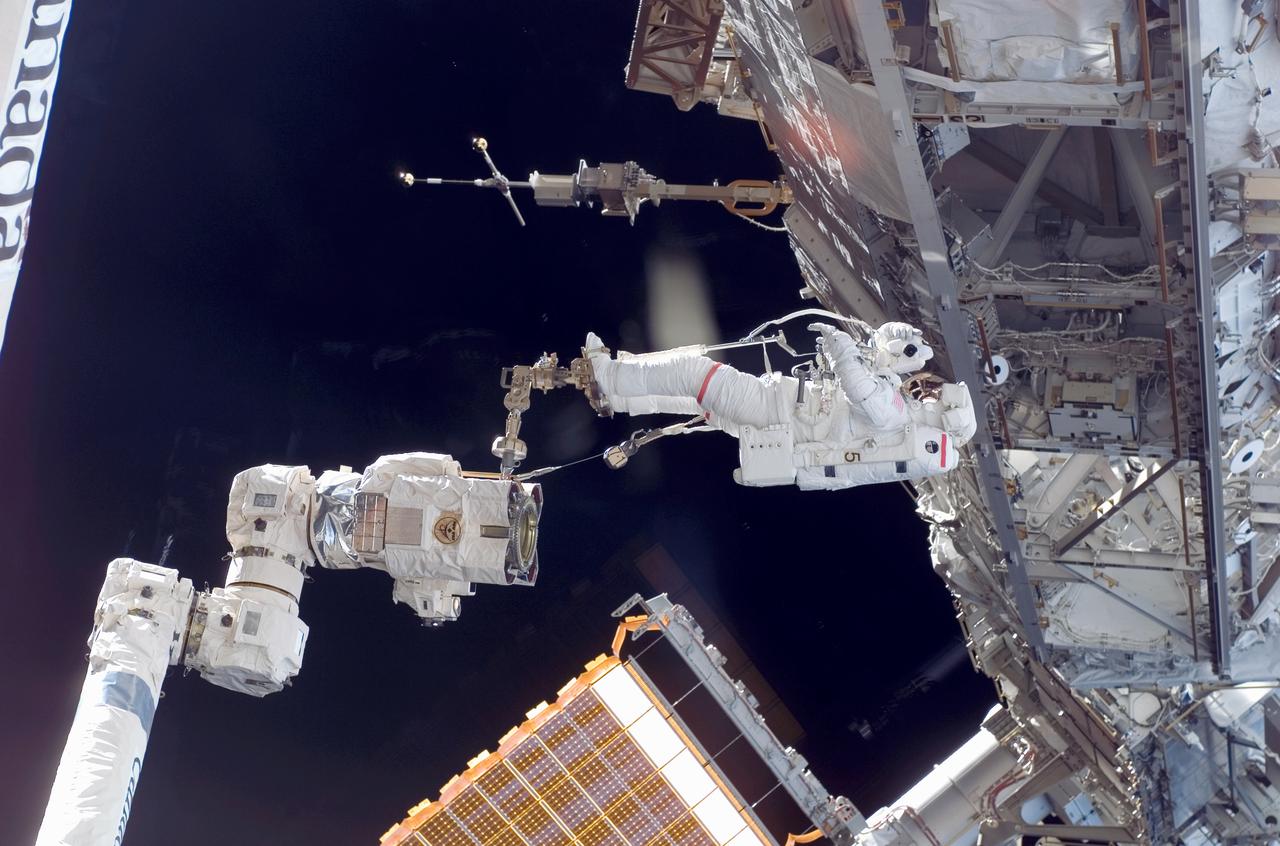
As the construction continued on the International Space Station (ISS), STS-118 astronaut and mission specialist Rick Mastracchio was anchored on the foot restraint of the Canadarm2 as he participated in the third session of Extra Vehicular Activity (EVA) for the mission. Assisting Mastracchio was Expedition 15 flight engineer Clay Anderson (out of frame). During the 5 hour, 28 minute space walk, the two relocated the S-band Antenna Sub-Assembly from the Port 6 (P6) truss to the Port 1 (P1) truss, installed a new transponder on P1 and retrieved the P6 transponder.
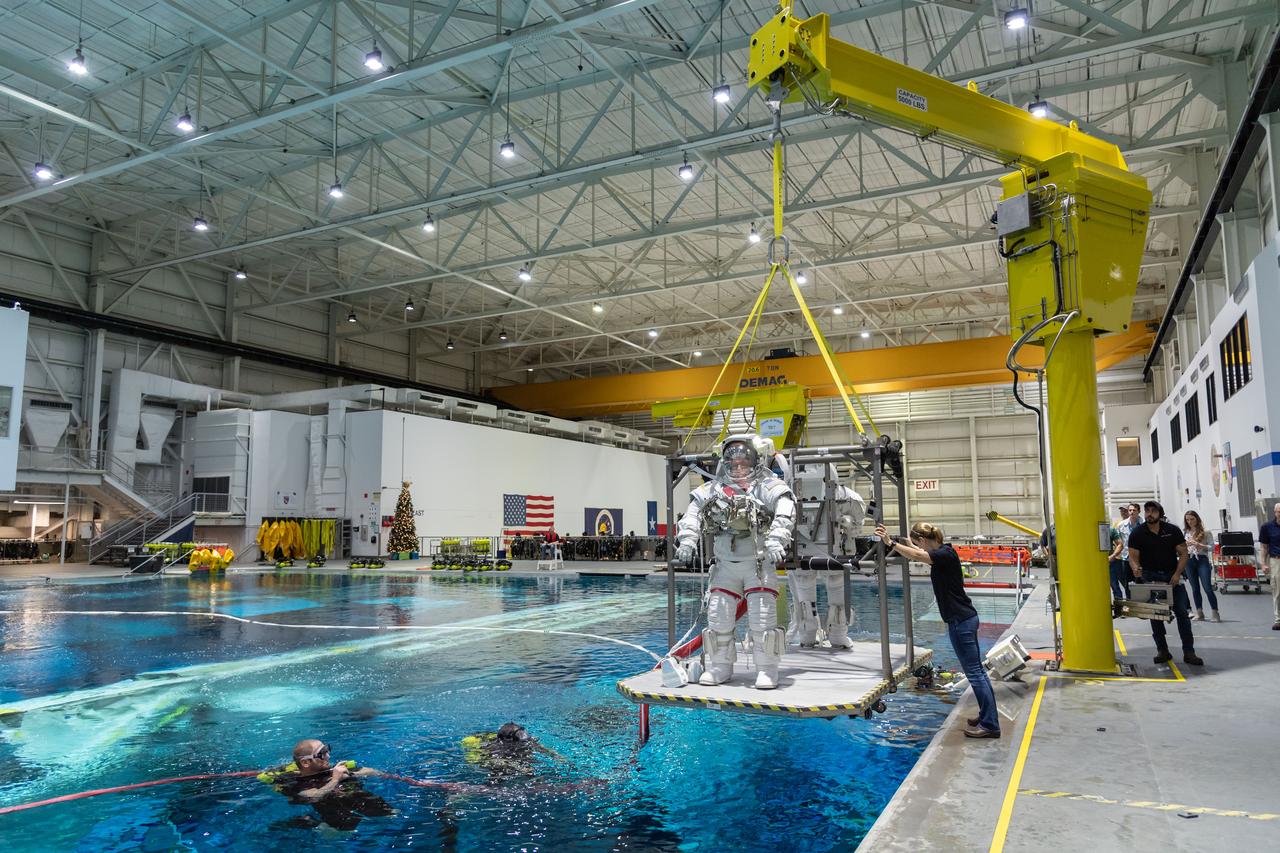
Commercial Crew Program astronaut Barry "Butch" Wilmore in EVA suitup at NBL with Expedition 62 cosmonaut Nikolai Tikhonov during Expedition 62 ISS EVA Maintenance 2 training.
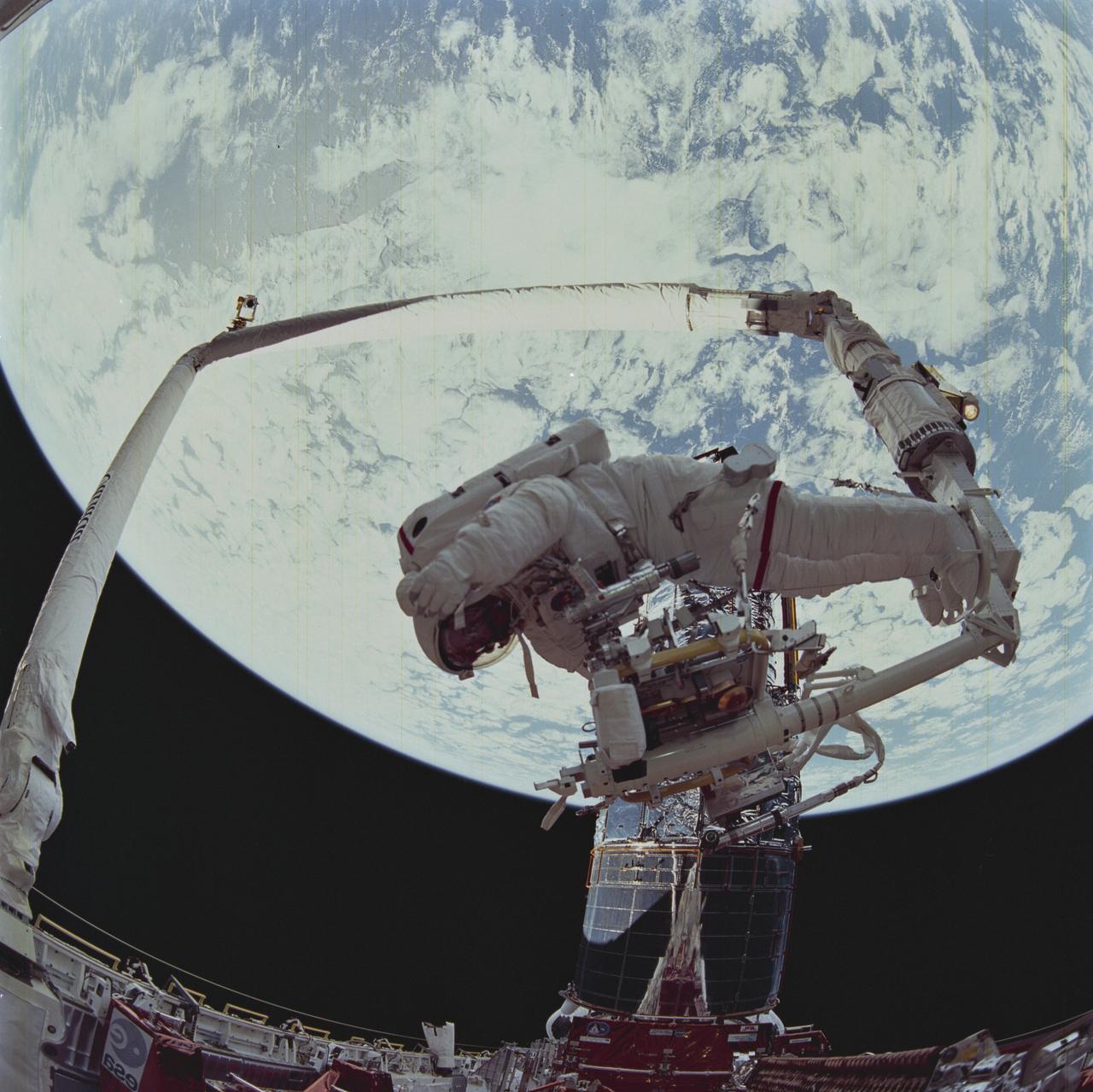
Space Shuttle mission STS-61 onboard view taken by a fish-eyed camera lens showing astronauts Story Musgrave and Jeffrey Hoffman's Extra Vehicular Activity (EVA) to repair the Hubble Space Telescope (HST).
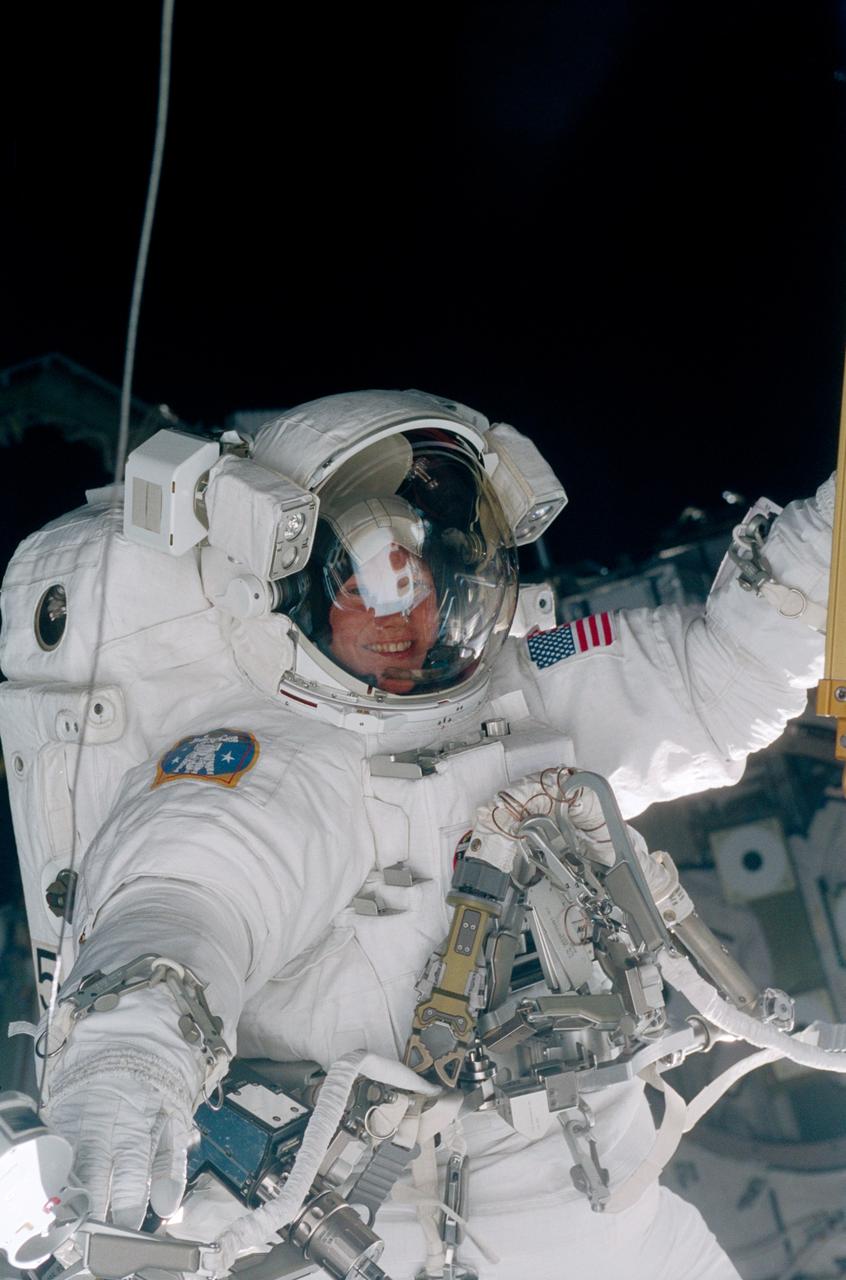
STS102-325-023 (11 March 2001) --- Astronaut Susan J. Helms completes a scheduled space walk task on the International Space Station (ISS). This extravehicular activity (EVA), on which Helms was joined by astronaut James S. Voss (out of frame), was the first of two scheduled STS-102 EVA sessions. The pair, destined to become members of the Expedition Two crew aboard the station later in the mission, rode aboard Discovery into orbit and at the time of this EVA were still regarded as STS-102 mission specialists.
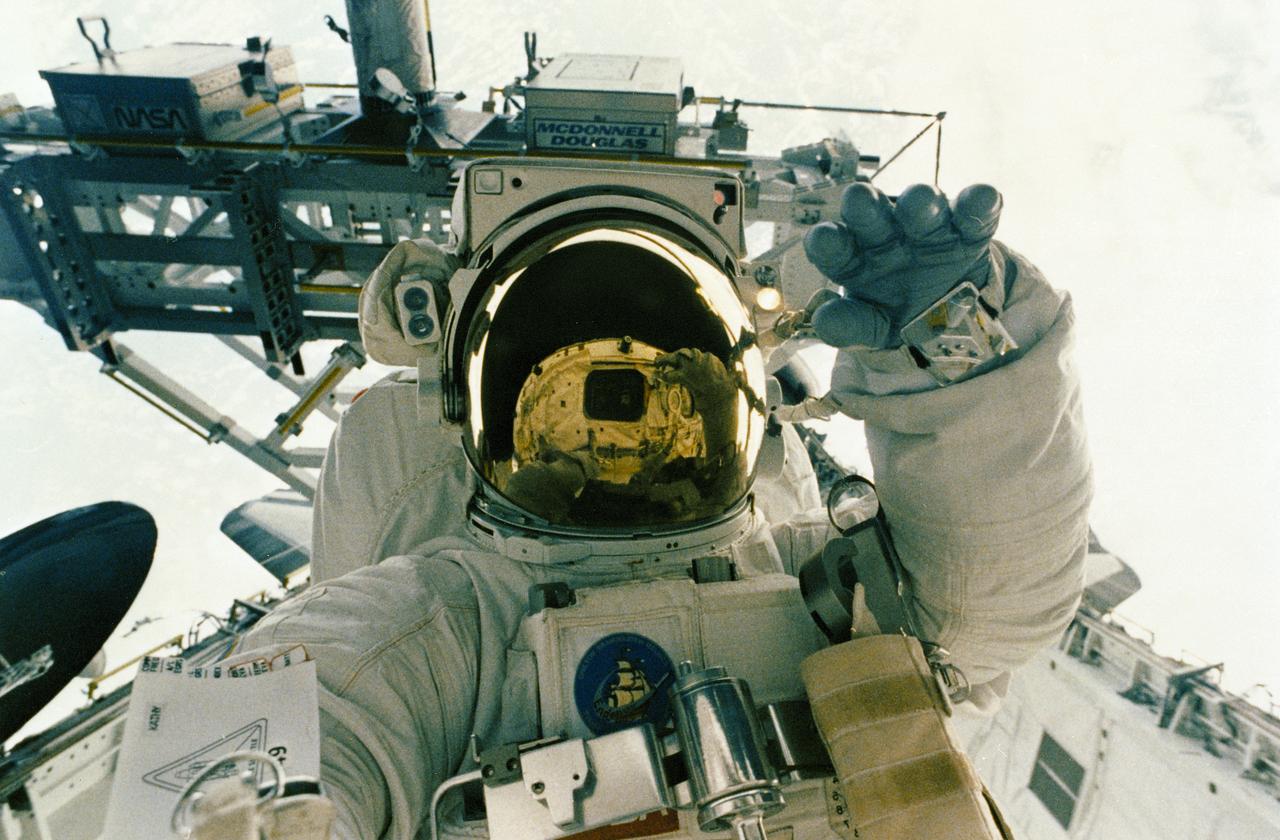
STS-49, the first flight of the Space Shuttle Orbiter Endeavour, lifted off from launch pad 39B on May 7, 1992 at 6:40 pm CDT. The STS-49 mission was the first U.S. orbital flight to feature 4 extravehicular activities (EVAs), and the first flight to involve 3 crew members working simultaneously outside of the spacecraft. The primary objective was the capture and redeployment of the INTELSAT VI (F-3), a communication satellite for the International Telecommunication Satellite organization, which was stranded in an unusable orbit since its launch aboard the Titan rocket in March 1990. In this onboard photo, astronaut Kathryn Thornton is working on the Assembly of Station by EVA Methods (ASEM) in the cargo bay.
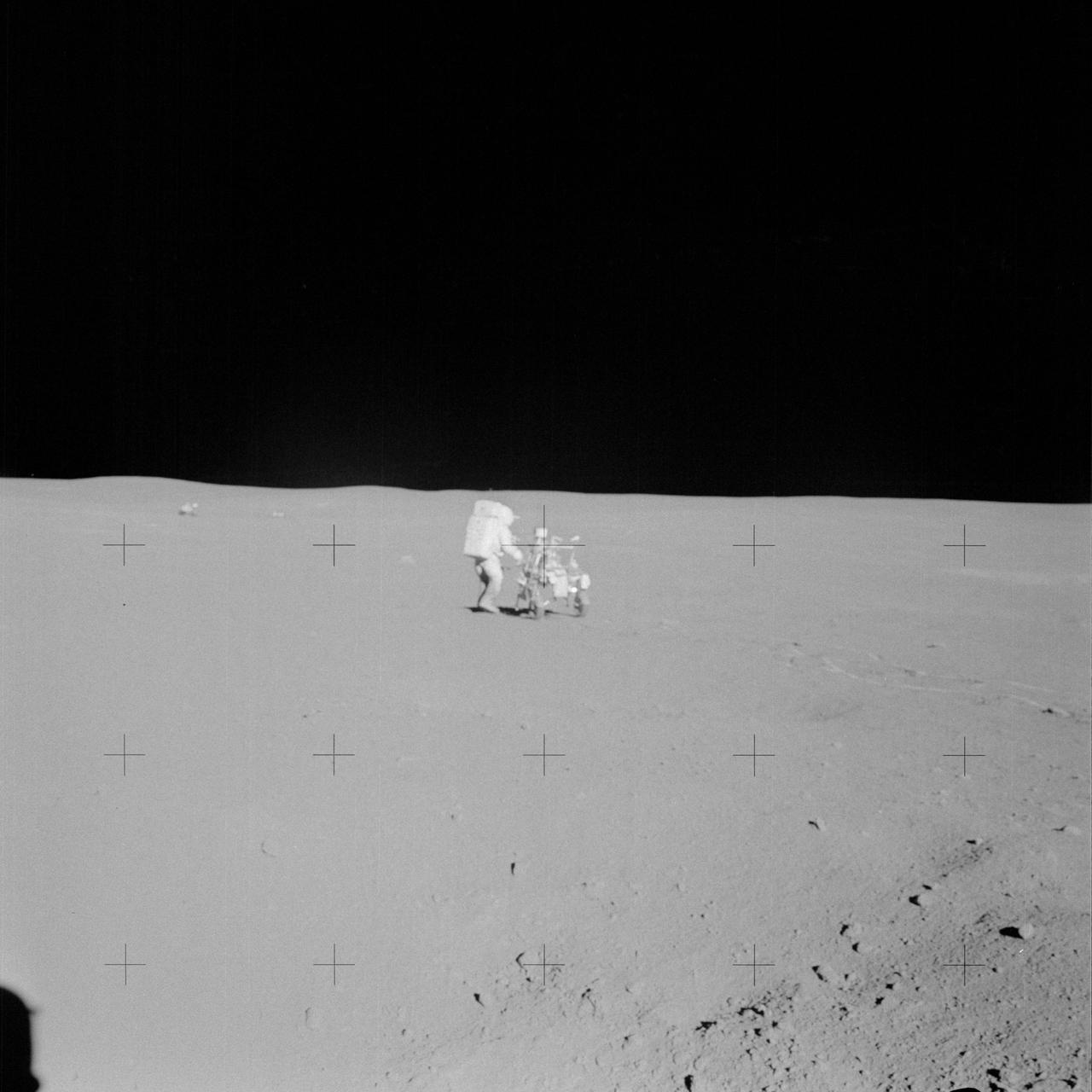
AS14-64-9140 (6 Feb. 1971) --- Astronaut Edgar D. Mitchell, lunar module pilot, participates in the mission's second extravehicular activity (EVA). He is standing near the modularized equipment transporter (MET). While astronauts Alan B. Shepard Jr., commander, and Mitchell descended in the Apollo 14 LM to explore the moon, astronaut Stuart A. Roosa, command module pilot, remained with the Command and Service Modules (CSM) in lunar orbit.
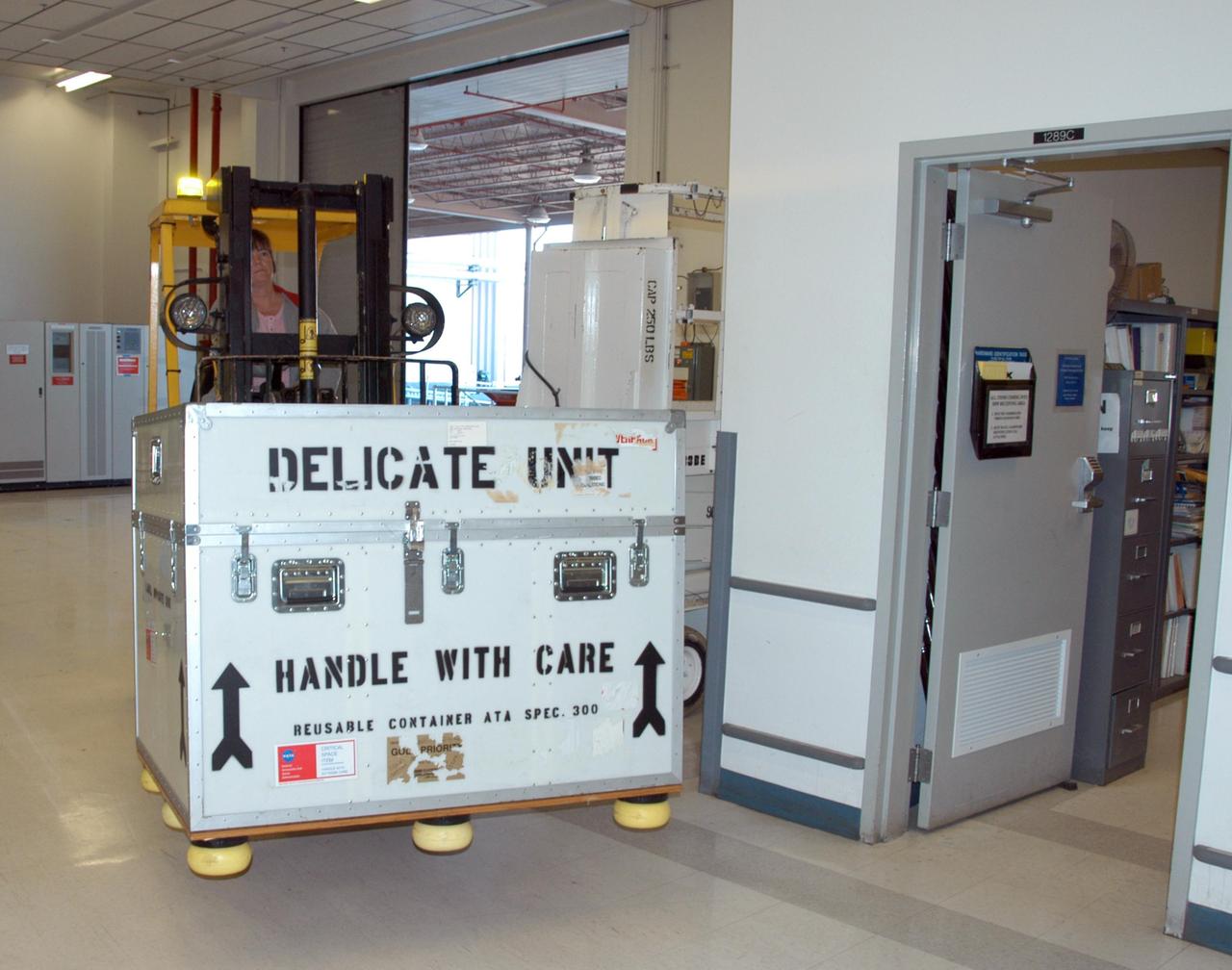
KENNEDY SPACE CENTER, FLA. -- Extravehicular Activity (EVA) suits packed inside containers arrive at the Space Station Processing Facility from Johnson Space Center in Texas. The suits will be used by STS-117 crew members to perform several spacewalks during the mission. The mission payload aboard Space Shuttle Atlantis is the S3/S4 integrated truss structure, along with a third set of solar arrays and batteries. The crew of six astronauts will install the truss to continue assembly of the International Space Station. Photo credit: NASA/George Shelton.
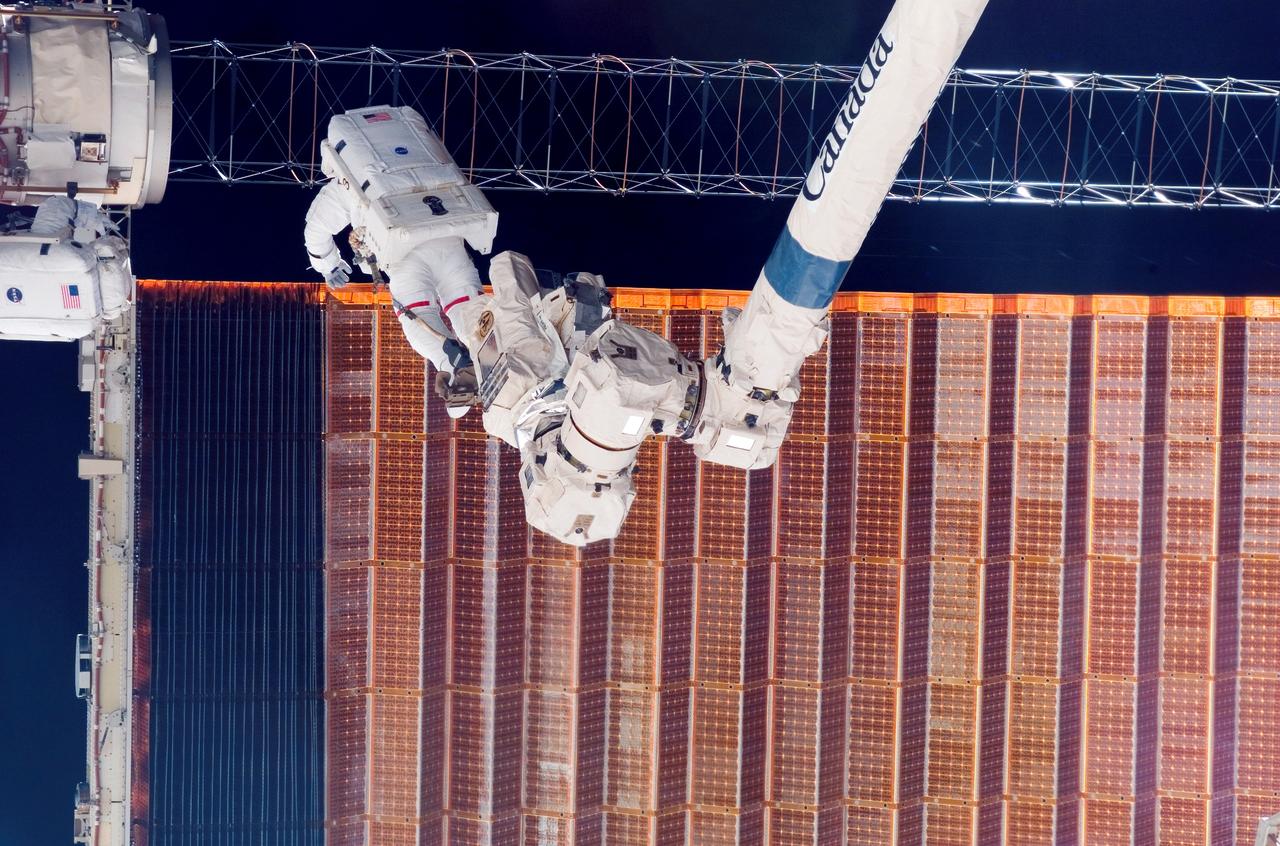
STS-116 astronaut and mission specialist, Robert Curbeam, along with the European Space Agency’s (ESA) Christer Fuglesang (partially out of the frame), are anchored to the International Space Station’s Canadarm2 foot restraints. The two were working on the port overhead solar array wing on the Station’s P6 truss during the mission’s fourth session of Extra Vehicular Activity (EVA). For 6 hours and 38 minutes, the space walkers used specially prepared, tape insulated tools to guide the array wing neatly inside its blanket box.
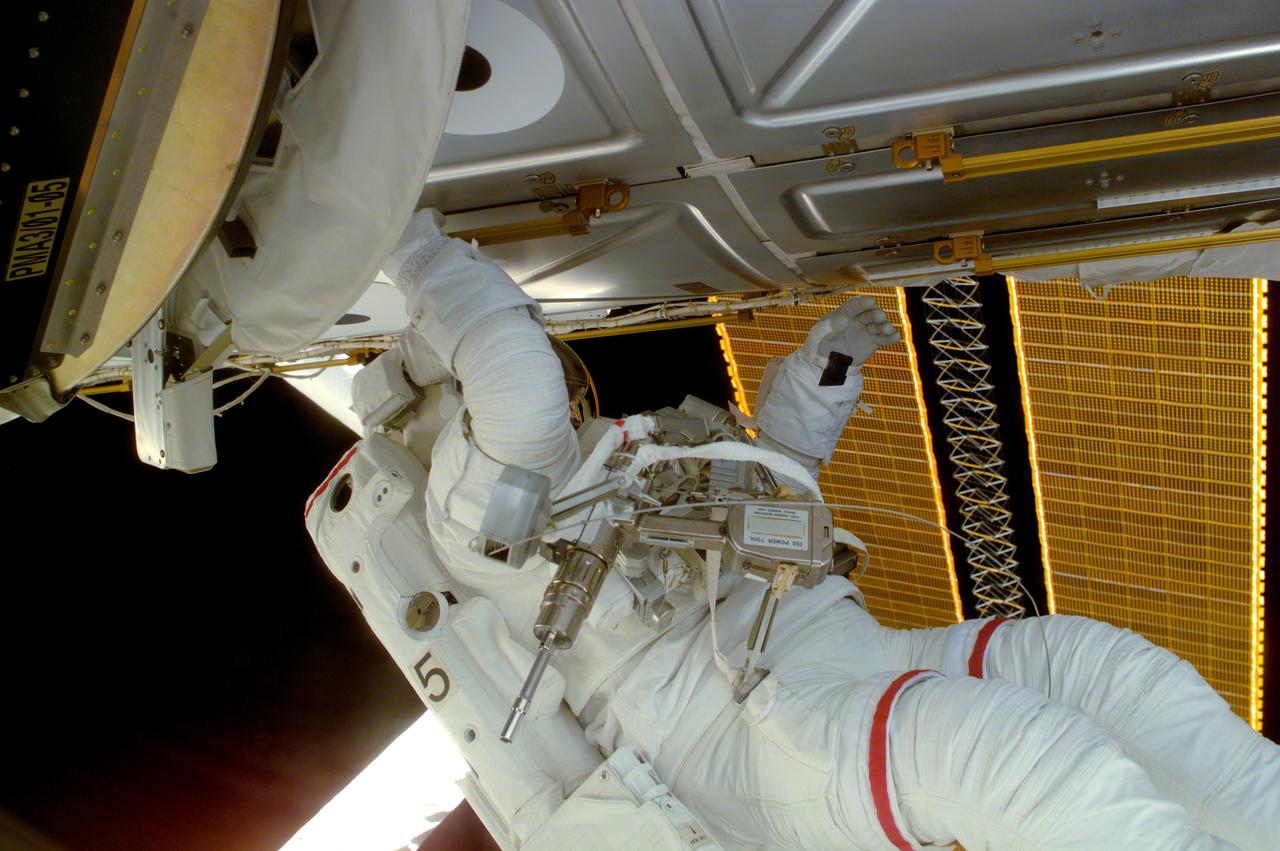
Astronaut Joseph R. Tanner, STS-97 mission specialist, is seen during a session of Extravehicular Activity (EVA), performing work on the International Space Station (ISS). Part of the Remote Manipulator System (RMS) arm and a section of the newly deployed solar array panel are in the background. The primary objective of the STS-97 mission was the delivery, assembly, and activation of the U.S. electrical power system on board the ISS. The electrical power system, which is built into a 73-meter (240-foot) long solar array structure consists of solar arrays, radiators, batteries, and electronics. The entire 15.4-metric ton (17-ton) package is called the P6 Integrated Truss Segment and is the heaviest and largest element yet delivered to the station aboard a space shuttle. The electrical system will eventually provide the power necessary for the first ISS crews to live and work in the U.S. segment. The STS-97 crew of five launched aboard the Space Shuttle Orbiter Endeavor on November 30, 2000 for an 11 day mission.
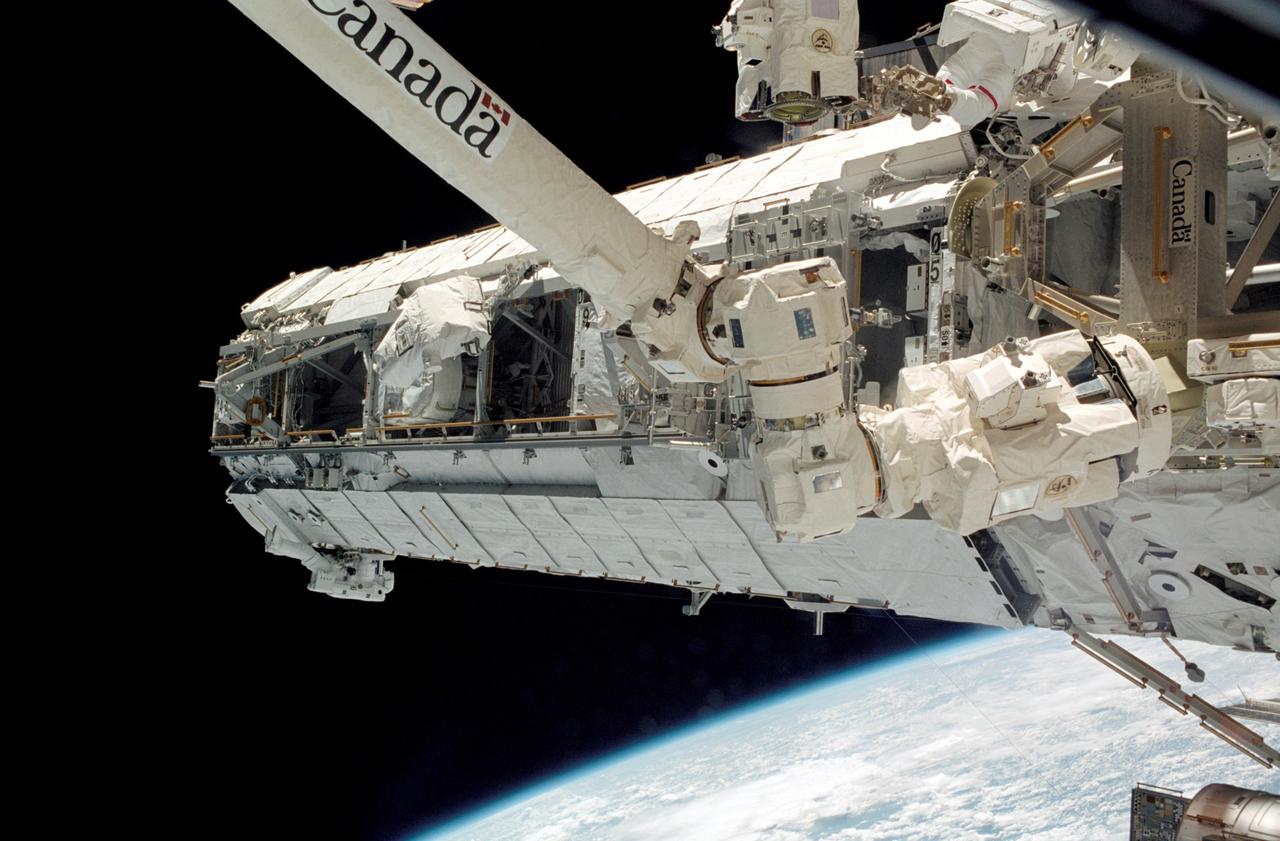
Launched October 7, 2002 aboard the Space Shuttle Orbiter Atlantis, the STS-112 mission lasted 11 days and performed three sessions of Extra Vehicular Activity (EVA). Its primary mission was to install the Starboard (S1) Integrated Truss Structure and Equipment Translation Aid (CETA) Cart to the International Space Station (ISS). The S1 truss provides structural support for the orbiting research facility's radiator panels, which use ammonia to cool the Station's complex power system. The S1 truss, attached to the S0 (S Zero) truss installed by the previous STS-110 mission, flows 637 pounds of anhydrous ammonia through three heat rejection radiators. The truss is 45-feet long, 15-feet wide, 10-feet tall, and weighs approximately 32,000 pounds. The CETA is the first of two human-powered carts that will ride along the International Space Station's railway providing a mobile work platform for future extravehicular activities by astronauts. This is a view of the newly installed S1 Truss as photographed during the mission's first scheduled EVA. The Station's Canadarm2 is in the foreground. Visible are astronauts Piers J. Sellers (lower left) and David A. Wolf (upper right), both STS-112 mission specialists.
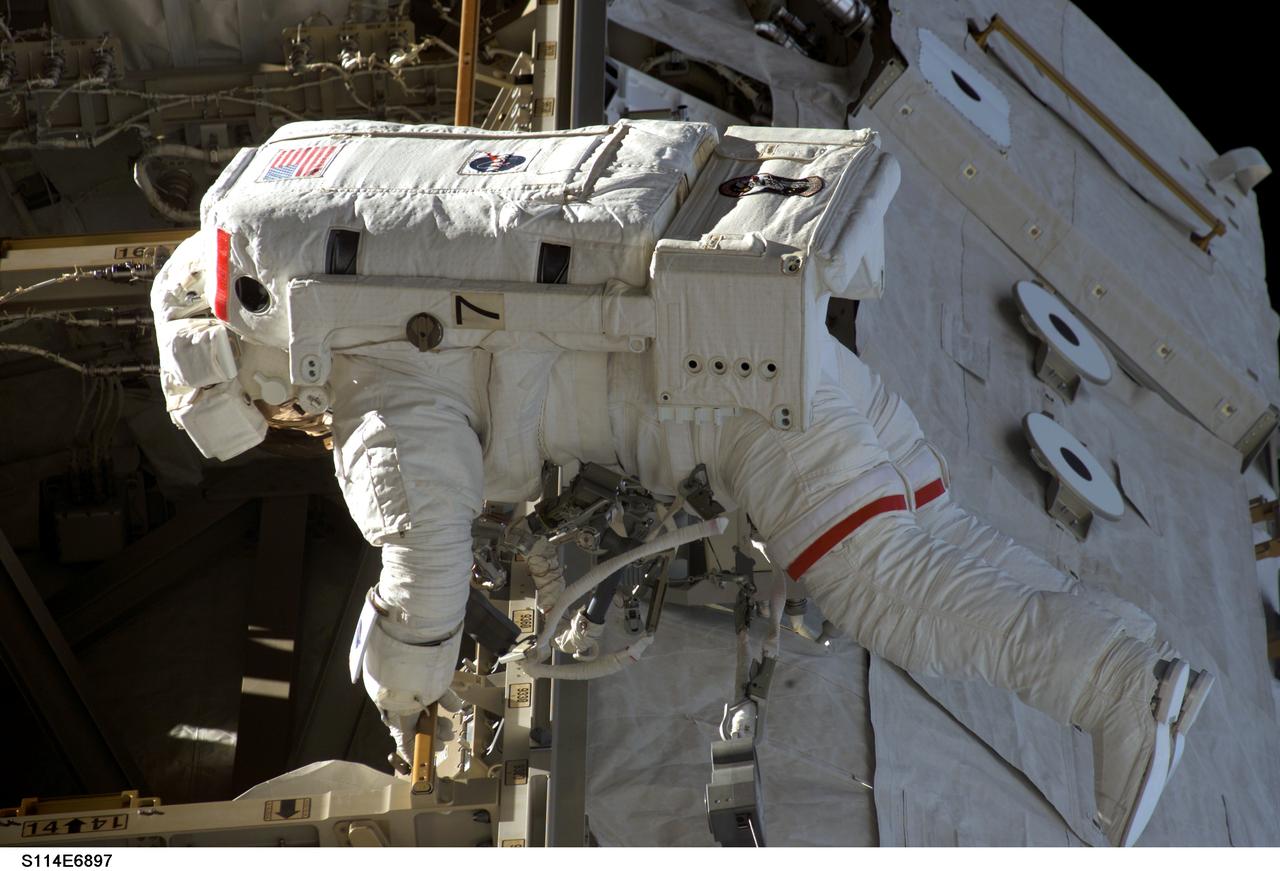
S114-E-6897 (3 August 2005) --- Astronaut Soichi Noguchi, STS-114 mission specialist representing Japan Aerospace Exploration Agency (JAXA), participates in the mission;s third session of extravehicular activity (EVA).
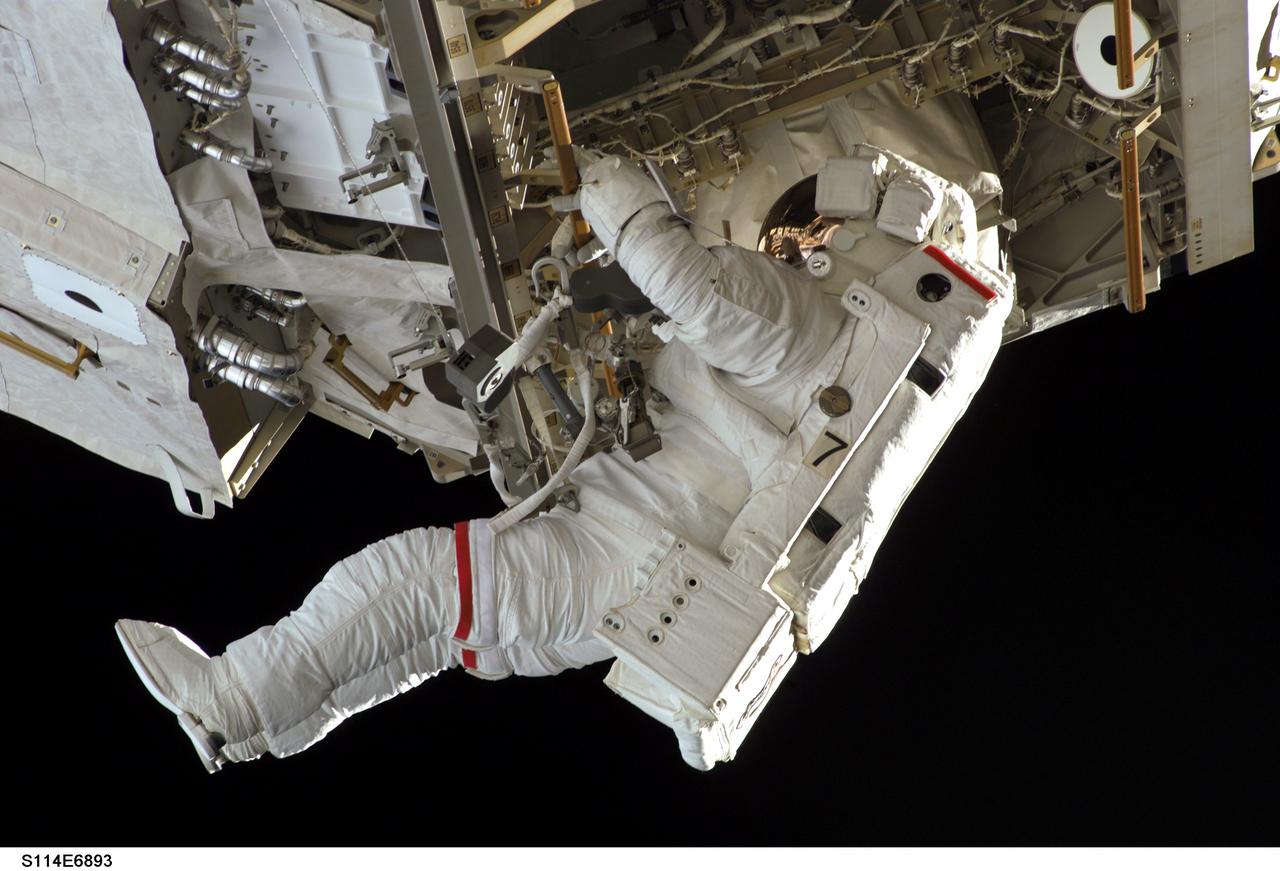
S114-E-6893 (3 August 2005) --- Astronaut Soichi Noguchi, STS-114 mission specialist representing Japan Aerospace Exploration Agency (JAXA), participates in the mission;s third session of extravehicular activity (EVA).
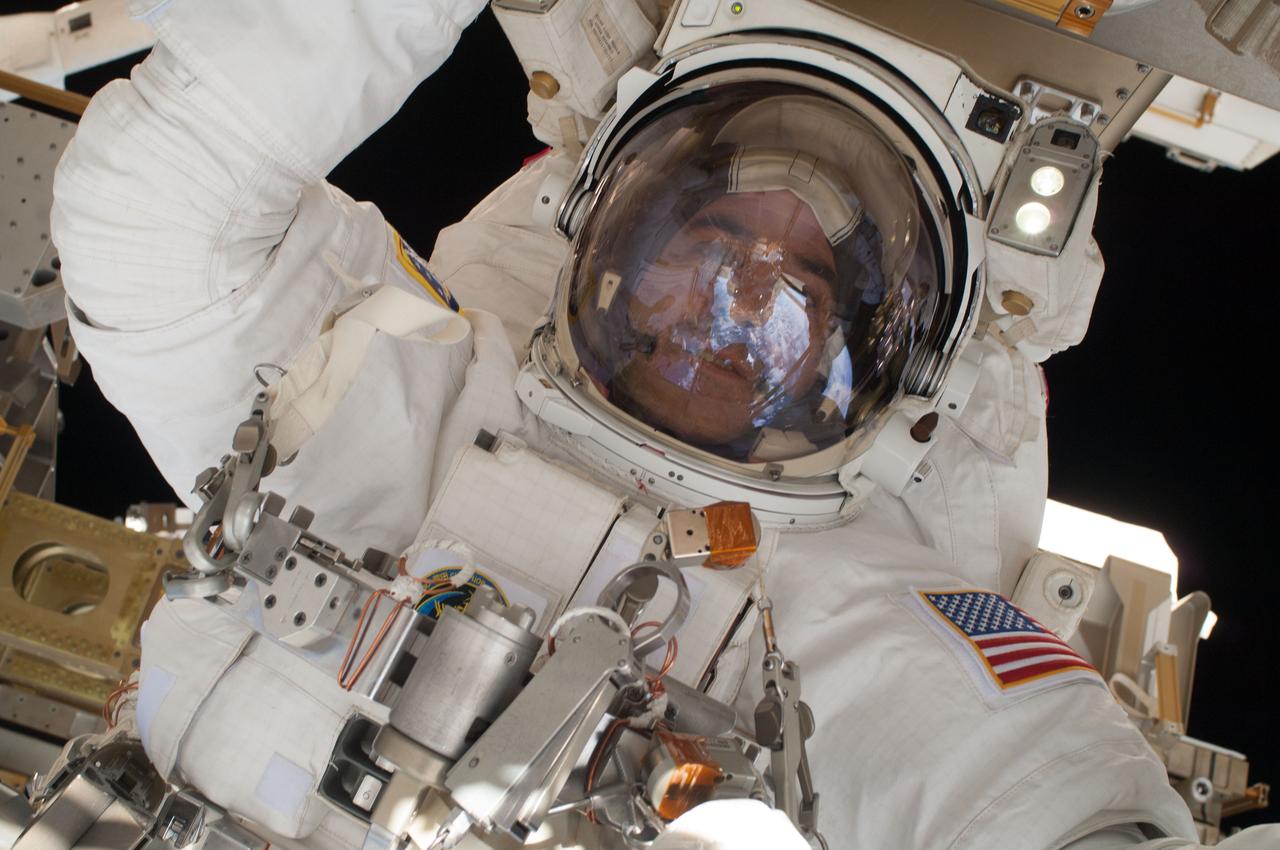
Close-up view of Expedition 39 flight engineer Rick Mastracchio at the close of Extravehicular Activity 26 (EVA 26).
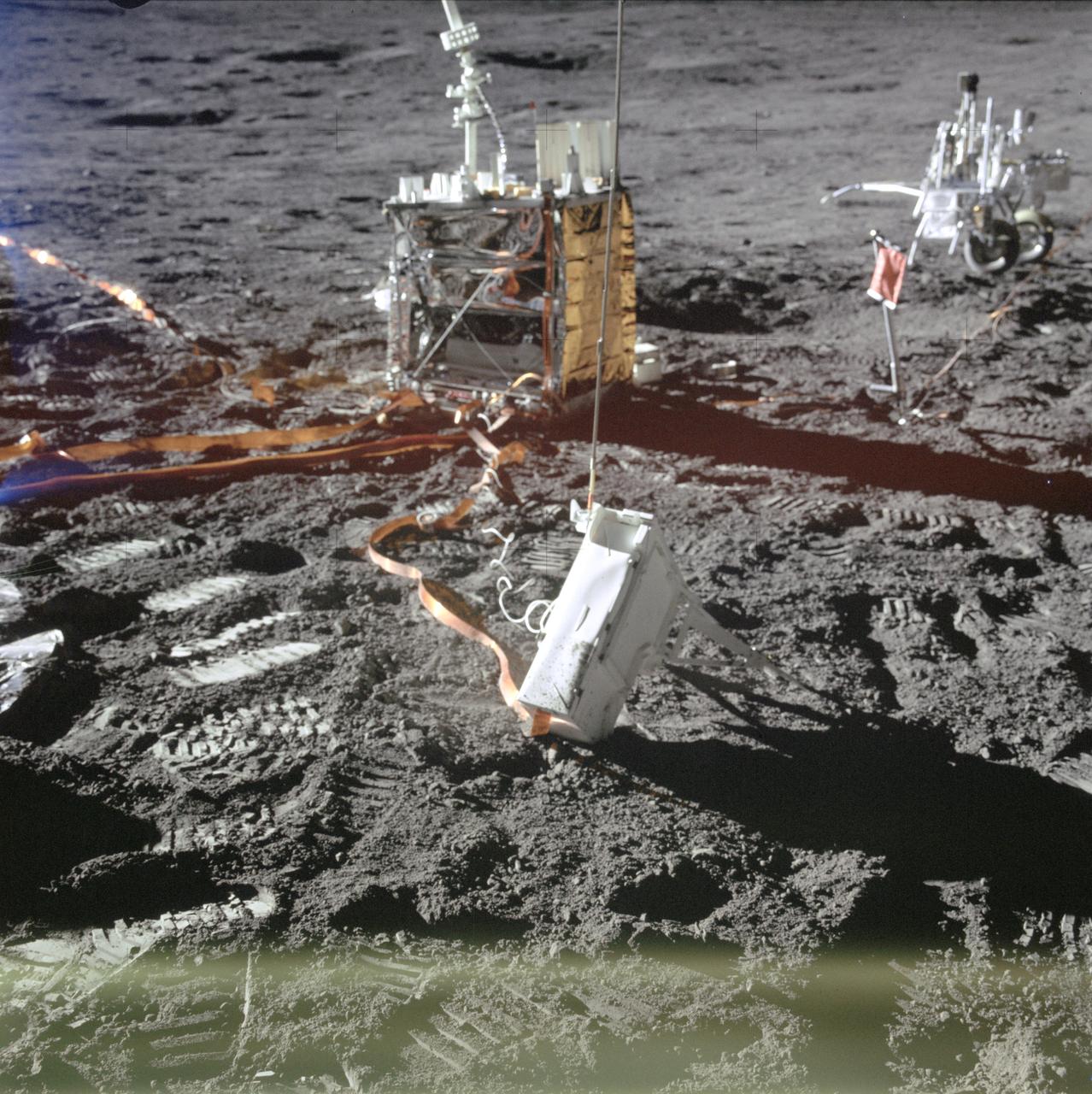
AS14-67-9361 (5 Feb. 1971) --- A close-up view of two components of the Apollo lunar surface experiments package (ALSEP) which the Apollo 14 astronauts deployed on the moon during their first extravehicular activity (EVA). In the center background is the ALSEP's central station (CS); and in the foreground is the mortar package assembly of the ALSEP's active seismic experiment (ASE). The modularized equipment transporter (MET) can be seen in the right background. While astronauts Alan B. Shepard Jr., commander, and Edgar D. Mitchell, lunar module pilot, descended in the Lunar Module (LM) to explore the moon, astronaut Stuart A. Roosa, command module pilot, remained with the Command and Service Modules (CSM) in lunar orbit.
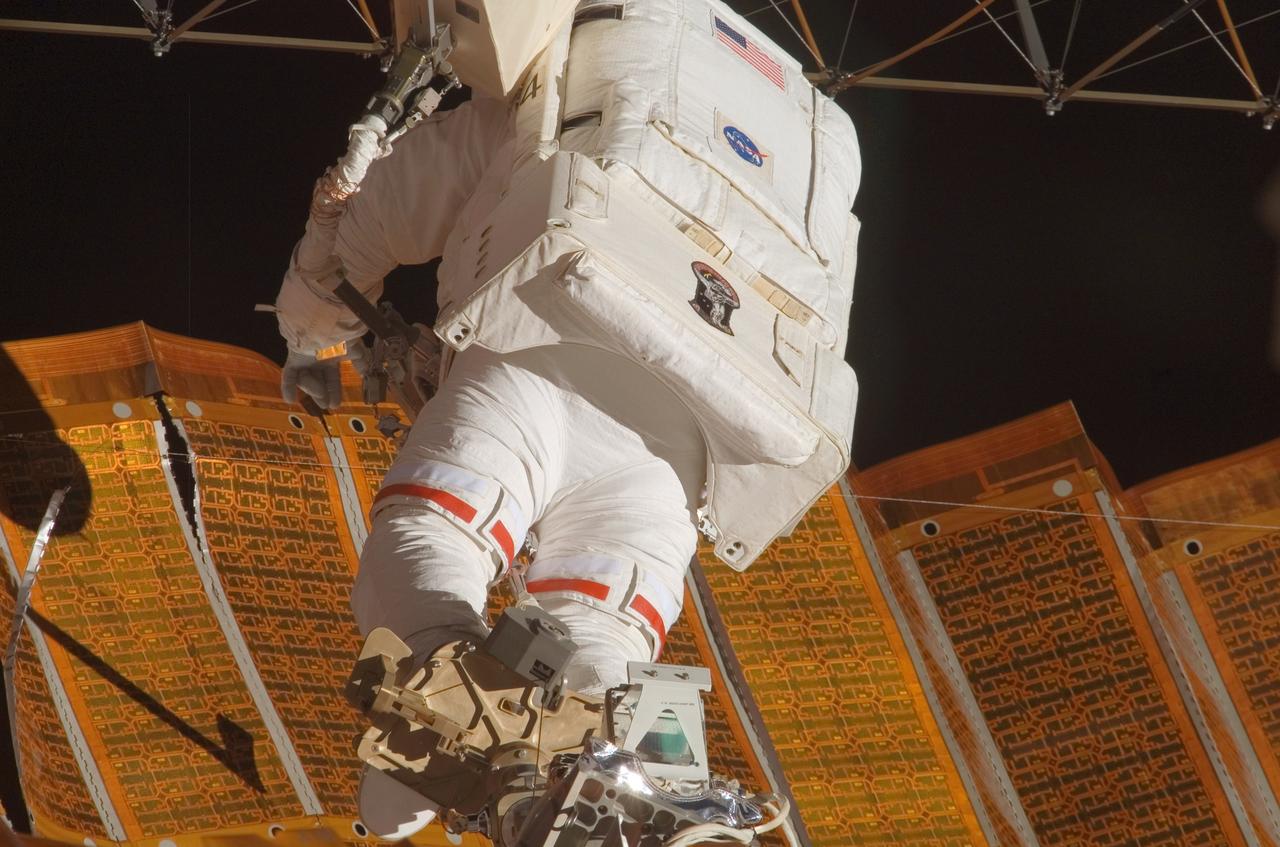
While anchored to a foot restraint on the end of the Orbiter Boom Sensor System (OBSS), astronaut Scott Parazynski, STS-120 mission specialist, participated in the mission's fourth session of extravehicular activity (EVA) while Space Shuttle Discovery was docked with the International Space Station (ISS). During the 7-hour and 19-minute space walk, Parazynski cut a snagged wire and installed homemade stabilizers designed to strengthen the structure and stability of the damaged P6 4B solar array wing. Astronaut Doug Wheelock (out of frame), mission specialist, assisted from the truss by keeping an eye on the distance between Parazynski and the array. Once the repair was complete, flight controllers on the ground successfully completed the deployment of the array.
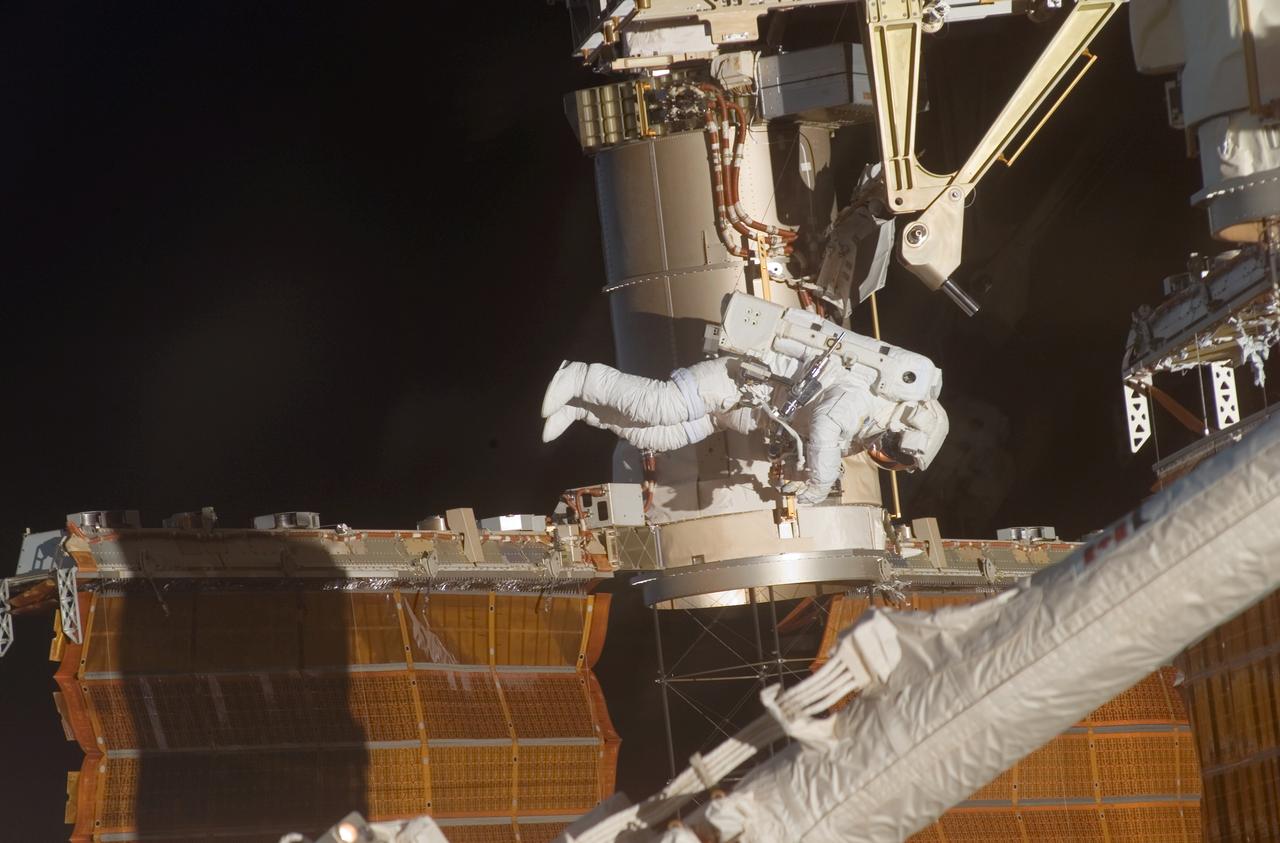
Astronaut Doug Wheelock, STS-120 mission specialist, participated in the mission's fourth session of extravehicular activity (EVA) while Space Shuttle Discovery was docked with the International Space Station (ISS). During the 7-hour and 19-minute space walk, astronaut Scott Parazynski (out of frame), mission specialist, cut a snagged wire and installed homemade stabilizers designed to strengthen the structure and stability of the damaged P6 4B solar array wing. Wheelock assisted from the truss by keeping an eye on the distance between Parazynski and the array. Once the repair was complete, flight controllers on the ground successfully completed the deployment of the array.
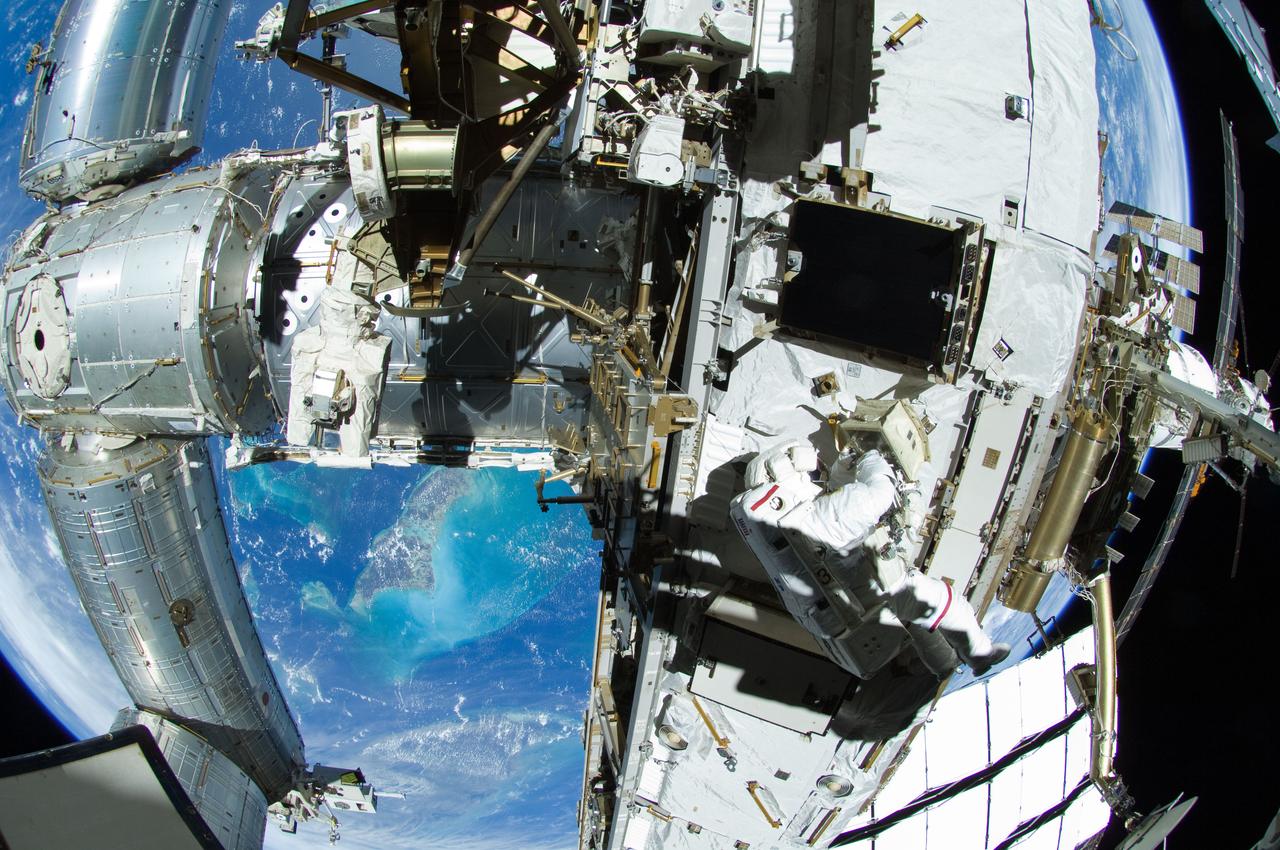
ISS032-E-024171 (30 Aug. 2012) --- Backdropped over Andros Island and other parts of the Bahamas, NASA astronaut Sunita Williams and Japan Aerospace Exploration Agency astronaut Aki Hoshide (out of frame), both Expedition 32 flight engineers, participate in a session of extravehicular activity (EVA) to continue outfitting the International Space Station.
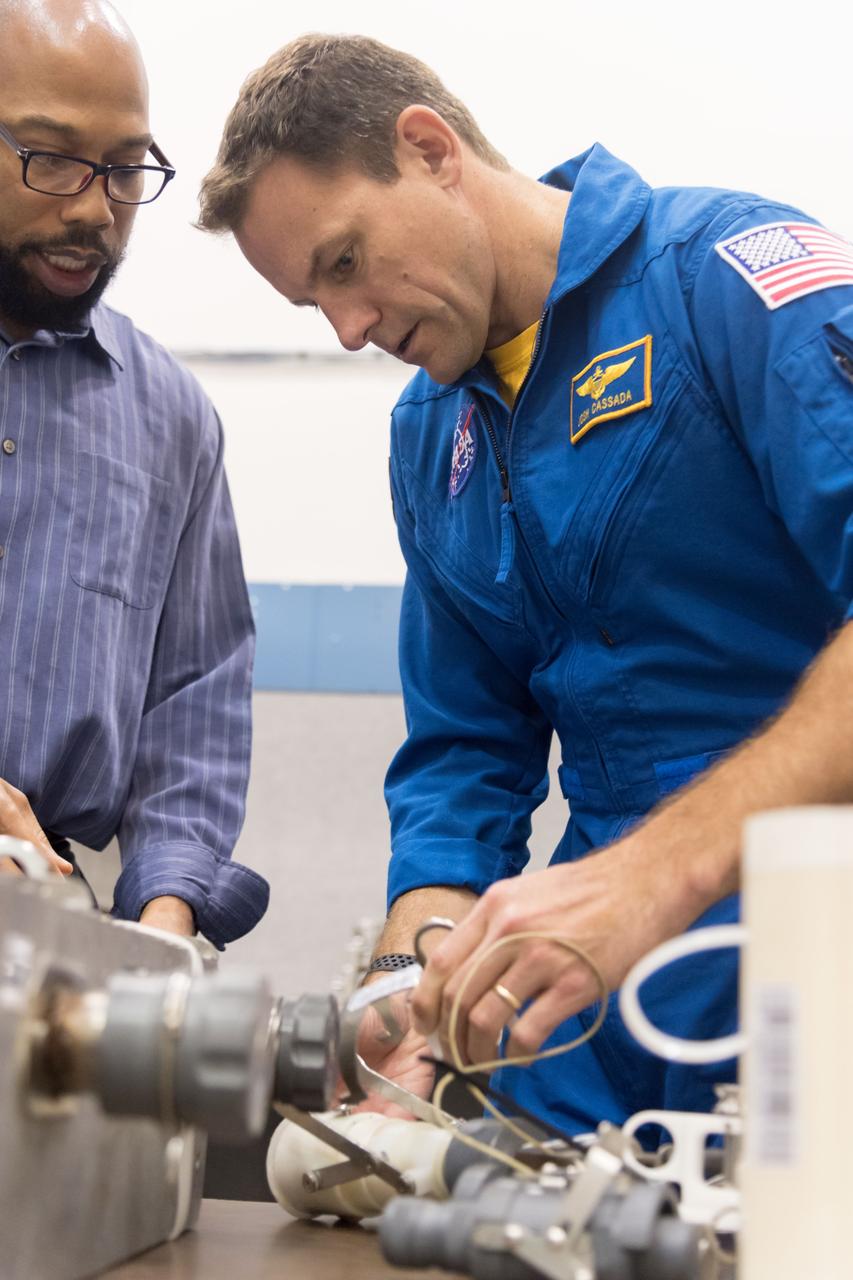
CCP astronauts Suni Williams and Josh Cassada during ISS EVA Maintenance 1G training.
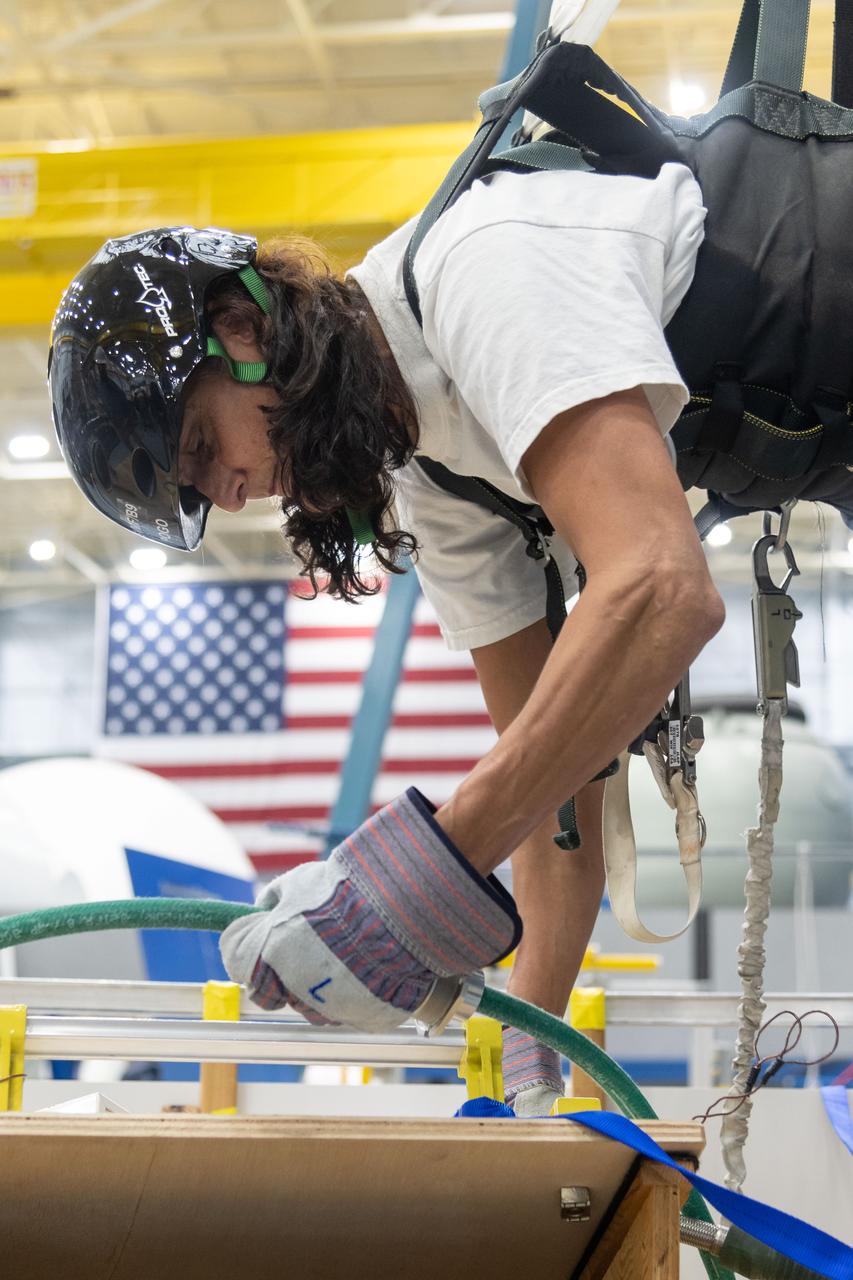
Commercial Crew Program (CCP) astronaut Suni Williams in ISS EVA POGO training in SVMF POGO.
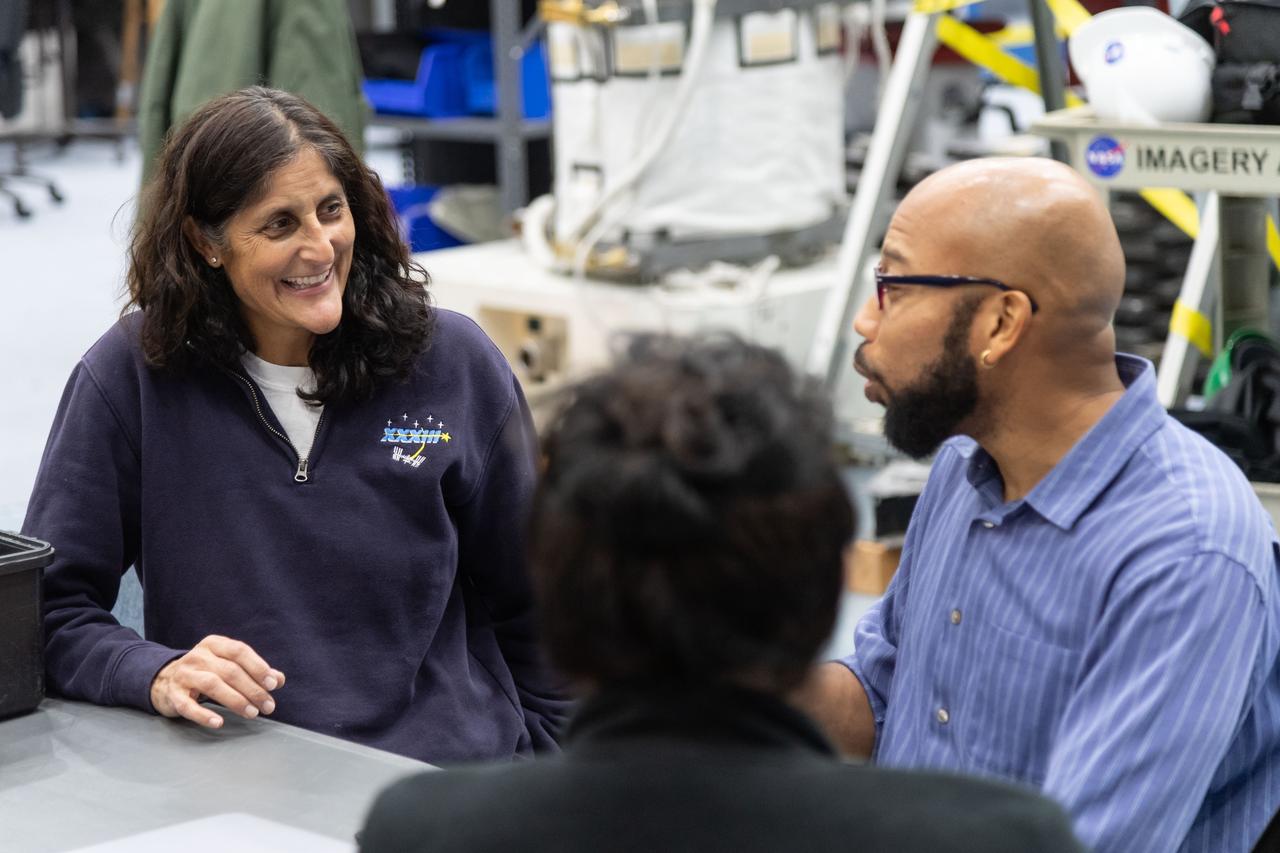
Commercial Crew Program (CCP) astronaut Suni Williams in ISS EVA POGO training in SVMF POGO.

Commercial Crew Program (CCP) astronaut Suni Williams in ISS EVA POGO training in SVMF POGO.
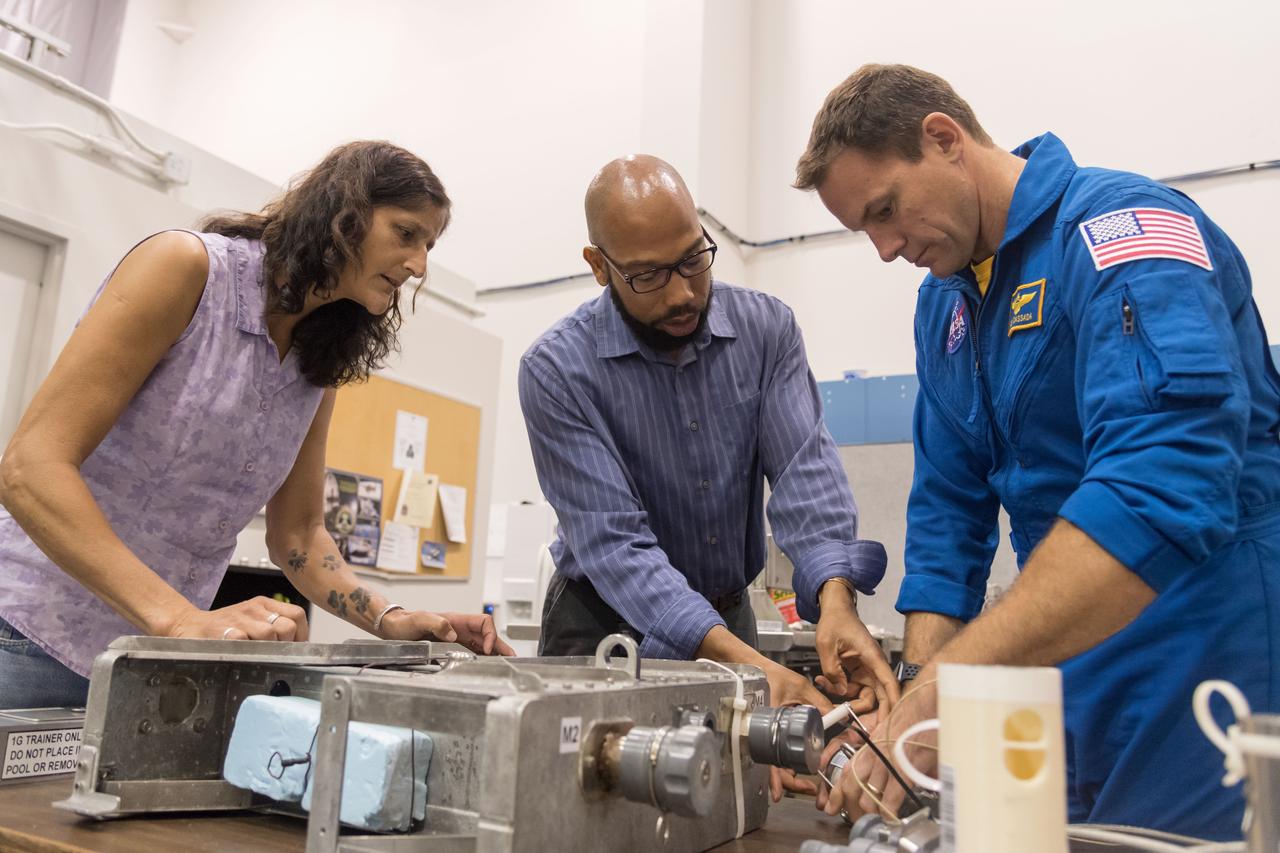
CCP astronauts Suni Williams and Josh Cassada during ISS EVA Maintenance 1G training.
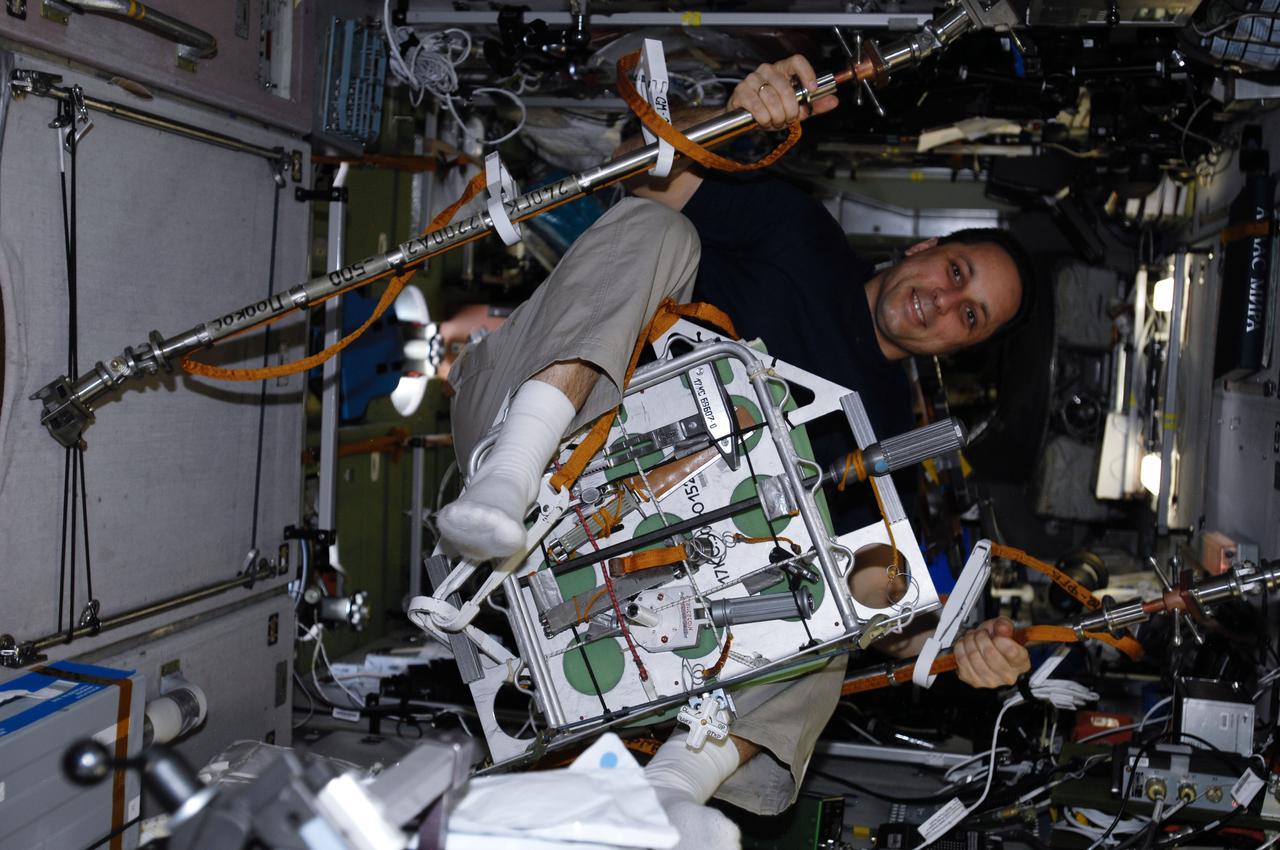
ISS030-E-061157 (3 Feb. 2012) --- Russian cosmonaut Anton Shkaplerov, Expedition 30 flight engineer, works with extravehicular activity (EVA) hardware in the Zvezda Service Module of the International Space Station in preparation for an EVA scheduled for Feb. 16, 2012.
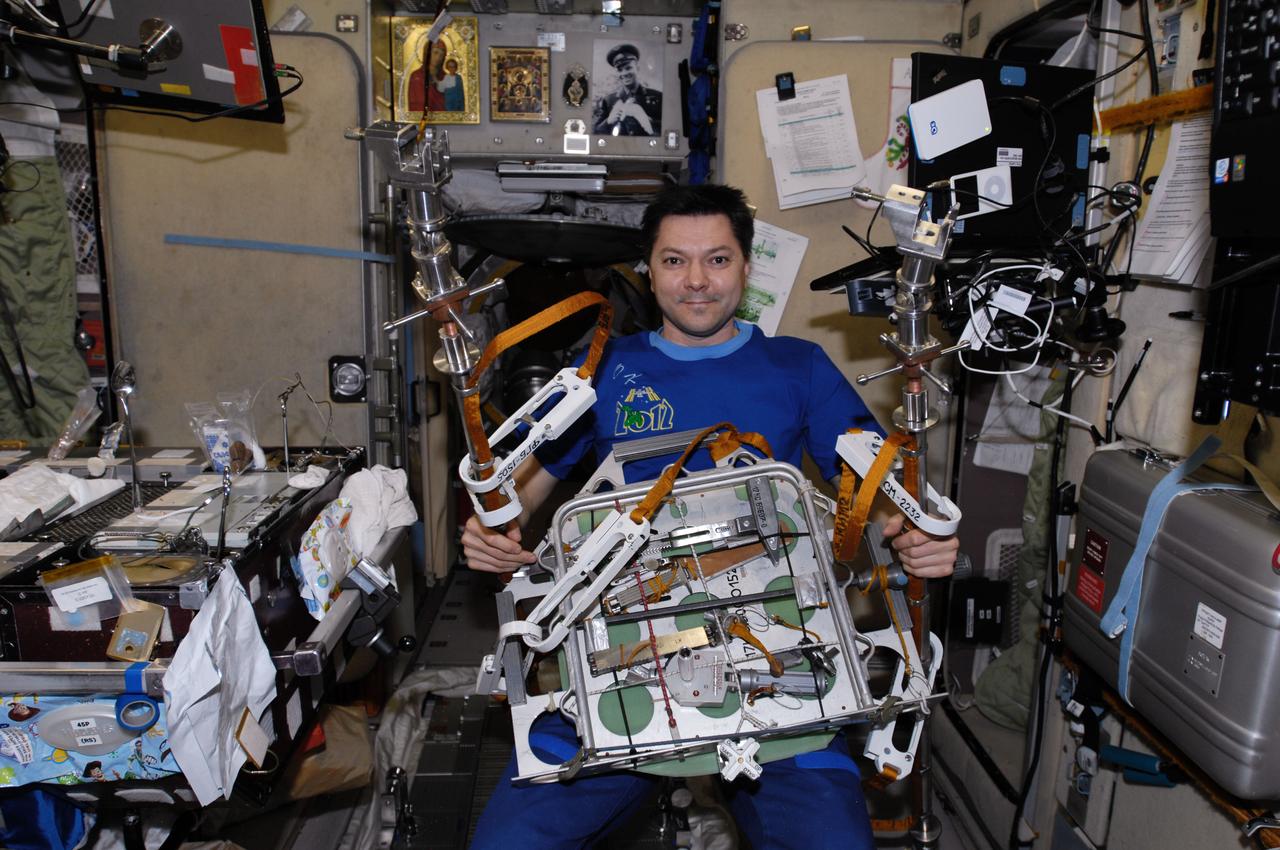
ISS030-E-061158 (3 Feb. 2012) --- Russian cosmonaut Oleg Kononenko, Expedition 30 flight engineer, works with extravehicular activity (EVA) hardware in the Zvezda Service Module of the International Space Station in preparation for an EVA scheduled for Feb. 16, 2012.
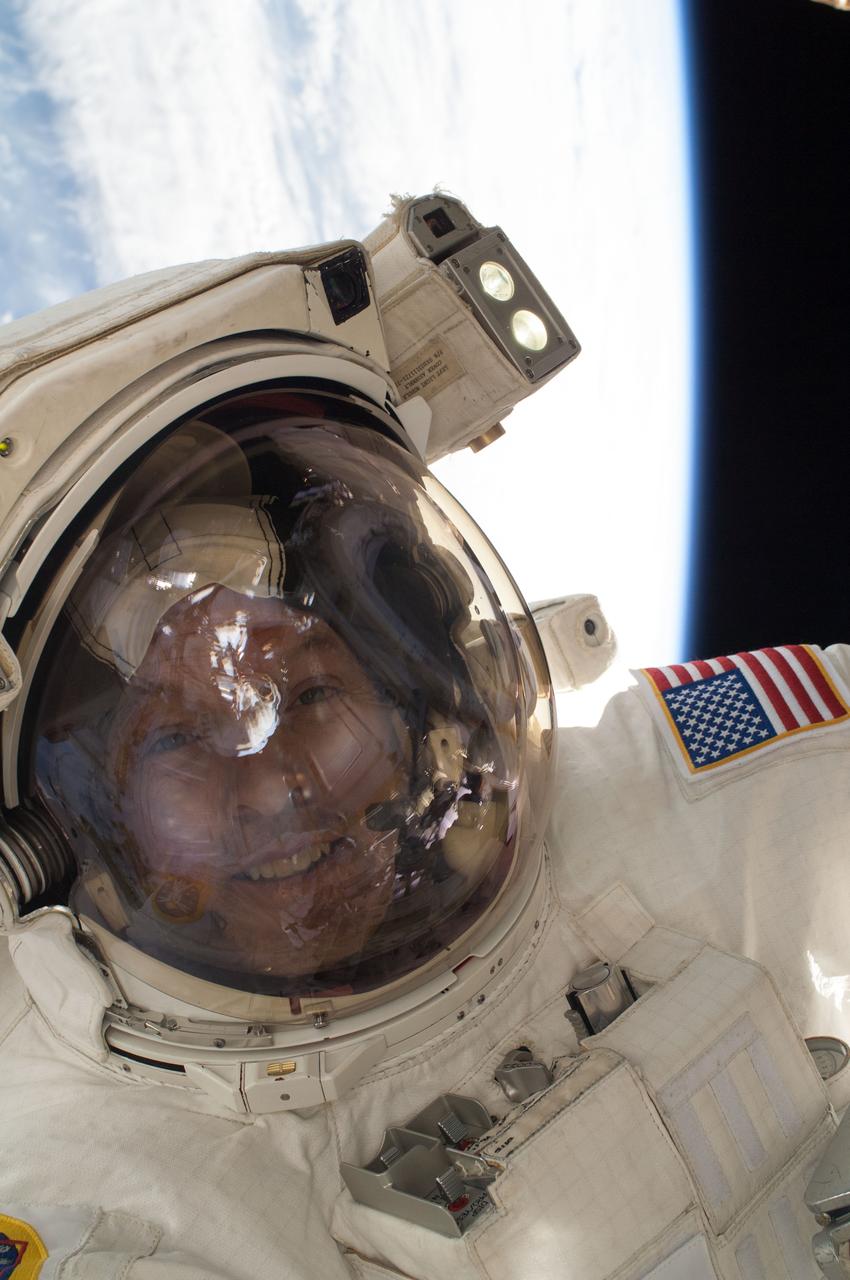
Close-up view of Expedition 39 flight engineer Steve Swanson backdropped by Earth and space at the end of Extravehicular Activity 26 (EVA 26).
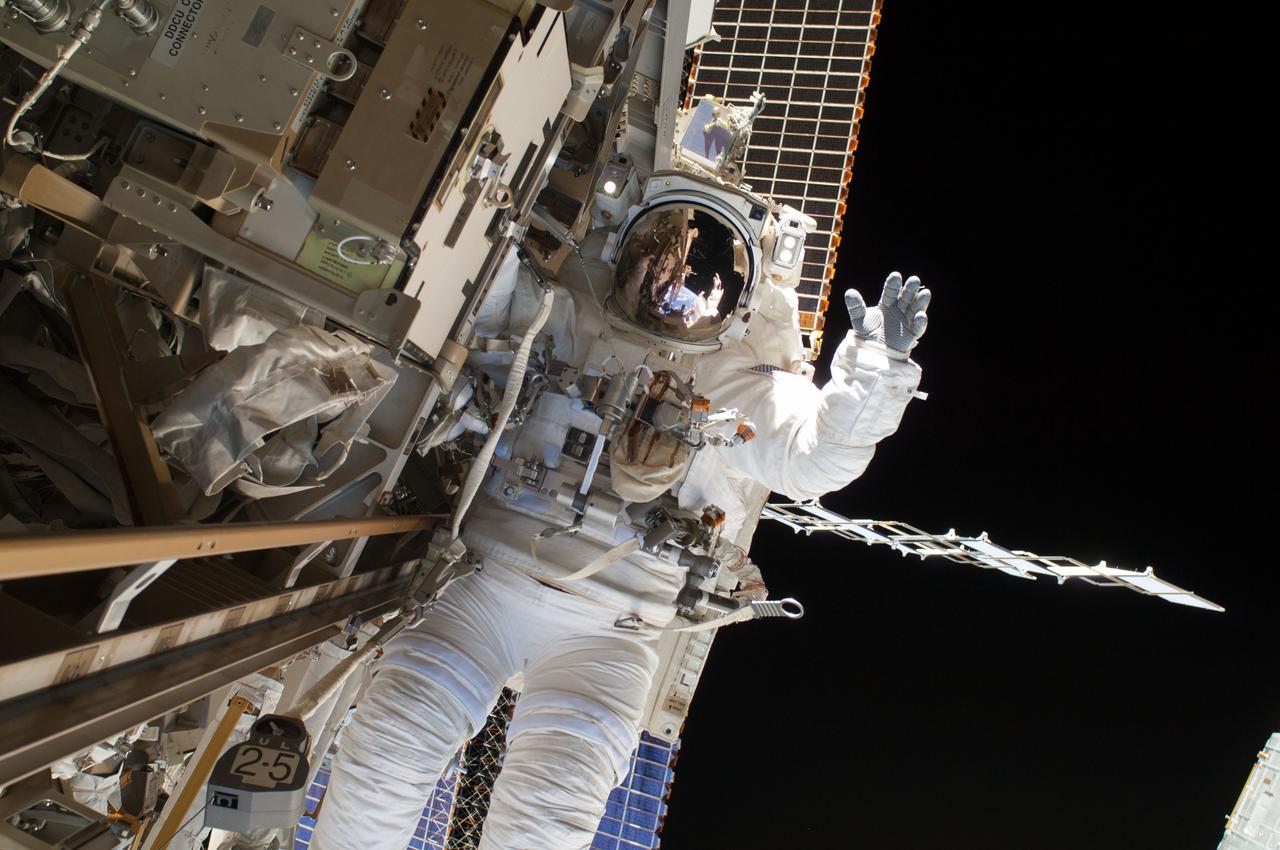
Expedition 39 flight engineer Steve Swanson waves to the camera during Extravehicular Activity 26 (EVA 26) cleanup operations at the S0 Truss.
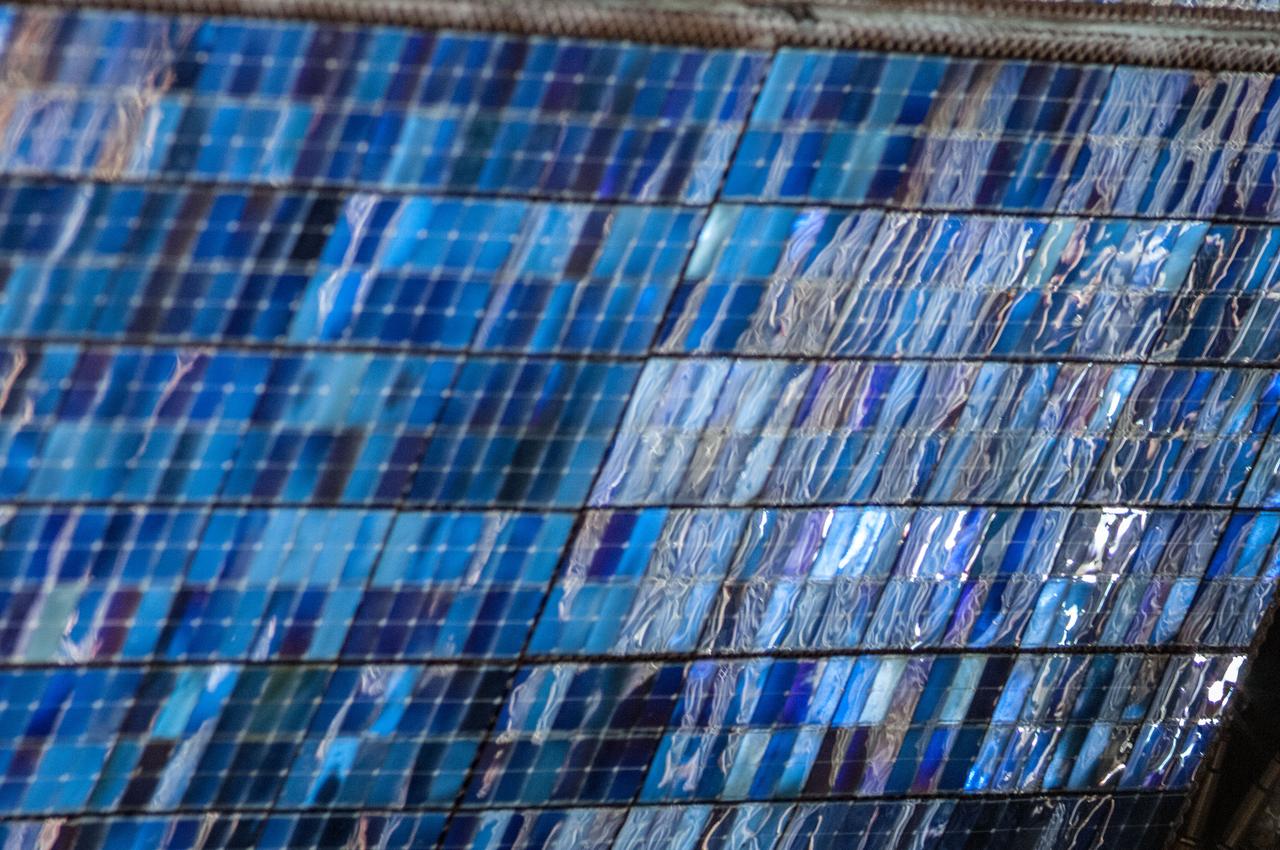
View of FGB solar array panels taken during Russian extravehicular activity (EVA) 36 in support of assembly and maintenance on the International Space Station.
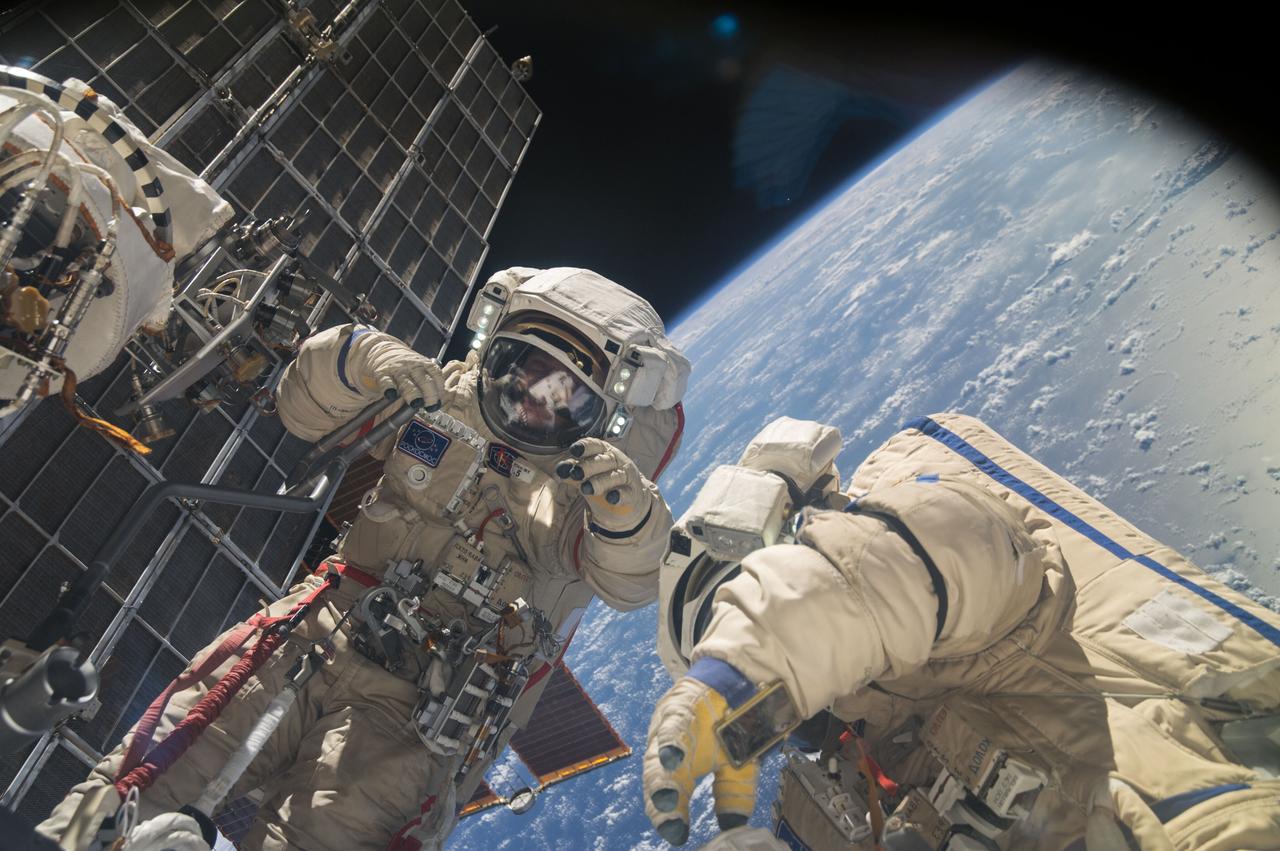
ISS037-E-028787 (9 Nov. 2013) --- Russian cosmonauts Oleg Kotov (left) and Sergey Ryazanskiy, both Expedition 37 flight engineers, attired in Russian Orlan spacesuits, participate in a session of extravehicular activity (EVA) in support of assembly and maintenance on the International Space Station. During the five-hour, 50-minute spacewalk, Kotov and Ryazanskiy continued the setup of a combination EVA workstation and biaxial pointing platform that was installed during an Expedition 36 spacewalk on Aug. 22. Earth’s horizon and the blackness of space provide the backdrop for the scene.
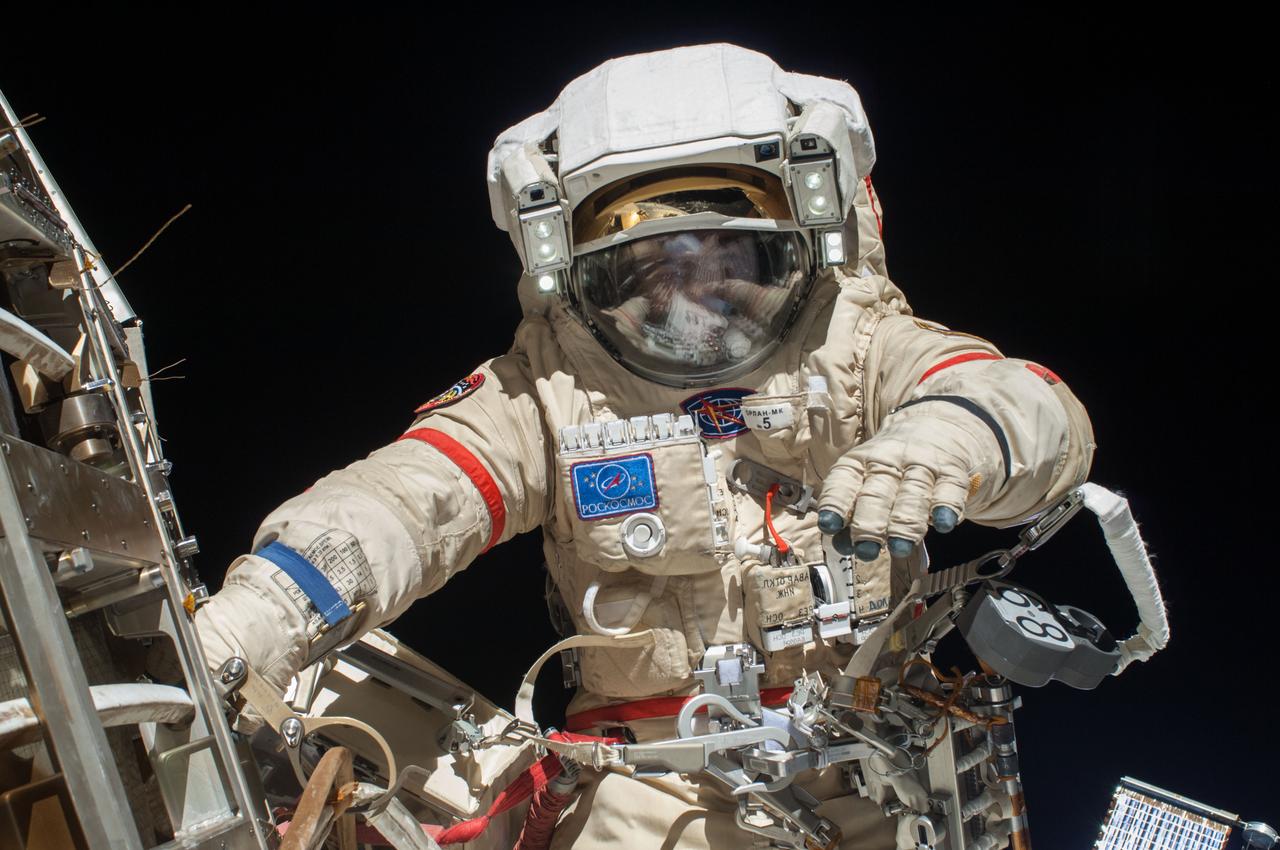
ISS037-E-028101 (9 Nov. 2013) --- Russian cosmonaut Oleg Kotov, Expedition 37 flight engineer, attired in a Russian Orlan spacesuit, participates in a session of extravehicular activity (EVA) in support of assembly and maintenance on the International Space Station. During the five-hour, 50-minute spacewalk, Kotov and Russian cosmonaut Sergey Ryazanskiy (out of frame) continued the setup of a combination EVA workstation and biaxial pointing platform that was installed during an Expedition 36 spacewalk on Aug. 22.
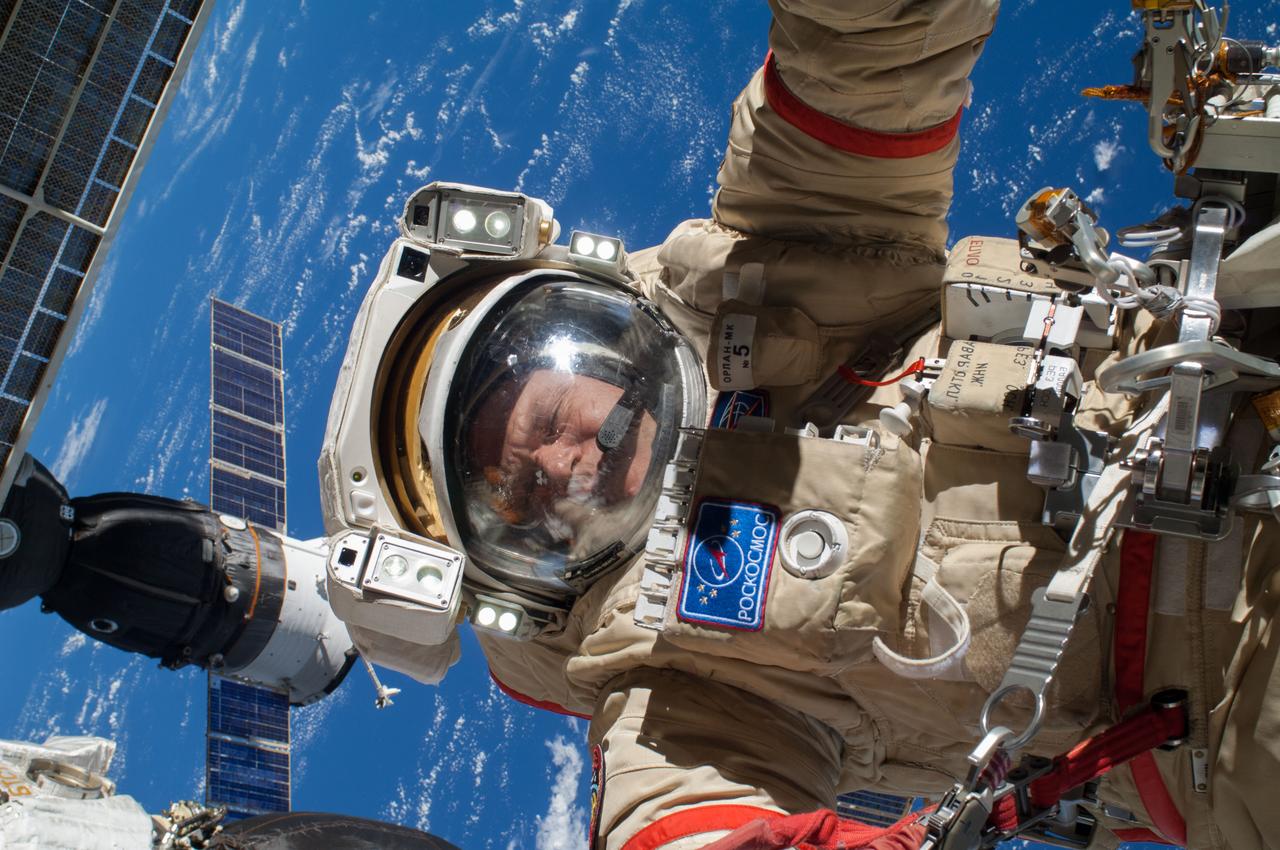
ISS037-E-028094 (9 Nov. 2013) --- Russian cosmonaut Oleg Kotov, Expedition 37 flight engineer, attired in a Russian Orlan spacesuit, participates in a session of extravehicular activity (EVA) in support of assembly and maintenance on the International Space Station. During the five-hour, 50-minute spacewalk, Kotov and Russian cosmonaut Sergey Ryazanskiy (out of frame) continued the setup of a combination EVA workstation and biaxial pointing platform that was installed during an Expedition 36 spacewalk on Aug. 22.
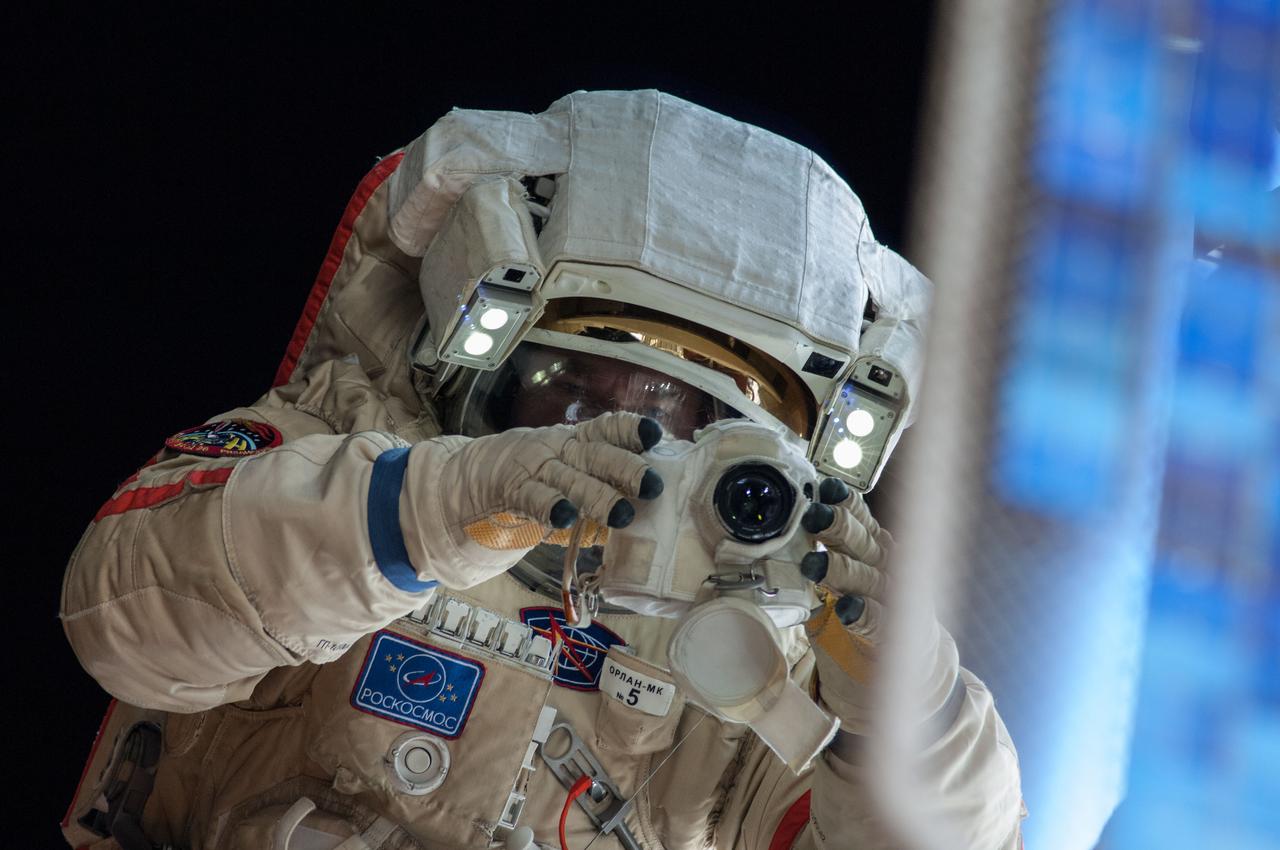
ISS037-E-028569 (9 Nov. 2013) --- Russian cosmonaut Oleg Kotov, Expedition 37 flight engineer, attired in a Russian Orlan spacesuit, uses a still camera during a session of extravehicular activity (EVA) in support of assembly and maintenance on the International Space Station. During the five-hour, 50-minute spacewalk, Kotov and Russian cosmonaut Sergey Ryazanskiy (out of frame) continued the setup of a combination EVA workstation and biaxial pointing platform that was installed during an Expedition 36 spacewalk on Aug. 22.
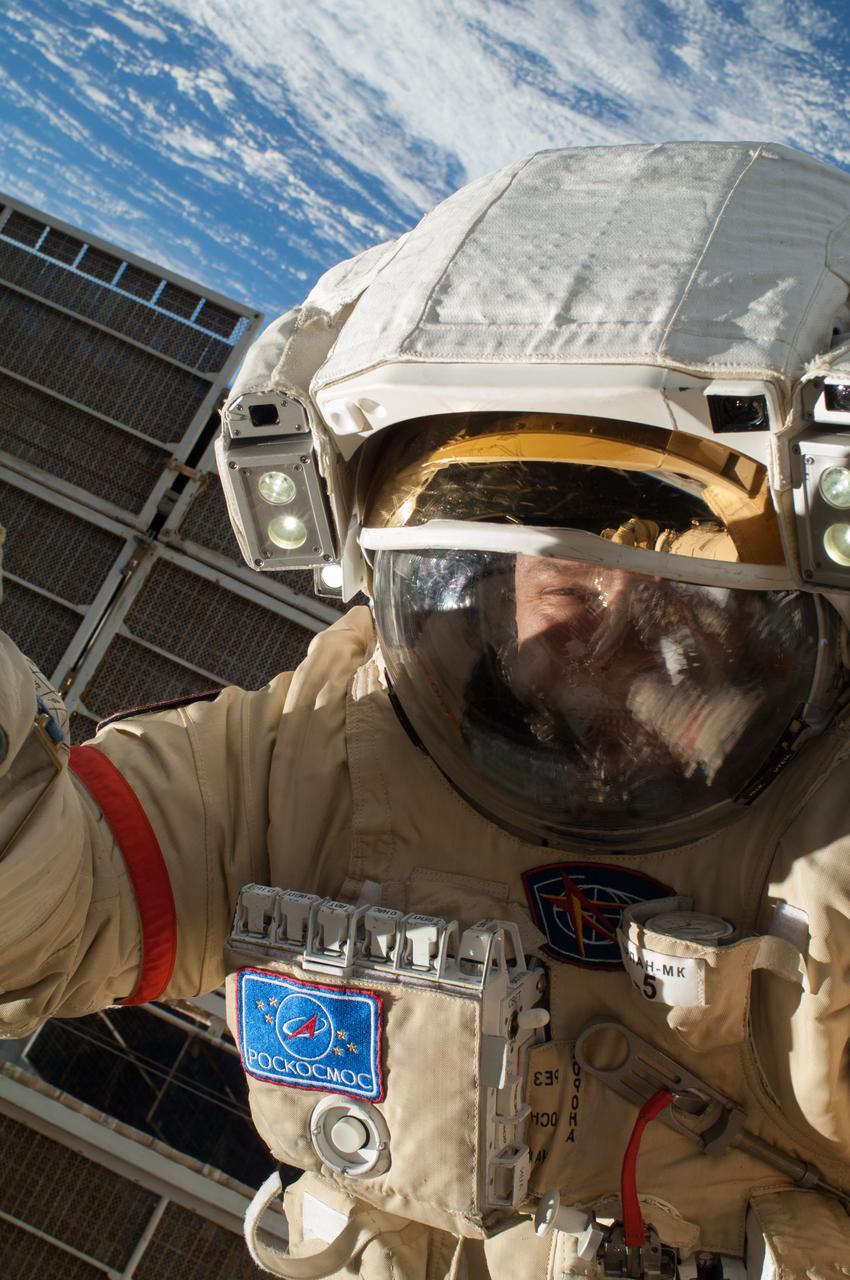
ISS037-E-028067 (9 Nov. 2013) --- Russian cosmonaut Oleg Kotov, Expedition 37 flight engineer, attired in a Russian Orlan spacesuit, participates in a session of extravehicular activity (EVA) in support of assembly and maintenance on the International Space Station. During the five-hour, 50-minute spacewalk, Kotov and Russian cosmonaut Sergey Ryazanskiy (out of frame) continued the setup of a combination EVA workstation and biaxial pointing platform that was installed during an Expedition 36 spacewalk on Aug. 22.
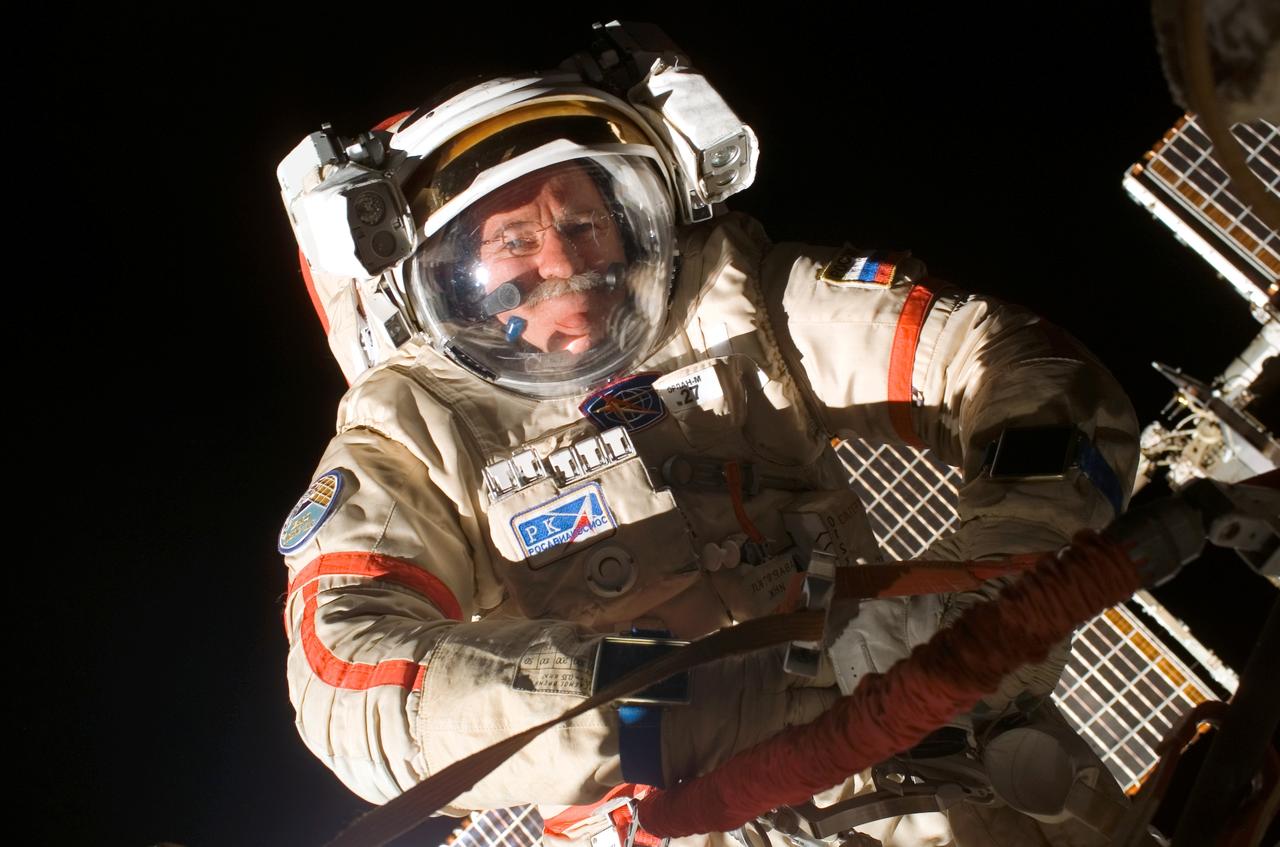
ISS011-E-11944 (18 August 2005) --- Attired in a Russian Orlan spacesuit, astronaut John L. Phillips, Expedition 11 NASA science officer and flight engineer, participates in a session of extravehicular activity (EVA). The 4 hour 58 minute spacewalk by Phillips and cosmonaut Sergei K. Krikalev (out of frame), commander representing Russia's Federal Space Agency, was the 62nd EVA in support of station assembly and maintenance, the 34th conducted from the station itself, and the 16th from the Pirs Docking Compartment.
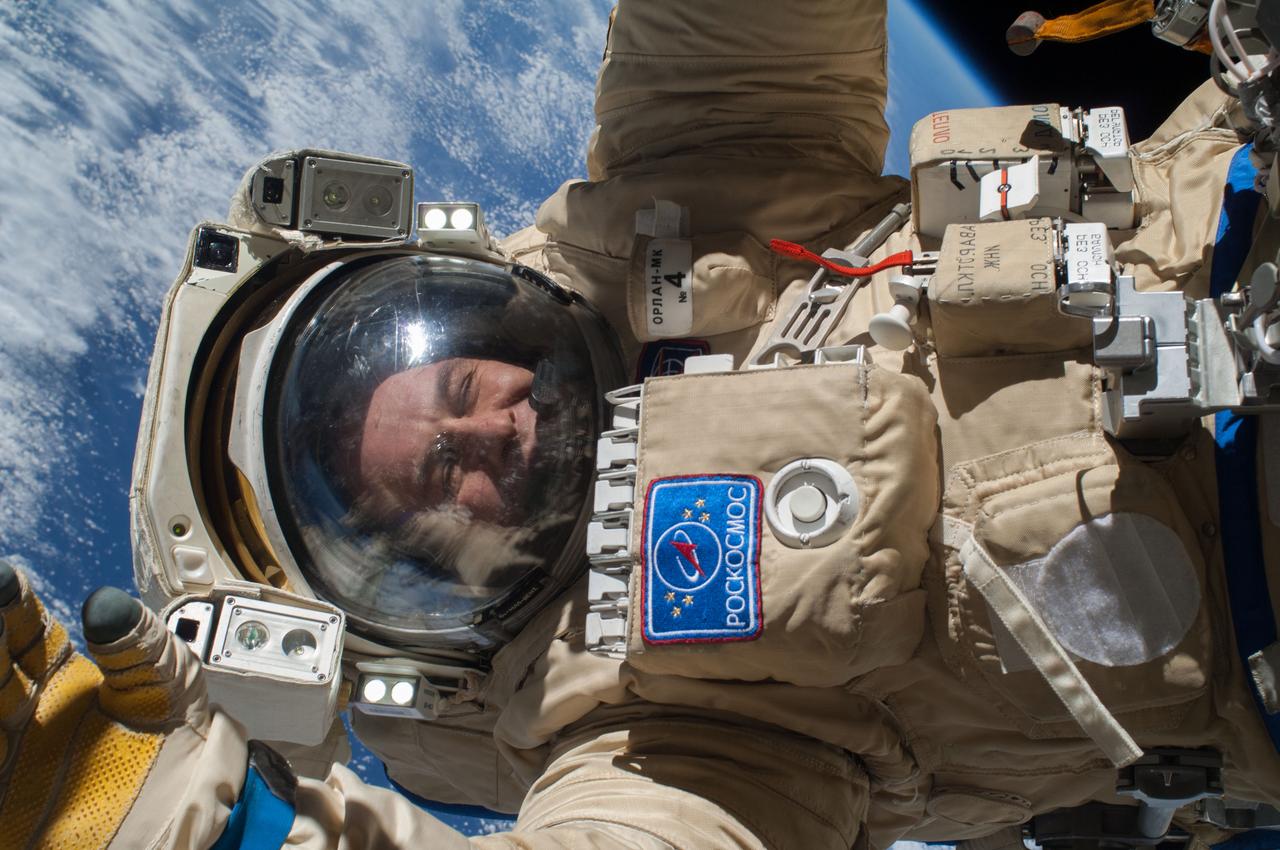
ISS037-E-028082 (9 Nov. 2013) --- Russian cosmonaut Sergey Ryazanskiy, Expedition 37 flight engineer, attired in a Russian Orlan spacesuit, participates in a session of extravehicular activity (EVA) in support of assembly and maintenance on the International Space Station. During the five-hour, 50-minute spacewalk, Ryazanskiy and Russian cosmonaut Oleg Kotov (out of frame) continued the setup of a combination EVA workstation and biaxial pointing platform that was installed during an Expedition 36 spacewalk on Aug. 22.
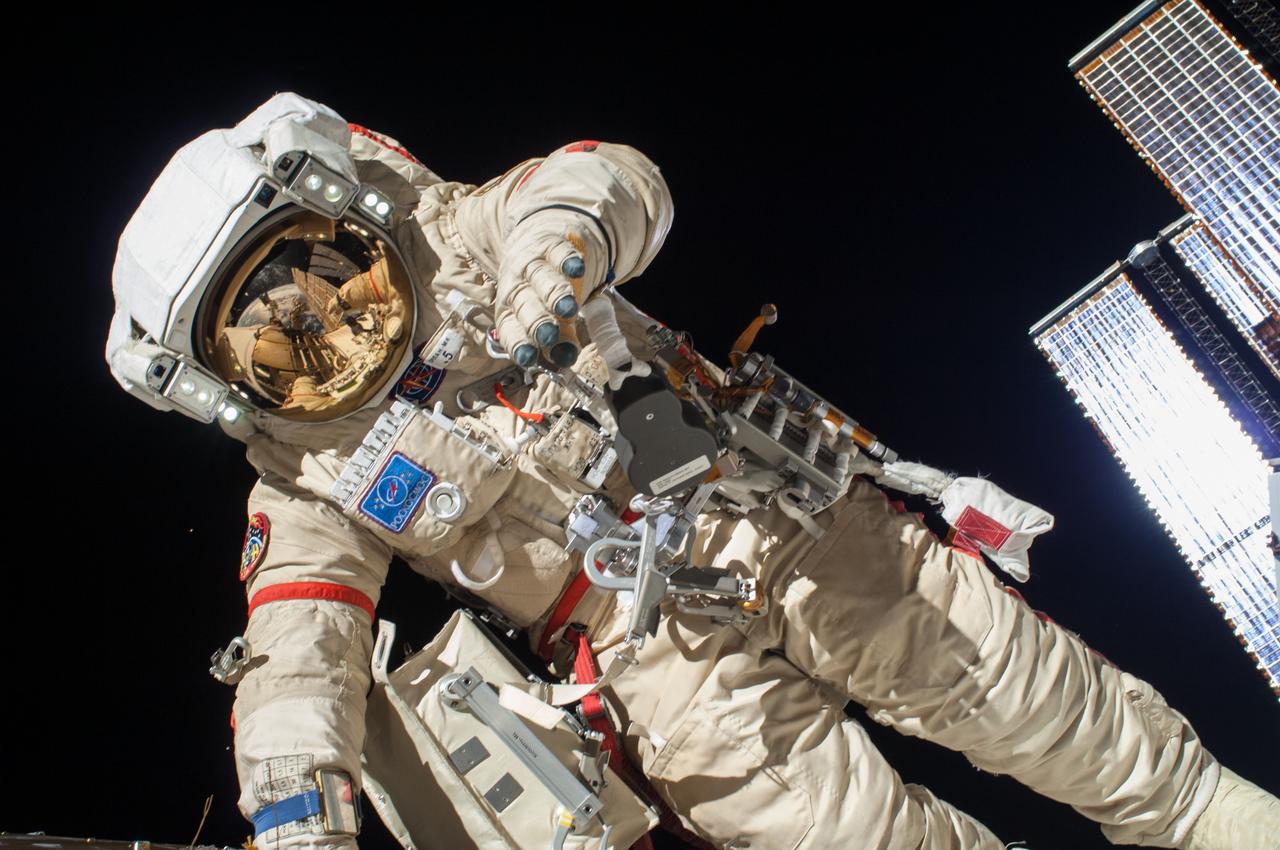
ISS037-E-028107 (9 Nov. 2013) --- Russian cosmonaut Oleg Kotov, Expedition 37 flight engineer, attired in a Russian Orlan spacesuit, participates in a session of extravehicular activity (EVA) in support of assembly and maintenance on the International Space Station. During the five-hour, 50-minute spacewalk, Kotov and Russian cosmonaut Sergey Ryazanskiy (out of frame) continued the setup of a combination EVA workstation and biaxial pointing platform that was installed during an Expedition 36 spacewalk on Aug. 22.
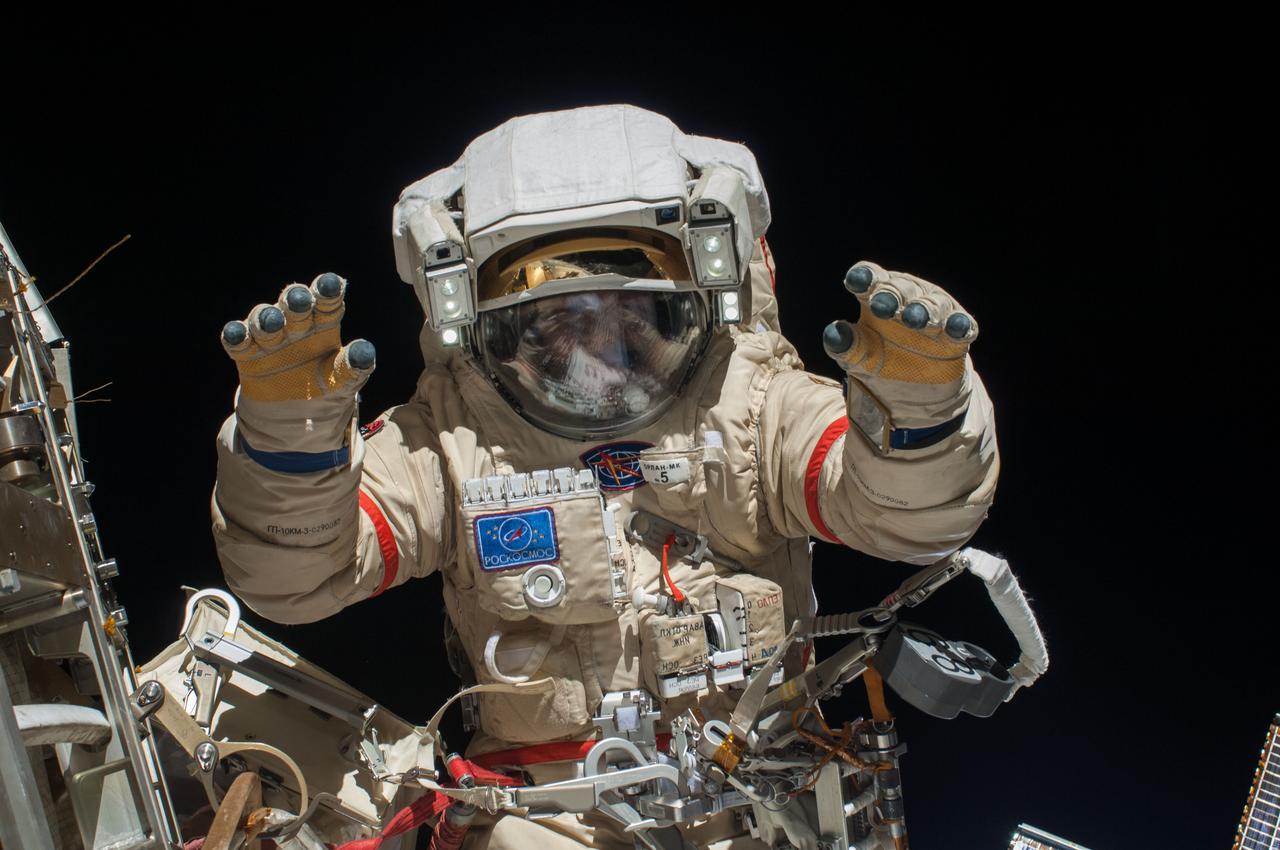
ISS037-E-028102 (9 Nov. 2013) --- Russian cosmonaut Oleg Kotov, Expedition 37 flight engineer, attired in a Russian Orlan spacesuit, participates in a session of extravehicular activity (EVA) in support of assembly and maintenance on the International Space Station. During the five-hour, 50-minute spacewalk, Kotov and Russian cosmonaut Sergey Ryazanskiy (out of frame) continued the setup of a combination EVA workstation and biaxial pointing platform that was installed during an Expedition 36 spacewalk on Aug. 22.
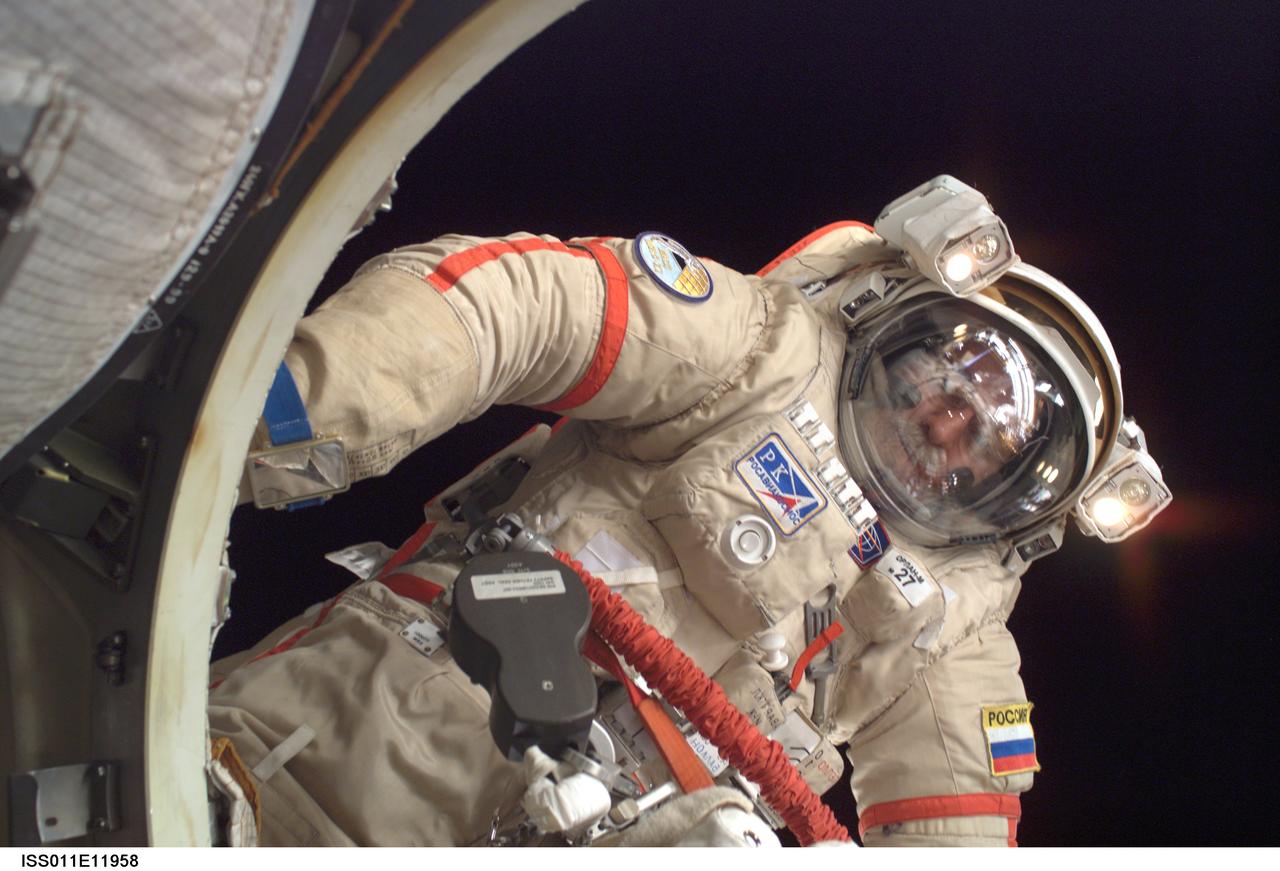
ISS011-E-11958 (18 August 2005) --- Attired in a Russian Orlan spacesuit, astronaut John L. Phillips, Expedition 11 NASA Space Station science officer and flight engineer, participates in a session of extravehicular activity (EVA). The 4 hour 58 minute spacewalk by Phillips and cosmonaut Sergei K. Krikalev (out of frame), commander representing Russia's Federal Space Agency, was the 62nd EVA in support of Station assembly and maintenance, the 34th conducted from the Station itself, and the 16th from the Pirs Docking Compartment.
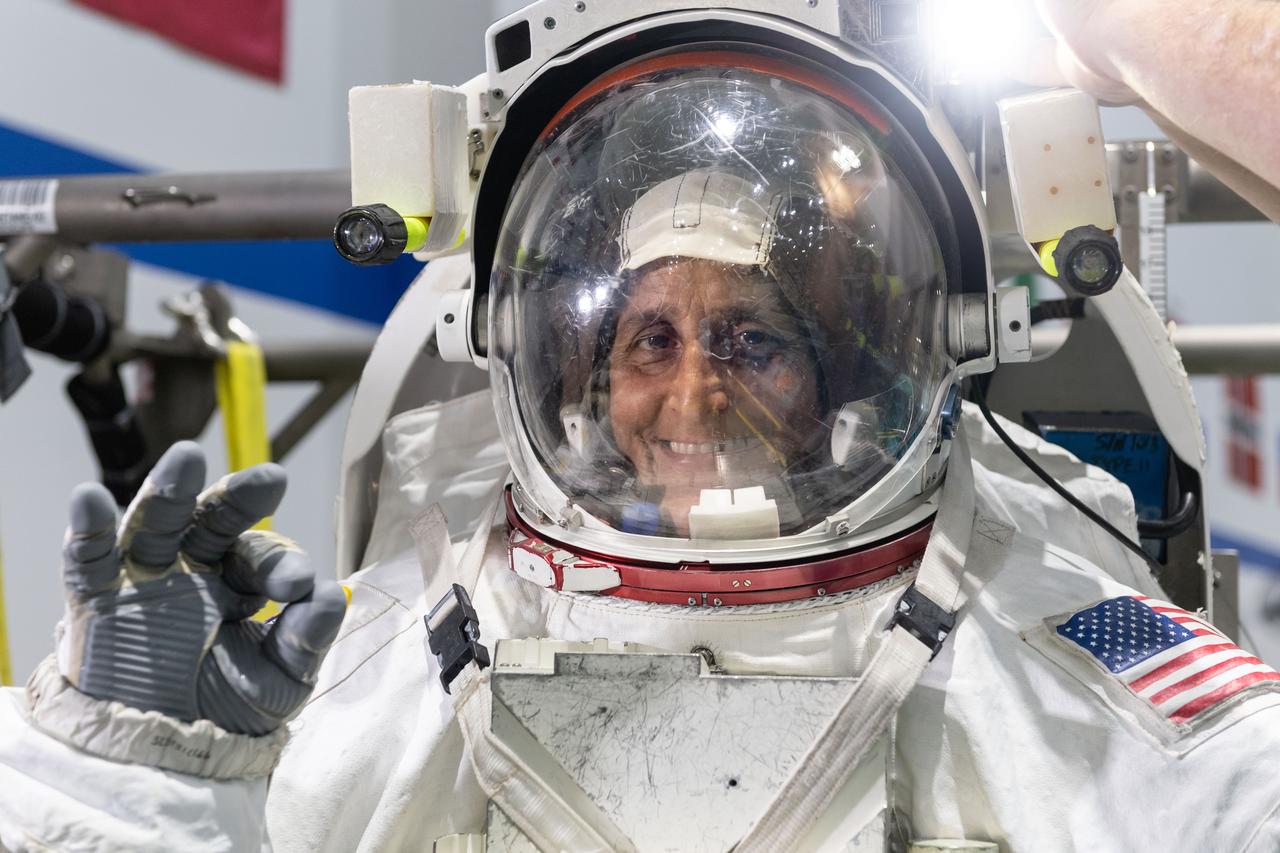
Commercial Crew Program astronaut training with Boeing PCM crew members Suni Williams & Josh Cassada during ISS EVA Maintenance 1 training at the NBL.

Commercial Crew Program astronaut training with Boeing PCM crew members Suni Williams & Josh Cassada during ISS EVA Maintenance 1 training at the NBL.
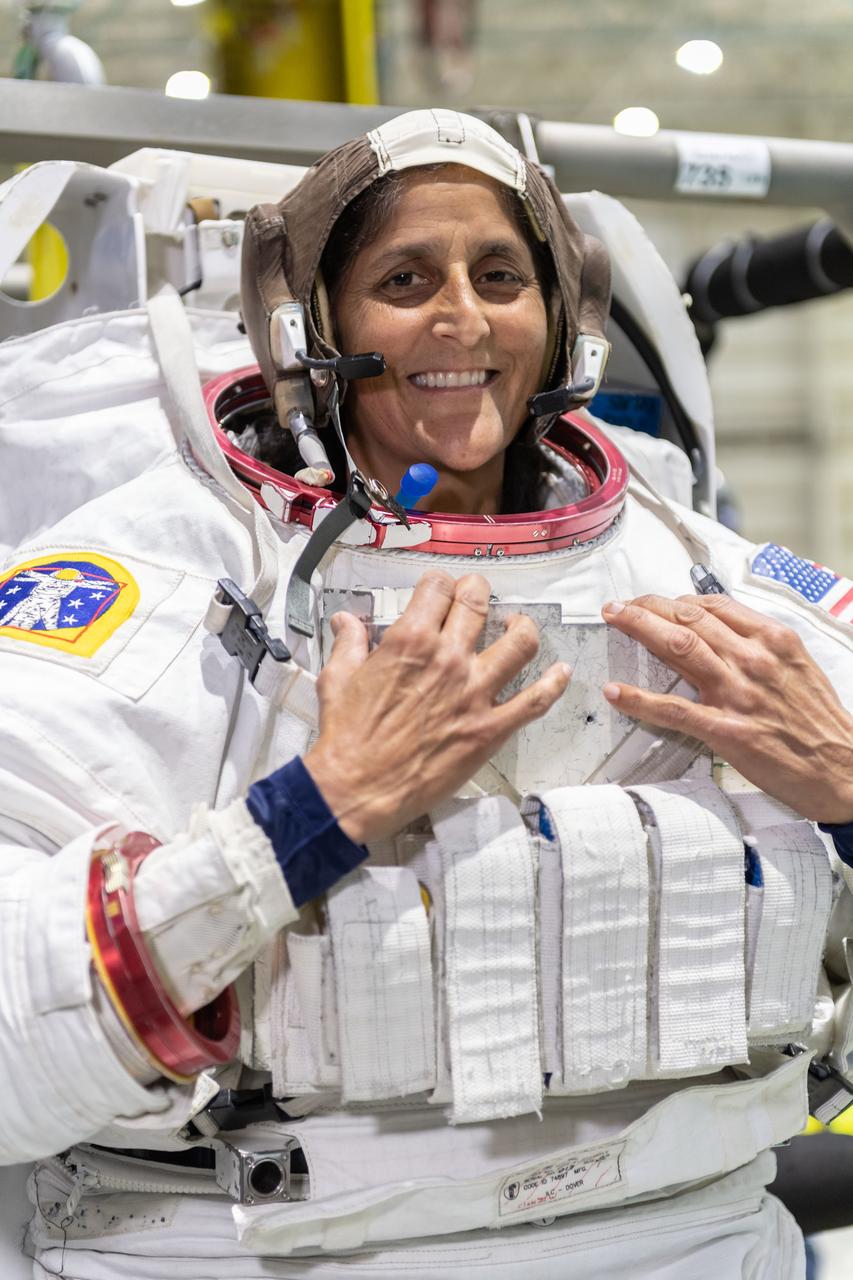
Commercial Crew Program astronaut training with Boeing PCM crew members Suni Williams & Josh Cassada during ISS EVA Maintenance 1 training at the NBL.

Commercial Crew Program astronaut training with Boeing PCM crew members Suni Williams & Josh Cassada during ISS EVA Maintenance 1 training at the NBL.

Commercial Crew Program astronaut training with Boeing PCM crew members Suni Williams & Josh Cassada during ISS EVA Maintenance 1 training at the NBL.

Commercial Crew Program astronaut training with Boeing PCM crew members Suni Williams & Josh Cassada during ISS EVA Maintenance 1 training at the NBL.
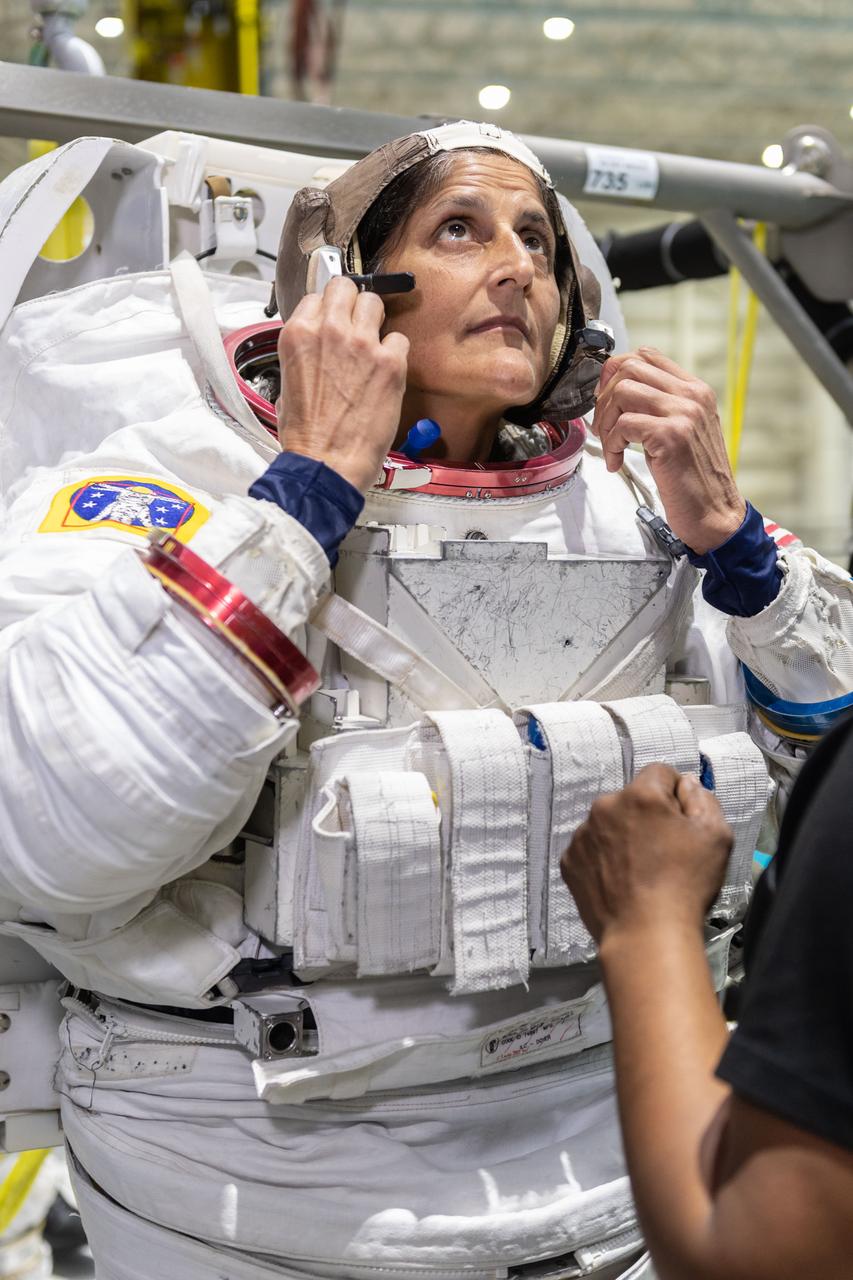
Commercial Crew Program astronaut training with Boeing PCM crew members Suni Williams & Josh Cassada during ISS EVA Maintenance 1 training at the NBL.
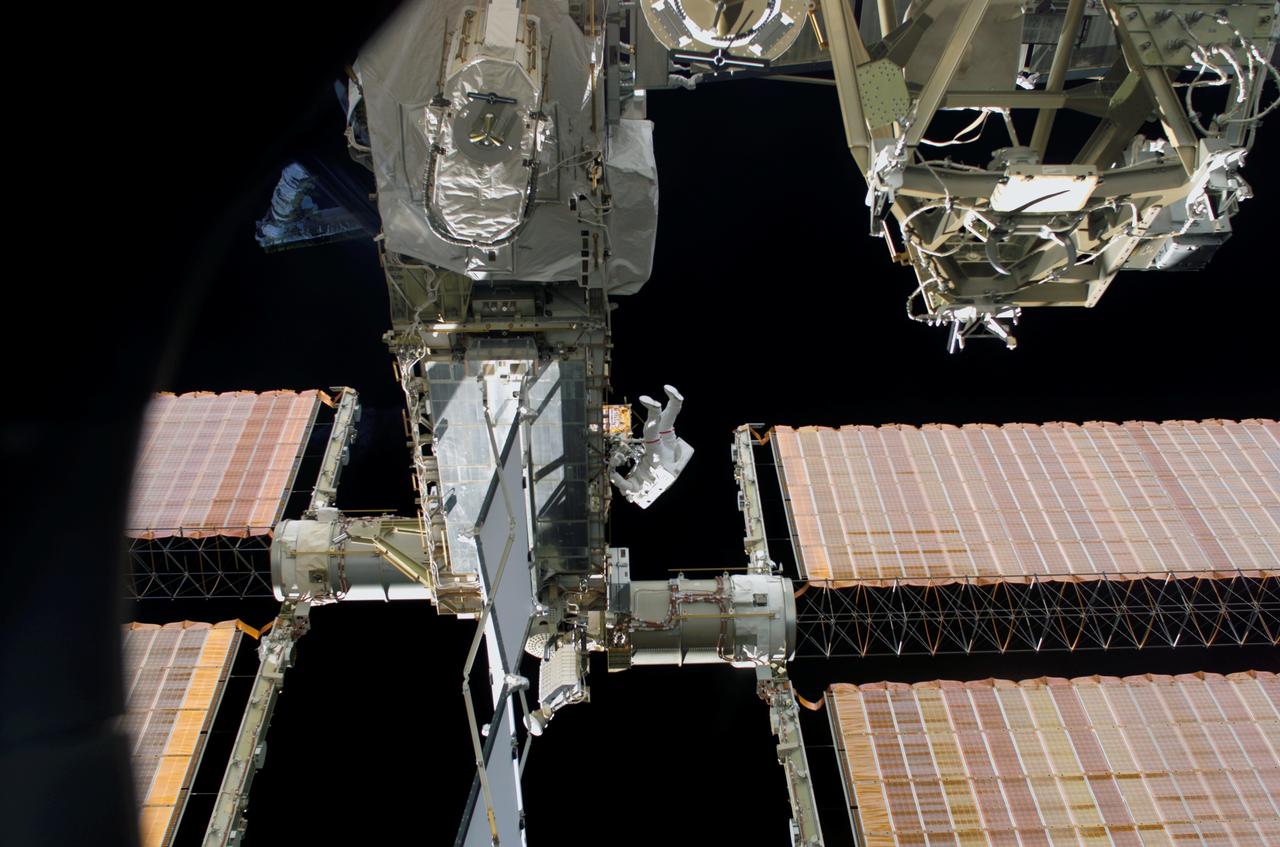
S114-E-6856 (3 August 2005) --- Backdropped by the blackness of space, astronaut Soichi Noguchi, STS-114 mission specialist representing the Japan Aerospace Exploration Agency (JAXA), traverses along the P6 truss near the arrays on the international space station during the mission’s third session of extravehicular activity (EVA).
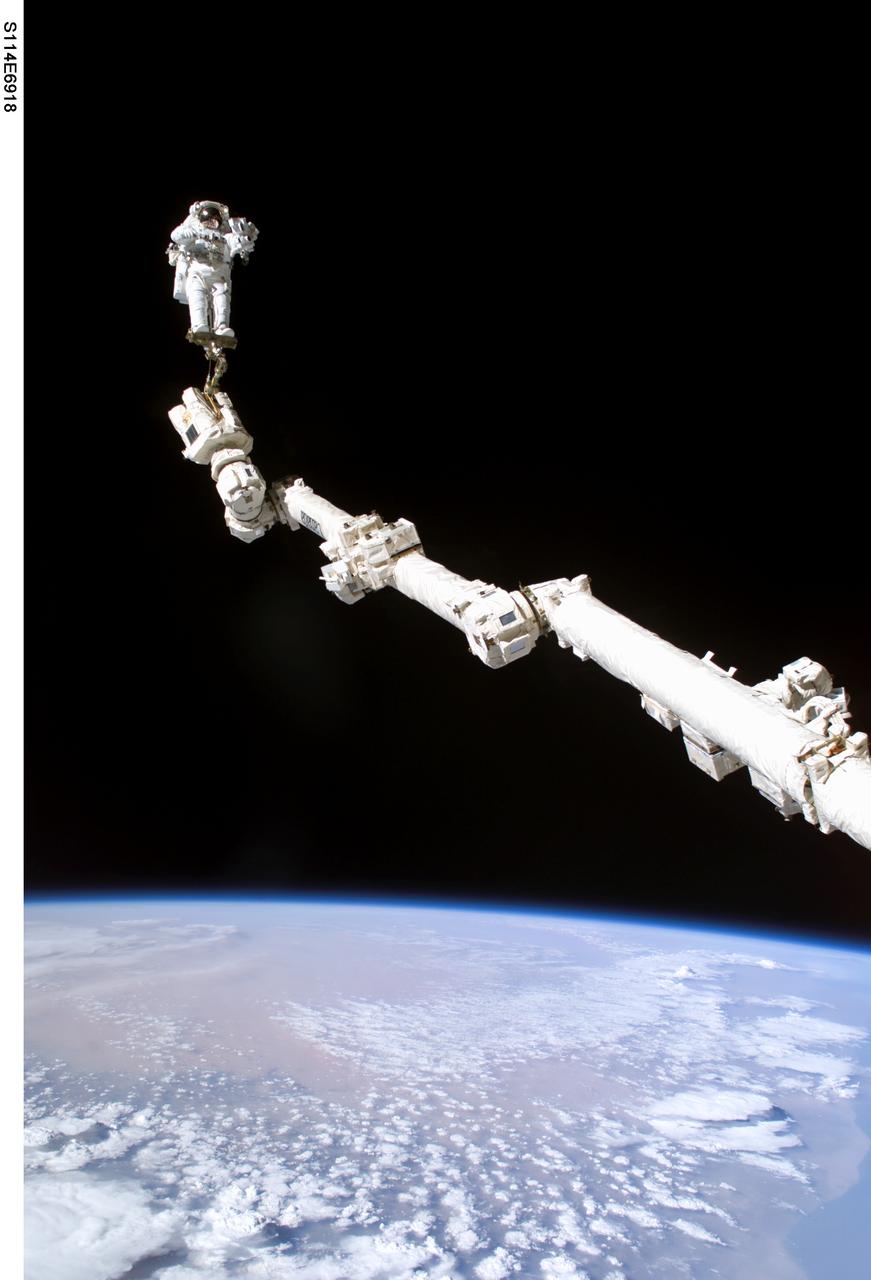
S114-E-6918 (3 August 2005) --- Astronaut Stephen K. Robinson, STS-114 mission specialist, anchored to a foot restraint on the extended International Space Station;s Canadarm2, participates in the mission;s third session of extravehicular activity (EVA). The blackness of space and Earth;s horizon form the backdrop for the image.
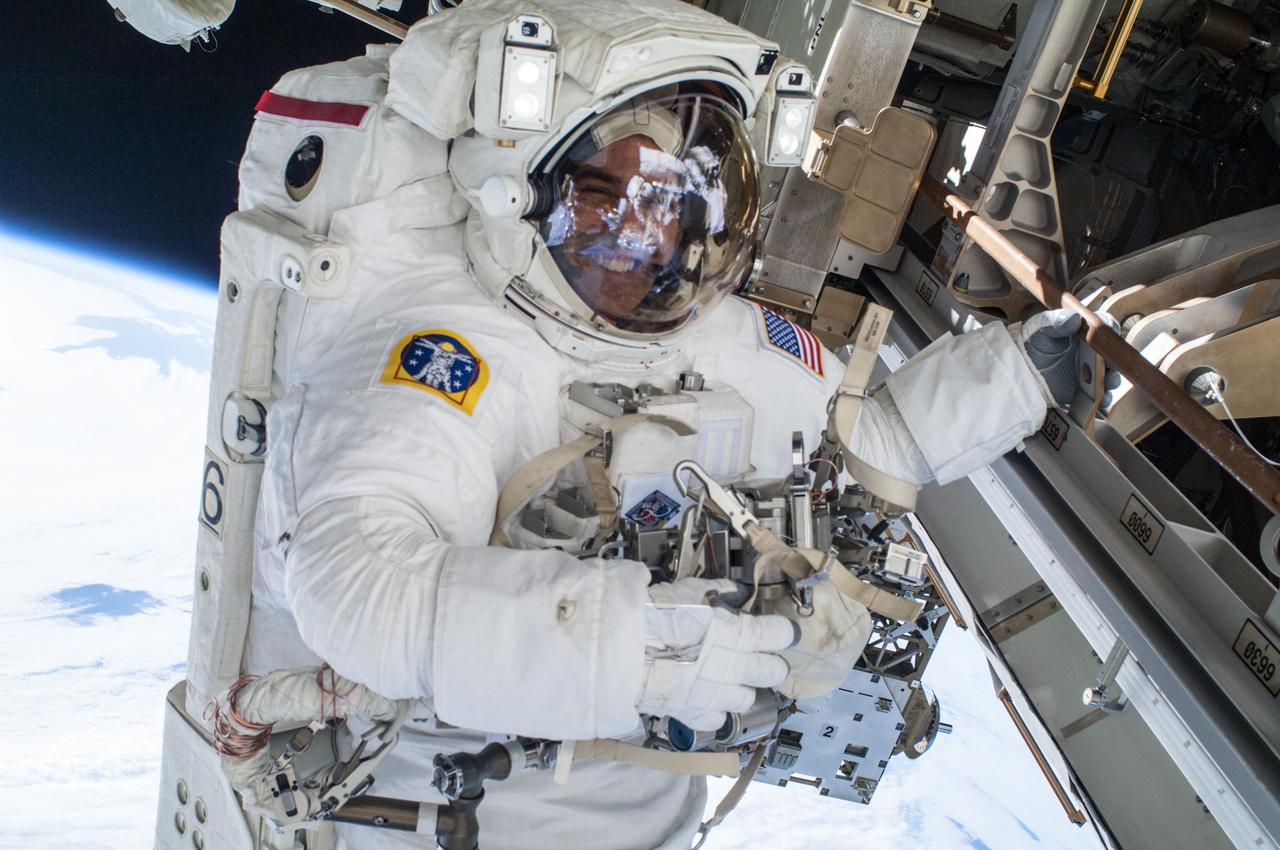
View of Rick Mastracchio,in his Extravehicular Mobility Unit (EMU),working to mate spare Pump Module (PM) Quick Disconnects (QDs) during International Space Station (ISS) Extravehicular Activity (EVA) 25. Image was released by astronaut on Twitter.
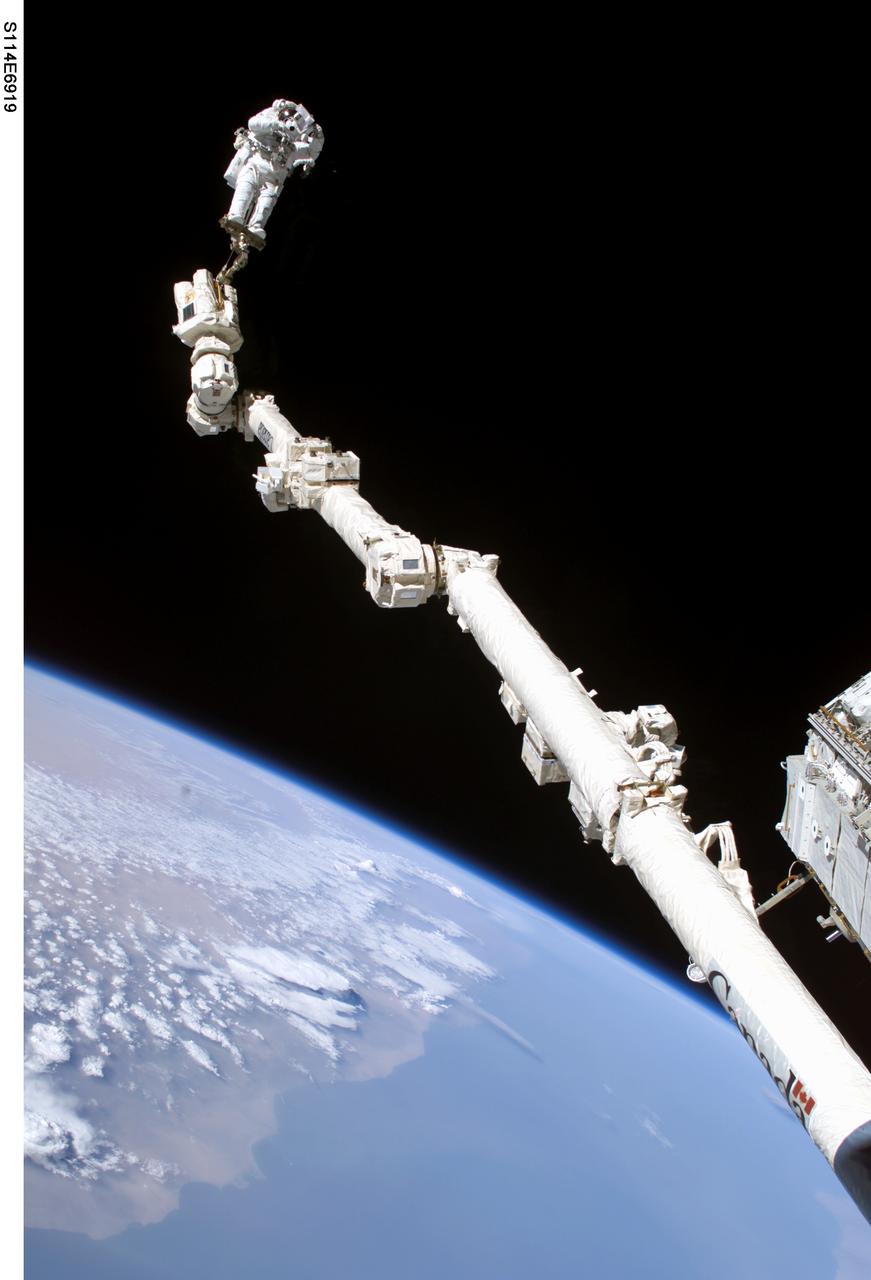
S114-E-06919 (3 Aug. 2005) --- Astronaut Stephen K. Robinson, STS-114 mission specialist, anchored to a foot restraint on the extended International Space Station;s Canadarm2, participates in the mission;s third session of extravehicular activity (EVA). The blackness of space and Earth;s horizon form the backdrop for the image.
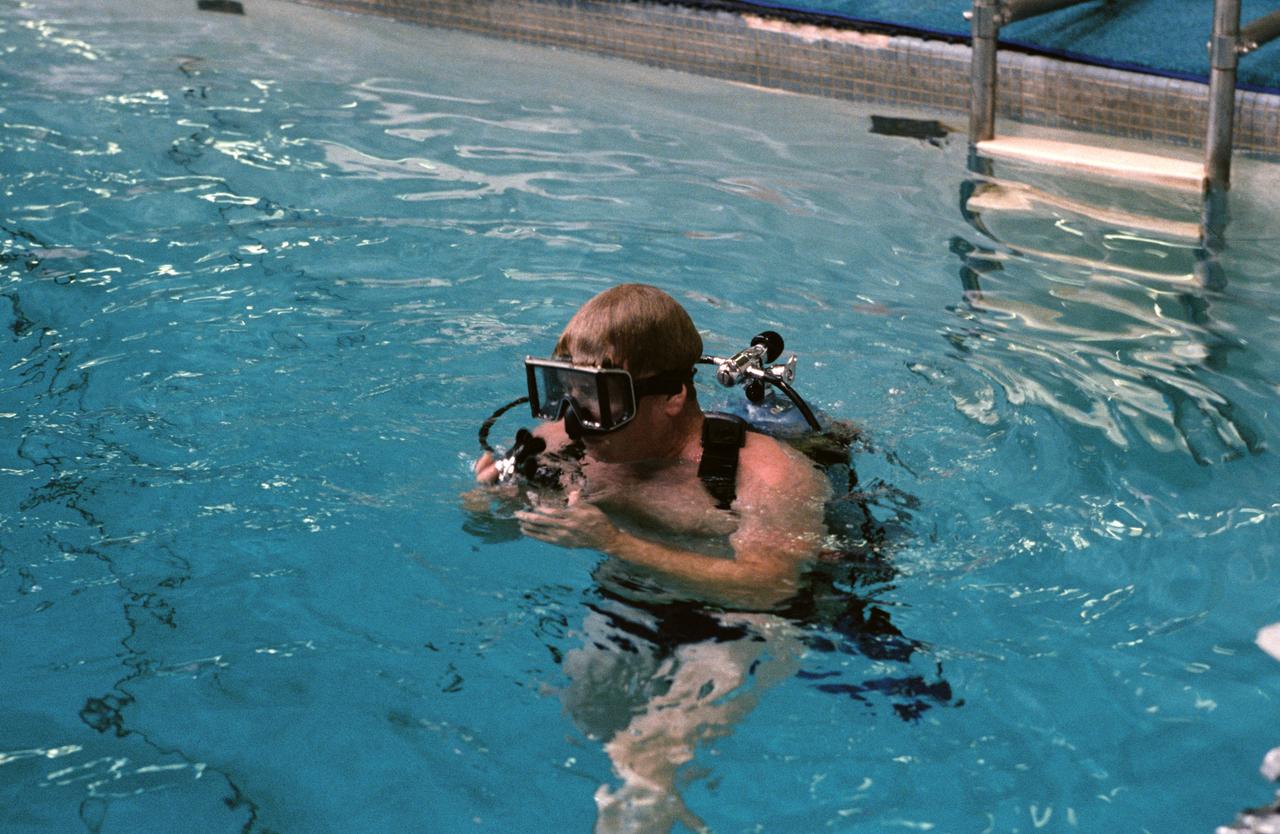
Preparations for Underwater EVA training for the STS 41-G crew. Divers prepare to don their scuba gear for the begining of EVA training.
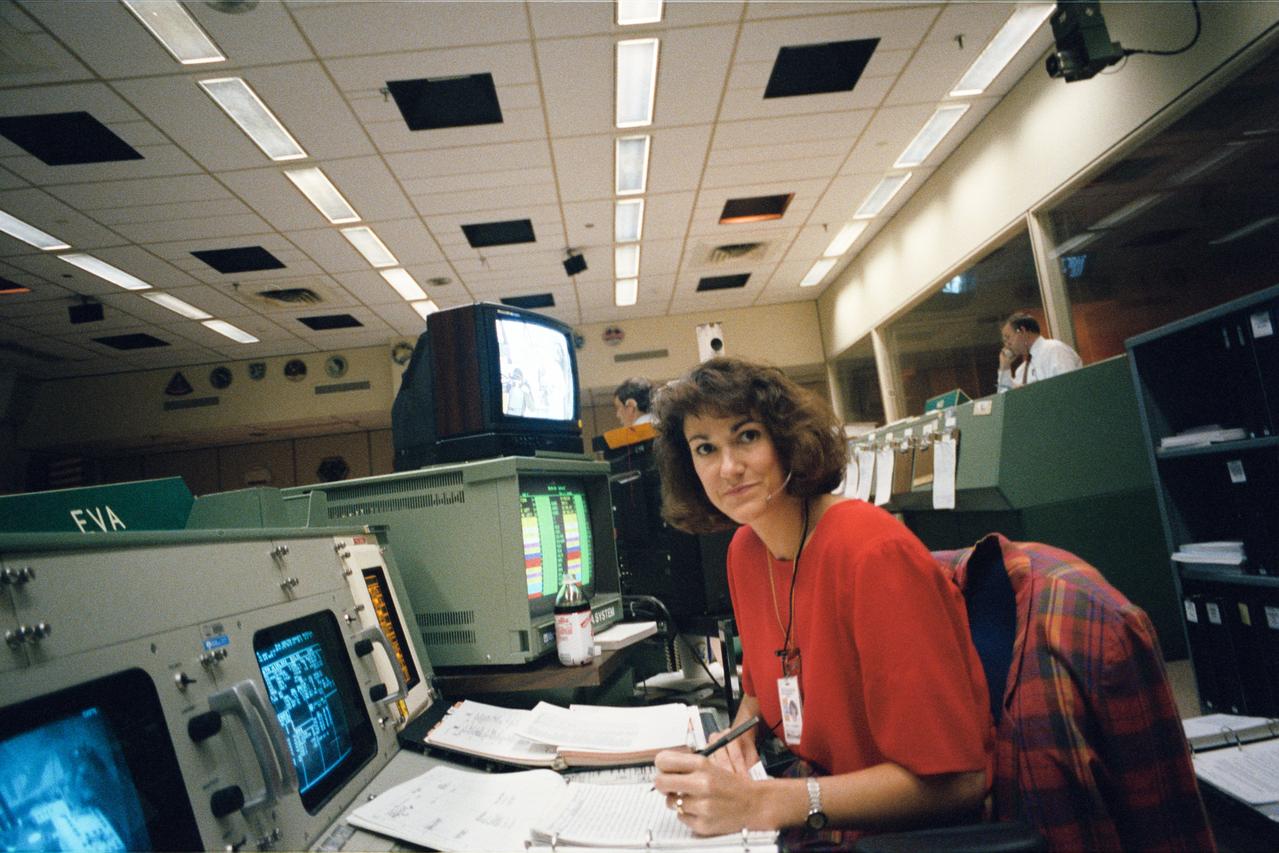
Susan P. Rainwater monitors an extravehicular activity (EVA) simulation from the EVA console at JSC's Mission Control Center (MCC) during joint integrated simulations for the STS-61 mission. Astronauts assigned to extravehicular activity (EVA) tasks with the Hubble Space Telescope (HST) were simultaneously rehearsing in a neutral buoyancy tank at the Marshall Space Flight Center (MSFC) in Alabama.
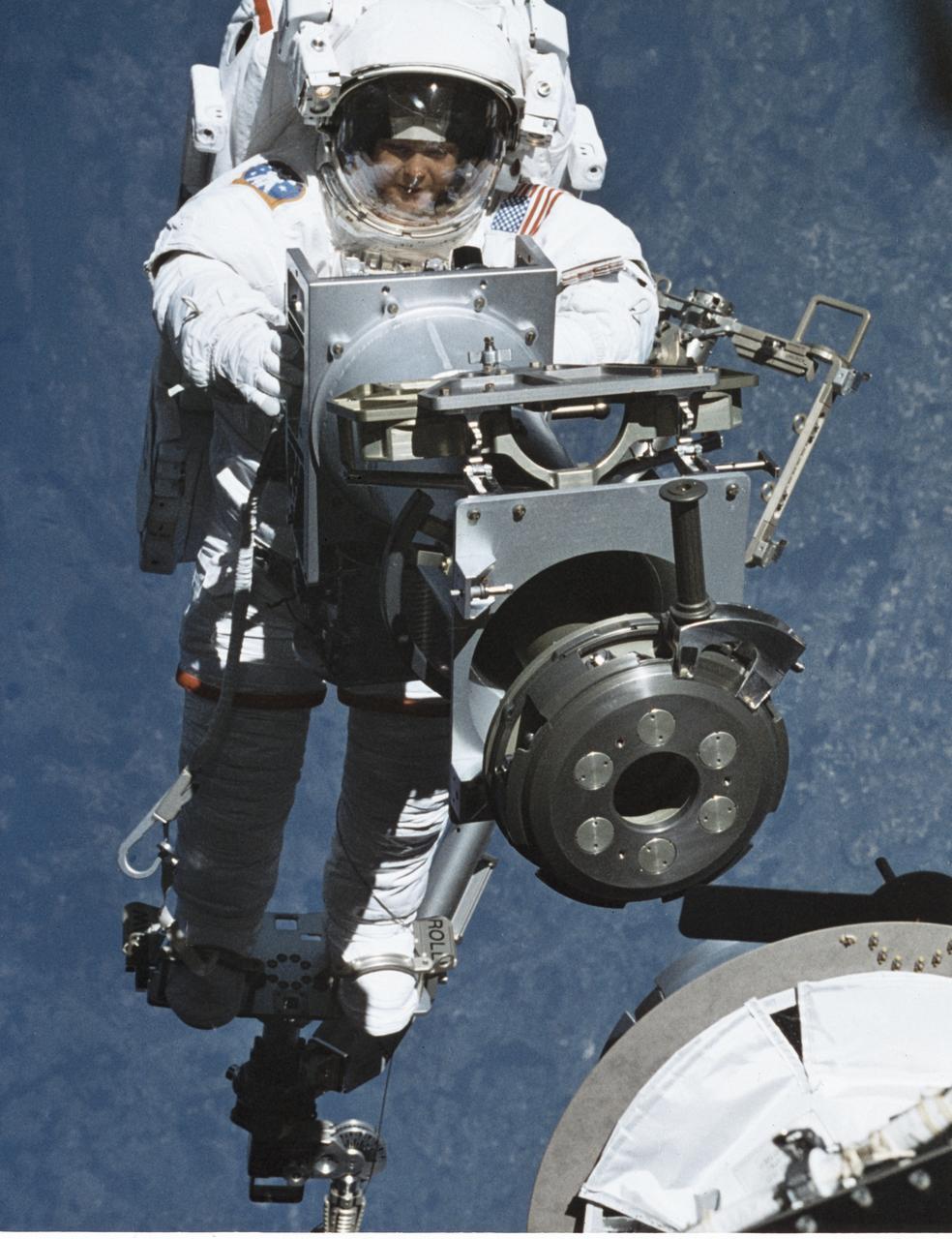
The STS-96 mission, the second International Space Station (ISS) assembly and resupply flight, launched on May 27, 1999 aboard the Orbiter Discovery for an almost 10 day mission. The Shuttle's SPACEHAB double module carried internal and resupply cargo for station outfitting and the Russian cargo crane, STRELA, was carried aboard the shuttle in the integrated Cargo Carrier (ICC). In this STS-96 onboard photo of the first Extra Vehicular Activity (EVA), Mission Specialist Tamara Jernigan totes part of the Russian built crane. Jernigans' feet are anchored on a mobile foot restraint cornected to the Shuttle's Remote Manipulator System (RMS) operated by Mission Specialist Ellen Ochoa. The STS-96 flight was the first to perform docking with the ISS.
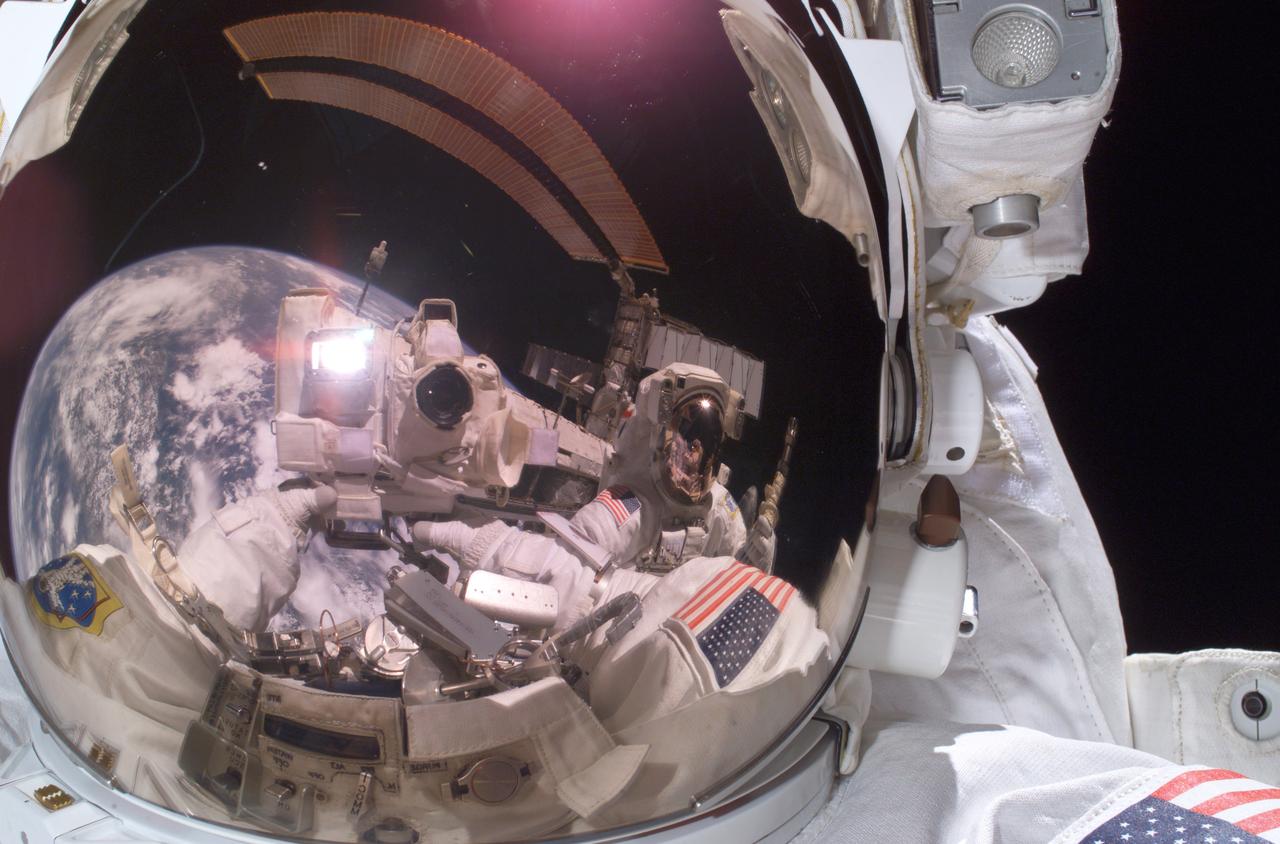
Astronaut Michael E. Fossum, STS-121 mission specialist, used a digital still camera to expose a photo of his helmet visor during a session of extravehicular activity (EVA) while Space Shuttle Discovery was docked with the International Space Station (ISS). Also visible in the visor reflections are fellow space walker Piers J. Sellers, mission specialist, Earth's horizon, and a station solar array. During its 12-day mission, this utilization and logistics flight delivered a multipurpose logistics module (MPLM) to the ISS with several thousand pounds of new supplies and experiments. In addition, some new orbital replacement units (ORUs) were delivered and stowed externally on the ISS on a special pallet. These ORUs are spares for critical machinery located on the outside of the ISS. During this mission the crew also carried out testing of Shuttle inspection and repair hardware, as well as evaluated operational techniques and concepts for conducting on-orbit inspection and repair.
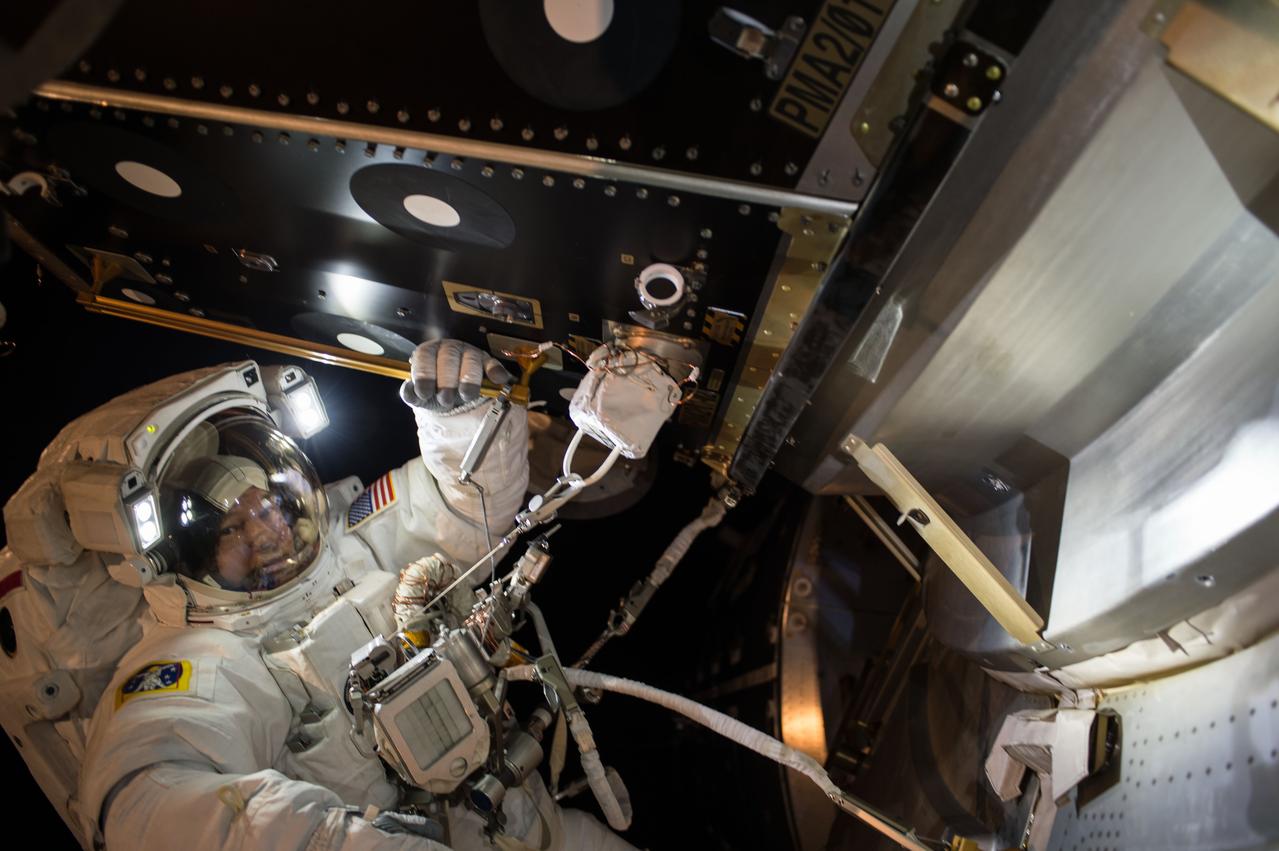
Extravehicular crewmember 1 (EV1) Jeff Williams pauses for a photo after installing a Hemispherical (Hemi) Reflector Cover on Pressurized Mating Adapter 2 (PMA-2) during Extravehicular Activity 36 (EVA 36).
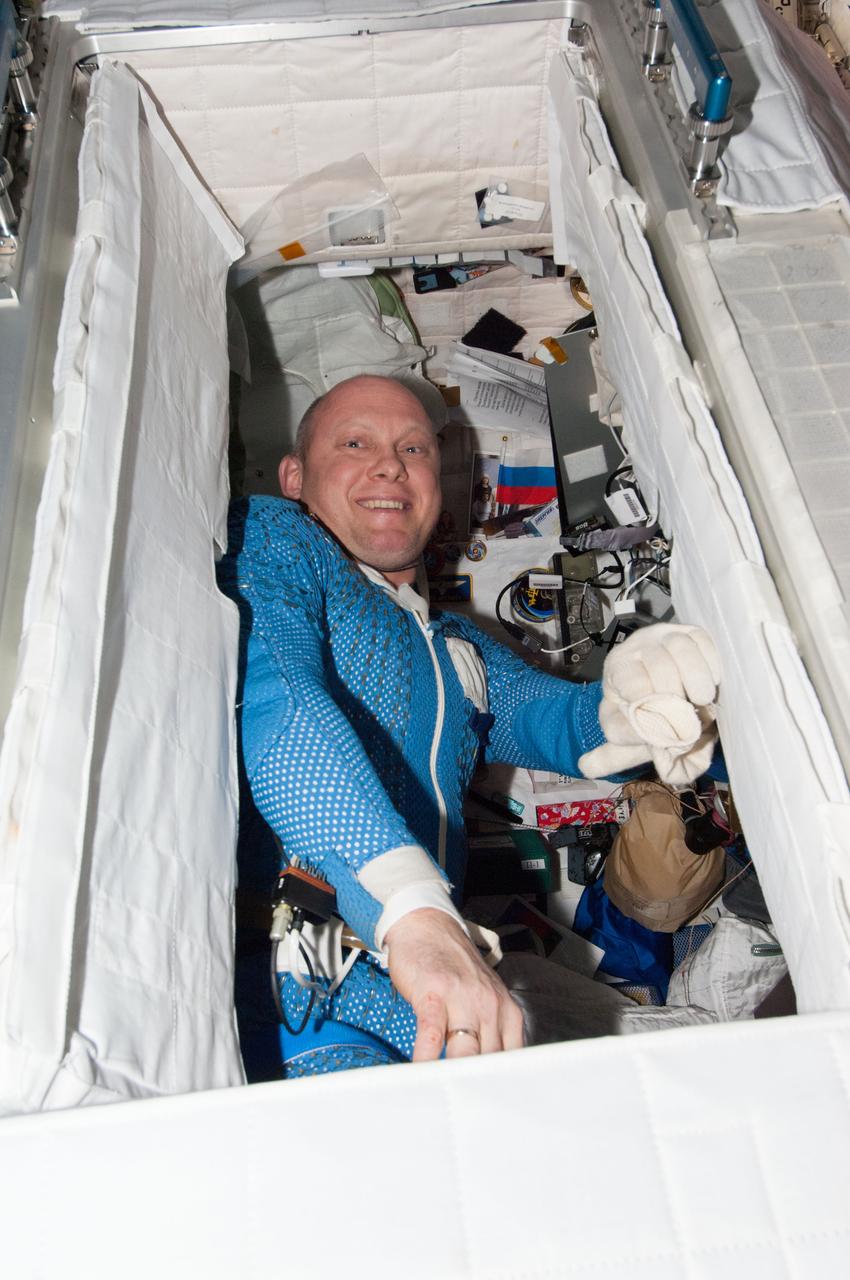
Cosmonaut Oleg Artemyev, Expedition 40 flight engineer, is photographed still wearing his liquid cooling and ventilation garment after a Russian Extravehicular Activity (EVA). Artemyev is standing in his crew quarters (CQ).

AS14-66-9278 (5 Feb. 1971) --- An excellent view of the Apollo 14 Lunar Module (LM) on the moon, as photographed during the first Apollo 14 extravehicular activity (EVA) on the lunar surface. While astronauts Alan B. Shepard Jr., commander, and Edgar D. Mitchell, lunar module pilot, descended in the LM to explore the moon, astronaut Stuart A. Roosa, command module pilot, remained with the Command and Service Modules (CSM) in lunar orbit.
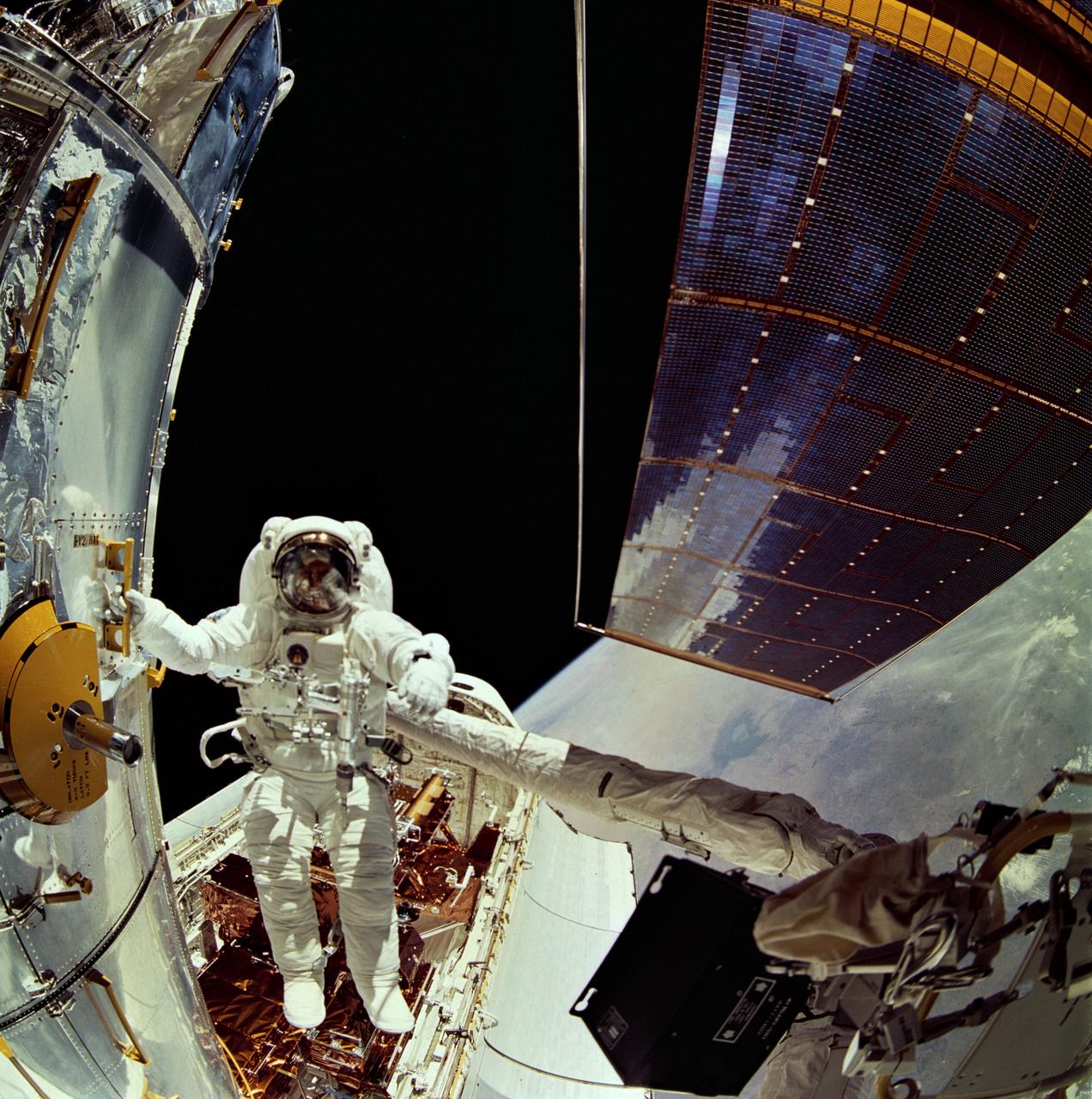
This is a Space Shuttle mission STS-61 onboard view showing astronauts Story Musgrave and Jeffrey Hoffman preforming repairs to the Hubble Space Telescope (HST) during their Extra Vehicular Activity (EVA). Astronauts' work was made easier by the HST's many crew aids. Astronaut Musgrave makes use of one of the spacecraft's handholds. Launched on December 1, 1993, the Space Shuttle Orbiter Endeavor STS-061 mission was the 59th Shuttle flight.
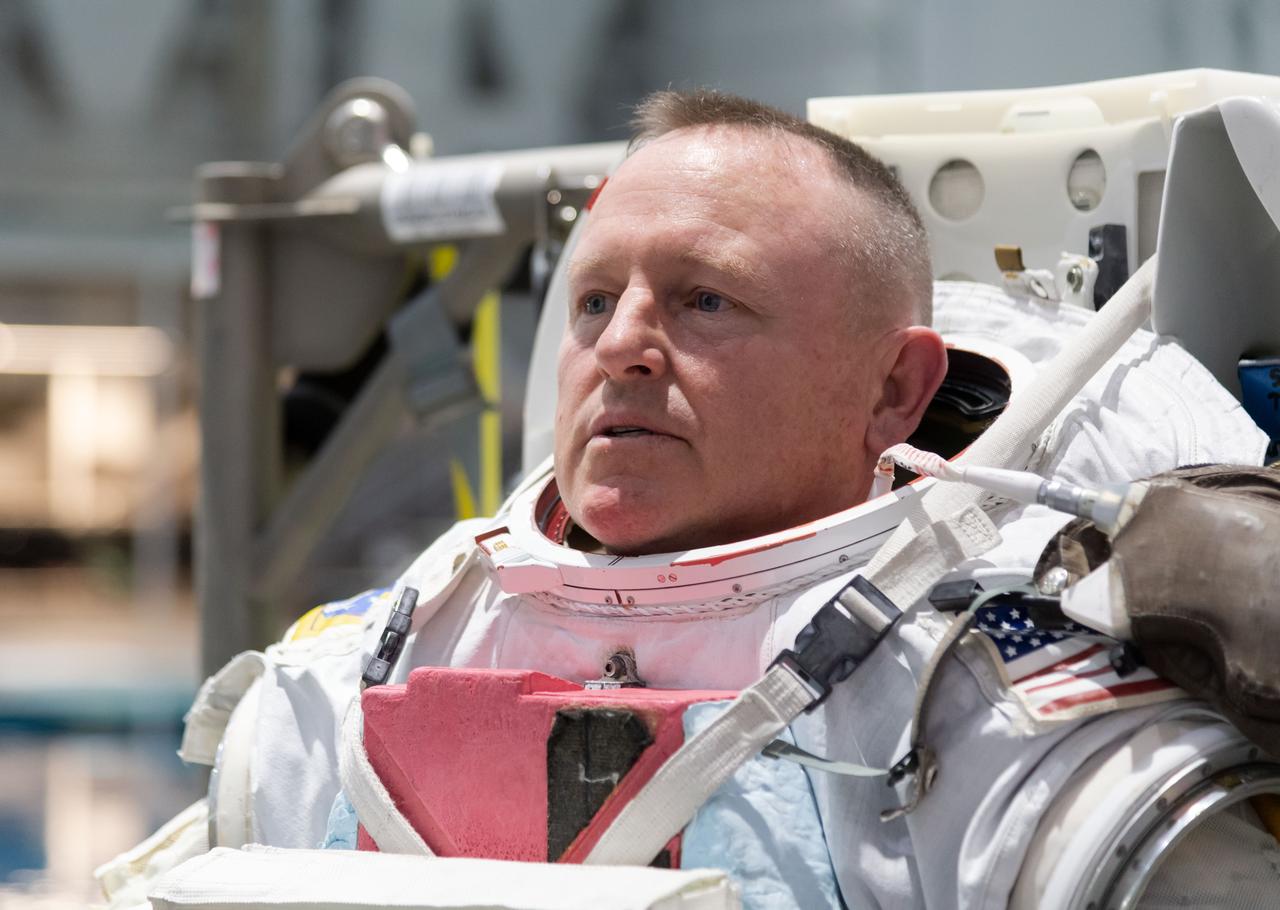
Boeing CFT crew member Mike Fincke with backup Barry "Butch" Wilmore during Boeing CFT/59S BU ISS EVA Maintenance 1 PRF training.
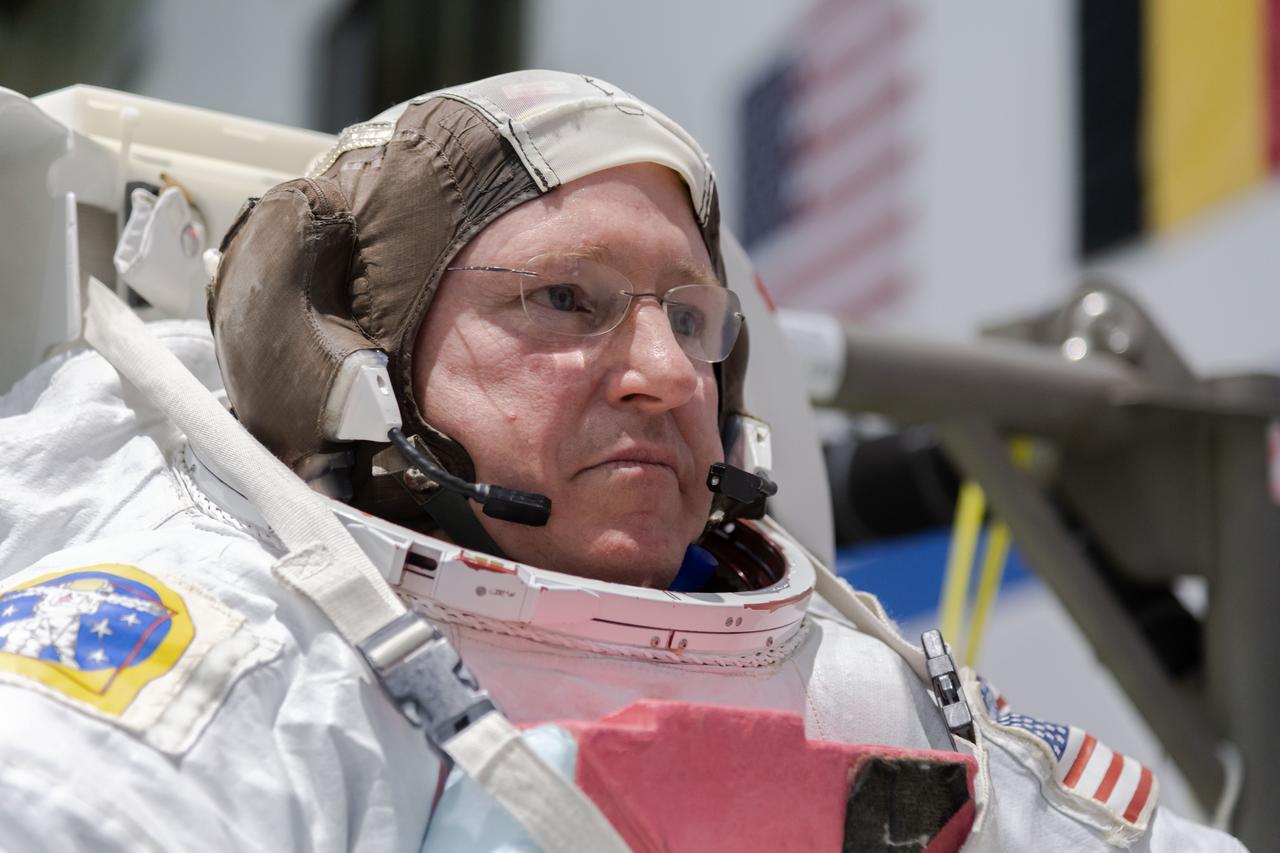
Boeing CFT crew member Mike Fincke with backup Barry "Butch" Wilmore during Boeing CFT/59S BU ISS EVA Maintenance 1 PRF training.
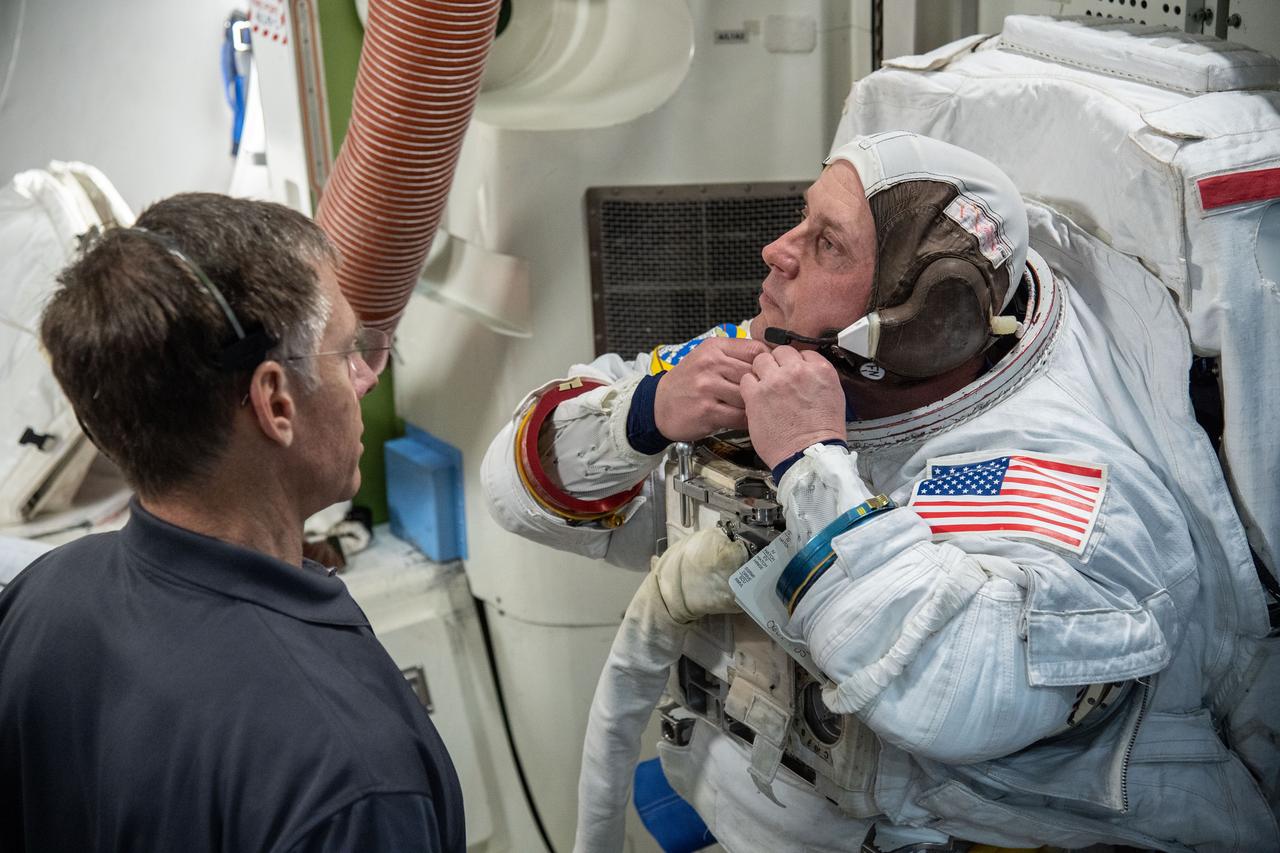
Boeing Crew Flight Test (CFT) with NASA astronauts Mike Fincke and Nicole Mann and Boeing Astronaut Chris Ferguson during ISS EVA Prep & Post 1 training.
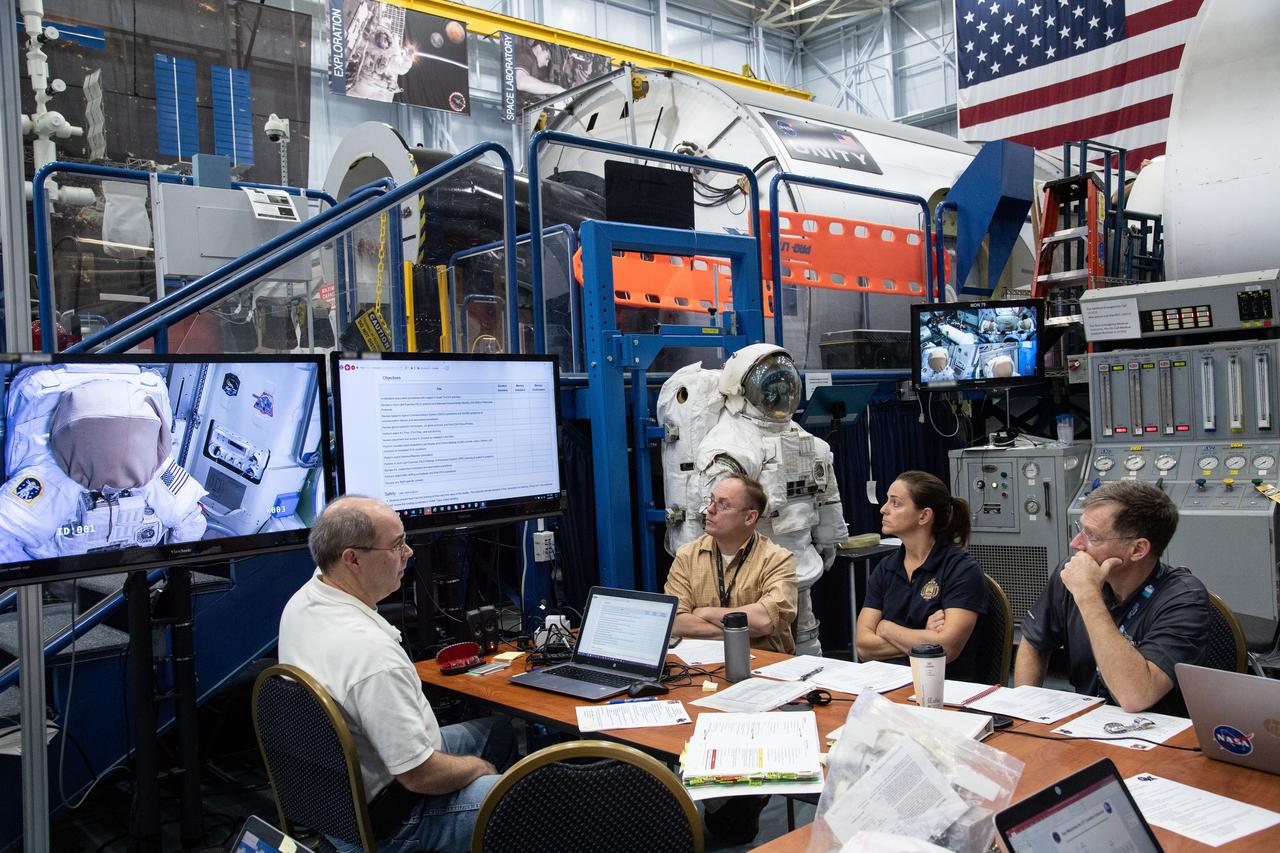
Boeing Crew Flight Test (CFT) with NASA astronauts Mike Fincke and Nicole Mann and Boeing Astronaut Chris Ferguson during ISS EVA Prep & Post 1 training.
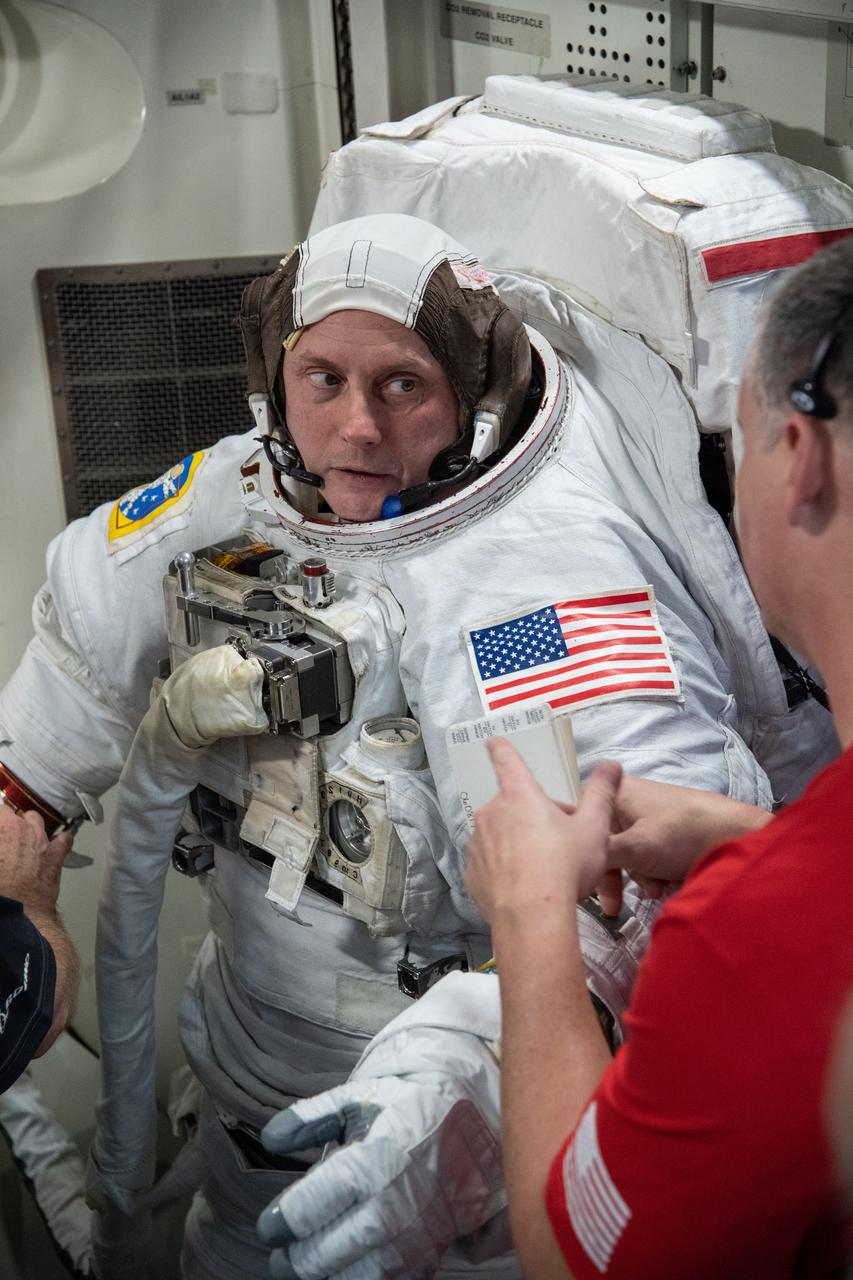
Boeing Crew Flight Test (CFT) with NASA astronauts Mike Fincke and Nicole Mann and Boeing Astronaut Chris Ferguson during ISS EVA Prep & Post 1 training.
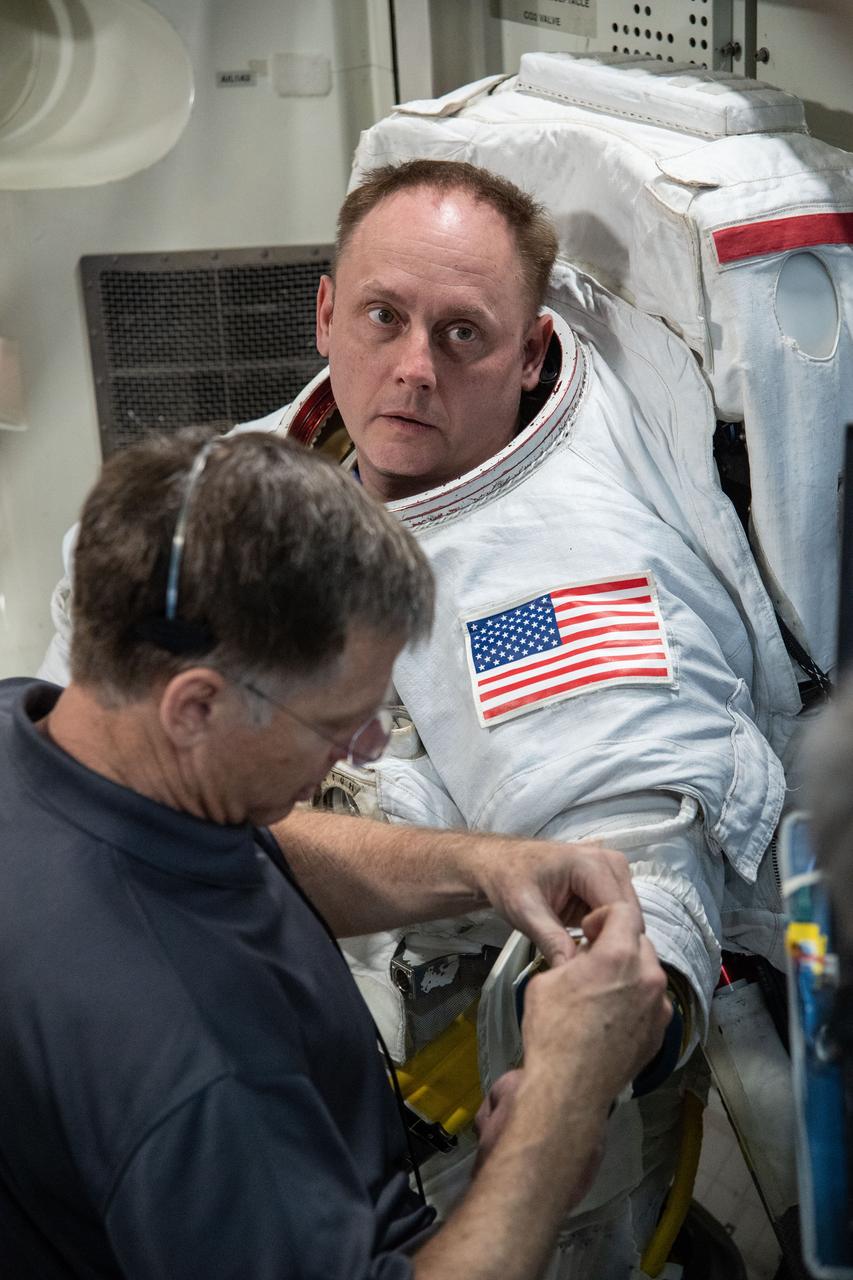
Boeing Crew Flight Test (CFT) with NASA astronauts Mike Fincke and Nicole Mann and Boeing Astronaut Chris Ferguson during ISS EVA Prep & Post 1 training.
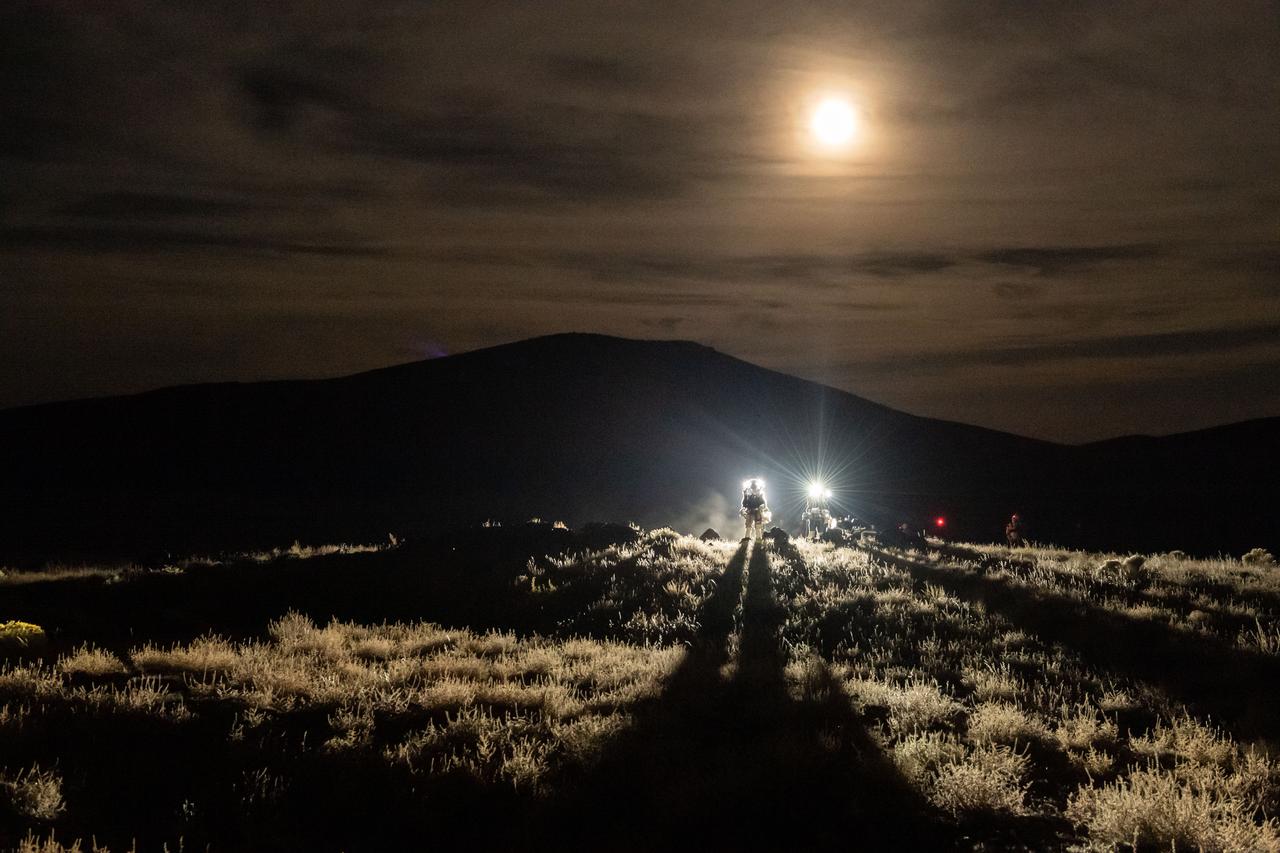
PHOTO DATE: 10-20-21 LOCATION: Flagstaff, Arizona - Field Location SUBJECT: Photographic support and coverage of night field evaluation. EVA Test #1 PHOTOGRAPHER: BILL STAFFORD
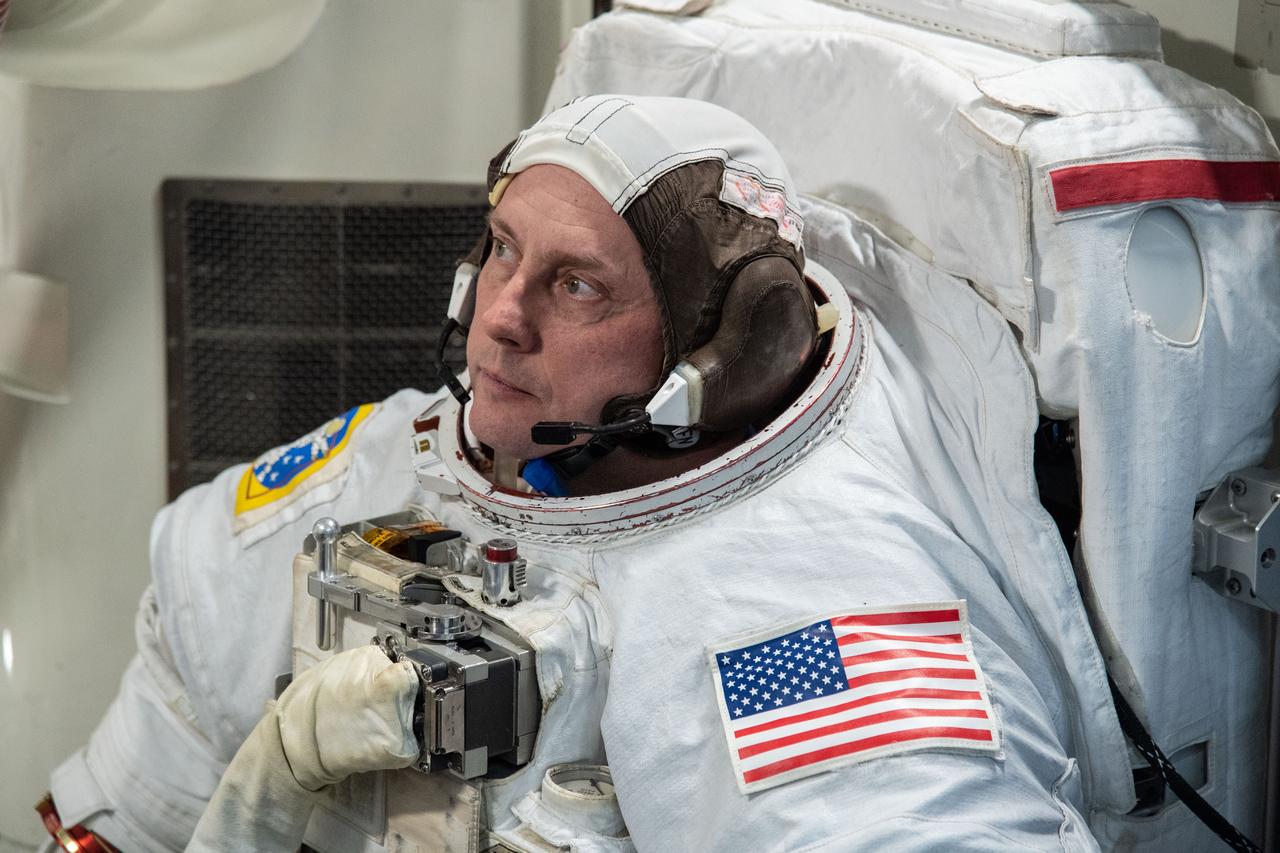
Boeing Crew Flight Test (CFT) with NASA astronauts Mike Fincke and Nicole Mann and Boeing Astronaut Chris Ferguson during ISS EVA Prep & Post 1 training.
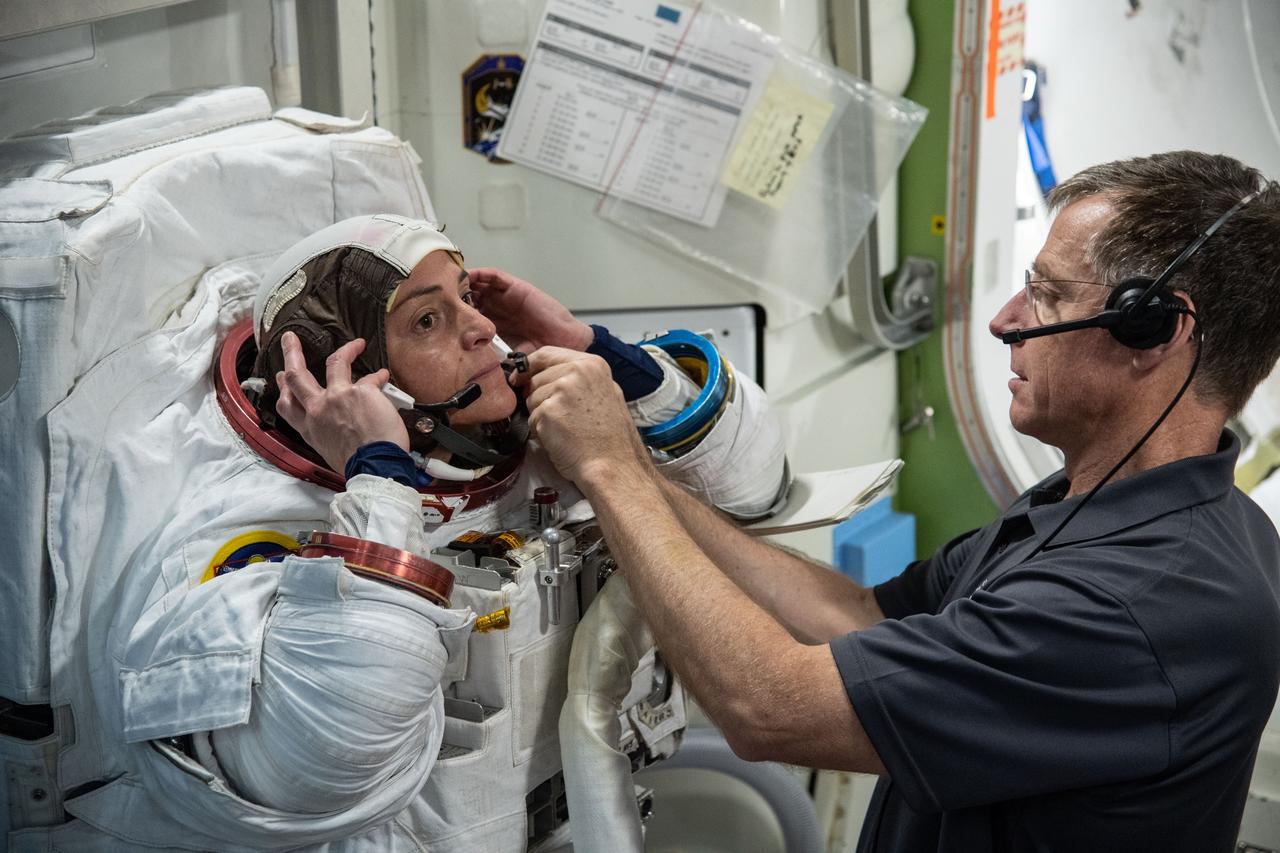
Boeing Crew Flight Test (CFT) with NASA astronauts Mike Fincke and Nicole Mann and Boeing Astronaut Chris Ferguson during ISS EVA Prep & Post 1 training.
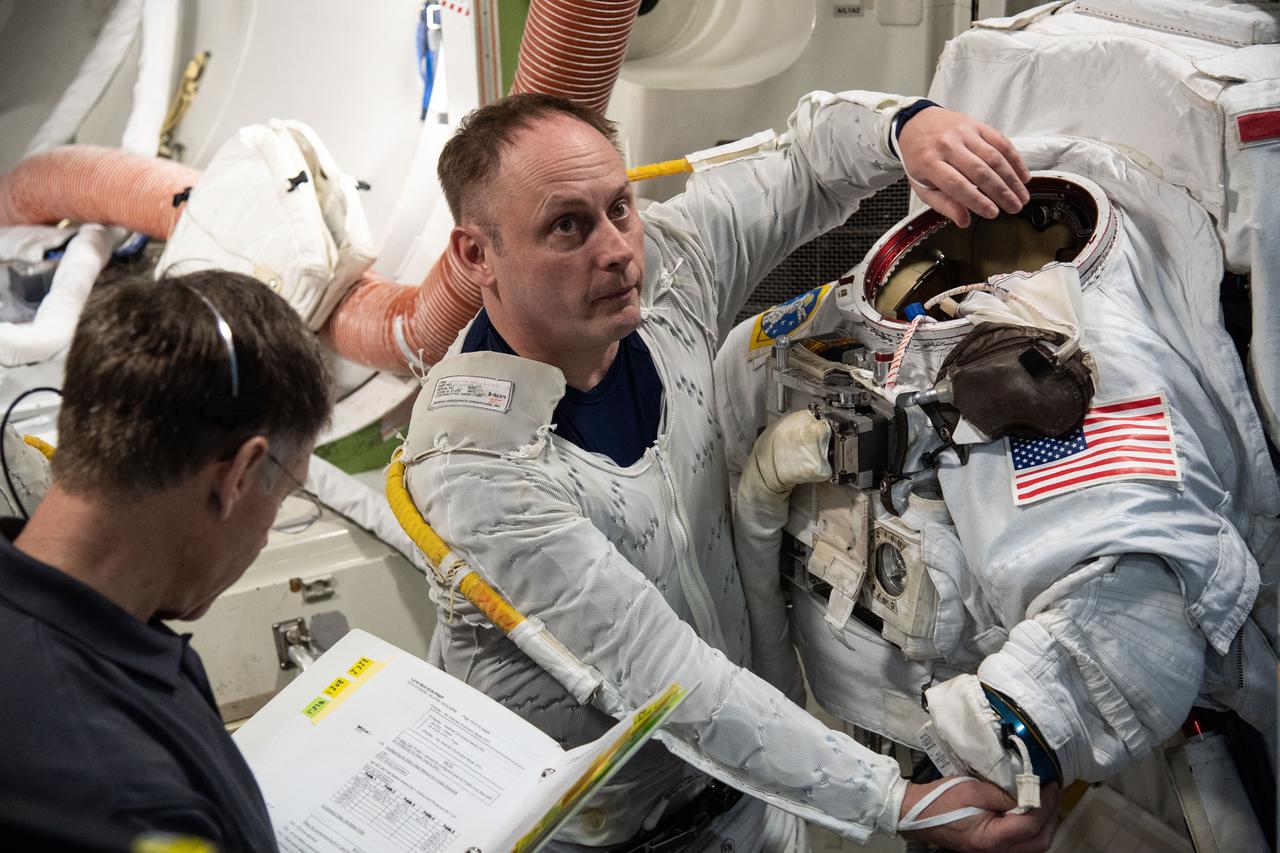
Boeing Crew Flight Test (CFT) with NASA astronauts Mike Fincke and Nicole Mann and Boeing Astronaut Chris Ferguson during ISS EVA Prep & Post 1 training.
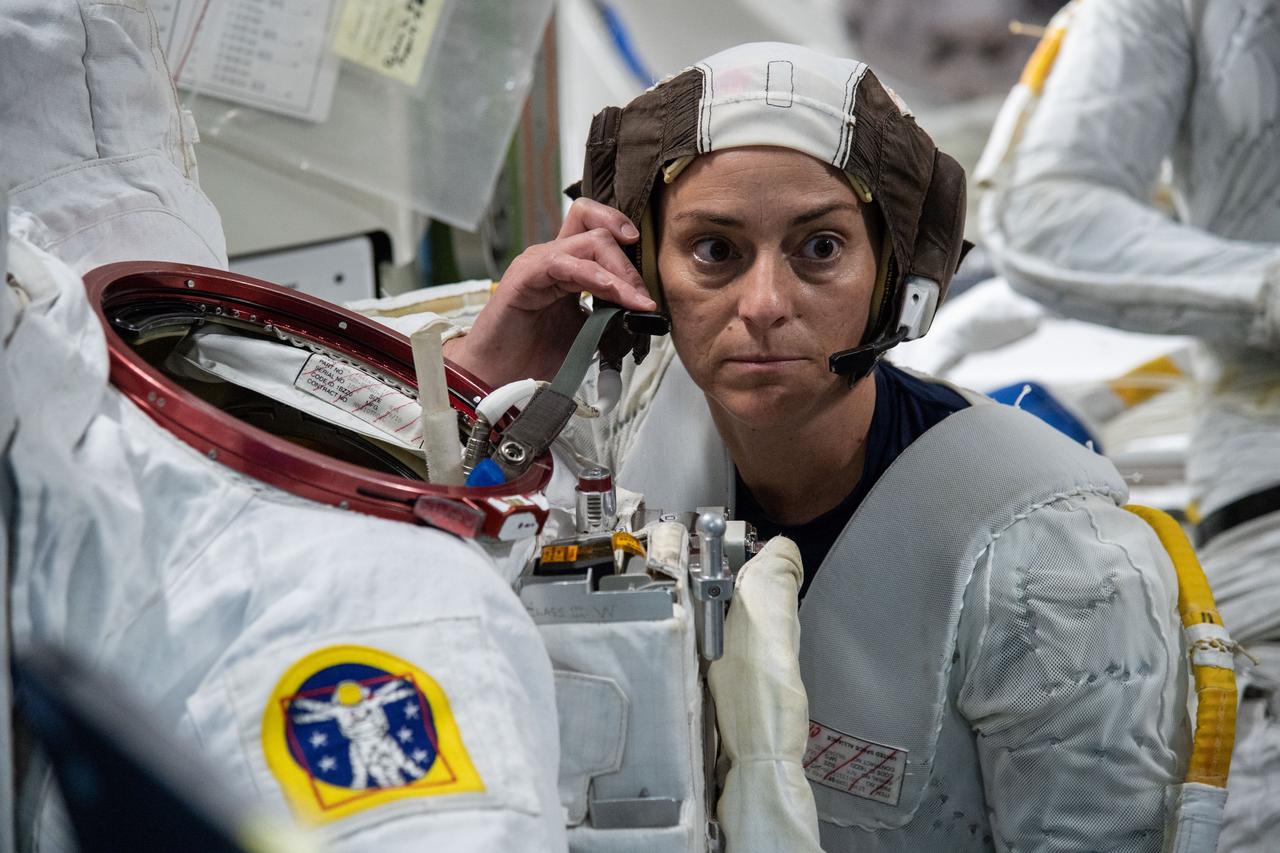
Boeing Crew Flight Test (CFT) with NASA astronauts Mike Fincke and Nicole Mann and Boeing Astronaut Chris Ferguson during ISS EVA Prep & Post 1 training.
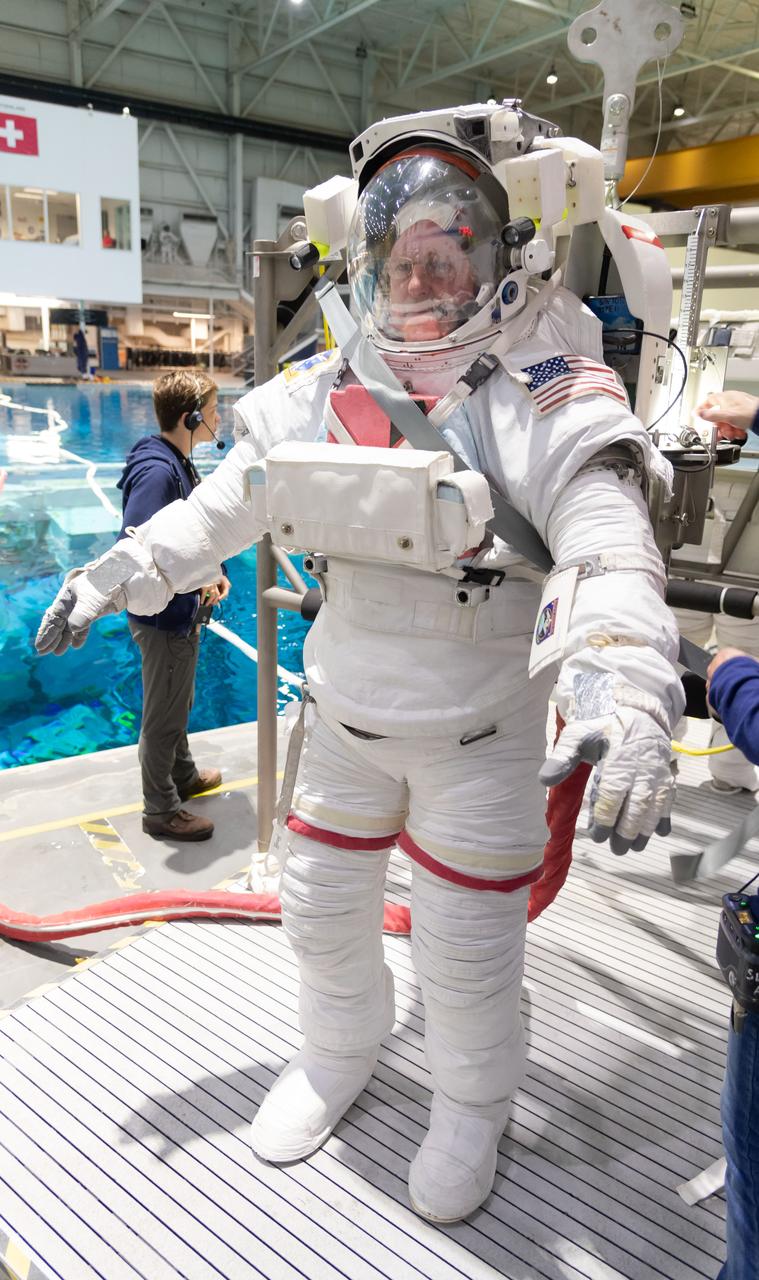
Boeing CFT crew member Mike Fincke with backup Barry "Butch" Wilmore during Boeing CFT/59S BU ISS EVA Maintenance 1 PRF training.
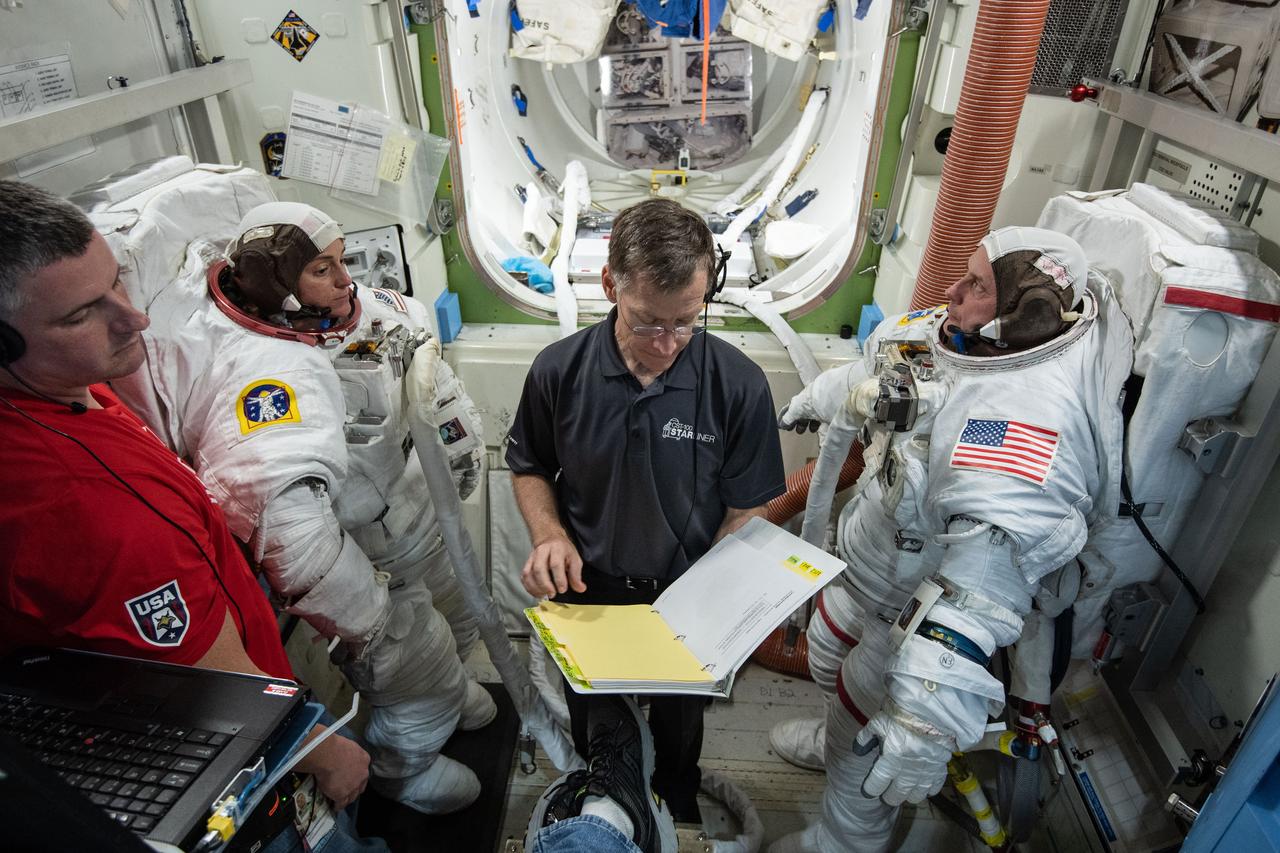
Boeing Crew Flight Test (CFT) with NASA astronauts Mike Fincke and Nicole Mann and Boeing Astronaut Chris Ferguson during ISS EVA Prep & Post 1 training.
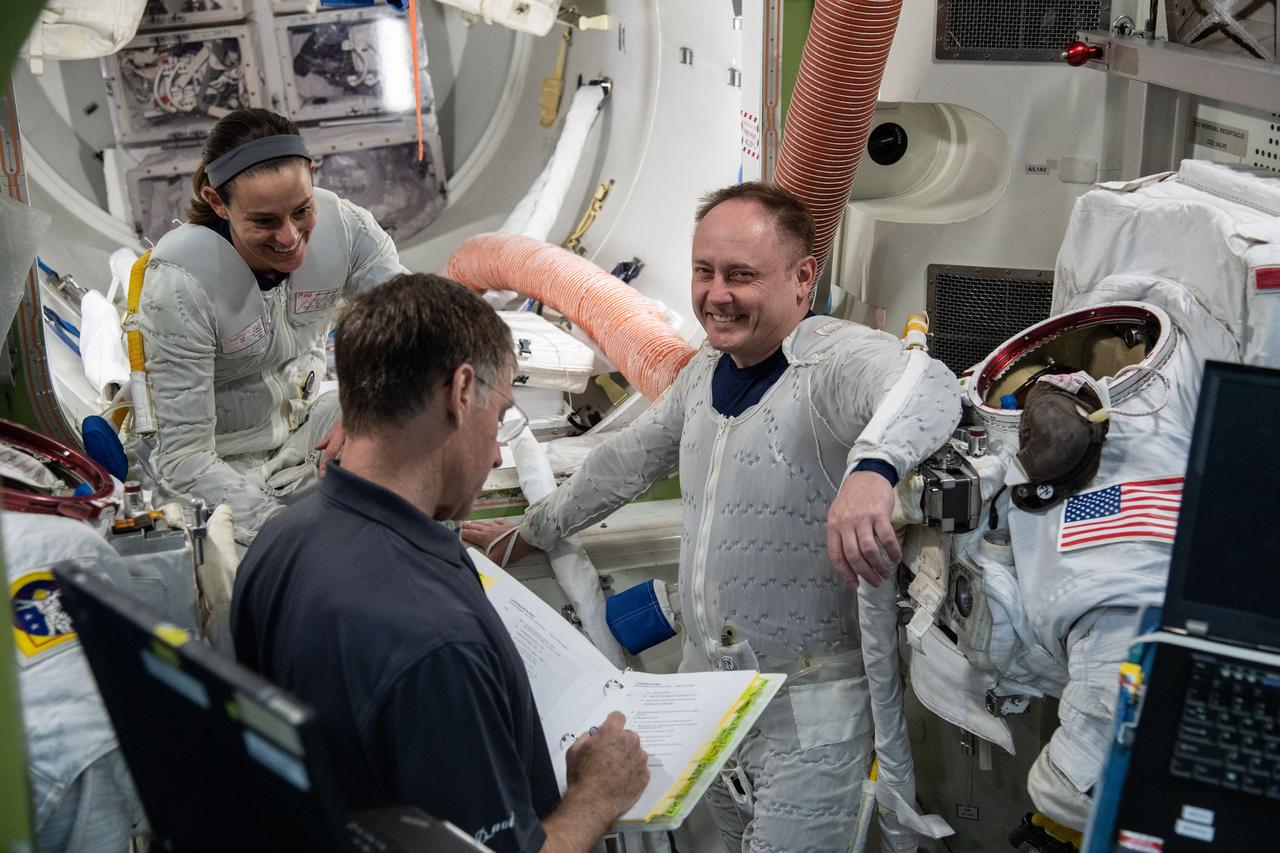
Boeing Crew Flight Test (CFT) with NASA astronauts Mike Fincke and Nicole Mann and Boeing Astronaut Chris Ferguson during ISS EVA Prep & Post 1 training.
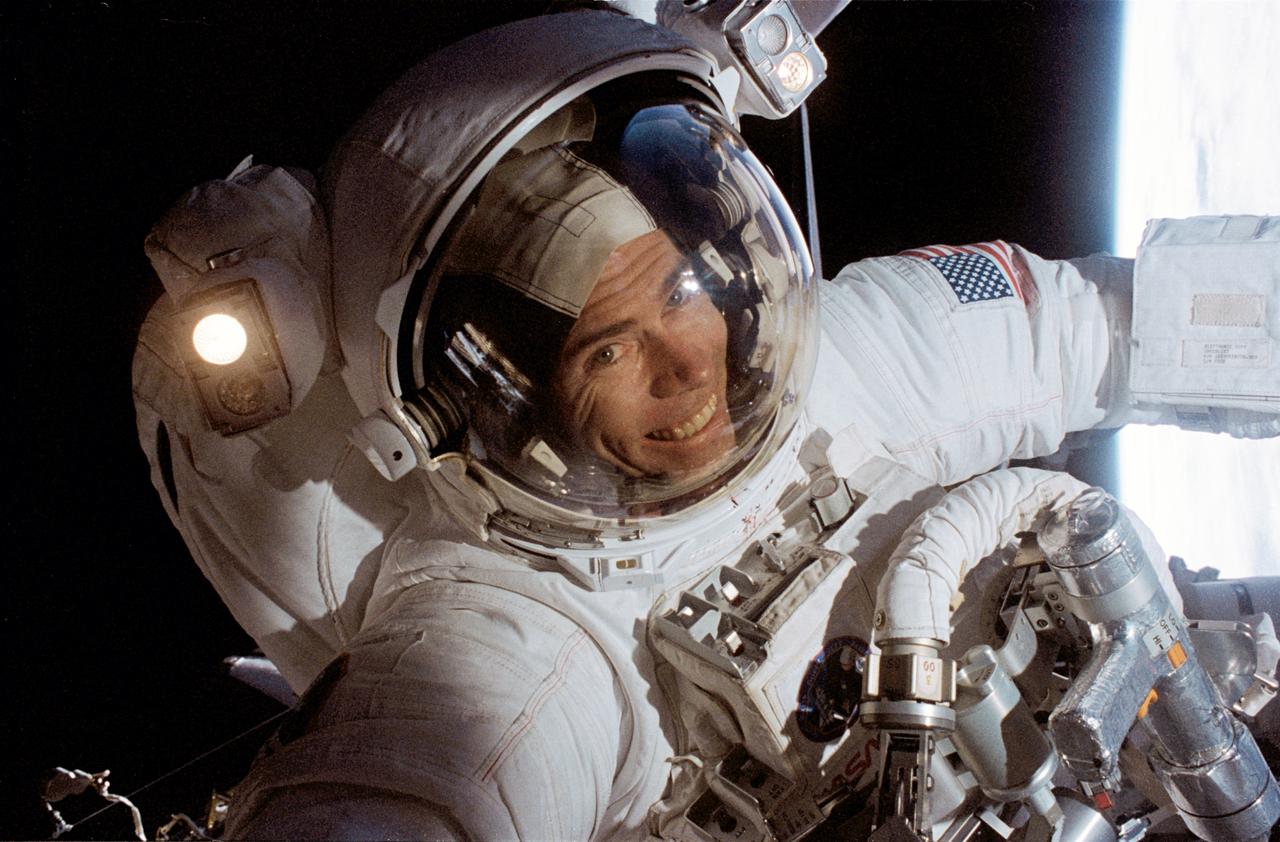
STS072-305-034 (15 Jan. 1996) --- Astronaut Daniel T. Barry, mission specialist, works in the cargo bay of the Space Shuttle Endeavour during the first of two extravehicular activities (EVA). Barry was joined by astronaut Leroy Chiao for the EVA. The two joined four other NASA astronauts for a week and a half aboard Endeavour.
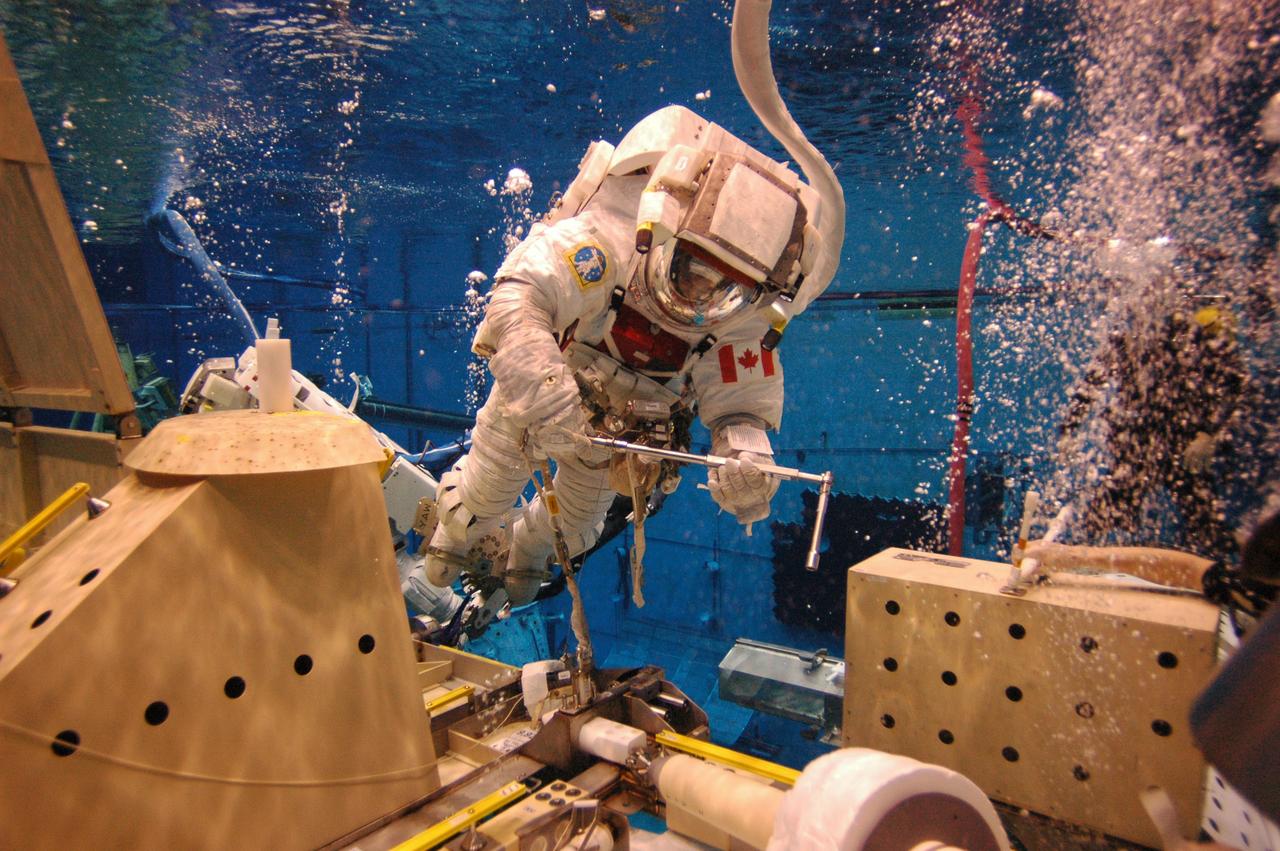
• Event (Mission for flight / Class for training): STS-118 (13A.1) • Title: STS-118 EVA 1 NBL • Date: 4-18-07 • Location: NBL • Key words: 118, 13A.1, S5, NBL • Description: NBL underwater photos of STS-118 EVA 1 S5 install.