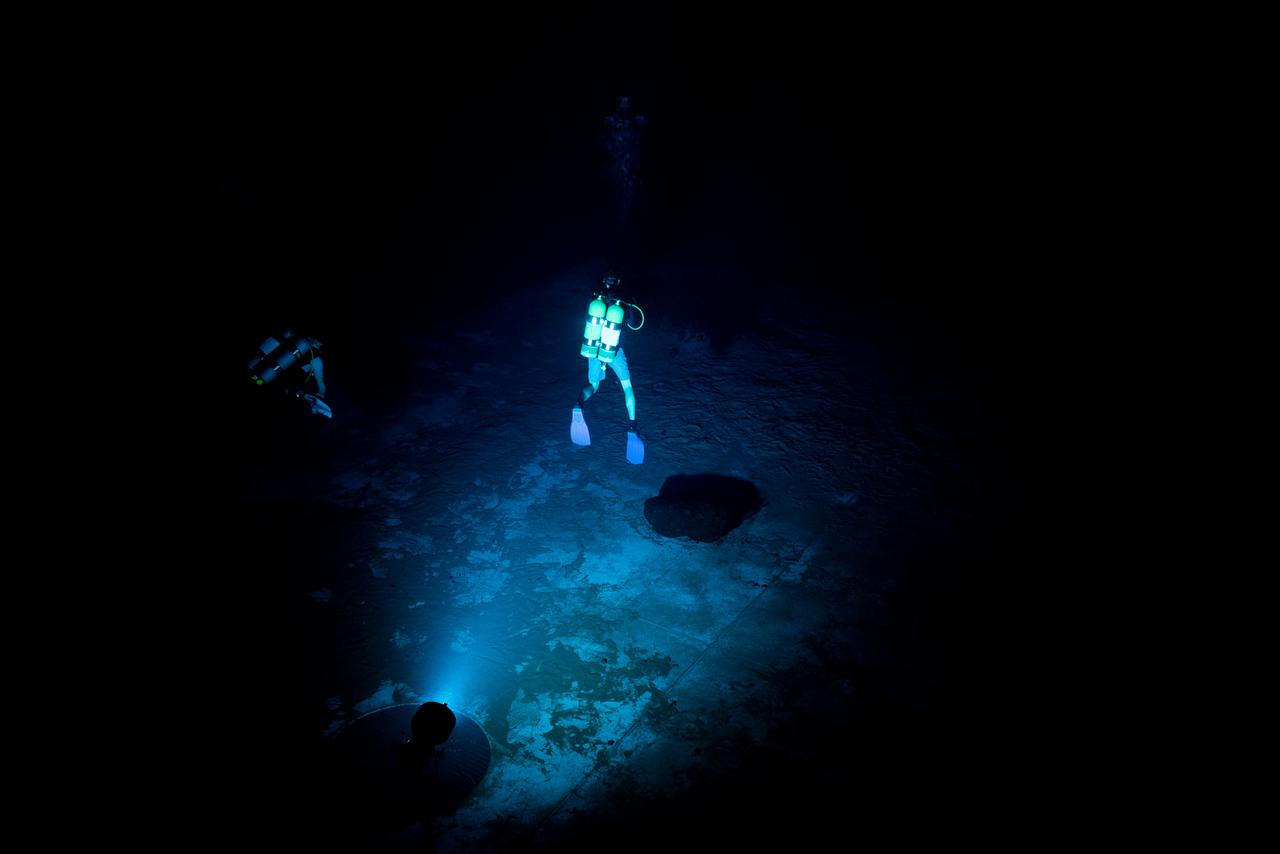
Quantitative evaluation of light source by NBL diver during NBL Preliminary Lunar Lighting Evaluation. Divers at the Neutral Buoyancy Laboratory (NBL) in Houston are setting the stage for future Moonwalk training by simulating lunar lighting conditions. At the Lunar South Pole, the Sun will remain no more than a few degrees above the horizon, resulting in extremely long and dark shadows. To prepare astronauts for these challenging lighting conditions, the team at the NBL has begun preliminary evaluations of lunar lighting solutions at the bottom of the 40-foot deep pool. This testing and evaluation involved turning off all the lights in the facility, installing black curtains on the pool walls to minimize reflections, and using a powerful underwater cinematic lamp, to get the conditions just right ahead of upcoming training for astronauts.
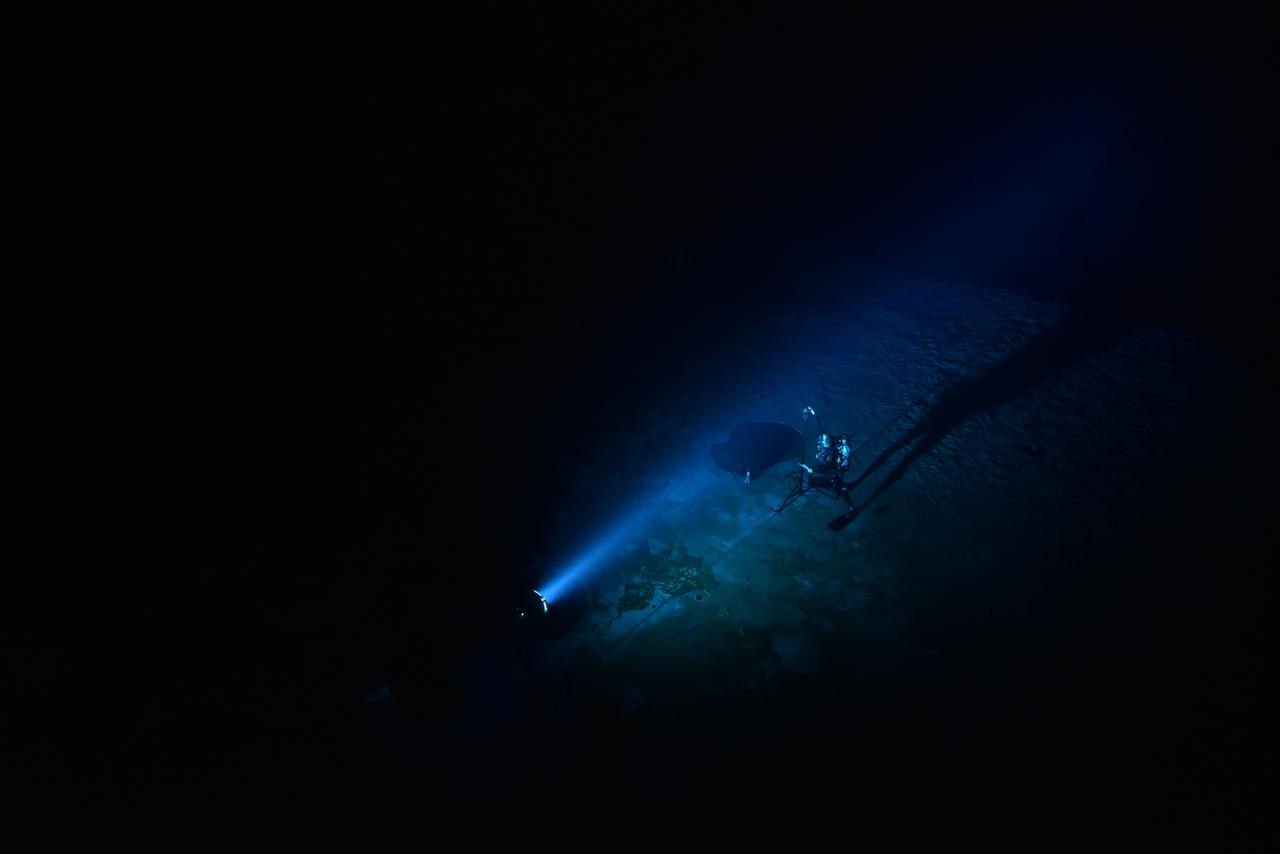
Quantitative evaluation of light source by NBL diver during NBL Preliminary Lunar Lighting Evaluation. Divers at the Neutral Buoyancy Laboratory (NBL) in Houston are setting the stage for future Moonwalk training by simulating lunar lighting conditions. At the Lunar South Pole, the Sun will remain no more than a few degrees above the horizon, resulting in extremely long and dark shadows. To prepare astronauts for these challenging lighting conditions, the team at the NBL has begun preliminary evaluations of lunar lighting solutions at the bottom of the 40-foot deep pool. This testing and evaluation involved turning off all the lights in the facility, installing black curtains on the pool walls to minimize reflections, and using a powerful underwater cinematic lamp, to get the conditions just right ahead of upcoming training for astronauts.
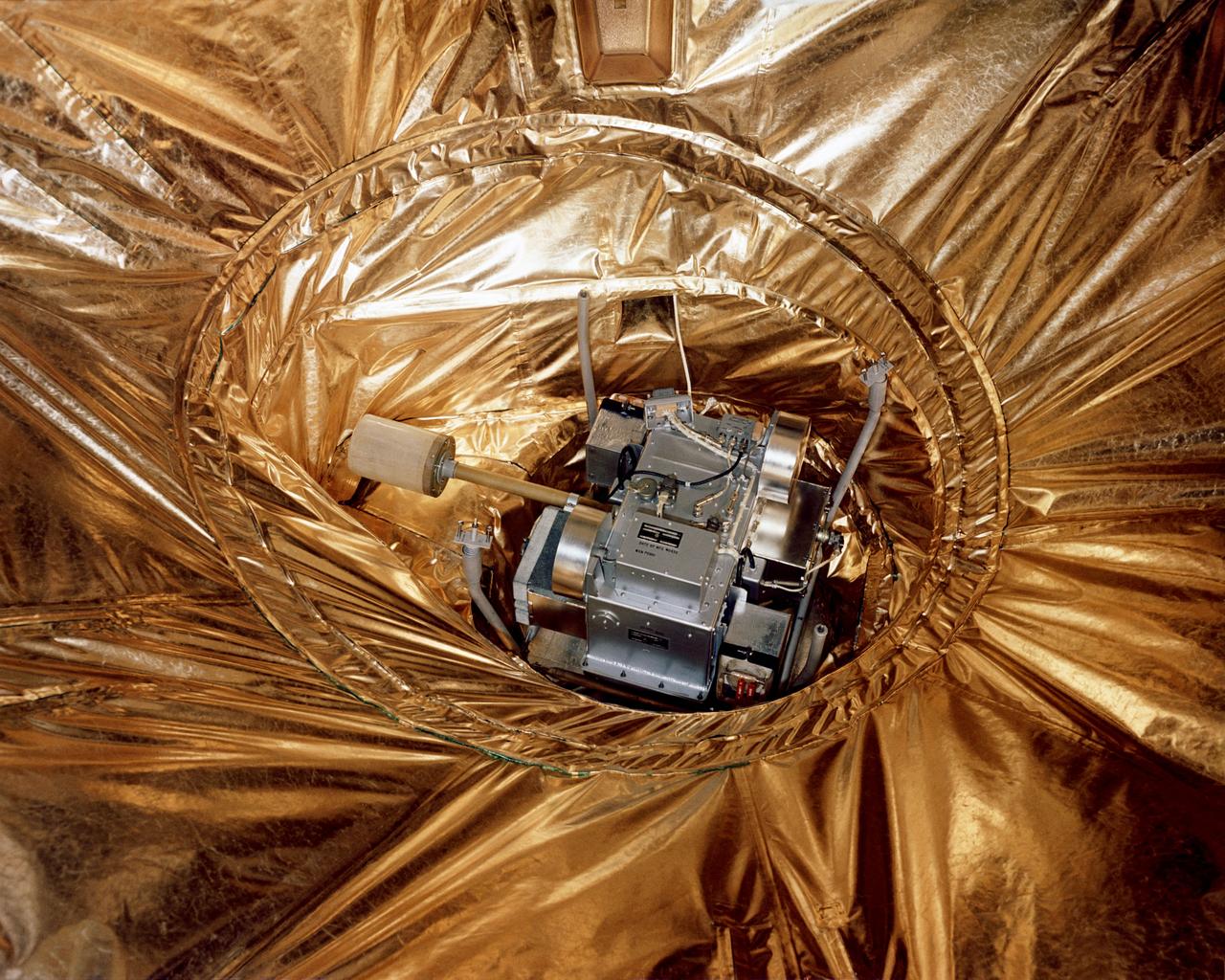
S65-42044 (28 July 1965) --- Close-up view of the Rendezvous Evaluation Pod installed in the equipment section of the Gemini-5 spacecraft at Pad 19.
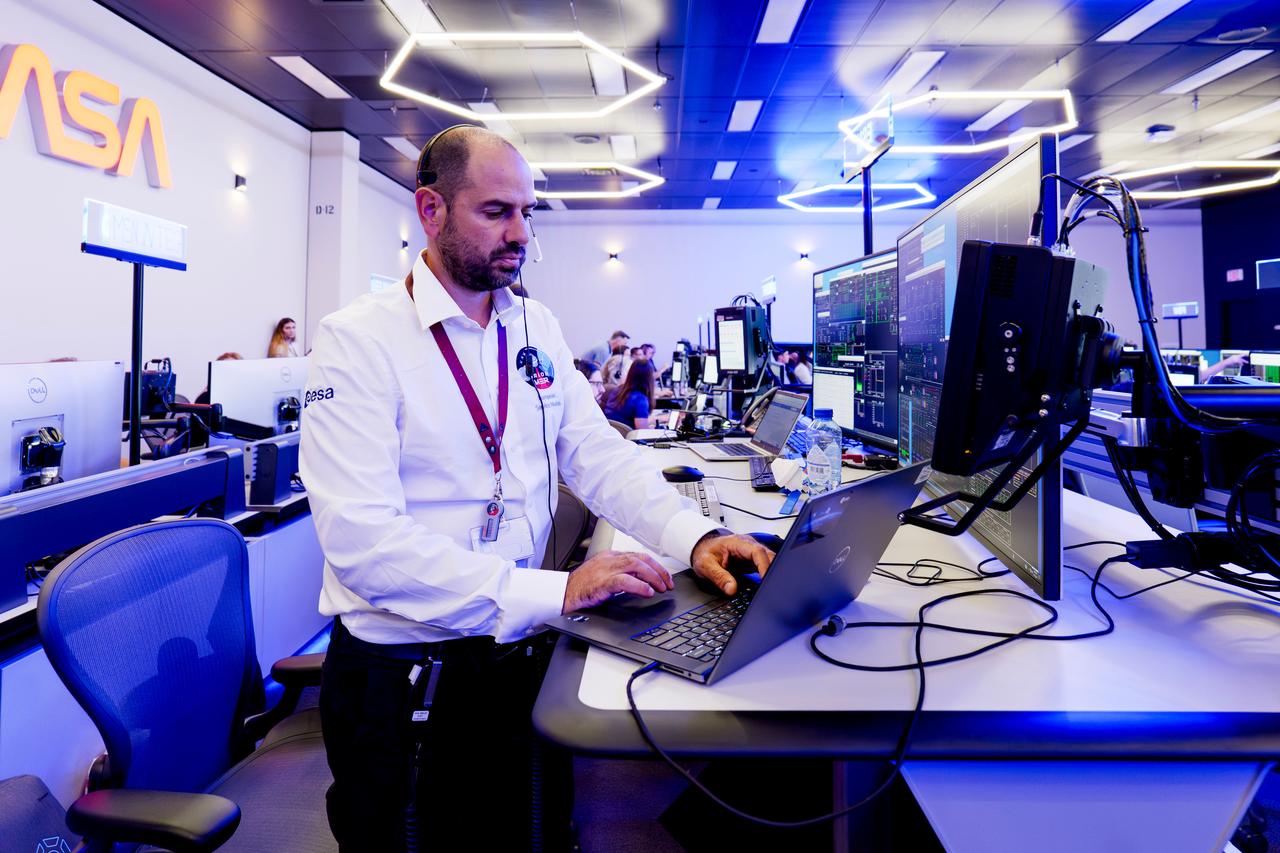
The Orion Mission Evaluation Room (MER) team works during an Artemis II mission simulation on Aug. 19, 2025, from the new Orion MER inside the Mission Control Center at NASA’s Johnson Space Center in Houston.
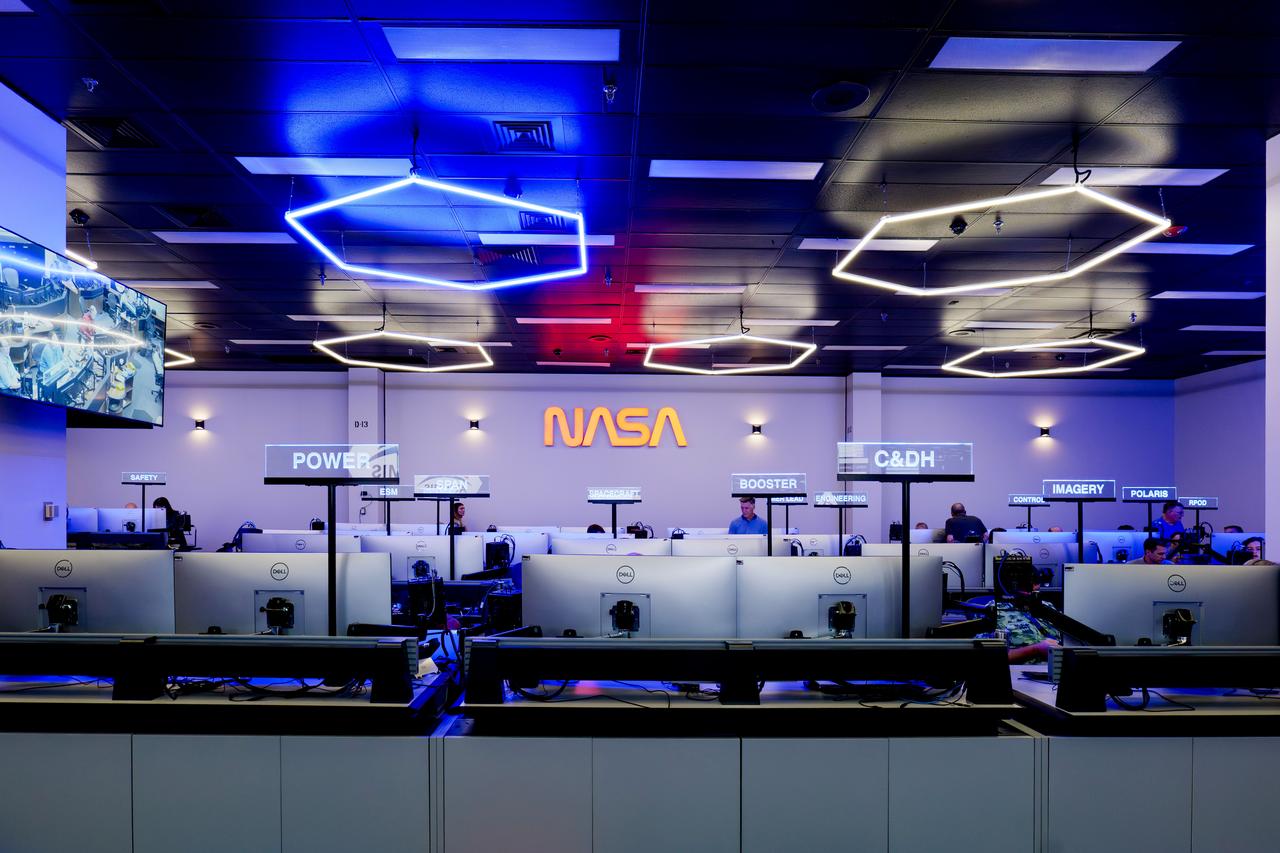
The Orion Mission Evaluation Room (MER) team works during an Artemis II mission simulation on Aug. 19, 2025, from the new Orion MER inside the Mission Control Center at NASA’s Johnson Space Center in Houston.
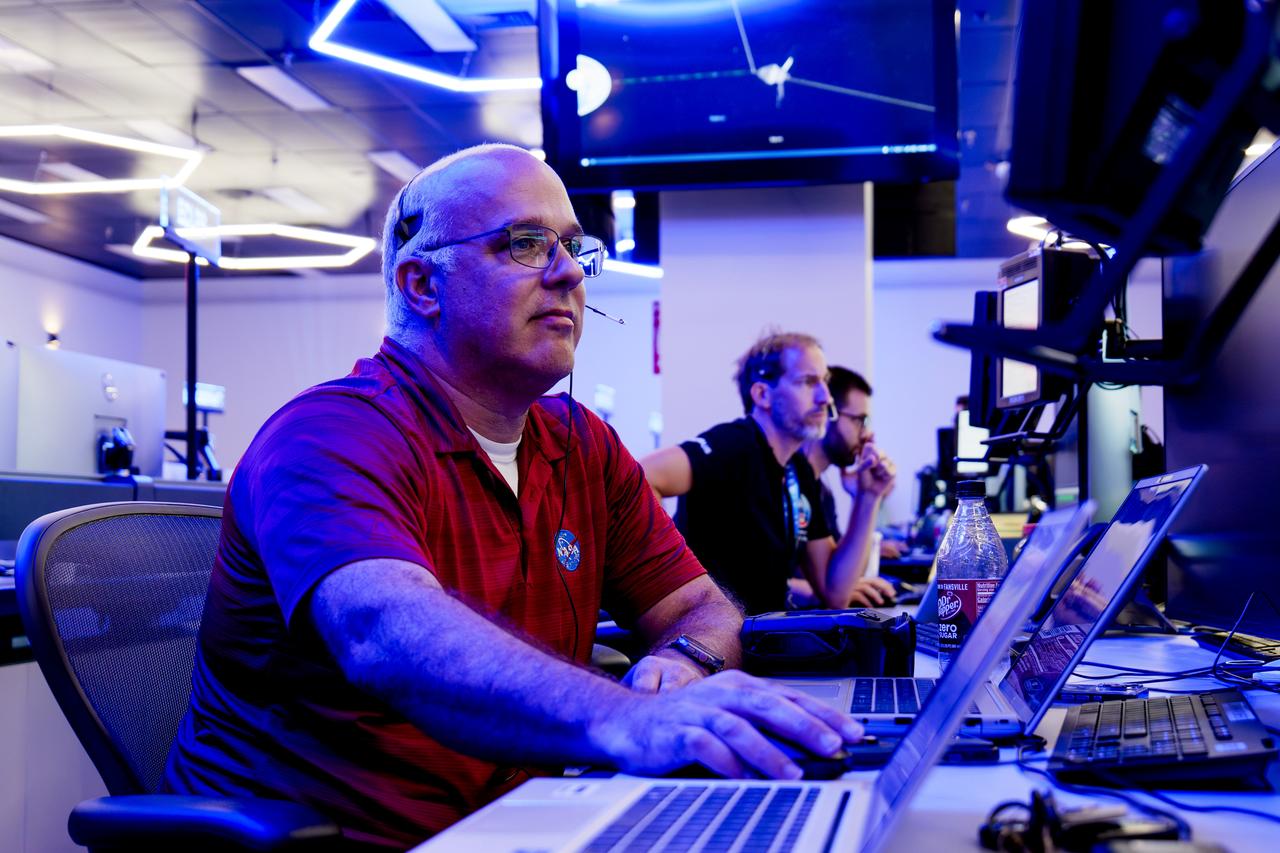
The Orion Mission Evaluation Room (MER) team works during an Artemis II mission simulation on Aug. 19, 2025, from the new Orion MER inside the Mission Control Center at NASA’s Johnson Space Center in Houston.
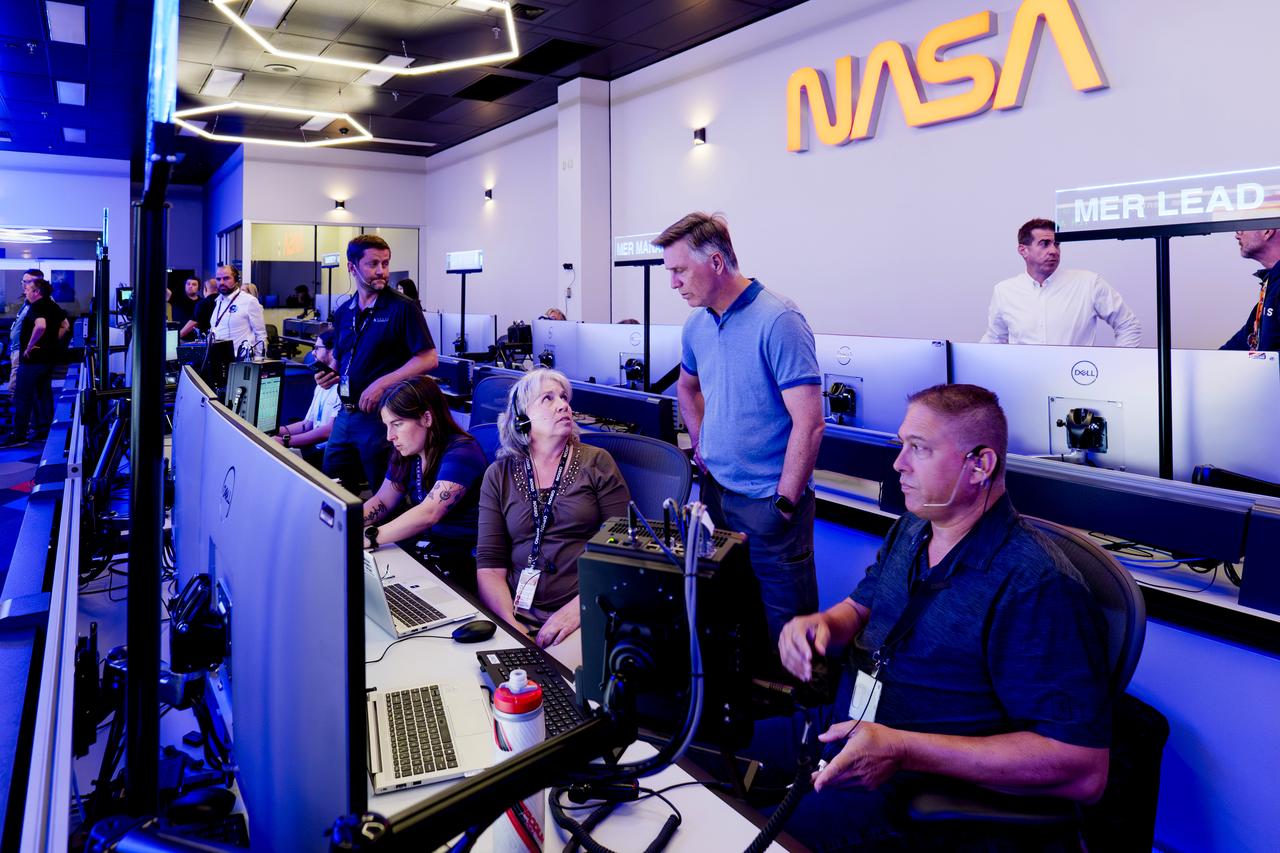
The Orion Mission Evaluation Room (MER) team works during an Artemis II mission simulation on Aug. 19, 2025, from the new Orion MER inside the Mission Control Center at NASA’s Johnson Space Center in Houston.
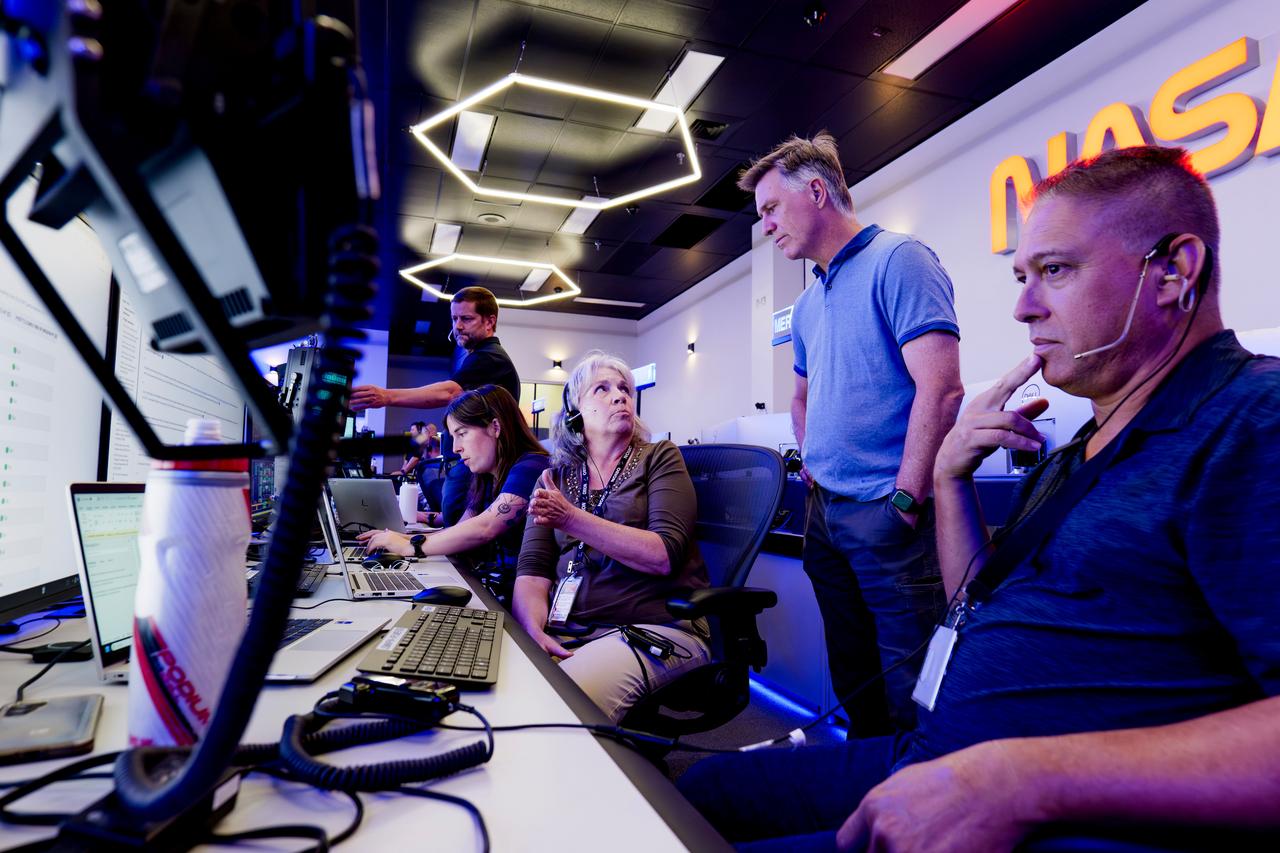
The Orion Mission Evaluation Room (MER) team works during an Artemis II mission simulation on Aug. 19, 2025, from the new Orion MER inside the Mission Control Center at NASA’s Johnson Space Center in Houston.
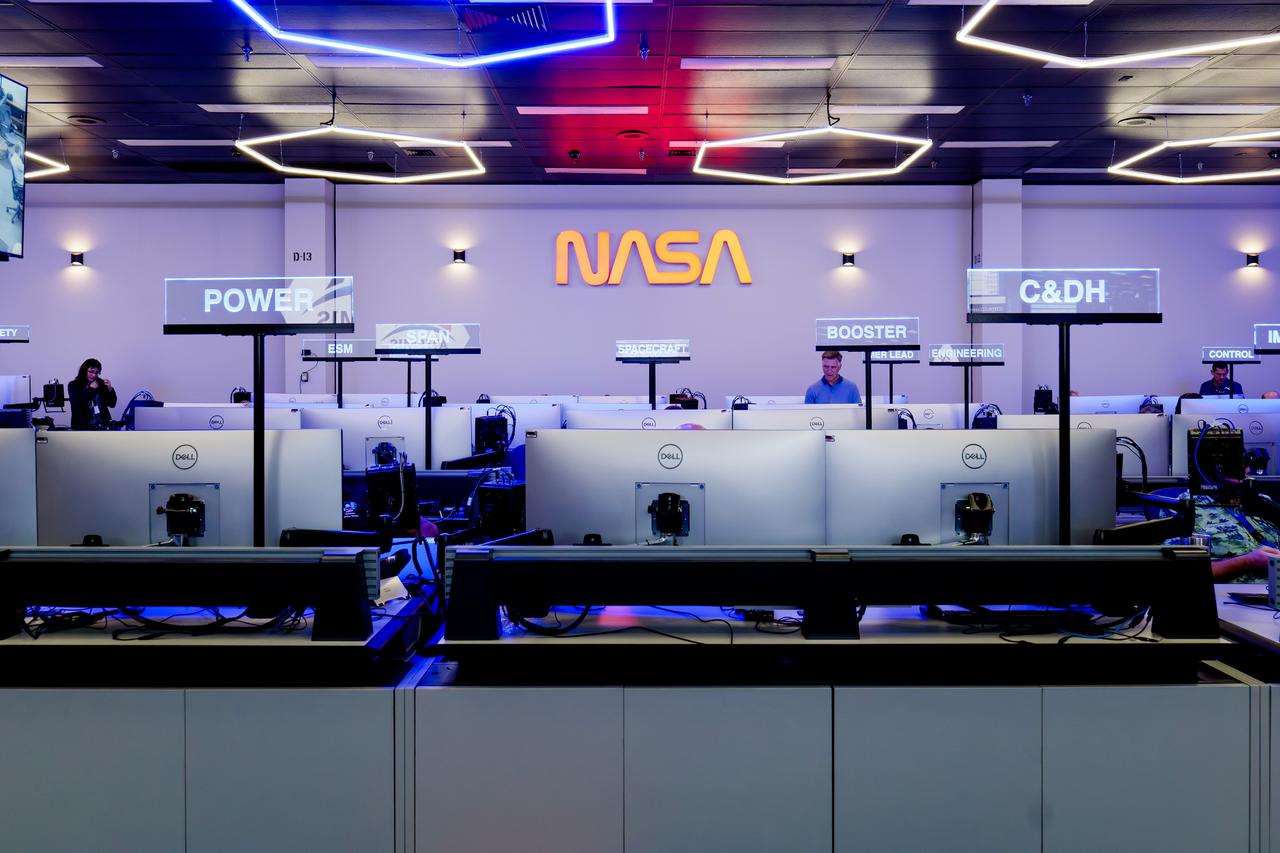
The Orion Mission Evaluation Room (MER) team works during an Artemis II mission simulation on Aug. 19, 2025, from the new Orion MER inside the Mission Control Center at NASA’s Johnson Space Center in Houston.
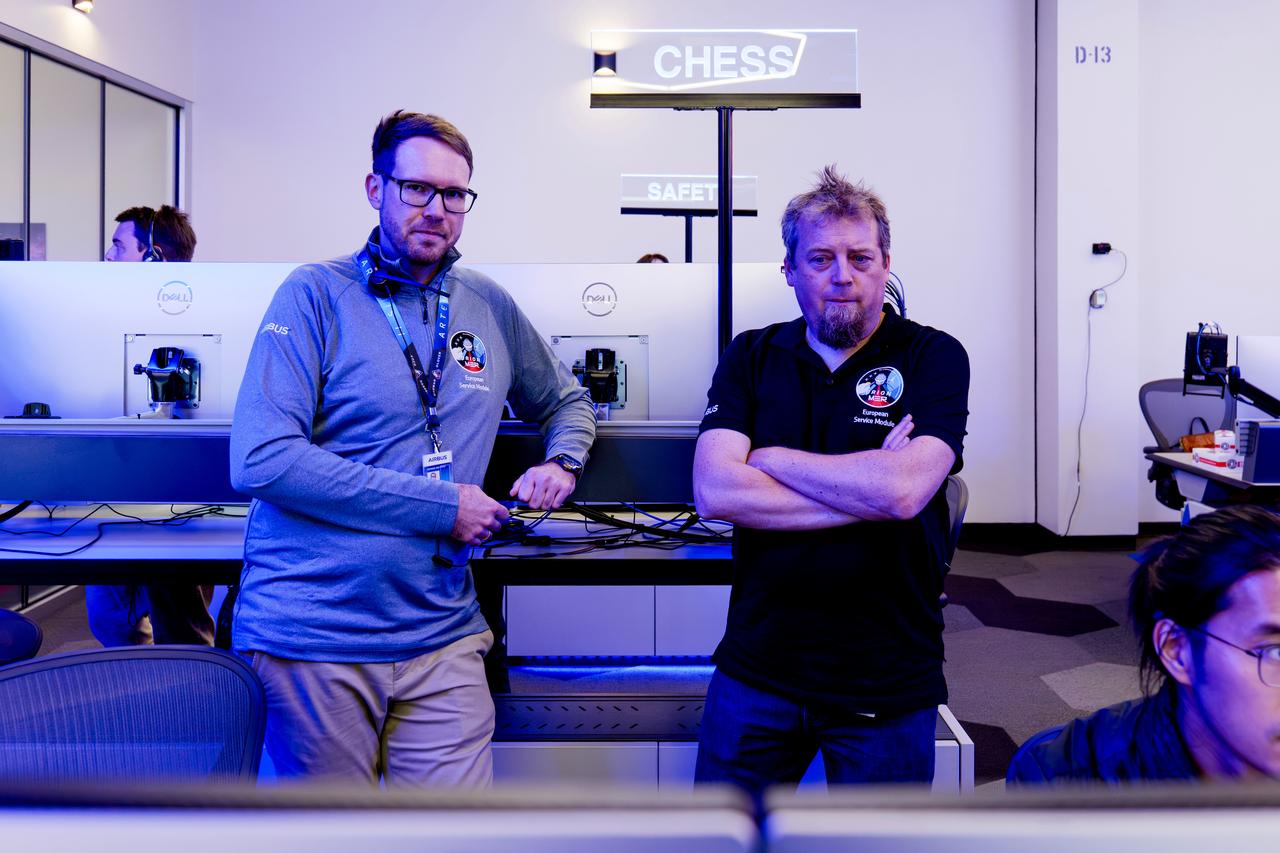
The Orion Mission Evaluation Room (MER) team works during an Artemis II mission simulation on Aug. 19, 2025, from the new Orion MER inside the Mission Control Center at NASA’s Johnson Space Center in Houston.
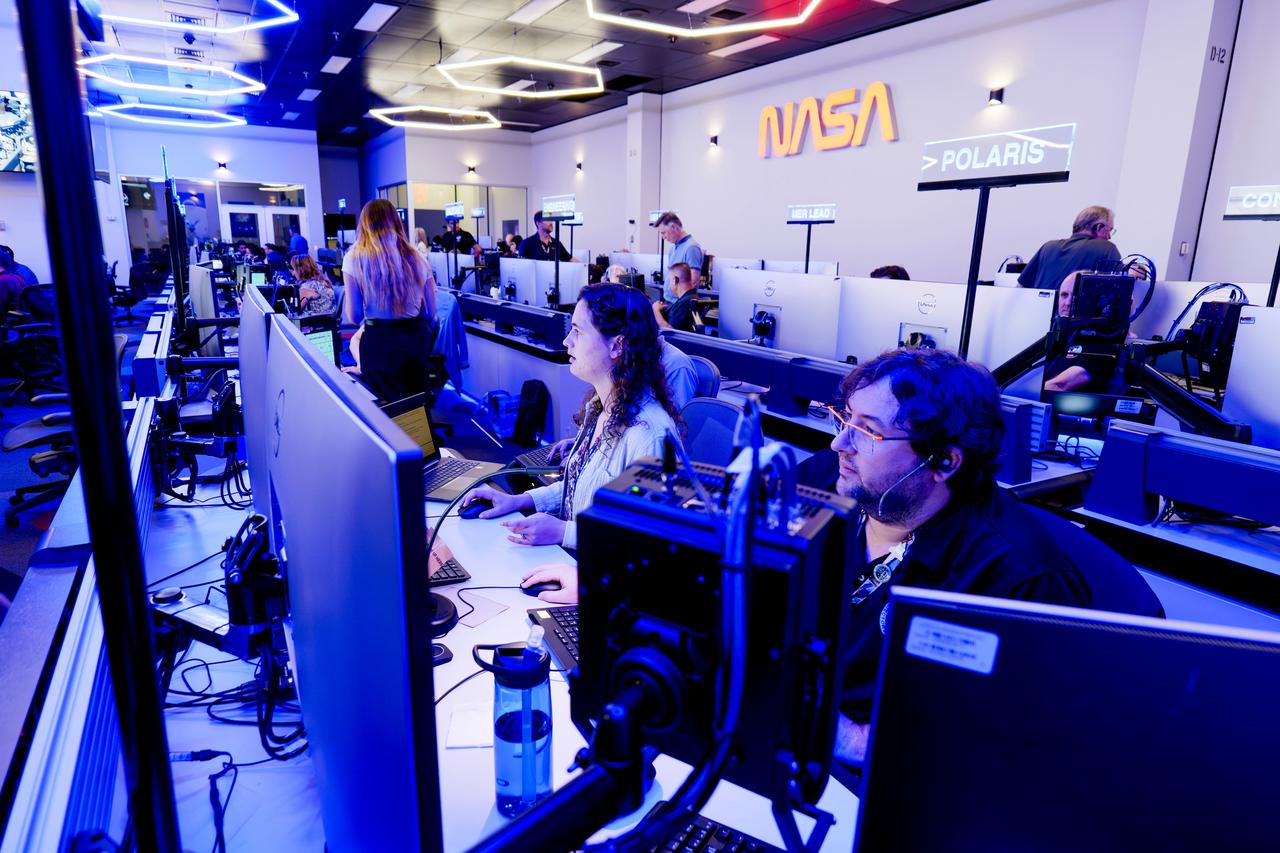
The Orion Mission Evaluation Room (MER) team works during an Artemis II mission simulation on Aug. 19, 2025, from the new Orion MER inside the Mission Control Center at NASA’s Johnson Space Center in Houston.
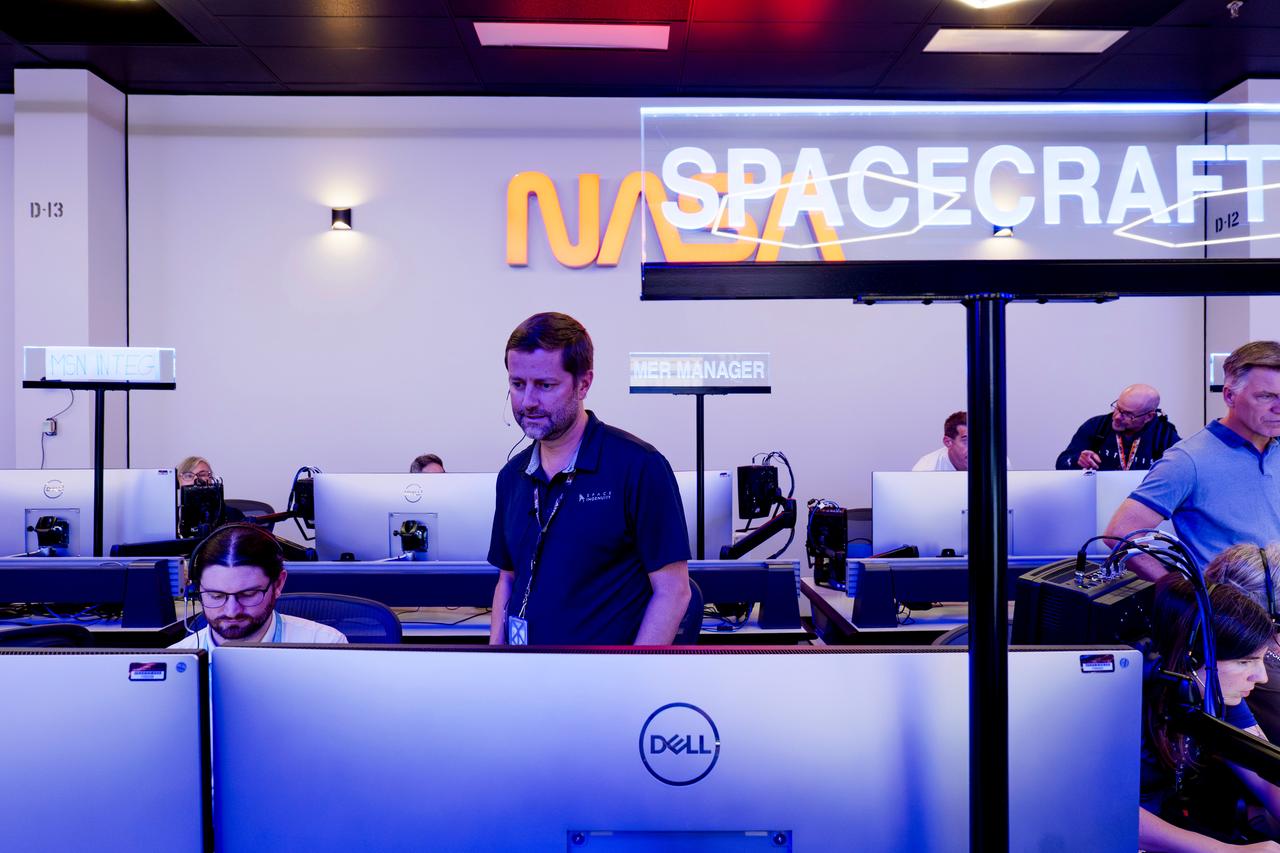
The Orion Mission Evaluation Room (MER) team works during an Artemis II mission simulation on Aug. 19, 2025, from the new Orion MER inside the Mission Control Center at NASA’s Johnson Space Center in Houston.
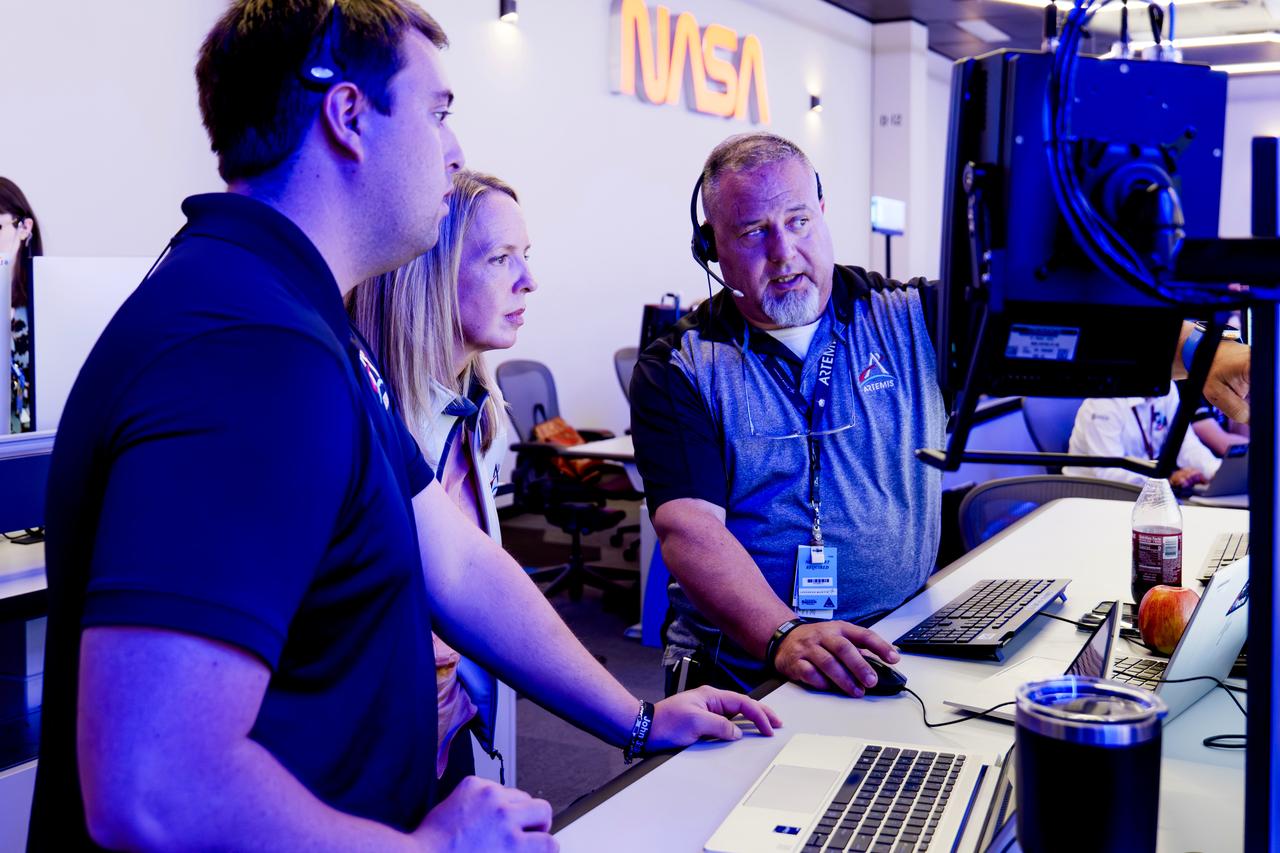
The Orion Mission Evaluation Room (MER) team works during an Artemis II mission simulation on Aug. 19, 2025, from the new Orion MER inside the Mission Control Center at NASA’s Johnson Space Center in Houston.
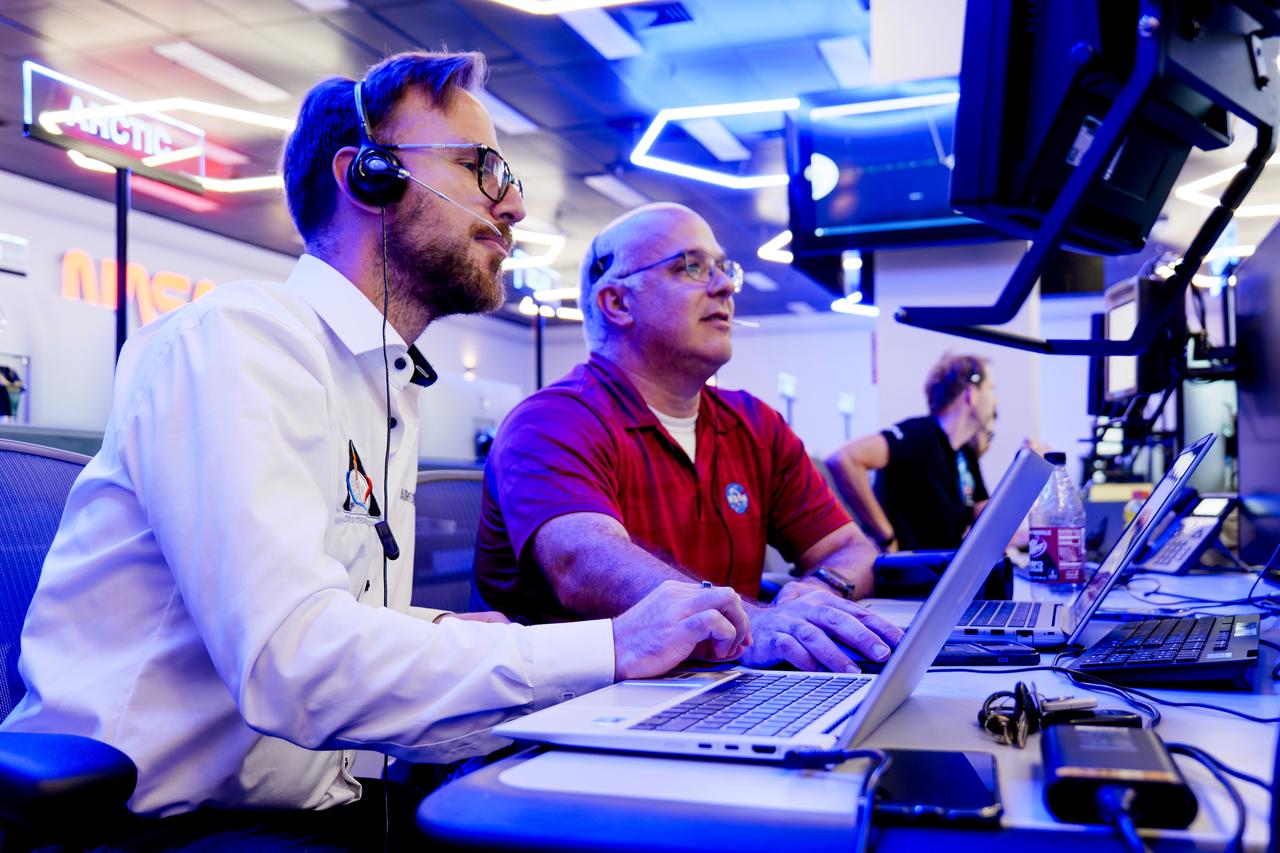
The Orion Mission Evaluation Room (MER) team works during an Artemis II mission simulation on Aug. 19, 2025, from the new Orion MER inside the Mission Control Center at NASA’s Johnson Space Center in Houston.
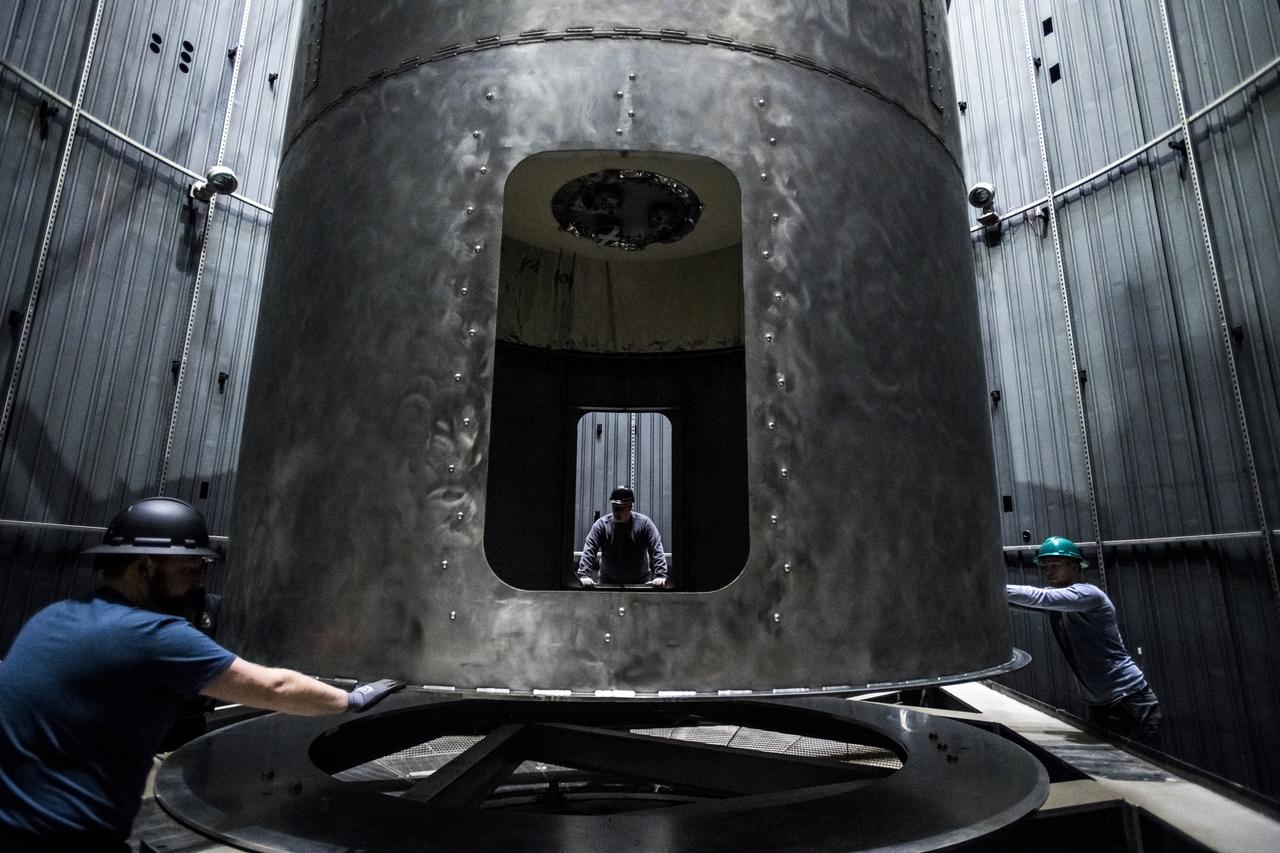
Structural Heat Intercept, Insulation and Vibration Evaluation Rig, SHIIVER is installed in the In-Space Propulsion Chamber at NASA Glenn, Plum Brook Station
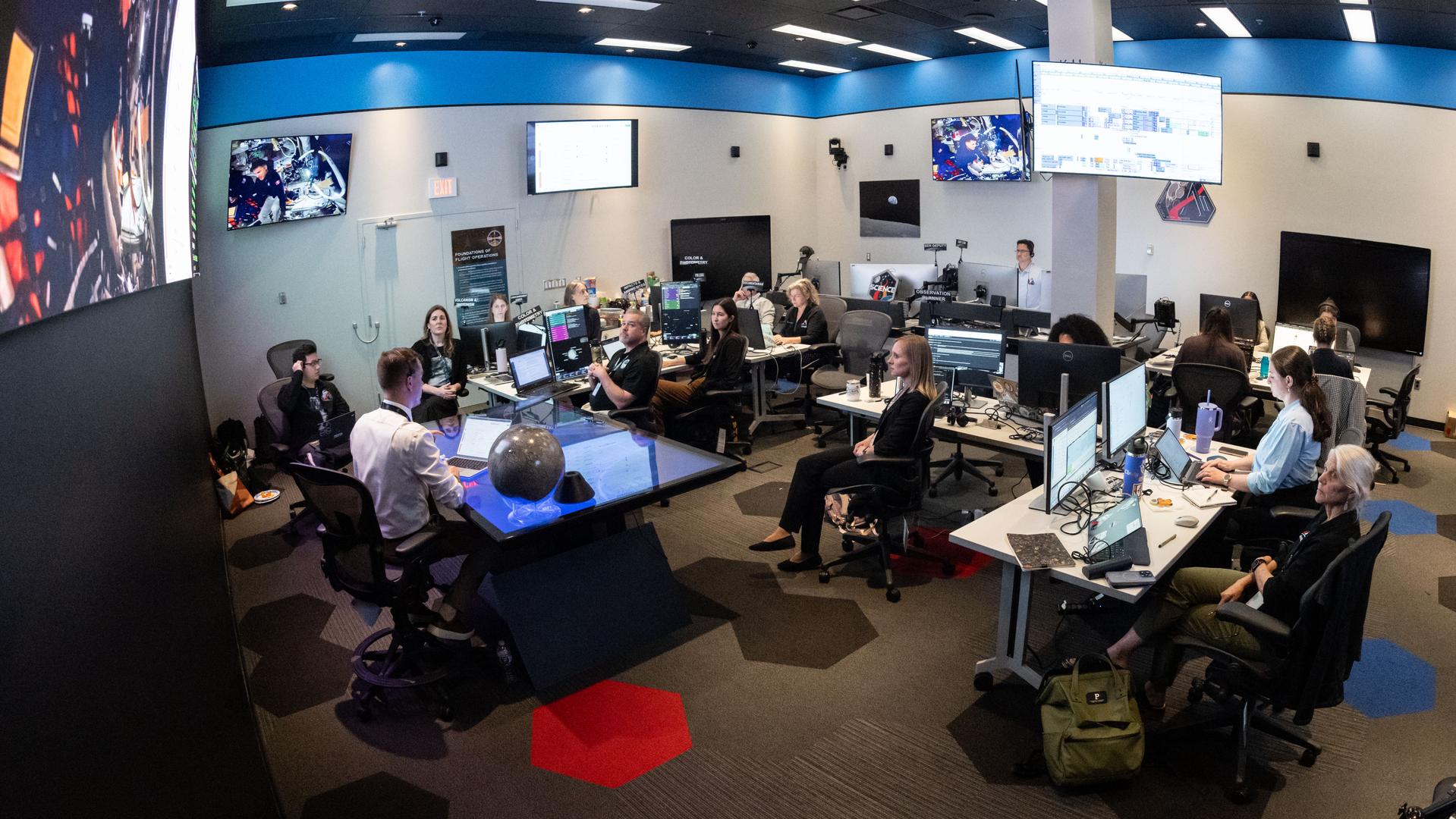
A view inside the Science Evaluation Room (SER) in Mission Control at NASA’s Johnson Space Center in Houston. The SER supports lunar science and planetary observations for the Artemis science officer in the mission’s main flight control room. Built specifically for Artemis missions with these science priorities in mind, the SER is equipped to support rapid data interpretation, collaborative analysis, real-time decision making, and seamless coordination between the science and operations teams. Credits: NASA/Bill Stafford
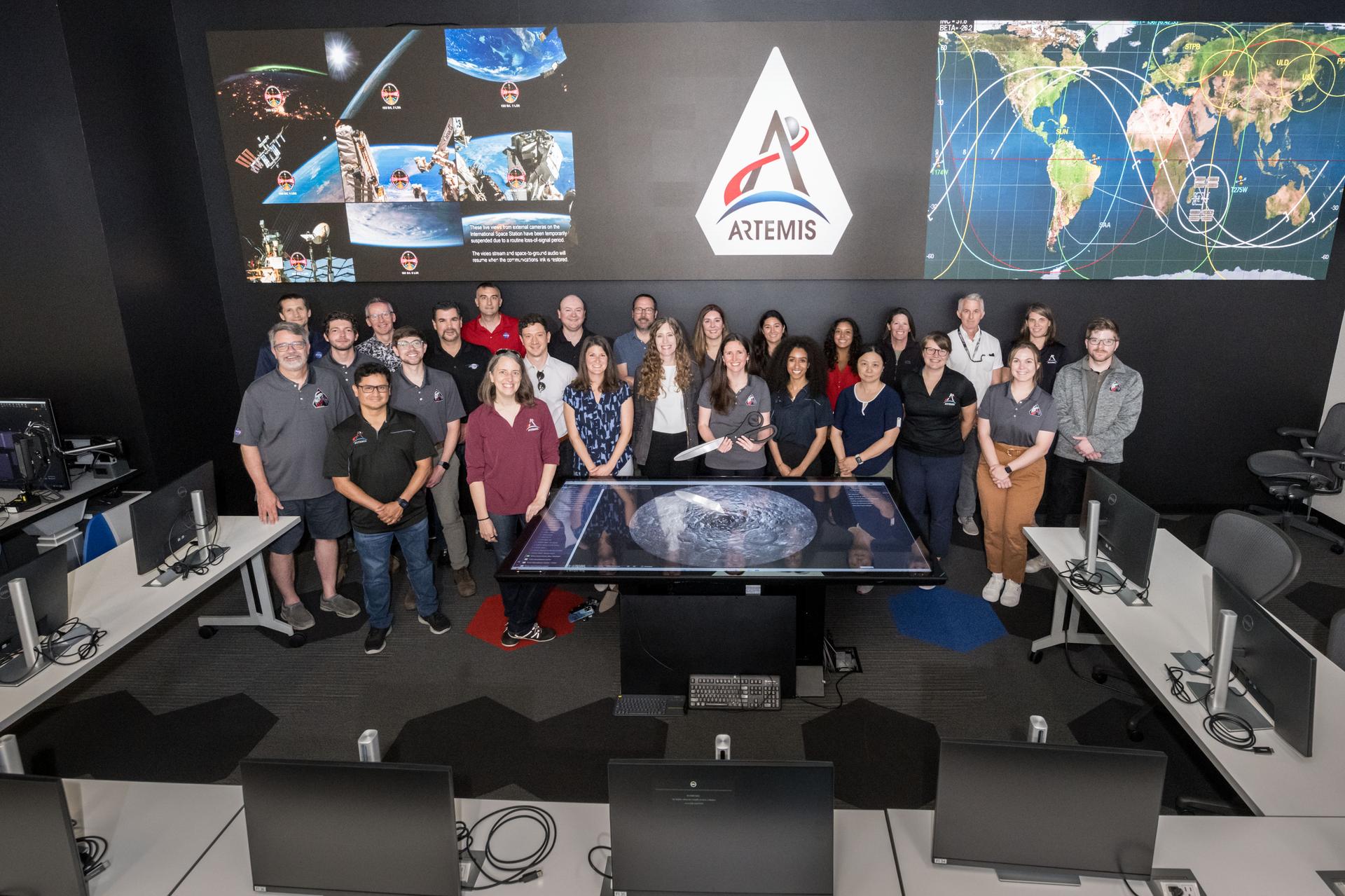
jsc2025e057255 --- NASA’s Artemis III lunar science team is pictured in the Science Evaluation Room (SER) at the agency’s Johnson Space Center in Houston. Located in the Christopher C. Kraft Jr. Mission Control Center, the SER supports the mission’s main flight control room for lunar science and planetary observations. Built specifically for Artemis missions with these science priorities in mind, the SER is equipped to support rapid data interpretation, collaborative analysis, real-time decision making, and seamless coordination between the science and operations teams.
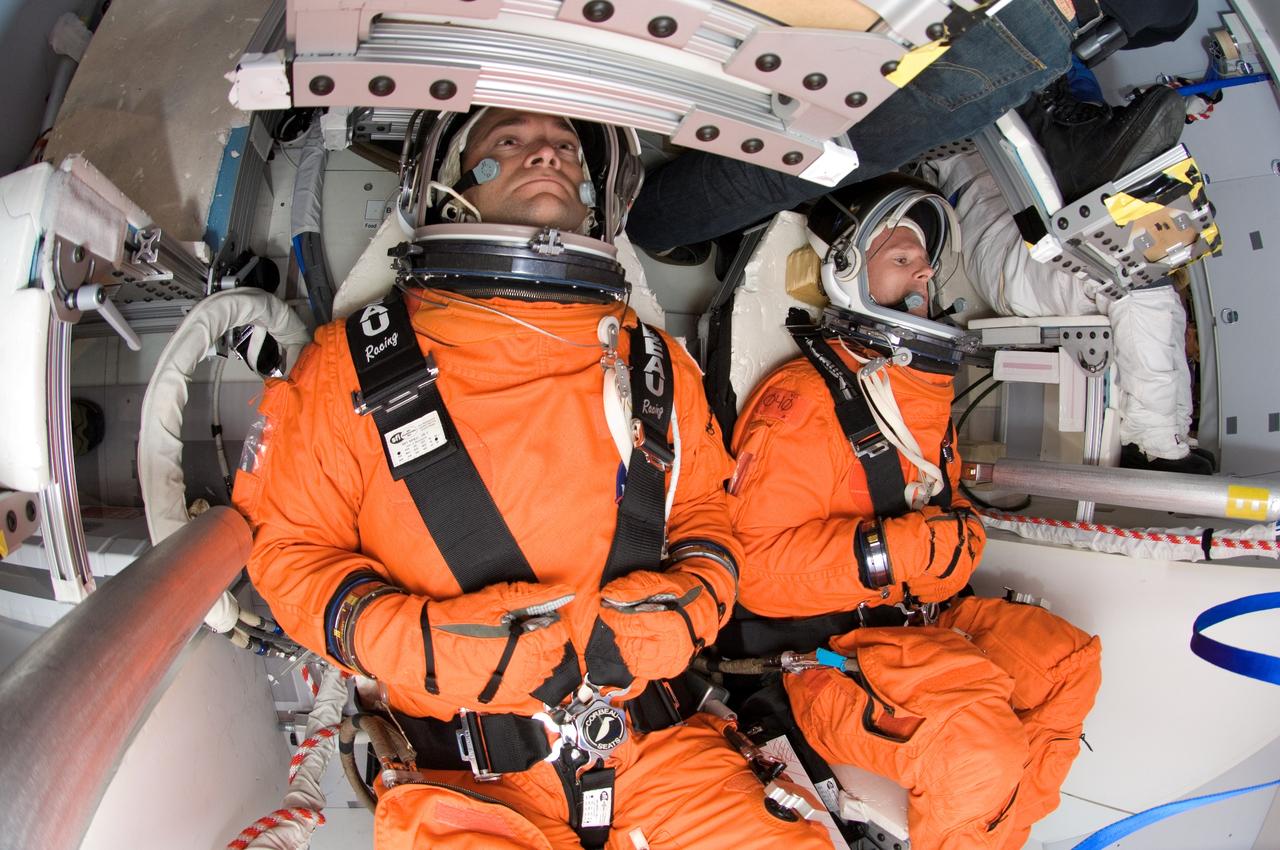
Photographic documentation of the CEV Seat Layout Evaluation taken in the Orion mockup located in bldg 9NW, Johnson Space Center (JSC). Test subjects in orange Launch and Entry Suit (LES) is visible in the seat.
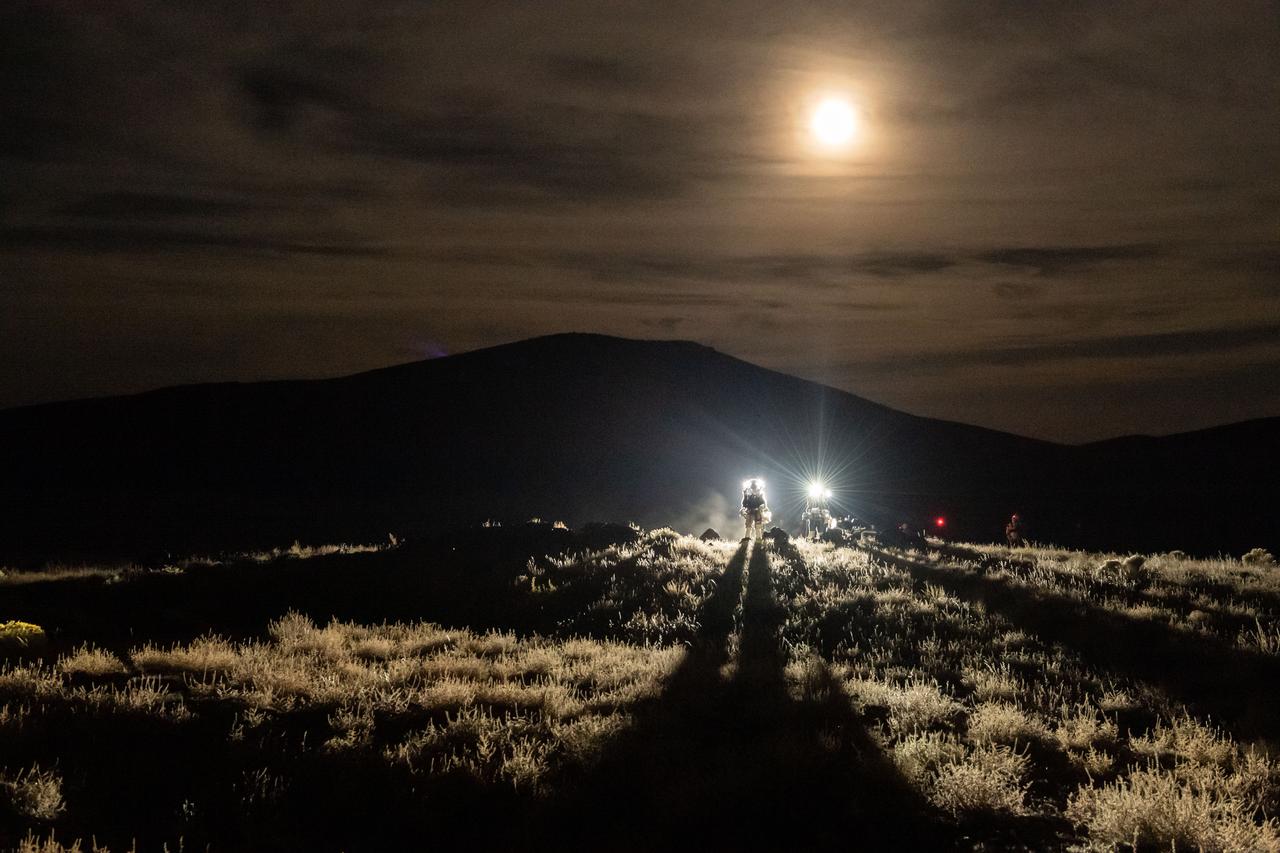
PHOTO DATE: 10-20-21 LOCATION: Flagstaff, Arizona - Field Location SUBJECT: Photographic support and coverage of night field evaluation. EVA Test #1 PHOTOGRAPHER: BILL STAFFORD
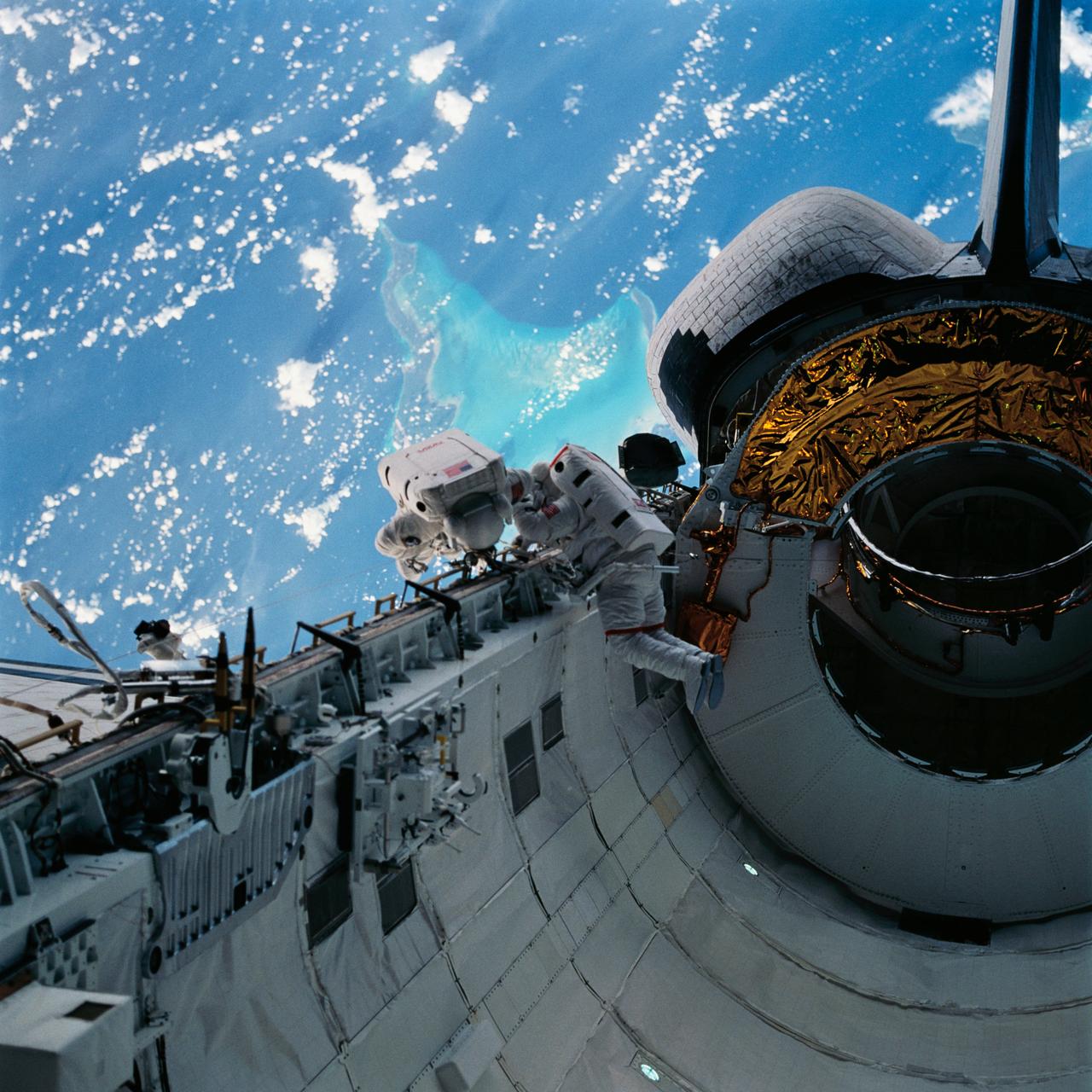
With the Caribbean Sea and part of the Bahama Islands chain as a backdrop, two STS-51 crewmembers evaluate procedures and gear to be used on the upcoming Hubble Space Telescope (HST)-servicing mission. Sharing the lengthy extravehicular activity in and around Discovery's cargo bay were astronauts James H. Newman (left), and Carl E. Walz, mission specialists.
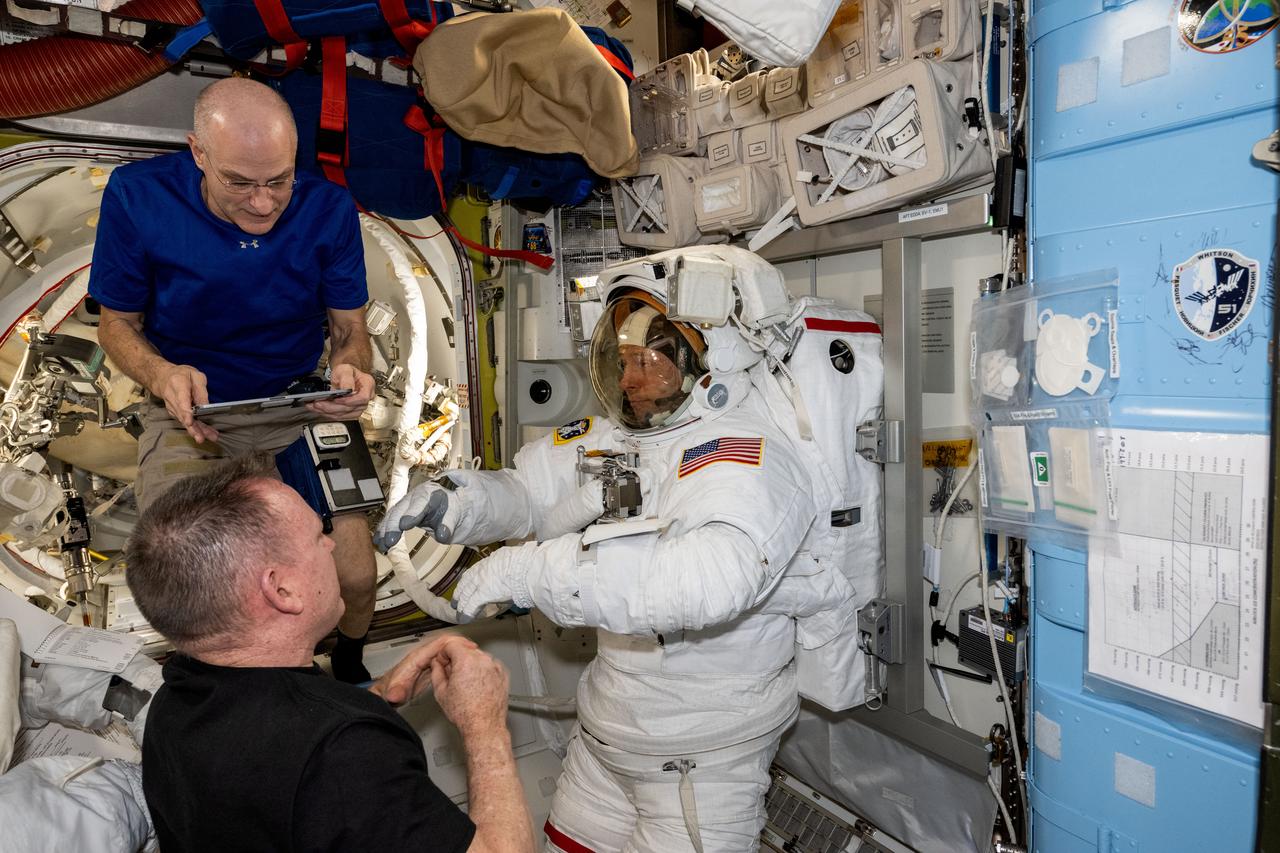
iss072e451672 (Jan. 9, 2025) --- NASA astronauts Don Pettit (top) and Butch Wilmore (bottom) assist NASA astronaut Nick Hague (center) as he tries on and evaluates his spacesuit in a pressurized configuration aboard the International Space Station's Quest airlock.
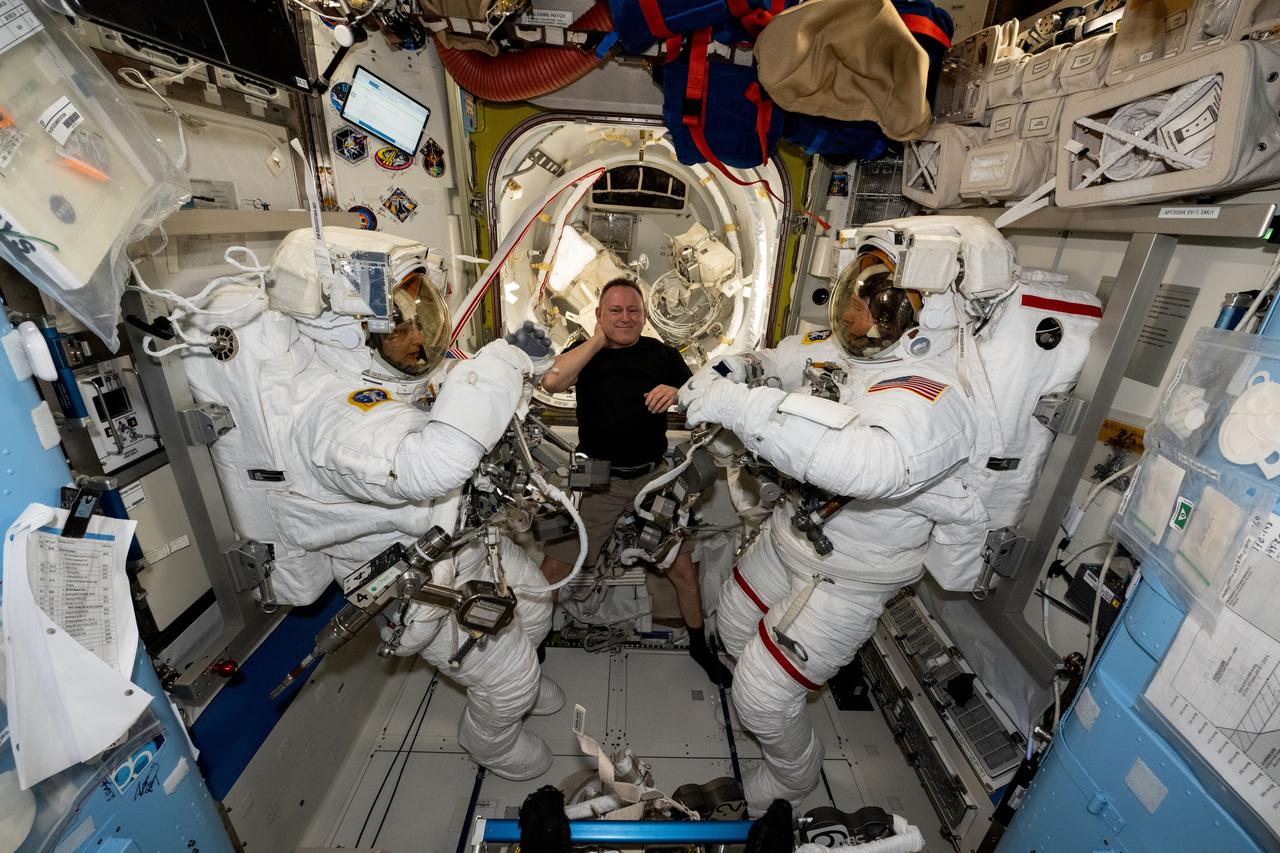
iss072e451696 (Jan. 9, 2025) --- NASA astronaut and Expedition 72 Flight Engineer Butch Wilmore (center) assists International Space Station Commander Suni Williams (left) and Flight Engineer Nick Hague (right), both NASA astronauts, as they prepare to evaluate their spacesuits in a pressurized configuration. Hague and Williams are scheduled to exit the orbital outpost on Jan. 16 for a spacewalk to service astrophysics gear including the NICER X-ray telescope and the Alpha Magnetic Spectrometer.
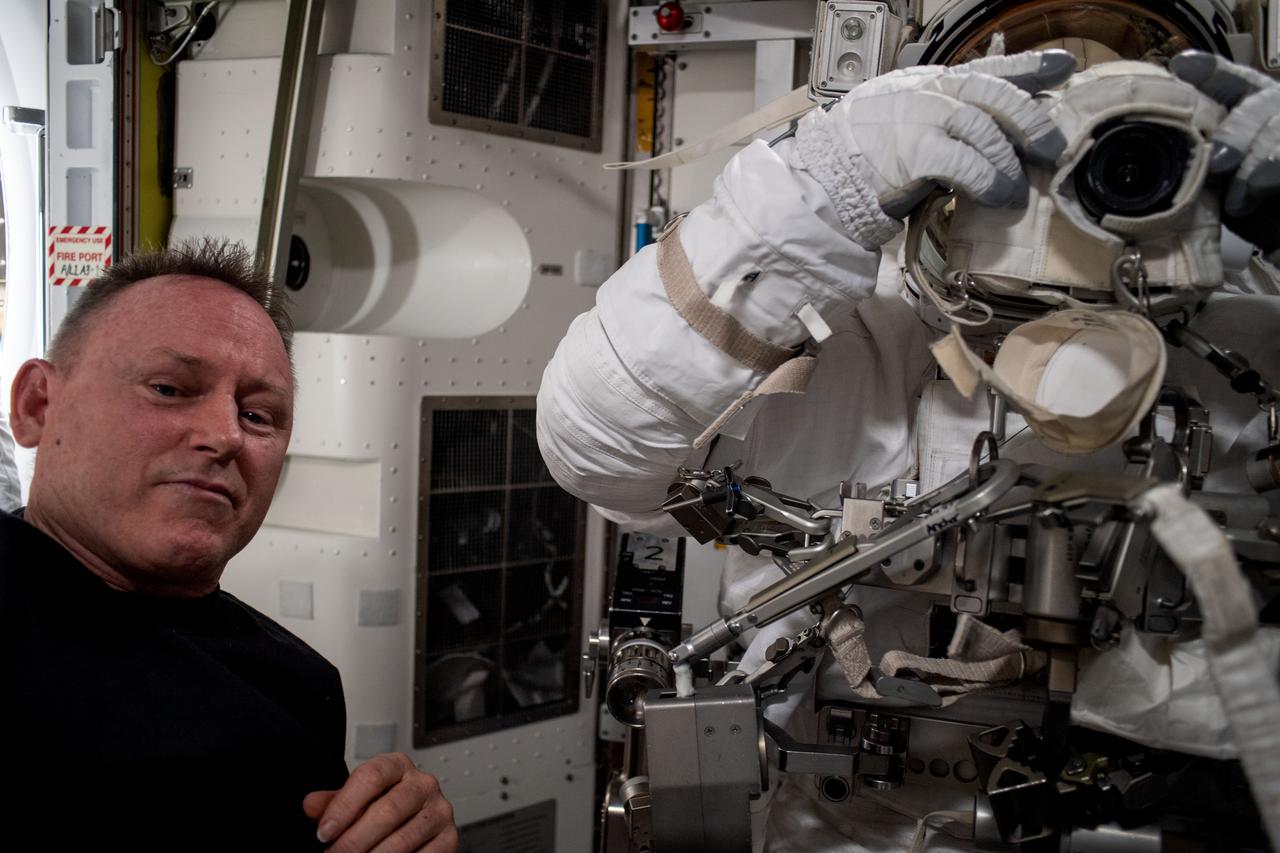
iss072e451640 (Jan. 9, 2025) --- NASA astronaut and Expedition 72 Flight Engineer Butch Wilmore (left) assists NASA astronaut Nick Hague (right) as he tries on and evaluates his spacesuit in a pressurized configuration aboard the International Space Station's Quest airlock. Hague is pictured holding a spacewalking camera in front of his spacesuit's helmet shield.

iss072e451687 (Jan. 9, 2025) --- NASA astronaut and Expedition 72 Flight Engineer Butch Wilmore (center) assists International Space Station Commander Suni Williams (left) and Flight Engineer Nick Hague (right), both NASA astronauts, as they prepare to evaluate their spacesuits in a pressurized configuration. Hague and Williams are scheduled to exit the orbital outpost on Jan. 16 for a spacewalk to service astrophysics gear including the NICER X-ray telescope and the Alpha Magnetic Spectrometer.
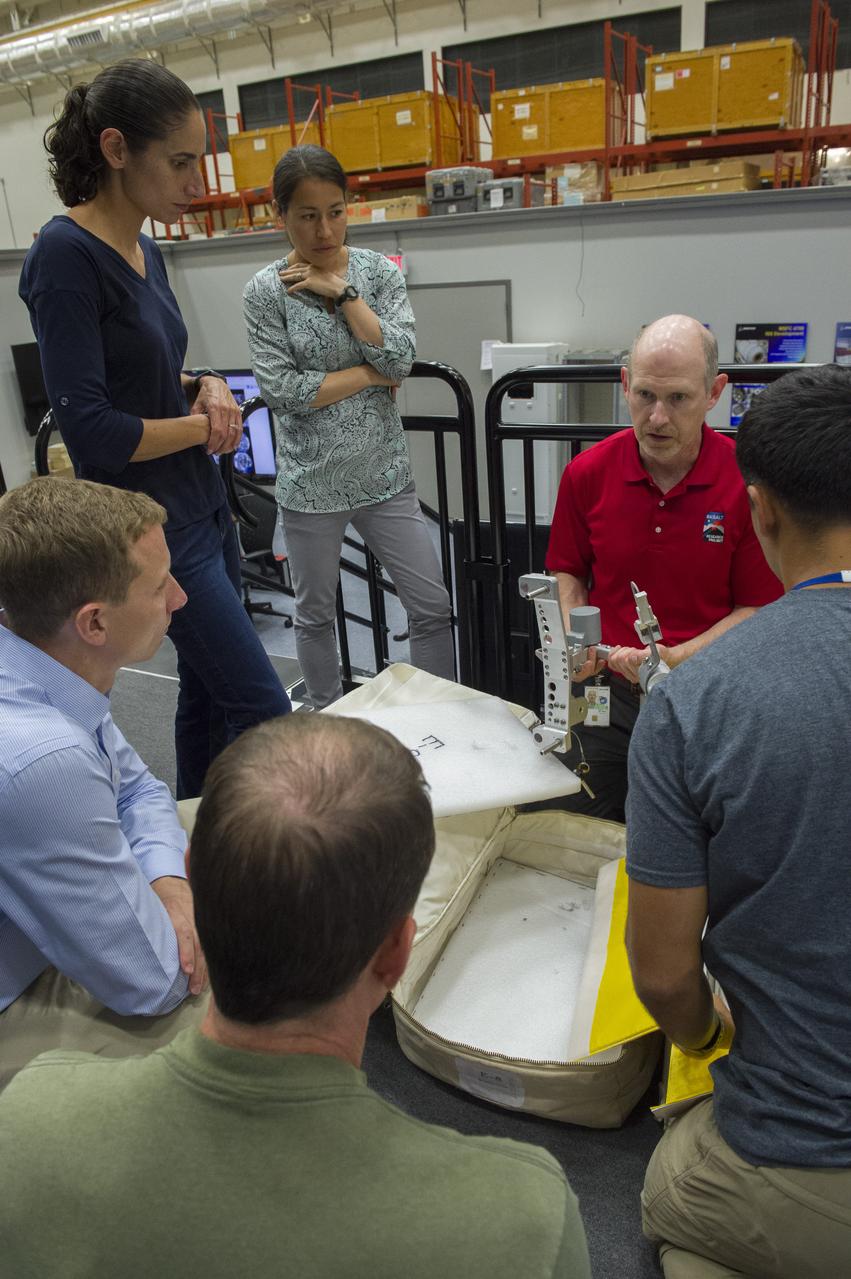
Boeing trainers conduct simulations inside the Boeing Exploration Habitat Demonstrator with astronauts to evaluate the internal layout and ergonomics, to support efficient work-life balance aboard a deep space ship.
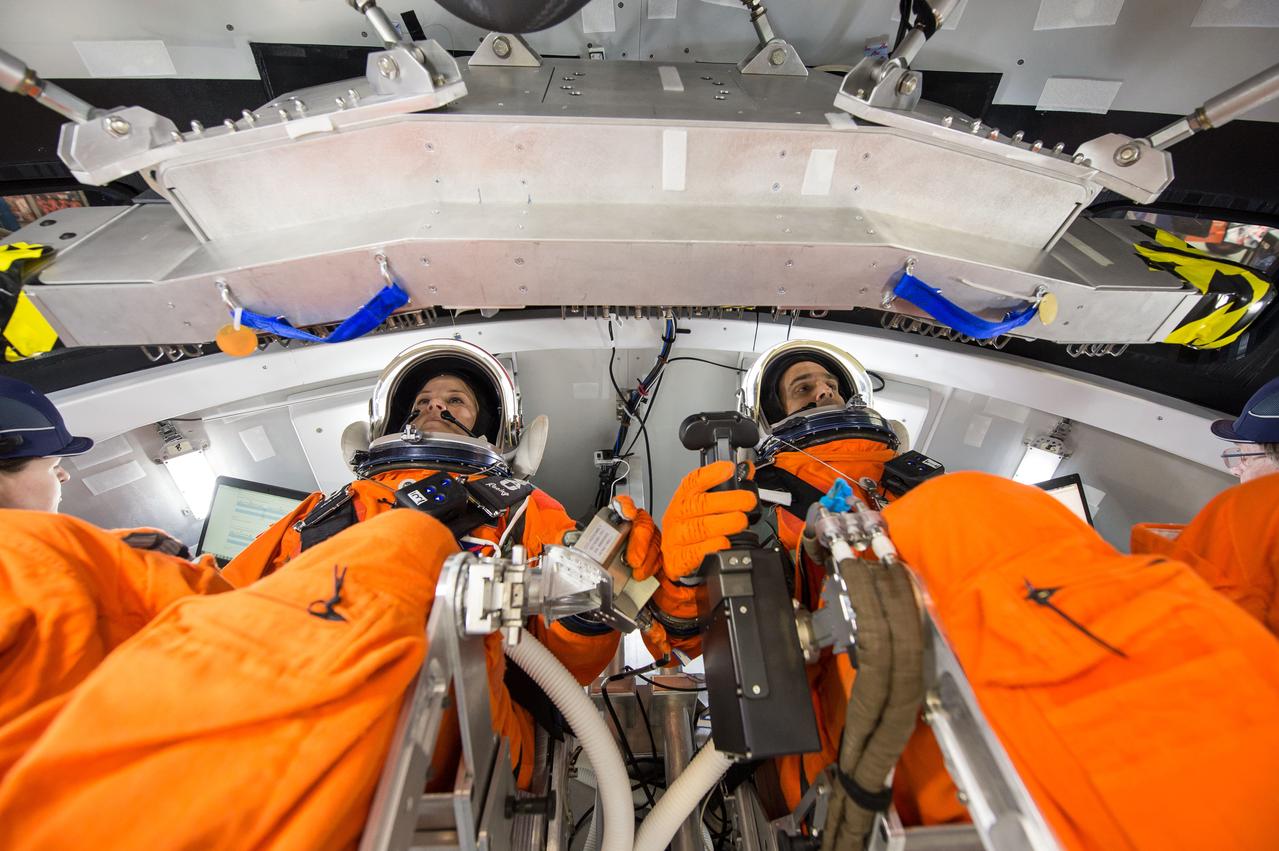
Engineers at NASA's Johnson Space Center in Houston evaluate how crews inside a mockup of the Orion spacecraft interact with the rotational hand controller and cursor control device while inside their Modified Advanced Crew Escape spacesuits on March 24, 2016. The controllers are used to operate Orion’s displays and control system, which the crew will use to maneuver and interact with the spacecraft during missions to deep space destinations. The testing aims to provide data that teams need to make sure astronauts who ride to space in Orion can appropriately interact with the control system while in their suits.
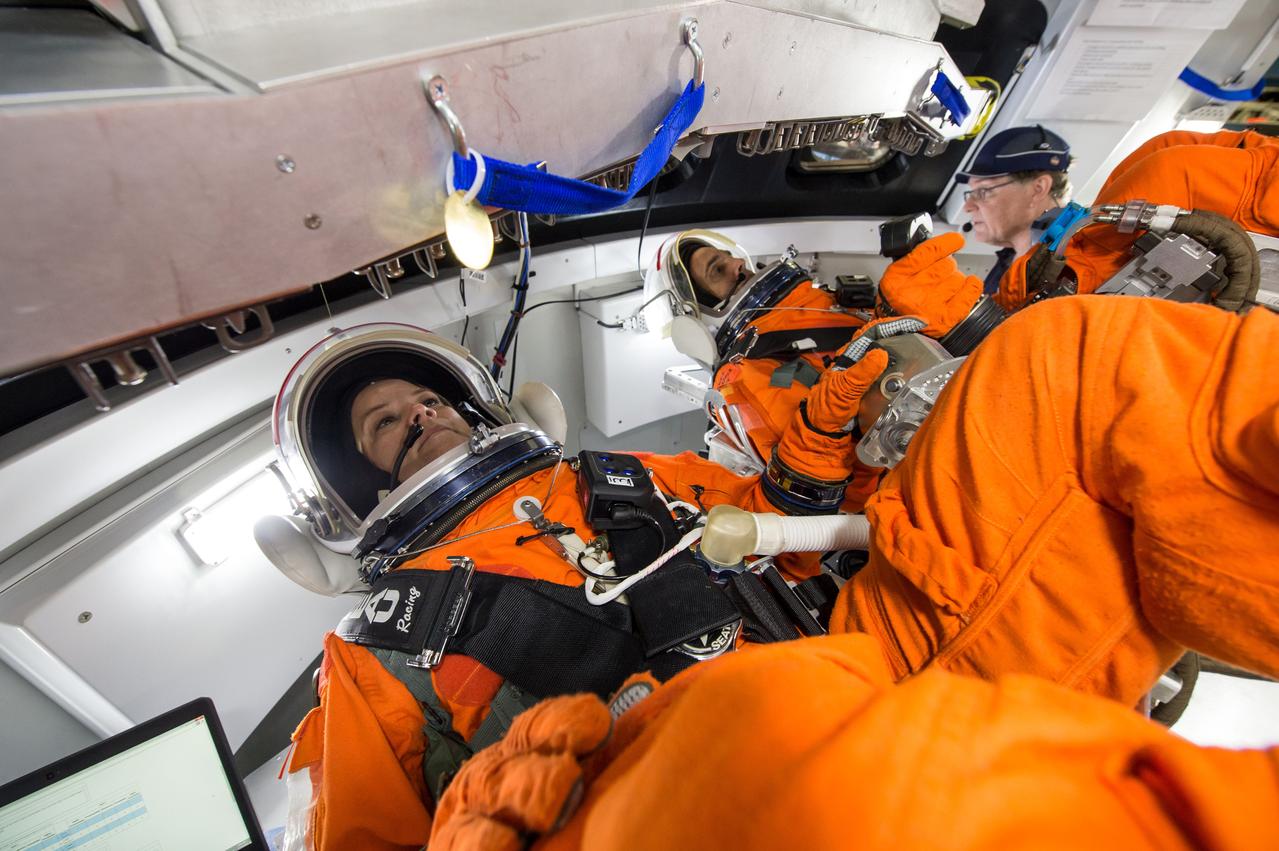
Engineers at NASA's Johnson Space Center in Houston evaluate how crews inside a mockup of the Orion spacecraft interact with the rotational hand controller and cursor control device while inside their Modified Advanced Crew Escape spacesuits on March 24, 2016. The controllers are used to operate Orion’s displays and control system, which the crew will use to maneuver and interact with the spacecraft during missions to deep space destinations. The testing aims to provide data that teams need to make sure astronauts who ride to space in Orion can appropriately interact with the control system while in their suits.
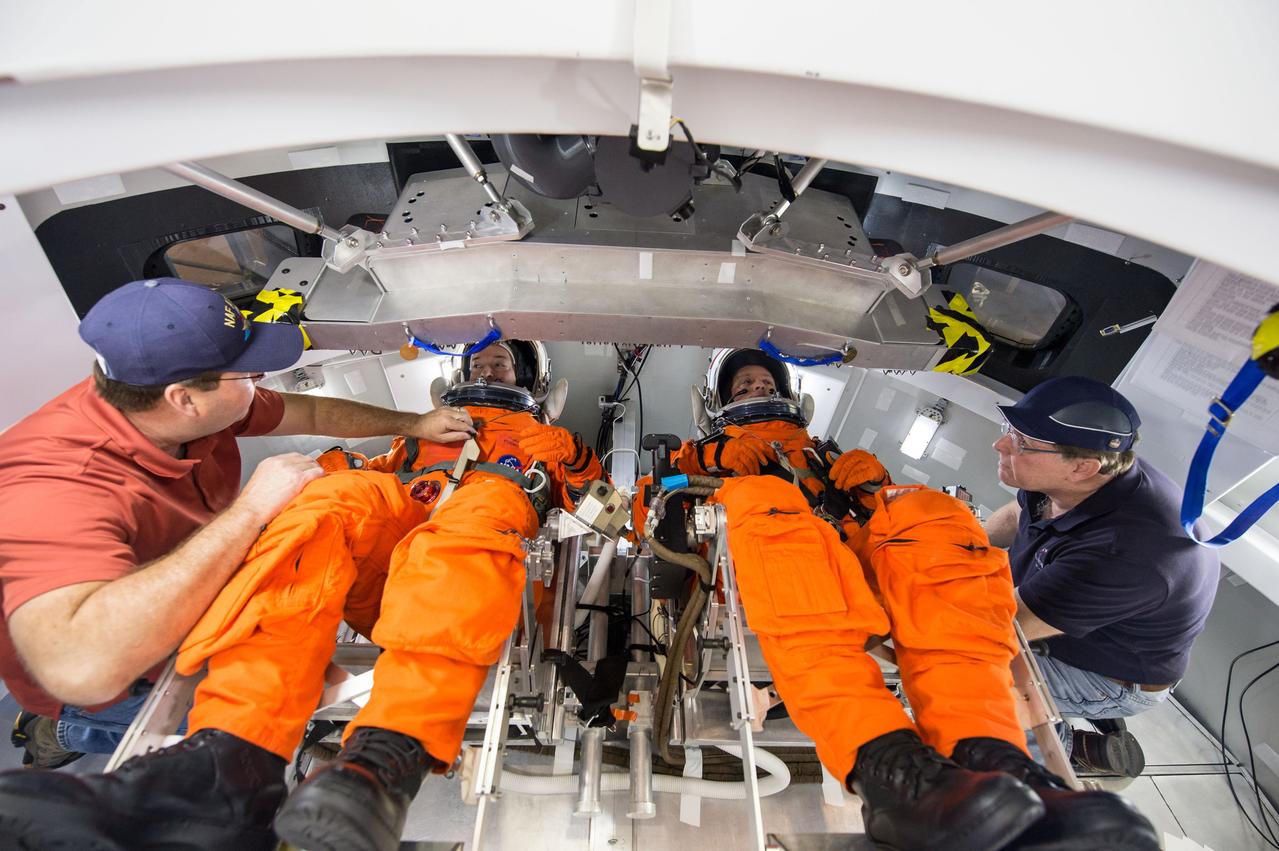
Engineers at NASA's Johnson Space Center in Houston evaluate how crews inside a mockup of the Orion spacecraft interact with the rotational hand controller and cursor control device while inside their Modified Advanced Crew Escape spacesuits on March 24, 2016. The controllers are used to operate Orion’s displays and control system, which the crew will use to maneuver and interact with the spacecraft during missions to deep space destinations. The testing aims to provide data that teams need to make sure astronauts who ride to space in Orion can appropriately interact with the control system while in their suits.
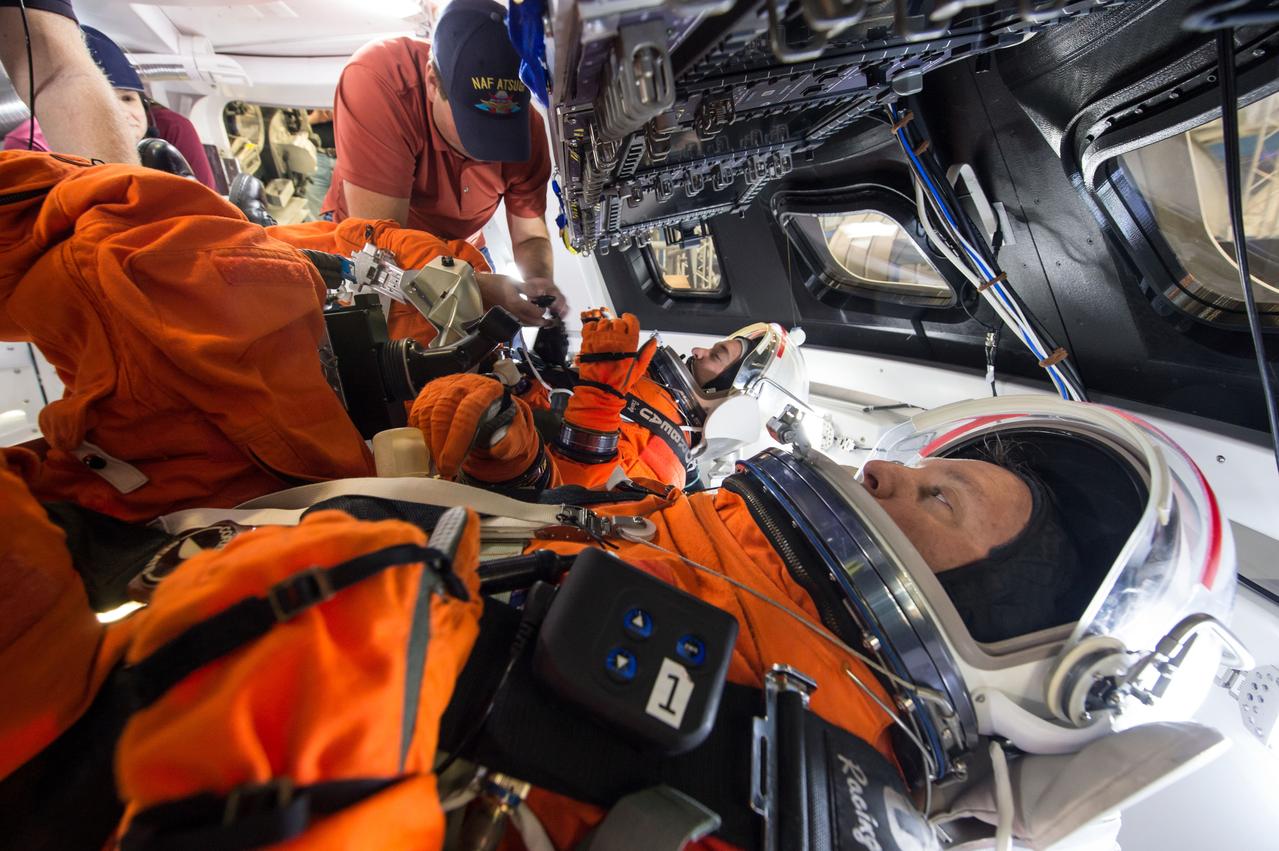
Engineers at NASA's Johnson Space Center in Houston evaluate how crews inside a mockup of the Orion spacecraft interact with the rotational hand controller and cursor control device while inside their Modified Advanced Crew Escape spacesuits on March 24, 2016. The controllers are used to operate Orion’s displays and control system, which the crew will use to maneuver and interact with the spacecraft during missions to deep space destinations. The testing aims to provide data that teams need to make sure astronauts who ride to space in Orion can appropriately interact with the control system while in their suits.
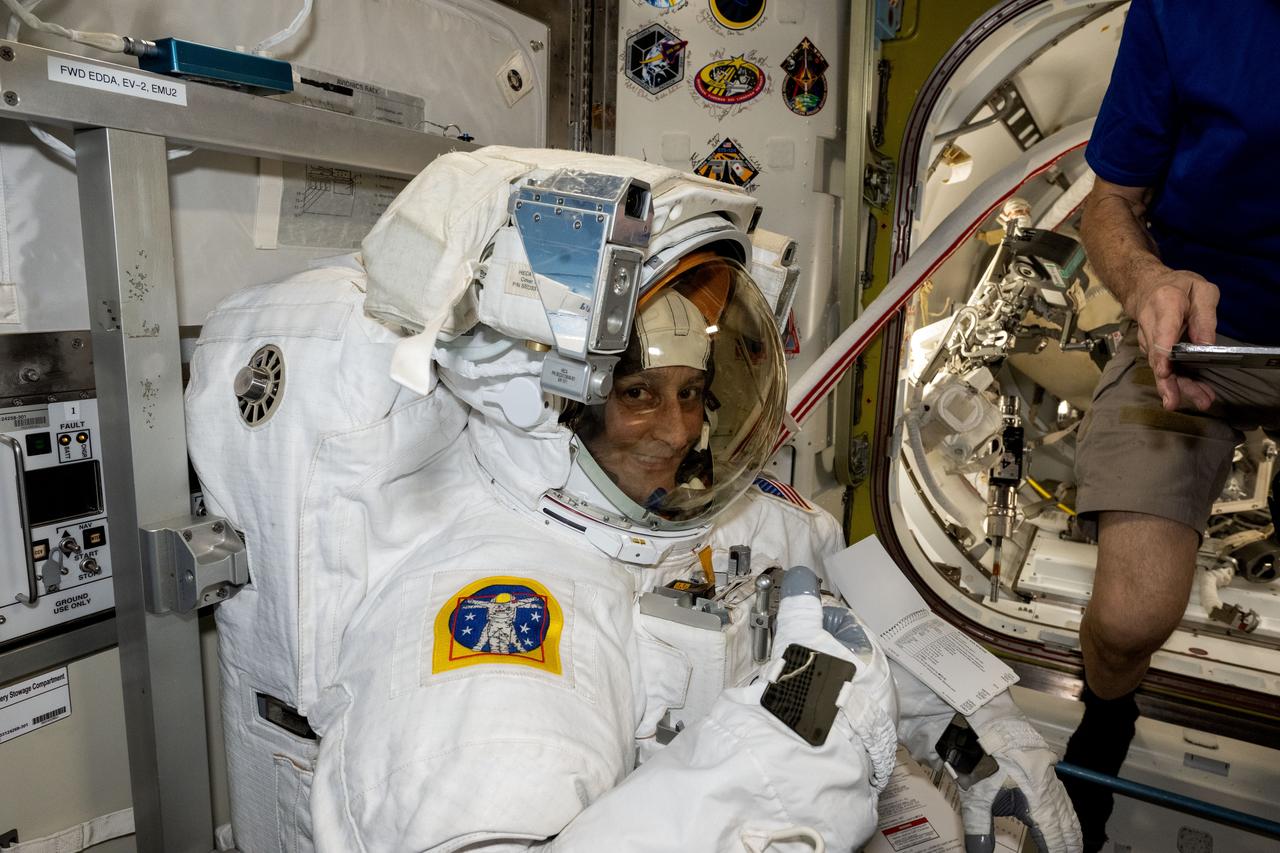
iss072e451674 (Jan. 9, 2025) --- NASA astronaut and Expedition 72 Commander Suni Williams is pictured as she tries on and evaluates her spacesuit in a pressurized configuration aboard the International Space Station's Quest airlock.
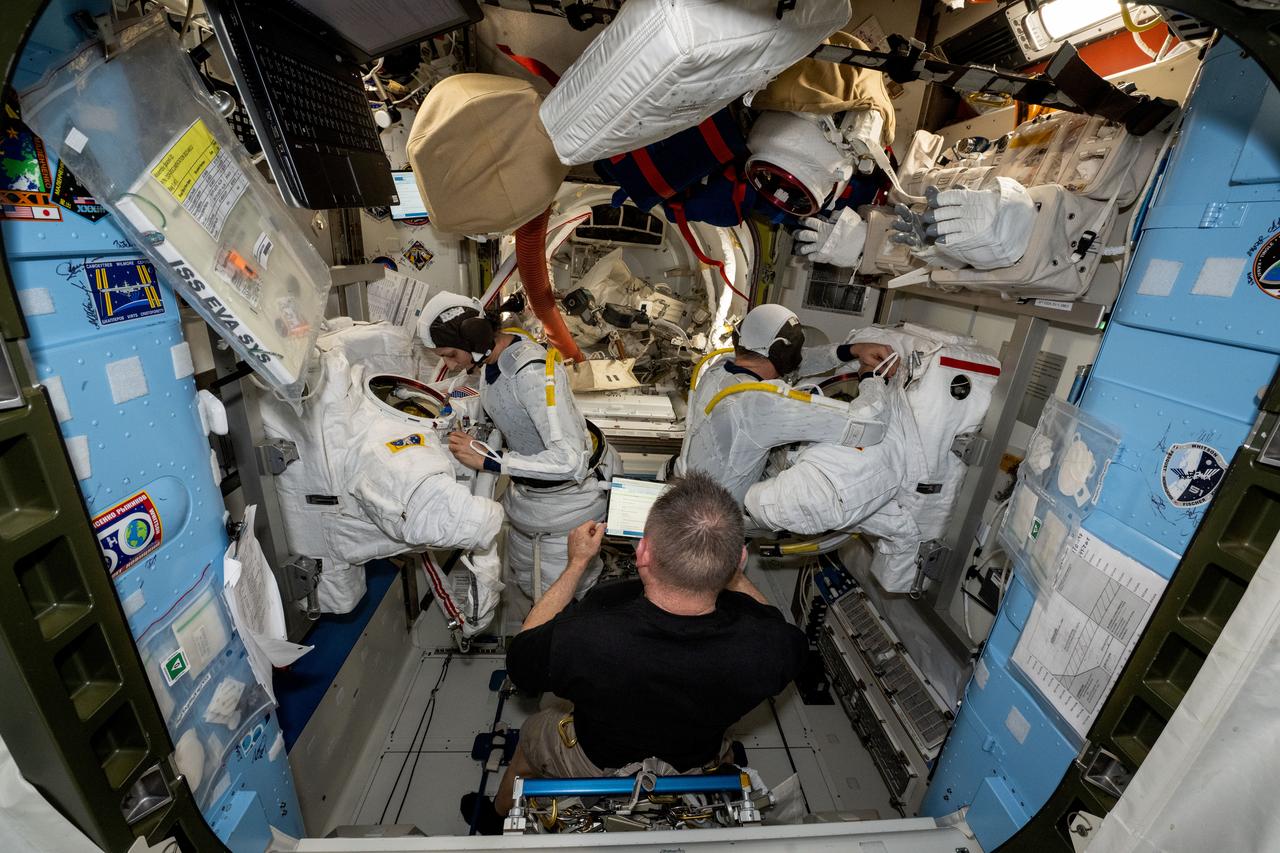
iss072e451646 (Jan. 9, 2025) --- NASA astronaut and Expedition 72 Flight Engineer Butch Wilmore (center) assists International Space Station Commander Suni Williams (left) and Flight Engineer Nick Hague (right), both NASA astronauts, as they prepare to evaluate their spacesuits in a pressurized configuration. Hague and Williams are scheduled to exit the orbital outpost on Jan. 16 for a spacewalk to service astrophysics gear including the NICER X-ray telescope and the Alpha Magnetic Spectrometer.
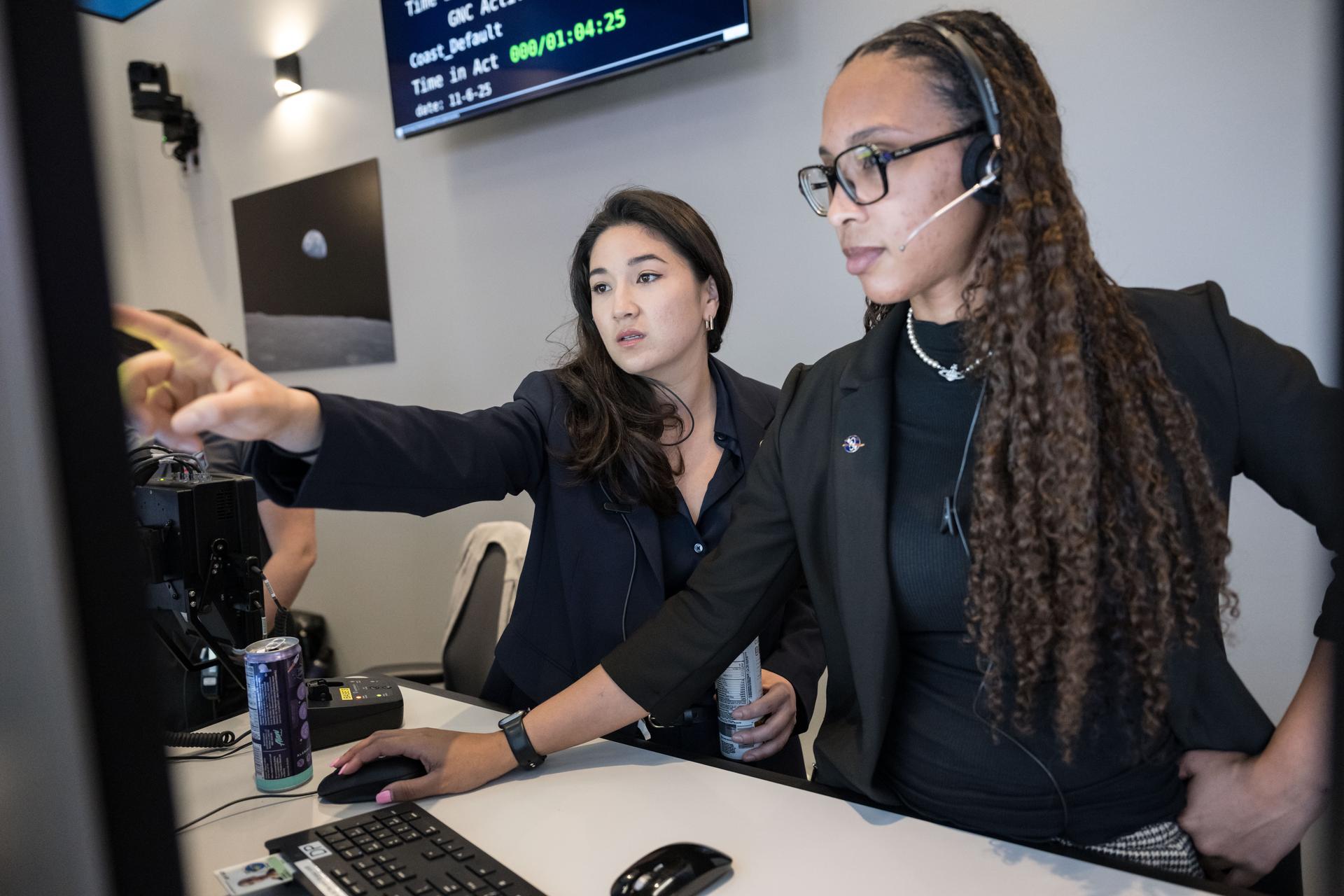
Artemis science officer, Angela Garcia, left and lunar science team member, Kiarre Dumes discuss science operations in the Science Evaluation Room (SER) in Mission Control at NASA's Johnson Space Center in Houston. The SER supports lunar science and planetary observations for the Artemis science officer in the mission’s main flight control room. Dumes serves as the SERCOMM, or Science Evaluation Room Communicator, acting as the singular voice from the science team in the back room, reporting to the science officer. Credits: NASA/Luna Posadas Nava
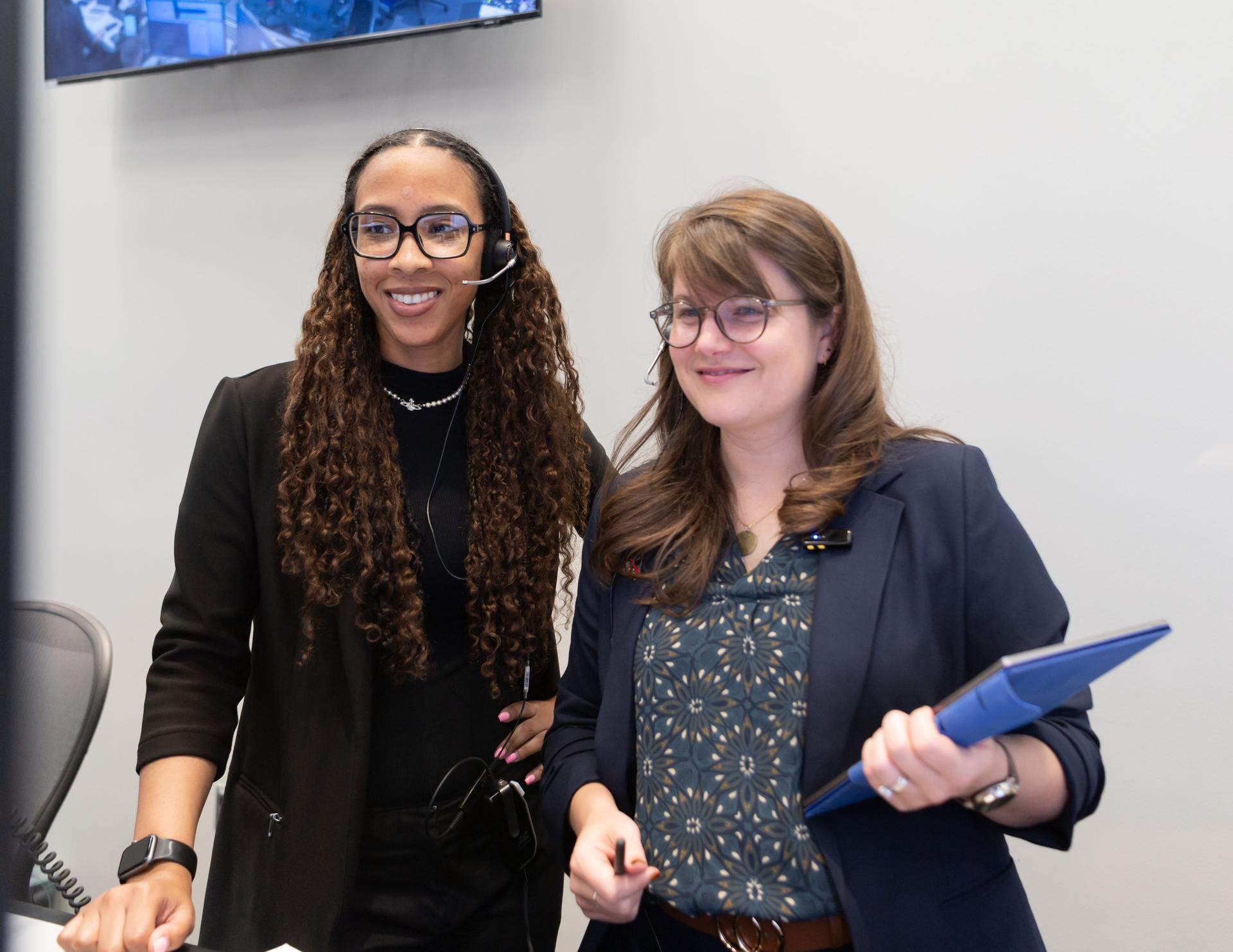
Science evaluation room communicator, Kiarre Dumes, left, and deputy lunar science lead Marie Henderson work in the Science Evaluation Room (SER) during Artemis II. Built specifically for Artemis missions with these science priorities in mind, the SER is equipped to support rapid data interpretation, collaborative analysis, real-time decision making, and seamless coordination between the science and operations teams. Credits: NASA/Luna Posadas Nava
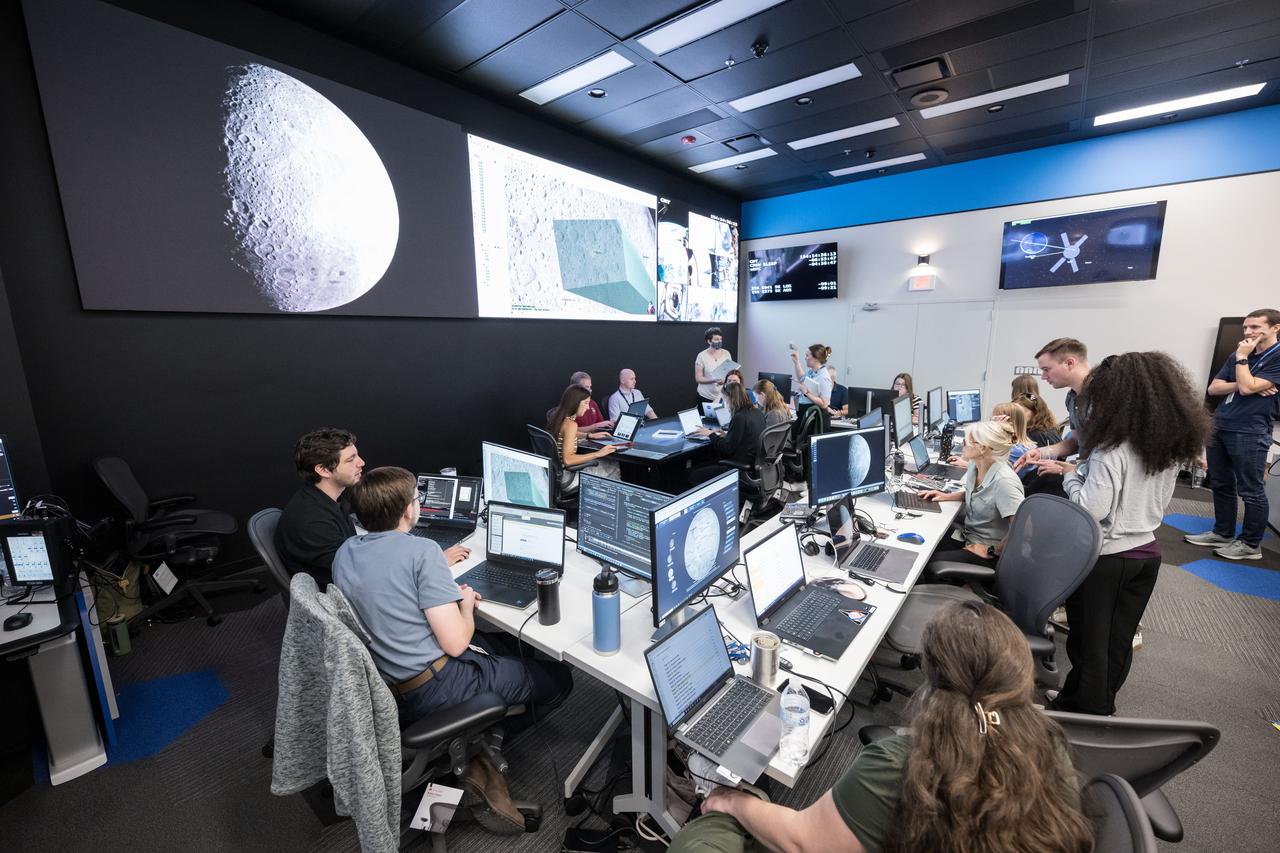
jsc2025e056603 --- The Artemis II Lunar Science Team runs a simulation of lunar observation operations in the new Science Evaluation Room (SER) that serves as a backroom to Mission Control.
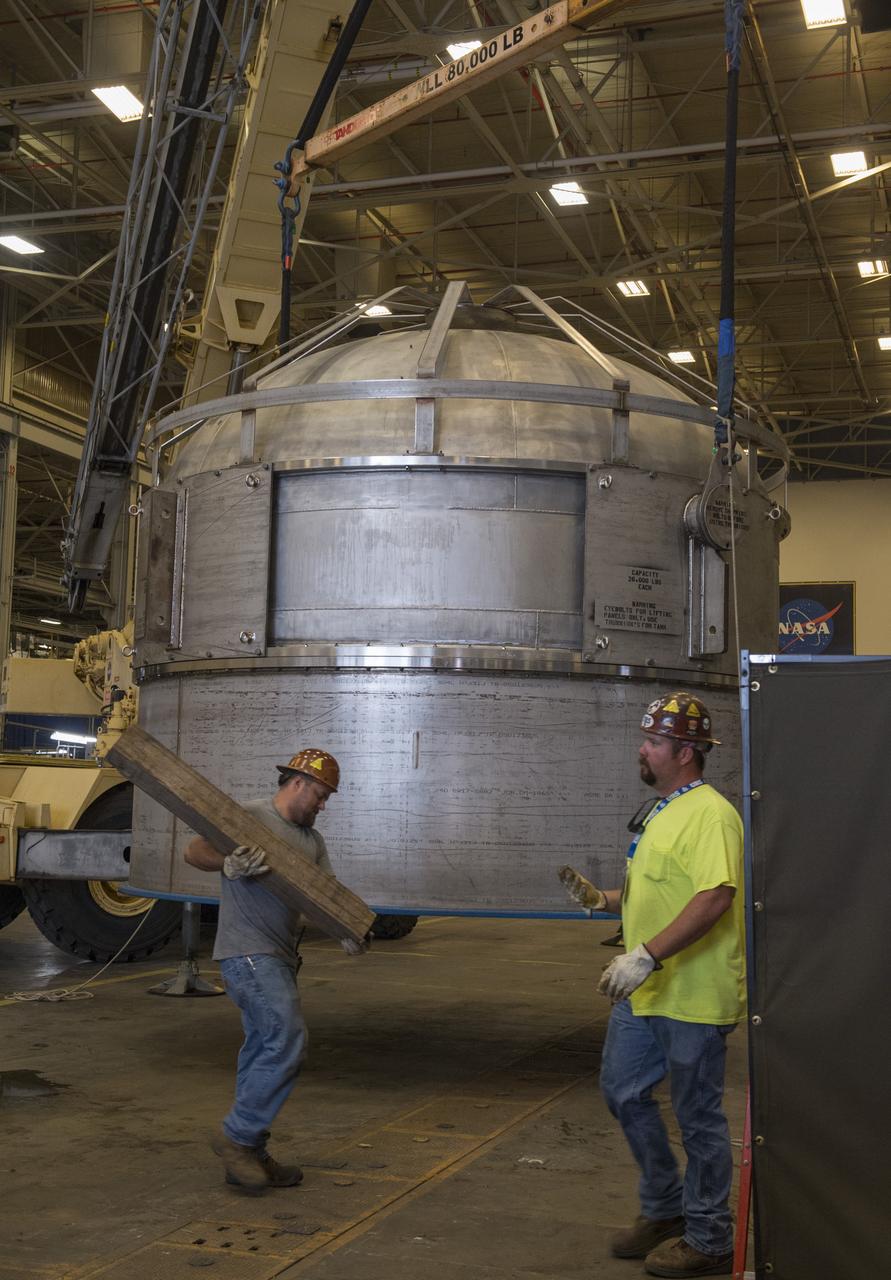
SHIIVER (Structural Heat Intercept Insulation Vibration Evaluation Rig) is a cryogenic test tank developed to evaluate heat intercept concepts. It arrived at Marshall Space Flight Center on August 10, 2017. The tank will receive heat sensors and spray-on foam insulation before making its way to Plum Brook station for further insulation and testing.
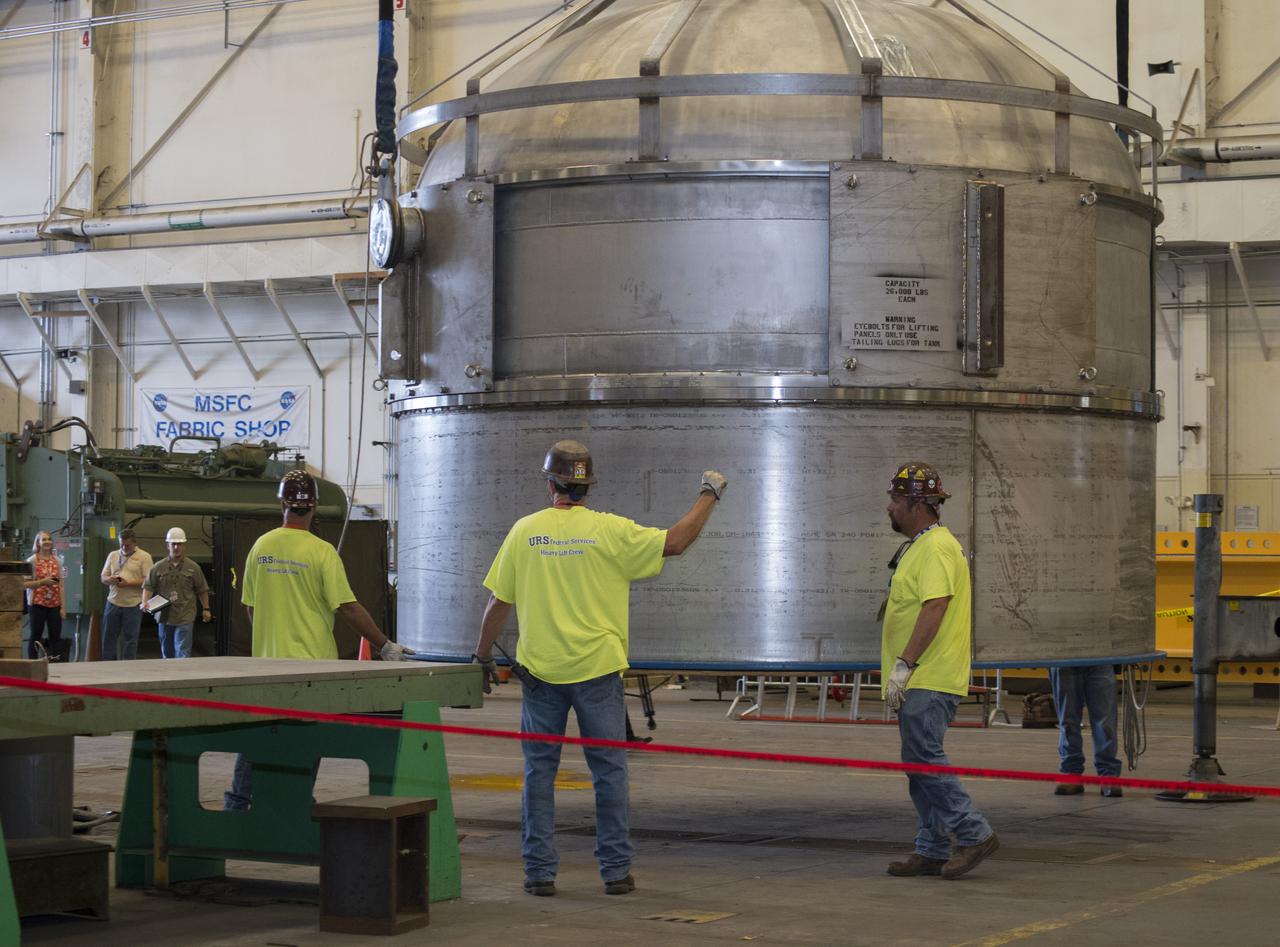
SHIIVER (Structural Heat Intercept Insulation Vibration Evaluation Rig) is a cryogenic test tank developed to evaluate heat intercept concepts. It arrived at Marshall Space Flight Center on August 10, 2017. The tank will receive heat sensors and spray-on foam insulation before making its way to Plum Brook station for further insulation and testing.
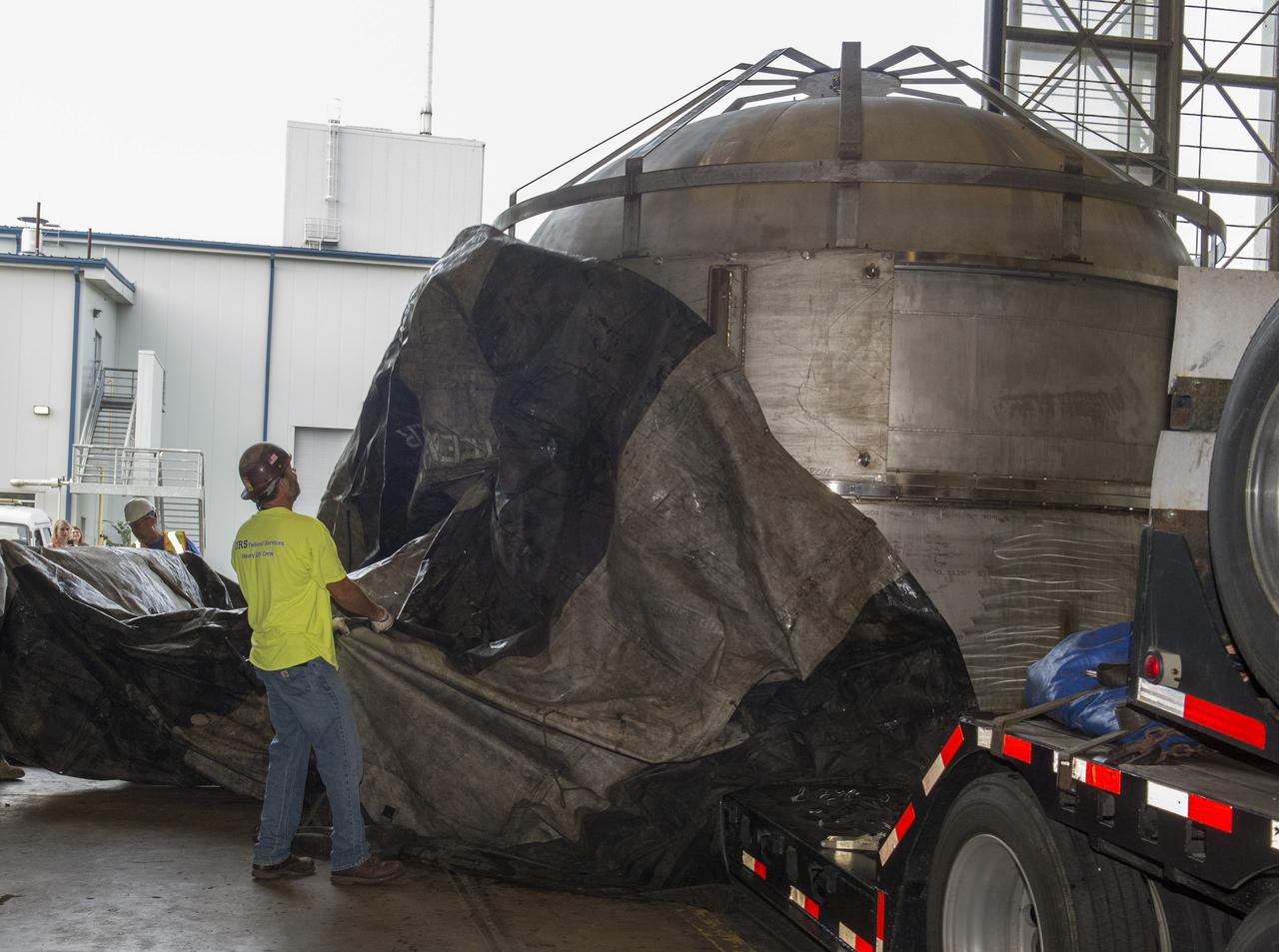
SHIIVER Tank Arrives at NASA’s Marshall Center for Spray-On Foam InsulationSHIIVER (Structural Heat Intercept Insulation Vibration Evaluation Rig) is a cryogenic test tank developed to evaluate heat intercept concepts. It arrived at Marshall Space Flight Center on August 10, 2017. The tank will receive heat sensors and spray-on foam insulation before making its way to Plum Brook station for further insulation and testing.
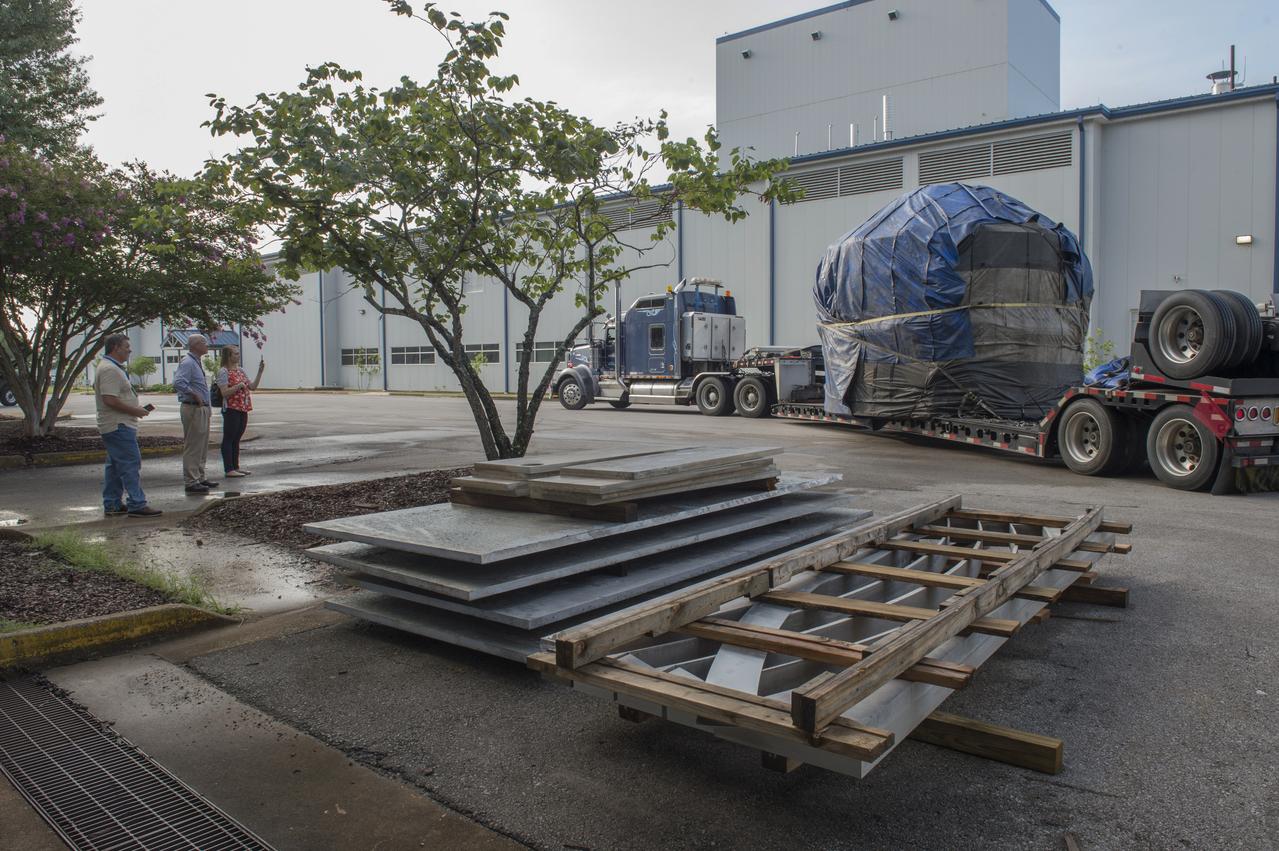
SHIIVER (Structural Heat Intercept Insulation Vibration Evaluation Rig) is a cryogenic test tank developed to evaluate heat intercept concepts. It arrived at Marshall Space Flight Center on August 10, 2017. The tank will receive heat sensors and spray-on foam insulation before making its way to Plum Brook station for further insulation and testing.
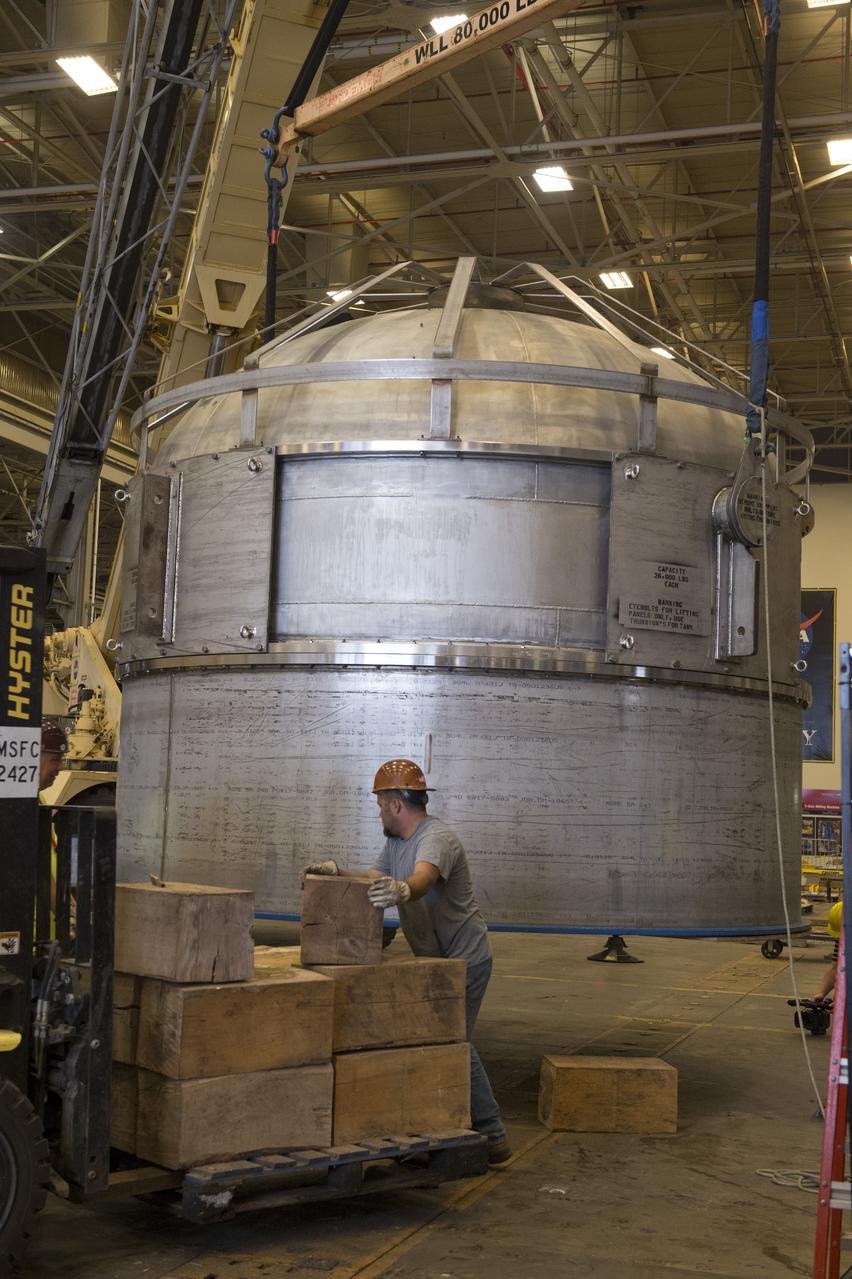
SHIIVER (Structural Heat Intercept Insulation Vibration Evaluation Rig) is a cryogenic test tank developed to evaluate heat intercept concepts. It arrived at Marshall Space Flight Center on August 10, 2017. The tank will receive heat sensors and spray-on foam insulation before making its way to Plum Brook station for further insulation and testing.
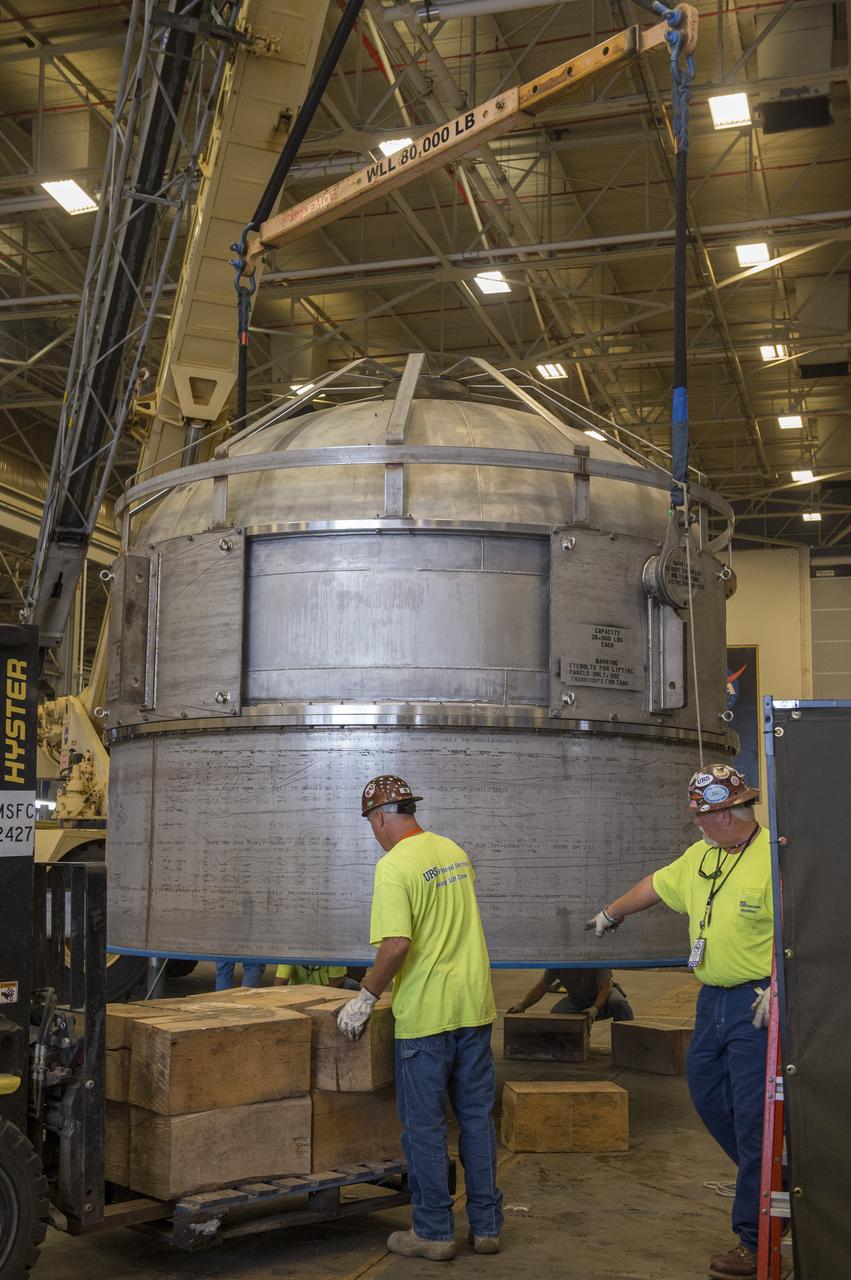
SHIIVER (Structural Heat Intercept Insulation Vibration Evaluation Rig) is a cryogenic test tank developed to evaluate heat intercept concepts. It arrived at Marshall Space Flight Center on August 10, 2017. The tank will receive heat sensors and spray-on foam insulation before making its way to Plum Brook station for further insulation and testing.

SHIIVER (Structural Heat Intercept Insulation Vibration Evaluation Rig) is a cryogenic test tank developed to evaluate heat intercept concepts. It arrived at Marshall Space Flight Center on August 10, 2017. The tank will receive heat sensors and spray-on foam insulation before making its way to Plum Brook station for further insulation and testing.SHIIVER Tank Arrives at NASA’s Marshall Center for Spray-On Foam Insulation
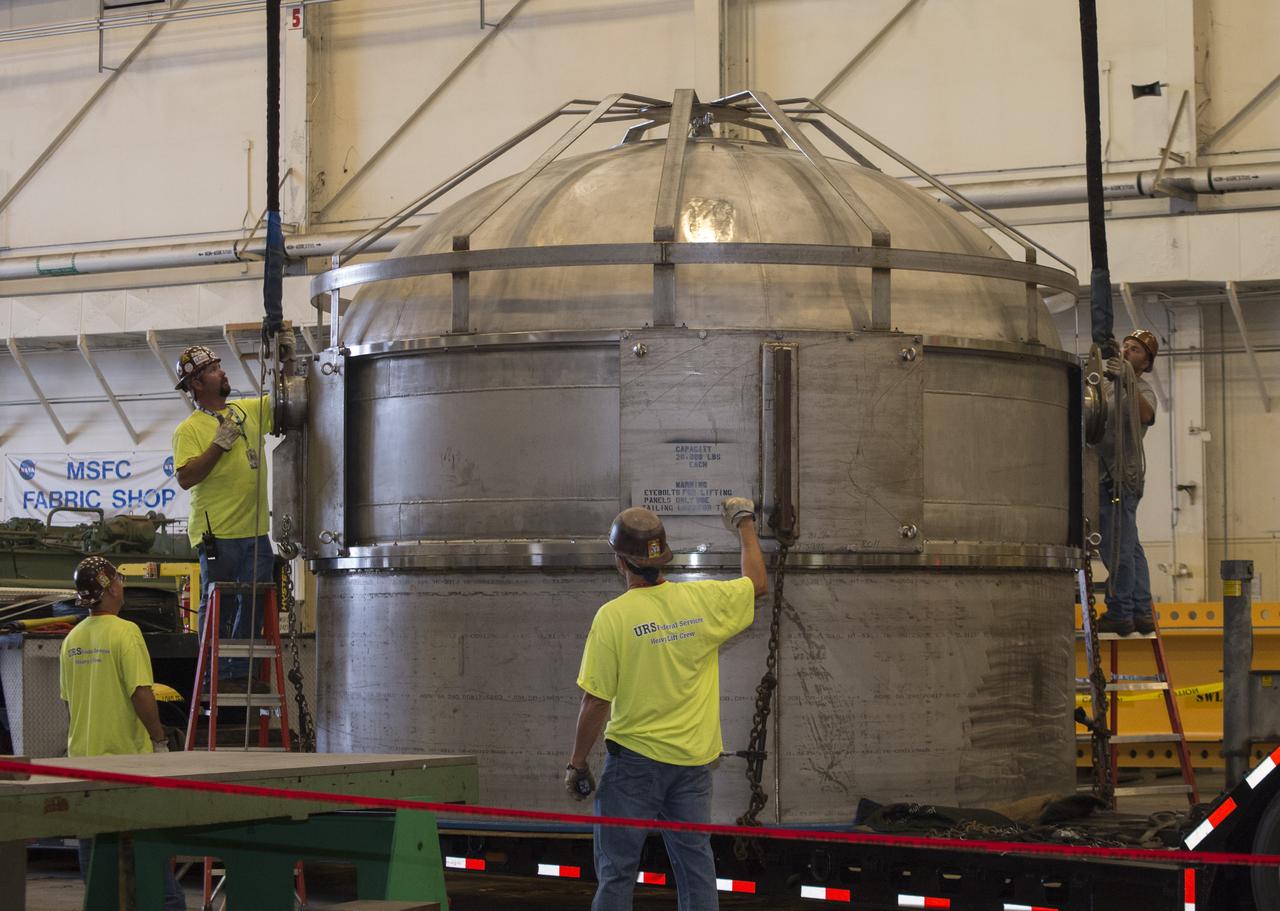
SHIIVER (Structural Heat Intercept Insulation Vibration Evaluation Rig) is a cryogenic test tank developed to evaluate heat intercept concepts. It arrived at Marshall Space Flight Center on August 10, 2017. The tank will receive heat sensors and spray-on foam insulation before making its way to Plum Brook station for further insulation and testing.
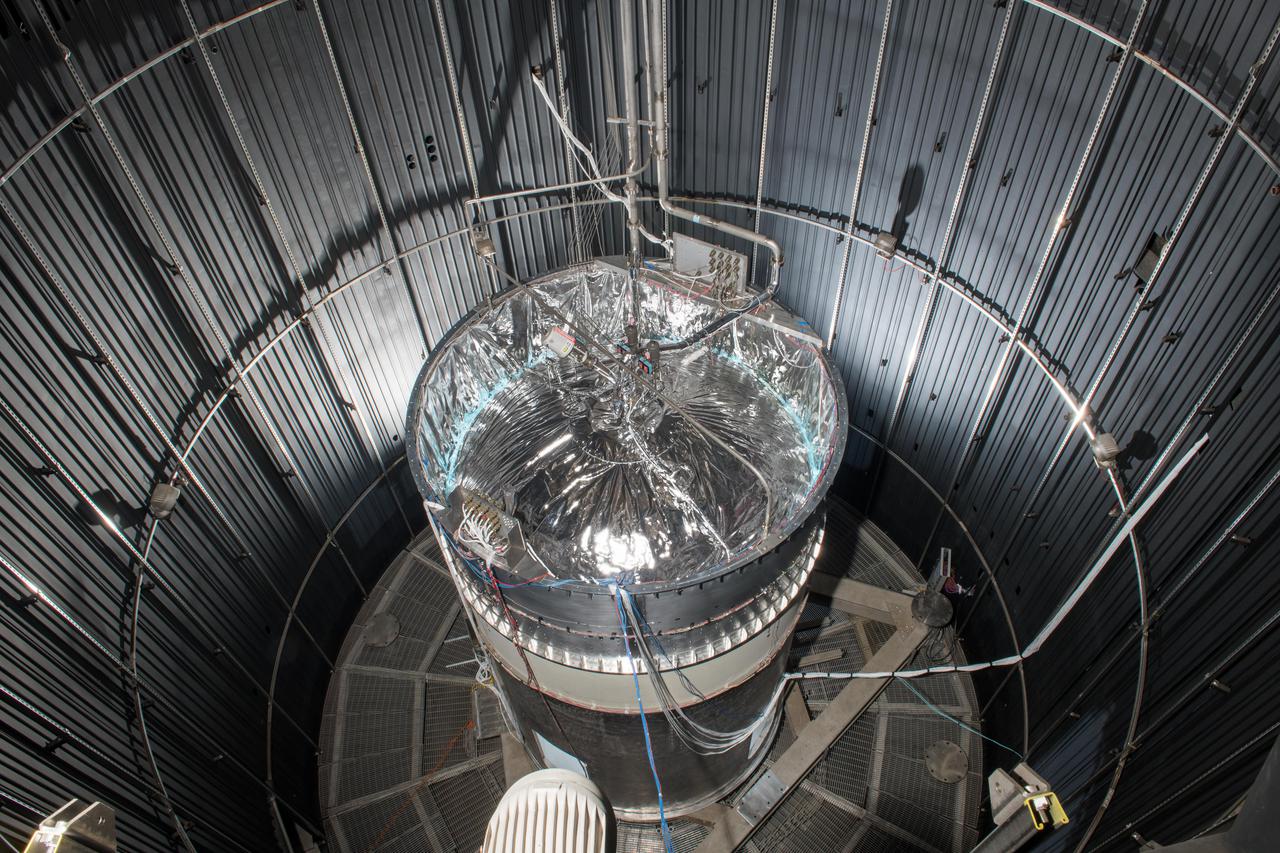
Structural Heat Intercept-Insulation-Vibration Evaluation Rig, SHIVER

Structural Heat Intercept-Insulation-Vibration Evaluation Rig, SHIVER
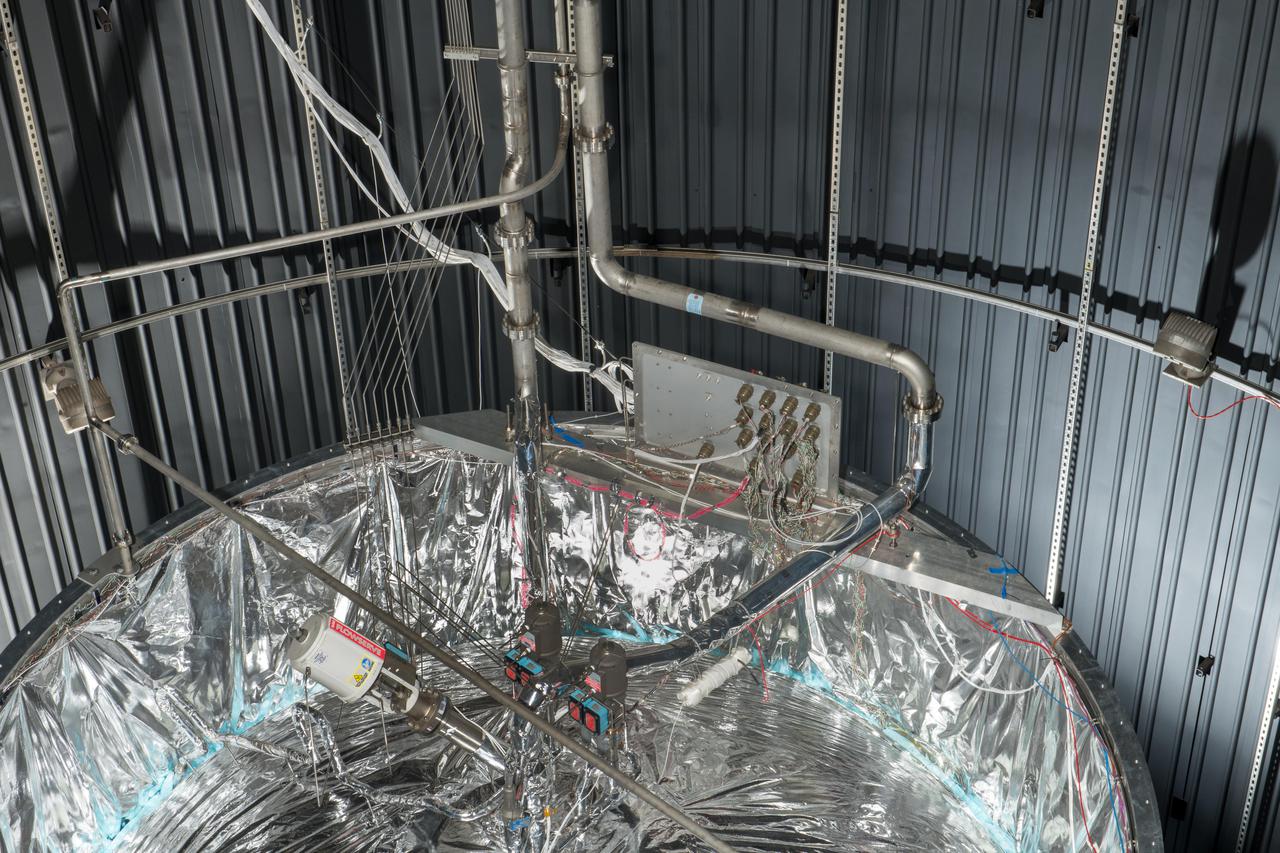
Structural Heat Intercept-Insulation-Vibration Evaluation Rig, SHIVER
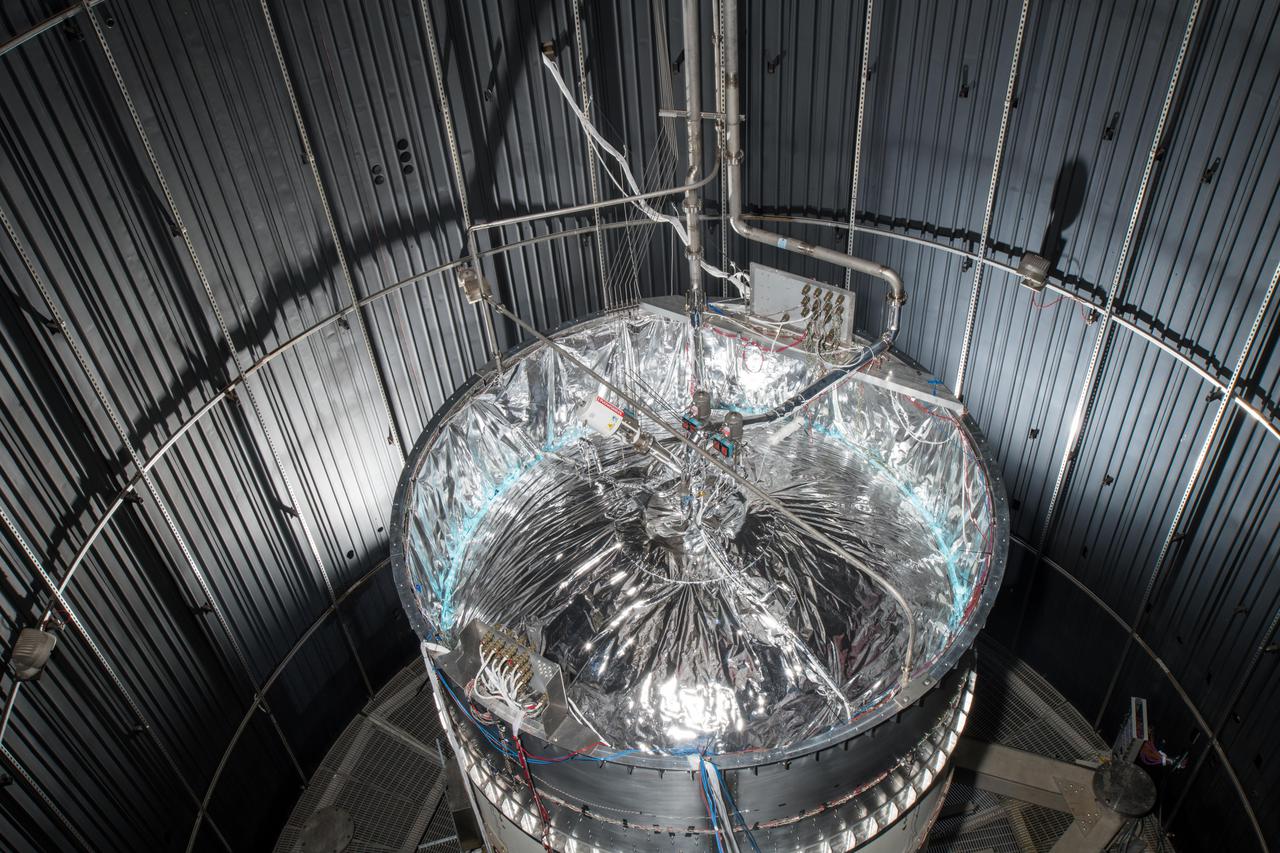
Structural Heat Intercept-Insulation-Vibration Evaluation Rig, SHIVER
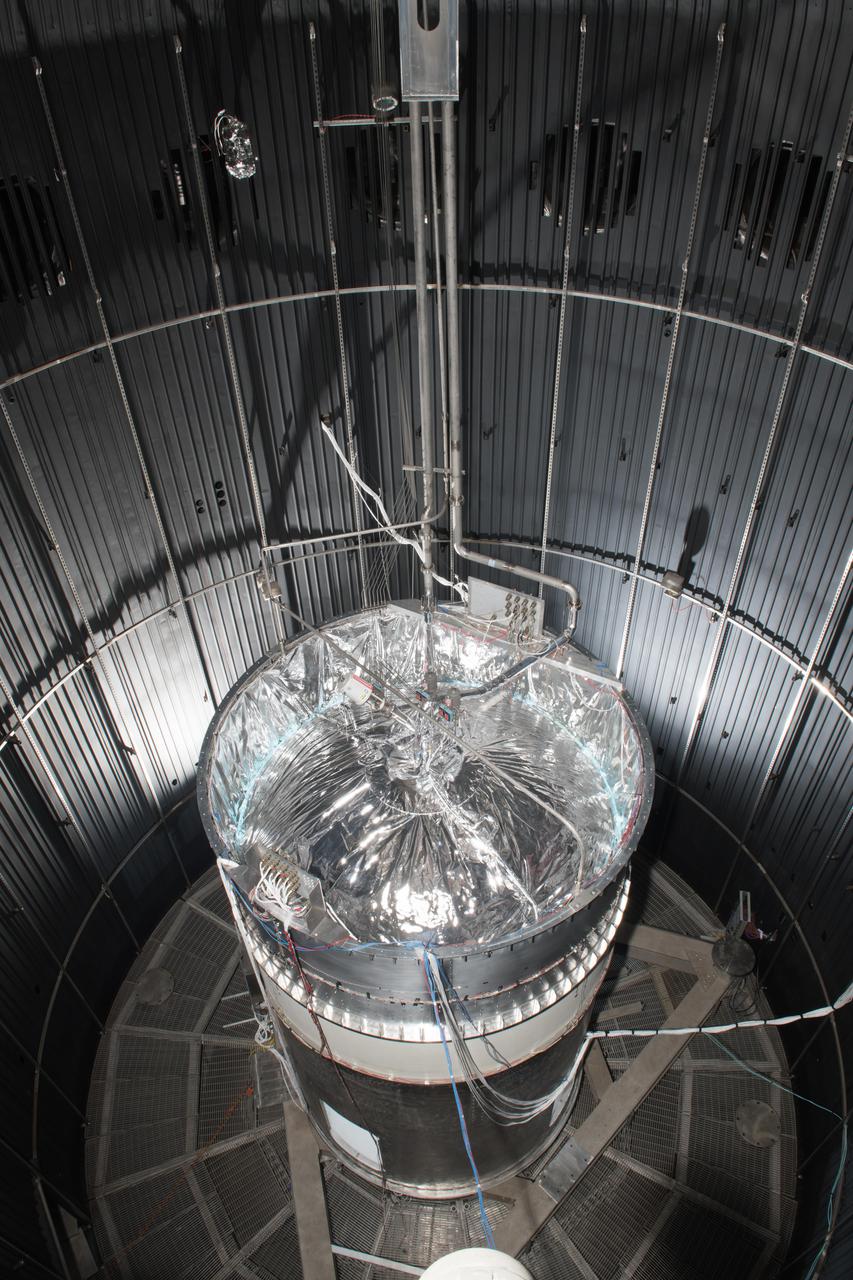
Structural Heat Intercept-Insulation-Vibration Evaluation Rig, SHIVER
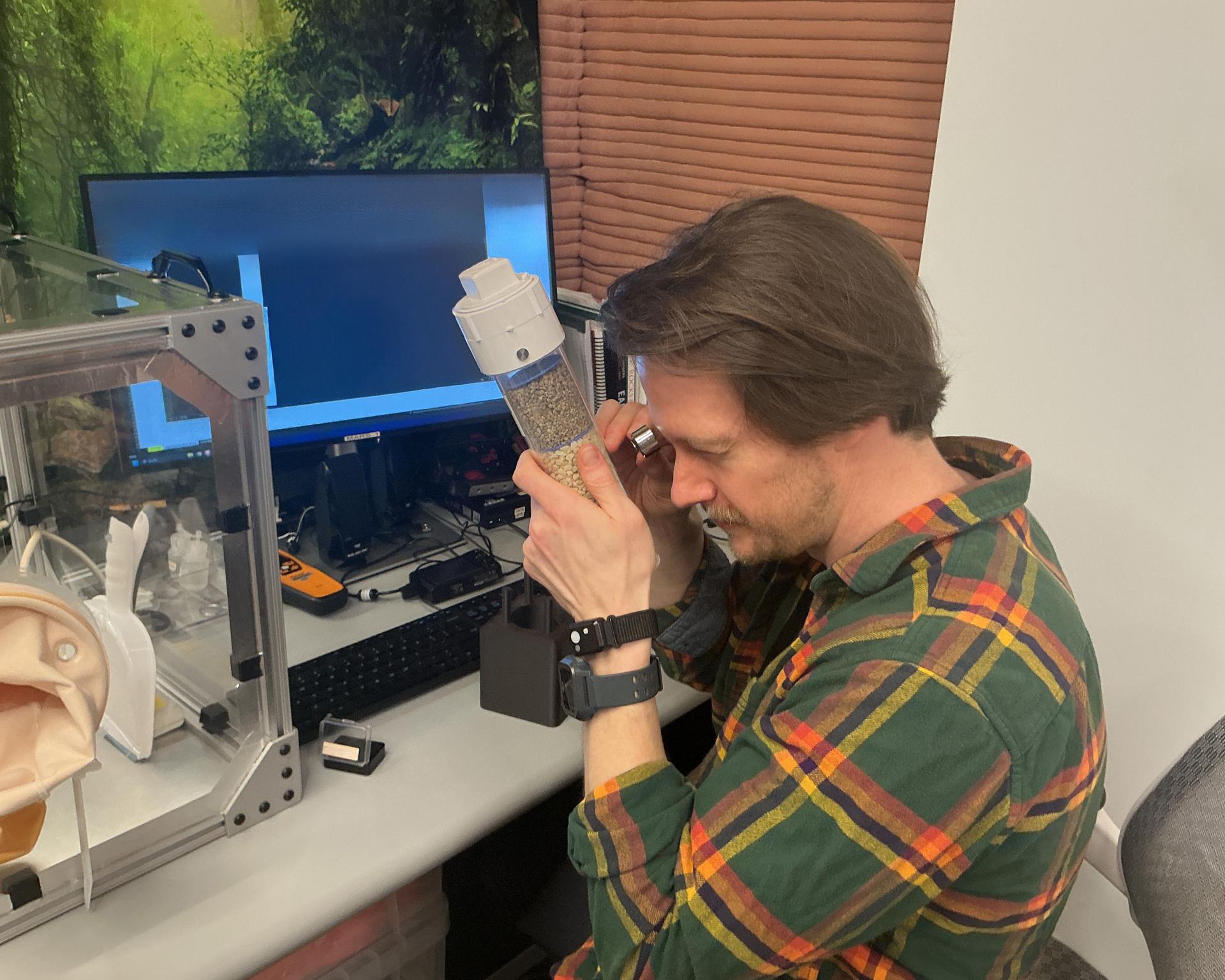
jsc2026e409153 (July 6, 2026) -- Matthew Montgomery, Crew Health and Performance Exploration Analog (CHAPEA) Mission 2 science officer, evaluates a geological sample near the habitat’s glove box. Credit: NASA
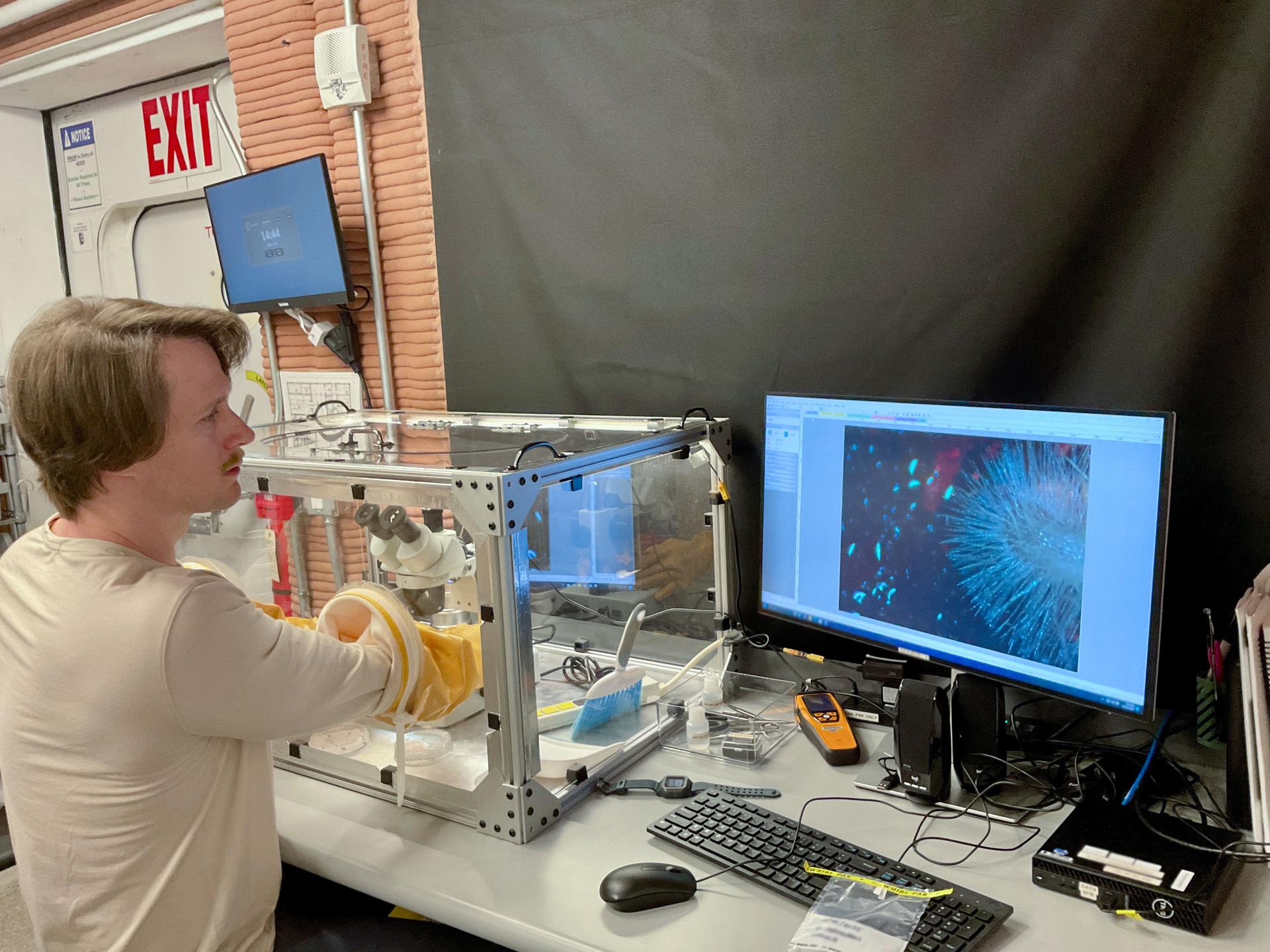
jsc2026e403157 (Oct. 25, 2025) -- Crew Health and Performance Exploration Analog (CHAPEA) mission 2 science officer, Matthew Montgomery, evaluating a science experiment involving seed germination in the glovebox. Credit: NASA
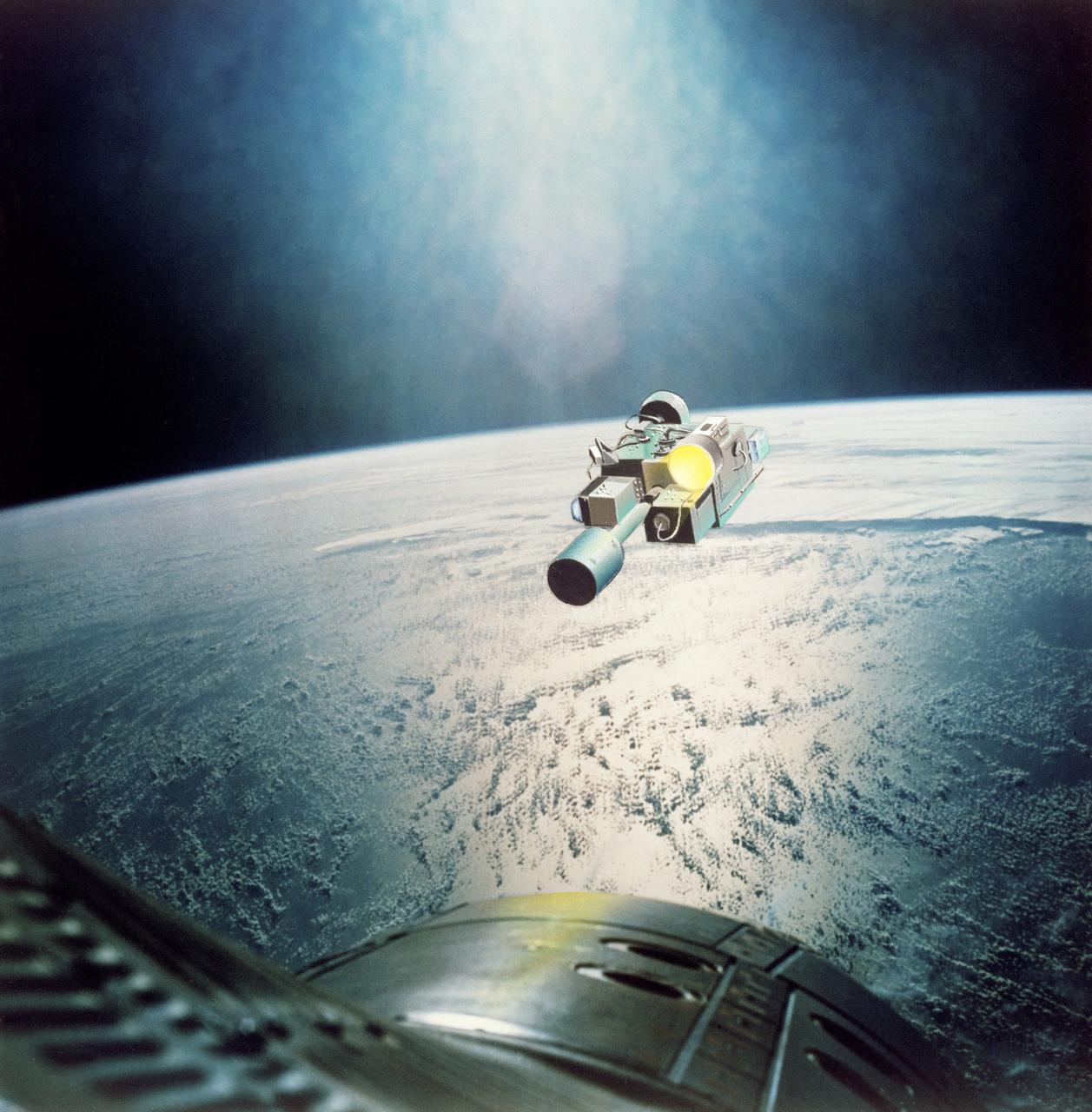
S65-28653 (August 1965) --- Rendezvous Evaluation Pod (REP) in orbit is approached by Gemini spacecraft as seen in this artist's concept using an actual photograph taken on the Gemini-4 mission. The REP is superimposed over a Gemini-4 Earth-sky picture of cloud formations over an ocean. The REP will be used by the crew of the Gemini-5 spacecraft to practice rendezvous techniques.
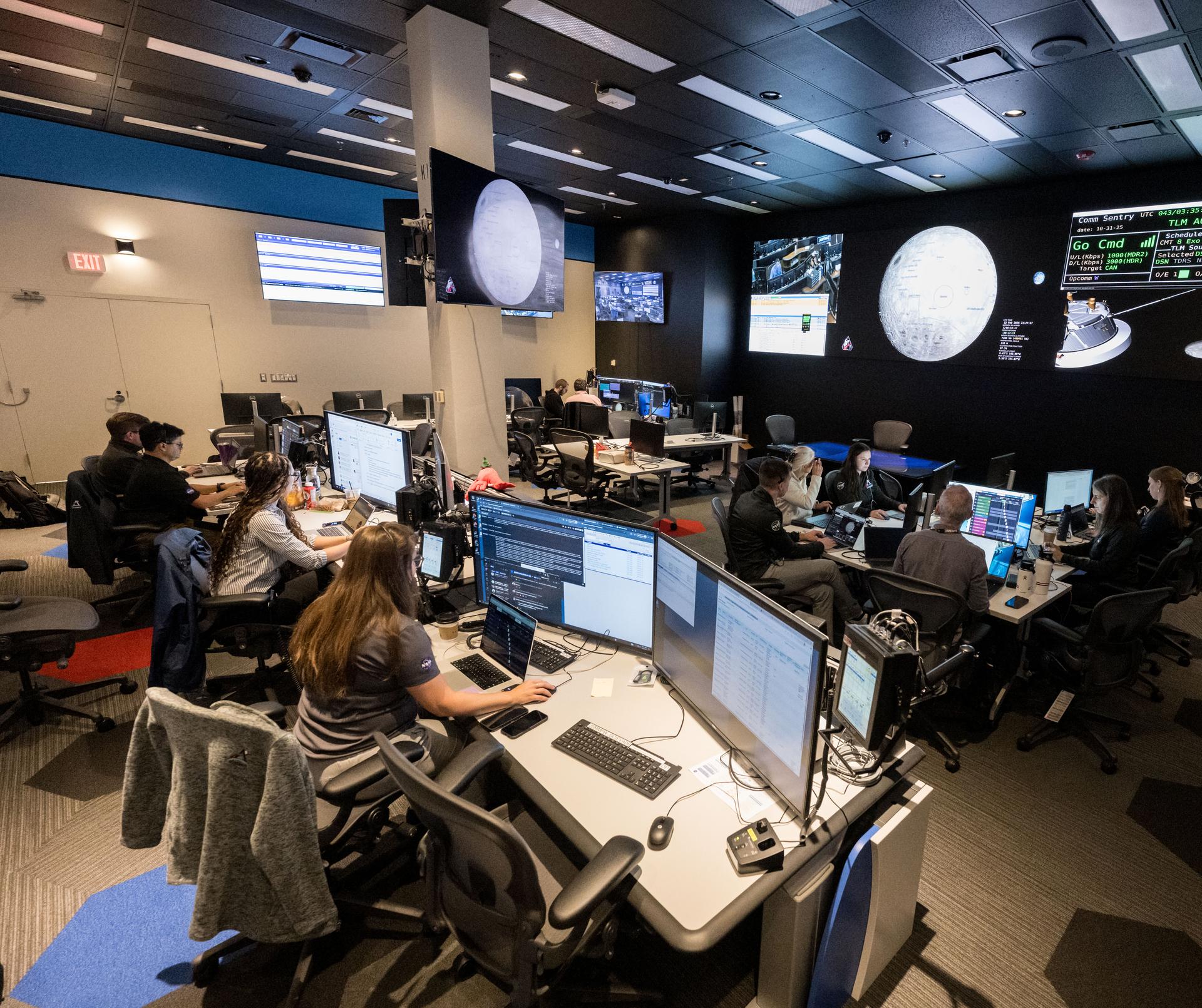
jsc2026e000861 --- The Artemis II Lunar Science Team works in the Science Evaluation Room (SER) during a training simulation in the Mission Control Center at NASA’s Johnson Space Center in Houston. The SER supports the mission’s main flight control room for lunar science and planetary observations. Built specifically for Artemis missions with these science priorities in mind, the SER is equipped to support rapid data interpretation, collaborative analysis, real-time decision making, and seamless coordination between the science and operations teams. Credit: James Blair
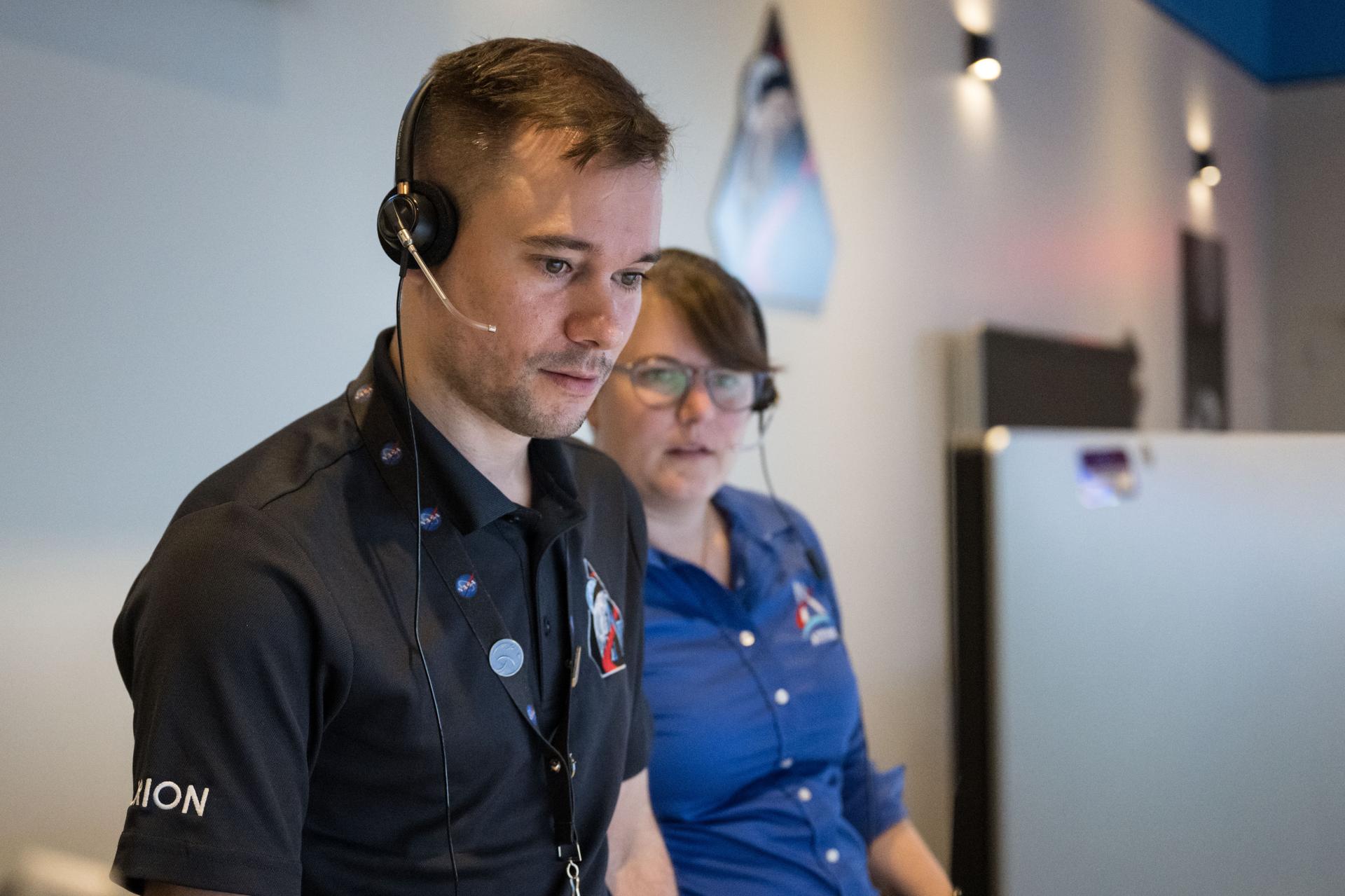
jsc2025e087854 --- Artemis lunar science team members Jacob Richardson, left, and Marie Henderson monitor an Artemis II lunar flyby simulation from the Science Evaluation Room (SER) in Mission Control at NASA's Johnson Space Center in Houston. A team of experts will staff the SER, providing lunar scientific expertise, data analysis, and strategic guidance in real-time to the science officer sitting in the front flight control room of Mission Control.

STS051-98-010 (16 Sept 1993) --- Astronaut James H. Newman, mission specialist, conducts an in-space evaluation of the Portable Foot Restraint (PFR) which will be used operationally on the first Hubble Space Telescope (HST) STS-61 servicing mission and future Shuttle missions. Astronauts Newman and Carl E. Walz spent part of their lengthy extravehicular activity (EVA) evaluating gear to be used on the STS-61 HST servicing mission. The frame was exposed with a 70mm handheld Hasselblad camera from the Space Shuttle Discovery's flight deck.
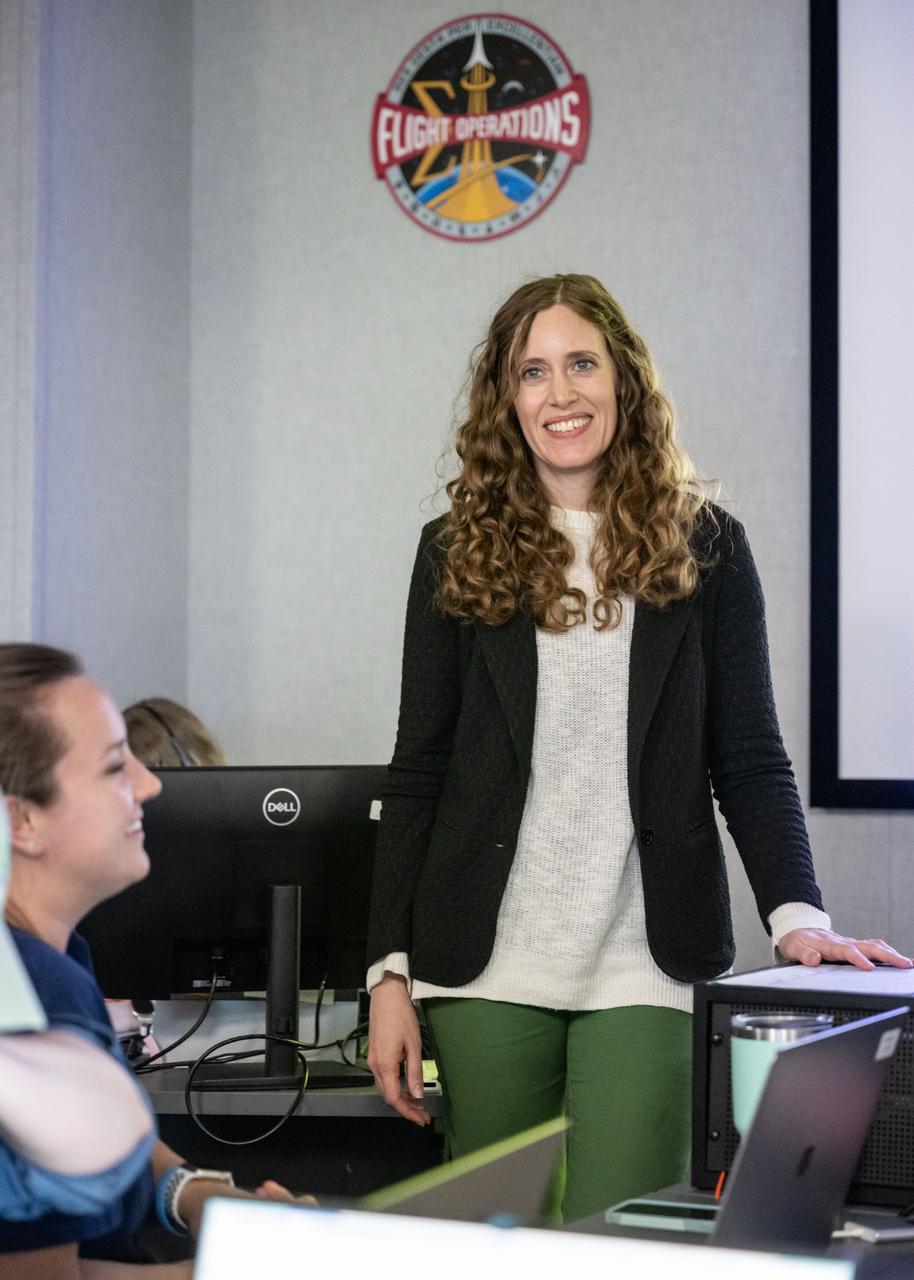
Science Evaluation Room Lead Brett Denevi, Artemis III Geology Team principal investigator for NASA’s Science Mission Directorate, looks over the Science Evaluation Room (SER) during the JETT 5 field test. JETT 5 was a week-long field test in the lunar-like landscape of San Francisco Volcanic Field near Flagstaff, Arizona while a team of flight controllers and scientists at Johnson monitor and guide their activities. Credit: NASA/James Blair
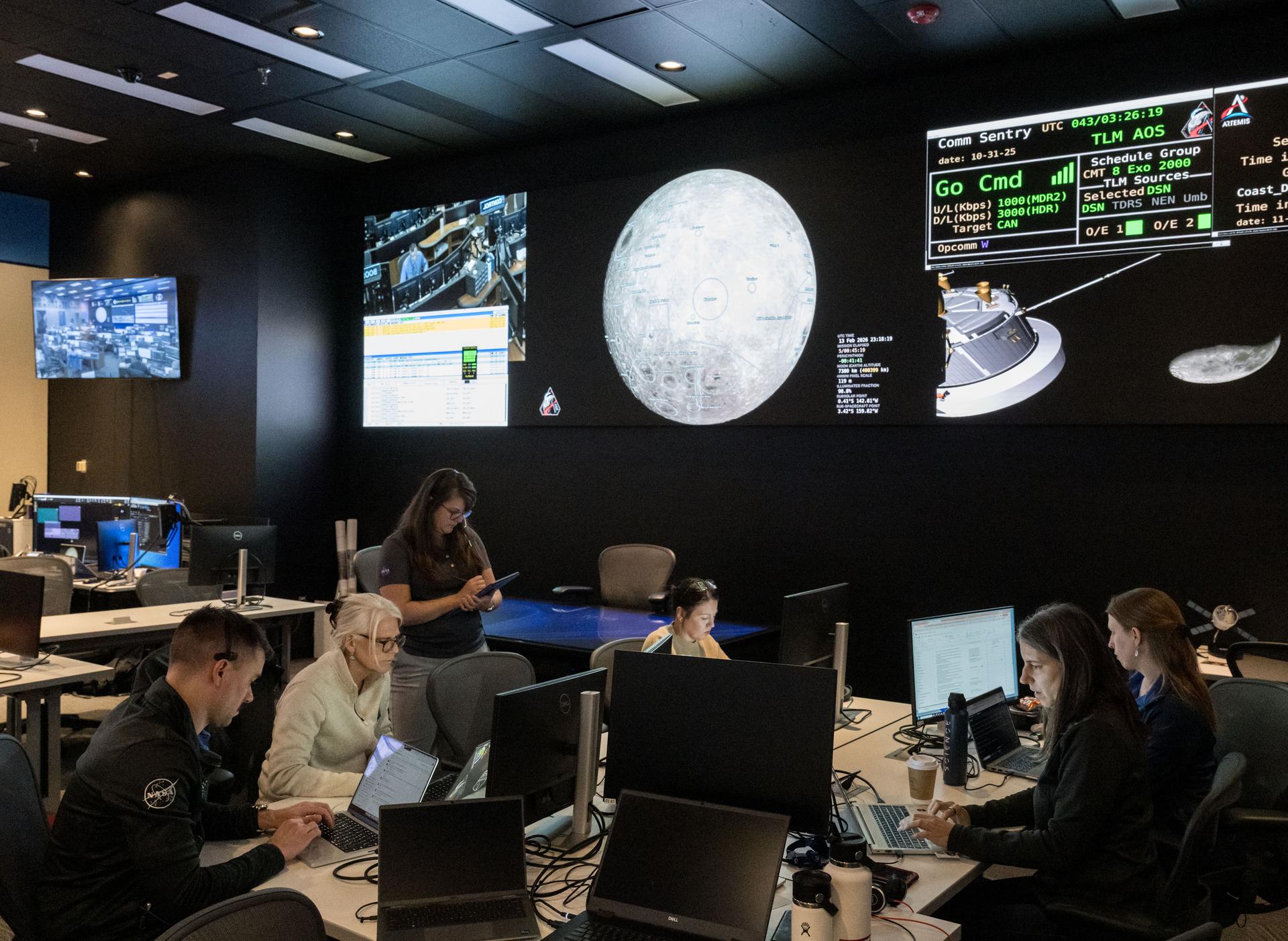
jsc2026e000849 --- The Artemis II Lunar Science Team works in the Science Evaluation Room (SER) during a training simulation at the NASA’s Johnson Space Center in Houston. Located in the Christopher C. Kraft Jr. Mission Control Center, the SER supports the mission’s main flight control room for lunar science and planetary observations. Built specifically for Artemis missions with these science priorities in mind, the SER is equipped to support rapid data interpretation, collaborative analysis, real-time decision making, and seamless coordination between the science and operations teams. Credit: James Blair
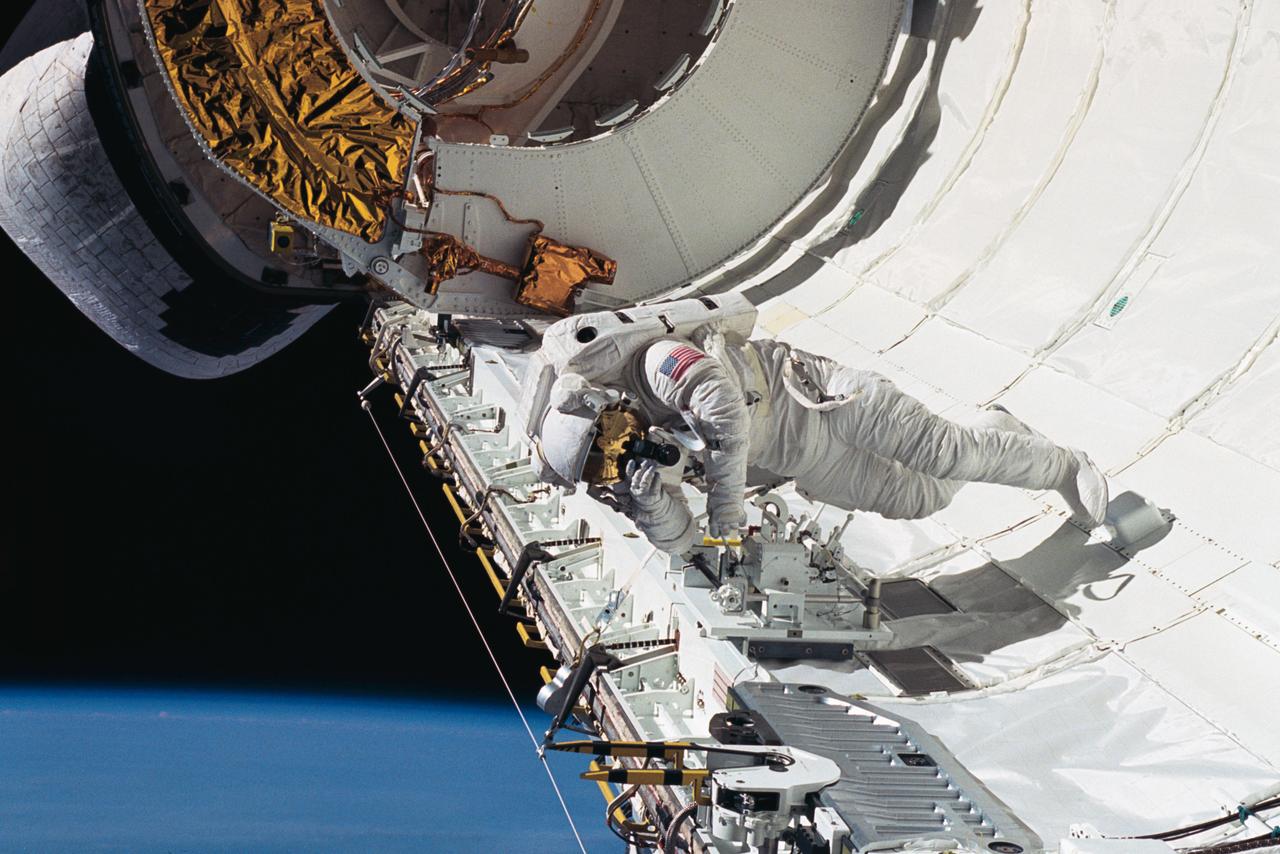
Astronaut James H. Newman, mission specialist, uses a 35mm camera to take a picture of fellow astronaut Carl E. Walz (out of frame) in Discovery's cargo bay. The two were engaged in an extravehicular activity (EVA) to test equipment to be used on future EVA's. Newman is tethered to the starboard side, with the orbital maneuvering system (OMS) pod just behind him.

Artemis II crew lunar observations team member, Alex Stoken, monitors the mission from the Science Evaluation Room (SER). Built specifically for Artemis missions with these science priorities in mind, the SER is equipped to support rapid data interpretation, collaborative analysis, real-time decision making, and seamless coordination between the science and operations teams. Credits: NASA/Luna Posadas Nava
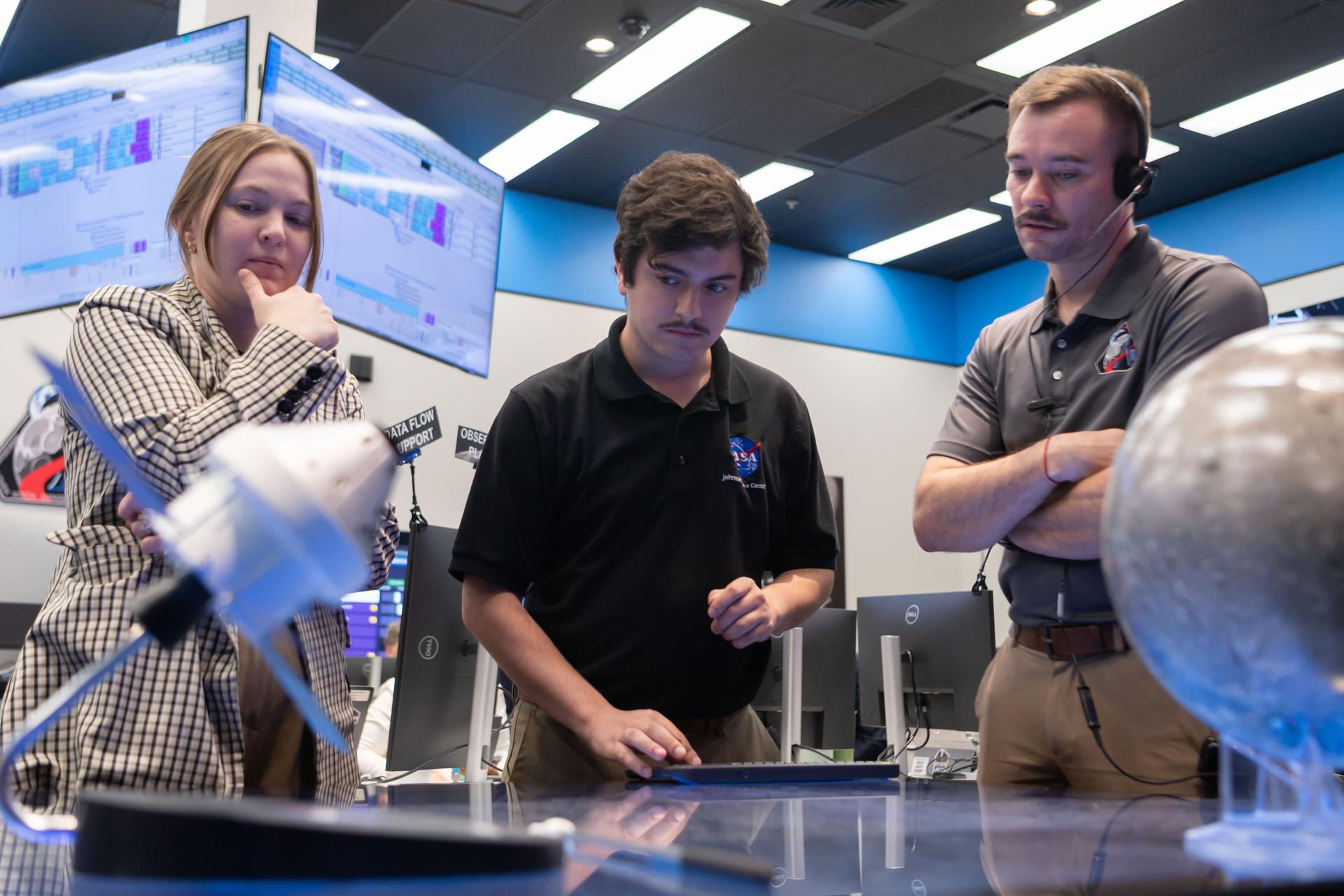
Crew lunar observations team member, Sara Schmidt, left, asset manager, Luke McSherry, and Artemis deputy lunar science lead, Jacob Richardson work in the Science Evaluation Room (SER). Built specifically for Artemis missions with these science priorities in mind, the SER is equipped to support rapid data interpretation, collaborative analysis, real-time decision making, and seamless coordination between the science and operations teams. Credits: NASA/Luna Posadas Nava
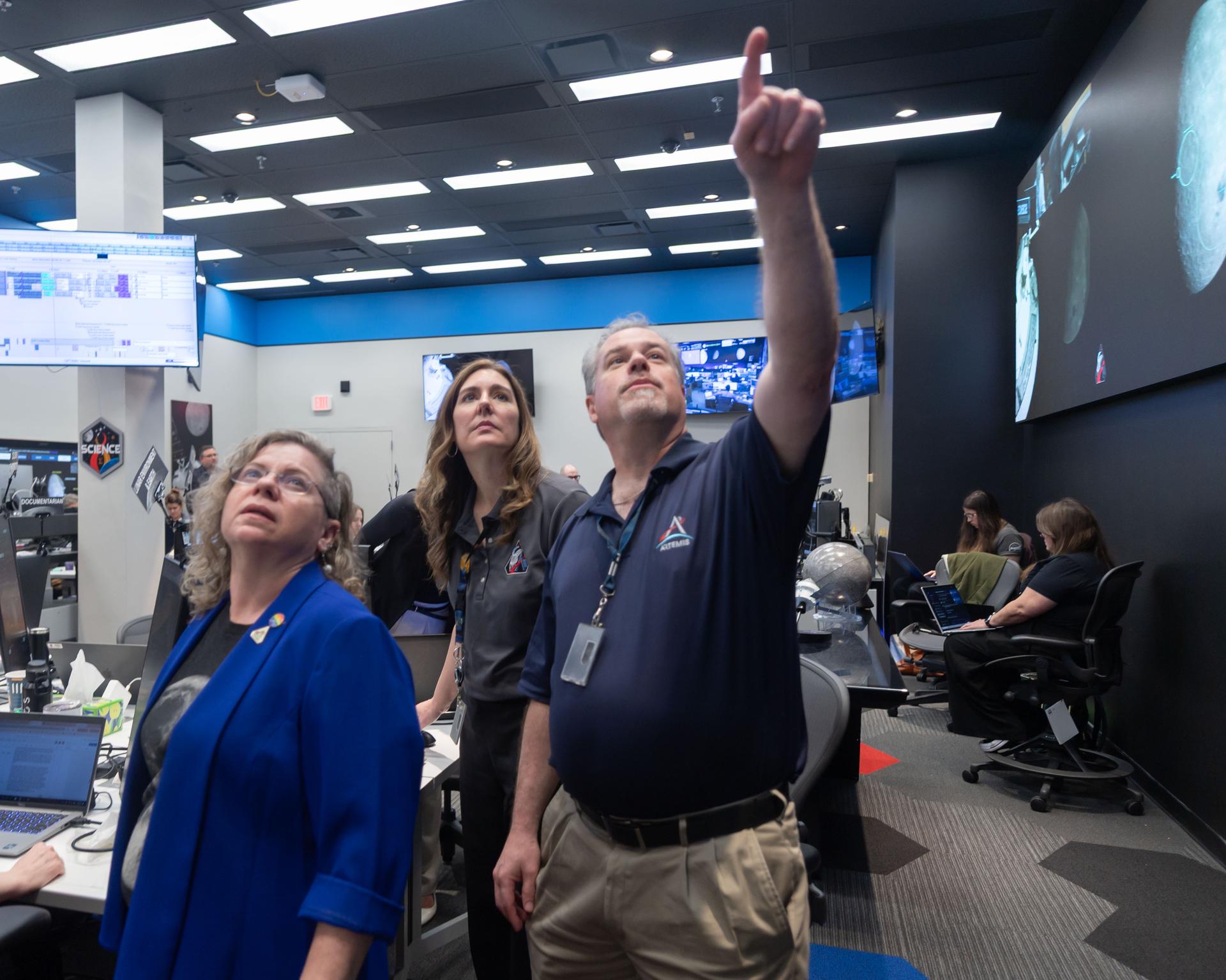
Artemis II lunar science team members, from left, Barbara Cohen, Jennifer Heldmann, and Anthony Colaprete, work in the Science Evaluation Room (SER). Built specifically for Artemis missions with these science priorities in mind, the SER is equipped to support rapid data interpretation, collaborative analysis, real-time decision making, and seamless coordination between the science and operations teams. Credits: NASA/Luna Posadas Nava
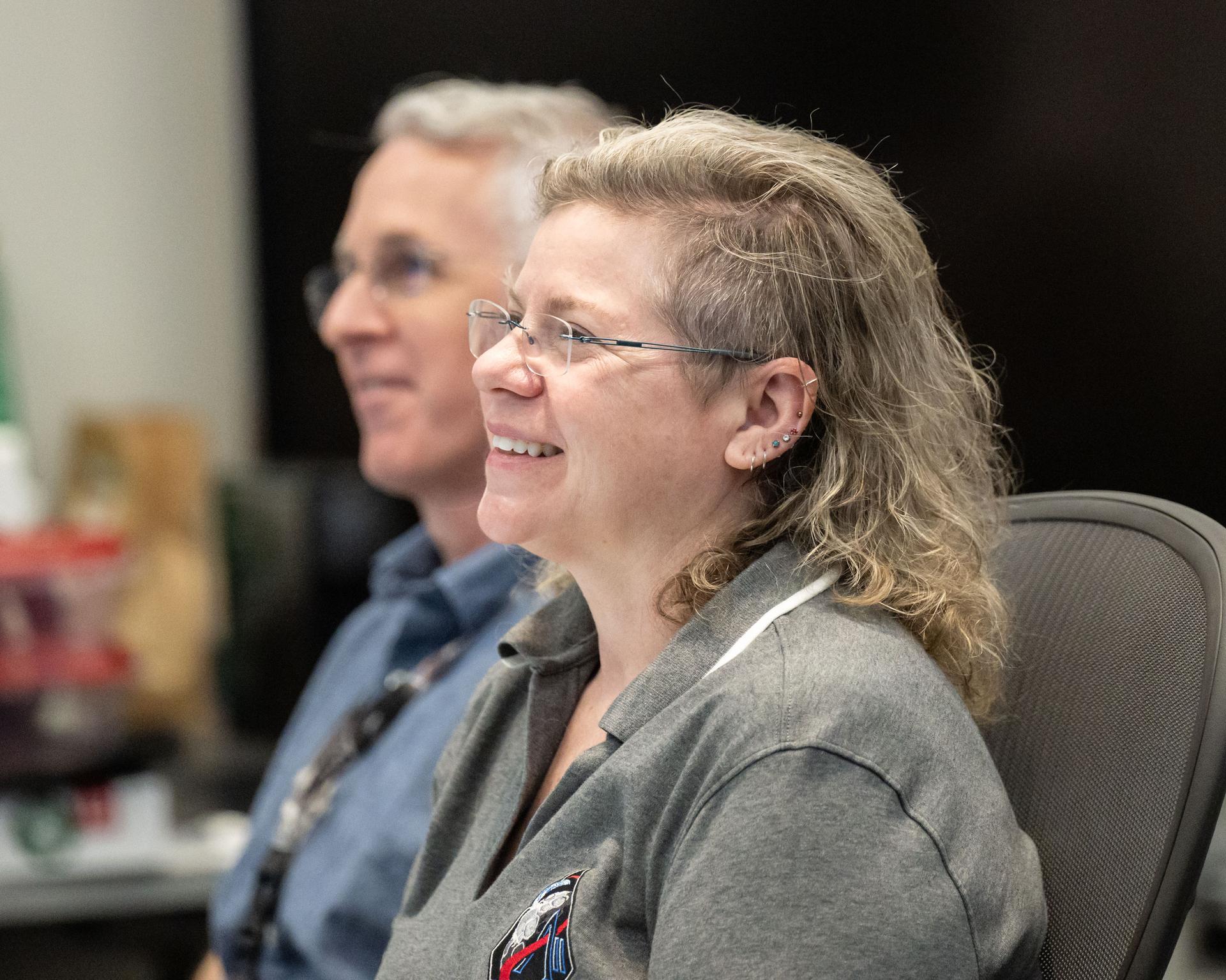
Artemis II lunar science team members, from left, Ryan Ewing, and Barbara Cohen, react to crew observations during the lunar flyby on April 6, 2026. The team worked in the Science Evaluation Room (SER) in Mission Control at NASA’s Johnson Space Center in Houston. Built specifically for Artemis missions with these science priorities in mind, the SER is equipped to support rapid data interpretation, collaborative analysis, real-time decision making, and seamless coordination between the science and operations teams. Credits: NASA/Luna Posadas Nava

Jared Ralleta, Artemis II lunar science team member, reacts to the lunar flyby crew observations in the Science Evaluation Room (SER). Built specifically for Artemis missions with these science priorities in mind, the SER is equipped to support rapid data interpretation, collaborative analysis, real-time decision making, and seamless coordination between the science and operations teams. Credits: NASA/Luna Posadas Nava
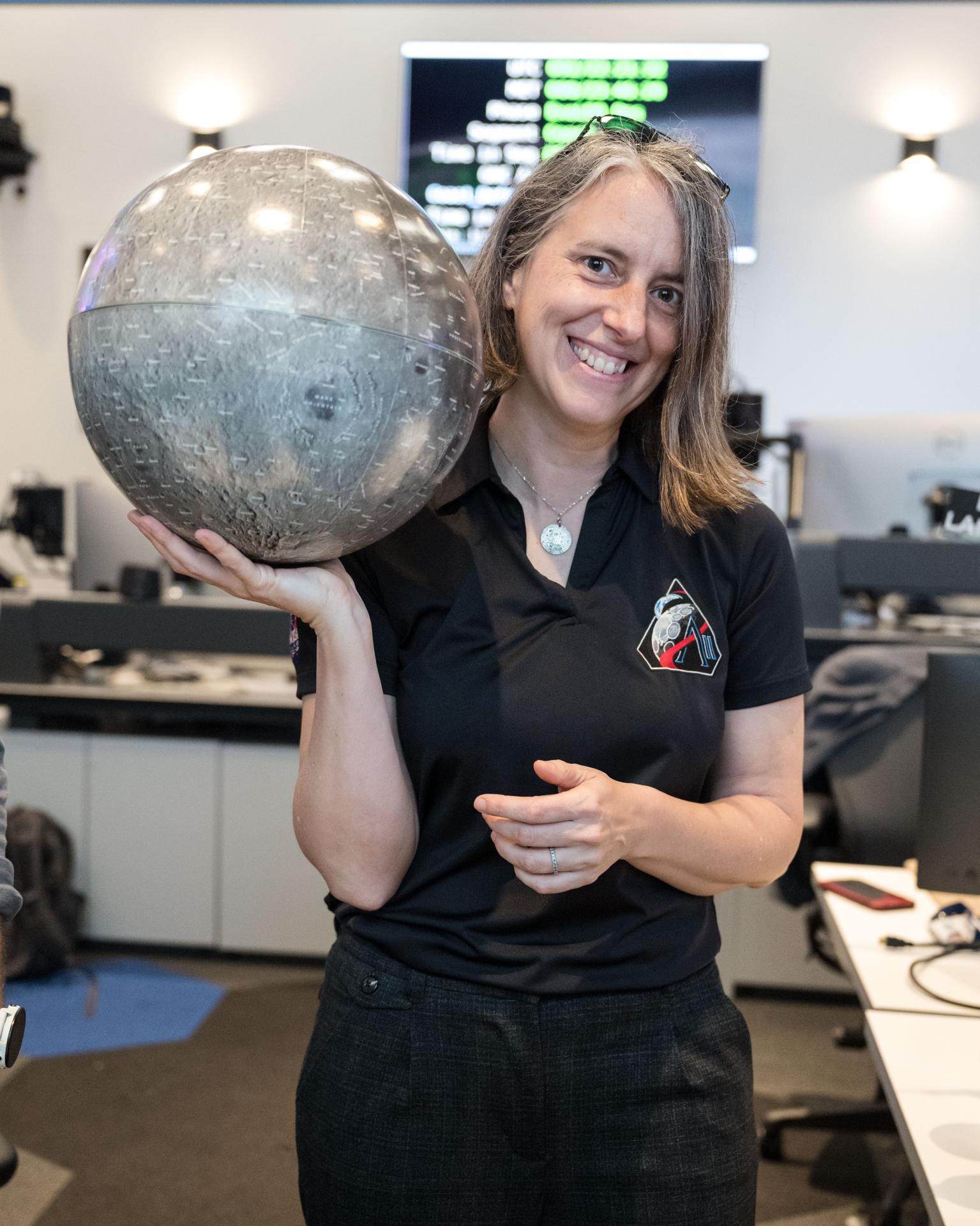
Artemis curation lead, Juliane Gross, holds a lunar globe in the Science Evaluation Room (SER) in Mission Control at Johnson Space Center in Houston. The SER supports lunar science and planetary observations for the Artemis science officer in the mission’s main flight control room. Built specifically for Artemis missions with these science priorities in mind, the SER is equipped to support rapid data interpretation, collaborative analysis, real-time decision making, and seamless coordination between the science and operations teams. Credits: NASA/Luna Posadas Nava
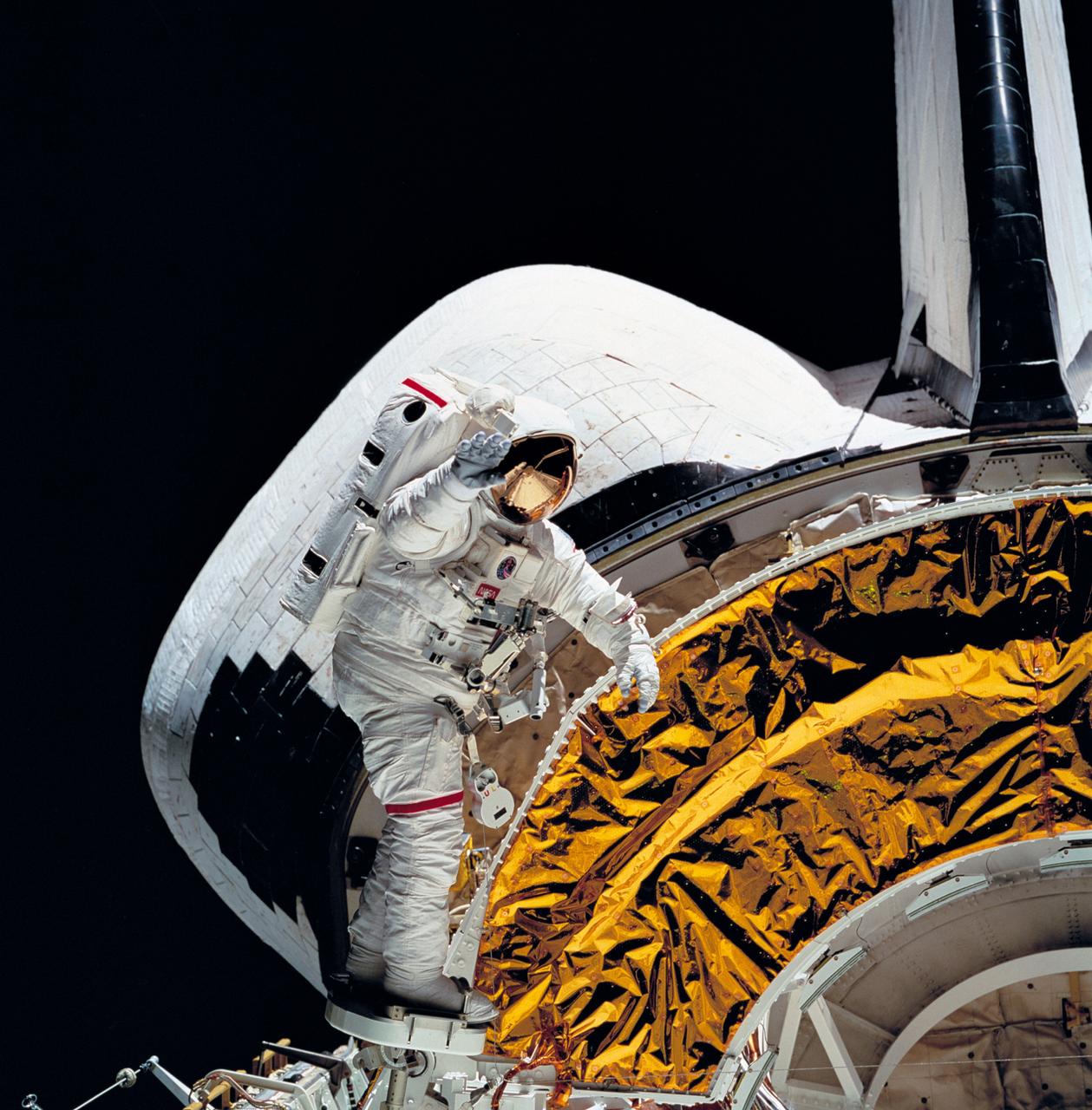
STS051-98-021 (16 Sept. 1993) --- In the Space Shuttle Discovery's aft cargo bay, astronaut Carl E. Walz gets his turn on the Portable Foot Restraint (PFR). Astronauts Walz, waving to his crew mates inside Discovery's cabin, and James H. Newman each put in some time evaluating the PFR, one of the pieces of gear to be used on the Hubble Space Telescope (HST) STS-61 servicing mission (scheduled later this year) and other Shuttle missions.

Artemis II crew lunar observations team member, David Charney, monitors the mission from the Science Evaluation Room (SER). Built specifically for Artemis missions with these science priorities in mind, the SER is equipped to support rapid data interpretation, collaborative analysis, real-time decision making, and seamless coordination between the science and operations teams. Credits: NASA/Luna Posadas Nava
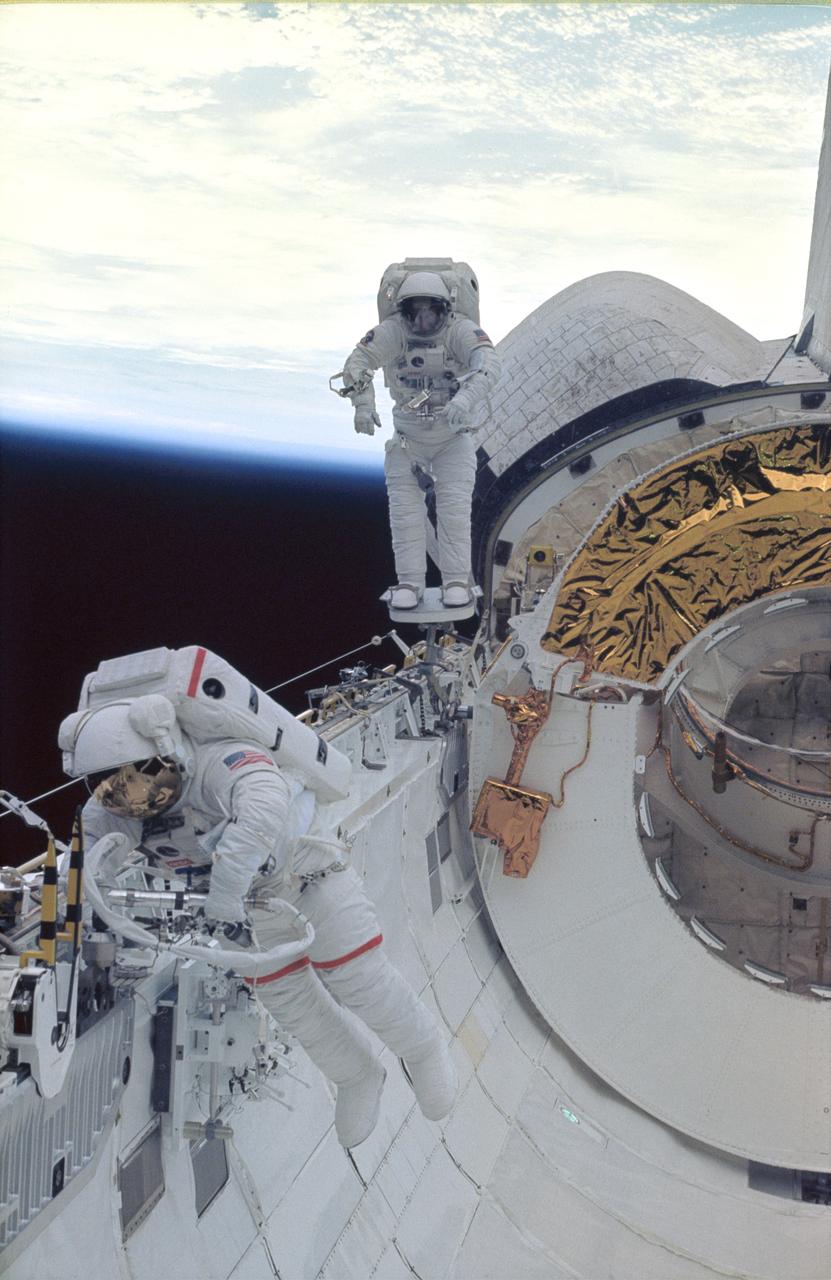
STS051-06-037 (16 Sept 1993) --- Astronauts Carl E. Walz (foreground) and James H. Newman evaluate some important gear. Walz reaches for the Power Ratchet Tool (PRT) while Newman checks out mobility on the Portable Foot Restraint (PFR) near the Space Shuttle Discovery's starboard Orbital Maneuvering System (OMS) pod. The tools and equipment will be instrumental on some of the five periods of extravehicular activity (EVA) scheduled for the Hubble Space Telescope (HST) STS-61 servicing mission later this year.
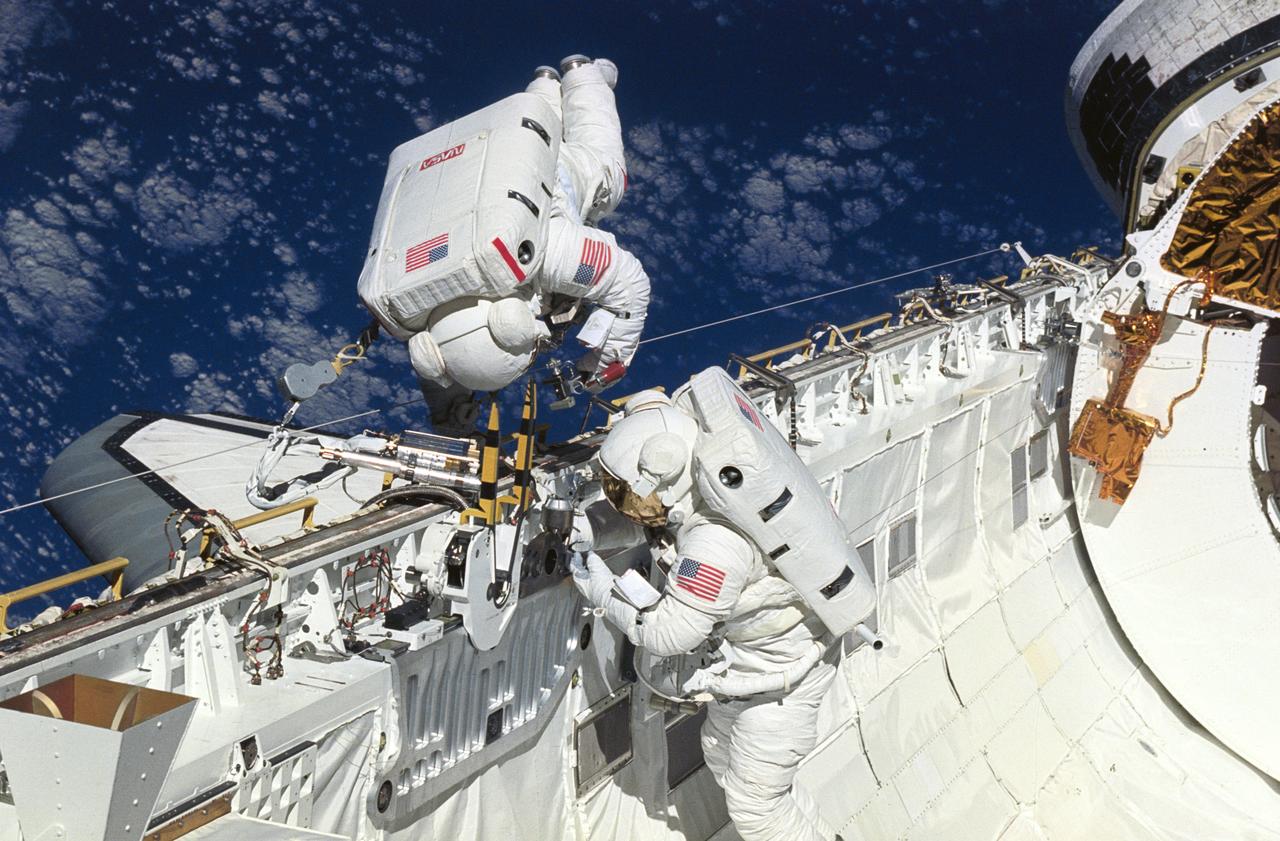
STS051-06-023 (16 Sept 1993) --- Astronauts James H. Newman (in bay) and Carl E. Walz, mission specialists, practice space walking techniques and evaluate tools to be used on the first Hubble Space Telescope (HST) servicing mission scheduled for later this year. Walz rehearses using the Power Ratchet Tool (PRT), one of several special pieces of gear to be put to duty during the scheduled five periods of extravehicular activity (EVA) on the STS-61 mission.
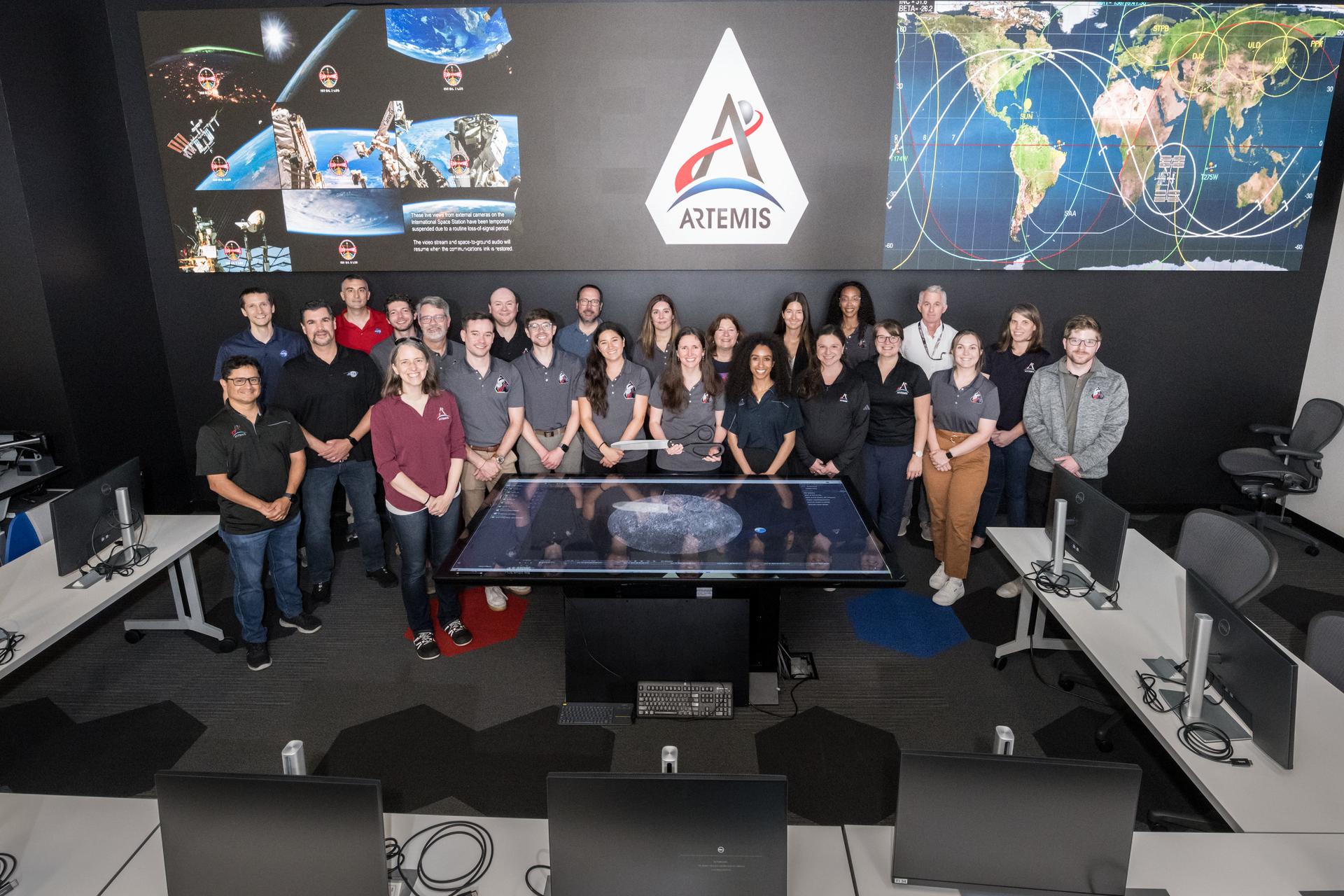
jsc2025e057254 --- NASA’s Artemis II lunar science team is pictured in the Science Evaluation Room (SER) at the agency’s Johnson Space Center in Houston. Located in the Christopher C. Kraft Jr. Mission Control Center, the SER supports the mission’s main flight control room for lunar science and planetary observations. Built specifically for Artemis missions with these science priorities in mind, the SER is equipped to support rapid data interpretation, collaborative analysis, real-time decision making, and seamless coordination between the science and operations teams.
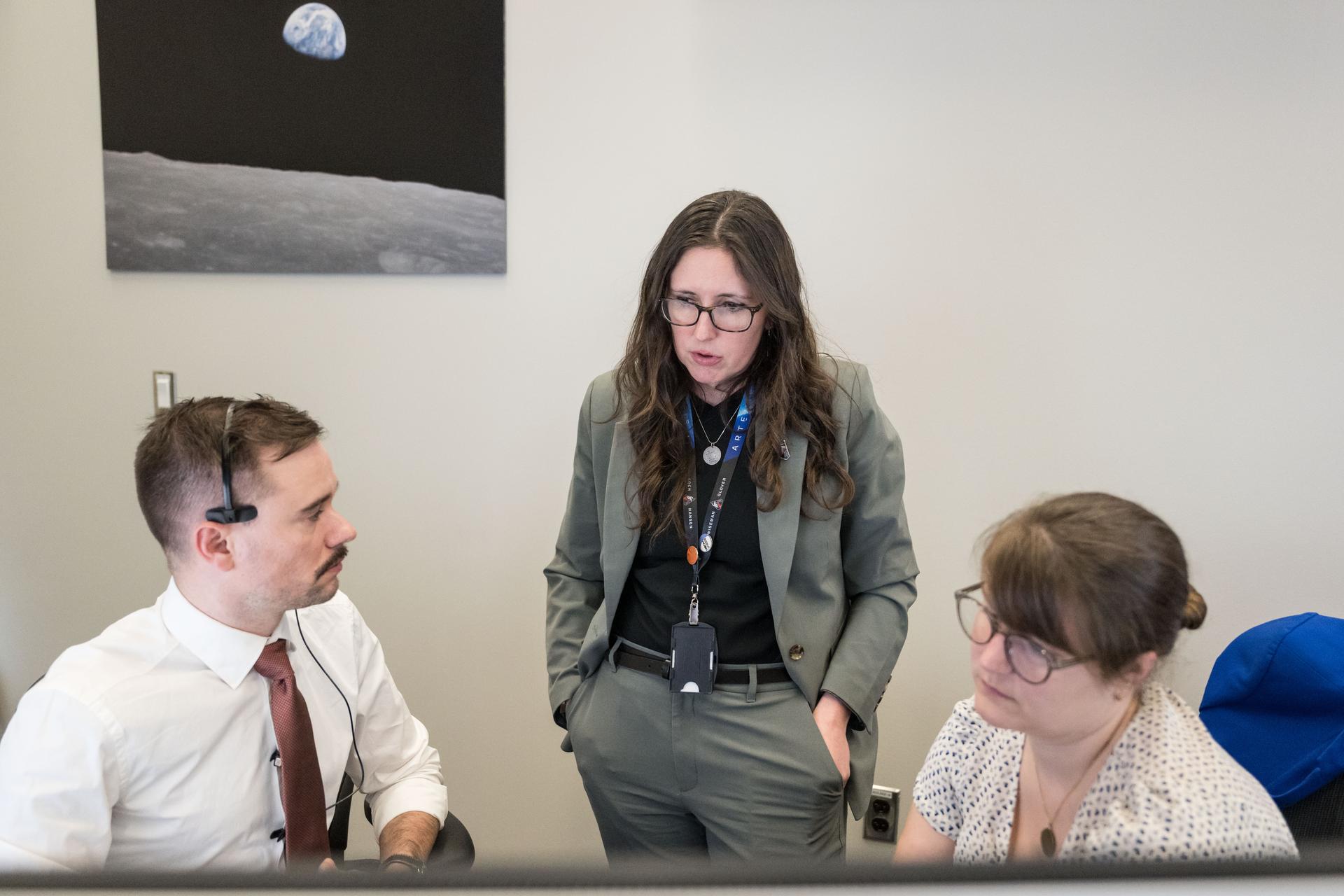
From left, Artemis II deputy lunar science lead, Jacob Richardson, science officer and lunar science lead, Kelsey Young, and deputy lunar science lead, Marie Henderson, discuss the team’s final preparations for the lunar flyby. The team worked in the Science Evaluation Room (SER) in Mission Control at NASA’s Johnson Space Center in Houston. Built specifically for Artemis missions with these science priorities in mind, the SER is equipped to support rapid data interpretation, collaborative analysis, real-time decision making, and seamless coordination between the science and operations teams. Credits: NASA/ Robert Markowitz
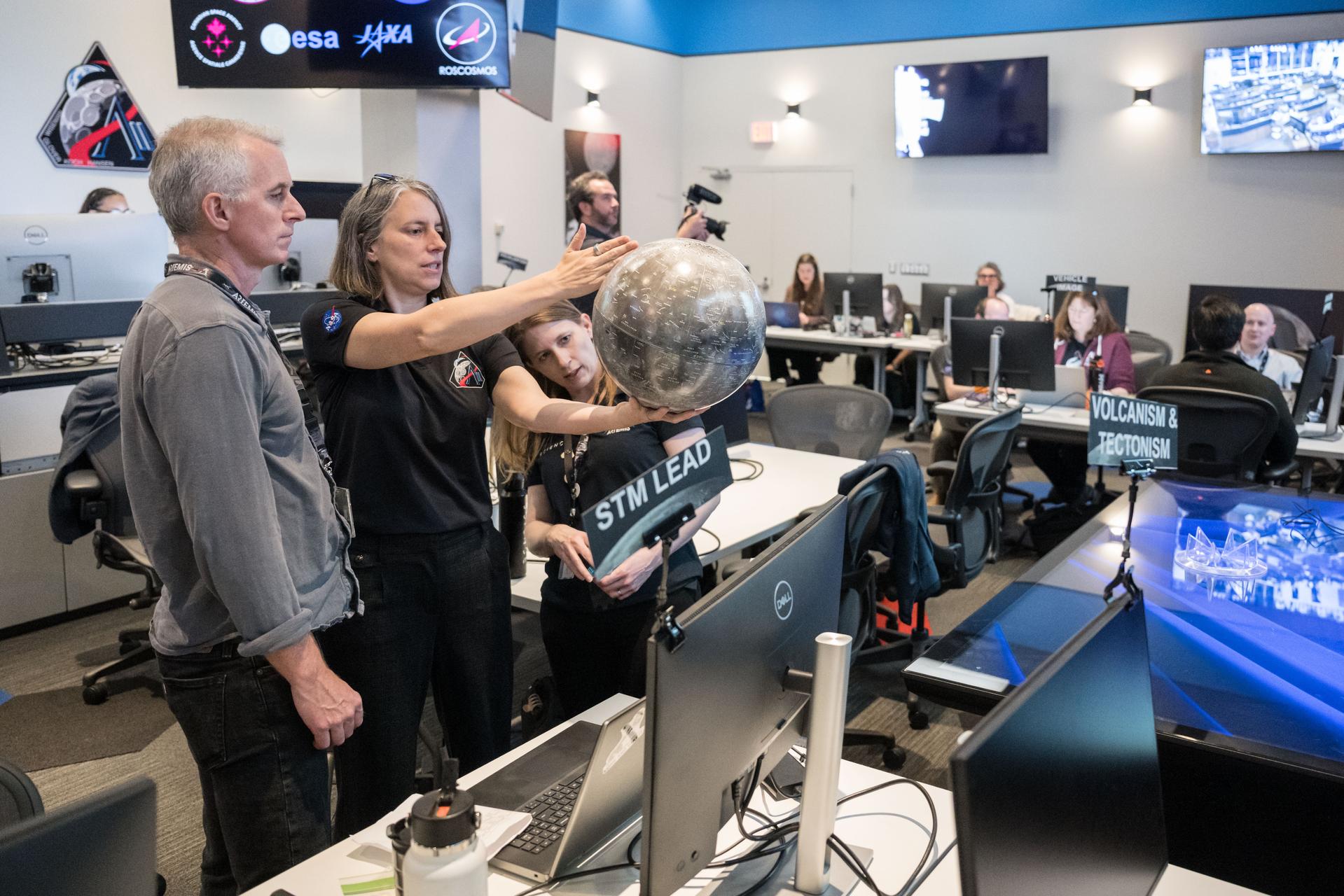
Artemis II lunar science team members, from left, Ryan Ewing, Juliane Gross, and Debra Needham, discuss lunar geography ahead of the translunar injection burn that accelerated the Orion spacecraft to break free of Earth’s orbit and began the outbound trajectory toward the Moon. They are in the Science Evaluation Room (SER) a back room that supports lunar science and planetary observations for the Artemis science officer in the mission’s main flight control room. Built specifically for Artemis missions with these science priorities in mind, the SER is equipped to support rapid data interpretation, collaborative analysis, real-time decision making, and seamless coordination between the science and operations teams.

Artemis II lunar science team member, Juliane Gross, center, and the extended lunar science team behind her, celebrates crew observations made during the lunar flyby on April 6. The team worked in the Science Evaluation Room (SER) in Mission Control at NASA’s Johnson Space Center in Houston. Built specifically for Artemis missions with these science priorities in mind, the SER is equipped to support rapid data interpretation, collaborative analysis, real-time decision making, and seamless coordination between the science and operations teams. Credits: NASA/Luna Posadas Nava

Artemis II deputy lunar science lead, Jacob Richardson, celebrates with a dance after hearing astronauts describe seeing impact flashes on the Moon during their lunar flyby on April 6, 2026. Richardson was monitoring the flyby from the Science Evaluation Room (SER) in Mission Control at NASA’s Johnson Space Center in Houston. Built specifically for Artemis missions with these science priorities in mind, the SER is equipped to support rapid data interpretation, collaborative analysis, real-time decision making, and seamless coordination between the science and operations teams. Credits: NASA/Luna Posadas Nava
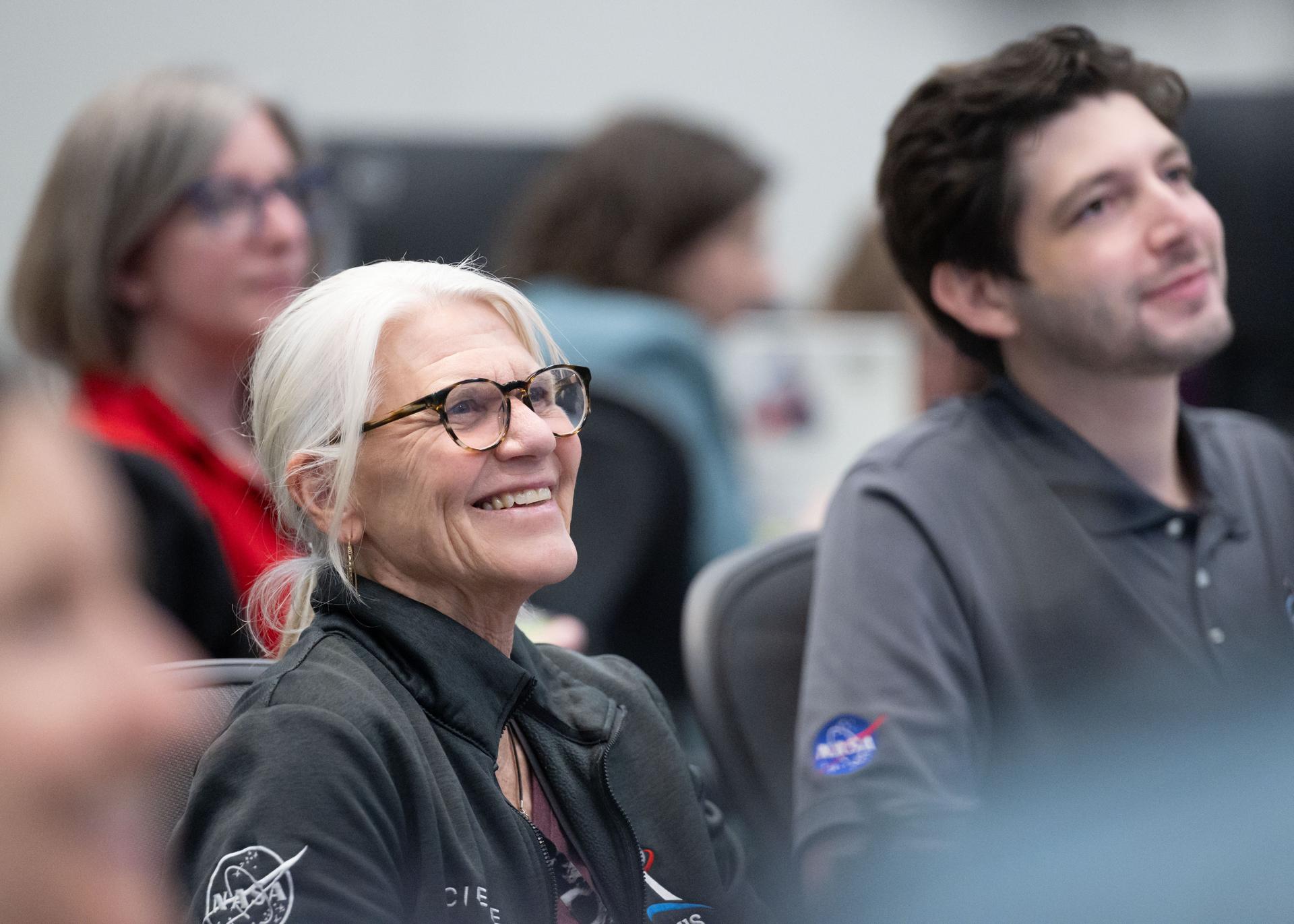
Artemis II lunar science team members, from left, Cindy Evans, and Wilfredo Garcia Lopez, react to crew observations during the lunar flyby on April 6, 2026. The team worked in the Science Evaluation Room (SER) in Mission Control at NASA’s Johnson Space Center in Houston. Built specifically for Artemis missions with these science priorities in mind, the SER is equipped to support rapid data interpretation, collaborative analysis, real-time decision making, and seamless coordination between the science and operations teams. Credits: NASA/Luna Posadas Nava
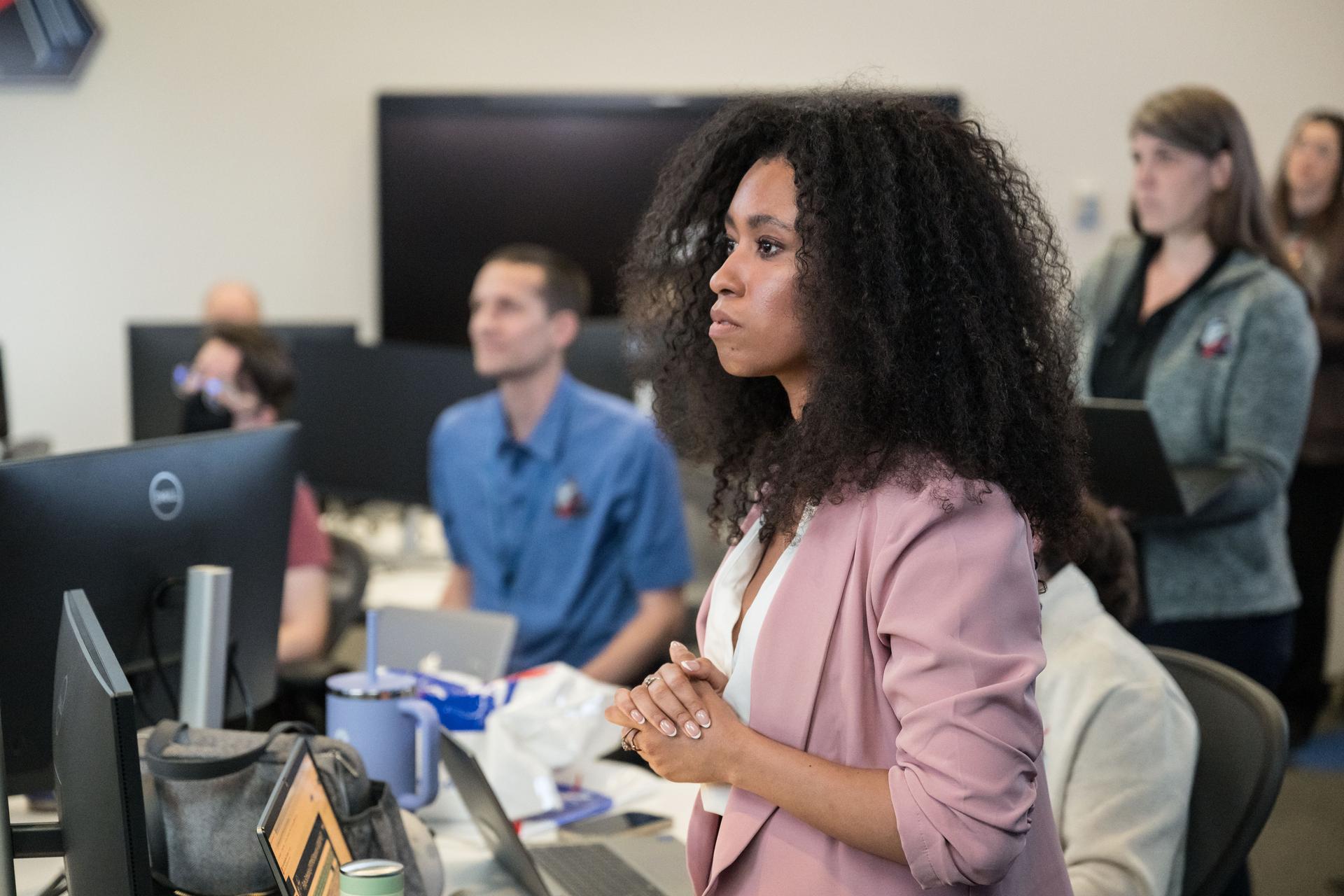
Artemis II lunar science team member, foreground, Amber Turner, and David Hollibaugh-Baker, and Cherie Achilles, background, participate in the team’s analysis of crew observations during the lunar flyby on April 6, 2026. The team worked in the Science Evaluation Room (SER) in Mission Control at NASA’s Johnson Space Center in Houston. Built specifically for Artemis missions with these science priorities in mind, the SER is equipped to support rapid data interpretation, collaborative analysis, real-time decision making, and seamless coordination between the science and operations teams. Credits: NASA/ Robert Markowitz
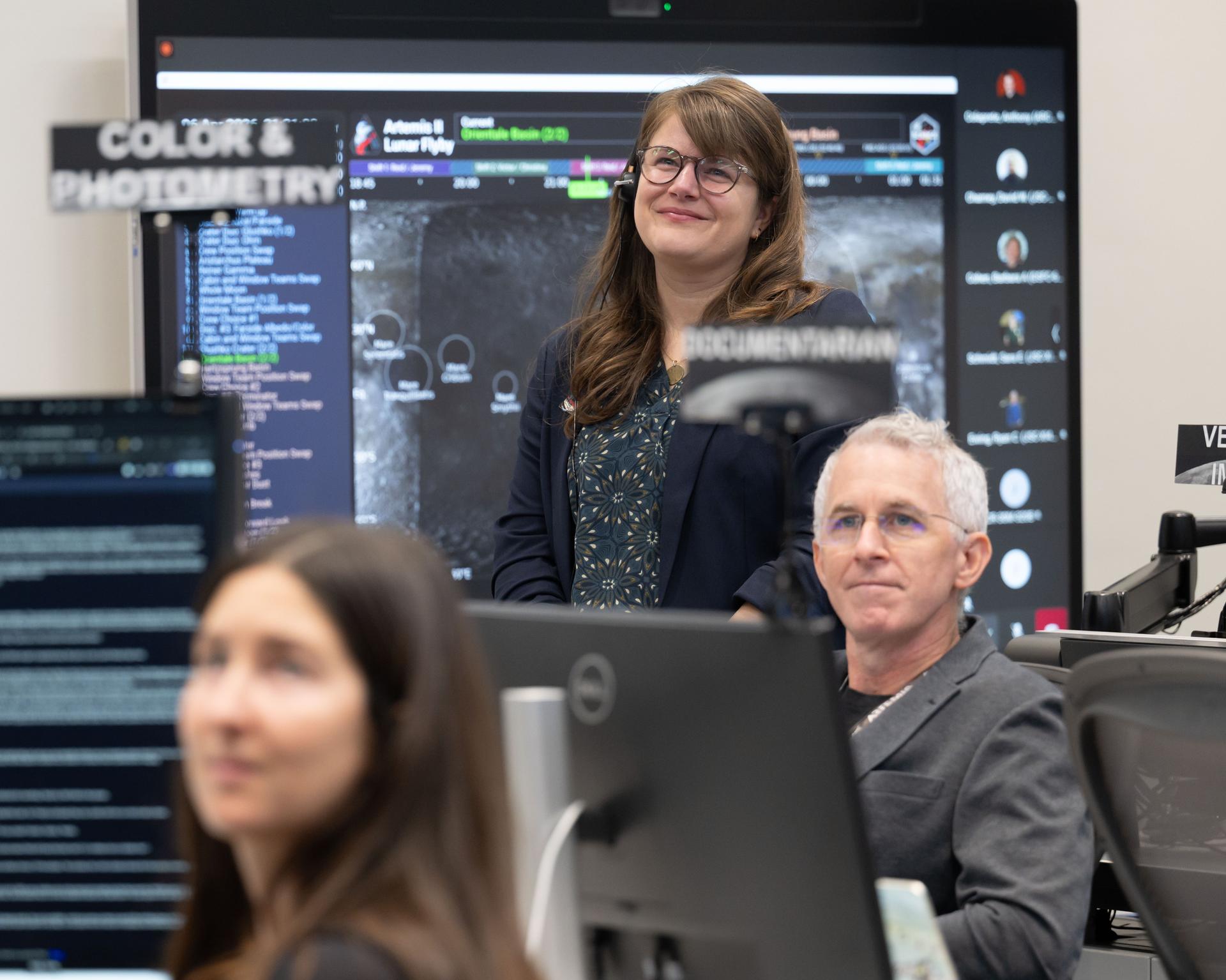
Artemis II deputy lunar science lead Marie Henderson, background, and lunar science team members, Ariel Deutsch, and Ryan Ewing, react to crew observations during the lunar flyby on April 6, 2026. The team worked in the Science Evaluation Room (SER) in Mission Control at NASA’s Johnson Space Center in Houston. Built specifically for Artemis missions with these science priorities in mind, the SER is equipped to support rapid data interpretation, collaborative analysis, real-time decision making, and seamless coordination between the science and operations teams. Credits: NASA/Luna Posadas Nava
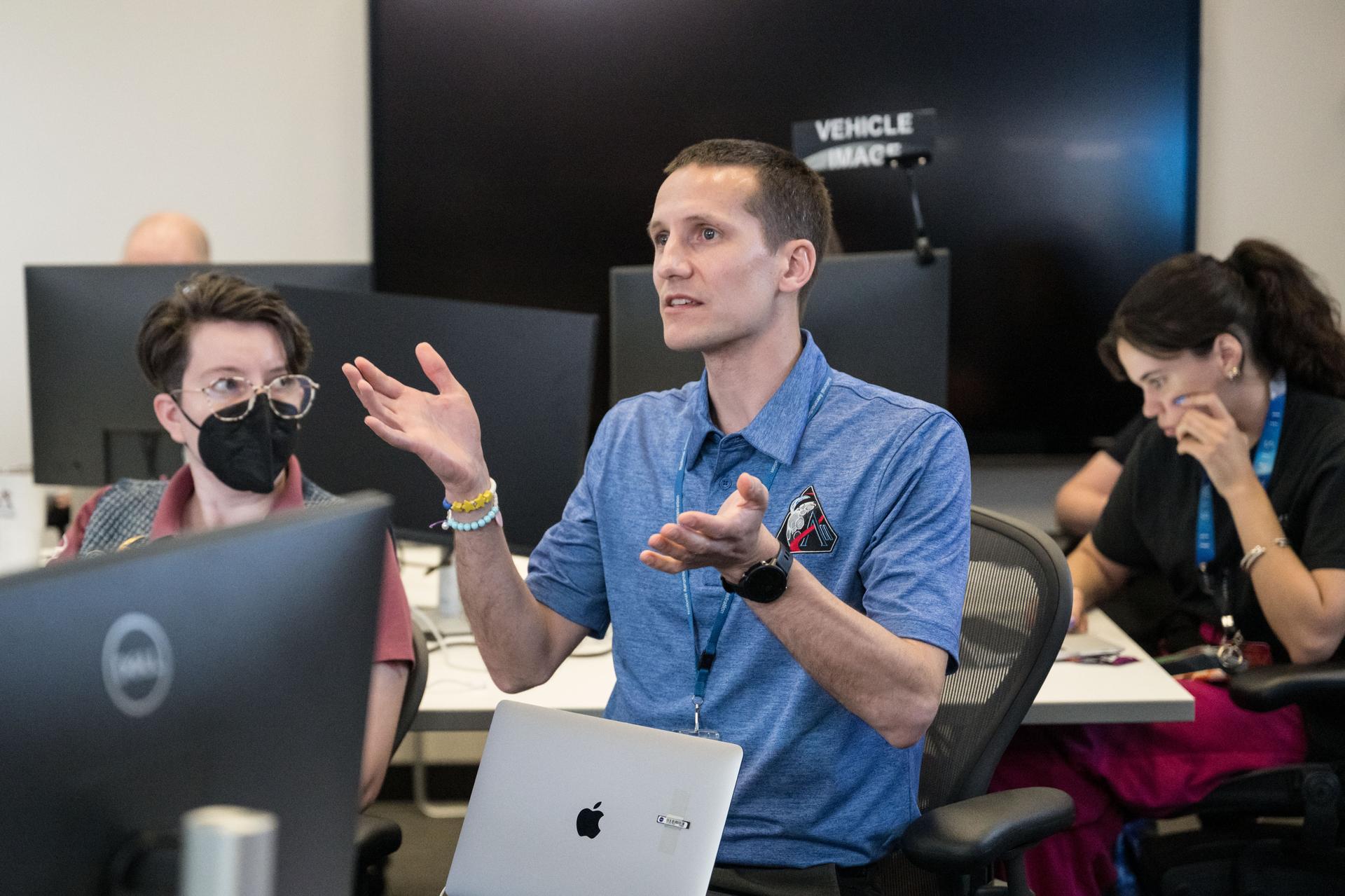
Artemis II lunar science team members, from left, Alexadra Constantinou, David Hollibaugh-Baker, participate in the team’s final preparations for the lunar flyby. NASA Johnson public affairs officer, Victoria Segovia, is seen in the background. The team worked in the Science Evaluation Room (SER) in Mission Control at NASA’s Johnson Space Center in Houston. Built specifically for Artemis missions with these science priorities in mind, the SER is equipped to support rapid data interpretation, collaborative analysis, real-time decision making, and seamless coordination between the science and operations teams. Credits: Credits: NASA/ Robert Markowitz
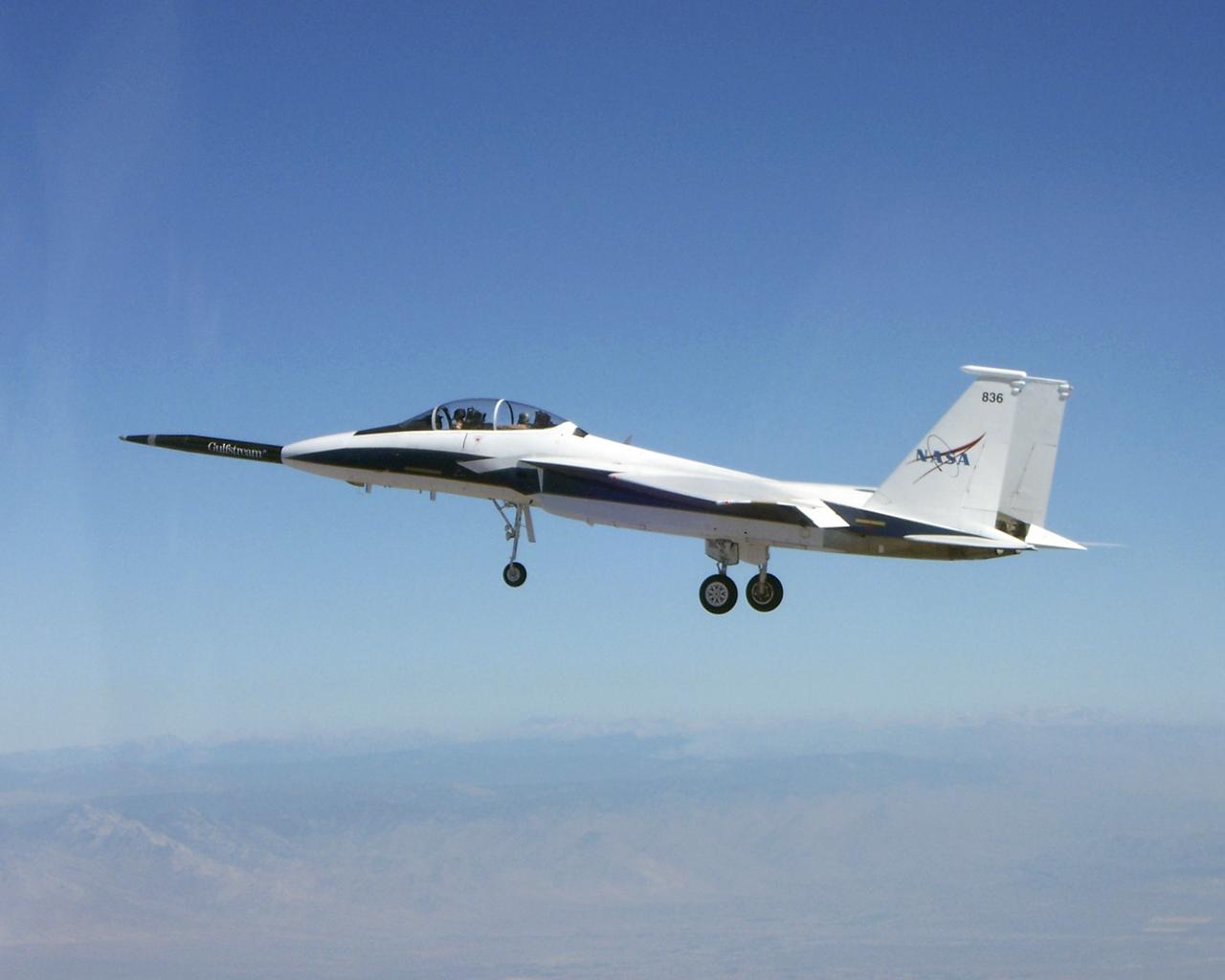
NASA's F-15B testbed aircraft in flight during the first evaluation flight of the joint NASA/Gulfstream Quiet Spike project. The project seeks to verify the structural integrity of the multi-segmented, articulating spike attachment designed to reduce and control a sonic boom.

Artemis Curation Lead Julianne Gross, left, and Brett Denevi, Artemis III Geology Team principal investigator for NASA’s Science Mission Directorate, work in the Science Evaluation Room (SER) during the JETT 5 field test. JETT 5 was a week-long field test in the lunar-like landscape of San Francisco Volcanic Field near Flagstaff, Arizona while a team of flight controllers and scientists at Johnson monitor and guide their activities. Credit: NASA/Helen Arase Vargas
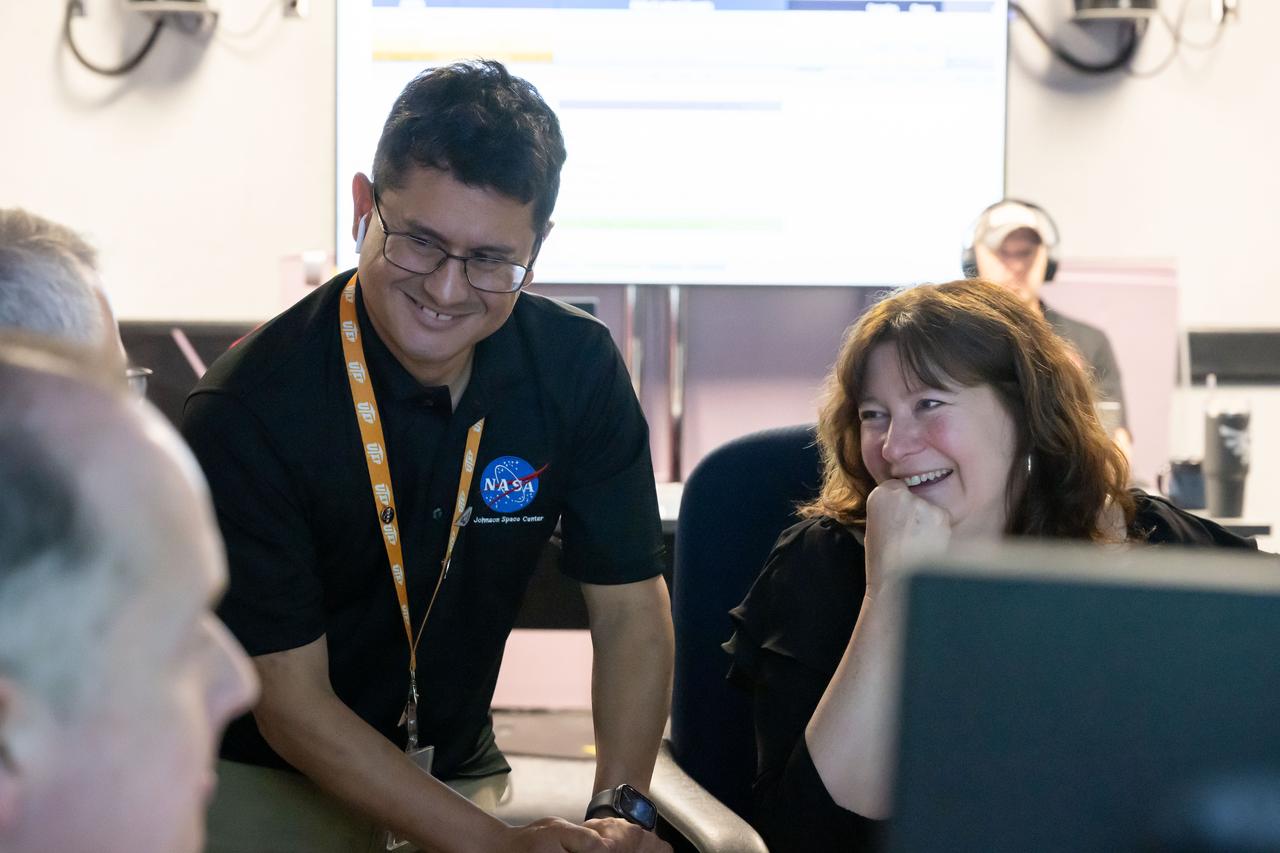
Artemis III Geology Team member, Jose Hurtado from the University of Texas at El Paso, left, and Maria Banks of NASA’s Goddard Spaceflight Center work in the Science Evaluation Room (SER) during the JETT 5 field test. JETT 5 was a week-long field test in the lunar-like landscape of San Francisco Volcanic Field near Flagstaff, Arizona while a team of flight controllers and scientists at Johnson monitor and guide their activities. Credit: NASA/Helen Arase Vargas

A group of scientists are gathered around a table covered in large maps in the Science Evaluation Room (SER) at NASA’s Johnson Space Center in Houston during the JETT 5 field test. JETT 5 was a week-long field test in the lunar-like landscape of San Francisco Volcanic Field near Flagstaff, Arizona while a team of flight controllers and scientists at Johnson monitor and guide their activities. Credit: NASA/Robert Markowitz
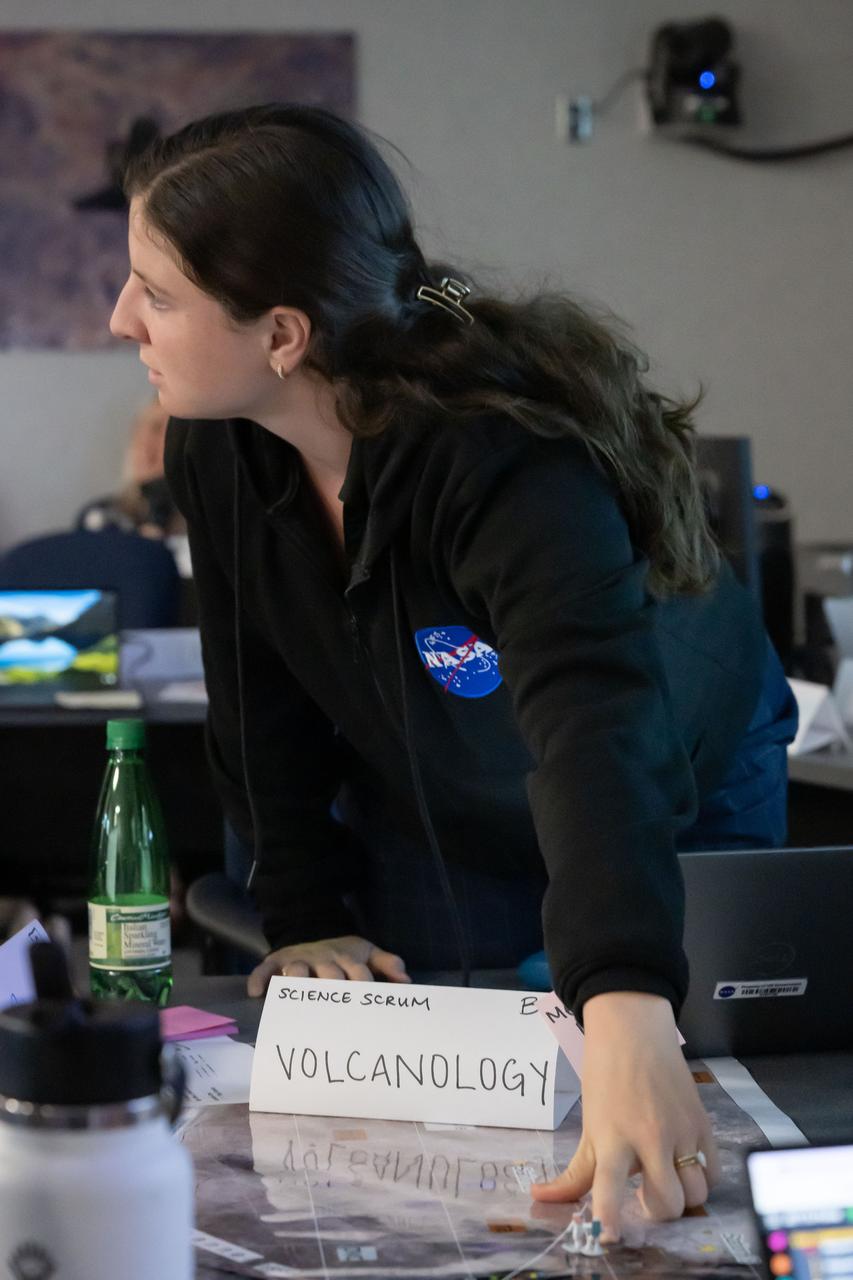
Megan Borel of NASA’s Goddard Space Flight Center points to a location on a map of the San Francisco Volcanic Field in Northern Arizona during a discussion in the Science Evaluation Room (SER) during the JETT 5 field test. JETT 5 was a week-long field test in the lunar-like landscape of San Francisco Volcanic Field near Flagstaff, Arizona while a team of flight controllers and scientists at Johnson monitor and guide their activities. Credit: NASA/Helen Arase Vargas
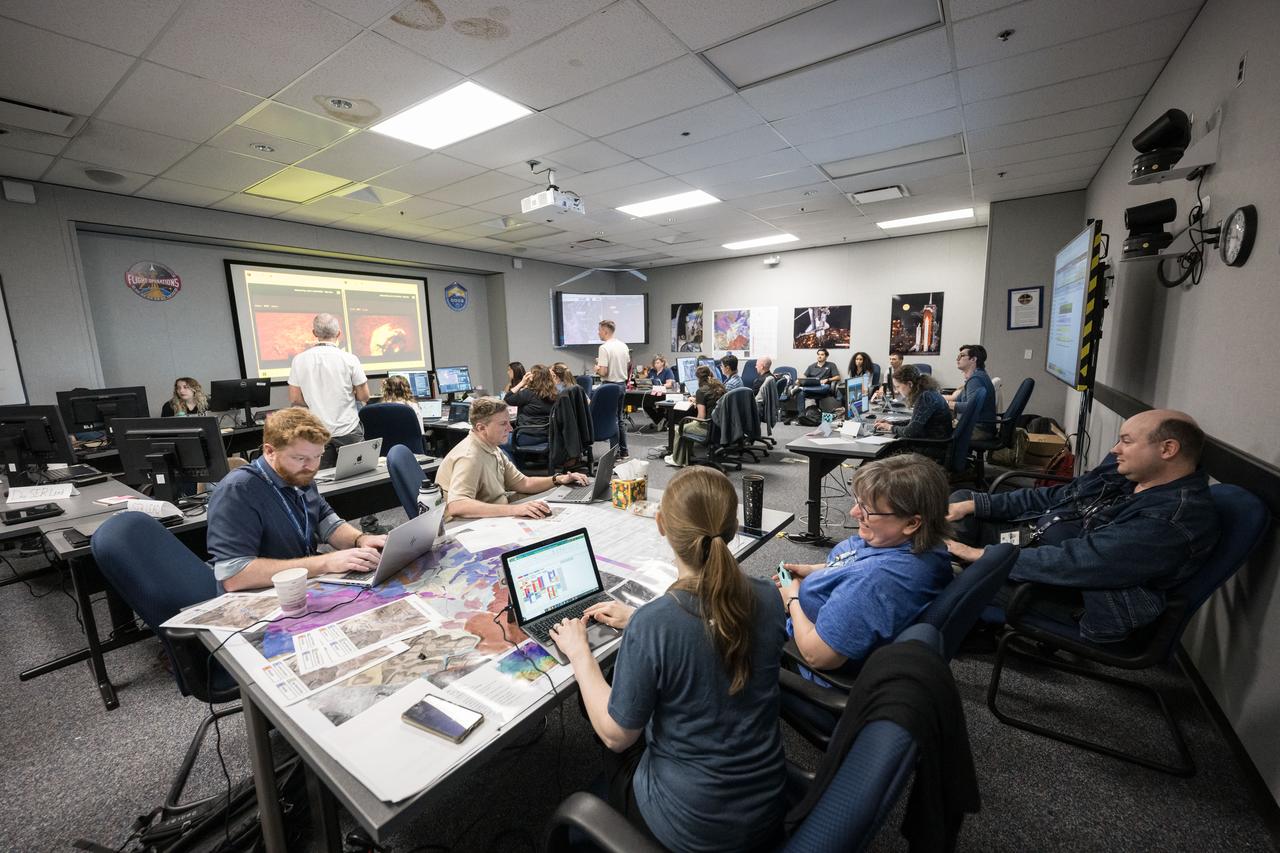
A large group of scientists work in the Science Evaluation Room (SER) at NASA’s Johnson Space Center in Houston during the JETT 5 field test. The SER is the science backroom to mission control during Artemis operations. JETT 5 was a week-long field test in the lunar-like landscape of San Francisco Volcanic Field near Flagstaff, Arizona while a team of flight controllers and scientists at Johnson monitor and guide their activities. Credit: NASA/Robert Markowitz
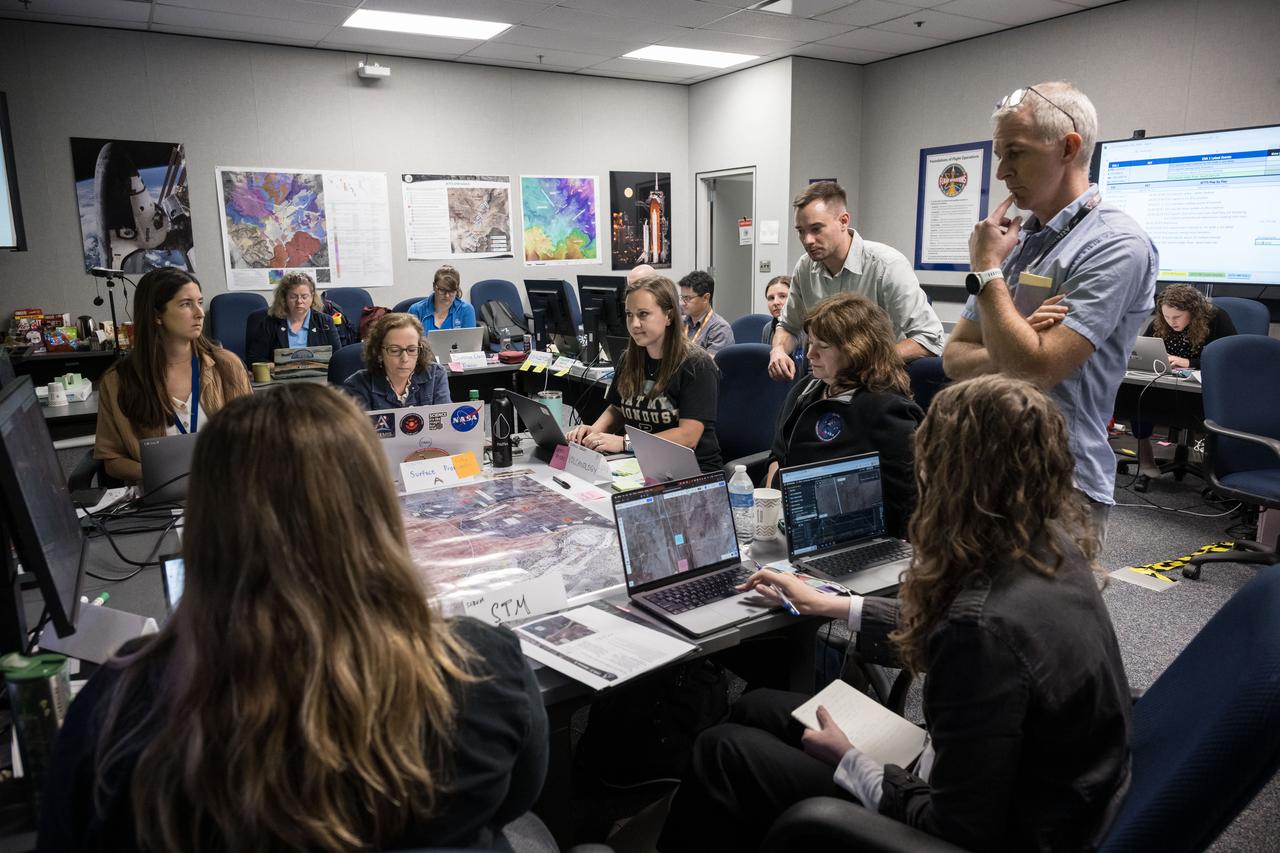
A group of scientists are gathered around a table covered in large maps in the Science Evaluation Room (SER) at NASA’s Johnson Space Center in Houston during the JETT 5 field test. JETT 5 was a week-long field test in the lunar-like landscape of San Francisco Volcanic Field near Flagstaff, Arizona while a team of flight controllers and scientists at Johnson monitor and guide their activities. Credit: NASA/Robert Markowitz

Move crews at NASA’s Michoud Assembly Facility in New Orleans move the 130-foot-tall liquid hydrogen tank out of the vertical assembly building and into a production area inside the 43-acre rocket factory on March 6, 2026. The tank, which will be used on the core stage of NASA’s SLS (Space Launch System) rocket for its Artemis IV mission, will soon undergo a series of non-destructive evaluation tests to ensure the tank is ready for the next step in the production process. The propellant tank is one of five major elements that make up the 212-foot-tall rocket stage. The core stage, along with its four RS-25 engines, produce more than two million pounds of thrust to help launch NASA’s Orion spacecraft, astronauts, and supplies beyond Earth’s orbit and to the lunar surface for Artemis. Image credit: NASA/Michael DeMocker

Move crews at NASA’s Michoud Assembly Facility in New Orleans move the 130-foot-tall liquid hydrogen tank out of the vertical assembly building and into a production area inside the 43-acre rocket factory on March 6, 2026. The tank, which will be used on the core stage of NASA’s SLS (Space Launch System) rocket for its Artemis IV mission, will soon undergo a series of non-destructive evaluation tests to ensure the tank is ready for the next step in the production process. The propellant tank is one of five major elements that make up the 212-foot-tall rocket stage. The core stage, along with its four RS-25 engines, produce more than two million pounds of thrust to help launch NASA’s Orion spacecraft, astronauts, and supplies beyond Earth’s orbit and to the lunar surface for Artemis. Image credit: NASA/Michael DeMocker

Move crews at NASA’s Michoud Assembly Facility in New Orleans move the 130-foot-tall liquid hydrogen tank out of the vertical assembly building and into a production area inside the 43-acre rocket factory on March 6, 2026. The tank, which will be used on the core stage of NASA’s SLS (Space Launch System) rocket for its Artemis IV mission, will soon undergo a series of non-destructive evaluation tests to ensure the tank is ready for the next step in the production process. The propellant tank is one of five major elements that make up the 212-foot-tall rocket stage. The core stage, along with its four RS-25 engines, produce more than two million pounds of thrust to help launch NASA’s Orion spacecraft, astronauts, and supplies beyond Earth’s orbit and to the lunar surface for Artemis. Image credit: NASA/Michael DeMocker

Move crews at NASA’s Michoud Assembly Facility in New Orleans move the 130-foot-tall liquid hydrogen tank out of the vertical assembly building and into a production area inside the 43-acre rocket factory on March 6, 2026. The tank, which will be used on the core stage of NASA’s SLS (Space Launch System) rocket for its Artemis IV mission, will soon undergo a series of non-destructive evaluation tests to ensure the tank is ready for the next step in the production process. The propellant tank is one of five major elements that make up the 212-foot-tall rocket stage. The core stage, along with its four RS-25 engines, produce more than two million pounds of thrust to help launch NASA’s Orion spacecraft, astronauts, and supplies beyond Earth’s orbit and to the lunar surface for Artemis. Image credit: NASA/Michael DeMocker
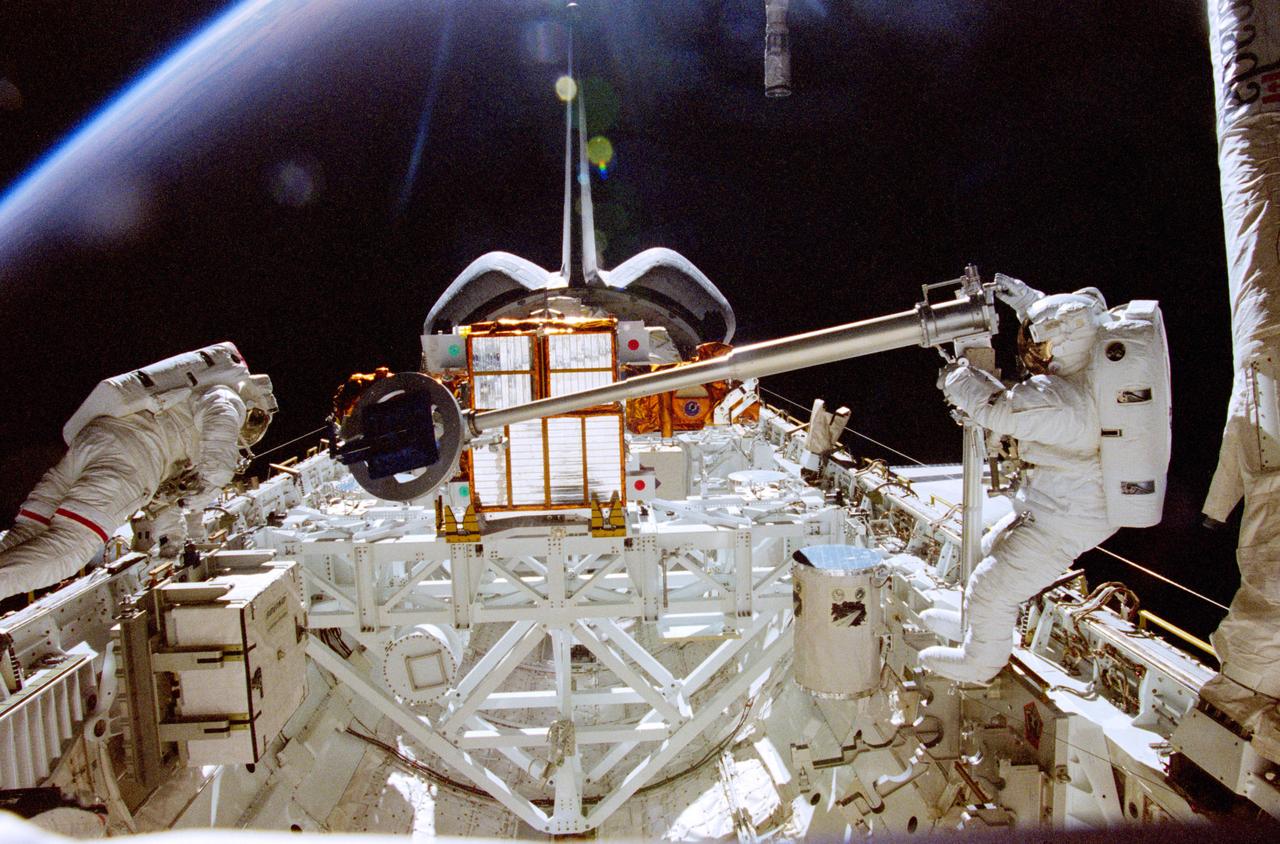
STS087-341-036 (3 Dec. 1997) --- Backdropped against a dark Earth and a light blue horizon, astronaut Takao Doi (right), international mission specialist representing Japan's National Space Development Agency (NASDA), works with a crane while astronaut Winston E. Scott looks on. This second extravehicular activity (EVA) of the mission continued the evaluation of techniques and hardware to be used in constructing the International Space Station (ISS). Near Scott can be seen the representation of a small Orbital Replacement Unit (ORU) in the grasp of the 156-pound crane operated by Doi. A similar crane could be used to transport various sized ORU’s from translation carts on the exterior of the ISS to various worksites on the truss structure. This view was captured, on 35mm film, by a crew mate in the shirt sleeve environment of the Space Shuttle Columbia's cabin. The SPARTAN-201 satellite is in its stowed position at frame center.
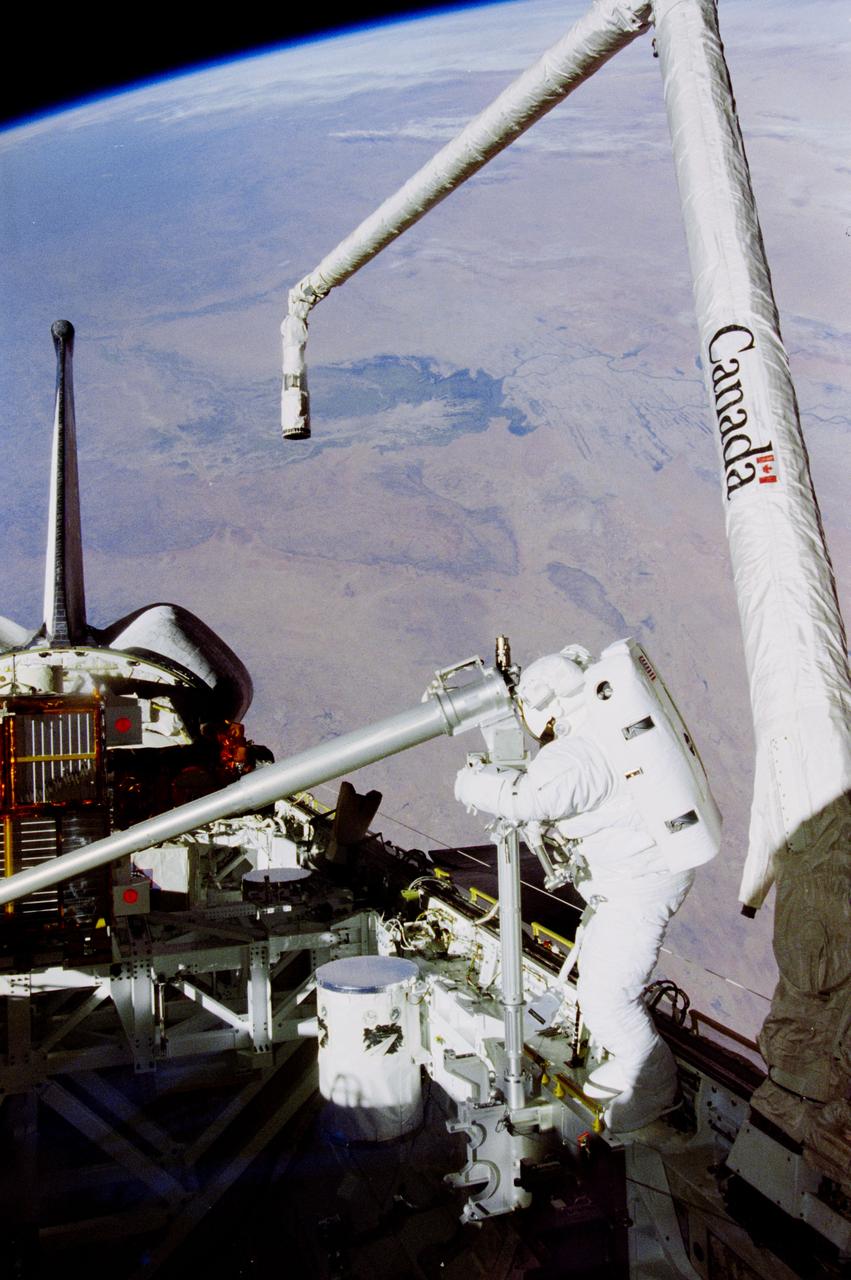
STS087-341-004 (3 Dec. 1997) --- Backdropped over Africa, Takao Doi, international mission specialist representing Japan’s National Space Development Agency (NASDA), works with a crane device during a second extravehicular activity (EVA) designed to help evaluate techniques and hardware to be used in constructing the International Space Station (ISS). Takao Doi and astronaut Winston E. Scott (out of frame) were involved in the mission's second EVA in the cargo bay of the Earth-orbiting Space Shuttle Columbia. Takao Doi is working with a 156-pound crane designed to aid spacewalkers in transporting Orbital Replacement Units (ORU) from translation carts on the exterior of the ISS to various worksites on the truss structure. The view of Earth below features an inland delta in Mali (frame center). This view is from the east toward the west and was taken with a 35mm camera.

Move crews at NASA’s Michoud Assembly Facility in New Orleans move the 130-foot-tall liquid hydrogen tank out of the vertical assembly building and into a production area inside the 43-acre rocket factory on March 6, 2026. The tank, which will be used on the core stage of NASA’s SLS (Space Launch System) rocket for its Artemis IV mission, will soon undergo a series of non-destructive evaluation tests to ensure the tank is ready for the next step in the production process. The propellant tank is one of five major elements that make up the 212-foot-tall rocket stage. The core stage, along with its four RS-25 engines, produce more than two million pounds of thrust to help launch NASA’s Orion spacecraft, astronauts, and supplies beyond Earth’s orbit and to the lunar surface for Artemis. Image credit: NASA/Michael DeMocker

Move crews at NASA’s Michoud Assembly Facility in New Orleans move the 130-foot-tall liquid hydrogen tank out of the vertical assembly building and into a production area inside the 43-acre rocket factory on March 6, 2026. The tank, which will be used on the core stage of NASA’s SLS (Space Launch System) rocket for its Artemis IV mission, will soon undergo a series of non-destructive evaluation tests to ensure the tank is ready for the next step in the production process. The propellant tank is one of five major elements that make up the 212-foot-tall rocket stage. The core stage, along with its four RS-25 engines, produce more than two million pounds of thrust to help launch NASA’s Orion spacecraft, astronauts, and supplies beyond Earth’s orbit and to the lunar surface for Artemis. Image credit: NASA/Michael DeMocker

Move crews at NASA’s Michoud Assembly Facility in New Orleans move the 130-foot-tall liquid hydrogen tank out of the vertical assembly building and into a production area inside the 43-acre rocket factory on March 6, 2026. The tank, which will be used on the core stage of NASA’s SLS (Space Launch System) rocket for its Artemis IV mission, will soon undergo a series of non-destructive evaluation tests to ensure the tank is ready for the next step in the production process. The propellant tank is one of five major elements that make up the 212-foot-tall rocket stage. The core stage, along with its four RS-25 engines, produce more than two million pounds of thrust to help launch NASA’s Orion spacecraft, astronauts, and supplies beyond Earth’s orbit and to the lunar surface for Artemis. Image credit: NASA/Michael DeMocker

Jeff Greulich, DynCorp life support technician, adjusts a prototype helmet on pilot Craig Bomben at NASA Dryden Flight Research Center, Edwards, Calif. Built by Gentex Corp., Carbondale, Pa., the helmet was evaluated by five NASA pilots during the summer and fall of 2002. The objective was to obtain data on helmet fit, comfort and functionality. The inner helmet of the modular system is fitted to the individual crewmember. The outer helmet features a fully integrated spectral mounted helmet display and a binocular helmet mounted display. The helmet will be adaptable to all flying platforms. The Dryden evaluation was overseen by the Center's Life Support office. Assessments have taken place during normal proficiency flights and some air-to-air combat maneuvering. Evaluation platforms included the F-18, B-52 and C-12. The prototype helmet is being developed by the Naval Air Science and Technology Office and the Aircrew Systems Program Office, Patuxent River, Md.
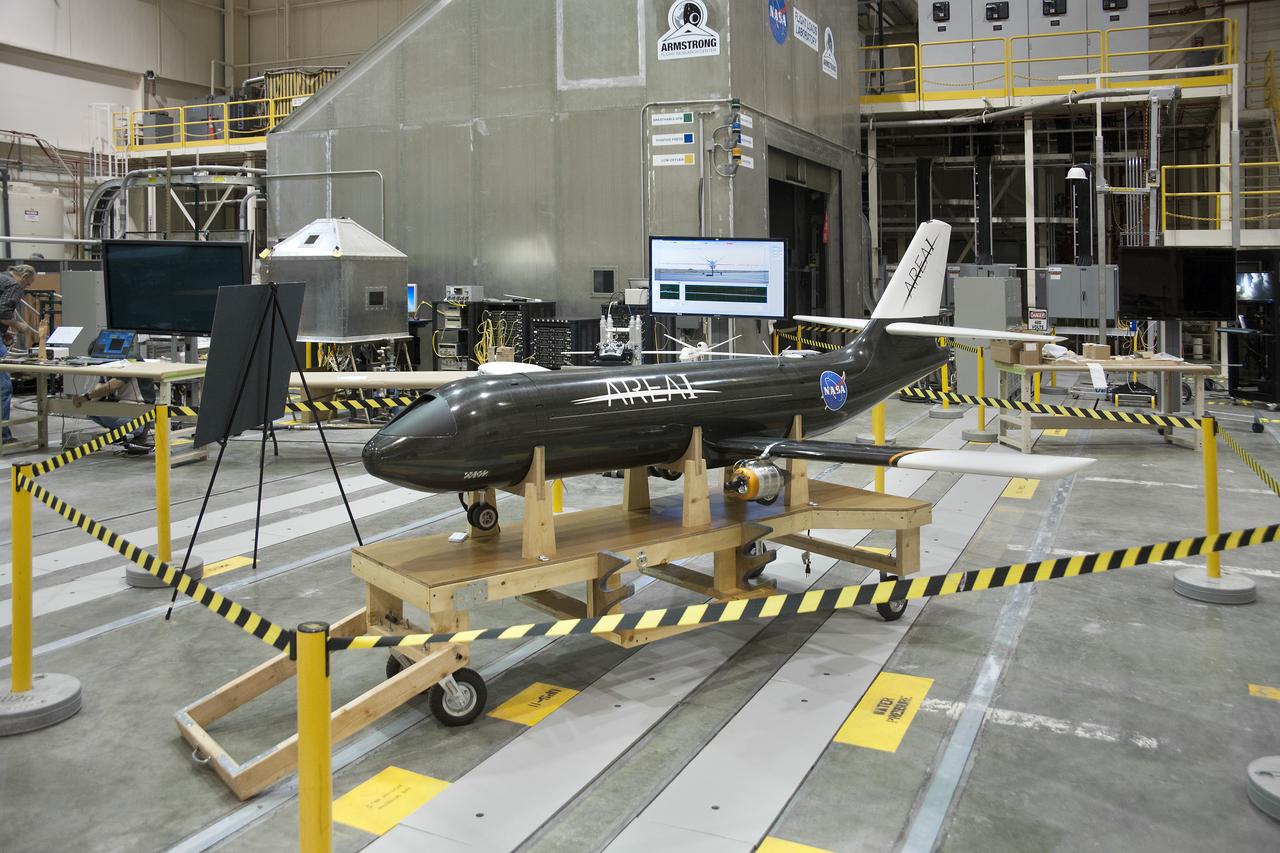
The objectives of testing on PTERA include the development of tools and vetting of system integration, evaluation of vehicle control law, and analysis of SAW airworthiness to examine benefits to in-flight efficiency.
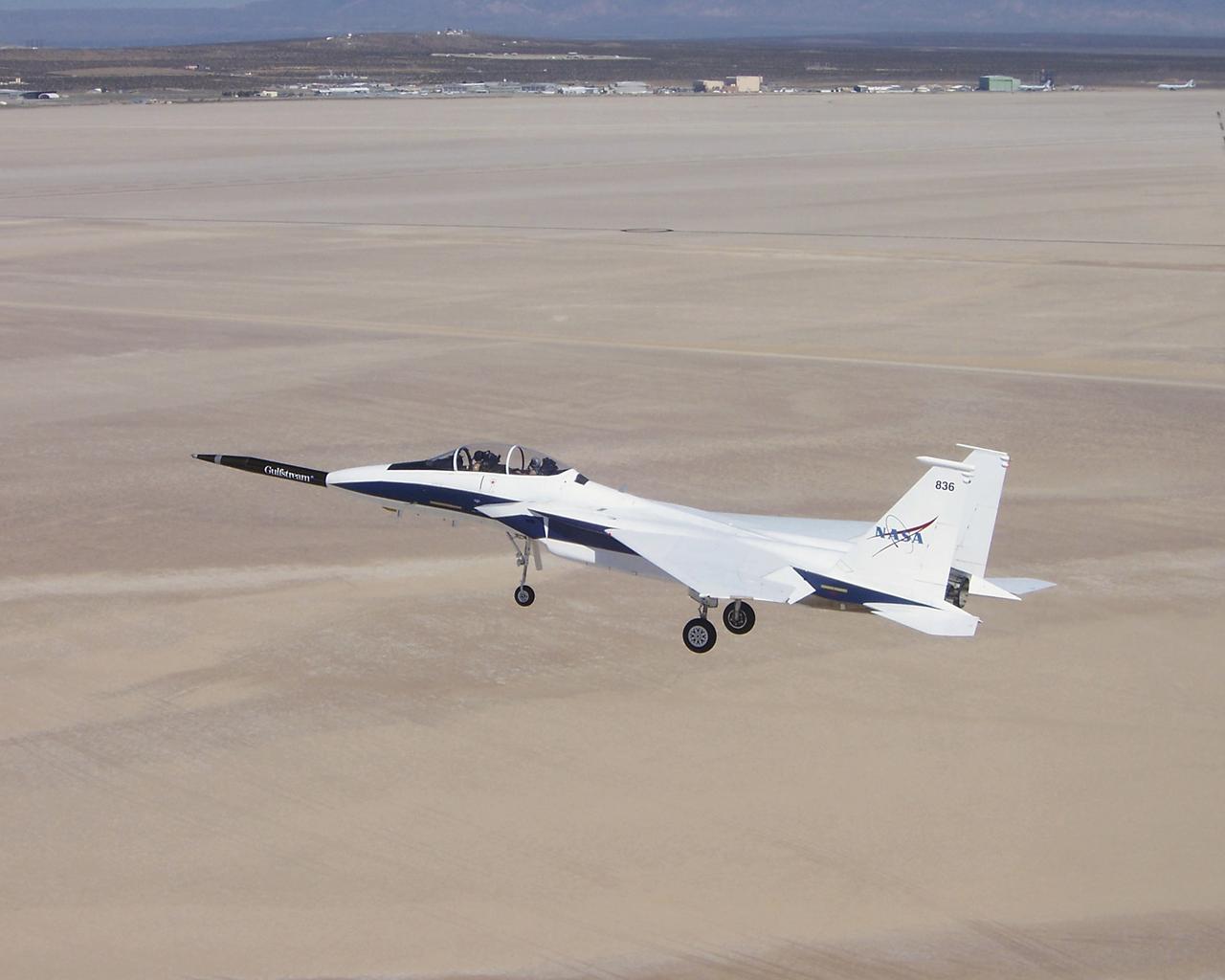
Approaching the runway after the first evaluation flight of the Quiet Spike project, NASA's F-15B testbed aircraft cruises over Roger's Dry Lakebed near the Dryden Flight Research Center. The Quiet Spike was developed by Gulfstream Aerospace as a means of controlling and reducing the sonic boom caused by an aircraft 'breaking' the sound barrier.
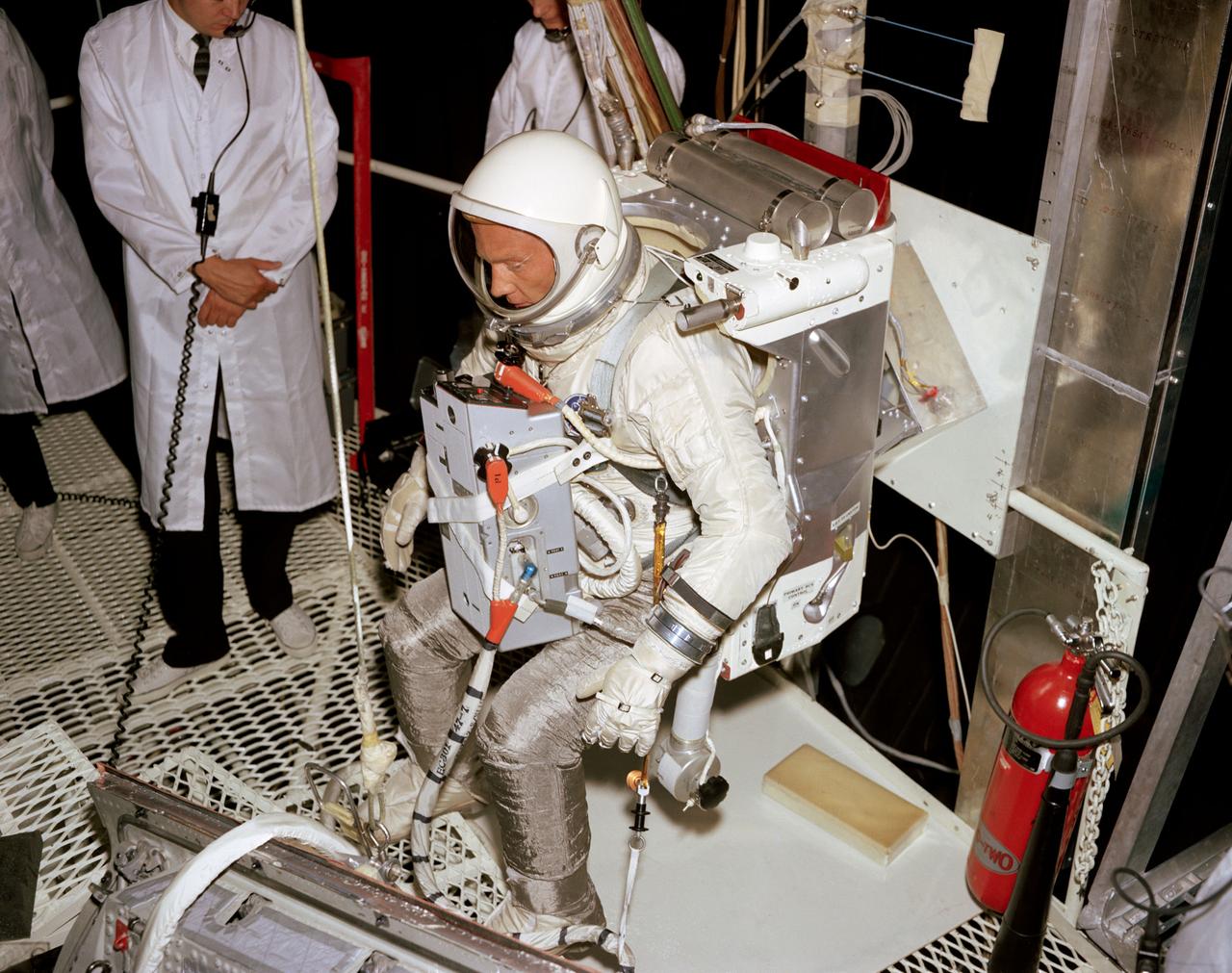
S66-51073 (15 Aug. 1966) --- Astronaut Edwin E. Aldrin Jr., prime crew pilot of the Gemini-12 spaceflight, undergoes evaluation procedures with the Astronaut Maneuvering Unit in the 30-foot altitude chamber at McDonnell. The suited Aldrin is wearing an AMU backpack and an Extravehicular Life Support System (ELSS) chest pack. Photo credit: NASA
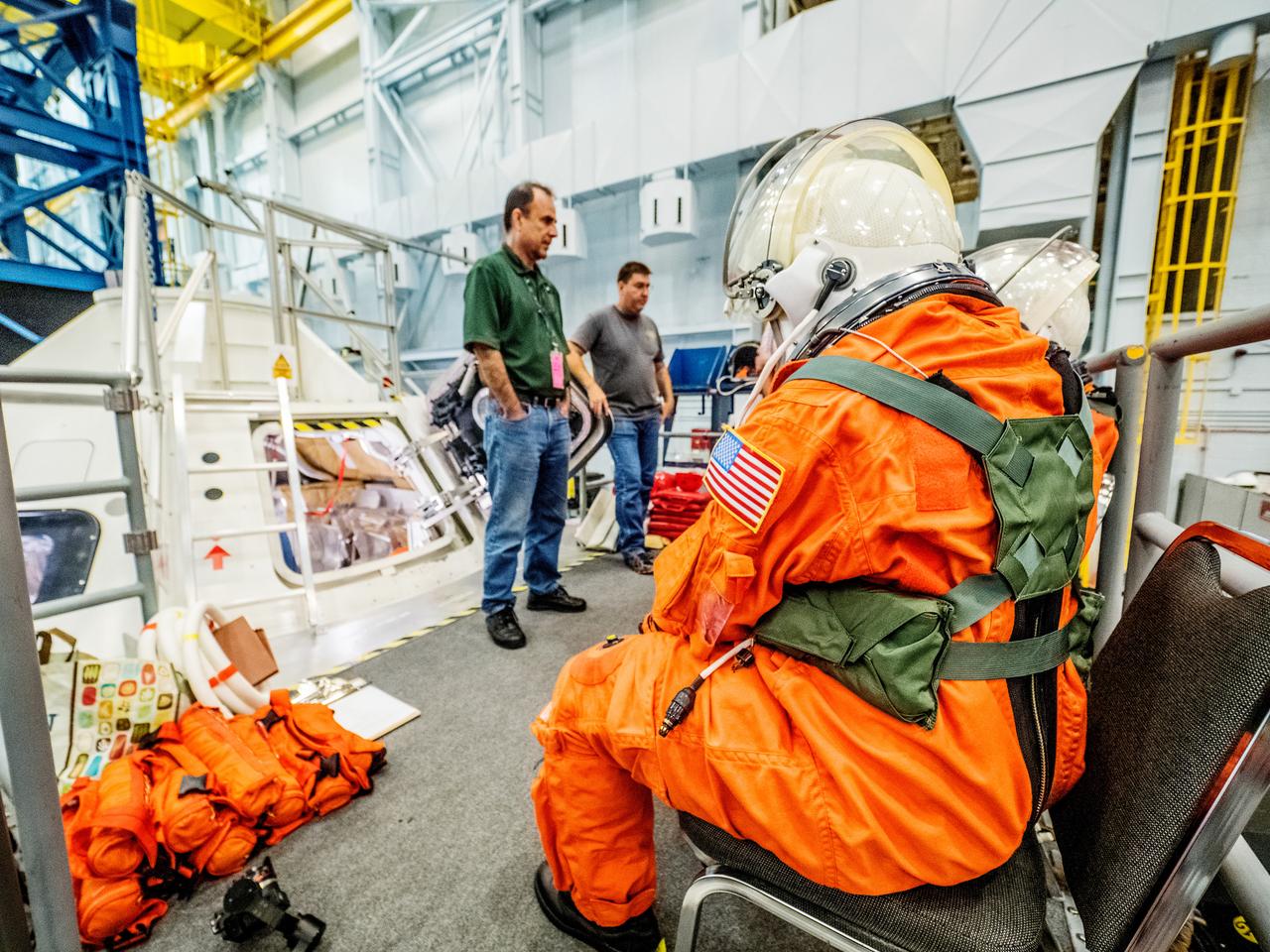
Engineers and astronauts conduct testing in a representative model of the Orion spacecraft at NASA’s Johnson Space Center in Houston on July 28, 2016 to gather the crew's feedback on the design of the docking hatch and on post-landing equipment operations. ..While the crew will primarily use the side hatch for entry and exit on Earth and the docking hatch to travel between Orion and a habitation module on long-duration deep space missions, the crew will need to be able to exit out of the docking hatch if wave heights in the Pacific Ocean upon splashdown are too high. The work is being done to help ensure all elements of Orion's design are safe and effective for the crew to use on future missions on the journey to Mars.
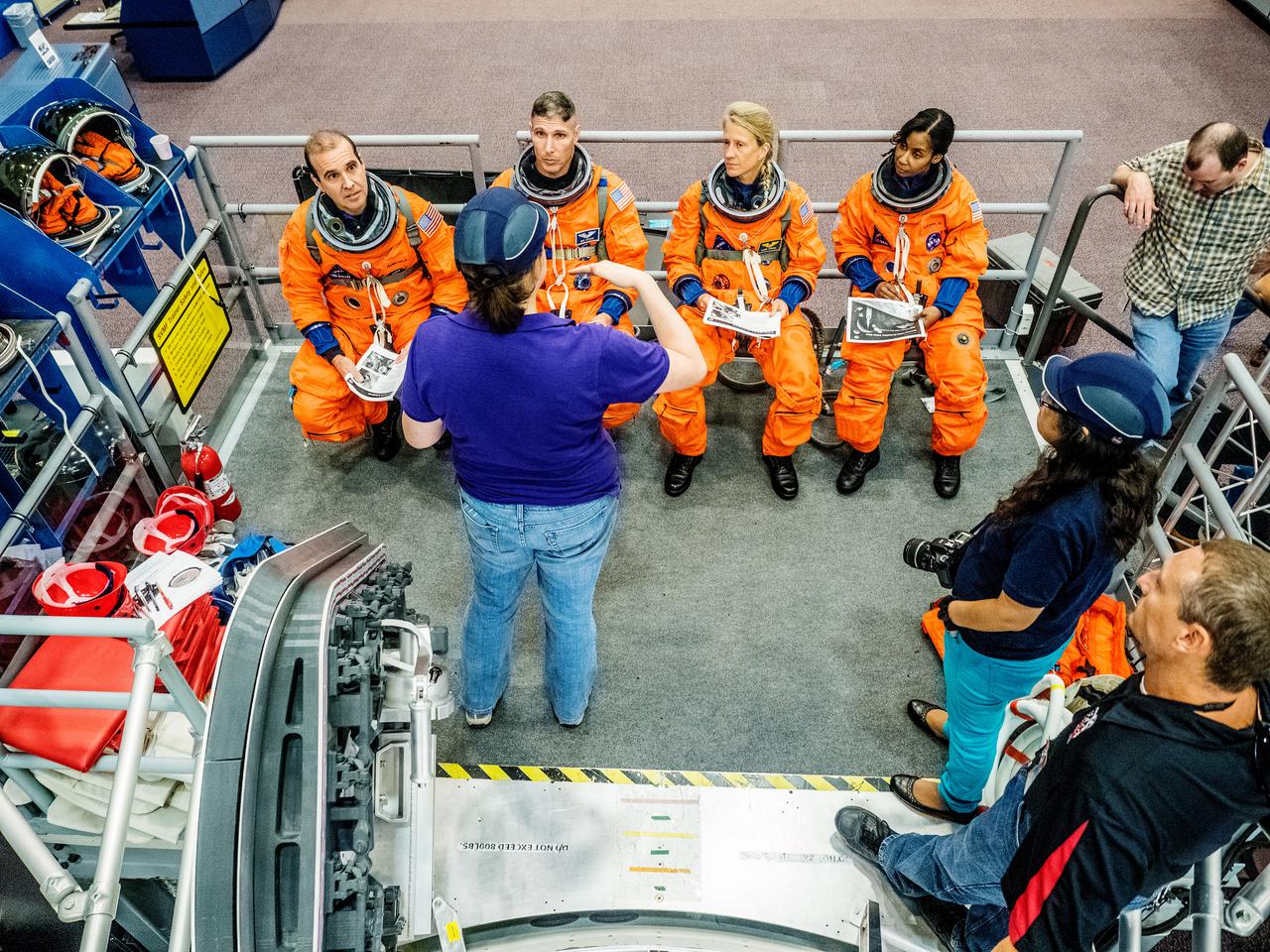
Engineers and astronauts conduct testing in a representative model of the Orion spacecraft at NASA’s Johnson Space Center in Houston on July 28, 2016 to gather the crew's feedback on the design of the docking hatch and on post-landing equipment operations. ..While the crew will primarily use the side hatch for entry and exit on Earth and the docking hatch to travel between Orion and a habitation module on long-duration deep space missions, the crew will need to be able to exit out of the docking hatch if wave heights in the Pacific Ocean upon splashdown are too high. The work is being done to help ensure all elements of Orion's design are safe and effective for the crew to use on future missions on the journey to Mars.
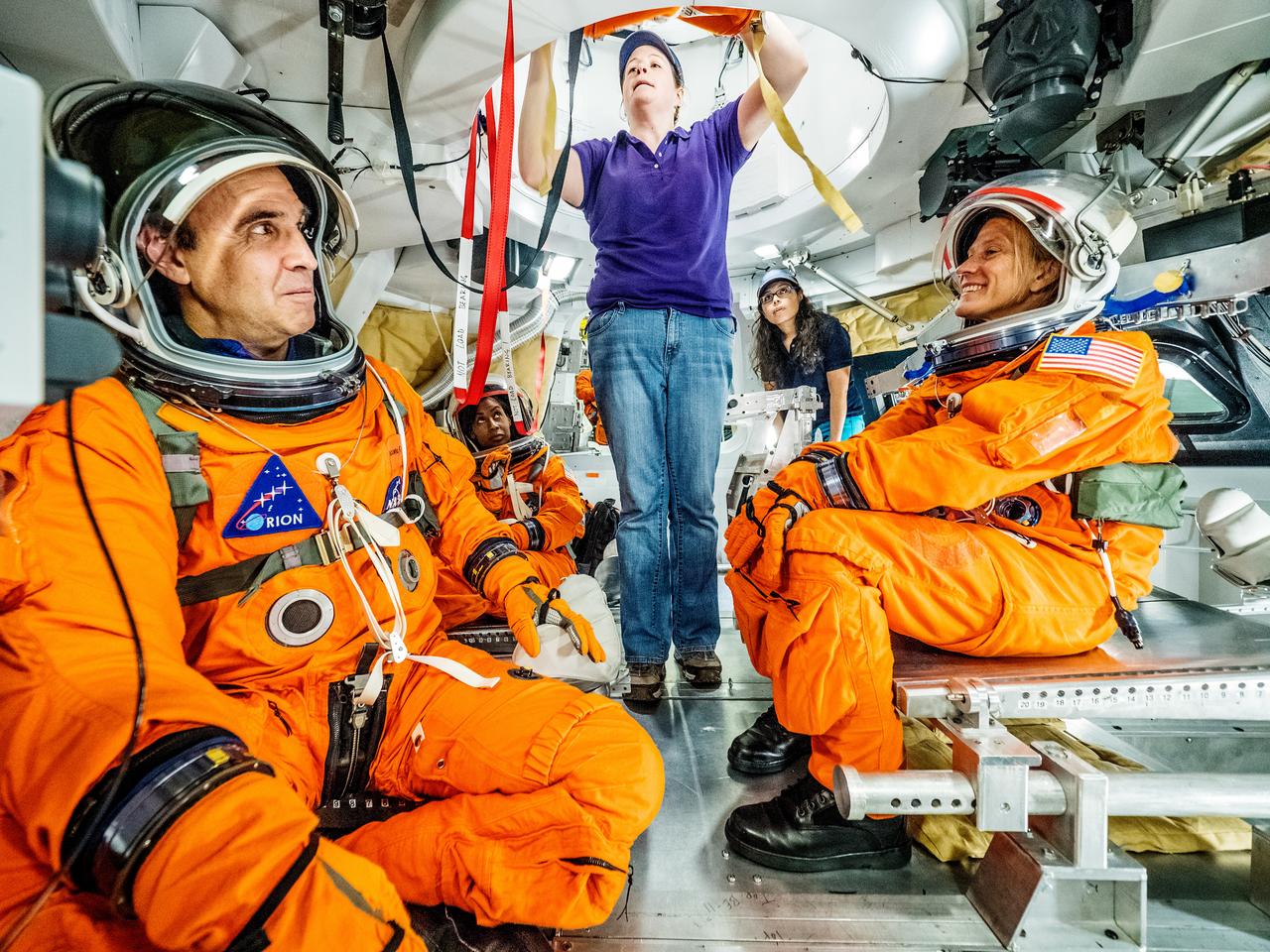
Engineers and astronauts conduct testing in a representative model of the Orion spacecraft at NASA’s Johnson Space Center in Houston on July 28, 2016 to gather the crew's feedback on the design of the docking hatch and on post-landing equipment operations. ..While the crew will primarily use the side hatch for entry and exit on Earth and the docking hatch to travel between Orion and a habitation module on long-duration deep space missions, the crew will need to be able to exit out of the docking hatch if wave heights in the Pacific Ocean upon splashdown are too high. The work is being done to help ensure all elements of Orion's design are safe and effective for the crew to use on future missions on the journey to Mars.
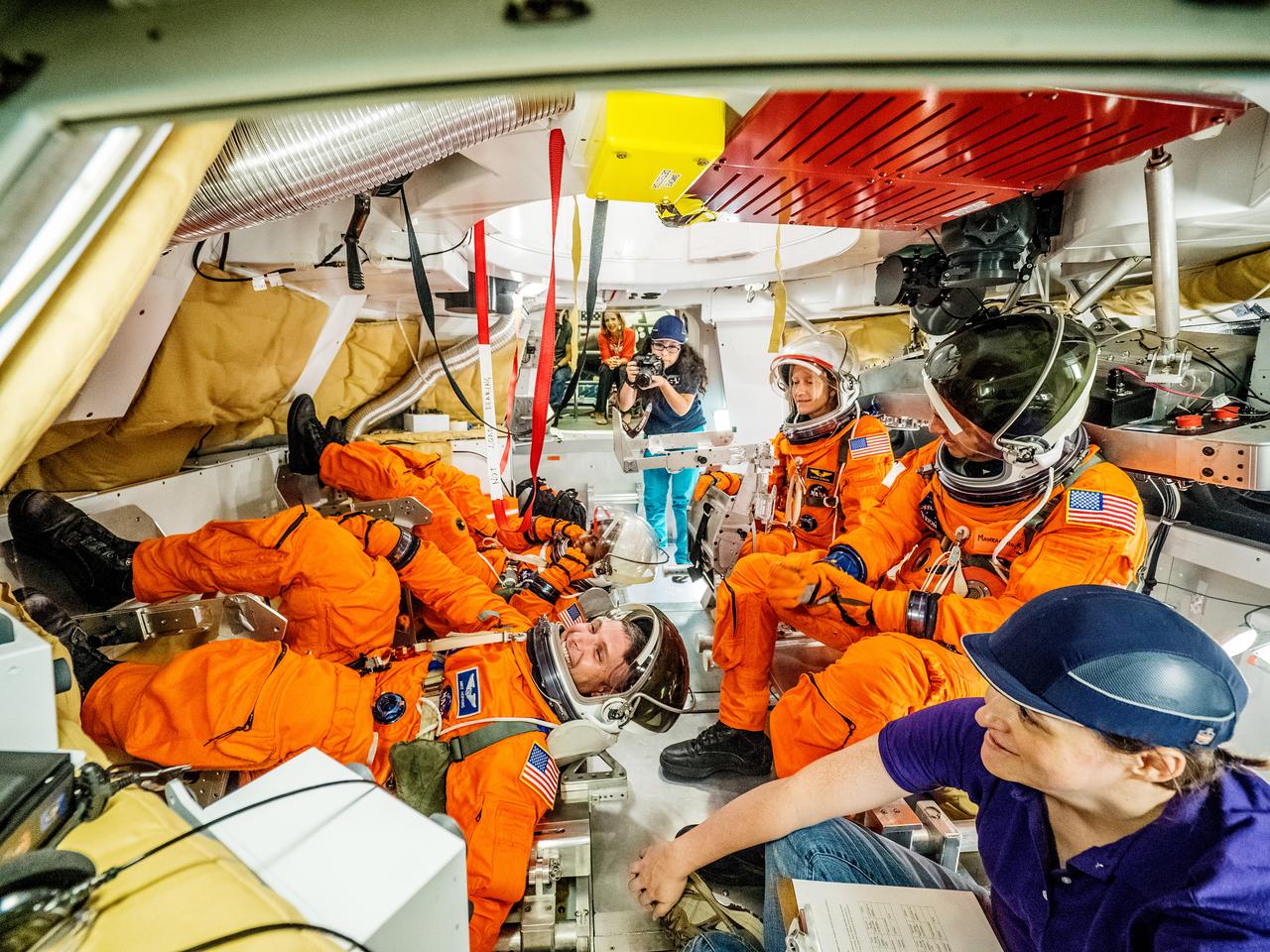
Engineers and astronauts conduct testing in a representative model of the Orion spacecraft at NASA’s Johnson Space Center in Houston on July 28, 2016 to gather the crew's feedback on the design of the docking hatch and on post-landing equipment operations. ..While the crew will primarily use the side hatch for entry and exit on Earth and the docking hatch to travel between Orion and a habitation module on long-duration deep space missions, the crew will need to be able to exit out of the docking hatch if wave heights in the Pacific Ocean upon splashdown are too high. The work is being done to help ensure all elements of Orion's design are safe and effective for the crew to use on future missions on the journey to Mars.
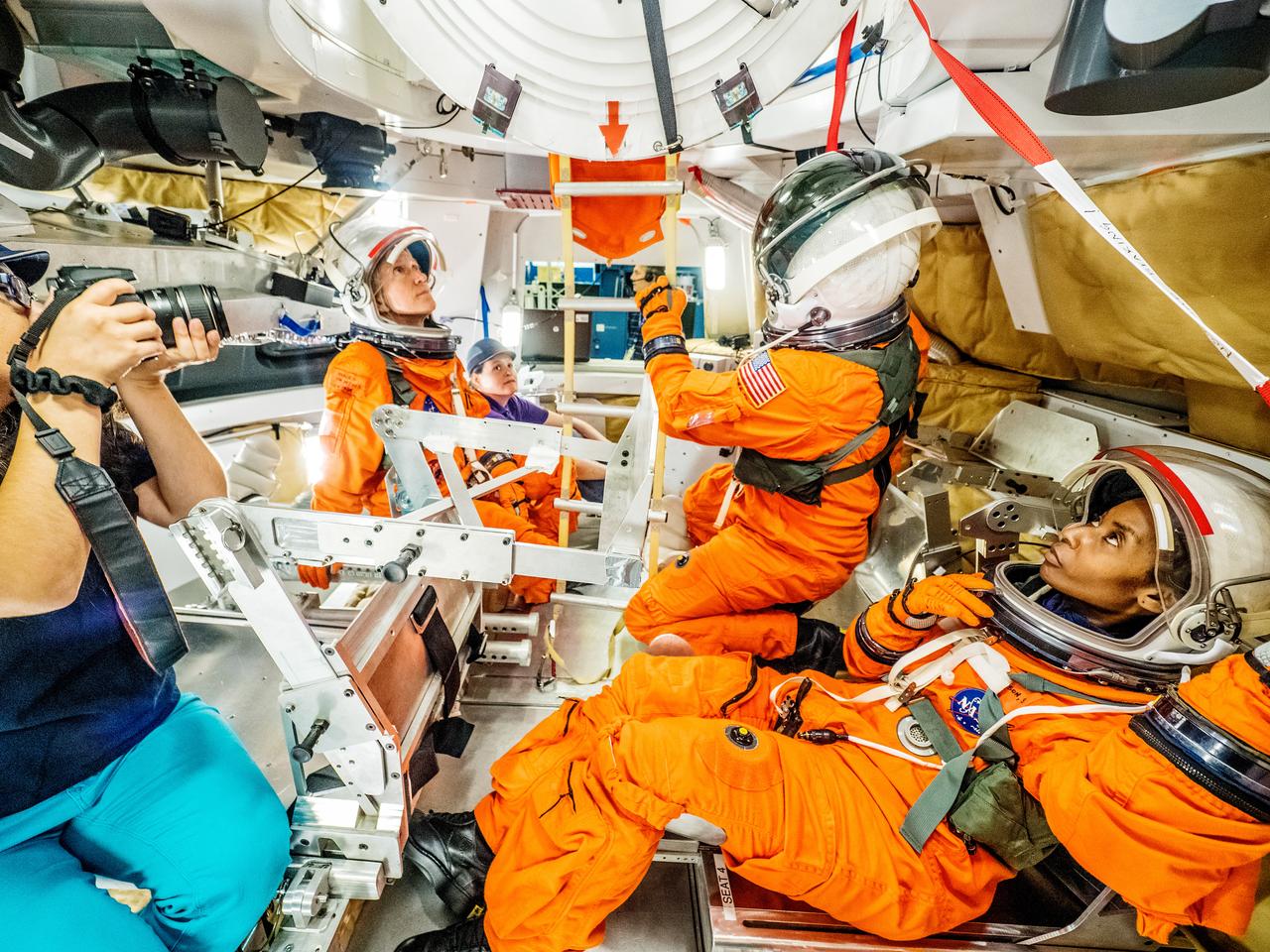
Engineers and astronauts conduct testing in a representative model of the Orion spacecraft at NASA’s Johnson Space Center in Houston on July 28, 2016 to gather the crew's feedback on the design of the docking hatch and on post-landing equipment operations. ..While the crew will primarily use the side hatch for entry and exit on Earth and the docking hatch to travel between Orion and a habitation module on long-duration deep space missions, the crew will need to be able to exit out of the docking hatch if wave heights in the Pacific Ocean upon splashdown are too high. The work is being done to help ensure all elements of Orion's design are safe and effective for the crew to use on future missions on the journey to Mars.