
This image shows the curvature of the Earth from 130,000 feet. It was taken remotely by a camera on EXCITE. The red blob at the top of the frame is the parachute.
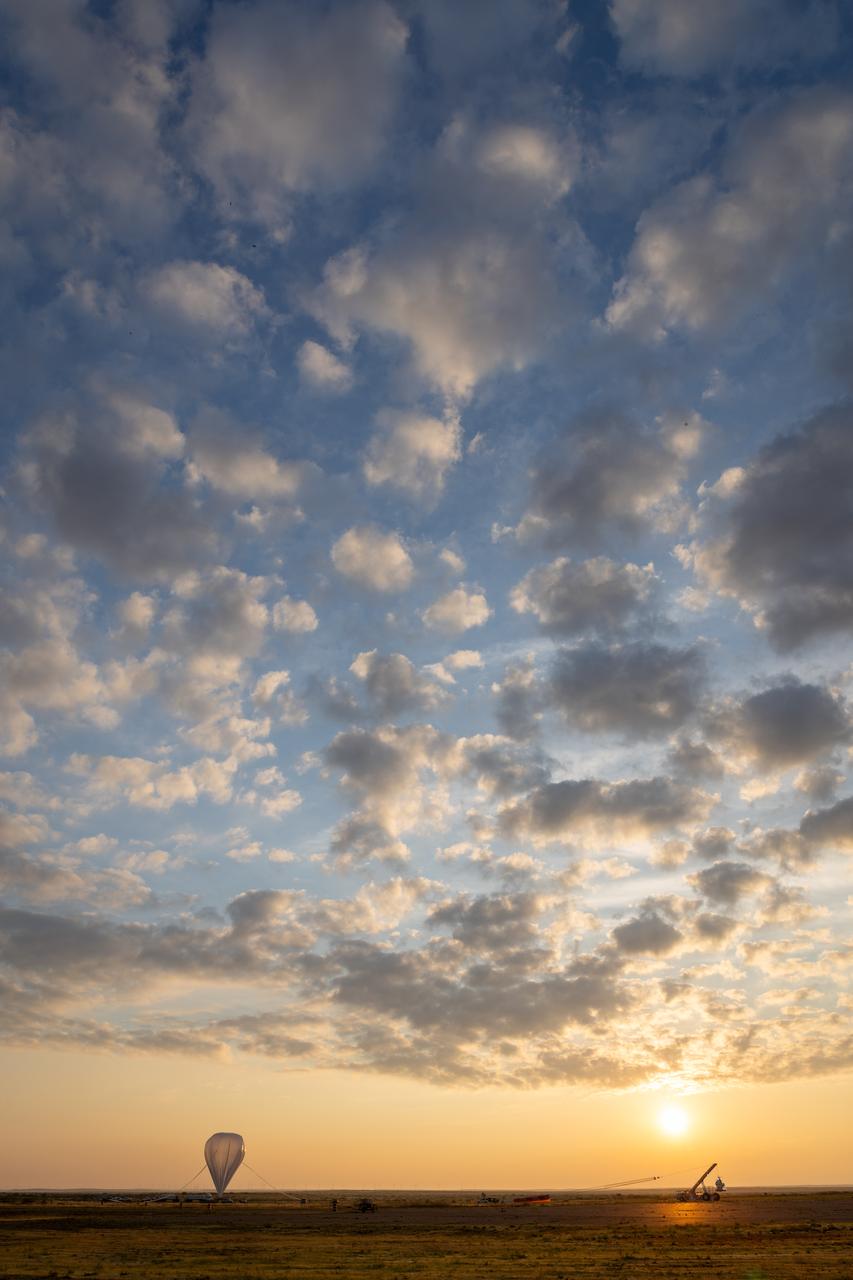
It takes around an hour to fill a 39-million-cubic-foot scientific balloon with helium. The EXCITE telescope is poised for launch as the day breaks on August 31st, 2024.
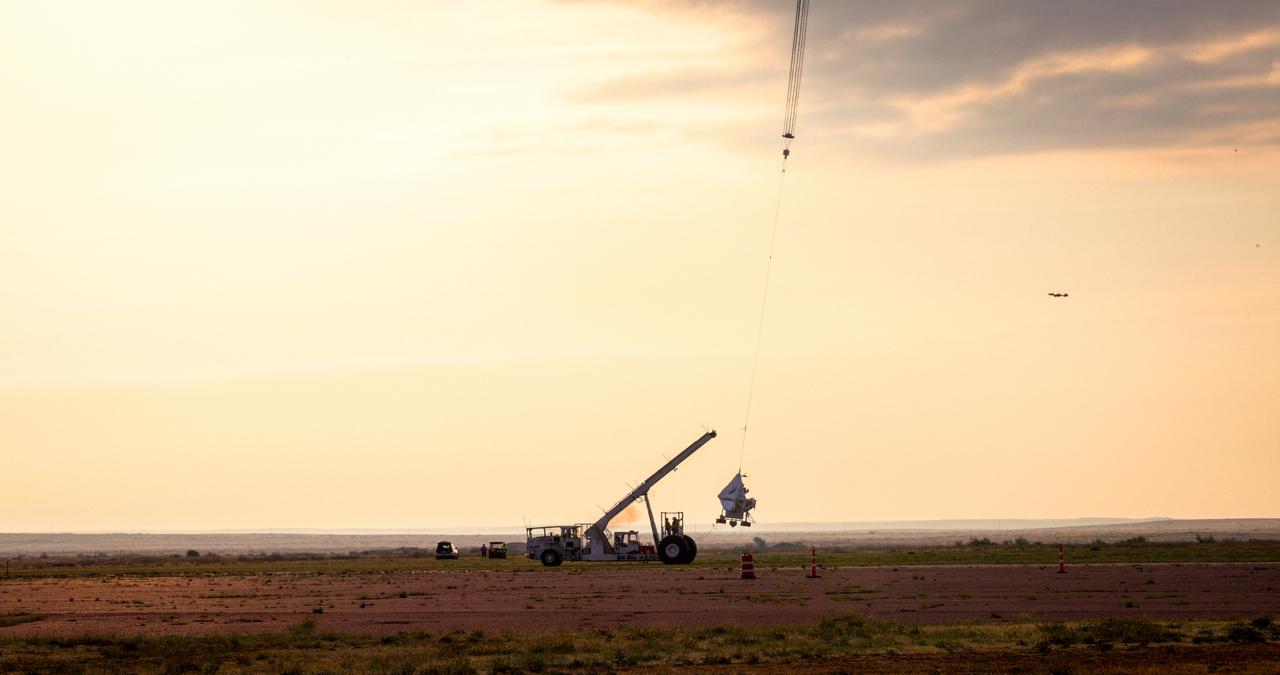
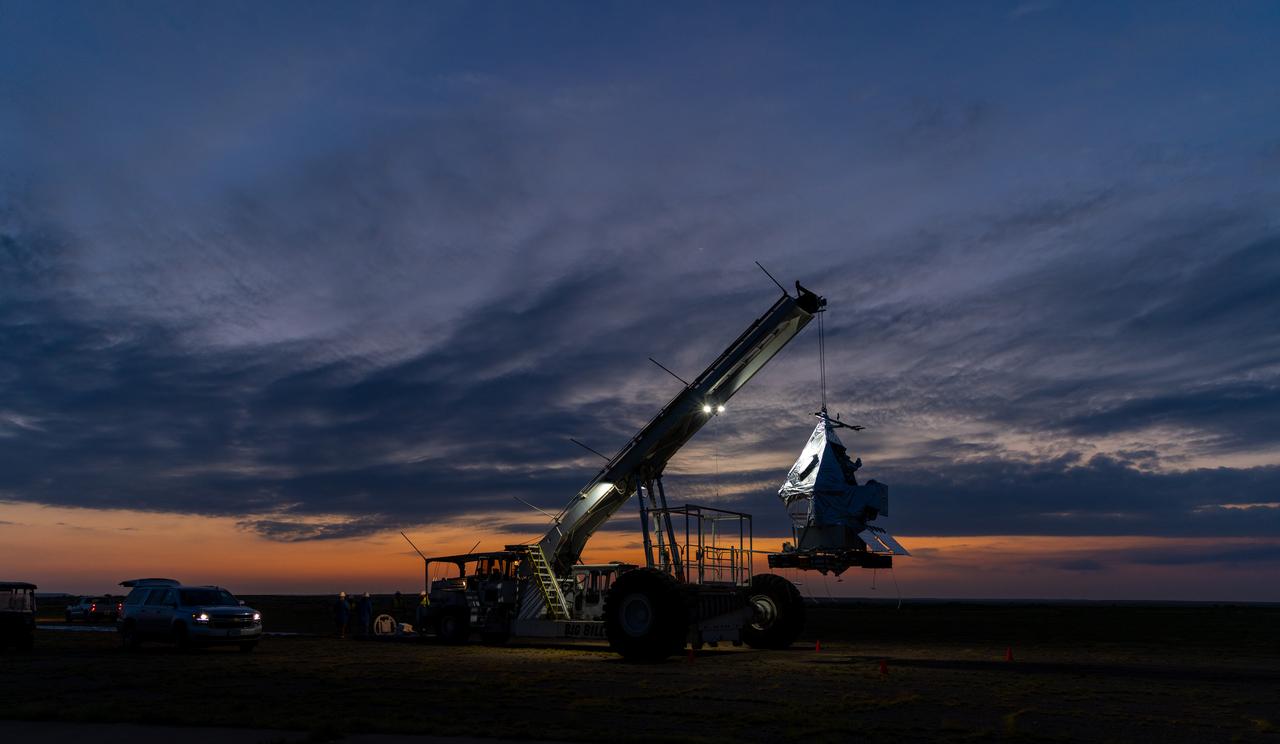
This is EXCITE’s moment of release. On August 31, 2024, the EXCITE (EXoplanet Climate Infrared TElescope) team conducted a test flight of their telescope from NASA’s Columbia Scientific Balloon Facility in Fort Sumner, New Mexico. This photo was taken moments after the telescope was released from the tractor vehicle (called Big Bill). Unseen above is the helium-filled scientific balloon that carried the telescope to the edge of space.
NASA Goddard astrophysicist Kyle Helson looks at EXCITE (EXoplanet Climate Infrared TElescope) as it dangles from the ceiling of a hangar at NASA’s Columbia Scientific Balloon Facility in Fort Sumner, New Mexico.
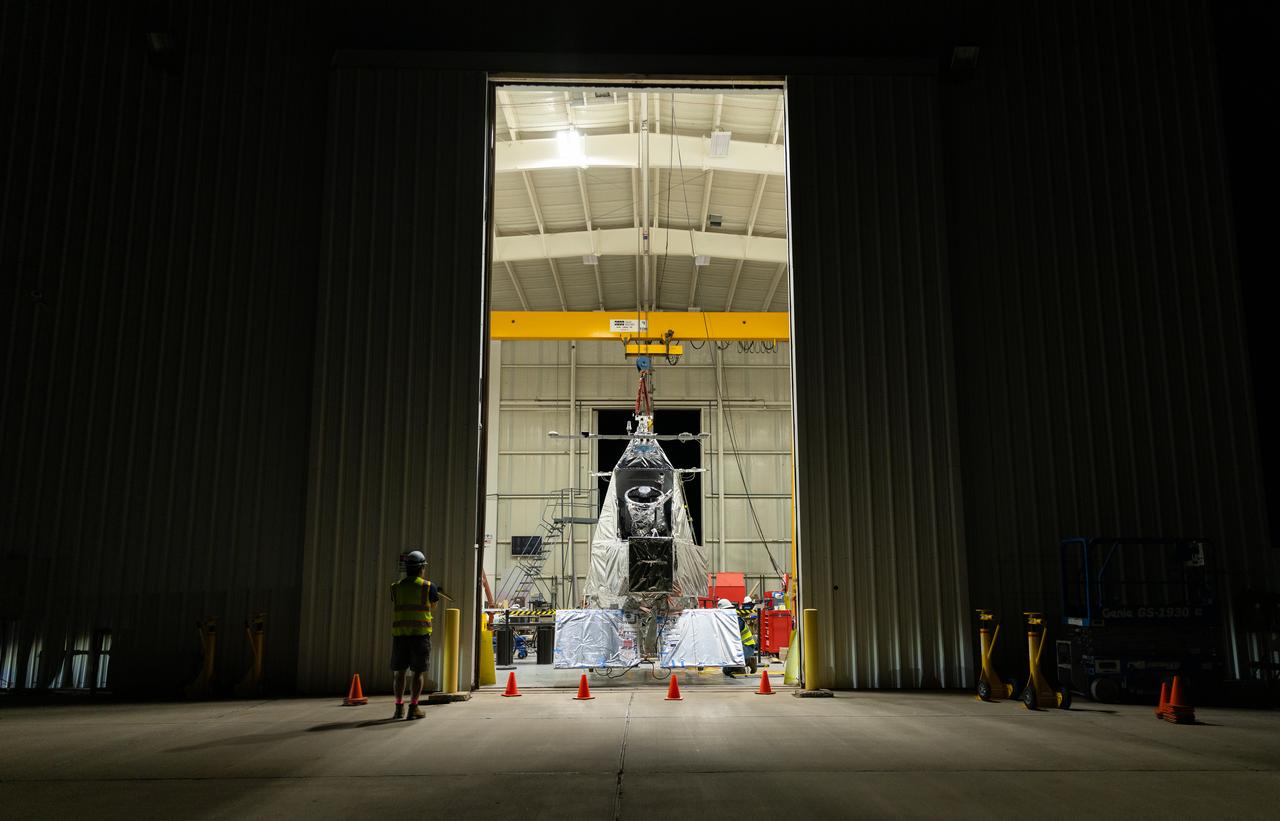
NASA Goddard astrophysicist Kyle Helson looks at EXCITE (EXoplanet Climate Infrared TElescope) as it dangles from the ceiling of a hangar at NASA’s Columbia Scientific Balloon Facility in Fort Sumner, New Mexico.
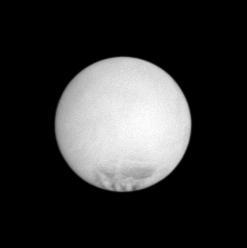
Enceladus appears as a rather bland orb in this far-off snapshot, but the dark markings near its south pole belie that assumption. The markings, called sulci, are long, roughly parallel fractures from which a spray of icy particles escapes into the void
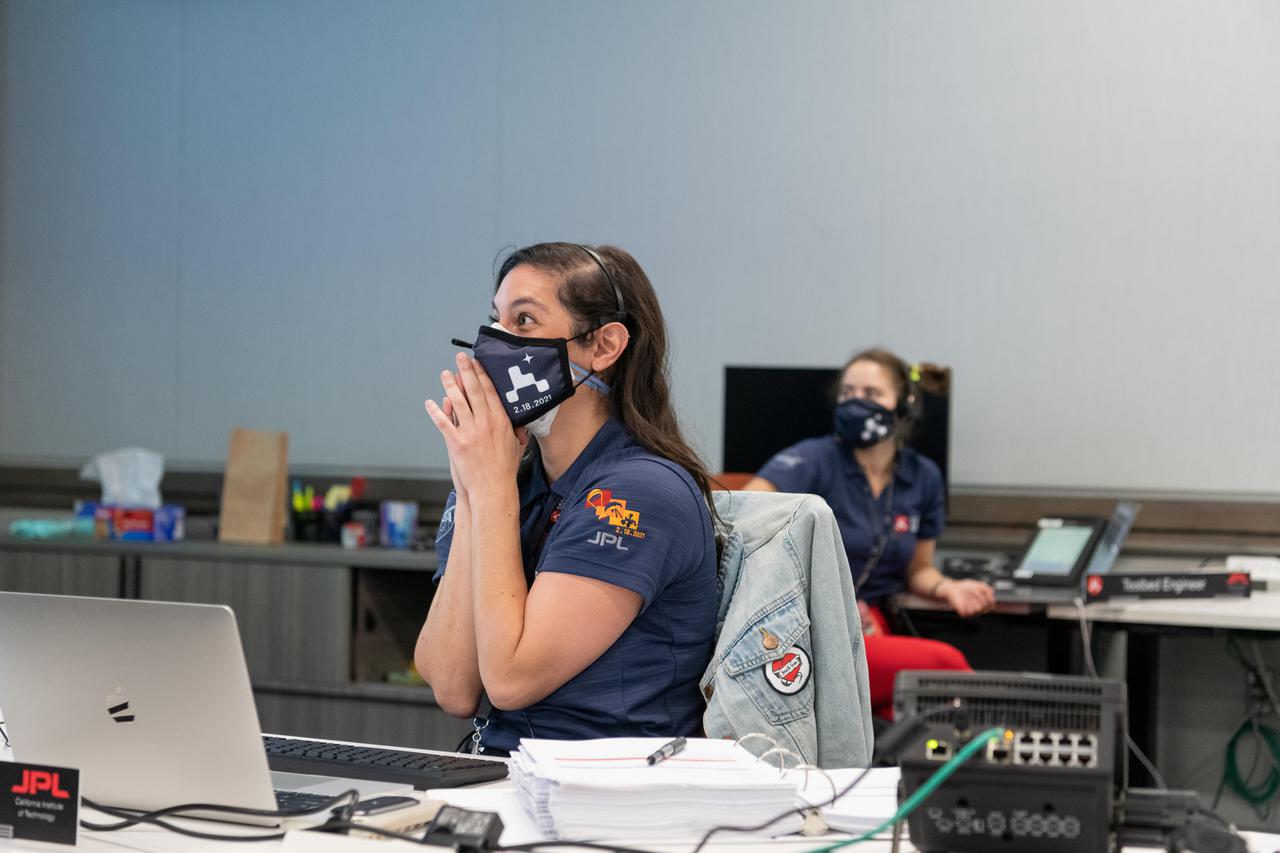
Engineer Mallory Lefland experienced the tension and relief shared by the team on Mars 2020 Perseverance landing day, on Feb. 18, 2021. She watched the dramatic entry, descent, and landing from inside a mission support area at NASA's Jet Propulsion Laboratory in Southern California. JPL built and manages operations of the Mars 2020 Perseverance rover for NASA. A key objective for Perseverance's mission on Mars is astrobiology, including the search for signs of ancient microbial life. The rover will characterize the planet's geology and past climate, pave the way for human exploration of the Red Planet, and be the first mission to collect and cache Martian rock and regolith (broken rock and dust). Subsequent NASA missions, in cooperation with ESA (European Space Agency), would send spacecraft to Mars to collect these sealed samples from the surface and return them to Earth for in-depth analysis. The Mars 2020 mission is part of a larger program that includes missions to the Moon as a way to prepare for human exploration of the Red Planet. https://photojournal.jpl.nasa.gov/catalog/PIA23722

NASA Voyager 2 spacecraft flew by Triton, a moon of Neptune, on August 25, 1989. This frame from a video using Voyager data recreates that exciting encounter.
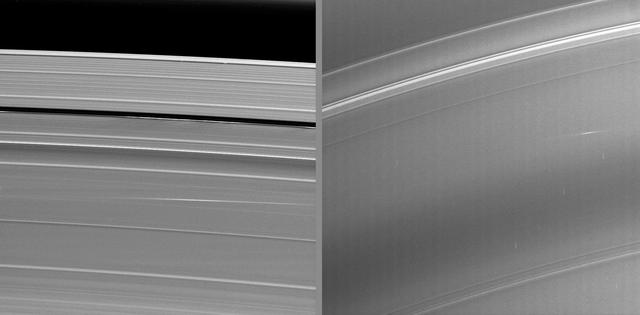
The bright streaks visible in these Cassini images taken during Saturn’s August 2009 equinox are exciting evidence of a constant rain of interplanetary projectiles onto the planet’s rings.
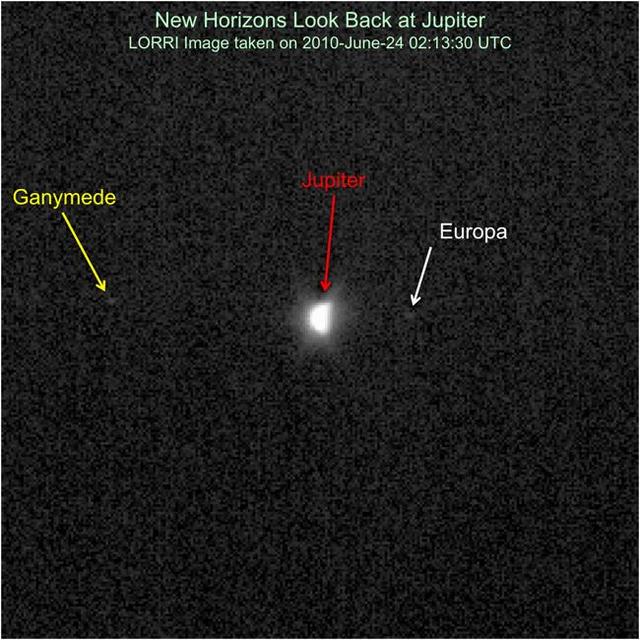
NASA New Horizons had an exciting flyby encounter with Jupiter in early 2007, and the spacecraft has been rapidly moving away from the giant planet ever since.

Scientists were excited to discover clear skies on a relatively small planet, about the size of Neptune, using the combined power of NASA Hubble, Spitzer and Kepler space telescopes.
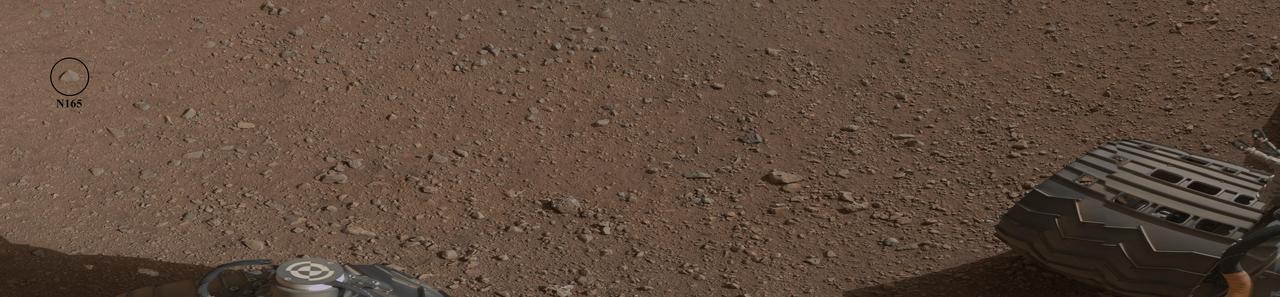
This mosaic image shows the first target NASA Curiosity rover aims to zap ChemCam instrument. ChemCam will be firing a laser at this rock, provisionally named N165, and analyzing the glowing, ionized gas, called plasma, that the laser excites.
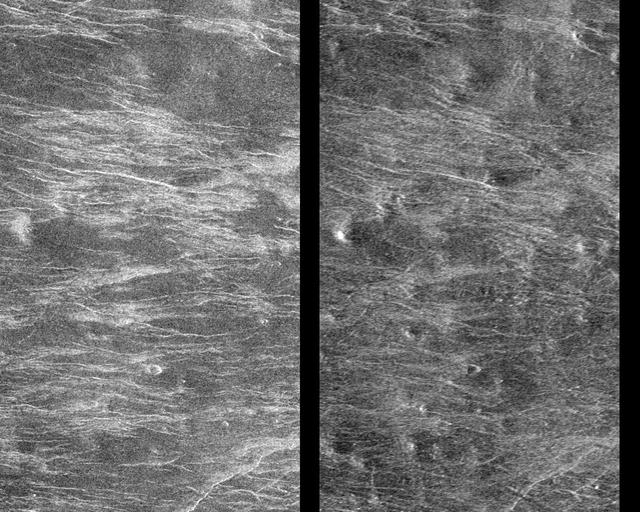
This Magellan image depicts a stereoscopic pair of an area on Venus with small volcanic domes. Stereoscopic images of Venus offer exciting new possibilities for scientific analysis of Venusian landforms. http://photojournal.jpl.nasa.gov/catalog/PIA00251
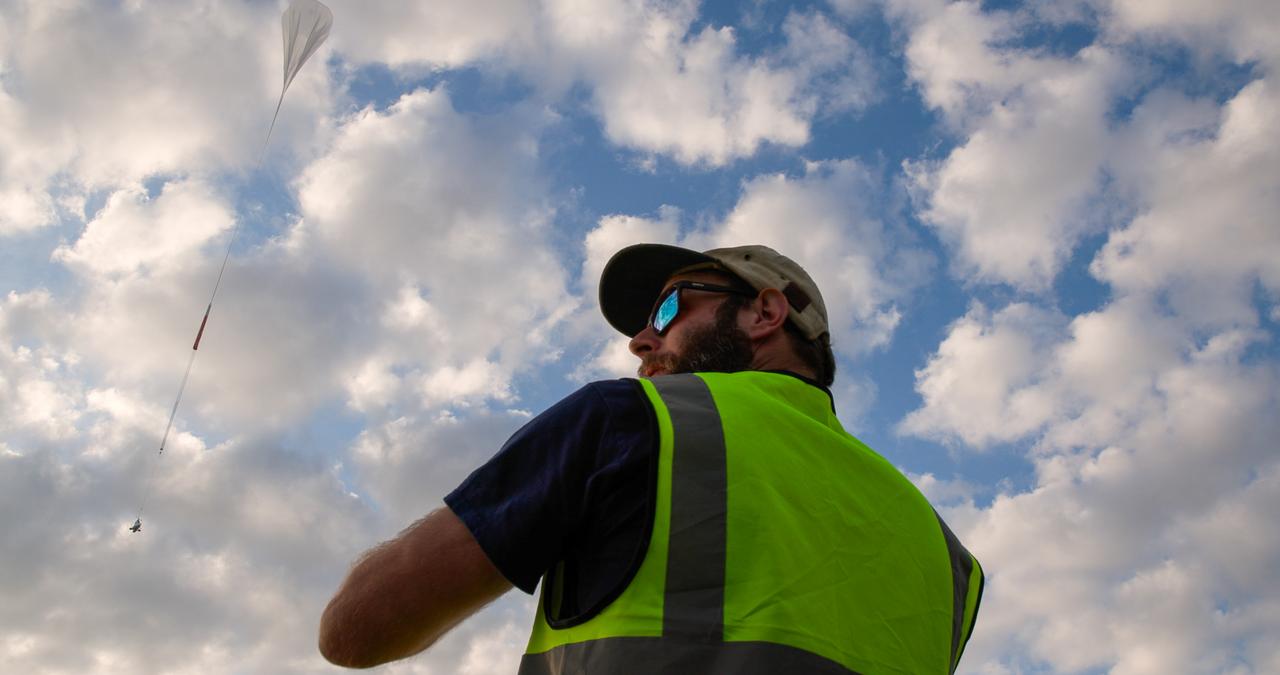
On August 31, 2024, the EXCITE (EXoplanet Climate Infrared TElescope) team conducted a test flight of their telescope from NASA’s Columbia Scientific Balloon Facility in Fort Sumner, New Mexico. Here, EXCITE’s Principal Investigator, Peter Nagler, watches his mission take flight.
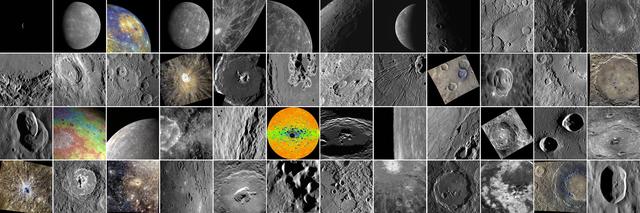
This image compilation shows some of the most exciting images taken thus far on the MESSENGER mission. A mural-sized copy hangs next to the MESSENGER Science Operations Center at the Johns Hopkins University Applied Physics Laboratory. http://photojournal.jpl.nasa.gov/catalog/PIA16364
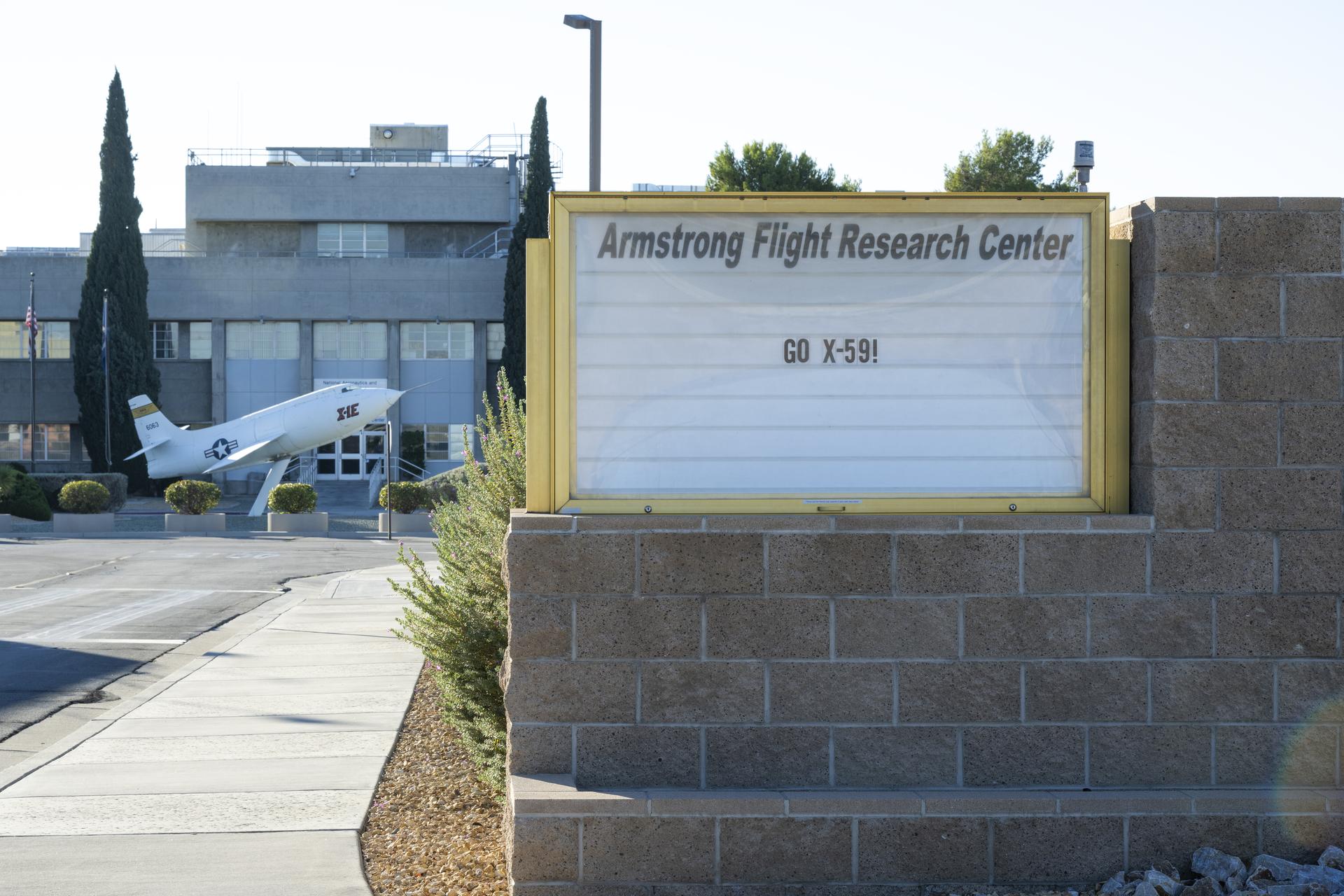
A sign at NASA’s Armstrong Flight Research Center in Edwards, California, reads “GO X-59” ahead of the agency’s quiet supersonic research aircraft’s first flight on Tuesday, Oct. 28, 2025. The X-59 departed from Lockheed Martin’s Skunk Works facility and landed at Edwards Air Force Base after a 67-minute flight, then taxied to Armstrong, completing its historic first flight.
![“I love working in STEM. There's something about working at NASA, where you see new possibilities and amazing things happen all the time. During my first job at NASA [I'll never forget], I was working in the newsroom and was sent a draft press release about the discovery of new exoplanets. I got so excited and thought, I can't believe that I'm one of the first people reading about this discovery, and then tomorrow at noon, it will be released to the public, and everyone will feel this. I felt like an explorer, like I had made this amazing discovery on my own, but really, I was just reviewing a press release. “I get to see that excitement on the faces of the next generation, kids of all ages, when they're able to connect something on their own, or they have this new revelation of the world because that's what the agency has brought to them. That palatable excitement reminds me of how excited I was, and it's this kind of beautiful life cycle because it reenergizes me and gets me excited as well. “NASA is so big on this own, and for kids to feel like they're a part of it, it symbolizes this connection to great exploration and new discoveries. It makes them feel just as important and gets them excited thinking about what they can contribute or about learning something new. I've seen just one spark of curiosity create a great burning love and fire for learning. “Some of the kids I've talked to [during STEM outreach] will tell me they like something, and then I see it's created a more meaningful connection in the neighborhood. They'll dress up as astronauts for Halloween, or when they see me, they'll high-five me and tell me something they learned in science class. It spurs them on to not just make the connection at NASA but make the connection within themselves that they could do this if they wanted to. Not only can they be a part of STEM, but they realize they can also have a variety of interests in their life.” – Katherine Brown, Public Affairs Offi](https://images-assets.nasa.gov/image/NHQ202302280007/NHQ202302280007~medium.jpg)
“I love working in STEM. There's something about working at NASA, where you see new possibilities and amazing things happen all the time. During my first job at NASA [I'll never forget], I was working in the newsroom and was sent a draft press release about the discovery of new exoplanets. I got so excited and thought, I can't believe that I'm one of the first people reading about this discovery, and then tomorrow at noon, it will be released to the public, and everyone will feel this. I felt like an explorer, like I had made this amazing discovery on my own, but really, I was just reviewing a press release. “I get to see that excitement on the faces of the next generation, kids of all ages, when they're able to connect something on their own, or they have this new revelation of the world because that's what the agency has brought to them. That palatable excitement reminds me of how excited I was, and it's this kind of beautiful life cycle because it reenergizes me and gets me excited as well. “NASA is so big on this own, and for kids to feel like they're a part of it, it symbolizes this connection to great exploration and new discoveries. It makes them feel just as important and gets them excited thinking about what they can contribute or about learning something new. I've seen just one spark of curiosity create a great burning love and fire for learning. “Some of the kids I've talked to [during STEM outreach] will tell me they like something, and then I see it's created a more meaningful connection in the neighborhood. They'll dress up as astronauts for Halloween, or when they see me, they'll high-five me and tell me something they learned in science class. It spurs them on to not just make the connection at NASA but make the connection within themselves that they could do this if they wanted to. Not only can they be a part of STEM, but they realize they can also have a variety of interests in their life.” – Katherine Brown, Public Affairs Offi
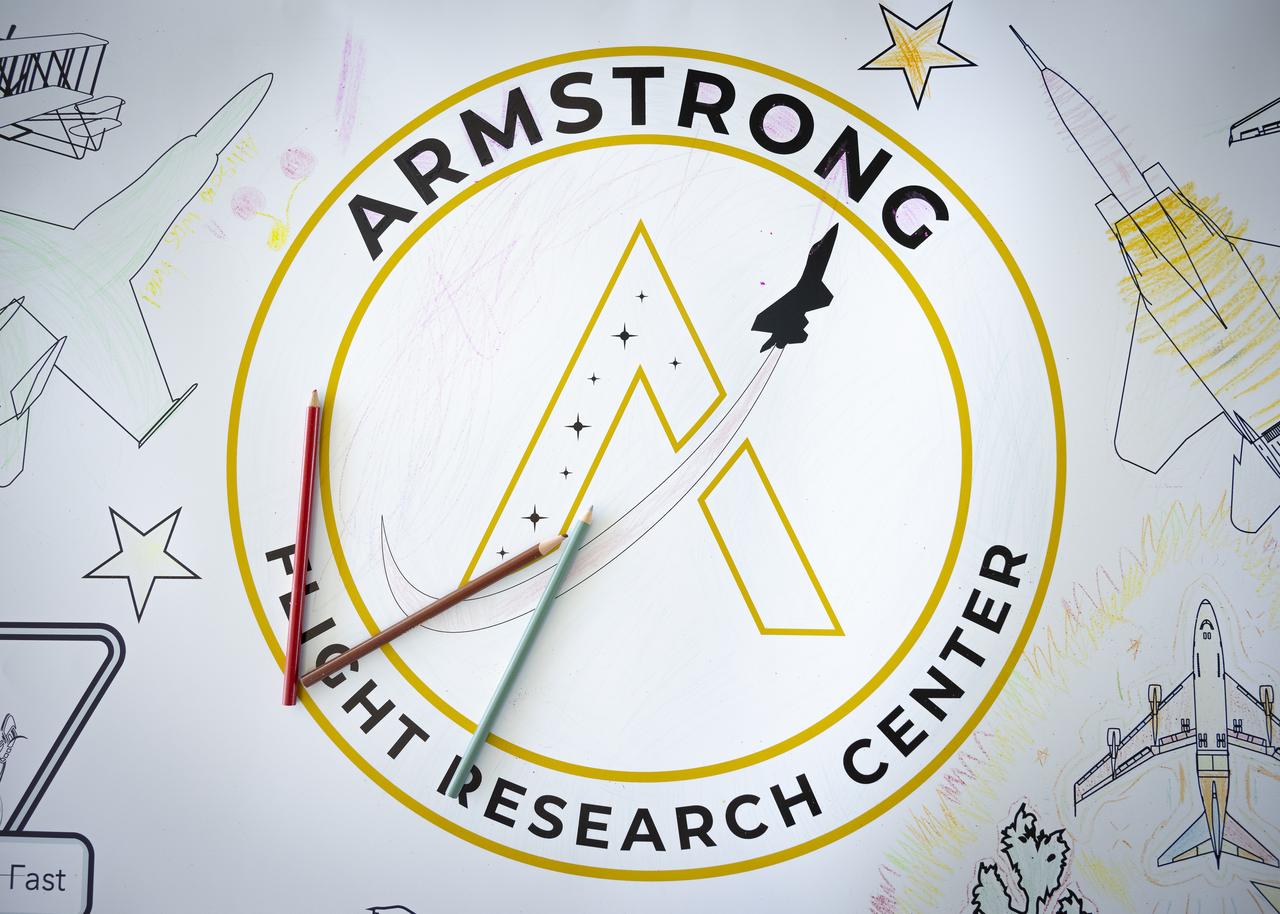
On June 17, 2025, NASA’s Armstrong Flight Research Center in Edwards, California, hosted Bring Kids to Work Day, offering hands-on activities that introduced children and their families to the exciting world of aeronautics and flight research.
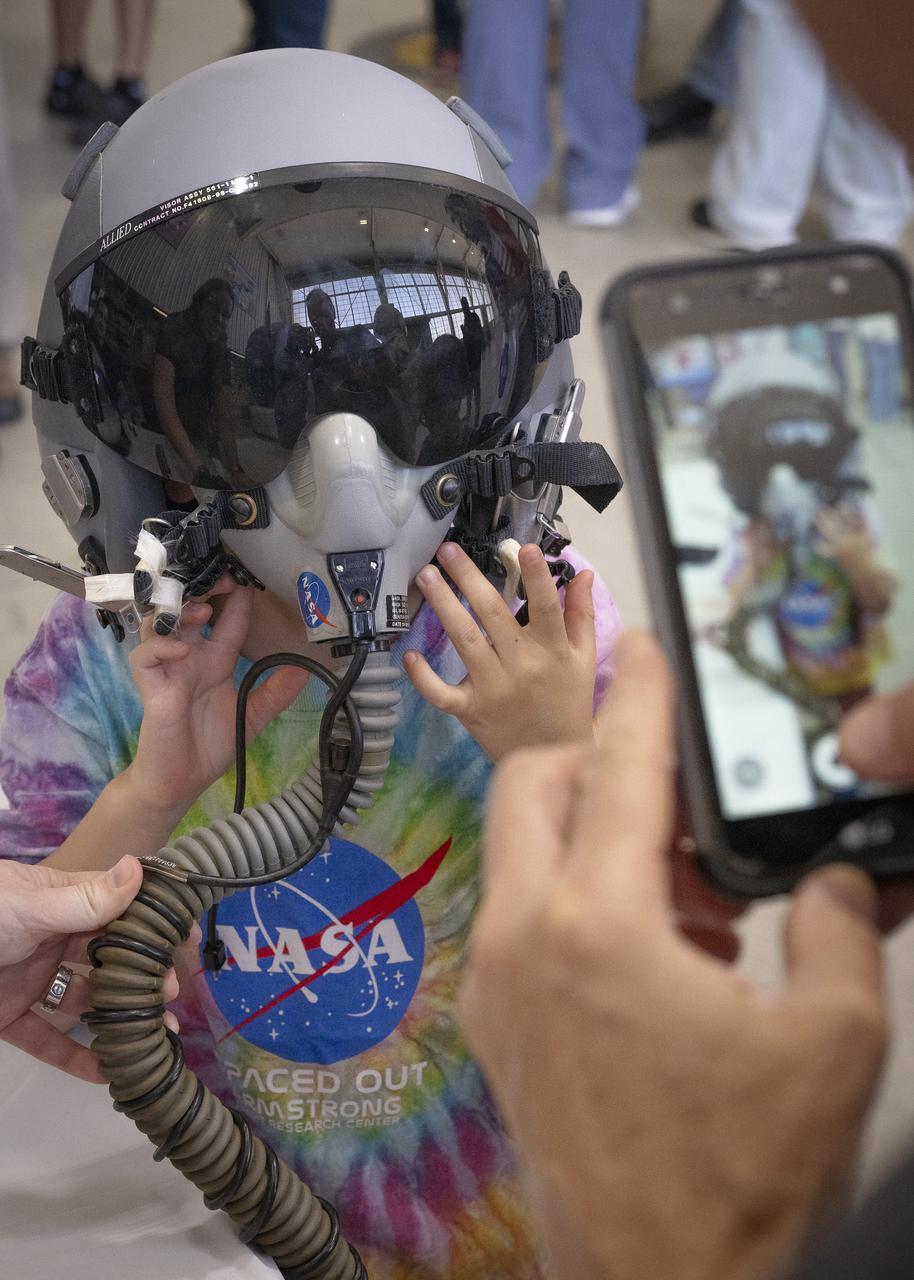
On June 17, 2025, NASA’s Armstrong Flight Research Center in Edwards, California, hosted Bring Kids to Work Day, offering hands-on activities that introduced children and their families to the exciting world of aeronautics and flight research.
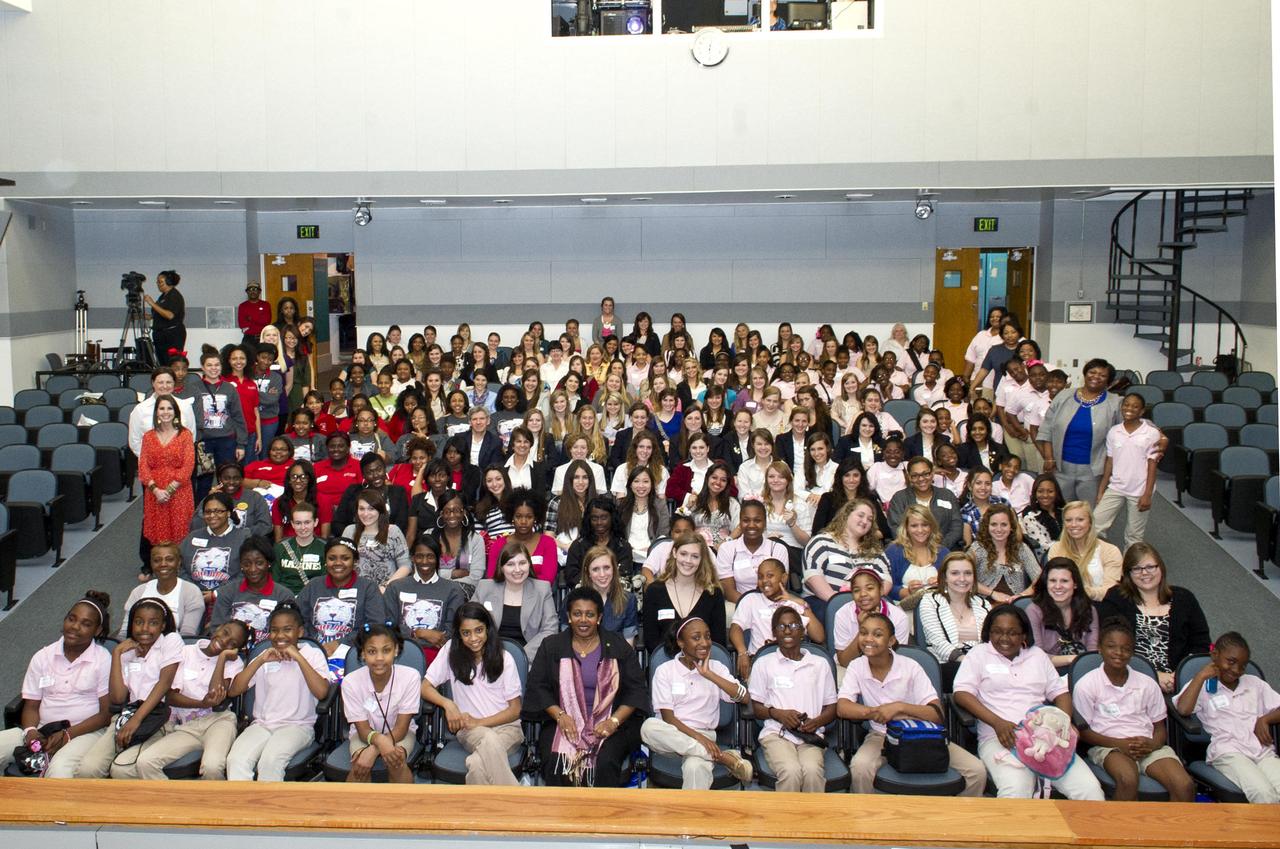
About 170 high school and elementary girls from area schools participated in a Girls Excited about Math and Science event at Stennis Space Center on March 8, 2012. The event was designed to promote studies in science and mathematics.
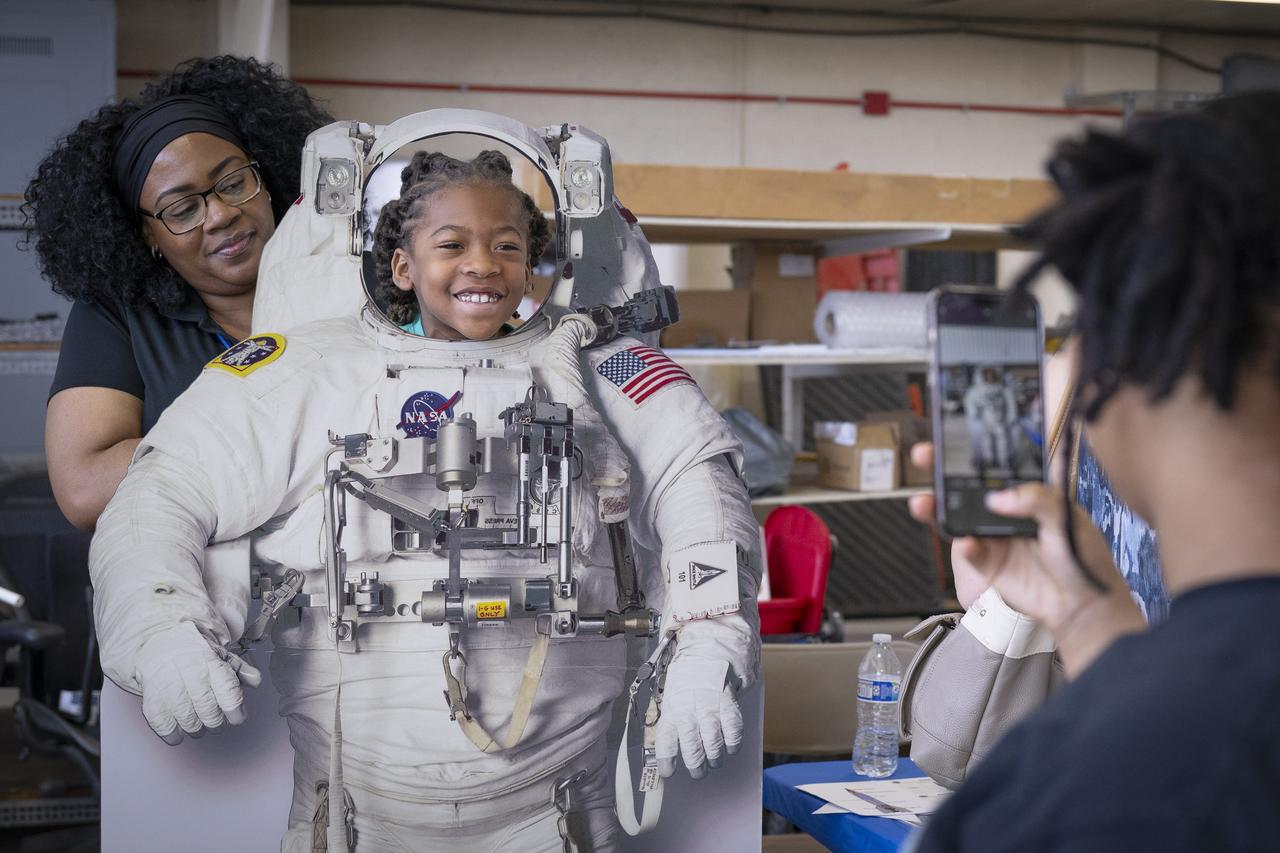
On June 17, 2025, NASA’s Armstrong Flight Research Center in Edwards, California, hosted Bring Kids to Work Day, offering hands-on activities that introduced children and their families to the exciting world of aeronautics and flight research.
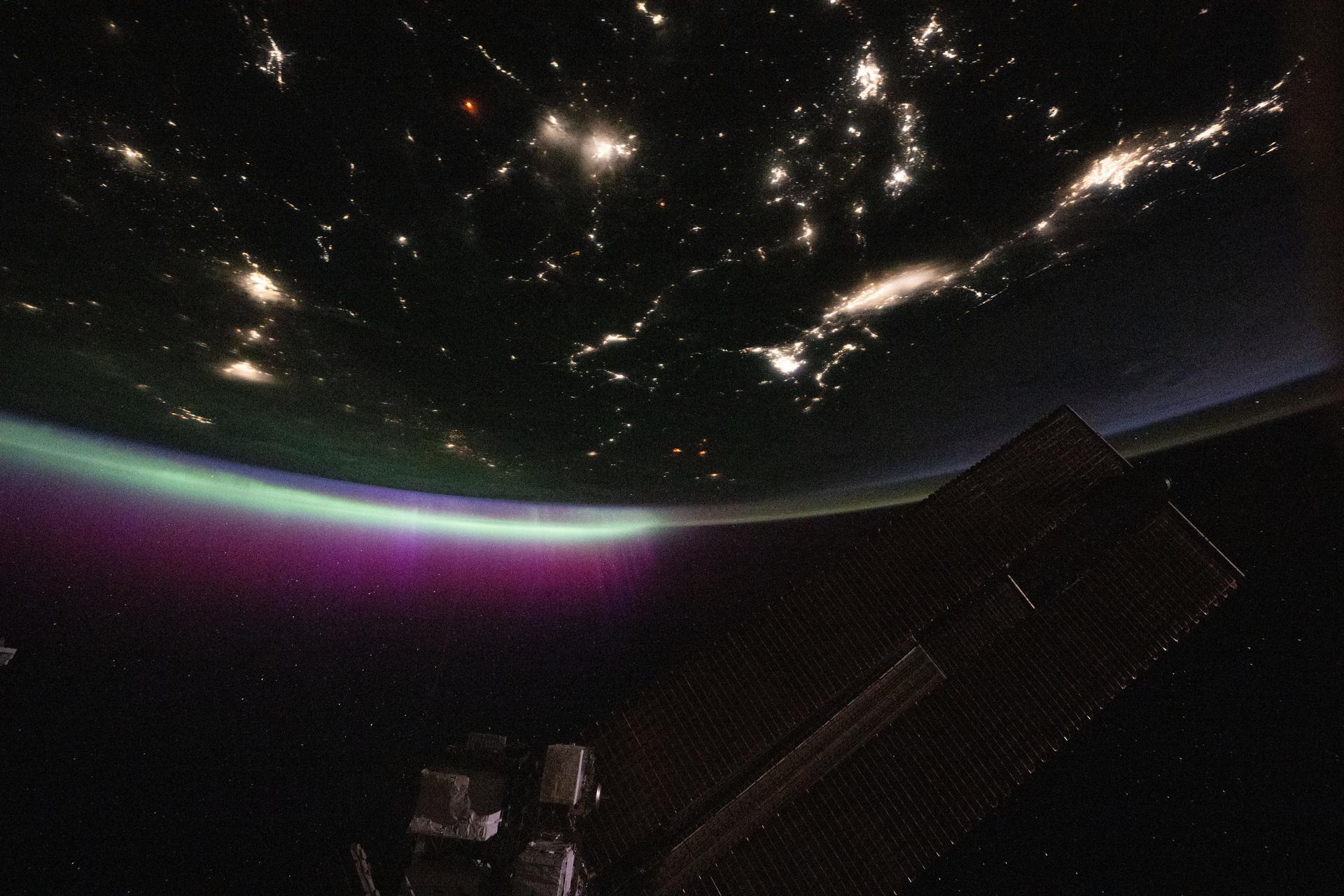
iss073e0780439 (Sept. 2, 2025) --- A diffuse aurora glows above Earth's horizon over Canada as its red and green hues shimmer like neon lights—an effect created by excited oxygen atoms high in the atmosphere. The city lights of the U.S.-Canadian Pacific Northwest (toward upper right) trace the continent eastward. The red aurora is produced by high-altitude oxygen atoms (~300 km), while the green glow comes from lower-altitude oxygen (~100 km), both excited by energetic electrons guided into the atmosphere by Earth's magnetic field during solar activity.
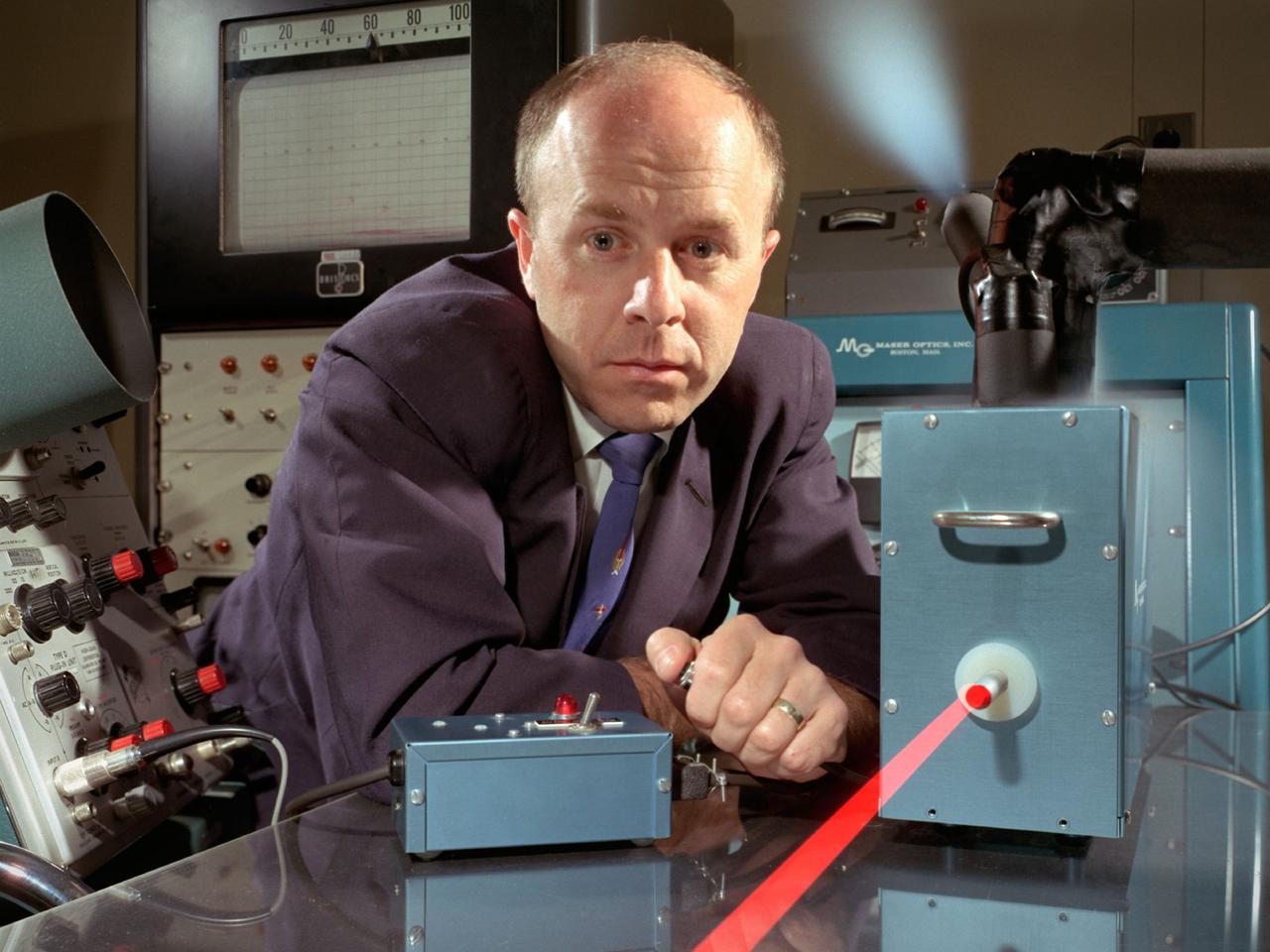
National Aeronautics and Space Administration (NASA) Lewis Research Center researcher Americo Forestieri aims a ruby laser beam at a crystal to determine the effects of its radiation. Forestieri was a researcher in the Electric Component Experiment Section of the Space Power System Division. Lewis was in the midst of a long-term effort to develop methods of delivering electrical power to spacecraft using nuclear, solar, or electrochemical technologies. Ruby lasers contain a ruby crystal with mirrors on either side. The laser action is created when a high-intensity lamp shines around the ruby and excites the electrons in the ruby’s chromium atoms. After the excitation, the electrons emit their ruby-red light. The mirrors reflect some of this red light back and forth inside the ruby which causes other excited chromium atoms to produce additional red light. This continues until the light pulse reaches high power levels and consumes all of the energy stored in the crystal. Forestieri used optical absorption and electron paramagnetic resonance techniques to study the extent and manner in which the radiation interacted with the samples. He determined that individual bands were assigned to specific electronic transitions. He also studied the atomic changes in the ruby crystals after irradiation. He found that complex interactions depend on the crystal pretreatment, purity, and irradiation dose.

The Mars celebration Friday, May 31, 2019, in Mars, Pennsylvania. NASA is in the small town to celebrate Mars exploration and share the agency’s excitement about landing astronauts on the Moon in five years. The celebration includes a weekend of Science, Technology, Engineering, Arts and Mathematics (STEAM) activities. Photo Credit: (NASA/Bill Ingalls)

The Mars celebration Friday, May 31, 2019, in Mars, Pennsylvania. NASA is in the small town to celebrate Mars exploration and share the agency’s excitement about landing astronauts on the Moon in five years. The celebration includes a weekend of Science, Technology, Engineering, Arts and Mathematics (STEAM) activities. Photo Credit: (NASA/Bill Ingalls)

The Mars celebration Friday, May 31, 2019, in Mars, Pennsylvania. NASA is in the small town to celebrate Mars exploration and share the agency’s excitement about landing astronauts on the Moon in five years. The celebration includes a weekend of Science, Technology, Engineering, Arts and Mathematics (STEAM) activities. Photo Credit: (NASA/Bill Ingalls)

The Mars celebration Friday, May 31, 2019, in Mars, Pennsylvania. NASA is in the small town to celebrate Mars exploration and share the agency’s excitement about landing astronauts on the Moon in five years. The celebration includes a weekend of Science, Technology, Engineering, Arts and Mathematics (STEAM) activities. Photo Credit: (NASA/Bill Ingalls)

jsc2023e053547 (3/32023) --- Granular Sound: open sample cell, completely filled with glass beads. On the left, the bead packing is in direct contact with a voicecoil-driven wall for sound wave excitation, while all other sample cell walls are padded with foam for acoustic decoupling of the glass bead packing. Image courtesy of DLR-MP.

The Mars celebration Friday, May 31, 2019, in Mars, Pennsylvania. NASA is in the small town to celebrate Mars exploration and share the agency’s excitement about landing astronauts on the Moon in five years. The celebration includes a weekend of Science, Technology, Engineering, Arts and Mathematics (STEAM) activities. Photo Credit: (NASA/Bill Ingalls)
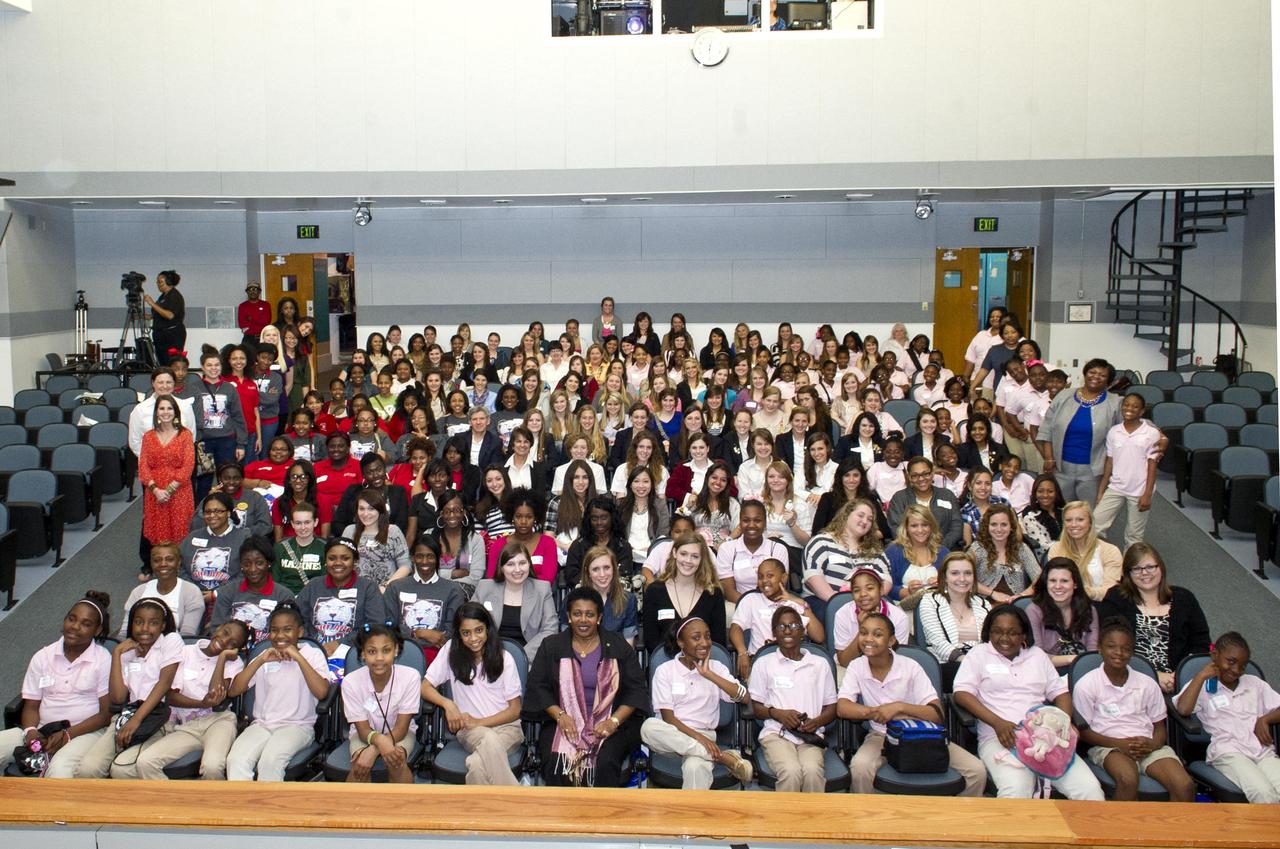
About 170 high school and elementary girls from area schools participated in a Girls Excited about Math and Science event at Stennis Space Center on March 8, 2012. The event featured various workshops and presentations designed to promote studies in science and mathematics, as well as other activities.
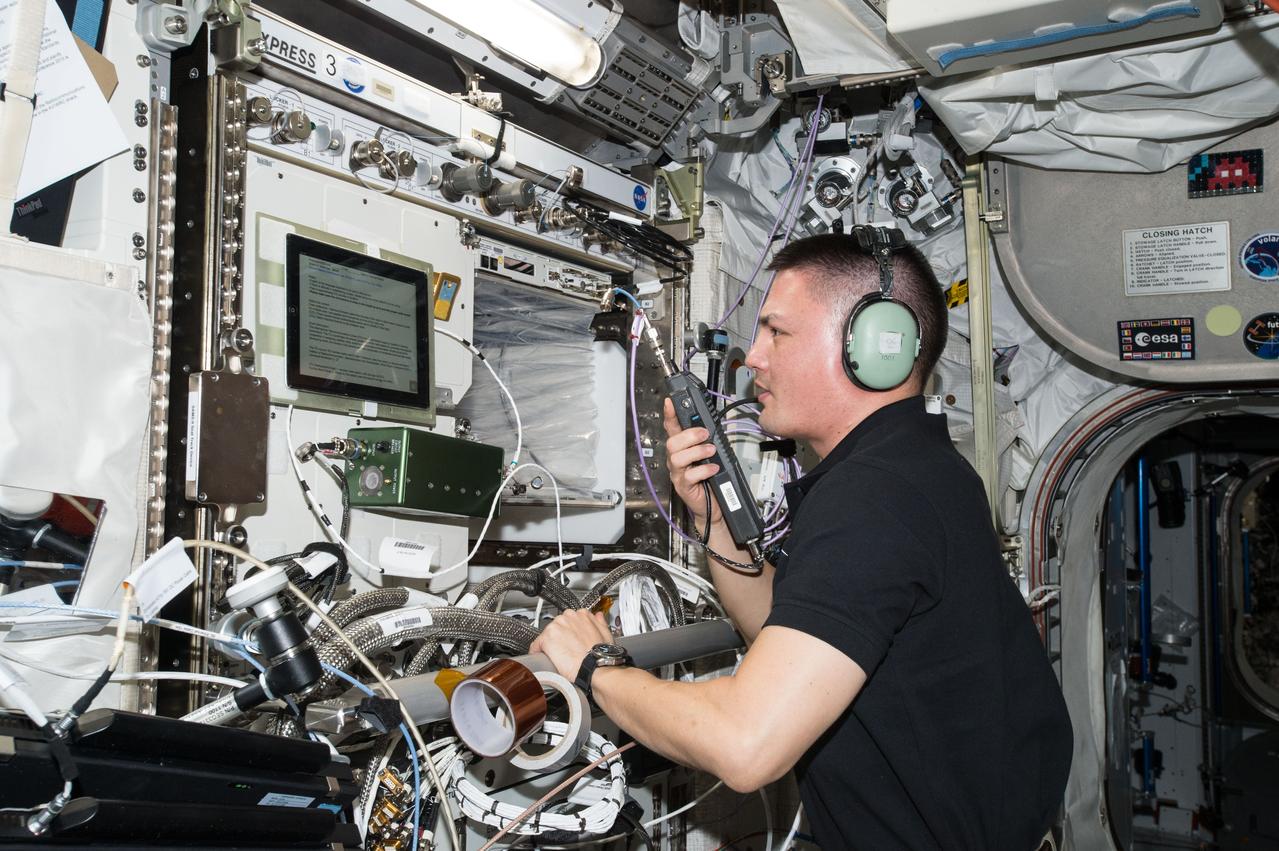
ISS045E089495 (11/04/2015) --- NASA astronaut Kjell Lindgren uses a HAM radio to speak with operators down on Earth. The International Space Station is equipped with amateur radio equipment allowing astronauts to share the excitement of space exploration, inspire and ignite interest among students and others on the ground.

The Mars celebration Saturday, June 1, 2019, in Mars, Pennsylvania. NASA is in the small town to celebrate Mars exploration and share the agency’s excitement about landing astronauts on the Moon in five years. The celebration includes a weekend of Science, Technology, Engineering, Arts and Mathematics (STEAM) activities. Photo Credit: (NASA/Bill Ingalls)

The Mars celebration Friday, May 31, 2019, in Mars, Pennsylvania. NASA is in the small town to celebrate Mars exploration and share the agency’s excitement about landing astronauts on the Moon in five years. The celebration includes a weekend of Science, Technology, Engineering, Arts and Mathematics (STEAM) activities. Photo Credit: (NASA/Bill Ingalls)

The Mars celebration Friday, May 31, 2019, in Mars, Pennsylvania. NASA is in the small town to celebrate Mars exploration and share the agency’s excitement about landing astronauts on the Moon in five years. The celebration includes a weekend of Science, Technology, Engineering, Arts and Mathematics (STEAM) activities. Photo Credit: (NASA/Bill Ingalls)

The Mars celebration Friday, May 31, 2019, in Mars, Pennsylvania. NASA is in the small town to celebrate Mars exploration and share the agency’s excitement about landing astronauts on the Moon in five years. The celebration includes a weekend of Science, Technology, Engineering, Arts and Mathematics (STEAM) activities. Photo Credit: (NASA/Bill Ingalls)

The Mars celebration Friday, May 31, 2019, in Mars, Pennsylvania. NASA is in the small town to celebrate Mars exploration and share the agency’s excitement about landing astronauts on the Moon in five years. The celebration includes a weekend of Science, Technology, Engineering, Arts and Mathematics (STEAM) activities. Photo Credit: (NASA/Bill Ingalls)

The Mars celebration Friday, May 31, 2019, in Mars, Pennsylvania. NASA is in the small town to celebrate Mars exploration and share the agency’s excitement about landing astronauts on the Moon in five years. The celebration includes a weekend of Science, Technology, Engineering, Arts and Mathematics (STEAM) activities. Photo Credit: (NASA/Bill Ingalls)

The Mars celebration Saturday, June 1, 2019, in Mars, Pennsylvania. NASA is in the small town to celebrate Mars exploration and share the agency’s excitement about landing astronauts on the Moon in five years. The celebration includes a weekend of Science, Technology, Engineering, Arts and Mathematics (STEAM) activities. Photo Credit: (NASA/Bill Ingalls)

The Mars celebration Friday, May 31, 2019, in Mars, Pennsylvania. NASA is in the small town to celebrate Mars exploration and share the agency’s excitement about landing astronauts on the Moon in five years. The celebration includes a weekend of Science, Technology, Engineering, Arts and Mathematics (STEAM) activities. Photo Credit: (NASA/Bill Ingalls)

The Mars celebration Friday, May 31, 2019, in Mars, Pennsylvania. NASA is in the small town to celebrate Mars exploration and share the agency’s excitement about landing astronauts on the Moon in five years. The celebration includes a weekend of Science, Technology, Engineering, Arts and Mathematics (STEAM) activities. Photo Credit: (NASA/Bill Ingalls)

The Mars celebration Friday, May 31, 2019, in Mars, Pennsylvania. NASA is in the small town to celebrate Mars exploration and share the agency’s excitement about landing astronauts on the Moon in five years. The celebration includes a weekend of Science, Technology, Engineering, Arts and Mathematics (STEAM) activities. Photo Credit: (NASA/Bill Ingalls)
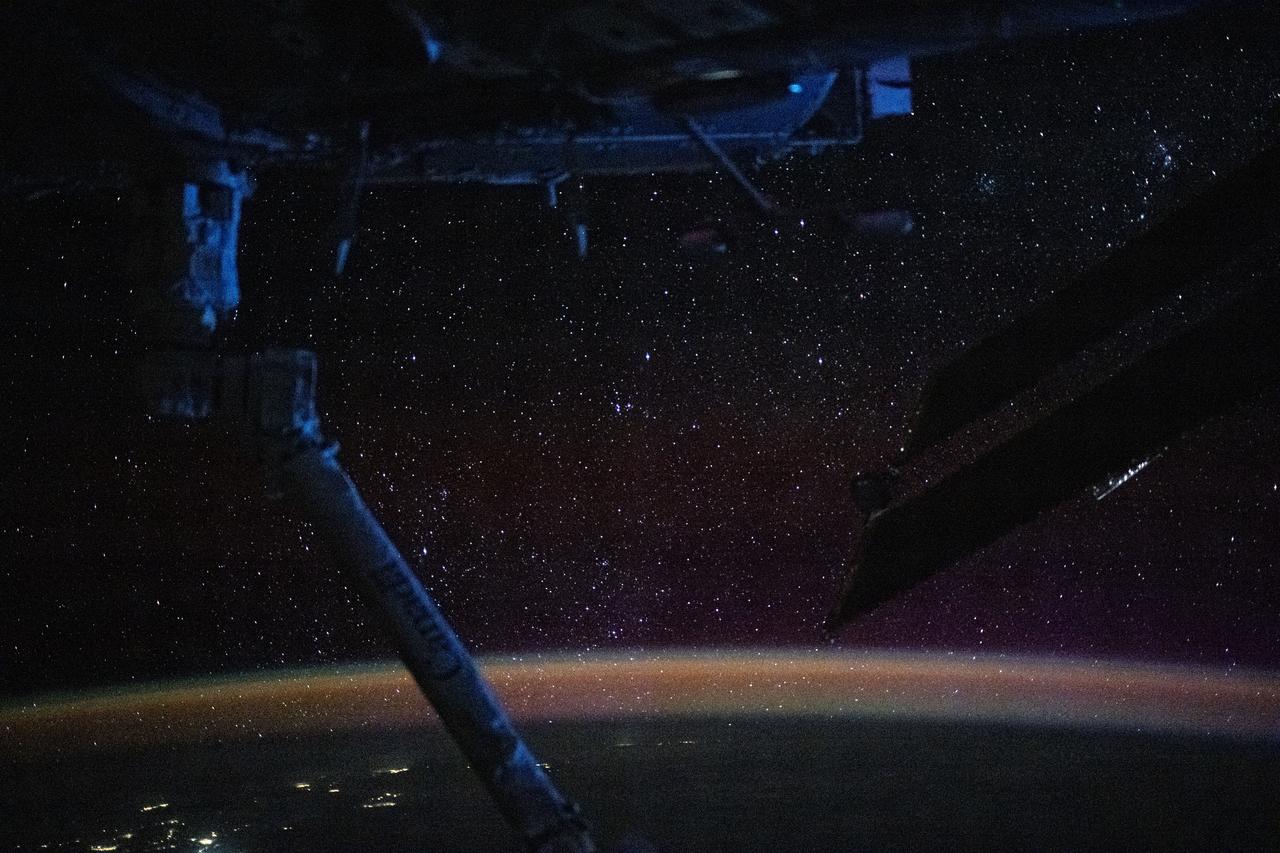
iss072e030147 (Oct. 7, 2024) --- The atmospheric glow, caused by atoms and moelcules excited by sunlight, blankets Earth's nighttime horizon with a sparkling field of stars above in this photograph from the International Space Station as it orbited 270 miles above the Pacific Ocean north of Auckland, New Zealand.

The Mars celebration Friday, May 31, 2019, in Mars, Pennsylvania. NASA is in the small town to celebrate Mars exploration and share the agency’s excitement about landing astronauts on the Moon in five years. The celebration includes a weekend of Science, Technology, Engineering, Arts and Mathematics (STEAM) activities. Photo Credit: (NASA/Bill Ingalls)

The Mars celebration Saturday, June 1, 2019, in Mars, Pennsylvania. NASA is in the small town to celebrate Mars exploration and share the agency’s excitement about landing astronauts on the Moon in five years. The celebration includes a weekend of Science, Technology, Engineering, Arts and Mathematics (STEAM) activities. Photo Credit: (NASA/Bill Ingalls)
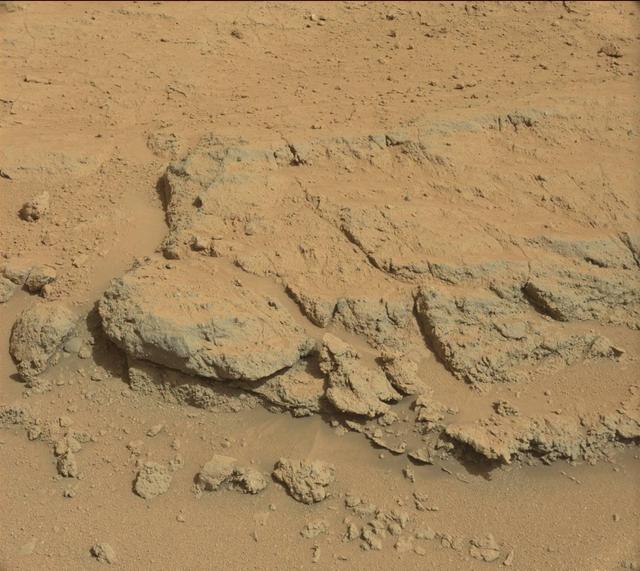
For at least a couple of days, the science team of NASA Mars rover Curiosity is focused on a full-bore science campaign at a tantalizing, rocky site informally called Darwin.
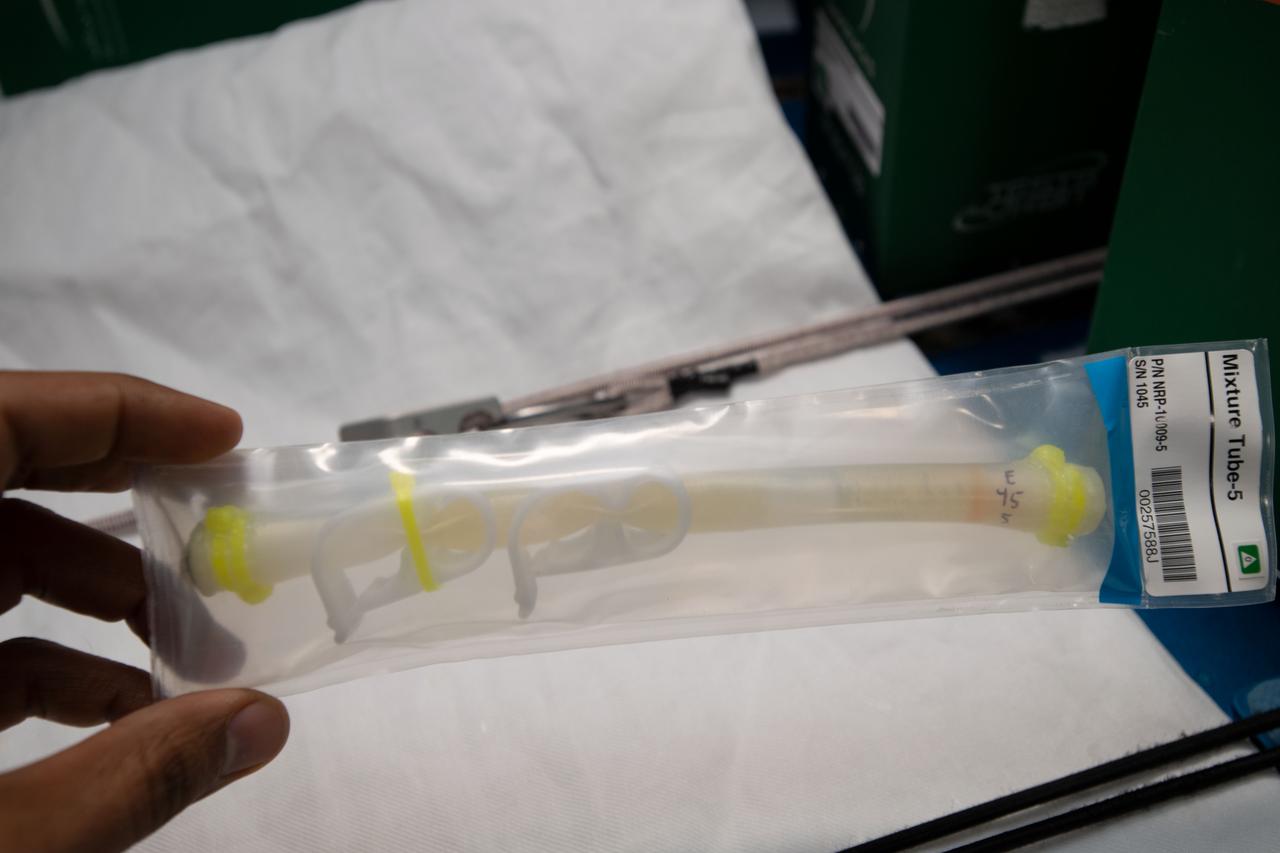
iss060e081390 (9/28/2019) --- A view of the MixStix tube housed inside NanoRacks Module-86 Module MBRSC - Modification 9 (The Mohammed bin Rashid Space Centre (MBRSC) Science in Space Competition) - Modification 9. The first Emirati astronaut performs this investigation aboard the International Space Station (ISS) to help students in the UAE become more integrated and excited about Science, Technology, Engineering, and Mathematics (STEM) as well as space as an environment to perform scientific research.

NASA Chief Technologist Douglas Terrier gives opening remarks during a Mars celebration Friday, May 31, 2019, in Mars, Pennsylvania. NASA is in the small town to celebrate Mars exploration and share the agency’s excitement about landing astronauts on the Moon in five years. The celebration includes a weekend of Science, Technology, Engineering, Arts and Mathematics (STEAM) activities. Photo Credit: (NASA/Bill Ingalls)
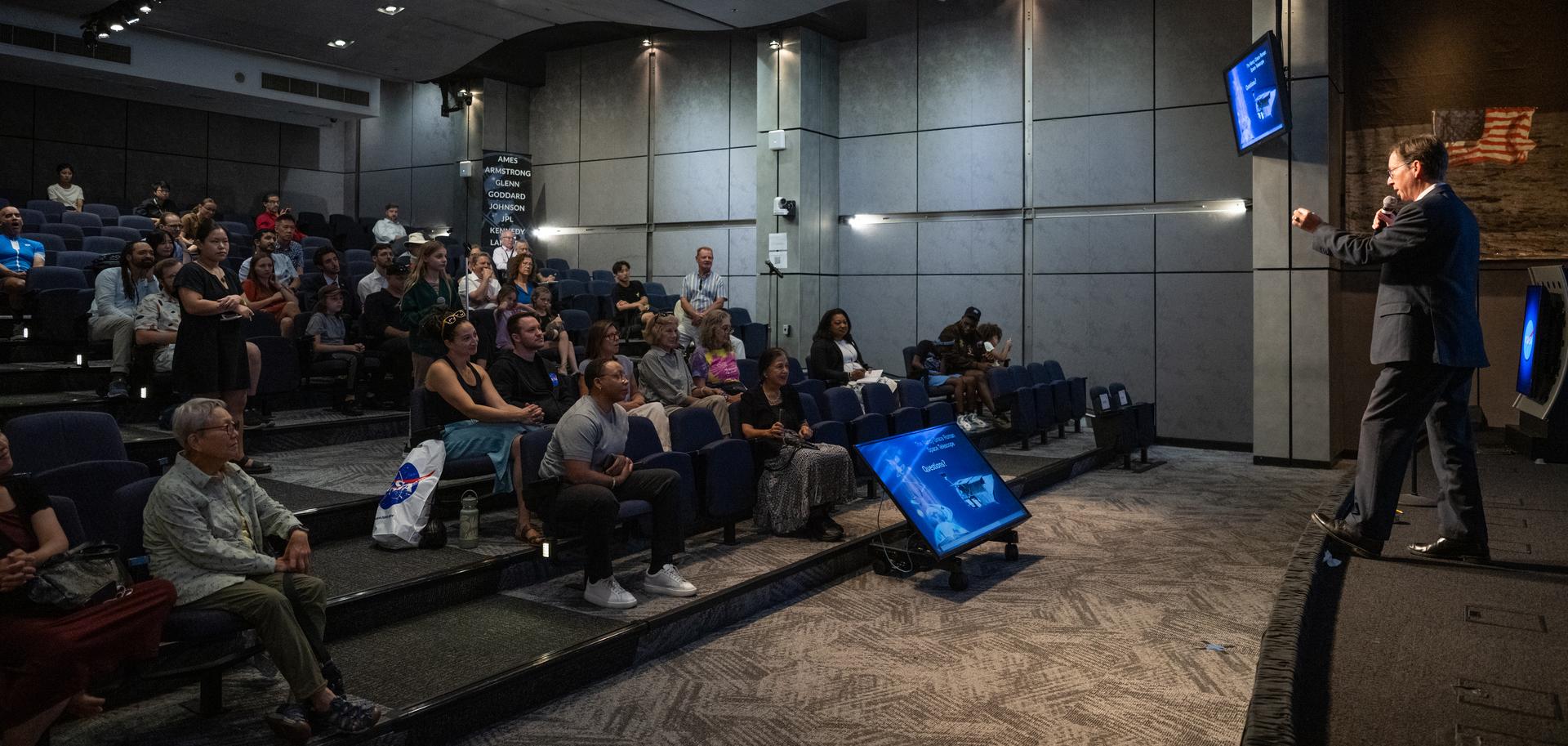
Dr. Dominic Benford, program scientist for the Nancy Grace Roman Space Telescope, answers questions from visitors during a Frontiers Forum event titled "Countdown to Launch – Why We’re Excited about the Nancy Grace Roman Space Telescope," Thursday, Aug. 6, 2026, at the Mary W. Jackson NASA Headquarters building in Washington. Photo Credit: (NASA/Keegan Barber)

A participant of the Mars celebration launches a rocket, Saturday, June 1, 2019, in Mars, Pennsylvania. NASA is in the small town to celebrate Mars exploration and share the agency’s excitement about landing astronauts on the Moon in five years. The celebration includes a weekend of Science, Technology, Engineering, Arts and Mathematics (STEAM) activities. Photo Credit: (NASA/Bill Ingalls)
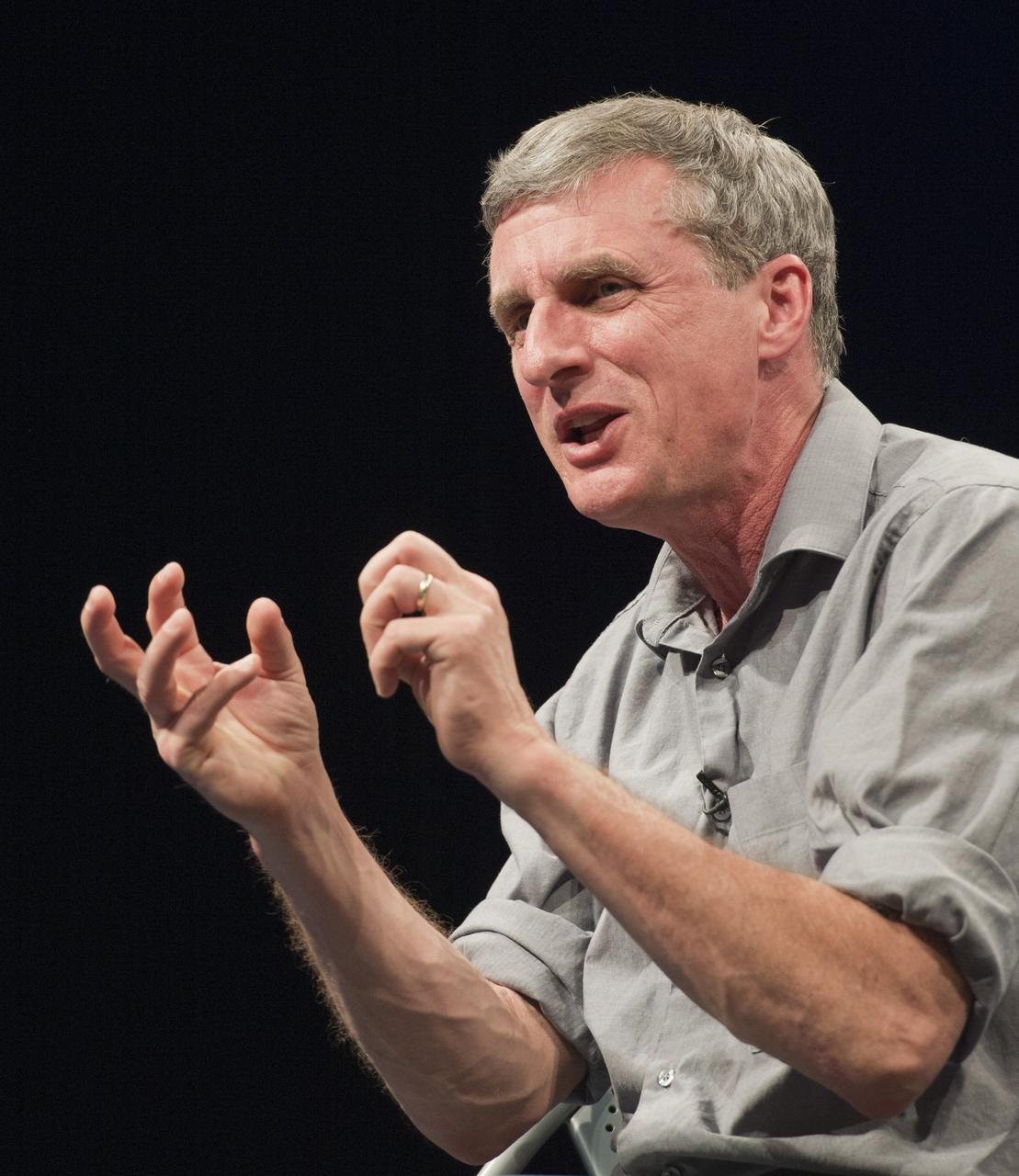
Dr. Steve Squyres, from Cornell University, talks during a Mars Program Update where prominent scientists discussed evidence of water on Mars, current Program status, including the 7th Anniversary of the Mars rovers and the upcoming Mars Science Laboratory mission and previewing exciting discoveries to come, Thursday, Jan. 13, 2011, at the Smithsonian National Air and Space Museum in Washington. Photo Credit: (NASA/Paul E. Alers)

A young couple stop by the Mars celebration prior to attending prom, Saturday, June 1, 2019, in Mars, Pennsylvania. NASA is in the small town to celebrate Mars exploration and share the agency’s excitement about landing astronauts on the Moon in five years. The celebration includes a weekend of Science, Technology, Engineering, Arts and Mathematics (STEAM) activities. Photo Credit: (NASA/Bill Ingalls)
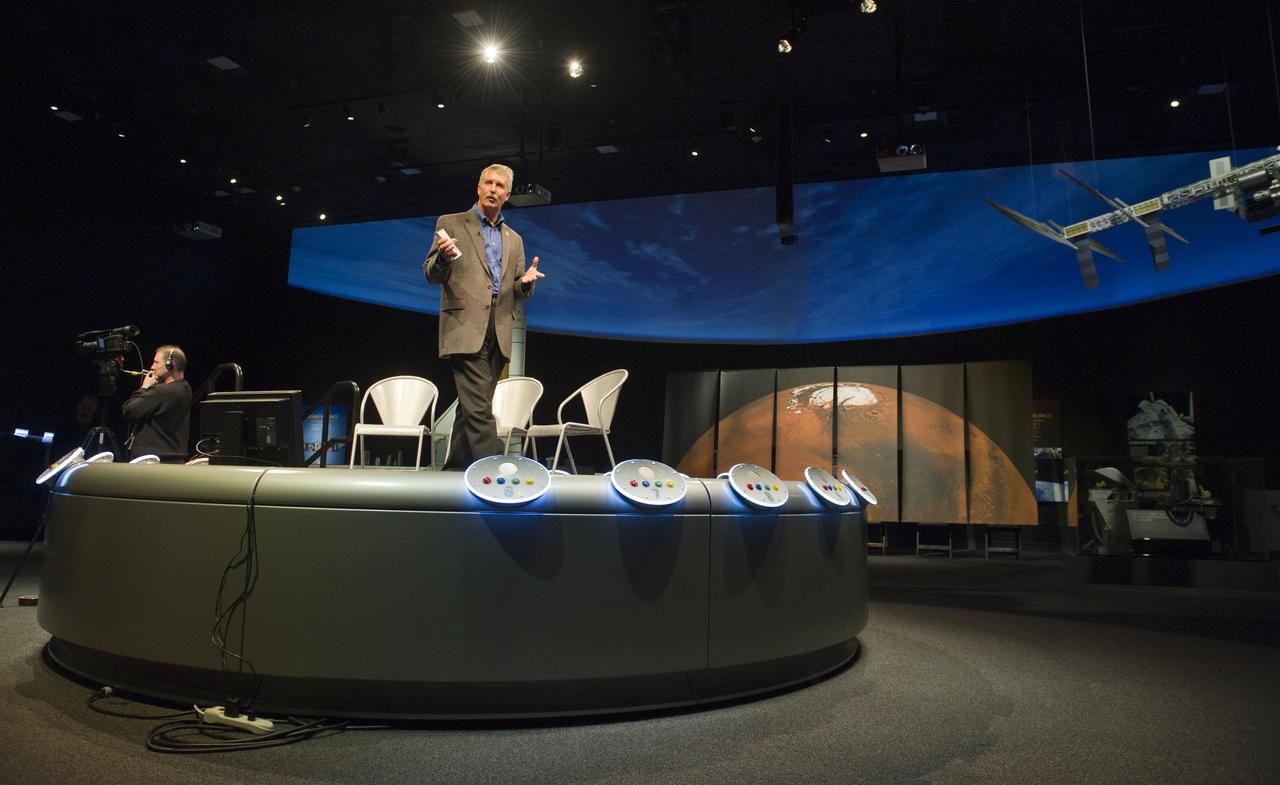
Doug McCuiston, Director, Mars Exploration Program, talks during a Mars Program Update where prominent scientists discussed evidence of water on Mars, current Program status, including the 7th Anniversary of the Mars rovers and the upcoming Mars Science Laboratory mission and previewing exciting discoveries to come, Thursday, Jan. 13, 2011, at the Smithsonian National Air and Space Museum in Washington. Photo Credit: (NASA/Paul E. Alers)

Lyle Tavernier from NASA's Jet Propulsion Laboratory talks about Mars rovers live from California to attendees of a Mars celebration Friday, May 31, 2019, in Mars, Pennsylvania. NASA is in the small town to celebrate Mars exploration and share the agency’s excitement about landing astronauts on the Moon in five years. The celebration includes a weekend of Science, Technology, Engineering, Arts and Mathematics (STEAM) activities. Photo Credit: (NASA/Bill Ingalls)

A drone show is seen during the Mars celebration Friday, May 31, 2019, in Mars, Pennsylvania. NASA is in the small town to celebrate Mars exploration and share the agency’s excitement about landing astronauts on the Moon in five years. The celebration includes a weekend of Science, Technology, Engineering, Arts and Mathematics (STEAM) activities. Photo Credit: (NASA/Bill Ingalls)

April Lanotte gives remarks during the Mars celebration Saturday, June 1, 2019, in Mars, Pennsylvania. NASA is in the small town to celebrate Mars exploration and share the agency’s excitement about landing astronauts on the Moon in five years. The celebration includes a weekend of Science, Technology, Engineering, Arts and Mathematics (STEAM) activities. Photo Credit: (NASA/Bill Ingalls)
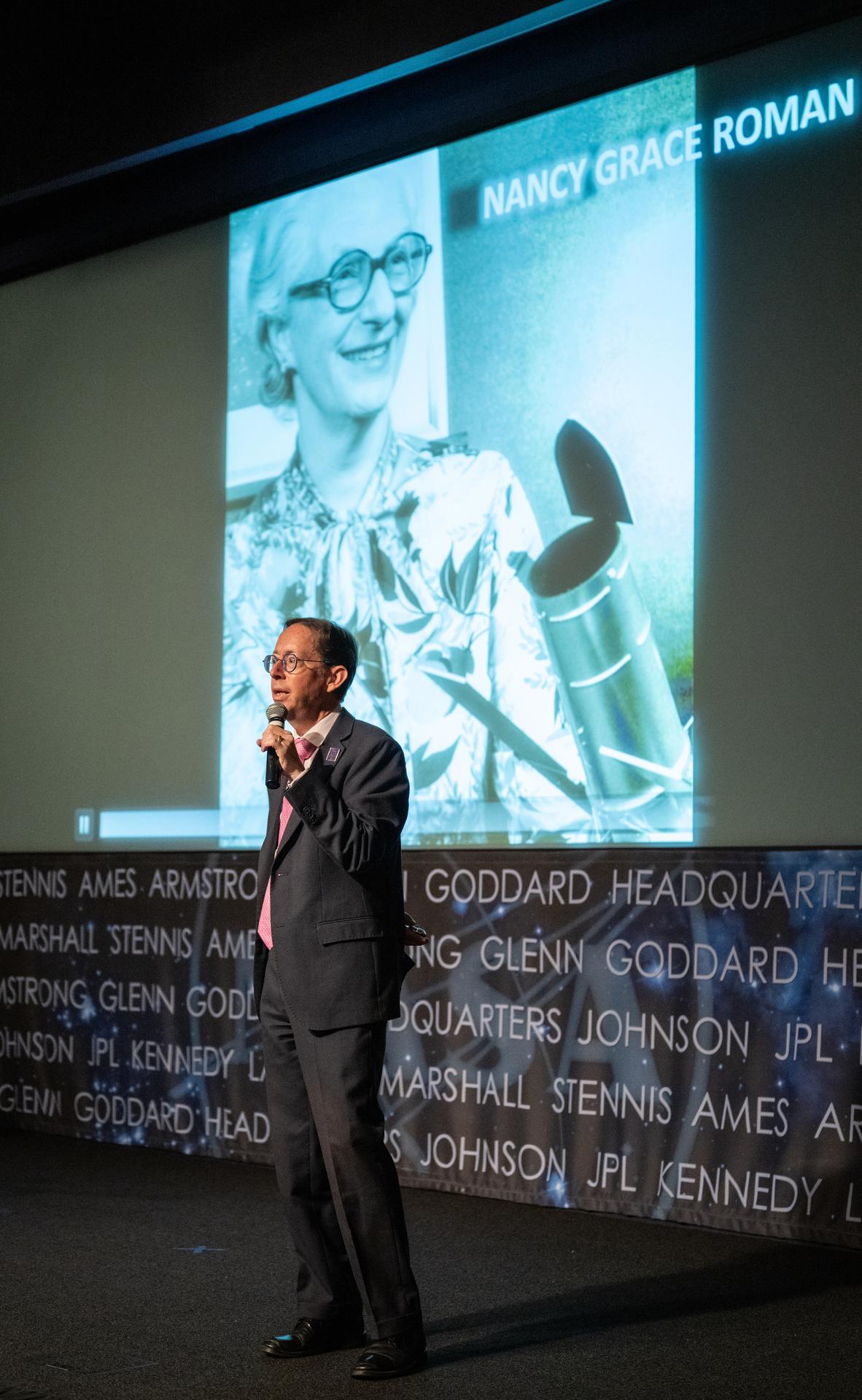
Dr. Dominic Benford, program scientist for the Nancy Grace Roman Space Telescope, speaks at a Frontiers Forum event titled "Countdown to Launch – Why We’re Excited about the Nancy Grace Roman Space Telescope," Thursday, Aug. 6, 2026, at the Mary W. Jackson NASA Headquarters building in Washington. Photo Credit: (NASA/Keegan Barber)

NASA Chief Technologist Douglas Terrier talks about NASA's plans for going forward to the Moon and Mars during a Mars celebration Saturday, June 1, 2019, in Mars, Pennsylvania. NASA is in the small town to celebrate Mars exploration and share the agency’s excitement about landing astronauts on the Moon in five years. The celebration includes a weekend of Science, Technology, Engineering, Arts and Mathematics (STEAM) activities. Photo Credit: (NASA/Bill Ingalls)

Staff prepare for the Mars celebration event Friday, May 31, 2019, in Mars, Pennsylvania. NASA is in the small town to celebrate Mars exploration and share the agency’s excitement about landing astronauts on the Moon in five years. The celebration includes a weekend of Science, Technology, Engineering, Arts and Mathematics (STEAM) activities. Photo Credit: (NASA/Bill Ingalls)
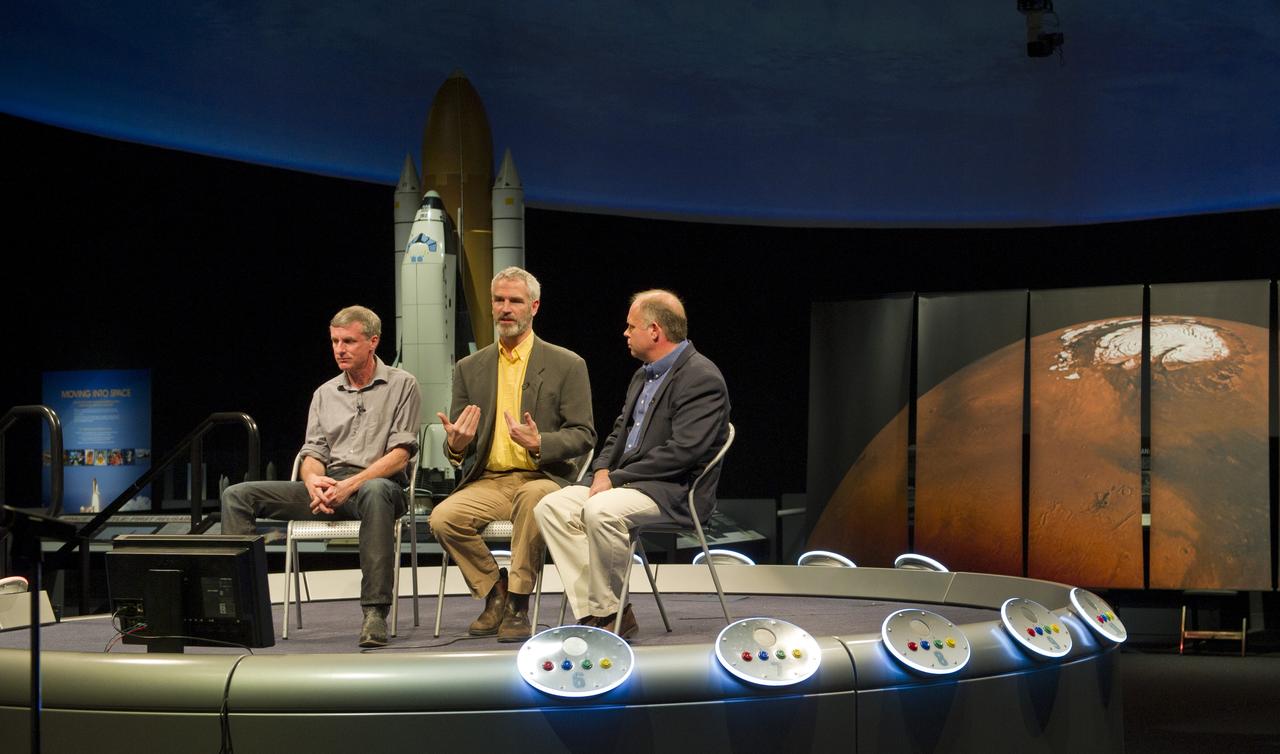
Dr. John Grant, seated right, moderates a discussion with Dr. Jack Mustard, from Brown University, and Dr. Steve Squyres, from Cornell University, seated left, during a Mars Program Update, Thursday, Jan. 13, 2011, at the Smithsonian National Air and Space Museum in Washington. Prominent scientists discussed evidence of water on Mars, current Program status, including the 7th Anniversary of the Mars rovers and the upcoming Mars Science Laboratory mission and previewed exciting discoveries to come. Photo Credit: (NASA/Paul E. Alers)
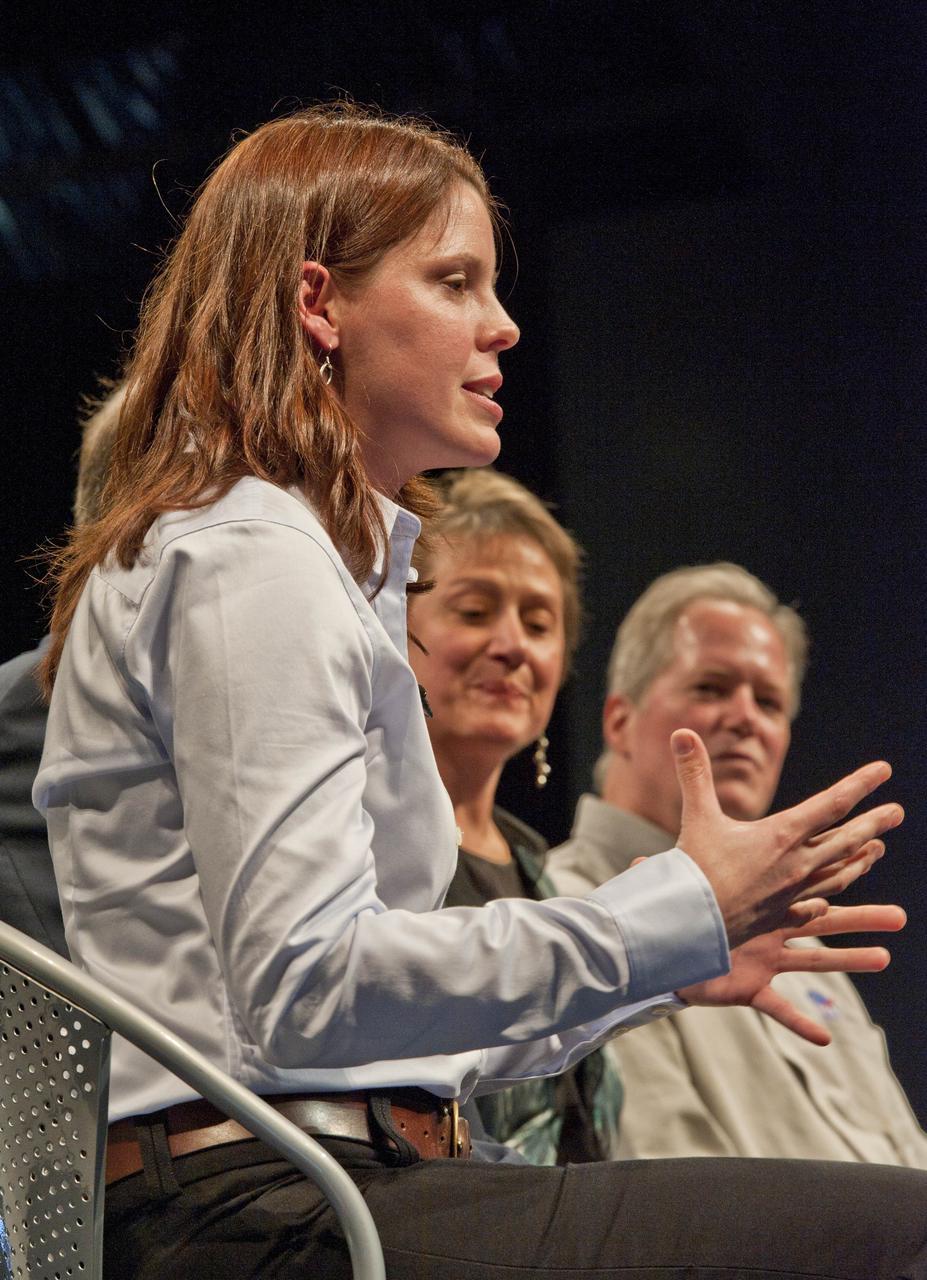
Dr. Jennifer Elgenbrode, from Goddard Space Flight Center, foreground, talks as Dr. Mary Voytek and Dr. Michael Meyer, far right, look on during a Mars Program Update where prominent scientists discussed evidence of water on Mars, current Program status, including the 7th Anniversary of the Mars rovers and the upcoming Mars Science Laboratory mission and previewing exciting discoveries to come, Thursday, Jan. 13, 2011, at the Smithsonian National Air and Space Museum in Washington. Photo Credit: (NASA/Paul E. Alers)
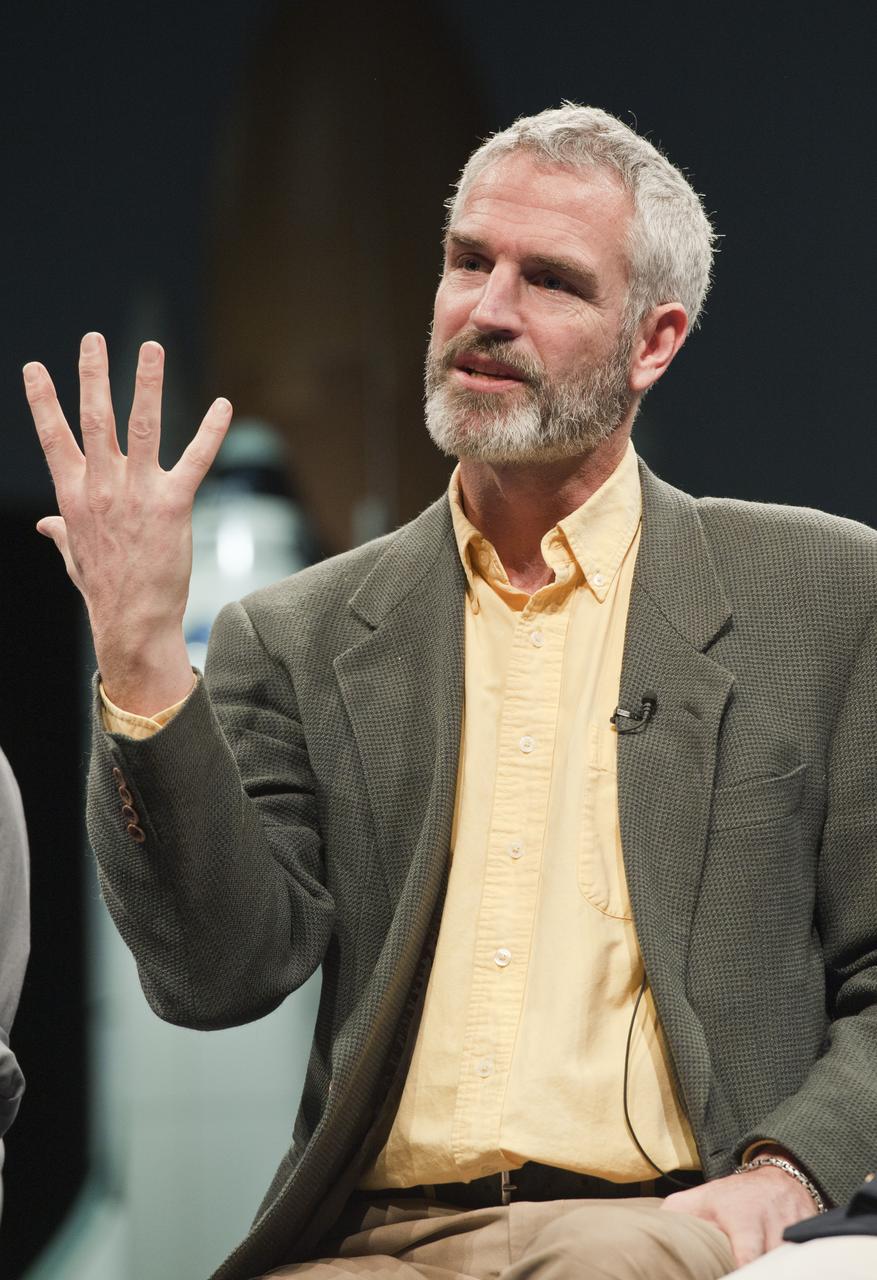
Dr. Jack Mustard, from Brown University, talks during a Mars Program Update where prominent scientists discussed evidence of water on Mars, current Program status, including the 7th Anniversary of the Mars rovers and the upcoming Mars Science Laboratory mission and previewing exciting discoveries to come, Thursday, Jan. 13, 2011, at the Smithsonian National Air and Space Museum in Washington. Photo Credit: (NASA/Paul E. Alers)

NASA Chief Technologist Douglas Terrier talks about NASA's plans for going forward to the Moon and Mars during a Mars celebration Saturday, June 1, 2019, in Mars, Pennsylvania. NASA is in the small town to celebrate Mars exploration and share the agency’s excitement about landing astronauts on the Moon in five years. The celebration includes a weekend of Science, Technology, Engineering, Arts and Mathematics (STEAM) activities. Photo Credit: (NASA/Bill Ingalls)
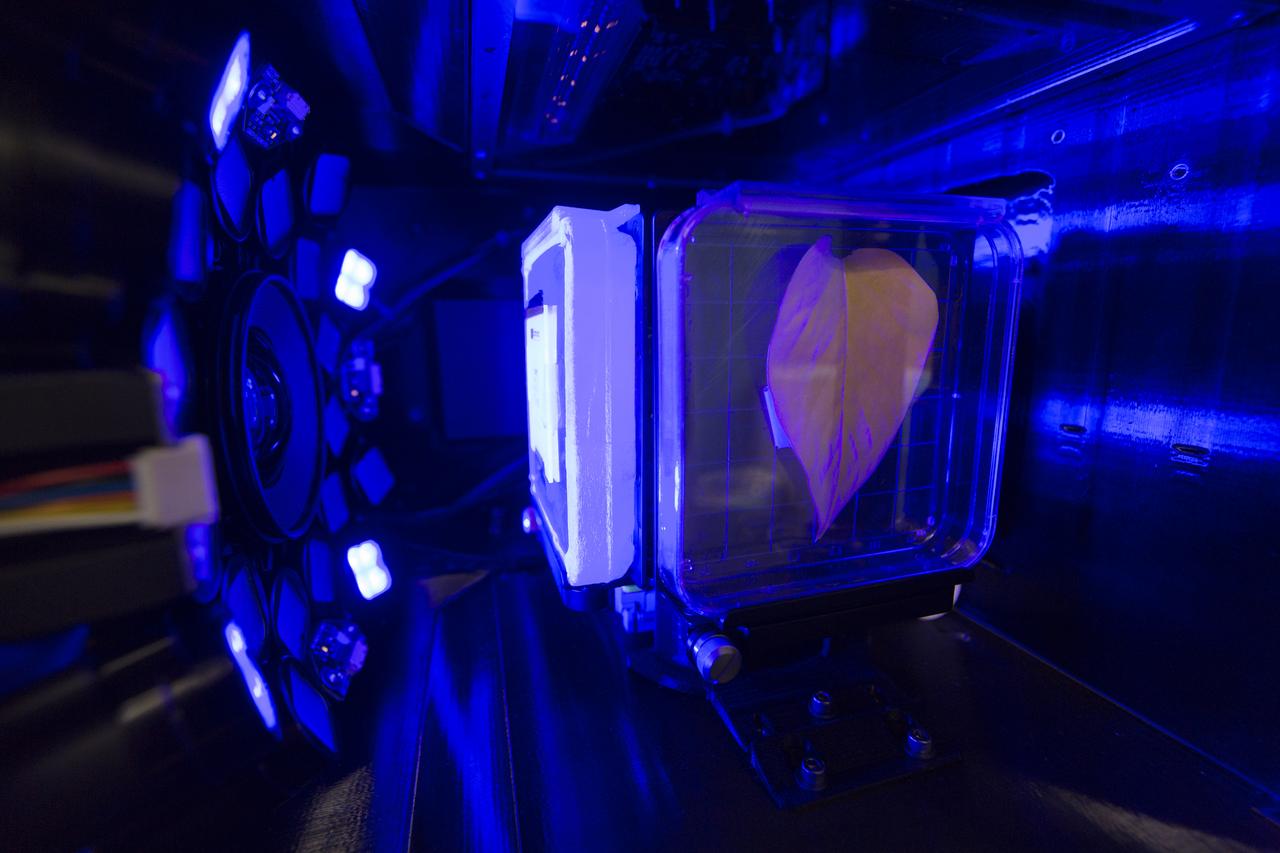
Inside the Spectrum prototype unit, organisms in a Petri plate are exposed to blue excitation lighting. The device works by exposing organisms to different colors of fluorescent light while a camera records what's happening with time-lapse photography. Results from the Spectrum project will shed light on which living things are best suited for long-duration flights into deep space.

A local First Robotics team poses for a group photo during Tthe Mars celebration Saturday, June 1, 2019, in Mars, Pennsylvania. NASA is in the small town to celebrate Mars exploration and share the agency’s excitement about landing astronauts on the Moon in five years. The celebration includes a weekend of Science, Technology, Engineering, Arts and Mathematics (STEAM) activities. Photo Credit: (NASA/Bill Ingalls)

Dr. Marcello Coradini, a European Space Agency (ESA) Program Coordinator, left, makes a point as Doug McCuiston, Director, Mars Exploration Program, looks ons during a Mars Program Update where prominent scientists discussed evidence of water on Mars, current Program status, including the 7th Anniversary of the Mars rovers and the upcoming Mars Science Laboratory mission and previewing exciting discoveries to come, Thursday, Jan. 13, 2011, at the Smithsonian National Air and Space Museum in Washington. Photo Credit: (NASA/Paul E. Alers)
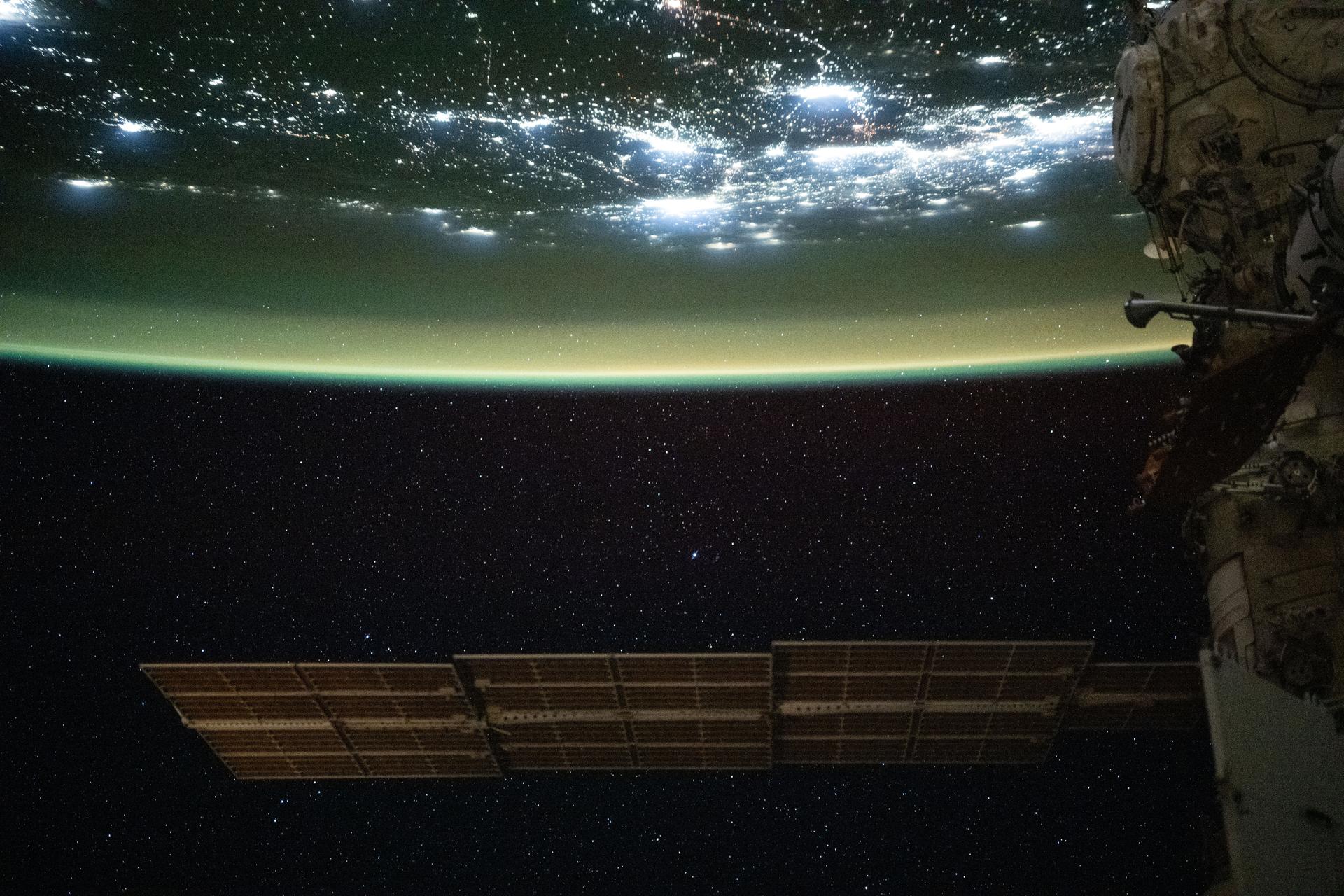
iss073e0982431 (Oct. 25, 2025) --- A yellow-green airglow, caused by atoms and molecules releasing energy as light after being excited by ultraviolet sunlight or cosmic rays, blankets the city lights of North America in this photograph, taken at approximately 2:18 a.m. local time from the International Space Station as it orbited 260 miles above Texas.

Local resident Rick Miller, dressed as Abraham Lincoln, attends the Mars celebration Saturday, June 1, 2019, in Mars, Pennsylvania. NASA is in the small town to celebrate Mars exploration and share the agency’s excitement about landing astronauts on the Moon in five years. The celebration includes a weekend of Science, Technology, Engineering, Arts and Mathematics (STEAM) activities. Photo Credit: (NASA/Bill Ingalls)

An alien themed cup cake is seen during the Mars celebration Saturday, June 1, 2019, in Mars, Pennsylvania. NASA is in the small town to celebrate Mars exploration and share the agency’s excitement about landing astronauts on the Moon in five years. The celebration includes a weekend of Science, Technology, Engineering, Arts and Mathematics (STEAM) activities. Photo Credit: (NASA/Bill Ingalls)

A Mars celebration attendee views the surface of Mars via a virtual reality headset Saturday, June 1, 2019, in Mars, Pennsylvania. NASA is in the small town to celebrate Mars exploration and share the agency’s excitement about landing astronauts on the Moon in five years. The celebration includes a weekend of Science, Technology, Engineering, Arts and Mathematics (STEAM) activities. Photo Credit: (NASA/Bill Ingalls)

Sophia Bogat from NASA Headquarters talks about the various wheels used on Mars rovers during the Mars celebration Saturday, June 1, 2019, in Mars, Pennsylvania. NASA is in the small town to celebrate Mars exploration and share the agency’s excitement about landing astronauts on the Moon in five years. The celebration includes a weekend of Science, Technology, Engineering, Arts and Mathematics (STEAM) activities. Photo Credit: (NASA/Bill Ingalls)
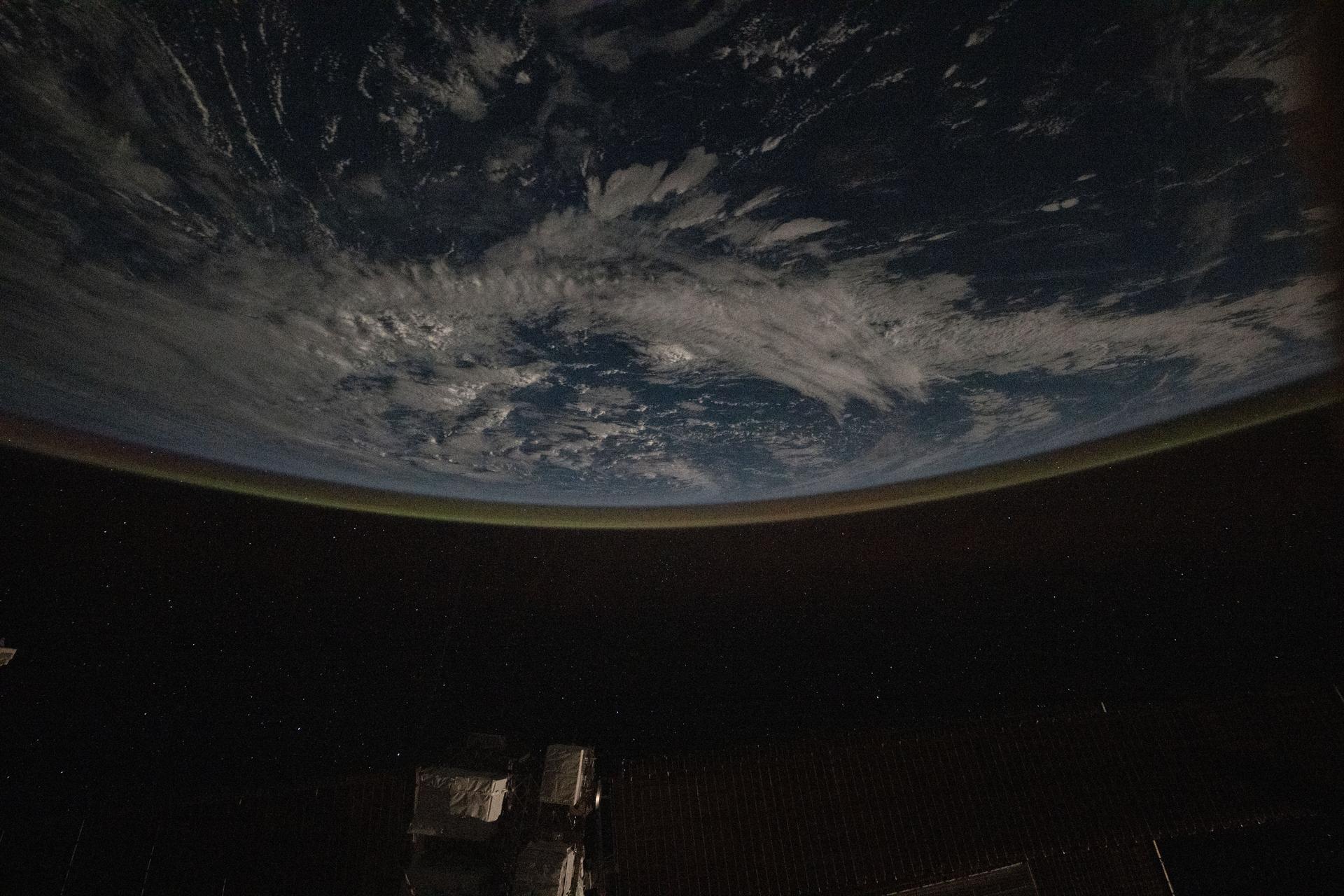
iss073e0780028 (Sept. 2, 2025) --- A faint airglow blankets Earth's horizon in this photograph taken from the International Space Station as it orbited 259 miles above the Pacific Ocean between Hawaii and California. This natural glow is produced when solar ultraviolet radiation excites oxygen molecules in the upper atmosphere during the day, which then release that energy as visible light at night.
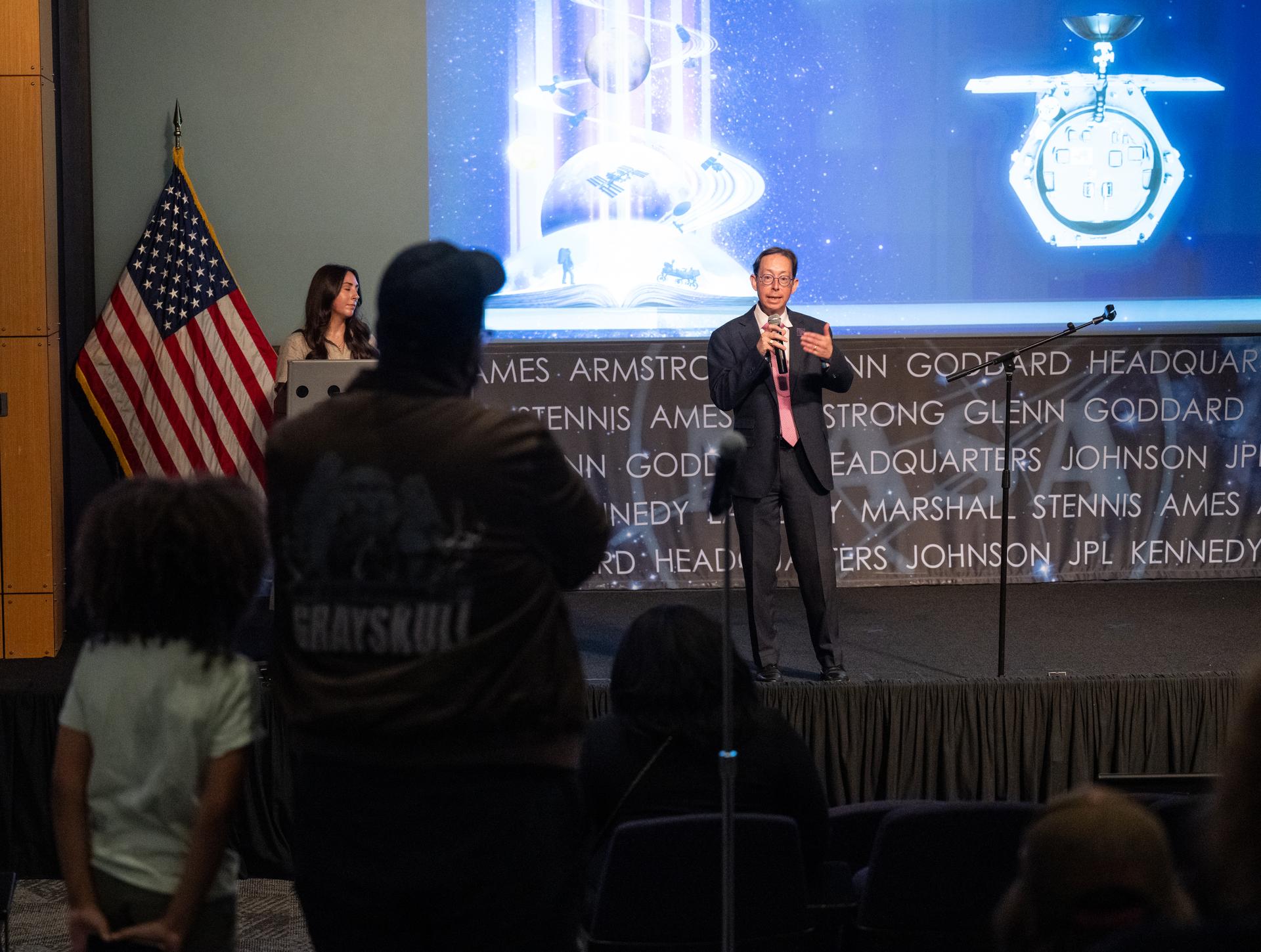
Dr. Dominic Benford, program scientist for the Nancy Grace Roman Space Telescope, answers questions from visitors during a Frontiers Forum event titled "Countdown to Launch – Why We’re Excited about the Nancy Grace Roman Space Telescope," Thursday, Aug. 6, 2026, at the Mary W. Jackson NASA Headquarters building in Washington. Photo Credit: (NASA/Keegan Barber)
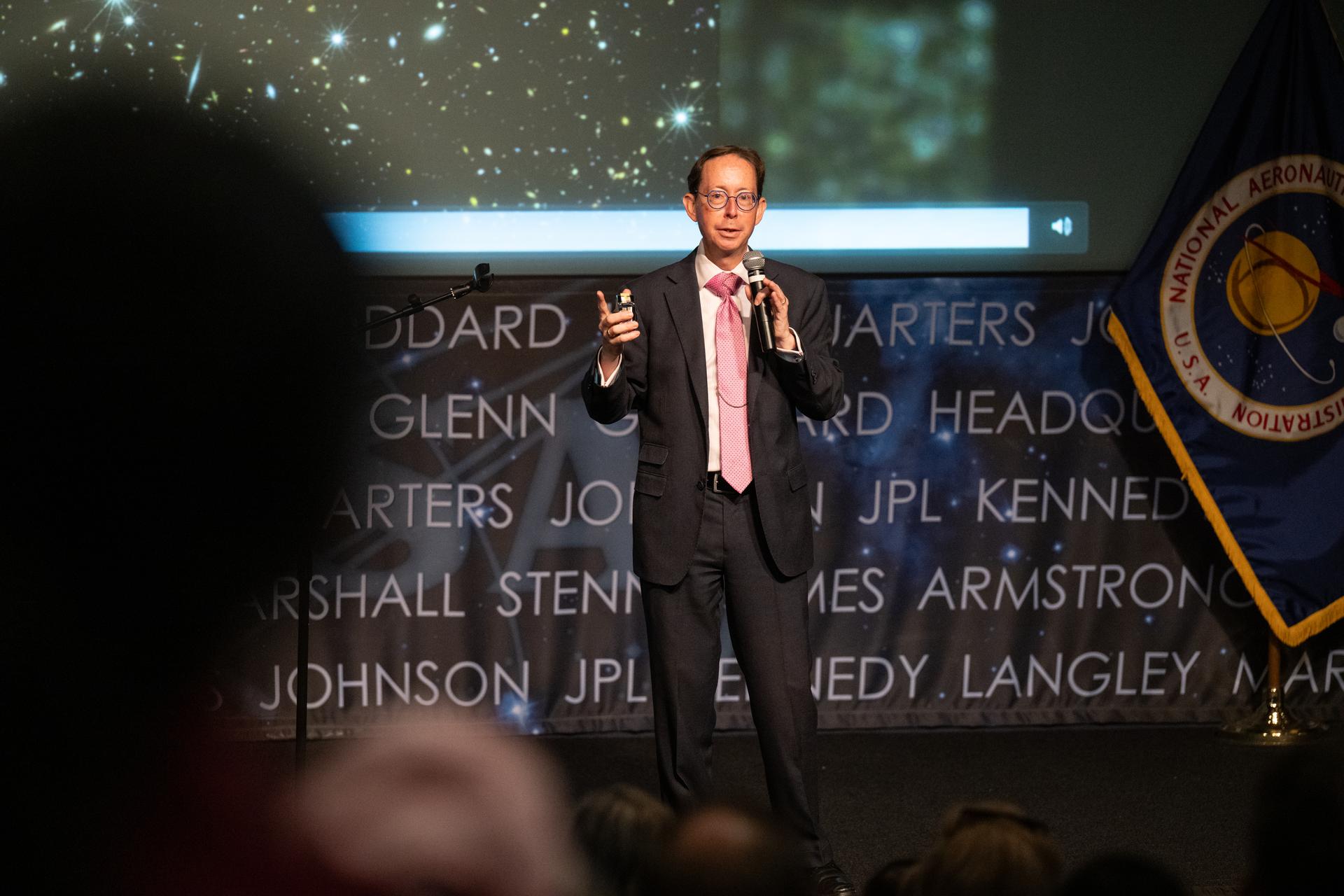
Dr. Dominic Benford, program scientist for the Nancy Grace Roman Space Telescope, speaks at a Frontiers Forum event titled "Countdown to Launch – Why We’re Excited about the Nancy Grace Roman Space Telescope," Thursday, Aug. 6, 2026, at the Mary W. Jackson NASA Headquarters building in Washington. Photo Credit: (NASA/Keegan Barber)
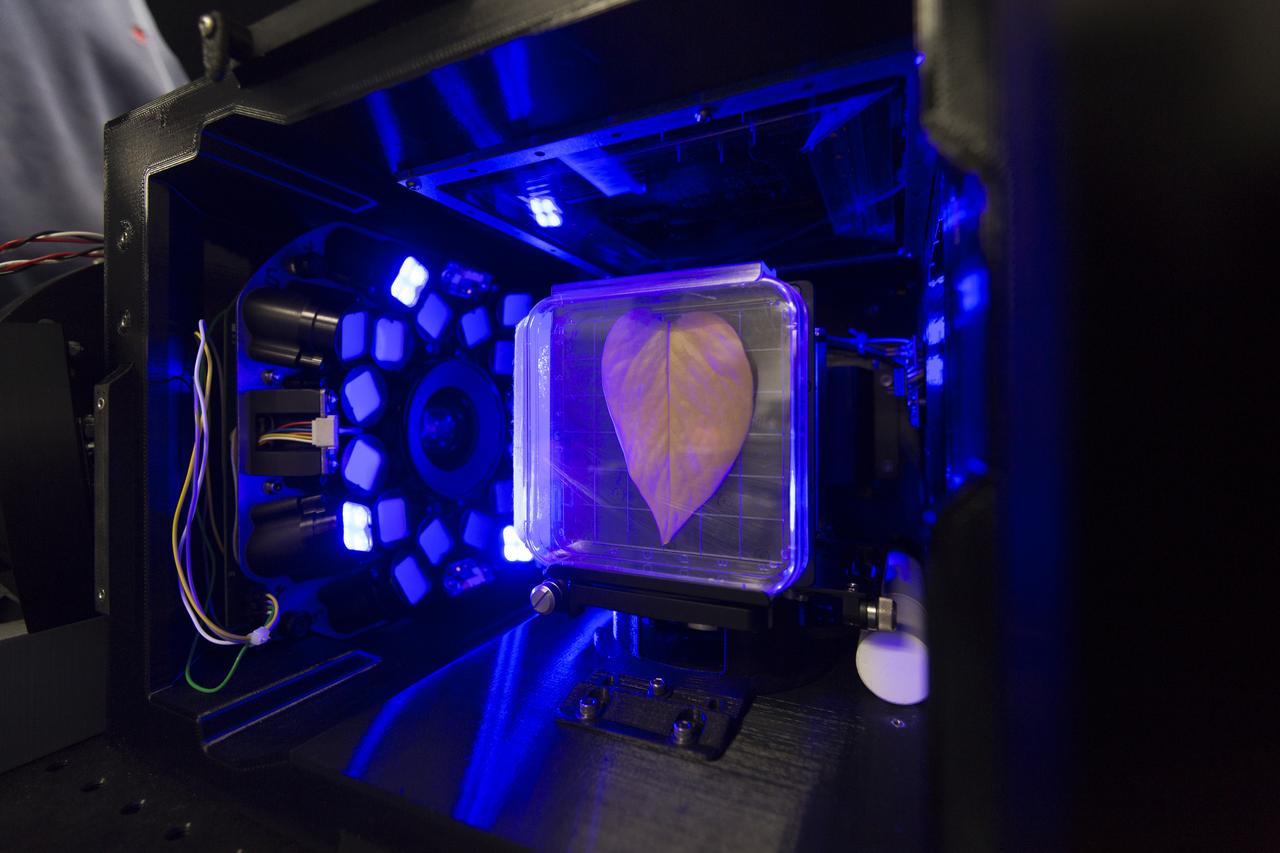
Inside the Spectrum prototype unit, organisms in a Petri plate are exposed to blue excitation lighting. The device works by exposing organisms to different colors of fluorescent light while a camera records what's happening with time-lapse photography. Results from the Spectrum project will shed light on which living things are best suited for long-duration flights into deep space.
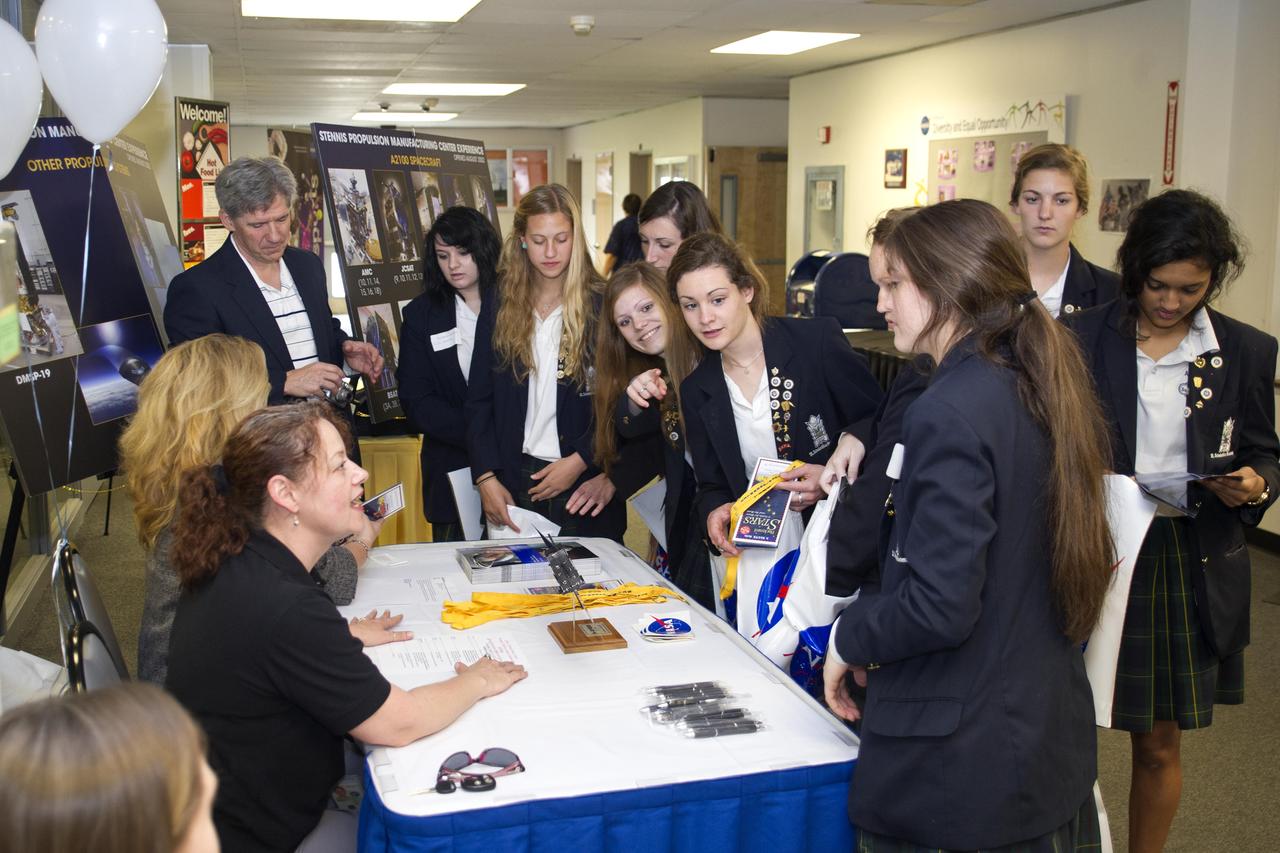
High school students register for activities during a Girls Excited about Math and Science event at Stennis Space Center on March 8, 2012. The event attracted about 130 high school girls and 40 elementary girls from 18 Louisiana and Mississippi for a day of workshop and seminar presentations, a 'Dress for Success' fashion show and a tour of information technology facilities.
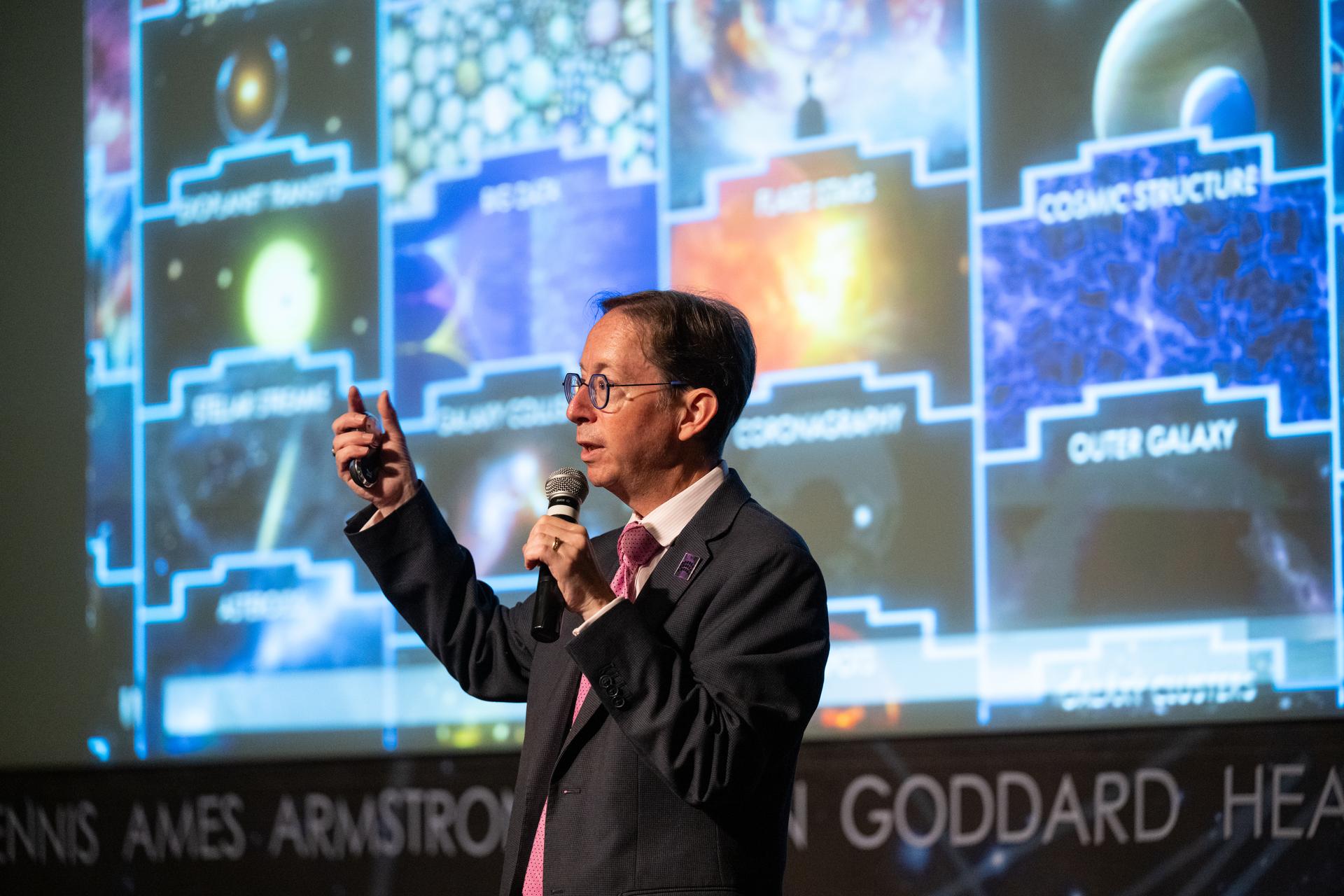
Dr. Dominic Benford, program scientist for the Nancy Grace Roman Space Telescope, speaks at a Frontiers Forum event titled "Countdown to Launch – Why We’re Excited about the Nancy Grace Roman Space Telescope," Thursday, Aug. 6, 2026, at the Mary W. Jackson NASA Headquarters building in Washington. Photo Credit: (NASA/Keegan Barber)

Attendees view a 3D panorama of Mars during a Mars celebration event Friday, May 31, 2019, in Mars, Pennsylvania. NASA is in the small town to celebrate Mars exploration and share the agency’s excitement about landing astronauts on the Moon in five years. The celebration includes a weekend of Science, Technology, Engineering, Arts and Mathematics (STEAM) activities. Photo Credit: (NASA/Bill Ingalls)
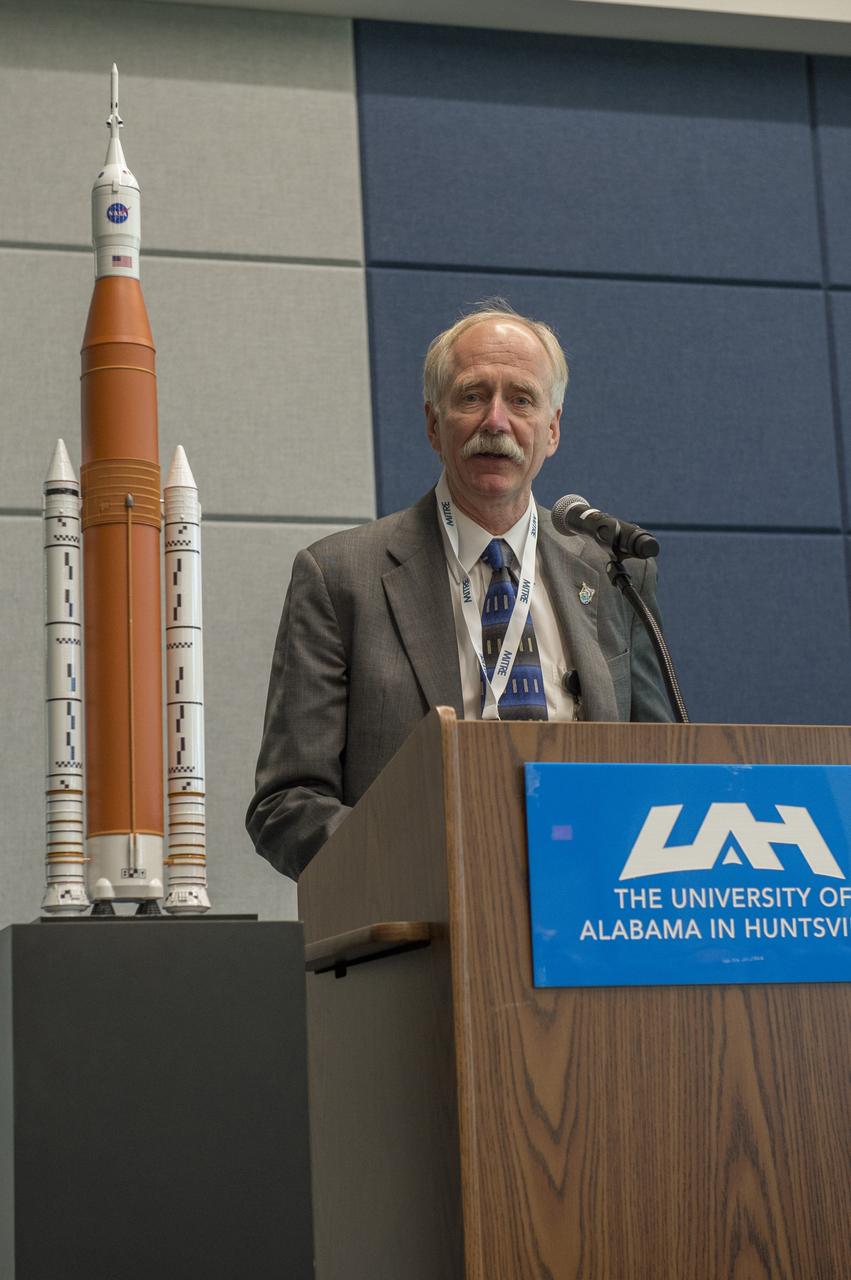
William Gerstenmaier is guest speaker for luncheon on first day of Wernher von Braun Memorial Symposium. William Gerstenmaier, associate administrator, Human Exploration and Operations at NASA Headquarters, shared an overview of NASA programs that are in the scope of human space exploration during his remarks. He discussed the vast landscape of NASA’s human space exploration missions and showed his love for the practical side of NASA’s work. "I’m always excited to see real hardware and speak with real engineers. That’s why I’m always glad to visit Marshall."
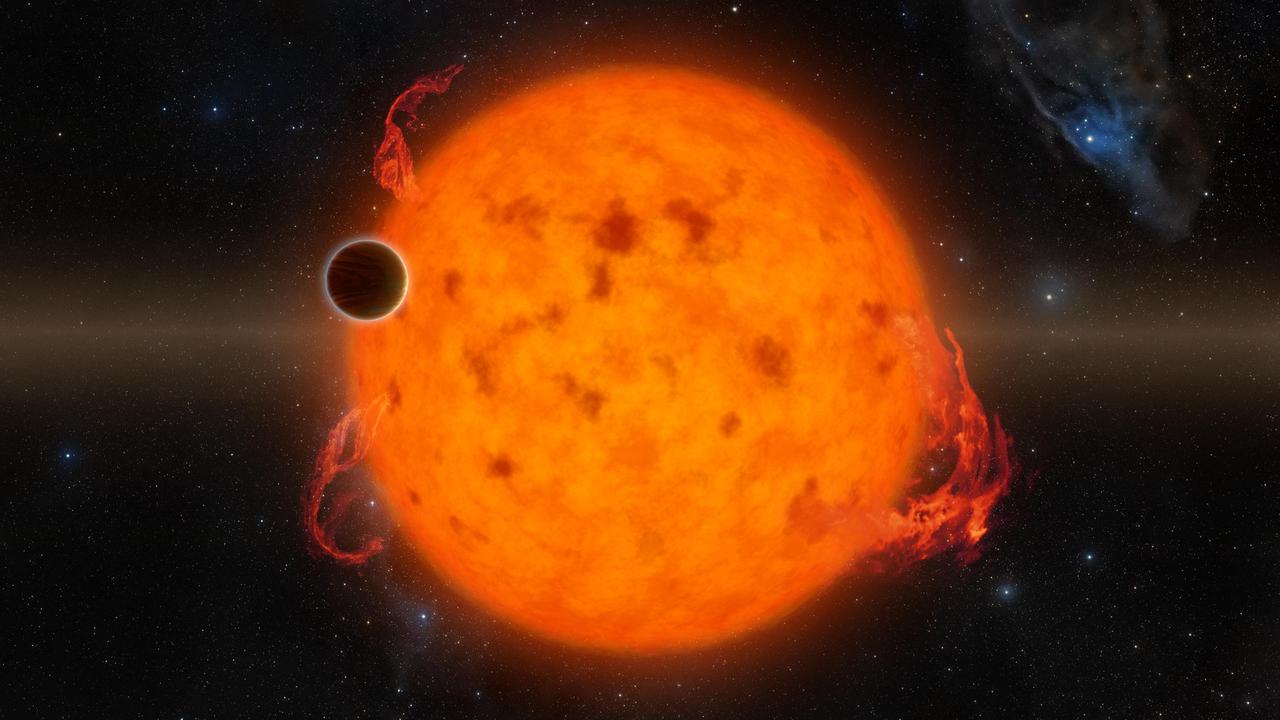
K2-33b, shown in this illustration, is one of the youngest exoplanets detected to date using NASA Kepler Space Telescope. It makes a complete orbit around its star in about five days. These two characteristics combined provide exciting new directions for planet-formation theories. K2-33b could have formed on a farther out orbit and quickly migrated inward. Alternatively, it could have formed in situ, or in place. http://photojournal.jpl.nasa.gov/catalog/PIA20690

Sandy Krasner from NASA's Jet Propulsion Laboratory discusses the Mars InSight lander with attendees of a Mars celebration Friday, May 31, 2019, in Mars, Pennsylvania. NASA is in the small town to celebrate Mars exploration and share the agency’s excitement about landing astronauts on the Moon in five years. The celebration includes a weekend of Science, Technology, Engineering, Arts and Mathematics (STEAM) activities. Photo Credit: (NASA/Bill Ingalls)
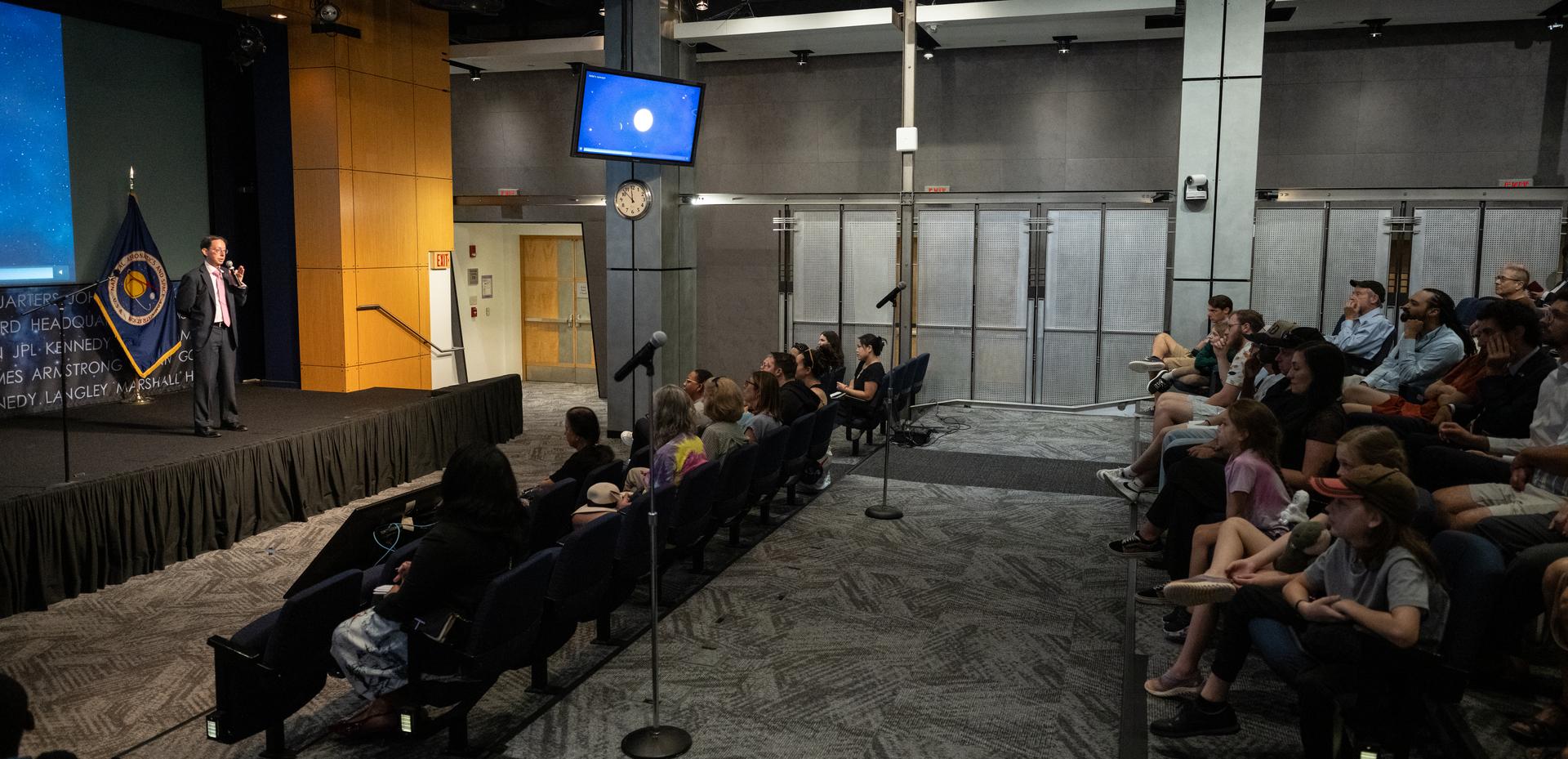
Dr. Dominic Benford, program scientist for the Nancy Grace Roman Space Telescope, speaks at a Frontiers Forum event titled "Countdown to Launch – Why We’re Excited about the Nancy Grace Roman Space Telescope," Thursday, Aug. 6, 2026, at the Mary W. Jackson NASA Headquarters building in Washington. Photo Credit: (NASA/Keegan Barber)

A woman photographs her two dogs during a Mars celebration event Friday, May 31, 2019, in Mars, Pennsylvania. NASA is in the small town to celebrate Mars exploration and share the agency’s excitement about landing astronauts on the Moon in five years. The celebration includes a weekend of Science, Technology, Engineering, Arts and Mathematics (STEAM) activities. Photo Credit: (NASA/Bill Ingalls)
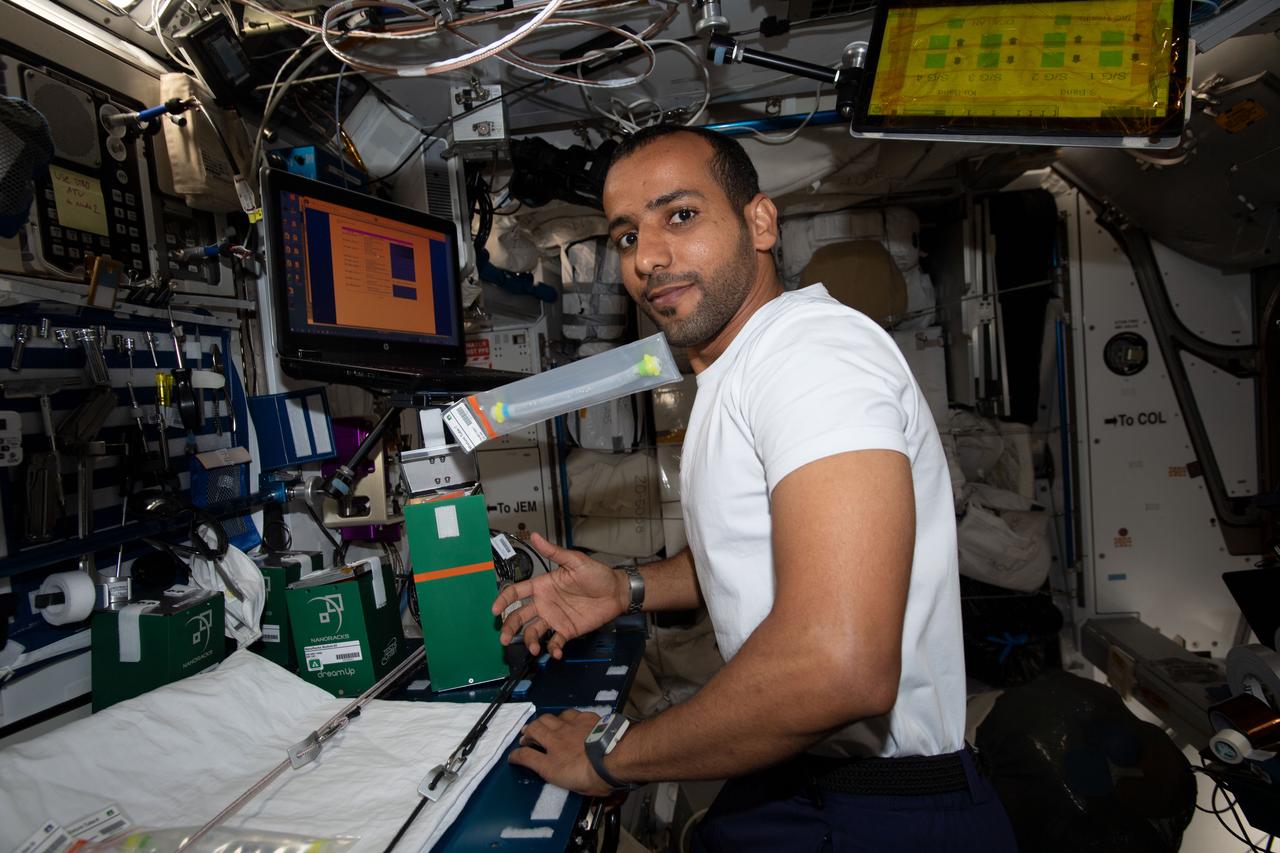
iss060e081223 (9/27/2019) --- United ARAB Emirates (UAE) Spaceflight Participant Hazzaa Ali Almansoori is shown with the NanoRacks Module 9 UAE Session Operations aboard the International Space Station (ISS). The first Emirati astronaut performs The Mohammed bin Rashid Space Centre (MBRSC) Science in Space Competition (MBRSC-Mod 9) investigation to help UAE students become more integrated and excited about Science, Technology, Engineering, and Mathematics (STEM) as well as space as an environment to perform scientific research.
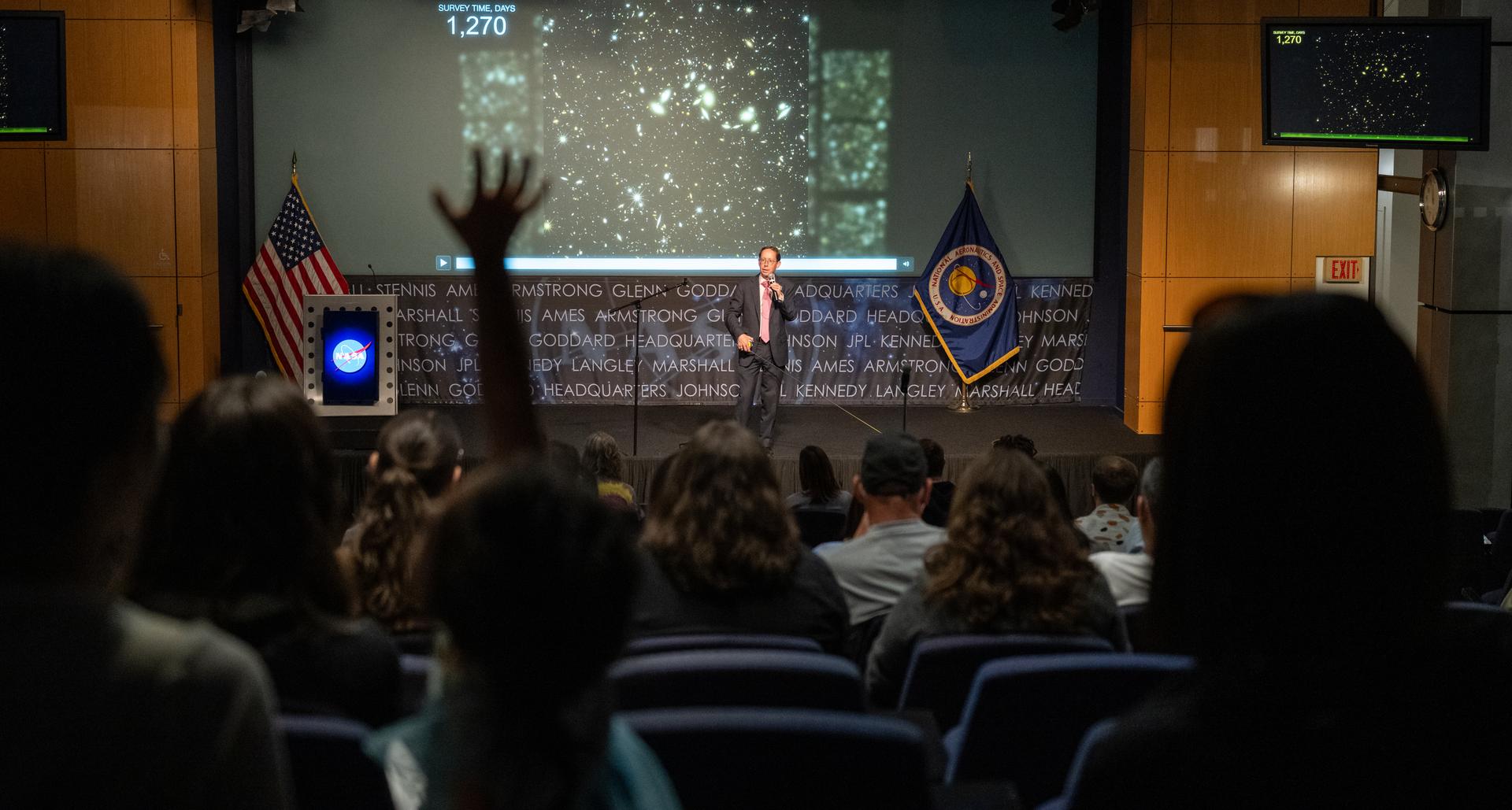
Dr. Dominic Benford, program scientist for the Nancy Grace Roman Space Telescope, speaks at a Frontiers Forum event titled "Countdown to Launch – Why We’re Excited about the Nancy Grace Roman Space Telescope," Thursday, Aug. 6, 2026, at the Mary W. Jackson NASA Headquarters building in Washington. Photo Credit: (NASA/Keegan Barber)

NASA Chief Technologist Douglas Terrier talks about NASA's plans for going forward to the Moon and Mars during a Mars celebration Saturday, June 1, 2019, in Mars, Pennsylvania. NASA is in the small town to celebrate Mars exploration and share the agency’s excitement about landing astronauts on the Moon in five years. The celebration includes a weekend of Science, Technology, Engineering, Arts and Mathematics (STEAM) activities. Photo Credit: (NASA/Bill Ingalls)
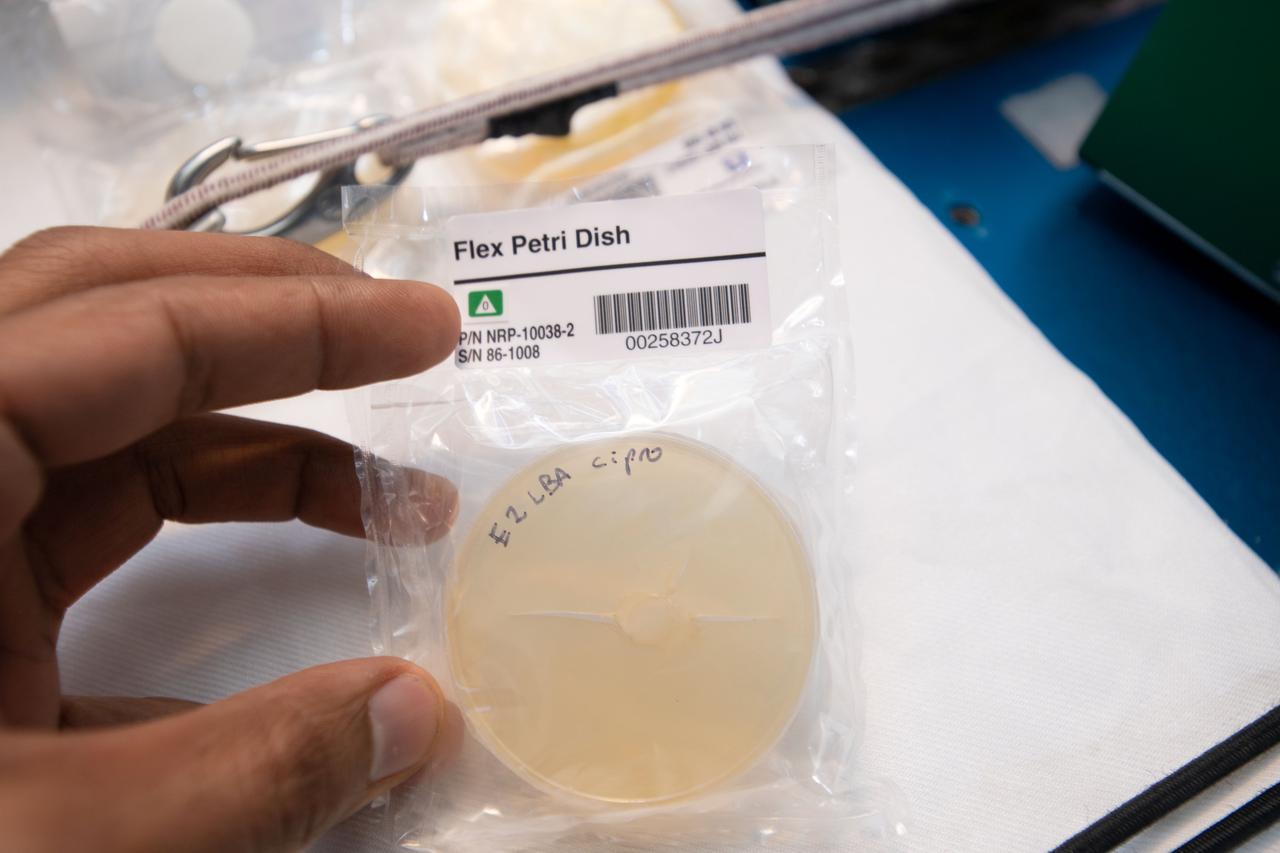
iss060e081535 (9/28/2019) --- A view of the Flex Petri Dishes housed inside NanoRacks Module-86 Module MBRSC - Modification 9 (The Mohammed bin Rashid Space Centre (MBRSC) Science in Space Competition) - Modification 9. The first Emirati astronaut performs this investigation aboard the International Space Station (ISS) to help students in the UAE become more integrated and excited about Science, Technology, Engineering, and Mathematics (STEM) as well as space as an environment to perform scientific research.

A drone show is seen during the Mars celebration Friday, May 31, 2019, in Mars, Pennsylvania. NASA is in the small town to celebrate Mars exploration and share the agency’s excitement about landing astronauts on the Moon in five years. The celebration includes a weekend of Science, Technology, Engineering, Arts and Mathematics (STEAM) activities. Photo Credit: (NASA/Bill Ingalls)

NASA Human Resources Specialist Ashley Speed speaks to a group of high school students from area schools during a Girls Excited about Math and Science event at Stennis Space Center on March 8, 2012. About 170 high school and elementary girls from area schools visited Stennis to participate in a day of activities designed to promote studies in science and mathematics.
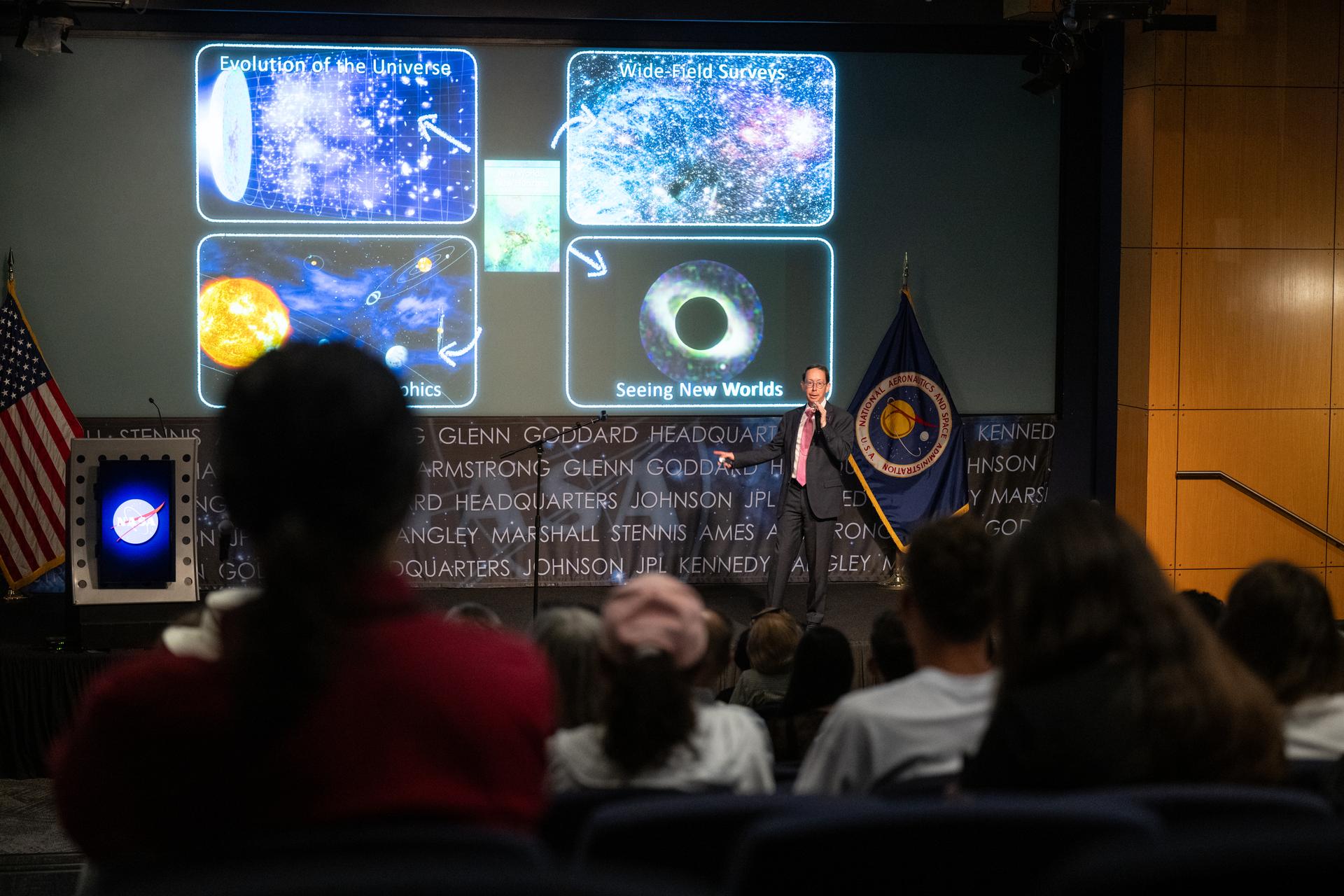
Dr. Dominic Benford, program scientist for the Nancy Grace Roman Space Telescope, speaks at a Frontiers Forum event titled "Countdown to Launch – Why We’re Excited about the Nancy Grace Roman Space Telescope," Thursday, Aug. 6, 2026, at the Mary W. Jackson NASA Headquarters building in Washington. Photo Credit: (NASA/Keegan Barber)
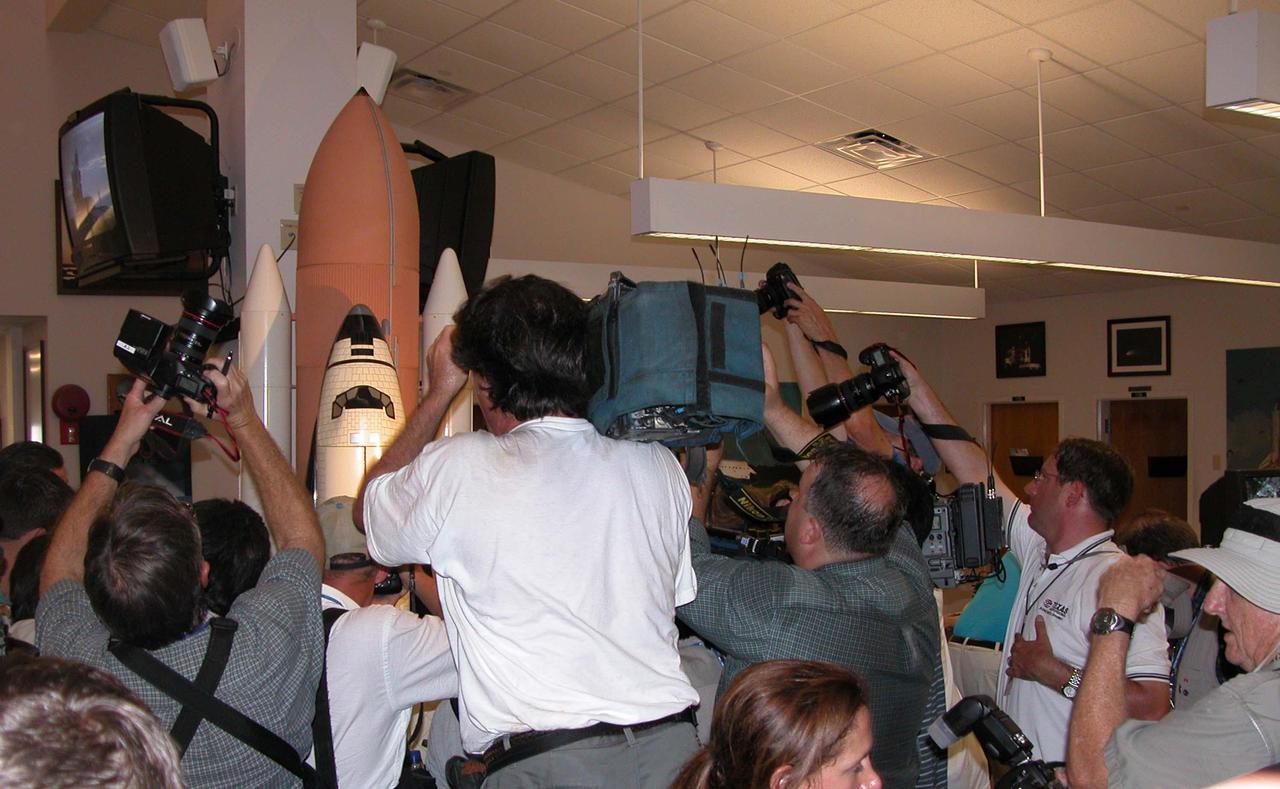
KENNEDY SPACE CENTER, FLA. - Excitement builds among the news media gathered in the NASA Newsroom the night before launch. The countdown for the launch of Space Shuttle Discovery on Return to Flight mission STS-114 is under way for an anticipated liftoff at 3:51 p.m. EDT July 13. During its 12-day mission, Discovery’s seven-person crew will test new hardware and techniques to improve Shuttle safety, as well as deliver supplies to the International Space Station.

A participant of the Mars celebration launches a rocket, Saturday, June 1, 2019, in Mars, Pennsylvania. NASA is in the small town to celebrate Mars exploration and share the agency’s excitement about landing astronauts on the Moon in five years. The celebration includes a weekend of Science, Technology, Engineering, Arts and Mathematics (STEAM) activities. Photo Credit: (NASA/Bill Ingalls)
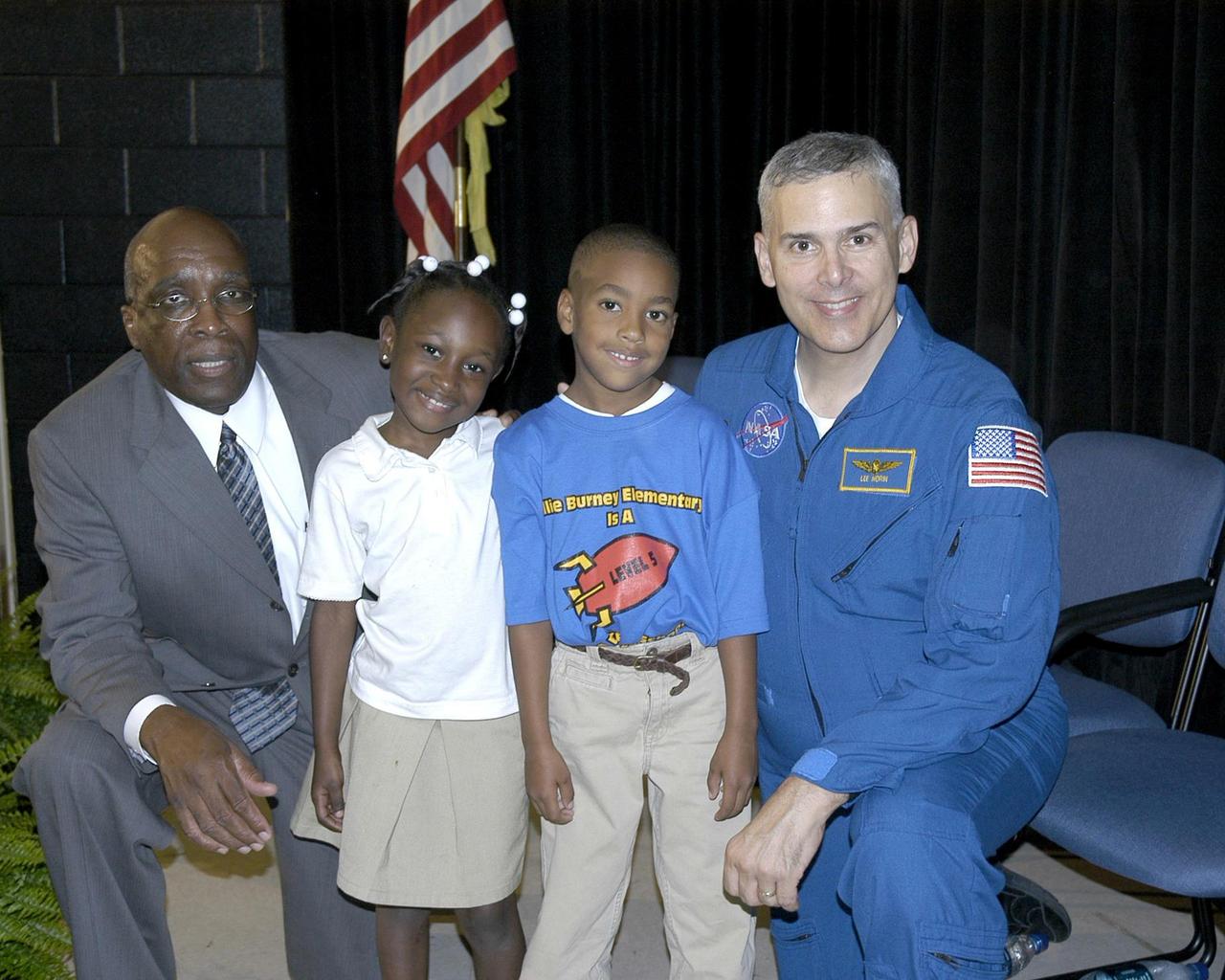
Mississippi Rep. Percy Watson (left) talks with first-graders Savannah Jones and Levi Meyers, and Astronaut Lee Morin on Sept. 8 during the NASA Explorer School kickoff event at the Lillie Burney Elementary School in Hattiesburg, Miss. NASA Explorer Schools help promote student achievement in mathematics and science through activities using the excitement of NASA research, discoveries and missions.
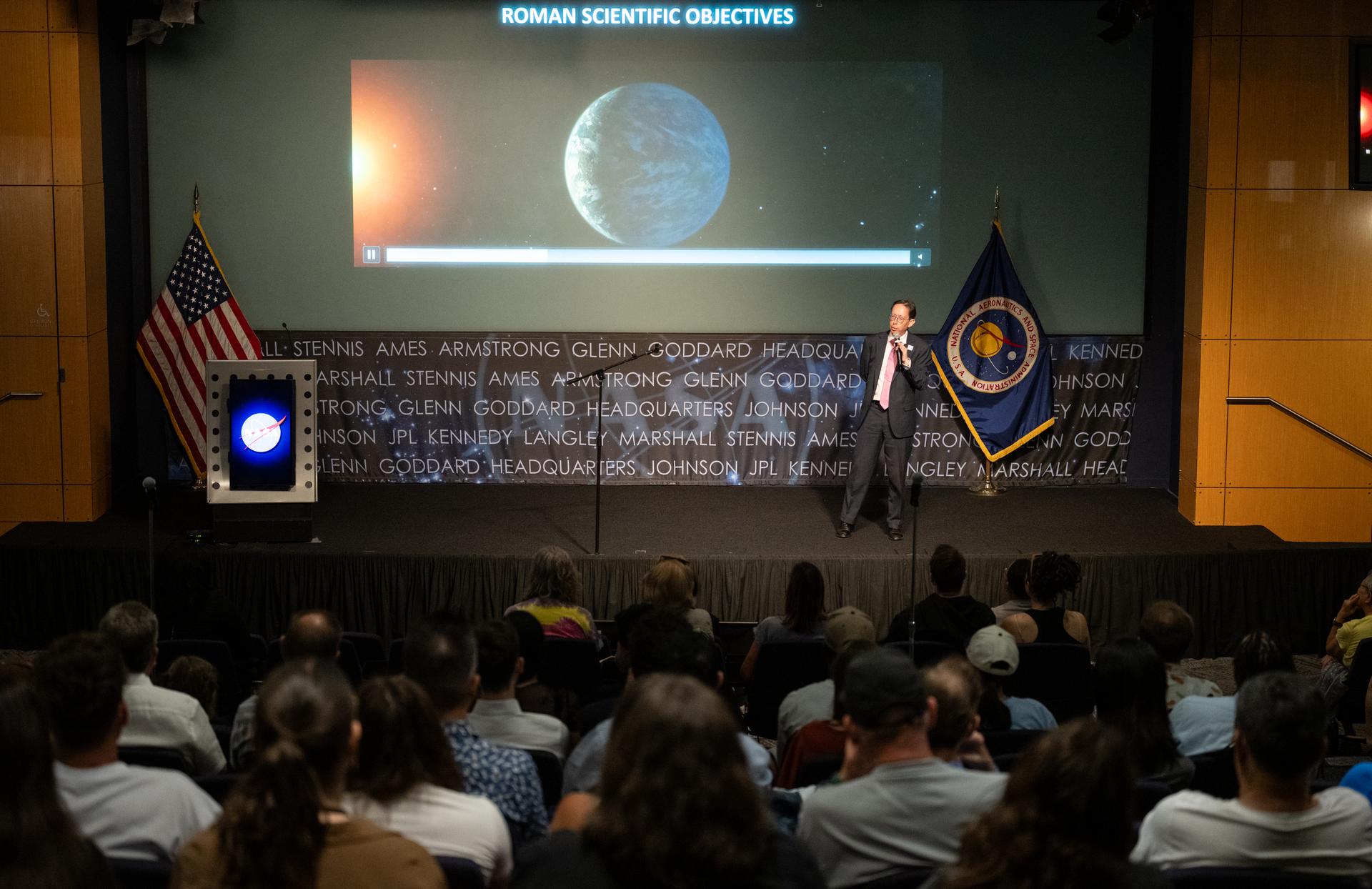
Dr. Dominic Benford, program scientist for the Nancy Grace Roman Space Telescope, speaks at a Frontiers Forum event titled "Countdown to Launch – Why We’re Excited about the Nancy Grace Roman Space Telescope," Thursday, Aug. 6, 2026, at the Mary W. Jackson NASA Headquarters building in Washington. Photo Credit: (NASA/Keegan Barber)
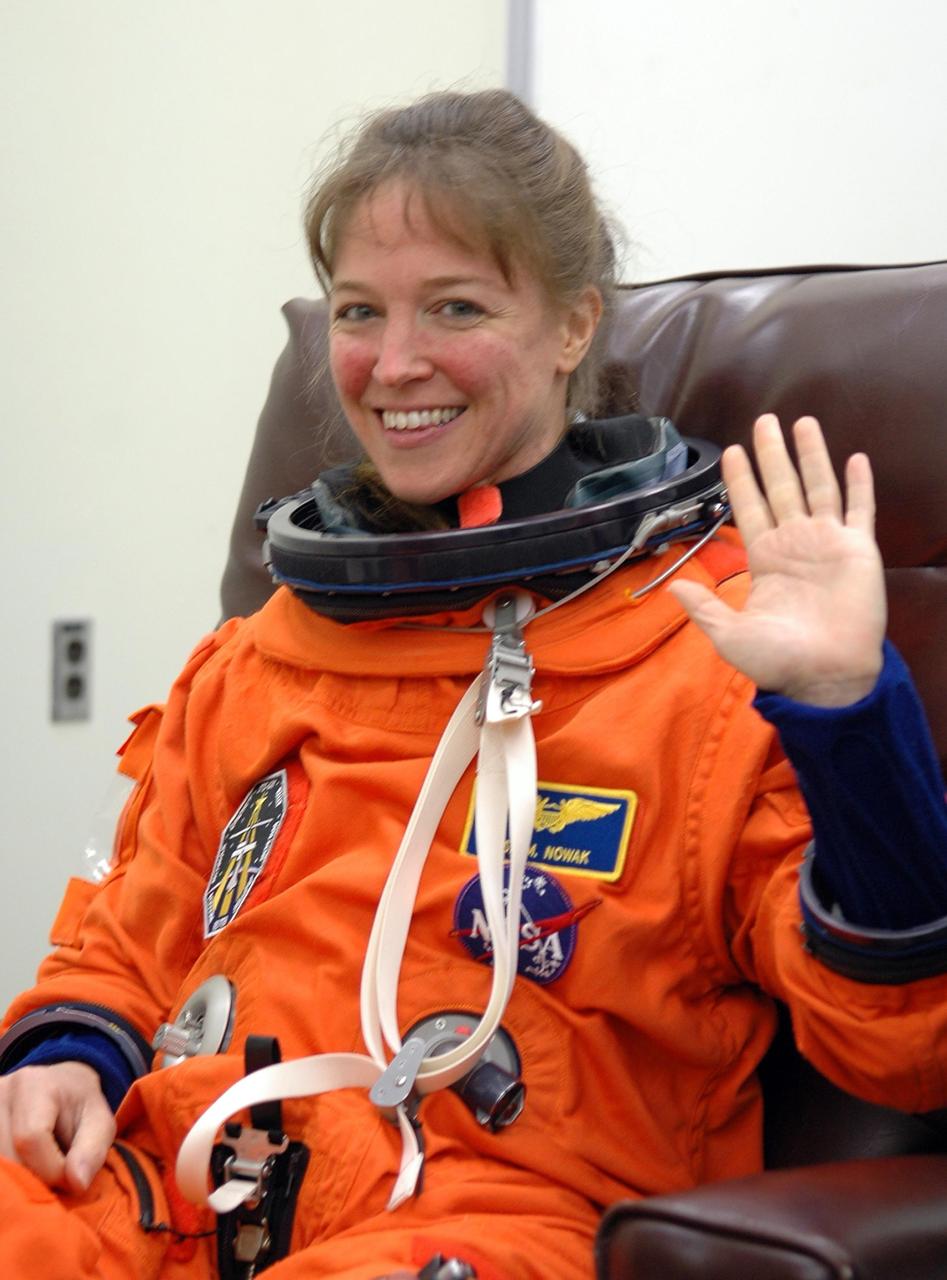
KENNEDY SPACE CENTER, FLA. - STS-121 Mission Specialist Lisa Nowak shows she is happy and excited to be preparing for launch with the fitting of her launch and entry suit. Nowak is making her first space flight. The launch is the 115th shuttle flight and the 18th U.S. flight to the International Space Station. During the 12-day mission, the STS-121 crew will test new equipment and procedures to improve shuttle safety, as well as deliver supplies and make repairs to the International Space Station. Photo credit: NASA/Kim Shiflett

NASA Chief Technologist Douglas Terrier talks about NASA's plans for going forward to the Moon and Mars during a Mars celebration Saturday, June 1, 2019, in Mars, Pennsylvania. NASA is in the small town to celebrate Mars exploration and share the agency’s excitement about landing astronauts on the Moon in five years. The celebration includes a weekend of Science, Technology, Engineering, Arts and Mathematics (STEAM) activities. Photo Credit: (NASA/Bill Ingalls)

NASA Chief Technologist Douglas Terrier talks about NASA's plans for going forward to the Moon and Mars during a Mars celebration Saturday, June 1, 2019, in Mars, Pennsylvania. NASA is in the small town to celebrate Mars exploration and share the agency’s excitement about landing astronauts on the Moon in five years. The celebration includes a weekend of Science, Technology, Engineering, Arts and Mathematics (STEAM) activities. Photo Credit: (NASA/Bill Ingalls)
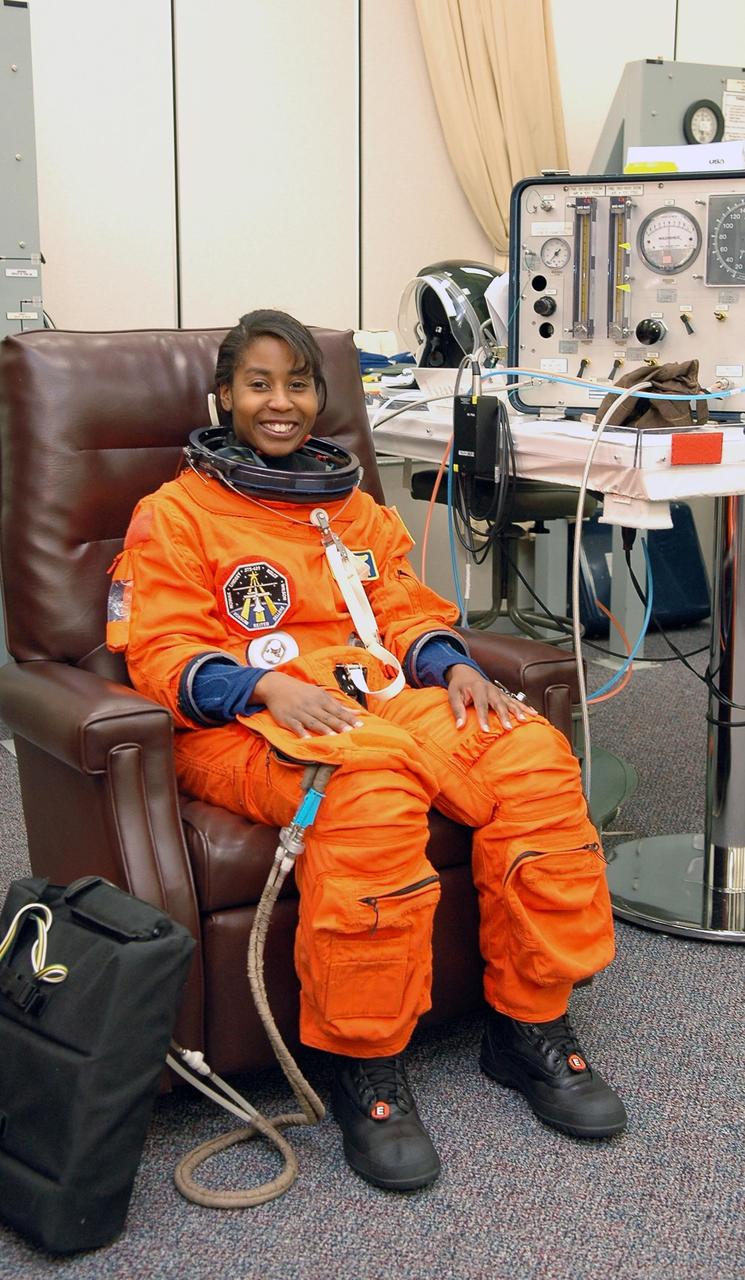
KENNEDY SPACE CENTER, FLA. - Excited about her first space flight, STS-121 Mission Specialist Stephanie Wilson has her launch suit checked for fit in the Operations and Checkout Building. On the 12-day mission, the crew will test new equipment and procedures to improve shuttle safety, as well as deliver supplies and make repairs to the station. This mission is the 115th shuttle flight and the 18th U.S. flight to the station. Photo credit: NASA/Kim Shiflett
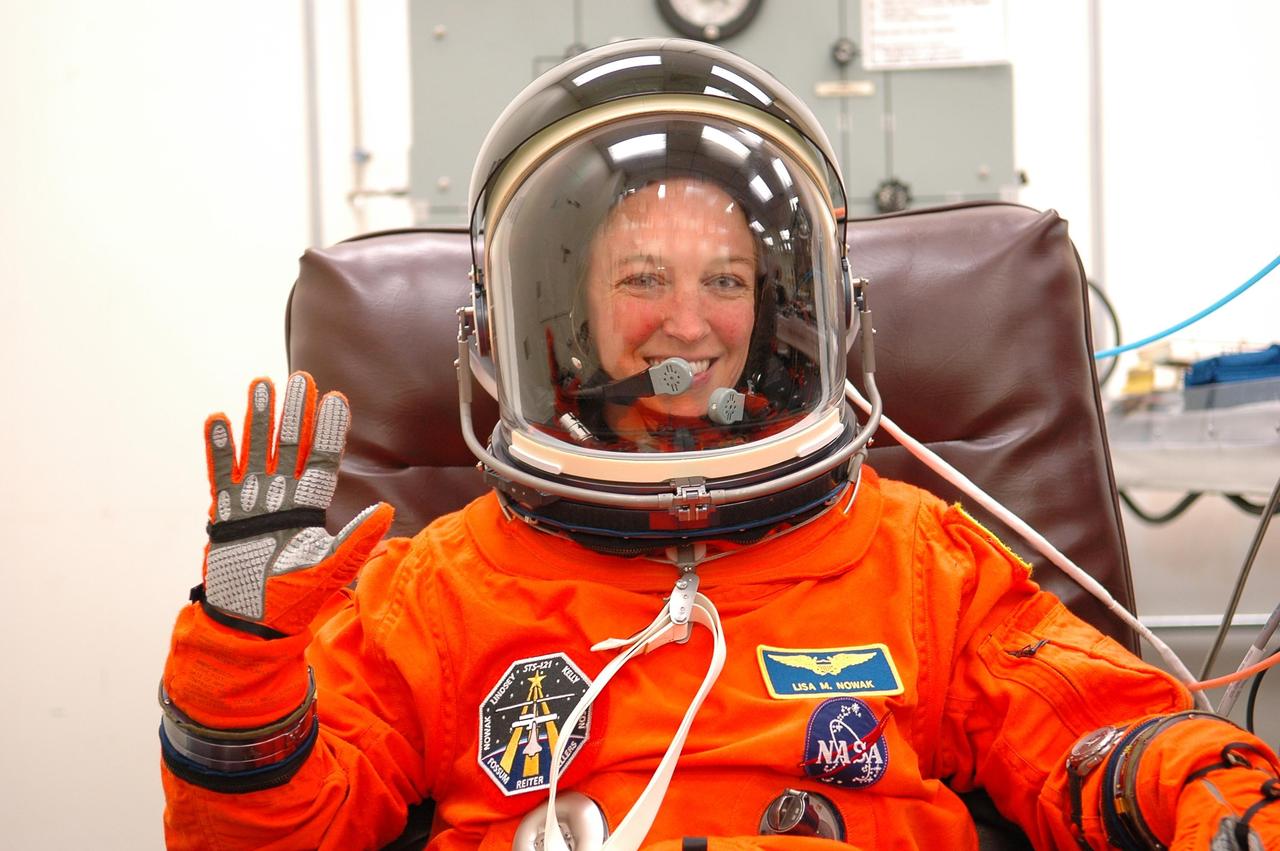
KENNEDY SPACE CENTER, FLA. - Excited about her first space flight, STS-121 Mission Specialist Lisa Nowak completes a fitting on her launch suit in the Operations and Checkout Building. The crew is making final preparations for the launch on July 1 to the International Space Station. On the 12-day mission, the crew will test new equipment and procedures to improve shuttle safety, as well as deliver supplies and make repairs to the station. This mission is the 115th shuttle flight and the 18th U.S. flight to the station. Photo credit: NASA/Kim Shiflett
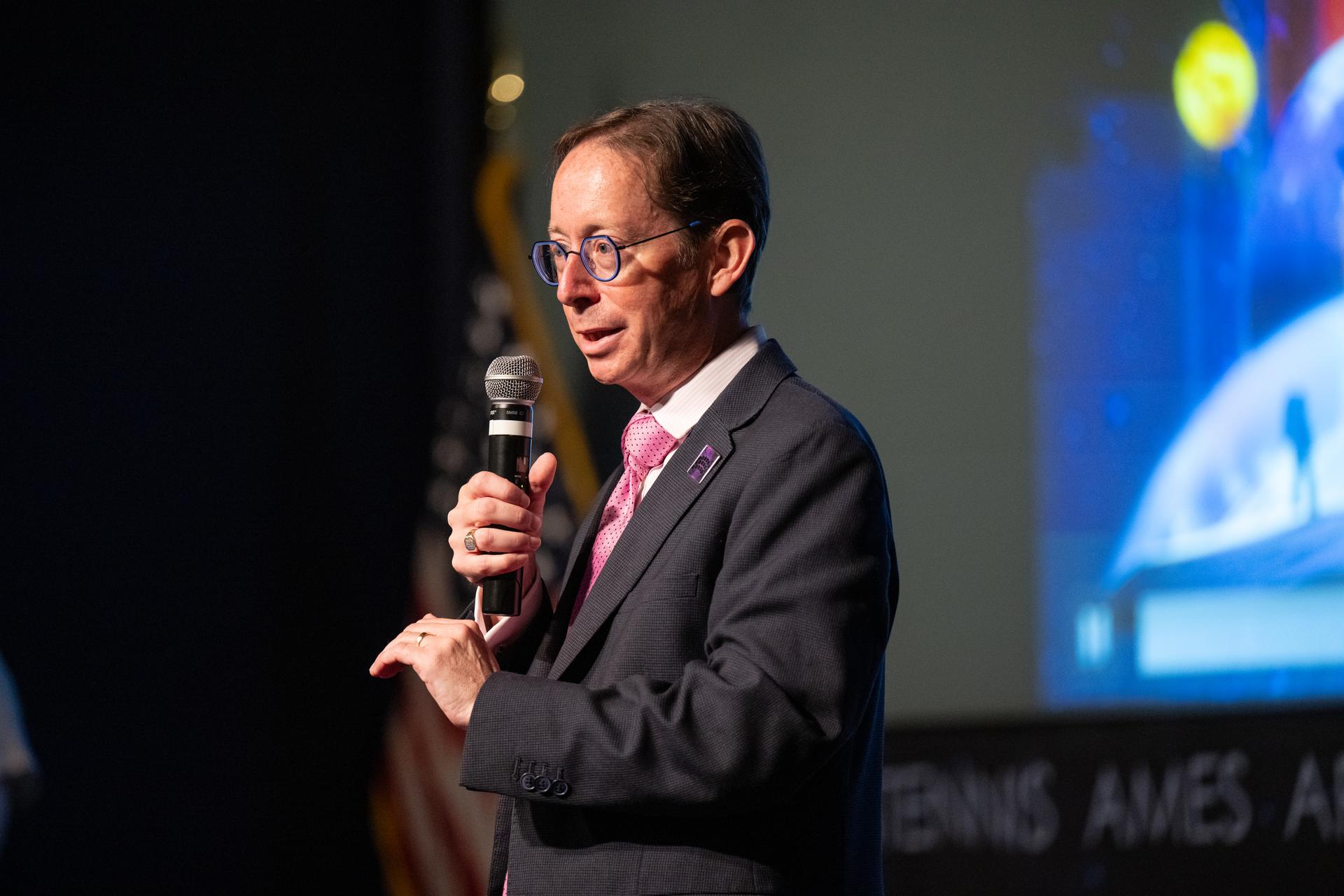
Dr. Dominic Benford, program scientist for the Nancy Grace Roman Space Telescope, answers questions from visitors during a Frontiers Forum event titled "Countdown to Launch – Why We’re Excited about the Nancy Grace Roman Space Telescope," Thursday, Aug. 6, 2026, at the Mary W. Jackson NASA Headquarters building in Washington. Photo Credit: (NASA/Keegan Barber)

Dr. Dominic Benford, program scientist for the Nancy Grace Roman Space Telescope, speaks at a Frontiers Forum event titled "Countdown to Launch – Why We’re Excited about the Nancy Grace Roman Space Telescope," Thursday, Aug. 6, 2026, at the Mary W. Jackson NASA Headquarters building in Washington. Photo Credit: (NASA/Keegan Barber)