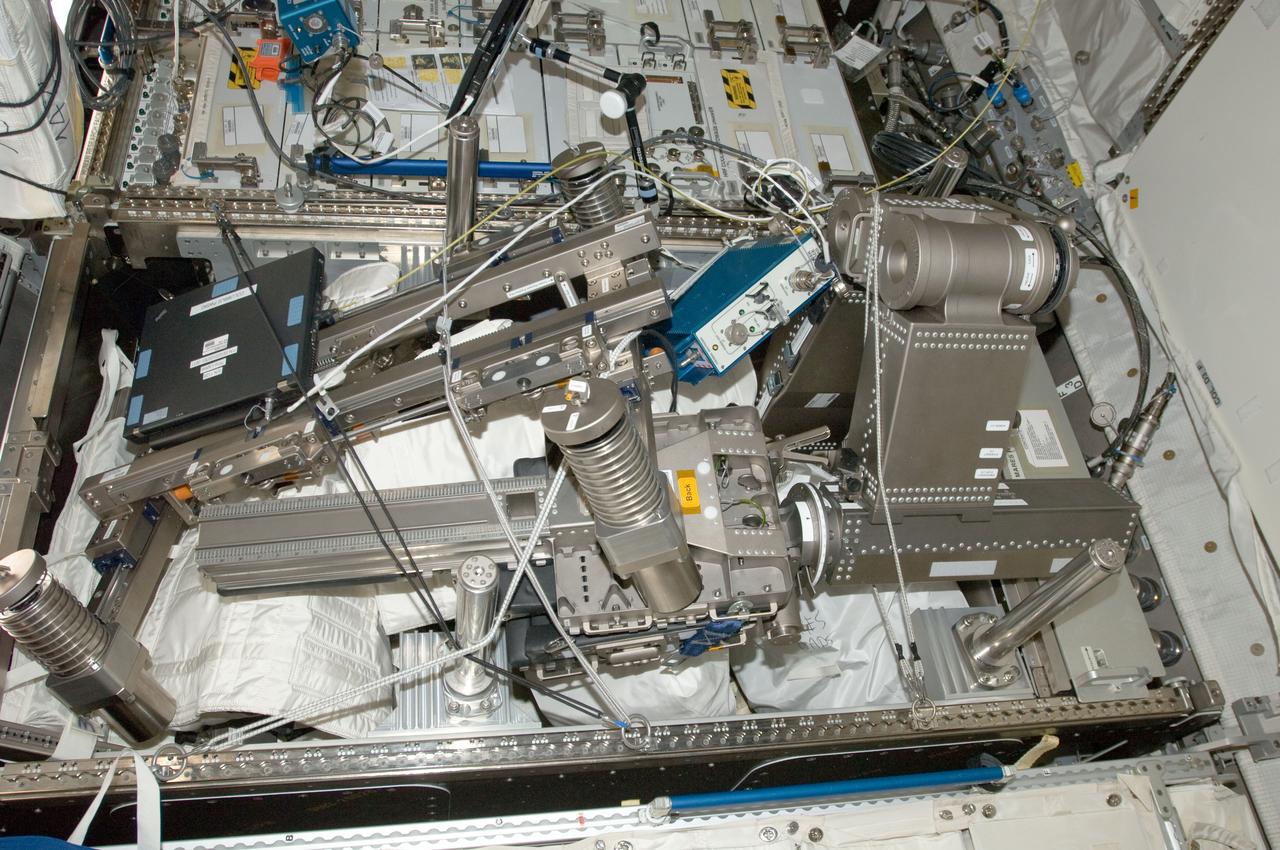
View of the Muscle Atrophy Research and Exercise System (MARES),in the Columbus Module (COL1F3). MARES will carry out research on musculoskeletal,bio-mechanical,and neuromuscular human physiology. Photo was taken during Expedition 34.

ISS047e038968 (04/05/2016) --- ESA (European Space Agency) astronaut Tim Peake operates the Muscle Atrophy Research and Exercise System (MARES) equipment inside the Columbus module. MARES is an ESA system that will be used for research on musculoskeletal, biomechanical, and neuromuscular human physiology to better understand the effects of microgravity on the muscular system.
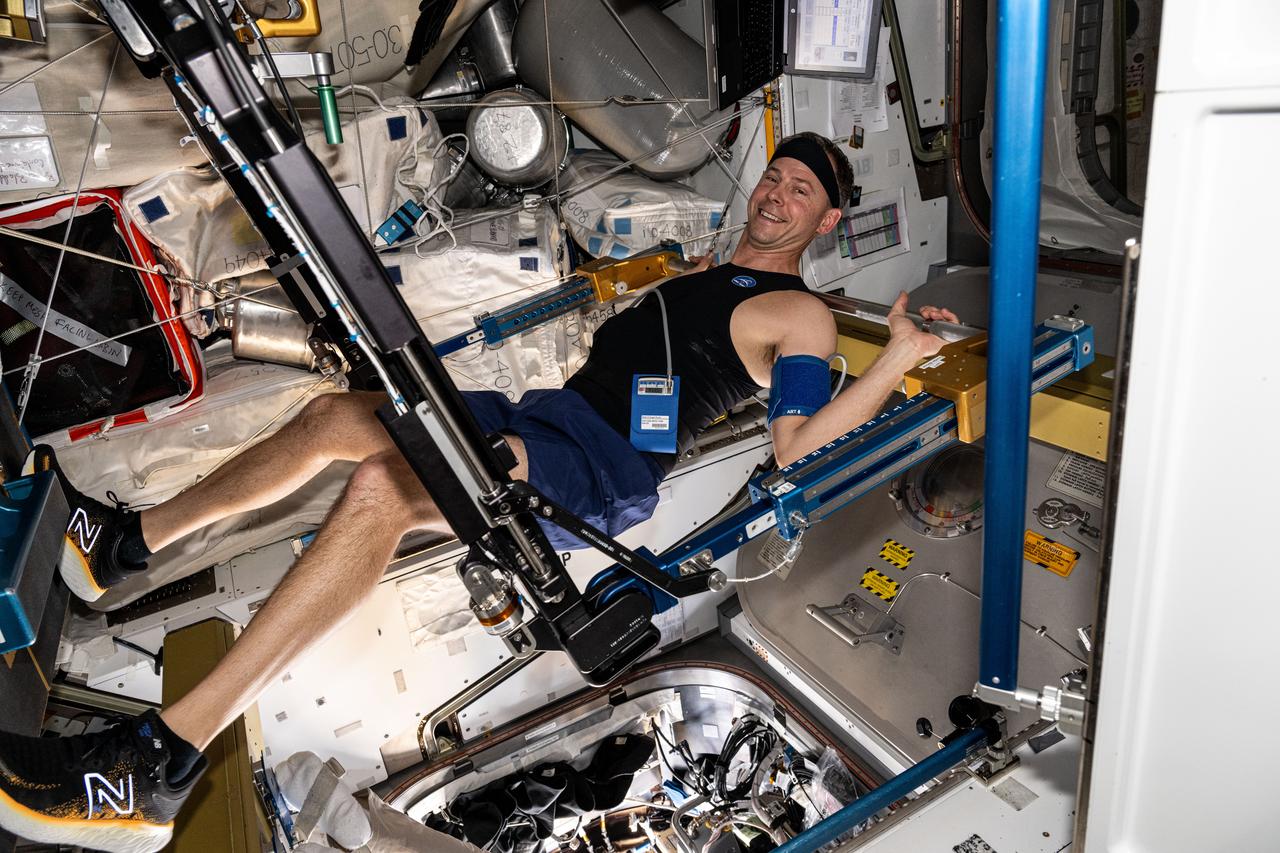
iss072e126509 (Oct. 29, 2024) --- NASA astronaut and Expedition 72 Flight Engineer Nick Hague exercises on the advanced resistive exercise device (ARED) aboard the International Space Station's Tranquility module. The ARED mimics the inertial forces of lifting free weights on Earth to maintain muscle health during long-term space missions. During his exercise session, Hague wore Bio-Monitor, a garment and headband set outfitted with sensors to collect physiological data and minimally interfere with space station life. Hague wore the garment 48 hours as part of Vascular Aging, a study that monitors an astronaut’s cardiovascular health in space.
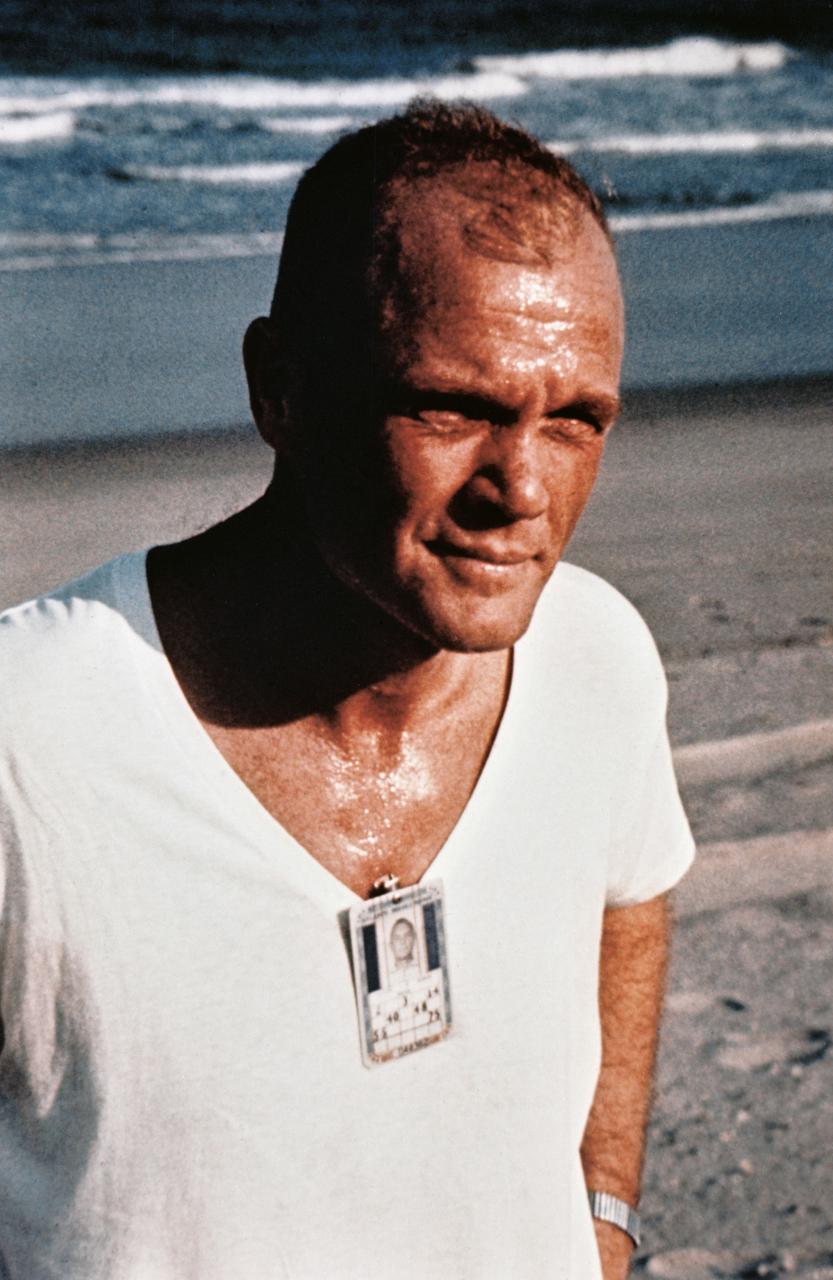
S64-14883 (1962) --- Astronaut John H. Glenn Jr., pilot of the Mercury-Atlas 6 mission, participates in a strict physical training program, as he exemplifies by frequent running. Here he pauses during an exercise period on the beach near Cape Canaveral, Florida. Photo credit: NASA
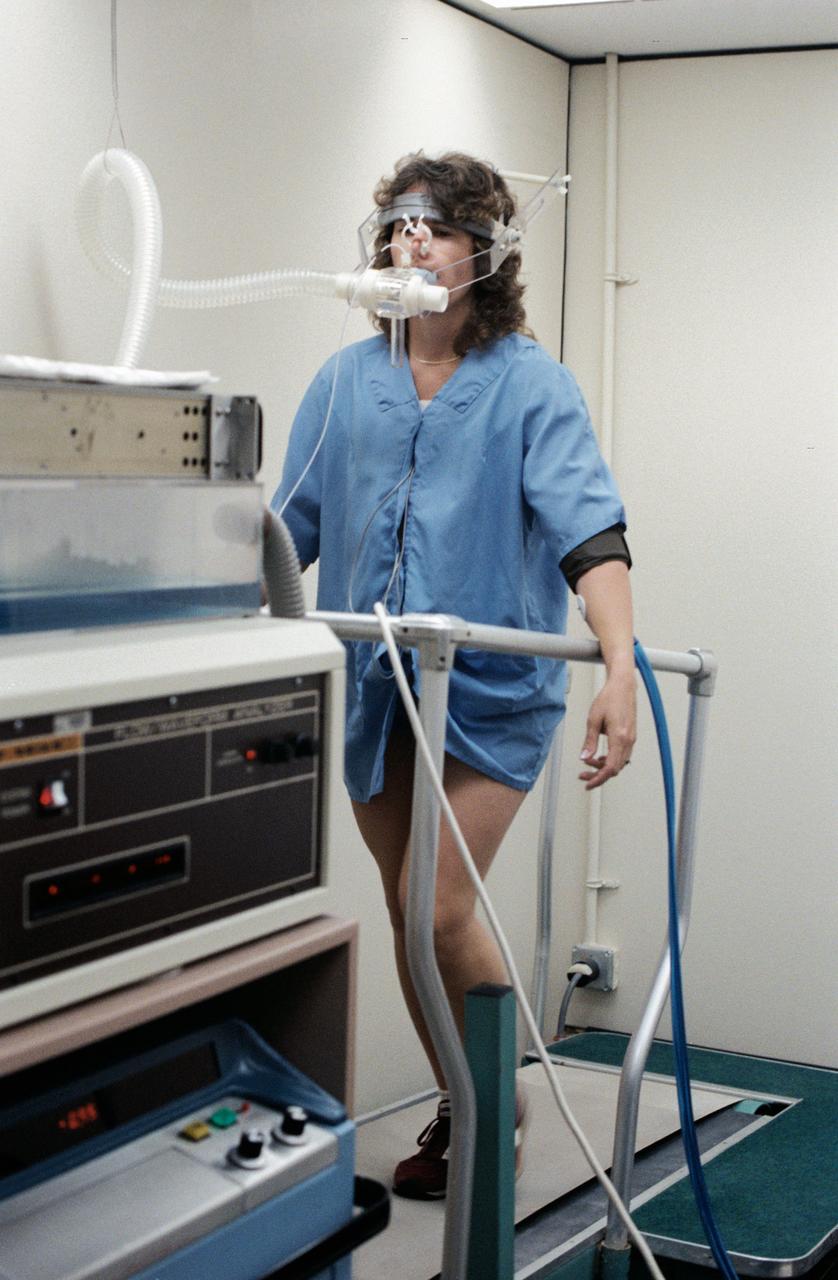
S85-37165 (8-12 July 1985) -- Sharon C. (Christa) McAuliffe of Concord High, Concord, New Hampshire, runs in place on treadmill to test physiological responses at Johnson Space Center. Christa McAuliffe was eventually chosen as the first Teacher in Space and was a member of the seven-member Challenger shuttle crew which died tragically in the explosion of the spacecraft during the launch of STS-51L from the Kennedy Space Center about 11:40 a.m., EST, on Jan. 28, 1986. The explosion occurred 73 seconds into the flight as a result of a leak in one of two Solid Rocket Boosters that ignited the main liquid fuel tank. The crew members of the Challenger represented a cross-section of the American population in terms of race, gender, geography, background, and religion. The explosion became one of the most significant events of the 1980s, as billions around the world saw the accident on television and empathized with any one of the several crew members killed. Photo credit: NASA
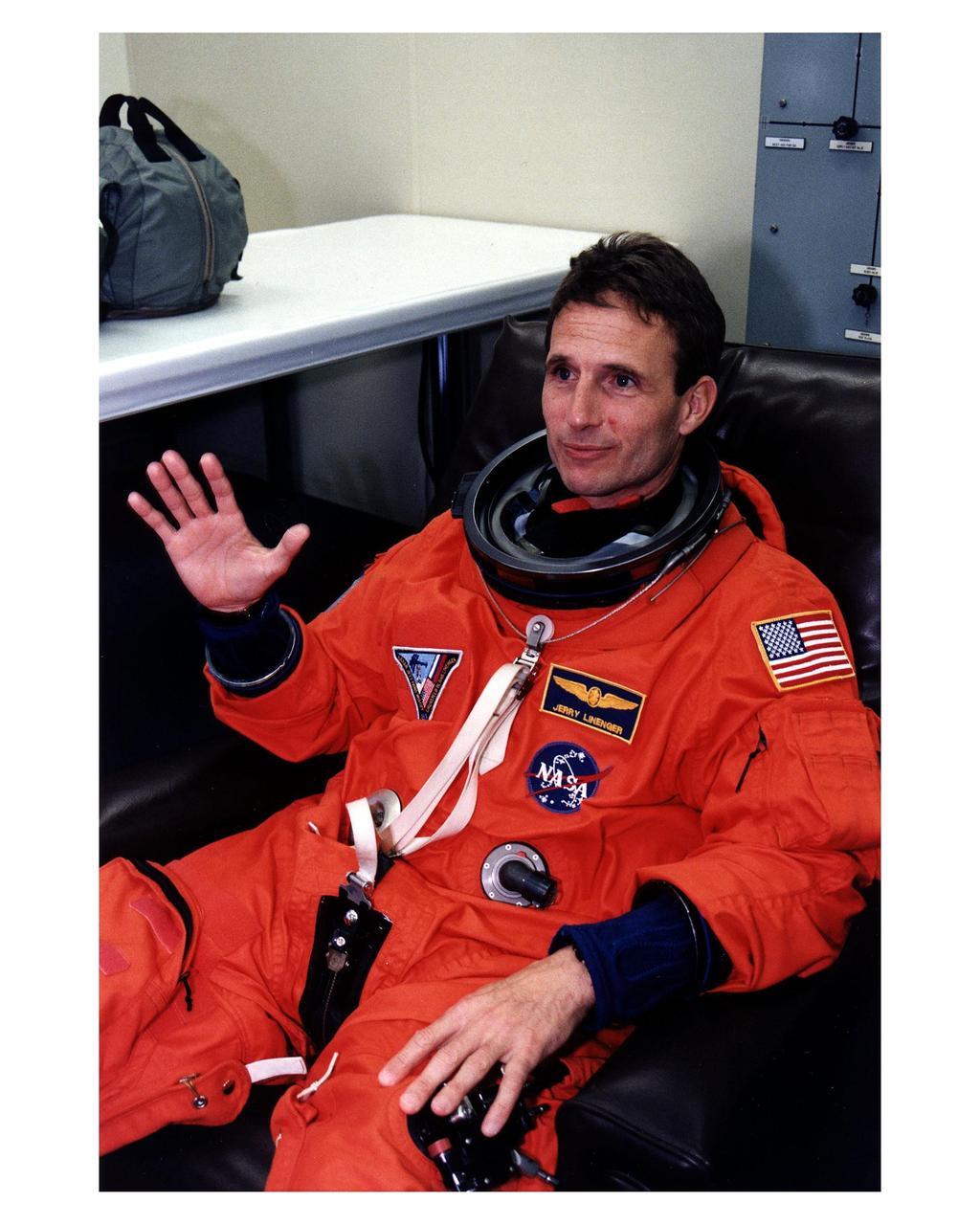
STS-81 Mission Specialist Jerry Linenger waves to the camera in his launch/entry suit and helmet in the suitup room of the Operations and Checkout (O&C) Building. He is on his second Shuttle flight and has been an astronaut since 1992. Linenger will become a member of the Mir 22 crew and replace astronaut John Blaha on the Russian space station for a four-month stay after the Space Shuttle orbiter Atlantis docks with the orbital habitat on flight day 3. A medical doctor and an exercise buff, Linenger will conduct physiological experiments during his stay on Mir. He and five crew members will shortly depart the O&C and head for Launch Pad 39B, where the Space Shuttle Atlantis will lift off during a 7-minute window that opens at 4:27 a.m. EST, January 12