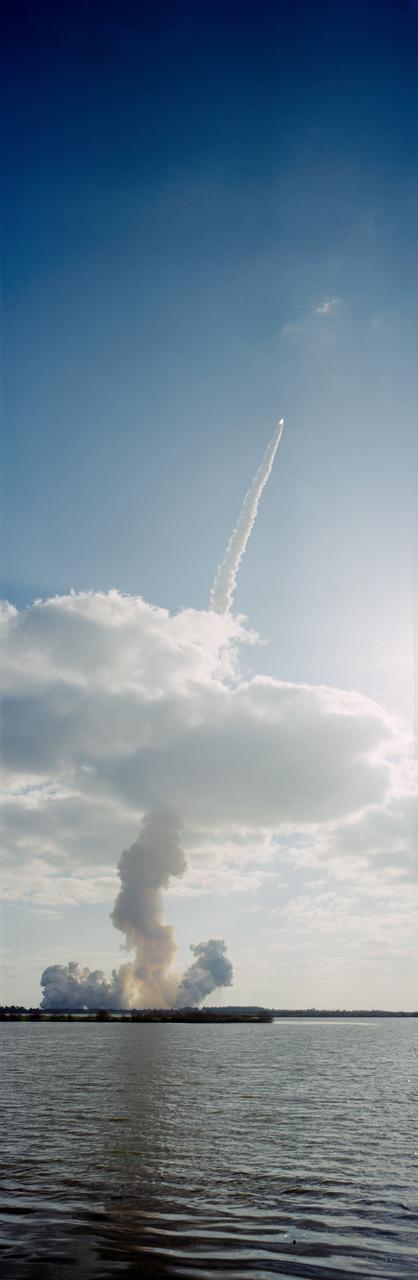
STS-31 Discovery, Orbiter Vehicle (OV) 103, rides above the firey glow of the solid rocket boosters (SRBs) and space shuttle main engines (SSMEs) and a long trail of exhaust as it heads toward Earth orbit. Kennedy Space Center (KSC) Launch Complex (LC) Pad 39B is covered in an exhaust cloud moments after the liftoff of OV-103 at 8:33:51.0492 am (Eastern Daylight Time (EDT)). The exhaust plume pierces the low-lying clouds as OV-103 soars into the clear skies above. A nearby waterway appears in the foreground.
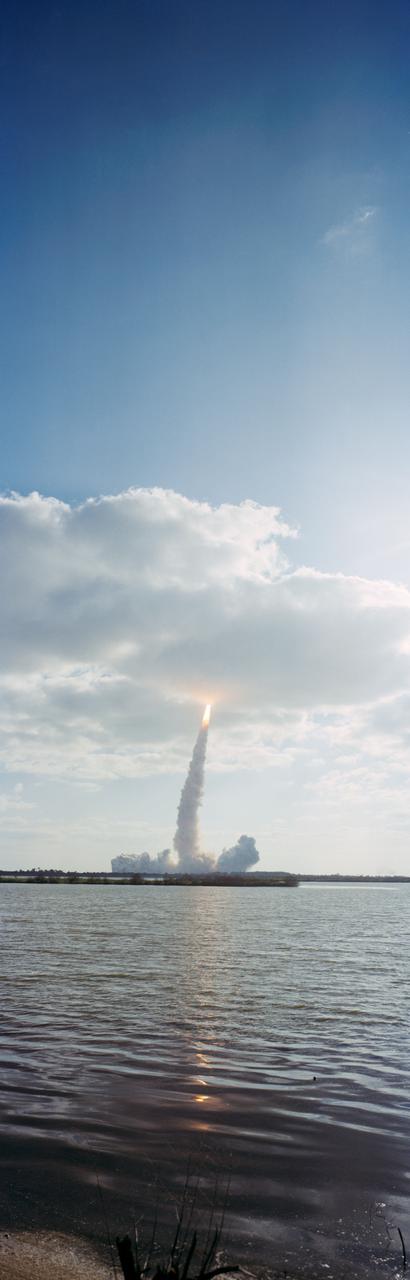
STS-31 Discovery, Orbiter Vehicle (OV) 103, is hidden in low-lying cloud cover as it rises above Kennedy Space Center (KSC) Launch Complex (LC) Pad 39B just after its liftoff at 8:33:51.0492 am (Eastern Daylight Time (EDT)). The glow of the solid rocket booster (SRB) and the space shuttle main engine (SSME) firings appears just below the cloud cover and is reflected in the nearby waterway (foreground). An exhaust plume trails from OV-103 and its SRBs and covers the launch pad area.
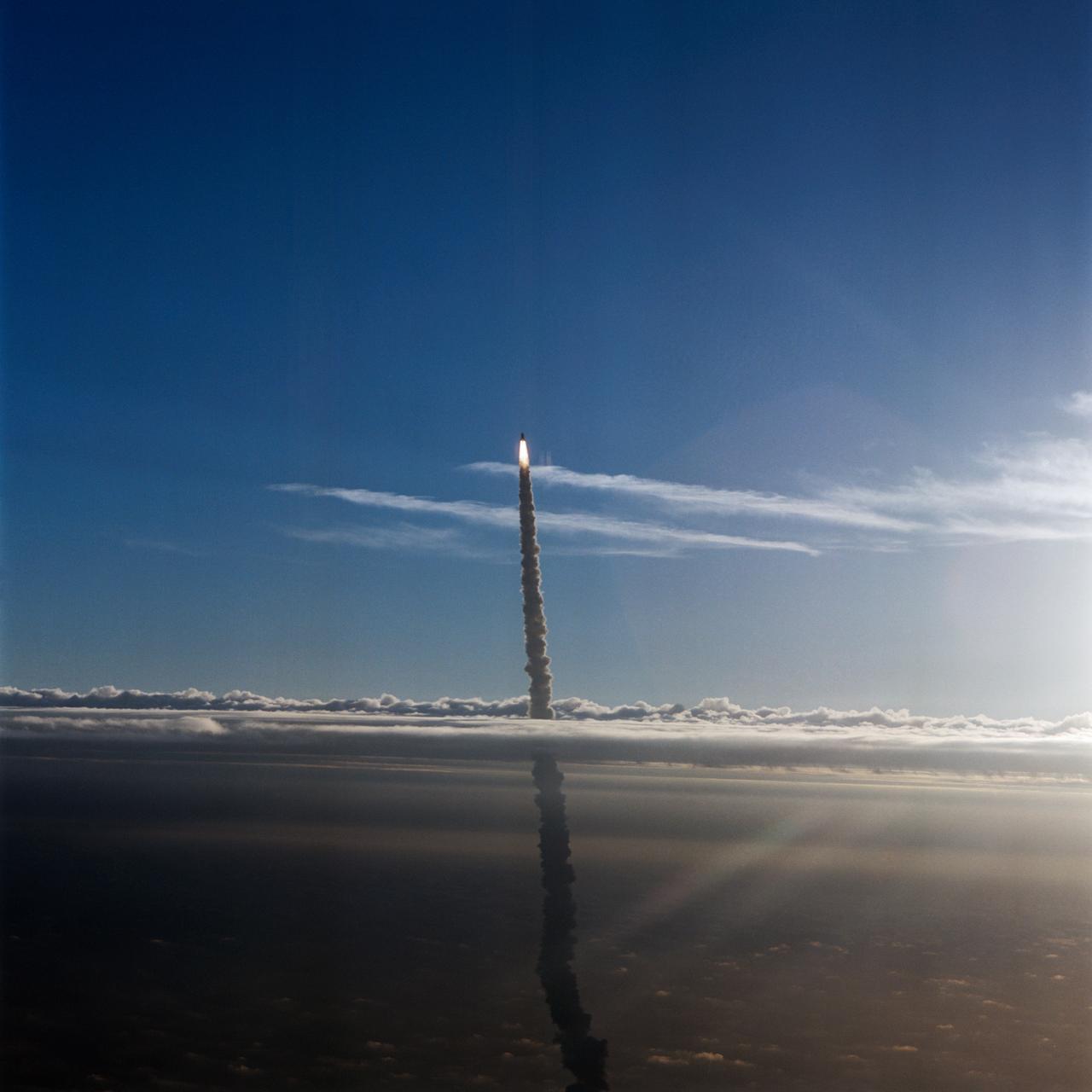
STS-32 Columbia, Orbiter Vehicle (OV) 102, pierces a layer of low lying clouds as it makes its ascent to Earth orbit for a 10-day mission. In this air-to-air view, OV-102 rides atop the external tank (ET) with flames created by solid rocket boosters (SRBs) appearing directly underneath it and a long plume of exhaust smoke trailing behind it and extending to Kennedy Space Center (KSC) Launch Complex (LC) Pad 39A below. OV-102 left KSC LC Pad 39A at 7:34:59:98 am Eastern Standard Time (EST) some 24 hours after dubious weather at the return-to-landing site (RTLS) had cancelled a scheduled launch. The photo was taken by astronaut Michael L. Coats, acting chief of the Astronaut Office, from the Shuttle Training Aircraft (STA).
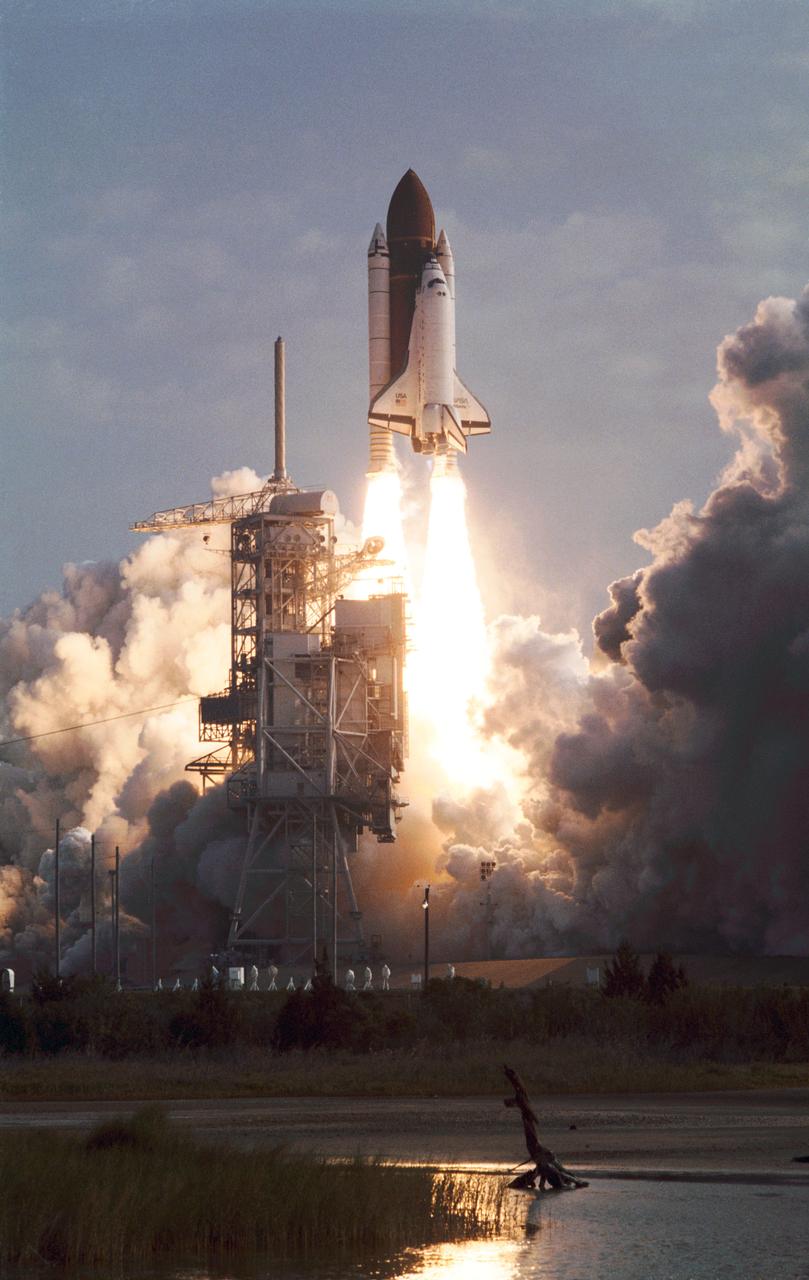
STS-45 Atlantis, Orbiter Vehicle (OV) 104, lifts off from a Kennedy Space Center (KSC) Launch Complex (LC) Pad at 8:13:40:048 am (Eastern Standard Time (EST)). Exhaust billows out the solid rocket boosters (SRBs) as OV-104 atop its external tank (ET) soars above the mobile launcher platform and is nearly clear of the fixed service structure (FSS) tower. The diamond shock effect produced by the space shuttle main engines (SSMEs) is visible. The glow of the SRB/SSME firings is reflected in a nearby waterway. An exhaust cloud covers the launch pad area.
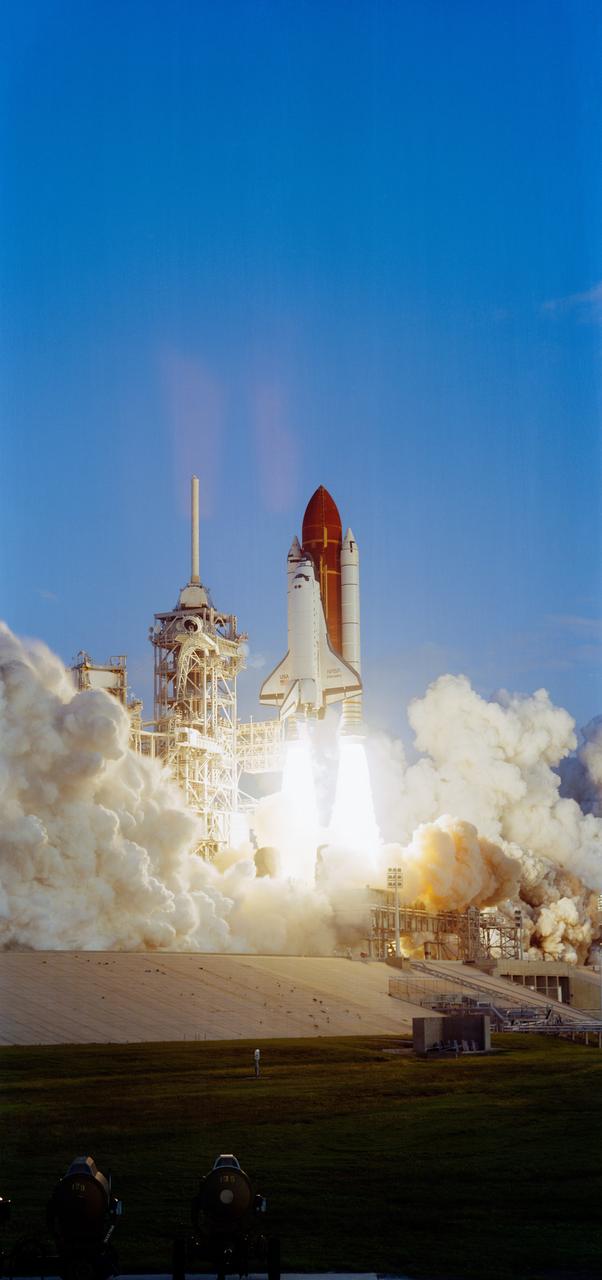
STS-41 Discovery, Orbiter Vehicle (OV) 103, lifts off from the Kennedy Space Center (KSC) Launch Complex (LC) Pad 39 mobile launcher platform at 7:47 am (Eastern Daylight Time (EDT)). OV-103 riding atop the external tank (ET) and flanked by two solid rocket boosters (SRBs), is captured just moments after liftoff. Not yet clear of the fixed service structure (FSS) tower, OV-103 is highlighted against the cloudless morning sky. Exhaust smoke billows from the SRBs and the space shuttle main engines (SSMEs) creating a cloud over the launch pad area.
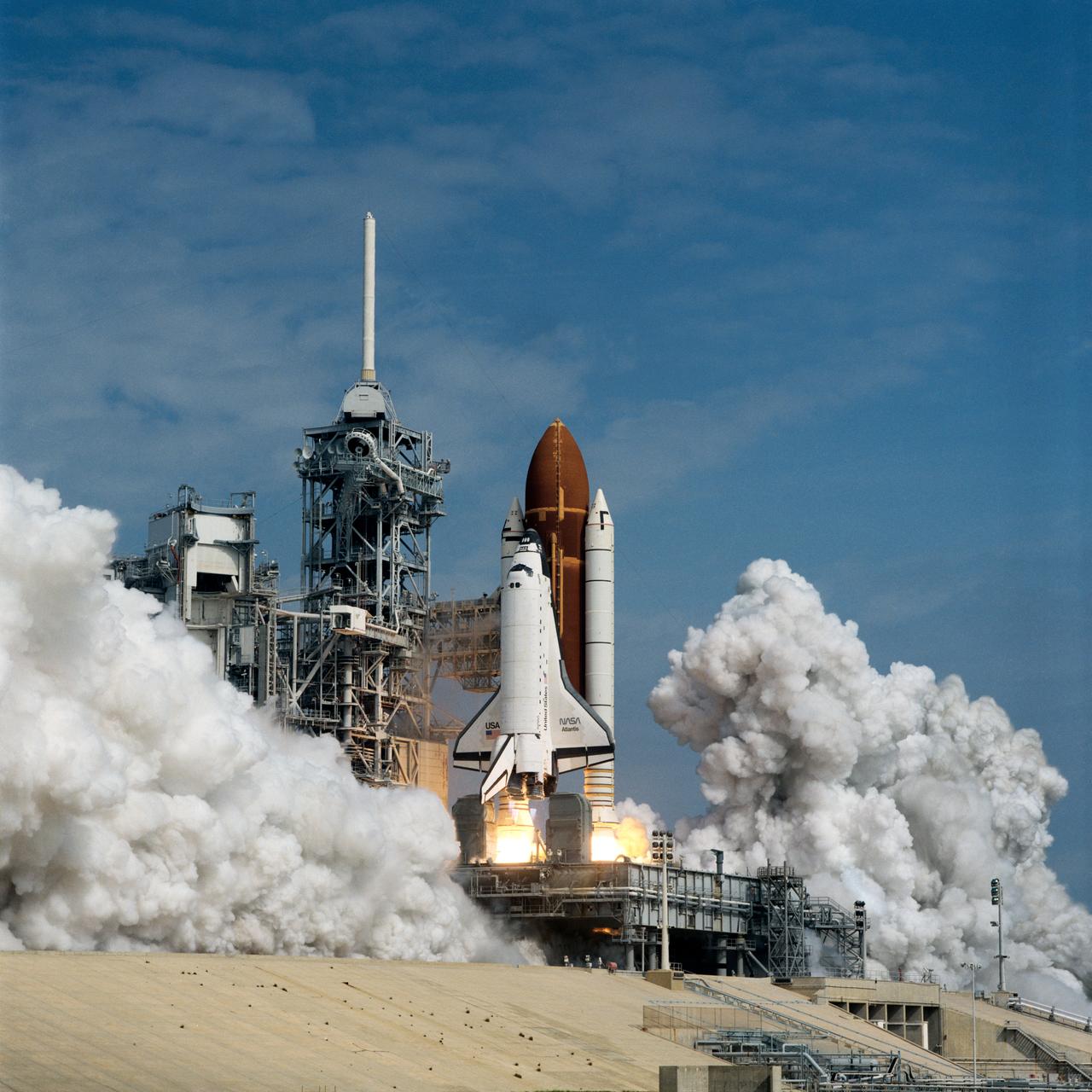
STS-37 Atlantis, Orbiter Vehicle (OV) 104, lifts off from Kennedy Space Center (KSC) Launch Complex (LC) Pad at 9:22:45:0439 (Eastern Standard Time (EST)). OV-104, atop its external tank (ET) and flanked by its two solid rocket boosters (SRBs), is captured just after space shuttle main engine (SSME) firing and as it rises above the mobile launcher platform. The fixed service structure (FSS) and retracted rotating service structure (RSS) appear along side OV-104. Clouds of exhaust smoke begin to fill the launch pad area.
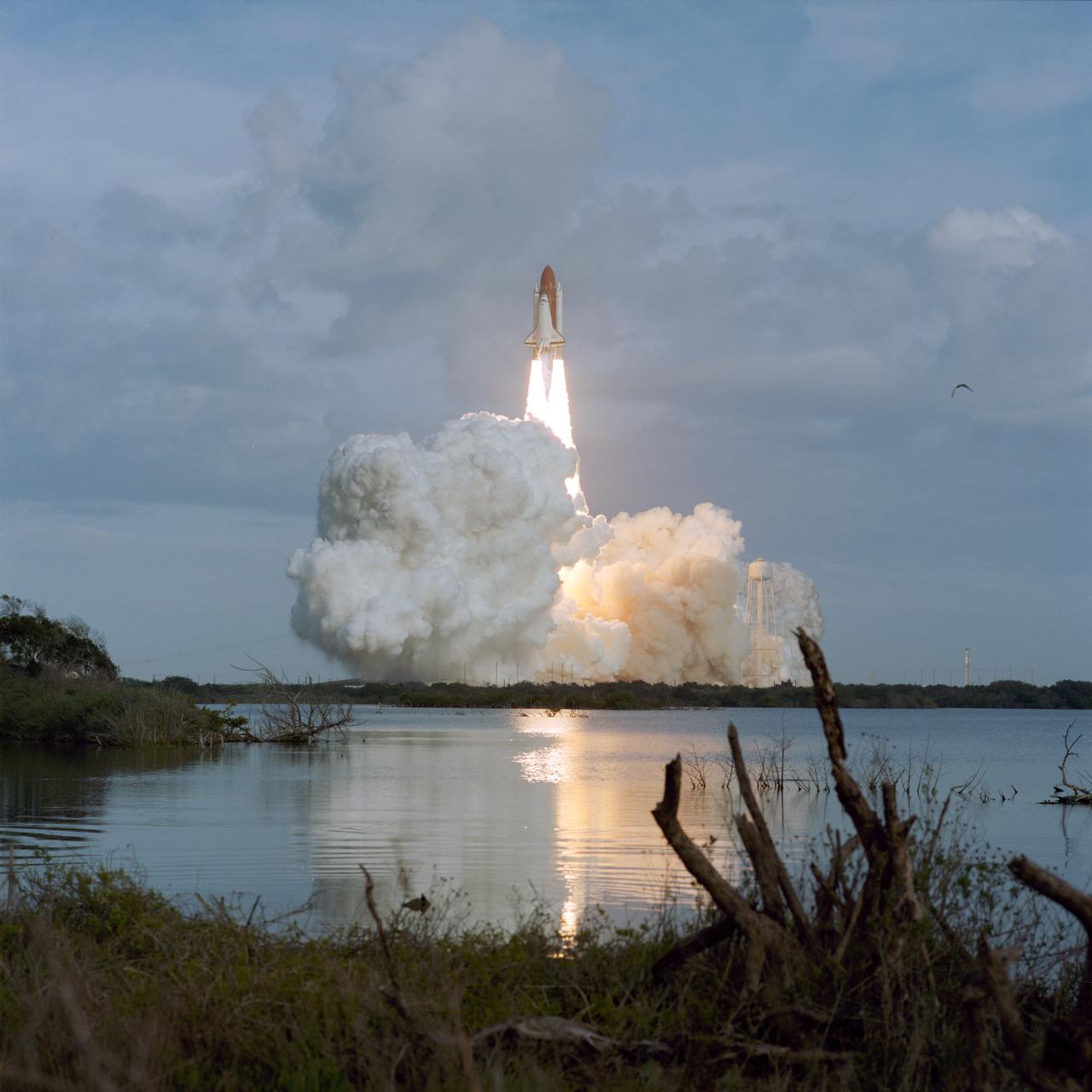
STS054-S-061 (13 Jan 1993) --- The Space Shuttle Endeavour creates a mountain of exhaust clouds as is soars off the launch pad and heads toward Earth orbit with a crew of five and the Tracking and Data Relay Satellite (TDRS-F) aboard. Launch occurred at 8:59:30 a.m. (EST), January 13, 1993. Onboard were John H. Casper, mission commander, Donald R. McMonagle, pilot, Gregory J. Harbaugh, Mario Runco Jr., and Susan J. Helms, mission specialists.
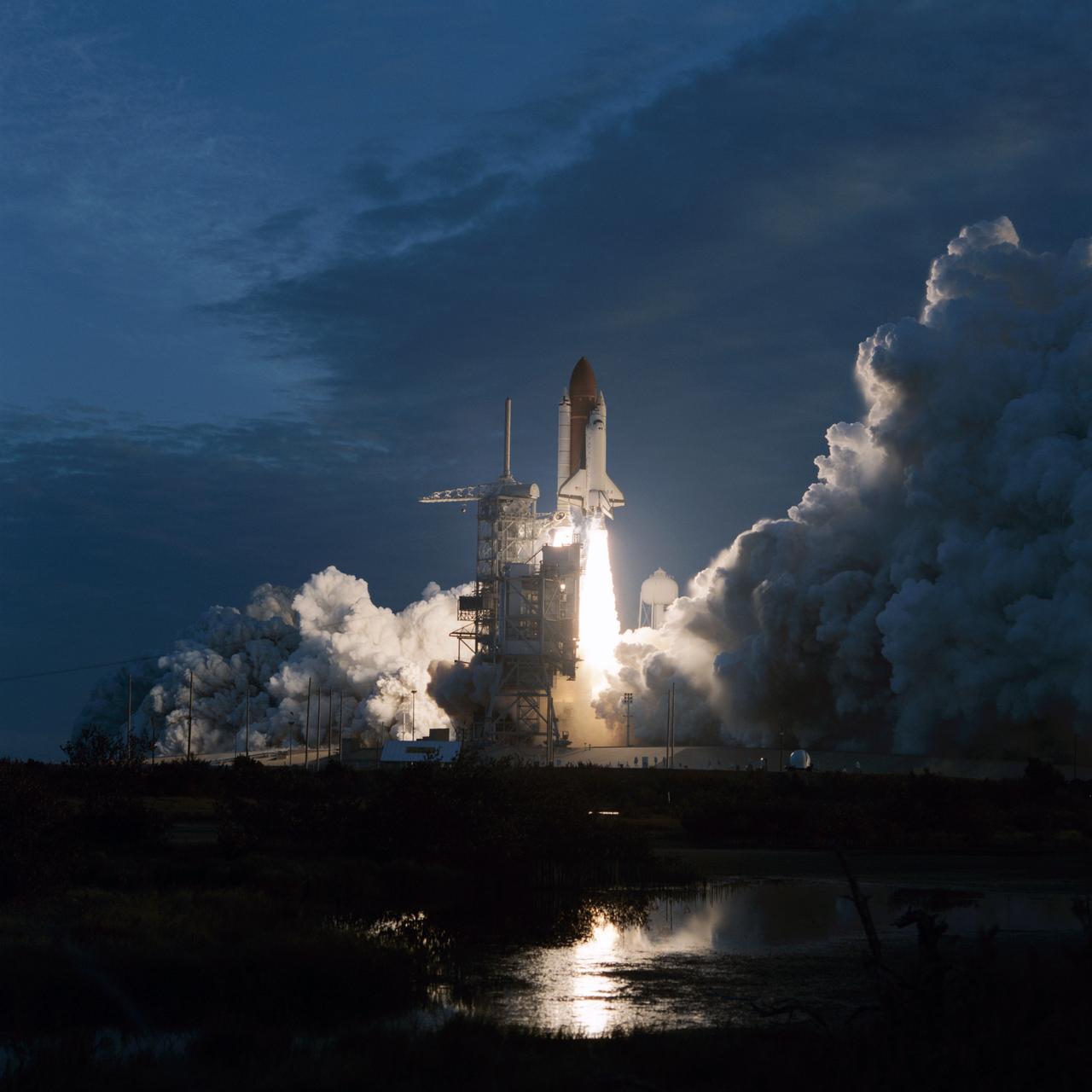
STS-32 Columbia, Orbiter Vehicle (OV) 102, its external tank (ET), and solid rocket boosters (SRBs) rise above the mobile launcher platform and begin to clear fixed service structure (FSS) tower (with rotating service structure (RSS) retracted) at Kennedy Space Center (KSC) Launch Complex (LC) Pad 39A. Liftoff occurred at 7:34:59:98 am Eastern Standard Time (EST) some 24 hours after dubious weather at the return-to-landing site (RTLS) had cancelled a scheduled launch. An exhaust cloud covers the launch pad. The firing SRBs and space shuttle main engines (SSMEs) are reflected in a nearby waterway. OV-102's launch is highlighted against the early morning darkness.
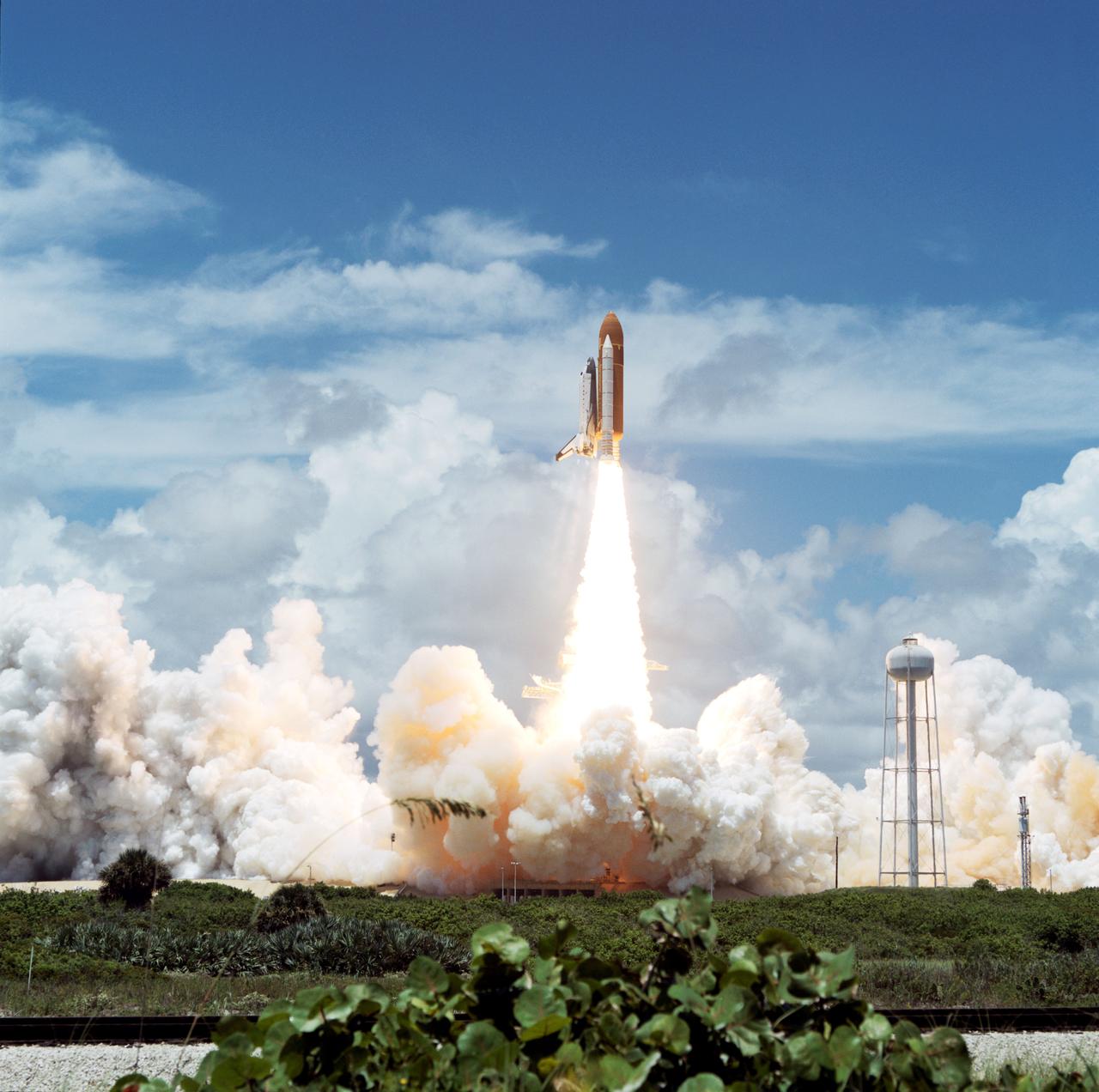
Columbia, Orbiter Vehicle (OV) 102, heads skyward after clearing the fixed service structure (FSS) tower at Kennedy Space Center (KSC) Launch Complex (LC) Pad 39A. Florida plant life appears in the foreground. The exhaust cloud produced by OV-102's solid rocket boosters (SRBs) covers the launch pad area with the exception of the sound suppression water system tower. OV-102's starboard side and the right SRB are visible from this angle. Launch occurred at 12:43 pm Eastern Daylight Time (EDT). Once in Earth orbit, STS-65's six NASA astronauts and a Japanese Payload Specialist aboard OV-102 will begin two weeks of experimentation in support of the second International Microgravity Laboratory (IML-2).
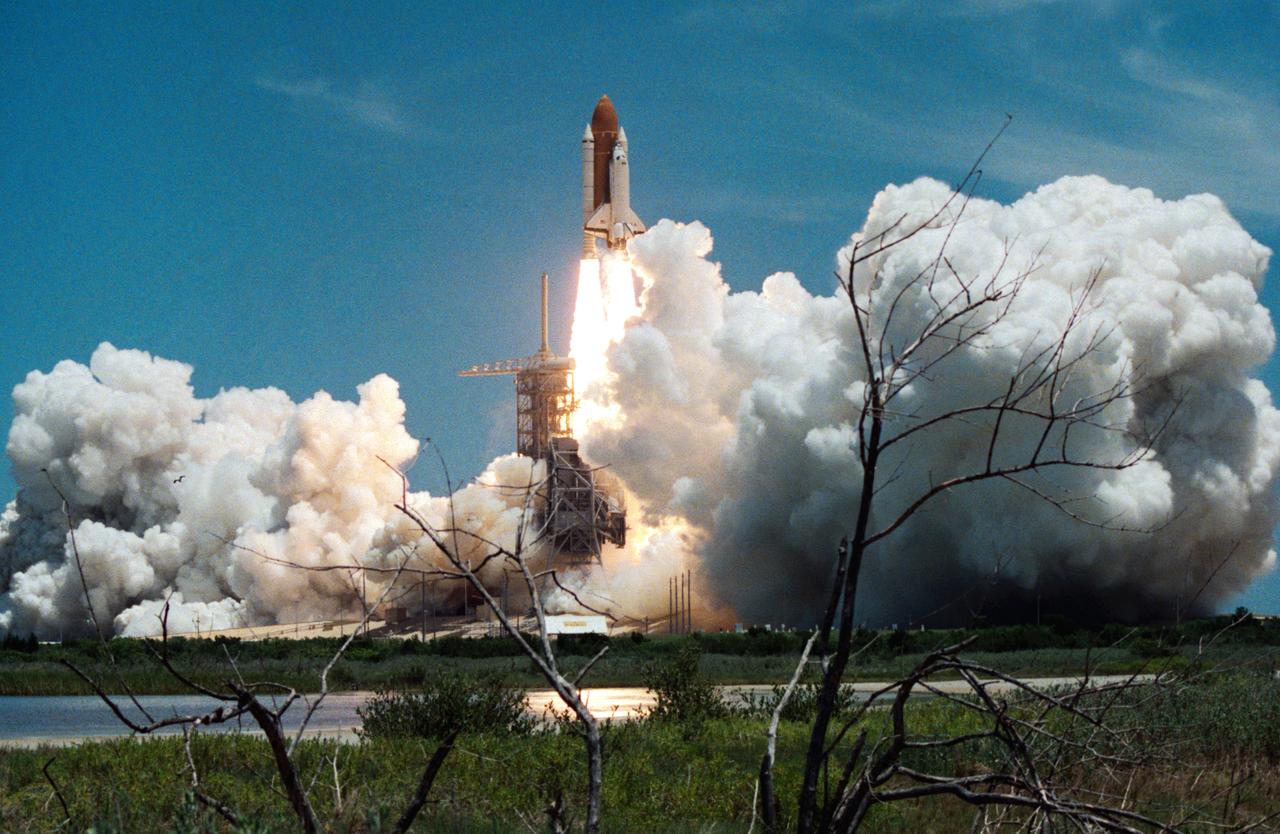
Columbia, Orbiter Vehicle (OV) 102, begins its roll maneuver after clearing the fixed service structure (FSS) tower as it rises above Kennedy Space Center (KSC) Launch Complex (LC) Pad 39A. In the foreground of this horizontal scene is Florida brush and a waterway. Beyond the brush, the shuttle's exhaust cloud envelops the immediate launch pad area. Launch occurred at 12:43 pm Eastern Daylight Time (EDT). The glow of the space shuttle main engine (SSME) and solid rocket booster (SRB) firings is reflected in the nearby waterway. Once in Earth orbit, STS-65's six NASA astronauts and a Japanese Payload Specialist aboard OV-102 will begin two weeks of experimentation in support of the second International Microgravity Laboratory (IML-2).
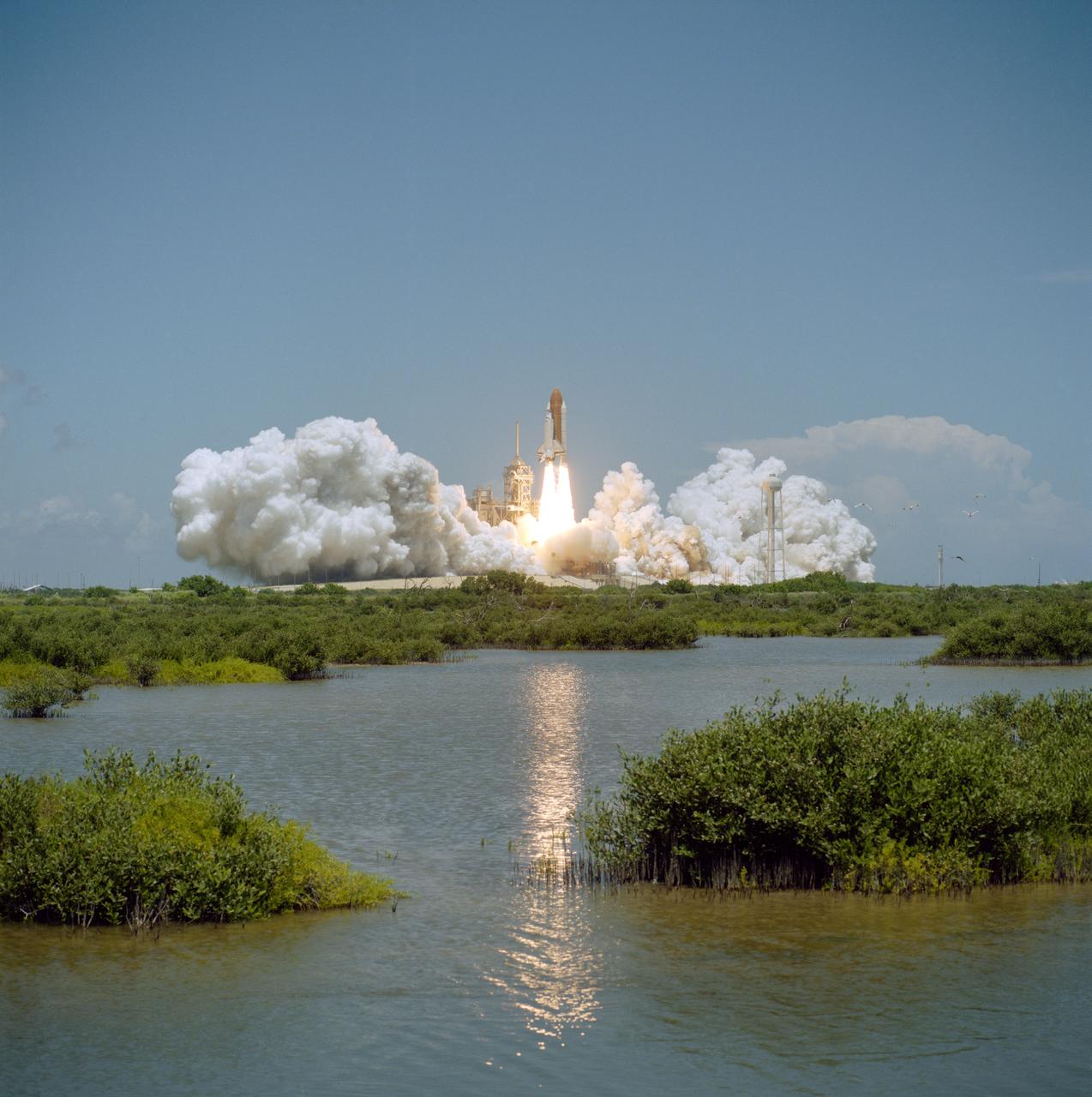
Columbia, Orbiter Vehicle (OV) 102, rises above Kennedy Space Center (KSC) Launch Complex (LC) Pad 39A after liftoff at 12:43 pm Eastern Daylight Time (EDT). An exhaust cloud covers the launch pad area and the glow of the space shuttle main engine (SSME) and solid rocket booster (SRB) firings is reflected in a nearby marsh as OV-102 atop its external tank (ET) heads toward Earth orbit. A small flock of birds is visible at the right. Once in Earth's orbit, STS-65's six NASA astronauts and a Japanese Payload Specialist aboard OV-102 will begin two weeks of experimentation in support of the second International Microgravity Laboratory (IML-2) mission.
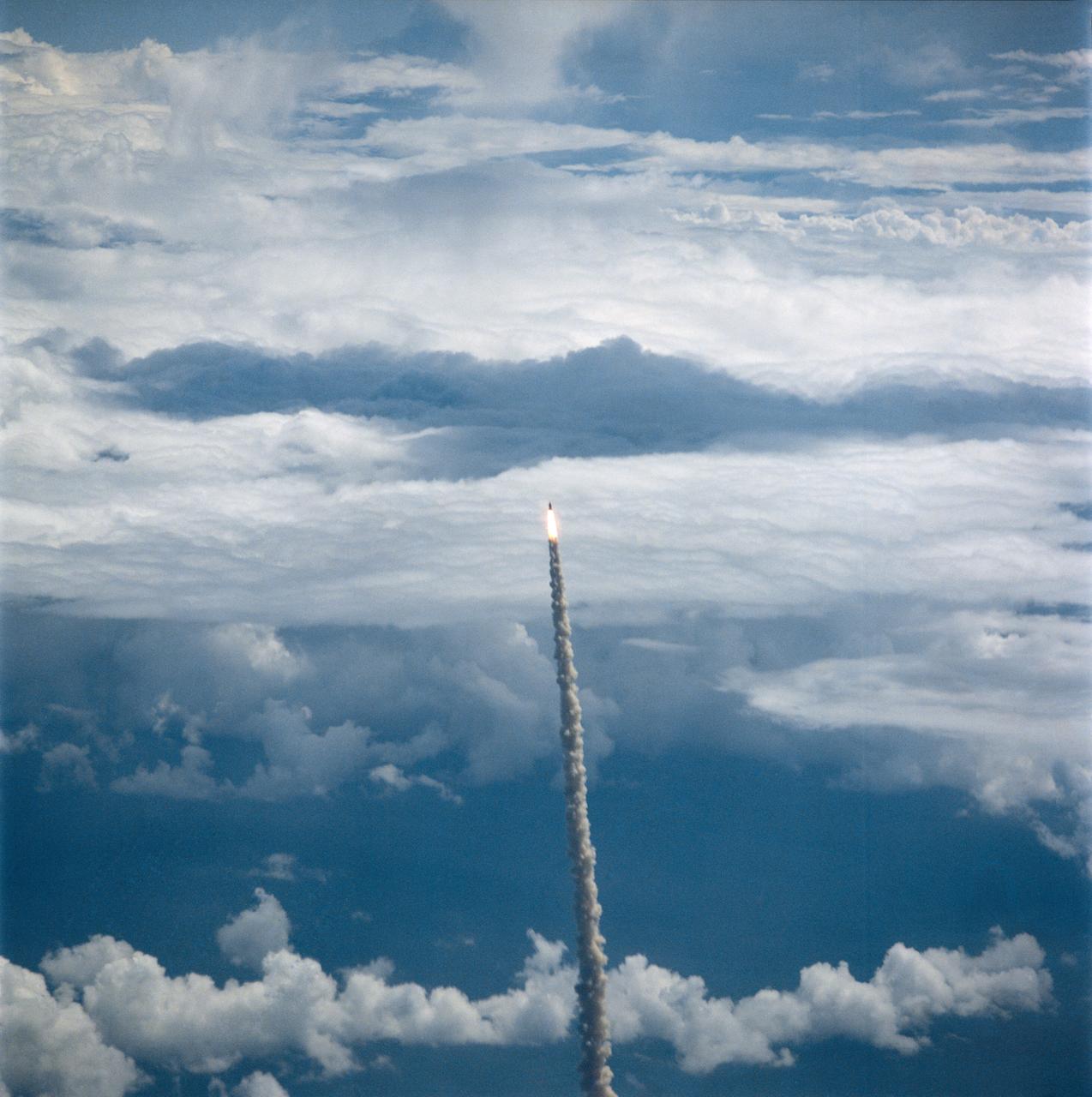
S26-S-026 (29 Sept. 1988) --- The STS-26 launch was captured on film from the NASA Shuttle Training Aircraft, piloted by astronaut Daniel C. Brandenstein, chief of JSC's Astronaut Office. Discovery?s mission was the first flight to be flown after the Challenger accident. The flight crew included astronauts Rick Hauck, commander; Dick Covey, pilot; and three mission specialists, Dave Hilmers, Mike Lounge, and George (Pinky) Nelson. During the four-day mission, the crew deployed the Tracking and Data Relay Satellite (TDRS-C) and operated eleven mid-deck experiments. Discovery completed 64 orbits of the earth before landing at Edwards Air Force Base, California, on October 3, 1988. Photo credit: NASA or National Aeronautics and Space Administration
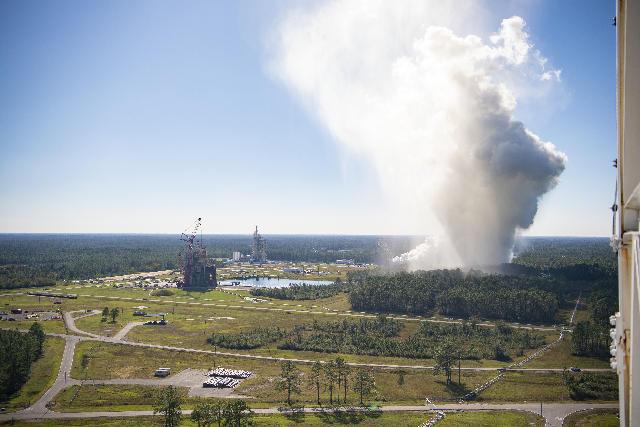
The RS-25 certification test series begins Oct. 17. When the liquid hydrogen and liquid oxygen propellants mix and ignite, an extremely high temperature exhaust, of up to 6,000-degrees Fahrenheit, mixes with water to form steam that exits the flame deflector and rises into the atmosphere, forming a cloud that subsequently cools.
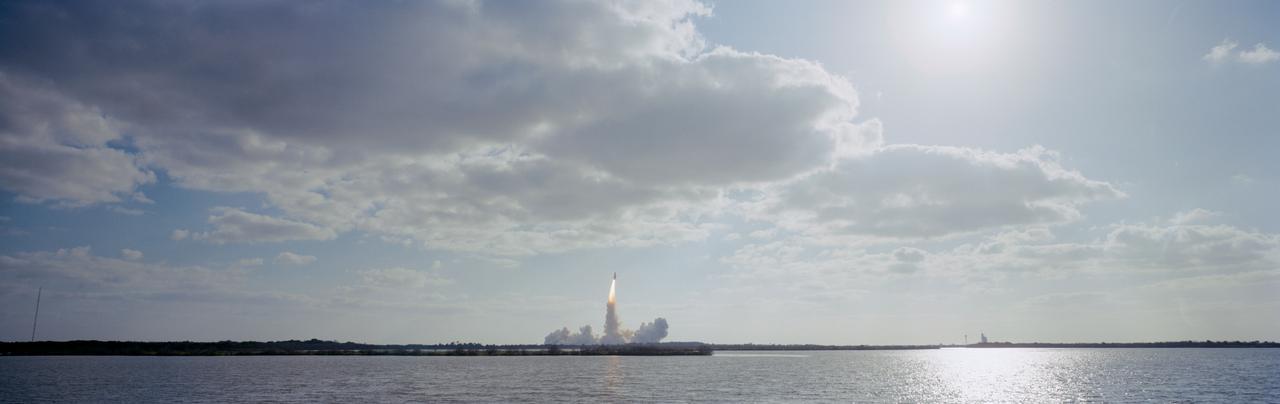
In this distant view, STS-31 Discovery, Orbiter Vehicle (OV) 103, is seen as it heads skyward after liftoff from Kennedy Space Center (KSC) Launch Complex (LC) Pad 39B at 8:33:51.0492 am (Eastern Daylight Time (EDT)). OV-103's silhouette atop the external tank (ET) appears above the glow of the solid rocket booster (SRB) and space shuttle main engine (SSME) firings. An exhaust plume trails behind and covers the launch pad area below the orbiter. A nearby waterway reflects the SRB/SSME glow in the foreground. At the far right and barely discernible is KSC LC Pad 39A and the Sound Supression Water System tower. Columbia, OV-102, is on LC Pad 39A which is separated by a distance of 1.6 miles. This was the first time since January 1986 that there was a shuttle on each pad.
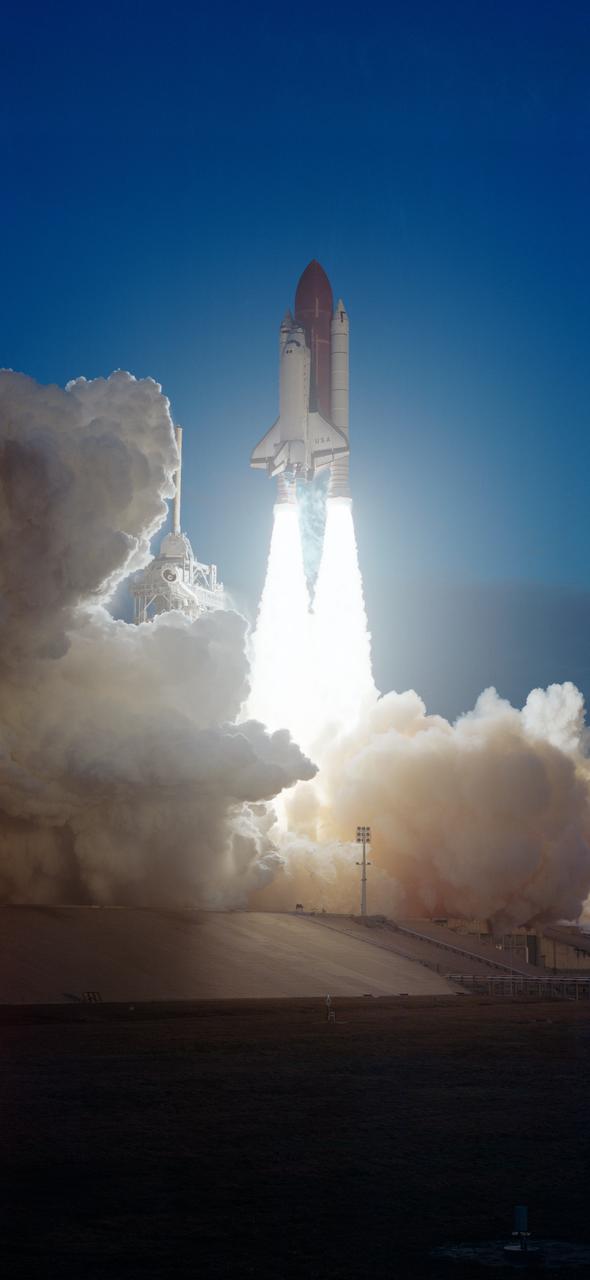
STS-32 Columbia, Orbiter Vehicle (OV) 102, atop the external tank (ET) and flanked by two solid rocket boosters (SRBs) rises above the mobile launcher platform and is nearly clear of the fixed service structure (FSS) tower at Kennedy Space Center (KSC) Launch Complex (LC) Pad 39A. Plumes of smoke billow from the SRBs and cover the launch pad in a cloud. Liftoff occurred at 7:34:59:98 am Eastern Standard Time (EST) some 24 hours after dubious weather at the return-to-landing site (RTLS) had cancelled a scheduled launch. OV-102's launch is highlighted against the early morning darkness.
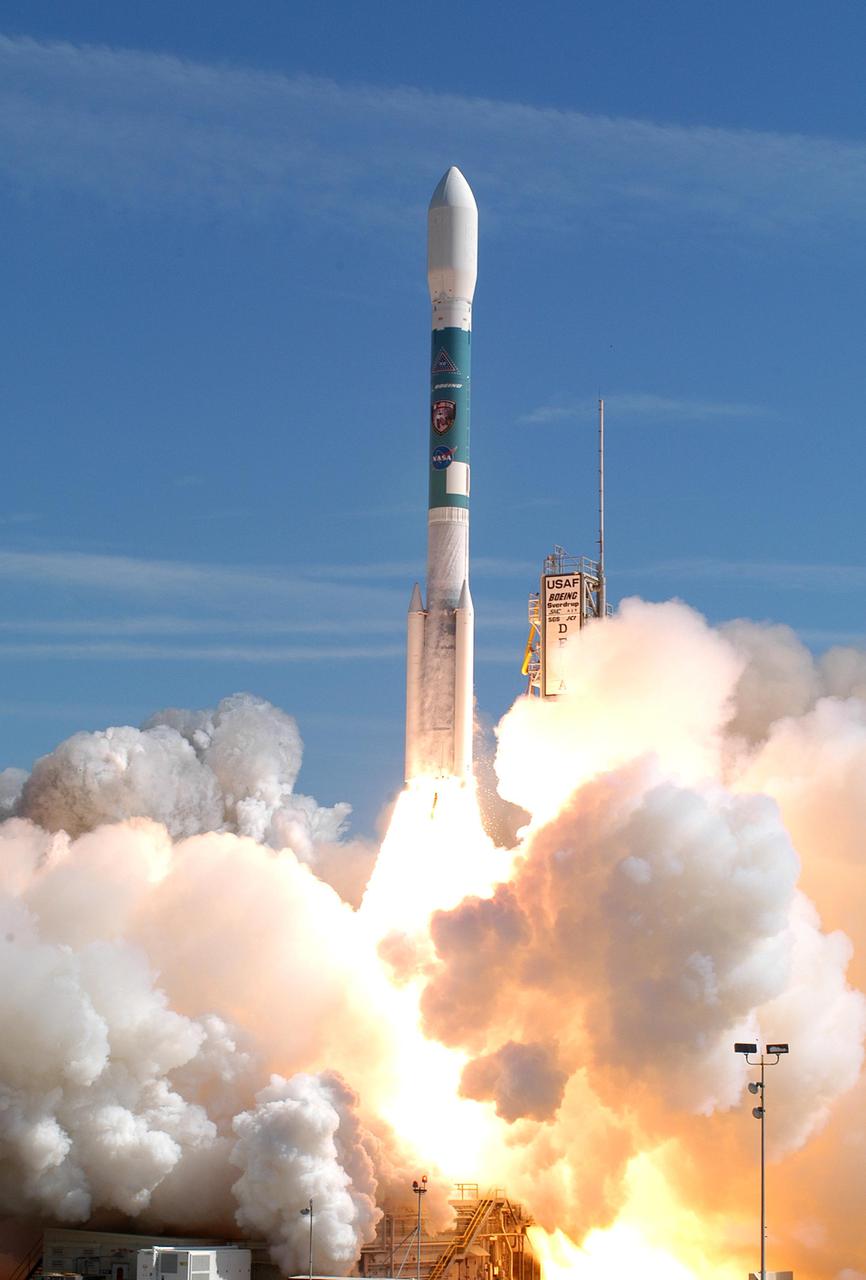
KENNEDY SPACE CENTER, FLA. - Clouds of exhaust form around a Boeing Delta II expendable launch vehicle as it blasts NASA's Swift spacecraft on its mission at Complex 17A, Cape Canaveral Air Force Station, on Nov. 20 at 12:16:00.611 p.m. EST. Swift is a first-of-its-kind multi-wavelength observatory dedicated to the study of gamma-ray burst science. Its three instruments will work together to observe GRBs and afterglows in the gamma ray, X-ray, ultraviolet and optical wavebands.
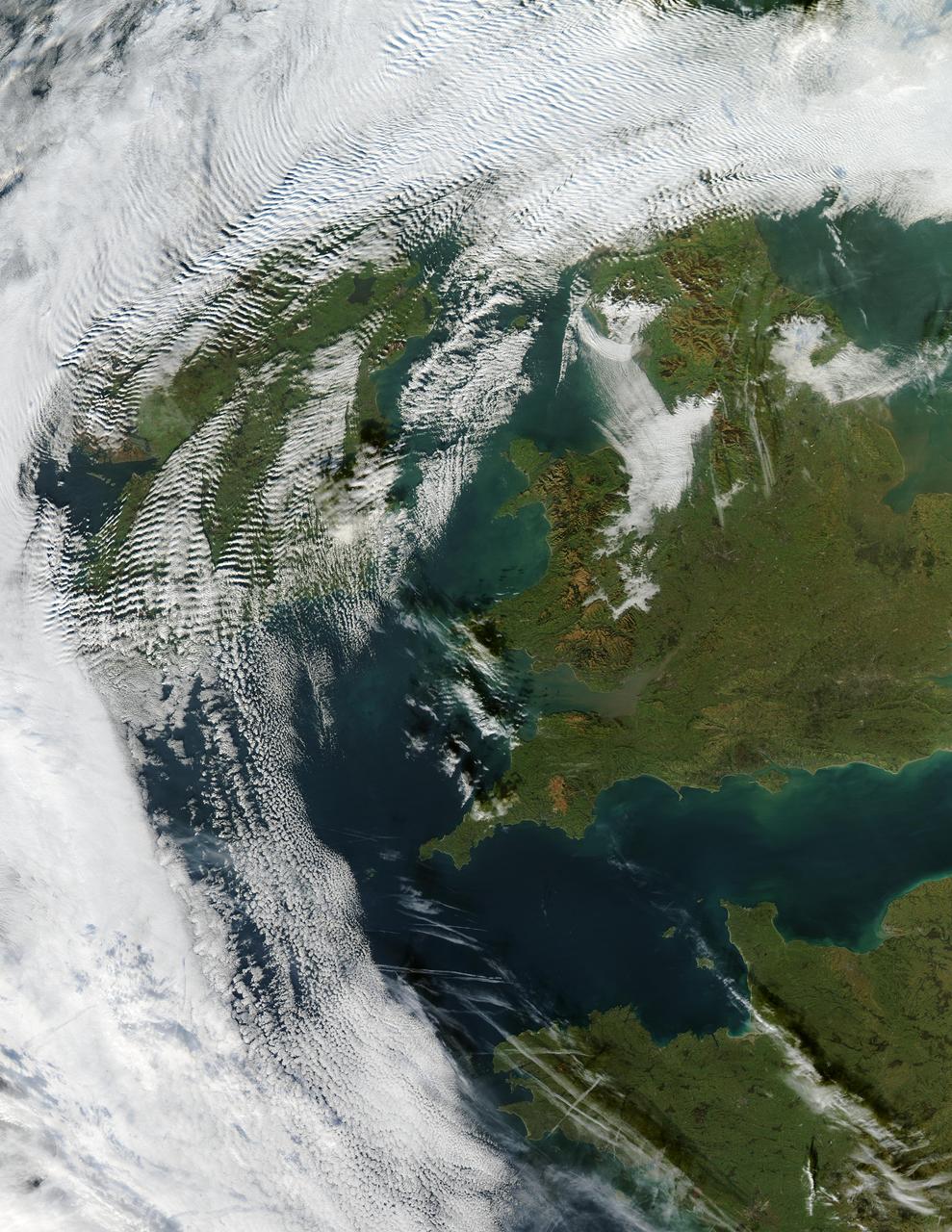
Visualization Date 2003-12-18 Clouds ripple over Ireland and Scotland in a wave pattern, similar to the pattern of waves along a seashore. The similarity is not coincidental — the atmosphere behaves like a fluid, so when it encounters an obstacle, it must move around it. This movement forms a wave, and the wave movement can continue for long distances. In this case, the waves were caused by the air moving over and around the mountains of Scotland and Ireland. As the air crested a wave, it cooled, and clouds formed. Then, as the air sank into the trough, the air warmed, and clouds did not form. This pattern repeated itself, with clouds appearing at the peak of every wave. Other types of clouds are also visible in the scene. Along the northwestern and southwestern edges of this true-color image from December 17, 2003, are normal mid-altitude clouds with fairly uniform appearances. High altitude cirrus-clouds float over these, casting their shadows on the lower clouds. Open- and closed-cell clouds formed off the coast of northwestern France, and thin contrail clouds are visible just east of these. Contrail clouds form around the particles carried in airplane exhaust. Fog is also visible in the valleys east of the Cambrian Mountains, along the border between northern/central Wales and England. This is an Aqua MODIS image. Sensor Aqua/MODIS Credit Jacques Descloitres, MODIS Rapid Response Team, NASA/GSFC For more information go to: <a href="http://visibleearth.nasa.gov/view_rec.php?id=6146" rel="nofollow">visibleearth.nasa.gov/view_rec.php?id=6146</a>
![KENNEDY SPACE CENTER, FLA. - Clouds of exhaust form around a Boeing Delta II expendable launch vehicle as it blasts NASA’s Swift spacecraft on its mission from Complex 17-A, Cape Canaveral Air Force Station, at 12:16:00.611 p.m. EST Nov. 20 . Swift is a first-of-its-kind multi-wavelength observatory dedicated to the study of gamma-ray burst science. Its three instruments will work together to observe GRBs and afterglows in the gamma ray, X-ray, ultraviolet and optical wavebands. [Photo courtesy of Scott Andrews]](https://images-assets.nasa.gov/image/04pd2356/04pd2356~medium.jpg)
KENNEDY SPACE CENTER, FLA. - Clouds of exhaust form around a Boeing Delta II expendable launch vehicle as it blasts NASA’s Swift spacecraft on its mission from Complex 17-A, Cape Canaveral Air Force Station, at 12:16:00.611 p.m. EST Nov. 20 . Swift is a first-of-its-kind multi-wavelength observatory dedicated to the study of gamma-ray burst science. Its three instruments will work together to observe GRBs and afterglows in the gamma ray, X-ray, ultraviolet and optical wavebands. [Photo courtesy of Scott Andrews]

KENNEDY SPACE CENTER, FLA. - This view shows the 32-inch-ball turret system mounted on the nose of a WB-57 aircraft at Patrick Air Force Base in Cocoa Beach, Fla. It houses an optical bench, providing installation of both HDTV and infrared cameras as part of the NASA-approved WB-57 Ascent Video Experiment (WAVE). Flown during launch of a Space Shuttle, the WAVE provides both ascent and entry imagery and enables better observation of the Shuttle on days of heavier cloud cover and areas obscured from ground cameras by the launch exhaust plume. The WB-57 is being prepared for launch of Space Shuttle Discovery on Return to Flight mission STS-114.
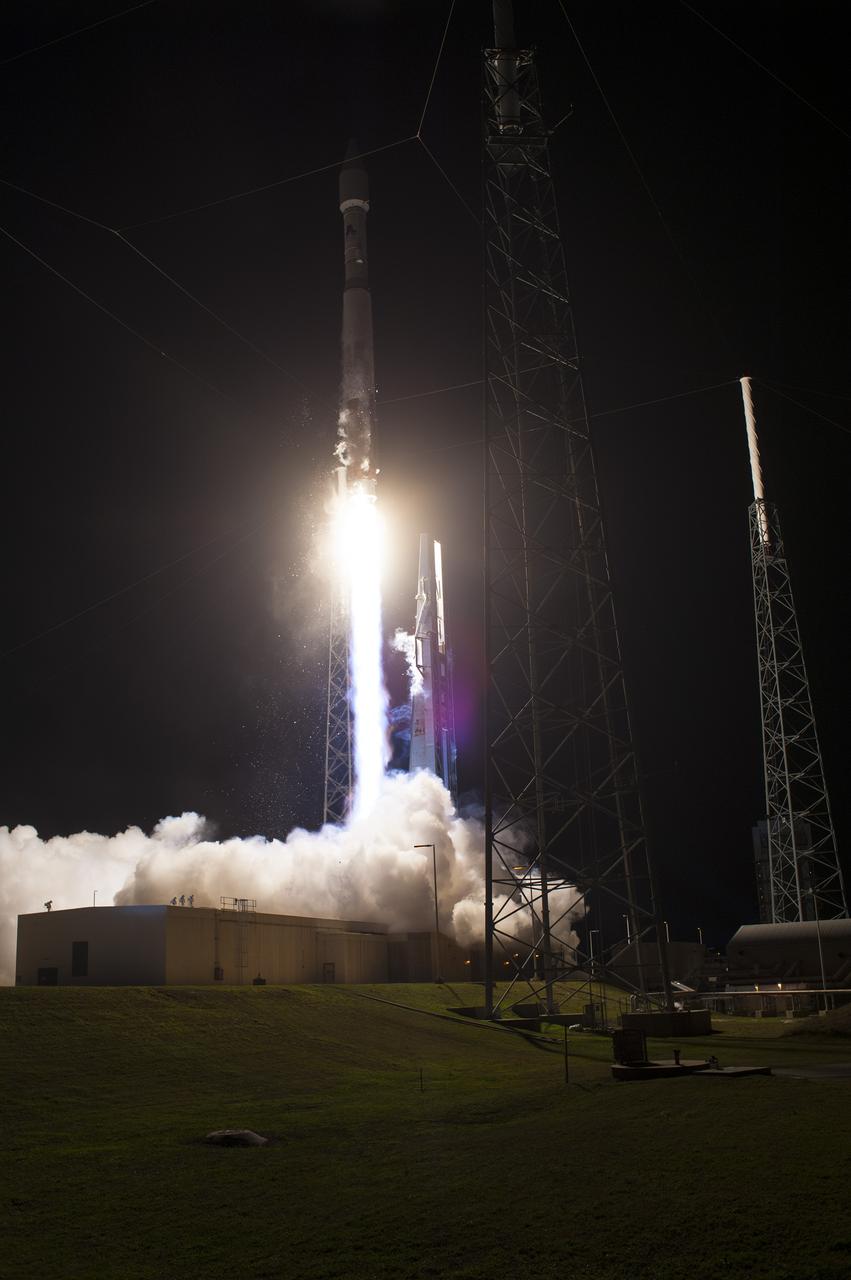
CAPE CANAVERAL, Fla. -- A cloud of exhaust and smoke forms under a United Launch Alliance Atlas V 401 rocket on Space Launch Complex 41 on Cape Canaveral Air Force Station in Florida as it lifts off at 8:48 p.m. EST, carrying NASA's Tracking and Data Relay Satellite-K, TDRS-K, to orbit. The TDRS-K spacecraft is part of the next-generation series in the Tracking and Data Relay Satellite System, a constellation of space-based communication satellites providing tracking, telemetry, command and high-bandwidth data return services. For more information, visit http:__www.nasa.gov_mission_pages_tdrs_index.html. Photo credit: NASA_Tony Gray and Robert Murray
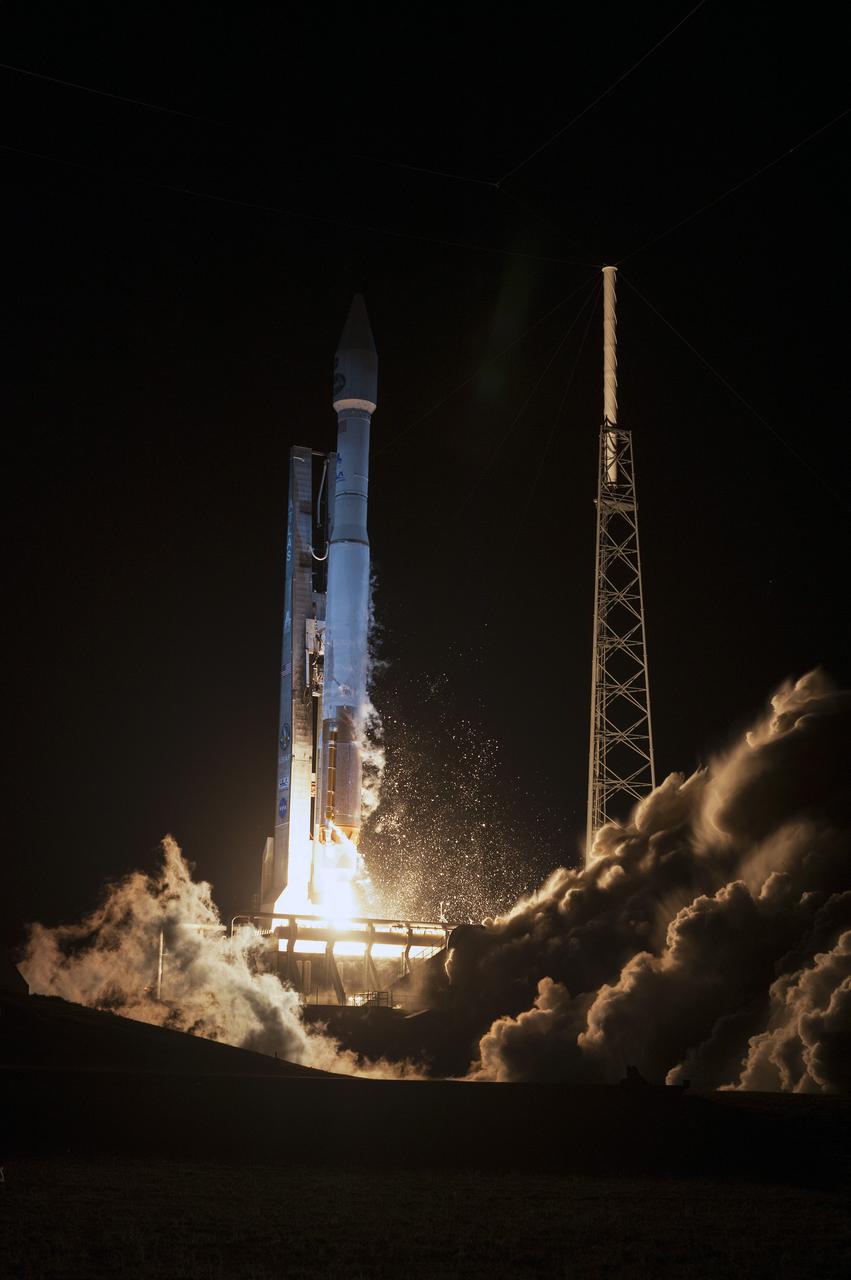
CAPE CANAVERAL, Fla. -- A cloud of exhaust and smoke billows past a lightning mast on Space Launch Complex 41 on Cape Canaveral Air Force Station in Florida as a United Launch Alliance Atlas V 401 rocket lifts off at 8:48 p.m. EST, carrying NASA's Tracking and Data Relay Satellite-K, TDRS-K, to orbit. The TDRS-K spacecraft is part of the next-generation series in the Tracking and Data Relay Satellite System, a constellation of space-based communication satellites providing tracking, telemetry, command and high-bandwidth data return services. For more information, visit http:__www.nasa.gov_mission_pages_tdrs_index.html. Photo credit: NASA_Tony Gray and Robert Murray
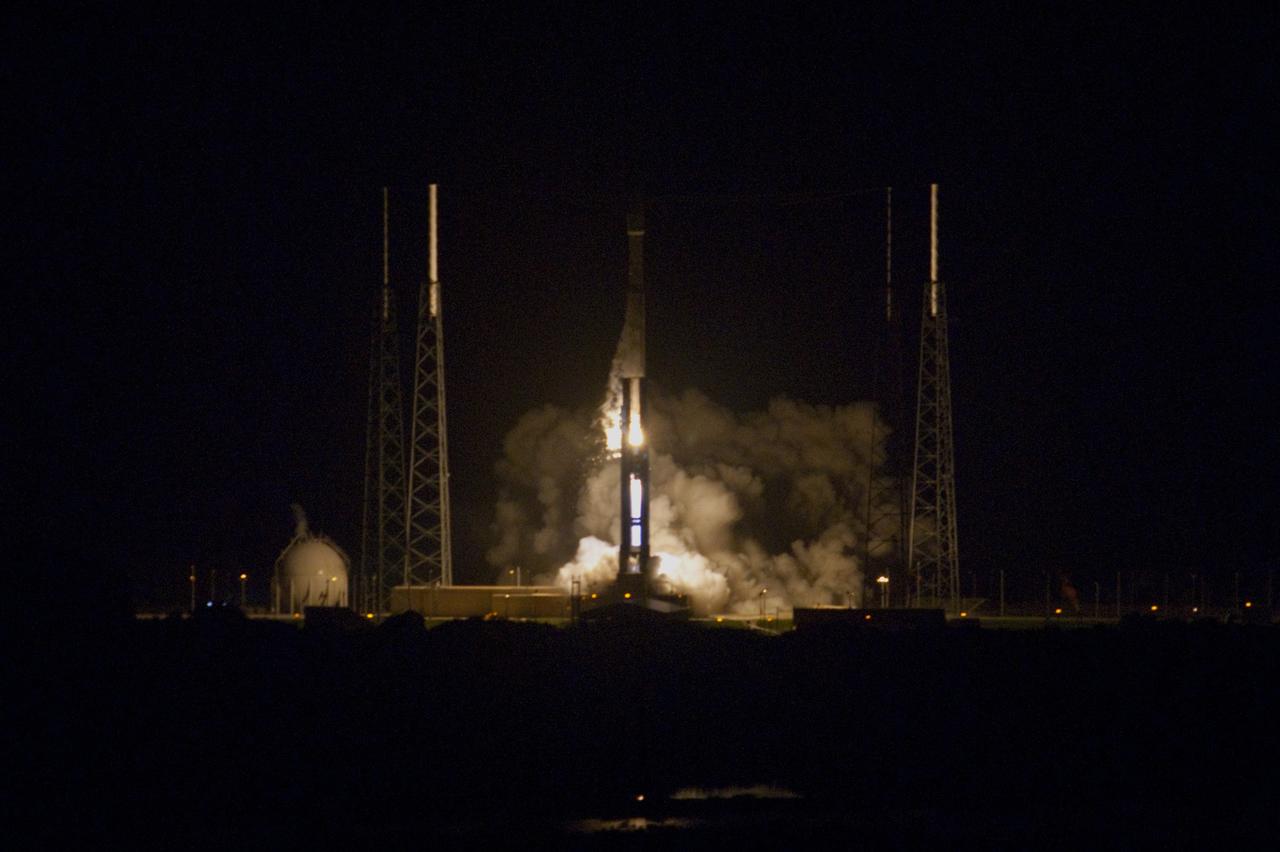
CAPE CANAVERAL, Fla. – Exhaust clouds billow across the pad at Space Launch Complex 41 on Cape Canaveral Air Force Station in Florida as the United Launch Alliance Atlas V rocket carrying NASA's Radiation Belt Storm Probes, or RBSP, lifts off at 4:05 a.m. EDT. RBSP will explore changes in Earth's space environment caused by the sun -- known as "space weather" -- that can disable satellites, create power-grid failures and disrupt GPS service. The mission also will provide data on the fundamental radiation and particle acceleration processes throughout the universe. For more information on RBSP, visit http://www.nasa.gov/rbsp. Photo credit: NASA/Gianni Woods
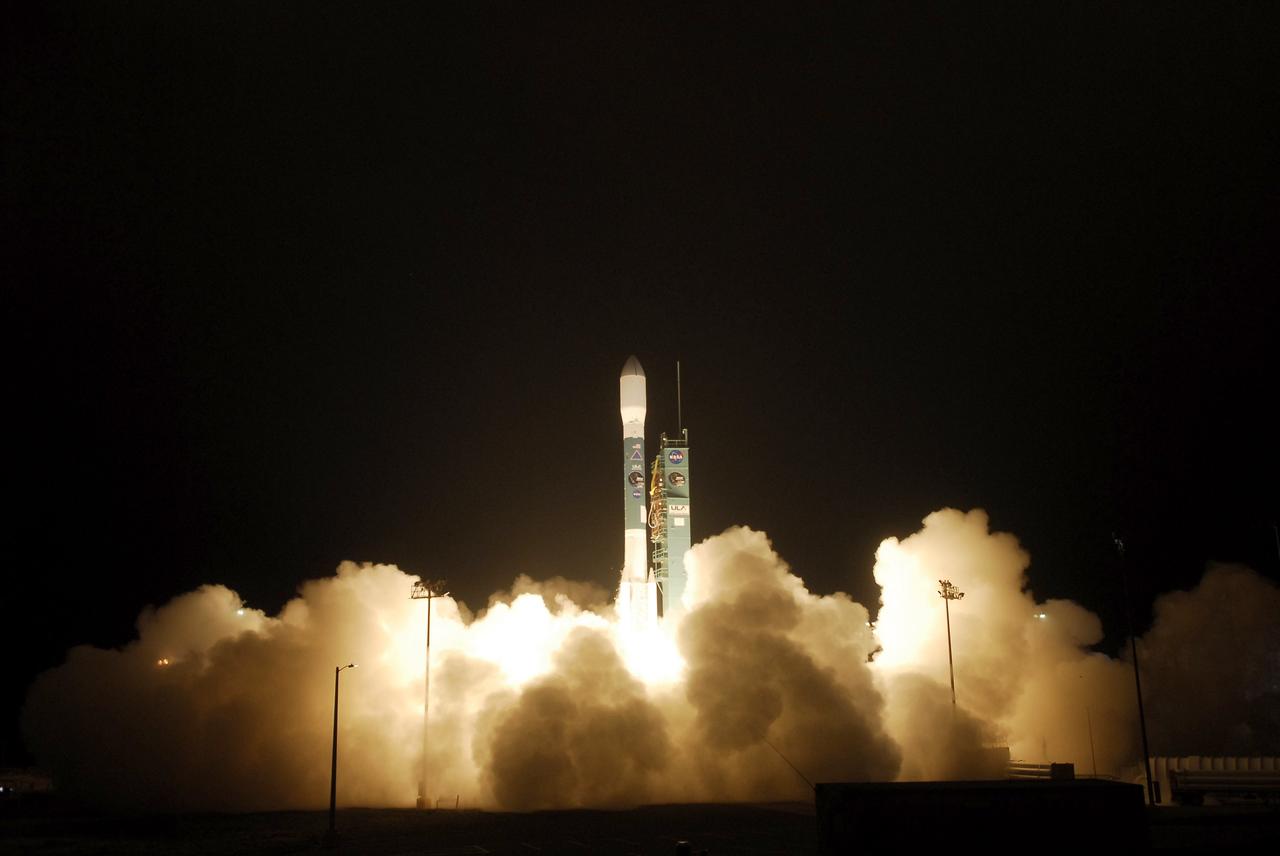
VANDENBERG AIR FORCE BASE, Calif. – An exhaust cloud builds around the United Launch Alliance Delta II rocket as it lifts off Space Launch Complex 2 at Vandenberg Air Force Base, carrying NASA's Soil Moisture Active Passive satellite, or SMAP, on a mission to study global coverage of soil moisture and freeze/thaw measurements. Launch was at 9:22 a.m. EST. SMAP is designed to produce the highest-resolution maps of soil moisture ever obtained from space. To learn more about SMAP, visit http://www.nasa.gov/smap. Photo credit: NASA/Kim Shiflett

ISS031-E-116058 (13 June 2012) --- Polar mesospheric clouds in the Northern Hemisphere are featured in this image photographed by an Expedition 31 crew member on the International Space Station. In both the Northern and Southern Hemisphere, during their respective late spring and early summer seasons, polar mesospheric clouds are at the peak of their visibility. Visible from the ground during twilight, aircraft in flight, and the International Space Station, they typically appear as delicate shining threads against the darkness of space?hence their other name of noctilucent or ?night-shining? clouds. On the same day this image was taken from the space station while it was passing over the night-darkened Tibetan Plateau, polar mesospheric clouds were also visible to aircraft flying above Canada. In addition to this still image, the space station crew took a time-lapse image sequence of polar mesospheric clouds several days earlier (June 5, 2012) while passing over western Asia; this is first such sequence of images of the phenomena taken from orbit. Polar mesospheric clouds form between 76-85 kilometers above the Earth?s surface, when there is sufficient water vapor at these high altitudes to freeze into ice crystals. The clouds are illuminated by the setting sun while the ground surface below is in darkness, lending them their night-shining properties. In addition to the illuminated tracery of polar mesospheric clouds trending across the center of the image, lower layers of the atmosphere are also illuminated; the lowest layer of the atmosphere, the stratosphere, is indicated by dim orange and red tones. While the exact cause of formation of polar mesospheric clouds is still debated?dust from meteors, global warming, and rocket exhaust have all been suggested as contributing factors?recent research suggests that changes in atmospheric gas composition or temperature has caused the clouds to become brighter over time.
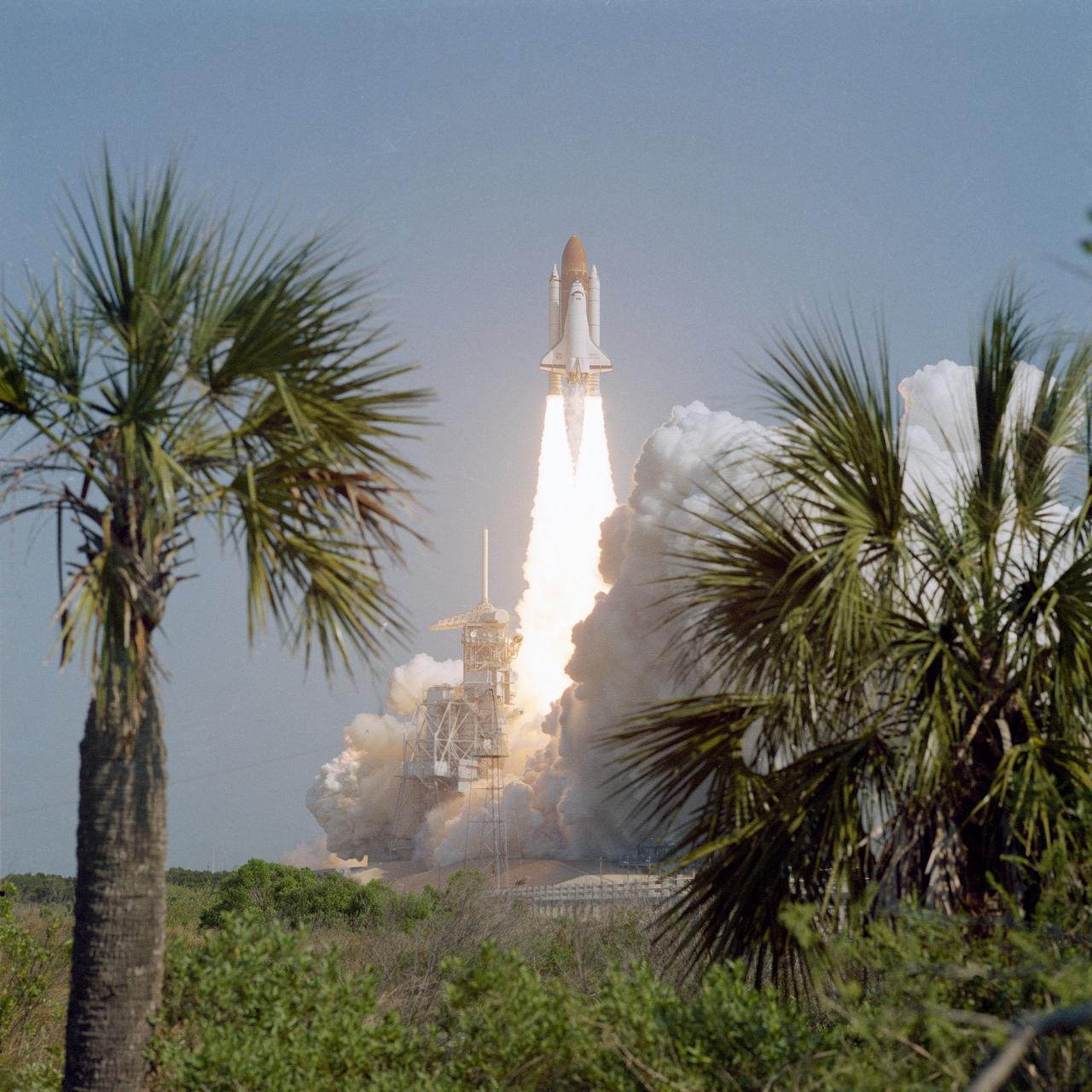
STS029-S-027 (13 March 1989) --- From Launch Pad 39D, the Space Shuttle Discovery is launched on mission STS-29. Discovery lifted off at 9:57 a.m. (EST), March 13, 1989, carrying the tracking and data relay satellite (TDRS-1) into orbit. Florida vegetation frames the launch scene. Onboard the spacecraft were astronauts Michael L. Coats, commander; John E. Blaha, pilot; and James F. Buchli, James P. Bagian and Robert C. Springer, all mission specialists.
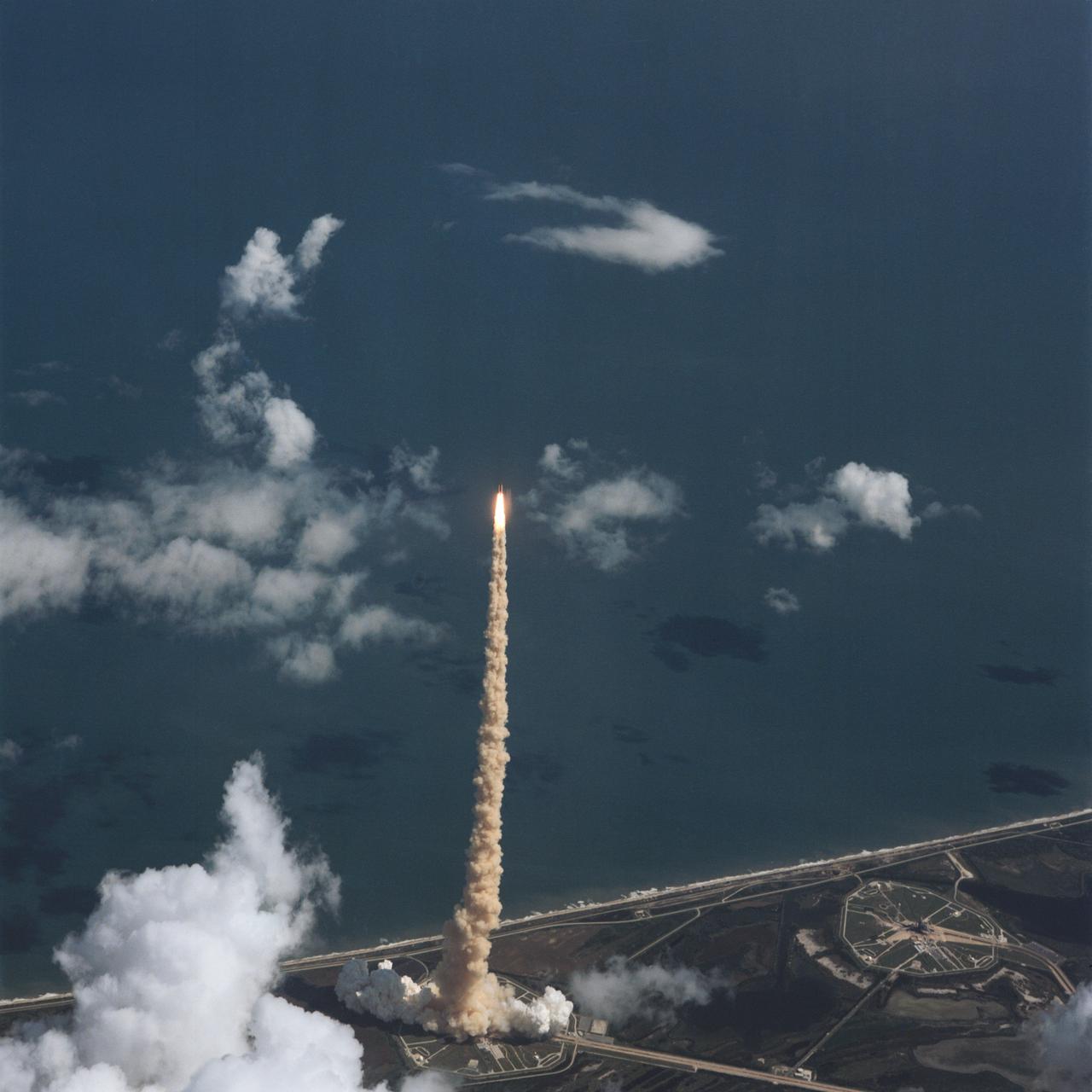
STS-34 Atlantis, Orbiter Vehicle (OV) 104, lifts off from Kennedy Space Center (KSC) Launch Complex (LC) Pad 39B at 12:53:39:983 pm Eastern Daylight Time (EDT). This aerial view shows OV-104, its external tank (ET), and two solid rocket boosters (SRBs) rising high above LC Pad 39B atop a plume of exhaust smoke. Atlantic Ocean is visible in the background. The liftoff marks the beginning of a five-day mission in space.
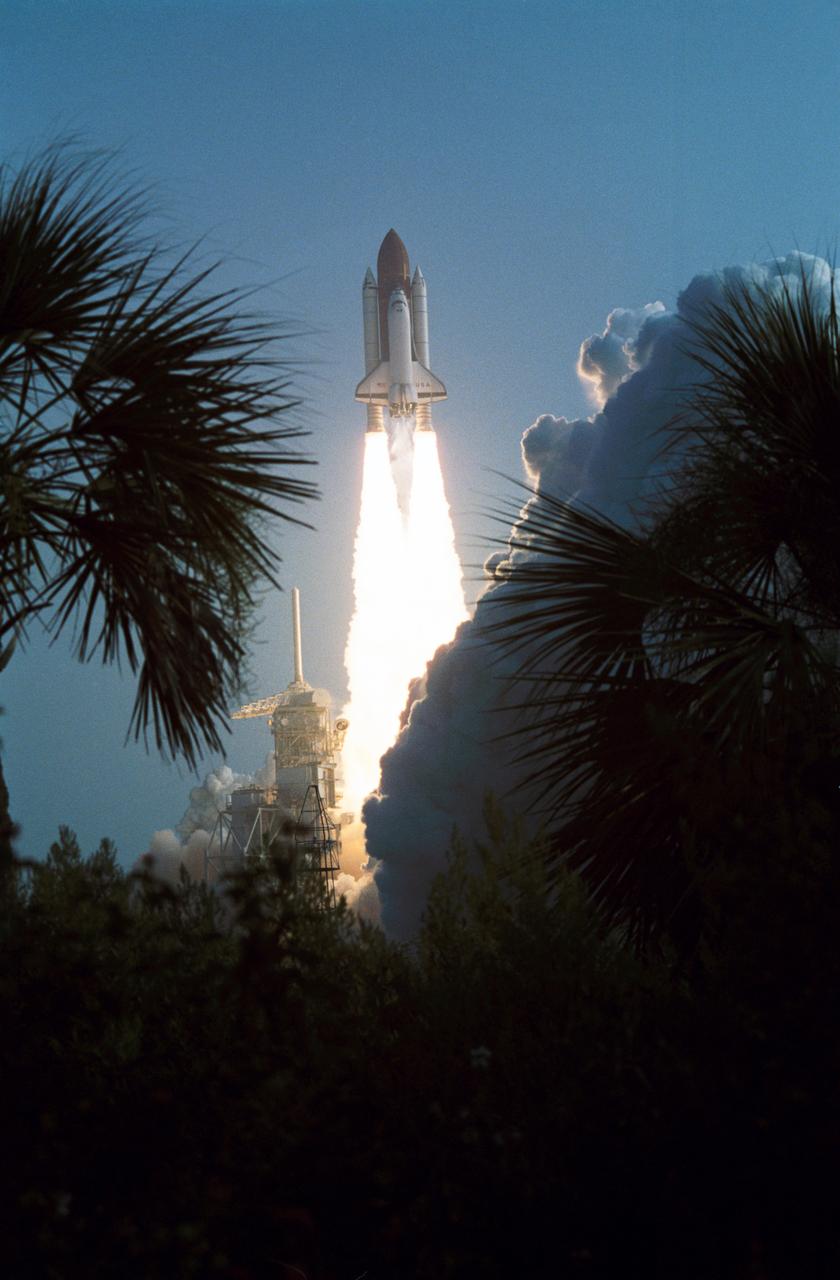
STS028-S-004 (8 Aug. 1989) --- Framed by Florida vegetation, Space Shuttle Columbia soars toward space for the STS-28 mission from Launch Pad 39-B. The spacecraft renews flight after a period of three and a half years, this time with five crewmembers aboard. Onboard the spacecraft are astronauts Brewster H. Shaw Jr., Richard N. Richards, David C. Leestma, James C. Adamson and Mark N. Brown. The last time Columbia was in space was in January of 1986.
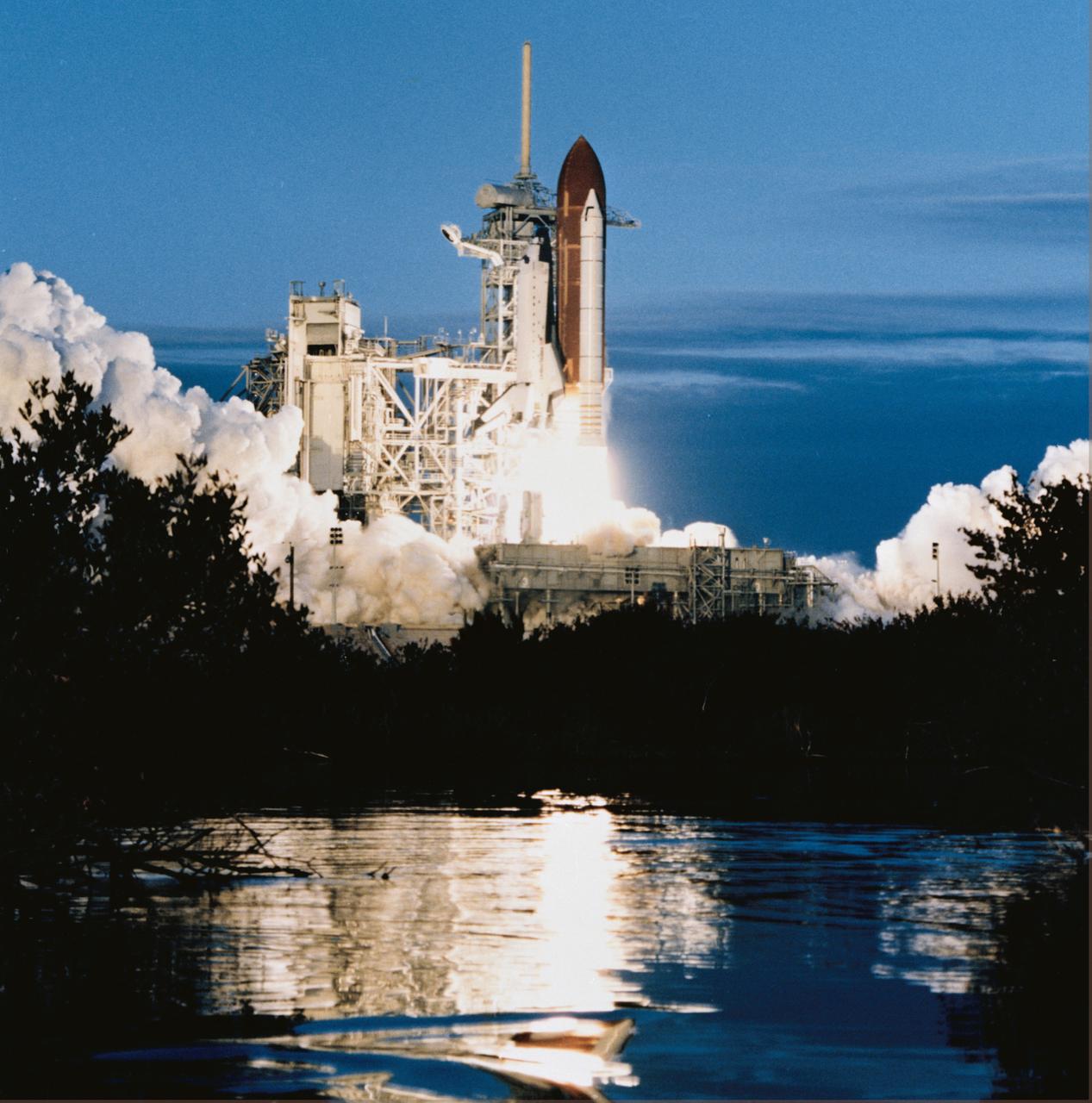
STS032-S-069 (9 Jan. 1990) --- The space shuttle Columbia, with a five member crew aboard, lifts off for the ninth time as STS-32 begins a 10-day mission in Earth orbit. Leaving from Launch Pad 39A at 7:34:59:98 a.m. EST, in this horizontal (cropped 70mm) frame, Columbia is seen reflected in nearby marsh waters some 24 hours after dubious weather at the return-to-launch site (RTLS) had cancelled a scheduled launch. Onboard the spacecraft were astronauts Daniel C. Brandenstein, James D. Wetherbee, Bonnie J. Dunbar, G. David Low and Marsha S. Ivins. Photo credit: NASA
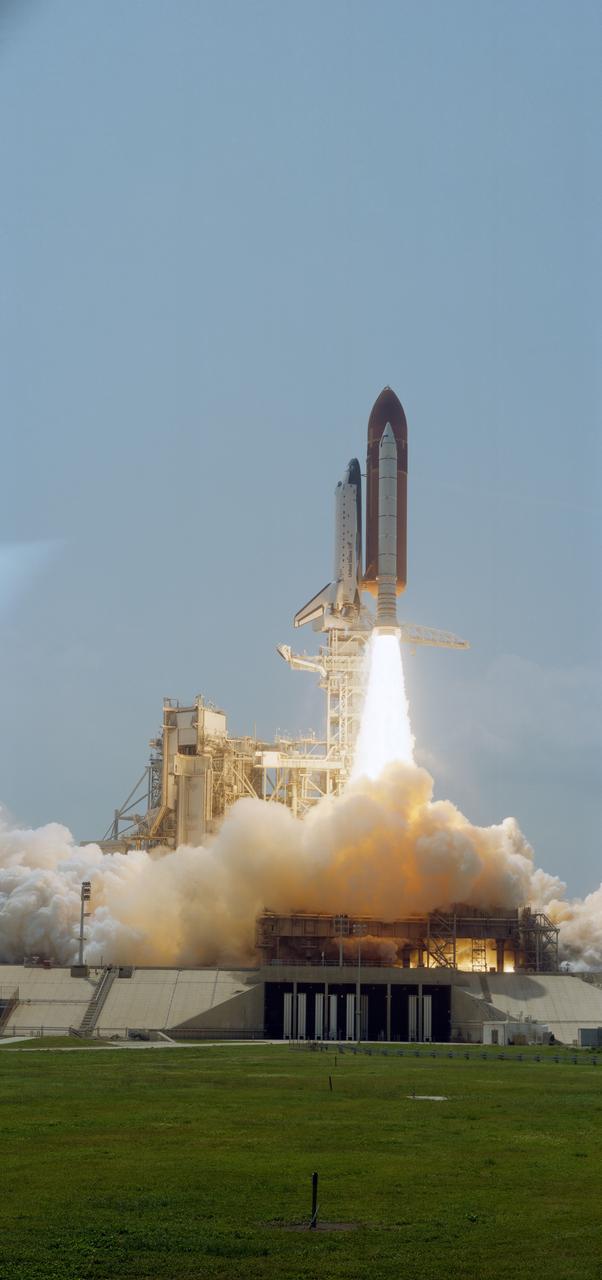
STS030-S-108 (4 May 1989) --- Backdropped against slight gray Florida skies, Space Shuttle Atlantis heads for a four-day mission in earth orbit with five astronaut crewmembers aboard. Onboard were astronauts David. M. Walker, Ronald J. Grabe, Norman E. Thagard, Mary L. Cleave and Mark C. Lee. Launch occurred at 2:46:58 P.M. (EDT), May 4, 1989.
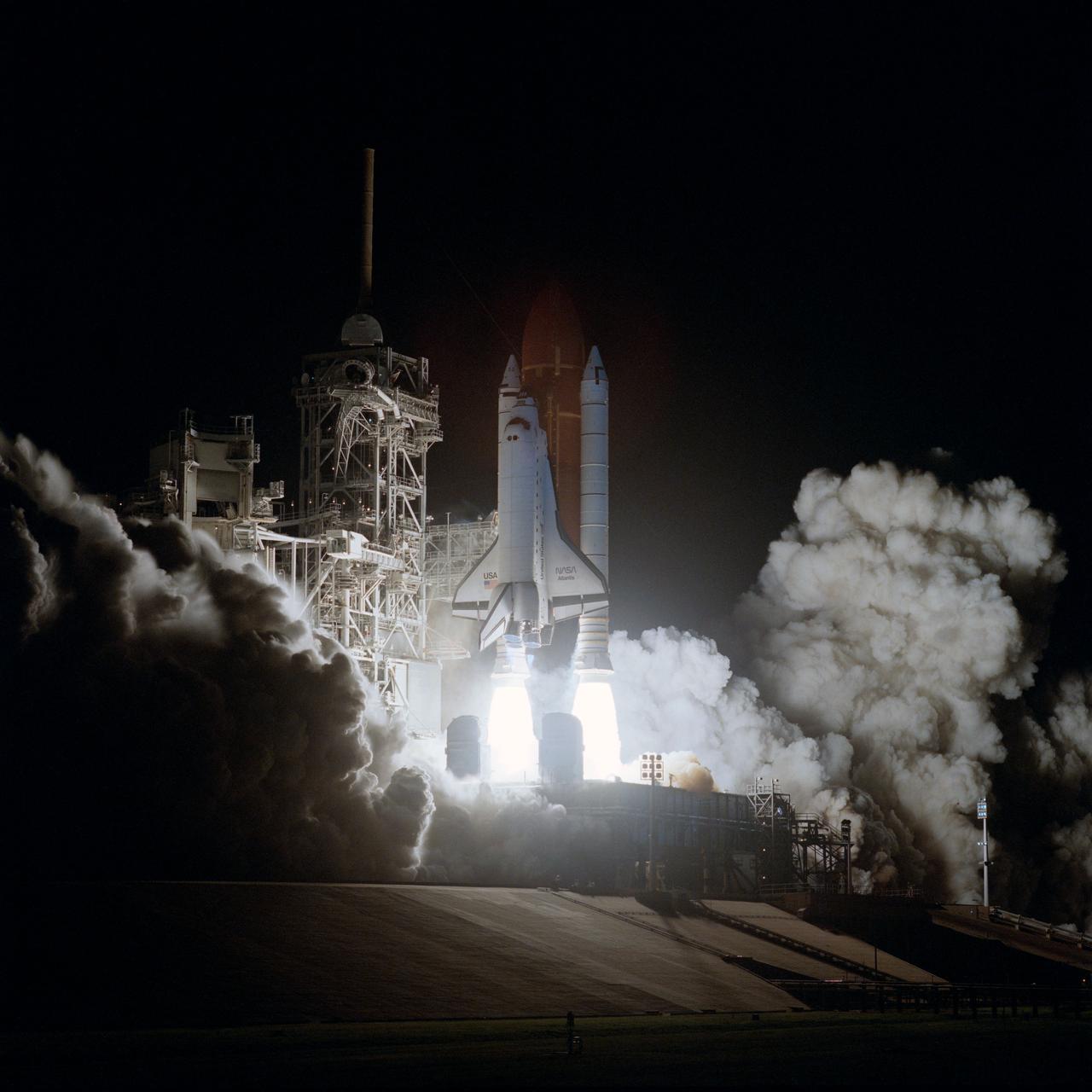
STS-38 Atlantis, Orbiter Vehicle (OV) 104, lifts off from Kennedy Space Center (KSC) Launch Complex Pad at 6:46:15:0639 pm (Eastern Standard Time (EST)). As OV-104, atop the external tank (ET) and flanked by two solid rocket boosters (SRBs), rises above the mobile launcher platform, exhaust smoke fills the area surrounding the launch pad. SRB and space shuttle main engine (SSME) firings glow against the night darkness and light up the fixed service structure (FSS) and retracted rotating service structure (RSS). STS-38 is a Department of Defense (DOD) devoted mission.
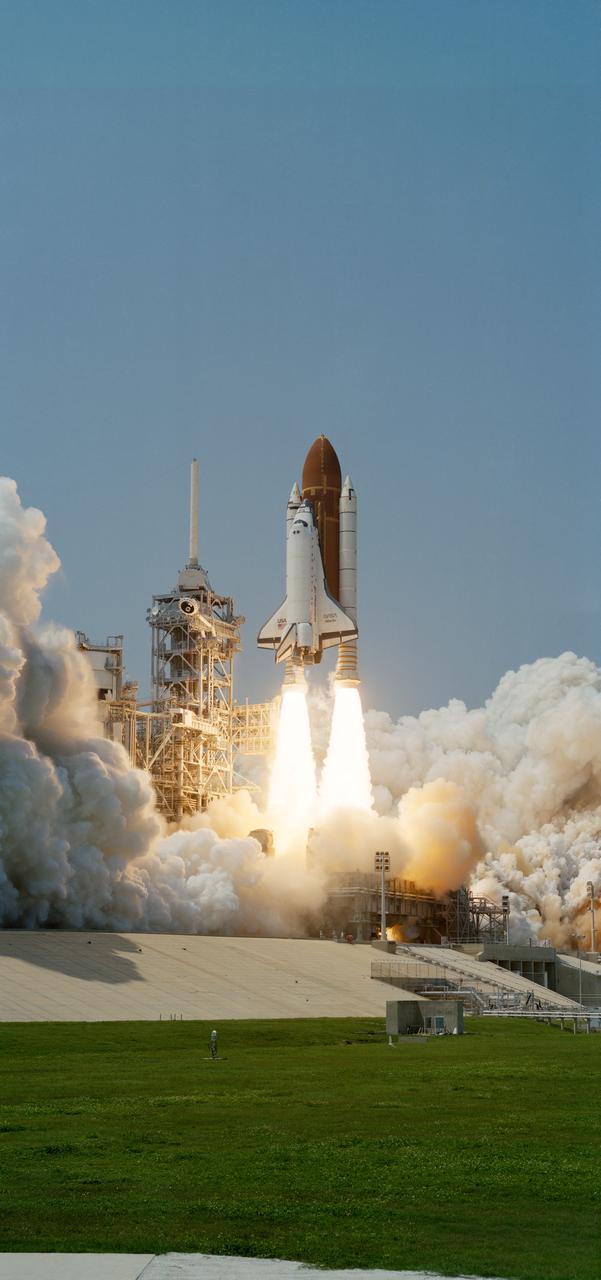
STS030-S-109 (4 May 1989) --- Moments after ignition, Space Shuttle Atlantis heads for a four-day mission in Earth-orbit with five astronaut crew members aboard. Onboard were astronauts David M. Walker, Ronald. J. Grabe, Norman E. Thagard, Mary L. Cleave and Mark C. Lee. Launch occurred at 2:46:58 p.m. (EDT), May 4, 1989.
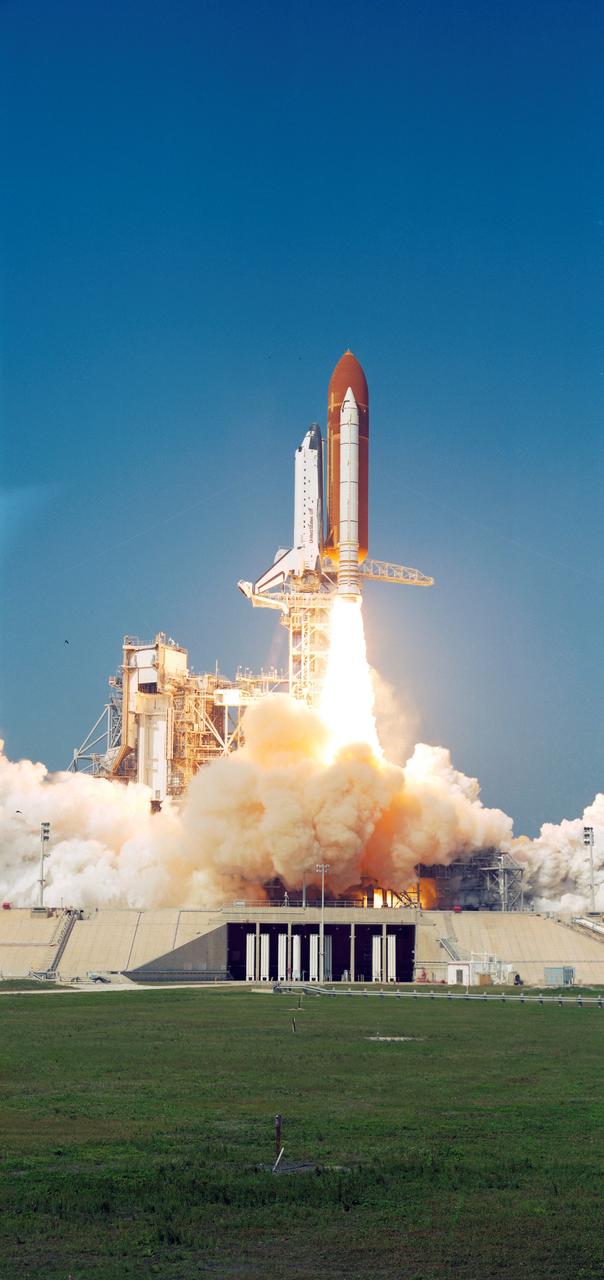
STS029-S-028 (13 March 1989) --- From Launch Pad 39B, the Space Shuttle Discovery is launched on Mission STS-29. Discovery lifted off at 9:57 a.m. (EST), March 13, 1989, carrying the tracking and data relay satellite (TDRS-1) into orbit. Onboard the spacecraft were astronauts Michael L. Coats, commander; John E. Blaha, pilot; and James F. Buchli, James P. Bagian and Robert C. Springer, all mission specialists.
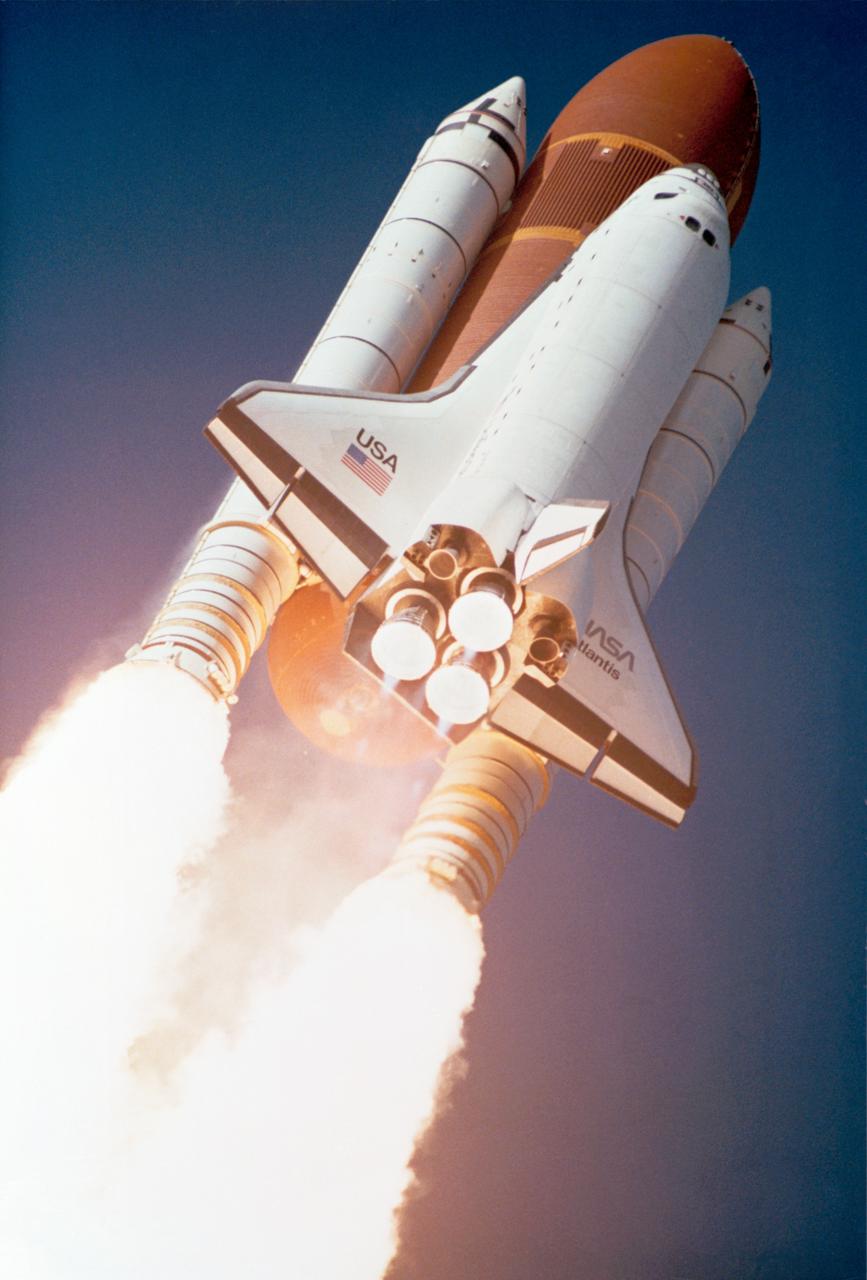
S88-55870 (2 Dec. 1988) --- The space shuttle Atlantis and its five-man crew of astronauts are launched from Kennedy Space Center?s Pad 39B at 9:30 a.m. (EST), Dec. 2, 1988. Onboard the Department of Defense?dedicated mission are astronauts Robert L. Gibson, Guy S. Gardner, Jerry L. Ross, Richard M. (Mike) Mullane and Williams M. Shepherd. Photo credit: NASA
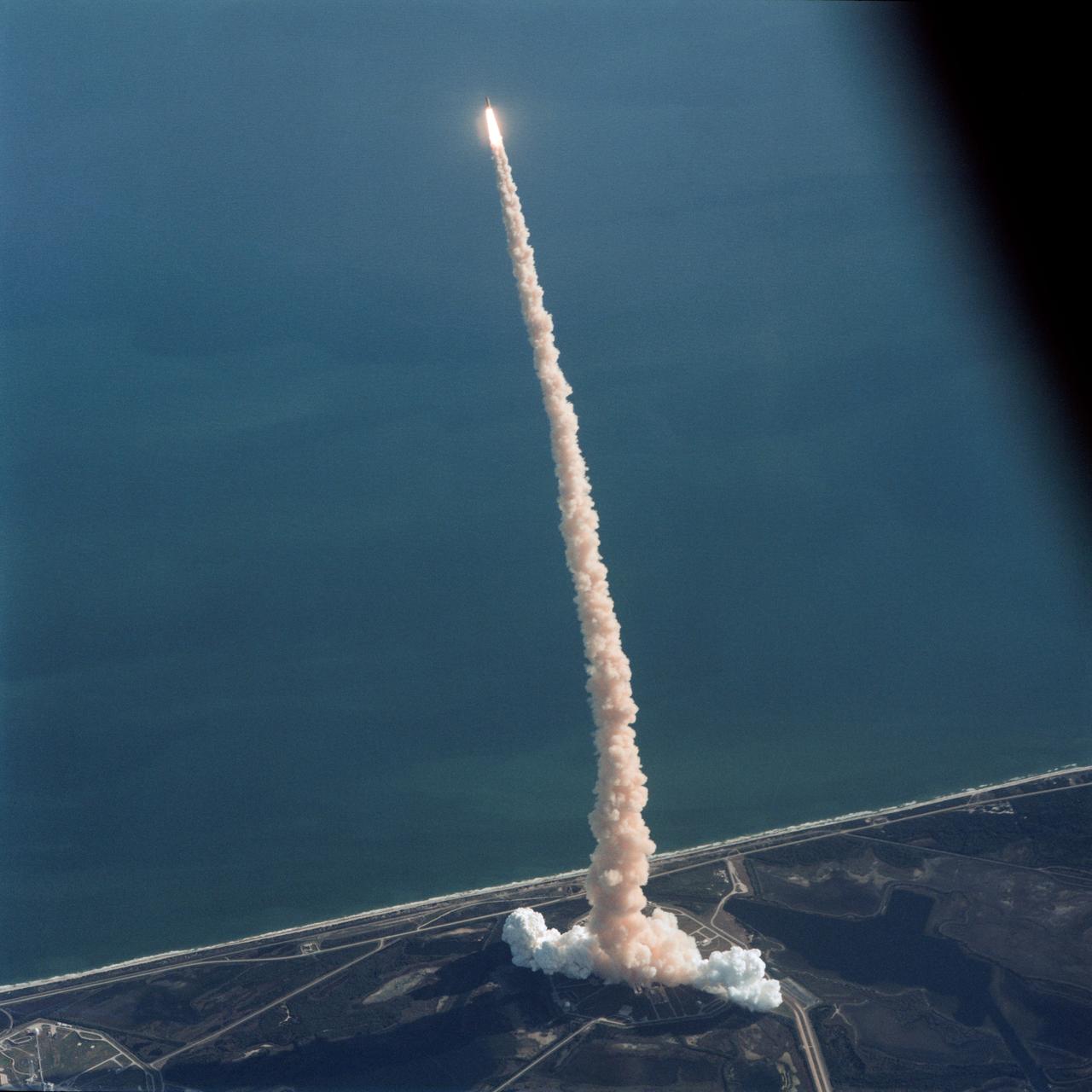
Air-to-air view, taken from the weather-monitoring Shuttle Training Aircraft (STA), shows STS-42 Discovery, Orbiter Vehicle (OV) 103, as it soars above the Atlantic Ocean after liftoff from a Kennedy Space Center (KSC) Launch Complex (LC) Pad at 9:52:33 am (Eastern Standard Time (EST)). The exhaust plume traces OV-103's flight path.
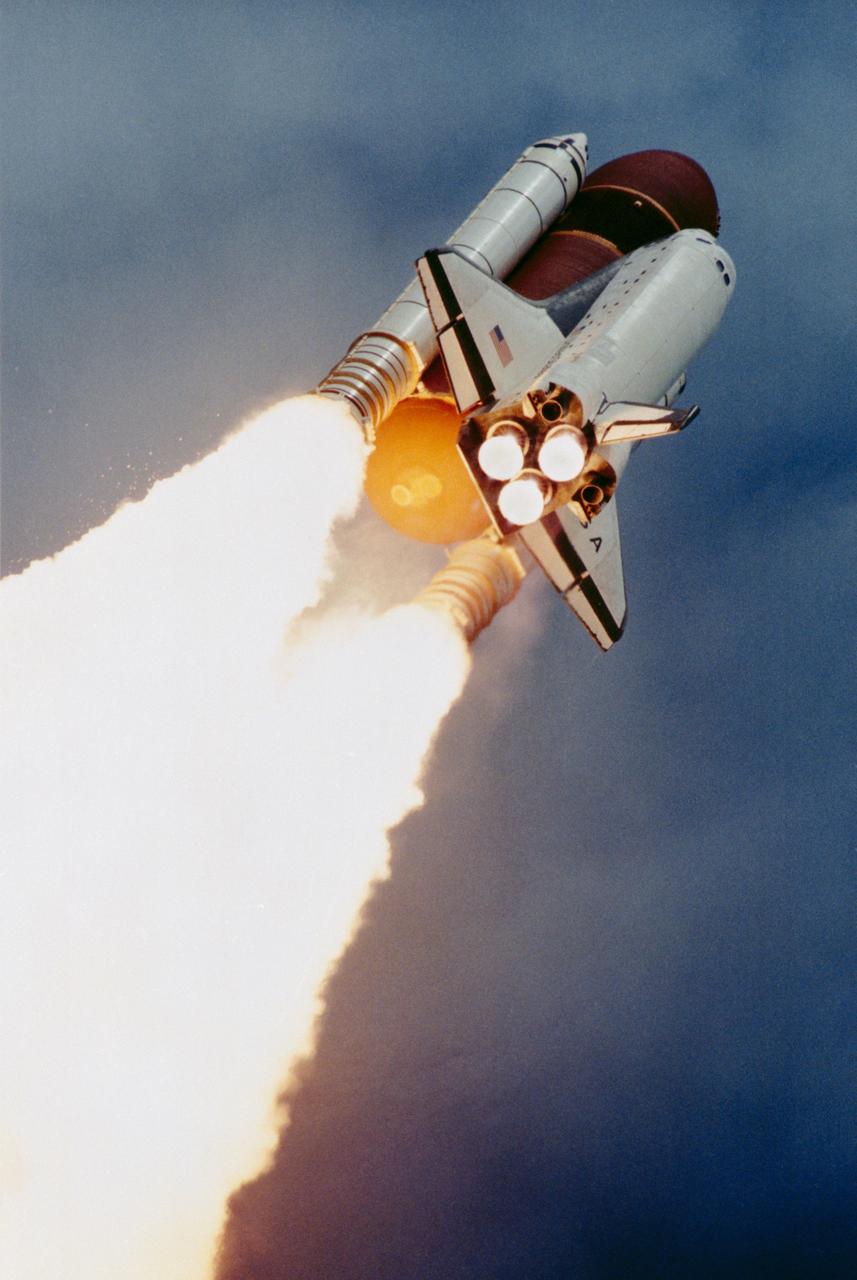
STS040-S-134 (5 June 1991) --- The space shuttle Columbia, with a seven-member crew aboard, soars toward a nine-day mission devoted to life sciences research. Launch was at 9:24:51 a.m. (EDT), June 5, 1991. This 35mm photo was taken by a remote control tracking device mounted 1600 feet from epicenter. Photo credit: NASA
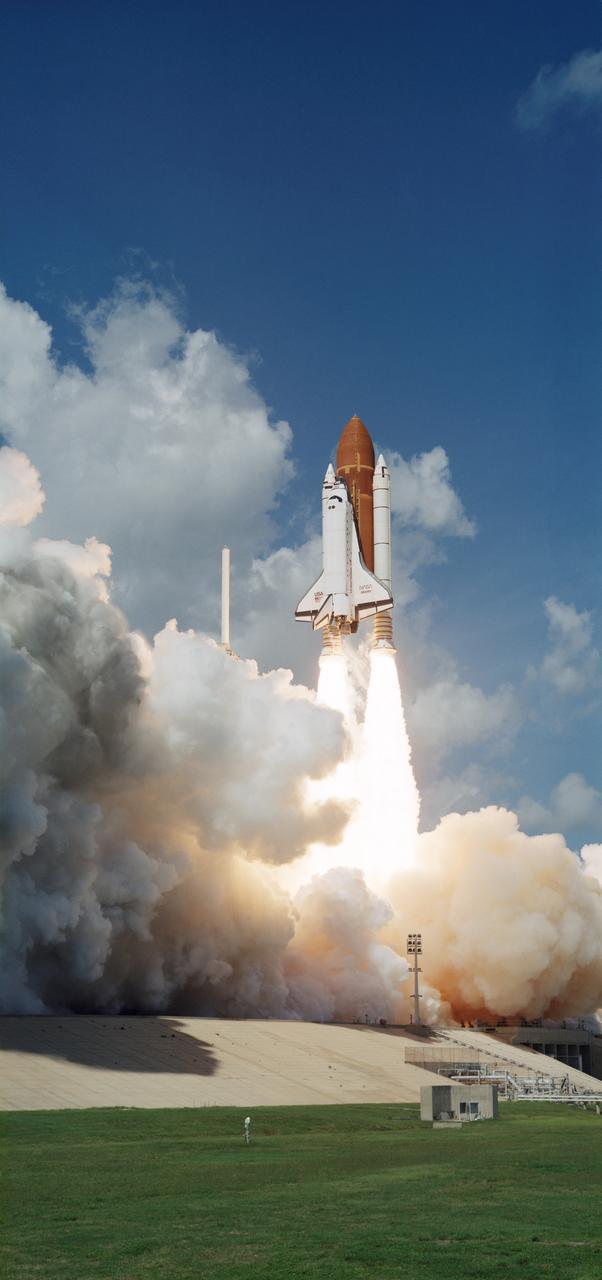
STS034-S-023 (18 Oct. 1989) --- The STS-34 Space Shuttle Atlantis lifts off from Kennedy Space Center’s launch pad 39-B at l2:53:39 p.m. (EDT) on Oct. 18, 1989, marking the beginning of a five-day mission in space. Atlantis carries a crew of five and the spacecraft Galileo. The Jupiter-bound probe will be deployed from Atlantis some six hours after launch. The journey to the giant planet is expected to take over six years. Crewmembers for the mission are astronauts Donald E. Williams, Michael J. McCulley, Shannon W. Lucid, Franklin R. Chang-Diaz and Ellen S. Baker. The scene was recorded with a 70mm camera.
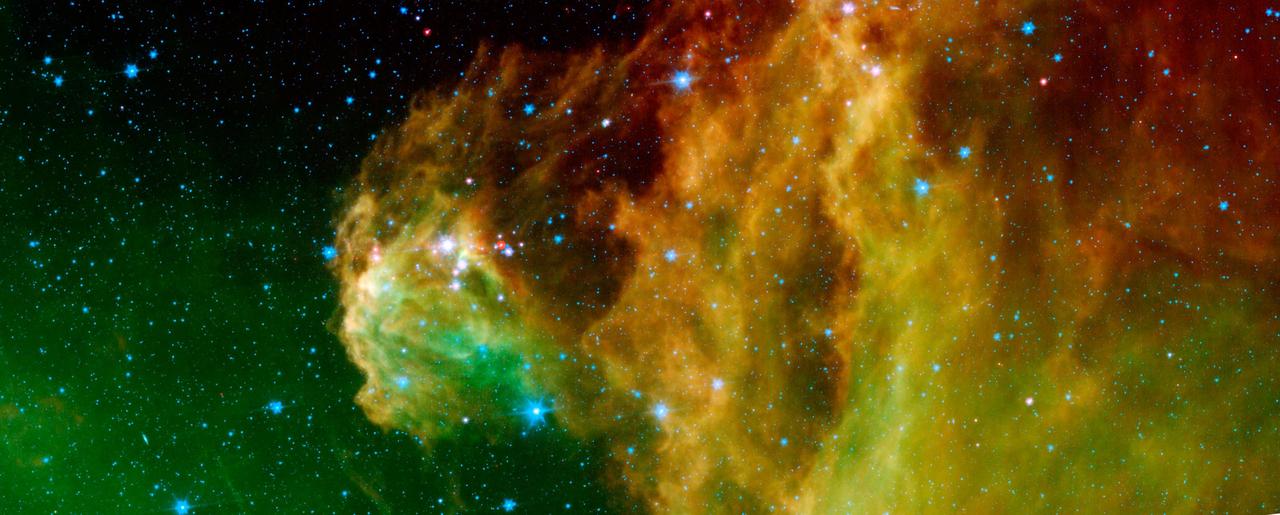
This image from NASA's Spitzer Space Telescope shows infant stars "hatching" in the head of the hunter constellation, Orion. Astronomers suspect that shockwaves from a supernova explosion in Orion's head, nearly three million years ago, may have initiated this newfound birth. The region featured in this Spitzer image is called Barnard 30. It is located approximately 1,300 light-years away and sits on the right side of Orion's "head," just north of the massive star Lambda Orionis. Wisps of green in the cloud are organic molecules called polycyclic aromatic hydrocarbons. These molecules are formed anytime carbon-based materials are burned incompletely. On Earth, they can be found in the sooty exhaust from automobile and airplane engines. They also coat the grills where charcoal-broiled meats are cooked. Tints of orange-red in the cloud are dust particles warmed by the newly forming stars. The reddish-pink dots at the top of the cloud are very young stars embedded in a cocoon of cosmic gas and dust. Blue spots throughout the image are background Milky Way along this line of sight. This composite includes data from Spitzer's infrared array camera instrument, and multiband imaging photometer instrument. Light at 4.5 microns is shown as blue, 8.0 microns is green, and 24 microns is red. http://photojournal.jpl.nasa.gov/catalog/PIA09411
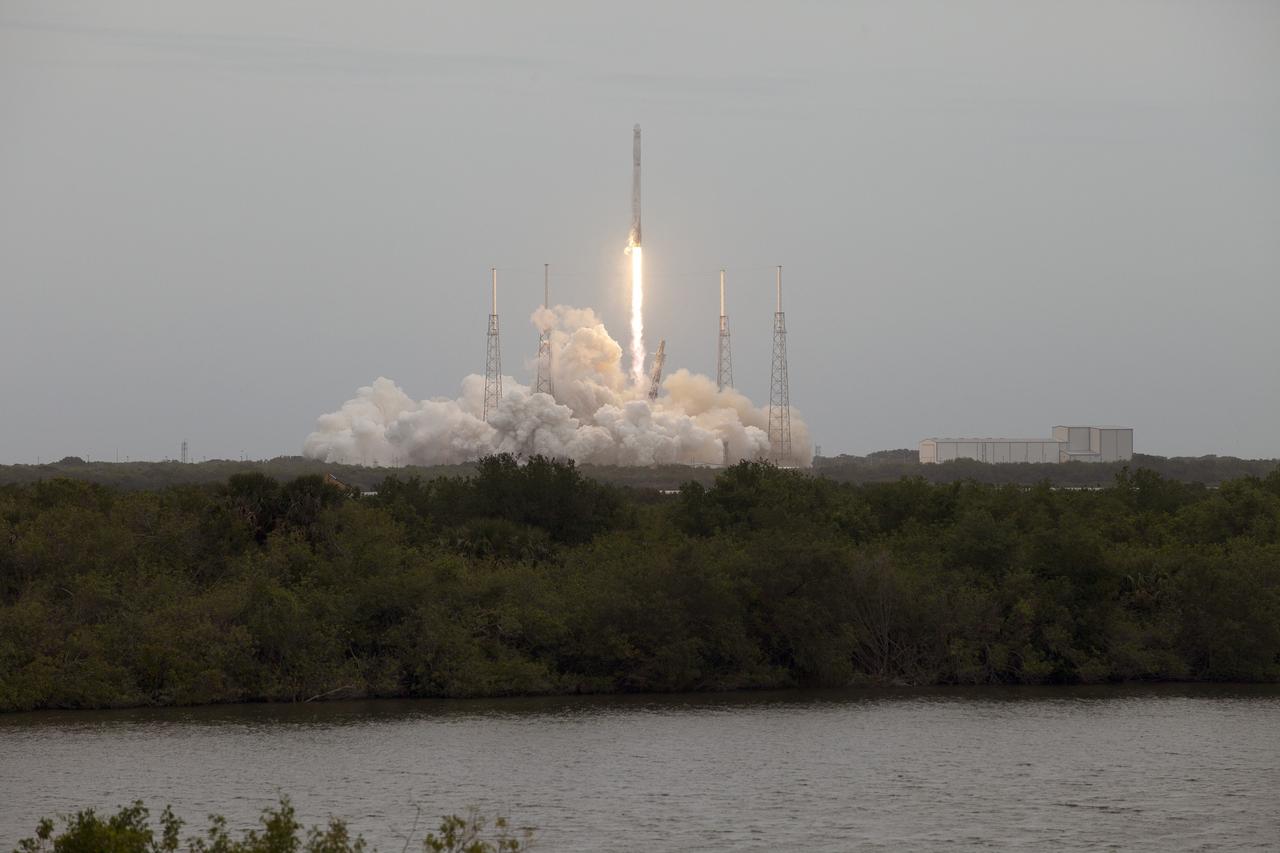
CAPE CANAVERAL, Fla. - An exhaust cloud builds under the Falcon 9 rocket on Space Launch Complex 40 on Cape Canaveral Air Force Station as the SpaceX-3 mission lifts off, carrying the Dragon resupply spacecraft to the International Space Station. Liftoff was during an instantaneous window at 3:25 p.m. EDT. Dragon is making its fourth trip to the space station. The SpaceX-3 mission, carrying almost 2.5 tons of supplies, technology and science experiments, is the third of 12 flights through a $1.6 billion NASA Commercial Resupply Services contract. Dragon's cargo will support more than 150 experiments that will be conducted during the station's Expeditions 39 and 40. For more information, visit http://www.nasa.gov/mission_pages/station/structure/launch/index.html. Photo credit: NASA/Dan Casper
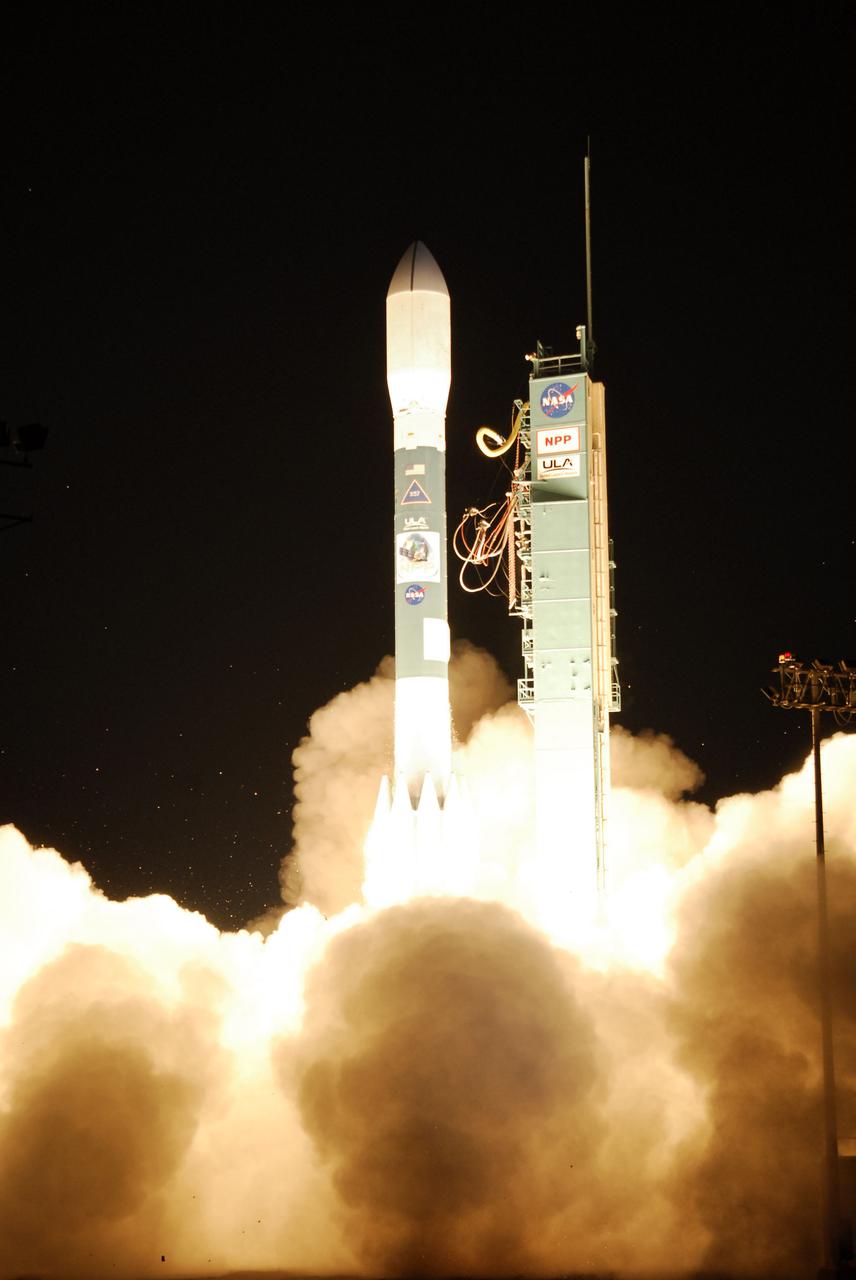
VANDENBERG AIR FORCE BASE, Calif. -- At Space Launch Complex-2 on Vandenberg Air Force Base in California, an exhaust cloud builds around the United Launch Alliance Delta II rocket carrying NASA's National Polar-orbiting Operational Environmental Satellite System Preparatory Project (NPP) into space. Liftoff was at 2:48 a.m. PDT. NPP represents a critical first step in building the next-generation of Earth-observing satellites. NPP will carry the first of the new sensors developed for this satellite fleet, now known as the Joint Polar Satellite System (JPSS) to be launched in 2016. NPP is the bridge between NASA's Earth Observing System (EOS) satellites and the forthcoming series of JPSS satellites. The mission will test key technologies and instruments for the JPSS missions. For more information, visit http:__www.nasa.gov_NPP. Photo credit: NASA_Kim Shiflett
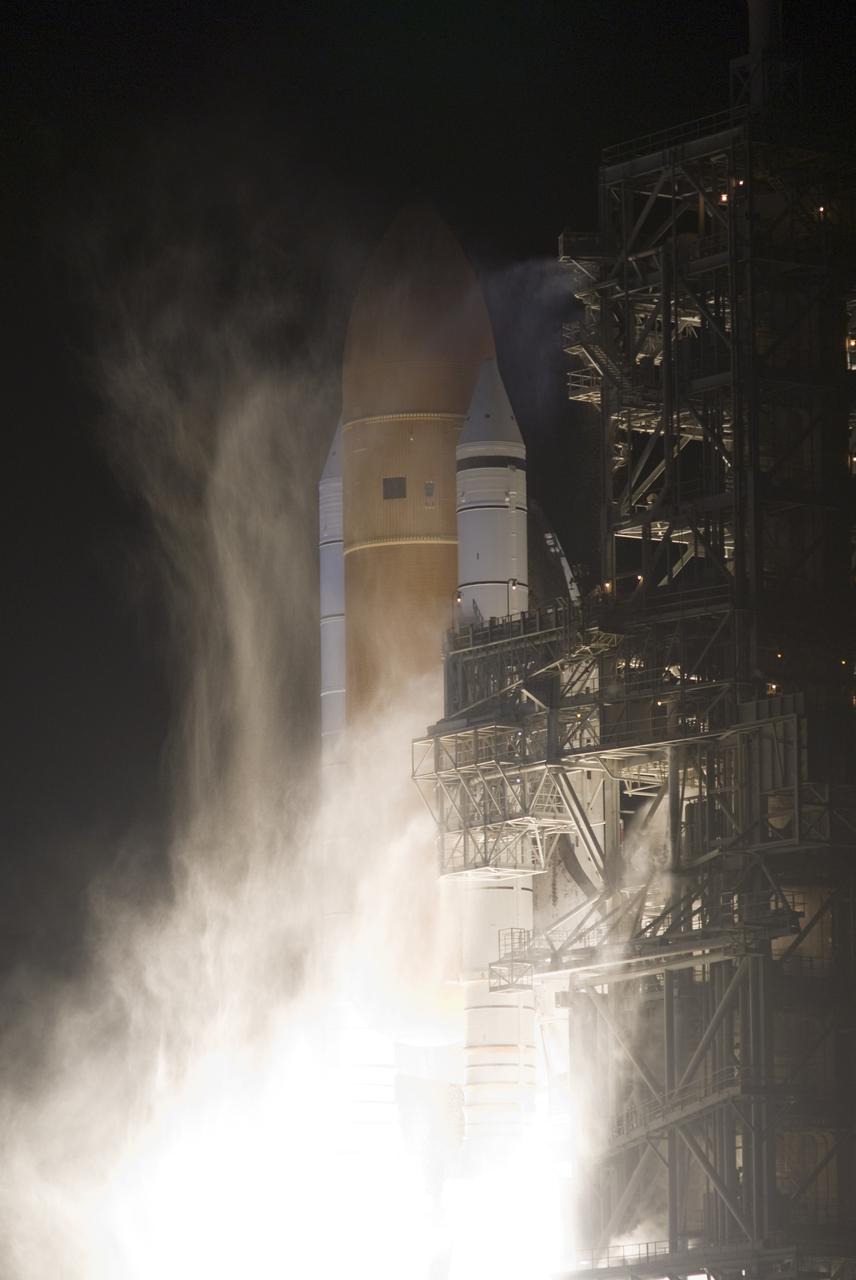
CAPE CANAVERAL, Fla. - An exhaust cloud begins to form at Launch Pad 39A at NASA's Kennedy Space Center in Florida as space shuttle Discovery lifts off on the STS-131 mission at 6:21 a.m. EDT April 5. The seven-member crew will deliver the multi-purpose logistics module Leonardo, filled with supplies, a new crew sleeping quarters and science racks that will be transferred to the International Space Station's laboratories. The crew also will switch out a gyroscope on the station’s truss, install a spare ammonia storage tank and retrieve a Japanese experiment from the station’s exterior. STS-131 is the 33rd shuttle mission to the station and the 131st shuttle mission overall. For information on the STS-131 mission and crew, visit http:__www.nasa.gov_mission_pages_shuttle_shuttlemissions_sts131_index.html. Photo credit: NASA_Rusty Backer and Michael Gayle
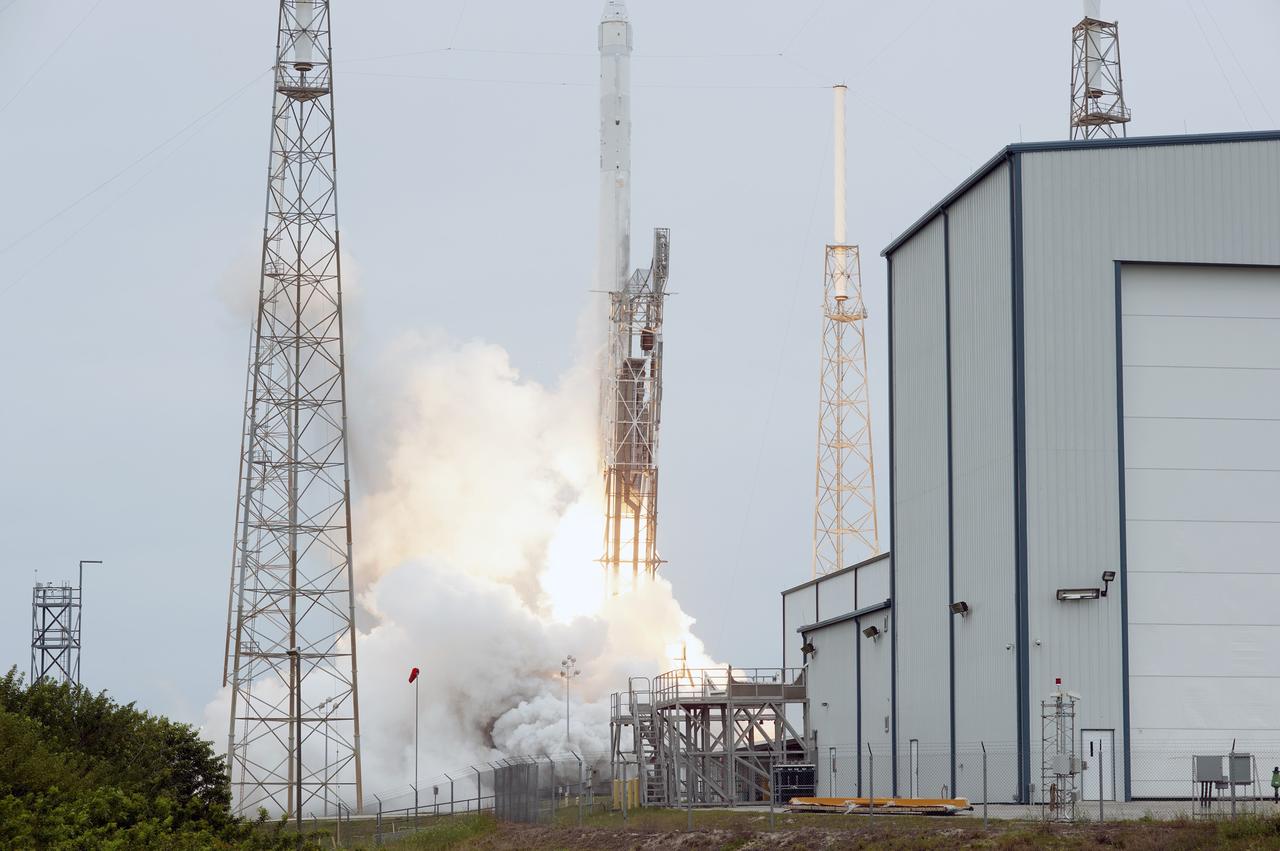
CAPE CANAVERAL, Fla. - An exhaust cloud forms around the Falcon 9 rocket at Space Launch Complex 40 on Cape Canaveral Air Force Station as the SpaceX-3 mission lifts off, carrying the Dragon resupply spacecraft to the International Space Station. Launch was during an instantaneous window at 3:25 p.m. EDT. Dragon is making its fourth trip to the space station. The SpaceX-3 mission, carrying almost 2.5 tons of supplies, technology and science experiments, is the third of 12 flights through a $1.6 billion NASA Commercial Resupply Services contract. Dragon's cargo will support more than 150 experiments that will be conducted during the station's Expeditions 39 and 40. For more information, visit http://www.nasa.gov/mission_pages/station/structure/launch/index.html. Photo credit: NASA/Tony Gray and Tim Powers
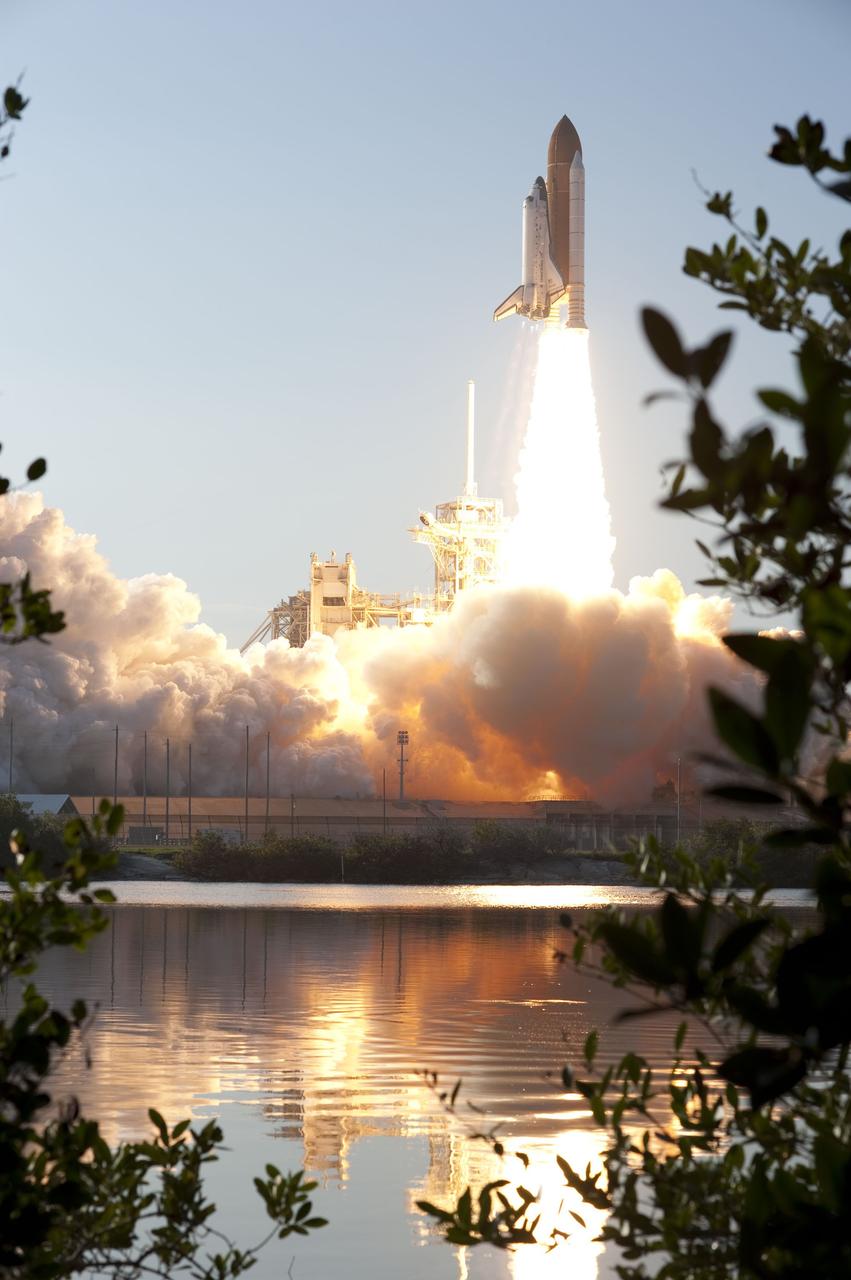
CAPE CANAVERAL, Fla. -- An exhaust cloud billows around Launch Pad 39A at NASA's Kennedy Space Center in Florida as space shuttle Discovery lifts off at 4:53 p.m. EST to begin the STS-133 mission and its final flight to the International Space Station. Discovery and its six-member crew will deliver the Permanent Multipurpose Module, packed with supplies and critical spare parts, as well as Robonaut 2, the dexterous humanoid astronaut helper, to the orbiting outpost. Discovery is flying on its 39th mission and is scheduled to be retired following STS-133. This is the 133rd Space Shuttle Program mission and the 35th shuttle voyage to the space station. For more information on the STS-133 mission, visit www.nasa.gov/mission_pages/shuttle/shuttlemissions/sts133/. Photo credit: NASA/Sandra Joseph and Kevin O'Connell
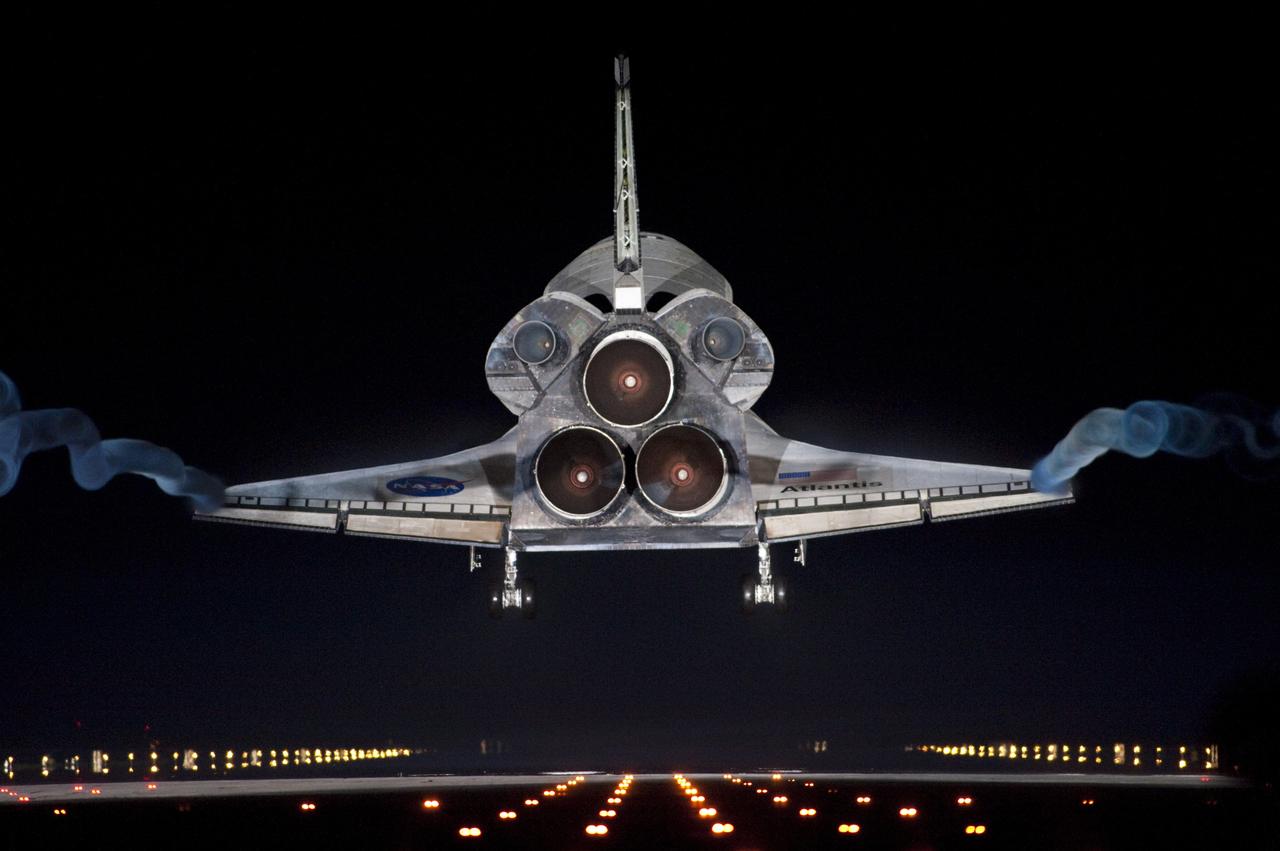
CAPE CANAVERAL, Fla. -- Vapor trails follow space shuttle Atlantis as it approaches Runway 15 on the Shuttle Landing Facility at NASA's Kennedy Space Center in Florida for the final time. A vapor trail, known as a contrail, is a cloud of water vapor that condenses and freezes around the small particles in aircraft exhaust. Atlantis marked the 26th nighttime landing of NASA's Space Shuttle Program and the 78th landing at Kennedy. It also was the final mission for the shuttle program. STS-135 was the 33rd and final flight for Atlantis, which has spent 307 days in space, orbited Earth 4,848 times and traveled 125,935,769 miles. For more information on the space shuttle era, visit www.nasa.gov/mission_pages/shuttle/flyout. Photo credit: NASA/Sandra Joseph and Kevin O'Connell
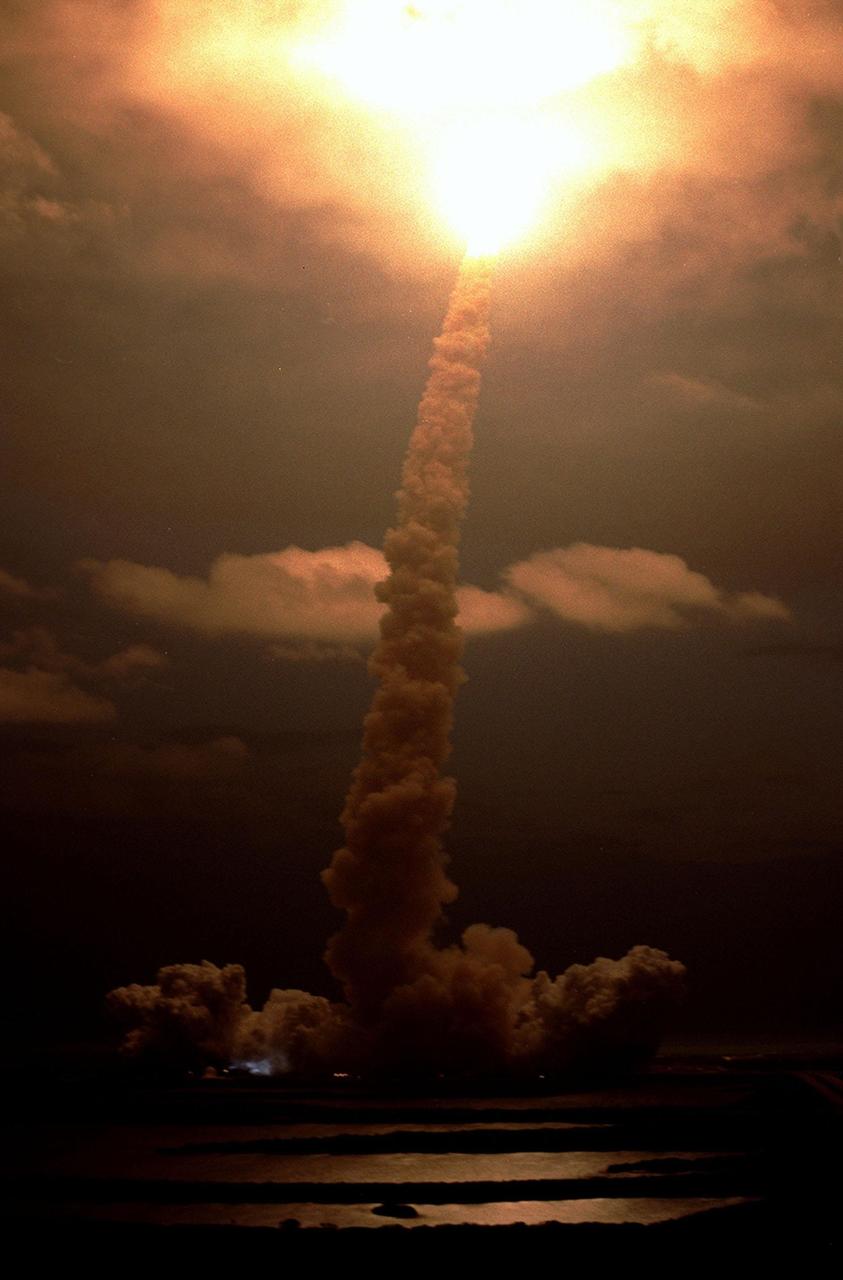
KENNEDY SPACE CENTER, Fla. - The smoke plume identifies the direction of Space Shuttle Columbia as it climbs into the clouds, illuminated by the Shuttle's exhaust, after launch on mission STS-109. Liftoff occurred at 6:22:02:08 a.m. EST (11:22:02:08 GMT). This was the 27th flight of the vehicle and 108th in the history of the Shuttle program. The goal of mission STS-109 is the maintenance and upgrade of the Hubble Space Telescope, to be carried out in five spacewalks. The crew comprises Commander Scott D. Altman, Pilot Duane G. Carey, Payload Commander John M. Grunsfeld, and Mission Specialists Nancy Jane Currie, Richard M. Linnehan, James H. Newman and Michael J. Massimino. After the 11-day mission, Columbia is expected to return to KSC March 12 about 4:35 a.m. EST (09:35 GMT).

CAPE CANAVERAL, Fla. – An exhaust cloud forms at Launch Complex 37 on Cape Canaveral Air Force Station in Florida as the United Launch Alliance Delta IV rocket carrying NASA's GOES-P meteorological satellite lifts off at 6:57 p.m. EST. GOES-P, the latest Geostationary Operational Environmental Satellite, was developed by NASA for the National Oceanic and Atmospheric Administration, or NOAA. The GOES-P spacecraft will be placed in a 22,300-mile-high geosynchronous orbit where it will appear to hover over a single point on Earth. The spacecraft is outfitted with a complex suite of observation instruments and cameras so it can accurately report on weather and climate conditions on Earth. For information on GOES-P, visit http:__www.nasa.gov_mission_pages_GOES-P_main_index.html. Photo credit: NASA_Sandra Joseph and Tony Gray
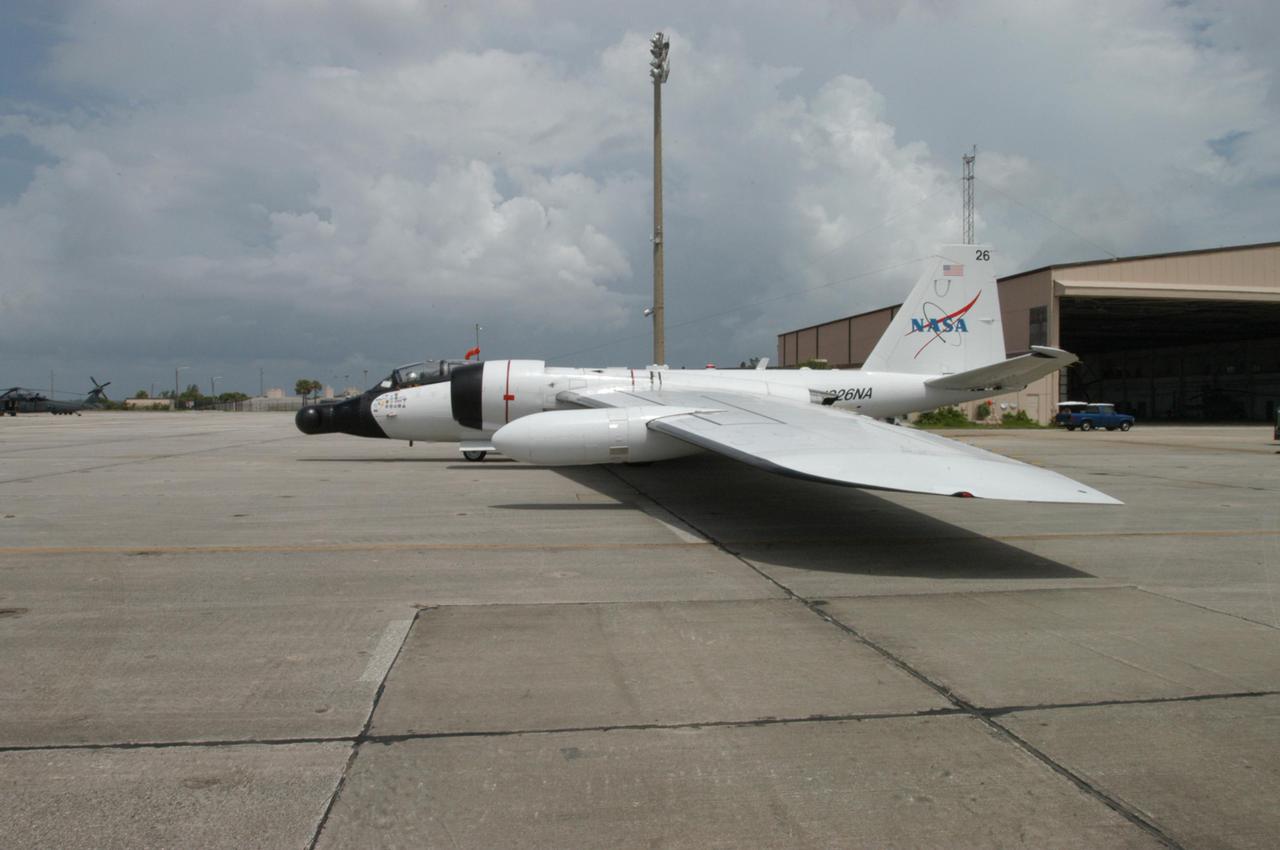
KENNEDY SPACE CENTER, FLA. - At Patrick Air Force Base in Cocoa Beach, Fla., the WB-57F aircraft is ready for a test flight. The aircraft will take photos of Space Shuttle Discovery during its launch on Return to Flight mission STS-114. NASA approved the development and implementation of the aircraft-based imaging system, known as the WB-57 Ascent Video Experiment (WAVE). The WAVE provides both ascent and entry imagery and enables better observation of the Shuttle on days of heavier cloud cover and areas obscured from ground cameras by the launch exhaust plume. WAVE comprises a 32-inch-ball turret system mounted on the nose of two WB-57 aircraft. The turret houses an optical bench, providing installation of both HDTV and infrared cameras. Optics consist of an 11-inch-diameter, 4.2 meter fixed-focal-length lens. The system can be operated in both auto track and manual modes.
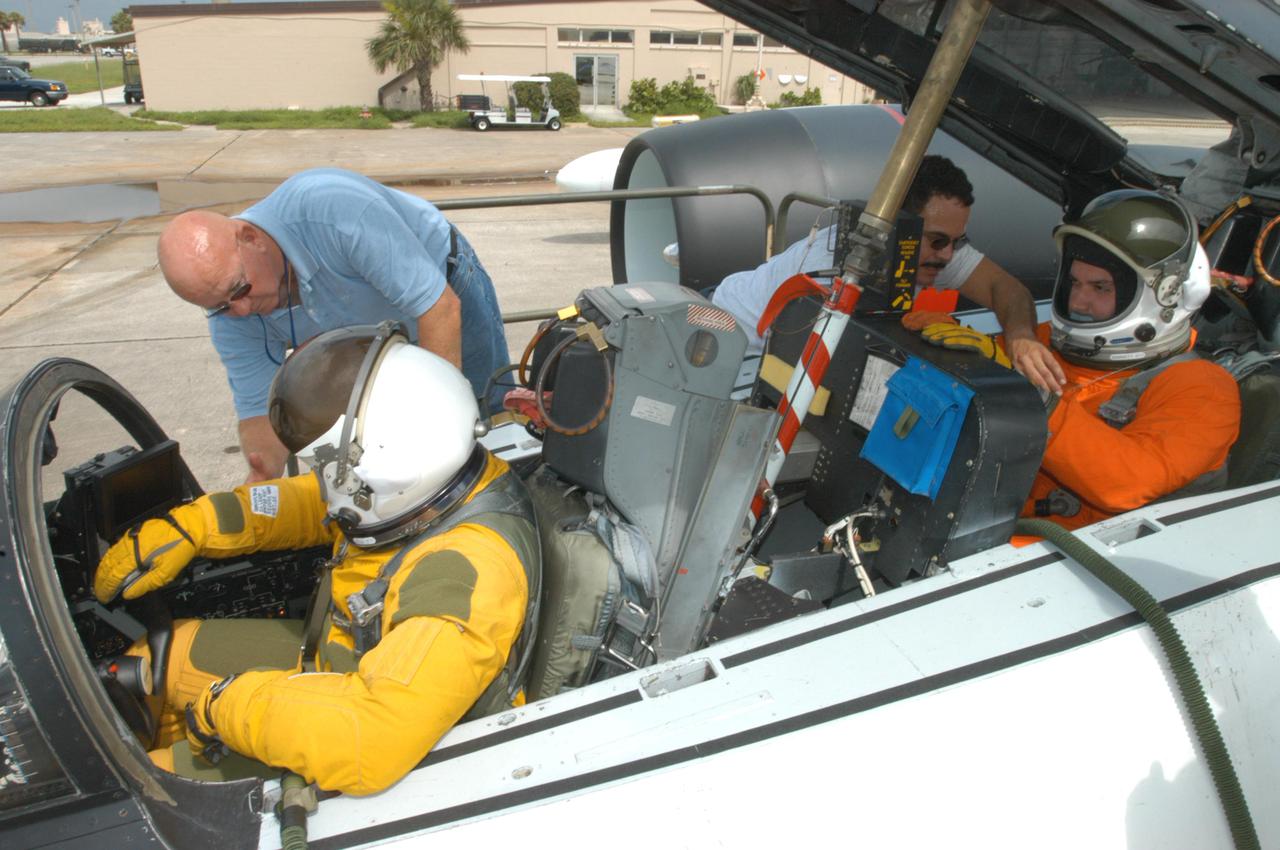
KENNEDY SPACE CENTER, FLA. - NASA pilot Rick Hull and aerospace engineer Brian Barnett are strapped into their seats in the WB-57F aircraft that will take photos of Space Shuttle Discovery during its launch on Return to Flight mission STS-114. NASA approved the development and implementation of the aircraft-based imaging system, known as the WB-57 Ascent Video Experiment (WAVE). The WAVE provides both ascent and entry imagery and enables better observation of the Shuttle on days of heavier cloud cover and areas obscured from ground cameras by the launch exhaust plume. WAVE comprises a 32-inch-ball turret system mounted on the nose of two WB-57 aircraft. The turret houses an optical bench, providing installation of both HDTV and infrared cameras. Optics consist of an 11-inch-diameter, 4.2 meter fixed-focal-length lens. The system can be operated in both auto track and manual modes.
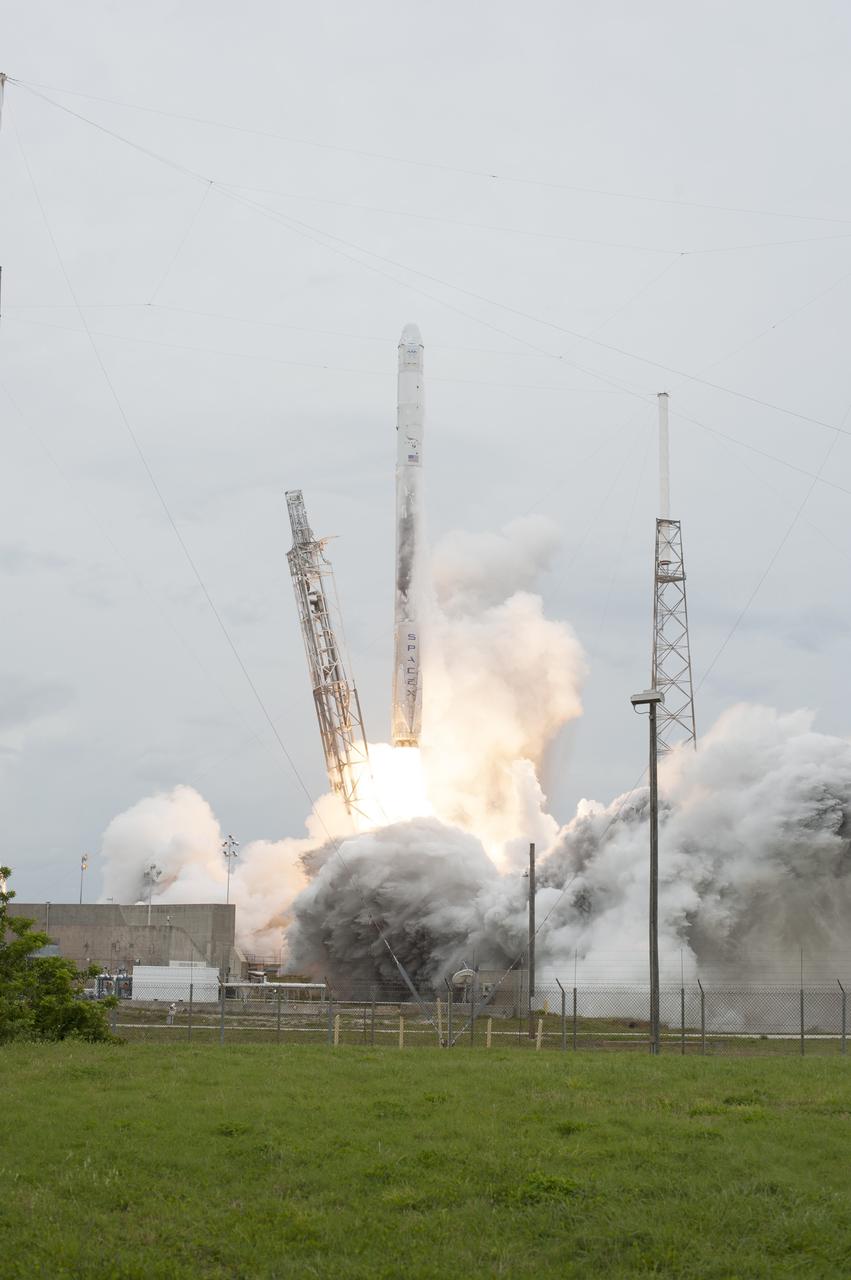
CAPE CANAVERAL, Fla. - An exhaust cloud builds under the Falcon 9 rocket on Space Launch Complex 40 on Cape Canaveral Air Force Station as the SpaceX-3 mission lifts off, carrying the Dragon resupply spacecraft to the International Space Station. Liftoff was during an instantaneous window at 3:25 p.m. EDT. Dragon is making its fourth trip to the space station. The SpaceX-3 mission, carrying almost 2.5 tons of supplies, technology and science experiments, is the third of 12 flights through a $1.6 billion NASA Commercial Resupply Services contract. Dragon's cargo will support more than 150 experiments that will be conducted during the station's Expeditions 39 and 40. For more information, visit http://www.nasa.gov/mission_pages/station/structure/launch/index.html. Photo credit: NASA/Tony Gray and Tim Powers
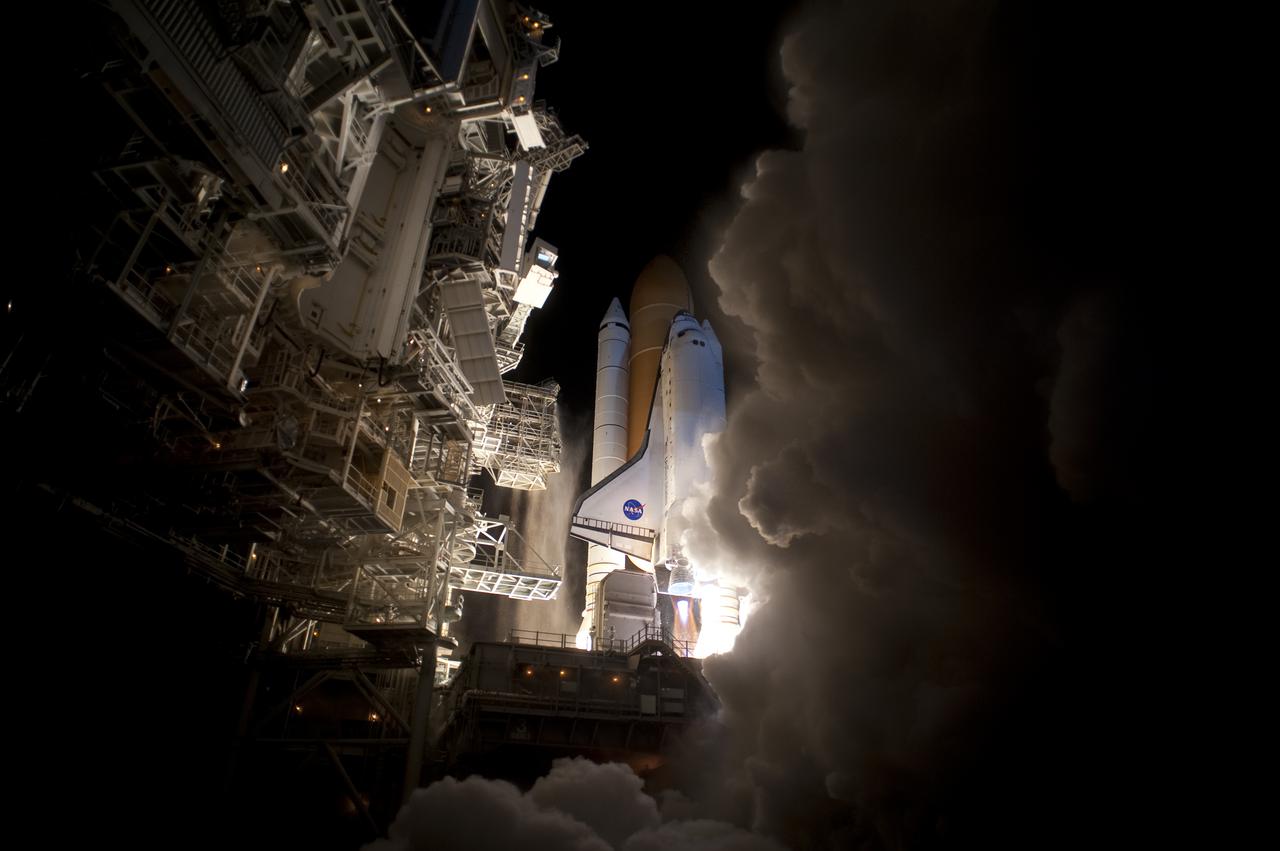
CAPE CANAVERAL, Fla. - An exhaust cloud threatens to obscure the view of space shuttle Discovery as it hurtles toward space after liftoff from Launch Pad 39A at NASA's Kennedy Space Center in Florida. Launch on the STS-131 mission was on time at 6:21 a.m. EDT. The seven-member crew will deliver the multi-purpose logistics module Leonardo, filled with supplies, a new crew sleeping quarters and science racks that will be transferred to the International Space Station's laboratories. The crew also will switch out a gyroscope on the station’s truss, install a spare ammonia storage tank and retrieve a Japanese experiment from the station’s exterior. STS-131 is the 33rd shuttle mission to the station and the 131st shuttle mission overall. For information on the STS-131 mission and crew, visit http:__www.nasa.gov_mission_pages_shuttle_shuttlemissions_sts131_index.html. Photo credit: NASA_Tony Gray and Tom Farrar
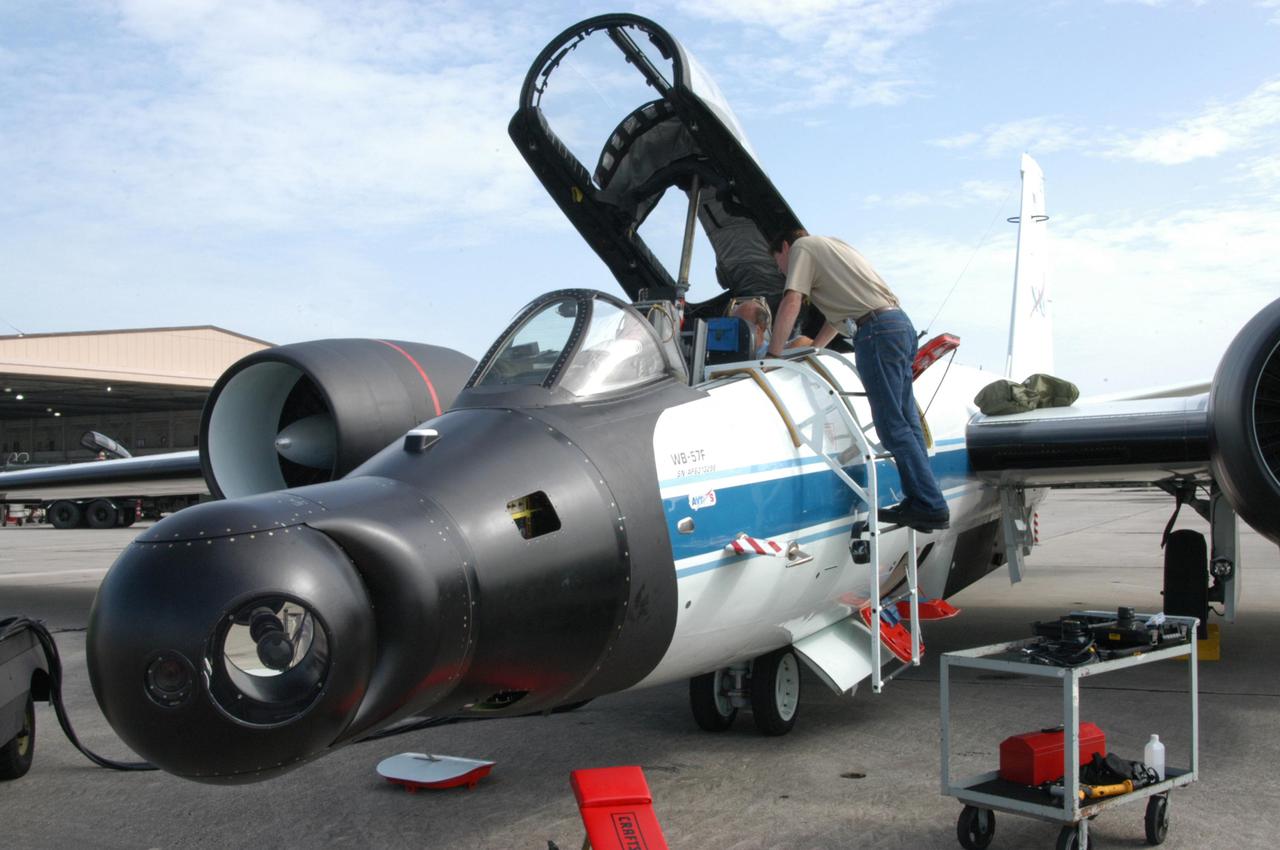
KENNEDY SPACE CENTER, FLA. - At Patrick Air Force Base in Cocoa Beach, Fla., workers prepare the WB-57F aircraft that will take photos of Space Shuttle Discovery during its launch on Return to Flight mission STS-114. NASA approved the development and implementation of the aircraft-based imaging system, known as the WB-57 Ascent Video Experiment (WAVE). The WAVE provides both ascent and entry imagery and enables better observation of the Shuttle on days of heavier cloud cover and areas obscured from ground cameras by the launch exhaust plume. WAVE comprises a 32-inch-ball turret system mounted on the nose of two WB-57 aircraft. The turret houses an optical bench, providing installation of both HDTV and infrared cameras. Optics consist of an 11-inch-diameter, 4.2 meter fixed-focal-length lens. The system can be operated in both auto track and manual modes.
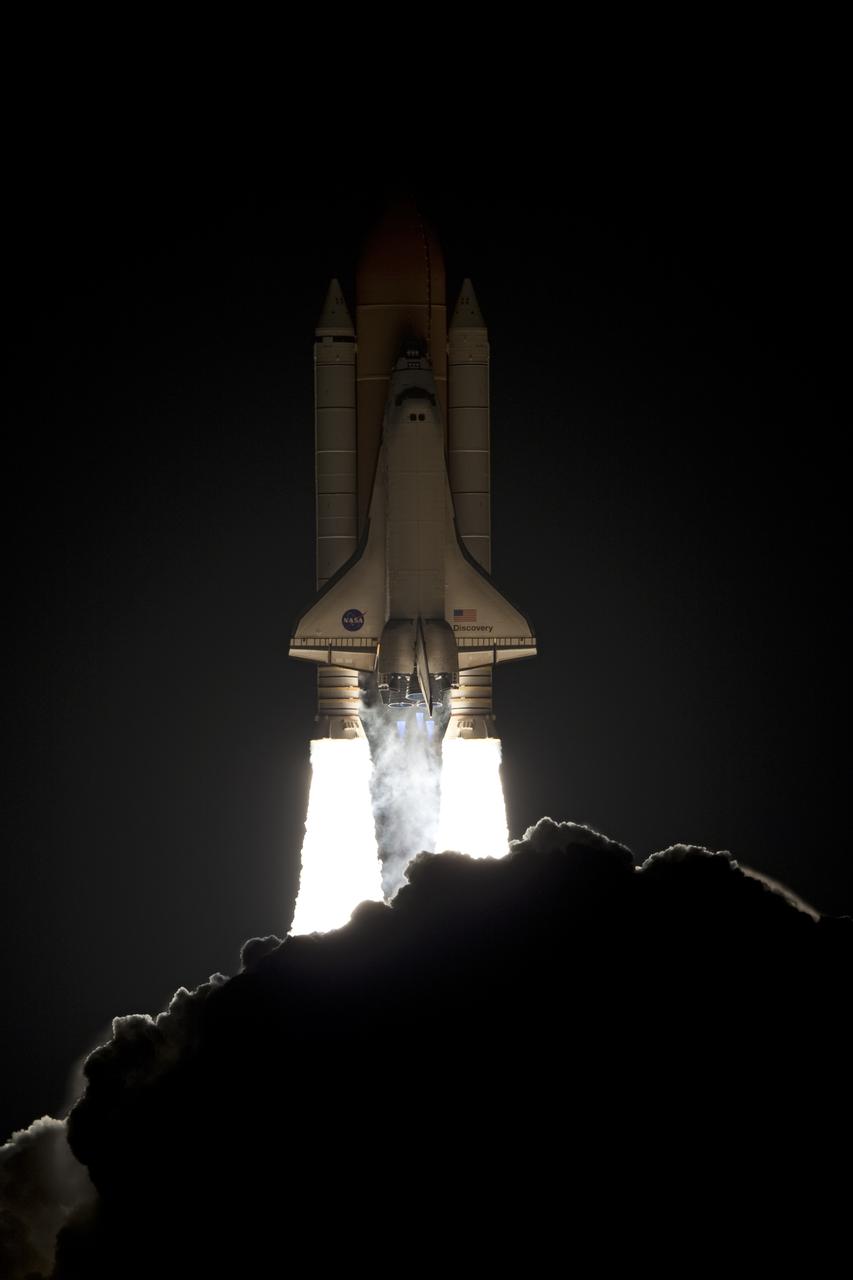
CAPE CANAVERAL, Fla. - Space shuttle Discovery rises above the exhaust cloud building at Launch Pad 39A at NASA's Kennedy Space Center in Florida as it begins its climb to orbit at 6:21 a.m. EDT April 5 on the STS-131 mission. The seven-member crew will deliver the multi-purpose logistics module Leonardo, filled with supplies, a new crew sleeping quarters and science racks that will be transferred to the International Space Station's laboratories. The crew also will switch out a gyroscope on the station’s truss, install a spare ammonia storage tank and retrieve a Japanese experiment from the station’s exterior. STS-131 is the 33rd shuttle mission to the station and the 131st shuttle mission overall. For information on the STS-131 mission and crew, visit http:__www.nasa.gov_mission_pages_shuttle_shuttlemissions_sts131_index.html. Photo credit: NASA_Kenny Allen
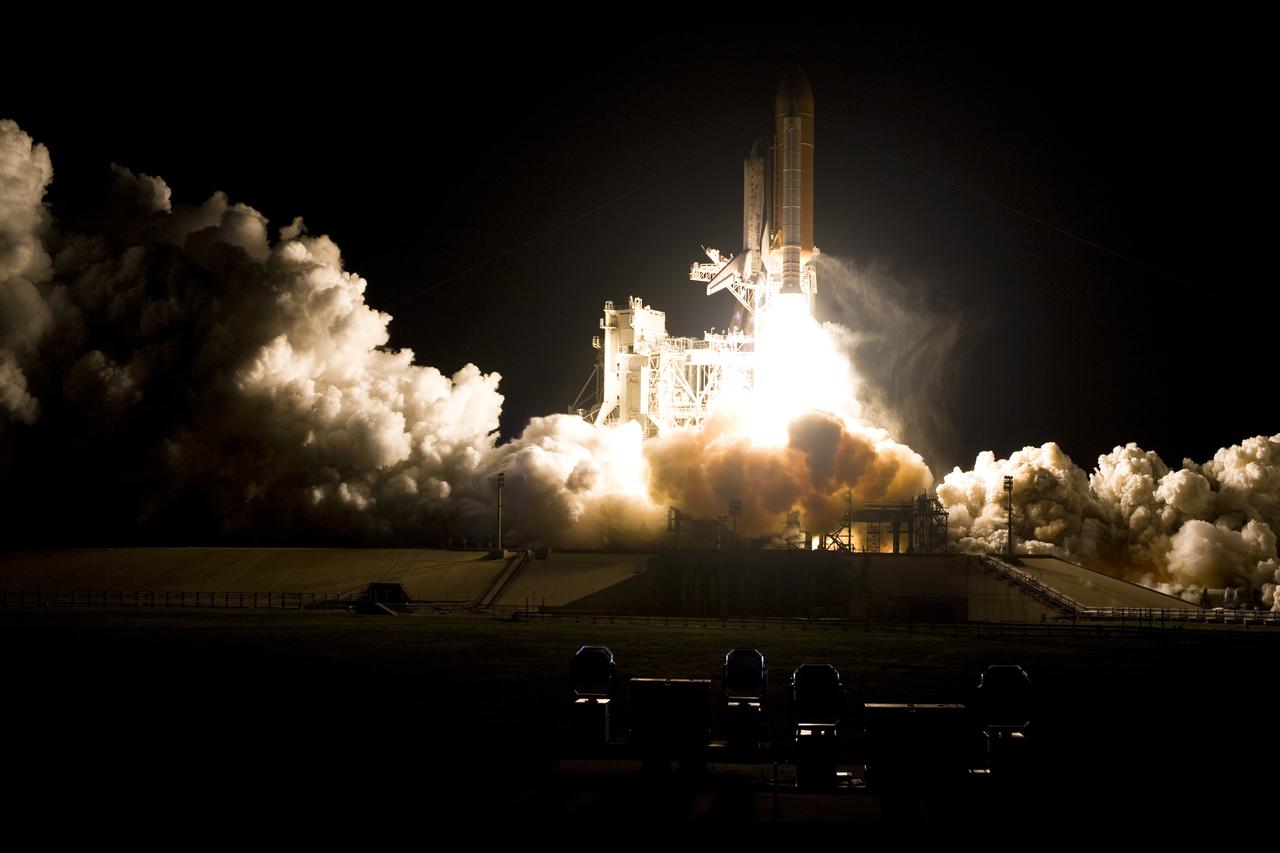
CAPE CANAVERAL, Fla. - An exhaust cloud billows around Launch Pad 39A at NASA's Kennedy Space Center in Florida as space shuttle Discovery lifts off into the predawn sky at 6:21 a.m. EDT April 5 to begin the STS-131 mission. The seven-member crew will deliver the multi-purpose logistics module Leonardo, filled with supplies, a new crew sleeping quarters and science racks that will be transferred to the International Space Station's laboratories. The crew also will switch out a gyroscope on the station’s truss, install a spare ammonia storage tank and retrieve a Japanese experiment from the station’s exterior. STS-131 is the 33rd shuttle mission to the station and the 131st shuttle mission overall. For information on the STS-131 mission and crew, visit http:__www.nasa.gov_mission_pages_shuttle_shuttlemissions_sts131_index.html. Photo courtesy of Scott Andrews
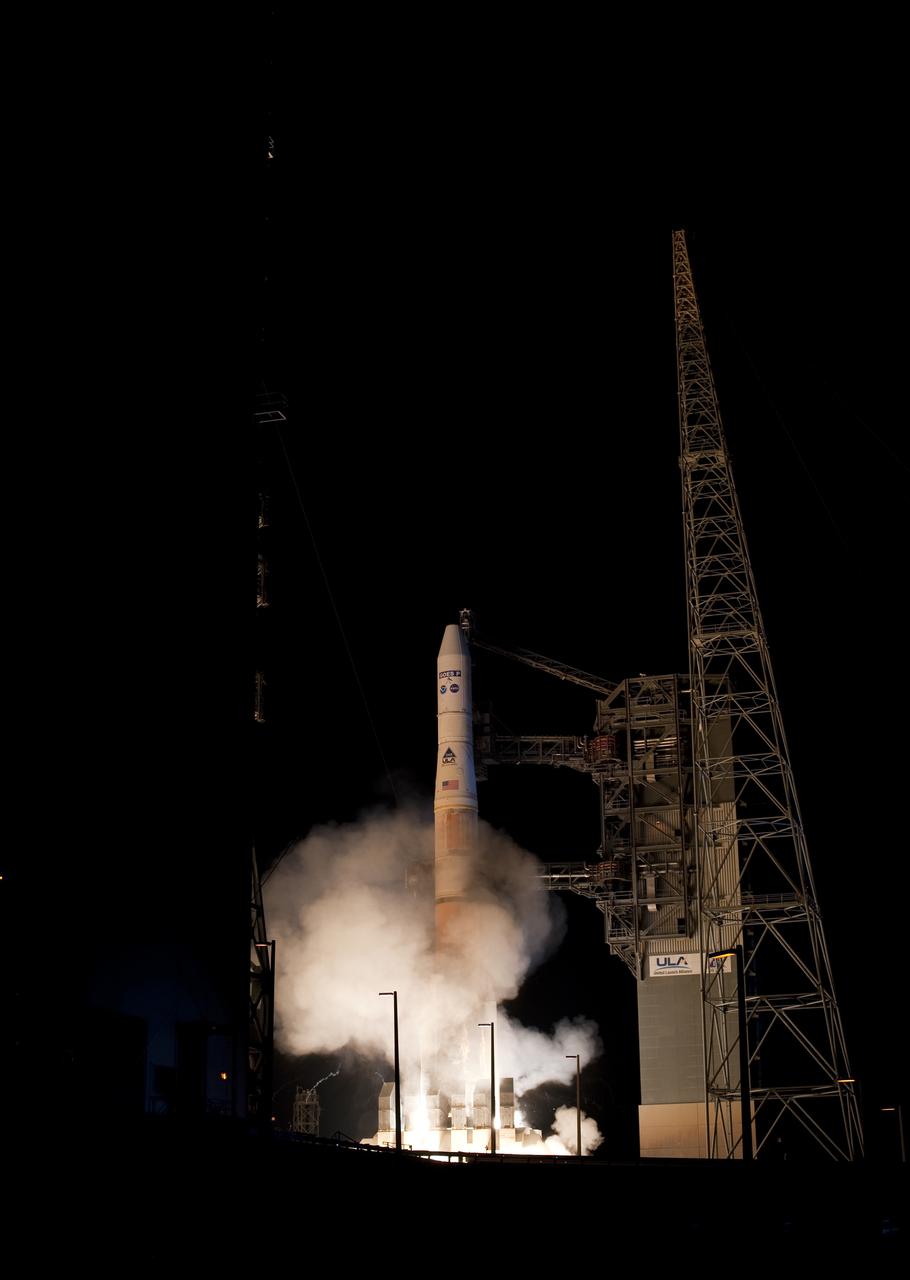
CAPE CANAVERAL, Fla. – The base of the United Launch Alliance Delta IV rocket carrying NASA's GOES-P meteorological satellite is engulfed in its exhaust cloud as it lifts off Launch Complex 37 on Cape Canaveral Air Force Station in Florida at 6:57 p.m. EST. GOES-P, the latest Geostationary Operational Environmental Satellite, was developed by NASA for the National Oceanic and Atmospheric Administration, or NOAA. The GOES-P spacecraft will be placed in a 22,300-mile-high geosynchronous orbit where it will appear to hover over a single point on Earth. The spacecraft is outfitted with a complex suite of observation instruments and cameras so it can accurately report on weather and climate conditions on Earth. For information on GOES-P, visit http:__www.nasa.gov_mission_pages_GOES-P_main_index.html. Photo credit: NASA_Sandra Joseph and Tony Gray
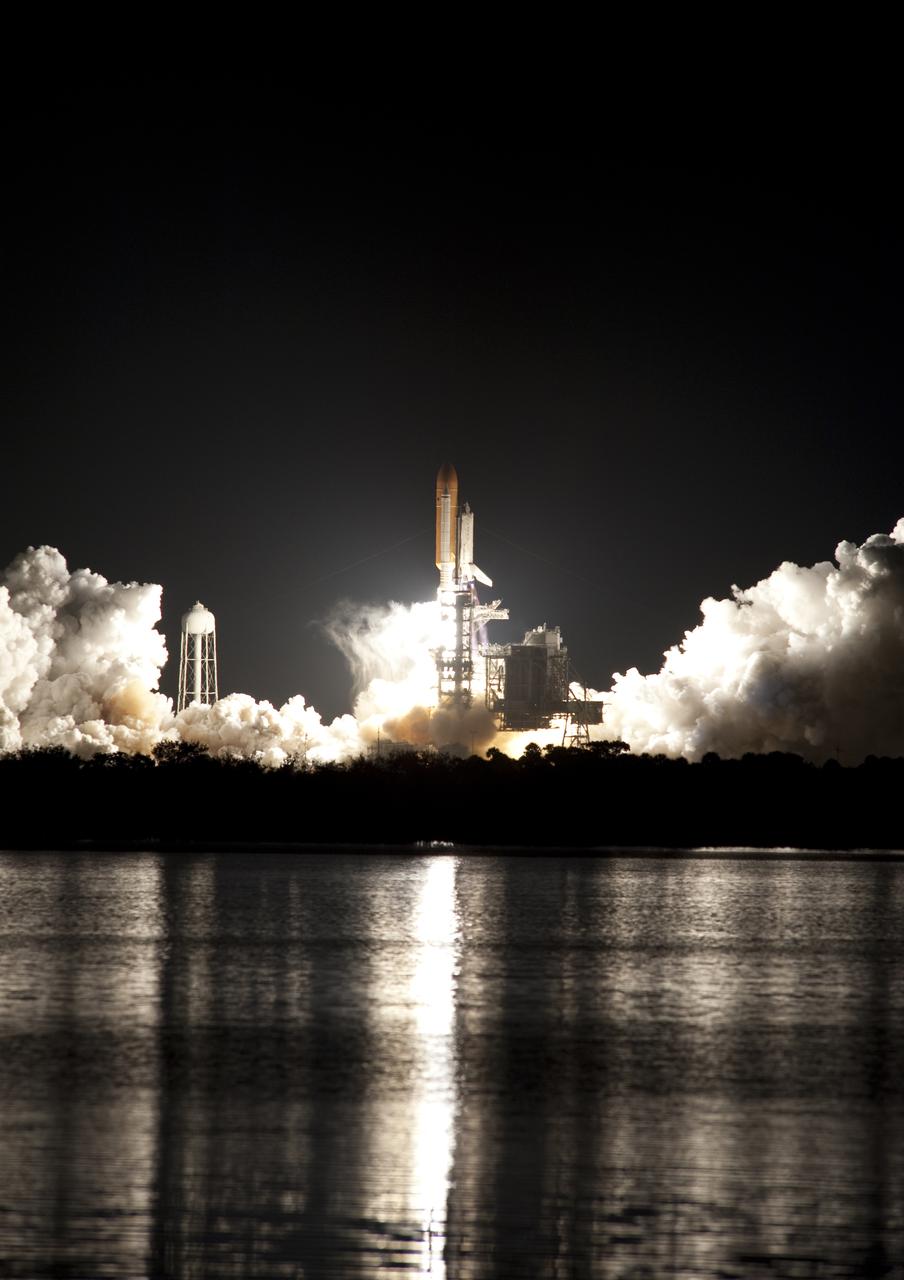
CAPE CANAVERAL, Fla. - An exhaust cloud builds at Launch Pad 39A at NASA's Kennedy Space Center in Florida as space shuttle Discovery lifts off at 6:21 a.m. EDT April 5 to begin the STS-131 mission. The seven-member crew will deliver the multi-purpose logistics module Leonardo, filled with supplies, a new crew sleeping quarters and science racks that will be transferred to the International Space Station's laboratories. The crew also will switch out a gyroscope on the station’s truss, install a spare ammonia storage tank and retrieve a Japanese experiment from the station’s exterior. STS-131 is the 33rd shuttle mission to the station and the 131st shuttle mission overall. For information on the STS-131 mission and crew, visit http:__www.nasa.gov_mission_pages_shuttle_shuttlemissions_sts131_index.html. Photo credit: NASA_Ben Cooper
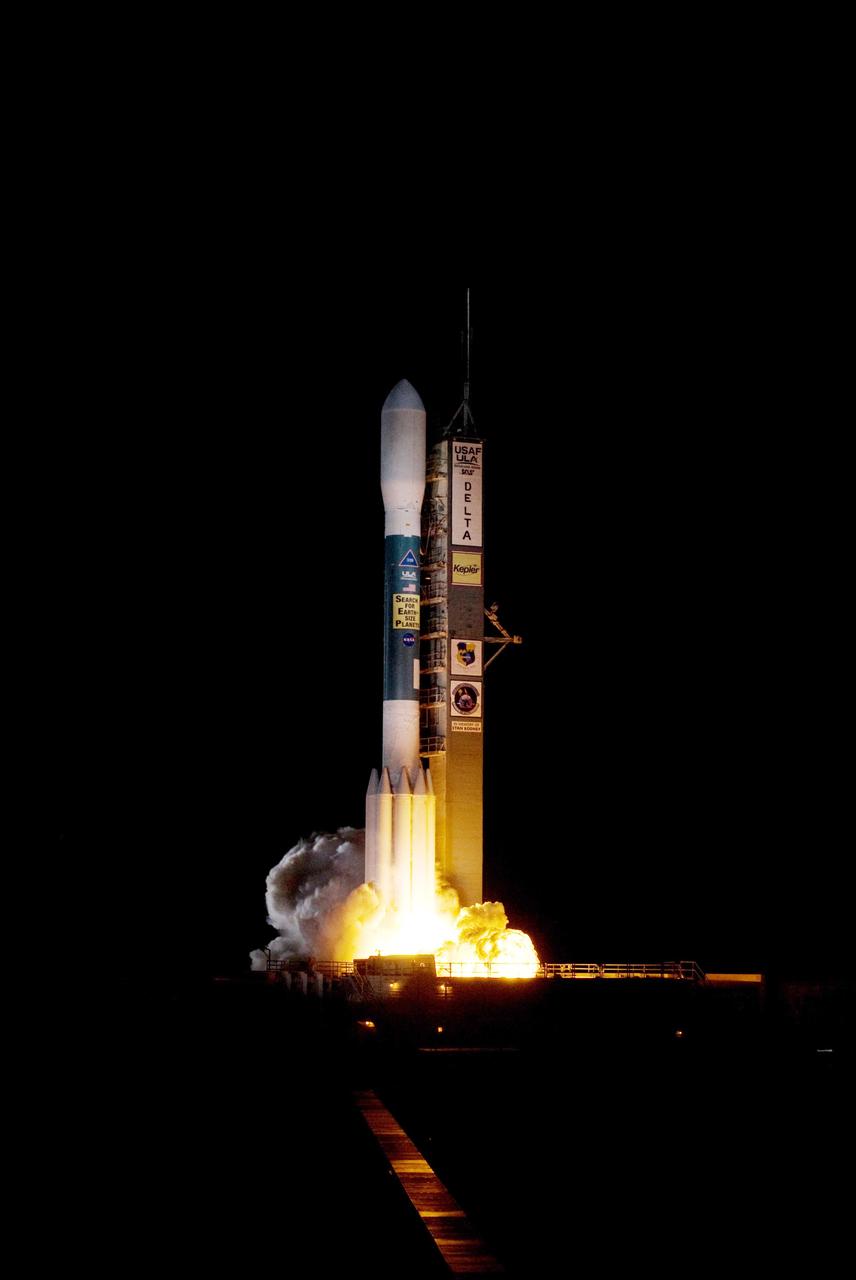
CAPE CANAVERAL, Fla. – On Launch Pad 17-B at Cape Canaveral Air Force Station in Florida, exhaust clouds cascade around the base of United Launch Alliance's Delta II rocket carrying NASA's Kepler spacecraft as the rocket’s engines ignite. Liftoff was on time at 10:49 p.m. EST. Kepler is a spaceborne telescope designed to search the nearby region of our galaxy for Earth-size planets orbiting in the habitable zone of stars like our sun. The habitable zone is the region around a star where temperatures permit water to be liquid on a planet's surface. The challenge for Kepler is to look at a large number of stars in order to statistically estimate the total number of Earth-size planets orbiting sun-like stars in the habitable zone. Kepler will survey more than 100,000 stars in our galaxy. Photo credit: NASA/Sandra Joseph, Kevin O'Connell
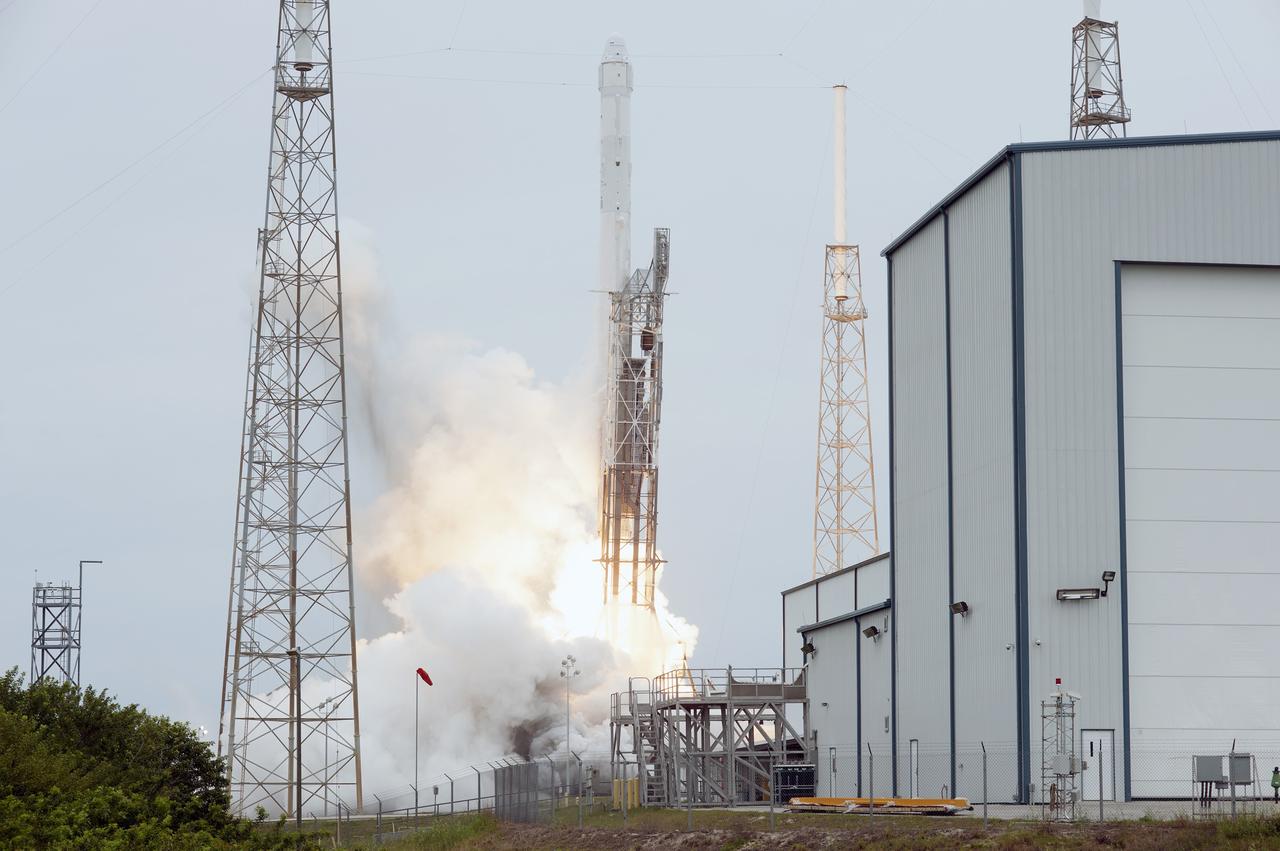
CAPE CANAVERAL, Fla. - An exhaust cloud forms under the Falcon 9 rocket on Space Launch Complex 40 on Cape Canaveral Air Force Station as the SpaceX-3 mission lifts off, carrying the Dragon resupply spacecraft to the International Space Station. Liftoff was during an instantaneous window at 3:25 p.m. EDT. Dragon is making its fourth trip to the space station. The SpaceX-3 mission, carrying almost 2.5 tons of supplies, technology and science experiments, is the third of 12 flights through a $1.6 billion NASA Commercial Resupply Services contract. Dragon's cargo will support more than 150 experiments that will be conducted during the station's Expeditions 39 and 40. For more information, visit http://www.nasa.gov/mission_pages/station/structure/launch/index.html. Photo credit: NASA/Tony Gray and Tim Powers
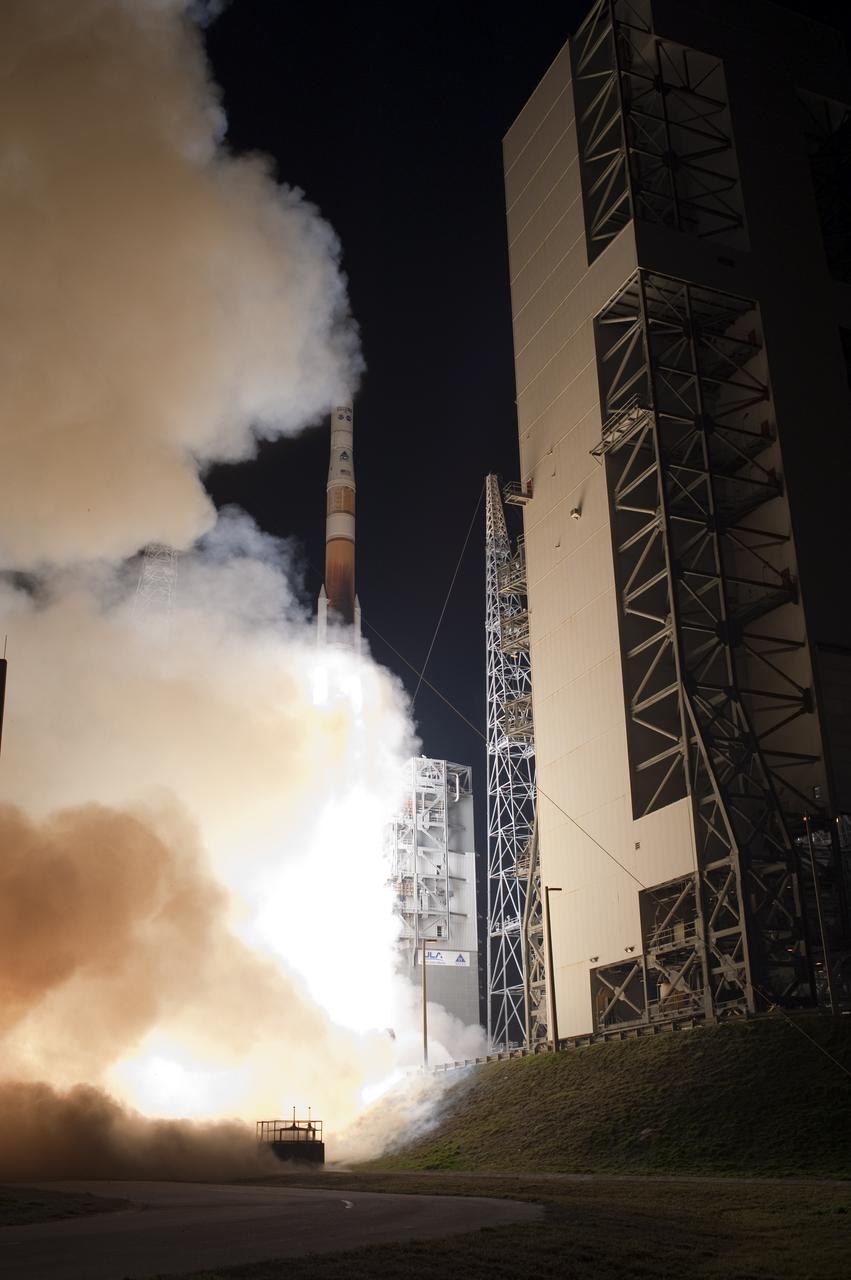
CAPE CANAVERAL, Fla. – An exhaust cloud building at Launch Complex 37 on Cape Canaveral Air Force Station in Florida obscures the United Launch Alliance Delta IV rocket carrying NASA's GOES-P meteorological satellite as it lifts off at 6:57 p.m. EST. GOES-P, the latest Geostationary Operational Environmental Satellite, was developed by NASA for the National Oceanic and Atmospheric Administration, or NOAA. The GOES-P spacecraft will be placed in a 22,300-mile-high geosynchronous orbit where it will appear to hover over a single point on Earth. The spacecraft is outfitted with a complex suite of observation instruments and cameras so it can accurately report on weather and climate conditions on Earth. For information on GOES-P, visit http:__www.nasa.gov_mission_pages_GOES-P_main_index.html. Photo credit: NASA_Sandra Joseph and Tony Gray
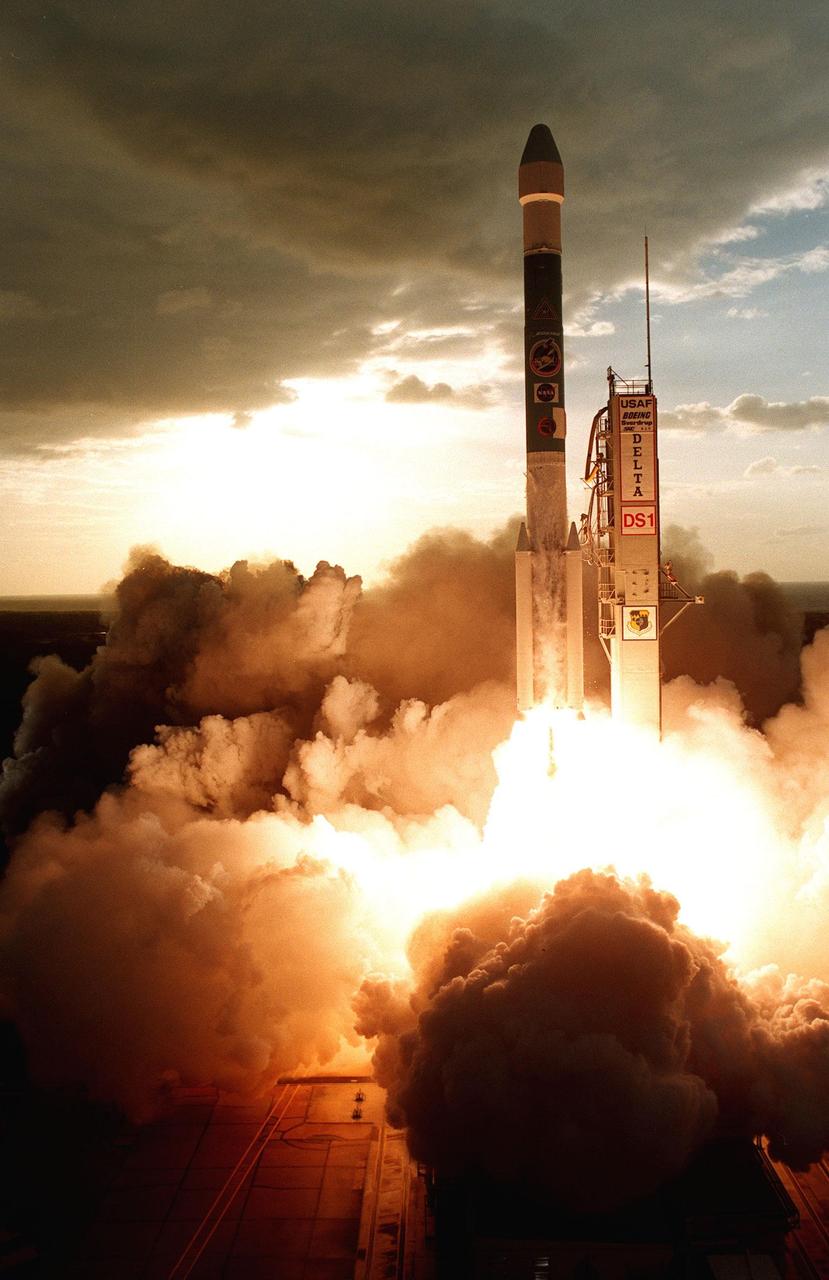
KENNEDY SPACE CENTER, FLA. -- A Boeing Delta II (7326) rocket lights up the clouds of exhaust below as it propels Deep Space 1 into the sky after liftoff from Launch Complex 17A, Cape Canaveral Air Station. The first flight in NASA's New Millennium Program, the spacecraft is designed to validate 12 new technologies for scientific space missions of the next century, including the ion propulsion engine. Propelled by the gas xenon, the engine is being flight-tested for future deep space and Earth-orbiting missions. Other onboard experiments include software that tracks celestial bodies so the spacecraft can make its own navigation decisions without the intervention of ground controllers. Deep Space 1 will complete most of its mission objectives within the first two months, but will also do a flyby of a near-Earth asteroid, 1992 KD, in July 1999

KENNEDY SPACE CENTER, FLA. - NASA aerospace engineer Brian Barnett suits up before a test flight of the WB-57F aircraft that will take photos of Space Shuttle Discovery during its launch on Return to Flight mission STS-114. Barnett operates the cameras. NASA approved the development and implementation of the aircraft-based imaging system, known as the WB-57 Ascent Video Experiment (WAVE). The WAVE provides both ascent and entry imagery and enables better observation of the Shuttle on days of heavier cloud cover and areas obscured from ground cameras by the launch exhaust plume. WAVE comprises a 32-inch-ball turret system mounted on the nose of two WB-57 aircraft. The turret houses an optical bench, providing installation of both HDTV and infrared cameras. Optics consist of an 11-inch-diameter, 4.2 meter fixed-focal-length lens. The system can be operated in both auto track and manual modes.
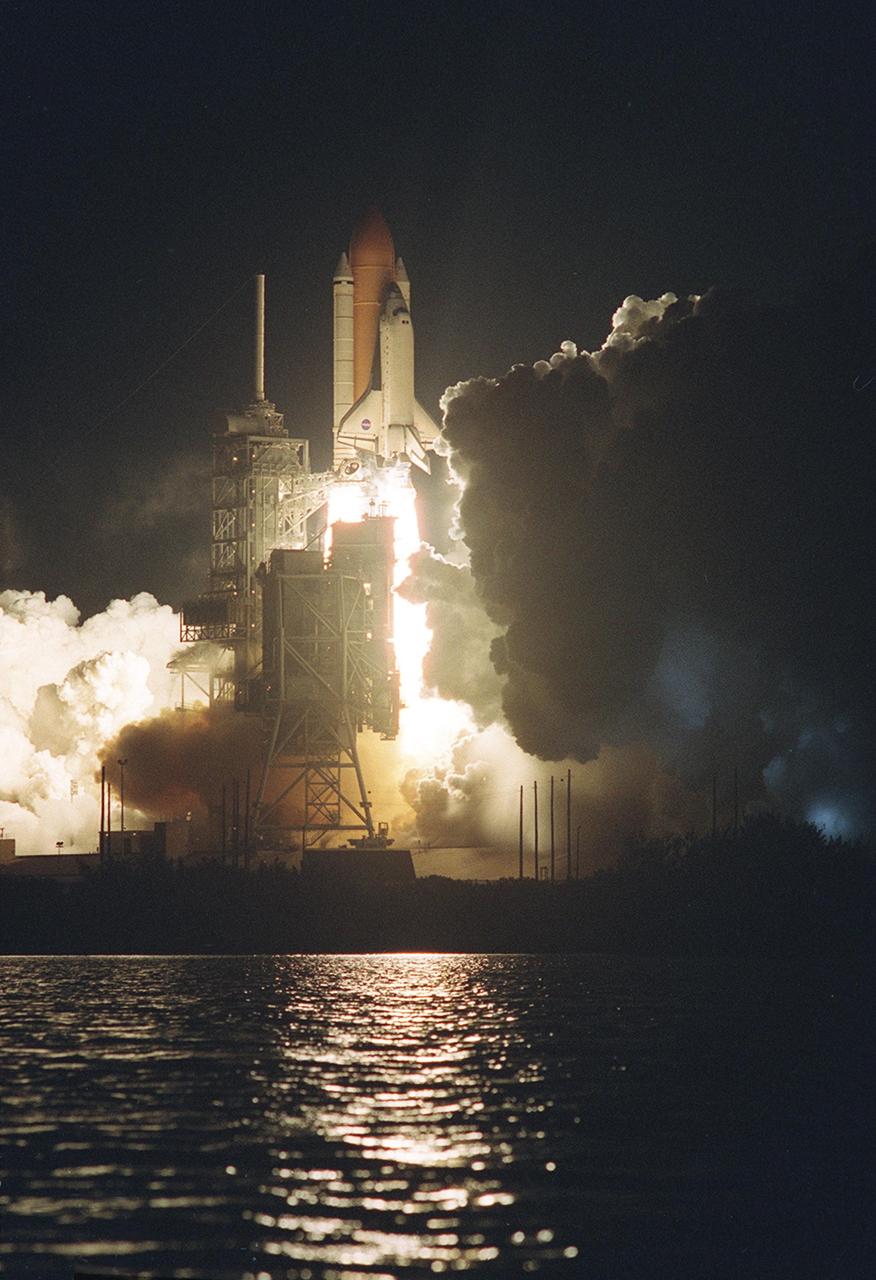
KENNEDY SPACE CENTER, Fla. - As Space Shuttle Columbia hurtles into the pre-dawn sky on mission STS-109, its brilliant exhaust illuminates the clouds of smoke and steam and spreads across the nearby water. Liftoff of Columbia occurred at 6:22:02:08 a.m. EST (11:22:02:08 GMT). This was the 27th flight of the vehicle and 108th in the history of the Shuttle program. The goal of the mission is the maintenance and upgrade of the Hubble Space Telescope, to be carried out in five spacewalks. The crew comprises Commander Scott D. Altman, Pilot Duane G. Carey, Payload Commander John M. Grunsfeld, and Mission Specialists Nancy Jane Currie, Richard M. Linnehan, James H. Newman and Michael J. Massimino. After the 11-day mission, Columbia is expected to return to KSC March 12 about 4:35 a.m. EST (09:35 GMT)
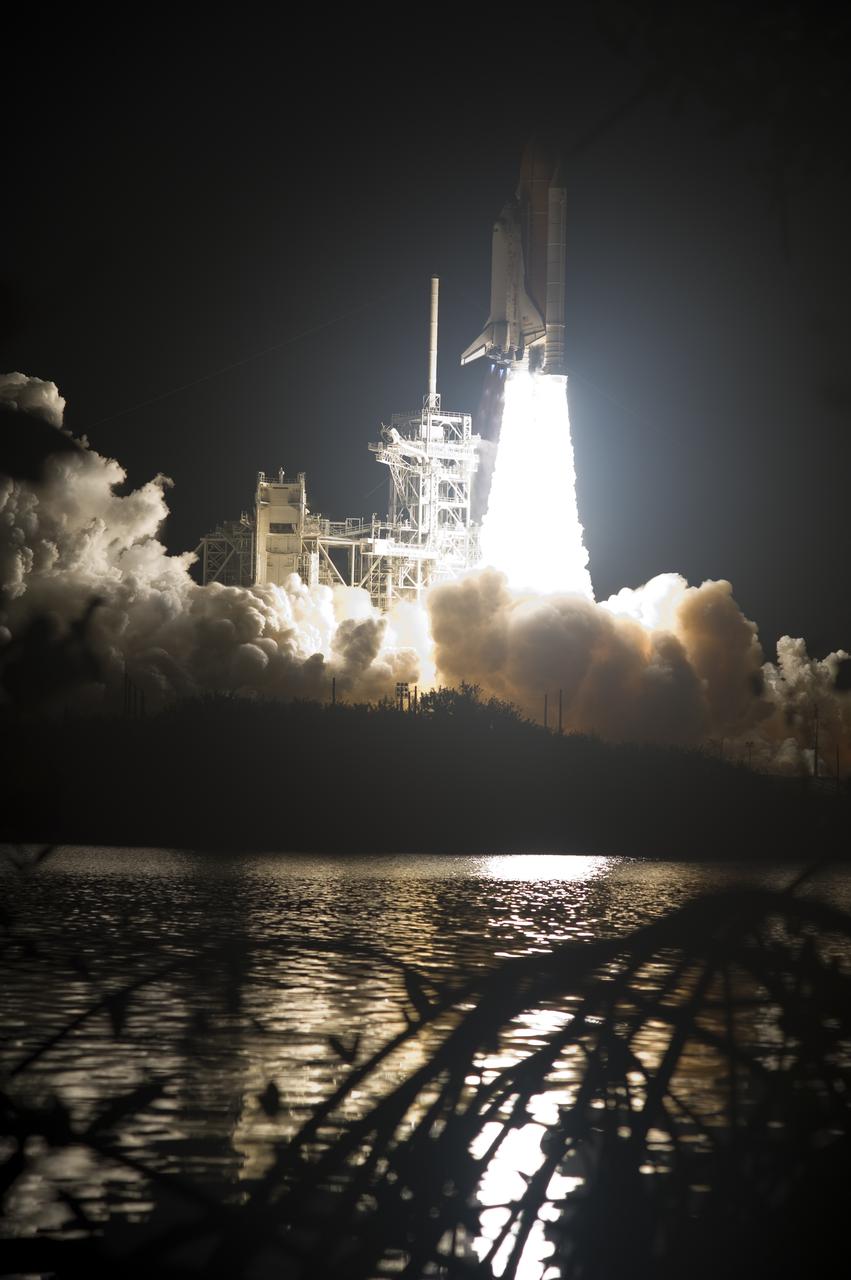
CAPE CANAVERAL, Fla. - Space shuttle Discovery rises above the exhaust cloud forming at Launch Pad 39A at NASA's Kennedy Space Center in Florida as it begins its climb to orbit at 6:21 a.m. EDT April 5 on the STS-131 mission. The seven-member crew will deliver the multi-purpose logistics module Leonardo, filled with supplies, a new crew sleeping quarters and science racks that will be transferred to the International Space Station's laboratories. The crew also will switch out a gyroscope on the station’s truss, install a spare ammonia storage tank and retrieve a Japanese experiment from the station’s exterior. STS-131 is the 33rd shuttle mission to the station and the 131st shuttle mission overall. For information on the STS-131 mission and crew, visit http:__www.nasa.gov_mission_pages_shuttle_shuttlemissions_sts131_index.html. Photo credit: NASA_Sandra Joseph and Kevin O'Connell
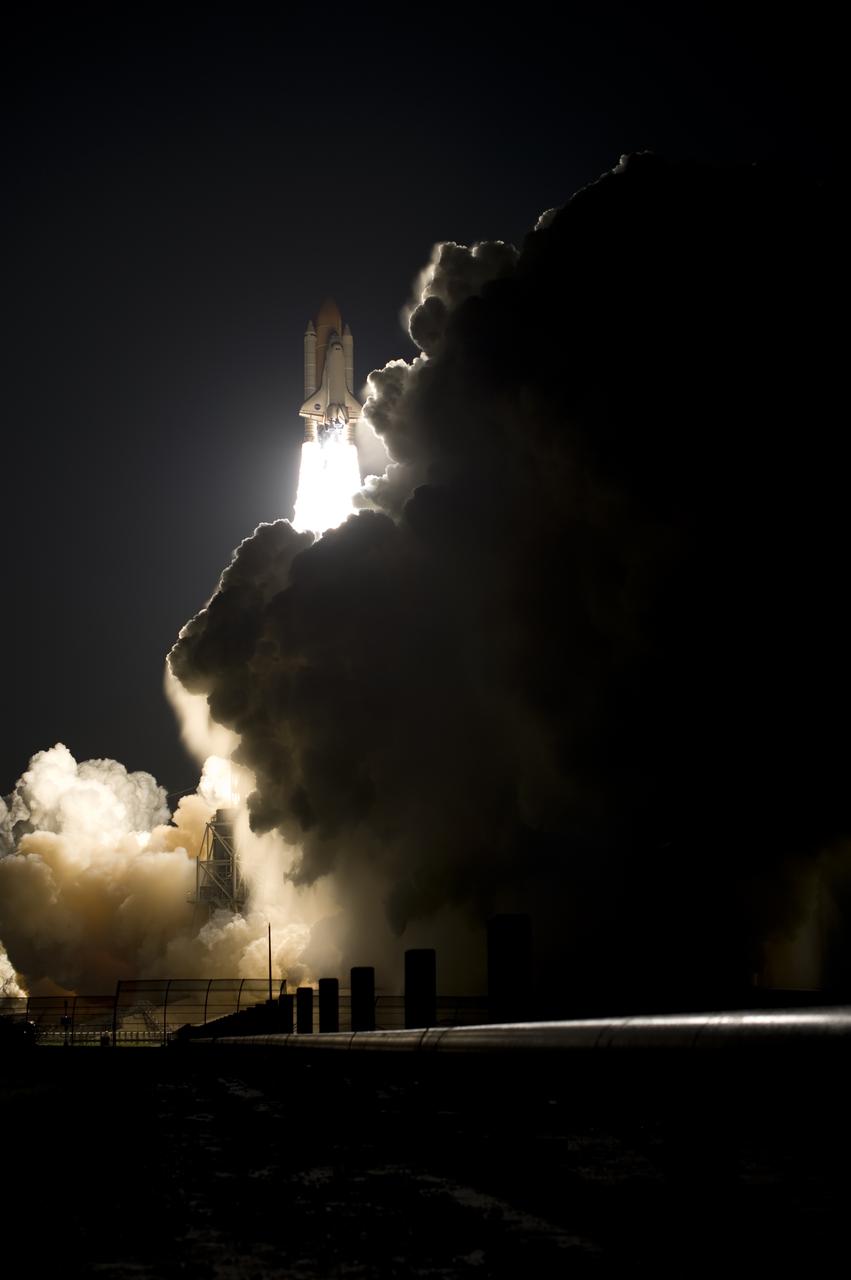
CAPE CANAVERAL, Fla. - An exhaust cloud threatens to obscure the view of space shuttle Discovery as it hurtles toward space after liftoff from Launch Pad 39A at NASA's Kennedy Space Center in Florida. Launch of the STS-131 mission was on time at 6:21 a.m. EDT. The seven-member crew will deliver the multi-purpose logistics module Leonardo, filled with supplies, a new crew sleeping quarters and science racks that will be transferred to the International Space Station's laboratories. The crew also will switch out a gyroscope on the station’s truss, install a spare ammonia storage tank and retrieve a Japanese experiment from the station’s exterior. STS-131 is the 33rd shuttle mission to the station and the 131st shuttle mission overall. For information on the STS-131 mission and crew, visit http:__www.nasa.gov_mission_pages_shuttle_shuttlemissions_sts131_index.html. Photo credit: NASA_Tony Gray and Tom Farrar
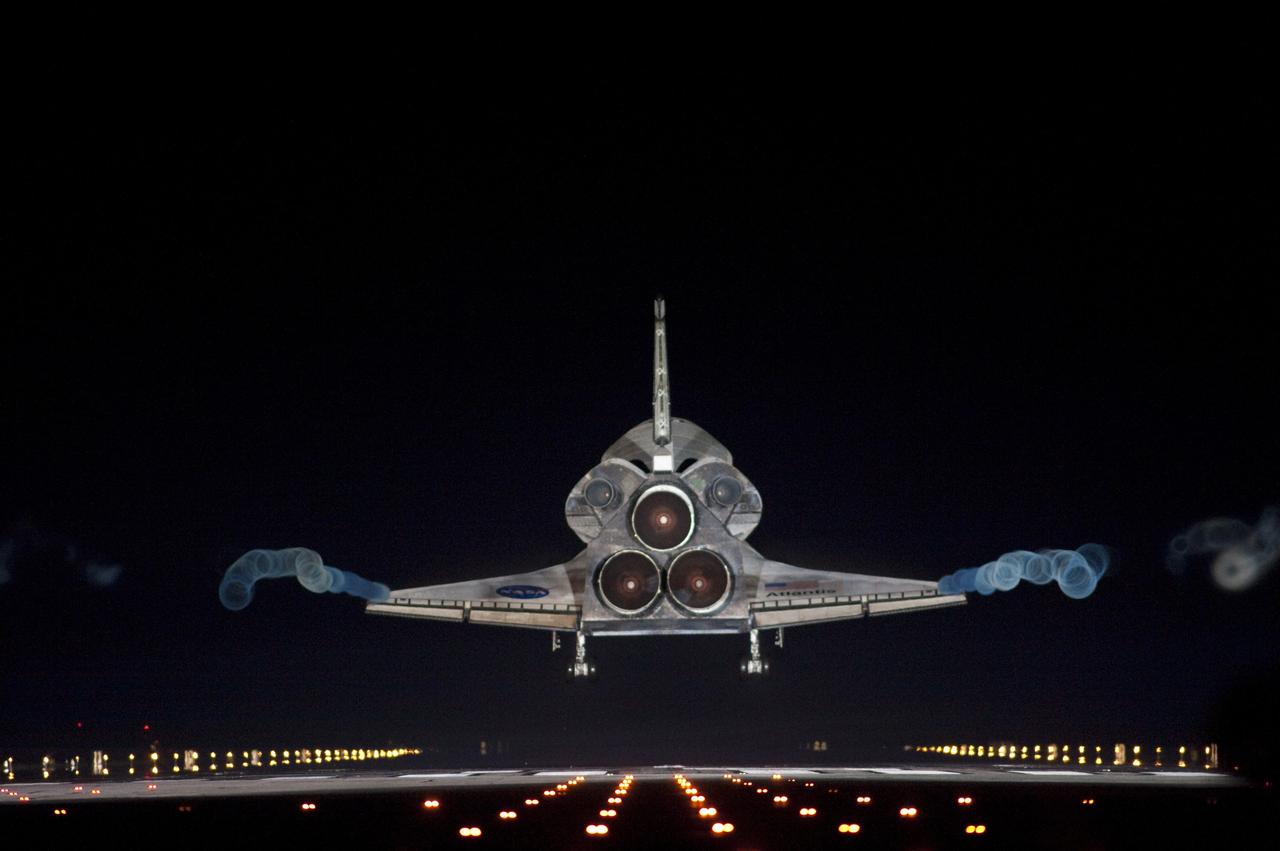
CAPE CANAVERAL, Fla. -- Vapor trails follow space shuttle Atlantis as it approaches Runway 15 on the Shuttle Landing Facility at NASA's Kennedy Space Center in Florida for the final time. A vapor trail, known as a contrail, is a cloud of water vapor that condenses and freezes around the small particles in aircraft exhaust. Atlantis marked the 26th nighttime landing of NASA's Space Shuttle Program and the 78th landing at Kennedy. It also was the final mission for the shuttle program. STS-135 was the 33rd and final flight for Atlantis, which has spent 307 days in space, orbited Earth 4,848 times and traveled 125,935,769 miles. For more information on the space shuttle era, visit www.nasa.gov/mission_pages/shuttle/flyout. Photo credit: NASA/Sandra Joseph and Kevin O'Connell
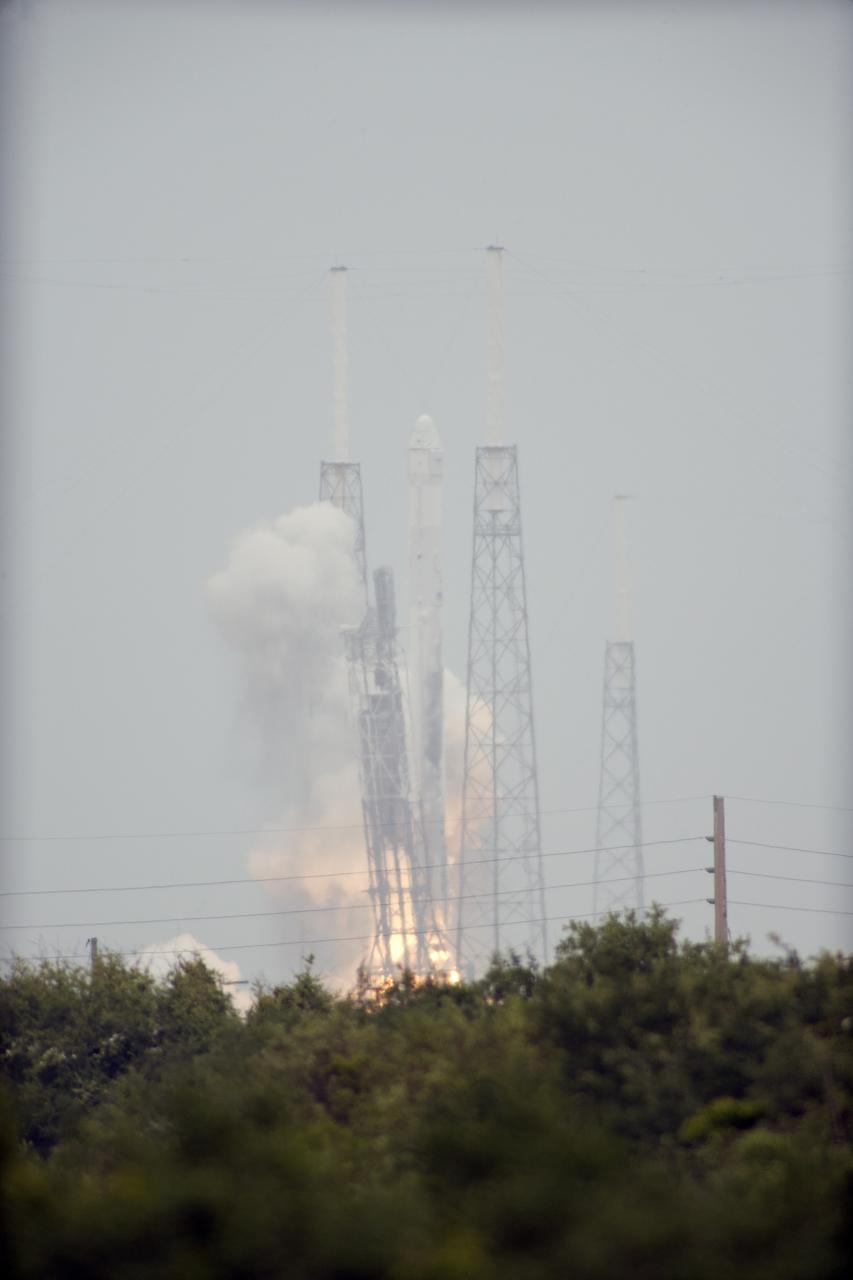
CAPE CANAVERAL, Fla. - An exhaust cloud and flash of light under the Falcon 9 rocket signals liftoff of the SpaceX-3 mission from Space Launch Complex 40 on Cape Canaveral Air Force Station, sending the Dragon resupply spacecraft on its way to the International Space Station. Launch was during an instantaneous window at 3:25 p.m. EDT. Dragon is making its fourth trip to the space station. The SpaceX-3 mission, carrying almost 2.5 tons of supplies, technology and science experiments, is the third of 12 flights through a $1.6 billion NASA Commercial Resupply Services contract. Dragon's cargo will support more than 150 experiments that will be conducted during the station's Expeditions 39 and 40. For more information, visit http://www.nasa.gov/mission_pages/station/structure/launch/index.html. Photo credit: NASA/Tony Gray

KENNEDY SPACE CENTER, FLA. - At Patrick Air Force Base in Cocoa Beach, Fla., the WB-57F aircraft taxis on the airfield before its test flight. The aircraft will take photos of Space Shuttle Discovery during its launch on Return to Flight mission STS-114. NASA approved the development and implementation of the aircraft-based imaging system, known as the WB-57 Ascent Video Experiment (WAVE). The WAVE provides both ascent and entry imagery and enables better observation of the Shuttle on days of heavier cloud cover and areas obscured from ground cameras by the launch exhaust plume. WAVE comprises a 32-inch-ball turret system mounted on the nose of two WB-57 aircraft. The turret houses an optical bench, providing installation of both HDTV and infrared cameras. Optics consist of an 11-inch-diameter, 4.2 meter fixed-focal-length lens. The system can be operated in both auto track and manual modes.

CAPE CANAVERAL, Fla. - An exhaust cloud builds around the Falcon 9 rocket at Space Launch Complex 40 on Cape Canaveral Air Force Station as the SpaceX-3 mission lifts off, starting the Dragon resupply spacecraft on its way to the International Space Station. Launch was during an instantaneous window at 3:25 p.m. EDT. Dragon is making its fourth trip to the space station. The SpaceX-3 mission, carrying almost 2.5 tons of supplies, technology and science experiments, is the third of 12 flights through a $1.6 billion NASA Commercial Resupply Services contract. Dragon's cargo will support more than 150 experiments that will be conducted during the station's Expeditions 39 and 40. For more information, visit http://www.nasa.gov/mission_pages/station/structure/launch/index.html. Photo credit: NASA/Tony Gray and Tim Powers
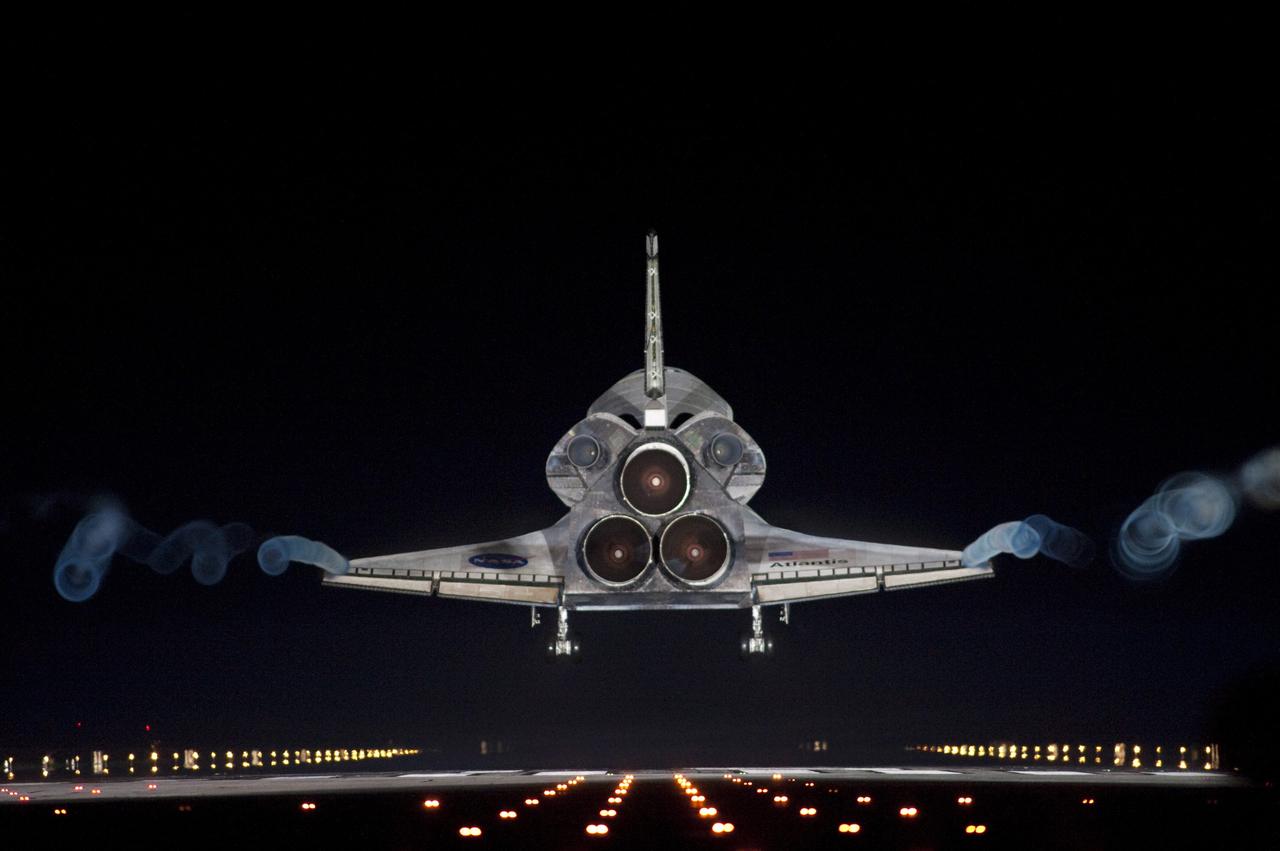
CAPE CANAVERAL, Fla. -- Vapor trails follow space shuttle Atlantis as it approaches Runway 15 on the Shuttle Landing Facility at NASA's Kennedy Space Center in Florida for the final time. A vapor trail, known as a contrail, is a cloud of water vapor that condenses and freezes around the small particles in aircraft exhaust. Atlantis marked the 26th nighttime landing of NASA's Space Shuttle Program and the 78th landing at Kennedy. It also was the final mission for the shuttle program. STS-135 was the 33rd and final flight for Atlantis, which has spent 307 days in space, orbited Earth 4,848 times and traveled 125,935,769 miles. For more information on the space shuttle era, visit www.nasa.gov/mission_pages/shuttle/flyout. Photo credit: NASA/Sandra Joseph and Kevin O'Connell

KENNEDY SPACE CENTER, FLA. - At Patrick Air Force Base in Cocoa Beach, Fla., the WB-57F aircraft takes off on a test flight. The aircraft will take photos of Space Shuttle Discovery during its launch on Return to Flight mission STS-114. NASA approved the development and implementation of the aircraft-based imaging system, known as the WB-57 Ascent Video Experiment (WAVE). The WAVE provides both ascent and entry imagery and enables better observation of the Shuttle on days of heavier cloud cover and areas obscured from ground cameras by the launch exhaust plume. WAVE comprises a 32-inch-ball turret system mounted on the nose of two WB-57 aircraft. The turret houses an optical bench, providing installation of both HDTV and infrared cameras. Optics consist of an 11-inch-diameter, 4.2 meter fixed-focal-length lens. The system can be operated in both auto track and manual modes.
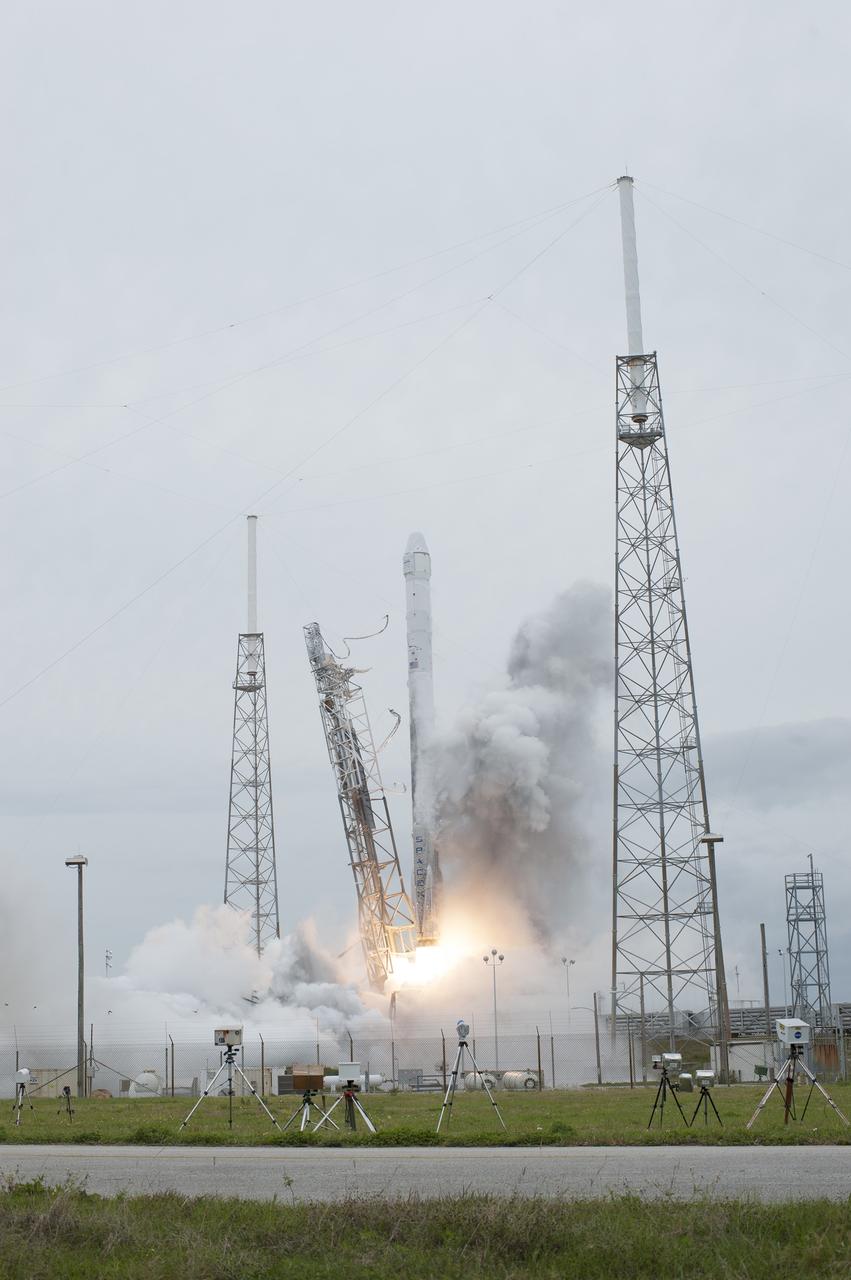
CAPE CANAVERAL, Fla. - An exhaust cloud and flash of light under the Falcon 9 rocket signals liftoff of the SpaceX-3 mission from Space Launch Complex 40 on Cape Canaveral Air Force Station, sending the Dragon resupply spacecraft on its way to the International Space Station. Launch was during an instantaneous window at 3:25 p.m. EDT. Dragon is making its fourth trip to the space station. The SpaceX-3 mission, carrying almost 2.5 tons of supplies, technology and science experiments, is the third of 12 flights through a $1.6 billion NASA Commercial Resupply Services contract. Dragon's cargo will support more than 150 experiments that will be conducted during the station's Expeditions 39 and 40. For more information, visit http://www.nasa.gov/mission_pages/station/structure/launch/index.html. Photo credit: NASA/Tony Gray and Tim Terry
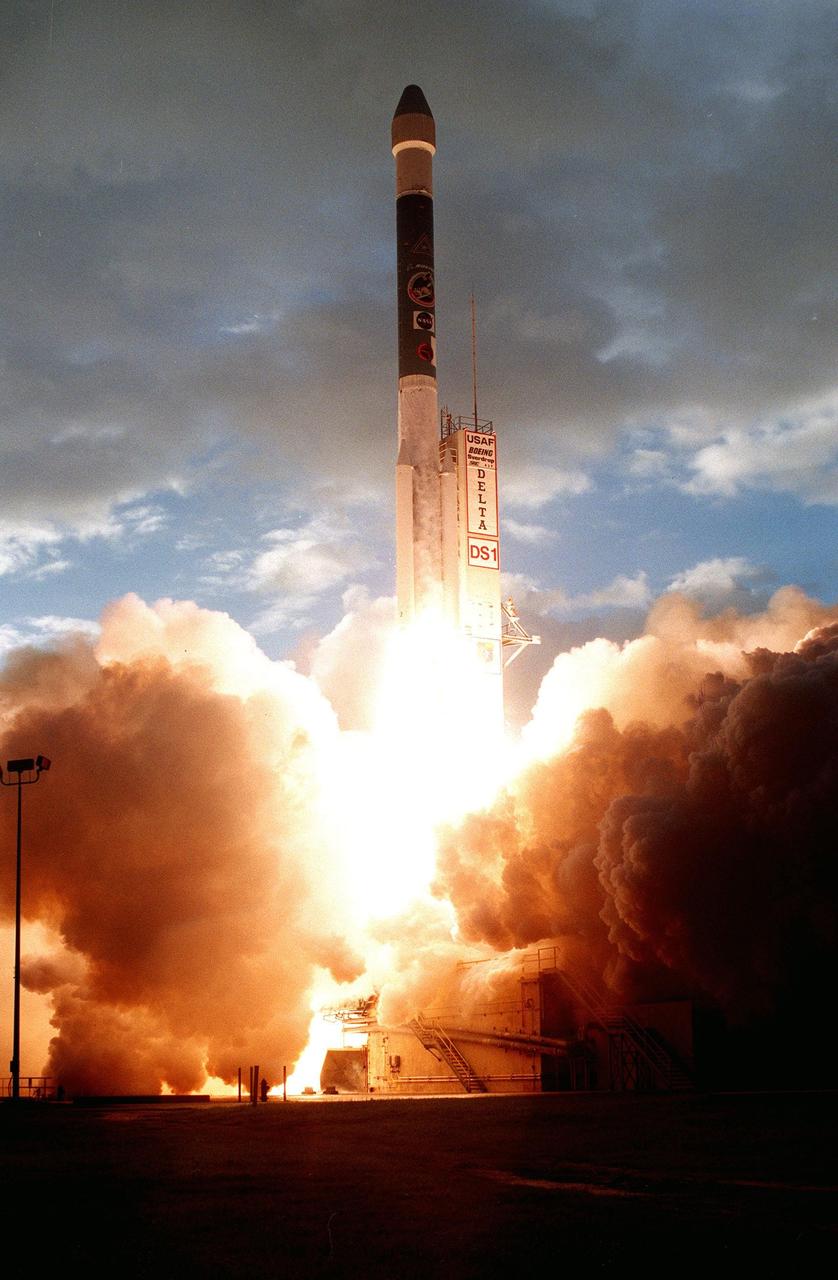
KENNEDY SPACE CENTER, FLA. -- A Boeing Delta II (7326) rocket hurls Deep Space 1 through the morning clouds after liftoff, creating sun-challenging light with its exhaust, from Launch Complex 17A, Cape Canaveral Air Station. The first flight in NASA's New Millennium Program, the spacecraft is designed to validate 12 new technologies for scientific space missions of the next century, including the ion propulsion engine. Propelled by the gas xenon, the engine is being flight-tested for future deep space and Earth-orbiting missions. Other onboard experiments include software that tracks celestial bodies so the spacecraft can make its own navigation decisions without the intervention of ground controllers. Deep Space 1 will complete most of its mission objectives within the first two months, but will also do a flyby of a near-Earth asteroid, 1992 KD, in July 1999
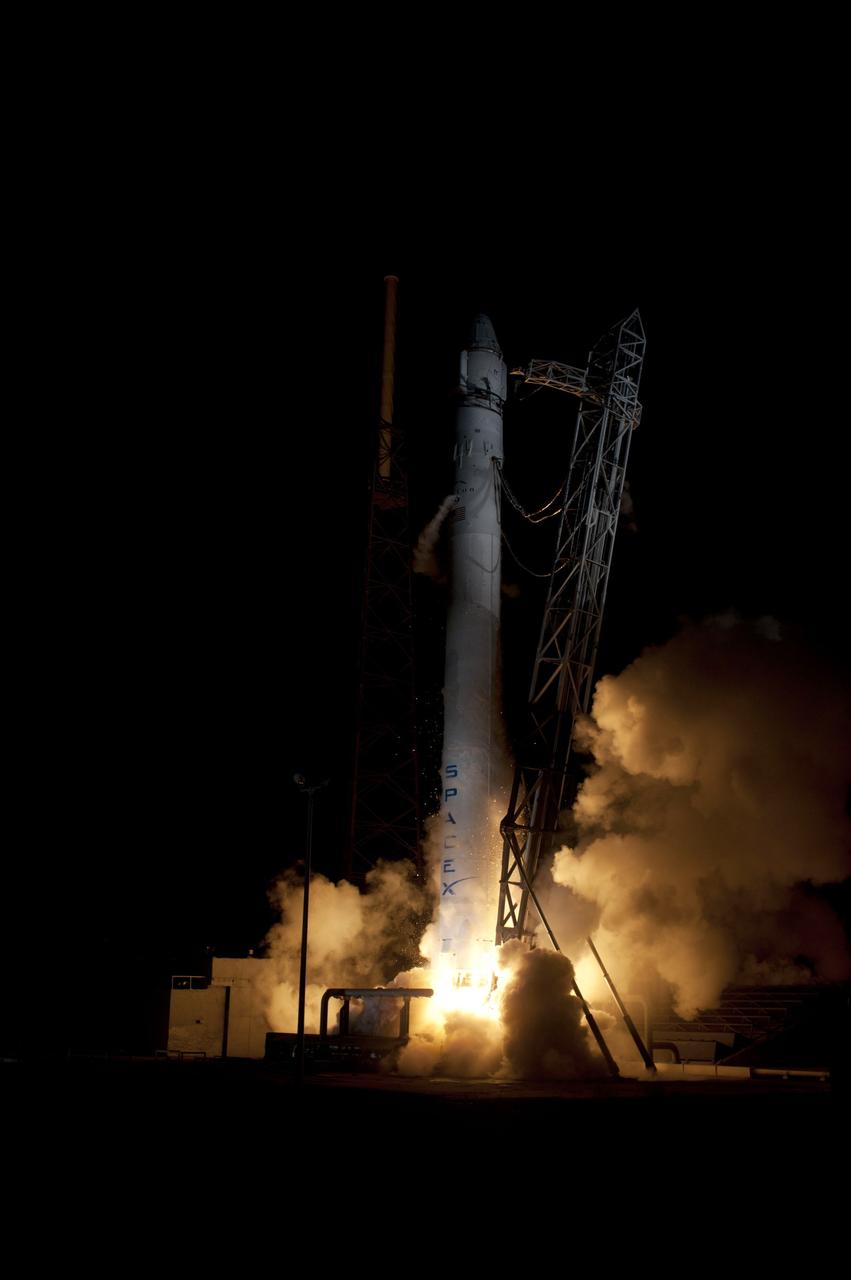
CAPE CANAVERAL, Fla. – An exhaust cloud begins to form around the SpaceX Falcon 9 rocket as it lifts off Space Launch Complex-40 on Cape Canaveral Air Force Station in Florida at 3:44 a.m. EDT. The launch is the company's second demonstration test flight for NASA's Commercial Orbital Transportation Services, or COTS, Program. During the flight, the Dragon capsule will conduct a series of check-out procedures to test and prove its systems, including rendezvous and berthing with the International Space Station. If the capsule performs as planned, the cargo and experiments it is carrying will be transferred to the station. The cargo includes food, water and provisions for the station’s Expedition crews, such as clothing, batteries and computer equipment. Under COTS, NASA has partnered with two aerospace companies to deliver cargo to the station. For more information, visit http://www.nasa.gov/spacex. Photo credit: NASA/Rick Wetherington, Tim Powers and Tim Terry
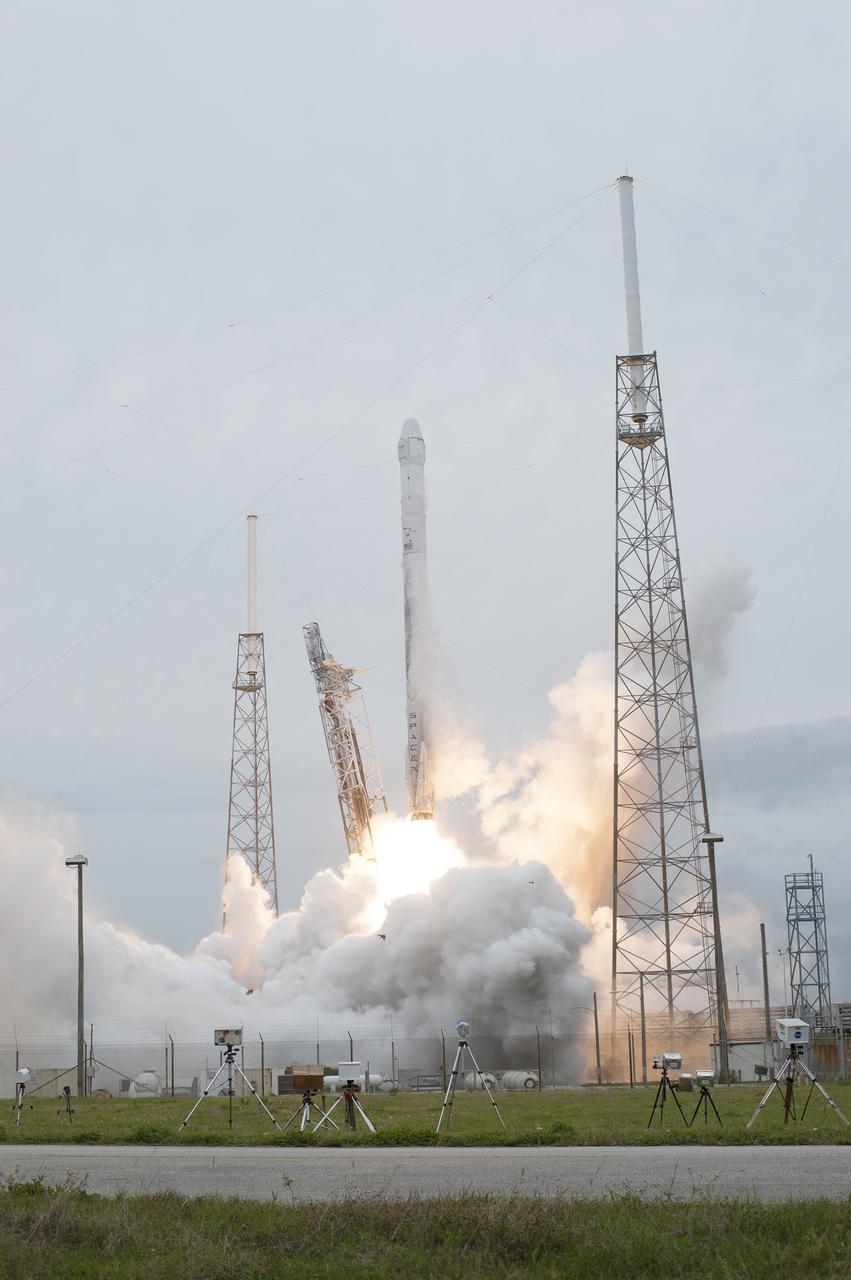
CAPE CANAVERAL, Fla. - An exhaust cloud builds around the Falcon 9 rocket at Space Launch Complex 40 on Cape Canaveral Air Force Station as the SpaceX-3 mission lifts off, starting the Dragon resupply spacecraft on its way to the International Space Station. Launch was during an instantaneous window at 3:25 p.m. EDT. Dragon is making its fourth trip to the space station. The SpaceX-3 mission, carrying almost 2.5 tons of supplies, technology and science experiments, is the third of 12 flights through a $1.6 billion NASA Commercial Resupply Services contract. Dragon's cargo will support more than 150 experiments that will be conducted during the station's Expeditions 39 and 40. For more information, visit http://www.nasa.gov/mission_pages/station/structure/launch/index.html. Photo credit: NASA/Tony Gray and Tim Terry
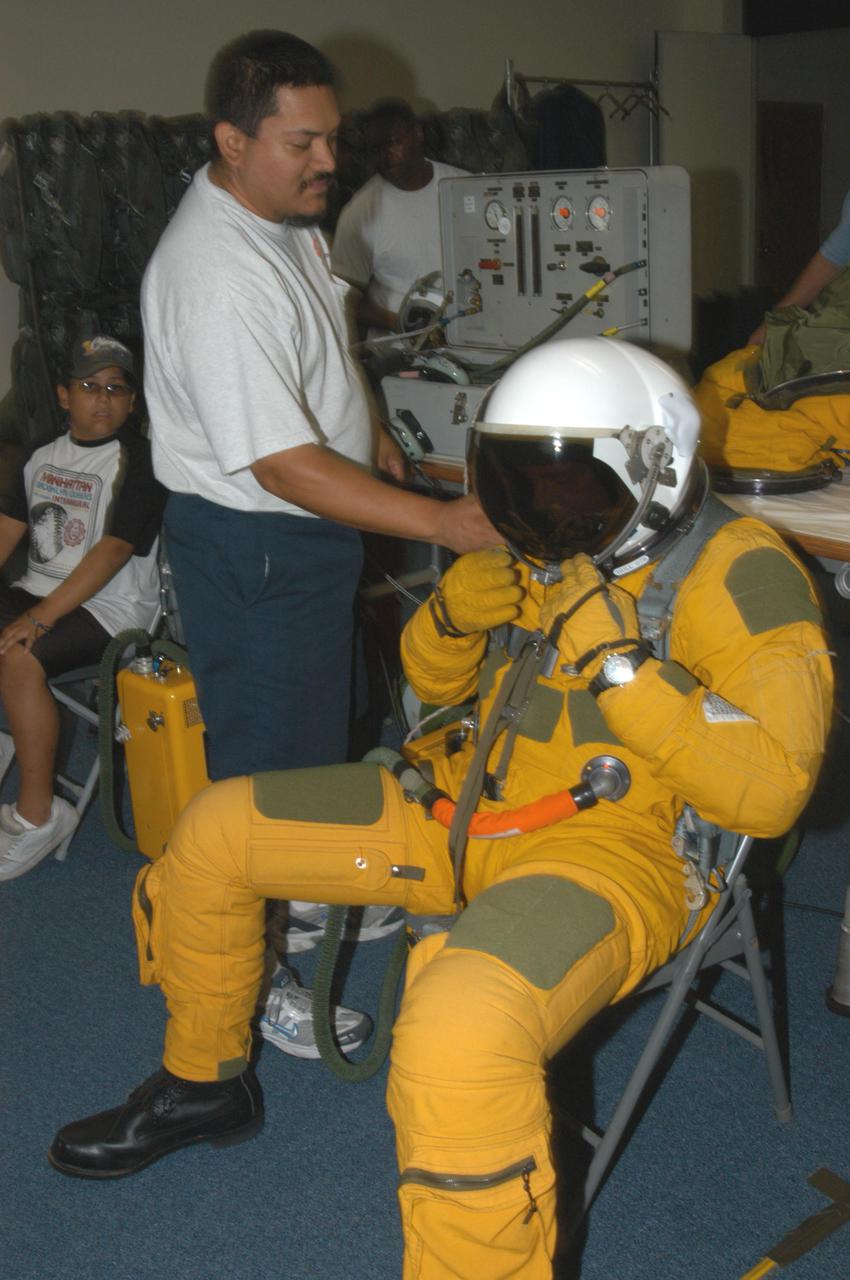
KENNEDY SPACE CENTER, FLA. - NASA pilot Rick Hull secures his helmet before a test flight of the WB-57F aircraft that will take photos of Space Shuttle Discovery during its launch on Return to Flight mission STS-114. NASA approved the development and implementation of the aircraft-based imaging system, known as the WB-57 Ascent Video Experiment (WAVE). The WAVE provides both ascent and entry imagery and enables better observation of the Shuttle on days of heavier cloud cover and areas obscured from ground cameras by the launch exhaust plume. WAVE comprises a 32-inch-ball turret system mounted on the nose of two WB-57 aircraft. The turret houses an optical bench, providing installation of both HDTV and infrared cameras. Optics consist of an 11-inch-diameter, 4.2 meter fixed-focal-length lens. The system can be operated in both auto track and manual modes.
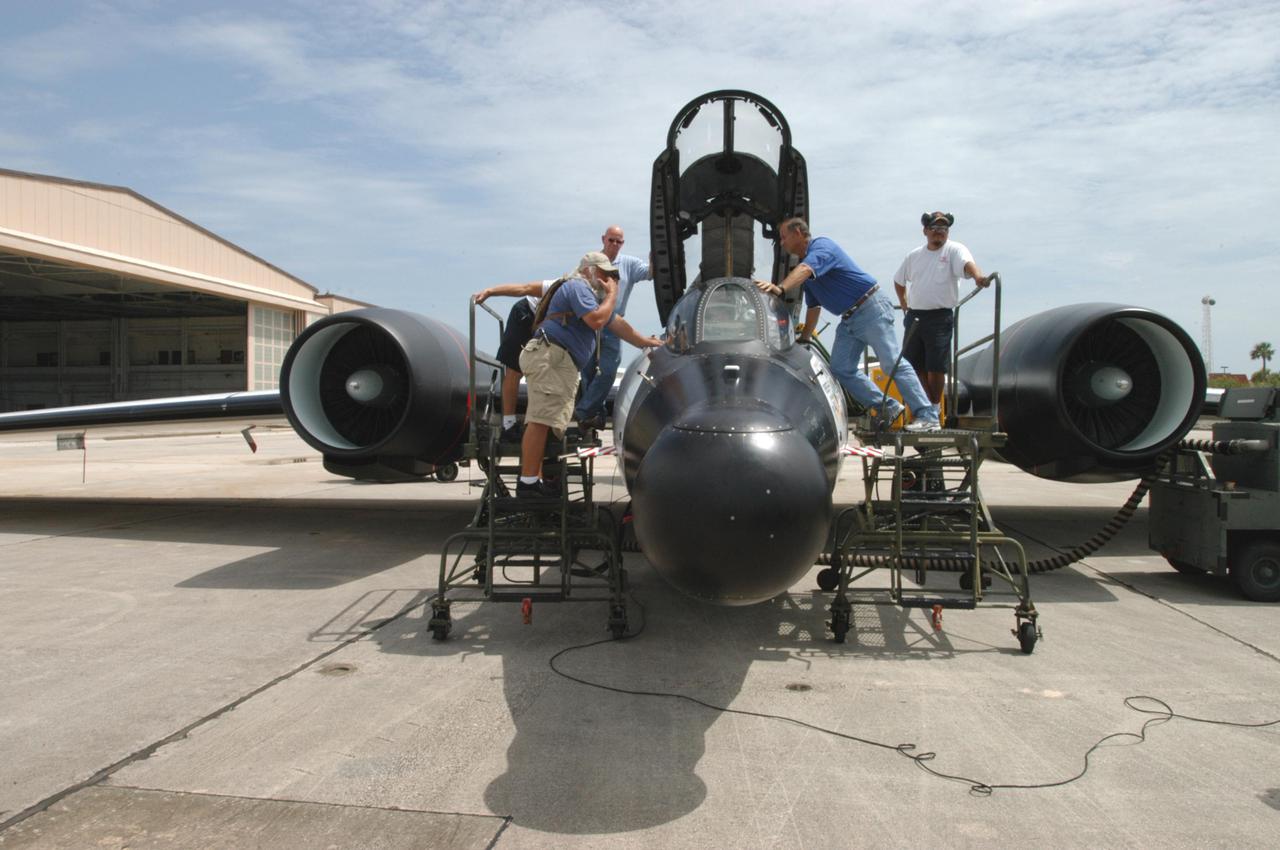
KENNEDY SPACE CENTER, FLA. - At Patrick Air Force Base in Cocoa Beach, Fla., workers prepare the WB-57F aircraft that will take photos of Space Shuttle Discovery during its launch on Return to Flight mission STS-114. NASA approved the development and implementation of the aircraft-based imaging system, known as the WB-57 Ascent Video Experiment (WAVE). The WAVE provides both ascent and entry imagery and enables better observation of the Shuttle on days of heavier cloud cover and areas obscured from ground cameras by the launch exhaust plume. WAVE comprises a 32-inch-ball turret system mounted on the nose of two WB-57 aircraft. The turret houses an optical bench, providing installation of both HDTV and infrared cameras. Optics consist of an 11-inch-diameter, 4.2 meter fixed-focal-length lens. The system can be operated in both auto track and manual modes.
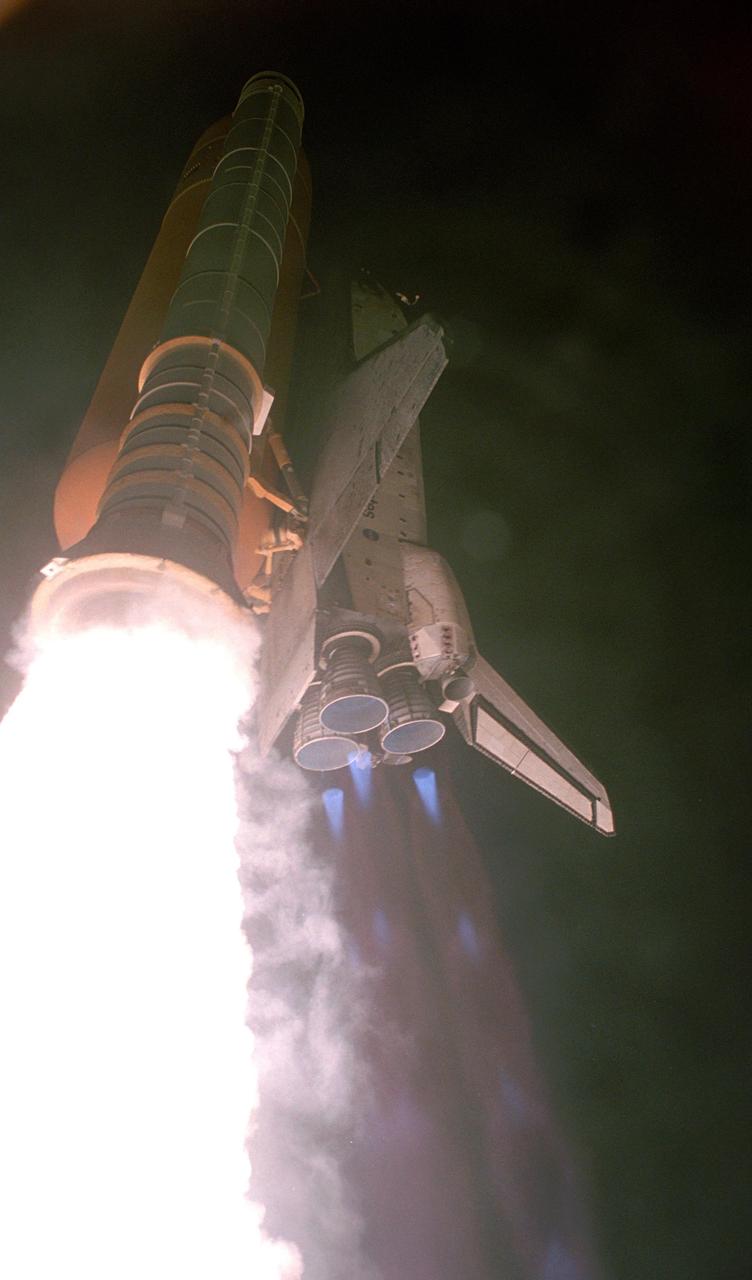
KENNEDY SPACE CENTER, FLA. -- Mach diamonds appear beneath Space Shuttle Discovery's main engines as the vehicle roars into the night sky after liftoff on mission STS-116. Mach diamonds are a formation of shock waves in the exhaust plume of an aerospace propulsion system. Liftoff occurred on time at 8:47 p.m. EST. This was the second launch attempt for mission STS-116. The first launch attempt on Dec. 7 was postponed due a low cloud ceiling over Kennedy Space Center. This is Discovery's 33rd mission and the first night launch since 2002. The 20th shuttle mission to the International Space Station, STS-116 carries another truss segment, P5. It will serve as a spacer, mated to the P4 truss that was attached in September. After installing the P5, the crew will reconfigure and redistribute the power generated by two pairs of U.S. solar arrays. Landing is expected Dec. 21 at KSC. Photo credit: NASA/Tony Gray & Don Kight
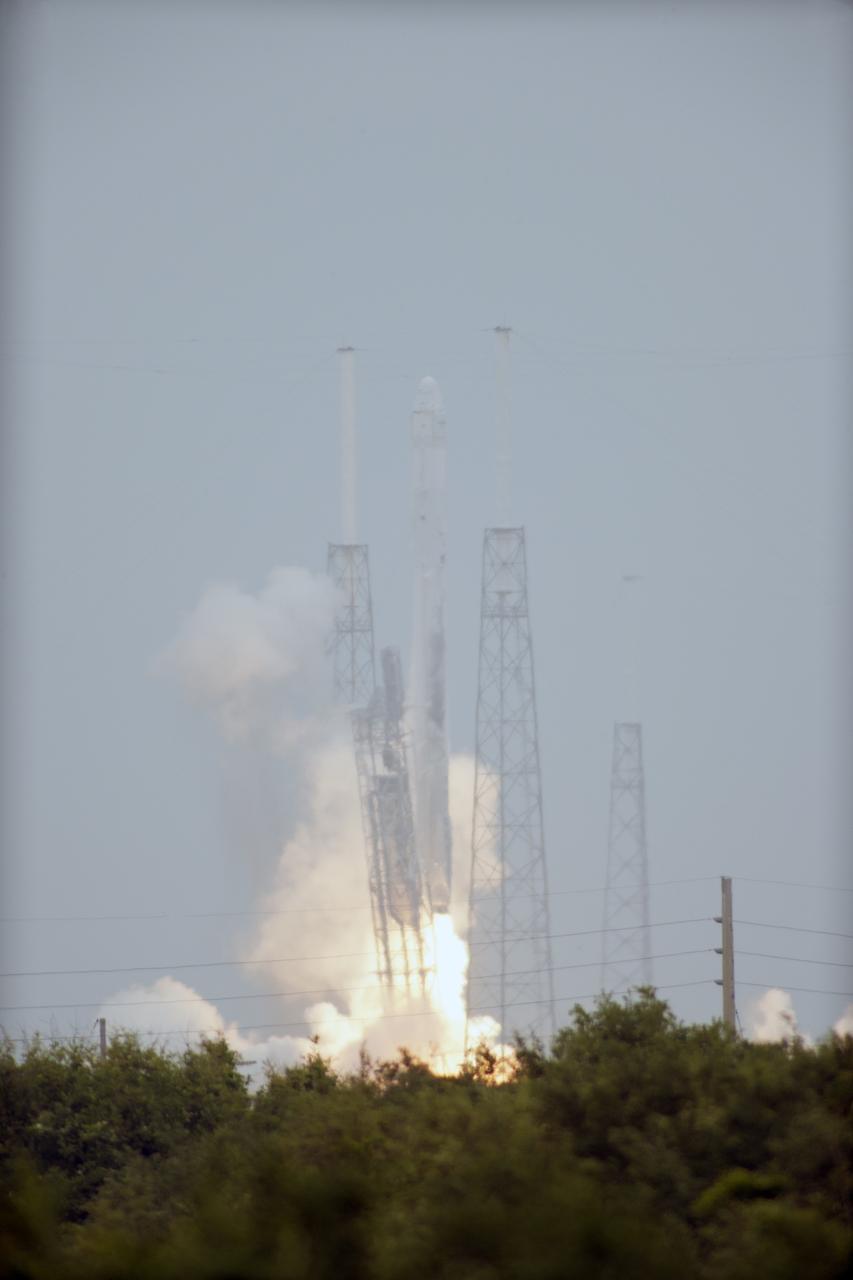
CAPE CANAVERAL, Fla. - An exhaust cloud grows around the Falcon 9 rocket at Space Launch Complex 40 on Cape Canaveral Air Force Station as the SpaceX-3 mission lifts off, sending the Dragon resupply spacecraft on its way to the International Space Station. Launch was during an instantaneous window at 3:25 p.m. EDT. Dragon is making its fourth trip to the space station. The SpaceX-3 mission, carrying almost 2.5 tons of supplies, technology and science experiments, is the third of 12 flights through a $1.6 billion NASA Commercial Resupply Services contract. Dragon's cargo will support more than 150 experiments that will be conducted during the station's Expeditions 39 and 40. For more information, visit http://www.nasa.gov/mission_pages/station/structure/launch/index.html. Photo credit: NASA/Tony Gray

CAPE CANAVERAL, Fla. -- Vapor trails follow space shuttle Atlantis as it approaches Runway 15 on the Shuttle Landing Facility at NASA's Kennedy Space Center in Florida for the final time. A vapor trail, known as a contrail, is a cloud of water vapor that condenses and freezes around the small particles in aircraft exhaust. Atlantis marked the 26th nighttime landing of NASA's Space Shuttle Program and the 78th landing at Kennedy. It also was the final mission for the shuttle program. STS-135 was the 33rd and final flight for Atlantis, which has spent 307 days in space, orbited Earth 4,848 times and traveled 125,935,769 miles. For more information on the space shuttle era, visit www.nasa.gov/mission_pages/shuttle/flyout. Photo credit: NASA/Sandra Joseph and Kevin O'Connell
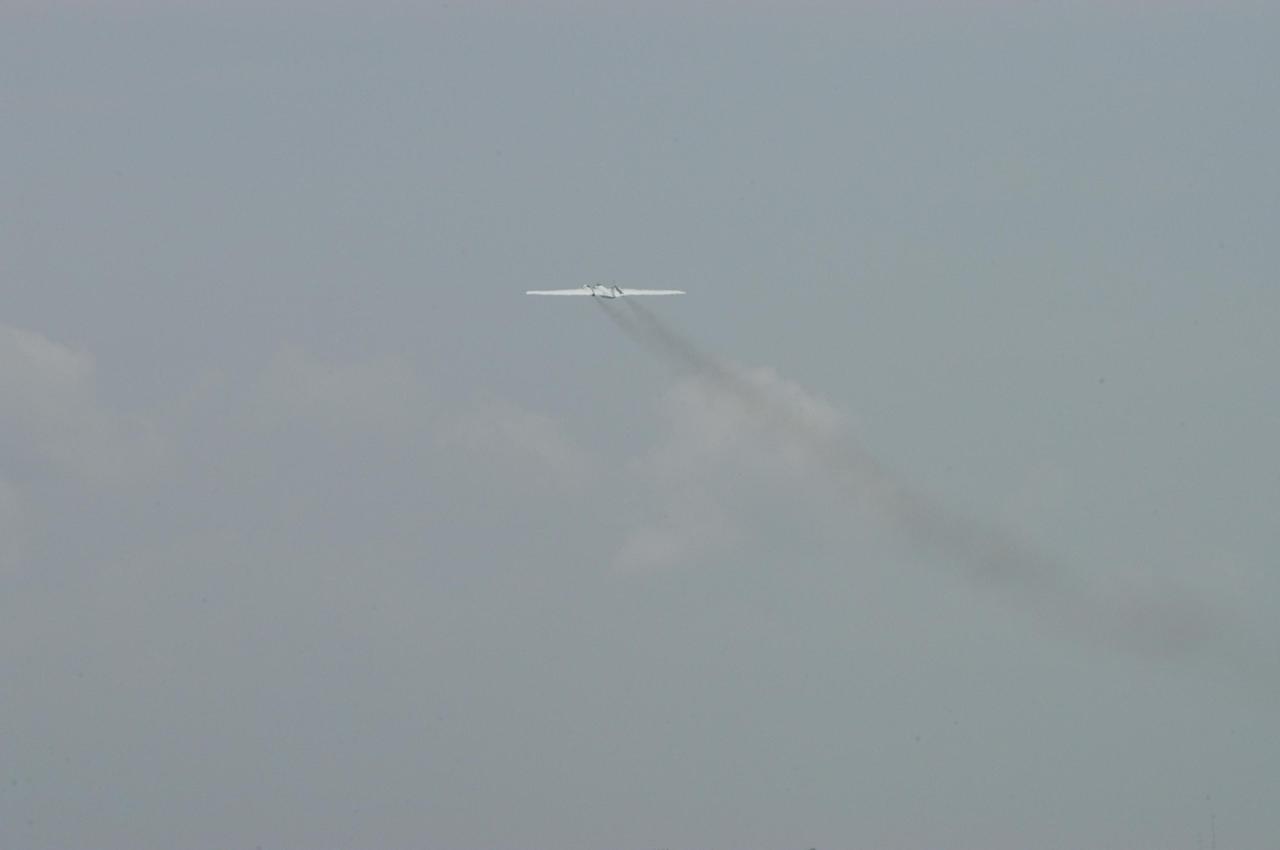
KENNEDY SPACE CENTER, FLA. - Over Patrick Air Force Base in Cocoa Beach, Fla., the WB-57F aircraft is airborne for a test flight. The aircraft will take photos of Space Shuttle Discovery during its launch on Return to Flight mission STS-114. NASA approved the development and implementation of the aircraft-based imaging system, known as the WB-57 Ascent Video Experiment (WAVE). The WAVE provides both ascent and entry imagery and enables better observation of the Shuttle on days of heavier cloud cover and areas obscured from ground cameras by the launch exhaust plume. WAVE comprises a 32-inch-ball turret system mounted on the nose of two WB-57 aircraft. The turret houses an optical bench, providing installation of both HDTV and infrared cameras. Optics consist of an 11-inch-diameter, 4.2 meter fixed-focal-length lens. The system can be operated in both auto track and manual modes.
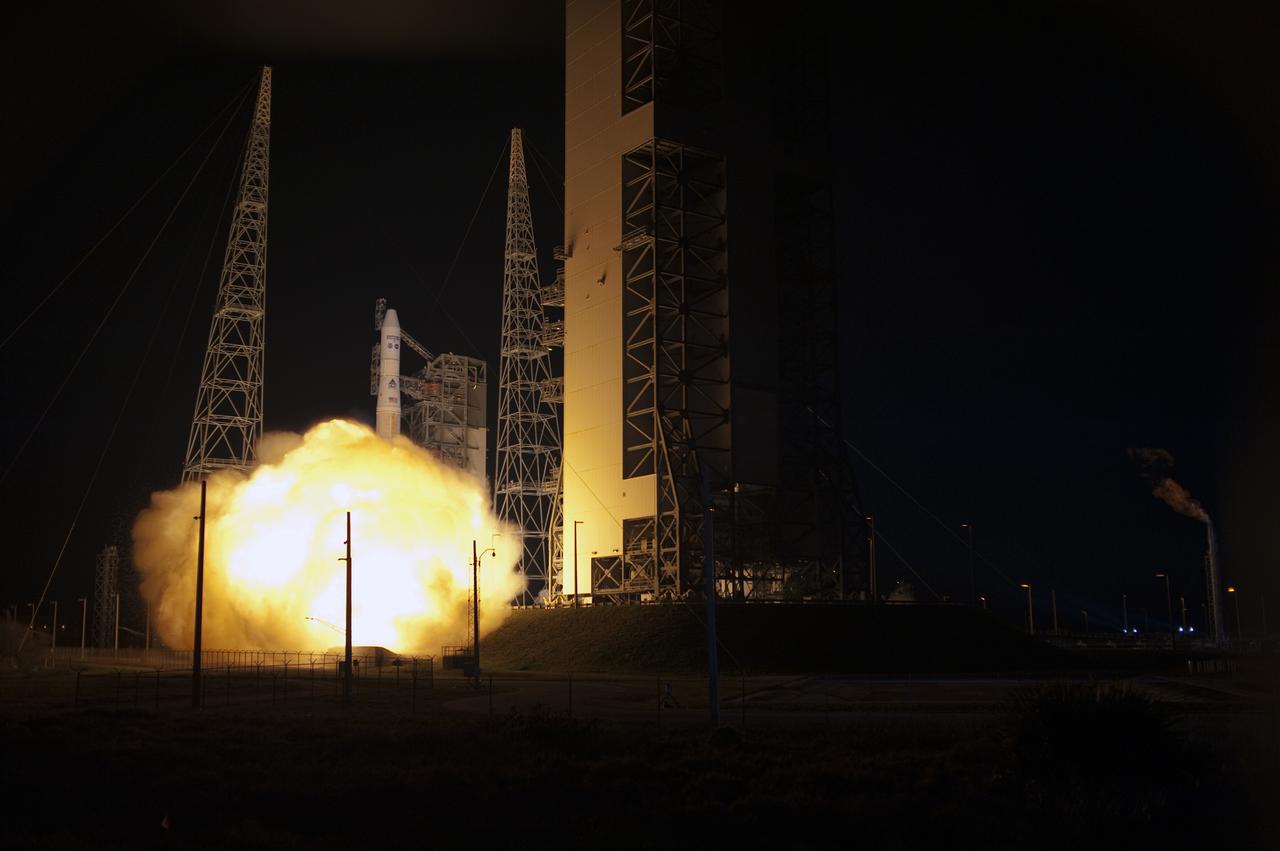
CAPE CANAVERAL, Fla. – The base of the United Launch Alliance Delta IV rocket carrying NASA's GOES-P meteorological satellite is engulfed in a brilliant exhaust cloud as it lifts off Launch Complex 37 on Cape Canaveral Air Force Station in Florida at 6:57 p.m. EST. GOES-P, the latest Geostationary Operational Environmental Satellite, was developed by NASA for the National Oceanic and Atmospheric Administration, or NOAA. The GOES-P spacecraft will be placed in a 22,300-mile-high geosynchronous orbit where it will appear to hover over a single point on Earth. The spacecraft is outfitted with a complex suite of observation instruments and cameras so it can accurately report on weather and climate conditions on Earth. For information on GOES-P, visit http:__www.nasa.gov_mission_pages_GOES-P_main_index.html. Photo credit: NASA_Sandra Joseph and Tony Gray
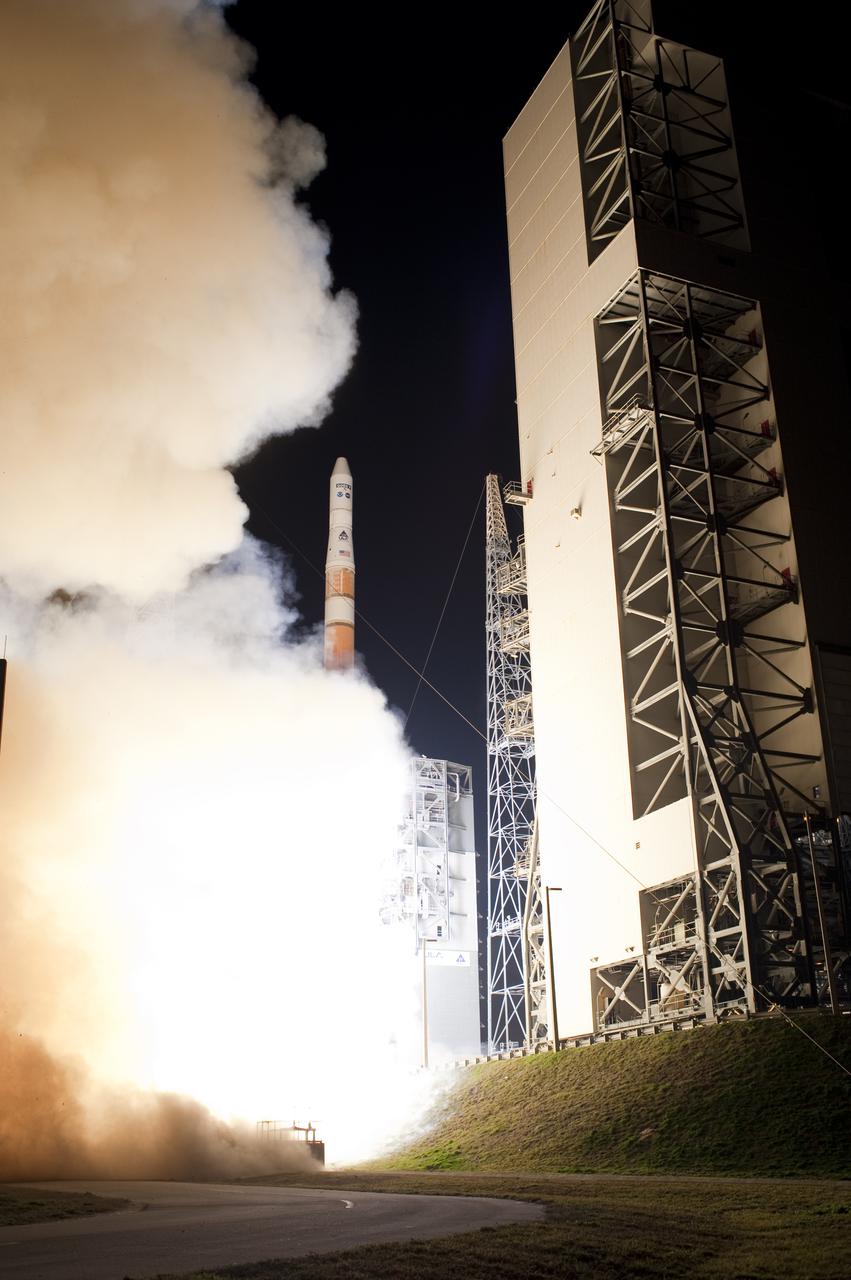
CAPE CANAVERAL, Fla. – An exhaust cloud builds at Launch Complex 37 on Cape Canaveral Air Force Station in Florida as the United Launch Alliance Delta IV rocket carrying NASA's GOES-P meteorological satellite lifts off at 6:57 p.m. EST. GOES-P, the latest Geostationary Operational Environmental Satellite, was developed by NASA for the National Oceanic and Atmospheric Administration, or NOAA. The GOES-P spacecraft will be placed in a 22,300-mile-high geosynchronous orbit where it will appear to hover over a single point on Earth. The spacecraft is outfitted with a complex suite of observation instruments and cameras so it can accurately report on weather and climate conditions on Earth. For information on GOES-P, visit http:__www.nasa.gov_mission_pages_GOES-P_main_index.html. Photo credit: NASA_Sandra Joseph and Tony Gray
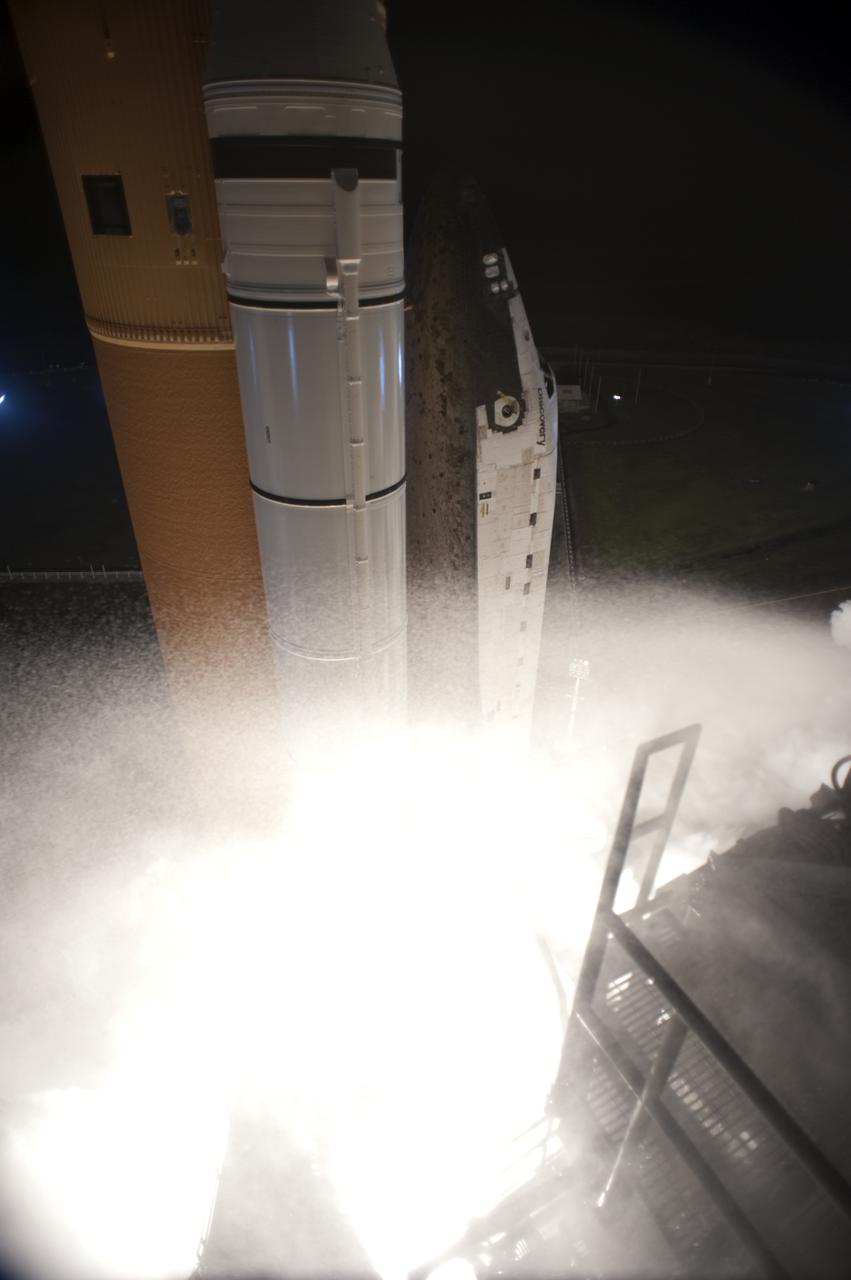
CAPE CANAVERAL, Fla. - An exhaust cloud billows around Launch Pad 39A at NASA's Kennedy Space Center in Florida as space shuttle Discovery lifts off to begin the STS-131 mission. Shuttle Discovery lifted off at 6:21 a.m. EDT on April 5, 2010. The seven-member STS-131 crew will deliver the multi-purpose logistics module Leonardo, filled with supplies, a new crew sleeping quarters and science racks that will be transferred to the International Space Station's laboratories. The crew also will switch out a gyroscope on the station’s truss, install a spare ammonia storage tank and retrieve a Japanese experiment from the station’s exterior. STS-131 is the 33rd shuttle mission to the station and the 131st shuttle mission overall. For information on the STS-131 mission and crew, visit http:__www.nasa.gov_mission_pages_shuttle_shuttlemissions_sts131_index.html. Photo credit: NASA_Tony Gray and Tom Farrar
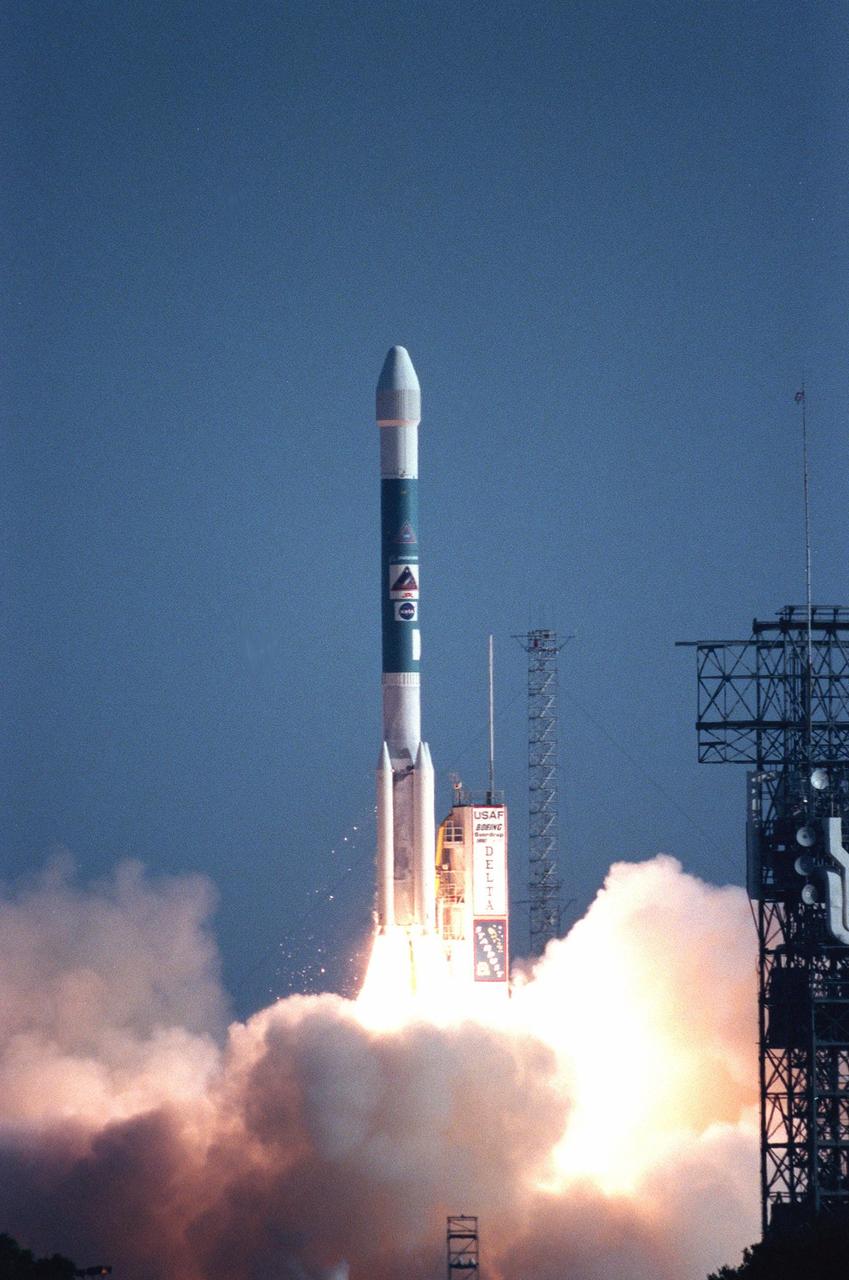
Into a pristine blue sky, the Boeing Delta II rocket carrying the Stardust spacecraft leaves clouds of exhaust behind as it lifts off at 4:04:15 p.m. EST from Launch Pad 17-A, Cape Canaveral Air Station. Stardust is destined for a close encounter with the comet Wild 2 in January 2004. Using a silicon-based substance called aerogel, Stardust will capture comet particles flying off the nucleus of the comet. The spacecraft also will bring back samples of interstellar dust. These materials consist of ancient pre-solar interstellar grains and other remnants left over from the formation of the solar system. Scientists expect their analysis to provide important insights into the evolution of the sun and planets and possibly into the origin of life itself. The collected samples will return to Earth in a sample return capsule to be jettisoned as Stardust swings by Earth in January 2006
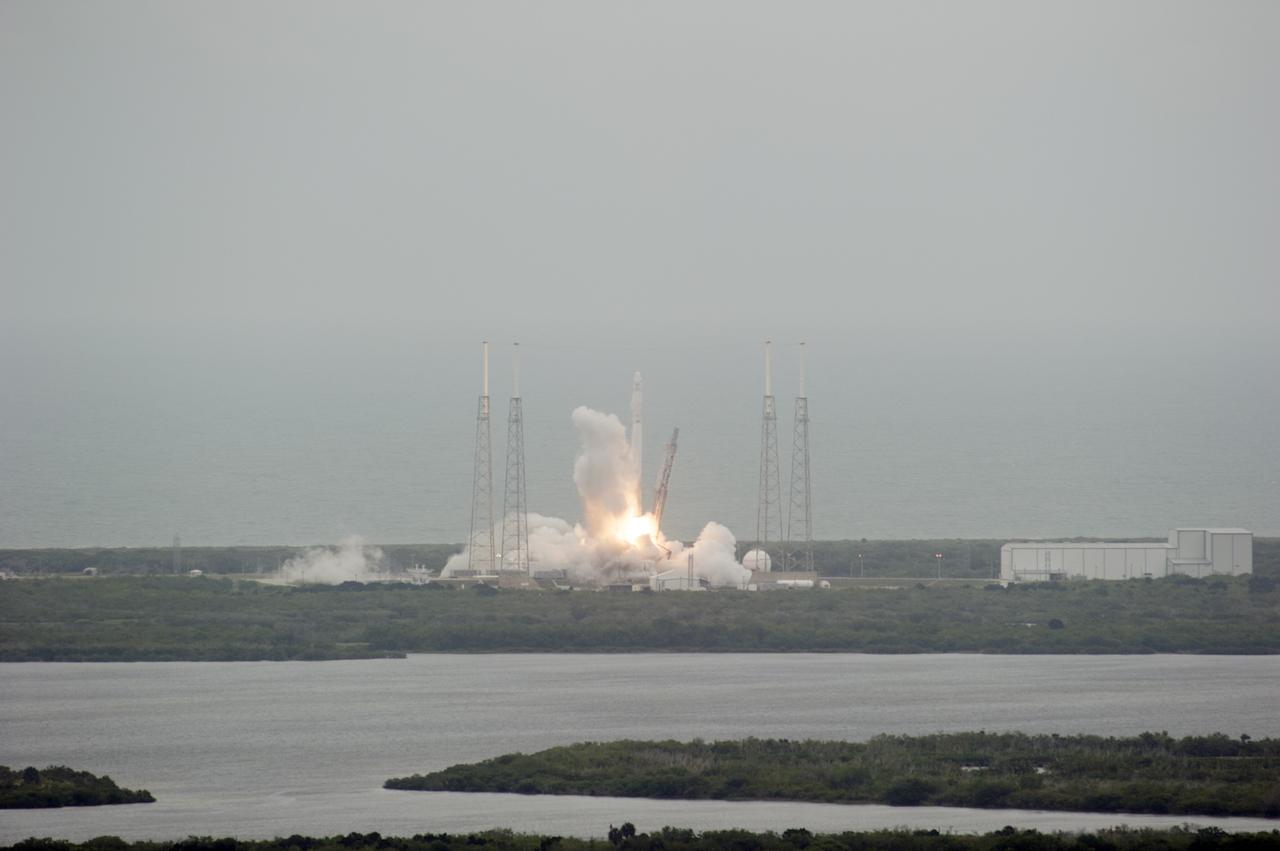
CAPE CANAVERAL, Fla. - An exhaust cloud builds around the Falcon 9 rocket on Space Launch Complex 40 on Cape Canaveral Air Force Station as the SpaceX-3 mission lifts off, carrying the Dragon resupply spacecraft to the International Space Station. Liftoff was during an instantaneous window at 3:25 p.m. EDT. Dragon is making its fourth trip to the space station. The SpaceX-3 mission, carrying almost 2.5 tons of supplies, technology and science experiments, is the third of 12 flights under NASA's Commercial Resupply Services contract to resupply the orbiting laboratory. For more information, visit http://www.nasa.gov/mission_pages/station/structure/launch/index.html. Photo credit: NASA/Kim Shiflett
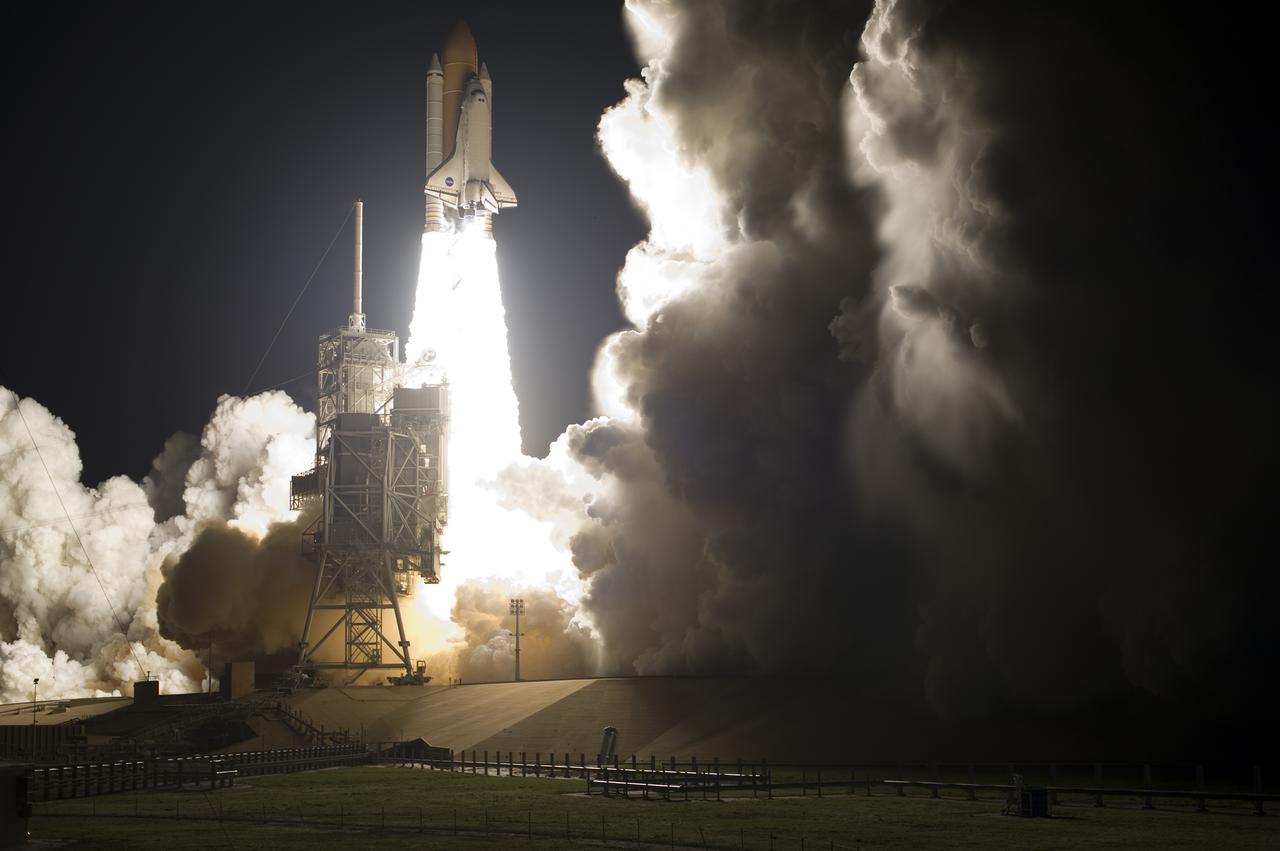
CAPE CANAVERAL, Fla. - An exhaust cloud billows around Launch Pad 39A at NASA's Kennedy Space Center in Florida as space shuttle Discovery lifts off at 6:21 a.m. EDT April 5 to begin the STS-131 mission. The seven-member crew will deliver the multi-purpose logistics module Leonardo, filled with supplies, a new crew sleeping quarters and science racks that will be transferred to the International Space Station's laboratories. The crew also will switch out a gyroscope on the station’s truss, install a spare ammonia storage tank and retrieve a Japanese experiment from the station’s exterior. STS-131 is the 33rd shuttle mission to the station and the 131st shuttle mission overall. For information on the STS-131 mission and crew, visit http:__www.nasa.gov_mission_pages_shuttle_shuttlemissions_sts131_index.html. Photo credit: NASA_Tony Gray and Tom Farrar

CAPE CANAVERAL, Fla. – An exhaust cloud builds at Space Launch Complex 40 on Cape Canaveral Air Force Station in Florida as the Falcon 9 rocket lifts off, carrying the SpaceX CRS-4 mission to orbit. Liftoff was at 1:52 a.m. EDT. The mission is the fourth of 12 SpaceX flights NASA contracted with the company to resupply the space station. It will be the fifth trip by a Dragon spacecraft to the orbiting laboratory. The spacecraft’s 2.5 tons of supplies, science experiments, and technology demonstrations include critical materials to support 255 science and research investigations that will occur during the station's Expeditions 41 and 42. To learn more about the mission, visit http://www.nasa.gov/mission_pages/station/structure/launch/index.html. Photo credit: NASA/Jim Grossmann
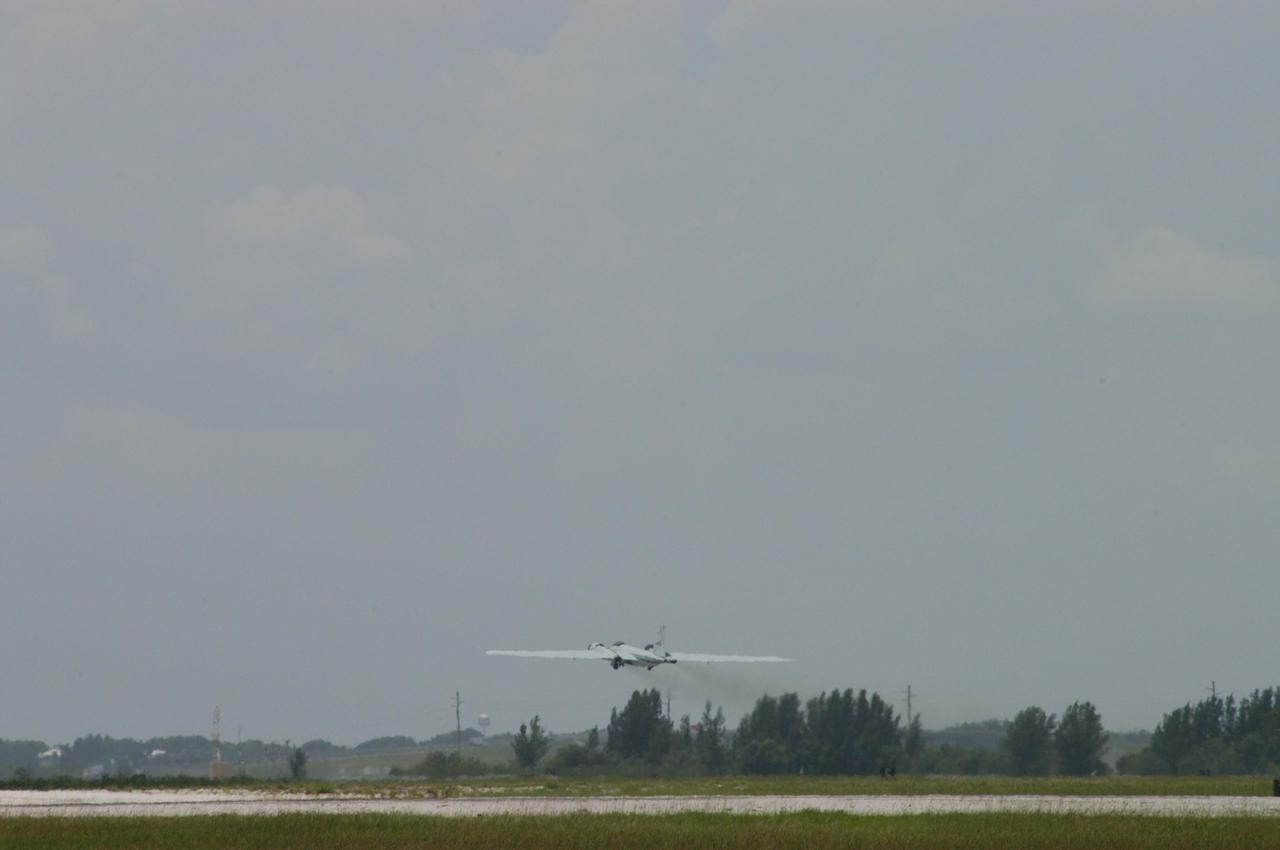
KENNEDY SPACE CENTER, FLA. - At Patrick Air Force Base in Cocoa Beach, Fla., the WB-57F aircraft takes off on a test flight. The aircraft will take photos of Space Shuttle Discovery during its launch on Return to Flight mission STS-114. NASA approved the development and implementation of the aircraft-based imaging system, known as the WB-57 Ascent Video Experiment (WAVE). The WAVE provides both ascent and entry imagery and enables better observation of the Shuttle on days of heavier cloud cover and areas obscured from ground cameras by the launch exhaust plume. WAVE comprises a 32-inch-ball turret system mounted on the nose of two WB-57 aircraft. The turret houses an optical bench, providing installation of both HDTV and infrared cameras. Optics consist of an 11-inch-diameter, 4.2 meter fixed-focal-length lens. The system can be operated in both auto track and manual modes.
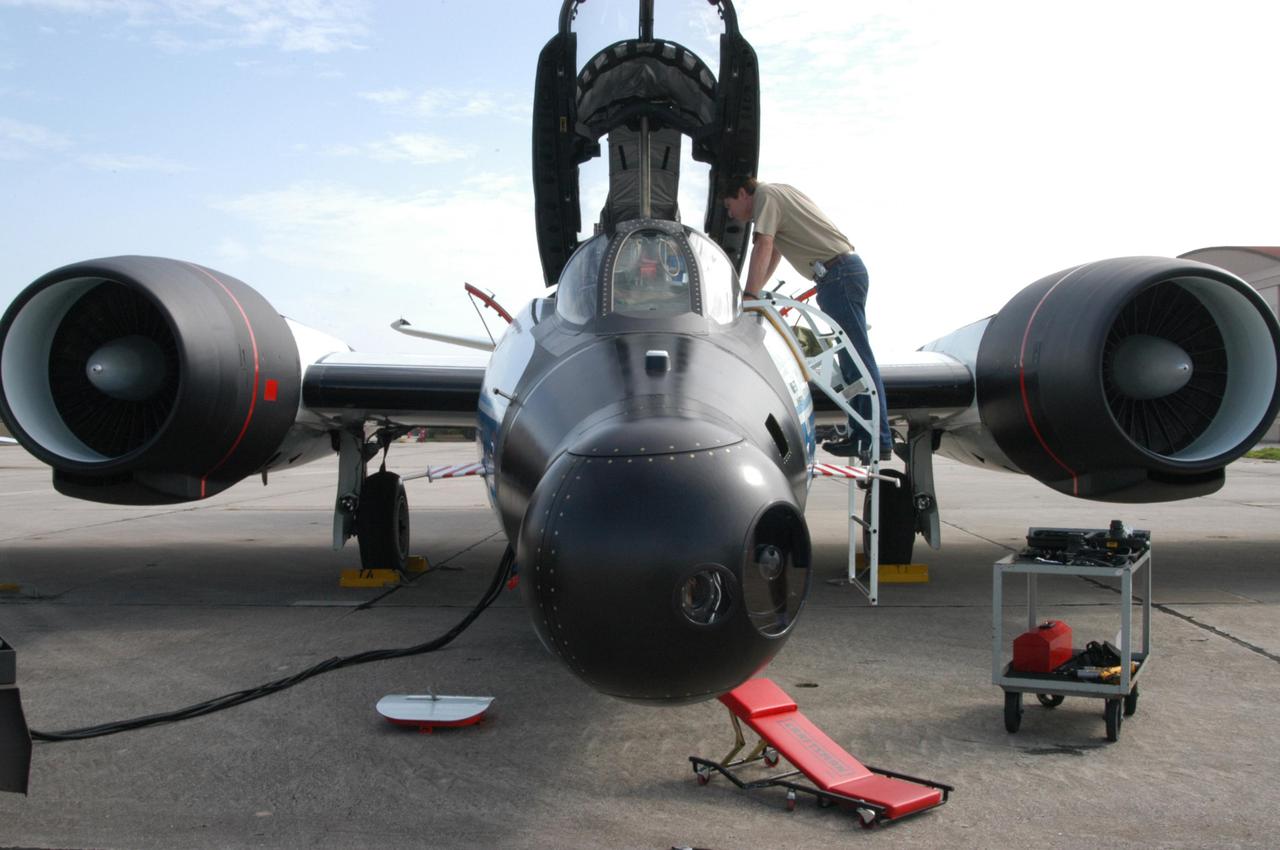
KENNEDY SPACE CENTER, FLA. - At Patrick Air Force Base in Cocoa Beach, Fla., workers prepare the WB-57F aircraft that will take photos of Space Shuttle Discovery during its launch on Return to Flight mission STS-114. NASA approved the development and implementation of the aircraft-based imaging system, known as the WB-57 Ascent Video Experiment (WAVE). The WAVE provides both ascent and entry imagery and enables better observation of the Shuttle on days of heavier cloud cover and areas obscured from ground cameras by the launch exhaust plume. WAVE comprises a 32-inch-ball turret system mounted on the nose of two WB-57 aircraft. The turret houses an optical bench, providing installation of both HDTV and infrared cameras. Optics consist of an 11-inch-diameter, 4.2 meter fixed-focal-length lens. The system can be operated in both auto track and manual modes.
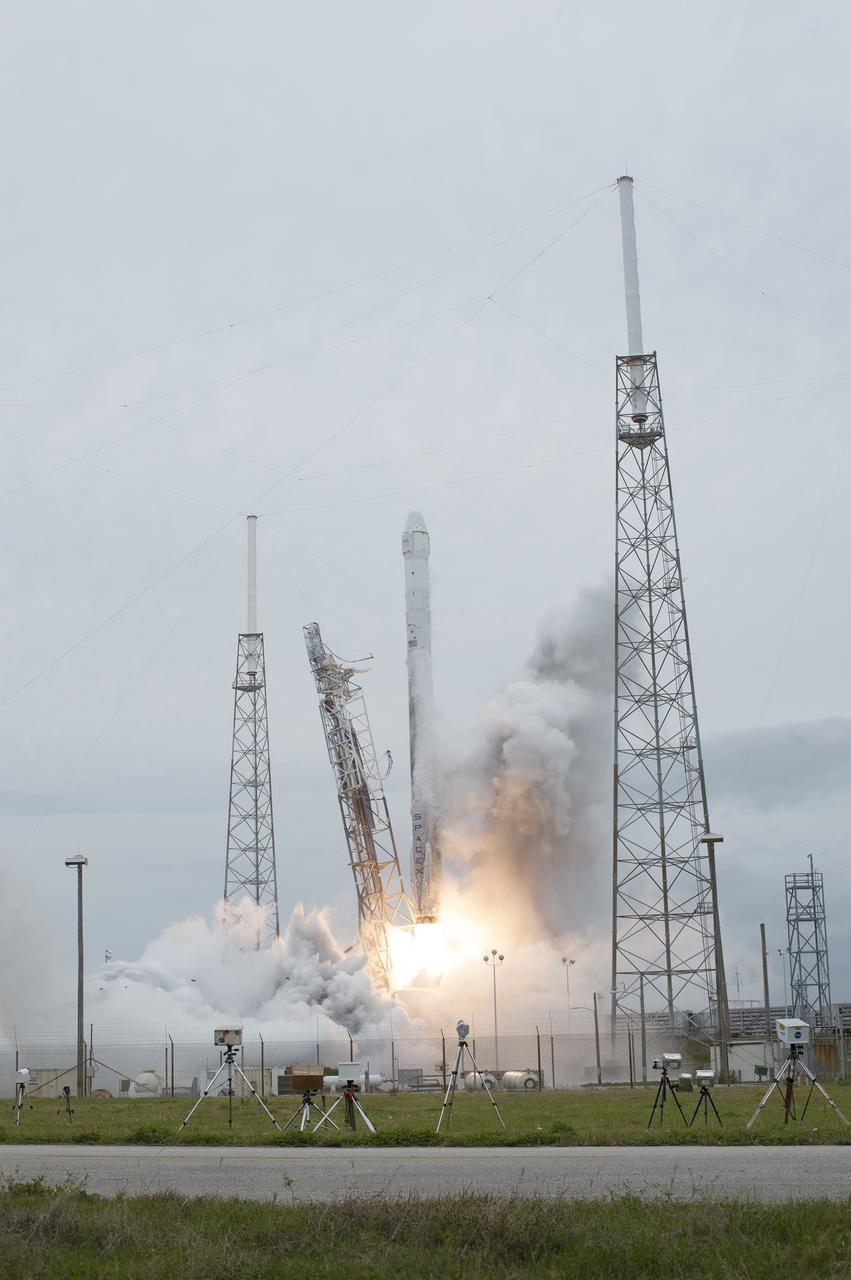
CAPE CANAVERAL, Fla. - Muddy water standing on the pad surface contributes to the formation of a dark exhaust cloud around the Falcon 9 rocket at Space Launch Complex 40 on Cape Canaveral Air Force Station as the SpaceX-3 mission lifts off, sendng the Dragon resupply spacecraft on its way to the International Space Station. Launch was during an instantaneous window at 3:25 p.m. EDT. Dragon is making its fourth trip to the space station. The SpaceX-3 mission, carrying almost 2.5 tons of supplies, technology and science experiments, is the third of 12 flights through a $1.6 billion NASA Commercial Resupply Services contract. Dragon's cargo will support more than 150 experiments that will be conducted during the station's Expeditions 39 and 40. For more information, visit http://www.nasa.gov/mission_pages/station/structure/launch/index.html. Photo credit: NASA/Tony Gray and Tim Terry
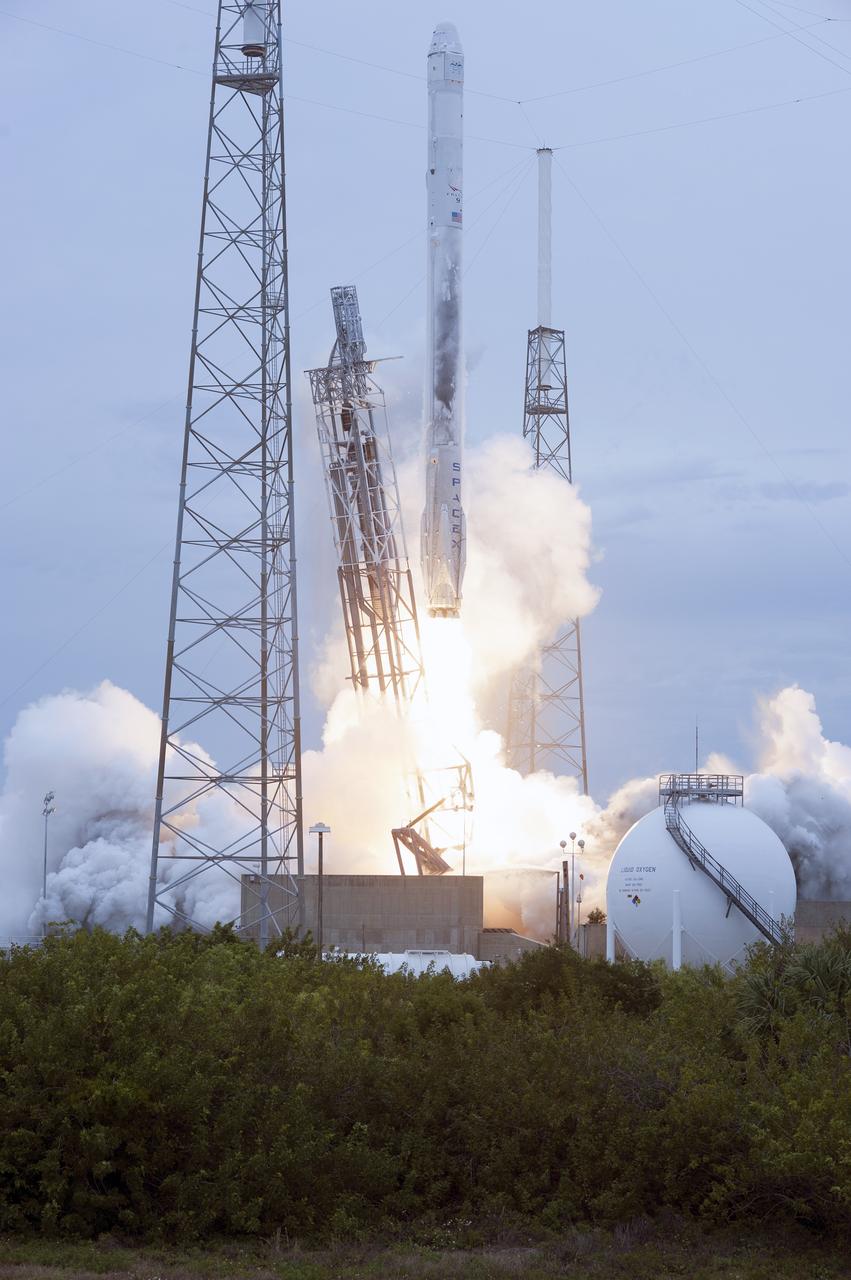
CAPE CANAVERAL, Fla. - A SpaceX Falcon 9 rocket lifts off Space Launch Complex 40 on Cape Canaveral Air Force Station in Florida leaving an exhaust cloud in its wake. Launch of the SpaceX-3 mission was during an instantaneous window at 3:25 p.m. EDT, starting the Dragon resupply spacecraft on its way to the International Space Station. Dragon is making its fourth trip to the space station. The SpaceX-3 mission, carrying almost 2.5 tons of supplies, technology and science experiments, is the third of 12 flights through a $1.6 billion NASA Commercial Resupply Services contract. Dragon's cargo will support more than 150 experiments that will be conducted during the station's Expeditions 39 and 40. For more information, visit http://www.nasa.gov/mission_pages/station/structure/launch/index.html. Photo credit: NASA/Tony Gray and Tim Powers
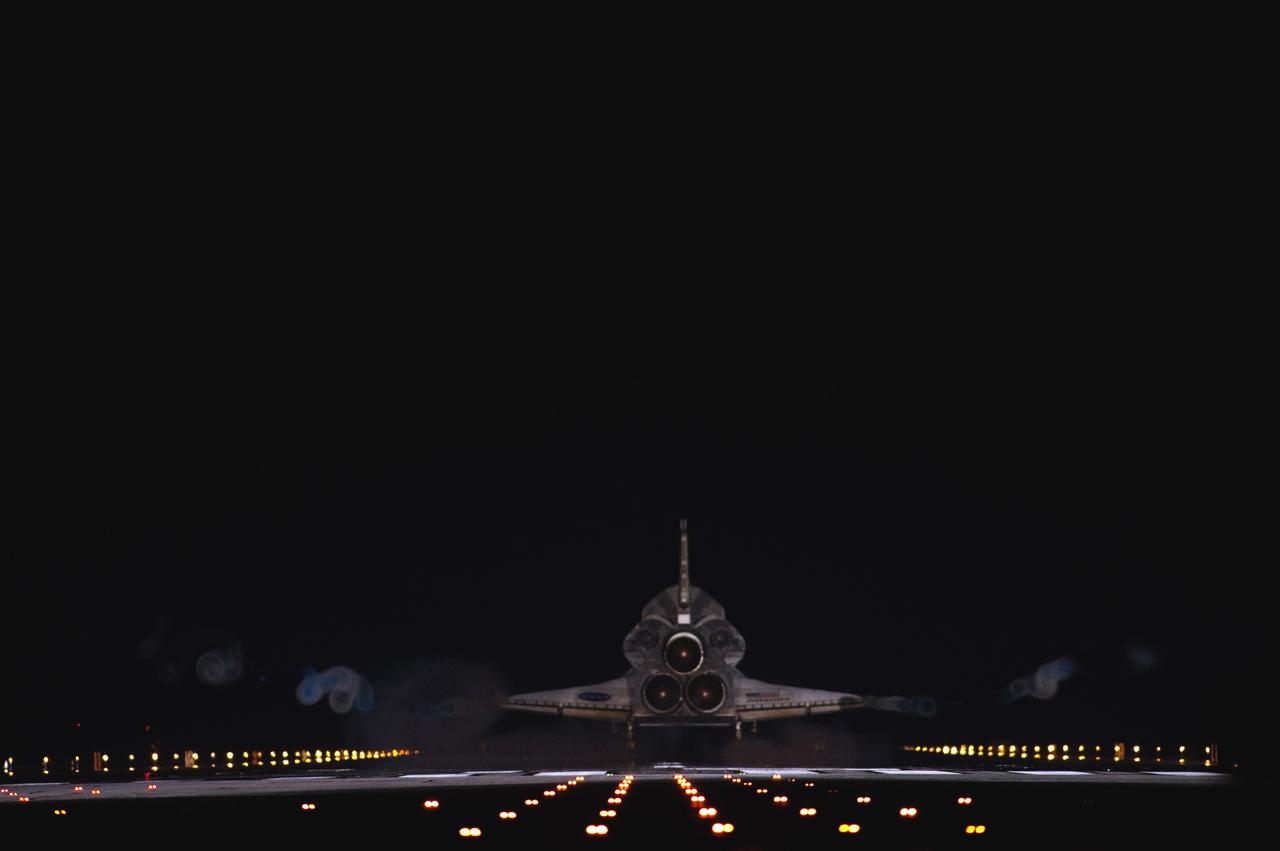
CAPE CANAVERAL, Fla. -- Vapor trails follow space shuttle Atlantis as it touches down on Runway 15 on the Shuttle Landing Facility at NASA's Kennedy Space Center in Florida for the final time. A vapor trail, known as a contrail, is a cloud of water vapor that condenses and freezes around the small particles in aircraft exhaust. Atlantis marked the 26th nighttime landing of NASA's Space Shuttle Program and the 78th landing at Kennedy. It also was the final mission for the shuttle program. STS-135 was the 33rd and final flight for Atlantis, which has spent 307 days in space, orbited Earth 4,848 times and traveled 125,935,769 miles. For more information on the space shuttle era, visit www.nasa.gov/mission_pages/shuttle/flyout. Photo credit: NASA/Sandra Joseph and Kevin O'Connell
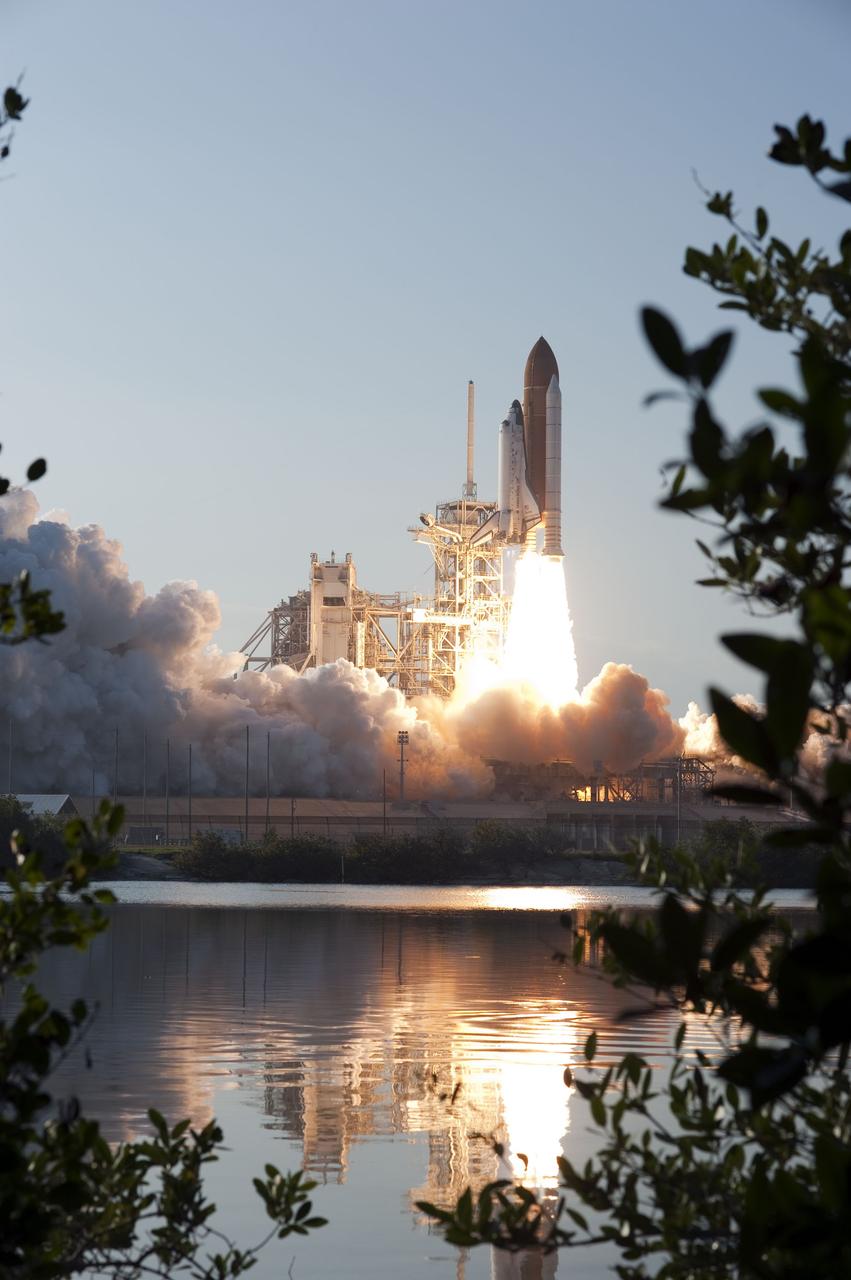
CAPE CANAVERAL, Fla. -- An exhaust cloud billows around Launch Pad 39A at NASA's Kennedy Space Center in Florida as space shuttle Discovery lifts off at 4:53 p.m. EST to begin the STS-133 mission and its final flight to the International Space Station. Discovery and its six-member crew will deliver the Permanent Multipurpose Module, packed with supplies and critical spare parts, as well as Robonaut 2, the dexterous humanoid astronaut helper, to the orbiting outpost. Discovery is flying on its 39th mission and is scheduled to be retired following STS-133. This is the 133rd Space Shuttle Program mission and the 35th shuttle voyage to the space station. For more information on the STS-133 mission, visit www.nasa.gov/mission_pages/shuttle/shuttlemissions/sts133/. Photo credit: NASA/Sandra Joseph and Kevin O'Connell
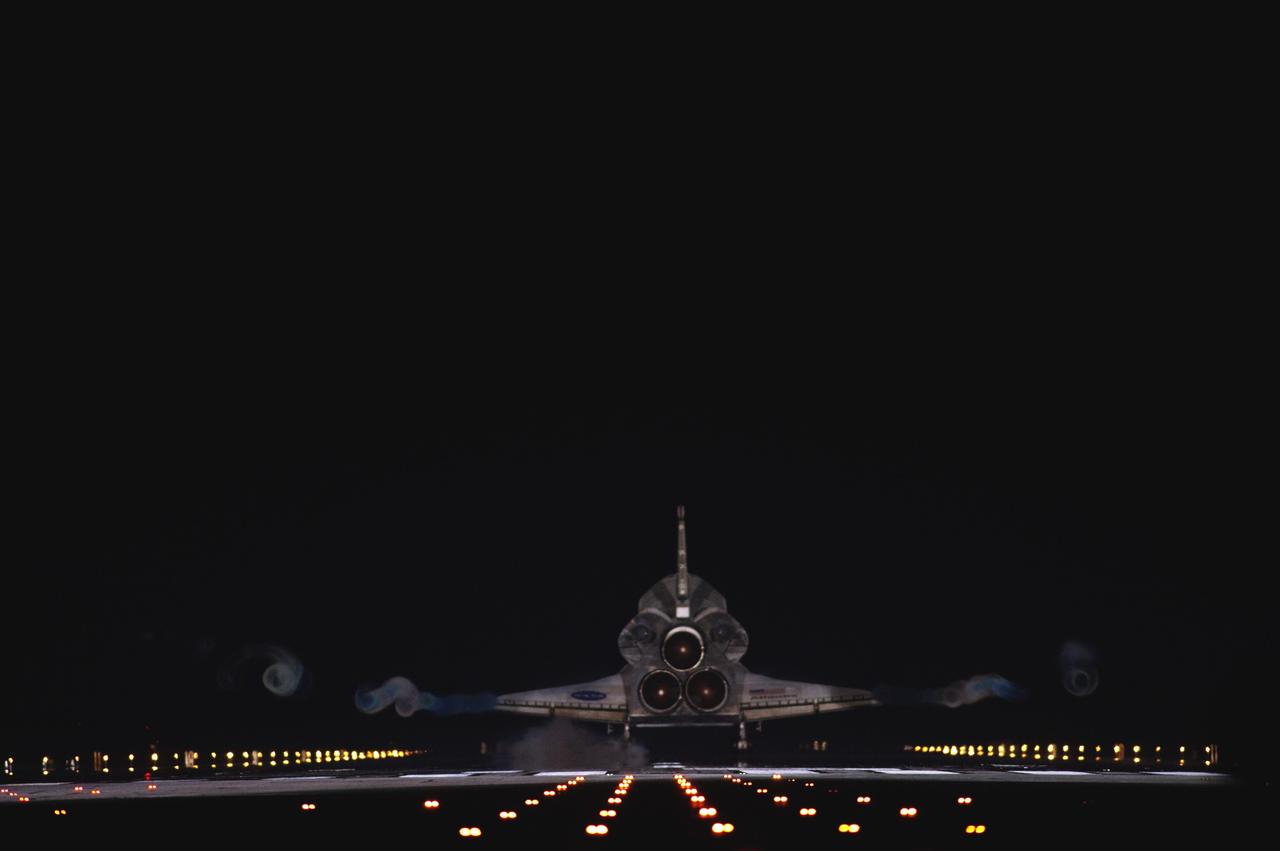
CAPE CANAVERAL, Fla. -- Vapor trails follow space shuttle Atlantis as it touches down on Runway 15 on the Shuttle Landing Facility at NASA's Kennedy Space Center in Florida for the final time. A vapor trail, known as a contrail, is a cloud of water vapor that condenses and freezes around the small particles in aircraft exhaust. Atlantis marked the 26th nighttime landing of NASA's Space Shuttle Program and the 78th landing at Kennedy. It also was the final mission for the shuttle program. STS-135 was the 33rd and final flight for Atlantis, which has spent 307 days in space, orbited Earth 4,848 times and traveled 125,935,769 miles. For more information on the space shuttle era, visit www.nasa.gov/mission_pages/shuttle/flyout. Photo credit: NASA/Sandra Joseph and Kevin O'Connell
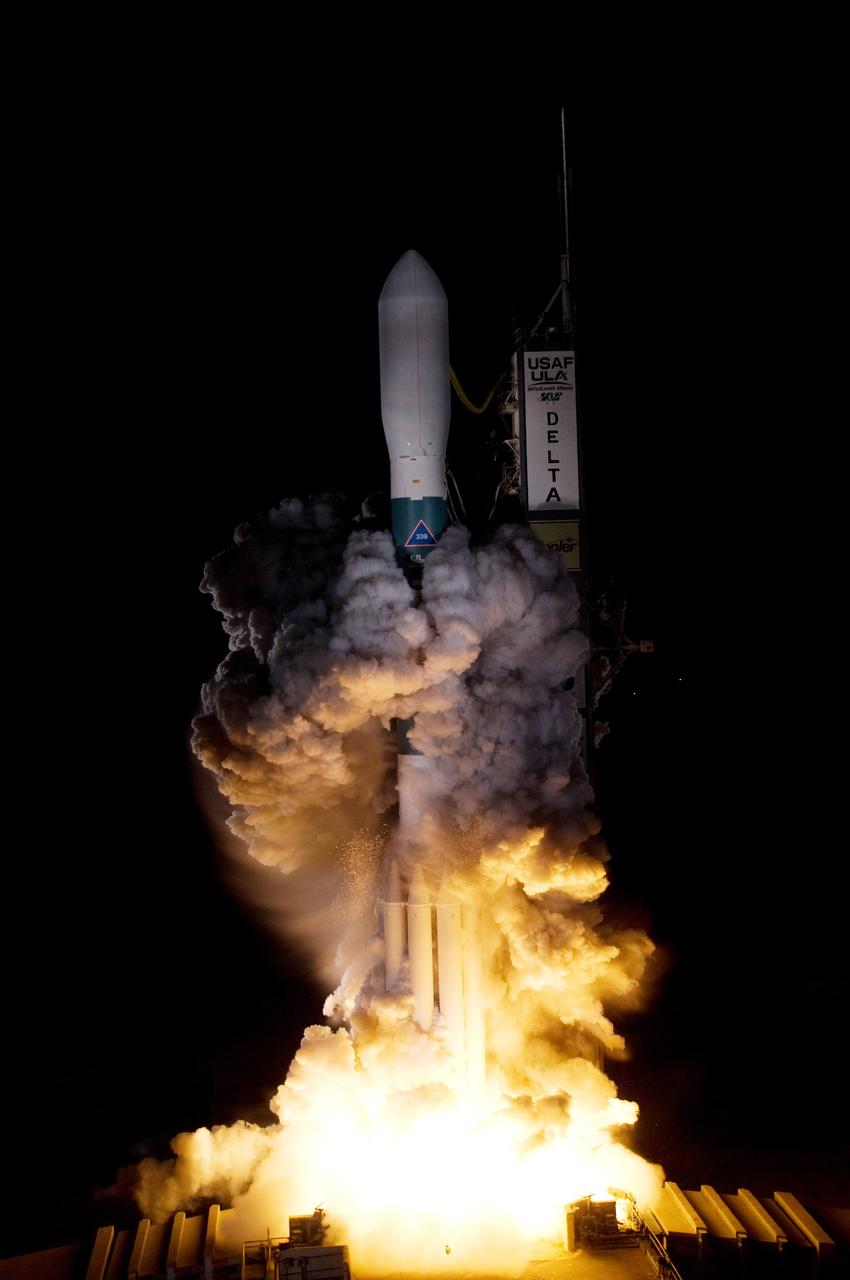
CAPE CANAVERAL, Fla. – On Launch Pad 17-B at Cape Canaveral Air Force Station in Florida, United Launch Alliance's Delta II rocket carrying NASA's Kepler spacecraft rises through the exhaust cloud created by the firing of the rocket’s engines. Liftoff was on time at 10:49 p.m. EST. Kepler is a spaceborne telescope designed to search the nearby region of our galaxy for Earth-size planets orbiting in the habitable zone of stars like our sun. The habitable zone is the region around a star where temperatures permit water to be liquid on a planet's surface. The challenge for Kepler is to look at a large number of stars in order to statistically estimate the total number of Earth-size planets orbiting sun-like stars in the habitable zone. Kepler will survey more than 100,000 stars in our galaxy. Photo credit: NASA/Regina Mitchell-Ryall, Tom Farrar
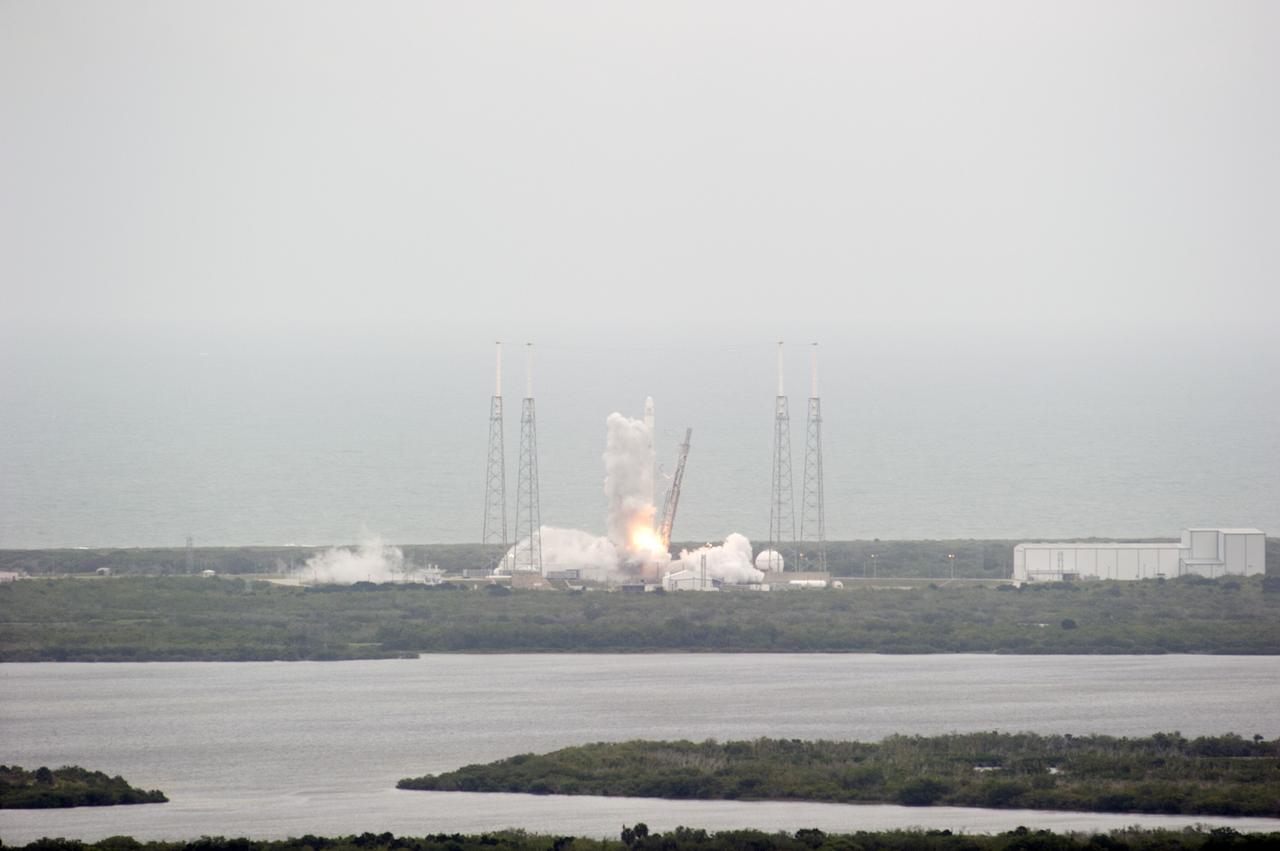
CAPE CANAVERAL, Fla. - An exhaust cloud forms around the Falcon 9 rocket on Space Launch Complex 40 on Cape Canaveral Air Force Station as the SpaceX-3 mission lifts off, carrying the Dragon resupply spacecraft to the International Space Station. Liftoff was during an instantaneous window at 3:25 p.m. EDT. Dragon is making its fourth trip to the space station. The SpaceX-3 mission, carrying almost 2.5 tons of supplies, technology and science experiments, is the third of 12 flights under NASA's Commercial Resupply Services contract to resupply the orbiting laboratory. For more information, visit http://www.nasa.gov/mission_pages/station/structure/launch/index.html. Photo credit: NASA/Kim Shiflett

CAPE CANAVERAL, Fla. -- Vapor trails follow space shuttle Atlantis as it approaches Runway 15 on the Shuttle Landing Facility at NASA's Kennedy Space Center in Florida for the final time. A vapor trail, known as a contrail, is a cloud of water vapor that condenses and freezes around the small particles in aircraft exhaust. Atlantis marked the 26th nighttime landing of NASA's Space Shuttle Program and the 78th landing at Kennedy. It also was the final mission for the shuttle program. STS-135 was the 33rd and final flight for Atlantis, which has spent 307 days in space, orbited Earth 4,848 times and traveled 125,935,769 miles. For more information on the space shuttle era, visit www.nasa.gov/mission_pages/shuttle/flyout. Photo credit: NASA/Sandra Joseph and Kevin O'Connell
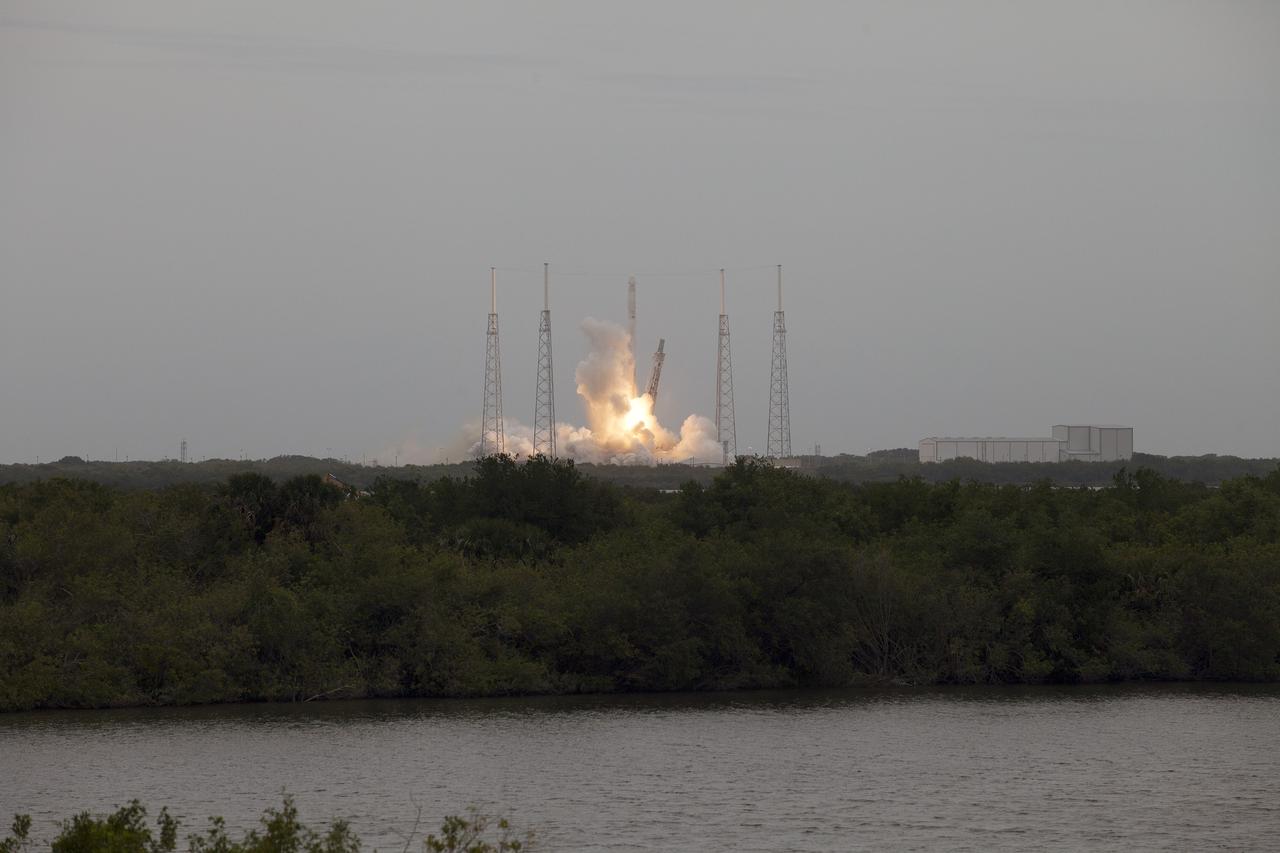
CAPE CANAVERAL, Fla. - An exhaust cloud builds around the Falcon 9 rocket on Space Launch Complex 40 on Cape Canaveral Air Force Station as the SpaceX-3 mission lifts off, carrying the Dragon resupply spacecraft to the International Space Station. Liftoff was during an instantaneous window at 3:25 p.m. EDT. Dragon is making its fourth trip to the space station. The SpaceX-3 mission, carrying almost 2.5 tons of supplies, technology and science experiments, is the third of 12 flights through a $1.6 billion NASA Commercial Resupply Services contract. Dragon's cargo will support more than 150 experiments that will be conducted during the station's Expeditions 39 and 40. For more information, visit http://www.nasa.gov/mission_pages/station/structure/launch/index.html. Photo credit: NASA/Dan Casper
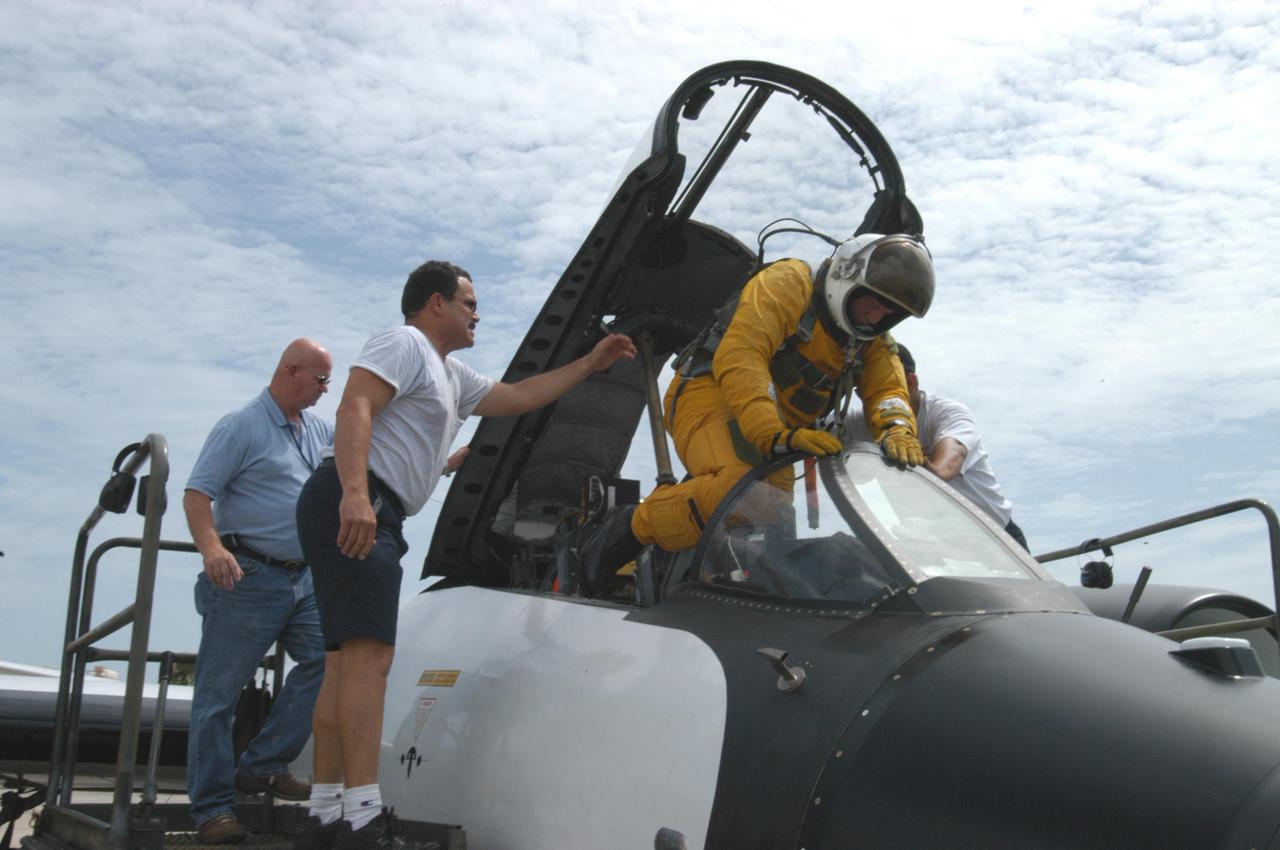
KENNEDY SPACE CENTER, FLA. - NASA pilot Rick Hull climbs into the cockpit before a test flight of the WB-57F aircraft that will take photos of Space Shuttle Discovery during its launch on Return to Flight mission STS-114. NASA approved the development and implementation of the aircraft-based imaging system, known as the WB-57 Ascent Video Experiment (WAVE). The WAVE provides both ascent and entry imagery and enables better observation of the Shuttle on days of heavier cloud cover and areas obscured from ground cameras by the launch exhaust plume. WAVE comprises a 32-inch-ball turret system mounted on the nose of two WB-57 aircraft. The turret houses an optical bench, providing installation of both HDTV and infrared cameras. Optics consist of an 11-inch-diameter, 4.2 meter fixed-focal-length lens. The system can be operated in both auto track and manual modes.
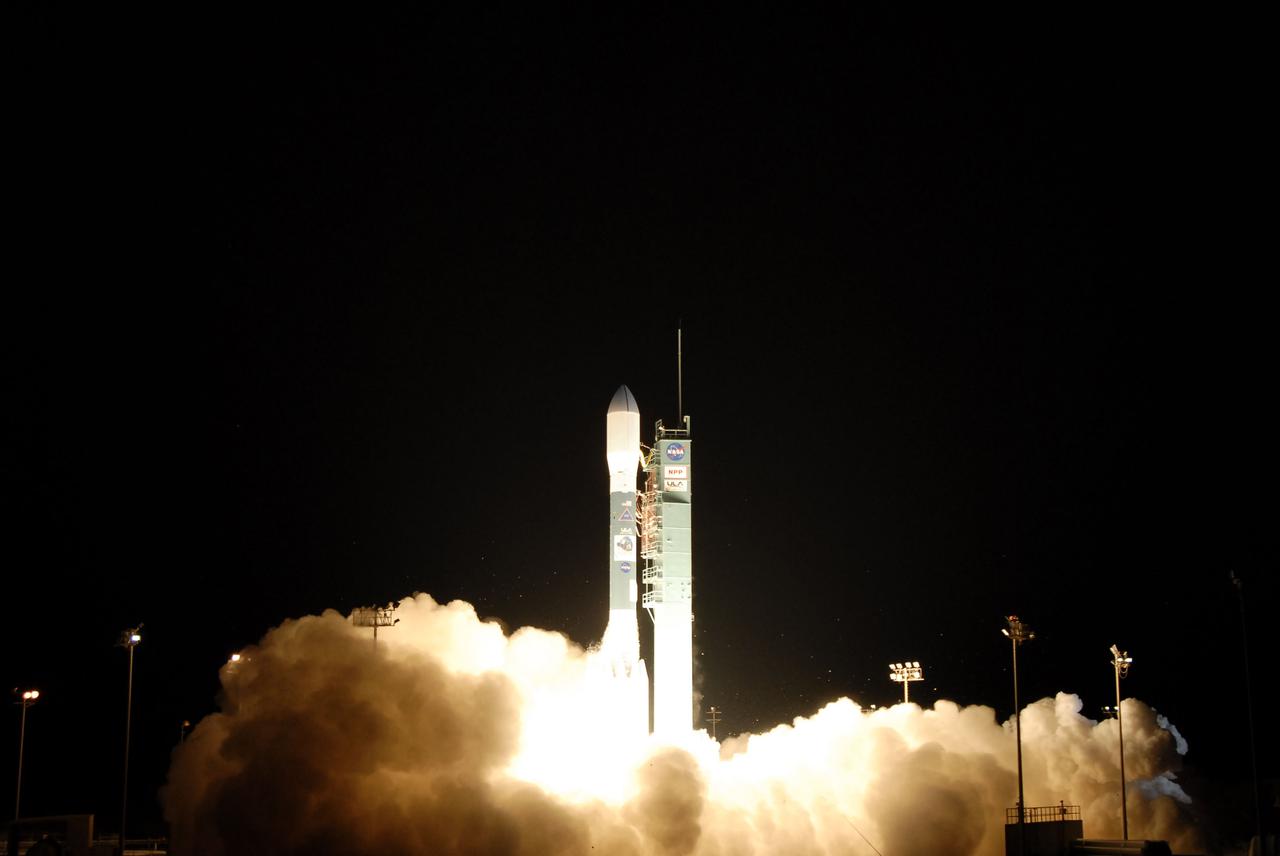
VANDENBERG AIR FORCE BASE, Calif. -- At Space Launch Complex-2 on Vandenberg Air Force Base in California, an exhaust cloud forms around the United Launch Alliance Delta II rocket carrying NASA's National Polar-orbiting Operational Environmental Satellite System Preparatory Project (NPP) into space. Liftoff was at 2:48 a.m. PDT. NPP represents a critical first step in building the next-generation of Earth-observing satellites. NPP will carry the first of the new sensors developed for this satellite fleet, now known as the Joint Polar Satellite System (JPSS) to be launched in 2016. NPP is the bridge between NASA's Earth Observing System (EOS) satellites and the forthcoming series of JPSS satellites. The mission will test key technologies and instruments for the JPSS missions. For more information, visit http:__www.nasa.gov_NPP. Photo credit: NASA_Kim Shiflett
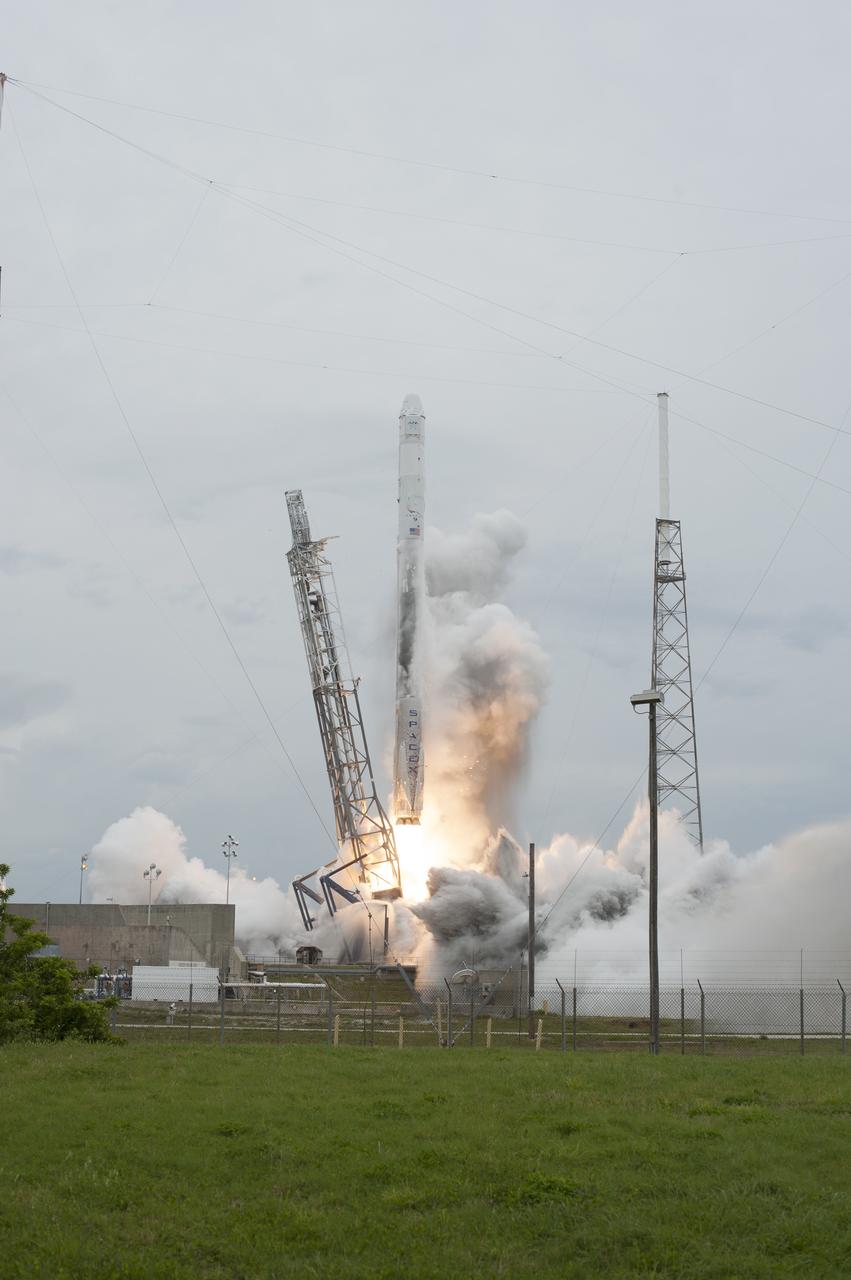
CAPE CANAVERAL, Fla. - An exhaust cloud forms around the Falcon 9 rocket on Space Launch Complex 40 on Cape Canaveral Air Force Station as the SpaceX-3 mission lifts off, carrying the Dragon resupply spacecraft to the International Space Station. Liftoff was during an instantaneous window at 3:25 p.m. EDT. Dragon is making its fourth trip to the space station. The SpaceX-3 mission, carrying almost 2.5 tons of supplies, technology and science experiments, is the third of 12 flights through a $1.6 billion NASA Commercial Resupply Services contract. Dragon's cargo will support more than 150 experiments that will be conducted during the station's Expeditions 39 and 40. For more information, visit http://www.nasa.gov/mission_pages/station/structure/launch/index.html. Photo credit: NASA/Tony Gray and Tim Powers
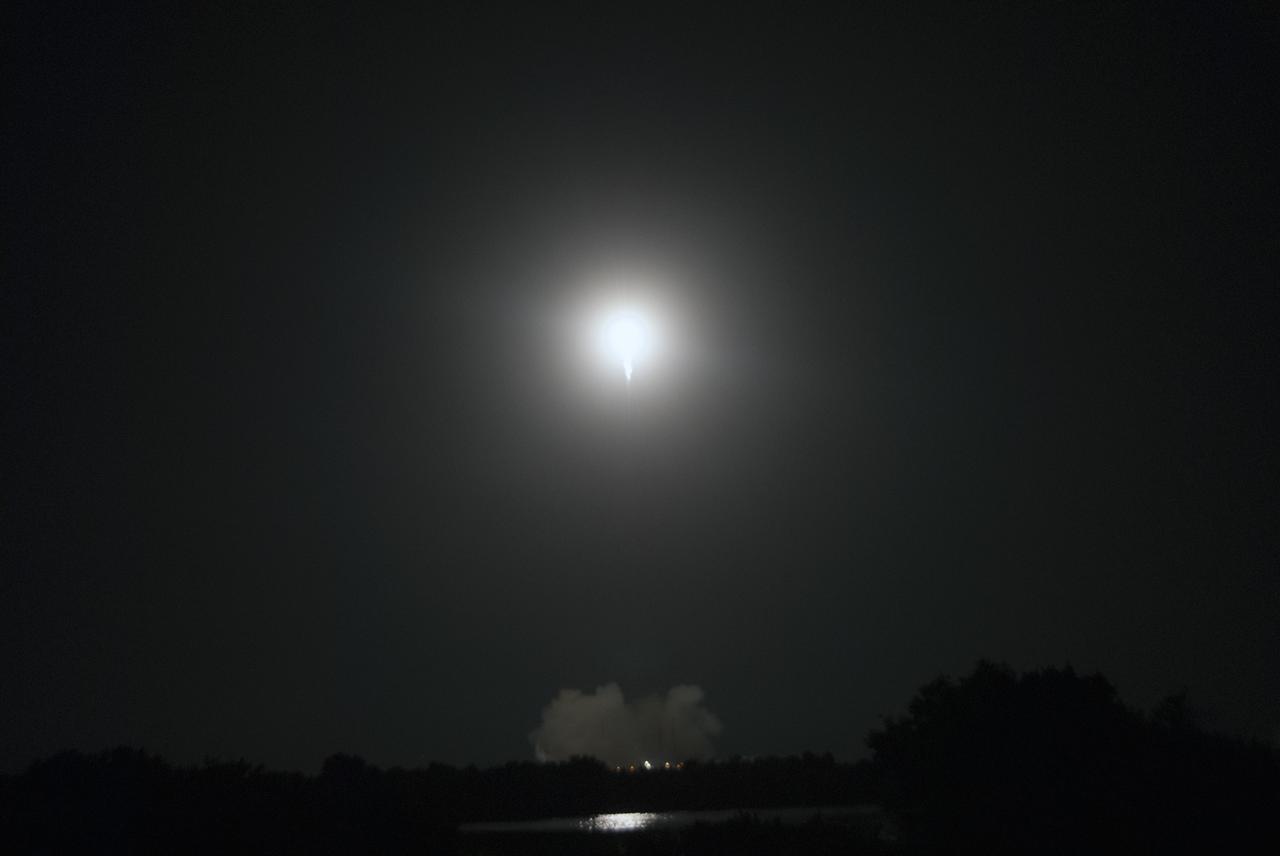
CAPE CANAVERAL, Fla. – The Falcon 9 rocket soars into the night sky leaving an exhaust cloud hovering over Space Launch Complex 40 on Cape Canaveral Air Force Station in Florida. The SpaceX CRS-4 mission is underway. Liftoff was at 1:52 a.m. EDT. The mission is the fourth of 12 SpaceX flights NASA contracted with the company to resupply the space station. It will be the fifth trip by a Dragon spacecraft to the orbiting laboratory. The spacecraft’s 2.5 tons of supplies, science experiments, and technology demonstrations include critical materials to support 255 science and research investigations that will occur during the station's Expeditions 41 and 42. To learn more about the mission, visit http://www.nasa.gov/mission_pages/station/structure/launch/index.html. Photo credit: NASA/Jim Grossmann