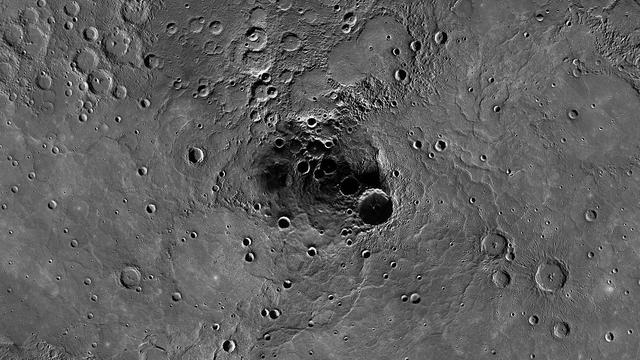
Northern Exposure
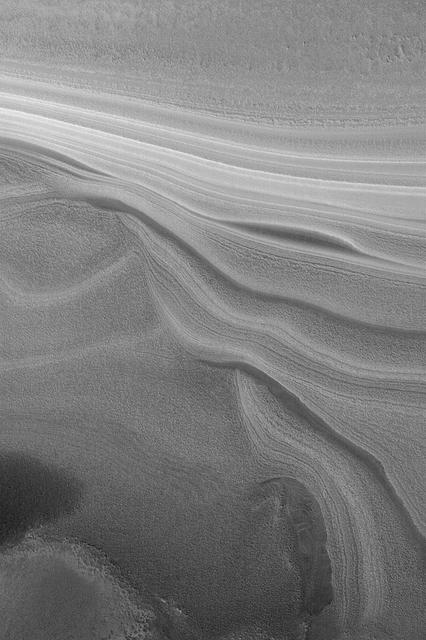
North Polar Layer Exposure
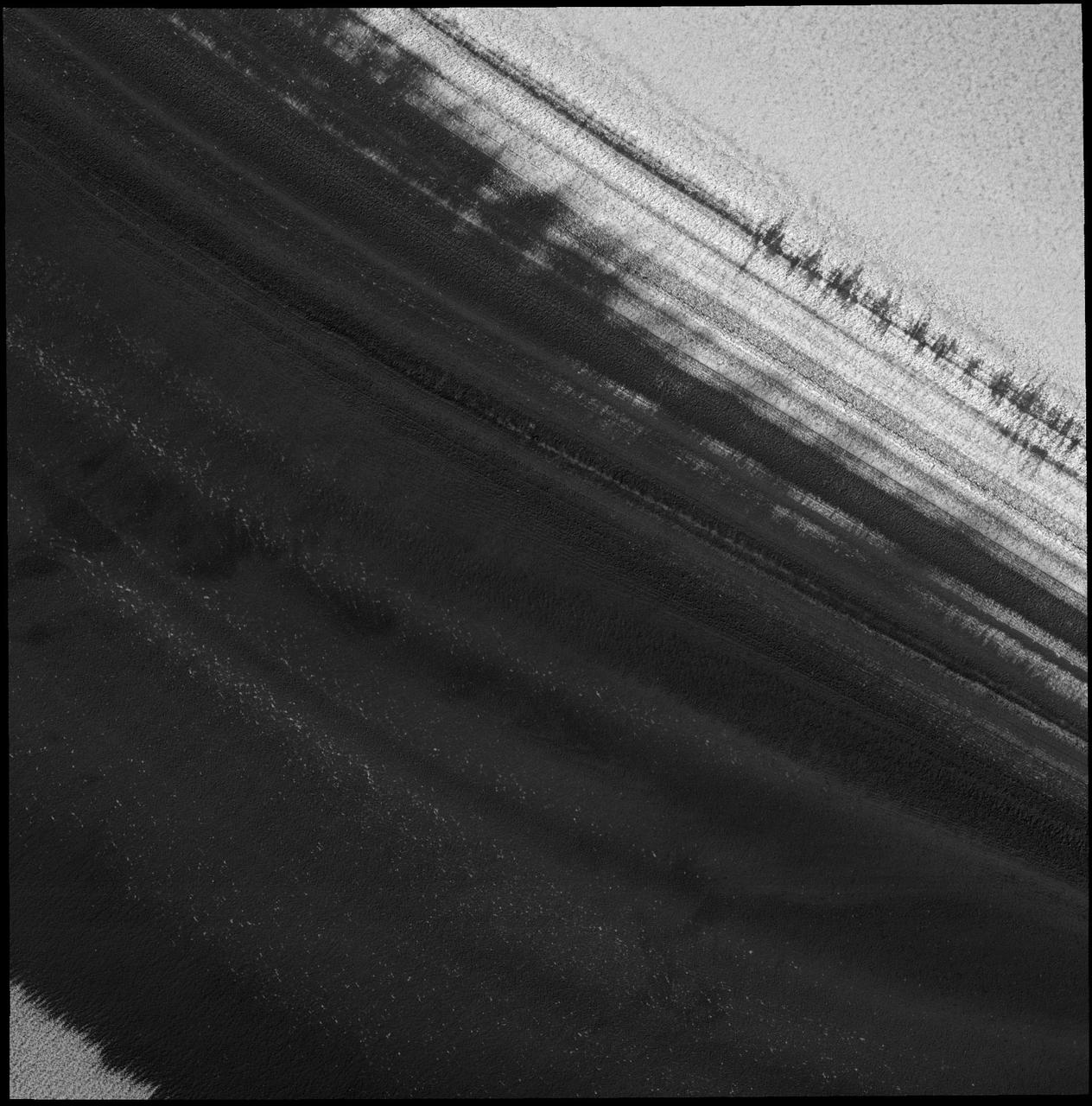
Exposure of Polar Layered Deposits
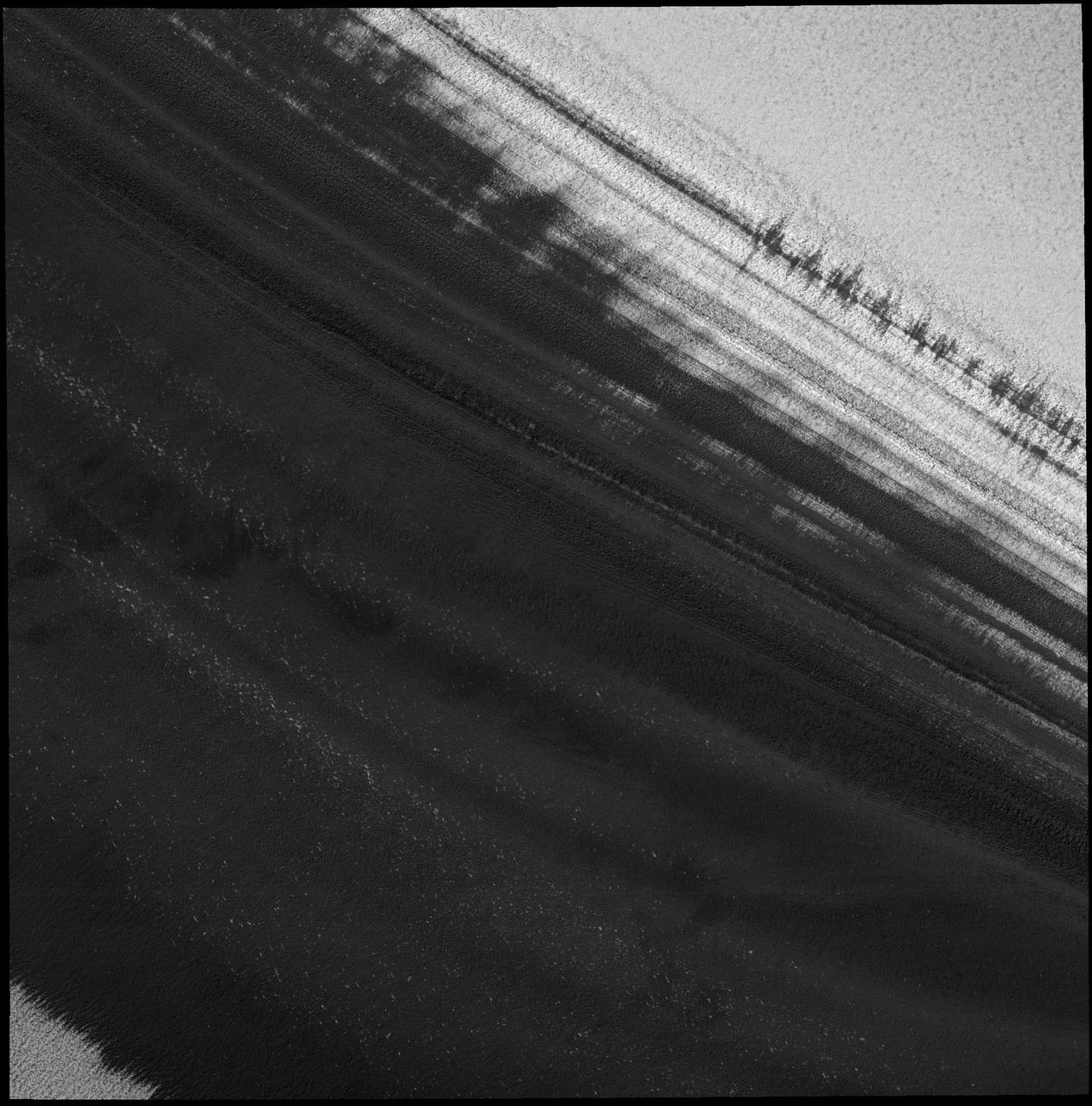
Exposure of Polar Layered Deposits
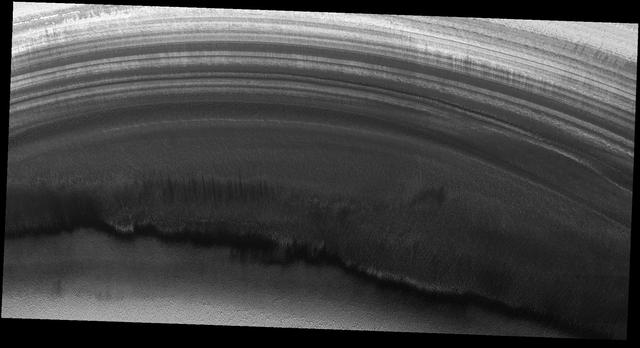
Exposure of Polar Layered Deposits
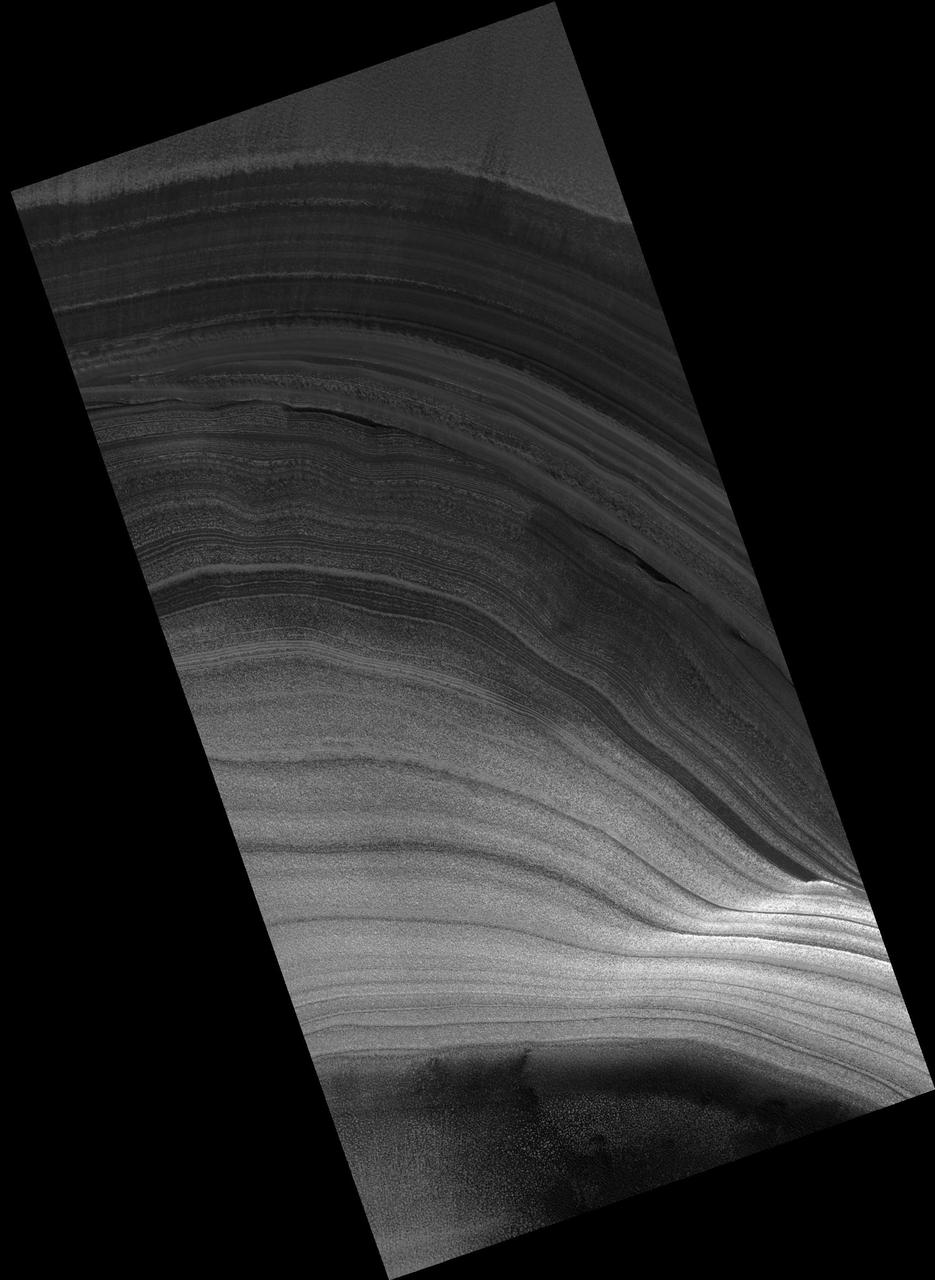
Exposure of Polar Layered Deposits
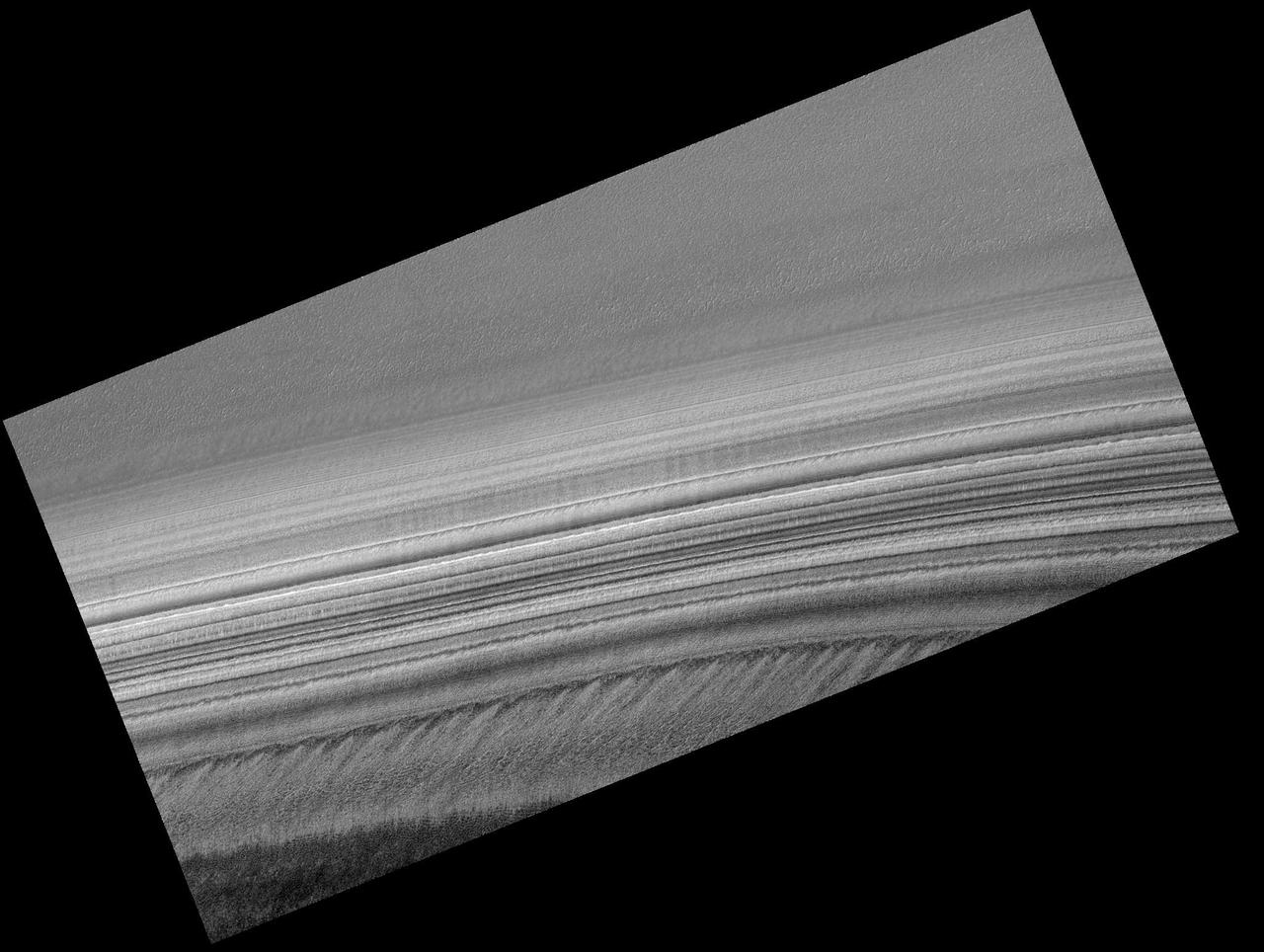
Exposure of Polar Layered Deposits
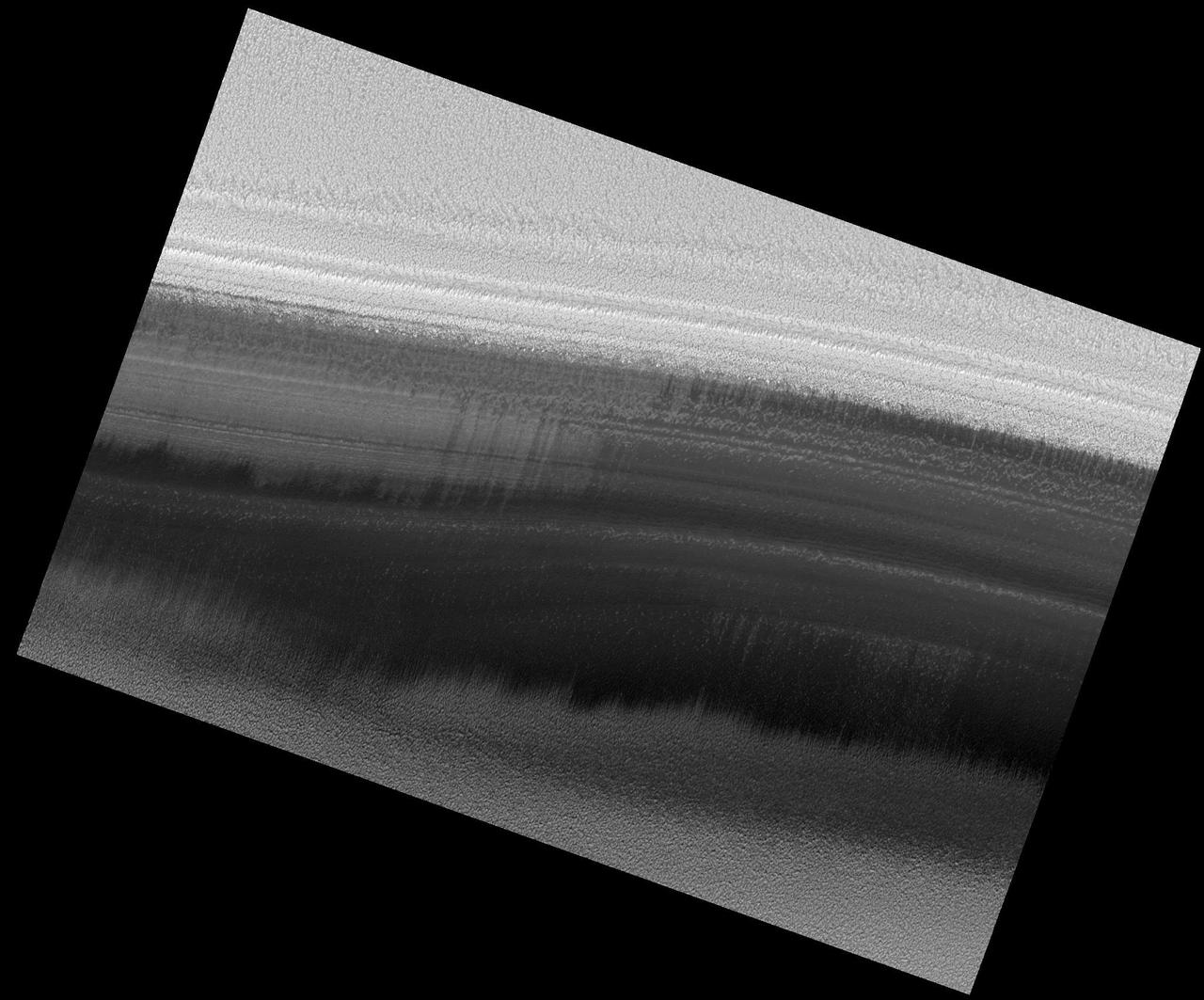
Exposure of Polar Layered Deposits
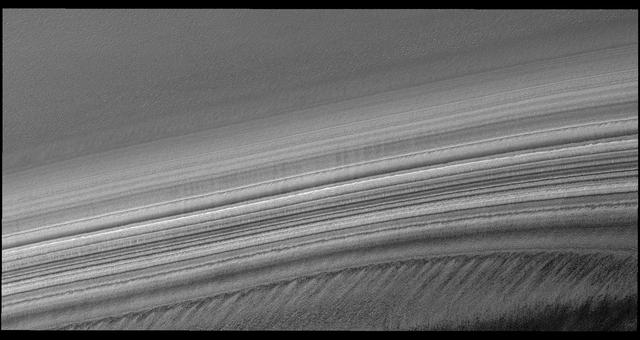
Exposure of Polar Layered Deposits
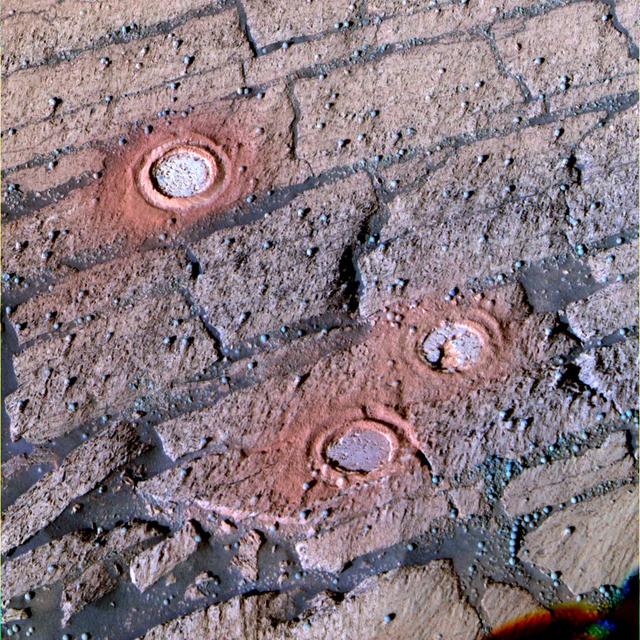
Three Fresh Exposures, Enhanced Color
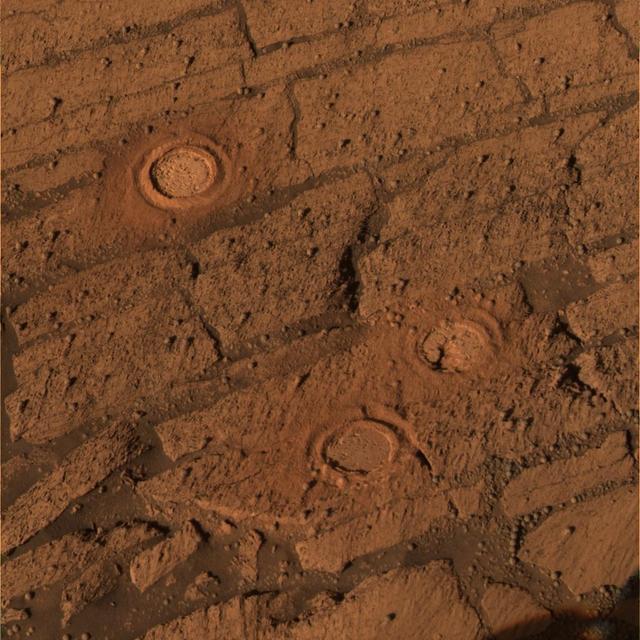
Three Fresh Exposures in Endurance Layers
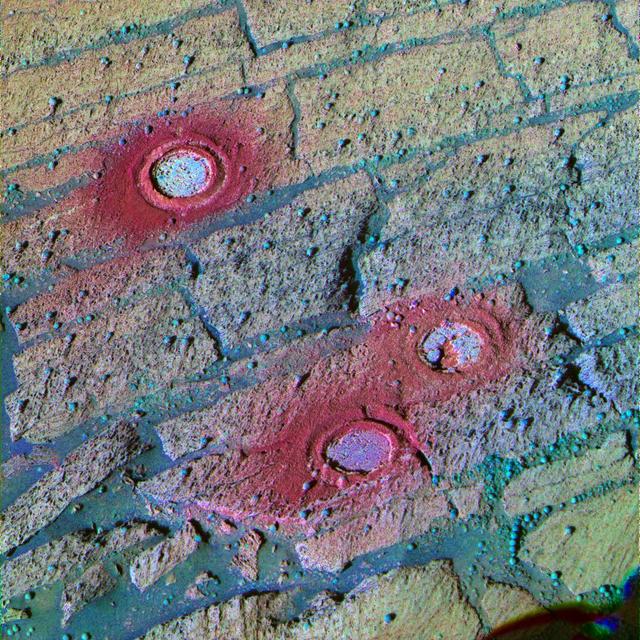
Three Fresh Exposures, Stretched Color
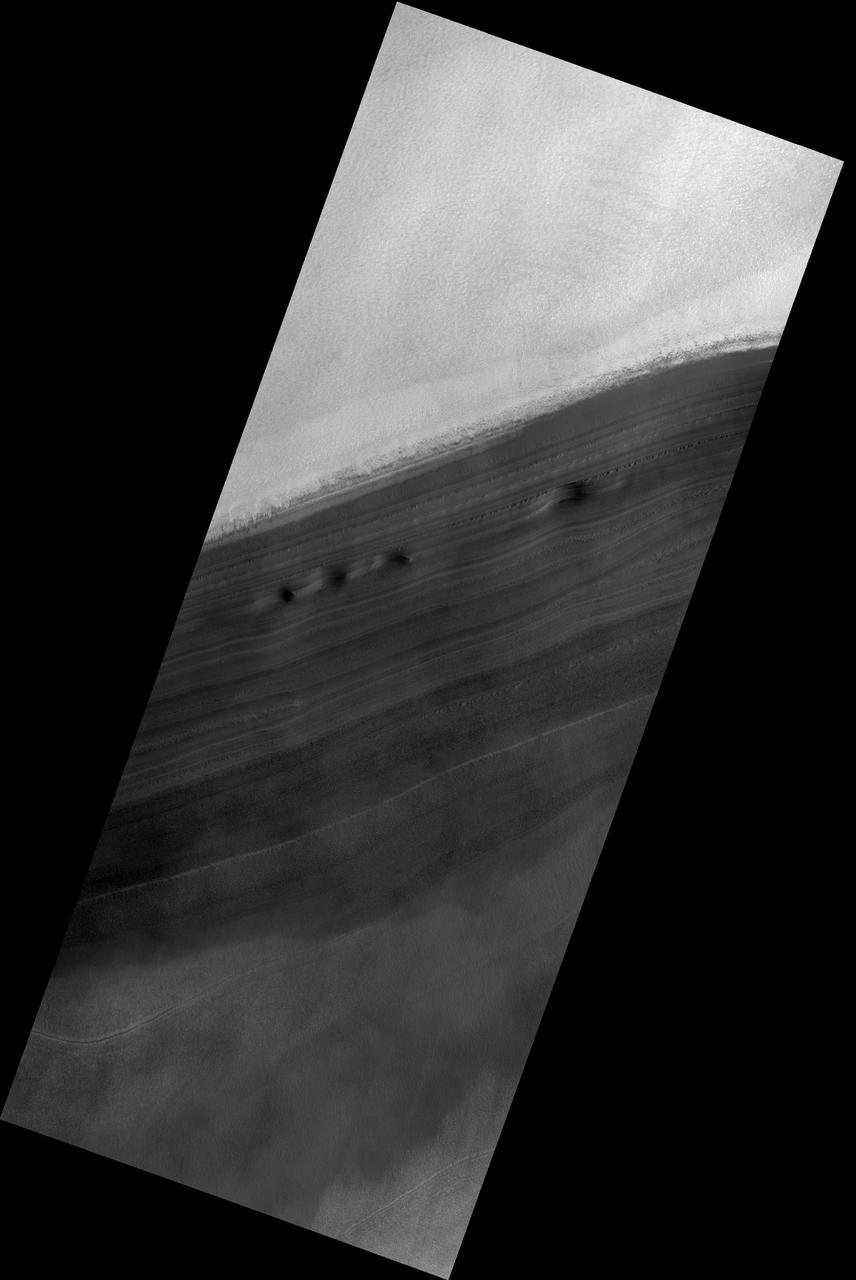
Exposure of North Polar Layered Deposits

Complex exposures of North Polar layered material
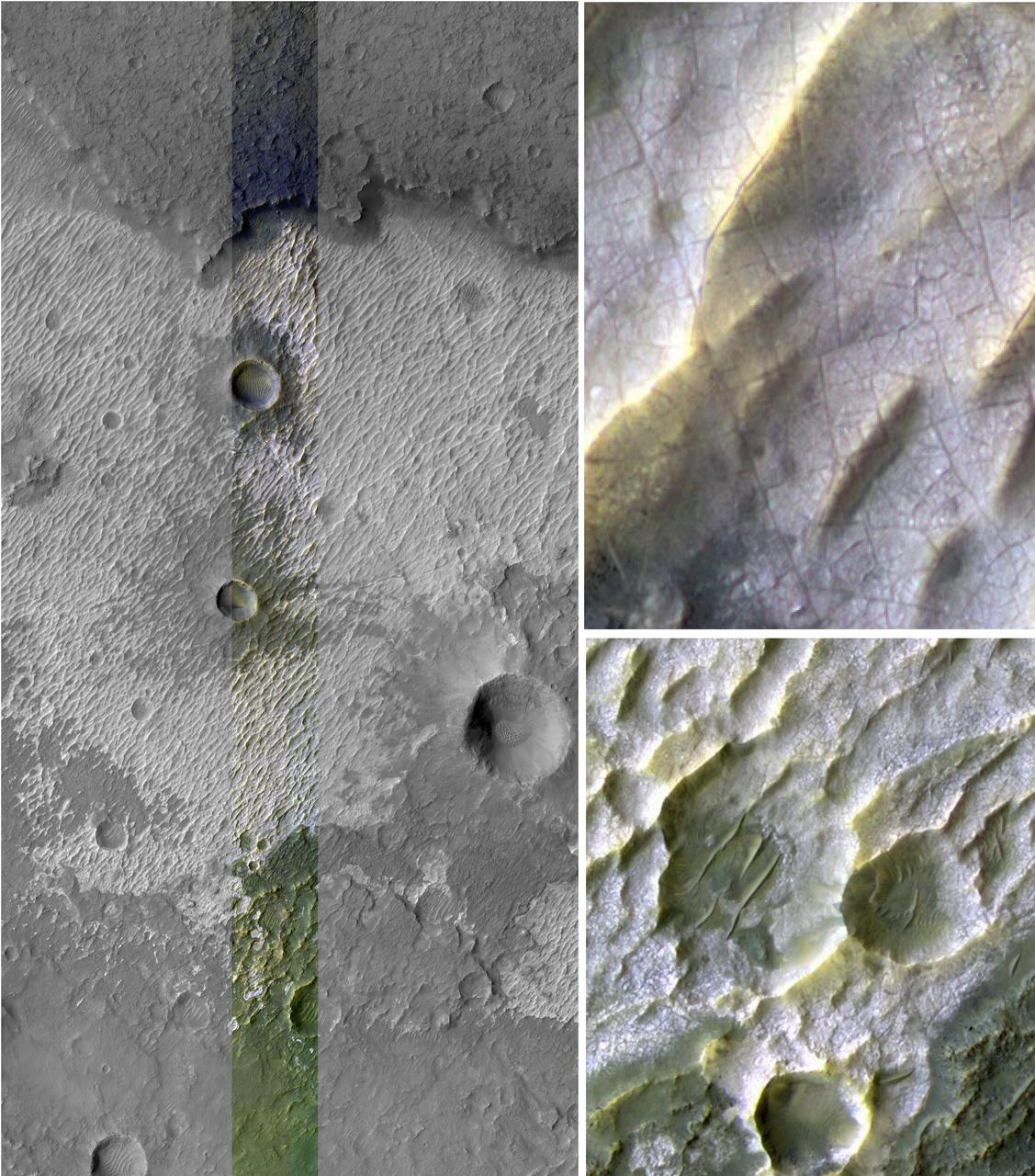
Bright Exposures of Chloride Salt on Southern Mars
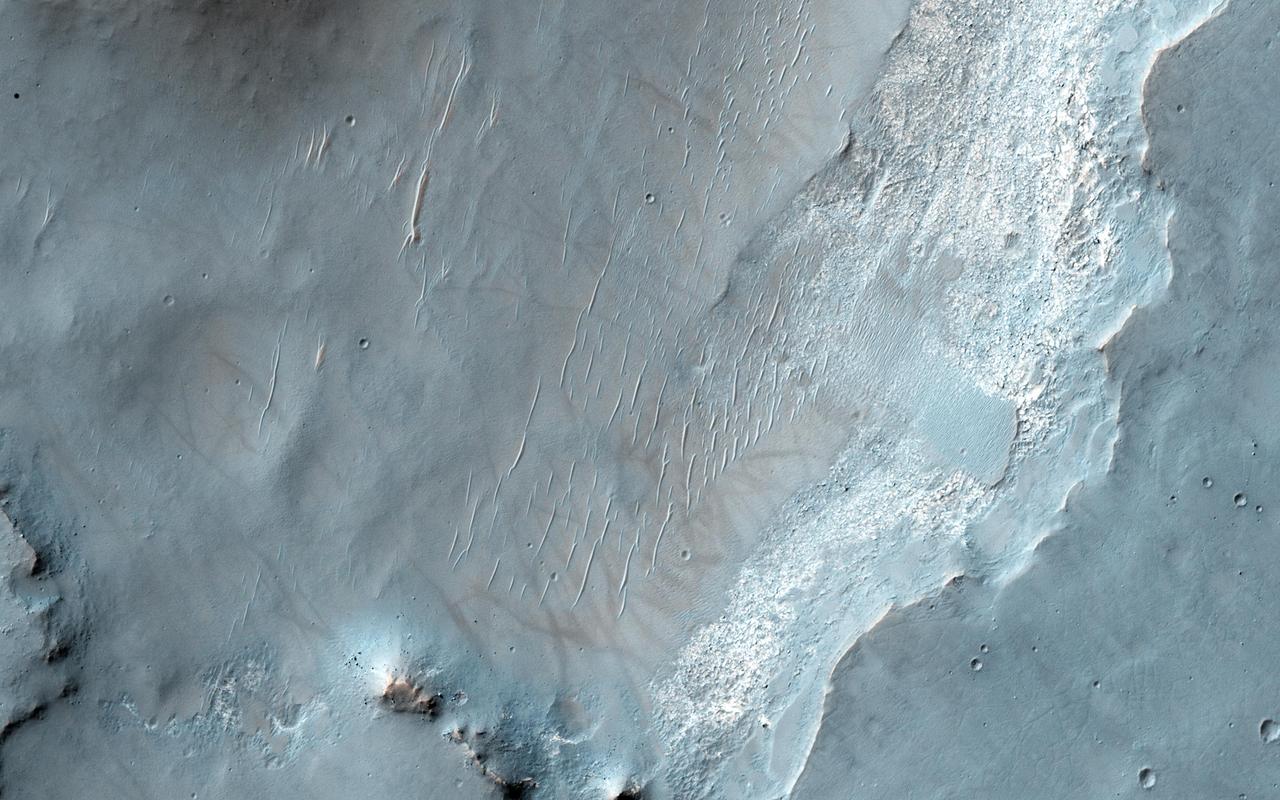
This image from NASA Mars Reconnaissance Orbiter spacecraft shows an exposure of bedrock on the floor of Bakhuysen Crater, an impact crater in Noachis Terra. The bedrock is highly fragmented and fractured.
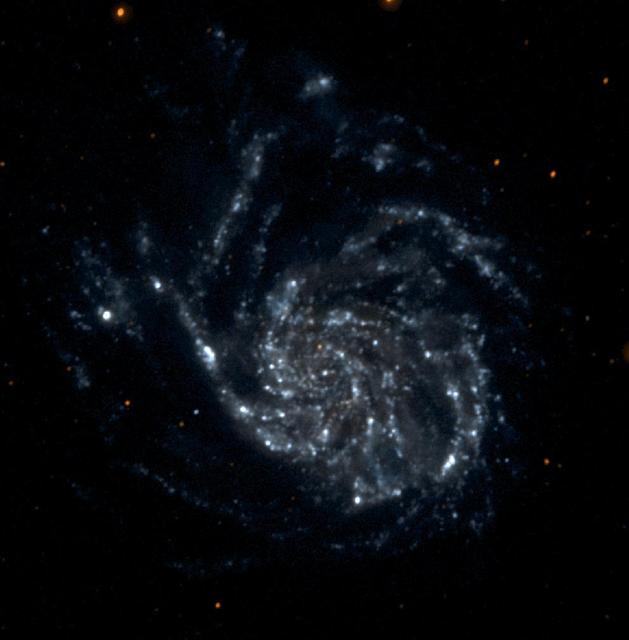
This single orbit exposure, ultraviolet color image of Messier 101 was taken by NASA's Galaxy Evolution Explorer on June 20, 2003. Messier 101 is a large spiral galaxy located 20 million light-years from Earth. This image is a short and medium "exposure" picture of the evolution of star formation in a spiral galaxy. The far ultraviolet emission detects the younger stars as concentrated in tight spiral arms, while the near ultraviolet emission, which traces stars living for more than 100 million years, displays the movement of the spiral pattern over a 100 million year period. The red stars in the foreground of the image are Milky Way stars. http://photojournal.jpl.nasa.gov/catalog/PIA04632
This double exposure image shows Spacelab-1 in the cargo bay of orbiter Columbia. From top to bottom inside the cargo bay are the Spacelab Access Turnel, which is connected to the mid-deck of the orbiter; the Spacelab module, a pressurized module in which scientists conduct experiments not possible on Earth; and Spacelab pallets, which can hold instruments for the experiments requiring direct exposure to space. The first Spacelab mission, Spacelab-1, sponsored jointly and shared equally by NASA and the European Space Agency, was a multidisciplinary mission; that is, investigations were performed in several different fields of scientific research. The overall goal of the mission was to verify Spacelab performance through a variety of scientific experiments. The disciplines represented by these experiments were astronomy and solar physics, earth observations, space plasma physics, materials sciences, atmospheric physics, and life sciences. International in nature, Spacelab-1 conducted experiments from the United States, Japan, the Netherlands, United Kingdom, Beluga, France, Germany, Italy, and Switzerland. Spacelab-1 was launched from the Kennedy Space Center on November 28, 1983 aboard the orbiter Columbia (STS-9). The Marshall Space Flight Center was responsible for managing the Spacelab missions.
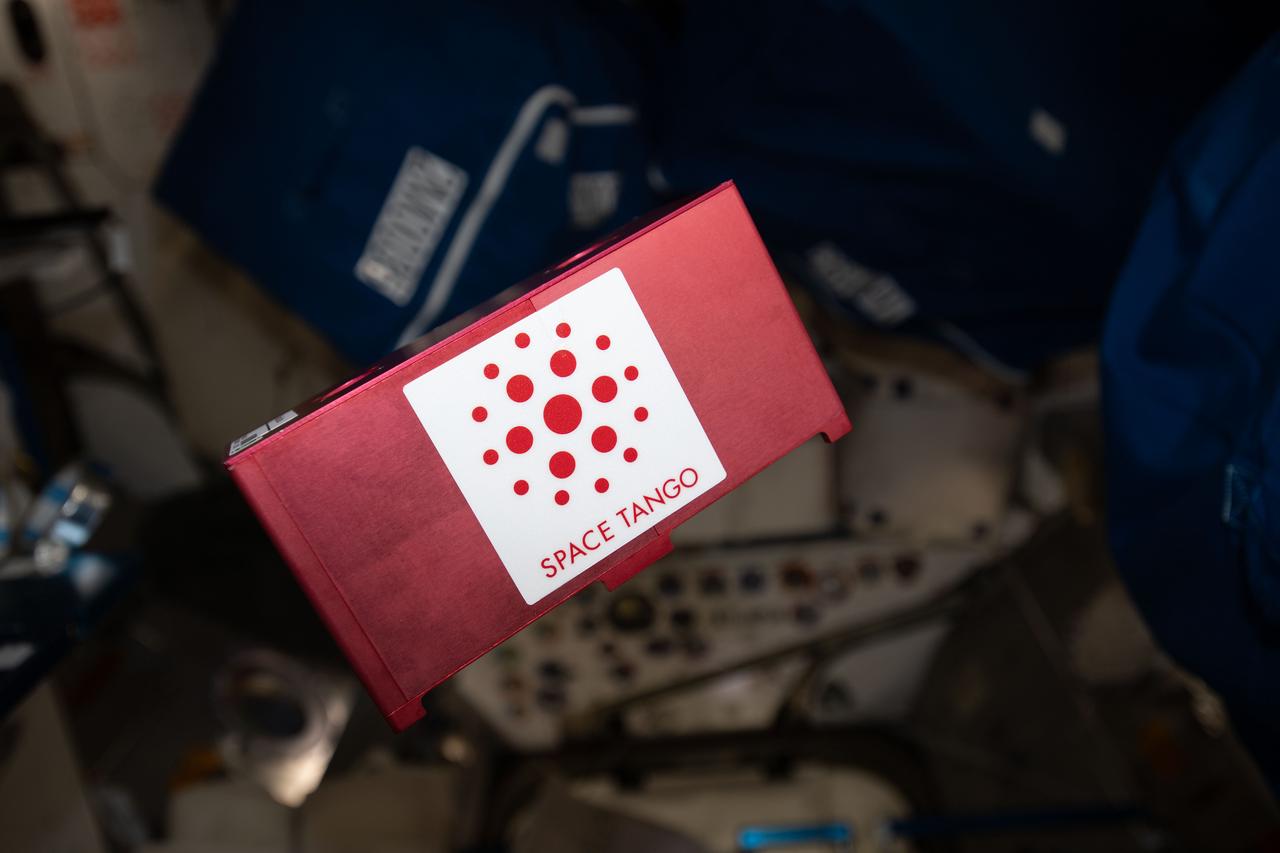
iss062e115956 (3/28/2020) --- A view of the Space Tango CubleLab for the the Microgravity Exposure on Medicinal Plant Seeds investigation aboard the International Space Station (ISS). The Microgravity Exposure on Medicinal Plant Seeds evaluates microgravity’s effects on Cannibis sativa (Victoria) seeds. The cannabinoid content of plants grown from seeds exposed to microgravity conditions aboard the International Space Station (ISS) are compared to plants grown from seeds maintained on the ground.
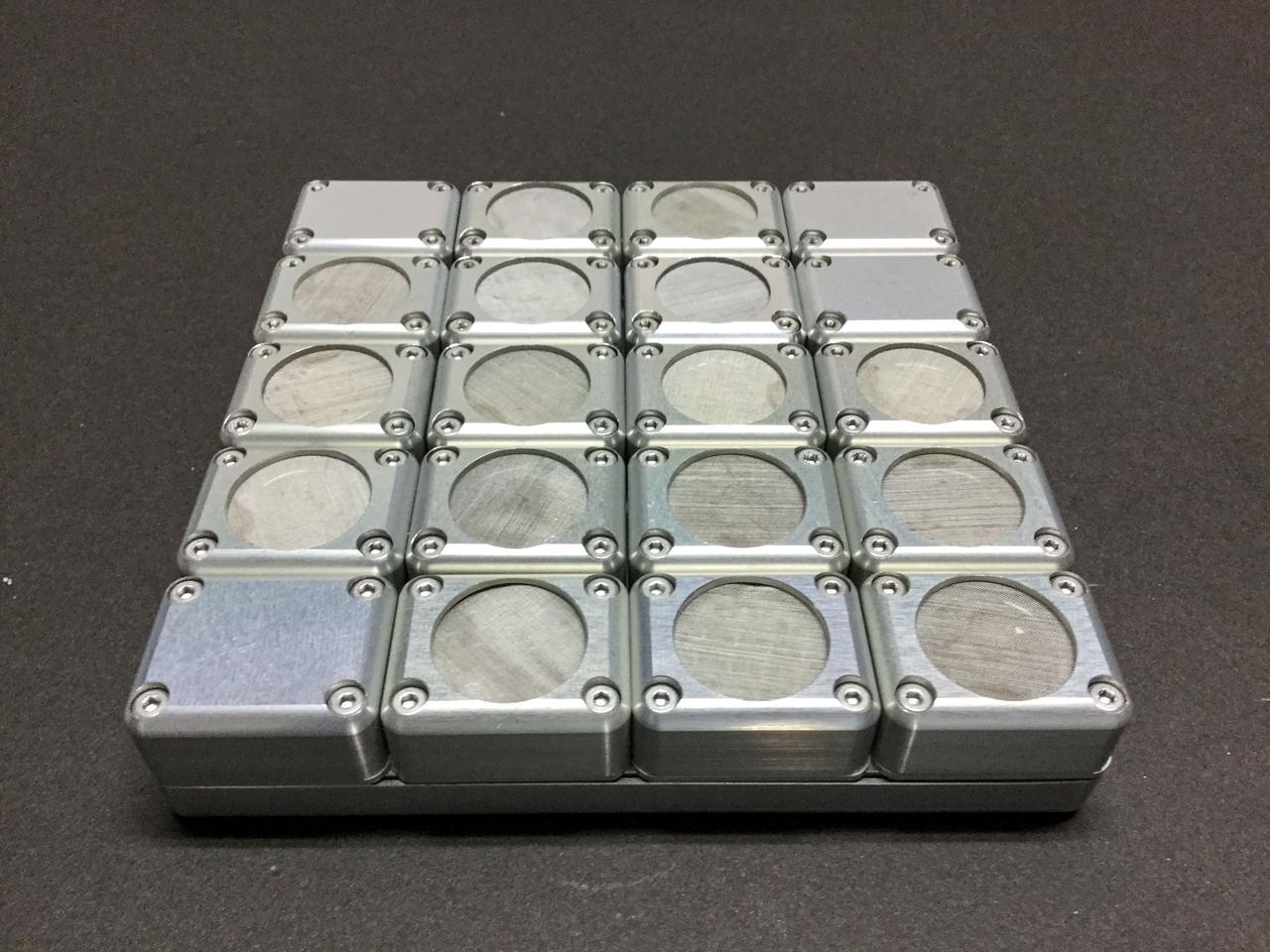
jsc2020e036061 (5/27/2020) --- A preflight view of the Tanpopo exposure panel. It has 20 small units containing radiation resistant microbes, cyanobacteria, rice seeds, and dead cells of mosses and tree samples. Photo courtesy of: Tanpopo-3 Team
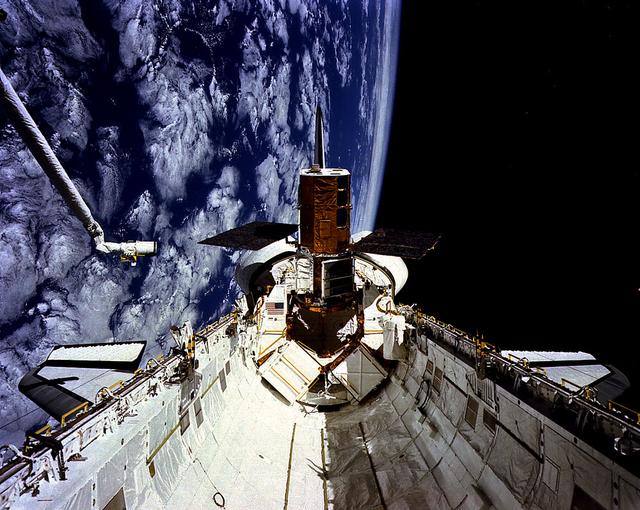
Space Shuttle mission STS-41C onboard view of the revived Solar Maximum Mission Satellite (SMMS). As part of the mission the crew demonstrated the capability of the shuttle to rendezvous, service, check-out and deploy an on-orbit satellite. Also as part of the redeployment, the SMMS was fitted with a Long Duration Exposure Facility (LDEF), which provides accommodations for experiments requiring long-term exposure to the space environment. the STS-41C mission was launched aboard the Space Shuttle Orbitor Challenger on April 6, 1984.

A long exposure photograph of the Vehicle Assembly Building, against the backdrop of a bright blue sky, at NASA's Kennedy Space Center in Florida. Inside the VAB, 10 levels of platforms, 20 platform halves altogether, have been installed in High Bay 3. The platforms will surround NASA's Space Launch System (SLS) rocket and the Orion spacecraft and allow access during processing for missions, including the first uncrewed flight test of Orion atop the SLS rocket in 2018. The Ground Systems Development and Operations Program, along with center's Engineering Directorate, is overseeing upgrades and modifications to the VAB to support the multi-user spaceport.
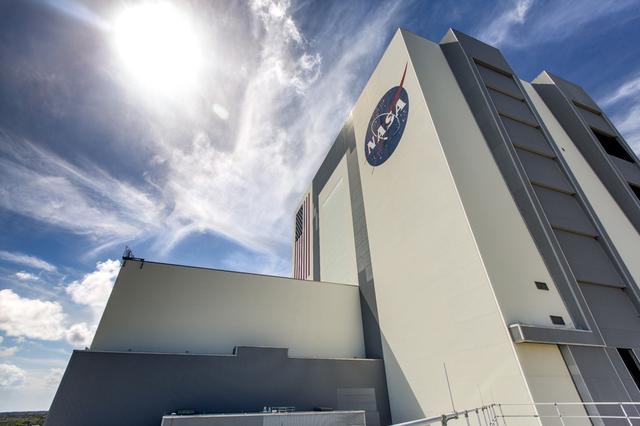
A long exposure photograph of the Vehicle Assembly Building, against the backdrop of a bright blue sky, at NASA's Kennedy Space Center in Florida. Inside the VAB, 10 levels of platforms, 20 platform halves altogether, have been installed in High Bay 3. The platforms will surround NASA's Space Launch System (SLS) rocket and the Orion spacecraft and allow access during processing for missions, including the first uncrewed flight test of Orion atop the SLS rocket in 2018. The Ground Systems Development and Operations Program, along with center's Engineering Directorate, is overseeing upgrades and modifications to the VAB to support the multi-user spaceport.
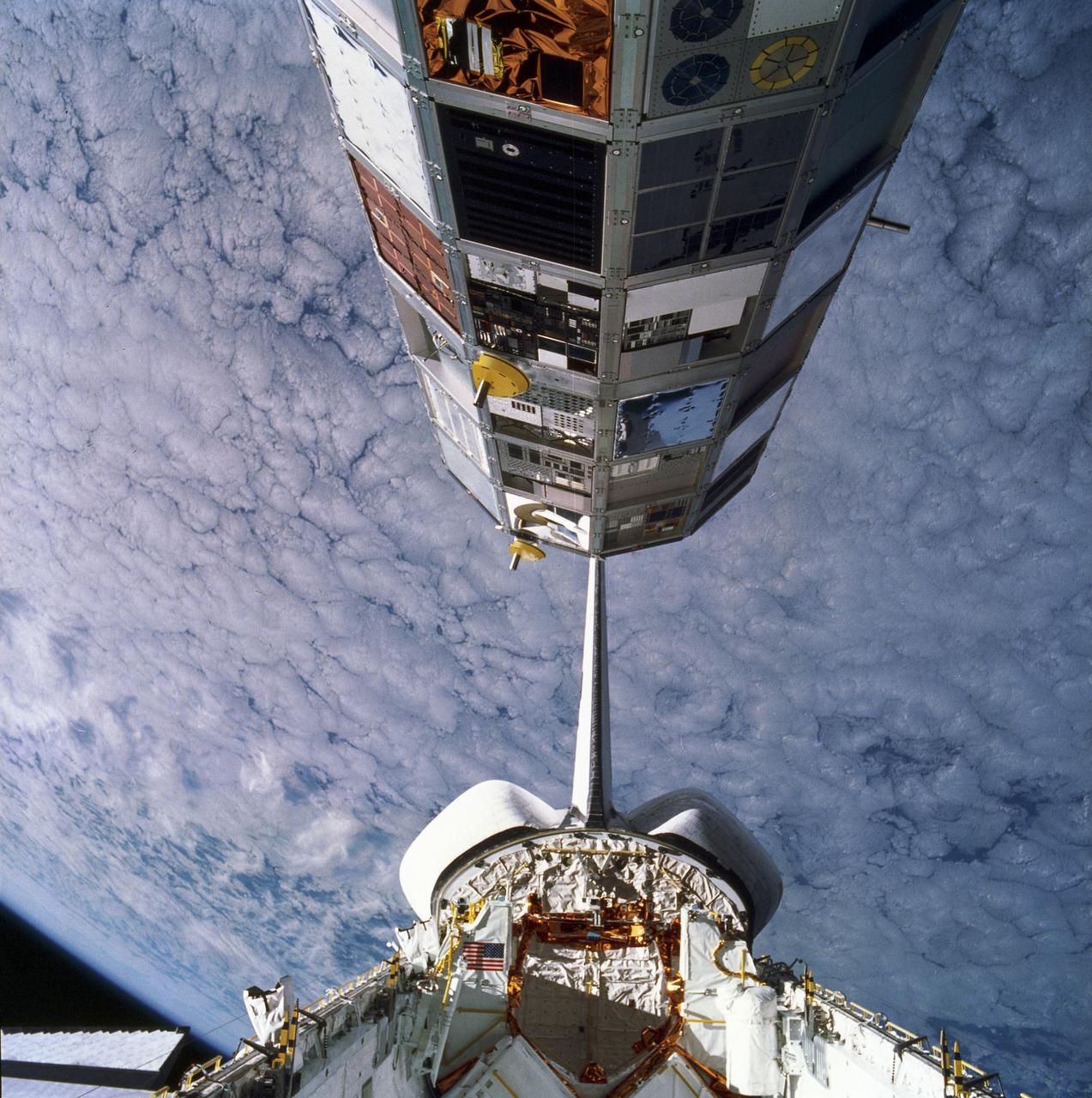
This is an onboard photo of the deployment of the Long Duration Exposure Facility (LDEF) from the cargo bay of the Space Shuttle Orbiter Challenger STS-41C mission, April 7, 1984. After a five year stay in space, the LDEF was retrieved during the STS-32 mission by the Space Shuttle Orbiter Columbia in January 1990 and was returned to Earth for close examination and analysis. The LDEF was designed by the Marshall Space Flight Center (MSFC) to test the performance of spacecraft materials, components, and systems that have been exposed to the environment of micrometeoroids, space debris, radiation particles, atomic oxygen, and solar radiation for an extended period of time. Proving invaluable to the development of both future spacecraft and the International Space Station (ISS), the LDEF carried 57 science and technology experiments, the work of more than 200 investigators, 33 private companies, 21 universities, 7 NASA centers, 9 Department of Defense laboratories, and 8 forein countries.
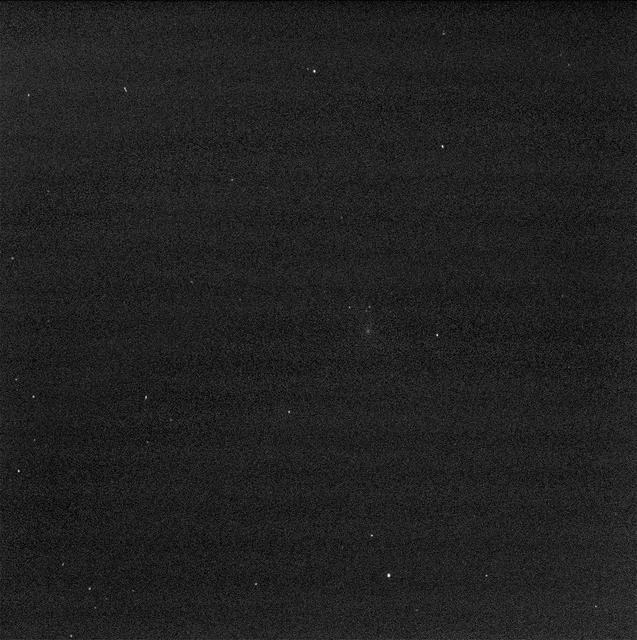
This two-image blink shows a comparison of two exposure times in images from the panoramic camera Pancam on NASA Mars Exploration Rover Opportunity showing comet C/2013 A1 Siding Spring as it flew near Mars on Oct. 19, 2014.
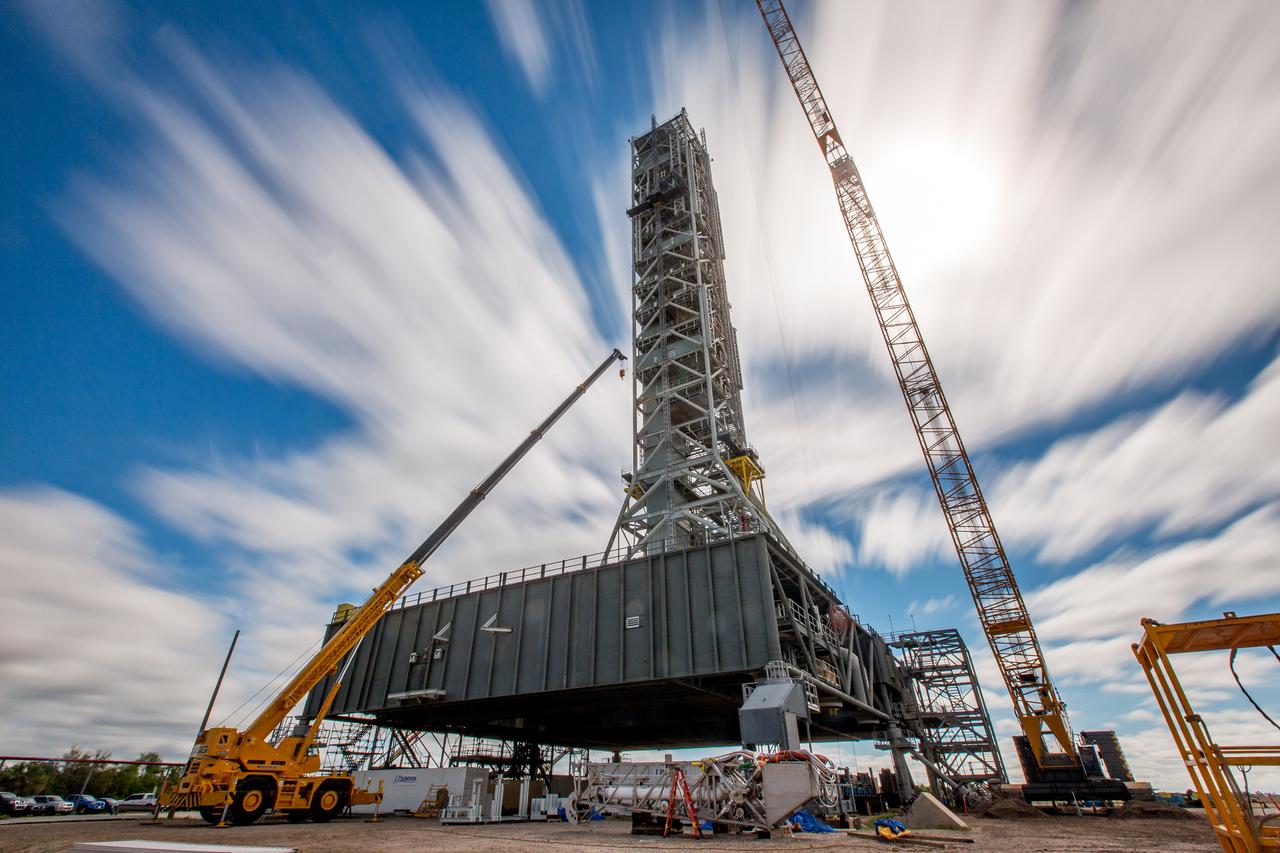
A long-exposure view of the mobile launcher at NASA's Kennedy Space Center in Florida. Cranes and rigging are being used to lift the bracket for the Orion Service Module Umbilical (OSMU) up for installation on the mobile launcher tower. The tower will be equipped with a number of lines, called umbilicals, that will connect to the Space Launch System rocket and Orion spacecraft for Exploration Mission-1 (EM-1). The OSMU will be located high on the mobile launcher tower and, prior to launch, will transfer liquid coolant for the electronics and air for the Environmental Control System to the Orion service module that houses these critical systems to support the spacecraft. EM-1 is scheduled to launch in 2018. The Ground Systems Development and Operations Program is overseeing installation of the umbilicals.
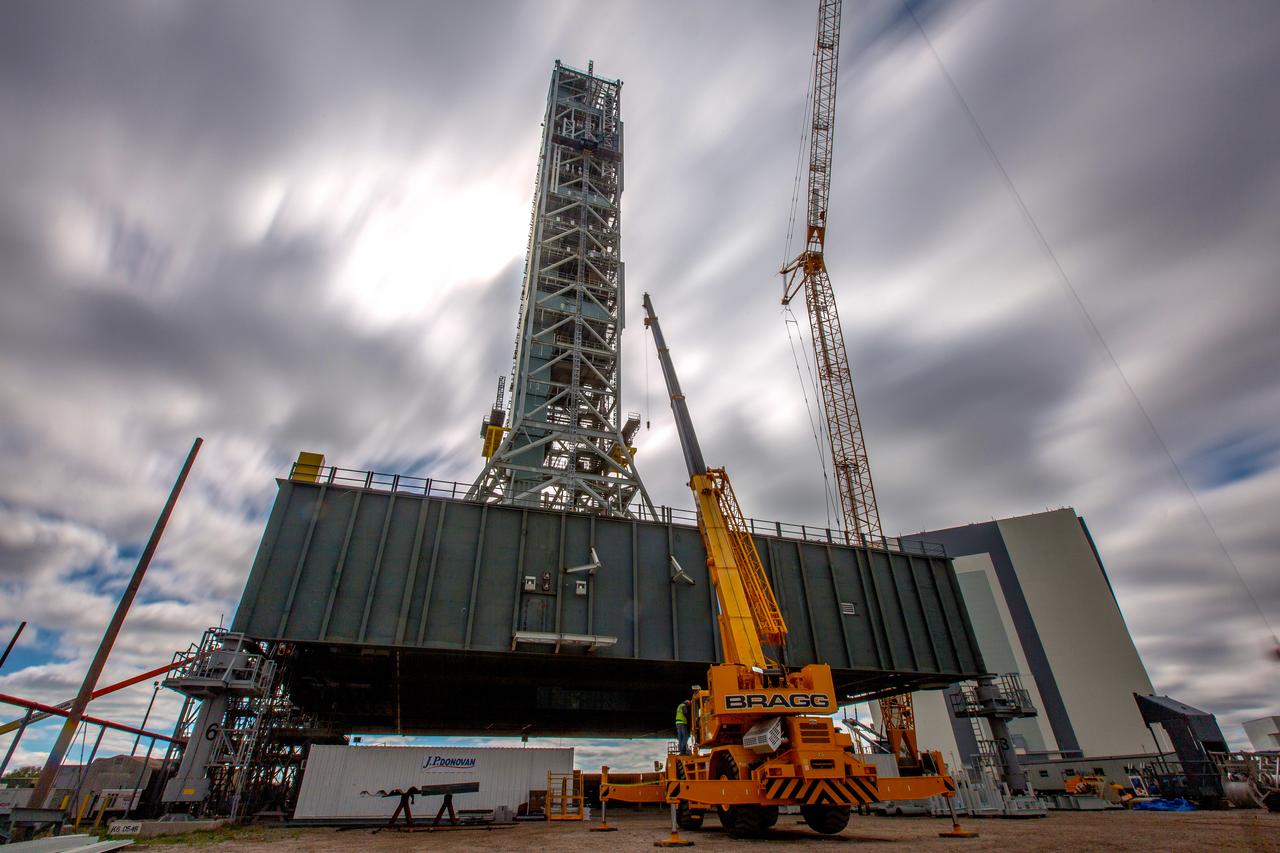
A long-exposure view of the mobile launcher at NASA's Kennedy Space Center in Florida. Cranes and rigging are being used to lift the bracket for the Orion Service Module Umbilical (OSMU) up for installation on the mobile launcher tower. The tower will be equipped with a number of lines, called umbilicals, that will connect to the Space Launch System rocket and Orion spacecraft for Exploration Mission-1 (EM-1). The OSMU will be located high on the mobile launcher tower and, prior to launch, will transfer liquid coolant for the electronics and air for the Environmental Control System to the Orion service module that houses these critical systems to support the spacecraft. EM-1 is scheduled to launch in 2018. The Ground Systems Development and Operations Program is overseeing installation of the umbilicals.
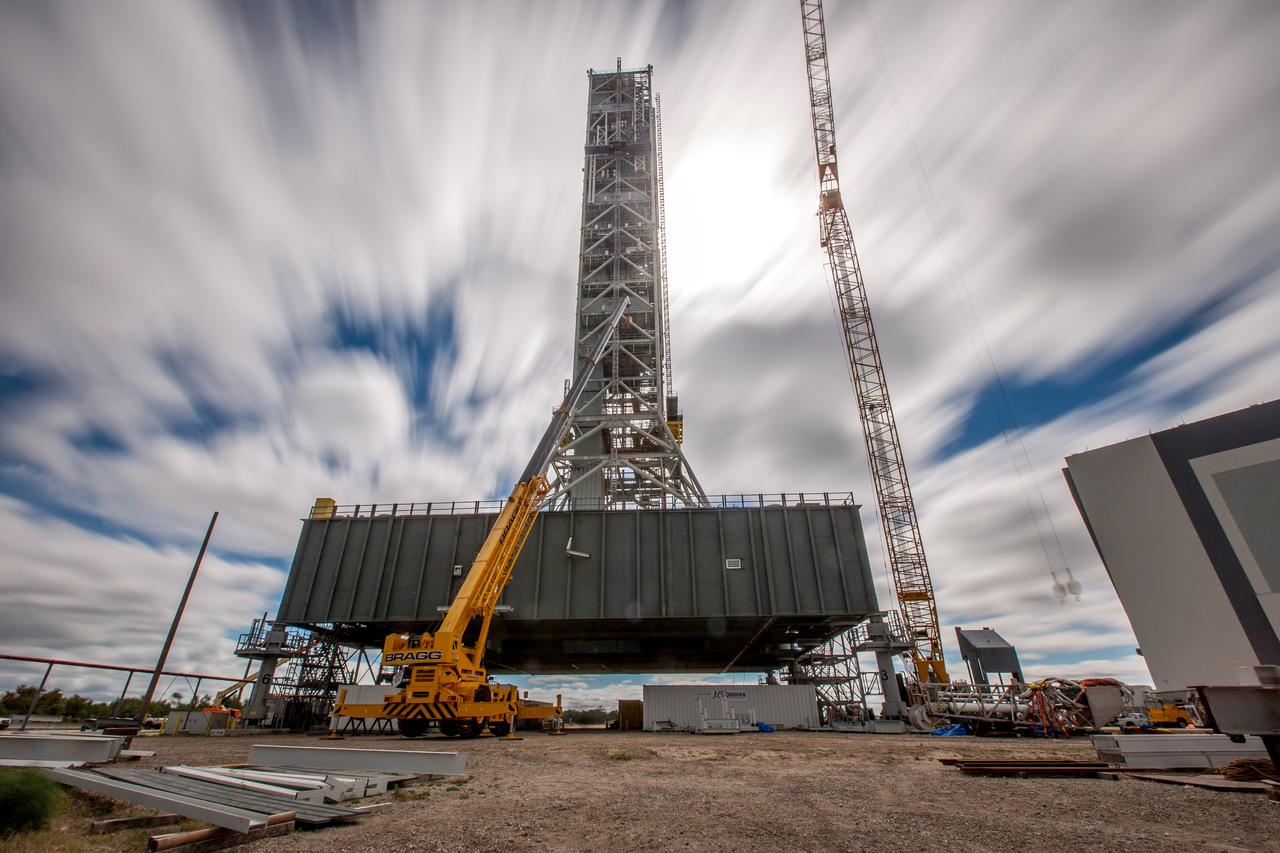
A long-exposure view of the mobile launcher at NASA's Kennedy Space Center in Florida. Cranes and rigging are being used to lift the bracket for the Orion Service Module Umbilical (OSMU) up for installation on the mobile launcher tower. The tower will be equipped with a number of lines, called umbilicals, that will connect to the Space Launch System rocket and Orion spacecraft for Exploration Mission-1 (EM-1). The OSMU will be located high on the mobile launcher tower and, prior to launch, will transfer liquid coolant for the electronics and air for the Environmental Control System to the Orion service module that houses these critical systems to support the spacecraft. EM-1 is scheduled to launch in 2018. The Ground Systems Development and Operations Program is overseeing installation of the umbilicals.
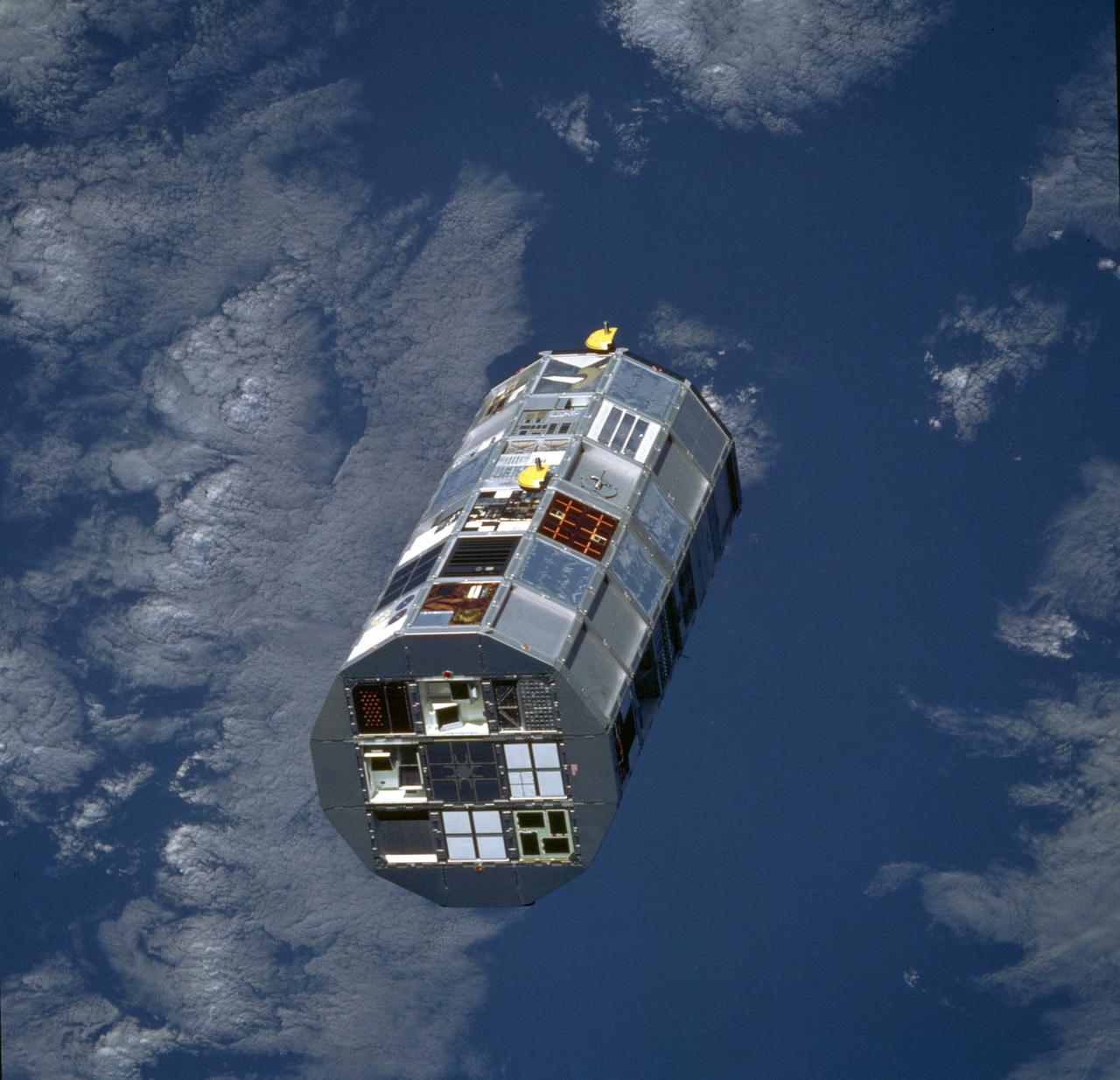
The Long Duration Exposure Facility (LDEF) was designed by the Marshall Space Flight Center (MSFC) to test the performance of spacecraft materials, components, and systems that have been exposed to the environment of micrometeoroids and space debris for an extended period of time. The LDEF proved invaluable to the development of future spacecraft and the International Space Station (ISS). The LDEF carried 57 science and technology experiments, the work of more than 200 investigators. MSFC`s experiments included: Trapped Proton Energy Determination to determine protons trapped in the Earth's magnetic field and the impact of radiation particles; Linear Energy Transfer Spectrum Measurement Experiment which measures the linear energy transfer spectrum behind different shielding configurations; Atomic oxygen-Simulated Out-gassing, an experiment that exposes thermal control surfaces to atomic oxygen to measure the damaging out-gassed products; Thermal Control Surfaces Experiment to determine the effects of the near-Earth orbital environment and the shuttle induced environment on spacecraft thermal control surfaces; Transverse Flat-Plate Heat Pipe Experiment, to evaluate the zero-gravity performance of a number of transverse flat plate heat pipe modules and their ability to transport large quantities of heat; Solar Array Materials Passive LDEF Experiment to examine the effects of space on mechanical, electrical, and optical properties of lightweight solar array materials; and the Effects of Solar Radiation on Glasses. Launched aboard the Space Shuttle Orbiter Challenger's STS-41C mission April 6, 1984, the LDEF remained in orbit for five years until January 1990 when it was retrieved by the Space Shuttle Orbiter Columbia STS-32 mission and brought back to Earth for close examination and analysis.
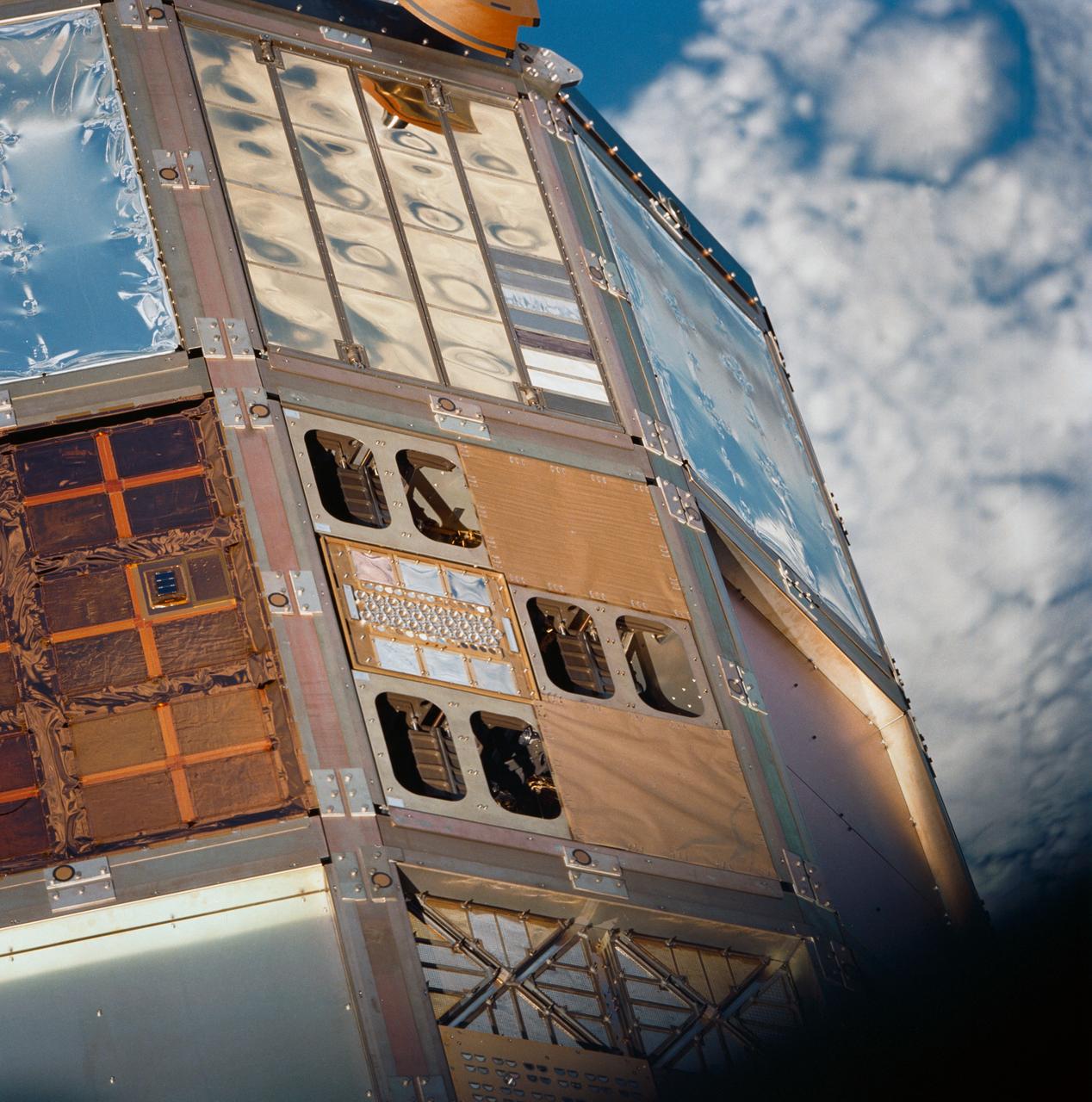
Closeup of Long Duration Exposure Facility (LDEF) experiment trays is documented during STS-32 retrieval activity and photo survey conducted by crewmembers onboard Columbia, Orbiter Vehicle (OV) 102. Partially visible is the Polymer Matrix Composite Materials Experiment. In the background is the surface of the Earth.
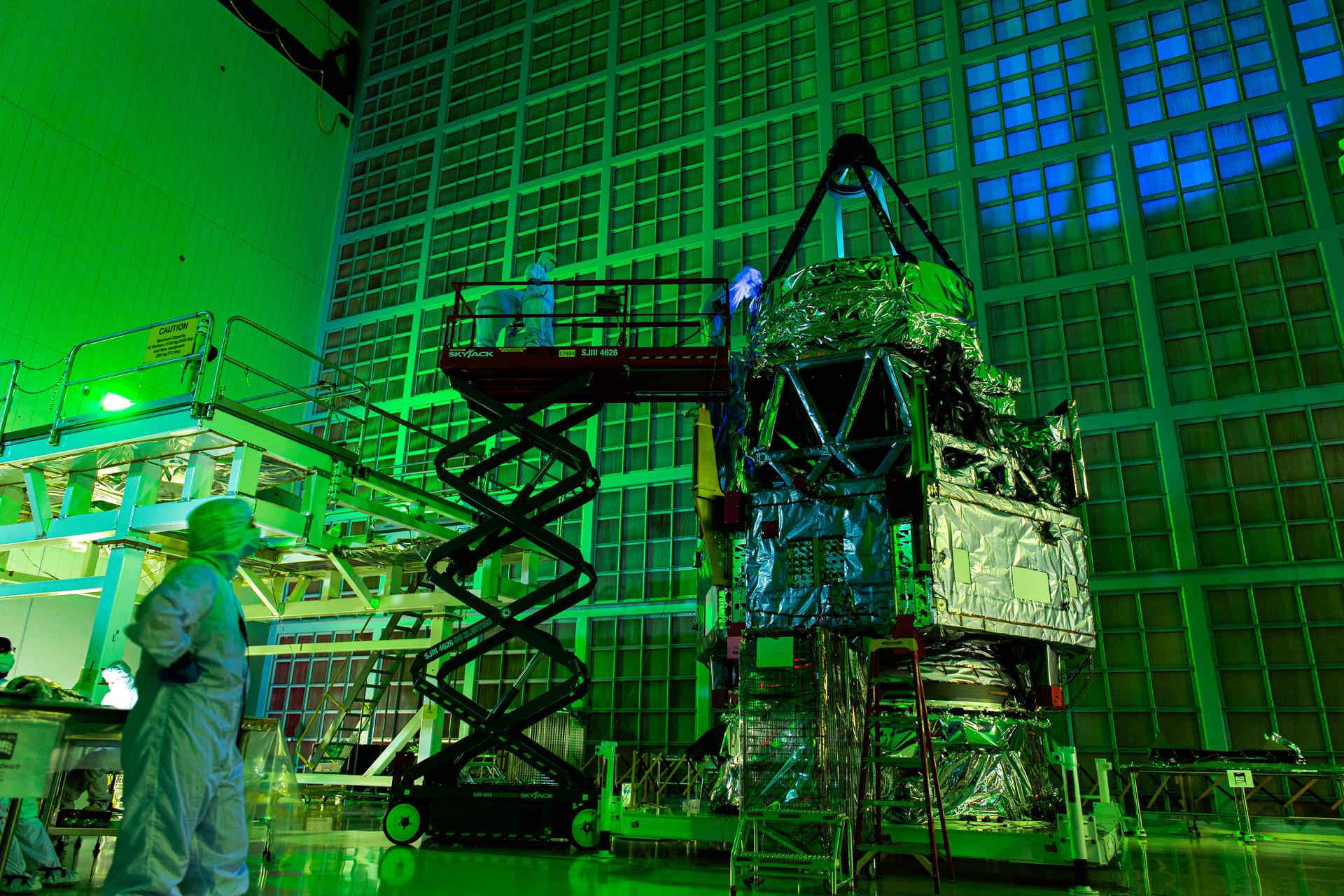
Roman Space Telescope team members inspect the primary mirror in the dark using flashlights and UV lights to help them see any contamination, inside the cleanroom at Goddard Space Flight Center, Greenbelt Md., July 2, 2025. The green glow of the room is due to a long exposure time, the green comes from a light on the left wall which indicates optimal airflow through the room. This photo has been approved for public release. NASA/Mike Guinto
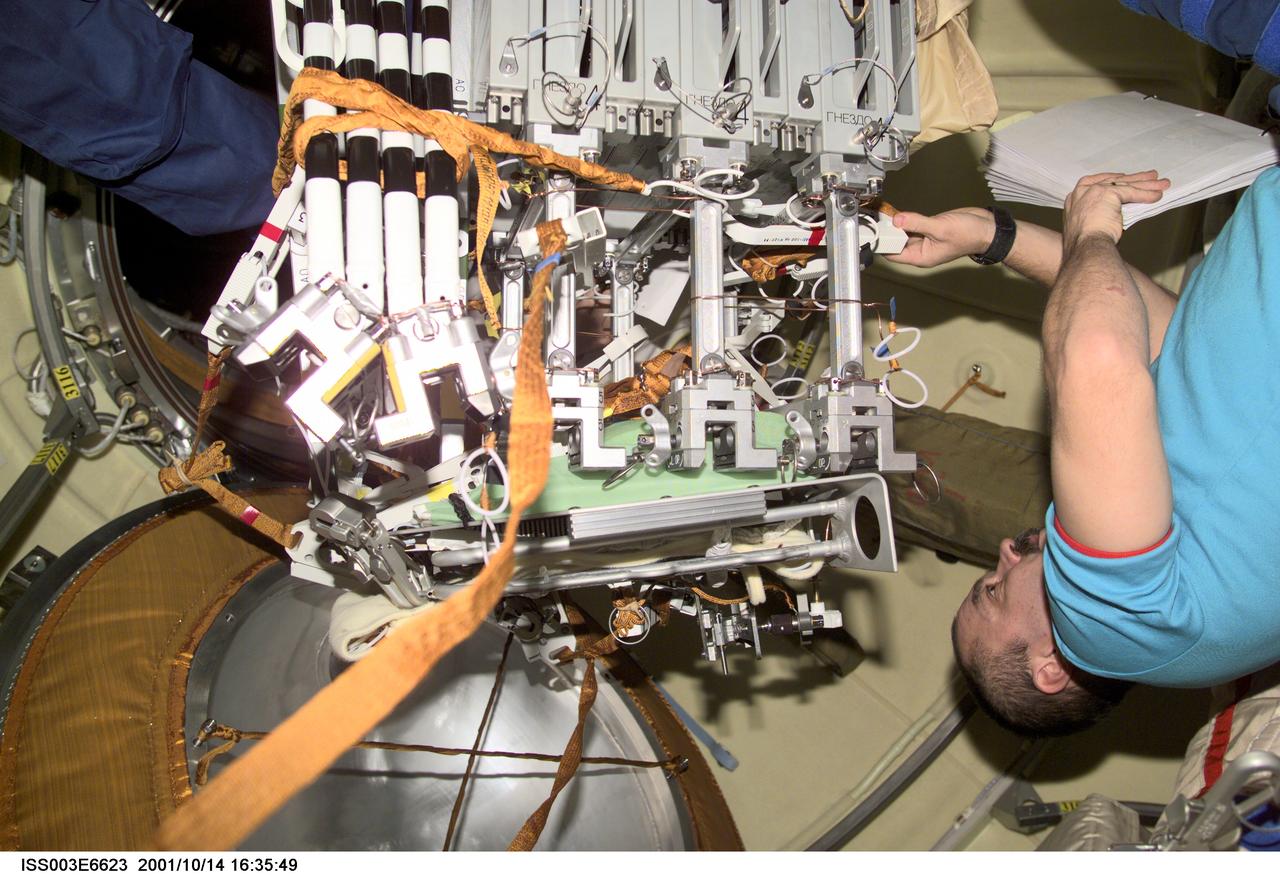
ISS003-E-6623 (14 October 2001) --- Cosmonaut Mikhail Tyurin, Expedition Three flight engineer representing Rosaviakosmos, works with hardware for the Micro-Particles Capturer (MPAC) and Space Environment Exposure Device (SEED) experiment and fixture mechanism in the Zvezda Service Module on the International Space Station (ISS). MPAC and SEED were developed by Japan’s National Space Development Agency (NASDA), and Russia developed the Fixture Mechanism. This image was taken with a digital still camera.
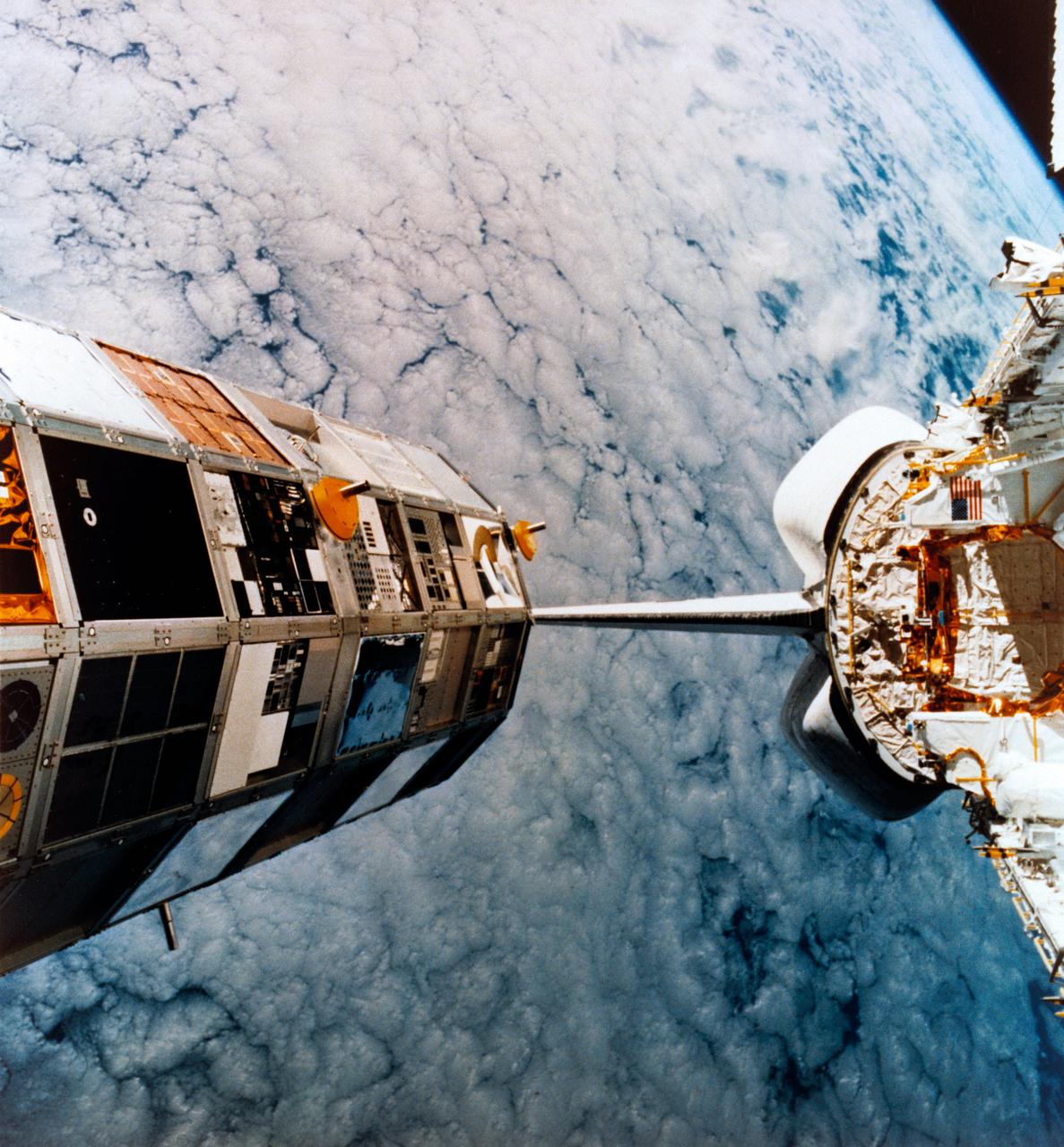
Photo from Space Shuttle Mission 41-C of the Long Duration Exposure Facility (LDEF) deploy by CHALLENGER and a Langley Research Center (LRC) supplied art concept of the LDEF recovery by COLUMBIA during Space Shuttle Mission STS-32. LRC # L-89-11-720 for JSC # S89-50779

ISS003-E-6547 (10 October 2001) --- Cosmonaut Mikhail Tyurin, Expedition Three flight engineer representing Rosaviakosmos, works with Japan’s National Space Development Agency (NASDA) hardware for the Micro-Particles Capturer (MPAC) and Space Environment Exposure Device (SEED) experiment in the Zvezda Service Module on the International Space Station (ISS). This image was taken with a digital still camera.
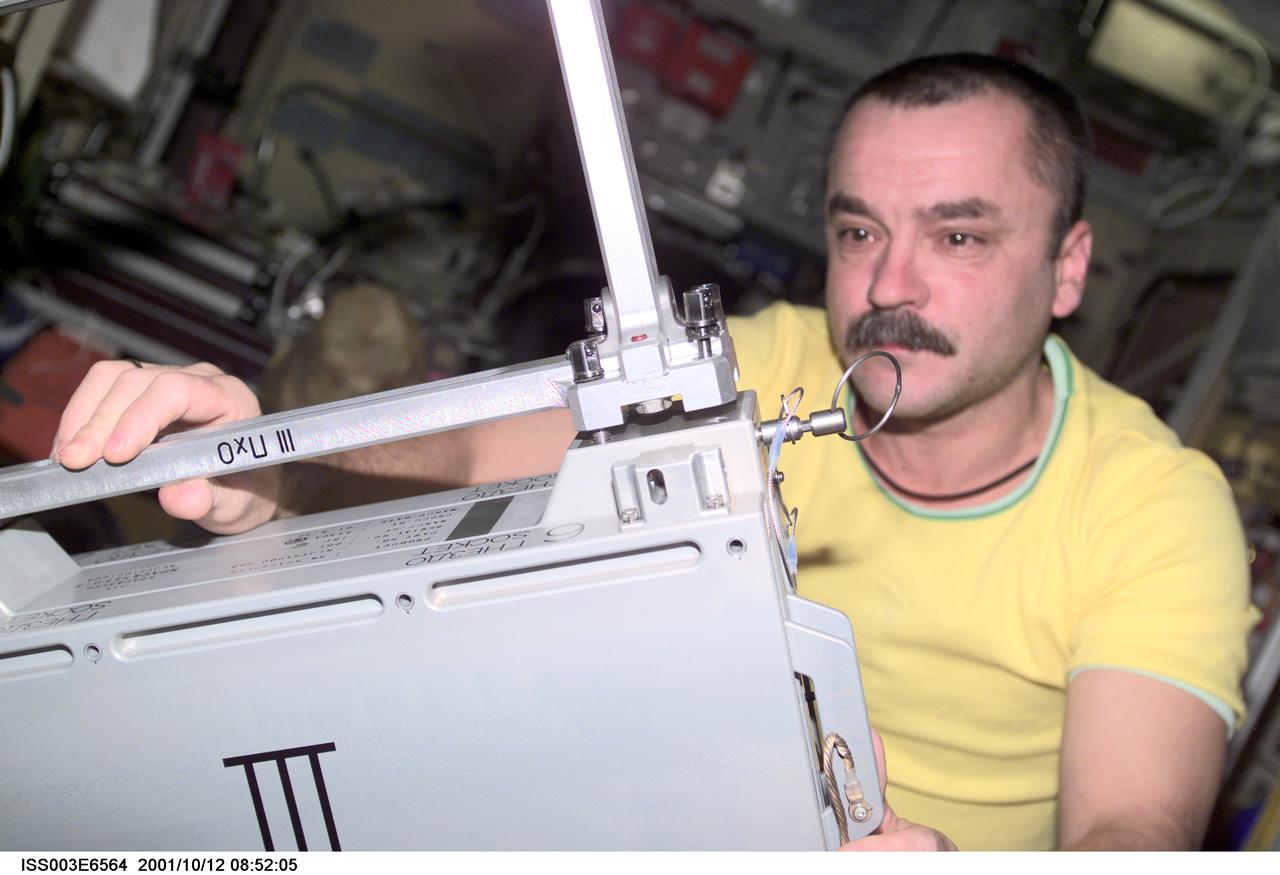
ISS003-E-6564 (12 October 2001) --- Cosmonaut Mikhail Tyurin, Expedition Three flight engineer representing Rosaviakosmos, works with Japan’s National Space Development Agency (NASDA) hardware for the Micro-Particles Capturer (MPAC) and Space Environment Exposure Device (SEED) experiment in the Zvezda Service Module on the International Space Station (ISS). This image was taken with a digital still camera.
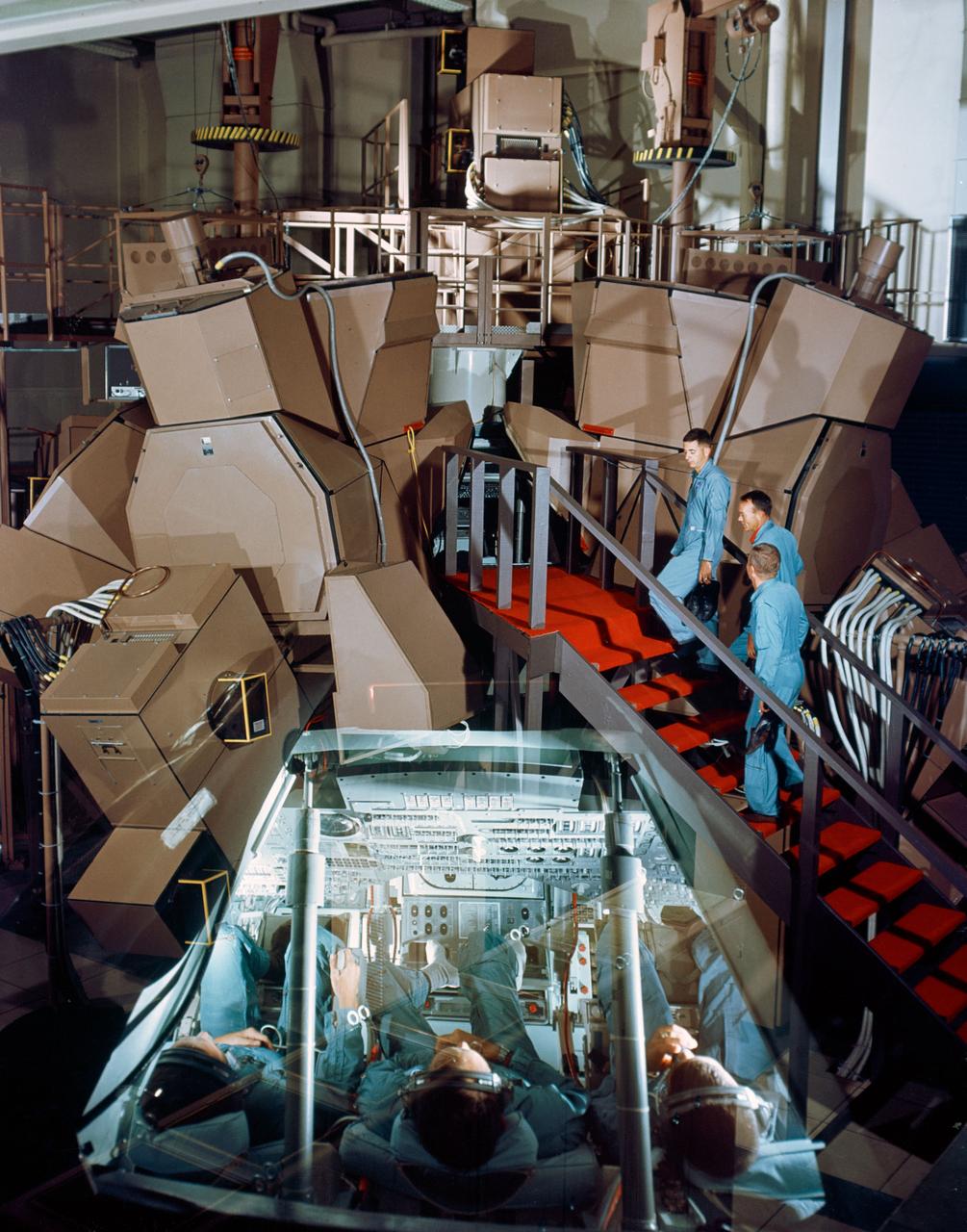
S67-50585 (1967) --- This is an intentional double exposure showing the Apollo Mission Simulator in the Mission Simulation and Training Facility, Building 5 at the Manned Spacecraft Center. In the exterior view astronauts William A. Anders, Michael Collins, and Frank Borman (reading from top of stairs) are about to enter the simulator. The interior view shows the three astronauts in the simulator. They are (left to right) Borman, Collins, and Anders. Photo credit: NASA
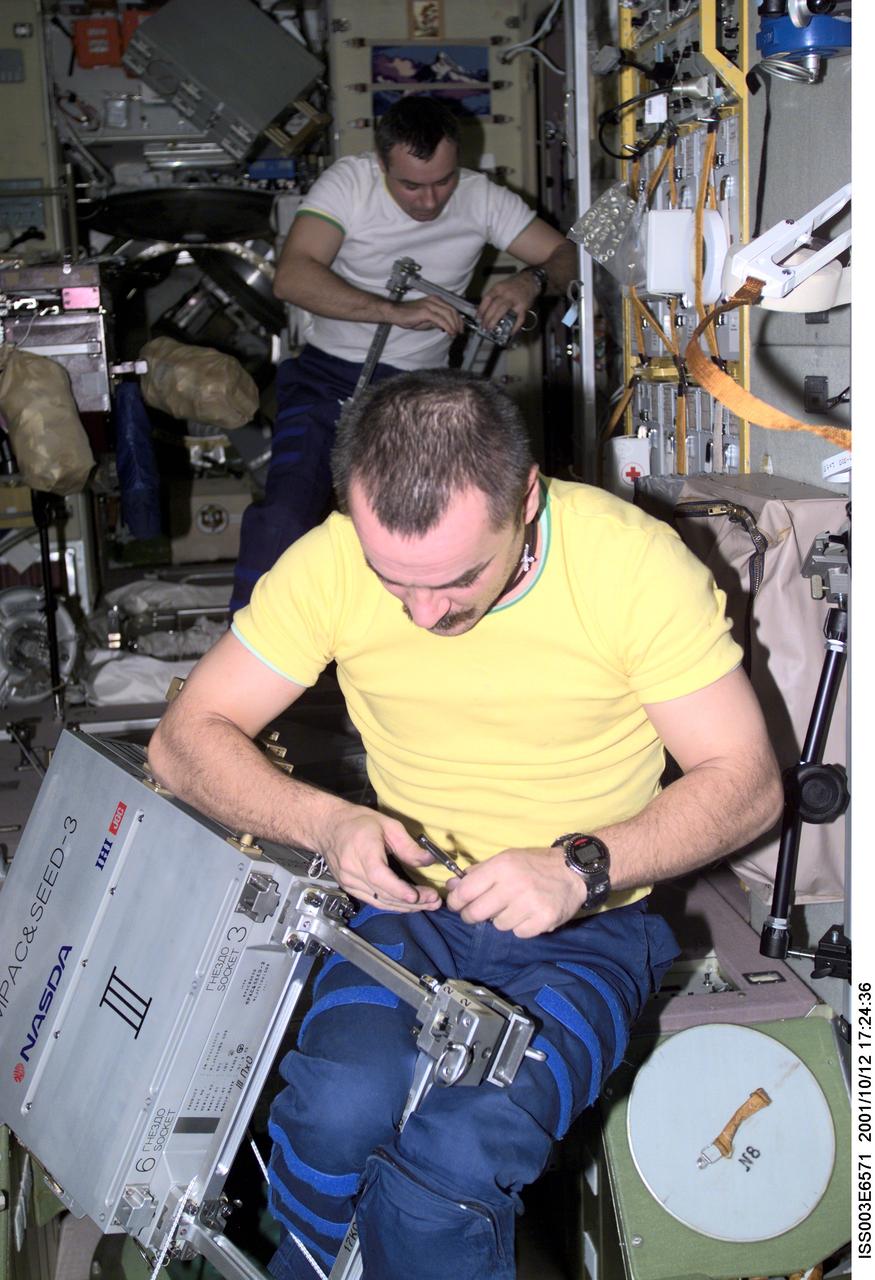
ISS003-E-6571 (12 October 2001) --- Cosmonauts Mikhail Tyurin (foreground) and Vladimir N. Dezhurov, both Expedition Three flight engineers, work with Japan’s National Space Development Agency (NASDA) hardware for the Micro-Particles Capturer (MPAC) and Space Environment Exposure Device (SEED) experiment in the Zvezda Service Module on the International Space Station (ISS). Tyurin and Dezhurov represent Rosaviakosmos. This image was taken with a digital still camera.
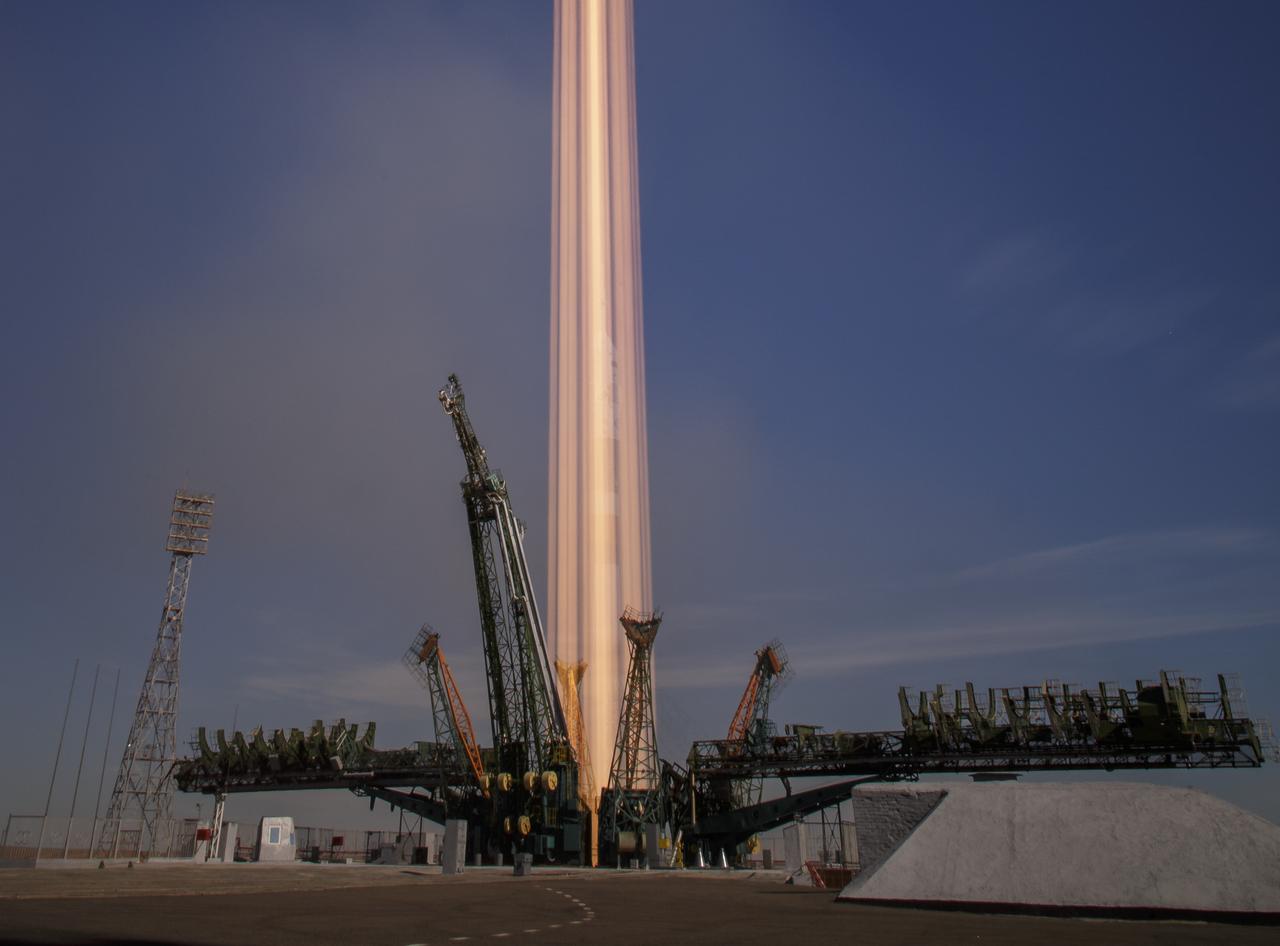
The Soyuz MS-10 spacecraft is seen in this long exposure photograph as it launched with Expedition 57 Flight Engineer Nick Hague of NASA and Flight Engineer Alexey Ovchinin of Roscosmos, Thursday, Oct. 11, 2018 at the Baikonur Cosmodrome in Kazakhstan. During the Soyuz spacecraft's climb to orbit, an anomaly occurred, resulting in an abort downrange. The crew was quickly recovered and is in good condition. Photo Credit: (NASA/Bill Ingalls)
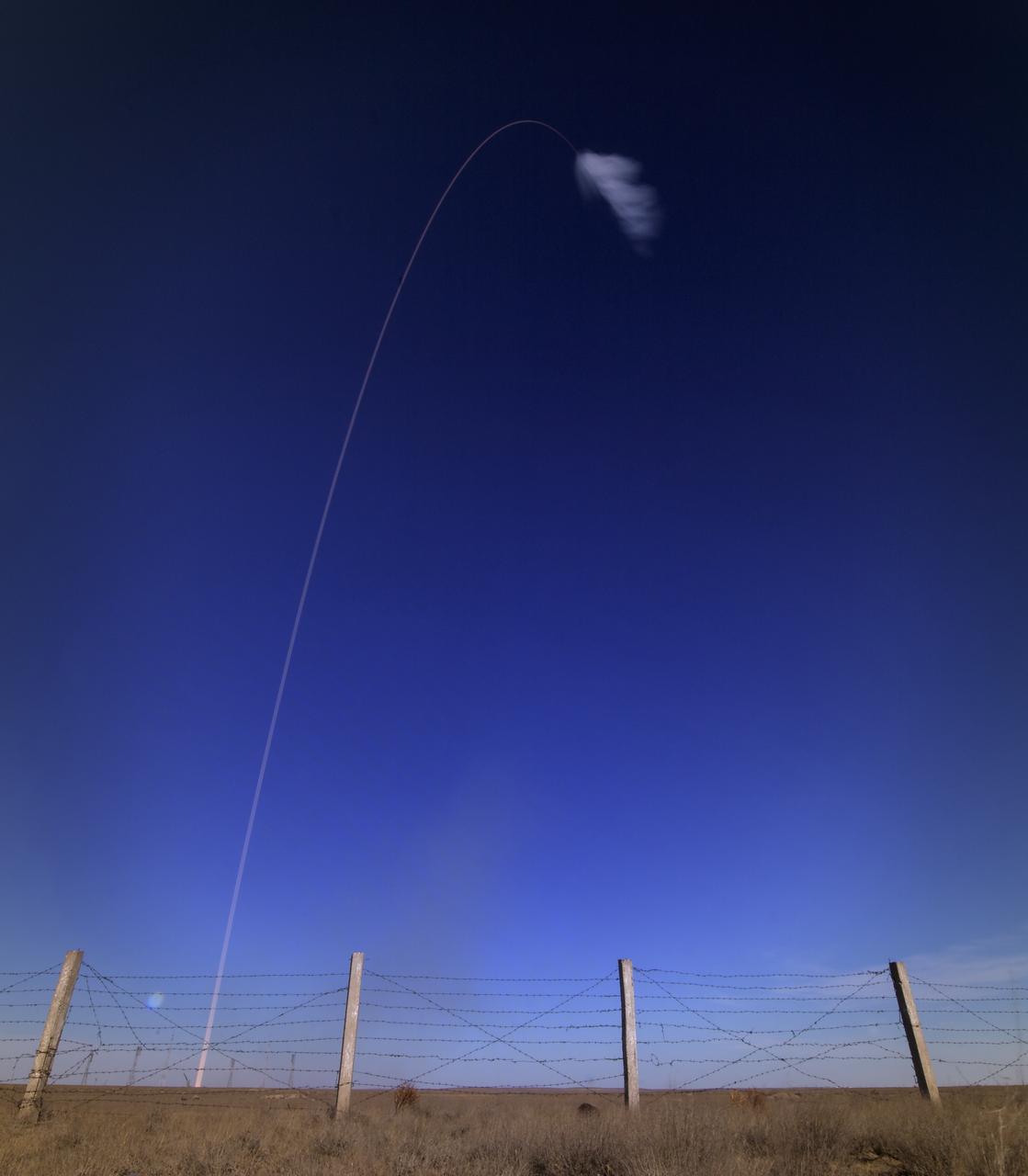
The Soyuz MS-10 spacecraft is seen in this long exposure photograph as it launched with Expedition 57 Flight Engineer Nick Hague of NASA and Flight Engineer Alexey Ovchinin of Roscosmos, Thursday, Oct. 11, 2018 at the Baikonur Cosmodrome in Kazakhstan. During the Soyuz spacecraft's climb to orbit, an anomaly occurred, resulting in an abort downrange. The crew was quickly recovered and is in good condition. Photo Credit: (NASA/Bill Ingalls)
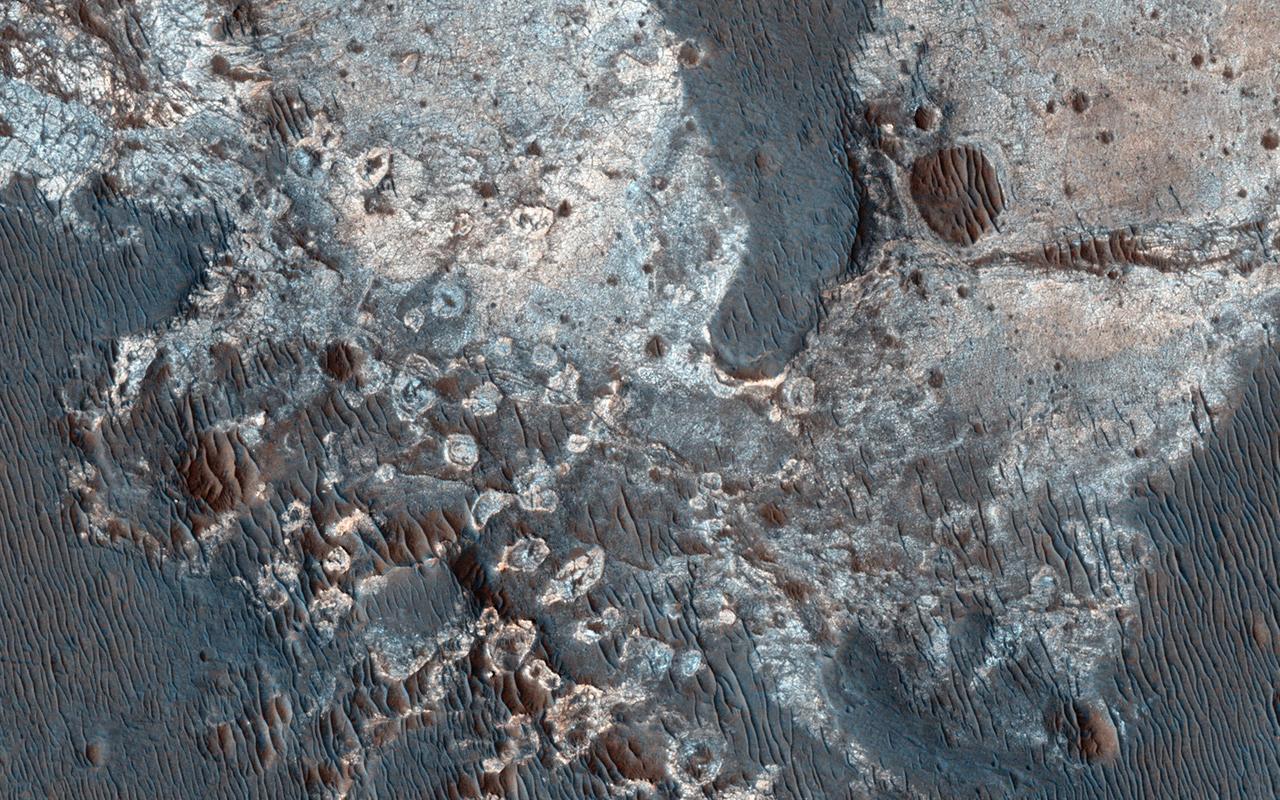
This image from NASA Mars Reconnaissance Orbiter shows exposures of deposits along the plateau just to the south of Coprates Chasma.
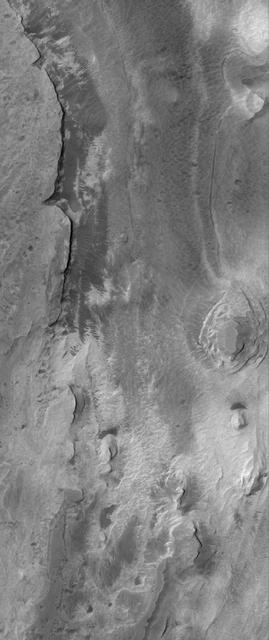
This MOC image shows layered, light-toned exposures of probable sedimentary rock in Iani Chaos
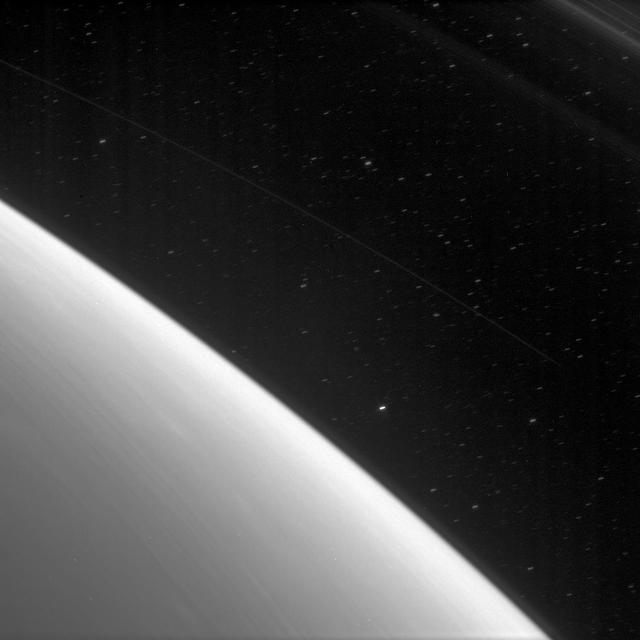
Stars trail across the background during this exposure, timed to capture the faint light from these D ring features
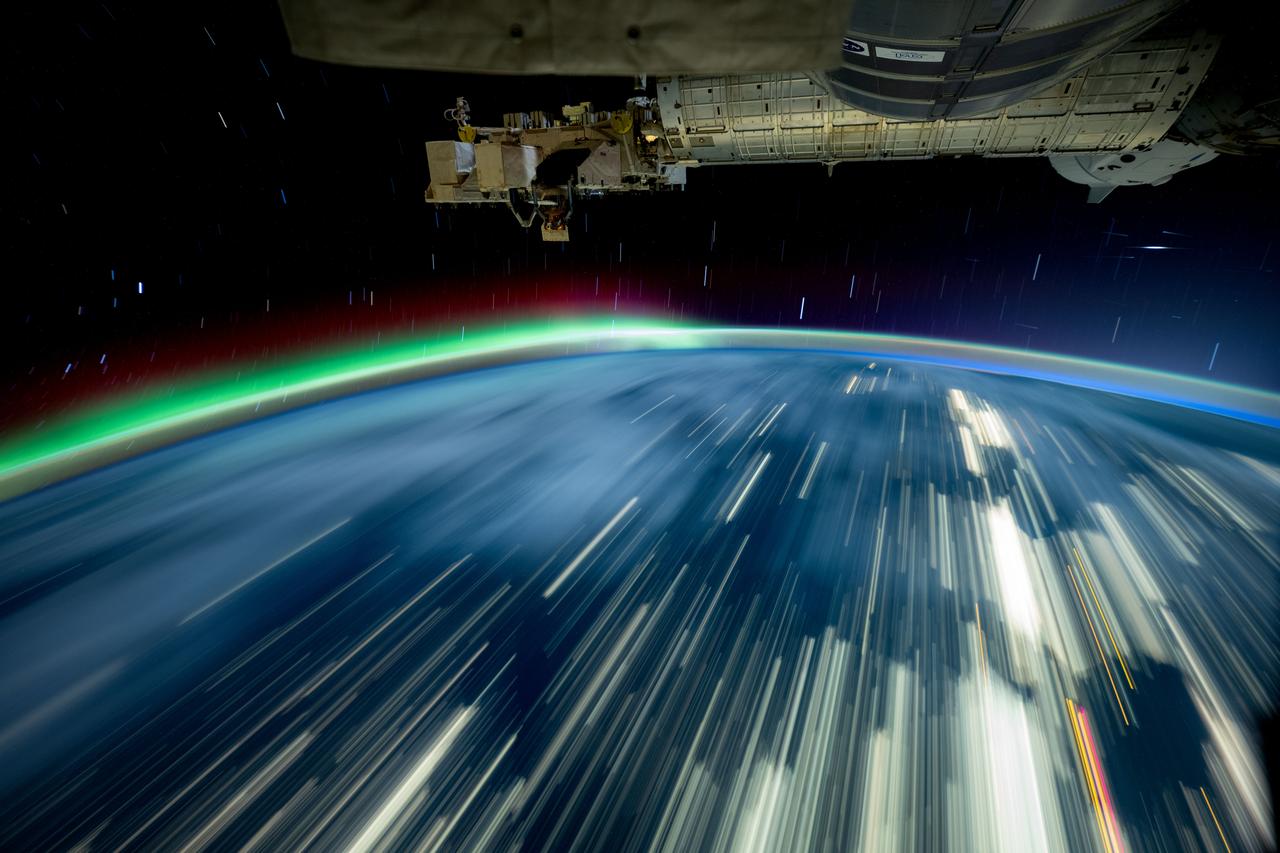
iss072e097446 (Oct. 24, 2024) -- As the International Space Station soared 257 miles above Lake Michigan, NASA astronaut and Expedition 72 Flight Engineer Don Pettit captured this long-exposure photograph of city lights streaking across Earth while a green and red aurora moved through the atmosphere.
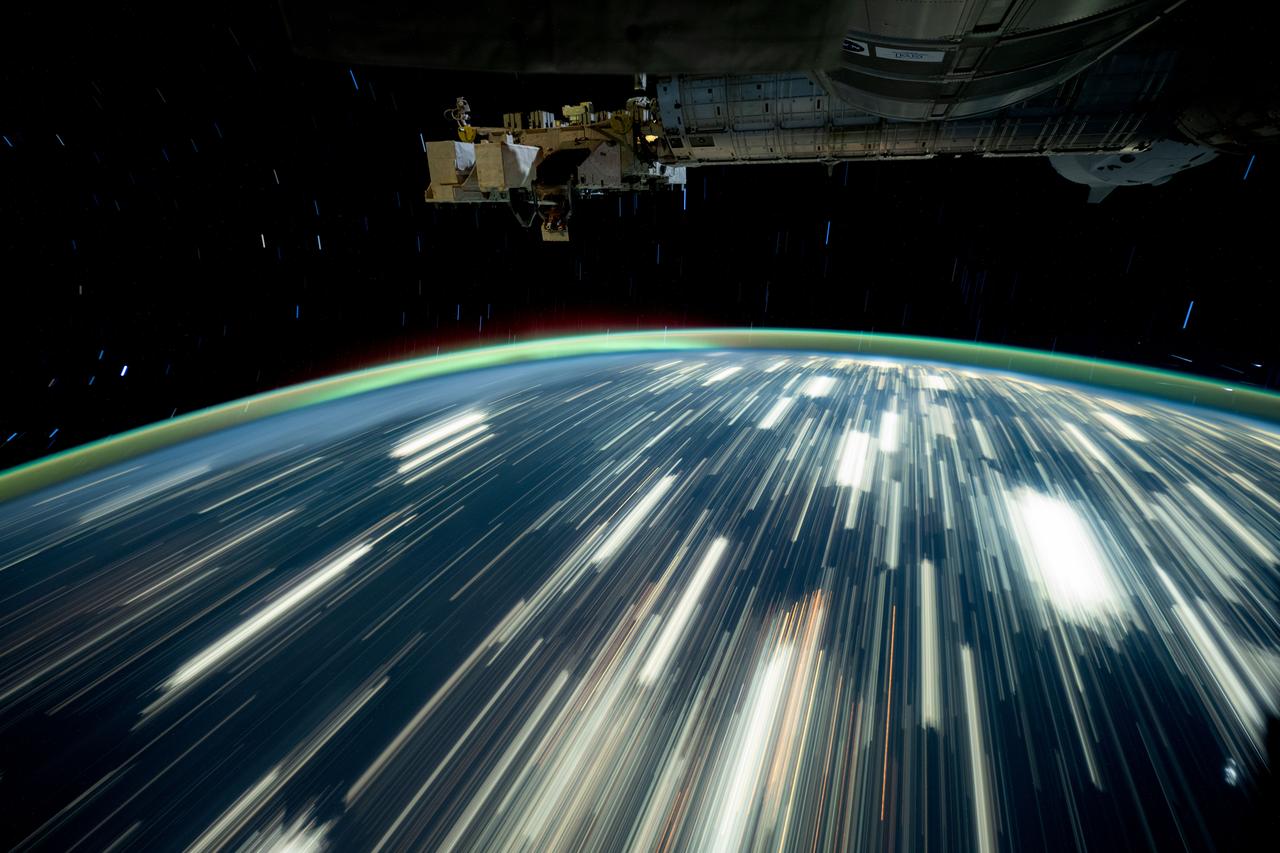
iss072e097437 (Oct. 24, 2024) -- As the International Space Station soared 257 miles above northern Mexico, NASA astronaut and Expedition 72 Flight Engineer Don Pettit captured this long-exposure photograph of city lights streaking across Earth while a green atmospheric glow crowned the horizon.
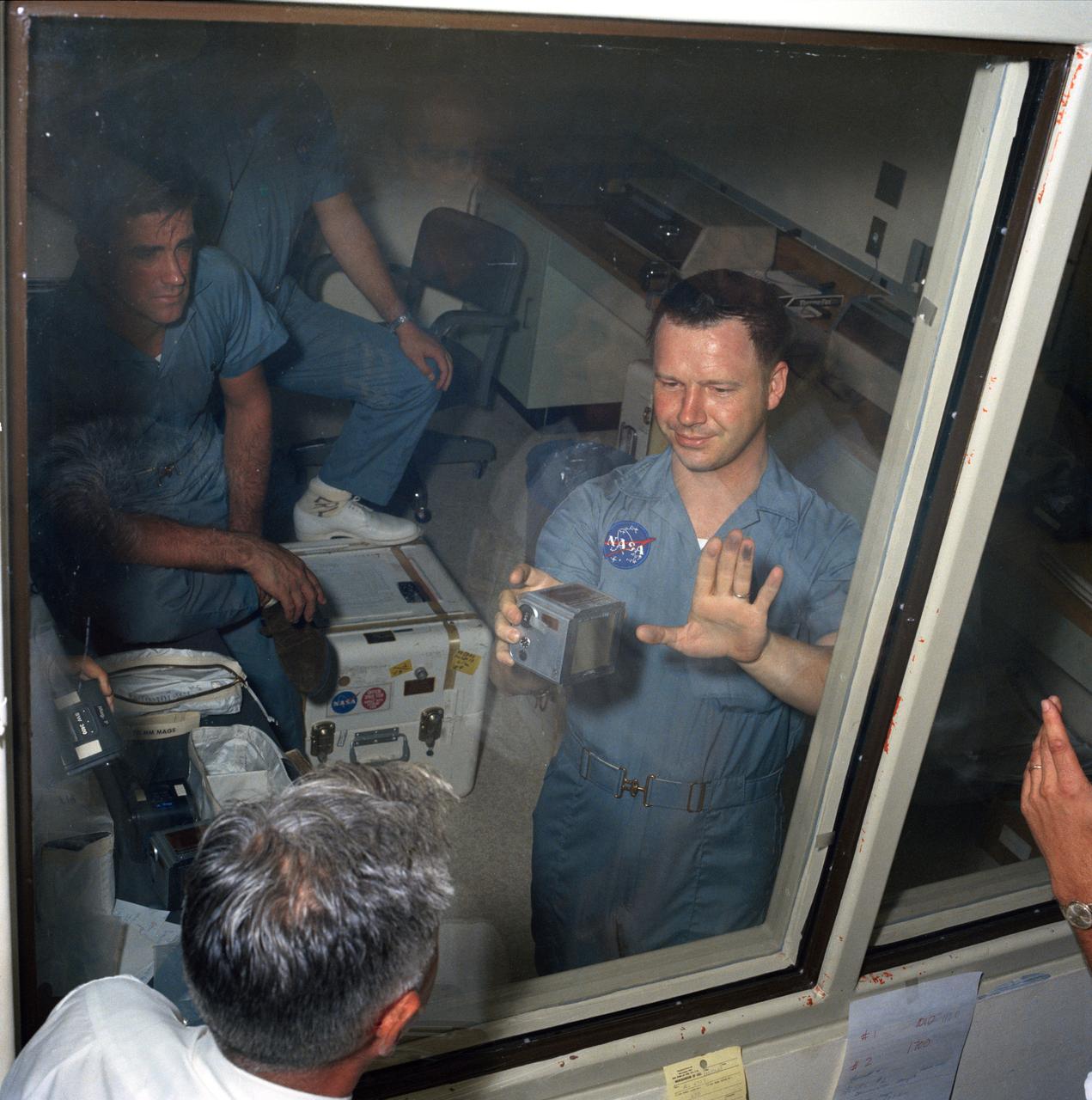
The first direct exposure to Lunar material for Crew Reception Personnel probably happened late Friday, 07/25/1969. Terry Slezak (displaying Moon dust on his left hand fingers), MSC photographic technician, was removing film magazines from the first of two (2) containers when the incident occurred. As he removed the plastic seal from Magazine "S", one of the 70mm magazines taken during Apollo XI Extravehicular Activity (EVA), it was apparent that the exterior of the cassette displayed traces of a black powdery substance. Apollo XI Commander Neil Armstrong reported during the mission that he had retrieved a 70mm cassette which had dropped to the Lunar surface. Seen in the backgound is John H. Boynton. ( S69-40054 ) MSC, Houston, TX
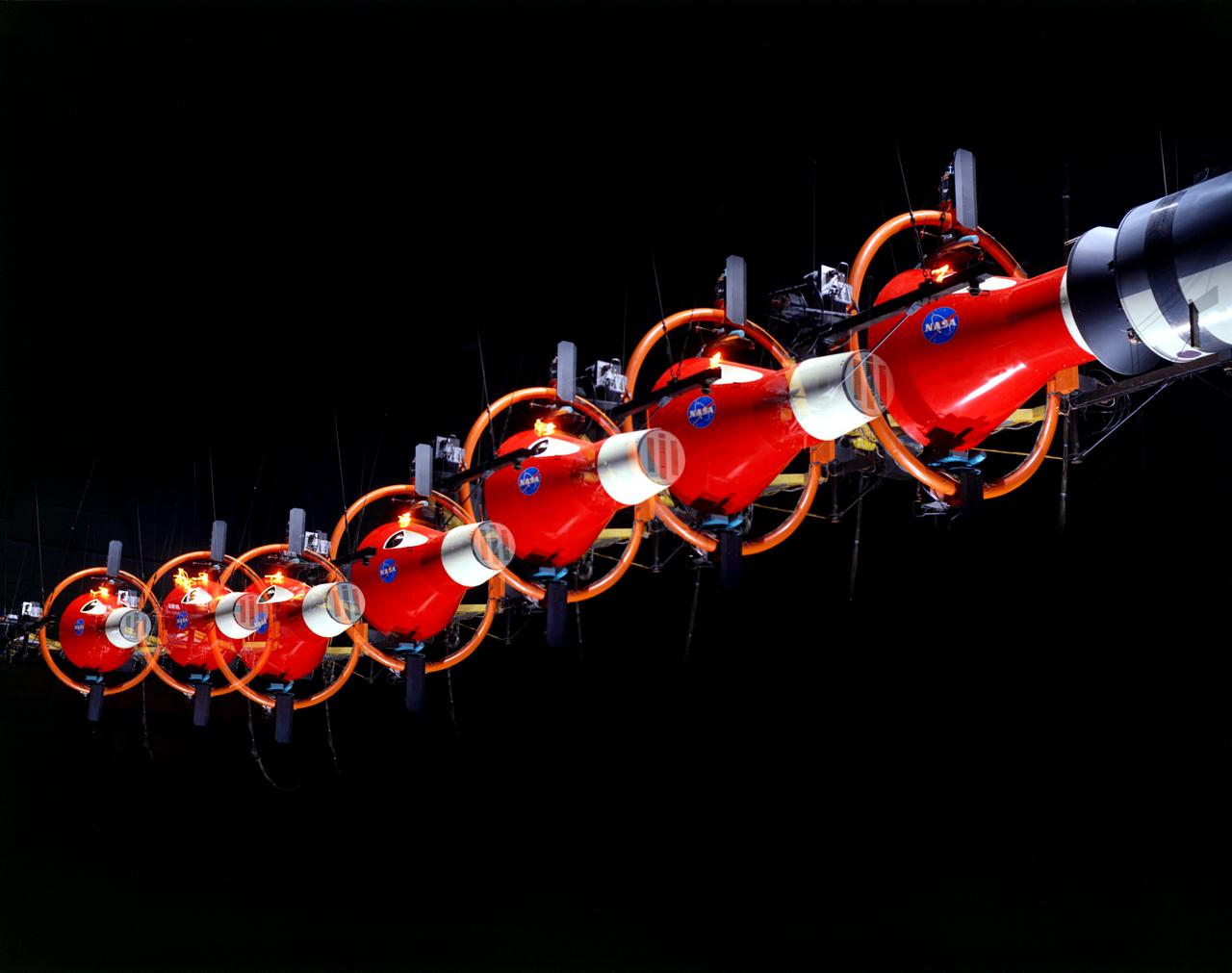
Multiple exposure of Rendezvous Docking Simulator. Francis B. Smith, described the simulator as follows: The rendezvous and docking operation of the Gemini spacecraft with the Agena and of the Apollo Command Module with the Lunar Excursion Module have been the subject of simulator studies for several years. This figure illustrates the Gemini-Agena rendezvous docking simulator at Langley. The Gemini spacecraft was supported in a gimbal system by an overhead crane and gantry arrangement which provided 6 degrees of freedom - roll, pitch, yaw, and translation in any direction - all controllable by the astronaut in the spacecraft. Here again the controls fed into a computer which in turn provided an input to the servos driving the spacecraft so that it responded to control motions in a manner which accurately simulated the Gemini spacecraft. -- Published in Barton C. Hacker and James M. Grimwood, On the Shoulders of Titans: A History of Project Gemini, NASA SP-4203 Francis B. Smith, Simulators for Manned Space Research, Paper presented at the 1966 IEEE International convention, March 21-25, 1966.
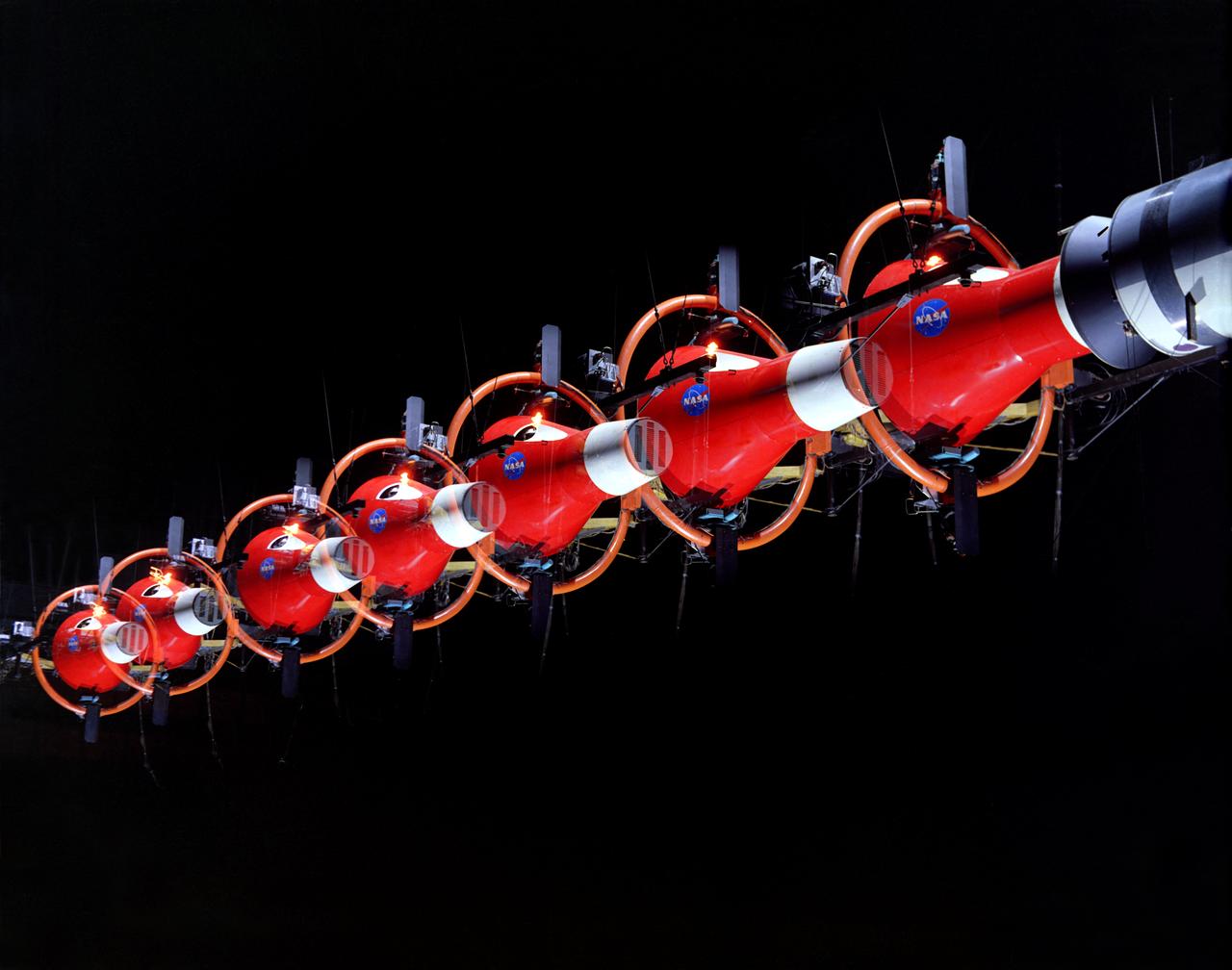
Multiple exposure of Rendezvous Docking Simulator. Francis B. Smith, described the simulator as follows: The rendezvous and docking operation of the Gemini spacecraft with the Agena and of the Apollo Command Module with the Lunar Excursion Module have been the subject of simulator studies for several years. This figure illustrates the Gemini-Agena rendezvous docking simulator at Langley. The Gemini spacecraft was supported in a gimbal system by an overhead crane and gantry arrangement which provided 6 degrees of freedom - roll, pitch, yaw, and translation in any direction - all controllable by the astronaut in the spacecraft. Here again the controls fed into a computer which in turn provided an input to the servos driving the spacecraft so that it responded to control motions in a manner which accurately simulated the Gemini spacecraft. -- Published in Barton C. Hacker and James M. Grimwood, On the Shoulders of Titans: A History of Project Gemini, NASA SP-4203 Francis B. Smith, Simulators for Manned Space Research, Paper presented at the 1966 IEEE International convention, March 21-25, 1966.
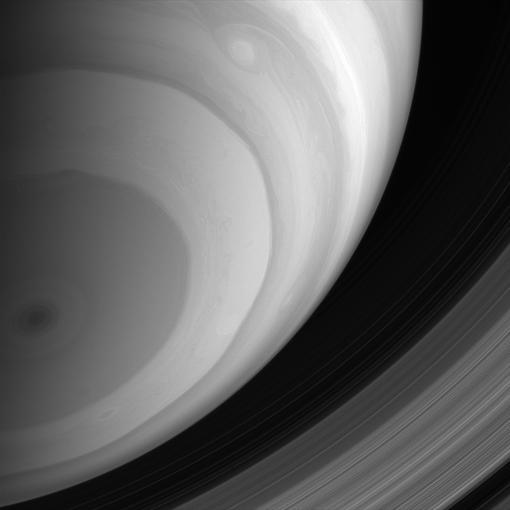
The Cassini spacecraft captures a spectacular view of Saturn banded southern hemisphere and dark central polar storm, while its dazzling rings lie far beyond the horizon
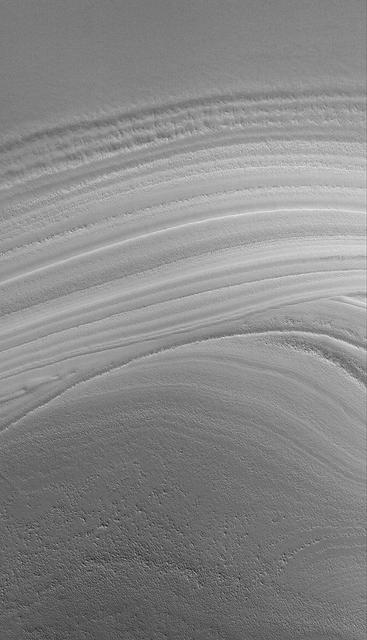
This MOC image shows an unconformity in a sequence of layered material in the martian north polar region created by erosion
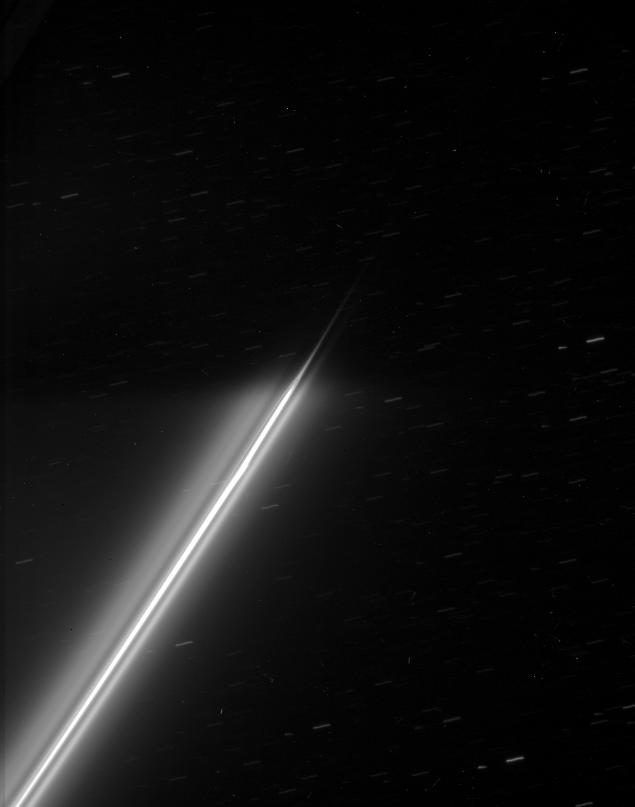
The strands of Saturn F ring disappear into the darkness of the planet shadow. Background stars make trails across the sky during the long exposure
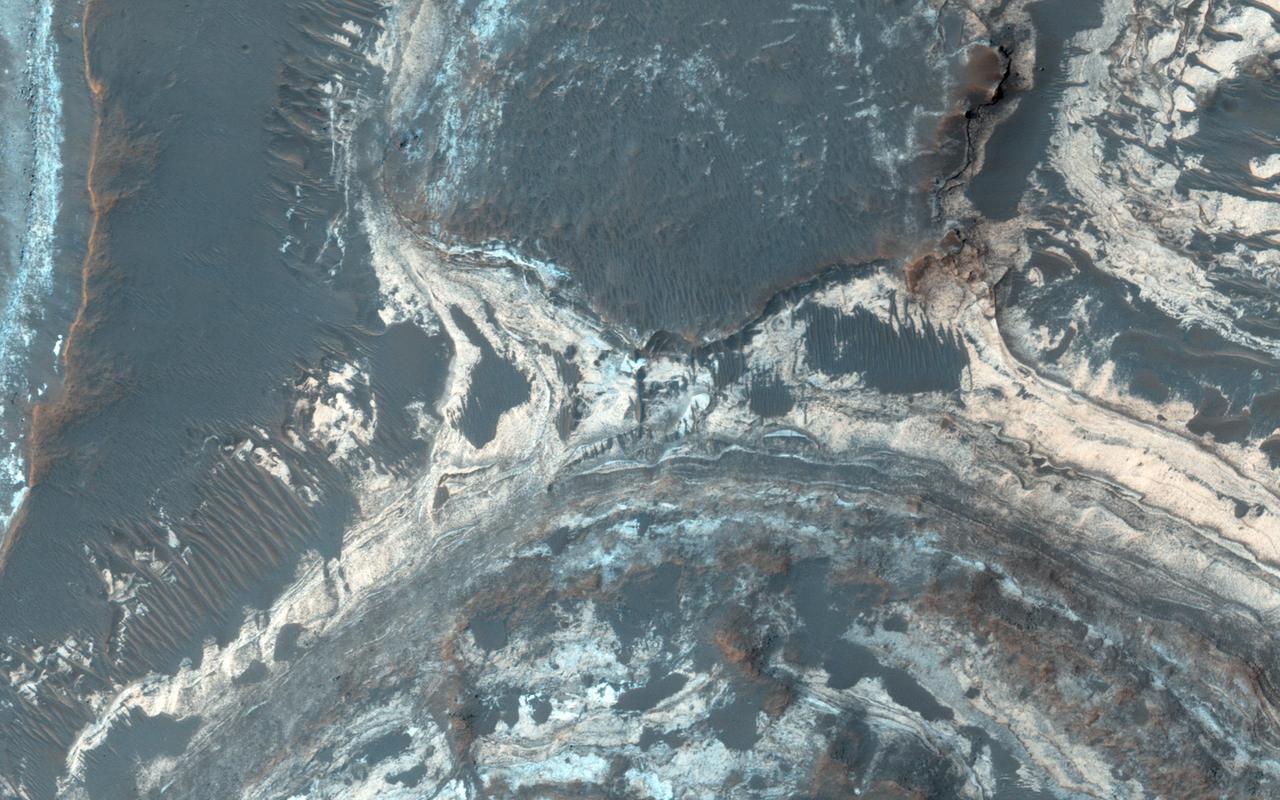
Excellent exposures of light-toned layered deposits occur along the northern edge of Hellas Basin as seen by NASA Mars Reconnaissance Orbiter.
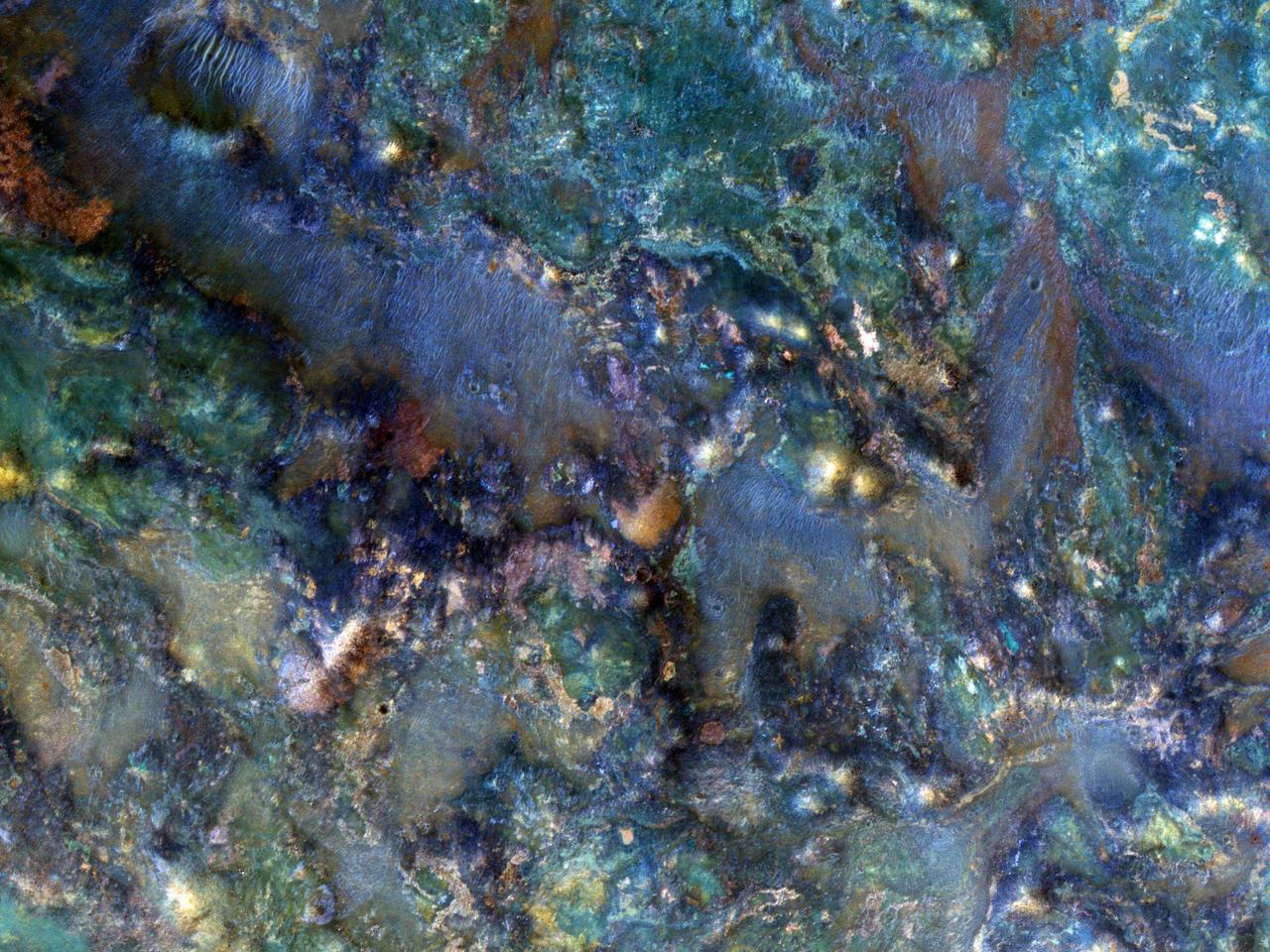
This image from NASA Mars Reconnaissance Orbiter covers a region of Mars near Nili Fossae that contains some of the best exposures of ancient bedrock on Mars.
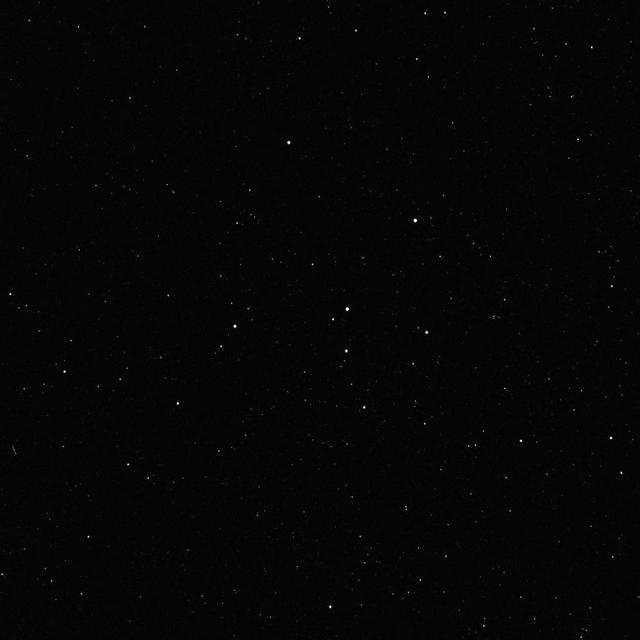
A star field in the constellation Cepheus is a composite of two 600-second exposures by the Framing Camera acquired during tests on December 3, 2007.
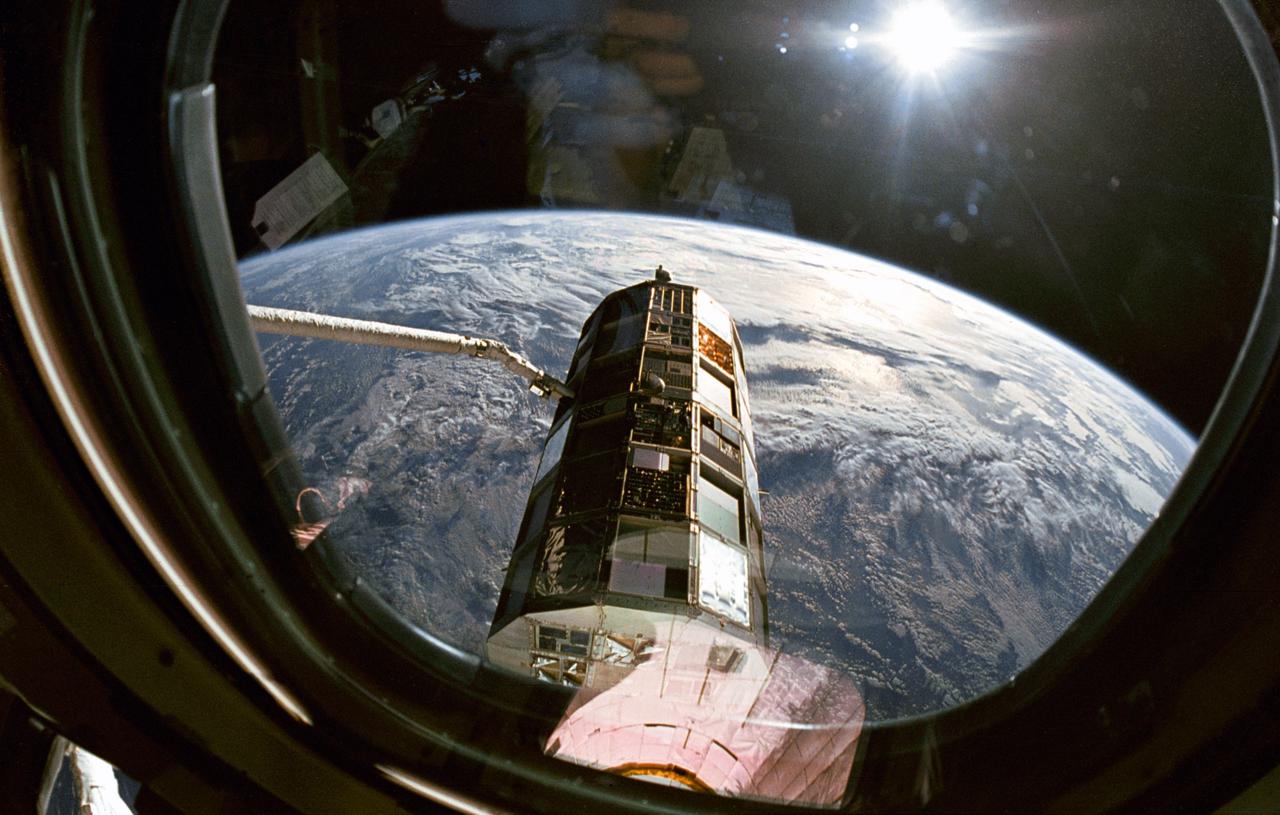
This view taken through overhead window W7 on Columbia's, Orbiter Vehicle (OV) 102's, aft flight deck shows the Long Duration Exposure Facility (LDEF) in the grasp of the remote manipulator system (RMS) during STS-32 retrieval activities. Other cameras at eye level were documenting the bus-sized spacecraft at various angles as the RMS manipulated LDEF for a lengthy photo survey. The glaring celestial body in the upper left is the sun with the Earth's surface visible below.
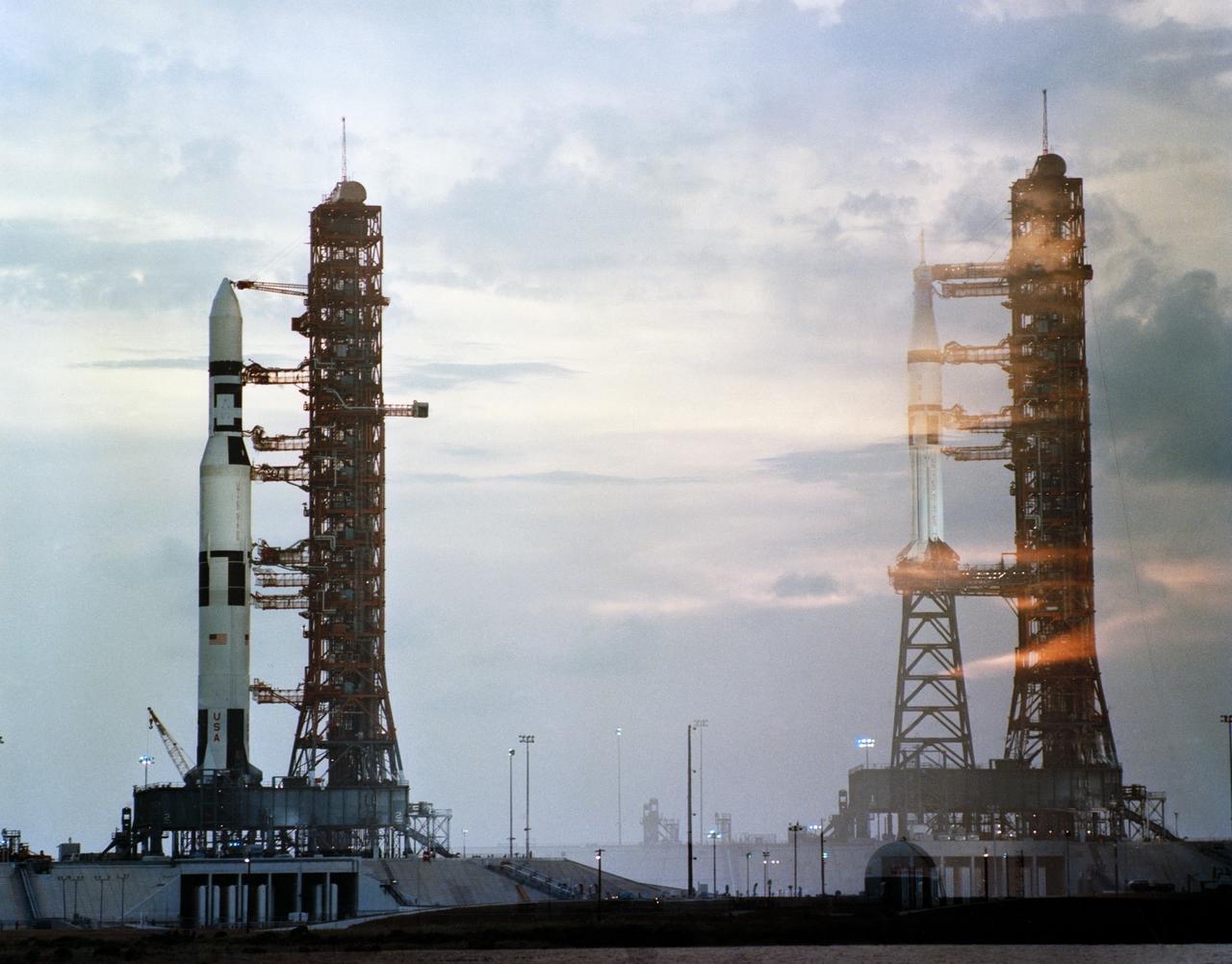
S73-25654 (7 May 1973) --- A deliberate double exposure to help illustrate the comparative sizes and configurations of the Skylab 1 and Skylab 2 space vehicles at Launch Complex 39, Kennedy Space Center, Florida. The double exposure creates an illusion that the rockets are side by side, though actually they are one and a half miles apart. The Skylab 1/ Saturn 1B space vehicle on Pad A is on the left. On the right is the Skylab 2/ Saturn 1B space vehicle on Pad B. The Skylab 1 payload is the space station cluster. The Skylab 2 payload will be an Apollo Command/Service Module (CSM) with astronauts Charles Conrad Jr., Joseph P. Kerwin and Paul J. Weitz aboard. The Saturn V launch vehicle is composed of a Saturn V first (S-1C) stage, a Saturn V second (S-11) stage, and the Skylab payload. The Saturn 1B launch vehicle consists of a Saturn 1B first (S-1B) stage, a Saturn 1B second (S-1VB) stage, and the CSM payload including its launch escape system. Photo credit: NASA
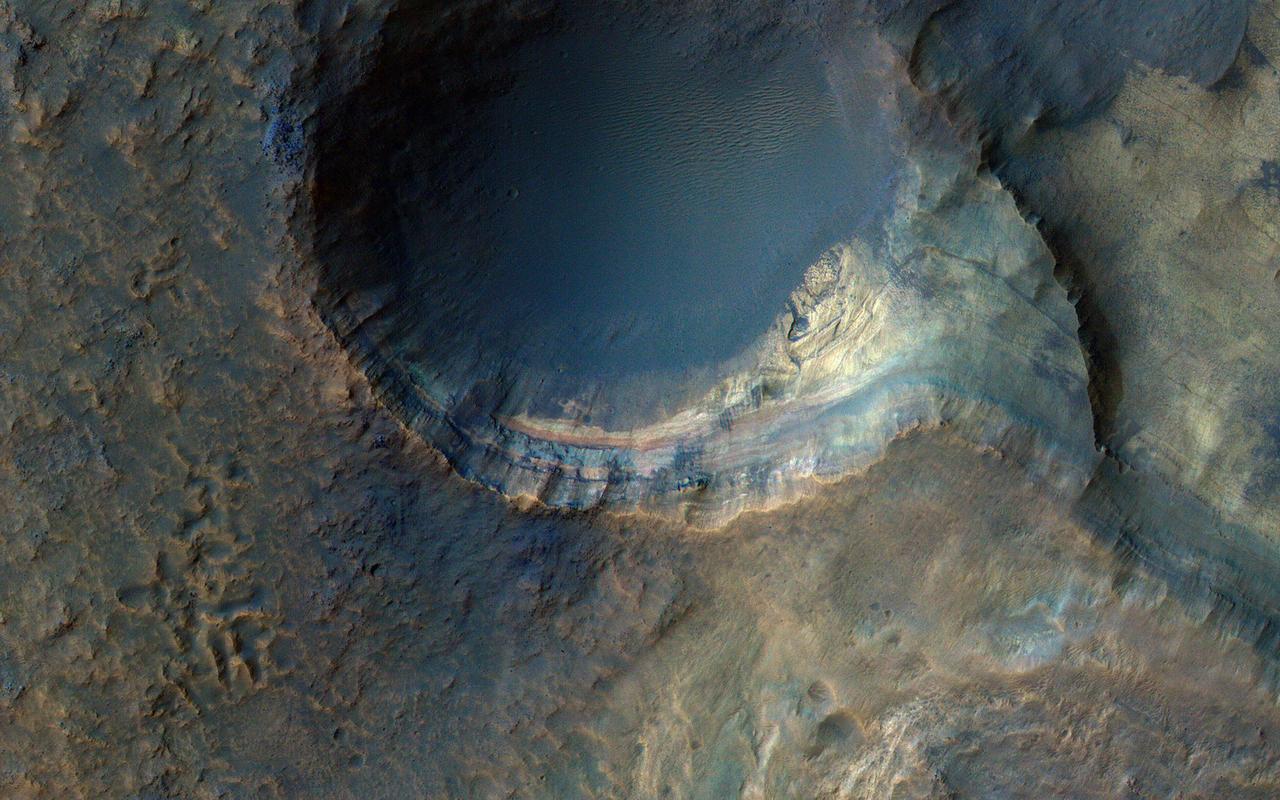
The sedimentary history of Mars is important to understanding climate change and the evolution of Mars. Sedimentary rocks consist of fine particles carried by the atmosphere and/or water and deposited in generally flat-lying layers, which become indurated (turn into rock) over time. This image covers some steep slopes with good exposures of the bedrock layers, revealing diverse color and textures. A detailed study of many such exposures along with compositional data can be used to reconstruct the sequence of events and interpret the geologic history. https://photojournal.jpl.nasa.gov/catalog/PIA25354
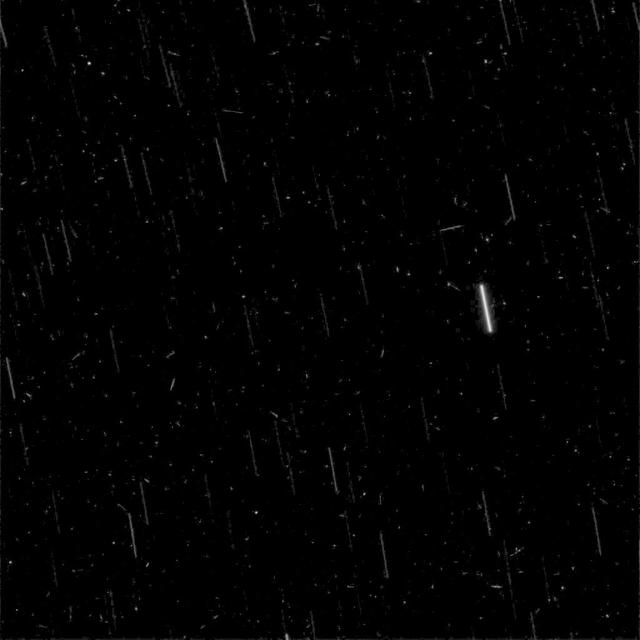
In this five-minute exposure taken from the surface of Mars by NASA Spirit rover, stars appear as streaks due to the rotation of the planet, and instantaneous cosmic-ray hits appear as points of light. Spirit took the image with its panoramic camera on March 11, 2004, after waking up during the martian night for a communication session with NASA's Mars Global Surveyor orbiter. Other exposures were also taken. The images tested the capabilities of the rover for night-sky observations. Scientists will use the results to aid planning for possible future astronomical observations from Mars. The difference in Mars' rotation, compared to Earth's, gives the star trails in this image a different orientation than they would have in a comparable exposure taken from Earth. http://photojournal.jpl.nasa.gov/catalog/PIA05551
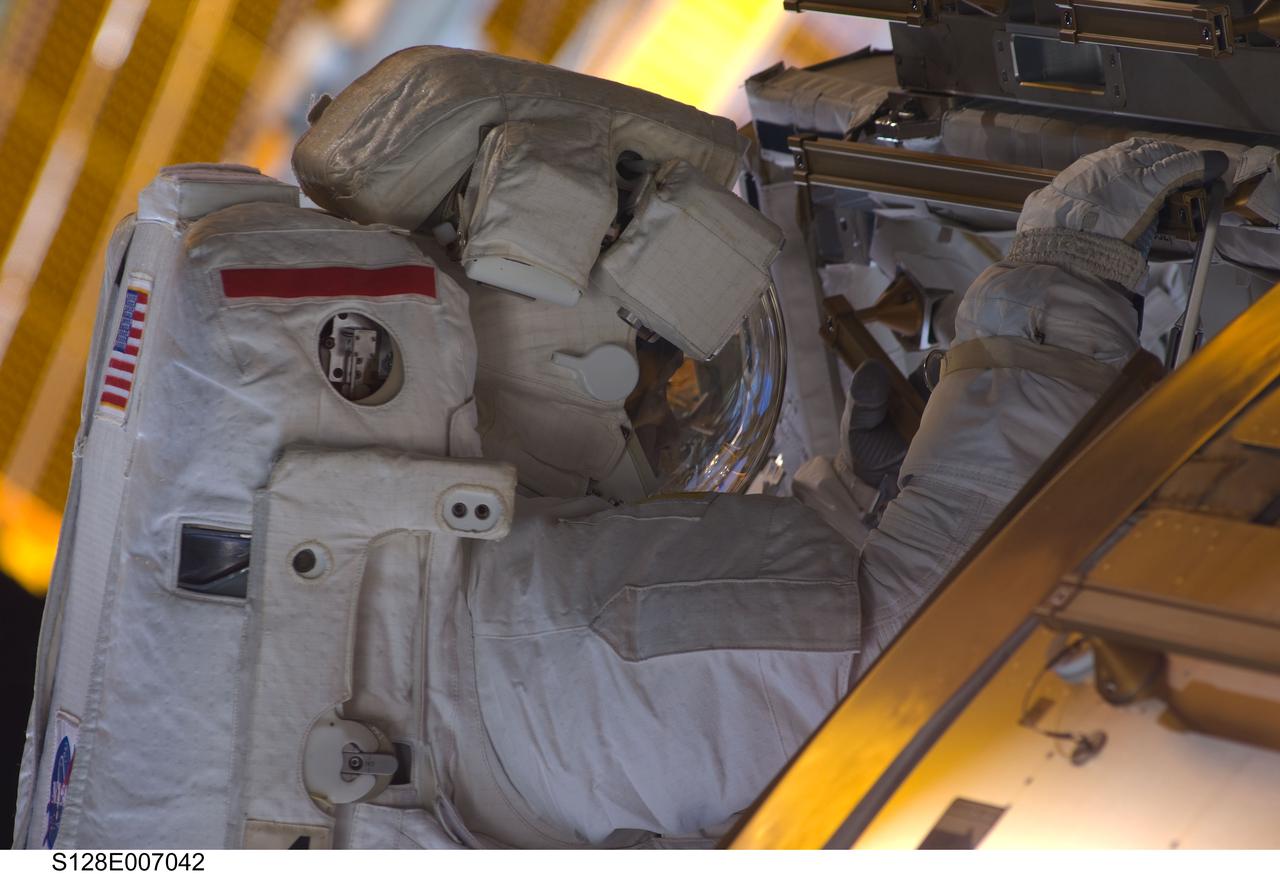
S128-E-007042 (1 Sept. 2009) --- Astronaut John “Danny” Olivas, STS-128 mission specialist, participates in the mission's first session of extravehicular activity (EVA) as construction and maintenance continue on the International Space Station. During the six-hour, 35-minute spacewalk, Olivas and astronaut Nicole Stott (out of frame), mission specialist, removed an empty ammonia tank from the station’s truss and temporarily stowed it on the station’s robotic arm. Olivas and Stott also retrieved the European Technology Exposure Facility (EuTEF) and Materials International Space Station Experiment (MISSE) from the Columbus laboratory module and installed them on Discovery’s payload bay for return.
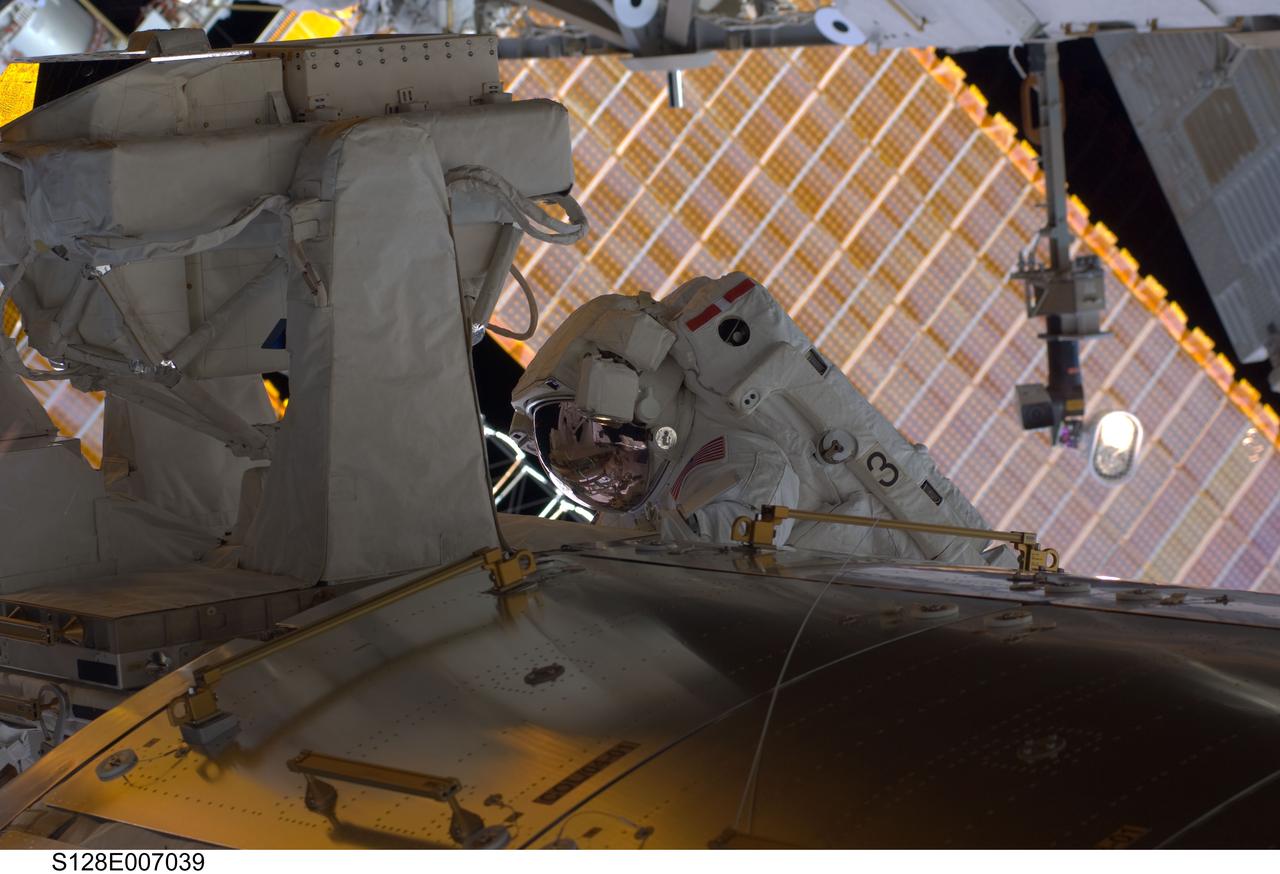
S128-E-007039 (1 Sept. 2009) --- Astronaut Nicole Stott, Expedition 20 flight engineer, participates in the STS-128 mission's first session of extravehicular activity (EVA) as construction and maintenance continue on the International Space Station. During the six-hour, 35-minute spacewalk, Stott and astronaut John “Danny” Olivas (out of frame), mission specialist, removed an empty ammonia tank from the station’s truss and temporarily stowed it on the station’s robotic arm. Olivas and Stott also retrieved the European Technology Exposure Facility (EuTEF) and Materials International Space Station Experiment (MISSE) from the Columbus laboratory module and installed them on Discovery’s payload bay for return.
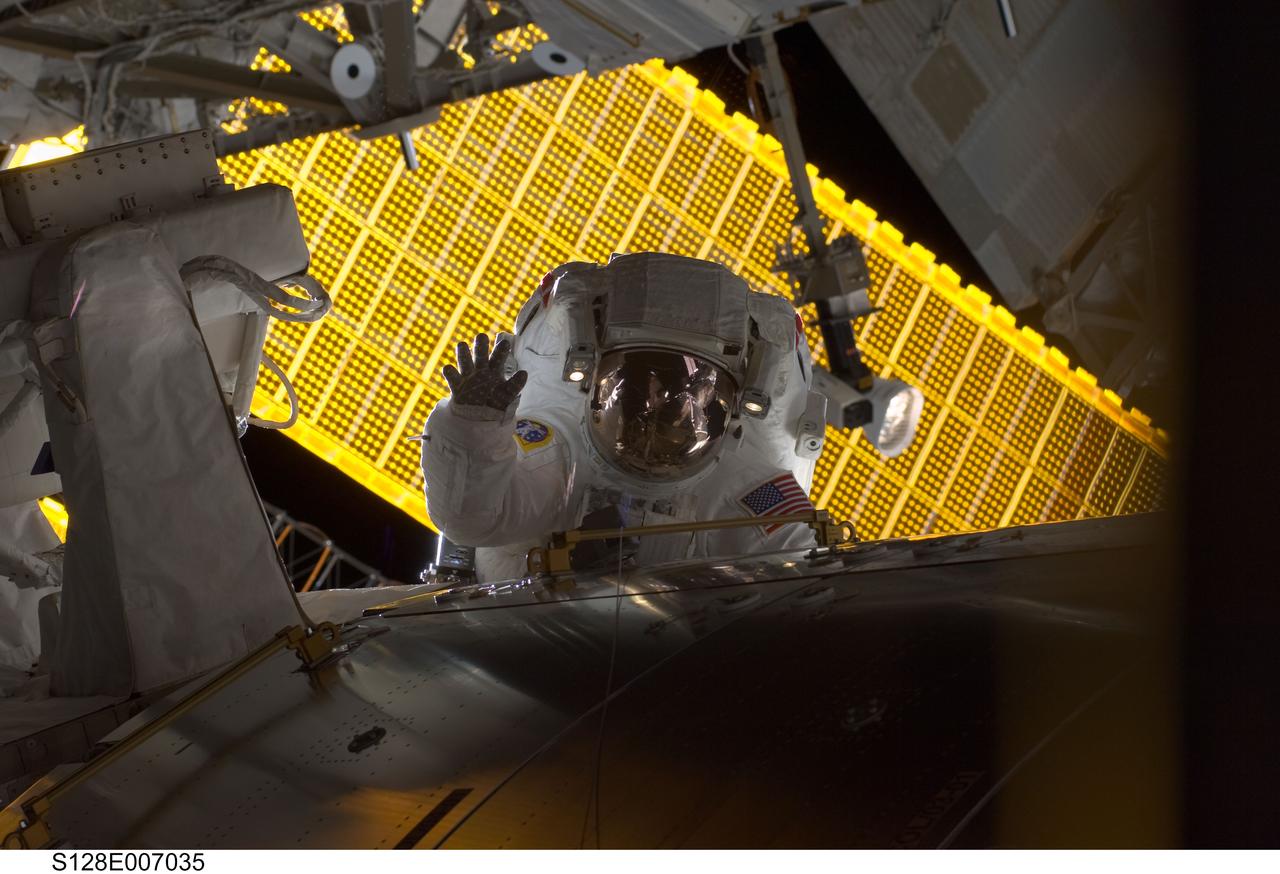
S128-E-007035 (1 Sept. 2009) --- Astronaut Nicole Stott, Expedition 20 flight engineer, participates in the STS-128 mission's first session of extravehicular activity (EVA) as construction and maintenance continue on the International Space Station. During the six-hour, 35-minute spacewalk, Stott and astronaut John “Danny” Olivas (out of frame), mission specialist, removed an empty ammonia tank from the station’s truss and temporarily stowed it on the station’s robotic arm. Olivas and Stott also retrieved the European Technology Exposure Facility (EuTEF) and Materials International Space Station Experiment (MISSE) from the Columbus laboratory module and installed them on Discovery’s payload bay for return.

S128-E-007029 (1 Sept. 2009) --- Astronaut John “Danny” Olivas, STS-128 mission specialist, participates in the mission's first session of extravehicular activity (EVA) as construction and maintenance continue on the International Space Station. During the six-hour, 35-minute spacewalk, Olivas and astronaut Nicole Stott (out of frame), mission specialist, removed an empty ammonia tank from the station’s truss and temporarily stowed it on the station’s robotic arm. Olivas and Stott also retrieved the European Technology Exposure Facility (EuTEF) and Materials International Space Station Experiment (MISSE) from the Columbus laboratory module and installed them on Discovery’s payload bay for return.
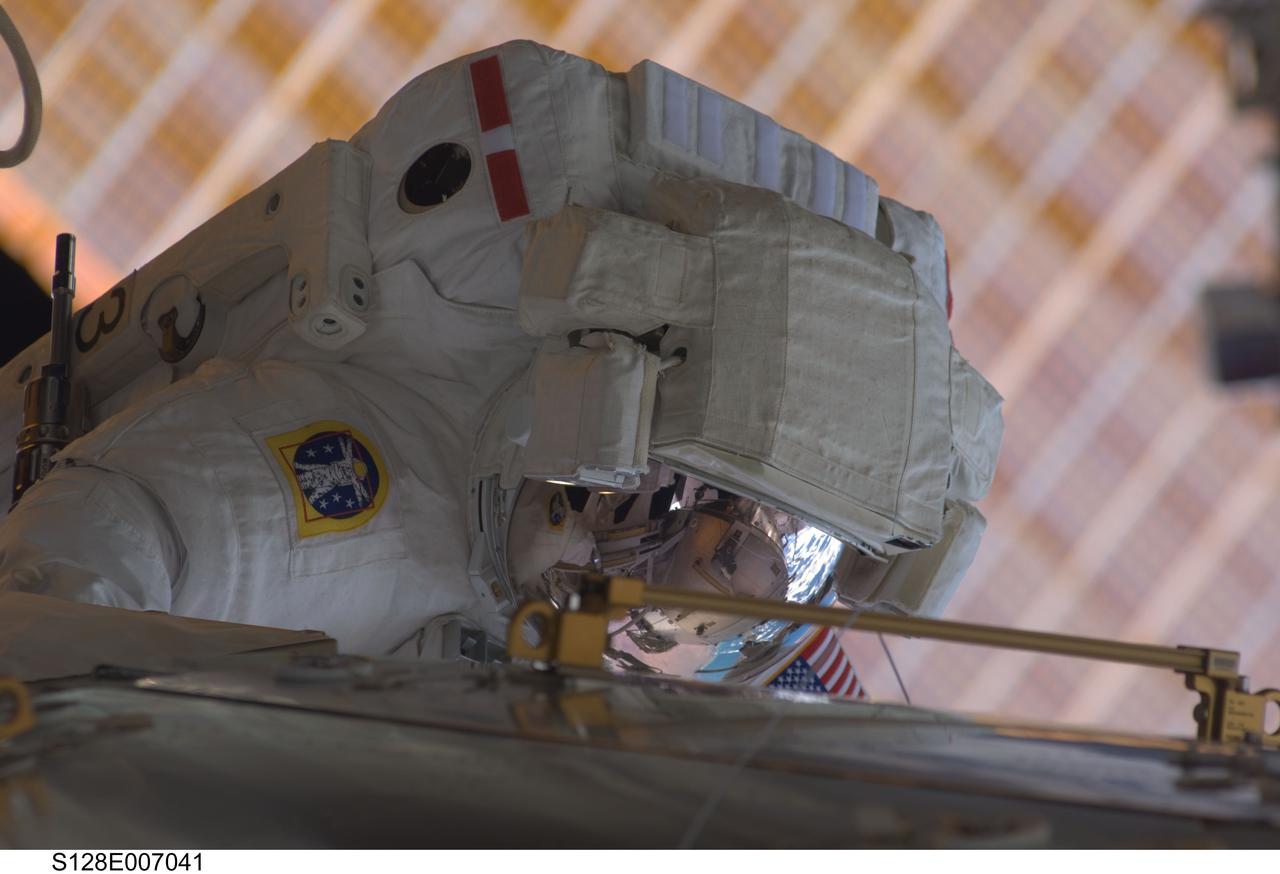
S128-E-007041 (1 Sept. 2009) --- Astronaut Nicole Stott, Expedition 20 flight engineer, participates in the STS-128 mission's first session of extravehicular activity (EVA) as construction and maintenance continue on the International Space Station. During the six-hour, 35-minute spacewalk, Stott and astronaut John “Danny” Olivas (out of frame), mission specialist, removed an empty ammonia tank from the station’s truss and temporarily stowed it on the station’s robotic arm. Olivas and Stott also retrieved the European Technology Exposure Facility (EuTEF) and Materials International Space Station Experiment (MISSE) from the Columbus laboratory module and installed them on Discovery’s payload bay for return.
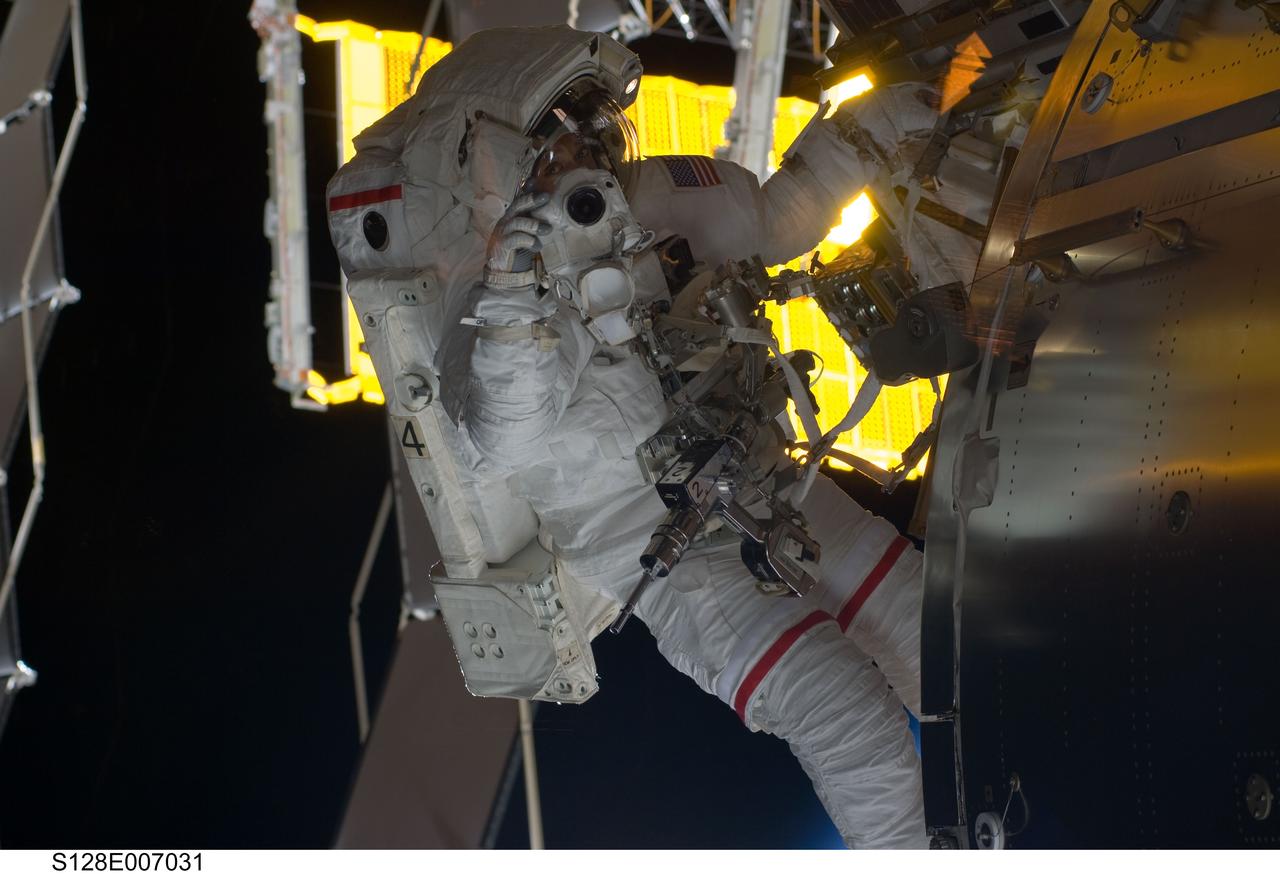
S128-E-007031 (1 Sept. 2009) --- Astronaut John “Danny” Olivas, STS-128 mission specialist, participates in the mission's first session of extravehicular activity (EVA) as construction and maintenance continue on the International Space Station. During the six-hour, 35-minute spacewalk, Olivas and astronaut Nicole Stott (out of frame), mission specialist, removed an empty ammonia tank from the station’s truss and temporarily stowed it on the station’s robotic arm. Olivas and Stott also retrieved the European Technology Exposure Facility (EuTEF) and Materials International Space Station Experiment (MISSE) from the Columbus laboratory module and installed them on Discovery’s payload bay for return.
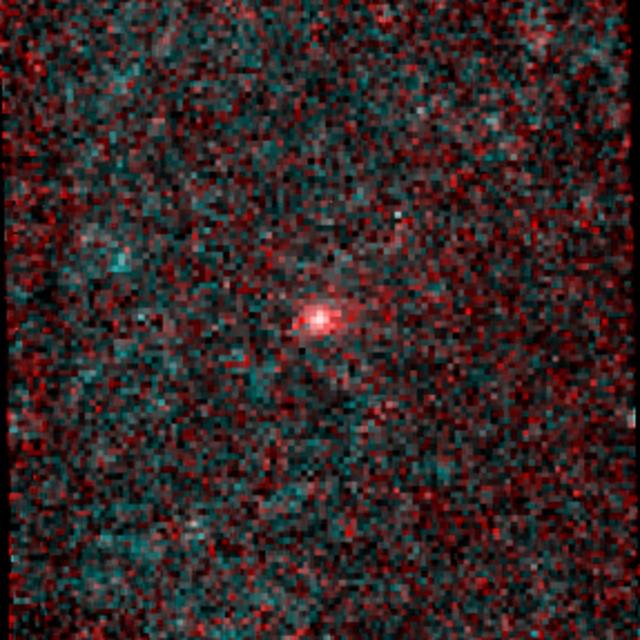
Comet NEOWISE was first observed by NASA NEOWISE spacecraft on Valentine Day, 2014. This heat-sensitive infrared image was made by combining six exposures taken by the NEOWISE mission of the newly discovered comet.
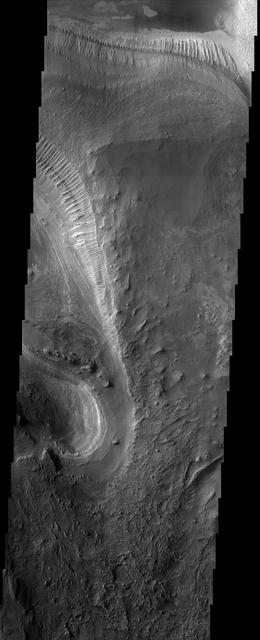
Erosion of the interior layered deposits of Melas Chasma, part of the huge Valles Marineris canyon system, has produced cliffs with examples of spur and gulley morphology and exposures of finely layered sediments, as seen in this NASA Mars Odyssey image.

The Crab Nebula is one of the most intricately structured and highly dynamical objects ever observed. The new Hubble image of the Crab was assembled from 24 individual exposures taken with the NASA/ESA Hubble Space Telescope
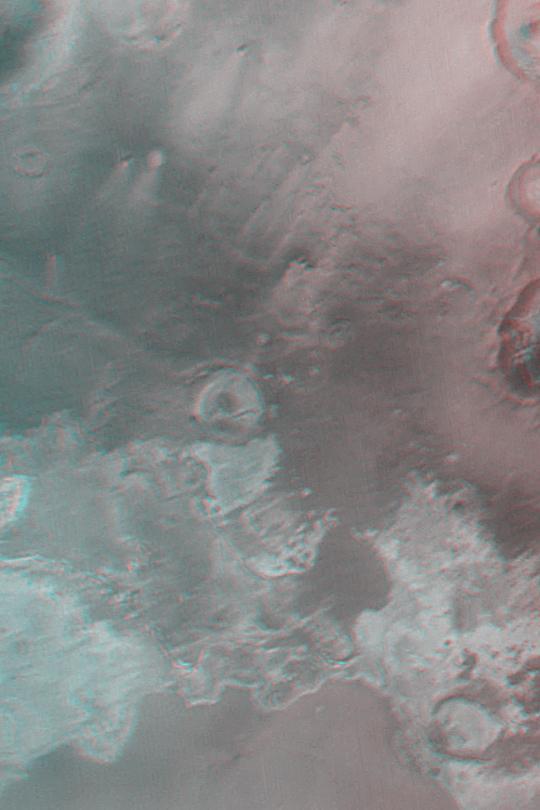
The light-toned materials at the bottom end of this anaglyph fomr NASA Mars Global Surveyor are considered to be thick exposures of sedimentary rock. 3D glasses are necessary to view this image.
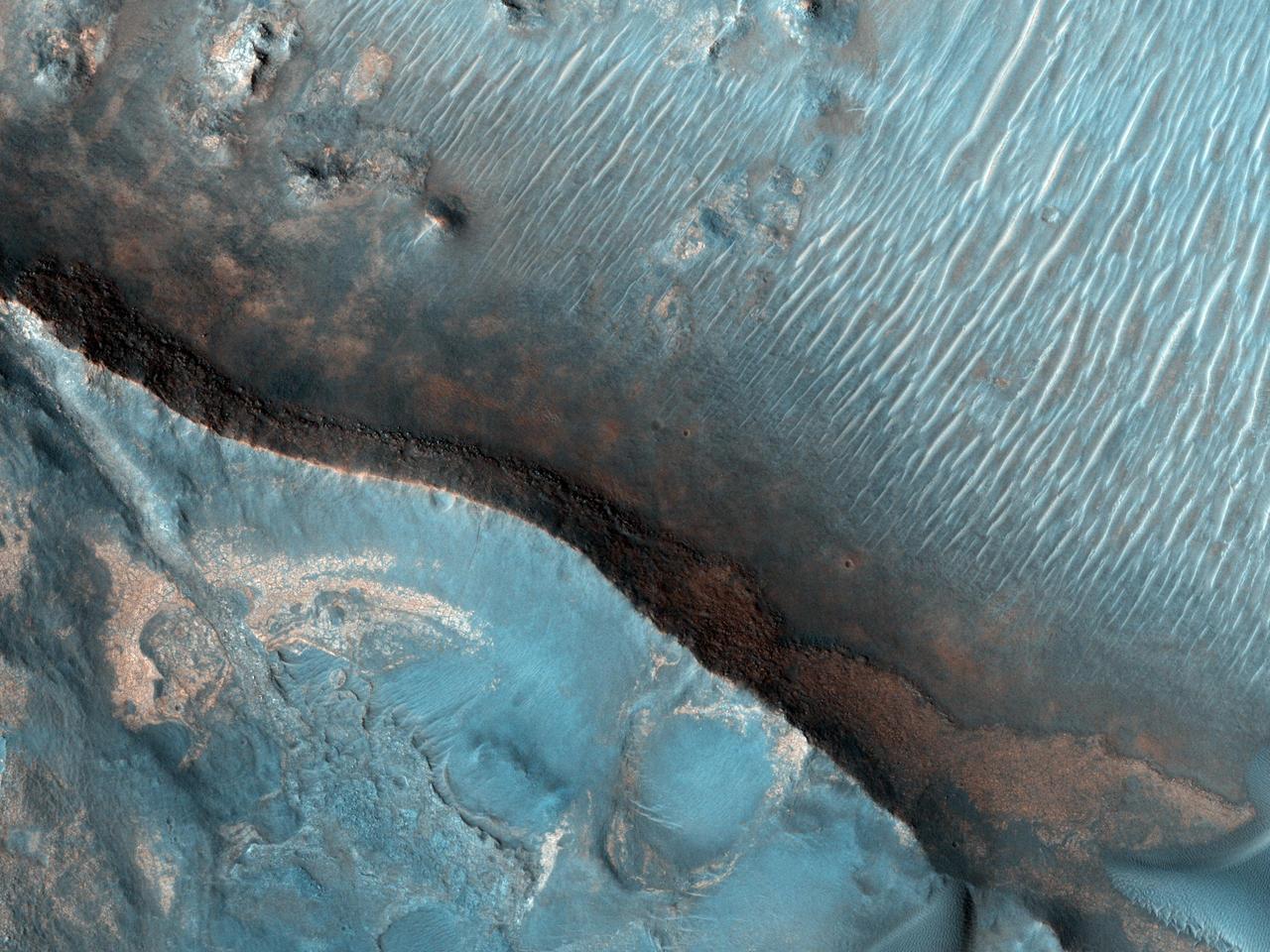
This image from NASA Mars Reconnaissance Orbiter shows Nili Fossae region of Mars, one of the largest exposures of clay minerals, and a prime candidate landing site for Mars Science Laboratory rover, Curiosity.
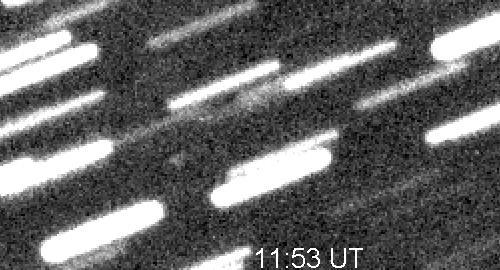
This image is a blinking of two 14-minute exposures of NASA Dawn spacecraft from 600,000 miles from Earth. Bill Dillon, a regular advanced user of Sierra Stars Observatory.
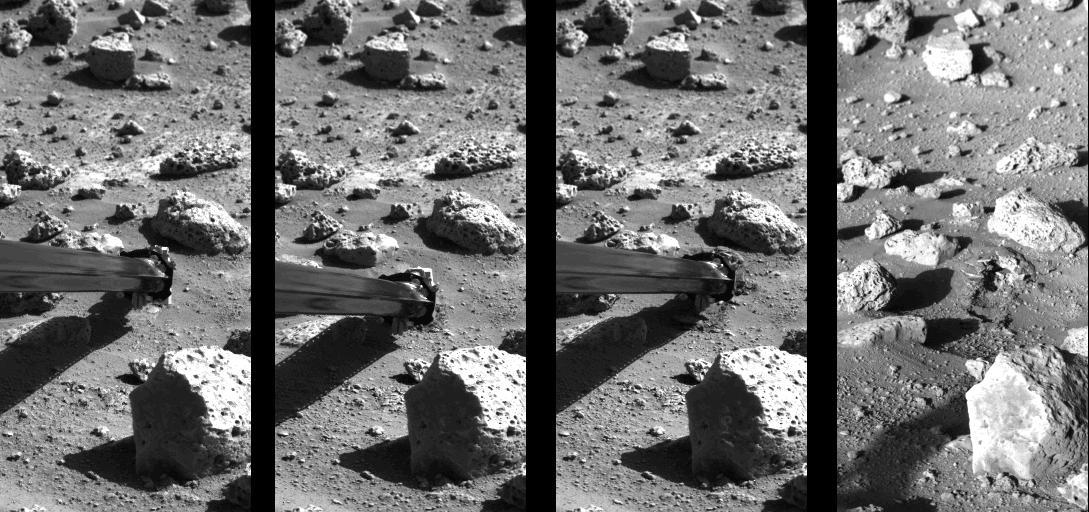
Operation of the surface sampler in obtaining Martian soil for NASA's Viking 2 molecular analysis experiment. Dubbed Bonneville Salt Flats, the exposure of thin crust appeared unique in contrast with surrounding materials. http://photojournal.jpl.nasa.gov/catalog/PIA00145
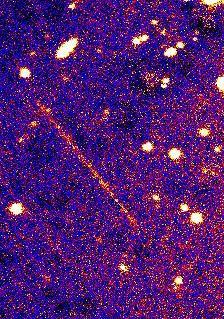
The high speed of NASA Deep Impact spacecraft causes it to appear as a long streak across the sky in the constellation Virgo during the 10-minute exposure time of this photograph taken by Mr. Palomar 200-inch telescope.
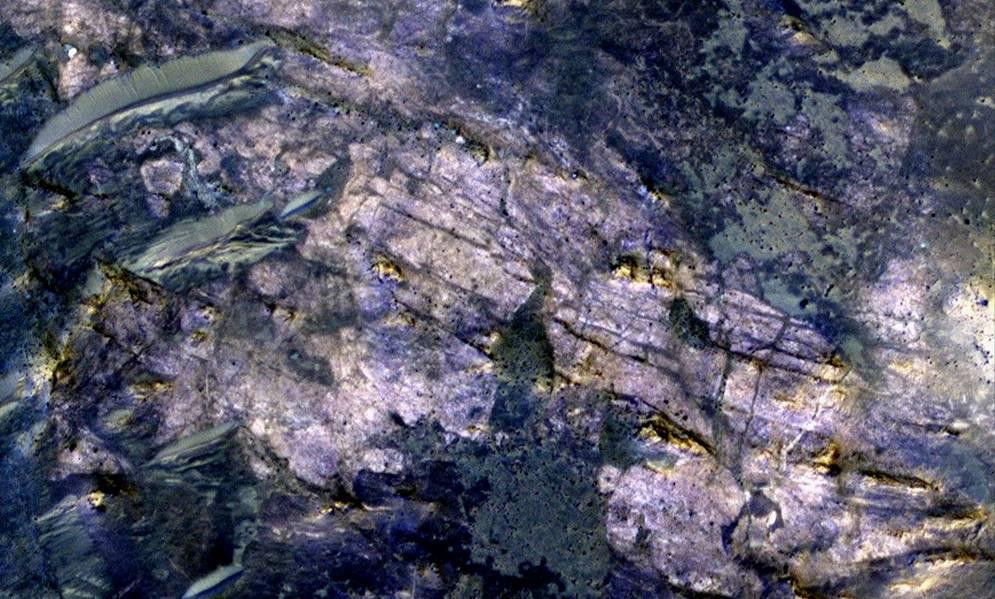
This false-color image NASA Mars Reconnaissance Orbiter shows that fractures and possible layers are visible in the light-toned rock exposure containing the carbonates. The location is inside an unnamed crater on the uplifted rim of Huygens crater.

This 591-second exposure of the rings of Neptune were taken with the clear filter by NASA Voyager 2 wide-angle camera. The two main rings are clearly visible and appear complete over the region imaged.

Elorza Crater is a complex crater located north of Coprates Chasma. This image from NASA Mars Reconnaissance Orbiter centers on the southwestern portion of the central uplift, characterized by numerous bedrock exposures and coherent impact melt flows.
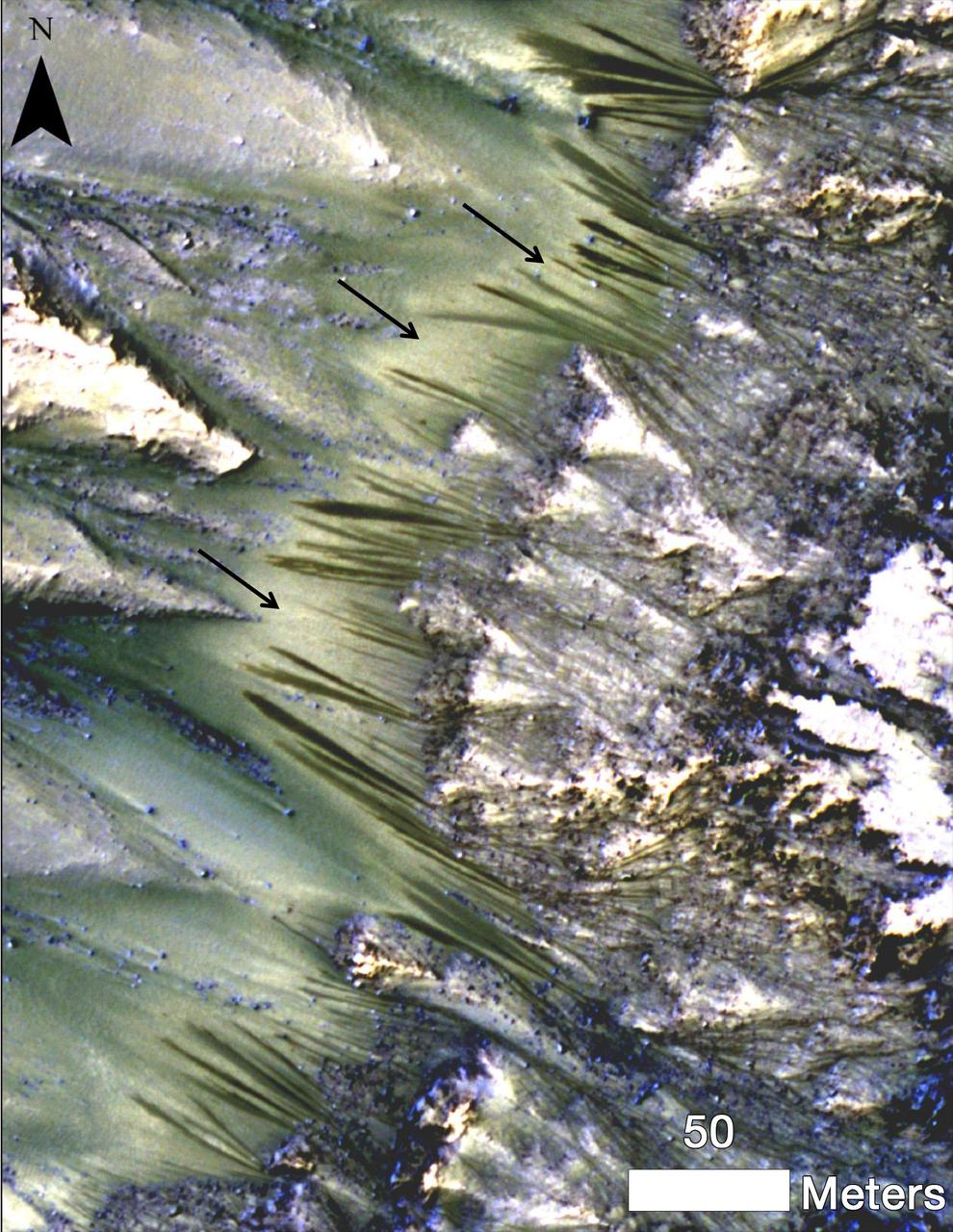
Dark, seasonal flows emanate from bedrock exposures at Palikir Crater on Mars in this image from the HiRISE camera on NASA Mars Reconnaissance Orbiter. These dark, warm-season flows are called recurring slope lineae or RSL.

NASA Voyager spacecraft was 8.6 million kilometers 5.3 million miles from Neptune when it took this 61 second exposure through the clear filter with the narrow angle camera on August 19, 1989.
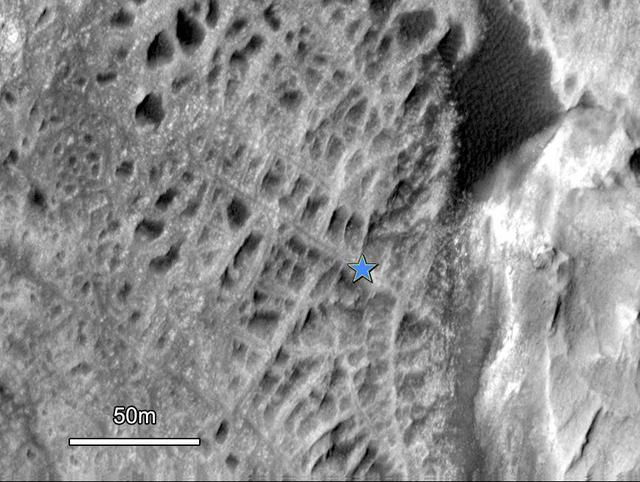
One type of feature of scientific interest on the mountain inside Gale crater is exposure of cemented fractures, evidence that groundwater once reached to at least that height of the mountain. This image is from NASA Mars Reconnaissance Orbiter.
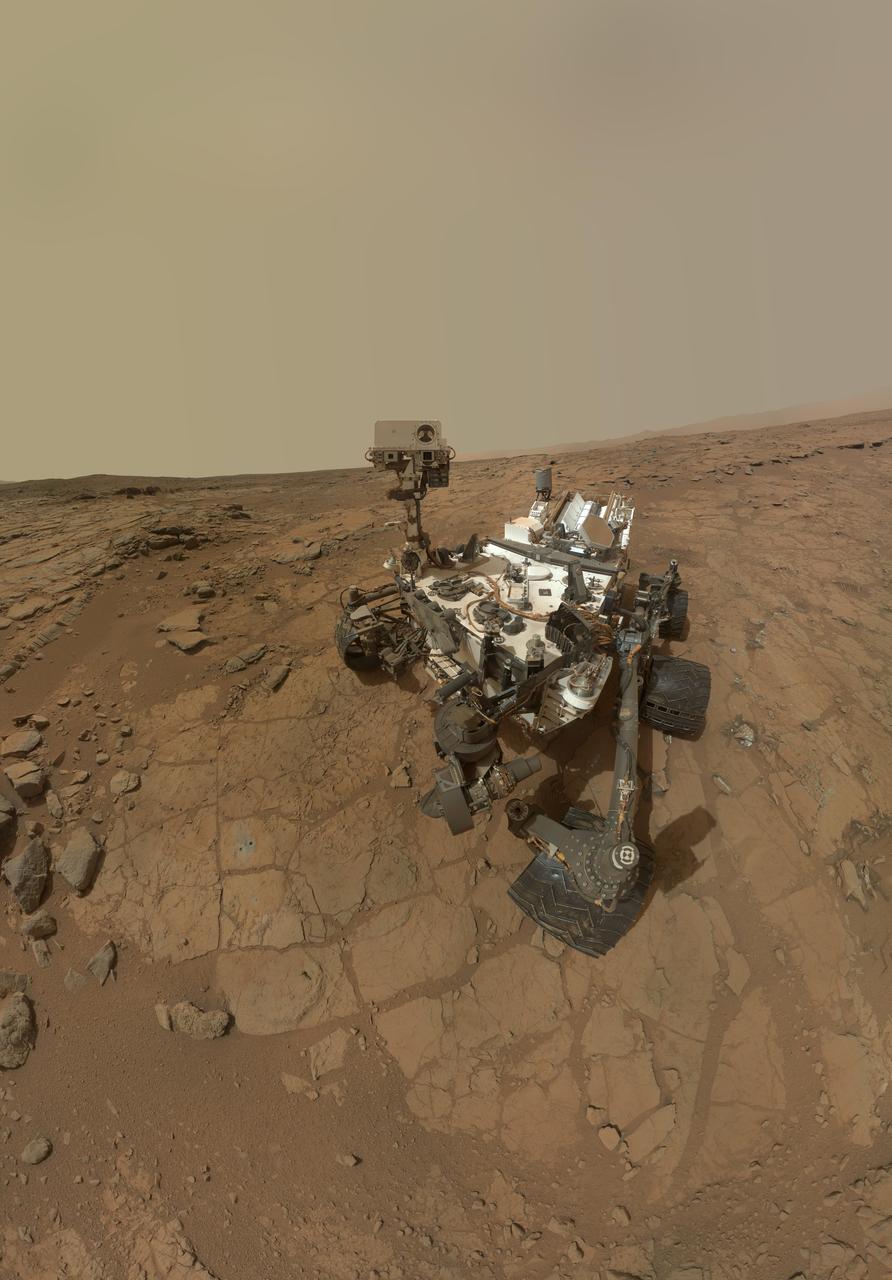
This self-portrait of NASA Mars rover Curiosity combines dozens of exposures to show gray-powder and two holes where Curiosity used its drill on the rock target John Klein.

This view of Lyot Crater is a combined mapping by NASA Project Viking with elevation information from Mars Global Surveyor showing at least one of the nine craters in the northern lowlands of Mars with exposures of hydrated minerals detected from orbit.
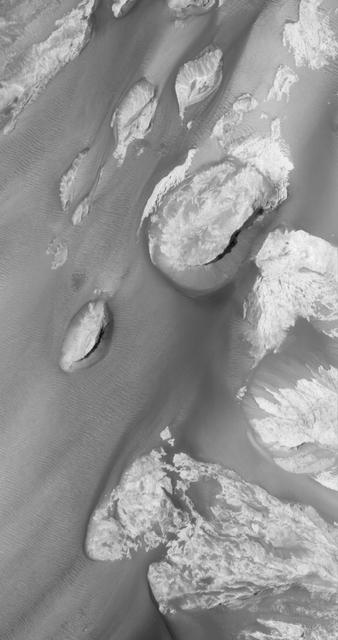
This MOC image shows outcrops of light-toned rock, interpreted to be sedimentary in origin, in east Candor Chasma. The exposures of light-toned rock are separated by areas of windblown ripples and dark sand
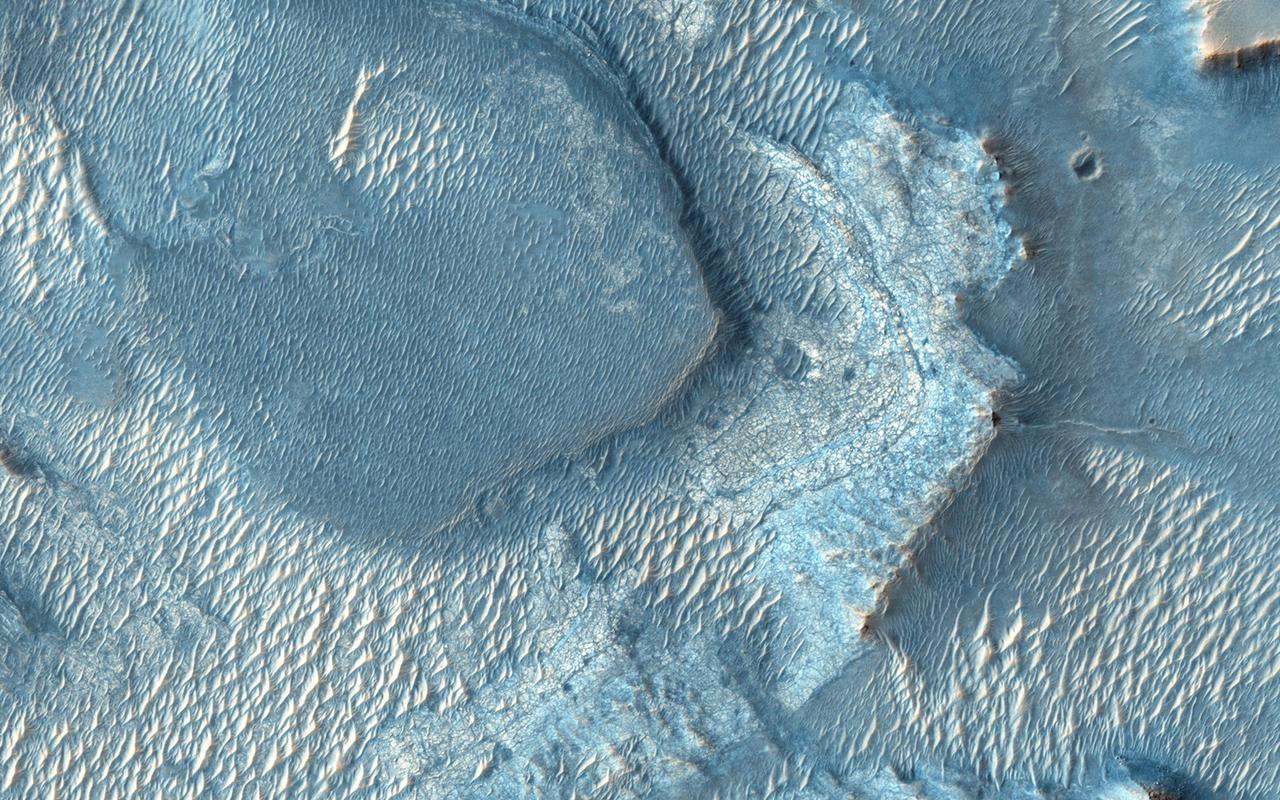
Nili Fossae, once considered a potential landing spot for the Mars Science Laboratory, has one of the largest, most diverse exposures of clay minerals as seen by NASA Mars Reconnaissance Orbiter.
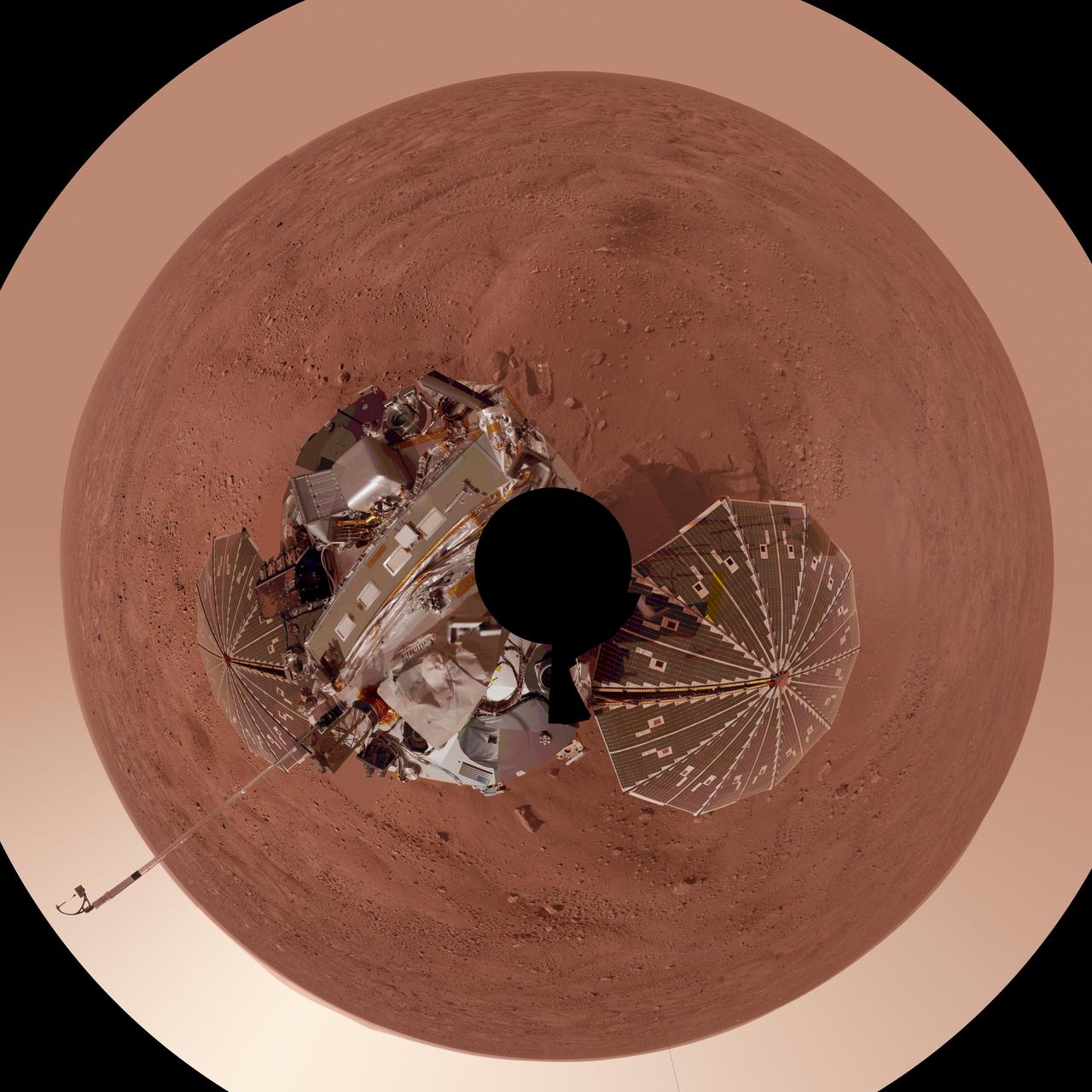
This view is a polar projection that combines more than 500 exposures taken by the Surface Stereo Imager camera on NASA Mars Phoenix Lander and projects them as if looking down from above.

At the center of this view of an area of mid-latitude northern Mars, a fresh crater about 6 meters 20 feet in diameter holds an exposure of bright material, blue in this false-color image observed by NASA Mars Reconnaissance Orbiter.
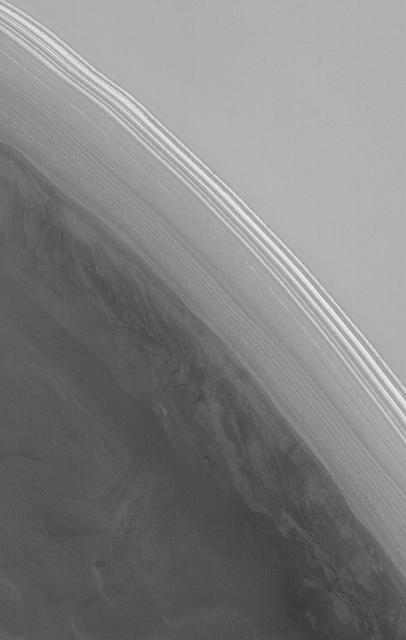
This MOC image shows a steep slope in the north polar region of Mars. The stripes indicate an exposure of layered material; the variations in brightness among the stripes are the result of varying amounts and textures on seasonal carbon dioxide frost
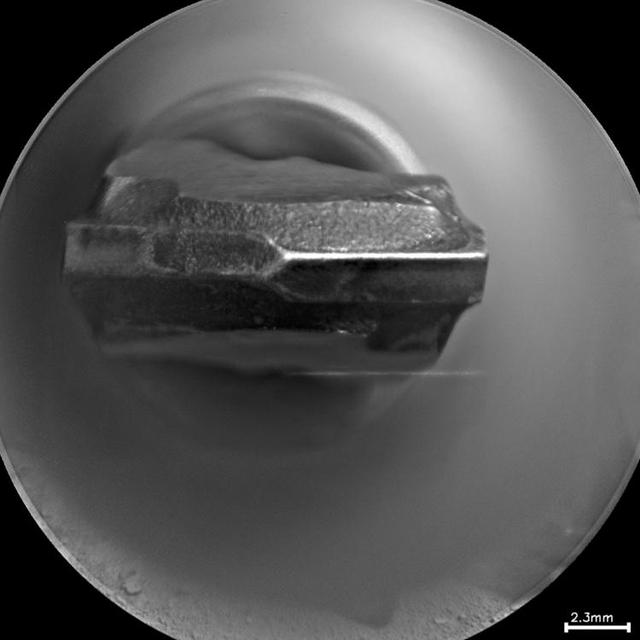
This head-on view shows the tip of the drill bit on NASA Mars rover Curiosity. The view merges two exposures taken by the remote micro-imager in the rover ChemCam instrument at different focus settings.

This long-exposure image from NASA Hubble Space Telescope of massive galaxy cluster Abell 2744 is the deepest ever made of any cluster of galaxies. Shown in the foreground is Abell 2744, located in the constellation Sculptor.

This MOC image shows an unconformity in an exposure of north polar layered material, at which older layers were cut-off and eroded before a new suite of layers was deposited above them
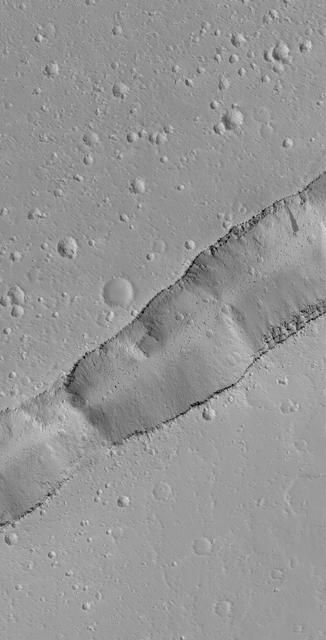
This MOC image shows a portion of a trough cutting across a dust-covered plain in the Labeatis Fossae region of Mars. Boulders derived from the layered exposures near the top of the trough walls are resting on the floor
This MOC image shows an unconformity in an exposure of north polar layered material, at which older layers were cut-off and eroded before a new suite of layers was deposited above them
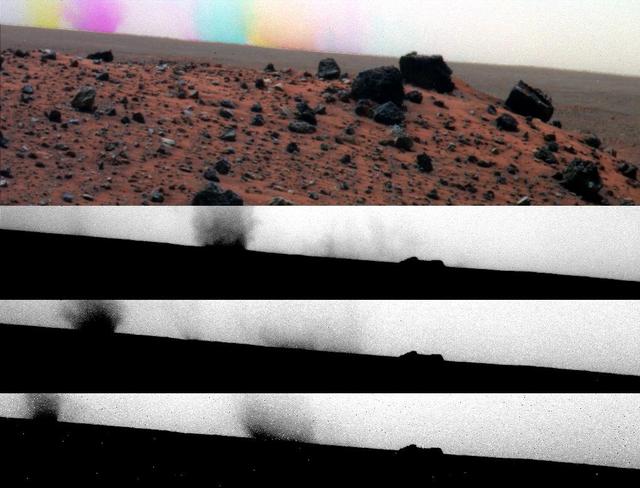
While the panoramic camera Pancam on NASA Mars Exploration Rover Spirit was taking exposures with different color filters on May 27, 2009, dust devils moved across the field of view.
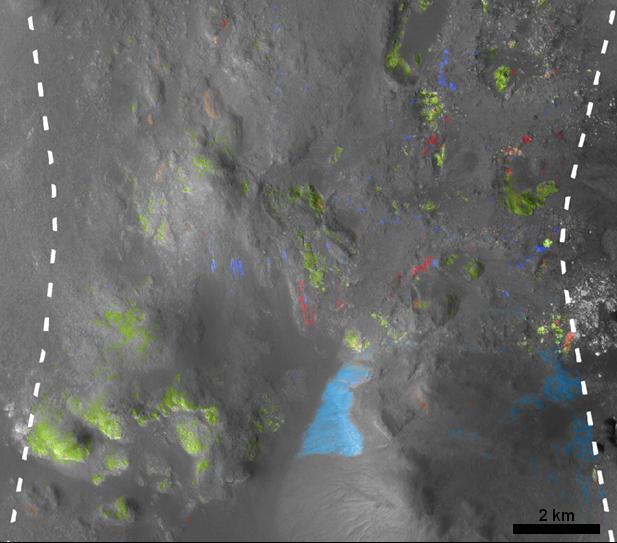
This view of Stokes Crater is a mosaic of images taken by NASA Mars Reconnaissance Orbiter and ESA Mars Express showing at least one of the nine craters in the northern lowlands of Mars with exposures of hydrated minerals detected from orbit.
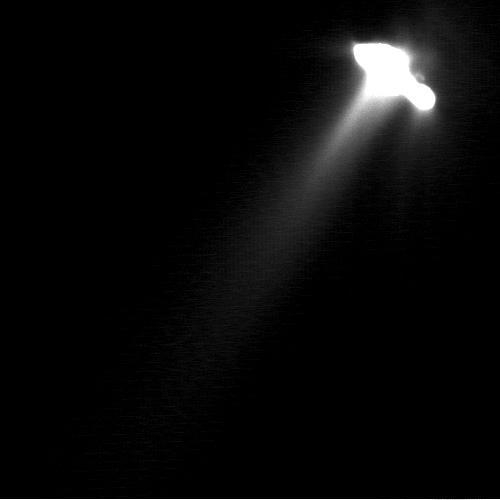
This very long exposure was taken by NASA Deep Space 1 to show detailed structures in the faint parts of comet Borrelly inner coma. As a result, the nucleus has been greatly over-exposed and its shape appears distorted.
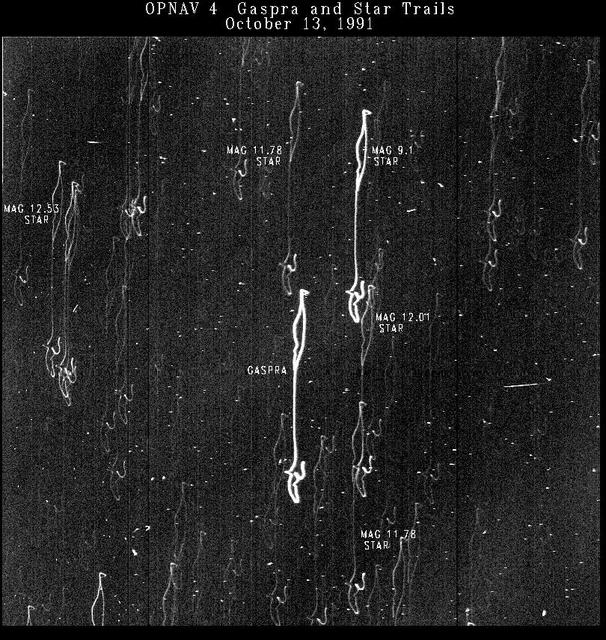
This time-exposure picture of the asteroid Gaspra and background stars is one of four optical navigation images made by NASA Galileo imaging system to improve knowledge of Gaspra location for the spacecraft flyby. http://photojournal.jpl.nasa.gov/catalog/PIA00229
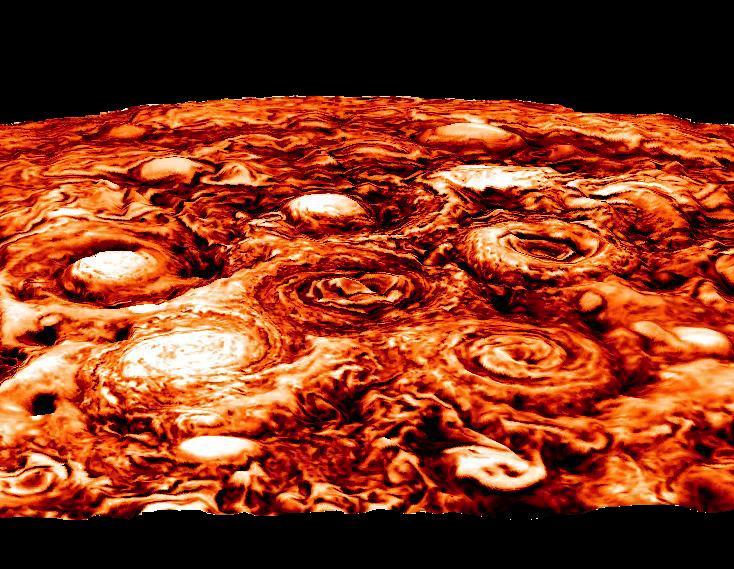
This computer-generated image shows the structure of the cyclonic pattern observed over Jupiter's south pole. Like in the North, Jupiter's south pole also contains a central cyclone, but it is surrounded by five cyclones with diameters ranging from 3,500 to 4,300 miles (5,600 to 7,000 kilometers) in diameter. Almost all the polar cyclones (at both poles), are so densely packed that their spiral arms come in contact with adjacent cyclones. However, as tightly spaced as the cyclones are, they have remained distinct, with individual morphologies over the seven months of observations detailed in the paper. The data used in generating this image was collected by the Jovian Infrared Auroral Mapper (JIRAM) instrument aboard the Juno spacecraft during the fourth Juno pass over Jupiter on Feb. 2, 2017. JIRAM is able to collect images in the infrared wavelengths around 5 micrometers (µm) by measuring the intensity of the heat coming out of the planet. The heat from the planet is radiated to space and it is called radiance. This image is an enhancement of the original JIRAM image. In order to give the picture a 3-D shape, the enhancement starts from the idea that the radiance has its highest value where there are no clouds and JIRAM can see deeper into the atmosphere. Consequently, all the other areas of the image are originally shaded more or less by clouds of different thickness. Then, to create these pictures, the originals have been inverted to give the thicker clouds the whitish color and the third dimension that we see with normal clouds here in the Earth's atmosphere. https://photojournal.jpl.nasa.gov/catalog/PIA22337
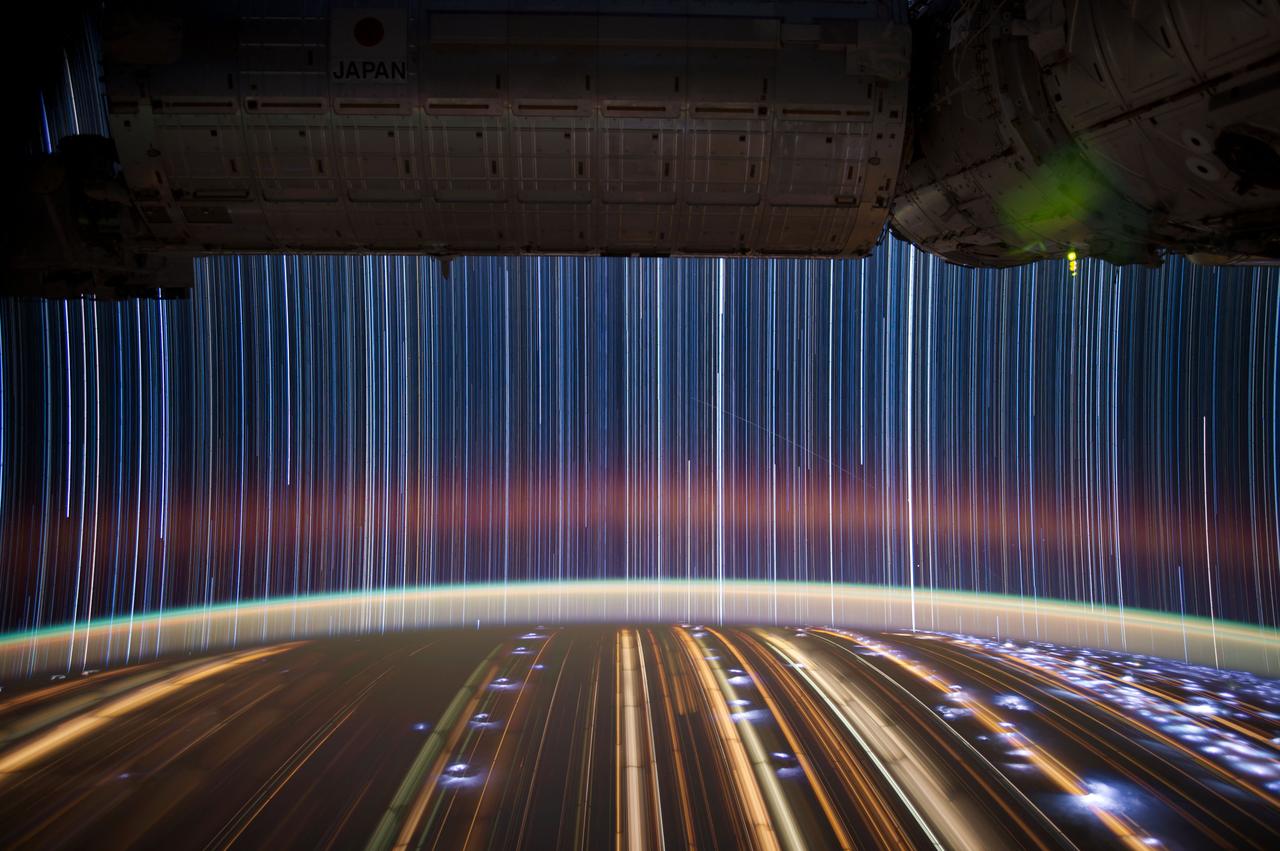
jsc2012e039800_alt (5 March 2012) --- This is a composite of a series of images photographed from a mounted camera on the Earth-orbiting International Space Station, from approximately 240 miles above Earth. Expedition 31 Flight Engineer Don Pettit relayed some information about photographic techniques used to achieve the images: "My star trail images are made by taking a time exposure of about 10 to 15 minutes. However, with modern digital cameras, 30 seconds is about the longest exposure possible, due to electronic detector noise effectively snowing out the image. To achieve the longer exposures I do what many amateur astronomers do. I take multiple 30-second exposures, then
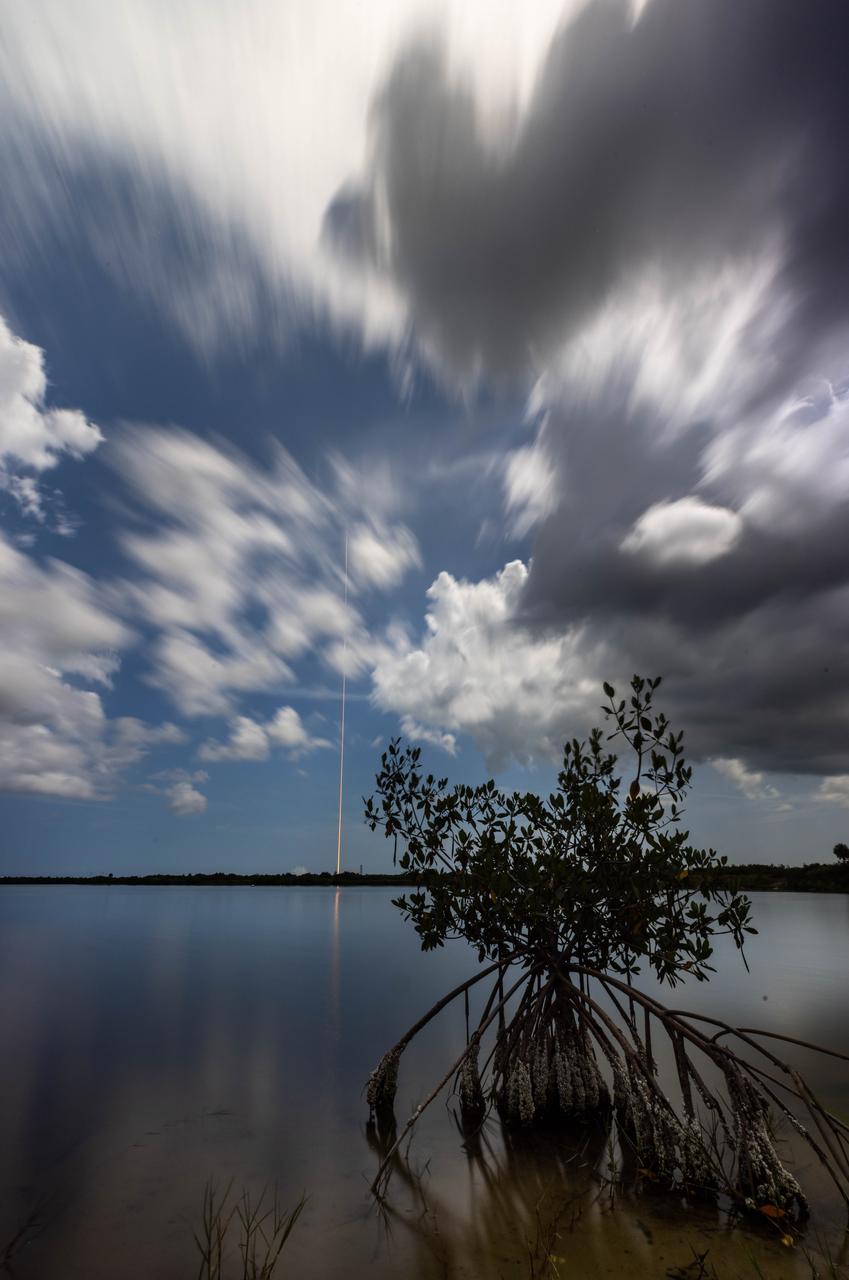
A long exposure image captures the launch of NASA’s SpaceX Crew-11 mission SpaceX Falcon 9 rocket with a Dragon spacecraft at 11:43 a.m. EDT Friday, Aug. 1, 2025, from Launch Complex 39A at Kennedy Space Center in Florida. Crew-11, carrying NASA astronauts Zena Cardman and Mike Fincke, along with JAXA (Japan Aerospace Exploration Agency) astronaut Kimiya Yui and Roscosmos cosmonaut Oleg Platonov, are on their way to the International Space Station for a long duration mission.

This image was obtained by NASA's Dawn spacecraft on August 14, 2018 from an altitude of about 1149 miles (1849 kilometers). The center of Occator Crater seen near the limb is located at about 19.8 degrees north latitude and 239.3 degrees east longitude. https://photojournal.jpl.nasa.gov/catalog/PIA22764
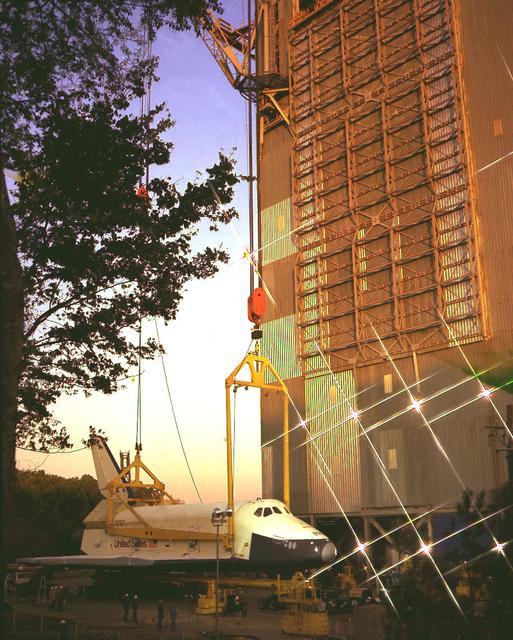
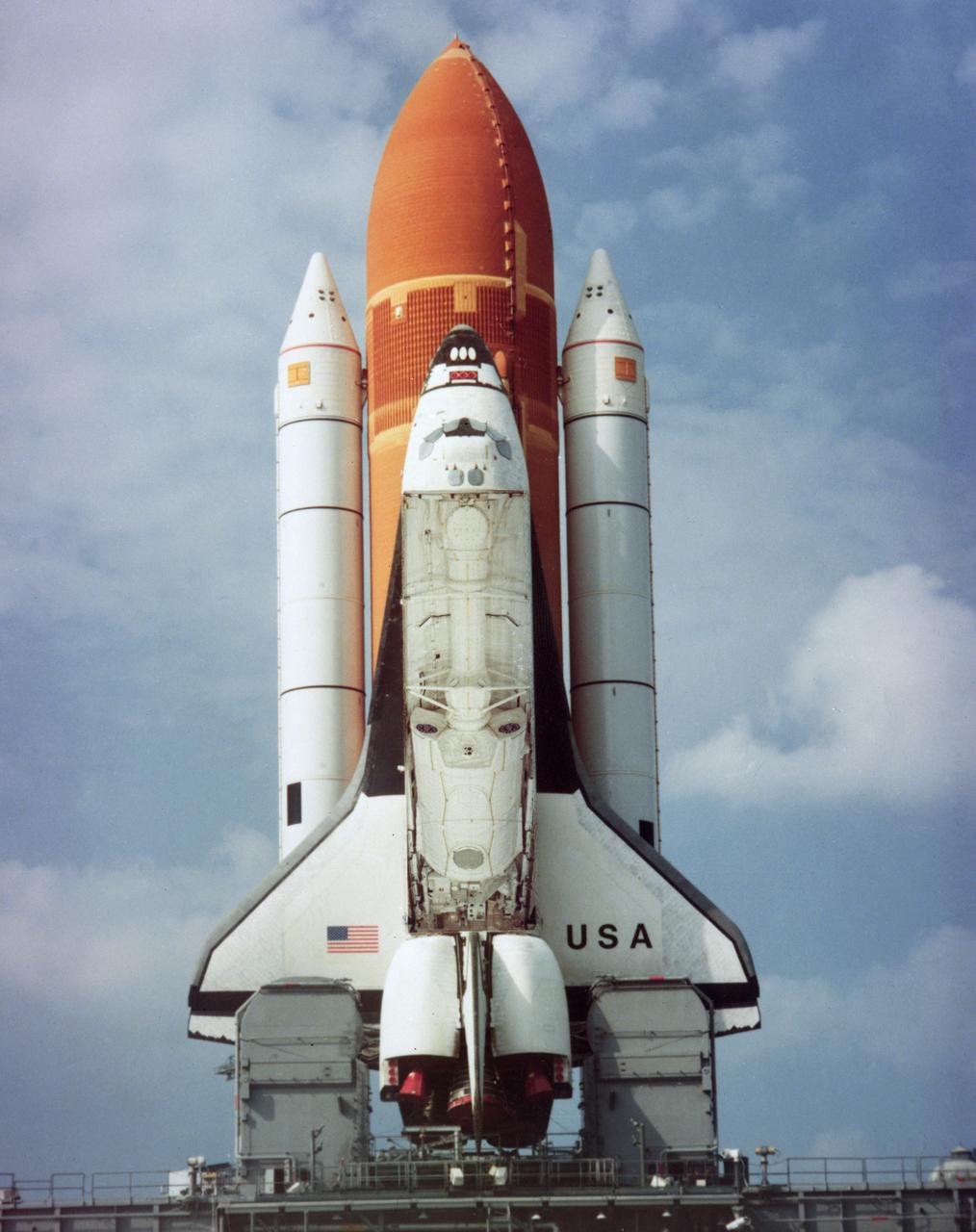
This is a double exposure of the Shuttle Orbiter Enterprise on the strong back of the Dynamic Test Stand at Marshall Space Flight Center's building 4550 as it undergoes a Mated Vertical Ground Vibration Test (MVGVT). One exposure depicts a sunset view, while the other depicts a post-sunset view.
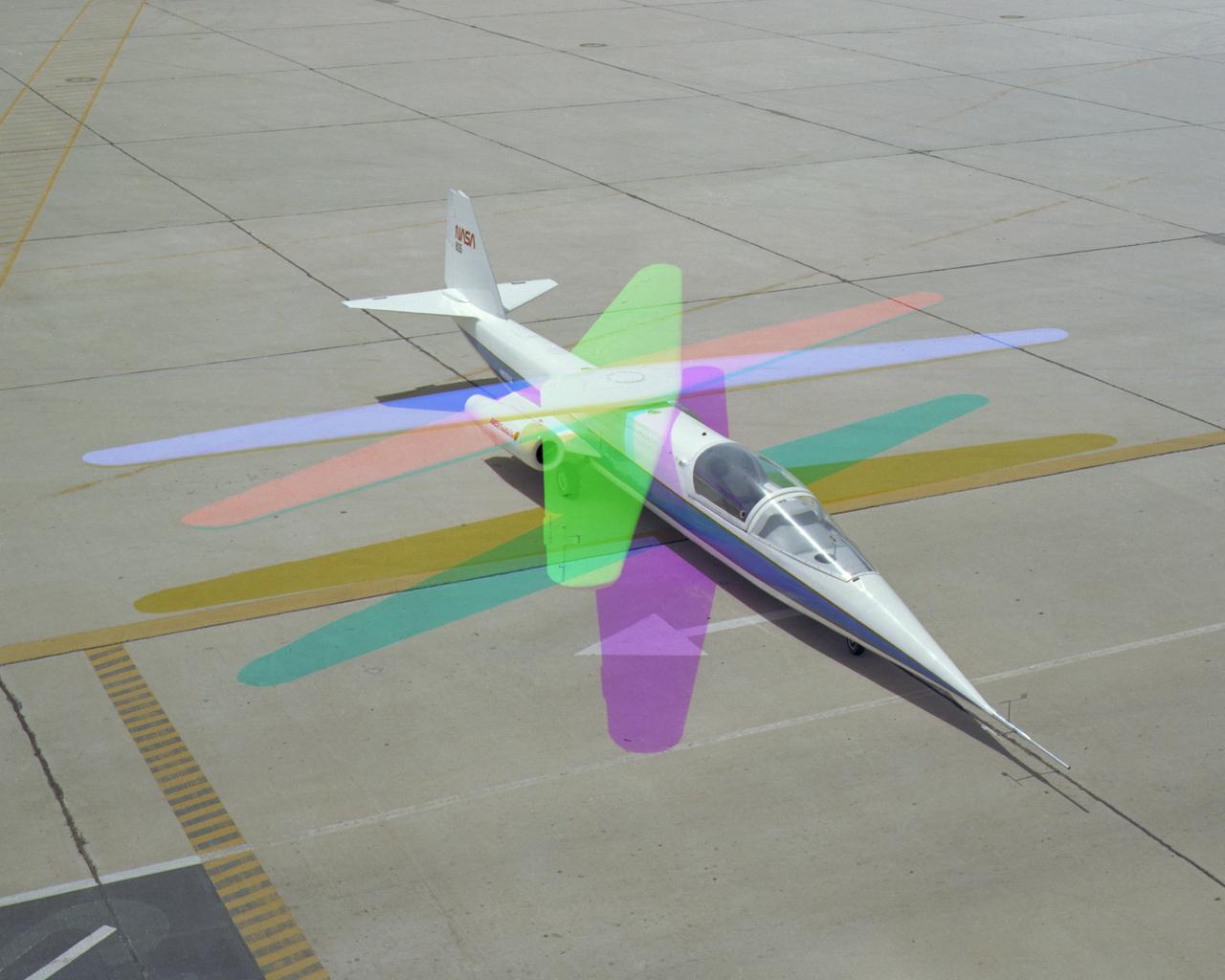
Multiple exposure image showing wing movement on AD-1.

Two sets of laser pulses transmitted from Earth to a spacecraft over a distance of 1.4 million kilometers 870,000 miles in a communications experiment are shown in this long-exposure image made by NASA’s Galileo spacecraft imaging system. http://photojournal.jpl.nasa.gov/catalog/PIA00230