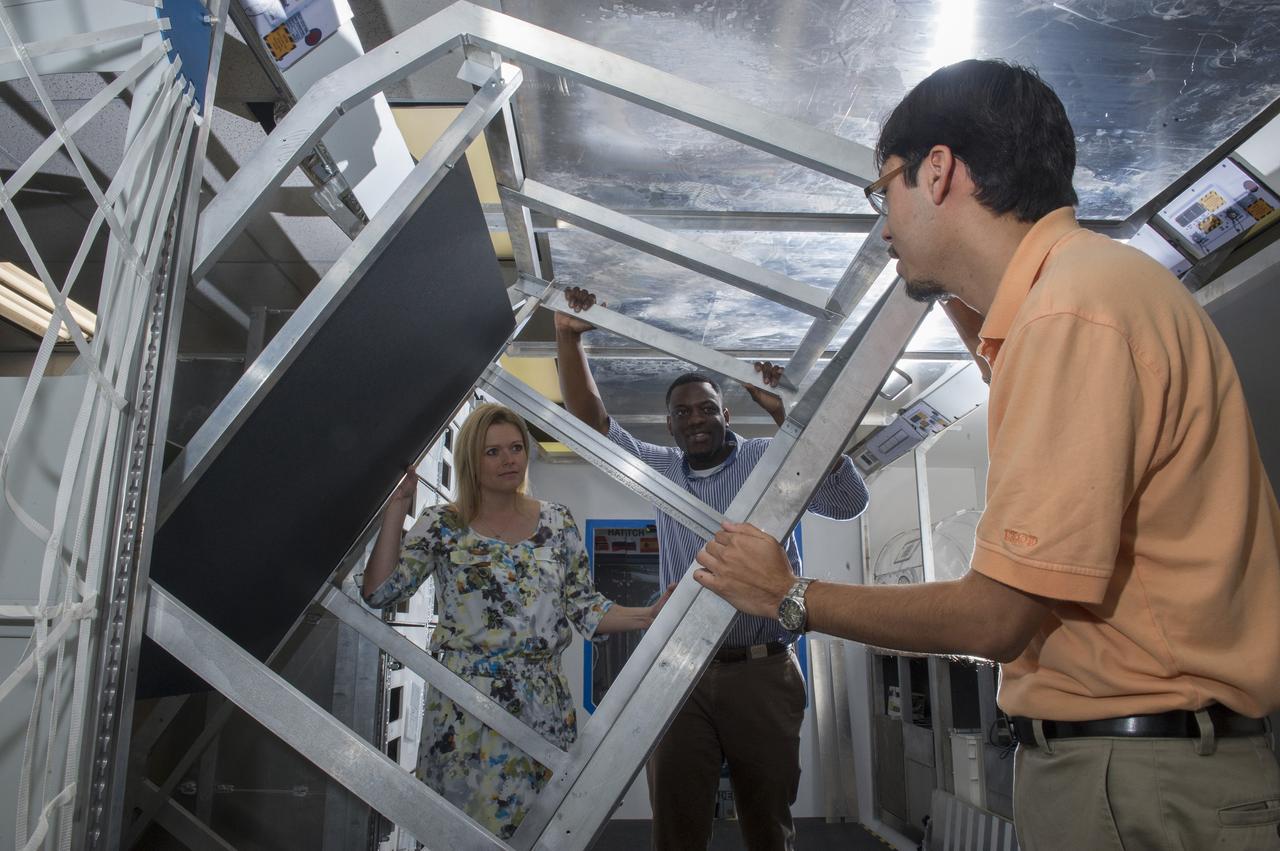
NANCY HORVATH, JONATHAN BIBB, & VINCENT VIDAURRI MISSION OPERATIONS LABORATORY - LABORATORY TRAINING COMPLEX (LTC), BUILDING 4663, EXPRESS RACK (ROTATING EXPRESS RACK SHELL).
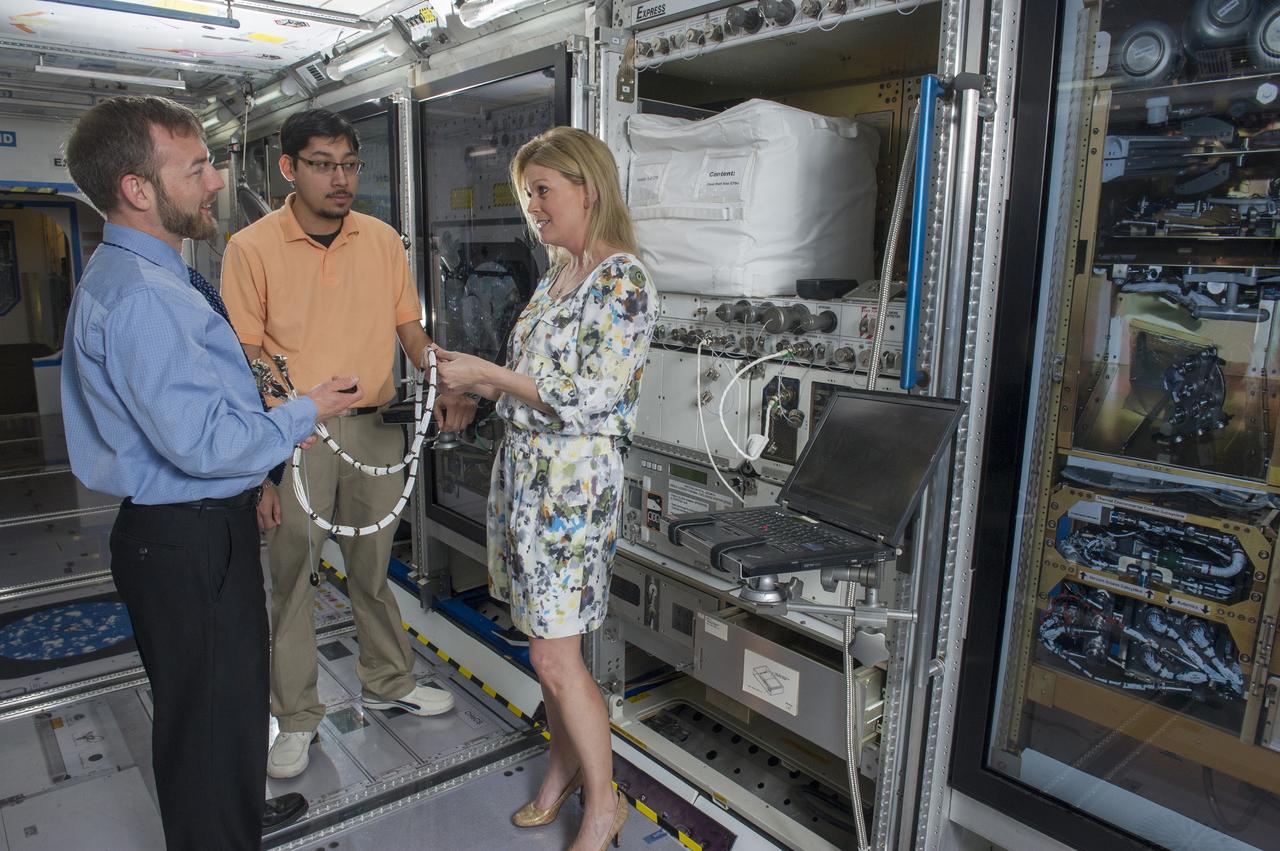
JOEL HARDY, VINCENT VIDAURRI, & NANCY HALLMARK MISSION OPERATIONS LABORATORY - LABORATORY TRAINING COMPLEX (LTC), BUILDING 4663, EXPRESS RACK TRAINING.-
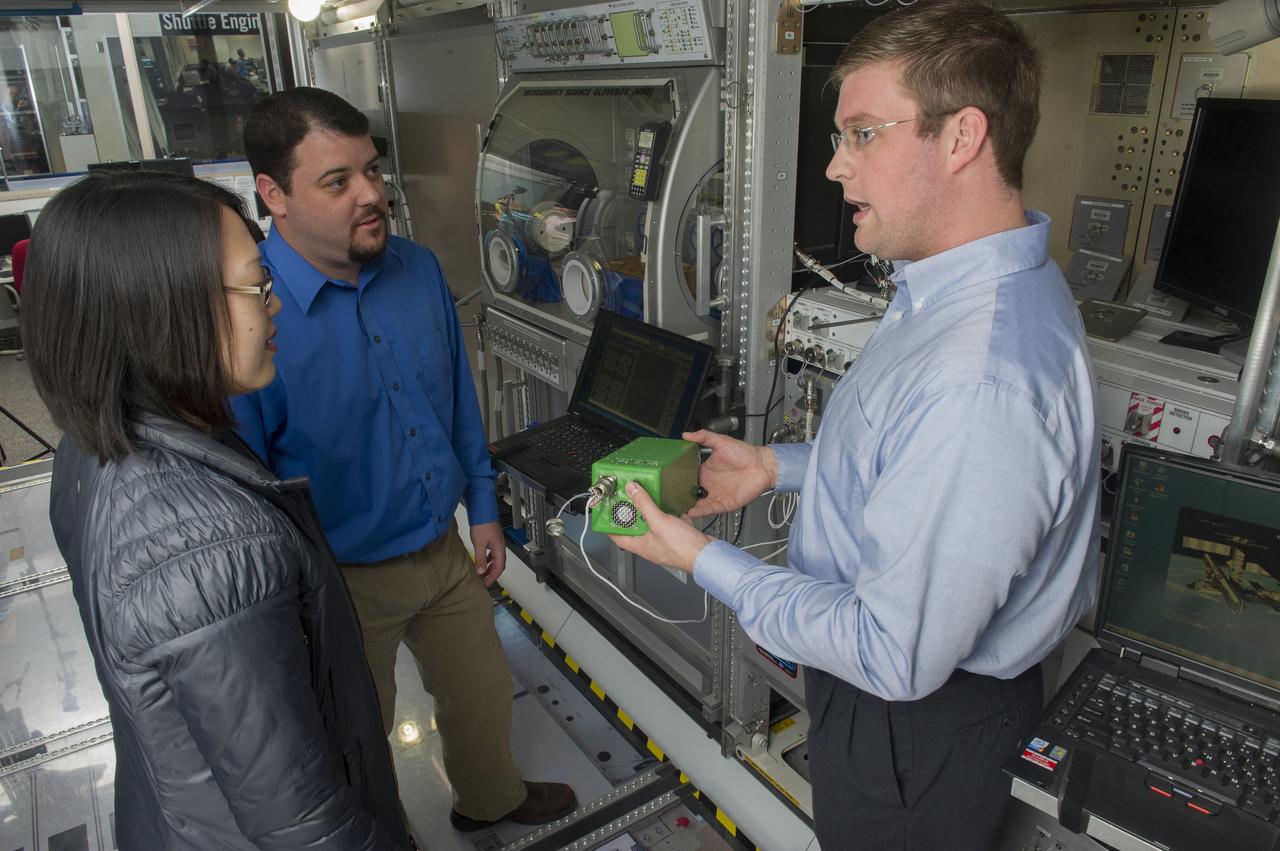
ELEASA WILSON, KRAIG TERSIGNI, JUSTIN CARTLEDGE MISSION OPERATIONS LABORATORY - LABORATORY TRAINING COMPLEX (LTC), BUILDING 4663, EXPRESS RACK TRAINING, EMERALD BRICK (POWER DISTRIBUTION FOR EXPRESS RACK LAPTOP).
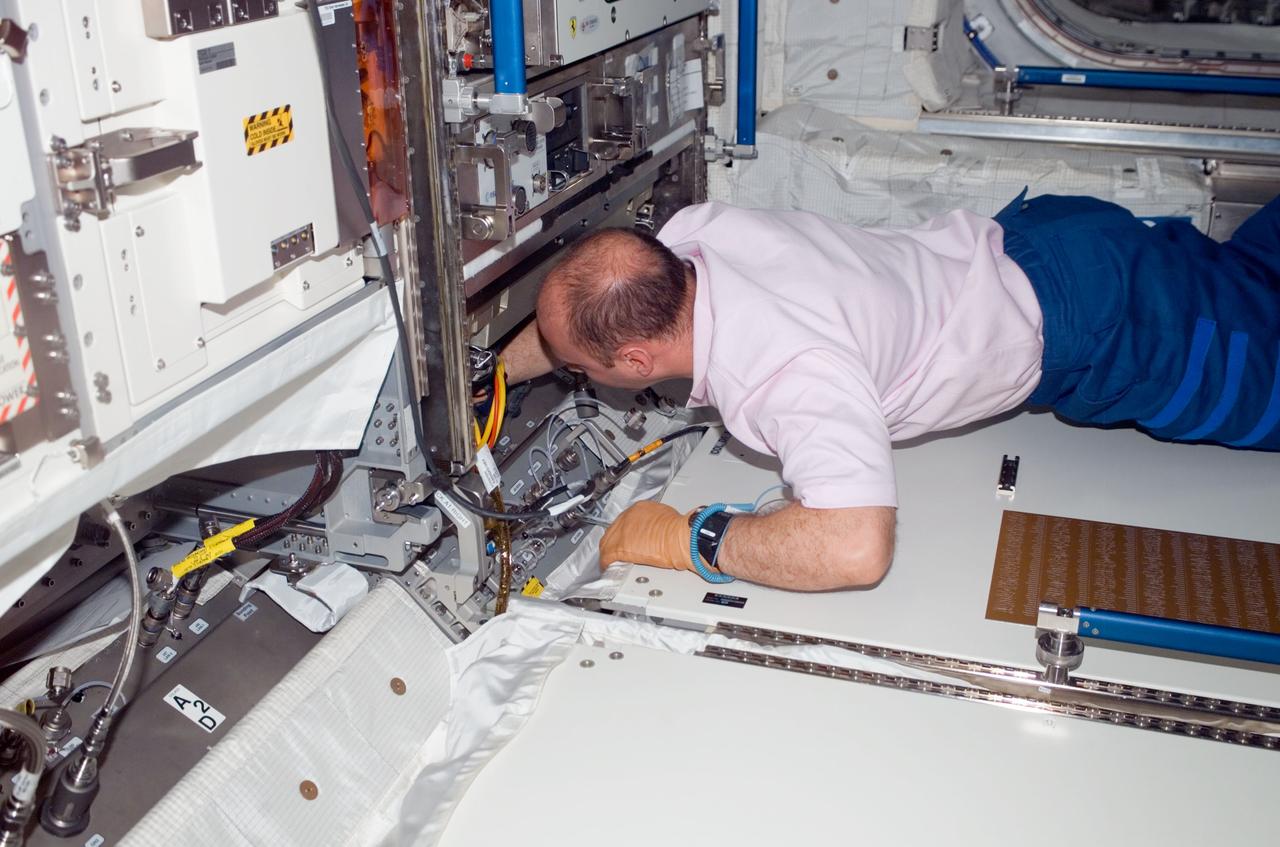
ISS016-E-033436 (23 March 2008) --- Astronaut Garrett Reisman, Expedition 16 flight engineer, works on the completion of the installation of the EXPRESS 3 rack in the Columbus module following its transfer from Destiny.
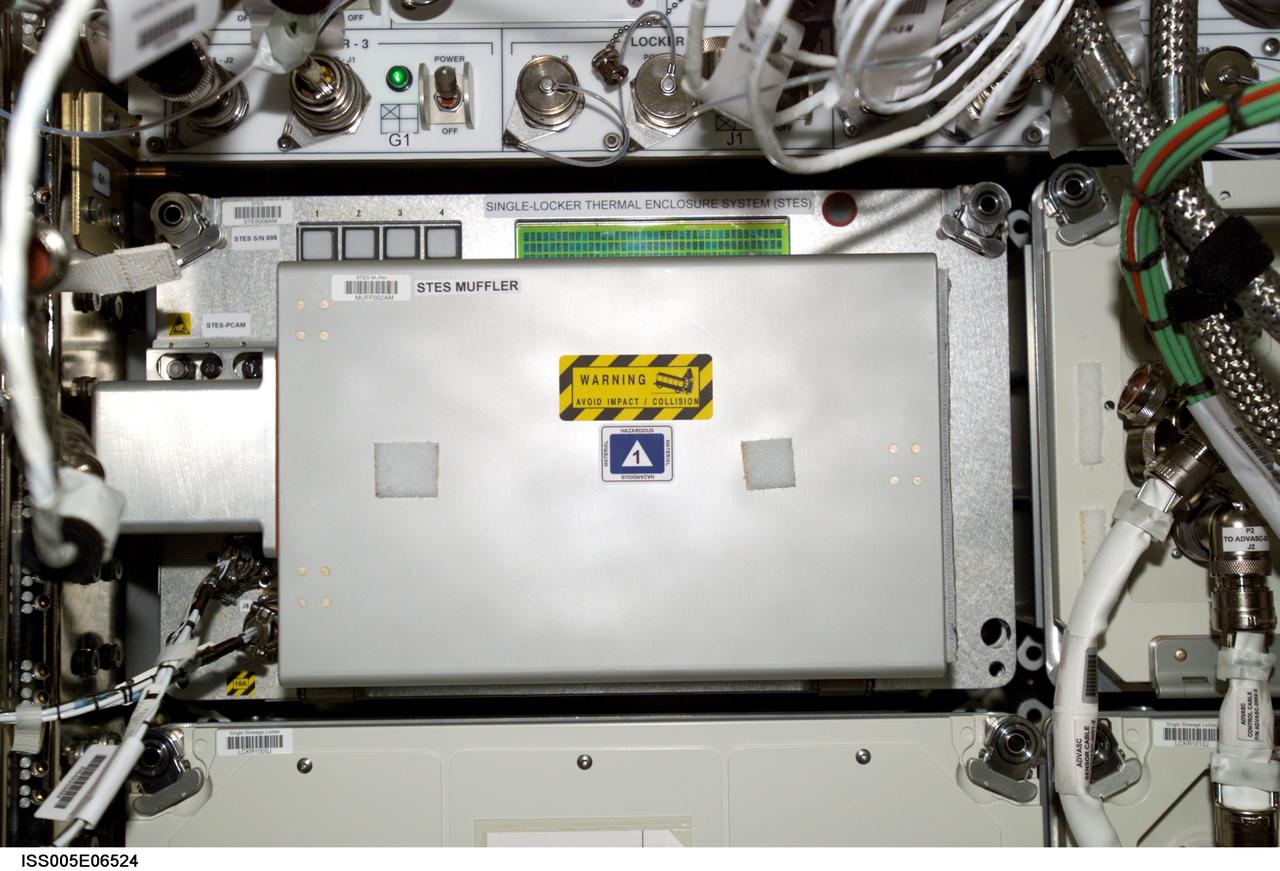
iss005e06524 (7/2/2002) --- View of the Single-Locker Thermal Enclosure System (STES), located on the Expedite the Processing of Experiments to the Space Station (EXPRESS) Rack 4 in the Destiny / U.S. Laboratory.
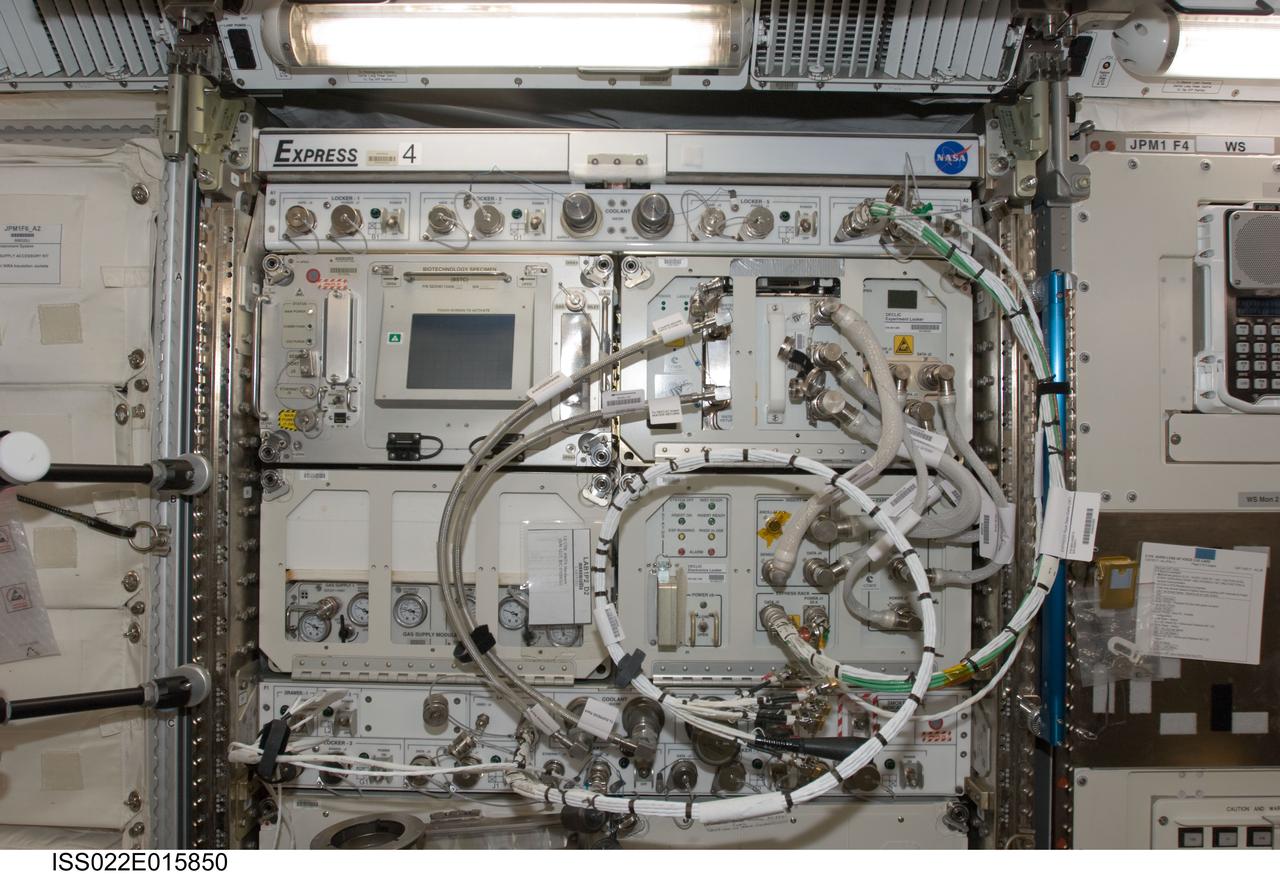
iss022e015850 (12/30/2009) --- The image shows a front view of EXpedite the PRocessing of Experiments to Space Station EXPRESS Rack 4 (Rack 4,JPM/1F5) in the Japanese Experiment Module (JEM) Japanese Pressurized Module (JPM). Equipment visible in the EXPRESS Rack includes the Biotechnology Specimen Temperature Controller (BSTC) and the Gas Supply Module (GSM) support hardware for the CBOSS (Cellular Biotechnology Operations Support Systems) investigations, and the Device for the Study of Critical Liquids and Crystallization (DECLIC).
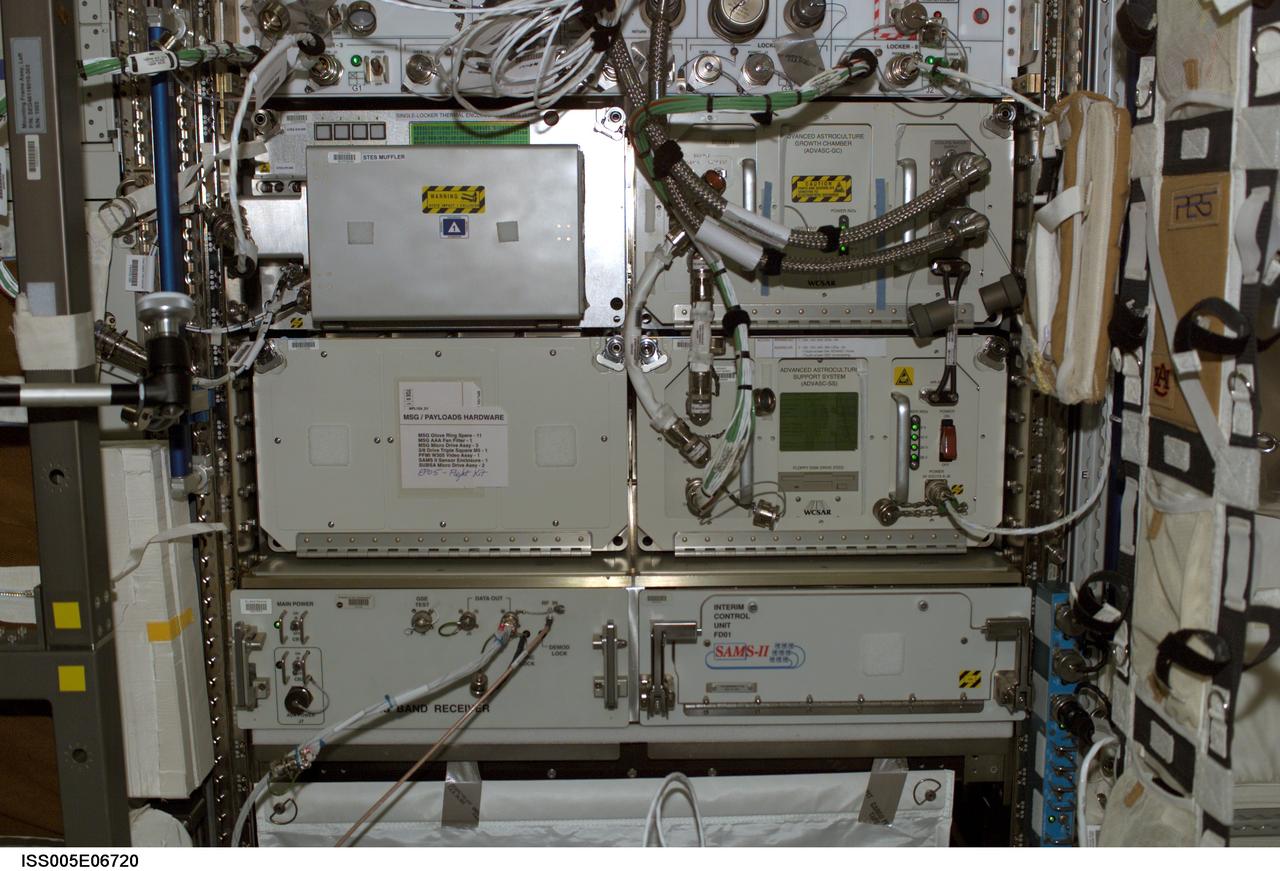
iss005e06720 (7/4/2002) --- Front view of Express Rack 4 in the U.S. Laboratory / Destiny taken during Expedition Five. Visible in the rack are the following items: Single-Locker Thermal Enclosure System (STES) Muffler, Advanced Astroculture Growth Chamber (ADVASC-GC), Advanced Astroculture Support System (ADVASC-SS). And Space Acceleration and Measurement System (SAMS) II.
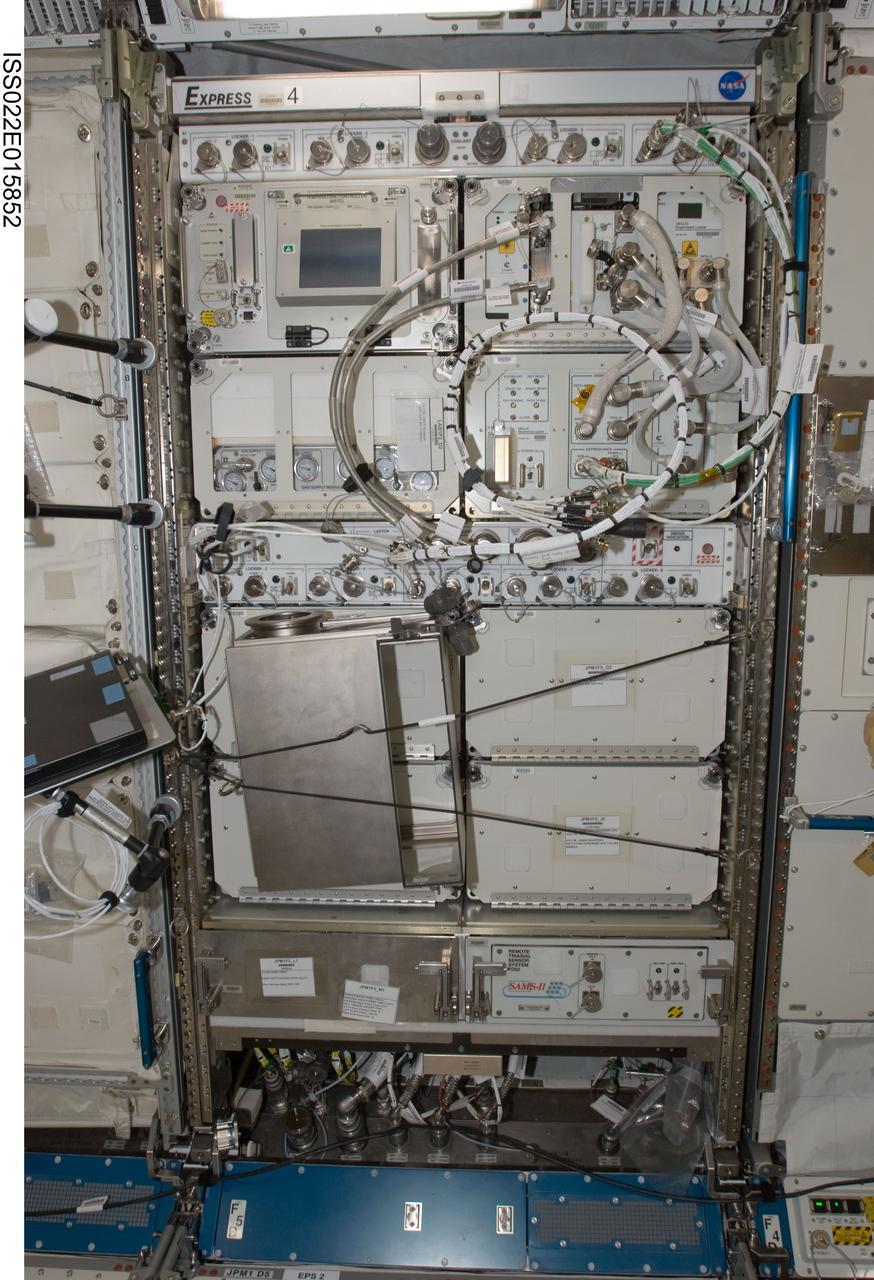
iss022e015852 (12/30/2009) --- The image shows a front view of EXpedite the PRocessing of Experiments to Space Station EXPRESS Rack 4 (Rack 4,JPM/1F5) in the Japanese Experiment Module (JEM) Japanese Pressurized Module (JPM). Equipment visible in the EXPRESS Rack includes the Biotechnology Specimen Temperature Controller (BSTC) and the Gas Supply Module (GSM) support hardware for the CBOSS (Cellular Biotechnology Operations Support Systems) investigations, and the Device for the Study of Critical Liquids and Crystallization (DECLIC). Also visible is the Space Acceleration Measurement System (SAMS) II.

ROBERT TRIMBLE, TAMEKA STEWART, ERIK SHAUGHNESSY, JEREMIAH HALEY, JOEL HARDY, & MICHAEL HARDY MISSION OPERATIONS LABORATORY - LABORATORY TRAINING COMPLEX (LTC), BUILDING 4663, EXPRESS RACK TRAINING.-
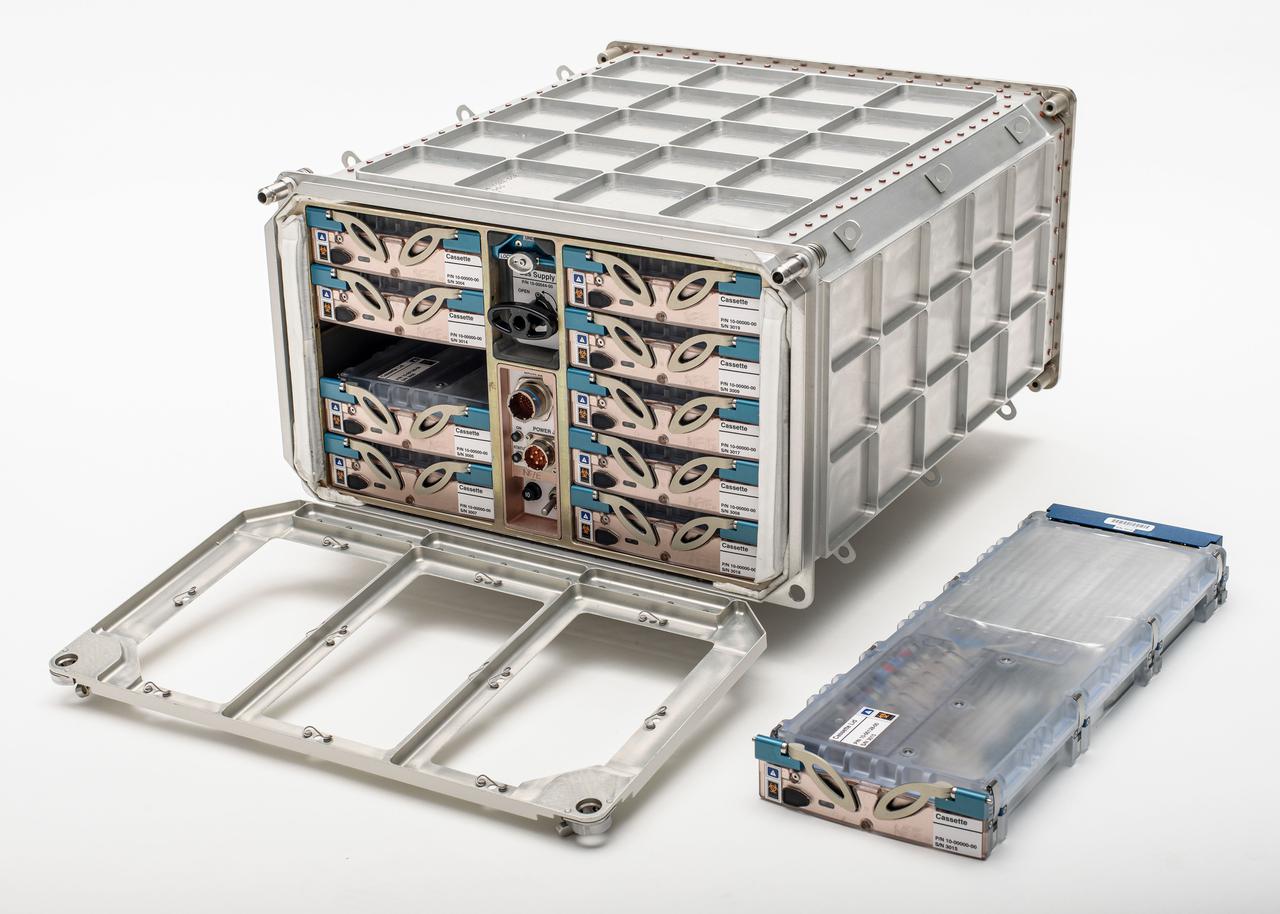
jsc2020e031188 (7/11/2014) --- A preflight view of the Bioculture System inside an ExPRESS Rack Locker. The Bioculture System is a biological science incubator for use on the International Space Station (ISS) with the capability of transporting active and stored investigations to ISS. This incubator supports a wide diversity of tissue, cell, and microbiological cultures and experiment methods to meet any spaceflight research investigation goals and objectives. The facility enables variable duration and long-duration cellular and microbiological investigations on ISS to meet the scientific needs of academic and biotechnology interests. Credits: NASA / Dominic Hart
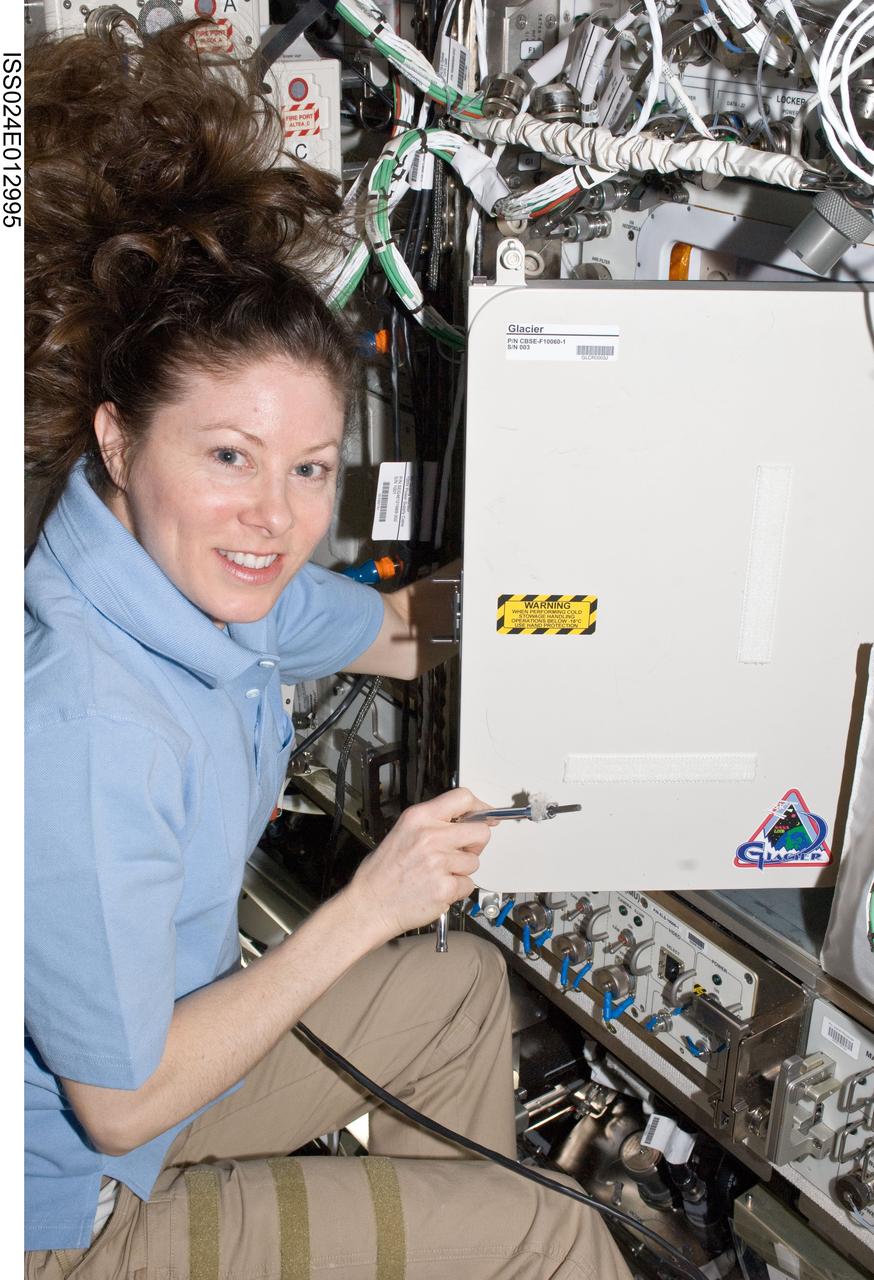
ISS024-E-012995 (1 Sept. 2010) --- NASA astronaut Tracy Caldwell Dyson, Expedition 24 flight engineer, works with the General Laboratory Active Cryogenic ISS Experiment Refrigerator (GLACIER) in the Destiny laboratory of the International Space Station.
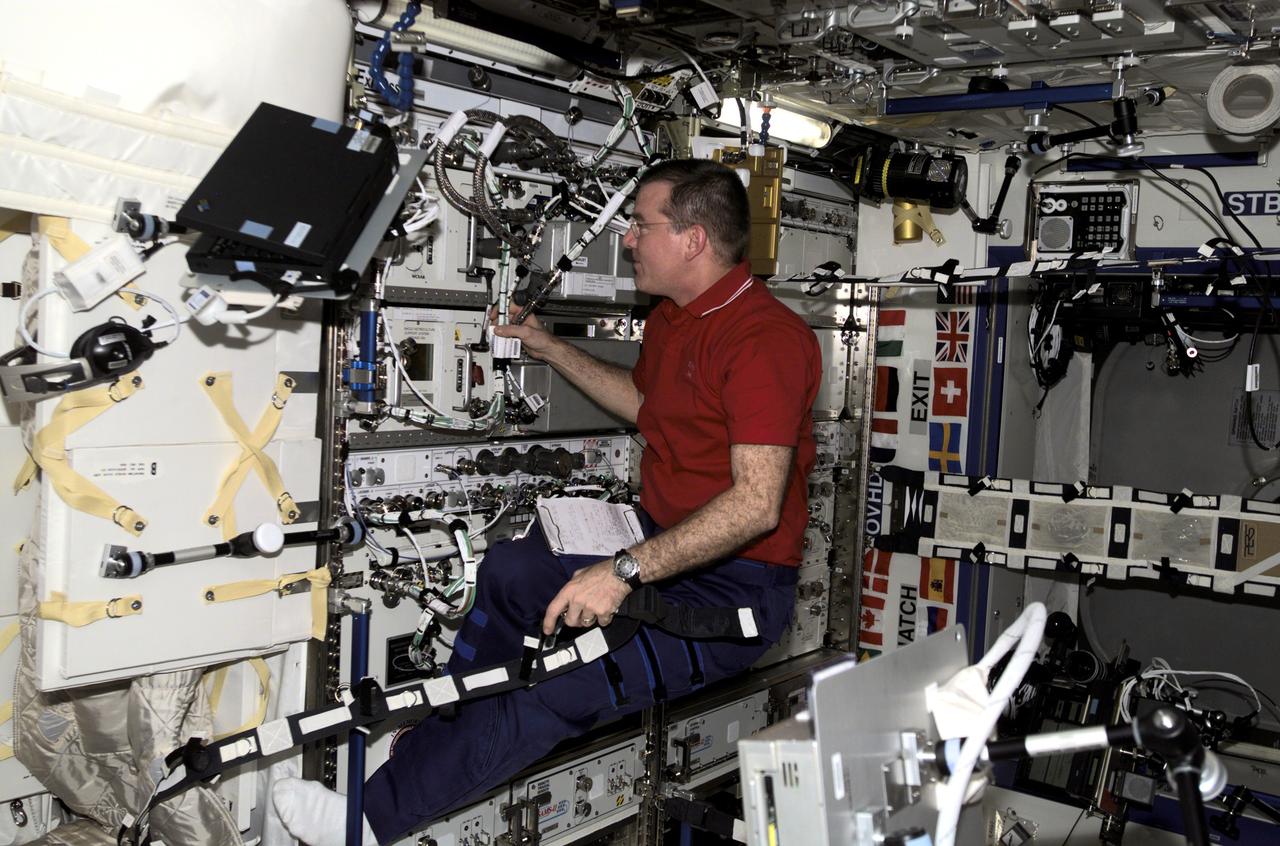
Astronaut James S. Voss, Expedition Two flight engineer, works with a series of cables on the EXPRESS Rack in the United State's Destiny laboratory on the International Space Station (ISS). The EXPRESS Rack is a standardized payload rack system that transports, stores, and supports experiments aboard the ISS. EXPRESS stands for EXpedite the PRocessing of Experiments to the Space Station, reflecting the fact that this system was developed specifically to maximize the Station's research capabilities. The EXPRESS Rack system supports science payloads in several disciplines, including biology, chemistry, physics, ecology, and medicine. With the EXPRESS Rack, getting experiments to space has never been easier or more affordable. With its standardized hardware interfaces and streamlined approach, the EXPRESS Rack enables quick, simple integration of multiple payloads aboard the ISS. The system is comprised of elements that remain on the ISS, as well as elements that travel back and forth between the ISS and Earth via the Space Shuttle.
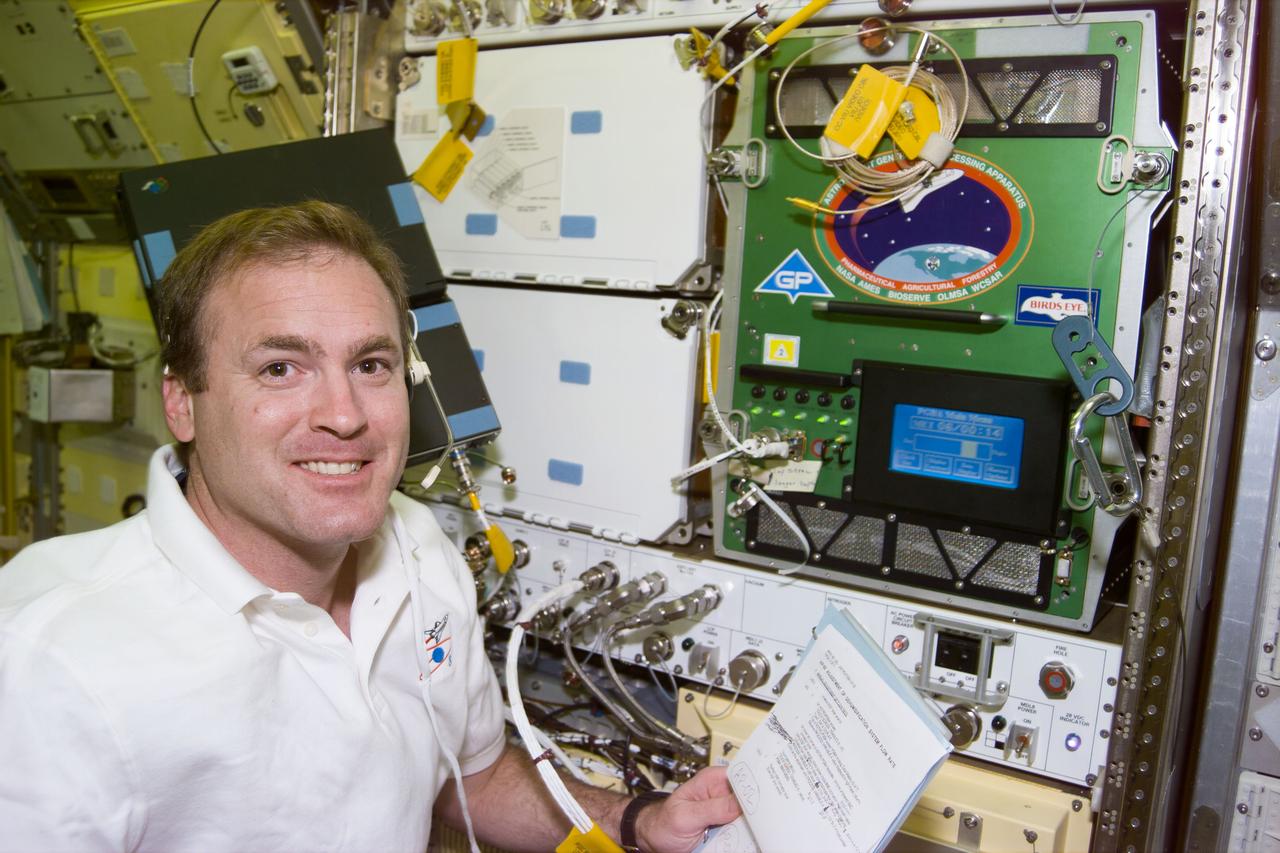
S94-E-5021 (6 July 1997) --- Astronaut James D. Halsell, Jr., mission commander, checks on an experiment in the Astro-Planet Generic Bioprocessing Apparatus onboard the Earth-orbiting Space Shuttle Columbia. The Microgravity Sciences Laboratory (MSL-1) had just completed the first one-third of its manifest time frame. The image was recorded with an Electronic Still Camera (ESC) and later downlinked to ground controllers in Houston, Texas.
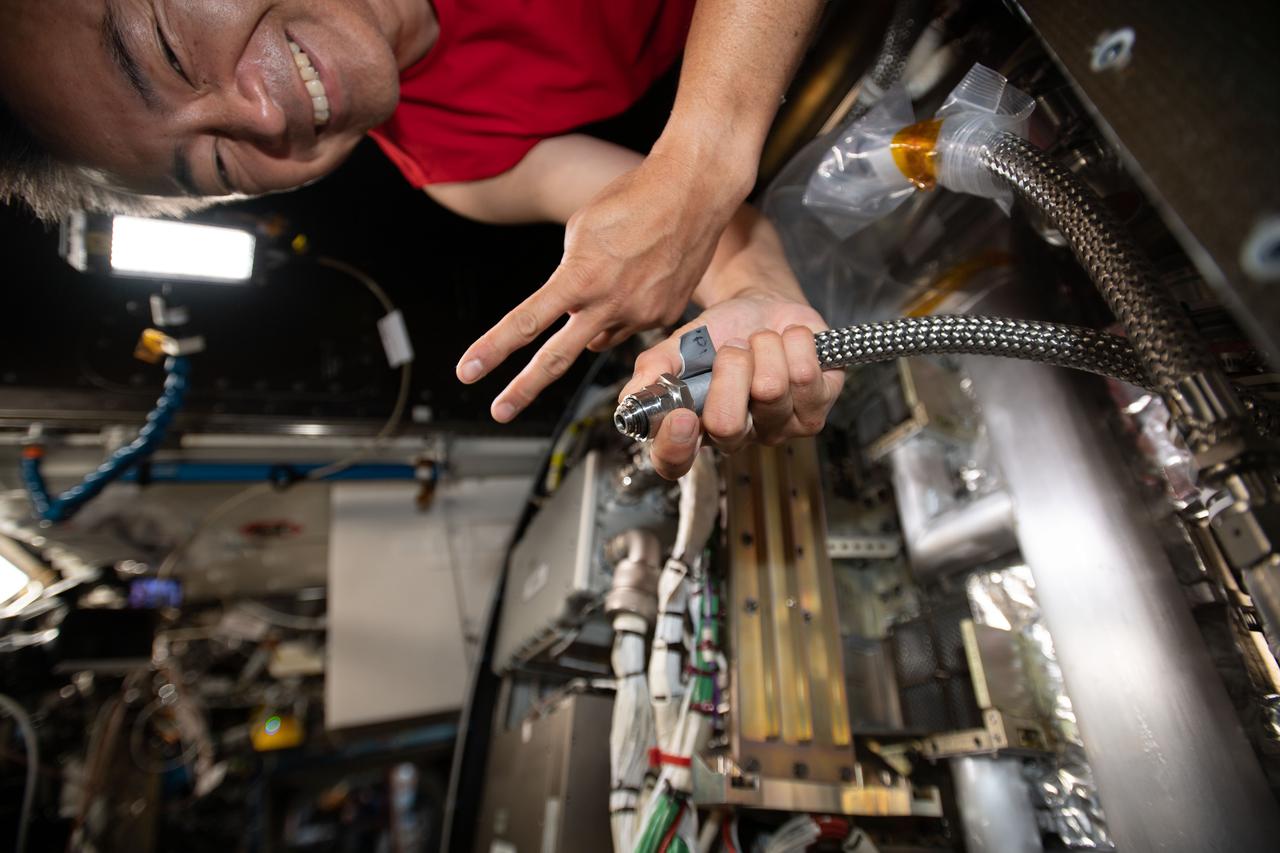
iss065e032225 (May 11, 2021) --- Expedition 65 Commander Akihiko Hoshide of the Japan Aerospace Exploration Agency replaces a science rack fan inside the International Space Station's U.S. Destiny laboratory.
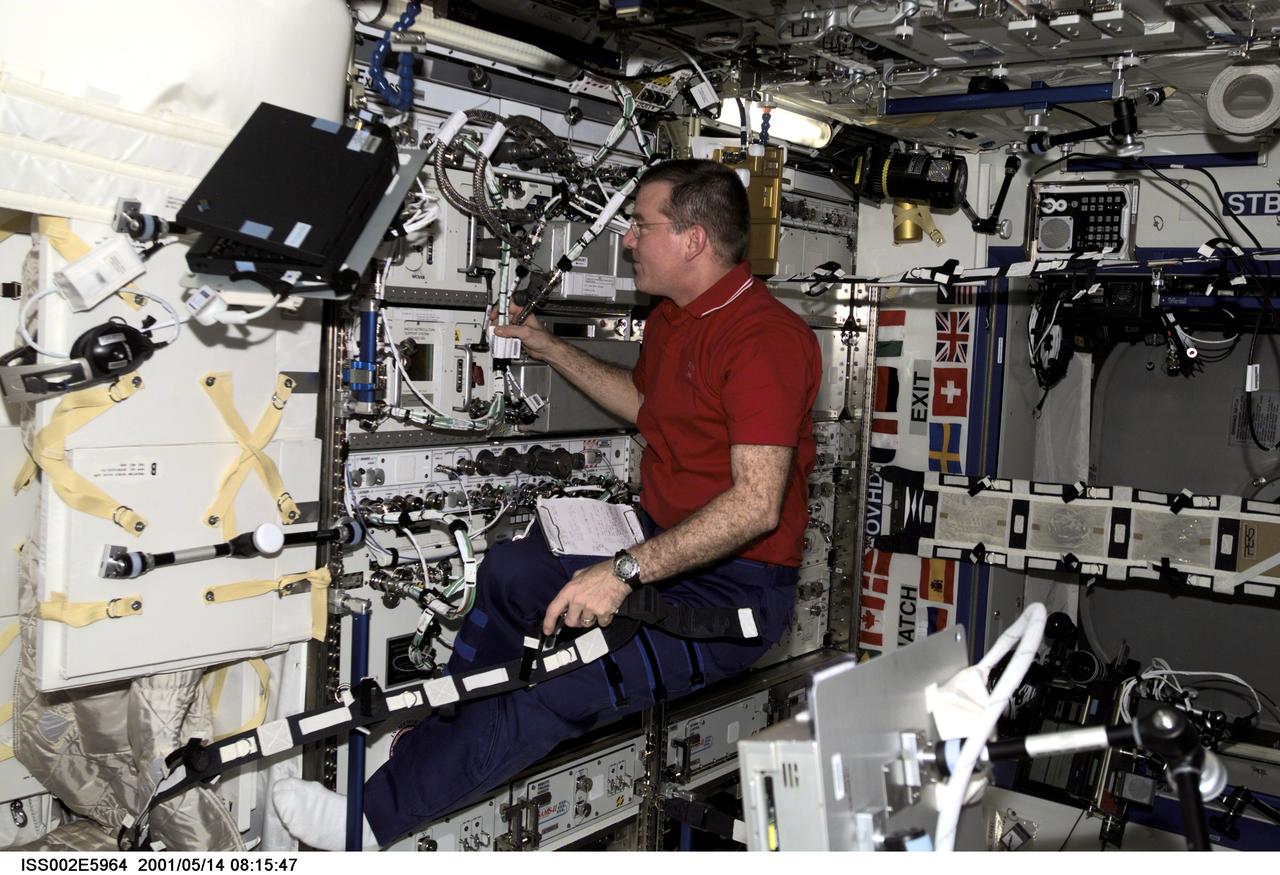
ISS002-E-5964 (14 May 2001) --- James S. Voss, Expedition Two flight engineer, works with a series of cables in the U.S. Laboratory. The image was taken with a digital still camera.
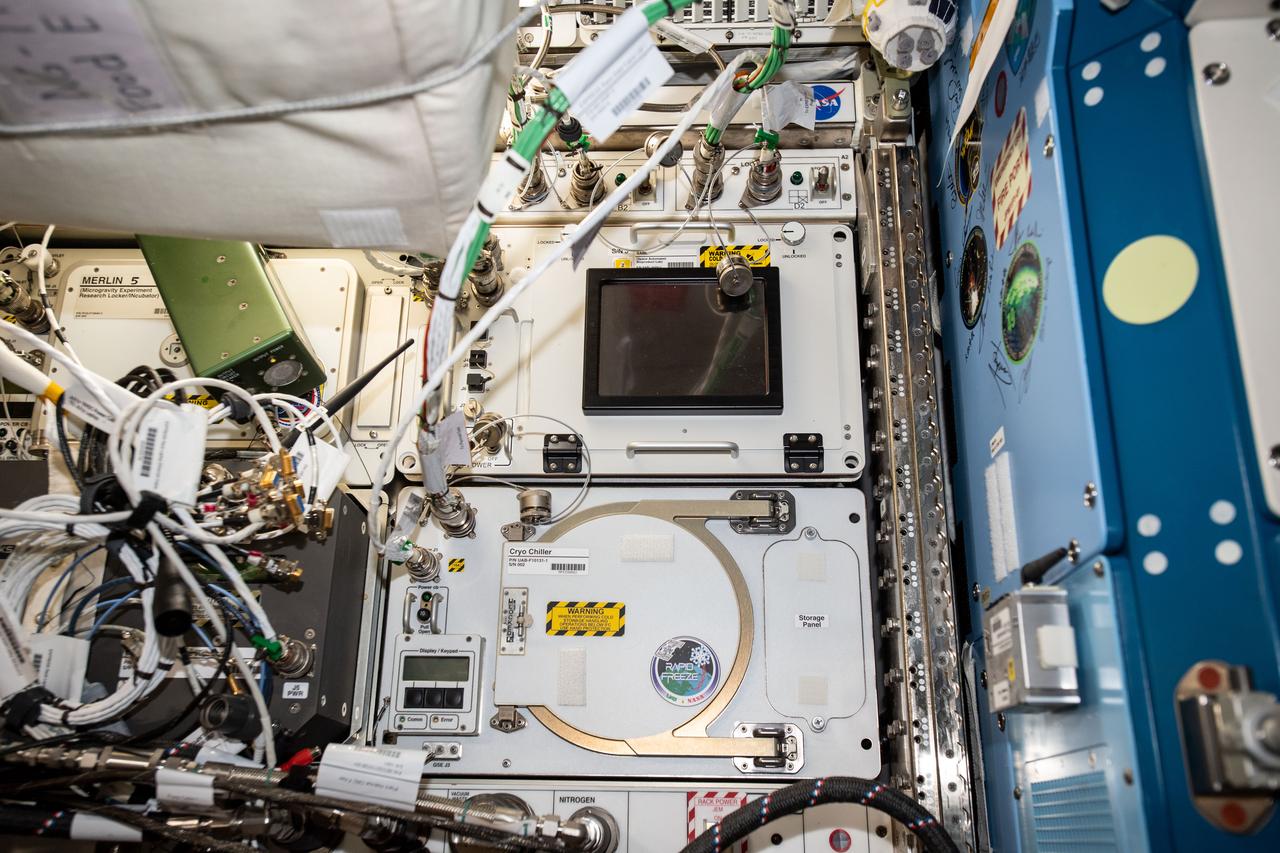
iss059e034456 (4/23/2019) --- A view of the Cryo Chiller Hardware during installation aboard the International Space Station (ISS). Cryo Chiller is a single Expedite the Processing of Experiments to Space Station (EXPRESS) locker replacement unit which provides rapid freezing capability in support of biological sciences, as well as temperature-controlled transfer to/from the International Space Station (ISS) on visiting vehicles.
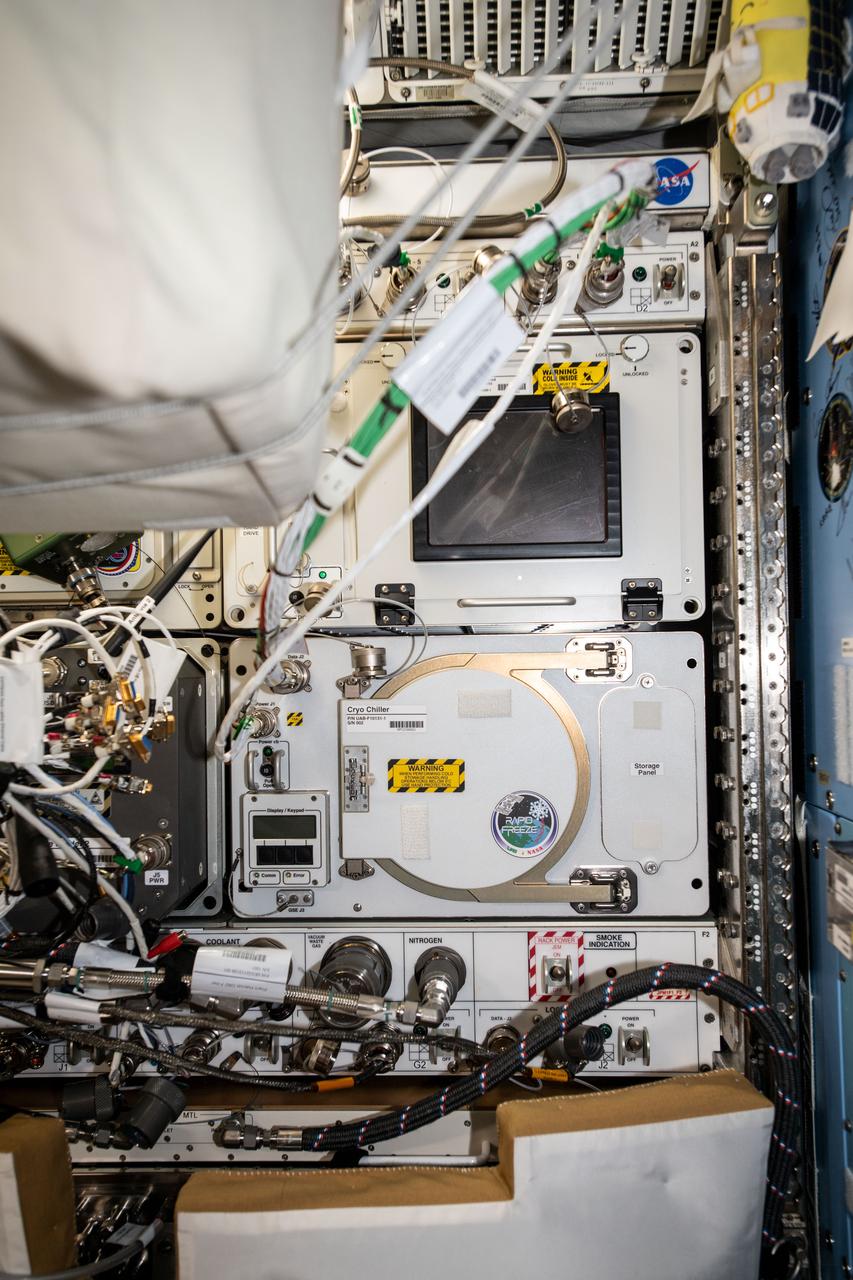
iss059e034458 (4/23/2019) --- A view of the Cryo Chiller Hardware during installation aboard the International Space Station (ISS). Cryo Chiller is a single Expedite the Processing of Experiments to Space Station (EXPRESS) locker replacement unit which provides rapid freezing capability in support of biological sciences, as well as temperature-controlled transfer to/from the International Space Station (ISS) on visiting vehicles.
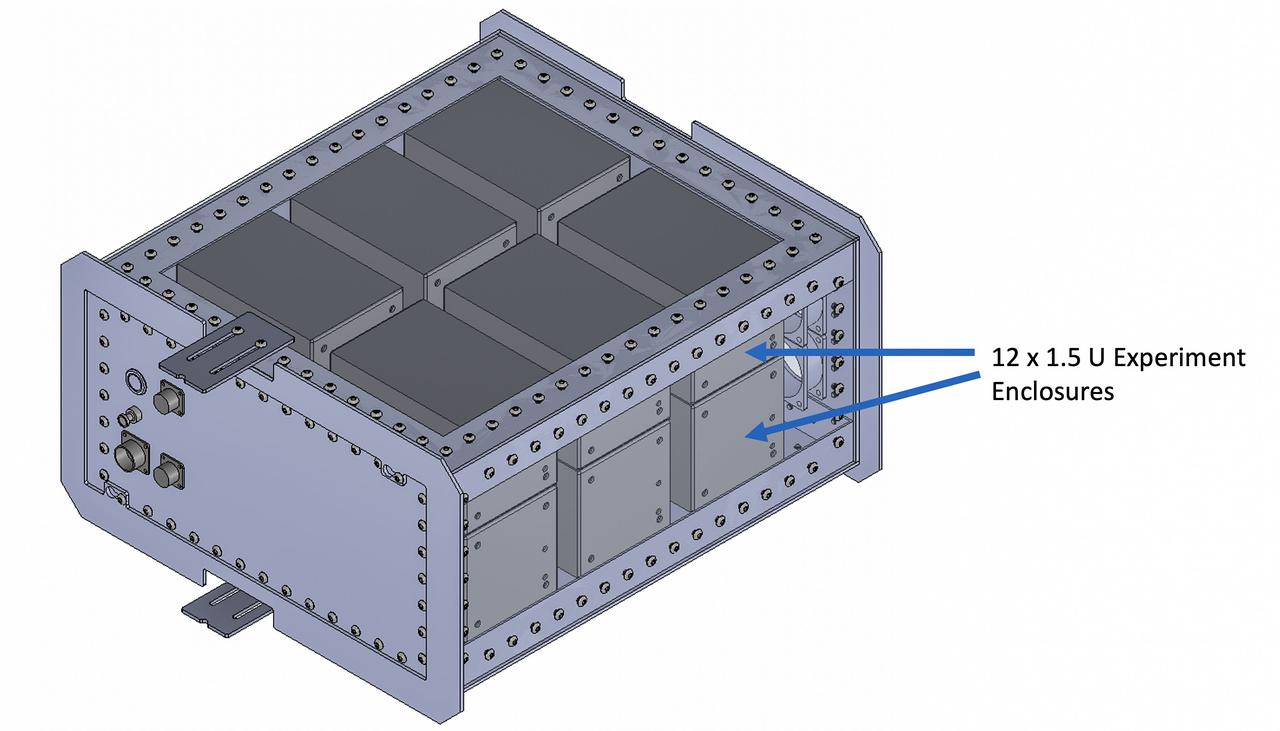
jsc2021e036921 (8/12/2021) --- Faraday Research Facility is a multipurpose, standalone research facility that loads into the EXpedite the PRocessing of Experiments to Space Station (EXPRESS) Racks. EXPRESS Racks provide structural interfaces, power, data, cooling, water, and other items needed to operate science experiments in space. Faraday accommodates up to twelve 1.5 Unit or up to six 3 Unit microlabs (µLabs).
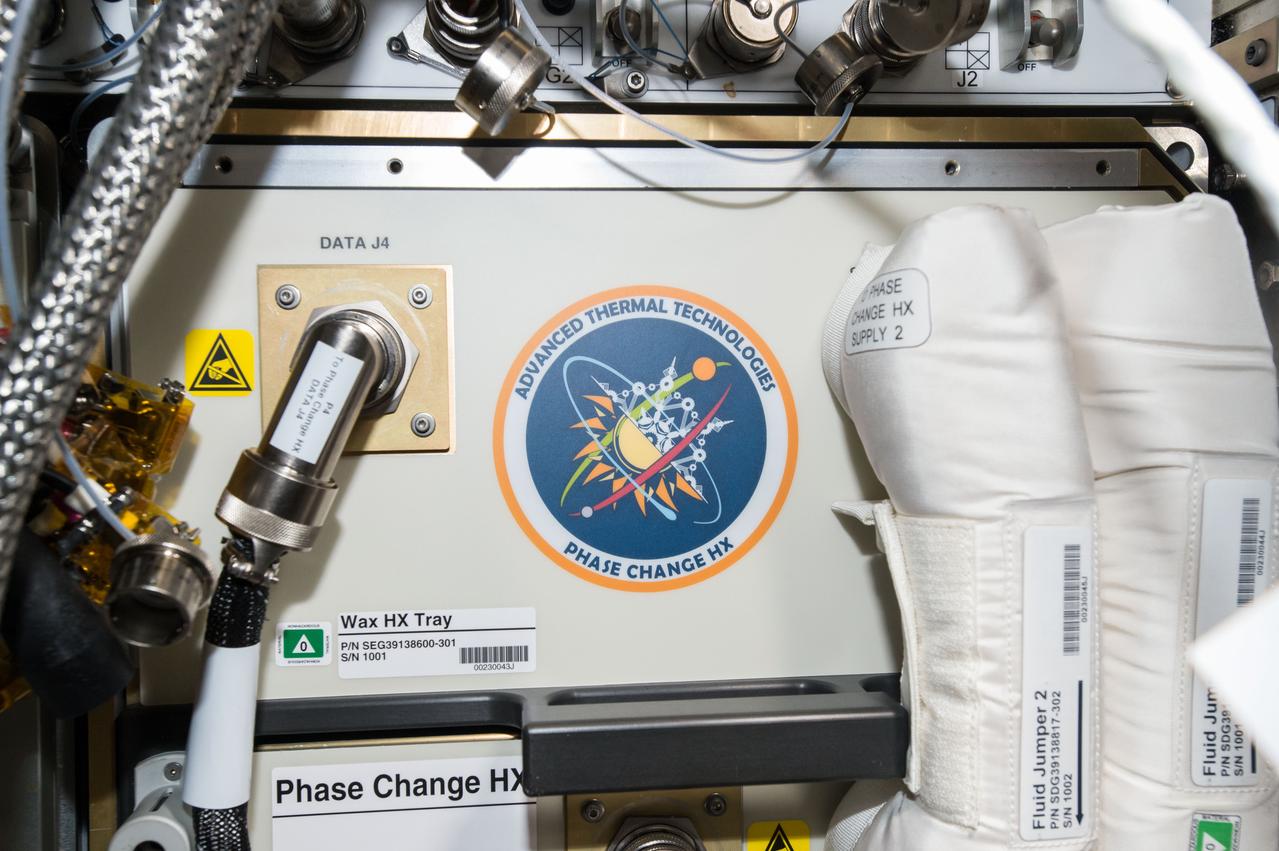
iss049e002221 (9/14/2016) --- Photographic documentation taken during installation of the Phase Change Heat Exchanger (PCHx) into EXpedite PRocessing of Experiments to Space Station (EXPRESS) Rack (ER)-8. The primary objective of the PCHx Project is to create a unique test platform utilizing the EXPRESS Rack on the ISS to advance the technology readiness level of phase change heat exchangers for infusion into future exploration vehicles.
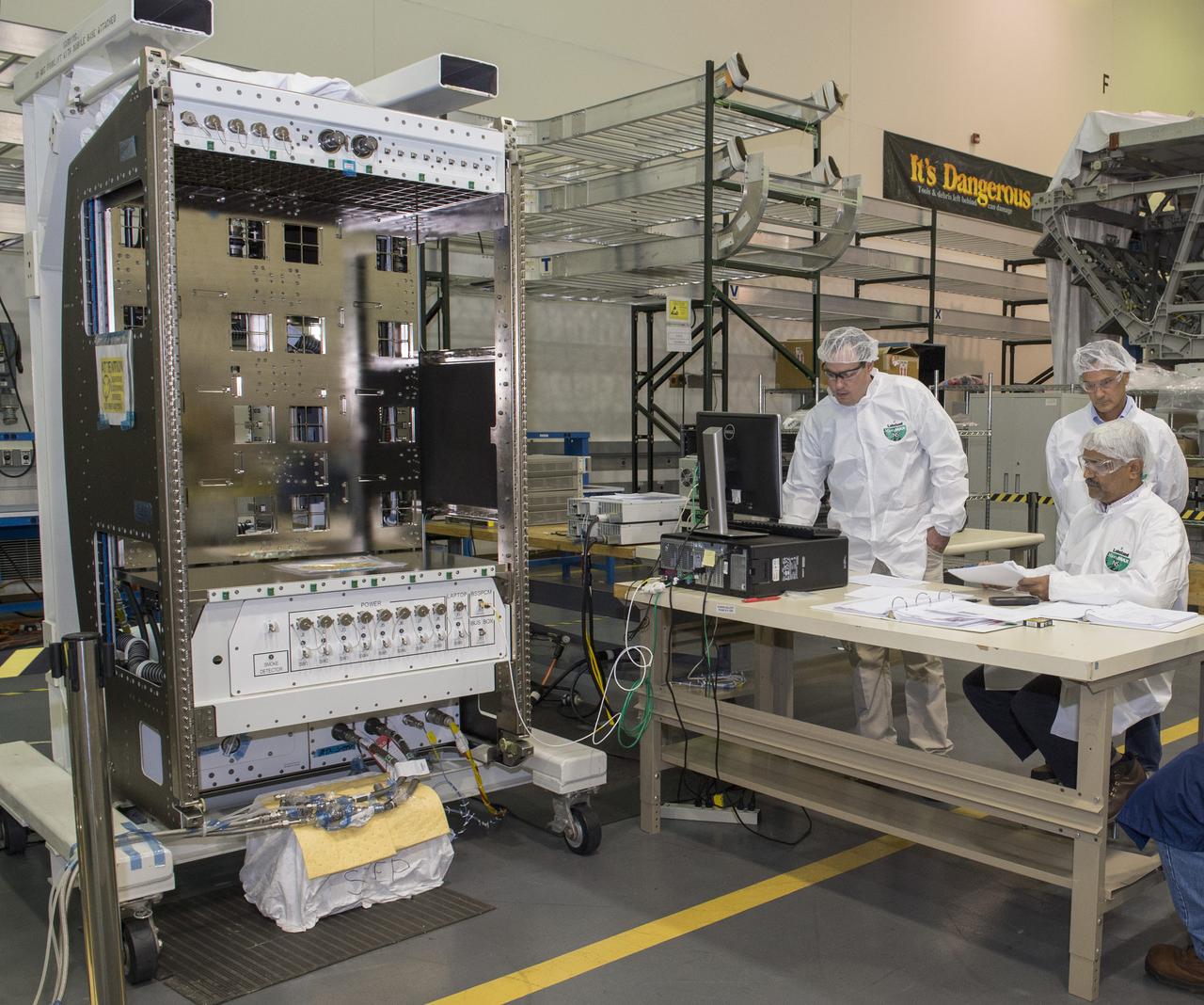
Boeing engineers, Chris Chapman, left, Greg Clark, center, and Ashesh Patel, right, perform air flow balance testing on NASA's new Basic Express Racks. The racks, developed at Marshall, will expand the capabilities for science research aboard the International Space Station. Delivery to the station is scheduled for late 2018.
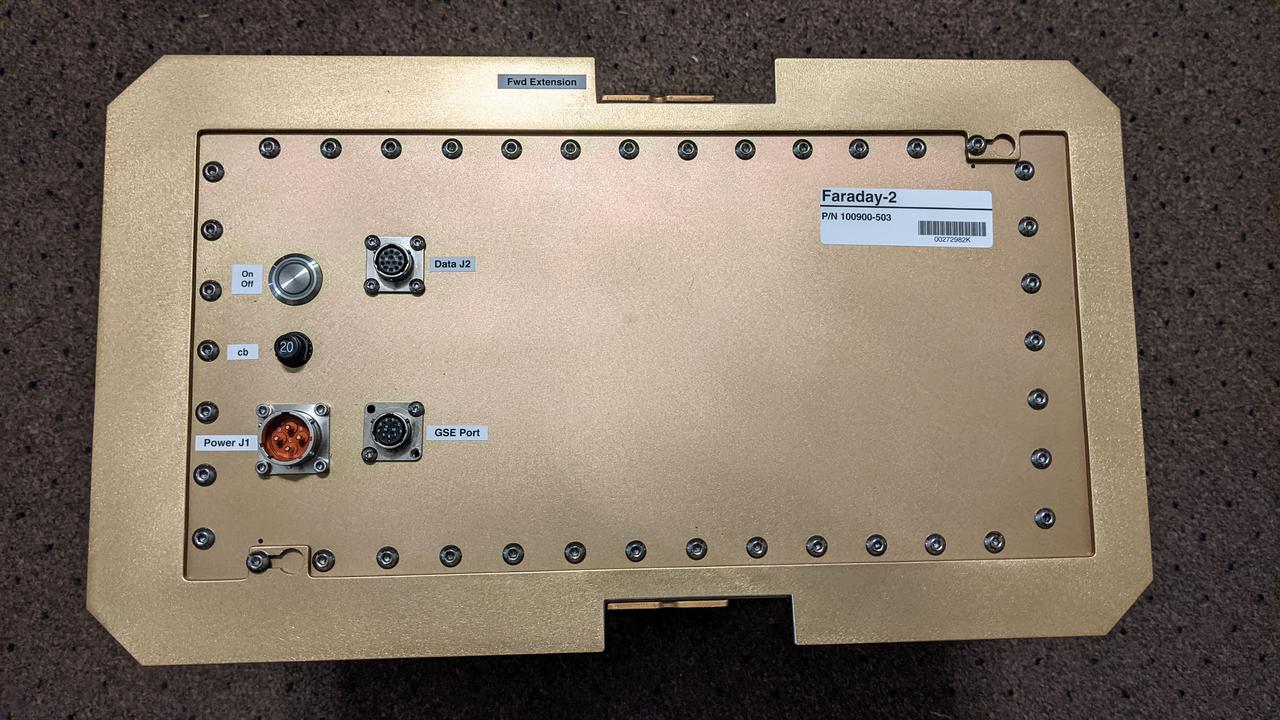
jsc2021e036920 (7/8/2021) --- A preflight view of the Faraday Research Facility front panel. The Faraday Research Facility is a multipurpose research facility that interfaces sub-payloads (µLabs) into the International Space Station (ISS) EXPRESS Racks.
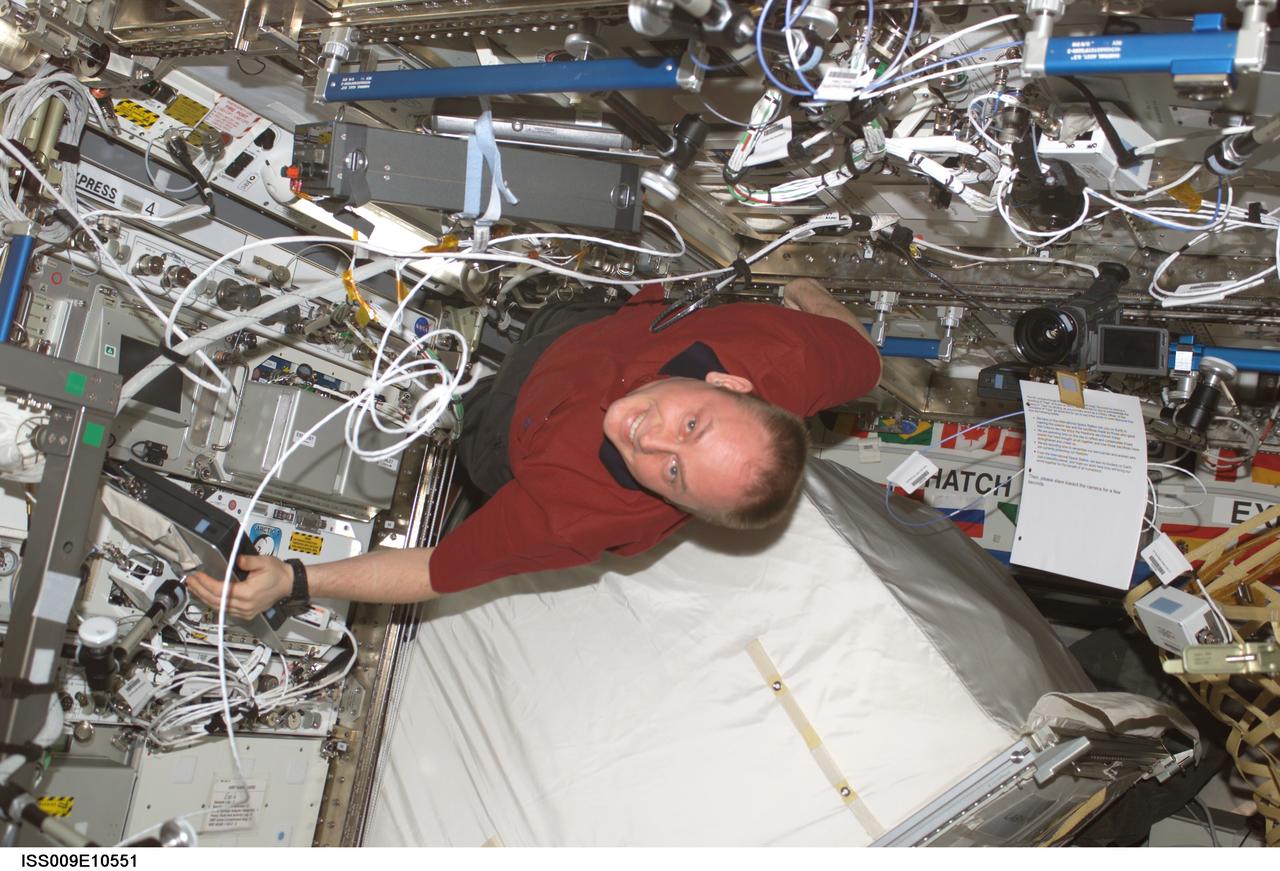
ISS009-E-10551 (4 June 2004) --- Astronaut Edward M. (Mike) Fincke, Expedition 9 NASA ISS science officer and flight engineer, moves the Zero-G Storage Rack (ZSR) in the Destiny laboratory of the International Space Station (ISS) in order to retrieve the spare Remote Power Controller Module (RPCM), scheduled to replace the failed RPCM on the S0 (S-Zero) Truss. Fincke is positioned above the ZSR, which has been pulled from the Express Rack.
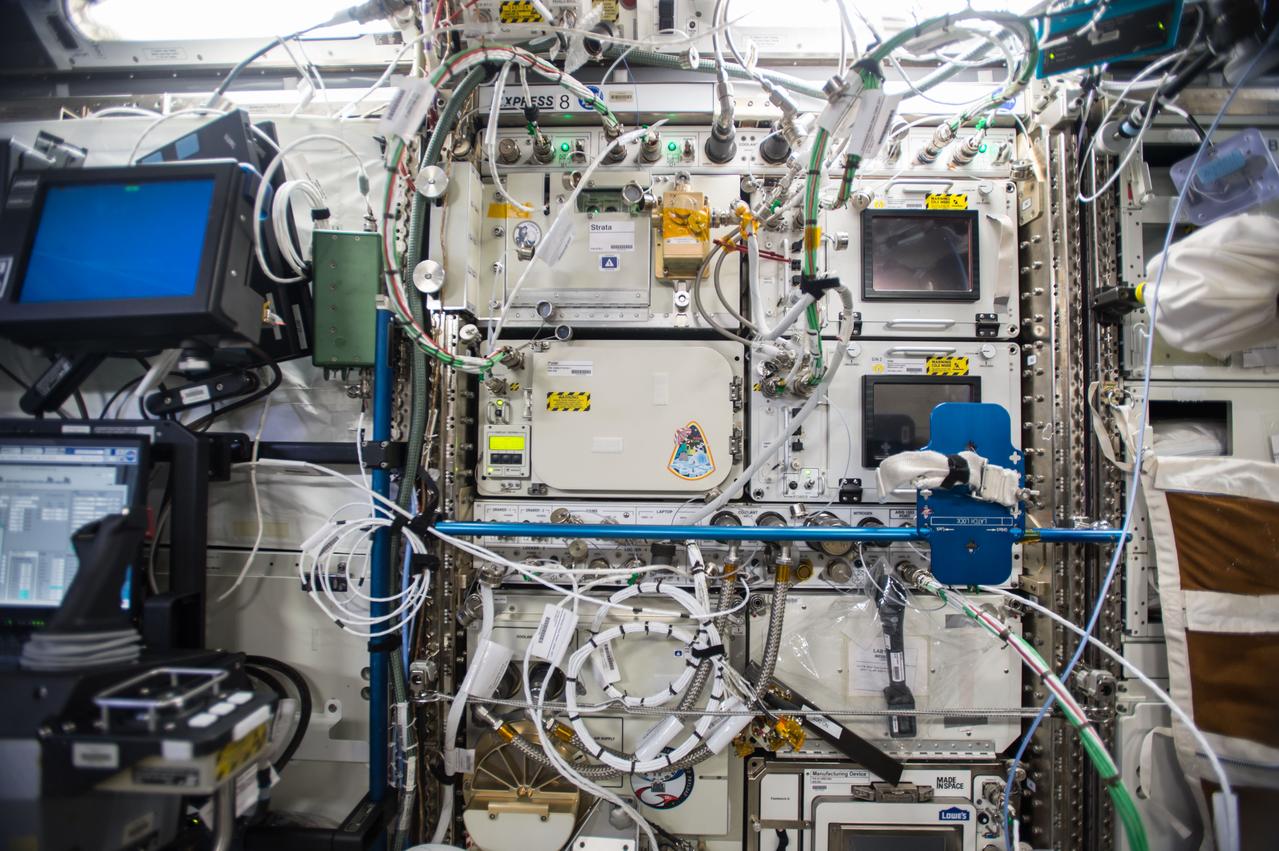
iss048e042382 (7/21/2016) --- Documentation of Polar facility 2 installed in ExPRESS (Expedite the Processing of Experiments to Space Station) Rack 8, LAB1P4, in the Destiny U.S. Laboratory. The newly-installed Space Automated Bioproduct Laboratories (SABL) 1 and 2 are also in view.

iss068e045014 (Feb. 1, 2023) --- NASA astronaut and Expedition 68 Flight Engineer Josh Cassada uses a watering syringe to water tomato plants growing inside the EXPRESS rack's Veggie space botany facility located inside the Columbus laboratory module aboard the International Space Station.
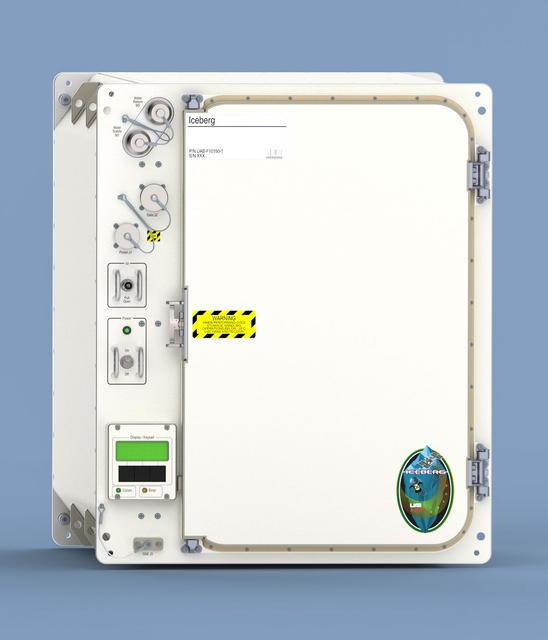
jsc2019e053370 (9/17/2019) --- A CAD rendering of the Iceberg freezer as designed by the University of Alabama Birmingham. Iceberg is a Double Locker equivalent designed for EXPRESS Rack operation and provides additional cold stowage resources aboard the International Space Station (ISS). The units provide an operating range of +4°C to -95°C.
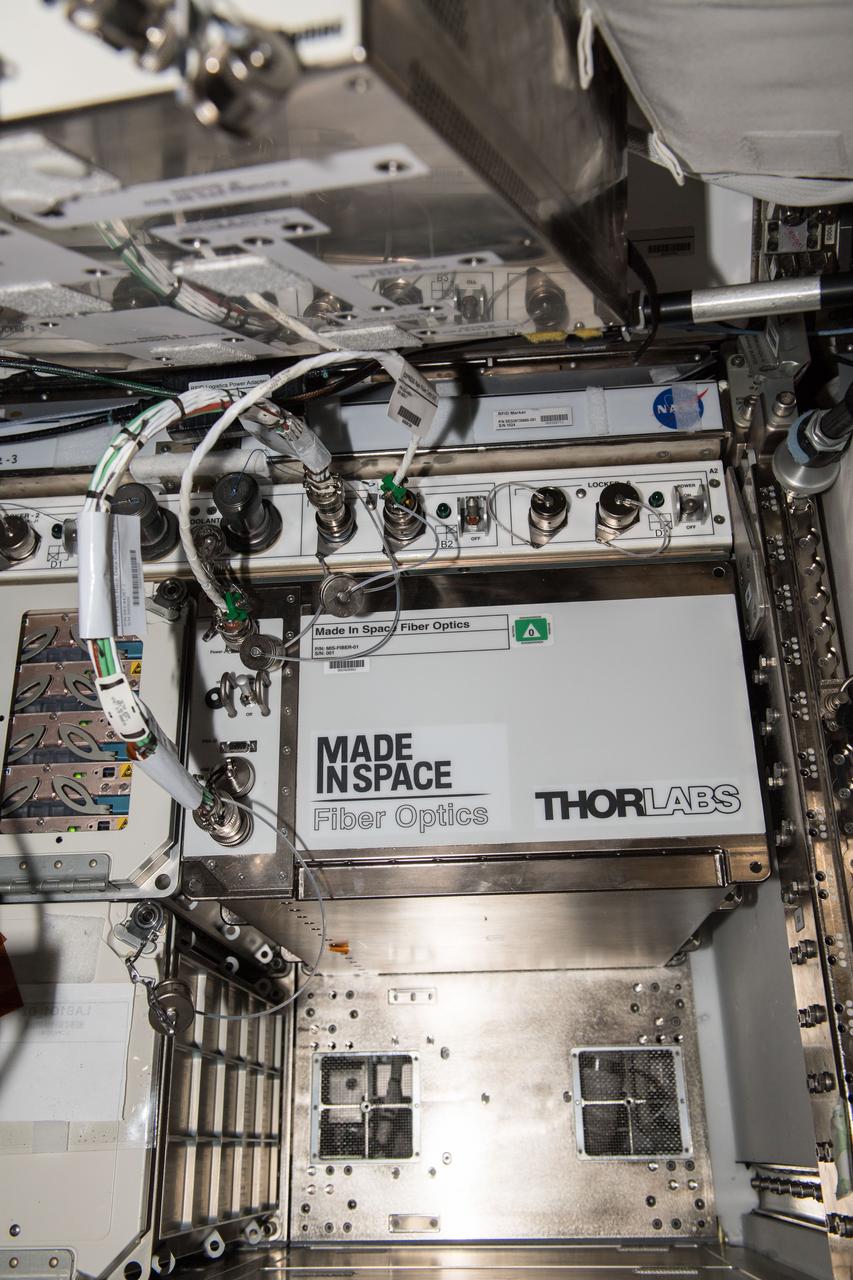
iss054e005568 (12-26-2017) --- View of the Made In Space Fiber Optics Locker installed in ExPRESS (Expedite the Processing of Experiments to Space Station) Rack 7. The Optical Fiber Production in Microgravity (Made In Space Fiber Optics) investigation demonstrates the merits of manufacturing fiber optic filaments in microgravity.
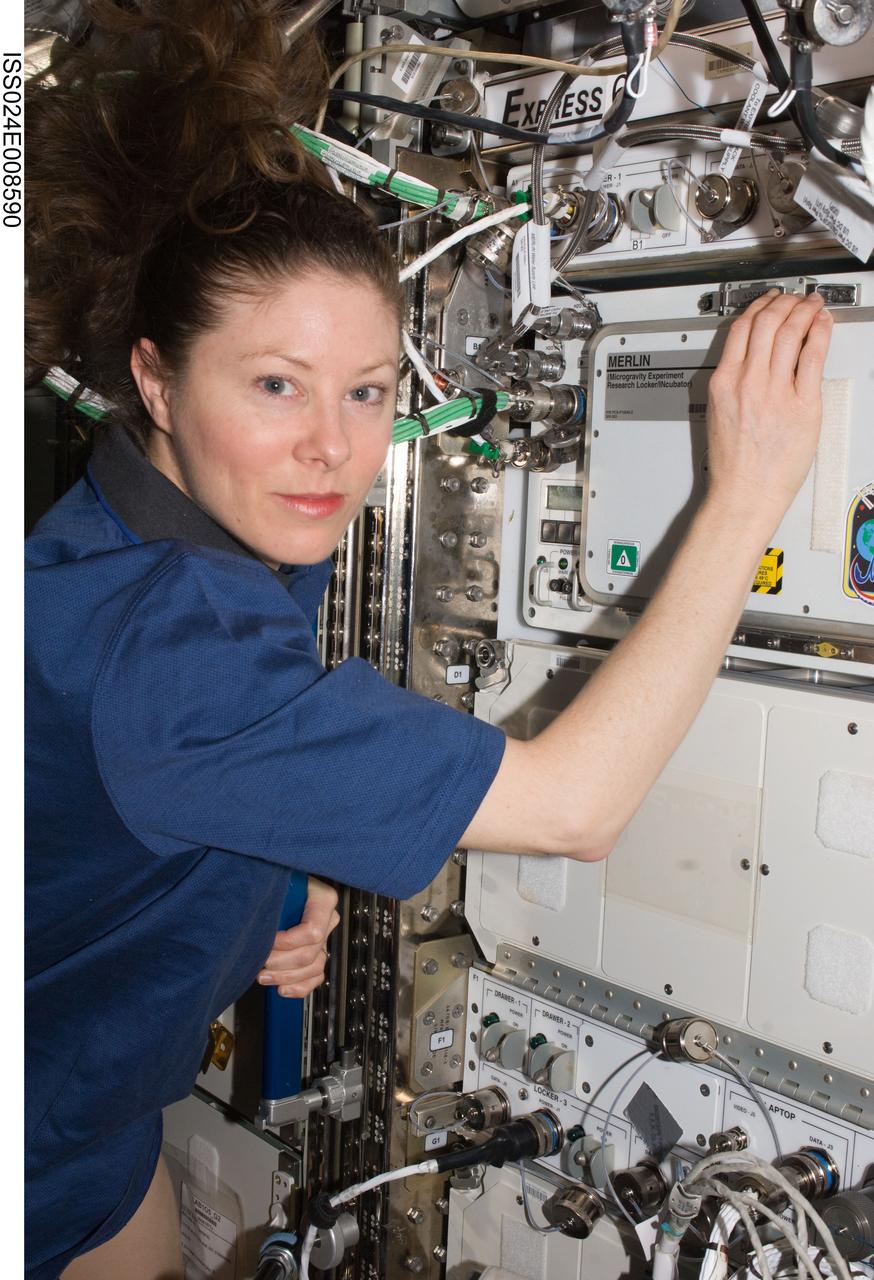
ISS024-E-008590 (18 July 2010) --- NASA astronaut Tracy Caldwell Dyson, Expedition 24 flight engineer, works with the Microgravity Experiment Research Locker/Incubator (MERLIN) on Express rack 6 in the Destiny laboratory of the International Space Station.
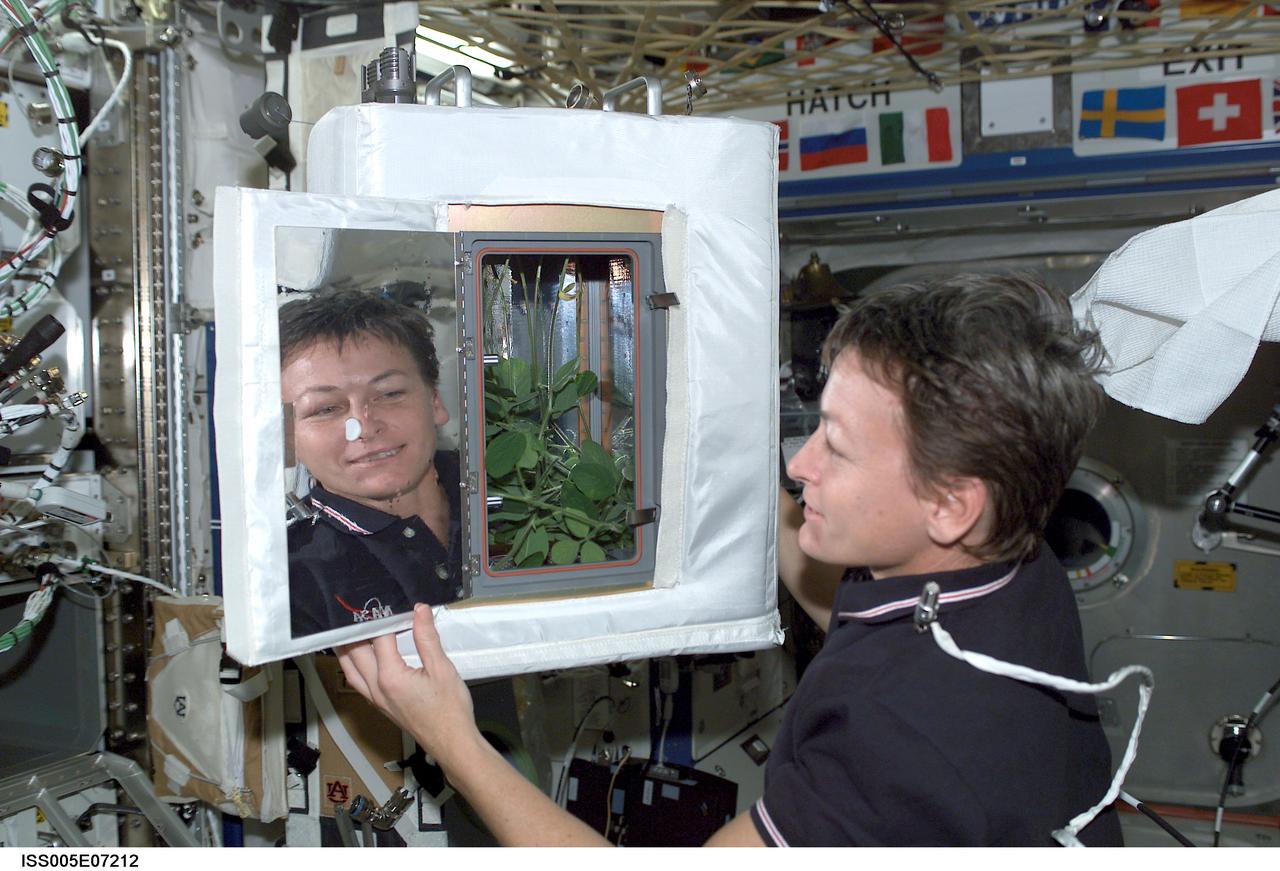
ISS005-E-07212 (10 July 2002) --- NASA Astronaut Peggy Whitson, Expedition 5 International Space Station (ISS) science officer, looks at the Advanced Astroculture (ADVASC) Soybean plant growth experiment as part of Expediting the Process of Experiments to the Space Station (EXPRESS) Rack 4 located in the U.S. Laboratory Destiny.
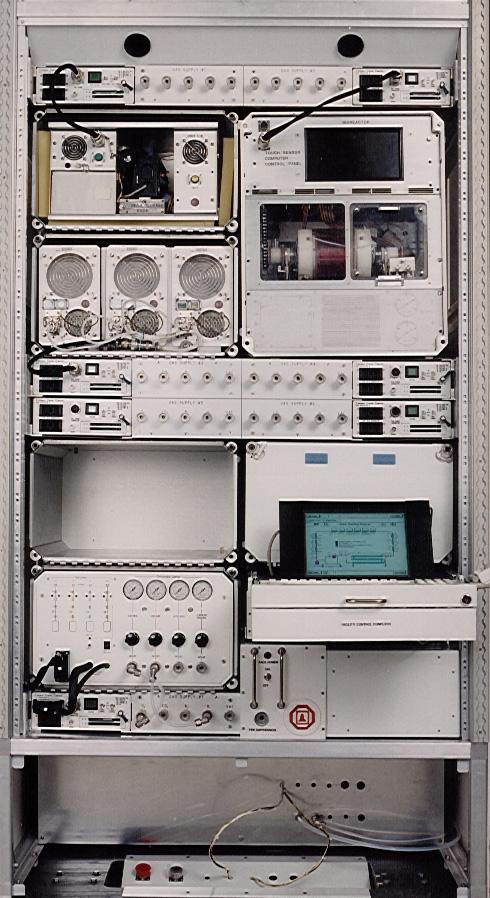
Engineering mockup shows the general arrangement of the plarned Biotechnology Facility inside an EXPRESS rack aboard the International Space Station. This layout includes a gas supply module (bottom left), control computer and laptop interface (bottom right), two rotating wall vessels (top right), and support systems.
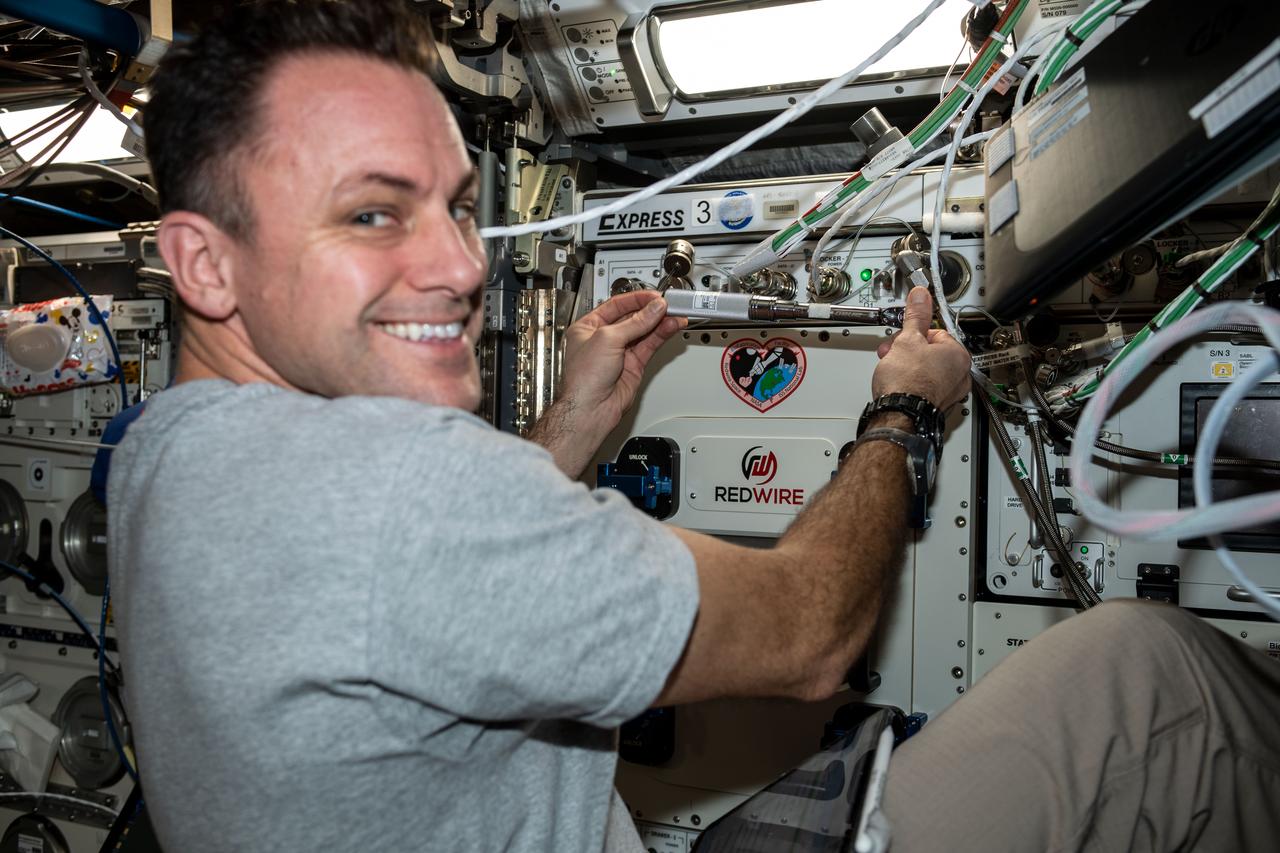
iss068e043943 (Jan. 31, 2023) --- NASA astronaut and Expedition 68 Flight Engineer Josh Cassada is pictured installing the BioFabrication Facility (BFF), a research device that will be used to investigate the 3-D printing of human organs in microgravity. The BFF is located inside the Columbus laboratory module's EXPRESS Rack 3 aboard the International Space Station.
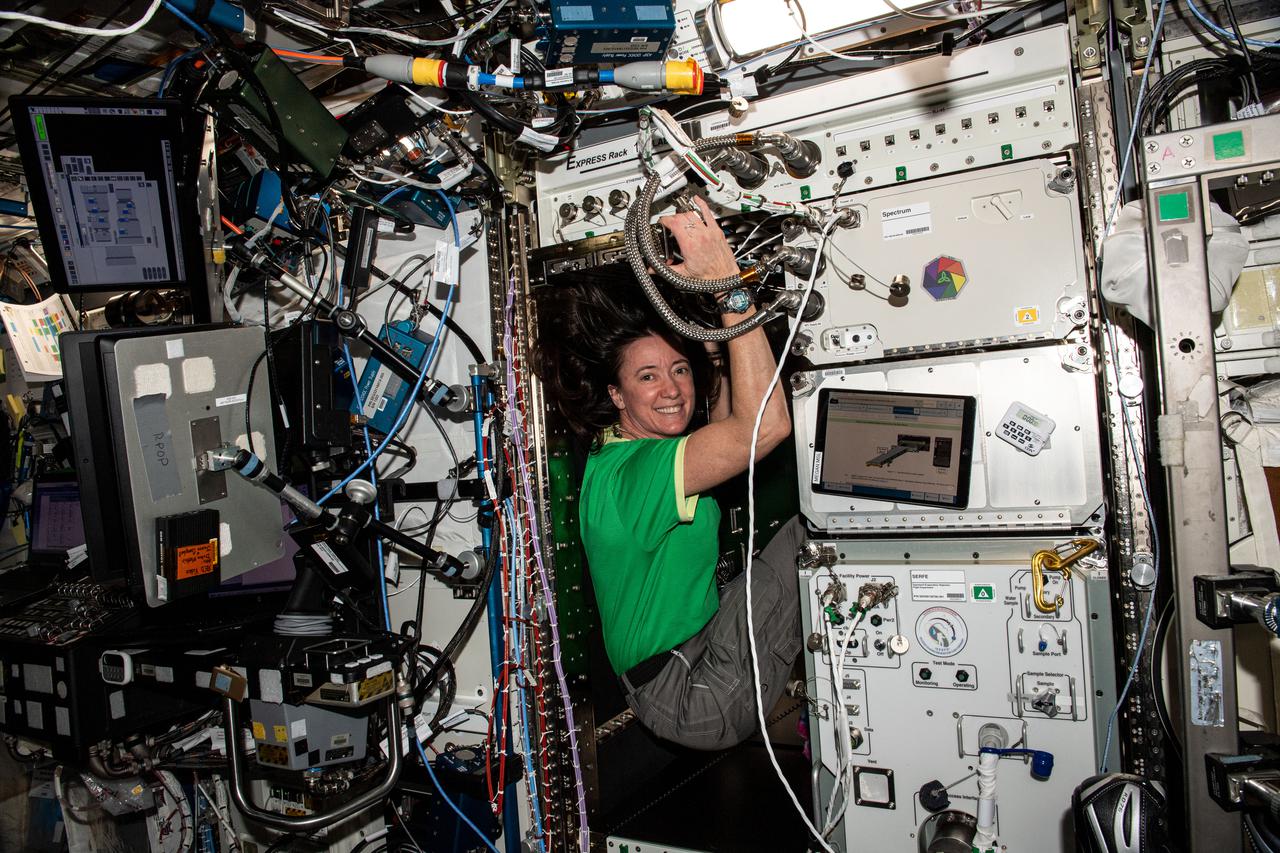
iss065e369753 (Sept. 9, 2021) --- NASA astronaut and Expedition 65 Flight Engineer Megan McArthur configures an EXPRESS rack inside the U.S. Destiny laboratory module before installing a new device that scrubs the International Space Station's atmosphere of carbon dioxide.
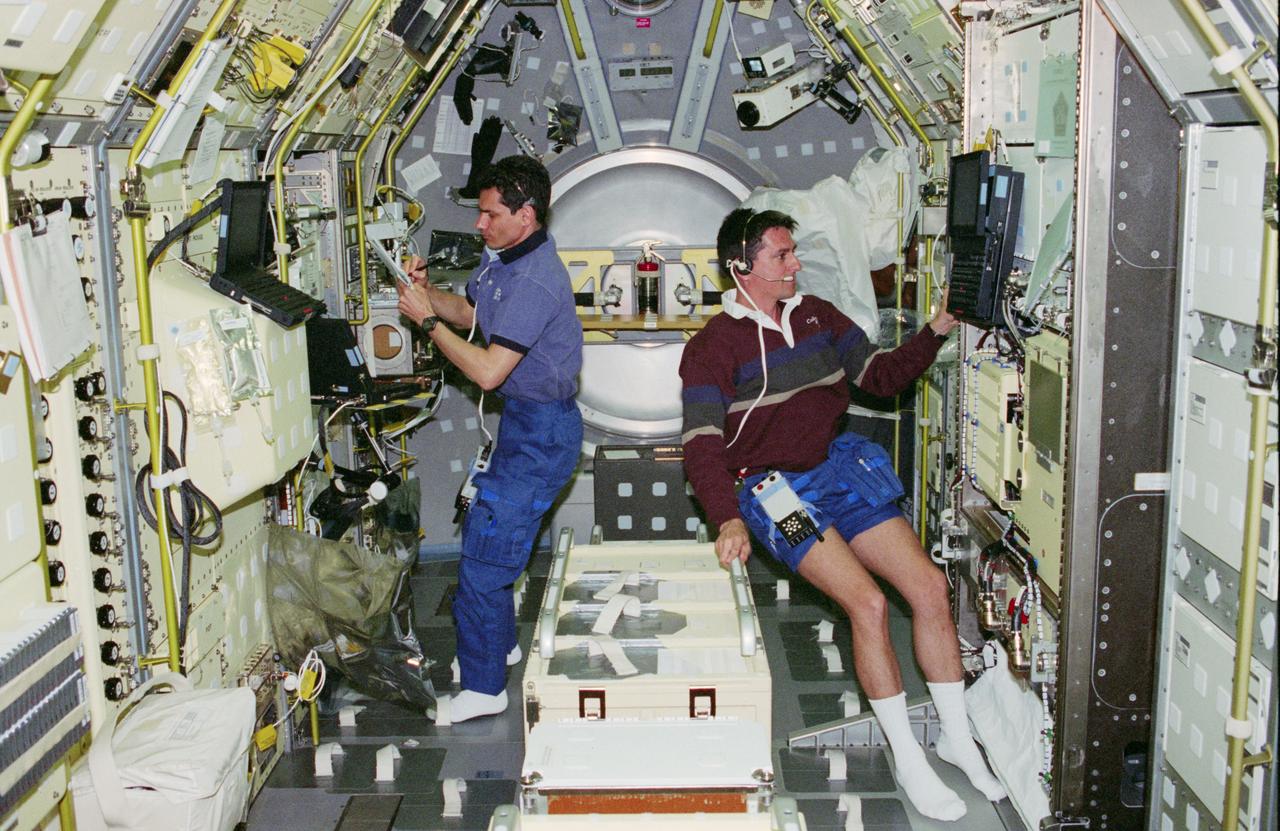
STS083-312-031 (4-8 April 1997) --- Payload specialist Gregory T. Linteris (left) is seen at the Mid Deck Glove Box (MGBX), while astronaut Donald A. Thomas, mission specialist, works at the Expedite the Processing of Experiments to Space Station (EXPRESS) rack. MGBX is a facility that allows scientists the capability of doing tests on hardware and materials that are not approved to be handled in the open Spacelab. It is equipped with photographic, video and data recording capability, allowing a complete record of experiment operations. Experiments performed on STS-83 were Bubble Drop Nonlinear Dynamics and Fiber Supported Droplet Combustion. EXPRESS is designed to provide accommodations for Sub-rack payloads on Space Station. For STS-83, it held two payloads. The Physics of Hard Colloidal Spheres (PHaSE) and ASTRO-Plant Generic Bioprocessing Apparatus (ASTRO-PGBA), a facility with light and atmospheric controls which supports plant growth for commercial research.
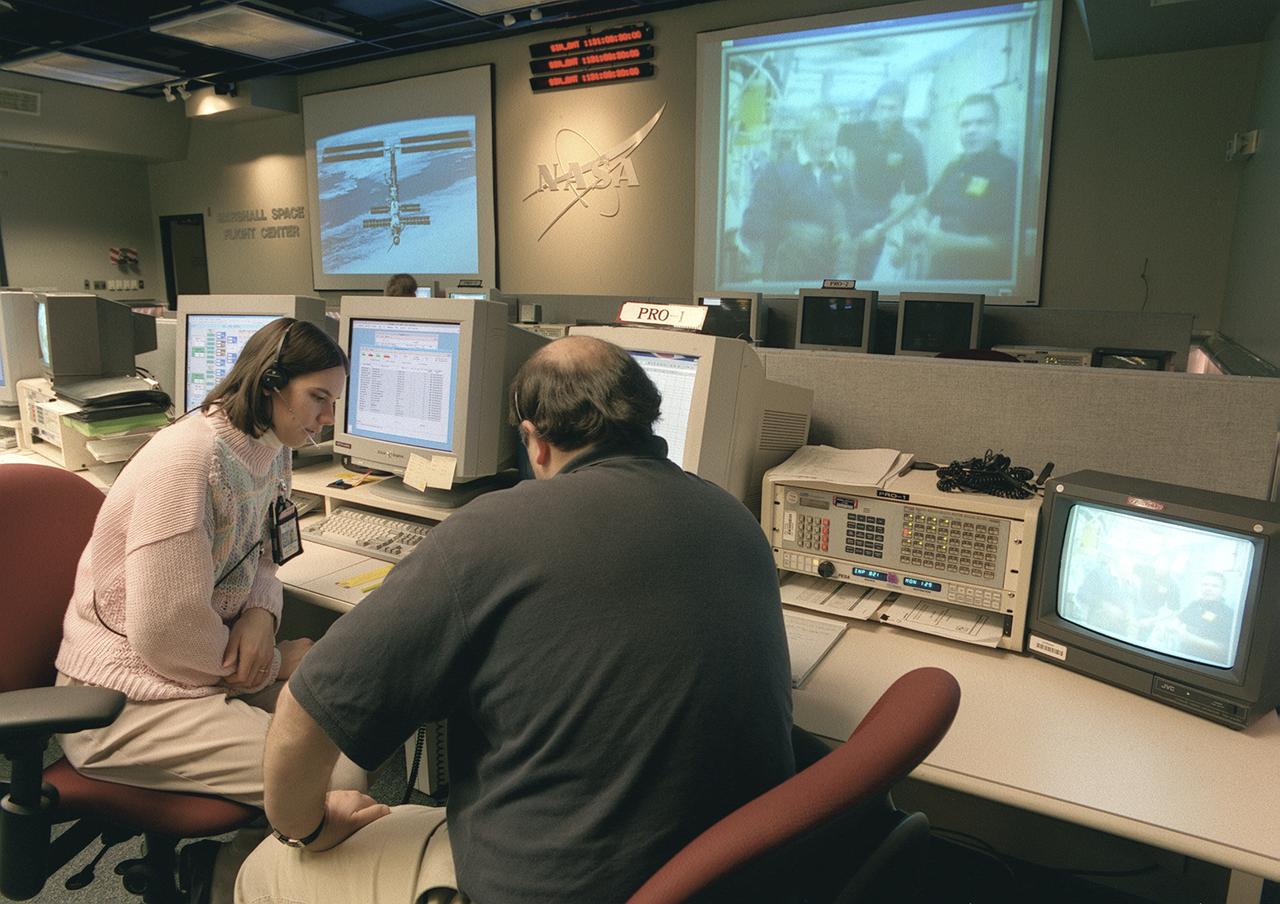
The Payload Operations Center (POC) is the science command post for the International Space Station (ISS). Located at NASA's Marshall Space Flight Center in Huntsville, Alabama, it is the focal point for American and international science activities aboard the ISS. The POC's unique capabilities allow science experts and researchers around the world to perform cutting-edge science in the unique microgravity environment of space. The POC is staffed around the clock by shifts of payload flight controllers. At any given time, 8 to 10 flight controllers are on consoles operating, plarning for, and controlling various systems and payloads. This photograph shows a Payload Rack Officer (PRO) at a work station. The PRO is linked by a computer to all payload racks aboard the ISS. The PRO monitors and configures the resources and environment for science experiments including EXPRESS Racks, multiple-payload racks designed for commercial payloads.

This image of the International Space Station (ISS) was photographed by one of the crewmembers of the STS-105 mission from the Shuttle Orbiter Discovery after separating from the ISS. The STS-105 mission was the 11th ISS assembly flight and its goals were the rotation of the ISS Expedition Two crew with Expedition Three crew, and the delivery of supplies utilizing the Italian-built Multipurpose Logistic Module (MPLM) Leonardo. Aboard Leonardo were six resupply stowage racks, four resupply stowage supply platforms, and two new scientific experiment racks, EXPRESS (Expedite the Processing of Experiments to the Space Station) Racks 4 and 5, which added science capabilities to the ISS. Another payload was the Materials International Space Station Experiment (MISSE), which included materials and other types of space exposure experiments mounted on the exterior of the ISS.

STS105-E-5167 (13 August 2001) --- Astronauts James S. Voss (left) and Frederick W. (Rick) Sturckow install the Advanced Protein Crystallization Facility experiment at the Express 1 rack aboard the Destiny laboratory. The installation is part of the hardware transfer operations that the station and shuttle crews are sharing. Voss has been serving as Expedition Two flight engineer on the International Space Station (ISS) for five months. Sturckow is the pilot for STS-105. The image was recorded with a digital still camera.
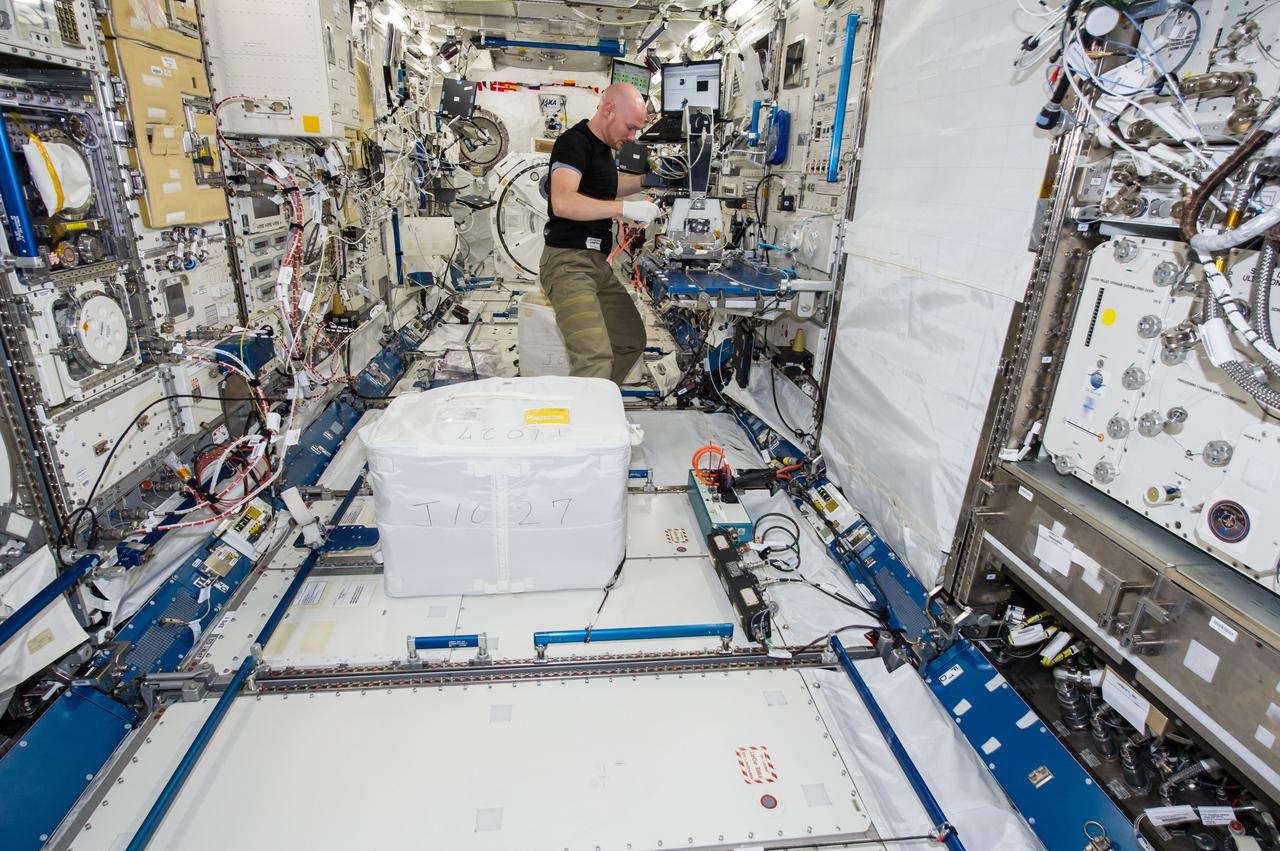
ISS040-E-130231 (9 Sept. 2014) --- European Space Agency astronaut Alexander Gerst, Expedition 40 flight engineer, installs a microscope for the Cell Mechanosensing-2 experiment in the Kibo laboratory of the International Space Station. The Japanese experiment, which is conducted in Kibo’s Kobairo rack, seeks to identify gravity sensors in cells that may change the expression of key proteins and genes and allowing muscles to atrophy in microgravity.
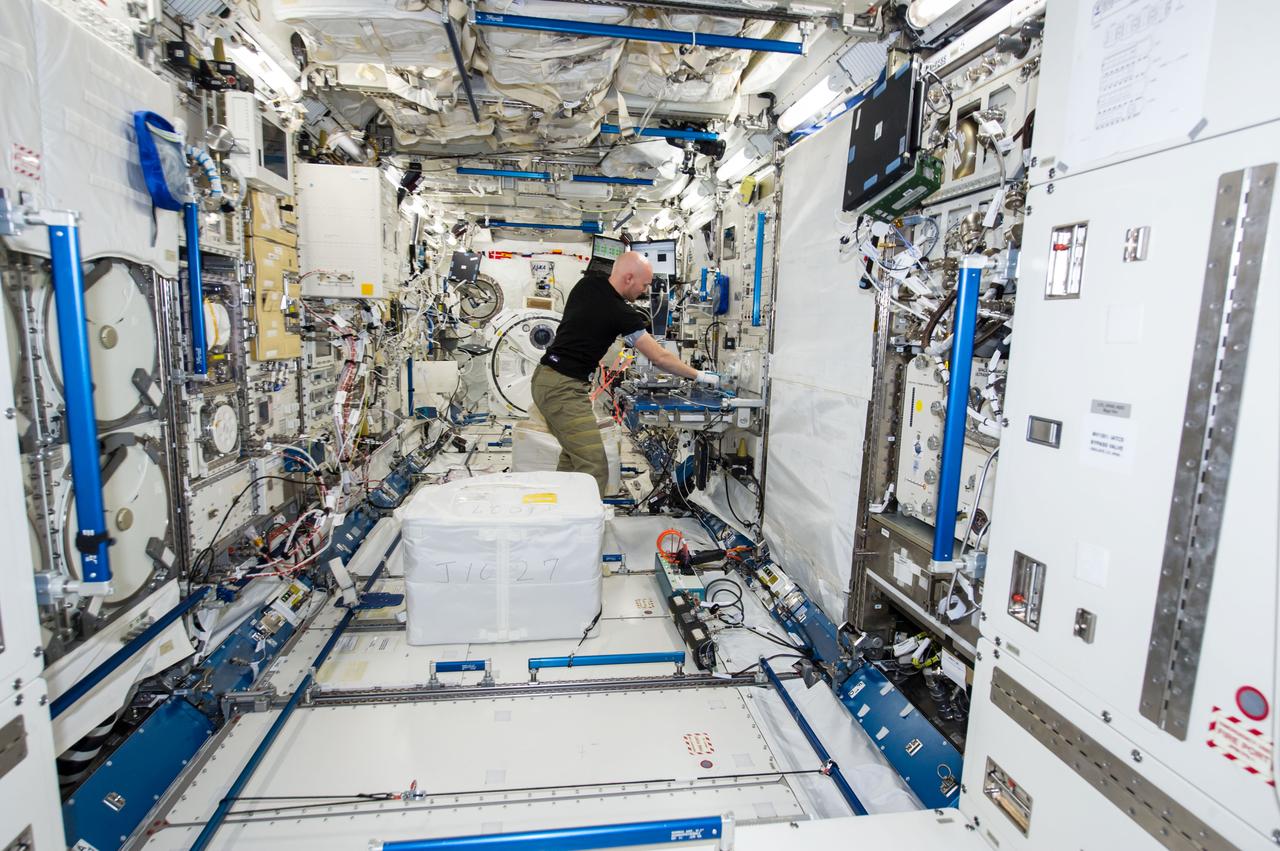
ISS040-E-130230 (9 Sept. 2014) --- European Space Agency astronaut Alexander Gerst, Expedition 40 flight engineer, installs a microscope for the Cell Mechanosensing-2 experiment in the Kibo laboratory of the International Space Station. The Japanese experiment, which is conducted in Kibo’s Kobairo rack, seeks to identify gravity sensors in cells that may change the expression of key proteins and genes and allowing muscles to atrophy in microgravity.
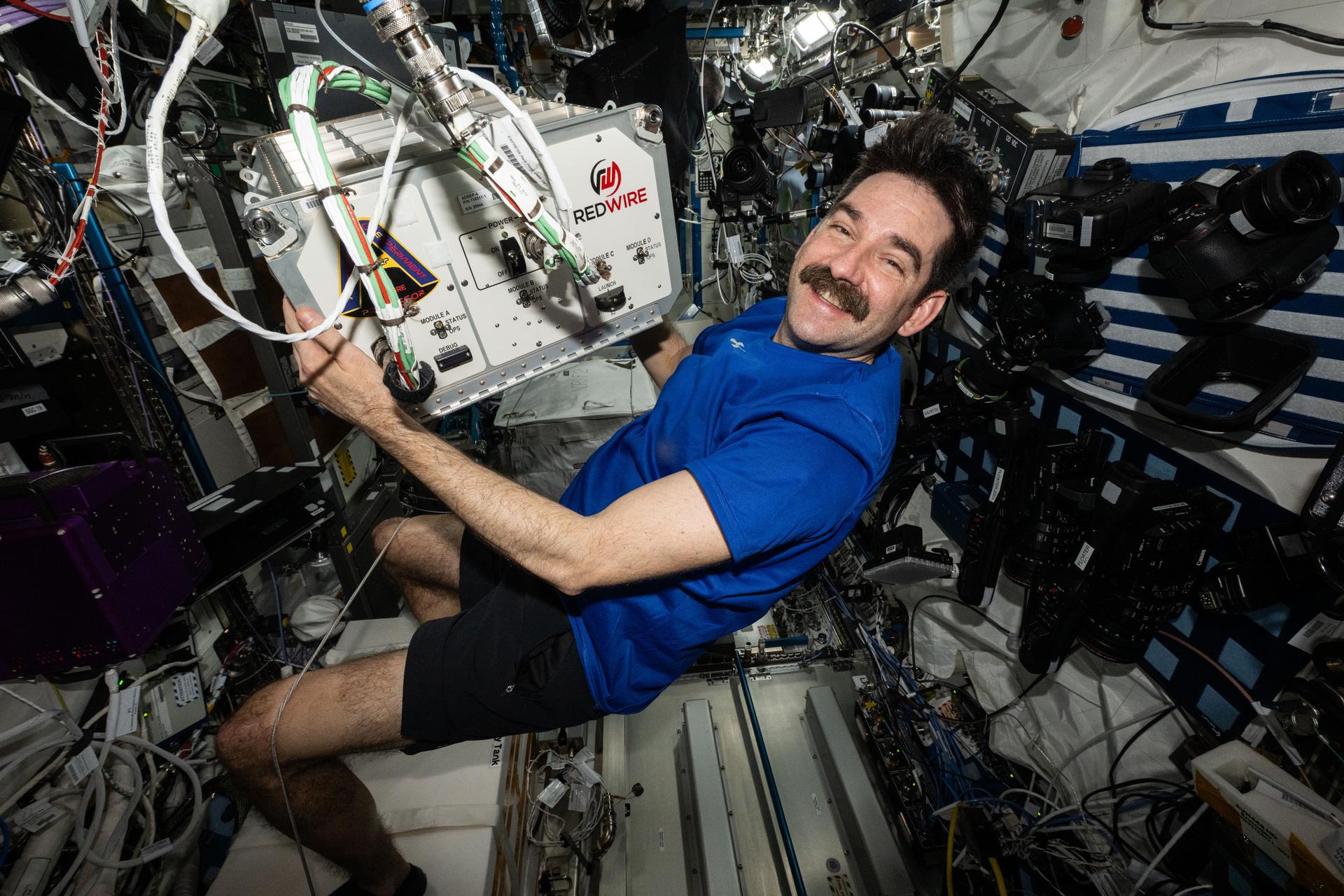
iss075e0085164 (Aug. 28, 2026) --- NASA astronaut and Expedition 75 flight engineer Jack Hathaway carries the Advanced Space Experiment Processer-4 (ADSEP-4) and relocates it for installation inside the International Space Station's Destiny laboratory module. ADSEP-4 houses research samples for processing in microgravity, can be launched aboard a SpaceX Dragon or Northrop Grumman's Cygnus XL spacecraft for powered science, and installed in EXPRESS racks aboard the orbital outpost for experimentation. Credit: NASA/Jessica Meir
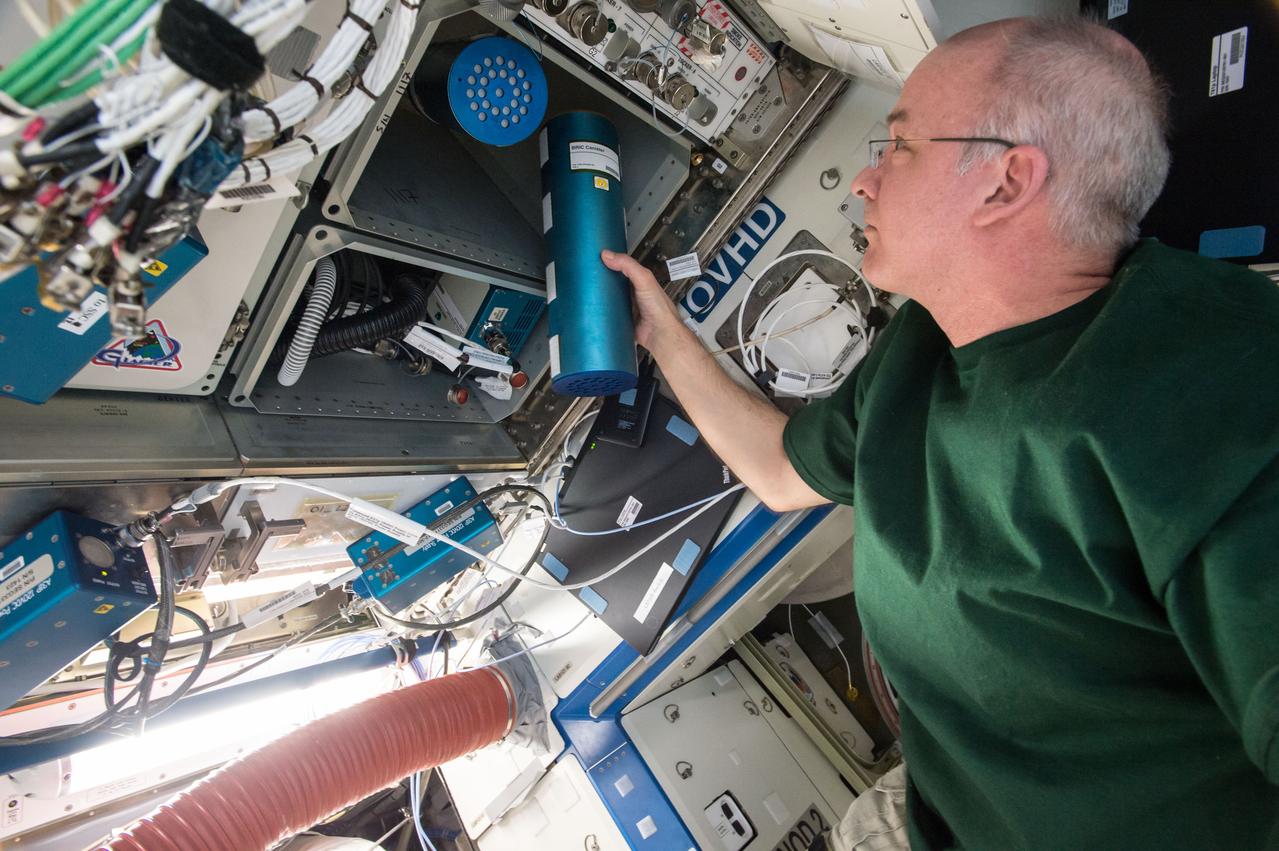
iss048e049824 (8/5/2016) --- NASA astronaut Jeff Williams transfers two canisters for the Biological Research in Canisters - Natural Product under Microgravity (BRIC-NP) experiment to ExPRESS (Expedite the Processing of Experiments to Space Station) Rack 2 Locker 6, LAB1O1-D2, in the Destiny U.S. Laboratory aboard the International Space Station (ISS). In the BRIC-NP investigation, fungal strains isolated from the Chernobyl nuclear power plant (ChNPP) accident are screened for the secretion of natural products that could be beneficial for biomedical and agricultural applications.
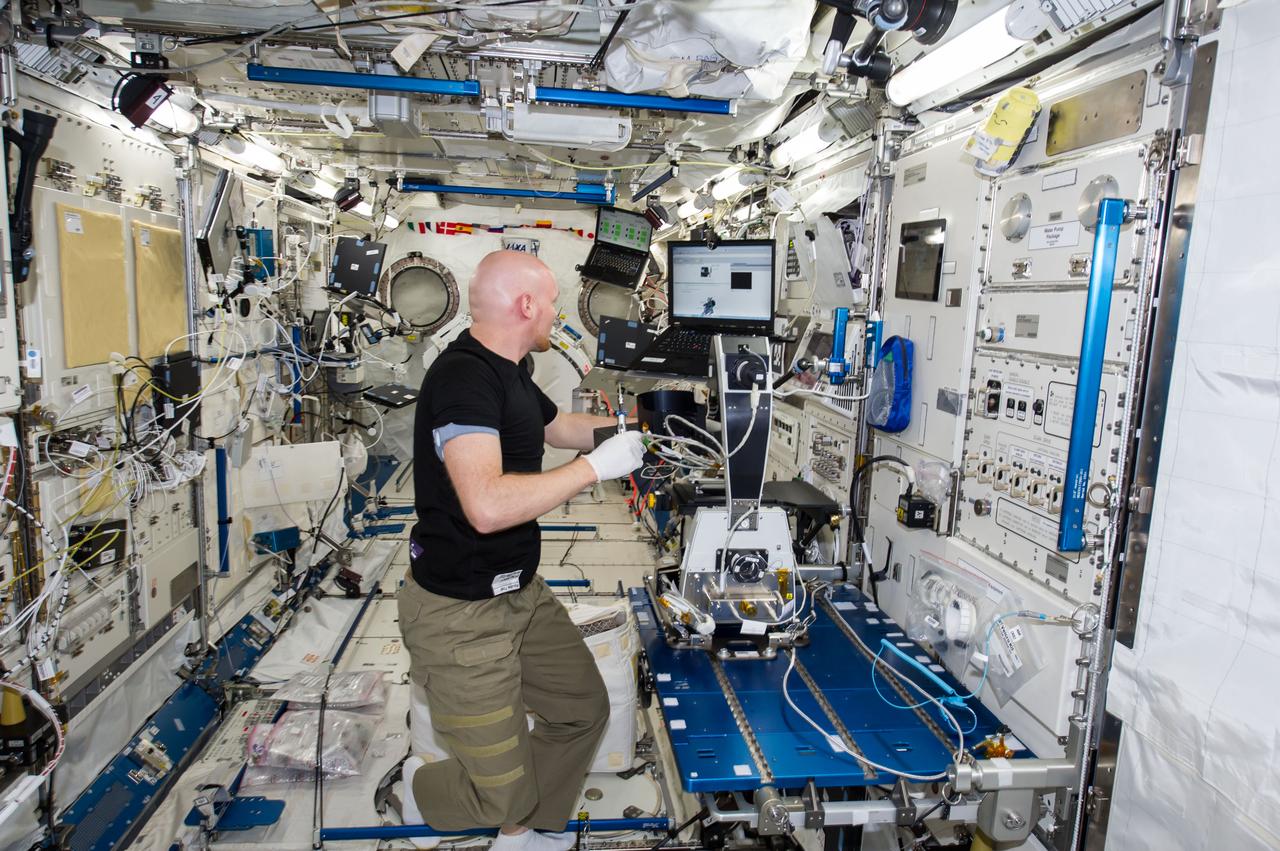
ISS040-E-130232 (9 Sept. 2014) --- European Space Agency astronaut Alexander Gerst, Expedition 40 flight engineer, installs a microscope for the Cell Mechanosensing-2 experiment in the Kibo laboratory of the International Space Station. The Japanese experiment, which is conducted in Kibo’s Kobairo rack, seeks to identify gravity sensors in cells that may change the expression of key proteins and genes and allowing muscles to atrophy in microgravity.
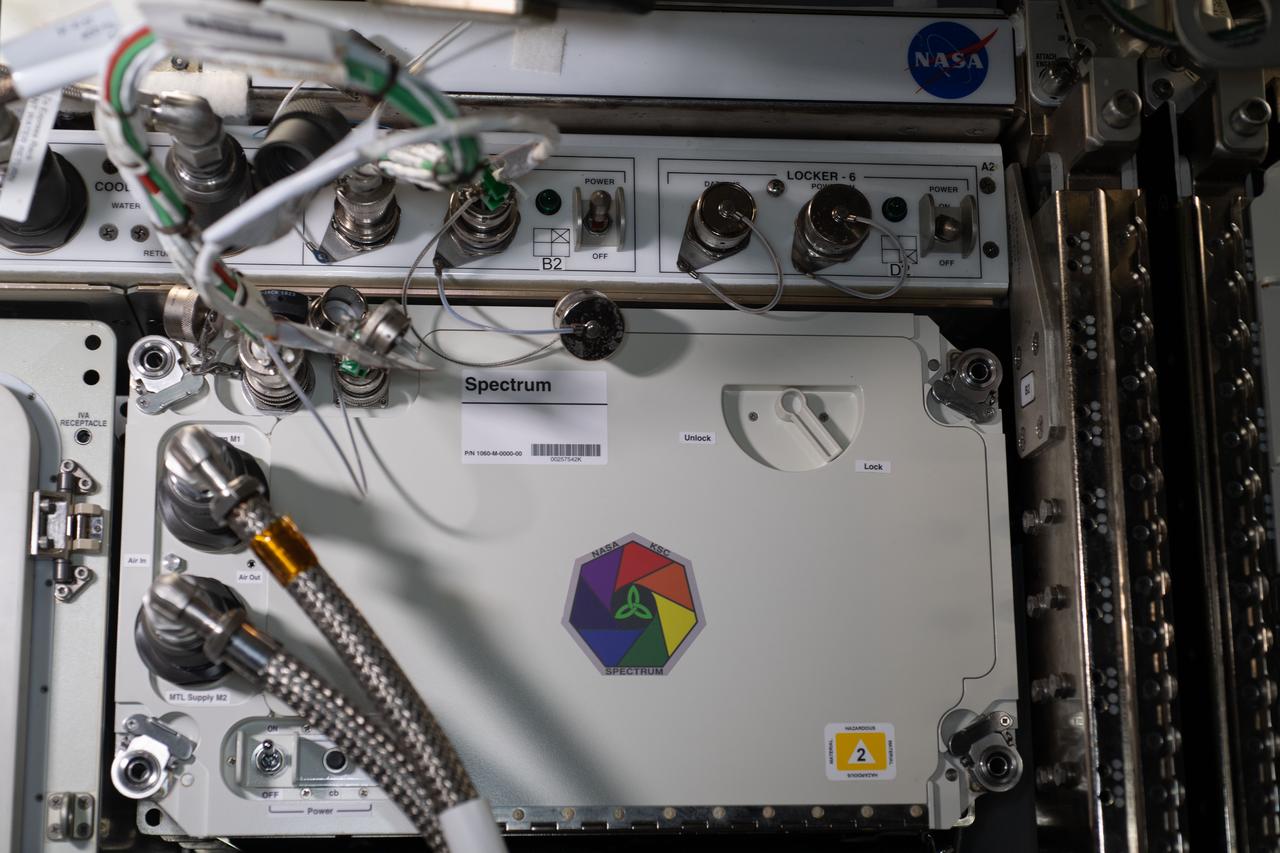
iss063e026090 (6/11/2020) --- A view during the Spectrum Facility installation into Expedite the Processing of Experiments to the Space Station (EXPRESS) Rack aboard the International space Station (ISS). Spectrum takes fluorescent images of biological specimens contained within a controlled environment. A high resolution, monochrome camera captures images of fluoresced proteins of plants within Petri plates.
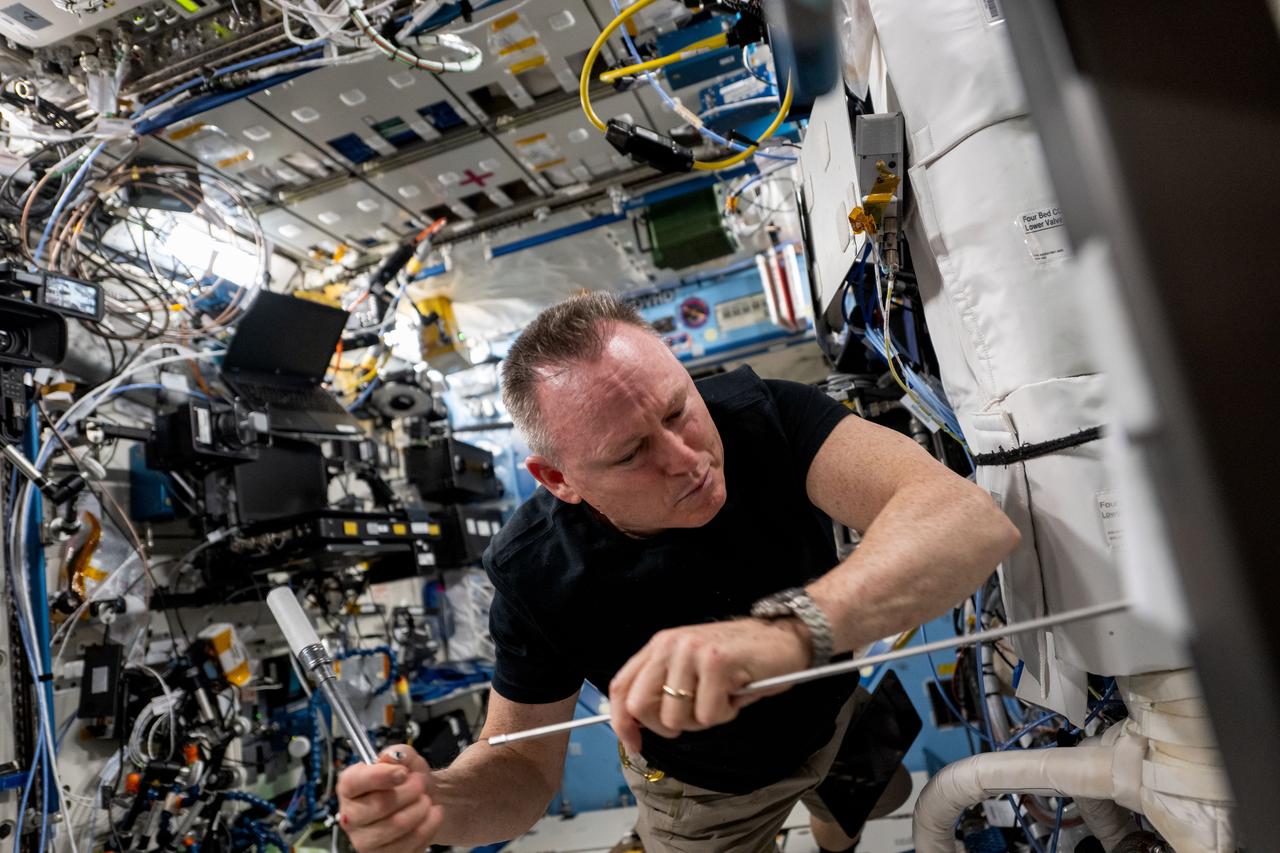
iss072e145964 (Nov. 6, 2024) --- NASA astronaut and Expedition 72 Flight Engineer Butch Wilmore installs the Powered Ascent Utility Locker-2 (PAUL-2) in an EXPRESS rack aboard the International Space Station's Destiny laboratory module. PAUL-2 was launched aboard the SpaceX Dragon cargo spacecraft and can provide power and temeperature control for experiments packed inside Dragon during its trip to the orbital outpost.
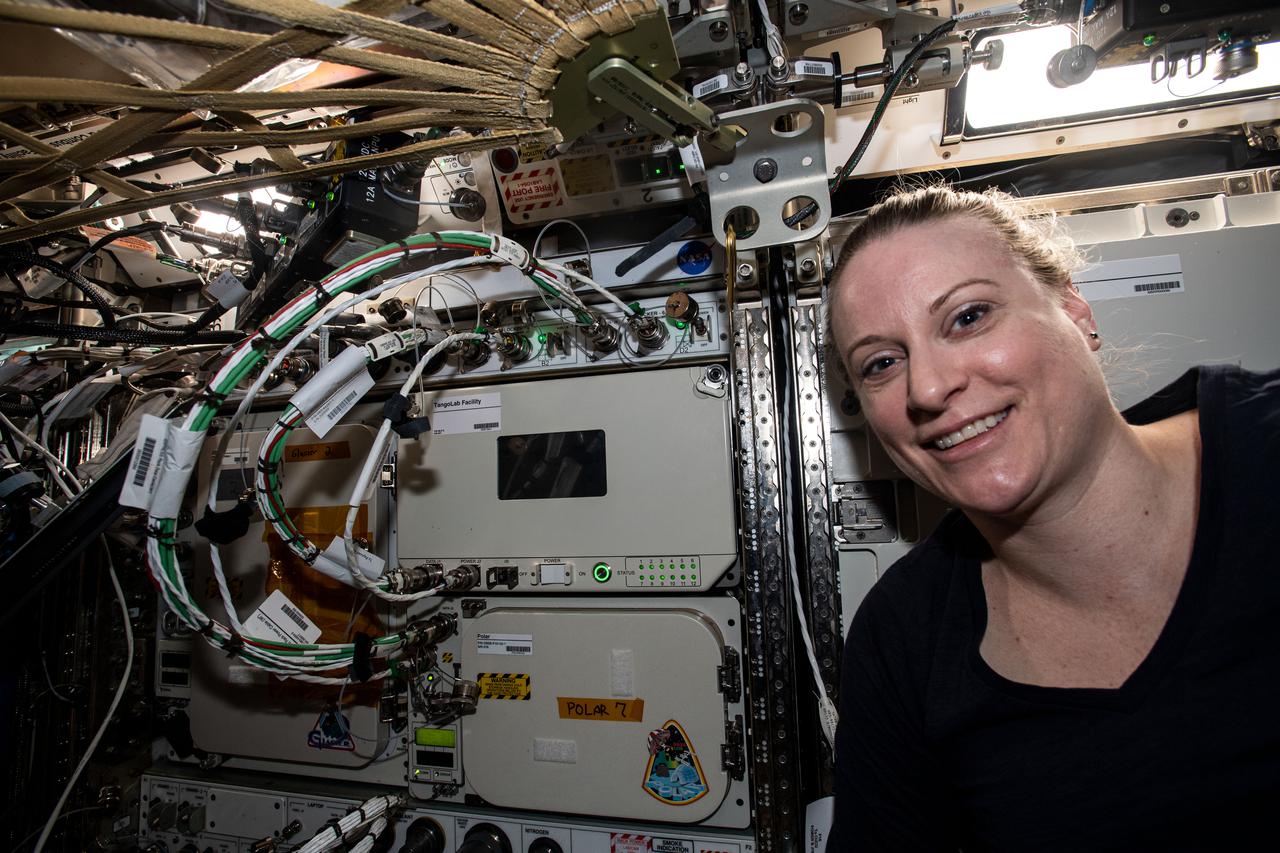
iss064e037167 (Feb. 23, 2021) --- NASA astronaut and Expedition 64 Flight Engineer Kate Rubins poses next to the TangoLab Facility that she had finished installing into an EXPRESS rack located inside the International Space Station's U.S. Destiny laboratory module. The TangoLab is a small research facility that enables a variety of microgravity science, research and development, and pilot manufacturing opportunities.
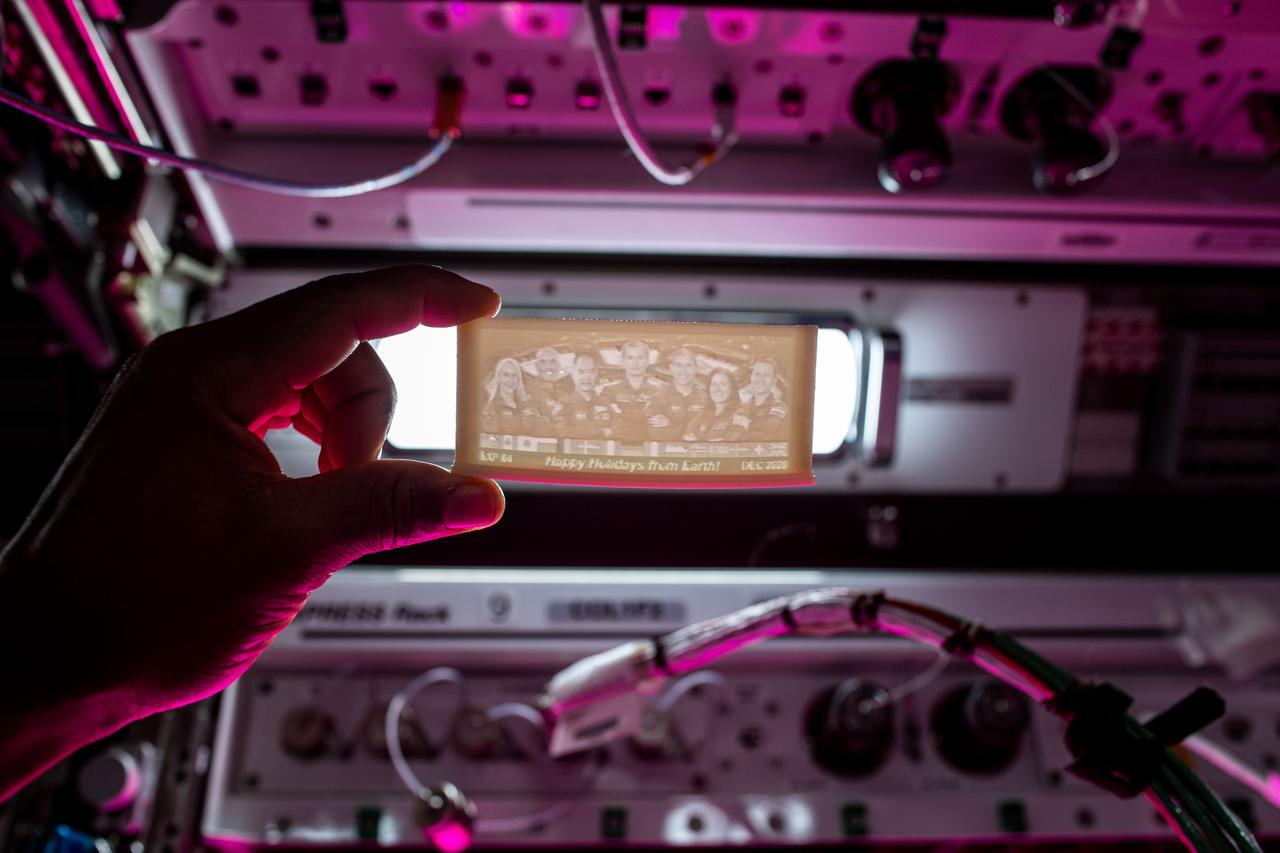
iss064e024194 (1/20/2021) --- A view of the Year 2020 Print, printed in the Additive Manufacturing Facility (AMF) Manufacturing Device (ManD) and held in front of an ExPRESS (Expedite the Processing of Experiments to Space Station) Rack Light in the Columbus European Laboratory aboard the International Space Station (ISS). The Bellevue High School 2020 Print project uses the space station’s Manufacturing Device – Additive Manufacturing Facility (AMF) to provide students a behind-the-scenes experience with the 3D prinitng process in microgravity.
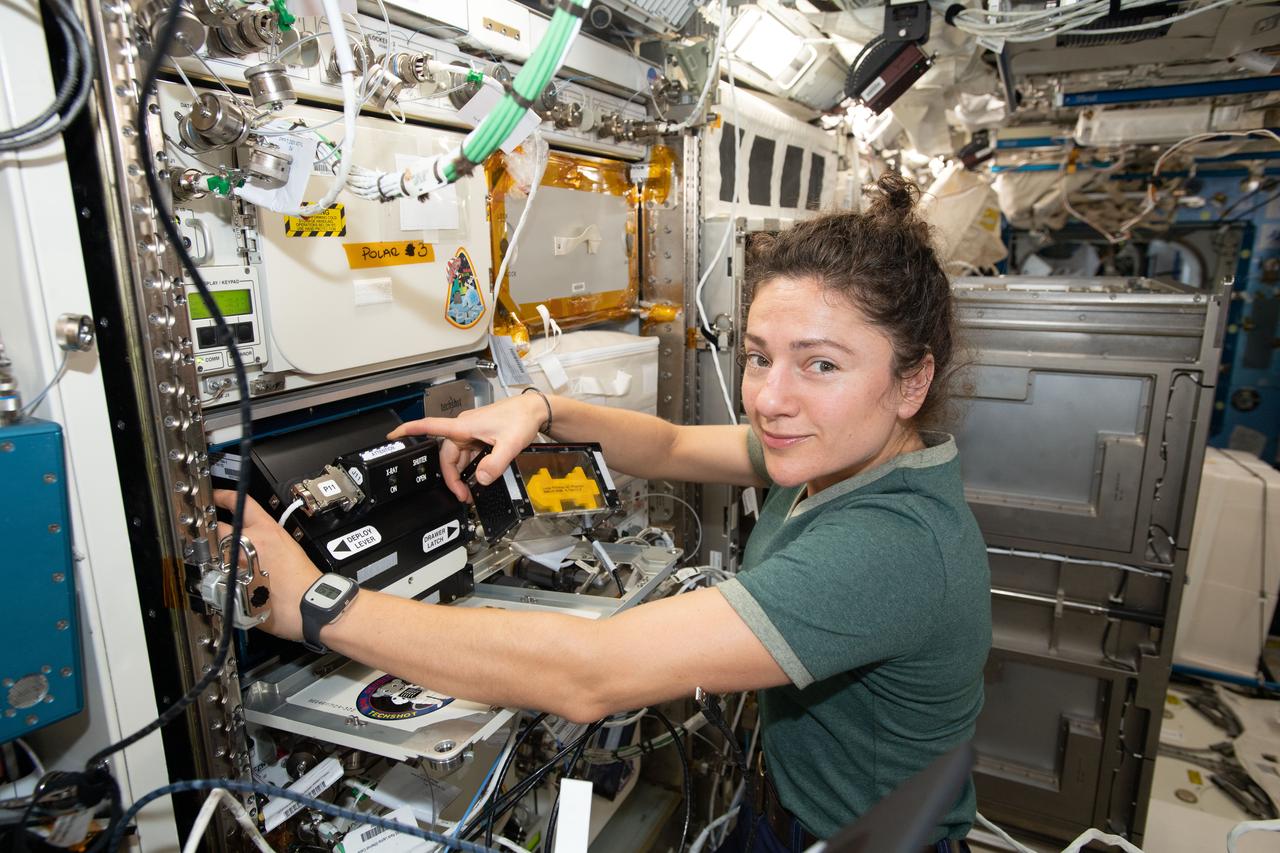
iss061e068057 (Dec. 9, 2019) --- NASA astronaut and Expedition 61 Flight Engineer Jessica Meir installs the Bone Densitometer in an EXPRESS (EXpedite the PRocessing of Experiments to Space Station) rack located inside the Japanese Kibo laboratory module. The Bone Densitometer enables the imaging of rodent bones for the Rodent Research-19 experiment that is investigating two proteins that may prevent muscle and bone loss in space.
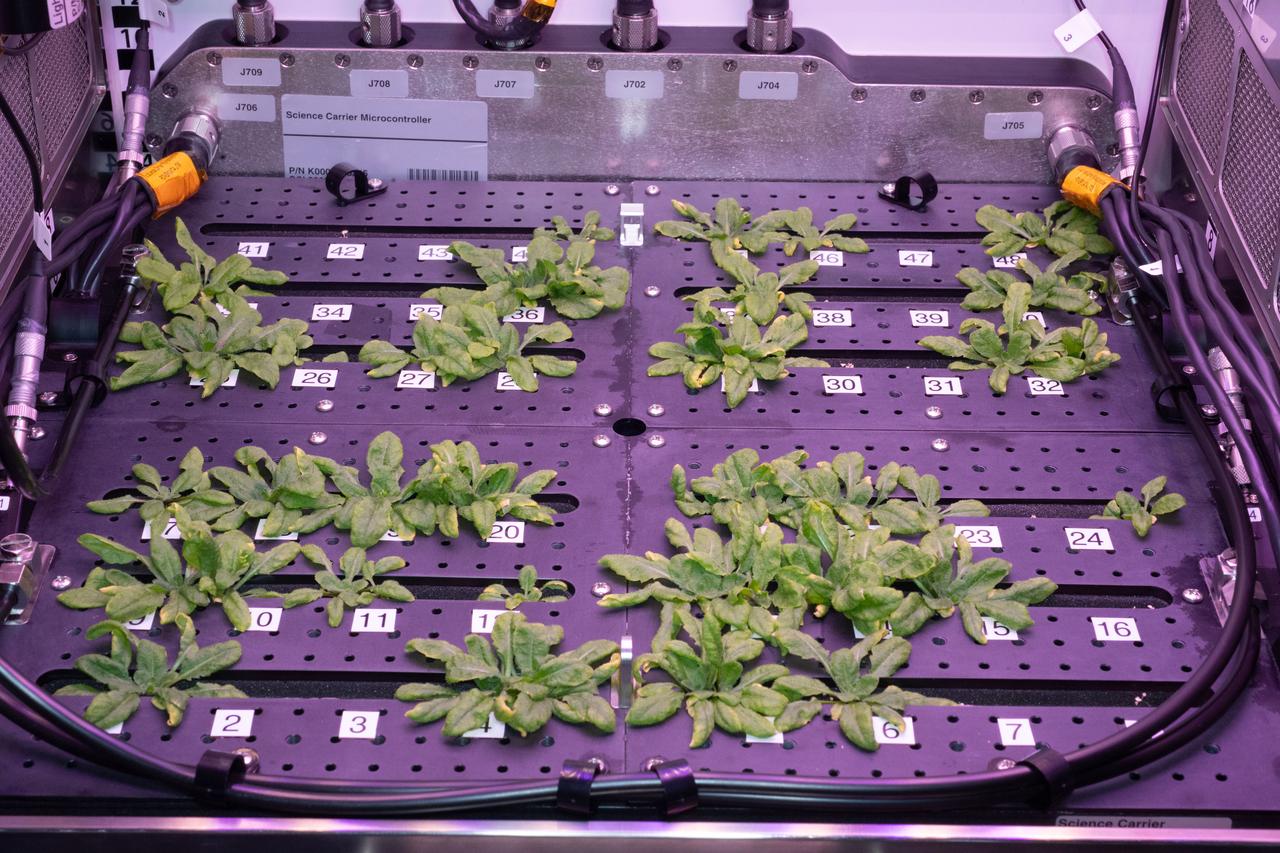
iss056e094286 (July 9, 2018) --- Arabidopsis plants are pictured inside the Plant Habitat experiment's Growth Chamber located in the Columbus laboratory module's EXPRESS Rack 5. The plants were harvested for the Plant Habitat experiment which is researching differences in genetics, metabolism, photosynthesis, and gravity sensing between plants grown in space and on Earth. Results may help crews on future missions successfully grow plants for food and oxygen generation.
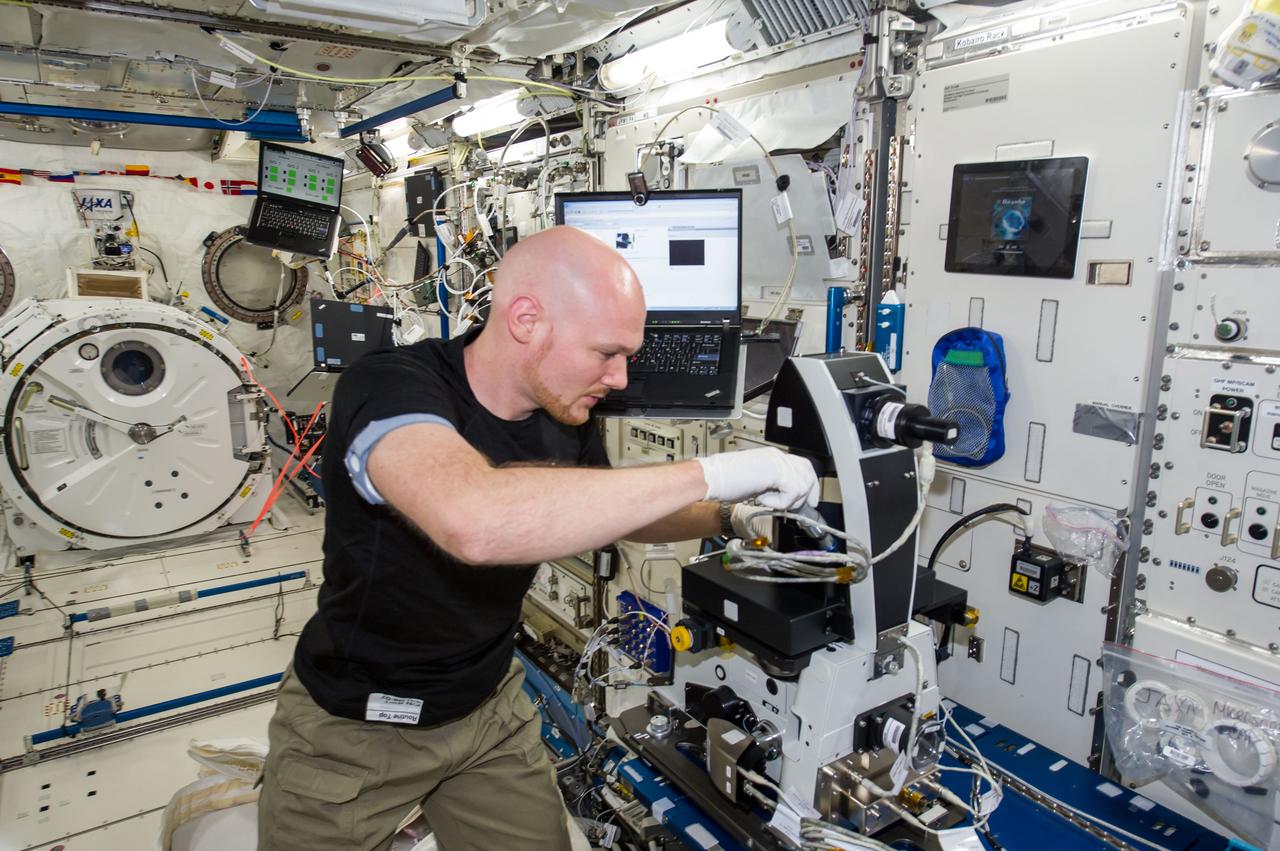
European Space Agency astronaut Alexander Gerst,Expedition 40 flight engineer,installs a microscope for the Cell Mechanosensing-2 experiment in the Kibo laboratory of the International Space Station. The Japanese experiment,which is conducted in Kibos Kobairo rack,seeks to identify gravity sensors in cells that may change the expression of key proteins and genes and allowing muscles to atrophy in microgravity.
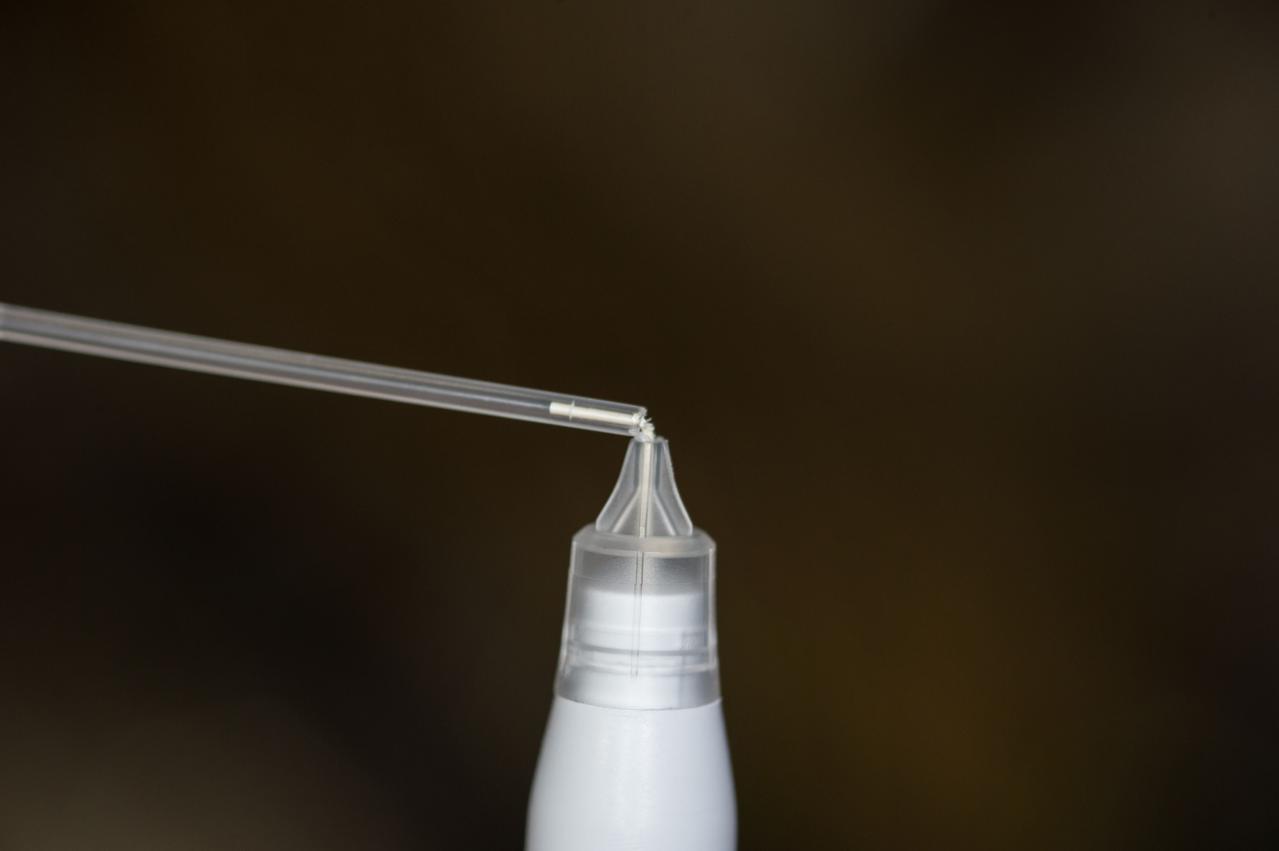
iss051e041912 (5/13/2017) --- Photo documentation of a broken pipette that was to be used to dispense water droplets into the Electrowetting Drawer of ExPRESS (Expedite the Processing of Experiments to Space Station) Rack 8 for the Passive Thermal Flight Experiment. The Advanced Passive Thermal eXperiment (APTx) tests three advanced thermal management technologies. It demonstrates the in-space performance of each, an important step toward improving these technologies for use on future space exploration missions.
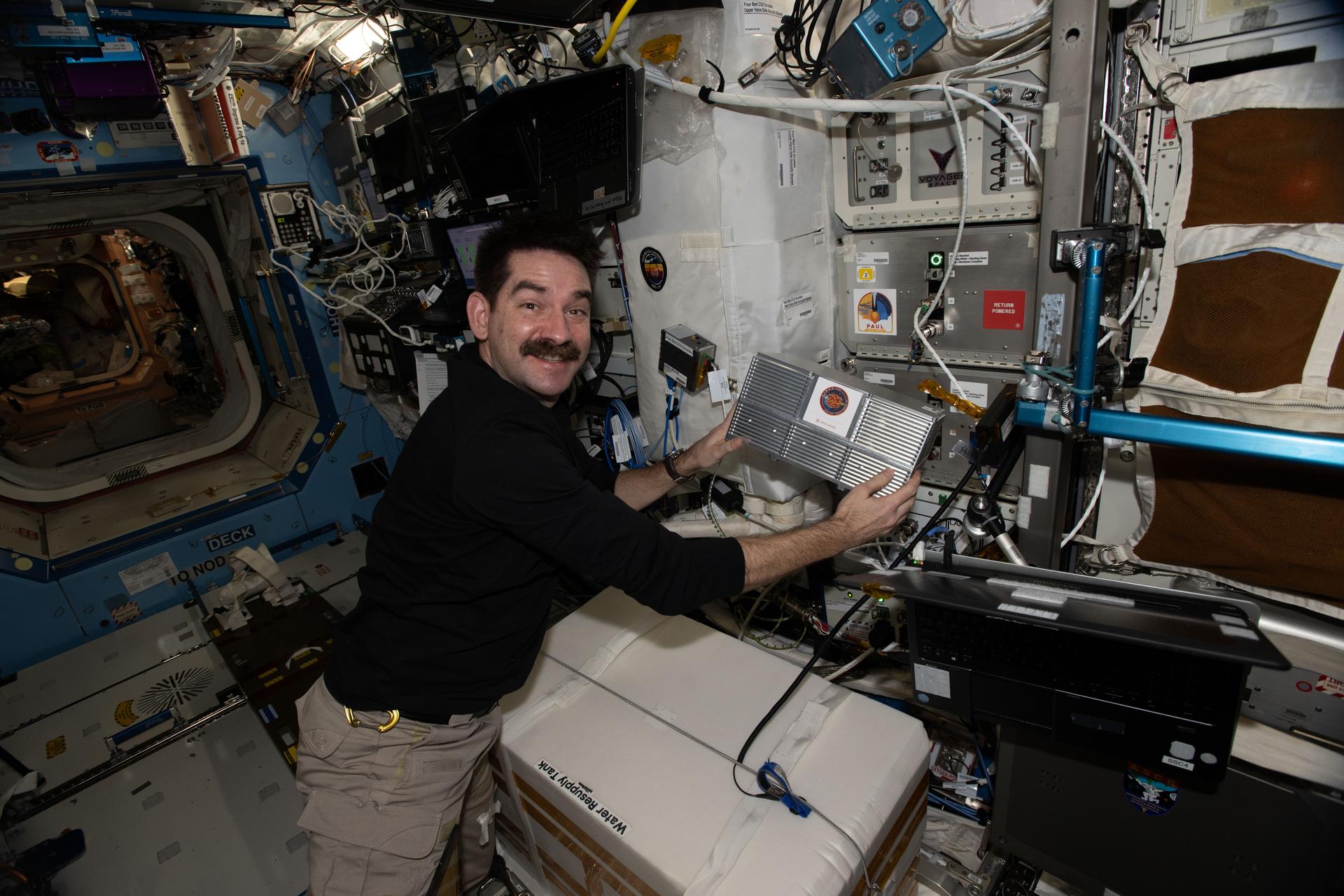
iss074e0603170 (May 19, 2026) --- NASA astronaut and Expedition 74 flight engineer Jack Hathaway installs research hardware inside a Powered Ascent Utility Locker (PAUL) in the International Space Station’s Columbus laboratory module. The PAUL powers, maintains, and protects sensitive experiments launched to space aboard spacecraft such as the SpaceX Dragon. After arriving on the station, the locker is installed in an EXPRESS rack so the experiments can continue receiving power and support for ongoing research. Credit: NASA/Jack Hathaway
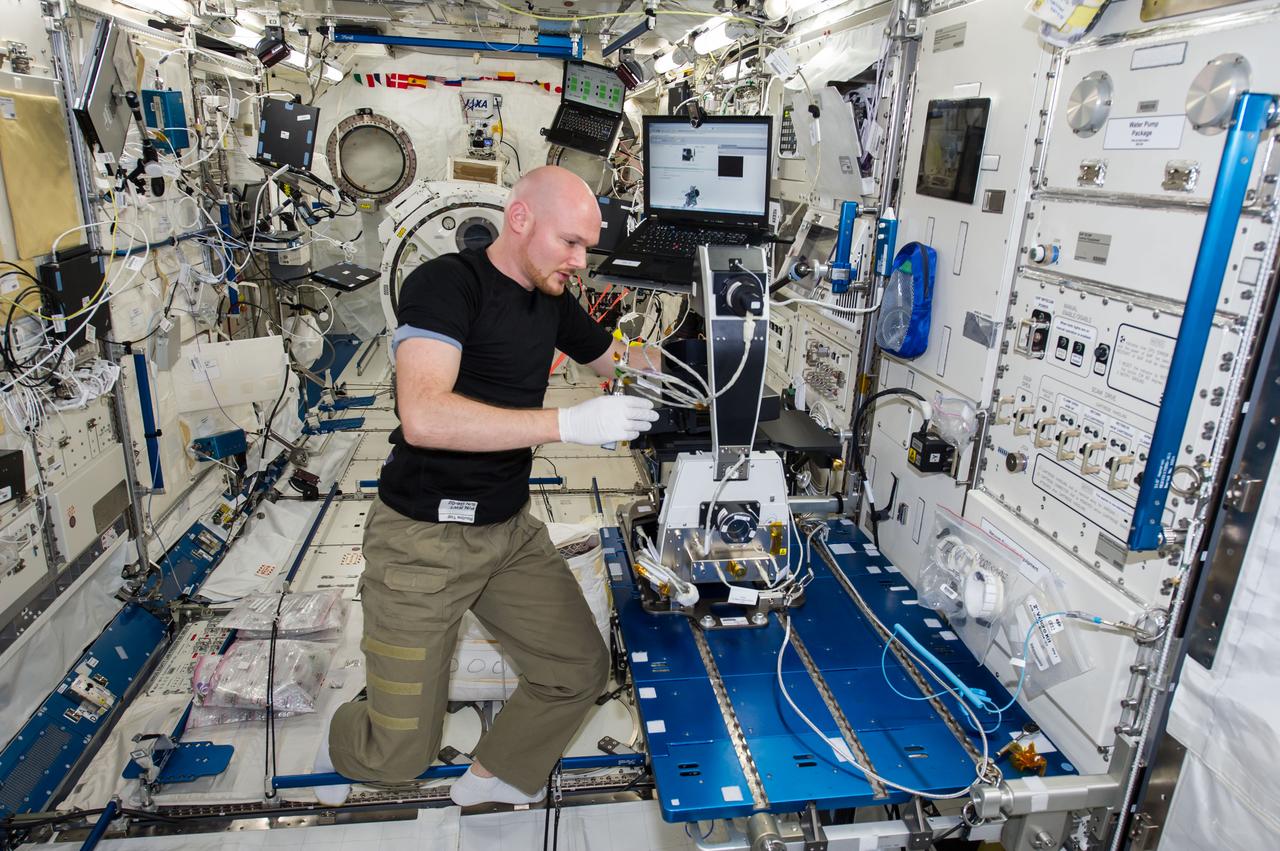
ISS040-E-130233 (9 Sept. 2014) --- European Space Agency astronaut Alexander Gerst, Expedition 40 flight engineer, installs a microscope for the Cell Mechanosensing-2 experiment in the Kibo laboratory of the International Space Station. The Japanese experiment, which is conducted in Kibo’s Kobairo rack, seeks to identify gravity sensors in cells that may change the expression of key proteins and genes and allowing muscles to atrophy in microgravity.
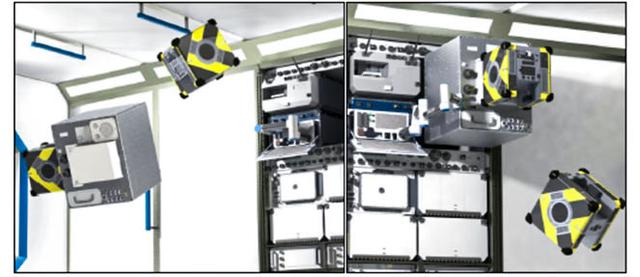
jsc2021e058908 (11/17/2021) --- A graphic of an Astrobee taking an EXPRESS Rack double locker payload, determining its mass and adjusting its Guidance and Navigation Control (GNC) to perform an installation maneuver with the help of another Astrobee and a robotic arm. Astrobee Mass Property Learner and Collaboration Algorithms (Astroporter) demonstrates software for estimating the mass properties of payloads attached to Astrobee and algorithms for making adjustments as needed. Image courtesy of Tethers Unlimited.
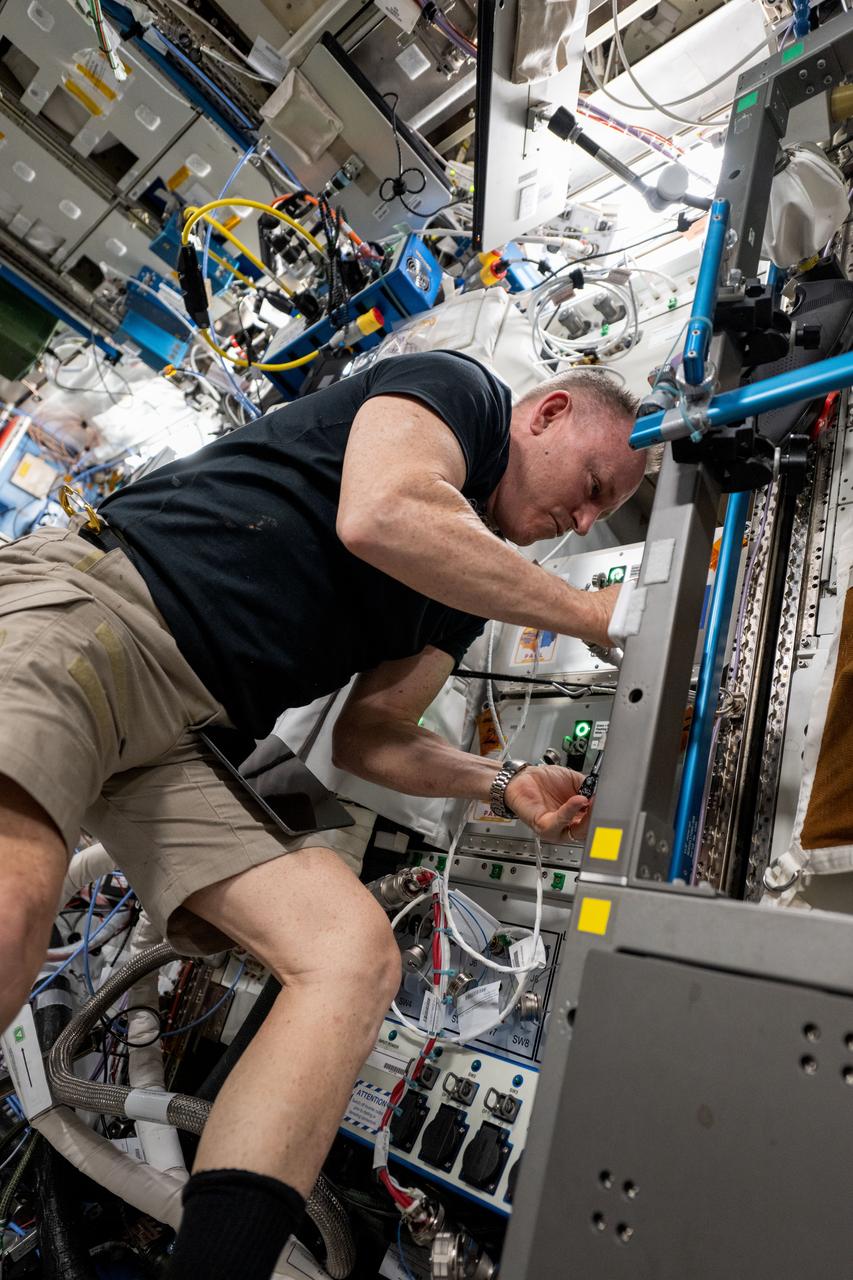
iss072e145969 (Nov. 6, 2024) --- NASA astronaut and Expedition 72 Flight Engineer Butch Wilmore installs the Powered Ascent Utility Locker-2 (PAUL-2) in an EXPRESS rack aboard the International Space Station's Destiny laboratory module. PAUL-2 was launched aboard the SpaceX Dragon cargo spacecraft and can provide power and temeperature control for experiments packed inside Dragon during its trip to the orbital outpost.
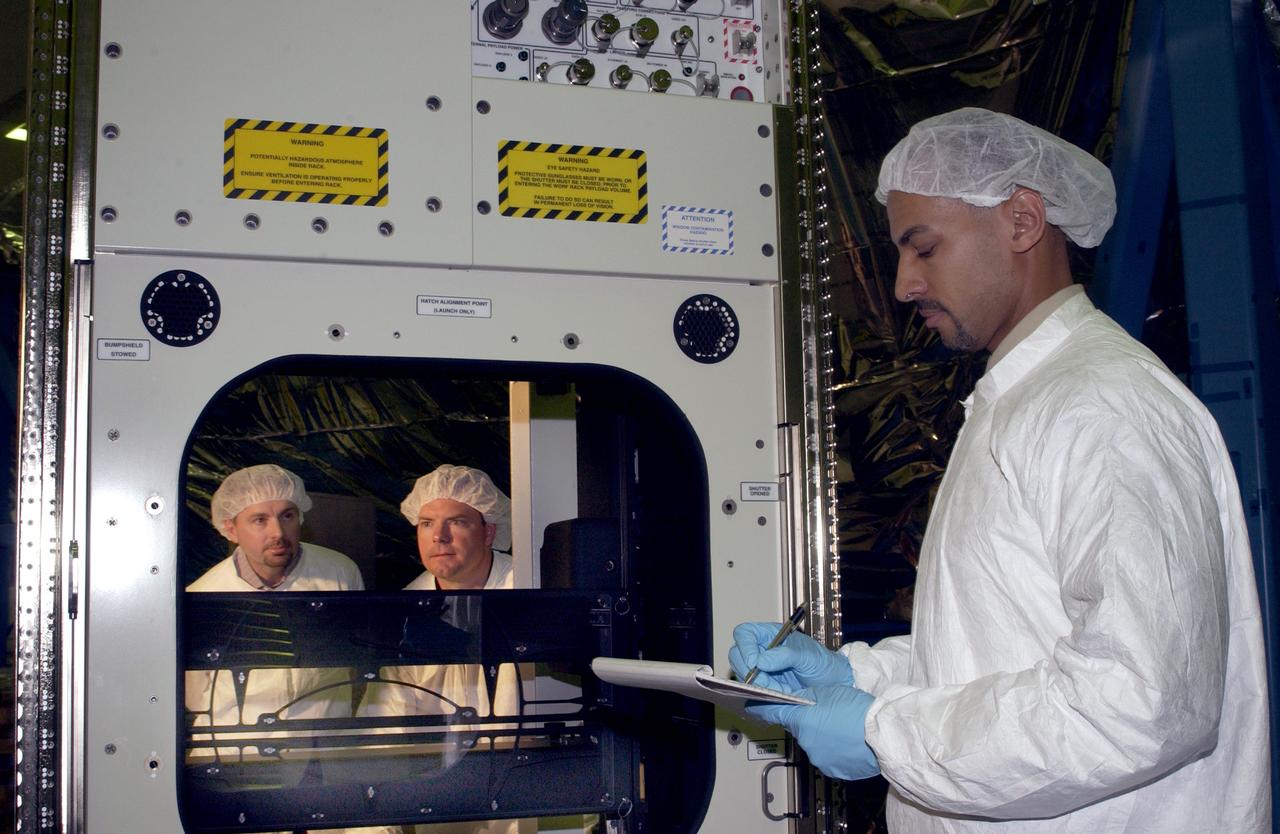
Developed by Boeing, at the Marshall Space Flight Center (MSFC) Space Station Manufacturing building, the Window Observational Rack Facility (WORF) will help Space Station crews take some of the best photographs ever snapped from an orbiting spacecraft by eliminating glare and allowing researchers to control their cameras and other equipment from the ground. The WORF is designed to make the best possible use of the high-quality research window in the Space Station's U.S. Destiny laboratory module. Engineers at the MSFC proposed a derivative of the EXPRESS (Expedite the Processing of Experiments to the Space Station) Rack already used on the Space Station and were given the go-ahead. The EXPRESS rack can hold a wide variety of experiments and provide them with power, communications, data, cooling, fluids, and other utilities - all the things that Earth-observing experiment instruments would need. WORF will supply payloads with power, data, cooling, video downlink, and stable, standardized interfaces for mounting imaging instruments. Similar to specialized orbital observatories, the interior of the rack is sealed against light and coated with a special low-reflectant black paint, so payloads will be able to observe low-light-level subjects such as the faint glow of auroras. Cameras and remote sensing instruments in the WORF can be preprogrammed, controlled from the ground, or operated by a Station crewmember by using a flexible shroud designed to cinch tightly around the crewmember's waist. The WORF is scheduled to be launched aboard the STS-114 Space Shuttle mission in the year 2003.

ISS017-E-014089 (26 Aug. 2008) --- It appears to be another moving day for the current inhabitants of the International Space Station, but the good news is that the weightlessness of space literally lightens the load. Here, in the Kibo laboratory, astronaut Greg Chamitoff, Expedition 17 flight engineer, shares the aid of cosmonaut Sergei Volkov, commander, to relocate an experiment rack.
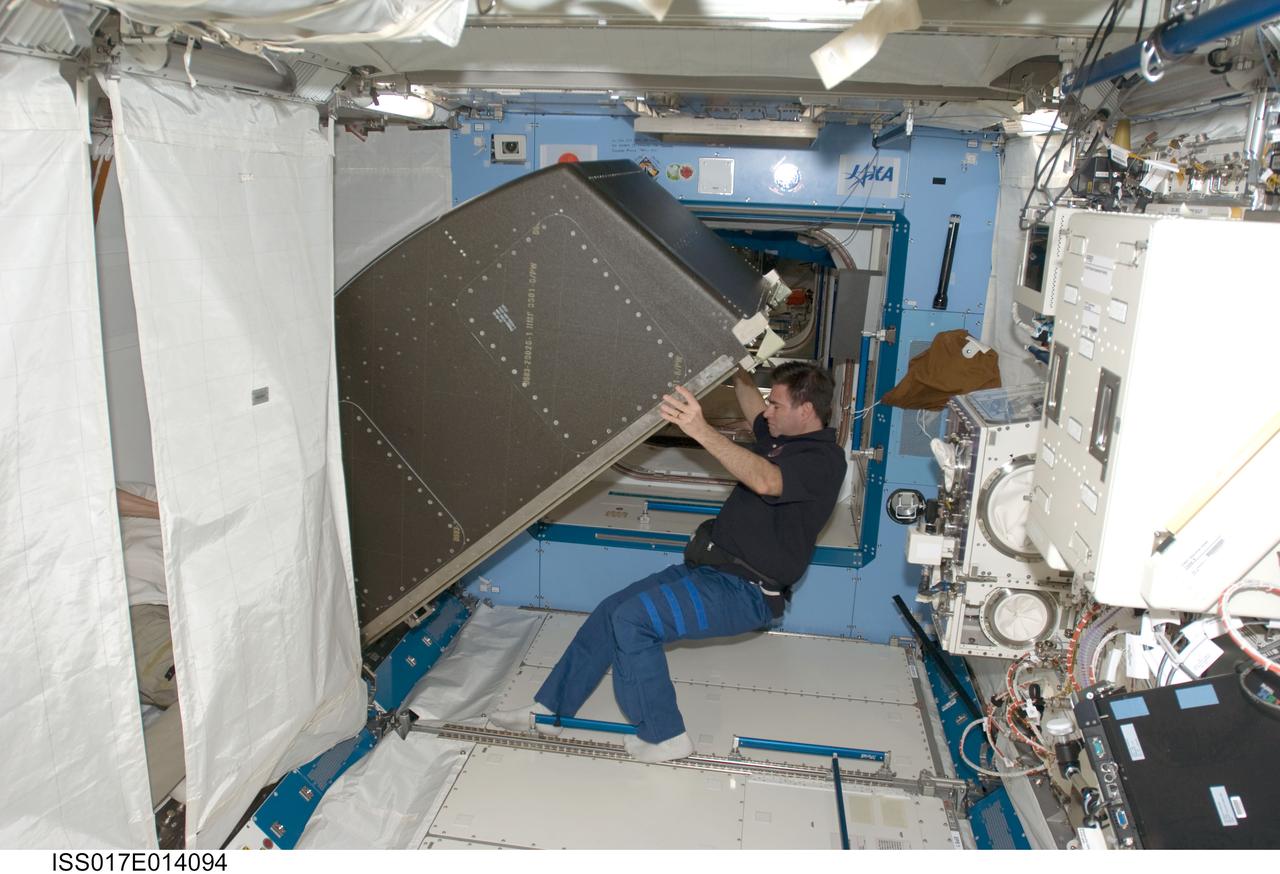
ISS017-E-014094 (26 Aug. 2008) --- Part of the news for the current inhabitants of the International Space Station is that moving day perhaps comes more often in space than on Earth, but the good news is that the weightlessness of space literally lightens the load. Here, in the Kibo laboratory, astronaut Greg Chamitoff, Expedition 17 flight engineer, shares the aid of cosmonaut Sergei Volkov (mostly out of the frame at left), commander, to relocate an experiment rack.
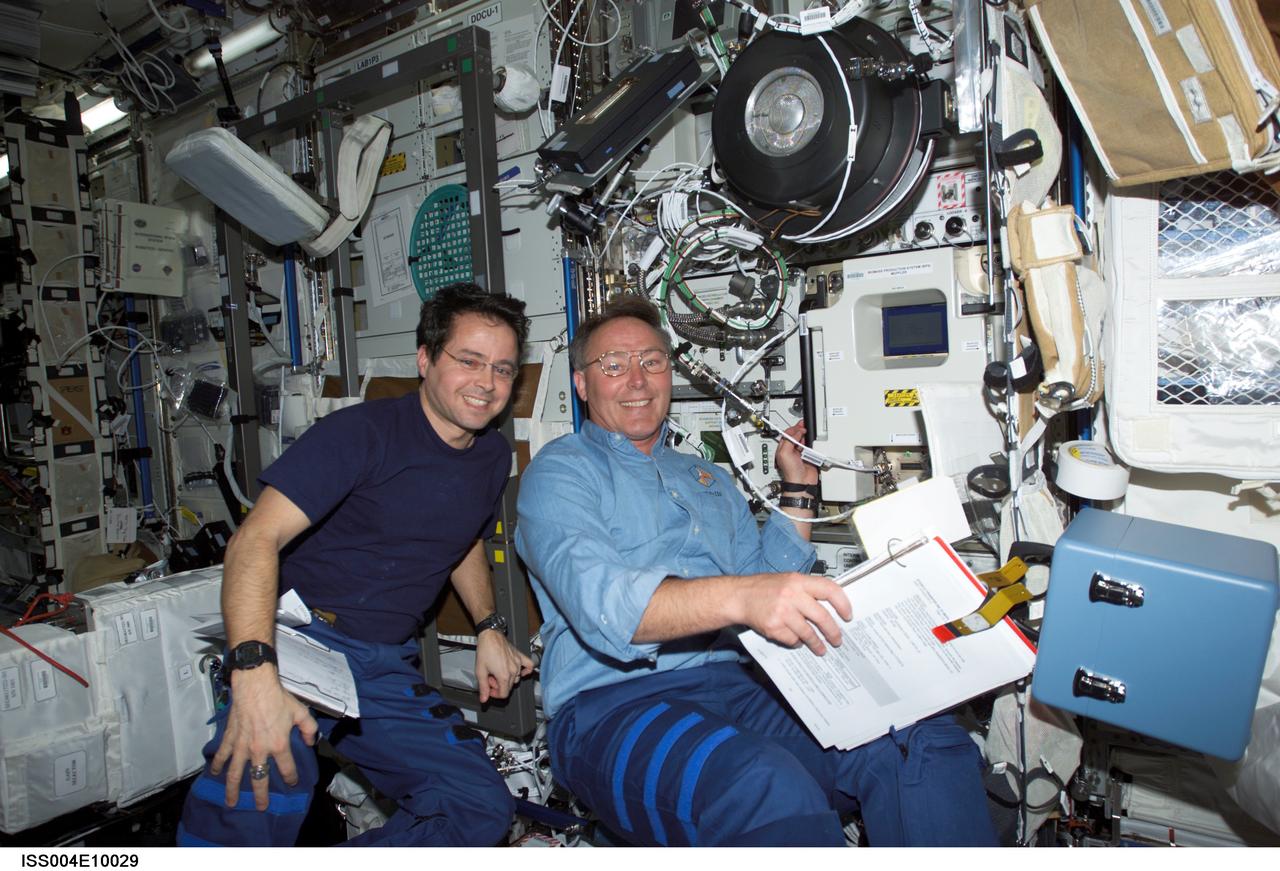
ISS004-E-10029 (12 April 2002) --- Astronauts Daniel W. Bursch (left), Expedition Four flight engineer, and Jerry L. Ross, STS-110 mission specialist, work in the Destiny laboratory on the International Space Station (ISS).
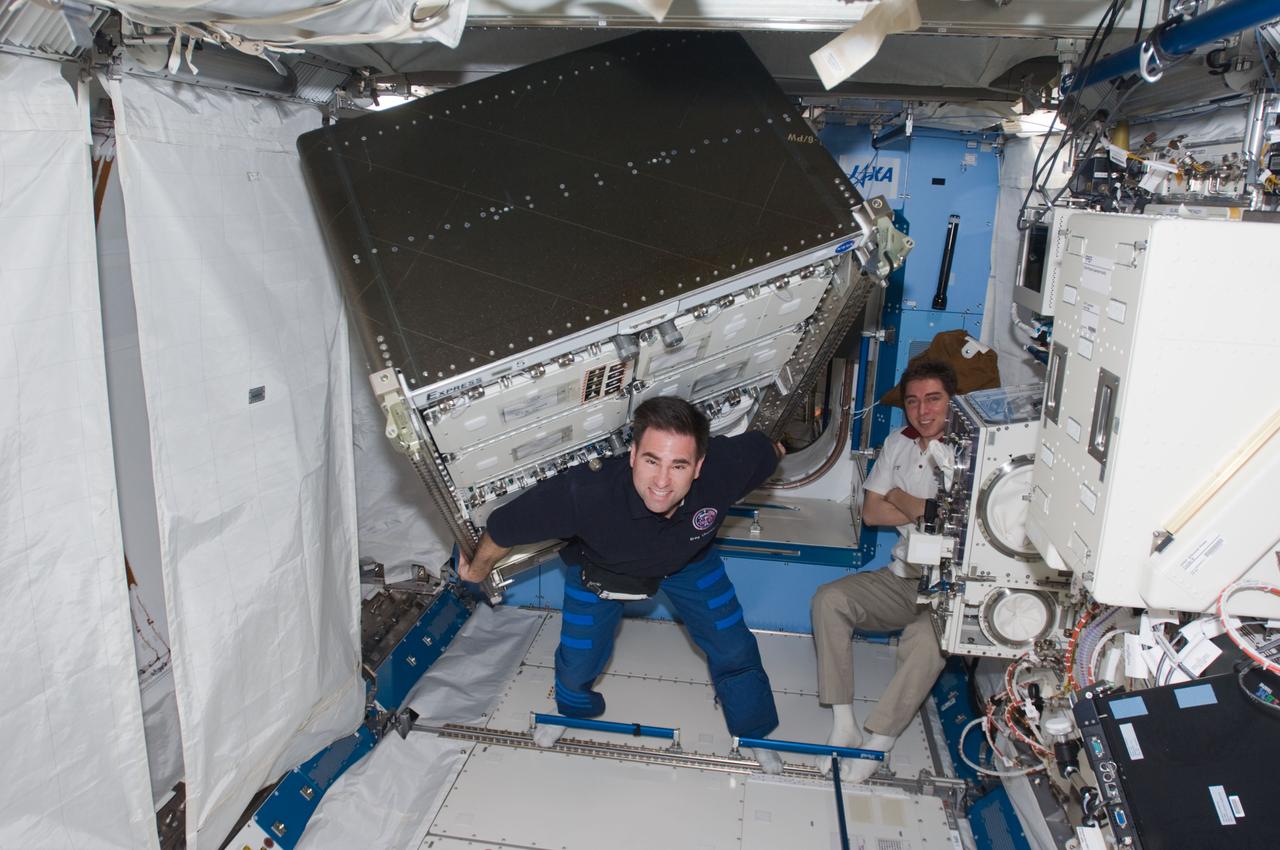
ISS017-E-014091 (26 Aug. 2008) --- Thanks to the weightlessness of space, astronaut Greg Chamitoff, Expedition 17 flight engineer, isn't toting the excessive weight load he appears to be in this electronic still photo downlinked by the current inhabitants of the International Space Station. While cosmonaut Sergei Volkov, Expedition 17 commander, looks on, Chamitoff works in the Kibo laboratory to move an experiment rack during a relocation task he and the two Russian crewmembers were sharing.
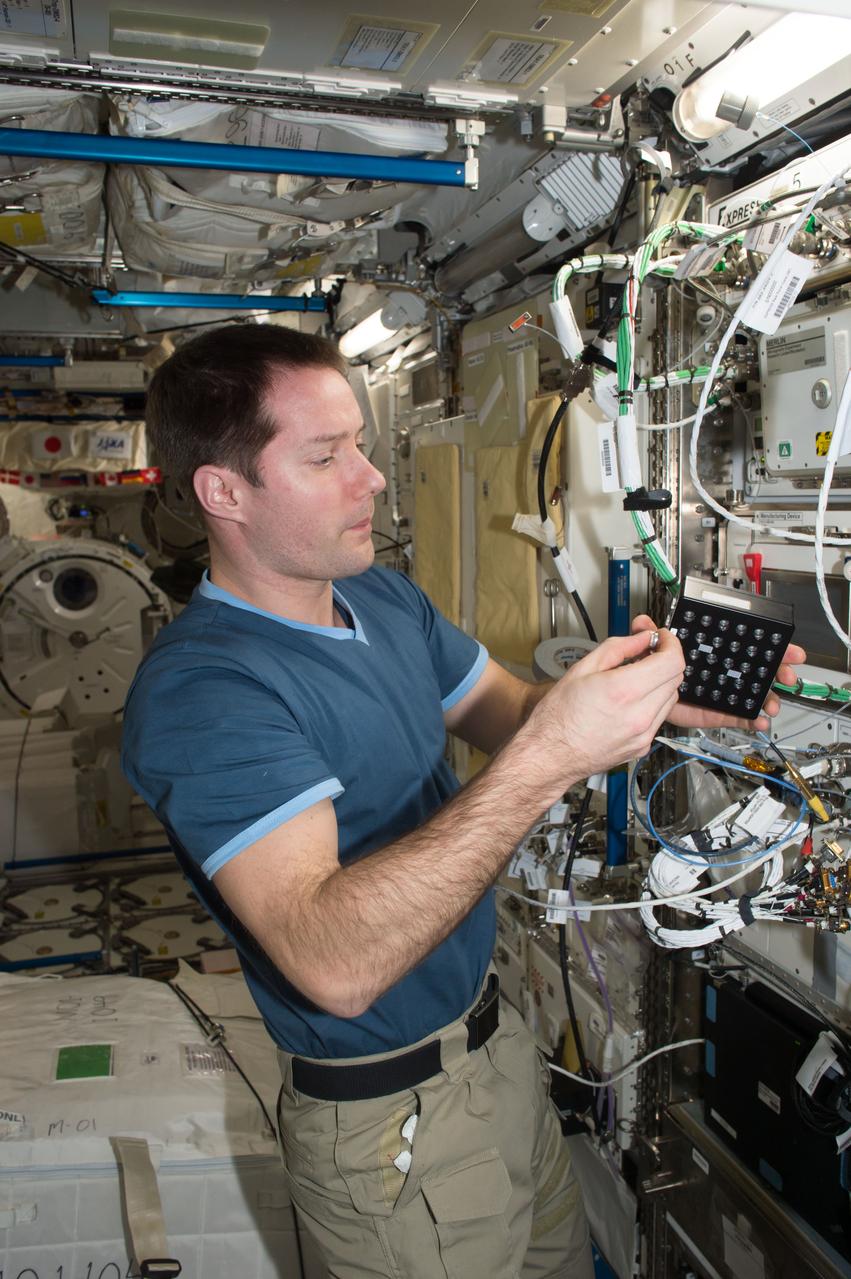
iss050e058802 (3/17/2017) --- A view of European Space Agency (ESA) astronaut Thomas Pesquet, during Protein Crystal Growth (PCG) -5 hardware deactivation and stow, from Microgravity Experiment Research Locker Incubator (MERLIN) on Expedite the Processing of Experiments to the Space Station (EXPRESS) Rack 5. The Microgravity Growth of Crystalline Monoclonal Antibodies for Pharmaceutical Applications (CASIS-PCG-5) investigation crystallizes a monoclonal antibody developed by Merck Research Labs. Microgravity enables the growth of extremely high-quality crystals, which allow scientists to study the proteins’ structure, improve drug delivery, manufacturing, and developing better methods for storing these biological molecules.
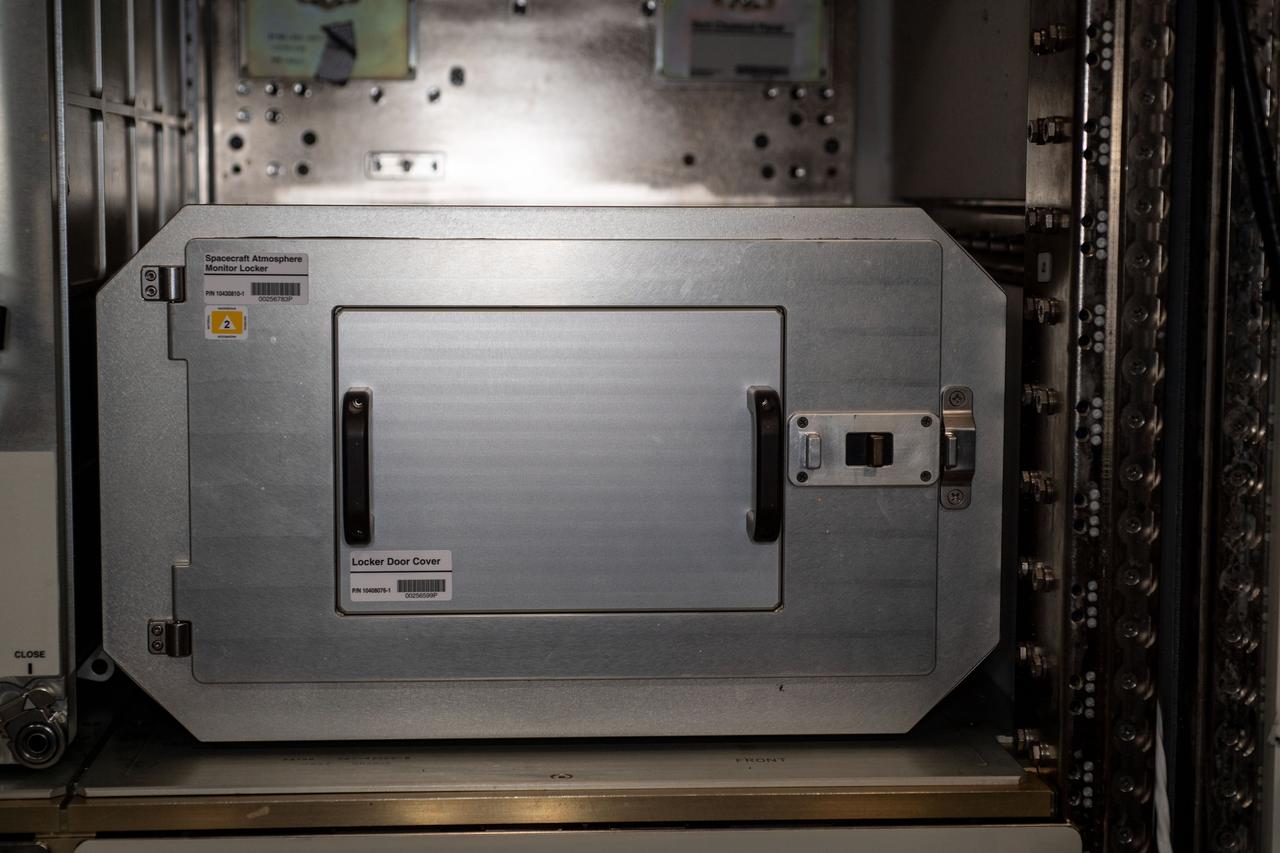
iss063e012814 (5/14/2020) --- A view of Spacecraft Atmosphere Monitor empty locker at Expedite the Processing of Experiments to the Space Station (EXPRESS) Rack 8 shown with protective locker door cover installed in the U.S. Laboratory aboard the International Space Station (ISS). The Spacecraft Atmosphere Monitor investigation demonstrates the capabilities of a small, reliable, portable gas chromatograph mass spectrometer instrument aboard the ISS to conduct major and minor elements of air measurement. The instrument transmits data back to the ground research team every two seconds, providing a continuous analysis to the ground research team.
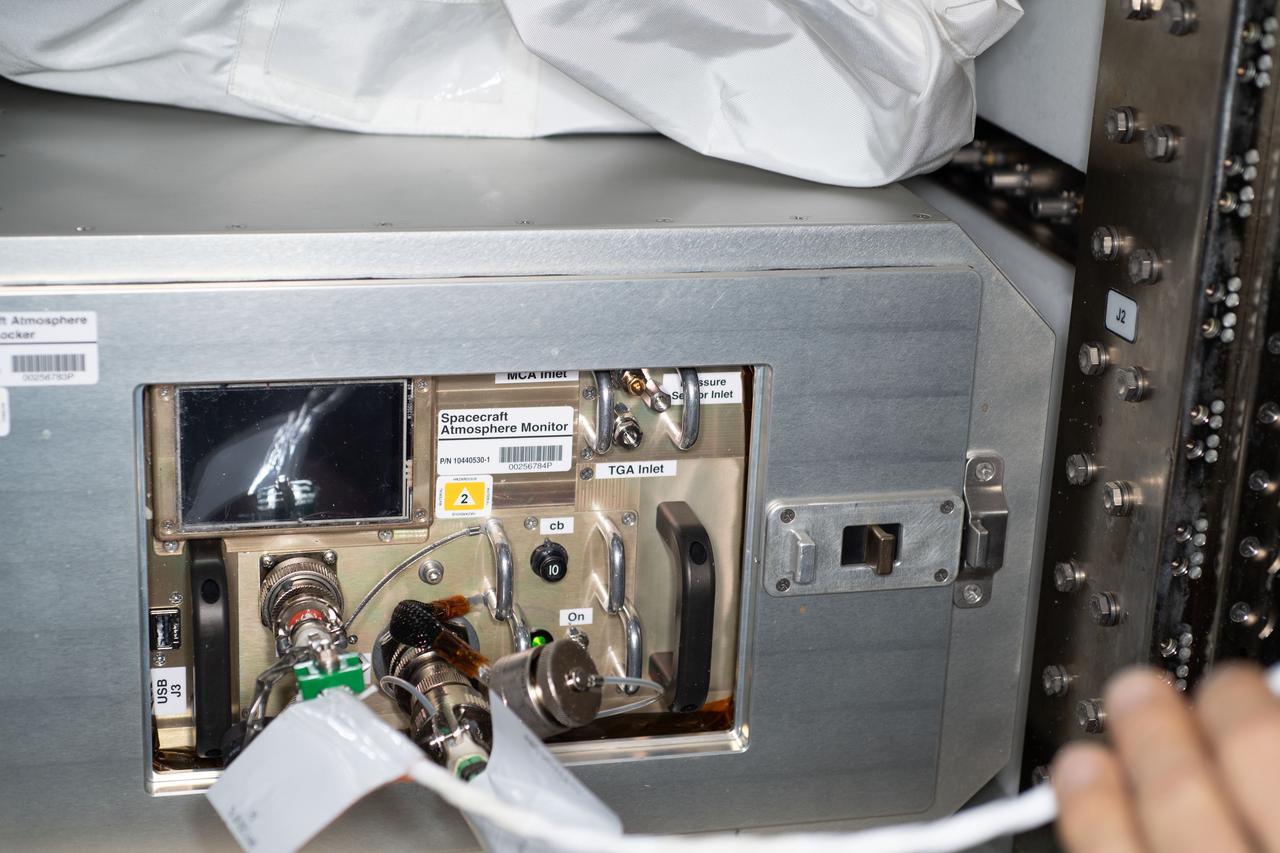
iss063e012706 (5/14/2020) --- A view of the Spacecraft Atmosphere Monitor inside Spacecraft Atmosphere Monitor Locker in the U.S. Laboratory Expedite the Processing of Experiments to the Space Station (EXPRESS) Rack 8 aboard the International space Station (ISS). The Spacecraft Atmosphere Monitor investigation demonstrates the capabilities of a small, reliable, portable gas chromatograph mass spectrometer instrument aboard the ISS to conduct major and minor elements of air measurement. The instrument transmits data back to the ground research team every two seconds, providing a continuous analysis to the ground research team.
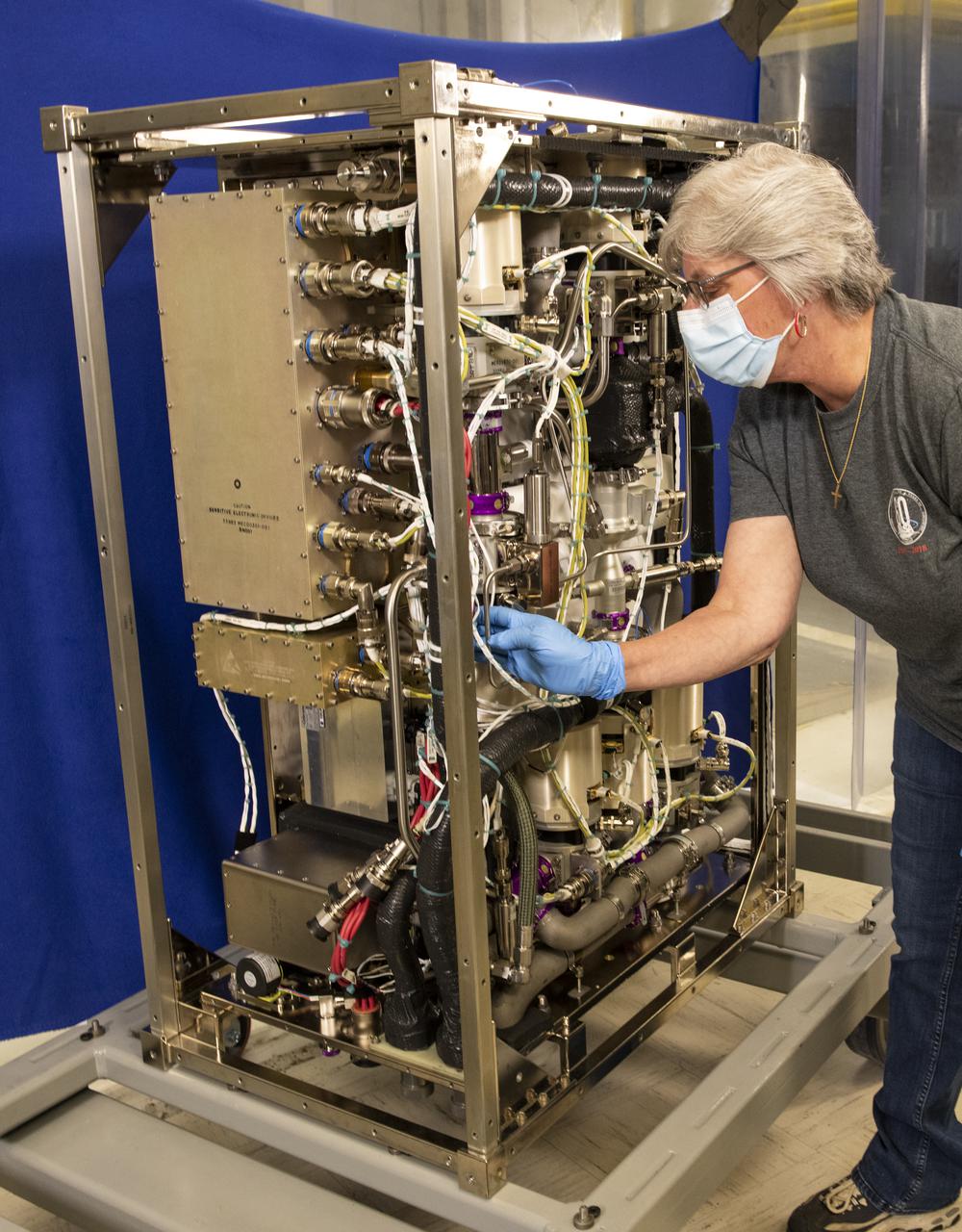
The flight demonstration unit of the next-generation 4-bed CO2 Scrubber (4BCO2) is targeted for launch aboard NG16 NET August 1, 2021. Once aboard the space station, this u nit will be mounted in a basic express rack. This four-bed technology is a mainstay for metabolic CO2 removal and crew life support. The new 4-Bed Carbon Dioxide Scrubber, developed, built, and tested at NASA’s Marshall Space Flight Center in Huntsville, Alabama, is checked out by Kathi Lange, a Bastion Technologies contractor supporting the quality assurance group in Marshall’s Safety and Mission Assurance Directorate, prior to its shipment to NASA’s Wallops Flight Facility in Wallops Island, Virginia.
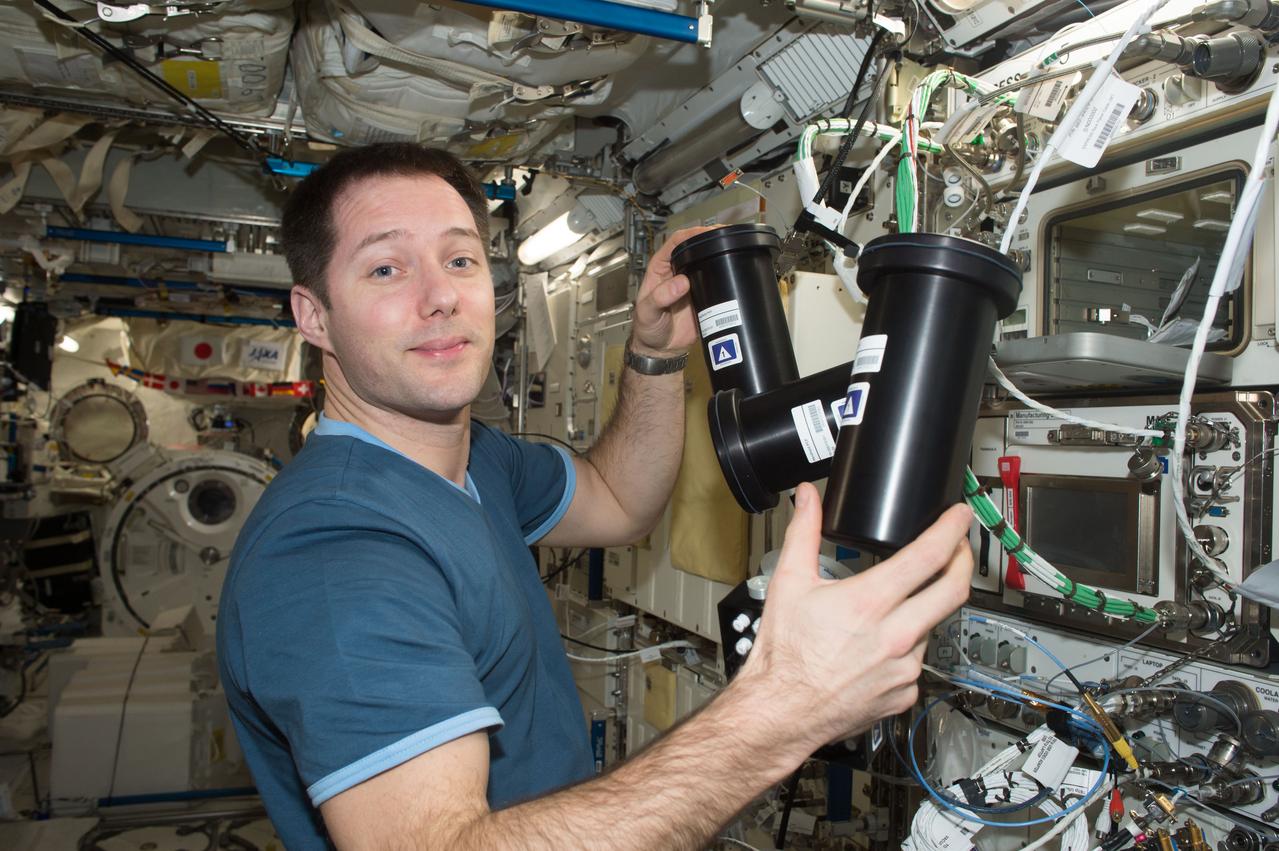
iss050e058812 (3/17/2017) --- A view of European Space Agency (ESA) astronaut Thomas Pesquet, during Protein Crystal Growth (PCG) -5 hardware deactivation and stow, from Microgravity Experiment Research Locker Incubator (MERLIN) on Expedite the Processing of Experiments to the Space Station (EXPRESS) Rack 5. The Microgravity Growth of Crystalline Monoclonal Antibodies for Pharmaceutical Applications (CASIS-PCG-5) investigation crystallizes a monoclonal antibody developed by Merck Research Labs. Microgravity enables the growth of extremely high-quality crystals, which allow scientists to study the proteins’ structure, improve drug delivery, manufacturing, and developing better methods for storing these biological molecules.
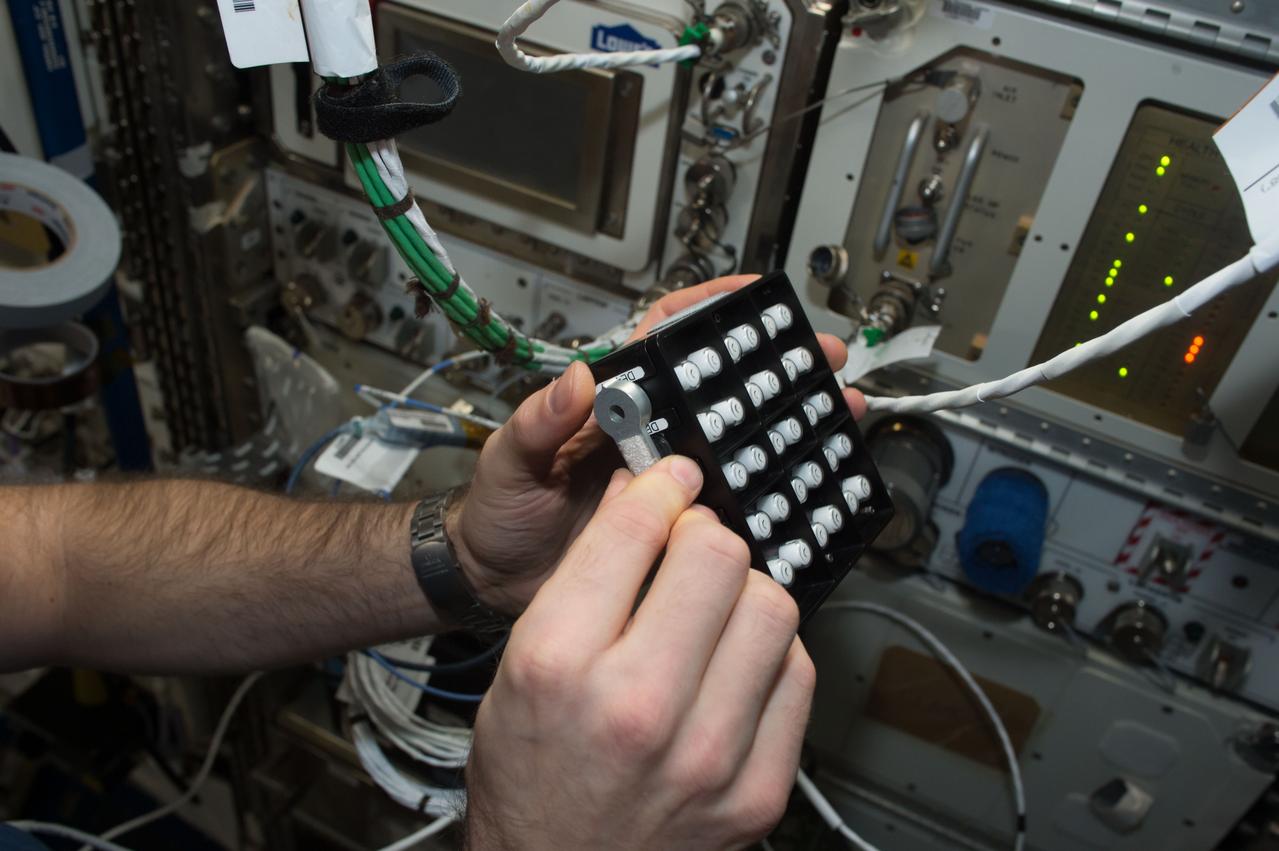
iss050e058807 (3/17/2017) --- A view of European Space Agency (ESA) astronaut Thomas Pesquet, during Protein Crystal Growth (PCG) -5 hardware deactivation and stow, from Microgravity Experiment Research Locker Incubator (MERLIN) on Expedite the Processing of Experiments to the Space Station (EXPRESS) Rack 5. The Microgravity Growth of Crystalline Monoclonal Antibodies for Pharmaceutical Applications (CASIS-PCG-5) investigation crystallizes a monoclonal antibody developed by Merck Research Labs. Microgravity enables the growth of extremely high-quality crystals, which allow scientists to study the proteins’ structure, improve drug delivery, manufacturing, and developing better methods for storing these biological molecules.
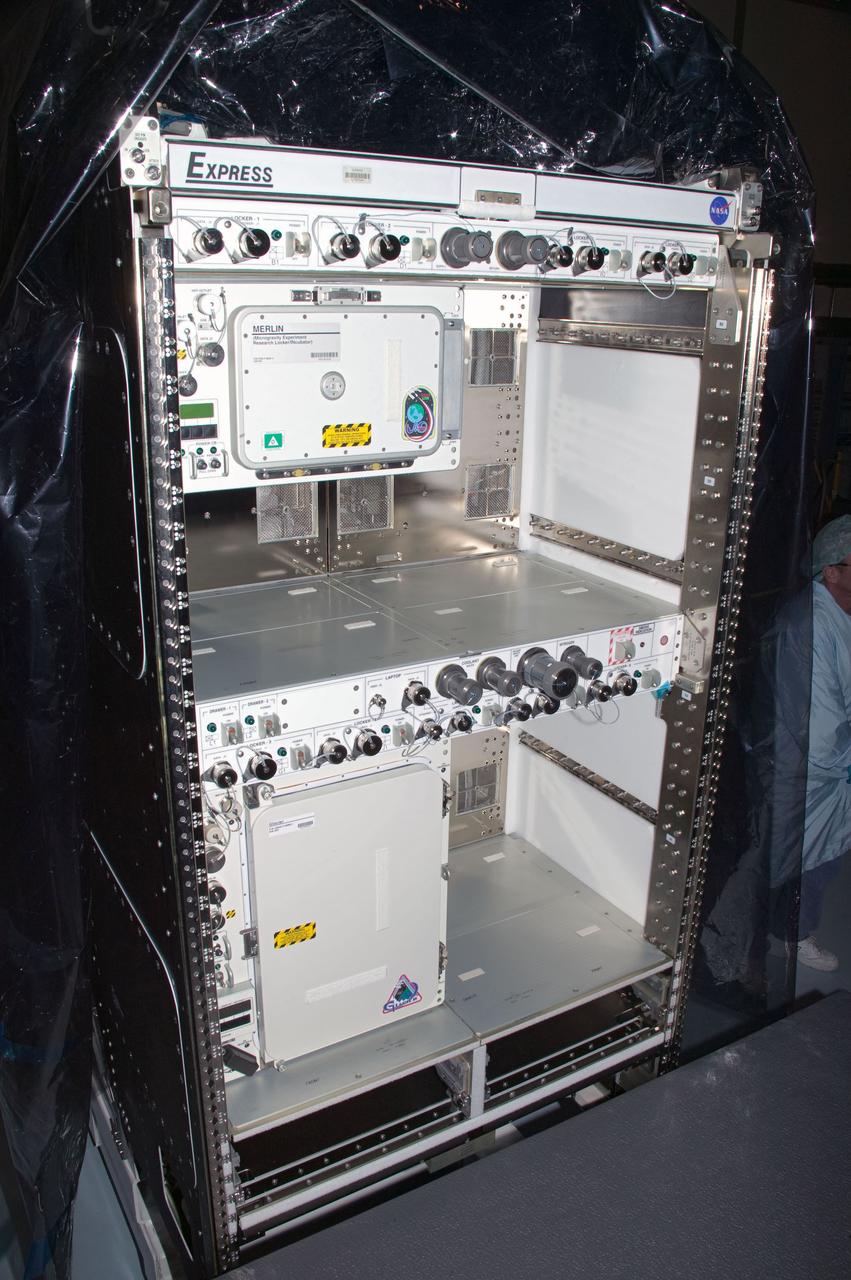
CAPE CANAVERAL, Fla. – This photo shows the crew galley that will be delivered to the International Space Station aboard space shuttle Endeavour on the STS-126 mission. It is designed to make use of the top half of EXPRESS Rack 6 for power, cooling and water. It will consist of one potable water dispenser, one food warmer, and one MERLIN refrigerator. Once on orbit, the galley will be transferred to the U.S. Lab. Endeavour and its crew of seven are scheduled to lift off at 7:55 p.m. Nov. 14 for the 15-day STS-126 mission. Photo credit: NASA
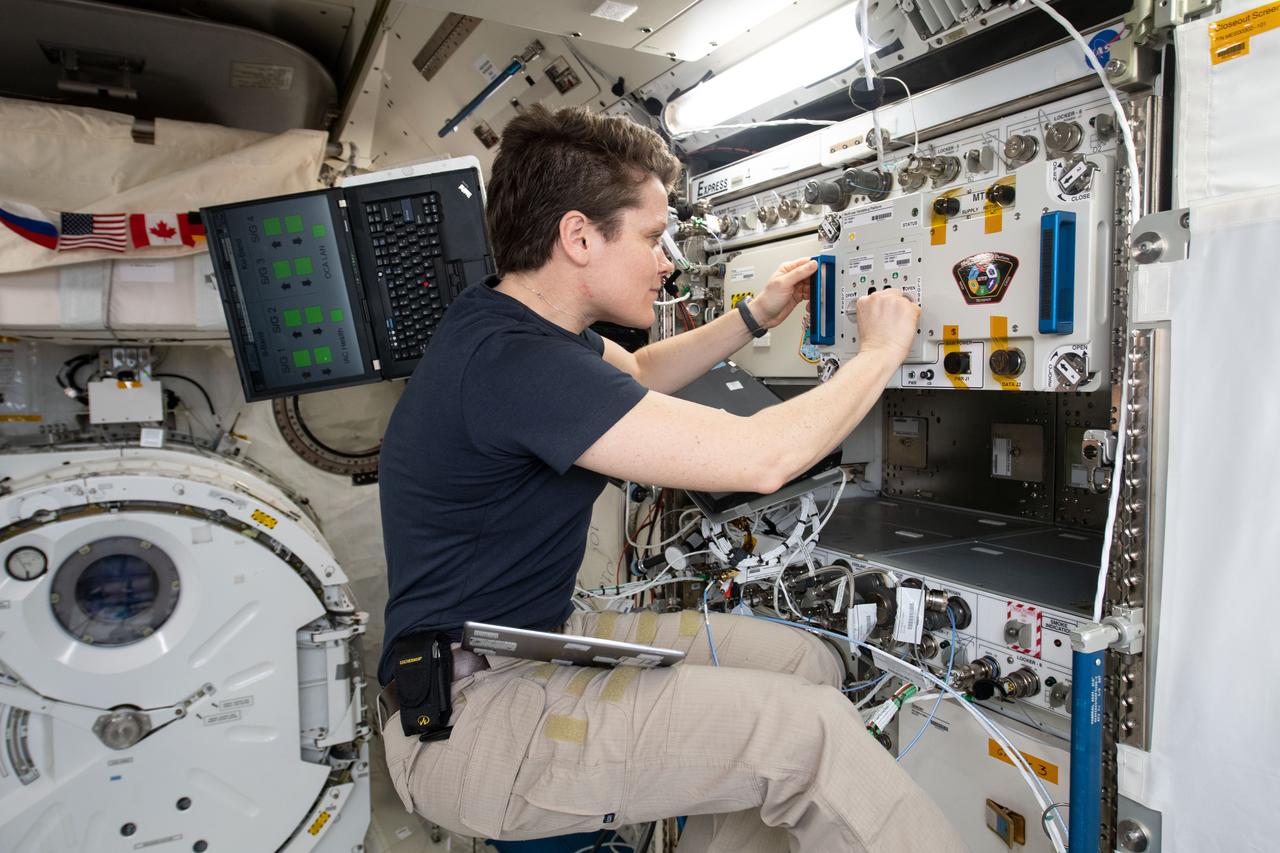
iss059e034463 (April 23, 2019) --- NASA astronaut Anne McClain installs the MVP-2 platform onto Express Rack 4 and took historical photos. The Experimental Evolution of Bacillus subtilis Populations in Space: MVP-02 investigation seeks to understand how organisms adapt to the space environment, an important component of future space exploration. Microbes may play fundamental roles in the development of biologically-based closed-loop regenerative life support, in-situ resource utilization, and will have extensive interactions with human and plant hosts. Further, microbes may pose challenges through virulence and contamination, and as nuisance factors such as biofilms in water supply and ventilation systems.
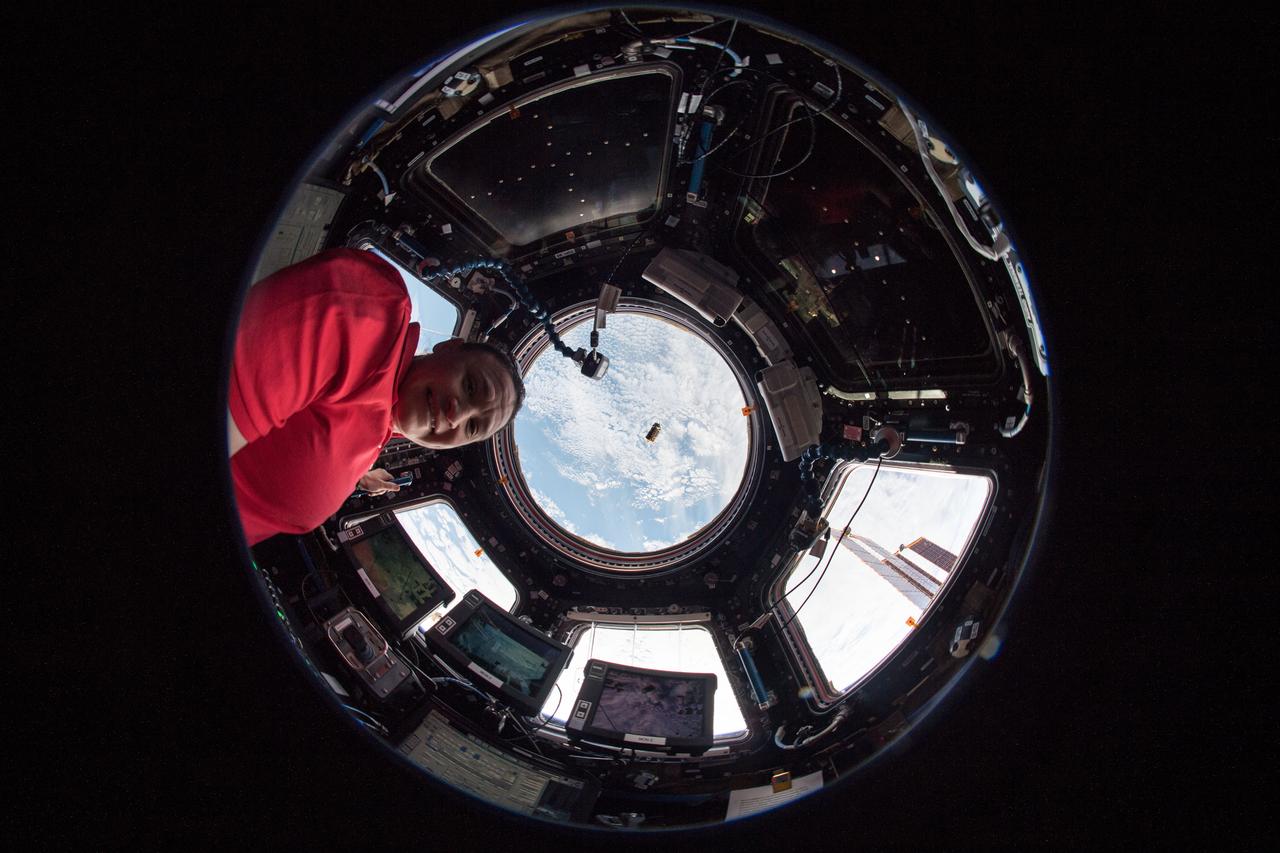
iss056e195892 (Sept. 27, 2018) --- Flight Engineer Serena Auñón-Chancellor of NASA monitors the arrival of the H-II Transfer Vehicle-7 (HTV-7) before it was captured during Expedition 56 by Commander Drew Feustel operating the Canadarm2 robotic arm. The HTV-7 from the Japan Aerospace Exploration Agency (JAXA) delivered six new lithium-ion batteries and adapter plates to upgrade the International Space Station's power systems. The Japanese resupply ship also delivered science experiments and research hardware including a new sample holder for the Electrostatic Levitation Furnace (JAXA-ELF), a protein crystal growth experiment at low temperatures (JAXA LT PCG), an investigation that looks at the effect of microgravity on bone marrow (MARROW), a Life Sciences Glovebox, and additional EXPRESS Racks.
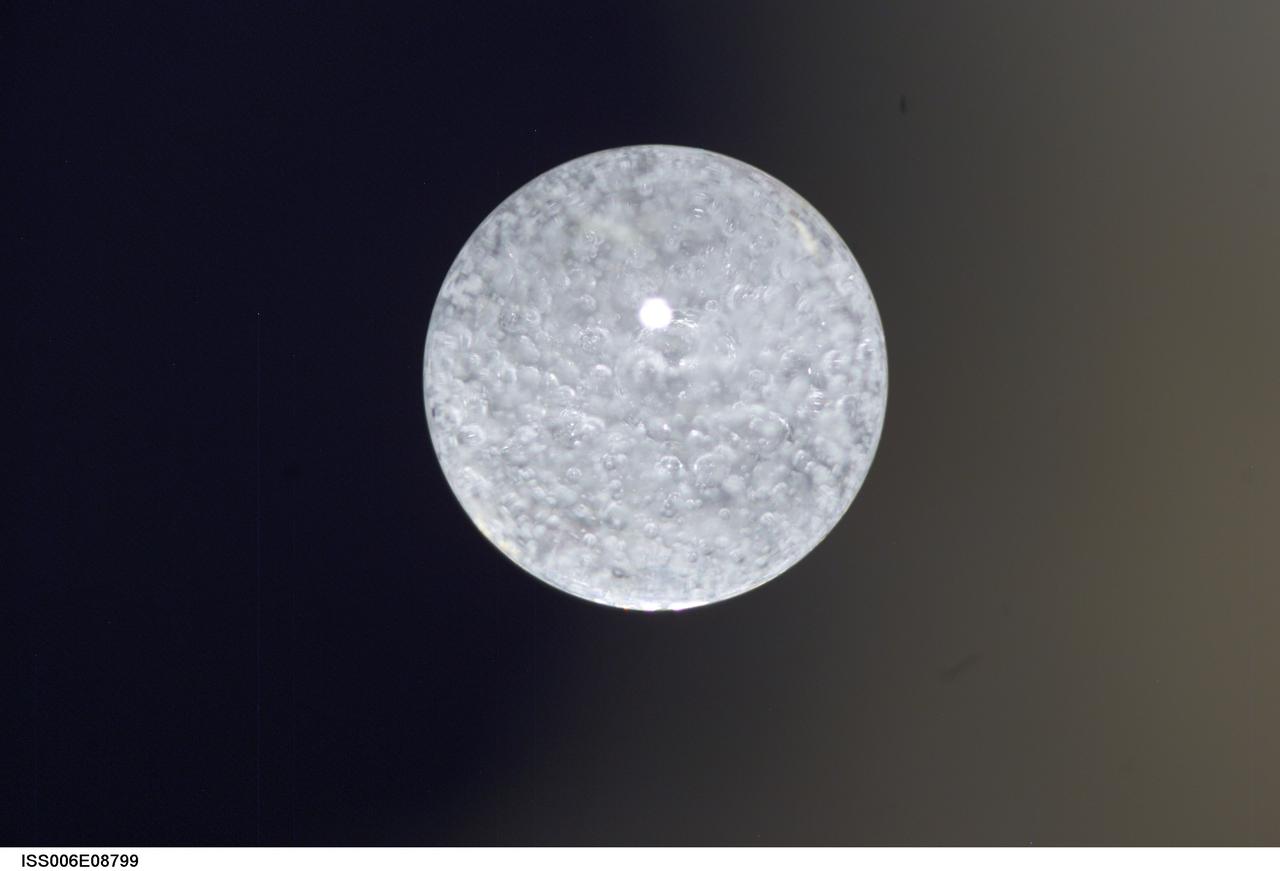
ISS006-E-08799 (14 December 2002) --- View of a bubble formed as a result of a Zeolite Crystal Growth (ZCG) experiment in the Destiny laboratory on the International Space Station (ISS). Expedition Six Commander Kenneth D. Bowersox used a Space Station drill to mix 12 Zeolite samples in clear tubes. Scientists on the ground watching on TV noticed bubbles in the samples. Bowersox used a modified mixing procedure to process autoclaves to isolate bubbles. He re-inserted the samples in the ZCG furnace in Express Rack 2 in the U.S. laboratory/Destiny. This experiment has shown that the bubbles could cause larger number of smaller deformed crystals to grow. Bowersox rotated the samples so that the heavier fluid was thrown to the outside while the lighter bubbles stayed on the inside.
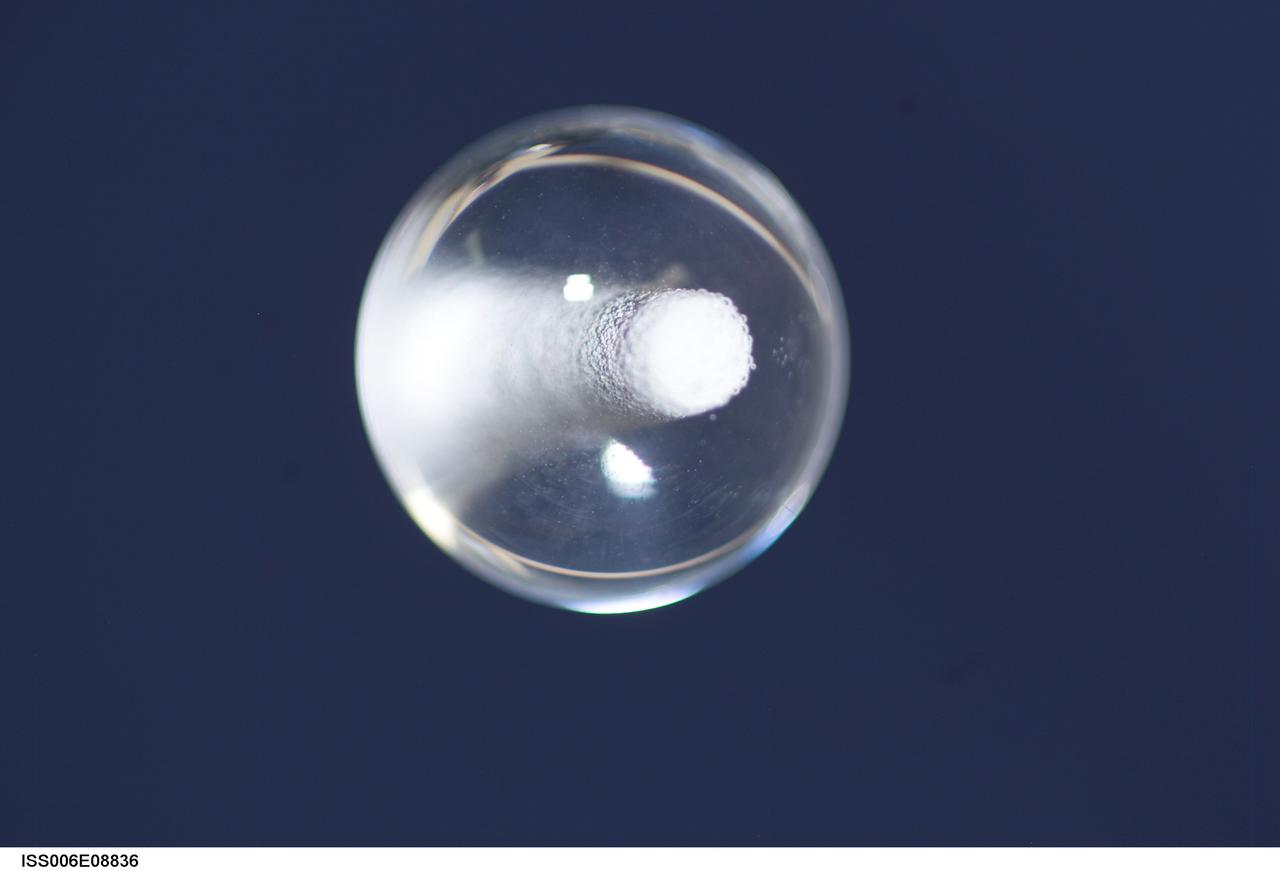
ISS006-E-08836 (14 December 2002) --- View of a bubble formed as a result of a Zeolite Crystal Growth (ZCG) experiment in the Destiny laboratory on the International Space Station (ISS). Expedition Six Commander Kenneth D. Bowersox used a Space Station drill to mix 12 Zeolite samples in clear tubes. Scientists on the ground watching on TV noticed bubbles in the samples. Bowersox used a modified mixing procedure to process autoclaves to isolate bubbles. He re-inserted the samples in the ZCG furnace in Express Rack 2 in the U.S. laboratory/Destiny. This experiment has shown that the bubbles could cause larger number of smaller deformed crystals to grow. Bowersox rotated the samples so that the heavier fluid was thrown to the outside while the lighter bubbles stayed on the inside.
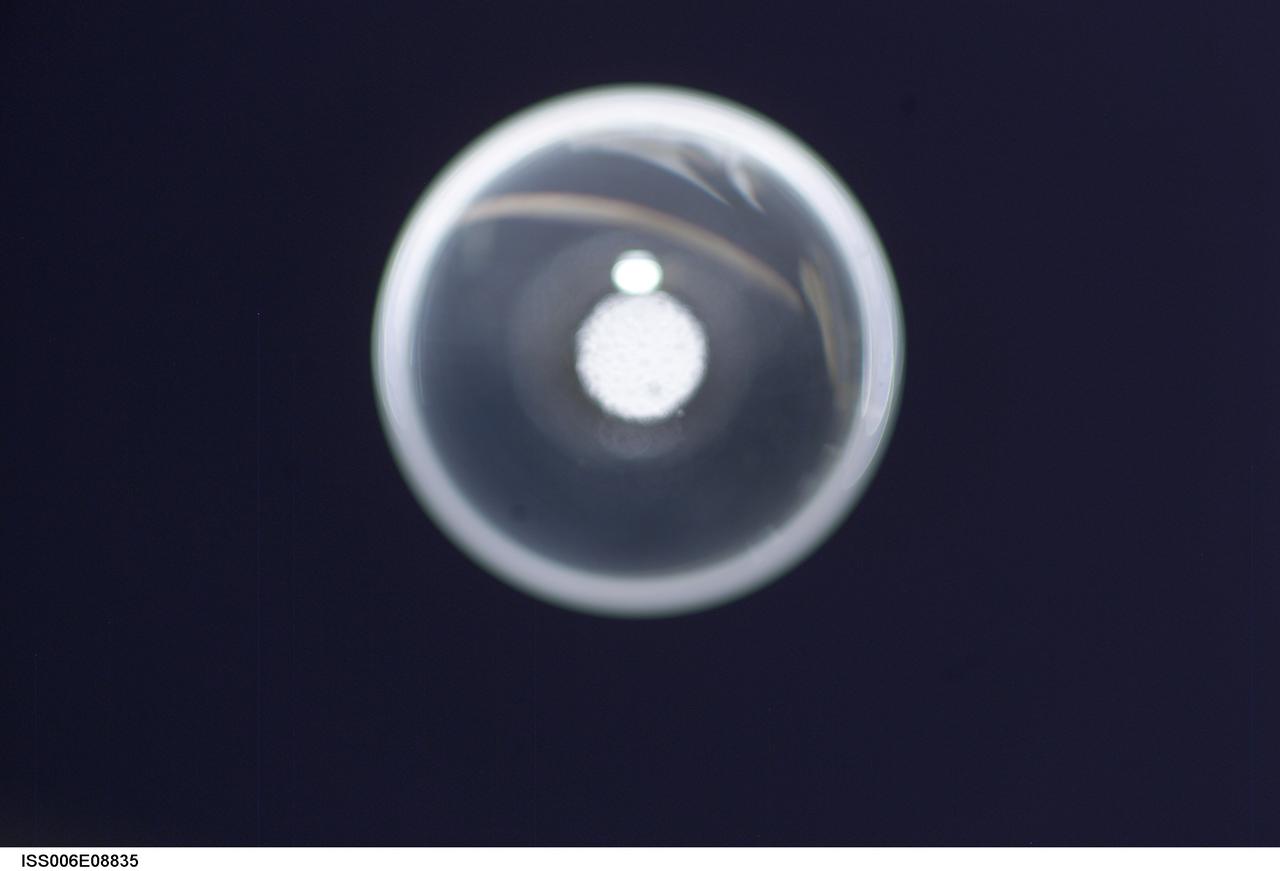
ISS006-E-08835 (14 December 2002) --- View of a bubble formed as a result of a Zeolite Crystal Growth (ZCG) experiment in the Destiny laboratory on the International Space Station (ISS). Expedition Six Commander Kenneth D. Bowersox used a Space Station drill to mix 12 Zeolite samples in clear tubes. Scientists on the ground watching on TV noticed bubbles in the samples. Bowersox used a modified mixing procedure to process autoclaves to isolate bubbles. He re-inserted the samples in the ZCG furnace in Express Rack 2 in the U.S. laboratory/Destiny. This experiment has shown that the bubbles could cause larger number of smaller deformed crystals to grow. Bowersox rotated the samples so that the heavier fluid was thrown to the outside while the lighter bubbles stayed on the inside.
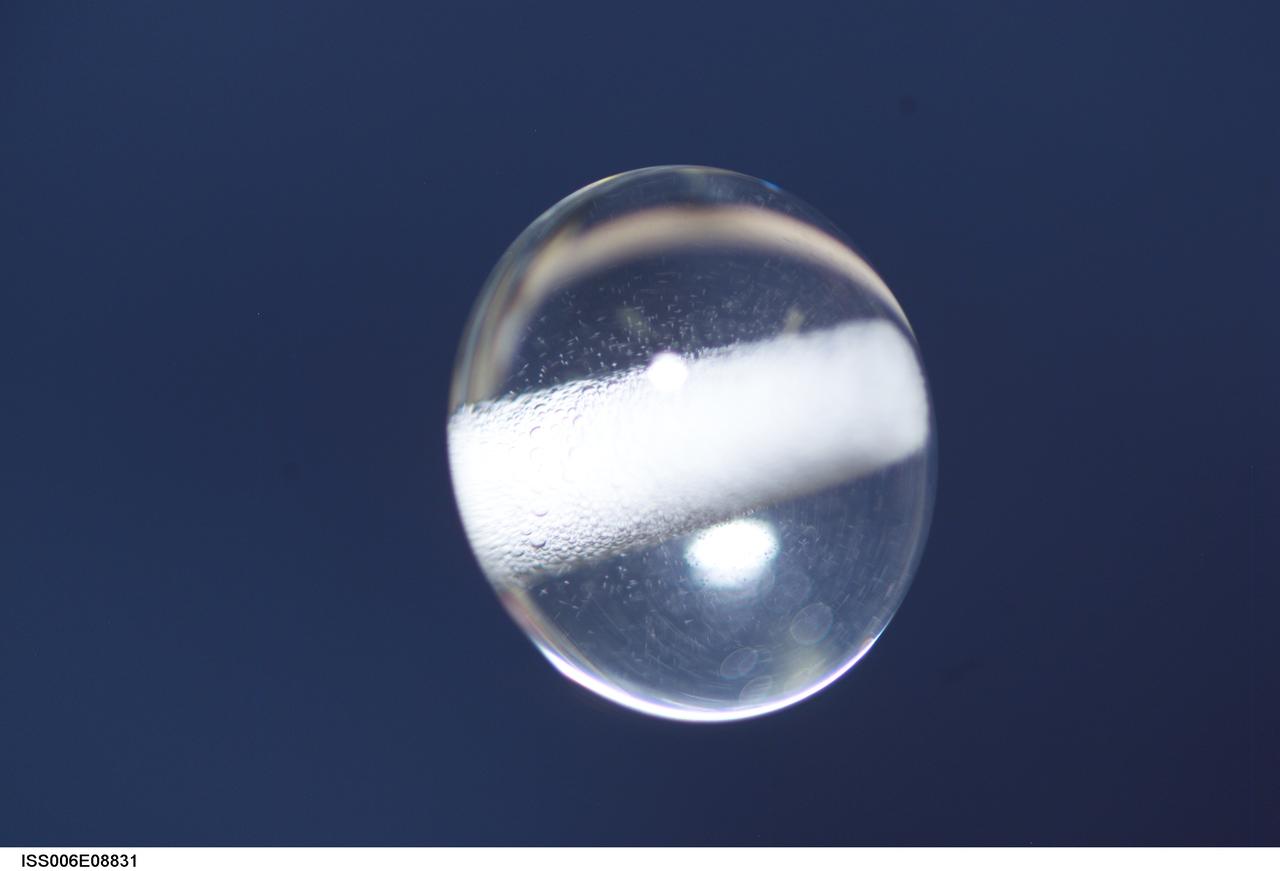
ISS006-E-08831 (14 December 2002) --- View of a bubble formed as a result of a Zeolite Crystal Growth (ZCG) experiment in the Destiny laboratory on the International Space Station (ISS). Expedition Six Commander Kenneth D. Bowersox used a Space Station drill to mix 12 Zeolite samples in clear tubes. Scientists on the ground watching on TV noticed bubbles in the samples. Bowersox used a modified mixing procedure to process autoclaves to isolate bubbles. He re-inserted the samples in the ZCG furnace in Express Rack 2 in the U.S. laboratory/Destiny. This experiment has shown that the bubbles could cause larger number of smaller deformed crystals to grow. Bowersox rotated the samples so that the heavier fluid was thrown to the outside while the lighter bubbles stayed on the inside.
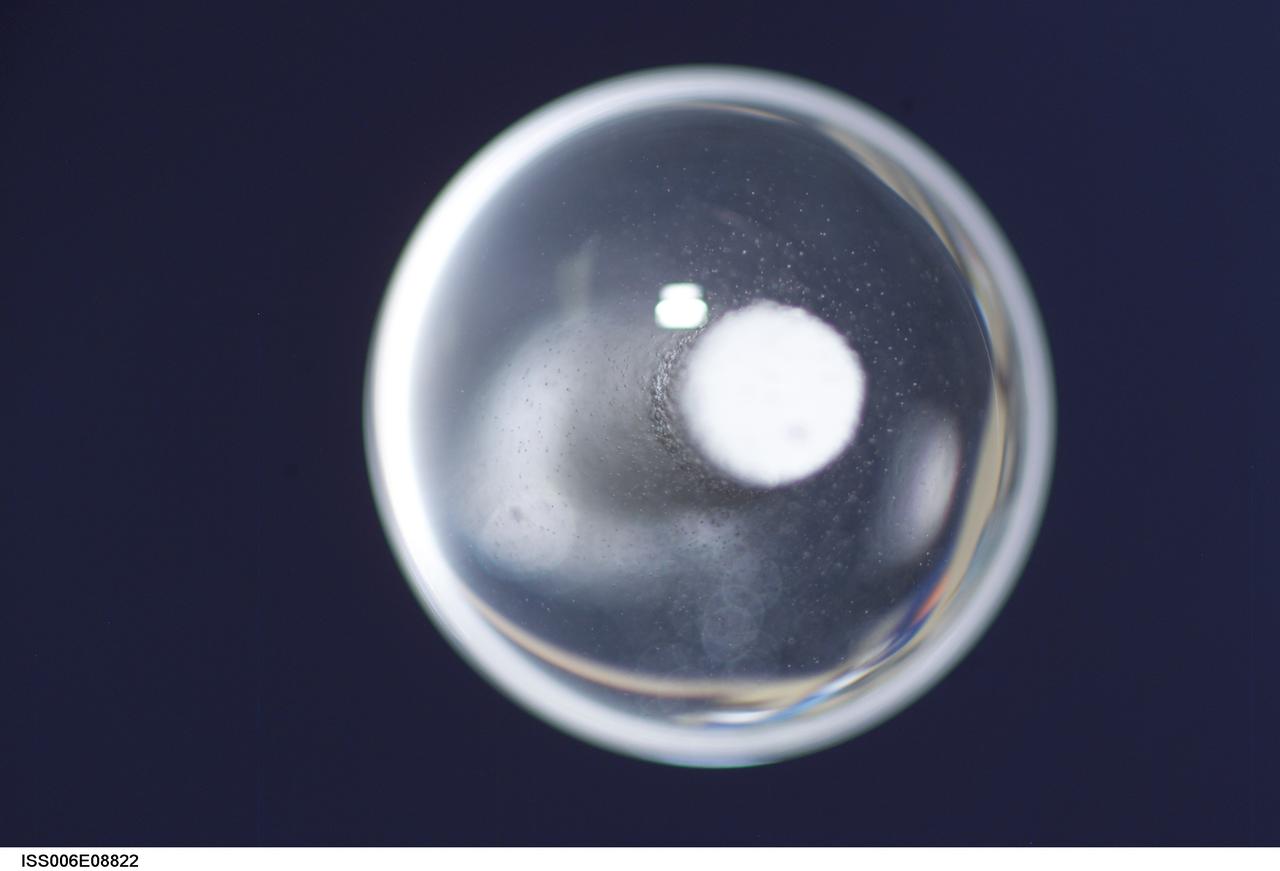
ISS006-E-08822 (14 December 2002) --- View of a bubble formed as a result of a Zeolite Crystal Growth (ZCG) experiment in the Destiny laboratory on the International Space Station (ISS). Expedition Six Commander Kenneth D. Bowersox used a Space Station drill to mix 12 Zeolite samples in clear tubes. Scientists on the ground watching on TV noticed bubbles in the samples. Bowersox used a modified mixing procedure to process autoclaves to isolate bubbles. He re-inserted the samples in the ZCG furnace in Express Rack 2 in the U.S. laboratory/Destiny. This experiment has shown that the bubbles could cause larger number of smaller deformed crystals to grow. Bowersox rotated the samples so that the heavier fluid was thrown to the outside while the lighter bubbles stayed on the inside.
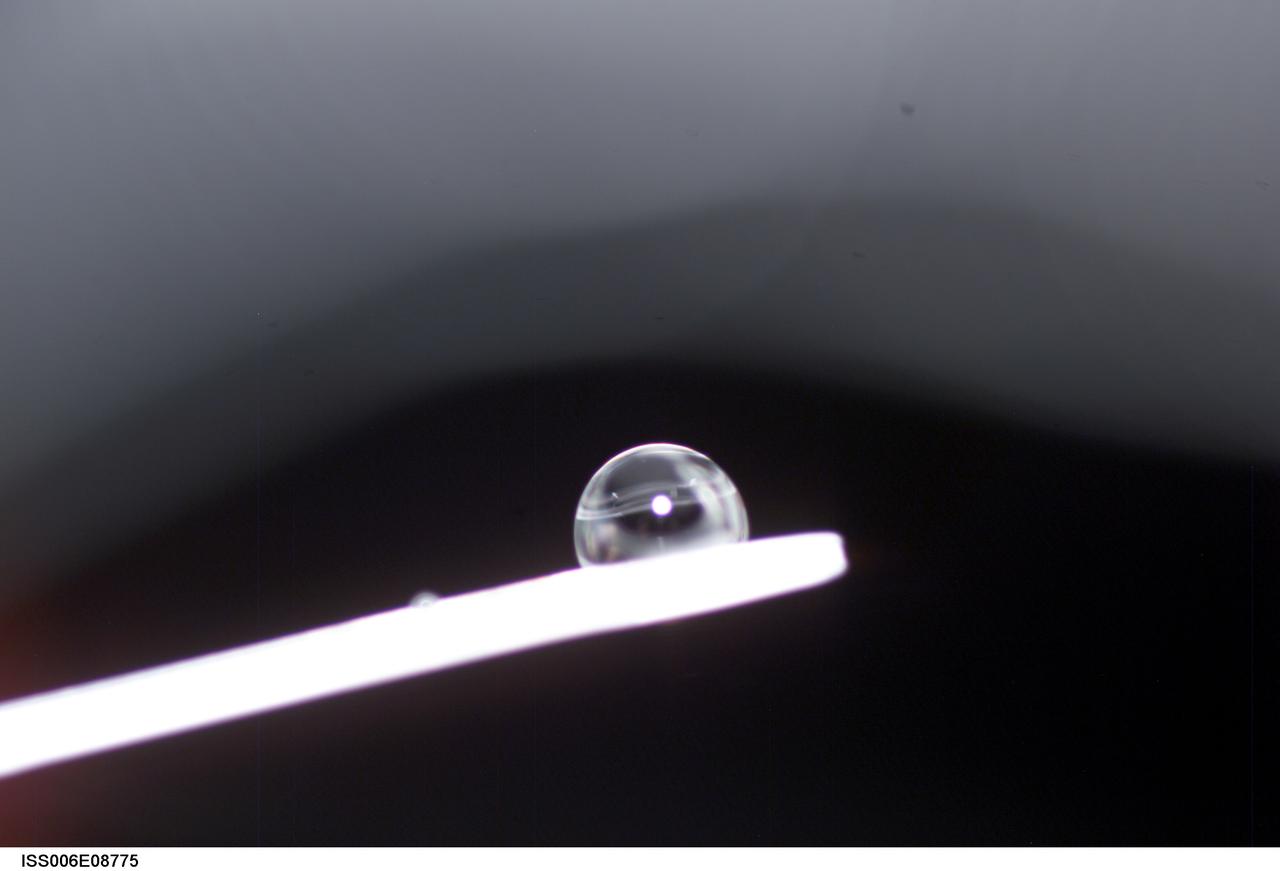
ISS006-E-08775 (14 December 2002) --- View of a bubble formed as a result of a Zeolite Crystal Growth (ZCG) experiment in the Destiny laboratory on the International Space Station (ISS). Expedition Six Commander Kenneth D. Bowersox used a Space Station drill to mix 12 Zeolite samples in clear tubes. Scientists on the ground watching on TV noticed bubbles in the samples. Bowersox used a modified mixing procedure to process autoclaves to isolate bubbles. He re-inserted the samples in the ZCG furnace in Express Rack 2 in the U.S. laboratory/Destiny. This experiment has shown that the bubbles could cause larger number of smaller deformed crystals to grow. Bowersox rotated the samples so that the heavier fluid was thrown to the outside while the lighter bubbles stayed on the inside.
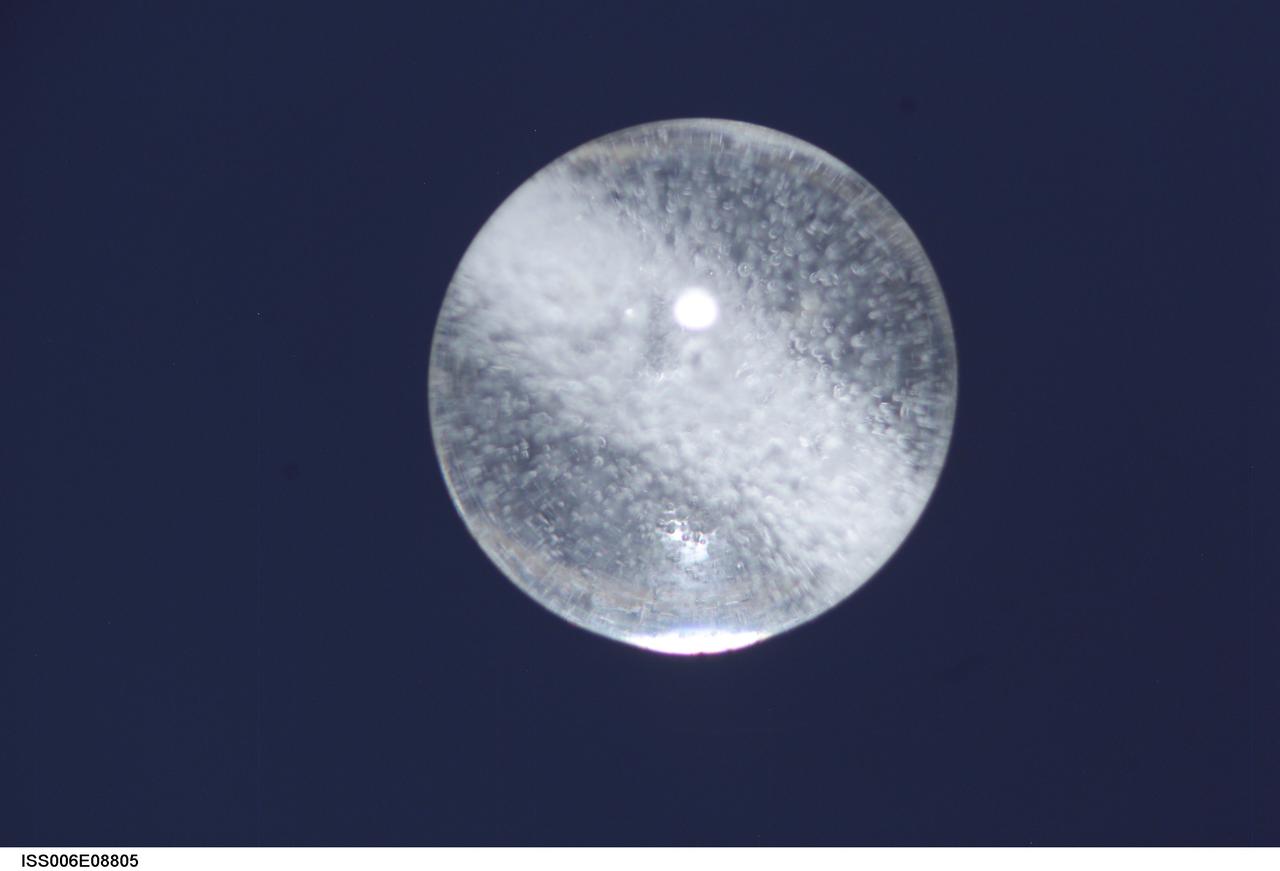
ISS006-E-08805 (14 December 2002) --- View of a bubble formed as a result of a Zeolite Crystal Growth (ZCG) experiment in the Destiny laboratory on the International Space Station (ISS). Expedition Six Commander Kenneth D. Bowersox used a Space Station drill to mix 12 Zeolite samples in clear tubes. Scientists on the ground watching on TV noticed bubbles in the samples. Bowersox used a modified mixing procedure to process autoclaves to isolate bubbles. He re-inserted the samples in the ZCG furnace in Express Rack 2 in the U.S. laboratory/Destiny. This experiment has shown that the bubbles could cause larger number of smaller deformed crystals to grow. Bowersox rotated the samples so that the heavier fluid was thrown to the outside while the lighter bubbles stayed on the inside.
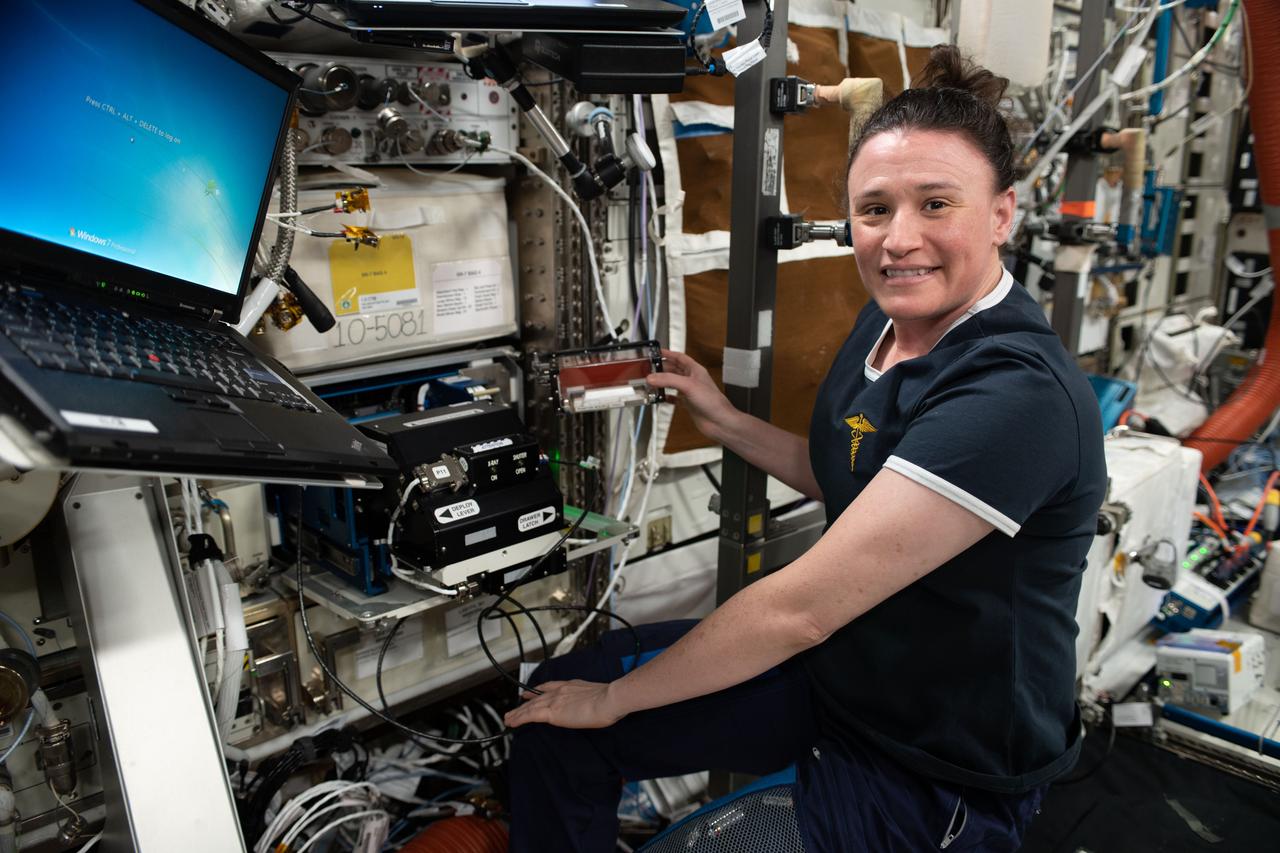
iss056e158493 (Aug. 27, 2018) --- NASA astronaut Serena Auñón-Chancellor works to calibrate a Bone Densitometer aboard the International Space Station's U.S. Destiny laboratory. The device measures the mass per unit volume (density) of minerals in bone using using Dual-Energy X-ray Absorptiometry (DEXA). It is being developed from commercial off-the-shelf hardware and is being designed to fit into an EXPRESS Rack locker. The Bone Densitometer takes quantitative measures of bone loss in mice, during orbital space flight, which are necessary for the development of countermeasures for human crew members, as well as for bone-loss syndromes on Earth, by commercial entities. Planned studies, both academic and commercial, require on-orbit analytical methods including bone densitometry.
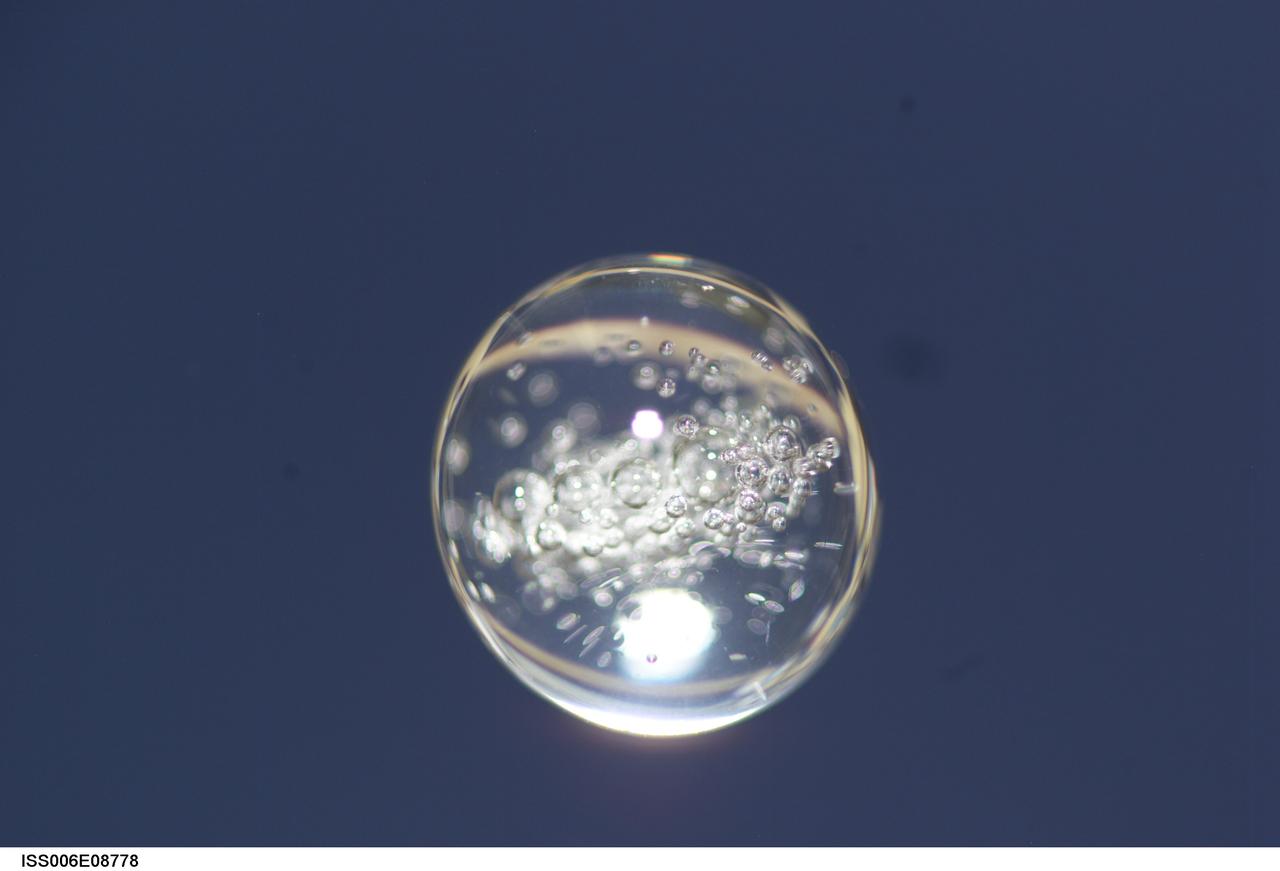
ISS006-E-08778 (14 December 2002) --- View of a bubble formed as a result of a Zeolite Crystal Growth (ZCG) experiment in the Destiny laboratory on the International Space Station (ISS). Expedition Six Commander Kenneth D. Bowersox used a Space Station drill to mix 12 Zeolite samples in clear tubes. Scientists on the ground watching on TV noticed bubbles in the samples. Bowersox used a modified mixing procedure to process autoclaves to isolate bubbles. He re-inserted the samples in the ZCG furnace in Express Rack 2 in the U.S. laboratory/Destiny. This experiment has shown that the bubbles could cause larger number of smaller deformed crystals to grow. Bowersox rotated the samples so that the heavier fluid was thrown to the outside while the lighter bubbles stayed on the inside.
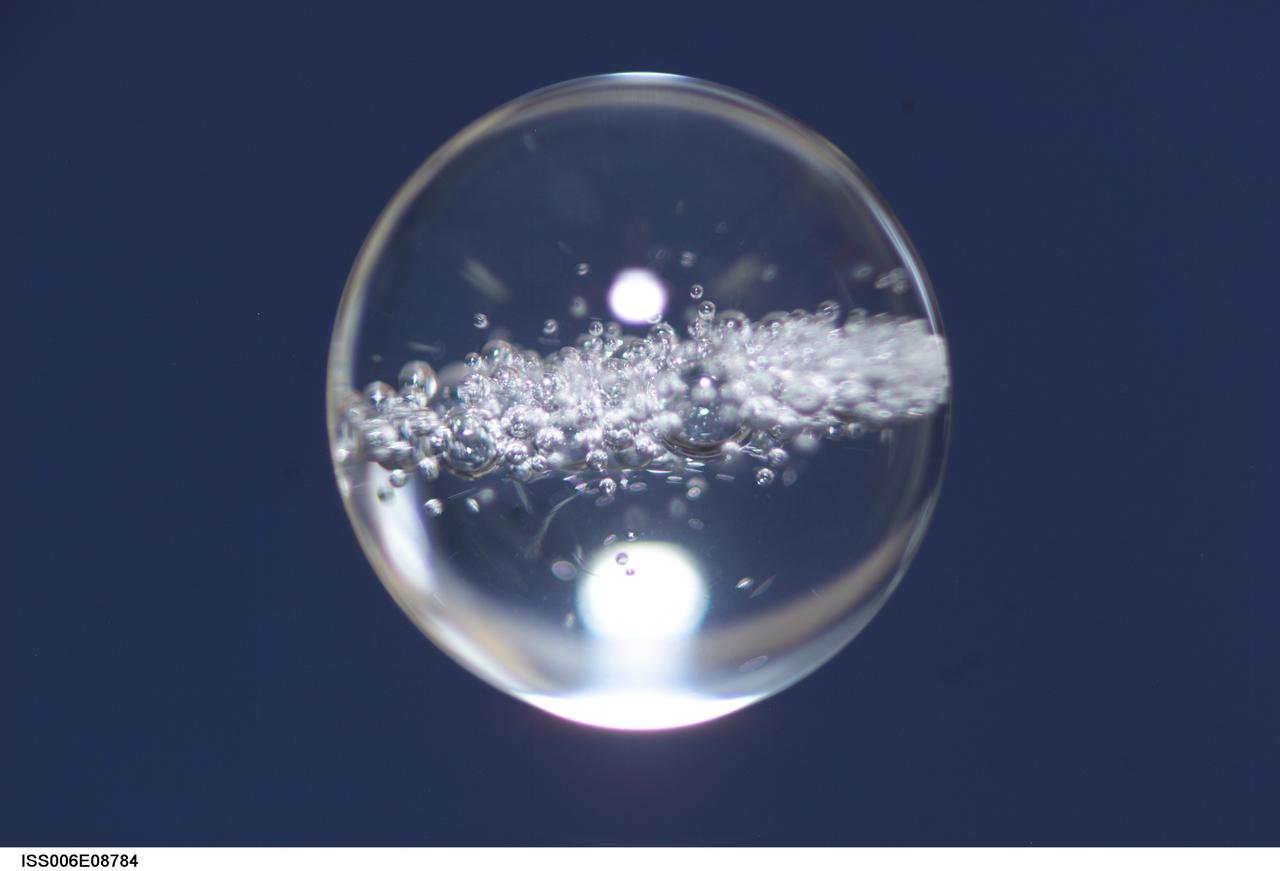
ISS006-E-08784 (14 December 2002) --- View of a bubble formed as a result of a Zeolite Crystal Growth (ZCG) experiment in the Destiny laboratory on the International Space Station (ISS). Expedition Six Commander Kenneth D. Bowersox used a Space Station drill to mix 12 Zeolite samples in clear tubes. Scientists on the ground watching on TV noticed bubbles in the samples. Bowersox used a modified mixing procedure to process autoclaves to isolate bubbles. He re-inserted the samples in the ZCG furnace in Express Rack 2 in the U.S. laboratory/Destiny. This experiment has shown that the bubbles could cause larger number of smaller deformed crystals to grow. Bowersox rotated the samples so that the heavier fluid was thrown to the outside while the lighter bubbles stayed on the inside.
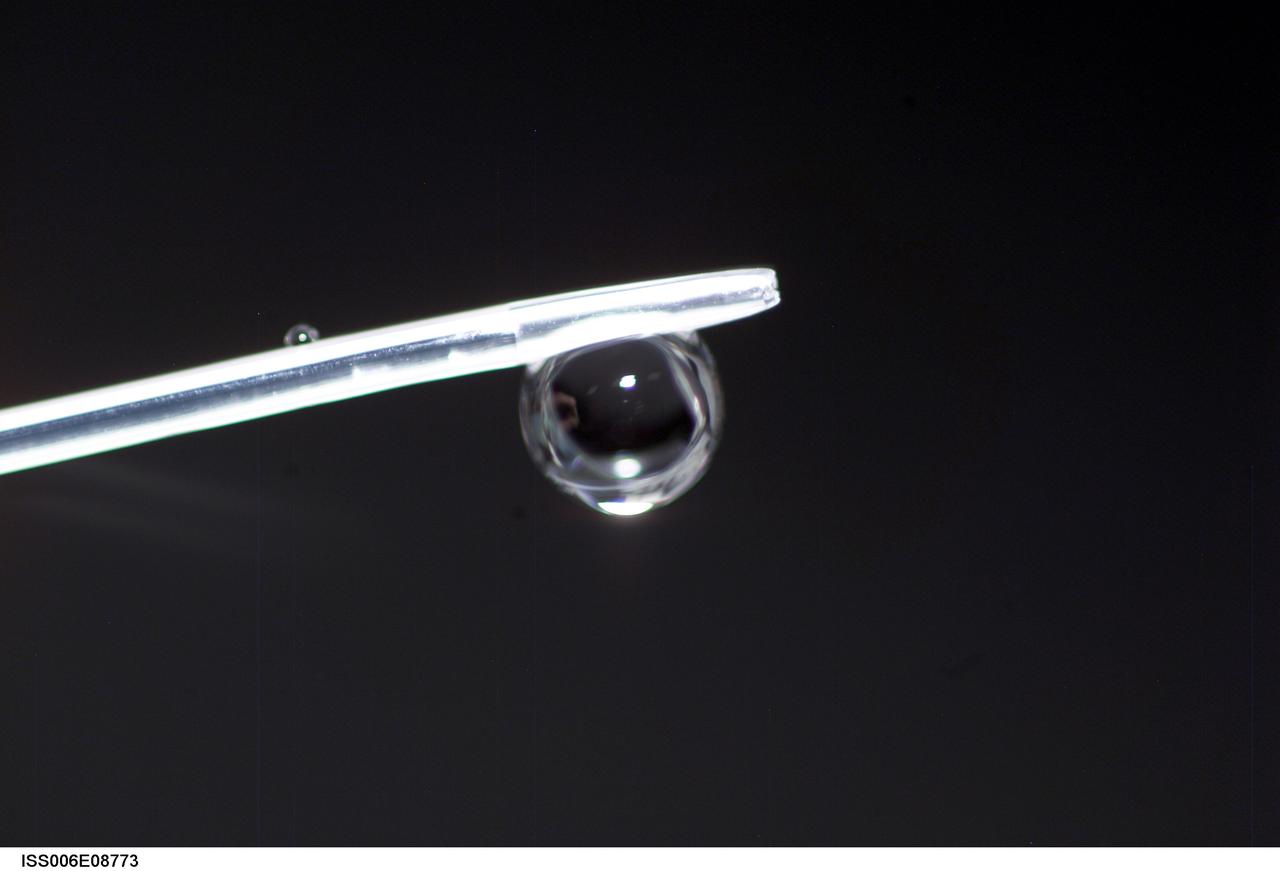
ISS006-E-08773 (14 December 2002) --- View of a bubble formed as a result of a Zeolite Crystal Growth (ZCG) experiment in the Destiny laboratory on the International Space Station (ISS). Expedition Six Commander Kenneth D. Bowersox used a Space Station drill to mix 12 Zeolite samples in clear tubes. Scientists on the ground watching on TV noticed bubbles in the samples. Bowersox used a modified mixing procedure to process autoclaves to isolate bubbles. He re-inserted the samples in the ZCG furnace in Express Rack 2 in the U.S. laboratory/Destiny. This experiment has shown that the bubbles could cause larger number of smaller deformed crystals to grow. Bowersox rotated the samples so that the heavier fluid was thrown to the outside while the lighter bubbles stayed on the inside.
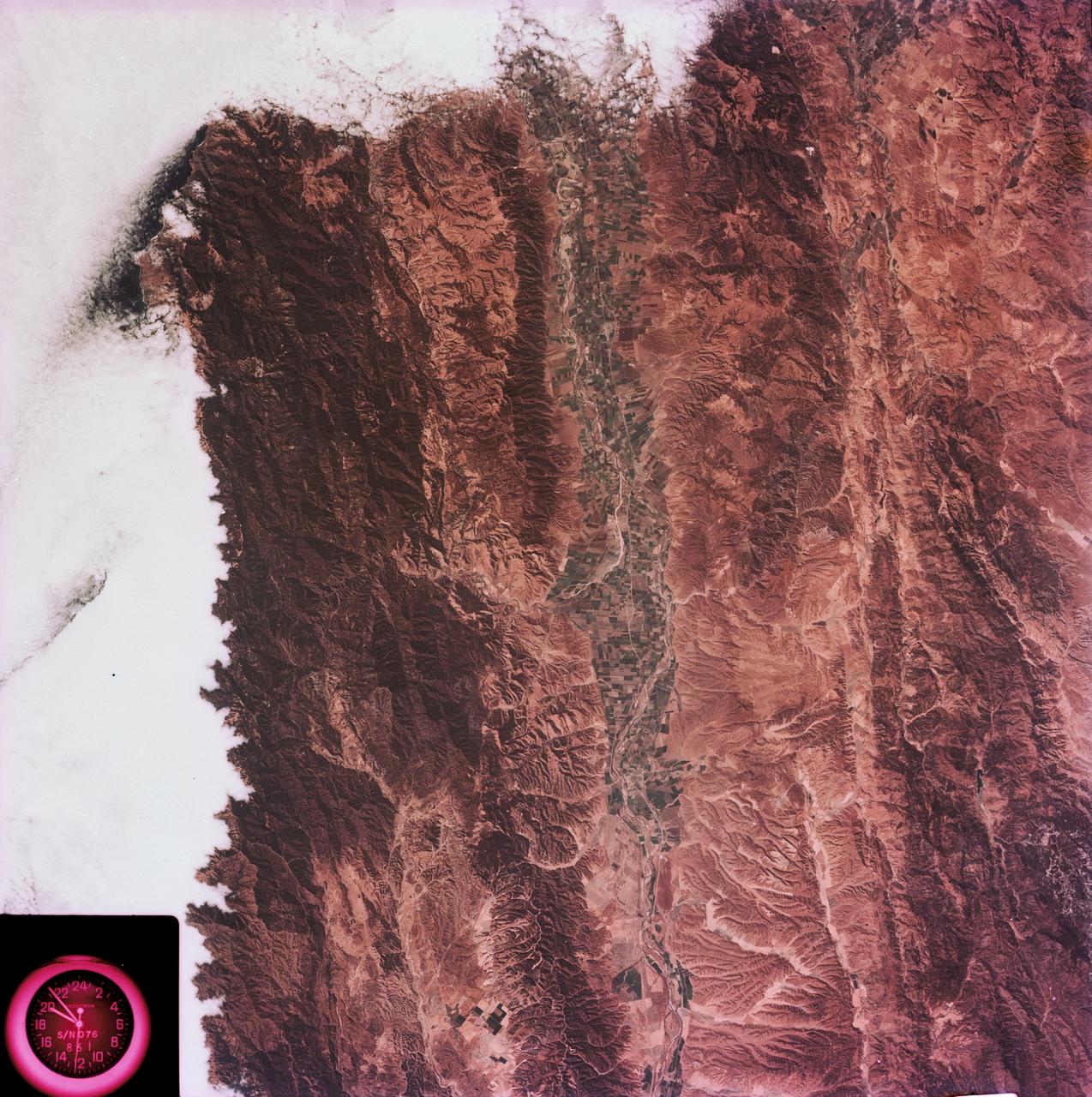
SL3-88-004 (July-September 1973) --- A vertical view of the Salinas River Valley area south of Monterey Bay, California area is seen in this Skylab 3 Earth Resources Experiments Package S190-B (five-inch Earth terrain camera) photograph taken from the Skylab space station in Earth orbit. The valley is an irrigated agricultural area, and is indicated by the dark-green and light-gray rectangular patterns in the centre of the picture. The city of Salinas is barely visible under the cloud cover at the top (north) end of the valley. The dark mass on the left (west) side of the valley is the Santa Lucia mountain range. The Big Sur area is on the left and partly covered by clouds. The Diablo Range forms the dark mass in the lower right (southeast) corner of the photograph. The town of Hollister is the gray area in the dark-green rectangular farm tracts which occupy the floor of the San Benito Valley in the upper right (northeast) corner of the photograph. The Salinas River flows northwestward toward Monterey Bay. The towns of Soledad, Greenfield and King City appear as gray areas along U.S. 101 in the Salinas Valley. The geology of the area is complex, and has been racked by several earthquakes resulting from movement along the San Andreas and subsidiary faults. Here, the surface expression of the San Andreas Fault can be traced from a point just west of Hollister at the contrast of dark brown and tan to a point about one inch left of the lower right (southeast) corner of the picture. Subsidiary faults are indicated by the curving trend of the rocks along the right side. The photograph will provide detailed information on land use patterns (Dr. R. Colwell, University of California, Berkeley) and fault tectonics (Dr. P. Merifield, Earth Science Res., Inc. and Dr. M. Abdel-Gawad, Rockwell International). Federal agencies participating with NASA on the EREP project are the Departments of Agriculture, Commerce, Interior, the Environmental Protection Agency and the Corps of Engineers. All EREP photography is available to the public through the Department of Interior’s Earth Resources Observations Systems Data Center, Sioux Falls, South Dakota, 57198. Photo credit: NASA