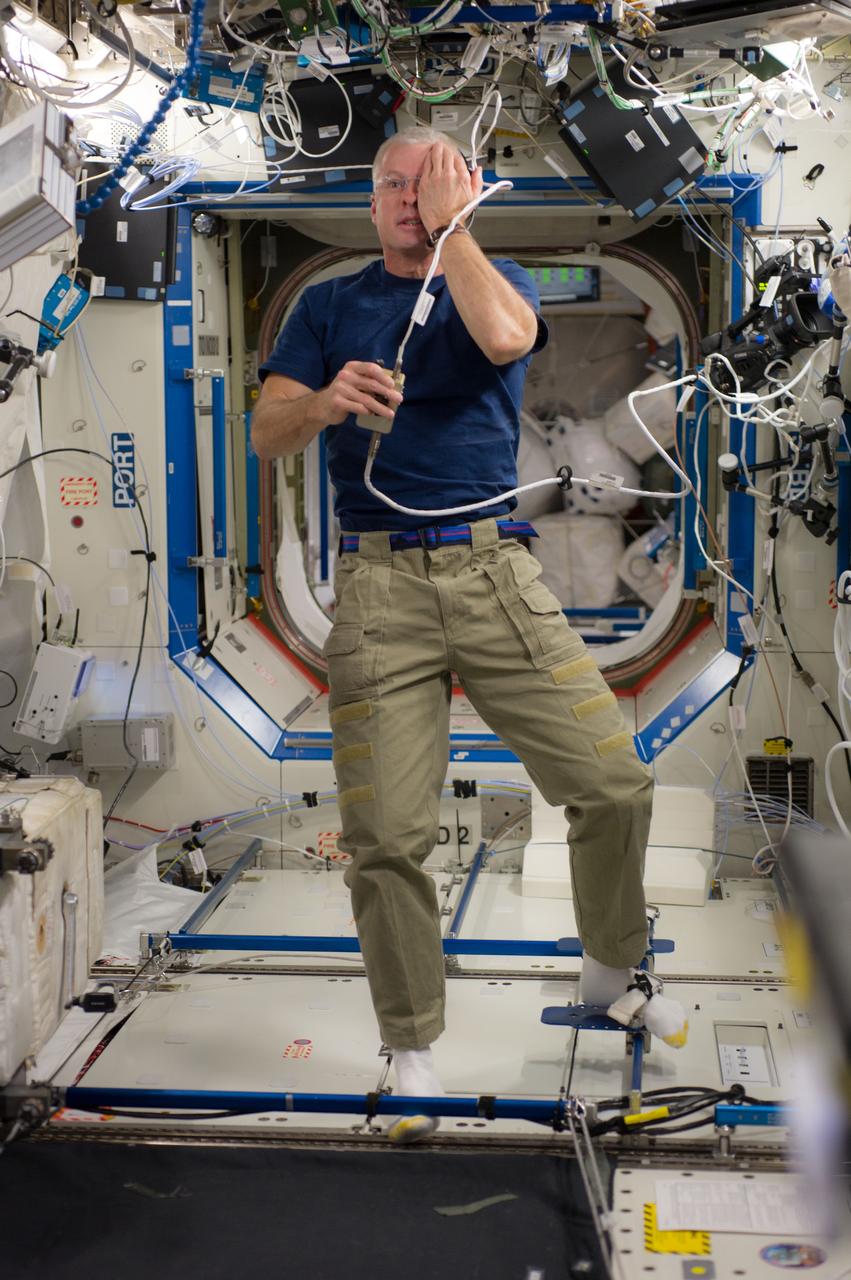
ISS040-E-006107 (2 June 2014) --- NASA astronaut Steve Swanson, Expedition 40 commander, performs a visual exam using an eye chart (out of frame) in the Destiny laboratory of the International Space Station.
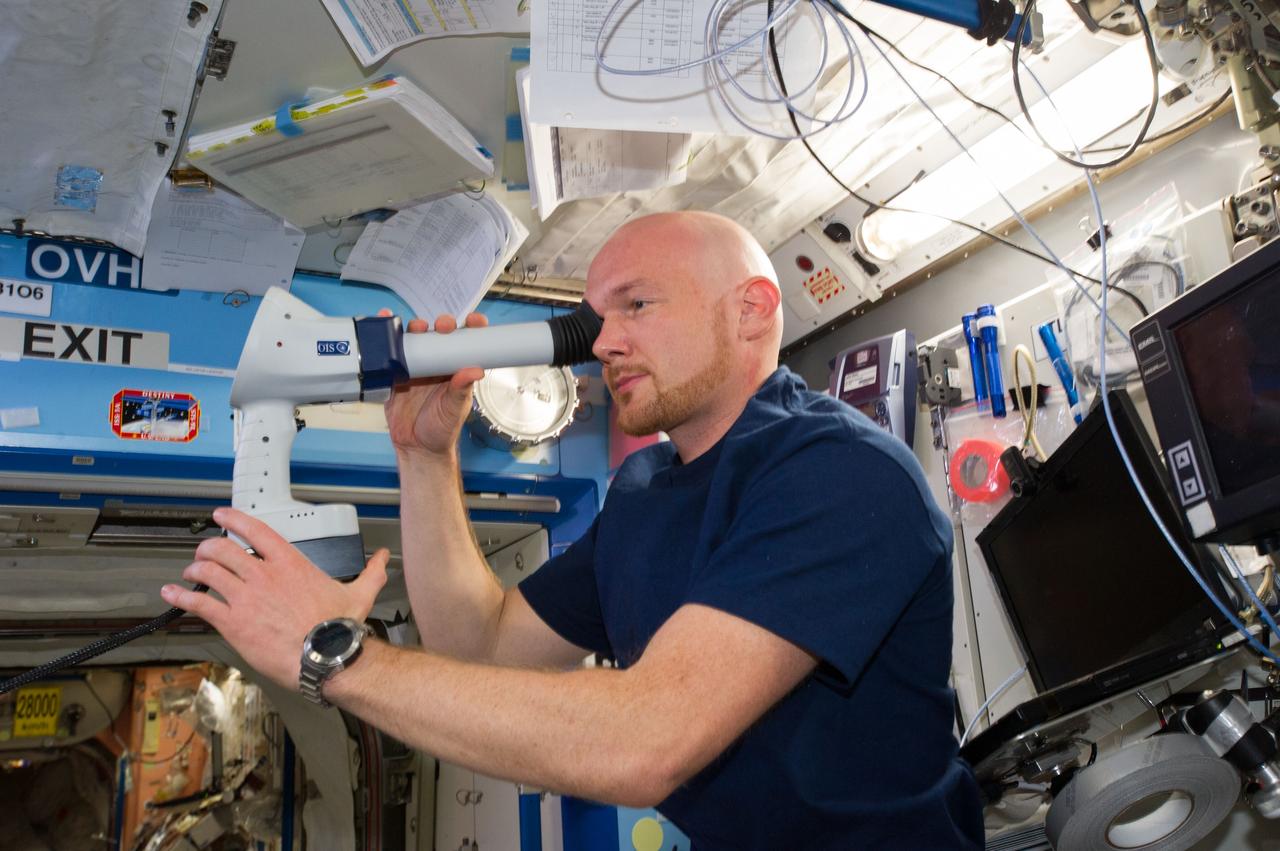
ISS040-E-006897 (3 June 2014) --- European Space Agency astronaut Alexander Gerst, Expedition 40 flight engineer, performs an Ocular Health (OH) examination in the Destiny laboratory of the International Space Station.
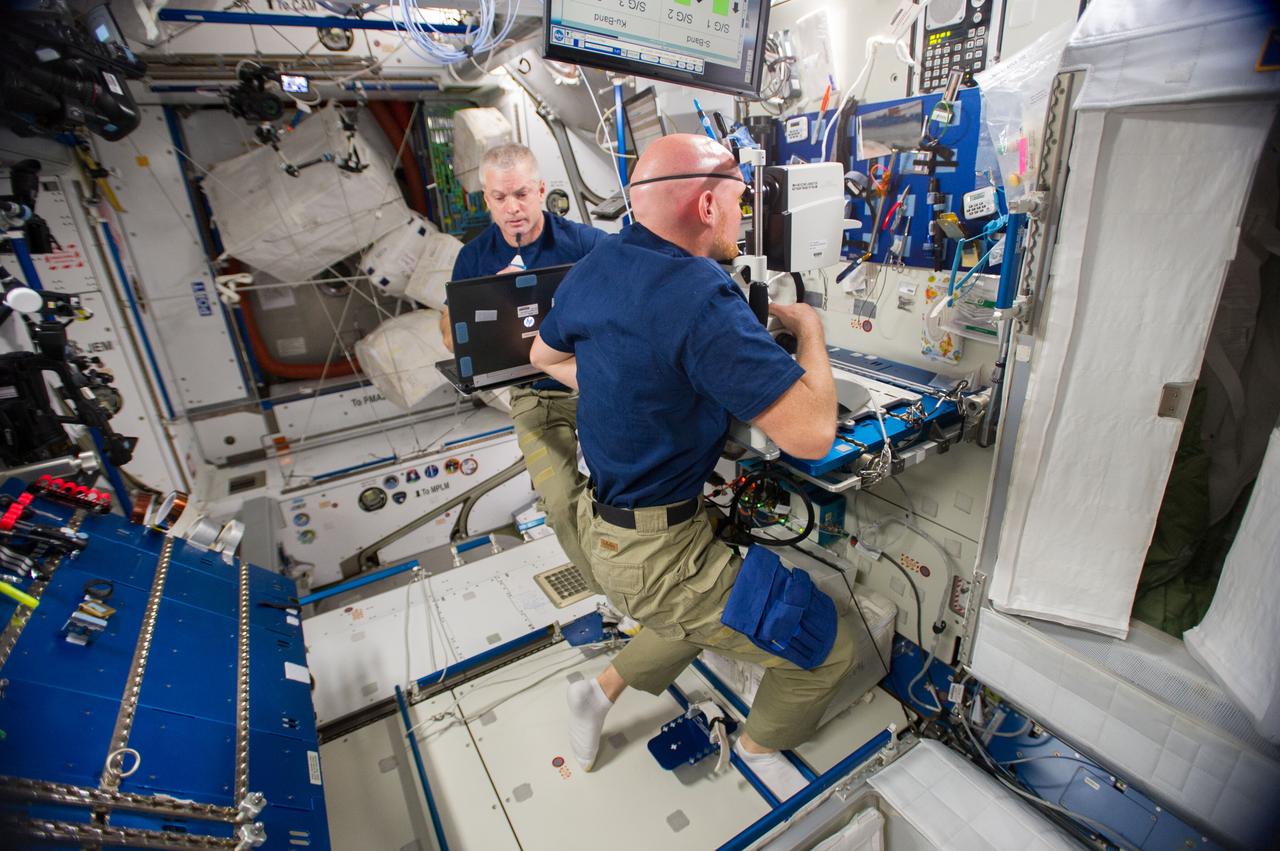
ISS040-E-006739 (3 June 2014) --- European Space Agency astronaut Alexander Gerst, Expedition 40 flight engineer, uses the Optical Coherence Tomography (OCT) camera during an Ocular Health (OH) vision test in the Harmony node of the International Space Station. The OH experiment observes and seeks to understand vision changes during long-term space missions. NASA astronaut Steve Swanson (left), Expedition 40 commander, assists Gerst.
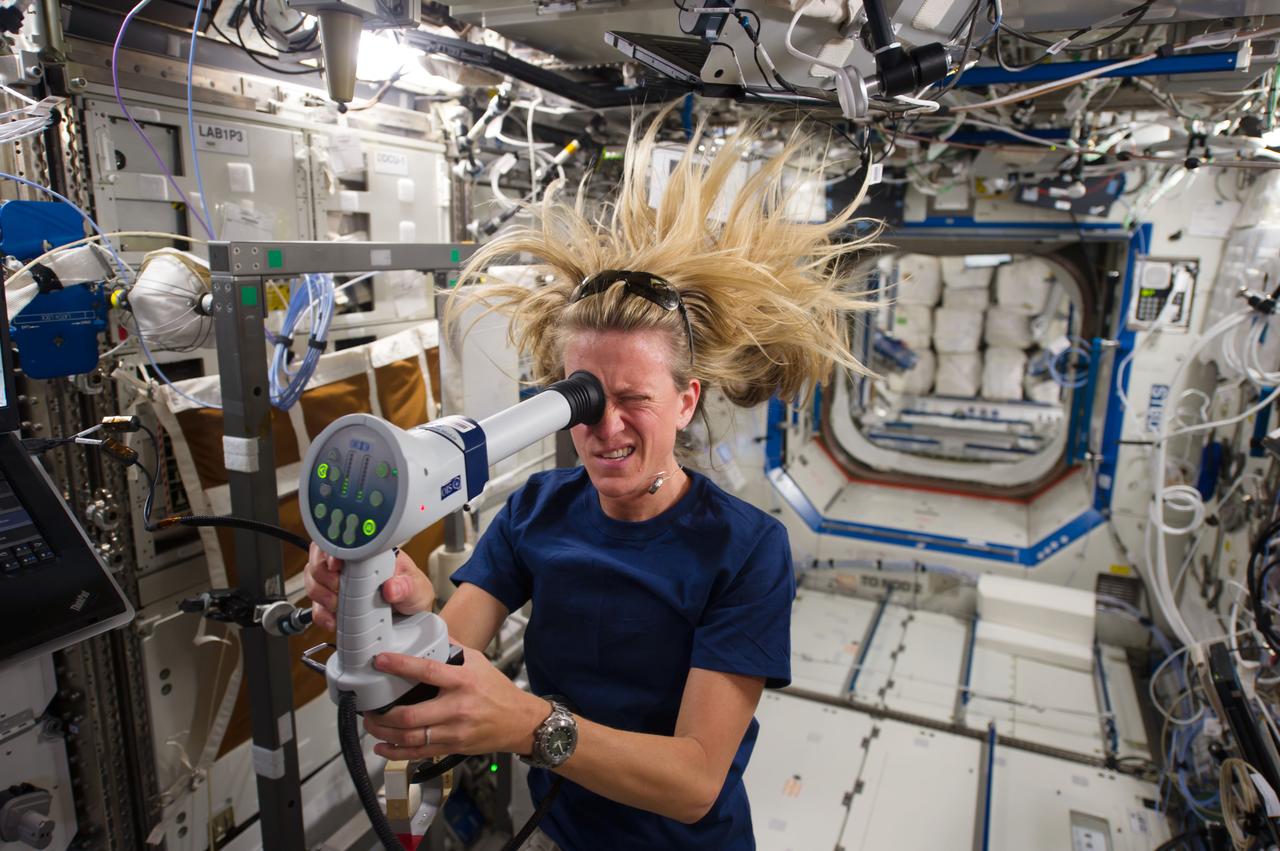
ISS036-E-006520 (5 June 2013) --- NASA astronaut Karen Nyberg, Expedition 36 flight engineer, conducts an ocular health exam on herself in the Destiny laboratory of the Earth-orbiting International Space Station. NASA astronaut Chris Cassidy, flight engineer, nearby but out of frame, assisted in the testing, part of a suite of eye exams carried out over a two-day period on various crew members to gather information on intraocular pressure and eye anatomy.
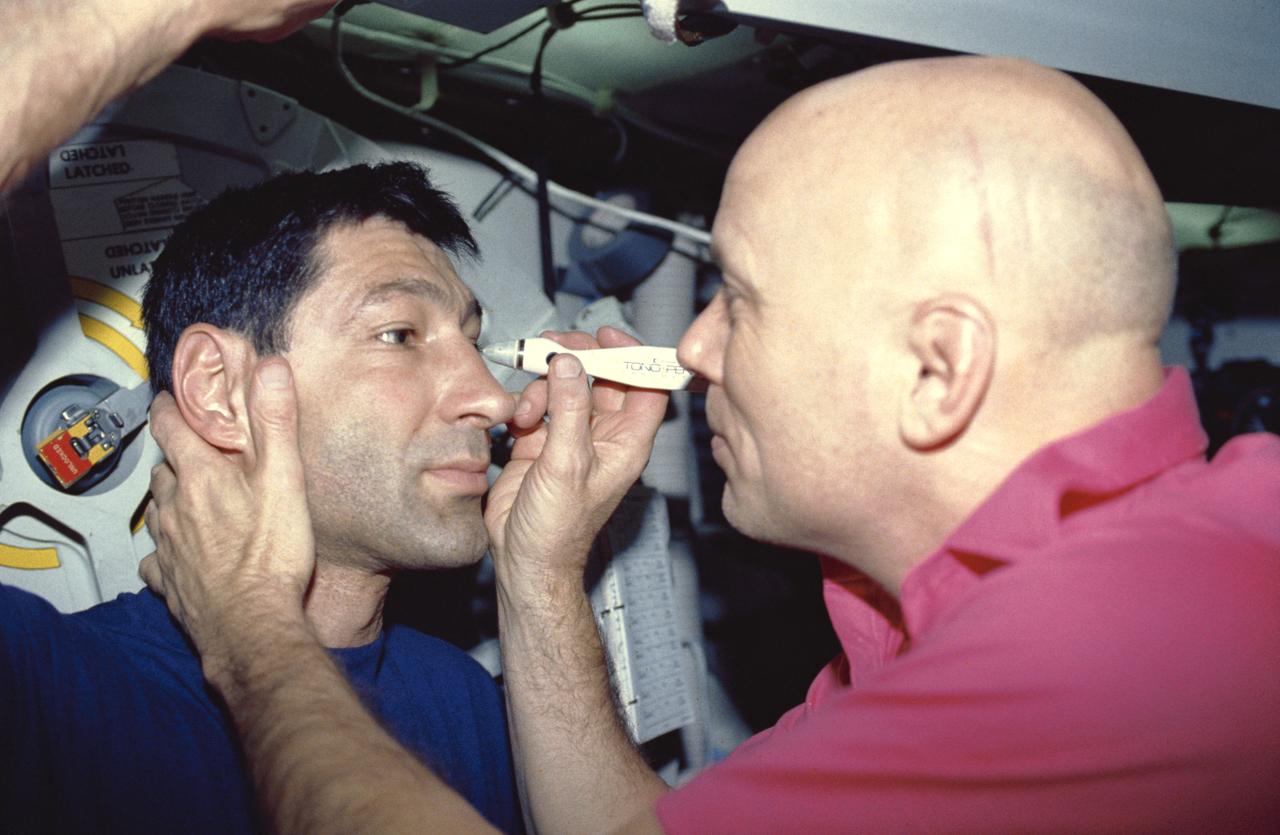
STS044-04-001 (24 Nov-1 Dec 1991) --- Astronauts F. Story Musgrave (right) and Mario Runco, Jr., mission specialists, team up for one of the biomedical Detailed Supplementary Objective (DSO) test on the eight-day flight, this one involving intraocular pressure.
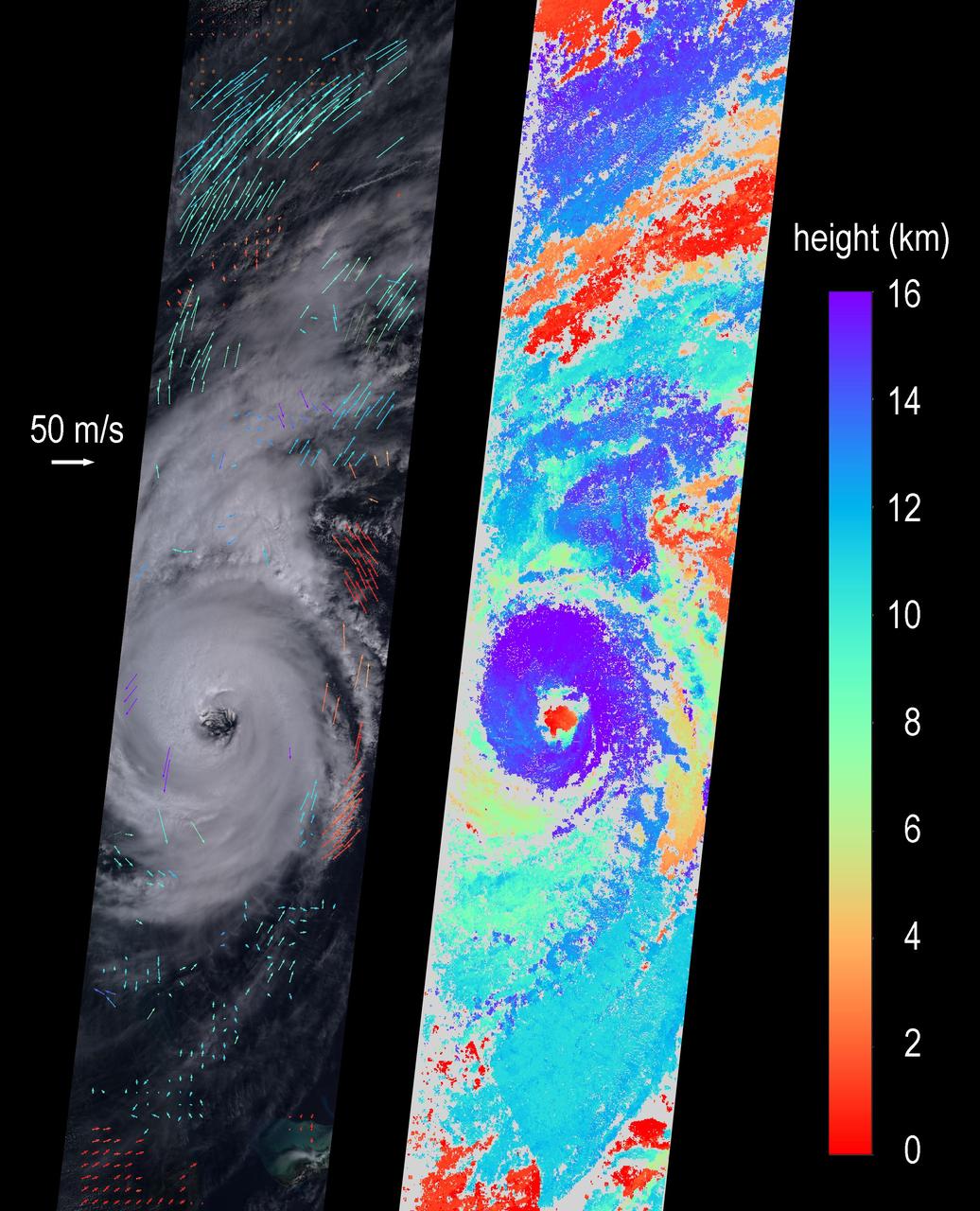
On Sept. 5, 2019 at about noon EDT, the Multi-angle Imaging SpectroRadiometer (MISR) instrument aboard NASA's Terra satellite passed over the eye of Hurricane Dorian as the storm tracked northeast along the Atlantic coast, about 50 miles from Charleston, South Carolina. During this time, Dorian was weakening from Category 3 to Category 2 following a second period of intensification. MISR carries nine cameras fixed at different angles, each of which viewed Dorian over a period of about seven minutes. The multi-camera views are used to calculate the heights of the cloud tops, and the motion of the clouds between the views provides information on wind speed and direction. The left side of the image shows the view from the downward-pointing (nadir) camera, with wind velocity vectors superimposed over it. The derived cloud-top heights are shown at the right, along with the color scale. The length of the wind arrows is proportional to wind speed and their colors show the altitude of the cloud tops in kilometers. MISR observed cyclonic (counterclockwise) wind speeds up to 35 meters per second (78 miles per hour) at altitudes of 3-4 kilometers (1.9 to 2.5 miles), consistent with maximal wind gusts reported by the National Hurricane Center based on data from local weather stations and buoys. At higher altitudes of 11-12 kms (6.8-7.5 miles), MISR observed anti-cyclonic (clockwise) wind speeds up to 55 meters per second (123 mph). The eye, spiral rainbands, and reversal of wind direction between low and high altitudes are typical features of a hurricane's anatomy. https://photojournal.jpl.nasa.gov/catalog/PIA23423