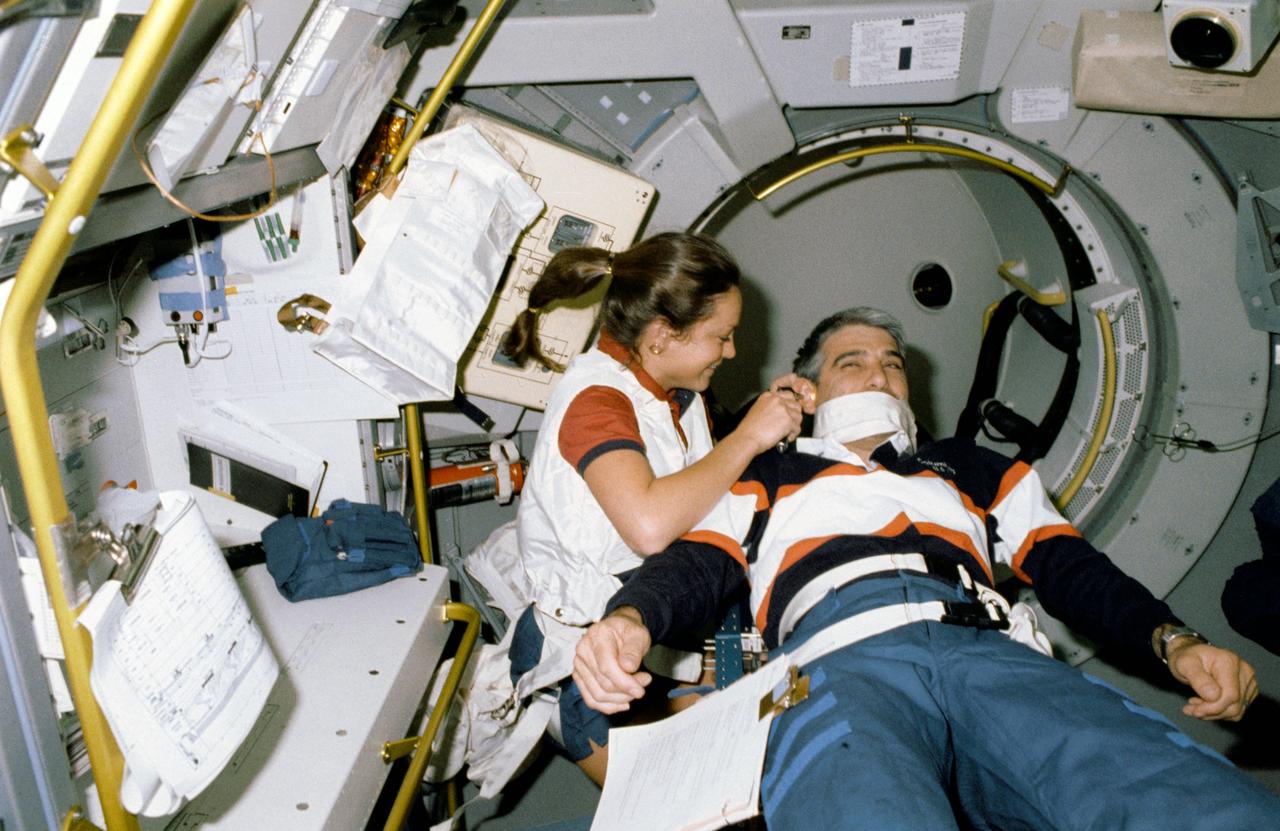
STS040-206-002 (5-14 June 1991) --- Held in place by the Spacelab Life Sciences (SLS-1) Medical Restraint System (MRS), astronaut Sidney M. Gutierrez, pilot, gets his ears checked by astronaut Tamara E. Jernigan, mission specialist. The two are in the SLS-1 module, onboard the Space Shuttle Columbia. The scene was photographed with a 35mm camera.
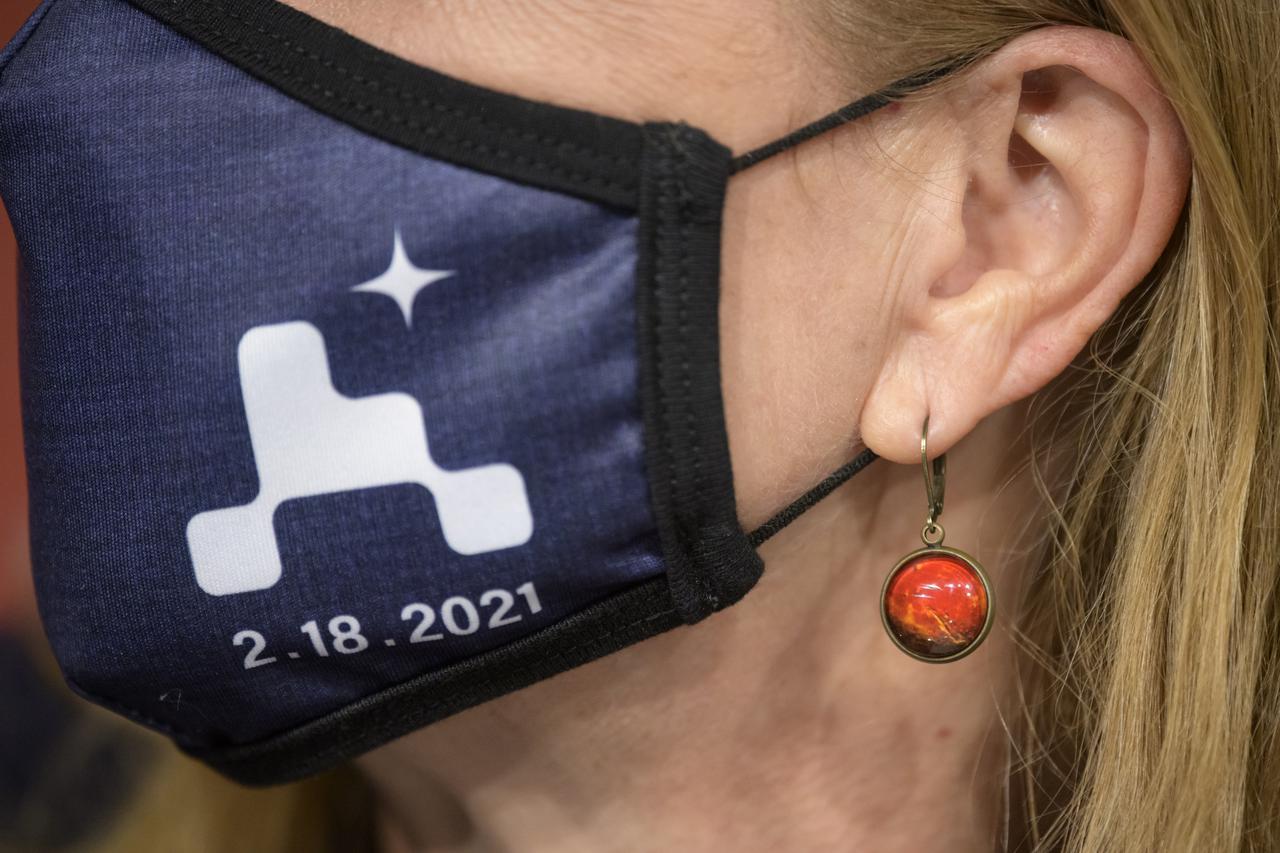
Mars earrings are seen on Director of NASA's Science Mission Directorate’s Planetary Science Division, Lori Glaze during a NASA Perseverance rover mission post-landing update, Thursday, Feb. 18, 2021, at NASA's Jet Propulsion Laboratory in Pasadena, California. A key objective for Perseverance’s mission on Mars is astrobiology, including the search for signs of ancient microbial life. The rover will characterize the planet’s geology and past climate, pave the way for human exploration of the Red Planet, and be the first mission to collect and cache Martian rock and regolith. Photo Credit: (NASA/Bill Ingalls)
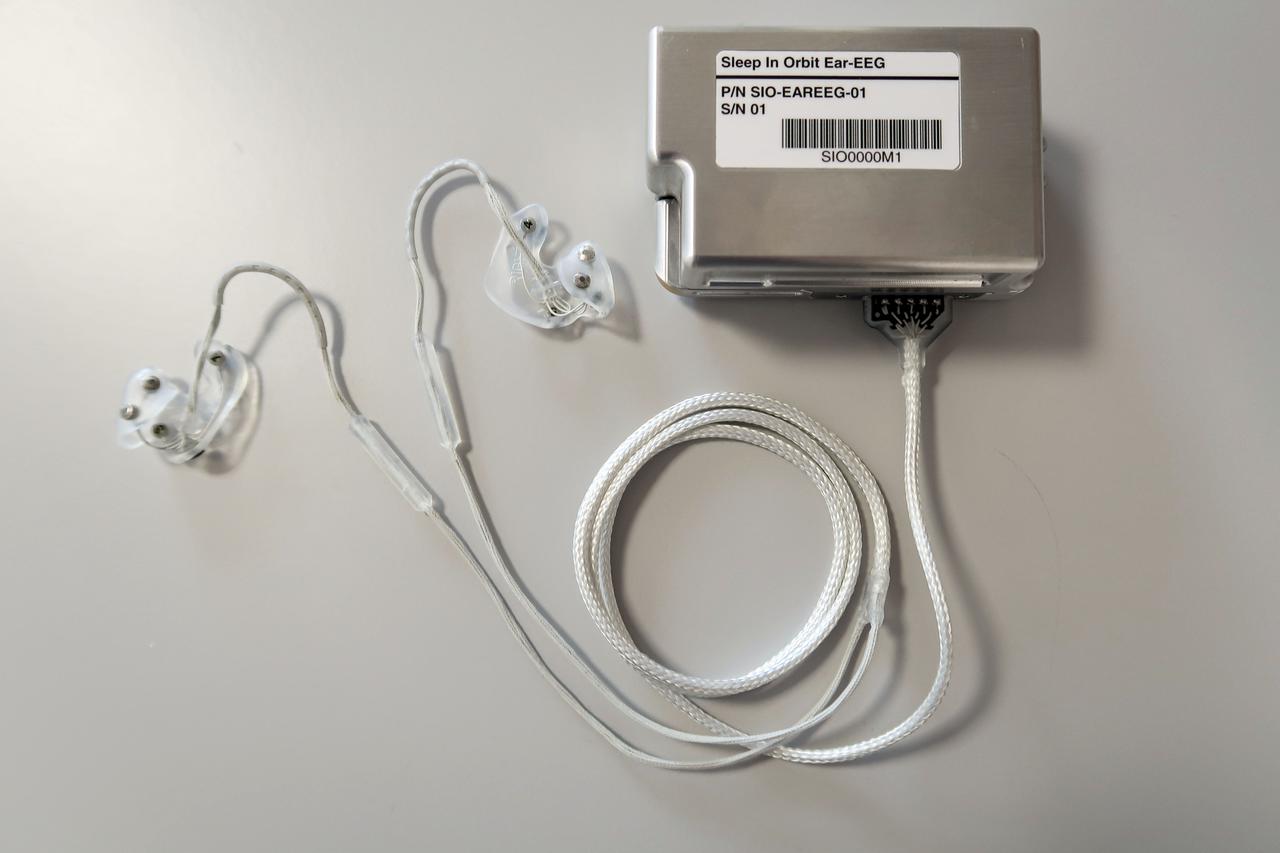
jsc2023e031742 (2/20/2023) --- Long-term Sleep Monitoring Before, During and After Extended Spaceflight (Sleep in Orbit) ear-EEG (electroencephalography) hardware. The Sleep in Orbit investigation studies the physiological differences between sleep on Earth and in space using ear-EEG (electroencephalography) based sleep monitoring. Image courtesy of Preben Kidmose.
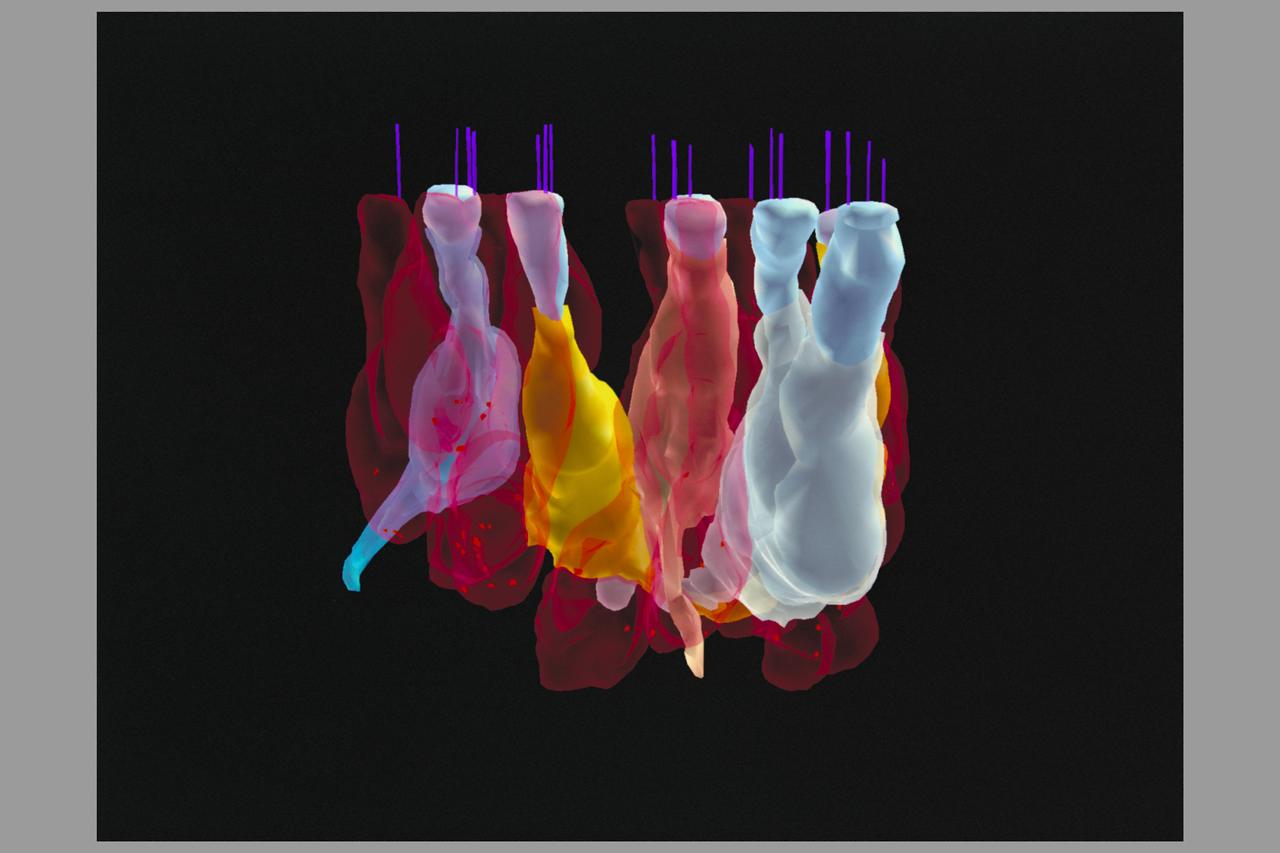
Virtual Reality Application for Neuroscience Research Biocomputation in the study of space motion sickness and balance (inner ear)
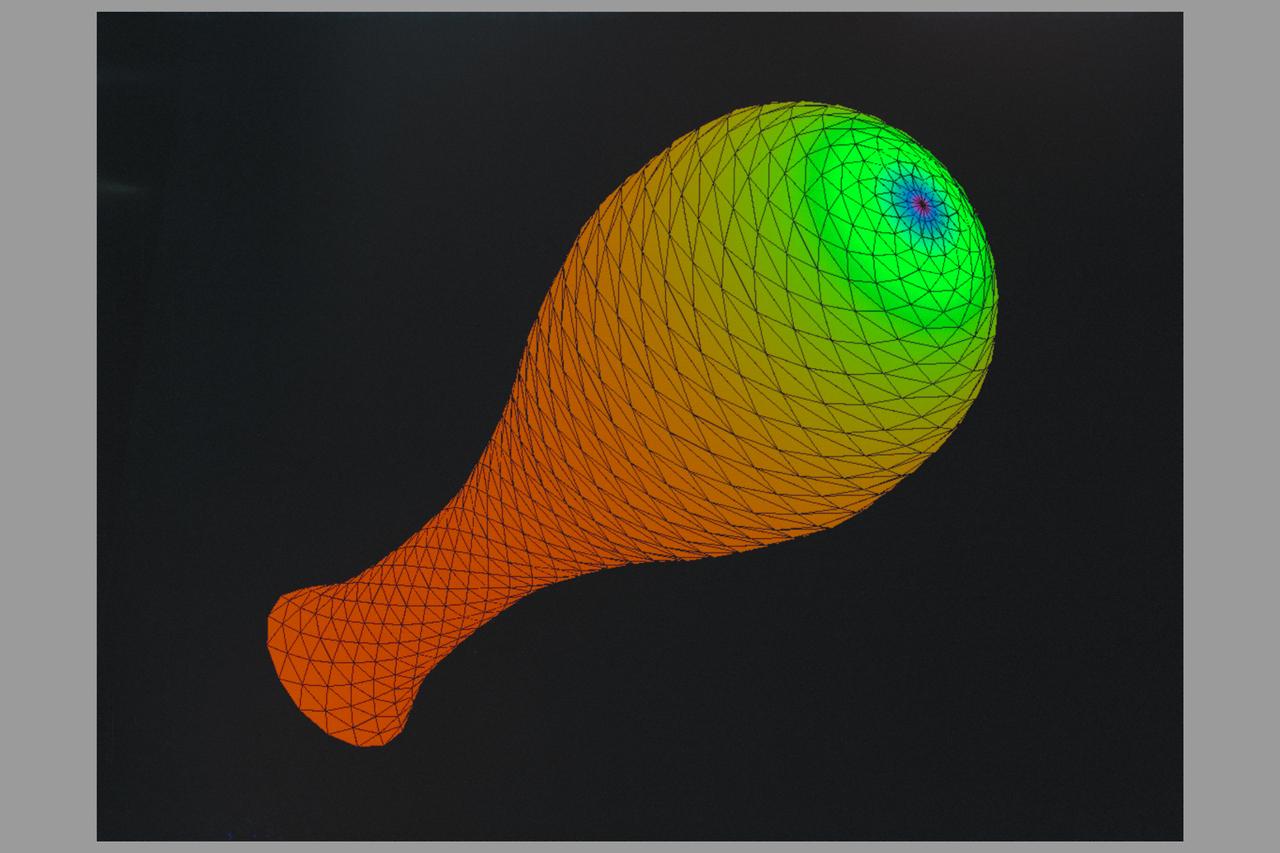
Virtual Reality Application for Neuroscience Research Biocomputation in the study of space motion sickness and balance (inner ear)
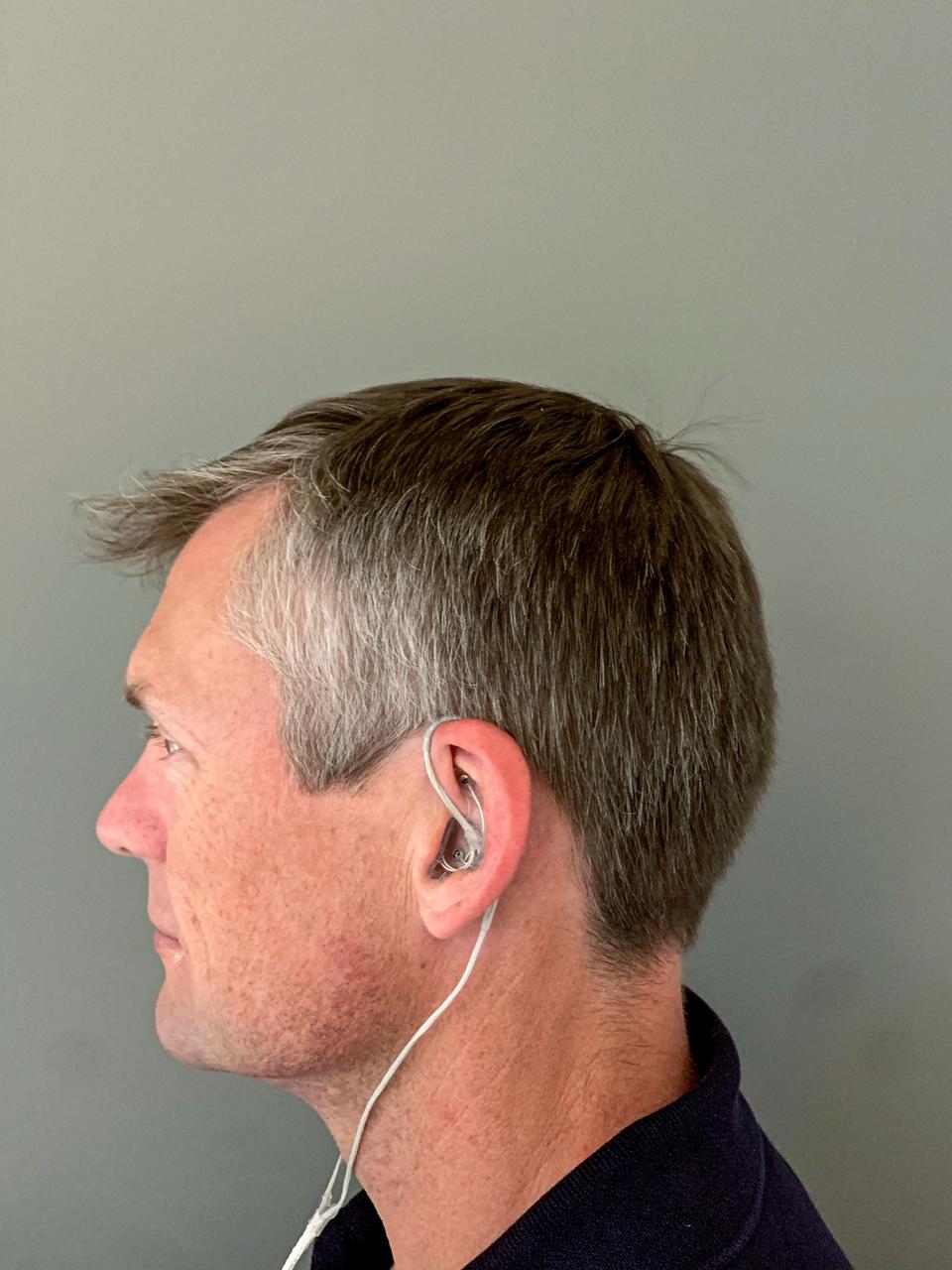
jsc2023e031741 (5/24/2023) --- Long-term Sleep Monitoring Before, During and After Extended Spaceflight (Sleep in Orbit) ear-EEG (electroencephalography) hardware worn by subject. The Sleep in Orbit investigation studies the physiological differences between sleep on Earth and in space using ear-EEG (electroencephalography) based sleep monitoring. Image courtesy of Preben Kidmose.
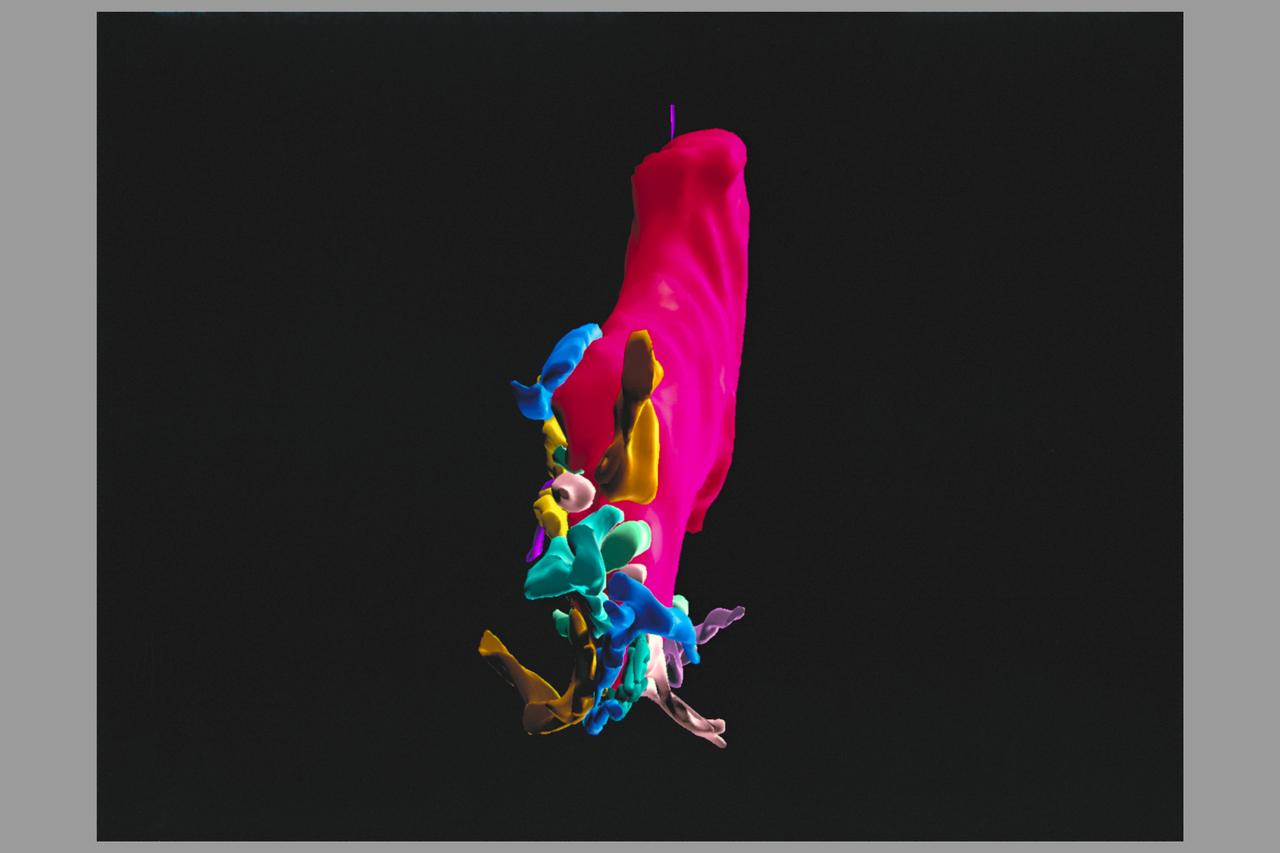
Dr Murial Ross's Virtual Reality Application for Neuroscience Research Biocomputation. To study human disorders of balance and space motion sickness. Shown here is a 3D reconstruction of a nerve ending in inner ear, nature's wiring of balance organs.
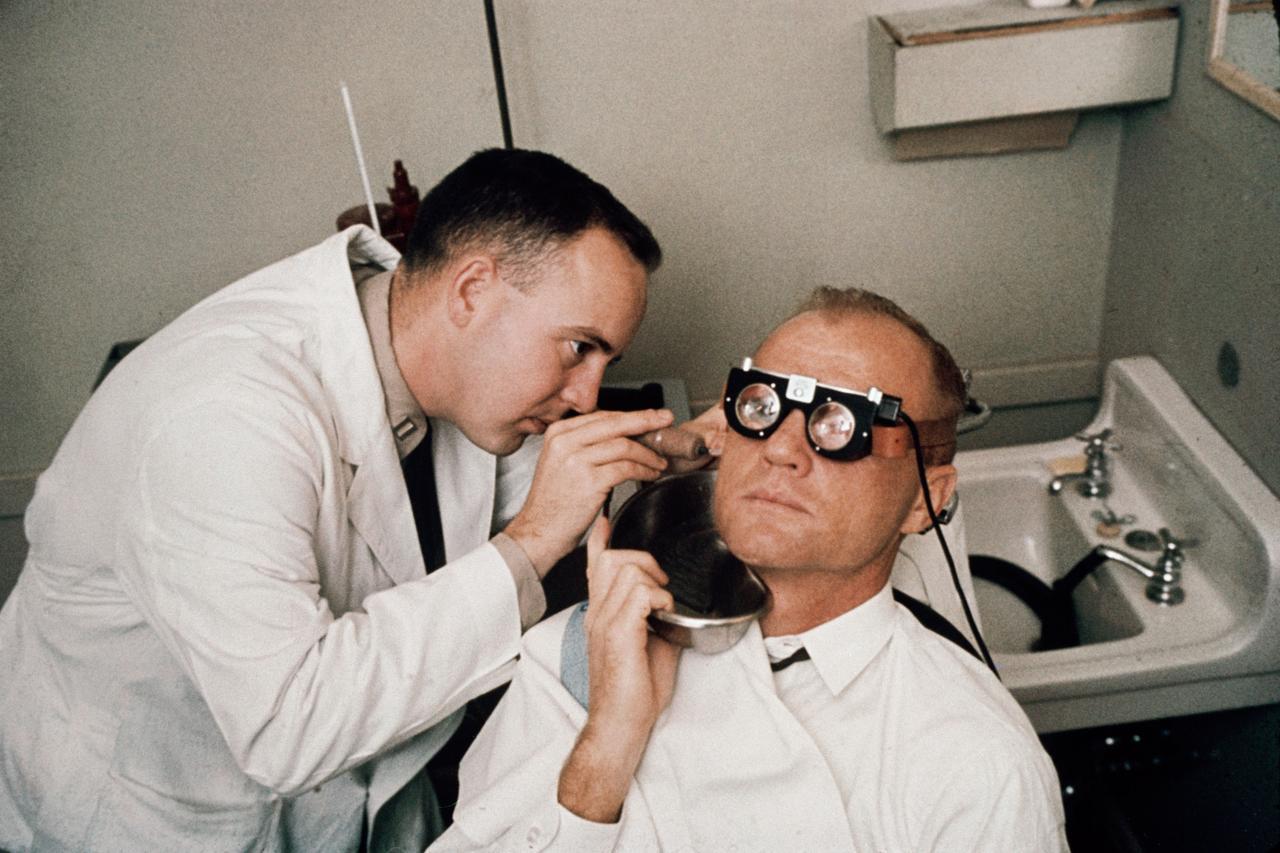
S64-14849 (1962) --- Astronaut John H. Glenn Jr.'s balance mechanism (semi-circular-canals) is tested by running cool water into his ear and measuring effect on eye motions (nystagmus). Photo credit: NASA
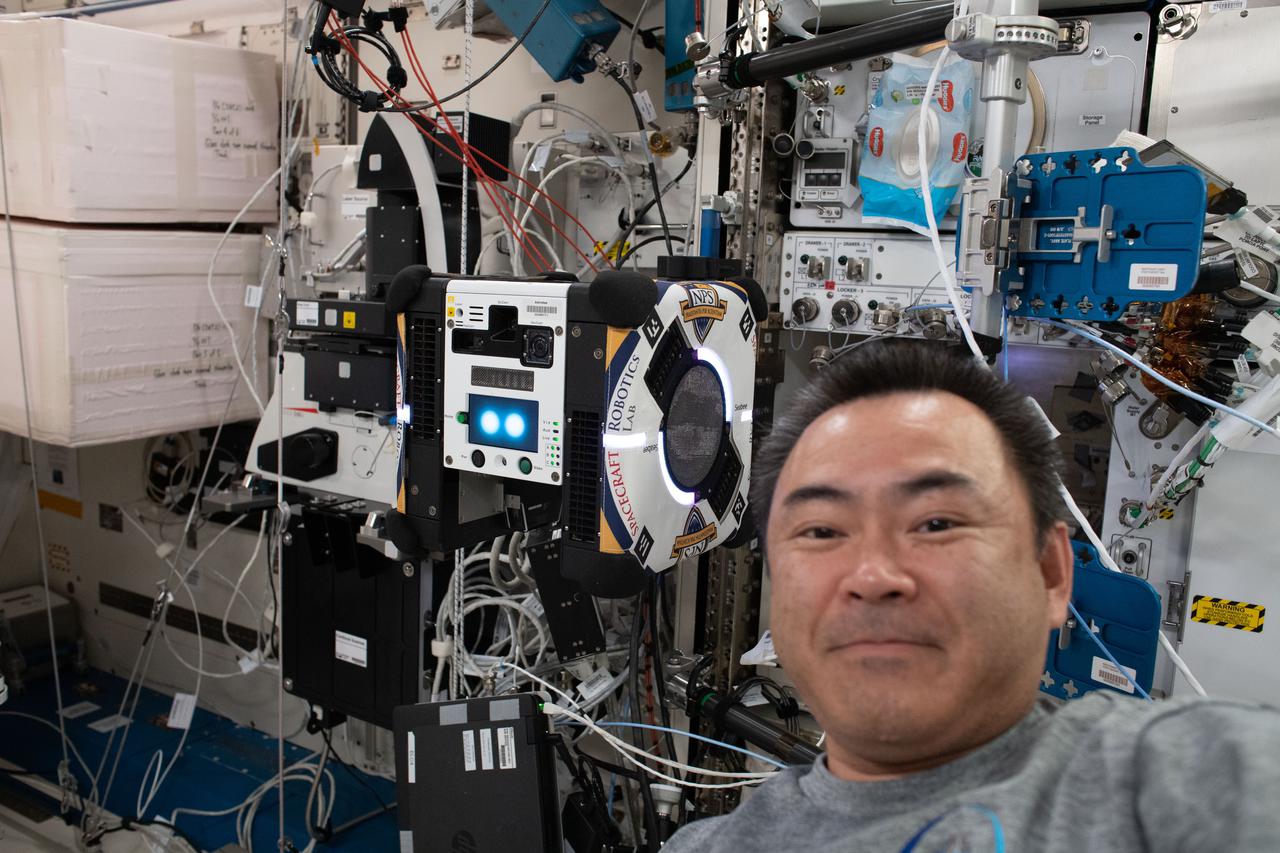
iss065e167804 (July 27, 2021) --- Expedition 65 Commander Akihiko Hoshide of the Japan Aerospace Exploration Agency (JAXA) poses for a portrait with an Astrobee robotic assistant behind him. The Astrobee is being tested for its ability to assist astronauts with routine chores and give ground controllers additional eyes and ears on the space station.
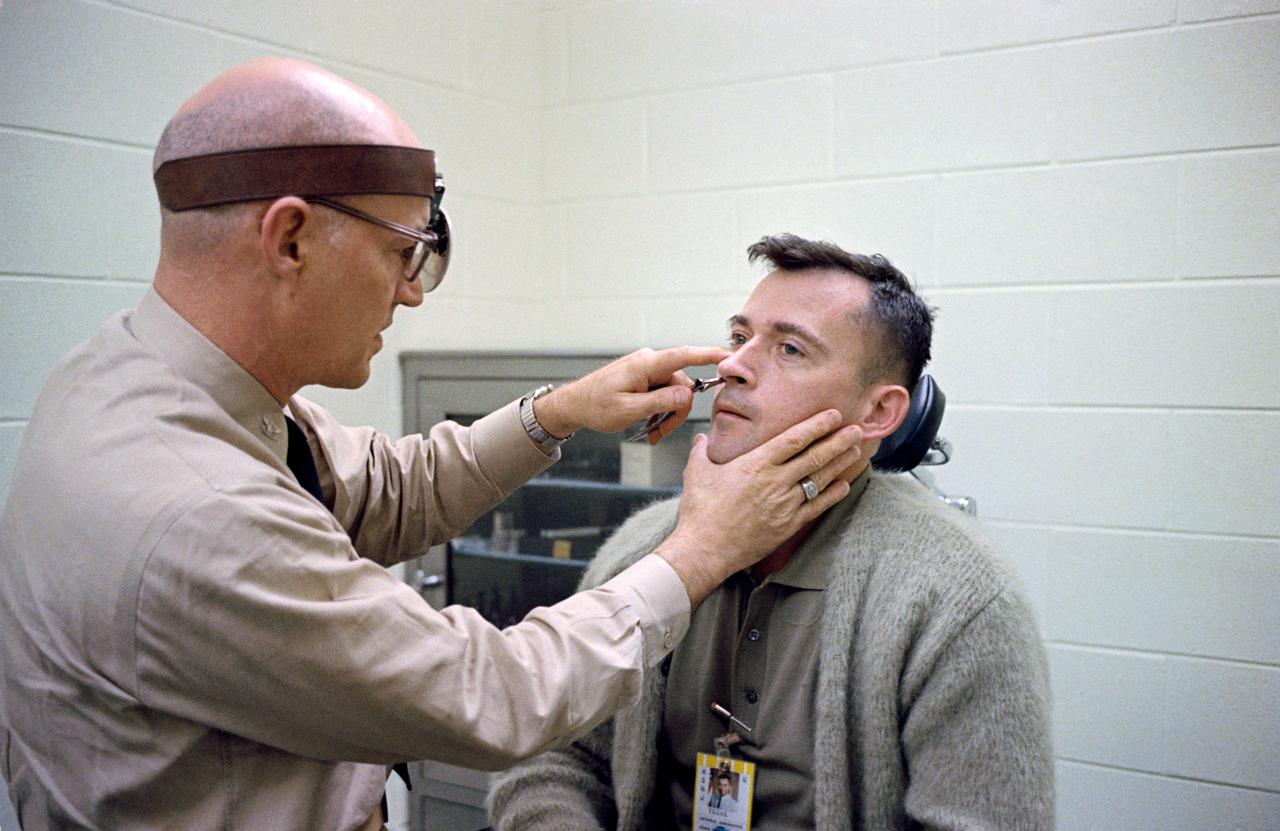
S65-22672 (21 March 1965) --- Astronaut John W. Young, pilot for the Gemini-Titan 3 mission, undergoes an ear, nose and throat examination by Dr. L. Ballenberger, U.S. Navy captain. The examination took place during the physical given to the GT-3 crew two days before launch.
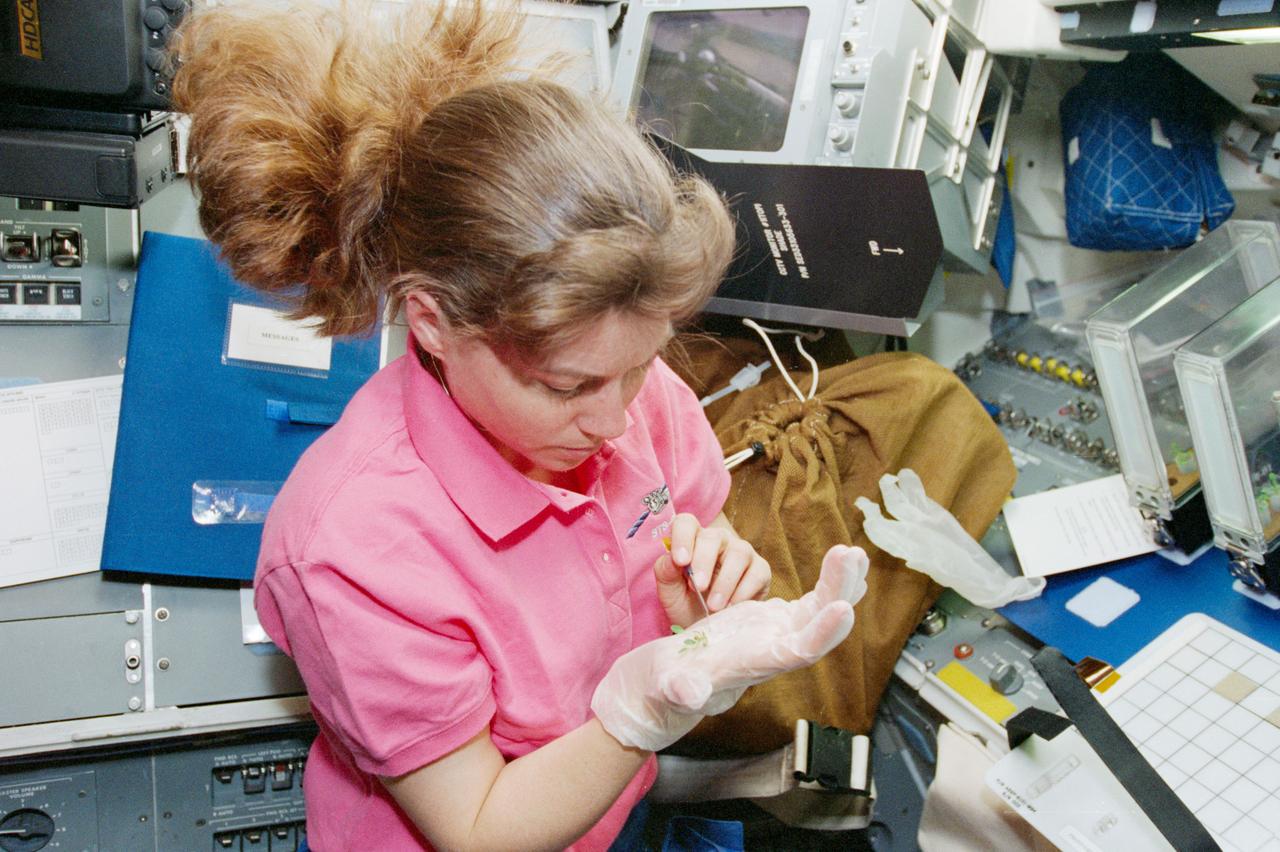
STS093-319-003 (23-27 July 1999) --- Astronaut Catherine G. (Cady) Coleman, mission specialist, handles a tiny mouse ear plant on Columbia's flight deck. The plant experiment is part of the Plant Growth Investigations in Microgravity (PGIM).
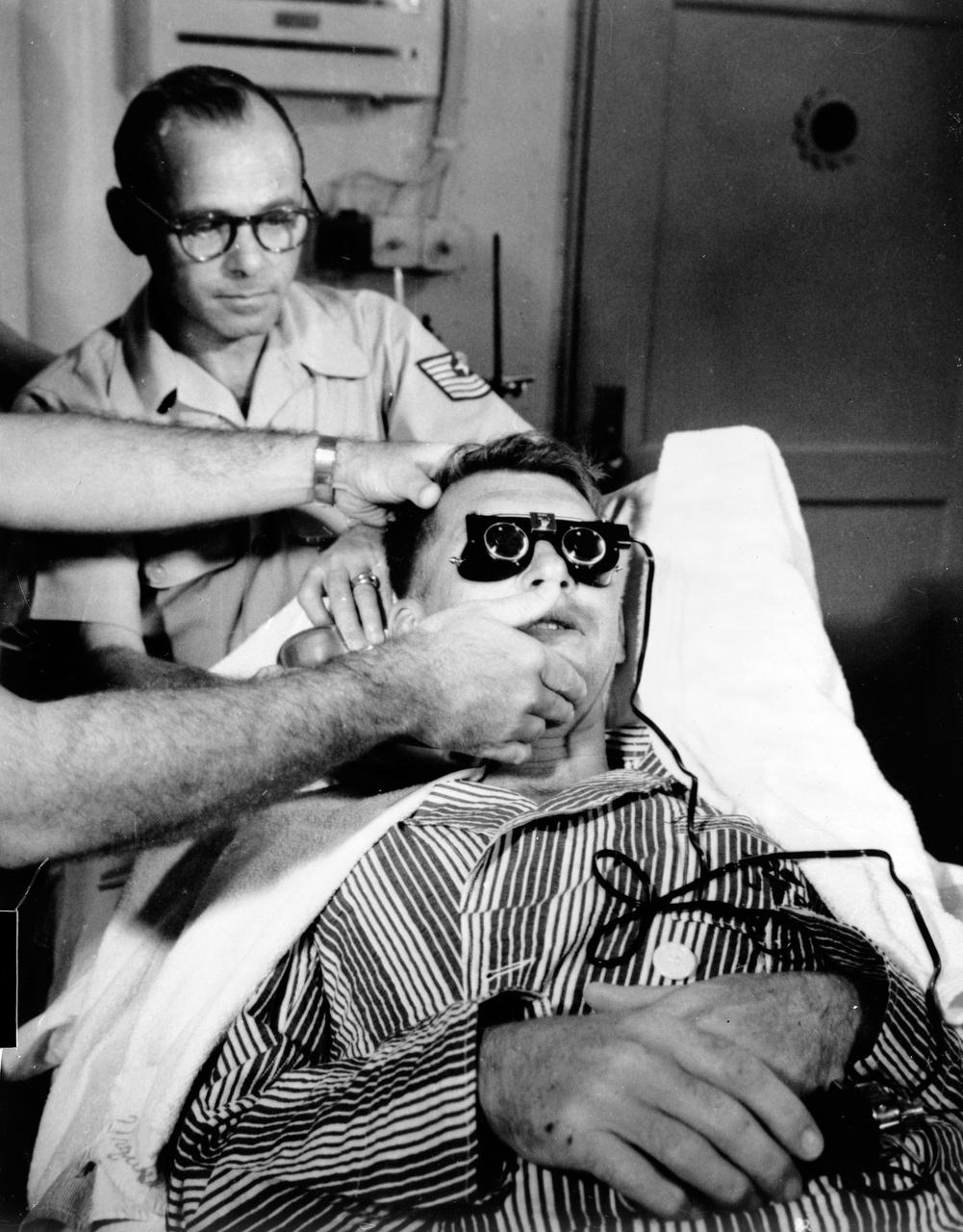
S62-06157 (1962) --- Astronaut Walter Schirra Jr. gets modified calonic test. His balance mechanism (semicircular canals) are tested by running cool water into ear and measuring effect on eye motions (nystagmus) after his six-orbit flight in the Sigma 7 spacecraft. Photo credit: NASA
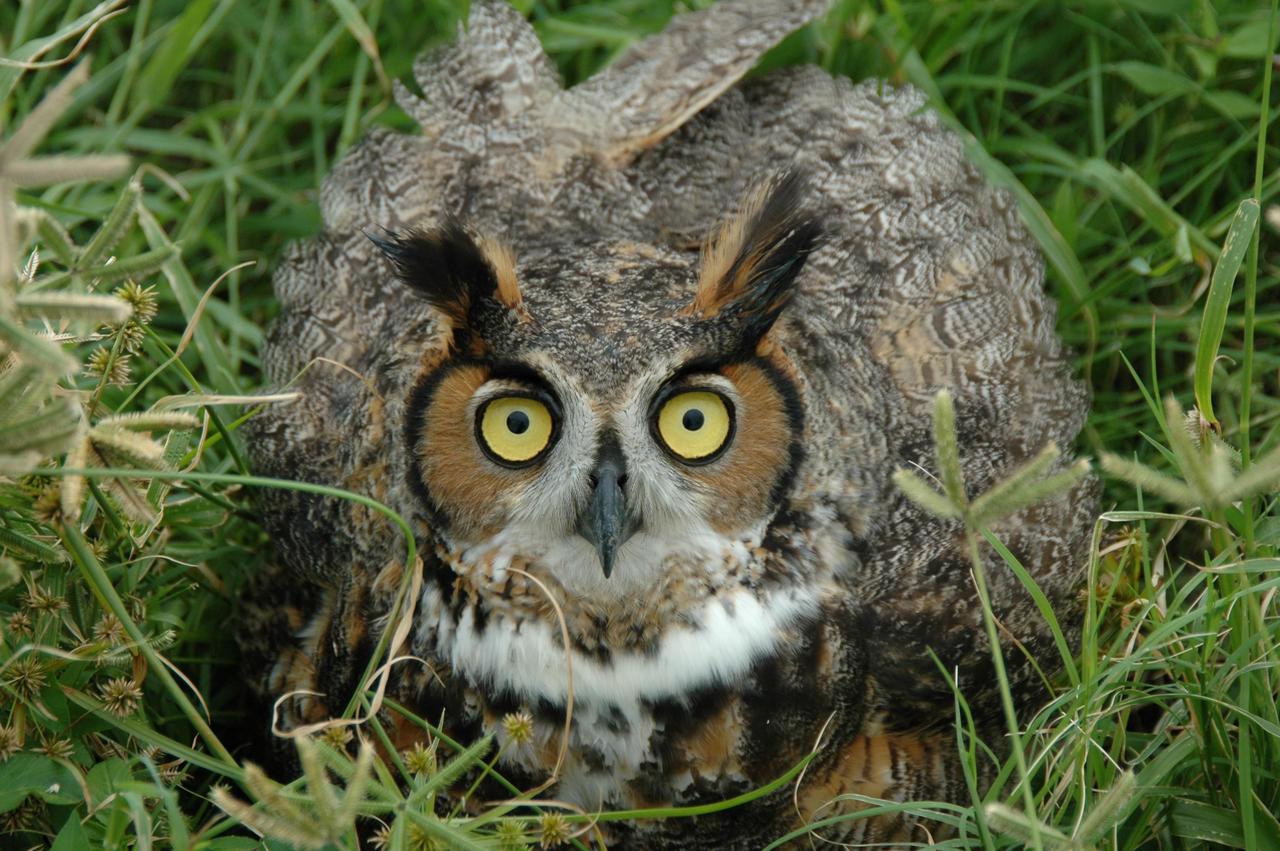
KENNEDY SPACE CENTER, FLA. - A Long-Eared Owl is spotted on Launch Complex 41 at Cape Canaveral Air Force Station in Florida. This one holds a typical stance for protecting its young. These owls range from Alaska and Canada to the Gulf states and Mexico, as far east as Central Florida. Their habitat is deciduous and evergreen forests. They nest in deserted nests of crows, hawks or squirrels.

41G-43-016 (5-13 Oct 1984) --- The Gulf of Alaska, with the great peaks of the Saint Elias Range of Alaska, Yukon, and British Columbia. Mount Logan, Canada's highest mountain peak at 19,850 feet, is to the left of the center of the photograph. Between Saint Elias Peak and Mount Vancouver, right of center, flows the great Malaspina Glacier in a great lobe of ice shaped like a human ear.
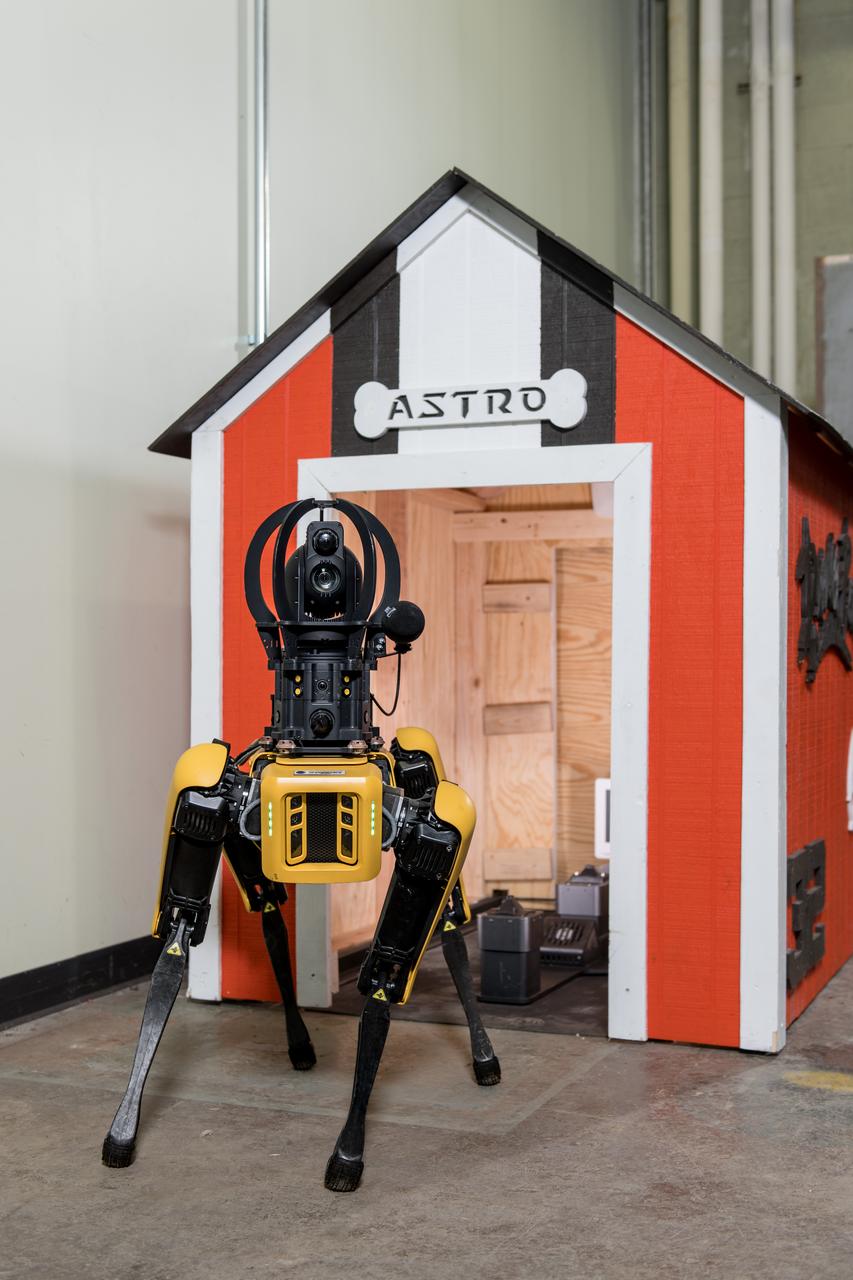
Astro is a robot dog operated by staff via remote control, is fitted with an infrared camera with 40 times zoom, utilizes thermography and a microphone and can navigate all three levels of the facility. The beloved robot conducts inspections to spare the employees ears in extremely loud environments. When not used, Astro lives in his doghouse in the facility and recharges. Photo Credit: (NASA/Sara Lowthian-Hanna)
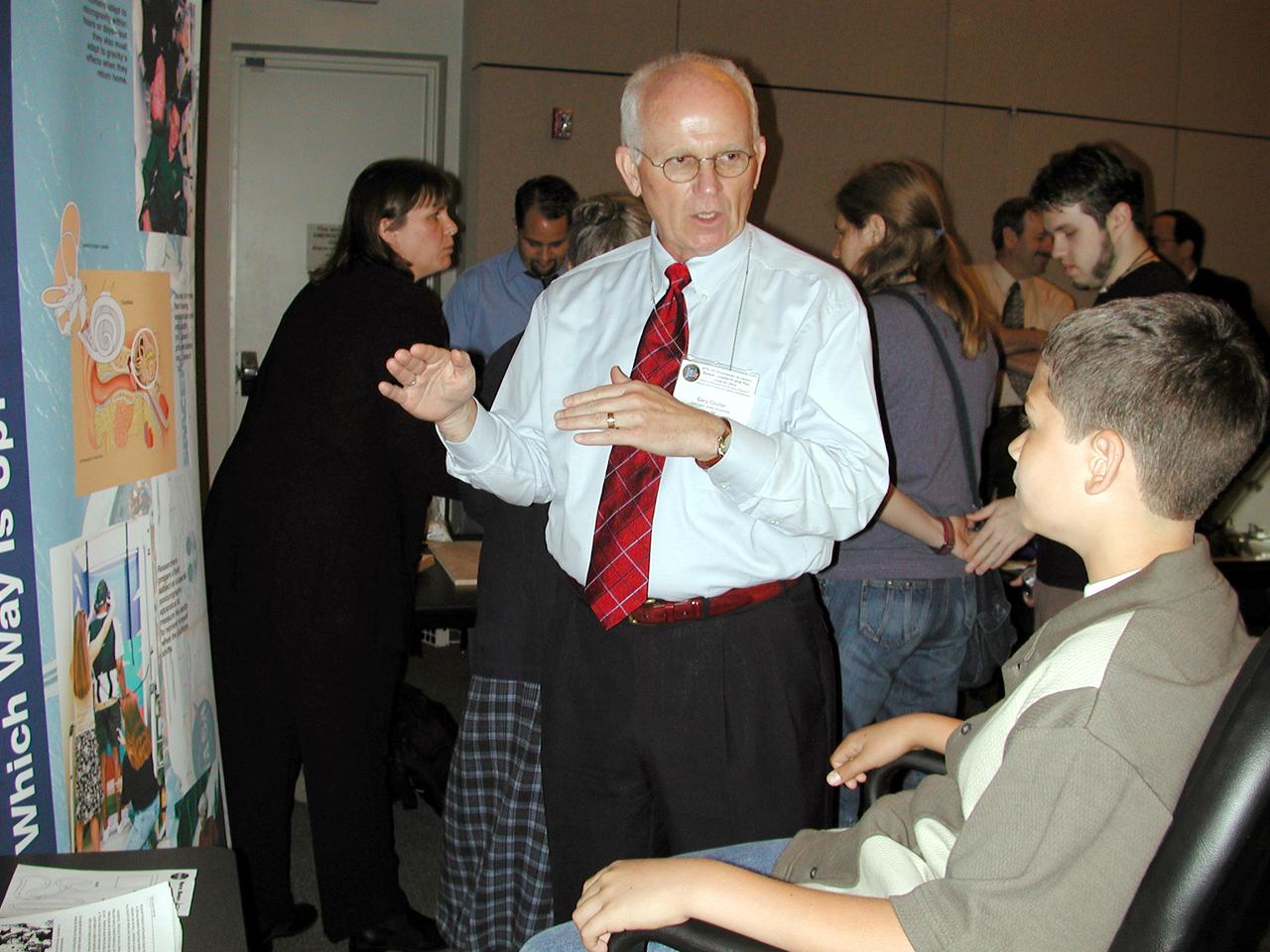
Gary Coulter, a special assistant to NASA's life sciences researchers, explains the workings of the irner ear to a Virginia student. The chair rotates to disorient the vestibular system in a simulation of research on how astronauts adapt to space and readapt to Earth. The activity was part of the Space Research and You education event held by NASA's Office of Biological and Physical Research on June 25, 2002, in Arlington, VA, to highlight the research that will be conducted on STS-107.
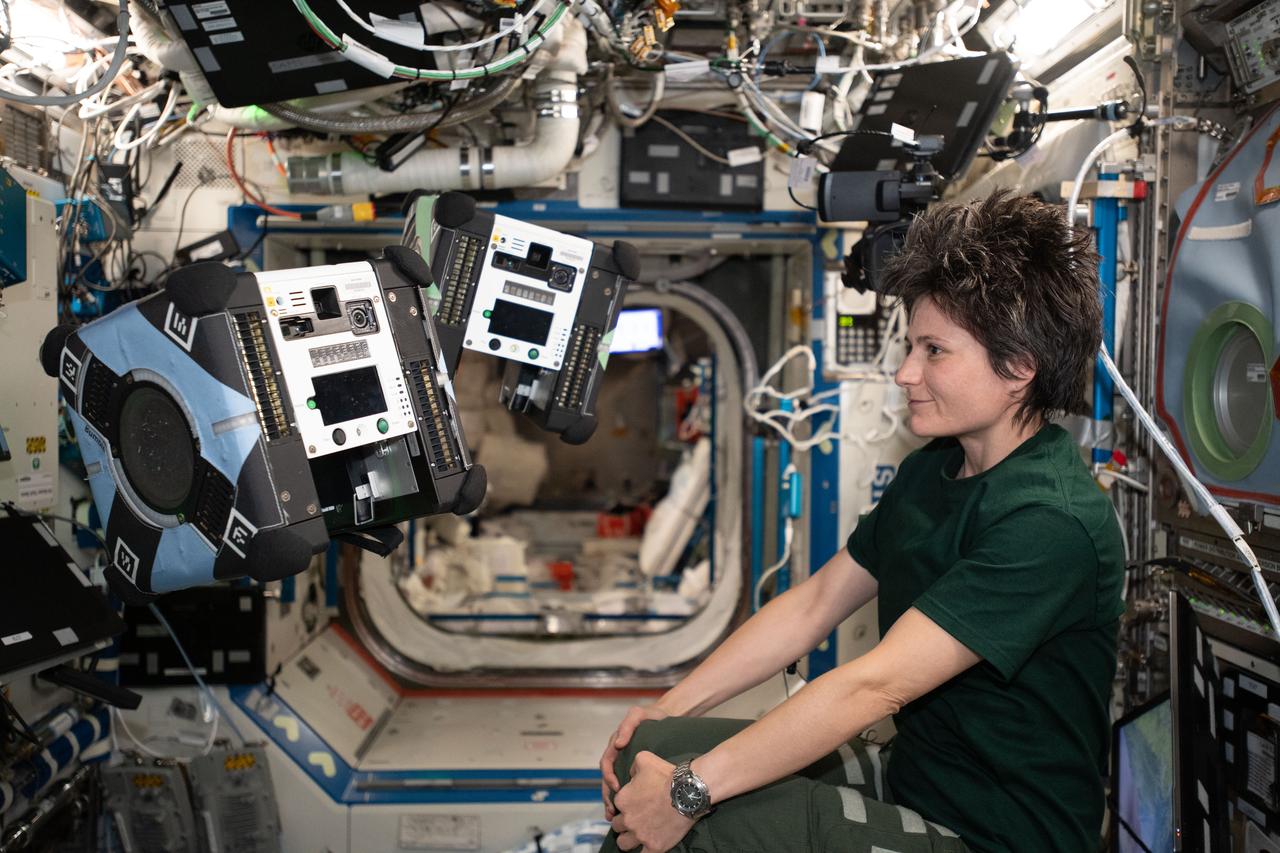
iss067e059518 (May 18, 2022) --- ESA (European Space Agency) astronaut and Expedition 67 Flight Engineer Samantha Cristoforetti monitors a pair of Astrobee robotic free-flyers performing autonomous maneuvers inside the International Space Station. The cube-shaped, toaster-sized robots are designed to help scientists and engineers develop and test technologies for use in microgravity to assist astronauts with routine chores, and give ground controllers additional eyes and ears on the space station.
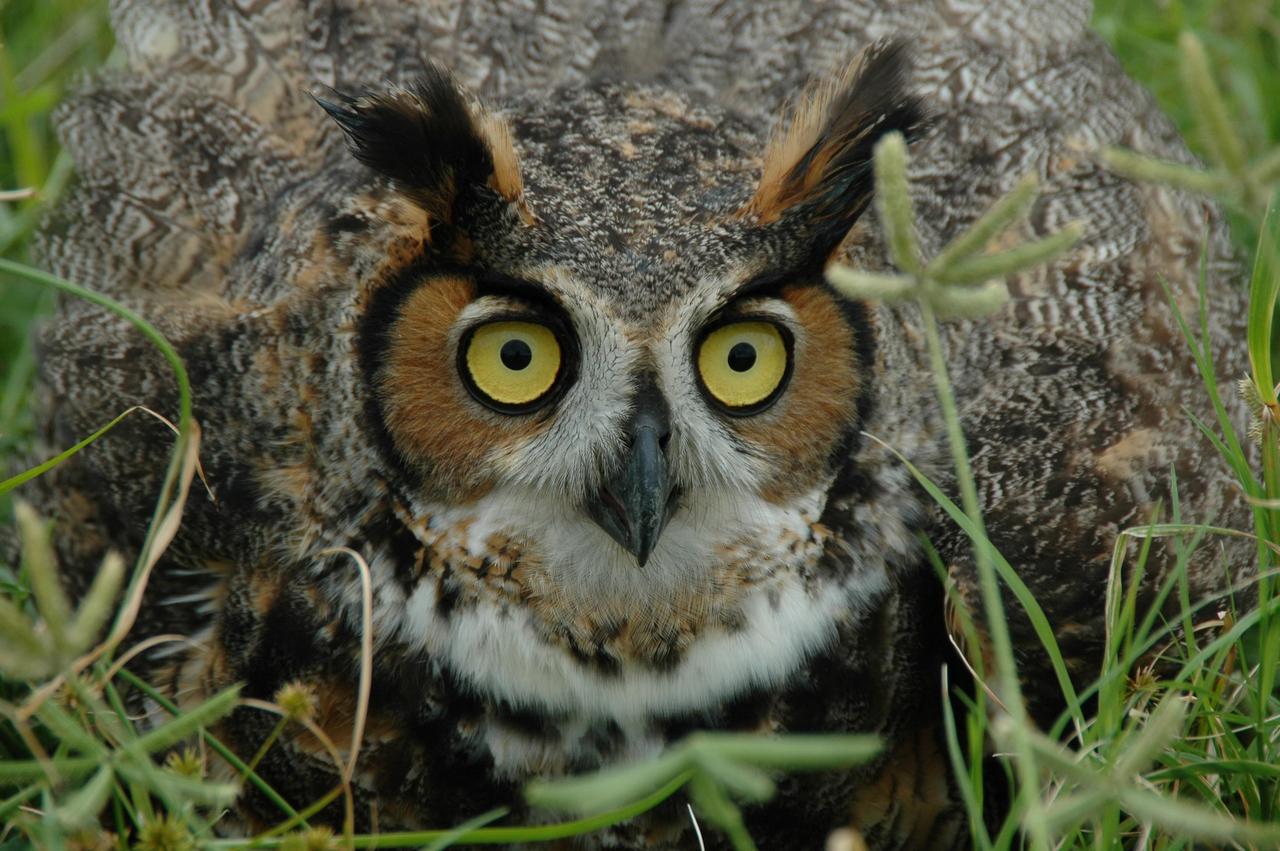
KENNEDY SPACE CENTER, FLA. - A Long-Eared Owl is spotted on Launch Complex 41 at Cape Canaveral Air Force Station in Florida. This one holds a typical stance for protecting its young. These owls range from Alaska and Canada to the Gulf states and Mexico, as far east as Central Florida. Their habitat is deciduous and evergreen forests. They nest in deserted nests of crows, hawks or squirrels.
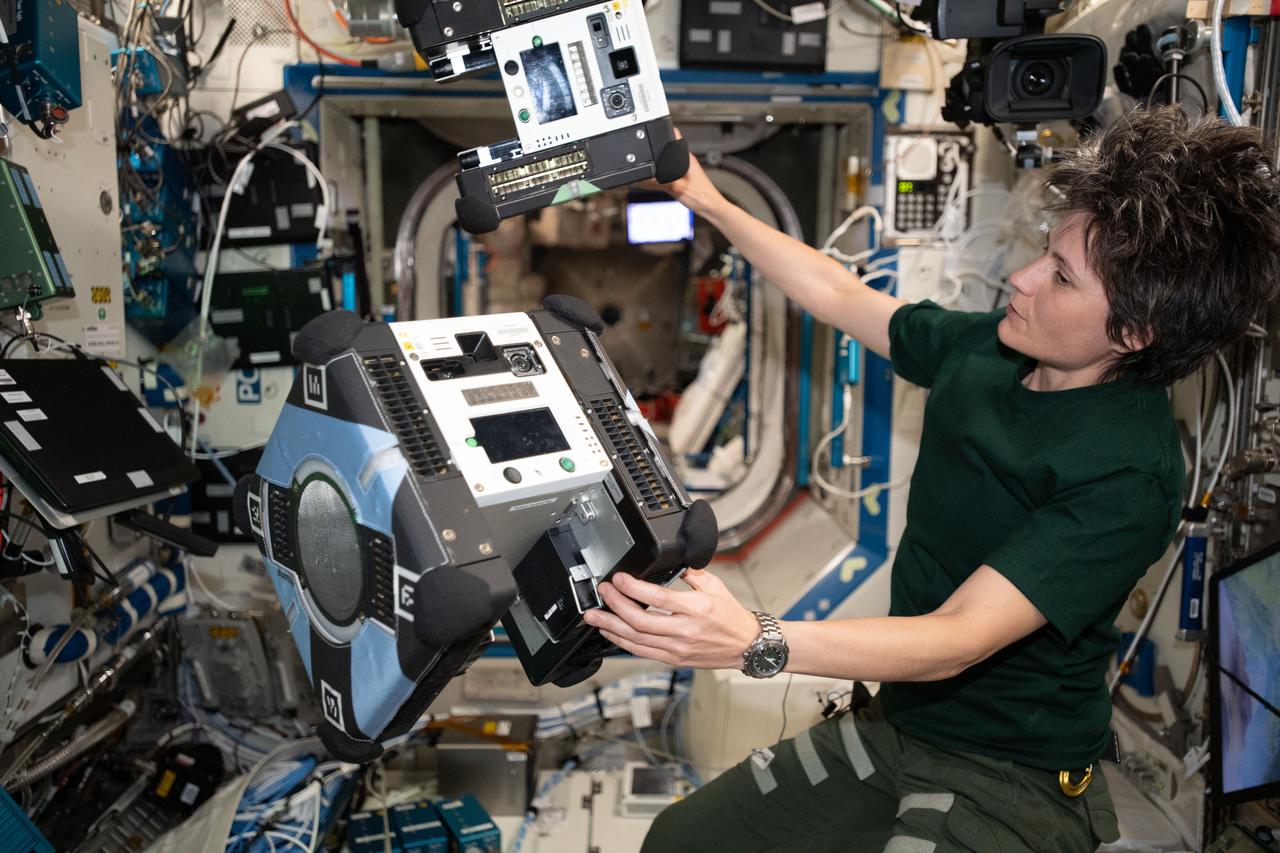
iss067e059514 (May 18, 2022) --- ESA (European Space Agency) astronaut and Expedition 67 Flight Engineer Samantha Cristoforetti monitors a pair of Astrobee robotic free-flyers performing autonomous maneuvers inside the International Space Station. The cube-shaped, toaster-sized robots are designed to help scientists and engineers develop and test technologies for use in microgravity to assist astronauts with routine chores, and give ground controllers additional eyes and ears on the space station.
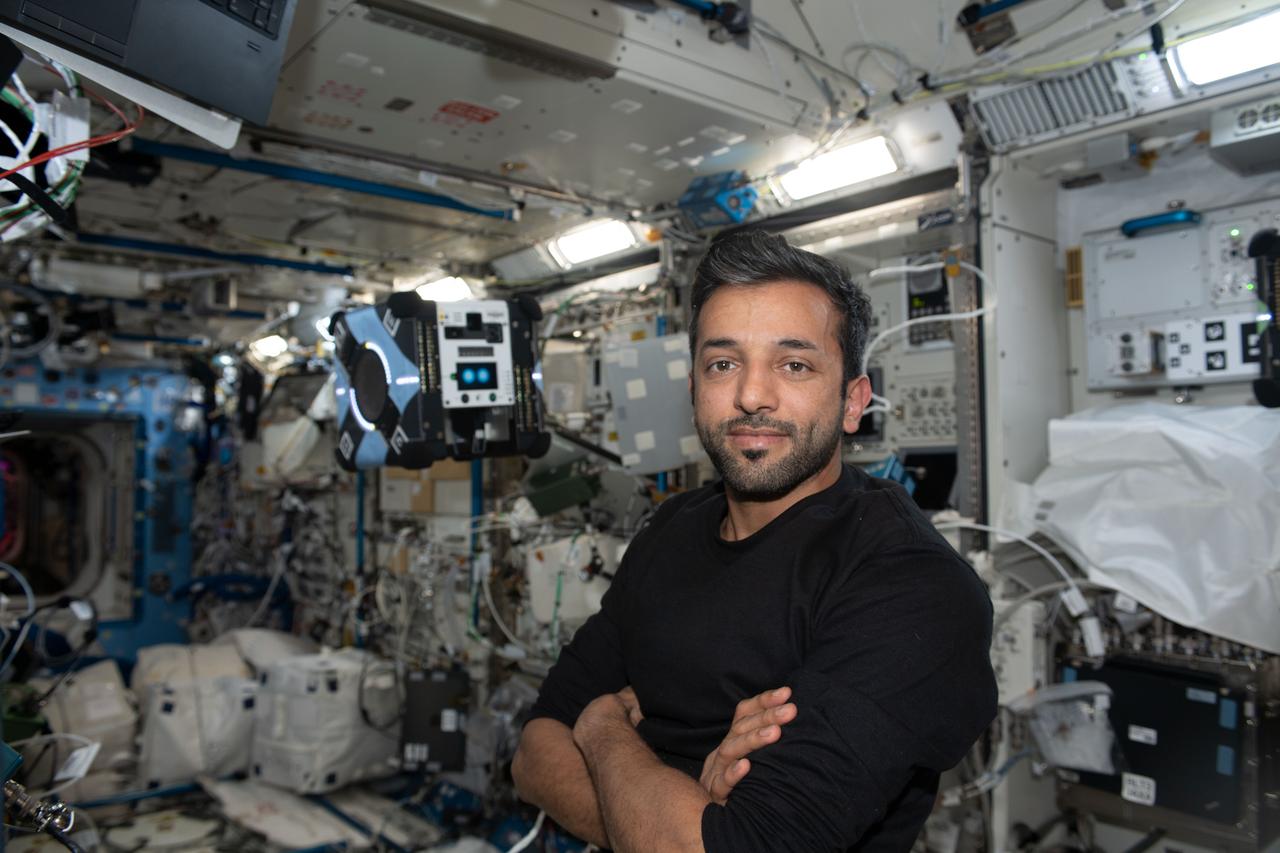
iss068e076362 (March 24, 2023) --- UAE (United Arab Emirates) astronaut and Expedition 68 Flight Engineer Sultan Alneyadi poses with a free-flying AstroBee robotic helper inside the International Space Station's Kibo laboratory module. The AstroBee is a cube-shaped, toaster-sized robotic device that is being tested for its ability to assist astronauts with routine chores, and give ground controllers additional eyes and ears on the space station.

Astro, the robot dog conducts inspections in building 64 to spare the employees ears in this extremely loud environment. The facility is extremely loud even with double hearing protection, so Glenn has come up with an alternative to keep the employees safe. Astro is operated by staff via remote control, is fitted with an infrared camera with 40 times zoom, utilizes thermography and a microphone and can navigate all three levels of the facility.
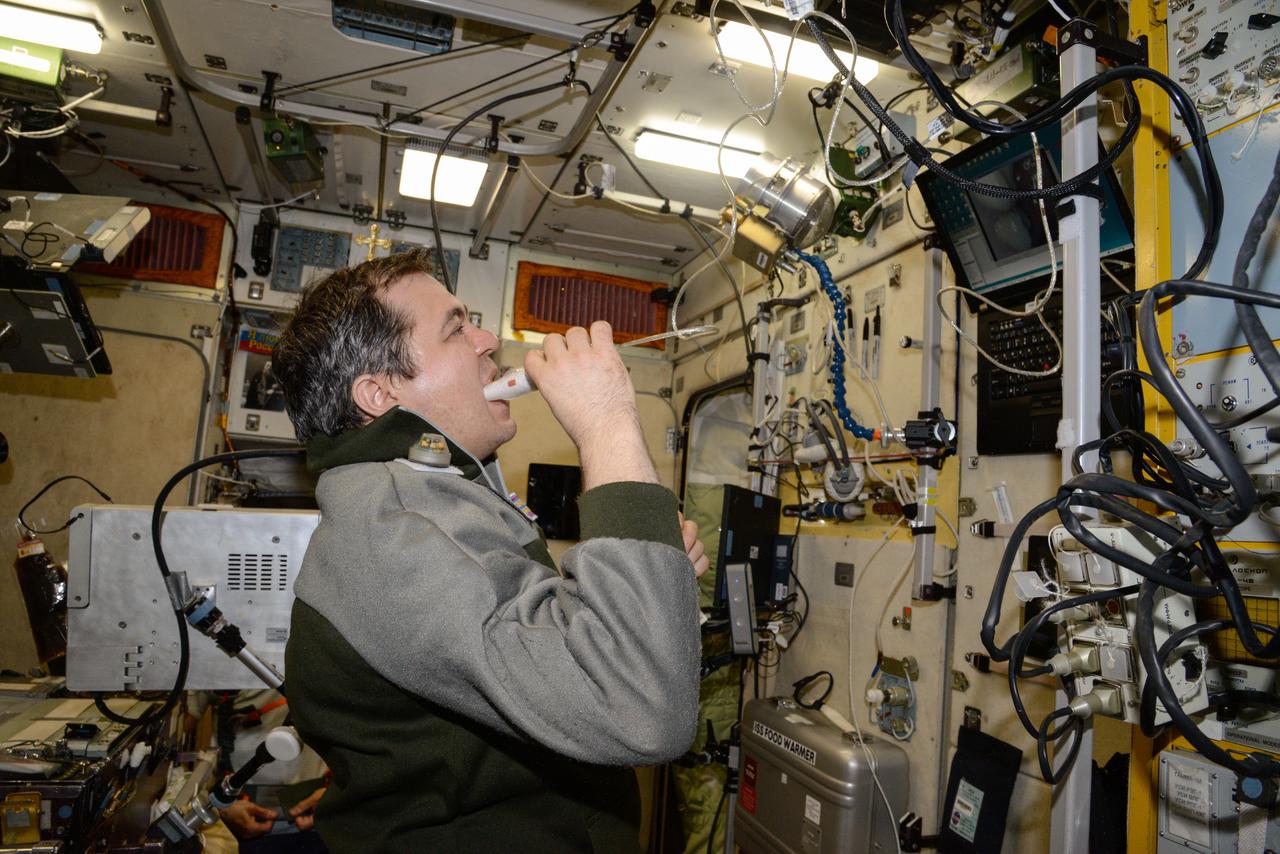
iss047e136530 (6/2/2016) --- A view of Cosmonaut Oleg Skripochka, during a BIMS Experiment session in the Service module aboard the International Space Station (ISS). The Study of Processes for Informational Support of In-Flight Medical Support using an Onboard Medical Information System Integrated into the Information Control System of the ISS Russian Segment (BIMS) uses telemedicine technologies to collect information by non-contact means from the ear, nose, and throat (ENT), gums, teeth, and small areas of skin from International Space Station (ISS) crews for medical support of manned spaceflights and in-flight biomedical research.
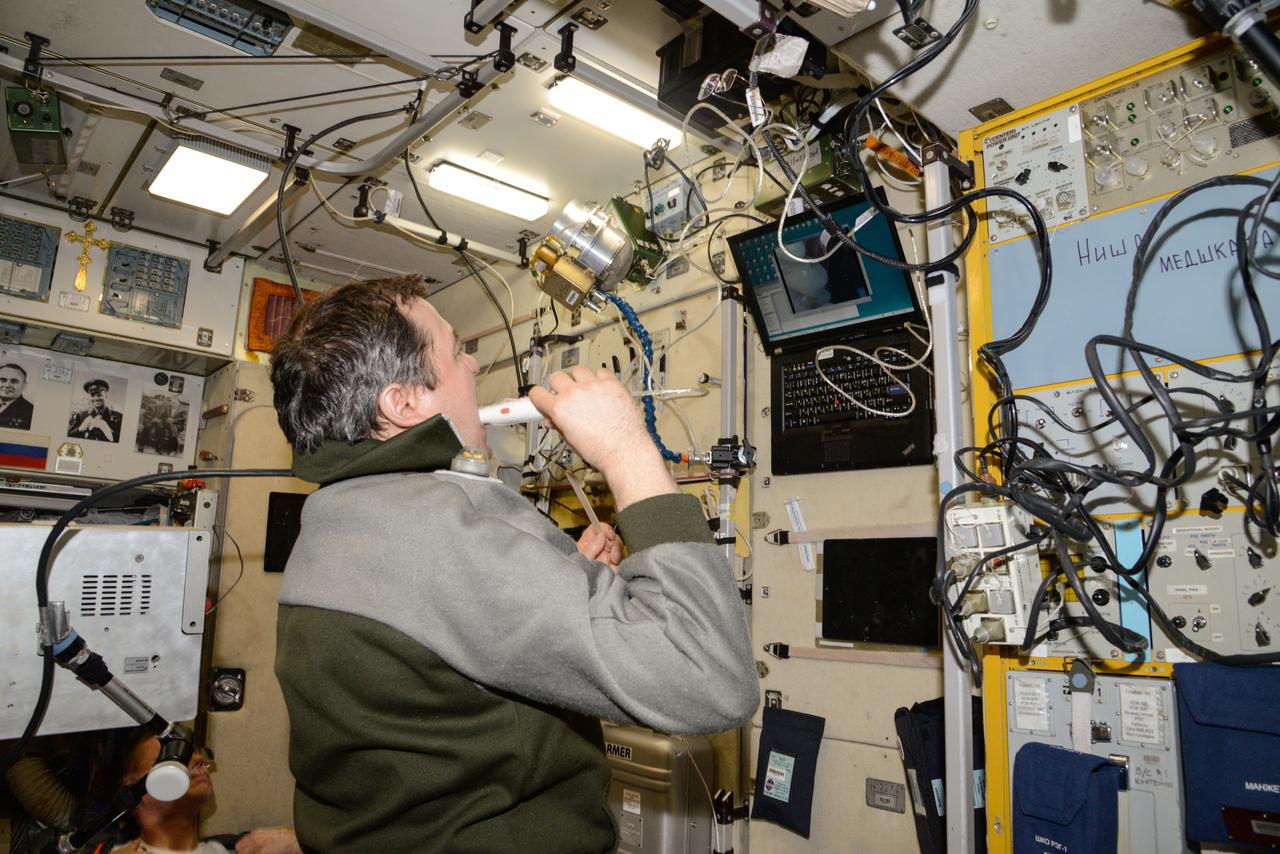
iss047e136529 (6/2/2016) --- A view of Cosmonaut Oleg Skripochka, during a BIMS Experiment session in the Service module aboard the International Space Station (ISS). The Study of Processes for Informational Support of In-Flight Medical Support using an Onboard Medical Information System Integrated into the Information Control System of the ISS Russian Segment (BIMS) uses telemedicine technologies to collect information by non-contact means from the ear, nose, and throat (ENT), gums, teeth, and small areas of skin from International Space Station (ISS) crews for medical support of manned spaceflights and in-flight biomedical research.
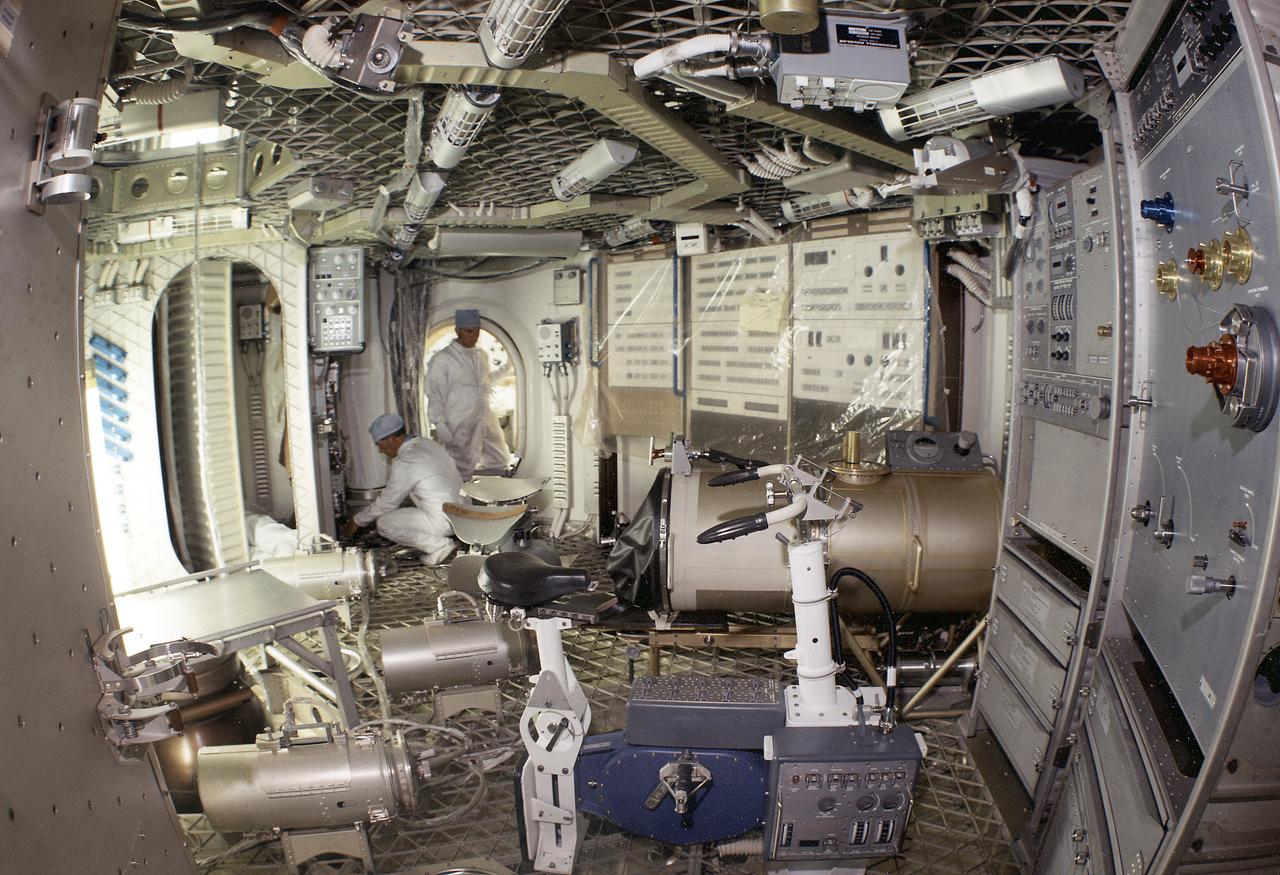
This is a wide-angle view of the Orbital Workshop lower level experiment area. In center foreground is the ergometer bicycle. In center background is a litter chair for the Human Vestibular Function experiment (Skylab Experiment M131) and in right background is the Lower Body Negative Pressure System experiment (Skylab Experiment M092). The ergometer bicycle was used for metabolic activity experiments and exercise. The purpose of the Human Vestibular (irner ear) Function experiment was to examine the effect of weightlessness on man's sensitivity and susceptibility to motion rotation, and his perception of orientation. The Lower Body Negative Pressure experiment investigated the relationship between the zero gravity environment and cardiovascular deconditioning. A characteristic of cardiovascular deconditoning is the partial failure of the blood vessels resulting in the excessive pooling of the blood in the legs when a person assumes an erect posture in a gravity field. The Marshall Space Flight Center had the program management responsibility for the development of Skylab hardware and experiments.
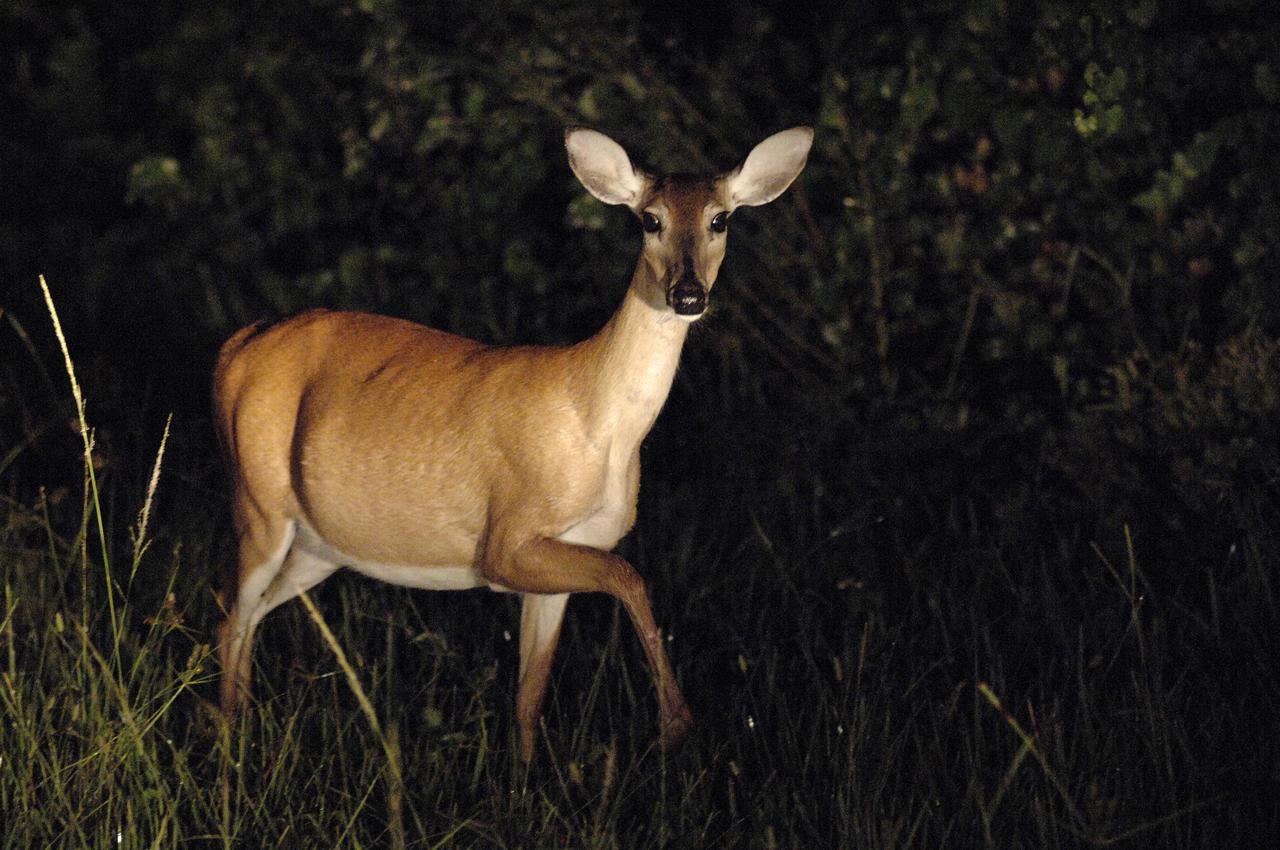
KENNEDY SPACE CENTER, FLA. - In the pre-dawn hours, a pregnant white-tailed deer is watchful as she browses for food on the west end of NASA Kennedy Space Center’s Shuttle Landing Facility. The deer would have had an enviable position to watch the landing of Space Shuttle Discovery if the landing had not been postponed. White-tailed deer are found in forest edge habitats statewide. Their color ranges from gray- to russet-brown with a white neck, chest, underside and underneath the tail. The deer stand 55 inches to 80 inches high, have large ears, a large tail and long slender legs. They feed primarily on twigs and leaves. Their diet also includes acorns, fruits and mushrooms. Most browsing is done at night or on overcast days.
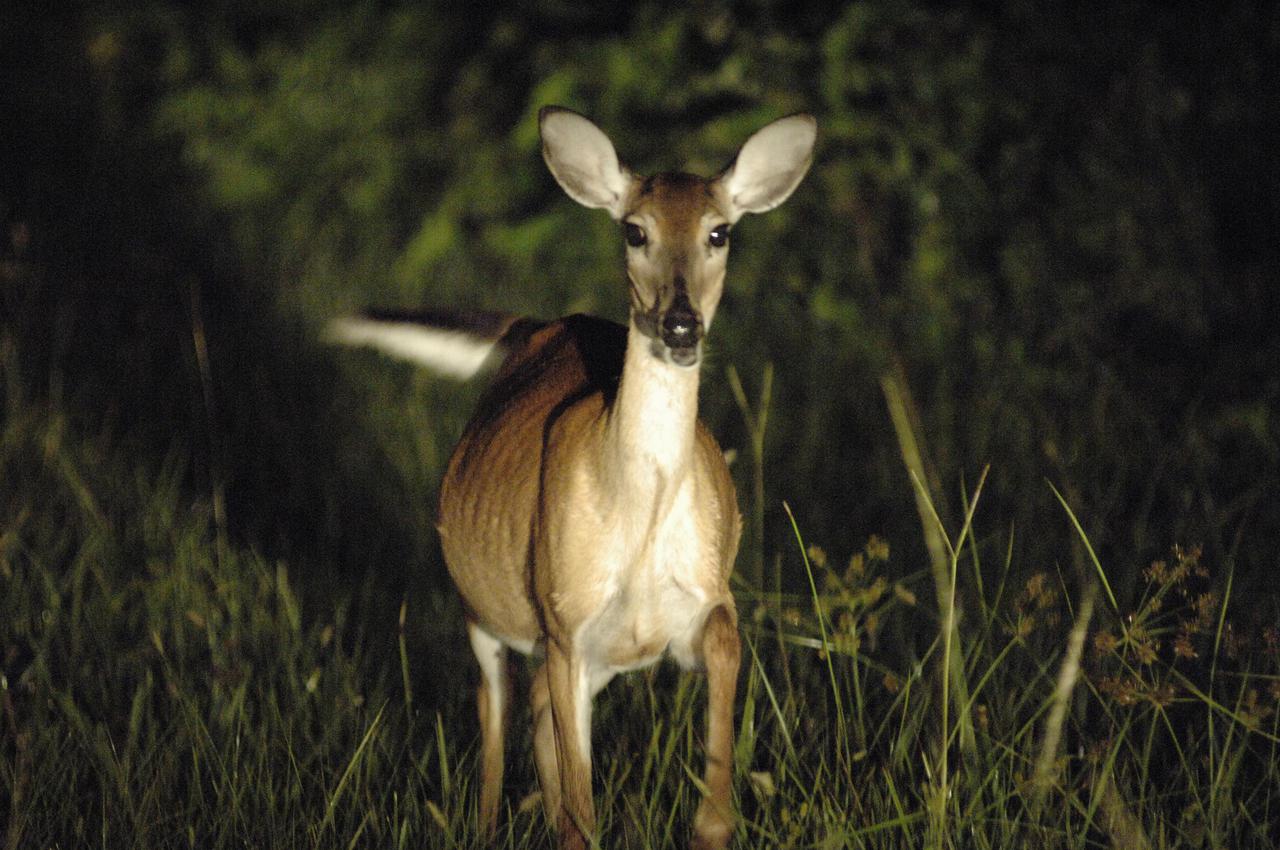
KENNEDY SPACE CENTER, FLA. - In the pre-dawn hours, a pregnant white-tailed deer is watchful as she browses for food on the west end of NASA Kennedy Space Center’s Shuttle Landing Facility. The deer would have had an enviable position to watch the landing of Space Shuttle Discovery if the landing had not been postponed. White-tailed deer are found in forest edge habitats statewide. Their color ranges from gray- to russet-brown with a white neck, chest, underside and underneath the tail. The deer stand 55 inches to 80 inches high, have large ears, a large tail and long slender legs. They feed primarily on twigs and leaves. Their diet also includes acorns, fruits and mushrooms. Most browsing is done at night or on overcast days.
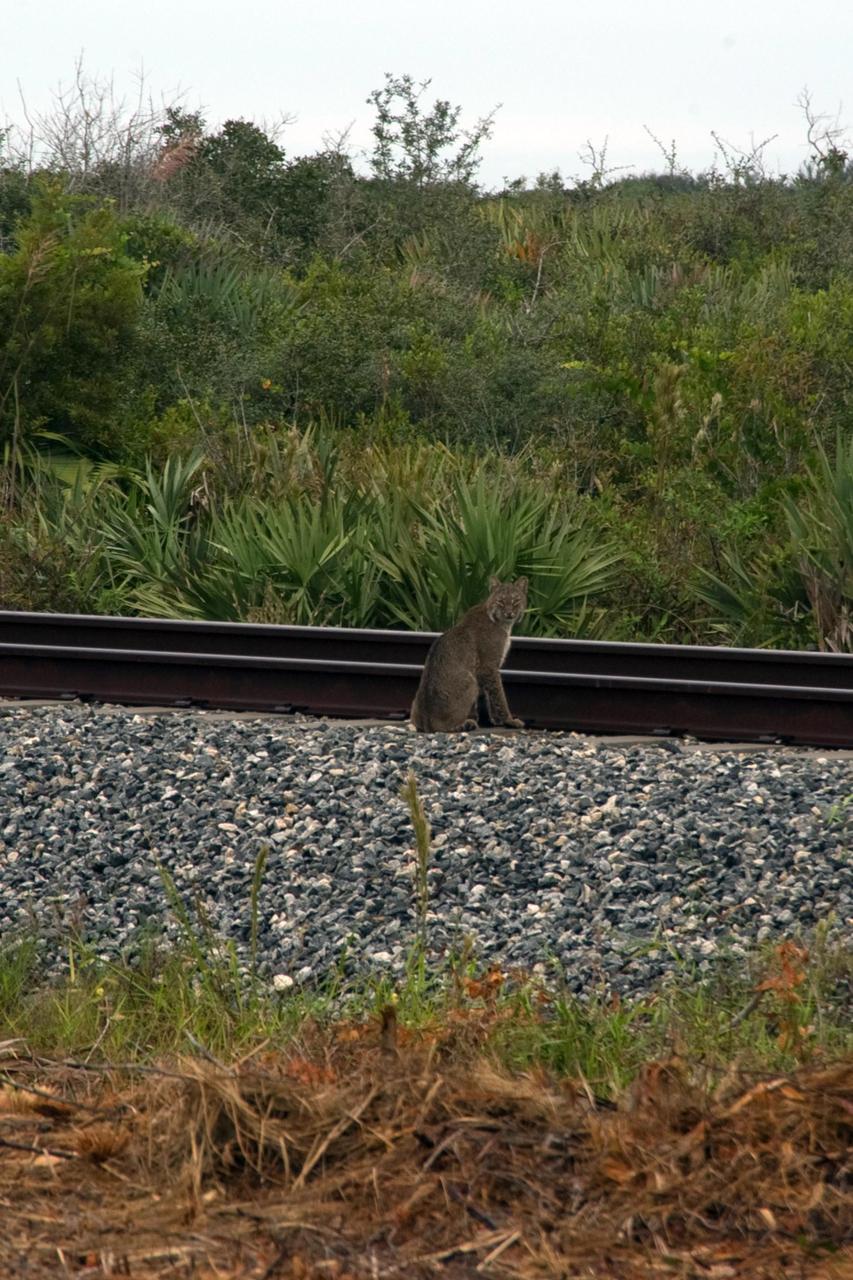
KENNEDY SPACE CENTER, FLA. -- A rare view of a bobcat, spotted near the NASA Railroad tracks on a mid-morning. The bobcat is a solitary and territorial predator mammal. They are mostly nocturnal and solitary, but will travel long distances for a mate. Not as big as a panther, but about the size of a medium-sized dog, male and female bobcats average 39 inches and 36 inches in length, and 24 pounds and 15 pounds in weight, respectively. They are most easily identified by their short tails which are about 5.5 inches long. Their fur, which is short, soft and dense, ranges from light tan to reddish or yellowish brown and markings vary from tabby stripes to spotting. They swim more than other native cats. The backs of their ears are white with a black outline. Their underparts are generally white. Bobcats can most likely be found in every county in Florida. Photo credit: NASA/Sandra Joseph
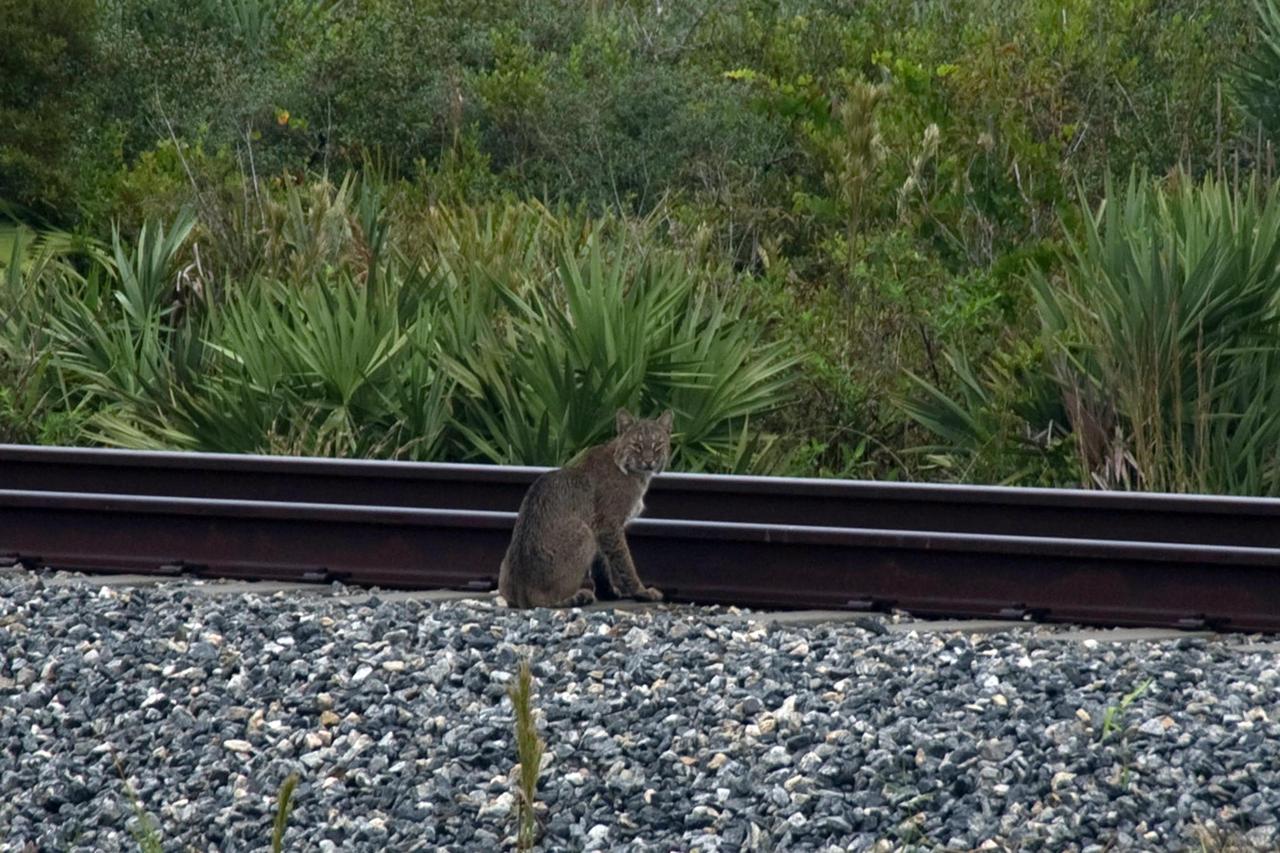
KENNEDY SPACE CENTER, FLA. -- A rare view of a bobcat, spotted near the NASA Railroad tracks on a mid-morning. The bobcat is a solitary and territorial predator mammal. They are mostly nocturnal and solitary, but will travel long distances for a mate. Not as big as a panther, but about the size of a medium-sized dog, male and female bobcats average 39 inches and 36 inches in length, and 24 pounds and 15 pounds in weight, respectively. They are most easily identified by their short tails which are about 5.5 inches long. Their fur, which is short, soft and dense, ranges from light tan to reddish or yellowish brown and markings vary from tabby stripes to spotting. They swim more than other native cats. The backs of their ears are white with a black outline. Their underparts are generally white. Bobcats can most likely be found in every county in Florida. Photo credit: NASA/Sandra Joseph
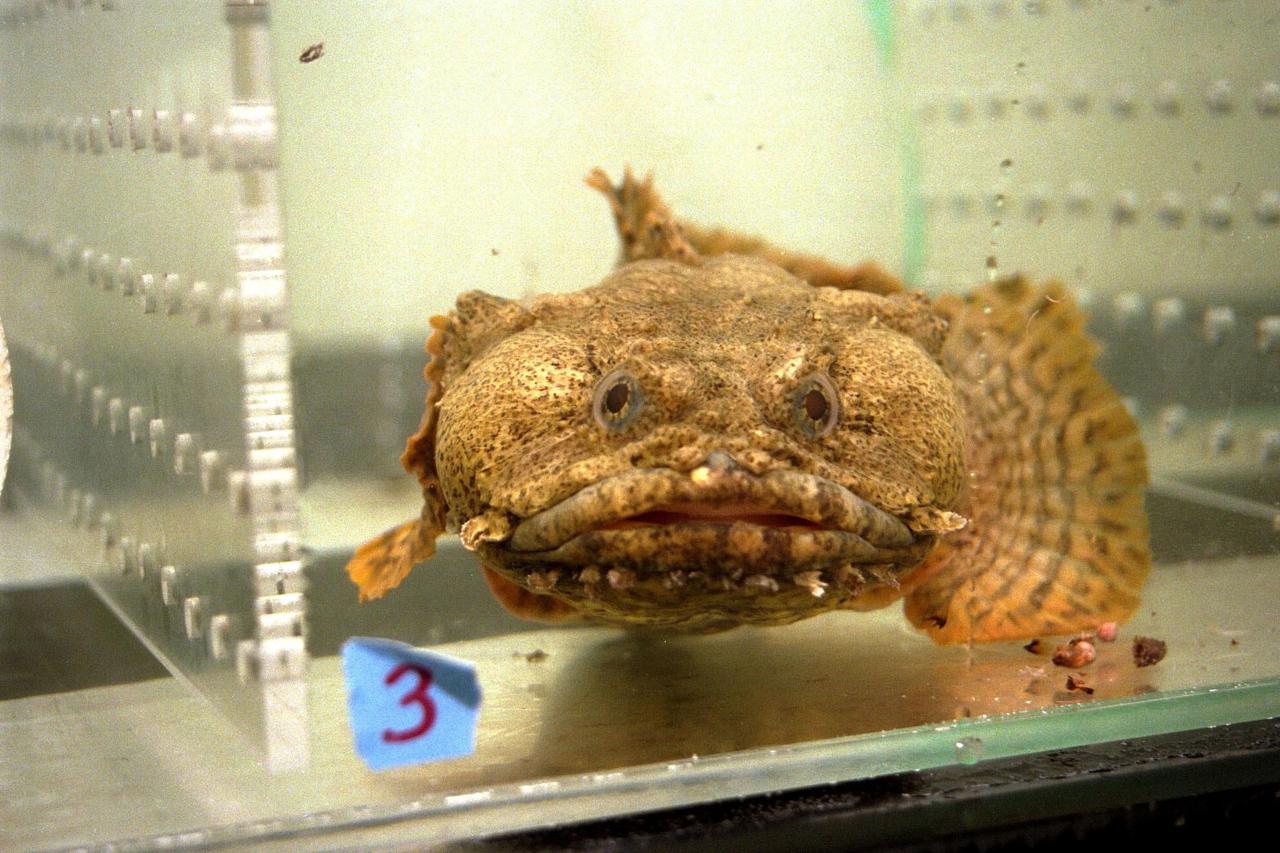
KENNEDY SPACE CENTER, FLA. -- An oyster toadfish (Opsanus tau), like those that are part of the Neurolab payload on Space Shuttle Mission STS-90, is shown in its holding tank in the Space Station Processing Facility. Each fish is between eight and 14 inches long. Toadfish live in an estuarine environment and are native to areas along the Northeast coast of the United States. Investigations during the Neurolab mission will focus on the effects of microgravity on the nervous system. This fish is an excellent model for looking at vestibular function because the architecture of its inner and middle ear are similar to those of mammals with respect to the vestibular apparatus. The crew of STS-90, slated for launch April 16 at 2:19 p.m. EDT, includes Commander Richard Searfoss, Pilot Scott Altman, Mission Specialists Richard Linnehan, Dafydd (Dave) Williams, M.D., and Kathryn (Kay) Hire, and Payload Specialists Jay Buckey, M.D., and James Pawelczyk, Ph.D
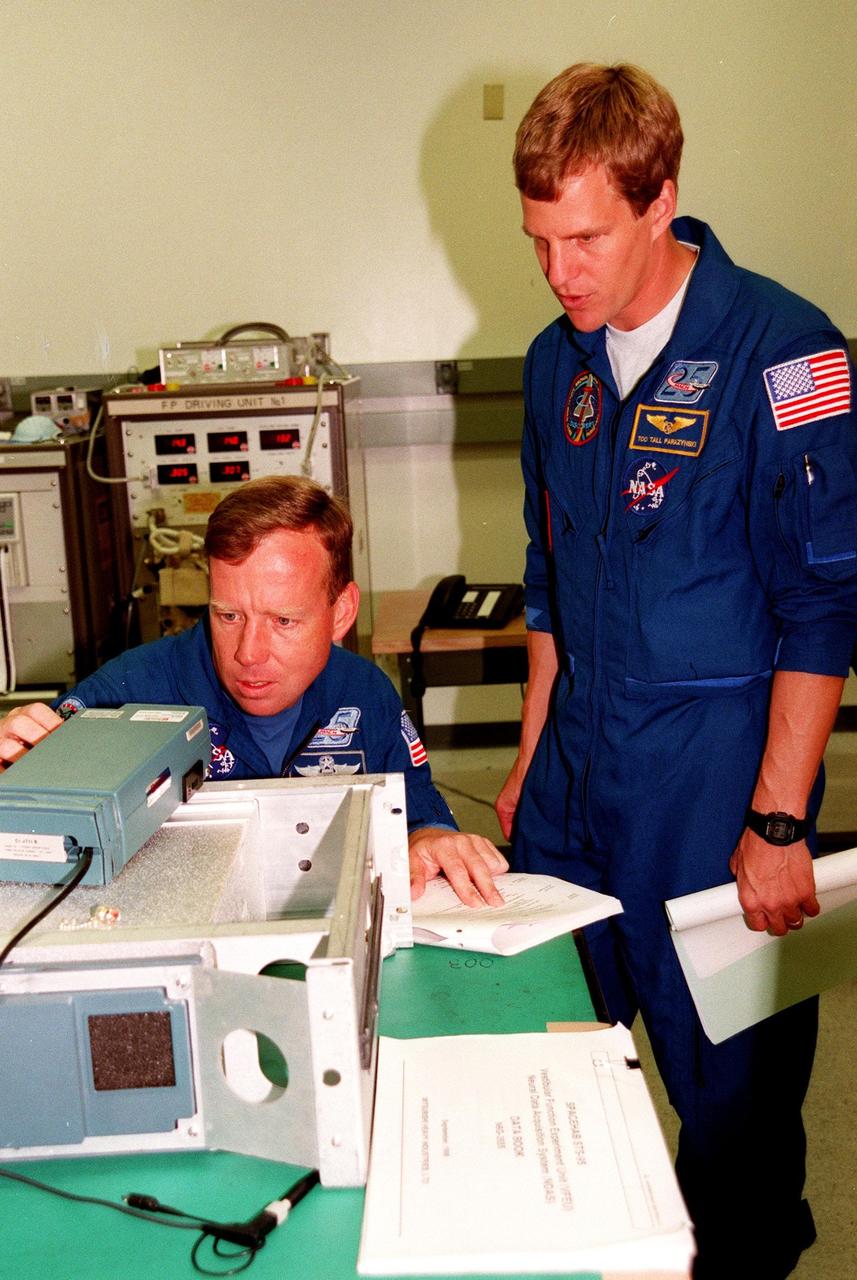
STS-95 Pilot Steven W. Lindsey and Mission Specialist Scott E. Parazynski look at equipment being used in an experiment with toadfish on the mission. The fish will be electronically monitored to determine the effect of gravitational changes on the inner-ear system. Lindsey and Parazynski and other crewmembers were making final preparations for launch, targeted for liftoff at 2 p.m. on Oct. 29. The STS-95 crew also includes Mission Commander Curtis L. Brown Jr., Mission Specialists Stephen K. Robinson and Pedro Duque, with the European Space Agency (ESA), Payload Specialists John H. Glenn Jr., senator from Ohio, and Chiaki Mukai, with the National Space Development Agency of Japan (NASDA), ). The mission is expected to last 8 days, 21 hours and 49 minutes, returning to KSC at 11:49 a.m. EST on Nov. 7
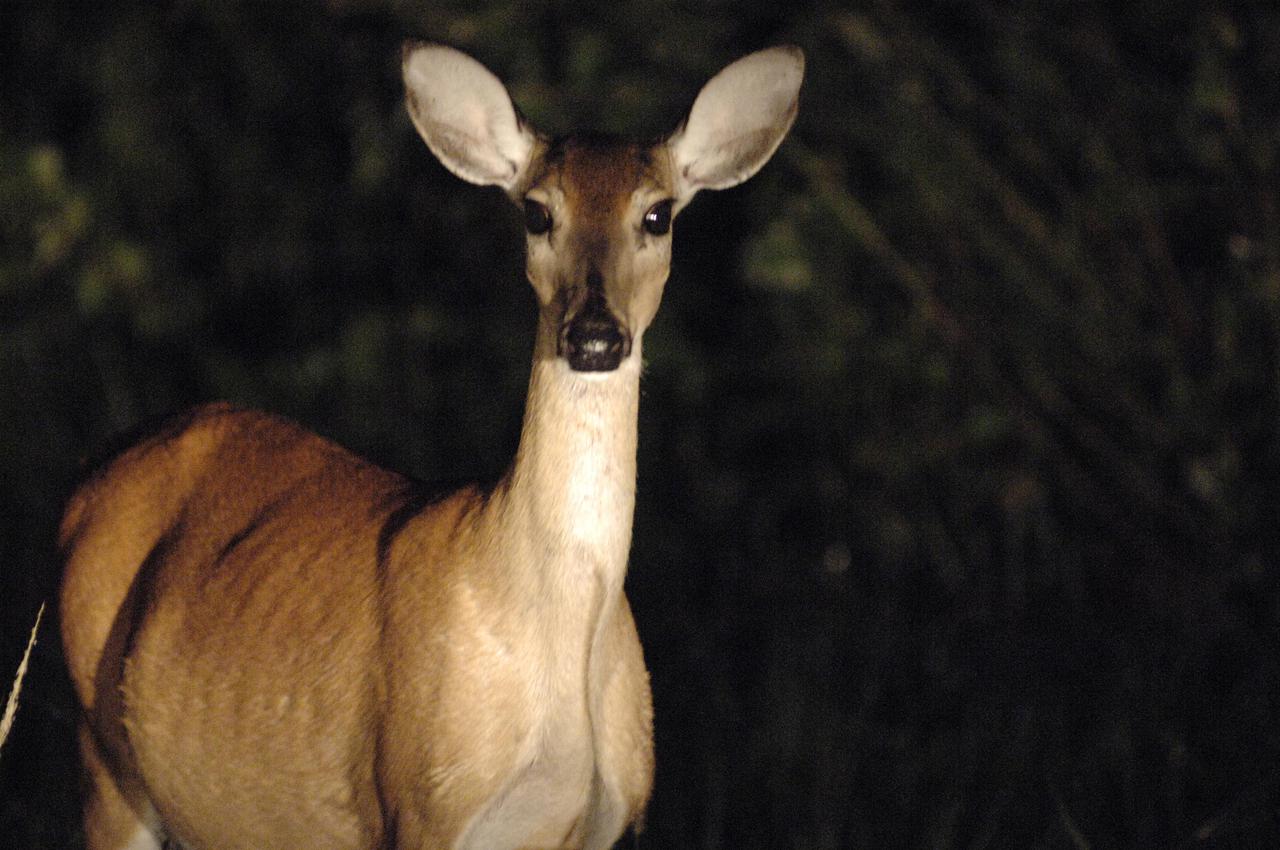
KENNEDY SPACE CENTER, FLA. - In the pre-dawn hours, a pregnant white-tailed deer is watchful as she browses for food on the west end of NASA Kennedy Space Center’s Shuttle Landing Facility. The deer would have had an enviable position to watch the landing of Space Shuttle Discovery if the landing had not been postponed. White-tailed deer are found in forest edge habitats statewide. Their color ranges from gray- to russet-brown with a white neck, chest, underside and underneath the tail. The deer stand 55 inches to 80 inches high, have large ears, a large tail and long slender legs. They feed primarily on twigs and leaves. Their diet also includes acorns, fruits and mushrooms. Most browsing is done at night or on overcast days.
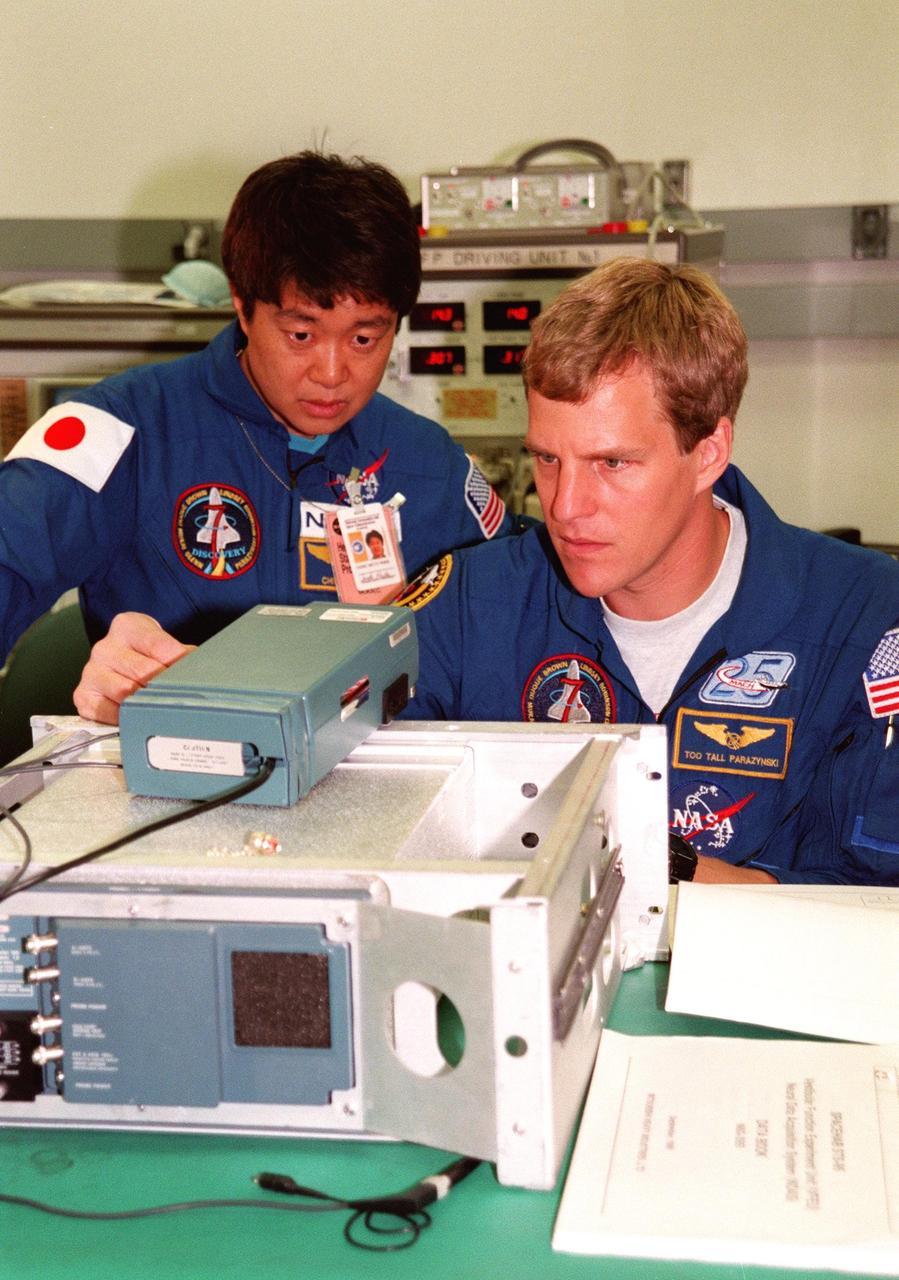
STS-95 Payload Specialist Chiaki Mukai (left), with the National Space Development Agency of Japan (NASDA) and Mission Specialist Scott E. Parazynski (right) look over equipment being used on an experiment with toadfish on mission STS-95. The fish will be electronically monitored to determine the effect of gravitational changes on the inner-ear system. Mukai and Parazynski and other crewmembers were making final preparations for launch, targeted for liftoff at 2 p.m. on Oct. 29. The STS-95 crew also includes Mission Commander Curtis L. Brown Jr., Pilot Steven W. Lindsey, Mission Specialist Stephen K. Robinson, Payload Specialist John H. Glenn Jr., senator from Ohio, and Mission Specialist Pedro Duque, with the European Space Agency (ESA). The mission is expected to last 8 days, 21 hours and 49 minutes, returning to KSC at 11:49 a.m. EST on Nov. 7
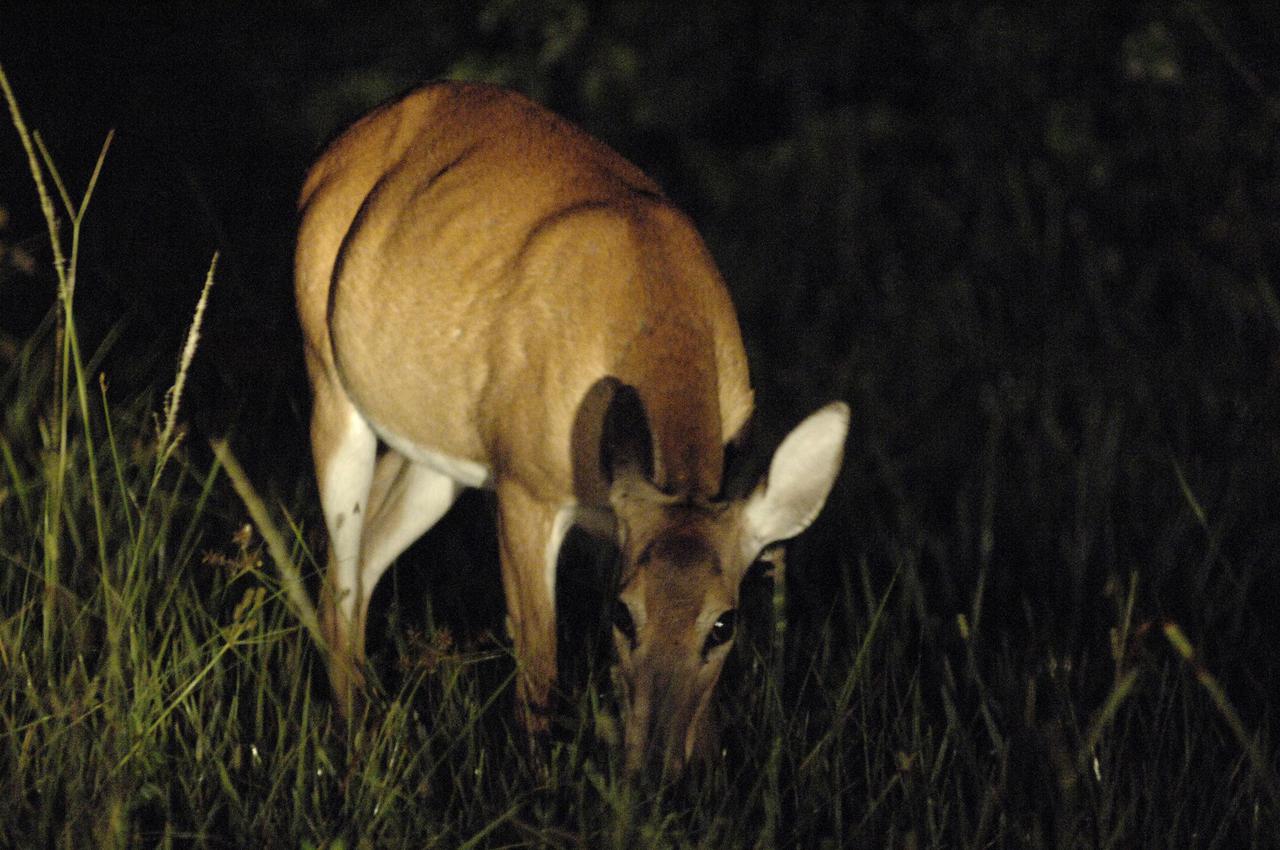
KENNEDY SPACE CENTER, FLA. - In the pre-dawn hours, a pregnant white-tailed deer browses for food on the west end of NASA Kennedy Space Center’s Shuttle Landing Facility. The deer would have had an enviable position to watch the landing of Space Shuttle Discovery if the landing had not been postponed. White-tailed deer are found in forest edge habitats statewide. Their color ranges from gray- to russet-brown with a white neck, chest, underside and underneath the tail. The deer stand 55 inches to 80 inches high, have large ears, a large tail and long slender legs. They feed primarily on twigs and leaves. Their diet also includes acorns, fruits and mushrooms. Most browsing is done at night or on overcast days.
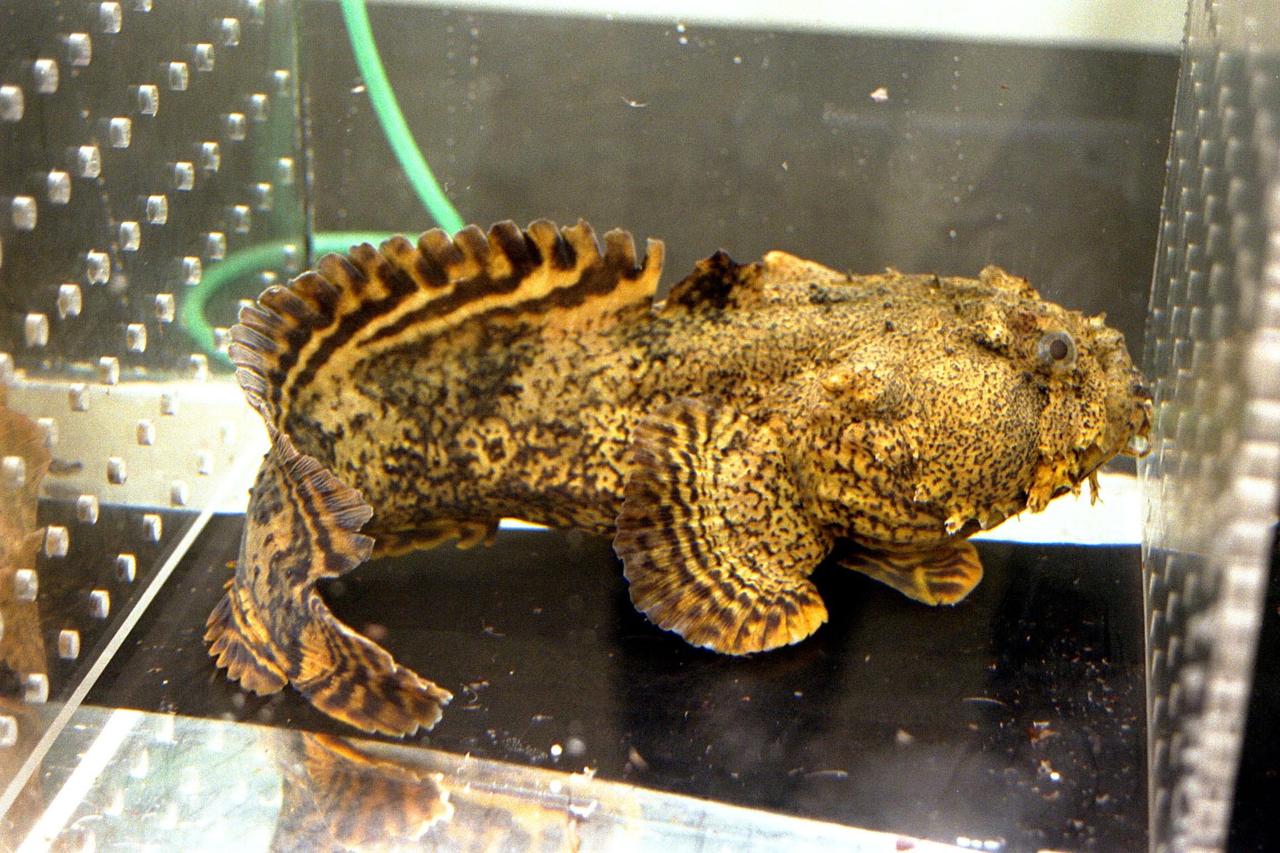
KENNEDY SPACE CENTER, FLA. -- An oyster toadfish (Opsanus tau), like those that are part of the Neurolab payload on Space Shuttle Mission STS-90, is shown in its holding tank in the Space Station Processing Facility. Each fish is between eight and 14 inches long. Toadfish live in an estuarine environment and are native to areas along the Northeast coast of the United States. Investigations during the Neurolab mission will focus on the effects of microgravity on the nervous system. This fish is an excellent model for looking at vestibular function because the architecture of its inner and middle ear are similar to those of mammals with respect to the vestibular apparatus. The crew of STS-90, slated for launch April 16 at 2:19 p.m. EDT, includes Commander Richard Searfoss, Pilot Scott Altman, Mission Specialists Richard Linnehan, Dafydd (Dave) Williams, M.D., and Kathryn (Kay) Hire, and Payload Specialists Jay Buckey, M.D., and James Pawelczyk, Ph.D
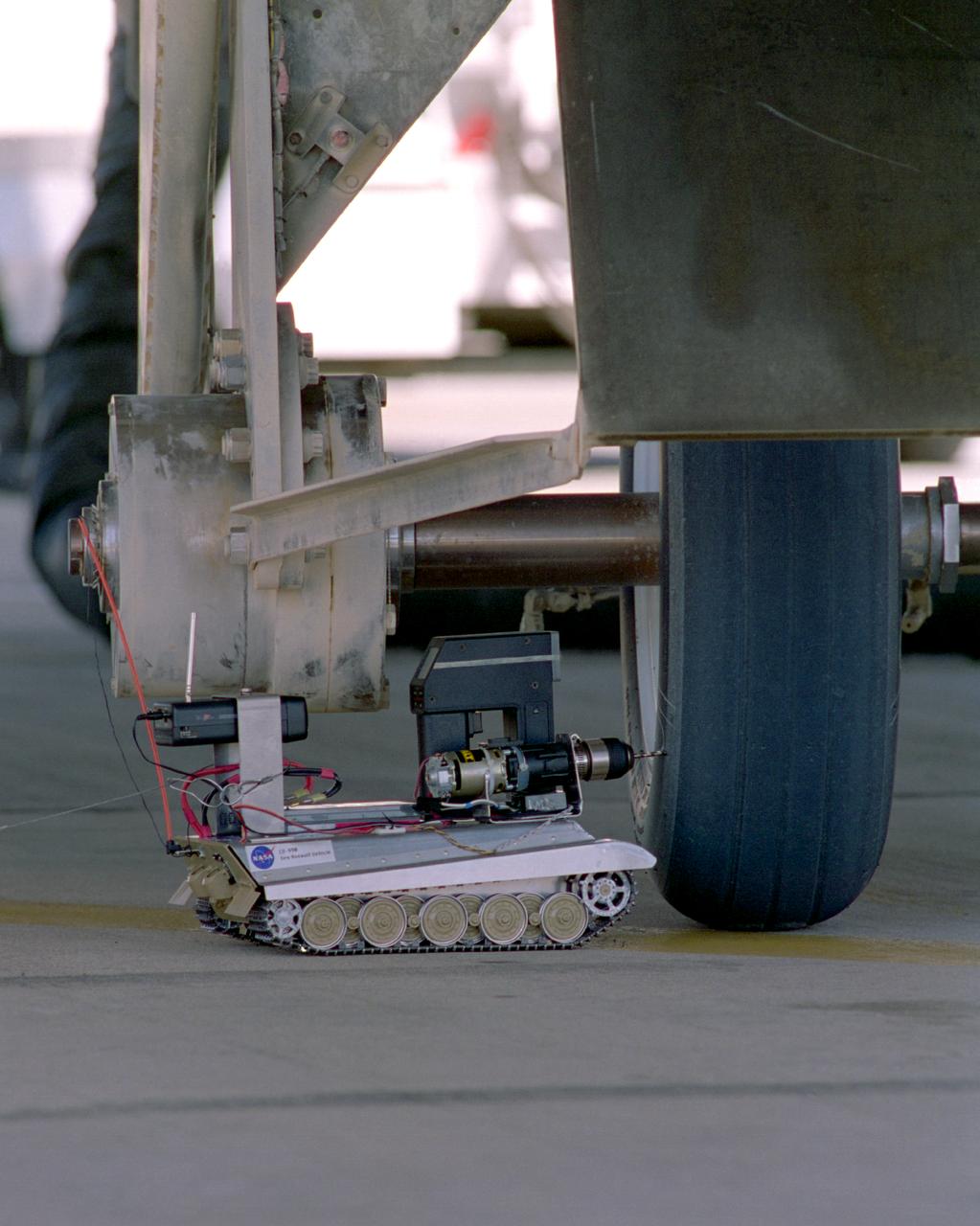
Created from a 1/16th model of a German World War II tank, the TAV (Tire Assault Vehicle) was an important safety feature for the Convair 990 Landing System Research Aircraft, which tested space shuttle tires. It was imperative to know the extreme conditions the shuttle tires could tolerate at landing without putting the shuttle and its crew at risk. In addition, the CV990 was able to land repeatedly to test the tires. The TAV was built from a kit and modified into a radio controlled, video-equipped machine to drill holes in aircraft test tires that were in imminent danger of exploding because of one or more conditions: high air pressure, high temperatures, and cord wear. An exploding test tire releases energy equivalent to two and one-half sticks of dynamite and can cause severe injuries to anyone within 50 ft. of the explosion, as well as ear injury - possibly permanent hearing loss - to anyone within 100 ft. The degree of danger is also determined by the temperature pressure and cord wear of a test tire. The TAV was developed by David Carrott, a PRC employee under contract to NASA.
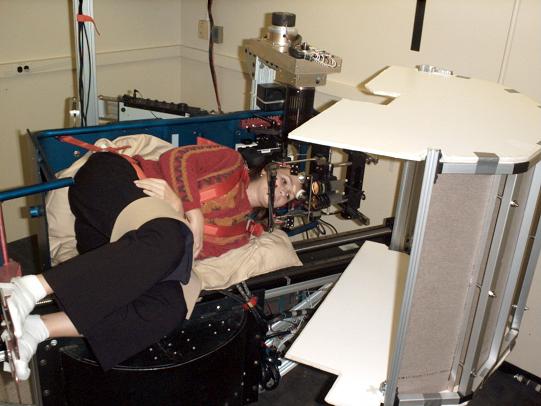
The short-arm centrifuge subjects an astronaut to conflicting sensory input and study the astronaut's perception of motion. It is one of several instruments used in the Spatial Reorientation Following Space Flight investigation to be conducted after astronauts return to Earth. During space flight, the vestibular organs no longer respond in a familiar way. Instead, inputs from the irner ear do not match those coming from the eyes. While on Earth, you can open your eyes to see if you truly are spinning, but astronauts do not have this luxury. Astronauts can see the floor, but have no sense of down; when they bend their heads forward, the otoliths are not stimulated properly. This state, called sensory conflict, must be resolved by the brain to maintain orientation. When they first return to Earth, astronauts are again disoriented because of sensory conflict. They undergo a period of spatial reorientation, as their brains reconcile what their eyes see and what their vestibular system senses. Recovery can take anywhere from hours to days depending on the length of the mission. Principal Investigator: Dr. William Paloski, Johnson Space Center, Houston, TX.
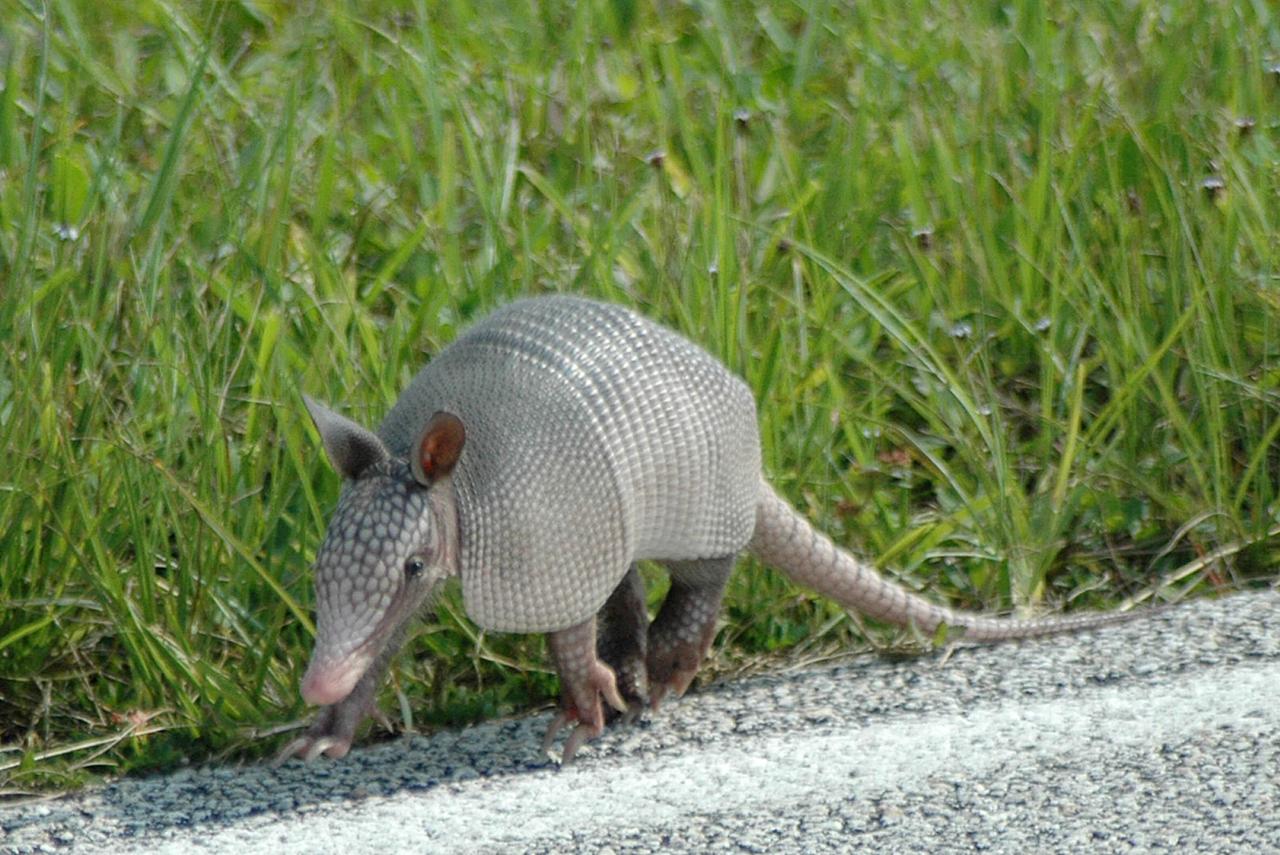
KENNEDY SPACE CENTER, FLA. -- A baby nine-banded armadillo makes its way along the roadside near Launch Pad 39A where Space Shuttle Endeavour waits for launch on mission STS-118. Introduced to Florida in the early 1900s, this species is found statewide in areas with dense ground cover and sandy soil. Nine bands of plates cover the body from shoulder to hip and 12 bands cover the long tail. It has a small, tapered head and snout and a long tongue. Its ears are long and hairless. and it has sparse white hairs on its belly. Its diet is composed of insects, especially beetles, and other invertebrates plus some plant foods such as cedars and beautyberries. It is primarily nocturnal, sedentary, solitary and a burrower. It digs a series of dens with multiple entrances usually protected by stumps, palmettos or trees. KSC shares a boundary with the Merritt Island Wildlife Nature Refuge. The refuge is a habitat for more than 310 species of birds, 25 mammals, 117 fishes and 65 amphibians and reptiles. Photo credit: NASA/Ken Thornsley
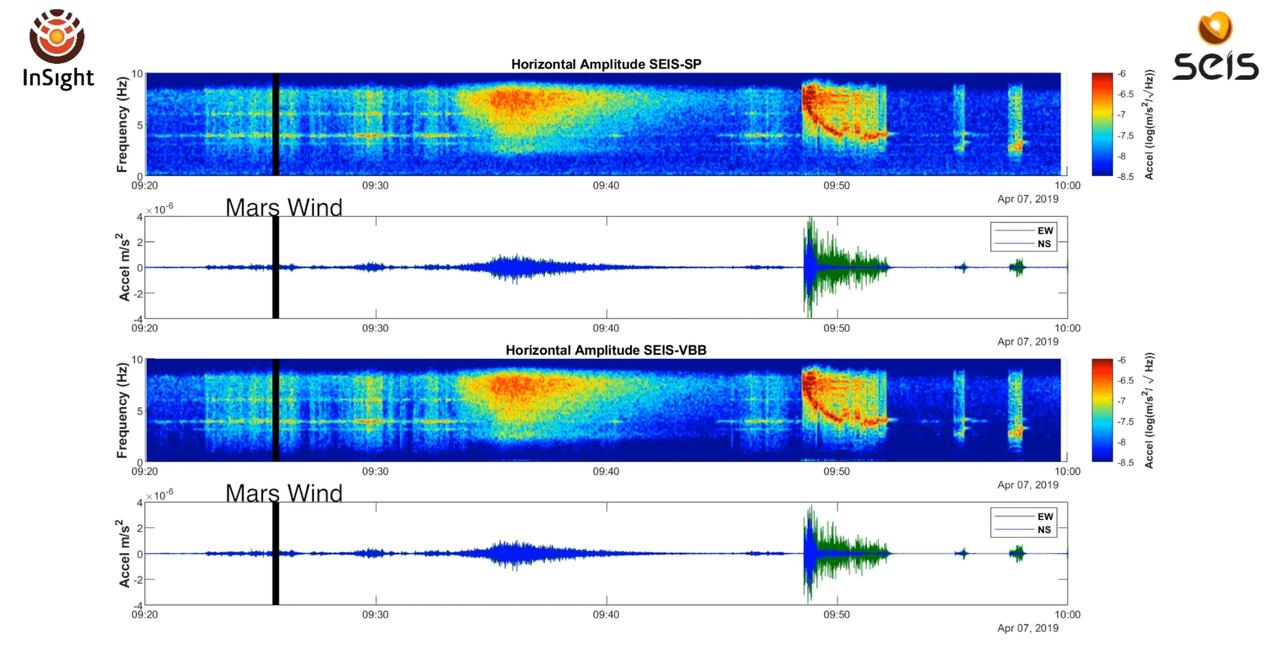
This video and audio illustrates a seismic event detected by NASA's InSight on April 6, 2019, the 128th Martian day, or sol, of the mission. Three distinct kinds of sounds can be heard, all of them detected as ground vibrations by the spacecraft's seismometer, called the Seismic Experiment for Interior Structure (SEIS): There's noise from Martian wind; the seismic event itself; and the spacecraft's robotic arm as it moves to take pictures. This event is the first likely marsquake recorded by the InSight team. Several other seismic events have been recorded but are much more ambiguous than this signal. The audio underscores just how seismically noisy the Martian surface can be and was produced from two sets of sensors included with SEIS. You can hear sounds from the Very Broad Band sensors from your left speakers and sounds from the Short Period sensors from your right speakers. Audio from both sets of sensors have been sped up by a factor of 60; the actual vibrations on Mars would not have been audible to the human ear. https://photojournal.jpl.nasa.gov/catalog/PIA23176
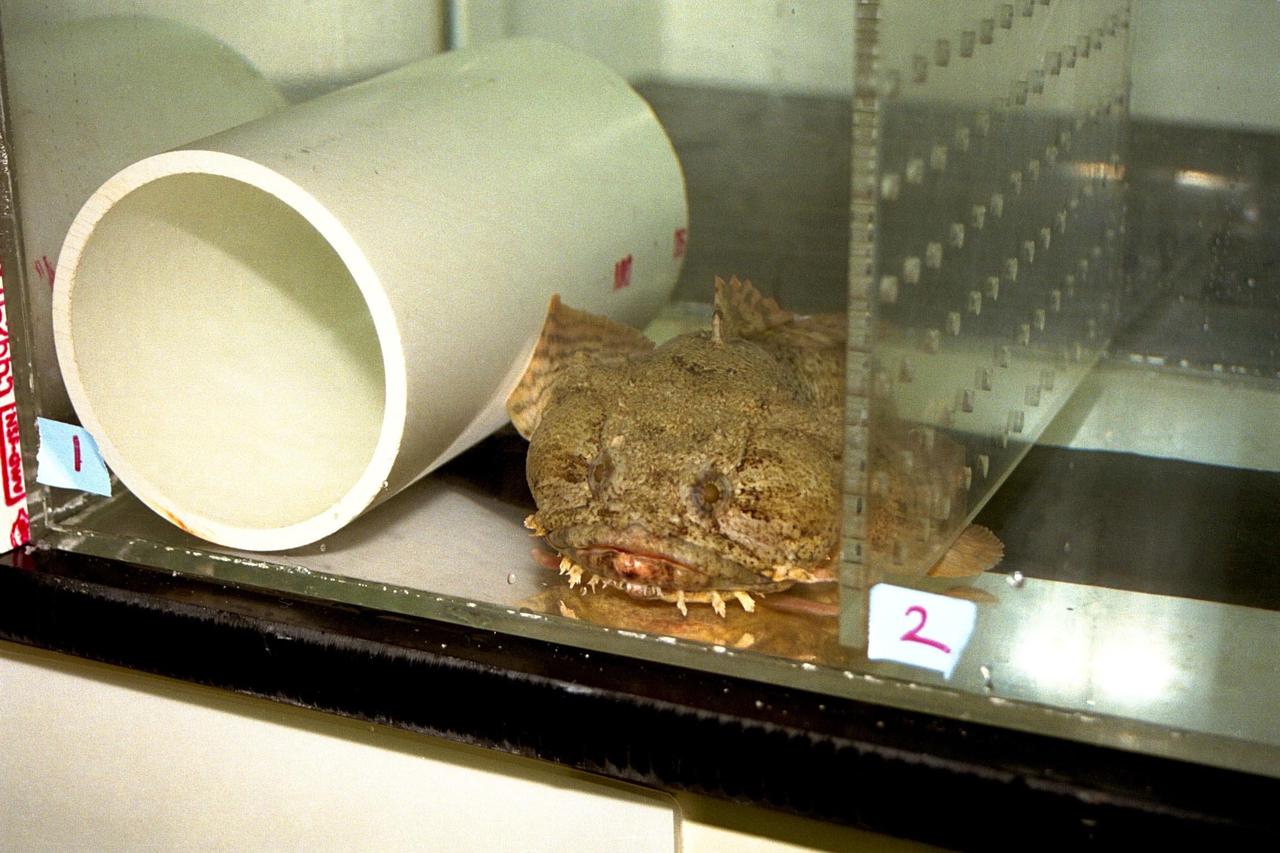
KENNEDY SPACE CENTER, FLA. -- An oyster toadfish (Opsanus tau), like those that are part of the Neurolab payload on Space Shuttle Mission STS-90, is shown in its holding tank in the Space Station Processing Facility. Each fish is between eight and 14 inches long. Toadfish live in an estuarine environment and are native to areas along the Northeast coast of the United States. Since they are bottom dwellers that live in cracks and crevices, a tube is provided in its tank to give it a place to retreat and hide. Investigations during the Neurolab mission will focus on the effects of microgravity on the nervous system. This fish is an excellent model for looking at vestibular function because the architecture of its inner and middle ear are similar to those of mammals with respect to the vestibular apparatus. The crew of STS-90, slated for launch April 16 at 2:19 p.m. EDT, includes Commander Richard Searfoss, Pilot Scott Altman, Mission Specialists Richard Linnehan, Dafydd (Dave) Williams, M.D., and Kathryn (Kay) Hire, and Payload Specialists Jay Buckey, M.D., and James Pawelczyk, Ph.D
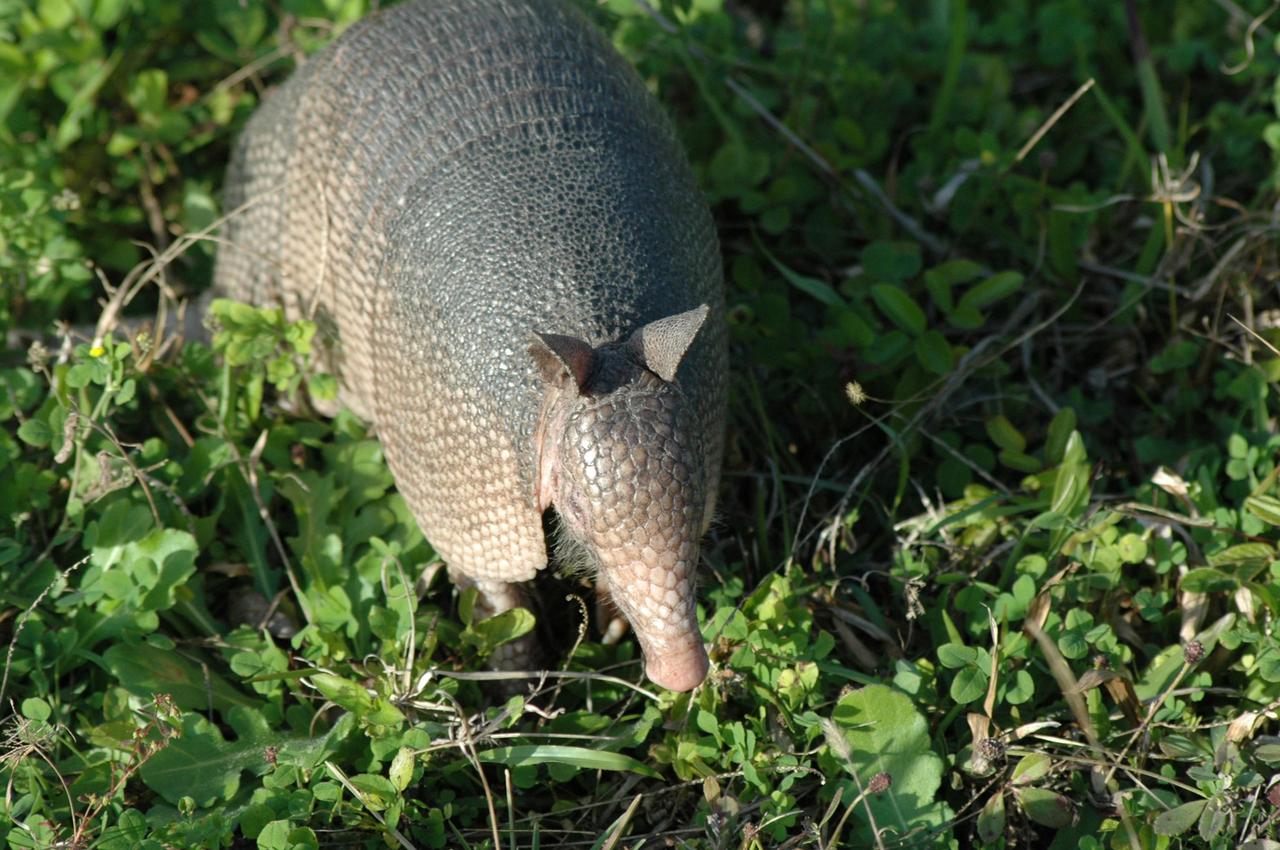
KENNEDY SPACE CENTER, FLA. -- Seen at NASA's Kennedy Space Center, this nine-banded armadillo may be looking for food. Introduced to Florida in the early 1900's, this species is found statewide in areas with dense ground cover and sandy soil. Nine bands of plates cover the body from shoulder to hip and 12 bands cover the long tail. It has a small, tapered head and snout and a long tongue. Its ears are long and hairless. It has sparse white hairs on its belly. Its diet is composed of insects, especially beetles, and other invertebrates plus some plant foods such as cedars and beautyberries. It is primarily nocturnal, sedentary, solitary and a burrower. It digs a series of dens. The multiple entrances are usually protected by stumps, palmettos, or trees. Many other animals also use armadillo dens. KSC shares a boundary with the Merritt Island Wildlife Nature Refuge. The refuge is a habitat for more than 310 species of birds, 25 mammals, 117 fishes and 65 amphibians and reptiles. In addition, the Refuge supports 19 endangered or threatened wildlife species on Federal or State lists, more than any other single refuge in the U.S. Photo credit: NASA/Ken Thornsley
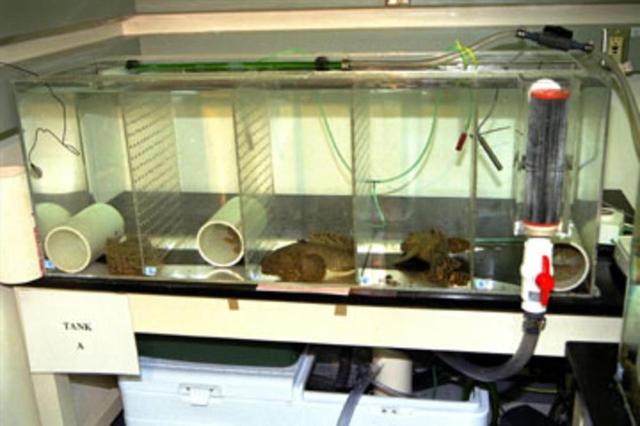
KENNEDY SPACE CENTER, FLA. -- Oyster toadfish (Opsanus tau), like those that are part of the Neurolab payload on Space Shuttle Mission STS-90, are shown in their holding tank in the Space Station Processing Facility. Each fish is between 8 and 14 inches long. Toadfish live in an estuarine environment and are native to areas along the Northeast coast of the United States. Since they are bottom dwellers that live in cracks and crevices, tubes are provided in their tank to give them a place to retreat and hide. Investigations during the Neurolab mission will focus on the effects of microgravity on the nervous system. The toadfish fish is an excellent model for looking at vestibular function because the architecture of its inner and middle ear are similar to those of mammals with respect to the vestibular apparatus. The crew of STS-90, slated for launch April 16 at 2:19 p.m. EDT, includes Commander Richard Searfoss, Pilot Scott Altman, Mission Specialists Richard Linnehan, Dafydd (Dave) Williams, M.D., and Kathryn (Kay) Hire, and Payload Specialists Jay Buckey, M.D., and James Pawelczyk, Ph.D
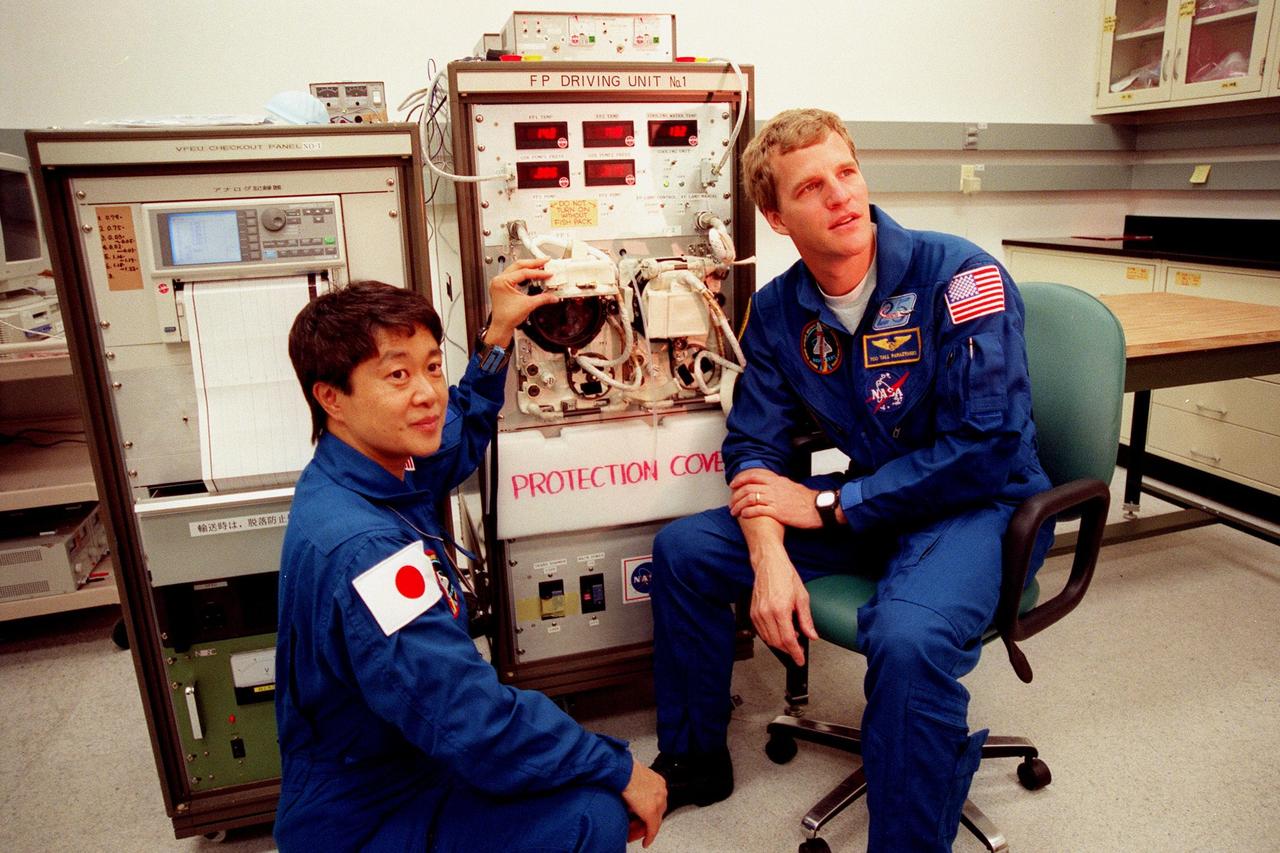
STS-95 Payload Specialist Chiaki Mukai (left), with the National Space Development Agency of Japan (NASDA), lifts the cover on a container in the Vestibular Function Experiment Unit holding one of the two toadfish that are the subjects of an experiment. Mission Specialist Scott E. Parazynski is helping her check experiments for mission STS-95. The fish will be electronically monitored to determine the effect of gravitational changes on the inner-ear system. Mukai and Parazynski and other crewmembers were making final preparations for launch, targeted for liftoff at 2 p.m. on Oct. 29. The STS-95 crew also includes Mission Commander Curtis L. Brown Jr., Pilot Steven W. Lindsey, Mission Specialist Stephen K. Robinson, Payload Specialist John H. Glenn Jr., senator from Ohio, and Mission Specialist Pedro Duque, with the European Space Agency (ESA). The mission is expected to last 8 days, 21 hours and 49 minutes, returning to KSC at 11:49 a.m. EST on Nov. 7
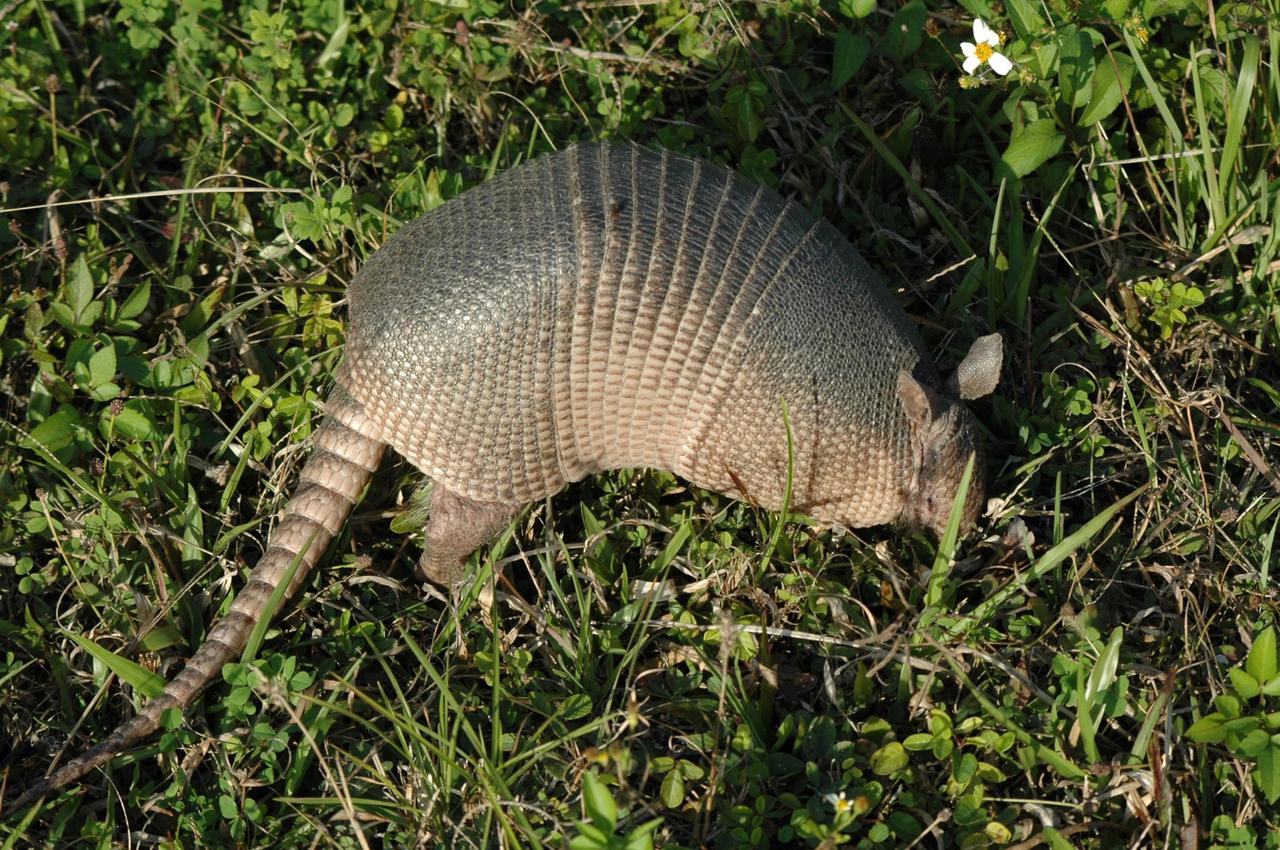
KENNEDY SPACE CENTER, FLA. -- Seen at NASA's Kennedy Space Center, this nine-banded armadillo may be looking for food. Introduced to Florida in the early 1900's, this species is found statewide in areas with dense ground cover and sandy soil. Nine bands of plates cover the body from shoulder to hip and 12 bands cover the long tail. It has a small, tapered head and snout and a long tongue. Its ears are long and hairless. It has sparse white hairs on its belly. Its diet is composed of insects, especially beetles, and other invertebrates plus some plant foods such as cedars and beautyberries. It is primarily nocturnal, sedentary, solitary and a burrower. It digs a series of dens. The multiple entrances are usually protected by stumps, palmettos, or trees. Many other animals also use armadillo dens. KSC shares a boundary with the Merritt Island Wildlife Nature Refuge. The refuge is a habitat for more than 310 species of birds, 25 mammals, 117 fishes and 65 amphibians and reptiles. In addition, the Refuge supports 19 endangered or threatened wildlife species on Federal or State lists, more than any other single refuge in the U.S. Photo credit: NASA/Ken Thornsley
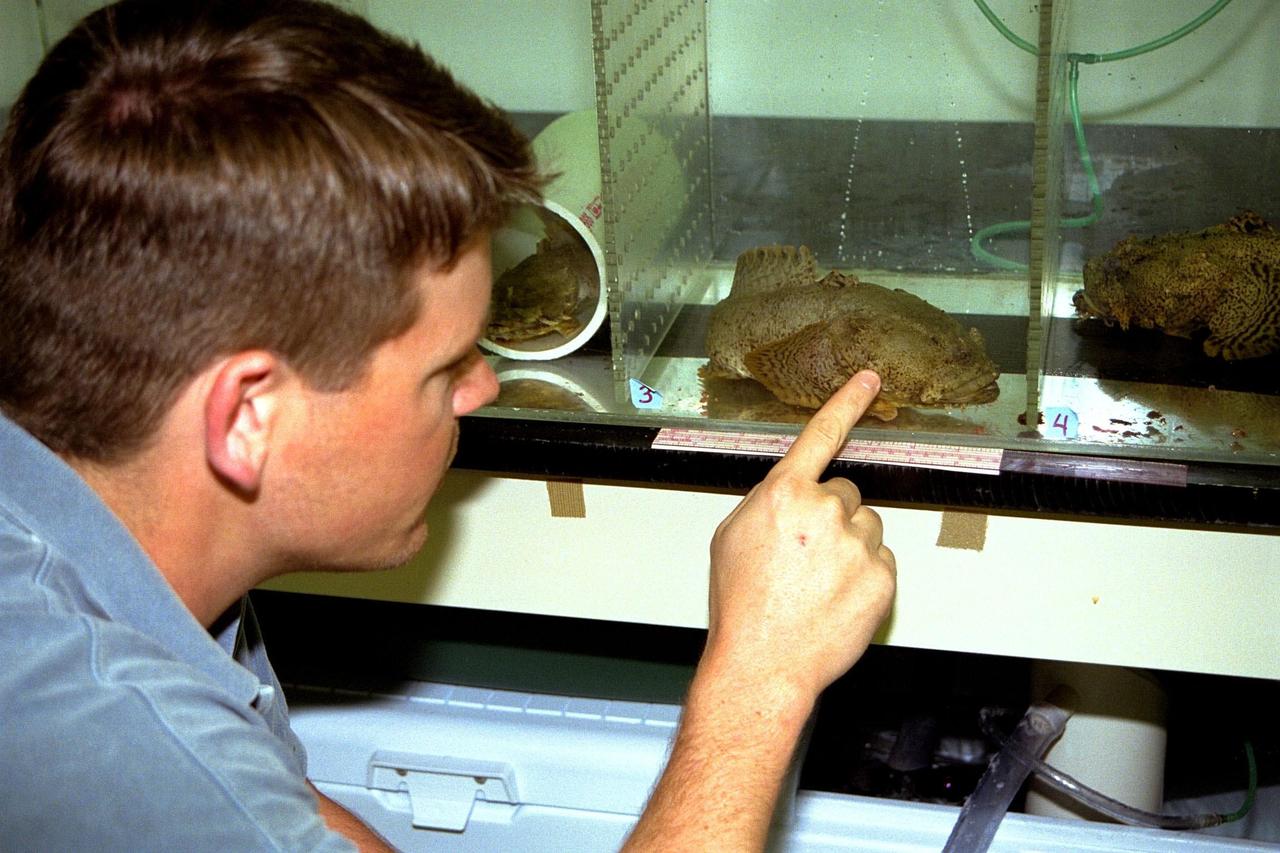
KENNEDY SPACE CENTER, FLA. -- Bill Kroeger, an aquatic technician for the Bionetics Corporation, examines an oyster toadfish (Opsanus tau), like those that are part of the Neurolab payload on Space Shuttle Mission STS-90, in its holding tank in the Space Station Processing Facility. Each fish is between eight and 14 inches long. Toadfish live in an estuarine environment and are native to areas along the Northeast coast of the United States. Investigations during the Neurolab mission will focus on the effects of microgravity on the nervous system. This fish is an excellent model for looking at vestibular function because the architecture of its inner and middle ear are similar to those of mammals with respect to the vestibular apparatus. The crew of STS-90, slated for launch April 16 at 2:19 p.m. EDT, includes Commander Richard Searfoss, Pilot Scott Altman, Mission Specialists Richard Linnehan, Dafydd (Dave) Williams, M.D., and Kathryn (Kay) Hire, and Payload Specialists Jay Buckey, M.D., and James Pawelczyk, Ph.D
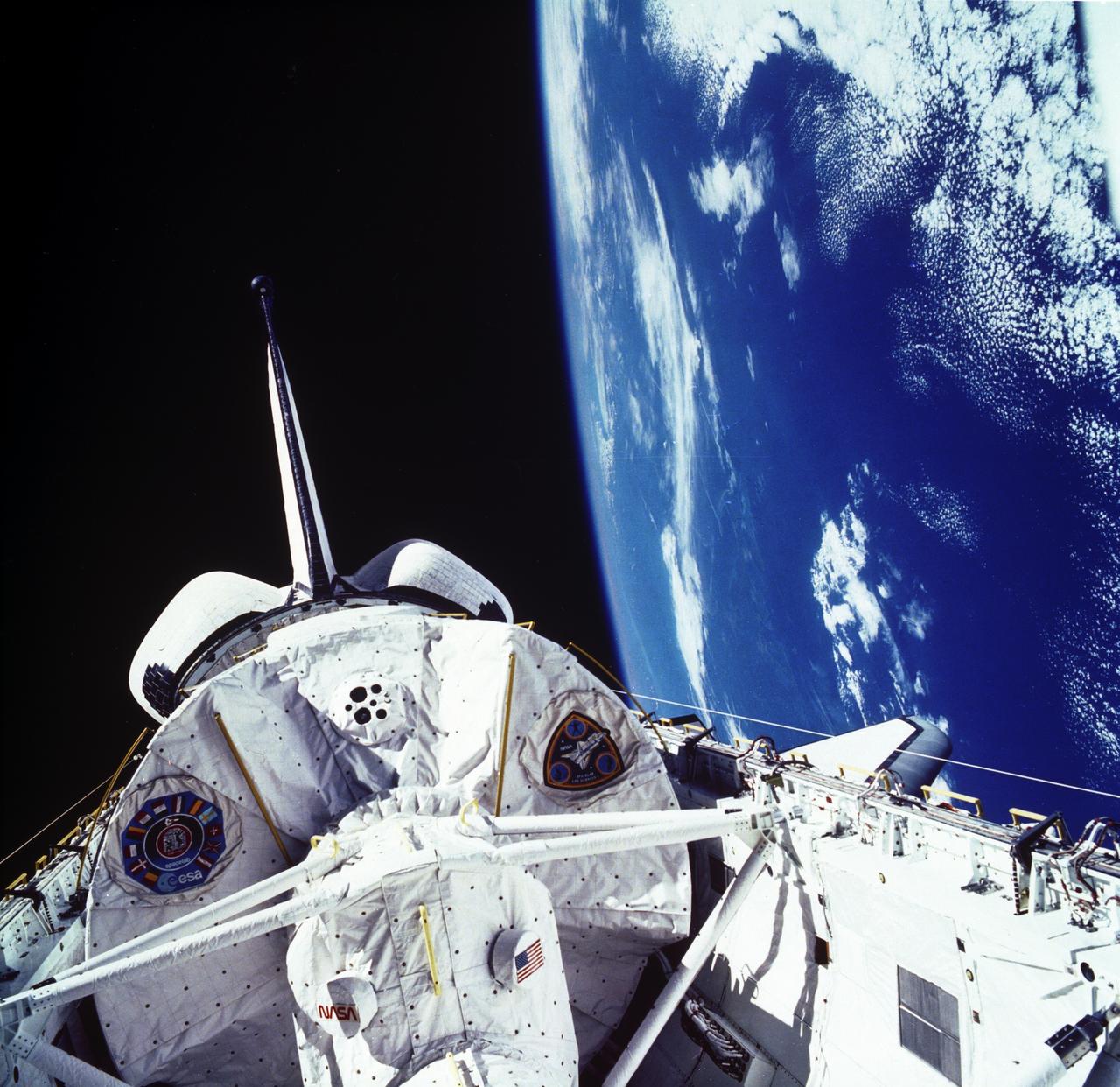
The laboratory module in the cargo bay of the Space Shuttle Orbiter Columbia was photographed during the Spacelab Life Science-1 (SLS-1) mission. SLS-1 was the first Spacelab mission dedicated solely to life sciences. The main purpose of the SLS-1 mission was to study the mechanisms, magnitudes, and time courses of certain physiological changes that occur during space flight, to investigate the consequences of the body's adaptation to microgravity and readjustment to Earth's gravity, and to bring the benefits back home to Earth. The mission was designed to explore the responses of the heart, lungs, blood vessels, kidneys, and hormone-secreting glands to microgravity and related body fluid shifts; examine the causes of space motion sickness; and study changes in the muscles, bones and cells. The five body systems being studied were: The Cardiovascular/Cardiopulmonary System (heart, lungs, and blood vessels), the Renal/Endocrine System (kidney and hormone-secreting organs), the Immune System (white blood cells), the Musculoskeletal System (muscles and bones), and the Neurovestibular System (brain and nerves, eyes, and irner ear). The SLS-1 was launched aboard the Space Shuttle Orbiter Columbia (STS-40) on June 5, 1995.
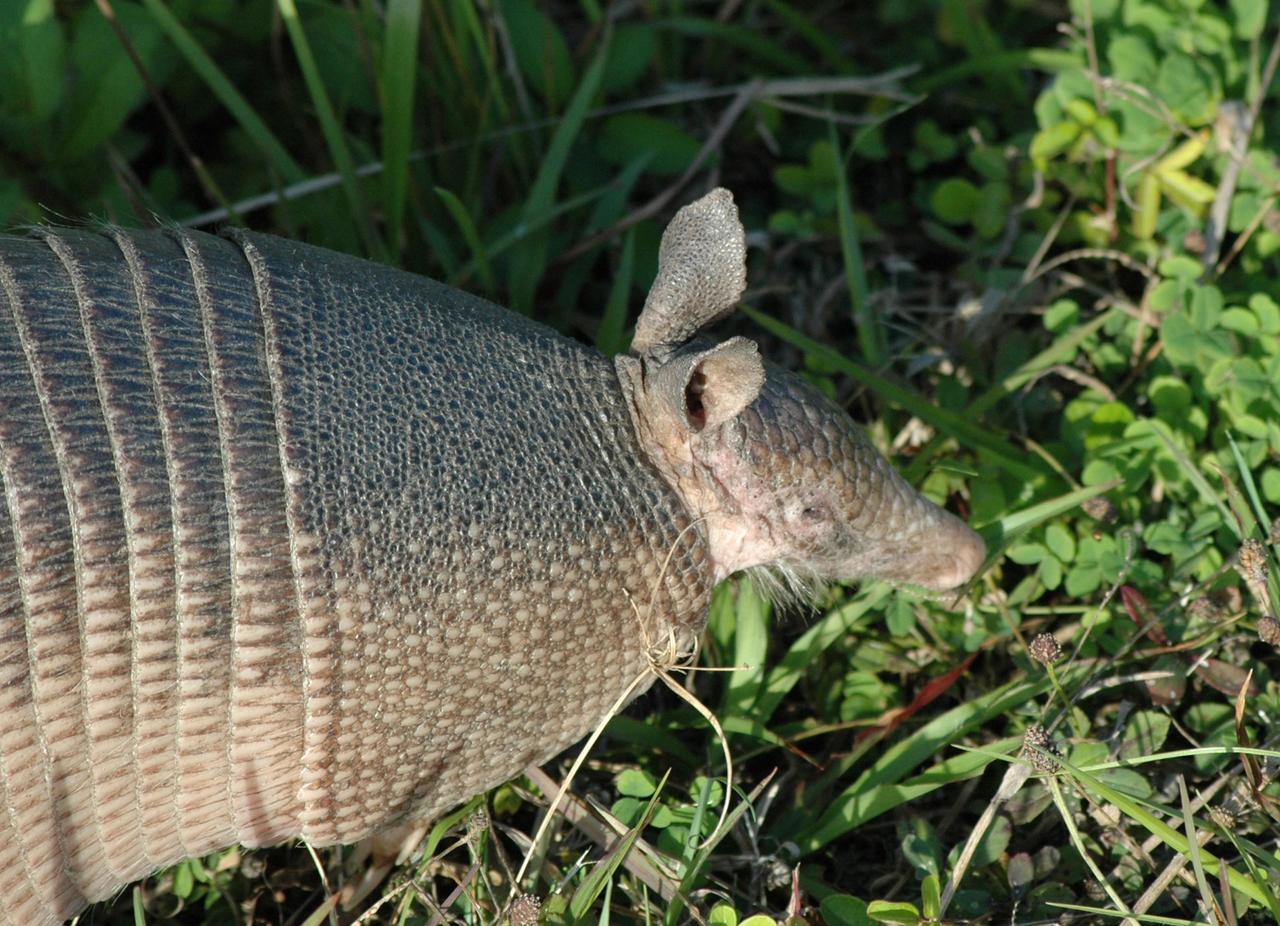
KENNEDY SPACE CENTER, FLA. -- Seen at NASA's Kennedy Space Center, this nine-banded armadillo may be looking for food. Introduced to Florida in the early 1900's, this species is found statewide in areas with dense ground cover and sandy soil. Nine bands of plates cover the body from shoulder to hip and 12 bands cover the long tail. It has a small, tapered head and snout and a long tongue. Its ears are long and hairless. It has sparse white hairs on its belly. Its diet is composed of insects, especially beetles, and other invertebrates plus some plant foods such as cedars and beautyberries. It is primarily nocturnal, sedentary, solitary and a burrower. It digs a series of dens. The multiple entrances are usually protected by stumps, palmettos, or trees. Many other animals also use armadillo dens. KSC shares a boundary with the Merritt Island Wildlife Nature Refuge. The refuge is a habitat for more than 310 species of birds, 25 mammals, 117 fishes and 65 amphibians and reptiles. In addition, the Refuge supports 19 endangered or threatened wildlife species on Federal or State lists, more than any other single refuge in the U.S. Photo credit: NASA/Ken Thornsley
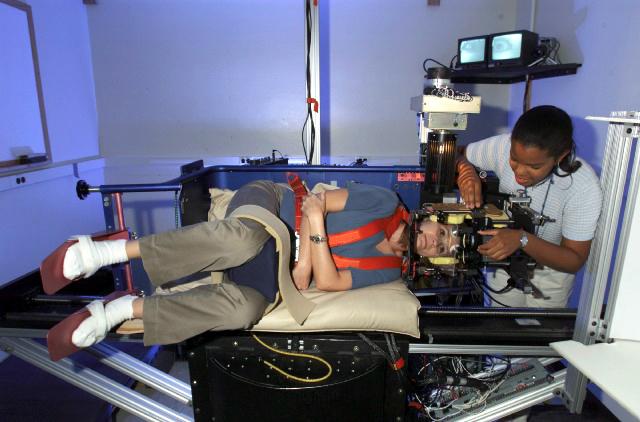
The short-arm centrifuge subjects an astronaut to conflicting sensory input and study the astronaut's perception of motion. It is one of several instruments used in the Spatial Reorientation Following Space Flight investigation to be conducted on crewmembers. During space flight, the vestibular organs no longer respond in a familiar way. Instead, inputs from the irner ear do not match those coming from the eyes. While on Earth, you can open your eyes to see if you truly are spinning, but astronauts do not have this luxury. Astronauts can see the floor, but have no sense of down; when they bend their heads forward, the otoliths are not stimulated properly. This state, called sensory conflict, must be resolved by the brain to maintain orientation. When they first return to Earth, astronauts are again disoriented because of sensory conflict. They undergo a period of spatial reorientation, as their brains reconcile what their eyes see and what their vestibular system senses. Recovery can take anywhere from hours to days depending on the length of the mission. Principal Investigator: Dr. William Paloski, Johnson Space Center, Houston, TX.
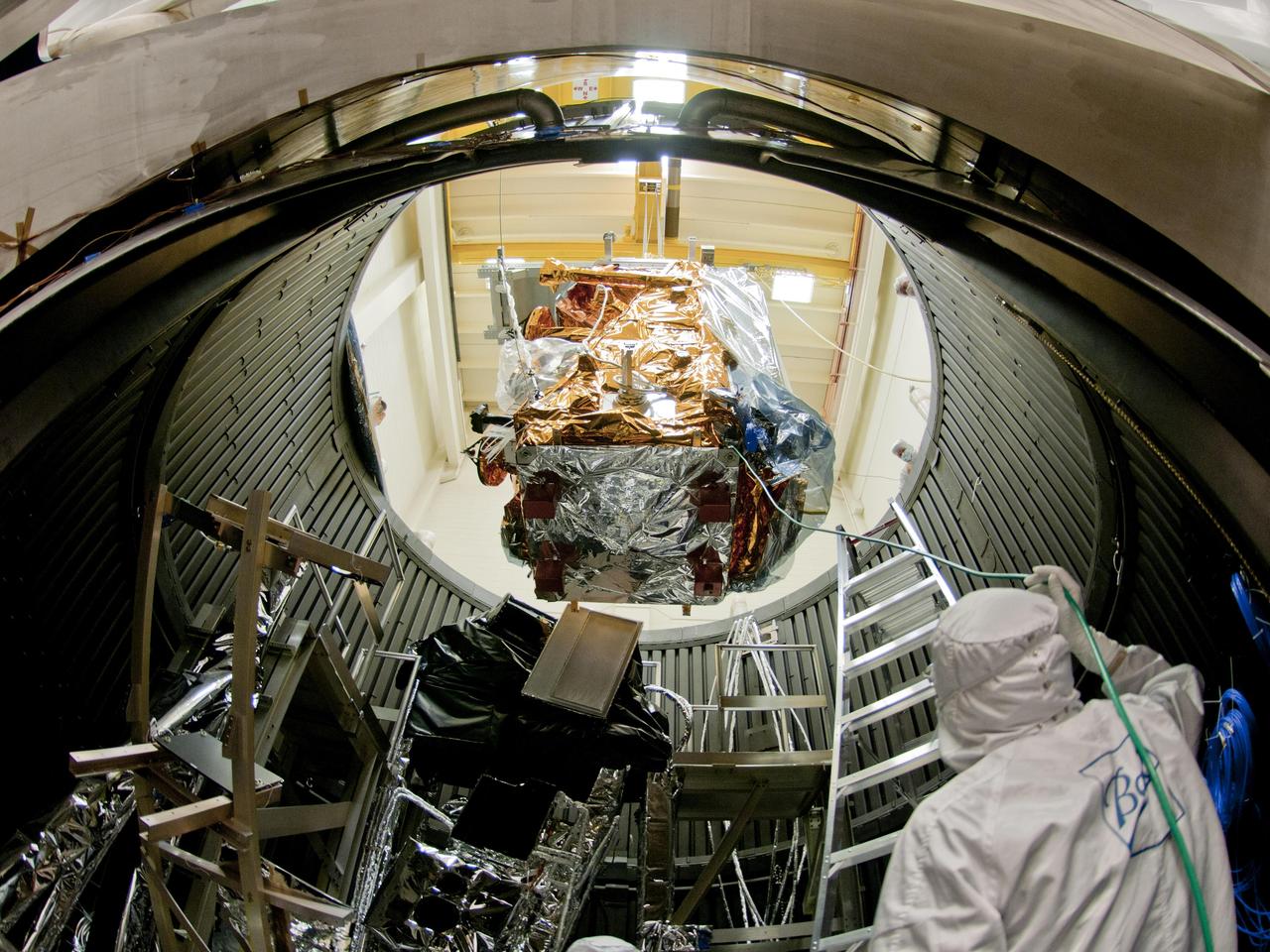
NPP is lowered into the thermal vacuum chamber. Once inside the Iron Maiden (visible in the lower left) is fitted in place. Then air is pumped out of the chamber and temperature extremes are applied to replicate orbit conditions. Credit: Ball Aerospace The NPP satellite sits surrounded by 144 rock concert speakers. They're stacked in a circle 16 feet high in a testing room at Ball Aerospace in Boulder, Colorado. As engineers set up for the environmental test, Pink Floyd's song "Money" plays gently in the background. The music stops. The room clears. Then the sound engineer wearing earplugs and headphones in the control room next door flips a switch. Slowly, the noise of thousands of pounds of exploding rocket fuel builds louder and louder until it blasts the satellite at a deafening 143.6 decibels -- loud enough to cause serious damage and pain to unprotected ears. "I was outside the building when they did the full level acoustics," says Glenn Iona, NPP Chief Engineer at NASA Goddard Space Flight Center, Greenbelt, Md. "and I could feel the ground shaking." To read more go to: <a href="http://www.nasa.gov/mission_pages/NPP/news/npp-testing.html" rel="nofollow">www.nasa.gov/mission_pages/NPP/news/npp-testing.html</a> <b><a href="http://www.nasa.gov/centers/goddard/home/index.html" rel="nofollow">NASA Goddard Space Flight Center</a></b> enables NASA’s mission through four scientific endeavors: Earth Science, Heliophysics, Solar System Exploration, and Astrophysics. Goddard plays a leading role in NASA’s accomplishments by contributing compelling scientific knowledge to advance the Agency’s mission. <b>Follow us on <a href="http://twitter.com/NASA_GoddardPix" rel="nofollow">Twitter</a></b> <b>Like us on <a href="http://www.facebook.com/pages/Greenbelt-MD/NASA-Goddard/395013845897?ref=tsd" rel="nofollow">Facebook</a></b> <b>Find us on <a href="http://web.stagram.com/n/nasagoddard/?vm=grid" rel="nofollow">Instagram</a></b>
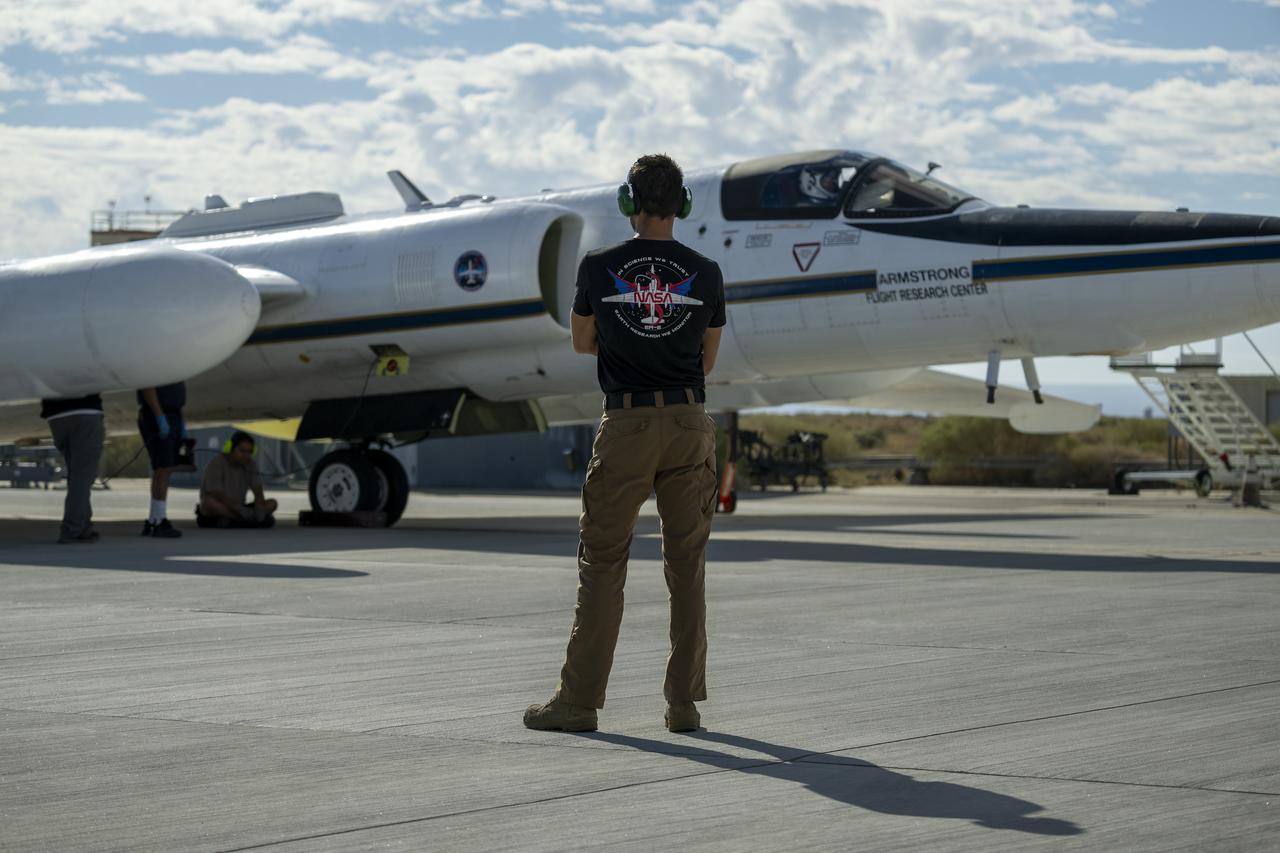
Crew members prepare NASA Armstrong Flight Research Center’s ER-2 aircraft for flight at Edwards, California, on Tuesday, Sept. 23, 2025, in support of the Geological Earth Mapping Experiment (GEMx). The high-altitude science aircraft operates between 20,000 and 70,000 feet. For this mission, pilots flew at approximately 65,000 feet, requiring them to wear specially designed pressure suits.
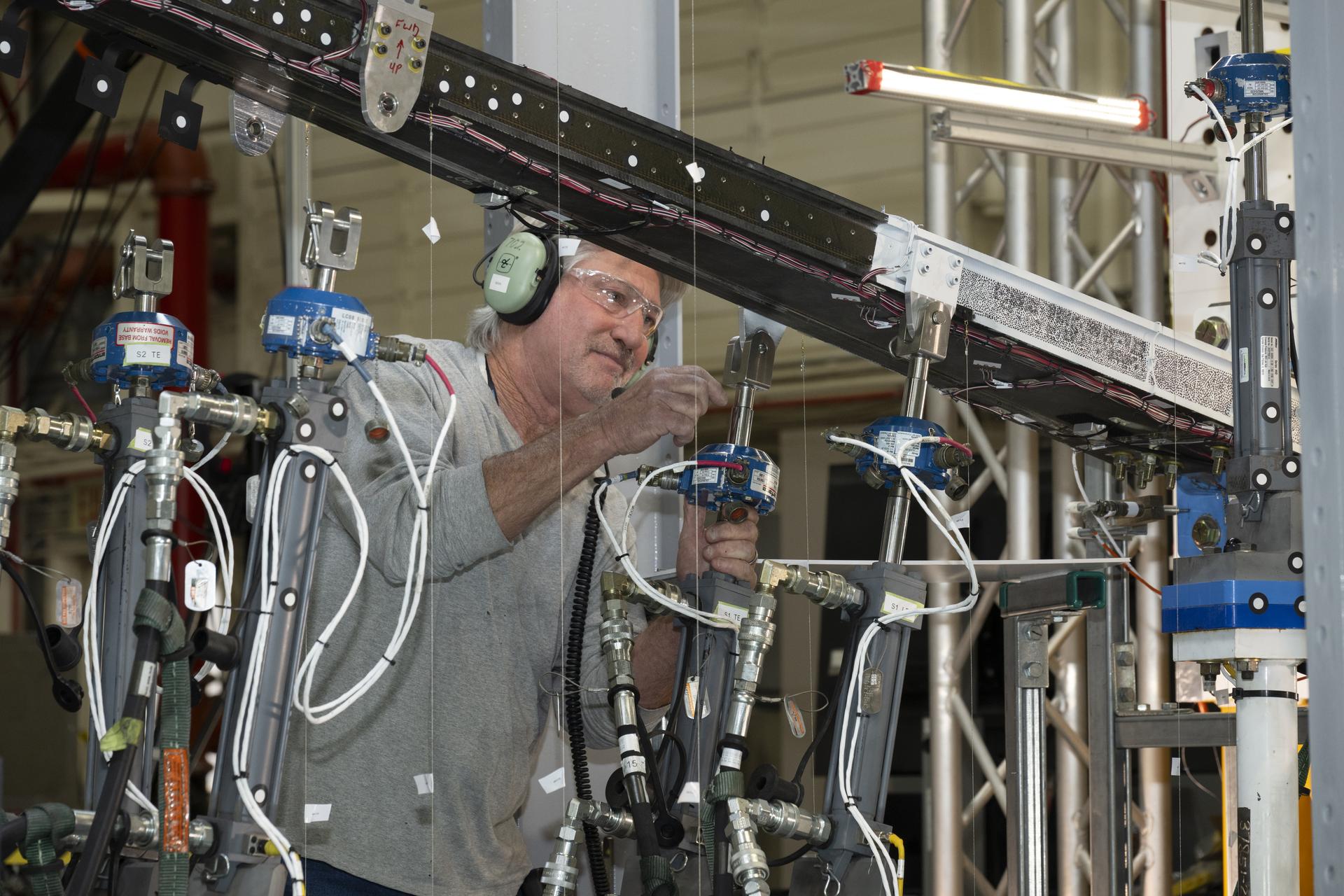
NASA research engineer Walter Hargis regulates the 15-foot Structural Wing Experiment Evaluating Truss-bracing model in the Flight Loads Laboratory at NASA’s Armstrong Flight Research Center in Edwards, California, on Tuesday, March 31, 2026. The model is part of NASA’s research to develop technologies for future ultra-efficient aircraft.

NASA Astronaut Frank Rubio trains for his upcoming International Space Station mission in a T-38 jet at Ellington Field in Houston, Texas.
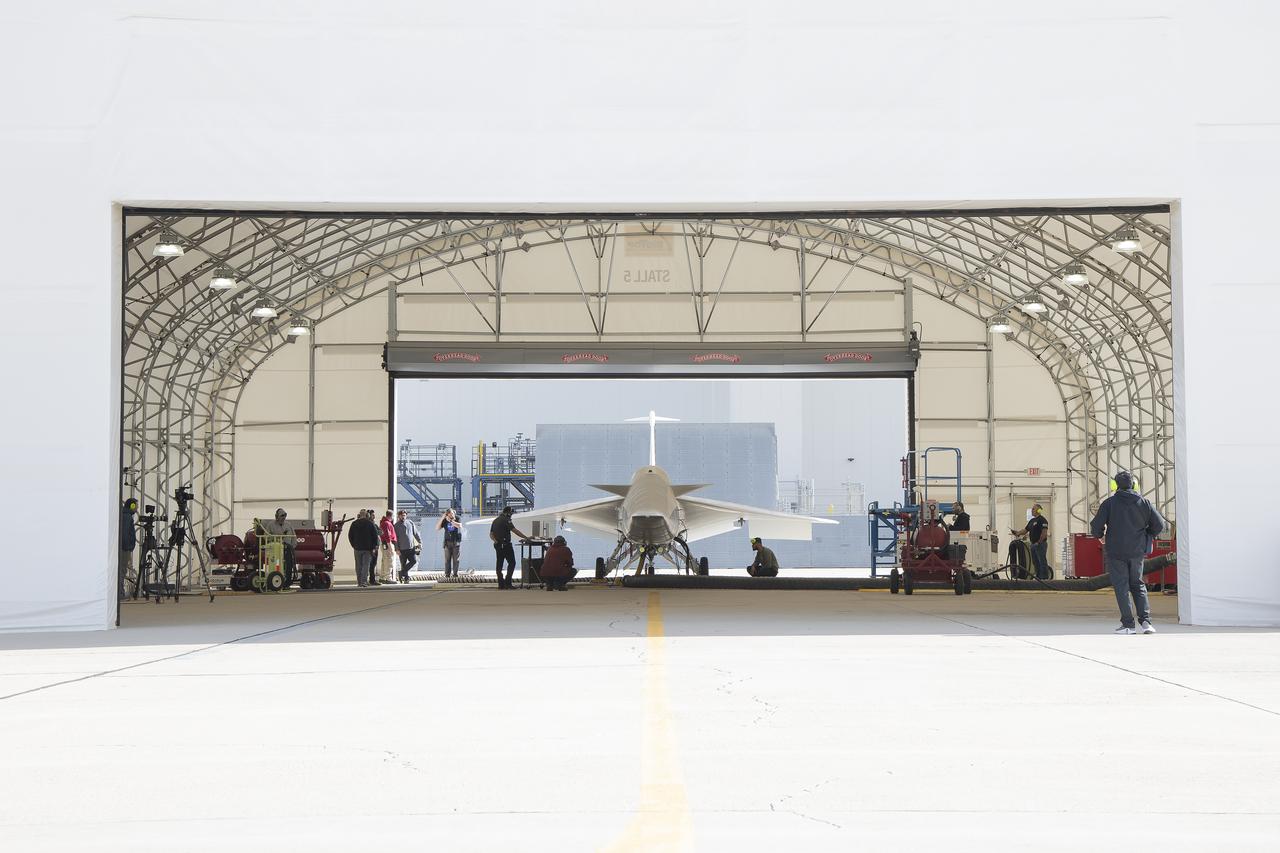
NASA’s X-59 quiet supersonic research aircraft sits in its run stall at Lockheed Martin’s Skunk Works facility in Palmdale, California, prior to its first engine run. Engine runs are part of a series of integrated ground tests needed to ensure safe flight and successful achievement of mission goals. The X-59 is the centerpiece of NASA’s Quesst mission, which seeks to solve one of the major barriers to supersonic flight over land by making sonic booms quieter.
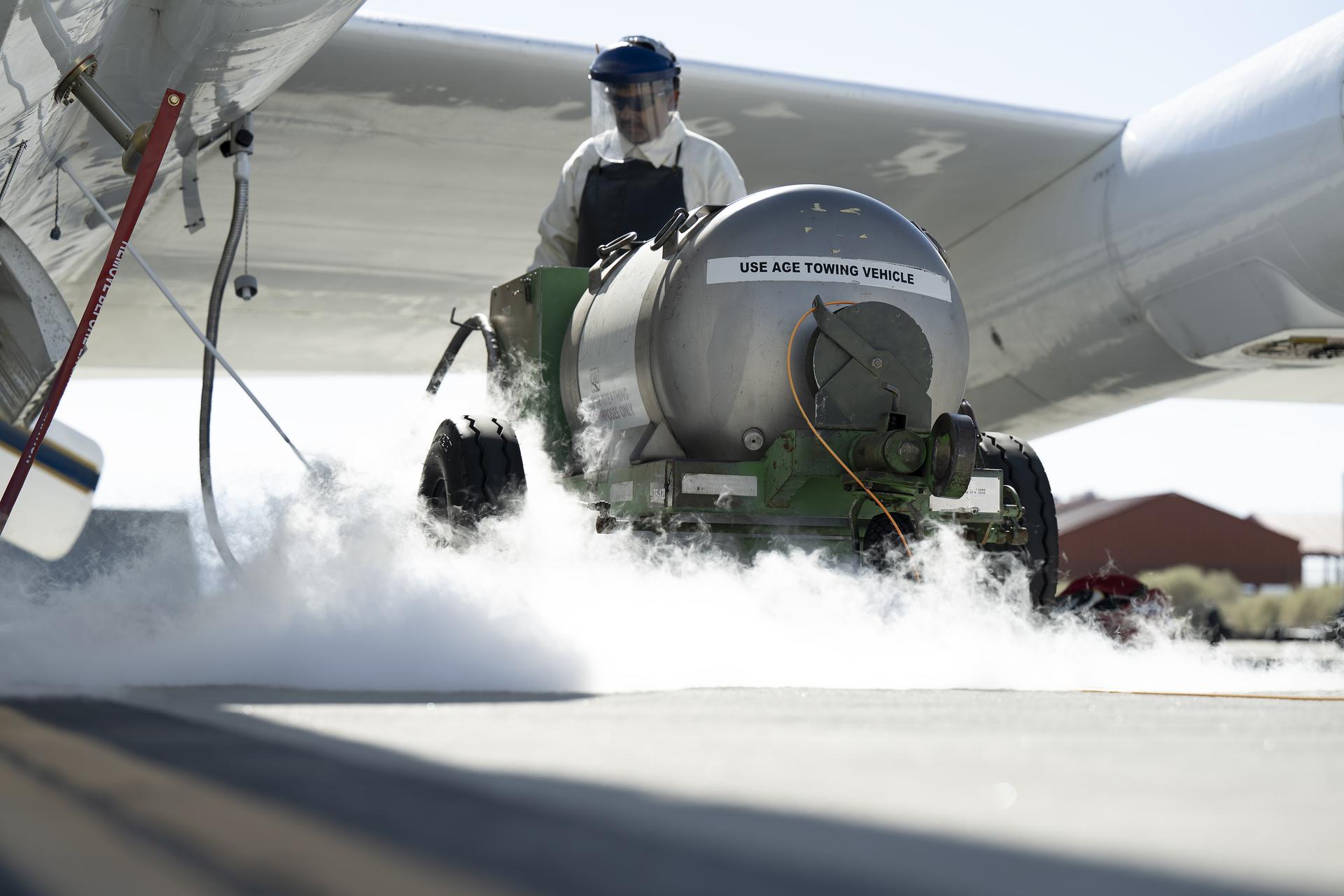
NASA engineer technician Francisco Rodriguez gives a NASA ER-2 aircraft a liquid oxygen refill (LOX) in preparation for the INjected Smoke and PYRocumulonimbus Experiment (INSPYRE) at NASA’s Armstrong Flight Research Center in Edwards, California, on Wednesday, July 15, 2026. This Earth science campaign studies wildfire‑generated thunderstorms, and researchers are seeking to better understand how these storms form, how high the storms send smoke, where this smoke travels, and the effects after the smoke reaches upper layers of the atmosphere.
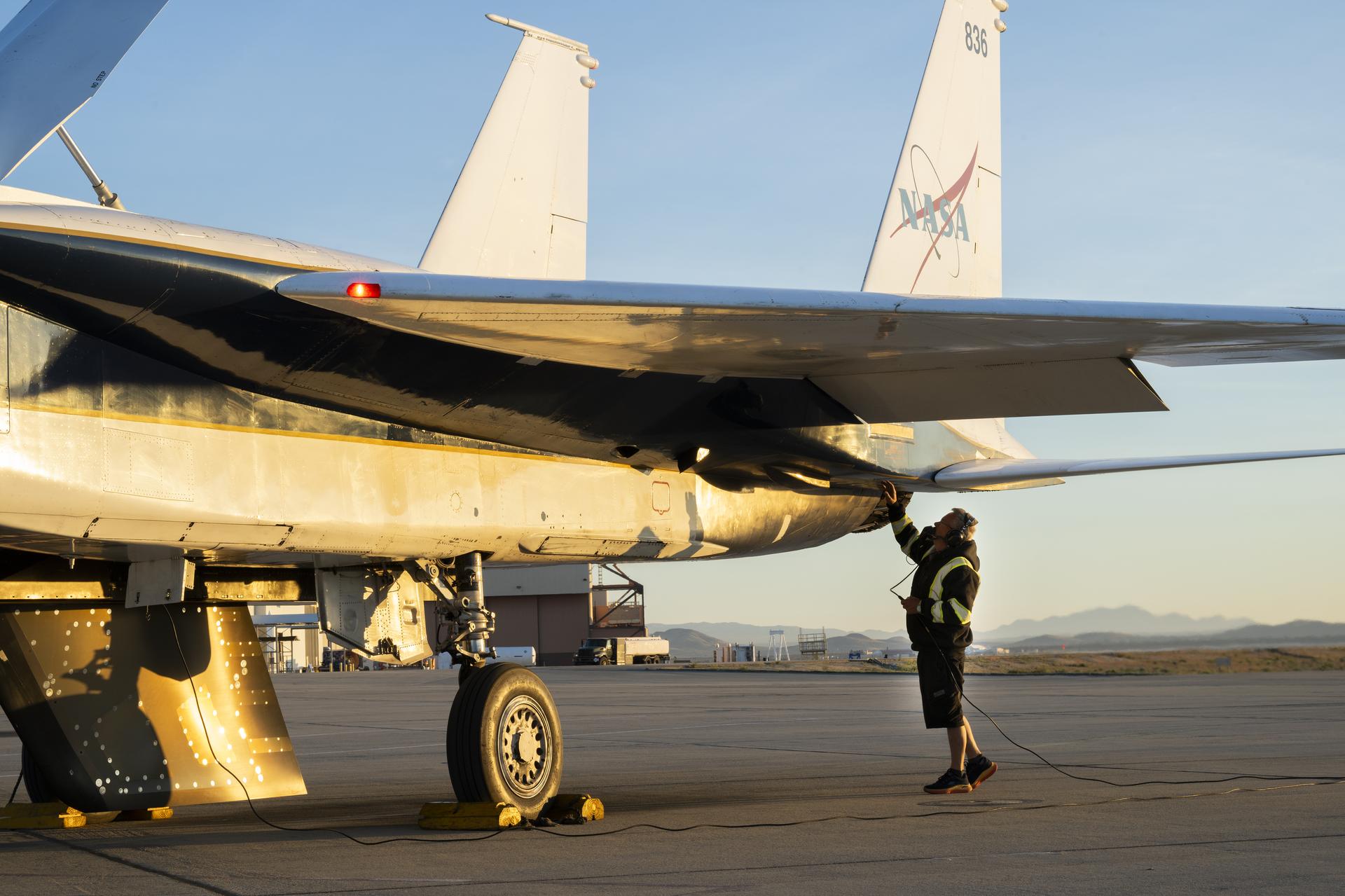
NASA crew chief Walt Kondracki checks an F-15 aircraft Tuesday, March 17, 2026, at NASA’s Armstrong Flight Research Center in Edwards, California. Ground crews, made of various roles, maintain the aircraft to be ready for each mission.