
NASA Earth Day 2019 Poster - Web

NASA Earth Day 2019 Poster - Print
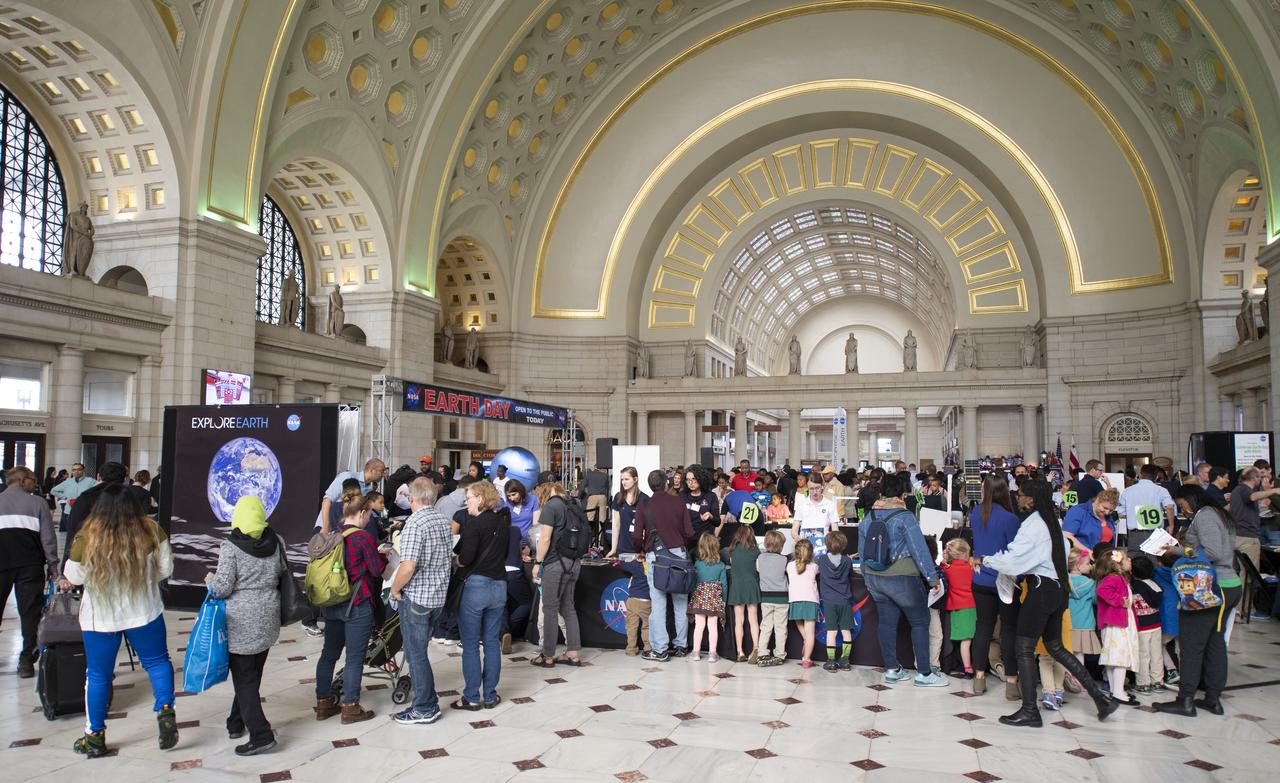
Visitors explore NASA's exhibits at the Earth Day event on Monday, April 22, 2019, at Union Station in Washington, D.C. Photo Credit: (NASA/Joel Kowsky)
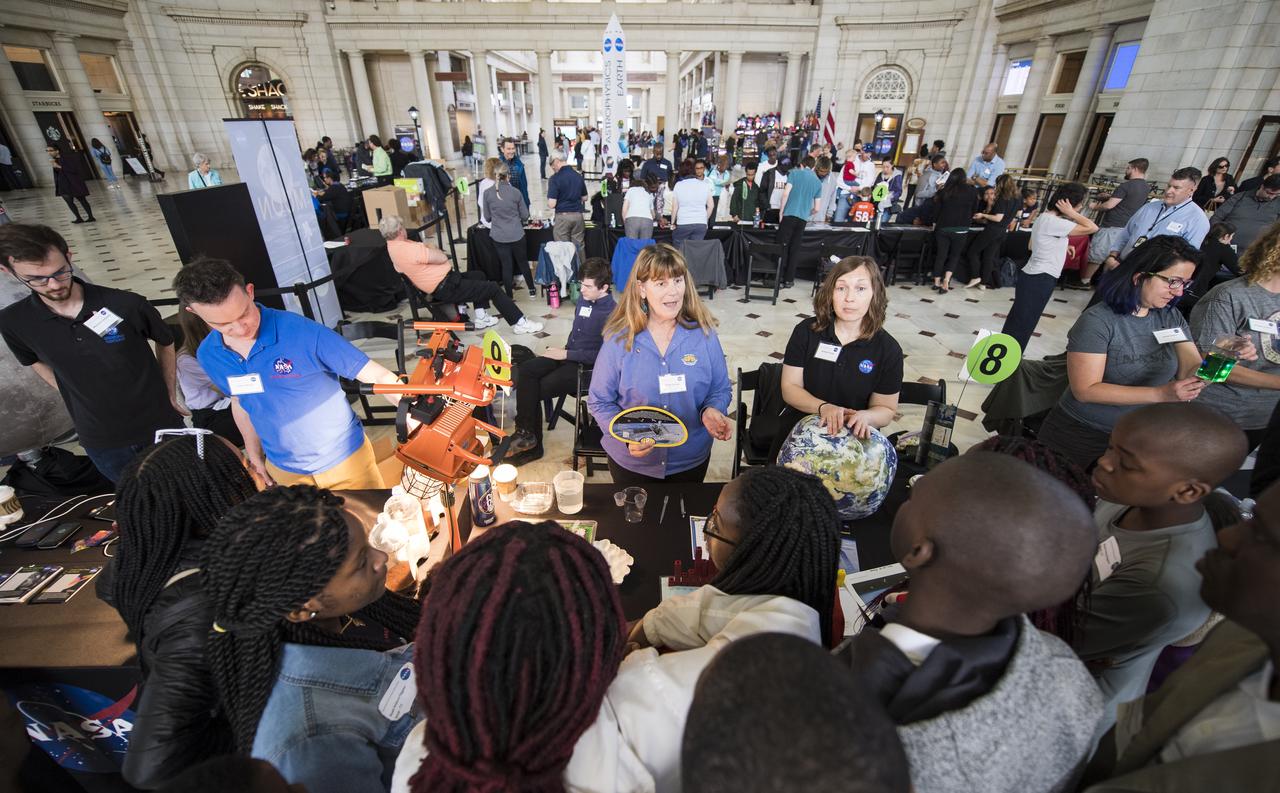
Visitors explore NASA's exhibits at the Earth Day event on Monday, April 22, 2019, at Union Station in Washington, D.C. Photo Credit: (NASA/Joel Kowsky)
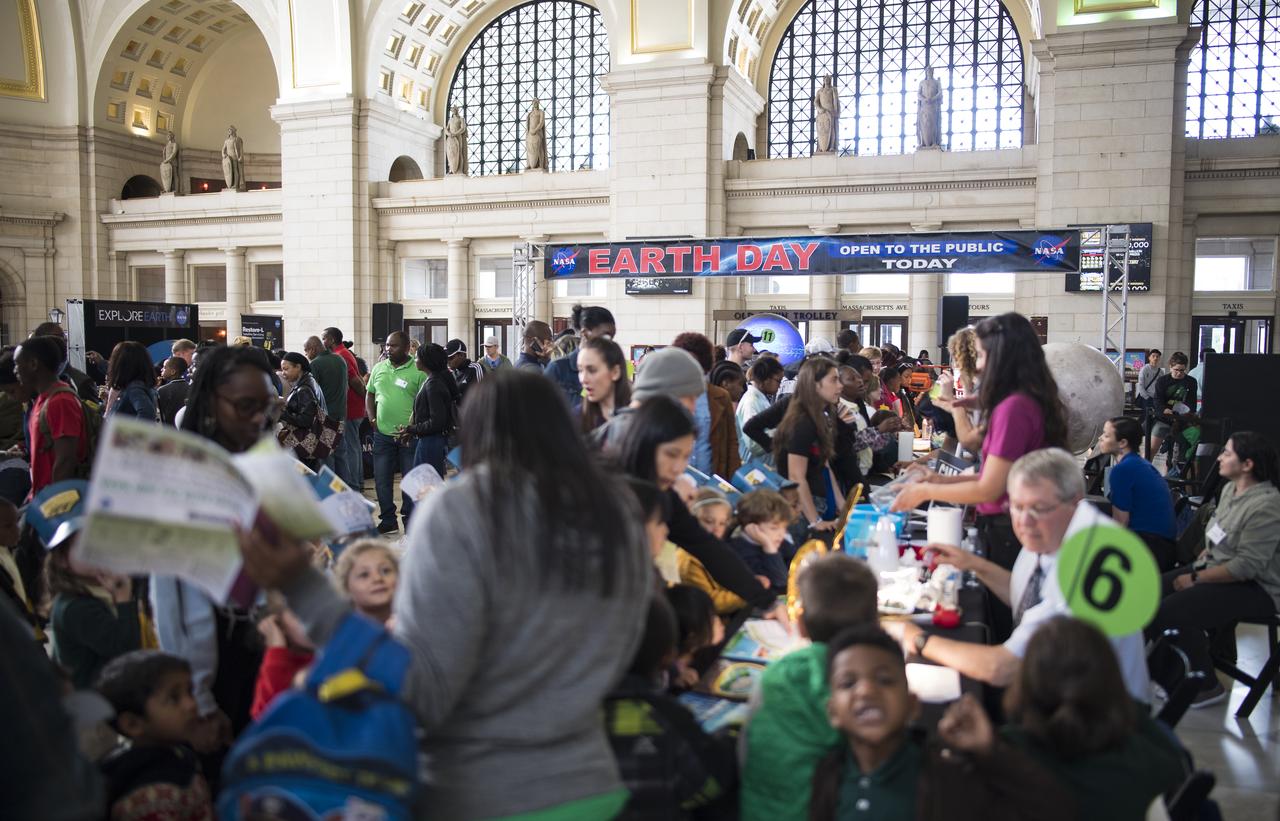
Visitors explore NASA's exhibits at the Earth Day event on Monday, April 22, 2019, at Union Station in Washington, D.C. Photo Credit: (NASA/Joel Kowsky)

Visitors view satellite images of Earth at one of NASA's exhibits at the Earth Day event on Monday, April 22, 2019, at Union Station in Washington, D.C. Photo Credit: (NASA/Joel Kowsky)
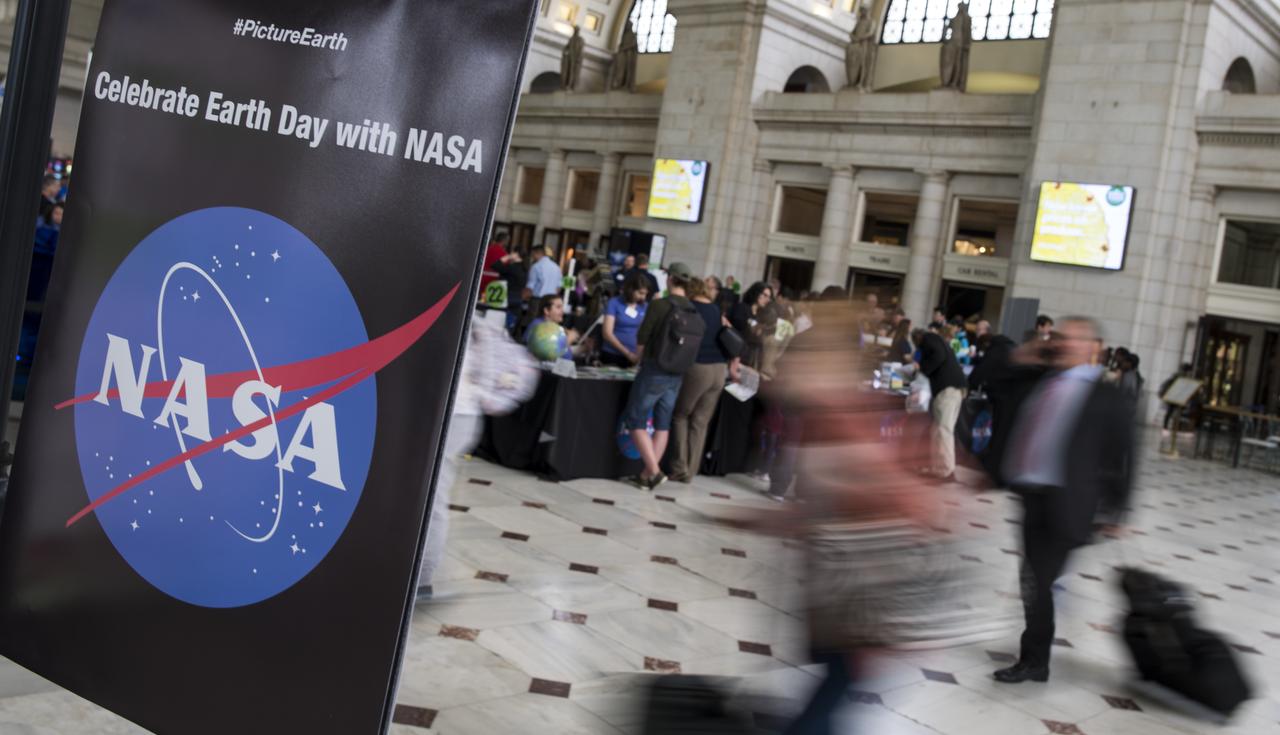
Travelers walk past NASA's exhibits at the Earth Day event held at Union Station on Monday, April 22, 2019, Washington, D.C. Photo Credit: (NASA/Joel Kowsky)
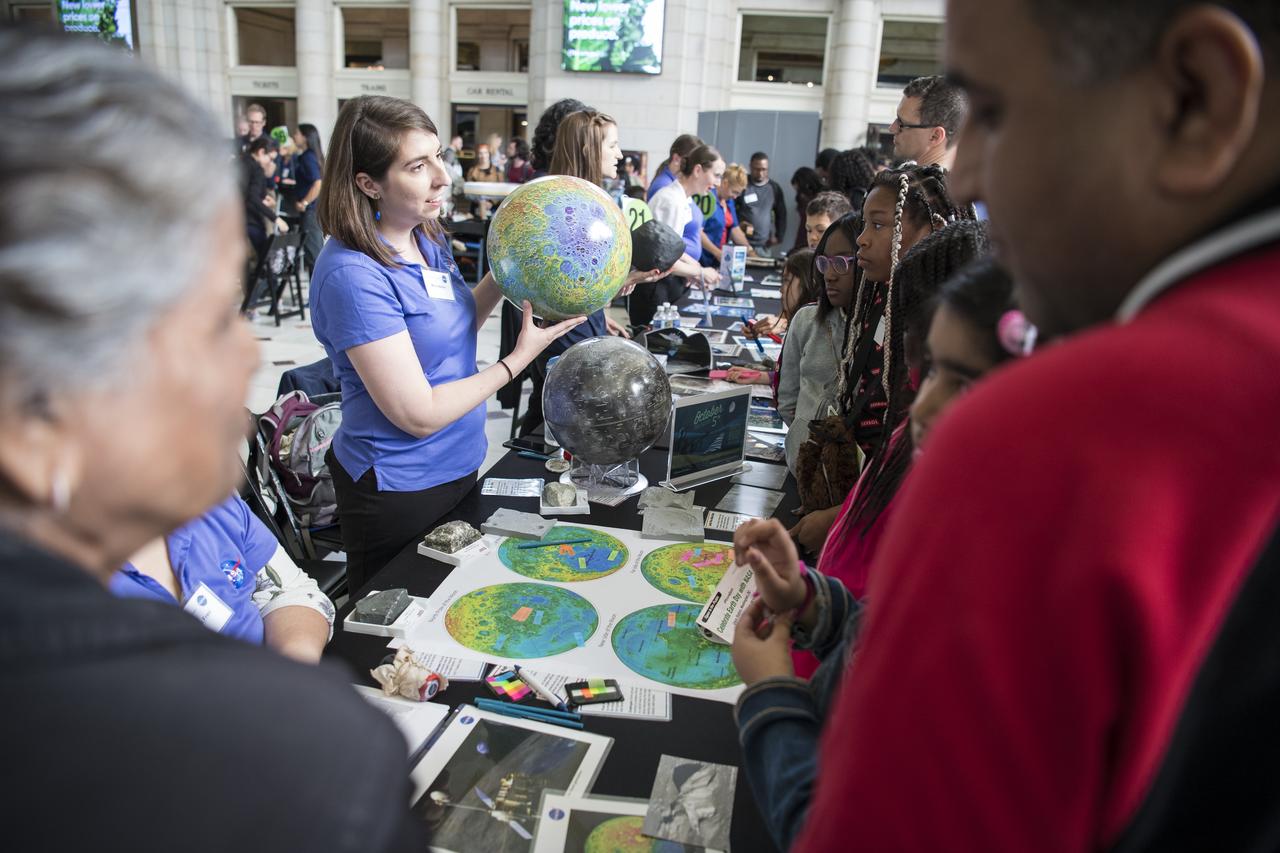
Students learn about the different regions of the Moon at one of NASA's exhibits at the Earth Day event on Monday, April 22, 2019, at Union Station in Washington, D.C. Photo Credit: (NASA/Joel Kowsky)

Students watch a short video on NASA's ICESat-2 at one of NASA's exhibits at the Earth Day event on Monday, April 22, 2019, at Union Station in Washington, D.C. Photo Credit: (NASA/Joel Kowsky)
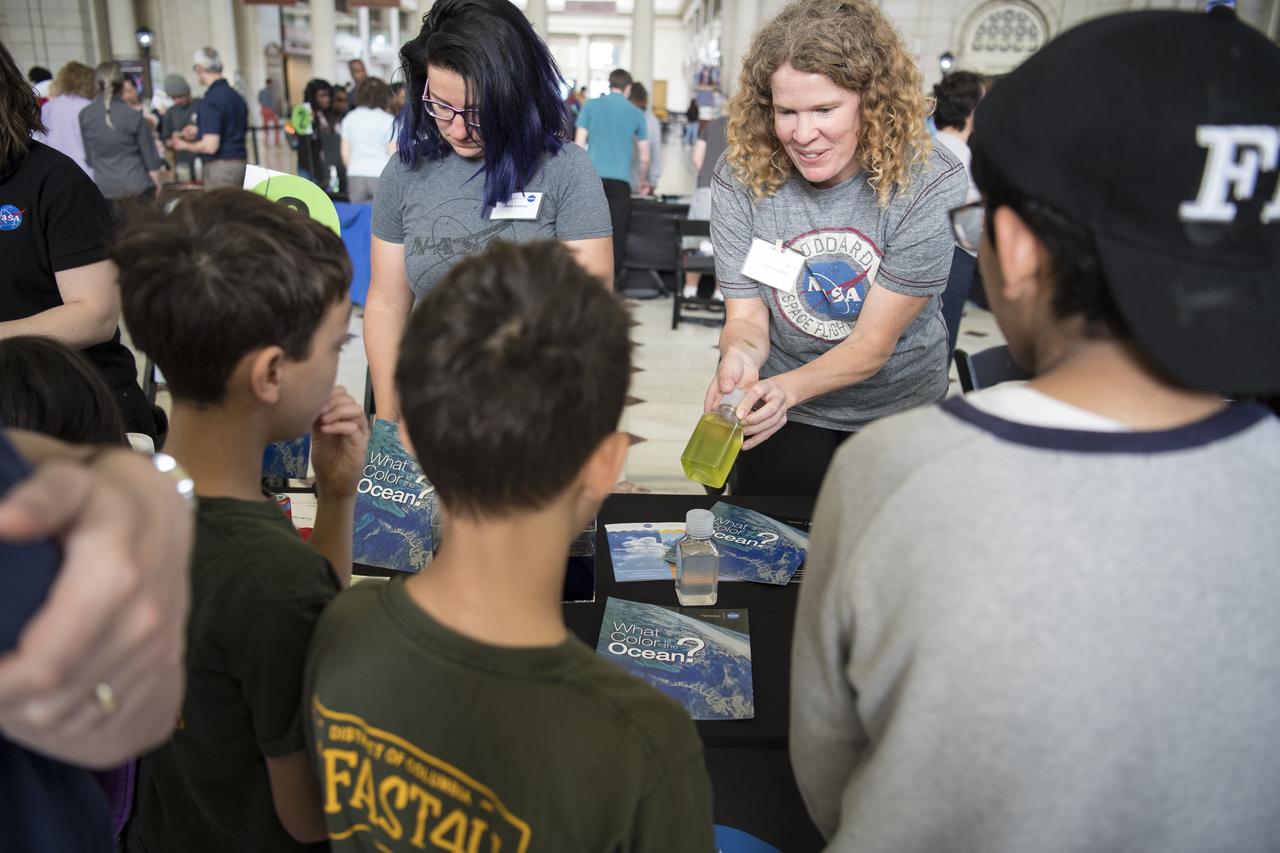
Visitors view samples of different types of algae at one of NASA's exhibits at the Earth Day event on Monday, April 22, 2019, at Union Station in Washington, D.C. Photo Credit: (NASA/Joel Kowsky)
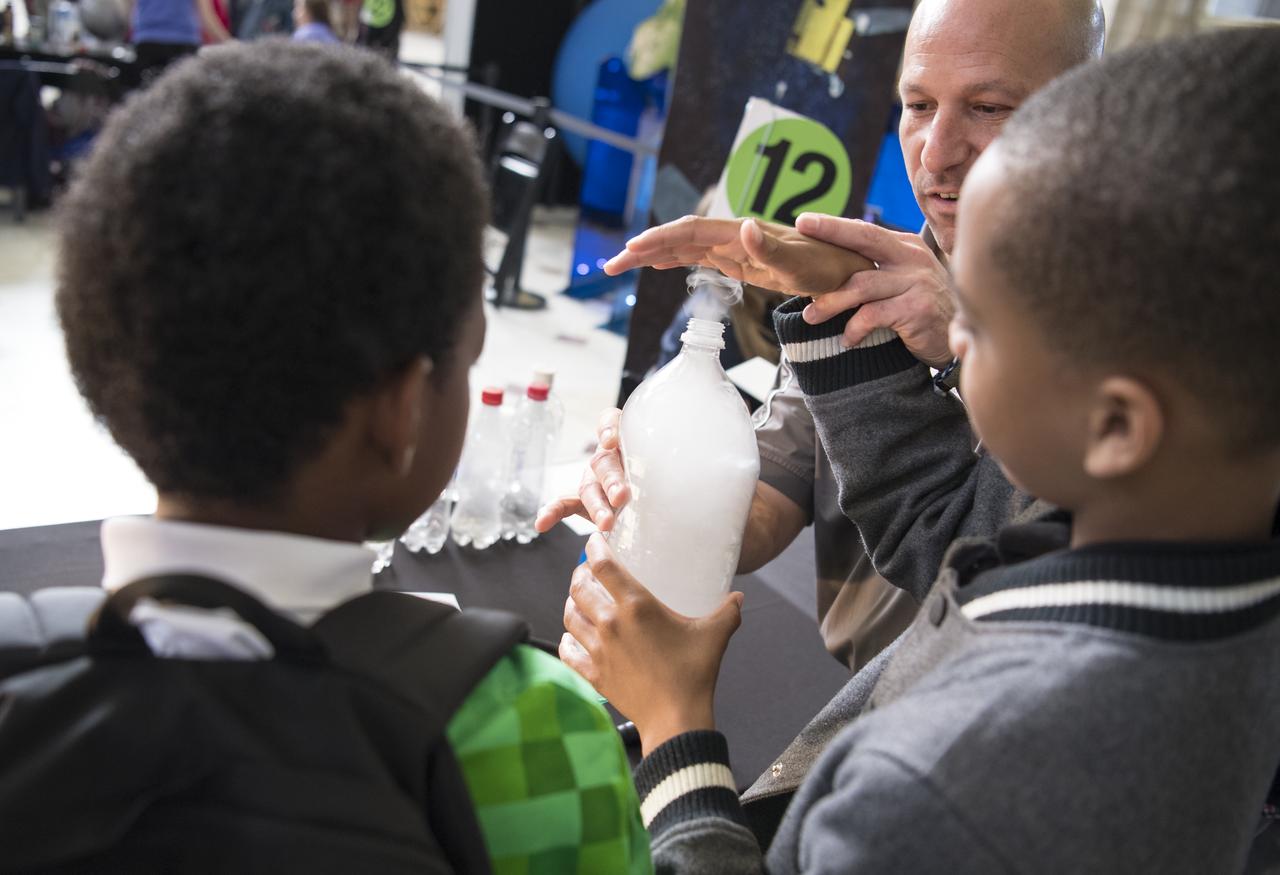
Students create a cloud in a bottle at one of NASA's exhibits at the Earth Day event on Monday, April 22, 2019, at Union Station in Washington, D.C. Photo Credit: (NASA/Joel Kowsky)
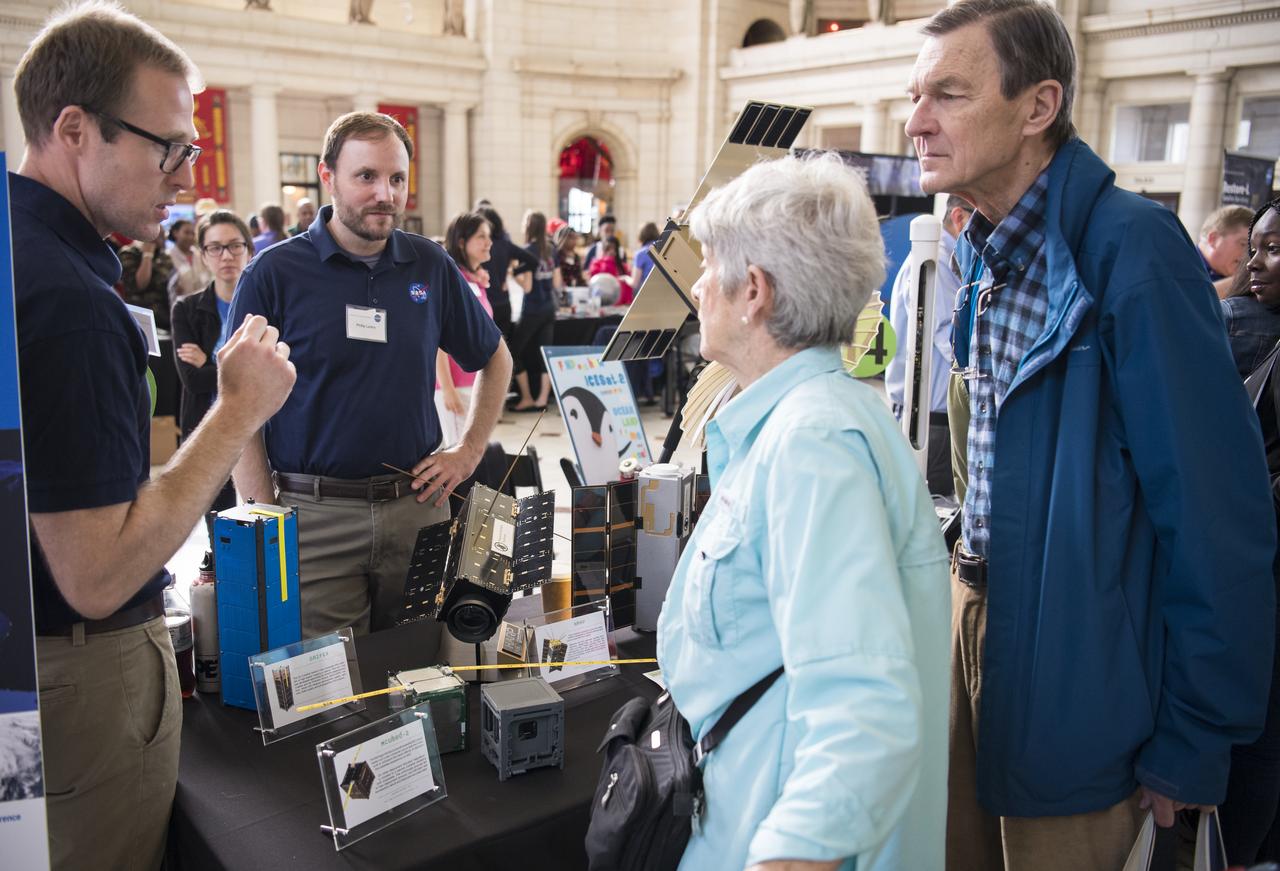
Visitors learn about CubeSats at of NASA's exhibits at the Earth Day event on Monday, April 22, 2019, at Union Station in Washington, D.C. Photo Credit: (NASA/Joel Kowsky)
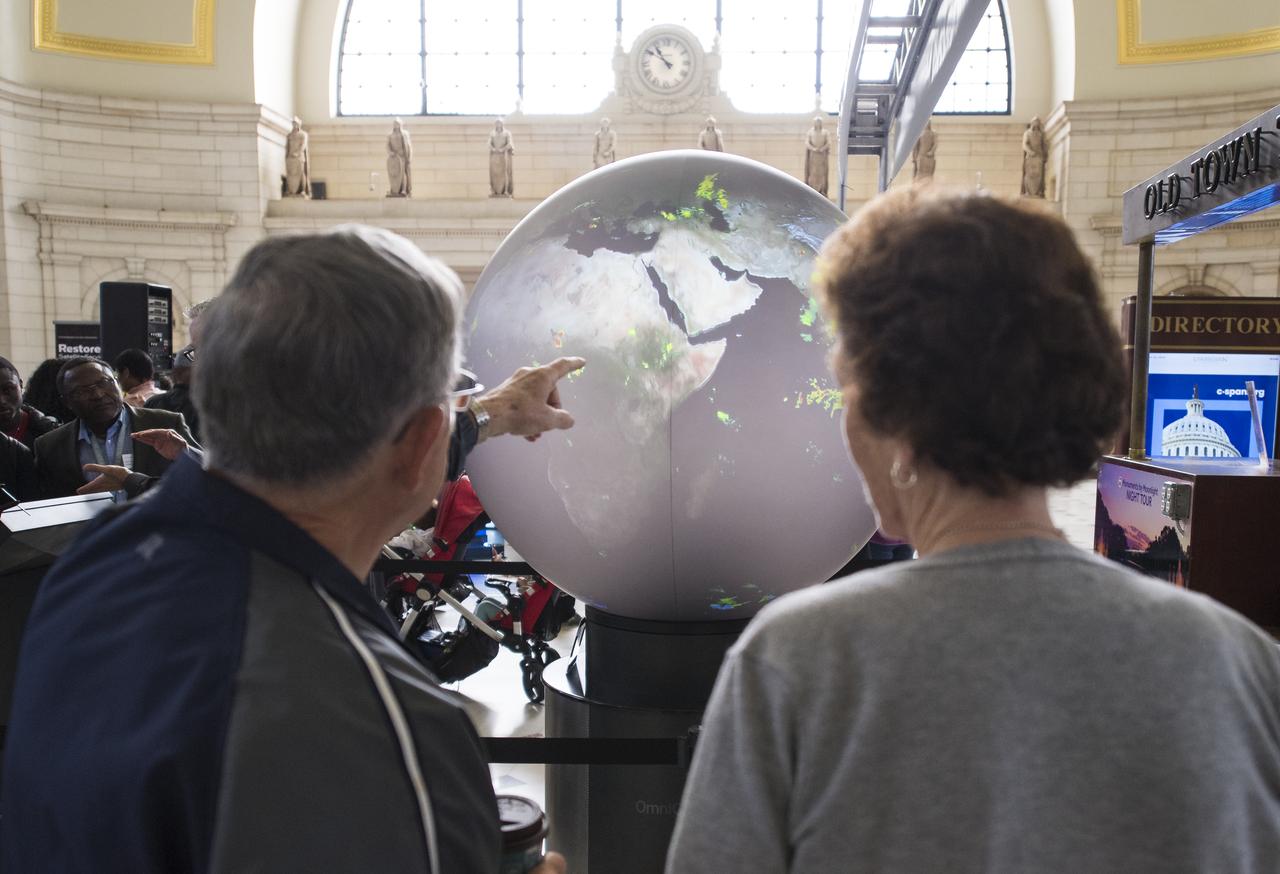
Visitors explore one of NASA's exhibits at the Earth Day event on Monday, April 22, 2019, at Union Station in Washington, D.C. Photo Credit: (NASA/Joel Kowsky)
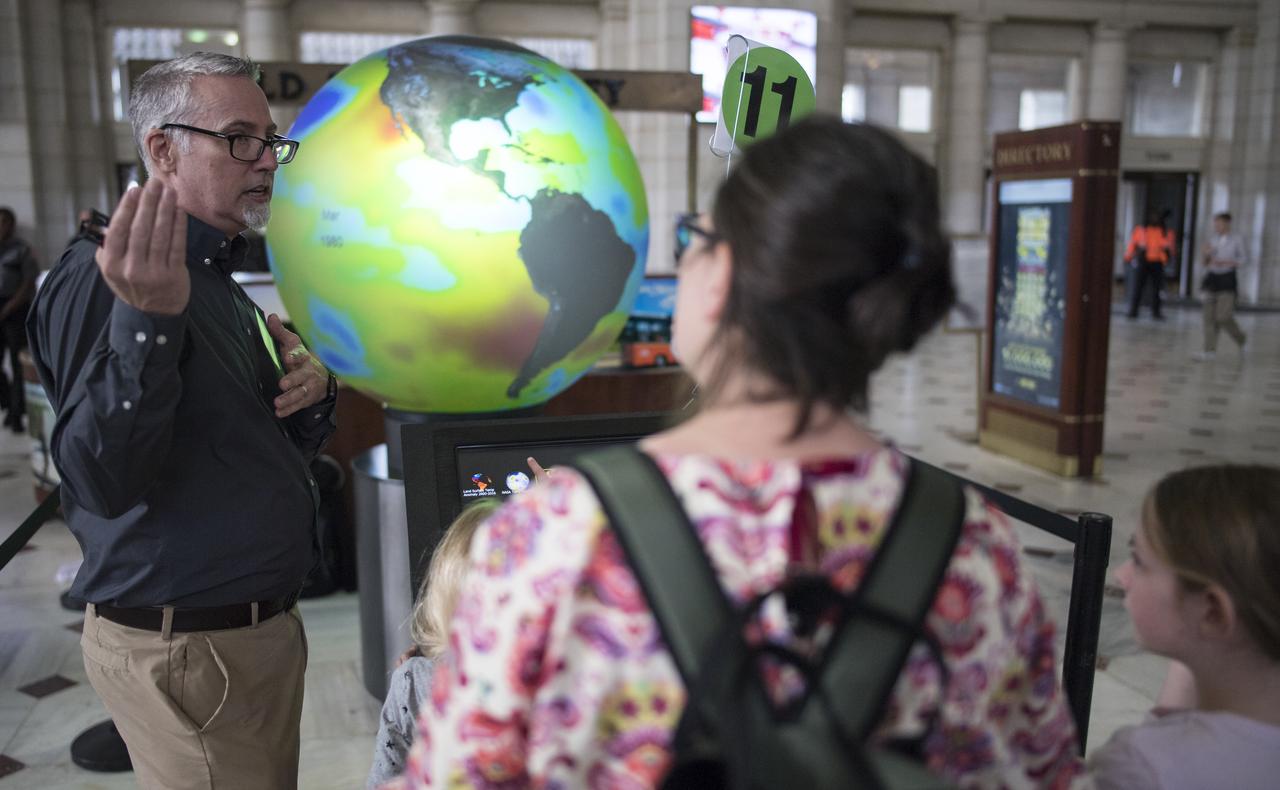
Visitors explore one of NASA's exhibits at the Earth Day event on Monday, April 22, 2019, at Union Station in Washington, D.C. Photo Credit: (NASA/Joel Kowsky)
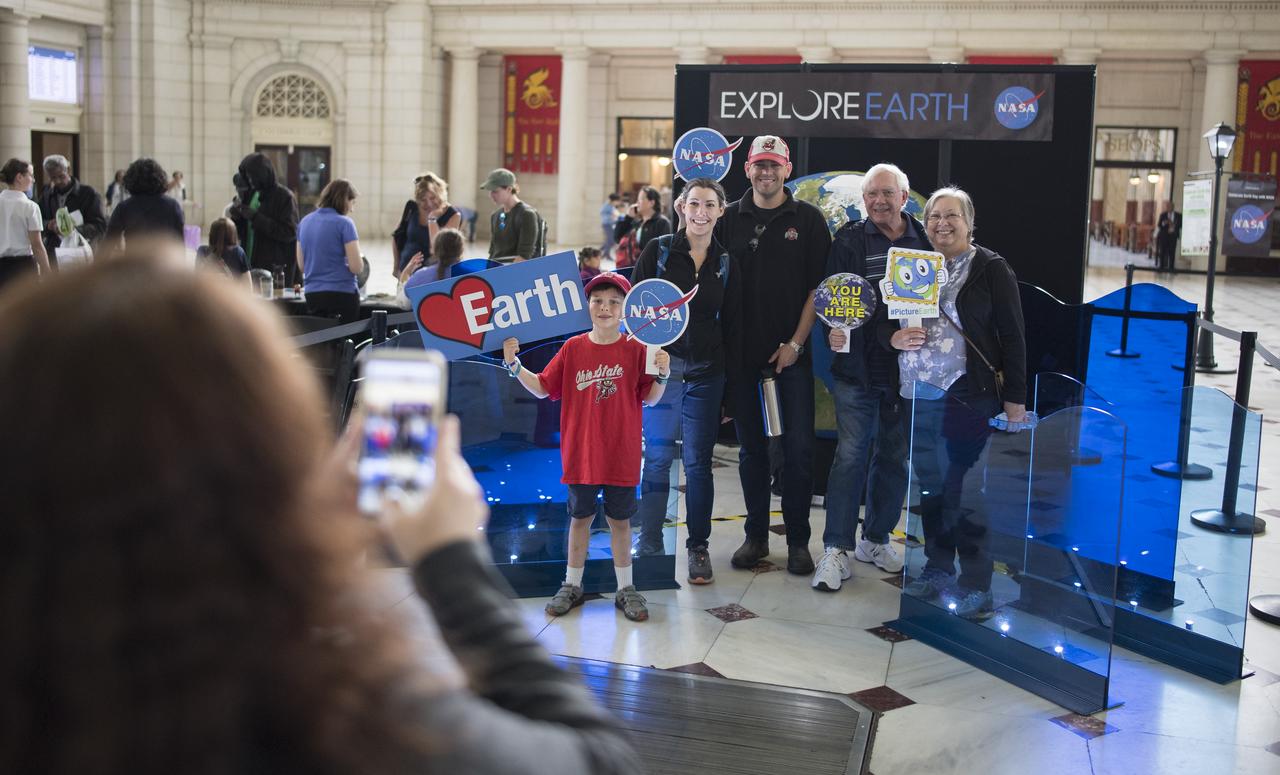
Visitors to NASA's exhibits at the Earth Day event take a picture with a globe, Monday, April 22, 2019, at Union Station in Washington, D.C. Photo Credit: (NASA/Joel Kowsky)
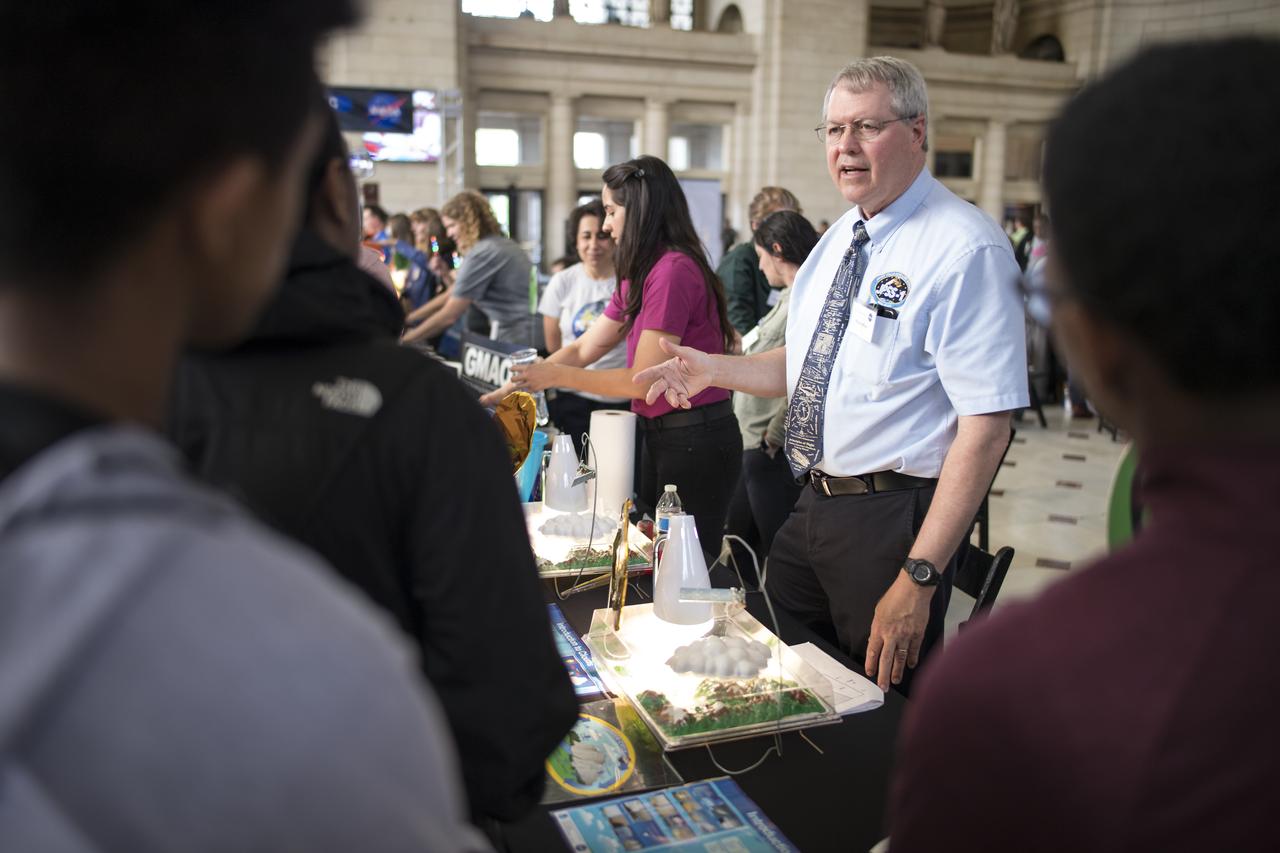
Visitors learn how satellites monitor the water cycle at one of NASA's exhibits at the Earth Day event on Monday, April 22, 2019, at Union Station in Washington, D.C. Photo Credit: (NASA/Joel Kowsky)
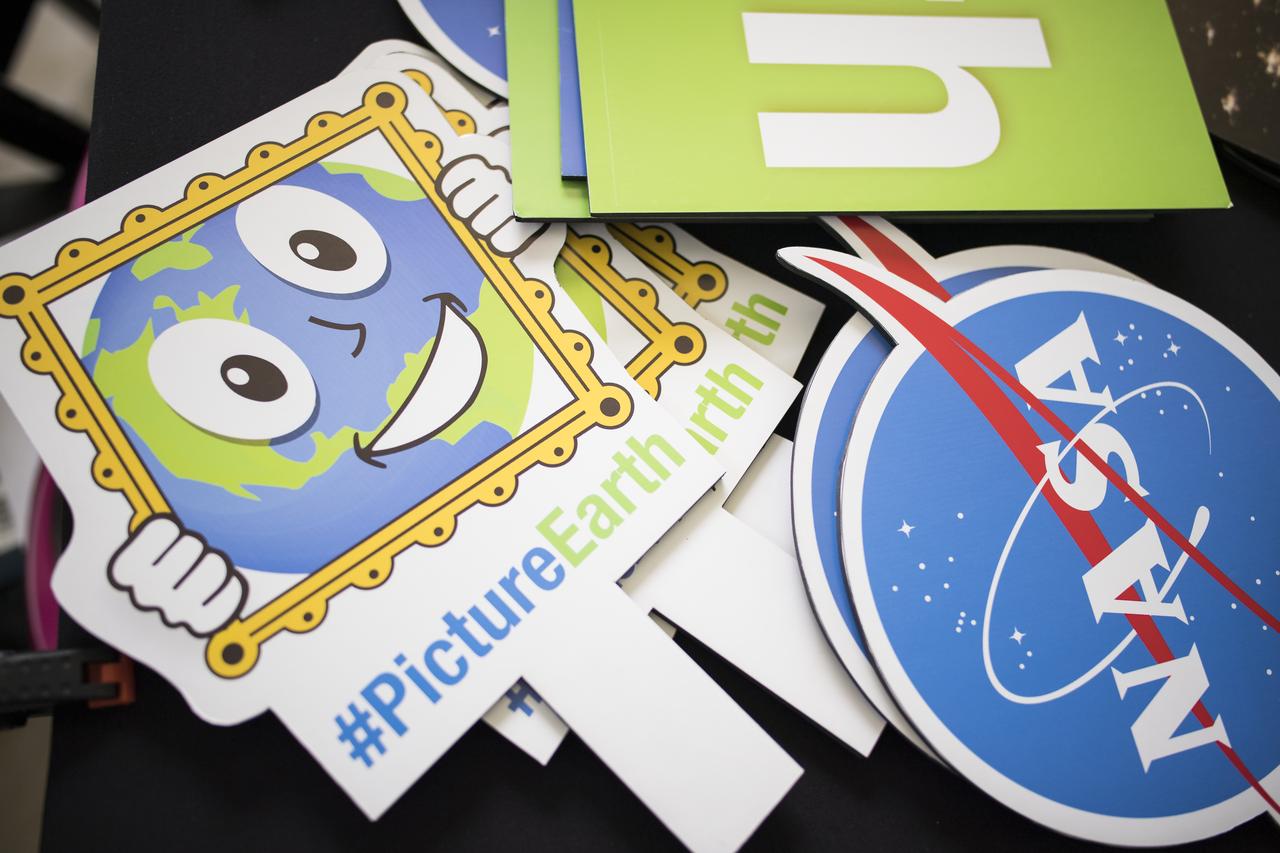
Signs that can be held up in a picture with a large globe are seen on a table at NASA's Earth Day event on Monday, April 22, 2019, at Union Station in Washington, D.C. Photo Credit: (NASA/Joel Kowsky)
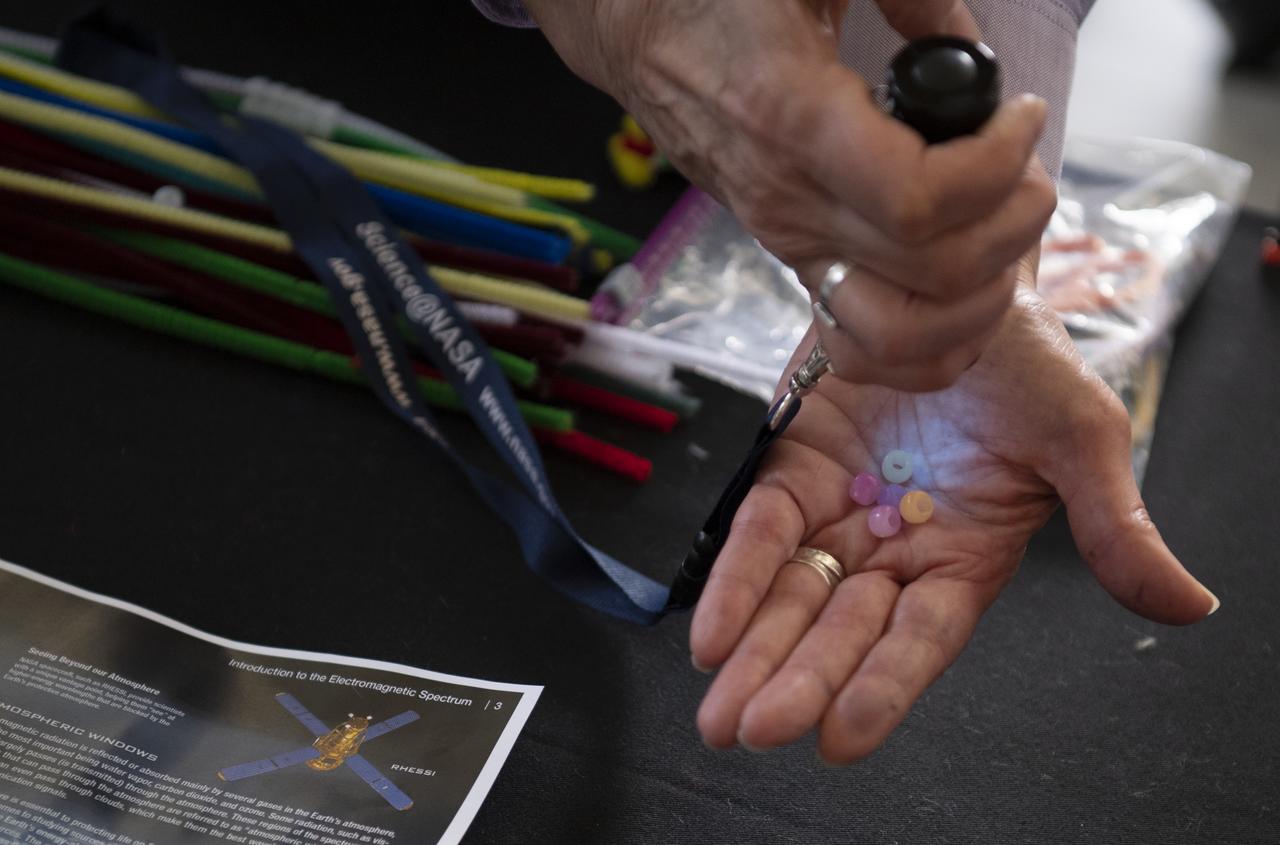
Beads treated to react to ultraviolet light are used to show how the Sun's invisible rays can effect us at one of NASA's exhibits at the Earth Day event on Monday, April 22, 2019, at Union Station in Washington, D.C. Photo Credit: (NASA/Joel Kowsky)
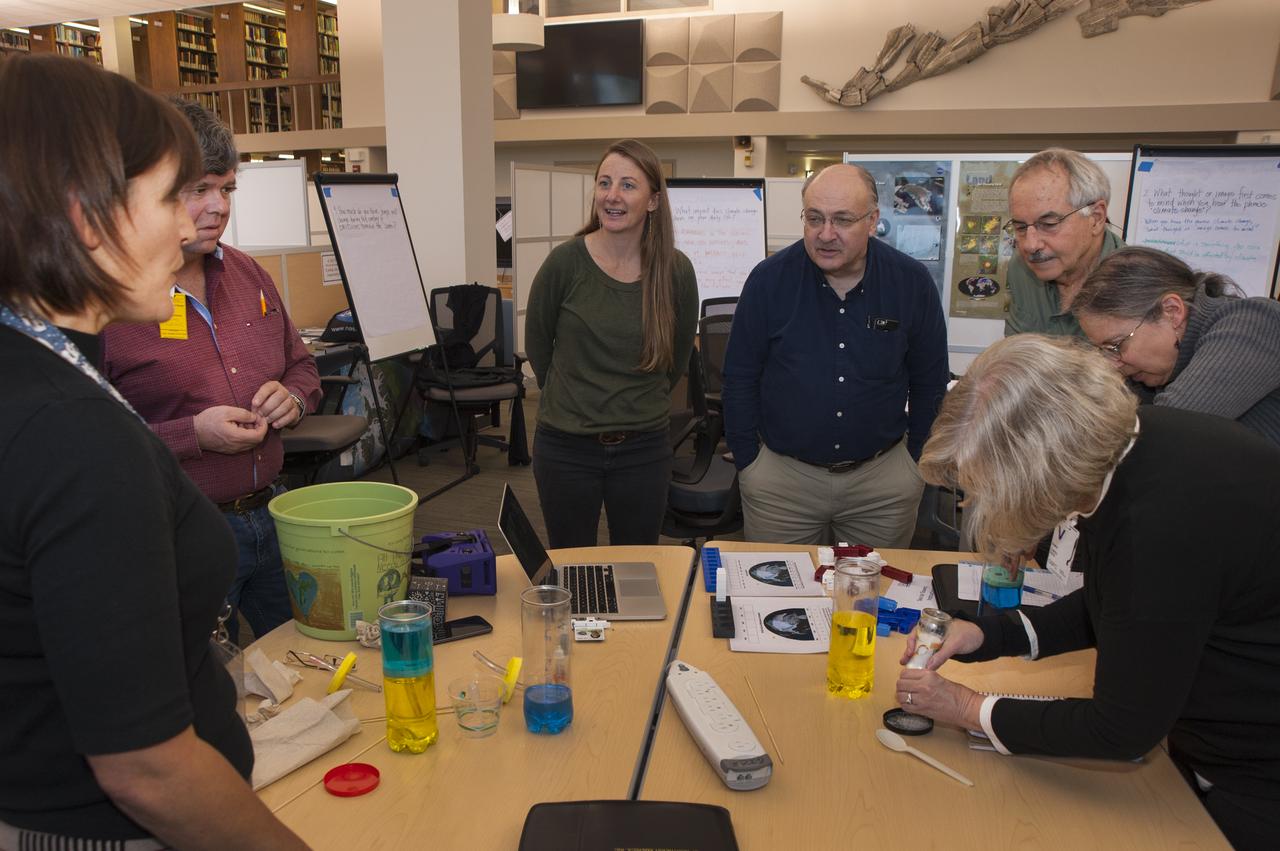
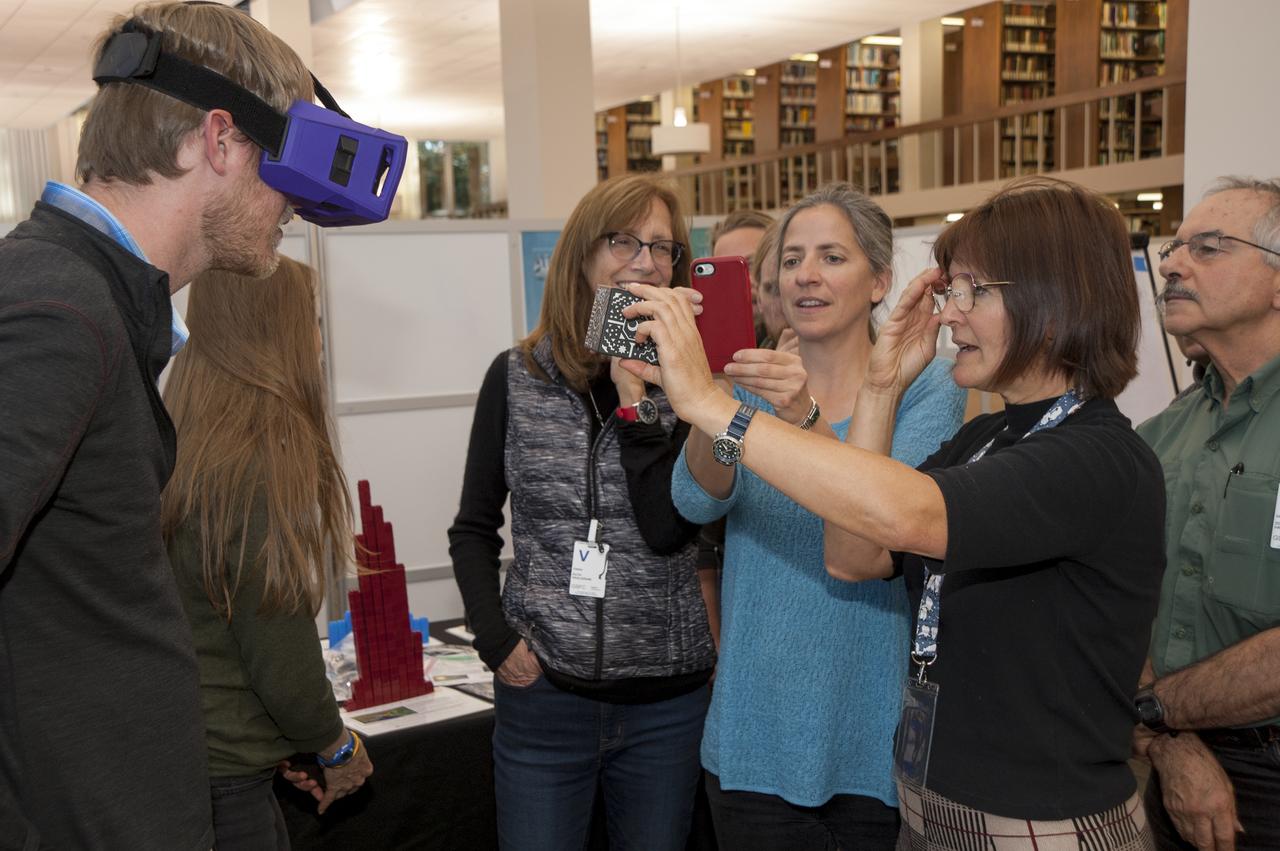
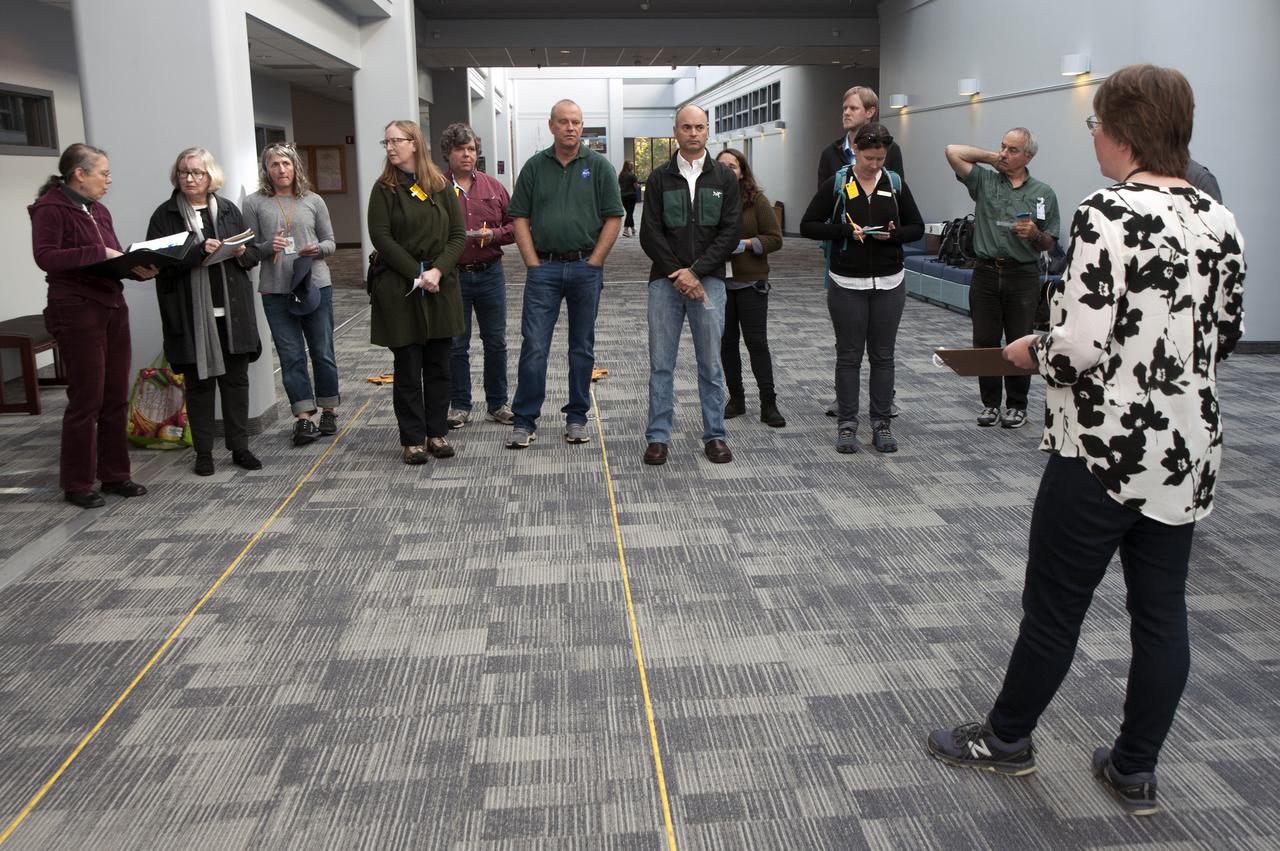
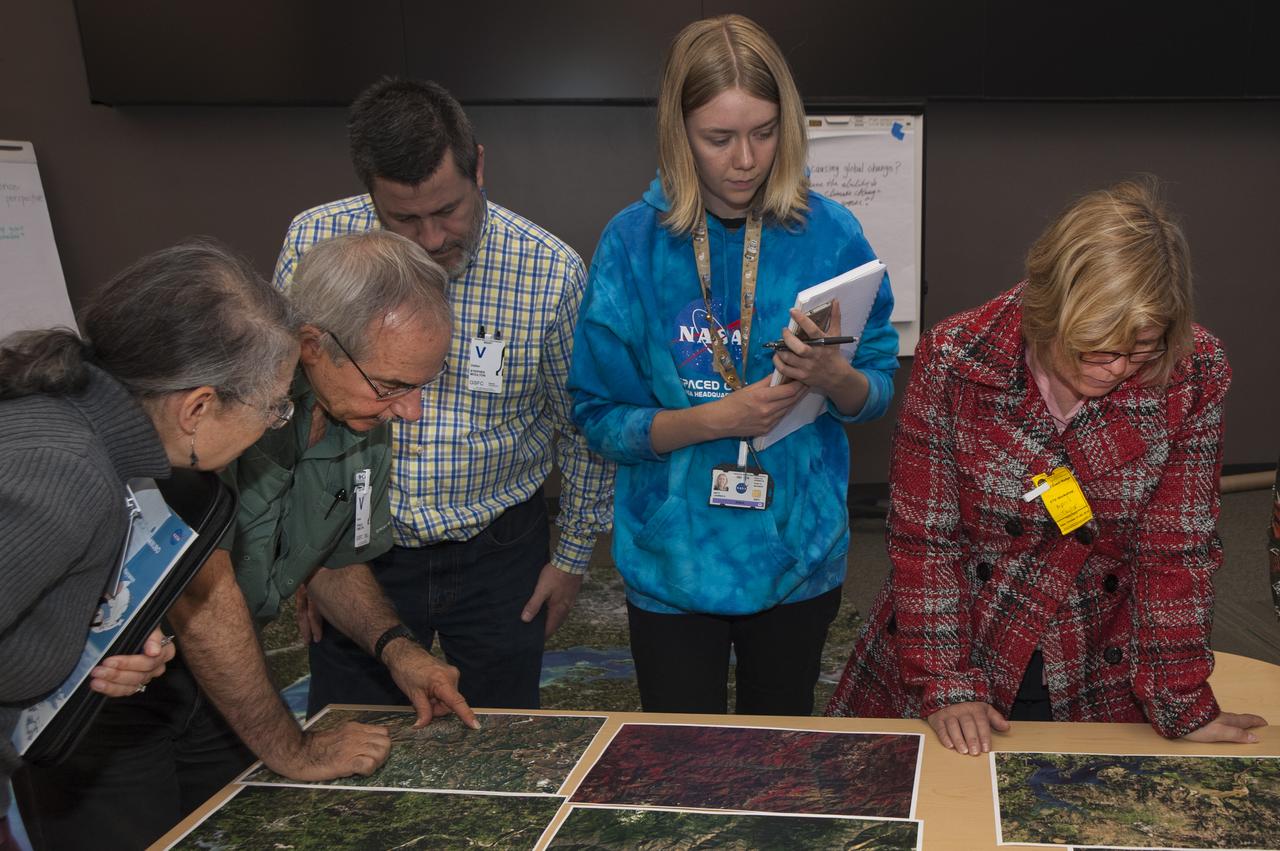
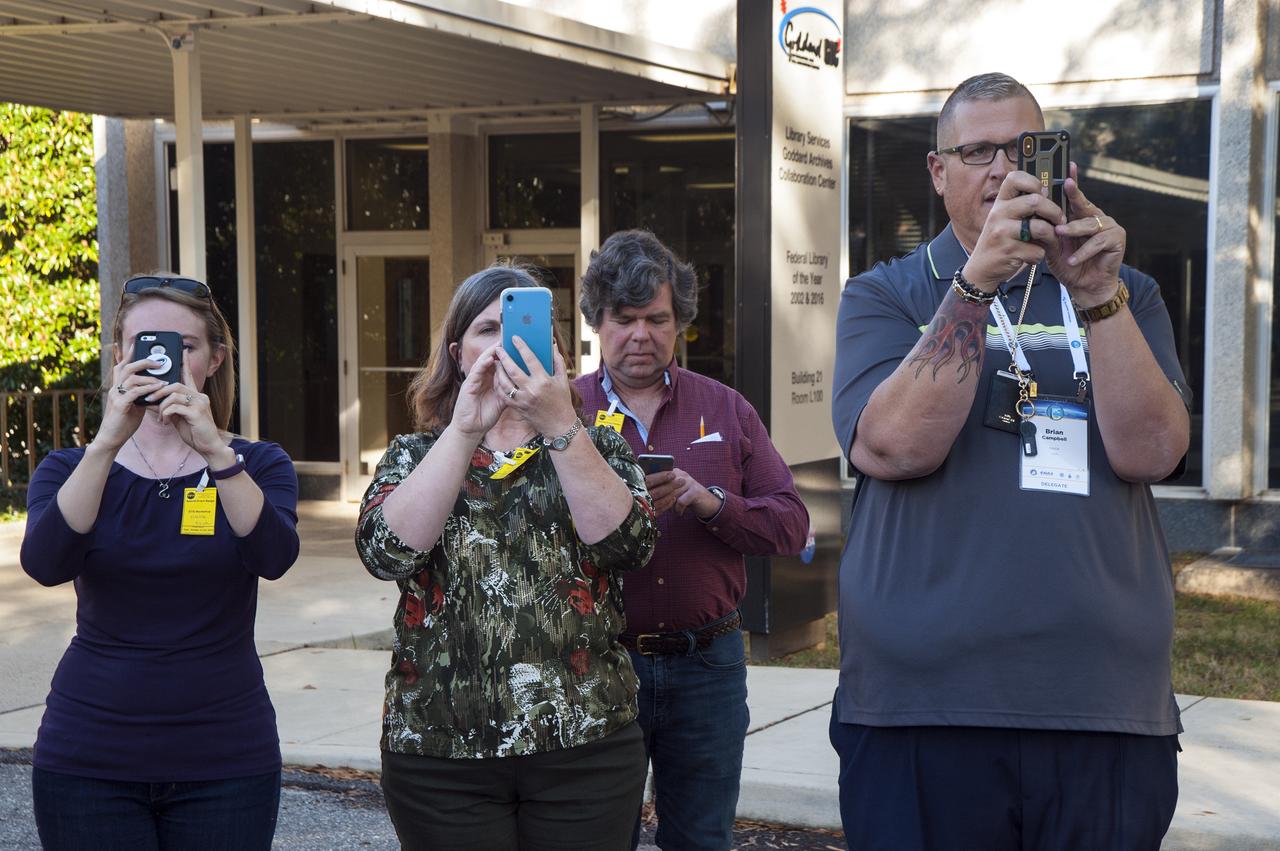
Earth to Sky Academy October 23, 2019 Locations: Building 28 Dr. Piers J. Sellers Data Visualization Theater, first floor atrium and east lawn, Building 21 GIC2 (Library) MOSI Request # 2020-896-0 10/23/2019 is the field trip day of our five-day workshop for the Earth to Sky Academy. Images will be used to show what the experience is like for reporting and marketing purposes. Earth to Sky Academy NASA Goddard Space Flight Center – Greenbelt, MD October 21–25, 2019 A tuition-free course for interpreters, informal educators, and science communicators interested in creating and nurturing regional communities of practice focused on improving climate science communication. About the Earth to Sky Academy Since 2004, the Earth to Sky interagency partnership (ETS) has been sharing NASA science with informal educators through a variety of professional development events, including a series of regional courses in climate science and communication. A hallmark of the ETS training model is purposeful, ongoing engagement with participants to encourage sharing and collaborative learning. In an effort to strengthen and grow the ETS community of practice, ETS leadership is developing a network of ETS regional communities, each led by small teams of trained ETS regional leaders. The Earth to Sky Academy (ETSA) five-day course marks the launch of this long-term effort.
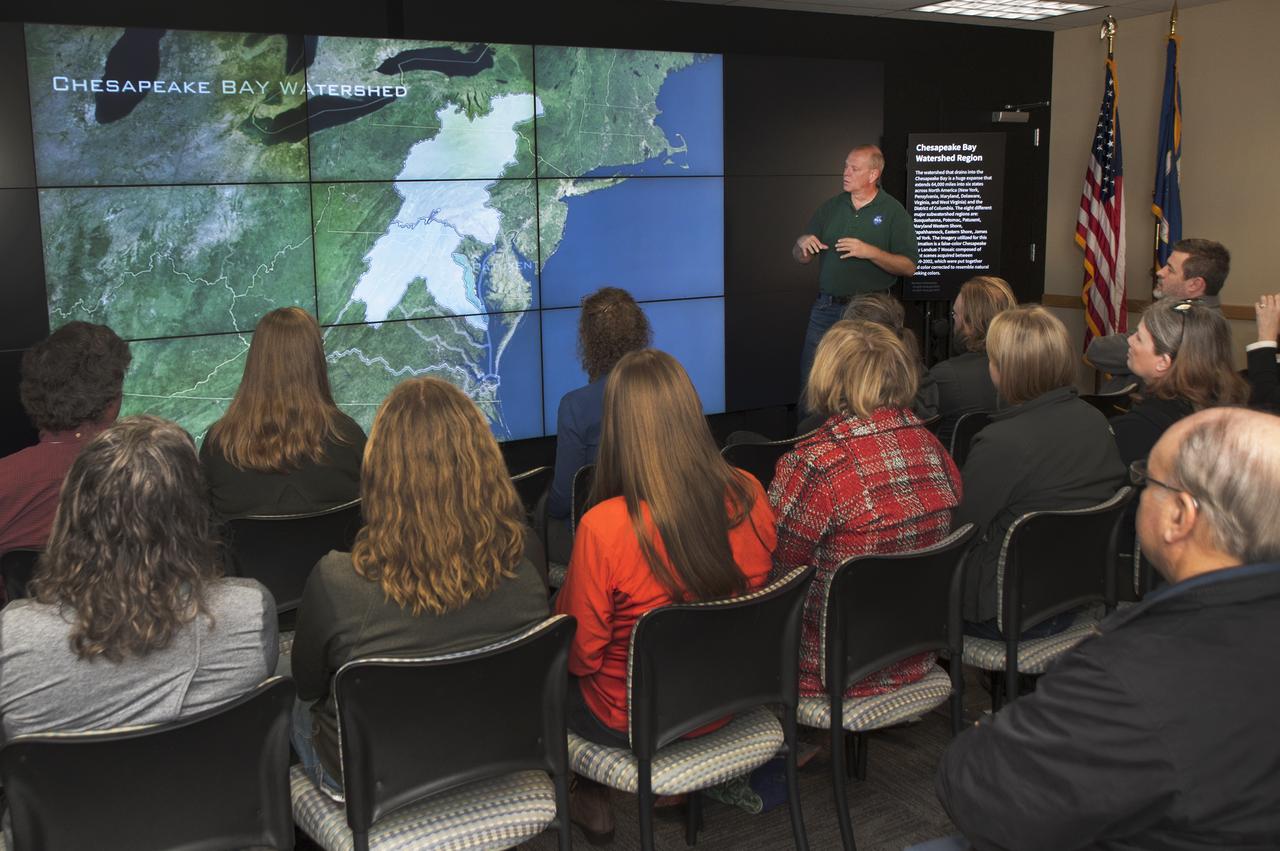
Earth to Sky Academy October 23, 2019 Locations: Building 28 Dr. Piers J. Sellers Data Visualization Theater, first floor atrium and east lawn, Building 21 GIC2 (Library) MOSI Request # 2020-896-0 10/23/2019 is the field trip day of our five-day workshop for the Earth to Sky Academy. Images will be used to show what the experience is like for reporting and marketing purposes. Earth to Sky Academy NASA Goddard Space Flight Center – Greenbelt, MD October 21–25, 2019 A tuition-free course for interpreters, informal educators, and science communicators interested in creating and nurturing regional communities of practice focused on improving climate science communication. About the Earth to Sky Academy Since 2004, the Earth to Sky interagency partnership (ETS) has been sharing NASA science with informal educators through a variety of professional development events, including a series of regional courses in climate science and communication. A hallmark of the ETS training model is purposeful, ongoing engagement with participants to encourage sharing and collaborative learning. In an effort to strengthen and grow the ETS community of practice, ETS leadership is developing a network of ETS regional communities, each led by small teams of trained ETS regional leaders. The Earth to Sky Academy (ETSA) five-day course marks the launch of this long-term effort.
Earth to Sky Academy October 23, 2019 Locations: Building 28 Dr. Piers J. Sellers Data Visualization Theater, first floor atrium and east lawn, Building 21 GIC2 (Library) MOSI Request # 2020-896-0 10/23/2019 is the field trip day of our five-day workshop for the Earth to Sky Academy. Images will be used to show what the experience is like for reporting and marketing purposes. Earth to Sky Academy NASA Goddard Space Flight Center – Greenbelt, MD October 21–25, 2019 A tuition-free course for interpreters, informal educators, and science communicators interested in creating and nurturing regional communities of practice focused on improving climate science communication. About the Earth to Sky Academy Since 2004, the Earth to Sky interagency partnership (ETS) has been sharing NASA science with informal educators through a variety of professional development events, including a series of regional courses in climate science and communication. A hallmark of the ETS training model is purposeful, ongoing engagement with participants to encourage sharing and collaborative learning. In an effort to strengthen and grow the ETS community of practice, ETS leadership is developing a network of ETS regional communities, each led by small teams of trained ETS regional leaders. The Earth to Sky Academy (ETSA) five-day course marks the launch of this long-term effort.
Earth to Sky Academy October 23, 2019 Locations: Building 28 Dr. Piers J. Sellers Data Visualization Theater, first floor atrium and east lawn, Building 21 GIC2 (Library) MOSI Request # 2020-896-0 10/23/2019 is the field trip day of our five-day workshop for the Earth to Sky Academy. Images will be used to show what the experience is like for reporting and marketing purposes. Earth to Sky Academy NASA Goddard Space Flight Center – Greenbelt, MD October 21–25, 2019 A tuition-free course for interpreters, informal educators, and science communicators interested in creating and nurturing regional communities of practice focused on improving climate science communication. About the Earth to Sky Academy Since 2004, the Earth to Sky interagency partnership (ETS) has been sharing NASA science with informal educators through a variety of professional development events, including a series of regional courses in climate science and communication. A hallmark of the ETS training model is purposeful, ongoing engagement with participants to encourage sharing and collaborative learning. In an effort to strengthen and grow the ETS community of practice, ETS leadership is developing a network of ETS regional communities, each led by small teams of trained ETS regional leaders. The Earth to Sky Academy (ETSA) five-day course marks the launch of this long-term effort.
Earth to Sky Academy October 23, 2019 Locations: Building 28 Dr. Piers J. Sellers Data Visualization Theater, first floor atrium and east lawn, Building 21 GIC2 (Library) MOSI Request # 2020-896-0 10/23/2019 is the field trip day of our five-day workshop for the Earth to Sky Academy. Images will be used to show what the experience is like for reporting and marketing purposes. Earth to Sky Academy NASA Goddard Space Flight Center – Greenbelt, MD October 21–25, 2019 A tuition-free course for interpreters, informal educators, and science communicators interested in creating and nurturing regional communities of practice focused on improving climate science communication. About the Earth to Sky Academy Since 2004, the Earth to Sky interagency partnership (ETS) has been sharing NASA science with informal educators through a variety of professional development events, including a series of regional courses in climate science and communication. A hallmark of the ETS training model is purposeful, ongoing engagement with participants to encourage sharing and collaborative learning. In an effort to strengthen and grow the ETS community of practice, ETS leadership is developing a network of ETS regional communities, each led by small teams of trained ETS regional leaders. The Earth to Sky Academy (ETSA) five-day course marks the launch of this long-term effort.
Earth to Sky Academy October 23, 2019 Locations: Building 28 Dr. Piers J. Sellers Data Visualization Theater, first floor atrium and east lawn, Building 21 GIC2 (Library) MOSI Request # 2020-896-0 10/23/2019 is the field trip day of our five-day workshop for the Earth to Sky Academy. Images will be used to show what the experience is like for reporting and marketing purposes. Earth to Sky Academy NASA Goddard Space Flight Center – Greenbelt, MD October 21–25, 2019 A tuition-free course for interpreters, informal educators, and science communicators interested in creating and nurturing regional communities of practice focused on improving climate science communication. About the Earth to Sky Academy Since 2004, the Earth to Sky interagency partnership (ETS) has been sharing NASA science with informal educators through a variety of professional development events, including a series of regional courses in climate science and communication. A hallmark of the ETS training model is purposeful, ongoing engagement with participants to encourage sharing and collaborative learning. In an effort to strengthen and grow the ETS community of practice, ETS leadership is developing a network of ETS regional communities, each led by small teams of trained ETS regional leaders. The Earth to Sky Academy (ETSA) five-day course marks the launch of this long-term effort.
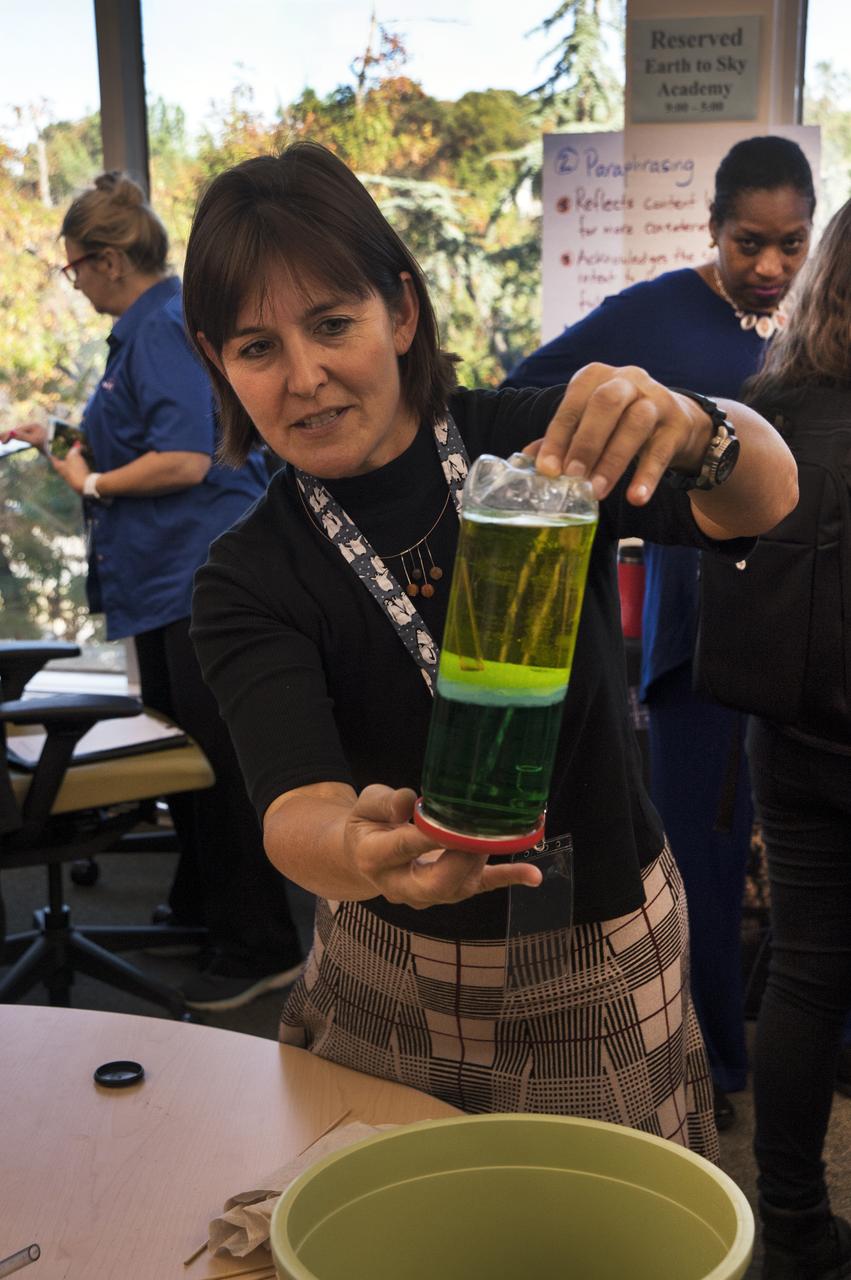
Earth to Sky Academy October 23, 2019 Locations: Building 28 Dr. Piers J. Sellers Data Visualization Theater, first floor atrium and east lawn, Building 21 GIC2 (Library) MOSI Request # 2020-896-0 10/23/2019 is the field trip day of our five-day workshop for the Earth to Sky Academy. Images will be used to show what the experience is like for reporting and marketing purposes. Earth to Sky Academy NASA Goddard Space Flight Center – Greenbelt, MD October 21–25, 2019 A tuition-free course for interpreters, informal educators, and science communicators interested in creating and nurturing regional communities of practice focused on improving climate science communication. About the Earth to Sky Academy Since 2004, the Earth to Sky interagency partnership (ETS) has been sharing NASA science with informal educators through a variety of professional development events, including a series of regional courses in climate science and communication. A hallmark of the ETS training model is purposeful, ongoing engagement with participants to encourage sharing and collaborative learning. In an effort to strengthen and grow the ETS community of practice, ETS leadership is developing a network of ETS regional communities, each led by small teams of trained ETS regional leaders. The Earth to Sky Academy (ETSA) five-day course marks the launch of this long-term effort.
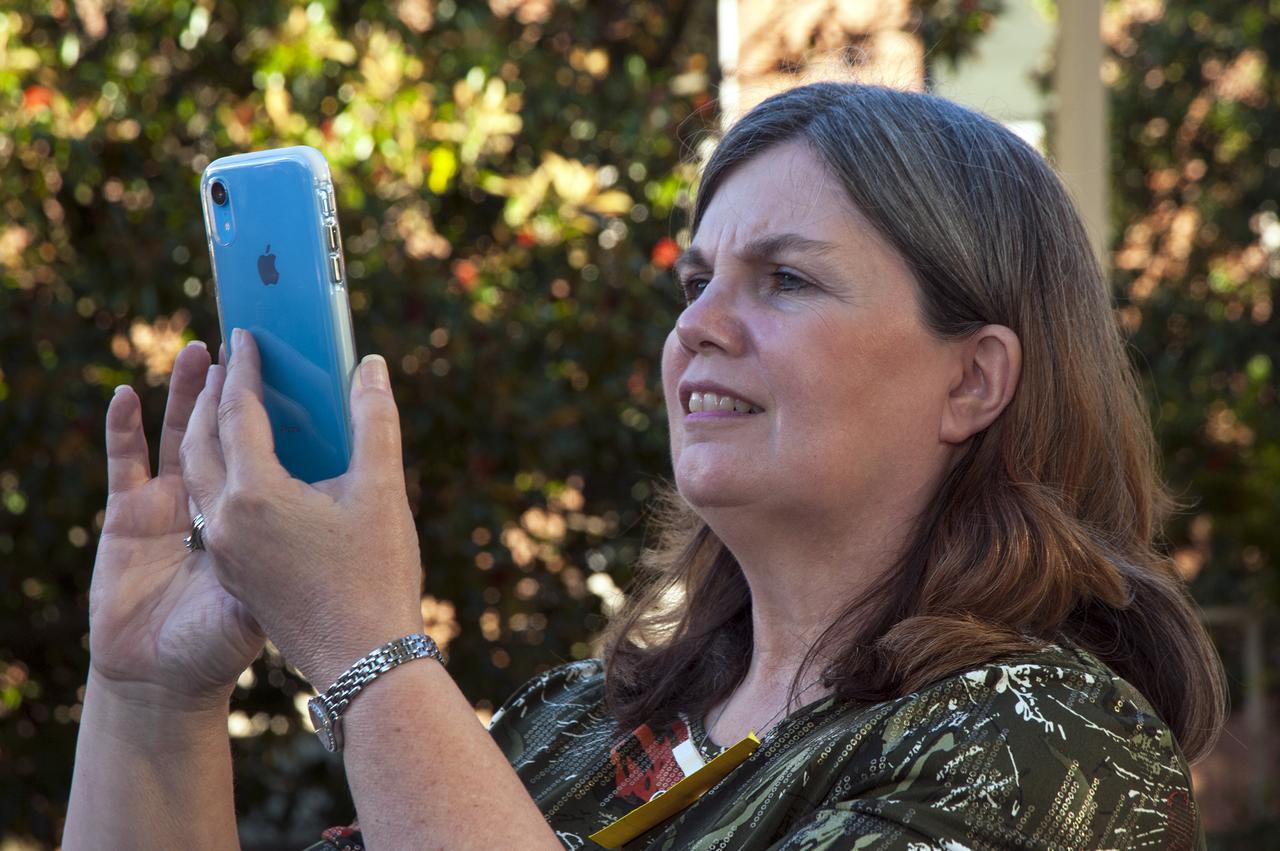
Earth to Sky Academy October 23, 2019 Locations: Building 28 Dr. Piers J. Sellers Data Visualization Theater, first floor atrium and east lawn, Building 21 GIC2 (Library) MOSI Request # 2020-896-0 10/23/2019 is the field trip day of our five-day workshop for the Earth to Sky Academy. Images will be used to show what the experience is like for reporting and marketing purposes. Earth to Sky Academy NASA Goddard Space Flight Center – Greenbelt, MD October 21–25, 2019 A tuition-free course for interpreters, informal educators, and science communicators interested in creating and nurturing regional communities of practice focused on improving climate science communication. About the Earth to Sky Academy Since 2004, the Earth to Sky interagency partnership (ETS) has been sharing NASA science with informal educators through a variety of professional development events, including a series of regional courses in climate science and communication. A hallmark of the ETS training model is purposeful, ongoing engagement with participants to encourage sharing and collaborative learning. In an effort to strengthen and grow the ETS community of practice, ETS leadership is developing a network of ETS regional communities, each led by small teams of trained ETS regional leaders. The Earth to Sky Academy (ETSA) five-day course marks the launch of this long-term effort.
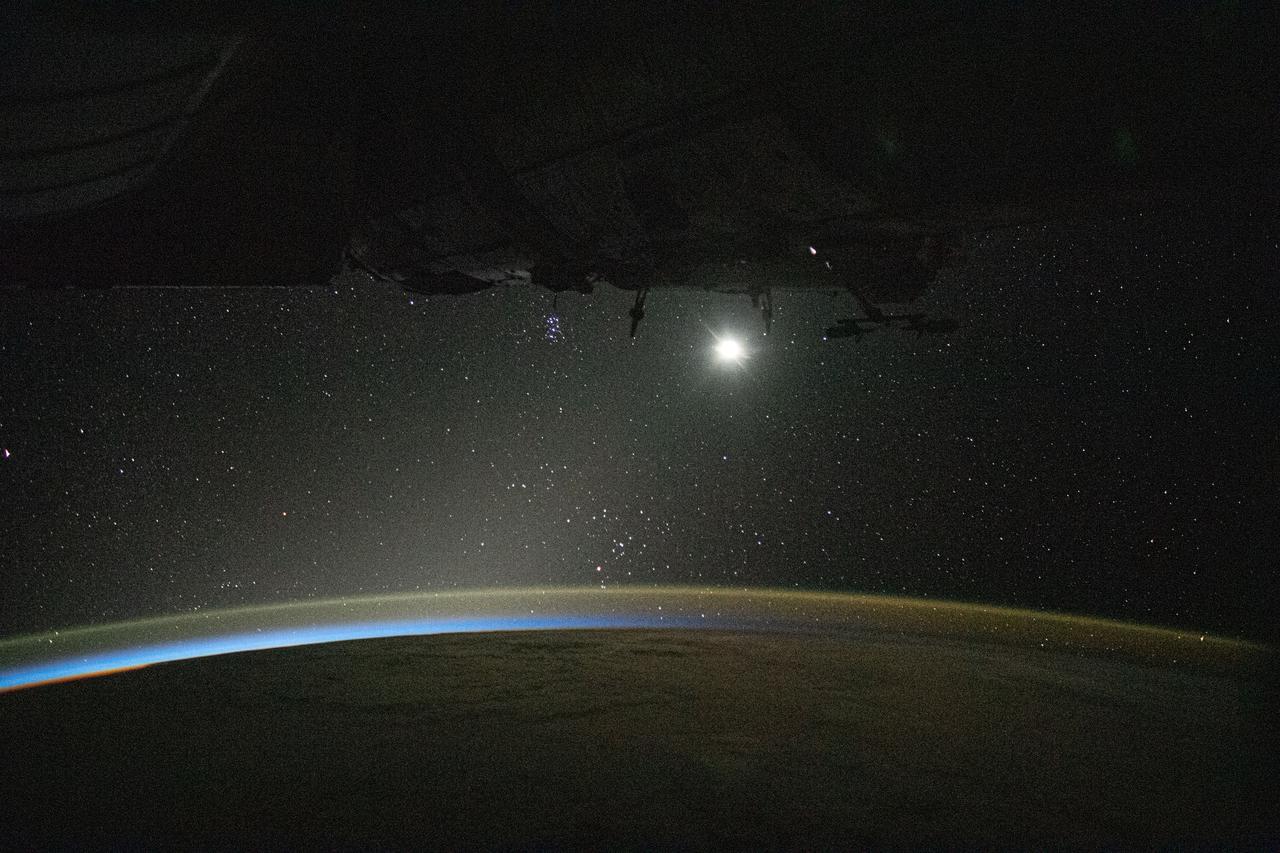
iss060e002090 (June 29, 2019) --- The Earth's limb and the atmospheric glow highlight the thin blue atmosphere back lit by the Sun's rays during a period between night and day. The light of the moon and the starry Milky Way drape the background as the International Space Station orbited 257 miles above the Pacific Ocean between Hawaii and Mexico.
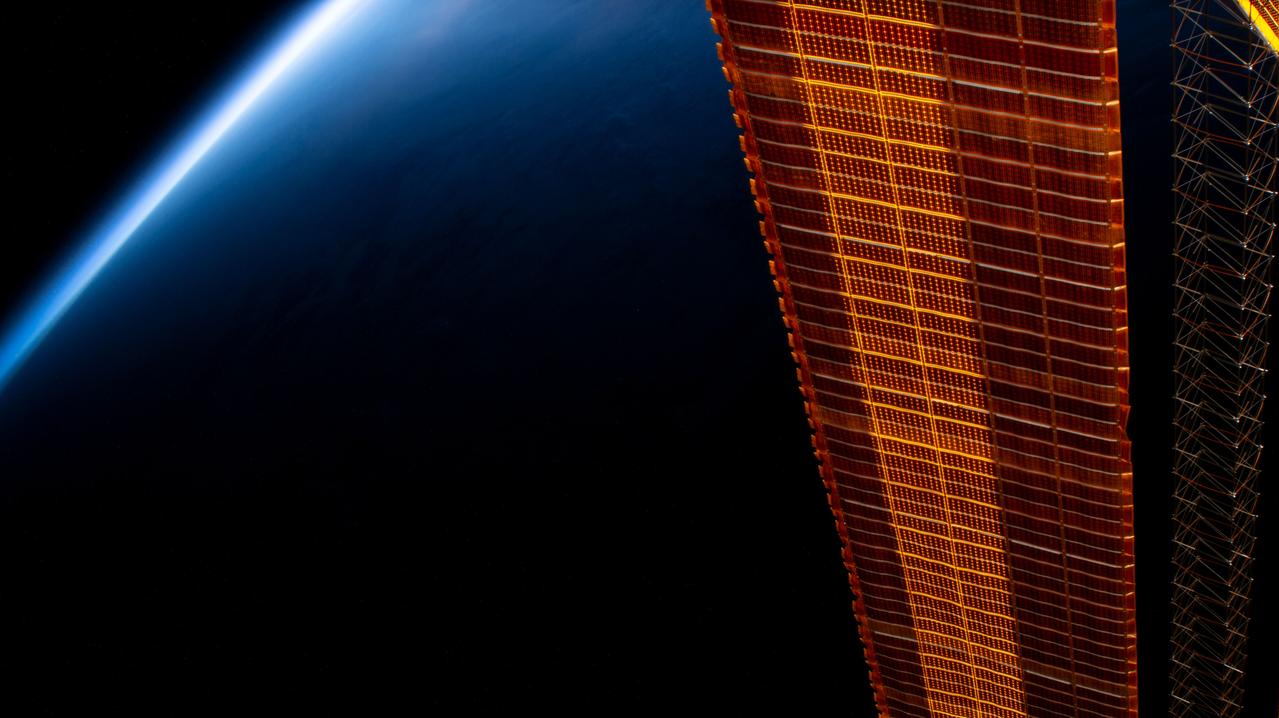
iss060e008812 (July 15, 2019) --- A portion of the International Space Station's main solar arrays drape the foreground as the orbiting lab flew 257 miles above Mongolia and across China. The Sun's rays light up Earth's thin atmosphere during a period between night and day.

Members of the Florida Native Plant Society converse with visitors during a sustainability expo held at the Kennedy Space Center Visitor Complex in Florida on April 11, 2019. The expo kicked off Kennedy’s annual Earth Day celebrations. The Florida Native Plant Society was one of approximately 40 exhibitors present at the expo. Exhibitors in attendance provided information ranging from energy-saving solutions to wildlife and natural conservation. In addition, there were multiple butterfly releases throughout the day.

A newly released butterfly sits in a cluster of flowers at the Kennedy Space Center Visitor Complex. Kennedy kicked off its annual Earth Day celebrations with a sustainability expo at the center’s visitor complex in Florida on April 11, 2019, which included multiple butterfly releases throughout the day. Approximately 40 exhibitors from across the nation assembled to provide information ranging from energy-saving solutions to wildlife and natural conservation.

Kennedy Space Center kicked off its annual Earth Day celebrations with a sustainability expo at the center’s visitor complex in Florida on April 11, 2019. Approximately 40 exhibitors from across the nation assembled to provide information ranging from energy-saving solutions to wildlife and natural conservation. In addition, there were multiple butterfly releases held at the expo throughout the day.

Volunteers from the Merritt Island National Wildlife Refuge are photographed with their display during a sustainability expo held at the Kennedy Space Center Visitor Complex in Florida on April 11, 2019. Guests had the opportunity to view their display and receive information on Florida plants and wildlife. The expo kicked off Kennedy’s annual Earth Day celebrations, where approximately 40 exhibitors attended to provide information ranging from energy-saving solutions to wildlife and natural conservation. In addition, there were multiple butterfly releases throughout the day.

A member of Brevard Backyard Beekeepers is photographed in front of her display during a sustainability expo held at the Kennedy Space Center Visitor Complex in Florida on April 11, 2019. The expo kicked off Kennedy’s annual Earth Day celebrations, where approximately 40 exhibitors from across the nation assembled to provide information ranging from energy-saving solutions to wildlife and natural conservation. In addition, there were multiple butterfly releases throughout the day.

Visitors participate in one of many butterfly releases held throughout the day at the Kennedy Space Center’s sustainability expo on April 11, 2019. Held at the center’s visitor complex in Florida, the expo kicked off Kennedy’s annual Earth Day celebrations. Approximately 40 exhibitors from across the nation assembled to provide information ranging from energy-saving solutions to wildlife and natural conservation.

A butterfly sits in the palm of a visitor’s hand at the Kennedy Space Center Visitor Complex in Florida. Kennedy kicked of its annual Earth Day celebrations with a sustainability expo at the visitor complex on April 11, 2019, where butterflies were released throughout the day. Approximately 40 exhibitors from across the nation assembled to provide information ranging from energy-saving solutions to wildlife and natural conservation.

A butterfly perches on a visitor’s finger at the Kennedy Space Center Visitor Complex in Florida. Kennedy kicked off its annual Earth Day celebrations with a sustainability expo at the visitor complex on April 11, 2019, where butterflies were released throughout the day. Approximately 40 exhibitors from across the nation assembled to provide information ranging from energy-saving solutions to wildlife and natural conservation.

A newly released butterfly sits in a cluster of flowers at the Kennedy Space Center Visitor Complex. Kennedy kicked off its annual Earth Day celebrations with a sustainability expo at the center’s visitor complex in Florida on April 11, 2019, which included multiple butterfly releases throughout the day. Approximately 40 exhibitors from across the nation assembled to provide information ranging from energy-saving solutions to wildlife and natural conservation.

Kennedy Space Center kicked off its annual Earth Day celebrations with a sustainability expo at the center’s visitor complex in Florida on April 11, 2019. Approximately 40 exhibitors from across the nation assembled to provide information ranging from energy-saving solutions to wildlife and natural conservation. In addition, there were multiple butterfly releases held at the expo throughout the day.

A visitor transfers a butterfly to a cluster of flowers during one of many butterfly releases held throughout the day at the Kennedy Space Center’s sustainability expo on April 11, 2019. Held at the center’s visitor complex in Florida, the expo kicked off Kennedy’s annual Earth Day celebrations. Approximately 40 exhibitors from across the nation assembled to provide information ranging from energy-saving solutions to wildlife and natural conservation.

Guests view a display set up by Hubbs-Seaworld Research Institute during a sustainability expo held at the Kennedy Space Center Visitor Complex in Florida on April 11, 2019. The expo kicked off Kennedy’s annual Earth Day celebrations, where approximately 40 exhibitors from across the nation assembled to provide information ranging from energy-saving solutions to wildlife and natural conservation. In addition, there were multiple butterfly releases throughout the day.
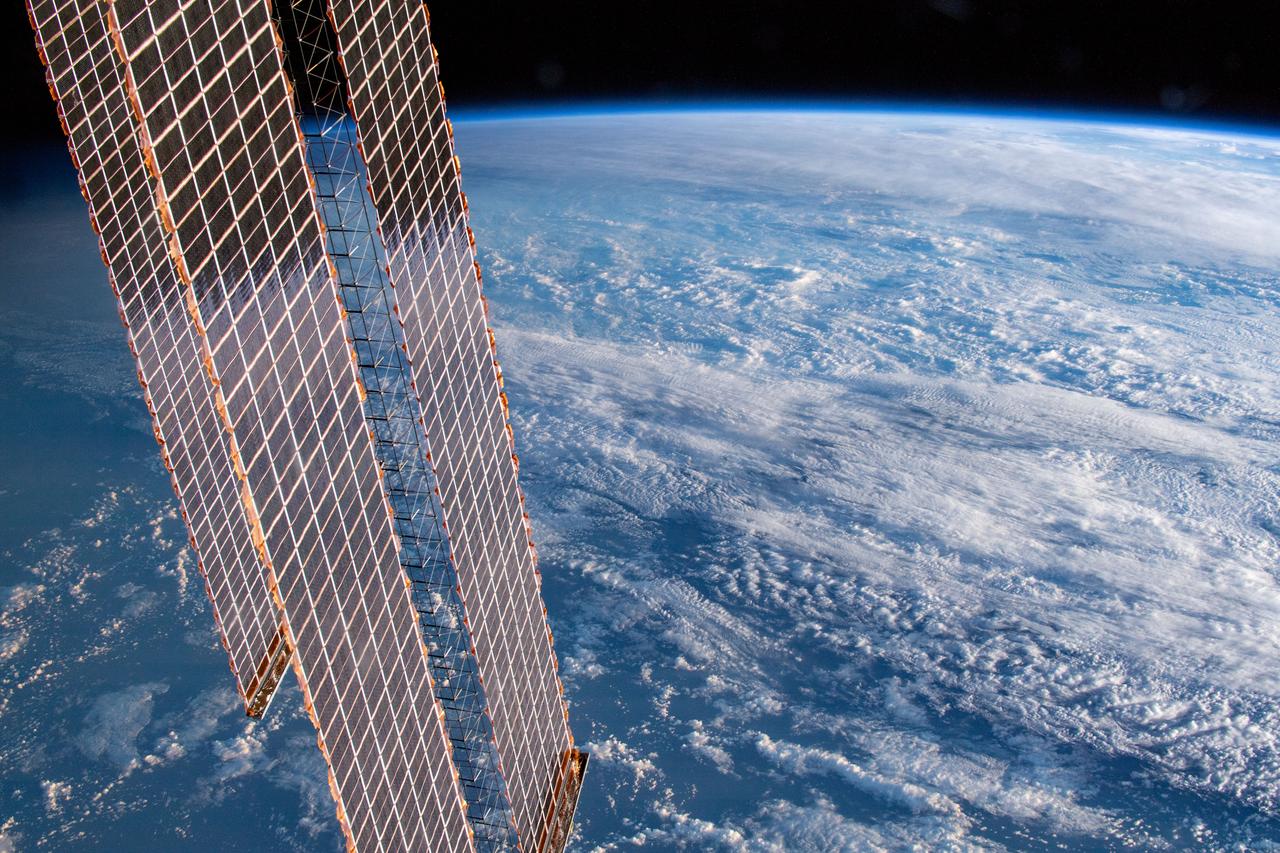
iss059e019924 (April 11, 2019) --- 261 miles above Earth and off the coast of the Australian cities of Gold Coast and Brisbane, an Expedition 59 crew member photographed the cloud-covered Tasman and Coral Seas. A portion of the International Space Station's solar arrays drape over the Earth as the orbital lab passes over the terminator, the line that separates night from day.
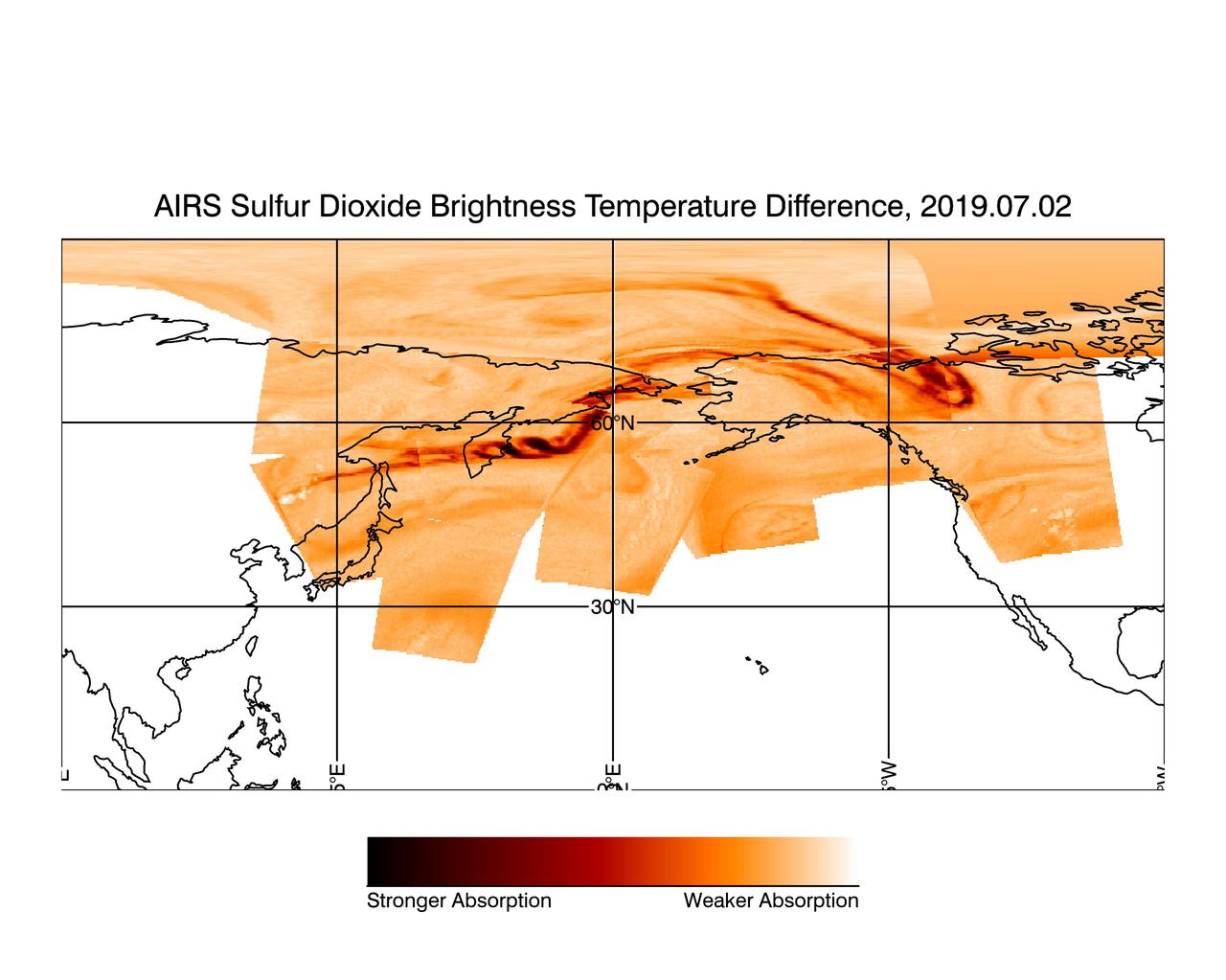
Dormant since 1924, the Raikoke Volcano on Russia's Kuril Islands began erupting on June 22, 2019. In this image made with data from the Atmospheric Infrared Sounder on NASA's Aqua satellite, sulfur dioxide (SO2) in the volcanic plume is observed over several overpasses on July 2, 2019, days after the Raikoke volcanic eruption. SO2 absorbs infrared radiance emitted from Earth's surface and the lower atmosphere in proportion with the quantity of SO2 present in the plume. Areas with higher quantities of sulfur dioxide are shown in dark red while areas with lower quantities of sulfur dioxide are shown in light orange. Areas where data was not included in the image, due to the lack of plume in those regions, are shown in white. The image combines multiple granules of AIRS data taken throughout the day. Each data granule collected by the instrument is outlined in green, with its corresponding time stamp (in UTC) printed in white. https://photojournal.jpl.nasa.gov/catalog/PIA23421

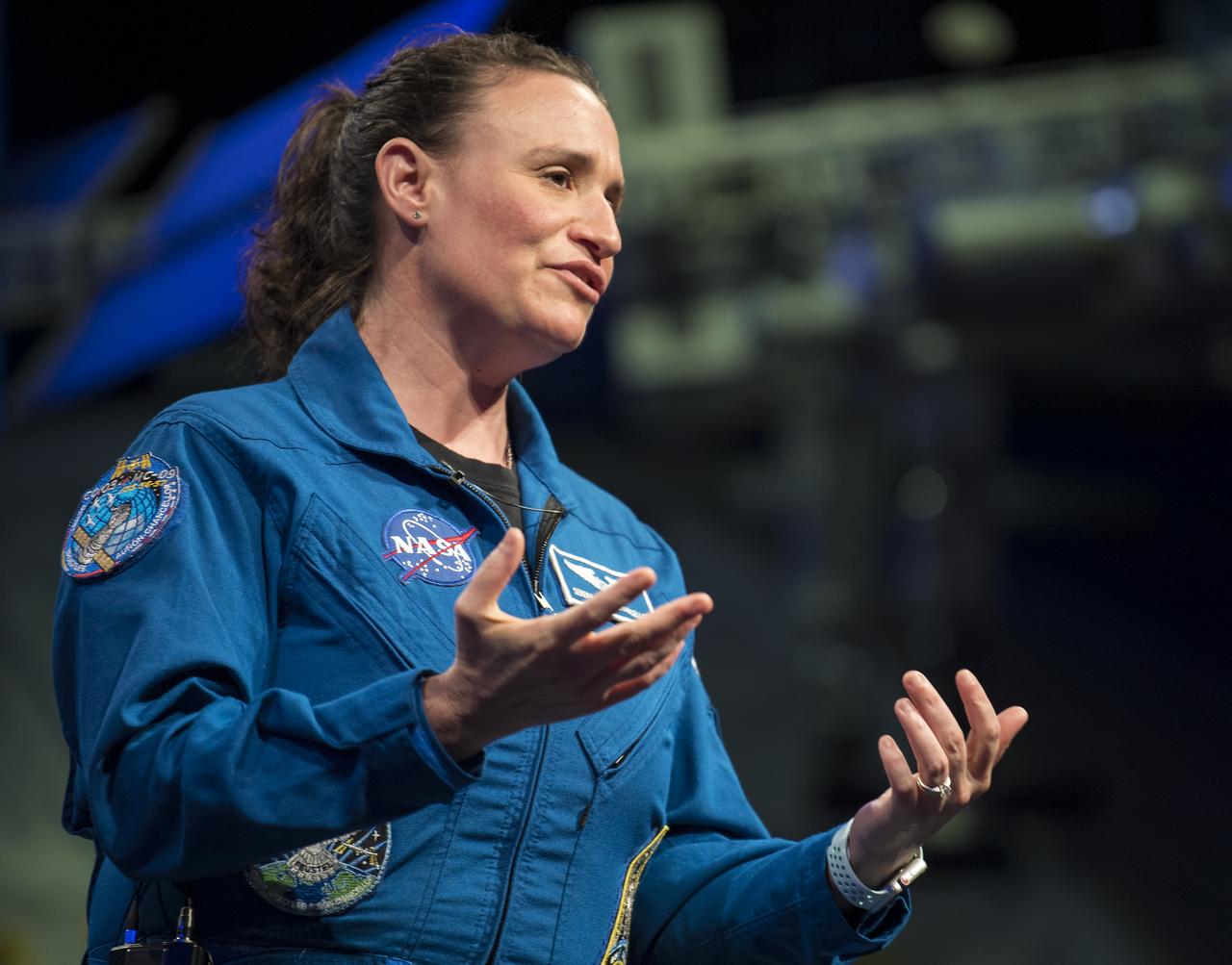
NASA astronaut Dr. Serena Auñón-Chancellor speaks about her experience on Expeditions 56 and 57 onboard the International Space Station (ISS) at Excel Academy Public Charter School, Monday, June 10, 2019 in Washington, DC. Auñón-Chancellor spent 197 days living and working onboard the ISS and contributed to hundreds of experiments in biology, biotechnology, physical science, and Earth science while there. She is also a doctor and started her career with NASA as a flight surgeon in 2006. Photo Credit: (NASA/Aubrey Gemignani)
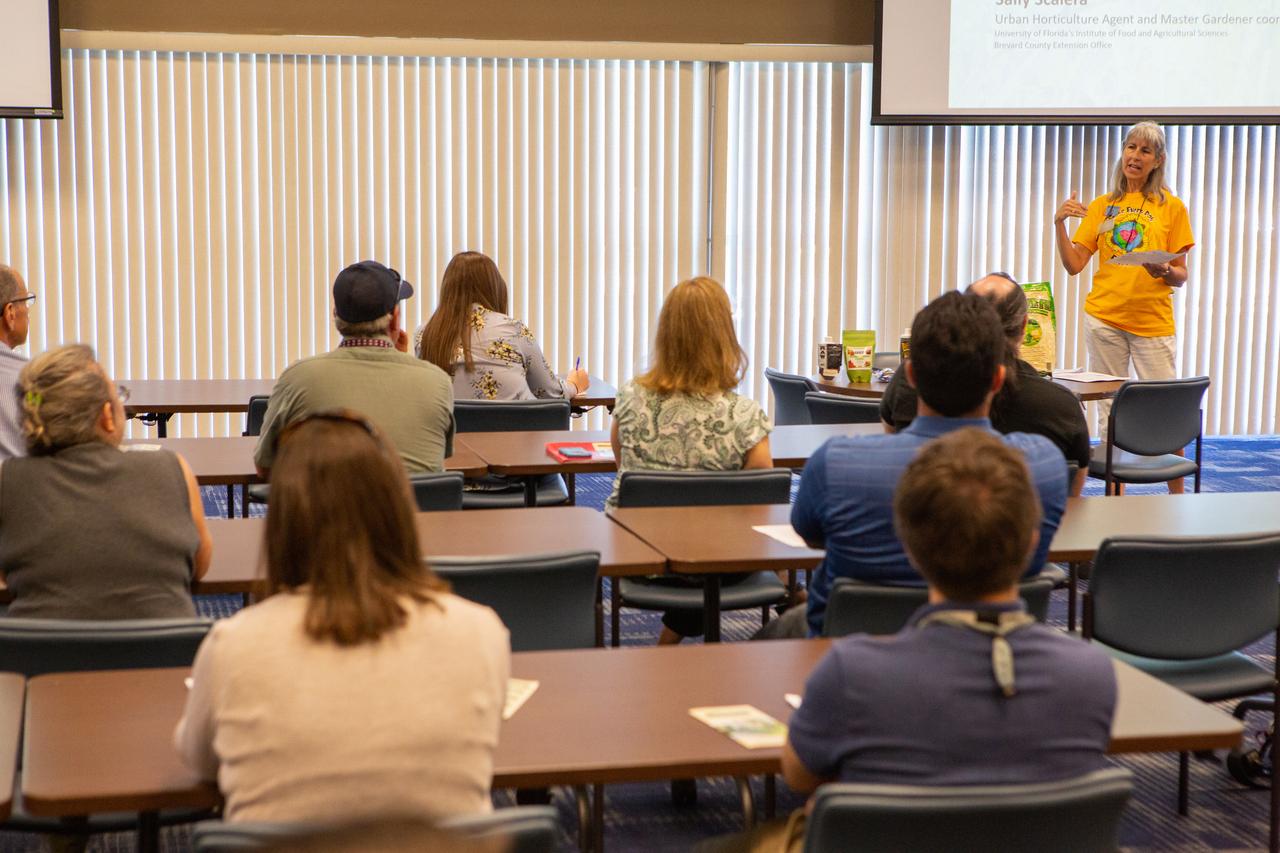
Sally Scalera, urban horticulture agent and master gardener coordinator from the University of Florida’s Institute of Food and Agricultural Sciences Brevard Extension Office, presents some sustainable tips and tricks for a healthy yard and garden to Kennedy Space Center employees on April 24, 2019. Held inside the Florida spaceport’s Space Station Processing Facility Conference Center, Scalera also provided information on Florida-friendly landscaping practices. The lunch and learn was available for employees to attend as part of Kennedy’s Earth Day events.
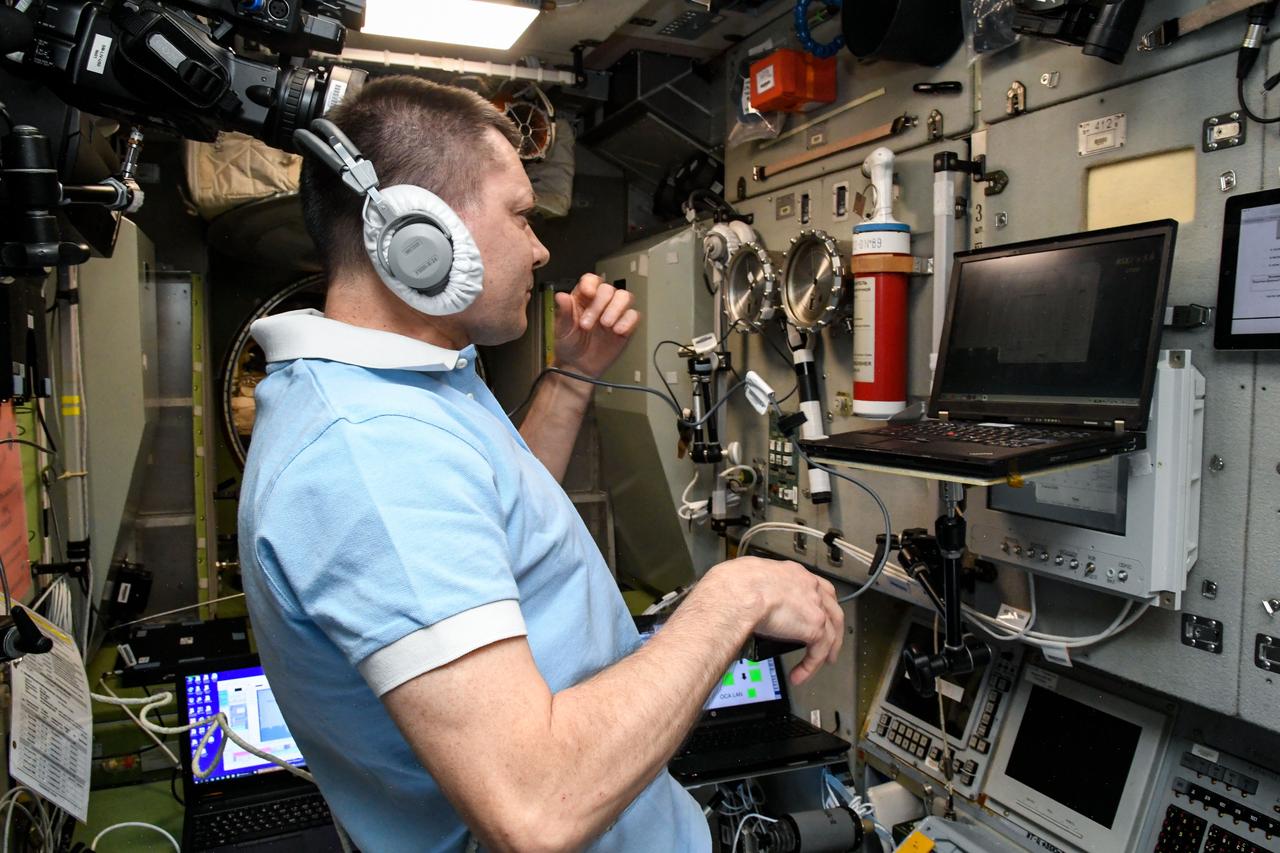
iss059e111655 (June 17, 2019) --- Expedition 59 Commander Oleg Kononenko of Roscosmos practices descent maneuvers on a computer that he will use to return to Earth aboard the Soyuz MS-11 spacecraft on June 24. He will lead Flight Engineers Anne McClain and David Saint-Jacques to a parachute-assisted landing in Kazakhstan after a 204-day mission in space.
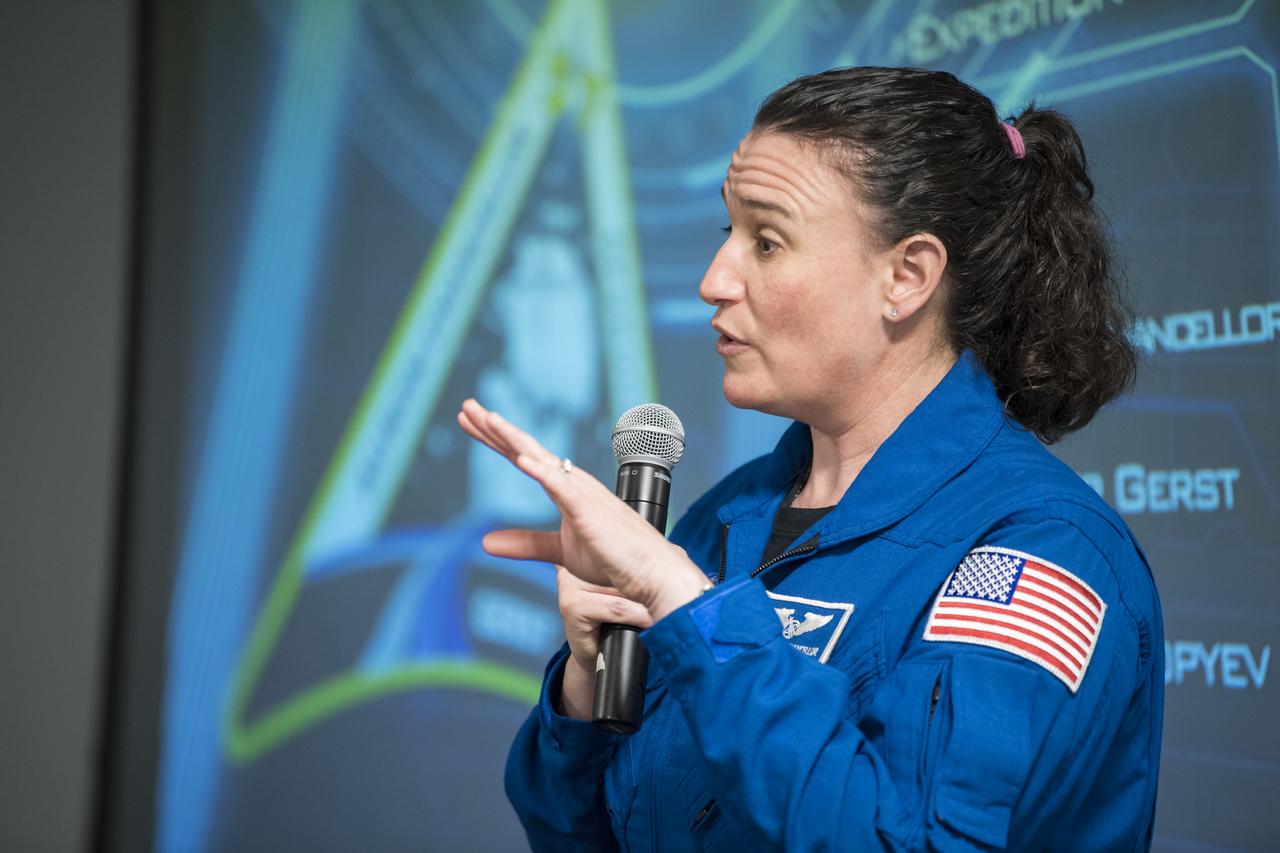
NASA astronaut Serena Auñón-Chancellor speaks about her experience on Expeditions 56 and 57 onboard the International Space Station at NASA Headquarters, Friday, June 14, 2019 in Washington. Auñón-Chancellor spent 197 days living and working onboard the orbital laboratory, contributing to hundreds of experiments in biology, biotechnology, physical science, and Earth science. She began her career at NASA as a flight surgeon before being selected as an astronaut in 2009. Photo Credit: (NASA/Aubrey Gemignani)

NASA astronaut Dr. Serena Auñón-Chancellor speaks about her experience on Expeditions 56 and 57 onboard the International Space Station (ISS) at Excel Academy Public Charter School, Monday, June 10, 2019 in Washington, DC. Auñón-Chancellor spent 197 days living and working onboard the ISS and contributed to hundreds of experiments in biology, biotechnology, physical science, and Earth science while there. She is also a doctor and started her career with NASA as a flight surgeon in 2006. Photo Credit: (NASA/Aubrey Gemignani)
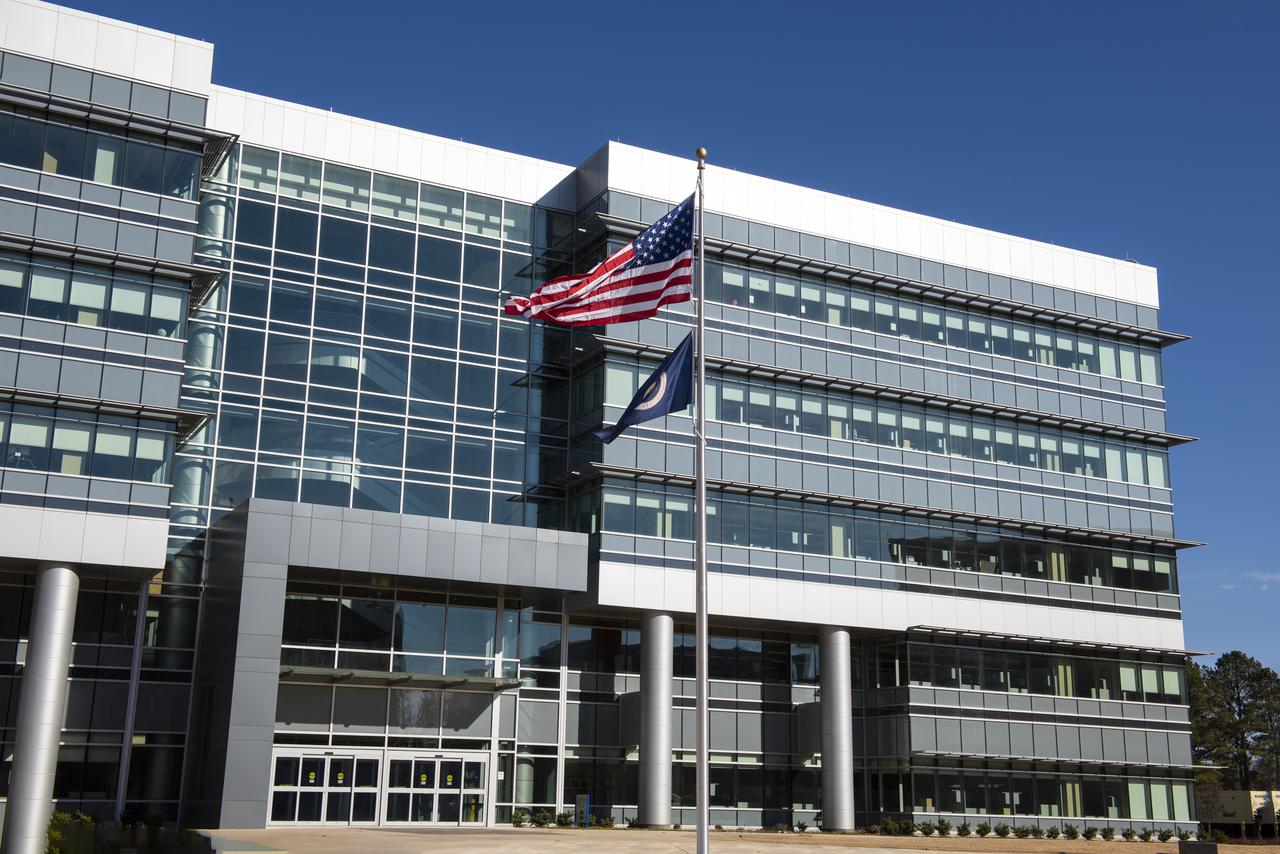
On Jan. 26, 2022, the U.S. and NASA flags were raised at Building 4221 to mark the transfer of headquarters to that building at Marshall Space Flight Center in Huntsville, Alabama. The doors to Building 4221, a new, environmentally friendly building, opened on Earth Day, April 22, 2019. Building 4200 served as Marshall’s original headquarters since 1963. Marshall center operations lowered flags at that building on Jan. 21, 2022.
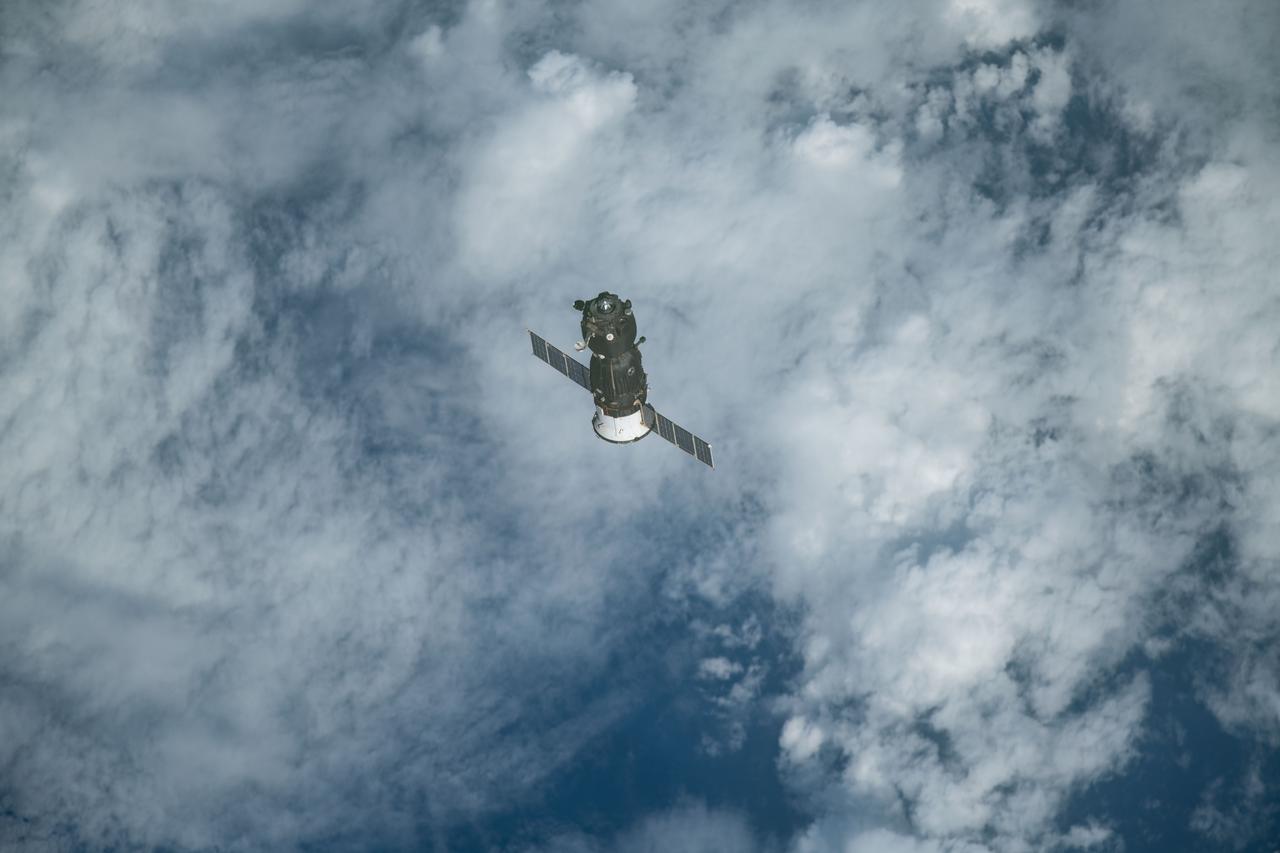
iss059e122506 (June 24, 2019) --- The Soyuz MS-11 crew craft separates from the International Space Station after its undocking and begins its descent to Earth. Expedition 59 crewmembers Oleg Kononenko of Roscosmos, Anne McClain of NASA and David Saint-Jacques of the Canadian Space Agency would parachute to a landing in Kazakhstan aboard the Soyuz after 204 days in space.
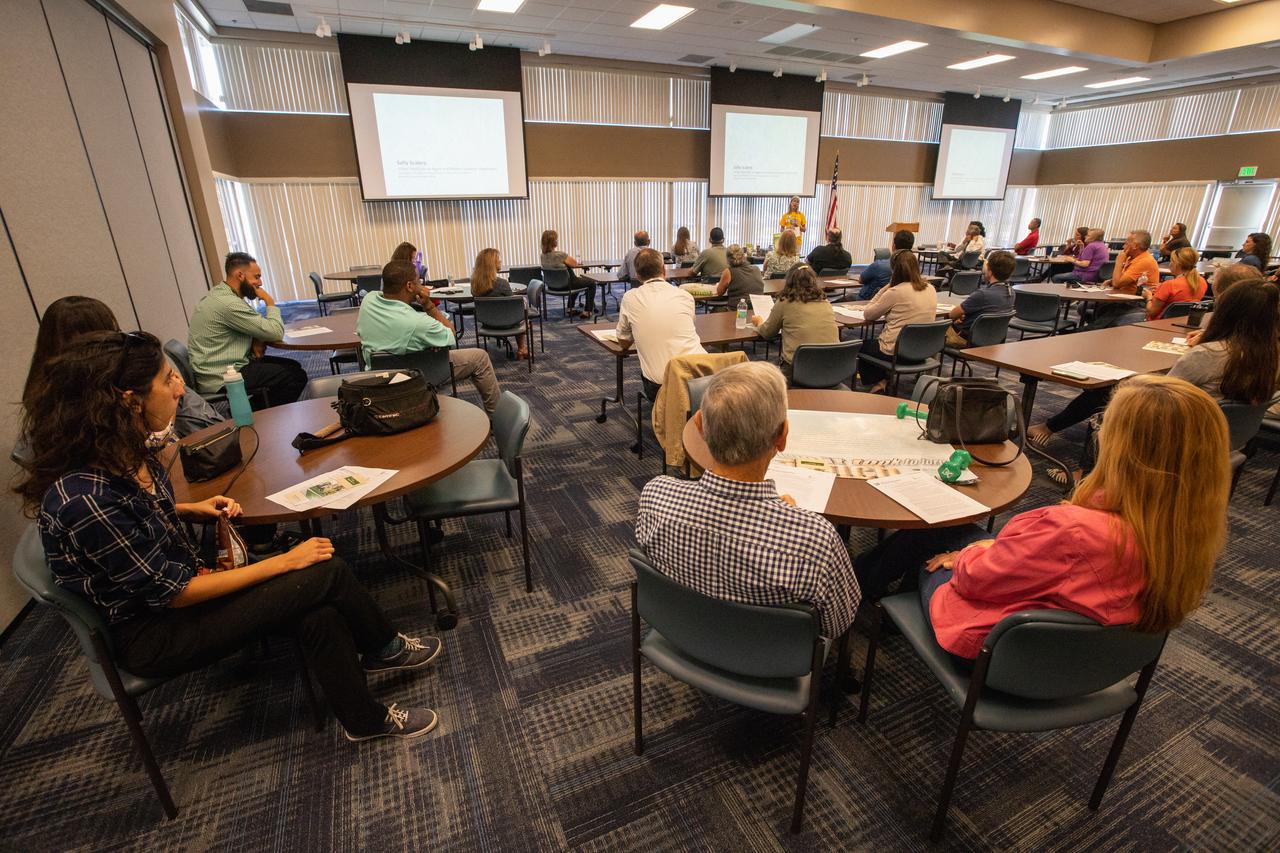
Kennedy Space Center employees attend a lunch and learn focused on Florida-friendly landscaping practices in the Florida spaceport’s Space Station Processing Facility Conference Center on April 24, 2019. Sally Scalera, urban horticulture agent and master gardener coordinator from the University of Florida’s Institute of Food and Agricultural Sciences Brevard Extension Office, presented information on sustainable tips and tricks for a healthy yard and garden. The lunch and learn was available for employees to attend as part of Kennedy’s Earth Day events.
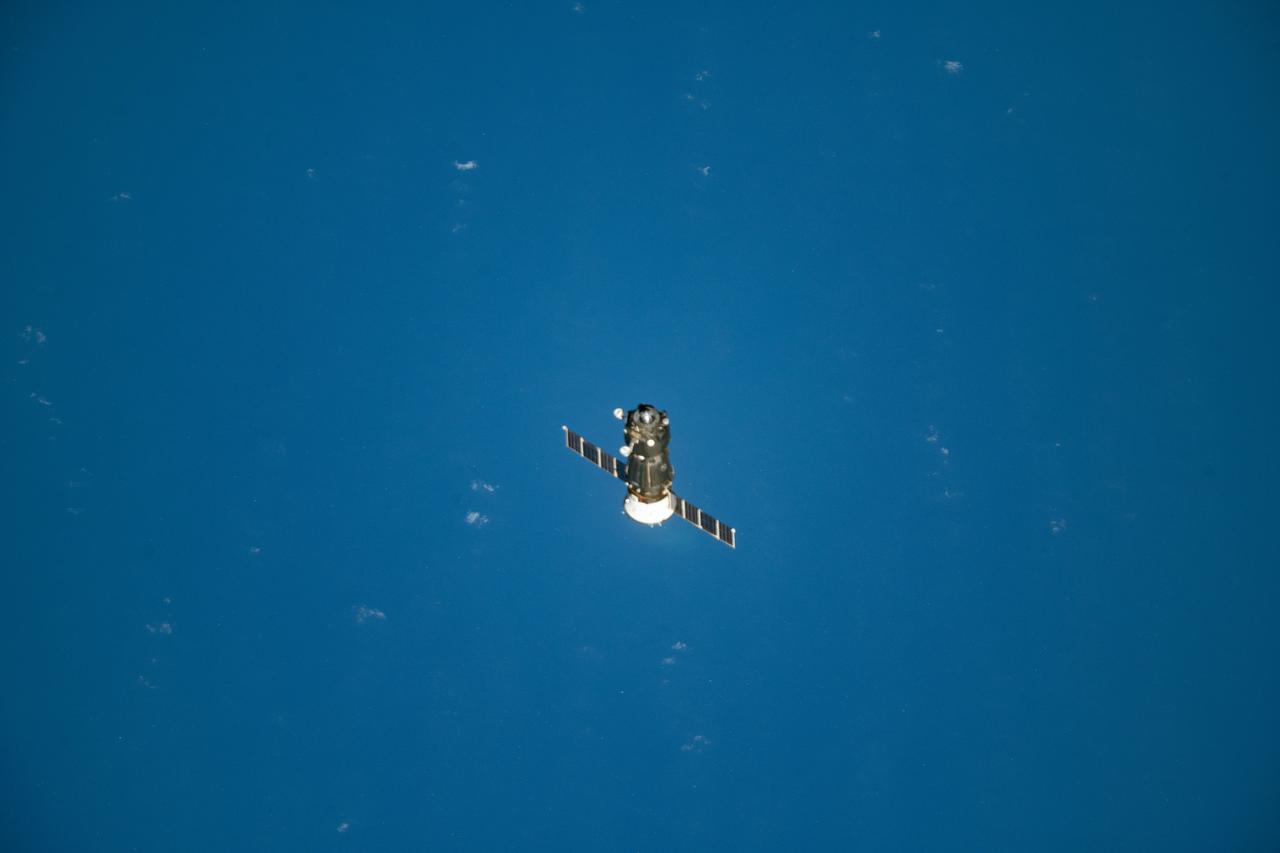
iss059e122556 (June 24, 2019) --- The Soyuz MS-11 crew craft separates from the International Space Station after its undocking and begins its descent to Earth. Expedition 59 crewmembers Oleg Kononenko of Roscosmos, Anne McClain of NASA and David Saint-Jacques of the Canadian Space Agency would parachute to a landing in Kazakhstan aboard the Soyuz after 204 days in space.
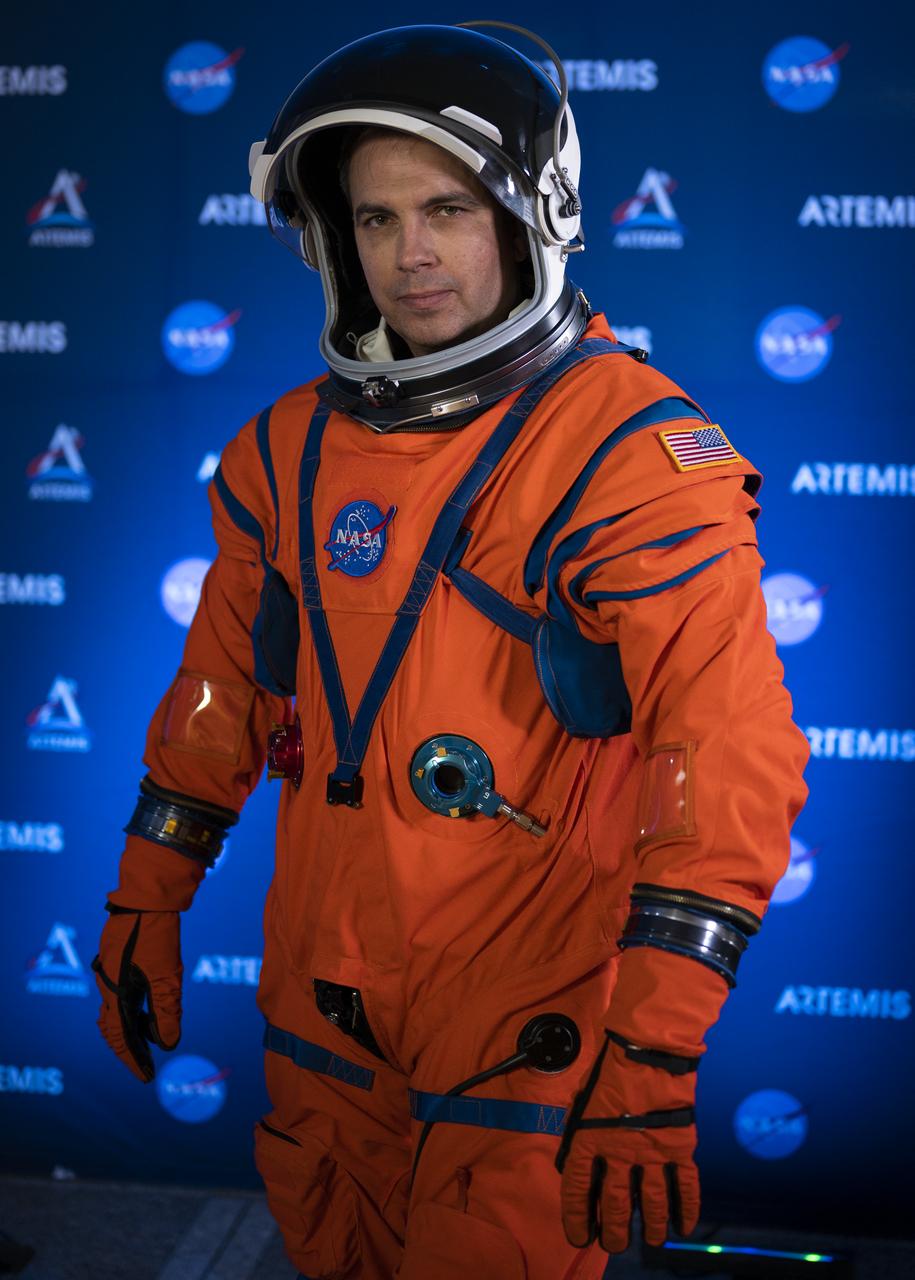
Dustin Gohmert, Orion Crew Survival Systems Project Manager at NASA’s Johnson Space Center, poses for a portrait while wearing the Orion Crew Survival System (OCSS) suit, Tuesday, Oct. 15, 2019 at NASA Headquarters in Washington, DC. The Orion suit is designed for a custom fit and incorporates safety technology and mobility features that will help protect astronauts on launch day, in emergency situations, high-risk parts of missions near the Moon, and during the high-speed return to Earth. Photo Credit: (NASA/Joel Kowsky)
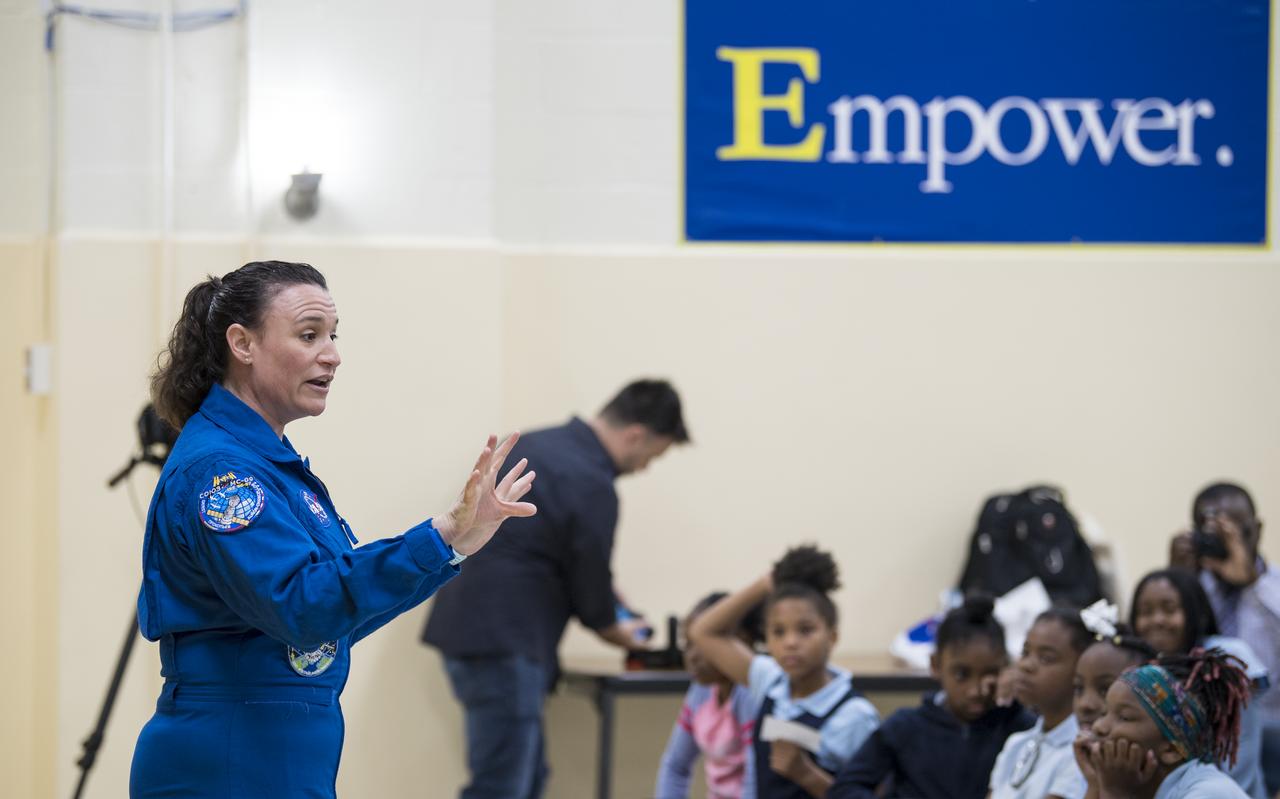
NASA astronaut Dr. Serena Auñón-Chancellor speaks about her experience on Expeditions 56 and 57 onboard the International Space Station (ISS) at Excel Academy Public Charter School, Monday, June 10, 2019 in Washington, DC. Auñón-Chancellor spent 197 days living and working onboard the ISS and contributed to hundreds of experiments in biology, biotechnology, physical science, and Earth science while there. She is also a doctor and started her career with NASA as a flight surgeon in 2006. Photo Credit: (NASA/Aubrey Gemignani)
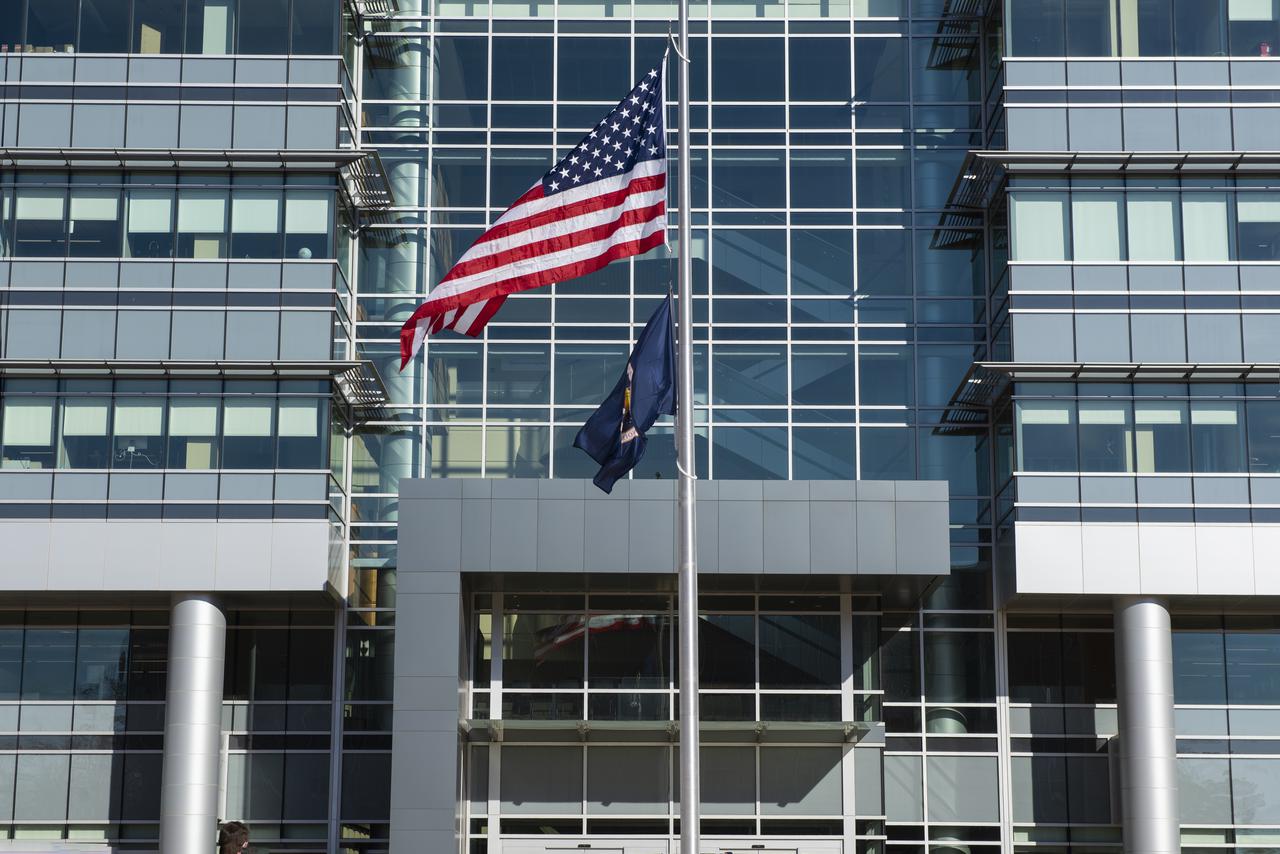
On Jan. 26, 2022, the U.S. and NASA flags were raised at Building 4221 to mark the transfer of headquarters to that building at Marshall Space Flight Center in Huntsville, Alabama. The doors to Building 4221, a new, environmentally friendly building, opened on Earth Day, April 22, 2019. Building 4200 served as Marshall’s original headquarters since 1963. Marshall center operations lowered flags at that building on Jan. 21, 2022.
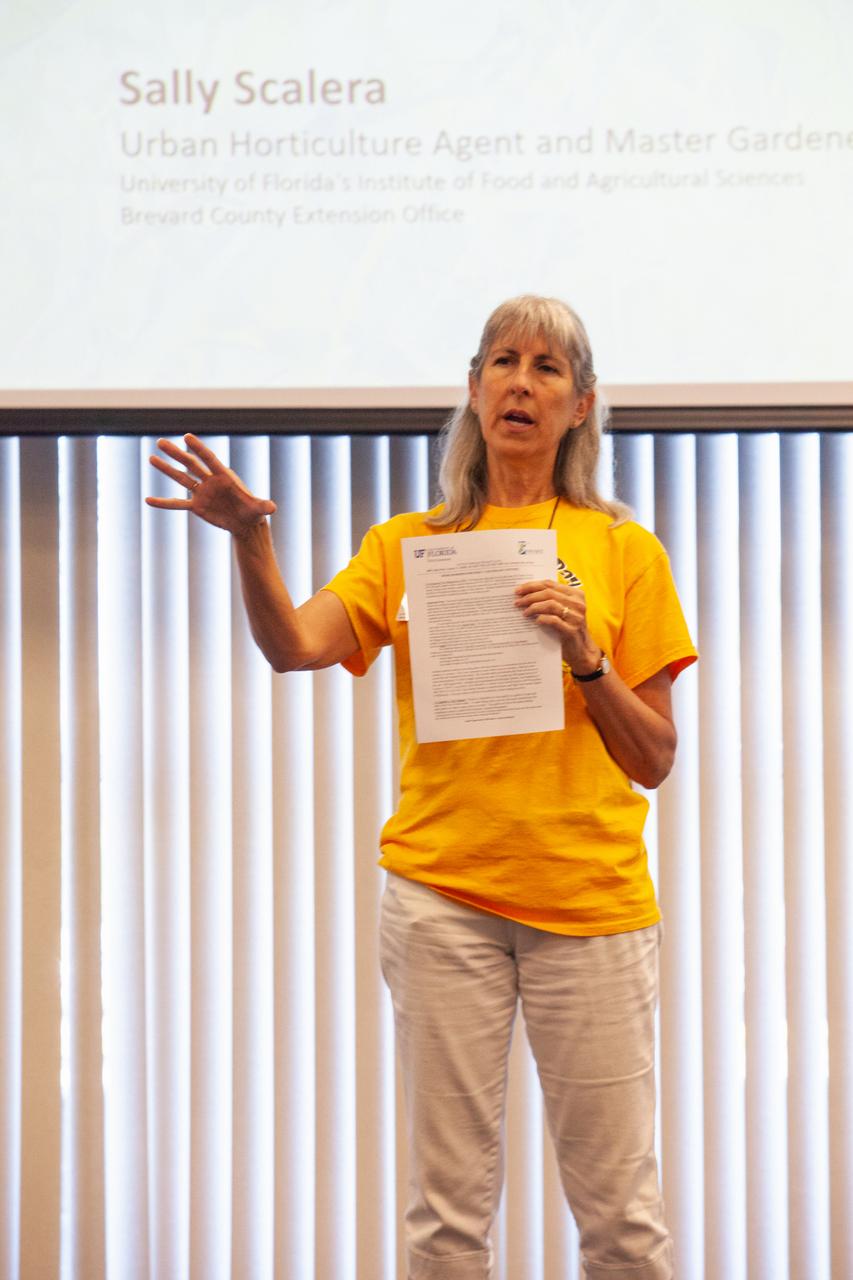
Sally Scalera, urban horticulture agent and master gardener coordinator from the University of Florida’s Institute of Food and Agricultural Sciences Brevard Extension Office, presents some sustainable tips and tricks for a healthy yard and garden to Kennedy Space Center employees on April 24, 2019. Held inside the Florida spaceport’s Space Station Processing Facility Conference Center, Scalera also provided information on Florida-friendly landscaping practices. The lunch and learn was available for employees to attend as part of Kennedy’s Earth Day events.
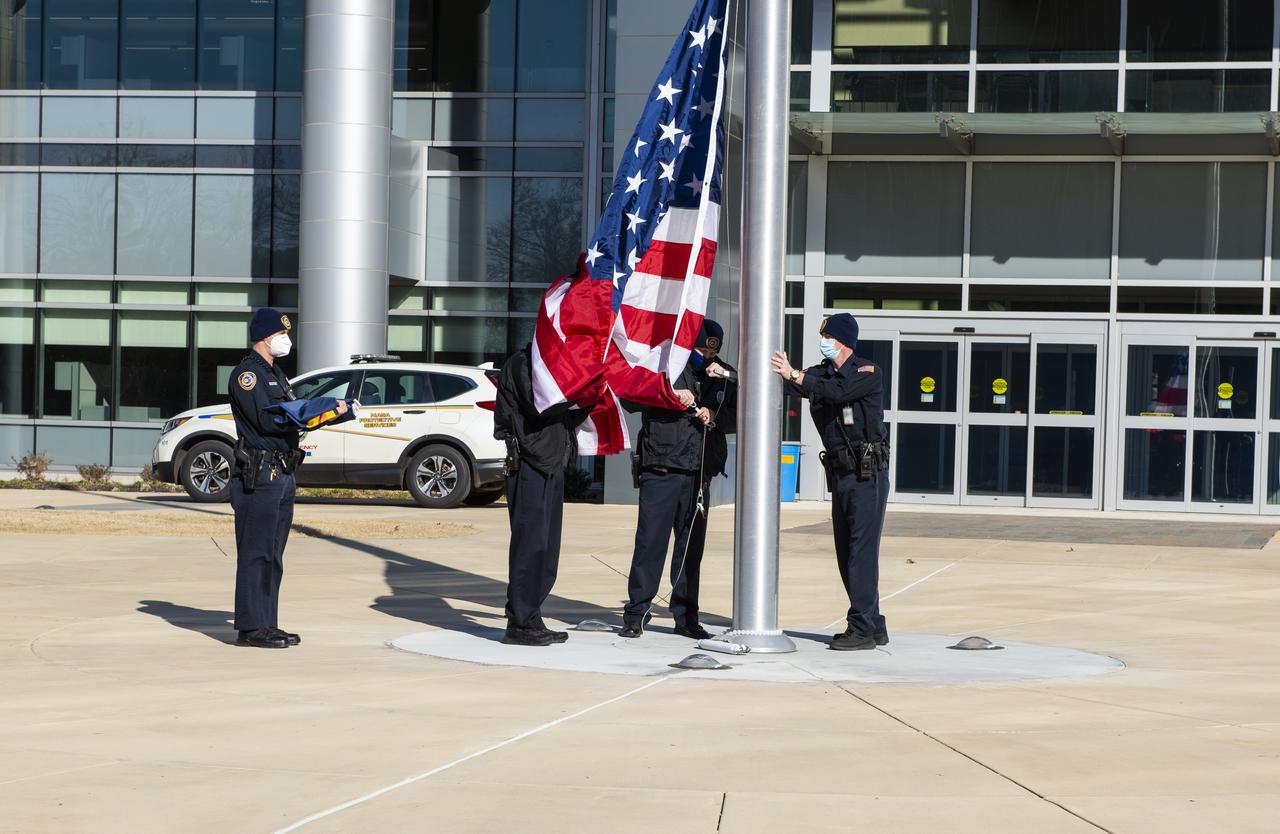
On Jan. 26, 2022, the U.S. and NASA flags were raised at Building 4221 to mark the transfer of headquarters to that building at Marshall Space Flight Center in Huntsville, Alabama. The doors to Building 4221, a new, environmentally friendly building, opened on Earth Day, April 22, 2019. Building 4200 served as Marshall’s original headquarters since 1963. Marshall center operations lowered flags at that building on Jan. 21, 2022.
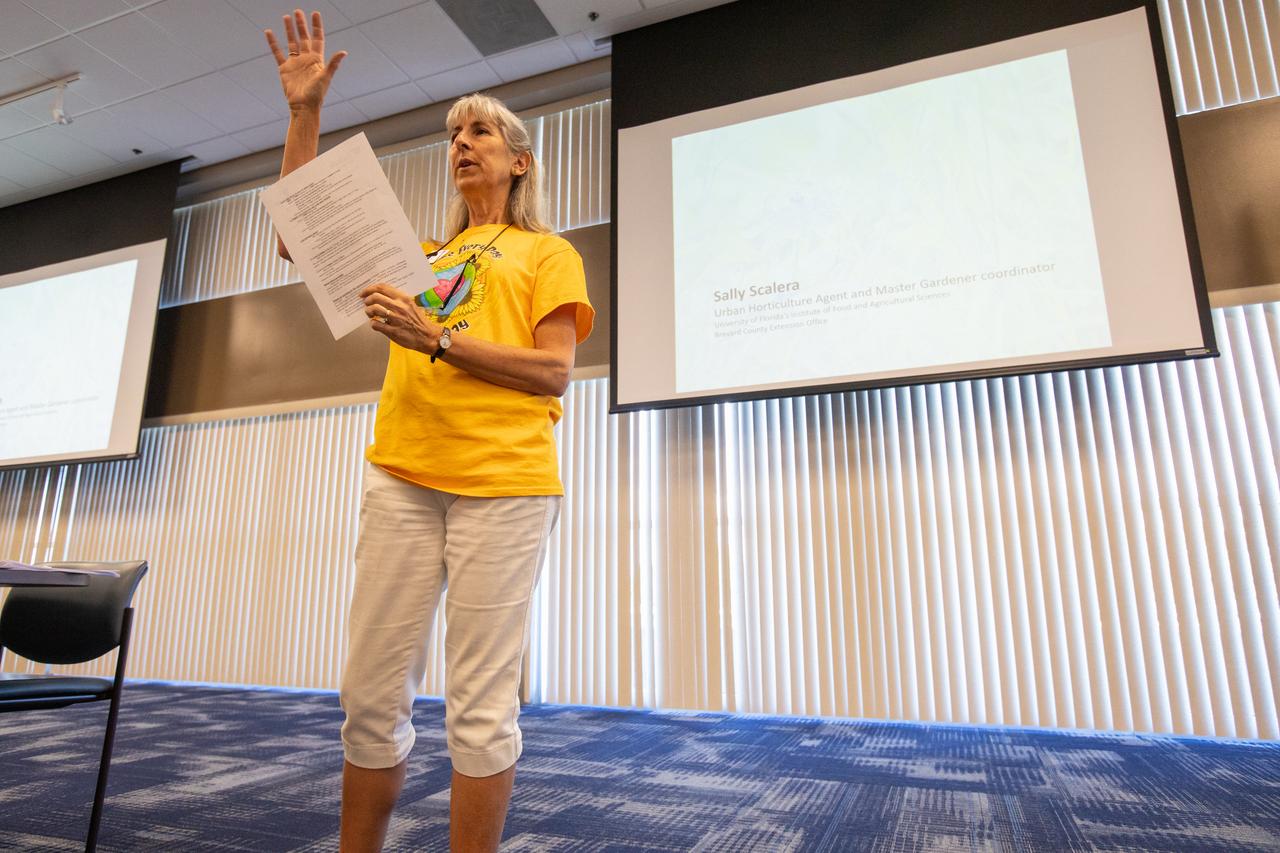
Sally Scalera, urban horticulture agent and master gardener coordinator from the University of Florida’s Institute of Food and Agricultural Sciences Brevard Extension Office, presents some sustainable tips and tricks for a healthy yard and garden to Kennedy Space Center employees on April 24, 2019. Held inside the Florida spaceport’s Space Station Processing Facility Conference Center, Scalera also provided information on Florida-friendly landscaping practices. The lunch and learn was available for employees to attend as part of Kennedy’s Earth Day events.
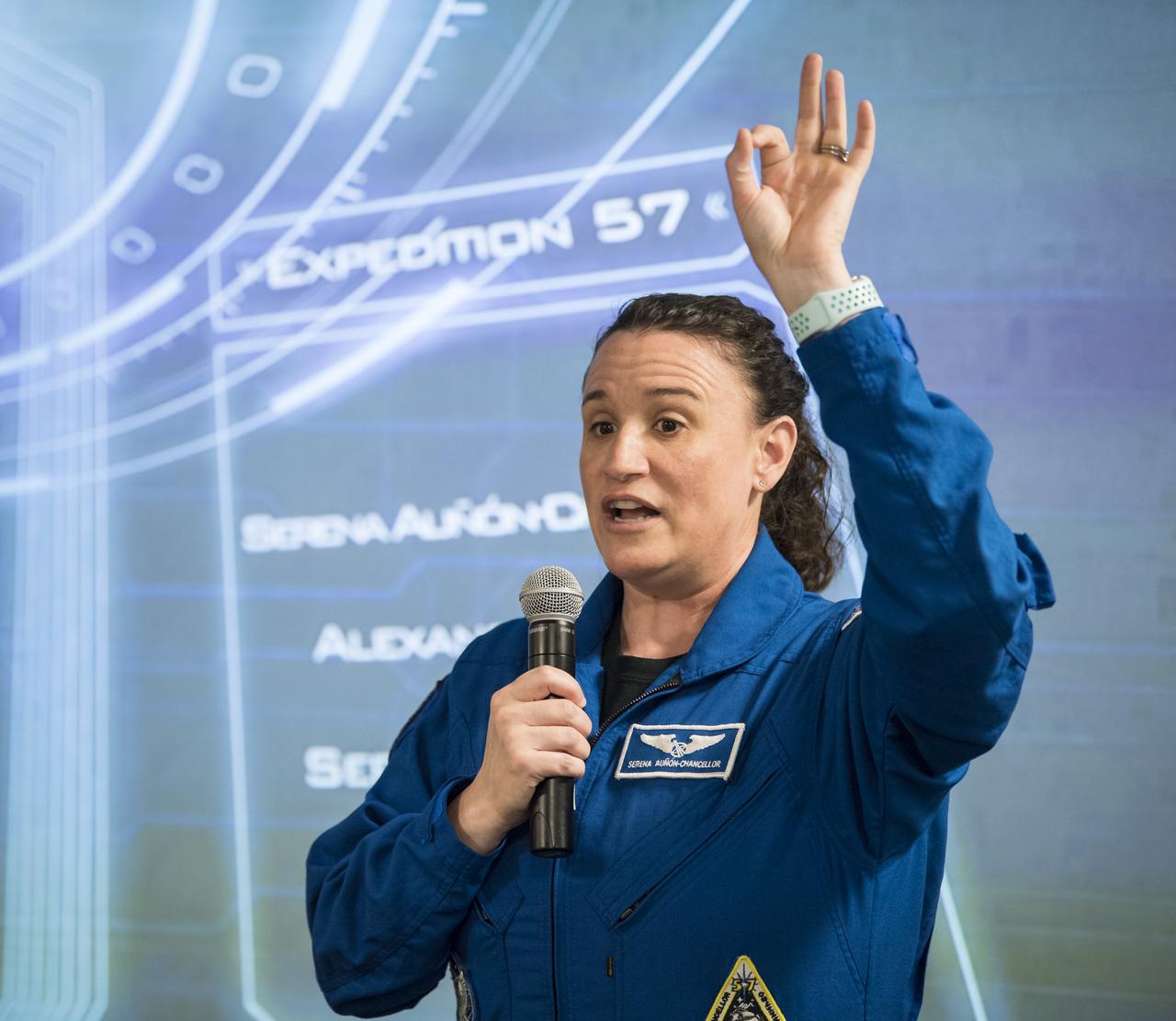
NASA astronaut Serena Auñón-Chancellor speaks about her experience on Expeditions 56 and 57 onboard the International Space Station at NASA Headquarters, Friday, June 14, 2019 in Washington. Auñón-Chancellor spent 197 days living and working onboard the orbital laboratory, contributing to hundreds of experiments in biology, biotechnology, physical science, and Earth science. She began her career at NASA as a flight surgeon before being selected as an astronaut in 2009. Photo Credit: (NASA/Aubrey Gemignani)
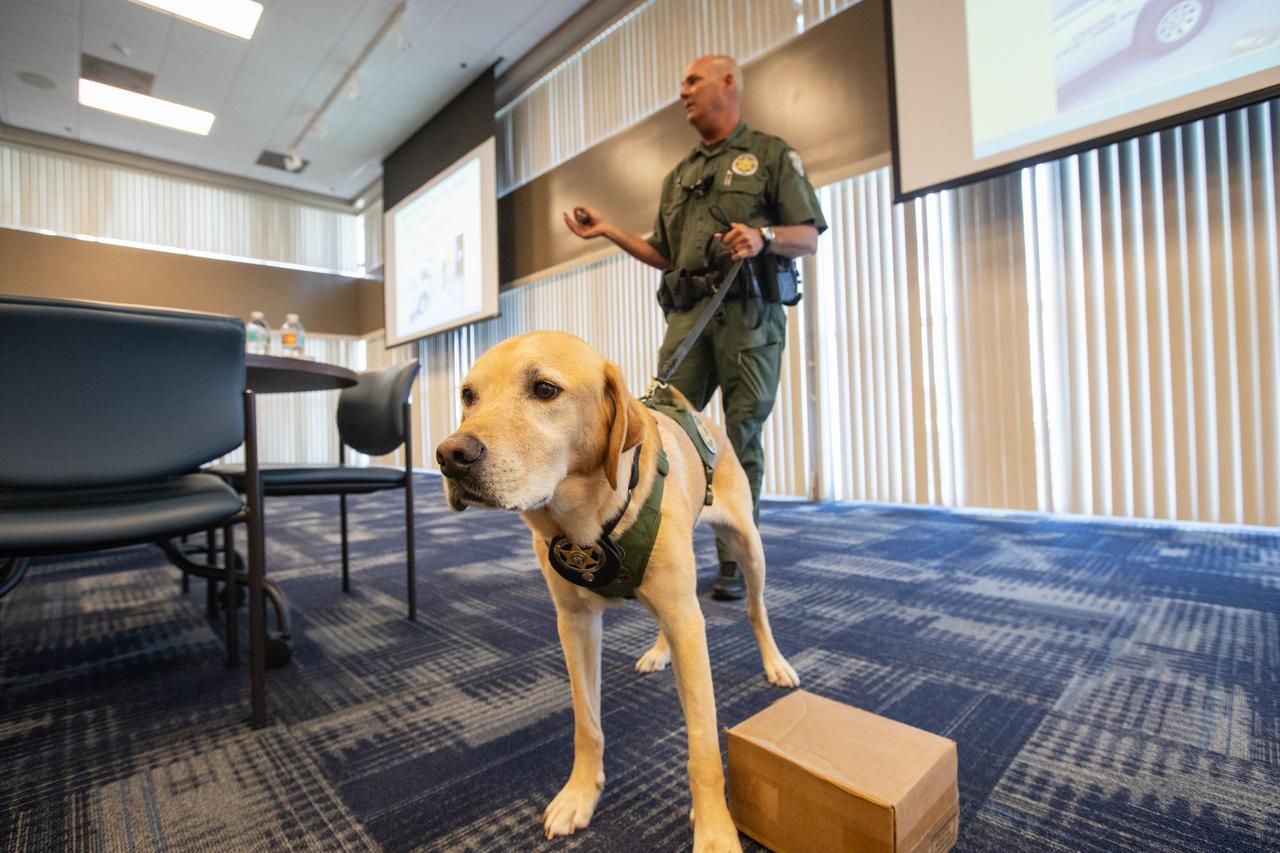
Fish and Wildlife Conservation Commission (FWC) Officer Jeff Sidor presents information on FWC’s Port K9 Program to Kennedy Space Center employees in the Space Station Processing Facility Conference Center on April 23, 2019. Officer Sidor brought a special K9, Harry, to demonstrate how FWC is using specially trained dogs in airports, seaports and mail facilities to detect illegal and invasive fish and wildlife species shipping into Florida. This lunch and learn was available for employees to attend as part of Kennedy’s Earth Day events.
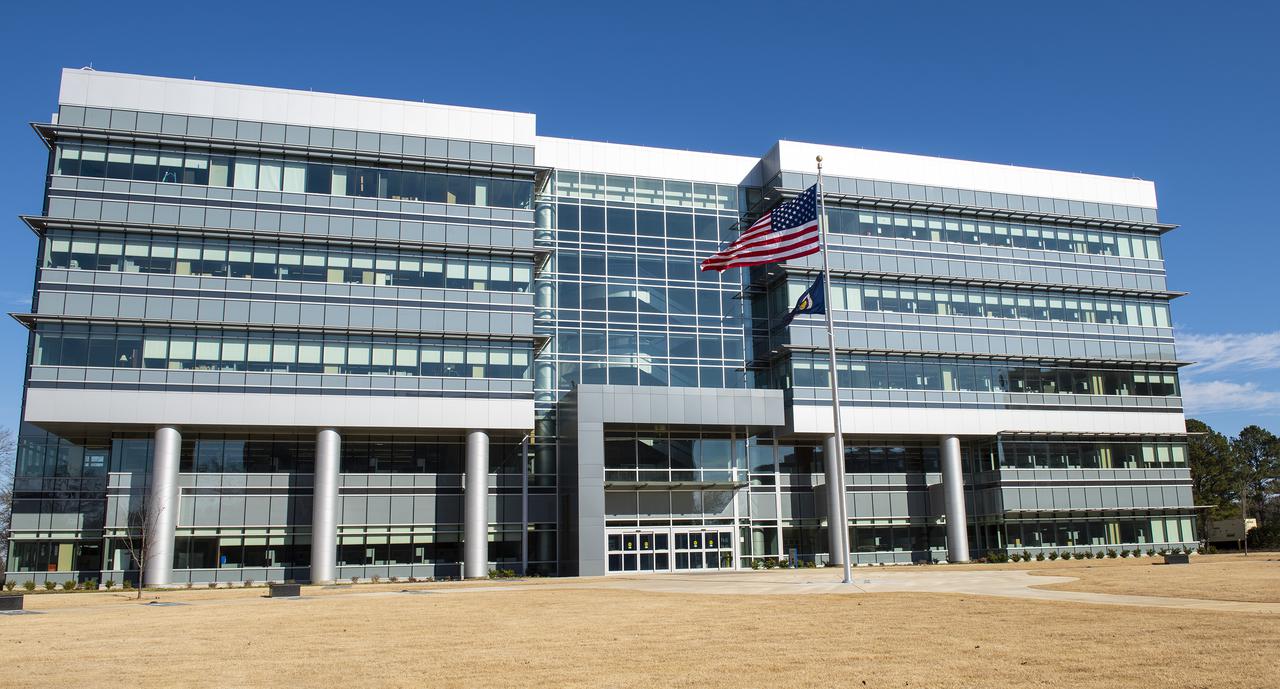
On Jan. 26, 2022, the U.S. and NASA flags were raised at Building 4221 to mark the transfer of headquarters to that building at Marshall Space Flight Center in Huntsville, Alabama. The doors to Building 4221, a new, environmentally friendly building, opened on Earth Day, April 22, 2019. Building 4200 served as Marshall’s original headquarters since 1963. Marshall center operations lowered flags at that building on Jan. 21, 2022.
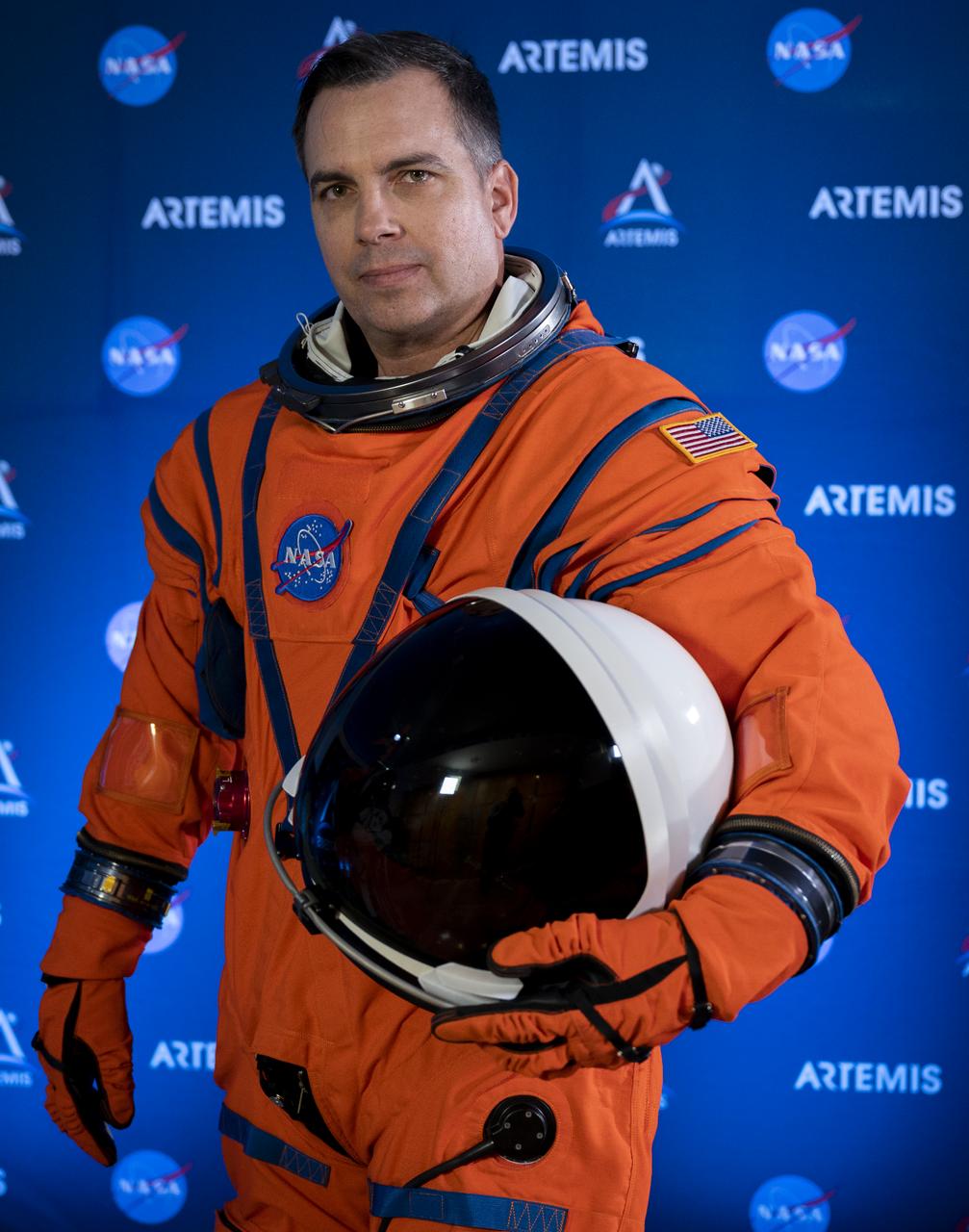
Dustin Gohmert, Orion Crew Survival Systems Project Manager at NASA’s Johnson Space Center, poses for a portrait while wearing the Orion Crew Survival System (OCSS) suit, Tuesday, Oct. 15, 2019 at NASA Headquarters in Washington, DC. The Orion suit is designed for a custom fit and incorporates safety technology and mobility features that will help protect astronauts on launch day, in emergency situations, high-risk parts of missions near the Moon, and during the high-speed return to Earth. Photo Credit: (NASA/Joel Kowsky)
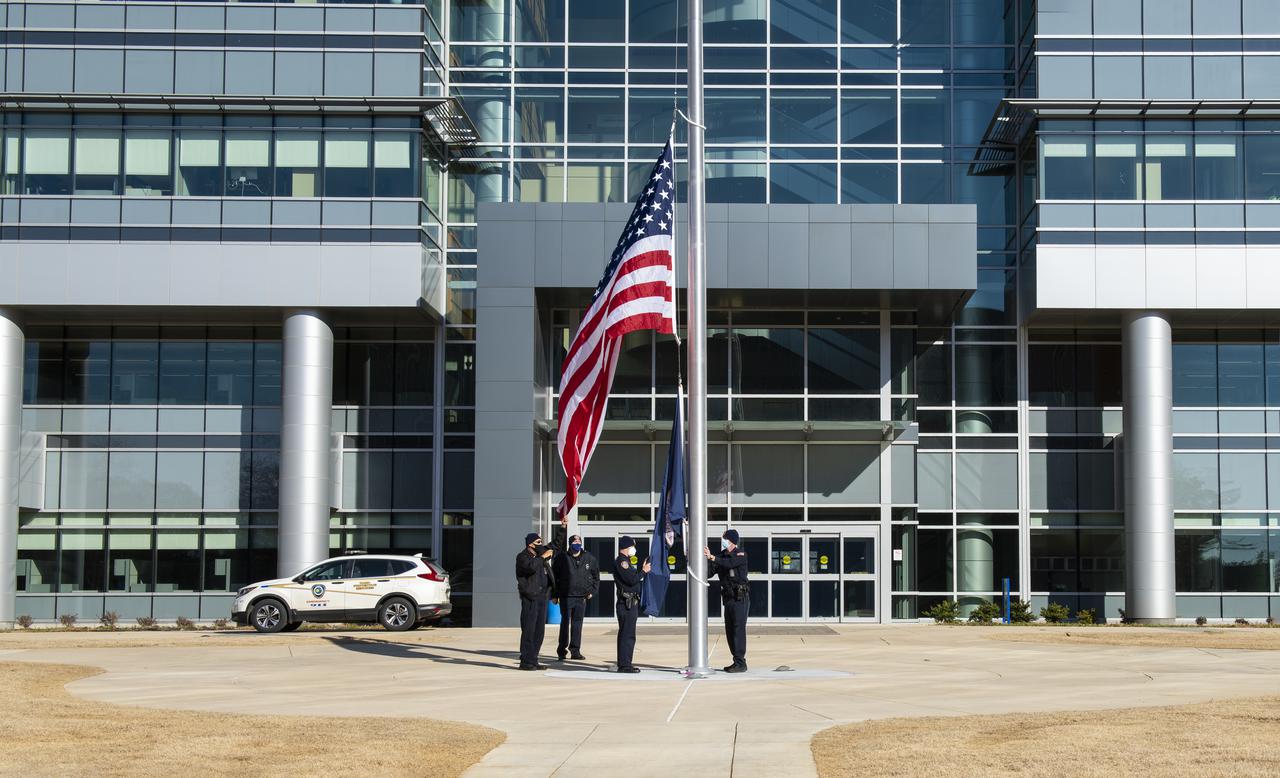
On Jan. 26, 2022, the U.S. and NASA flags were raised at Building 4221 to mark the transfer of headquarters to that building at Marshall Space Flight Center in Huntsville, Alabama. The doors to Building 4221, a new, environmentally friendly building, opened on Earth Day, April 22, 2019. Building 4200 served as Marshall’s original headquarters since 1963. Marshall center operations lowered flags at that building on Jan. 21, 2022.
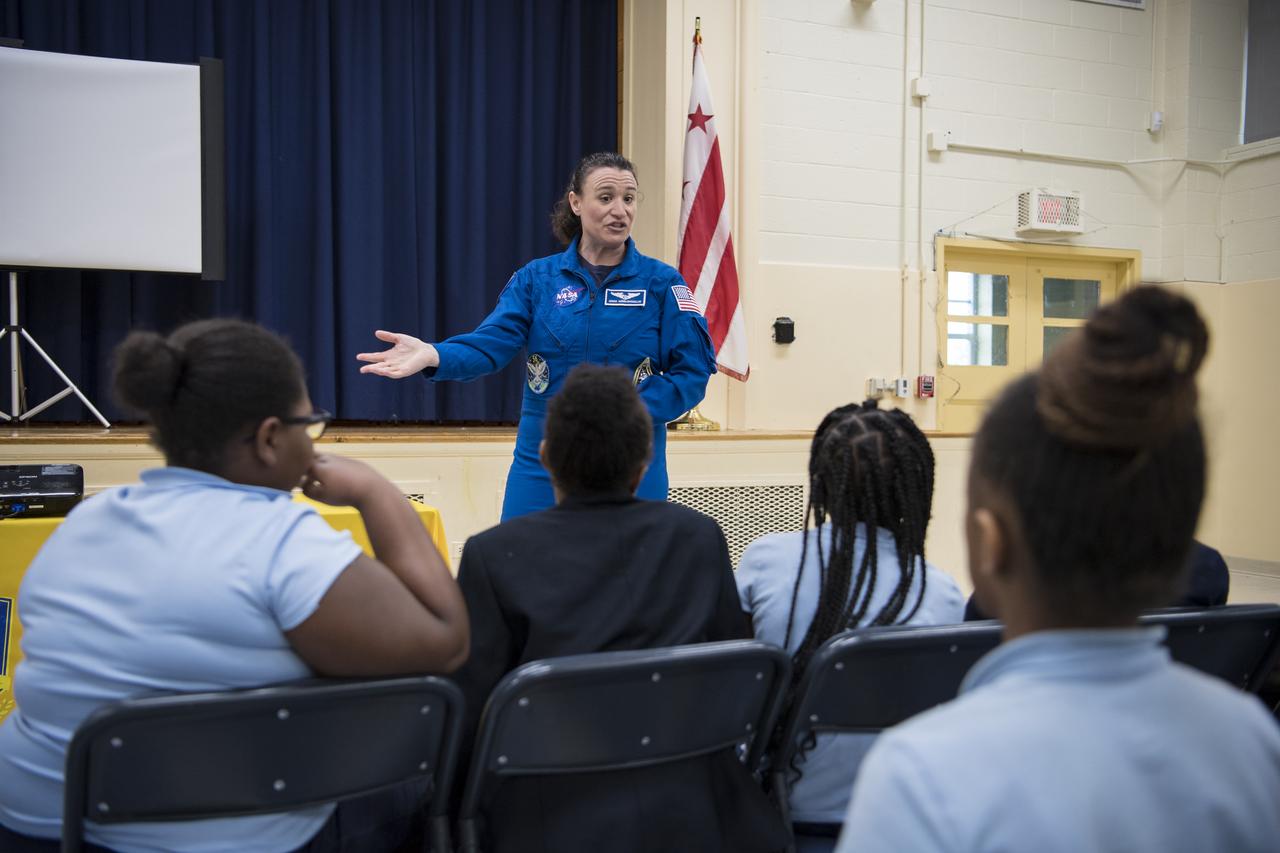
NASA astronaut Dr. Serena Auñón-Chancellor speaks about her experience on Expeditions 56 and 57 onboard the International Space Station (ISS) at Excel Academy Public Charter School, Monday, June 10, 2019 in Washington, DC. Auñón-Chancellor spent 197 days living and working onboard the ISS and contributed to hundreds of experiments in biology, biotechnology, physical science, and Earth science while there. She is also a doctor and started her career with NASA as a flight surgeon in 2006. Photo Credit: (NASA/Aubrey Gemignani)
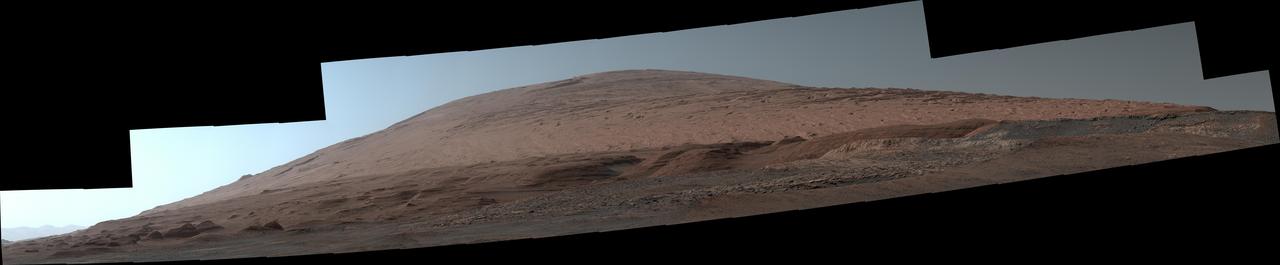
The Mast Camera, or Mastcam, on NASA's Curiosity Mars rover used its telephoto lens to capture Mount Sharp in the morning illumination on Oct. 13, 2019, the 2,555th Martian day, or sol, of the mission. The panorama is composed of 44 individual images stitched together. The panorama has been white-balanced and additionally brightened so that the colors of the rock materials resemble how they would appear under daytime lighting conditions on Earth. https://photojournal.jpl.nasa.gov/catalog/PIA23898
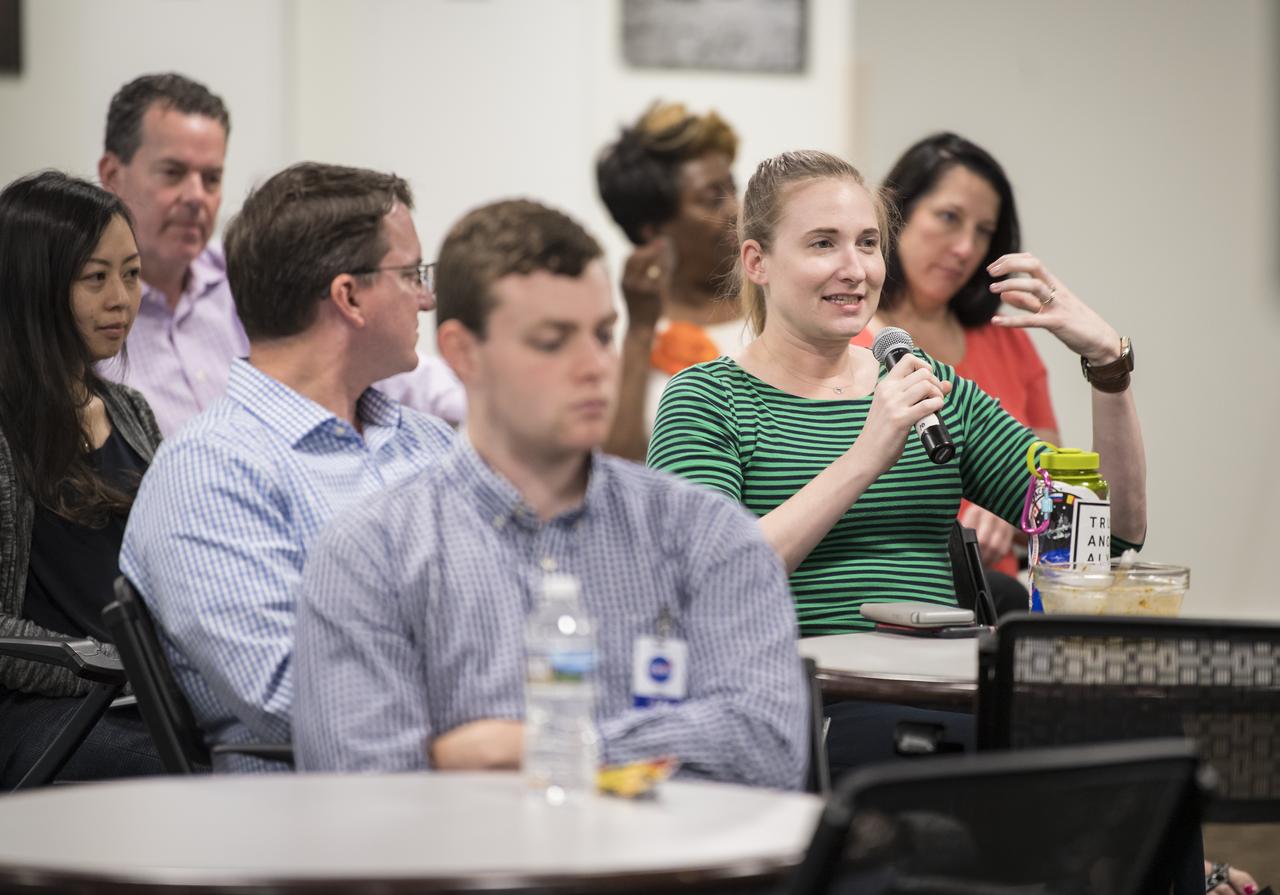
An audience member asks NASA astronaut Serena Auñón-Chancellor a question about her experience on Expeditions 56 and 57 onboard the International Space Station at NASA Headquarters, Friday, June 14, 2019 in Washington. Auñón-Chancellor spent 197 days living and working onboard the orbital laboratory, contributing to hundreds of experiments in biology, biotechnology, physical science, and Earth science. She began her career at NASA as a flight surgeon before being selected as an astronaut in 2009. Photo Credit: (NASA/Aubrey Gemignani)
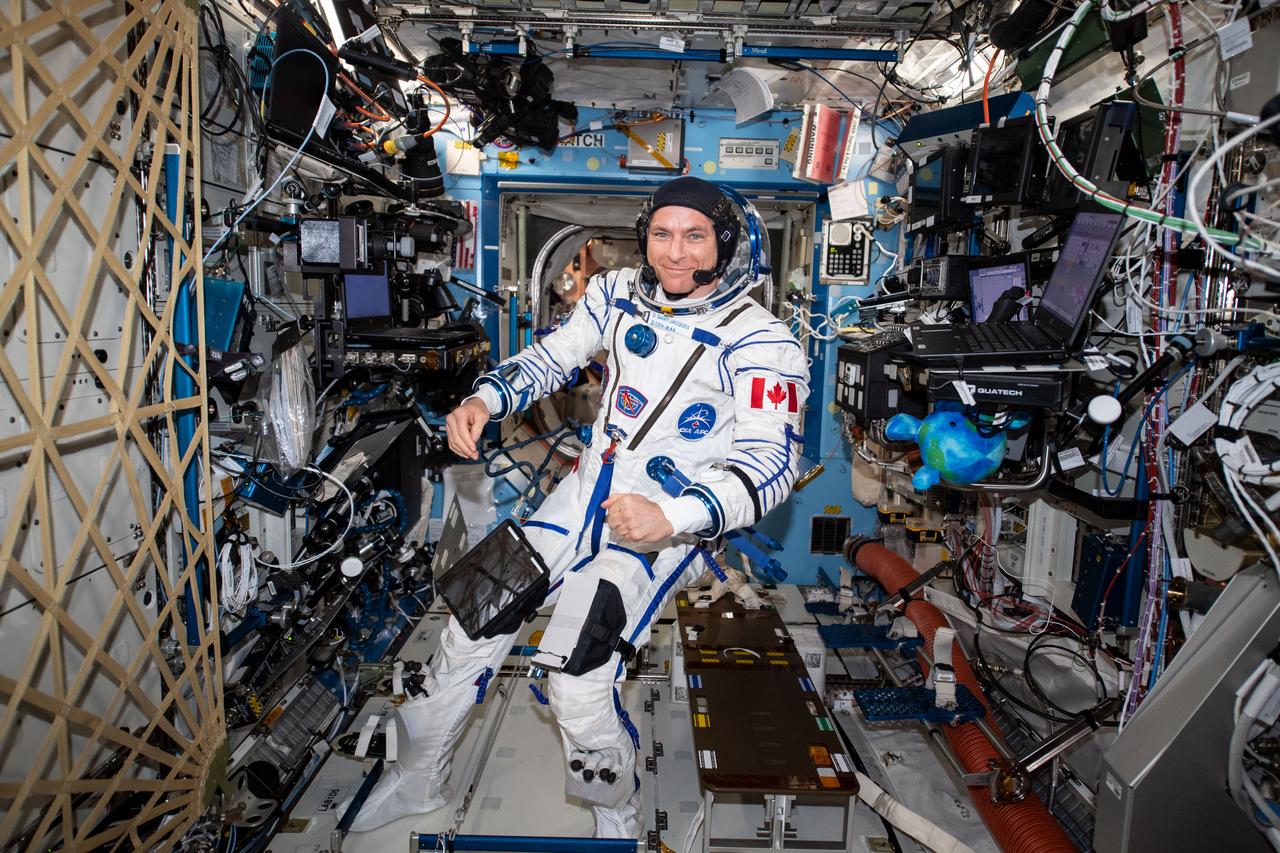
iss059e111674 (June 17, 2019) --- Astronaut David Saint-Jacques of the Canadian Space Agency wears his Sokol launch and entry suit during a leak check before he departs the International Space Station on June 24. He and fellow Expedition 59 crewmembers Anne McClain of NASA and Oleg Kononenko of Roscosmos will wear their Sokol suits when they return to Earth inside the Soyuz MS-11 spacecraft completing a 204-day mission.
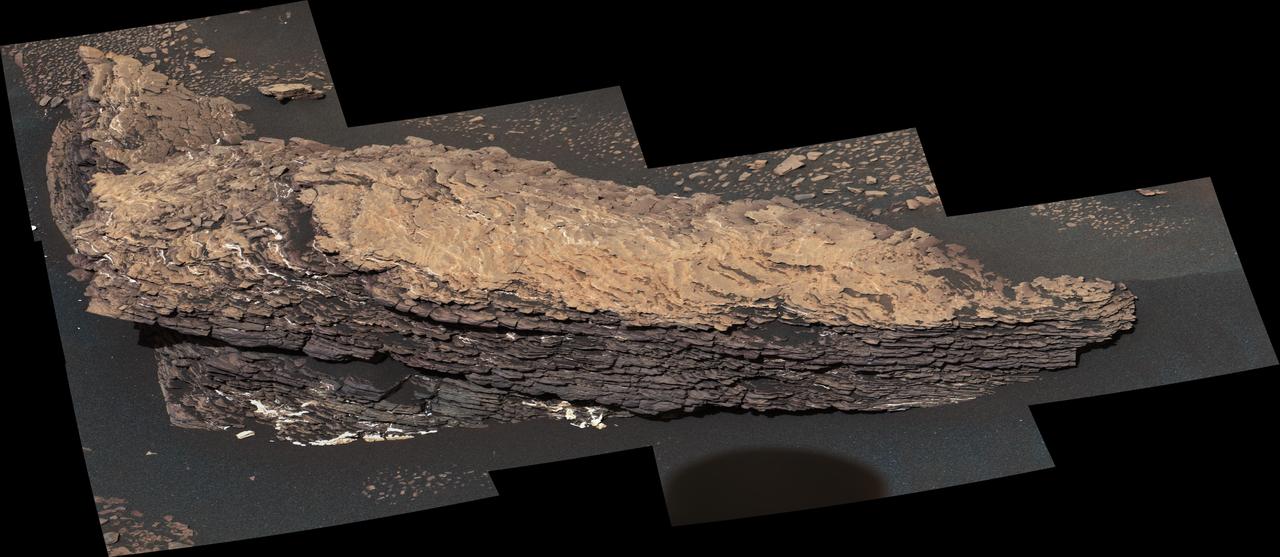
This mosaic of images shows a boulder-sized rock called "Strathdon," which is made up of many complex layers. NASA's Curiosity Mars rover took these images using its Mast Camera, or Mastcam, on July 9, 2019, the 2,461st Martian sol, or day, of the mission. The color in the image has been adjusted to approximate white balancing to resemble how the rocks and sand would appear under daytime lighting conditions on Earth. https://photojournal.jpl.nasa.gov/catalog/PIA23348
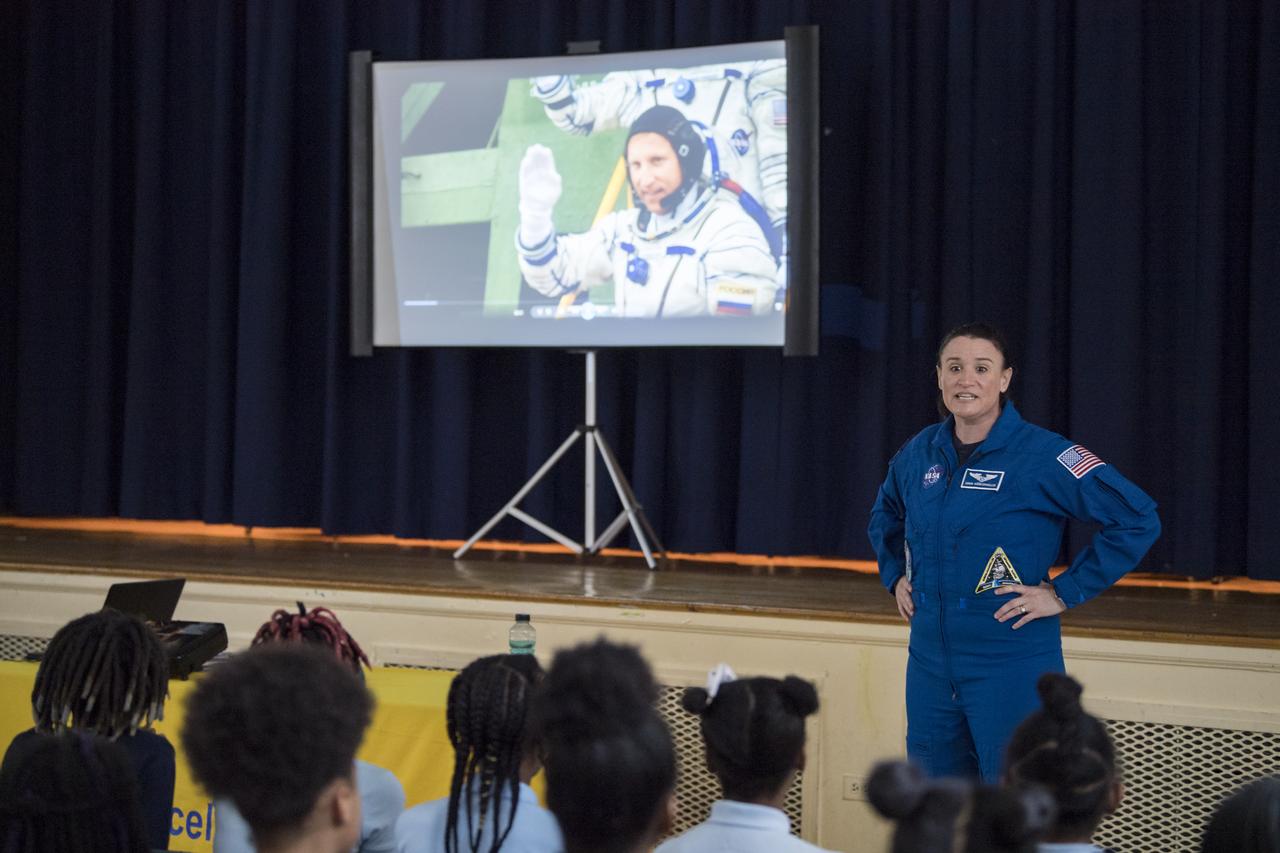
NASA astronaut Dr. Serena Auñón-Chancellor speaks about her experience on Expeditions 56 and 57 onboard the International Space Station (ISS) at Excel Academy Public Charter School, Monday, June 10, 2019 in Washington, DC. Auñón-Chancellor spent 197 days living and working onboard the ISS and contributed to hundreds of experiments in biology, biotechnology, physical science, and Earth science while there. She is also a doctor and started her career with NASA as a flight surgeon in 2006. Photo Credit: (NASA/Aubrey Gemignani)
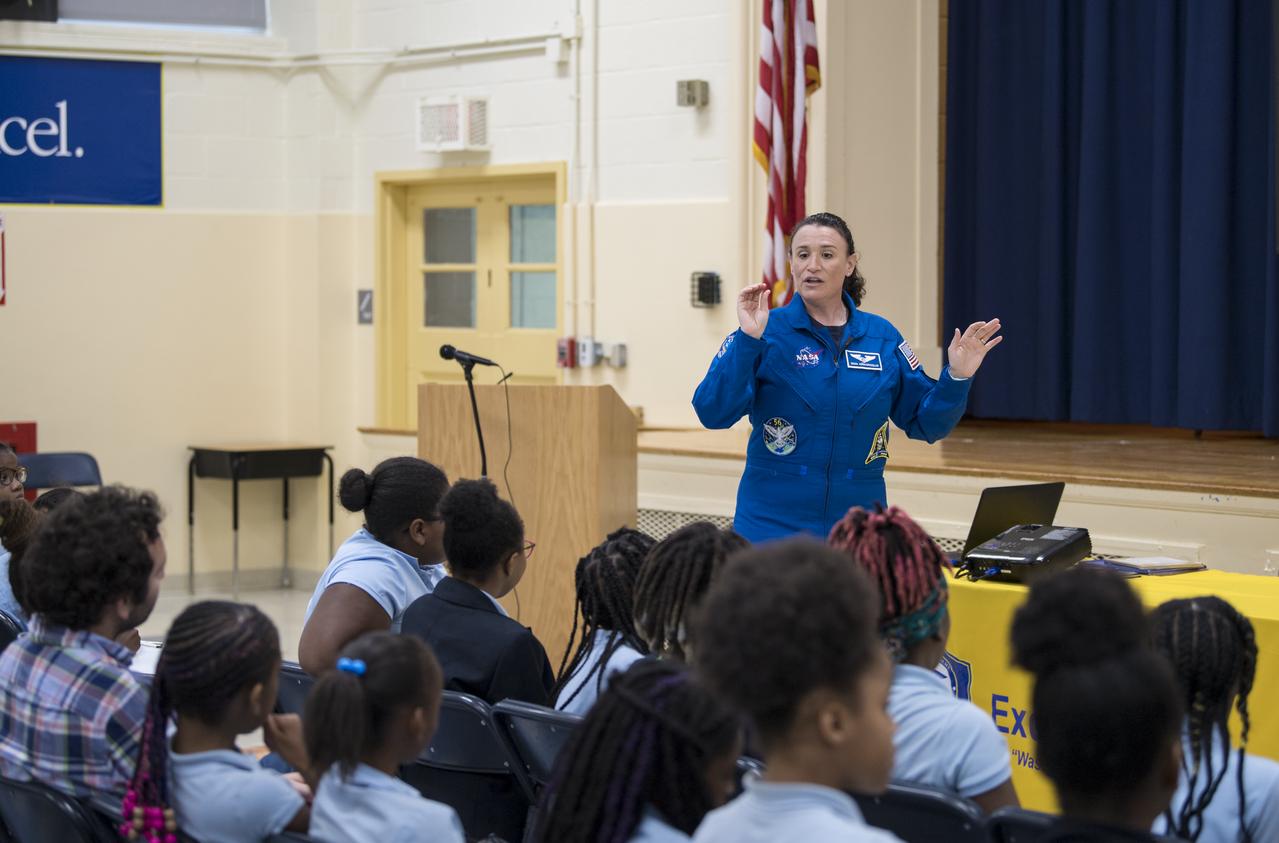
NASA astronaut Dr. Serena Auñón-Chancellor speaks about her experience on Expeditions 56 and 57 onboard the International Space Station (ISS) at Excel Academy Public Charter School, Monday, June 10, 2019 in Washington, DC. Auñón-Chancellor spent 197 days living and working onboard the ISS and contributed to hundreds of experiments in biology, biotechnology, physical science, and Earth science while there. She is also a doctor and started her career with NASA as a flight surgeon in 2006. Photo Credit: (NASA/Aubrey Gemignani)
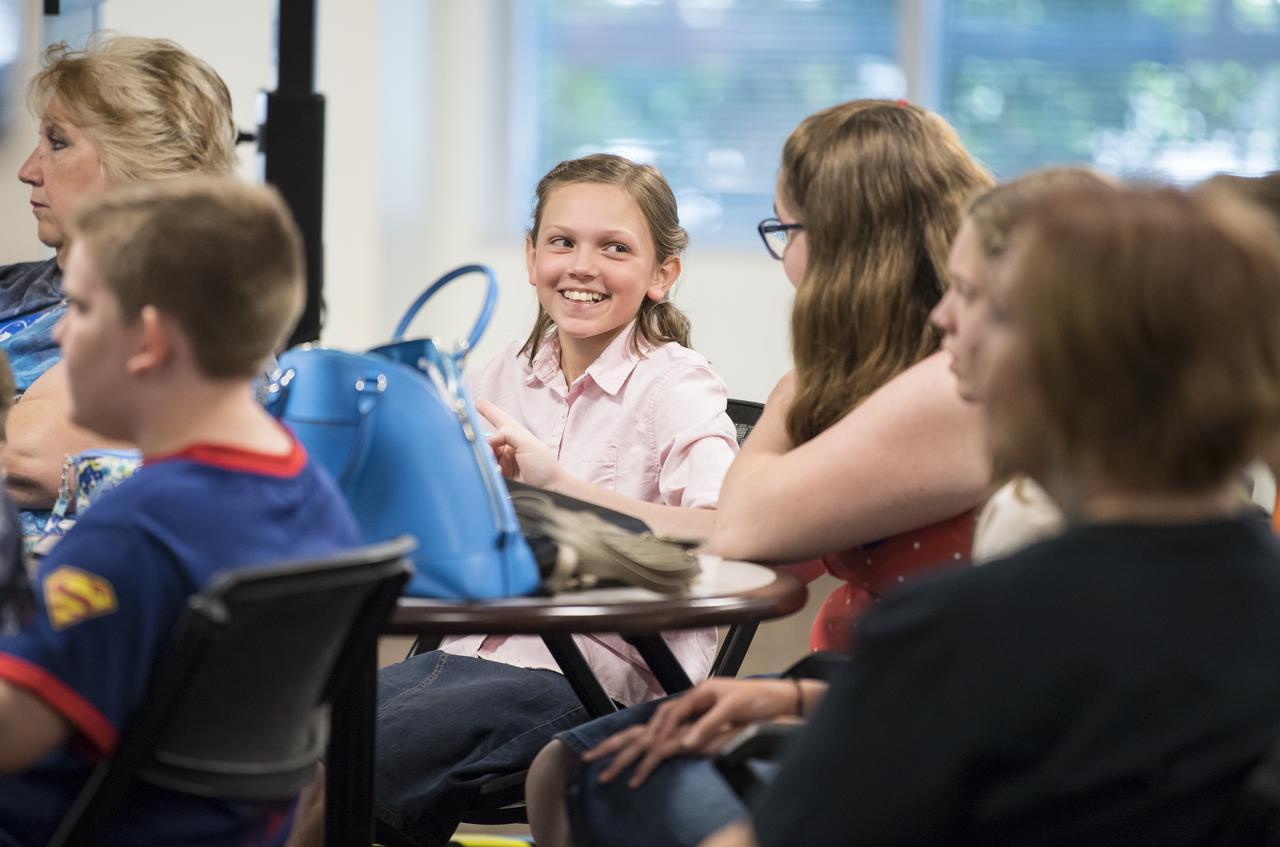
An audience member reacts as NASA astronaut Serena Auñón-Chancellor speaks about her experience on Expeditions 56 and 57 onboard the International Space Station at NASA Headquarters, Friday, June 14, 2019 in Washington. Auñón-Chancellor spent 197 days living and working onboard the orbital laboratory, contributing to hundreds of experiments in biology, biotechnology, physical science, and Earth science. She began her career at NASA as a flight surgeon before being selected as an astronaut in 2009. Photo Credit: (NASA/Aubrey Gemignani)
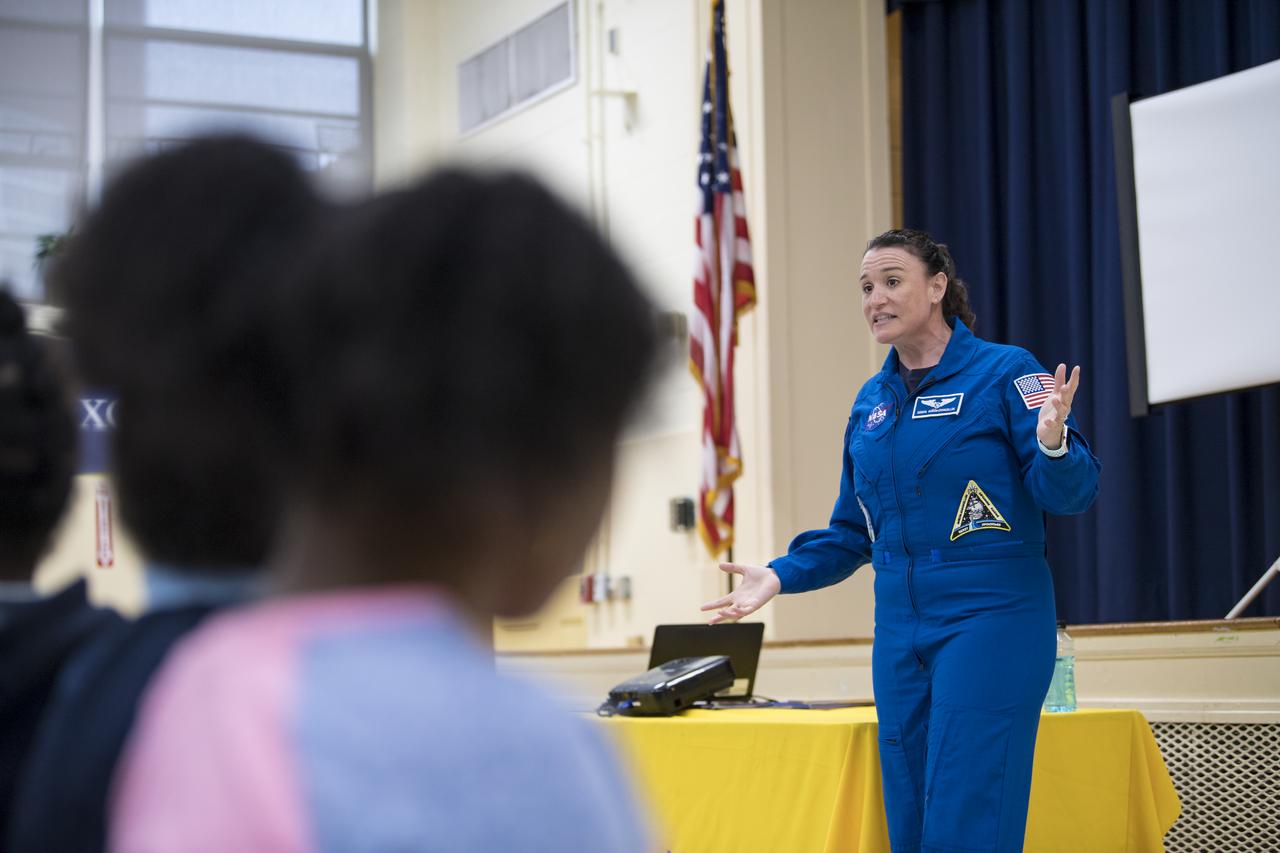
NASA astronaut Dr. Serena Auñón-Chancellor speaks about her experience on Expeditions 56 and 57 onboard the International Space Station (ISS) at Excel Academy Public Charter School, Monday, June 10, 2019 in Washington, DC. Auñón-Chancellor spent 197 days living and working onboard the ISS and contributed to hundreds of experiments in biology, biotechnology, physical science, and Earth science while there. She is also a doctor and started her career with NASA as a flight surgeon in 2006. Photo Credit: (NASA/Aubrey Gemignani)
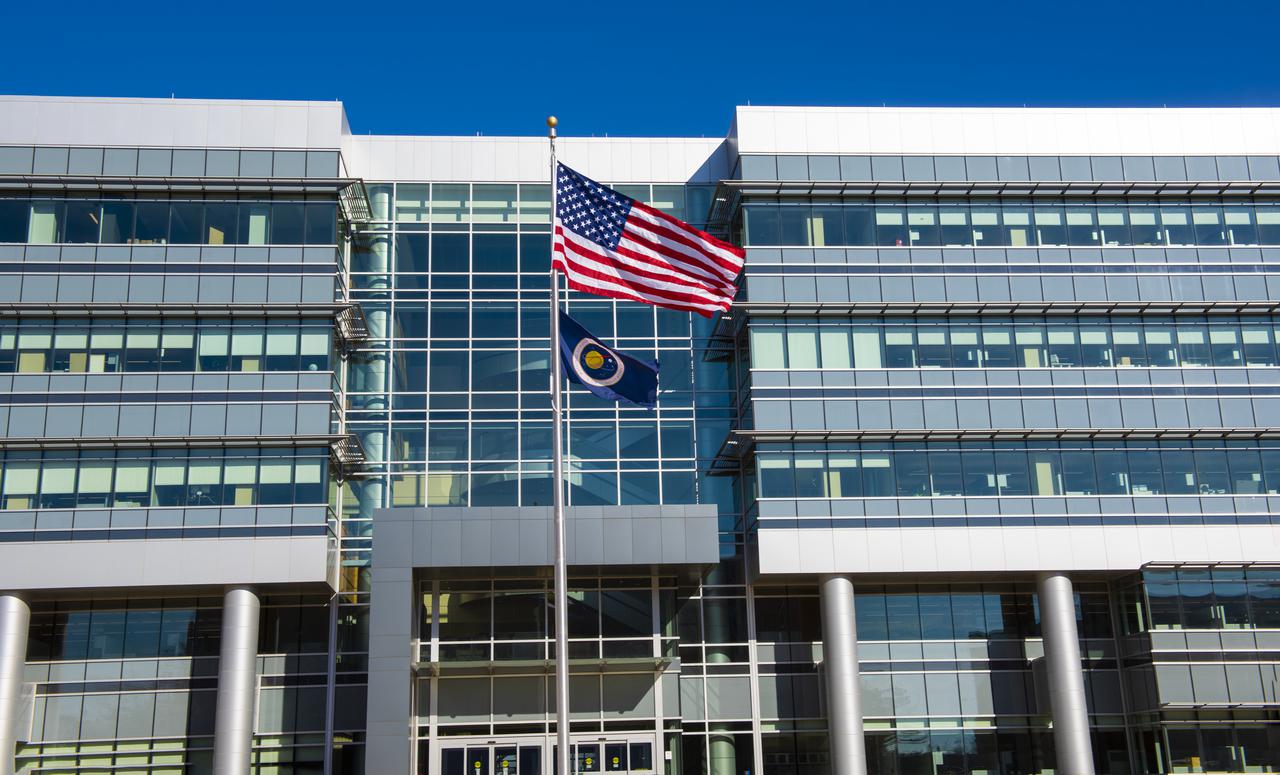
On Jan. 26, 2022, the U.S. and NASA flags were raised at Building 4221 to mark the transfer of headquarters to that building at Marshall Space Flight Center in Huntsville, Alabama. The doors to Building 4221, a new, environmentally friendly building, opened on Earth Day, April 22, 2019. Building 4200 served as Marshall’s original headquarters since 1963. Marshall center operations lowered flags at that building on Jan. 21, 2022.
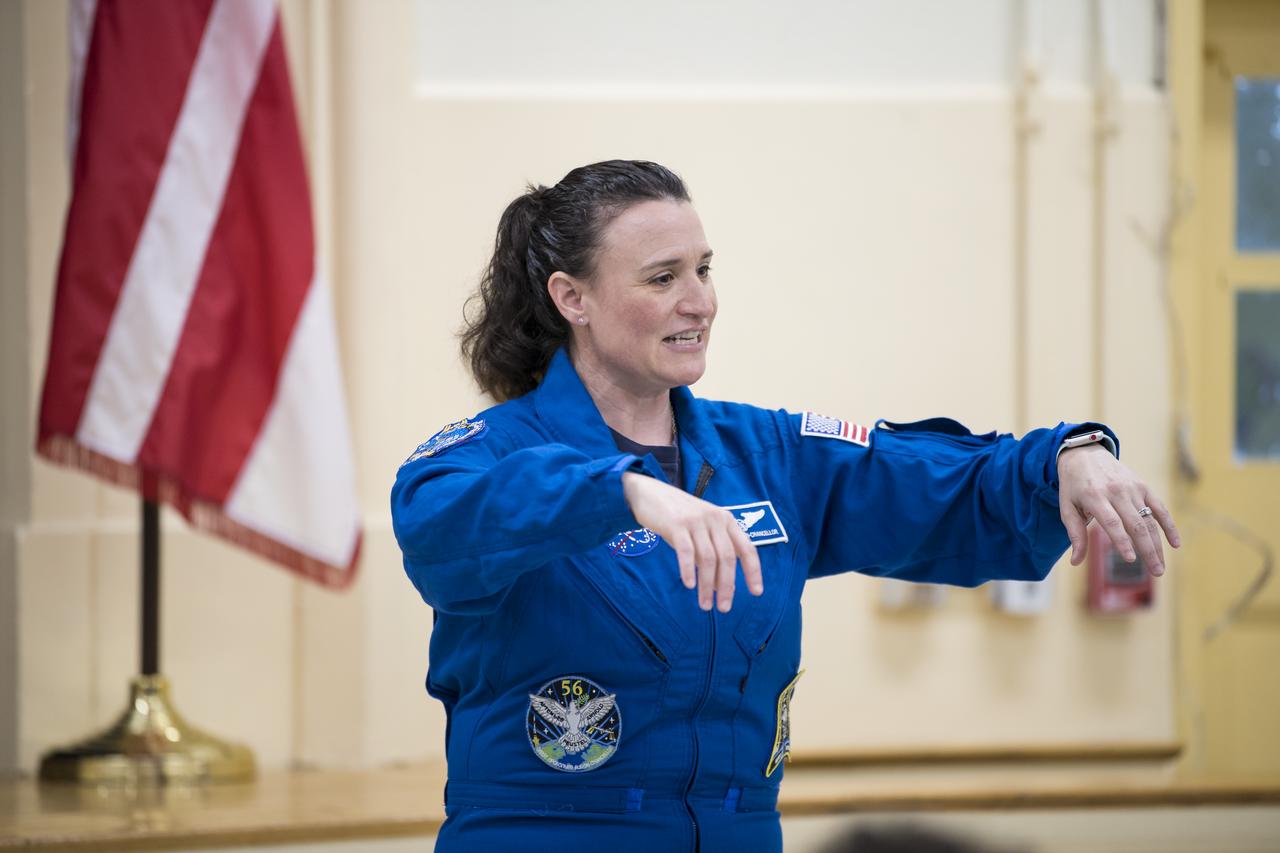
NASA astronaut Dr. Serena Auñón-Chancellor speaks about her experience on Expeditions 56 and 57 onboard the International Space Station (ISS) at Excel Academy Public Charter School, Monday, June 10, 2019 in Washington, DC. Auñón-Chancellor spent 197 days living and working onboard the ISS and contributed to hundreds of experiments in biology, biotechnology, physical science, and Earth science while there. She is also a doctor and started her career with NASA as a flight surgeon in 2006. Photo Credit: (NASA/Aubrey Gemignani)
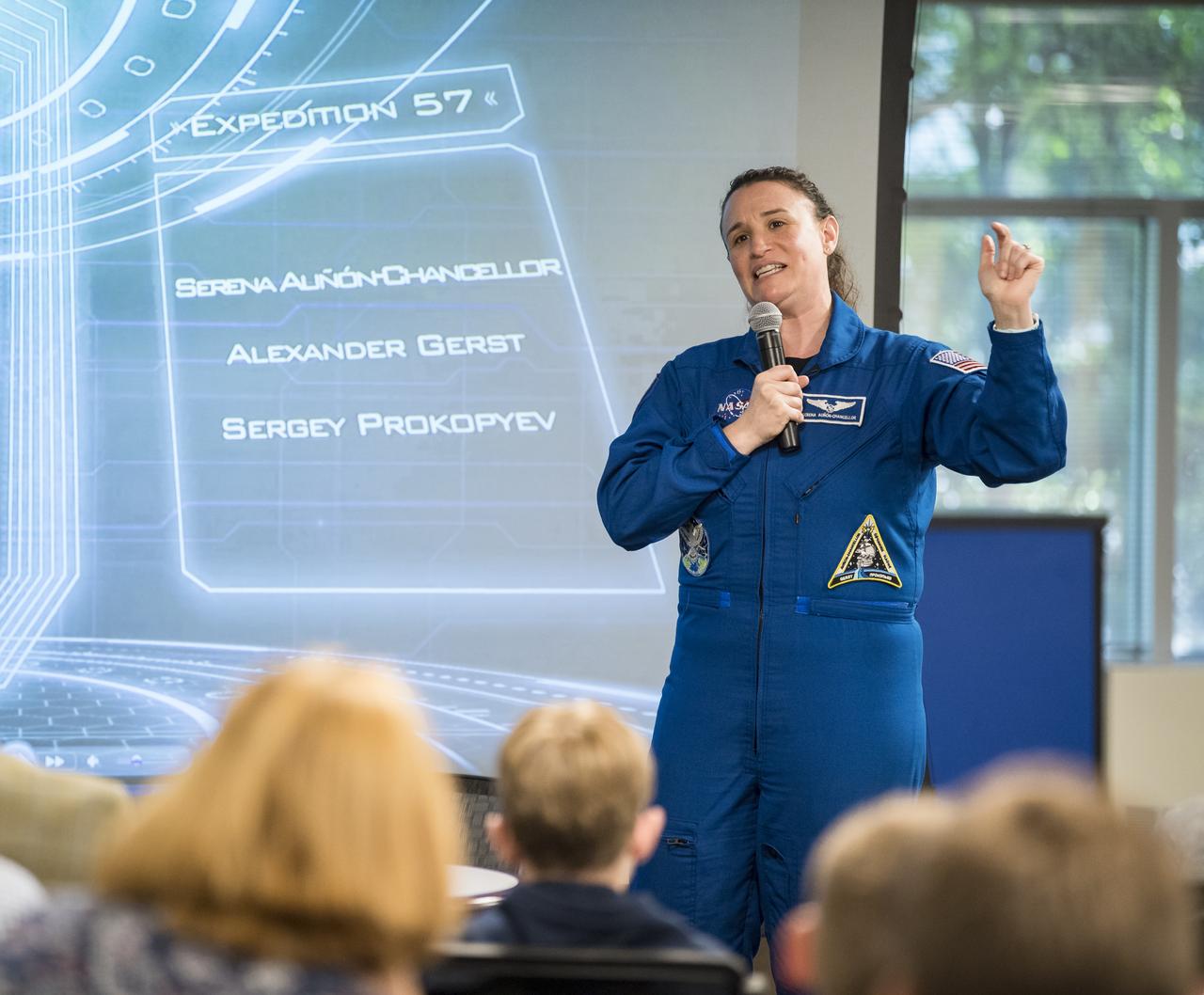
NASA astronaut Serena Auñón-Chancellor speaks about her experience on Expeditions 56 and 57 onboard the International Space Station at NASA Headquarters, Friday, June 14, 2019 in Washington. Auñón-Chancellor spent 197 days living and working onboard the orbital laboratory, contributing to hundreds of experiments in biology, biotechnology, physical science, and Earth science. She began her career at NASA as a flight surgeon before being selected as an astronaut in 2009. Photo Credit: (NASA/Aubrey Gemignani)
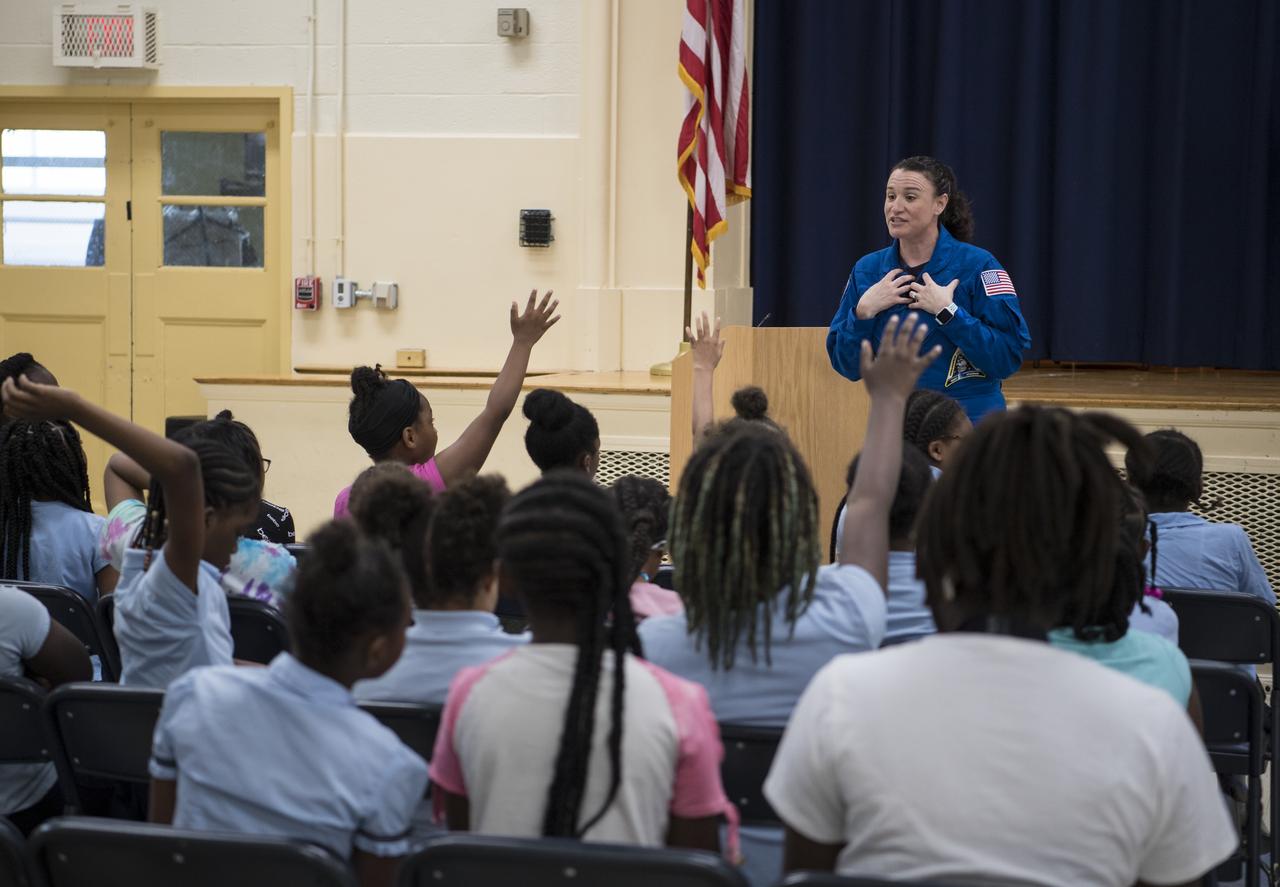
NASA astronaut Dr. Serena Auñón-Chancellor speaks about her experience on Expeditions 56 and 57 onboard the International Space Station (ISS) at Excel Academy Public Charter School, Monday, June 10, 2019 in Washington, DC. Auñón-Chancellor spent 197 days living and working onboard the ISS and contributed to hundreds of experiments in biology, biotechnology, physical science, and Earth science while there. She is also a doctor and started her career with NASA as a flight surgeon in 2006. Photo Credit: (NASA/Aubrey Gemignani)
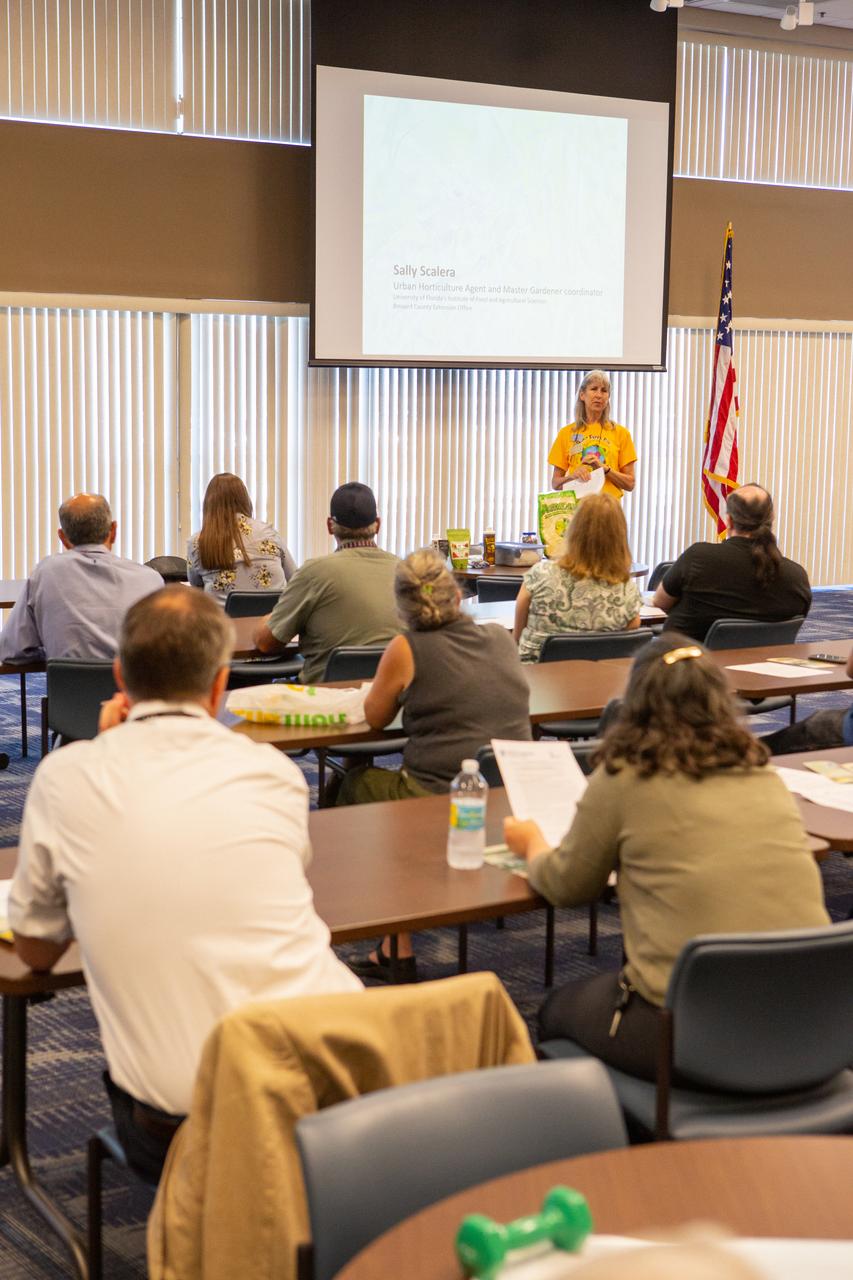
Sally Scalera, urban horticulture agent and master gardener coordinator from the University of Florida’s Institute of Food and Agricultural Sciences Brevard Extension Office, presents some sustainable tips and tricks for a healthy yard and garden to Kennedy Space Center employees on April 24, 2019. Held inside the Florida spaceport’s Space Station Processing Facility Conference Center, Scalera also provided information on Florida-friendly landscaping practices. The lunch and learn was available for employees to attend as part of Kennedy’s Earth Day events.
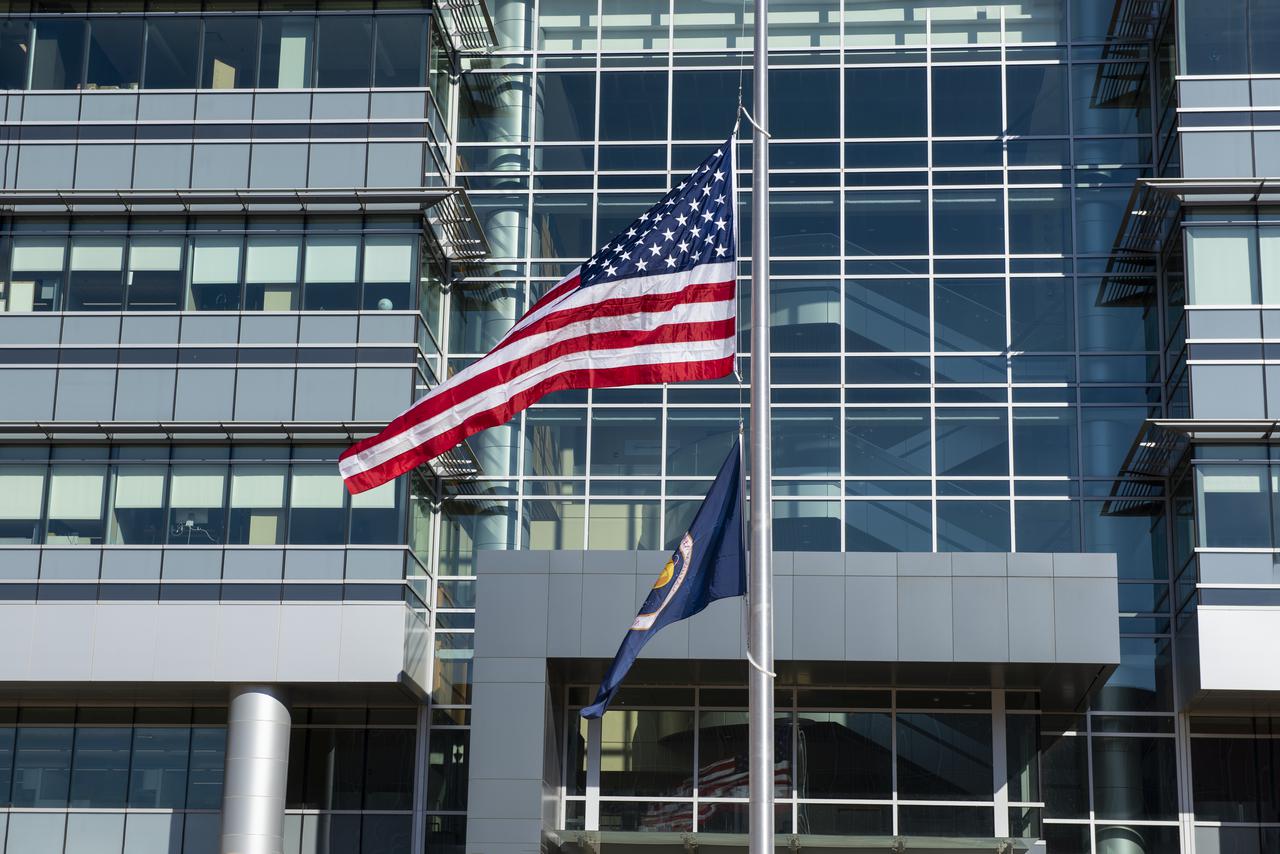
On Jan. 26, 2022, the U.S. and NASA flags were raised at Building 4221 to mark the transfer of headquarters to that building at Marshall Space Flight Center in Huntsville, Alabama. The doors to Building 4221, a new, environmentally friendly building, opened on Earth Day, April 22, 2019. Building 4200 served as Marshall’s original headquarters since 1963. Marshall center operations lowered flags at that building on Jan. 21, 2022.
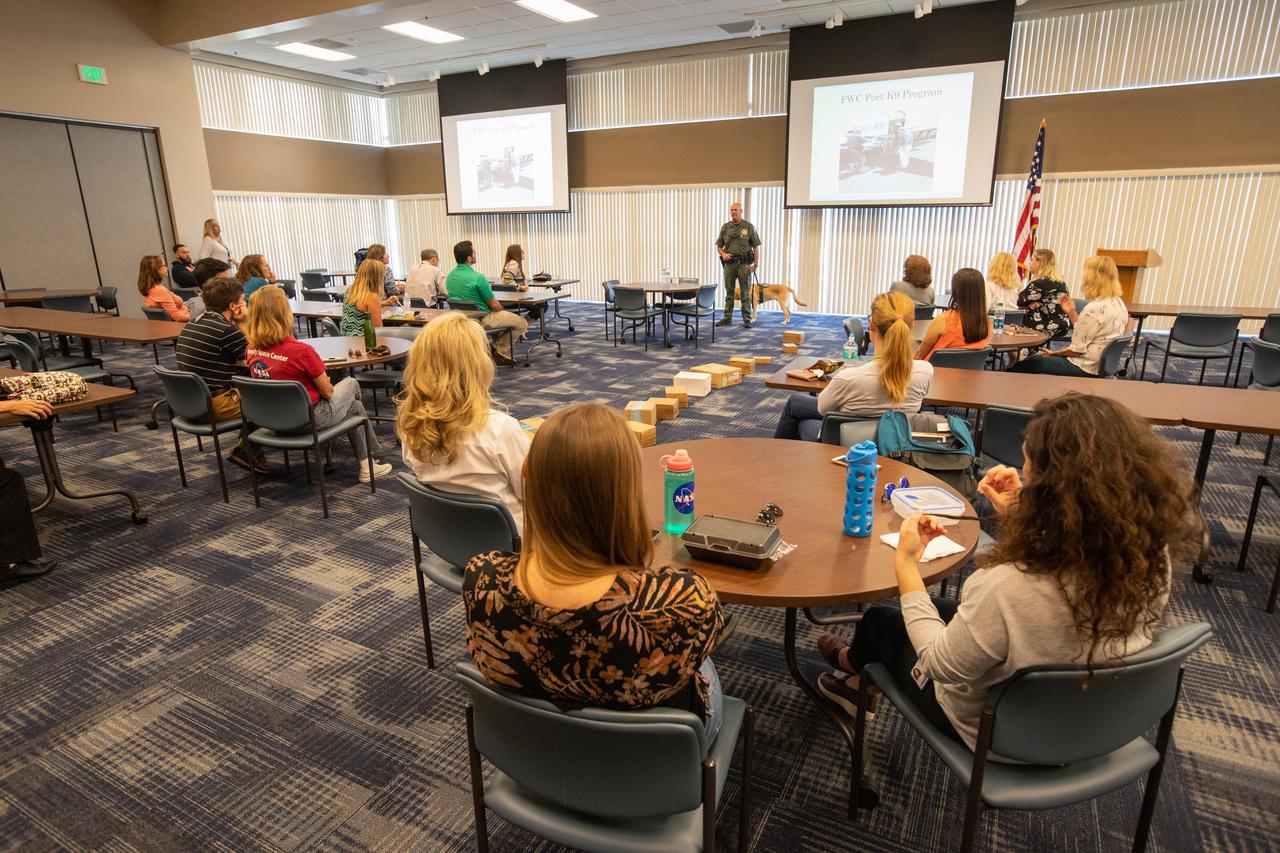
Fish and Wildlife Conservation Commission (FWC) Officer Jeff Sidor presents information on FWC’s Port K9 Program to Kennedy Space Center employees in the Space Station Processing Facility Conference Center on April 23, 2019. Officer Sidor brought a special K9, Harry, to demonstrate how FWC is using specially trained dogs in airports, seaports and mail facilities to detect illegal and invasive fish and wildlife species shipping into Florida. This lunch and learn was available for employees to attend as part of Kennedy’s Earth Day events.

Dustin Gohmert, Orion Crew Survival Systems Project Manager at NASA’s Johnson Space Center, poses for a portrait while wearing the Orion Crew Survival System (OCSS) suit, Tuesday, Oct. 15, 2019 at NASA Headquarters in Washington, DC. The Orion suit is designed for a custom fit and incorporates safety technology and mobility features that will help protect astronauts on launch day, in emergency situations, high-risk parts of missions near the Moon, and during the high-speed return to Earth. Photo Credit: (NASA/Joel Kowsky)
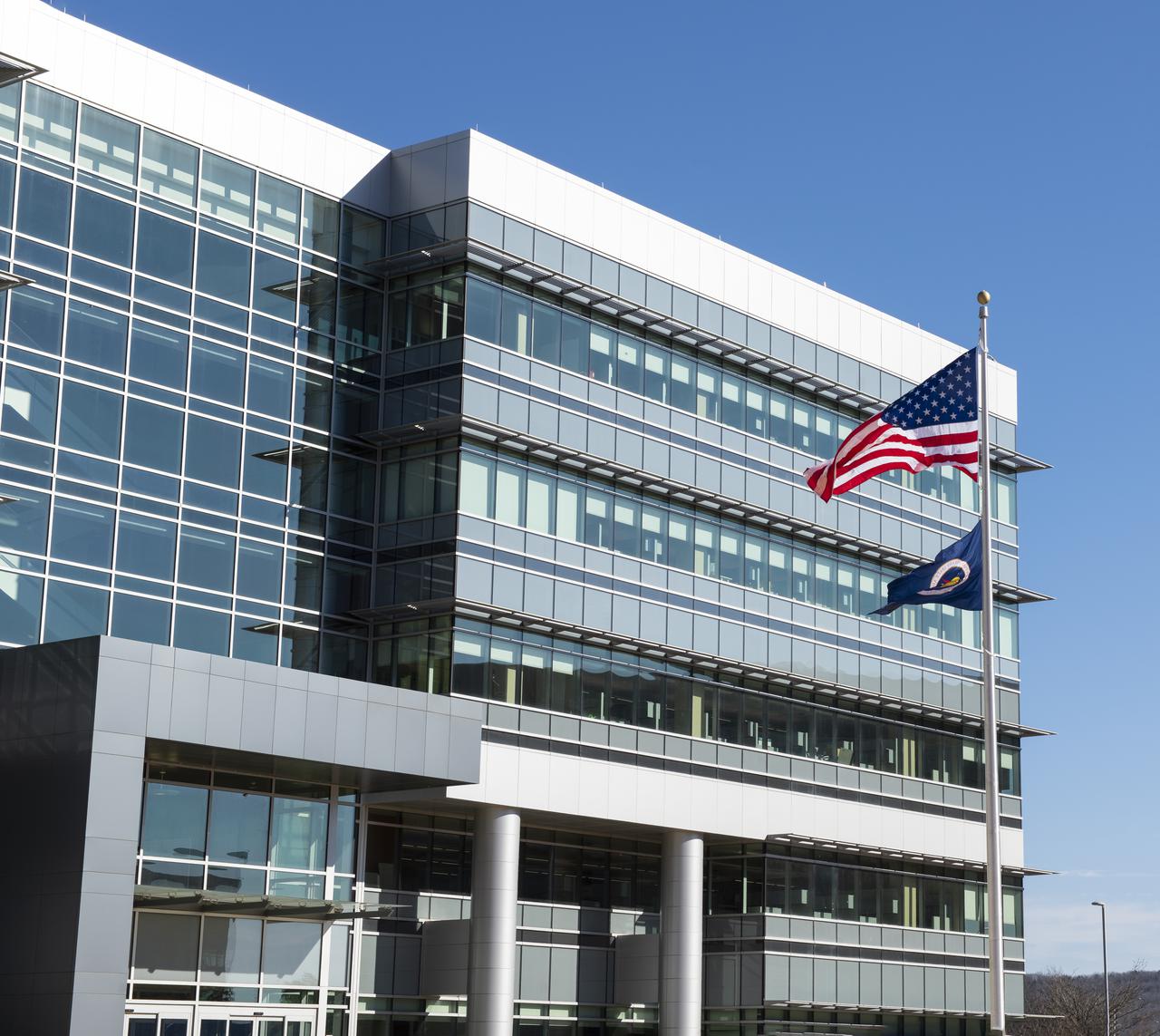
On Jan. 26, 2022, the U.S. and NASA flags were raised at Building 4221 to mark the transfer of headquarters to that building at Marshall Space Flight Center in Huntsville, Alabama. The doors to Building 4221, a new, environmentally friendly building, opened on Earth Day, April 22, 2019. Building 4200 served as Marshall’s original headquarters since 1963. Marshall center operations lowered flags at that building on Jan. 21, 2022.
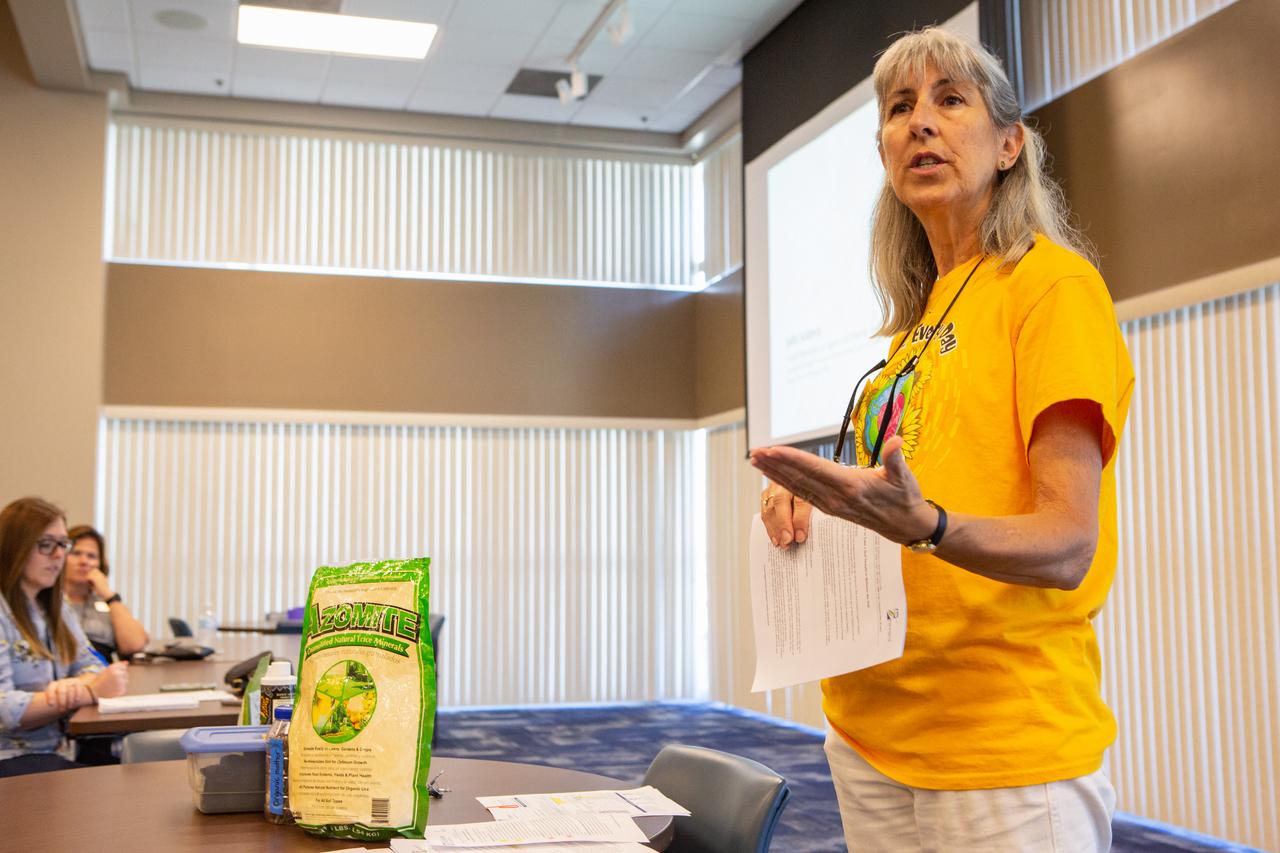
Sally Scalera, urban horticulture agent and master gardener coordinator from the University of Florida’s Institute of Food and Agricultural Sciences Brevard Extension Office, presents some sustainable tips and tricks for a healthy yard and garden to Kennedy Space Center employees on April 24, 2019. Held inside the Florida spaceport’s Space Station Processing Facility Conference Center, Scalera also provided information on Florida-friendly landscaping practices. The lunch and learn was available for employees to attend as part of Kennedy’s Earth Day events.
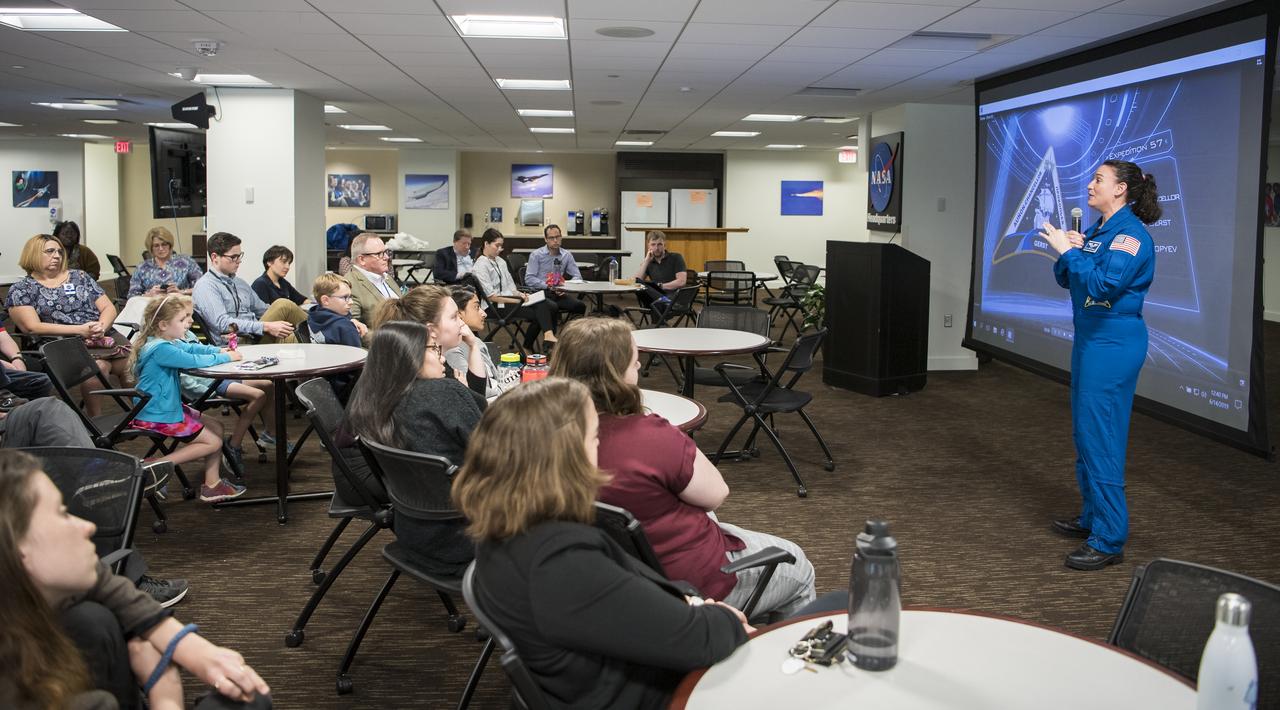
NASA astronaut Serena Auñón-Chancellor speaks about her experience on Expeditions 56 and 57 onboard the International Space Station at NASA Headquarters, Friday, June 14, 2019 in Washington. Auñón-Chancellor spent 197 days living and working onboard the orbital laboratory, contributing to hundreds of experiments in biology, biotechnology, physical science, and Earth science. She began her career at NASA as a flight surgeon before being selected as an astronaut in 2009. Photo Credit: (NASA/Aubrey Gemignani)

On Jan. 26, 2022, the U.S. and NASA flags were raised at Building 4221 to mark the transfer of headquarters to that building at Marshall Space Flight Center in Huntsville, Alabama. The doors to Building 4221, a new, environmentally friendly building, opened on Earth Day, April 22, 2019. Building 4200 served as Marshall’s original headquarters since 1963. Marshall center operations lowered flags at that building on Jan. 21, 2022.
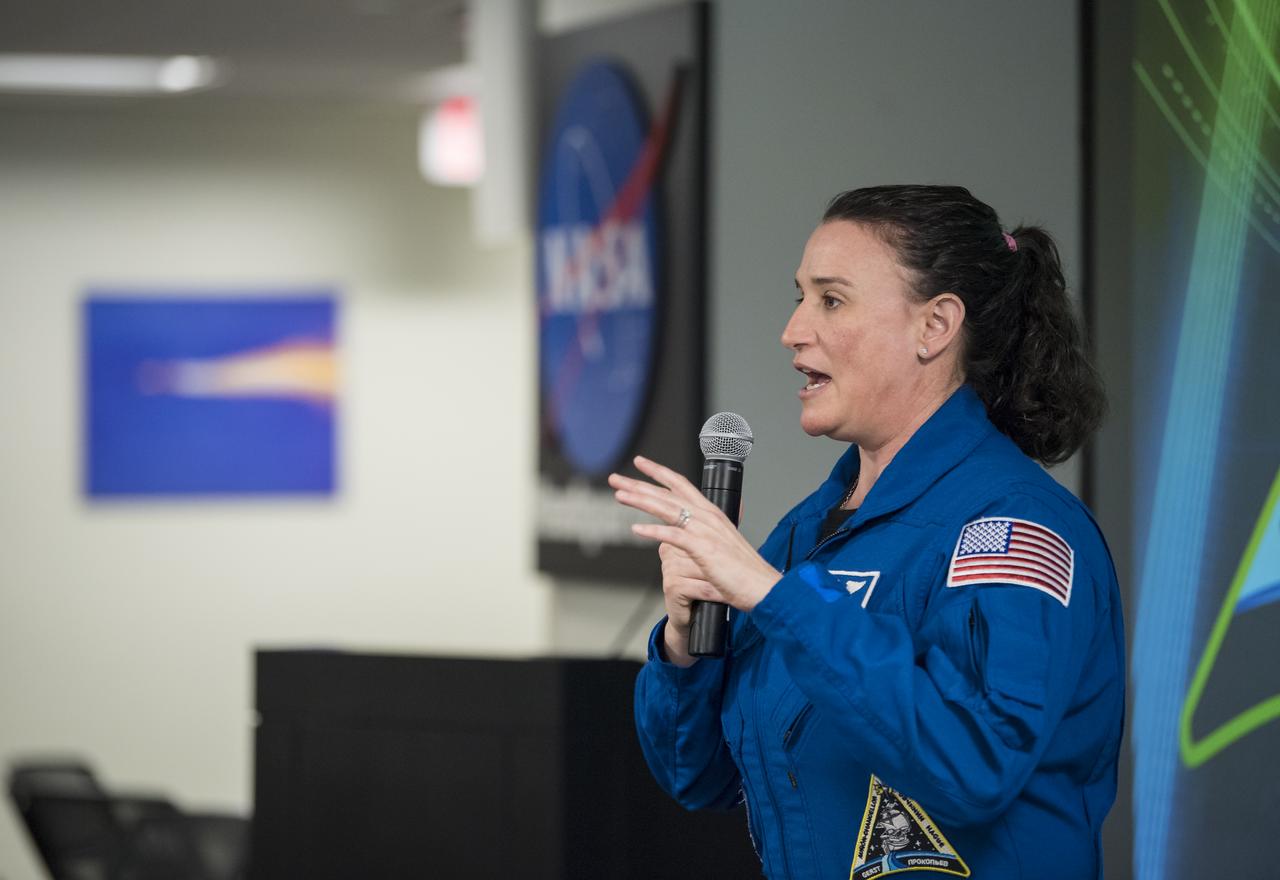
NASA astronaut Serena Auñón-Chancellor speaks about her experience on Expeditions 56 and 57 onboard the International Space Station at NASA Headquarters, Friday, June 14, 2019 in Washington. Auñón-Chancellor spent 197 days living and working onboard the orbital laboratory, contributing to hundreds of experiments in biology, biotechnology, physical science, and Earth science. She began her career at NASA as a flight surgeon before being selected as an astronaut in 2009. Photo Credit: (NASA/Aubrey Gemignani)
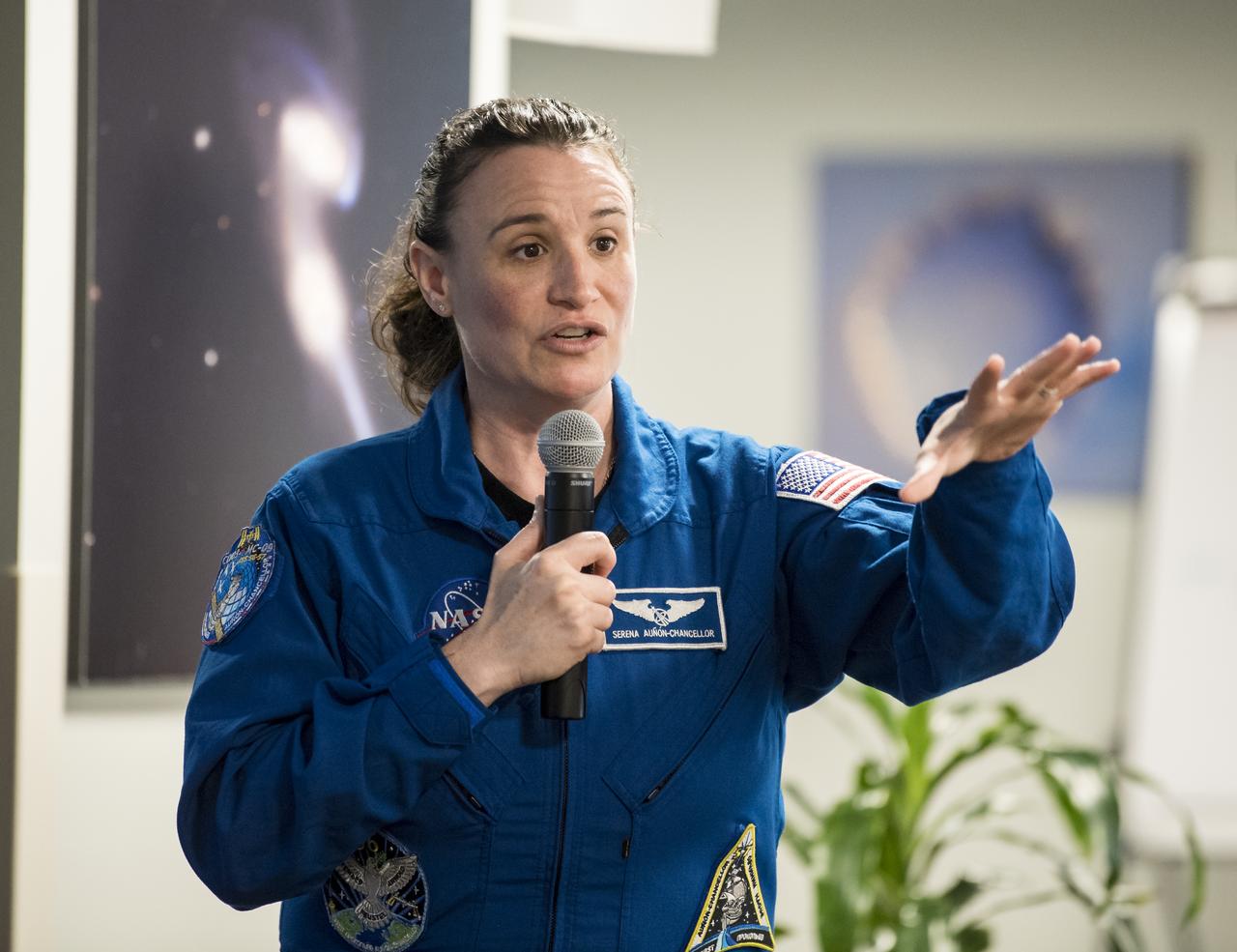
NASA astronaut Serena Auñón-Chancellor speaks about her experience on Expeditions 56 and 57 onboard the International Space Station at NASA Headquarters, Friday, June 14, 2019 in Washington. Auñón-Chancellor spent 197 days living and working onboard the orbital laboratory, contributing to hundreds of experiments in biology, biotechnology, physical science, and Earth science. She began her career at NASA as a flight surgeon before being selected as an astronaut in 2009. Photo Credit: (NASA/Aubrey Gemignani)
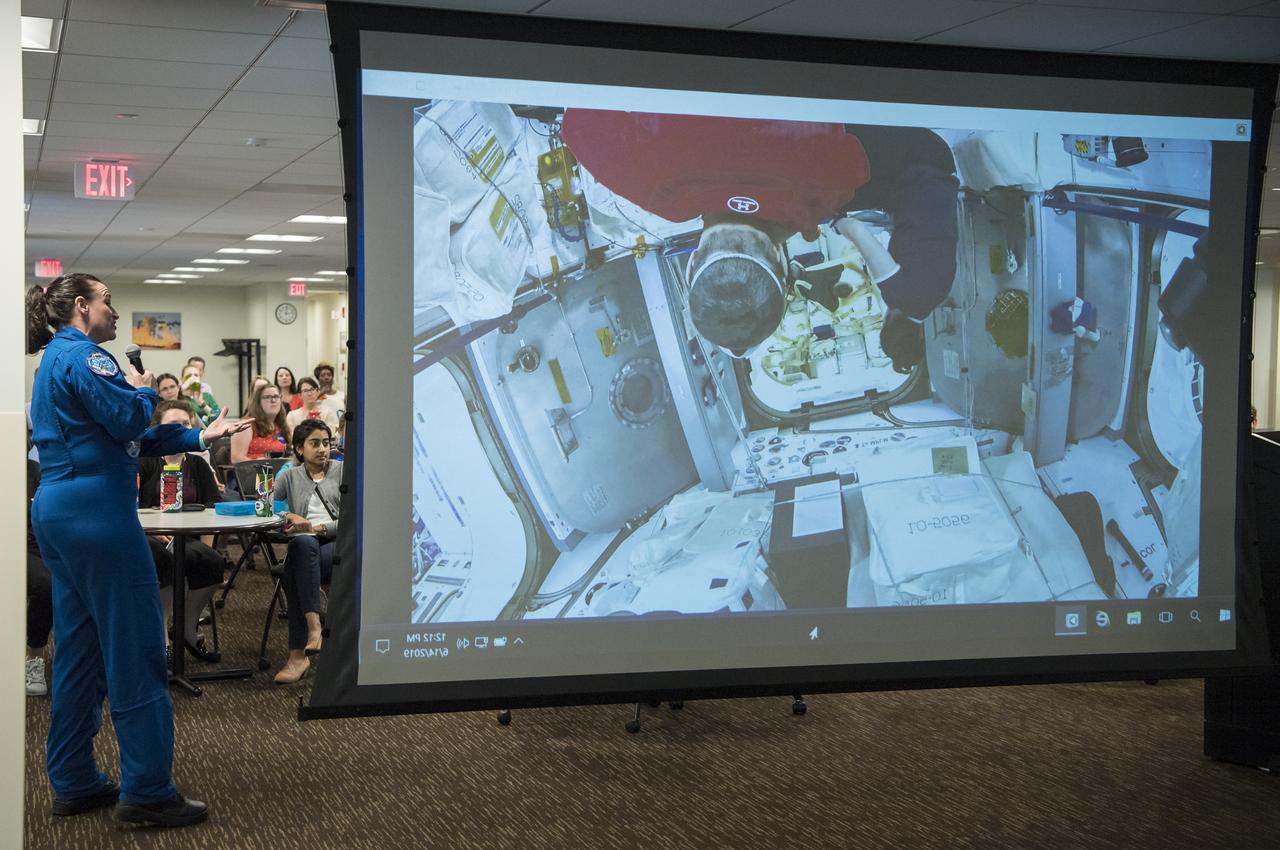
NASA astronaut Serena Auñón-Chancellor speaks about her experience on Expeditions 56 and 57 onboard the International Space Station at NASA Headquarters, Friday, June 14, 2019 in Washington. Auñón-Chancellor spent 197 days living and working onboard the orbital laboratory, contributing to hundreds of experiments in biology, biotechnology, physical science, and Earth science. She began her career at NASA as a flight surgeon before being selected as an astronaut in 2009. Photo Credit: (NASA/Aubrey Gemignani)
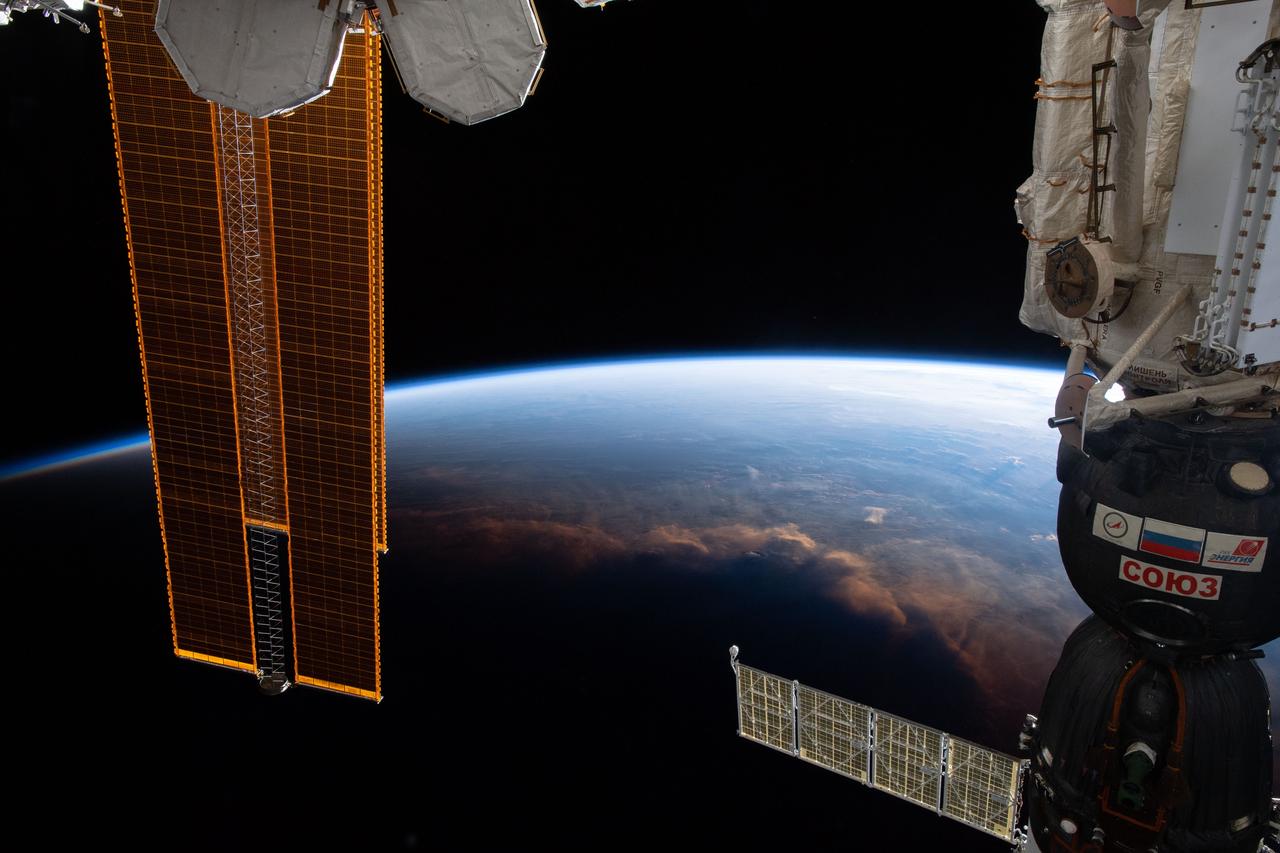
iss059e025207 (April 17, 2019) --- The International Space Station crosses the terminator, the line that separates night and day on Earth, as it orbits 254 miles above the Gulf of Guinea on Africa's mid-western coast. Portions of the orbital complex can be seen including a pair of high-pressure gas tanks, solar arrays and the Soyuz MS-12 crew ship docked to the Rassvet module.
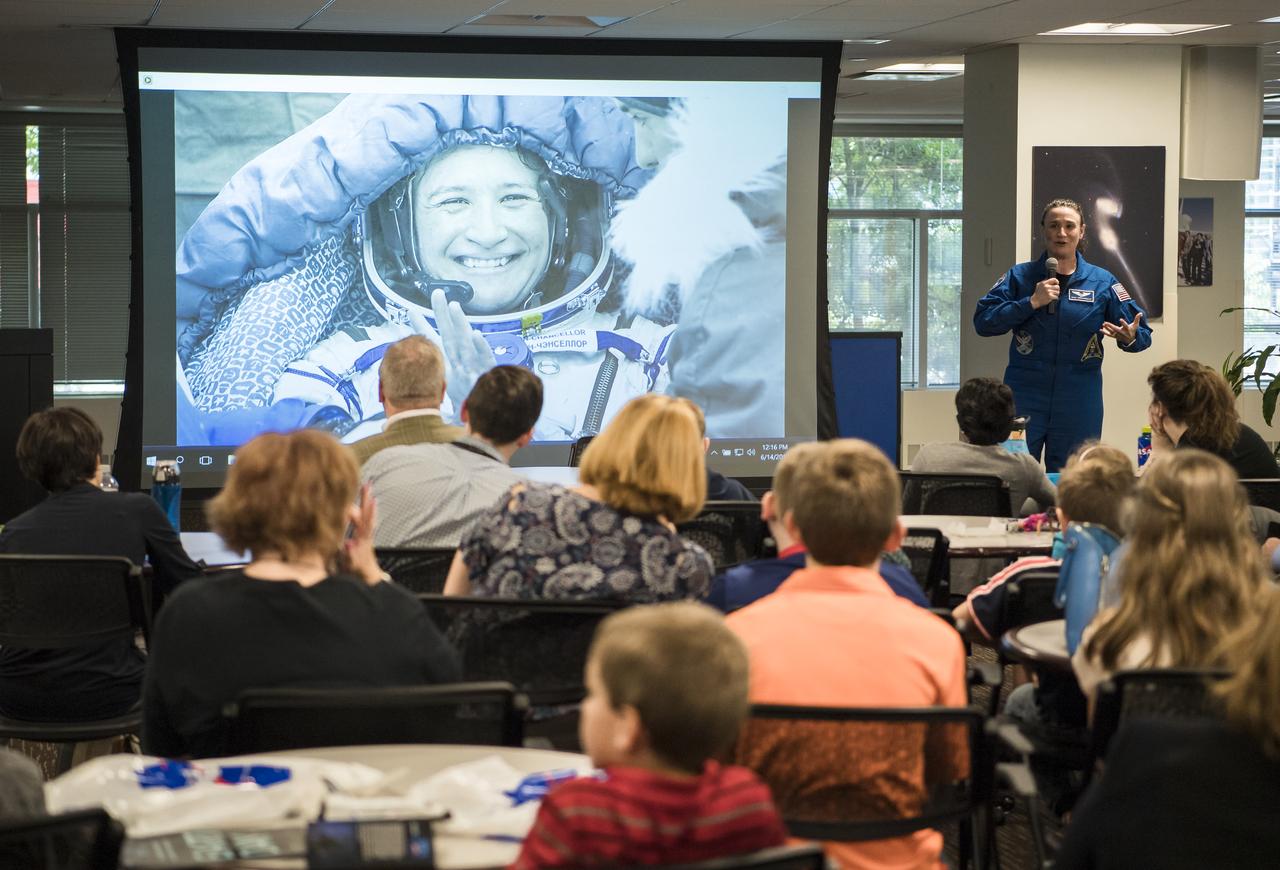
NASA astronaut Serena Auñón-Chancellor speaks about her experience on Expeditions 56 and 57 onboard the International Space Station at NASA Headquarters, Friday, June 14, 2019 in Washington. Auñón-Chancellor spent 197 days living and working onboard the orbital laboratory, contributing to hundreds of experiments in biology, biotechnology, physical science, and Earth science. She began her career at NASA as a flight surgeon before being selected as an astronaut in 2009. Photo Credit: (NASA/Aubrey Gemignani)
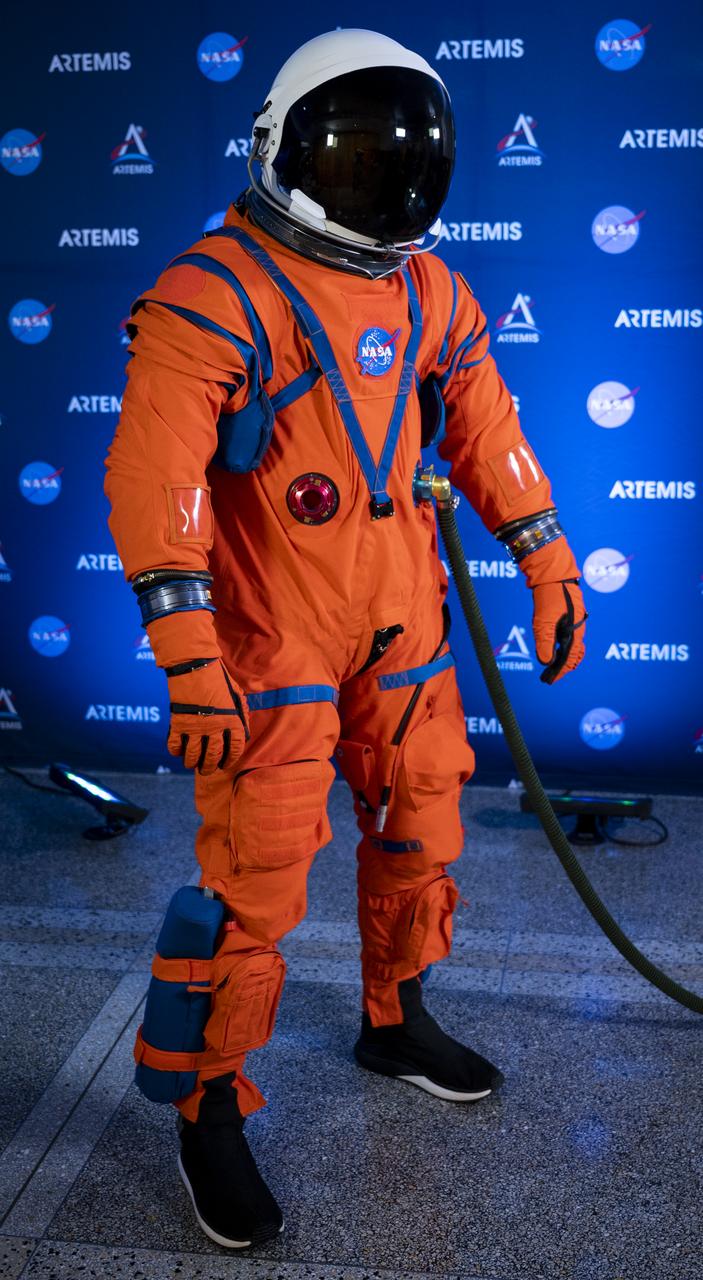
Dustin Gohmert, Orion Crew Survival Systems Project Manager at NASA’s Johnson Space Center, poses for a portrait while wearing the Orion Crew Survival System (OCSS) suit, Tuesday, Oct. 15, 2019 at NASA Headquarters in Washington, DC. The Orion suit is designed for a custom fit and incorporates safety technology and mobility features that will help protect astronauts on launch day, in emergency situations, high-risk parts of missions near the Moon, and during the high-speed return to Earth. Photo Credit: (NASA/Joel Kowsky)
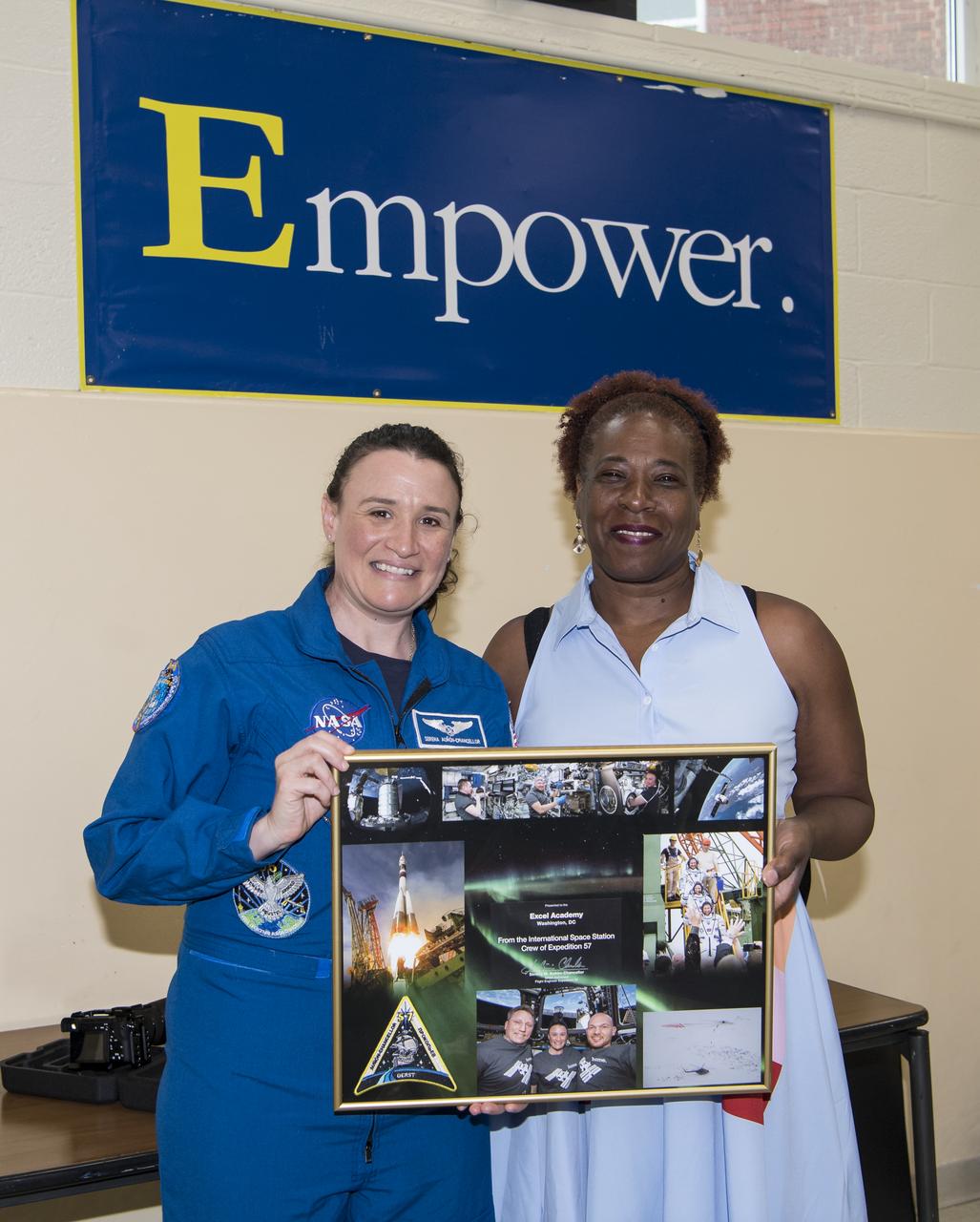
NASA astronaut Dr. Serena Auñón-Chancellor presents a montage from Expeditions 56 and 57 to Excel Academy Public Charter School, Monday, June 10, 2019 in Washington, DC. Auñón-Chancellor spent 197 days living and working onboard the ISS and contributed to hundreds of experiments in biology, biotechnology, physical science, and Earth science while there. She is also a doctor and started her career with NASA as a flight surgeon in 2006. Photo Credit: (NASA/Aubrey Gemignani)
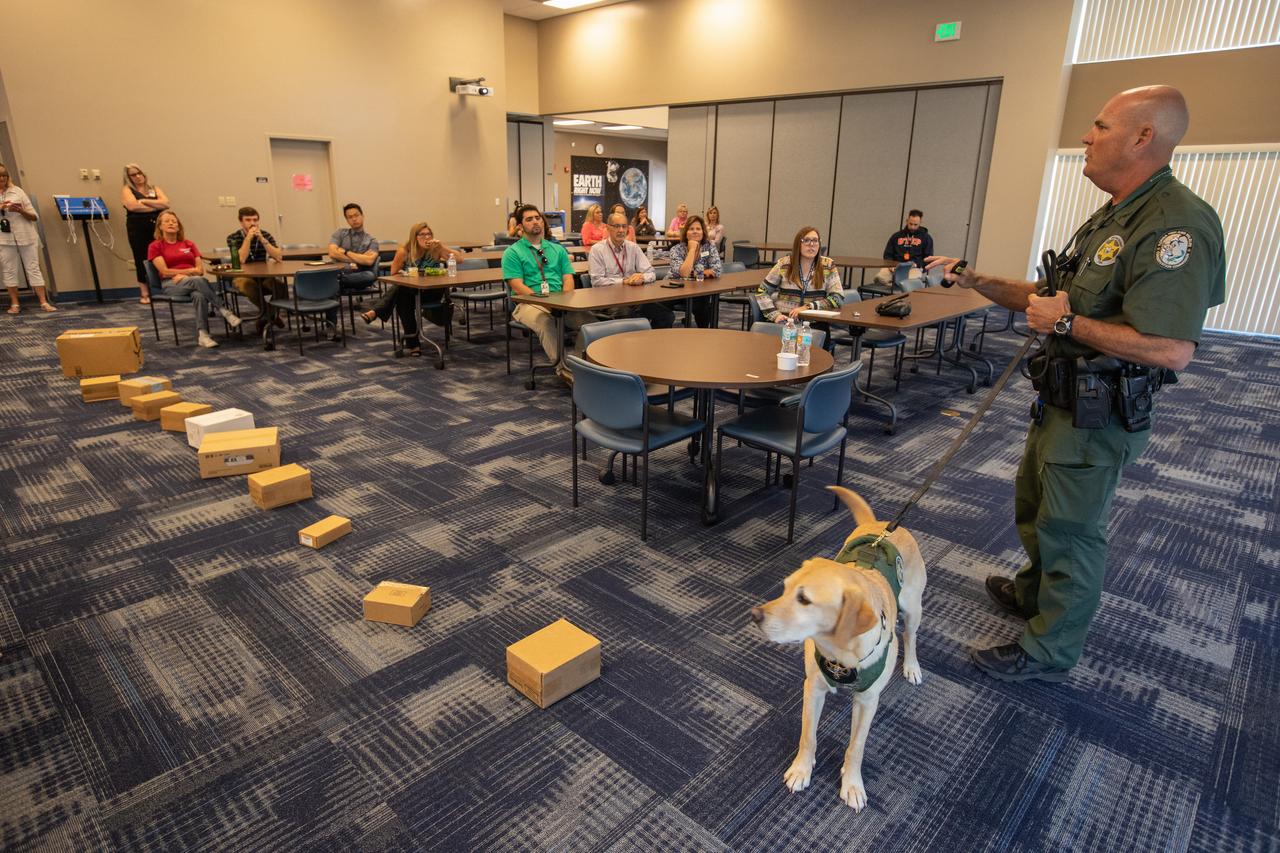
Fish and Wildlife Conservation Commission (FWC) Officer Jeff Sidor presents information on FWC’s Port K9 Program to Kennedy Space Center employees in the Space Station Processing Facility Conference Center on April 23, 2019. Officer Sidor brought a special K9, Harry, to demonstrate how FWC is using specially trained dogs in airports, seaports and mail facilities to detect illegal and invasive fish and wildlife species shipping into Florida. This lunch and learn was available for employees to attend as part of Kennedy’s Earth Day events.
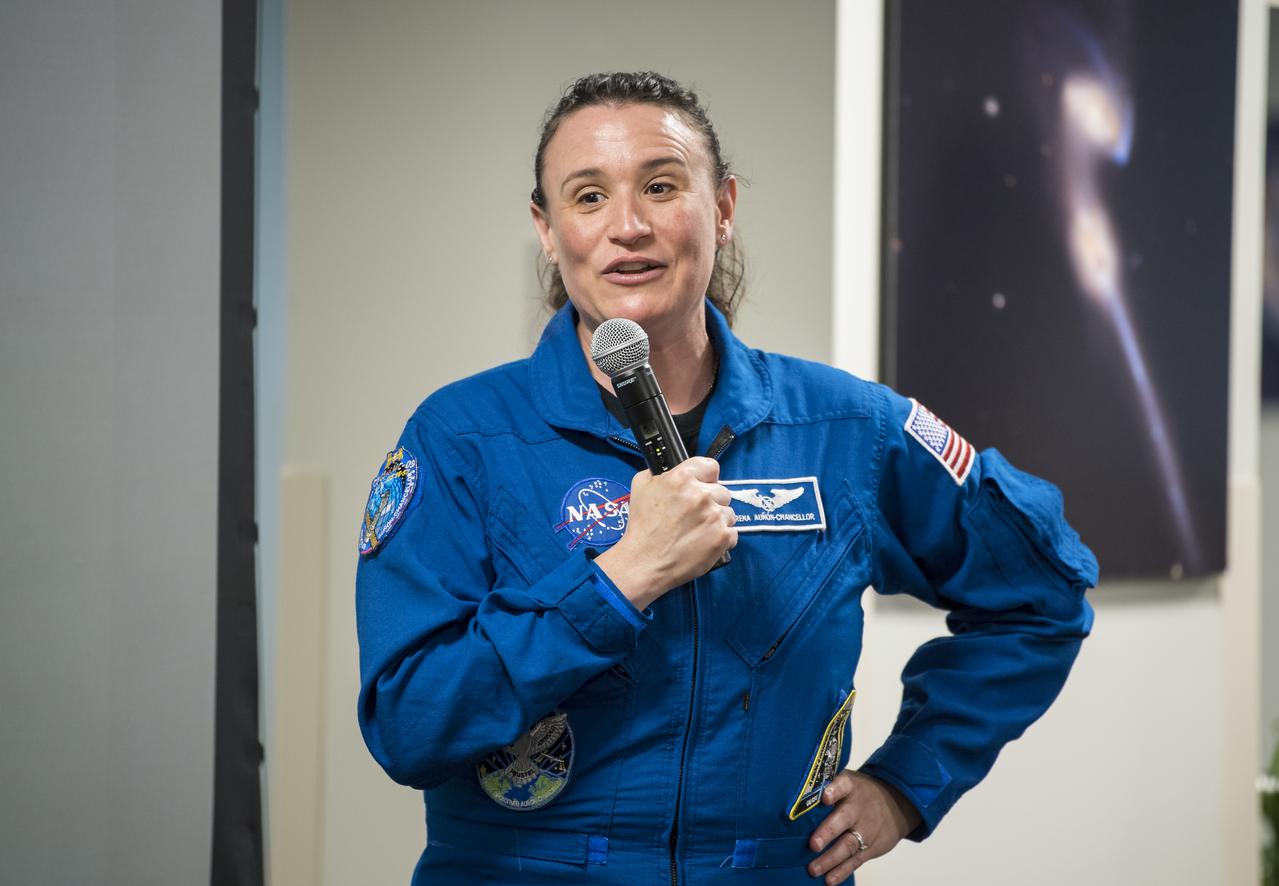
NASA astronaut Serena Auñón-Chancellor speaks about her experience on Expeditions 56 and 57 onboard the International Space Station at NASA Headquarters, Friday, June 14, 2019 in Washington. Auñón-Chancellor spent 197 days living and working onboard the orbital laboratory, contributing to hundreds of experiments in biology, biotechnology, physical science, and Earth science. She began her career at NASA as a flight surgeon before being selected as an astronaut in 2009. Photo Credit: (NASA/Aubrey Gemignani)
NASA astronaut Serena Auñón-Chancellor is seen during an interview, Friday, June 14, 2019 the Smithsonian's National Air and Space Museum in Washington, DC. Auñón-Chancellor spent 197 days living and working onboard the orbital laboratory as part of Expeditions 56 and 57, contributing to hundreds of experiments in biology, biotechnology, physical science, and Earth science while there. She began her career at NASA as a flight surgeon before being selected as an astronaut in 2009. Photo Credit: (NASA/Joel Kowsky)
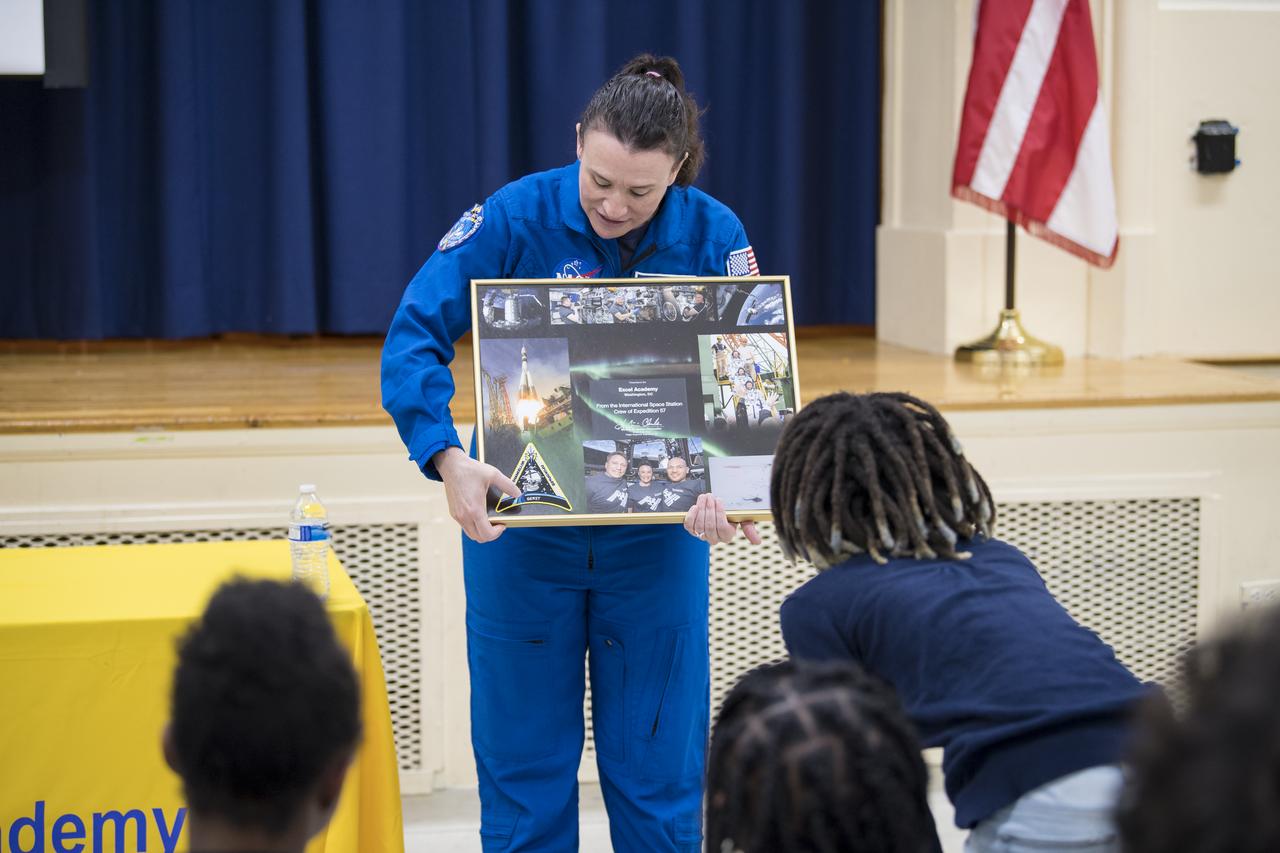
NASA astronaut Dr. Serena Auñón-Chancellor presents a montage from Expeditions 56 and 57 to the students of Excel Academy Public Charter School, Monday, June 10, 2019 in Washington, DC. Auñón-Chancellor spent 197 days living and working onboard the ISS and contributed to hundreds of experiments in biology, biotechnology, physical science, and Earth science while there. She is also a doctor and started her career with NASA as a flight surgeon in 2006. Photo Credit: (NASA/Aubrey Gemignani)
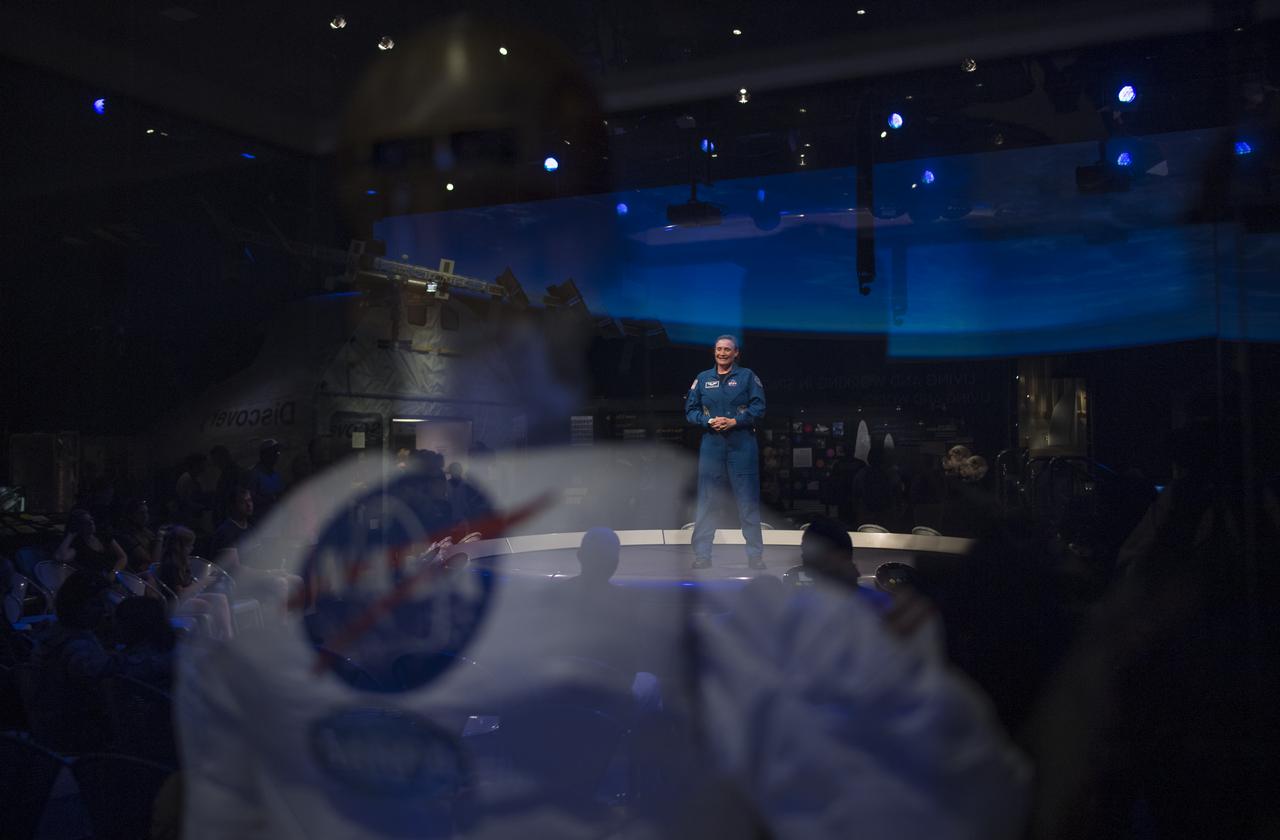
NASA astronaut Serena Auñón-Chancellor is seen reflected in a display case during an interview, Friday, June 14, 2019 the Smithsonian's National Air and Space Museum in Washington, DC. Auñón-Chancellor spent 197 days living and working onboard the orbital laboratory as part of Expeditions 56 and 57, contributing to hundreds of experiments in biology, biotechnology, physical science, and Earth science while there. She began her career at NASA as a flight surgeon before being selected as an astronaut in 2009. Photo Credit: (NASA/Joel Kowsky)
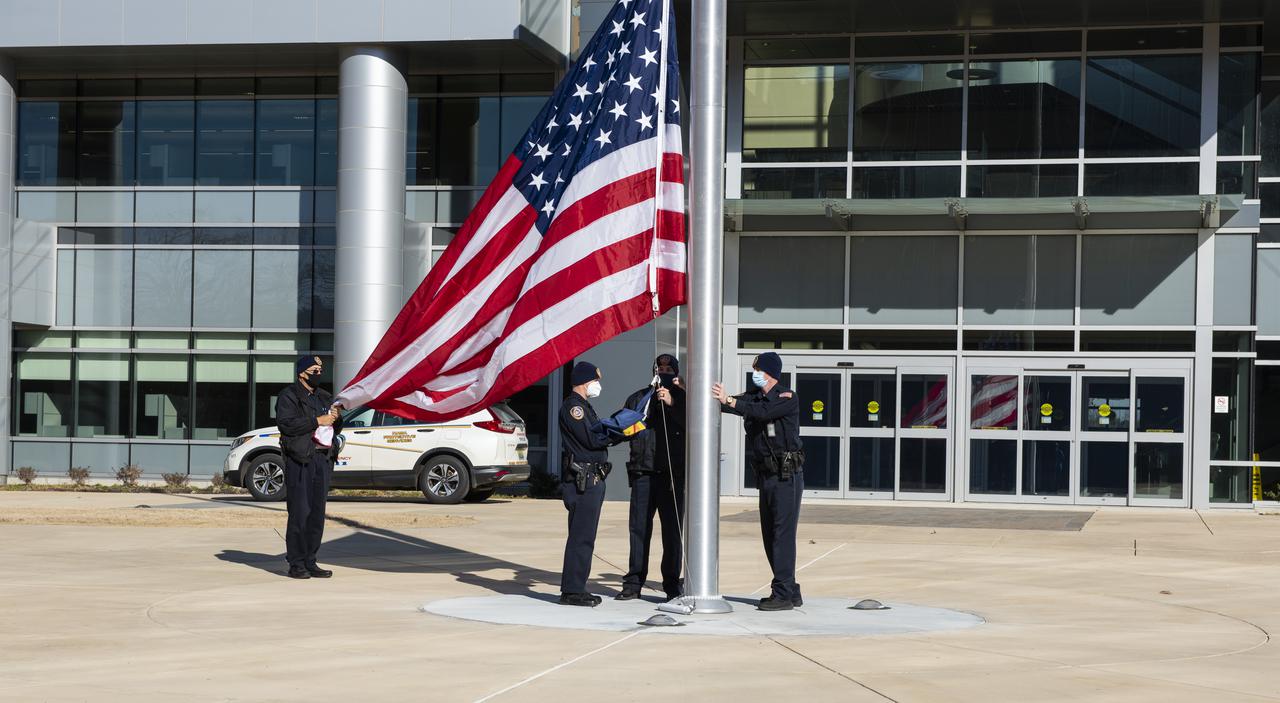
On Jan. 26, 2022, the U.S. and NASA flags were raised at Building 4221 to mark the transfer of headquarters to that building at Marshall Space Flight Center in Huntsville, Alabama. The doors to Building 4221, a new, environmentally friendly building, opened on Earth Day, April 22, 2019. Building 4200 served as Marshall’s original headquarters since 1963. Marshall center operations lowered flags at that building on Jan. 21, 2022.
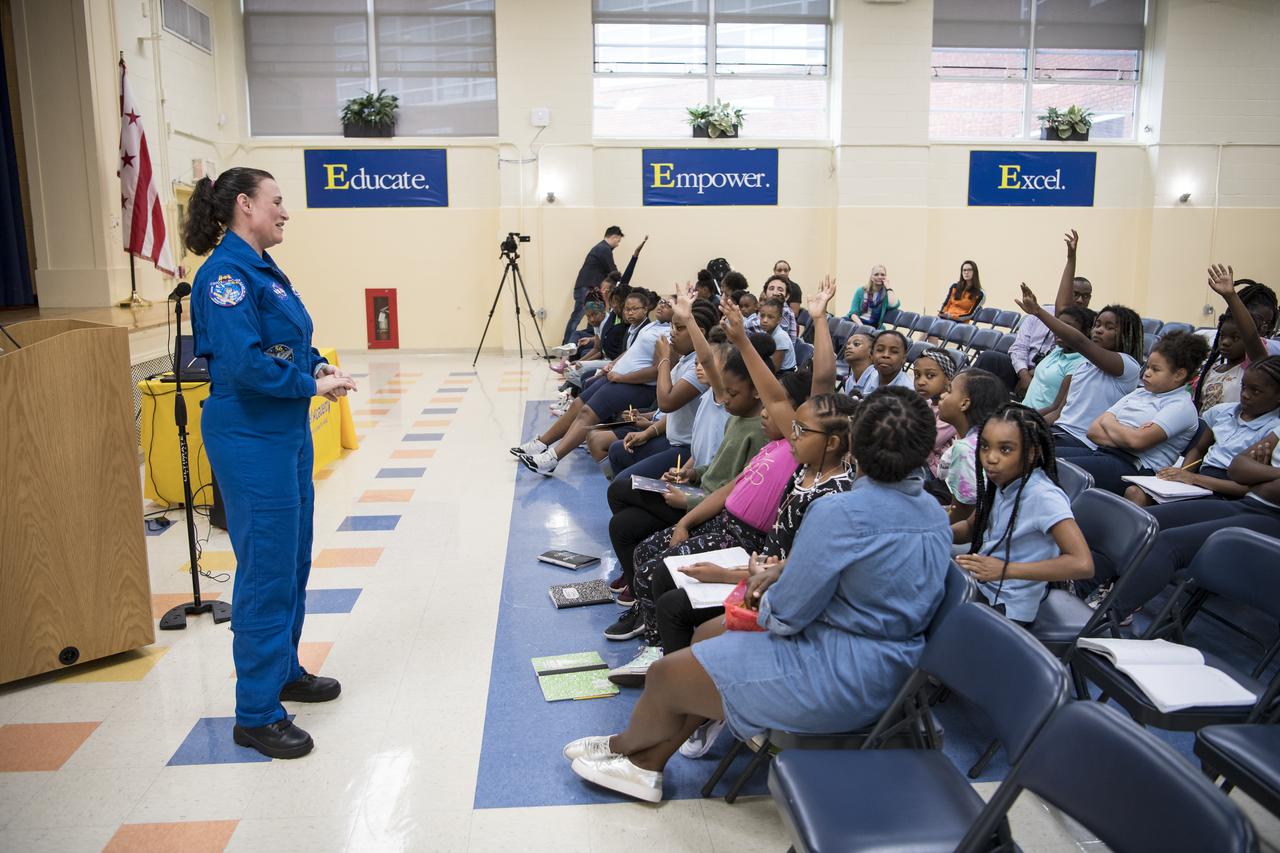
NASA astronaut Dr. Serena Auñón-Chancellor speaks about her experience on Expeditions 56 and 57 onboard the International Space Station (ISS) at Excel Academy Public Charter School, Monday, June 10, 2019 in Washington, DC. Auñón-Chancellor spent 197 days living and working onboard the ISS and contributed to hundreds of experiments in biology, biotechnology, physical science, and Earth science while there. She is also a doctor and started her career with NASA as a flight surgeon in 2006. Photo Credit: (NASA/Aubrey Gemignani)
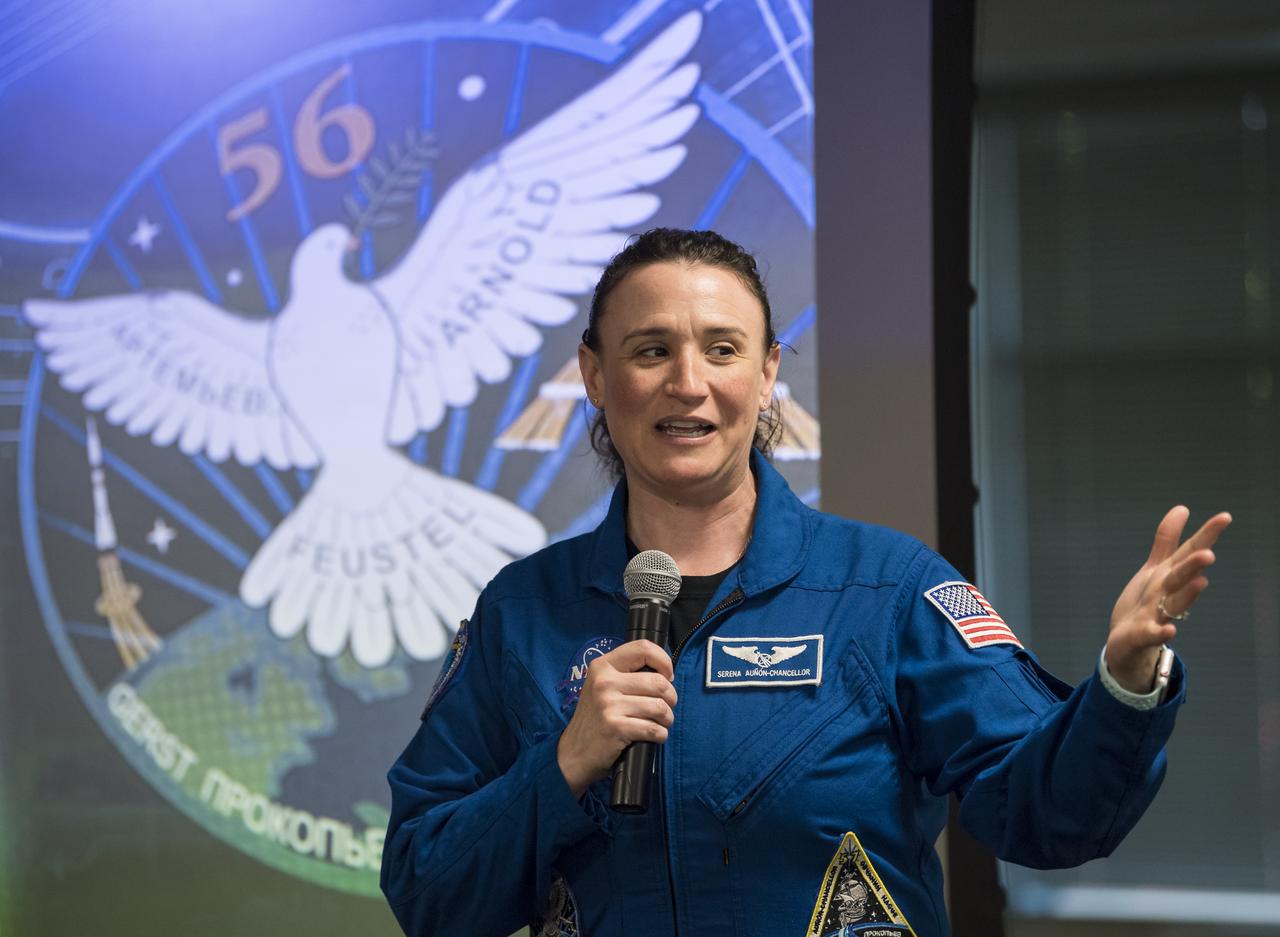
NASA astronaut Serena Auñón-Chancellor speaks about her experience on Expeditions 56 and 57 onboard the International Space Station at NASA Headquarters, Friday, June 14, 2019 in Washington. Auñón-Chancellor spent 197 days living and working onboard the orbital laboratory, contributing to hundreds of experiments in biology, biotechnology, physical science, and Earth science. She began her career at NASA as a flight surgeon before being selected as an astronaut in 2009. Photo Credit: (NASA/Aubrey Gemignani)
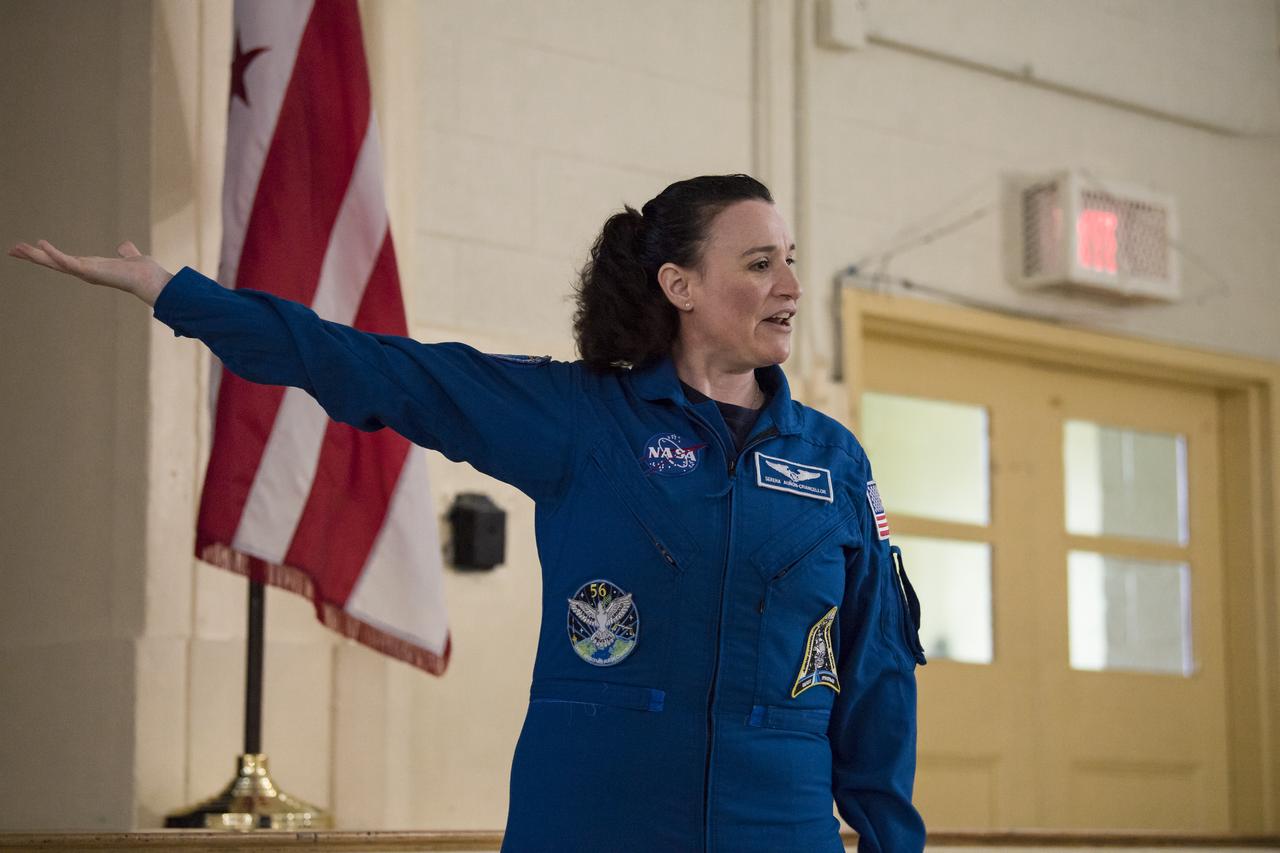
NASA astronaut Dr. Serena Auñón-Chancellor speaks about her experience on Expeditions 56 and 57 onboard the International Space Station (ISS) at Excel Academy Public Charter School, Monday, June 10, 2019 in Washington, DC. Auñón-Chancellor spent 197 days living and working onboard the ISS and contributed to hundreds of experiments in biology, biotechnology, physical science, and Earth science while there. She is also a doctor and started her career with NASA as a flight surgeon in 2006. Photo Credit: (NASA/Aubrey Gemignani)

The SDO spacecraft is in another eclipse season as of Feb. 6, 2019. This begins a several week period when the Earth briefly blocks SDO's view of the Sun each day. In fact, because SDO orbits above the Mountain Time zone, the Earth passes between SDO and the Sun at about 7:20 UT (12:20 am MT) each orbit. Eclipses are due to SDO's circular geosynchronous orbit some 22,000 miles above Earth. At the speed we are showing the frames, the eclipse is only a flicker. The still image shows that the edge of Earth, here about halfway across the Sun, looks quite rough due to the absorption of the 304 Å EUV light by our atmosphere. Movies available at https://photojournal.jpl.nasa.gov/catalog/PIA21213