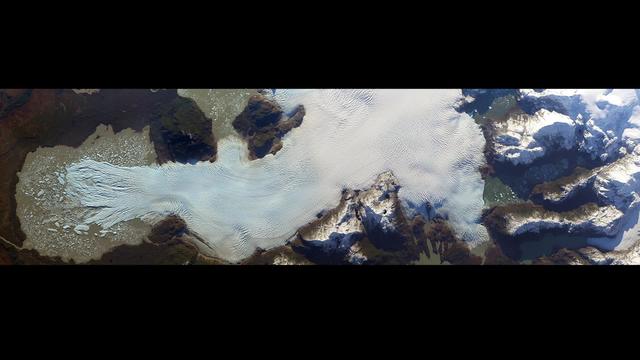
Every day of every year, NASA satellites provide useful data about our home planet, and along the way, some beautiful images as well. This video includes satellite images of Earth in 2014 from NASA and its partners as well as photos and a time lapse video from the International Space Station. We’ve also included a range of data visualizations, model runs, and a conceptual animation that were produced in 2014 (but in some cases might have been utilizing data from earlier years.) Credit: NASA's Goddard Space Flight Center <b><a href="http://www.nasa.gov/audience/formedia/features/MP_Photo_Guidelines.html" rel="nofollow">NASA image use policy.</a></b> <b><a href="http://www.nasa.gov/centers/goddard/home/index.html" rel="nofollow">NASA Goddard Space Flight Center</a></b> enables NASA’s mission through four scientific endeavors: Earth Science, Heliophysics, Solar System Exploration, and Astrophysics. Goddard plays a leading role in NASA’s accomplishments by contributing compelling scientific knowledge to advance the Agency’s mission. <b>Follow us on <a href="http://twitter.com/NASAGoddardPix" rel="nofollow">Twitter</a></b> <b>Like us on <a href="http://www.facebook.com/pages/Greenbelt-MD/NASA-Goddard/395013845897?ref=tsd" rel="nofollow">Facebook</a></b> <b>Find us on <a href="http://instagrid.me/nasagoddard/?vm=grid" rel="nofollow">Instagram</a></b>
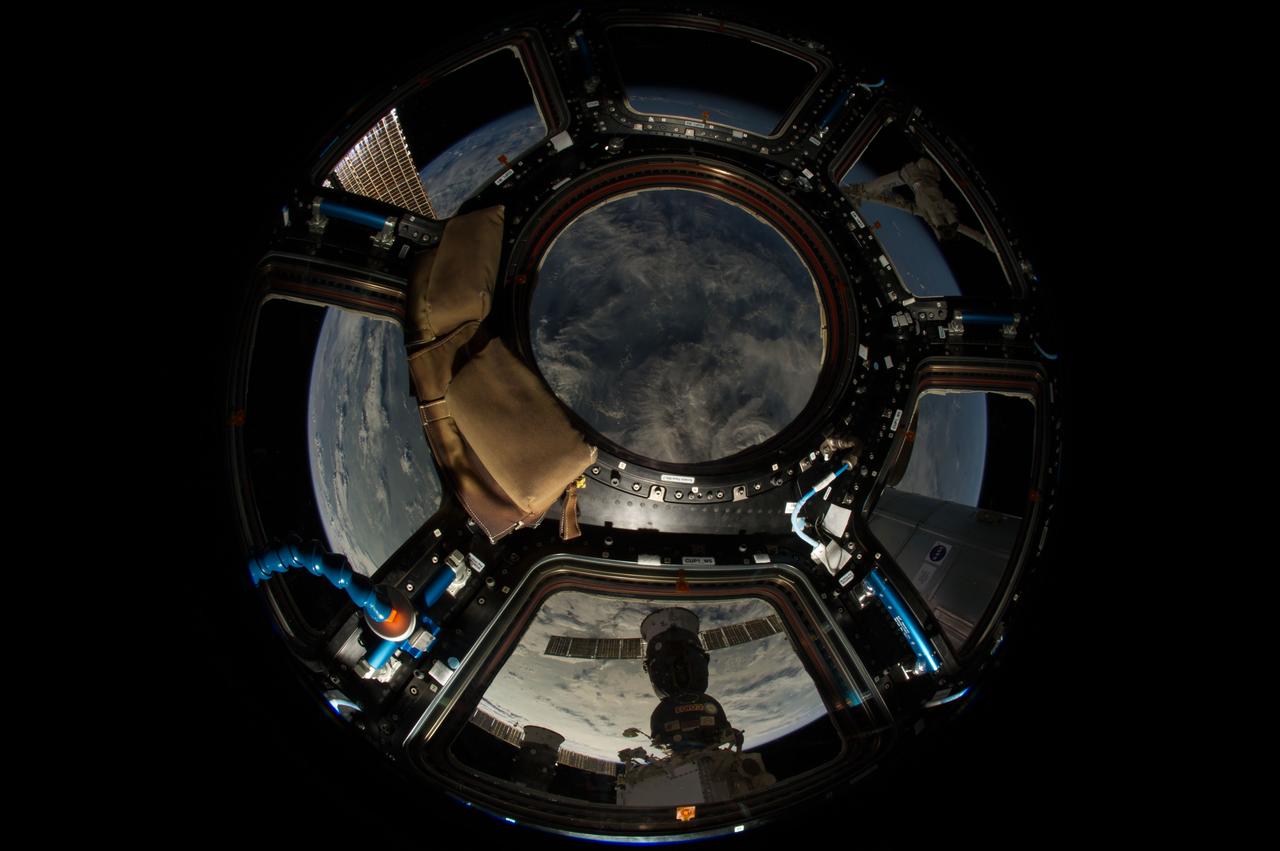
ISS040-E-046846 (6 July 2014) --- One of the Expedition 40 crew members aboard the Earth-orbiting International Space Station recorded this image from inside the Cupola approximately 225 nautical miles above Polynesia. The photo was taken on July 6, 2014 at 15:35:34 GMT. A Russian Soyuz and Russian Progress vehicle can be seen docked to the orbital outpost at bottom center. A blue and white part of Earth provides the backdrop for the scene.
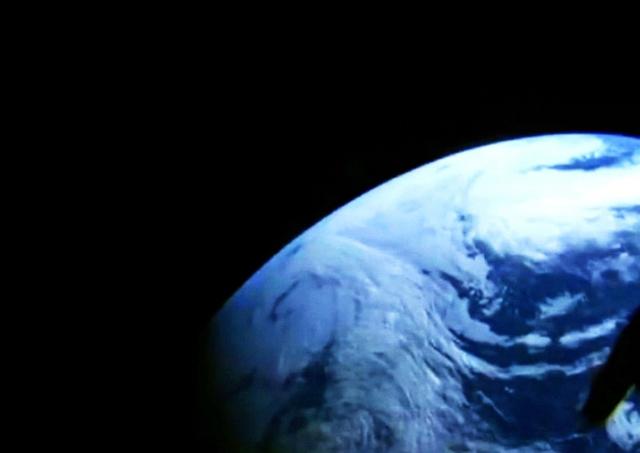
A camera in the window of NASA's Orion spacecraft looks back at Earth during its unpiloted flight test in orbit on Dec. 5, 2014 Part of Batch image transfer from Flickr.
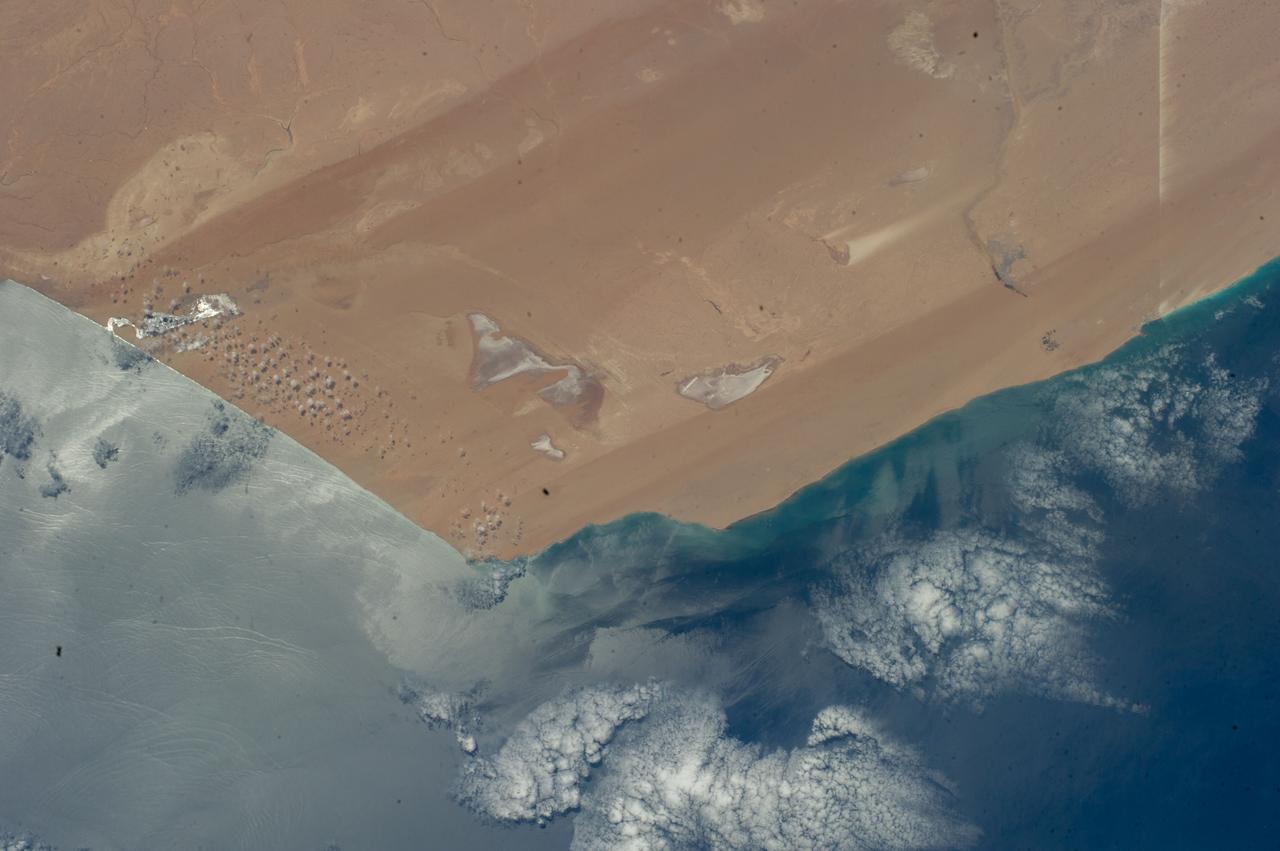
ISS040-E-000788 (20 May 2014) --- Expedition 40 Commander Steve Swanson of NASA photographed this image from an Earth-facing window on the Earth-orbiting International Space Station featuring the Atlantic coast of the African nation of Morocco and the disputed territory of Western Sahara on May 20, 2014. The town of Tarfaya, Morocco, located at 22.45 degrees north latitude, and 13.13 degrees, east longitude, is visible. Obvious streaks in the sand were created by northerly winds.

ISS040-E-098545 (17 Aug. 2014) --- One of the Expedition 40 crew members aboard the International Space Station recorded this image of the Orbital Sciences Corporation's Cygnus cargo carrier spacecraft breaking up in Earth's atmosphere after being released from the orbital outpost. The breakup started around 13:22 GMT on Aug. 17, 2014 and this photo was taken at 13:23:08 GMT.
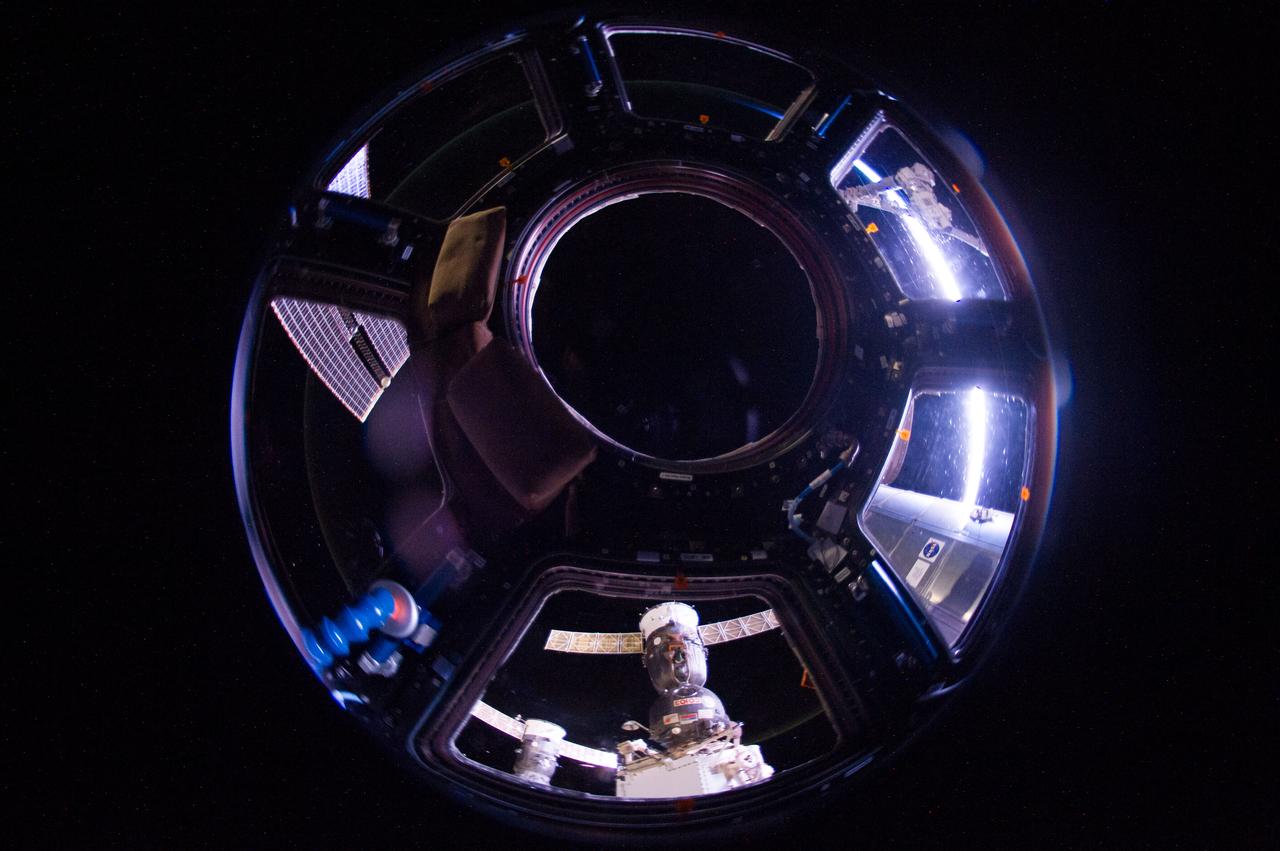
ISS040-E-047594 (6 July 2014) --- One of the Expedition 40 crew members aboard the Earth-orbiting International Space Station recorded this image from inside the Cupola approximately 225 nautical miles above Polynesia. The photo was taken on July 6, 2014 at 16:18:22 GMT. A Russian Soyuz and Russian Progress vehicle can be seen docked to the orbital outpost at bottom center.
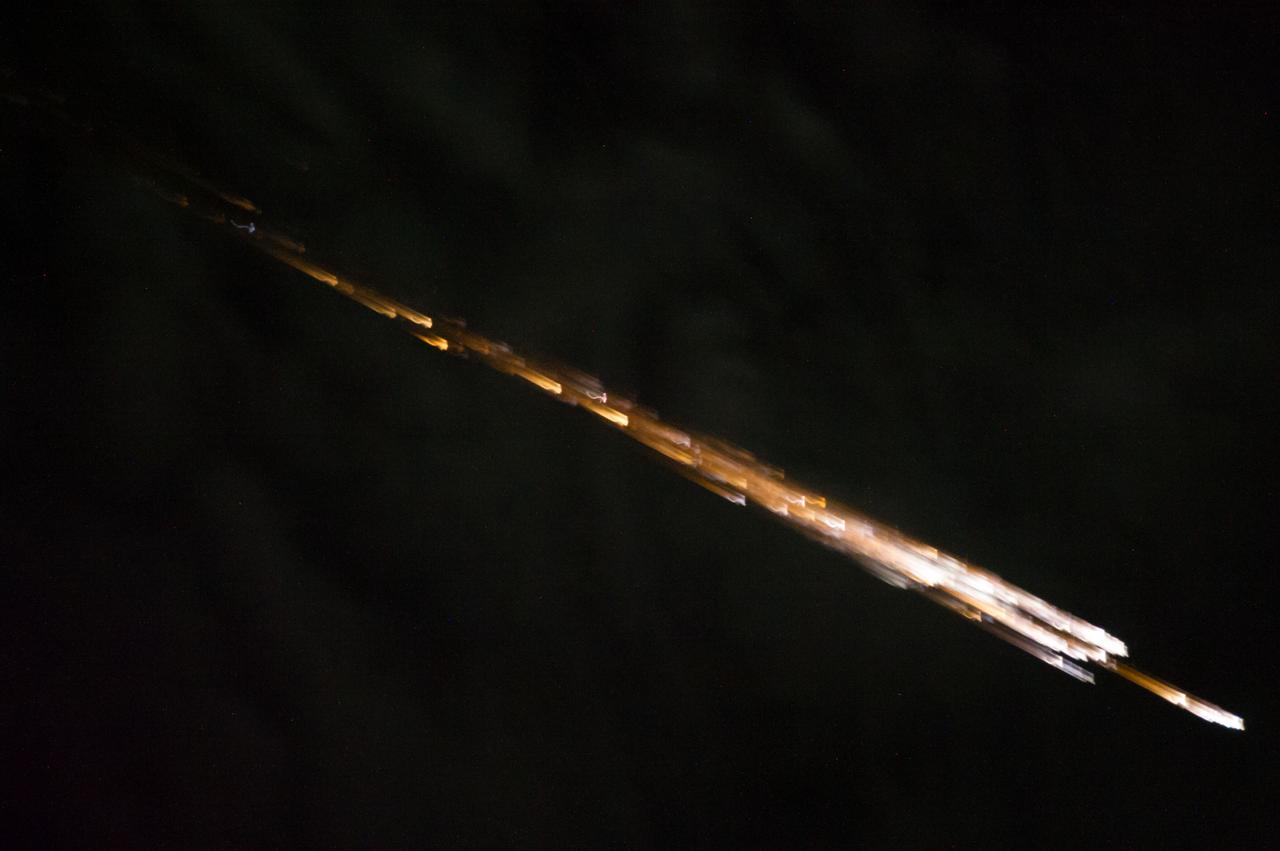
ISS040-E-098591 (17 Aug. 2014) --- One of the Expedition 40 crew members aboard the International Space Station recorded this image of the Orbital Sciences Corporation's Cygnus cargo carrier spacecraft breaking up in Earth's atmosphere after being released from the orbital outpost. The breakup started around 13:22 GMT on Aug. 17, 2014 and this photo was taken at 13:23:44 GMT.
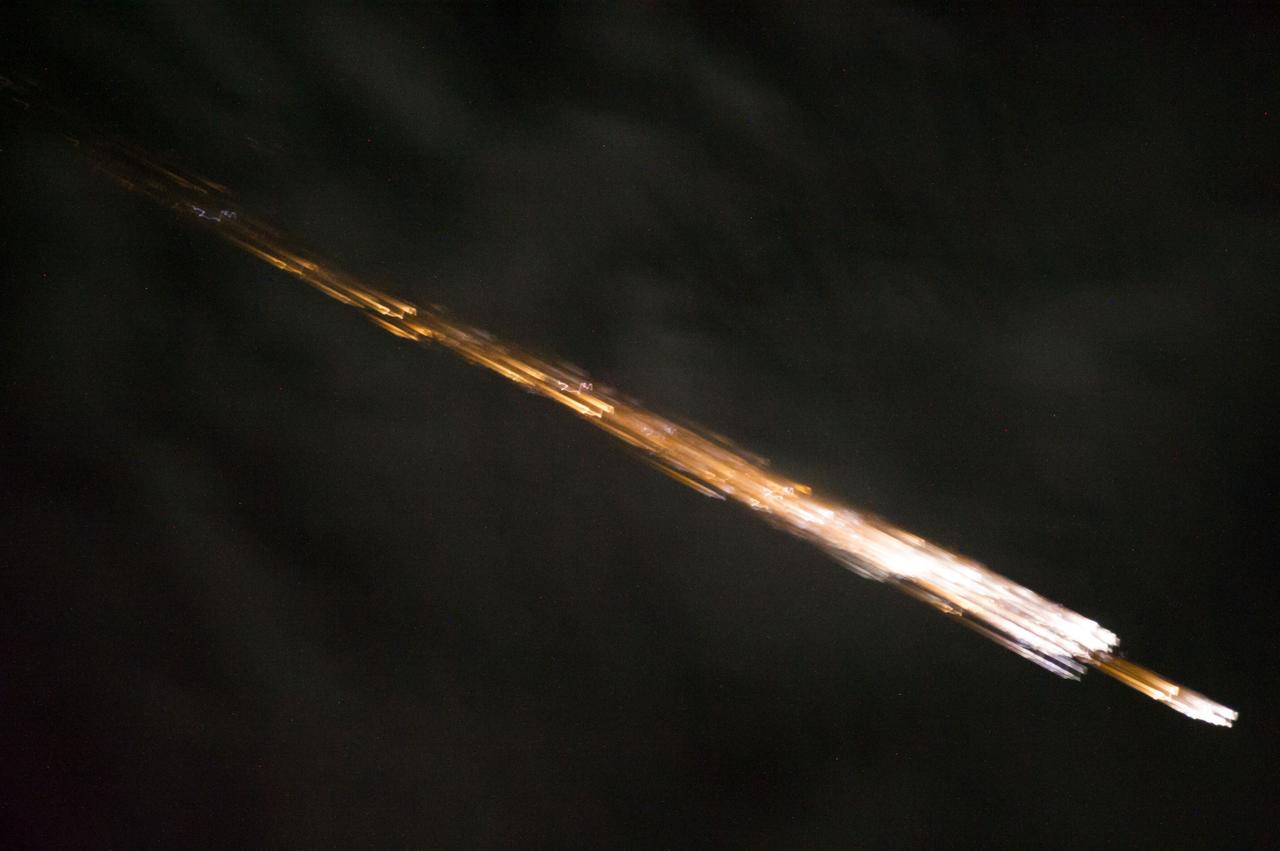
ISS040-E-098592 (17 Aug. 2014) --- One of the Expedition 40 crew members aboard the International Space Station recorded this image of the Orbital Sciences Corporation's Cygnus cargo carrier spacecraft breaking up in Earth's atmosphere after being released from the orbital outpost. The breakup started around 13:22 GMT on Aug. 17, 2014 and this photo was taken at 13:23:45 GMT.
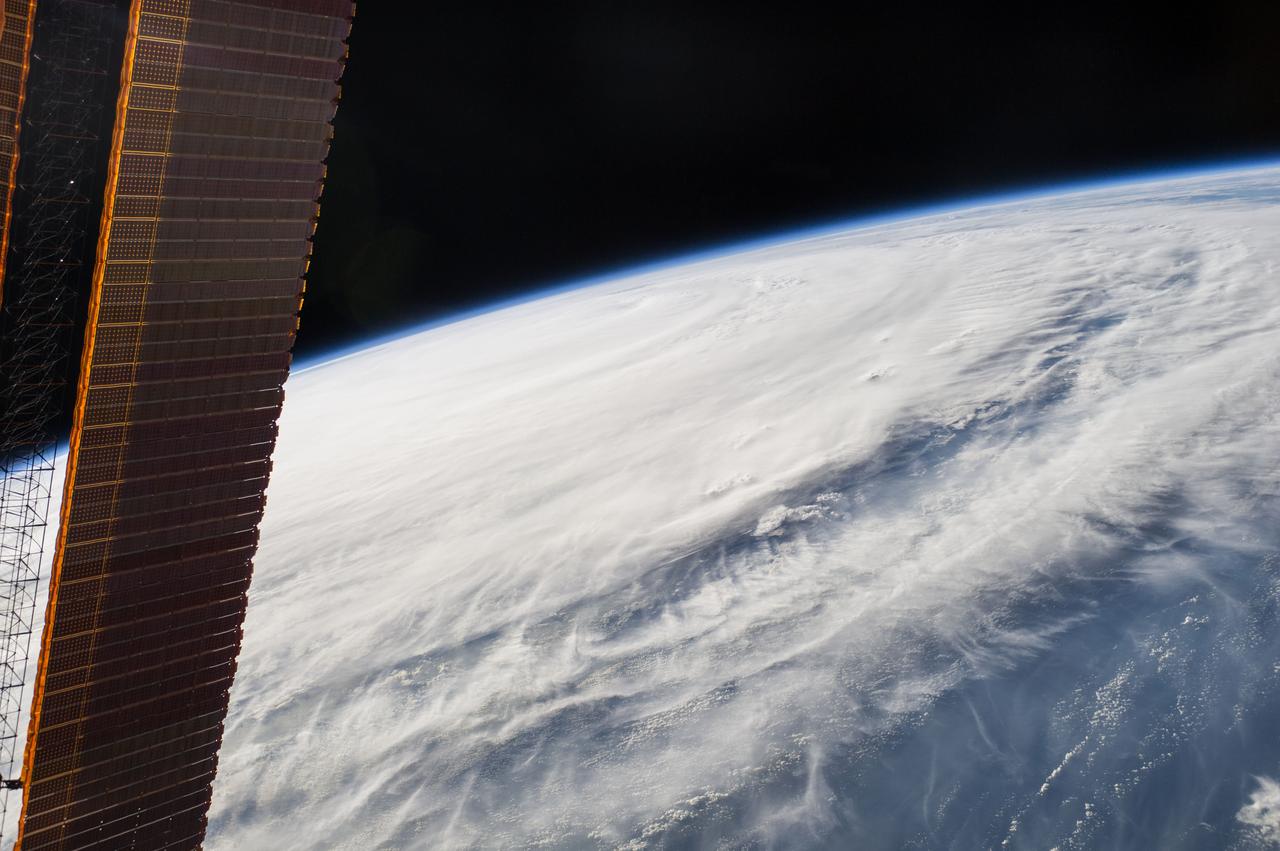
ISS040-E-089379 (7 Aug. 2014) --- One of the Expedition 40 crew members aboard the International Space Station, from an altitude of 221 nautical miles, photographed this image of Typhoon Halong at 08:02:41 GMT on Aug. 7, 2014. The orbital outpost was flying above a point on Earth located at 15.8 degrees north latitude and 142.4 degrees east longitude. One of the solar panels of the orbital outpost is seen on the left side of the scene.
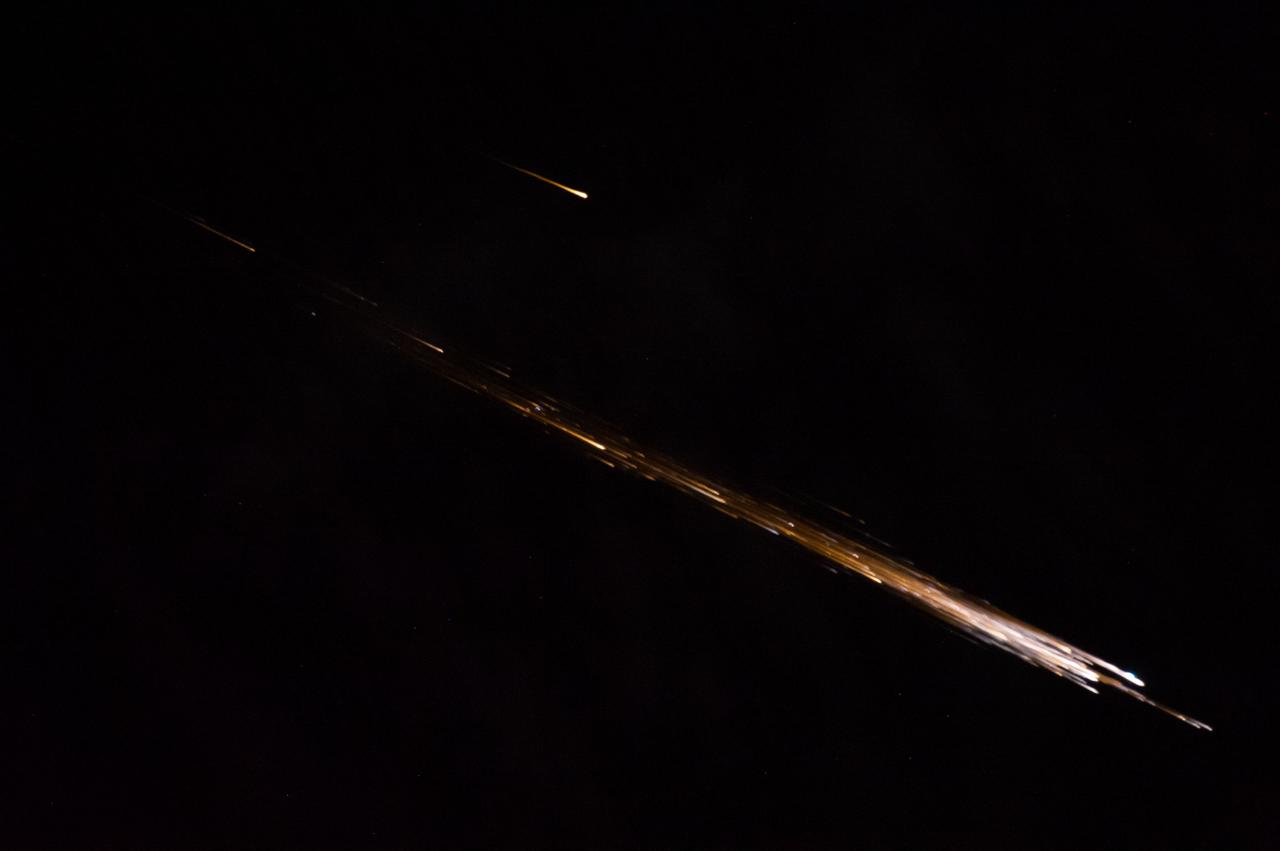
ISS040-E-098571 (17 Aug. 2014) --- One of the Expedition 40 crew members aboard the International Space Station recorded this image of the Orbital Sciences Corporation's Cygnus cargo carrier spacecraft breaking up in Earth's atmosphere after being released from the orbital outpost. The breakup started around 13:22 GMT on Aug. 17, 2014 and this photo was taken at 13:23:32 GMT.
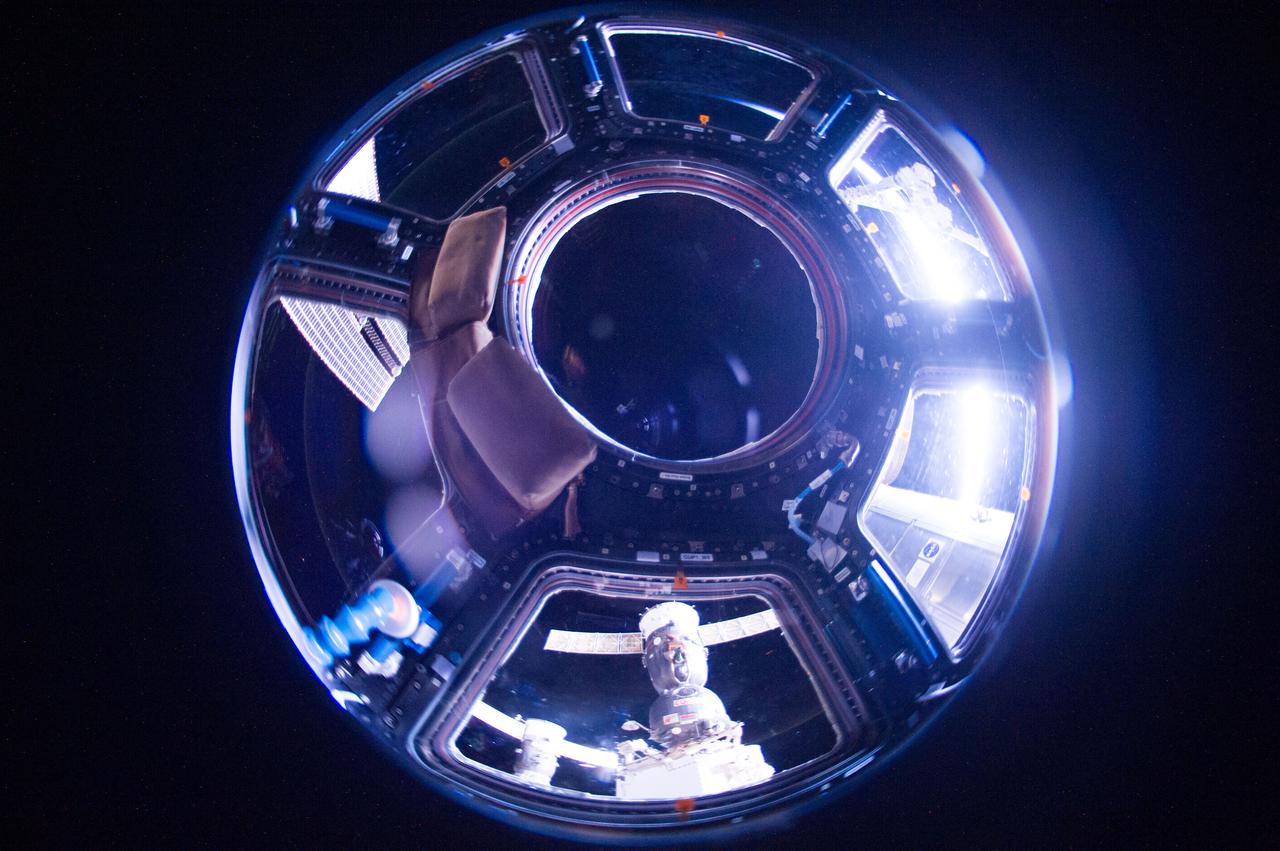
ISS040-E-047616 (6 July 2014) --- One of the Expedition 40 crew members aboard the Earth-orbiting International Space Station recorded this image from inside the Cupola approximately 225 nautical miles above Polynesia. The photo was taken on July 6, 2014 at 16:19:06 GMT. A Russian Soyuz and Russian Progress vehicle can be seen docked to the orbital outpost at bottom center.
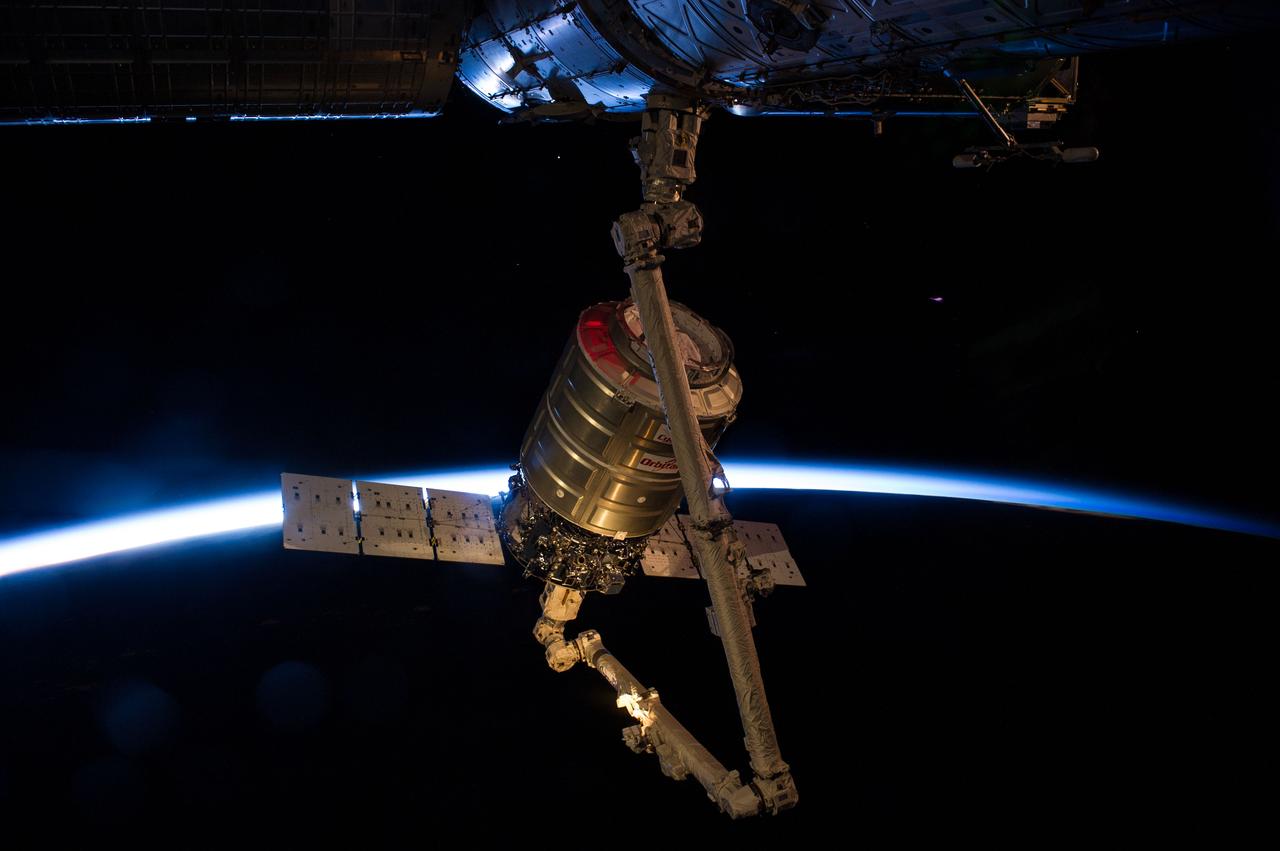
ISS040-E-063769 (16 July 2014) --- Intersecting the thin line of Earth?s atmosphere, the Orbital Sciences? Cygnus cargo craft attached to the end of the Canadarm2 robotic arm of the International Space Station is photographed by an Expedition 40 crew member after the two spacecraft converged at 6:36 a.m. (EDT) on July 16, 2014. The red color on Cygnus is a spectral effect from one of Cygnus? strobe lights against the fading light heading into an orbital sunset following grapple.

ISS040-E-129950 (4 Sept. 2014) --- In this photograph. taken by one of the Expedition 40 crew members aboard the Earth-orbiting International Space Station, the orange spot located in the very center is the sun, which appears to be sitting on Earth's limb. At far right, a small bright spot is believed to be a reflection from somewhere in the camera system or something on the orbital outpost. When the photographed was exposed, the orbital outpost was flying at an altutude of 226 nautical miles above a point near French Polynesia in the Pacific Ocean.
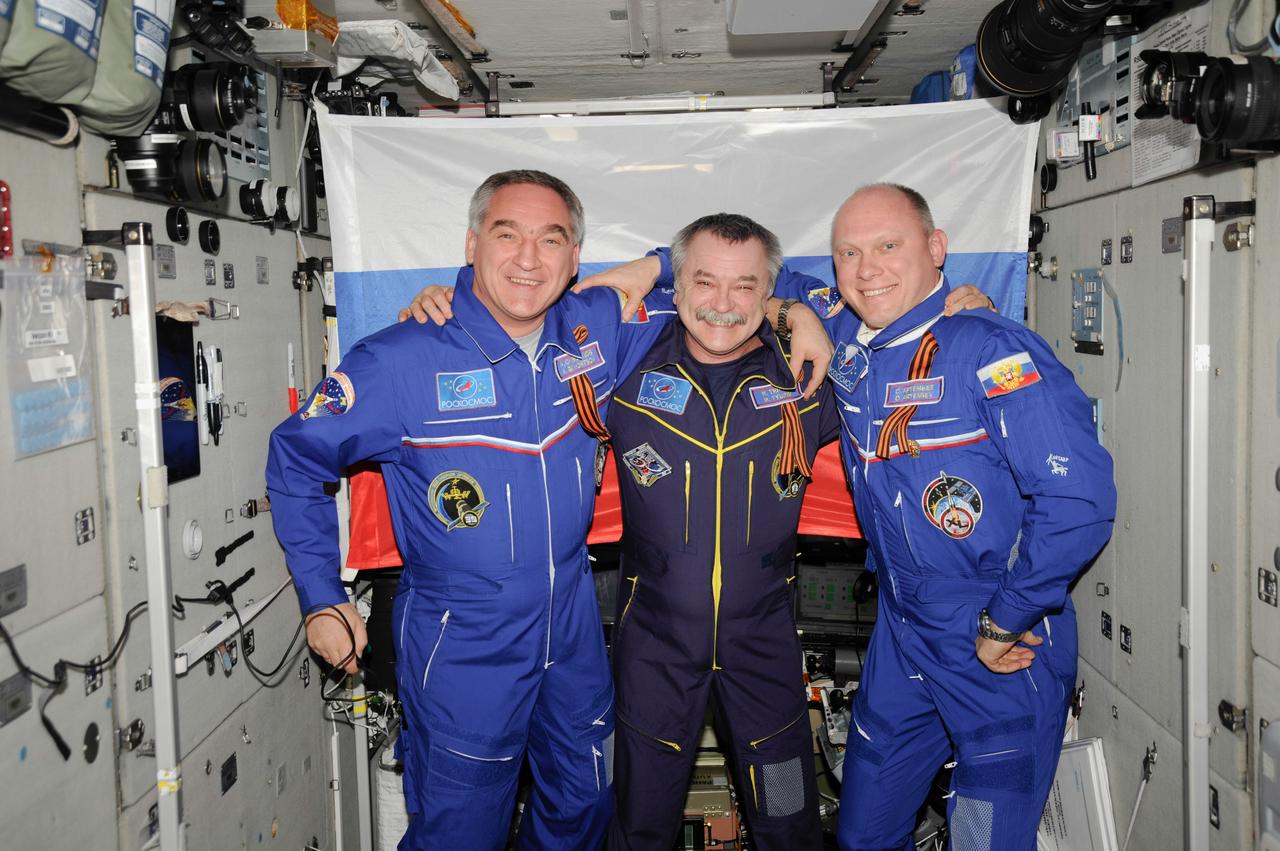
ISS039-E-014259 (22 April 2014) --- Inside the Zvezda service module on the Earth-orbiting International Space Station, three cosmonauts representing Russia's Federal Space Agency (Roscosmos) gather for a televised event. From the left are Flight Engineers Alexander Skvortsov, Mikhail Tyurin and Oleg Artemyev.
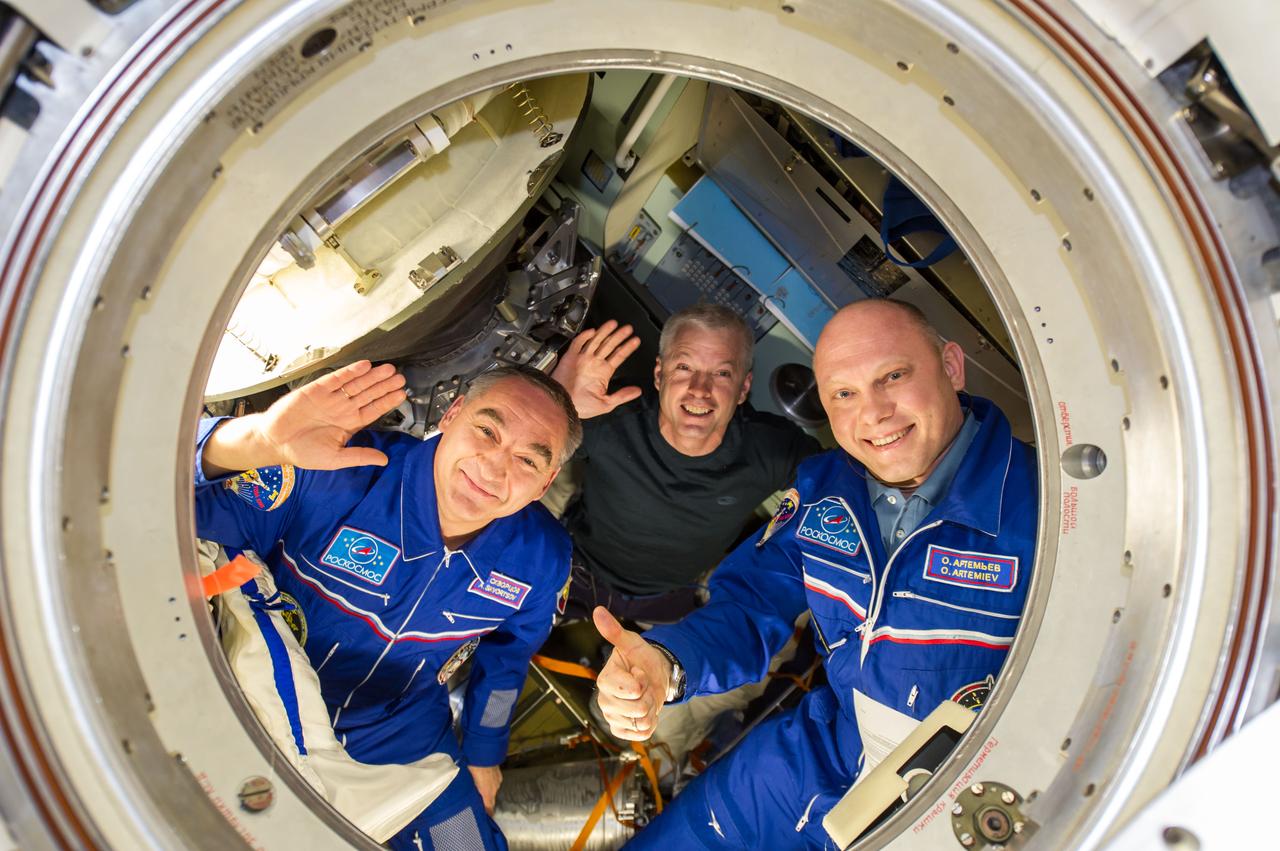
ISS040-E-139846 (10 Sept. 2014) --- NASA astronaut Steve Swanson (center), Expedition 40 commander; along with Russian cosmonauts Alexander Skvortsov (left) and Oleg Artemyev, both flight engineers, are pictured in the Soyuz TMA-12M capsule which will return them back to Earth after serving more than five months onboard the orbital outpost. Undocking from the International Space Station’s Poisk Mini-Research Module 2 (MRM2) occurred at 7:01 p.m. (EDT) on Sept. 10, 2014.
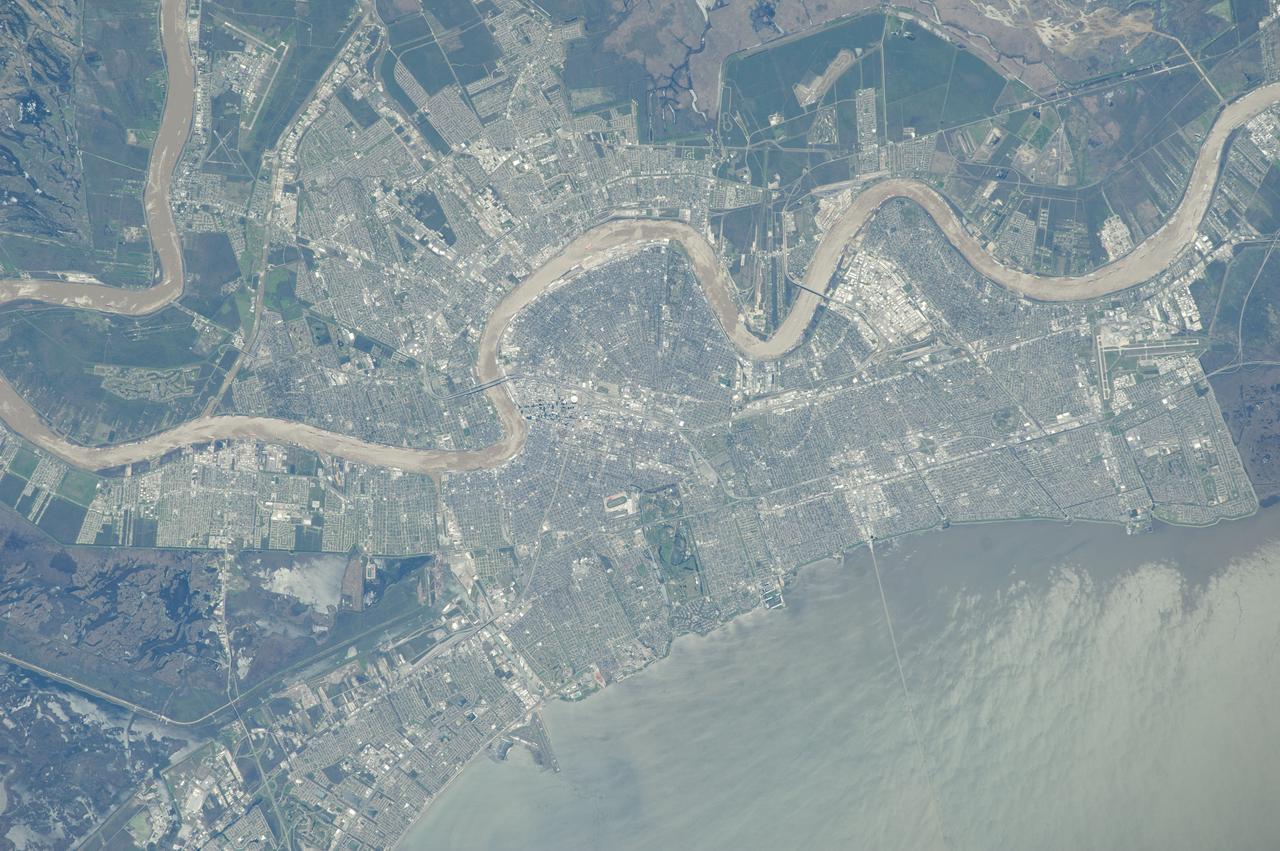
ISS039-E-001640 (13 March 2014) --- From an astronaut's point of view in Earth orbit, it would be difficult to miss the Mississippi River as it meanders through the city of New Orleans. Sunglint on Lake Pontchartrain is visible at lower right in the 400mm image, photographed by one of the Expedition 39 crew members aboard the International Space Station on March 13, 2014.
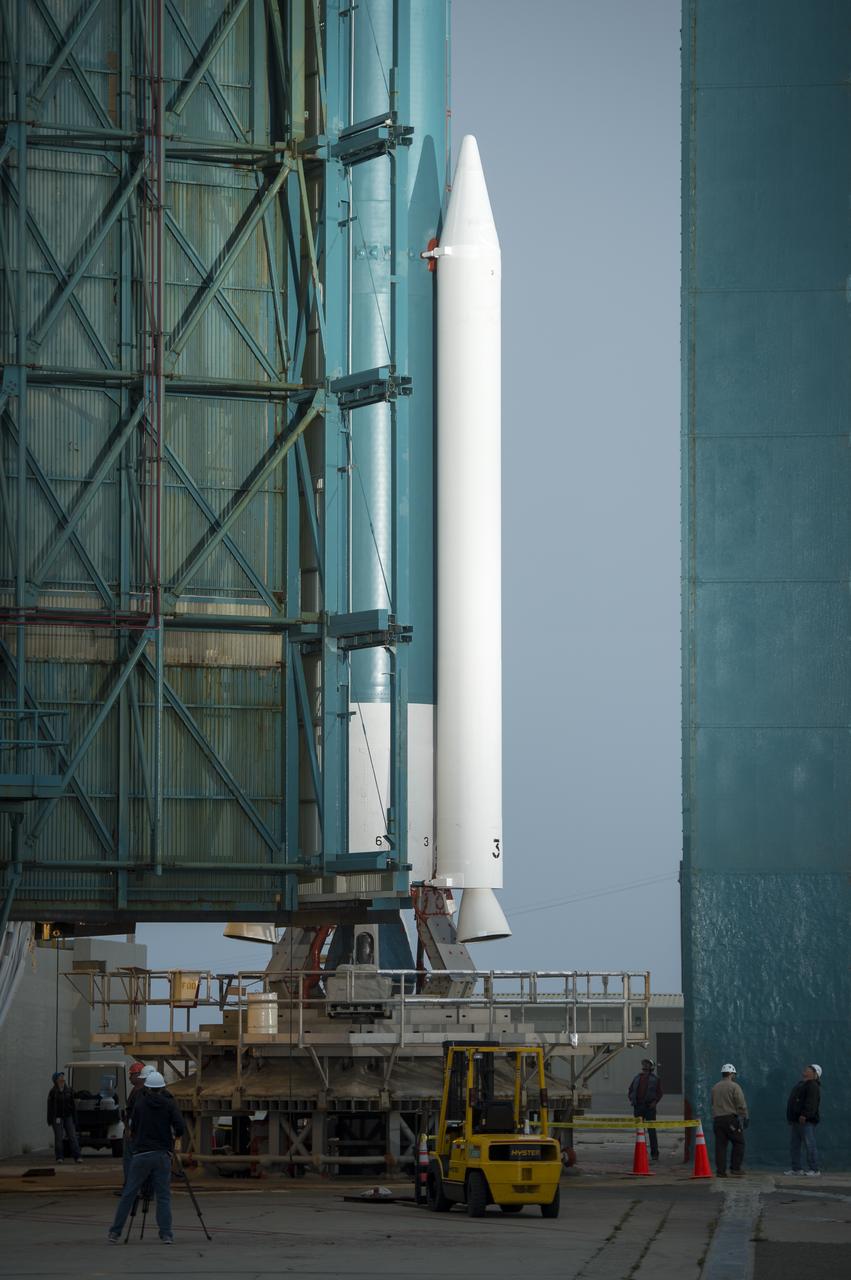
Workers monitor the progress of the rollback of the launch gantry from the United Launch Alliance Delta II rocket with the Orbiting Carbon Observatory-2 (OCO-2) satellite onboard, at Space Launch Complex 2, Monday, June 30, 2014, Vandenberg Air Force Base, Calif. OCO-2 will measure the global distribution of carbon dioxide, the leading human-produced greenhouse gas driving changes in Earth’s climate. OCO-2 is set for a July 1, 2014 launch. Photo Credit: (NASA/Bill Ingalls)
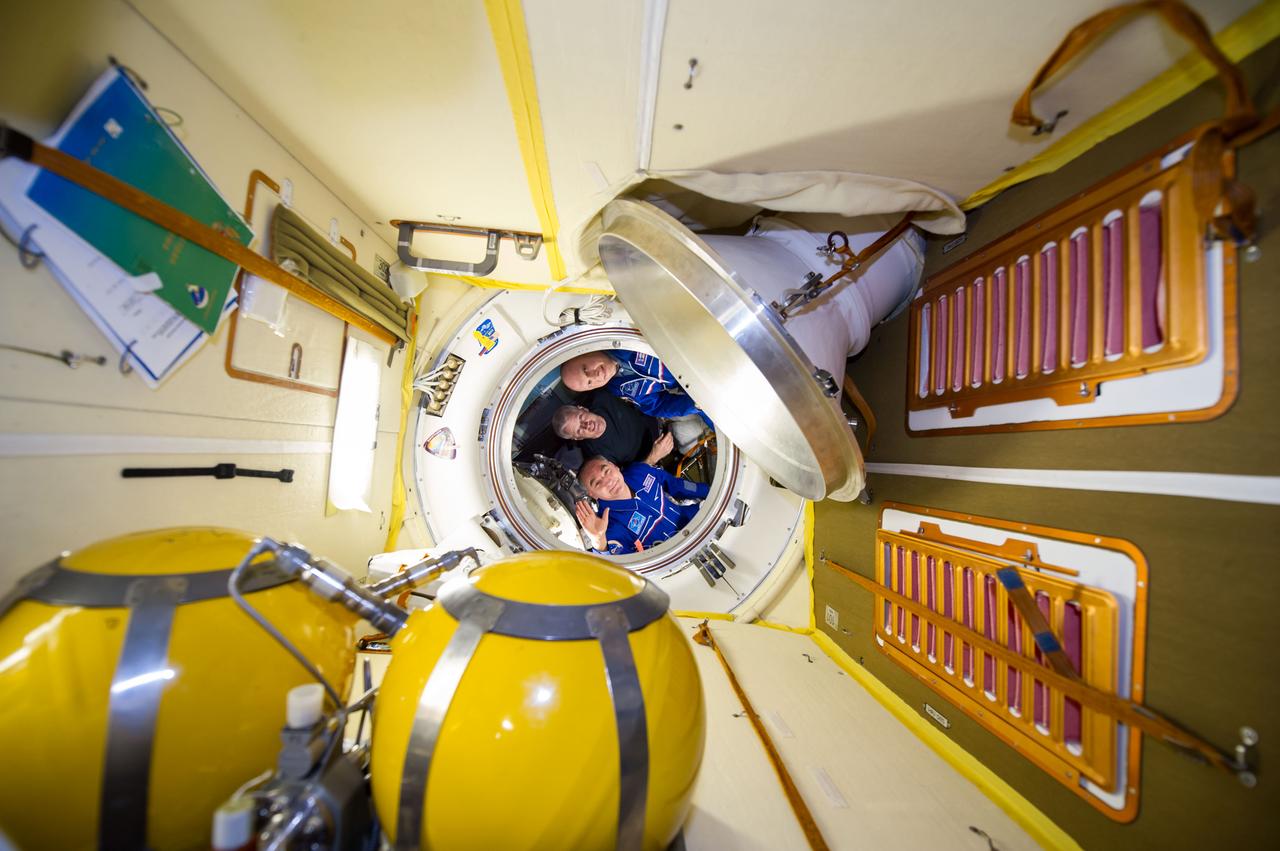
ISS040-E-139841 (10 Sept. 2014) --- NASA astronaut Steve Swanson (center), Expedition 40 commander; along with Russian cosmonauts Alexander Skvortsov (bottom) and Oleg Artemyev, both flight engineers, are pictured in the Soyuz TMA-12M capsule which will return them back to Earth after serving more than five months onboard the orbital outpost. Undocking from the International Space Station’s Poisk Mini-Research Module 2 (MRM2) occurred at 7:01 p.m. (EDT) on Sept. 10, 2014.
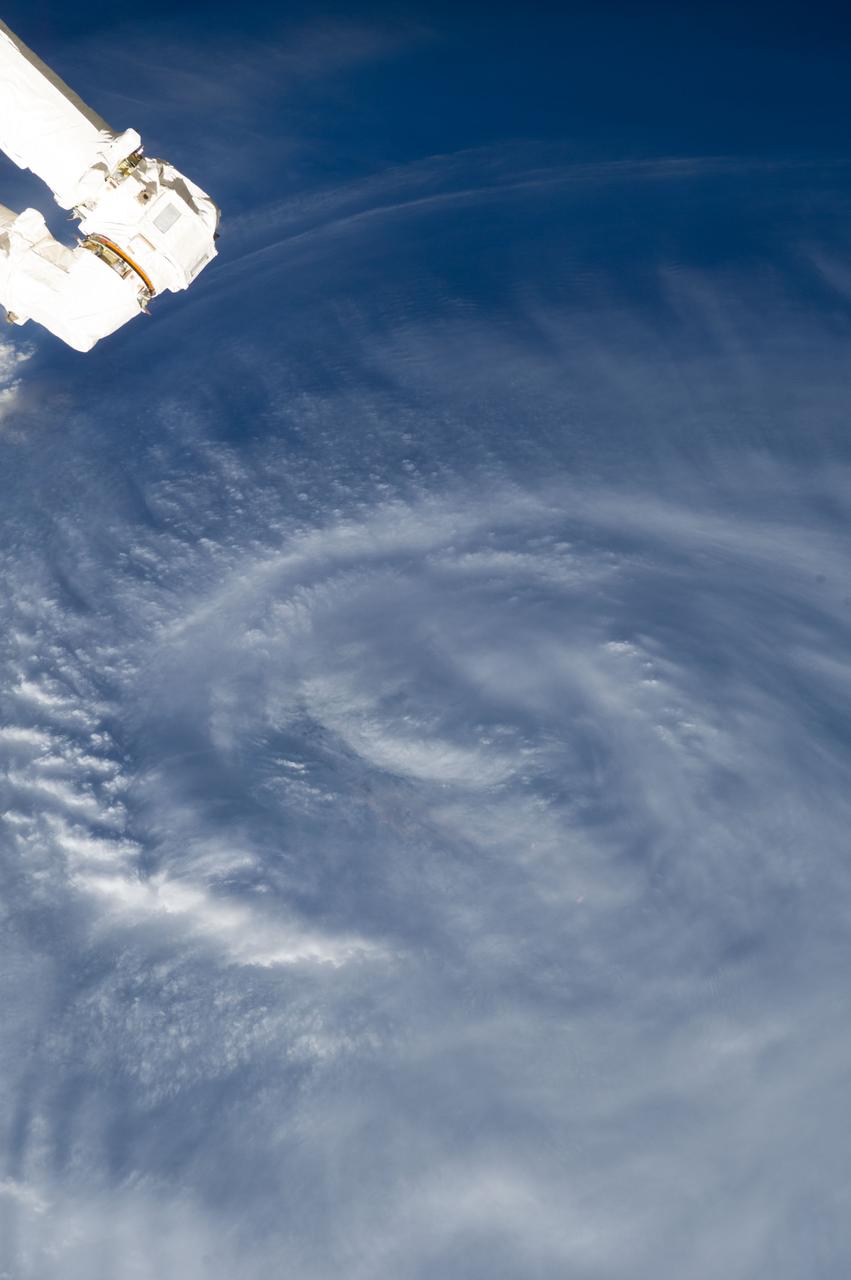
ISS040-E-089388 (7 Aug. 2014) --- One of the Expedition 40 crew members aboard the International Space Station, from an altitude of 221 nautical miles, photographed this image of Typhoon Halong at 09:39:02 GMT on Aug. 7, 2014. The orbital outpost was flying directly above a point on Earth located at 26.1 degrees north latitude and 127.8 degrees east longitude. Part of one of the station's robot arms can be seen in upper left.
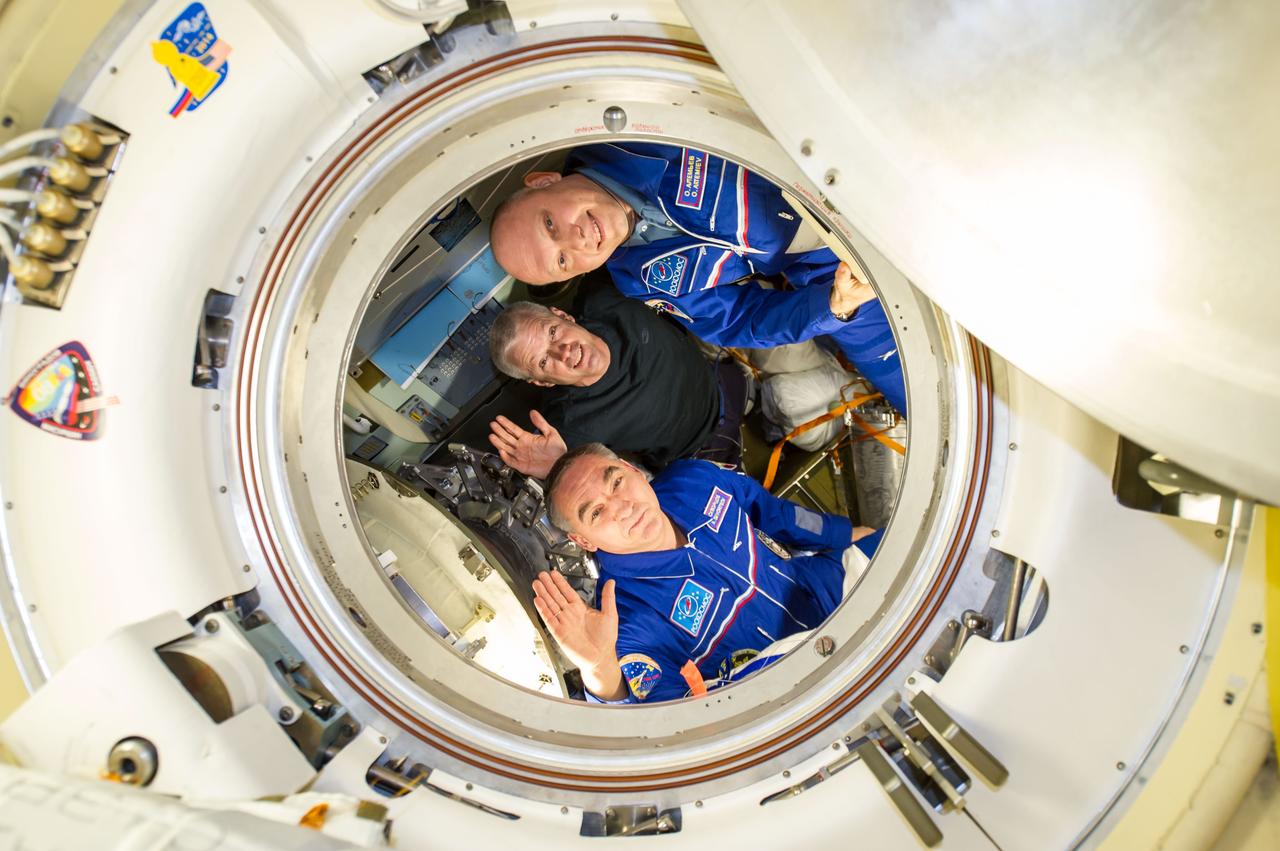
ISS040-E-139842 (10 Sept. 2014) --- NASA astronaut Steve Swanson (center), Expedition 40 commander; along with Russian cosmonauts Alexander Skvortsov (bottom) and Oleg Artemyev, both flight engineers, are pictured in the Soyuz TMA-12M capsule which will return them back to Earth after serving more than five months onboard the orbital outpost. Undocking from the International Space Station’s Poisk Mini-Research Module 2 (MRM2) occurred at 7:01 p.m. (EDT) on Sept. 10, 2014.
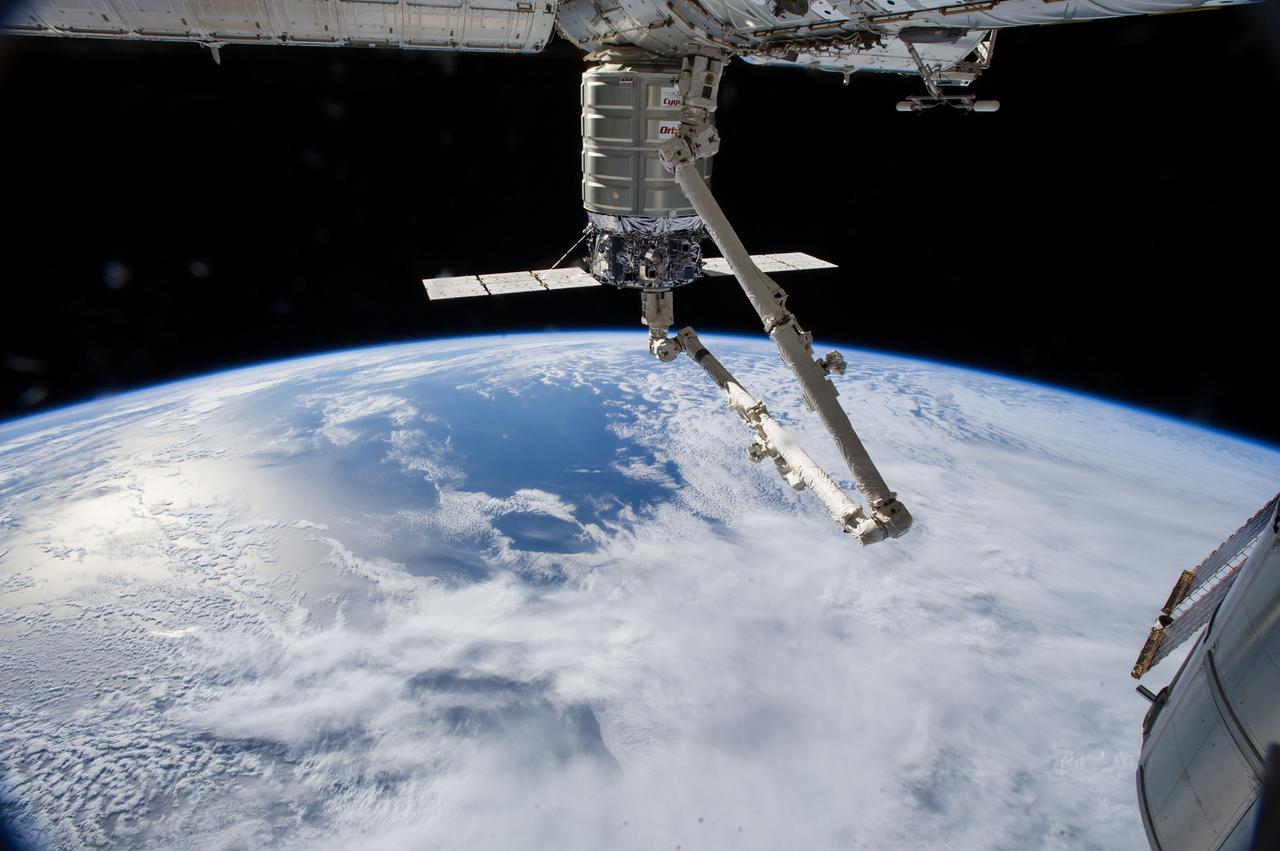
ISS040-E-094430 (15 Aug. 2014) --- The International Space Station?s Canadarm2 unberths the Orbital Sciences' Cygnus commercial cargo craft after a month visiting the orbital outpost. European Space Agency astronaut Alexander Gerst and NASA astronaut Reid Wiseman, both Expedition 40 flight engineers, were at the controls of the robotics workstation in the Cupola removing Cygnus from the Harmony node then safely releasing at 6:40 a.m. (EDT) Aug. 15, 2014. A blue and white part of Earth and the blackness of space provide the backdrop for the scene.

ISS040-E-095125 (15 Aug. 2014) --- The International Space Station’s Canadarm2 prepares to release the Orbital Sciences' Cygnus commercial cargo craft after a month visiting the orbital outpost. European Space Agency astronaut Alexander Gerst and NASA astronaut Reid Wiseman, both Expedition 40 flight engineers, were at the controls of the robotics workstation in the Cupola removing Cygnus from the Harmony node then safely releasing at 6:40 a.m. (EDT) Aug. 15, 2014. A blue and white part of Earth and the blackness of space provide the backdrop for the scene.

ISS040-E-094335 (15 Aug. 2014) --- Surrounded by the blackness of space, the International Space Station?s Canadarm2 prepares to release the Orbital Sciences' Cygnus commercial cargo craft after a month visiting the orbital outpost. European Space Agency astronaut Alexander Gerst and NASA astronaut Reid Wiseman, both Expedition 40 flight engineers, were at the controls of the robotics workstation in the Cupola removing Cygnus from the Harmony node then safely releasing at 6:40 a.m. (EDT) Aug. 15, 2014. The thin line of Earth?s atmosphere is visible at left.

ISS040-E-095070 (15 Aug. 2014) --- The International Space Station’s Canadarm2 prepares to release the Orbital Sciences' Cygnus commercial cargo craft after a month visiting the orbital outpost. European Space Agency astronaut Alexander Gerst and NASA astronaut Reid Wiseman, both Expedition 40 flight engineers, were at the controls of the robotics workstation in the Cupola removing Cygnus from the Harmony node then safely releasing at 6:40 a.m. (EDT) Aug. 15, 2014. A cloud-covered part of Earth and the blackness of space provide the backdrop for the scene.

ISS041-E-009477 (13 Sept. 2014) --- One of the Expedition 41 crew members aboard the Earth-orbiting International Space Station on Sept. 13, 2014 captured this image of a starry sky. The white panel at left belonging to the ATV-5 spacecraft, which is docked with the orbital outpost, obstructs the view of Scorpius. The red star Antares is directly to the left of the bottom of the second ATV panel from the top. The two stars that are close together and on the lower left of the photo comprise Shaula, the tip of the scorpion?s tail. The open cluster close to Shaula is M7. A solar panel belonging to Russia's service module or Zvezdza runs along the right side of the bottom of the frame.

ISS040-E-094422 (15 Aug. 2014) --- The International Space Station?s Canadarm2 unberths the Orbital Sciences' Cygnus commercial cargo craft after a month visiting the orbital outpost. European Space Agency astronaut Alexander Gerst and NASA astronaut Reid Wiseman, both Expedition 40 flight engineers, were at the controls of the robotics workstation in the Cupola removing Cygnus from the Harmony node then safely releasing at 6:40 a.m. (EDT) Aug. 15, 2014. A cloud-covered part of Earth and the blackness of space provide the backdrop for the scene.
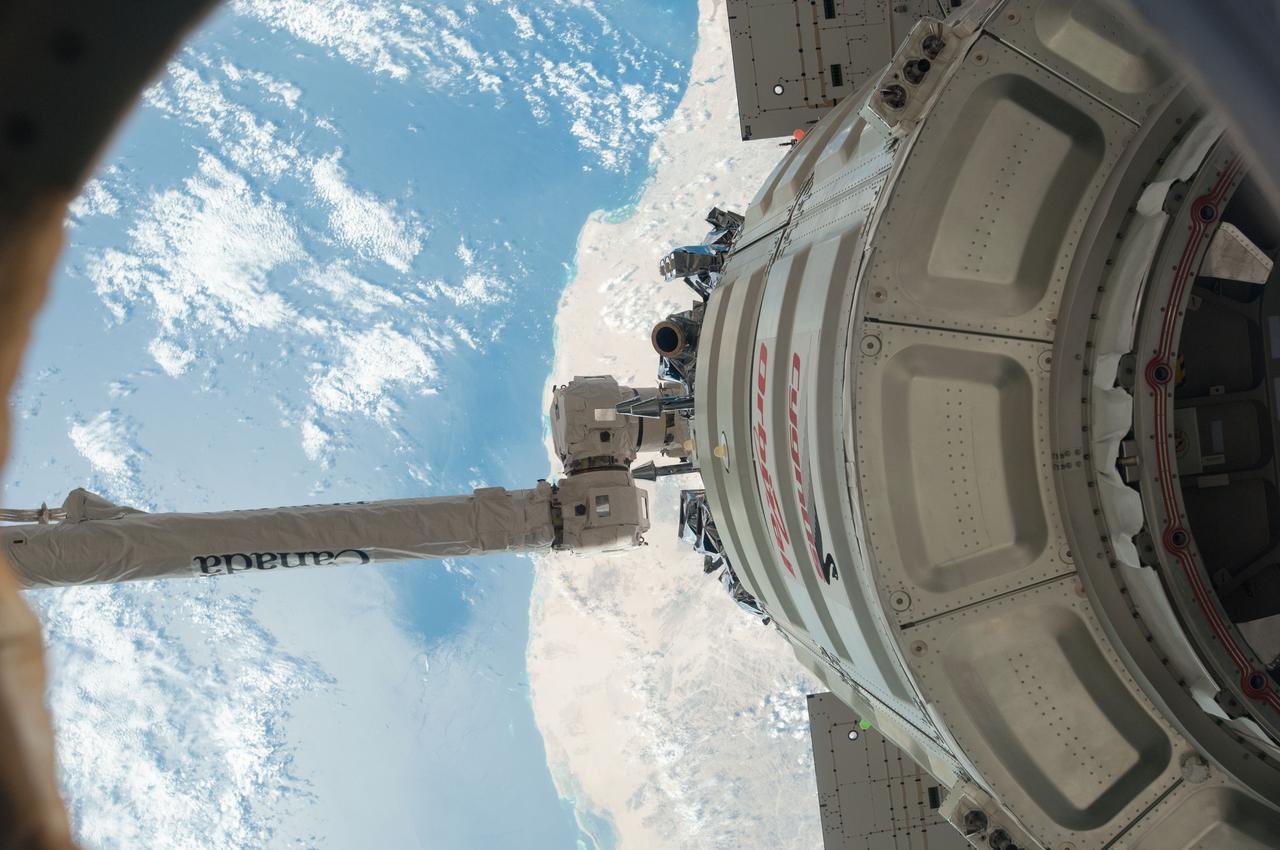
ISS038-E-049421 (18 Feb. 2014) --- The International Space Station's Canadarm2 unberths the Orbital Sciences Corporation's Cygnus spacecraft after several weeks at the space station. NASA astronaut Mike Hopkins, with assistance from Japan Aerospace Exploration Agency astronaut Koichi Wakata, both Expedition 38 flight engineers, used the station's 57-foot Canadarm2 robotic arm to detach Cygnus from the Earth-facing port of the Harmony node at 5:15 a.m. (EST) on Feb. 18, 2014. While Wakata monitored data and kept in contact with the team at Houston's Mission Control Center, Hopkins released Cygnus from the robotic arm at 6:41 a.m.
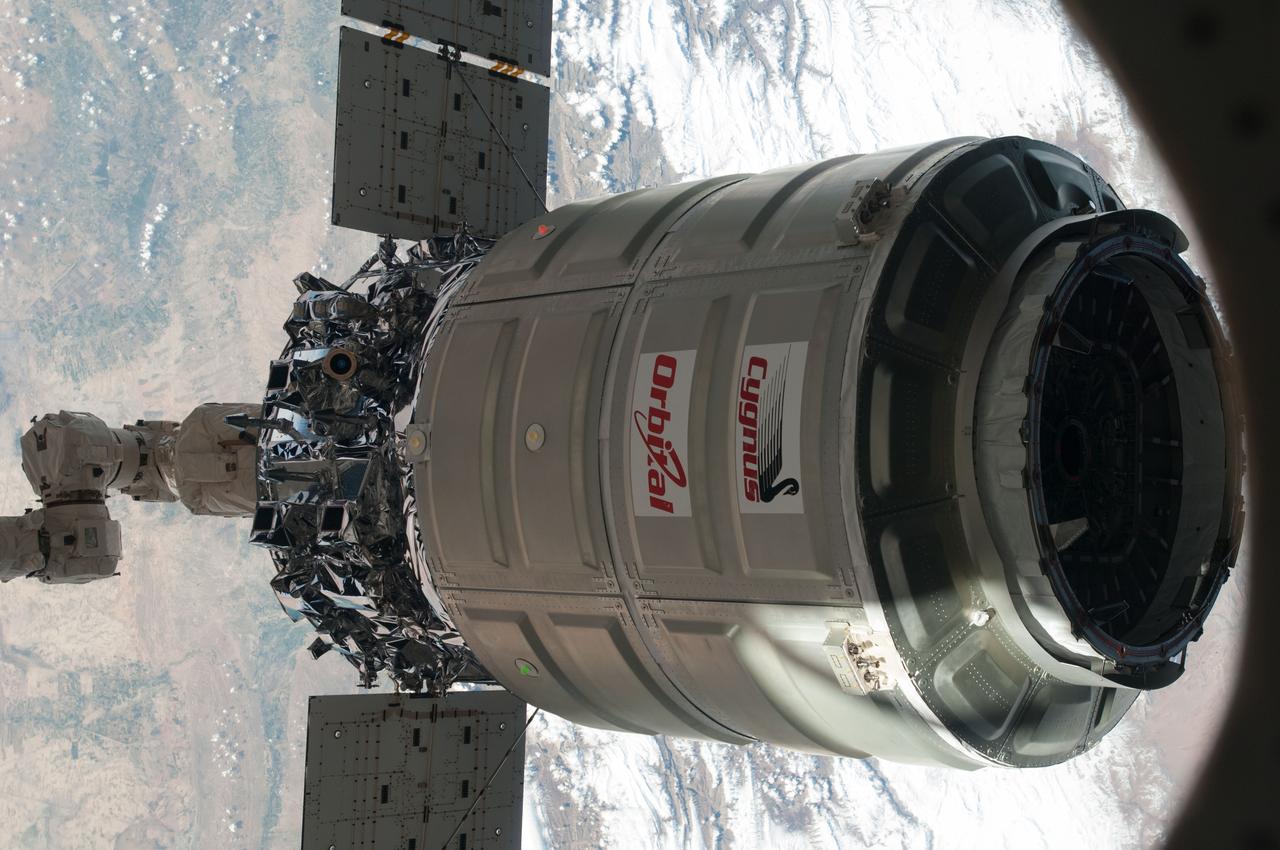
ISS038-E-049447 (18 Feb. 2014) --- The International Space Station's Canadarm2 unberths the Orbital Sciences Corporation's Cygnus spacecraft after several weeks at the space station. NASA astronaut Mike Hopkins, with assistance from Japan Aerospace Exploration Agency astronaut Koichi Wakata, both Expedition 38 flight engineers, used the station's 57-foot Canadarm2 robotic arm to detach Cygnus from the Earth-facing port of the Harmony node at 5:15 a.m. (EST) on Feb. 18, 2014. While Wakata monitored data and kept in contact with the team at Houston's Mission Control Center, Hopkins released Cygnus from the robotic arm at 6:41 a.m.
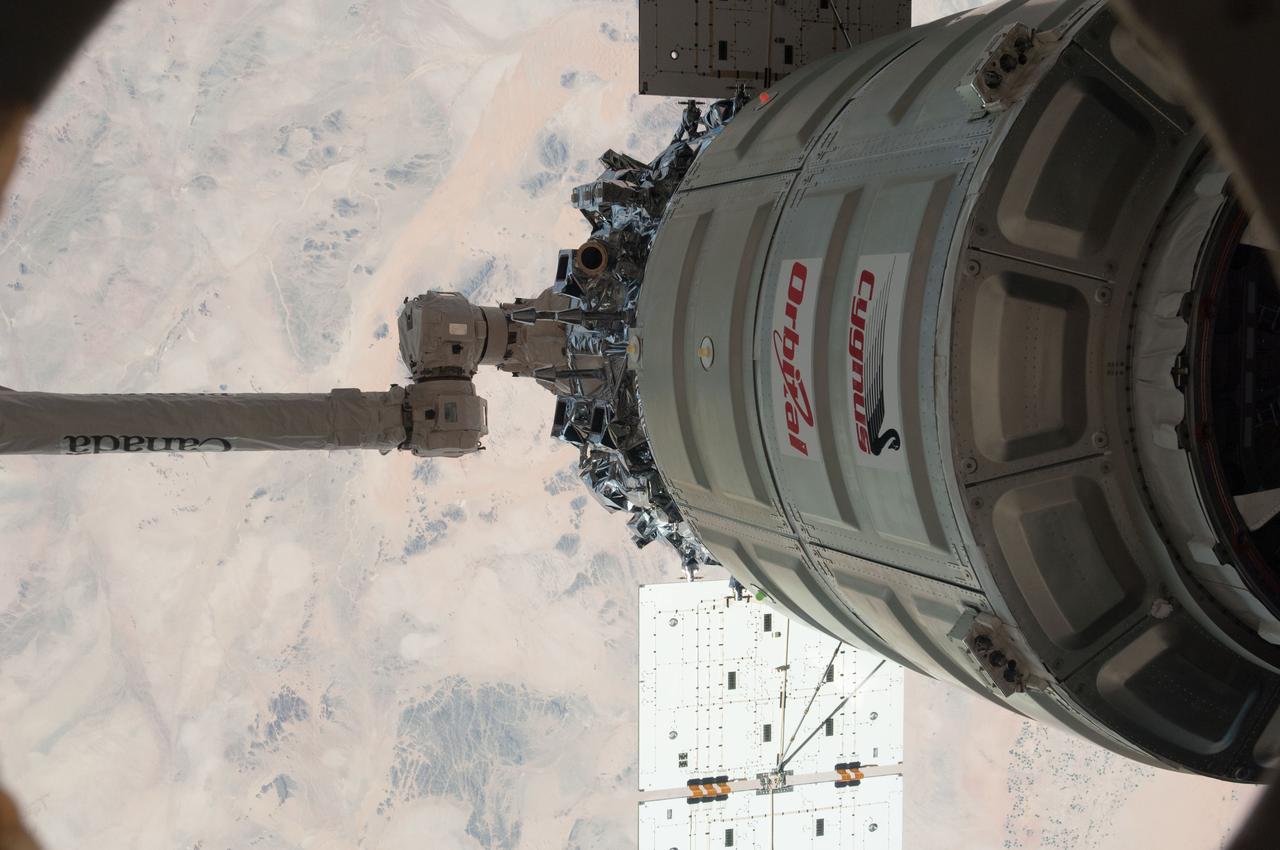
ISS038-E-049430 (18 Feb. 2014) --- The International Space Station's Canadarm2 unberths the Orbital Sciences Corporation's Cygnus spacecraft after several weeks at the space station. NASA astronaut Mike Hopkins, with assistance from Japan Aerospace Exploration Agency astronaut Koichi Wakata, both Expedition 38 flight engineers, used the station's 57-foot Canadarm2 robotic arm to detach Cygnus from the Earth-facing port of the Harmony node at 5:15 a.m. (EST) on Feb. 18, 2014. While Wakata monitored data and kept in contact with the team at Houston's Mission Control Center, Hopkins released Cygnus from the robotic arm at 6:41 a.m.
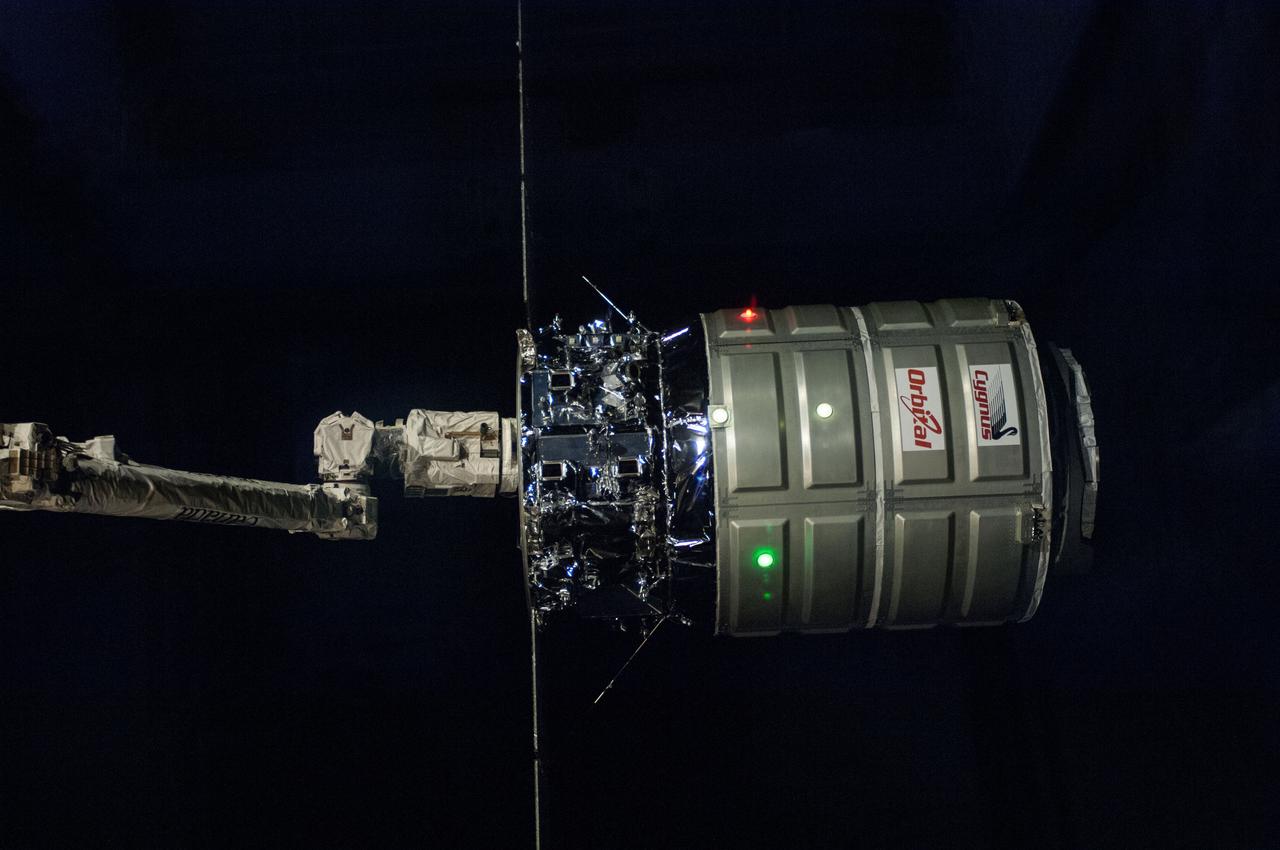
ISS038-E-049453 (18 Feb. 2014) --- The International Space Station's Canadarm2 prepares to release the Orbital Sciences Corporation's Cygnus spacecraft after several weeks at the space station. NASA astronaut Mike Hopkins, with assistance from Japan Aerospace Exploration Agency astronaut Koichi Wakata, both Expedition 38 flight engineers, used the station's 57-foot Canadarm2 robotic arm to detach Cygnus from the Earth-facing port of the Harmony node at 5:15 a.m. (EST) on Feb. 18, 2014. While Wakata monitored data and kept in contact with the team at Houston's Mission Control Center, Hopkins released Cygnus from the robotic arm at 6:41 a.m.
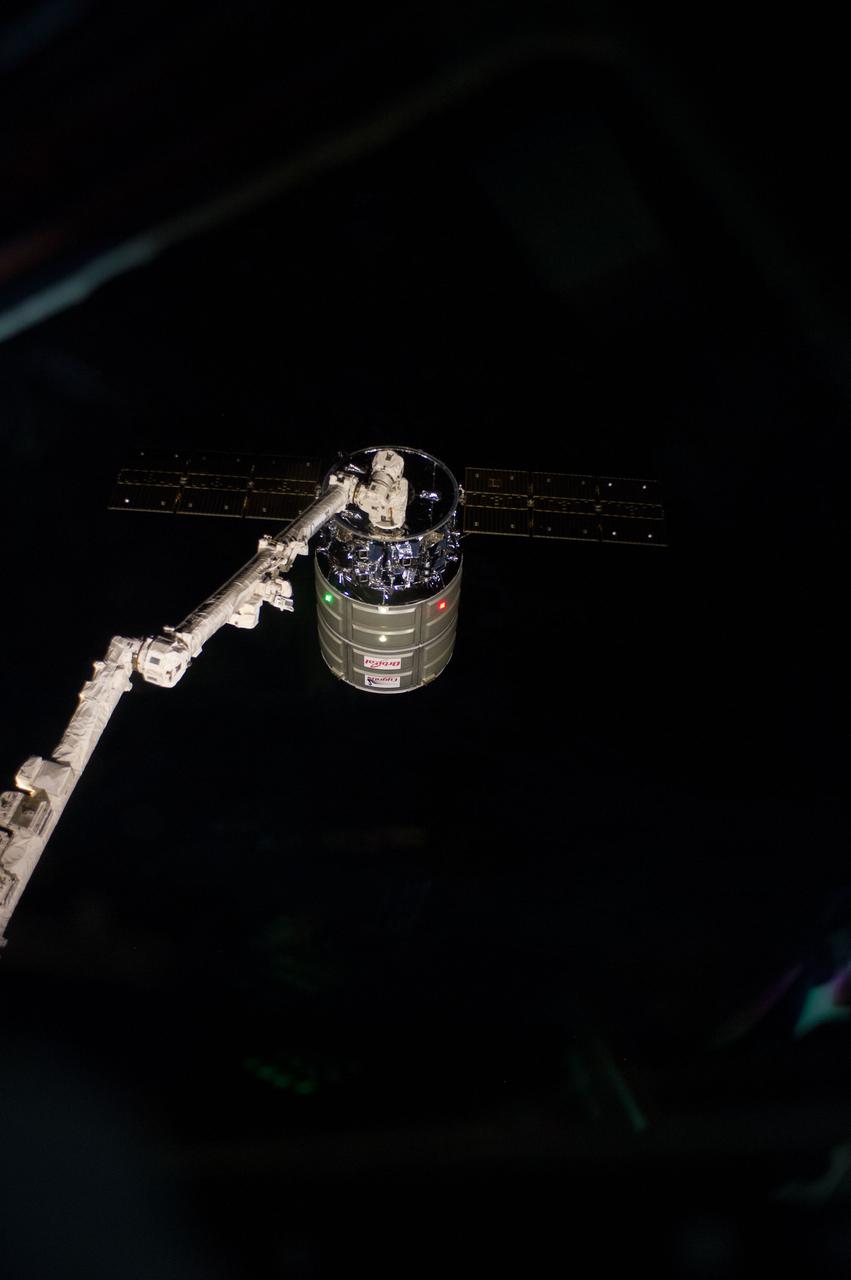
ISS038-E-050049 (18 Feb. 2014) --- The International Space Station's Canadarm2 prepares to release the Orbital Sciences Corporation's Cygnus spacecraft after several weeks at the space station. NASA astronaut Mike Hopkins, with assistance from Japan Aerospace Exploration Agency astronaut Koichi Wakata, both Expedition 38 flight engineers, used the station's 57-foot Canadarm2 robotic arm to detach Cygnus from the Earth-facing port of the Harmony node at 5:15 a.m. (EST) on Feb. 18, 2014. While Wakata monitored data and kept in contact with the team at Houston's Mission Control Center, Hopkins released Cygnus from the robotic arm at 6:41 a.m.
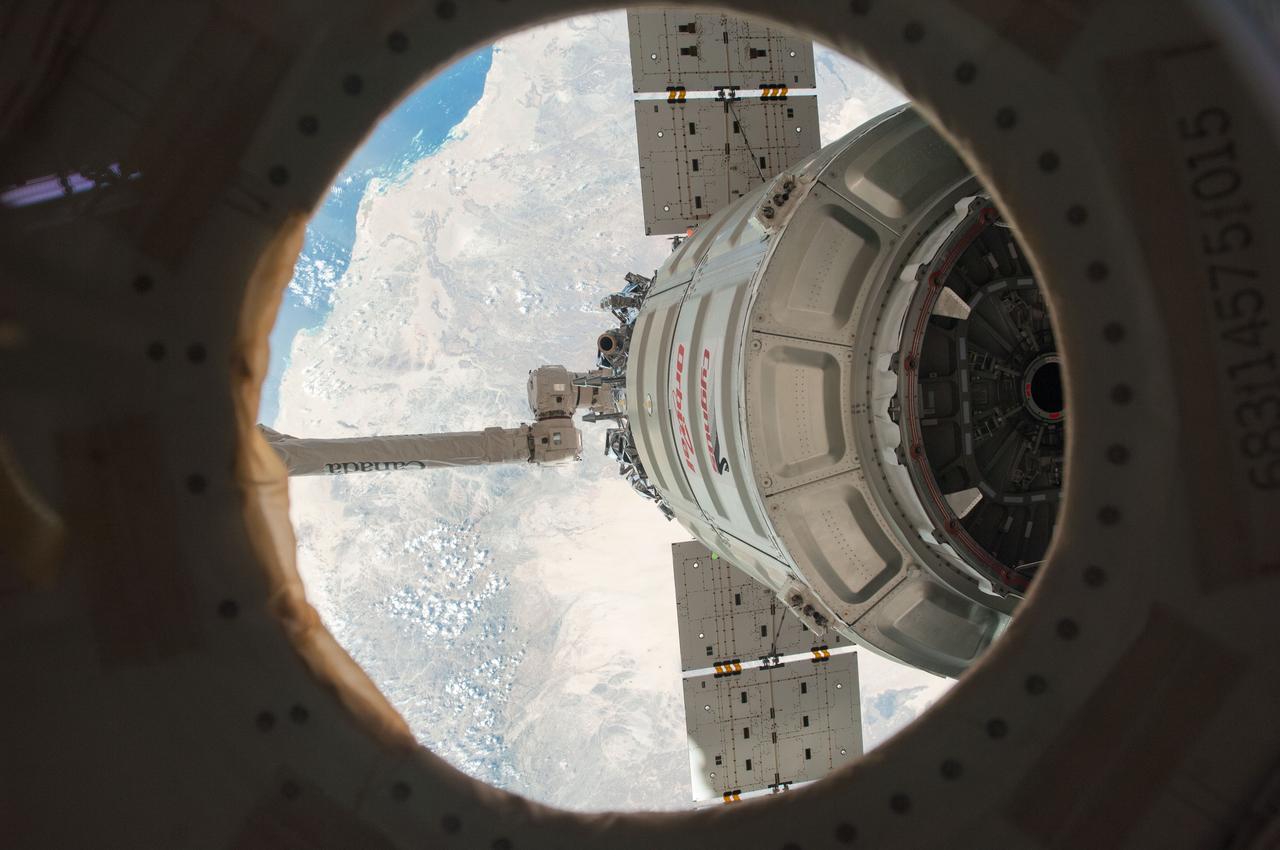
ISS038-E-049423 (18 Feb. 2014) --- The International Space Station's Canadarm2 unberths the Orbital Sciences Corporation's Cygnus spacecraft after several weeks at the space station. NASA astronaut Mike Hopkins, with assistance from Japan Aerospace Exploration Agency astronaut Koichi Wakata, both Expedition 38 flight engineers, used the station's 57-foot Canadarm2 robotic arm to detach Cygnus from the Earth-facing port of the Harmony node at 5:15 a.m. (EST) on Feb. 18, 2014. While Wakata monitored data and kept in contact with the team at Houston's Mission Control Center, Hopkins released Cygnus from the robotic arm at 6:41 a.m.
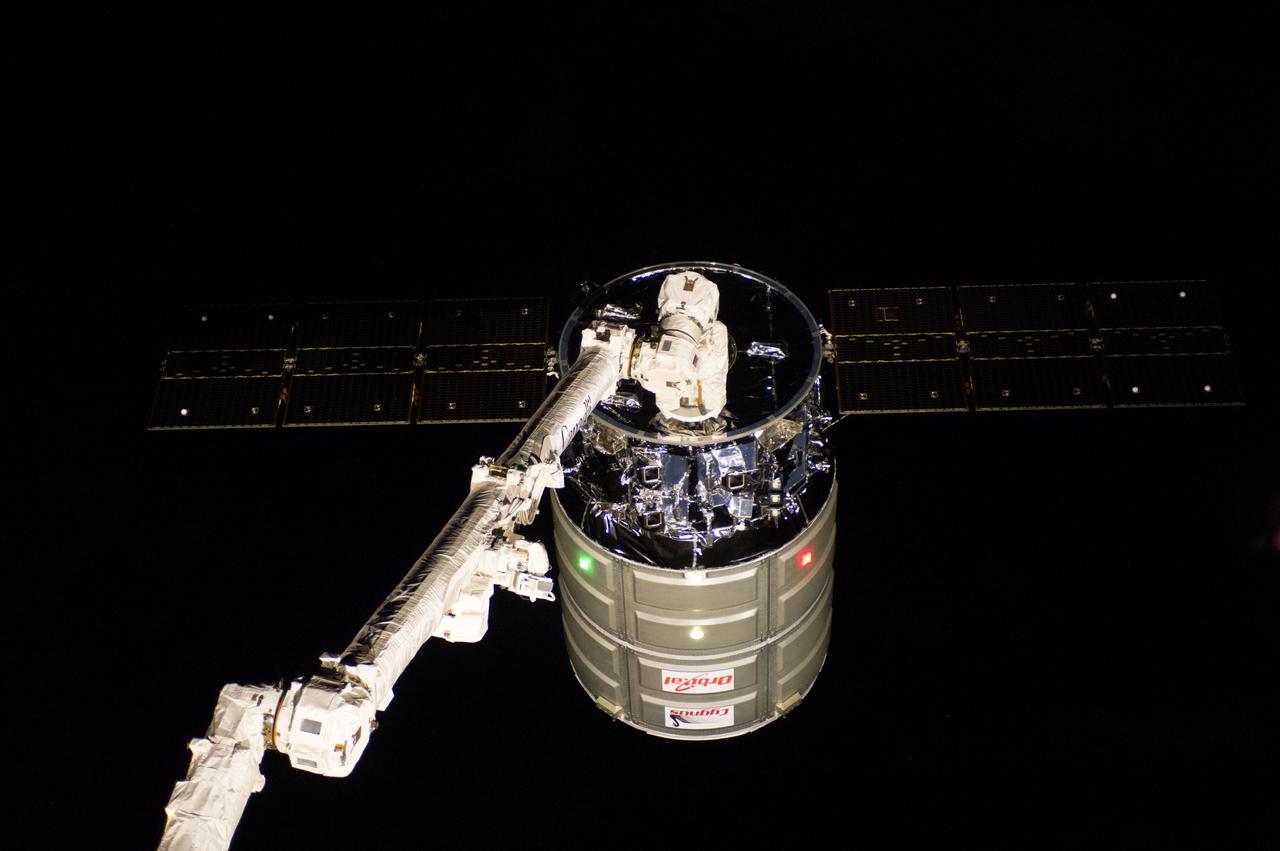
ISS038-E-050062 (18 Feb. 2014) --- The International Space Station's Canadarm2 prepares to release the Orbital Sciences Corporation's Cygnus spacecraft after several weeks at the space station. NASA astronaut Mike Hopkins, with assistance from Japan Aerospace Exploration Agency astronaut Koichi Wakata, both Expedition 38 flight engineers, used the station's 57-foot Canadarm2 robotic arm to detach Cygnus from the Earth-facing port of the Harmony node at 5:15 a.m. (EST) on Feb. 18, 2014. While Wakata monitored data and kept in contact with the team at Houston's Mission Control Center, Hopkins released Cygnus from the robotic arm at 6:41 a.m.
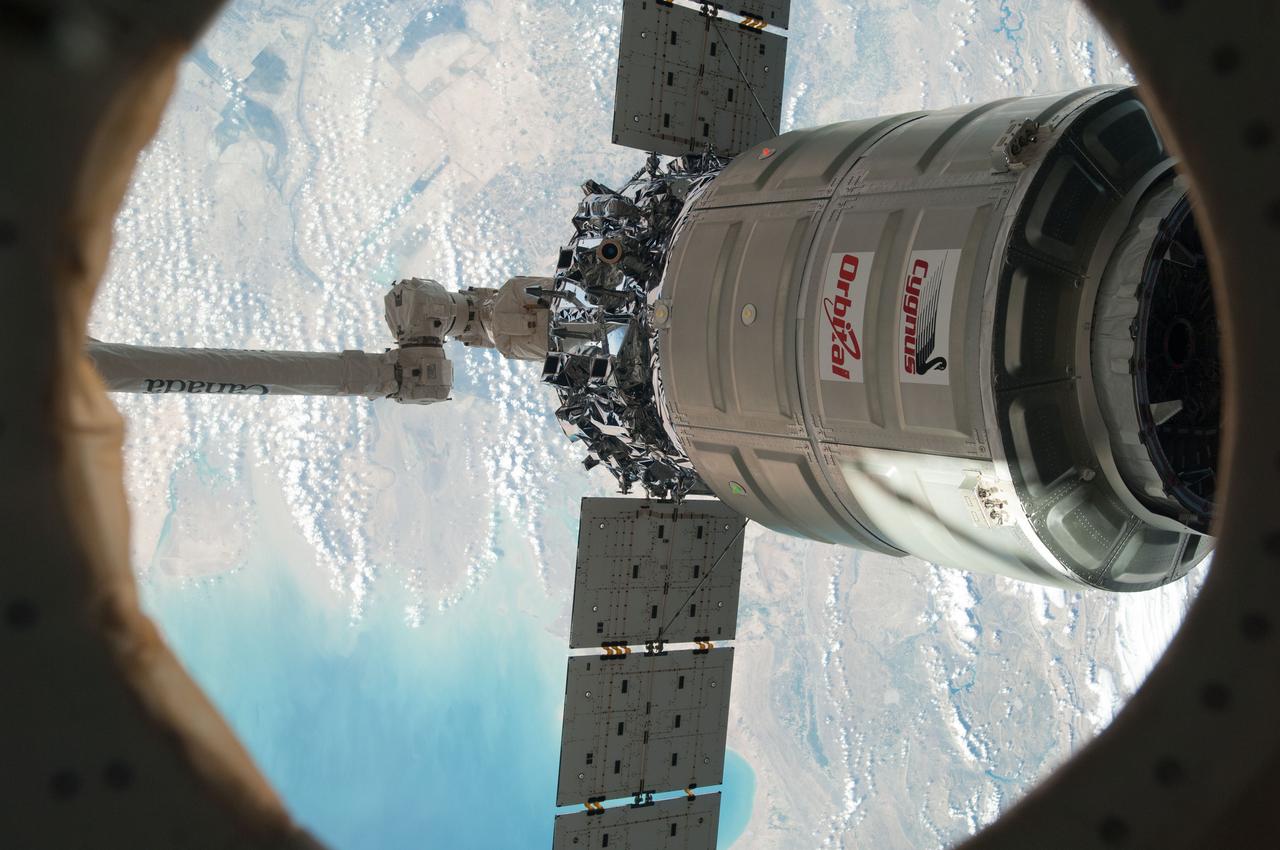
ISS038-E-049445 (18 Feb. 2014) --- The International Space Station's Canadarm2 unberths the Orbital Sciences Corporation's Cygnus spacecraft after several weeks at the space station. NASA astronaut Mike Hopkins, with assistance from Japan Aerospace Exploration Agency astronaut Koichi Wakata, both Expedition 38 flight engineers, used the station's 57-foot Canadarm2 robotic arm to detach Cygnus from the Earth-facing port of the Harmony node at 5:15 a.m. (EST) on Feb. 18, 2014. While Wakata monitored data and kept in contact with the team at Houston's Mission Control Center, Hopkins released Cygnus from the robotic arm at 6:41 a.m.
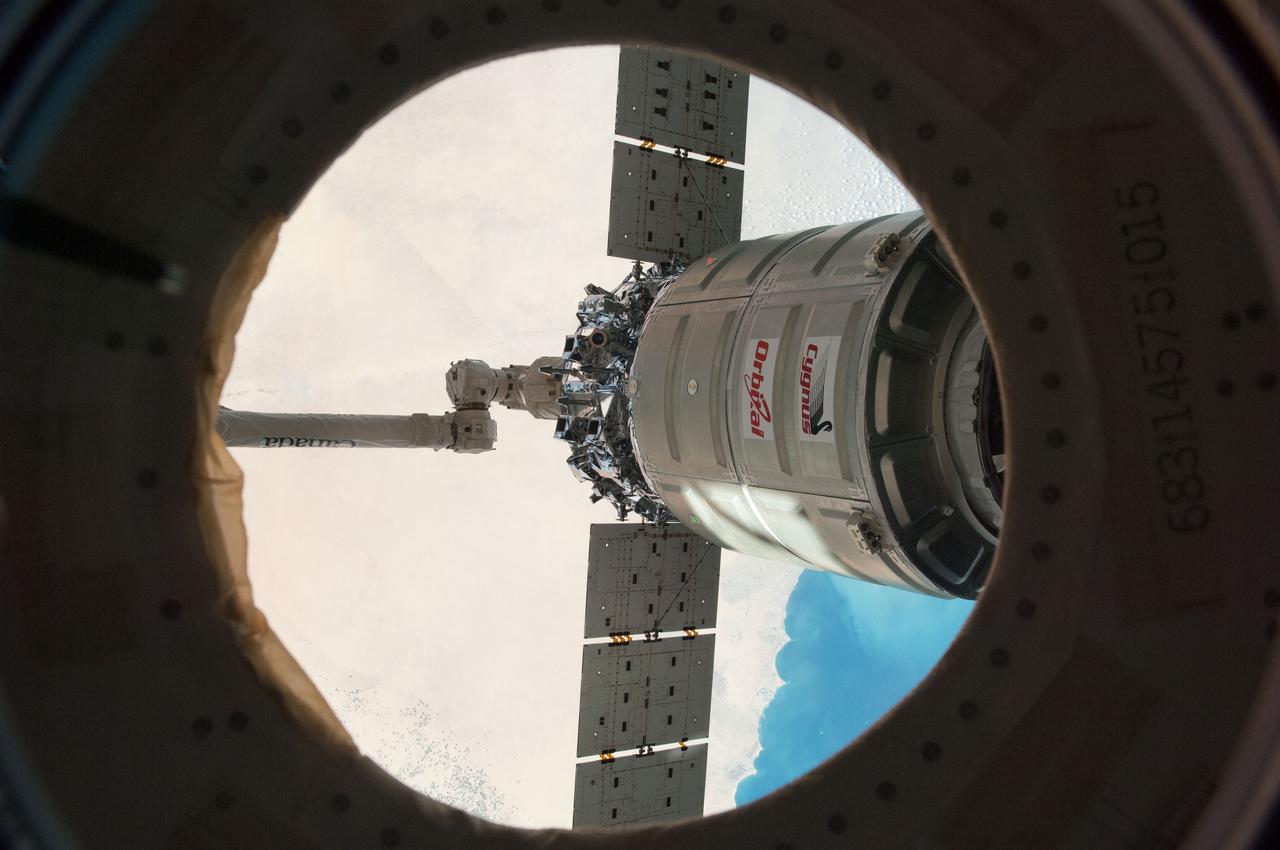
ISS038-E-049438 (18 Feb. 2014) --- The International Space Station's Canadarm2 unberths the Orbital Sciences Corporation's Cygnus spacecraft after several weeks at the space station. NASA astronaut Mike Hopkins, with assistance from Japan Aerospace Exploration Agency astronaut Koichi Wakata, both Expedition 38 flight engineers, used the station's 57-foot Canadarm2 robotic arm to detach Cygnus from the Earth-facing port of the Harmony node at 5:15 a.m. (EST) on Feb. 18, 2014. While Wakata monitored data and kept in contact with the team at Houston's Mission Control Center, Hopkins released Cygnus from the robotic arm at 6:41 a.m.
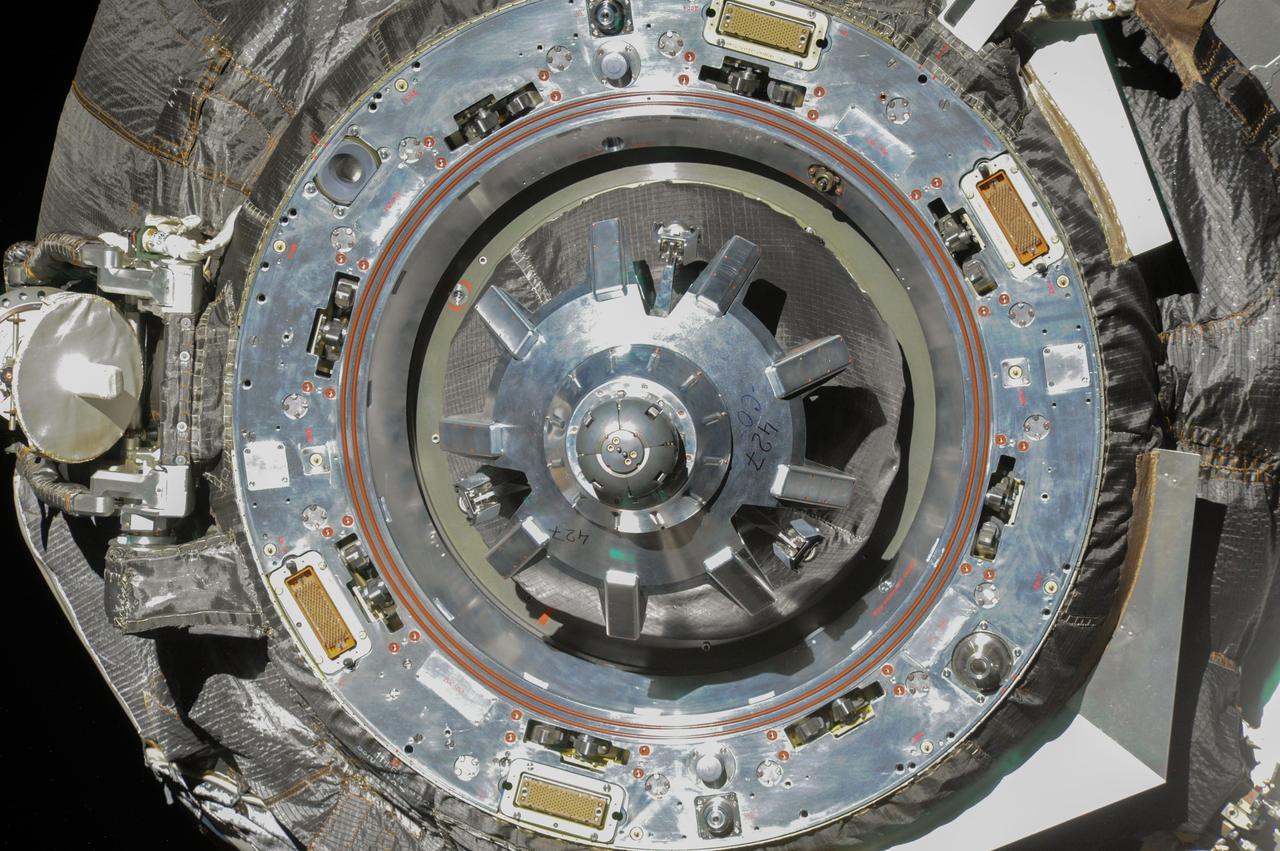
ISS040-E-070868 (21 July 2014) --- This close-up view shows the docking mechanism of the unpiloted Russian ISS Progress 55 resupply ship as it undocks from the International Space Station's Pirs Docking Compartment at 5:44 p.m. (EDT) on July 21, 2014 after spending more than three months at the orbiting complex. After undocking, the Progress moved to a safe distance away from the station for 10 days of engineering tests before it is deorbited on July 31. Filled with trash and station discards, Progress 55 will burn up as it re-enters Earth?s atmosphere over the Pacific Ocean.
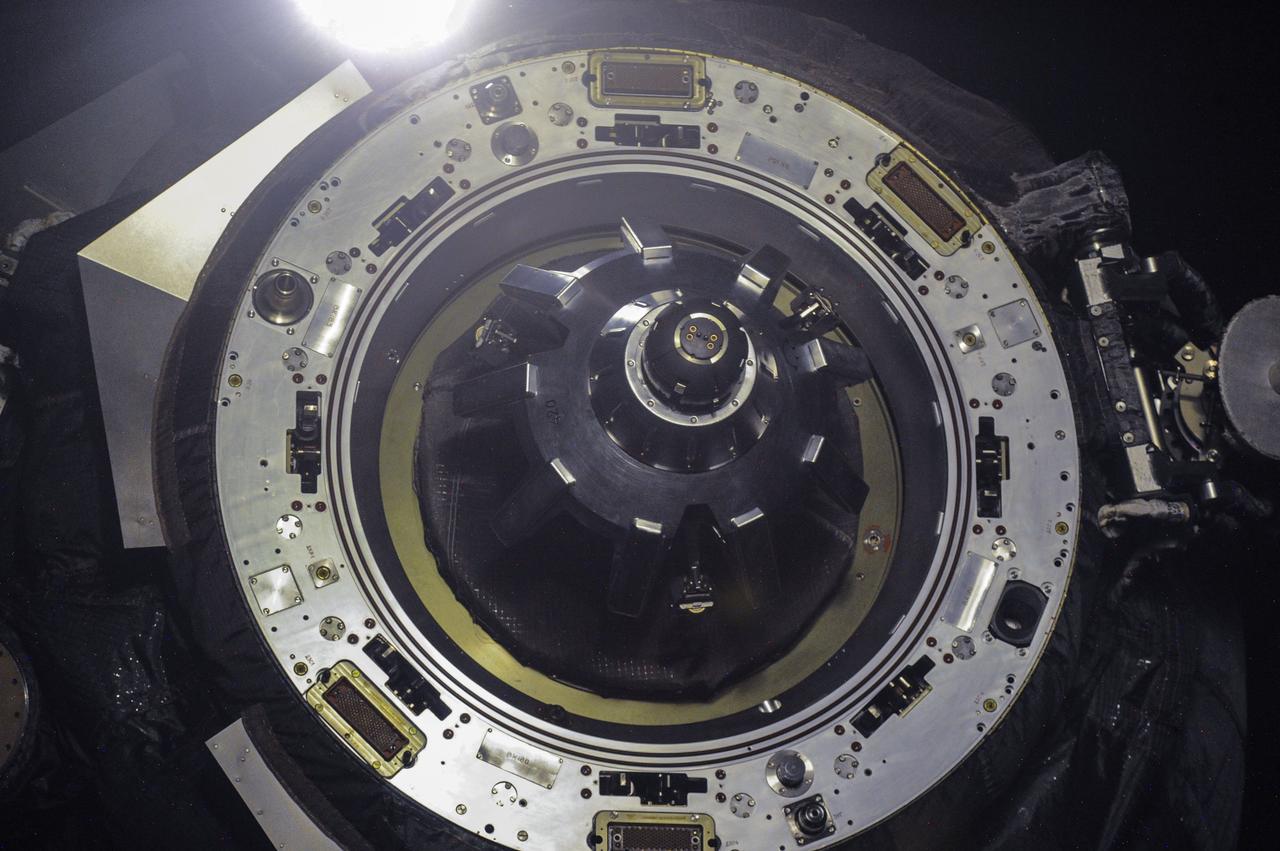
ISS038-E-041175 (3 Feb. 2014) --- This close-up view shows the docking mechanism of the unpiloted Russian ISS Progress 52 resupply ship as it undocks from the International Space Station's Pirs Docking Compartment at 11:21 a.m. (EST) on Feb. 3, 2014. The Progress backed away to a safe distance from the orbital complex to begin several days of tests to study thermal effects of space on its attitude control system. Filled with trash and other unneeded items, the Russian resupply ship will be commanded to re-enter Earth's atmosphere Feb. 11 and disintegrate harmlessly over the Pacific Ocean.
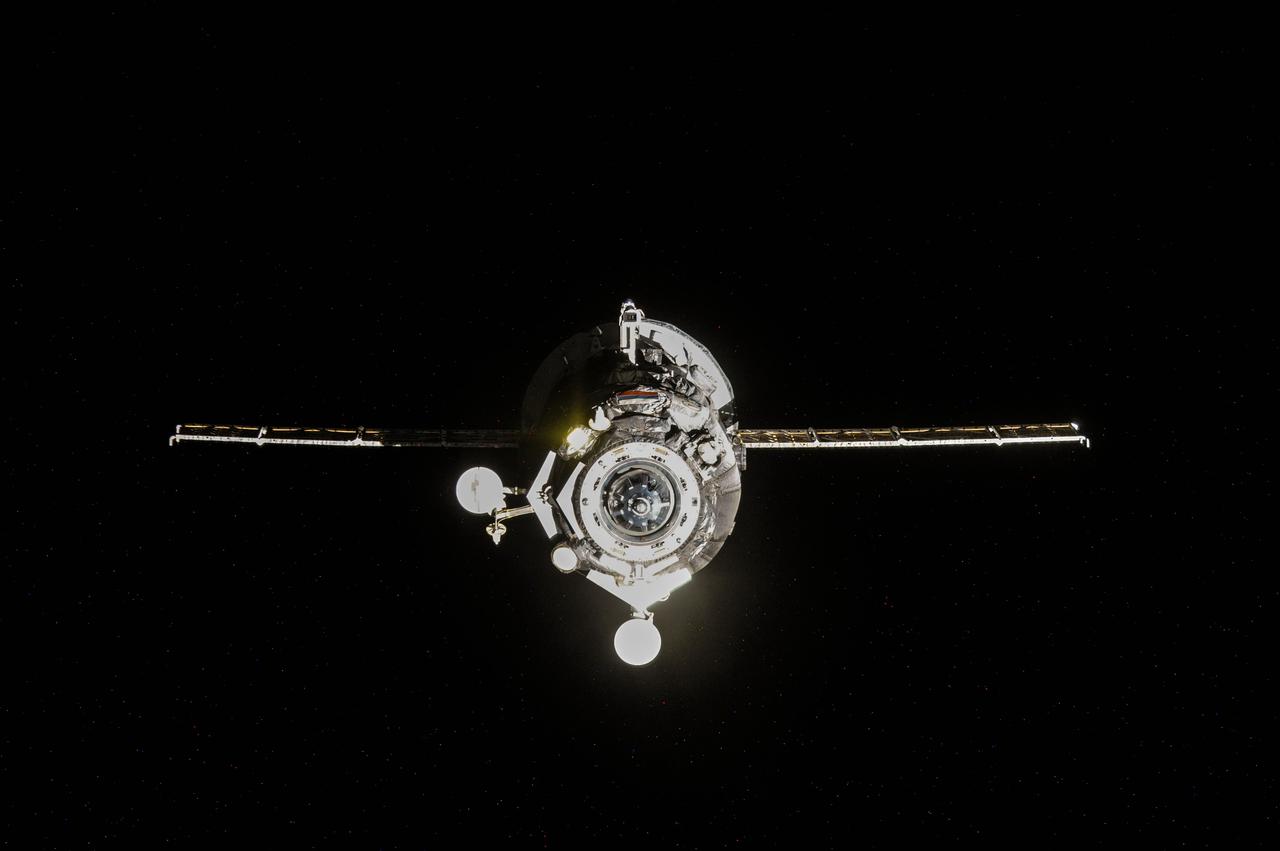
ISS040-E-070870 (21 July 2014) --- The unpiloted Russian ISS Progress 55 resupply ship undocks from the International Space Station's Pirs Docking Compartment at 5:44 p.m. (EDT) on July 21, 2014 after spending more than three months at the orbiting complex. After undocking, the Progress moved to a safe distance away from the station for 10 days of engineering tests before it is deorbited on July 31. Filled with trash and station discards, Progress 55 will burn up as it re-enters Earth?s atmosphere over the Pacific Ocean.
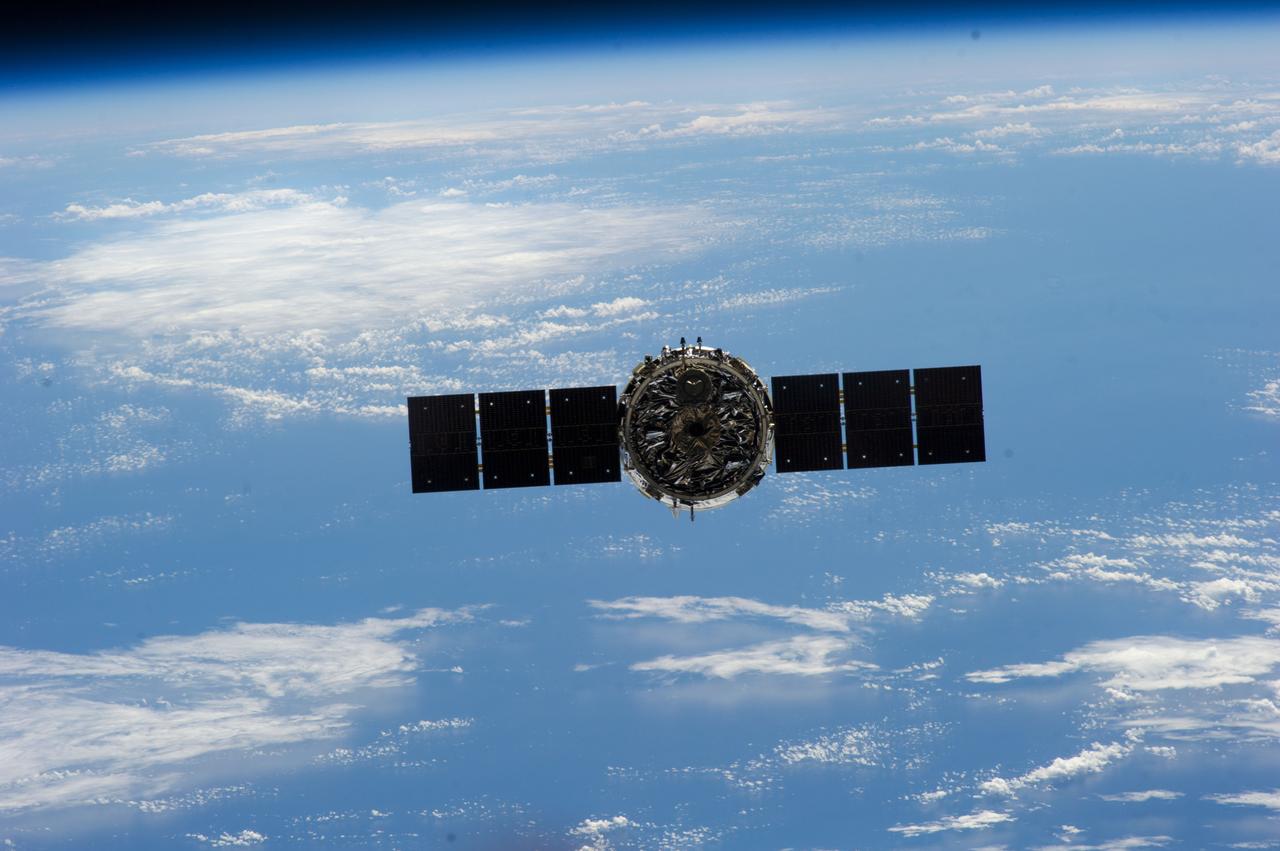
ISS038-E-050755 (18 Feb. 2014) --- The Orbital Sciences Corporation's Cygnus spacecraft begins its relative separation from the International Space Station after several weeks at the station. NASA astronaut Mike Hopkins, with assistance from Japan Aerospace Exploration Agency astronaut Koichi Wakata, both Expedition 38 flight engineers, used the station's 57-foot Canadarm2 robotic arm to detach Cygnus from the Earth-facing port of the Harmony node at 5:15 a.m. (EST) on Feb. 18, 2014. While Wakata monitored data and kept in contact with the team at Houston's Mission Control Center, Hopkins released Cygnus from the robotic arm at 6:41 a.m. A blue and white part of Earth provides the backdrop for the scene.
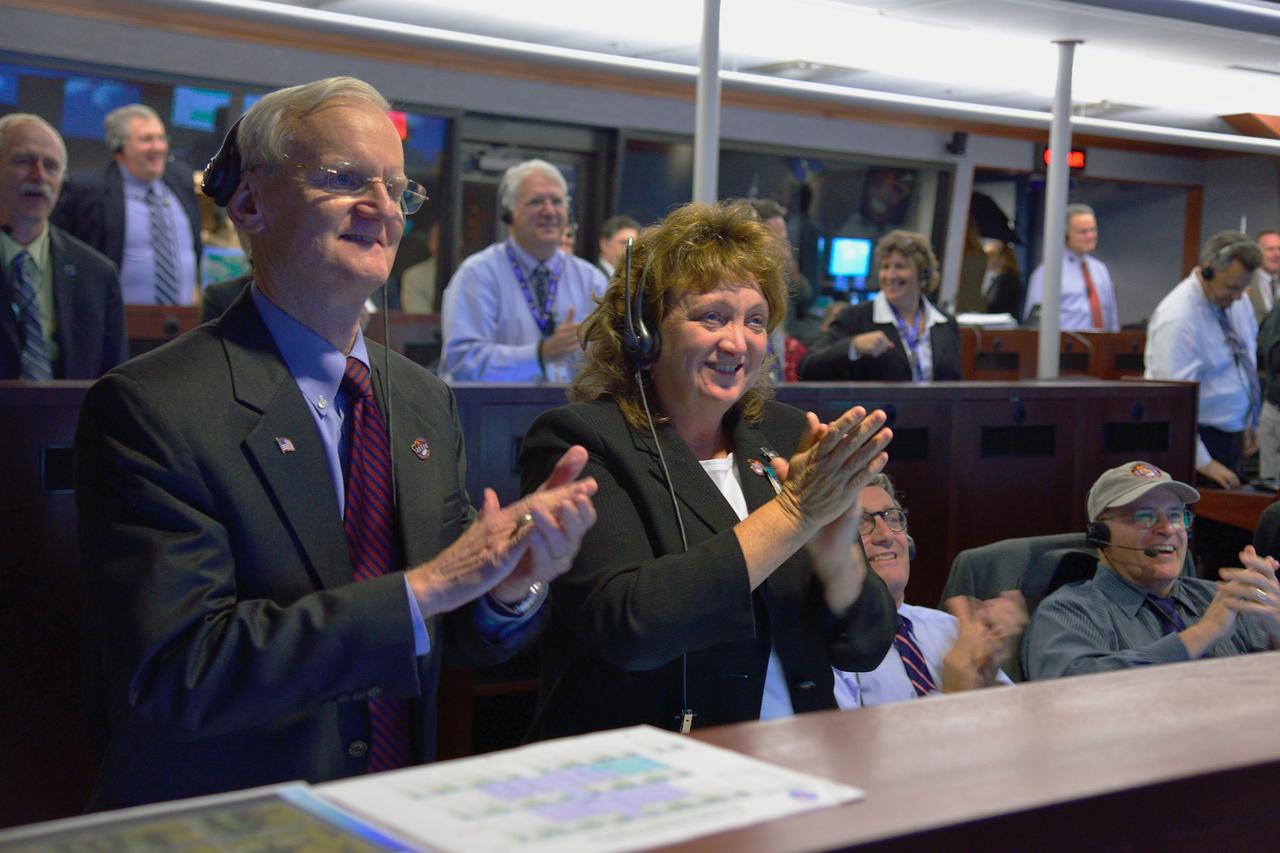
Astronaut John Casper and Lockheed Martin's Carol Webber watch Orion's parachutes open during the Exploration Flight Test-1 (EFT-) landing sequence on Dec. 5, 2014. The Orion spacecraft orbited Earth twice, reaching an altitude of approximately 3,600 miles above Earth before landing. No one was aboard Orion for this flight test, but the spacecraft is designed to allow us to journey to destinations never before visited by humans, including an asteroid and Mars. Part of Batch image transfer from Flickr.
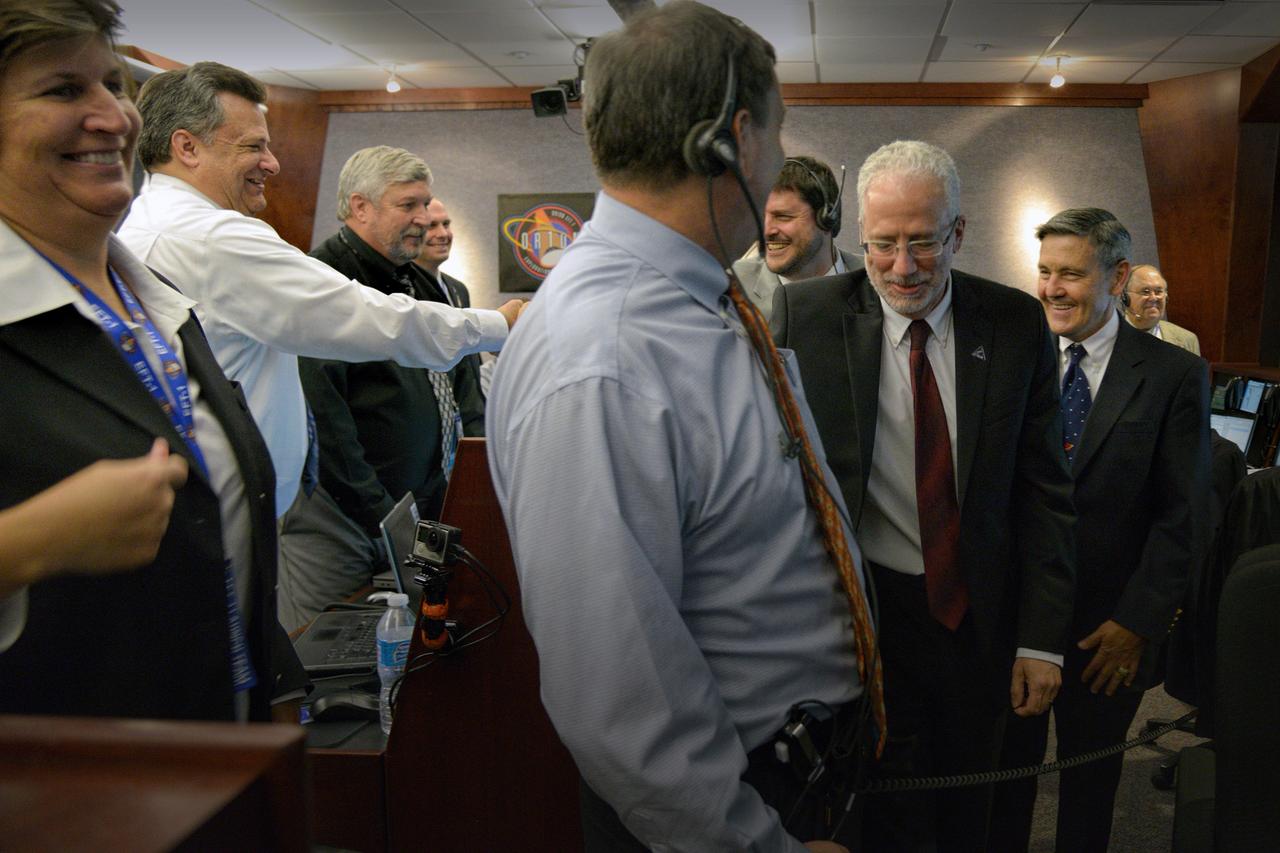
The Orion team celebrates Orion's successful Exploration Flight Test-1 (EFT-1) mission in Building AE at Cape Canaveral Air Force Station on Dec. 5, 2014. The Orion spacecraft orbited Earth twice, reaching an altitude of approximately 3,600 miles above Earth before landing. No one was aboard Orion for this flight test, but the spacecraft is designed to allow us to journey to destinations never before visited by humans, including an asteroid and Mars. Part of Batch image transfer from Flickr.
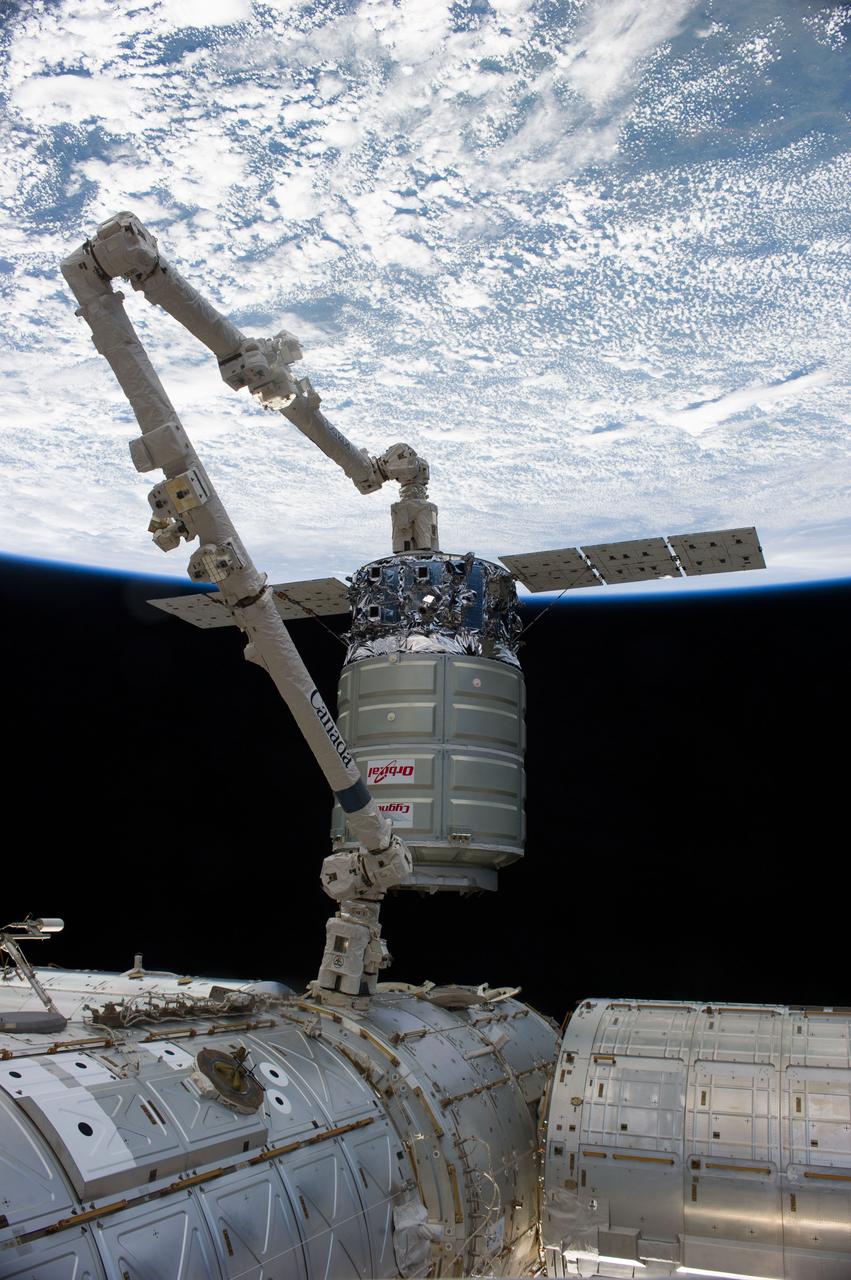
ISS038-E-050734 (18 Feb. 2014) --- The International Space Station's Canadarm2 unberths the Orbital Sciences Corporation's Cygnus spacecraft after several weeks at the space station. NASA astronaut Mike Hopkins, with assistance from Japan Aerospace Exploration Agency astronaut Koichi Wakata, both Expedition 38 flight engineers, used the station's 57-foot Canadarm2 robotic arm to detach Cygnus from the Earth-facing port of the Harmony node at 5:15 a.m. (EST) on Feb. 18, 2014. While Wakata monitored data and kept in contact with the team at Houston's Mission Control Center, Hopkins released Cygnus from the robotic arm at 6:41 a.m. Earth's horizon and the blackness of space provide the backdrop for the scene.

Ralph Basilio, OCO-2 project manager with NASA’s Jet Propulsion Laboratory (JPL) in Pasadena, California discusses the Orbiting Carbon Observatory-2 (OCO-2), NASA’s first spacecraft dedicated to studying carbon dioxide, during a press briefing, Thursday, June 12, 2014, at NASA Headquarters in Washington. OCO-2 is set for a July 1, 2014 launch from Vandenberg Air Force Base in California. Its mission is to measure the global distribution of carbon dioxide, the leading human-produced greenhouse gas driving changes in Earth’s climate. Photo Credit: (NASA/Bill Ingalls)
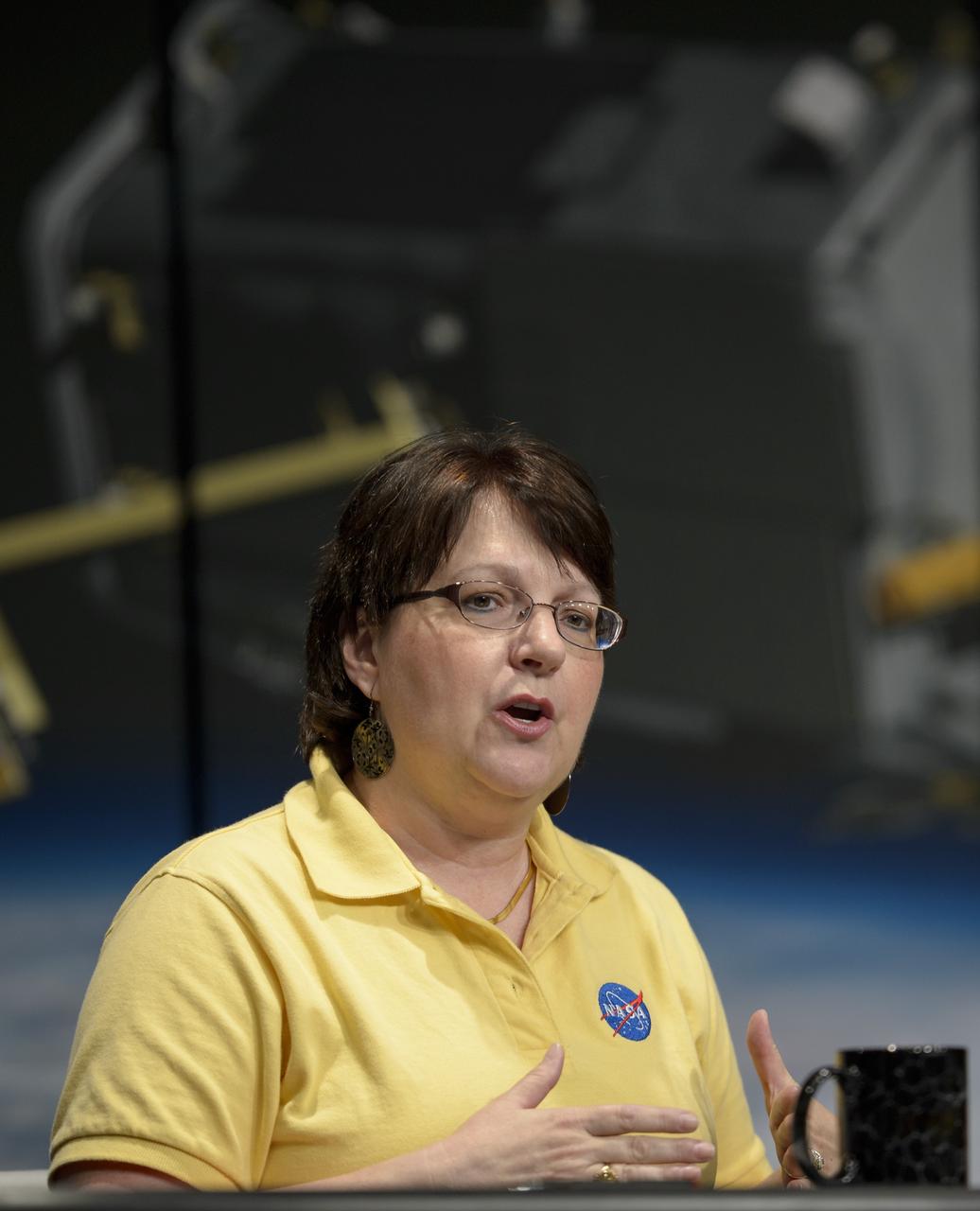
Betsy Edwards, OCO-2 program executive with the Science Mission Directorate at NASA Headquarters in Washington discusses the Orbiting Carbon Observatory-2 (OCO-2), NASA’s first spacecraft dedicated to studying carbon dioxide, during a press briefing, Thursday, June 12, 2014, at NASA Headquarters in Washington. OCO-2 is set for a July 1, 2014 launch from Vandenberg Air Force Base in California. Its mission is to measure the global distribution of carbon dioxide, the leading human-produced greenhouse gas driving changes in Earth’s climate. Photo Credit: (NASA/Bill Ingalls)
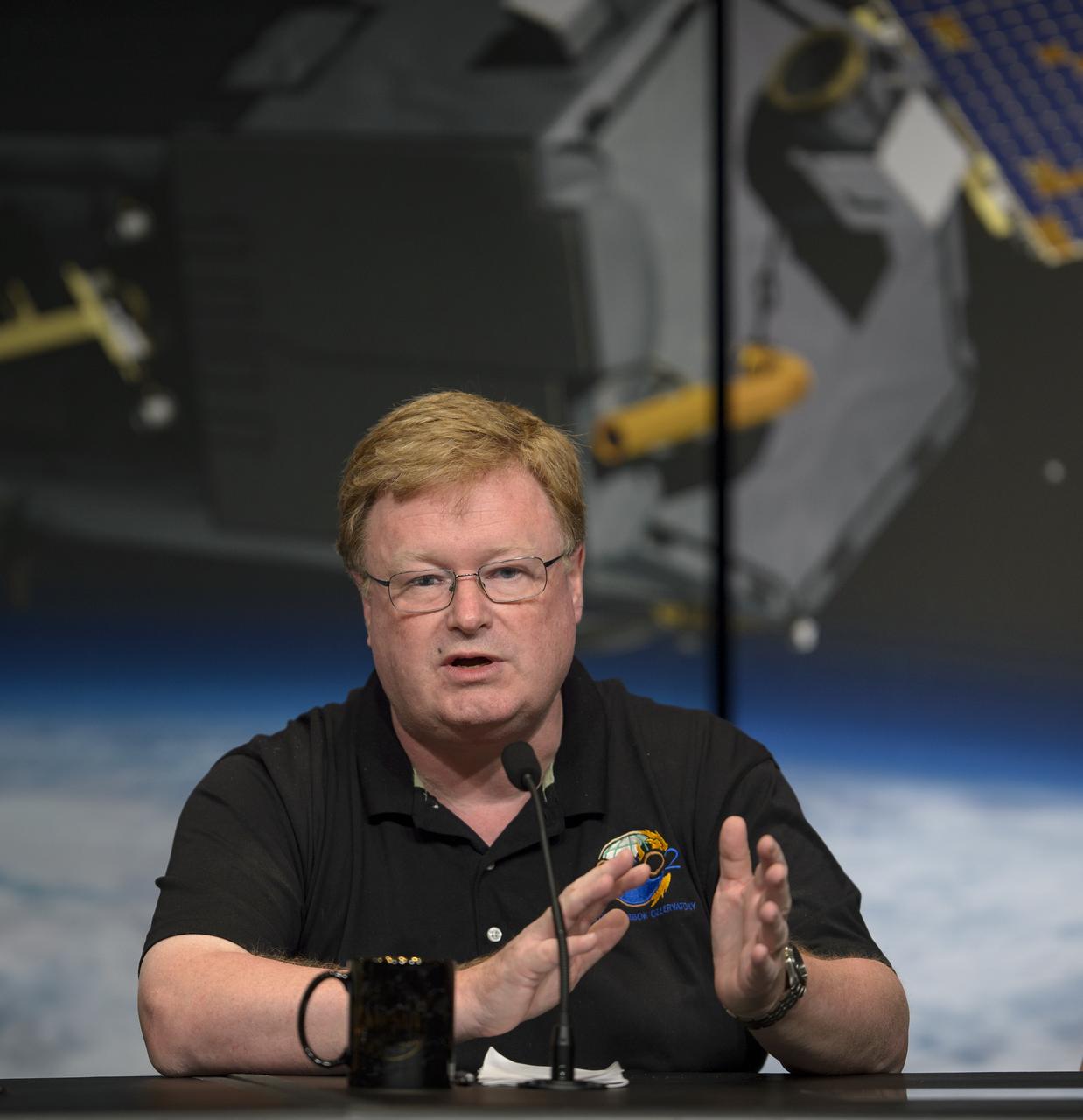
Mike Gunson, OCO-2 project scientist with NASA’s Jet Propulsion Laboratory (JPL) in Pasadena, California, discusses the Orbiting Carbon Observatory-2 (OCO-2), NASA’s first spacecraft dedicated to studying carbon dioxide, during a press briefing, Thursday, June 12, 2014, at NASA Headquarters in Washington. OCO-2 is set for a July 1, 2014 launch from Vandenberg Air Force Base in California. Its mission is to measure the global distribution of carbon dioxide, the leading human-produced greenhouse gas driving changes in Earth’s climate. Photo Credit: (NASA/Bill Ingalls)
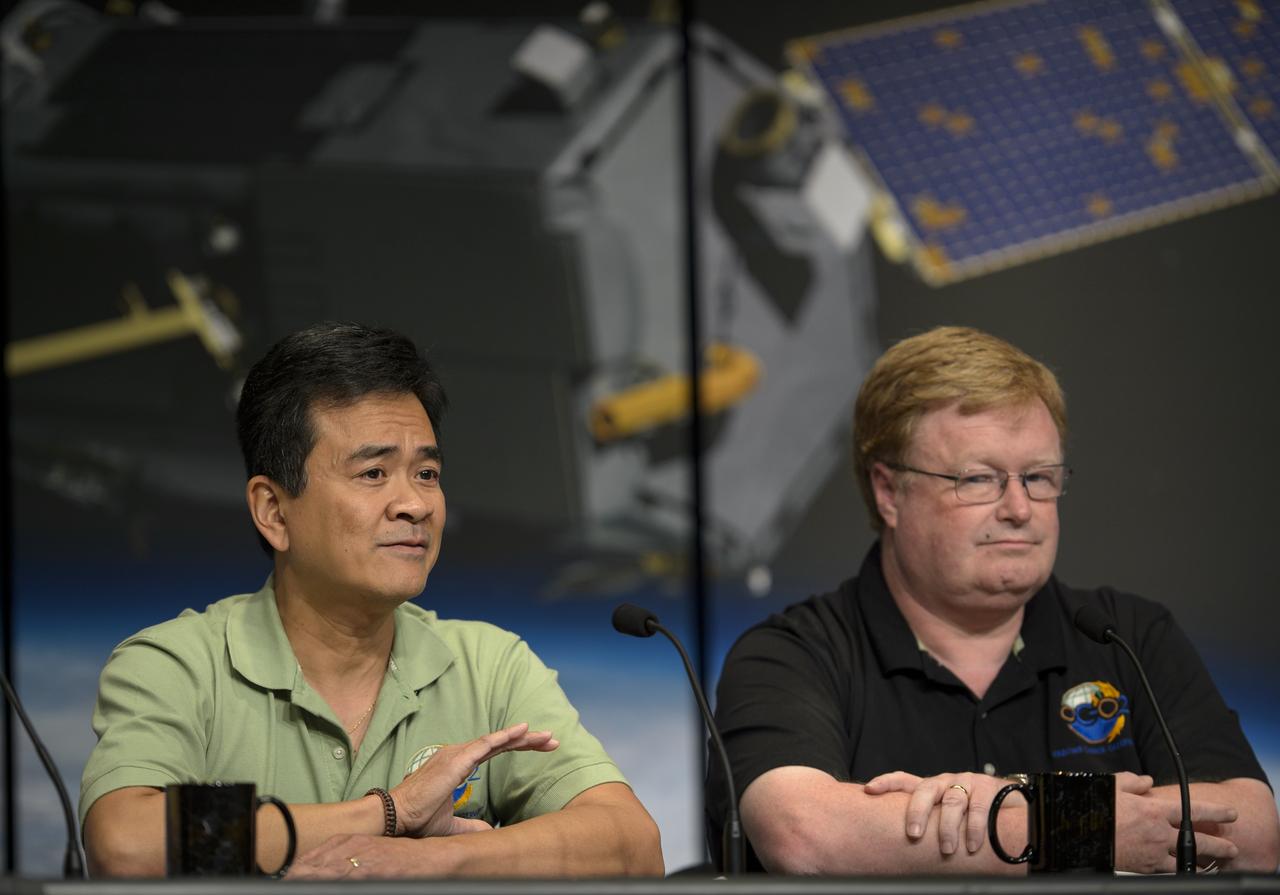
Ralph Basilio, OCO-2 project manager with NASA’s Jet Propulsion Laboratory (JPL) in Pasadena, California, left, and Mike Gunson, OCO-2 project scientist at JPL, discuss the Orbiting Carbon Observatory-2 (OCO-2), NASA’s first spacecraft dedicated to studying carbon dioxide, during a press briefing, Thursday, June 12, 2014, at NASA Headquarters in Washington. OCO-2 is set for a July 1, 2014 launch from Vandenberg Air Force Base in California. Its mission is to measure the global distribution of carbon dioxide, the leading human-produced greenhouse gas driving changes in Earth’s climate. Photo Credit: (NASA/Bill Ingalls)
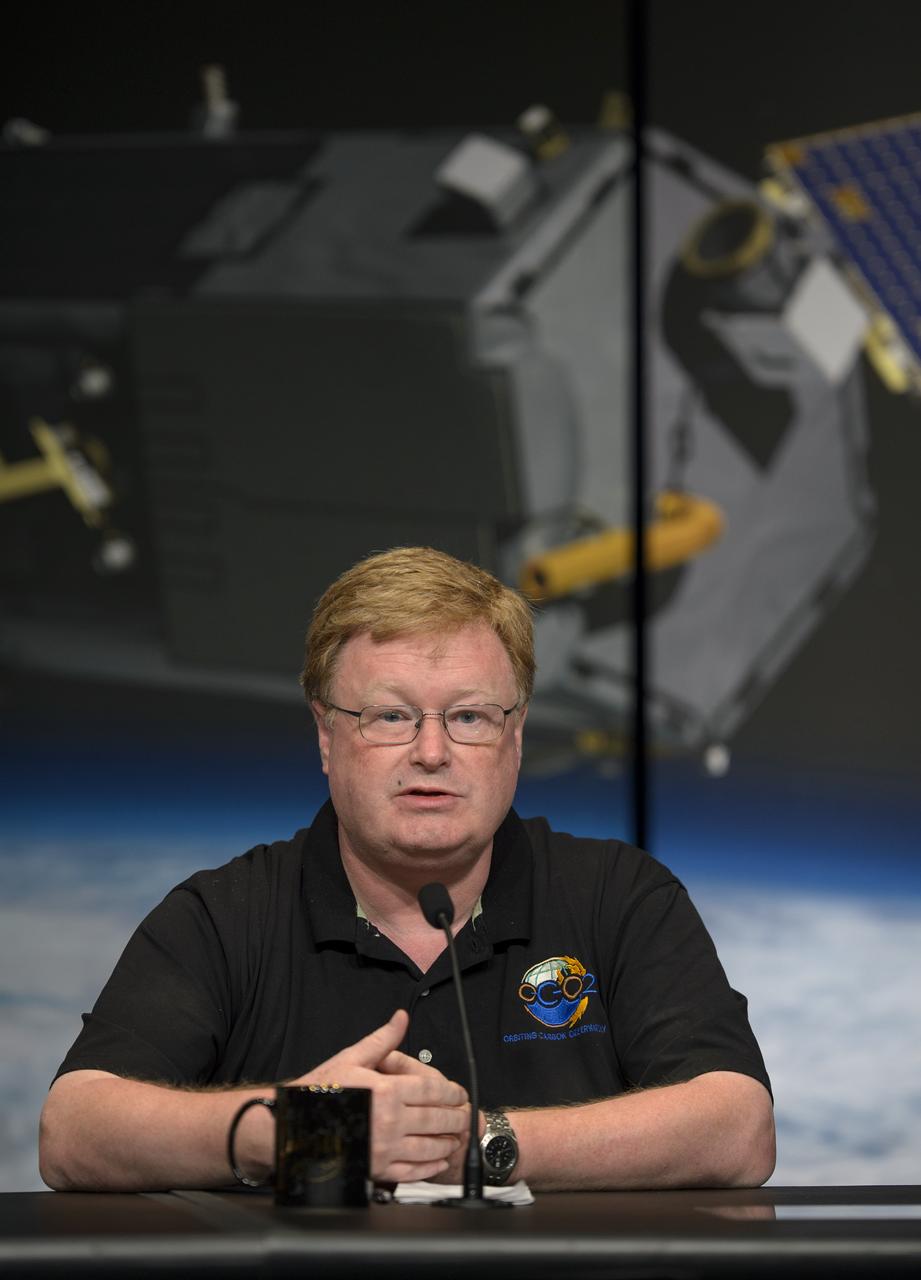
Mike Gunson, OCO-2 project scientist with NASA’s Jet Propulsion Laboratory (JPL) in Pasadena, California, discusses the Orbiting Carbon Observatory-2 (OCO-2), NASA’s first spacecraft dedicated to studying carbon dioxide, during a press briefing, Thursday, June 12, 2014, at NASA Headquarters in Washington. OCO-2 is set for a July 1, 2014 launch from Vandenberg Air Force Base in California. Its mission is to measure the global distribution of carbon dioxide, the leading human-produced greenhouse gas driving changes in Earth’s climate. Photo Credit: (NASA/Bill Ingalls)
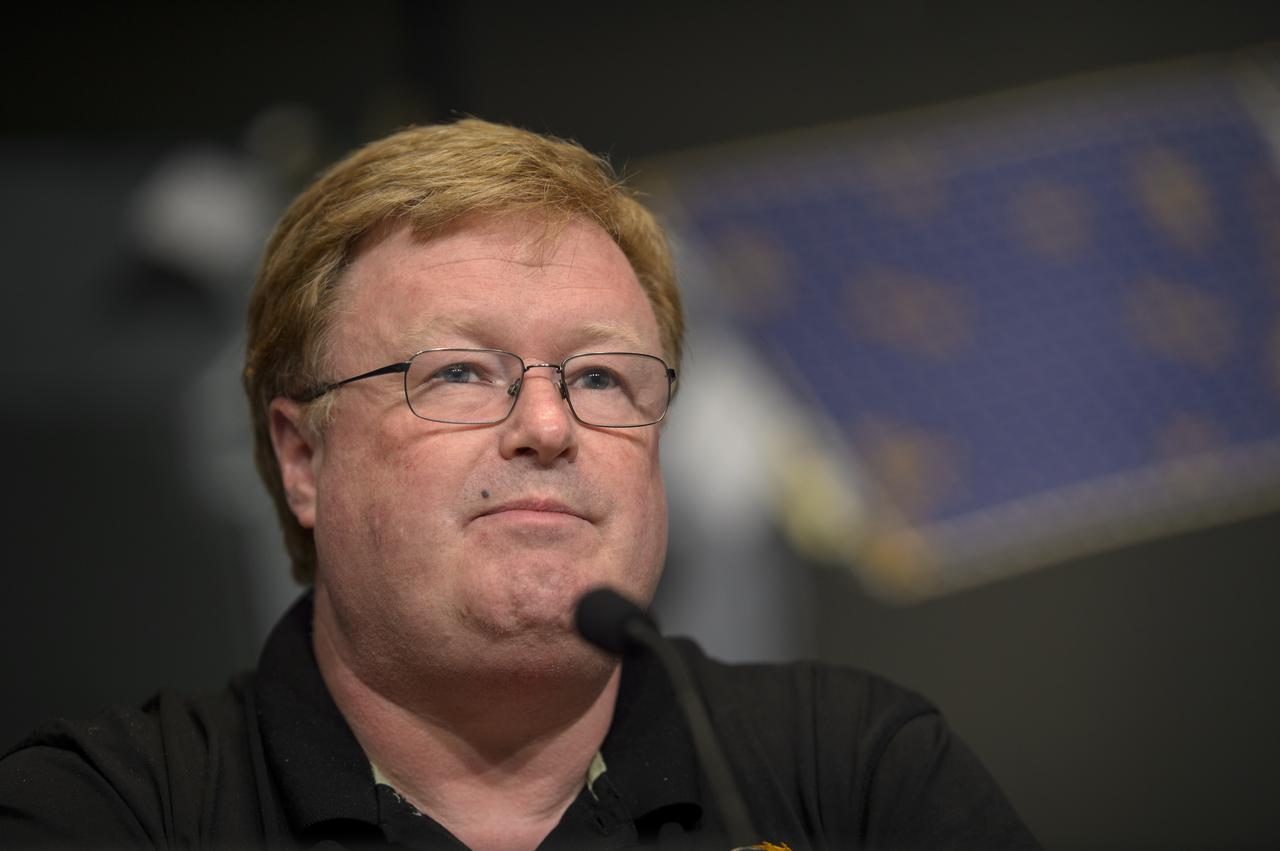
Mike Gunson, OCO-2 project scientist with NASA’s Jet Propulsion Laboratory (JPL) in Pasadena, California, listens to a question during a press briefing for the Orbiting Carbon Observatory-2 (OCO-2), NASA’s first spacecraft dedicated to studying carbon dioxide, Thursday, June 12, 2014, at NASA Headquarters in Washington. OCO-2 is set for a July 1, 2014 launch from Vandenberg Air Force Base in California. Its mission is to measure the global distribution of carbon dioxide, the leading human-produced greenhouse gas driving changes in Earth’s climate. Photo Credit: (NASA/Bill Ingalls)
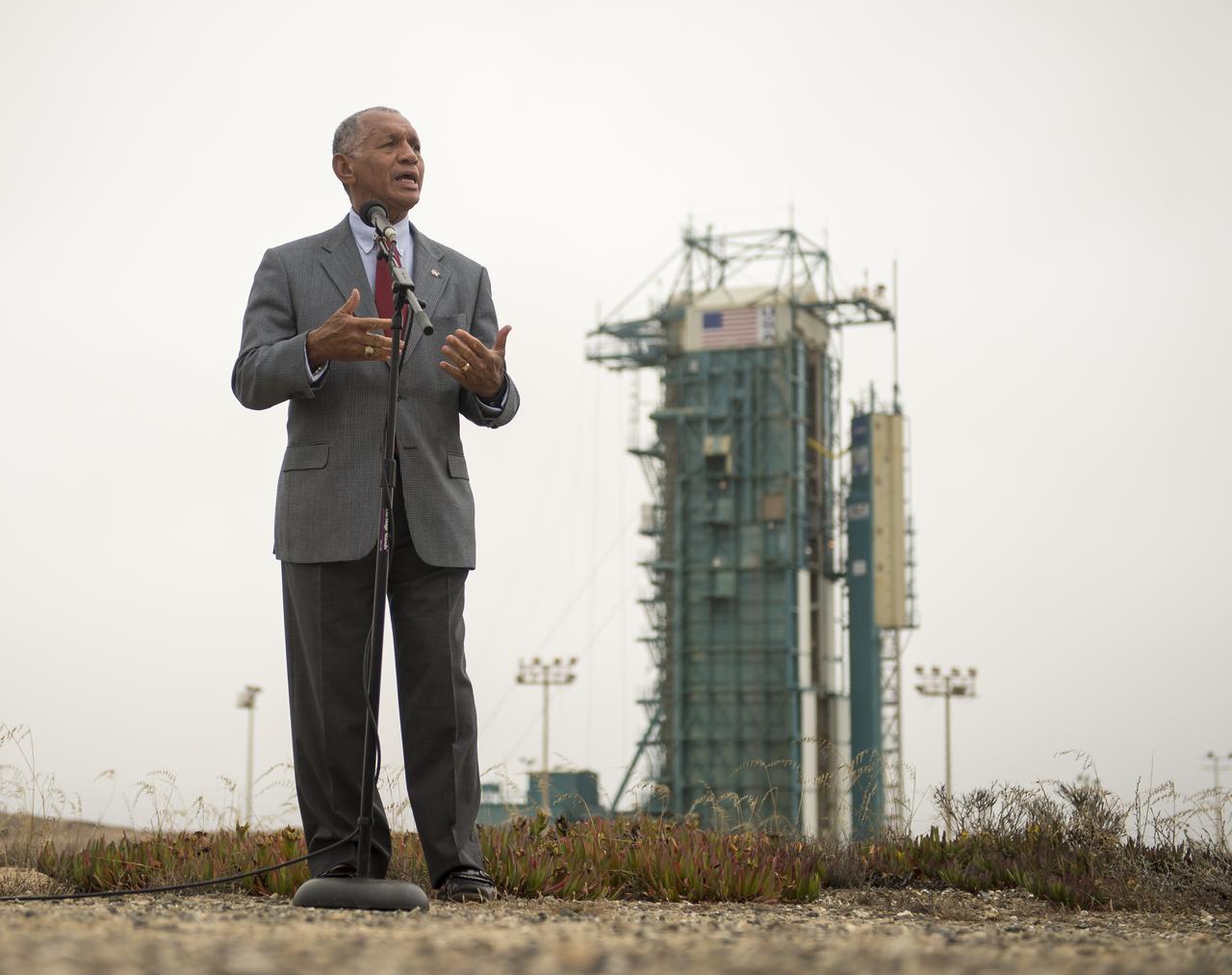
NASA Administrator Charles Bolden answers social media attendees questions from just outside the launch pad where the United Launch Alliance Delta II rocket with the Orbiting Carbon Observatory-2 (OCO-2) satellite onboard sits ready to launch, Monday, June 30, 2014, Space Launch Complex 2 Vandenberg Air Force Base, Calif. OCO-2 will measure the global distribution of carbon dioxide, the leading human-produced greenhouse gas driving changes in Earth’s climate. OCO-2 is set for a July 1, 2014 launch. Photo Credit: (NASA/Bill Ingalls)
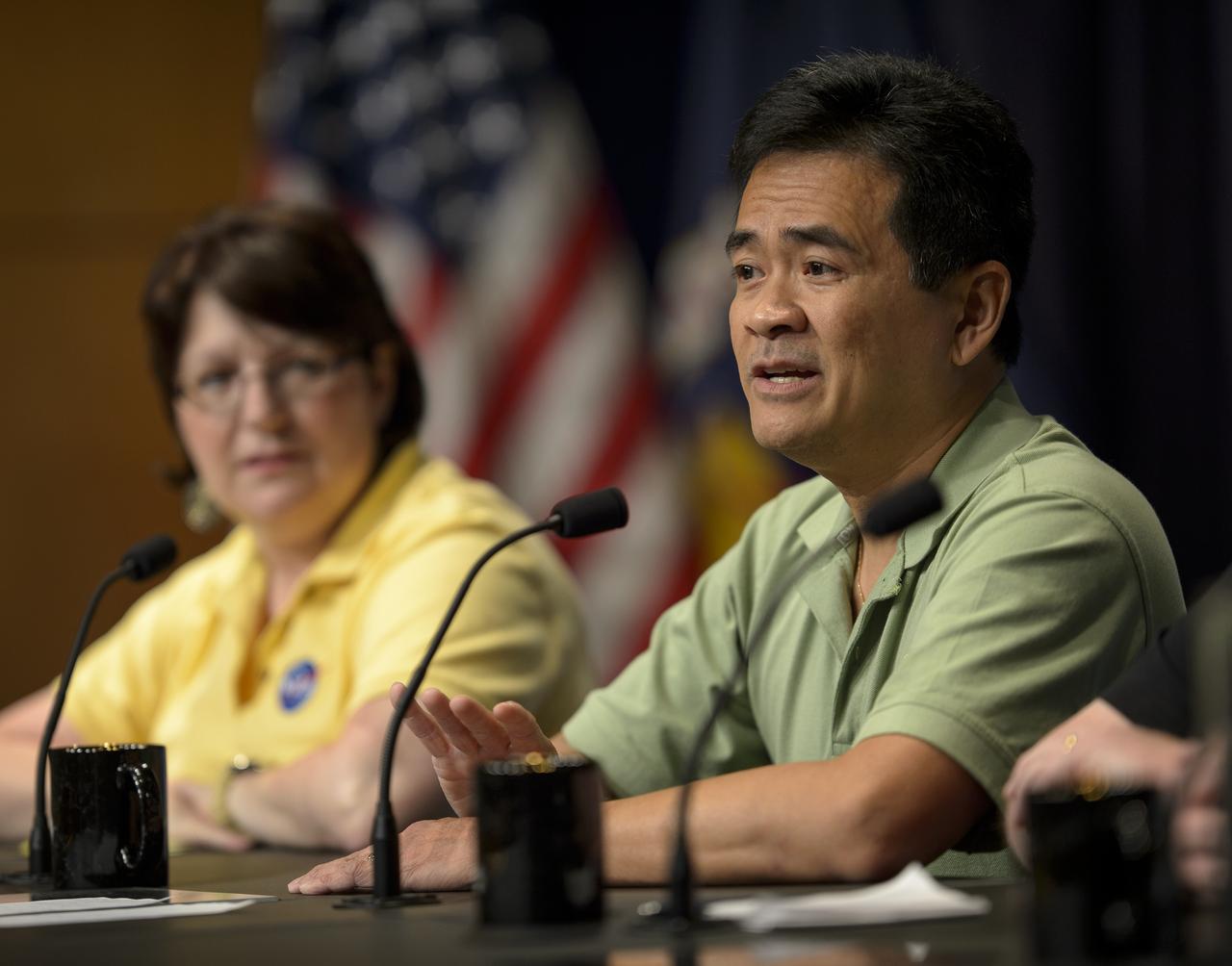
Ralph Basilio, OCO-2 project manager with NASA’s Jet Propulsion Laboratory (JPL) in Pasadena, California discusses the Orbiting Carbon Observatory-2 (OCO-2), NASA’s first spacecraft dedicated to studying carbon dioxide, during a press briefing, Thursday, June 12, 2014, at NASA Headquarters in Washington. OCO-2 is set for a July 1, 2014 launch from Vandenberg Air Force Base in California. Its mission is to measure the global distribution of carbon dioxide, the leading human-produced greenhouse gas driving changes in Earth’s climate. Photo Credit: (NASA/Bill Ingalls)
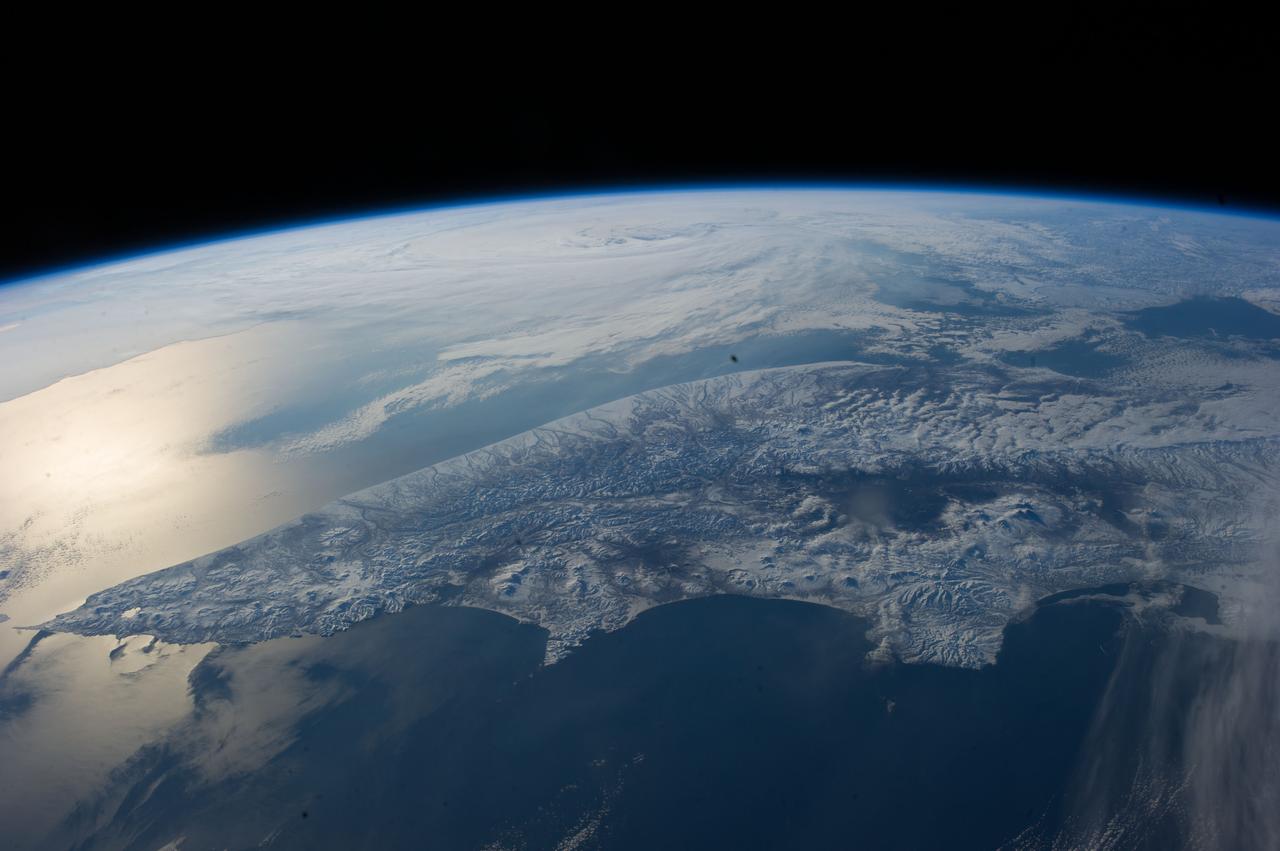
ISS039-E-014807 (22 April 2014) --- As the International Space Station passed over the Bering Sea on Earth Day, one of the Expedition 39 crew members aboard the orbital outpost shot this panoramic scene looking toward Russia. The Kamchatka Peninsula can be seen in the foreground. Sunglint is visible on the left side of the frame. Only two points of view from Earth orbit were better for taking in this scene than that of the crew member with the camera inside, and those belonged to the two spacewalking astronauts -- Flight Engineers Rick Mastracchio and Steve Swanson of NASA.
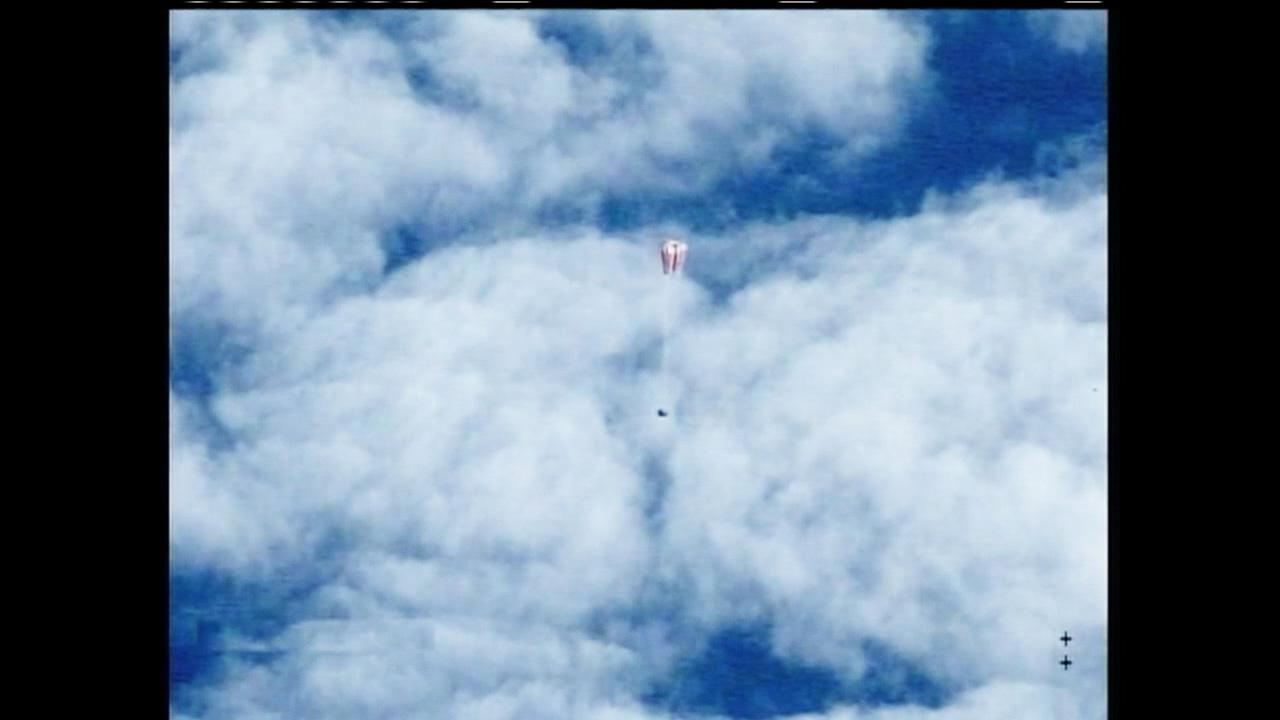
Following more than four hours in Earth orbit, NASA's Orion spacecraft is seen from an unpiloted aircraft as it descends under three massive red and white main parachutes after Exploration Flight Test-1 (EFT-1) on Dec. 5, 2014. Splashdown in the Pacific Ocean will take place at less than 20 mph. It will be recovered by the USS Anchorage, a landing platform-dock, or LPD, ship. Part of Batch image transfer from Flickr.
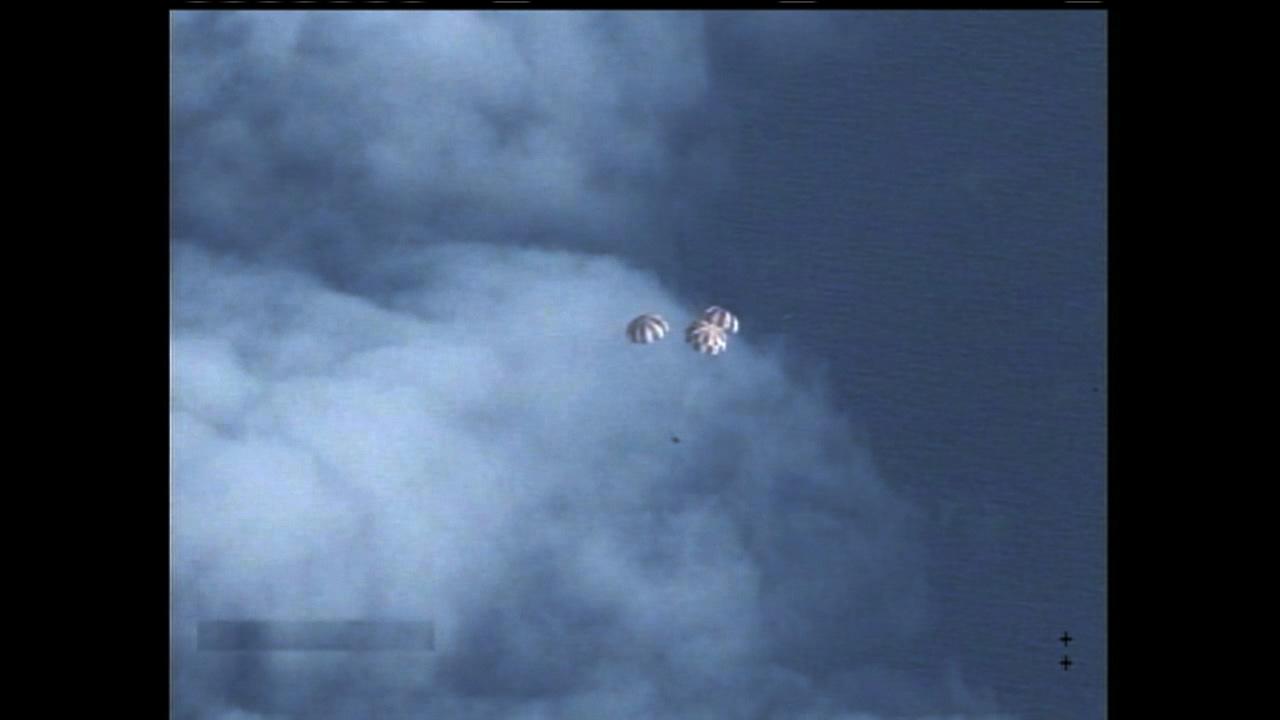
Following more than four hours in Earth orbit, NASA's Orion spacecraft is seen from an unpiloted aircraft as it descends under three massive red and white main parachutes after Exploration Flight Test-1 (EFT-1) on Dec. 5, 2014. Splashdown in the Pacific Ocean will take place at less than 20 mph. It will be recovered by the USS Anchorage, a landing platform-dock, or LPD, ship. Part of Batch image transfer from Flickr.
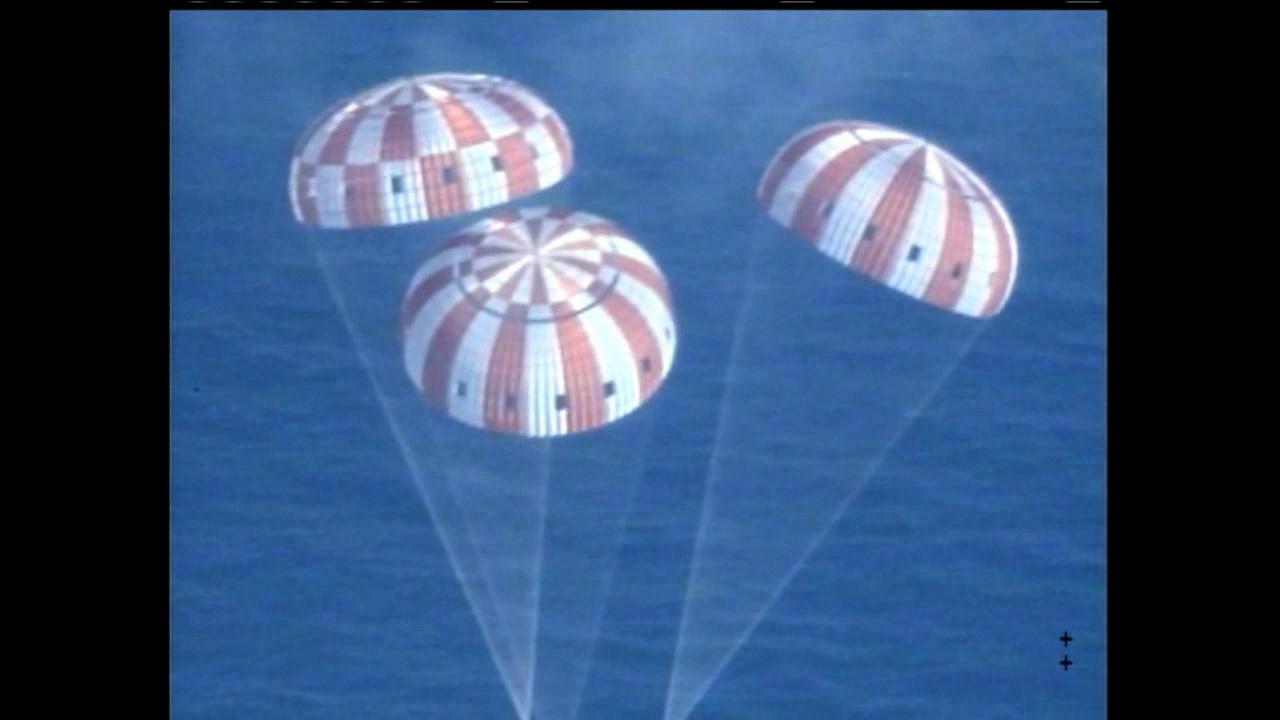
Following more than four hours in Earth orbit, NASA's Orion spacecraft is seen from an unpiloted aircraft as it descends under three massive red and white main parachutes after Exploration Flight Test-1 (EFT-1) on Dec. 5, 2014. Splashdown in the Pacific Ocean will take place at less than 20 mph. It will be recovered by the USS Anchorage, a landing platform-dock, or LPD, ship. Part of Batch image transfer from Flickr.
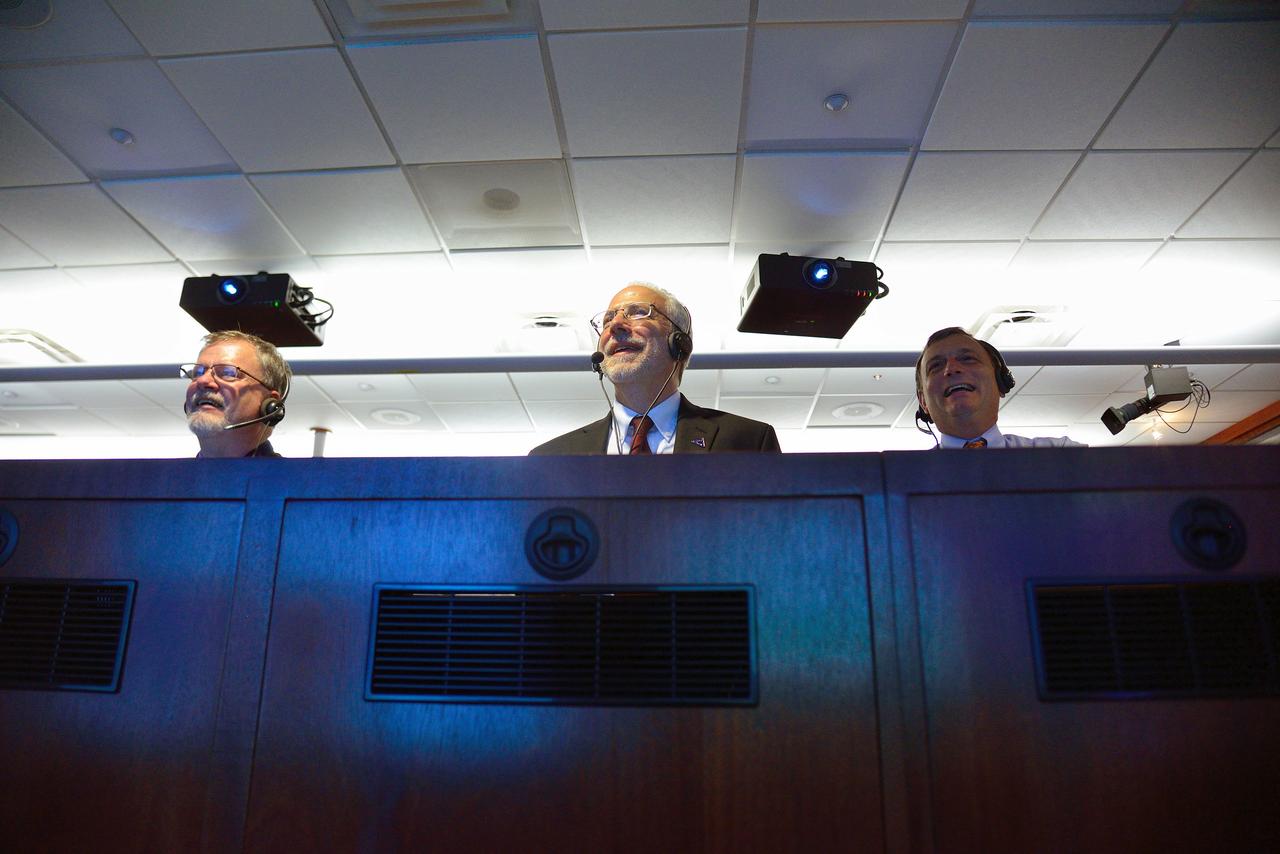
Lockheed Martin Program Manager Mike Hawes, Orion Program Manager Mark Geyer, and Orion Deputy Program Manager Mike Kirasich watch Orion's Exploration Flight Test-1 (EFT-1) reentry sequence in Building AE at Cape Canaveral Air Force Station on a live stream from the Ikhana aircraft on Dec. 5, 2014. The Orion spacecraft orbited Earth twice, reaching an altitude of approximately 3,600 miles above Earth before landing. No one was aboard Orion for this flight test, but the spacecraft is designed to allow us to journey to destinations never before visited by humans, including an asteroid and Mars. Part of Batch image transfer from Flickr.
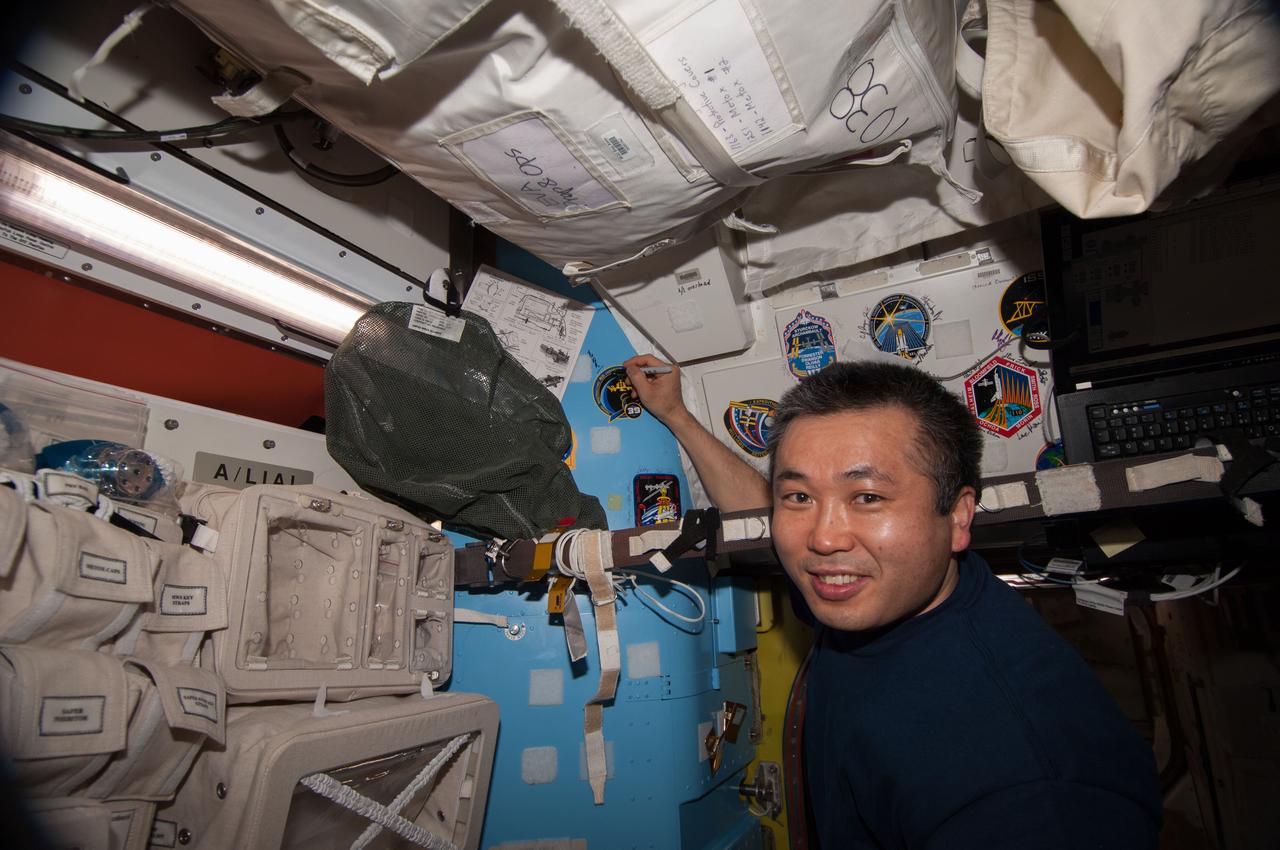
ISS039-E-020699 (13 May 2014) --- Japan Aerospace Exploration Agency astronaut Koichi Wakata, Expedition 39 commander, places his crew patch on a wall in the Quest airlock of the Earth-orbiting International Space Station. A short time later, Wakata joined Expedition 39 Soyuz Commander Mikhail Tyurin of Roscosmos and Flight Engineer Rick Mastracchio of NASA as they departed the orbital outpost in a Soyuz vehicle. Wakata had spent a great deal of time in Quest as he assisted spacewalks from the shirt-sleeve environment of the orbital outpost on both Expedition 38 and 39.
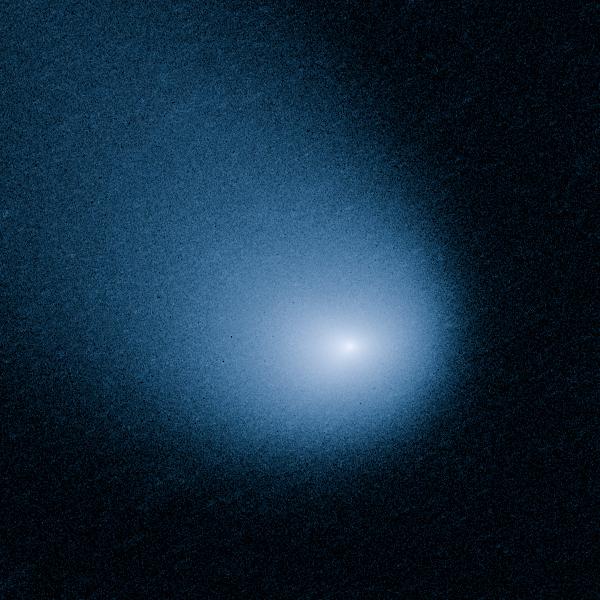
MARCH 27, 2014: Comet Siding Spring is plunging toward the Sun along a roughly 1-million-year orbit. The comet, discovered in 2013, was within the radius of Jupiter's orbit when the Hubble Space Telescope photographed it on March 11, 2014. Hubble resolves two jets of dust coming from the solid icy nucleus. These persistent jets were first seen in Hubble pictures taken on Oct. 29, 2013. The feature should allow astronomers to measure the direction of the nucleus's pole, and hence, rotation axis. The comet will make its closest approach to our Sun on Oct. 25, 2014, at a distance of 130 million miles, well outside Earth's orbit. On its inbound leg, Comet Siding Spring will pass within 84,000 miles of Mars on Oct. 19, 2014, which is less than half the Moon's distance from Earth. The comet is not expected to become bright enough to be seen by the naked eye. Credit: NASA, ESA, and J.-Y. Li (Planetary Science Institute) <b><a href="http://www.nasa.gov/audience/formedia/features/MP_Photo_Guidelines.html" rel="nofollow">NASA image use policy.</a></b> <b><a href="http://www.nasa.gov/centers/goddard/home/index.html" rel="nofollow">NASA Goddard Space Flight Center</a></b> enables NASA’s mission through four scientific endeavors: Earth Science, Heliophysics, Solar System Exploration, and Astrophysics. Goddard plays a leading role in NASA’s accomplishments by contributing compelling scientific knowledge to advance the Agency’s mission. <b>Follow us on <a href="http://twitter.com/NASAGoddardPix" rel="nofollow">Twitter</a></b> <b>Like us on <a href="http://www.facebook.com/pages/Greenbelt-MD/NASA-Goddard/395013845897?ref=tsd" rel="nofollow">Facebook</a></b> <b>Find us on <a href="http://instagram.com/nasagoddard?vm=grid" rel="nofollow">Instagram</a></b>
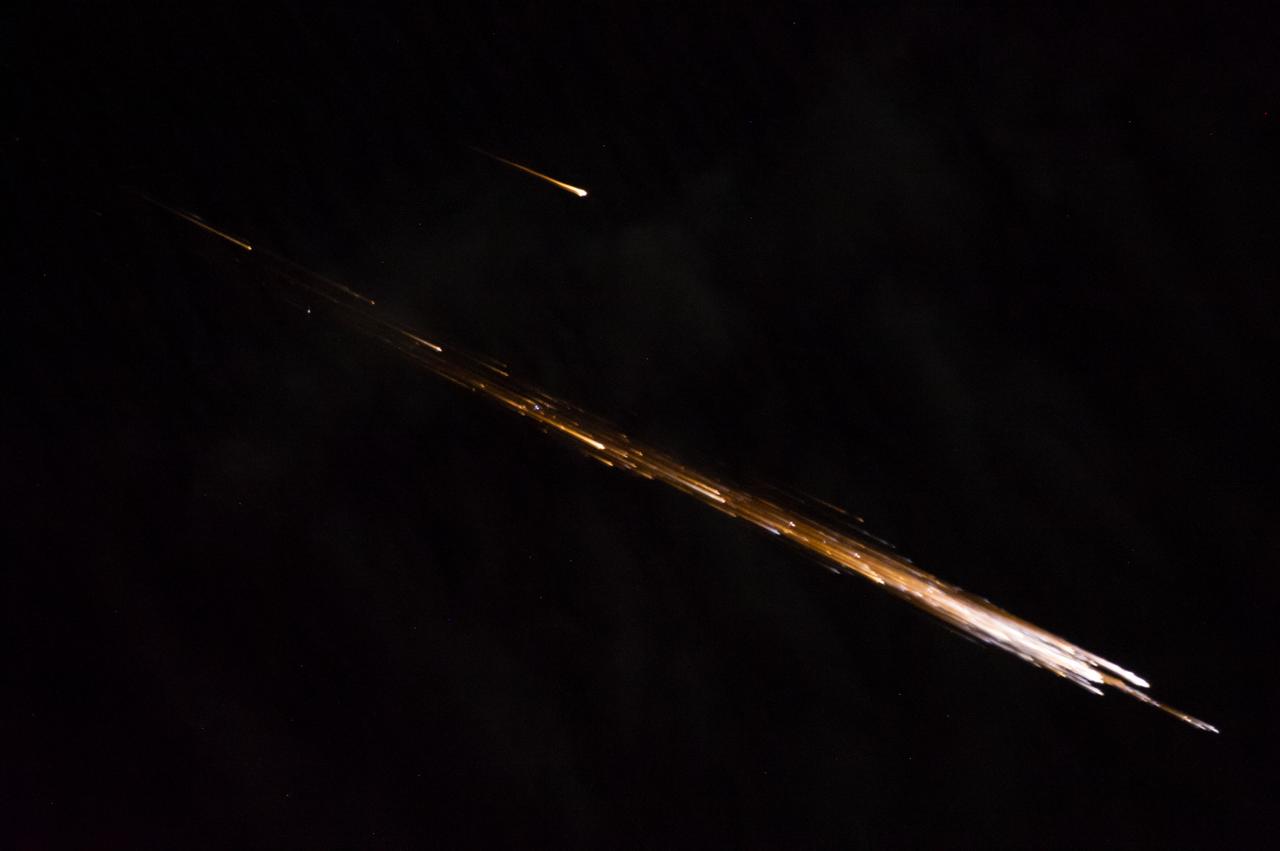
iss040e098572 (8/19/2014) --- A dark view of the Orbital Cygnus 2 reentry taken by the Expedition 40 crew. Light streak from reentry visible in frame. The Thermal Protection Material Flight Test and Reentry Data Collection (RED-Data2) investigation studies a new type of recording device that rides along a vehicle reentering Earth’s atmosphere, providing crucial data about the extreme conditions a spacecraft encounters during atmospheric reentry.
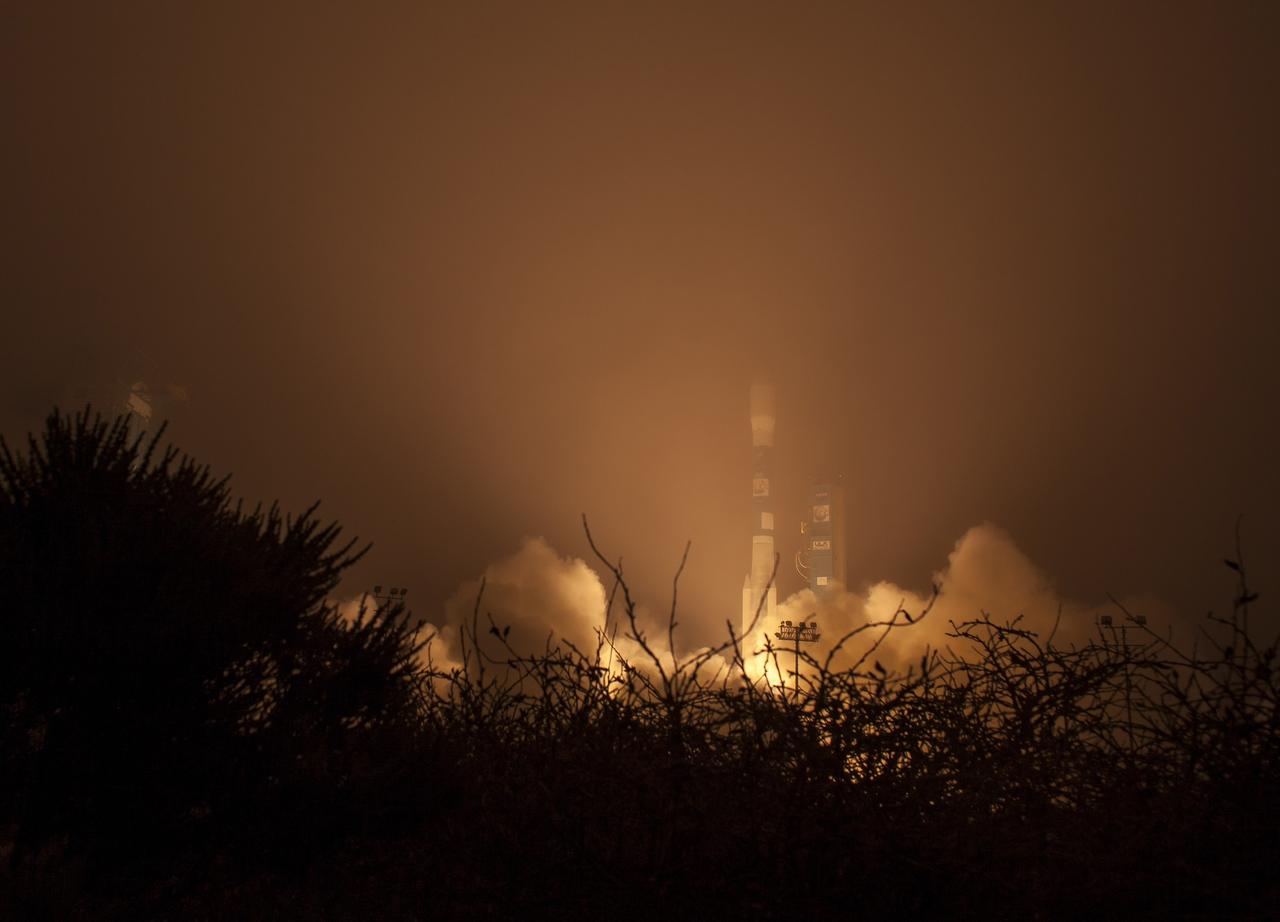
VANDENBERG AIR FORCE BASE, Calif. – A United Launch Alliance Delta II rocket launches with the Orbiting Carbon Observatory-2, or OCO-2, satellite onboard from Space Launch Complex 2 at Vandenberg Air Force Base in California on Wednesday, July 2, 2014. OCO-2 will measure the global distribution of carbon dioxide, the leading human-produced greenhouse gas driving changes in Earth’s climate. Photo Credit: NASA/Bill Ingalls
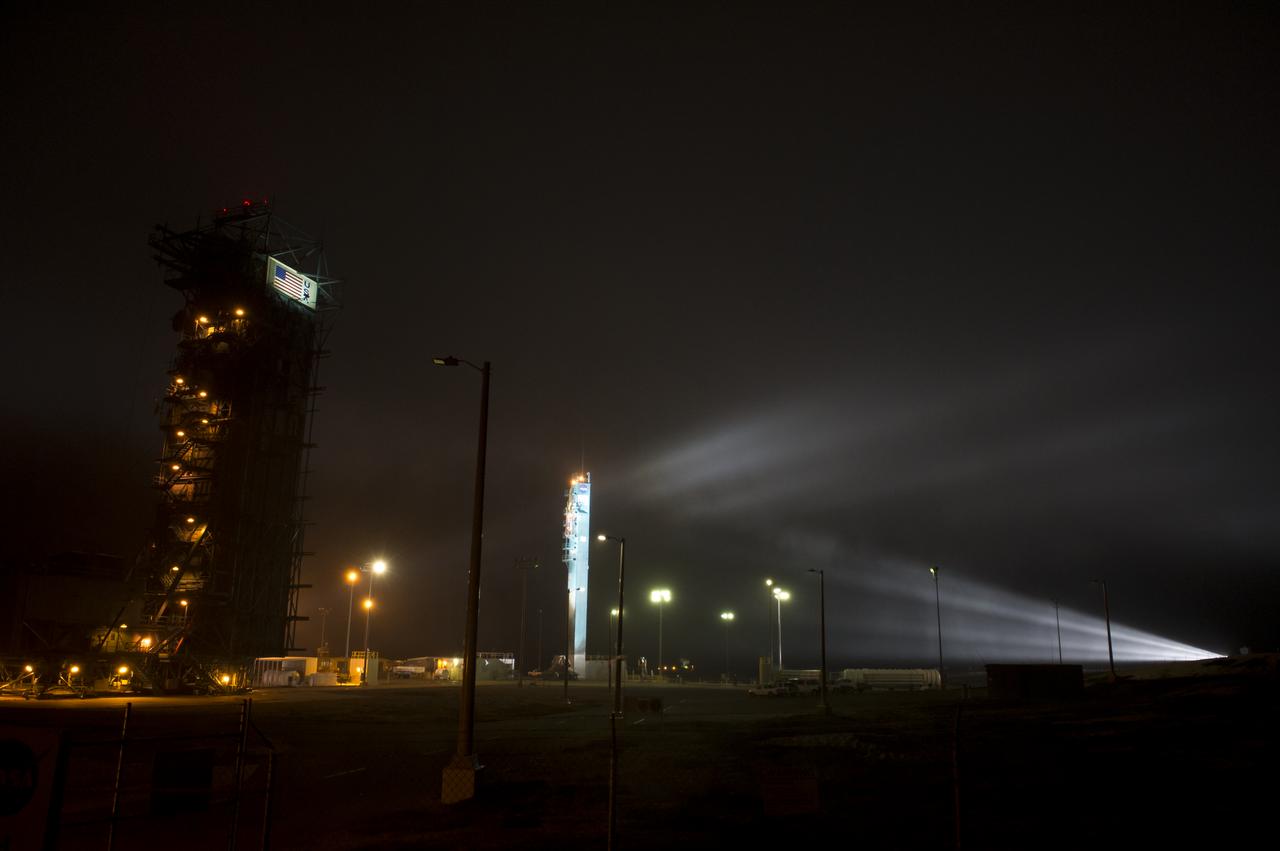
Lights shine on the umbilical tower shortly after a United Launch Alliance Delta II rocket launched with the Orbiting Carbon Observatory-2 (OCO-2)satellite onboard from Space Launch Complex 2 at Vandenberg Air Force Base, Calif. on Wednesday, July 2, 2014. OCO-2 will measure the global distribution of carbon dioxide, the leading human-produced greenhouse gas driving changes in Earth’s climate. Photo Credit: (NASA/Bill Ingalls)
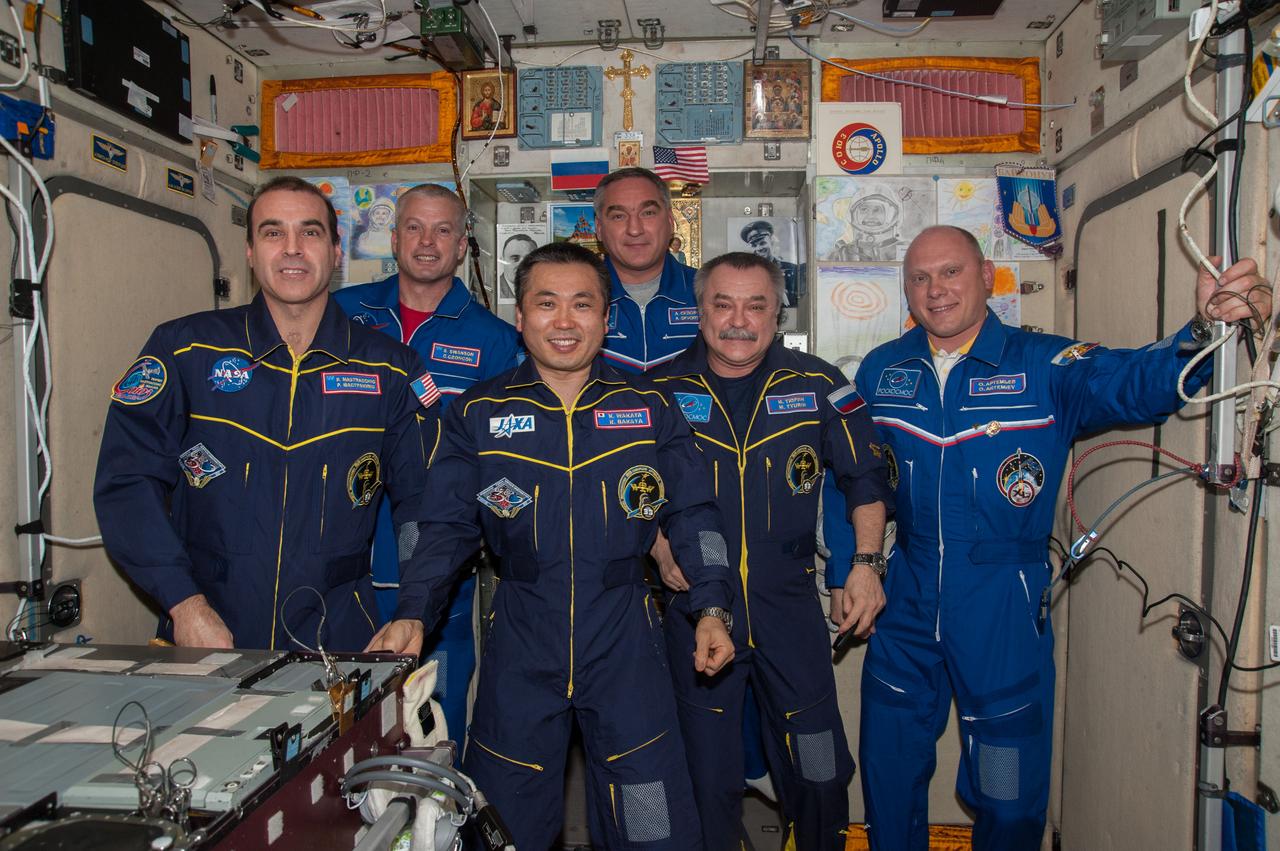
ISS039-E-011175 (11 April 2014) --- Inside the Zvezda service module on the Earth-orbiting International Space Station, the six Expedition 39 crew members face the camera during a call with Russian President Vladimir Putin. From left to right are NASA astronauts Rick Mastracchio and Steve Swanson, both flight engineers; Commander Koichi Wakata of the Japan Aerospace Exploration Agency (JAXA), and cosmonauts Alexander Skvortsov, Mikhail Tyurin and Oleg Artemyev, all flight engineers with Russia's Federal Space Agency (Roscosmos).
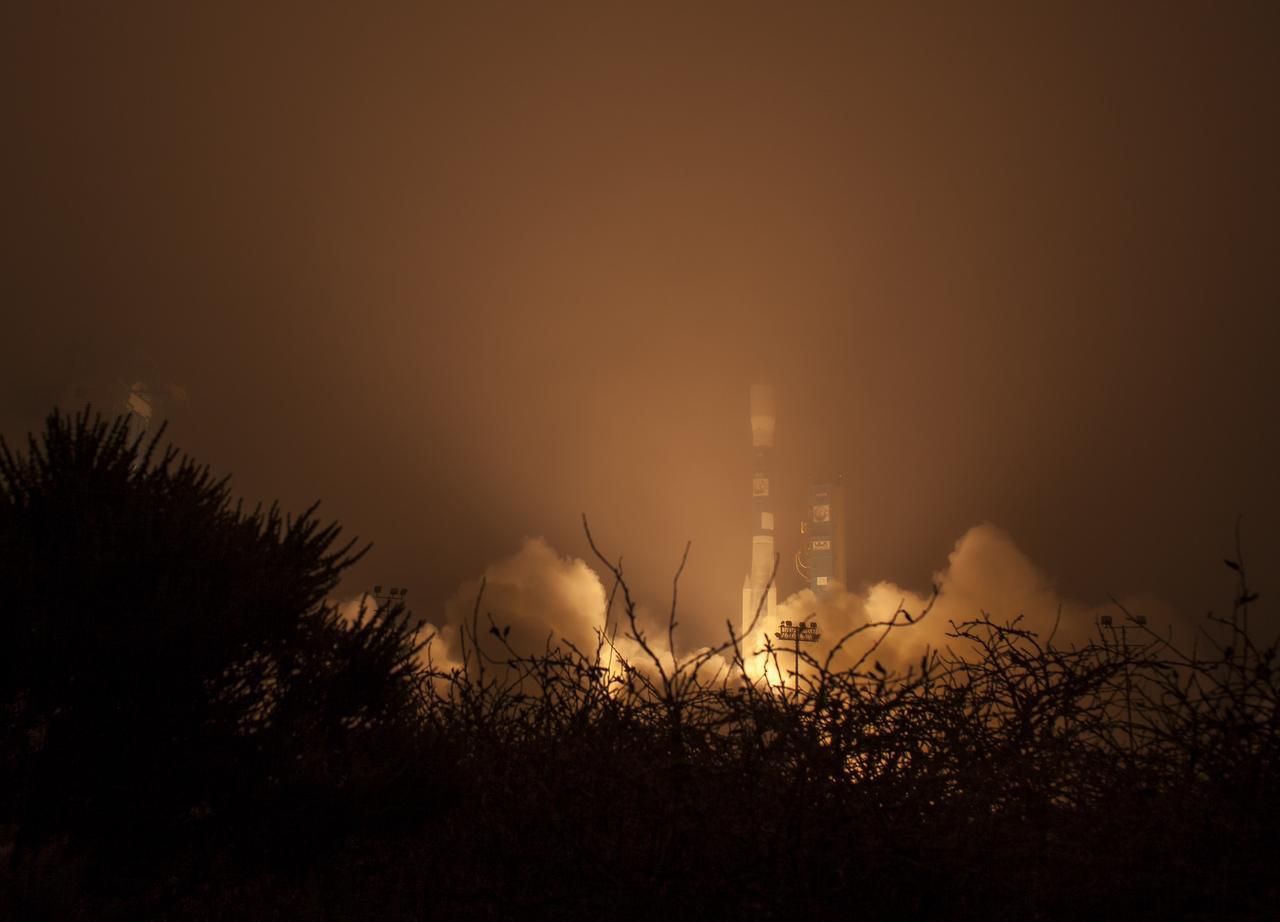
A United Launch Alliance Delta II rocket launches with the Orbiting Carbon Observatory-2 (OCO-2)satellite onboard from Space Launch Complex 2 at Vandenberg Air Force Base, Calif. on Wednesday, July 2, 2014. OCO-2 will measure the global distribution of carbon dioxide, the leading human-produced greenhouse gas driving changes in Earth’s climate. Photo Credit: (NASA/Bill Ingalls)
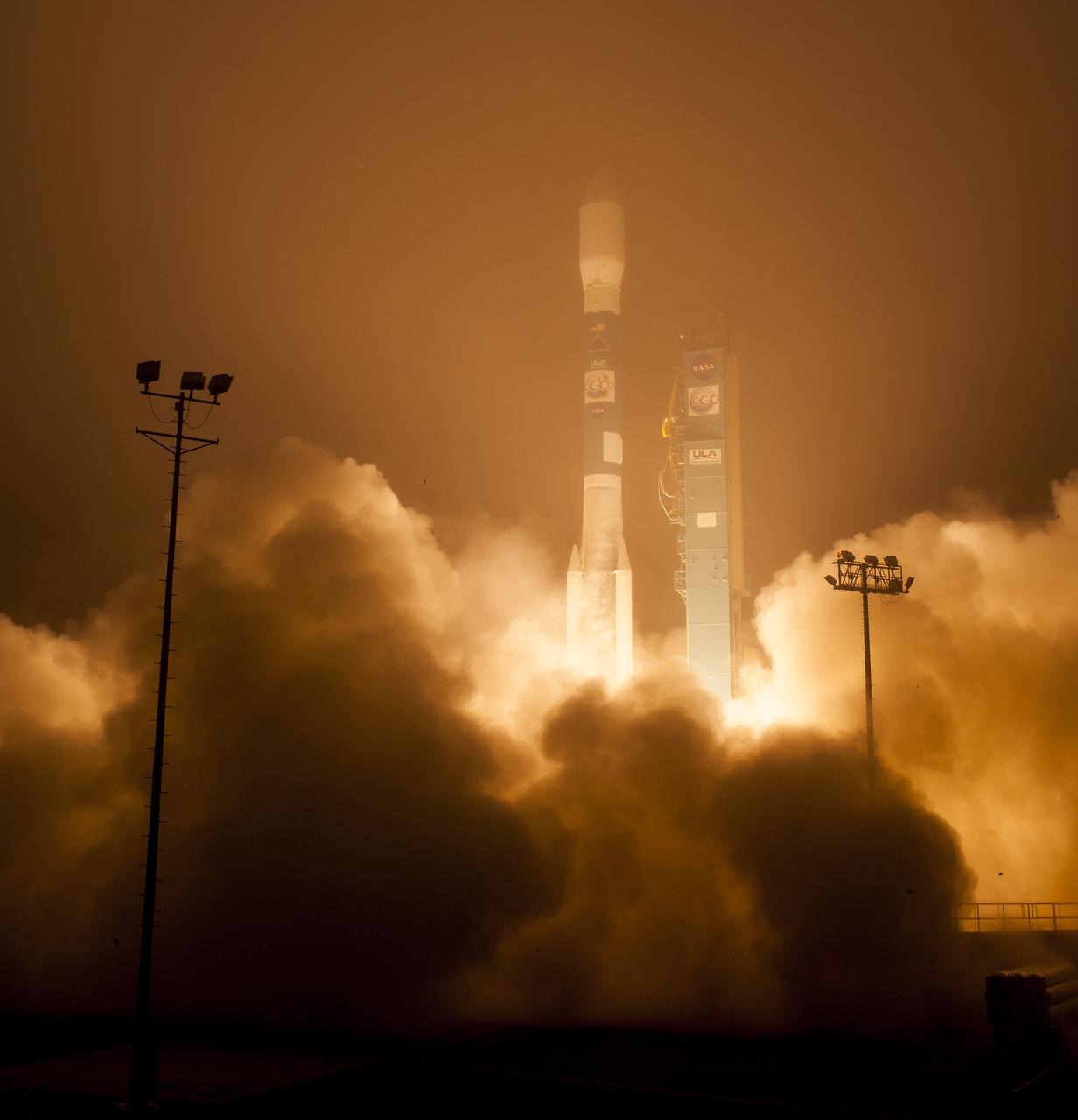
VANDENBERG AIR FORCE BASE, Calif. – A United Launch Alliance Delta II rocket launches with the Orbiting Carbon Observatory-2, or OCO-2, satellite onboard from Space Launch Complex 2 at Vandenberg Air Force Base in California on Wednesday, July 2, 2014. OCO-2 will measure the global distribution of carbon dioxide, the leading human-produced greenhouse gas driving changes in Earth’s climate. Photo Credit: NASA/Bill Ingalls
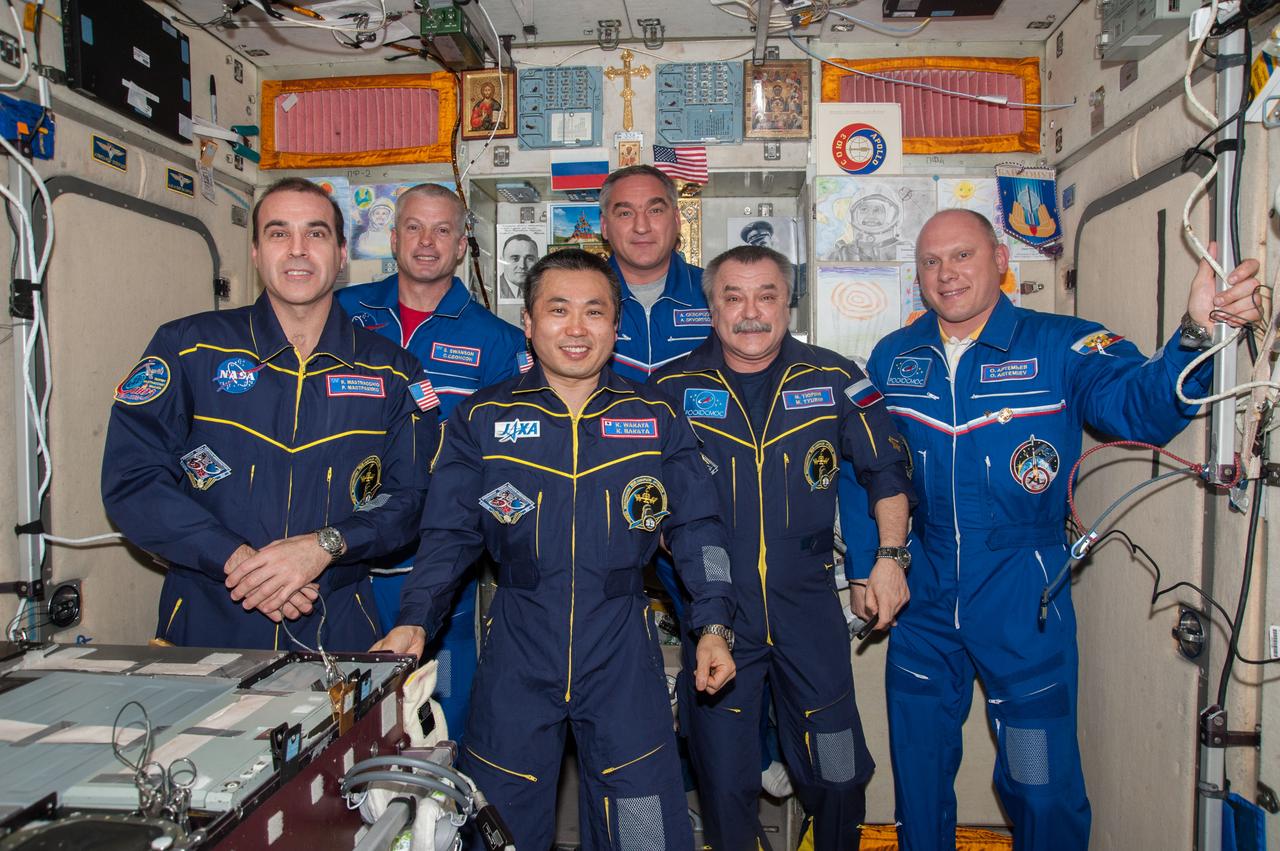
ISS039-E-011174 (11 April 2014) --- Inside the Zvezda service module on the Earth-orbiting International Space Station, the six Expedition 39 crew members face the camera during a call with Russian President Vladimir Putin. From left to right are NASA astronauts Rick Mastracchio and Steve Swanson, both flight engineers; Commander Koichi Wakata of the Japan Aerospace Exploration Agency (JAXA), and cosmonauts Alexander Skvortsov, Mikhail Tyurin and Oleg Artemyev, all flight engineers with Russia's Federal Space Agency (Roscosmos).
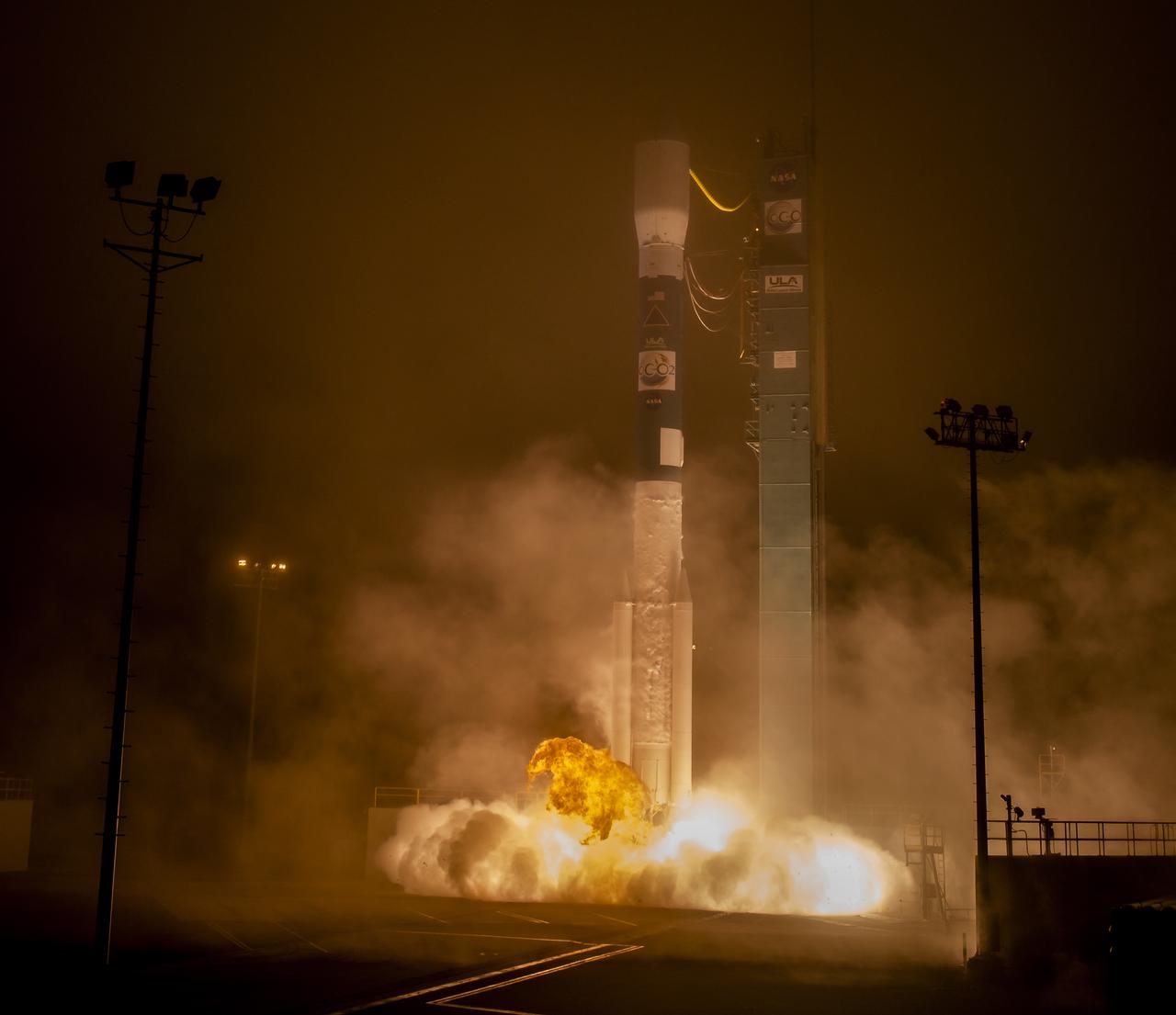
A United Launch Alliance Delta II rocket launches with the Orbiting Carbon Observatory-2 (OCO-2)satellite onboard from Space Launch Complex 2 at Vandenberg Air Force Base, Calif. on Wednesday, July 2, 2014. OCO-2 will measure the global distribution of carbon dioxide, the leading human-produced greenhouse gas driving changes in Earth’s climate. Photo Credit: (NASA/Bill Ingalls)
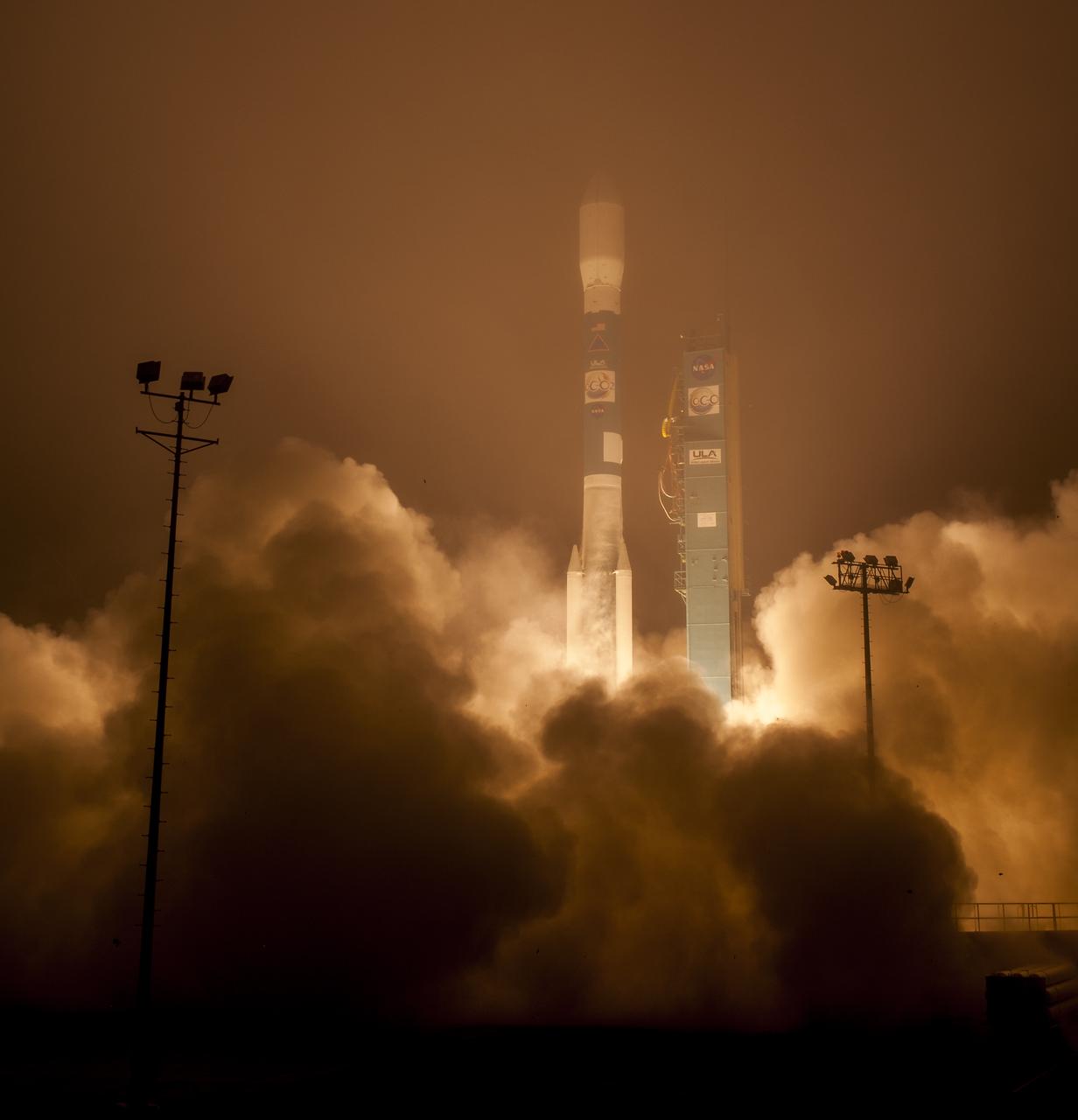
A United Launch Alliance Delta II rocket launches with the Orbiting Carbon Observatory-2 (OCO-2)satellite onboard from Space Launch Complex 2 at Vandenberg Air Force Base, Calif. on Wednesday, July 2, 2014. OCO-2 will measure the global distribution of carbon dioxide, the leading human-produced greenhouse gas driving changes in Earth’s climate. Photo Credit: (NASA/Bill Ingalls)
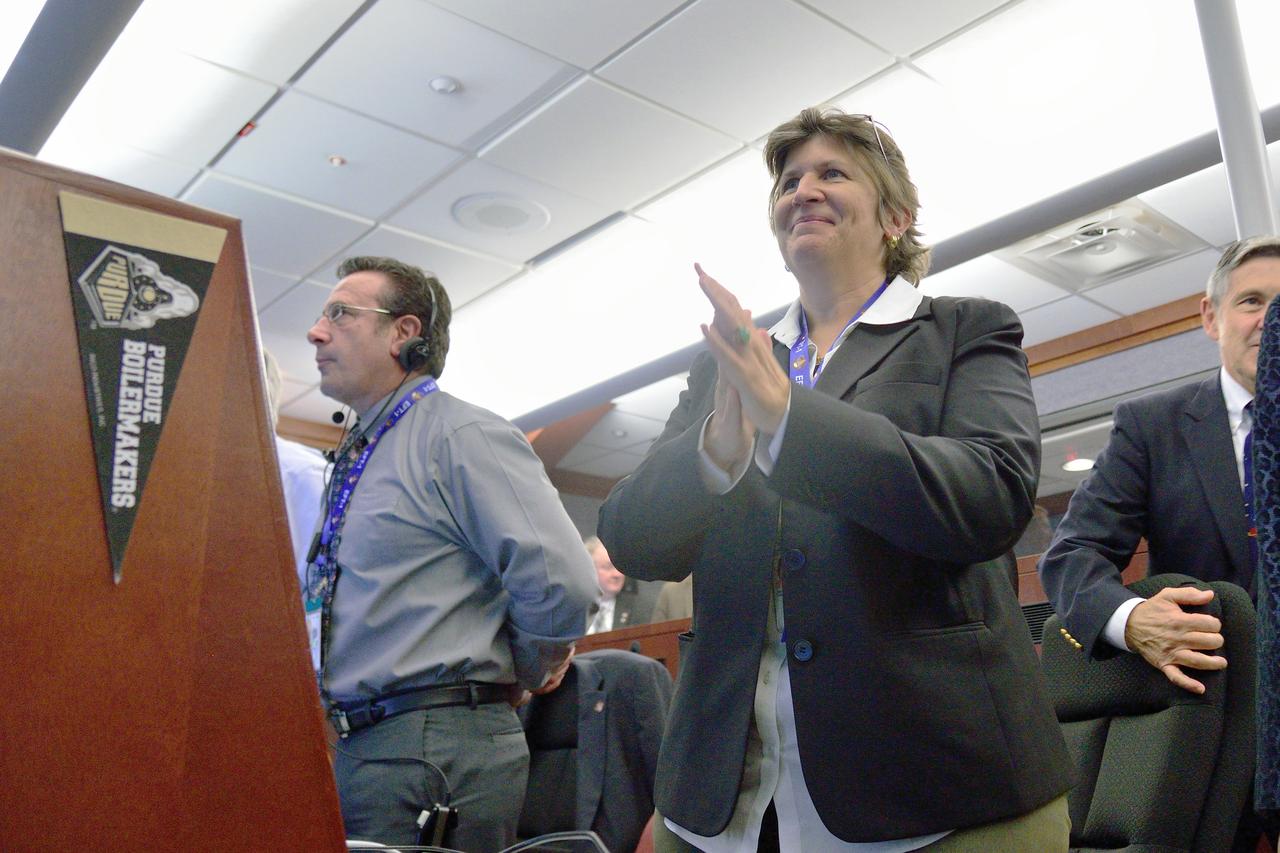
Orion Chief Engineer Julie Kramer celebrates Orion's successful splashdown in the Pacific Ocean after Exploration Flight Test-1 (EFT-1) in Building AE at Cape Canaveral Air Force Station on Dec. 5, 2014. The Orion spacecraft orbited Earth twice, reaching an altitude of approximately 3,600 miles above Earth before landing. No one was aboard Orion for this flight test, but the spacecraft is designed to allow us to journey to destinations never before visited by humans, including an asteroid and Mars. Part of Batch image transfer from Flickr.
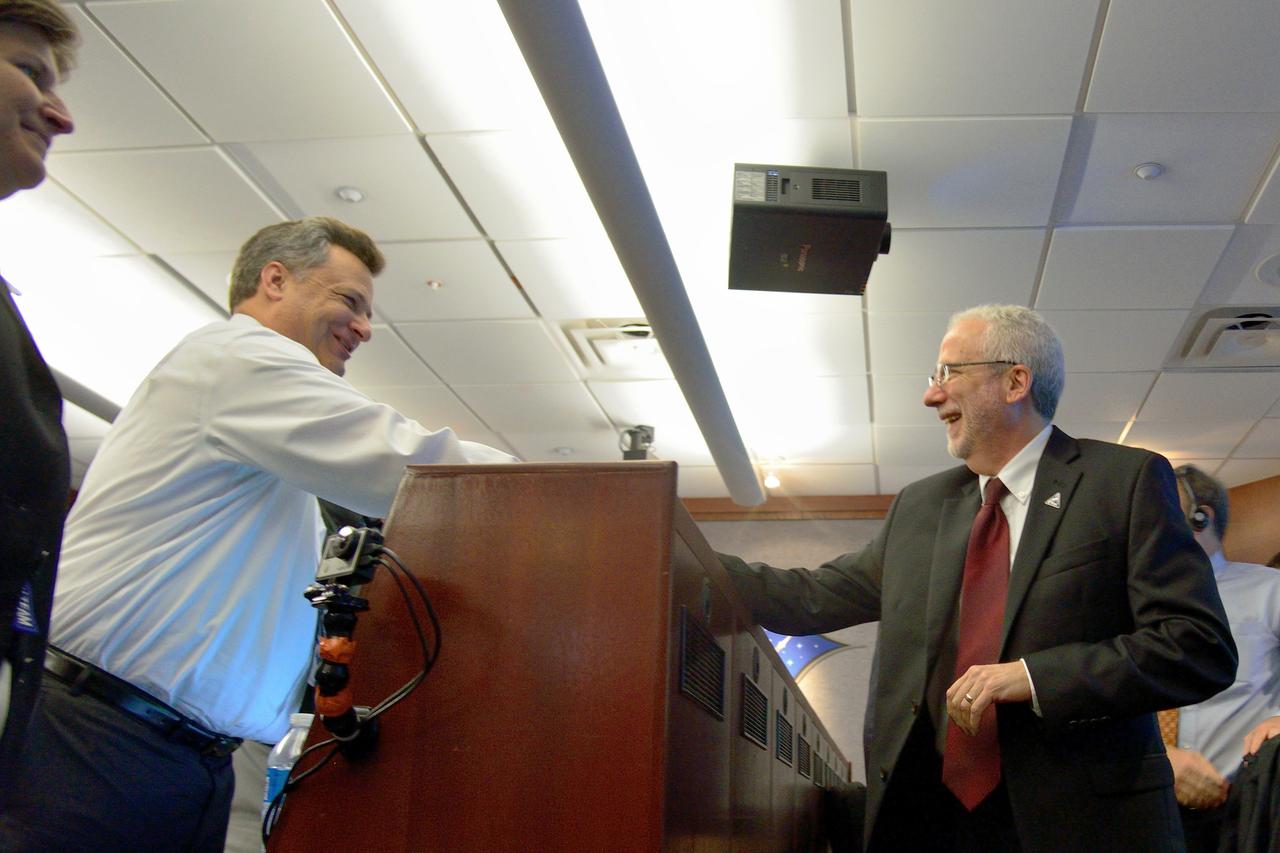
Orion Program Manager Mark Geyer congratulates the team after Orion's successful Exploration Flight Test-1 (EFT-1) mission in Building AE at Cape Canaveral Air Force Station on Dec. 5, 2014. The Orion spacecraft orbited Earth twice, reaching an altitude of approximately 3,600 miles above Earth before landing. No one was aboard Orion for this flight test, but the spacecraft is designed to allow us to journey to destinations never before visited by humans, including an asteroid and Mars. Part of Batch image transfer from Flickr.

Orion Chief Engineer Julie Kramer waits for the parachute sequence to start after Orion reentered the atmosphere in Building AE at Cape Canaveral Air Force Station during Exploration Flight Test-1 (EFT-1) on Dec. 5, 2014. The Orion spacecraft orbited Earth twice, reaching an altitude of approximately 3,600 miles above Earth before landing. No one was aboard Orion for this flight test, but the spacecraft is designed to allow us to journey to destinations never before visited by humans, including an asteroid and Mars. Part of Batch image transfer from Flickr.
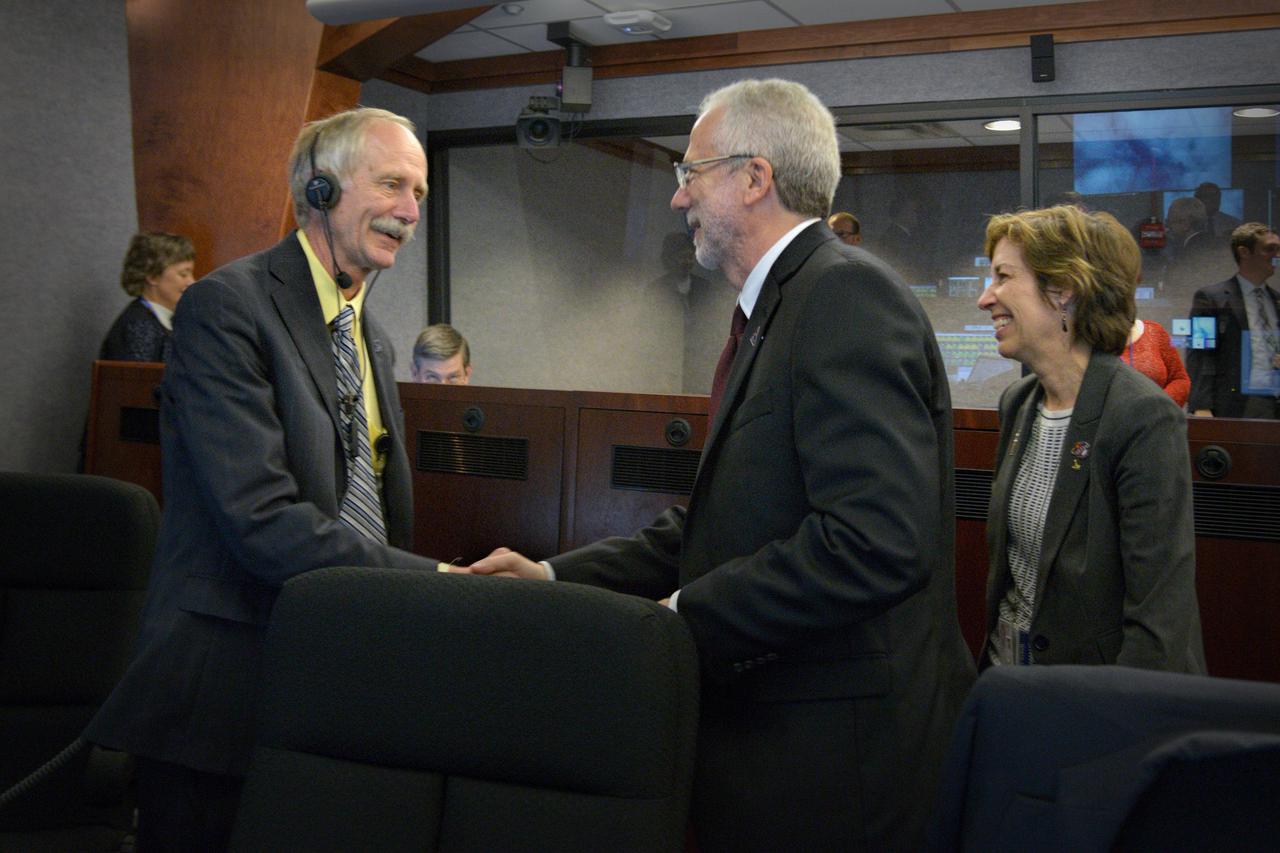
The Orion team celebrates Orion's successful Exploration Flight Test-1 (EFT-1) mission in Building AE at Cape Canaveral Air Force Station on Dec. 5, 2014. Orion Program Manager Mark Geyer, NASA Director Ellen Ochoa and NASA Associate Administrator for the Human Exploration and Operations Directorate William Gerstenmaier are in frame. The Orion spacecraft orbited Earth twice, reaching an altitude of approximately 3,600 miles above Earth before landing. No one was aboard Orion for this flight test, but the spacecraft is designed to allow us to journey to destinations never before visited by humans, including an asteroid and Mars. Part of Batch image transfer from Flickr.
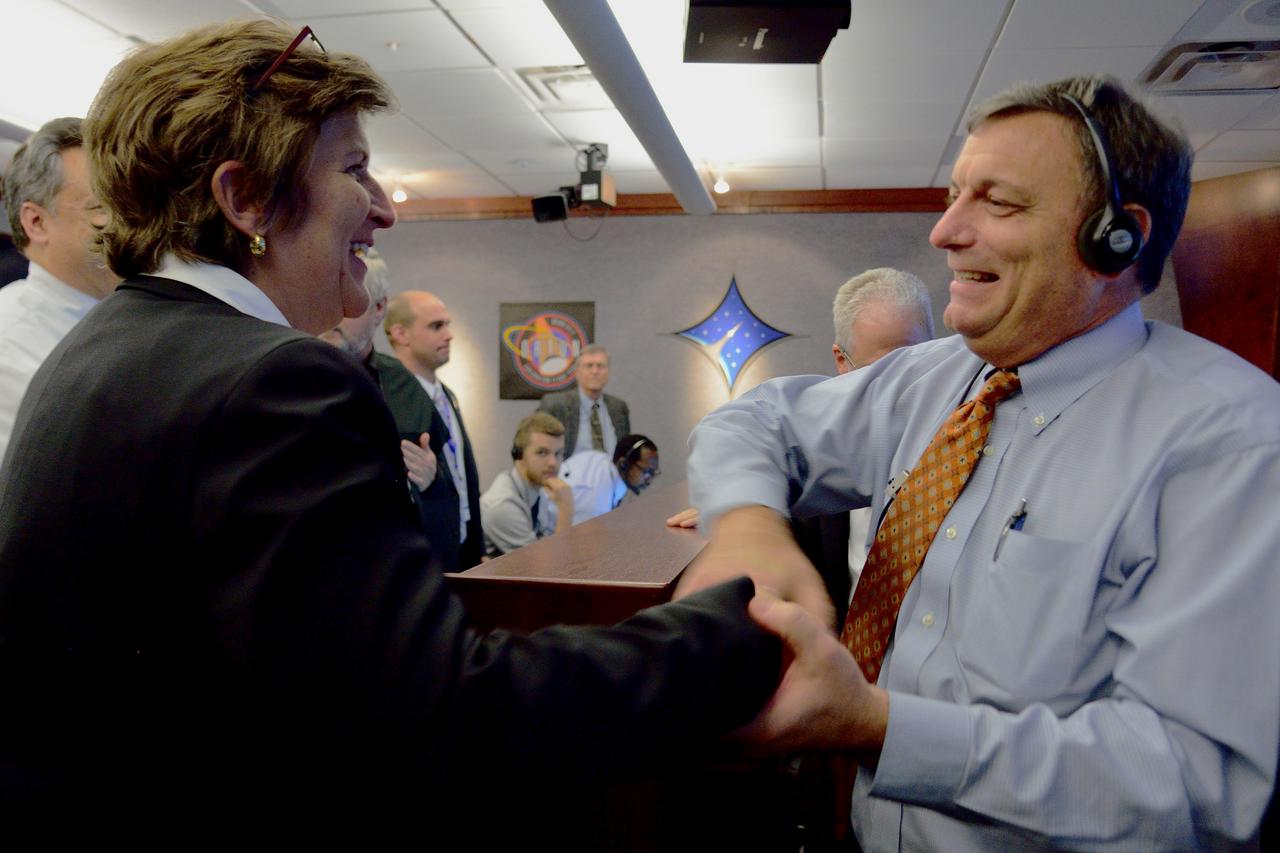
Orion Chief Engineer Julie and Deputy Program Manager Mark Kirasich celebrate Orion's successful Exploration Flight Test-1 (EFT-1) mission in Building AE at Cape Canaveral Air Force Station on Dec. 5, 2014. The Orion spacecraft orbited Earth twice, reaching an altitude of approximately 3,600 miles above Earth before landing. No one was aboard Orion for this flight test, but the spacecraft is designed to allow us to journey to destinations never before visited by humans, including an asteroid and Mars. Part of Batch image transfer from Flickr.
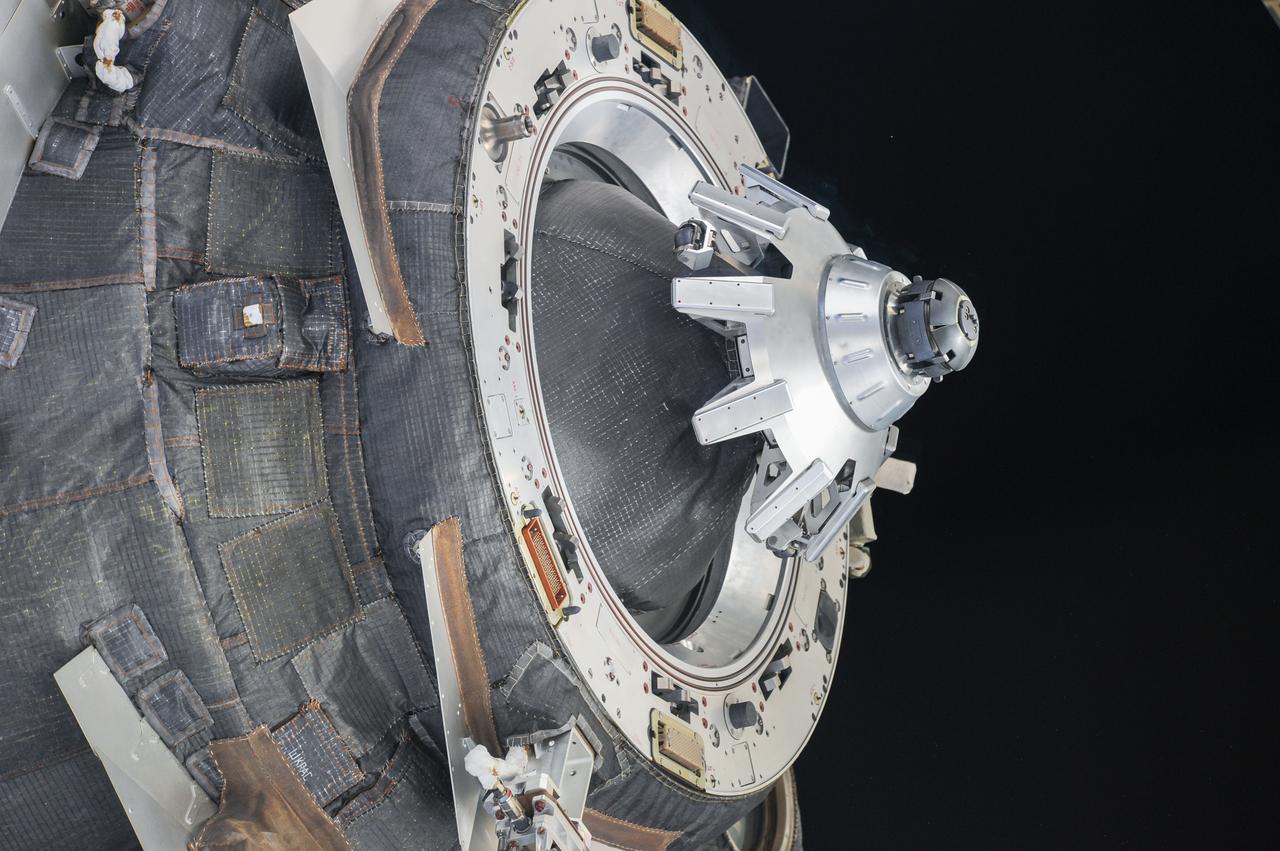
ISS040-E-000002 (14 May 2014) --- The Soyuz TMA-11M spacecraft's docking probe is seen just after separation from the International Space Station. This photo was among the first group of images downlinked from the station following the start of duty for the three Expedition 40 crew members, who will be joined by three more crew members in approximately two weeks. With Expedition 39 Commander Koichi Wakata of the Japan Aerospace Exploration Agency (JAXA), Soyuz Commander Mikhail Tyurin of Roscosmos and Flight Engineer Rick Mastracchio of NASA onboard, the Soyuz went on to land near the town of Zhezkazgan, Kazakhstan on May 14, 2014. Wakata, Tyurin and Mastracchio returned to Earth after more than six months onboard the orbital outpost where they served as members of the Expedition 38 and 39 crews.
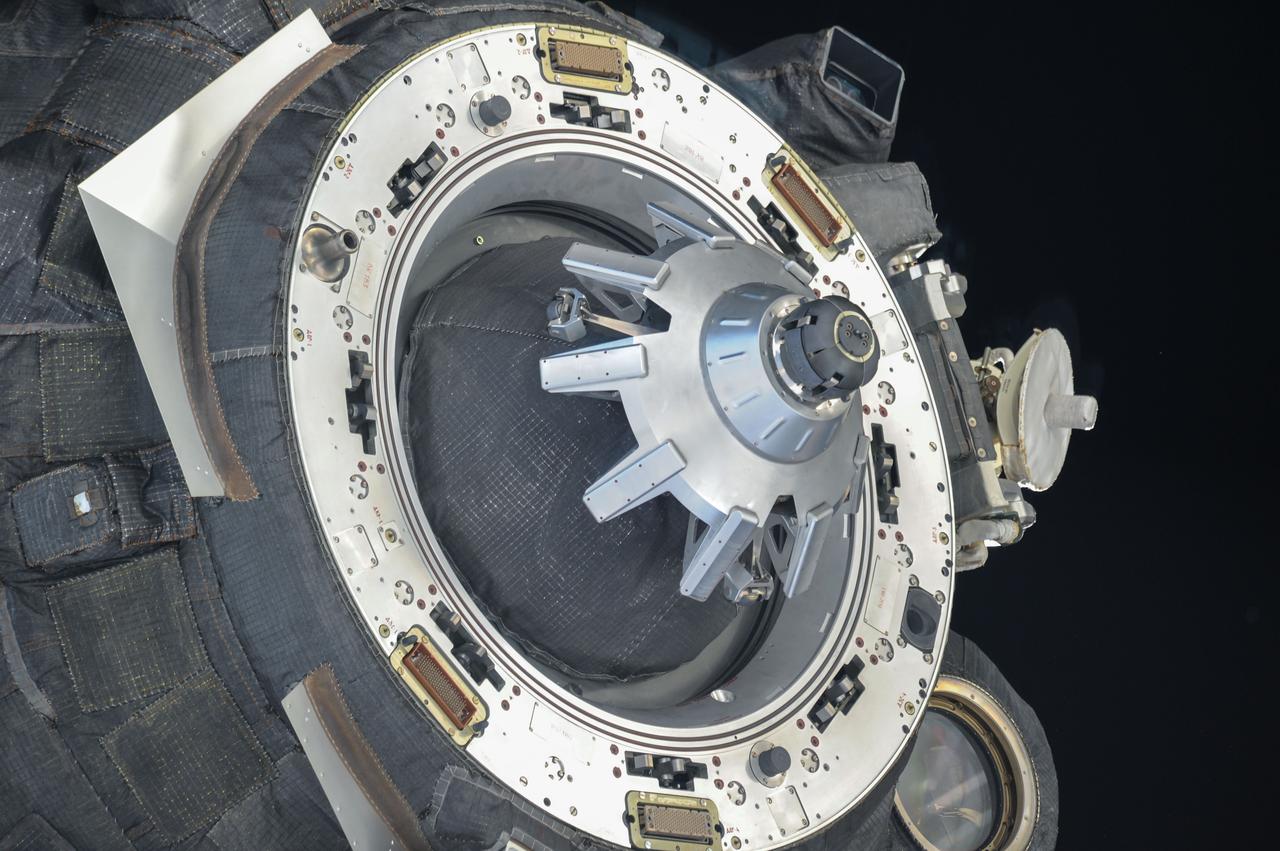
ISS040-E-000005 (14 May 2014) --- The Soyuz TMA-11M spacecraft's docking probe is seen just after separation from the International Space Station. This photo was among the first group of images downlinked from the station following the start of duty for the three Expedition 40 crew members, who will be joined by three more crew members in approximately two weeks. With Expedition 39 Commander Koichi Wakata of the Japan Aerospace Exploration Agency (JAXA), Soyuz Commander Mikhail Tyurin of Roscosmos and Flight Engineer Rick Mastracchio of NASA onboard, the Soyuz went on to land near the town of Zhezkazgan, Kazakhstan on May 14, 2014. Wakata, Tyurin and Mastracchio returned to Earth after more than six months onboard the orbital outpost where they served as members of the Expedition 38 and 39 crews.
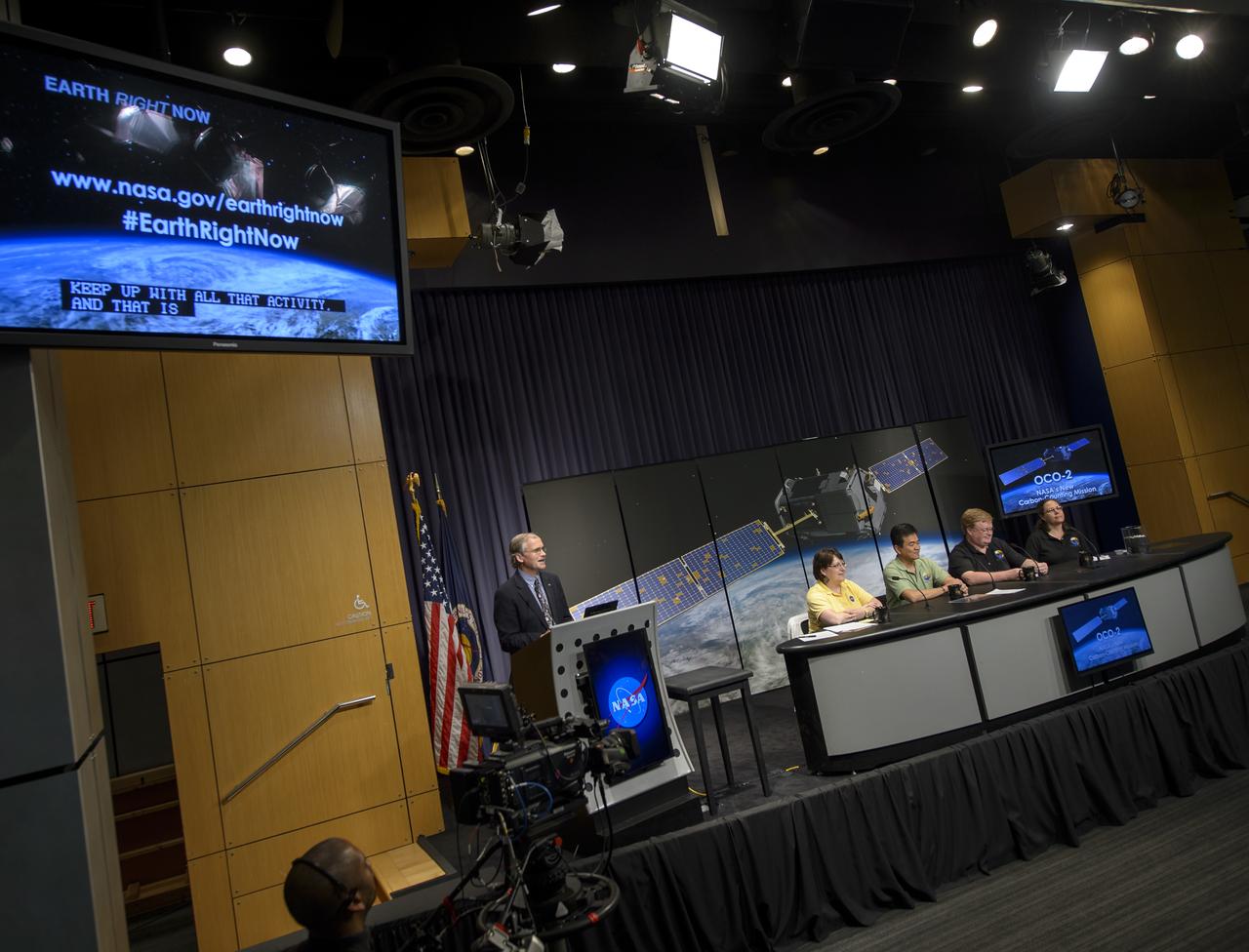
NASA Headquarters Public Affairs Officer Steve Cole, standing, moderates a Orbiting Carbon Observatory-2 (OCO-2) briefing with (from left), Betsy Edwards, OCO-2 program executive with the Science Mission Directorate at NASA Headquarters, Ralph Basilio, OCO-2 project manager with NASA’s Jet Propulsion Laboratory (JPL) in Pasadena, California, Mike Gunson, OCO-2 project scientist with JPL, and Annmarie Eldering, OCO-2 deputy project scientist JPL, , Thursday, June 12, 2014, at NASA Headquarters in Washington. OCO-2, NASA’s first spacecraft dedicated to studying carbon dioxide, is set for a July 1, 2014 launch from Vandenberg Air Force Base in California. Its mission is to measure the global distribution of carbon dioxide, the leading human-produced greenhouse gas driving changes in Earth’s climate. Photo Credit: (NASA/Bill Ingalls)
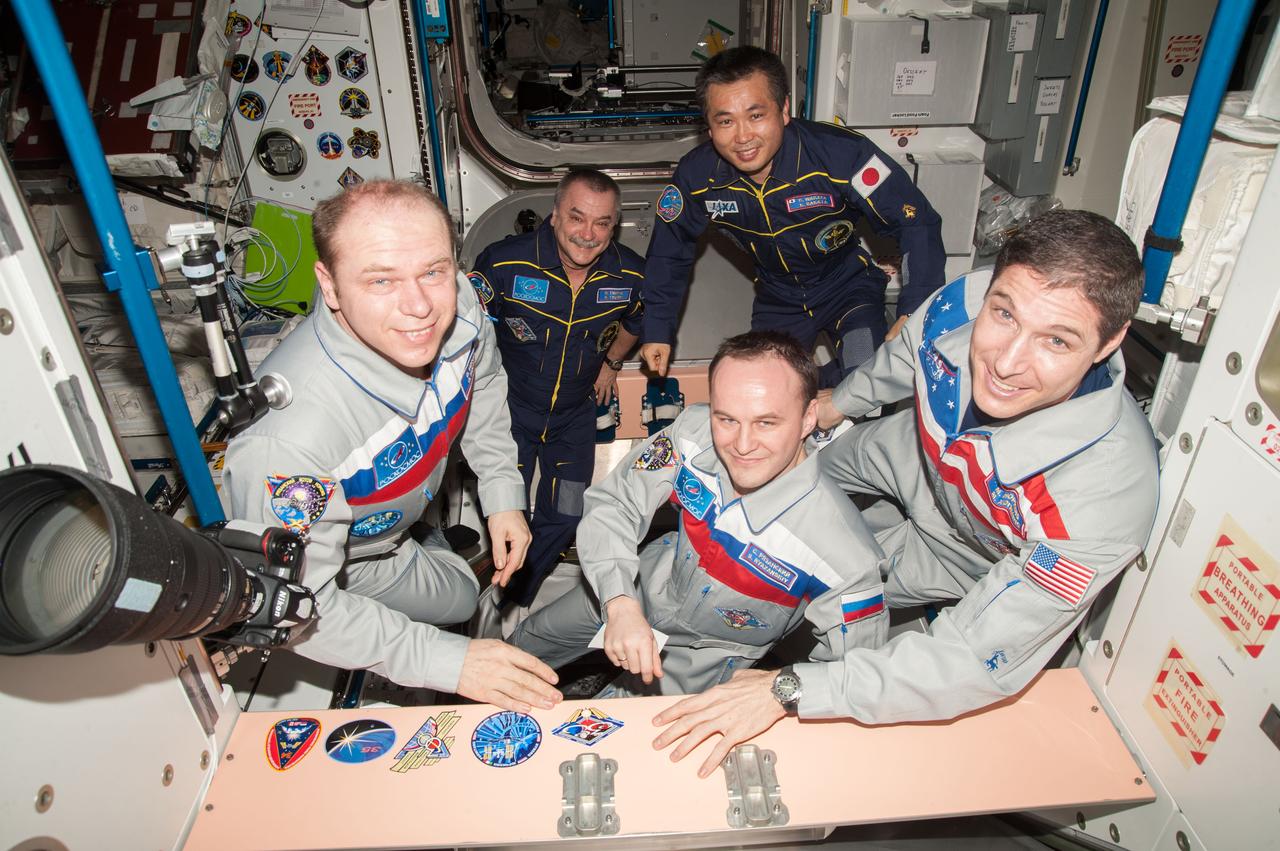
ISS038-E-066867 (9 March 2014) --- In the Unity node onboard the Earth-orbiting International Space Station, three Expediton 38 crew members affix their crew insignia just hours before departing the orbital complex. From left to right, foreground, are cosmonauts Oleg Kotov and Sergey Ryazanskiy of Russia's Federal Space Agency (Roscosmos) and astronaut Mike Hopkins of NASA. Looking on in the background are cosmonaut Mikhail Tyurin of Roscosmos, Expedition 39 flight engineer, and Japan Aerospace Exploration Agency (JAXA) astronaut Koichi Wakata, Expedition 39 commander. Out of the frame is NASA astronaut Rick Mastracchio, Expedition 39 flight engineer.
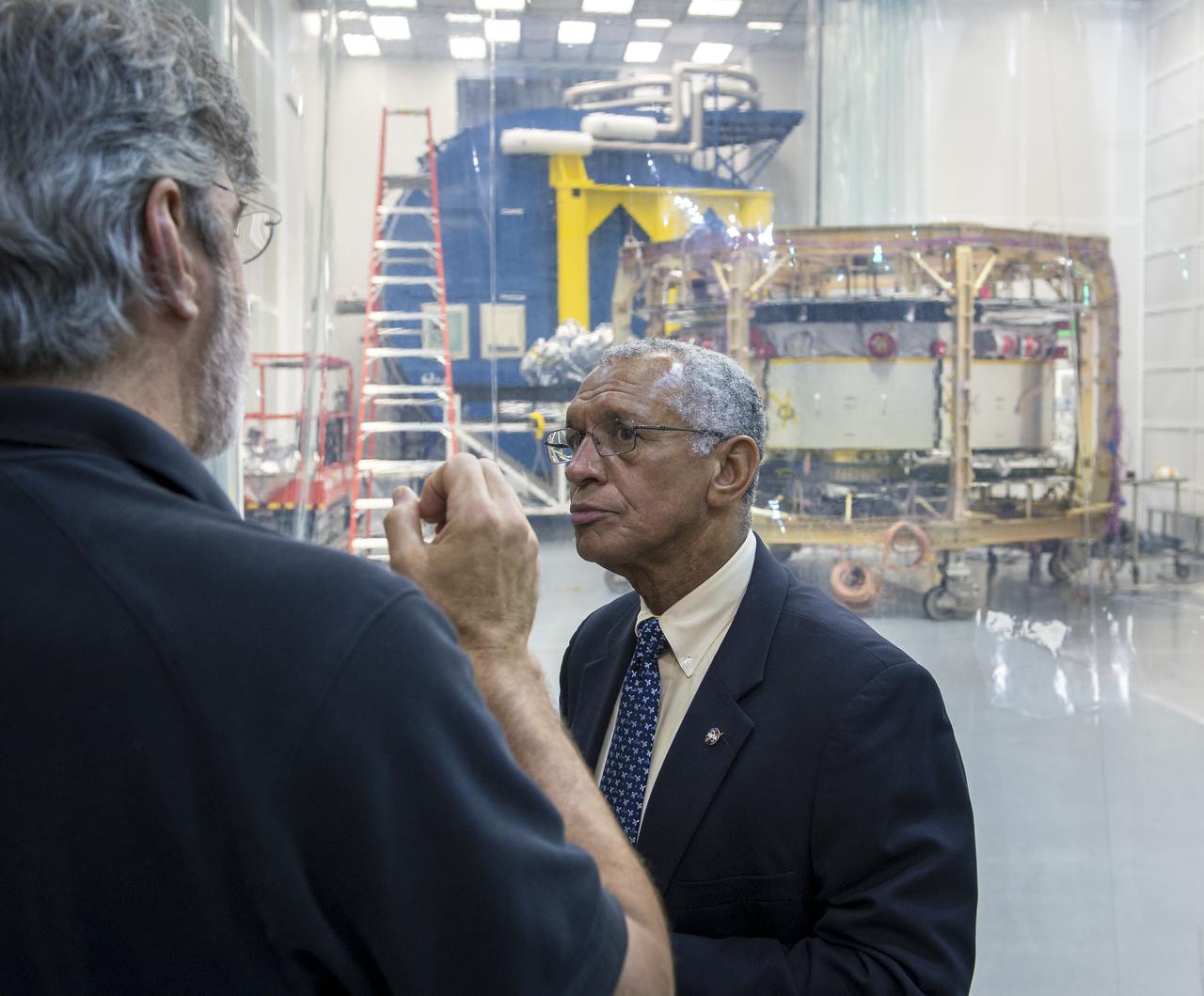
NASA Administrator Charles Bolden listens to Magnetospheric Multiscale (MMS) Mission Project Manager Craig Tooley talk about the MMS mission outside of a Naval Research Laboratory cleanroom where one of four Magnetospheric Multiscale (MMS) spacecraft is currently undergoing testing, Monday, August 4, 2014, in Washington. The Magnetospheric Multiscale, or MMS, mission will study the mystery of how magnetic fields around Earth connect and disconnect, explosively releasing energy via a process known as magnetic reconnection. The four identical spacecraft are scheduled to launch in 2015 from Cape Canaveral and will orbit around Earth in varying formations through the dynamic magnetic system surrounding our planet to provide the first three-dimensional views of the magnetic reconnection process. The goal of the STP Program is to understand the fundamental physical processes of the space environment from the sun to Earth, other planets, and the extremes of the solar system boundary. Photo Credit: (NASA/Bill Ingalls)
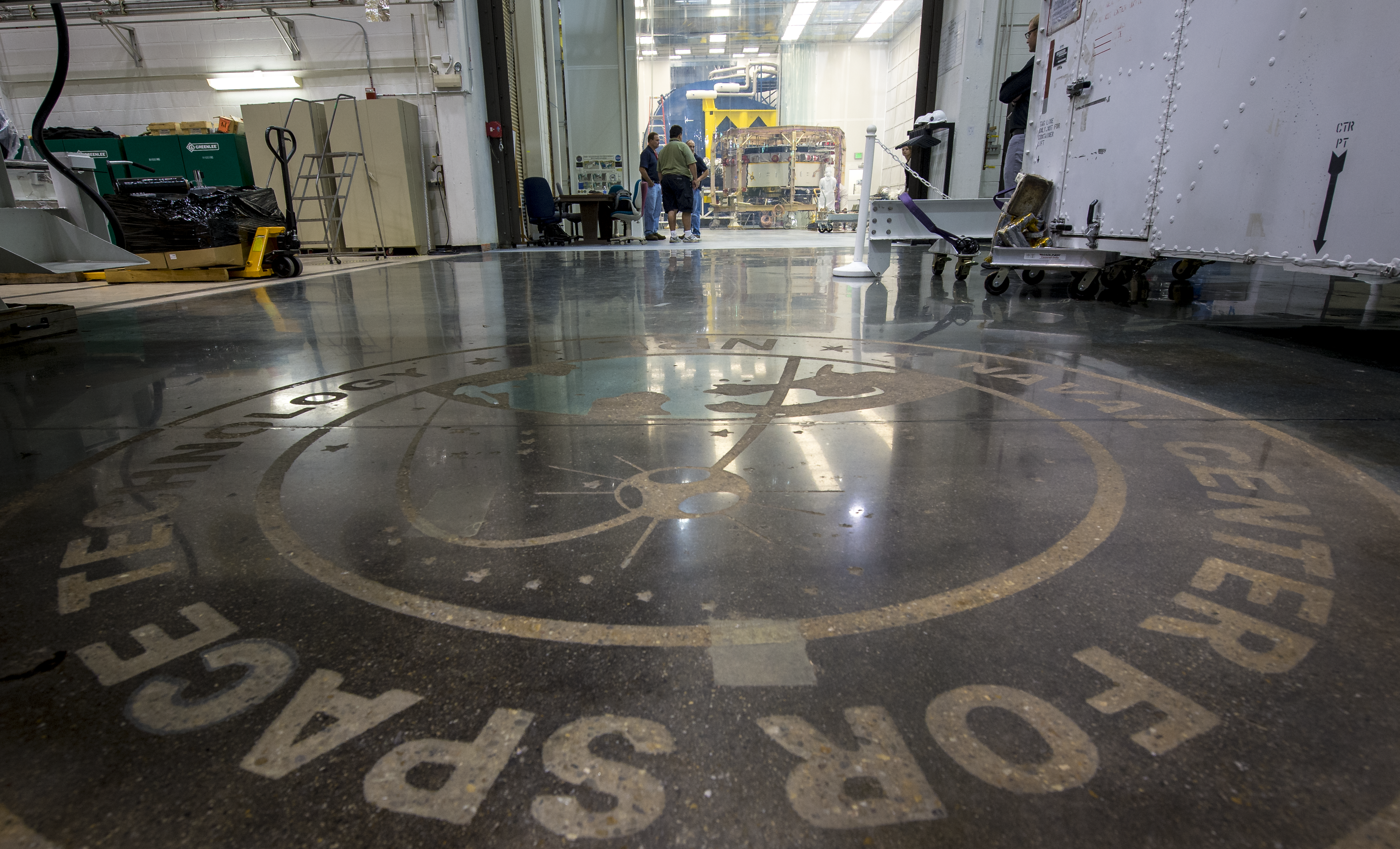
One of four Magnetospheric Multiscale (MMS) spacecraft, in the background, is seen in a cleanroom at the Naval Research Lab’s, Naval Center for Space Technology, Monday, August 4, 2014, in Washington. The Magnetospheric Multiscale, or MMS, mission will study the mystery of how magnetic fields around Earth connect and disconnect, explosively releasing energy via a process known as magnetic reconnection. The four identical spacecraft are scheduled to launch in 2015 from Cape Canaveral and will orbit around Earth in varying formations through the dynamic magnetic system surrounding our planet to provide the first three-dimensional views of the magnetic reconnection process. The goal of the STP Program is to understand the fundamental physical processes of the space environment from the sun to Earth, other planets, and the extremes of the solar system boundary. Photo Credit: (NASA/Bill Ingalls)
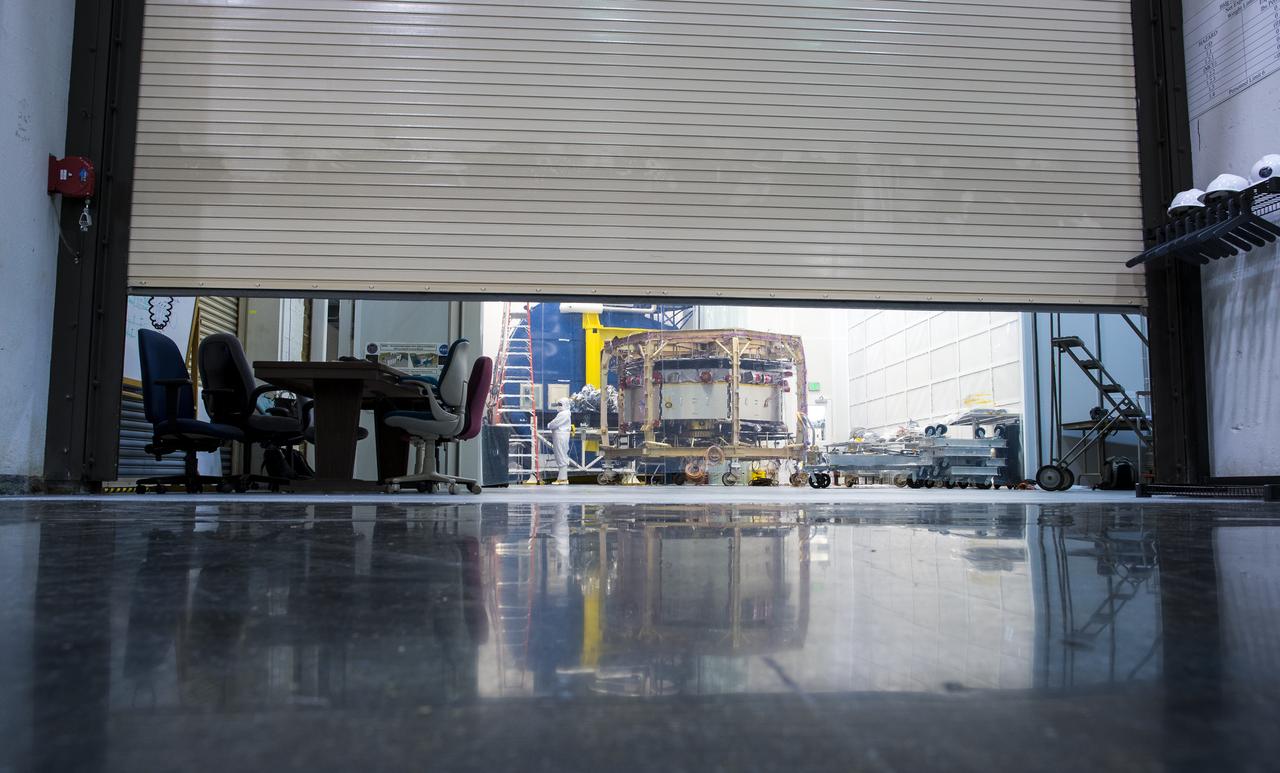
One of four Magnetospheric Multiscale (MMS) spacecraft, in the background, is seen in a cleanroom at the Naval Research Lab’s, Naval Center for Space Technology, Monday, August 4, 2014, in Washington. The Magnetospheric Multiscale, or MMS, mission will study the mystery of how magnetic fields around Earth connect and disconnect, explosively releasing energy via a process known as magnetic reconnection. The four identical spacecraft are scheduled to launch in 2015 from Cape Canaveral and will orbit around Earth in varying formations through the dynamic magnetic system surrounding our planet to provide the first three-dimensional views of the magnetic reconnection process. The goal of the STP Program is to understand the fundamental physical processes of the space environment from the sun to Earth, other planets, and the extremes of the solar system boundary. Photo Credit: (NASA/Bill Ingalls)
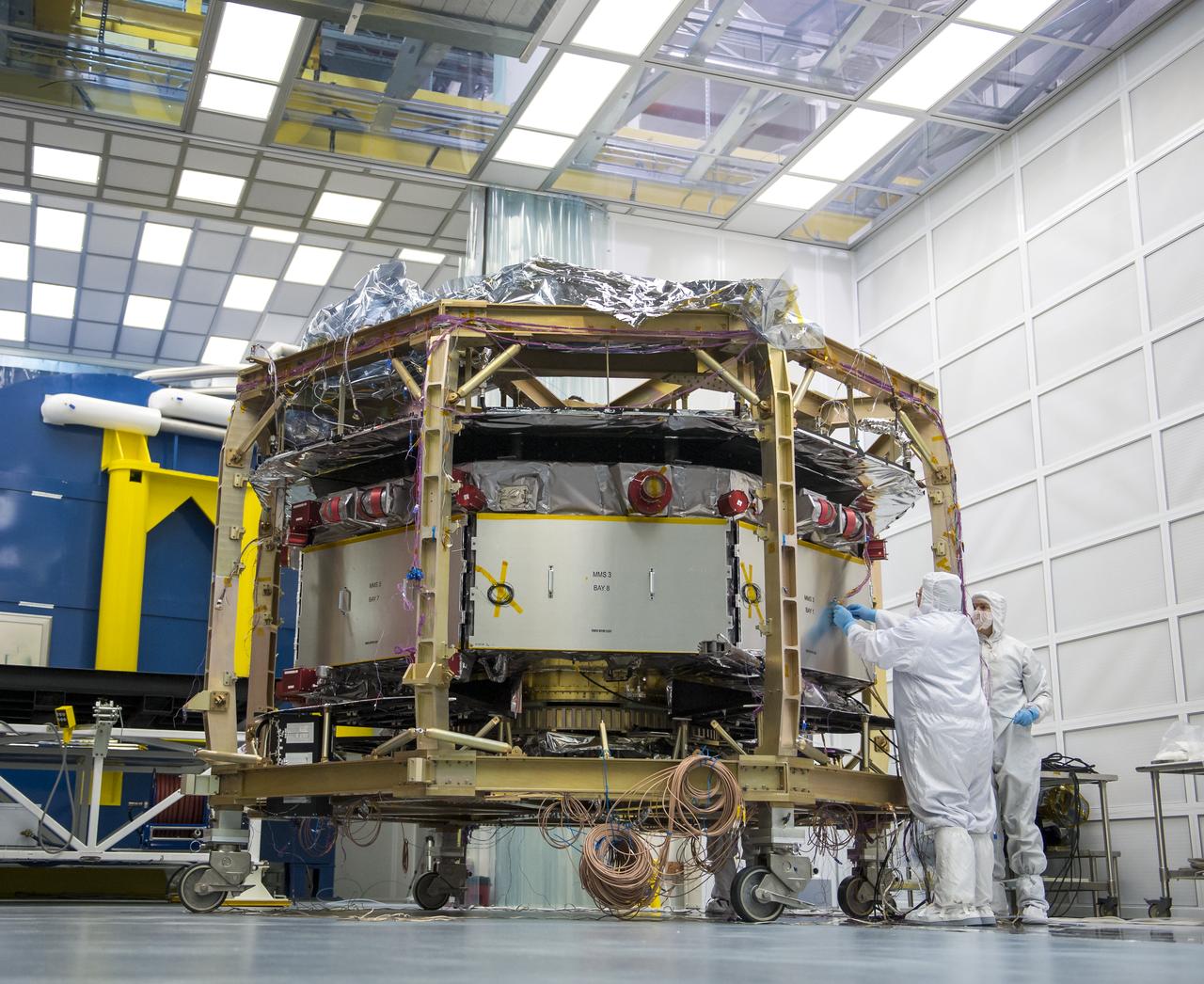
Engineers work on one of four Magnetospheric Multiscale (MMS) spacecraft in a cleanroom at the Naval Research Lab, Monday, August 4, 2014, in Washington. The Magnetospheric Multiscale, or MMS, mission will study the mystery of how magnetic fields around Earth connect and disconnect, explosively releasing energy via a process known as magnetic reconnection. The four identical spacecraft are scheduled to launch in 2015 from Cape Canaveral and will orbit around Earth in varying formations through the dynamic magnetic system surrounding our planet to provide the first three-dimensional views of the magnetic reconnection process. The goal of the STP Program is to understand the fundamental physical processes of the space environment from the sun to Earth, other planets, and the extremes of the solar system boundary. Photo Credit: (NASA/Bill Ingalls)
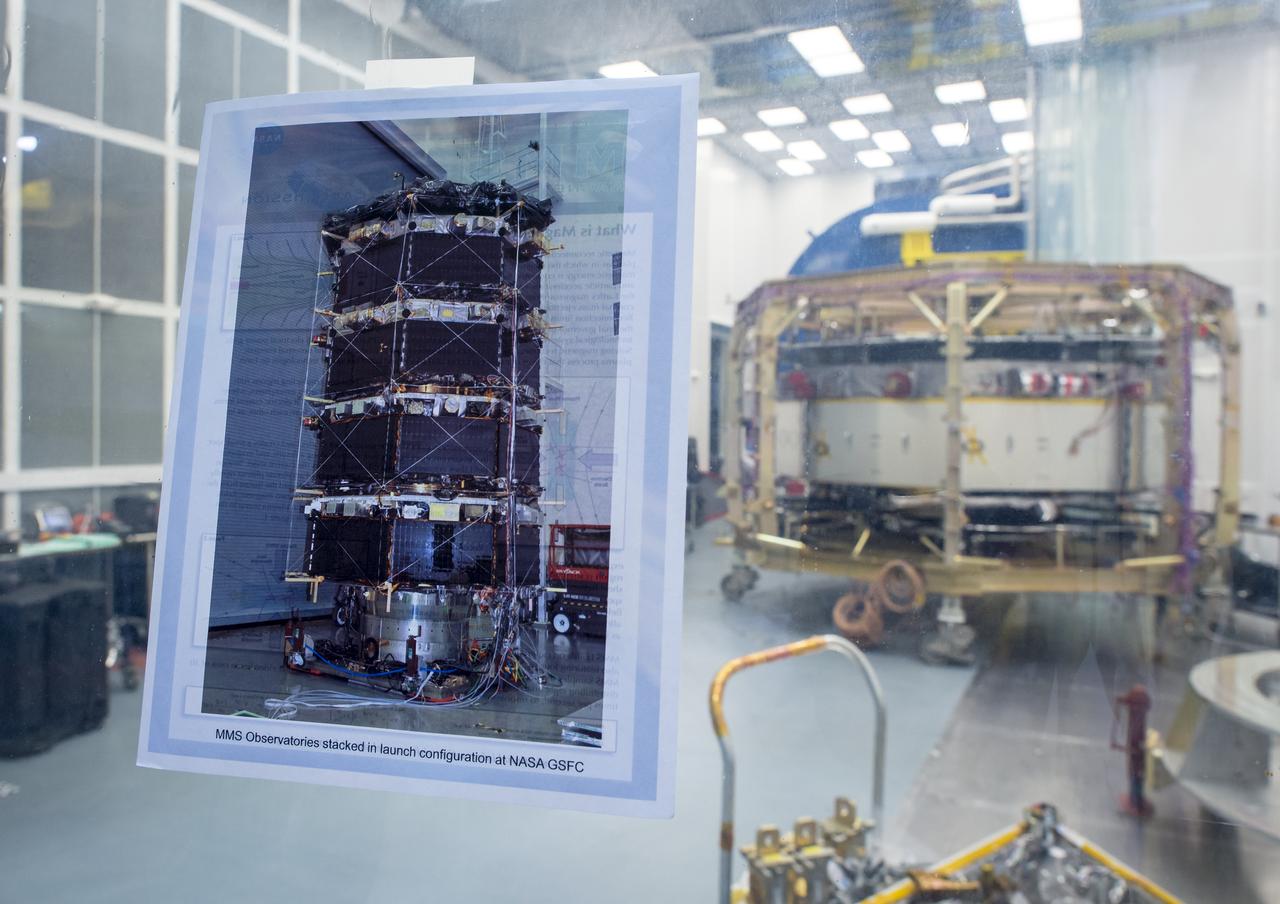
A photograph showing what all four Magnetospheric Multiscale (MMS) spacecraft look like when stacked is seen taped to the window of a Naval Research Laboratory cleanroom where one of the four spacecraft is undergoing testing, Monday, August 4, 2014, in Washington. The Magnetospheric Multiscale, or MMS, mission will study the mystery of how magnetic fields around Earth connect and disconnect, explosively releasing energy via a process known as magnetic reconnection. The four identical spacecraft are scheduled to launch in 2015 from Cape Canaveral and will orbit around Earth in varying formations through the dynamic magnetic system surrounding our planet to provide the first three-dimensional views of the magnetic reconnection process. The goal of the STP Program is to understand the fundamental physical processes of the space environment from the sun to Earth, other planets, and the extremes of the solar system boundary. Photo Credit: (NASA/Bill Ingalls)
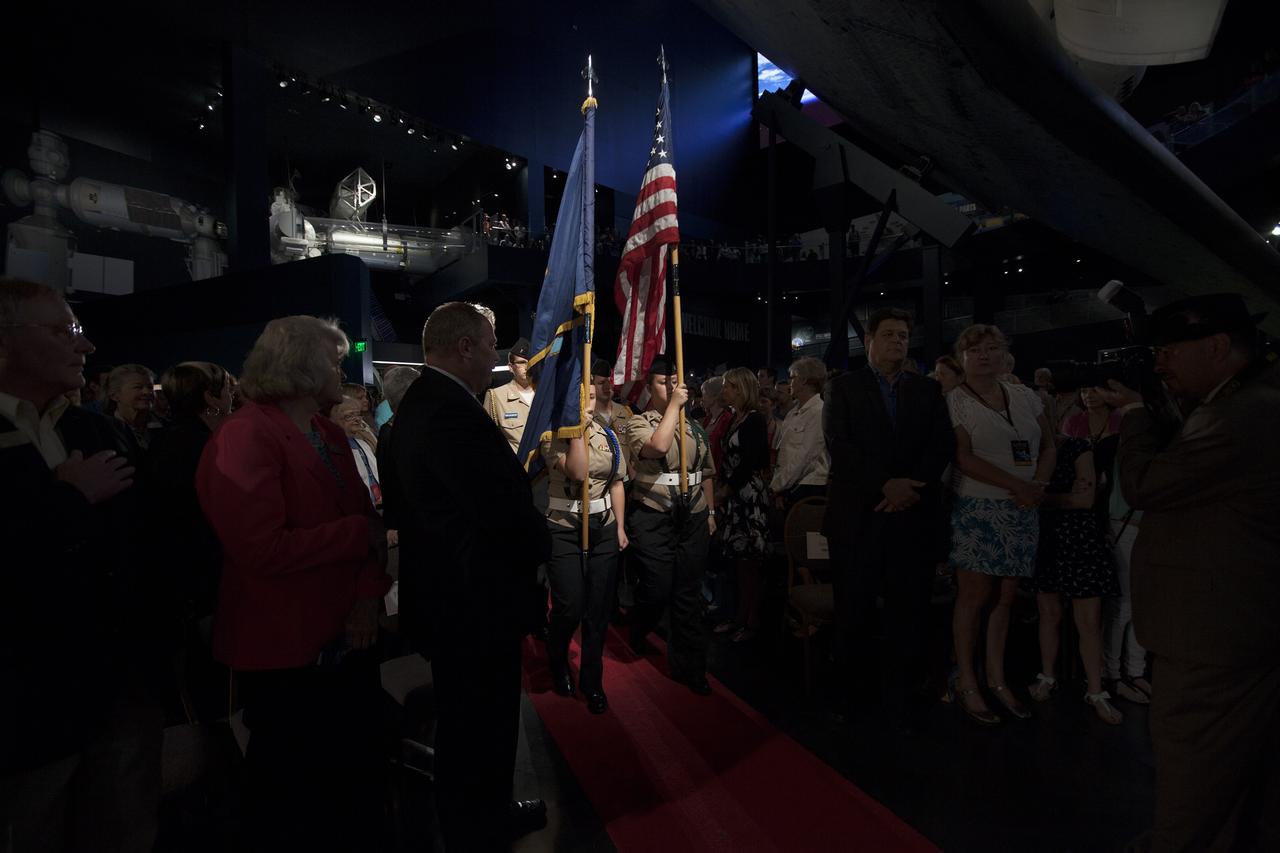
CAPE CANAVERAL, Fla. – Inside the Space Shuttle Atlantis attraction at NASA’s Kennedy Space Center Visitor Complex in Florida, the Titusville Naval Junior ROTC from Titusville High School in Florida, presents the colors to open the U.S. Astronaut Hall of Fame Induction ceremony. Space shuttle astronauts and space explorers Shannon Lucid and Jerry Ross were inducted into the Hall of Fame Class of 2014. The 2014 inductees are selected by a committee of Hall of Fame astronauts, former NASA officials, flight directors, historians and journalists. The process is administered by the Astronaut Scholarship Foundation. To be eligible, an astronaut must have made his or her first flight at least 17 years before the induction. Candidates must be a U.S. citizen and a NASA-trained commander, pilot or mission specialist who has orbited the earth at least once. Including Lucid and Ross, 87 astronauts have been inducted into the AHOF. Photo credit: NASA/Kim Shiflett
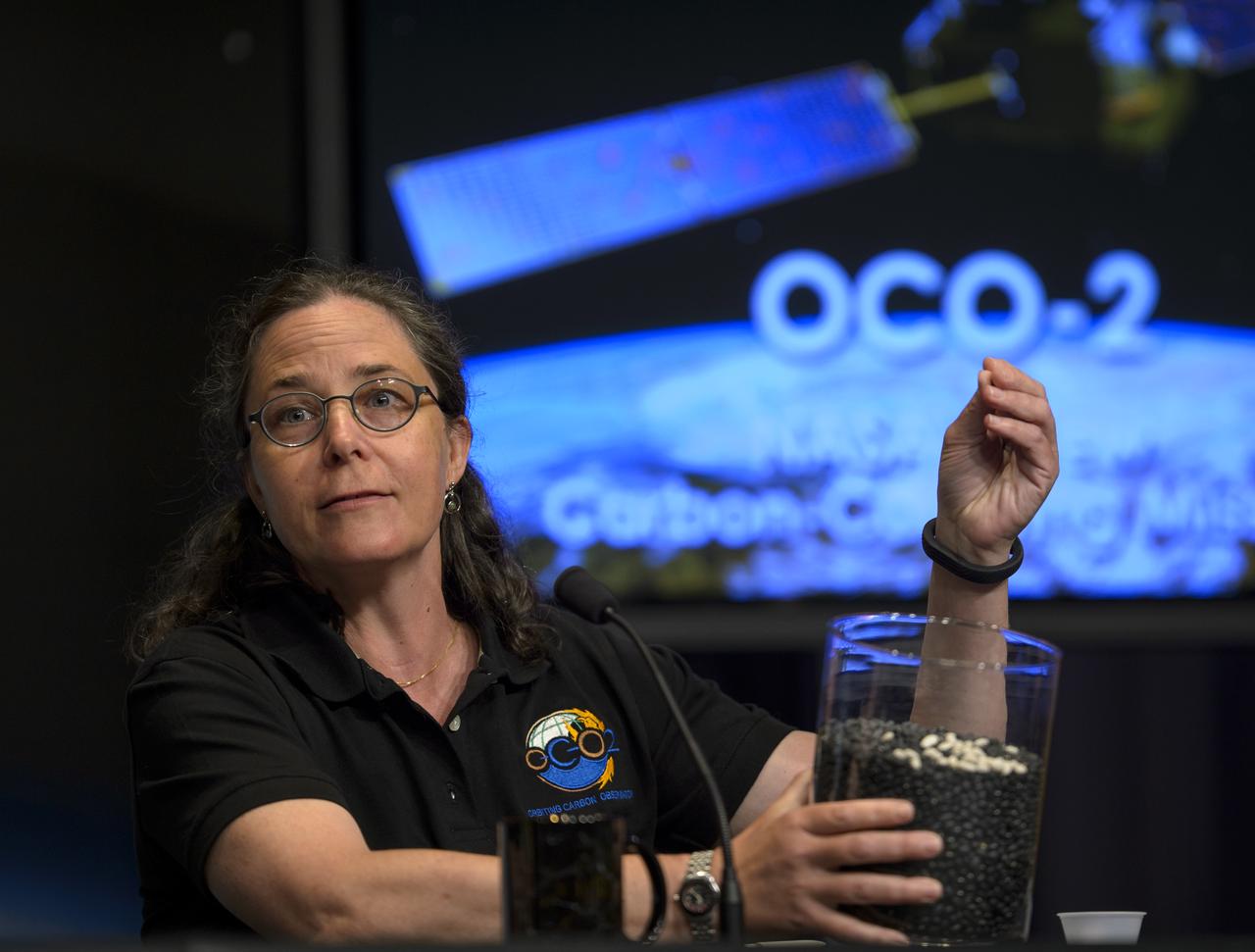
Annmarie Eldering, OCO-2 deputy project scientist with NASA’s Jet Propulsion Laboratory (JPL) in Pasadena, California, demonstrates with a few white beans in a container of black beans the small differences in carbon dioxide in the atmosphere that the Orbiting Carbon Observatory-2 (OCO-2) will be able to measure, during a press briefing, Thursday, June 12, 2014, at NASA Headquarters in Washington. OCO-2, NASA’s first spacecraft dedicated to studying carbon dioxide, is set for a July 1, 2014, launch from Vandenberg Air Force Base in California. Its mission is to measure the global distribution of carbon dioxide, the leading human-produced greenhouse gas driving changes in Earth’s climate. Photo Credit: (NASA/Bill Ingalls)
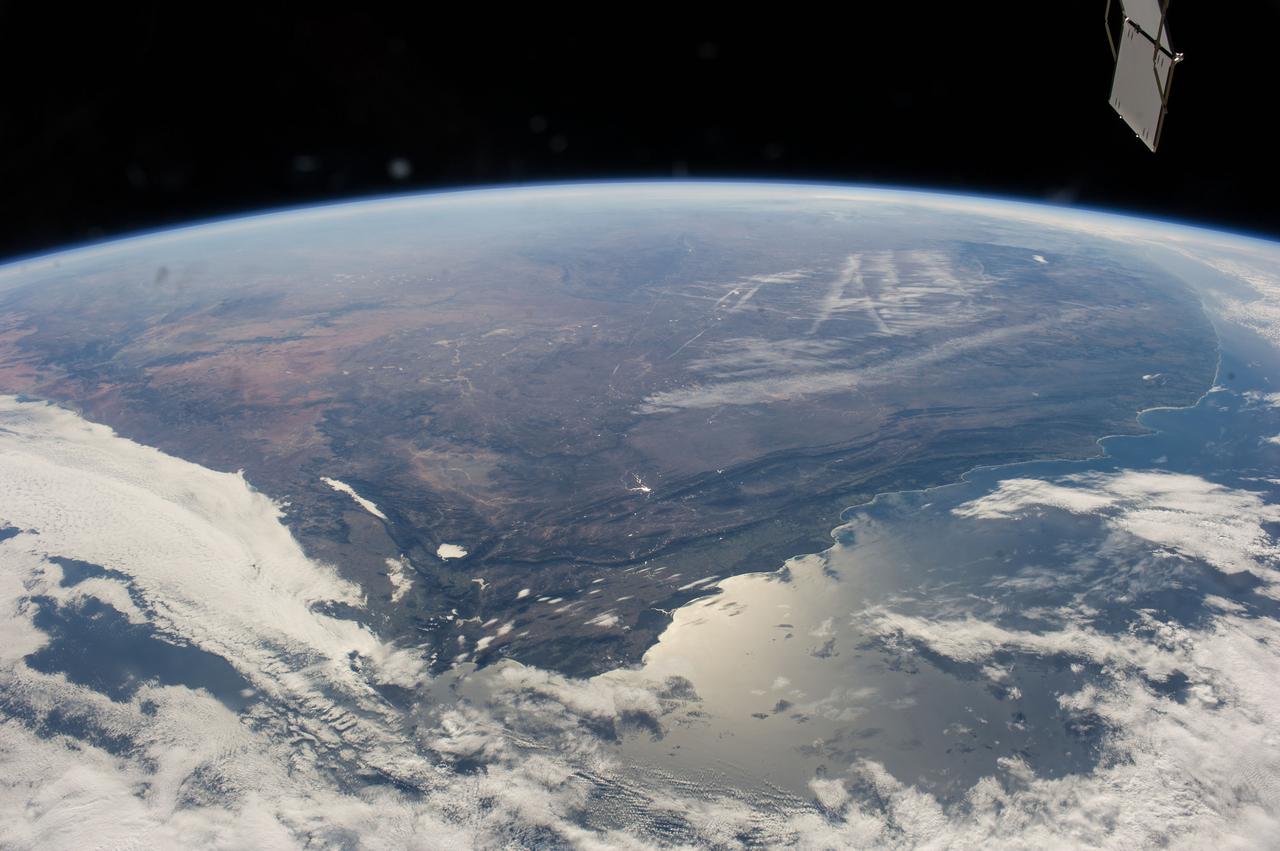
ISS040-E-006271 (31 May 2014) --- One of the Expedition 40 crew members aboard the Earth-orbiting International Space Station captured this panoramic image of South Africa on May 31, 2014. A combination of contrails and a bit of winter mist appears to have formed alphabetic and/or numeric characters in the upper right near the horizon. Sun glint off the south coast is slightly confusing as it is similar in brightness to the west-coast cloud cover, where an Atlantic storm rolls in. The Cape Fold Mountains cross the center of the view, going east from the Cape Town region (clouds obscure the Cape peninsula which normally serves as an icon for this part of Africa). A popular winegrowing region attributable to the Mediterranean climate is the area around Cape Town near lower left. Witwatersrand lies at the top of the picture obscured by the seemingly ever-present winter smoke and smog. The Orange River valley appears as a dark, nearly horizontal line at left.

From left, NASA Kennedy Space Center Public Affairs Officer George Diller, Ken Jucks, OCO-2 program scientist, NASA Headquarters, Dave Crisp, OCO-2 science team leader, JPL, and Annmarie Eldering, OCO-2 deputy project scientist, JPL, give a science briefing ahead of the planned launch of the Orbiting Carbon Observatory-2 (OCO-2), Sunday, June 29, 2014, Vandenberg Air Force Base, Calif. OCO-2 will measure the global distribution of carbon dioxide, the leading human-produced greenhouse gas driving changes in Earth’s climate. OCO-2 is set to launch on July 1, 2014 at 2:59 a.m. PDT. Photo Credit: (NASA/Bill Ingalls)
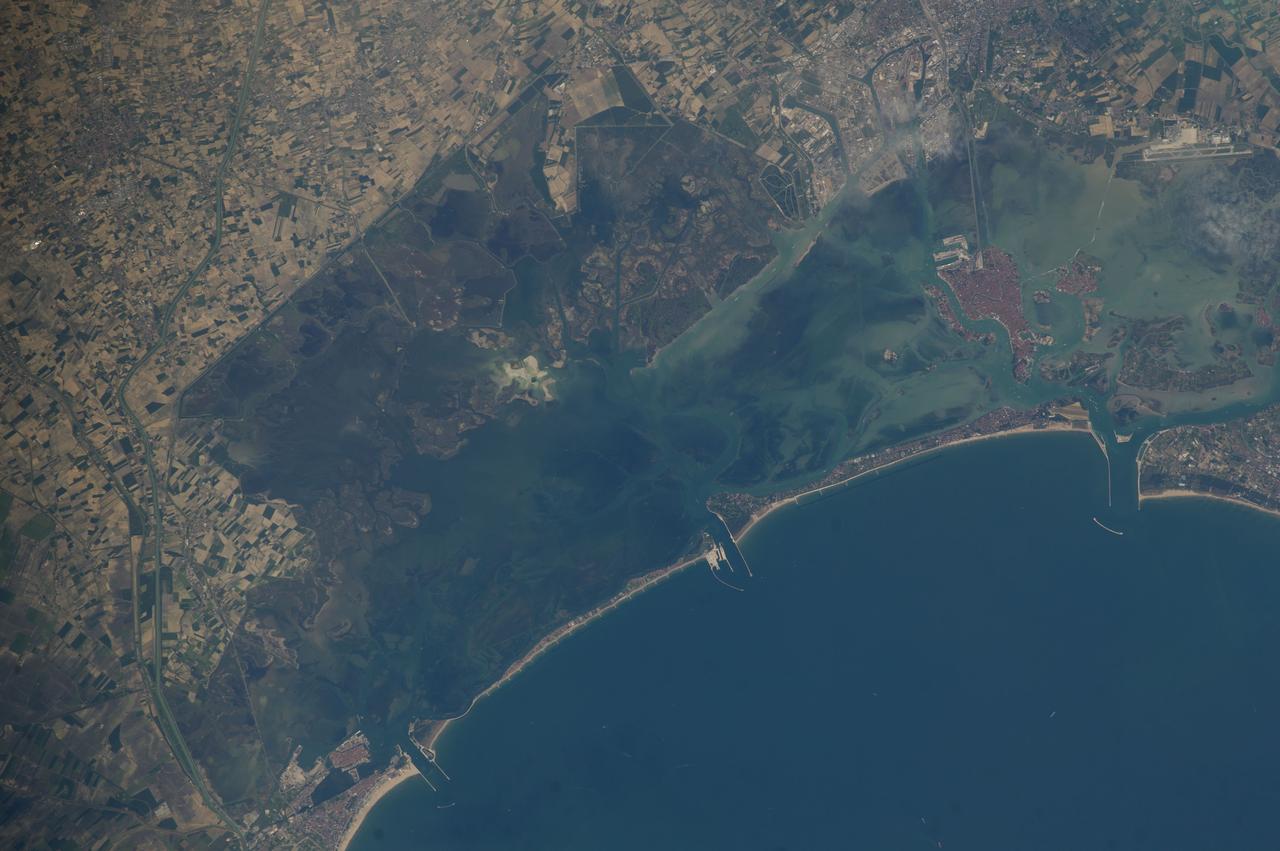
ISS039-E-019482 (9 May 2014) --- One of the Expedition 39 crew members aboard the Earth-orbiting International Space Station used a 400mm lens to take this photograph of Venice Lagoon, Italy on May 9, 2014. A narrow barrier island protects the Lagoon of Venice from storm waves in the northern Adriatic Sea, and breakwaters protect inlets to the lagoon. Red tiles of the roofs of the edifices on the island of Venice contrast with the grays of the mainland sister city of Mestre. The cities are joined by a prominent causeway. Another causeway joins the island to the airport (top right). Small bright agricultural fields of well drained soils (top left) contrast with the darker vegetation of back bay swamps where fishing is a popular pastime. Dense urban populations on its shores and heavy use by craft of all kinds result in turbid water in the northern half of the lagoon.
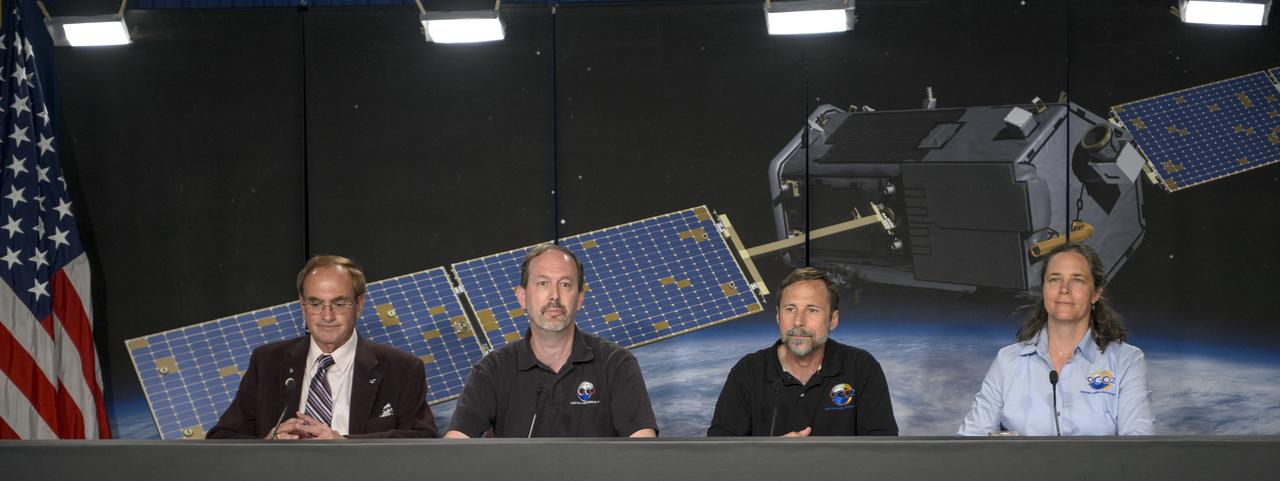
From left, NASA Kennedy Space Center Public Affairs Officer George Diller, Ken Jucks, OCO-2 program scientist, NASA Headquarters, Dave Crisp, OCO-2 science team leader, JPL, and Annmarie Eldering, OCO-2 deputy project scientist, JPL, give a science briefing ahead of the planned launch of the Orbiting Carbon Observatory-2 (OCO-2), Sunday, June 29, 2014, Vandenberg Air Force Base, Calif. OCO-2 will measure the global distribution of carbon dioxide, the leading human-produced greenhouse gas driving changes in Earth’s climate. OCO-2 is set to launch on July 1, 2014 at 2:59 a.m. PDT. Photo Credit: (NASA/Bill Ingalls)
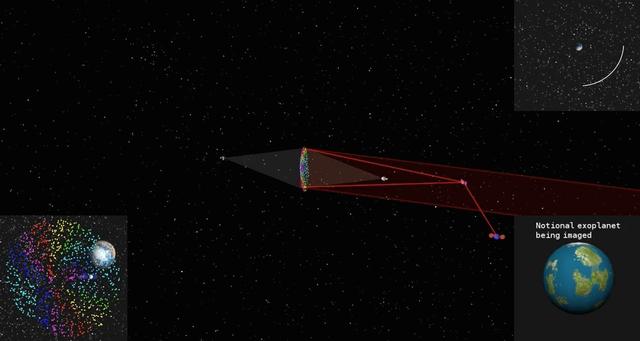
This simulated image shows how a cloud of glitter in geostationary orbit would be illuminated and controlled by two laser beams. As the cloud orbits Earth, grains scatter the sun's light at different angles like many tiny prisms, similar to how rainbows are produced from light being dispersed by water droplets. That is why the project concept is called "Orbiting Rainbows." The cloud functions like a reflective surface, allowing the exoplanet (displayed in the bottom right) to be imaged. The orbit path is shown in the top right. On the bottom left, Earth's image is seen behind the cloud. To image an exoplanet, the cloud would need to have a diameter of nearly 98 feet (30 meters). This simulation confines the cloud to a 3.3 x 3.3 x 3.3 foot volume (1 x 1 x 1 meter volume) to simplify the computations. The elements of the orbiting telescope are not to scale. Orbiting Rainbows is currently in Phase II development through the NASA Innovative Advanced Concepts (NIAC) Program. It was one of five technology proposals chosen for continued study in 2014. In the current phase, Orbiting Rainbows researchers are conducting small-scale ground experiments to demonstrate how granular materials can be manipulated using lasers and simulations of how the imaging system would behave in orbit. http://photojournal.jpl.nasa.gov/catalog/PIA19318
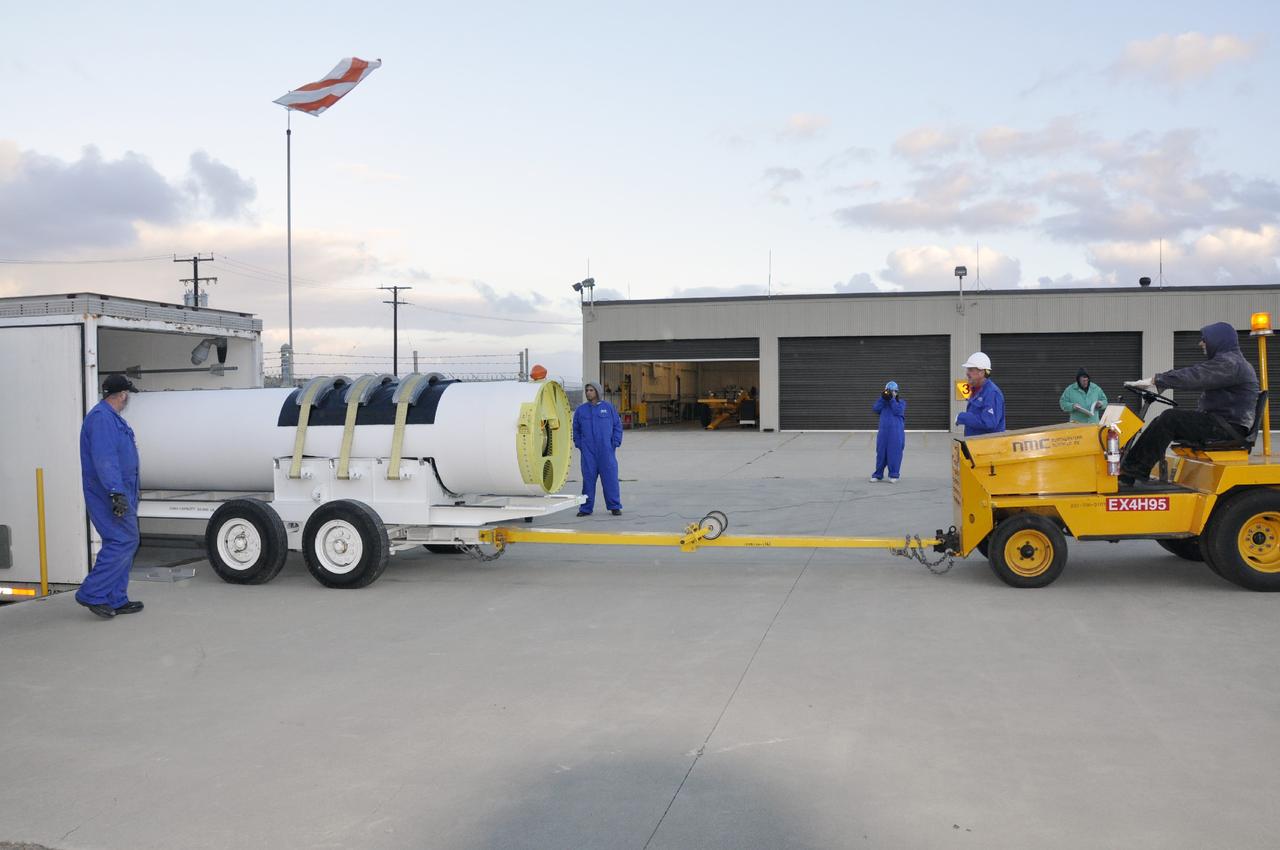
VANDENBERG AIR FORCE BASE, Calif. -- A solid rocket motor is carefully removed from its delivery truck at Vandenberg Air Force Base in California. The motor will be attached to the United Launch Alliance Delta II rocket slated to launch NASA's Orbiting Carbon Observatory-2, or OCO-2, spacecraft in July 2014. OCO-2 will collect precise global measurements of carbon dioxide in the Earth's atmosphere. Scientists will analyze this data to improve our understanding of the natural processes and human activities that regulate the abundance and distribution of this important atmospheric gas. Photo credit: NASA/Randy Beaudoin
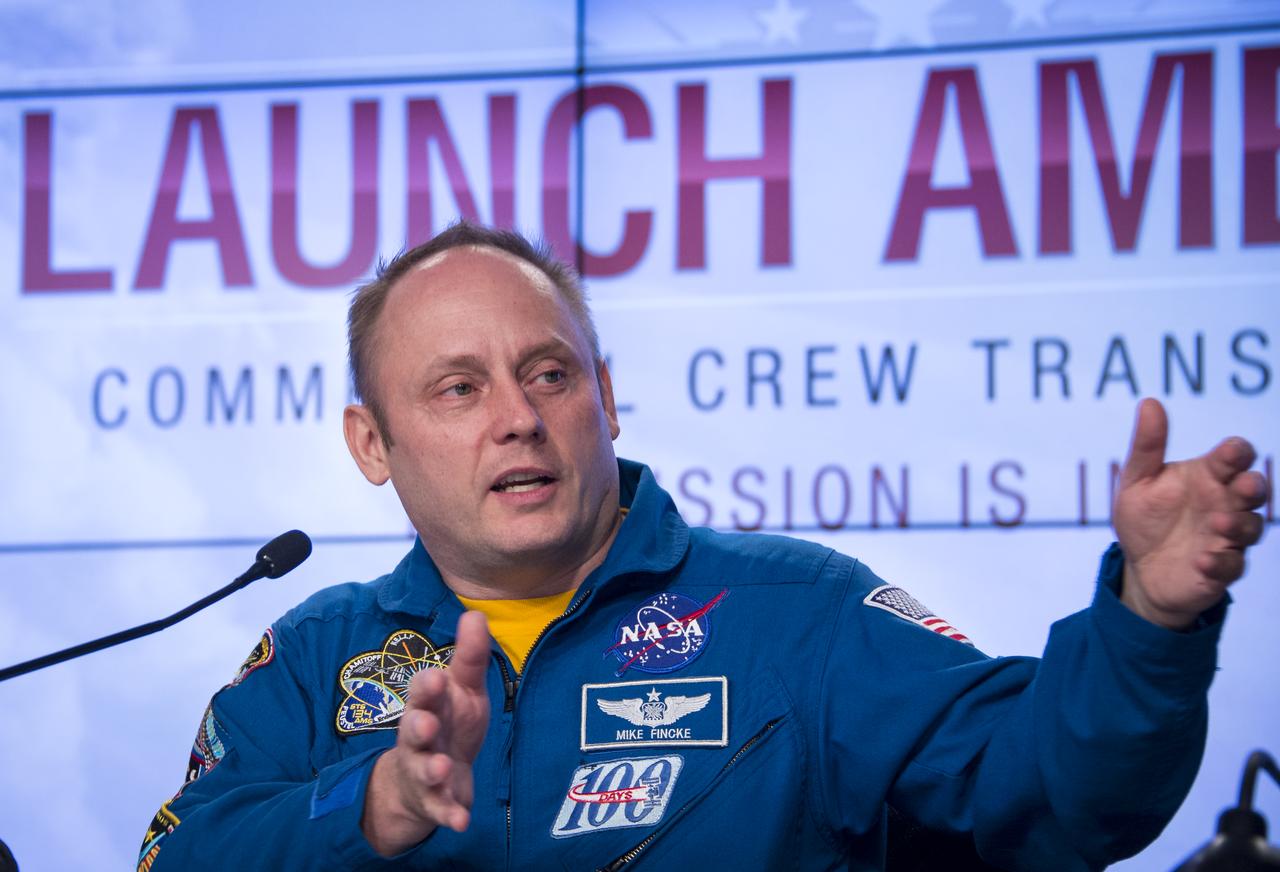
Astronaut Mike Fincke, a former commander of the International Space Station, speaks during a news conference where it was announced that Boeing and SpaceX have been selected to transport U.S. crews to and from the International Space Station using the Boeing CST-100 and the SpaceX Crew Dragon spacecraft, at NASA’s Kennedy Space Center in Cape Canaveral, Fla. on Tuesday, Sept. 16, 2014. These Commercial Crew Transportation Capability (CCtCap) contracts are designed to complete the NASA certification for a human space transportation system capable of carrying people into orbit. Once certification is complete, NASA plans to use these systems to transport astronauts to the space station and return them safely to Earth. Photo Credit: (NASA/Bill Ingalls)
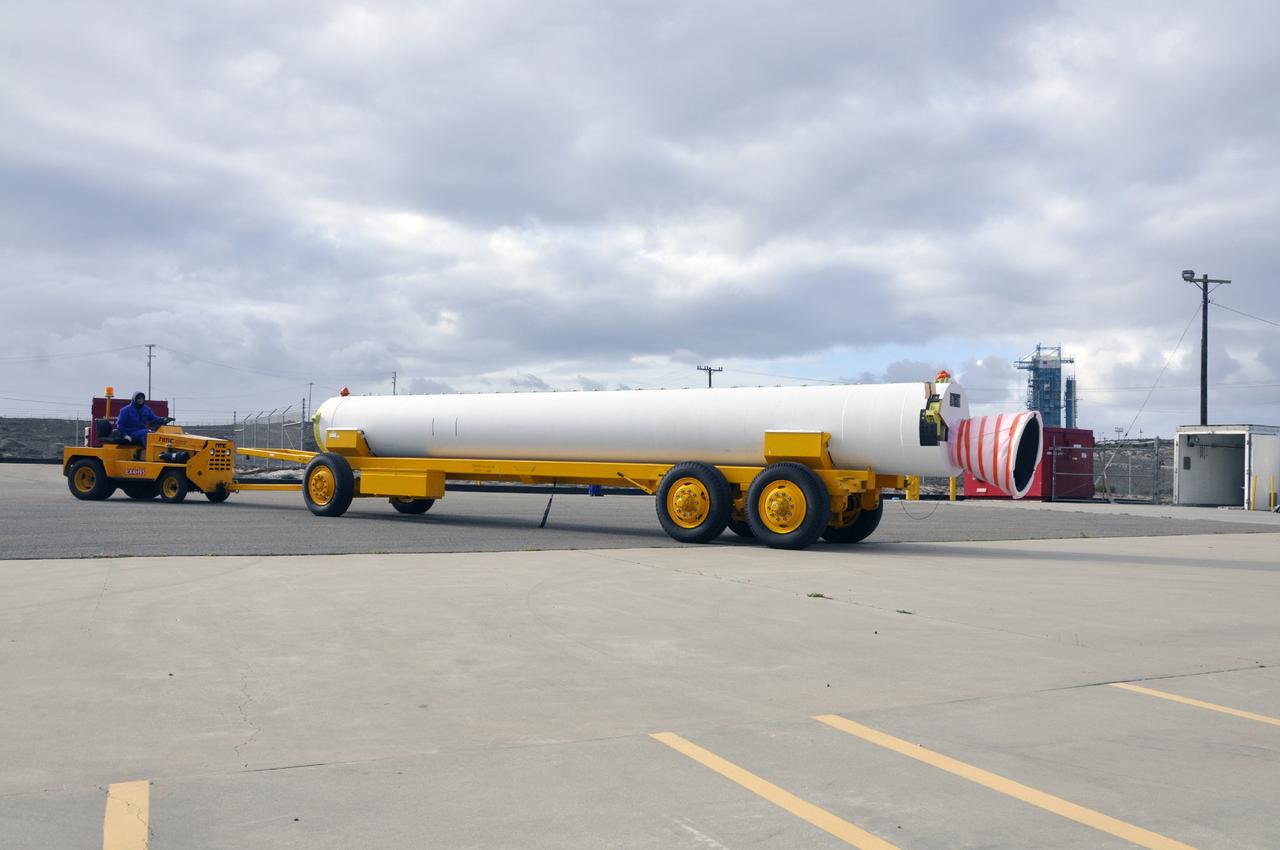
VANDENBERG AIR FORCE BASE, Calif. -- A solid rocket motor is moved on a transporter to the Solid Rocket Motor Processing Facility at Vandenberg Air Force Base in California. The motor will be attached to the United Launch Alliance Delta II rocket slated to launch NASA's Orbiting Carbon Observatory-2, or OCO-2, spacecraft in July 2014. Space Launch Complex-2, where the mission will launch from, can be seen in the background. OCO-2 will collect precise global measurements of carbon dioxide in the Earth's atmosphere. Scientists will analyze this data to improve our understanding of the natural processes and human activities that regulate the abundance and distribution of this important atmospheric gas. Photo credit: NASA/Randy Beaudoin
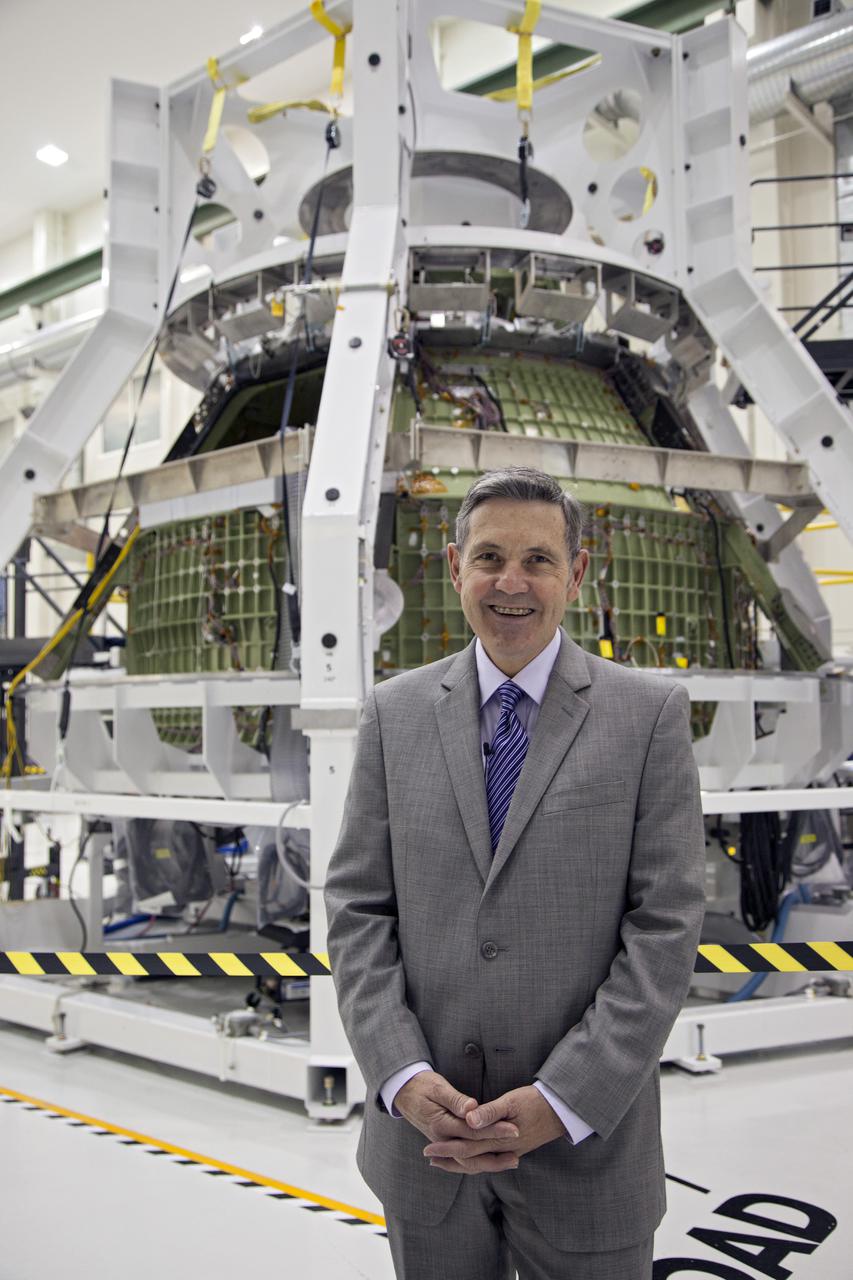
CAPE CANAVERAL, Fla. – Inside the high bay of Kennedy Space Center's Operations and Checkout Building, Kennedy Director Bob Cabana, stands in front of the Orion spacecraft which is surrounded by a special pre-launch processing access fixture. Orion is the exploration spacecraft designed to carry crews to space beyond low Earth orbit. It will provide emergency abort capability, sustain the crew during the space travel and provide safe re-entry from deep space return velocities. The first unpiloted test flight of the Orion is scheduled to launch in 2014 atop a Delta IV rocket and in 2017 on a Space Launch System rocket. For more information, visit http:__www.nasa.gov_orion Photo credit: NASA_Kim Shiflett

Kathy Lueders, program manager of NASA's Commercial Crew Program, speaks during a news conference where it was announced that Boeing and SpaceX have been selected to transport U.S. crews to and from the International Space Station using the Boeing CST-100 and the SpaceX Crew Dragon spacecraft, at NASA’s Kennedy Space Center in Cape Canaveral, Fla. on Tuesday, Sept. 16, 2014. These Commercial Crew Transportation Capability (CCtCap) contracts are designed to complete the NASA certification for a human space transportation system capable of carrying people into orbit. Once certification is complete, NASA plans to use these systems to transport astronauts to the space station and return them safely to Earth. Photo Credit: (NASA/Bill Ingalls)
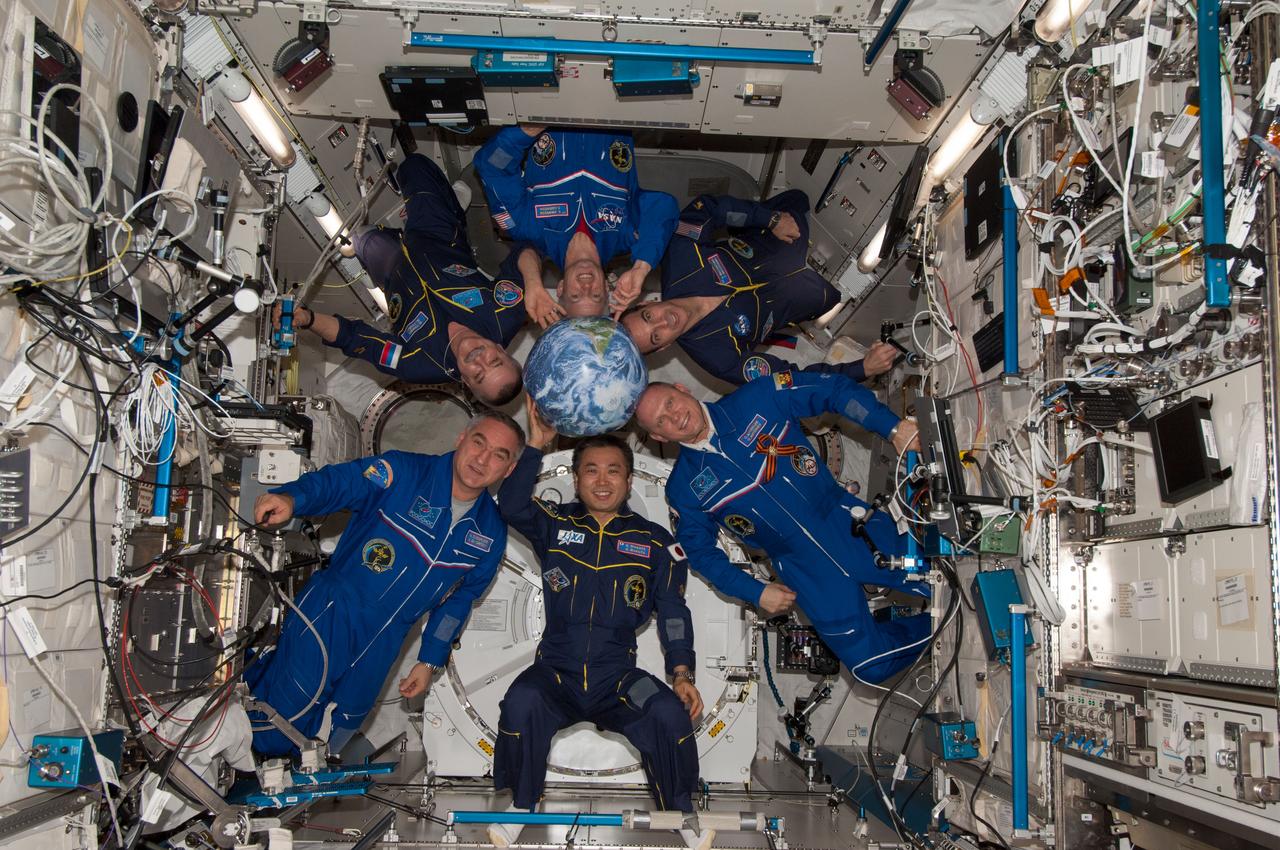
ISS039-E-017656 (3 May 2014) --- The phrase "encircling the Earth" has a double entendre flavor to it in this picture showing all six Expedition 39 crew members in the Kibo module around a globe while actually orbiting the "real thing" aboard the International Space Station. Expedition 39 Commander Koichi Wakata of the Japan Aerospace Exploration Agency (JAXA) is at bottom center. Clockwise from his position are Flight Engineers Alexander Skvortsov and Mikhail Tyurin of Russia's Federal Space Agency (Roscosmos), Steve Swanson and Rick Mastracchio of NASA and Oleg Artemyev of Roscosmos.
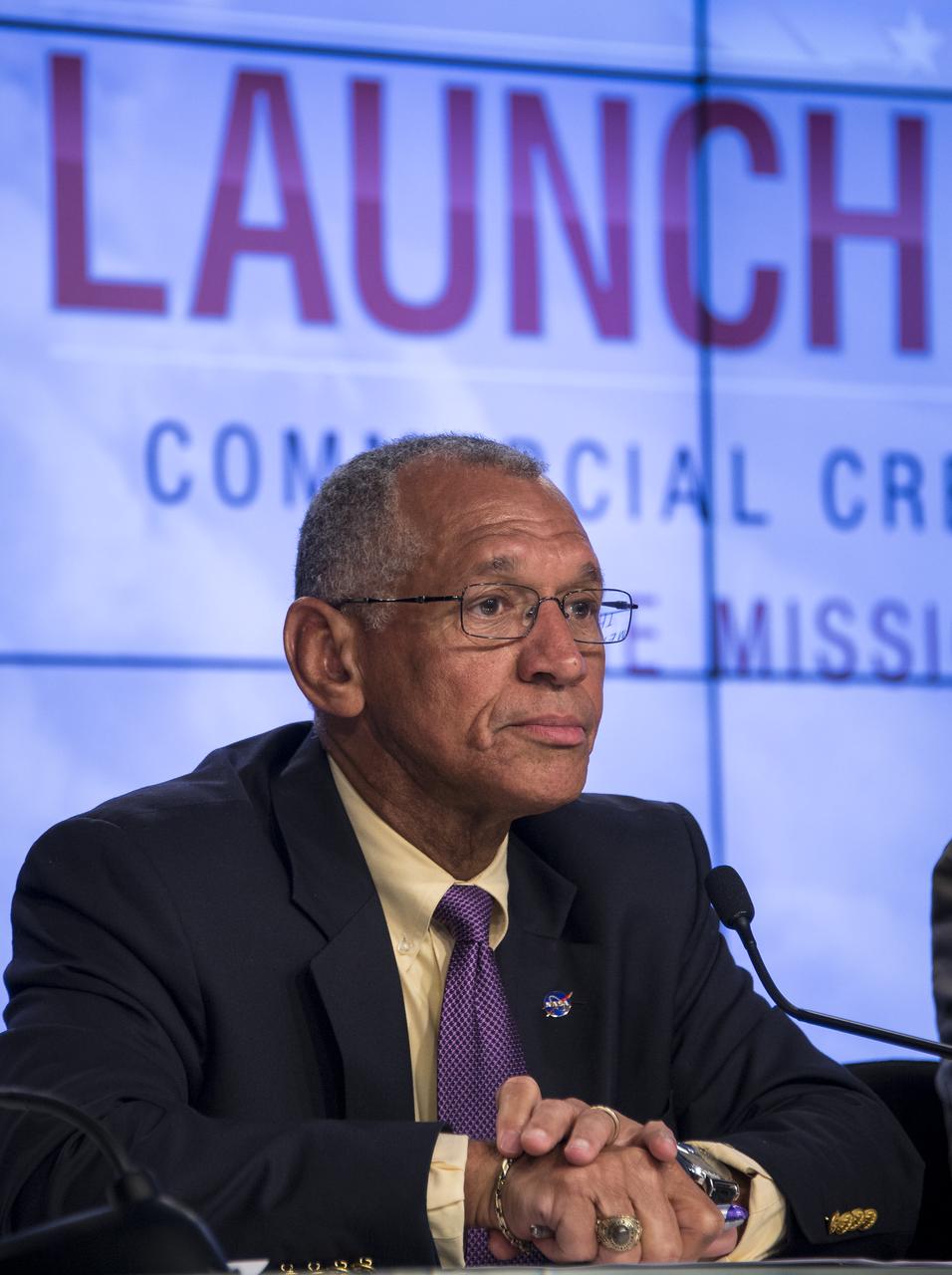
NASA Administrator Charles Bolden listens to a reporter’s question after he announced the agency’s selection of Boeing and SpaceX to transport U.S. crews to and from the International Space Station using the Boeing CST-100 and the SpaceX Crew Dragon spacecraft, at NASA’s Kennedy Space Center in Cape Canaveral, Fla. on Tuesday, Sept. 16, 2014. These Commercial Crew Transportation Capability (CCtCap) contracts are designed to complete the NASA certification for a human space transportation system capable of carrying people into orbit. Once certification is complete, NASA plans to use these systems to transport astronauts to the space station and return them safely to Earth. Photo Credit: (NASA/Bill Ingalls)
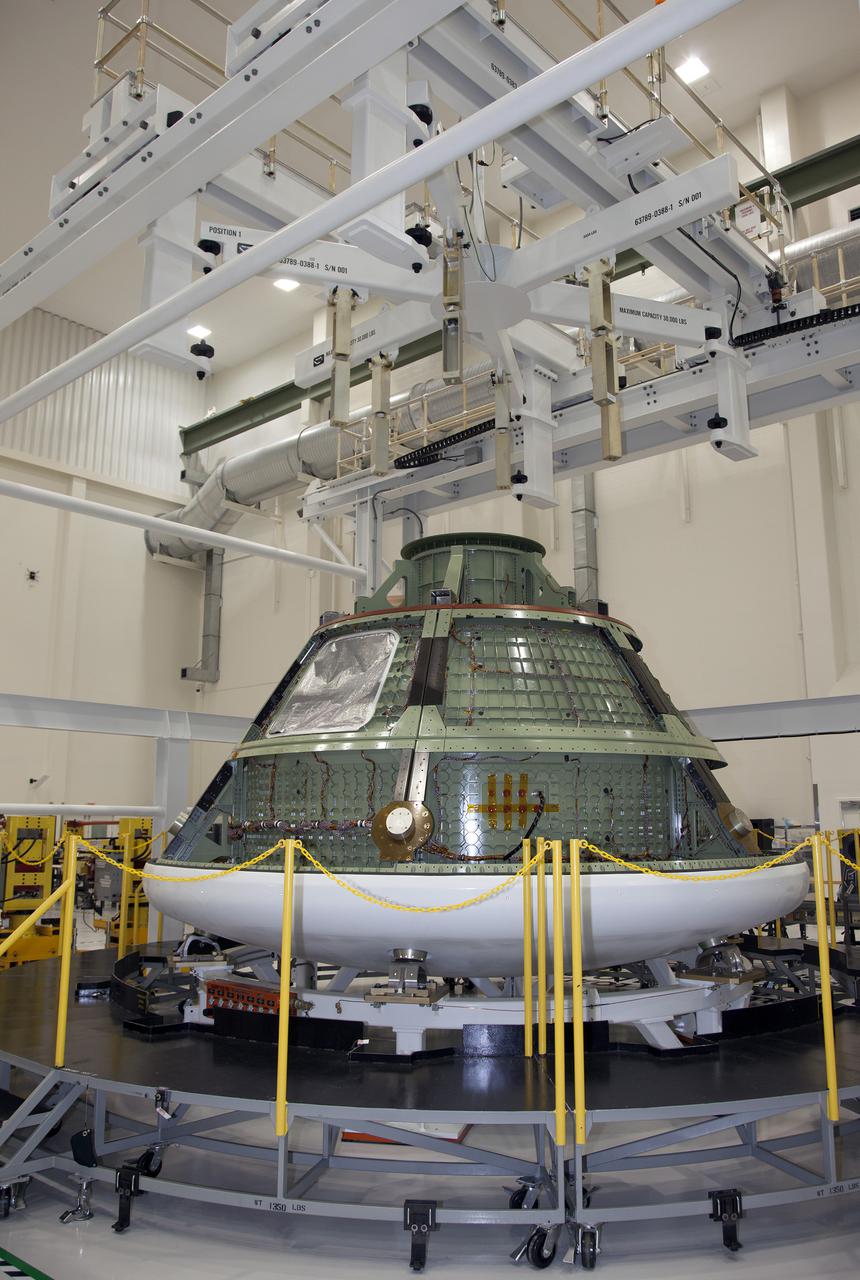
CAPE CANAVERAL, Fla. -- The Orion Ground Test Vehicle is on display in the high bay of the Operations and Checkout Building at NASA's Kennedy Space Center in Florida during a tour for media representatives. Orion is the exploration spacecraft designed to carry crews to space beyond low-Earth orbit. It will provide emergency abort capability, sustain the crew during the space travel and provide safe re-entry from deep space return velocities. The first unpiloted test flight of the Orion is scheduled in 2014 atop a Delta IV rocket, and in 2017, on a Space Launch System rocket. For more information, visit http:__www.nasa.gov_orion. Photo credit: NASA_Frankie Martin
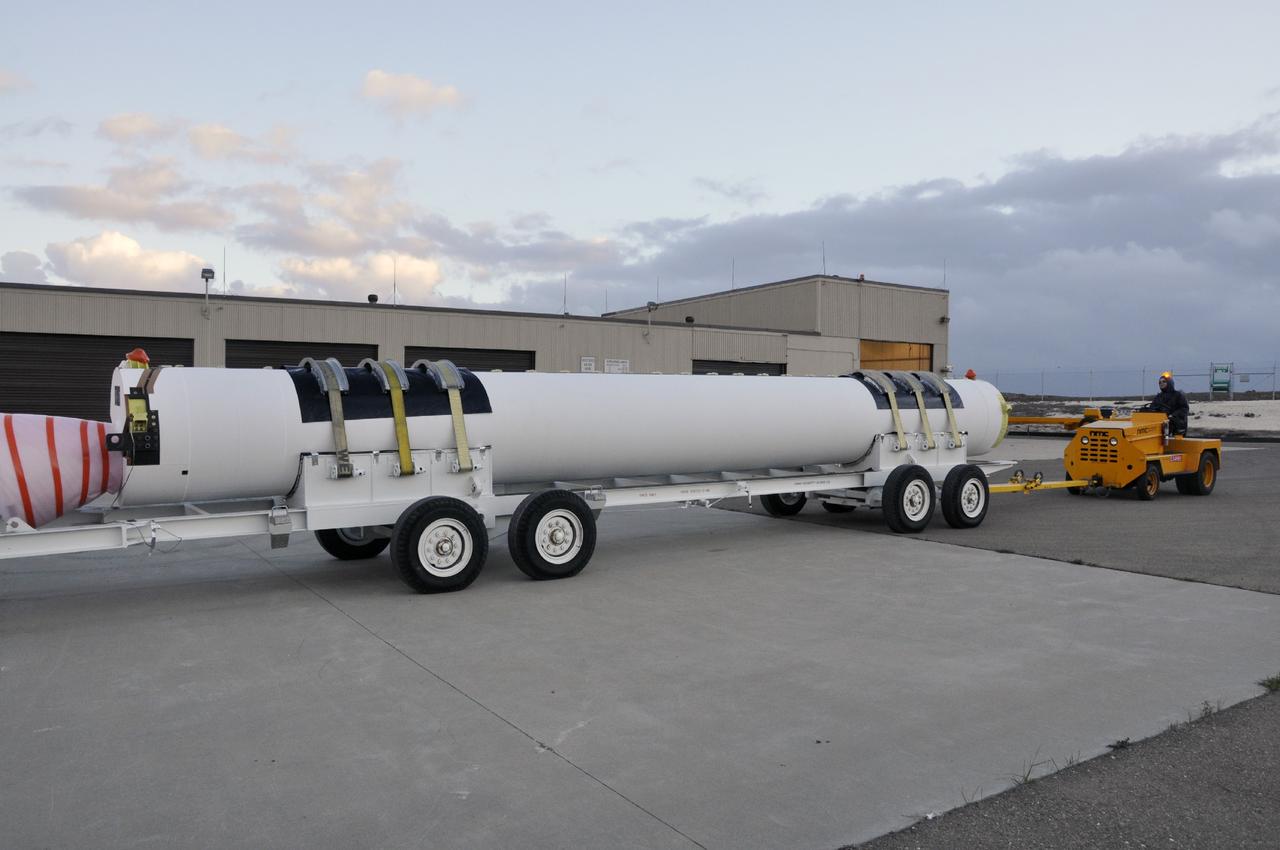
VANDENBERG AIR FORCE BASE, Calif. -- A solid rocket rocket motor is hauled away from its delivery truck and toward the open high bay door of the Solid Rocket Motor Processing Facility at Vandenberg Air Force Base in California. The motor will be attached to the United Launch Alliance Delta II rocket slated to launch NASA's Orbiting Carbon Observatory-2, or OCO-2, spacecraft in July 2014. OCO-2 will collect precise global measurements of carbon dioxide in the Earth's atmosphere. Scientists will analyze this data to improve our understanding of the natural processes and human activities that regulate the abundance and distribution of this important atmospheric gas. Photo credit: NASA/Randy Beaudoin
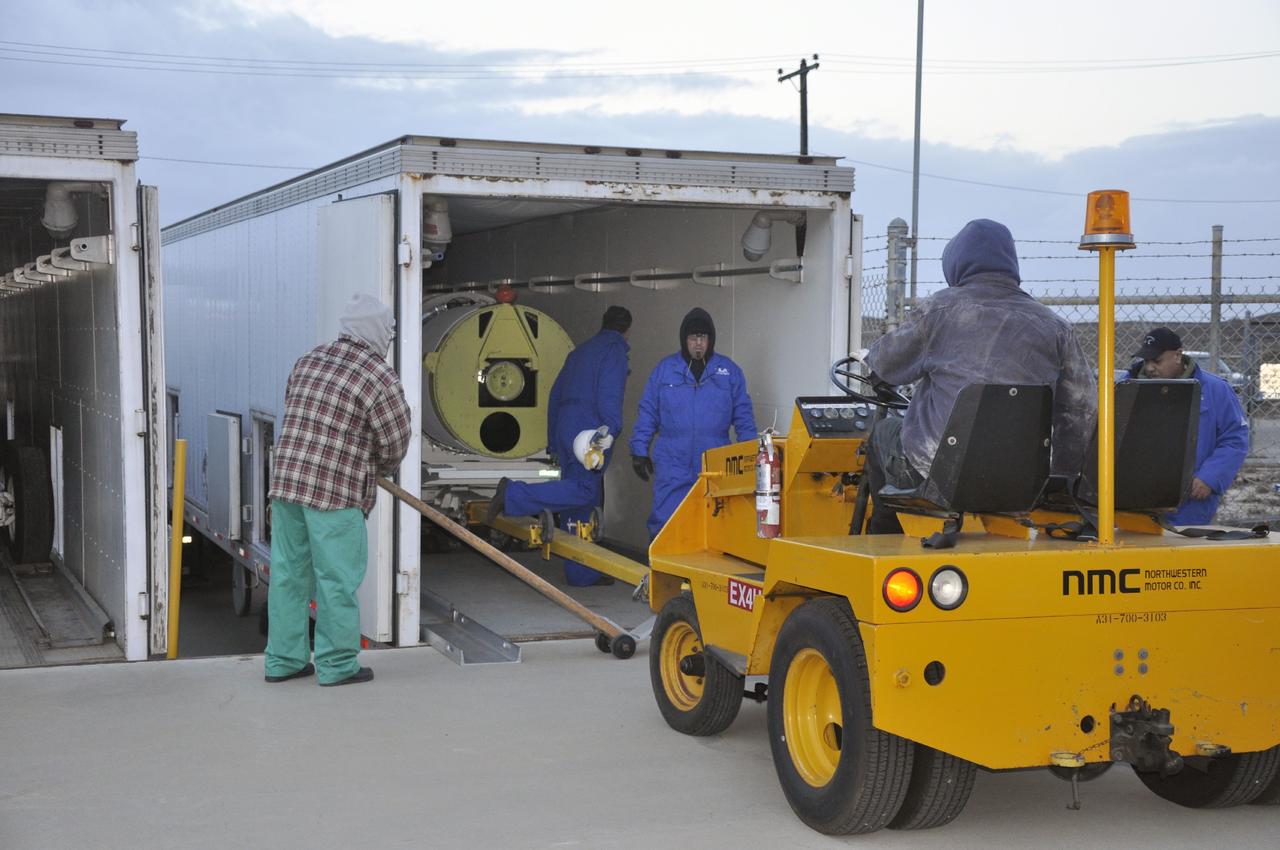
VANDENBERG AIR FORCE BASE, Calif. -- Personnel prepare to offload a solid rocket motor from its delivery truck following its arrival at Vandenberg Air Force Base in California. The motor will be attached to the United Launch Alliance Delta II rocket slated to launch NASA's Orbiting Carbon Observatory-2, or OCO-2, spacecraft in July 2014. OCO-2 will collect precise global measurements of carbon dioxide in the Earth's atmosphere. Scientists will analyze this data to improve our understanding of the natural processes and human activities that regulate the abundance and distribution of this important atmospheric gas. Photo credit: NASA/Randy Beaudoin
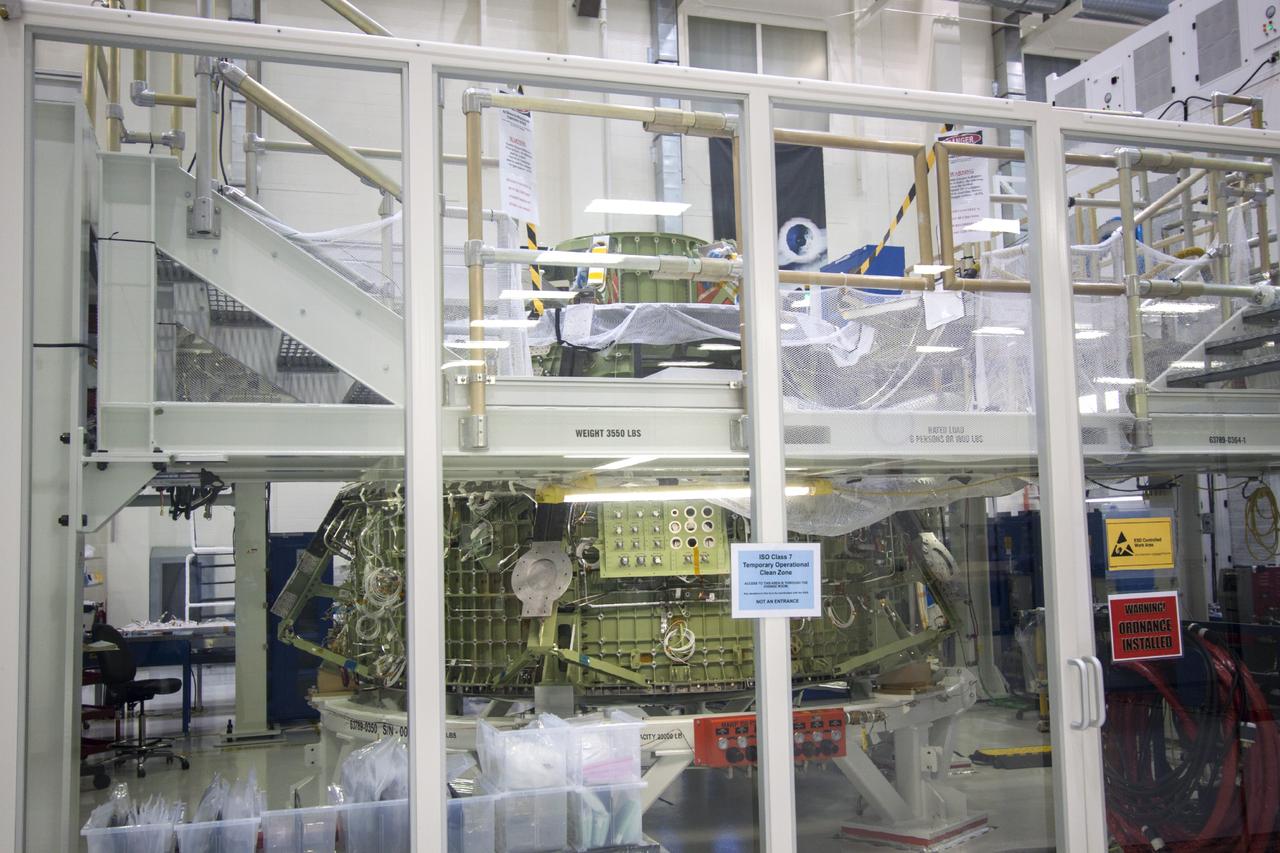
CAPE CANAVERAL, Fla. – The Orion crew module for Exploration Flight Test 1 sits inside a clean room processing cell in the Operations and Checkout Building high bay at NASA’s Kennedy Space Center in Florida. Orion is the exploration spacecraft designed to carry crews to space beyond low Earth orbit. It will provide emergency abort capability, sustain the crew during the space travel and provide safe re-entry from deep space return velocities. The first unpiloted test flight of the Orion is scheduled to launch in 2014 atop a Delta IV rocket and in 2017 on a Space Launch System rocket. For more information, visit http://www.nasa.gov/orion. Photo credit: NASA/Jim Grossmann
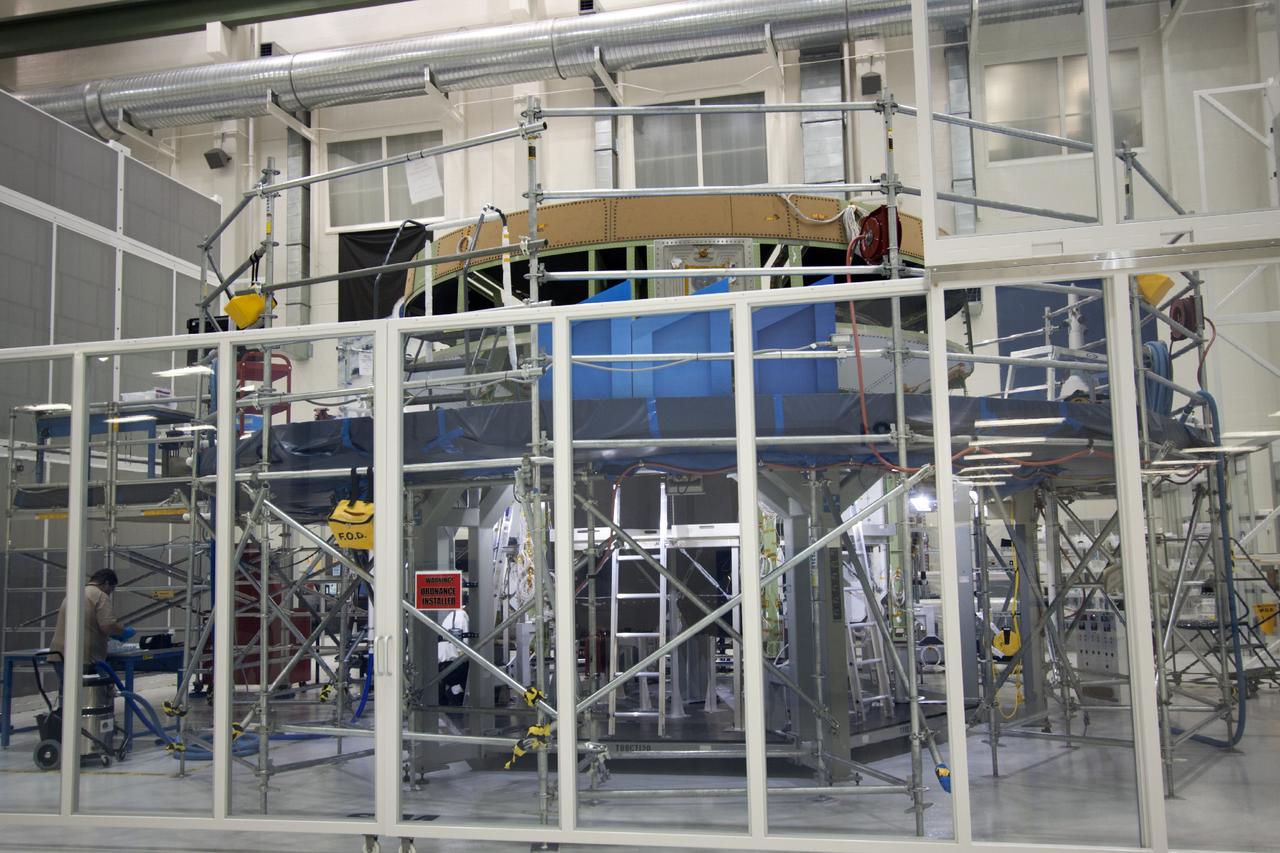
CAPE CANAVERAL, Fla. – The Orion crew module for Exploration Flight Test 1 sits inside a clean room processing cell in the Operations and Checkout Building high bay at NASA’s Kennedy Space Center in Florida. Orion is the exploration spacecraft designed to carry crews to space beyond low Earth orbit. It will provide emergency abort capability, sustain the crew during the space travel and provide safe re-entry from deep space return velocities. The first unpiloted test flight of the Orion is scheduled to launch in 2014 atop a Delta IV rocket and in 2017 on a Space Launch System rocket. For more information, visit http://www.nasa.gov/orion. Photo credit: NASA/Jim Grossmann
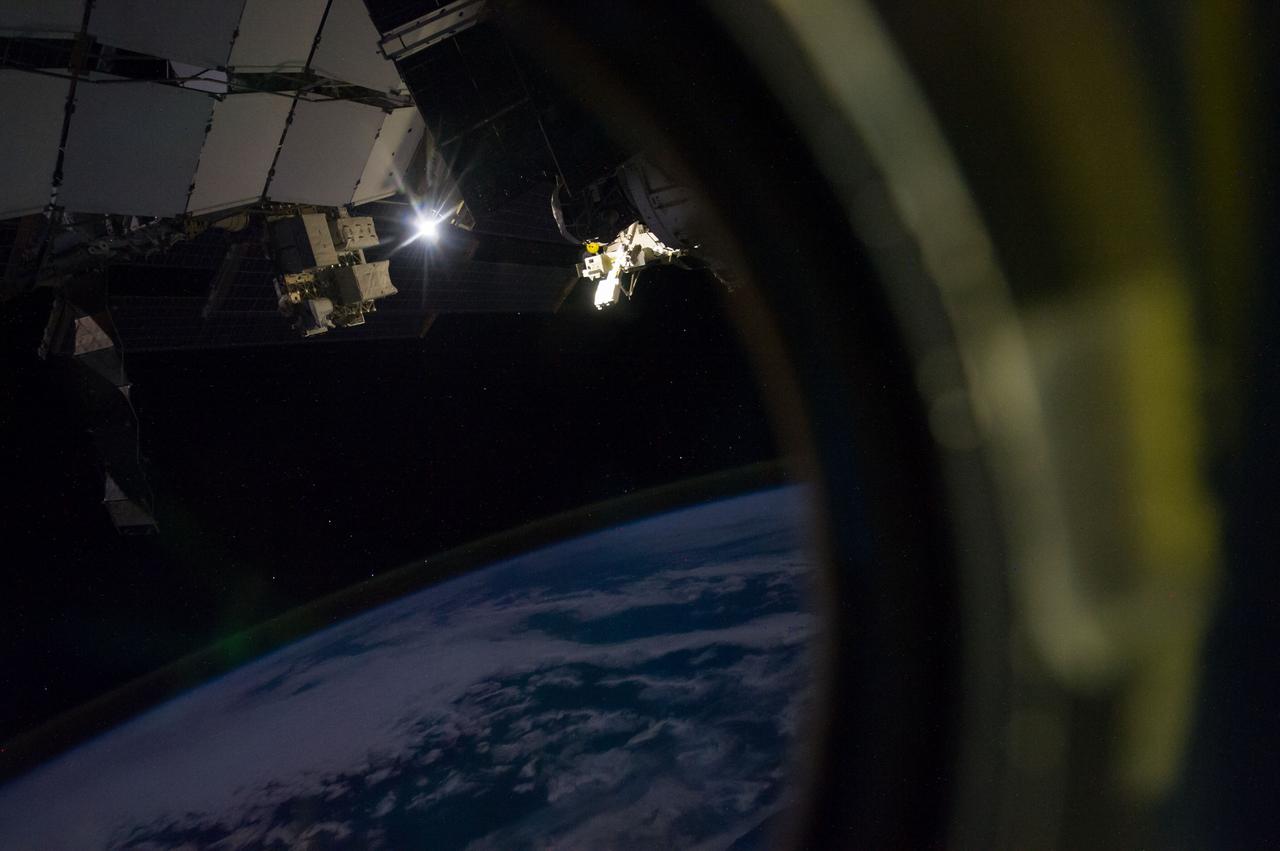
ISS040-E-129695 (6 Sept. 2014) --- A close look at this image, photographed by one of the Expedition 40 crew members onboard the International Space Station at 228 nautical miles above Earth, reveals a minor appearance of the Aurora Australis at lower left frame. The image was taken as the orbital outpost was flying over the Indian Ocean, several hundred miles southeast of the African continent. The camera's exposure time created an "exploded flare" effect from what appears to be the moon at upper left. The NanoRacks Cubesat deployer, attached to the Japan Aerospace Exploration Agency’s Kibo robotic arm, can be seen in upper center.