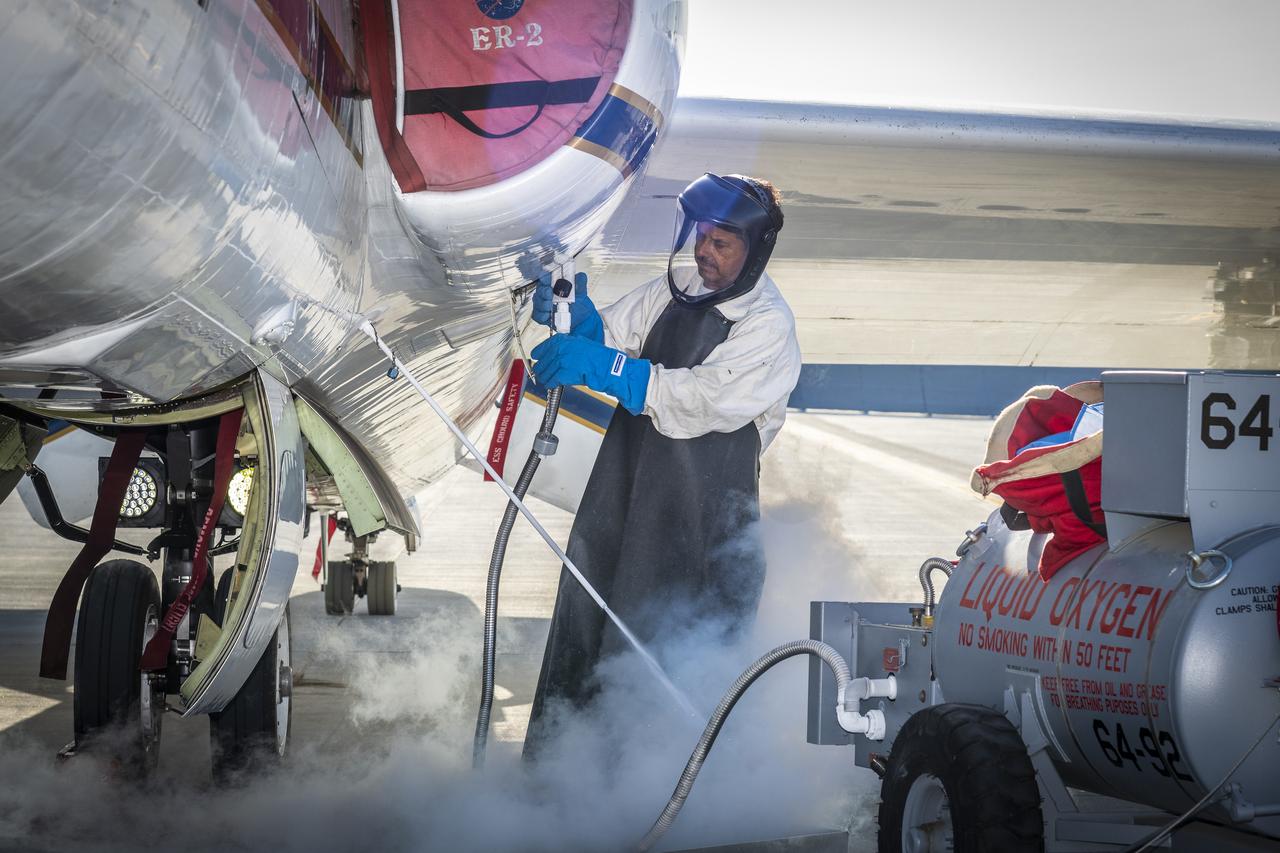
Francisco Rodriguez (aircraft mechanic) services liquid oxygen or LOX on the ER-2 during the Geological Earth Mapping Experiment (GEMx) research project. Experts like Rodriguez sustain a high standard of safety on airborne science aircraft like the ER-2 and science missions like GEMx. The ER-2 is based out of NASA’s Armstrong Flight Research Center in Edwards, California.
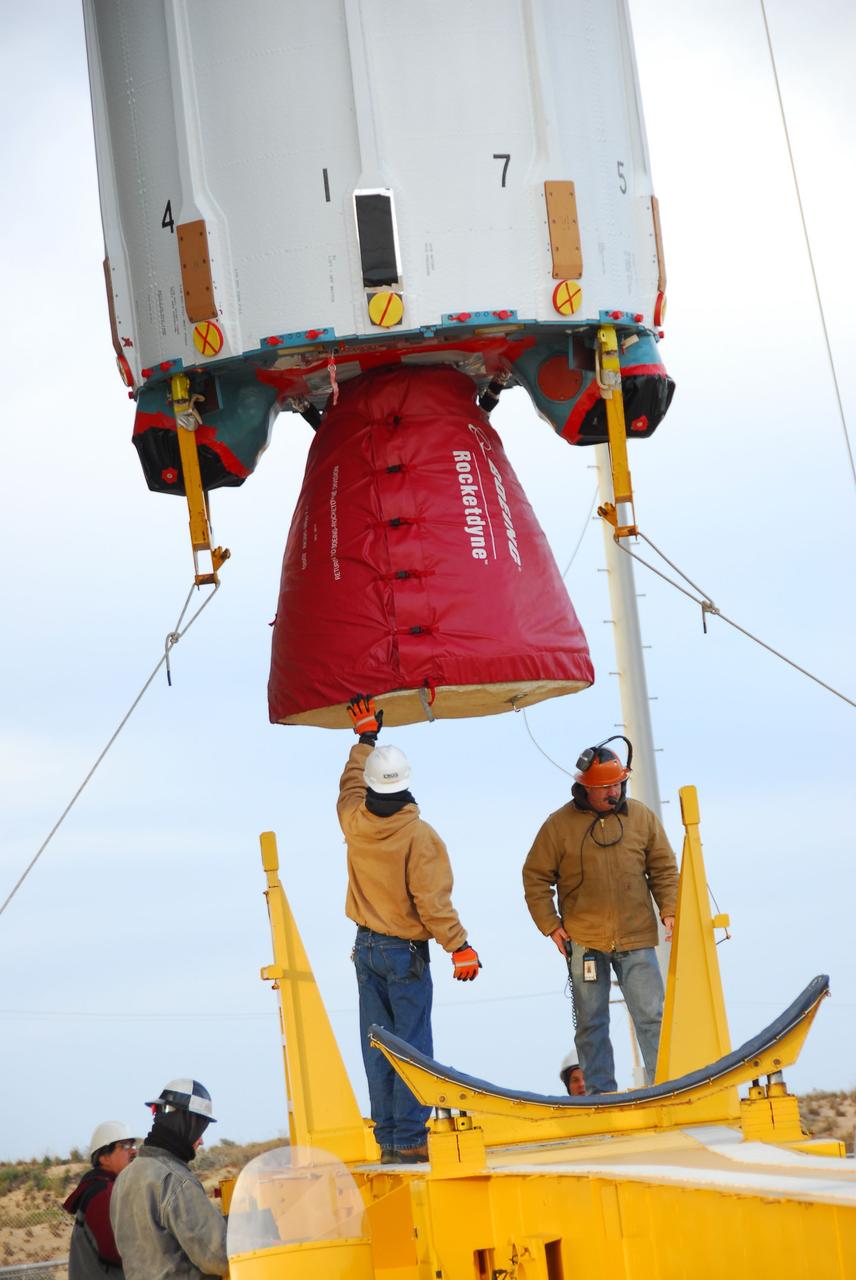
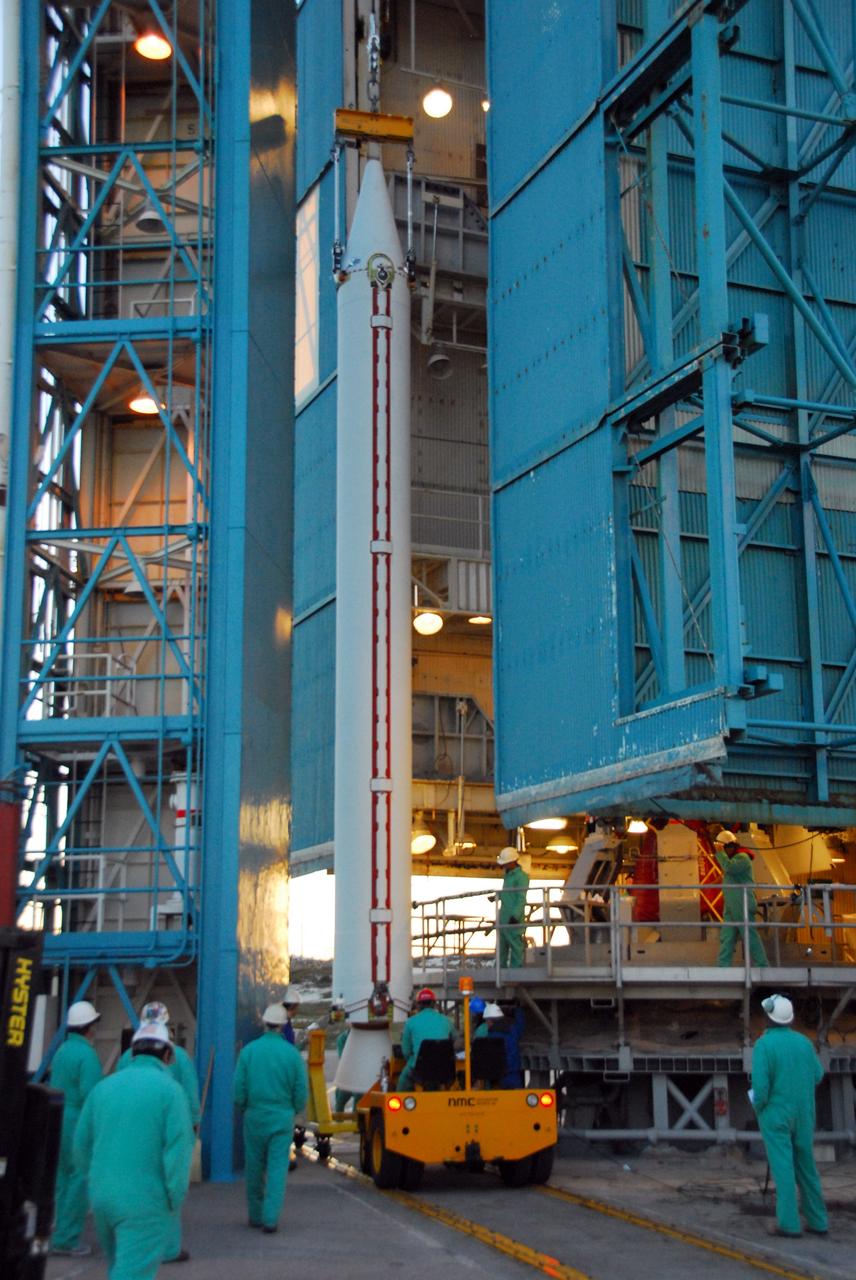
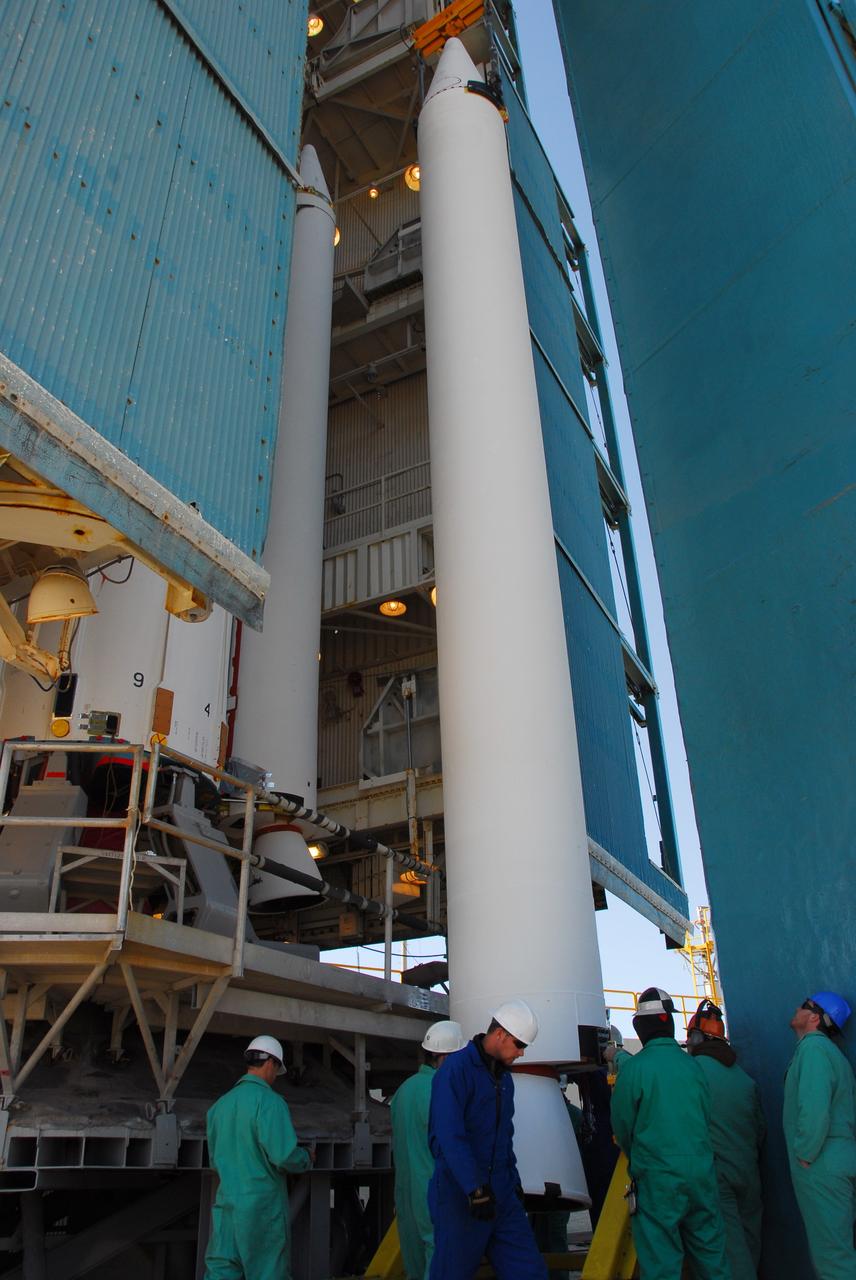
VANDENBERG AIR FORCE BASE, Calif. -- Technicians guide the first stage of the Delta II rocket that will carry NASA's Aquarius satellite into low Earth orbit onto the launch pad at Vandenberg Air Force Base's Space Launch Complex-2 (SLC-2) in California. While the Delta II rocket is stacked on SLC-2, teams for NASA's Glory spacecraft and Orbital Sciences Taurus XL rocket are in launch preparation mode at Vandenberg's nearby Space Launch Complex 576-E. Scheduled to launch in June, Aquarius' mission will be to provide monthly maps of global changes in sea surface salinity. By measuring ocean salinity from space, Aquarius will provide new insights into how the massive natural exchange of freshwater between the ocean, atmosphere and sea ice influences ocean circulation, weather and climate. Also going up with the satellite are optical and thermal cameras, a microwave radiometer and the SAC-D spacecraft, which were developed with the help of institutions in Italy, France, Canada and Argentina. Photo credit: NASA/VAFB
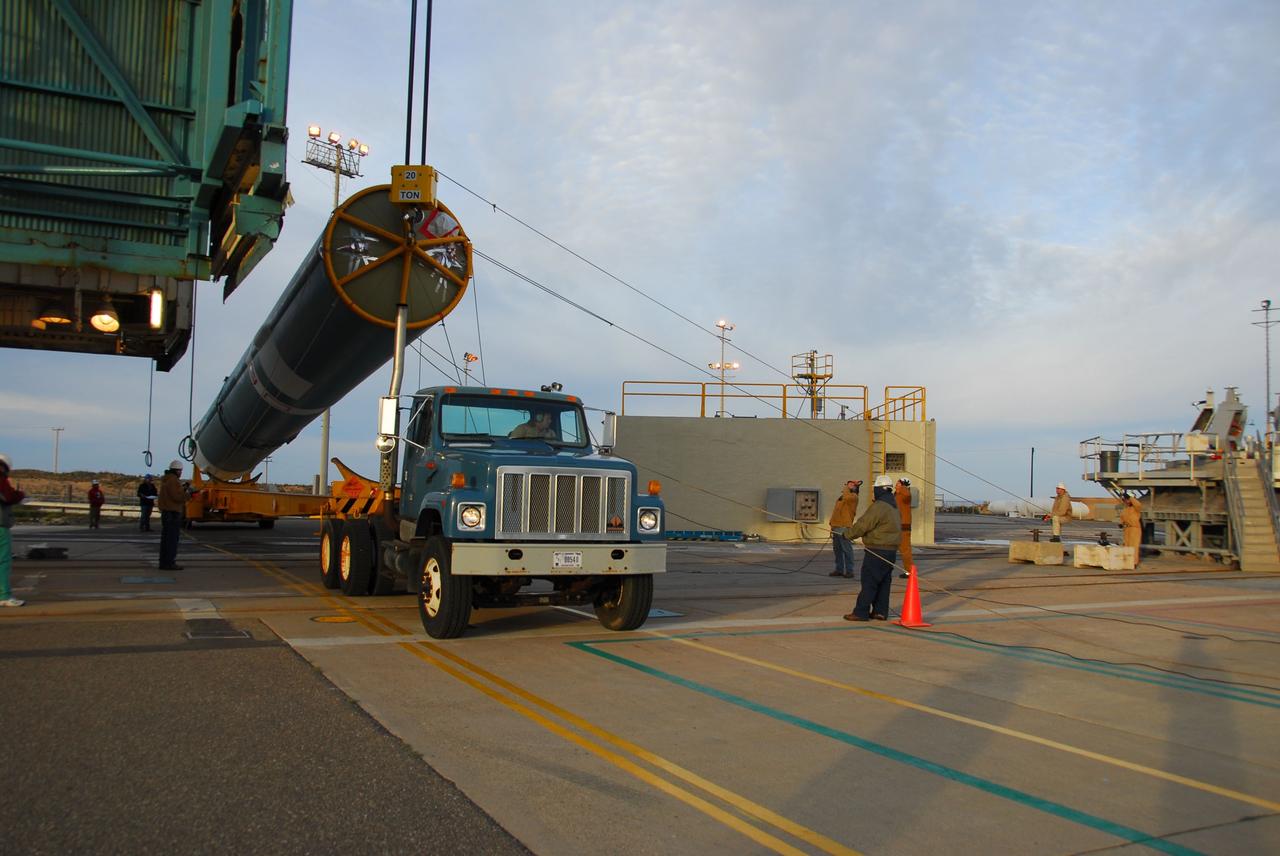
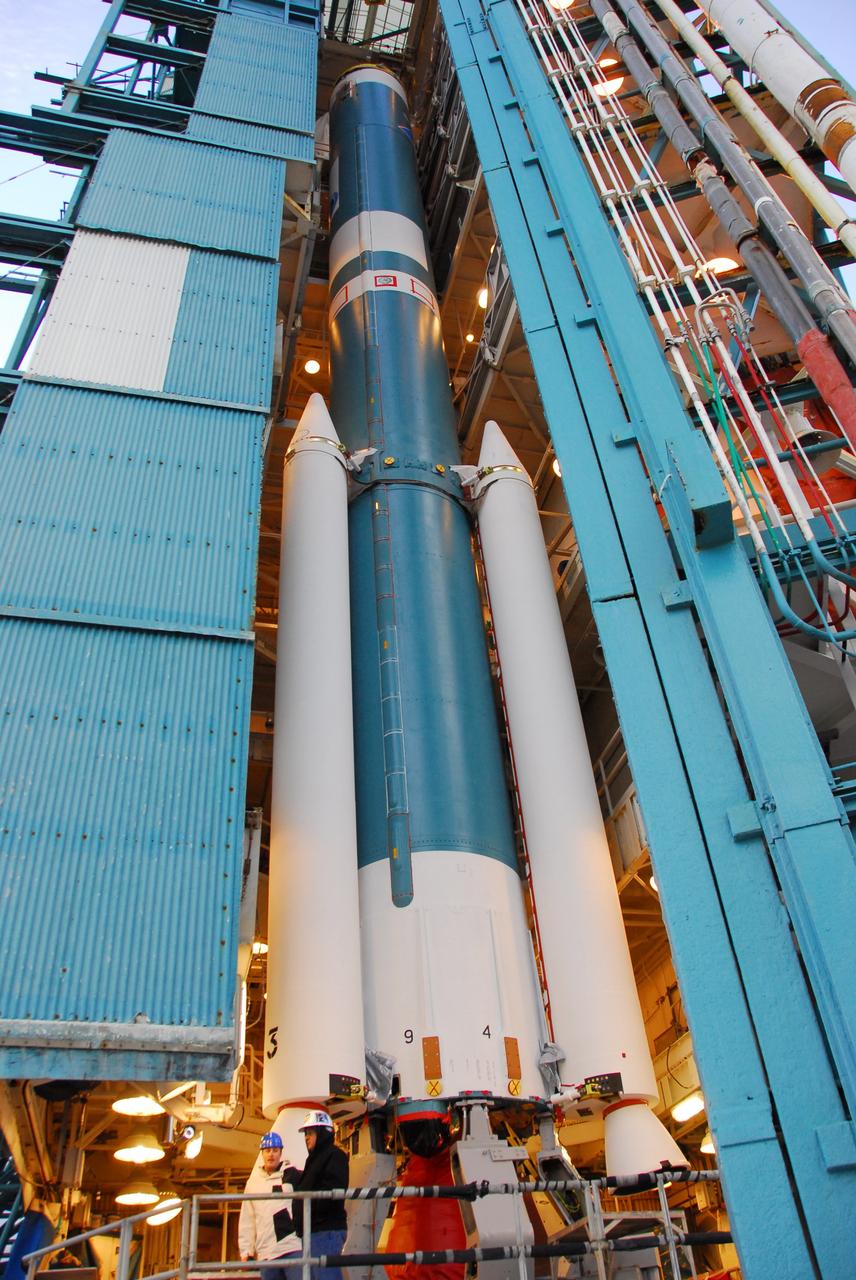
VANDENBERG AIR FORCE BASE, Calif. -- The first stage of the Delta II rocket that will carry NASA's Aquarius satellite into low Earth orbit is raised onto the launch pad at Vandenberg Air Force Base's Space Launch Complex-2 (SLC-2) in California. While the Delta II rocket is stacked on SLC-2, teams for NASA's Glory spacecraft and Orbital Sciences Taurus XL rocket are in launch preparation mode at Vandenberg's nearby Space Launch Complex 576-E. Scheduled to launch in June, Aquarius' mission will be to provide monthly maps of global changes in sea surface salinity. By measuring ocean salinity from space, Aquarius will provide new insights into how the massive natural exchange of freshwater between the ocean, atmosphere and sea ice influences ocean circulation, weather and climate. Also going up with the satellite are optical and thermal cameras, a microwave radiometer and the SAC-D spacecraft, which were developed with the help of institutions in Italy, France, Canada and Argentina. Photo credit: NASA/VAFB
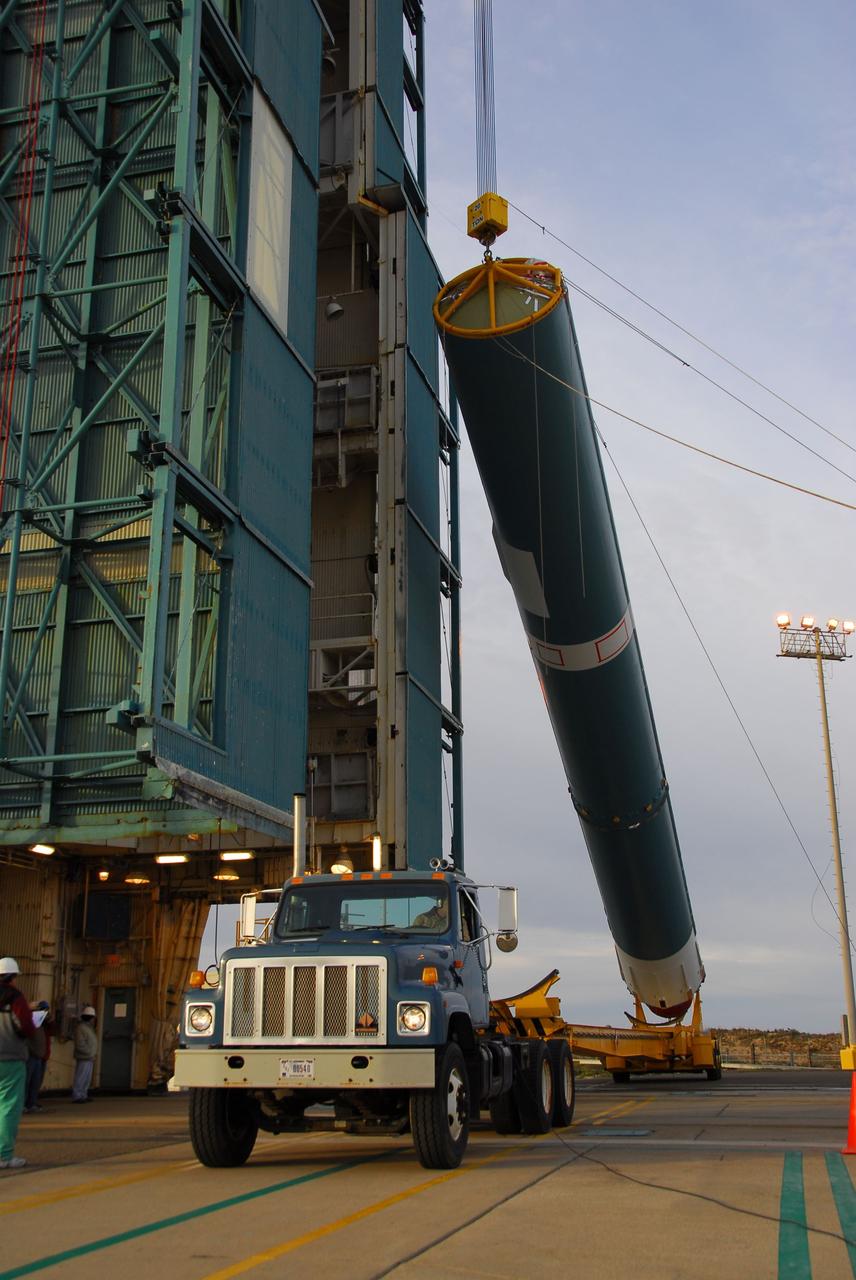
VANDENBERG AIR FORCE BASE, Calif. -- The first stage of the Delta II rocket that will carry NASA's Aquarius satellite into low Earth orbit is raised onto the launch pad at Vandenberg Air Force Base's Space Launch Complex-2 (SLC-2) in California. While the Delta II rocket is stacked on SLC-2, teams for NASA's Glory spacecraft and Orbital Sciences Taurus XL rocket are in launch preparation mode at Vandenberg's nearby Space Launch Complex 576-E. Scheduled to launch in June, Aquarius' mission will be to provide monthly maps of global changes in sea surface salinity. By measuring ocean salinity from space, Aquarius will provide new insights into how the massive natural exchange of freshwater between the ocean, atmosphere and sea ice influences ocean circulation, weather and climate. Also going up with the satellite are optical and thermal cameras, a microwave radiometer and the SAC-D spacecraft, which were developed with the help of institutions in Italy, France, Canada and Argentina. Photo credit: NASA/VAFB
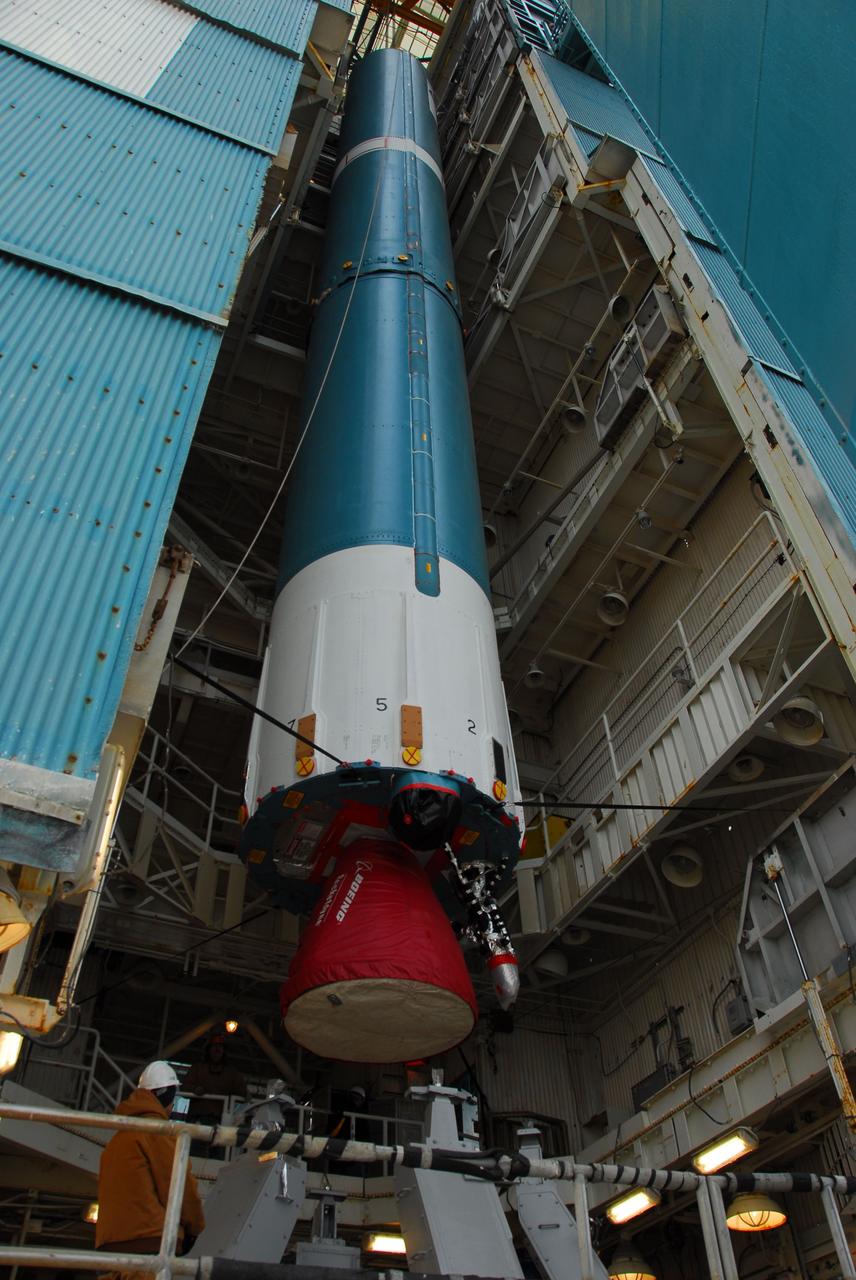
VANDENBERG AIR FORCE BASE, Calif. -- The first stage of the Delta II rocket that will carry NASA's Aquarius satellite into low Earth orbit is raised onto the launch pad at Vandenberg Air Force Base's Space Launch Complex-2 (SLC-2) in California. While the Delta II rocket is stacked on SLC-2, teams for NASA's Glory spacecraft and Orbital Sciences Taurus XL rocket are in launch preparation mode at Vandenberg's nearby Space Launch Complex 576-E. Scheduled to launch in June, Aquarius' mission will be to provide monthly maps of global changes in sea surface salinity. By measuring ocean salinity from space, Aquarius will provide new insights into how the massive natural exchange of freshwater between the ocean, atmosphere and sea ice influences ocean circulation, weather and climate. Also going up with the satellite are optical and thermal cameras, a microwave radiometer and the SAC-D spacecraft, which were developed with the help of institutions in Italy, France, Canada and Argentina. Photo credit: NASA/VAFB
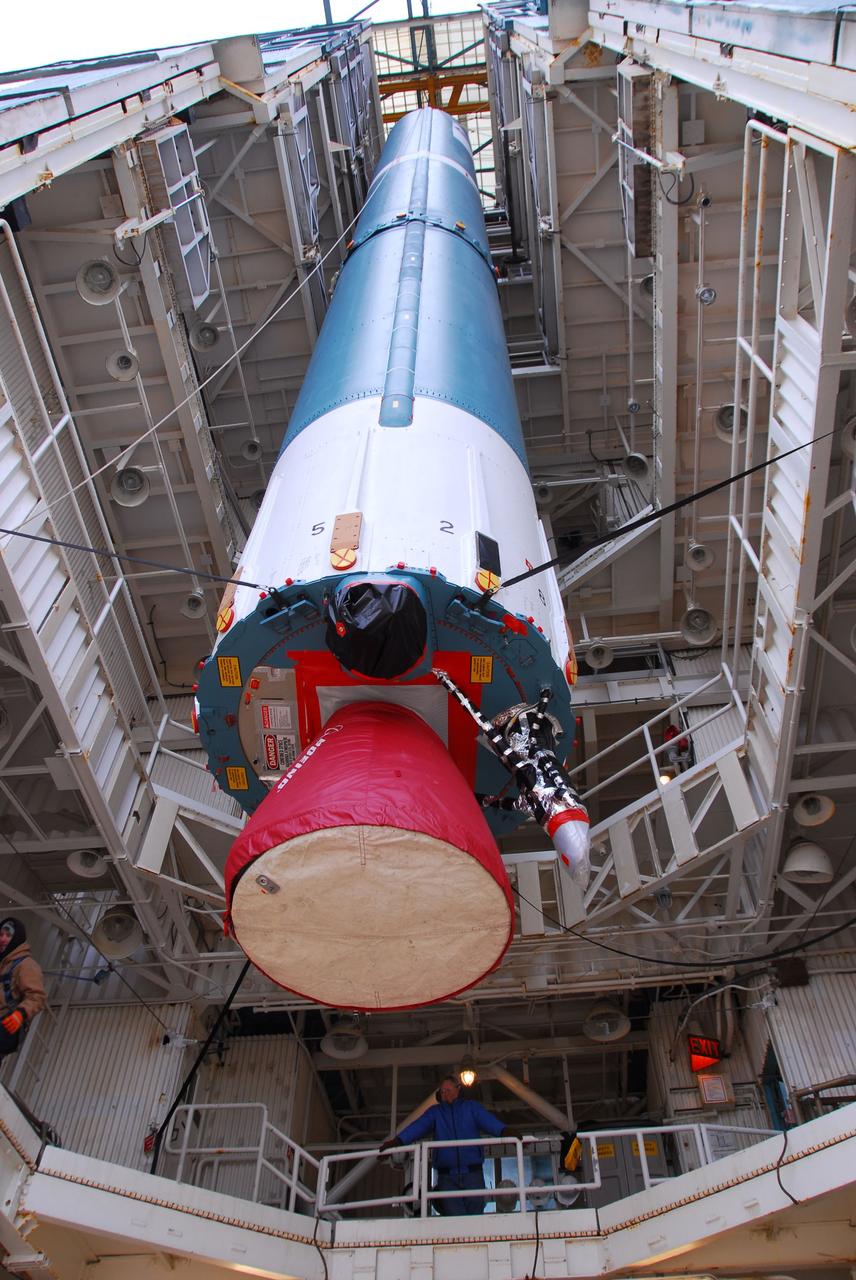
VANDENBERG AIR FORCE BASE, Calif. -- The first stage of the Delta II rocket that will carry NASA's Aquarius satellite into low Earth orbit is raised onto the launch pad at Vandenberg Air Force Base's Space Launch Complex-2 (SLC-2) in California. While the Delta II rocket is stacked on SLC-2, teams for NASA's Glory spacecraft and Orbital Sciences Taurus XL rocket are in launch preparation mode at Vandenberg's nearby Space Launch Complex 576-E. Scheduled to launch in June, Aquarius' mission will be to provide monthly maps of global changes in sea surface salinity. By measuring ocean salinity from space, Aquarius will provide new insights into how the massive natural exchange of freshwater between the ocean, atmosphere and sea ice influences ocean circulation, weather and climate. Also going up with the satellite are optical and thermal cameras, a microwave radiometer and the SAC-D spacecraft, which were developed with the help of institutions in Italy, France, Canada and Argentina. Photo credit: NASA/VAFB

VANDENBERG AIR FORCE BASE, Calif. -- The first stage of the Delta II rocket that will carry NASA's Aquarius satellite into low Earth orbit arrives to the launch pad at Vandenberg Air Force Base's Space Launch Complex-2 (SLC-2) in California. While the Delta II rocket is stacked on SLC-2, teams for NASA's Glory spacecraft and Orbital Sciences Taurus XL rocket are in launch preparation mode at Vandenberg's nearby Space Launch Complex 576-E. Scheduled to launch in June, Aquarius' mission will be to provide monthly maps of global changes in sea surface salinity. By measuring ocean salinity from space, Aquarius will provide new insights into how the massive natural exchange of freshwater between the ocean, atmosphere and sea ice influences ocean circulation, weather and climate. Also going up with the satellite are optical and thermal cameras, a microwave radiometer and the SAC-D spacecraft, which were developed with the help of institutions in Italy, France, Canada and Argentina. Photo credit: NASA/VAFB
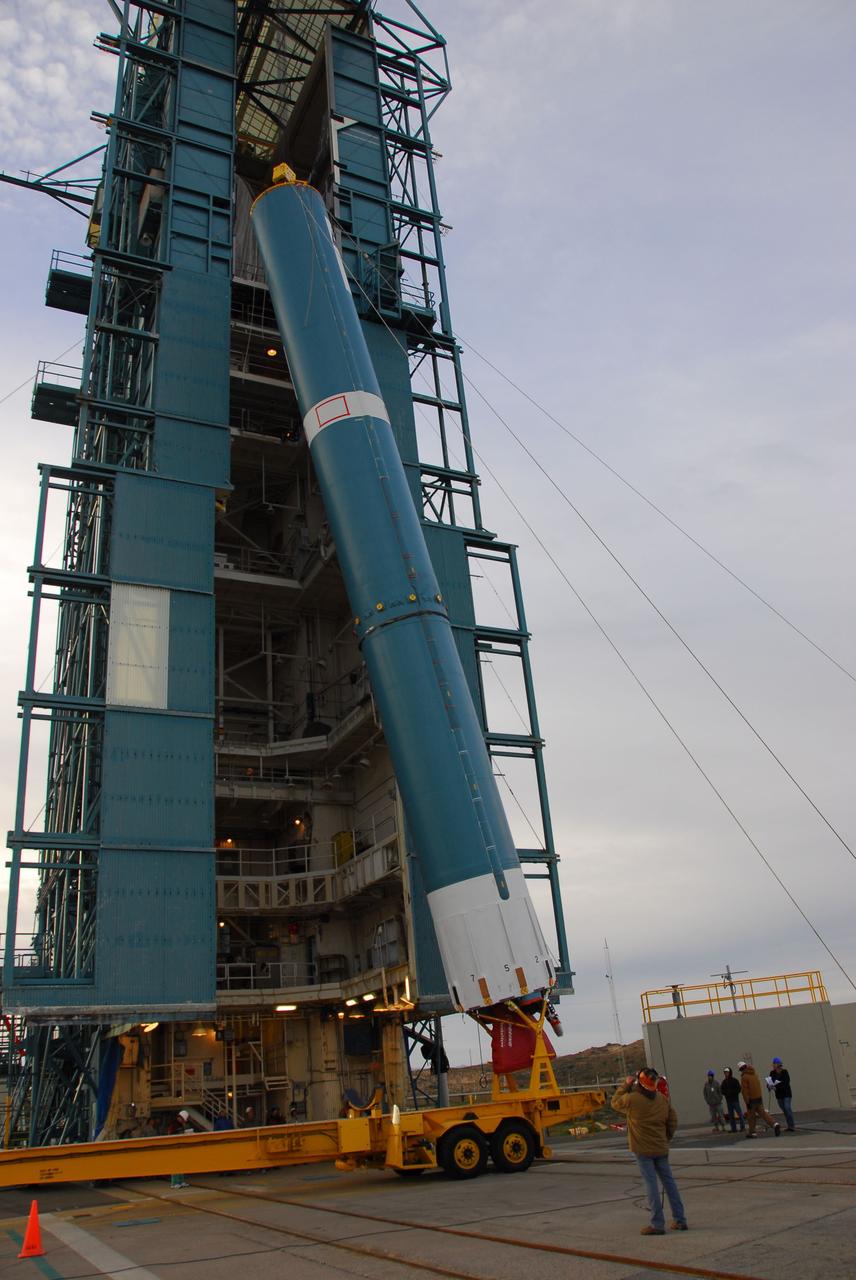
VANDENBERG AIR FORCE BASE, Calif. -- The first stage of the Delta II rocket that will carry NASA's Aquarius satellite into low Earth orbit is raised onto the launch pad at Vandenberg Air Force Base's Space Launch Complex-2 (SLC-2) in California. While the Delta II rocket is stacked on SLC-2, teams for NASA's Glory spacecraft and Orbital Sciences Taurus XL rocket are in launch preparation mode at Vandenberg's nearby Space Launch Complex 576-E. Scheduled to launch in June, Aquarius' mission will be to provide monthly maps of global changes in sea surface salinity. By measuring ocean salinity from space, Aquarius will provide new insights into how the massive natural exchange of freshwater between the ocean, atmosphere and sea ice influences ocean circulation, weather and climate. Also going up with the satellite are optical and thermal cameras, a microwave radiometer and the SAC-D spacecraft, which were developed with the help of institutions in Italy, France, Canada and Argentina. Photo credit: NASA/VAFB
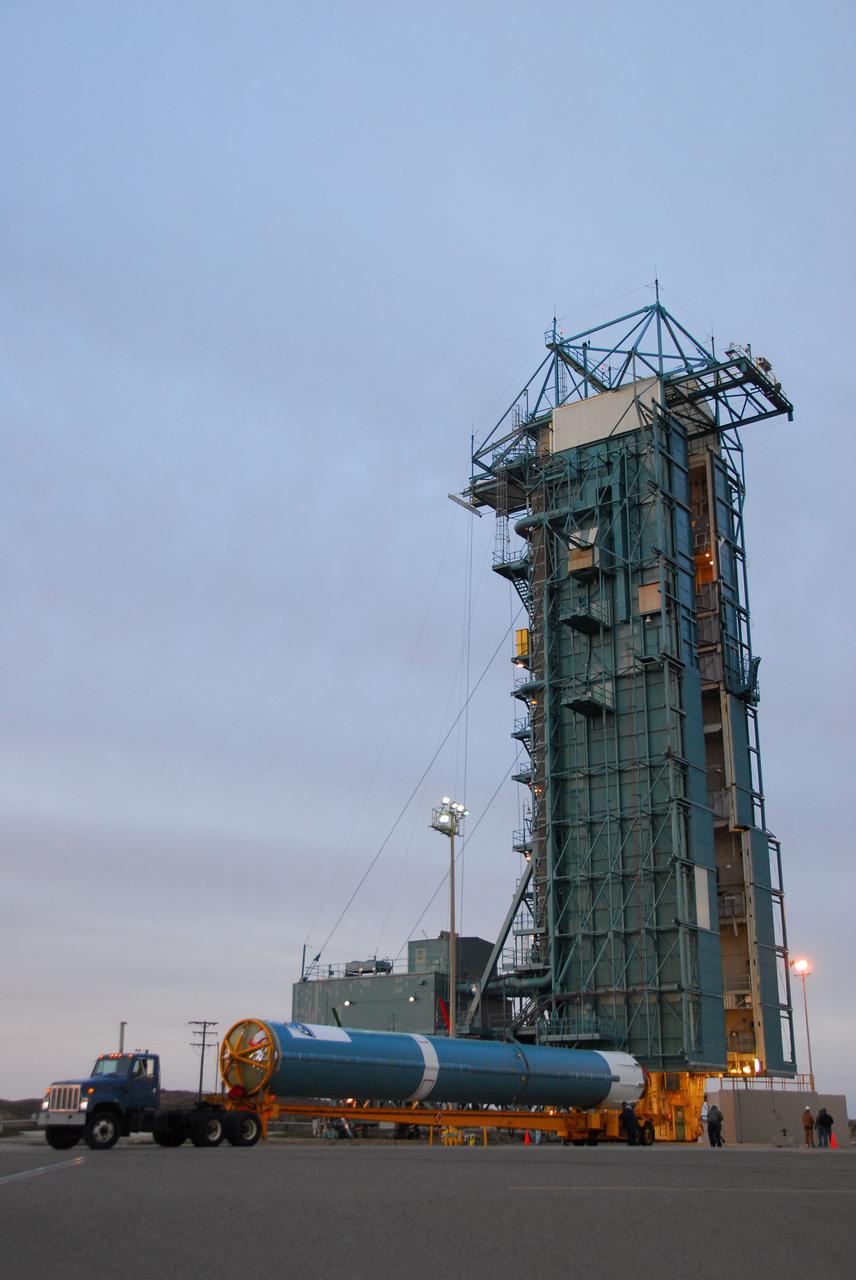
VANDENBERG AIR FORCE BASE, Calif. -- The first stage of the Delta II rocket that will carry NASA's Aquarius satellite into low Earth orbit arrives to the launch pad at Vandenberg Air Force Base's Space Launch Complex-2 (SLC-2) in California. While the Delta II rocket is stacked on SLC-2, teams for NASA's Glory spacecraft and Orbital Sciences Taurus XL rocket are in launch preparation mode at Vandenberg's nearby Space Launch Complex 576-E. Scheduled to launch in June, Aquarius' mission will be to provide monthly maps of global changes in sea surface salinity. By measuring ocean salinity from space, Aquarius will provide new insights into how the massive natural exchange of freshwater between the ocean, atmosphere and sea ice influences ocean circulation, weather and climate. Also going up with the satellite are optical and thermal cameras, a microwave radiometer and the SAC-D spacecraft, which were developed with the help of institutions in Italy, France, Canada and Argentina. Photo credit: NASA/VAFB
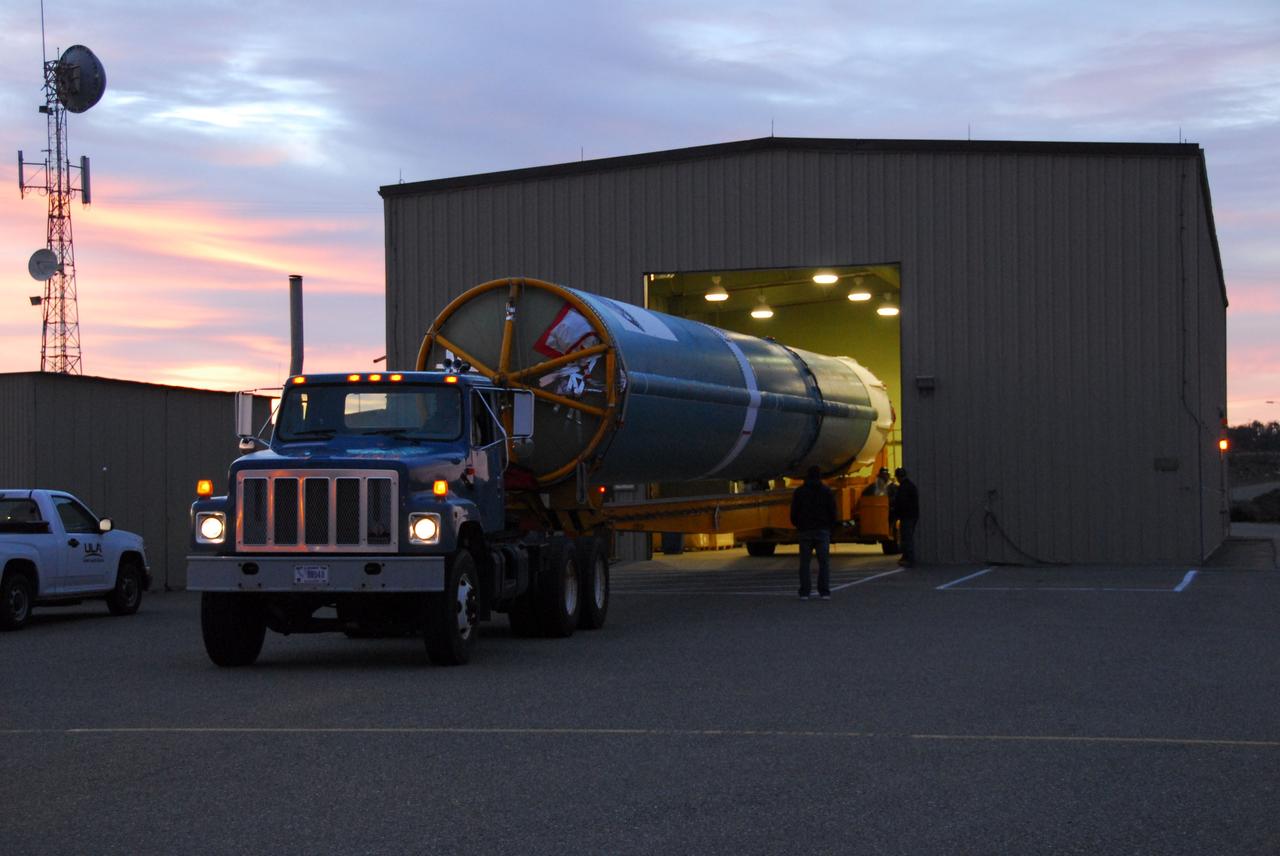
VANDENBERG AIR FORCE BASE, Calif. -- As the sun rises over Vandenberg Air Force Base in California, the first stage of the Delta II rocket that will carry NASA's Aquarius satellite into low Earth orbit is on its way to Space Launch Complex-2 (SLC-2). While the Delta II rocket is stacked on SLC-2, teams for NASA's Glory spacecraft and Orbital Sciences Taurus XL rocket are in launch preparation mode at Vandenberg's nearby Space Launch Complex 576-E. Scheduled to launch in June, Aquarius' mission will be to provide monthly maps of global changes in sea surface salinity. By measuring ocean salinity from space, Aquarius will provide new insights into how the massive natural exchange of freshwater between the ocean, atmosphere and sea ice influences ocean circulation, weather and climate. Also going up with the satellite are optical and thermal cameras, a microwave radiometer and the SAC-D spacecraft, which were developed with the help of institutions in Italy, France, Canada and Argentina. Photo credit: NASA/VAFB
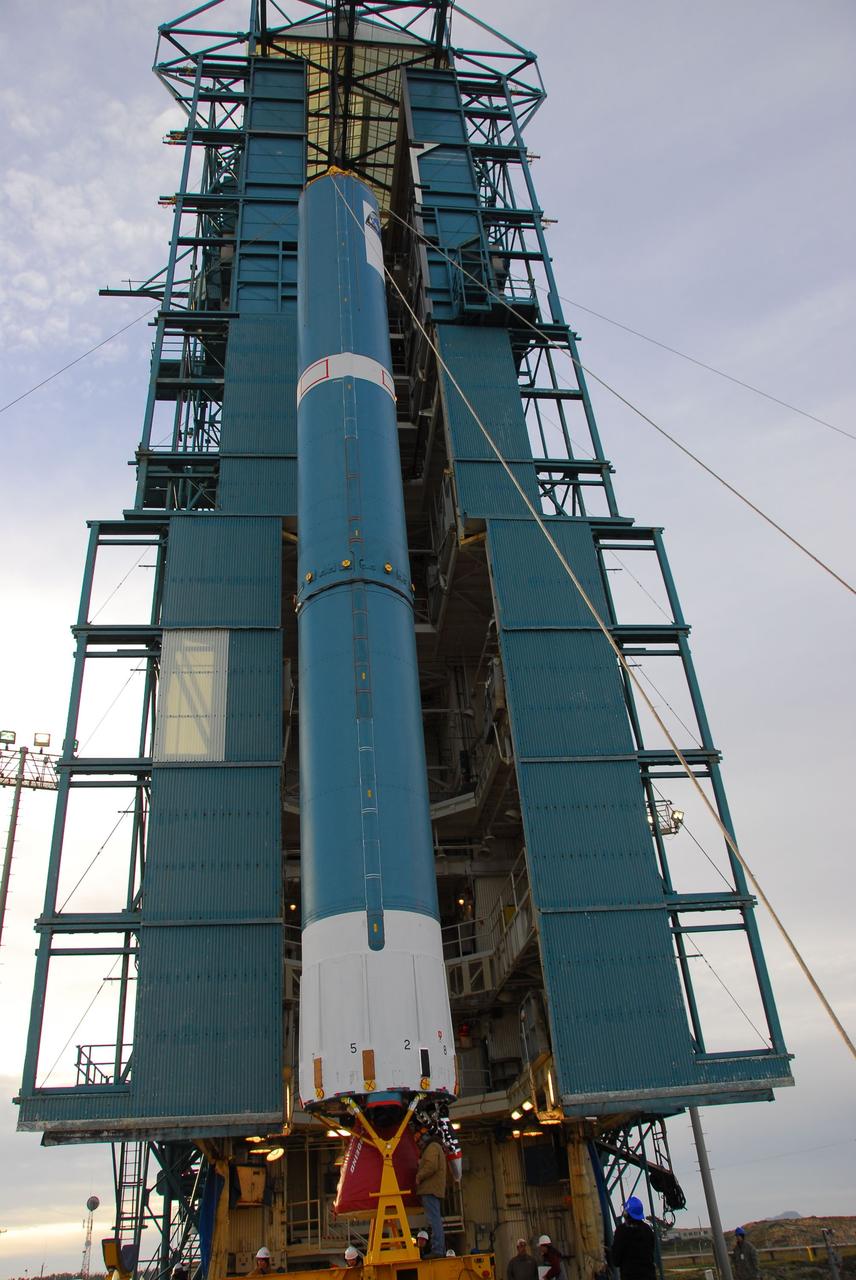
VANDENBERG AIR FORCE BASE, Calif. -- Technicians guide the first stage of the Delta II rocket that will carry NASA's Aquarius satellite into low Earth orbit onto the launch pad at Vandenberg Air Force Base's Space Launch Complex-2 (SLC-2) in California. While the Delta II rocket is stacked on SLC-2, teams for NASA's Glory spacecraft and Orbital Sciences Taurus XL rocket are in launch preparation mode at Vandenberg's nearby Space Launch Complex 576-E. Scheduled to launch in June, Aquarius' mission will be to provide monthly maps of global changes in sea surface salinity. By measuring ocean salinity from space, Aquarius will provide new insights into how the massive natural exchange of freshwater between the ocean, atmosphere and sea ice influences ocean circulation, weather and climate. Also going up with the satellite are optical and thermal cameras, a microwave radiometer and the SAC-D spacecraft, which were developed with the help of institutions in Italy, France, Canada and Argentina. Photo credit: NASA/VAFB
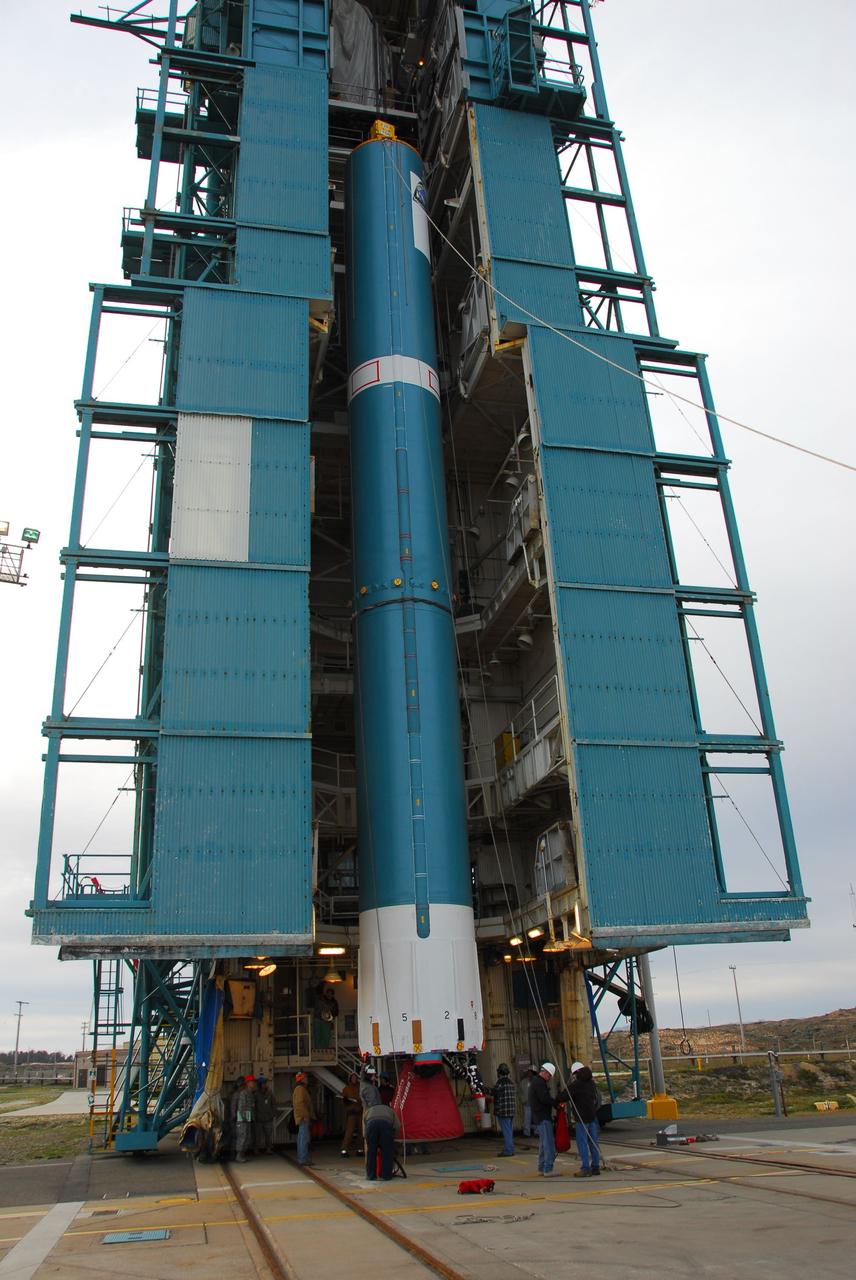
VANDENBERG AIR FORCE BASE, Calif. -- Technicians guide the first stage of the Delta II rocket that will carry NASA's Aquarius satellite into low Earth orbit onto the launch pad at Vandenberg Air Force Base's Space Launch Complex-2 (SLC-2) in California. While the Delta II rocket is stacked on SLC-2, teams for NASA's Glory spacecraft and Orbital Sciences Taurus XL rocket are in launch preparation mode at Vandenberg's nearby Space Launch Complex 576-E. Scheduled to launch in June, Aquarius' mission will be to provide monthly maps of global changes in sea surface salinity. By measuring ocean salinity from space, Aquarius will provide new insights into how the massive natural exchange of freshwater between the ocean, atmosphere and sea ice influences ocean circulation, weather and climate. Also going up with the satellite are optical and thermal cameras, a microwave radiometer and the SAC-D spacecraft, which were developed with the help of institutions in Italy, France, Canada and Argentina. Photo credit: NASA/VAFB
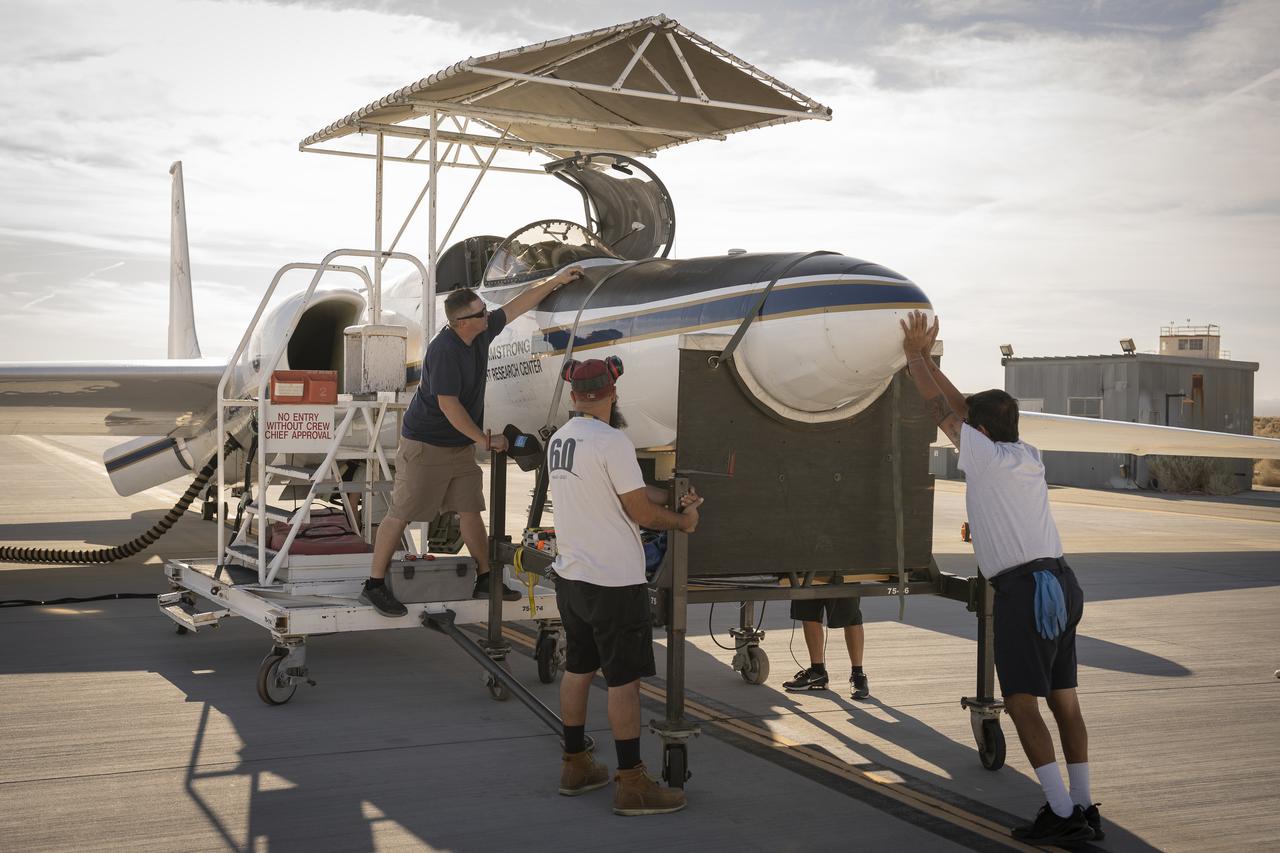
Crew members reattach the nose cone of NASA’s Armstrong Flight Research Center’s ER-2 aircraft at Edwards, California, on Thursday, Aug. 21, 2025, ahead of a mission for the Geological Earth Mapping Experiment (GEMx). The aircraft’s nose houses key science instruments used to collect data during flight.
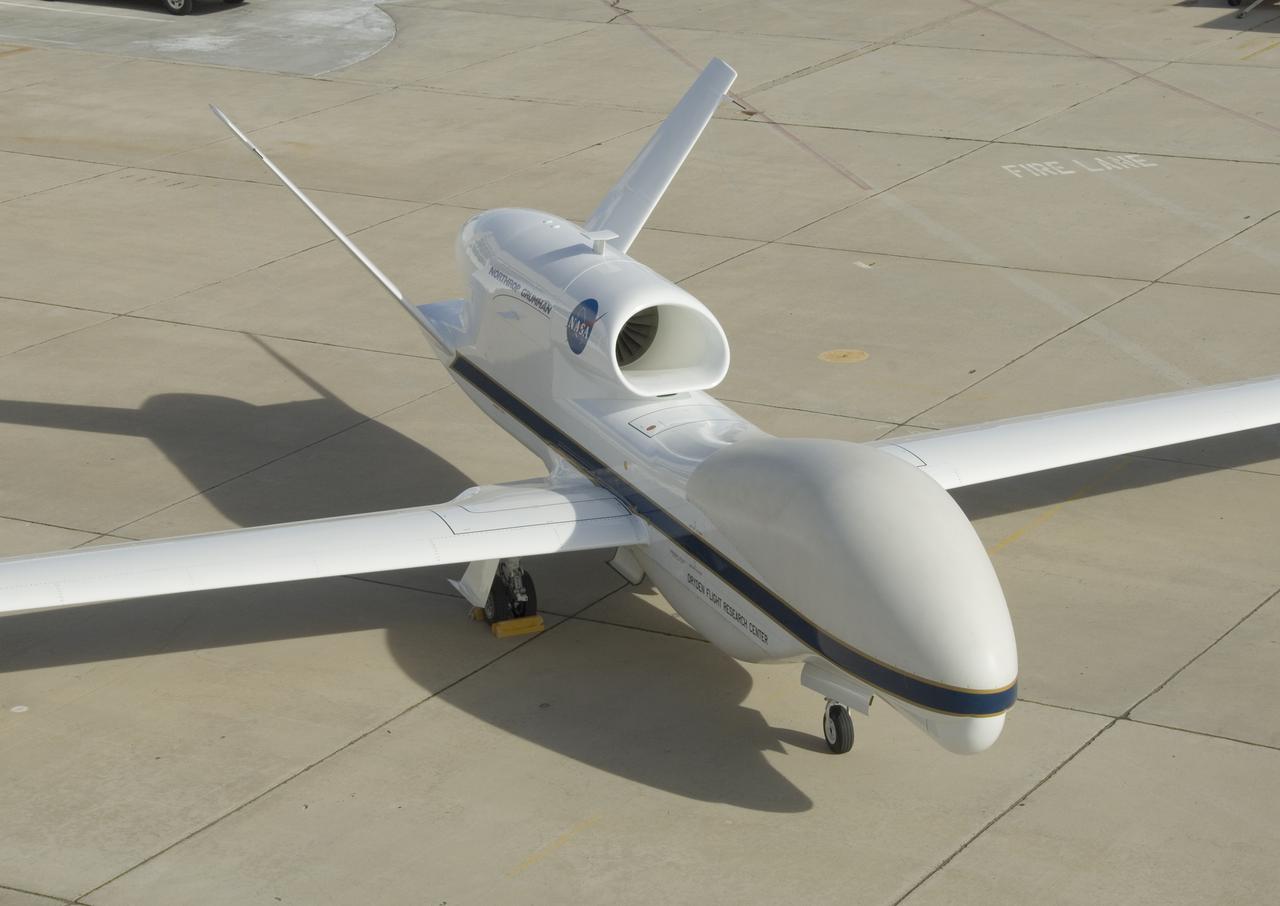
This Global Hawk unmanned aircraft is one of two that are used by NASA for Earth science missions and by Northrop Grumman for follow-on developmental testing.
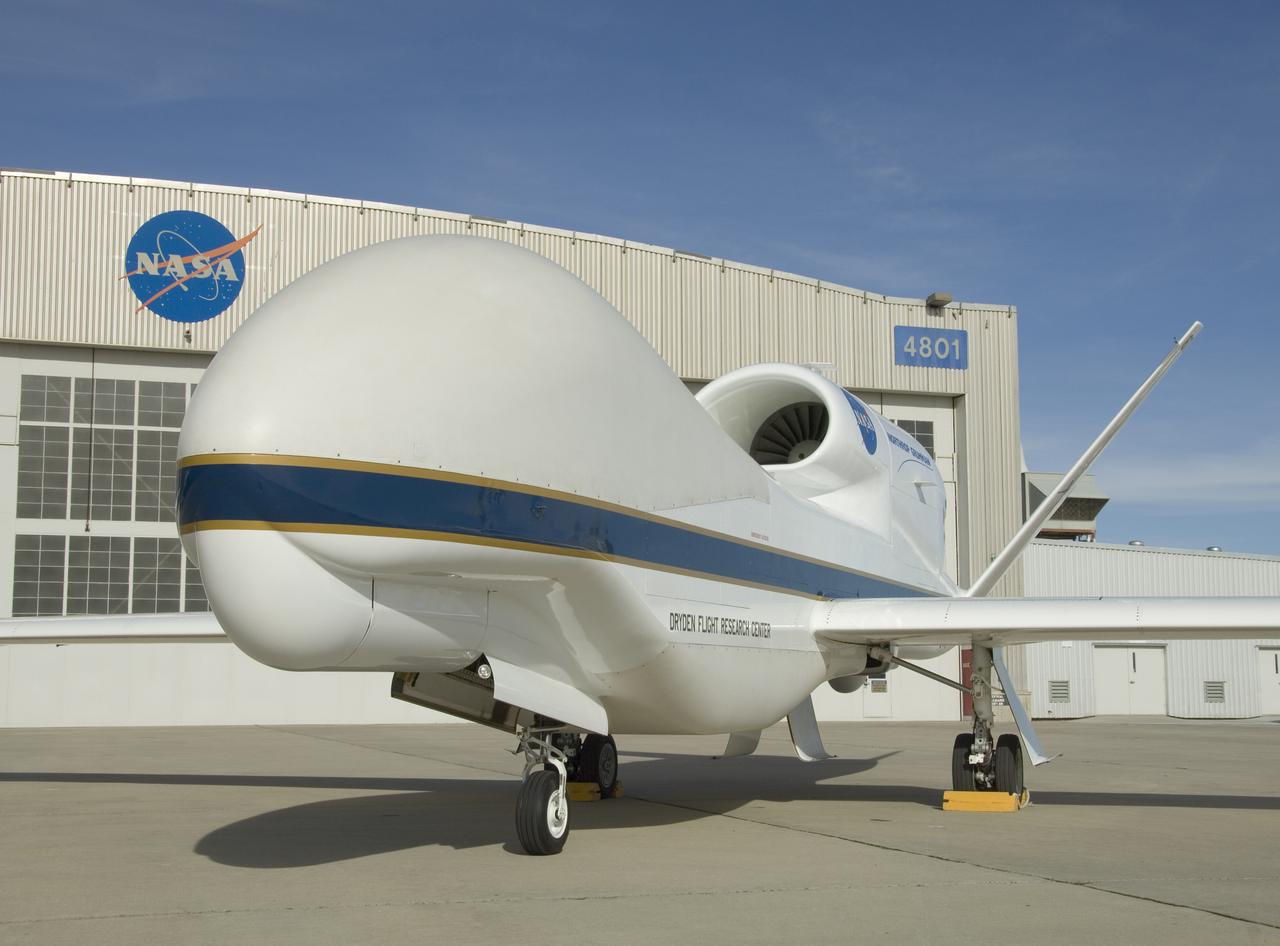
The bulbous nose of one of NASA's two Global Hawk unmanned high-altitude aircraft houses communications and sensor payloads on Earth science missions.
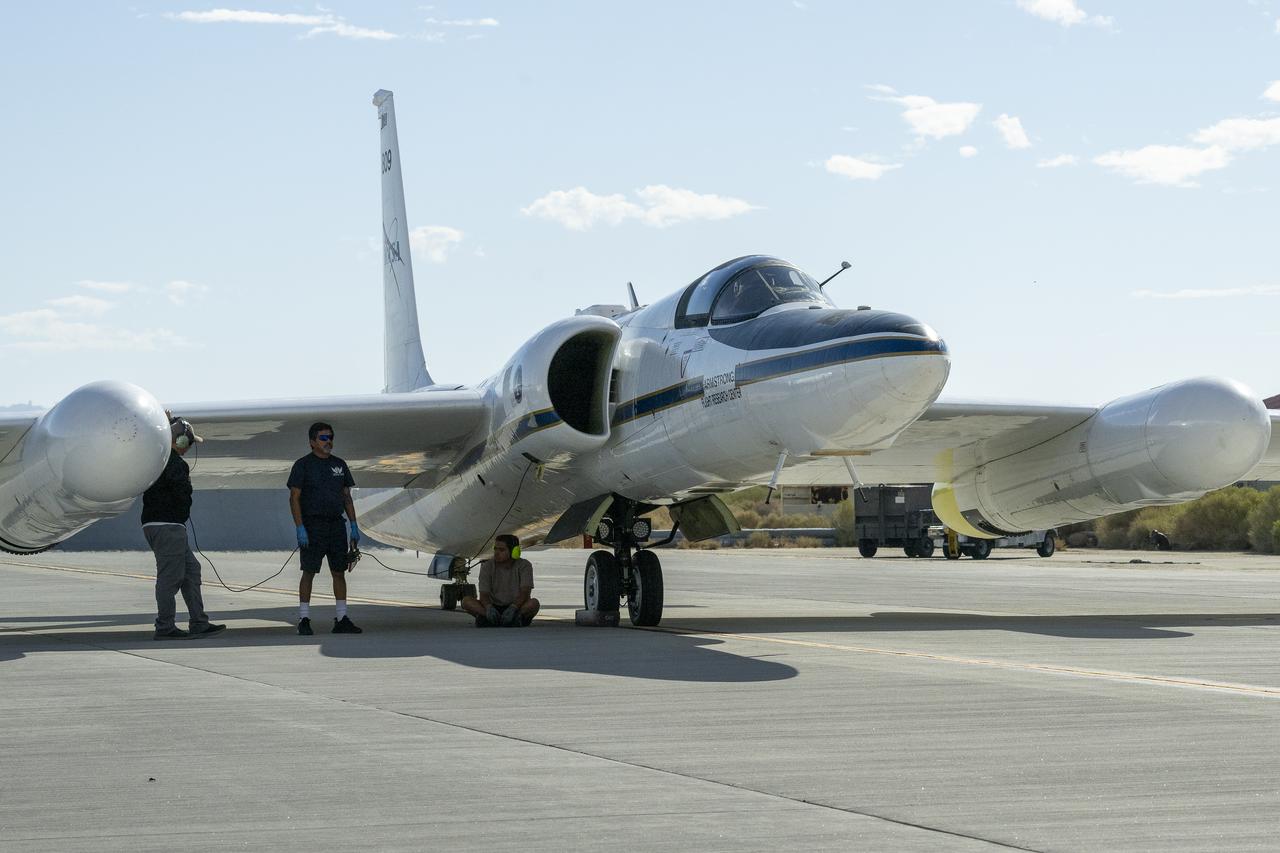
Crew members prepare NASA Armstrong Flight Research Center’s ER-2 aircraft for flight at Edwards, California, on Tuesday, Sept. 23, 2025, in support of the Geological Earth Mapping Experiment (GEMx). The high-altitude science aircraft operates between 20,000 and 70,000 feet. For this mission, pilots flew at approximately 65,000 feet, requiring them to wear specially designed pressure suits.
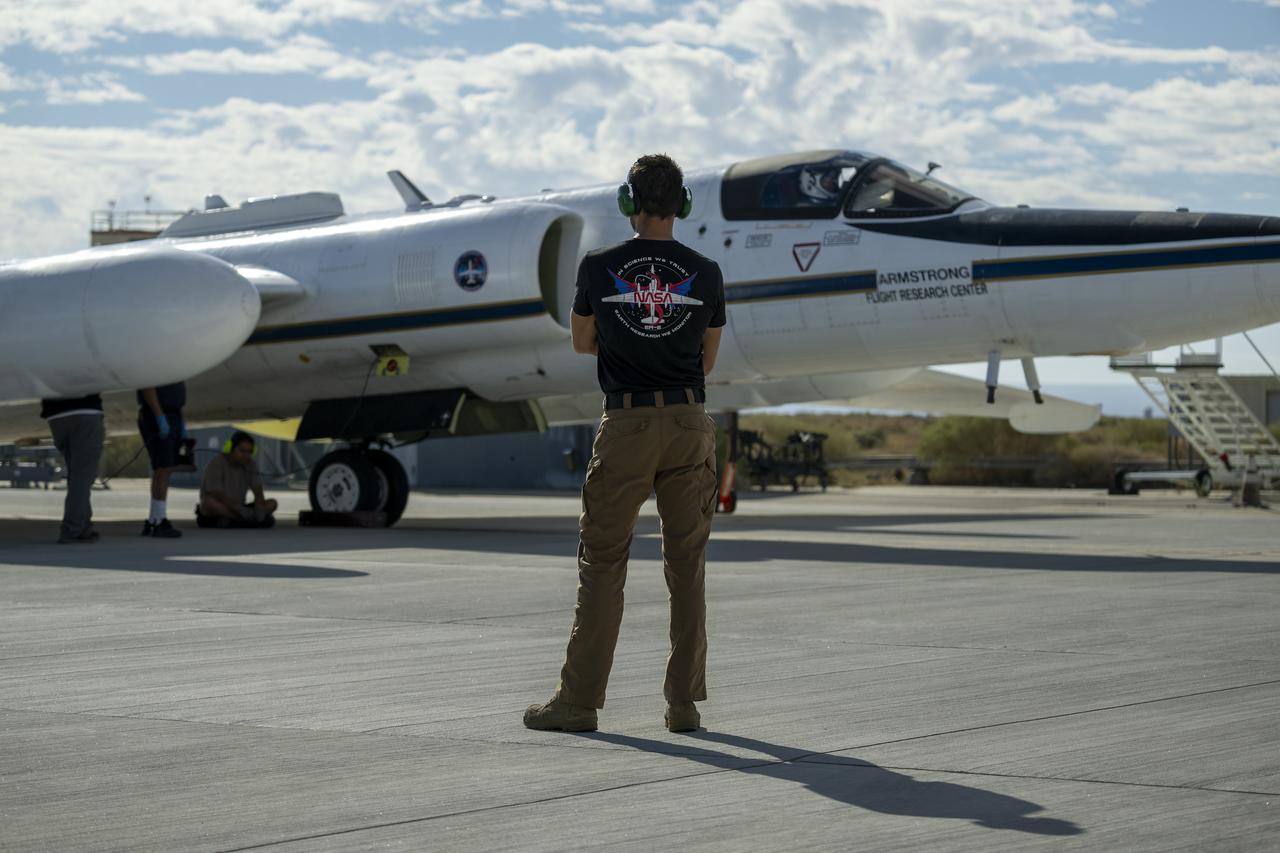
Crew members prepare NASA Armstrong Flight Research Center’s ER-2 aircraft for flight at Edwards, California, on Tuesday, Sept. 23, 2025, in support of the Geological Earth Mapping Experiment (GEMx). The high-altitude science aircraft operates between 20,000 and 70,000 feet. For this mission, pilots flew at approximately 65,000 feet, requiring them to wear specially designed pressure suits.
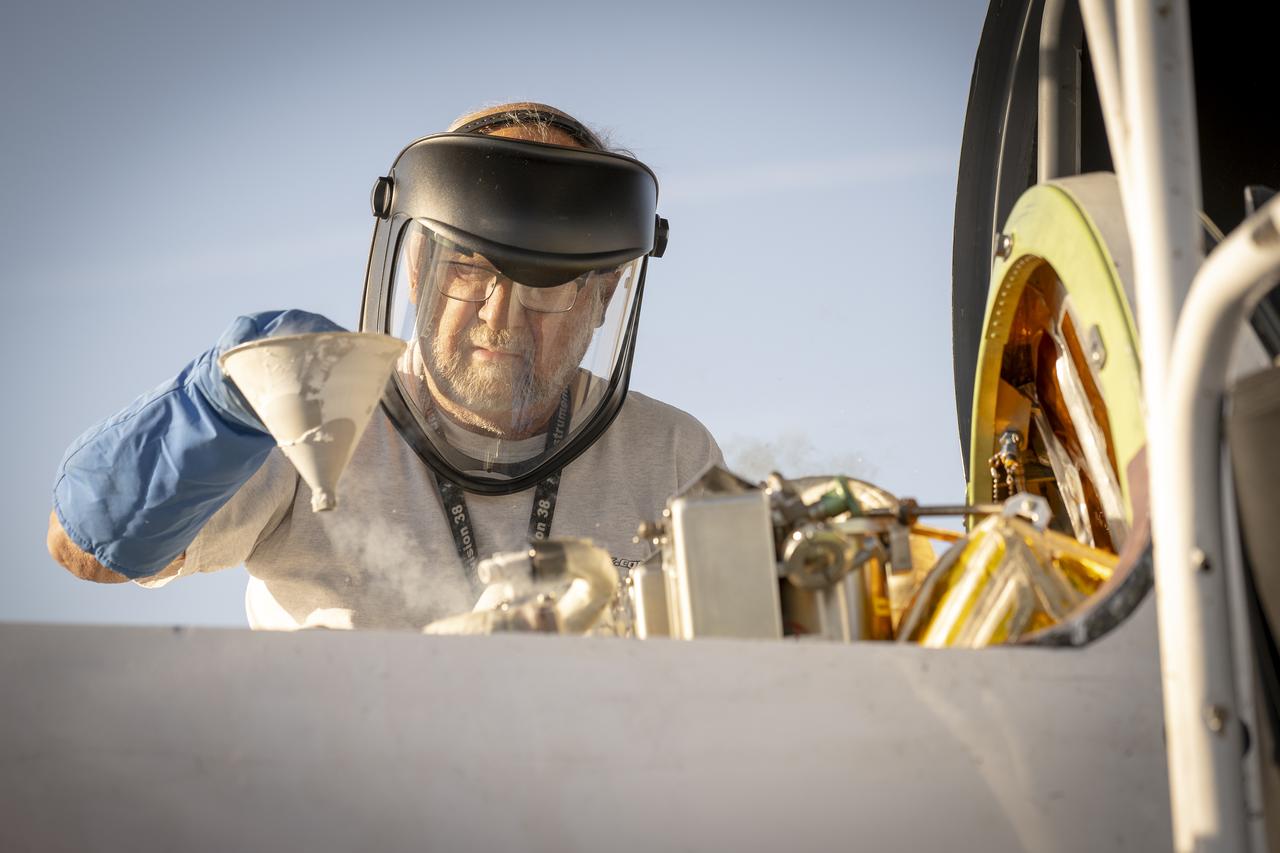
A crew member handles liquid nitrogen servicing for NASA’s Armstrong Flight Research Center’s ER-2 aircraft at Edwards, California, on Thursday, Aug. 21, 2025. Liquid nitrogen is used to support key science instruments for extended flight durations in critical research missions, such as the Geological Earth Mapping Experiment (GEMx), which requires flights of up to eight hours at approximately 65,000 feet altitude.
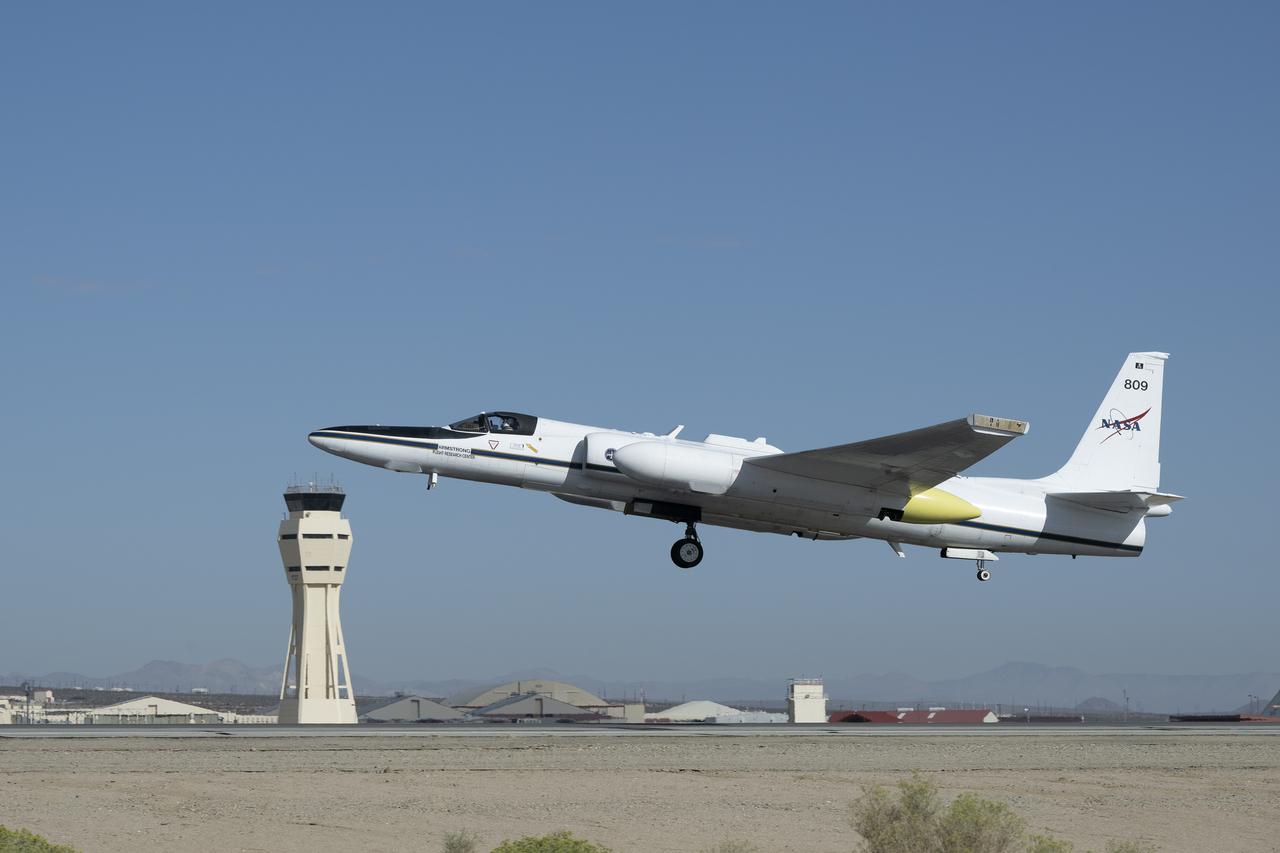
NASA Armstrong Flight Research Center’s ER-2 aircraft lifts off from Edwards, California, on Tuesday, Sept. 23, 2025, in support of the Geological Earth Mapping Experiment (GEMx). The high-altitude science aircraft operates between 20,000 and 70,000 feet. For this mission, pilots flew at approximately 65,000 feet, requiring them to wear specially designed pressure suits.
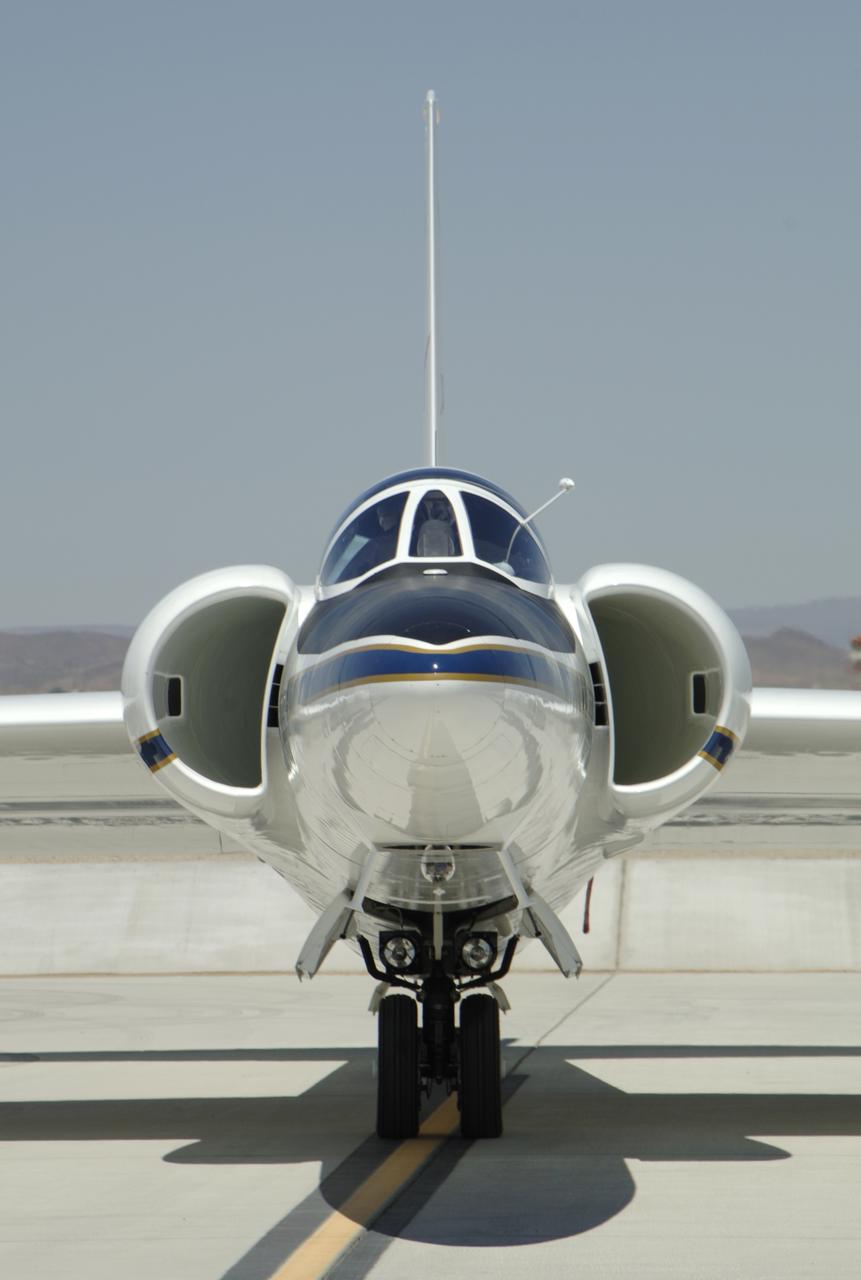
The large air intakes for its powerful engine are obvious as NASA's high-flying ER-2 #806 Earth resources aircraft taxies out for another science mission.
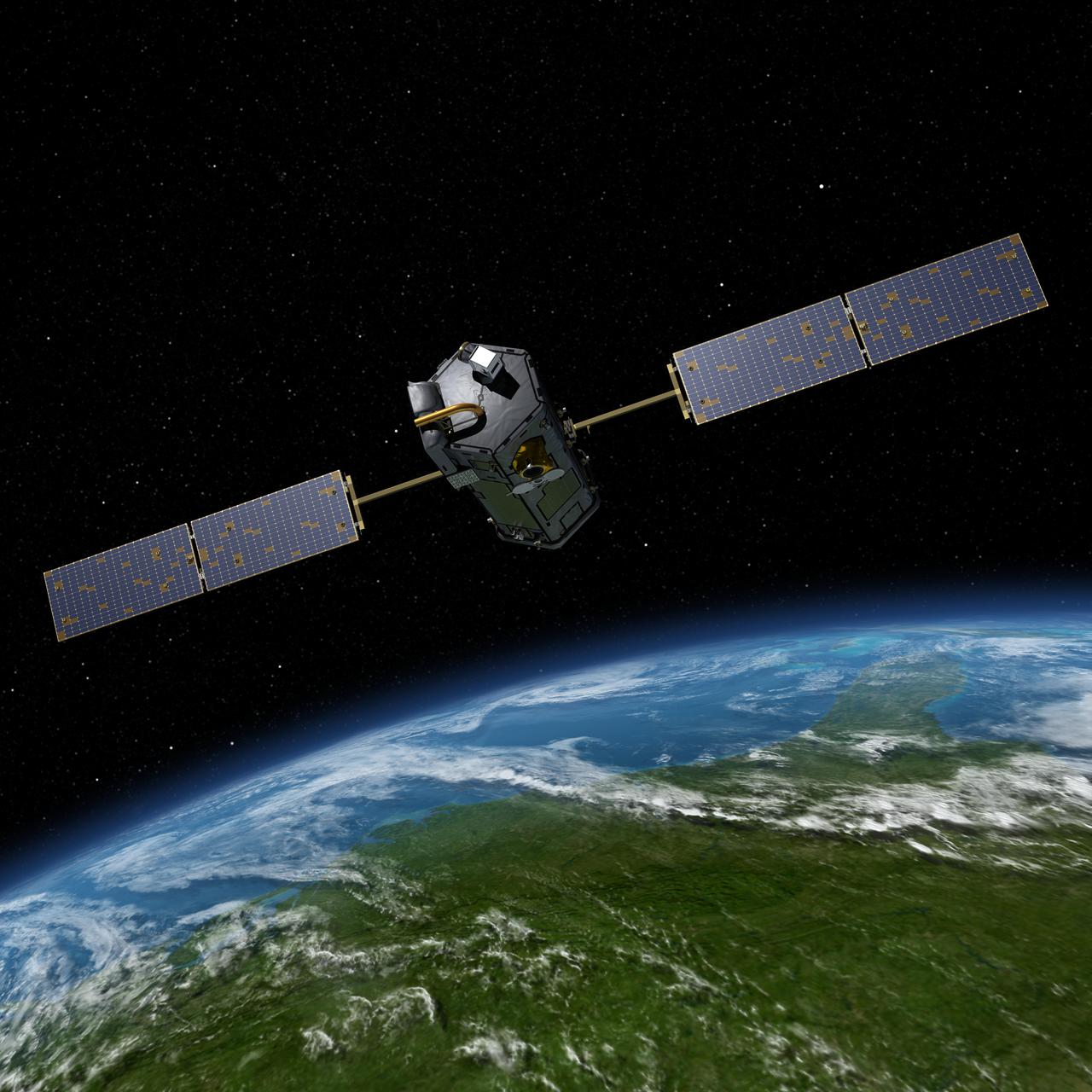
Artist rendering of NASA Orbiting Carbon Observatory OCO-2, one of five new NASA Earth science missions set to launch in 2014, and one of three managed by JPL.
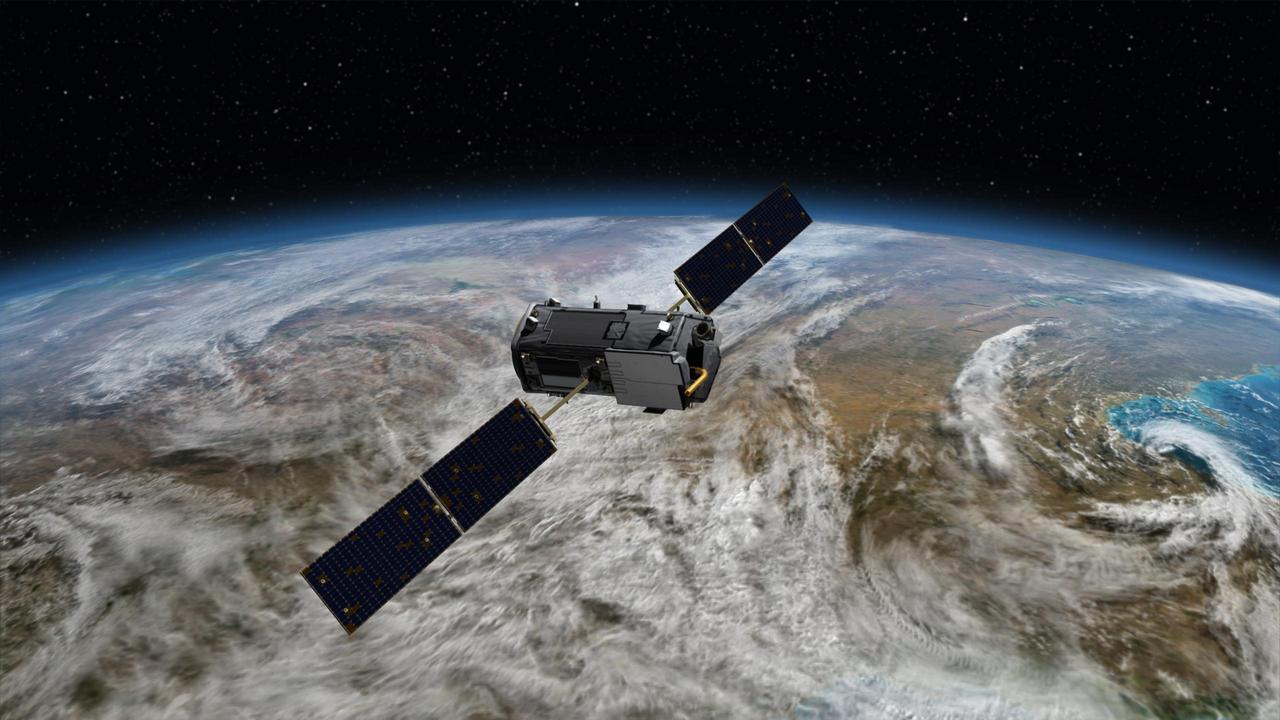
Artist rendering of NASA Orbiting Carbon Observatory OCO-2, one of five new NASA Earth science missions set to launch in 2014, and one of three managed by JPL.
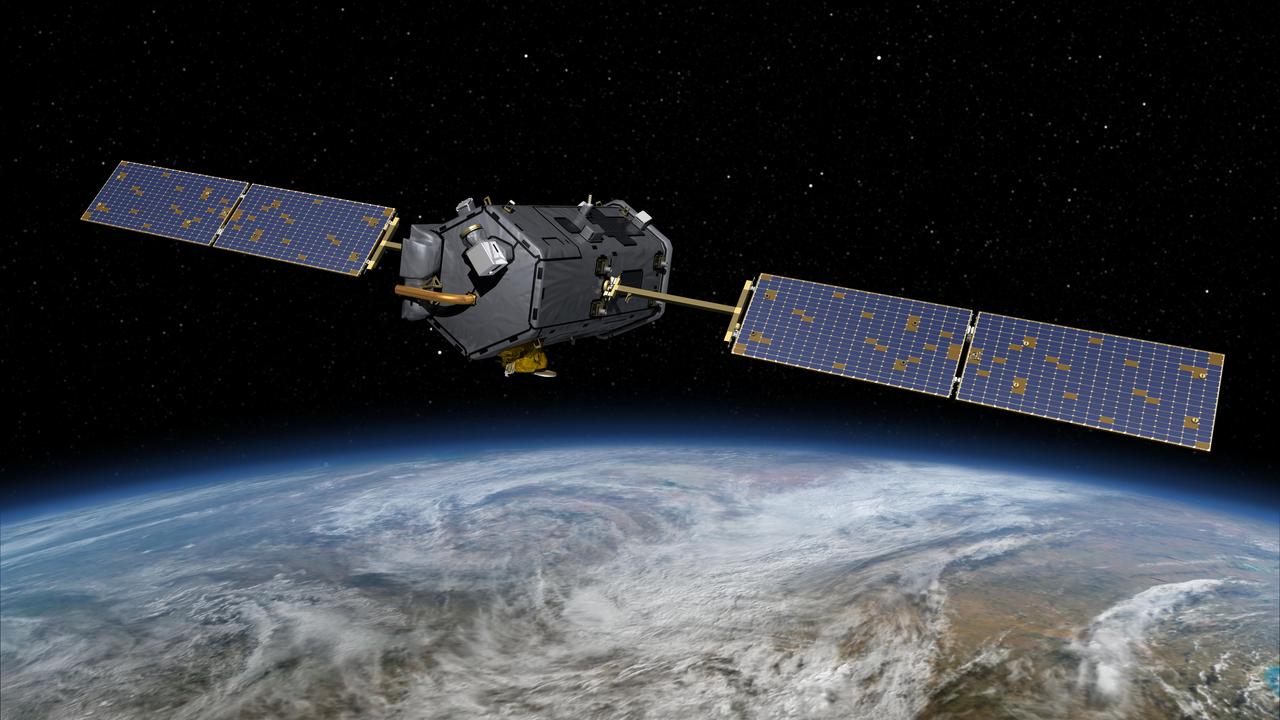
This most recent artist rendering shows NASA Orbiting Carbon Observatory OCO-2, one of five new NASA Earth science missions set to launch in 2014, and one of three managed by the Jet Propulsion Laboratory JPL.
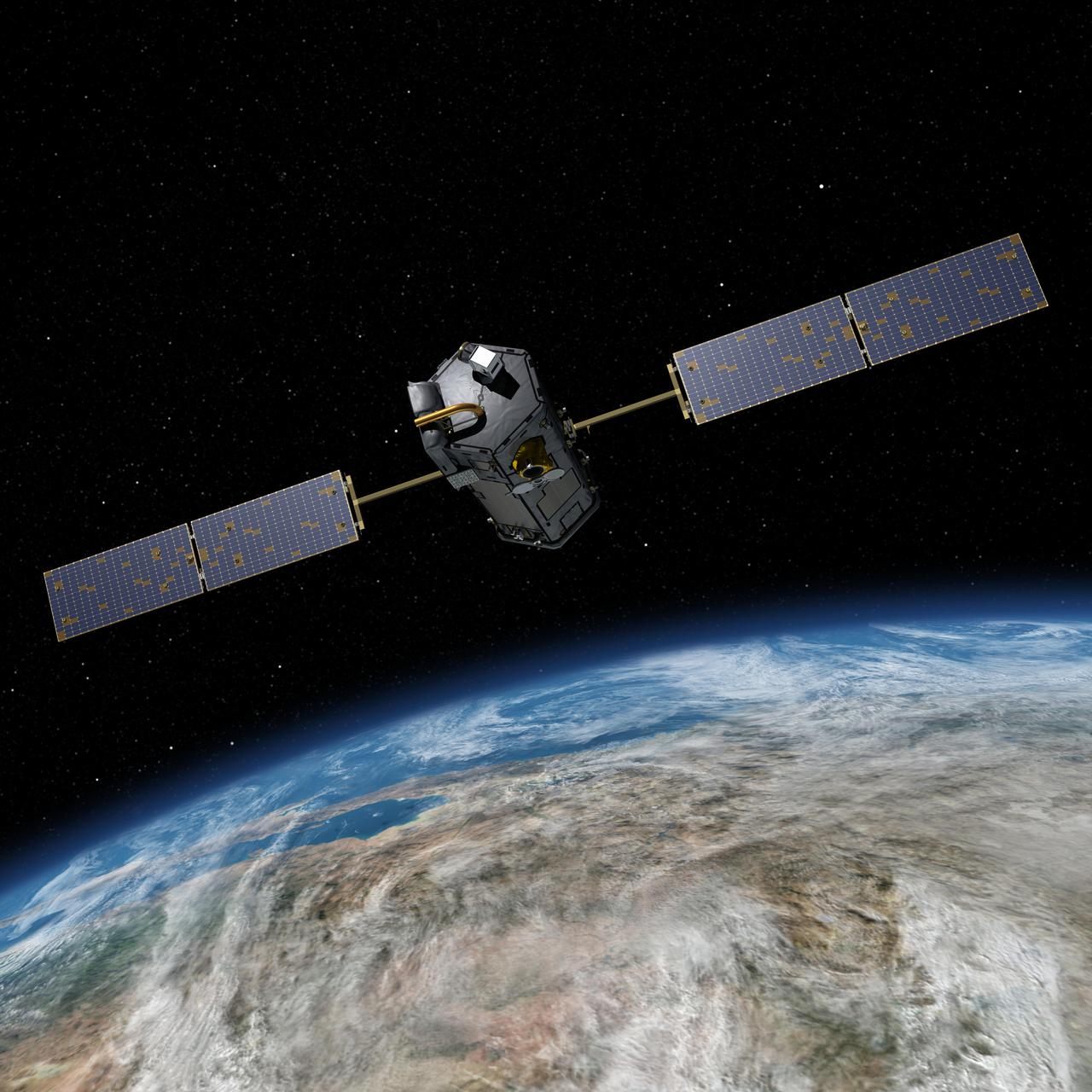
This most recent artist rendering shows NASA Orbiting Carbon Observatory OCO-2, one of five new NASA Earth science missions set to launch in 2014, and one of three managed by the Jet Propulsion Laboratory JPL.
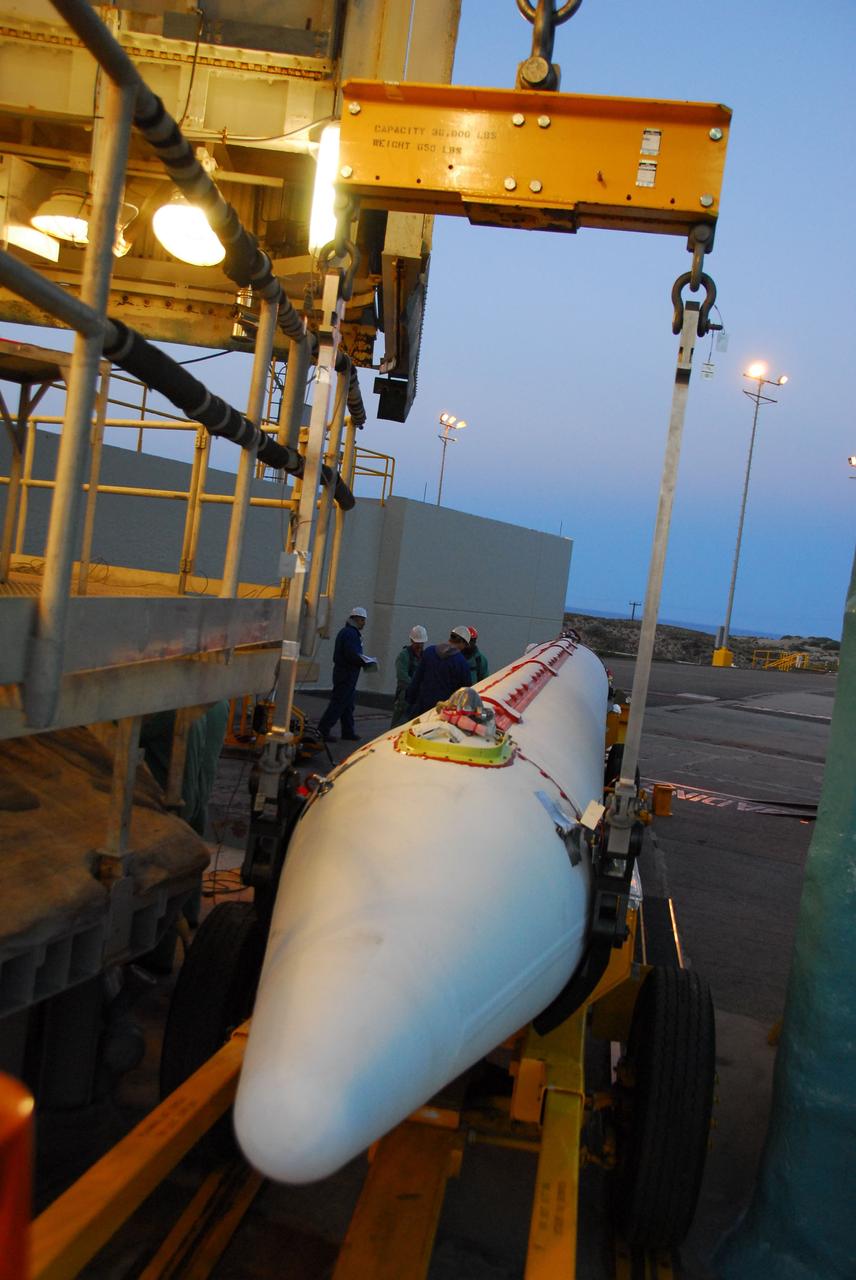
VANDENBERG AIR FORCE BASE, Calif. --As the sun rises over Vandenberg Air Force Base in California, United Launch Alliance technicians prepare to raise one of three Delta II solid rocket motors on the pad at Space Launch Complex-2 West (SLC-2W). Scheduled to launch in June, the Delta II rocket will carry NASA's Aquarius satellite into low Earth orbit. Aquarius' mission will be to provide monthly maps of global changes in sea surface salinity. By measuring ocean salinity from space, Aquarius will provide new insights into how the massive natural exchange of freshwater between the ocean, atmosphere and sea ice influences ocean circulation, weather and climate. Also going up with the satellite are optical and thermal cameras, a microwave radiometer and the SAC-D spacecraft, which were developed with the help of institutions in Italy, France, Canada and Argentina. Photo credit: VAFB/30th Space Wing
VANDENBERG AIR FORCE BASE, Calif. --As the sun rises over Vandenberg Air Force Base in California, a crane raises one of three United Launch Alliance Delta II solid rocket motors on the pad at Space Launch Complex-2 West (SLC-2W). Scheduled to launch in June, the Delta II rocket will carry NASA's Aquarius satellite into low Earth orbit. Aquarius' mission will be to provide monthly maps of global changes in sea surface salinity. By measuring ocean salinity from space, Aquarius will provide new insights into how the massive natural exchange of freshwater between the ocean, atmosphere and sea ice influences ocean circulation, weather and climate. Also going up with the satellite are optical and thermal cameras, a microwave radiometer and the SAC-D spacecraft, which were developed with the help of institutions in Italy, France, Canada and Argentina. Photo credit: VAFB/30th Space Wing
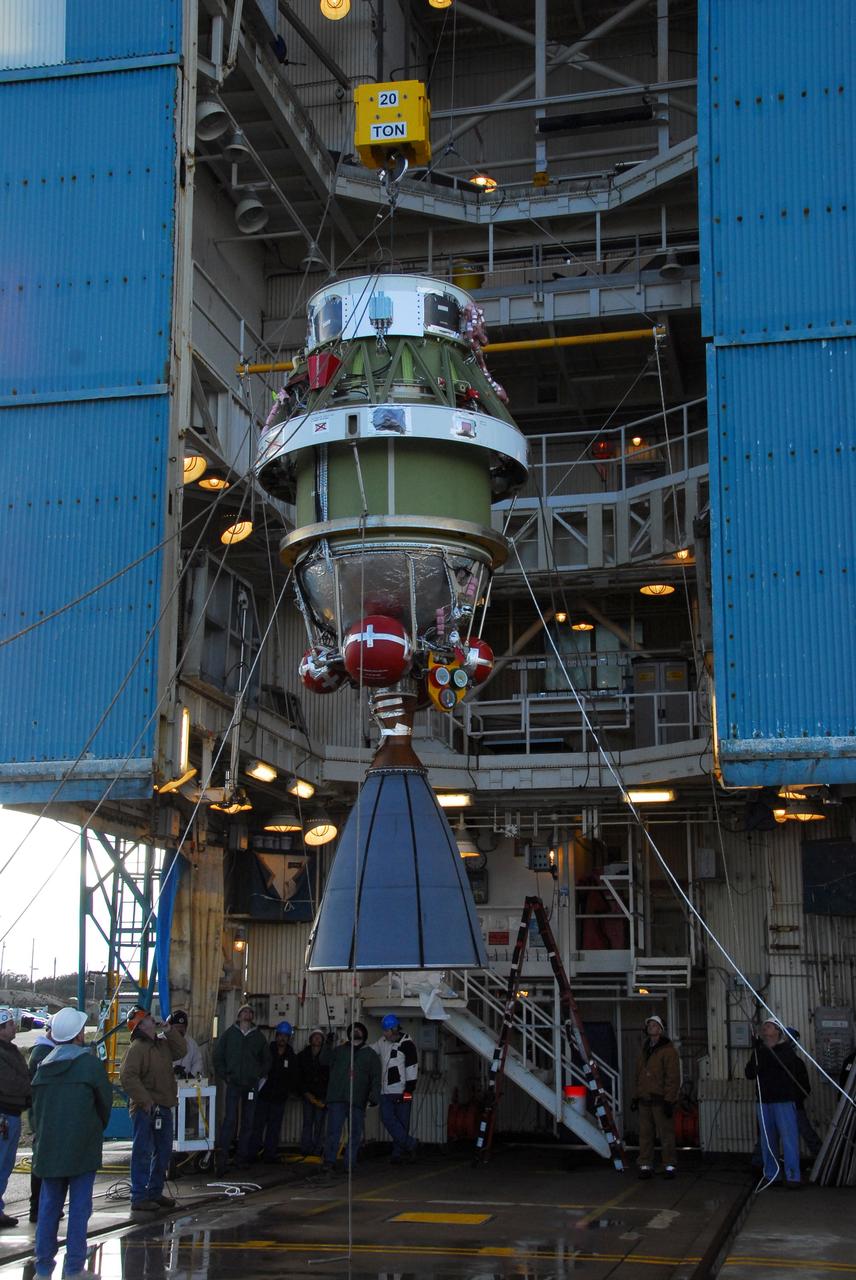
VANDENBERG AIR FORCE BASE, Calif. -- United Space Alliance technicians hoist the second stage of a Delta II rocket into position in the Space Launch Complex-2 (SLC-2) service tower at Vandenberg Air Force Base in California. The rocket is being prepared to launch NASA's Aquarius satellite into low Earth orbit. Scheduled to launch in June, Aquarius' mission will be to provide monthly maps of global changes in sea surface salinity. By measuring ocean salinity from space, Aquarius will provide new insights into how the massive natural exchange of freshwater between the ocean, atmosphere and sea ice influences ocean circulation, weather and climate. Also going up with the satellite are optical and thermal cameras, a microwave radiometer and the SAC-D spacecraft, which were developed with the help of institutions in Italy, France, Canada and Argentina. Photo credit: VAFB/30th Space Wing
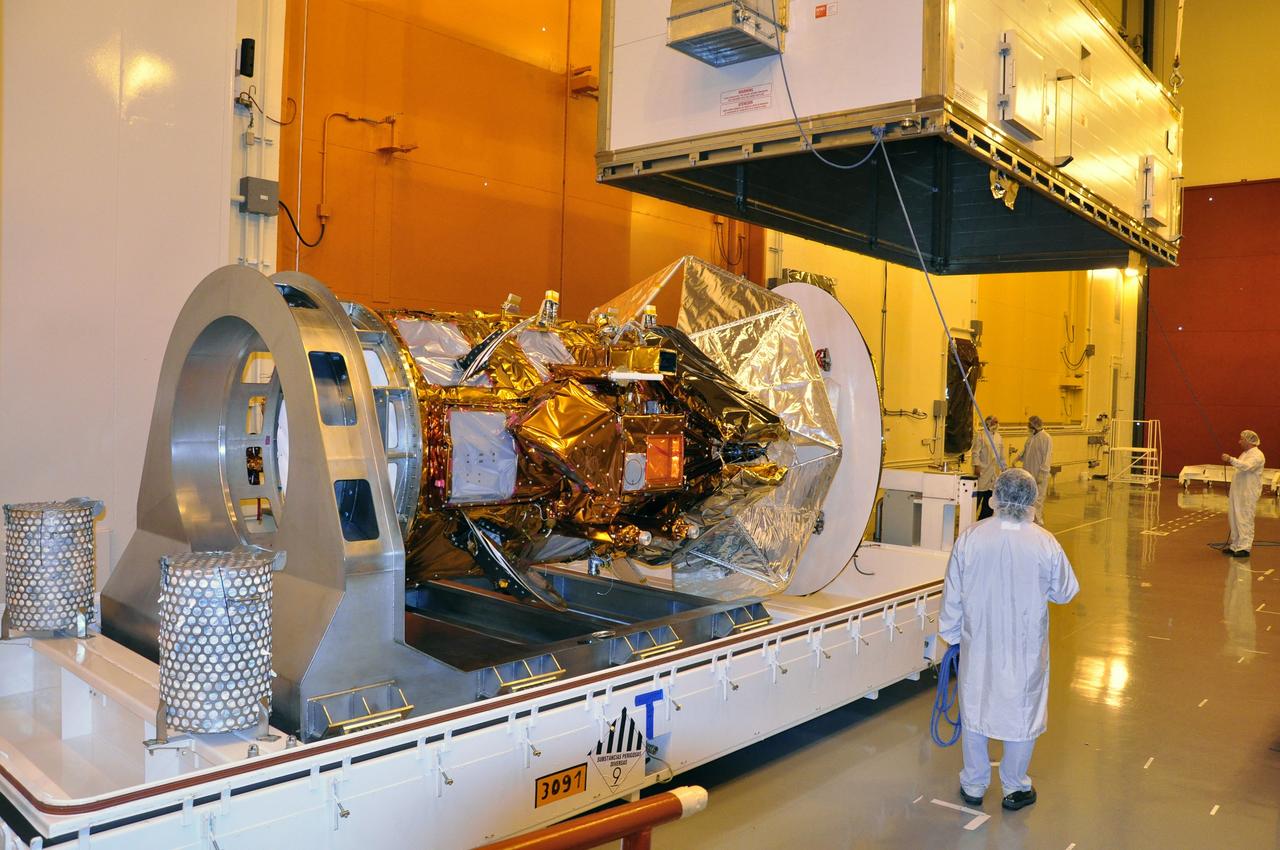
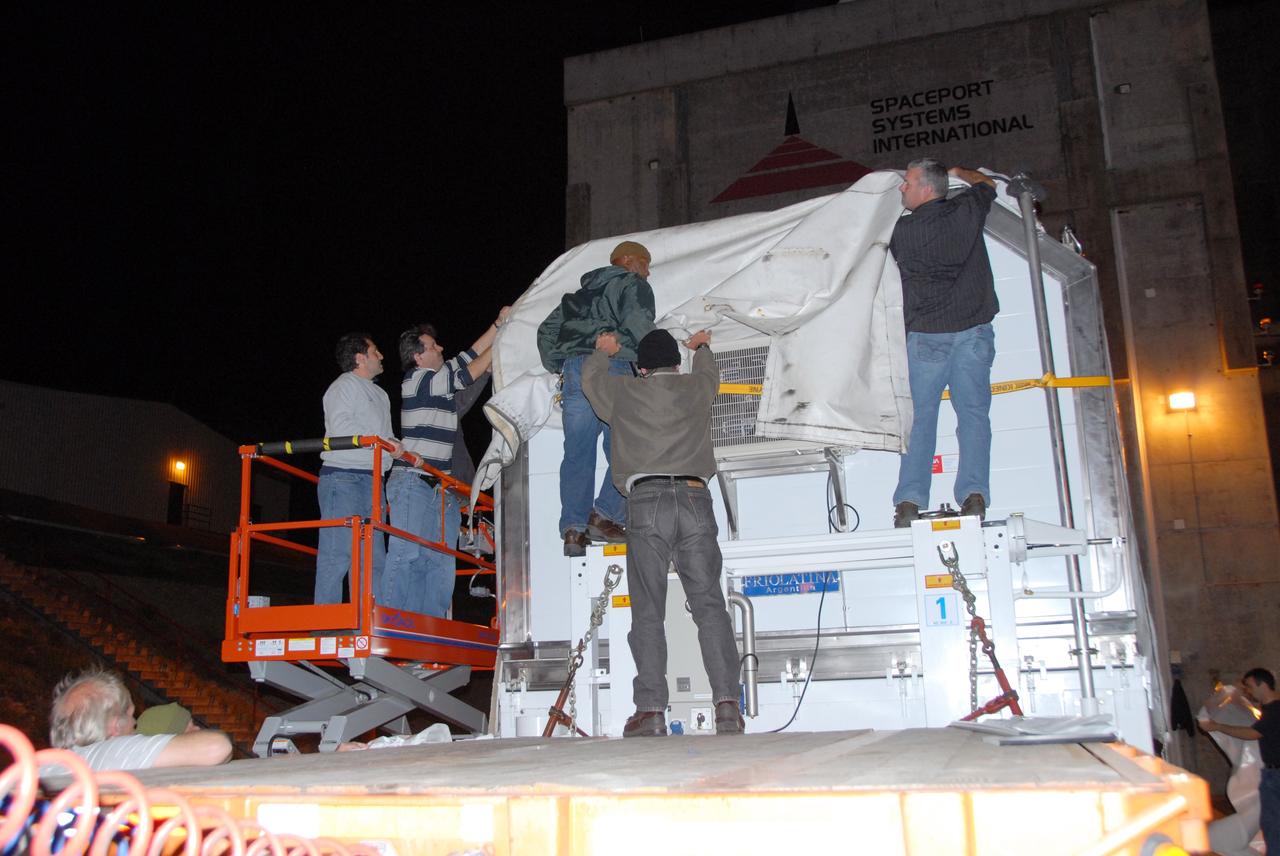
VANDENBERG AIR FORCE BASE, Calif. -- The Aquarius/SAC-D spacecraft is unpacked and unveiled in the Spaceport Systems International payload processing facility at Vandenberg Air Force Base in California. The container protected the spacecraft on its journey from Campos, Brazil, aboard a U.S. Air Force C-17 transport plane. Following final tests, the spacecraft will be integrated to a United Launch Alliance Delta II rocket in preparation for the targeted June launch to low Earth orbit. Aquarius, the NASA-built primary instrument on the SAC-D spacecraft, will map global changes in salinity at the ocean's surface. Salinity is a key measurement for understanding how changes in rainfall, evaporation and the melting of freezing of ice influence ocean circulation and are linked to variations in Earth's climate. The three-year mission will provide new insights into how variations in ocean surface salinity relate to these fundamental climate processes. Photo credit: NASA/Randy Beaudoin, VAFB
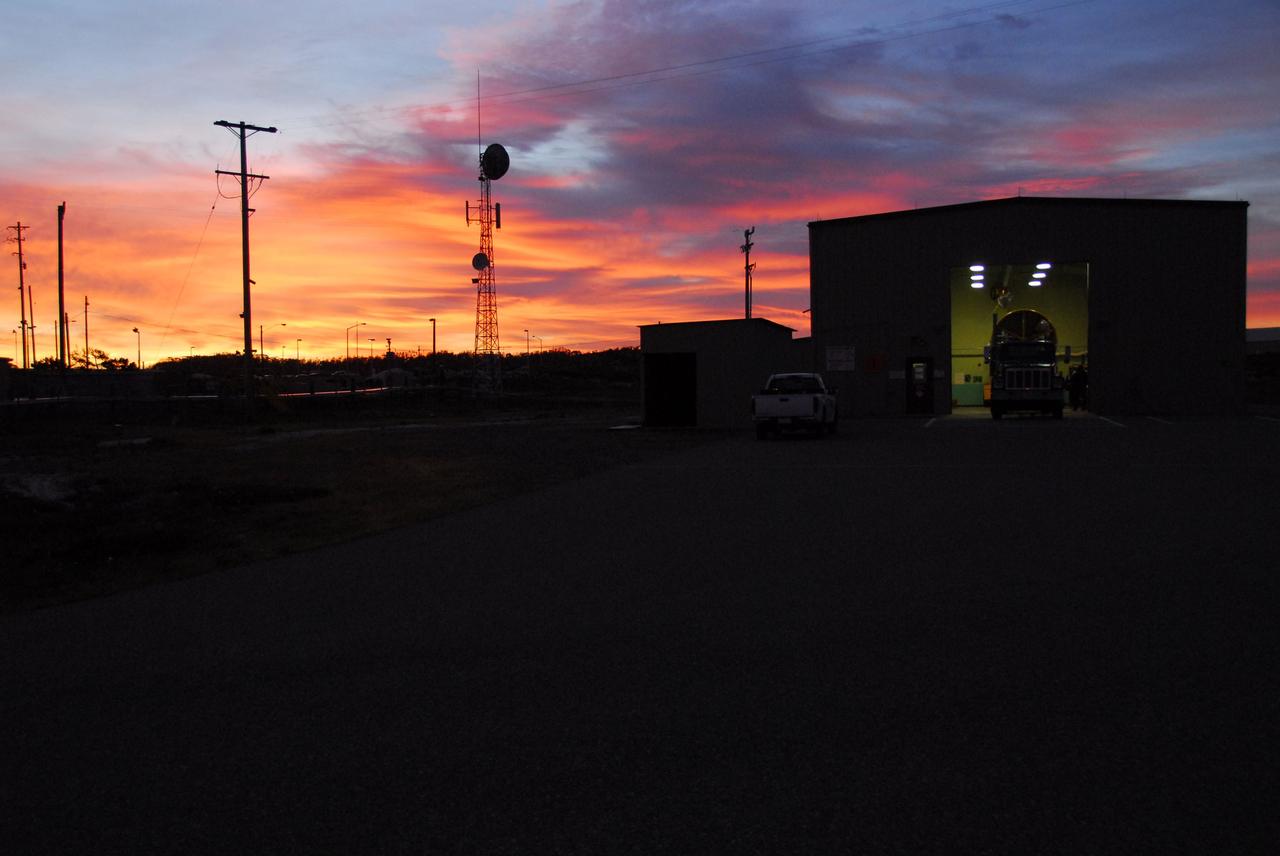
VANDENBERG AIR FORCE BASE, Calif. -- As the sun rises over Vandenberg Air Force Base in California, the first stage of the United Launch Alliance Delta II rocket that will carry the Aquarius/SAC-D satellite into low Earth orbit is prepared for its move to Space Launch Complex-2 (SLC-2). Scheduled to launch in June, Aquarius' mission will be to provide monthly maps of global changes in sea surface salinity. By measuring ocean salinity from space, Aquarius will provide new insights into how the massive natural exchange of freshwater between the ocean, atmosphere and sea ice influences ocean circulation, weather and climate. Also going up with the satellite are optical and thermal cameras, a microwave radiometer and the SAC-D spacecraft, which were developed with the help of institutions in Italy, France, Canada and Argentina. Photo credit: NASA/VAFB
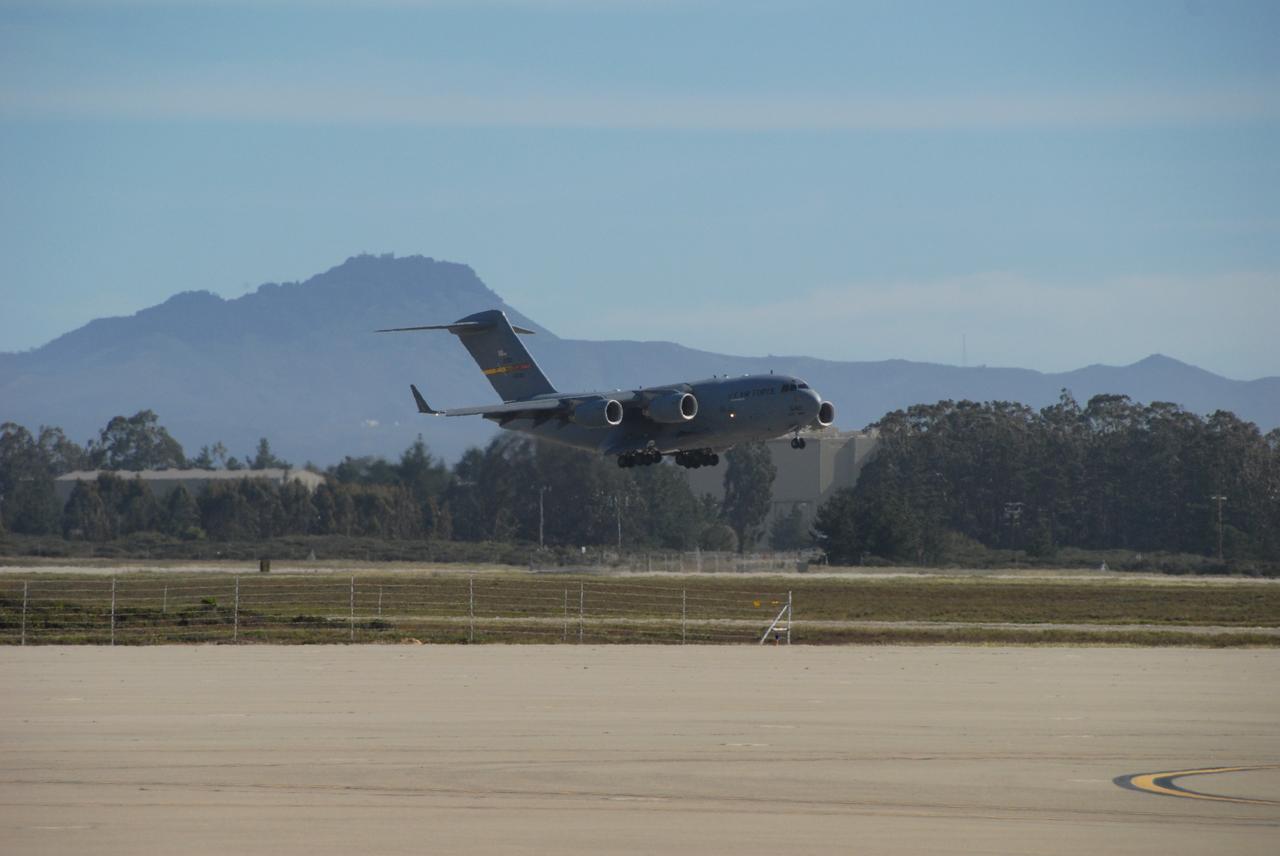
VANDENBERG AIR FORCE BASE, Calif. -- The Aquarius/SAC-D spacecraft arrives at Vandenberg Air Force Base in California from Campos, Brazil, aboard a U.S. Air Force C-17 transport plane. Following final tests, the spacecraft will be integrated to a United Launch Alliance Delta II rocket in preparation for the targeted June launch to low Earth orbit. Aquarius, the NASA-built primary instrument on the SAC-D spacecraft, will map global changes in salinity at the ocean's surface. Salinity is a key measurement for understanding how changes in rainfall, evaporation and the melting of freezing of ice influence ocean circulation and are linked to variations in Earth's climate. The three-year mission will provide new insights into how variations in ocean surface salinity relate to these fundamental climate processes. Photo credit: VAFB/30th Space Wing
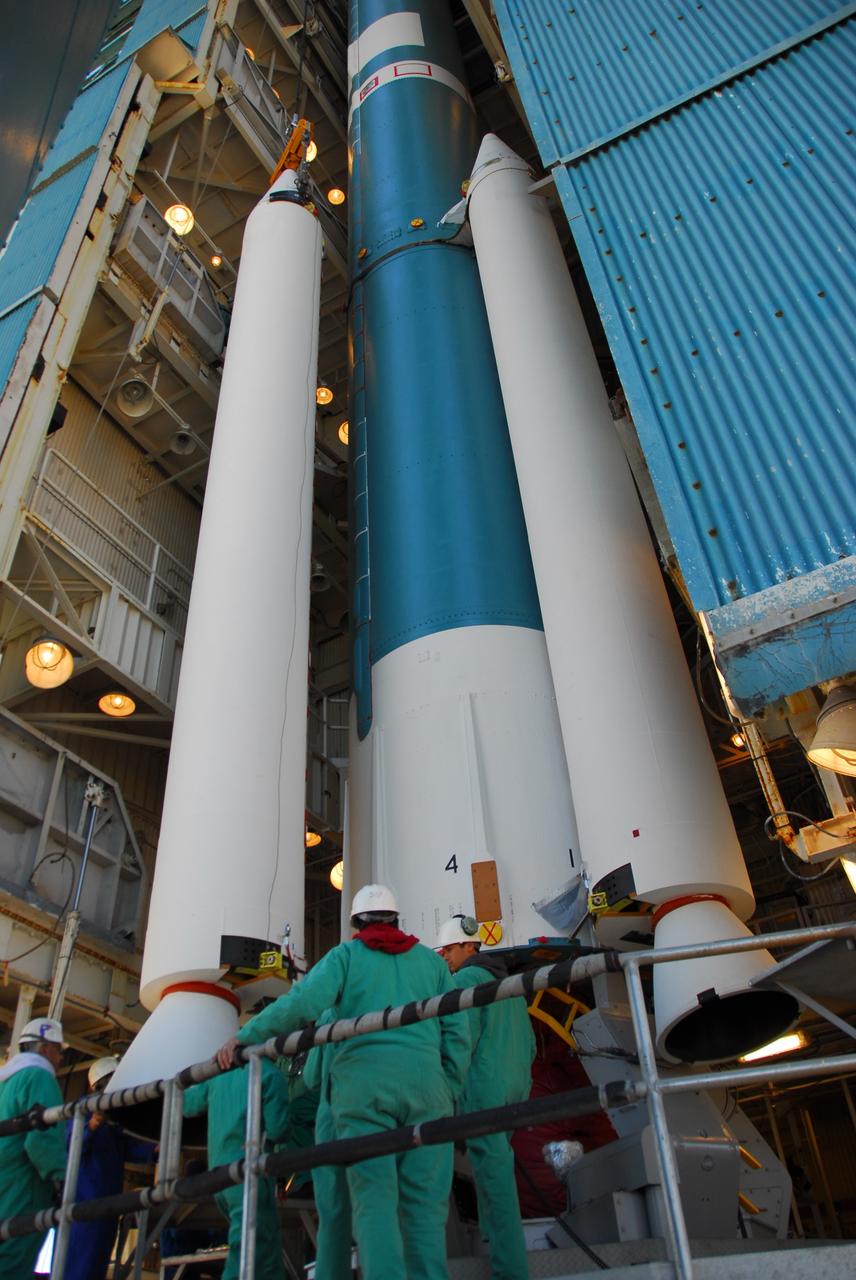
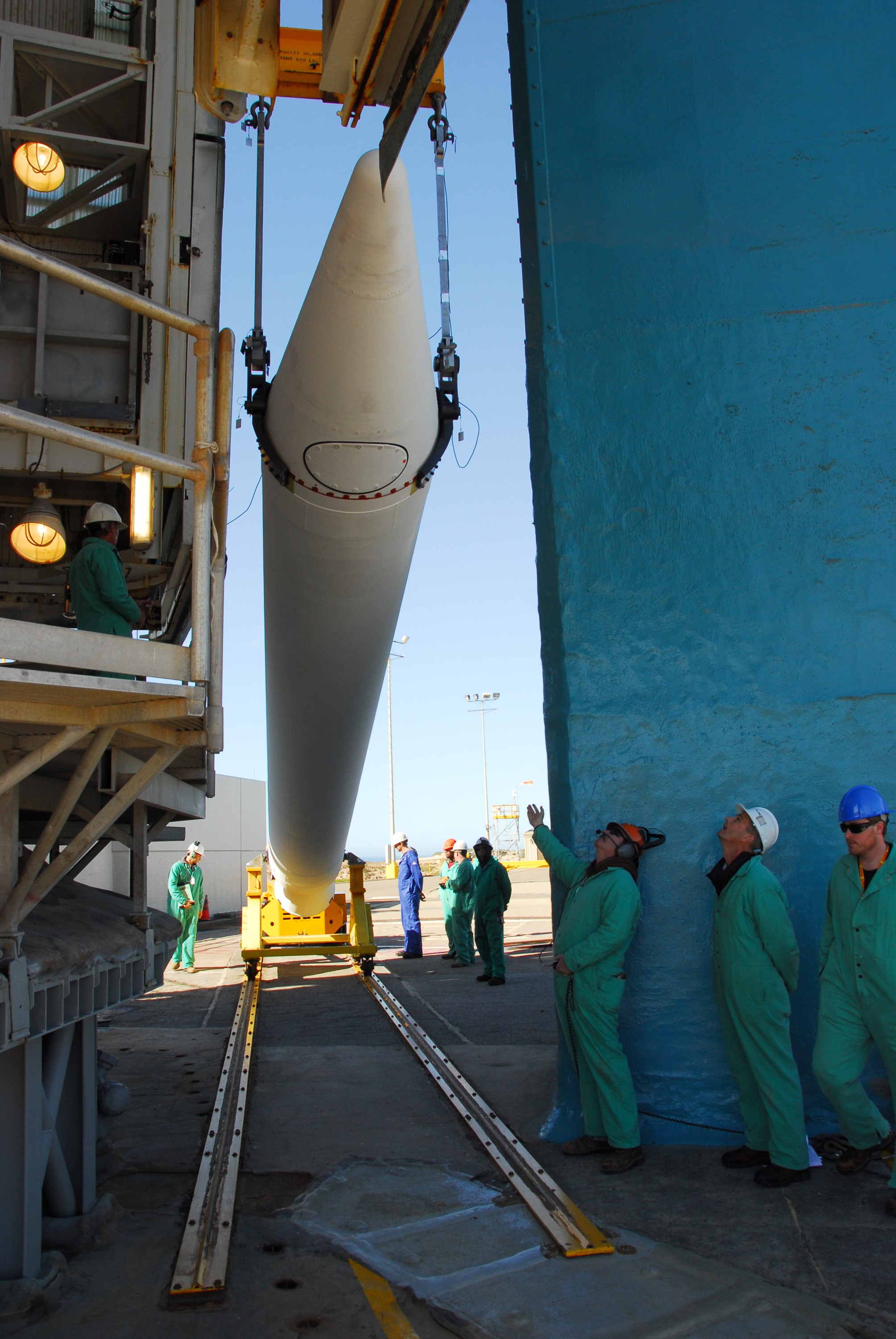
VANDENBERG AIR FORCE BASE, Calif. --At Vandenberg Air Force Base in California, a crane raises one of three United Launch Alliance Delta II solid rocket motors on the pad at Space Launch Complex-2 West (SLC-2W). A second motor was installed earlier in the morning. Scheduled to launch in June, the Delta II rocket will carry NASA's Aquarius satellite into low Earth orbit. Aquarius' mission will be to provide monthly maps of global changes in sea surface salinity. By measuring ocean salinity from space, Aquarius will provide new insights into how the massive natural exchange of freshwater between the ocean, atmosphere and sea ice influences ocean circulation, weather and climate. Also going up with the satellite are optical and thermal cameras, a microwave radiometer and the SAC-D spacecraft, which were developed with the help of institutions in Italy, France, Canada and Argentina. Photo credit: VAFB/30th Space Wing
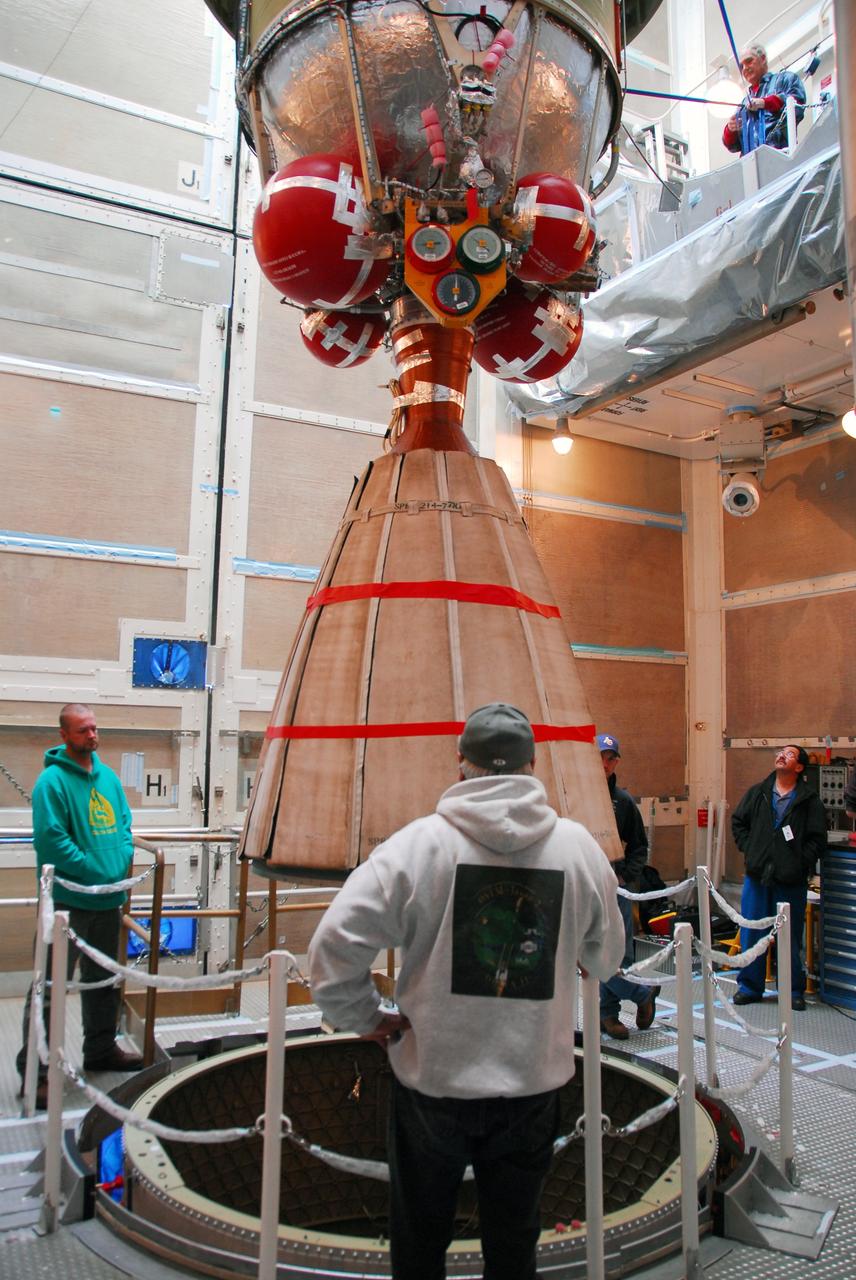
VANDENBERG AIR FORCE BASE, Calif. -- With the Space Launch Complex-2 (SLC-2) service tower at Vandenberg Air Force Base in California back in place, United Space Alliance technicians lower the second stage of a Delta II rocket into position over the first stage. The rocket is being prepared to launch NASA's Aquarius satellite into low Earth orbit. Scheduled to launch in June, Aquarius' mission will be to provide monthly maps of global changes in sea surface salinity. By measuring ocean salinity from space, Aquarius will provide new insights into how the massive natural exchange of freshwater between the ocean, atmosphere and sea ice influences ocean circulation, weather and climate. Also going up with the satellite are optical and thermal cameras, a microwave radiometer and the SAC-D spacecraft, which were developed with the help of institutions in Italy, France, Canada and Argentina. Photo credit: VAFB/30th Space Wing
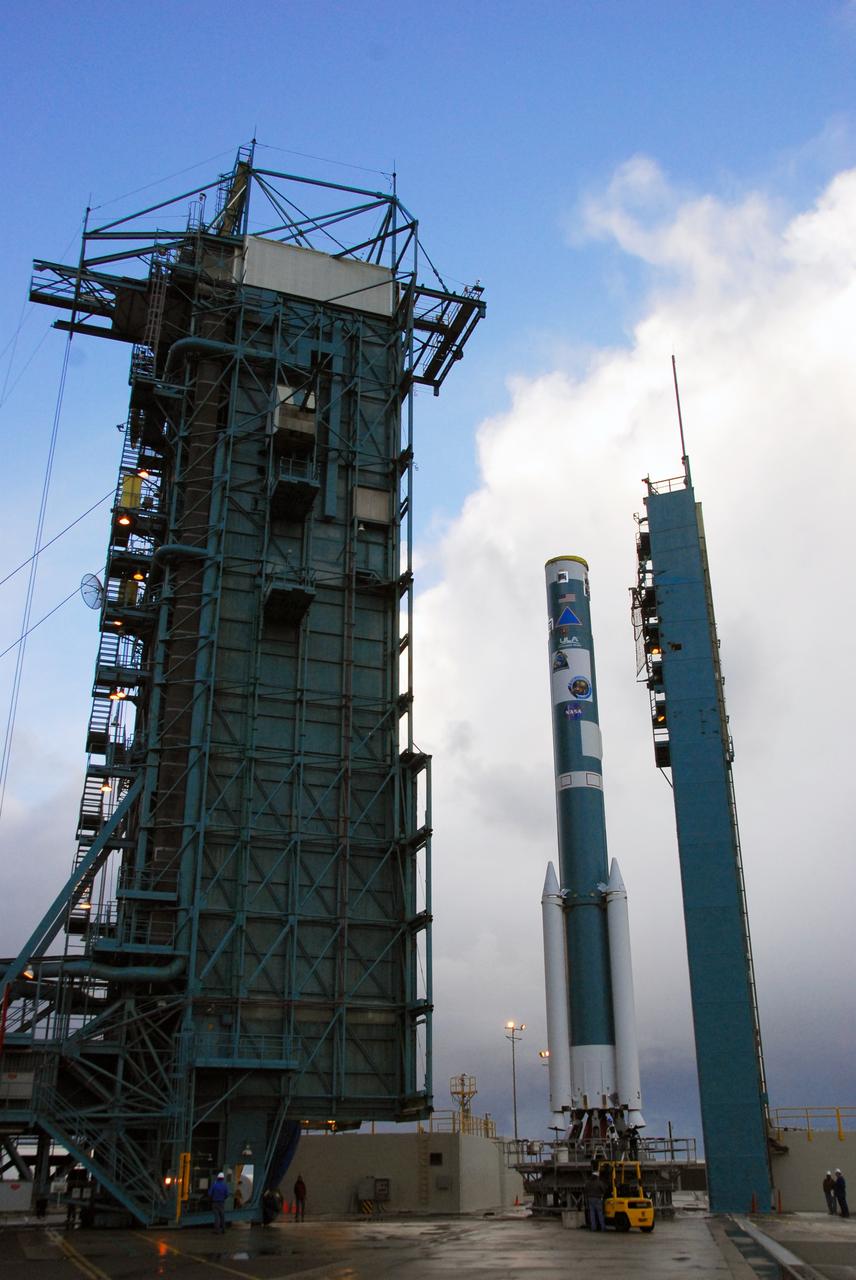
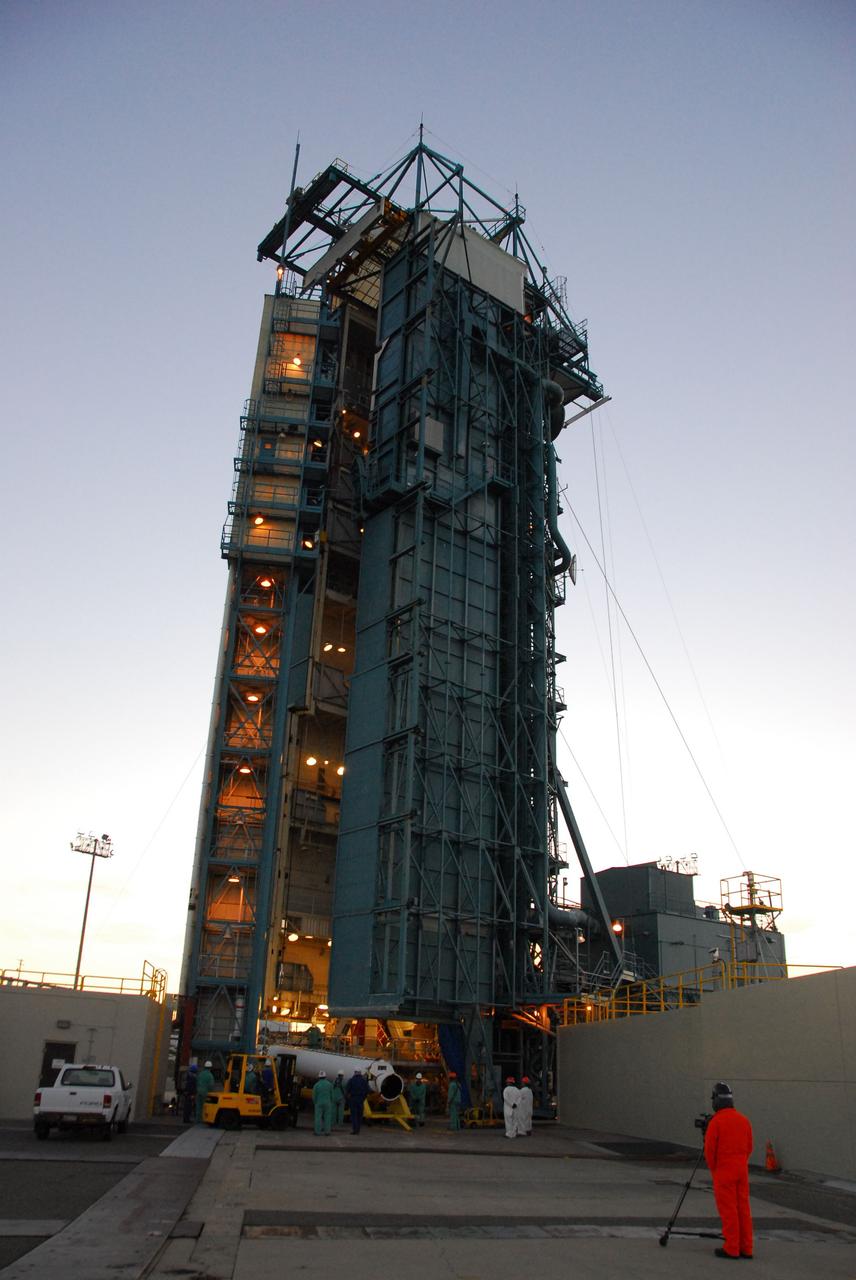
VANDENBERG AIR FORCE BASE, Calif. -- The Space Launch Complex-2 (SLC-2) service tower at Vandenberg Air Force Base in California is moved to allow United Launch Alliance technicians to hoist into position the second stage of the Delta II rocket that will carry NASA's Aquarius satellite into low Earth orbit. Scheduled to launch in June, Aquarius' mission will be to provide monthly maps of global changes in sea surface salinity. By measuring ocean salinity from space, Aquarius will provide new insights into how the massive natural exchange of freshwater between the ocean, atmosphere and sea ice influences ocean circulation, weather and climate. Also going up with the satellite are optical and thermal cameras, a microwave radiometer and the SAC-D spacecraft, which were developed with the help of institutions in Italy, France, Canada and Argentina. Photo credit: VAFB/30th Space Wing
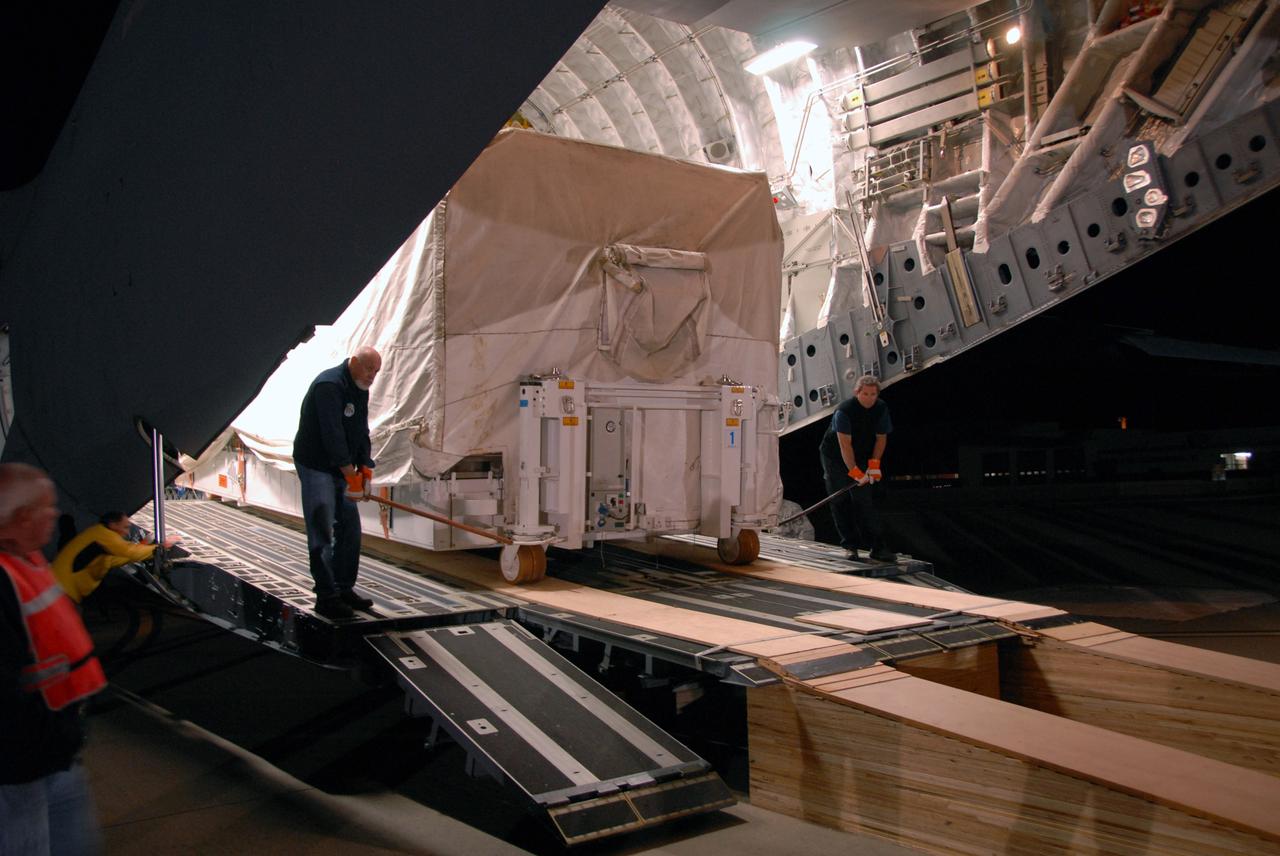
VANDENBERG AIR FORCE BASE, Calif. -- The Aquarius/SAC-D spacecraft is offloaded from a U.S. Air Force C-17 transport at Vandenberg Air Force Base in California. The aircraft traveled from Campos, Brazil. Following final tests, the spacecraft will be integrated to a United Launch Alliance Delta II rocket in preparation for the targeted June launch to low Earth orbit. Aquarius, the NASA-built primary instrument on the SAC-D spacecraft, will map global changes in salinity at the ocean's surface. Salinity is a key measurement for understanding how changes in rainfall, evaporation and the melting of freezing of ice influence ocean circulation and are linked to variations in Earth's climate. The three-year mission will provide new insights into how variations in ocean surface salinity relate to these fundamental climate processes. Photo credit: VAFB/30th Space Wing
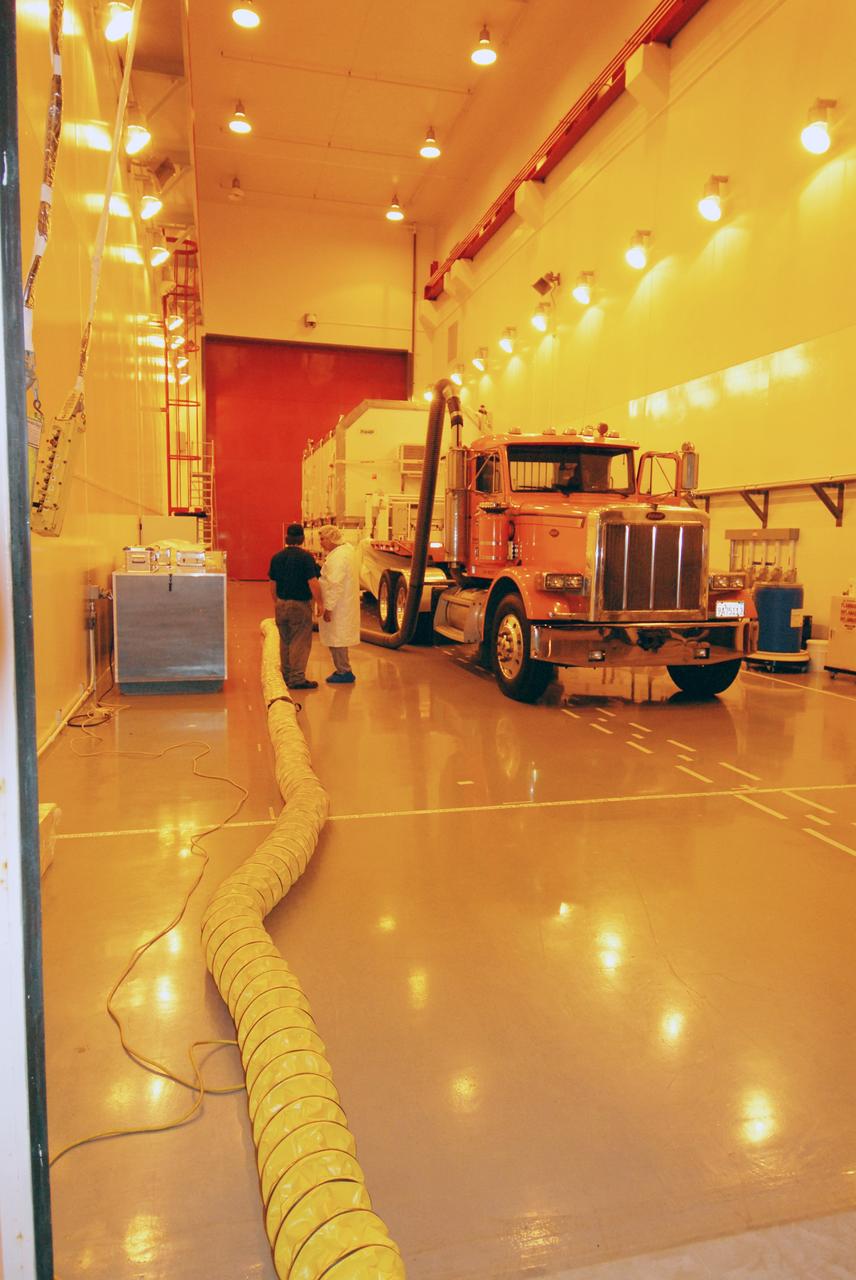
VANDENBERG AIR FORCE BASE, Calif. -- The Aquarius/SAC-D spacecraft is in the Spaceport Systems International payload processing facility at Vandenberg Air Force Base in California. Earlier, a U.S. Air Force C-17 transport plane delivered the spacecraft from Campos, Brazil. Following final tests, the spacecraft will be integrated to a United Launch Alliance Delta II rocket in preparation for the targeted June launch to low Earth orbit. Aquarius, the NASA-built primary instrument on the SAC-D spacecraft, will map global changes in salinity at the ocean's surface. Salinity is a key measurement for understanding how changes in rainfall, evaporation and the melting of freezing of ice influence ocean circulation and are linked to variations in Earth's climate. The three-year mission will provide new insights into how variations in ocean surface salinity relate to these fundamental climate processes. Photo credit: VAFB/30th Space Wing
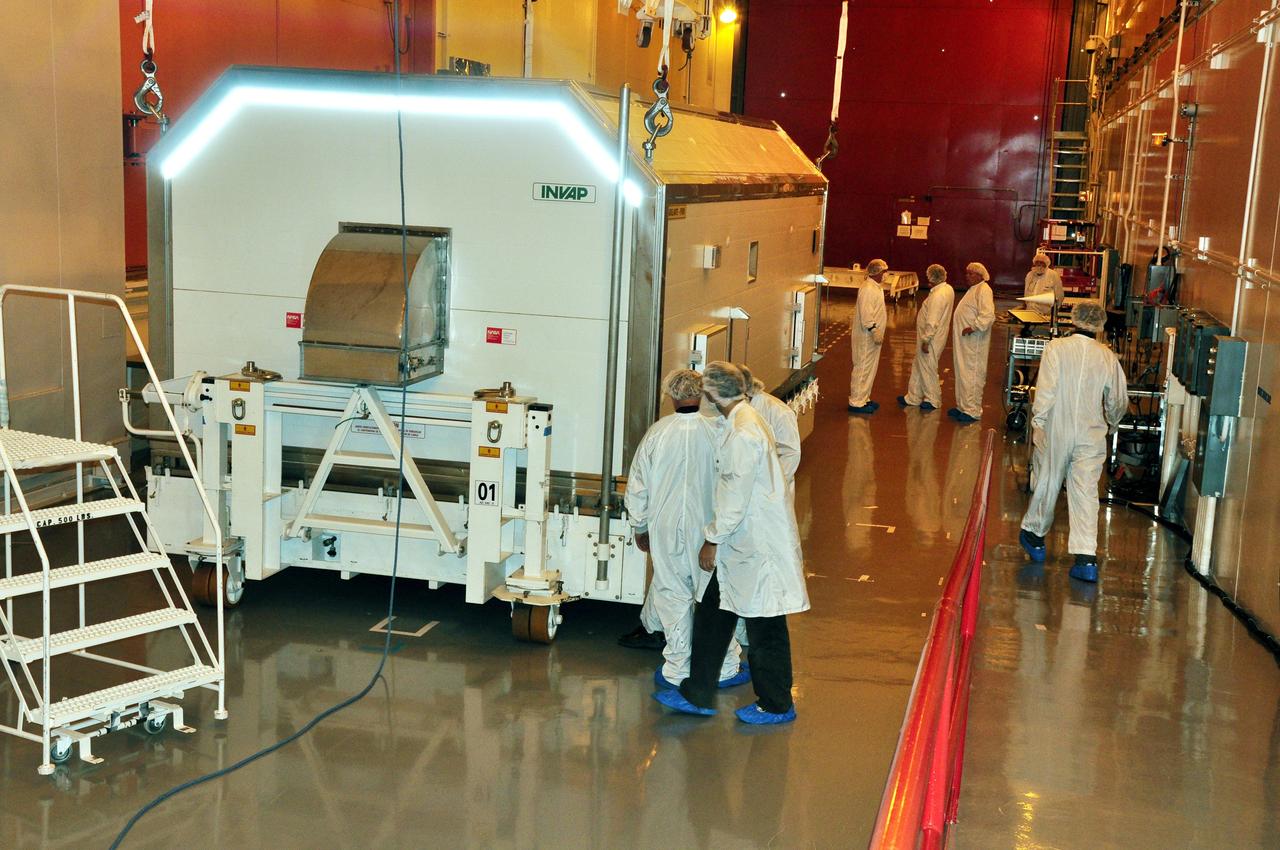
VANDENBERG AIR FORCE BASE, Calif. -- Technicians prepare to unpack and unveil the Aquarius/SAC-D spacecraft in the Spaceport Systems International payload processing facility at Vandenberg Air Force Base in California. The container protected the spacecraft on its journey from Campos, Brazil, aboard a U.S. Air Force C-17 transport plane. Following final tests, the spacecraft will be integrated to a United Launch Alliance Delta II rocket in preparation for the targeted June launch to low Earth orbit. Aquarius, the NASA-built primary instrument on the SAC-D spacecraft, will map global changes in salinity at the ocean's surface. Salinity is a key measurement for understanding how changes in rainfall, evaporation and the melting of freezing of ice influence ocean circulation and are linked to variations in Earth's climate. The three-year mission will provide new insights into how variations in ocean surface salinity relate to these fundamental climate processes. Photo credit: NASA/Randy Beaudoin, VAFB
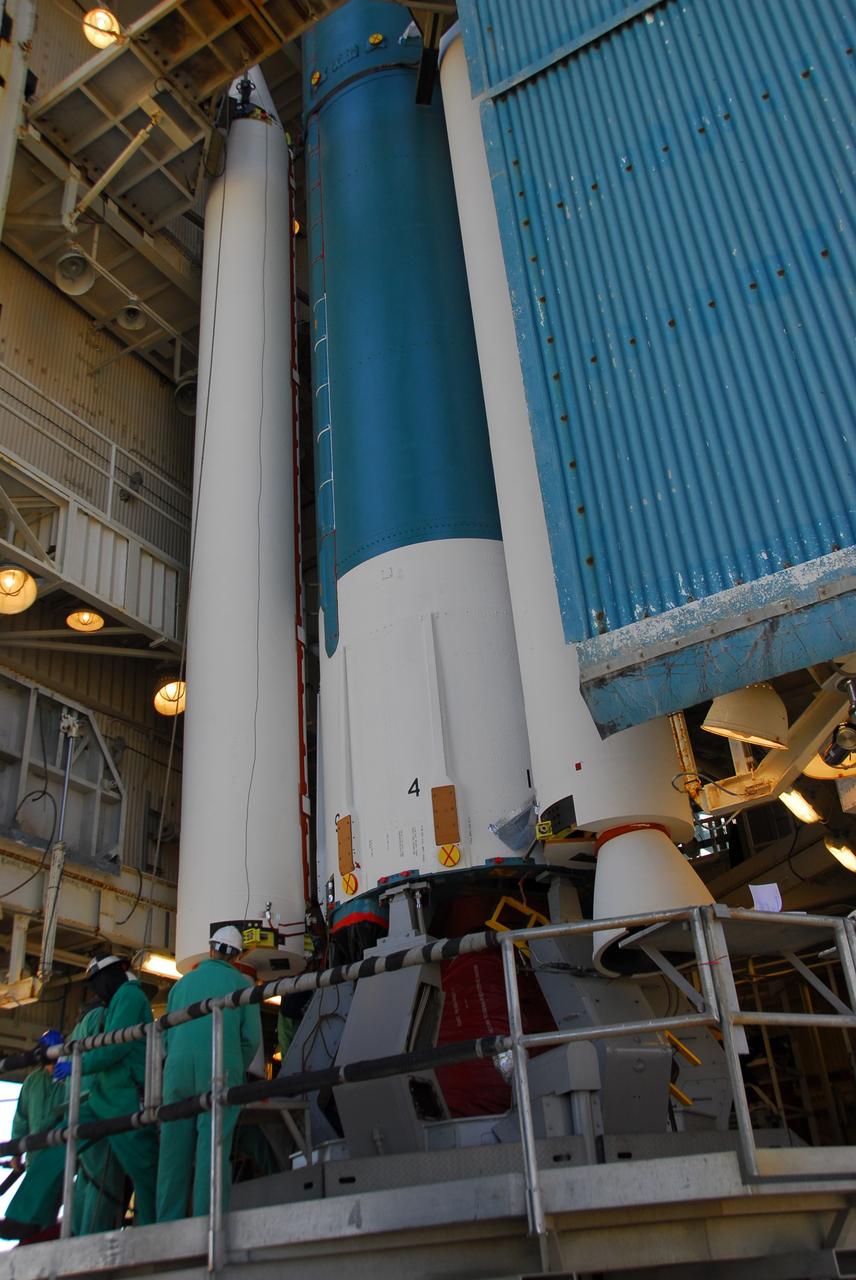
VANDENBERG AIR FORCE BASE, Calif. --At Vandenberg Air Force Base in California, United Launch Alliance technicians finish installing one of three Delta II solid rocket motors on the pad at Space Launch Complex-2 West (SLC-2W). A second motor was installed earlier in the morning. Scheduled to launch in June, the Delta II rocket will carry NASA's Aquarius satellite into low Earth orbit. Aquarius' mission will be to provide monthly maps of global changes in sea surface salinity. By measuring ocean salinity from space, Aquarius will provide new insights into how the massive natural exchange of freshwater between the ocean, atmosphere and sea ice influences ocean circulation, weather and climate. Also going up with the satellite are optical and thermal cameras, a microwave radiometer and the SAC-D spacecraft, which were developed with the help of institutions in Italy, France, Canada and Argentina. Photo credit: VAFB/30th Space Wing
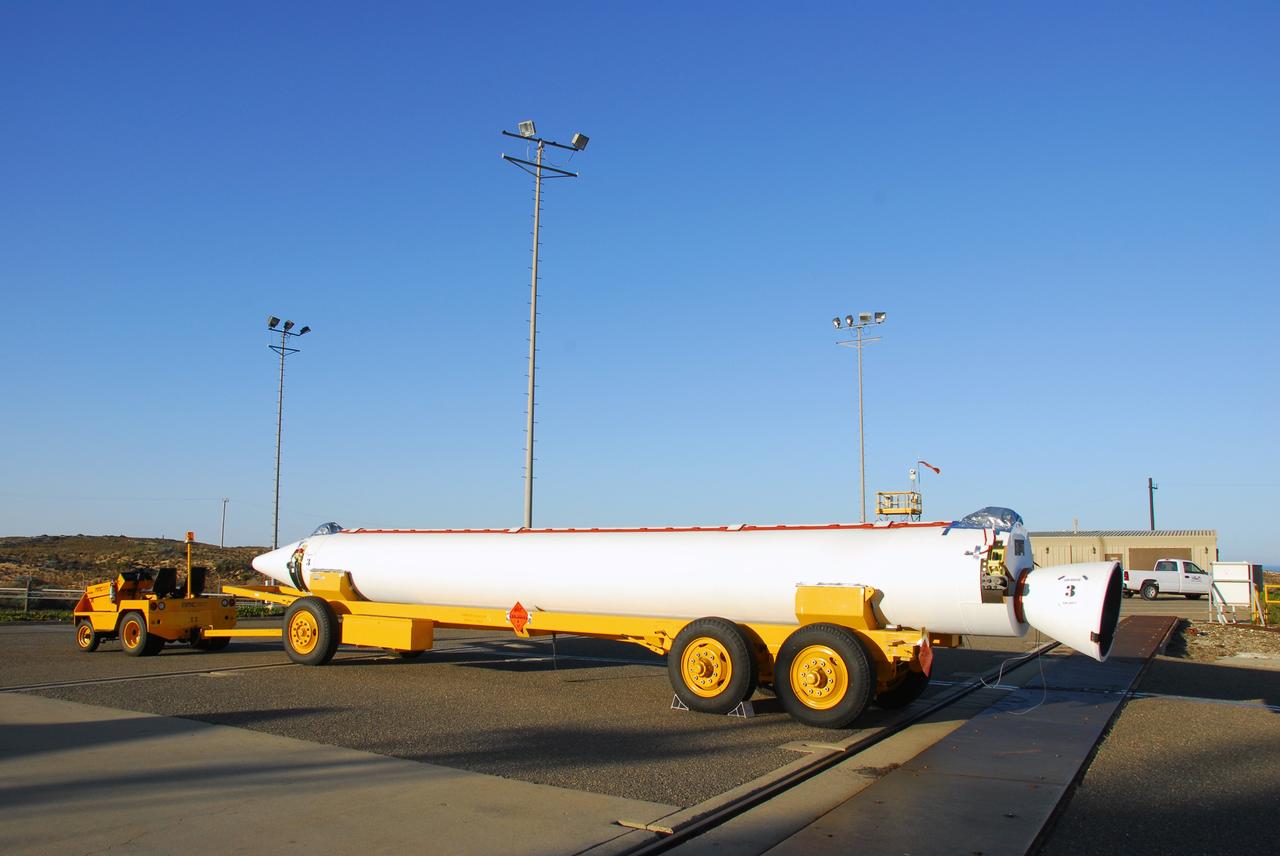
VANDENBERG AIR FORCE BASE, Calif. --At Vandenberg Air Force Base in California, one of three United Space Alliance Delta II solid rocket motors is atop a tug for the move from the solid motor facility to Space Launch Complex-2 West (SLC-2W). Scheduled to launch in June, the Delta II rocket will carry NASA's Aquarius satellite into low Earth orbit. Aquarius' mission will be to provide monthly maps of global changes in sea surface salinity. By measuring ocean salinity from space, Aquarius will provide new insights into how the massive natural exchange of freshwater between the ocean, atmosphere and sea ice influences ocean circulation, weather and climate. Also going up with the satellite are optical and thermal cameras, a microwave radiometer and the SAC-D spacecraft, which were developed with the help of institutions in Italy, France, Canada and Argentina. Photo credit: VAFB/30th Space Wing
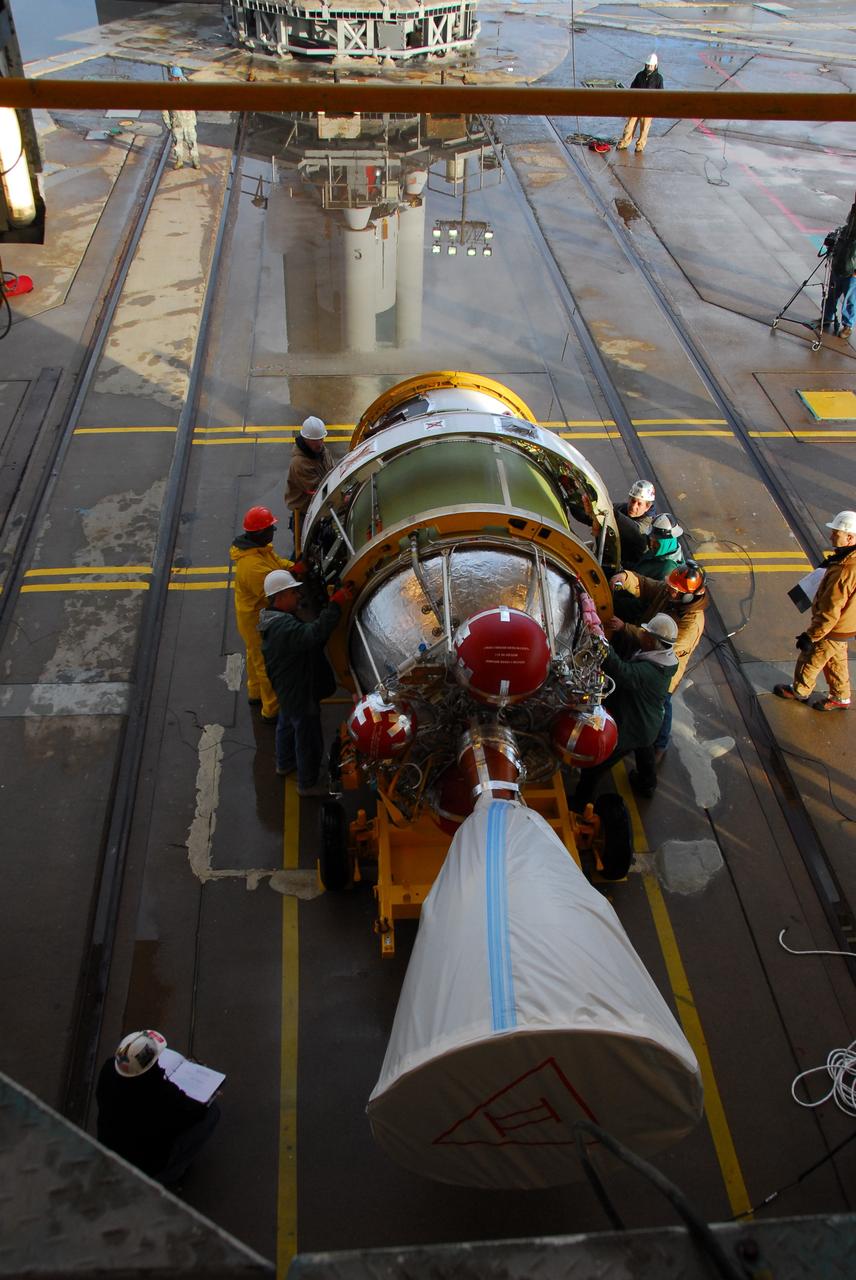
VANDENBERG AIR FORCE BASE, Calif. -- United Space Alliance technicians prepare to hoist the second stage of a Delta II rocket into position in the Space Launch Complex-2 (SLC-2) service tower at Vandenberg Air Force Base in California. The rocket is being prepared to launch NASA's Aquarius satellite into low Earth orbit. Scheduled to launch in June, Aquarius' mission will be to provide monthly maps of global changes in sea surface salinity. By measuring ocean salinity from space, Aquarius will provide new insights into how the massive natural exchange of freshwater between the ocean, atmosphere and sea ice influences ocean circulation, weather and climate. Also going up with the satellite are optical and thermal cameras, a microwave radiometer and the SAC-D spacecraft, which were developed with the help of institutions in Italy, France, Canada and Argentina. Photo credit: VAFB/30th Space Wing
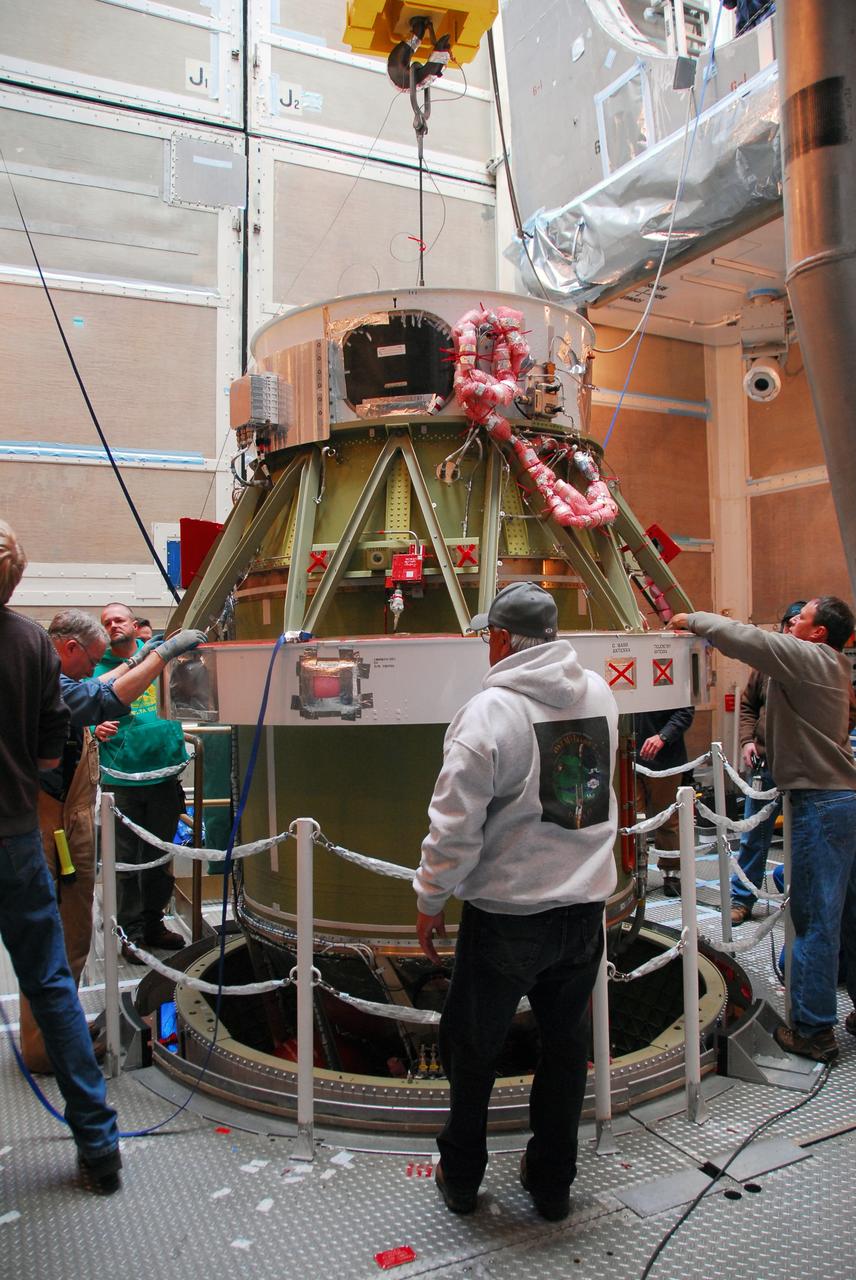
VANDENBERG AIR FORCE BASE, Calif. -- With the Space Launch Complex-2 (SLC-2) service tower at Vandenberg Air Force Base in California back in place, United Space Alliance technicians lower the second stage of a Delta II rocket into position over the first stage and three solid rocket motors. The rocket is being prepared to launch NASA's Aquarius satellite into low Earth orbit. Scheduled to launch in June, Aquarius' mission will be to provide monthly maps of global changes in sea surface salinity. By measuring ocean salinity from space, Aquarius will provide new insights into how the massive natural exchange of freshwater between the ocean, atmosphere and sea ice influences ocean circulation, weather and climate. Also going up with the satellite are optical and thermal cameras, a microwave radiometer and the SAC-D spacecraft, which were developed with the help of institutions in Italy, France, Canada and Argentina. Photo credit: VAFB/30th Space Wing

VANDENBERG AIR FORCE BASE, Calif. --As the sun rises over Vandenberg Air Force Base in California, a crane begins to raise one of three United Launch Alliance Delta II solid rocket motors on the pad at Space Launch Complex-2 West (SLC-2W). Scheduled to launch in June, the Delta II rocket will carry NASA's Aquarius satellite into low Earth orbit. Aquarius' mission will be to provide monthly maps of global changes in sea surface salinity. By measuring ocean salinity from space, Aquarius will provide new insights into how the massive natural exchange of freshwater between the ocean, atmosphere and sea ice influences ocean circulation, weather and climate. Also going up with the satellite are optical and thermal cameras, a microwave radiometer and the SAC-D spacecraft, which were developed with the help of institutions in Italy, France, Canada and Argentina. Photo credit: VAFB/30th Space Wing
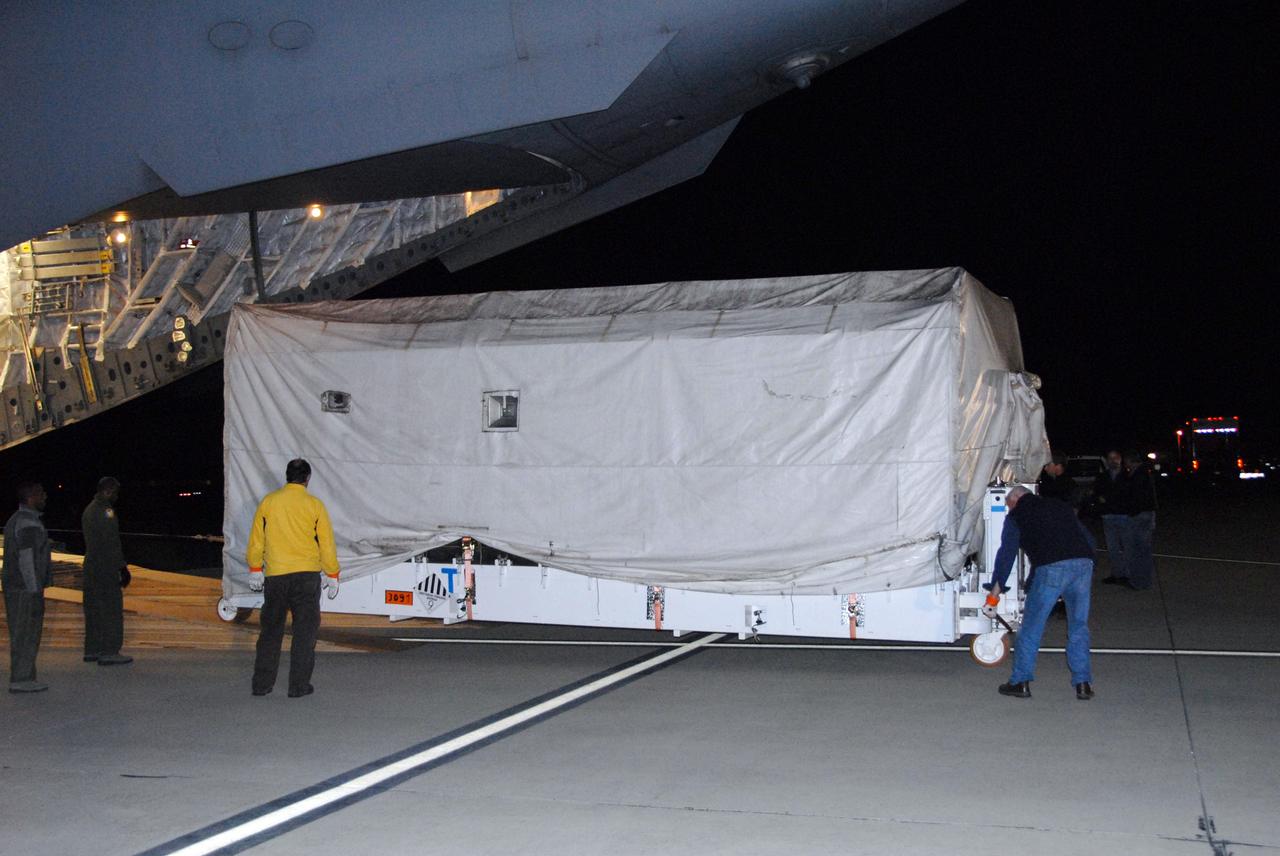
VANDENBERG AIR FORCE BASE, Calif. -- The Aquarius/SAC-D spacecraft is offloaded from a U.S. Air Force C-17 transport at Vandenberg Air Force Base in California. The aircraft traveled from Campos, Brazil. Following final tests, the spacecraft will be integrated to a United Launch Alliance Delta II rocket in preparation for the targeted June launch to low Earth orbit. Aquarius, the NASA-built primary instrument on the SAC-D spacecraft, will map global changes in salinity at the ocean's surface. Salinity is a key measurement for understanding how changes in rainfall, evaporation and the melting of freezing of ice influence ocean circulation and are linked to variations in Earth's climate. The three-year mission will provide new insights into how variations in ocean surface salinity relate to these fundamental climate processes. Photo credit: VAFB/30th Space Wing
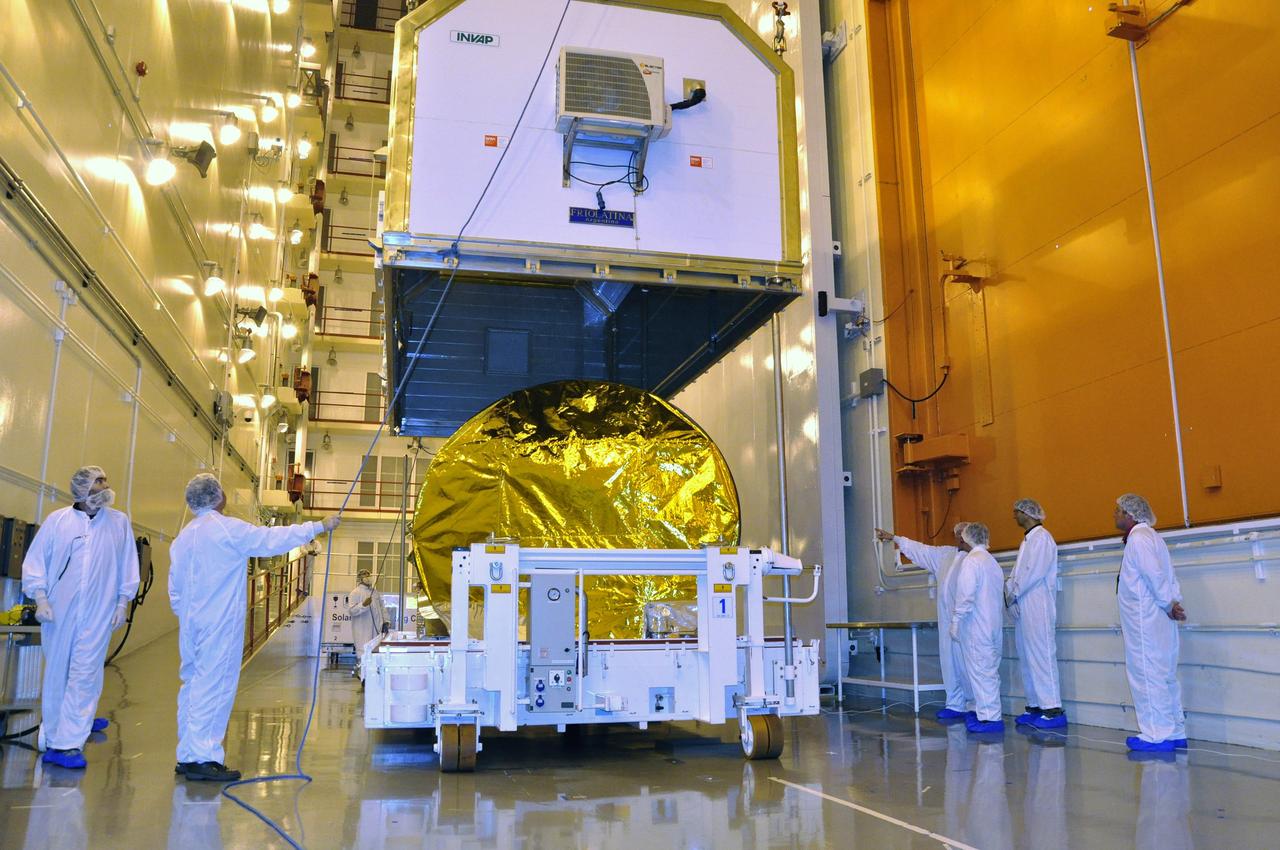
VANDENBERG AIR FORCE BASE, Calif. -- Technicians unpack and unveil the Aquarius/SAC-D spacecraft in the Spaceport Systems International payload processing facility at Vandenberg Air Force Base in California. The container protected the spacecraft on its journey from Campos, Brazil, aboard a U.S. Air Force C-17 transport plane. Following final tests, the spacecraft will be integrated to a United Launch Alliance Delta II rocket in preparation for the targeted June launch to low Earth orbit. Aquarius, the NASA-built primary instrument on the SAC-D spacecraft, will map global changes in salinity at the ocean's surface. Salinity is a key measurement for understanding how changes in rainfall, evaporation and the melting of freezing of ice influence ocean circulation and are linked to variations in Earth's climate. The three-year mission will provide new insights into how variations in ocean surface salinity relate to these fundamental climate processes. Photo credit: NASA/Randy Beaudoin, VAFB
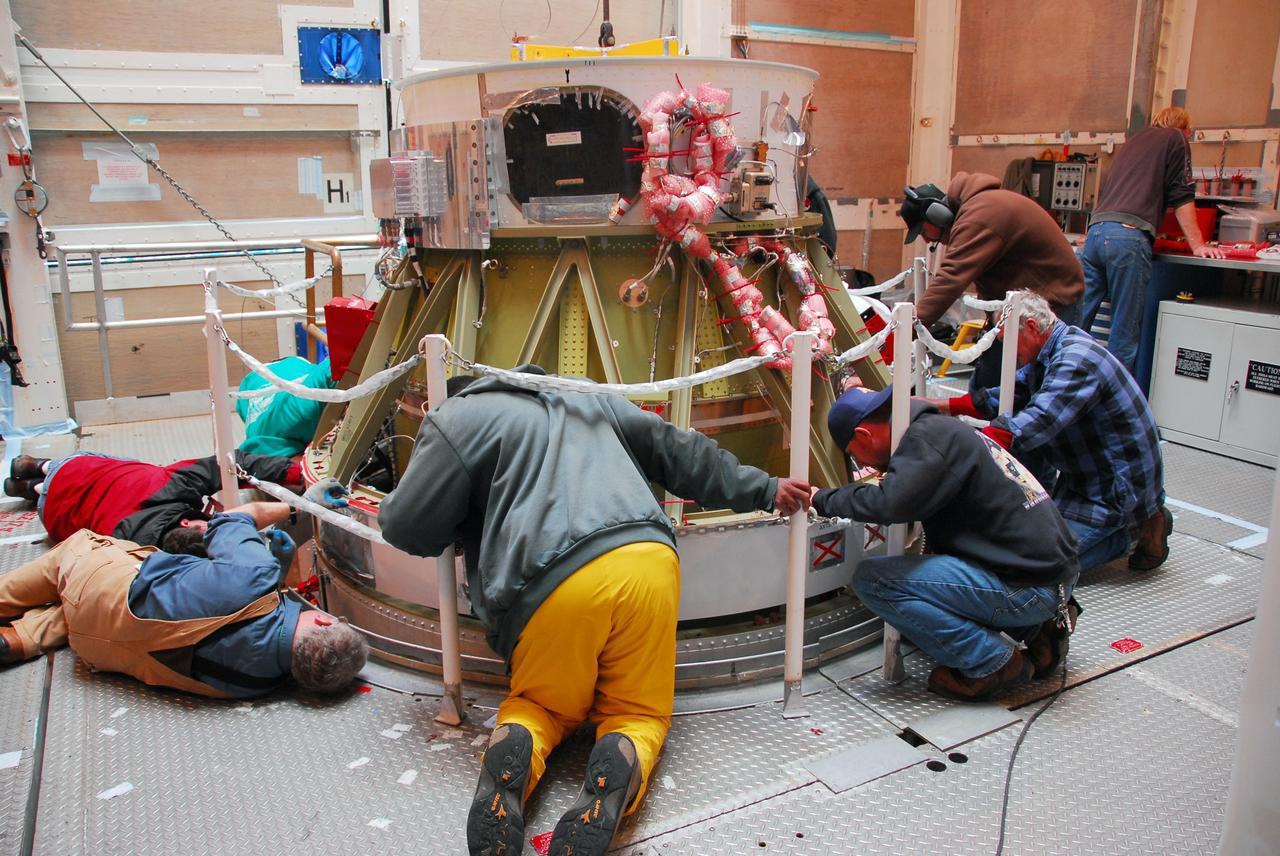
VANDENBERG AIR FORCE BASE, Calif. -- With the Space Launch Complex-2 (SLC-2) service tower at Vandenberg Air Force Base in California back in place, United Space Alliance technicians complete the installation of the second stage of a Delta II rocket to the first stage. The rocket is being prepared to launch NASA's Aquarius satellite into low Earth orbit. Scheduled to launch in June, Aquarius' mission will be to provide monthly maps of global changes in sea surface salinity. By measuring ocean salinity from space, Aquarius will provide new insights into how the massive natural exchange of freshwater between the ocean, atmosphere and sea ice influences ocean circulation, weather and climate. Also going up with the satellite are optical and thermal cameras, a microwave radiometer and the SAC-D spacecraft, which were developed with the help of institutions in Italy, France, Canada and Argentina. Photo credit: VAFB/30th Space Wing
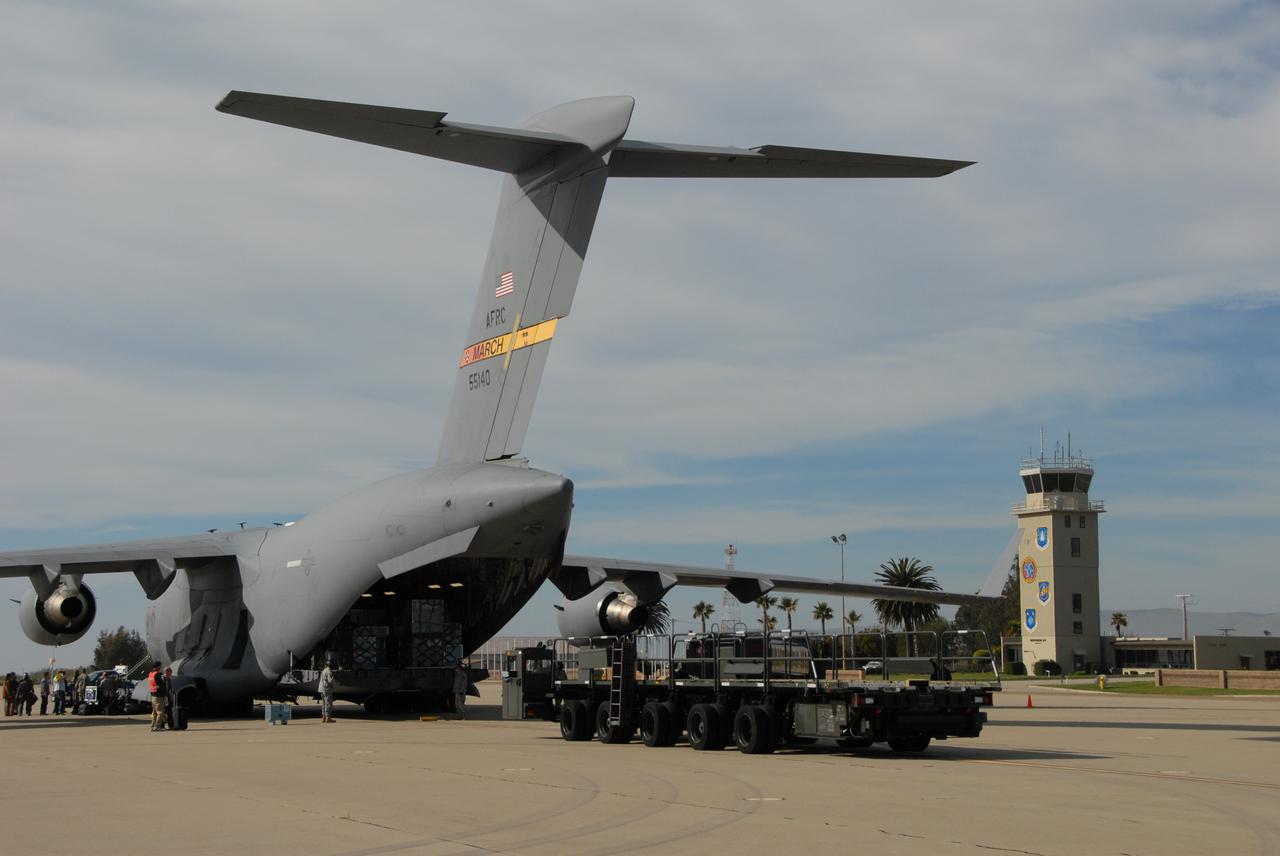
VANDENBERG AIR FORCE BASE, Calif. -- Workers at Vandenberg Air Force Base in California prepare to offload the Aquarius/SAC-D spacecraft from a U.S. Air Force C-17 transport plane. The aircraft traveled from Campos, Brazil. Following final tests, the spacecraft will be integrated to a United Launch Alliance Delta II rocket in preparation for the targeted June launch to low Earth orbit. Aquarius, the NASA-built primary instrument on the SAC-D spacecraft, will map global changes in salinity at the ocean's surface. Salinity is a key measurement for understanding how changes in rainfall, evaporation and the melting of freezing of ice influence ocean circulation and are linked to variations in Earth's climate. The three-year mission will provide new insights into how variations in ocean surface salinity relate to these fundamental climate processes. Photo credit: VAFB/30th Space Wing
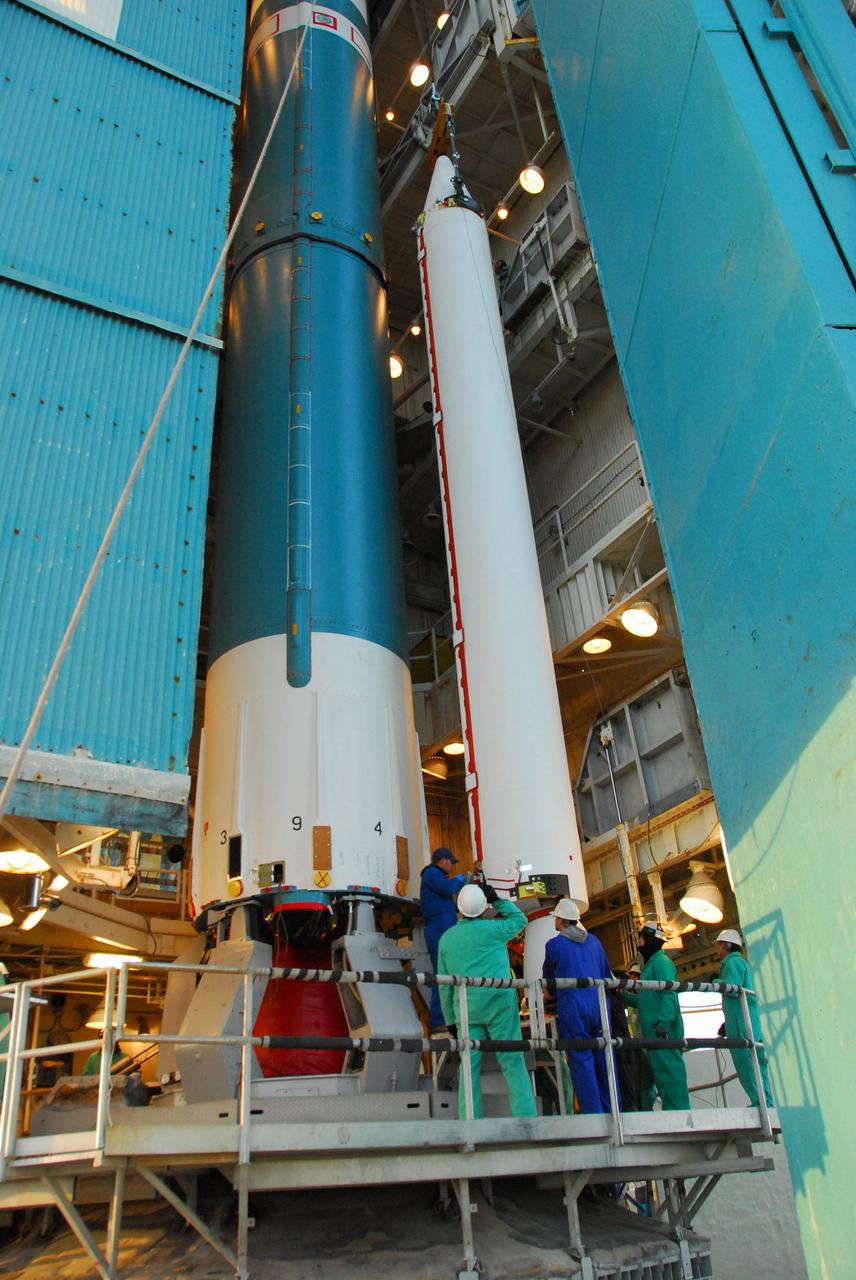
VANDENBERG AIR FORCE BASE, Calif. --As the sun rises over Vandenberg Air Force Base in California, a crane raises one of three United Launch Alliance Delta II solid rocket motors on the pad at Space Launch Complex-2 West (SLC-2W). Scheduled to launch in June, the Delta II rocket will carry NASA's Aquarius satellite into low Earth orbit. Aquarius' mission will be to provide monthly maps of global changes in sea surface salinity. By measuring ocean salinity from space, Aquarius will provide new insights into how the massive natural exchange of freshwater between the ocean, atmosphere and sea ice influences ocean circulation, weather and climate. Also going up with the satellite are optical and thermal cameras, a microwave radiometer and the SAC-D spacecraft, which were developed with the help of institutions in Italy, France, Canada and Argentina. Photo credit: VAFB/30th Space Wing
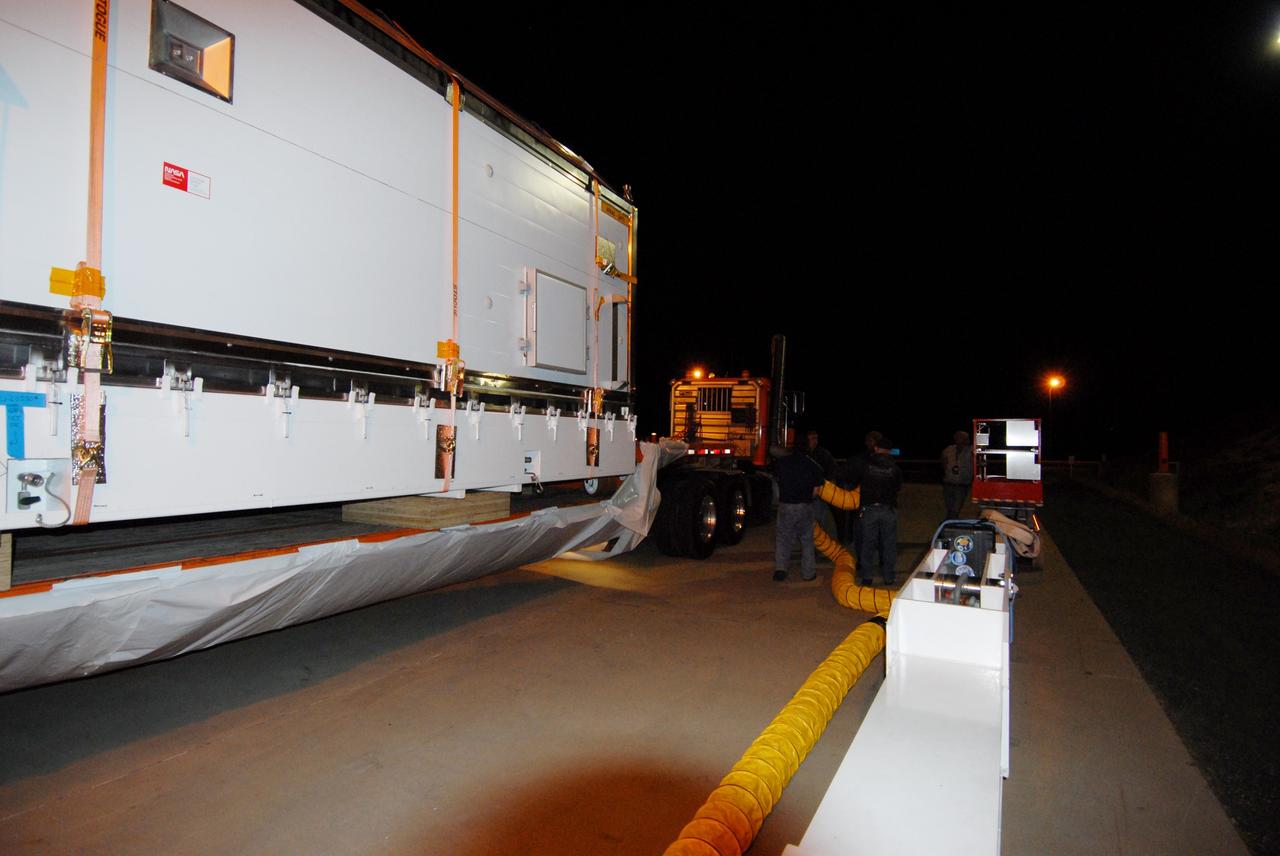
VANDENBERG AIR FORCE BASE, Calif. -- The Aquarius/SAC-D spacecraft is transported to the Spaceport Systems International payload processing facility at Vandenberg Air Force Base in California. Earlier, a U.S. Air Force C-17 transport plane delivered the spacecraft from Campos, Brazil. Following final tests, the spacecraft will be integrated to a United Launch Alliance Delta II rocket in preparation for the targeted June launch to low Earth orbit. Aquarius, the NASA-built primary instrument on the SAC-D spacecraft, will map global changes in salinity at the ocean's surface. Salinity is a key measurement for understanding how changes in rainfall, evaporation and the melting of freezing of ice influence ocean circulation and are linked to variations in Earth's climate. The three-year mission will provide new insights into how variations in ocean surface salinity relate to these fundamental climate processes. Photo credit: VAFB/30th Space Wing
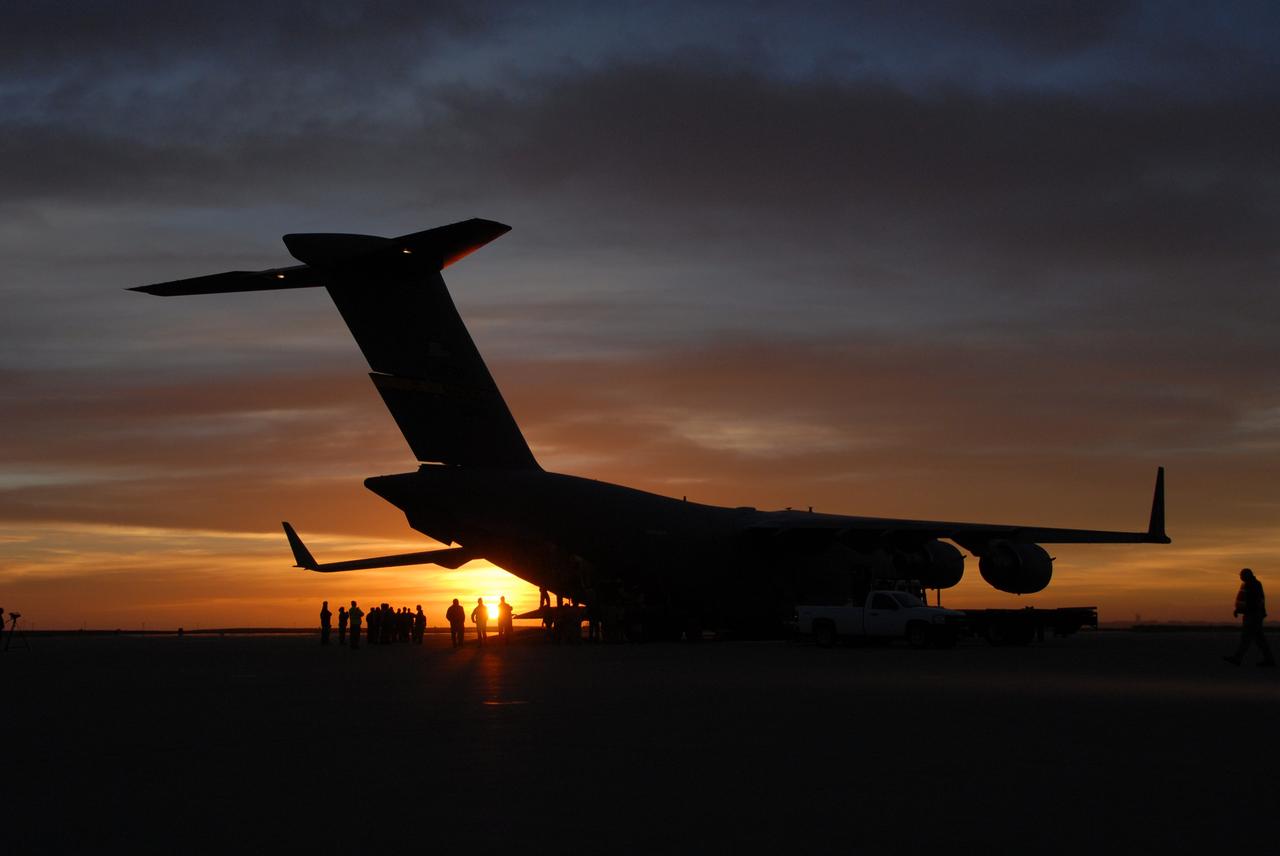
VANDENBERG AIR FORCE BASE, Calif. -- Workers at Vandenberg Air Force Base in California prepare to offload the Aquarius/SAC-D spacecraft from a U.S. Air Force C-17 transport plane. The aircraft traveled from Campos, Brazil. Following final tests, the spacecraft will be integrated to a United Launch Alliance Delta II rocket in preparation for the targeted June launch to low Earth orbit. Aquarius, the NASA-built primary instrument on the SAC-D spacecraft, will map global changes in salinity at the ocean's surface. Salinity is a key measurement for understanding how changes in rainfall, evaporation and the melting of freezing of ice influence ocean circulation and are linked to variations in Earth's climate. The three-year mission will provide new insights into how variations in ocean surface salinity relate to these fundamental climate processes. Photo credit: VAFB/30th Space Wing
VANDENBERG AIR FORCE BASE, Calif. -- The Aquarius/SAC-D spacecraft is transported to the Spaceport Systems International processing facility at Vandenberg Air Force Base in California. Earlier, a U.S. Air Force C-17 transport plane delivered the spacecraft from Campos, Brazil. Following final tests, the spacecraft will be integrated to a United Launch Alliance Delta II rocket in preparation for the targeted June launch to low Earth orbit. Aquarius, the NASA-built primary instrument on the SAC-D spacecraft, will map global changes in salinity at the ocean's surface. Salinity is a key measurement for understanding how changes in rainfall, evaporation and the melting of freezing of ice influence ocean circulation and are linked to variations in Earth's climate. The three-year mission will provide new insights into how variations in ocean surface salinity relate to these fundamental climate processes. Photo credit: VAFB/30th Space Wing
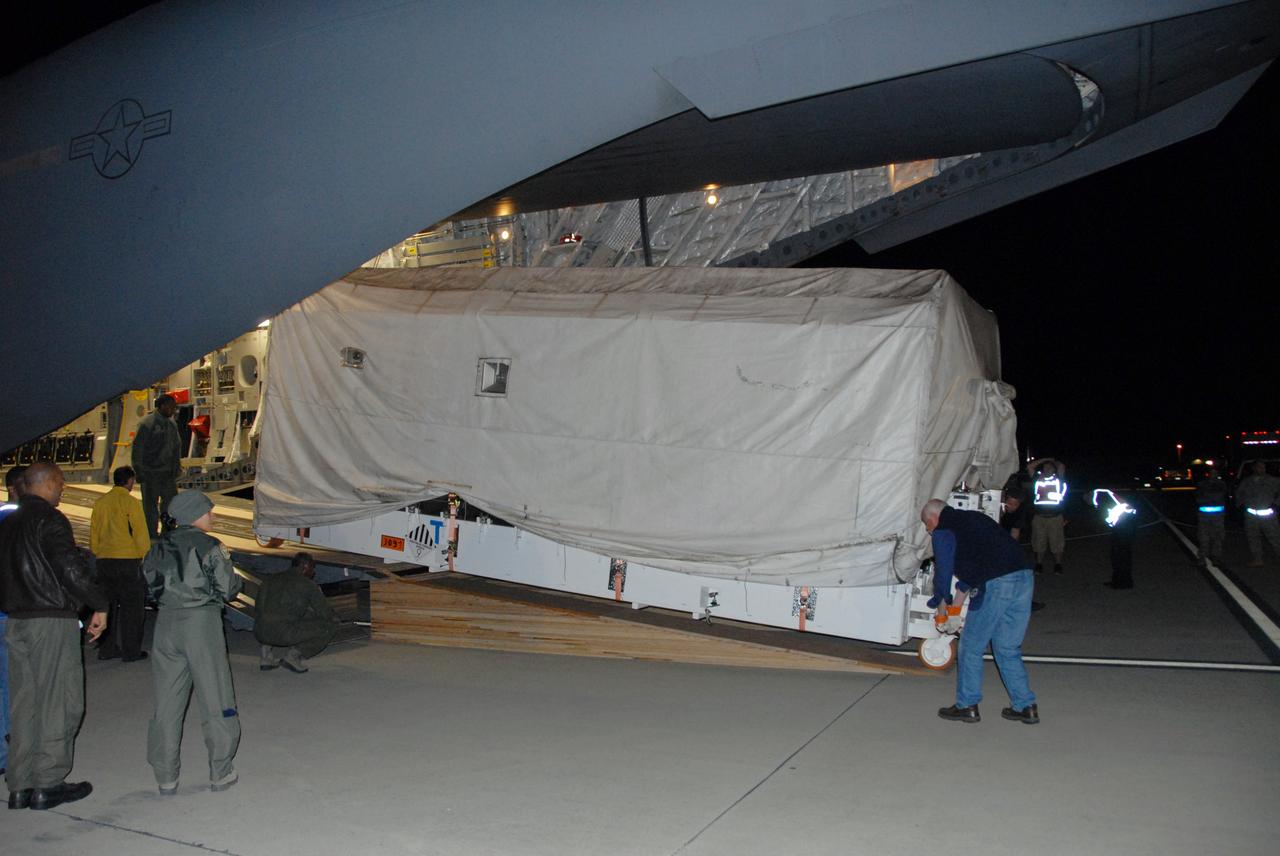
VANDENBERG AIR FORCE BASE, Calif. -- The Aquarius/SAC-D spacecraft is offloaded from a U.S. Air Force C-17 transport at Vandenberg Air Force Base in California. The aircraft traveled from Campos, Brazil. Following final tests, the spacecraft will be integrated to a United Launch Alliance Delta II rocket in preparation for the targeted June launch to low Earth orbit. Aquarius, the NASA-built primary instrument on the SAC-D spacecraft, will map global changes in salinity at the ocean's surface. Salinity is a key measurement for understanding how changes in rainfall, evaporation and the melting of freezing of ice influence ocean circulation and are linked to variations in Earth's climate. The three-year mission will provide new insights into how variations in ocean surface salinity relate to these fundamental climate processes. Photo credit: VAFB/30th Space Wing
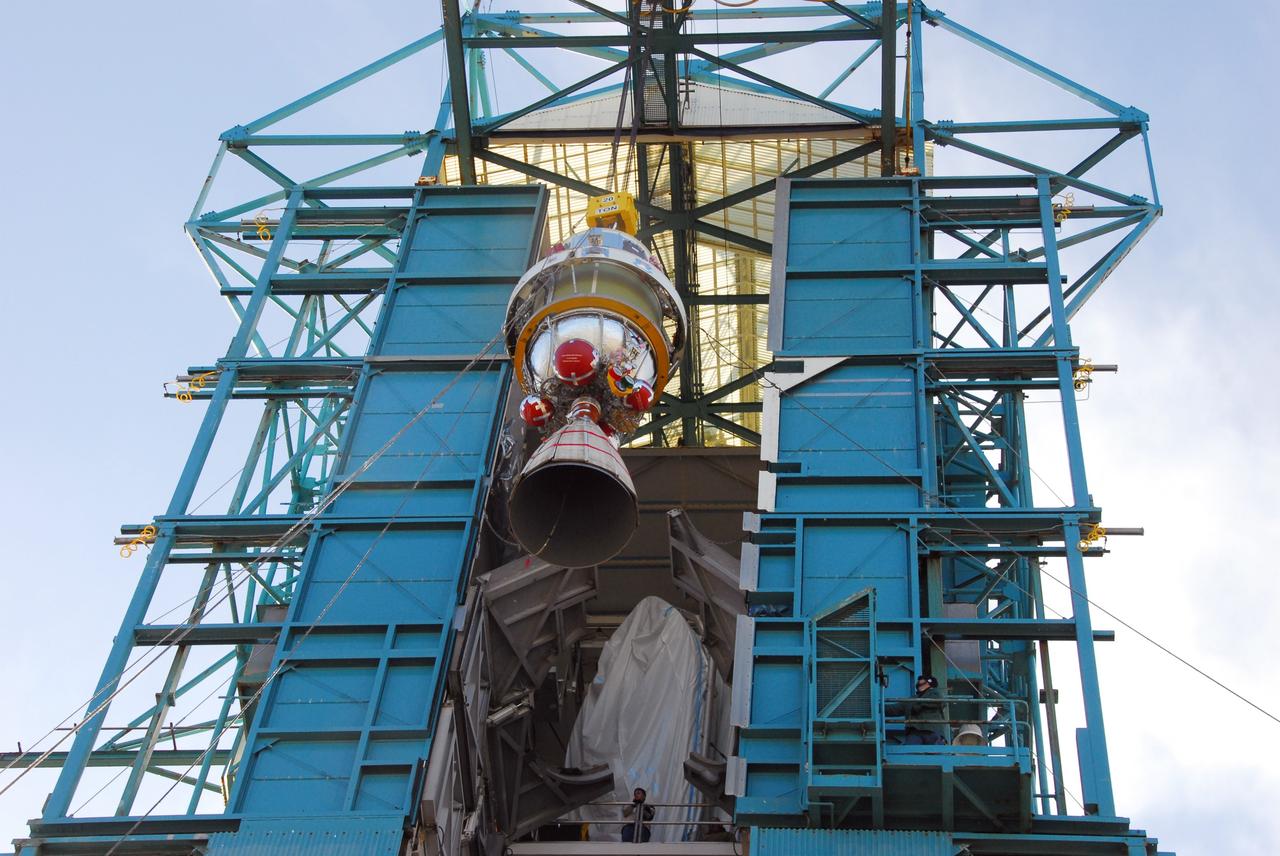
VANDENBERG AIR FORCE BASE, Calif. -- United Space Alliance technicians hoist the second stage of a Delta II rocket into position in the Space Launch Complex-2 (SLC-2) service tower at Vandenberg Air Force Base in California. The rocket is being prepared to launch NASA's Aquarius satellite into low Earth orbit. Scheduled to launch in June, Aquarius' mission will be to provide monthly maps of global changes in sea surface salinity. By measuring ocean salinity from space, Aquarius will provide new insights into how the massive natural exchange of freshwater between the ocean, atmosphere and sea ice influences ocean circulation, weather and climate. Also going up with the satellite are optical and thermal cameras, a microwave radiometer and the SAC-D spacecraft, which were developed with the help of institutions in Italy, France, Canada and Argentina. Photo credit: VAFB/30th Space Wing
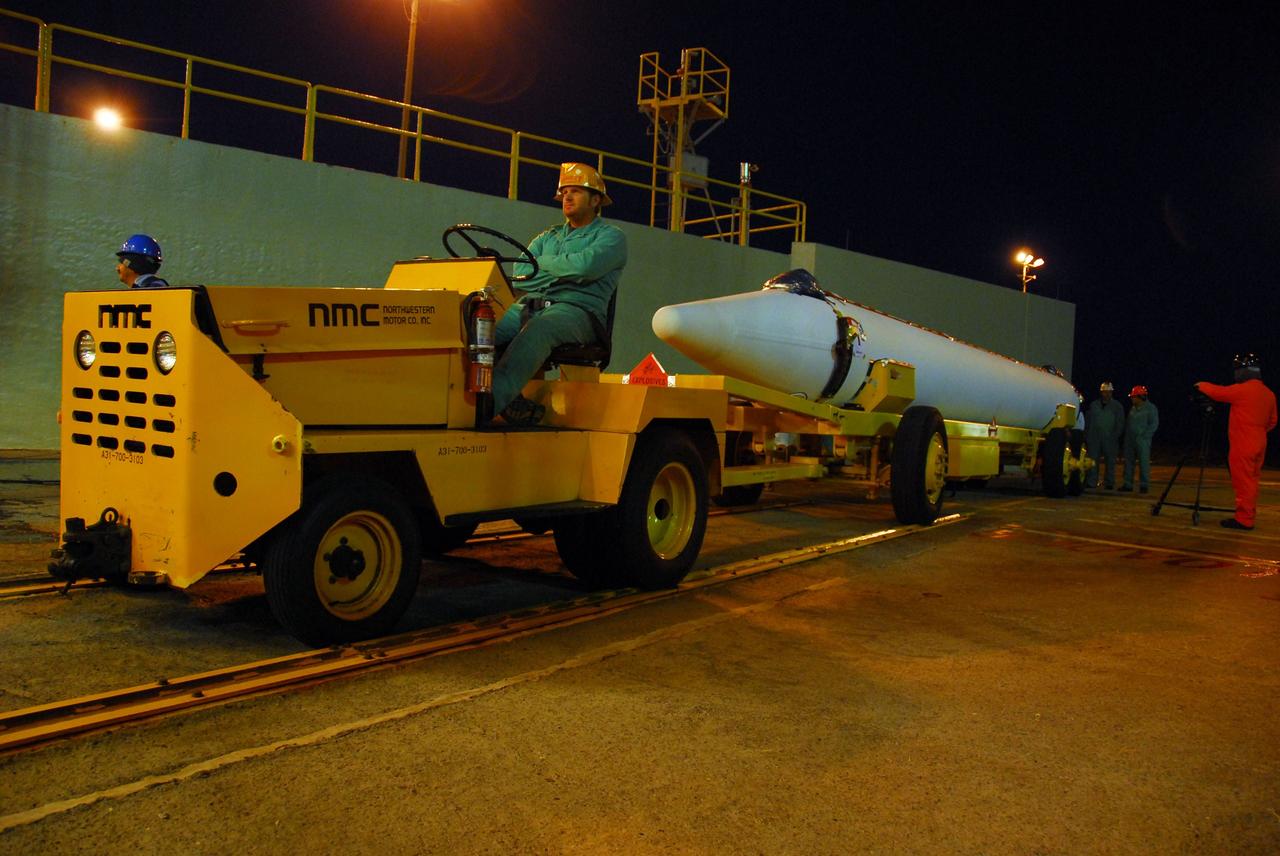
VANDENBERG AIR FORCE BASE, Calif. --Before the sun rises over Vandenberg Air Force Base in California, United Launch Alliance technicians prepare to move one of three Delta II solid rocket motors from the solid motor facility to Space Launch Complex-2 West (SLC-2W) atop a tug. ULA technician Eric Chambless is in the tug's driver seat. Scheduled to launch in June, the Delta II rocket will carry NASA's Aquarius satellite into low Earth orbit. Aquarius' mission will be to provide monthly maps of global changes in sea surface salinity. By measuring ocean salinity from space, Aquarius will provide new insights into how the massive natural exchange of freshwater between the ocean, atmosphere and sea ice influences ocean circulation, weather and climate. Also going up with the satellite are optical and thermal cameras, a microwave radiometer and the SAC-D spacecraft, which were developed with the help of institutions in Italy, France, Canada and Argentina. Photo credit: VAFB/30th Space Wing
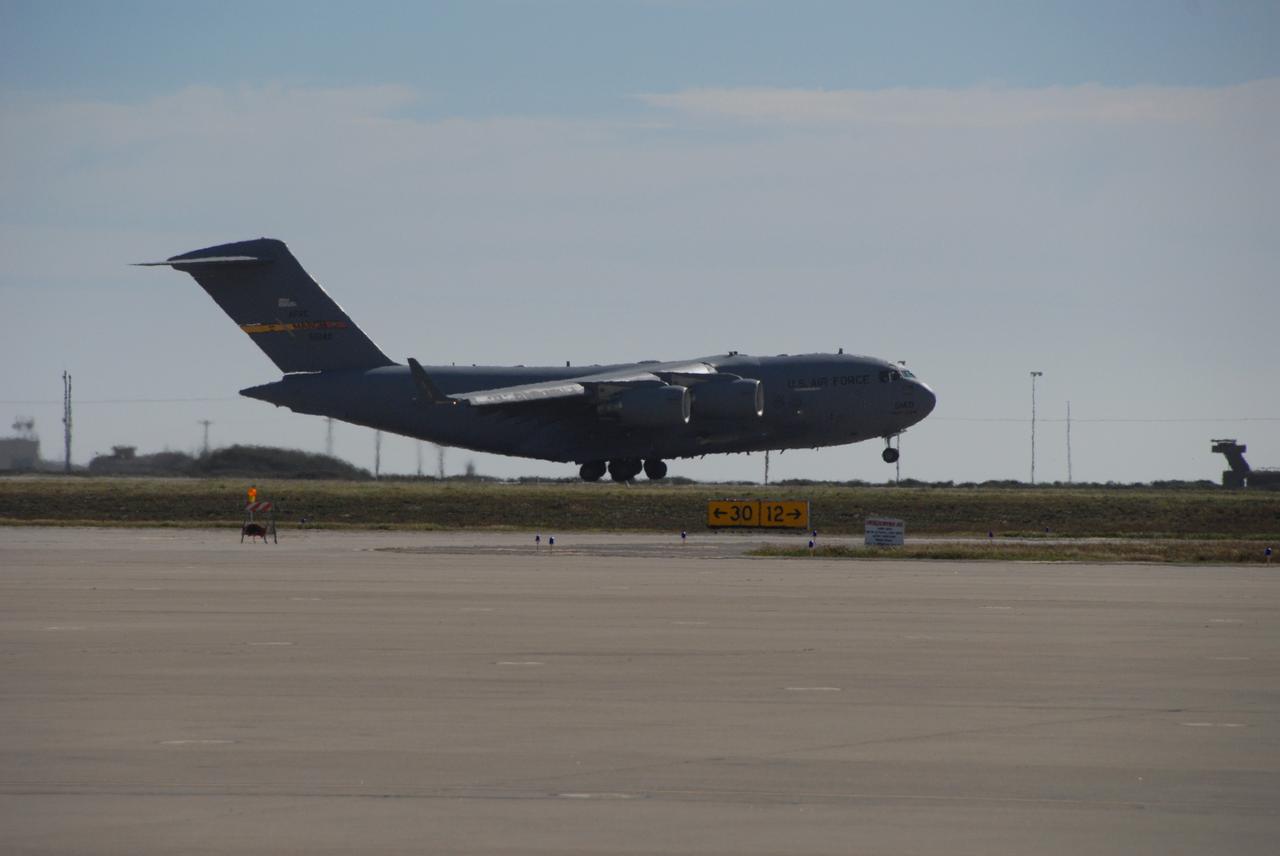
VANDENBERG AIR FORCE BASE, Calif. -- The Aquarius/SAC-D spacecraft arrives at Vandenberg Air Force Base in California from Campos, Brazil, aboard a U.S. Air Force C-17 transport plane. Following final tests, the spacecraft will be integrated to a United Launch Alliance Delta II rocket in preparation for the targeted June launch to low Earth orbit. Aquarius, the NASA-built primary instrument on the SAC-D spacecraft, will map global changes in salinity at the ocean's surface. Salinity is a key measurement for understanding how changes in rainfall, evaporation and the melting of freezing of ice influence ocean circulation and are linked to variations in Earth's climate. The three-year mission will provide new insights into how variations in ocean surface salinity relate to these fundamental climate processes. Photo credit: VAFB/30th Space Wing
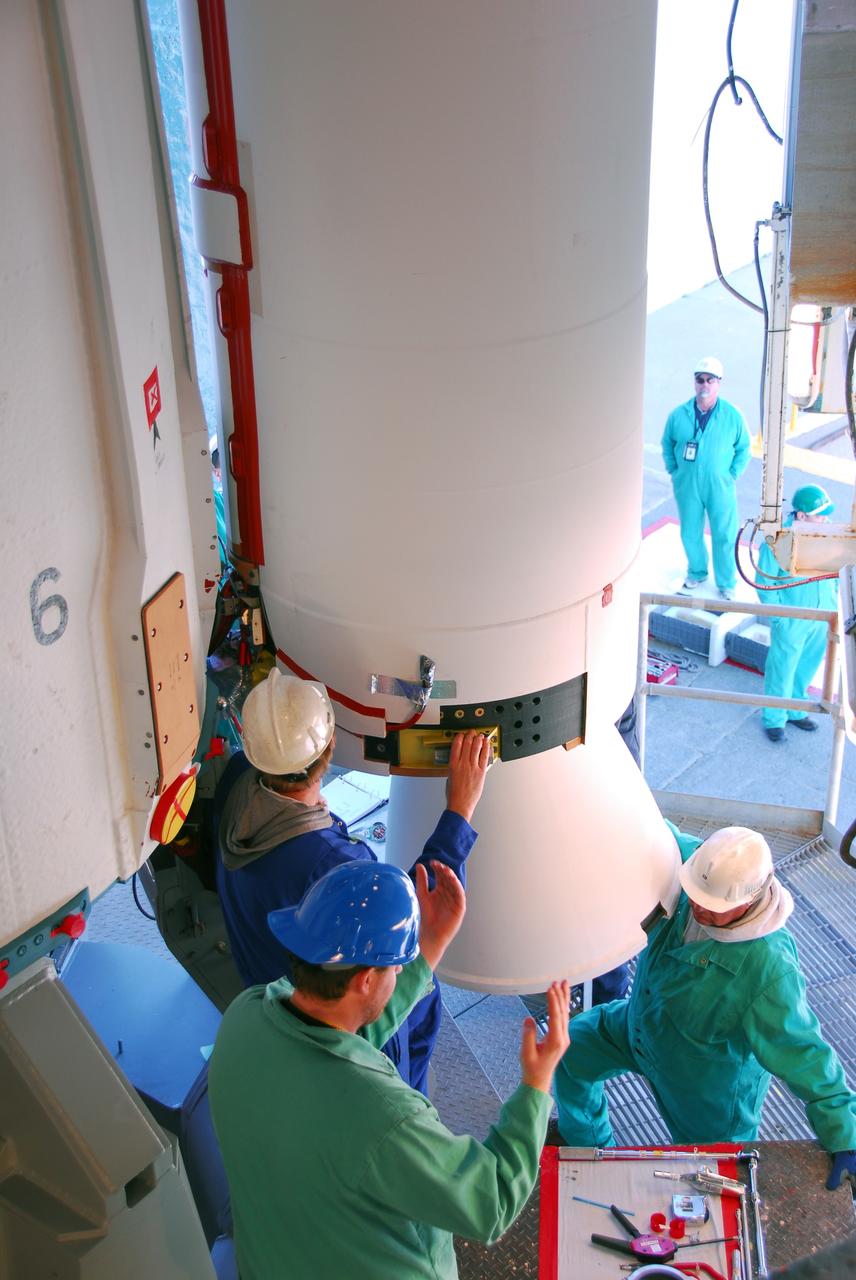
VANDENBERG AIR FORCE BASE, Calif. --At Vandenberg Air Force Base in California, United Launch Alliance technicians finish installing one of three Delta II solid rocket motors on the pad at Space Launch Complex-2 West (SLC-2W). Scheduled to launch in June, the Delta II rocket will carry NASA's Aquarius satellite into low Earth orbit. Aquarius' mission will be to provide monthly maps of global changes in sea surface salinity. By measuring ocean salinity from space, Aquarius will provide new insights into how the massive natural exchange of freshwater between the ocean, atmosphere and sea ice influences ocean circulation, weather and climate. Also going up with the satellite are optical and thermal cameras, a microwave radiometer and the SAC-D spacecraft, which were developed with the help of institutions in Italy, France, Canada and Argentina. Photo credit: VAFB/30th Space Wing
VANDENBERG AIR FORCE BASE, Calif. --At Vandenberg Air Force Base in California, a crane raises one of three United Launch Alliance Delta II solid rocket motors on the pad at Space Launch Complex-2 West (SLC-2W). A second motor was installed earlier in the morning. Scheduled to launch in June, the Delta II rocket will carry NASA's Aquarius satellite into low Earth orbit. Aquarius' mission will be to provide monthly maps of global changes in sea surface salinity. By measuring ocean salinity from space, Aquarius will provide new insights into how the massive natural exchange of freshwater between the ocean, atmosphere and sea ice influences ocean circulation, weather and climate. Also going up with the satellite are optical and thermal cameras, a microwave radiometer and the SAC-D spacecraft, which were developed with the help of institutions in Italy, France, Canada and Argentina. Photo credit: VAFB/30th Space Wing
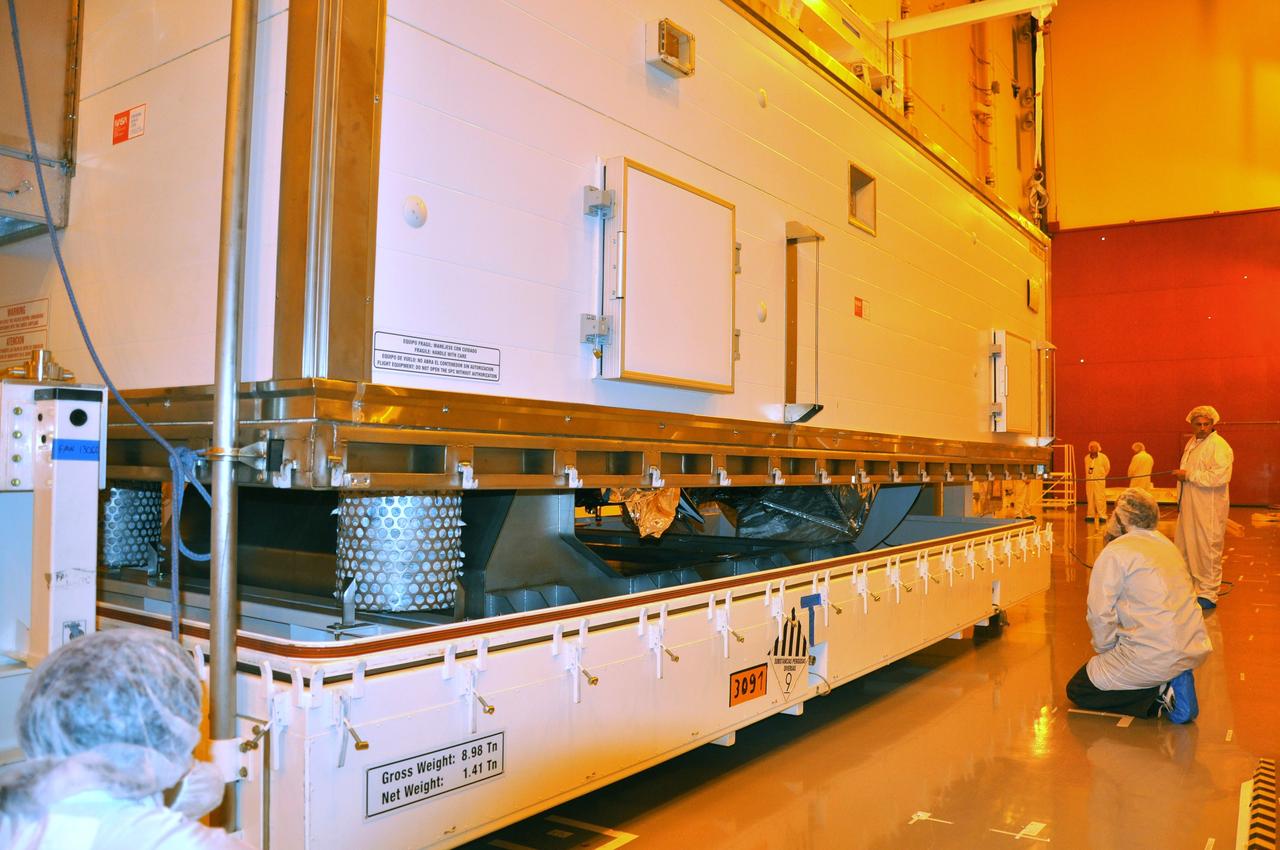
VANDENBERG AIR FORCE BASE, Calif. -- Technicians begin to unpack and unveil the Aquarius/SAC-D spacecraft in the Spaceport Systems International payload processing facility at Vandenberg Air Force Base in California. The container protected the spacecraft on its journey from Campos, Brazil, aboard a U.S. Air Force C-17 transport plane. Following final tests, the spacecraft will be integrated to a United Launch Alliance Delta II rocket in preparation for the targeted June launch to low Earth orbit. Aquarius, the NASA-built primary instrument on the SAC-D spacecraft, will map global changes in salinity at the ocean's surface. Salinity is a key measurement for understanding how changes in rainfall, evaporation and the melting of freezing of ice influence ocean circulation and are linked to variations in Earth's climate. The three-year mission will provide new insights into how variations in ocean surface salinity relate to these fundamental climate processes. Photo credit: NASA/Randy Beaudoin, VAFB
VANDENBERG AIR FORCE BASE, Calif. --At Vandenberg Air Force Base in California, a crane raises one of three United Launch Alliance Delta II solid rocket motors on the pad at Space Launch Complex-2 West (SLC-2W). Scheduled to launch in June, the Delta II rocket will carry NASA's Aquarius satellite into low Earth orbit. Aquarius' mission will be to provide monthly maps of global changes in sea surface salinity. By measuring ocean salinity from space, Aquarius will provide new insights into how the massive natural exchange of freshwater between the ocean, atmosphere and sea ice influences ocean circulation, weather and climate. Also going up with the satellite are optical and thermal cameras, a microwave radiometer and the SAC-D spacecraft, which were developed with the help of institutions in Italy, France, Canada and Argentina. Photo credit: VAFB/30th Space Wing
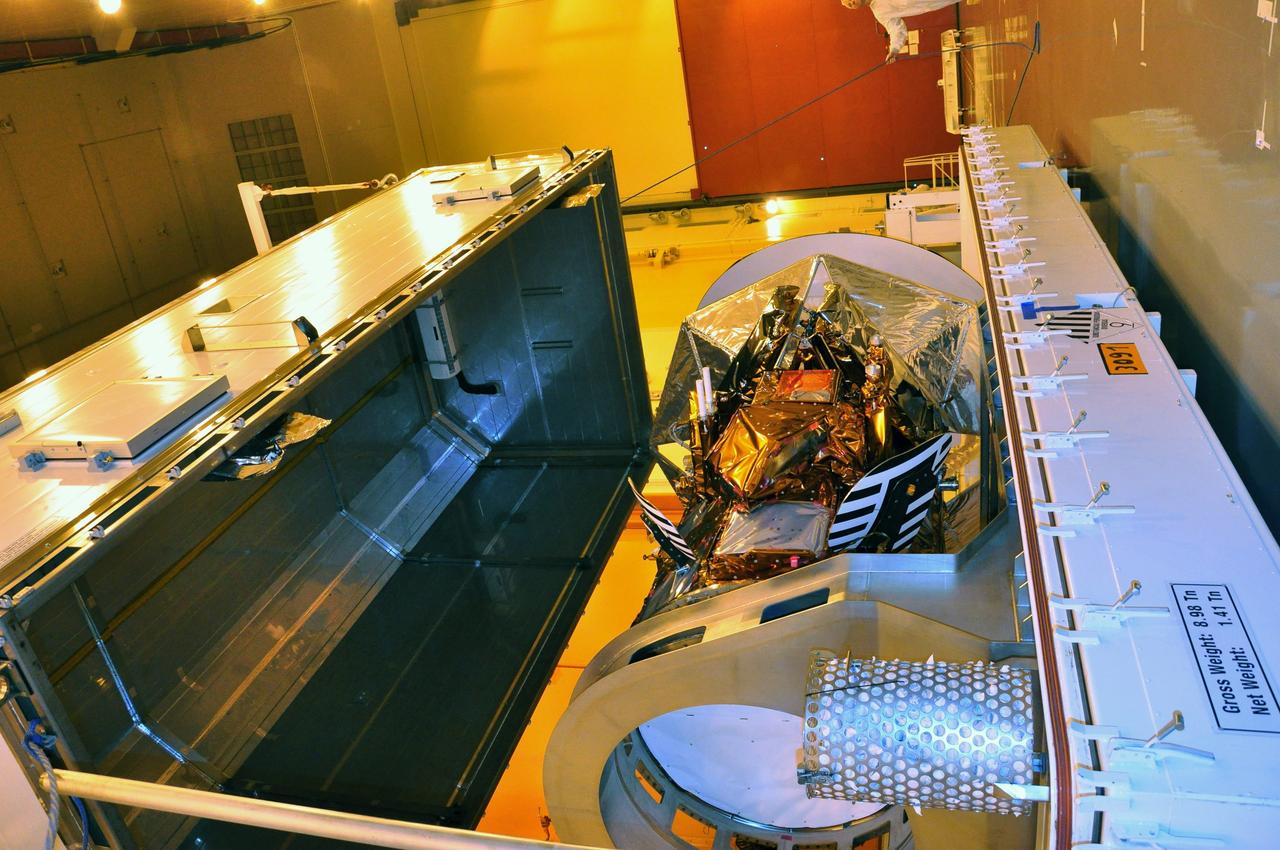
VANDENBERG AIR FORCE BASE, Calif. -- The Aquarius/SAC-D spacecraft is unpacked and unveiled in the Spaceport Systems International payload processing facility at Vandenberg Air Force Base in California. The container protected the spacecraft on its journey from Campos, Brazil, aboard a U.S. Air Force C-17 transport plane. Following final tests, the spacecraft will be integrated to a United Launch Alliance Delta II rocket in preparation for the targeted June launch to low Earth orbit. Aquarius, the NASA-built primary instrument on the SAC-D spacecraft, will map global changes in salinity at the ocean's surface. Salinity is a key measurement for understanding how changes in rainfall, evaporation and the melting of freezing of ice influence ocean circulation and are linked to variations in Earth's climate. The three-year mission will provide new insights into how variations in ocean surface salinity relate to these fundamental climate processes. Photo credit: NASA/Randy Beaudoin, VAFB
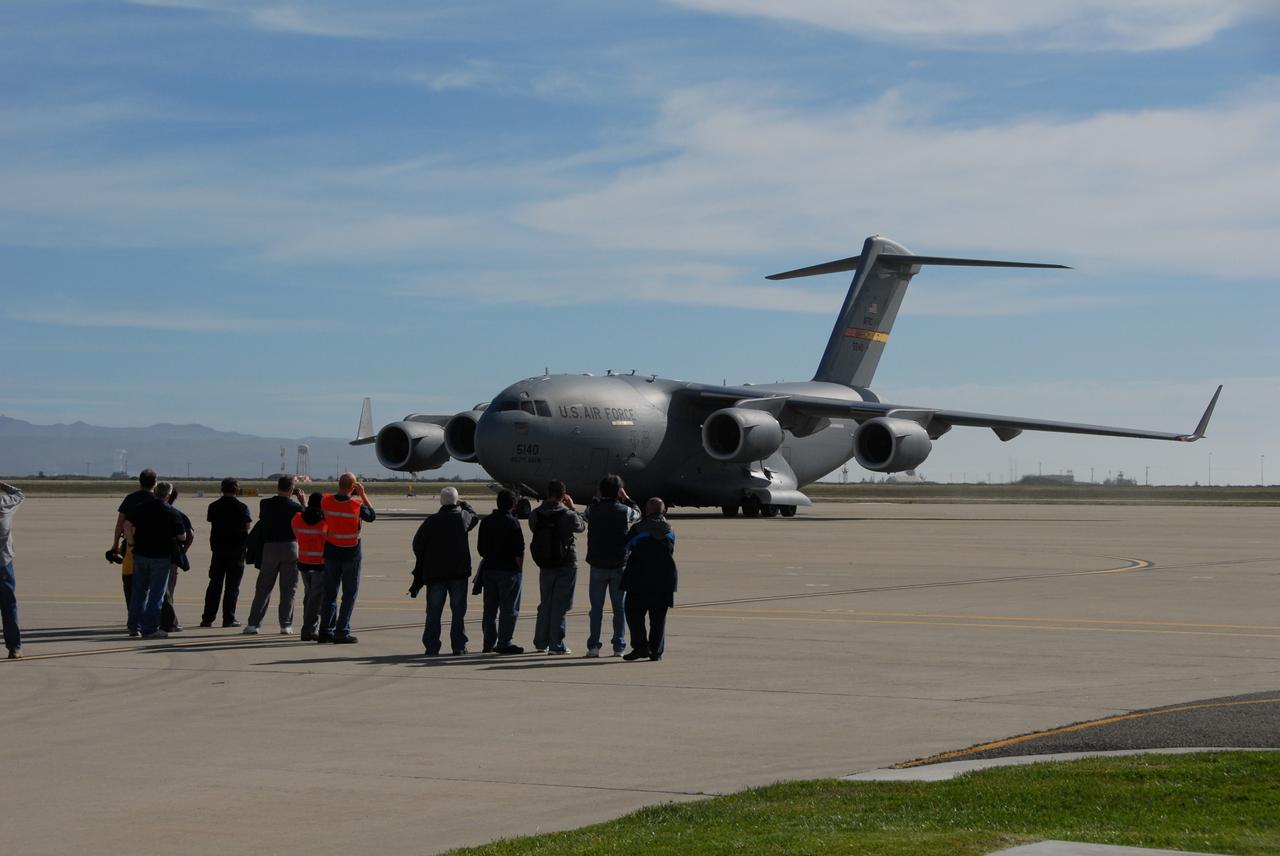
VANDENBERG AIR FORCE BASE, Calif. -- Workers at Vandenberg Air Force Base in California snap photos of the U.S. Air Force C-17 transport plane carrying the Aquarius/SAC-D spacecraft. The aircraft traveled from Campos, Brazil. Following final tests, the spacecraft will be integrated to a United Launch Alliance Delta II rocket in preparation for the targeted June launch to low Earth orbit. Aquarius, the NASA-built primary instrument on the SAC-D spacecraft, will map global changes in salinity at the ocean's surface. Salinity is a key measurement for understanding how changes in rainfall, evaporation and the melting of freezing of ice influence ocean circulation and are linked to variations in Earth's climate. The three-year mission will provide new insights into how variations in ocean surface salinity relate to these fundamental climate processes. Photo credit: VAFB/30th Space Wing
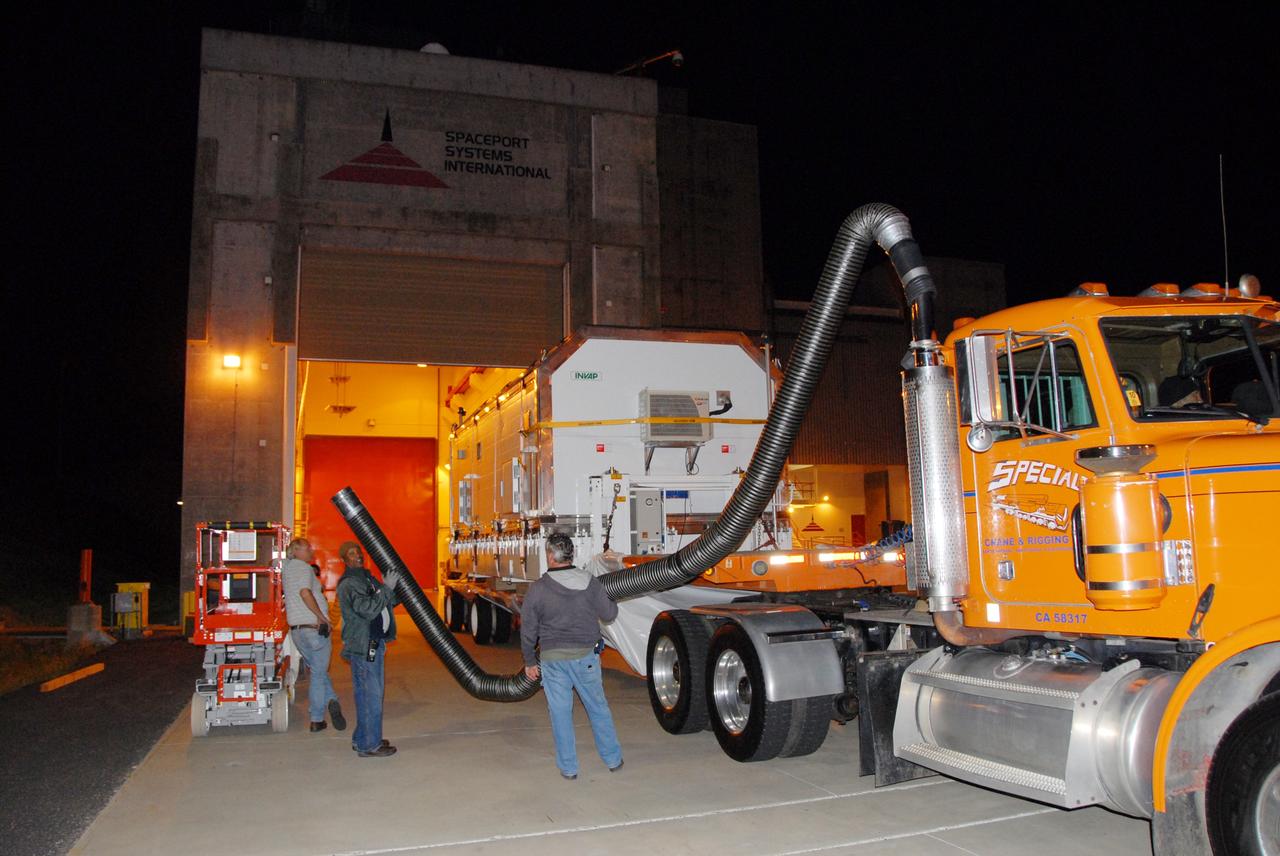
VANDENBERG AIR FORCE BASE, Calif. -- The Aquarius/SAC-D spacecraft is transported to the Spaceport Systems International payload processing facility at Vandenberg Air Force Base in California. Earlier, a U.S. Air Force C-17 transport plane delivered the spacecraft from Campos, Brazil. Following final tests, the spacecraft will be integrated to a United Launch Alliance Delta II rocket in preparation for the targeted June launch to low Earth orbit. Aquarius, the NASA-built primary instrument on the SAC-D spacecraft, will map global changes in salinity at the ocean's surface. Salinity is a key measurement for understanding how changes in rainfall, evaporation and the melting of freezing of ice influence ocean circulation and are linked to variations in Earth's climate. The three-year mission will provide new insights into how variations in ocean surface salinity relate to these fundamental climate processes. Photo credit: VAFB/30th Space Wing
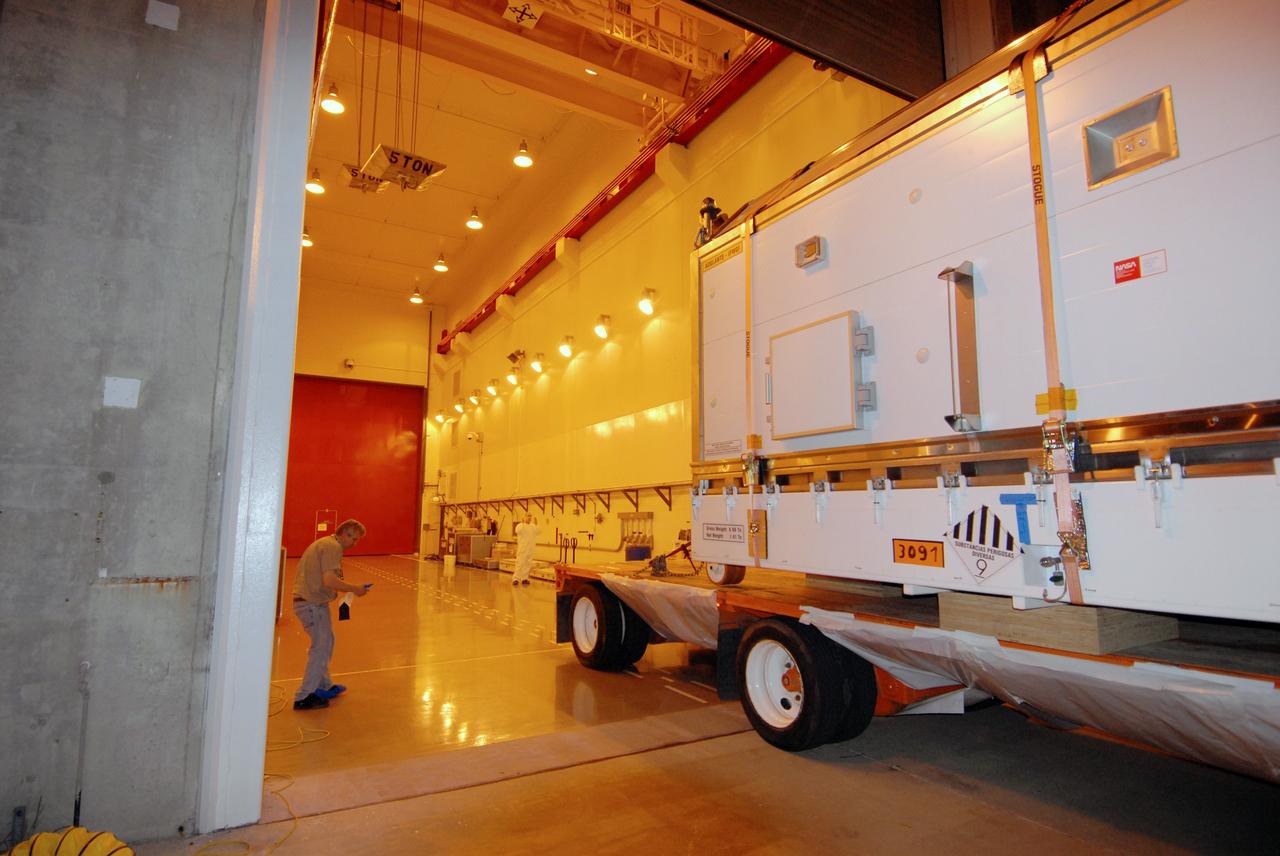
VANDENBERG AIR FORCE BASE, Calif. -- The Aquarius/SAC-D spacecraft enters the Spaceport Systems International payload processing facility at Vandenberg Air Force Base in California. Earlier, a U.S. Air Force C-17 transport plane delivered the spacecraft from Campos, Brazil. Following final tests, the spacecraft will be integrated to a United Launch Alliance Delta II rocket in preparation for the targeted June launch to low Earth orbit. Aquarius, the NASA-built primary instrument on the SAC-D spacecraft, will map global changes in salinity at the ocean's surface. Salinity is a key measurement for understanding how changes in rainfall, evaporation and the melting of freezing of ice influence ocean circulation and are linked to variations in Earth's climate. The three-year mission will provide new insights into how variations in ocean surface salinity relate to these fundamental climate processes. Photo credit: VAFB/30th Space Wing
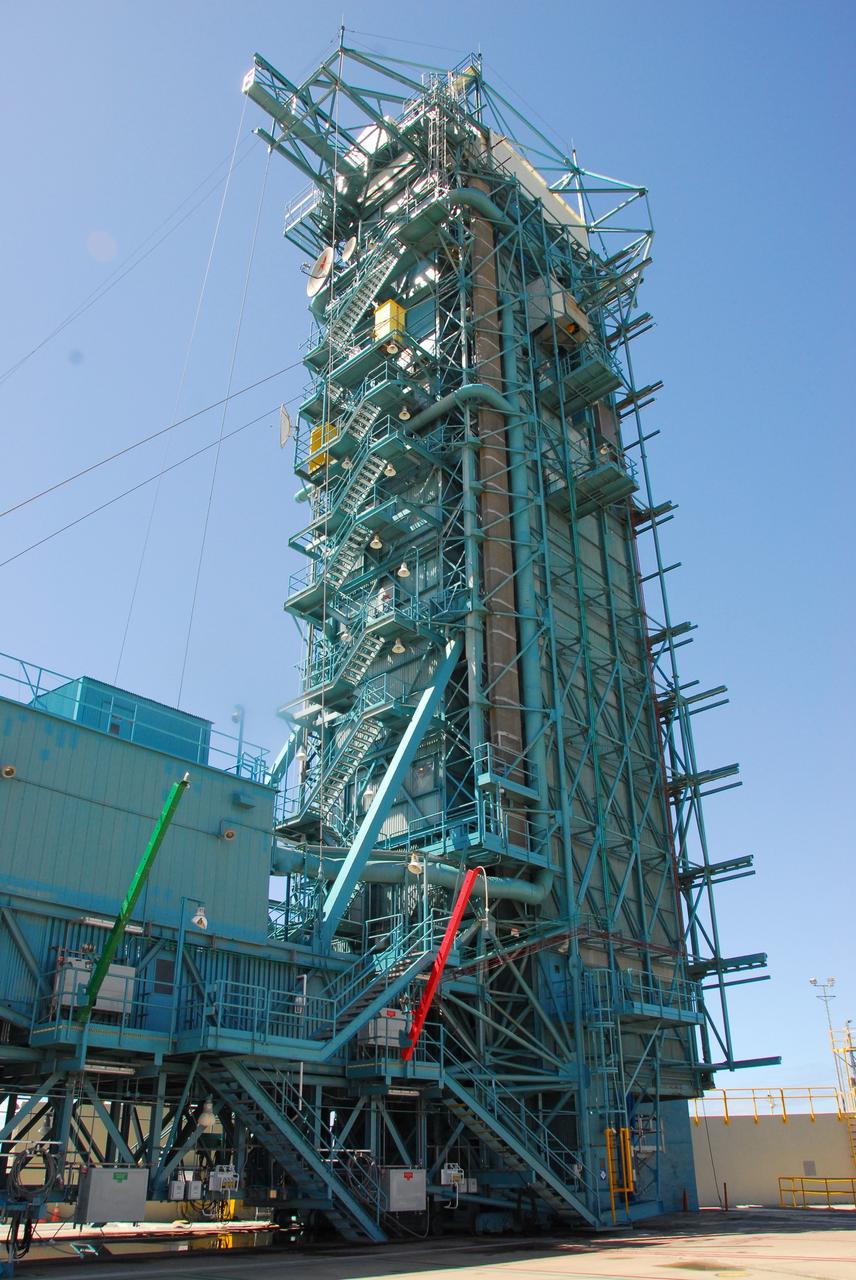
VANDENBERG AIR FORCE BASE, Calif. -- With the Space Launch Complex-2 (SLC-2) service tower at Vandenberg Air Force Base in California back in place, the first and second stages, and three solid rocket motors of a Delta II rocket are in their launch configuration. The rocket is being prepared to launch NASA's Aquarius satellite into low Earth orbit. Scheduled to launch in June, Aquarius' mission will be to provide monthly maps of global changes in sea surface salinity. By measuring ocean salinity from space, Aquarius will provide new insights into how the massive natural exchange of freshwater between the ocean, atmosphere and sea ice influences ocean circulation, weather and climate. Also going up with the satellite are optical and thermal cameras, a microwave radiometer and the SAC-D spacecraft, which were developed with the help of institutions in Italy, France, Canada and Argentina. Photo credit: VAFB/30th Space Wing
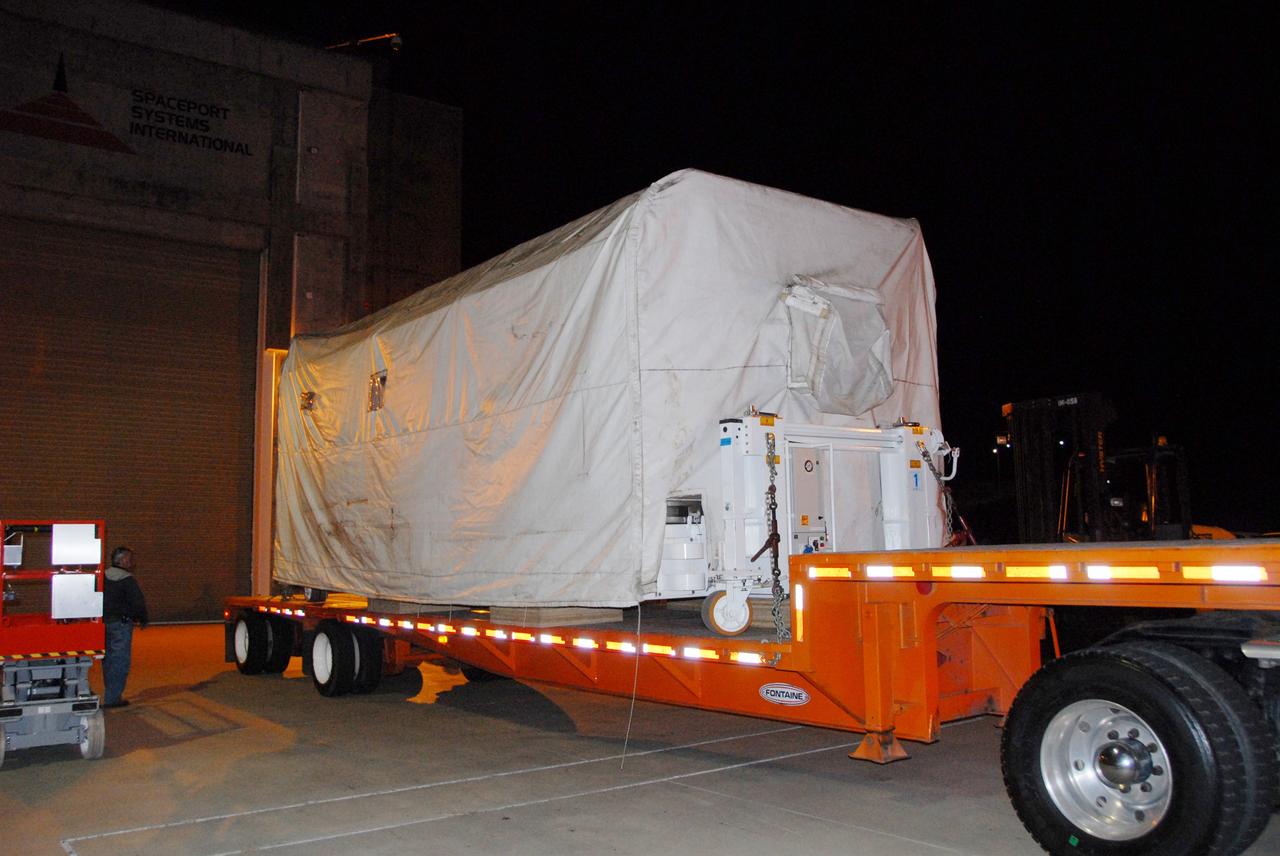
VANDENBERG AIR FORCE BASE, Calif. -- The Aquarius/SAC-D spacecraft is transported to the Spaceport Systems International processing facility at Vandenberg Air Force Base in California. Earlier, a U.S. Air Force C-17 transport plane delivered the spacecraft from Campos, Brazil. Following final tests, the spacecraft will be integrated to a United Launch Alliance Delta II rocket in preparation for the targeted June launch to low Earth orbit. Aquarius, the NASA-built primary instrument on the SAC-D spacecraft, will map global changes in salinity at the ocean's surface. Salinity is a key measurement for understanding how changes in rainfall, evaporation and the melting of freezing of ice influence ocean circulation and are linked to variations in Earth's climate. The three-year mission will provide new insights into how variations in ocean surface salinity relate to these fundamental climate processes. Photo credit: VAFB/30th Space Wing
VANDENBERG AIR FORCE BASE, Calif. -- United Space Alliance technicians prepare to move the Space Launch Complex-2 (SLC-2) service tower at Vandenberg Air Force Base in California. The move will allow technicians to hoist into position the second stage of the Delta II rocket that will carry NASA's Aquarius satellite into low Earth orbit. Scheduled to launch in June, Aquarius' mission will be to provide monthly maps of global changes in sea surface salinity. By measuring ocean salinity from space, Aquarius will provide new insights into how the massive natural exchange of freshwater between the ocean, atmosphere and sea ice influences ocean circulation, weather and climate. Also going up with the satellite are optical and thermal cameras, a microwave radiometer and the SAC-D spacecraft, which were developed with the help of institutions in Italy, France, Canada and Argentina. Photo credit: VAFB/30th Space Wing
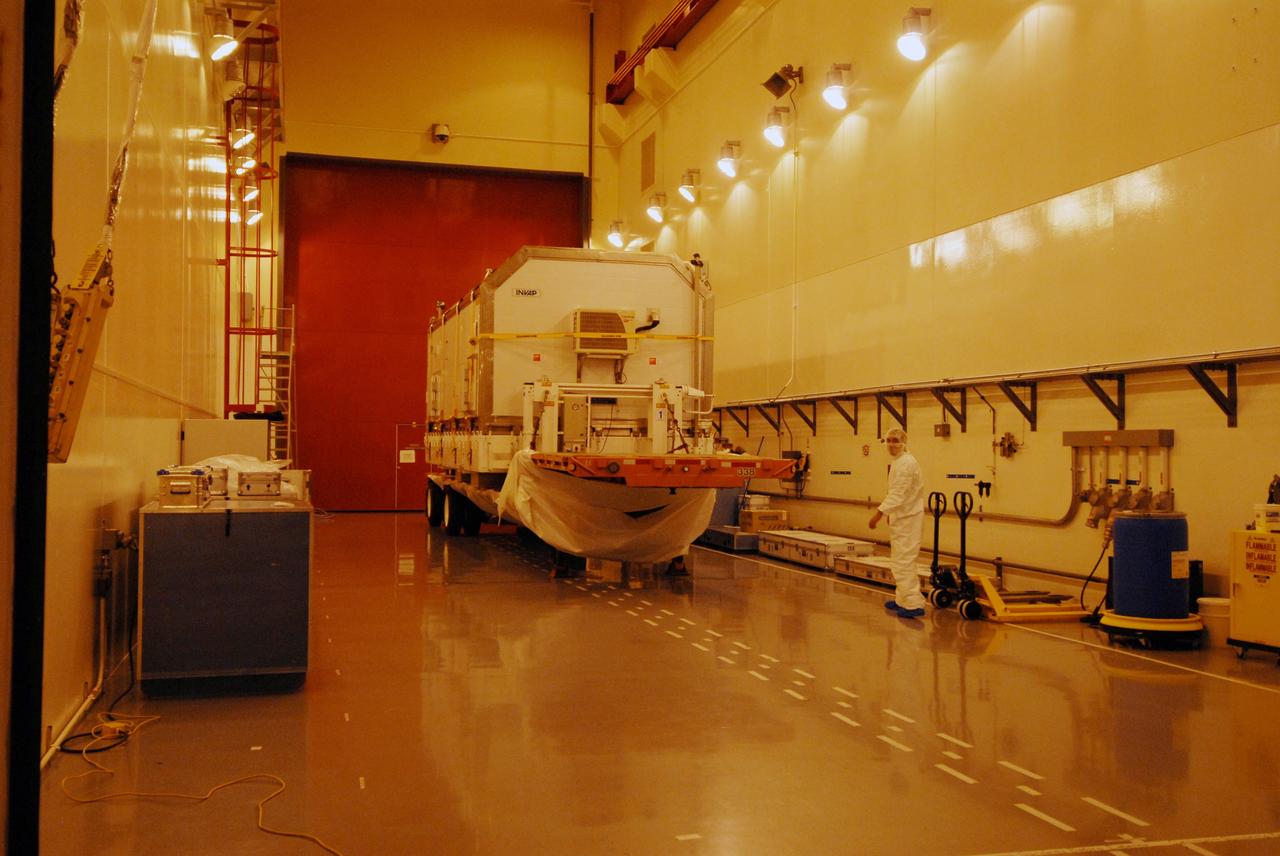
VANDENBERG AIR FORCE BASE, Calif. -- The Aquarius/SAC-D spacecraft is in the Spaceport Systems International payload processing facility at Vandenberg Air Force Base in California. Earlier, a U.S. Air Force C-17 transport plane delivered the spacecraft from Campos, Brazil. Following final tests, the spacecraft will be integrated to a United Launch Alliance Delta II rocket in preparation for the targeted June launch to low Earth orbit. Aquarius, the NASA-built primary instrument on the SAC-D spacecraft, will map global changes in salinity at the ocean's surface. Salinity is a key measurement for understanding how changes in rainfall, evaporation and the melting of freezing of ice influence ocean circulation and are linked to variations in Earth's climate. The three-year mission will provide new insights into how variations in ocean surface salinity relate to these fundamental climate processes. Photo credit: VAFB/30th Space Wing

VANDENBERG AIR FORCE BASE, Calif. -- The Aquarius/SAC-D spacecraft is transported to the Spaceport Systems International processing facility at Vandenberg Air Force Base in California. Earlier, a U.S. Air Force C-17 transport plane delivered the spacecraft from Campos, Brazil. Following final tests, the spacecraft will be integrated to a United Launch Alliance Delta II rocket in preparation for the targeted June launch to low Earth orbit. Aquarius, the NASA-built primary instrument on the SAC-D spacecraft, will map global changes in salinity at the ocean's surface. Salinity is a key measurement for understanding how changes in rainfall, evaporation and the melting of freezing of ice influence ocean circulation and are linked to variations in Earth's climate. The three-year mission will provide new insights into how variations in ocean surface salinity relate to these fundamental climate processes. Photo credit: VAFB/30th Space Wing
VANDENBERG AIR FORCE BASE, Calif. --As the sun rises over Vandenberg Air Force Base in California, United Launch Alliance technicians prepare to raise one of three Delta II solid rocket motors on the pad at Space Launch Complex-2 West (SLC-2W). Scheduled to launch in June, the Delta II rocket will carry NASA's Aquarius satellite into low Earth orbit. Aquarius' mission will be to provide monthly maps of global changes in sea surface salinity. By measuring ocean salinity from space, Aquarius will provide new insights into how the massive natural exchange of freshwater between the ocean, atmosphere and sea ice influences ocean circulation, weather and climate. Also going up with the satellite are optical and thermal cameras, a microwave radiometer and the SAC-D spacecraft, which were developed with the help of institutions in Italy, France, Canada and Argentina. Photo credit: VAFB/30th Space Wing
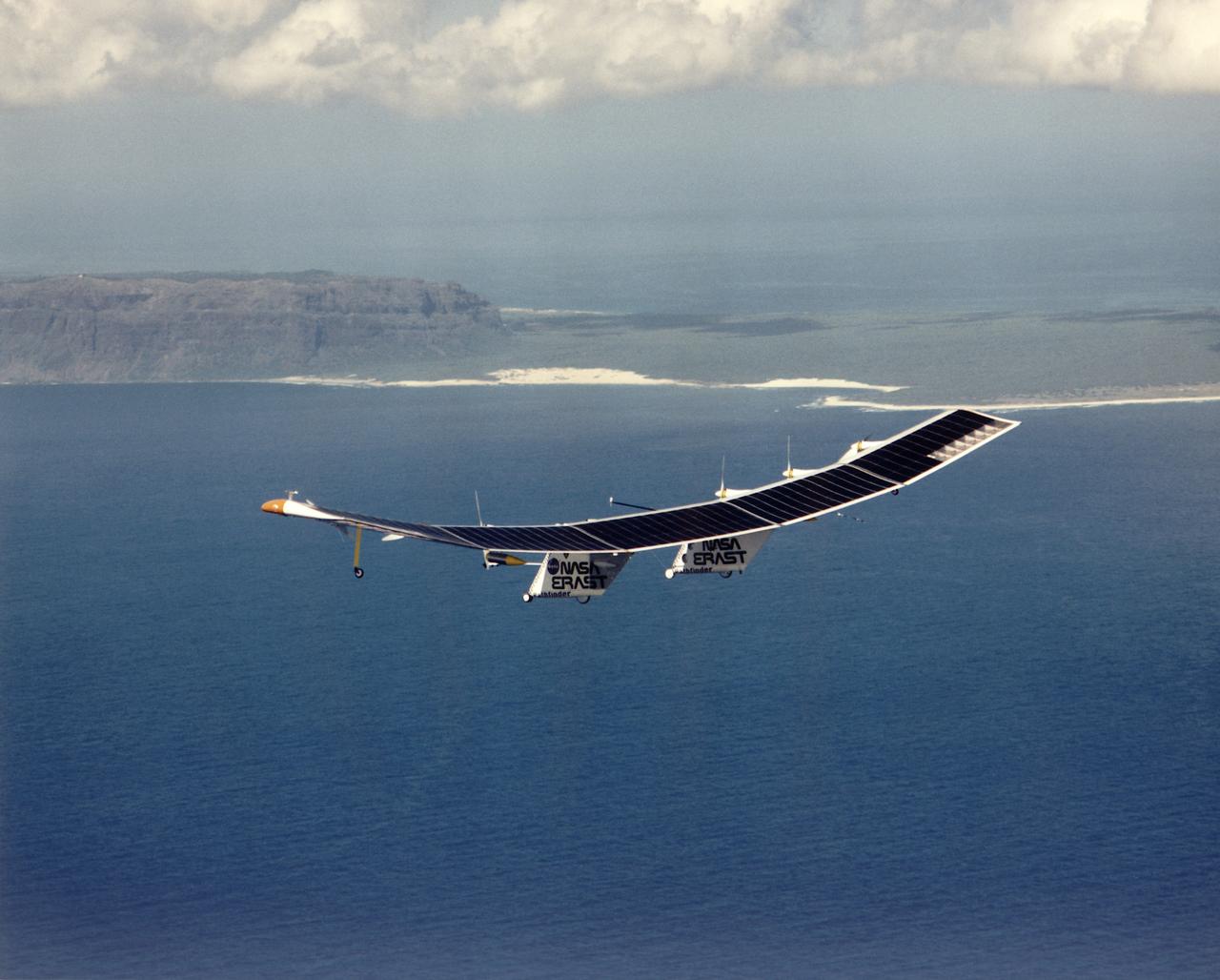
Pathfinder, NASA's solar-powered, remotely-piloted aircraft is shown while it was conducting a series of science flights to highlight the aircraft's science capabilities while collecting imagery of forest and coastal zone ecosystems on Kauai, Hawaii. The flights also tested two new scientific instruments, a high spectral resolution Digital Array Scanned Interferometer (DASI) and a high spatial resolution Airborne Real-Time Imaging System (ARTIS). The remote sensor payloads were designed by NASA's Ames Research Center, Moffett Field, California, to support NASA's Mission to Planet Earth science programs.
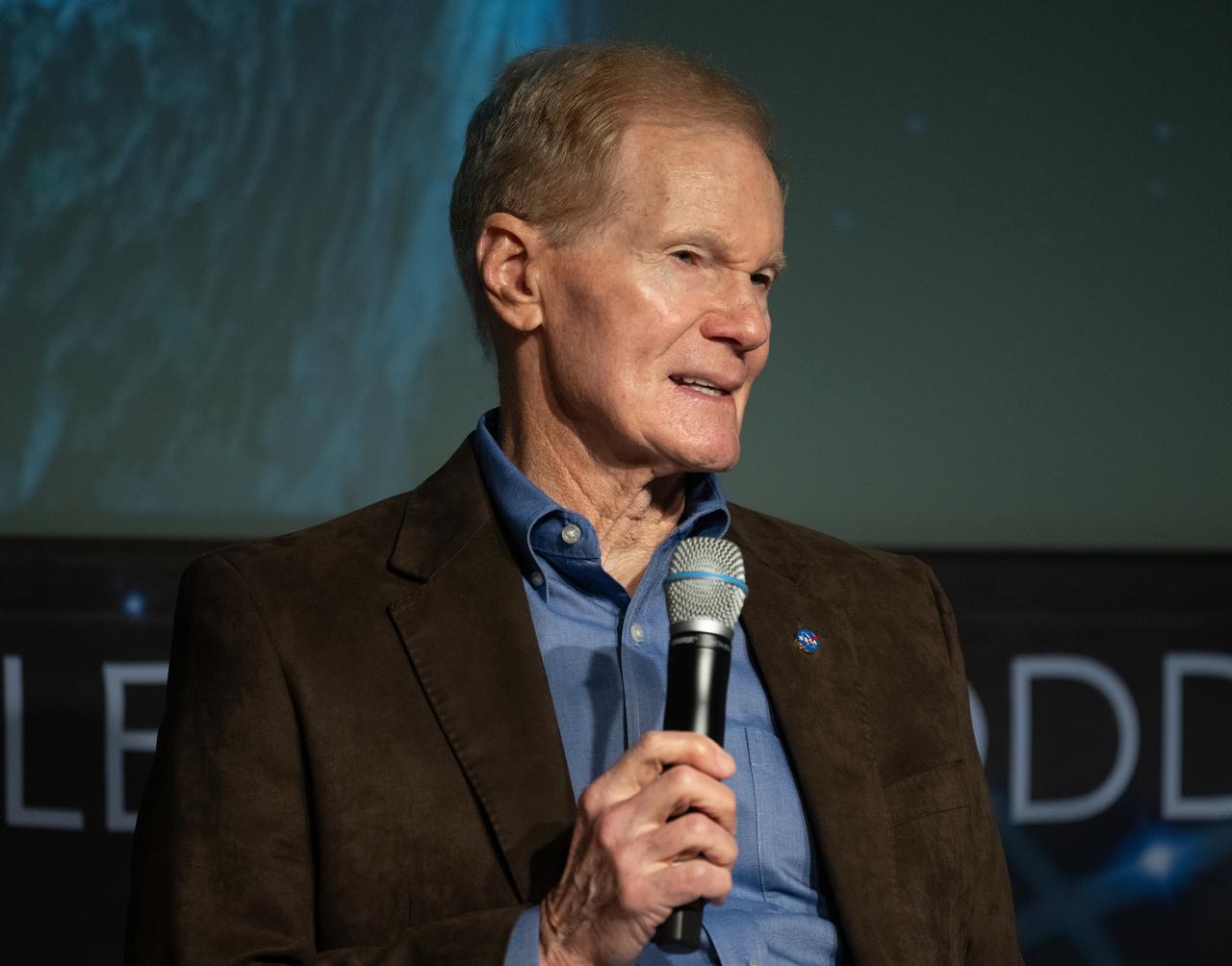
NASA Administrator Bill Nelson speaks during a briefing in advance of Earth Day to share updates on NASA’s climate science, Friday, April 19, 2024, at the Mary W. Jackson NASA Headquarters building in Washington. Nelson, Karen St. Germain, division director of the Earth Science Division of NASA’s Science Mission Directorate, and Tom Wagner, associate director for Earth Action in the Earth Science Division of NASA’s Science Mission Directorate, discussed early data from NASA’s PACE (Plankton, Aerosol, Cloud, ocean Ecosystem) mission and announced new airborne science missions. Photo Credit: (NASA/Joel Kowsky)

NASA Administrator Bill Nelson speaks during a briefing in advance of Earth Day to share updates on NASA’s climate science, Friday, April 19, 2024, at the Mary W. Jackson NASA Headquarters building in Washington. Nelson, Karen St. Germain, division director of the Earth Science Division of NASA’s Science Mission Directorate, and Tom Wagner, associate director for Earth Action in the Earth Science Division of NASA’s Science Mission Directorate, discussed early data from NASA’s PACE (Plankton, Aerosol, Cloud, ocean Ecosystem) mission and announced new airborne science missions. Photo Credit: (NASA/Joel Kowsky)

Faith McKie, acting NASA Press Secretary, left, asks a question a briefing in advance of Earth Day to share updates on NASA’s climate science, Friday, April 19, 2024, at the Mary W. Jackson NASA Headquarters building in Washington. NASA Administrator Bill Nelson, Karen St. Germain, division director of the Earth Science Division of NASA’s Science Mission Directorate, and Tom Wagner, associate director for Earth Action in the Earth Science Division of NASA’s Science Mission Directorate, discussed early data from NASA’s PACE (Plankton, Aerosol, Cloud, ocean Ecosystem) mission and announced new airborne science missions. Photo Credit: (NASA/Joel Kowsky)

Faith McKie, acting NASA Press Secretary, open a briefing in advance of Earth Day to share updates on NASA’s climate science, Friday, April 19, 2024, at the Mary W. Jackson NASA Headquarters building in Washington. NASA Administrator Bill Nelson, Karen St. Germain, division director of the Earth Science Division of NASA’s Science Mission Directorate, and Tom Wagner, associate director for Earth Action in the Earth Science Division of NASA’s Science Mission Directorate, discussed early data from NASA’s PACE (Plankton, Aerosol, Cloud, ocean Ecosystem) mission and announced new airborne science missions. Photo Credit: (NASA/Joel Kowsky)
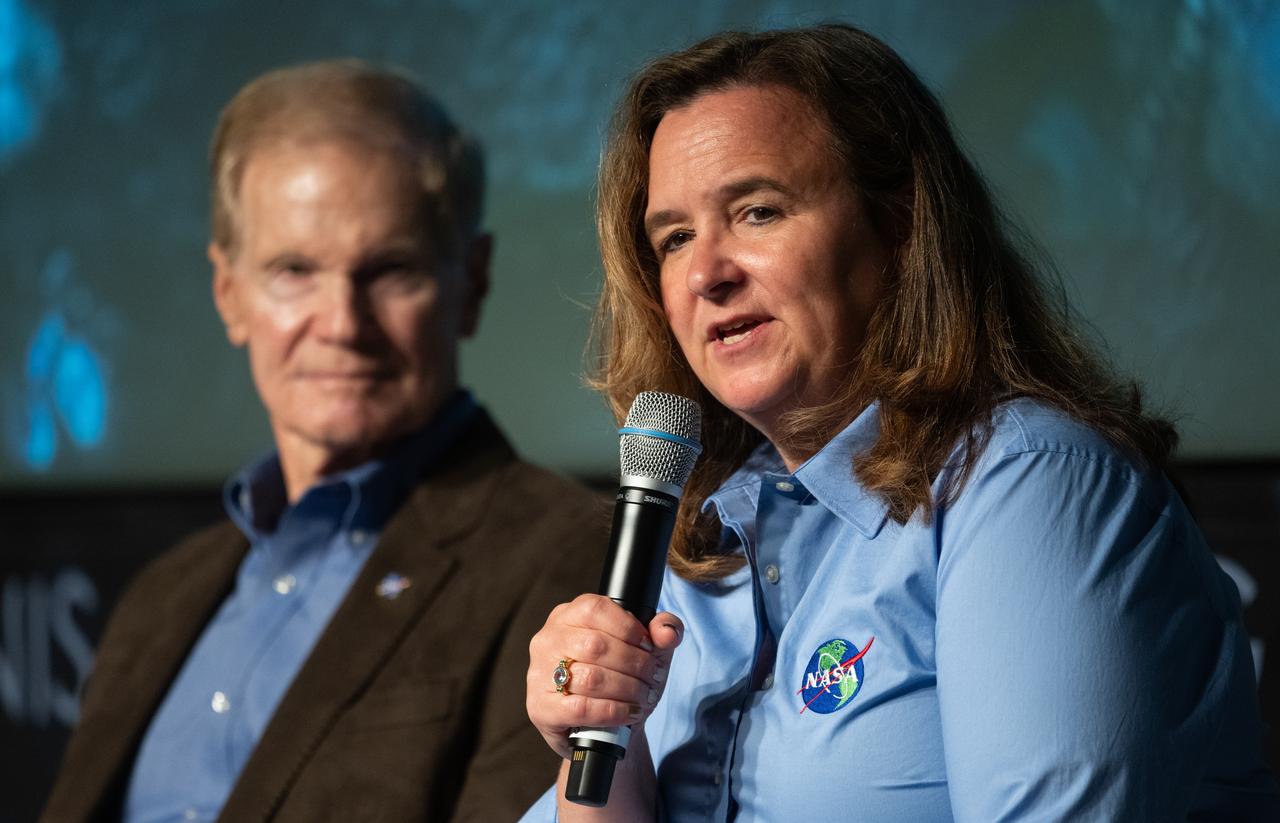
Karen St. Germain, division director of the Earth Sciences Division of NASA’s Science Mission Directorate, speaks during a briefing, Friday, April 19, 2024, at the Mary W. Jackson NASA Headquarters building in Washington. Germain, NASA Administrator Bill Nelson, and Tom Wagner, associate director for Earth Action in the Earth Science Division of NASA’s Science Mission Directorate, discussed early data from NASA’s PACE (Plankton, Aerosol, Cloud, ocean Ecosystem) mission and announced new airborne science missions. Photo Credit: (NASA/Joel Kowsky)

Karen St. Germain, division director of the Earth Sciences Division of NASA’s Science Mission Directorate, speaks during a briefing, Friday, April 19, 2024, at the Mary W. Jackson NASA Headquarters building in Washington. Germain, NASA Administrator Bill Nelson, and Tom Wagner, associate director for Earth Action in the Earth Science Division of NASA’s Science Mission Directorate, discussed early data from NASA’s PACE (Plankton, Aerosol, Cloud, ocean Ecosystem) mission and announced new airborne science missions. Photo Credit: (NASA/Joel Kowsky)
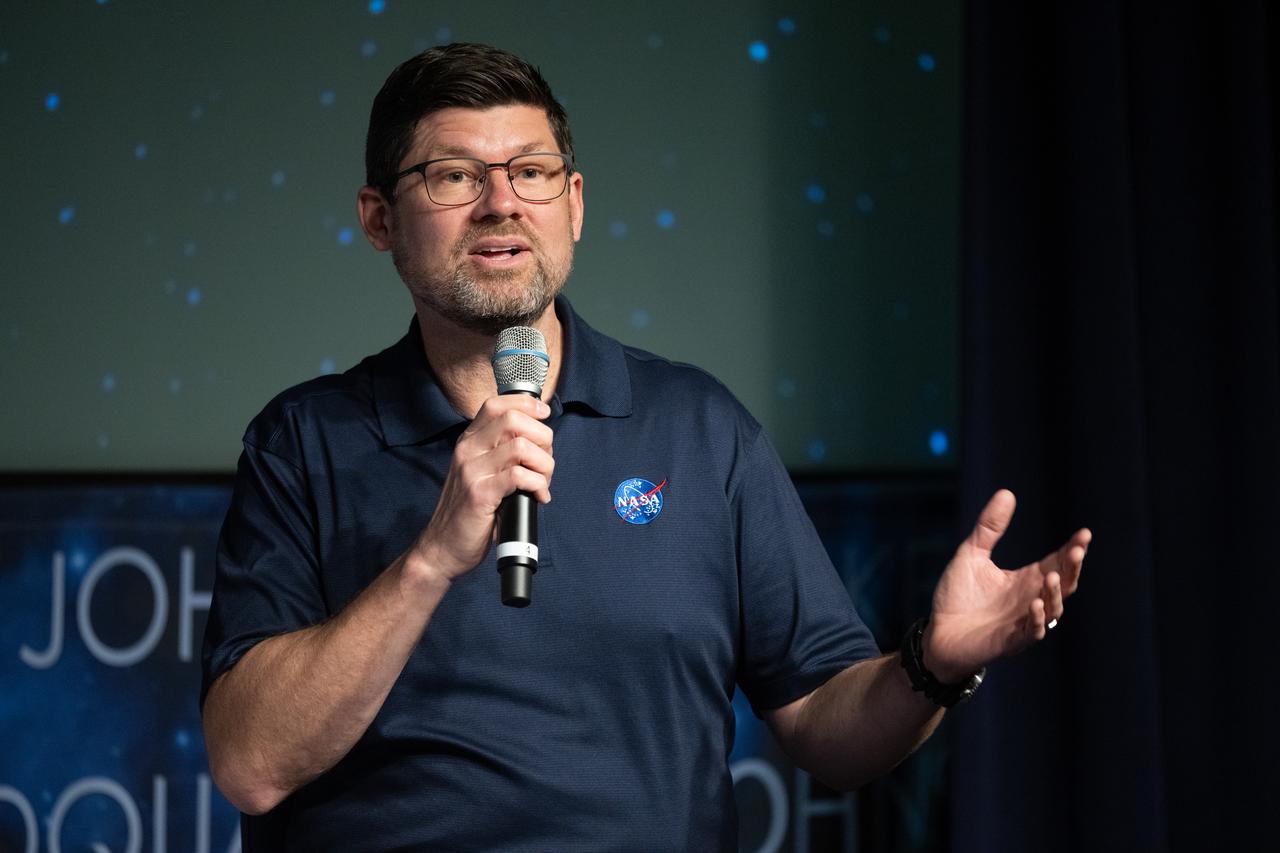
Tom Wagner, associate director for Earth Action in the Earth Science Division of NASA’s Science Mission Directorate, speaks during a briefing, Friday, April 19, 2024, at the Mary W. Jackson NASA Headquarters building in Washington. Wagner, Karen St. Germain, division director of the Earth Sciences Division of NASA’s Science Mission Directorate, and NASA Administrator Bill Nelson discussed early data from NASA’s PACE (Plankton, Aerosol, Cloud, ocean Ecosystem) mission and announced new airborne science missions. Photo Credit: (NASA/Joel Kowsky)
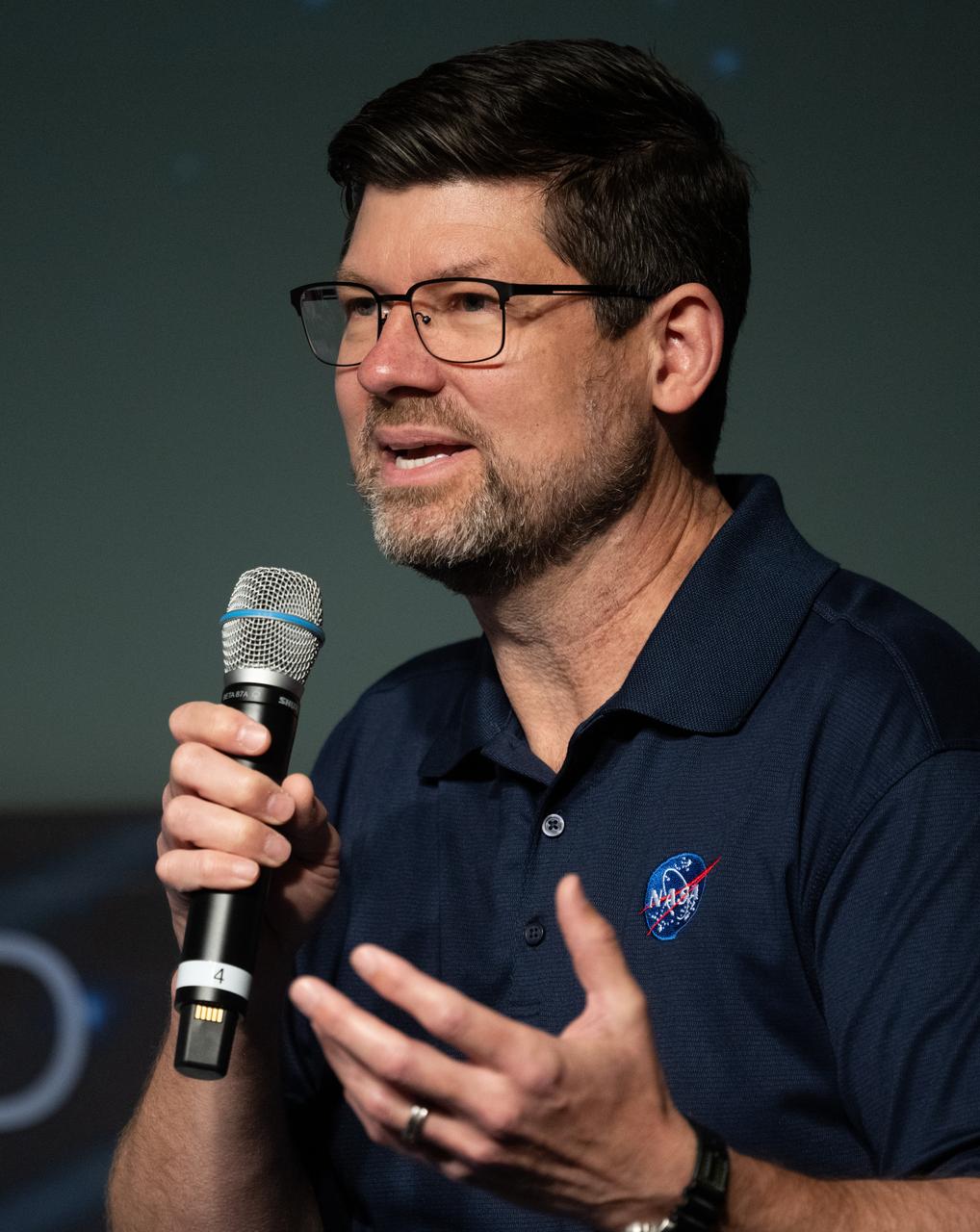
Tom Wagner, associate director for Earth Action in the Earth Science Division of NASA’s Science Mission Directorate, speaks during a briefing, Friday, April 19, 2024, at the Mary W. Jackson NASA Headquarters building in Washington. Wagner, Karen St. Germain, division director of the Earth Sciences Division of NASA’s Science Mission Directorate, and NASA Administrator Bill Nelson discussed early data from NASA’s PACE (Plankton, Aerosol, Cloud, ocean Ecosystem) mission and announced new airborne science missions. Photo Credit: (NASA/Joel Kowsky)
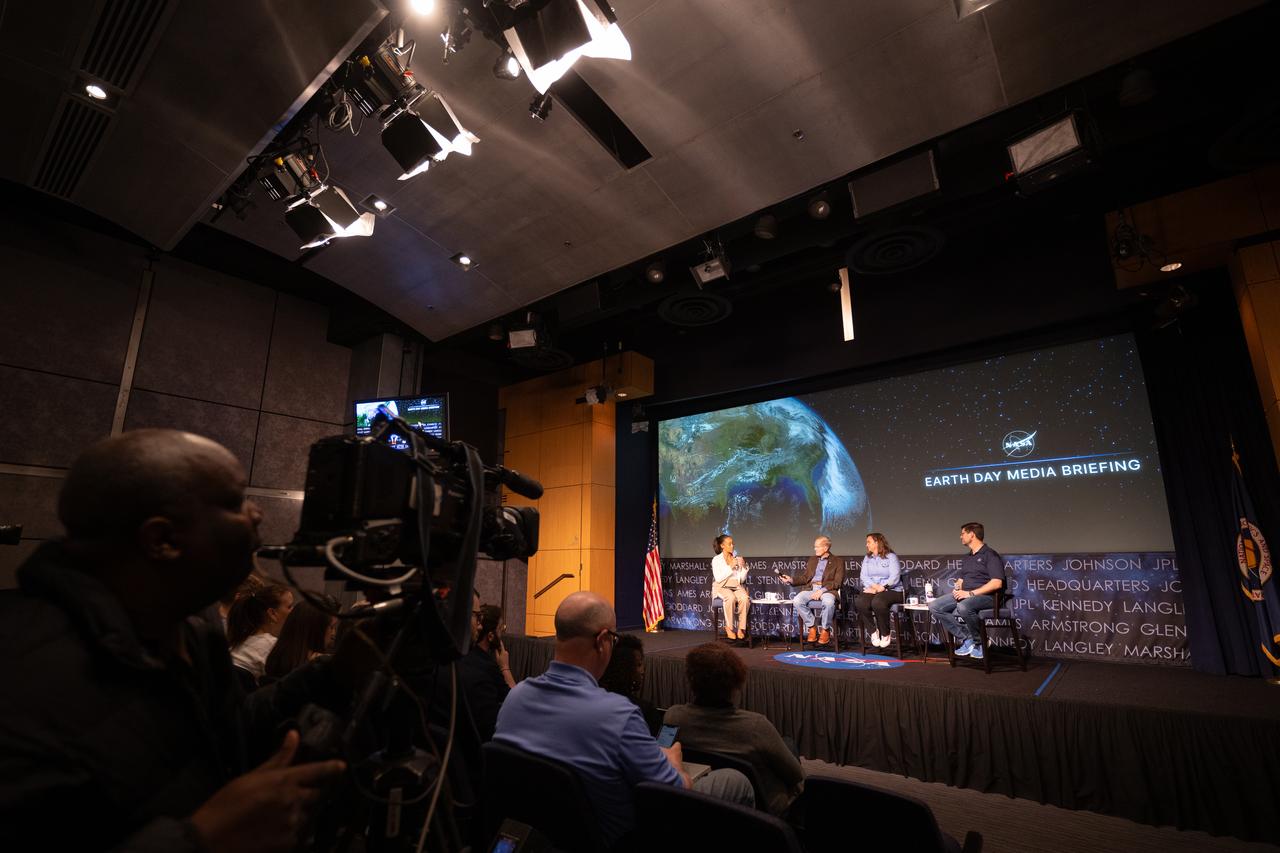
Faith McKie, acting NASA Press Secretary, left, asks a question a briefing in advance of Earth Day to share updates on NASA’s climate science, Friday, April 19, 2024, at the Mary W. Jackson NASA Headquarters building in Washington. NASA Administrator Bill Nelson, second from left, Karen St. Germain, division director of the Earth Science Division of NASA’s Science Mission Directorate, second from right, and Tom Wagner, associate director for Earth Action in the Earth Science Division of NASA’s Science Mission Directorate, right, discussed early data from NASA’s PACE (Plankton, Aerosol, Cloud, ocean Ecosystem) mission and announced new airborne science missions. Photo Credit: (NASA/Joel Kowsky)
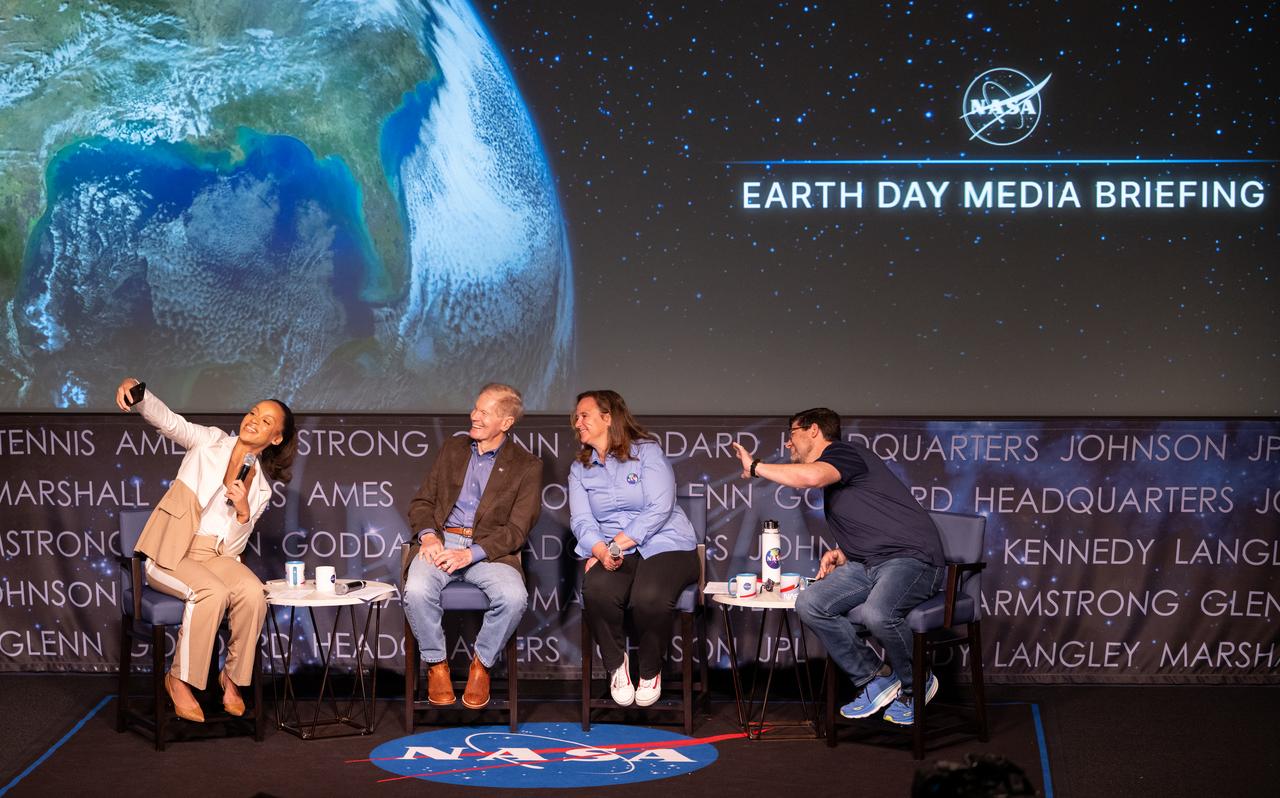
Faith McKie, acting NASA Press Secretary, left, takes a selfie for the agency’s Global Selfie campaign with NASA Administrator Bill Nelson, second from left, Karen St. Germain, division director of the Earth Science Division of NASA’s Science Mission Directorate, second from right, and Tom Wagner, associate director for Earth Action in the Earth Science Division of NASA’s Science Mission Directorate, right, at the conclusion of a briefing in advance of Earth Day to share updates on NASA’s climate science, Friday, April 19, 2024, at the Mary W. Jackson NASA Headquarters building in Washington. discussed early data from NASA’s PACE (Plankton, Aerosol, Cloud, ocean Ecosystem) mission and announced new airborne science missions. Photo Credit: (NASA/Joel Kowsky)
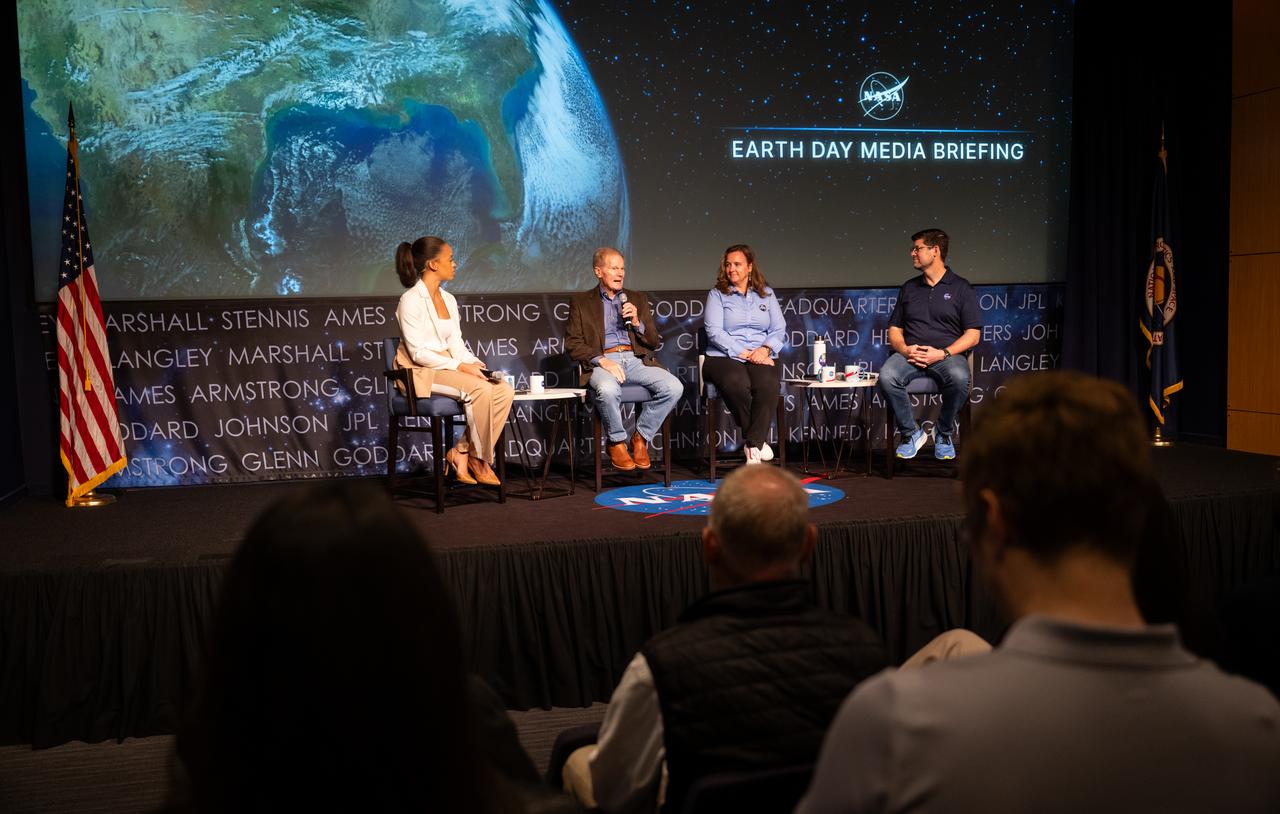
NASA Administrator Bill Nelson, second from left, speaks during a briefing in advance of Earth Day to share updates on NASA’s climate science alongside Faith McKie, acting NASA Press Secretary, left, Karen St. Germain, division director of the Earth Science Division of NASA’s Science Mission Directorate, second from right, and Tom Wagner, associate director for Earth Action in the Earth Science Division of NASA’s Science Mission Directorate, right, Friday, April 19, 2024, at the Mary W. Jackson NASA Headquarters building in Washington. Nelson, St. Germain, and Wagner discussed early data from NASA’s PACE (Plankton, Aerosol, Cloud, ocean Ecosystem) mission and announced new airborne science missions. Photo Credit: (NASA/Joel Kowsky)
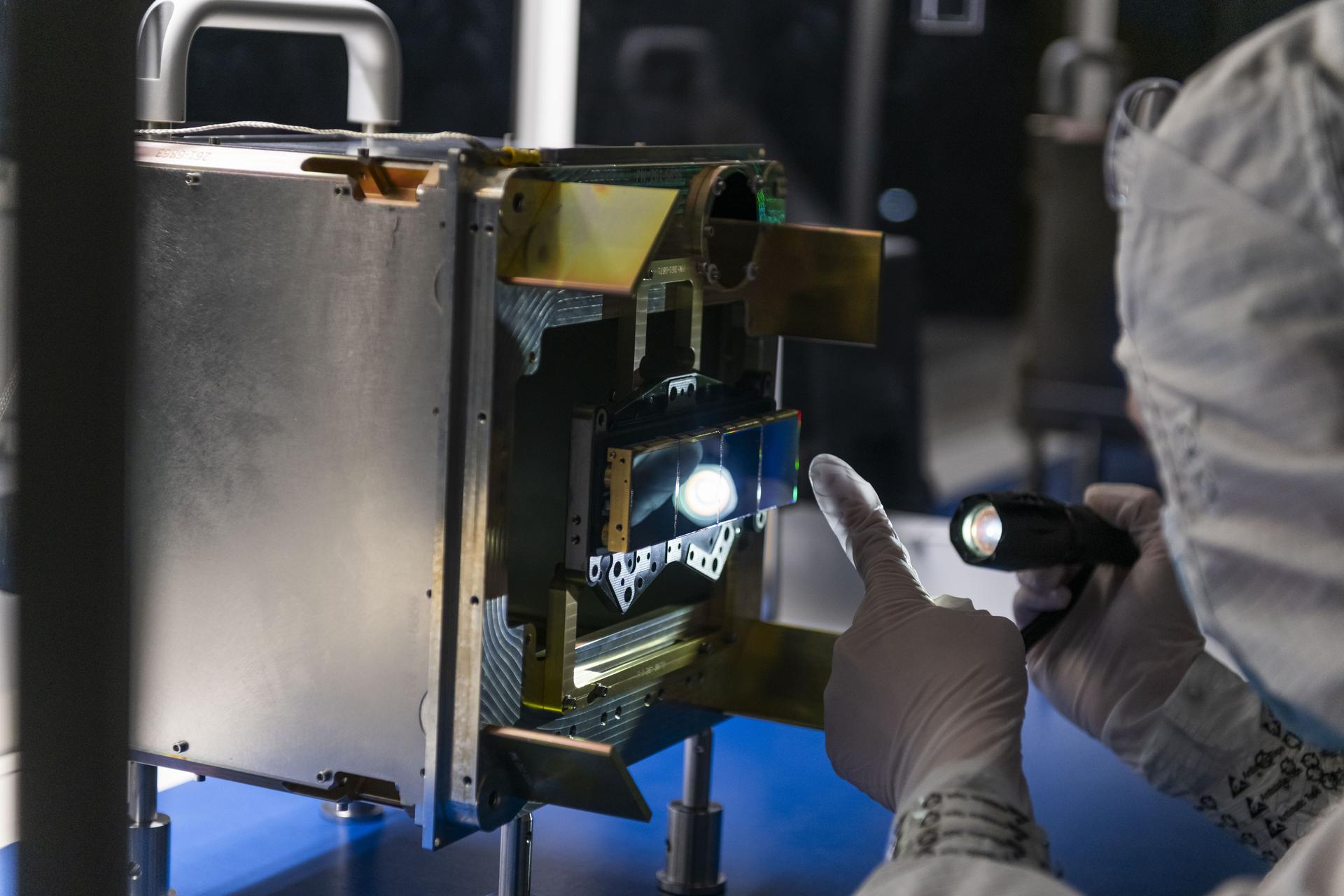
An engineer inspects the surface of four mid-wavelength infrared science detectors for NASA’s Near-Earth Object (NEO) Surveyor mission atop a clean room bench at the Space Dynamics Laboratory (SDL) in Logan, Utah. Mounted to a sensor chip assembly, the four blue-green-colored detectors are made with mercury cadmium telluride (HgCdTe), a versatile semiconducting alloy that is sensitive to infrared wavelengths. There are two such assemblies that form the heart of NEO Surveyor’s two science cameras. These state-of-the-art cameras sense solar heat re-radiated by near-Earth objects. The mission’s cameras and telescope, which has an aperture of nearly 20 inches (50 centimeters), will be housed inside the spacecraft’s instrument enclosure, a structure that is designed to ensure heat produced by the spacecraft and instrument during operations doesn’t interfere with its infrared observations. Targeting launch in late 2027, the NEO Surveyor mission is led by Professor Amy Mainzer at the University of California, Los Angeles for NASA’s Planetary Defense Coordination Office and is being managed by the agency’s Jet Propulsion Laboratory in Southern California for the Planetary Missions Program Office at NASA’s Marshall Space Flight Center in Huntsville, Alabama. BAE Systems and the Space Dynamics Laboratory in Logan, Utah, and Teledyne are among the companies that were contracted to build the spacecraft and its instrumentation. The Laboratory for Atmospheric and Space Physics at the University of Colorado Boulder will support operations, and IPAC at Caltech in Pasadena, California, is responsible for producing some of the mission’s data products. Caltech manages JPL for NASA. More information about NEO Surveyor is available at: https://science.nasa.gov/mission/neo-surveyor/
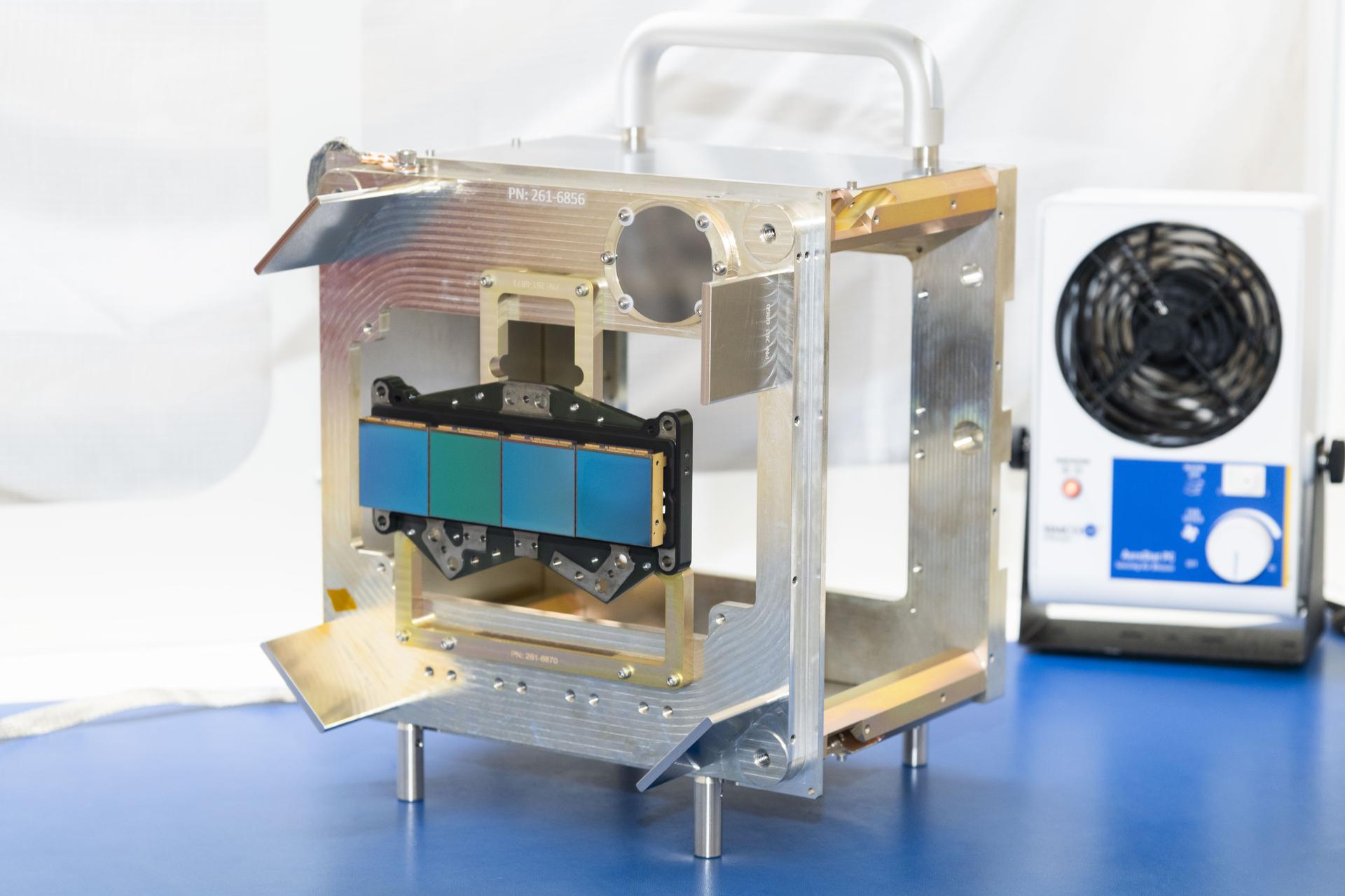
Four mid-wavelength infrared science detectors for NASA’s Near-Earth Object (NEO) Surveyor mission are shown here on a clean room bench at the Space Dynamics Laboratory (SDL) in Logan, Utah. Mounted to a sensor chip assembly, the four blue-green-colored detectors are made with mercury cadmium telluride (HgCdTe), a versatile semiconducting alloy that is sensitive to infrared wavelengths. There are two such assemblies that form the heart of NEO Surveyor’s two science cameras. These state-of-the-art cameras sense solar heat re-radiated by near-Earth objects. The mission’s cameras and telescope, which has an aperture of nearly 20 inches (50 centimeters), will be housed inside the spacecraft’s instrument enclosure, a structure that is designed to ensure heat produced by the spacecraft and instrument during operations doesn’t interfere with its infrared observations. Targeting launch in late 2027, the NEO Surveyor mission is led by Professor Amy Mainzer at the University of California, Los Angeles for NASA’s Planetary Defense Coordination Office and is being managed by the agency’s Jet Propulsion Laboratory in Southern California for the Planetary Missions Program Office at NASA’s Marshall Space Flight Center in Huntsville, Alabama. BAE Systems and the Space Dynamics Laboratory in Logan, Utah, and Teledyne are among the companies that were contracted to build the spacecraft and its instrumentation. The Laboratory for Atmospheric and Space Physics at the University of Colorado Boulder will support operations, and IPAC at Caltech in Pasadena, California, is responsible for producing some of the mission’s data products. Caltech manages JPL for NASA. More information about NEO Surveyor is available at: https://science.nasa.gov/mission/neo-surveyor/
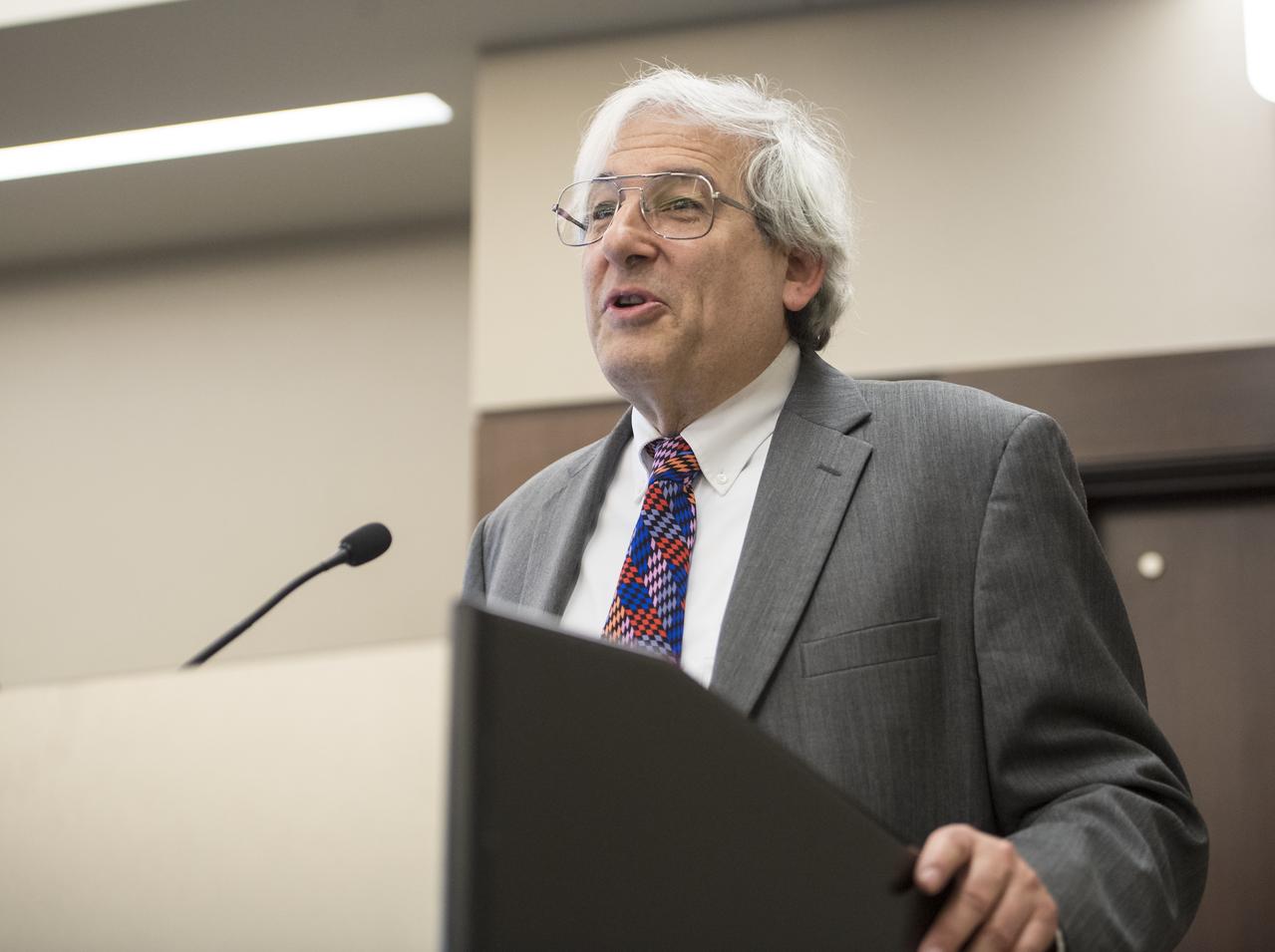
Dr. Michael Freilich, Earth Science Director, Science Mission Directorate, NASA, speaks at the Earth Science Town Hall at the American Geophysical Union (AGU) annual meeting, Tuesday, December 11, 2018 at the Marriott Marquis in Washington. Photo Credit: (NASA/Aubrey Gemignani)
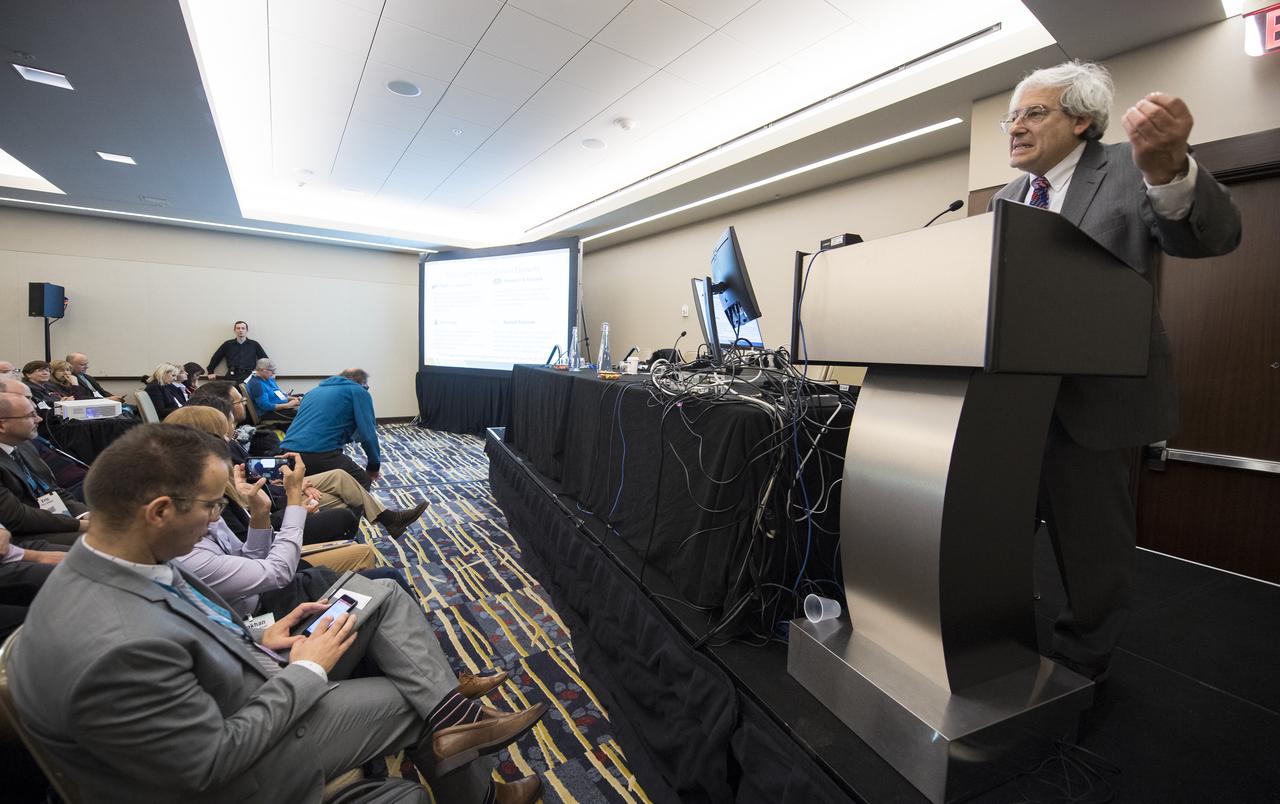
Dr. Michael Freilich, Earth Science Director, Science Mission Directorate, NASA, speaks at the Earth Science Town Hall at the American Geophysical Union (AGU) annual meeting, Tuesday, December 11, 2018 at the Marriott Marquis in Washington. Photo Credit: (NASA/Aubrey Gemignani)
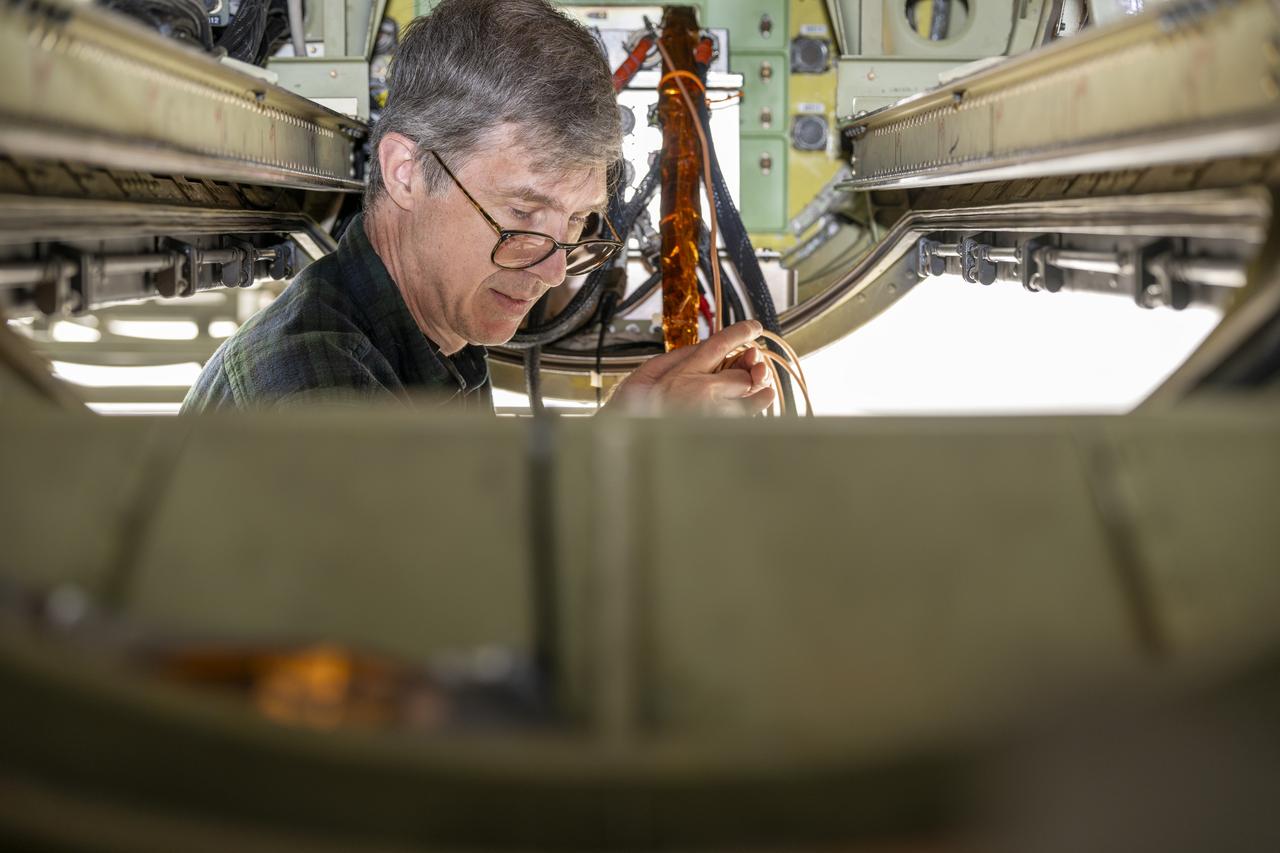
Dr. John Woodward, of the National Institute of Standards and Technology and co-investigator on the airborne Lunar Spectral Irradiance (air-LUSI) mission, prepares the instrument for upload onto the ER-2 aircraft in March 2025 at NASA’s Armstrong Flight Research Center in Edwards, California.
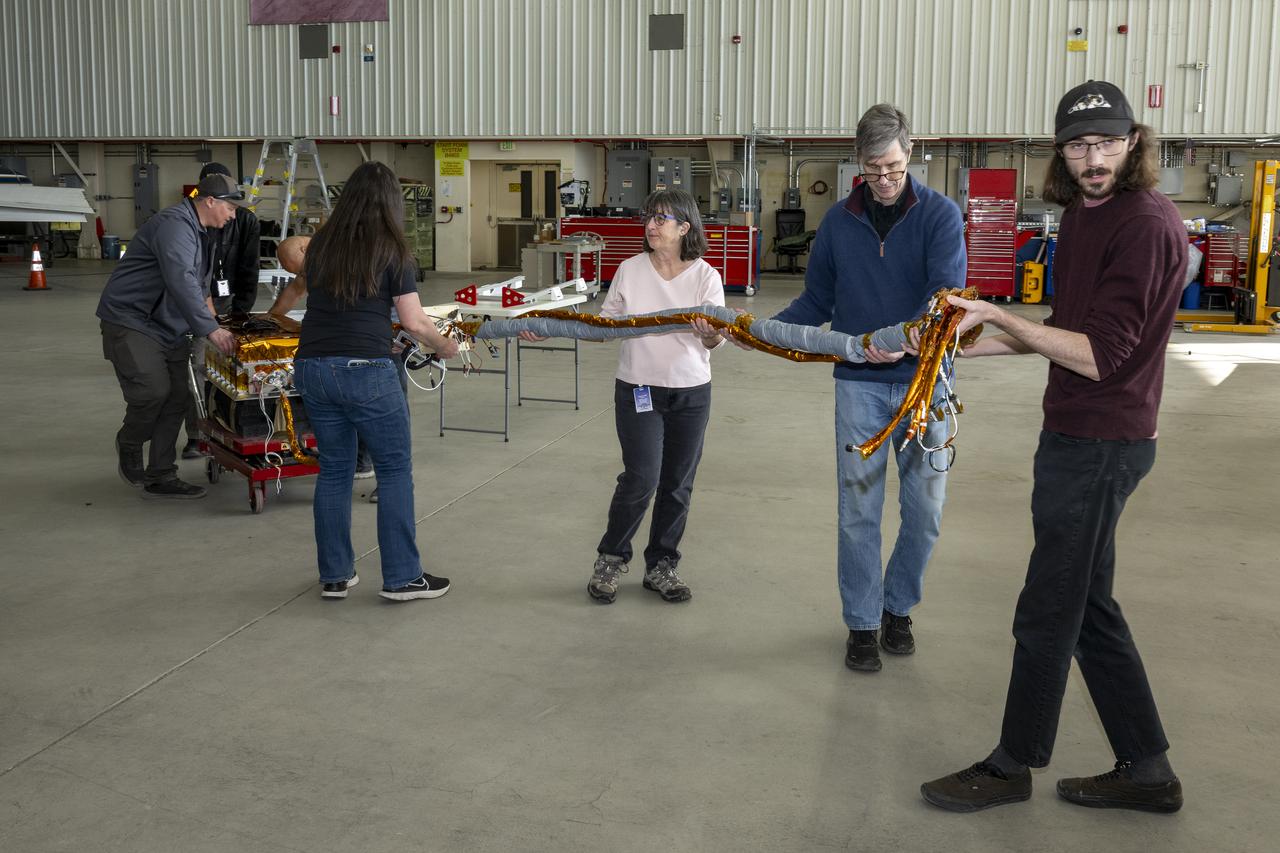
The airborne Lunar Spectral Irradiance (air-LUSI) instrument is moved across the hangar floor by robotic engineer Alexander McCafferty-Leroux ,from right to left, co-investigator Dr. John Woodward, NIST astronomer Dr. Susana Deustua, air-LUSI chief system engineer Dr. Kathleen “Kat” Scanlon, and members of the ER-2 ground crew at NASA’s Armstrong Flight Research Center in Edwards, California, in March 2025.
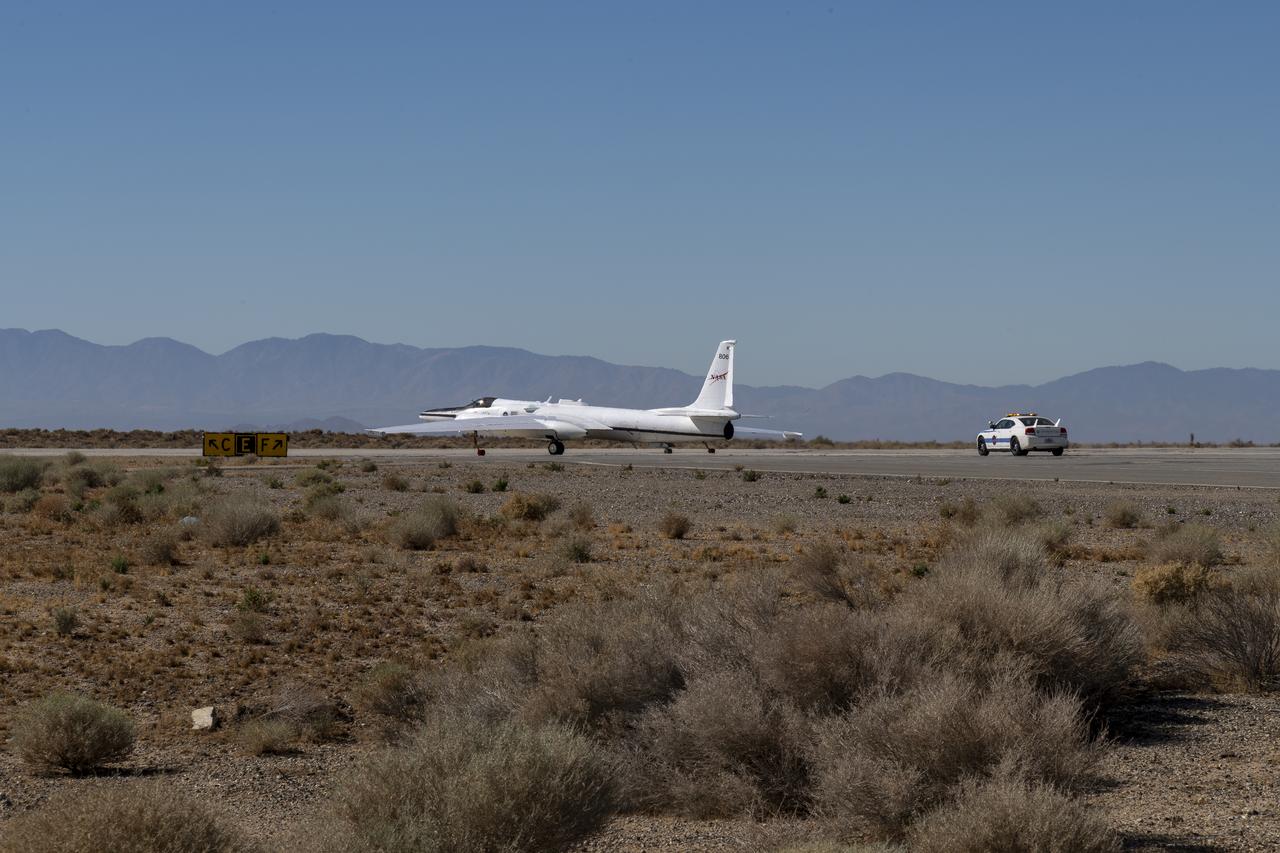
The ER-2 conducted over 80 flight hours in service of the Plankton, Aerosol, Cloud, ocean Ecosystem Postlaunch Airborne eXperiment (PACE-PAX) mission. The ER-2 is uniquely qualified to conduct the high-altitude scientific flights that this project required, and is based at NASA’s Armstrong Flight Research Center in Edwards, California.
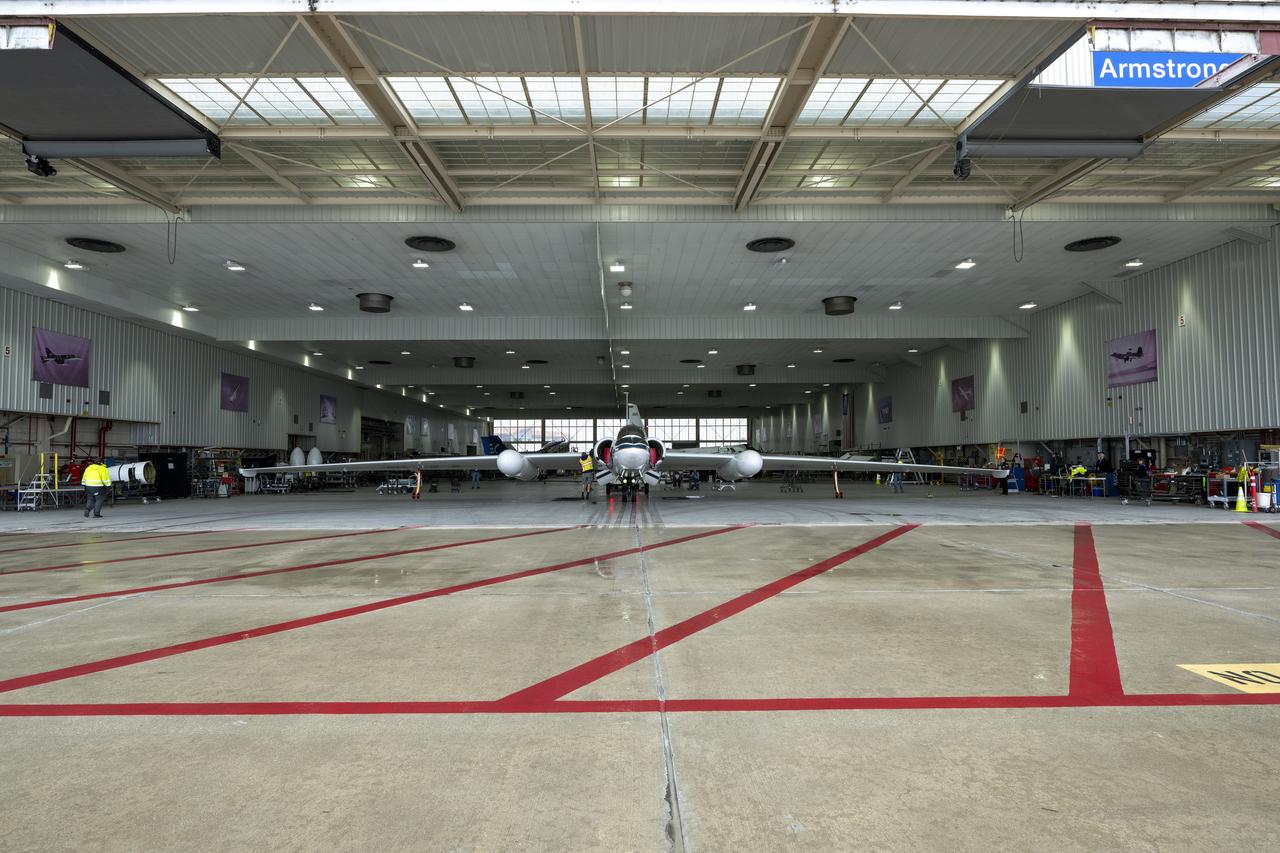
The ER-2 aircraft is parked in a hangar at NASA’s Armstrong Flight Research Center in Edwards, California, in March 2025. The plane is prepared for takeoff to support the airborne Lunar Spectral Irradiance, or air-LUSI, mission.
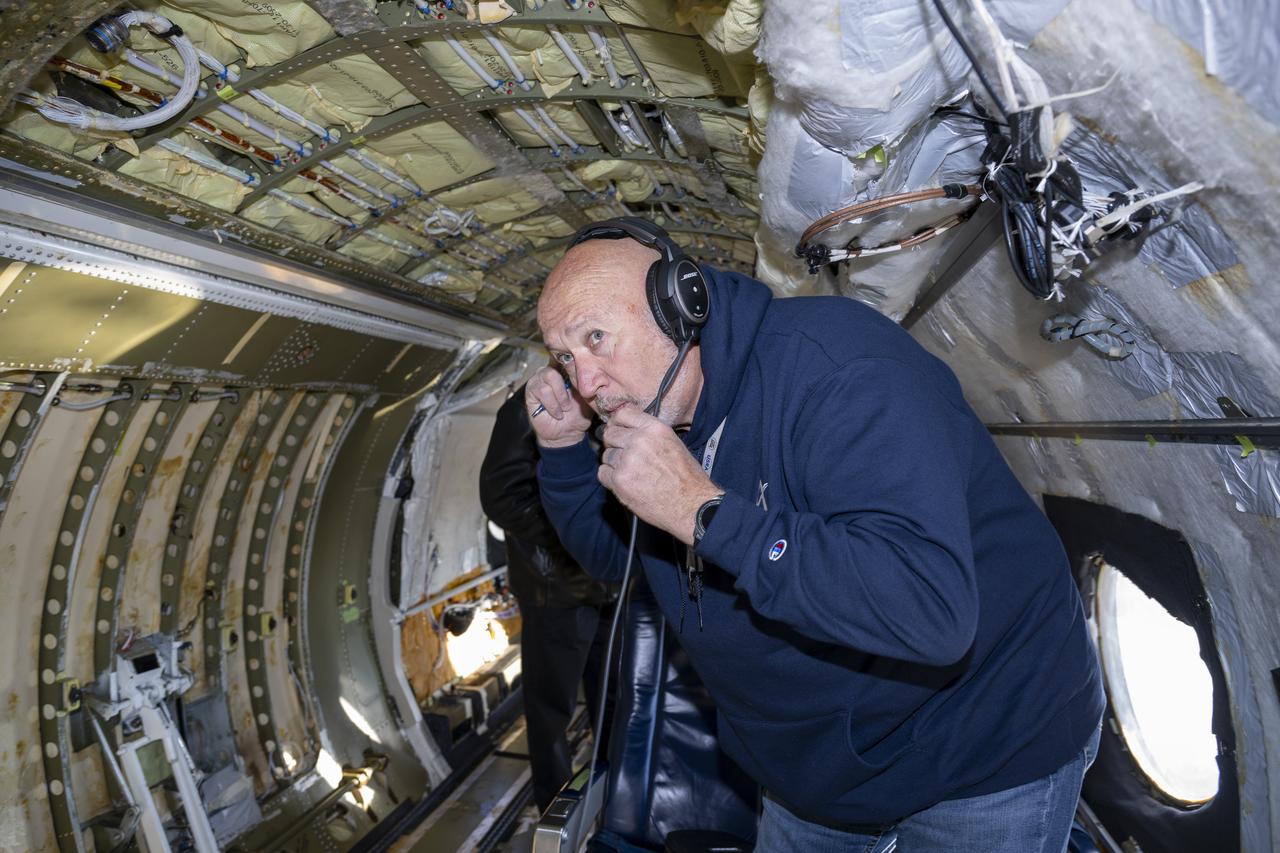
Martin Hench, flight systems engineer, checks the communications system onboard the G-IV aircraft as it prepares to depart NASA’s Armstrong Flight Research Center in Edwards, California, on March 18, 2025. As the newest member of NASA Armstrong’s airborne science fleet, the G-IV was sent to Avenger Aerospace Solutions in Cartersville, Georgia, for modifications that will optimize the G-IV’s performance as a research aircraft.
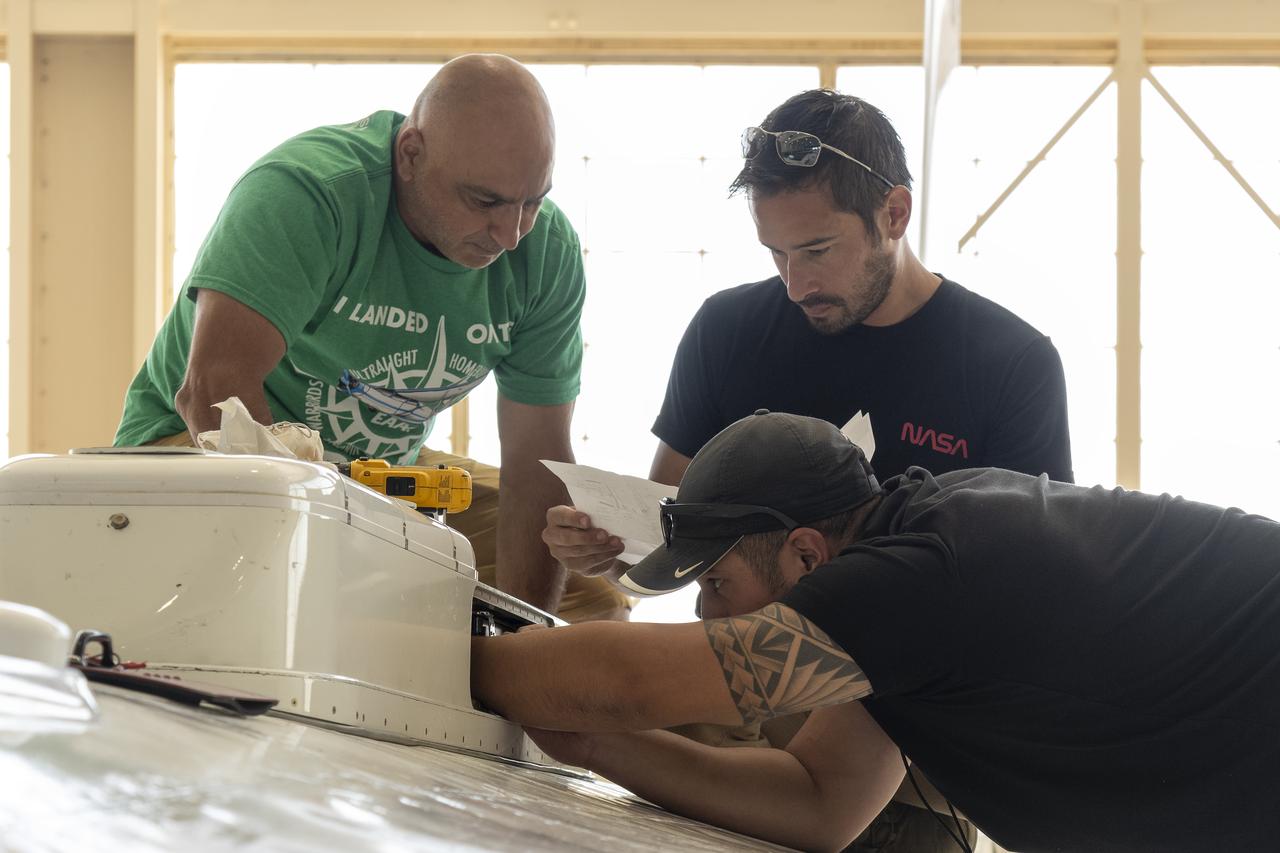
Sam Habbal (quality inspector), Darick Alvarez (aircraft mechanic), and Juan Alvarez (crew chief) work on the network “canoe” on top of the ER-2 aircraft, which provides network communication with the pilot onboard. Experts like these sustain a high standard of safety while outfitting instruments onboard science aircraft like the ER-2 and science missions like the Plankton, Aerosol, Cloud, ocean Ecosystem Postlaunch Airborne eXperiment (PACE-PAX) mission. The ER-2 is based out of NASA’s Armstrong Flight Research Center in Edwards, California.
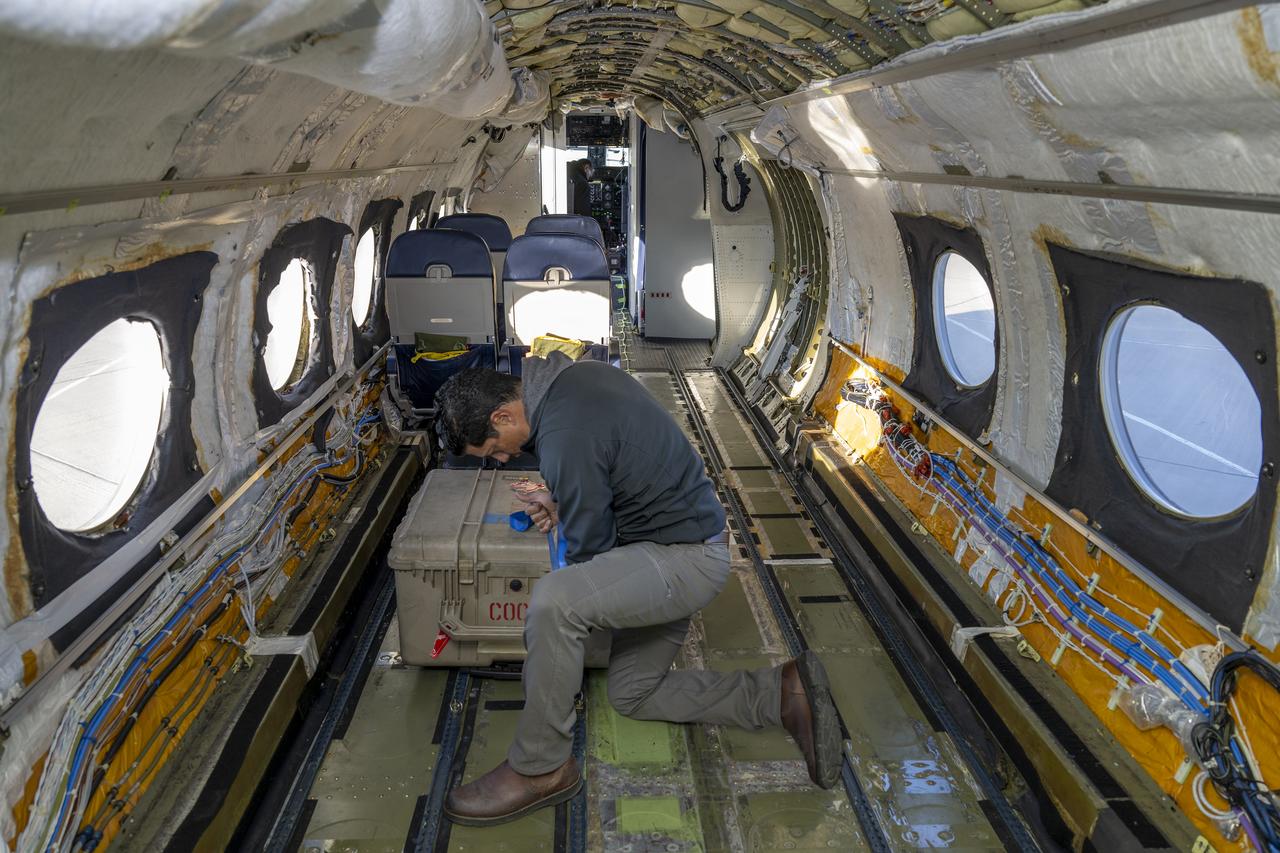
Jose “Manny” Rodriguez, technical engineer at NASA’s Armstrong Flight Research Center in Edwards, California, secures a trunk onboard the G-IV aircraft on March 18, 2025. As the newest member of NASA Armstrong’s airborne science fleet, the G-IV was sent to Avenger Aerospace Solutions in Cartersville, Georgia, for modifications that will optimize the G-IV’s performance as a research aircraft.
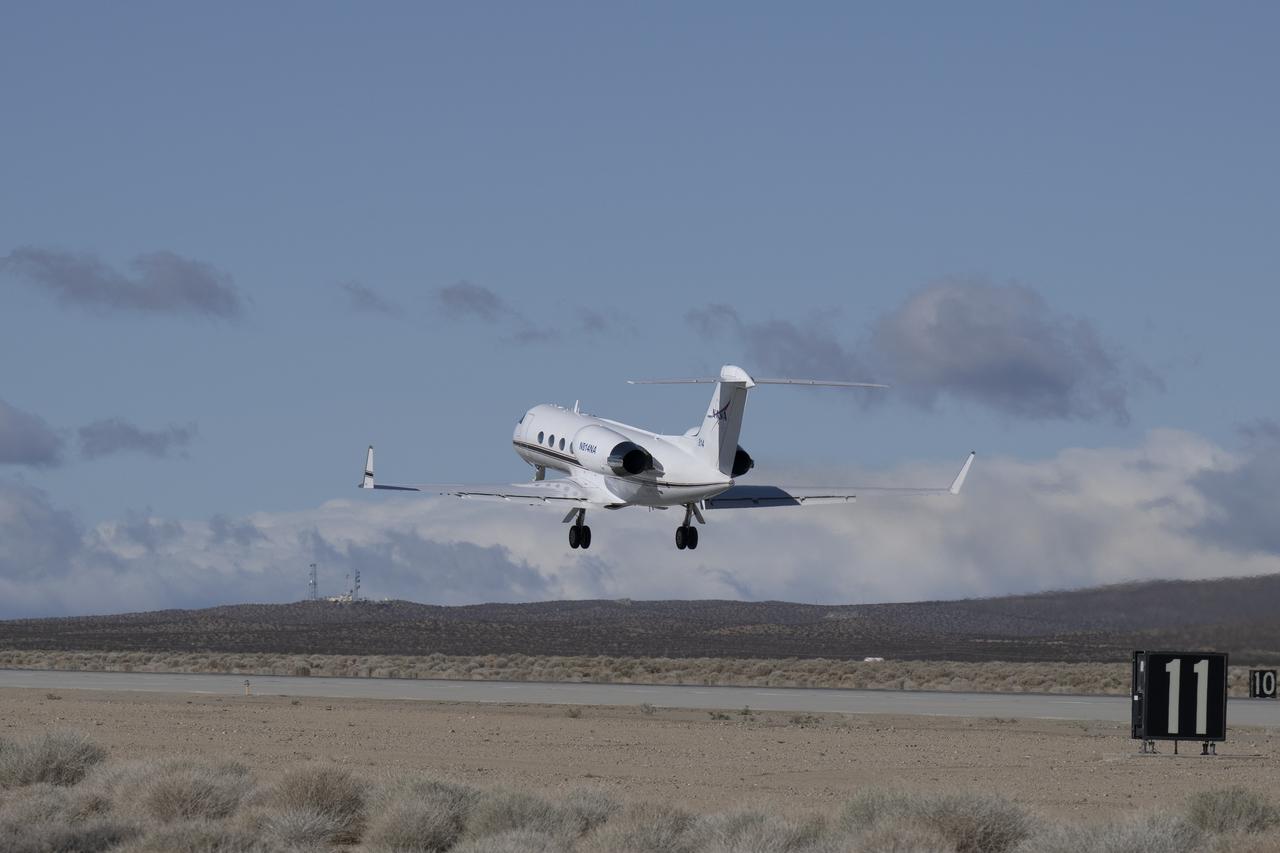
The G-IV aircraft lifts off from NASA’s Armstrong Flight Research Center in Edwards, California, on March 18, 2025. As the newest member of NASA Armstrong’s airborne science fleet, the G-IV was sent to Avenger Aerospace Solutions in Cartersville, Georgia, for modifications that will optimize the G-IV’s performance as a research aircraft.
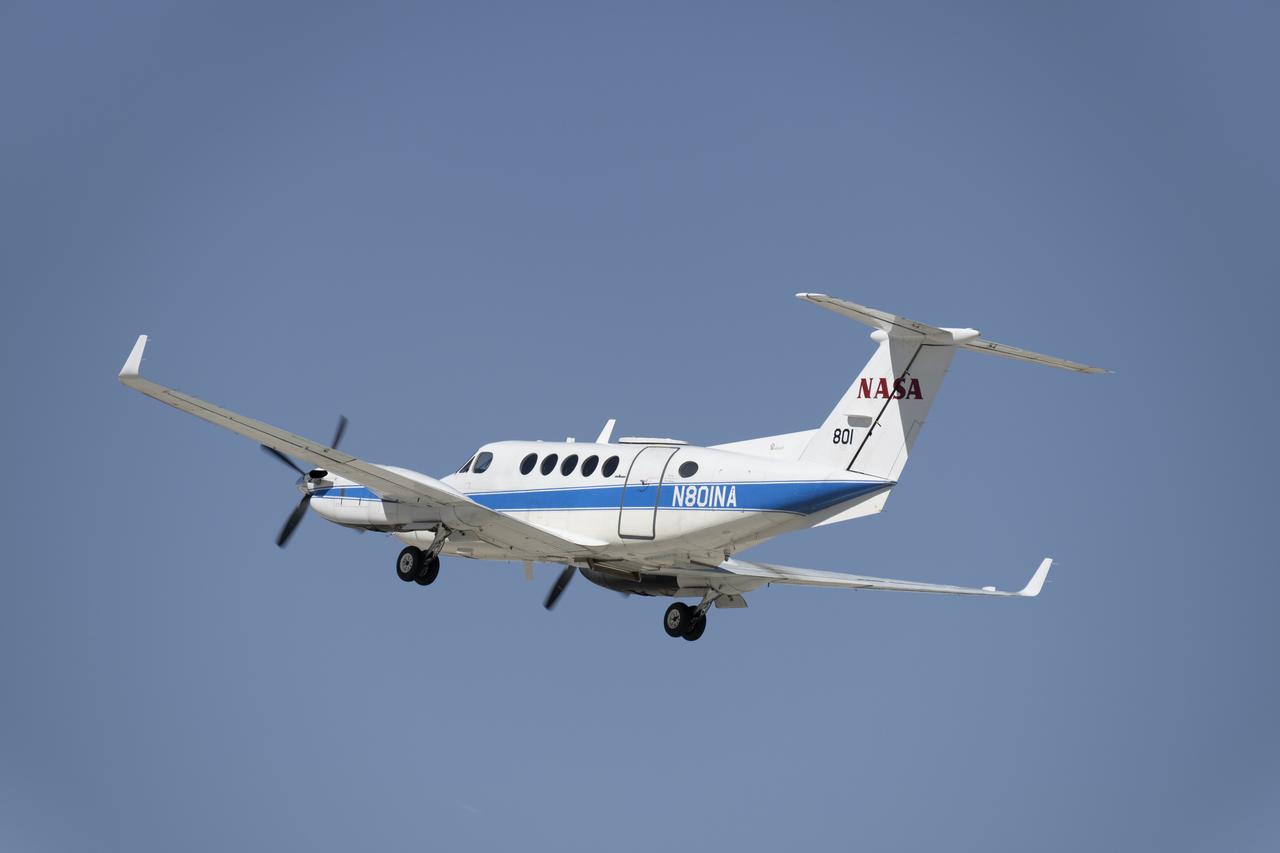
NASA’s B200 King Air aircraft – based at NASA’s Armstrong Flight Research Center in Edwards, California – ascends to support a prescribed burn in Geneva State Forest, about 100 miles south of Montgomery, Alabama, on March 17, 2025. The effort is part of NASA’s multi-year FireSense project, which aims to test technology that predicts fire and smoke behavior. This data could eventually benefit the U.S. Forest Service as well as local, state, and other federal wildland fire agencies.
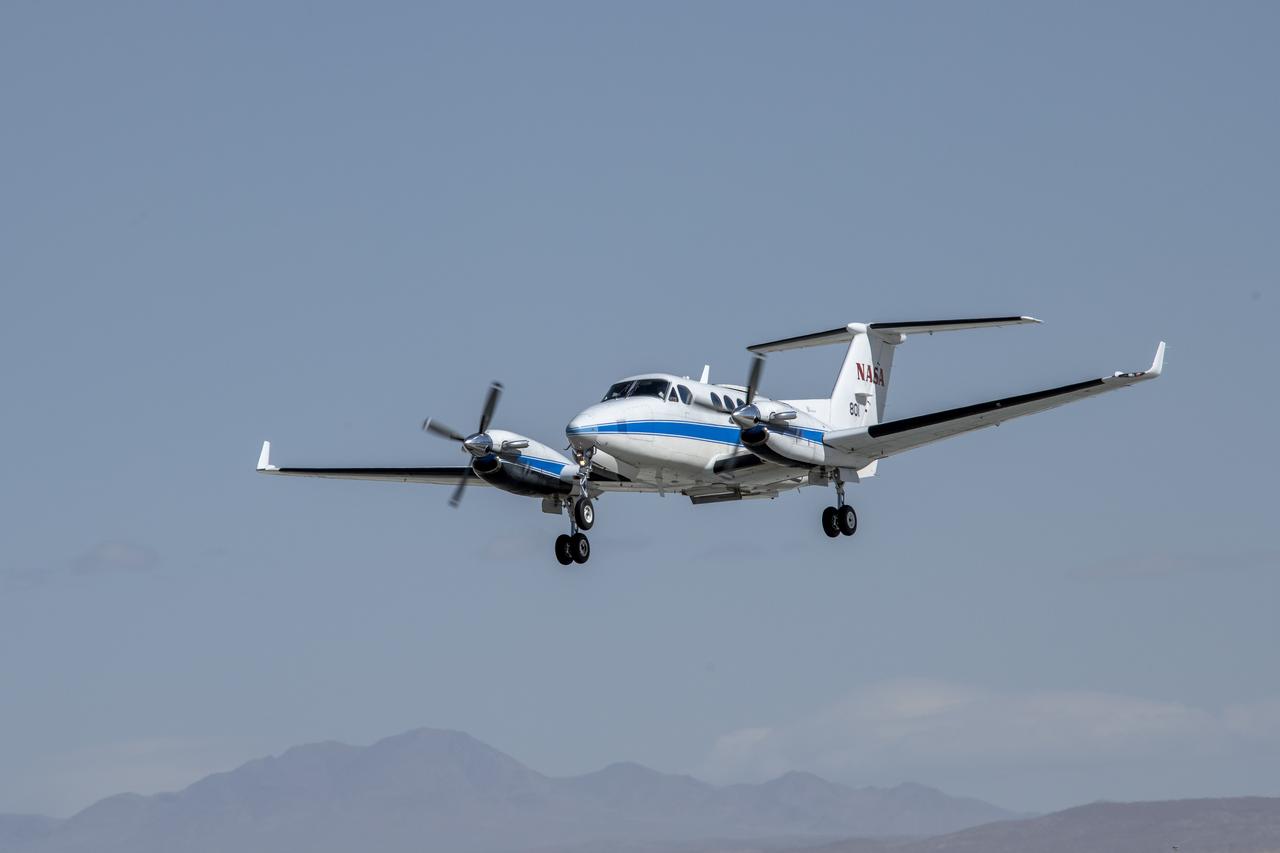
NASA’s B200 King Air aircraft – based at NASA’s Armstrong Flight Research Center in Edwards, California – ascends to support a prescribed burn in Geneva State Forest, about 100 miles south of Montgomery, Alabama, on March 17, 2025. The effort is part of NASA’s multi-year FireSense project, which aims to test technology that predicts fire and smoke behavior. This data could eventually benefit the U.S. Forest Service as well as local, state, and other federal wildland fire agencies.

The ER-2 ground crew Wissam Habbal, left, and Dr. Kevin Turpie, airborne Lunar Spectral Irradiance (air-LUSI) principal investigator, guide delicate fiber optic and electric cabling into place while uploading the air-LUSI instrument onto the ER-2 aircraft in March 2025 at NASA’s Armstrong Flight Research Center in Edwards, California.
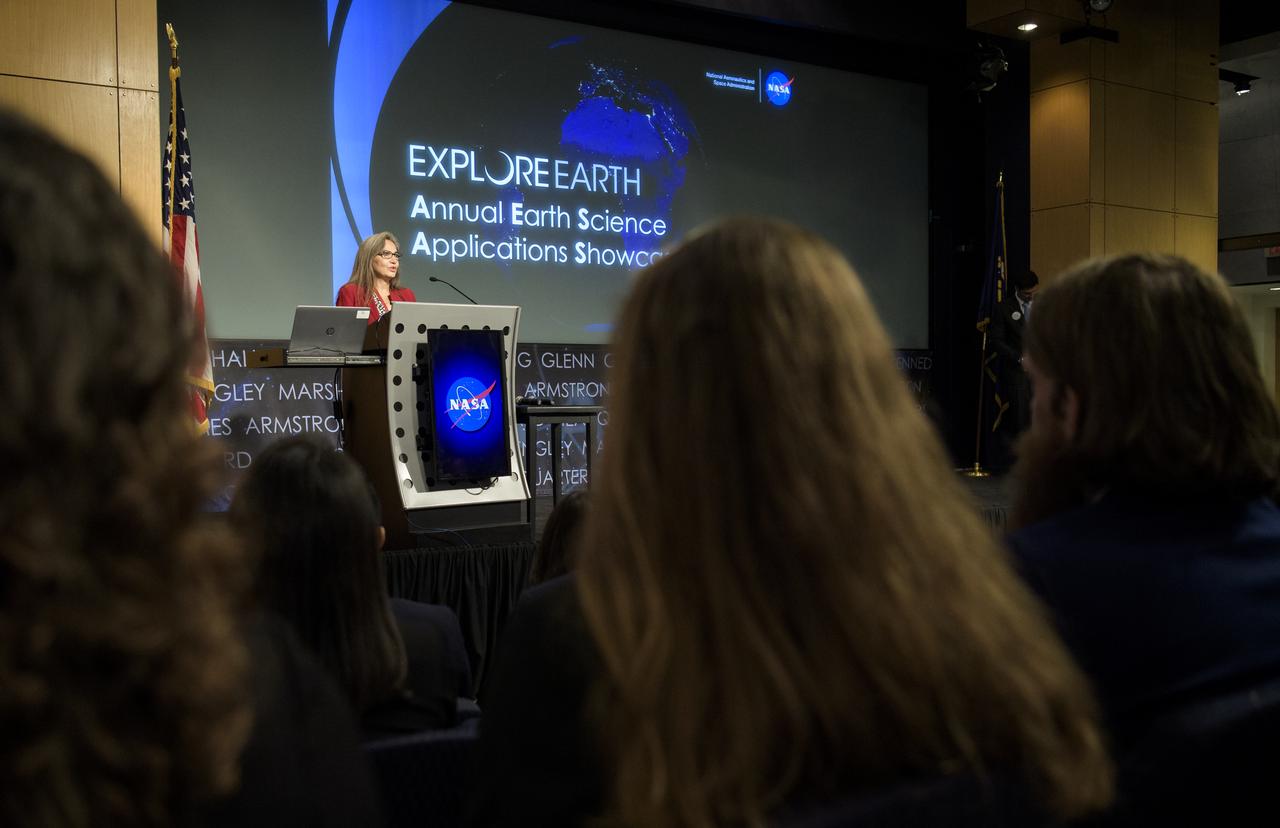
Sandra Cauffman, acting Director of the Earth Sciences Division of the Science Mission Directorate at NASA Headquarters, speaks during the 2019 Annual Earth Science Applications Showcase, Thursday, Aug. 1, 2019 at NASA Headquarters in Washington, DC. Every summer students and young professionals from NASA’s Applied Sciences’ DEVELOP National Program come to NASA Headquarters and present their research projects. DEVELOP is a training and development program where students work on Earth science research projects, mentored by science advisers from NASA and partner agencies, and extend research results to local communities. Photo Credit: (NASA/Joel Kowsky)
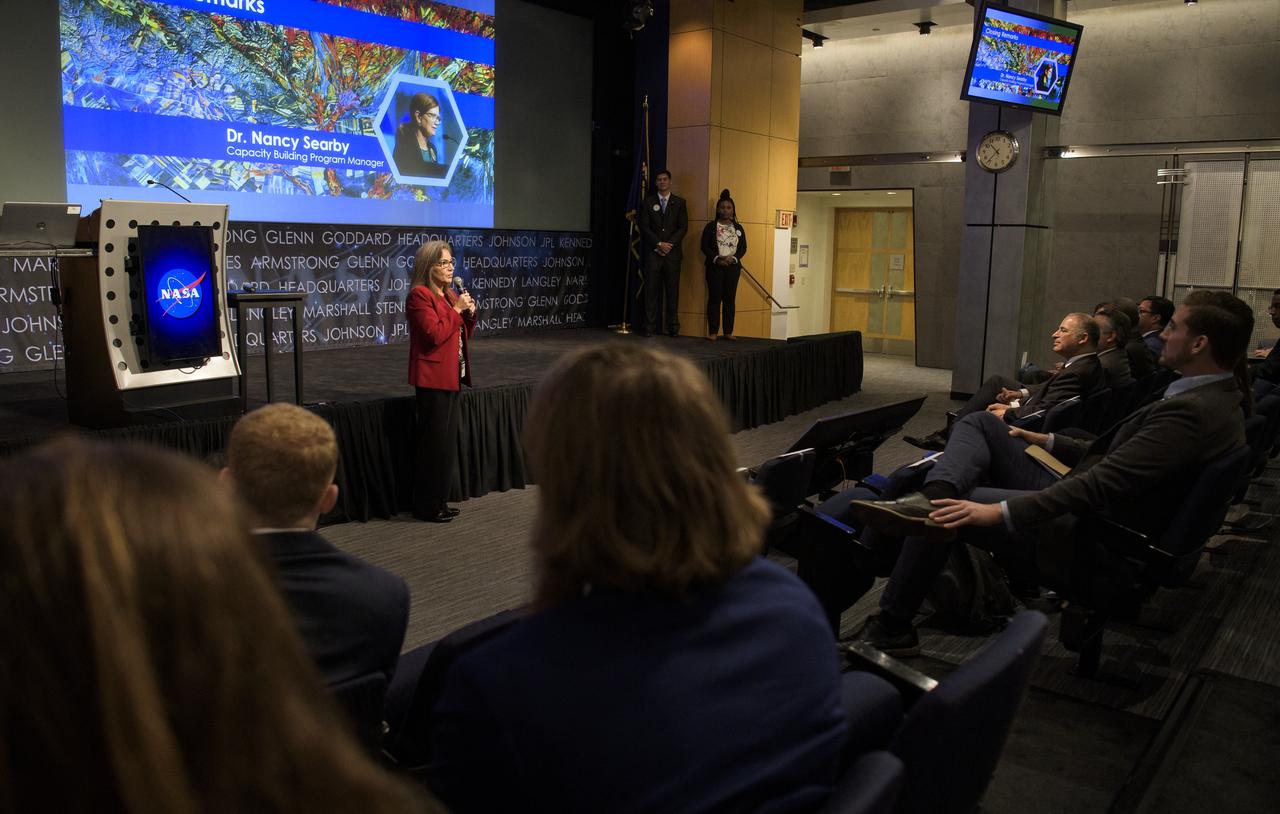
Sandra Cauffman, acting Director of the Earth Sciences Division of the Science Mission Directorate at NASA Headquarters, speaks during the 2019 Annual Earth Science Applications Showcase, Thursday, Aug. 1, 2019 at NASA Headquarters in Washington, DC. Every summer students and young professionals from NASA’s Applied Sciences’ DEVELOP National Program come to NASA Headquarters and present their research projects. DEVELOP is a training and development program where students work on Earth science research projects, mentored by science advisers from NASA and partner agencies, and extend research results to local communities. Photo Credit: (NASA/Joel Kowsky)

Sandra Cauffman, acting Director of the Earth Sciences Division of the Science Mission Directorate at NASA Headquarters, speaks during the 2019 Annual Earth Science Applications Showcase, Thursday, Aug. 1, 2019 at NASA Headquarters in Washington, DC. Every summer students and young professionals from NASA’s Applied Sciences’ DEVELOP National Program come to NASA Headquarters and present their research projects. DEVELOP is a training and development program where students work on Earth science research projects, mentored by science advisers from NASA and partner agencies, and extend research results to local communities. Photo Credit: (NASA/Joel Kowsky)
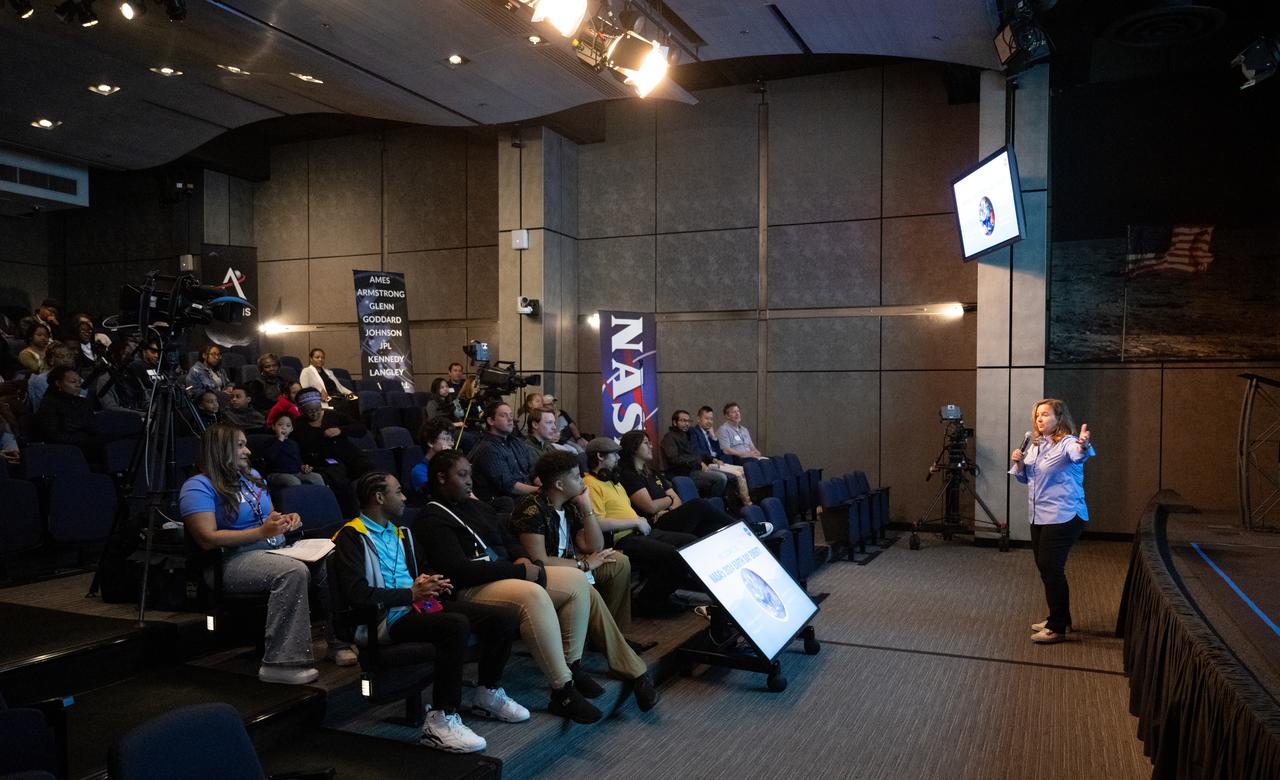
Karen St. Germain, director of the Earth Science Division of NASA’s Science Mission Directorate, speaks to students before they view exhibits and participate in hands-on activities as NASA celebrates Earth Day, Friday, April 19, 2024, at the Mary W. Jackson NASA Headquarters building in Washington. Photo Credit: (NASA/Joel Kowsky)
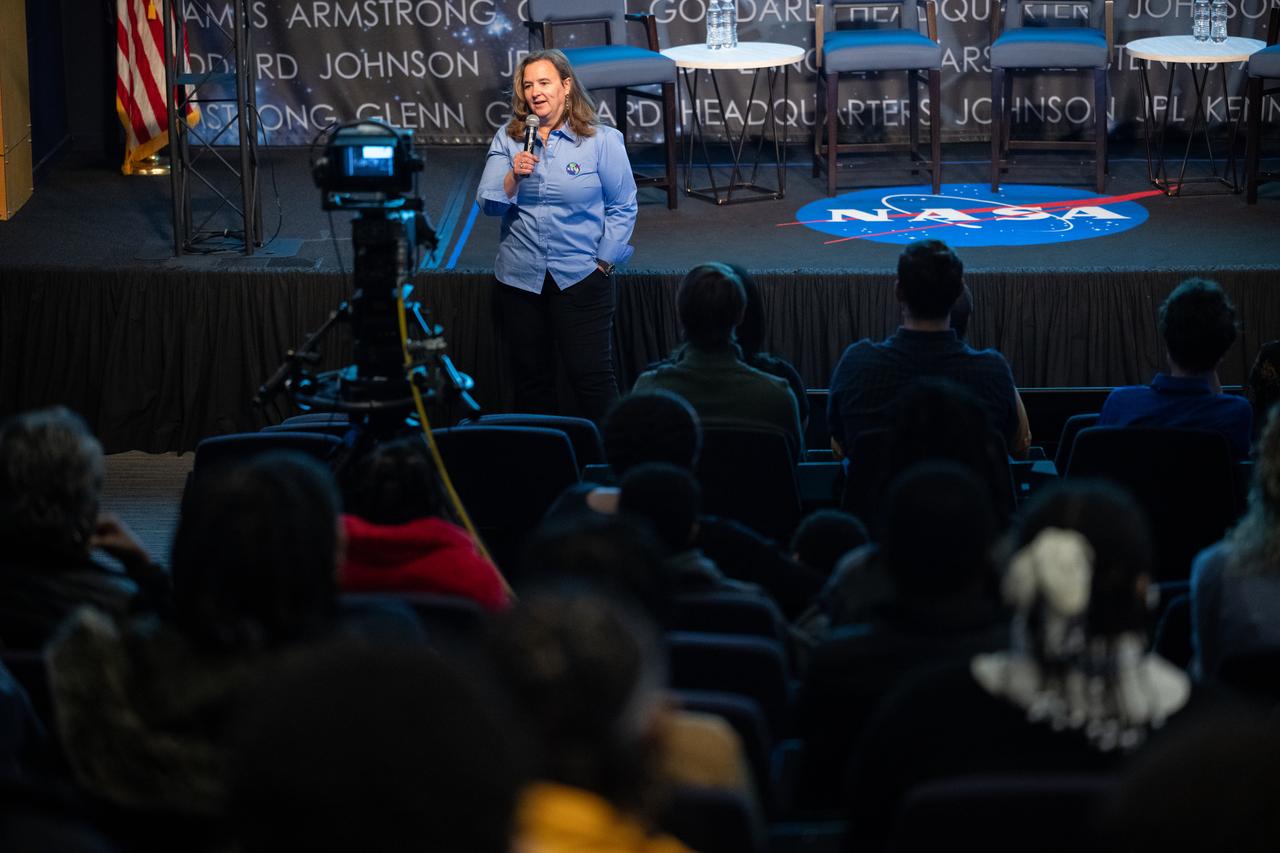
Karen St. Germain, director of the Earth Science Division of NASA’s Science Mission Directorate, speaks to students before they view exhibits and participate in hands-on activities as NASA celebrates Earth Day, Friday, April 19, 2024, at the Mary W. Jackson NASA Headquarters building in Washington. Photo Credit: (NASA/Joel Kowsky)
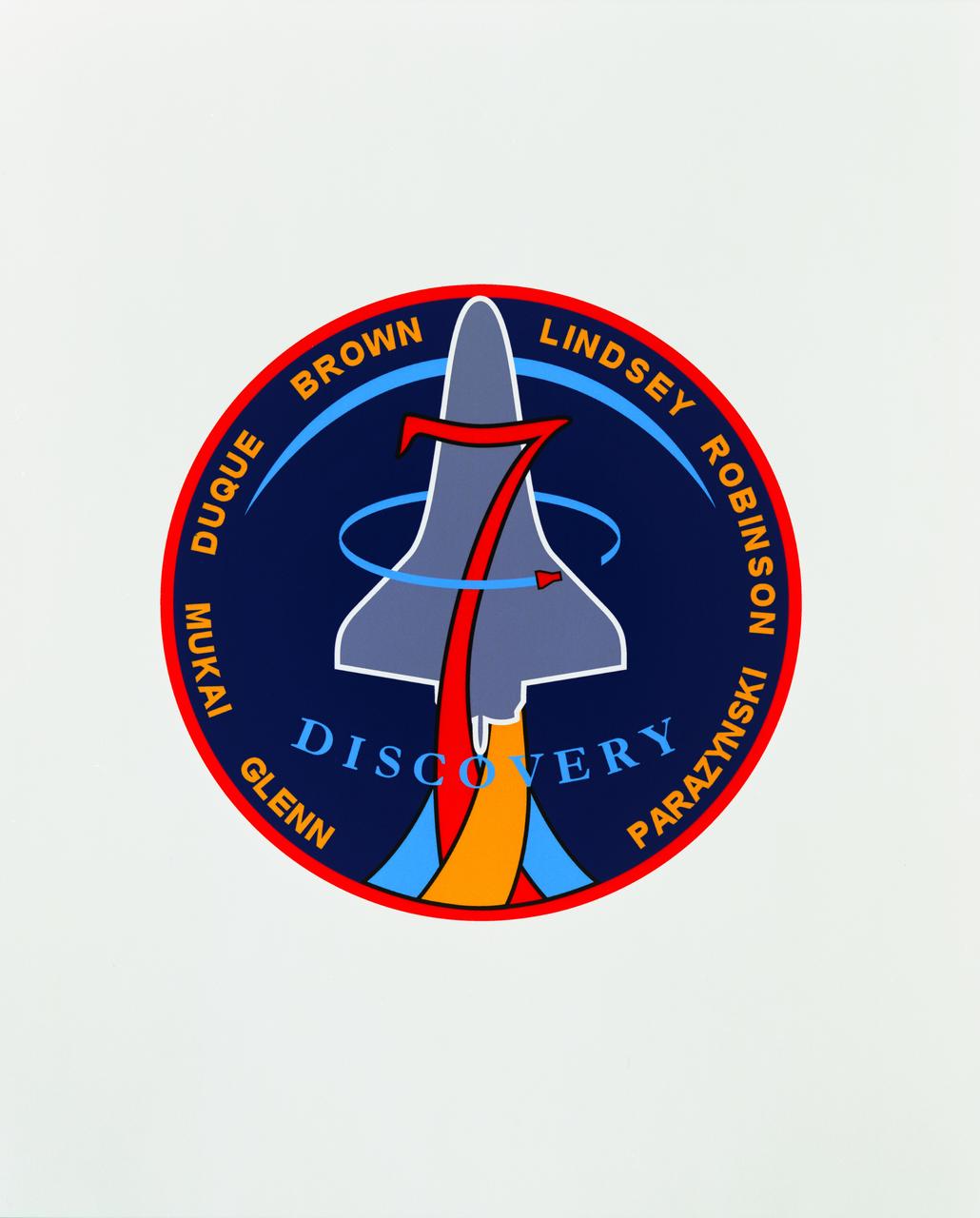
The STS-95 patch, designed by the crew, is intended to reflect the scientific, engineering, and historic elements of the mission. The Space Shuttle Discovery is shown rising over the sunlit Earth limb, representing the global benefits of the mission science and the solar science objectives of the Spartan Satellite. The bold number '7' signifies the seven members of Discovery's crew and also represents a historical link to the original seven Mercury astronauts. The STS-95 crew member John Glenn's first orbital flight is represented by the Friendship 7 capsule. The rocket plumes symbolize the three major fields of science represented by the mission payloads: microgravity material science, medical research for humans on Earth and in space, and astronomy.